Thursday
2 January 2014
Are You Sleeping Through Life?
- Dated photos
- 181
- Source pages
- 1
- Media
- 4
January 02 2014
Original wiki pageTitle
Are You Sleeping Through Life?
Description
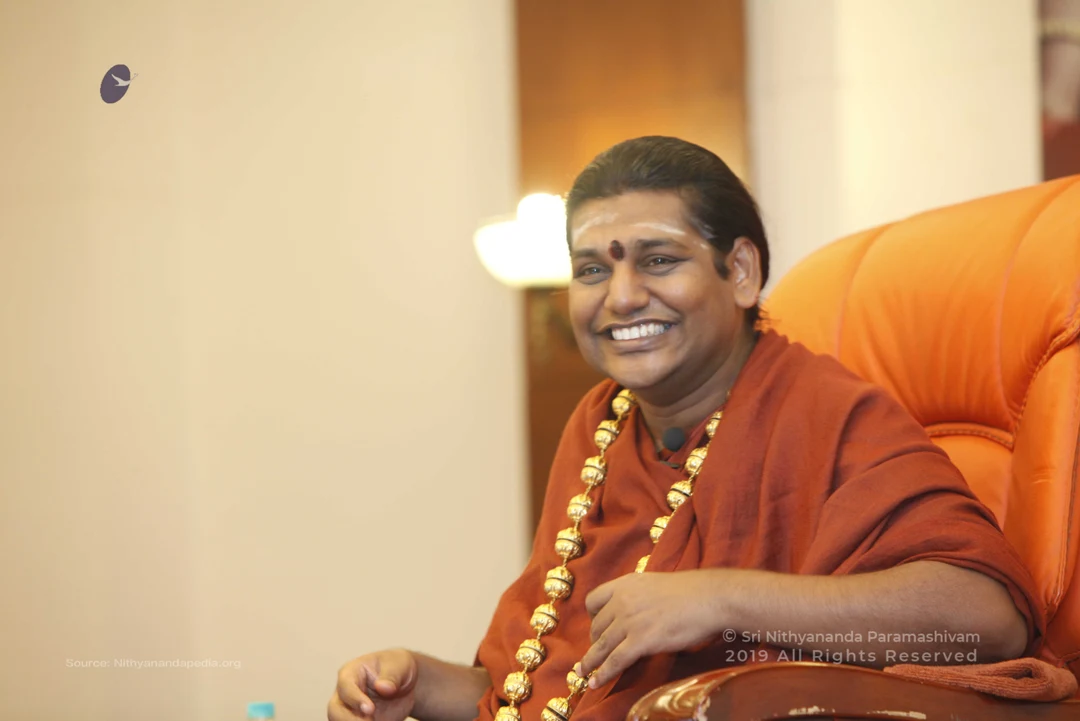
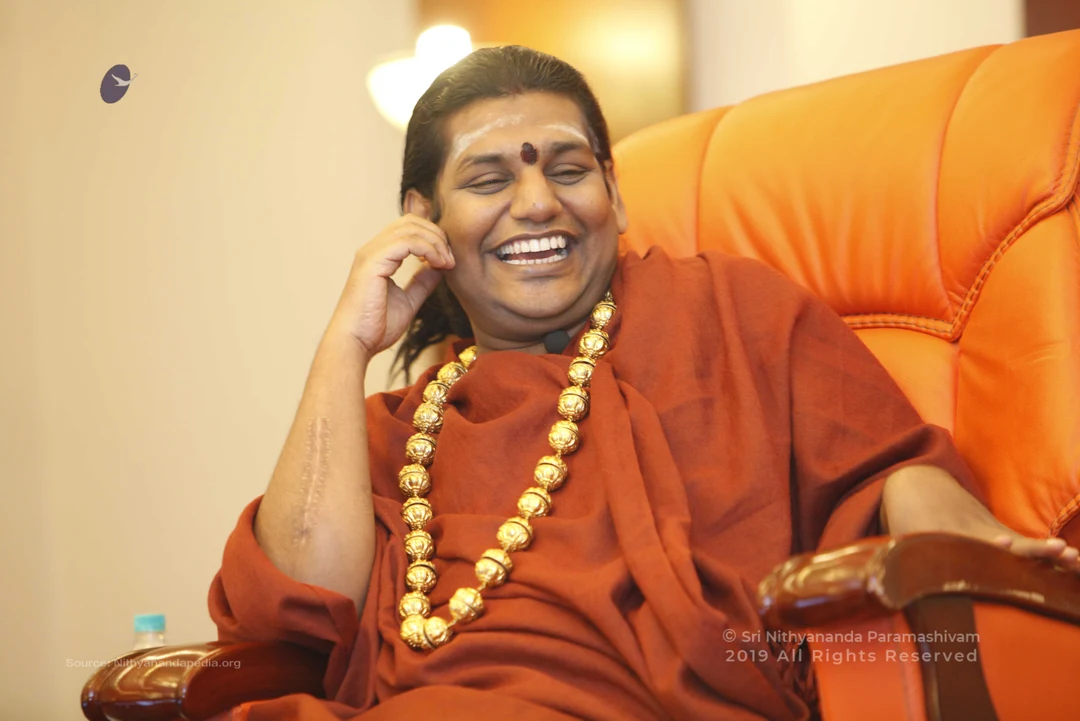
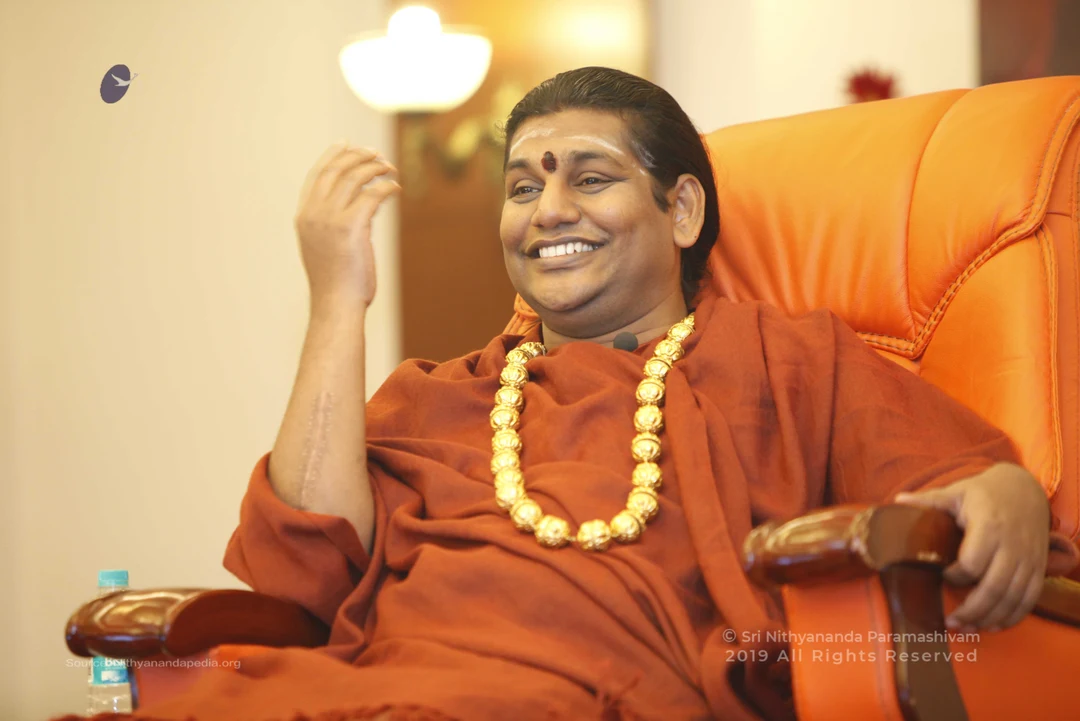
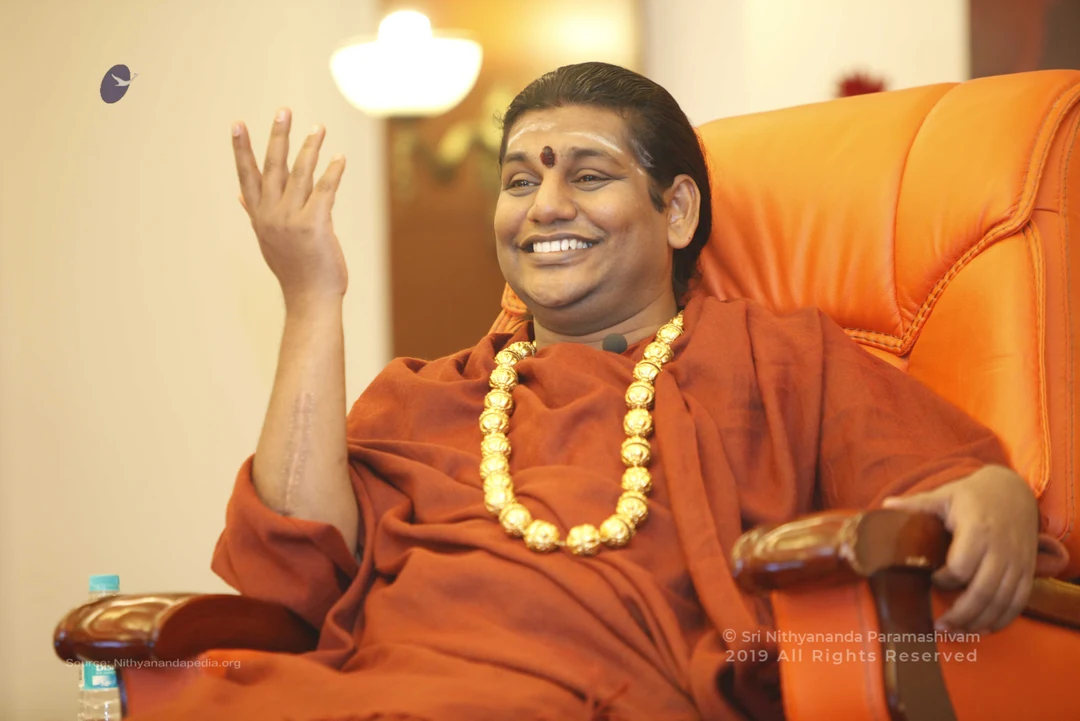
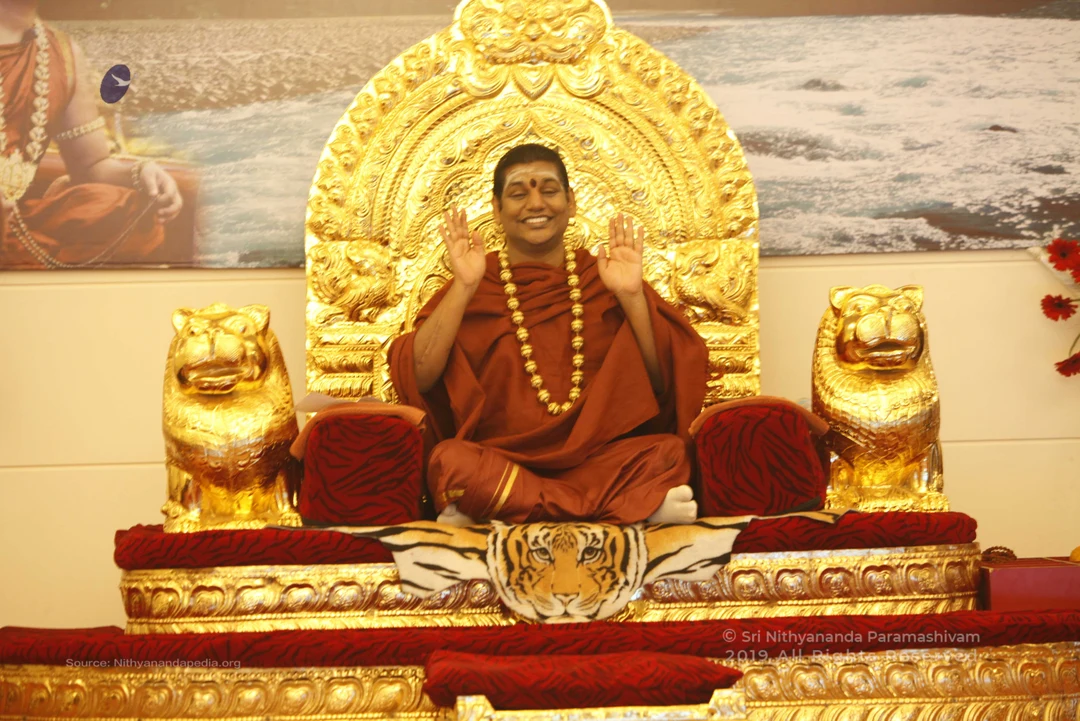
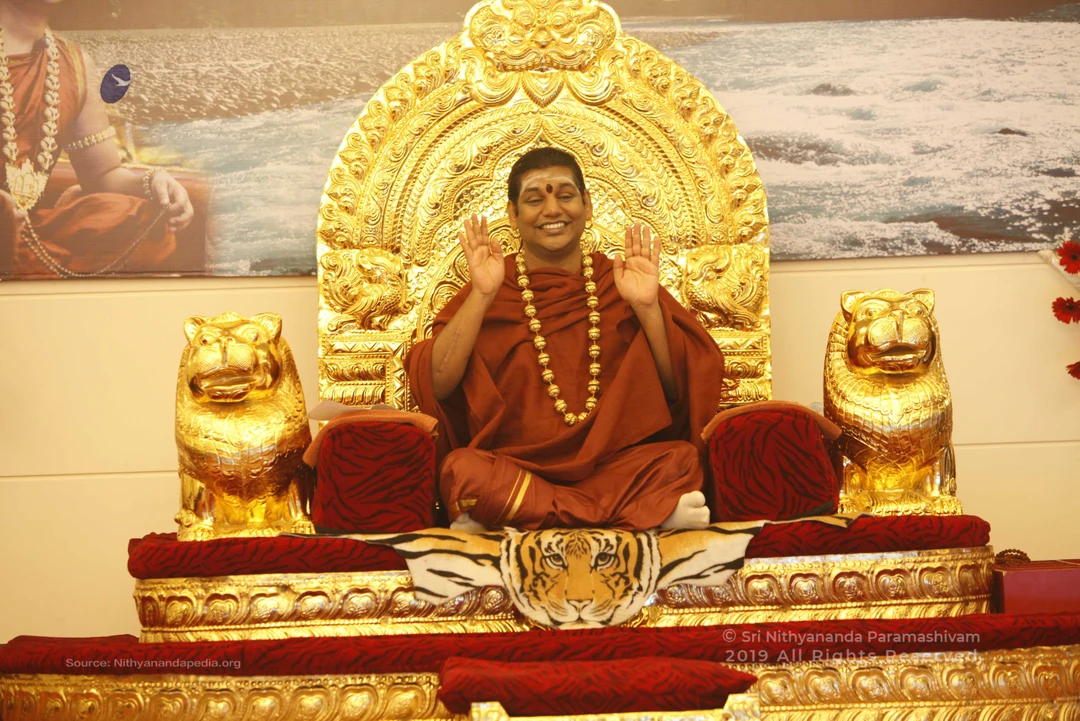
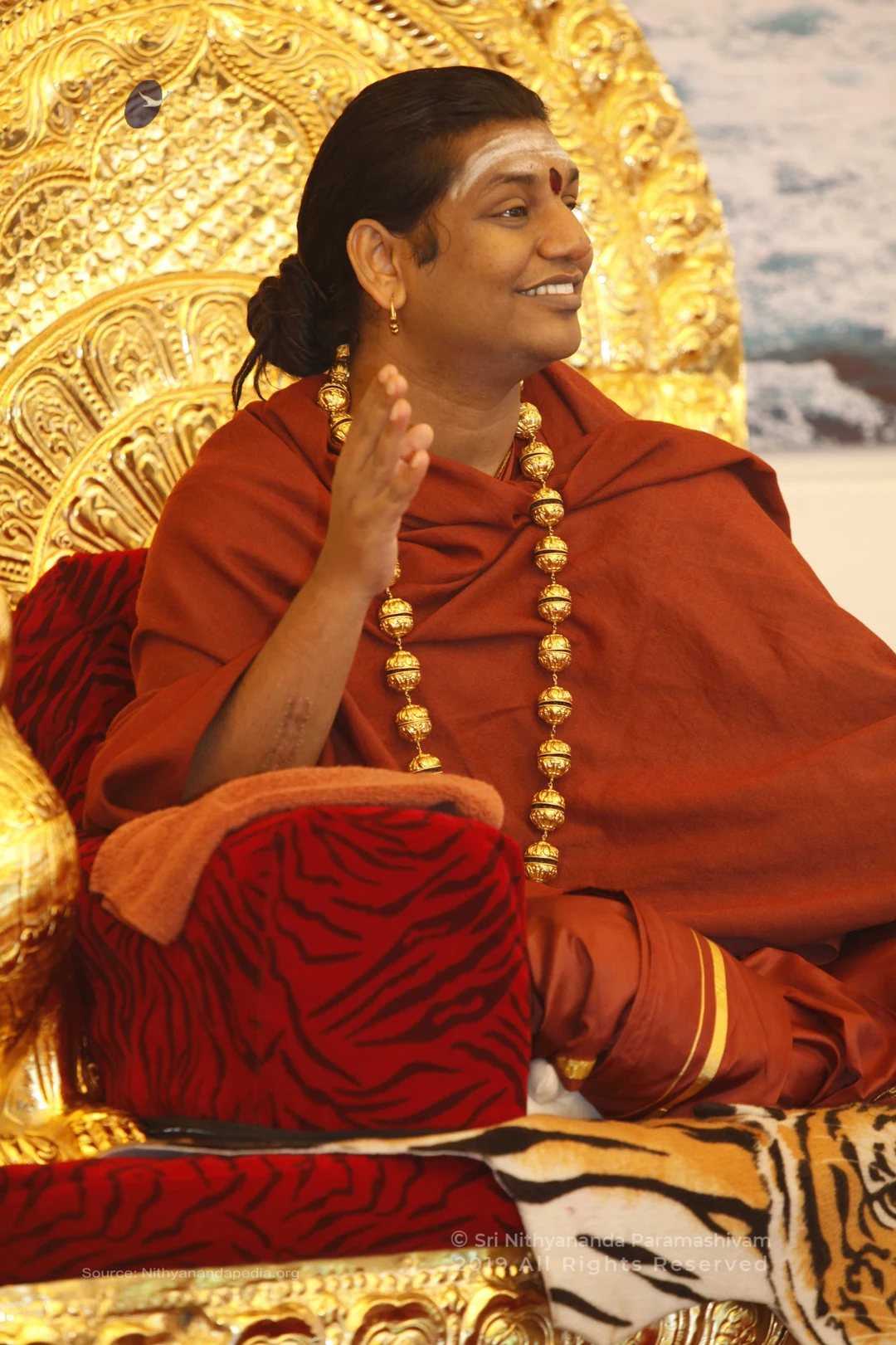
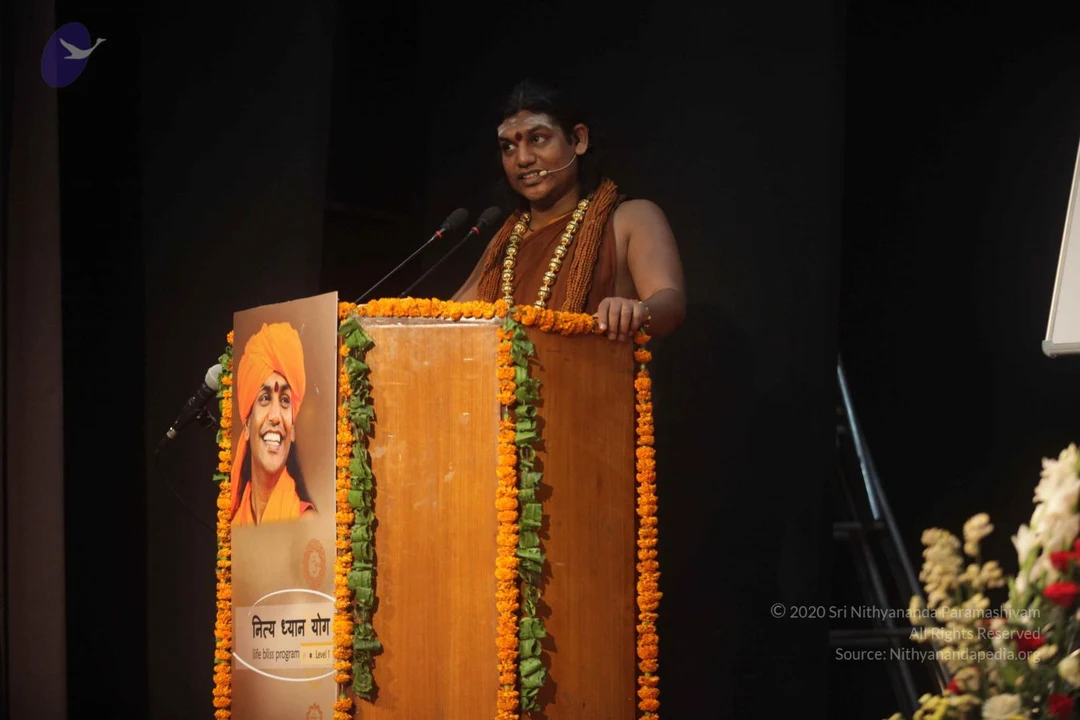
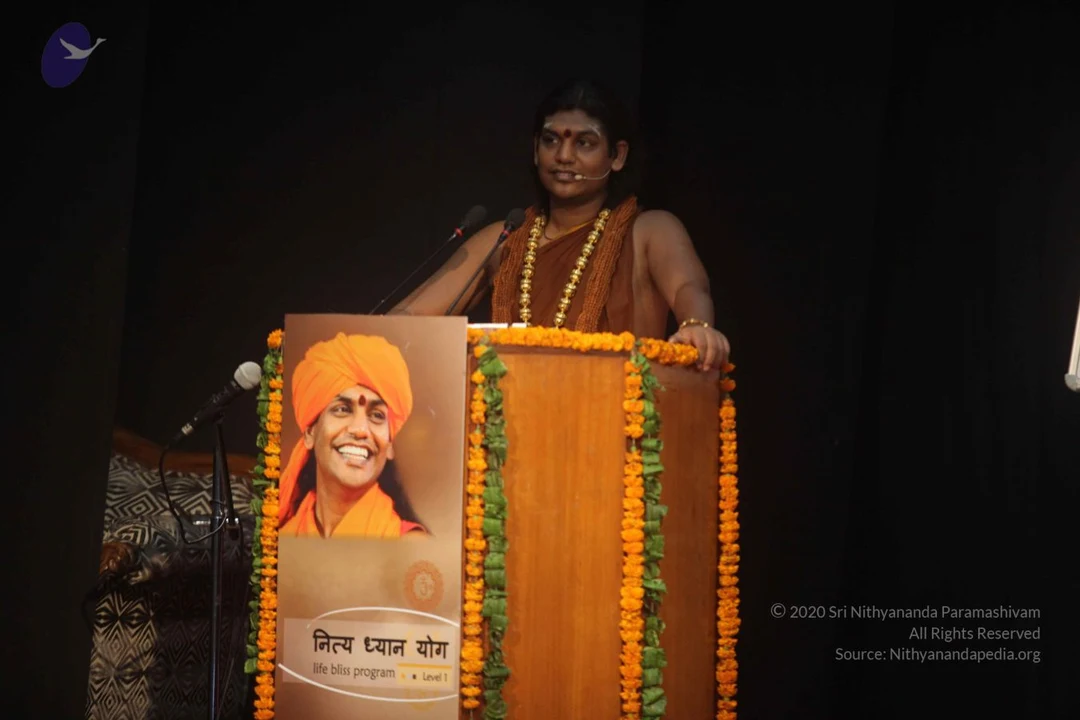
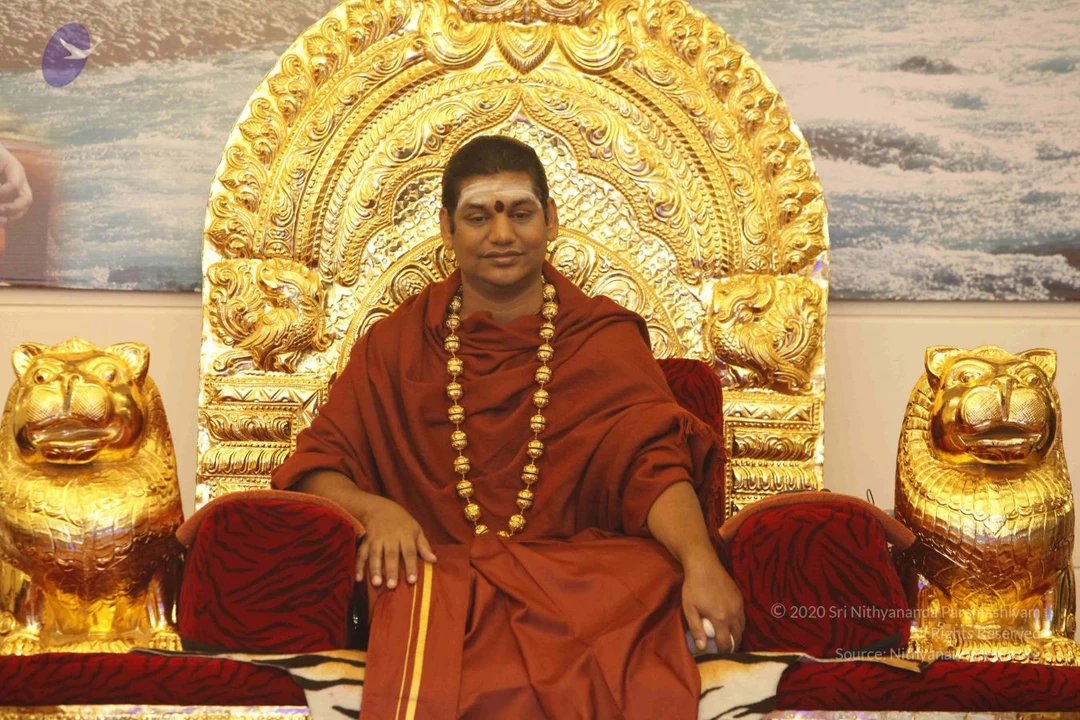
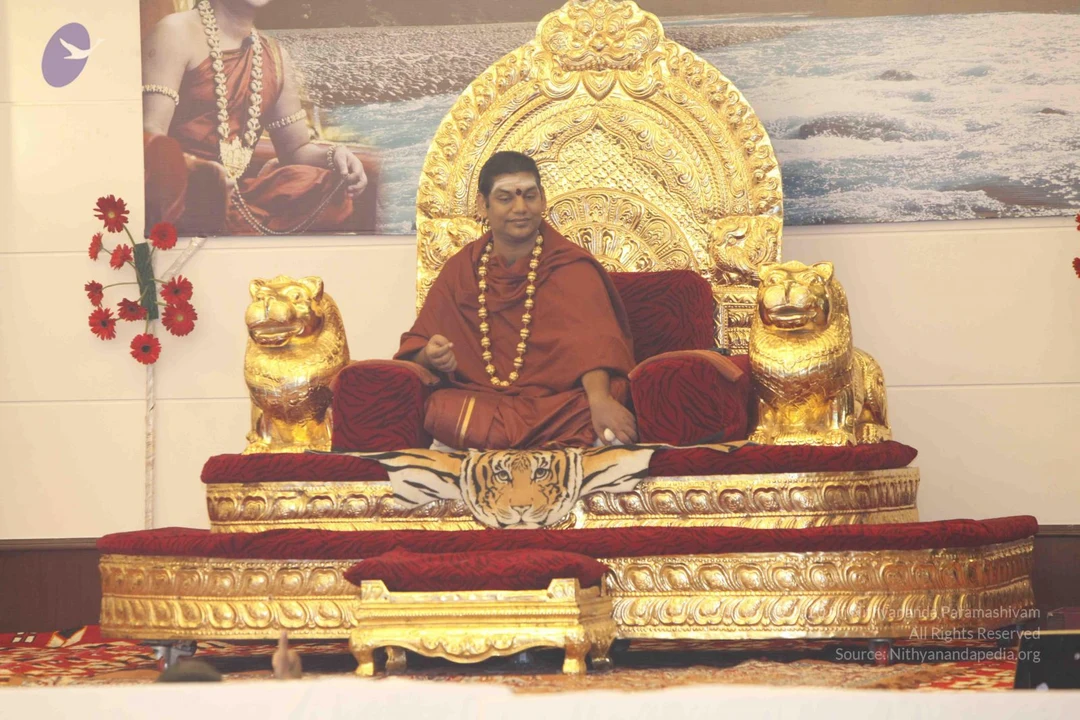
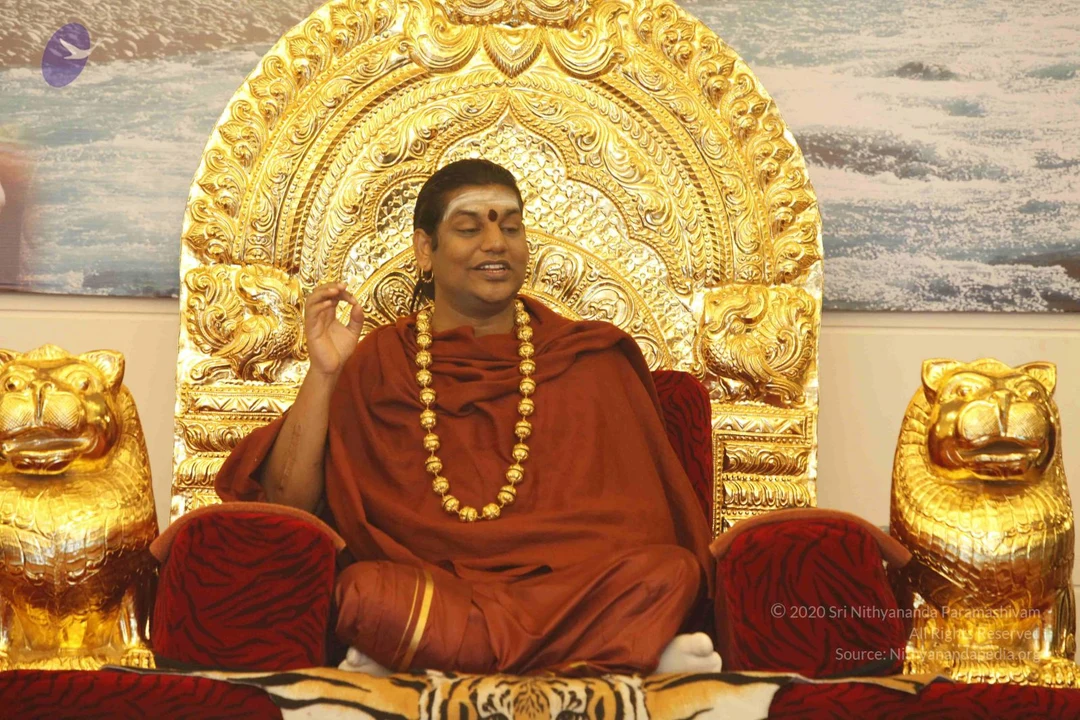
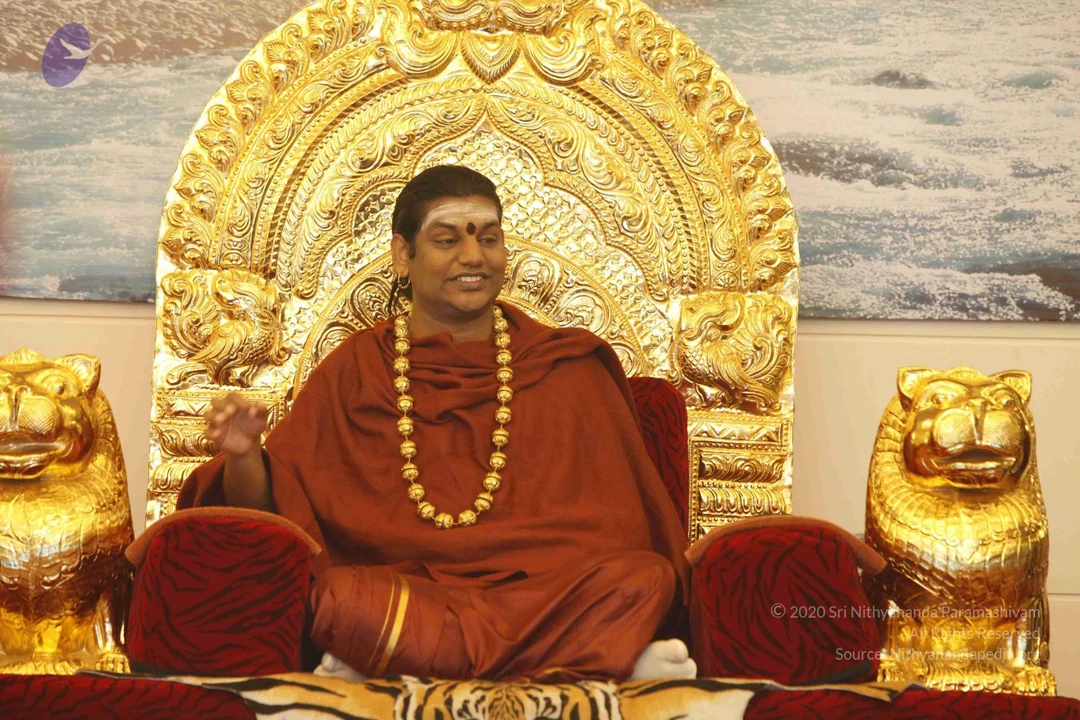
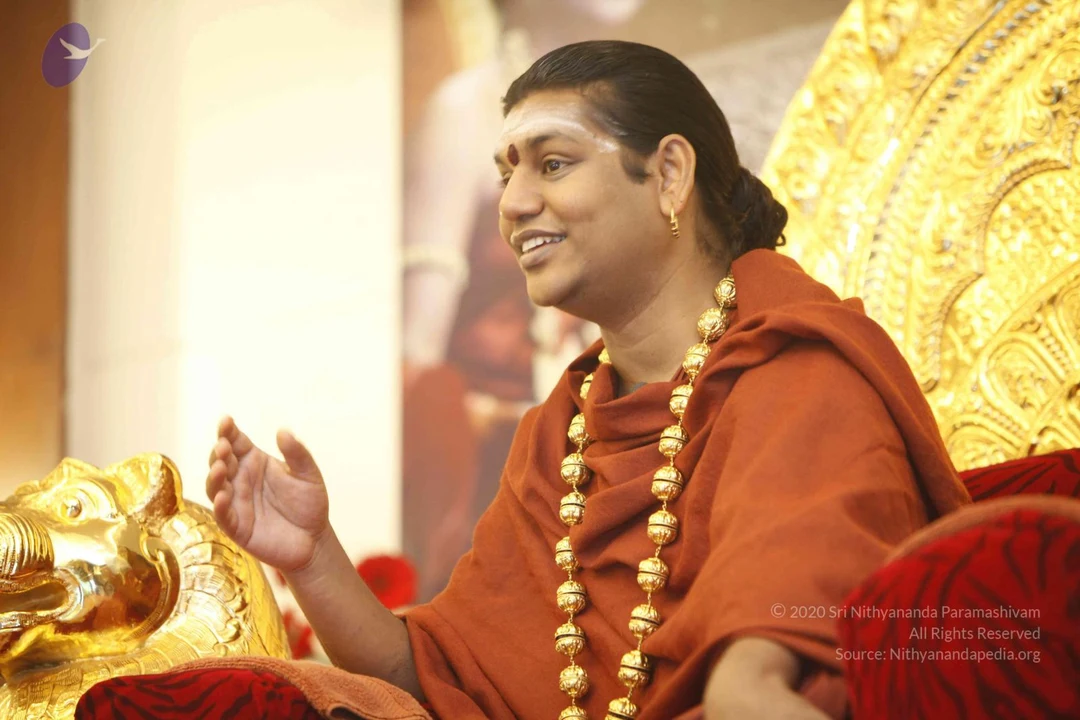
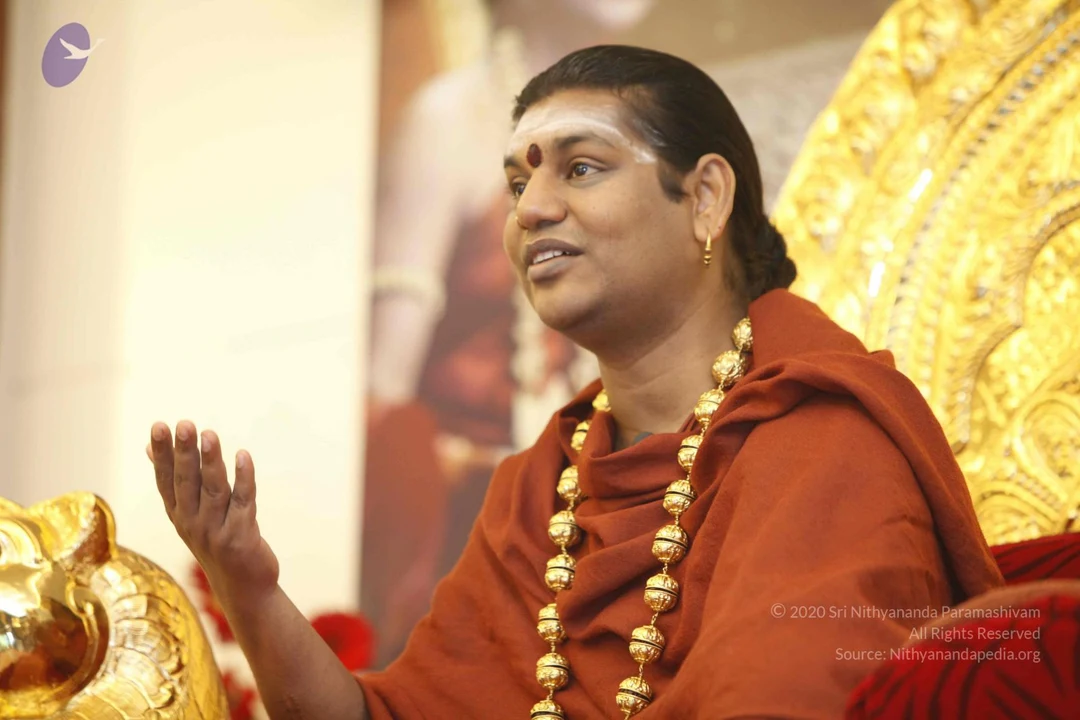
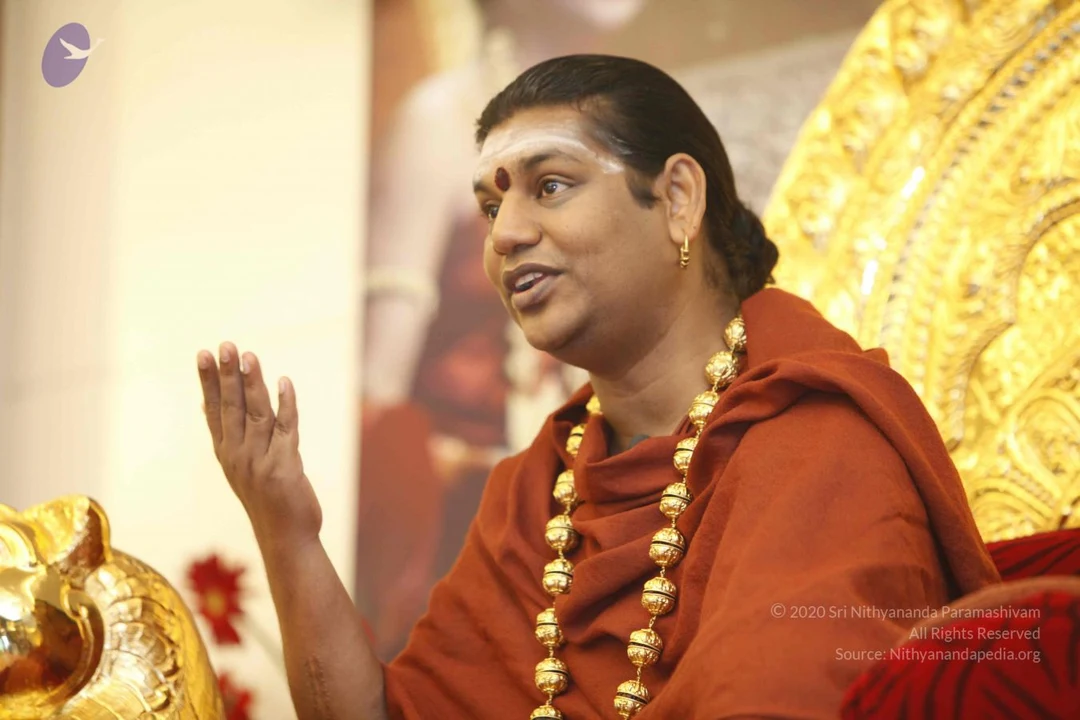
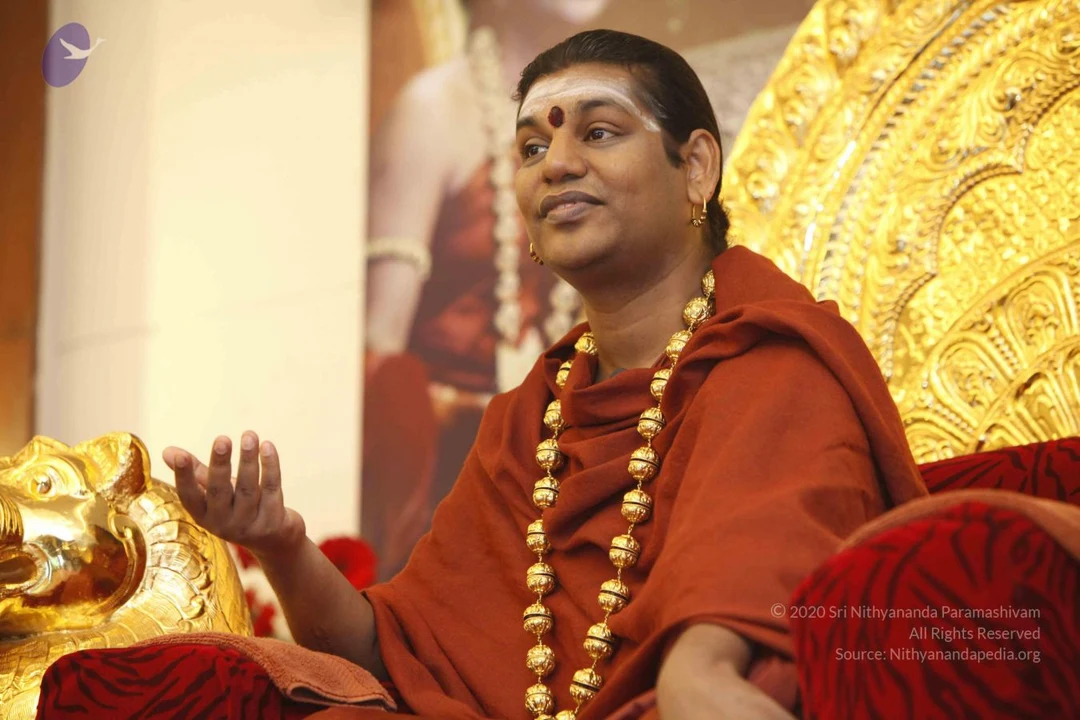
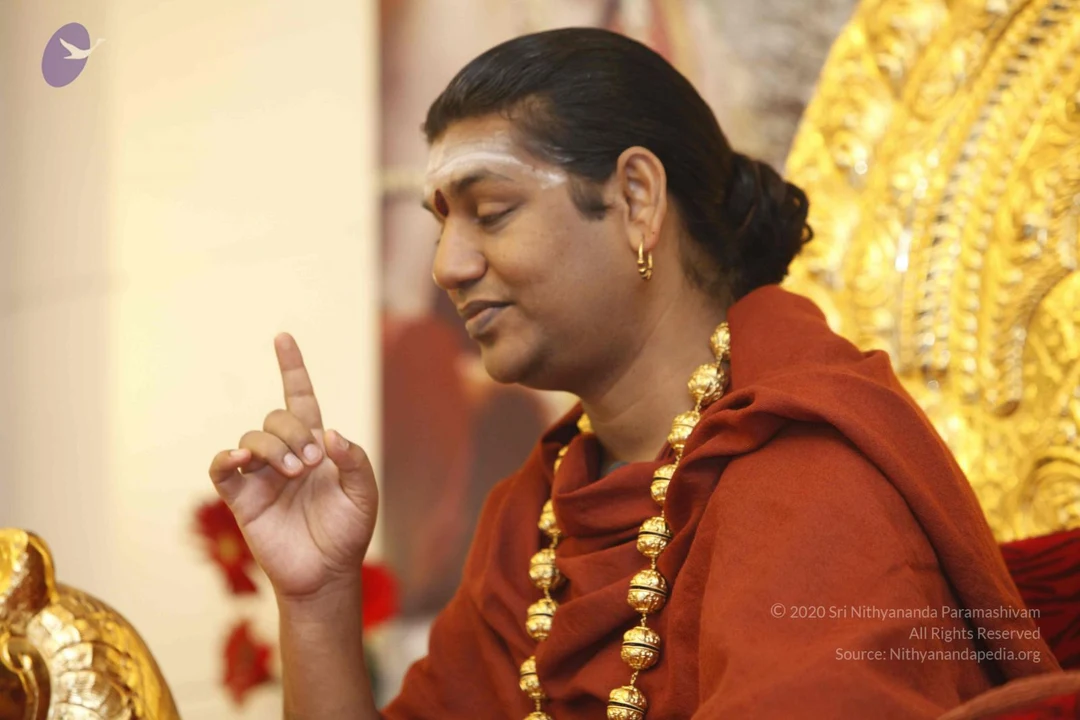
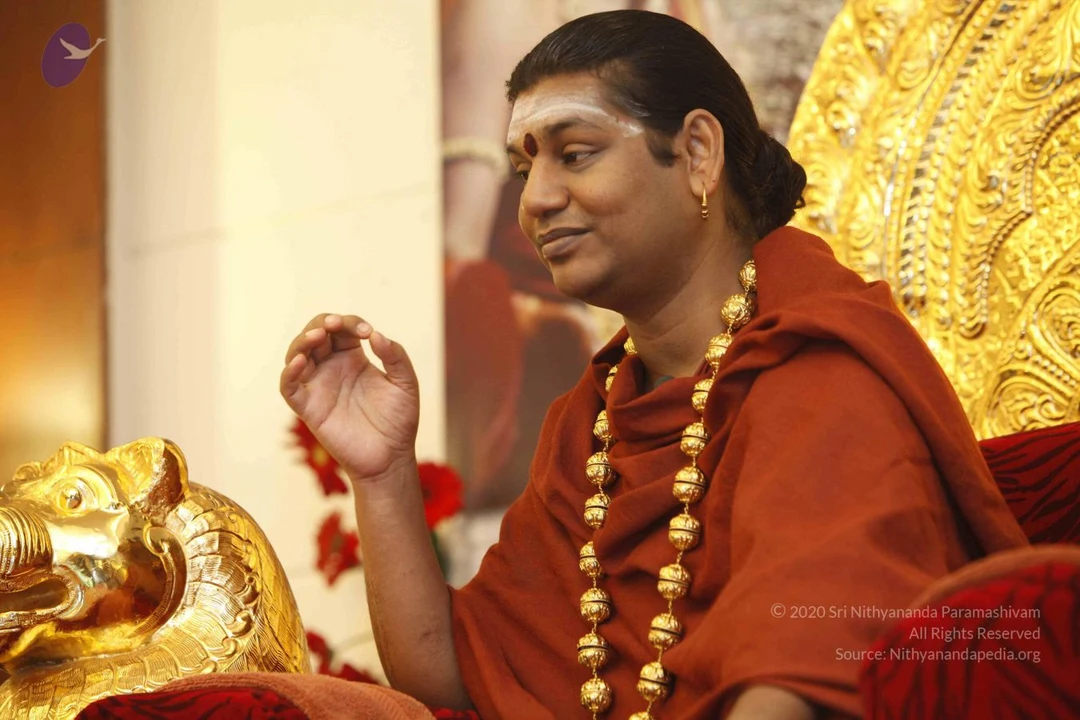
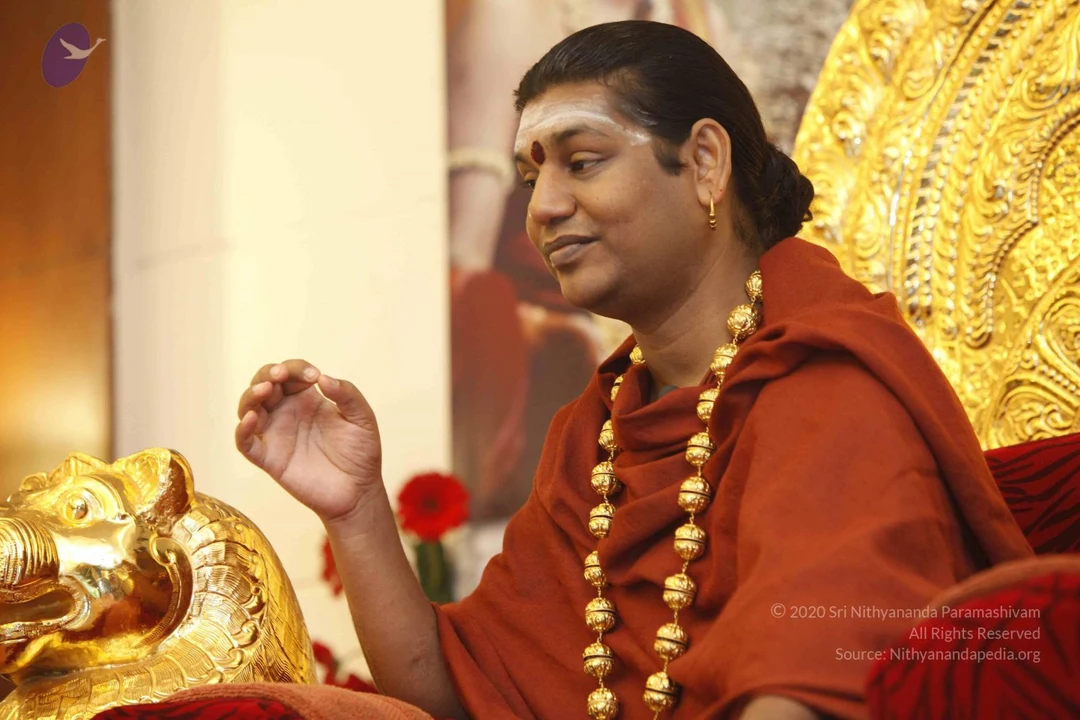
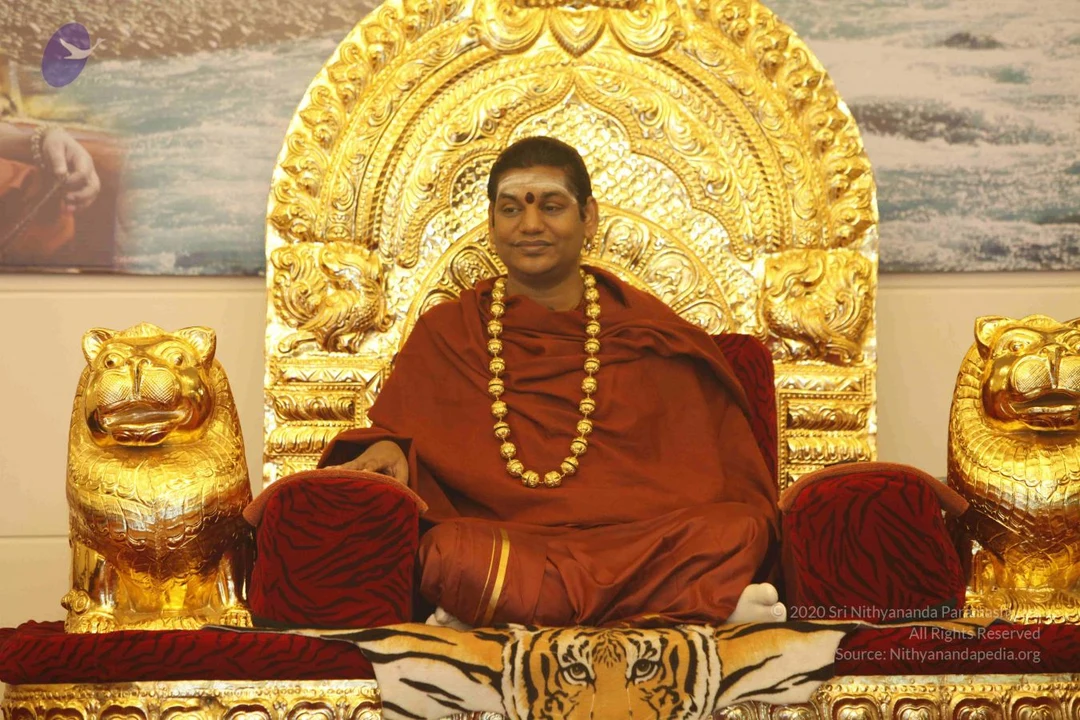
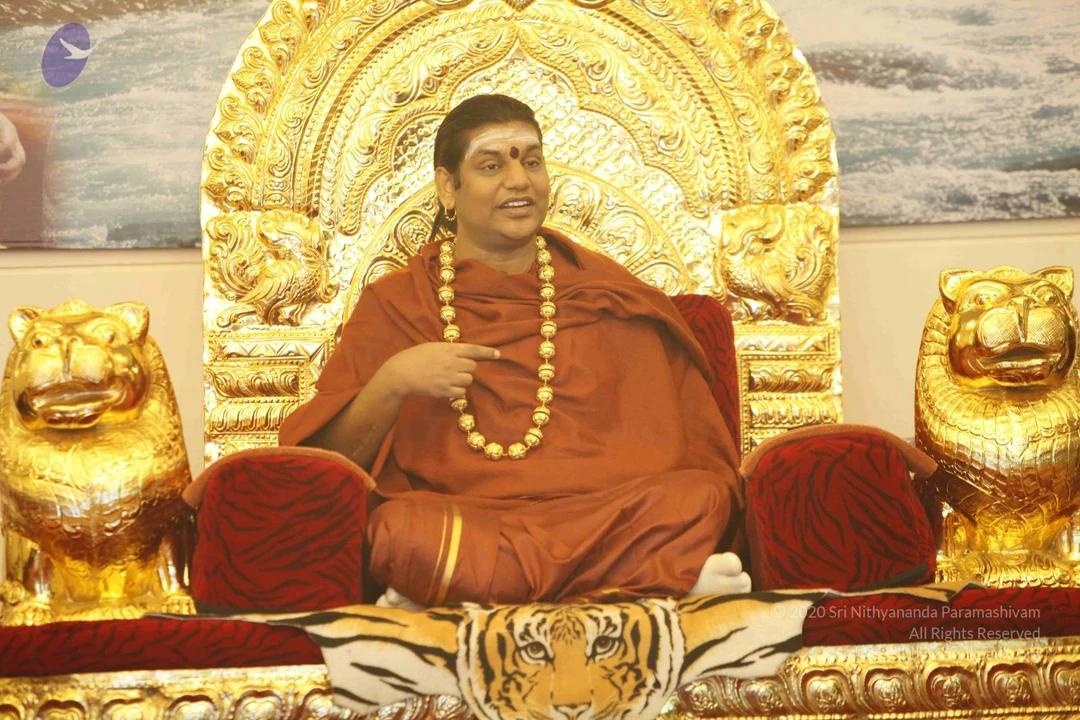
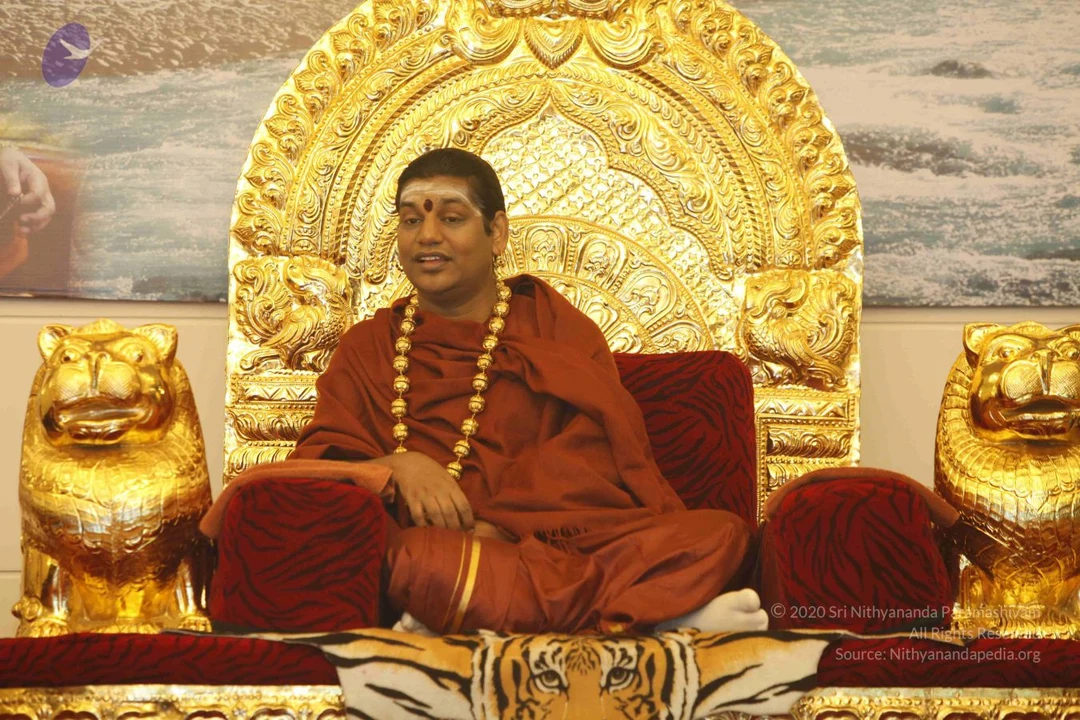
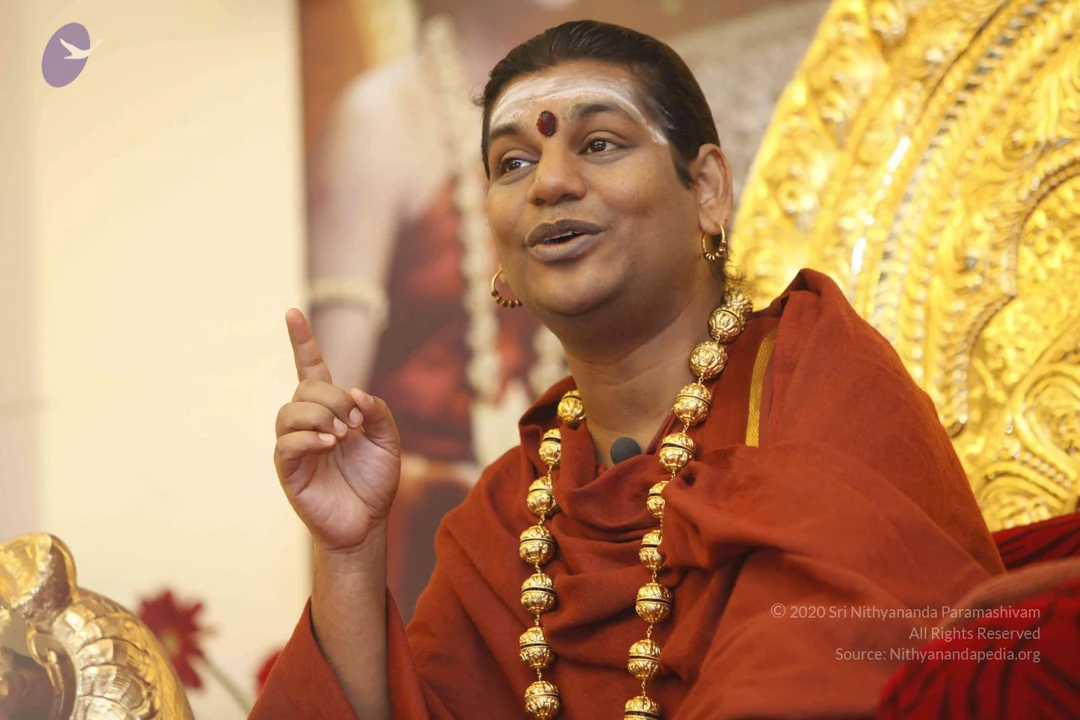
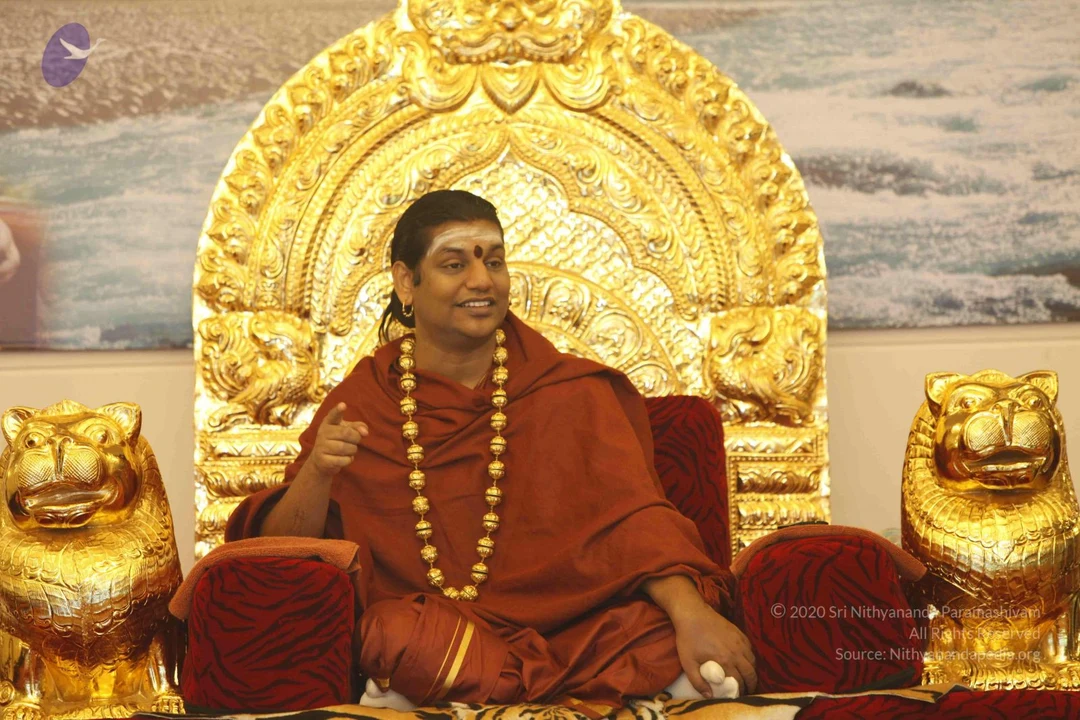
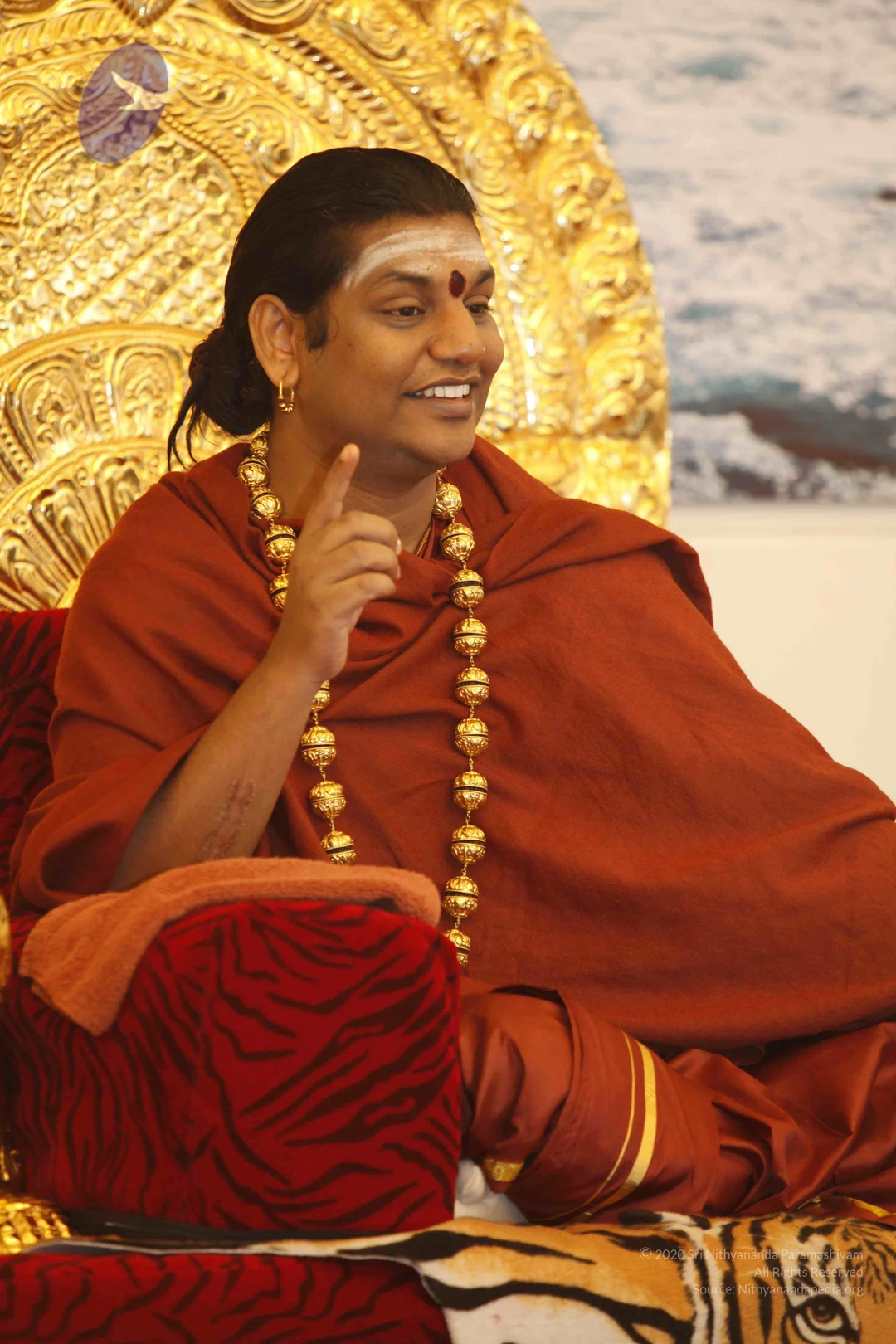
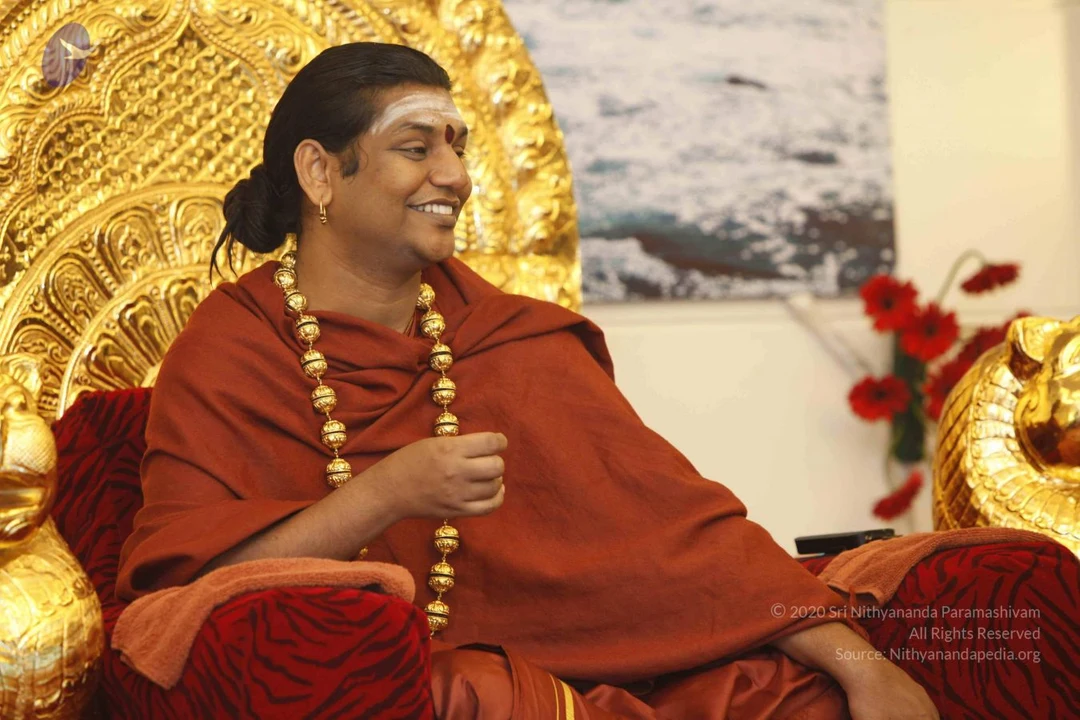
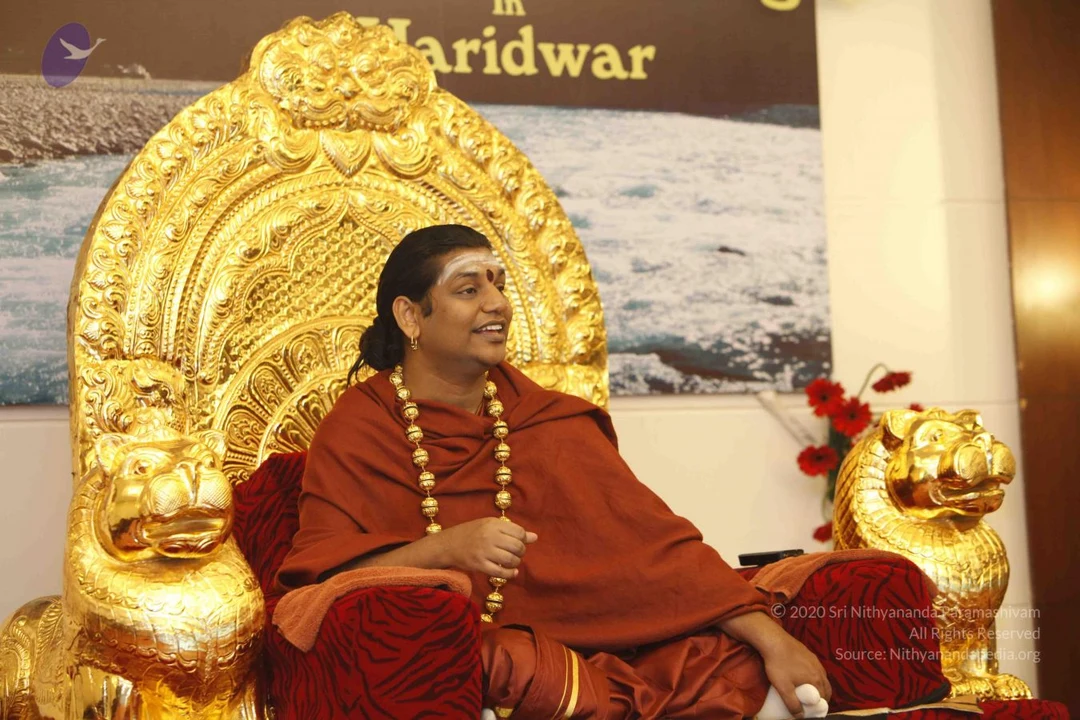
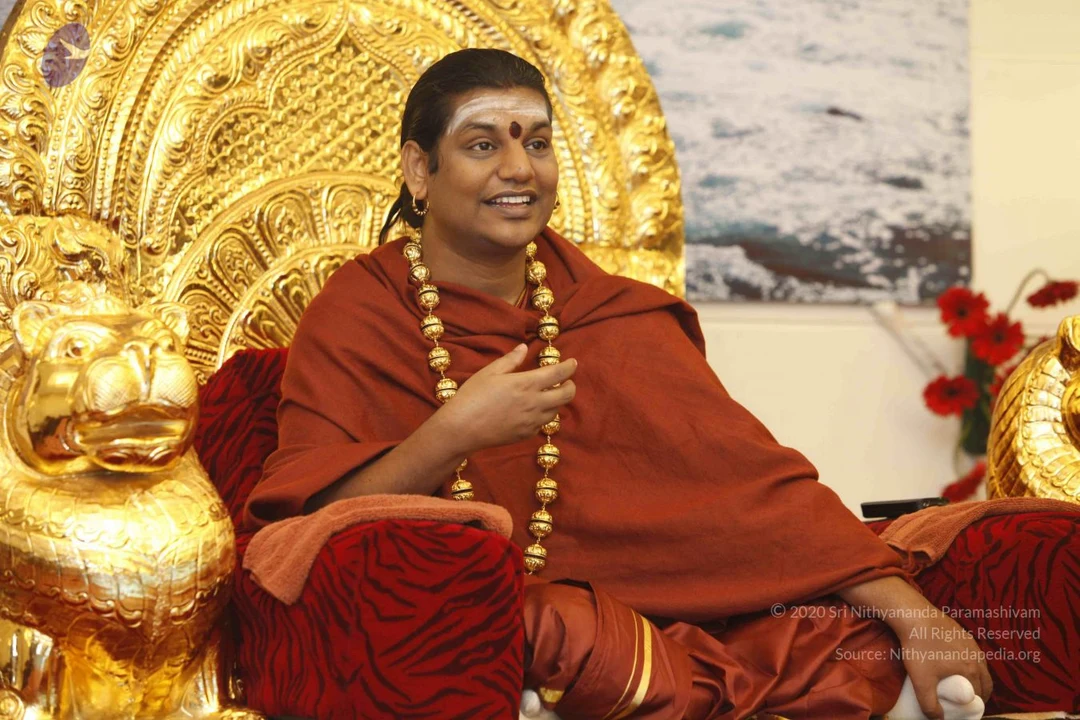
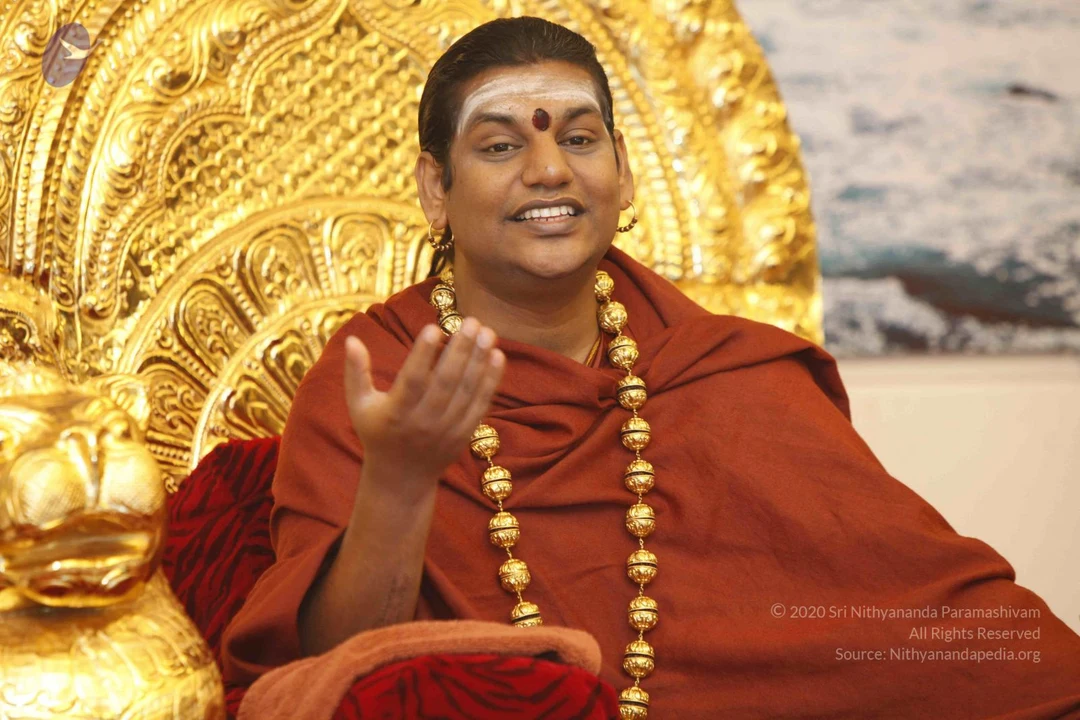
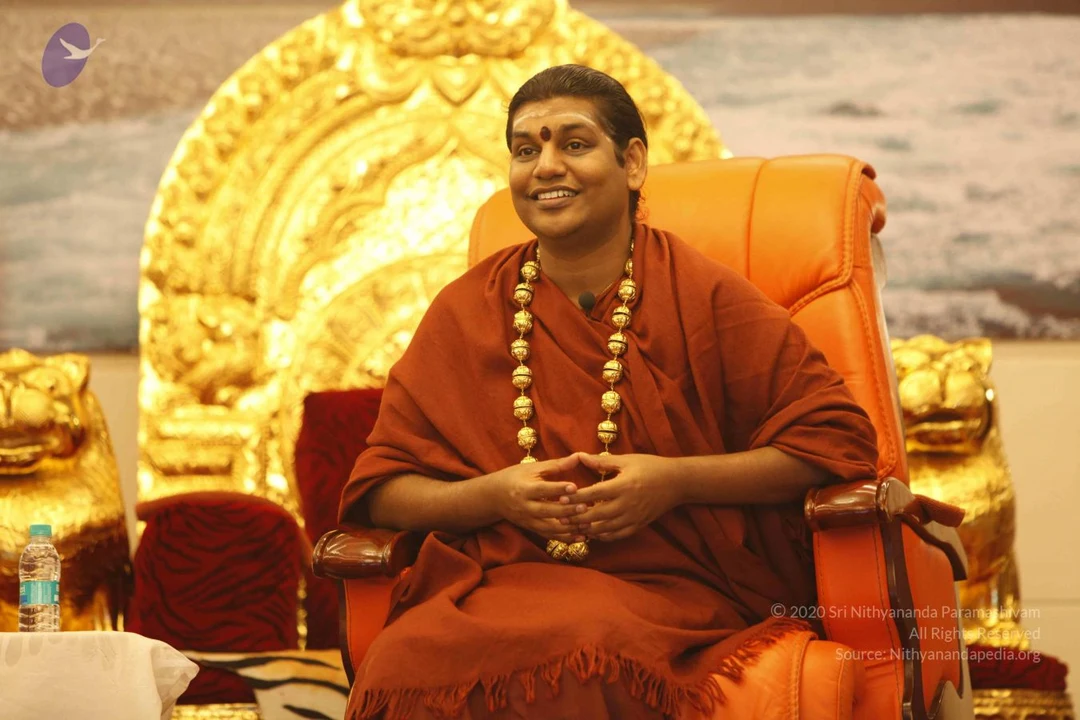
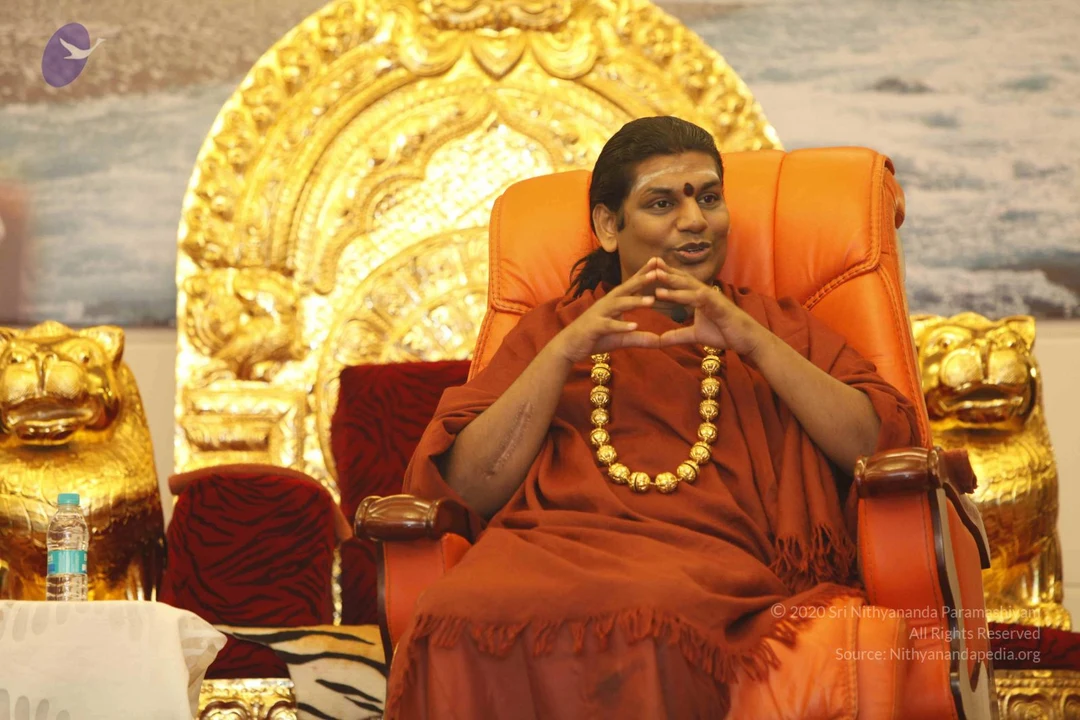
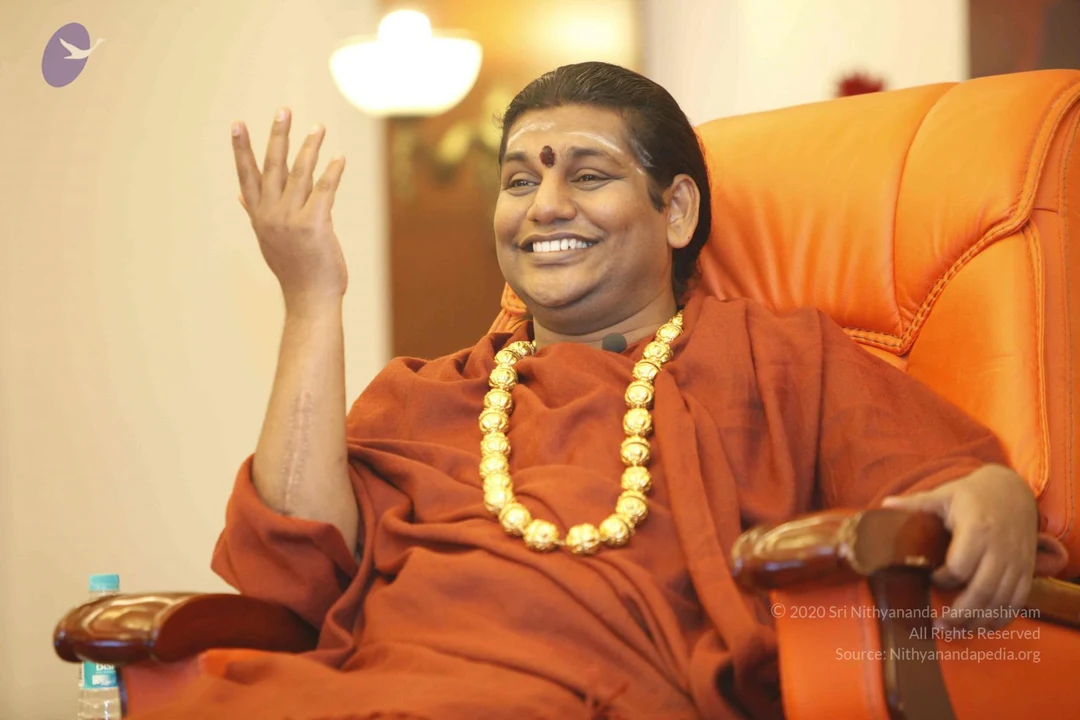
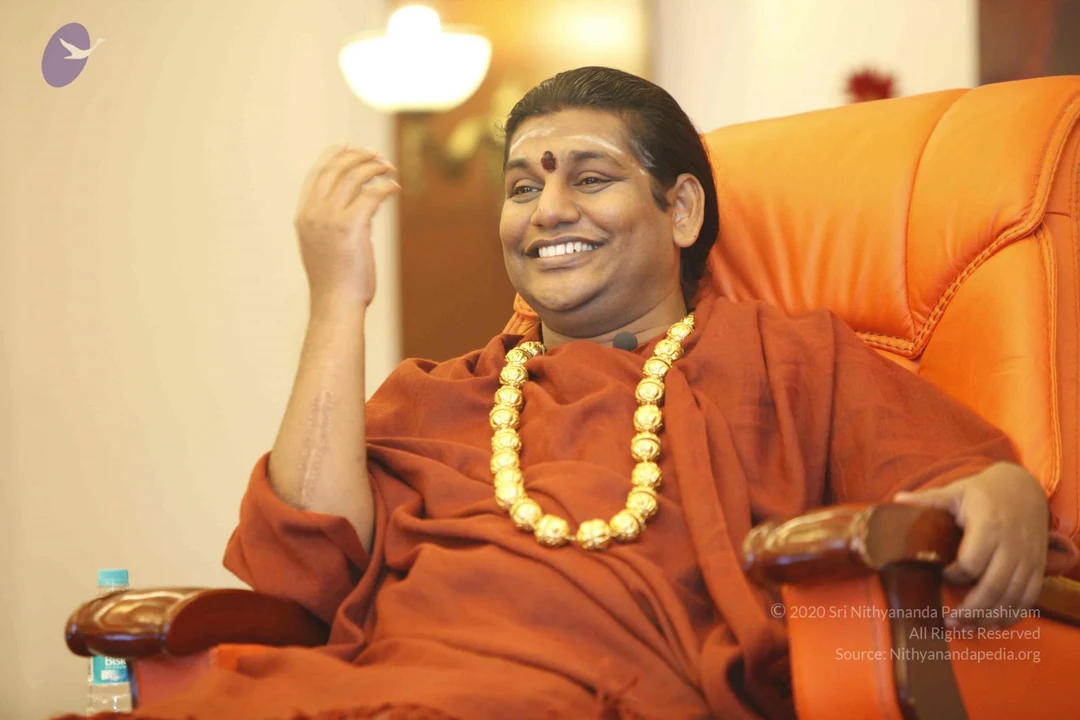
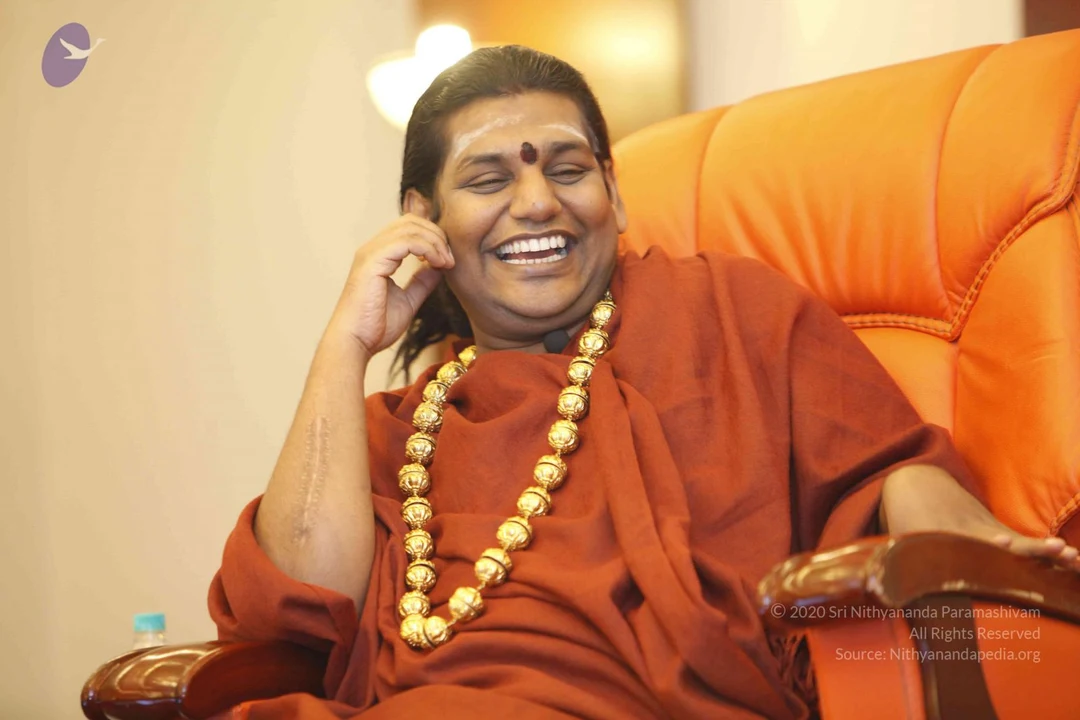
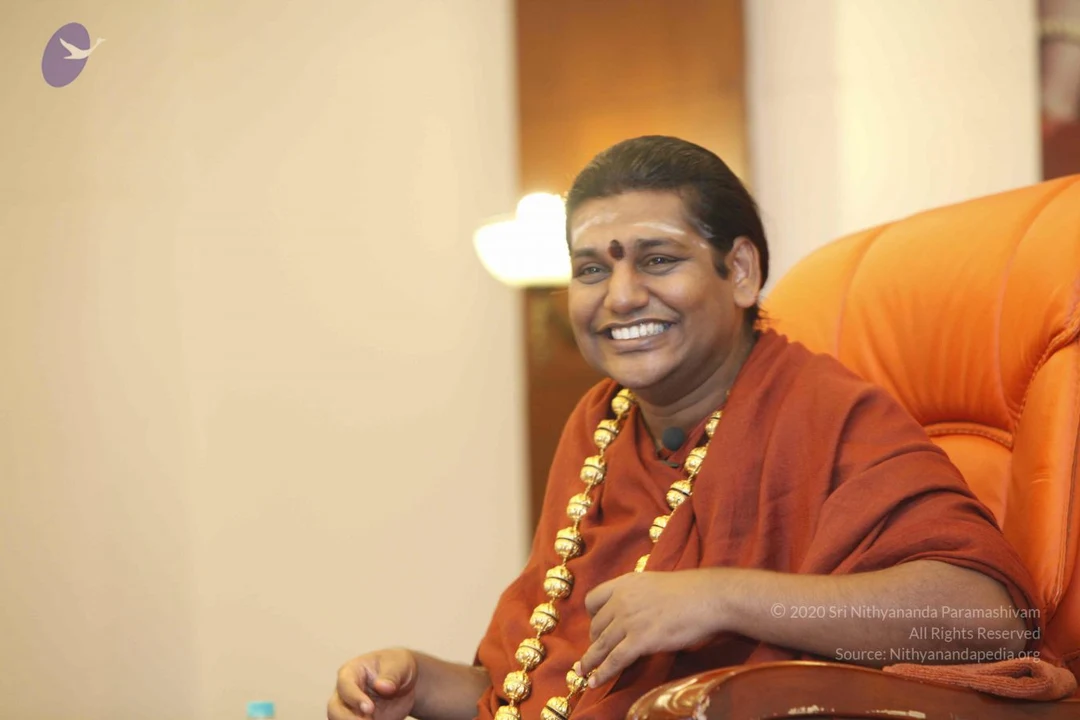
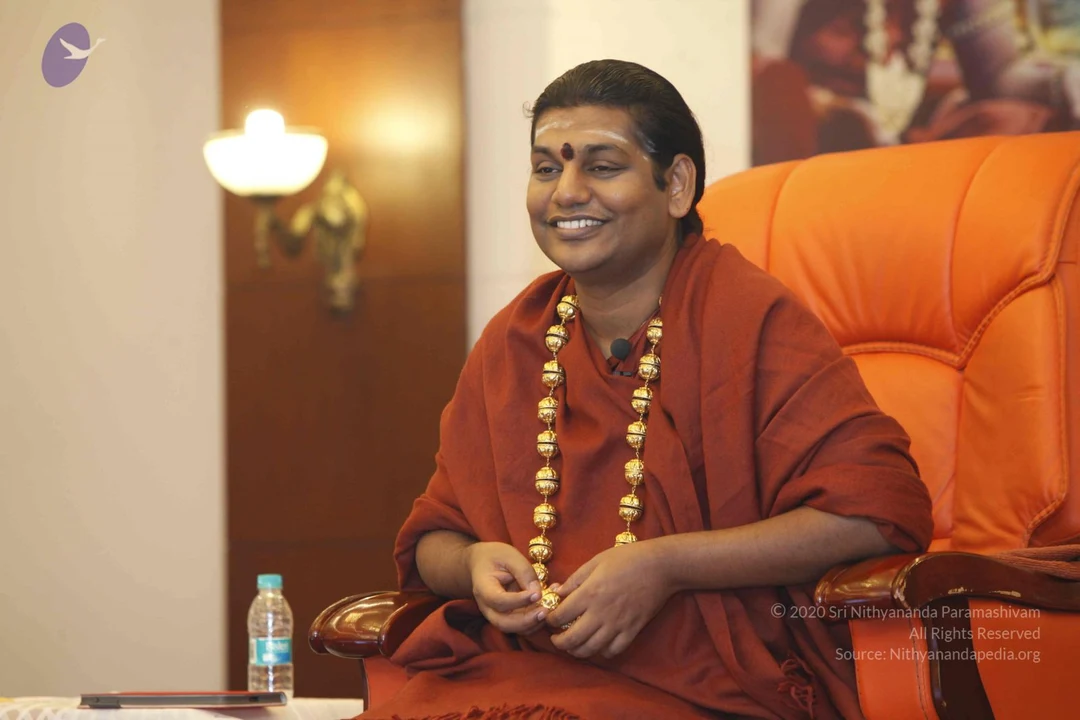
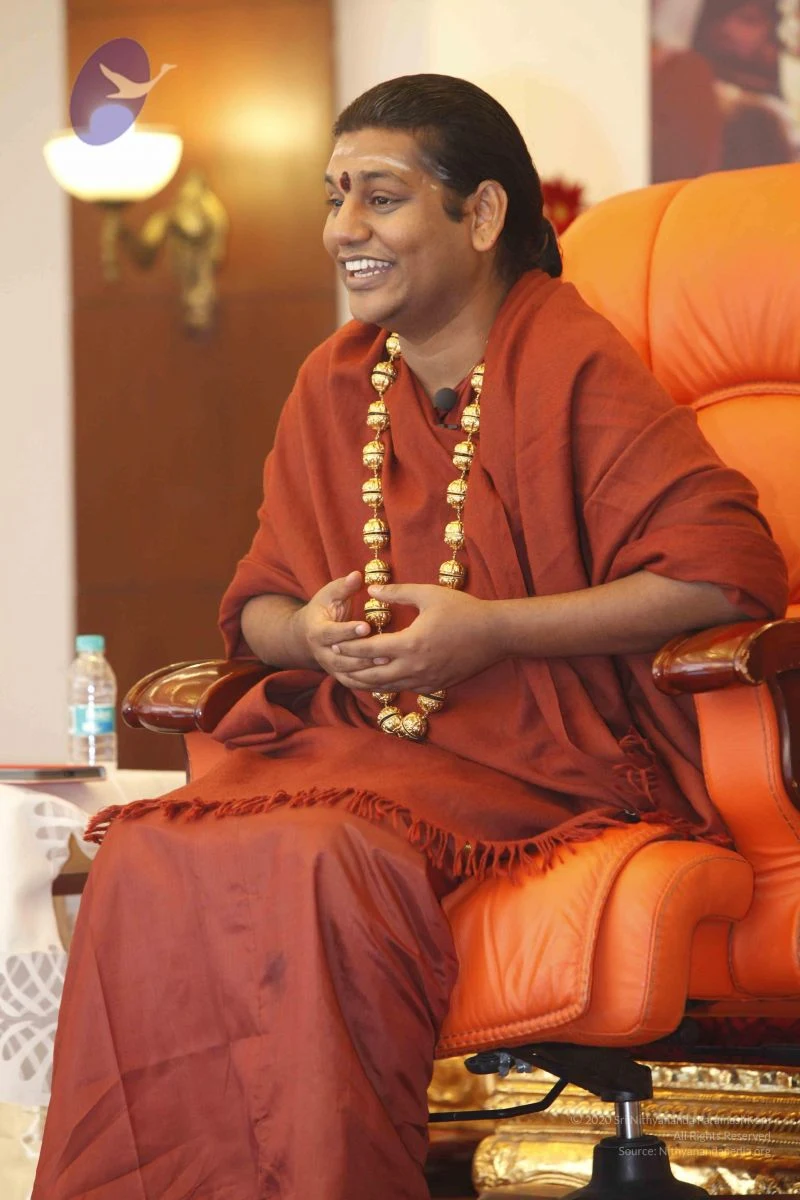
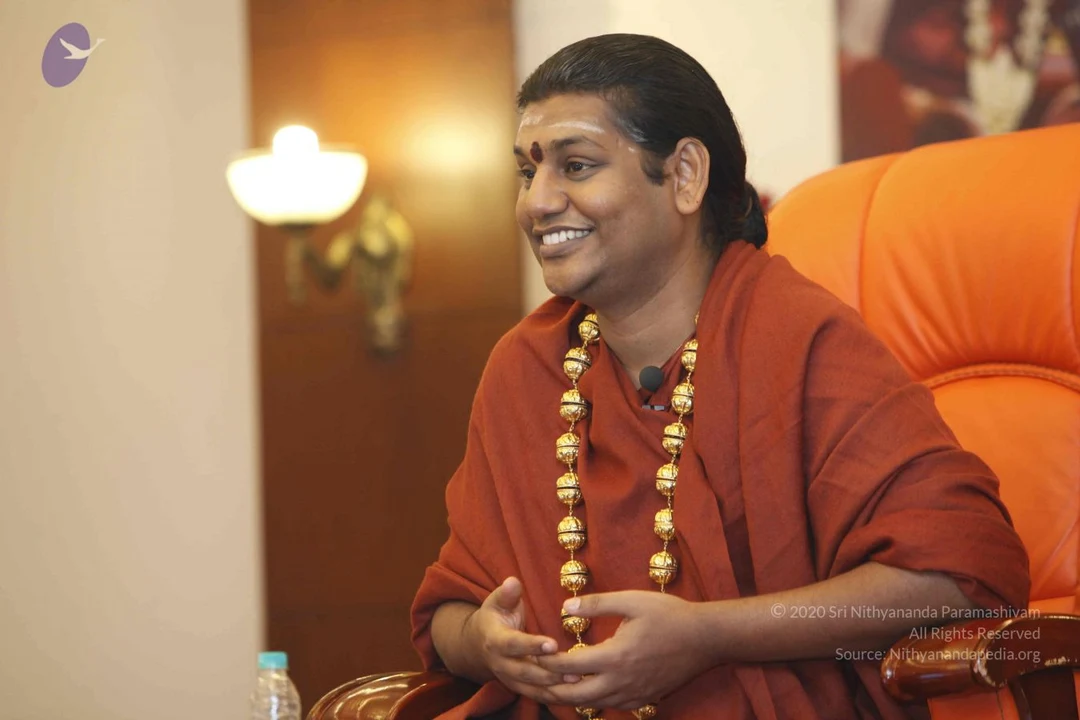
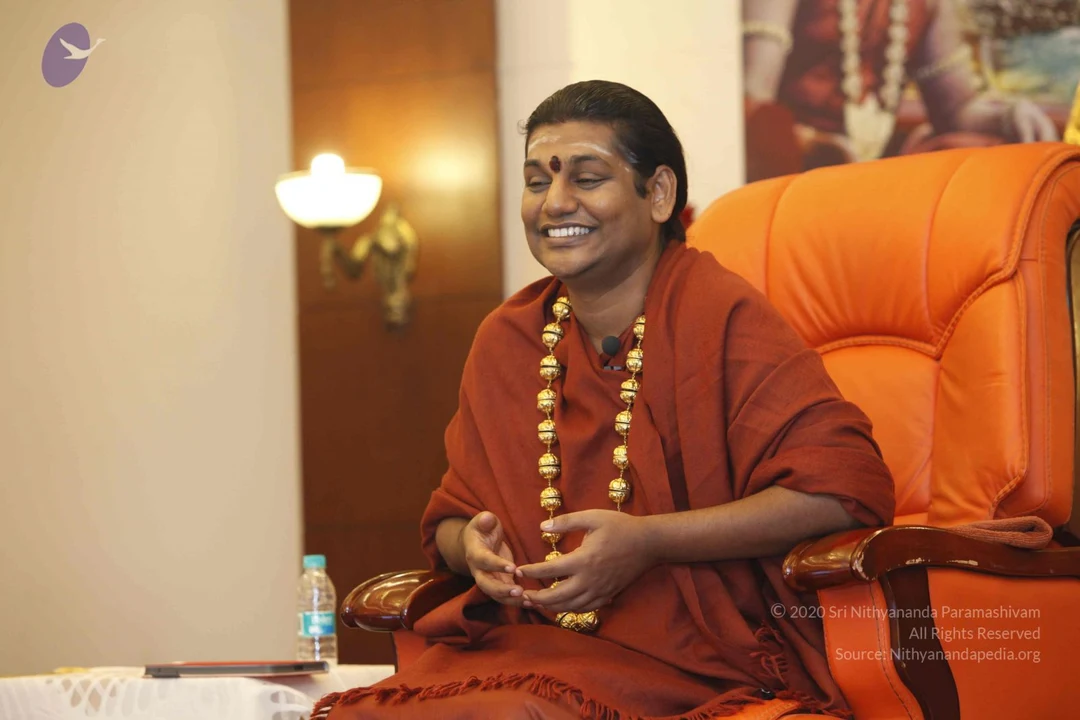
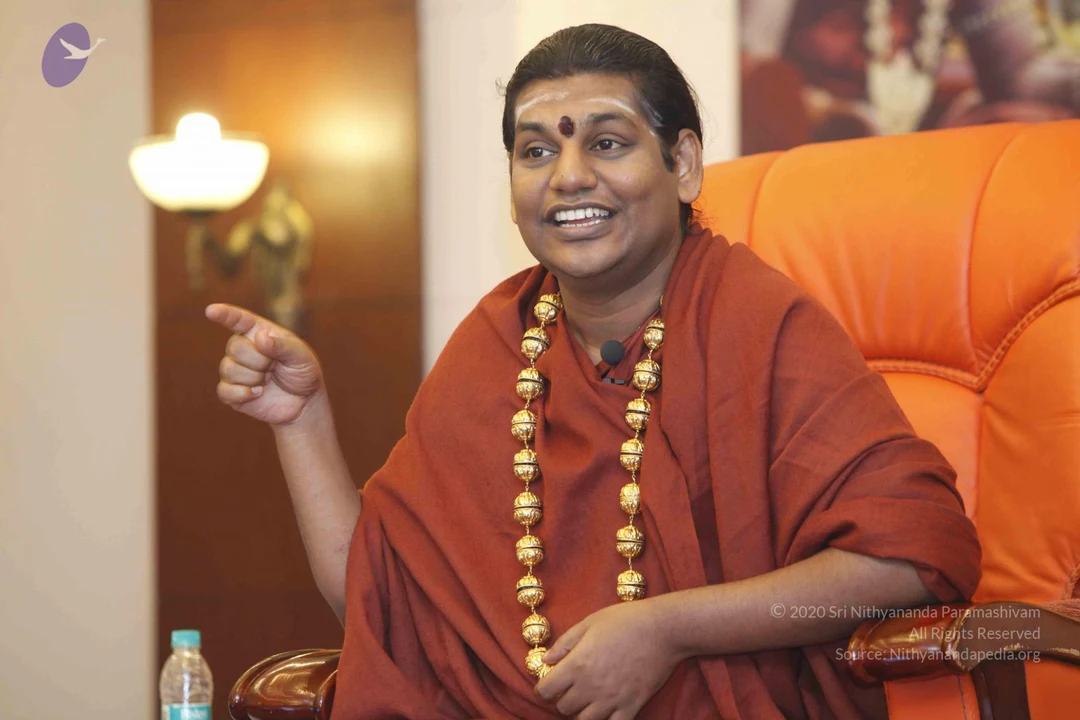
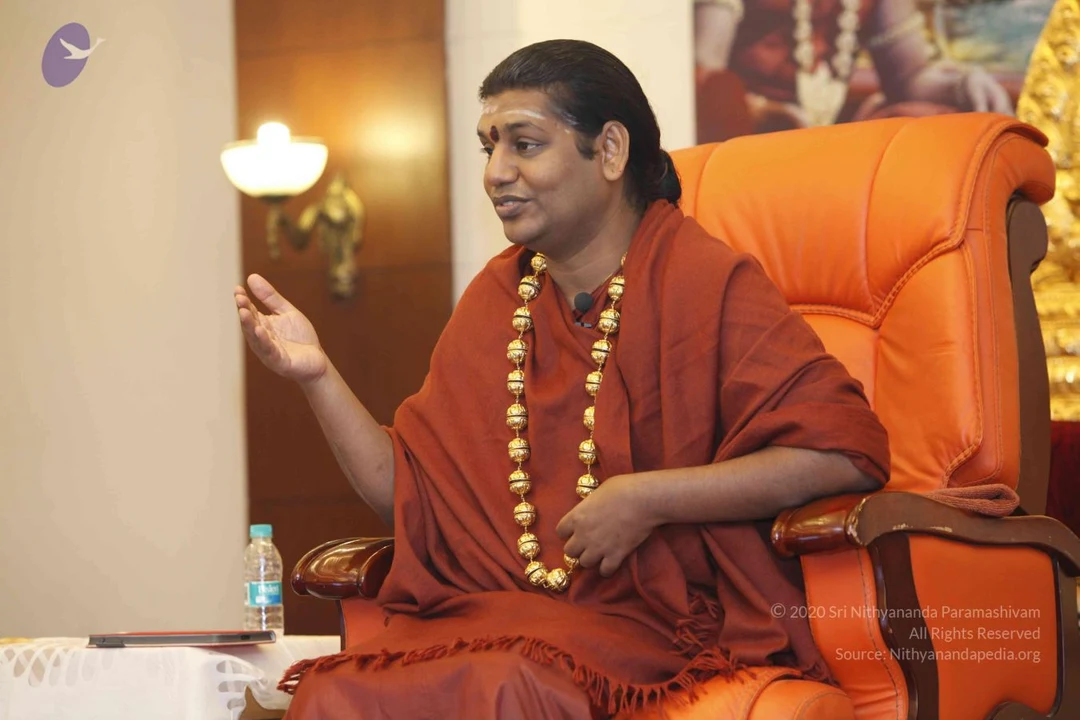
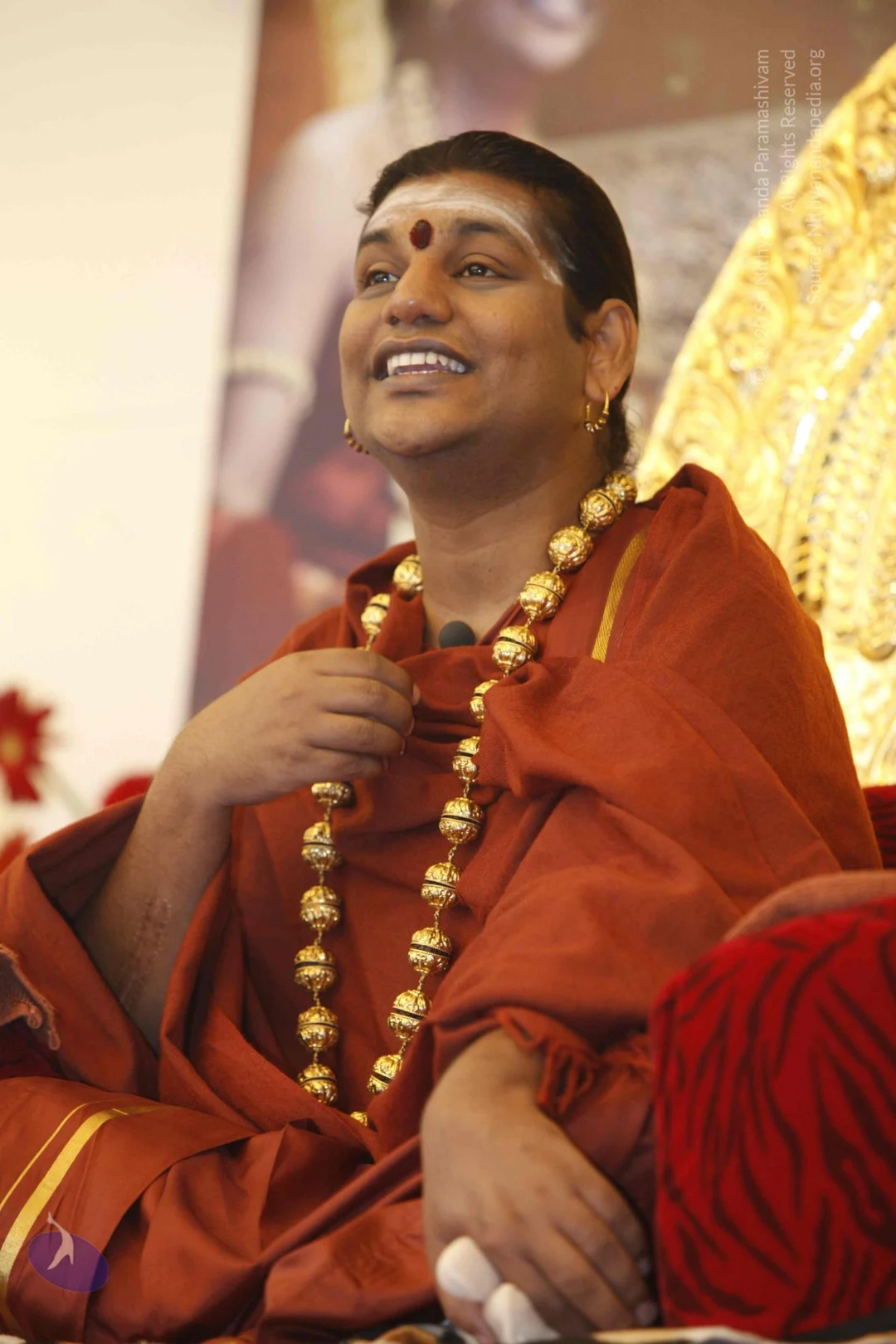
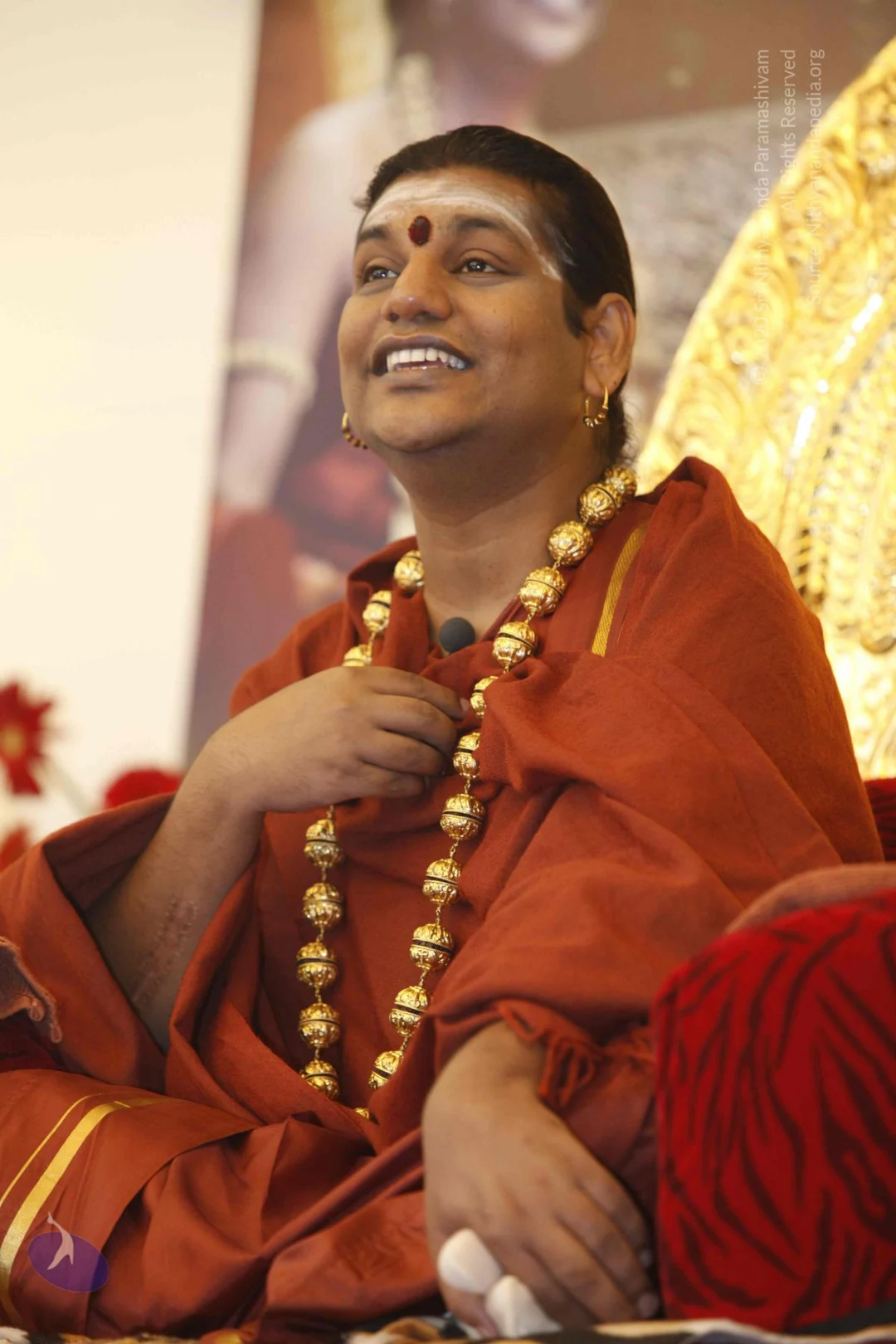
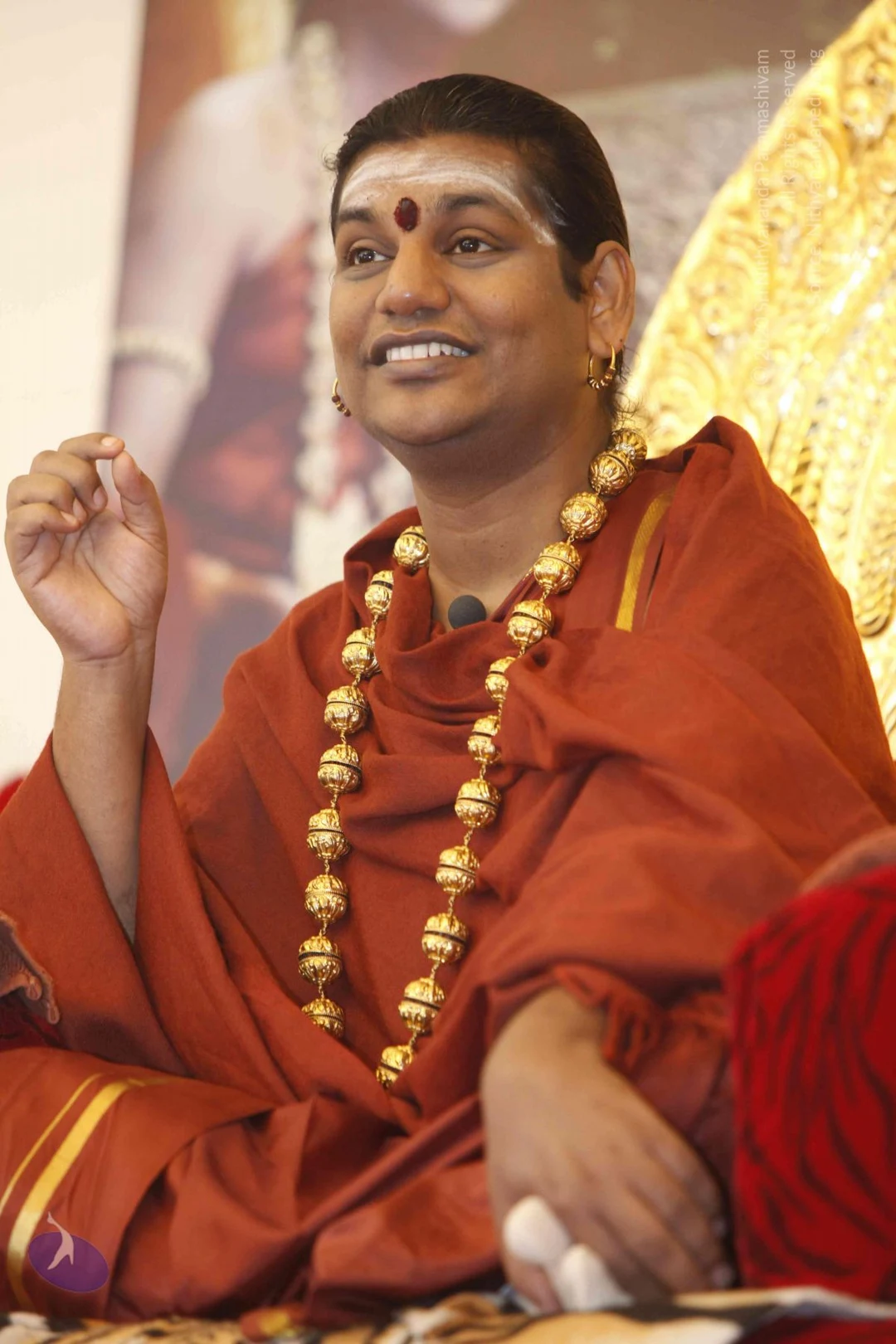
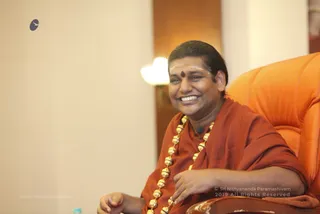
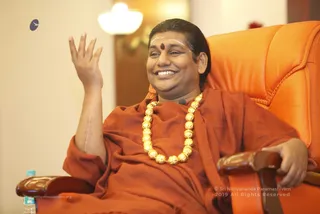
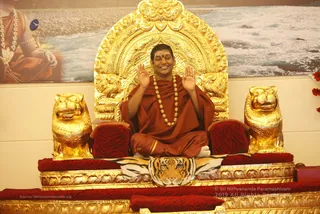
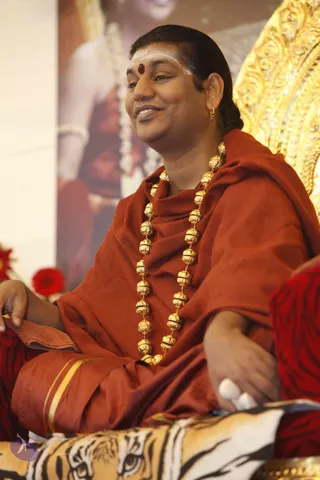
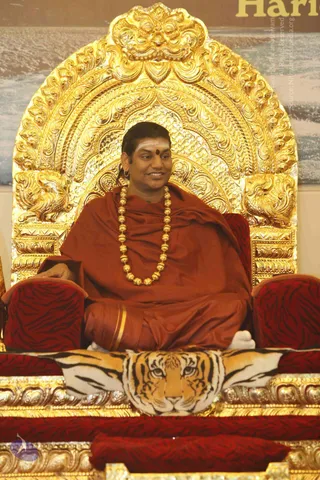
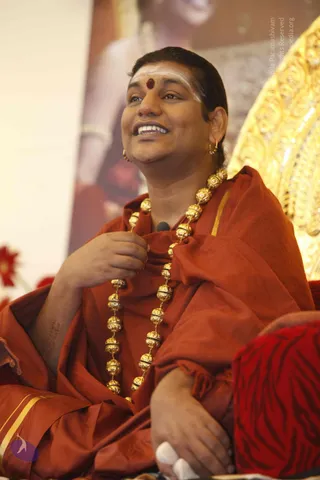
Are You Sleeping Through Life? In today’s morning Satsang, Paramahamsa Nithyananda explains that in order for us to cause our own reality, we must be complete, and help others to be complete, with our self-doubt, self-denial, and self-hatred patterns. Sanatana Hindu Dharma is the only tradition that guides us into the process of completion with these patterns, teaching us how to cause what we want – create our reality! Once these three patterns have melted away, anything we want can be created - we have power over matter!
Transcript
(0:16) || nithyānandeśvara paramashiva samārambhām nithyānandeśvari parāshakti madhyamām | asmat ācārya paryantām vande guru paramparām ||
I welcome all of you with my love and respects. I welcome all the devotees, disciples, samajis, satsangis, sannyasis sitting with us all over the world through Nithyananda TV, Sadhna TV, Janashree TV, Eshwar TV, and through two-way video-conferencing having Nayana Deeksha in twenty-two cities in many countries all over the world.
Cities sitting with us: Devon-UK, Bogota-Colombia, Dubai-Vaidyanatham, New Zealand-Adi Arunachalam, Austin-Texas, New York-Varanasi, Chino Hills-California, Hyderabad-Gupta Kashi, Enriching Temple-Bidadi, Colorado Springs-USA, Kathmandu-Nepal, Mollieres-France, Oman- Sivagangai, Bangalore North, Nithyananda Nagara-Bidadi, Dallas-Dwaraka, Guadeloupe- Rameshwaram, London-Kashi, Kuala Lumpur-Palani, Houston-Kalahasti, Los Angeles-Arunachalam, Singapore-Singapuram, Nithyananda Nagaramu-Hyderabad, Washington DC-Sripuram, Ohio-Prayag San Jose-Madurai, Toronto-Kailasam, Mill Valley-Vairavan Koil, Seattle-Chidambaram, Oklahoma- Somanatham, San Diego-Tirualavai..................... I welcome all of you with my love and blessings.
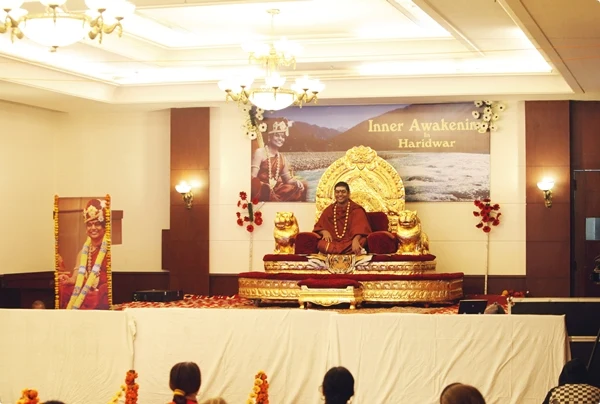
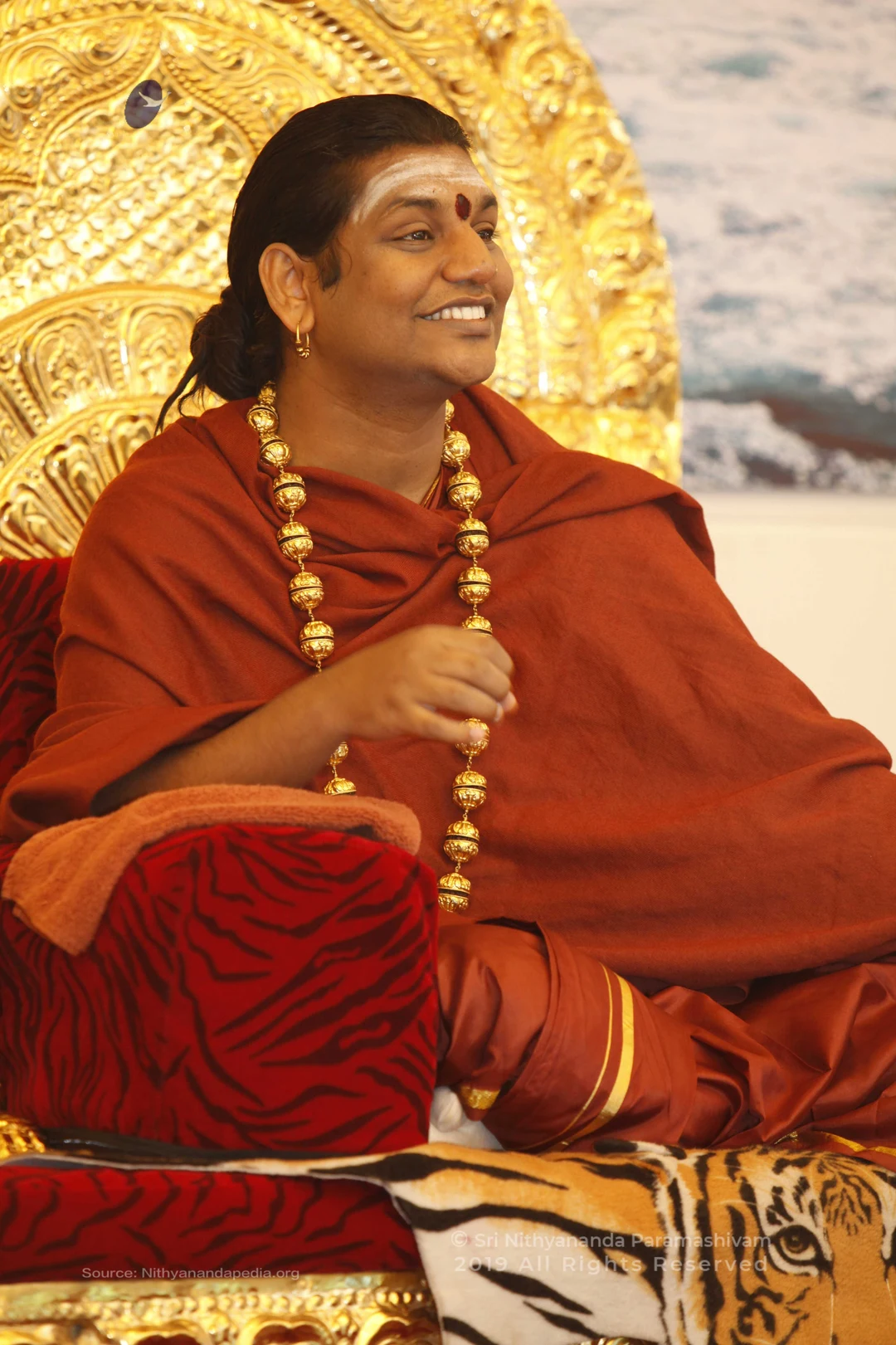
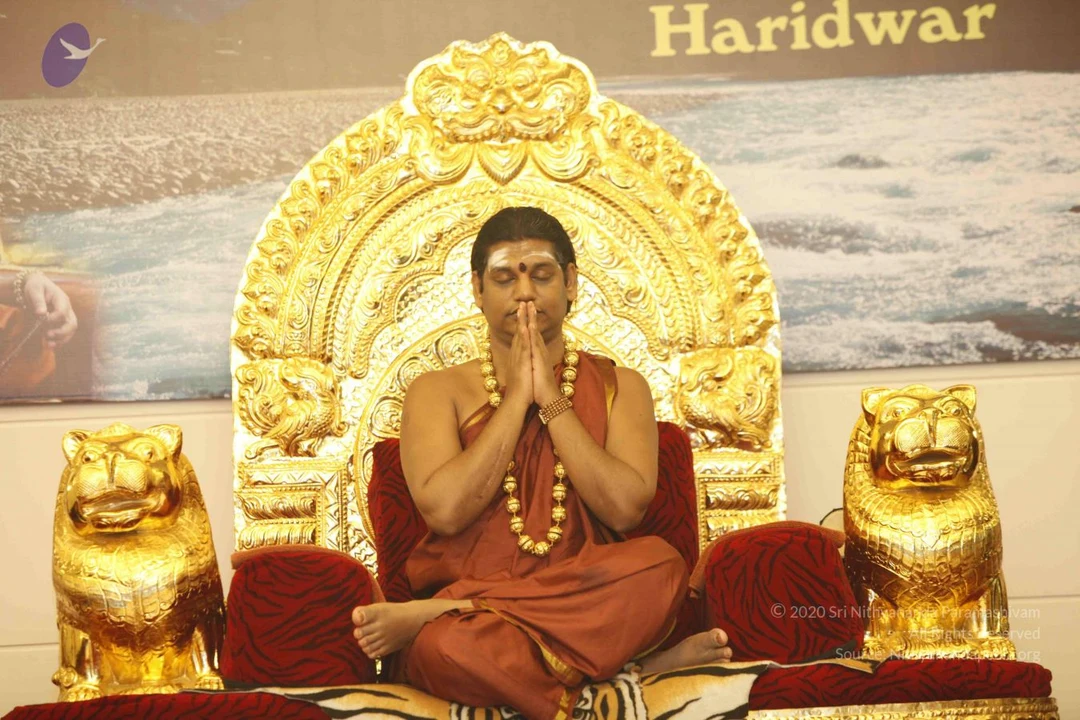
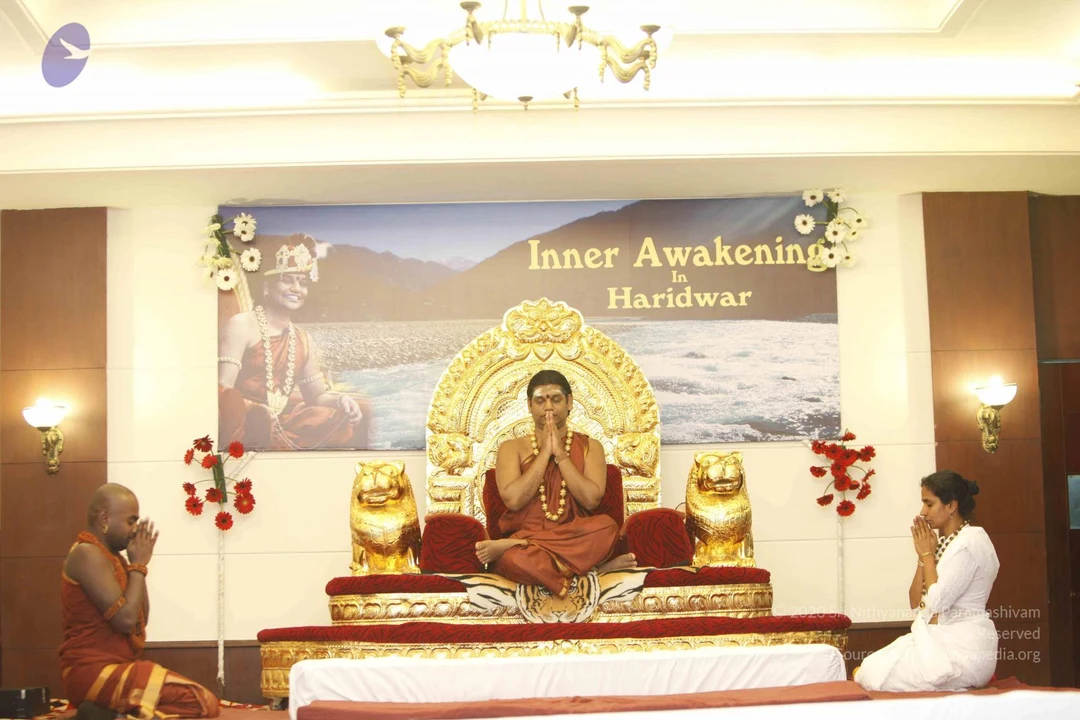
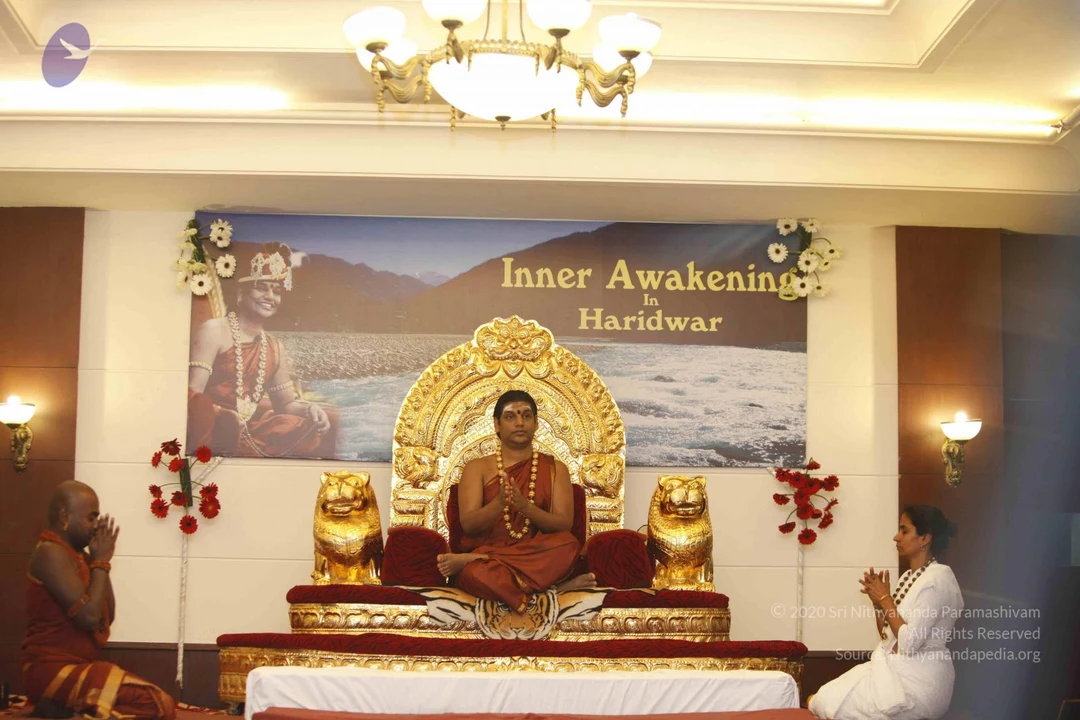
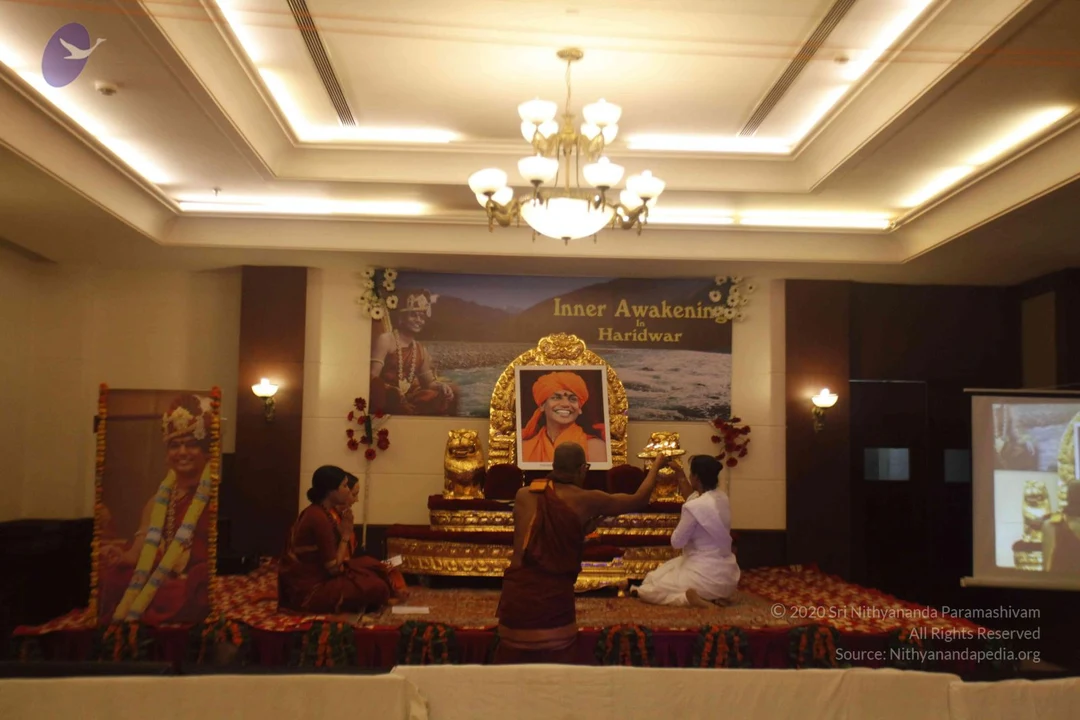
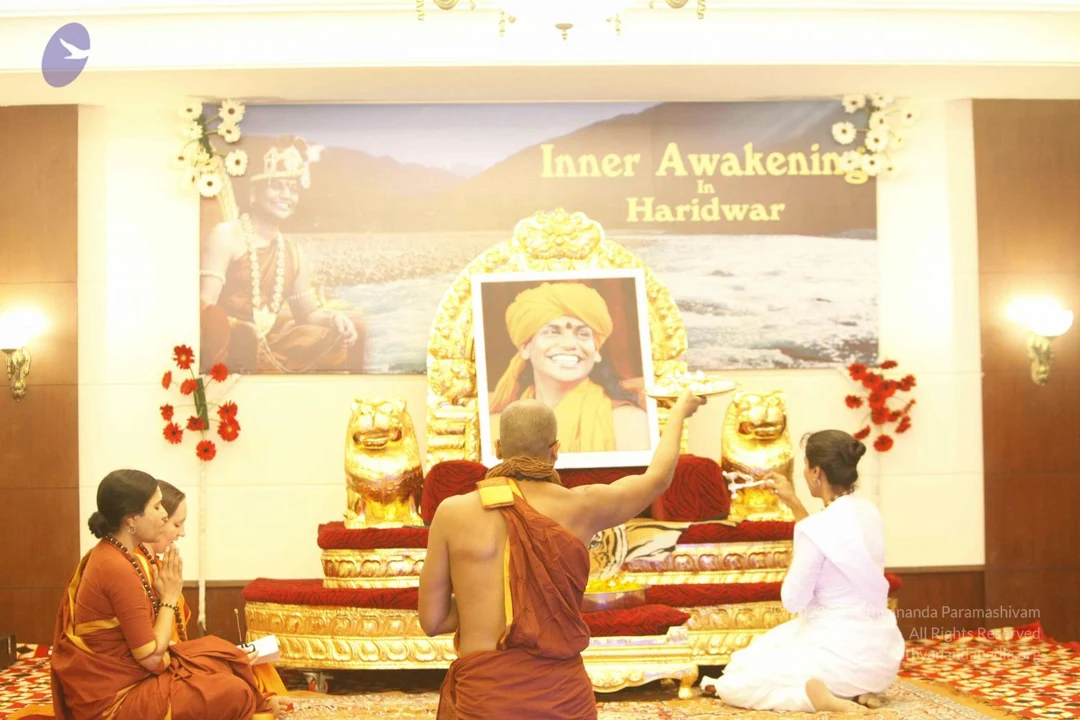
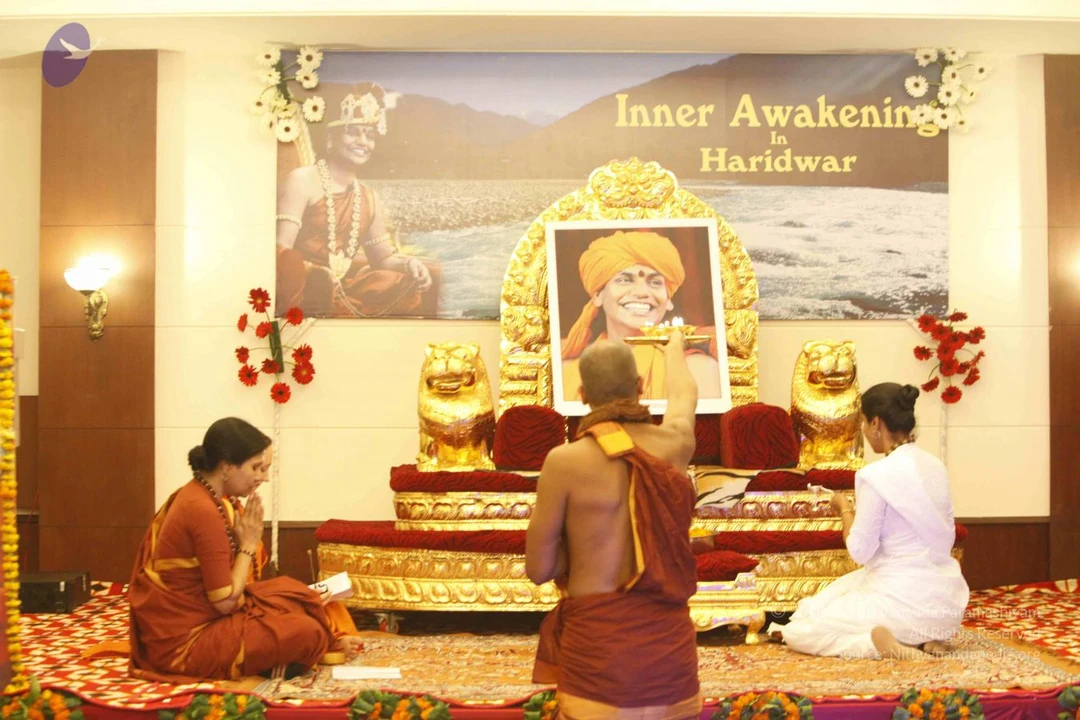
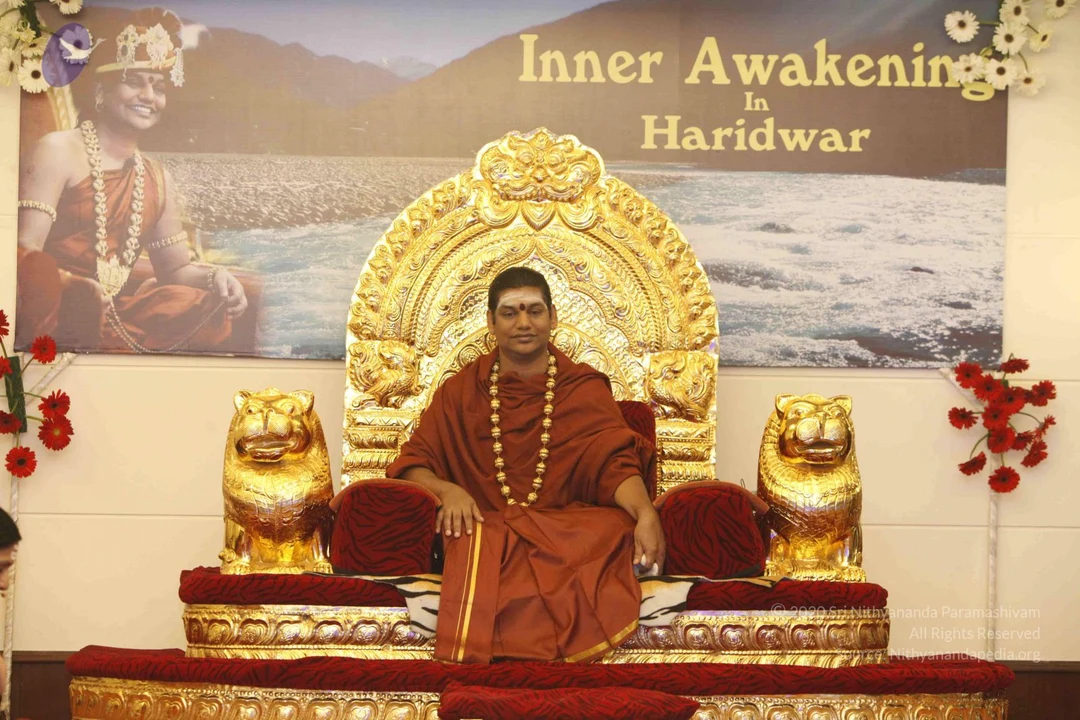
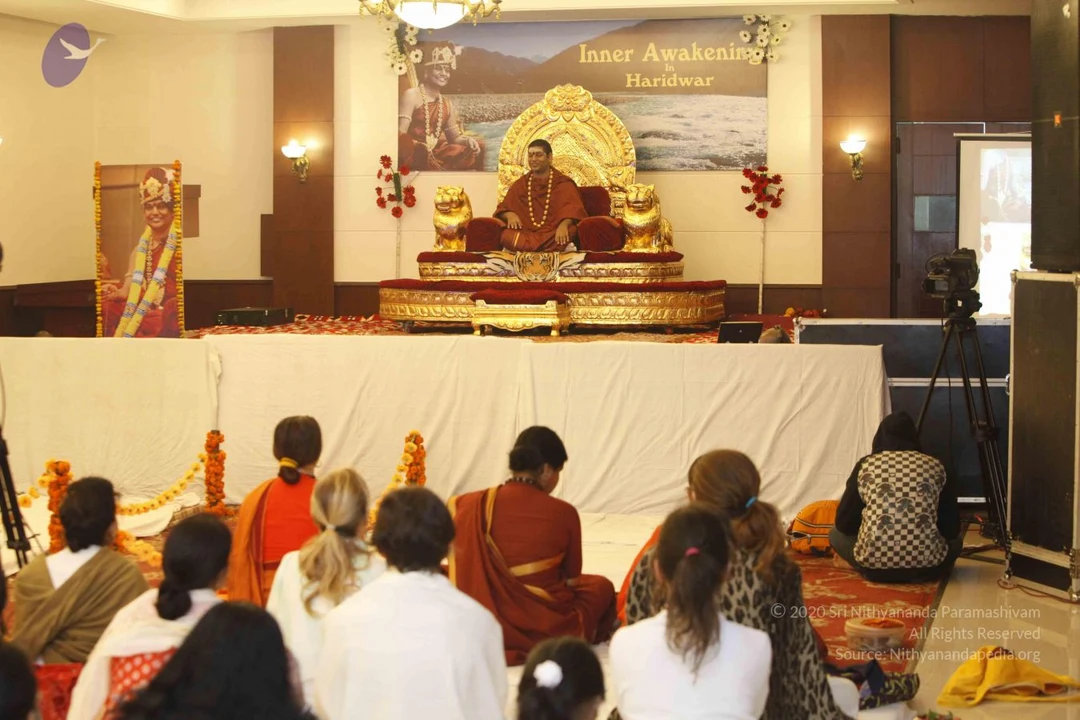
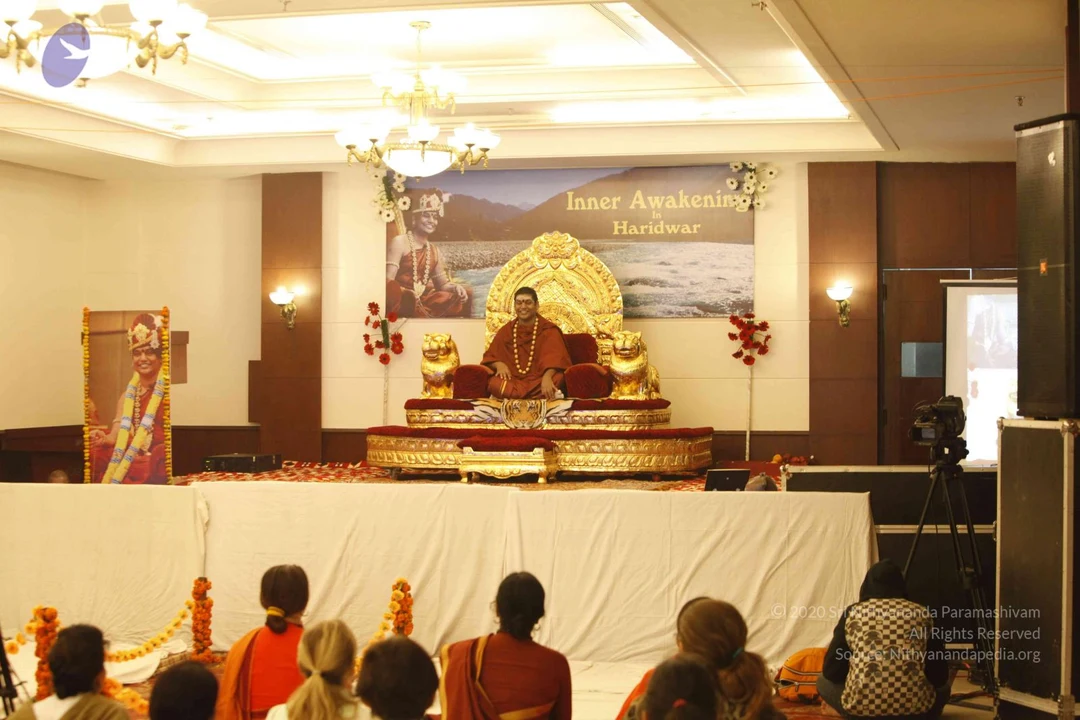
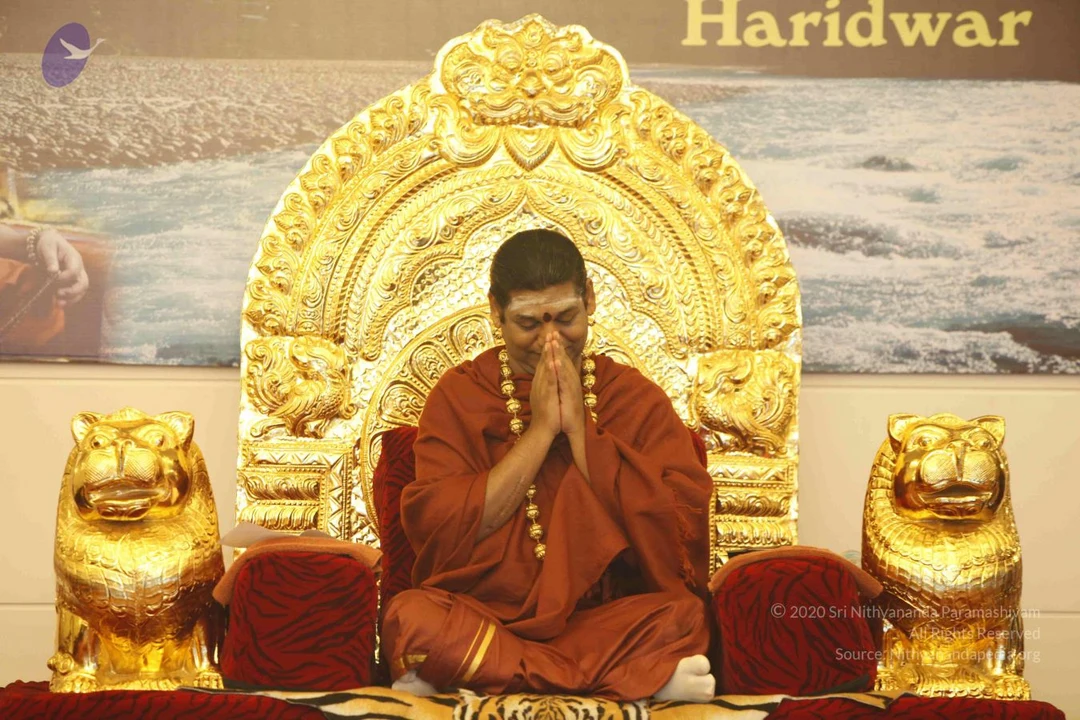
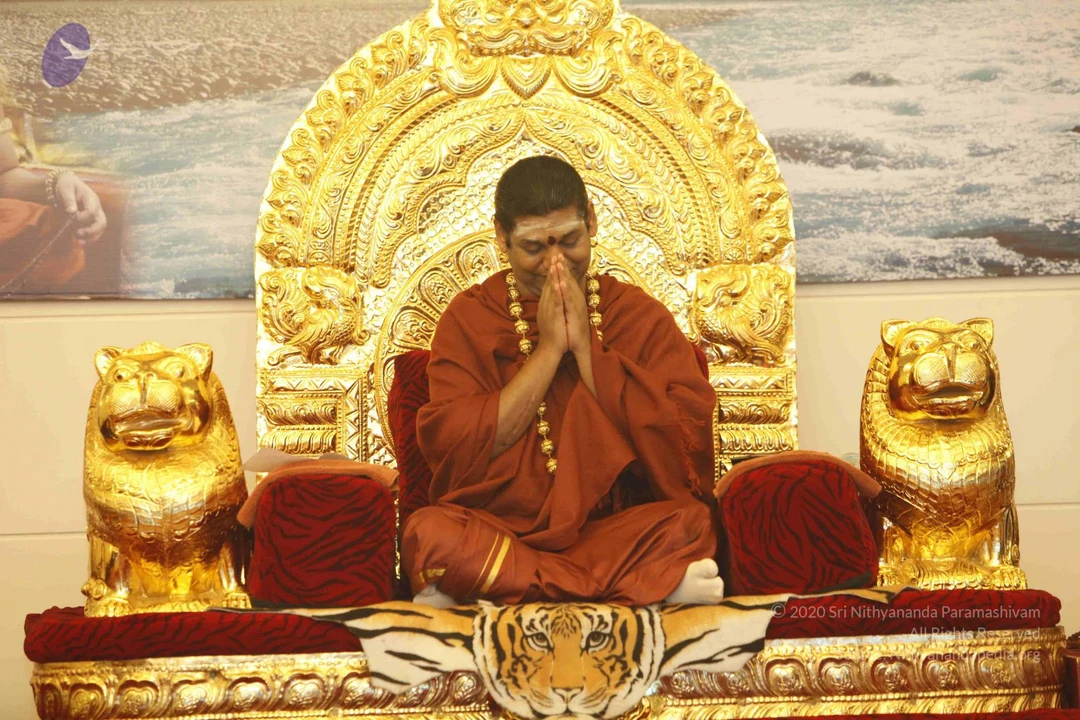
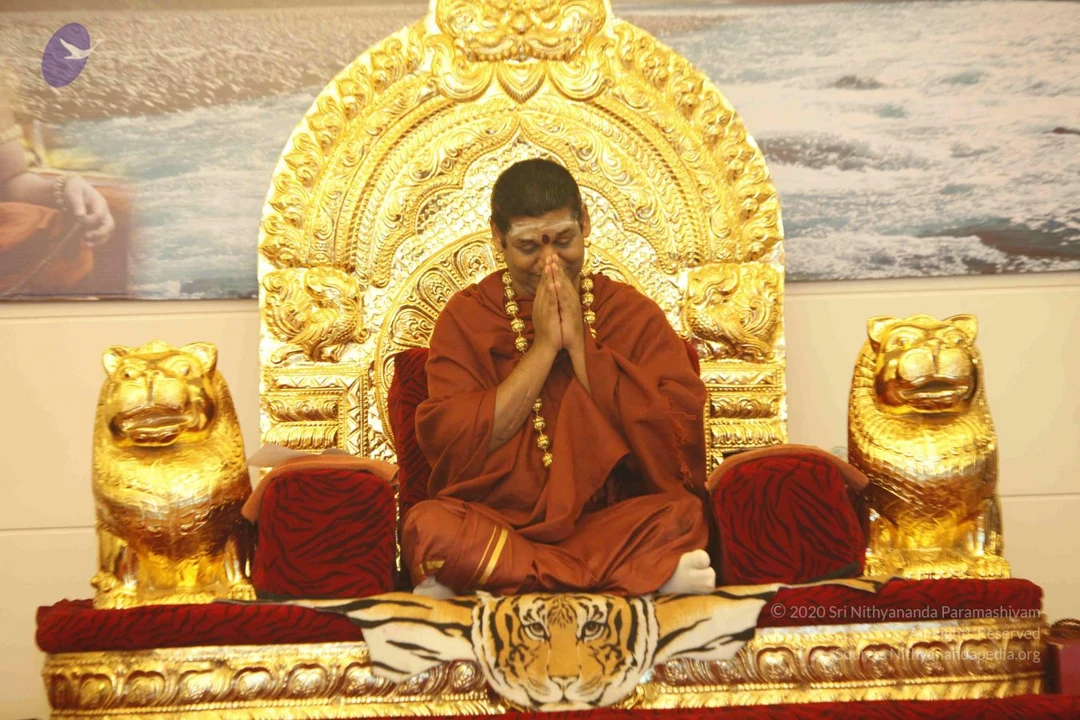
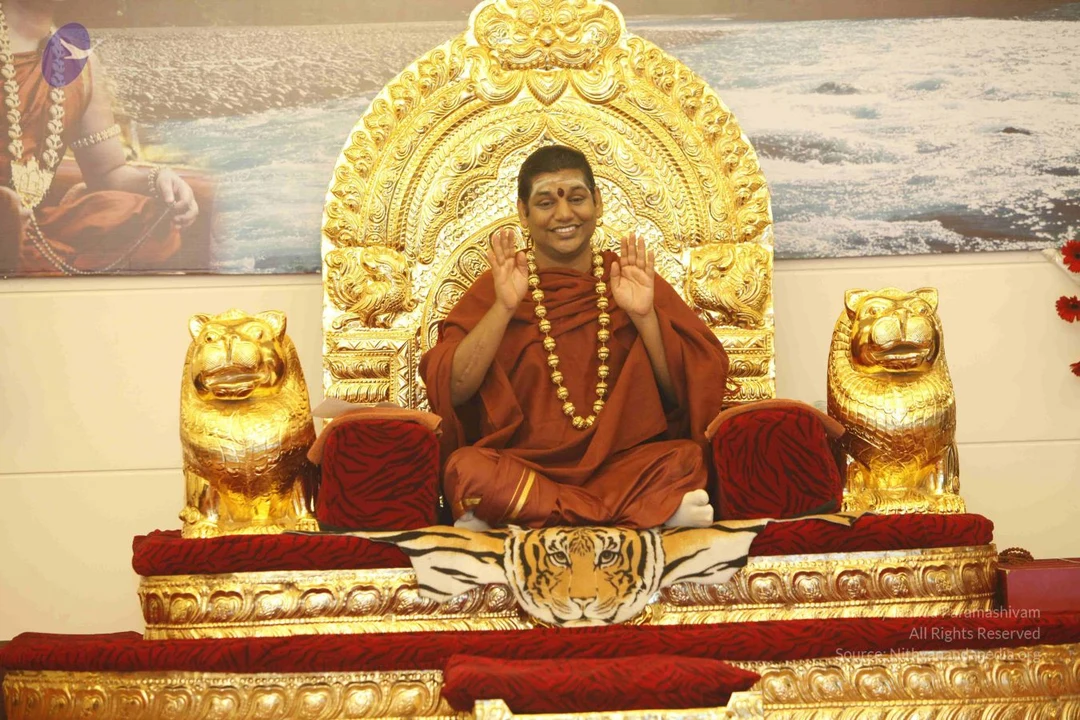
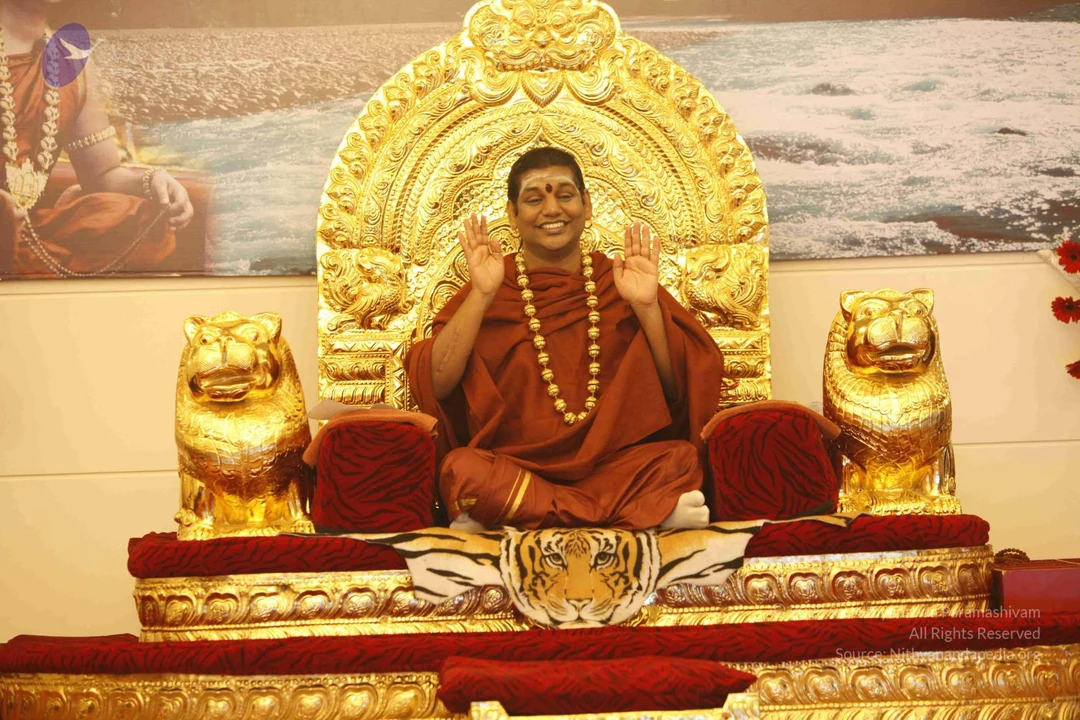
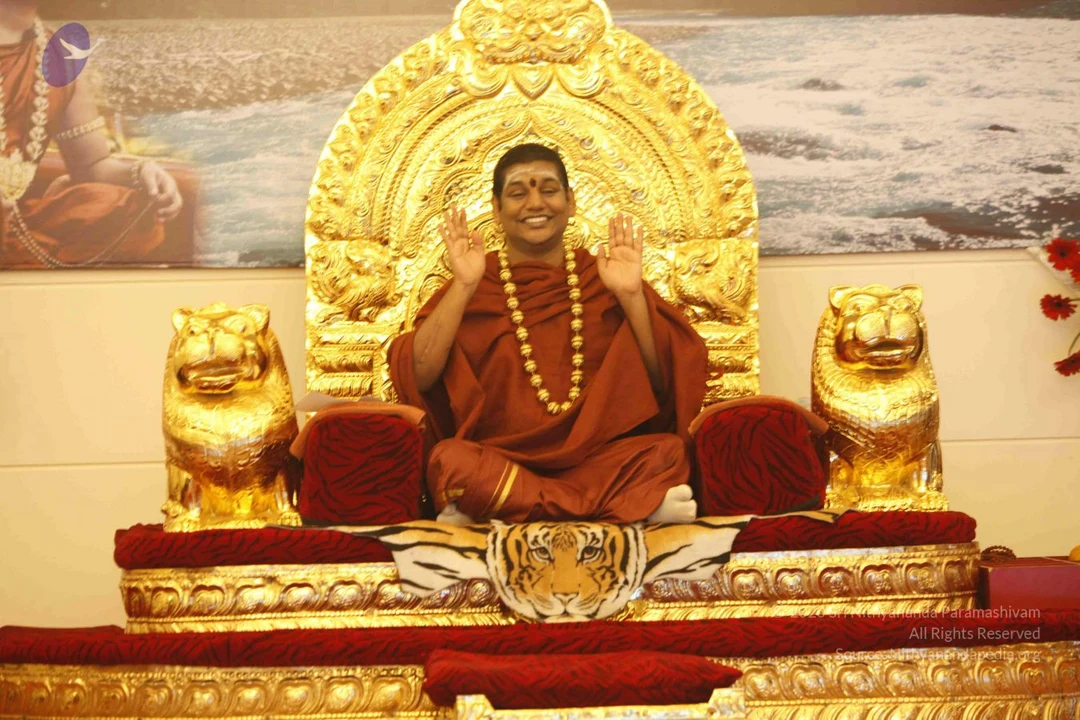
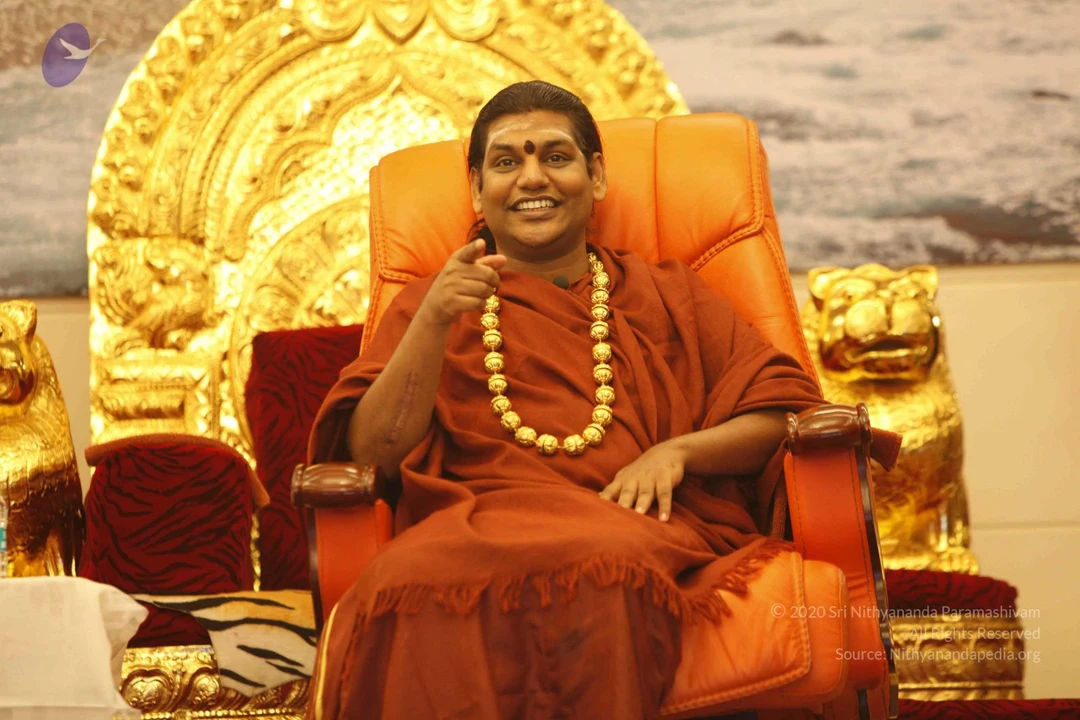
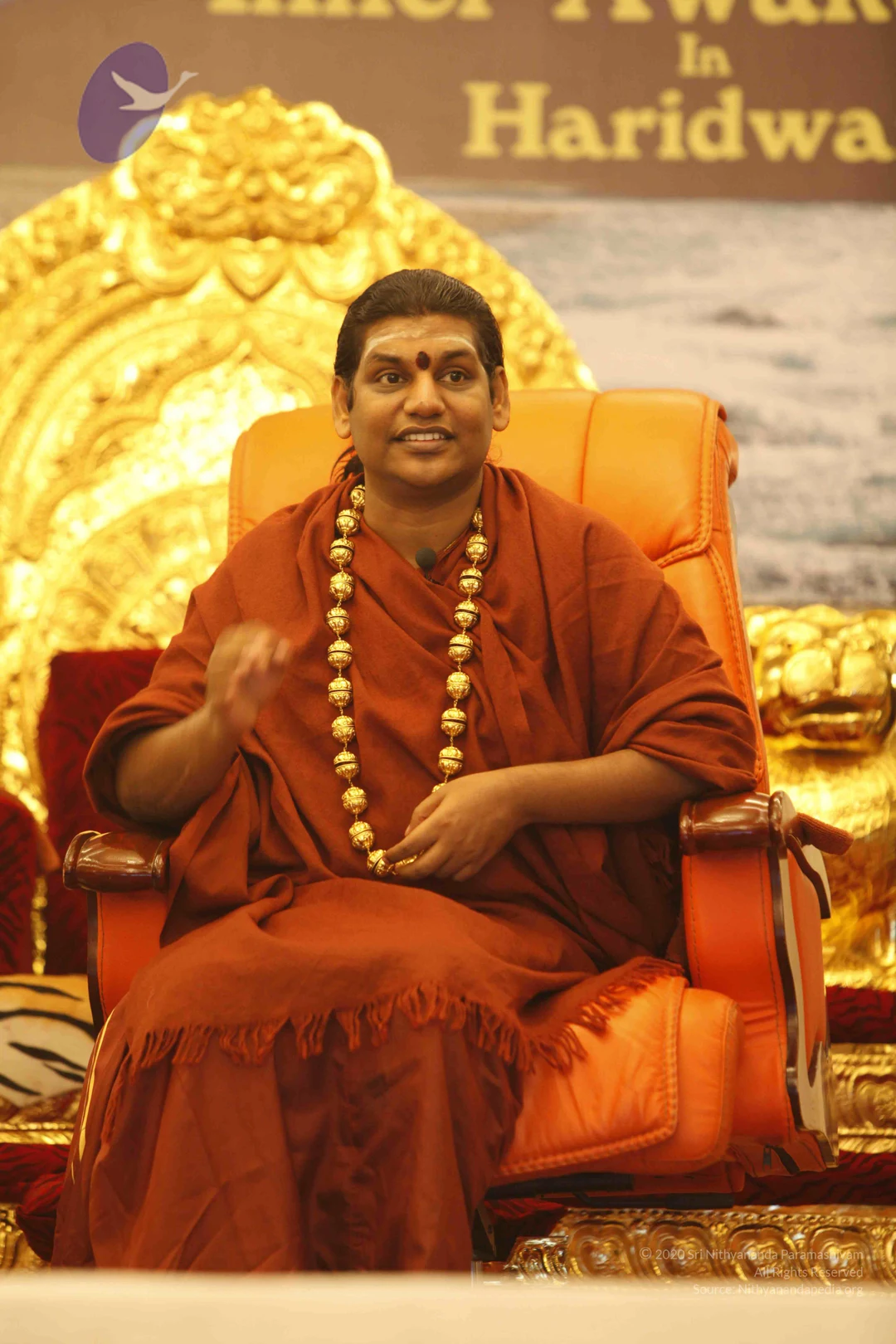
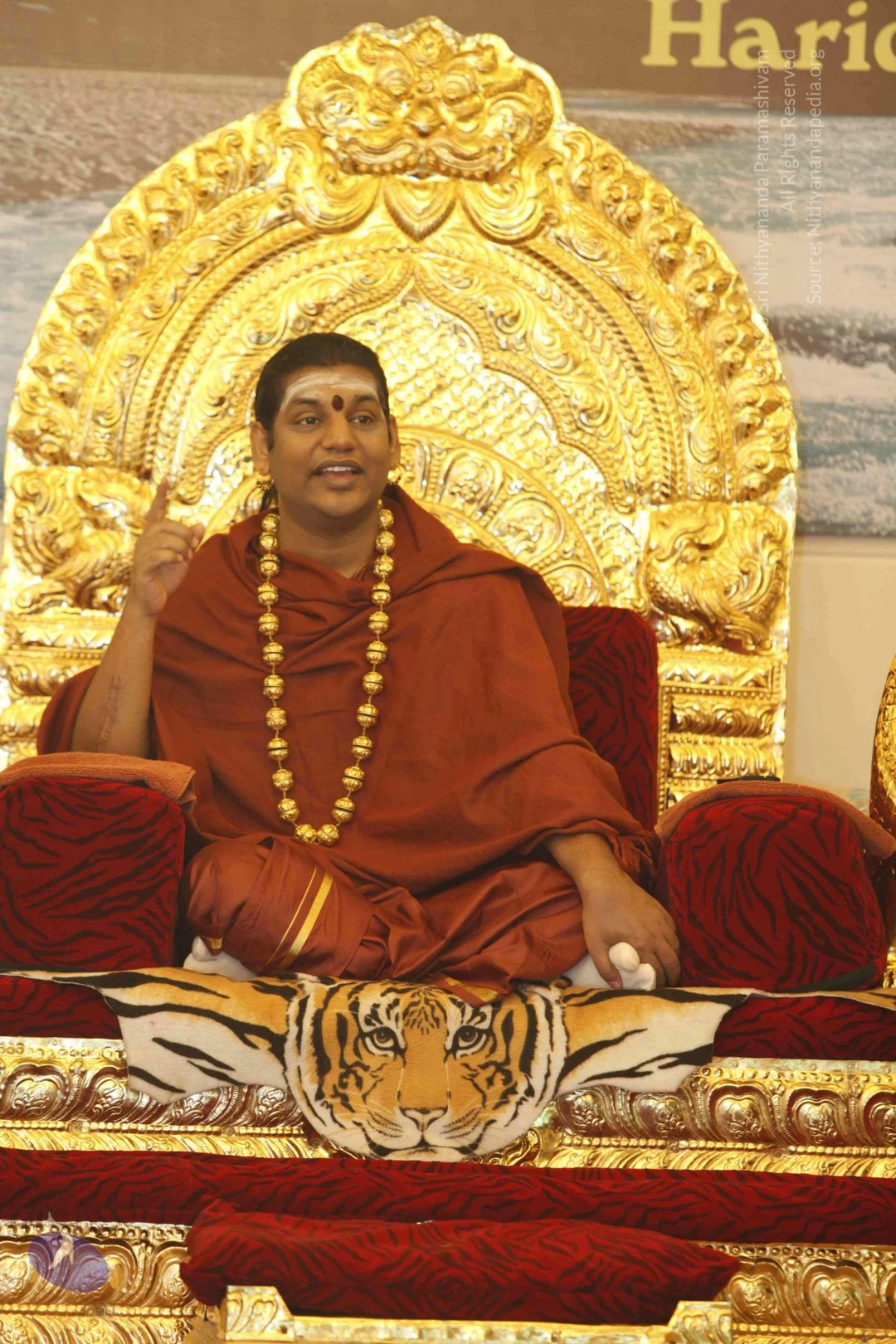
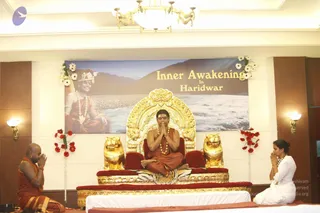
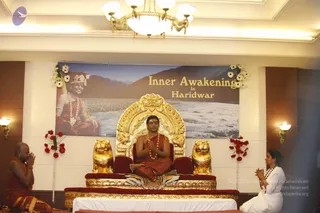
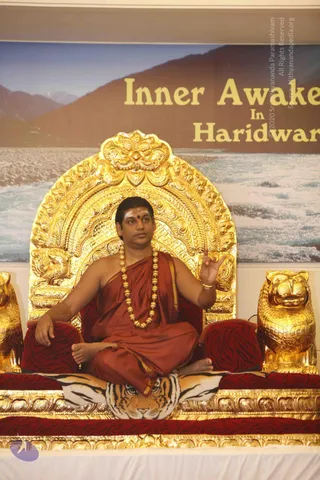
We are in Haridwar! We are LIVE from Haridwar, the land of Ganga, Himalayas and Vedic tradition! This place has an amazing significance, please understand. Himalayas are the eternal truths. Ganga is the practical application of those eternal truths; the practical application, practical utility of those eternal truths melting down, coming down and meeting with the place, with the common man, happens in Haridwar. Means, this is the ground where the Applied Science of Enlightenment, utility of the great spiritual truths reaches the common man. Sadhus, sadhaks, they also go up, go up into the Himalayas and get the benefits of Ganga; but this is the ground where Ganga is coming down and reaching to the Aam Aadmi, the common man.
One of the biggest practical utility values of our great Hindu philosophy, the spiritual truths, is the ability to cause what you want as a reality. Please listen! There is no philosophy other than Advaita, there is no philosophy other than Advaita, there is no religion other than Hinduism which has done so much work, gone into the depths of consciousness, super-consciousness, and discovered the science of making space into reality. The ability to control, handle, have power over matter, no other religion has gone into the depths in this line of having power over matter. Hinduism, the Hindu tradition has really gone into the depths, teaches the science of having power over matter. Please understand, using the science of power over matter, mind over matter, is what I am teaching as “Kalpataru”.
Each one of you are Kalpatarus. You have power over your mind, and your mind has power over matter. Anything, anything – when I say “anything”, I mean “ANYTHING” – anything can be created if you have power over the mind. Listen! Then we all think, ‘Then is it like a magic we will create it?’ Vivekananda says very boldly, ‘In India, even if we want money, we don’t go to the market to start a business; we go to a forest, sit under a tree, and meditate, and we achieve it!’ Understand! I am not saying don’t go to the market and do your business. I am saying go to a forest to sit under a tree for some time. You will have the clarity of where, which market to go, and what to do, where to do the business. So you will take responsibility very responsibly.
Many of us have taken responsibility in an irresponsible way. Understand! Integrated to Integrity, authentically authentic, responsibly being responsible! When we take up the responsibilities which are not at all directly required in our life, which are not at all directly required in our life, many times we are irresponsibly responsible. And, many times, what we feel as responsibilities in our life are so unnecessary which are really not required. And our real responsibilities we give up and go and take up the unnecessary responsibilities. That is the worst hell that can happen to a man. The worst hell which can happen to a man is going behind unnecessary responsibilities which make you only a small person, leaving the real responsibilities which expand you.
Please listen! Kalpataru, the Nithya Kalpataru Darshan, every-day Kalpataru Darshan is all about mastering the science of causing what you want and what others want as reality. Kalpataru Darshan is nothing but causing what you want and others want. So, please understand, causing the reality as you want the way you want, and being a catalyst for others’ cause, their reality, is Kalpataru Darshan.
First, a few things you need to understand about causing the reality as you want. Grace is intensely always flowing in every one of us. The Guru Kripa and Daiva Kripa – the grace of the Guru and grace of God – is constantly flowing in each one of us. The biggest problem is our own self-hatred. Please listen! Whenever I ask people to visualize and create a space for what they want to make it as reality, I have always seen the first thing that happens in them is a tremendous self-doubt: ‘How can anything happen just because I visualize?’ The next thing, all the pain you had earlier by visualizing and not realizing it, the earlier failures, all that pain starts erupting now. Listen! First, the deep self- doubt, the deep self-doubt. Second, the deep hatred of past failures. And, because of the self- doubt and self-hatred, you decide, ‘I am not going to get it even if I create a space’, which is the last nail in your coffin! Only these three things – self-doubt, self-hatred, self-denial – you get into a very uncomfortable space.
I tell you, if you want to torture somebody, you don’t need to ask them to think about what they don’t like, their enemies. Just tell them, ‘Whatever you like, you wanted in your life, please think about it, think it has become reality.’ That’s enough! They will torture themselves! I don’t need to ask you to think about your enemies to torture you, to depress you. If you just think about your favourite things, things which you really like, things which you really, really wanted in your life, that’s enough to put you in depression; because, when you think about something you really want, want to achieve, self-doubt is the first and foremost thing which comes up; second, self-hatred, hatred because of the earlier failures, the incompletion because of earlier failures – ‘Earlier I tried this same thing ten times, but it failed miserably! Now how is it going to be successful?’ – Self-hatred immediately makes self-denial happen.
I tell you, Hinduism, the Advaita philosophy is the one and only tradition which attends to this self- hatred and self-denial and self-doubt to the maximum possible level. Many religions only try to exploit you, keep this self-hatred and self-denial in you. They don’t teach the science of getting out of self-hatred and self-denial. They don’t teach the science of getting out of it. They let the self- hatred be with you, self-denial be with you, self-doubt be with you, and exploit you. But Hindu tradition, the Advaita Sampradaya, Sanatana Hindu Dharma, is the only tradition which again and again and again helps you to complete with that self-doubt, self-hatred and self-denial, again and again and again reminds you that you need to complete with this pattern.
Please understand, this is the secret of Kalpataru. If you learn this one secret, not only you can cause what you want as reality, you can start giving Kalpataru Darshan to others, you can help others to cause their own reality, you can be a catalyst for others to cause their own reality. I am not a trekker guru to keep all the secrets to myself and enjoy the results of royalty! We believe that Knowledge is free. And I tell you, this is a powerful science! Don’t think because I give freely, teaching in the national channel, it is not a powerful science. It is a most powerful science! You can see it in your life for yourself. Whenever you want to create something in your life, first sit, start creating a space for it. Means, visualizing what you wanted has become reality. First thing what will happen? Self-doubt! ‘How is this possible? No, no, no!’ Going gaga over your ignorance is Atheism. Going gaga over your ignorance! Sometimes I am surprised, people are celebrating their ignorance! Stupidity has become a religion! No, really! If you have the self-doubt, ‘How can this happen?’, then try to work on self-doubt, don’t start celebrating your self-doubt. Celebrating your self-doubt is Atheism. Celebrating your self- doubt is stupidity. Most of us stop our journey with this self-doubt. Over! After that, nothing more is there! Over! Everything is over!
Listen, if you allow the self-doubt, the next thing which will happen is all your incompletions of the past – means, past failures: how many times you tried but you missed a very valid point, very important point. Just your fleeing desires are not equivalent to creating a space. The fleeing desires you have cannot be considered as creating a space. Listen! The fleeing desires..... Earlier when you failed it may have been just a fleeing desire, the unconscious inner chattering. There is a big difference between a black & white movie and a colour movie. All your unconscious desires are equivalent to black & white movie. Your conscious desires, the space you create consciously, are equivalent to multi-colour movie.
Listen, I can give more and more examples on the difference between unconscious thinking and conscious visualization. Your unconscious thinking, failures, are not impact when you consciously create a space for something. Don’t be destroyed, disturbed, discouraged, because all your unconscious imaginations have failed. People tell me many times, ‘I thought of this, this, this, this, this. Nothing happened! So I lost faith!’ No! Earlier you may not have created the space consciously. Now you are creating a conscious space. The fellow who is in the street, he ordering the Prime Minister of the country, and the President of the country ordering the Prime Minister of the country, between both there is a big difference. Your unconscious thinking is like a fellow who is in the street ordering the Prime Minister of the country. It will not be executed. Even if it is executed, it is the grace of the Prime Minister. But, if the President of the country orders the Prime Minister, it will immediately be done. Understand, you consciously creating a space is like the President ordering the Prime Minister. Your earlier failures are unconscious imaginations. Your earlier failures, and the incompletions due to the earlier failure, and the hatred you carry in you because of your earlier failures should not be projected when you are creating a space now. You may think, ‘No, no. Even earlier, consciously I created a space.’ Then how do you know it has failed? May be it is on its way to be delivered to you! We try to think, ‘No, no. It may not be delivered in the time I want.’ Yes, if you want the Cosmos to keep integrity, you also be integrated to the Cosmos. That’s all!
Listen! Ability to listen to the Cosmos is ability to listen to the sacred secrets of life. Ability to speak into the listening of the Cosmos is Kalpataru! Ability to speak into the listening of the Cosmos! If you expect that the Cosmos should be integrated with you, then be integrated to the Cosmos. That’s all!
The self-hatred due to the past failures should not be allowed into the present situation, because – listen, listen – when the self-hatred comes into the present when you create a space.....over! The deep self-denial erupts out! The deep self-denial erupting out, the deep self-denial happening is end of life! Look into you every time when you want to expand, whether you want to heal a relationship, or you want to heal your body. I am seeing, in my own experience, when I want to heal this throat, one part of the throat says, ‘No, no, no, if I have to heal, I will have to work more.’ Come on! For that only you are created! Now it is listening and getting healed.
Whether you want to heal your body, or heal a relationship, whether you want to expand your relationships, whether you want to accumulate wealth, whether you want to accumulate knowledge, in any form, in any dimension you want to expand, you will always see the tiredness and laziness enters into you through the door of self-doubt and self-denial. Please understand, tiredness gets into you, boredom gets into you only through the door of self-doubt and self-denial. Don’t keep the self-doubt door open. People who close the door of self-doubt and self-denial win the game of life. You can win the game of life only when you shut down the door of self-doubt. The door of self- doubt, the door of self-denial is the most abusive, most powerful pattern which makes you powerless.
Understand this paradoxical statement I am making: “Powerful pattern which makes you powerless”. It is the most powerful pattern which makes you powerless.
Complete with self-denial, self-doubt, self-hatred. If you complete with your self-doubt, self-denial, self-hatred, you cause what you want as reality in your life. If you are a catalyst for others to complete with their self-doubt, self-hatred, self-denial, you cause what they want as reality. This is the instruction, Guru Vaak for all my followers and disciples. Every person who is in your life, you should help them to complete with the self-denial, self-doubt and self-hatred, because this is the Original Sin.
Self-doubt is equivalent to sleeping during satsang. When you sleep during satsang, the whole thing is waste. Same way, if you carry self-doubt and self-denial and self-hatred, your whole life is waste. It is like you are sleeping your whole life. Nothing will be useful. Himalayas may be there, Ganga may be there. But if you are sleeping, what is the use? The beauty of the Himalayas can be enjoyed only when you see. The beauty of the Ganga can be experienced only when you jump into it, take bath. Same way, when there is self-denial and self-doubt, you just completely keep yourself out of life. It all may be there, but you are not there to enjoy them, you are not there to live them. This one year, I have decided I am going to expand on Kalpataru. As I committed earlier, this whole Inner Awakening I will try to expand on the various sacred secrets embodied in the Mahabharata. Dhritarashtra is the embodiment of self-doubt. Shakuni is the embodiment of self-hatred. Duryodhana is the embodiment of self-denial.
Please understand, self-doubt – “whether I can make it” – the whole of Dhritarashtra’s life, this is the root-pattern. You can see all the actions, reactions of Dhritarashtra is out of this one root- pattern – “Will I be able to make it? Will I be able to make it? Will I be able to make it?’ The whole of Shakuni’s life, all his actions are – ”I will not make it.” That is the root-pattern. All his actions, thinking, everything, please understand, he is not supporting Duryodhana. Playing the side of Duryodhana, he destroyed the whole Kuru Vamsha (the Kuru clan). He is taking revenge on Dhritarashtra and his sons, playing their side. Can you imagine? This is exactly self-hatred. It tells you, ‘No, no. You have a cough. Why do you want to attend Inner Awakening at this time? You are tired. Why don’t you rest? Otherwise what will happen to your health?’ You will go and lie in your bed. That’s all! He will put a garland on you and seal you! The garland is put on you when you are lying down. You know what it means! HAHAHAHAHAHAHA!
When self-hatred acts exactly on yourside, he convinces you that he thinks for your welfare. Shakuni has convinced Duryodhana andDhritarashtra that he is thinking for their welfare. That is what exactly self-hatred will do for you. Bhishma is the embodiment of Dharma. Dharma tells you, ‘No, Shakuni is not on your side, in yourfavour.’ But you believe only Shakuni! You believe only self-hatred! You don’t believe Bhishma, you believe only Shakuni. Bhishma tells Duryodhana, ‘Shakuni is not the right person. Please don’t have him next to you.’ Dharma tells you again and again, ‘Don’t have self-hatred.’ But, unfortunately, self-hatred convinces you that it is thinking for you, it is working for you. It tells you, ‘No, no, no, your health is not enough to attend twenty-one days. I have job, I have this, I have this. Okay, anyhow I have come. I will manage for four days somehow, that’s all. After all Swamiji is here. Inner Awakening will happen every month.’ Self-hatred makes you believe it is working for you and sees to it you are destroyed completely. Shakuni is self-hatred. Duryodhana is self-denial. Over! The last nail in the coffin!
If you see the whole life of Duryodhana,it is deep, painful reactions! He is convinced he is a failure, he cannot make it. So, constantly he hasto prove himself only by destroying others, never by creating on his own something. See, thePandavas had the courage. Even if Hastinapura is taken away by Duryodhana, Dhritarashtra’s sons,the Kauravas, they will create another one city, Indraprastha, and they will live, on their own. Theyhad the courage to create. But Duryodhana is very clear that he cannot create. He is only grabbingby doing something. The root-pattern of Duryodhana is self-denial.The root-pattern of Dhritarashtra is self-doubt. The root-pattern of Shakuni is self-hatred. The root-pattern of Duryodhana is self-denial. When all these three gather together, what will happen? Thatis what happened to the Kauravas. Don’t allow what happened to the Kauravas to happen to you! Don’t allow what happened to the Kauravas to happen to you!
I will continue to expand on the Mahabharata and the Science of Causing Enlightenment, and Kalpataru, all three together, because all the three are closely connected. (break in transmission on eNTV at this point.....)
Sit straight. Visualize consciously what you want as reality, as if it has already happened.....it has happened. Complete with all the self-doubts erupting out, self-hatred erupting out, self-denial erupting out. Complete with all that and create the space consciously, powerfully. Complete with every self-doubt which comes up. Complete with every self-hatred which comes up. Complete with every self-denial which comes up. Complete with all self-doubts, self-hatred and self-denial, and create a space. Hold on to that space to create what you want as reality powerfully.
KALPATARU MEDITATION IN PROGRESS.....................
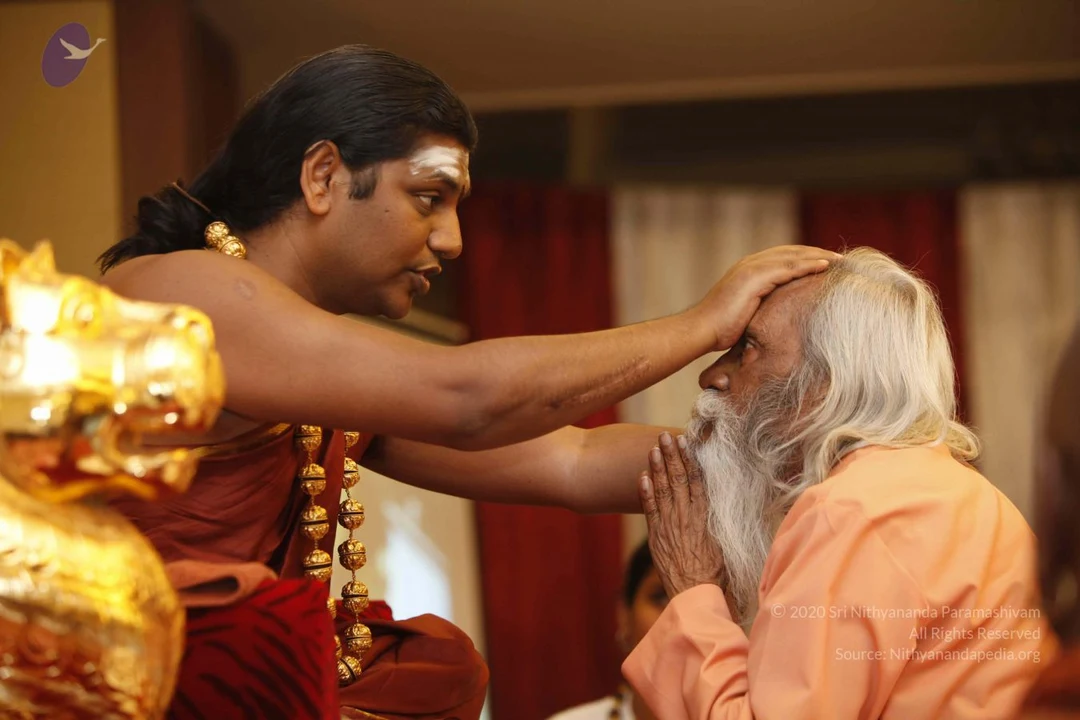
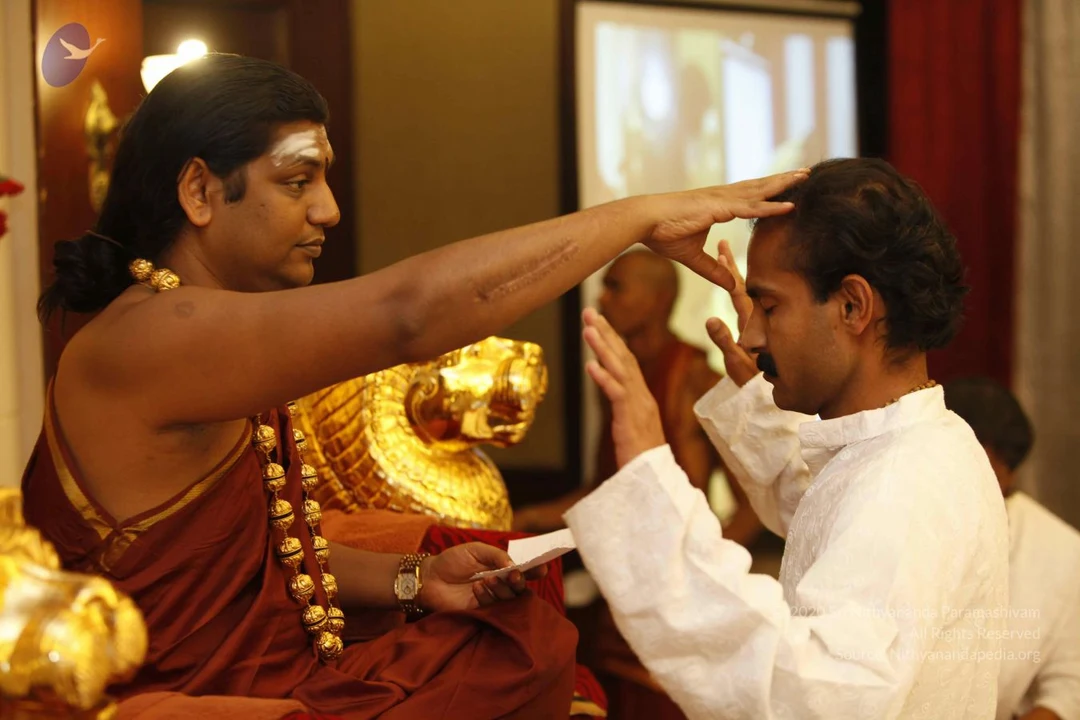
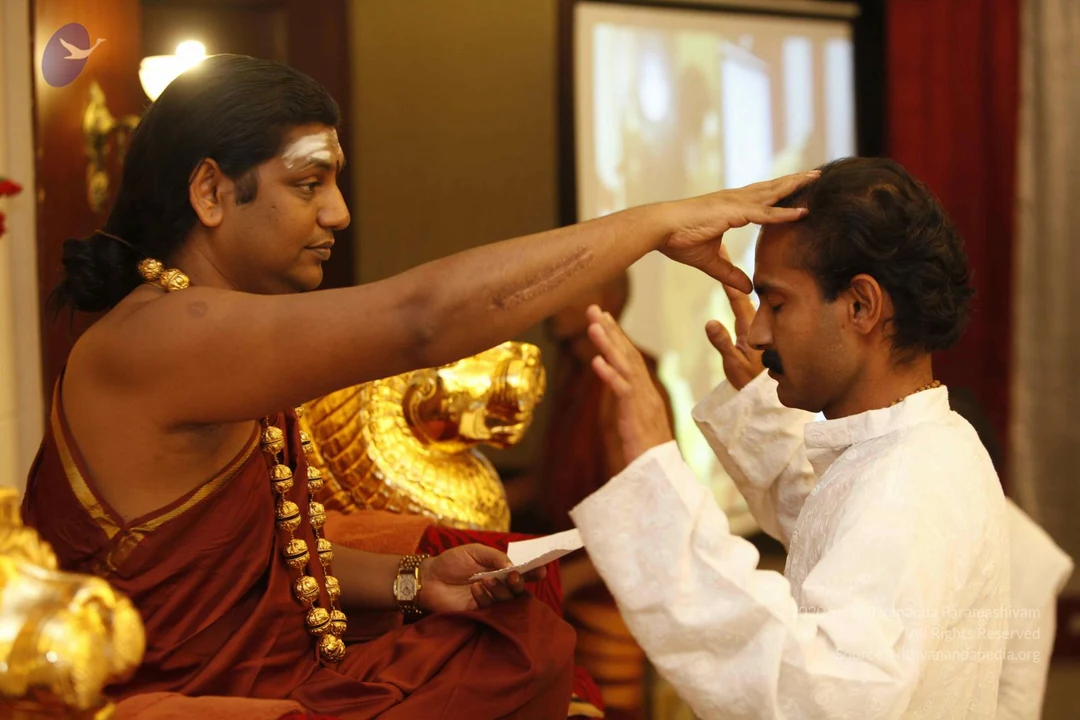
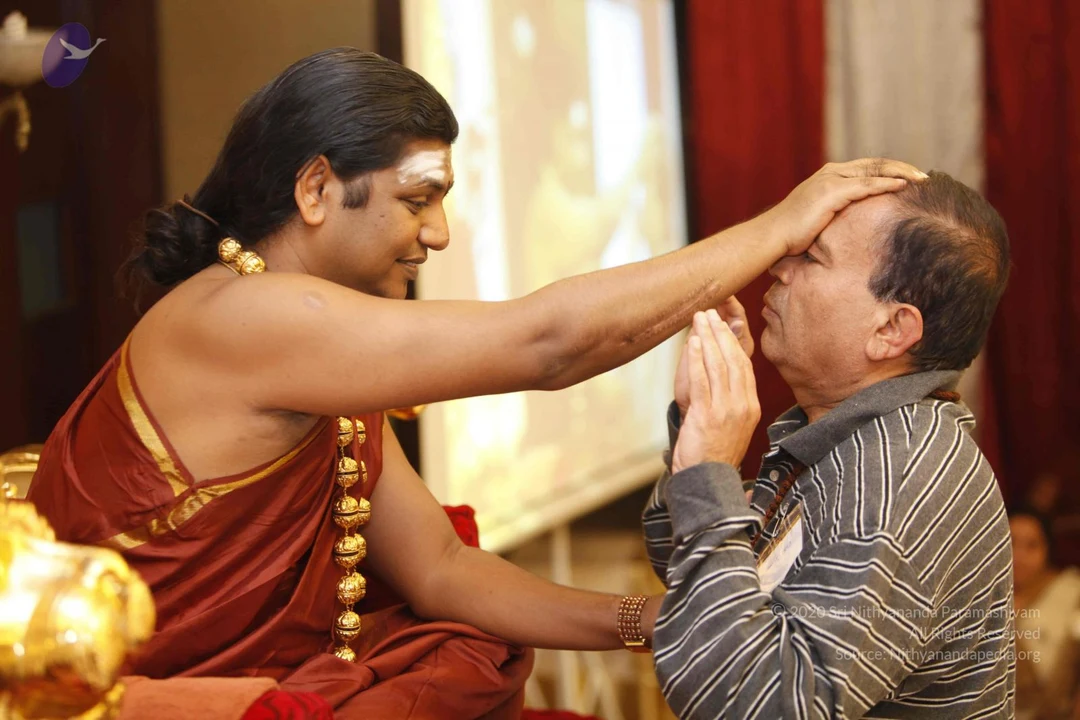
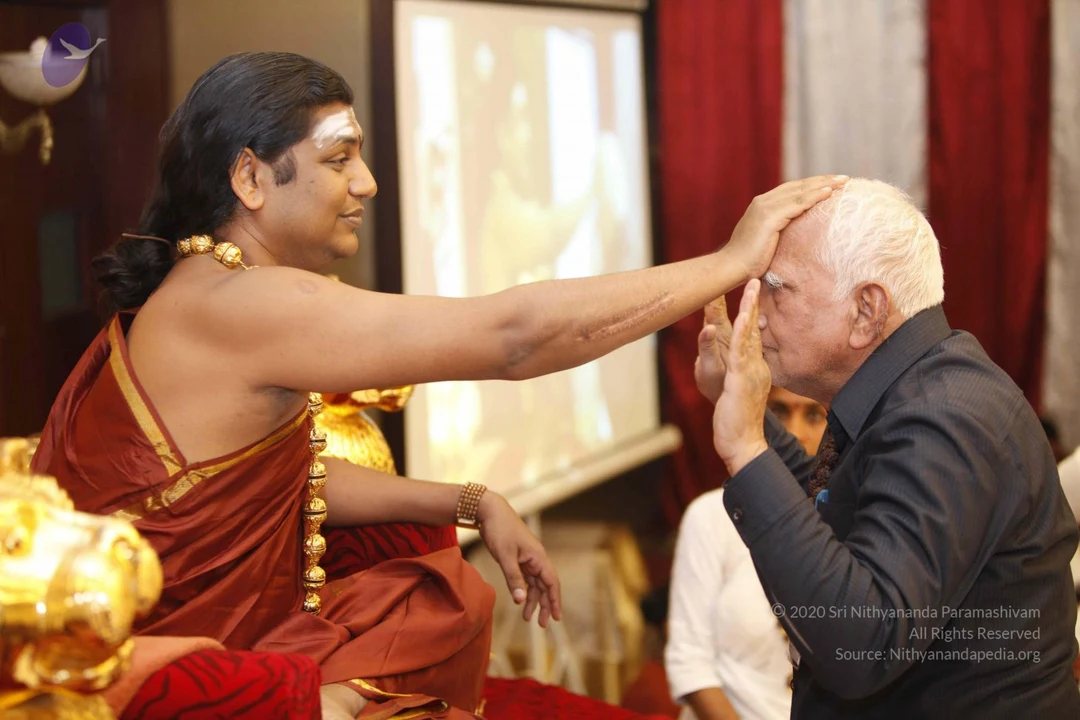
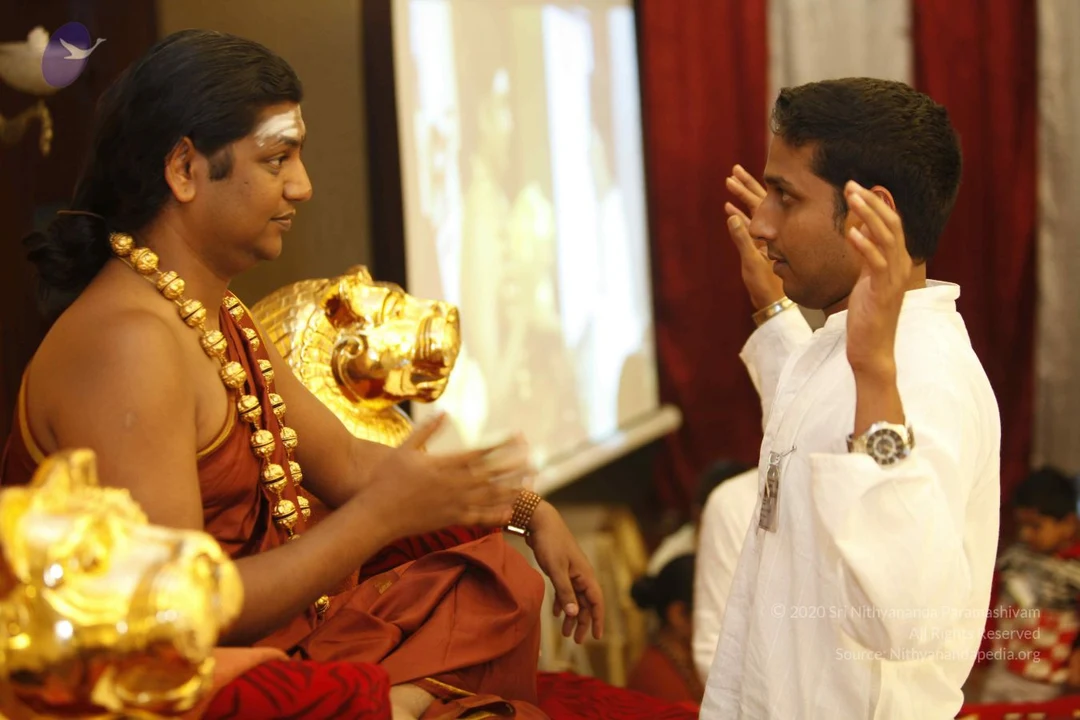
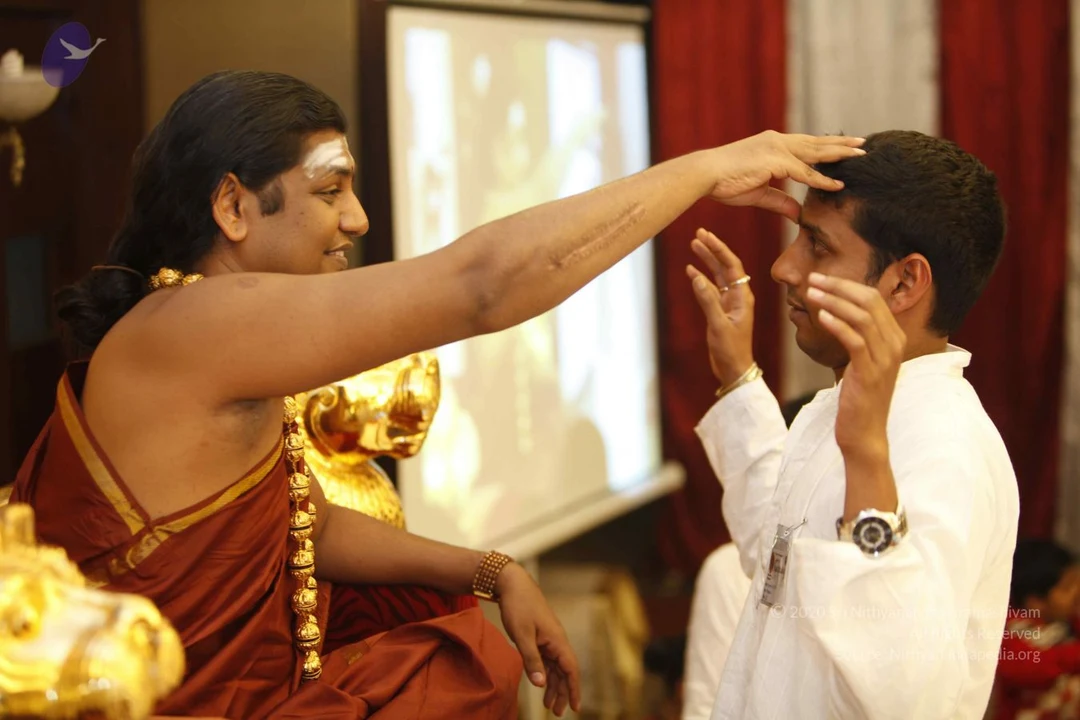
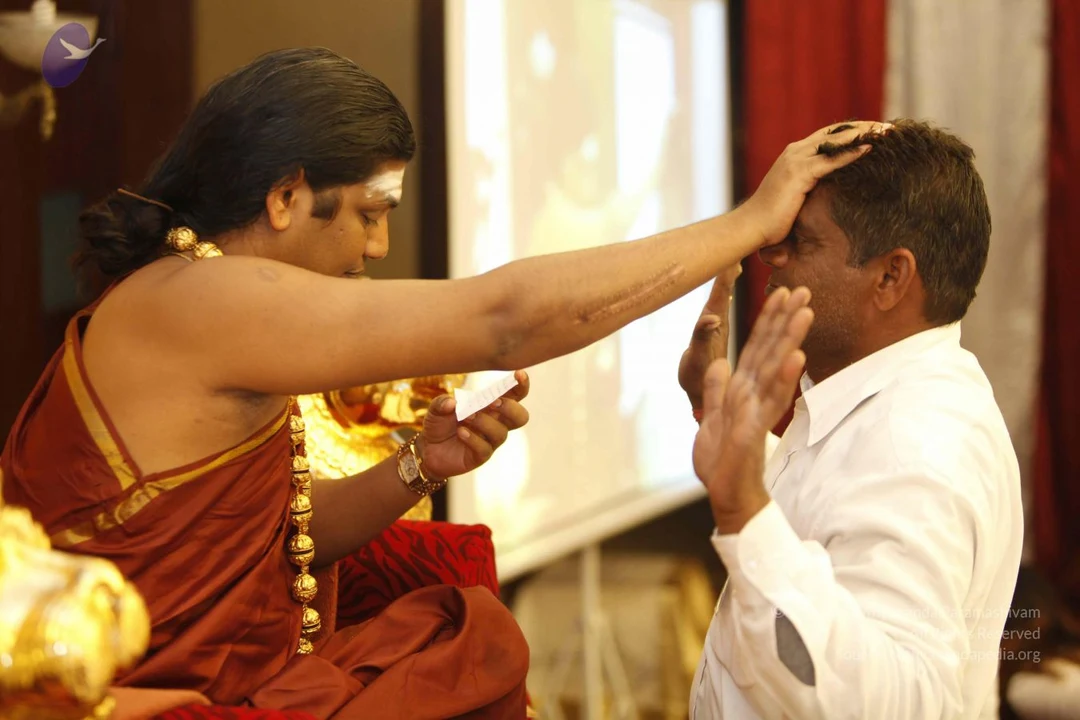
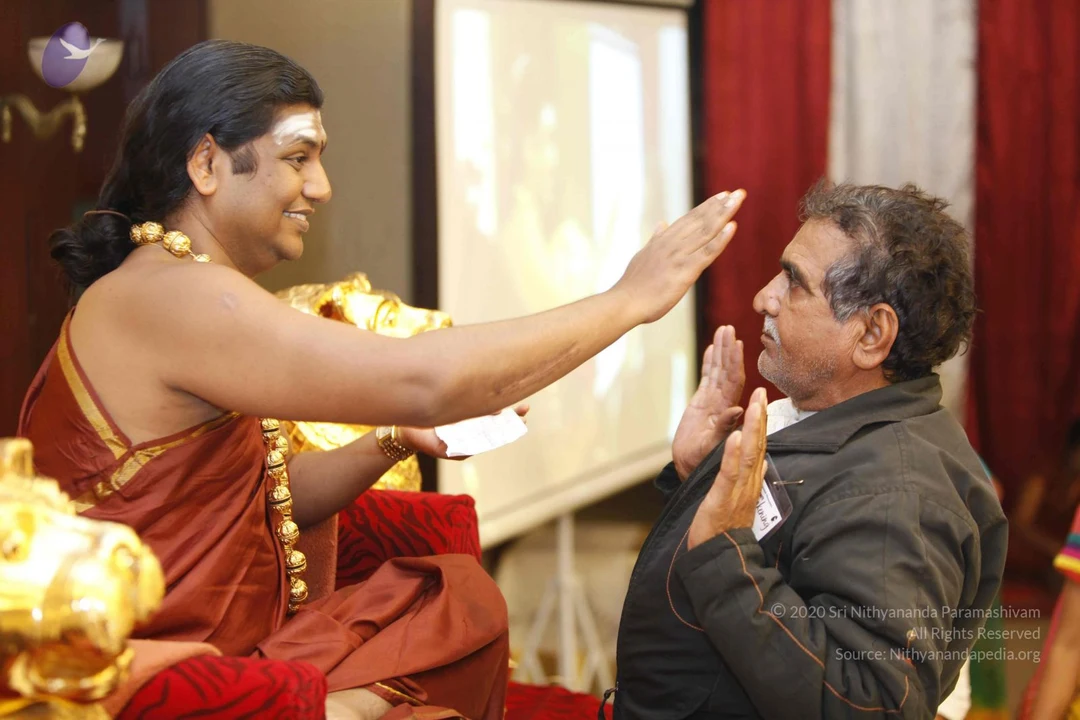
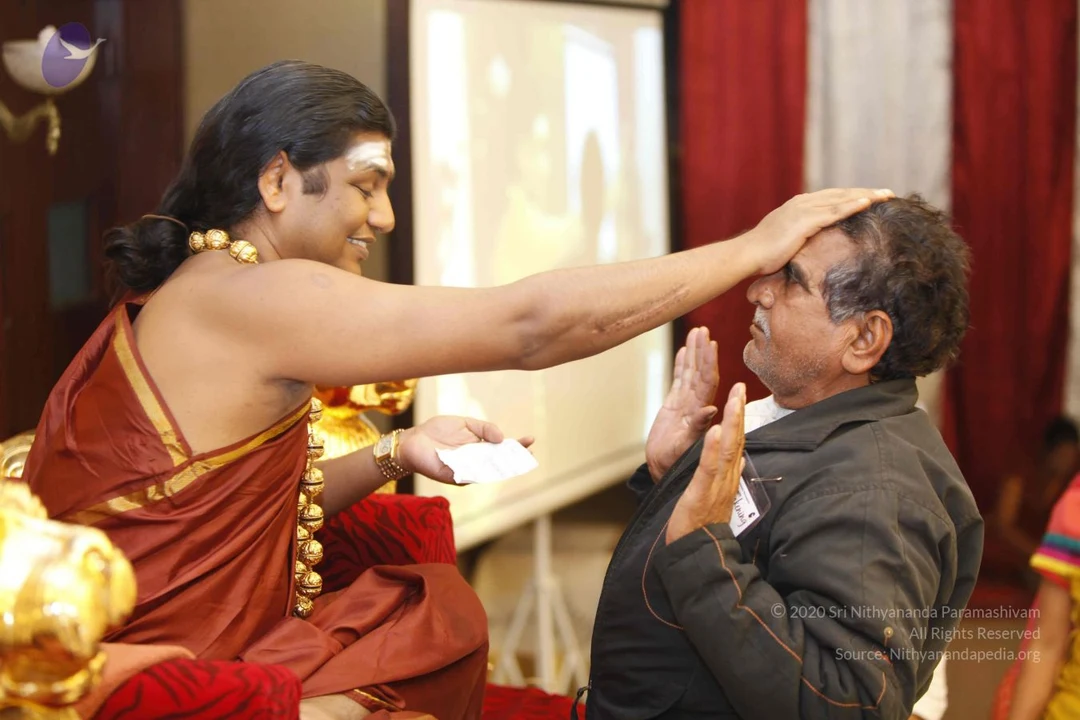
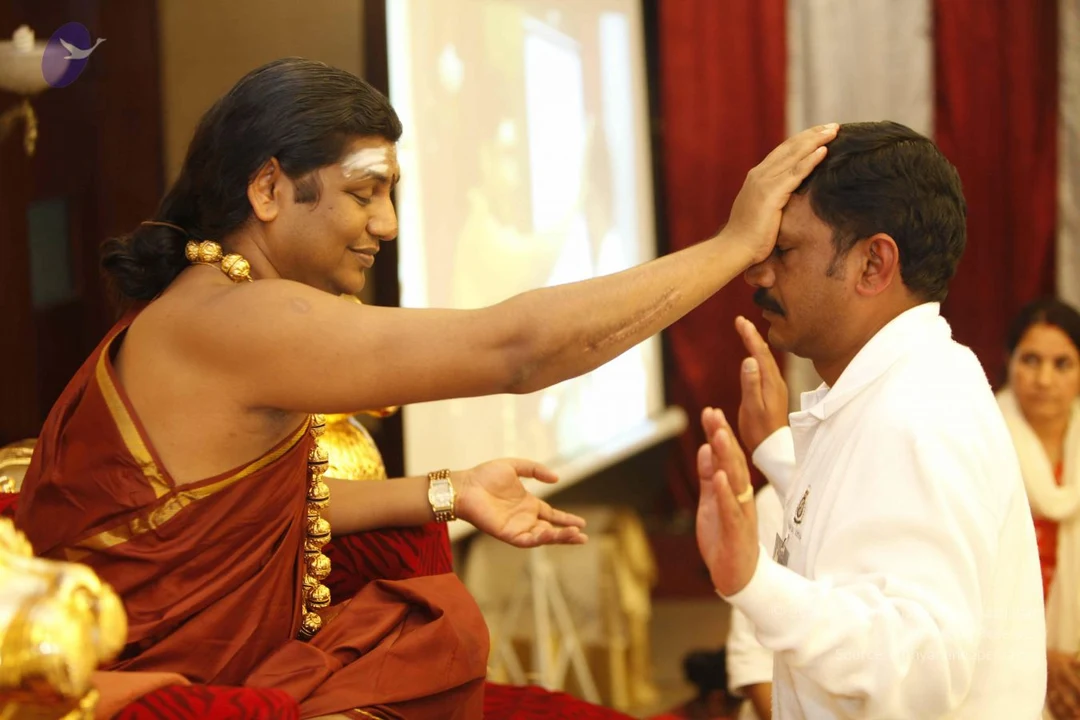
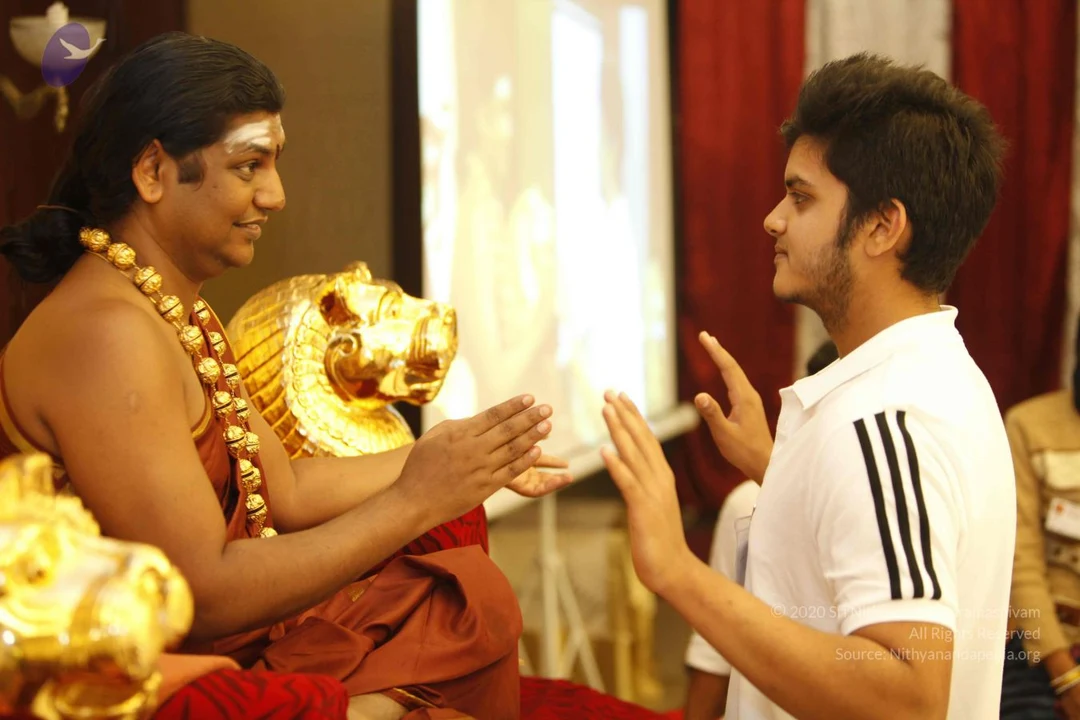
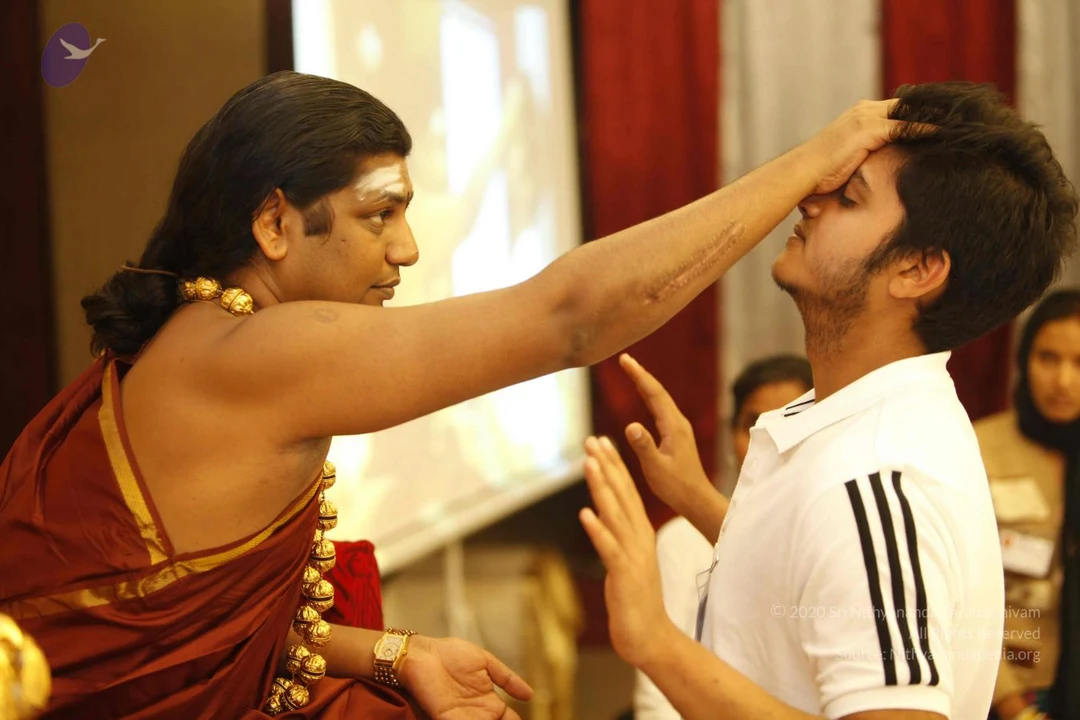
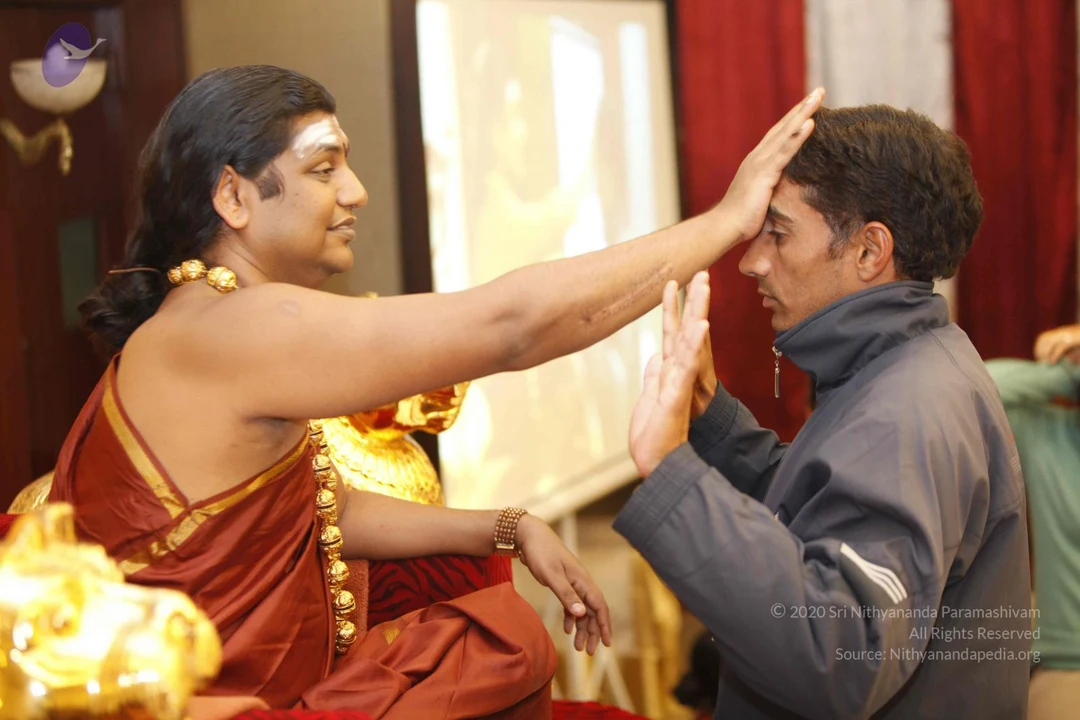
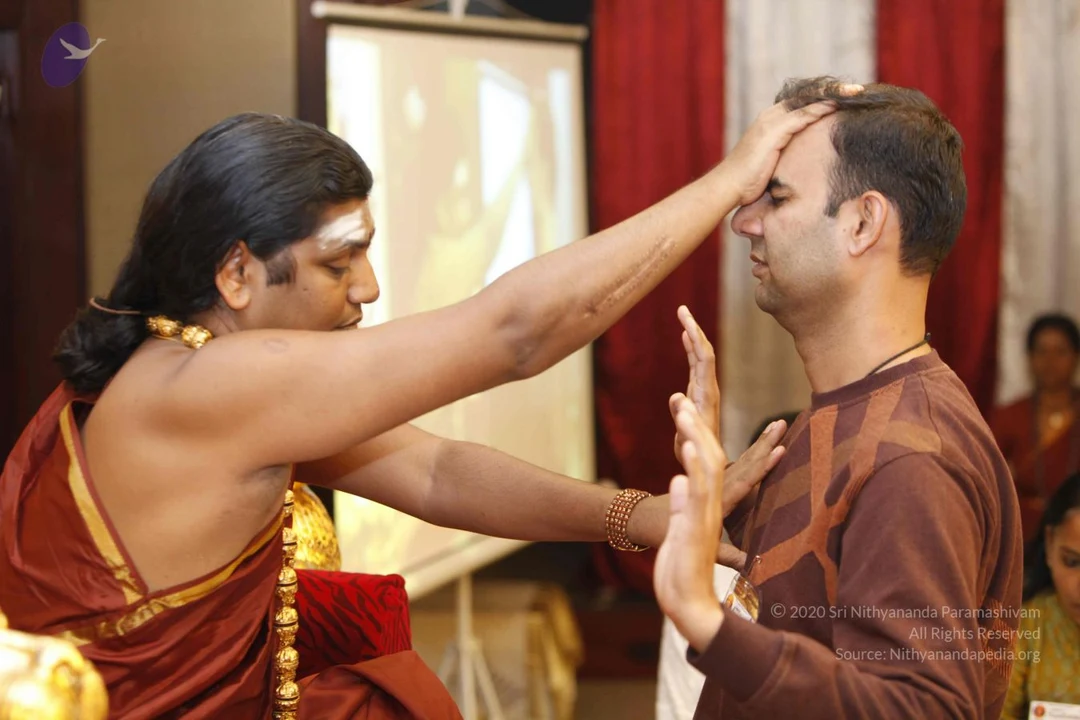
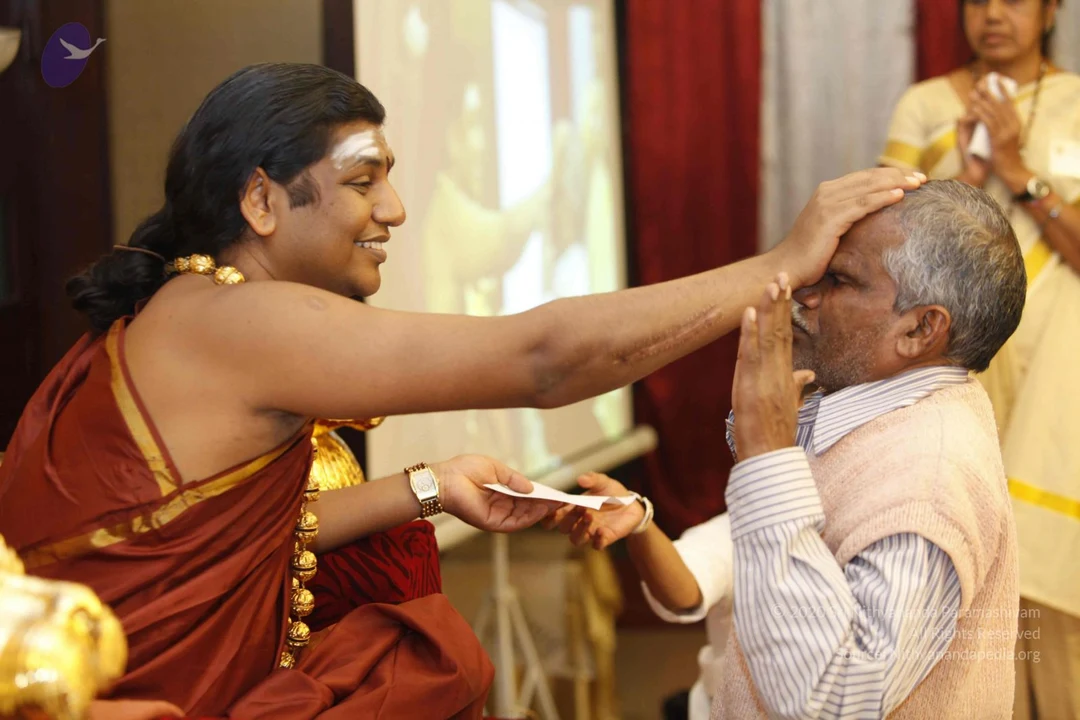
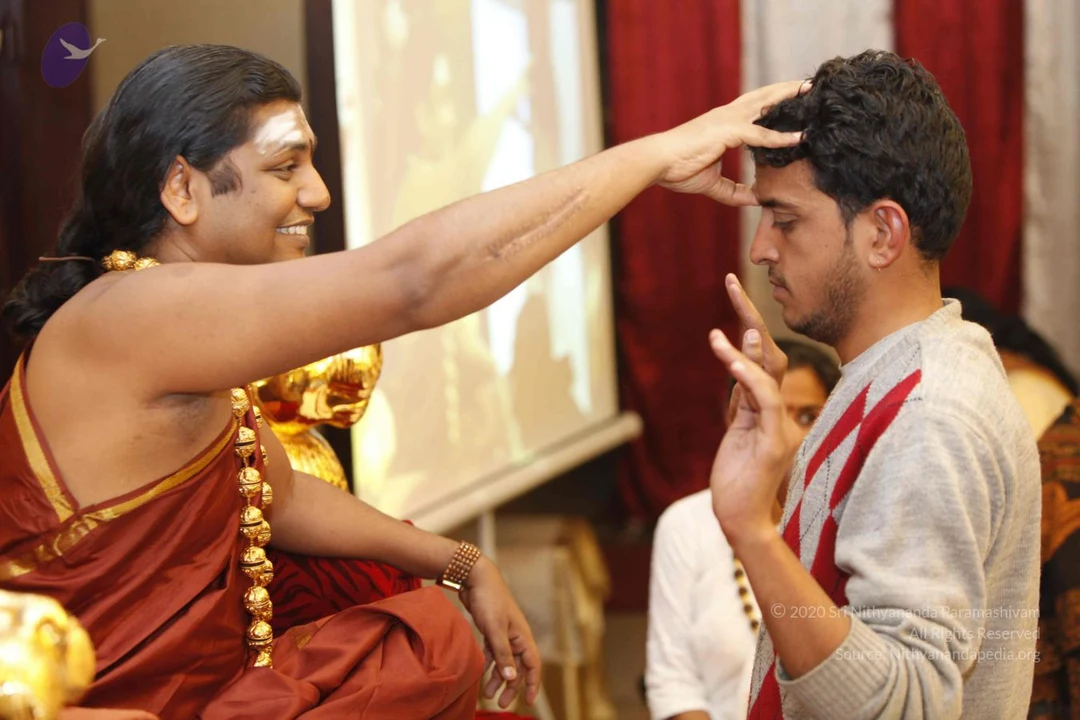
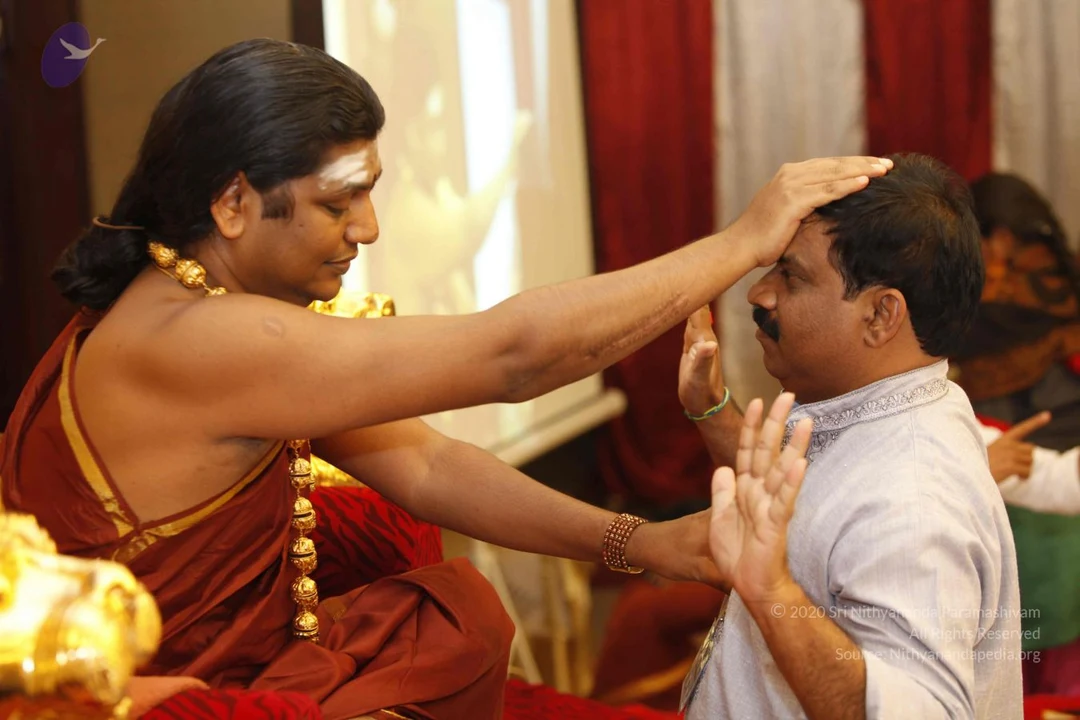
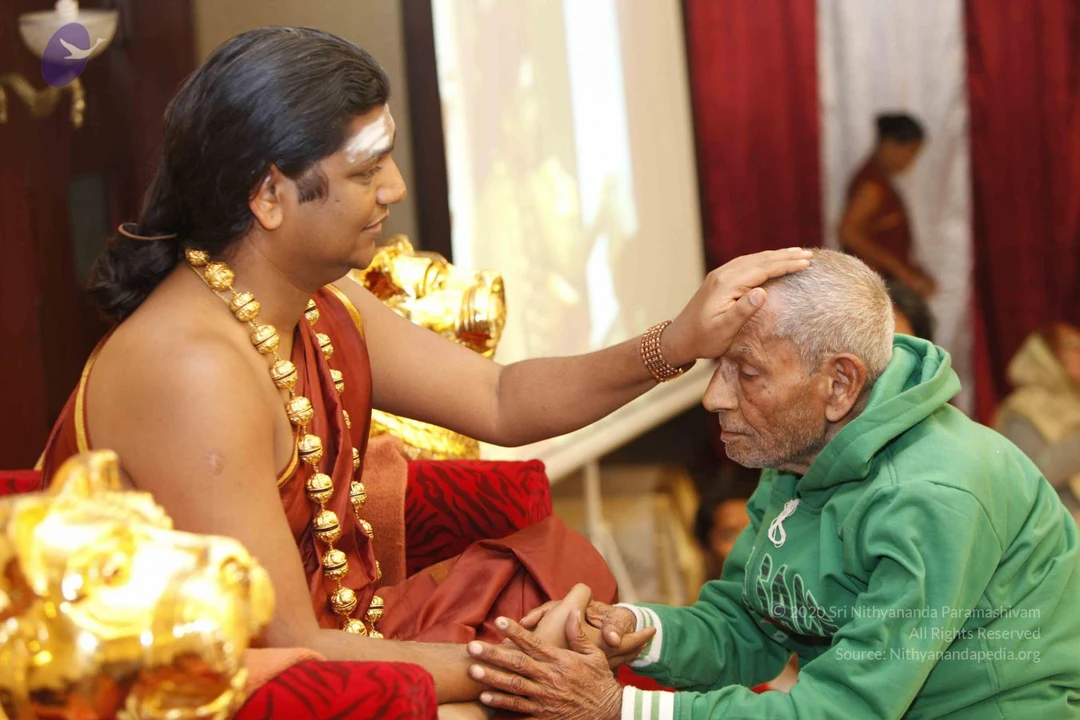
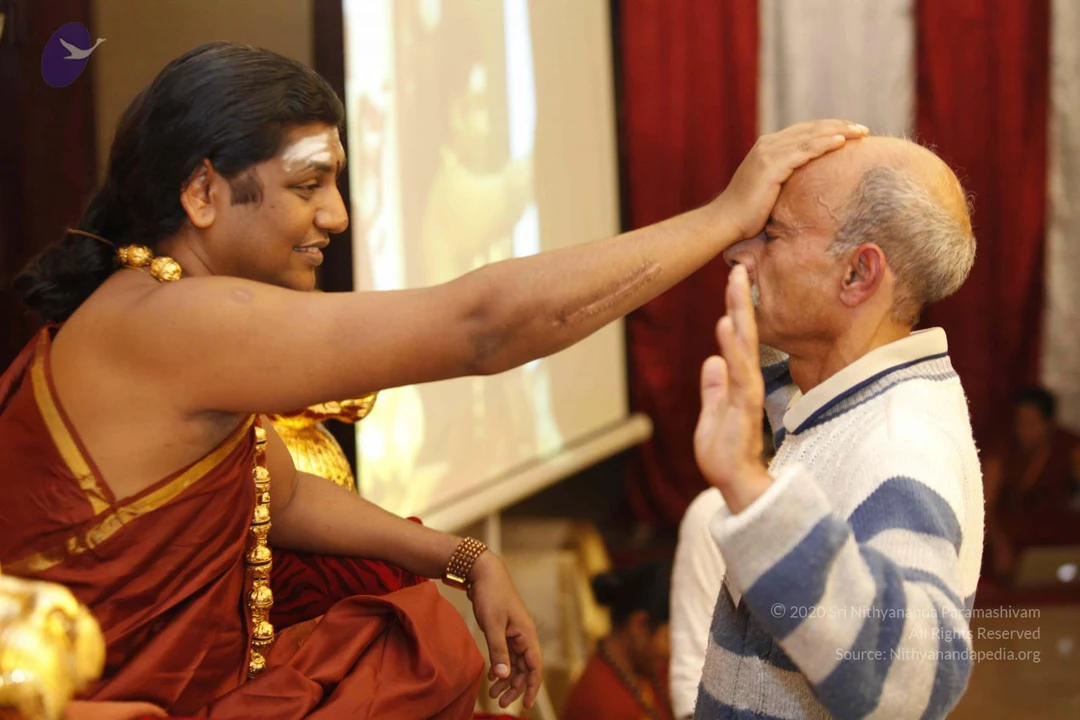
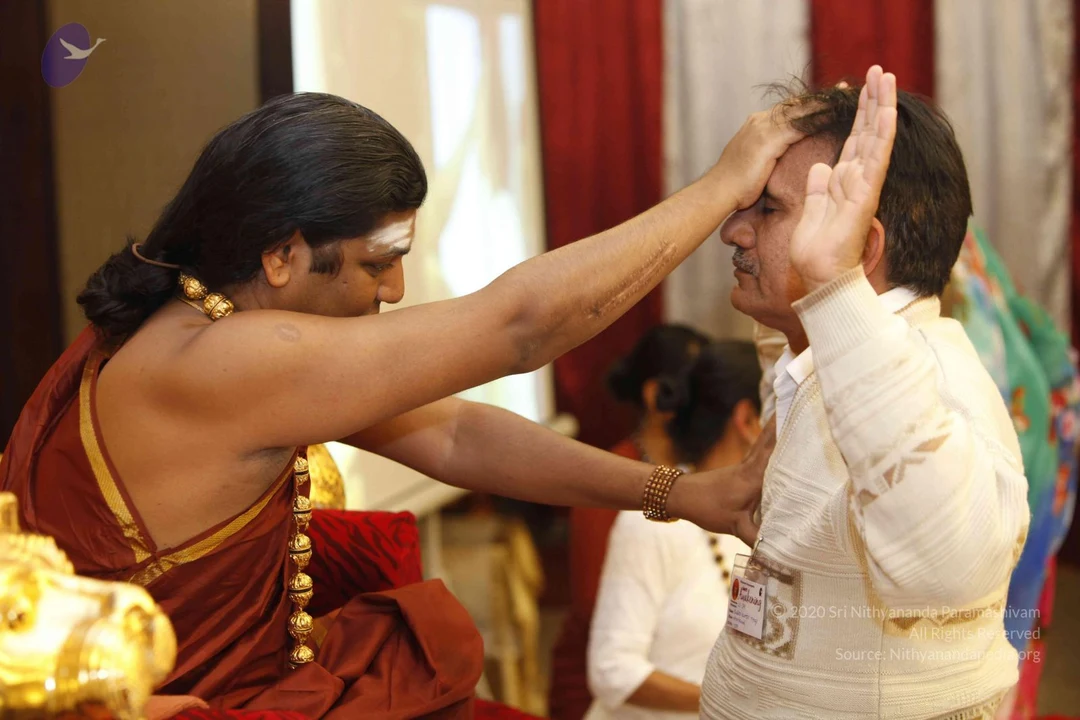
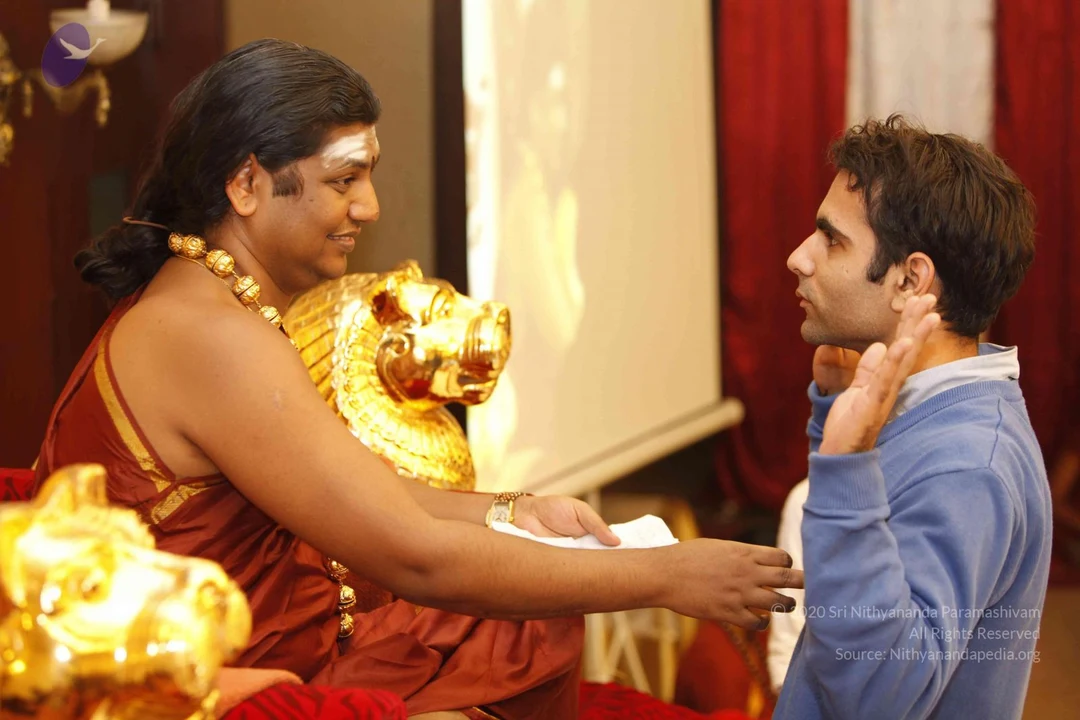
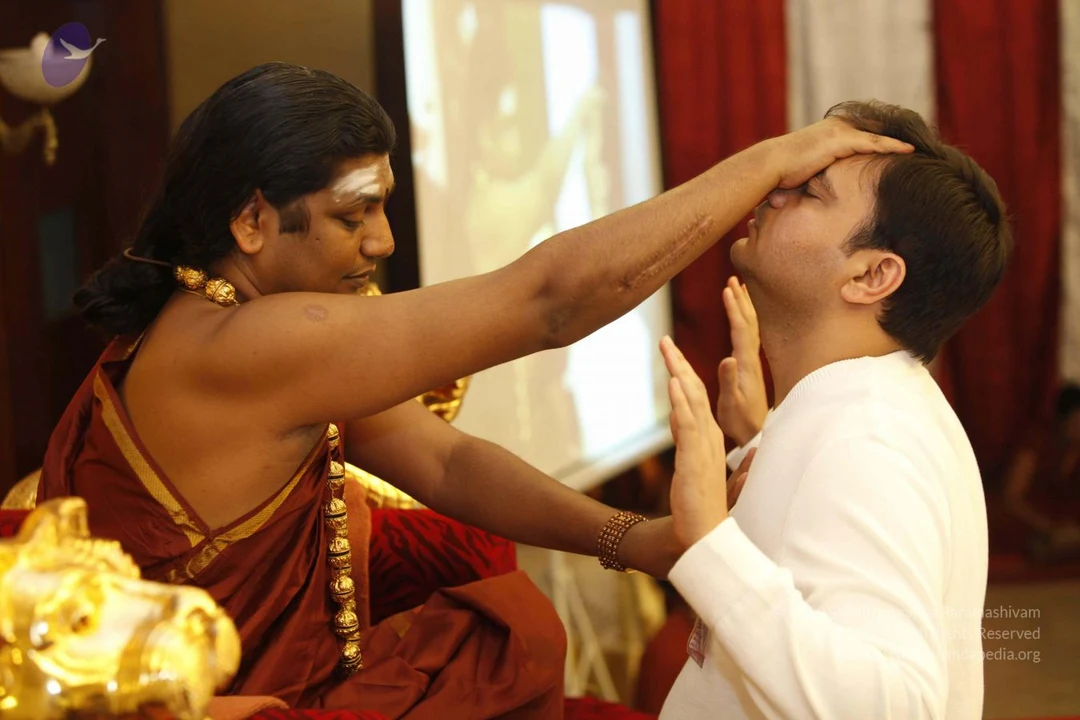
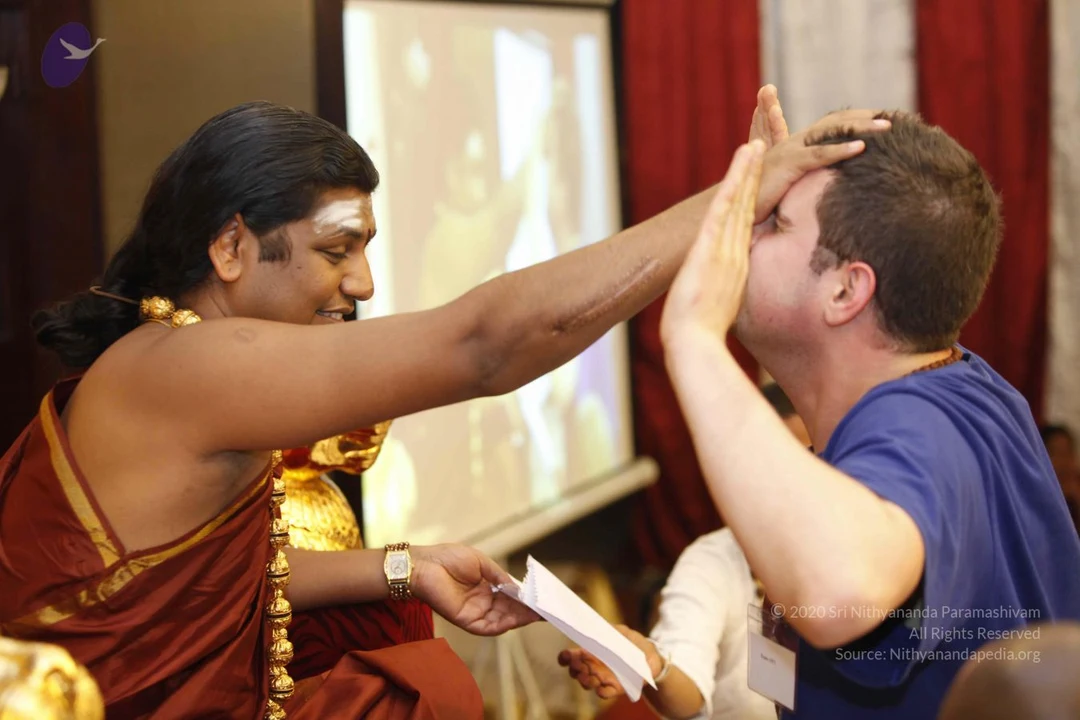
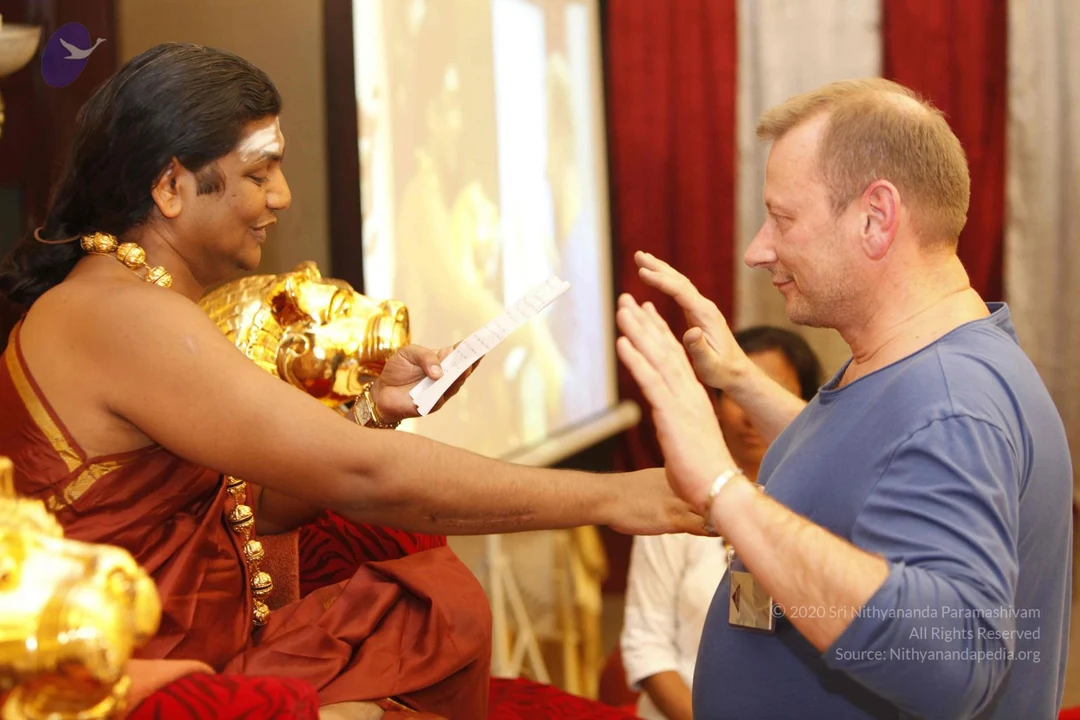
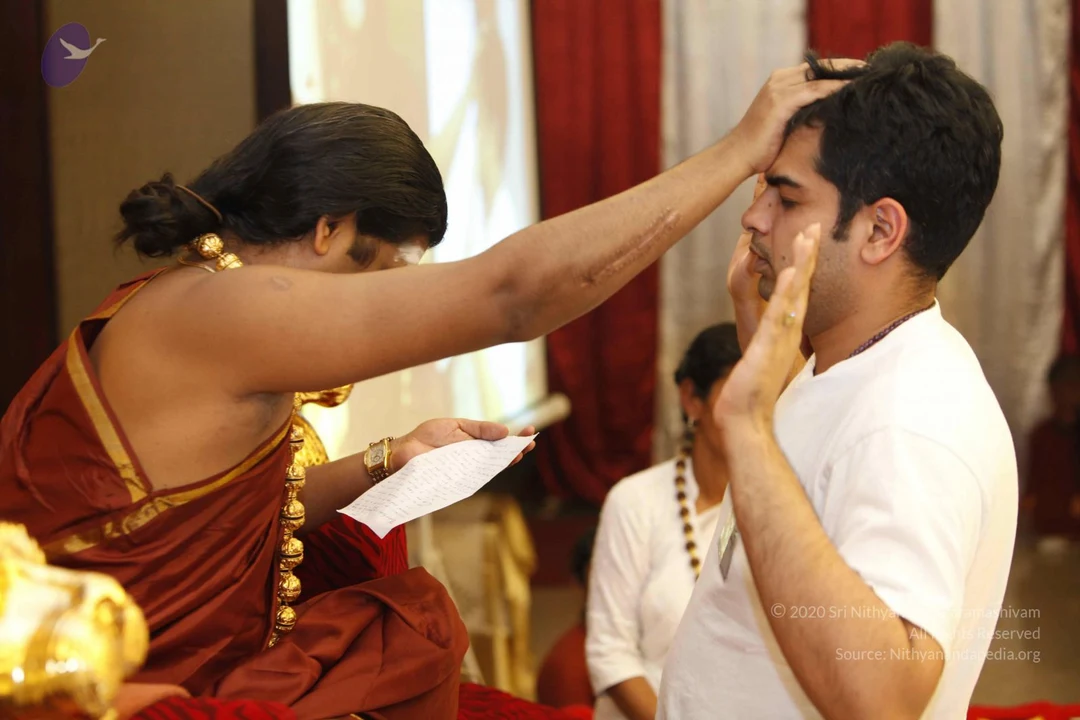
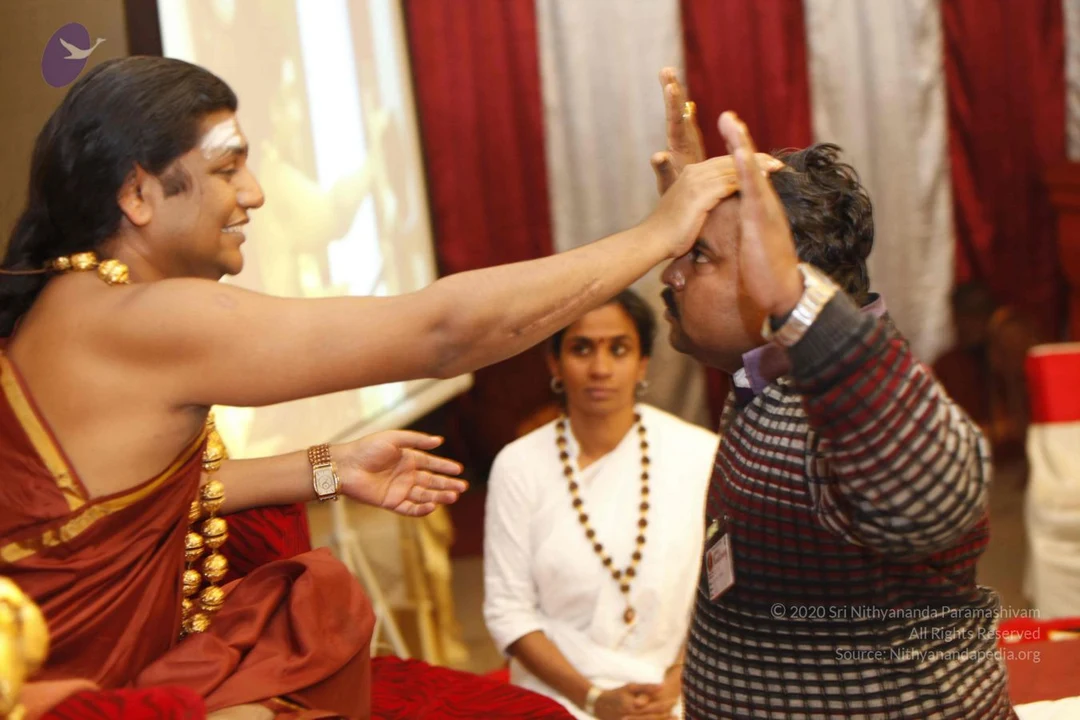
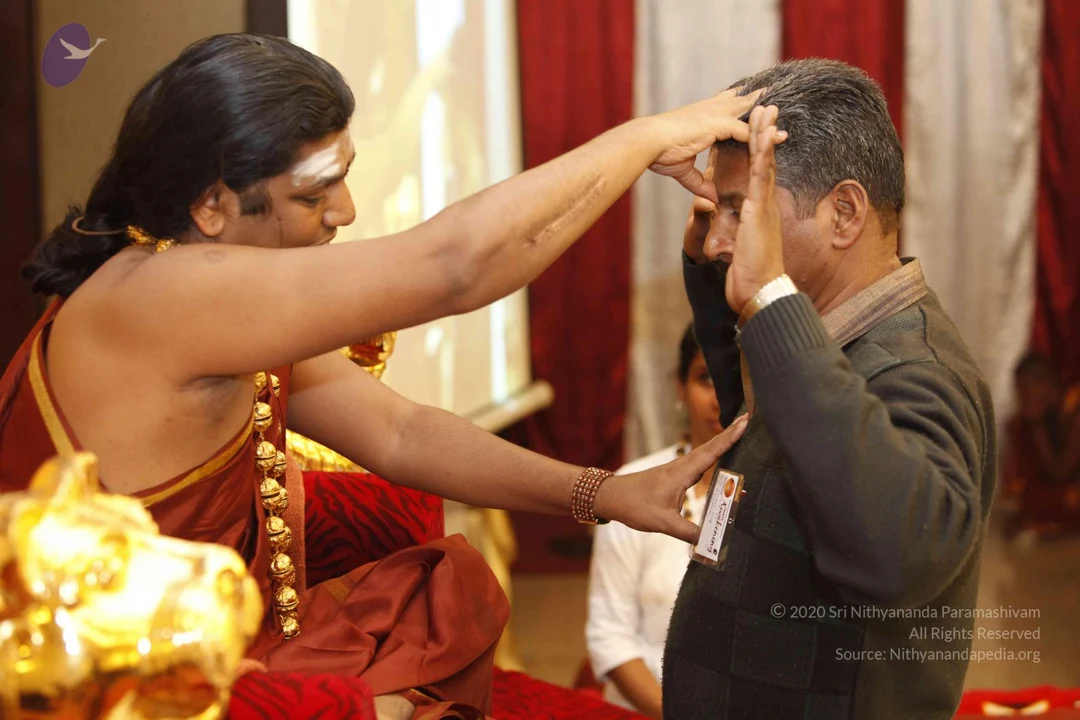
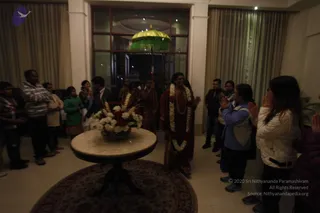
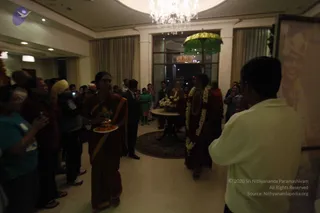
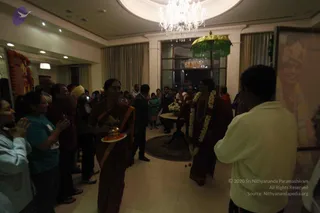
I bless you all! Whatever you create in your space, let it become reality! Thathaasthu! Other than the Inner Awakening participants Level-1, Level-2, Level-3, everyone can come for darshan. All the Inner Awakening participants Level-1, Level-2, Level-3, please be seated; you will have darshan in the evening as part of your program. Others can come forward for darshan.
Title
Life starts with Authentic Listening! || Part 1 || IA || 02 Jan 2014
Description
This video is an excerpt from the Inner Awakening convention conducted on 02 January 2014 in Haridwar, Uttarakhand, India In this video Supreme Pontiff of Hinduism, Jagatguru Mahasannidhanam His Divine Holiness Bhagavan #Nithyananda Paramashivam, very powerfully explains that with listening, life starts, enlightenment starts. His Divine Holiness Bhagavan Nithyananda Paramashivam explains that in Vedic tradition, words are not just used to transmit knowledge, but as a vehicle to transmit energy.
Video and Audio - Life Starts with Authentic Listening!||Part 1||IA
| Video | Audio |
Transcript
(00:36)
||nithyānandeśvara samārambhām nithyānandeśvari madhyamām | asmat āchārya paryantām vande guru paramparām ||
(01:00)
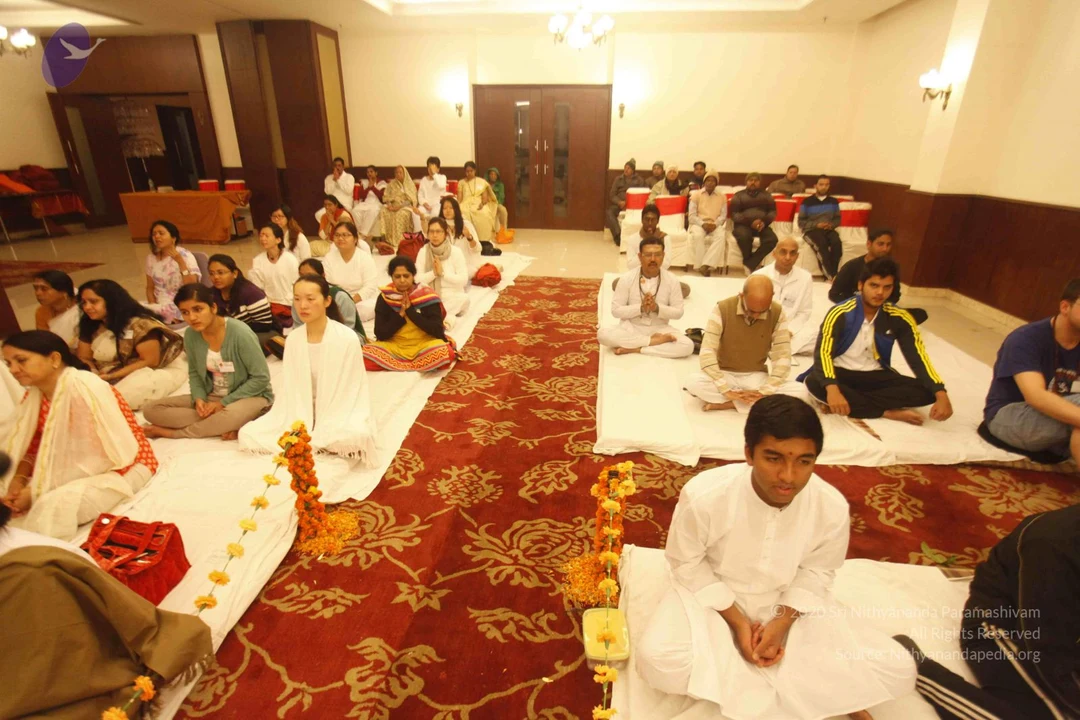
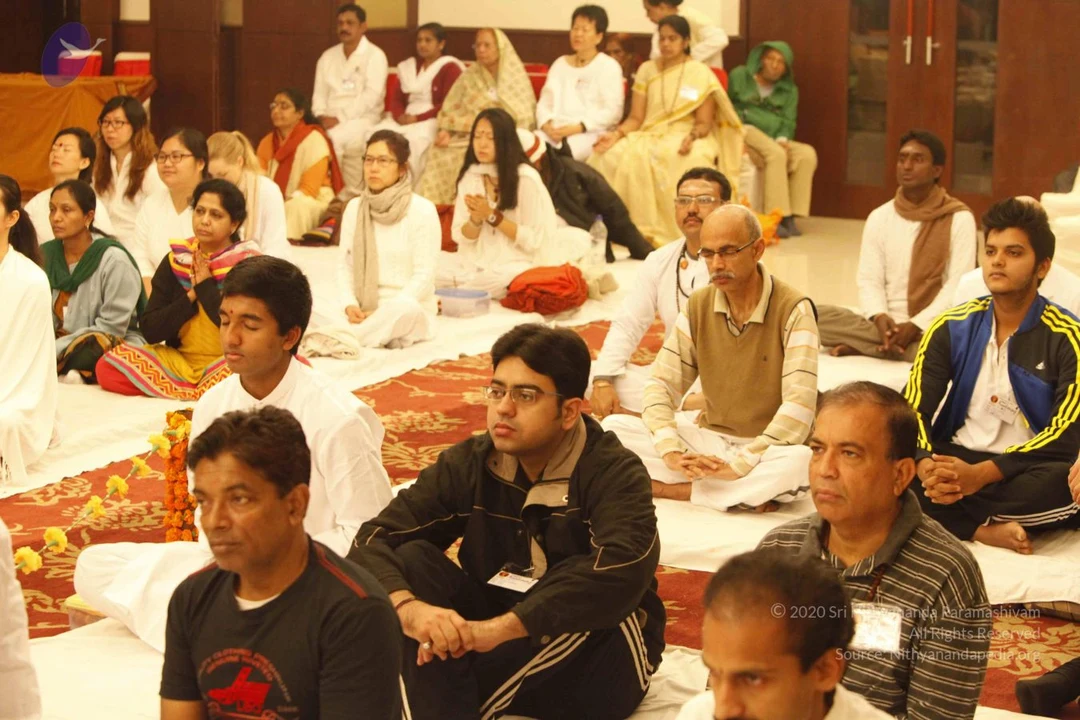
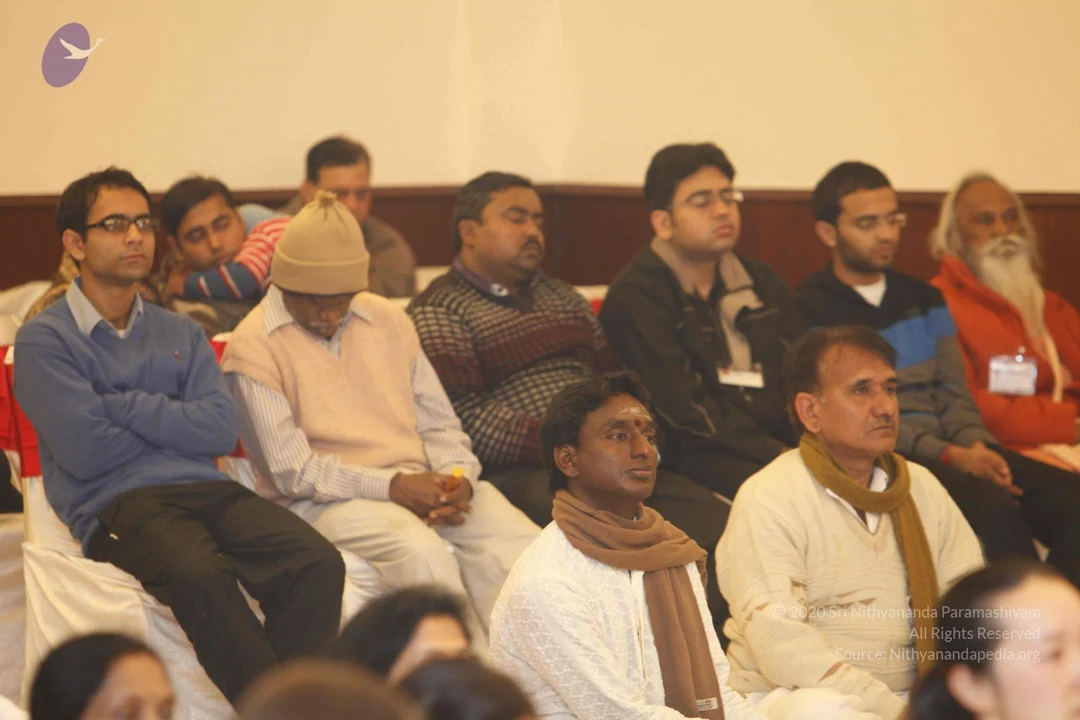
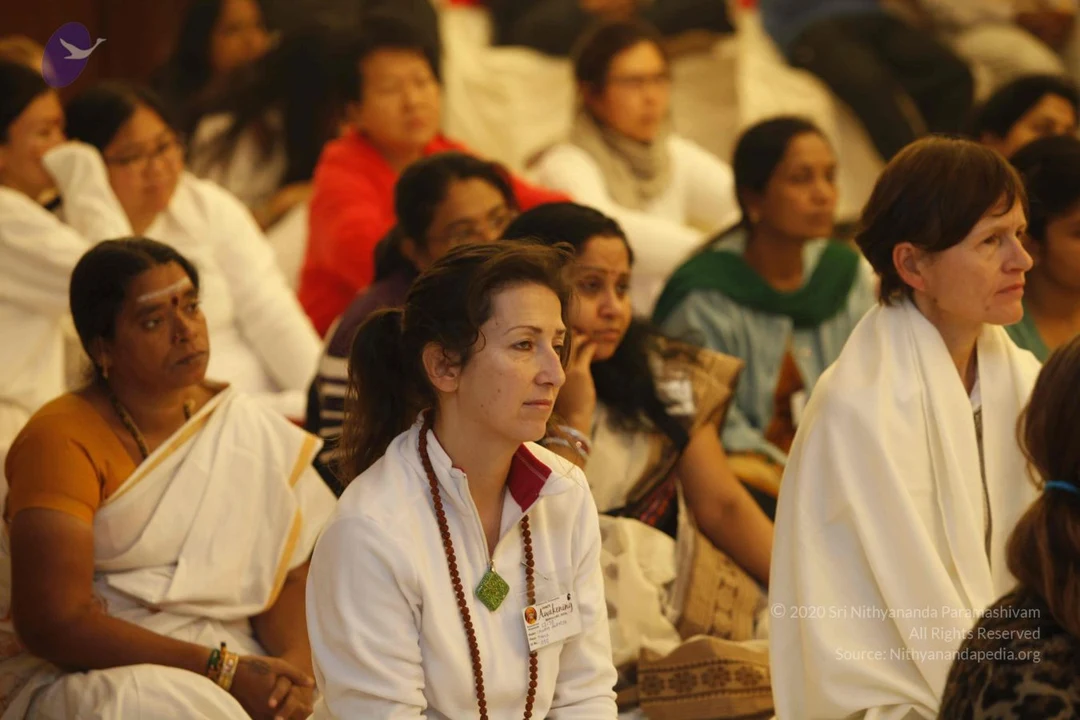
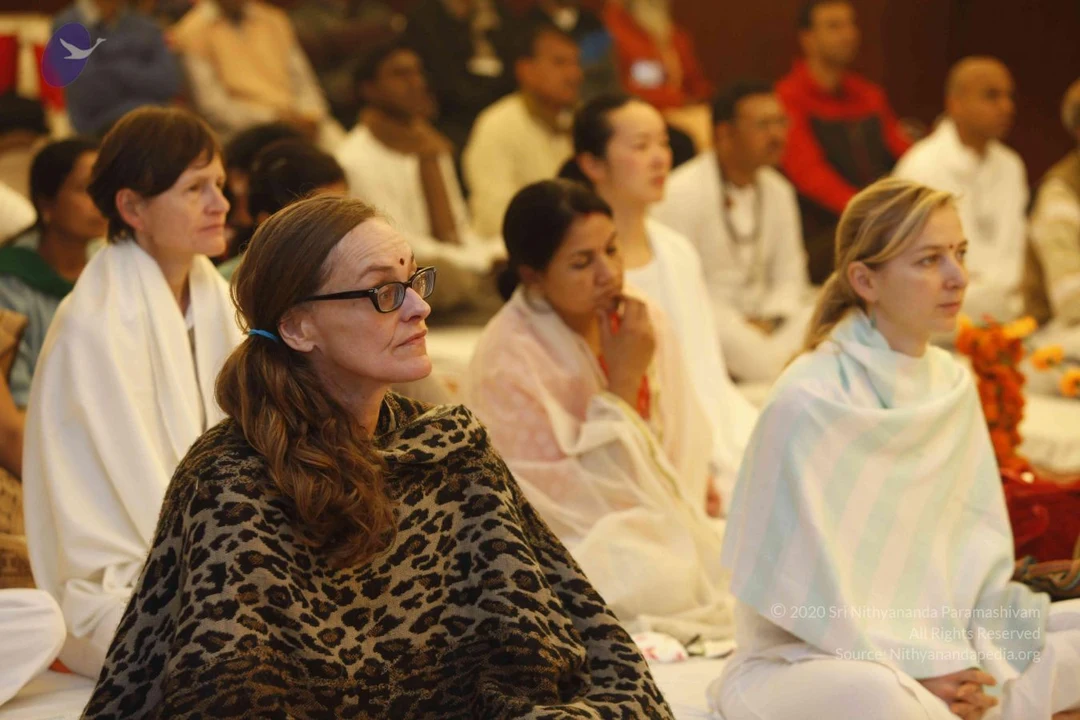
I welcome all of you with My love and blessings. I welcome all the devotees, disciples, participants, cities sitting with us all over the world. Los Angeles-Arunachalam, Dallas - Dwaraka, Dubai- Vaidyanathan, Scottsdale-Arizona, Toronto- Kailasam and Paris - Kalighat. I welcome all of you with My love and blessings. And of course I welcome every one of you who are sitting in Haridwar. 😊
(02:07)
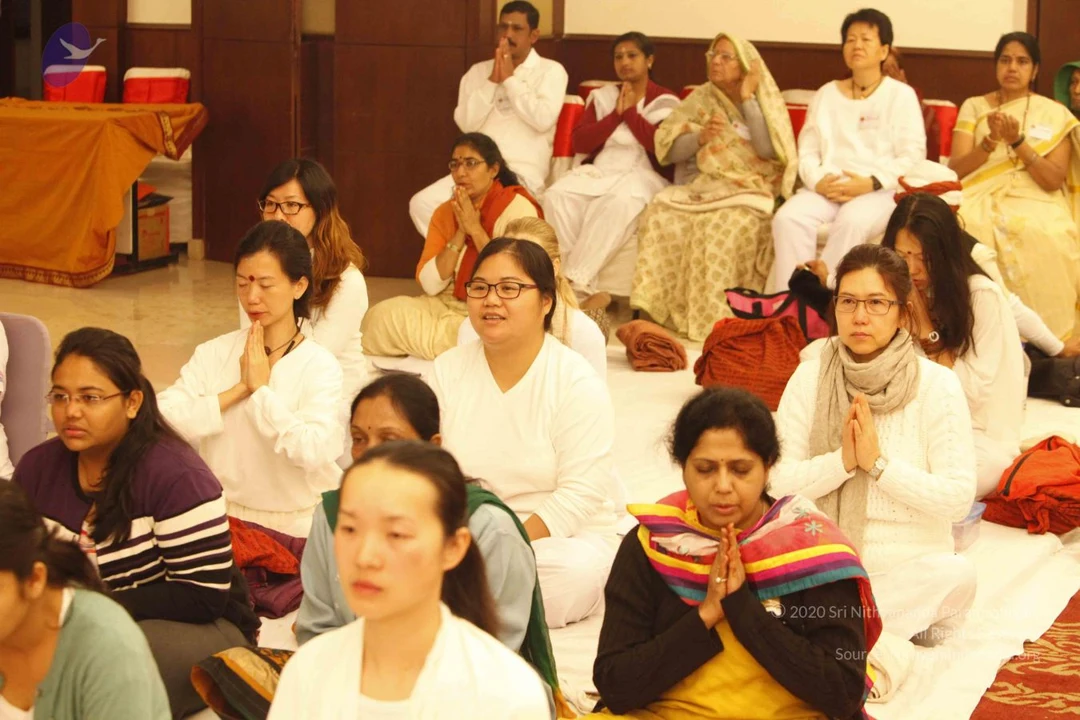
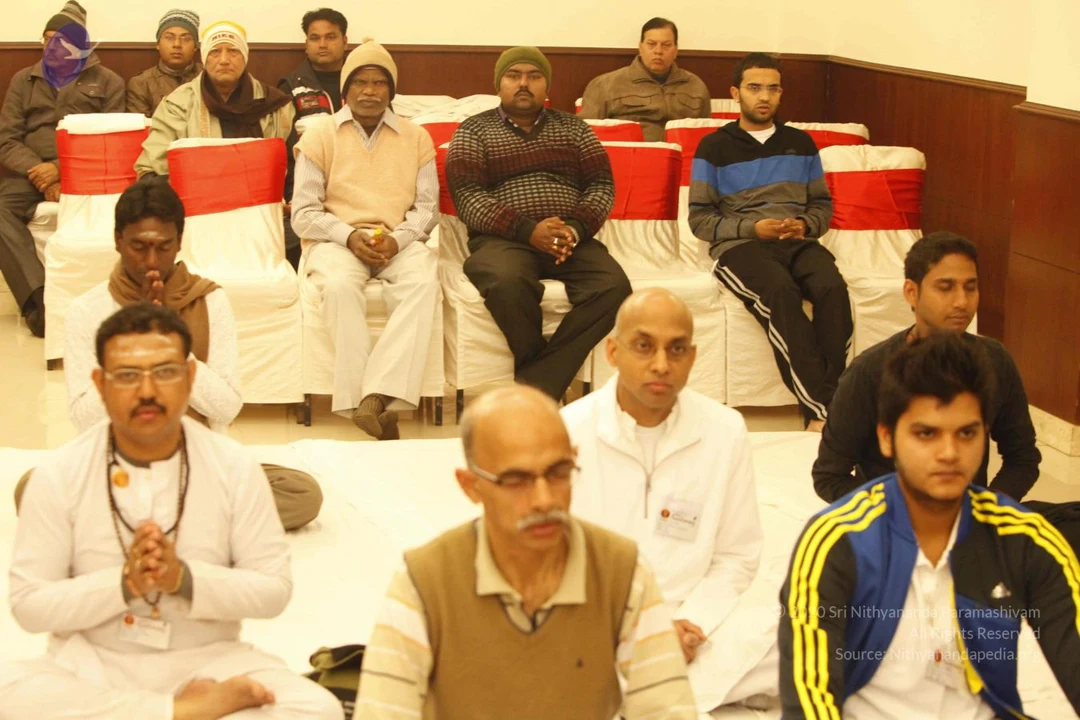
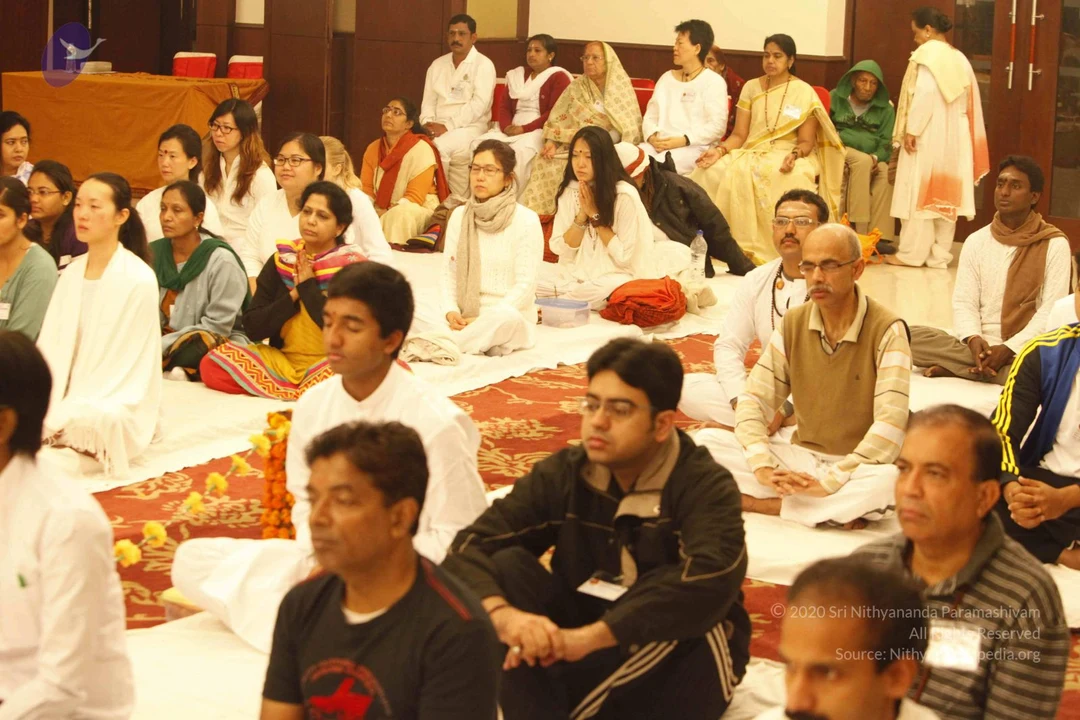
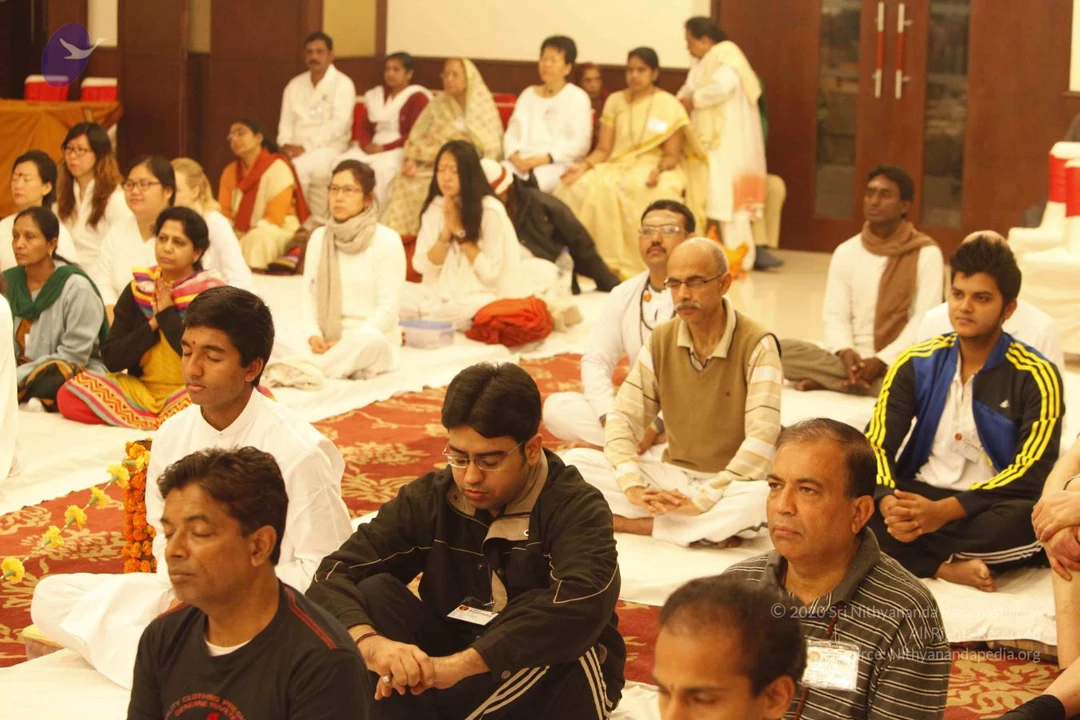
Shall we start the session? I am asking you. Because the program starts not when I start speaking. It starts when you start listening. Please listen. The first thing you need to know, listening - authentic listening. Life starts when you start listening. As I said today morning in the satsang, “Ganga maybe there, Himalayas maybe there next to us. If we are sleeping what is the use?” So all the principles I am embodied is like Himalayas. All the words I am uttering are like Ganga. But what is the use if you are not listening? So when you start listening life starts. Whatever maybe the reason you are here you will achieve it when you start listening.
Because in vedic tradition the words are not used just to transmit knowledge, words were used as a vehicle to transmit energy. Please listen. In vedic tradition words are not just used to transmit knowledge. Words are used to transmit energy. Not only the words have linguistic importance; in the west language has only linguistic importance, means the knowledge is transferred through the words. In the east language is used with linguistic importance and the phonetic importance means the sounds were used not only to transmit the knowledge but to transmit the energy also.
(04:46)
So listening is a basic requirement. With listening starts life. With listening starts enlightenment. So please understand. With listening life starts. With listening everything starts. Actually you were a just a child. Almost like any animal baby. But when you started listening the mind started developing in you. You’ve become human being. So it is with listening, all the best things in the life starts. All the best things in the life starts with listening. When I say listening I don't mean just hearing. Hearing is different. Listening is different. Let Me define listening. Listening without allowing any incompletions to interfere in you. Please listen. When I am talking about listen at least listen. Because if you miss, you may miss the whole programme. Listening - when you are listening don’t allow incompletions to interfere. For example, let Me give you an example; if you have seen some violent fight when you went to a beach, you go to a beach Sunday evening for a peaceful walk, suddenly you see there few people beating each other violently, killing each other. You are terrorized, traumatized. You run away. After that whenever you go to any beach not that same beach, whenever you go to any beach what you will be remembering? The same trauma, you will be going through the same trauma. You will be literally reliving the same trauma, the incompletions repeat itself in you. Same way some time the incompletions you carry inside constantly interprets, interferes the factual happening, actual happening. Every time when you go to a beach violence is not happening. But even once if you see violence in beach after that all your beach visit loses its peace. You are only terrorized everytime you go to beach. How many of you understand this? How many of you cognize this is happening in your life at some time in some way?
(08:58)
The incompletions interpret, interfere the fact and factuality the actual happening. Now I am talking, you are going to be listening. This session, this program; this session, this program... understand, this session, this program is a fact. Am I right? You are here, I am here, I am talking to you. But if your incompletions are just going on inside you interpreting them, sometimes even taking you away from here. Now suddenly you are there in your hometown going around the beach or having a pizza. What happens? Over, the whole session is lost. Your incompletions can erupt and either interpret, interfere with the session or can even kidnap you from here once for all; maybe after ten minutes you will come back, where, where I was? Oh I was in my house cooking. Understand. If you are listening wherever you are you are in this hall. You may be in Dubai or Dallas or Toronto or Scotsdale, you are here with Me. If you are not listening, even if you are in this hall you are not with Me. So authentic listening, authentic listening is the first step for life. Authentic listening is the first step for life. Please listen. Listen intensely.
(11:47)
One moment you listen, another moment you cognize what you listened. I can define it in this way, one moment you hear, next moment you cognize. Both put together is what we call listening. You hear and you cognize both put together is what we call listening. It is like binary code zero-one, zero-one, zero-one, zero-one during the moment of zero you hear during the moment of one you cognize. Then zero, one, zero, one, zero, one; the binary, just like binary action hearing, cognizing, hearing, cognizing is happening. This is what is listening. But unfortunately if your incompletions interfere it becomes like a zero, one, one, one, one, zero, zero, zero, zero, zero, one, one, one, one, one, zero, zero , zero, zero, zero, zero, one, zero, zero, zero, zero, zero, zero, zero, one, one, one, one, one, one, one, one, one, one, one, zero, zero. Then what happens? Like a virus in the software your incompletions enter your inner software and collapses the whole thing, destroys the whole thing. So please decide you will not allow any of your incompletions into you while you are here in the class in the session ‘Listening’. Sessions may not be just in this hall, it may be in the banks of Ganga, it may be in the lap of Himalayas. The programme is organized such a way only. Actually I’ve chosen Haridwar for My sake only more than 😊😊 I just want to enjoy the lap of Himalayas little time and that's the reason I chose Haridwar. Knowing that it will be little cold this time of the year; but Haridwar should be enjoyed, Himalayas should be enjoyed when it is cold. If you have to be here when it is hot then better let us be in Bangalore that’s all. 😊
(14:39)
And I tell you from time immemorial people when they want spiritual knowledge and experience moved to this land. Because, one: when the altitude goes up, automatically mind goes up. Second: in the cold naturally your system evolves to the space of listening. Your system starts listening. Above all thousands of years all the great Masters lived here and left the body and their vibrations here. Haridwar is the headquarters of Hinduism; all of you should know. Oldest city, Daksha lived here means, first kingdom Dakshaprajapati’s kingdom was headquartered in Haridwar. We have a place where Daksha yajna was destroyed and Mahadeva gave forgiveness and enlightenment to Daksha. The temple is...the temple belongs to our akada. We will be going to that temple also. This is the first ever city on the planet earth. The first president of the human beings Prajapathi, Dakshaprajapati was headquartered here. The base of human civilization and still the only Hindu city in the world. Till now, even now this city legally constitutionally Hindu city. You cannot have any other religious structures in this city. You cannot have non veg and alcohol being sold in this city. No alcohol, no non veg. Legally you cannot sell in this city no shops. Few hundred years before there was a pact created between Maha Nirvani Akada sadhus and British; so still, even now the Indian government respects that pact. It’s almost like a Vatican for Hinduism. This city is like a Vatican for Hinduism. For thousands of years anybody wants spiritual knowledge, they came to this ground, this land. You are all here what a beautiful time and space and place to be. Haridwar, nice cold season, and with a living Master.
(18:45)
Listening. Understand it is so nice, especially to have a small group; because with small group I can work with every individual and you guys are blessed. Maybe after two years or three years I am going to be taking the whole Inner Awakening. And good or bad, now there is no one to substitute Me in any other sessions to fill for Me. So I will be conducting almost all the sessions of the Inner Awakening. I will be personally sitting and getting your root patterns out. Helping you to find your root patterns out. Enjoy! It all begins with listening. It all begins with listening. So understand. It is listening which starts the whole programme. Start listening. As I said do not allow any incompletions when you are listening and cognizing. When you are listening and cognizing do not allow any incompletions.
(20:48)
Video and Audio - Life Starts with Authentic Listening!||Part 2||IA
| Video | Audio |
Transcript
(00:15)
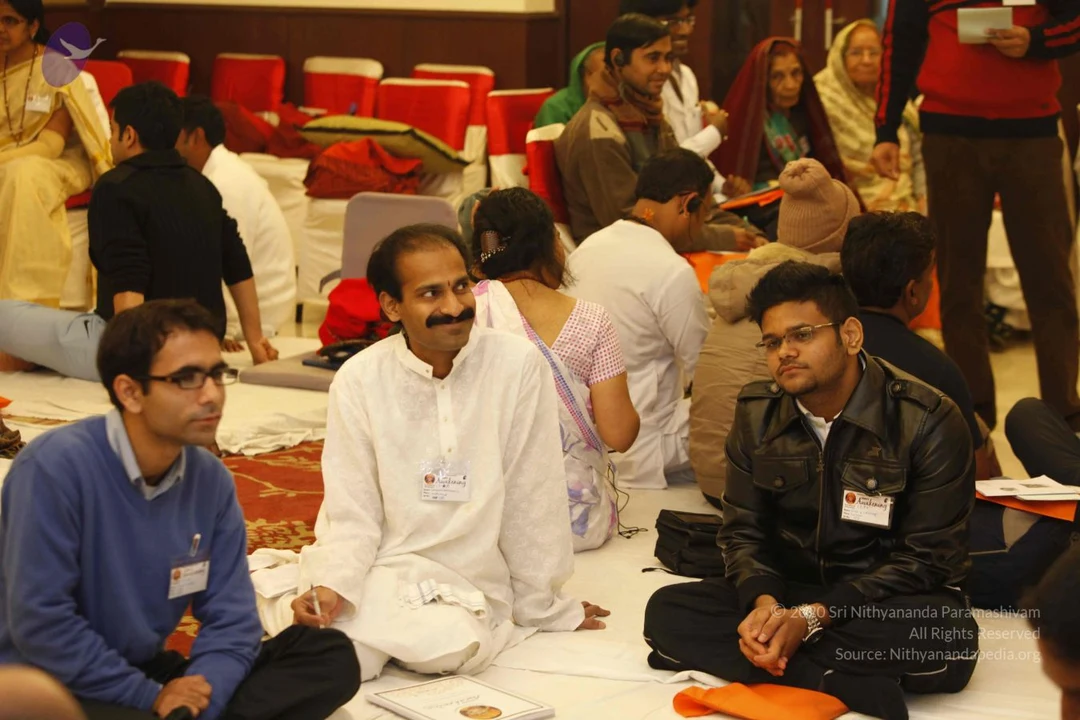
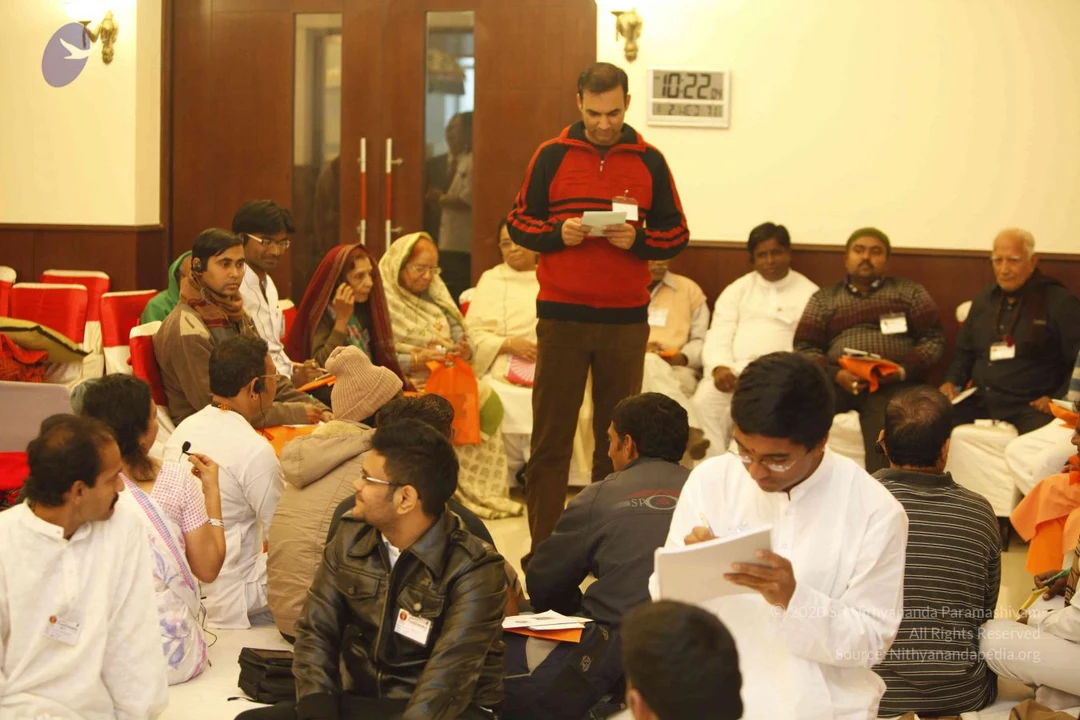
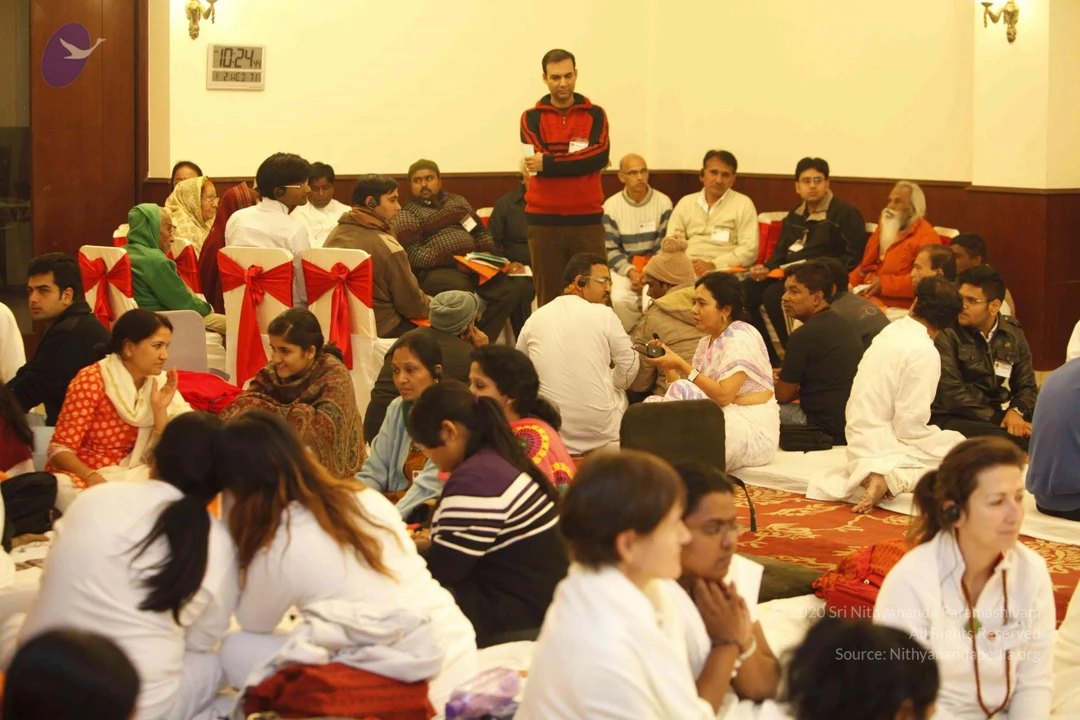
We will have small game, unique process to understand the listening we have and how we miss listening. Now let’s enter into this small game. You will form as group ten, ten people. At least ten, ten people as one group. Please form a group. Ten people at least as one group; not less than ten. All the leaders please pick up your paper and pen. Listen. Please listen, all the leaders listen. Leaders first listen here. You should write down three statements, each statement should have seven words minimum. It can be anything from My teachings or any common statement, anything. But the statement should have at least seven words. You cannot write life is bliss because it is only three words, seven words - one statement. Like that three statement, please write down. Don’t show it to others. You just write down. Write three statements. No, you will not discuss with anybody. Only you have to write, nobody else should know what you have written. Don’t show. Don’t show it to others or don’t tell others.
(02:37)
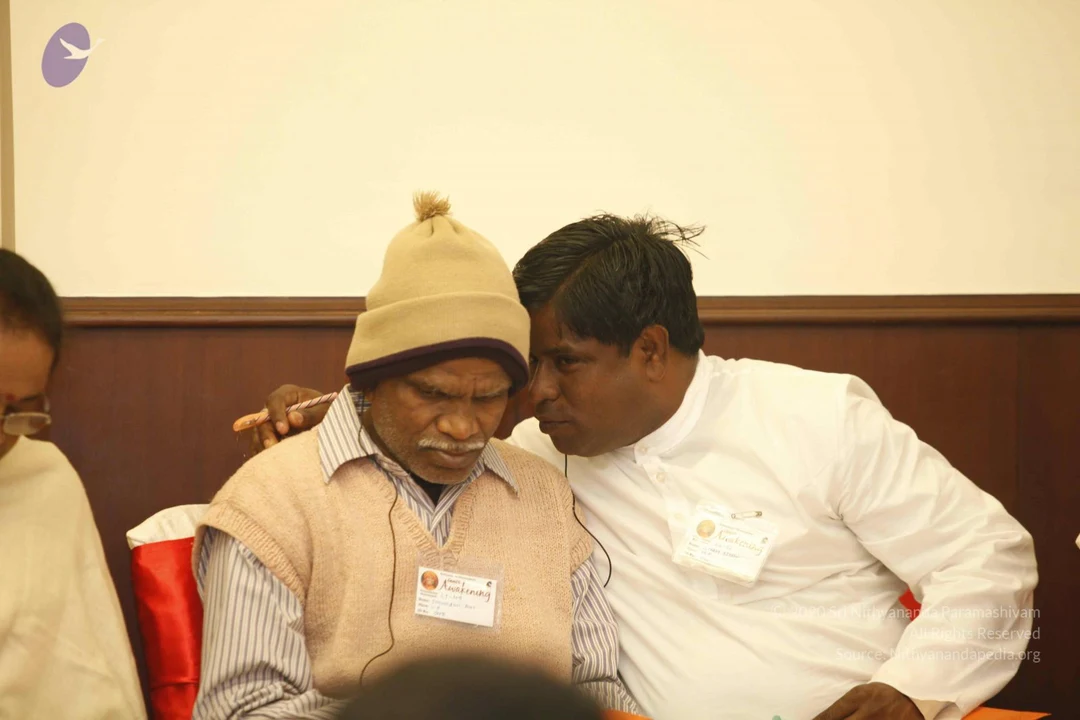
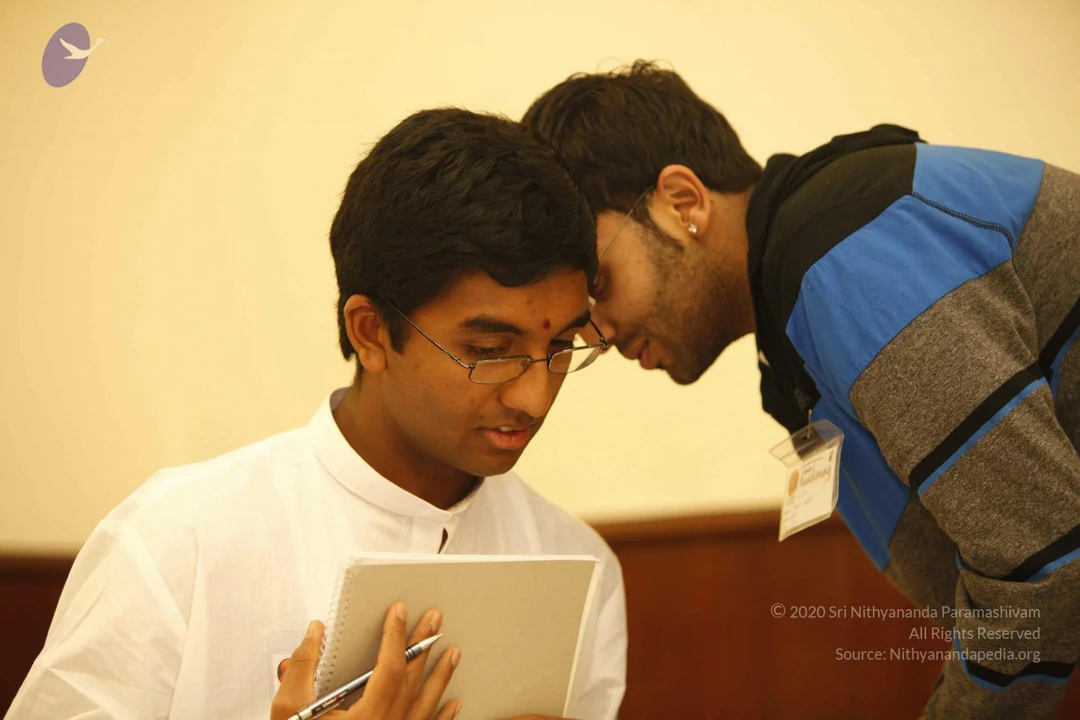
Not loud, very mildly you will tell one statement in the ear of the next person. He will utter to the next person. No question of repeating. If somebody doesn’t listen and ask “Ah,aah?” ah, ah only that’s all. 😊😊 Let that statement go round and come back. What comes back pen down directly straight to that. For example you might have sent a statement “Life is heaven.” And it may come back as “Hell is life.” And write down. 😊 Whatever comes back, write next to that statement. Then again send the second statement. What comes back, pen down the second. Then send the third statement. All of you are clear about the rules of the game? Ready to play? Please listen, listen, listen here, listen here. No, no, no you will not give instruction, only I will give instructions from here 😊 😊. Listen here. You will only utter once the statement in the ear of the person, almost like giving initiation. Then he will utter to the next ears, next ears, next ears. It will go around. Shall we start the game? Participants: Yes Swamiji: Everyone is ready? Participants: Yes Swamiji: Third team, sorry last team, your team is ready? Start the game, come on.
(04:21)
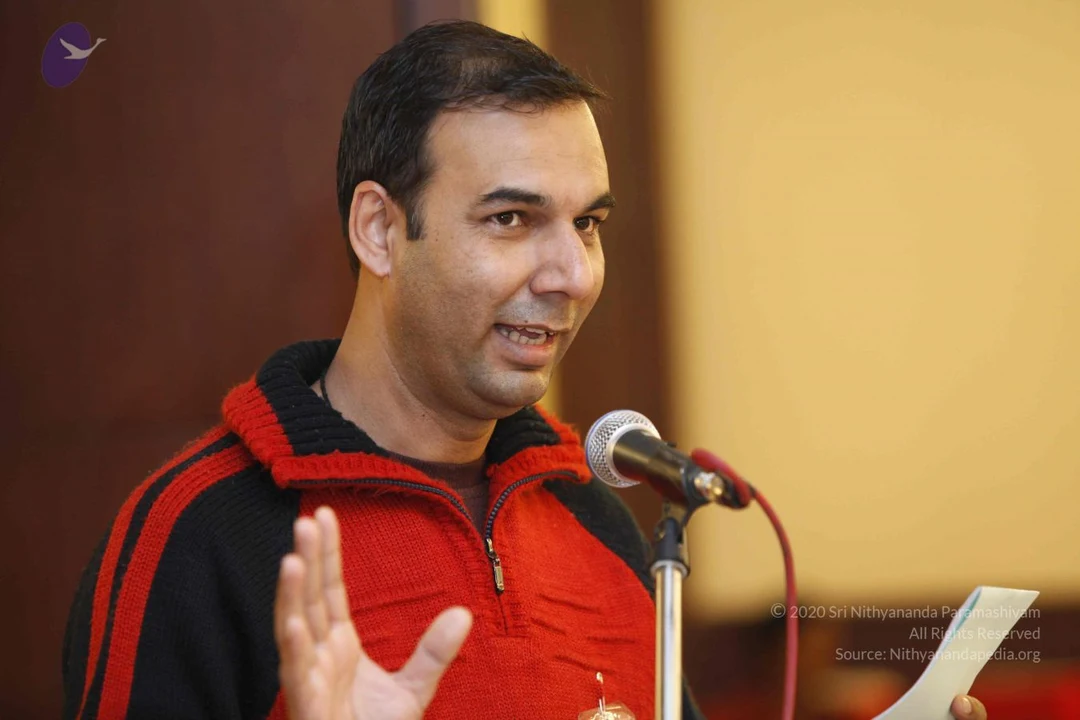
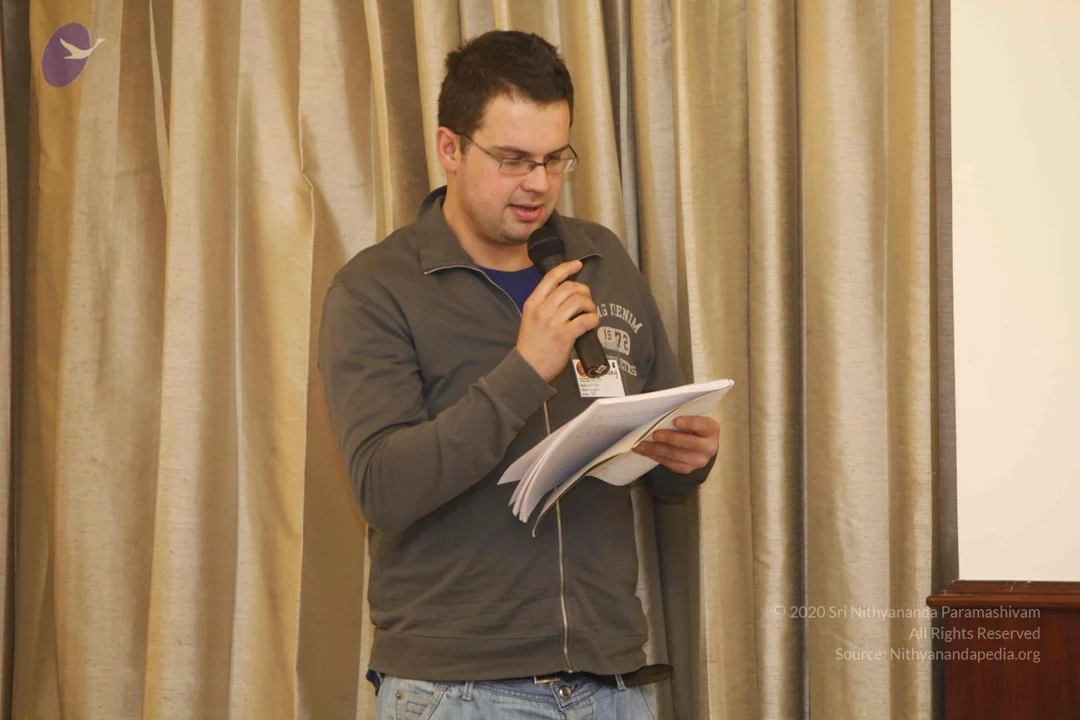
Swamiji: Read out both, go ahead. Participant: First statement ‘I am glad I have come to inner awakening.’ The came back as ‘I am glad to come to inner awakening.’ Swamiji: Oh god, hm. Participant: ‘Hearing and cognizing is listening, says swamiji.’ ‘Hearing and cognizing is the most important teaching of Swamiji.’ Swamiji: 😊 😊 Participants: ‘The city of Haridwar is the headquarters of Hinduism.’ ‘City of Haridwar is the state of Hinduism.’ Swamiji: 😊 😊 How many of you now understand, after teaching about ‘listening’ one hour 😊 after listening about ‘listening’ for one hour, this is what is our listening. How many of you cognize this? Come on, go ahead.
(05:15)
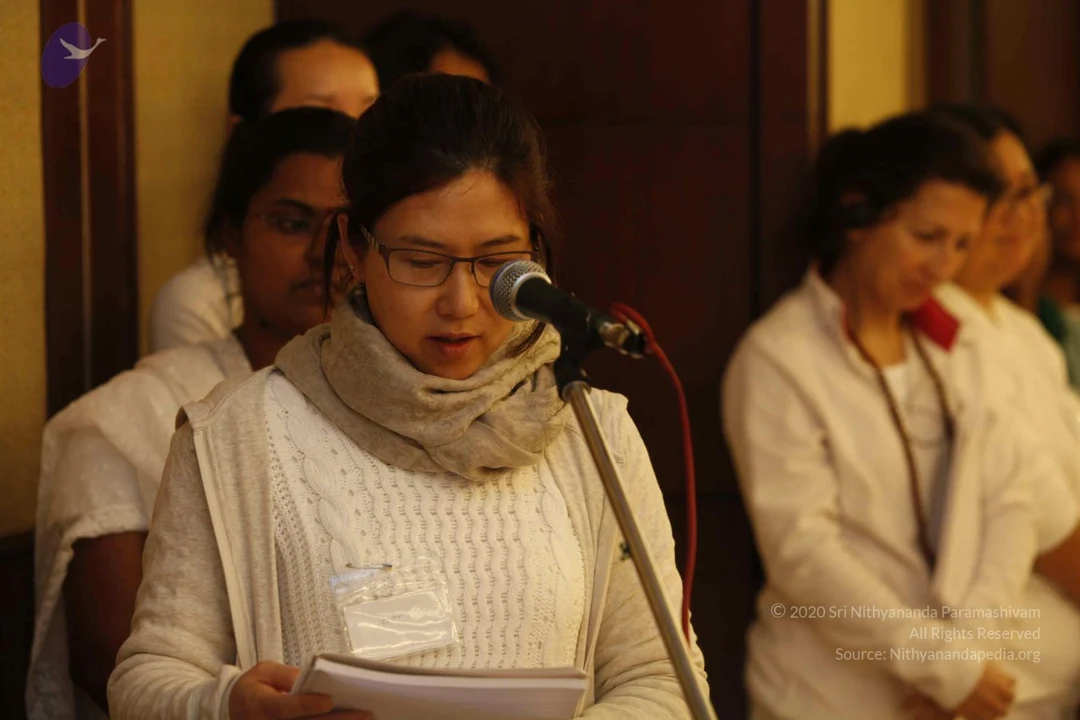
Participants: Three sentences are in Hindi... inaudible Swamiji: Ah yes, go ahead. No you read out in Hindi that’s enough. Participant: Haridwar Hinduon Ki akeli bhoomi hai jahan kisi aur dharm ka mandir nahi hai. And what I got back is “I didn't get it” Swamiji: 😊 😊😊 Next statement. Participant: Next statement ‘yeh program sunne matra se aarambh ho jata hai’ and what I got back is ‘jo shuru hota hai wahi se khatam hota hai’ Swamiji: 😊 😊😊 Participant: ‘hame sunte samay apne kisi bhi poorva vichar ko dimag me nahi aane dena chahiye.’ What I got is ‘aapke man me koi vichar nahi aana chahiye Swamiji: 😊 😊😊 So now all of you understood. Please, please be seated. Please understand. So essence of this game, this session is, you will be able to listen only when there is nothing stands in between the speaker and your listening. If there is a incompletion standing between you and the speaker; speaker and your listening, listening doesn’t happen.
(07:07)
So the first step…. Now how many of you cognize that our listening is very poor. We have to develop authentic listening. I am afraid when people go out and tell ‘this is what I learnt from IA.’ You understand? Because this is what they heard, not I taught. They should tell this is what I heard, not this is what Swamiji taught. For authentic listening you will have to just completely imbibe without any incompletions in your head. How to do that? We will see from next sessions, from next, next, next sessions - completing all the incompletions. See The whole Inner Awakening Level one is giving you experiential initiation of completion with yourself. The IA level two completion with yourself and the life with others and everything in your life. IA level three creation of your reality and others reality. Creating the reality as you want for yourself and the people around you.
(09:16)
So let’s start the first step, completion. How many of you have realized that you have missed so much in the life because of non listening? By not listening we miss so much in life. Let’s not do that any more. Many time our fight is because of of non listening. We fight with others because we have concluded before even we listened. Before even we listened, what we have done? “Hey” 😊 We have come to the conclusion.
(10:04)
Photos
Paduka Puja
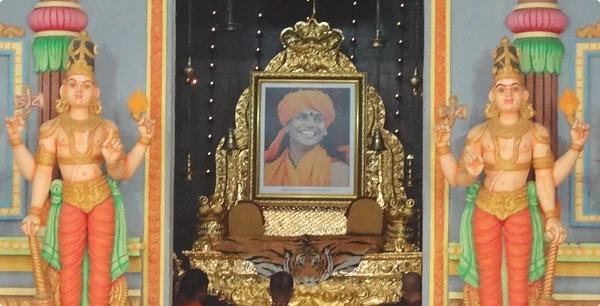
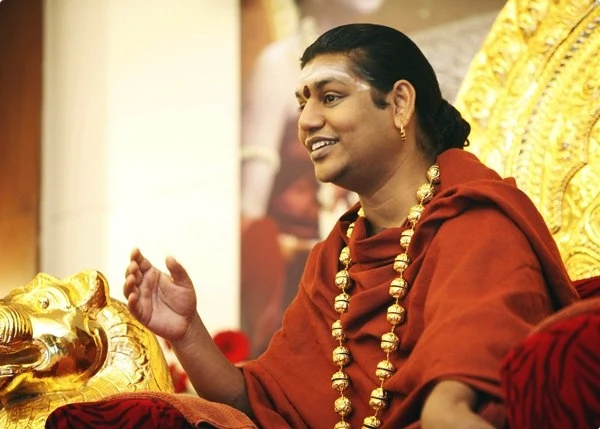
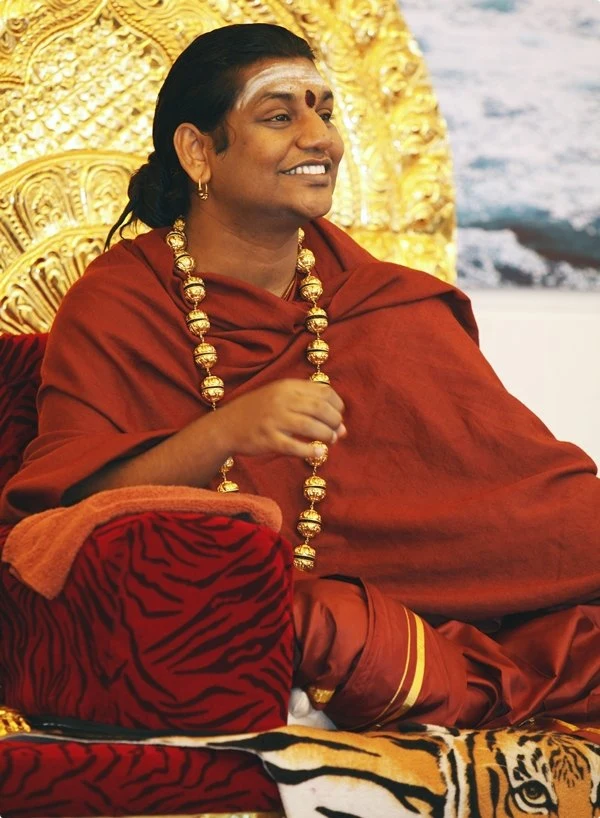
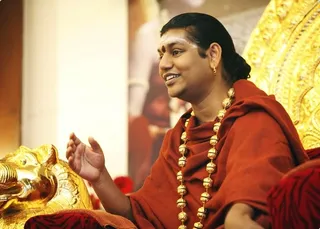
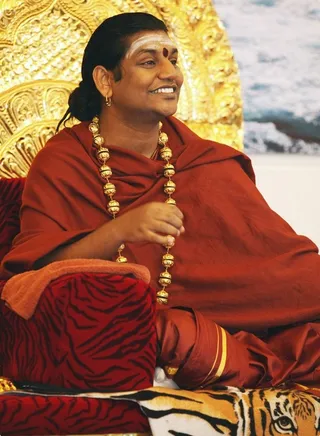
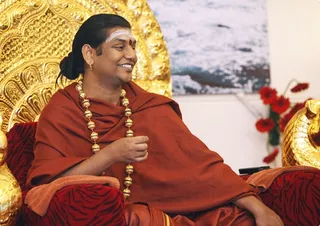
Satsang and Haridwar Inner Awakening
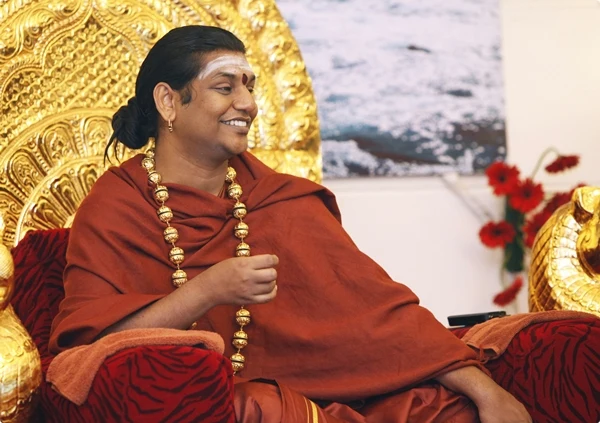
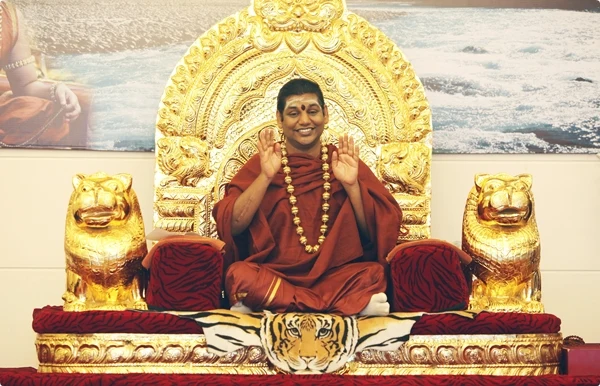
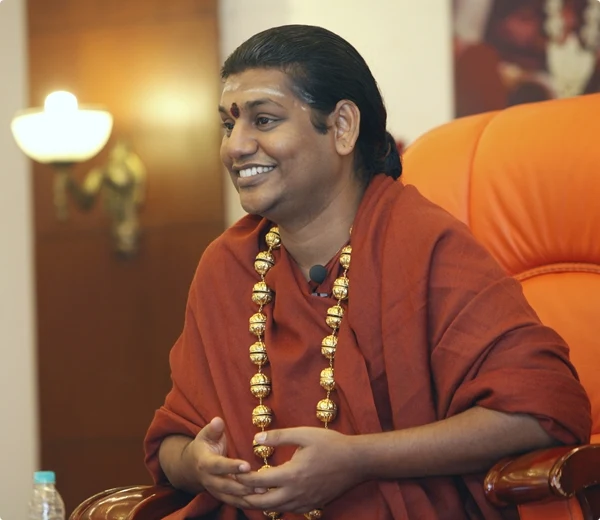
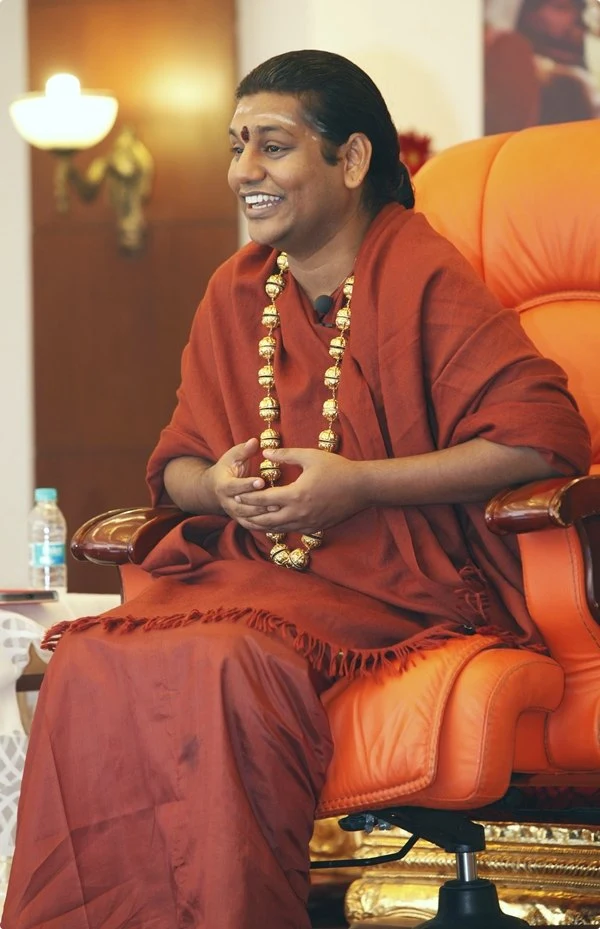
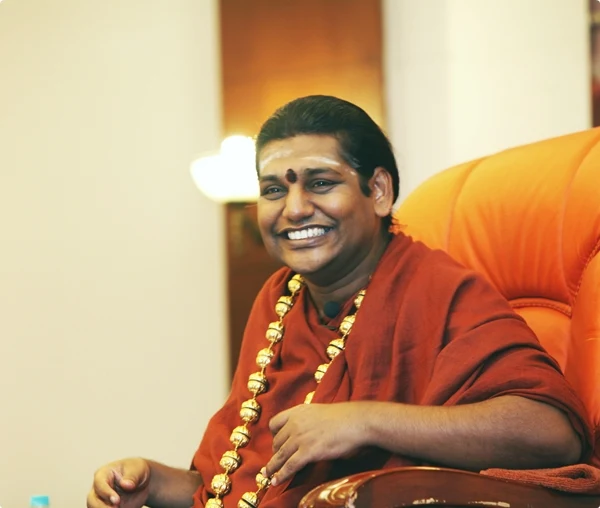
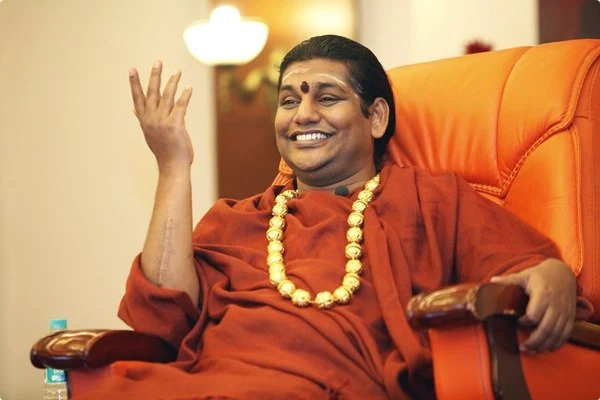
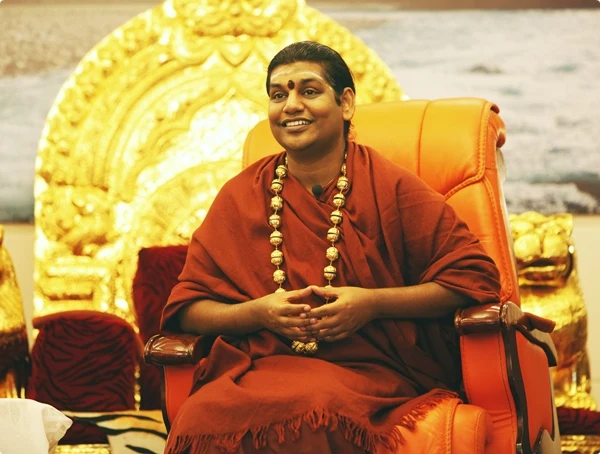
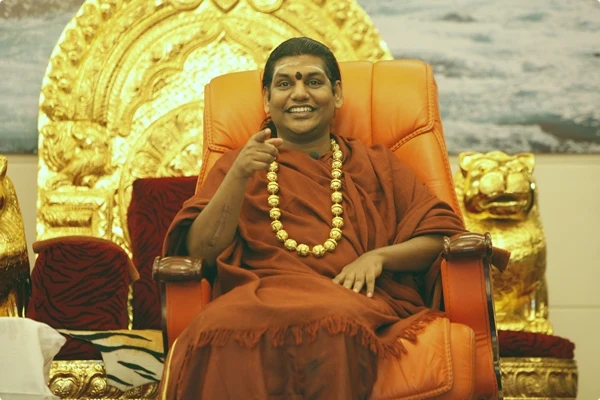
Temple
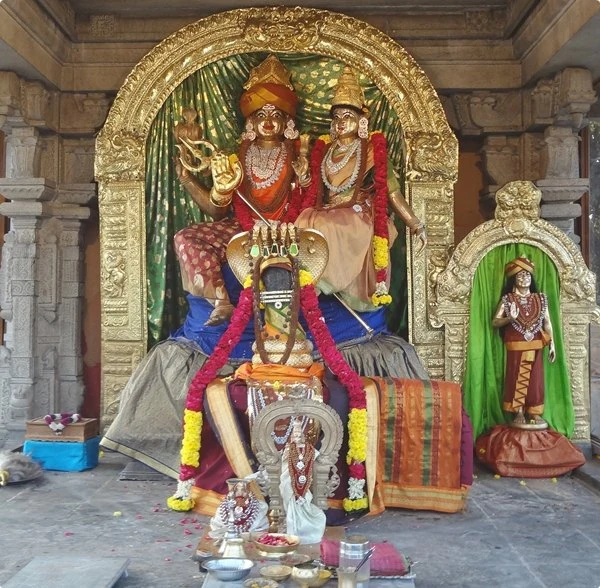
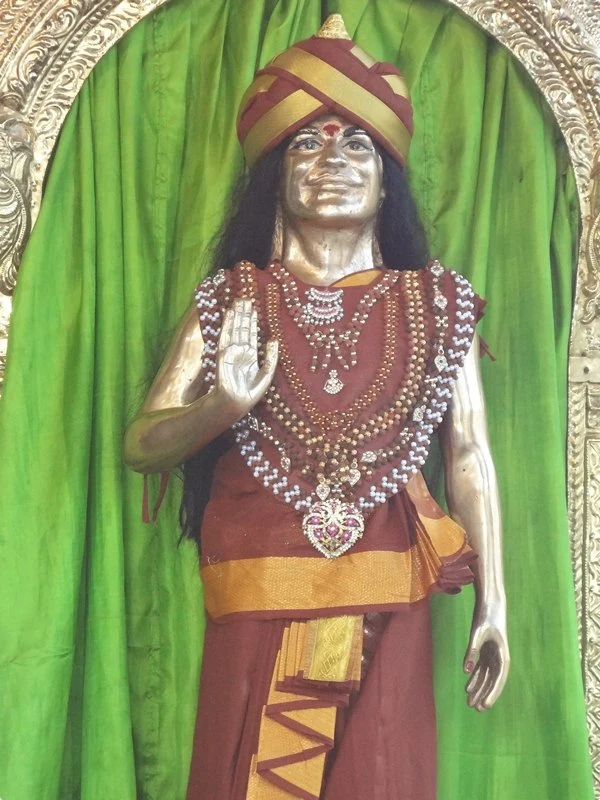
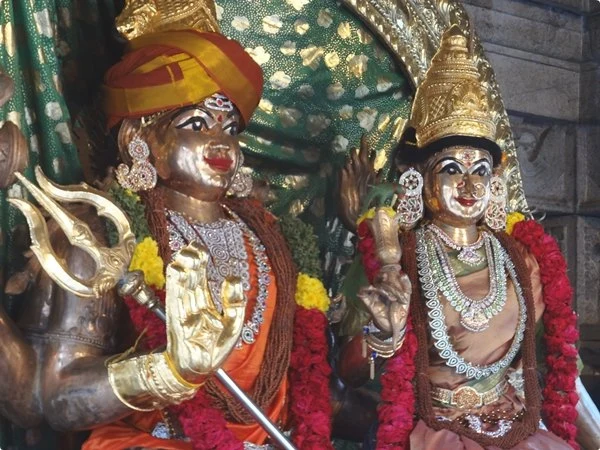
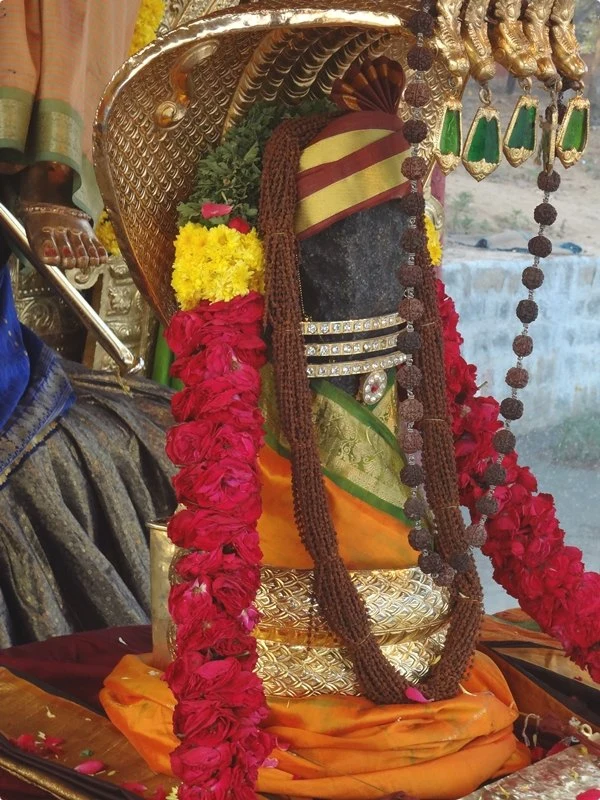
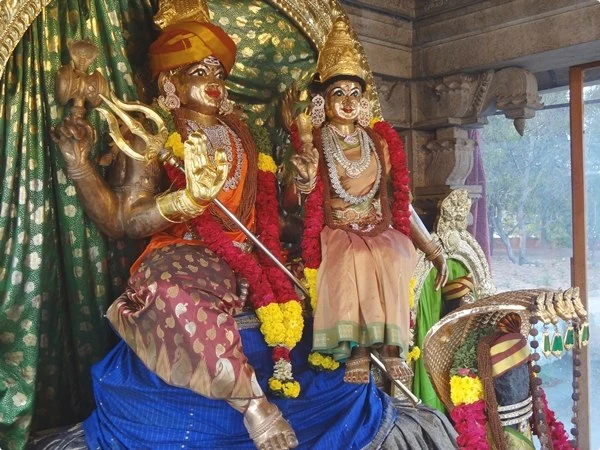
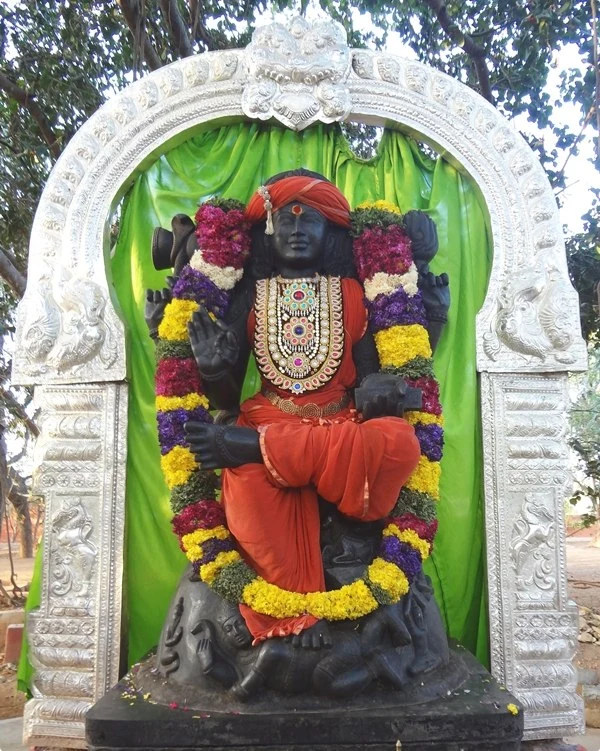
Nithya satsang and session
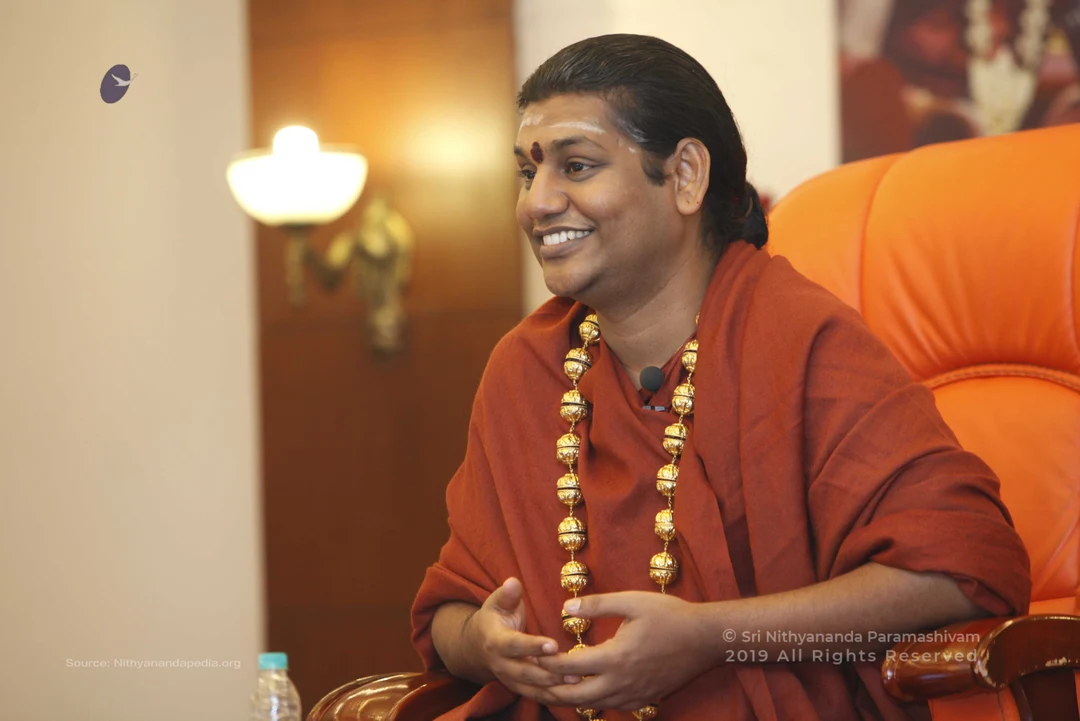
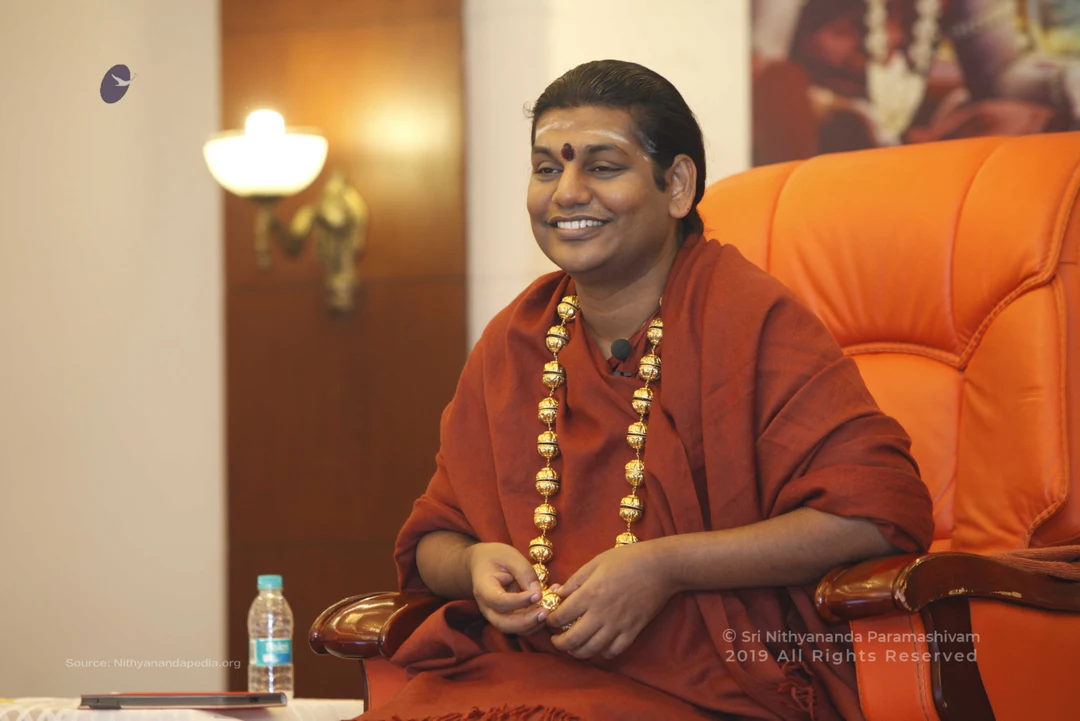
Tags:
Paramahamsa Nithyananda, self-doubt, self-denial, self-hatred, Sanatana Hindu Dharma, completion, patterns, create, reality, power, matter.
Photos Of The Day:
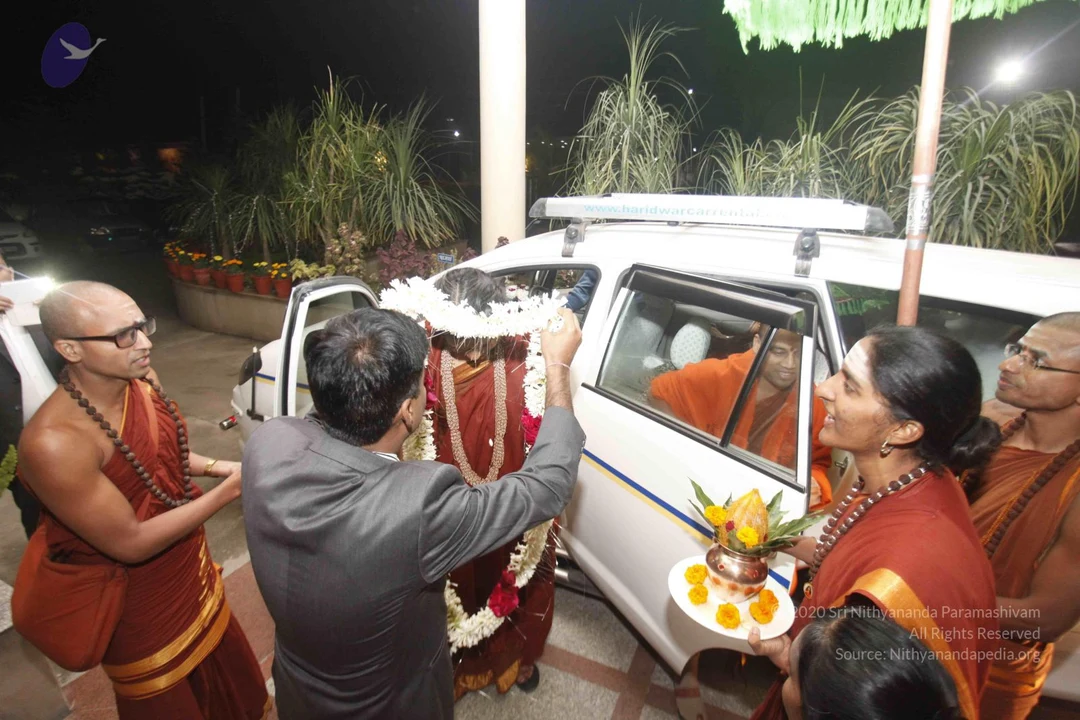
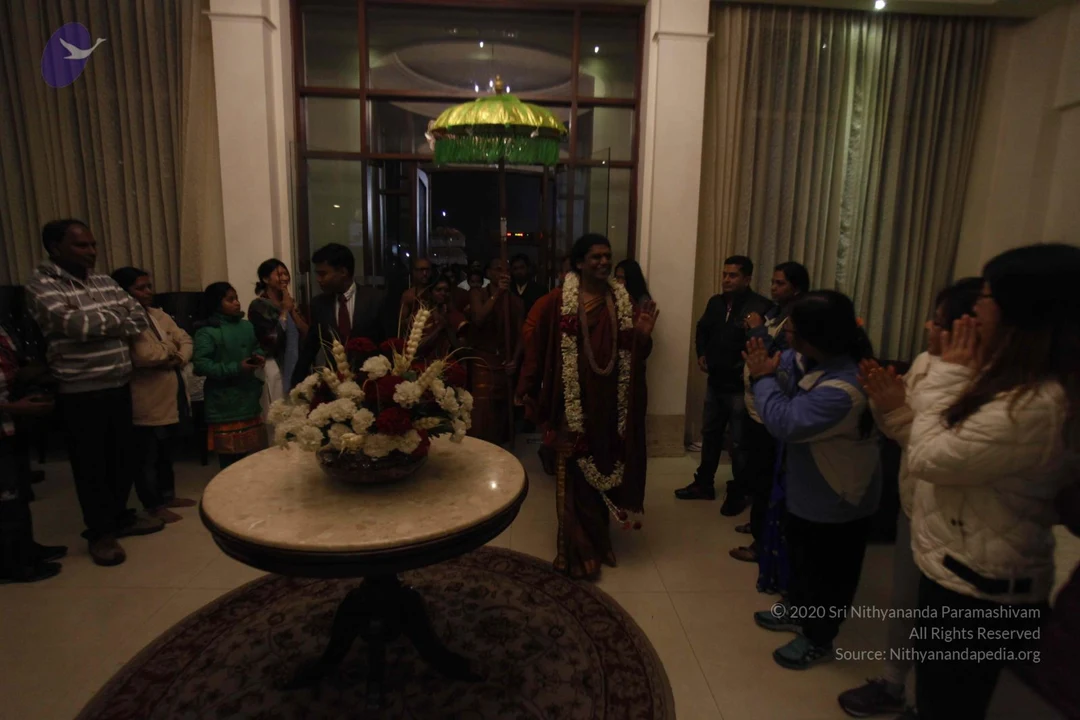
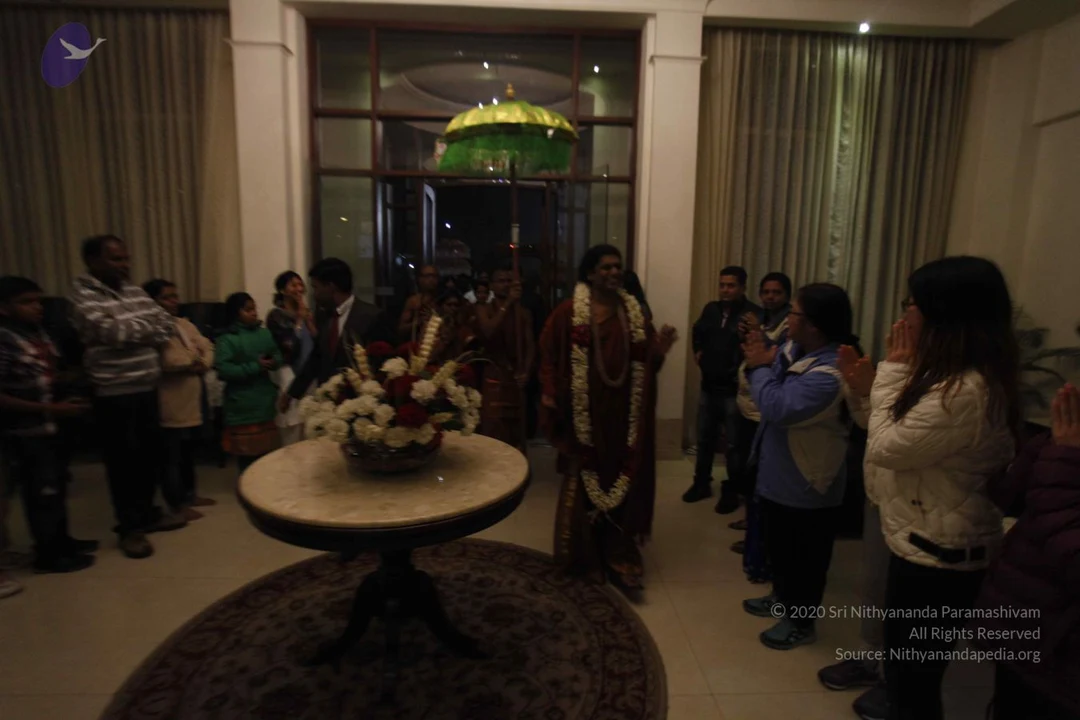
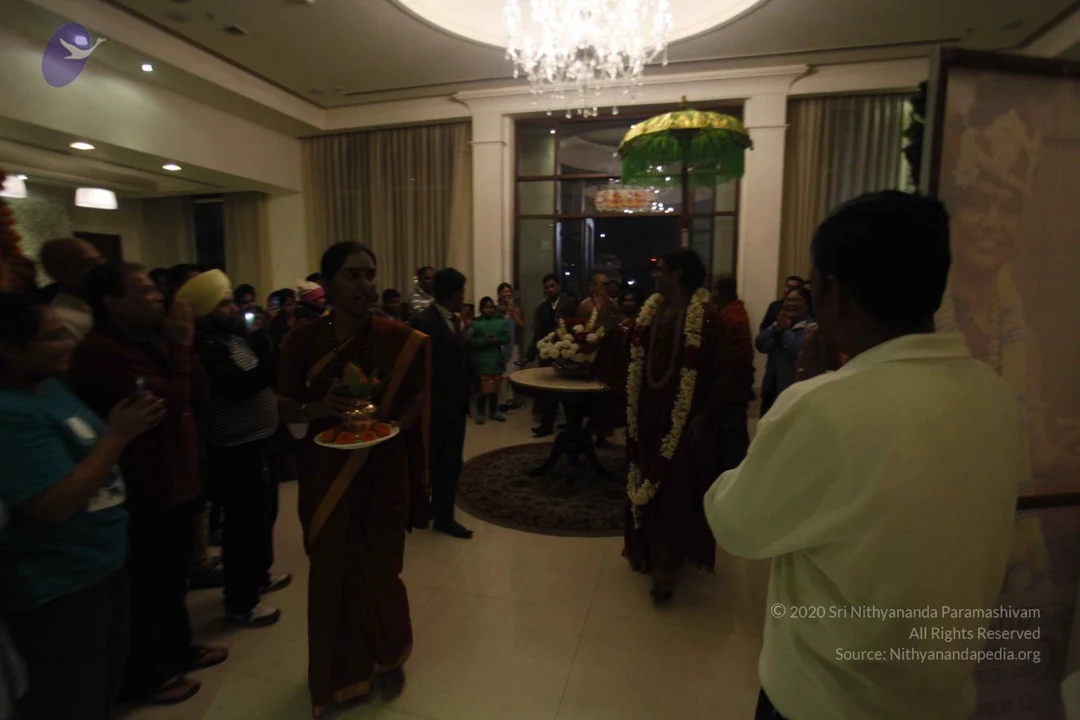
Darshan
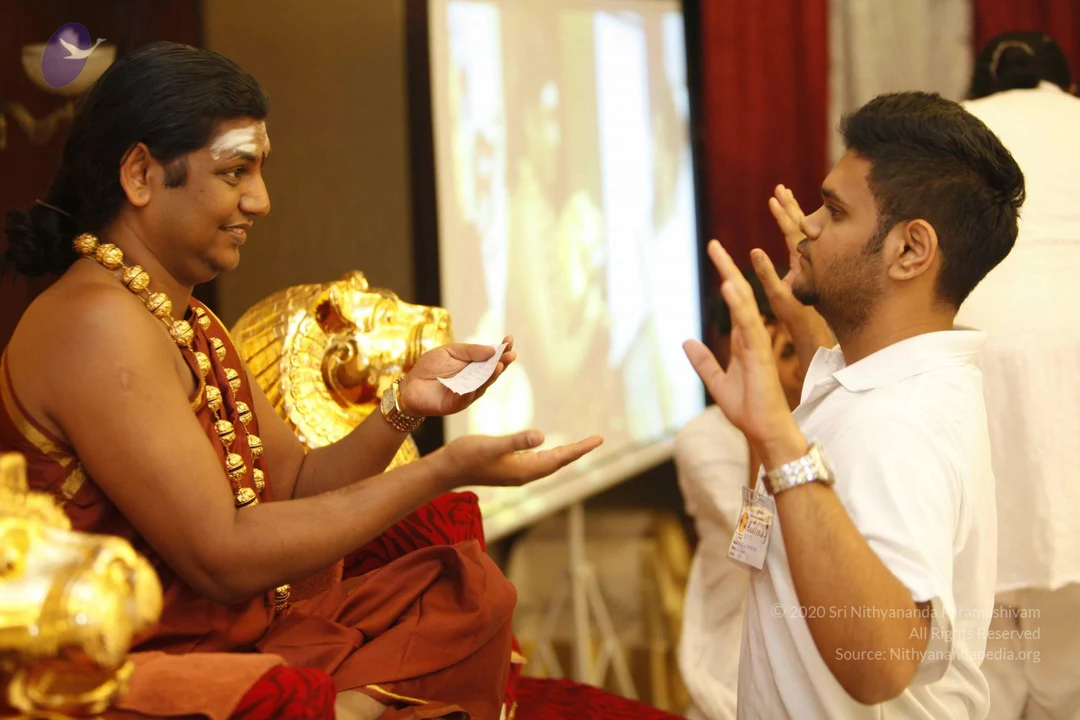
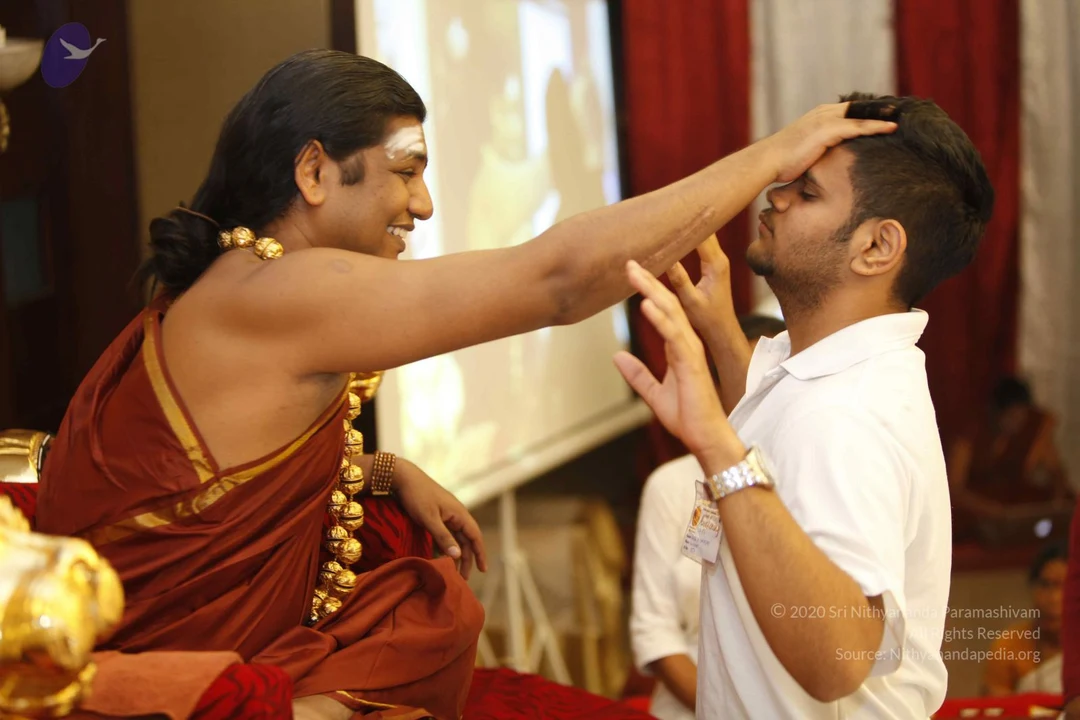

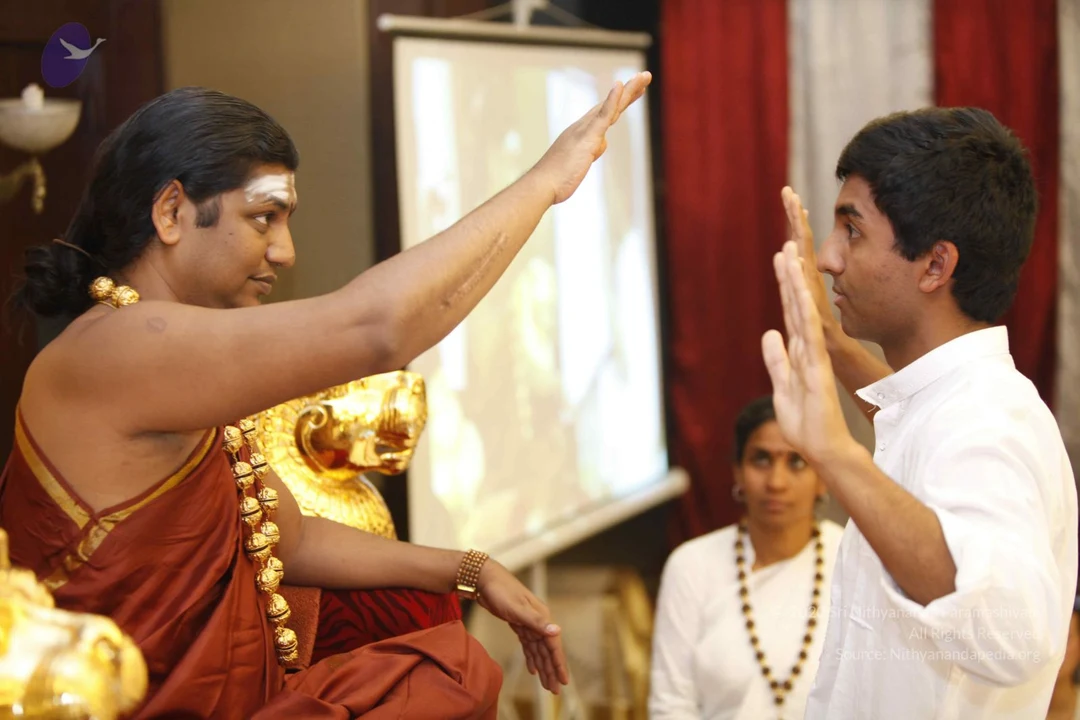
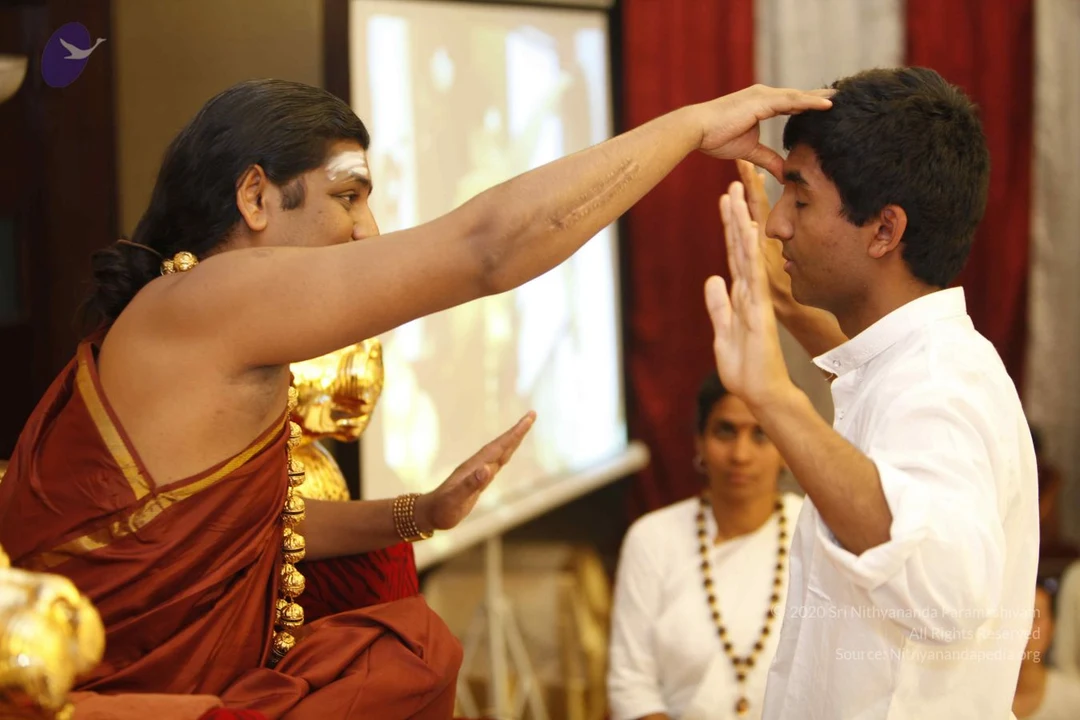
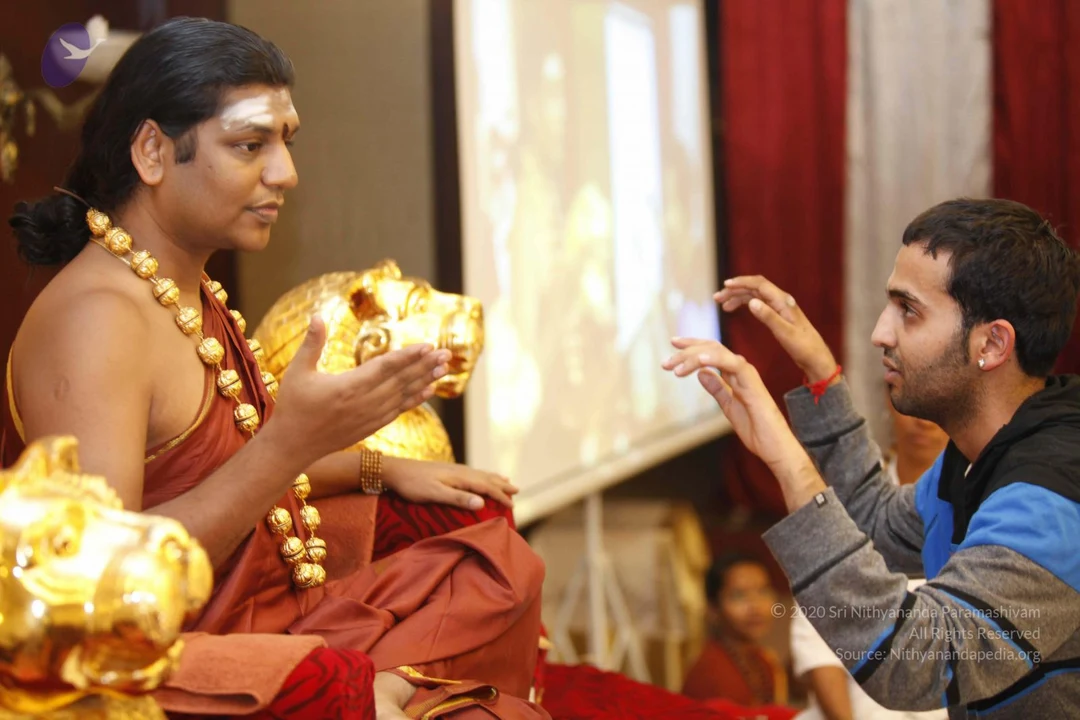
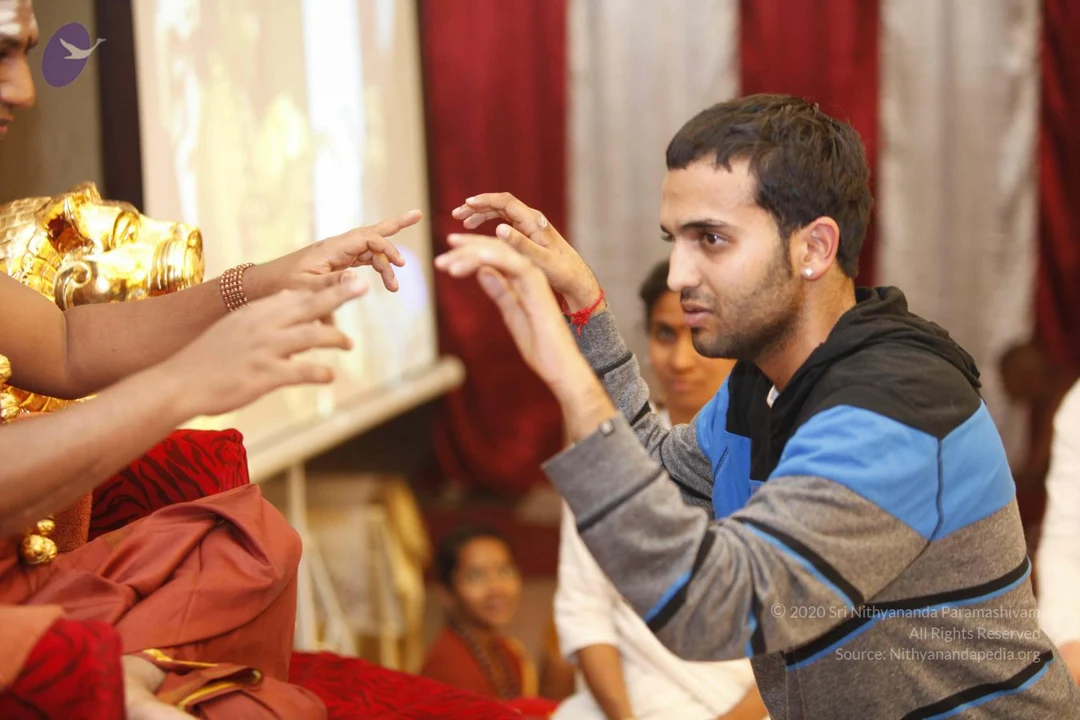
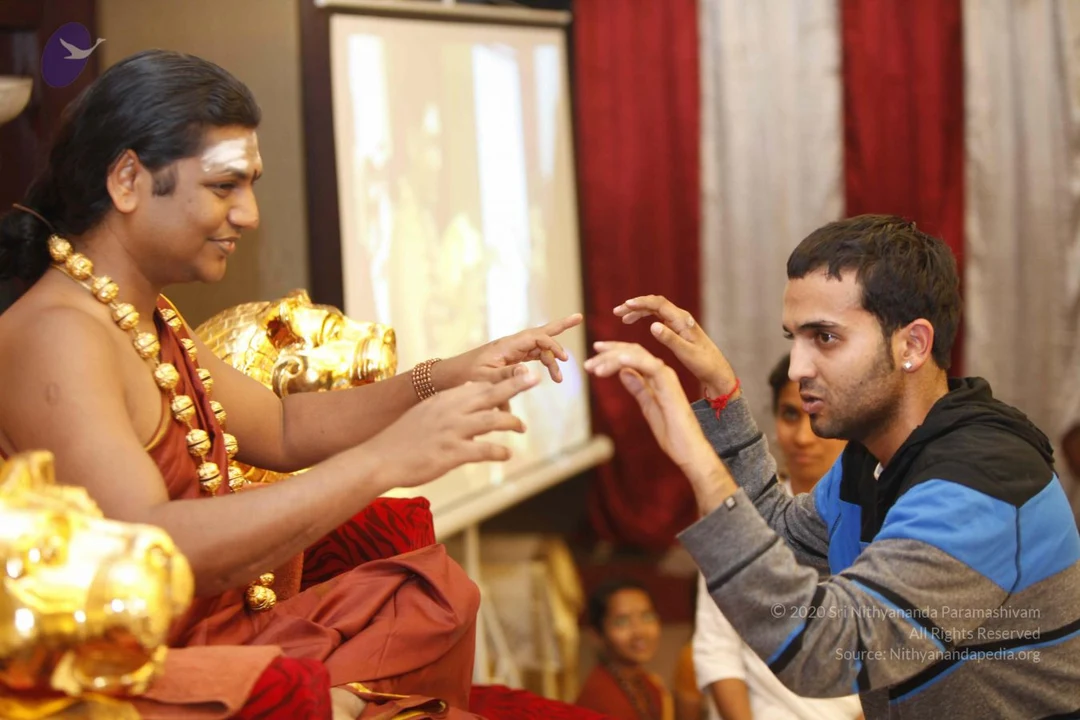
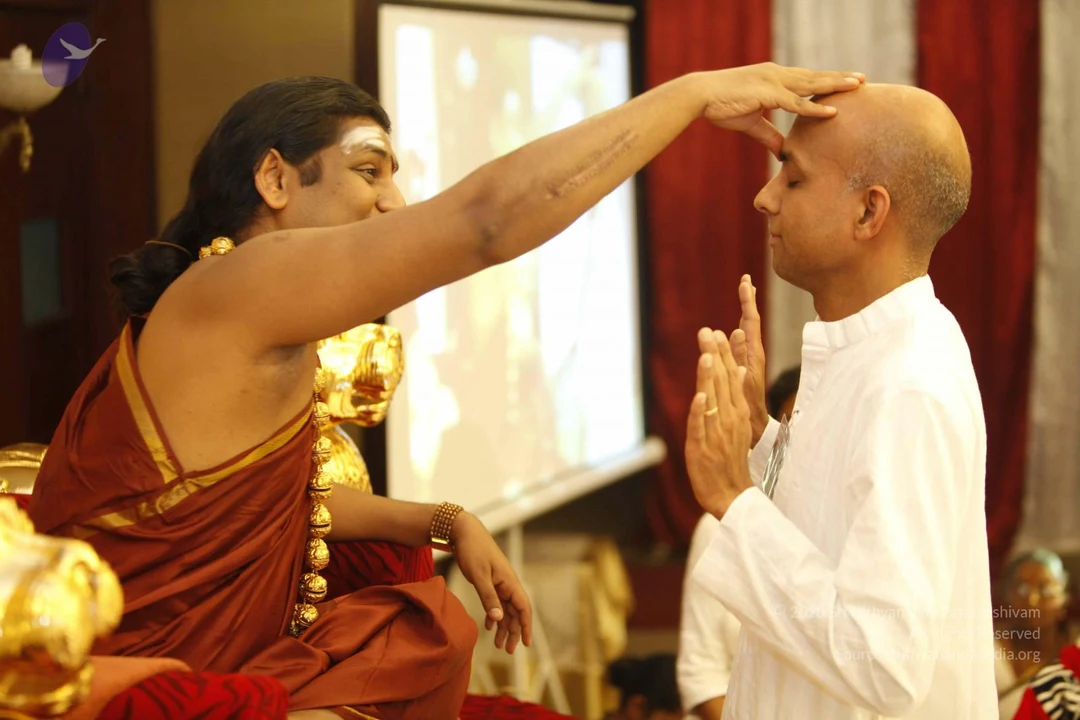
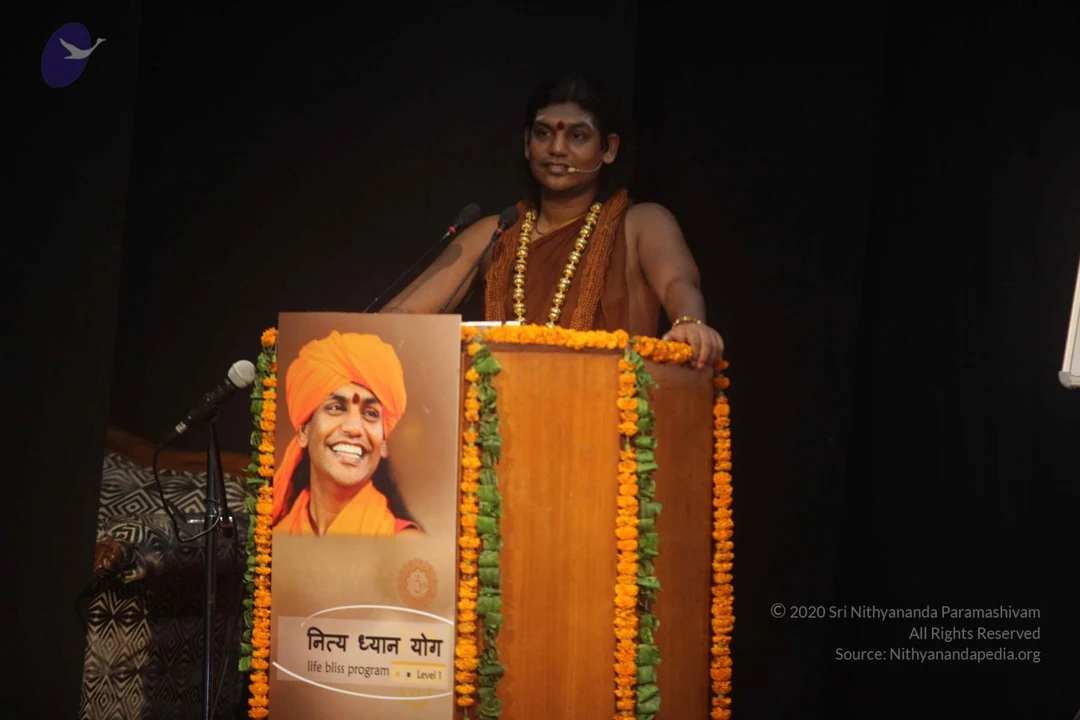
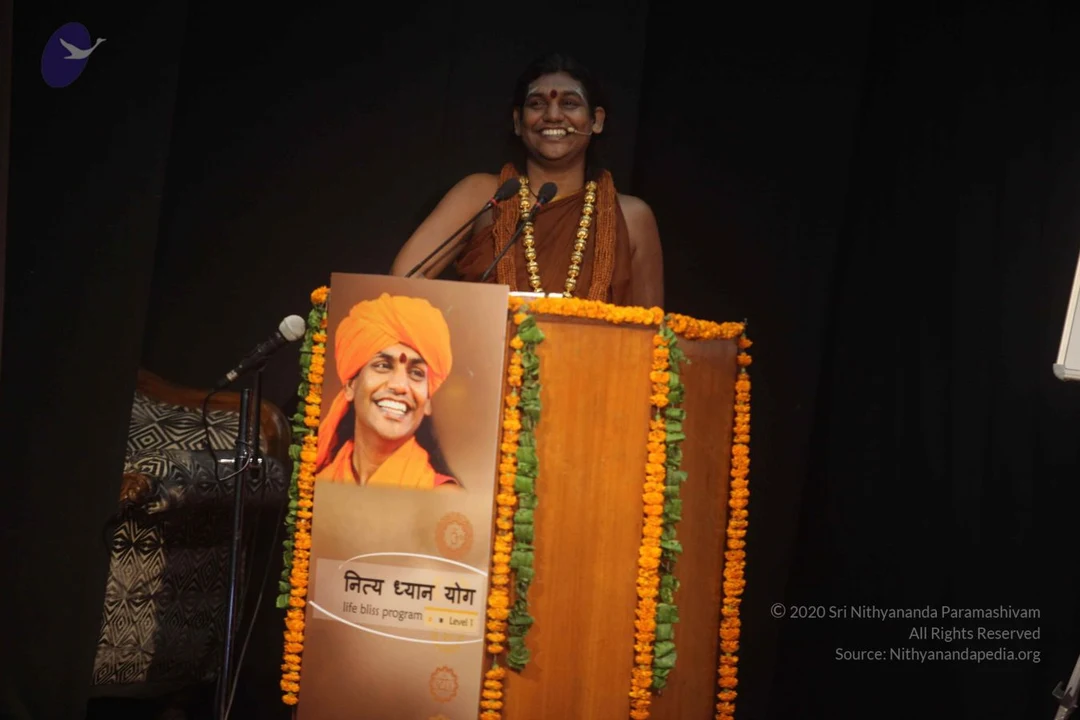
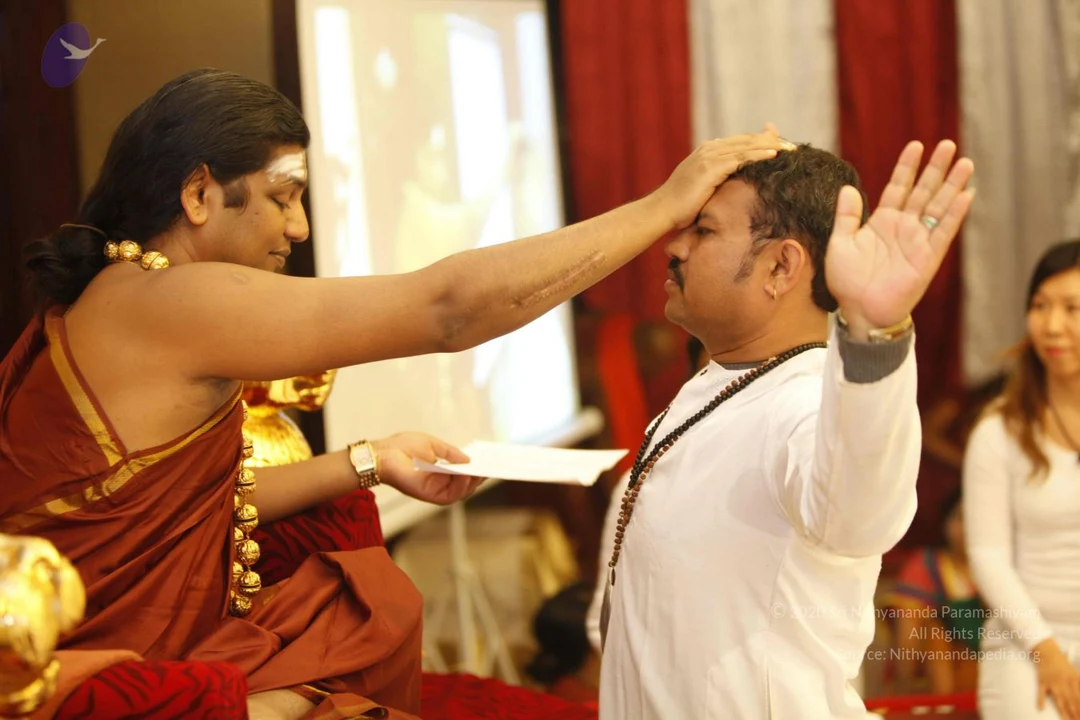

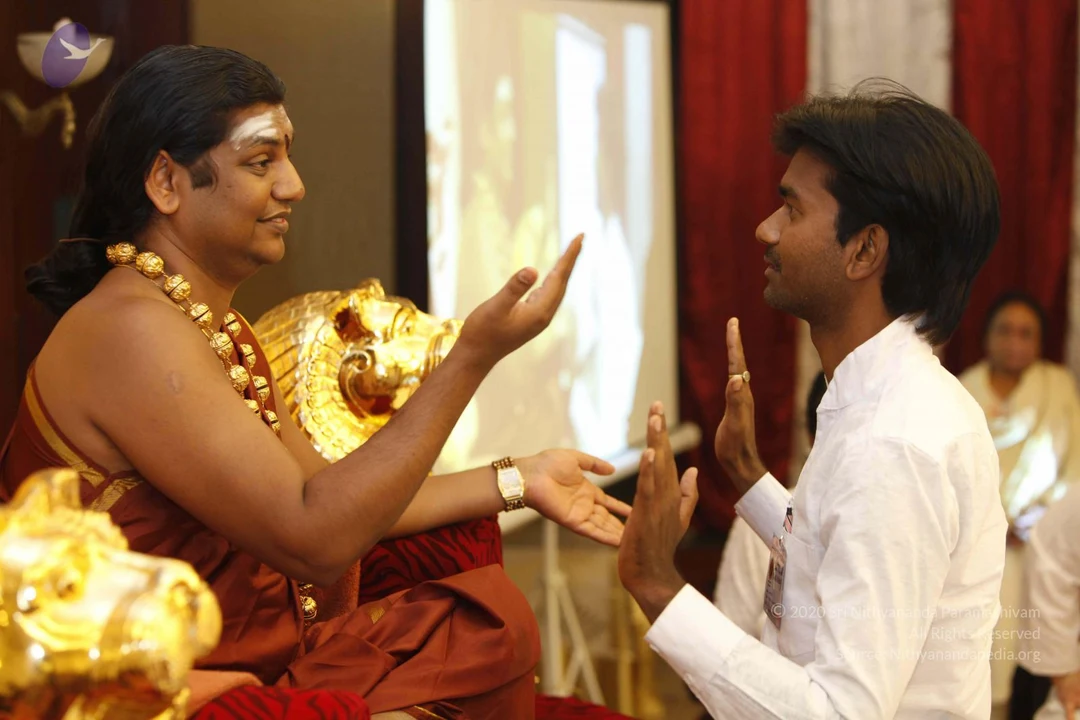
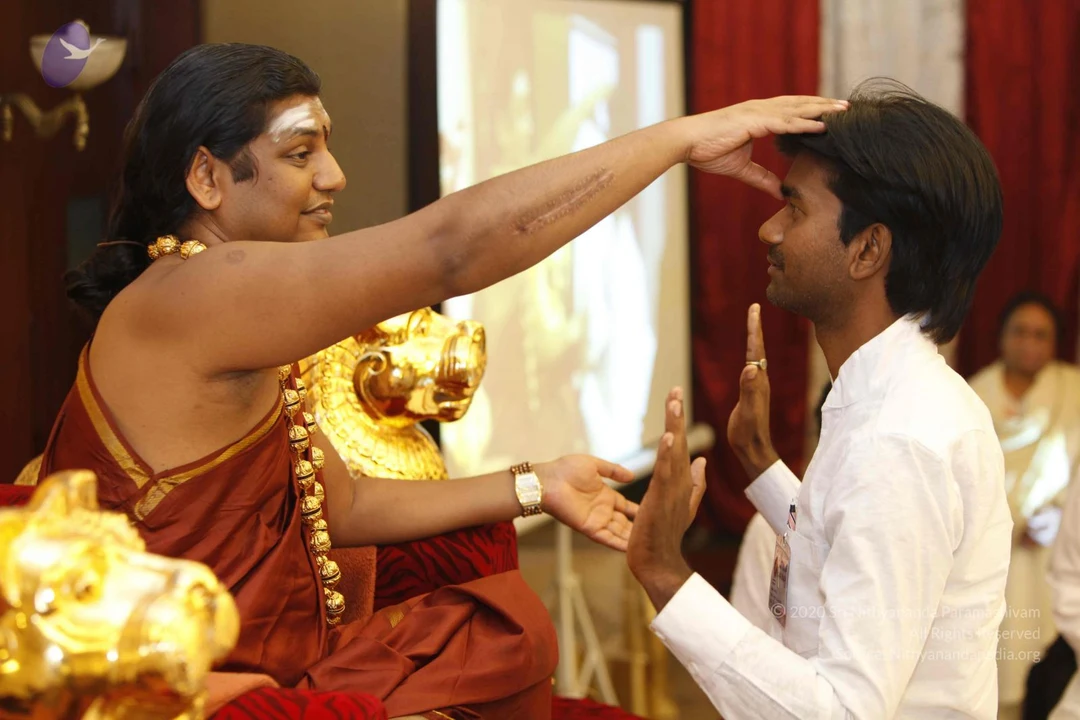
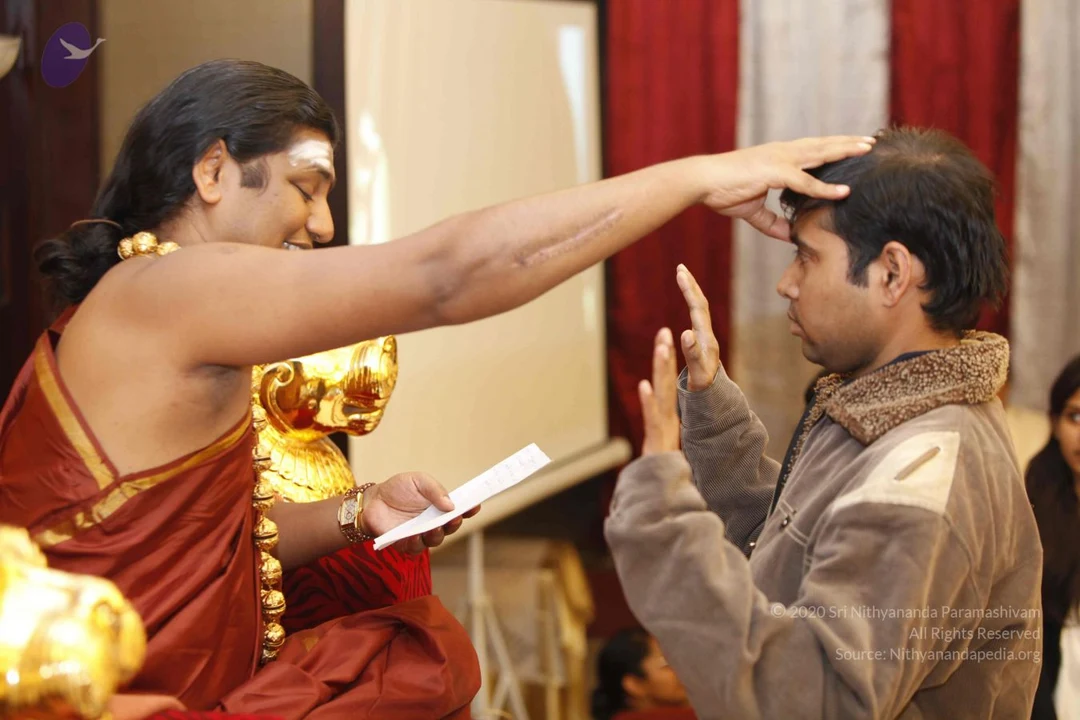
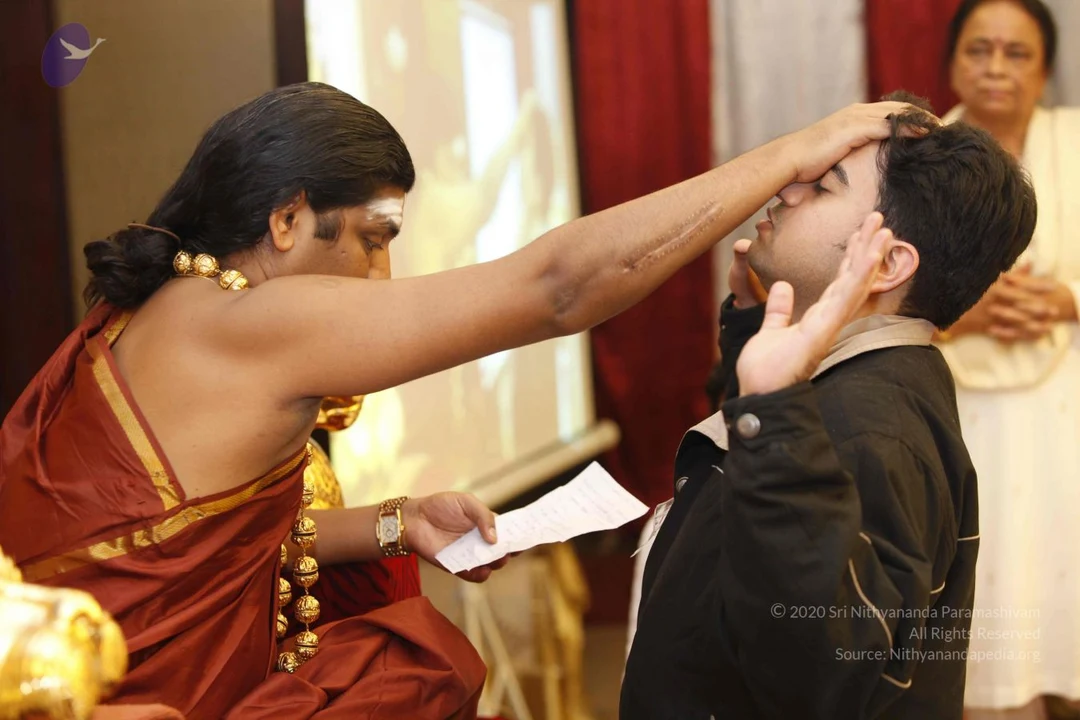
Satsang-2-sessions-photos

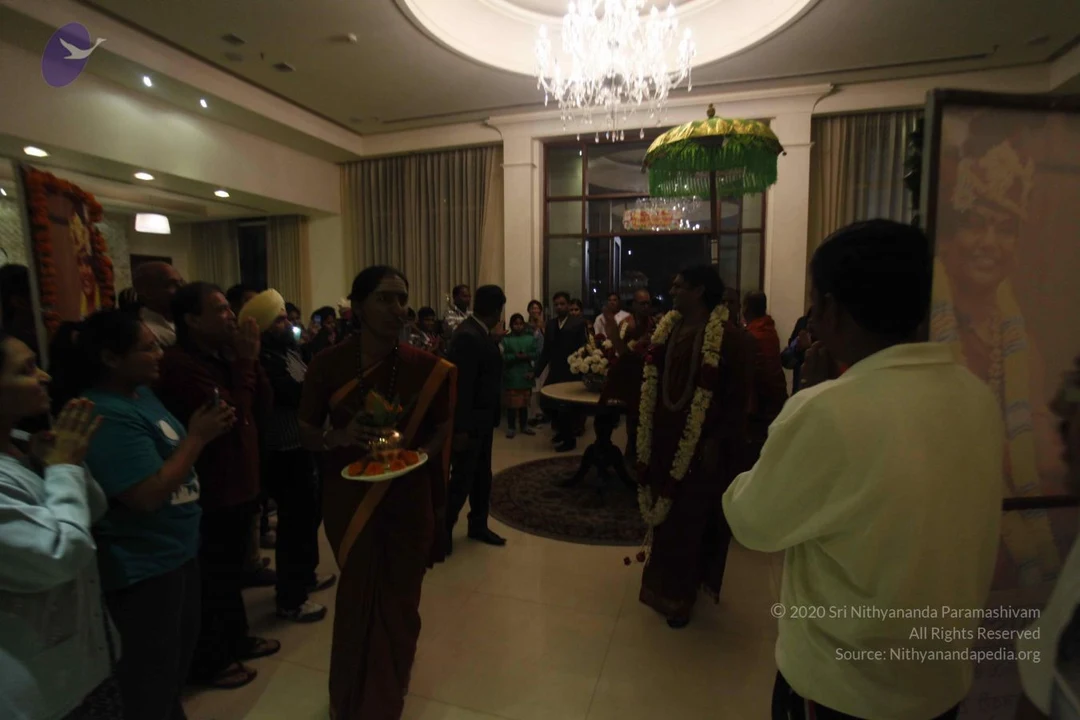
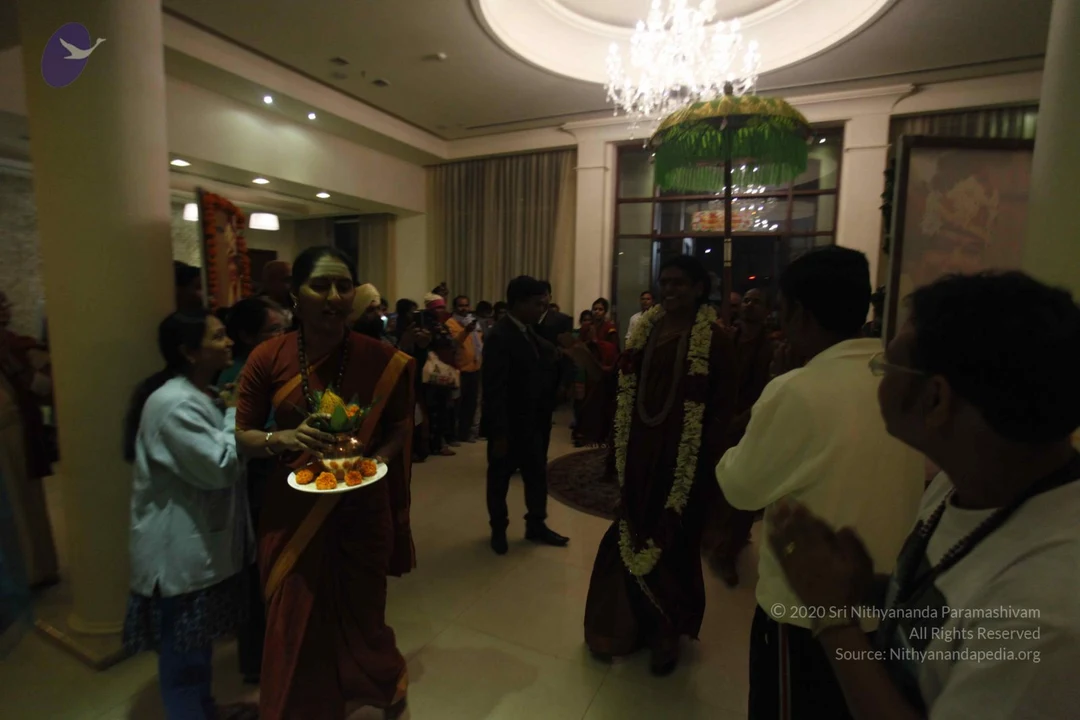
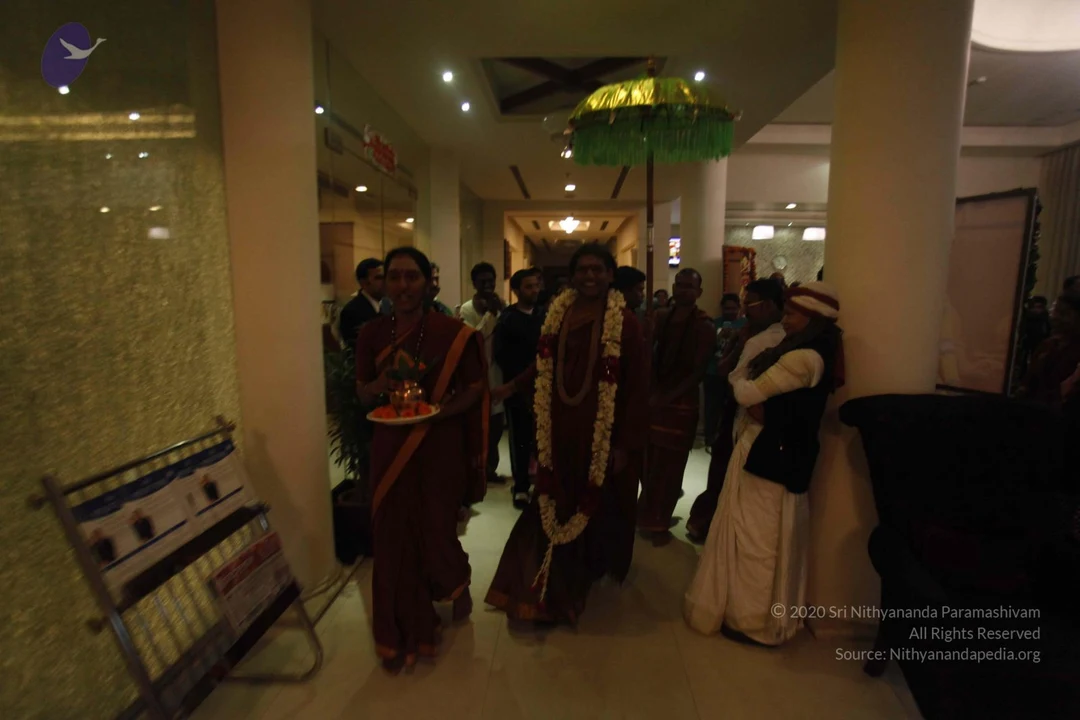

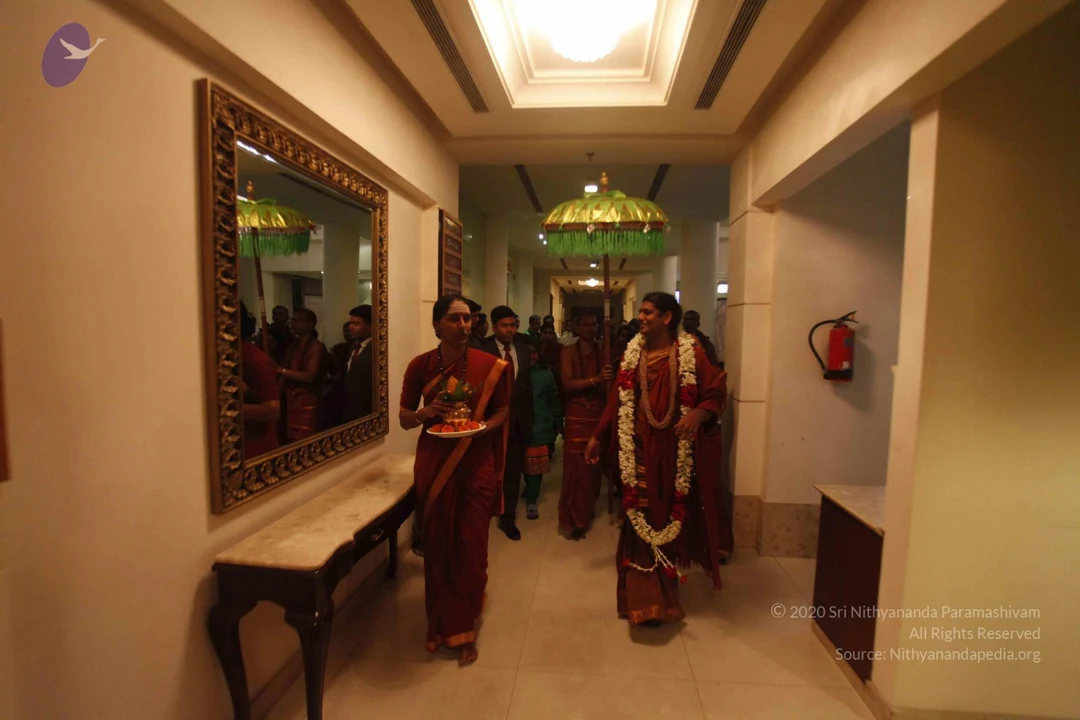
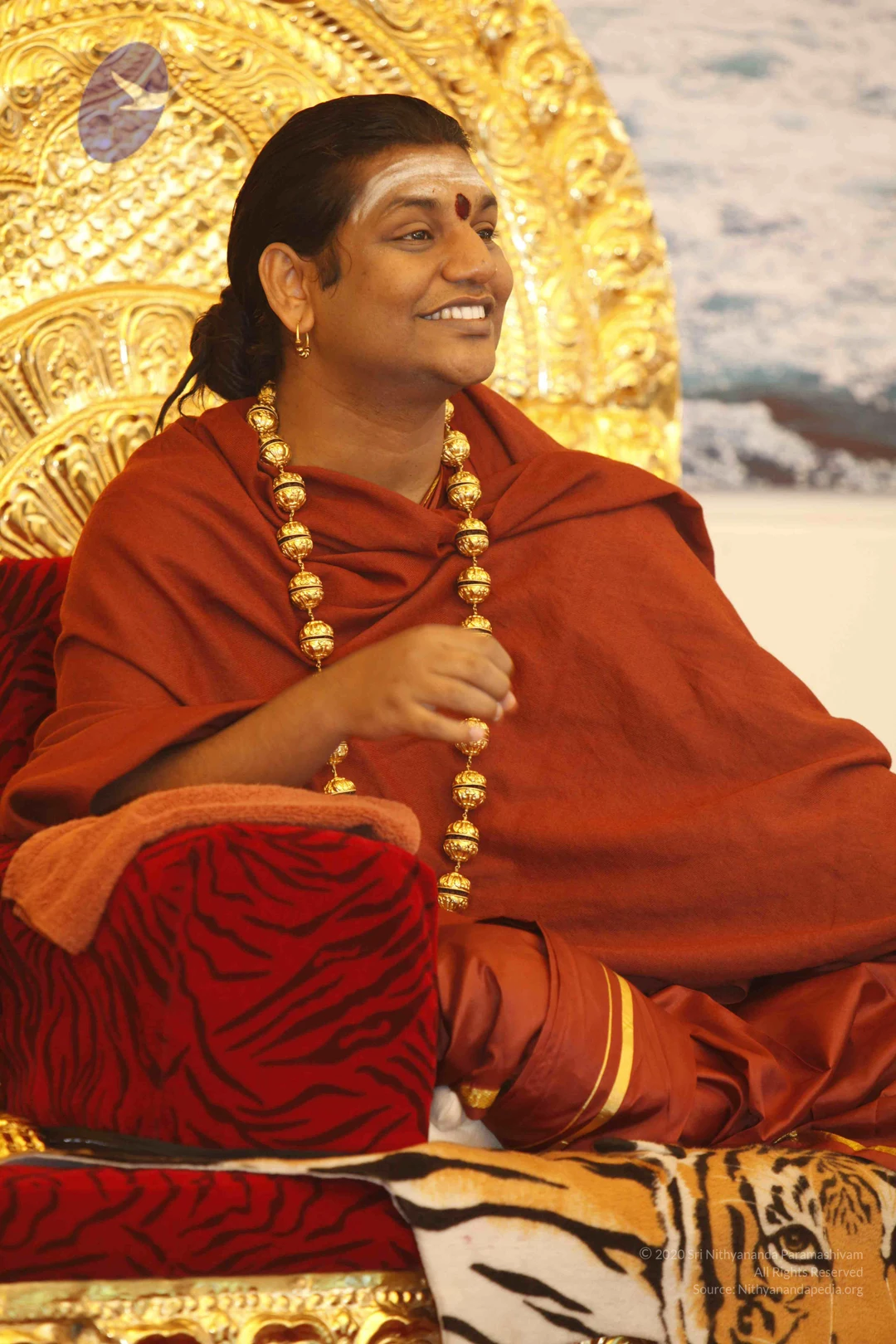
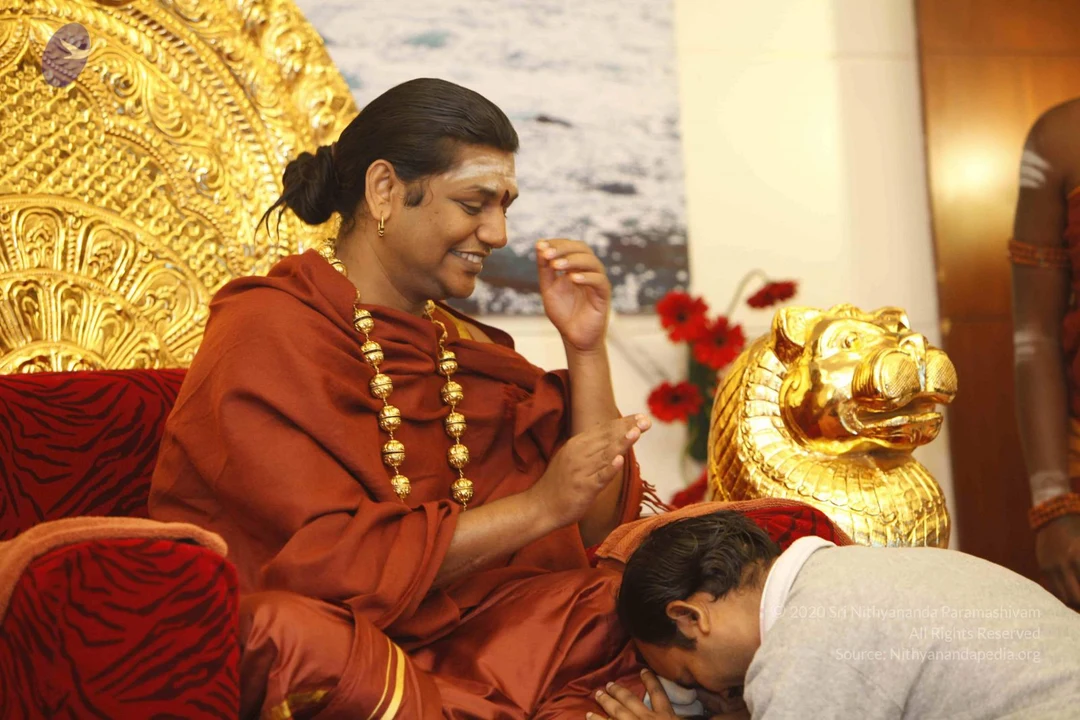
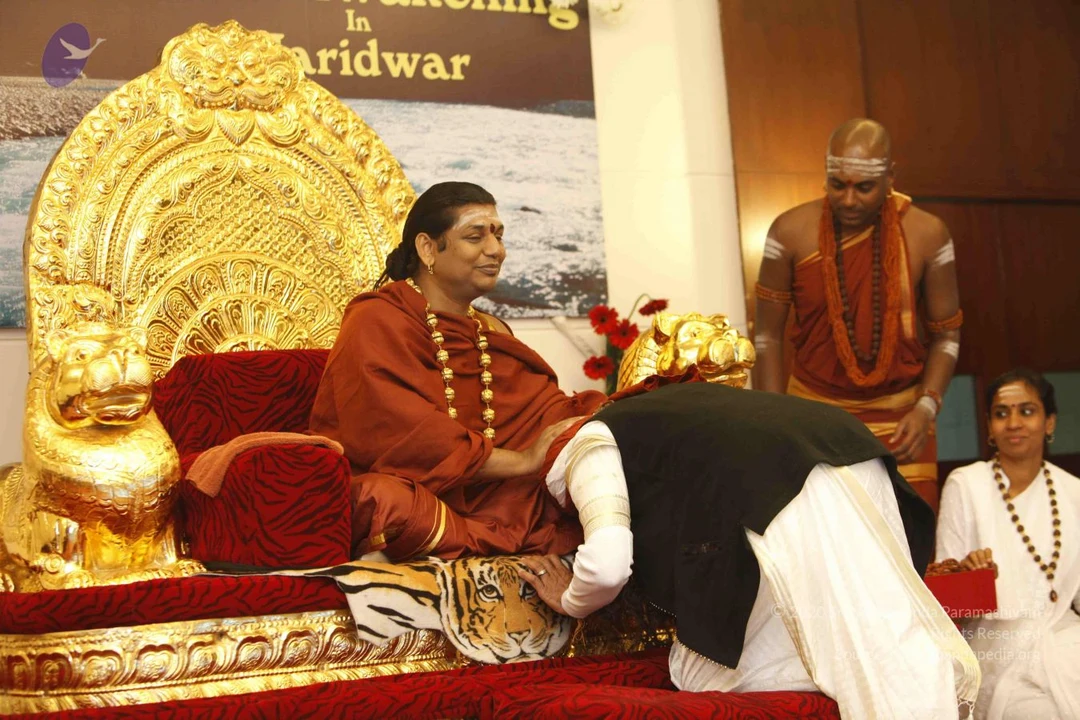
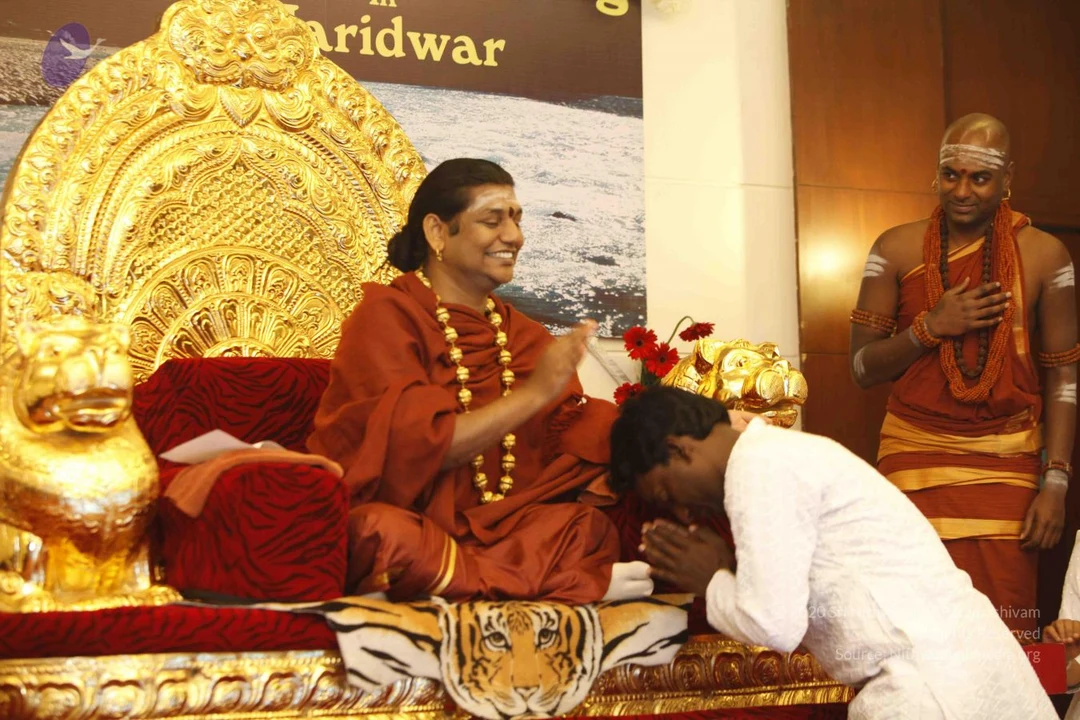


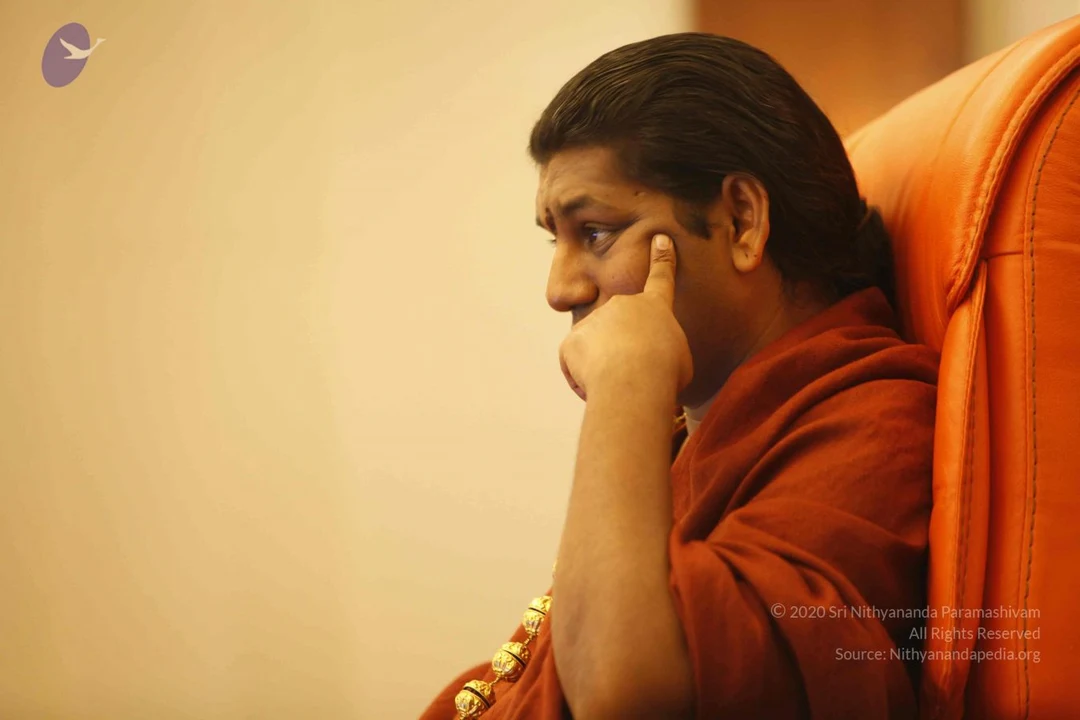
Photos Of The Day:
Darshan
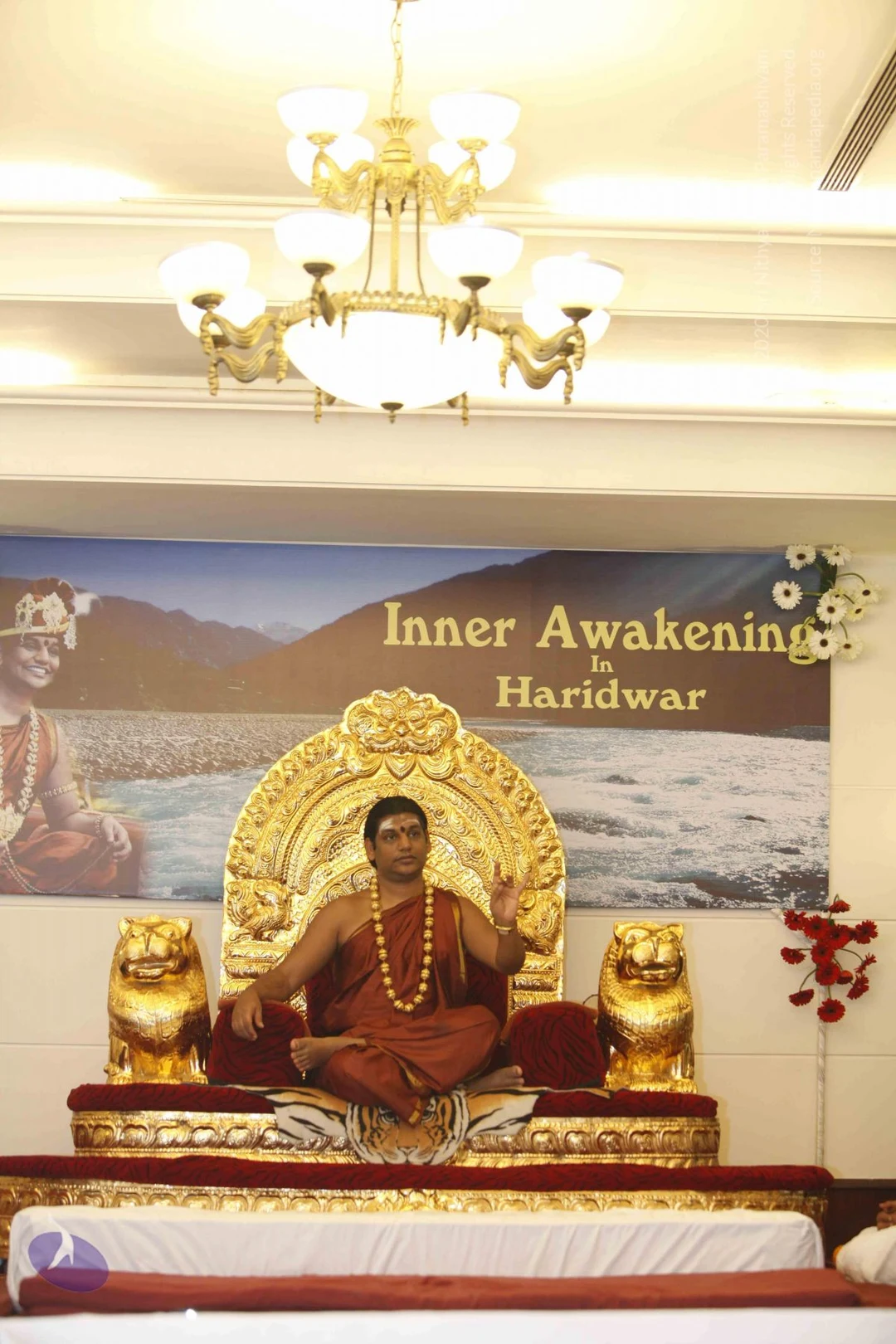
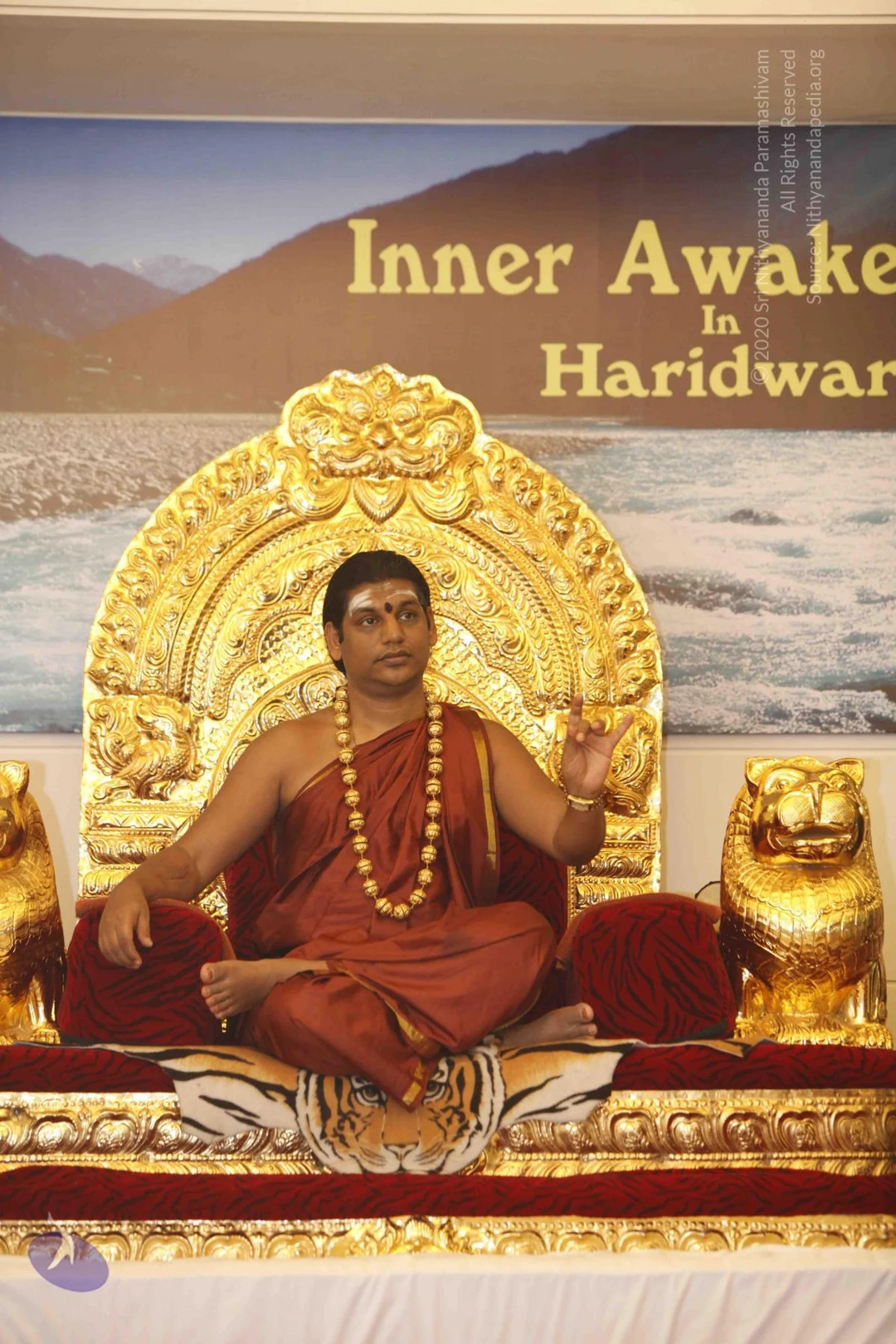
Satsang-and-Sessions
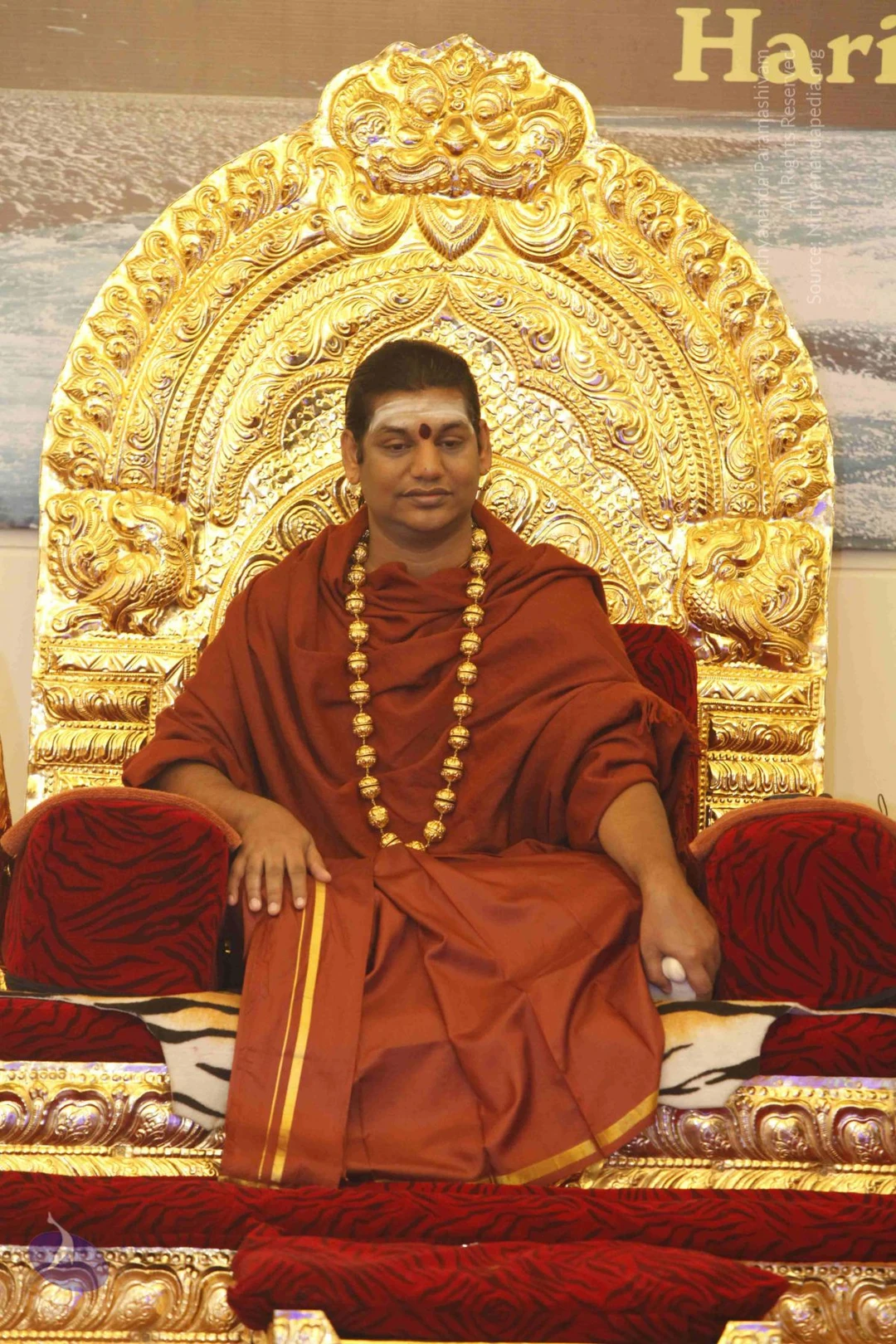
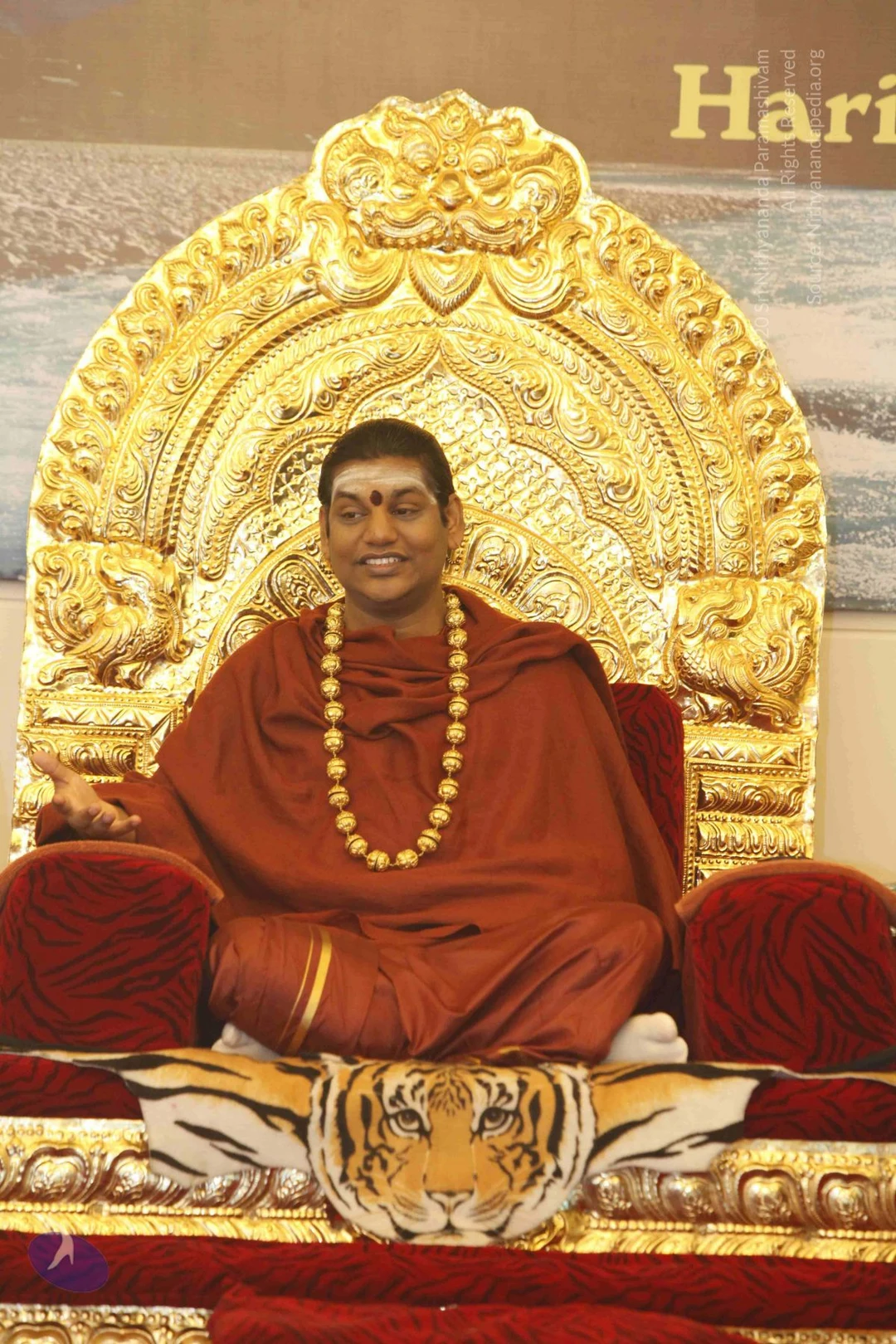
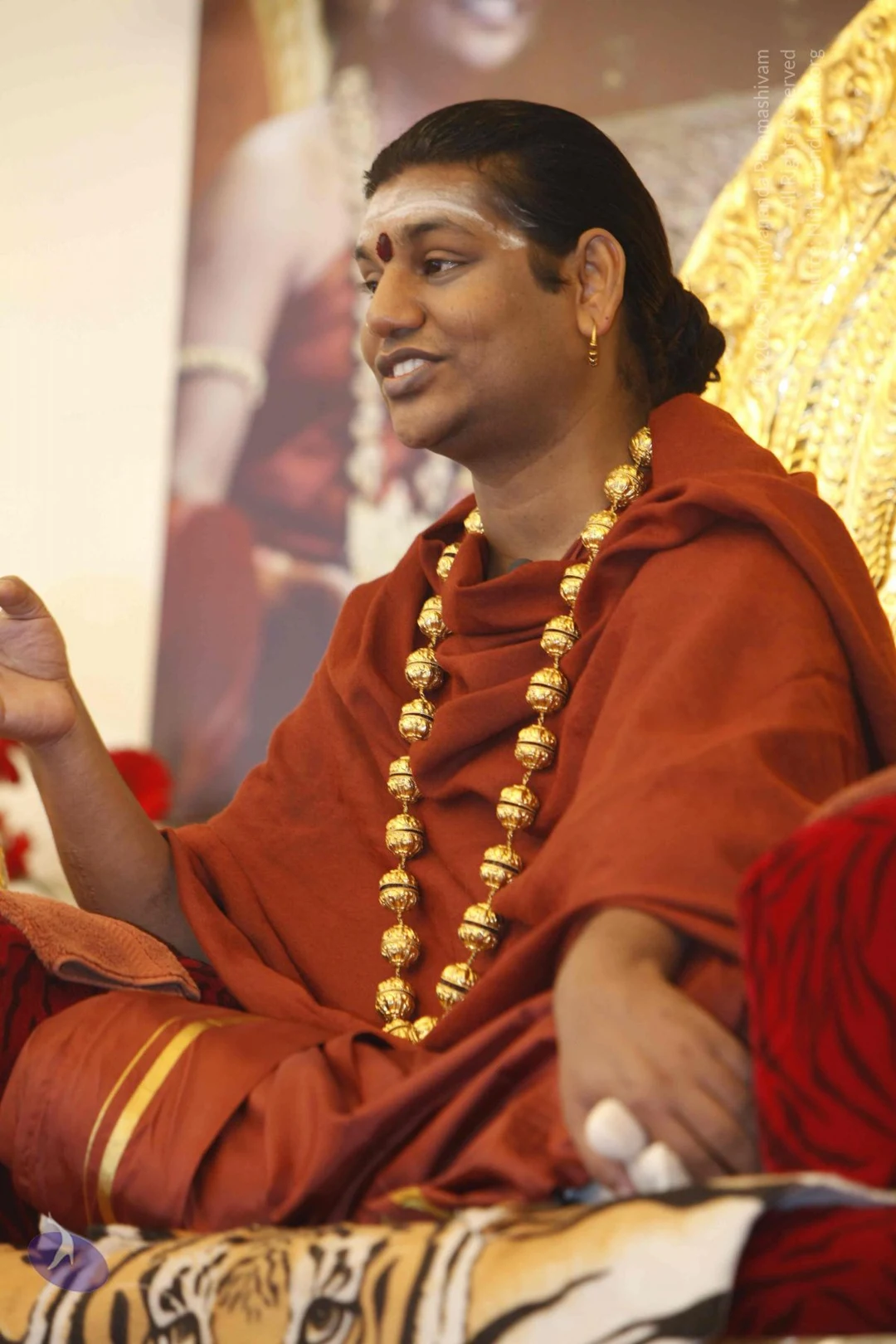
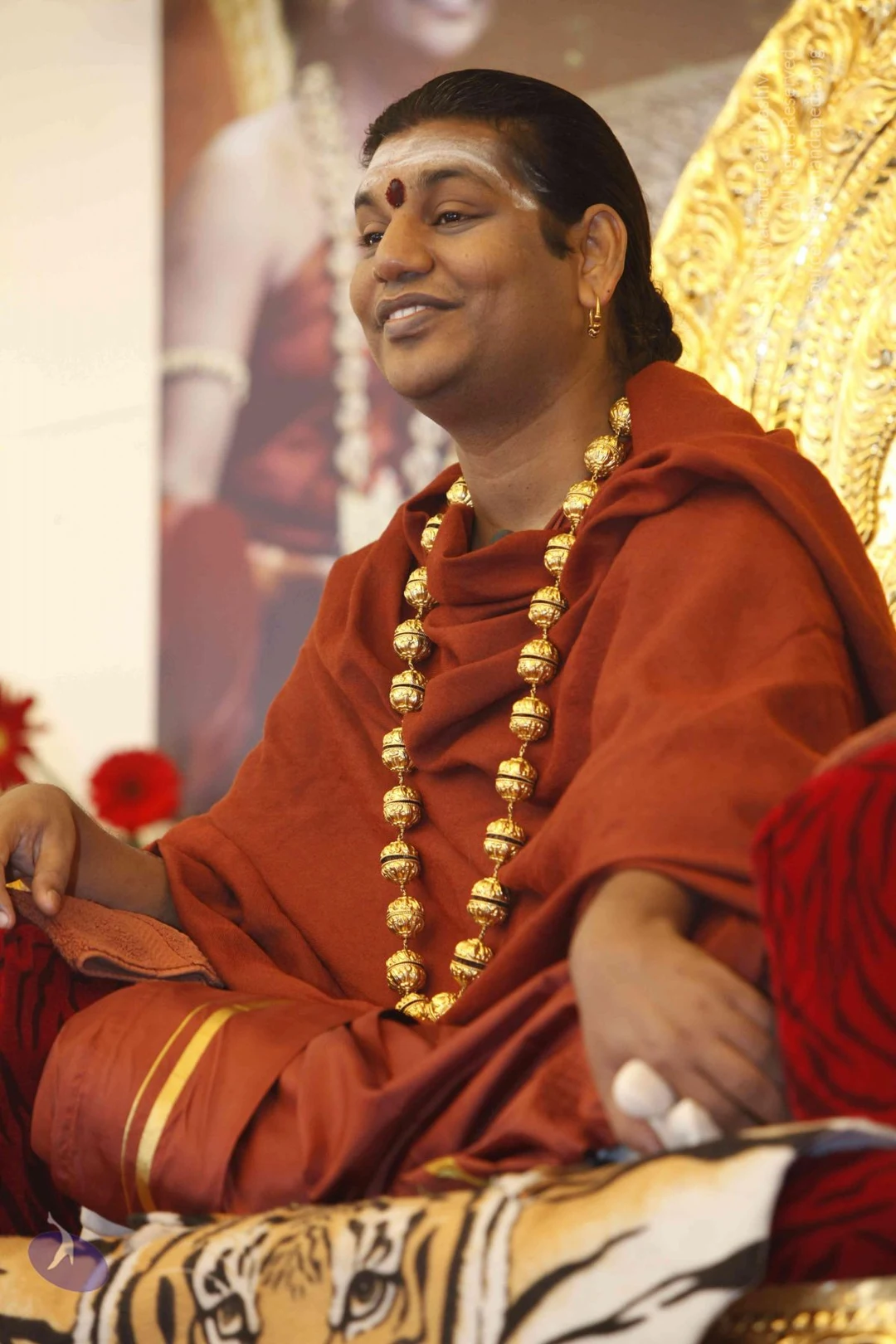
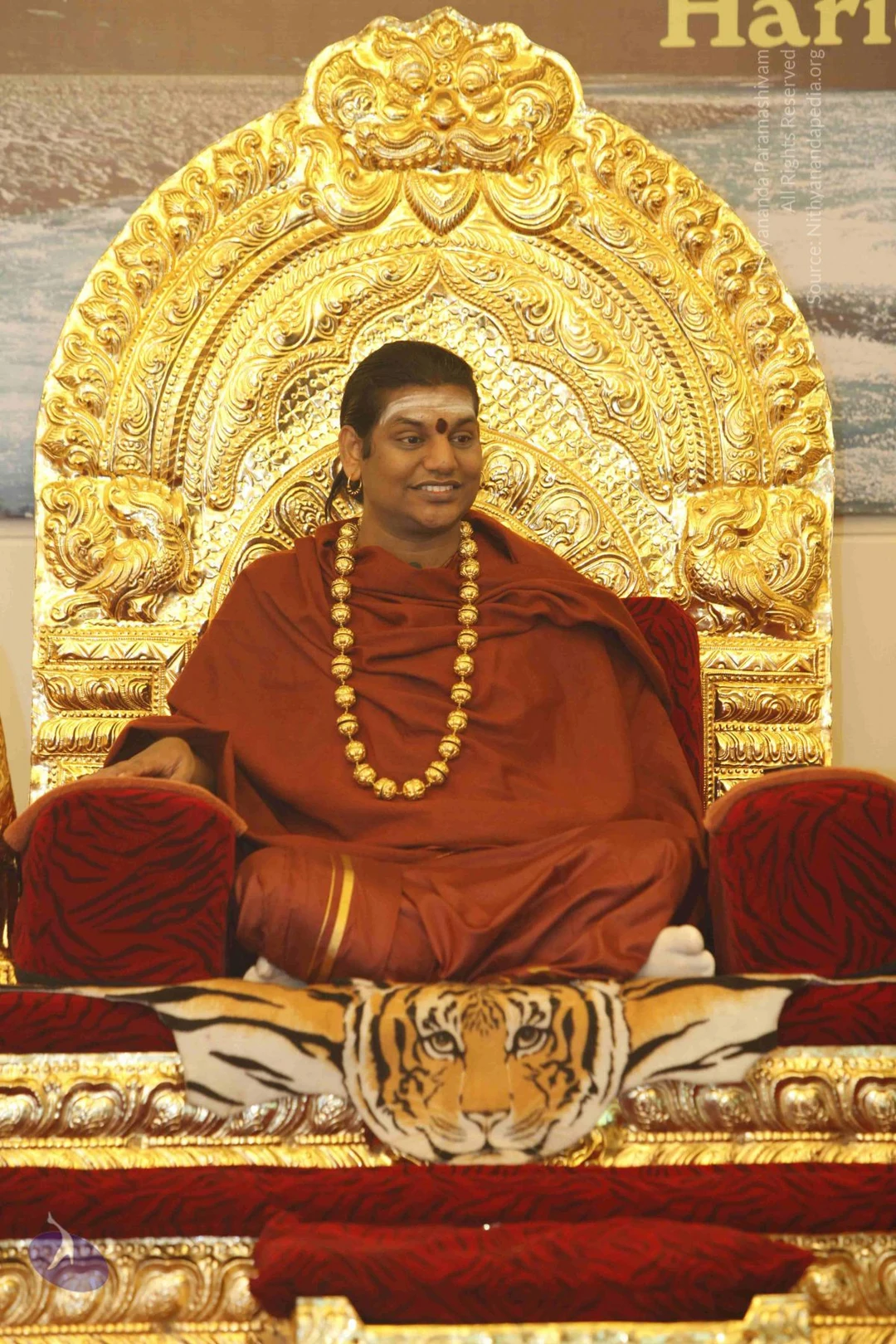
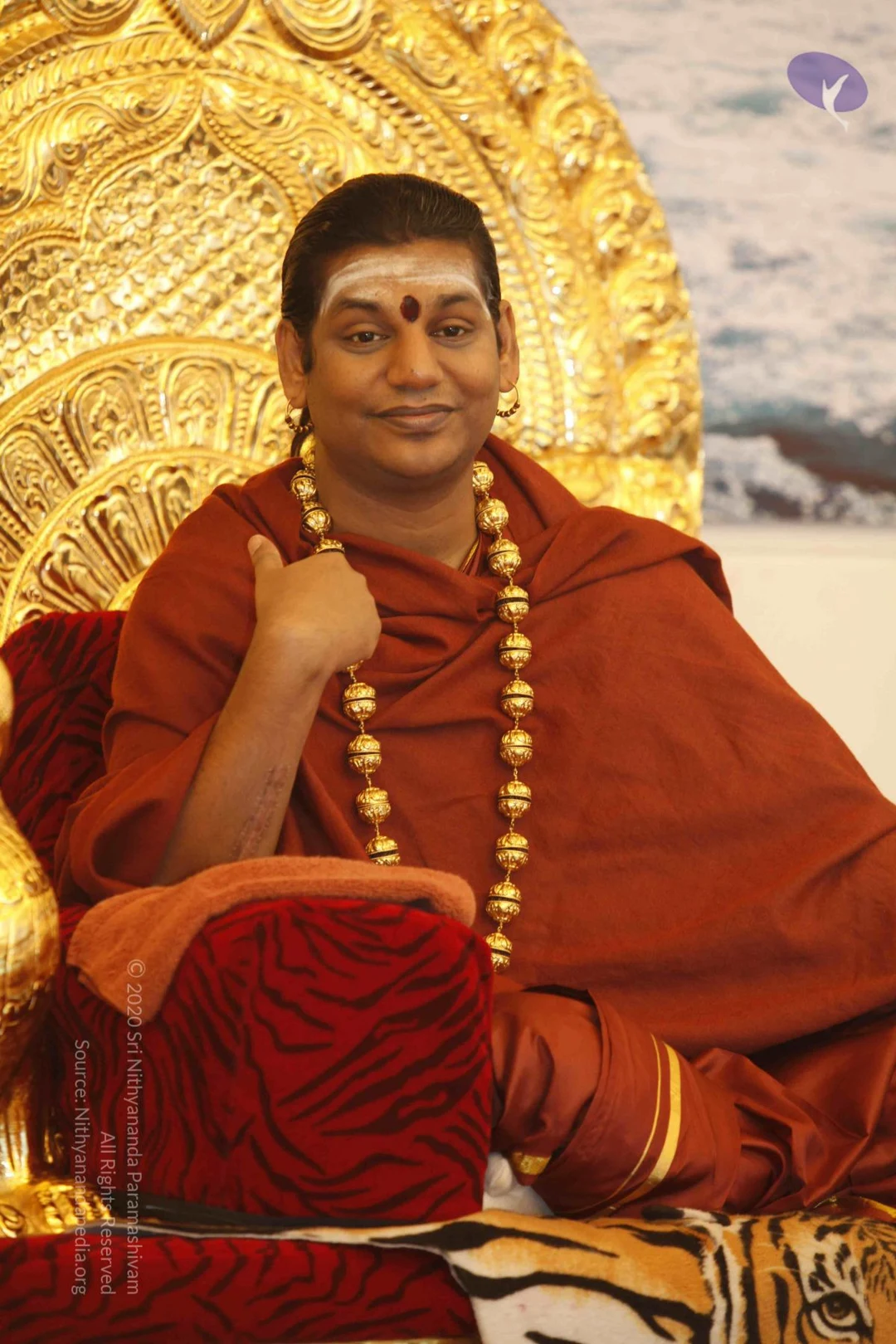
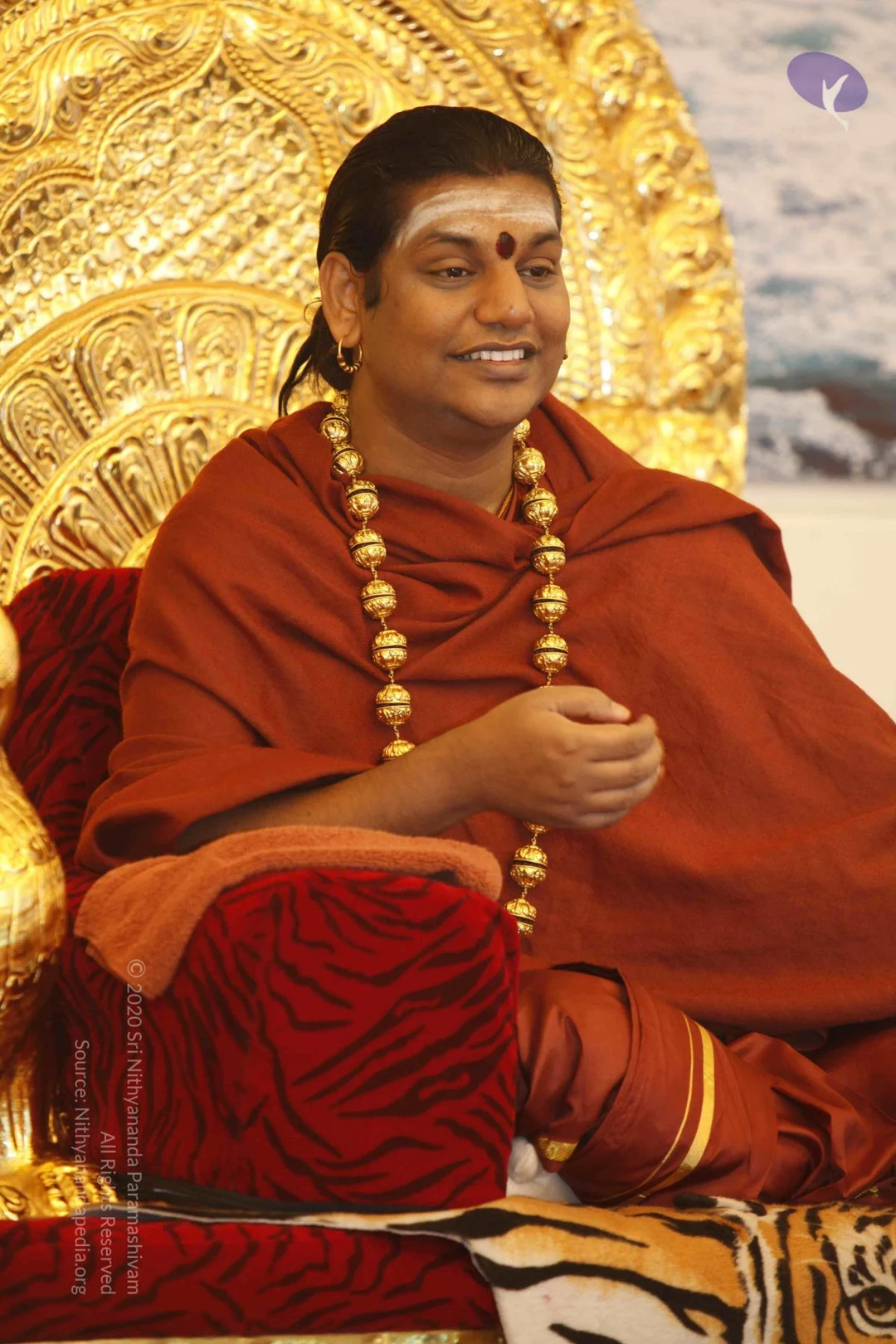
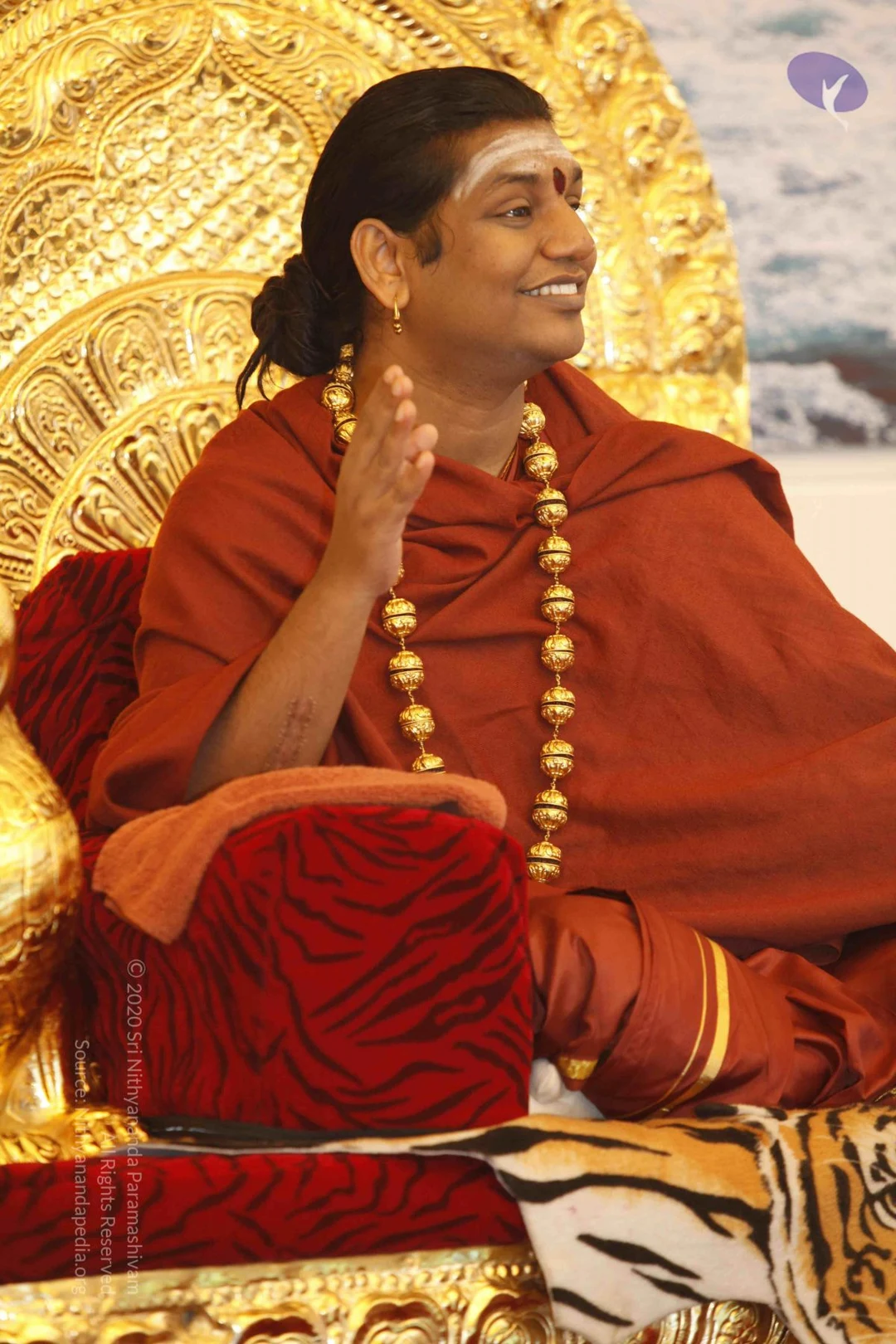
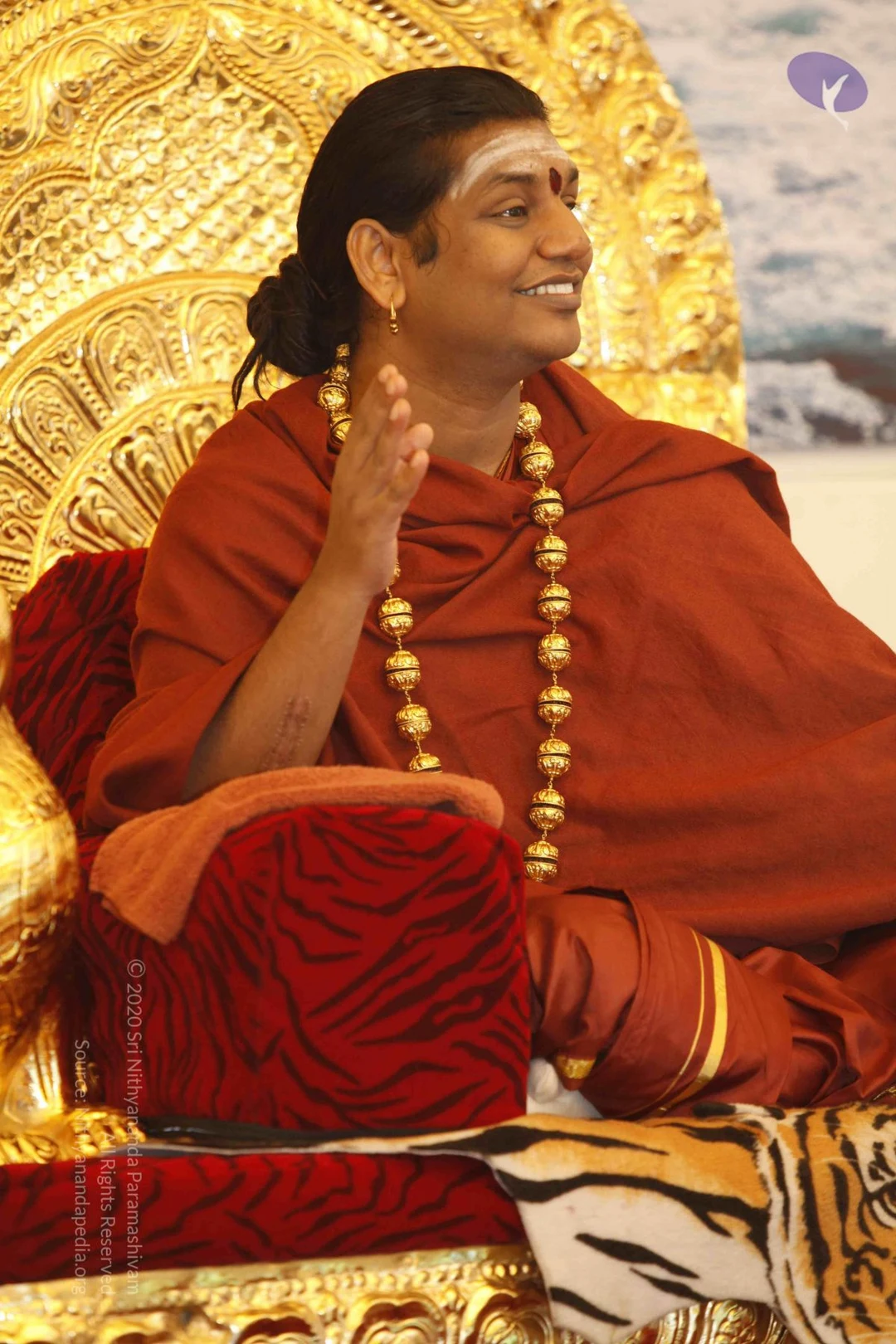
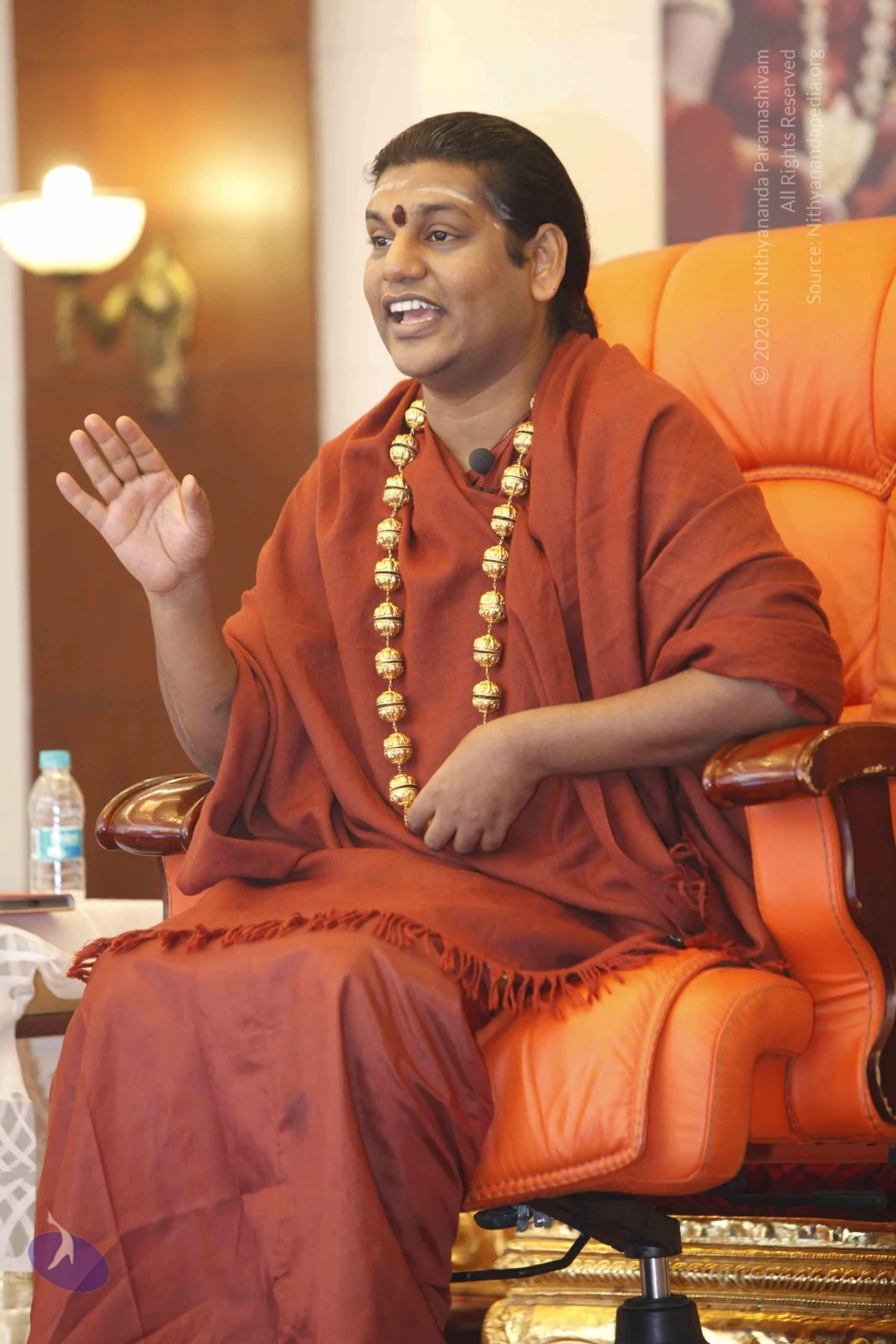
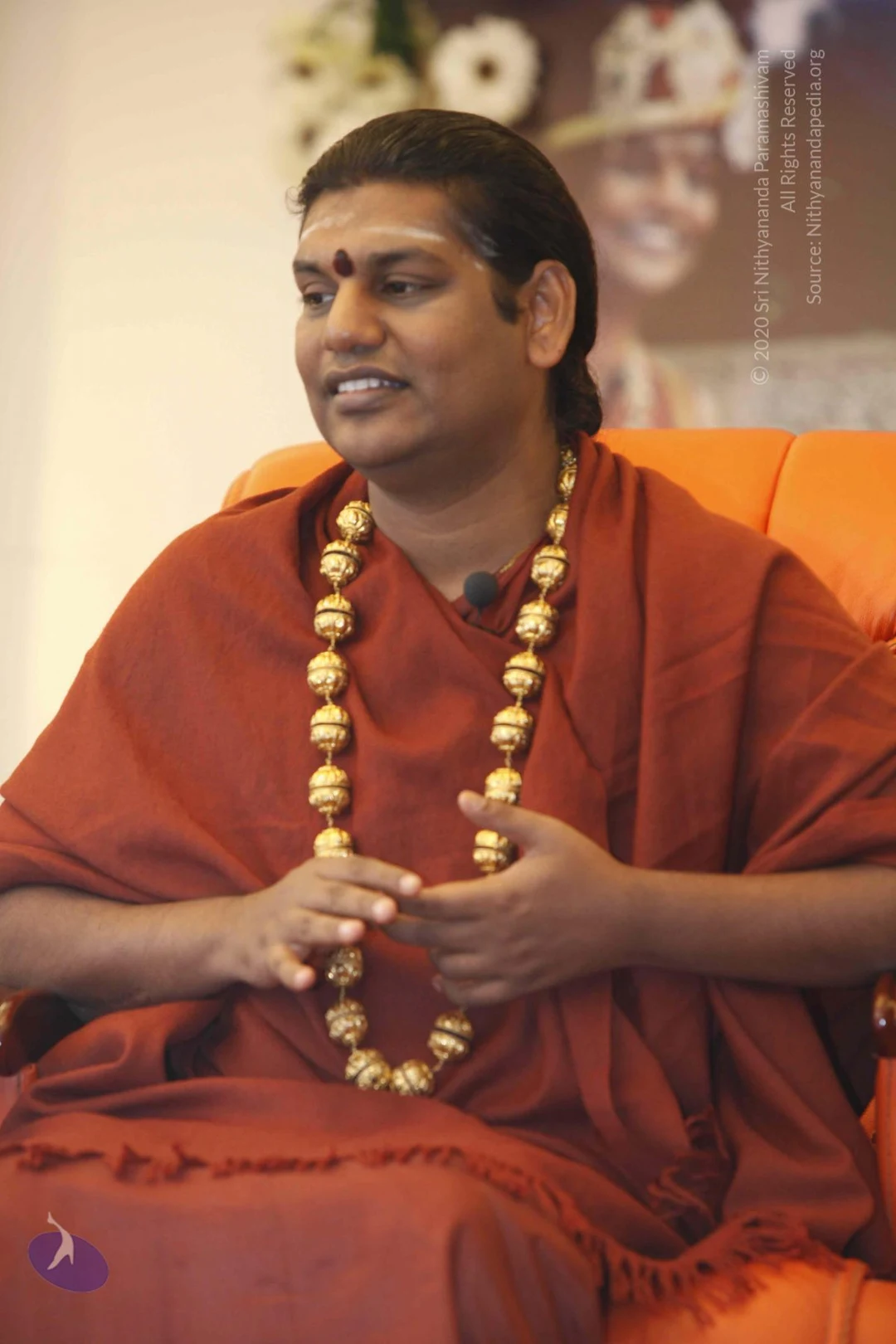
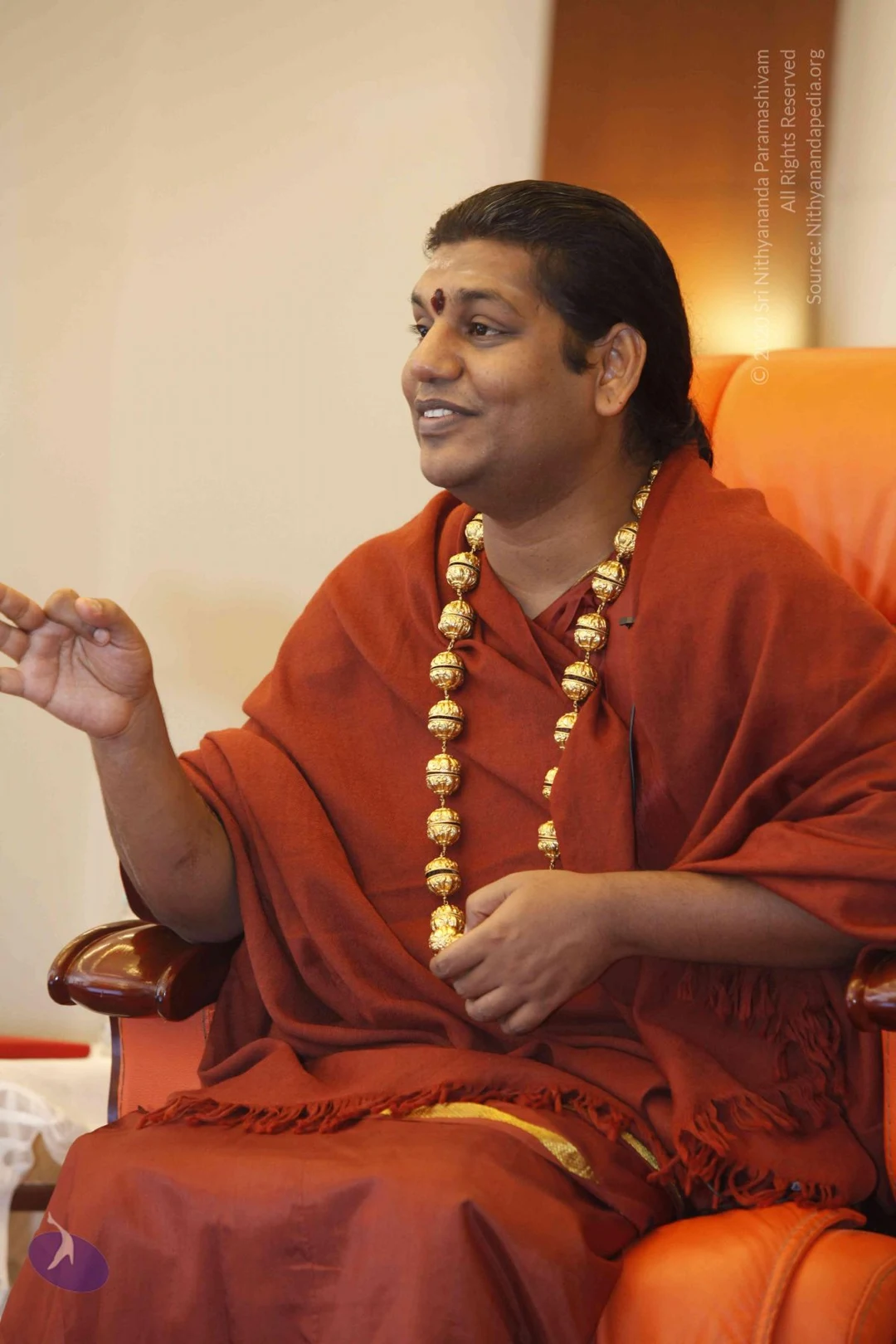
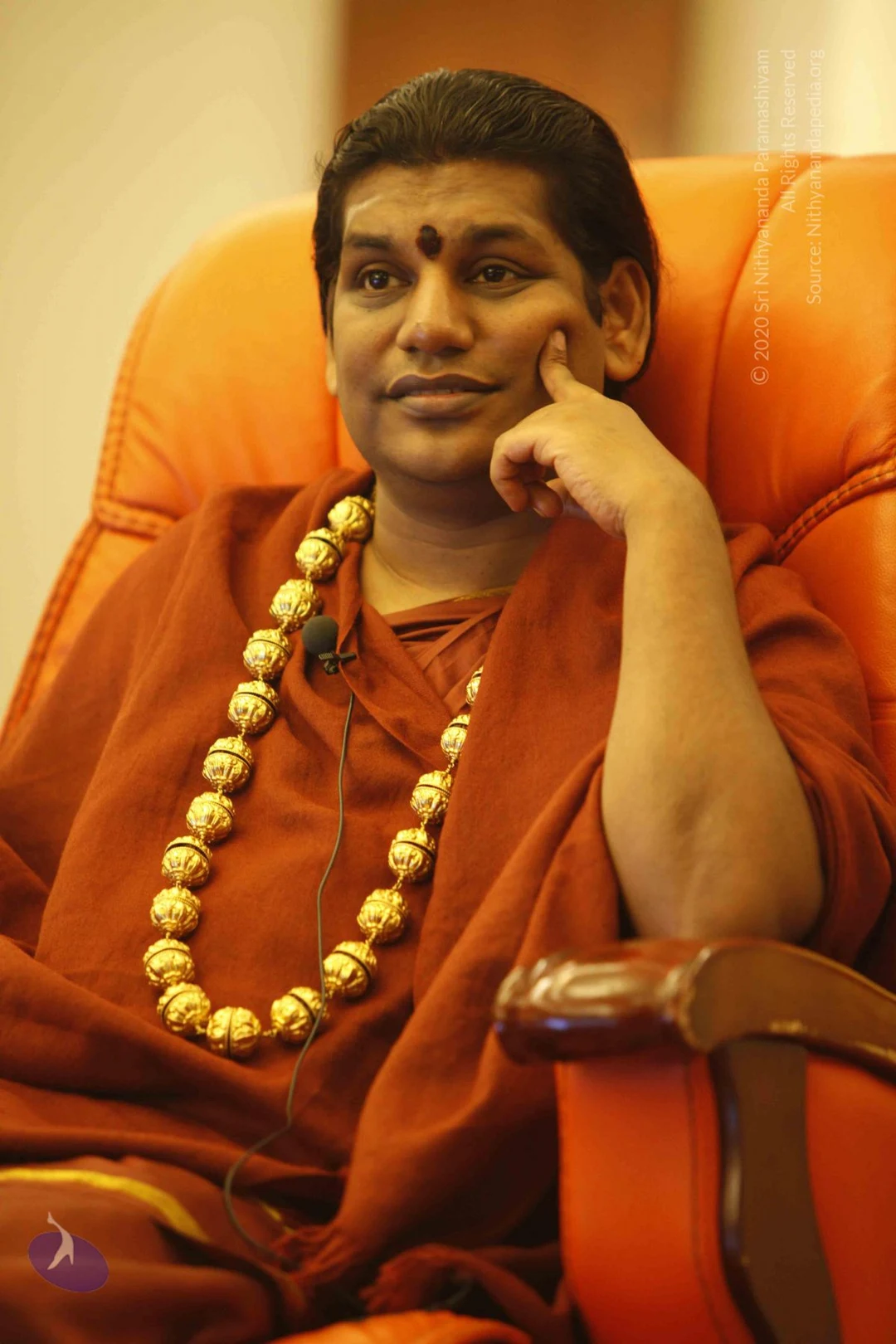
Photos from this day
View all 181 photosSatsang and Haridwar Inner Awakening
10 photosSource gallery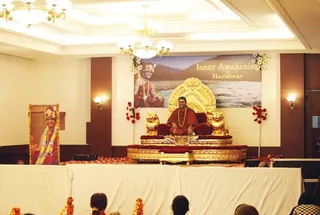
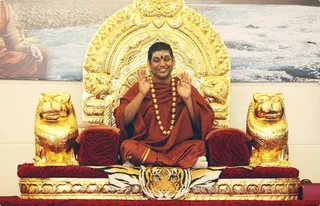
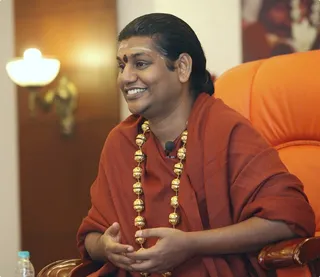
Temple
6 photosSource gallery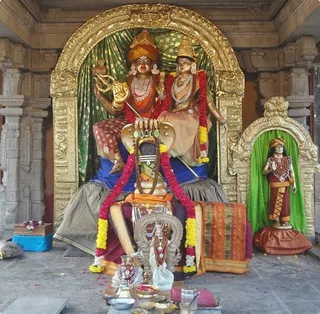
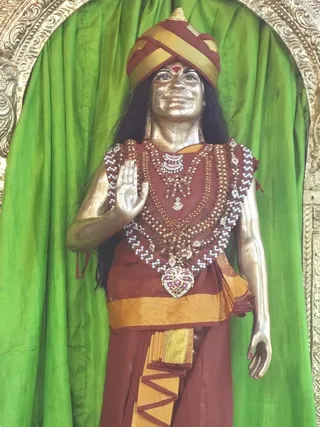
Nithya satsang and session
6 photosSource gallery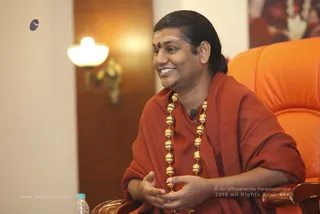
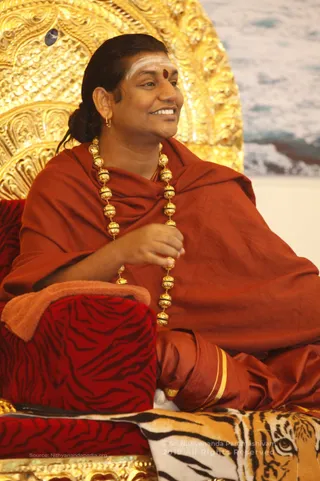
Darshan
57 photosSource gallery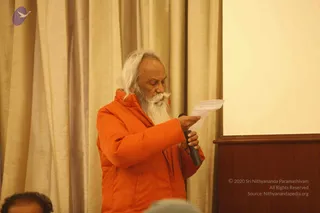
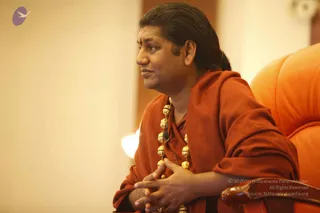
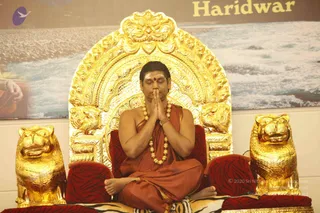
Satsang-2-sessions-photos
83 photosSource gallery

Darshan
2 photosSource gallery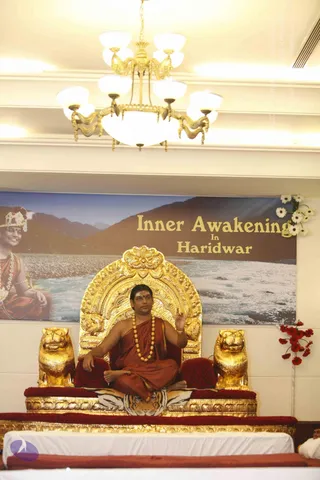
Satsang-and-Sessions
16 photosSource gallery
January 02 2014
1 photoView all