Skip to content
Saturday

14 September 2013

Tamil Satsang by The Supreme Pontiff of Hinduism HDH Bhagavan Nithyananda Paramashiam (பக்தர்களின் சந்தேகங்களும்... பரமஹம்ஸரின் தீர்வுகளும்...)

Dated photos
295
Source pages
1
Media
2
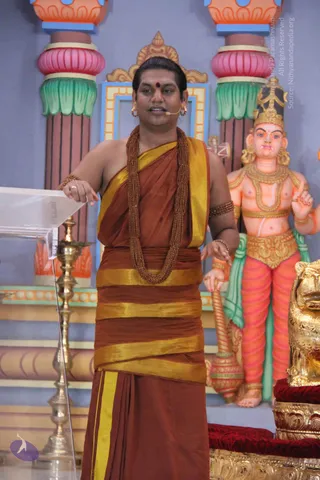
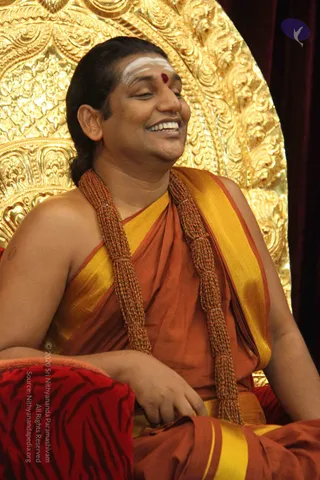
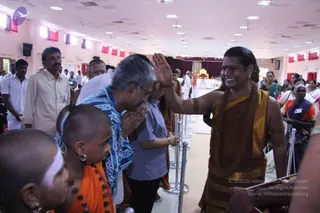
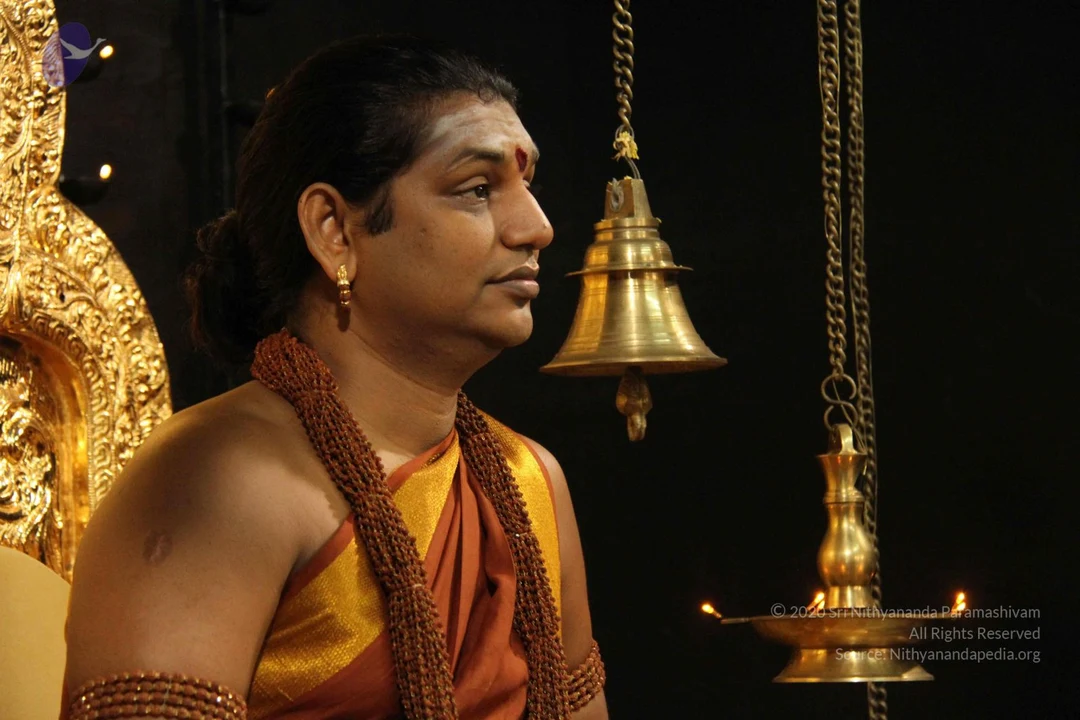
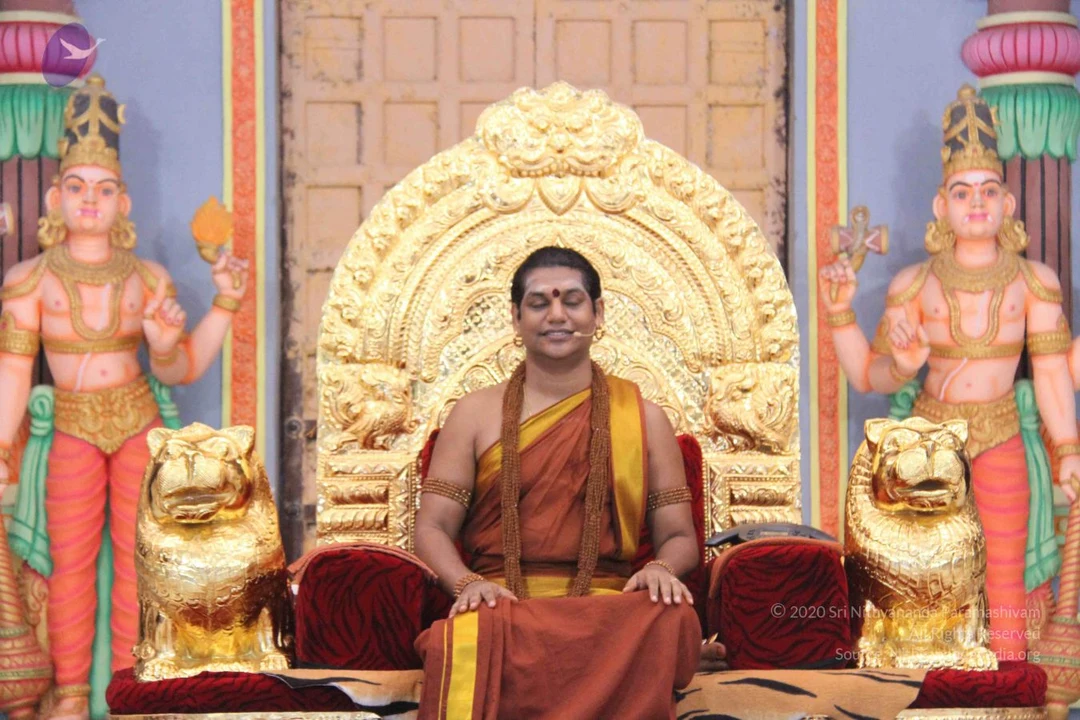
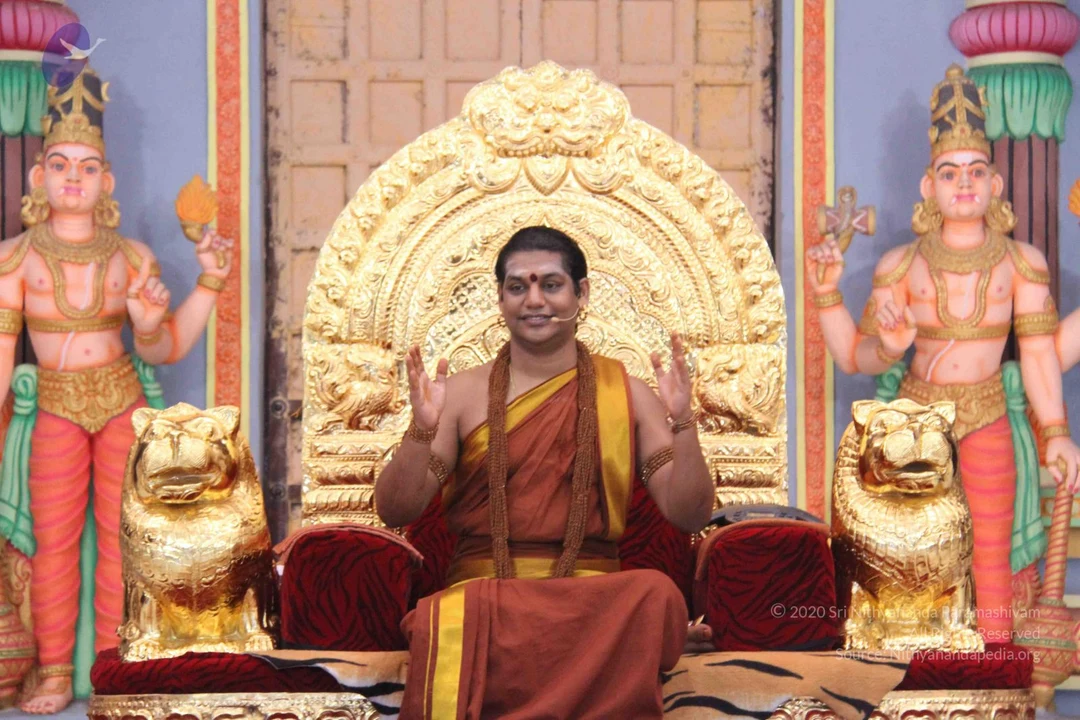
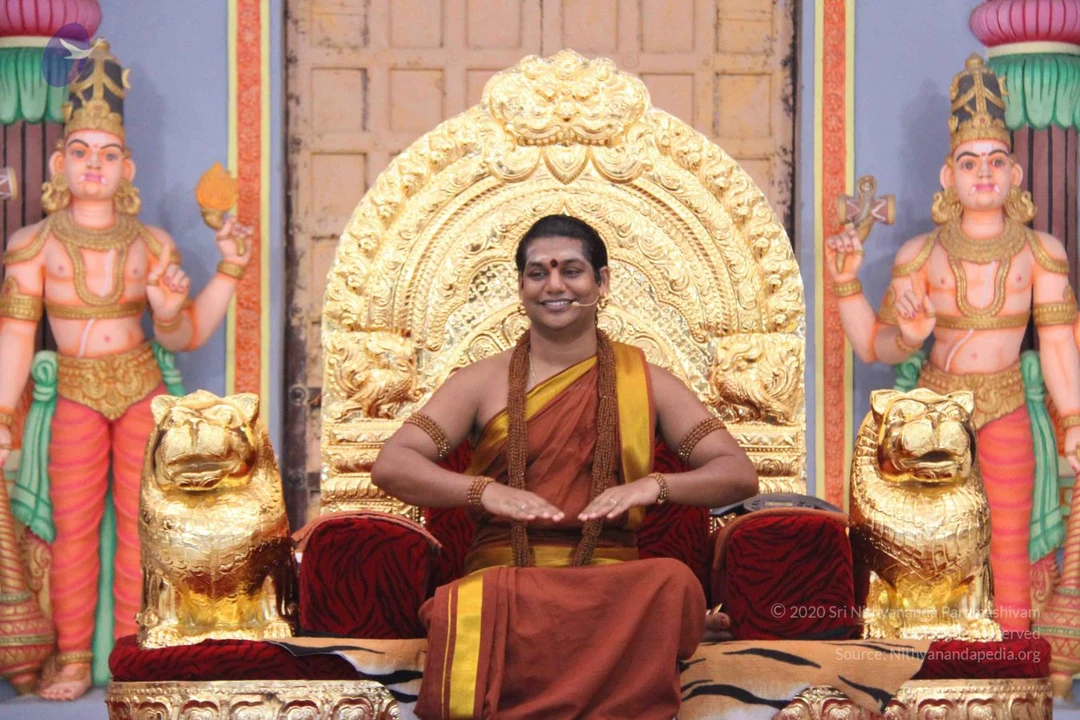
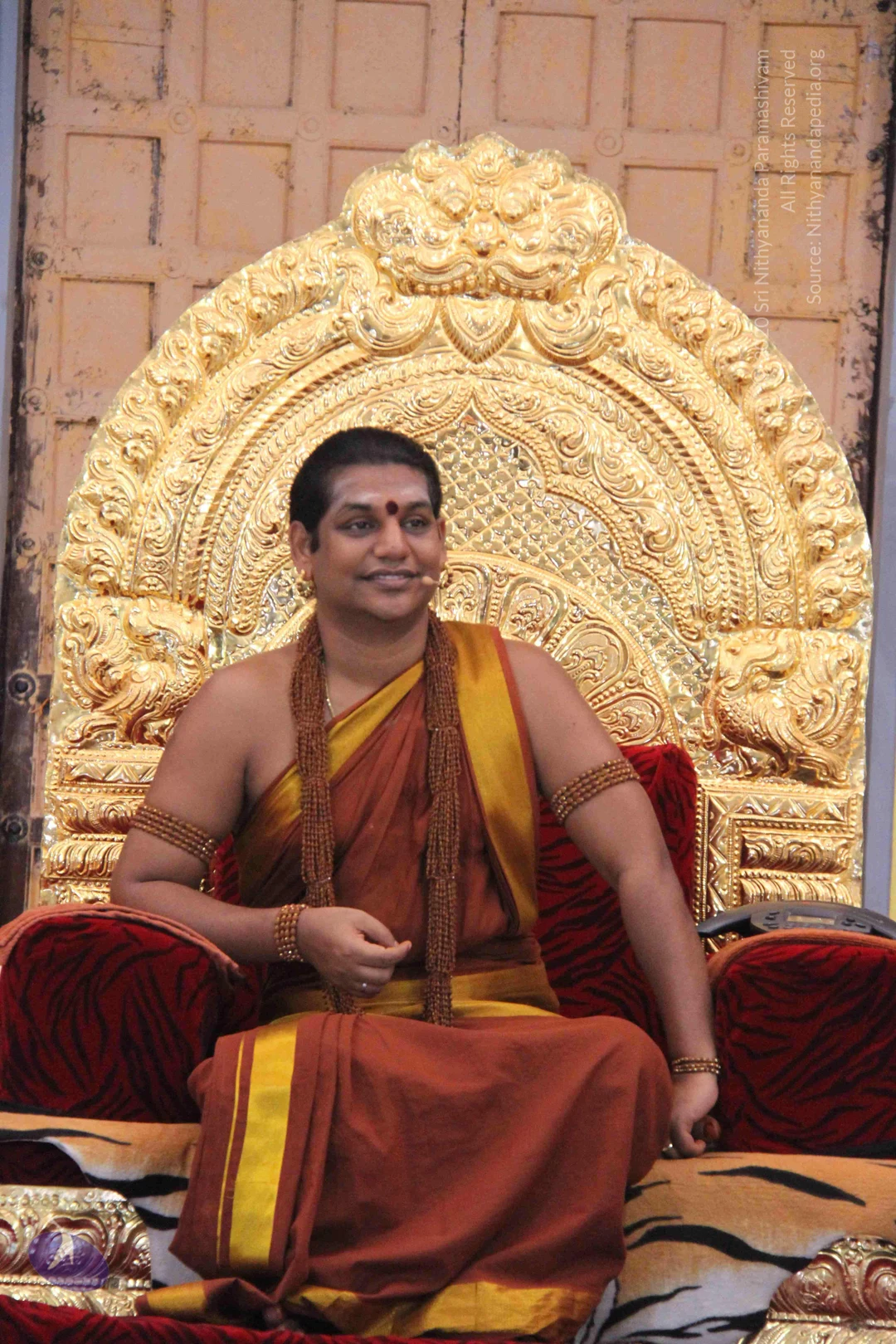
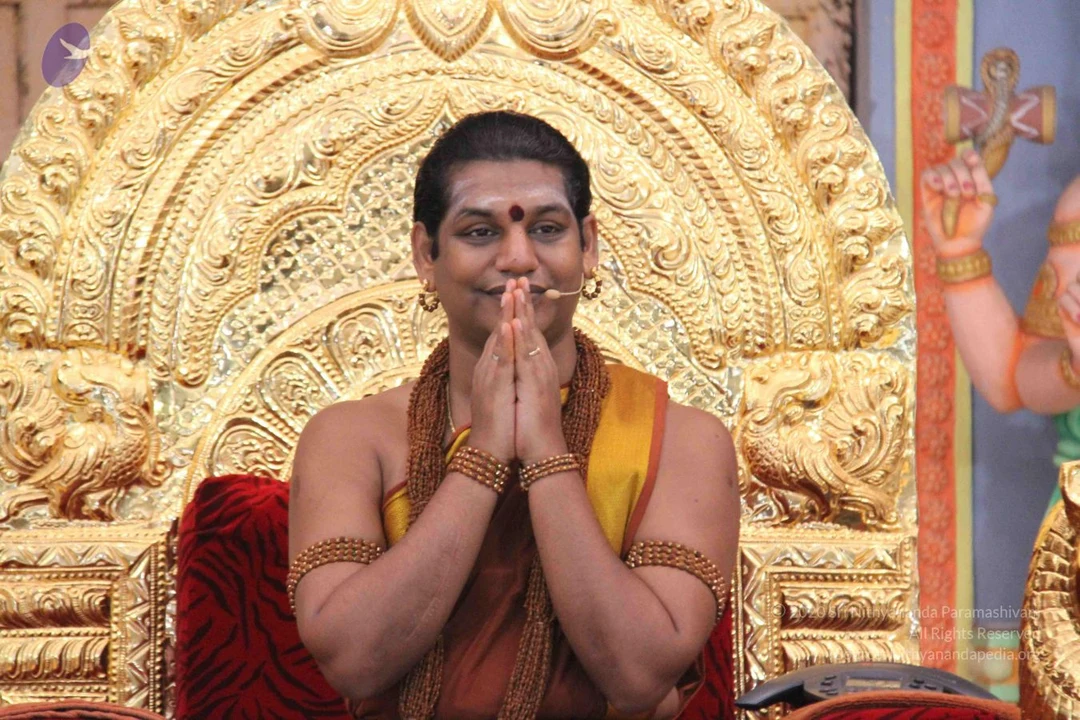
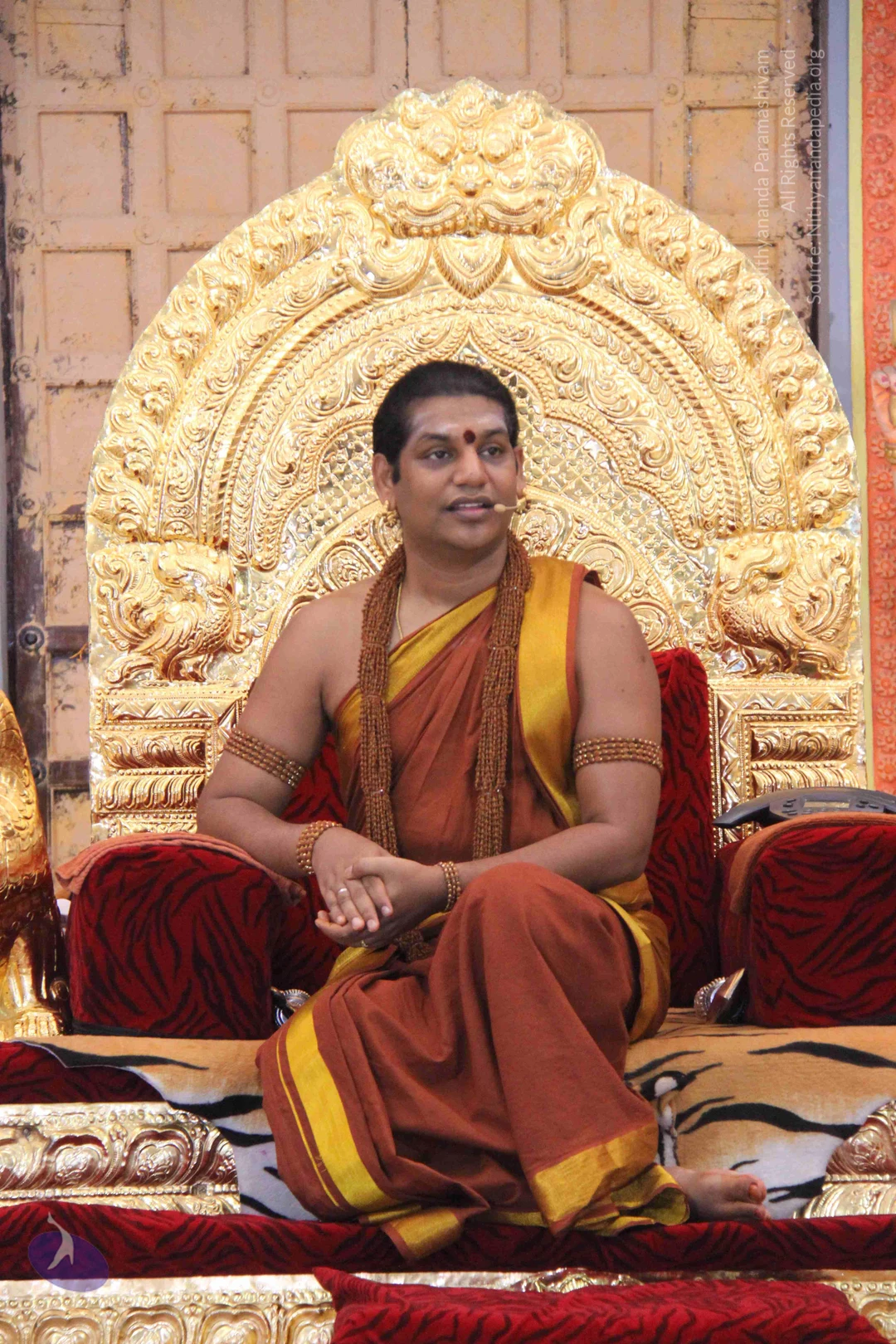
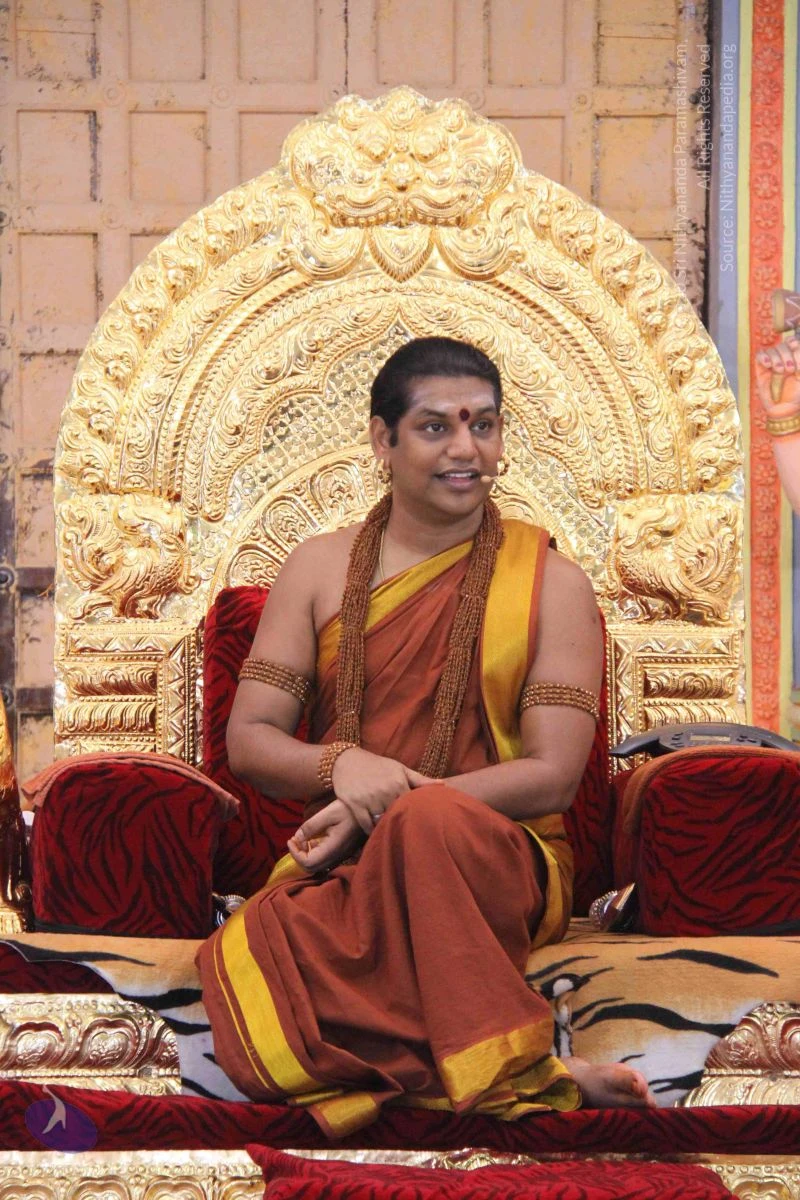
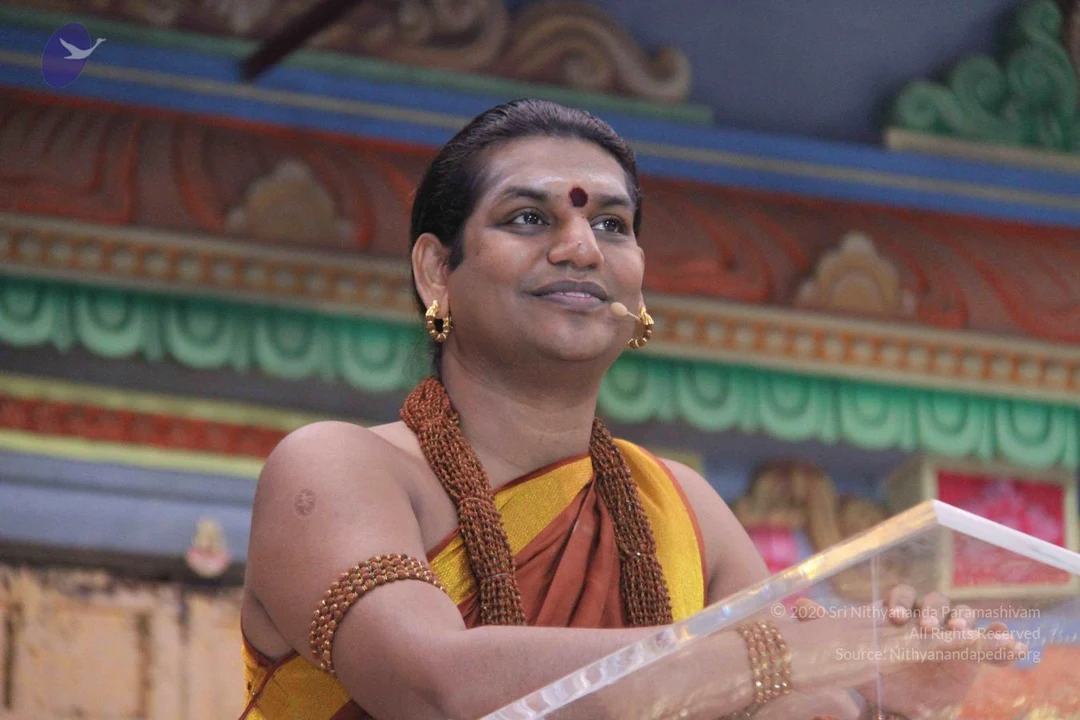
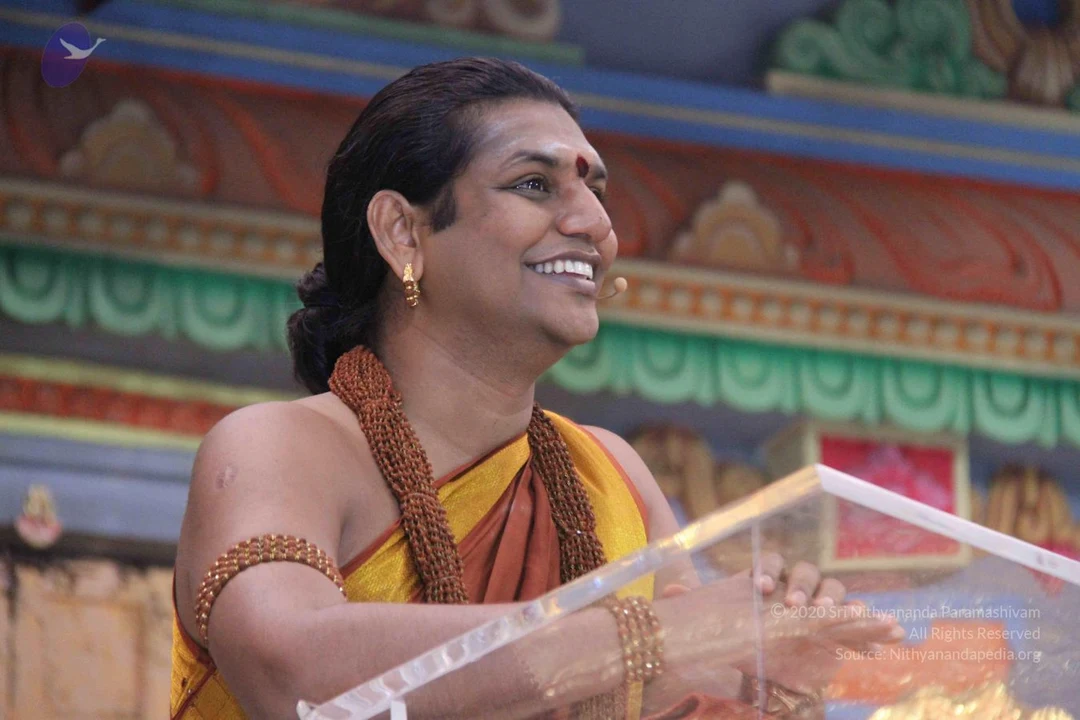
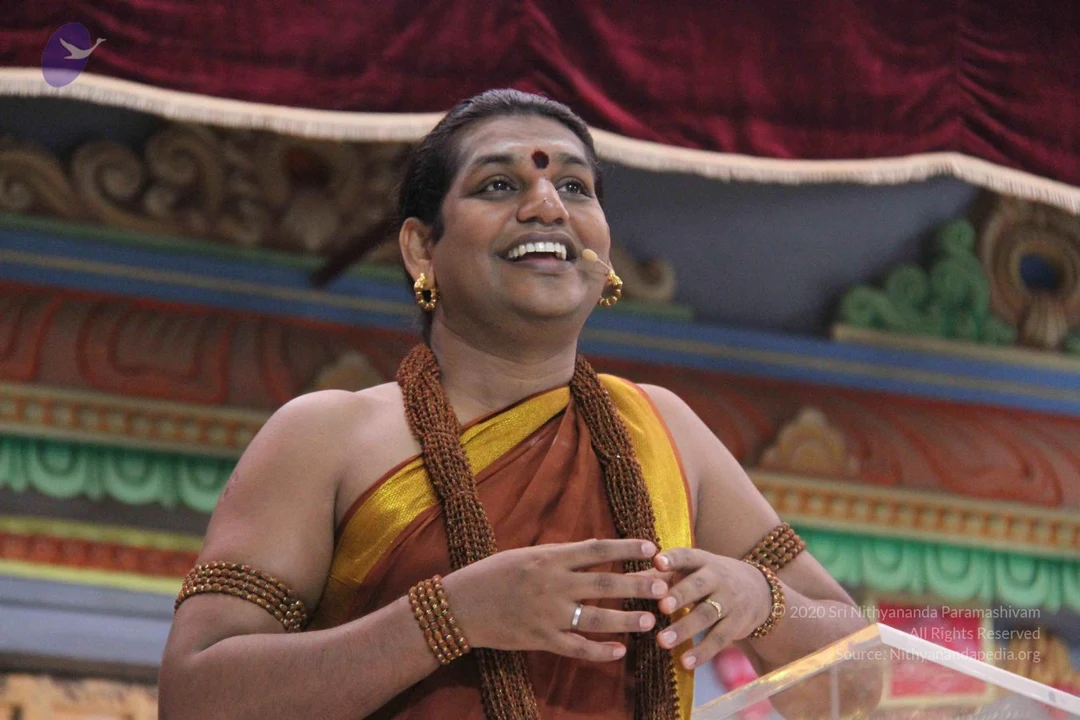
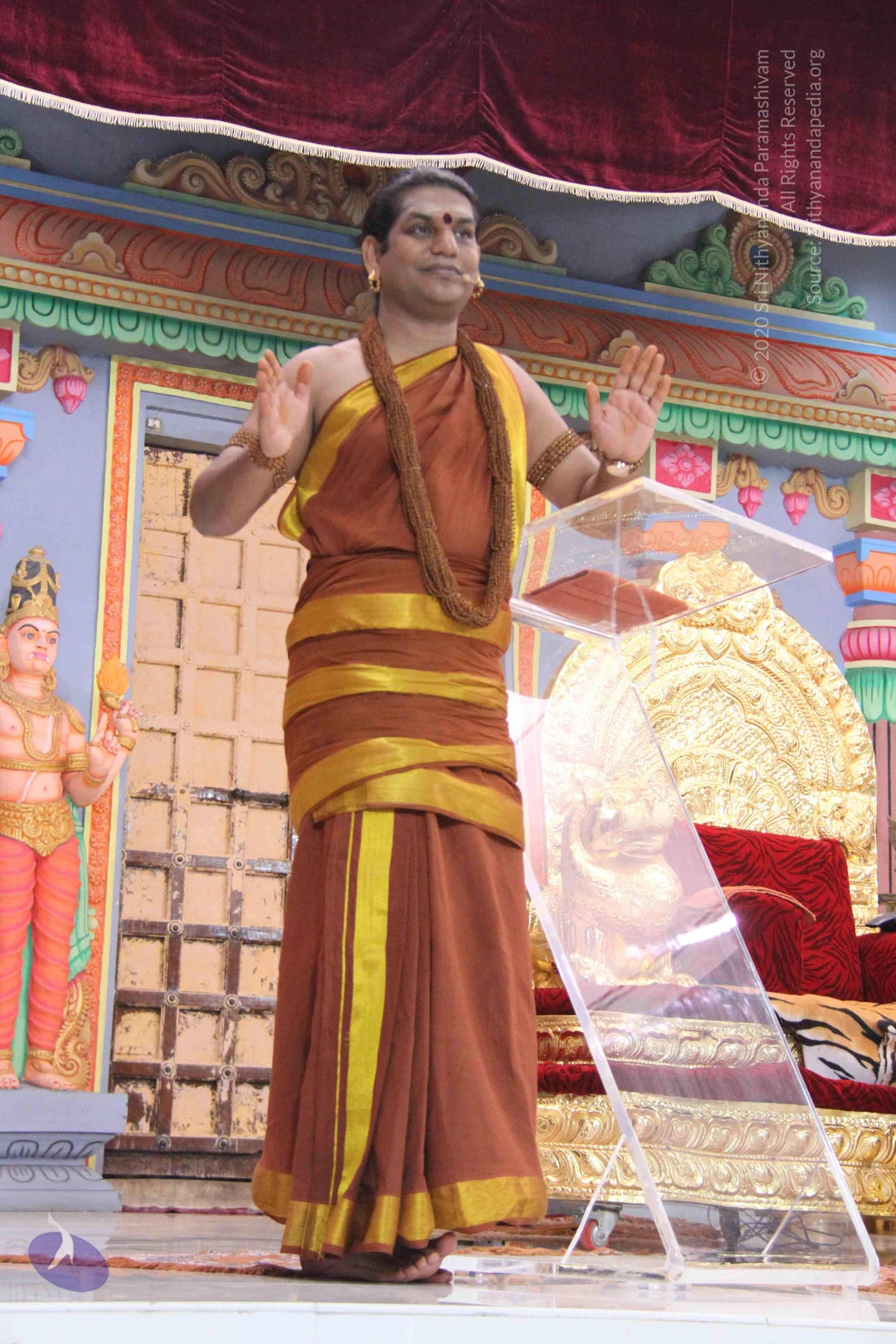
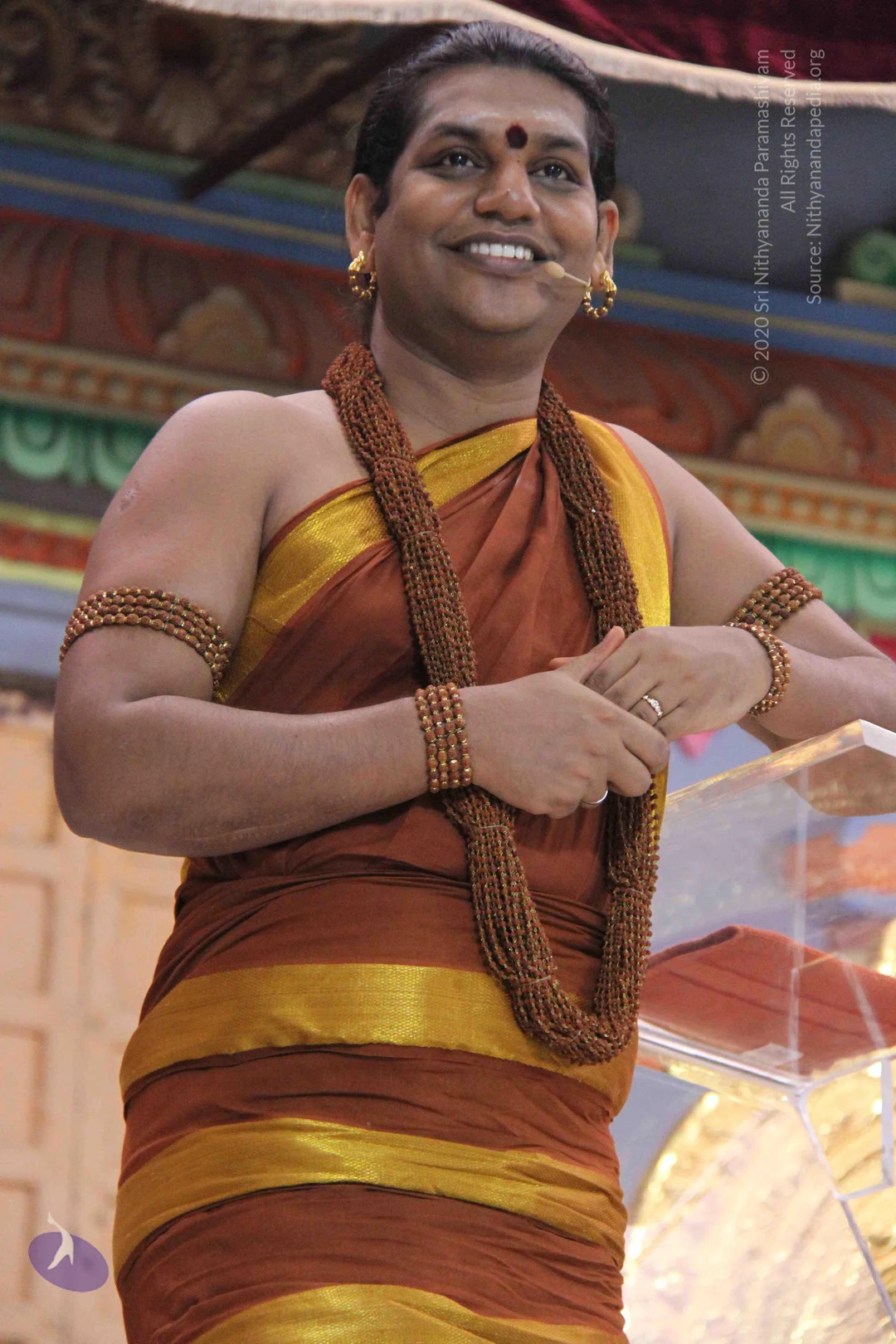
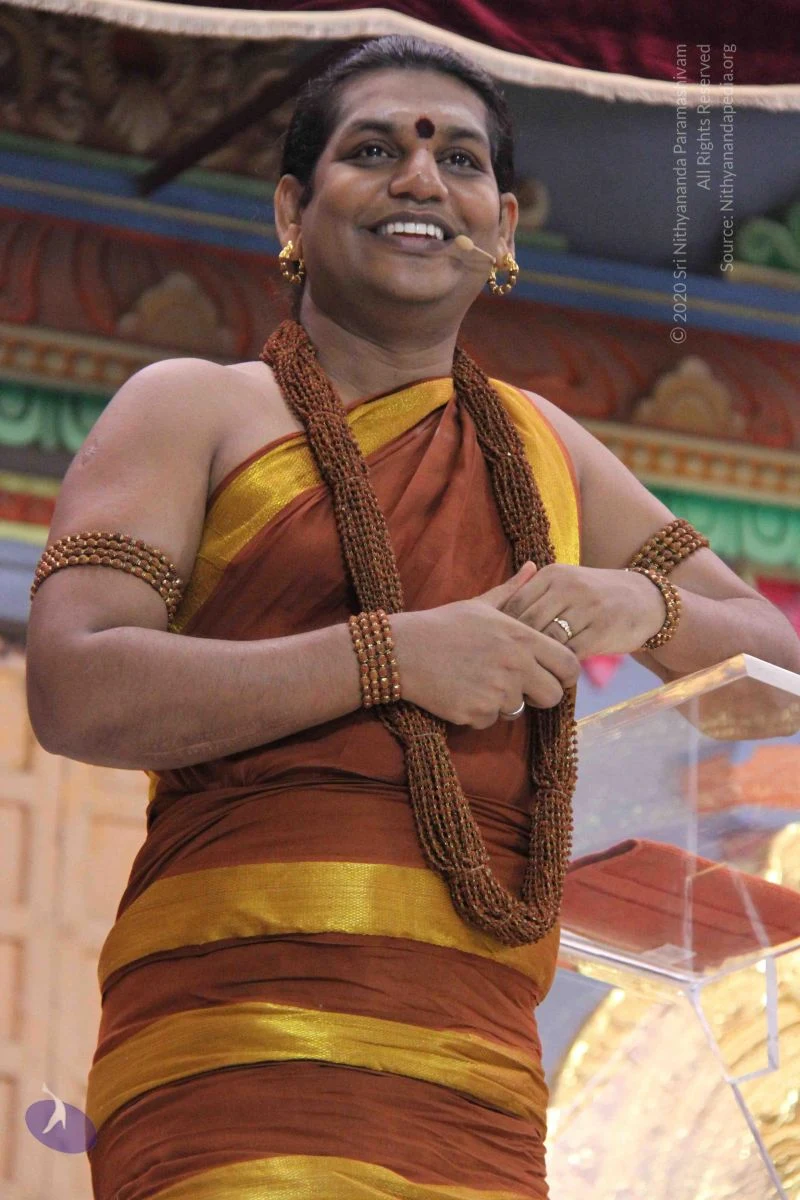
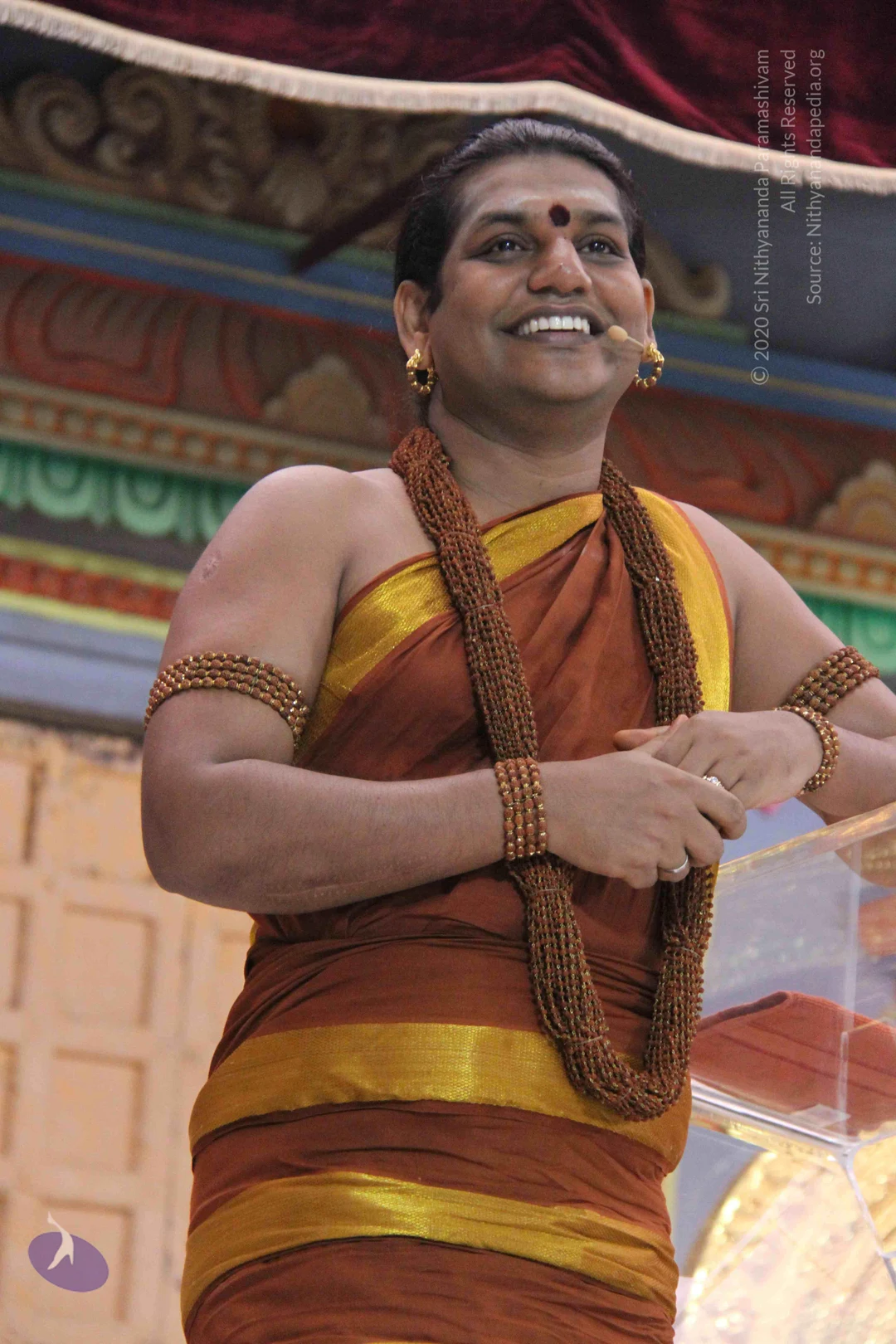
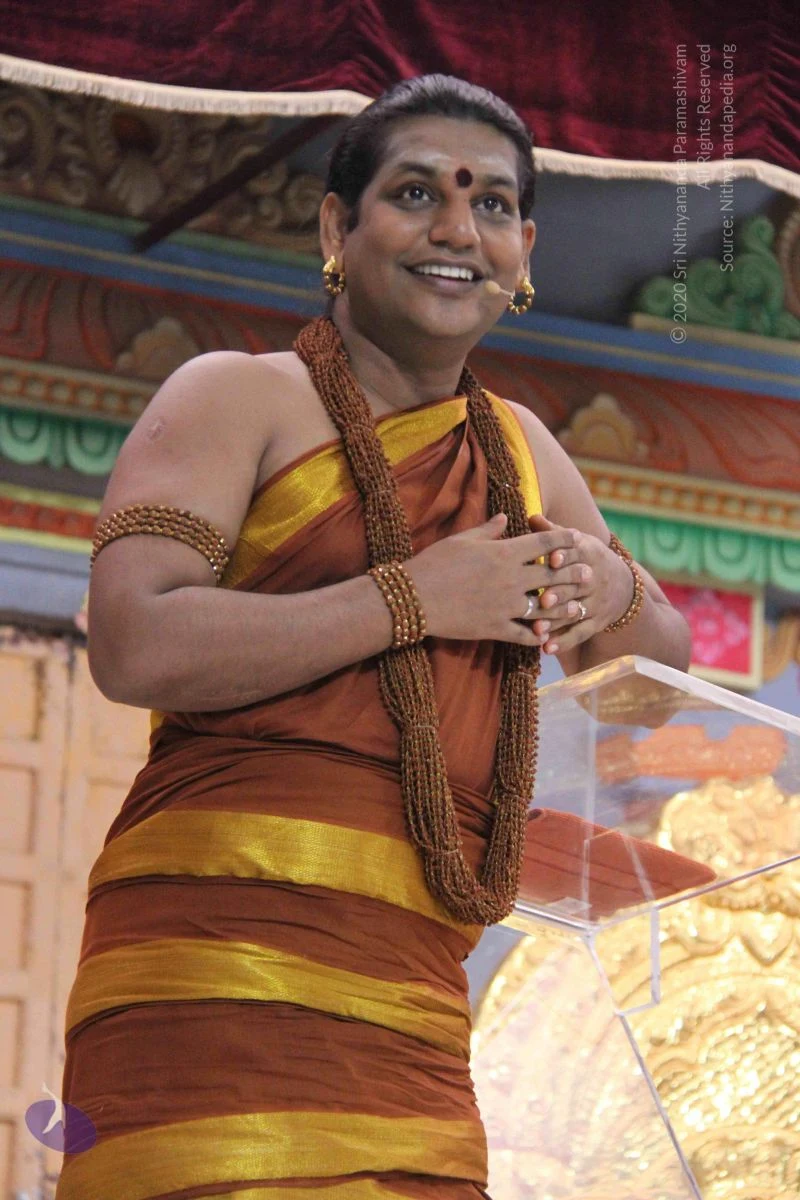
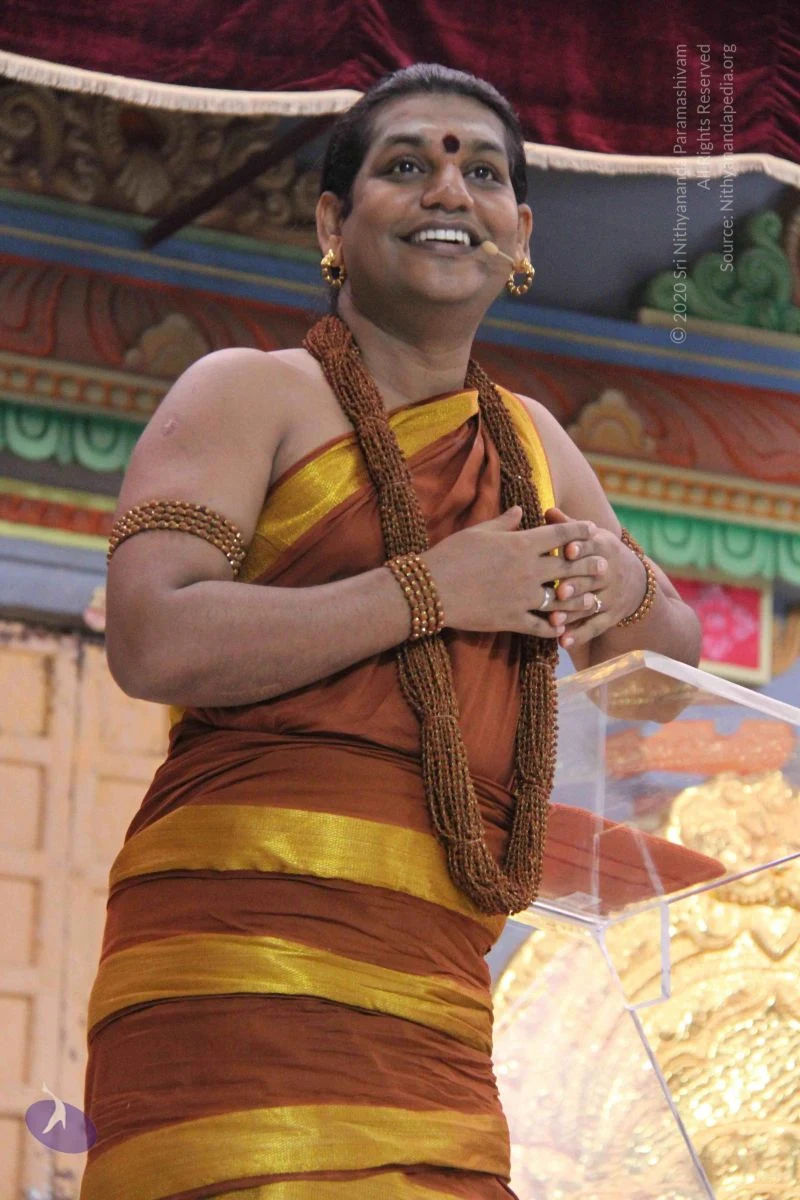
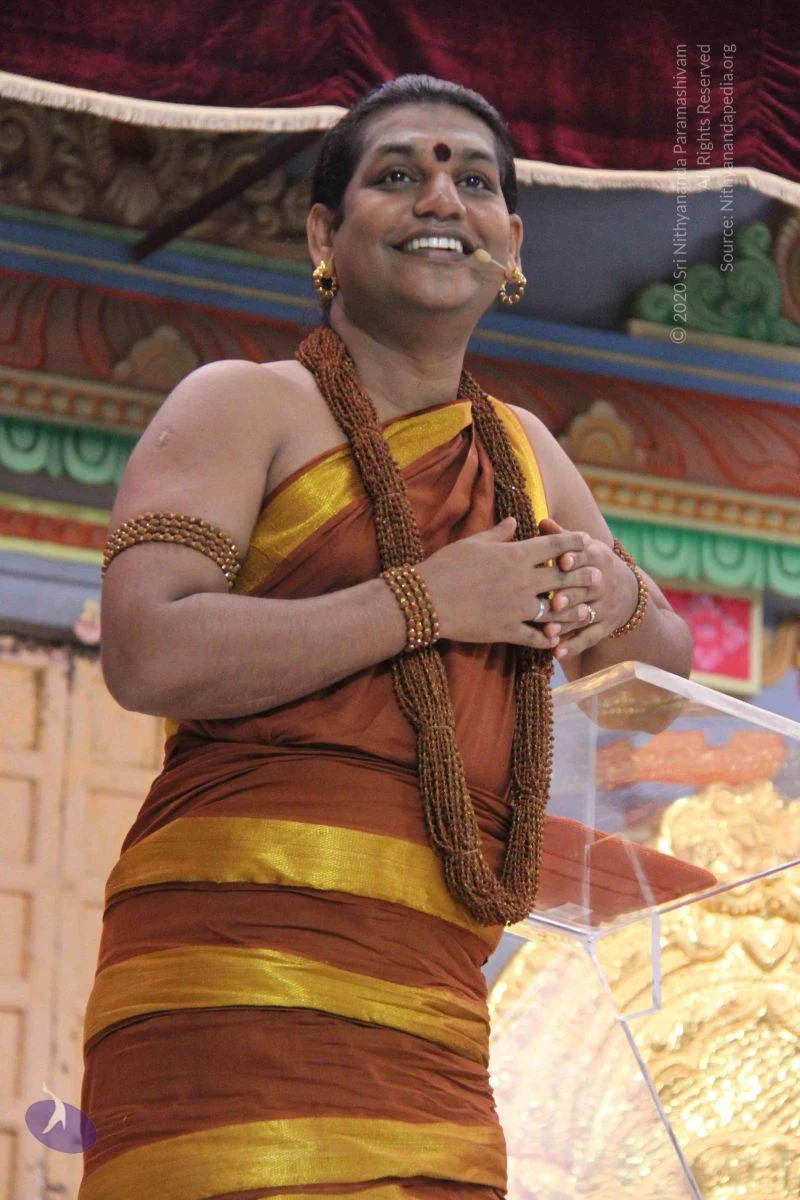
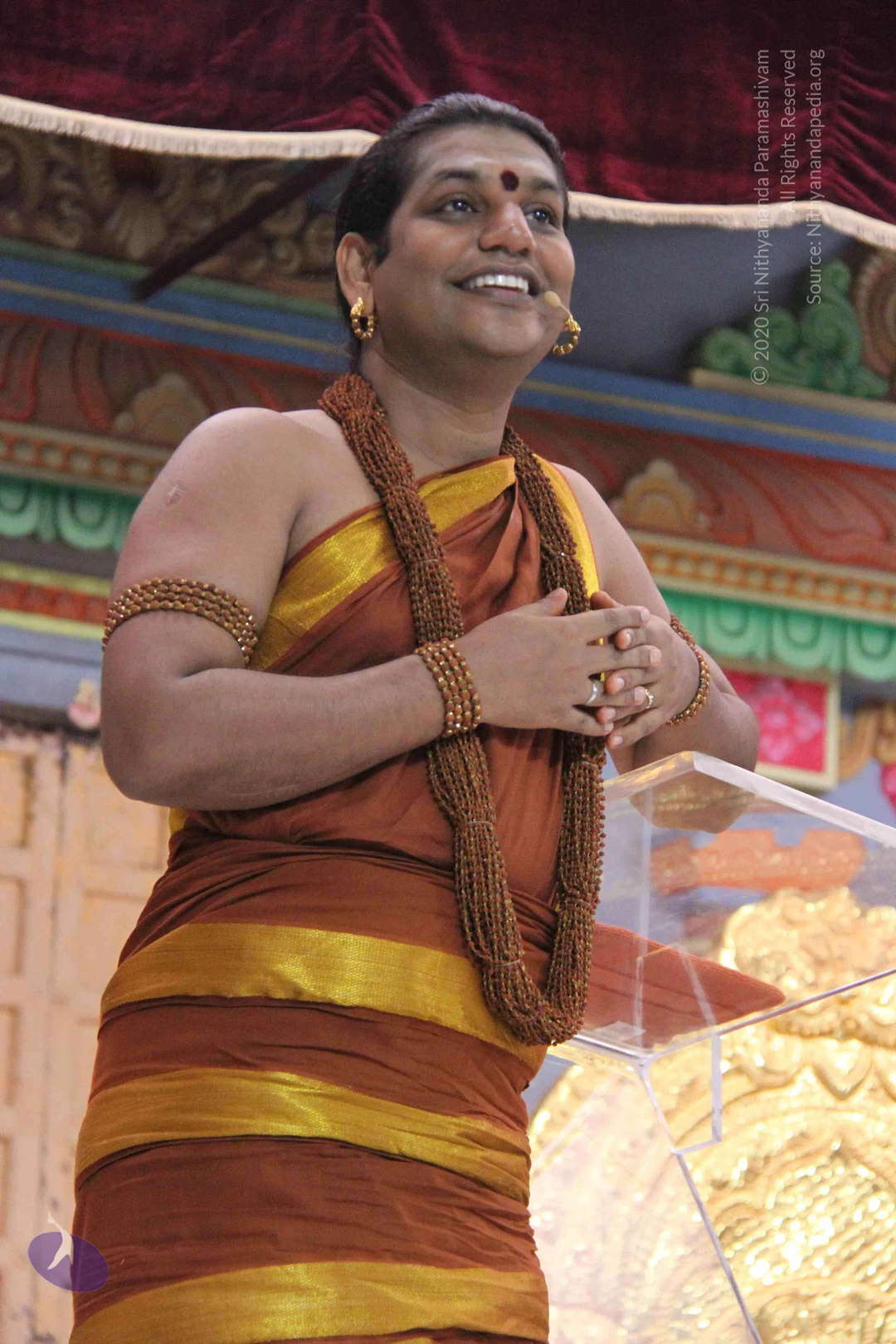
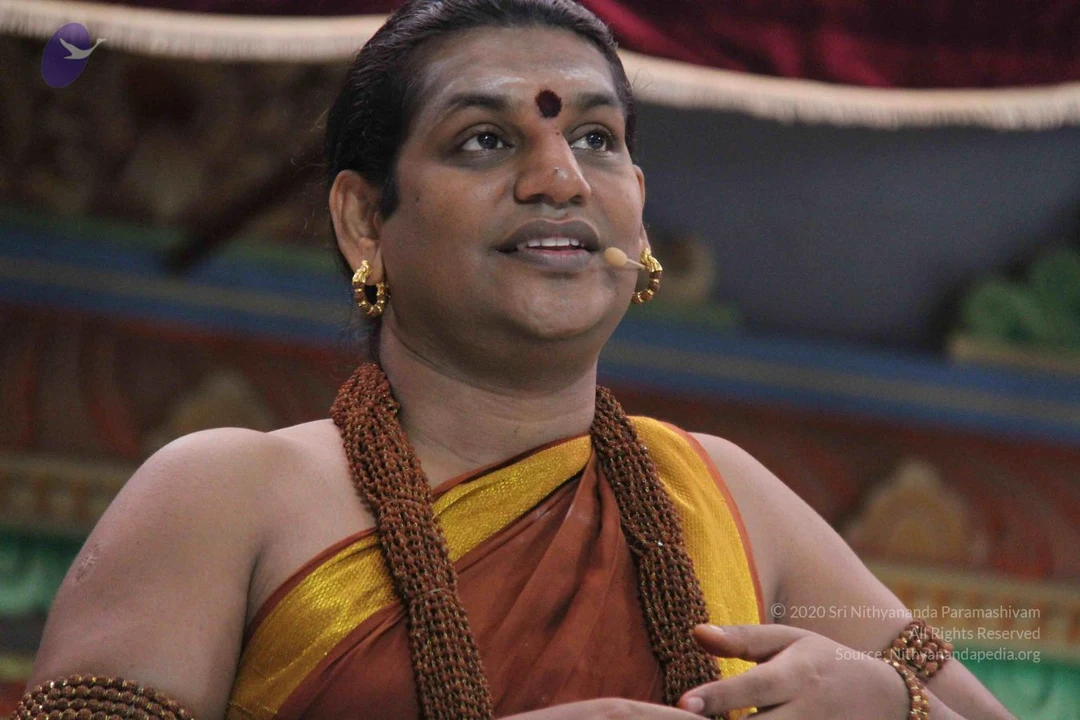
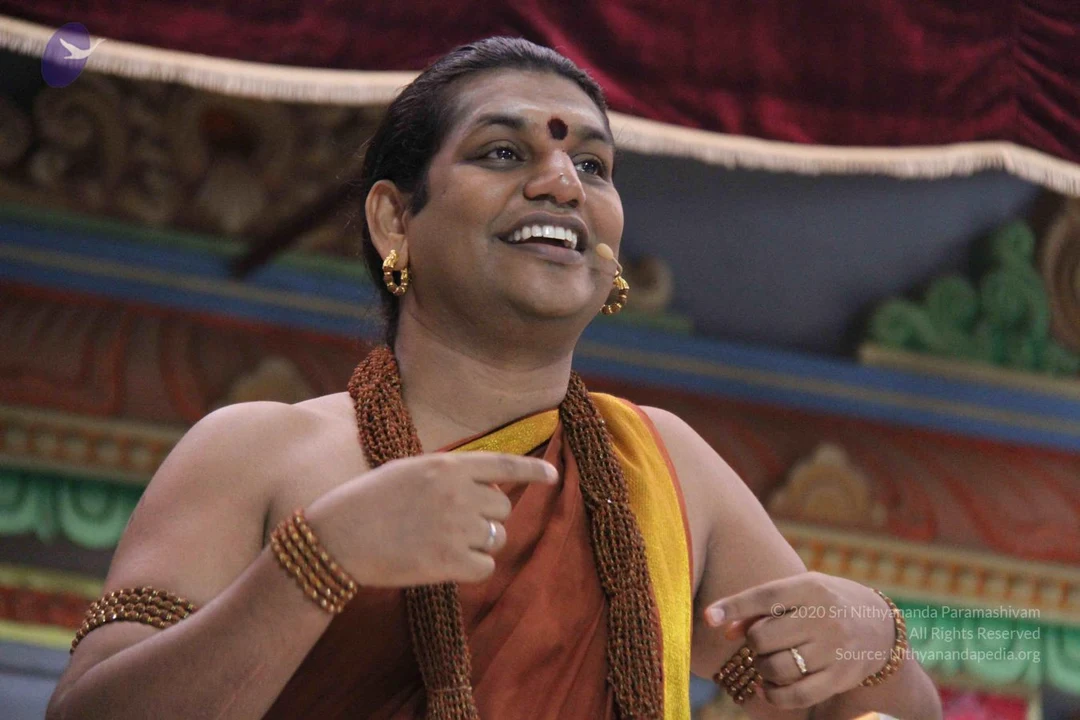
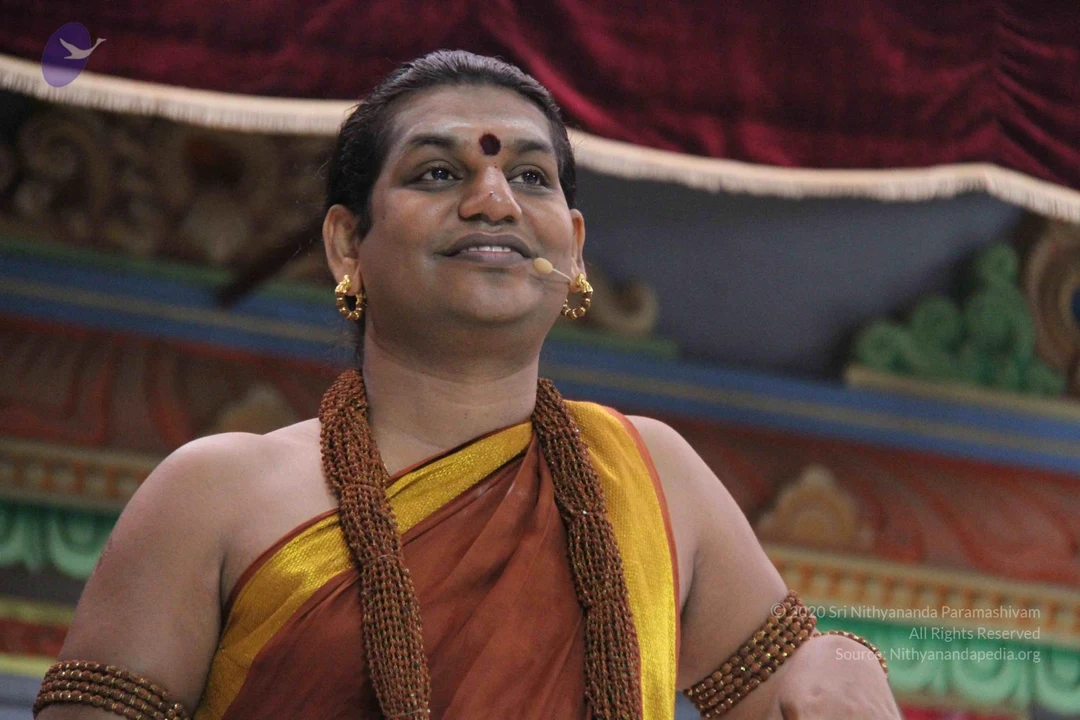
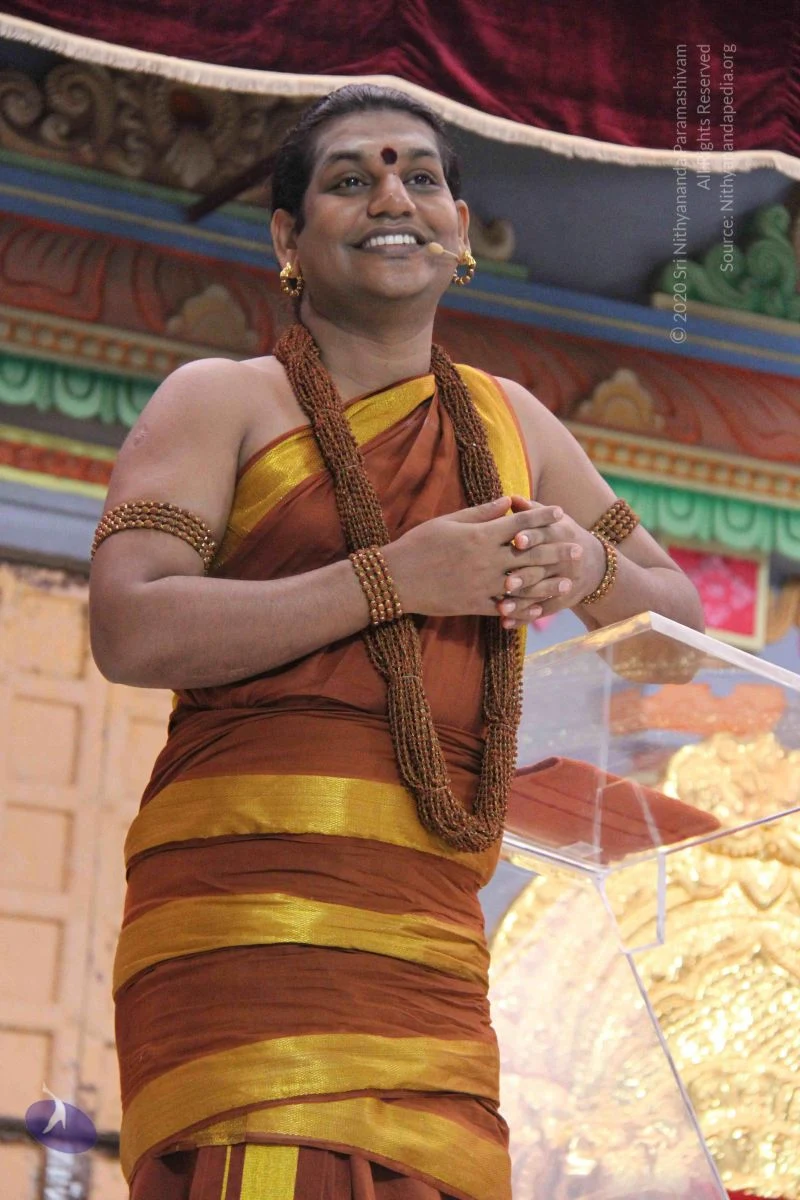
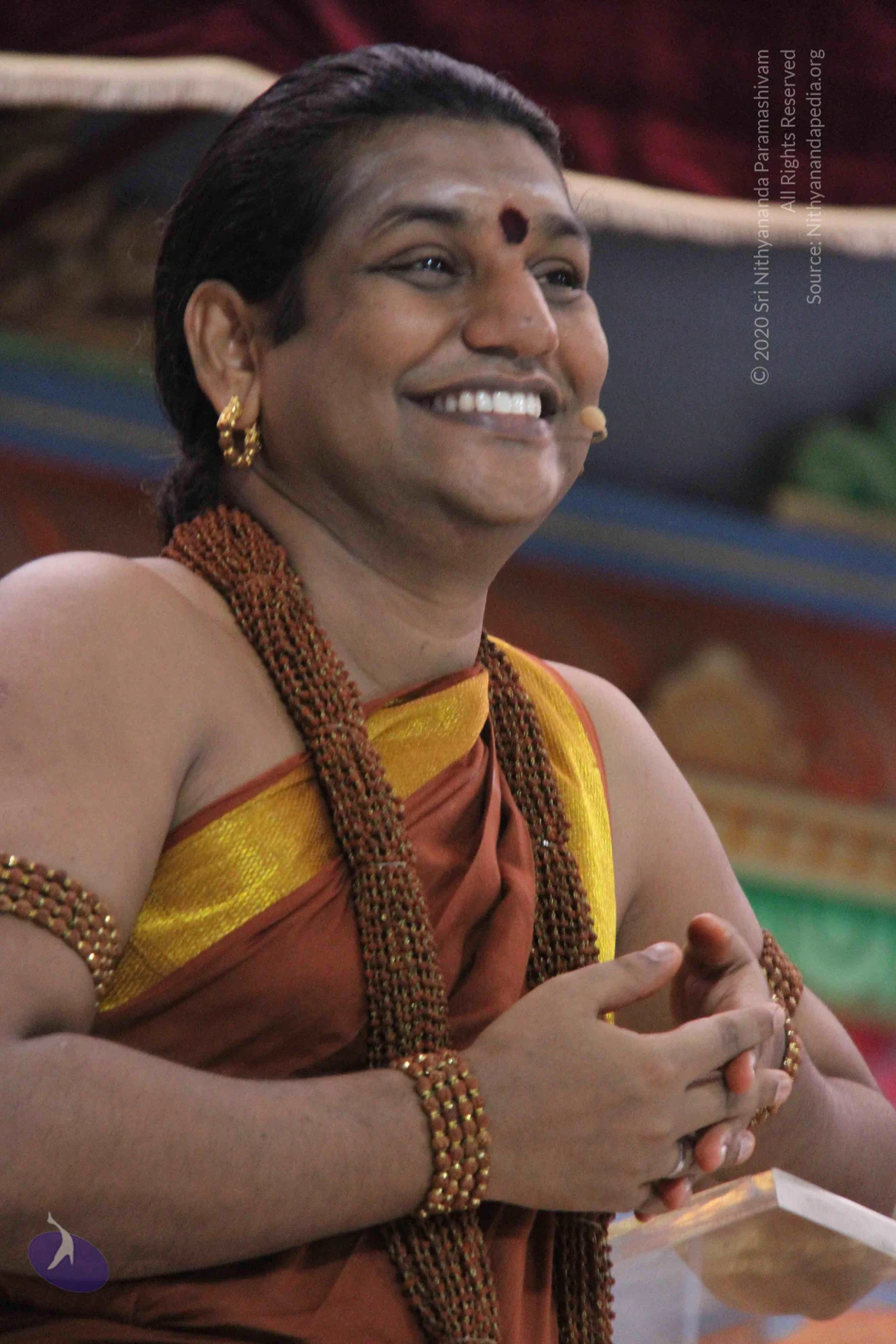
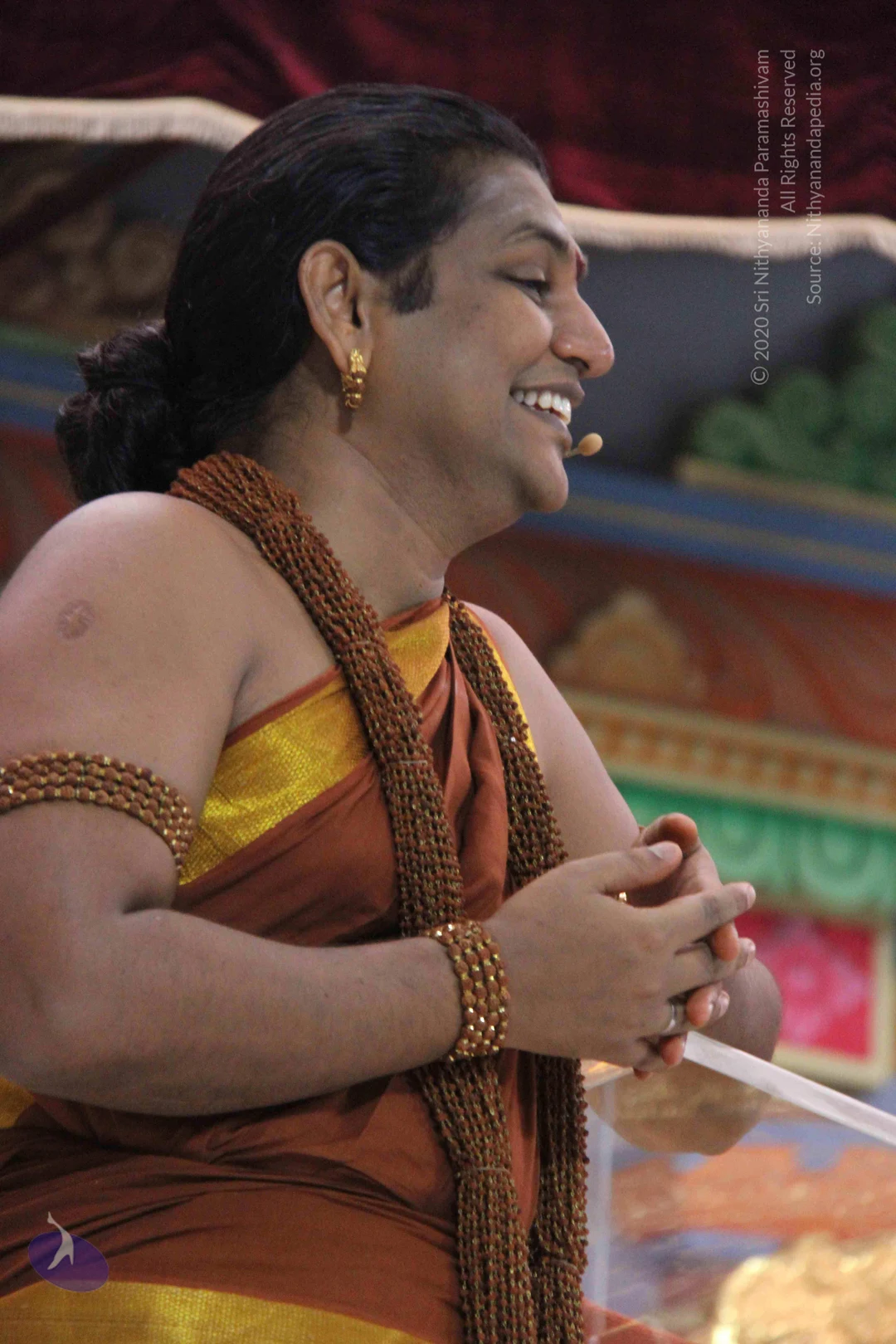
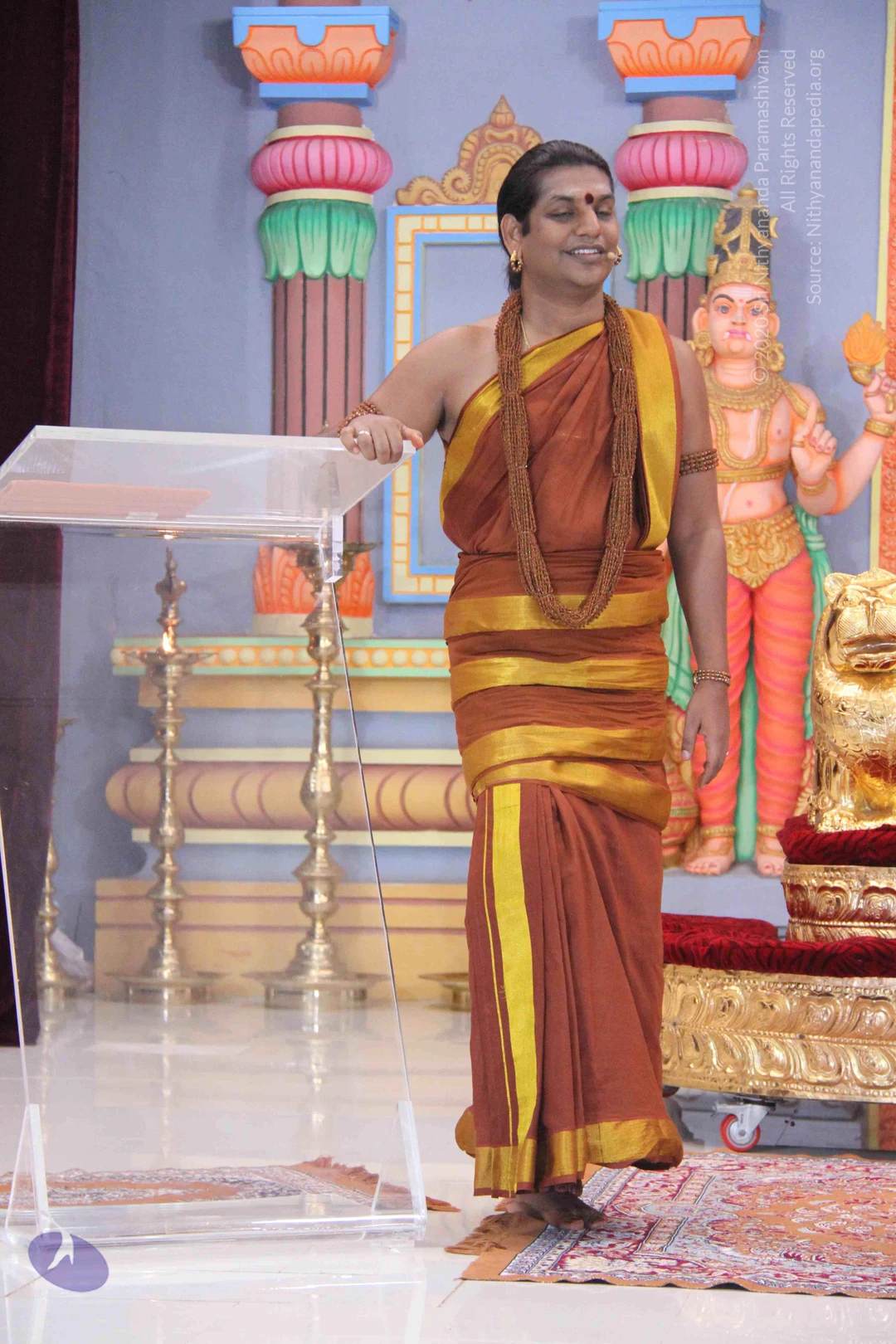
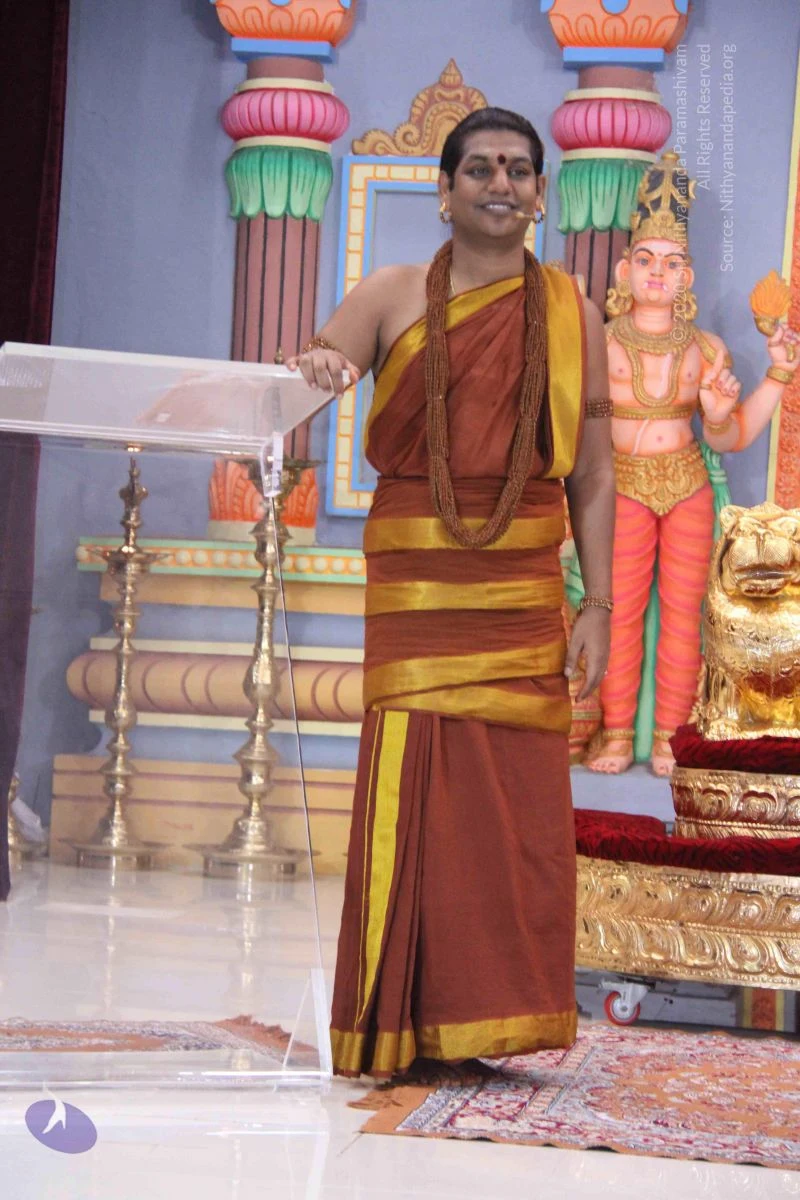
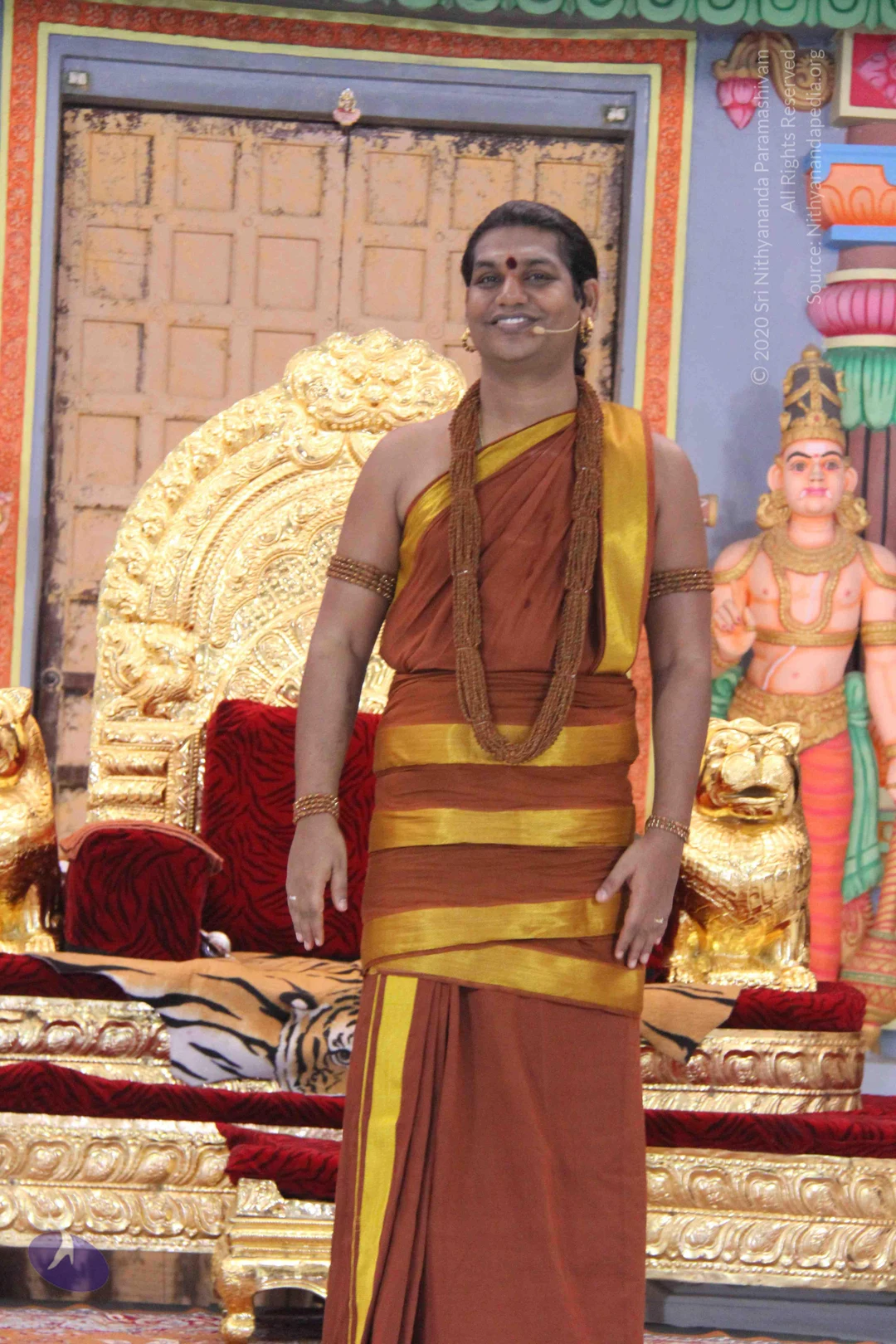
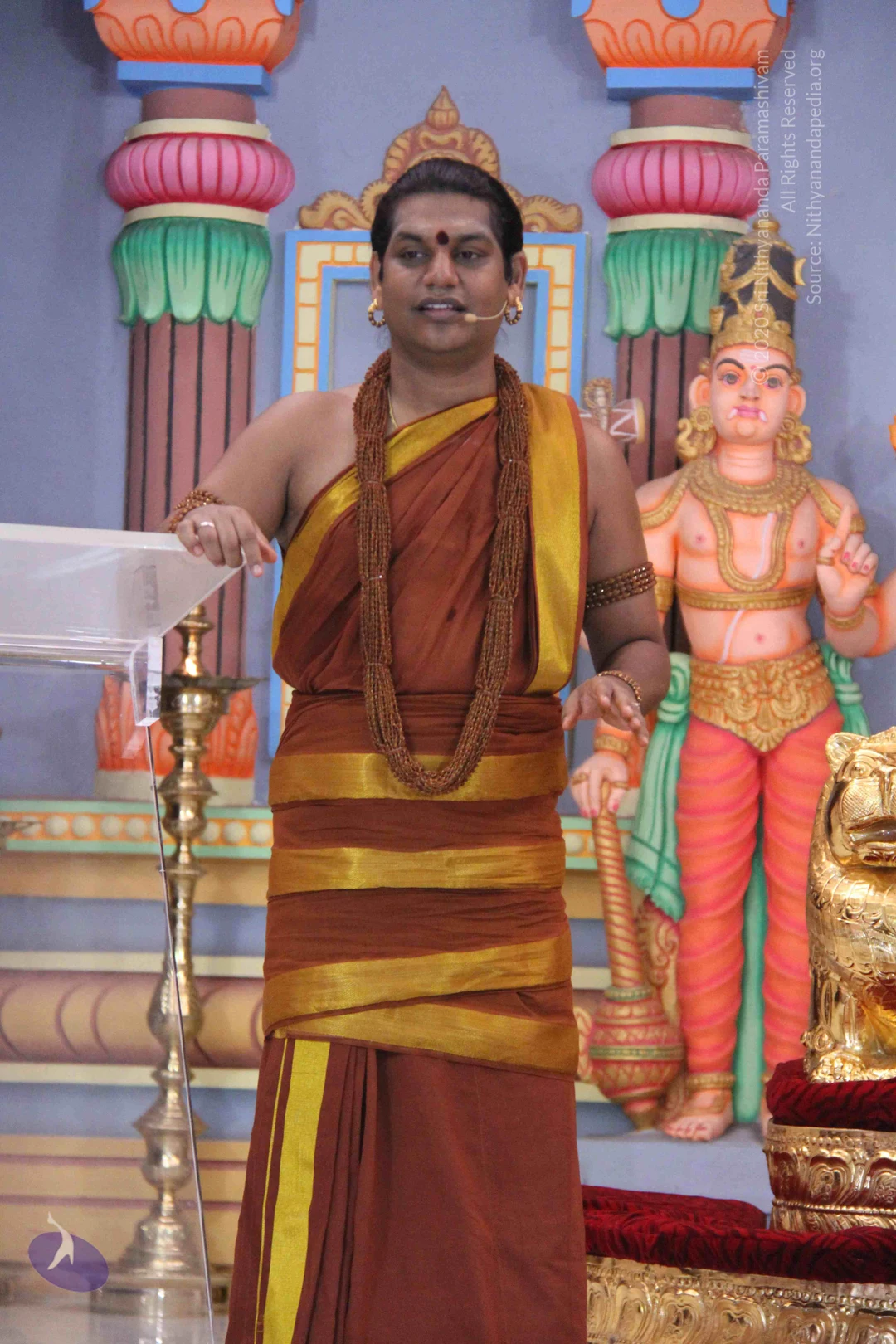
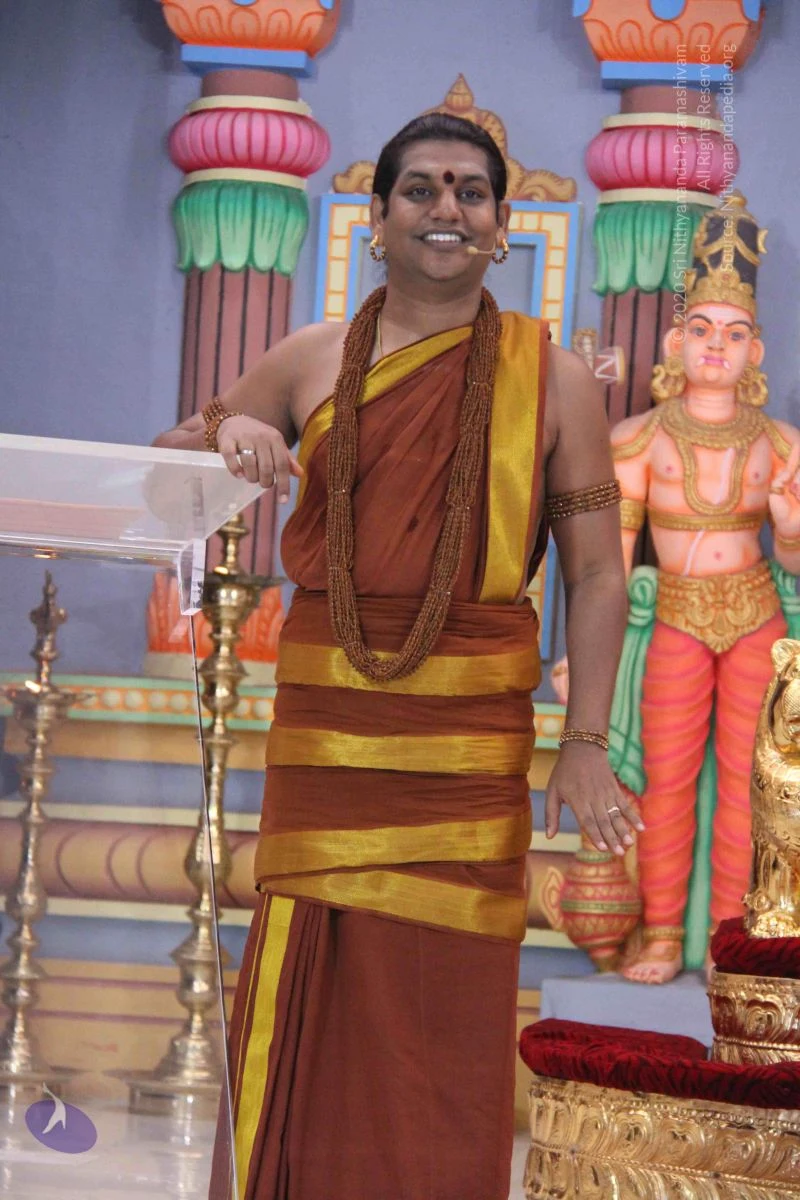
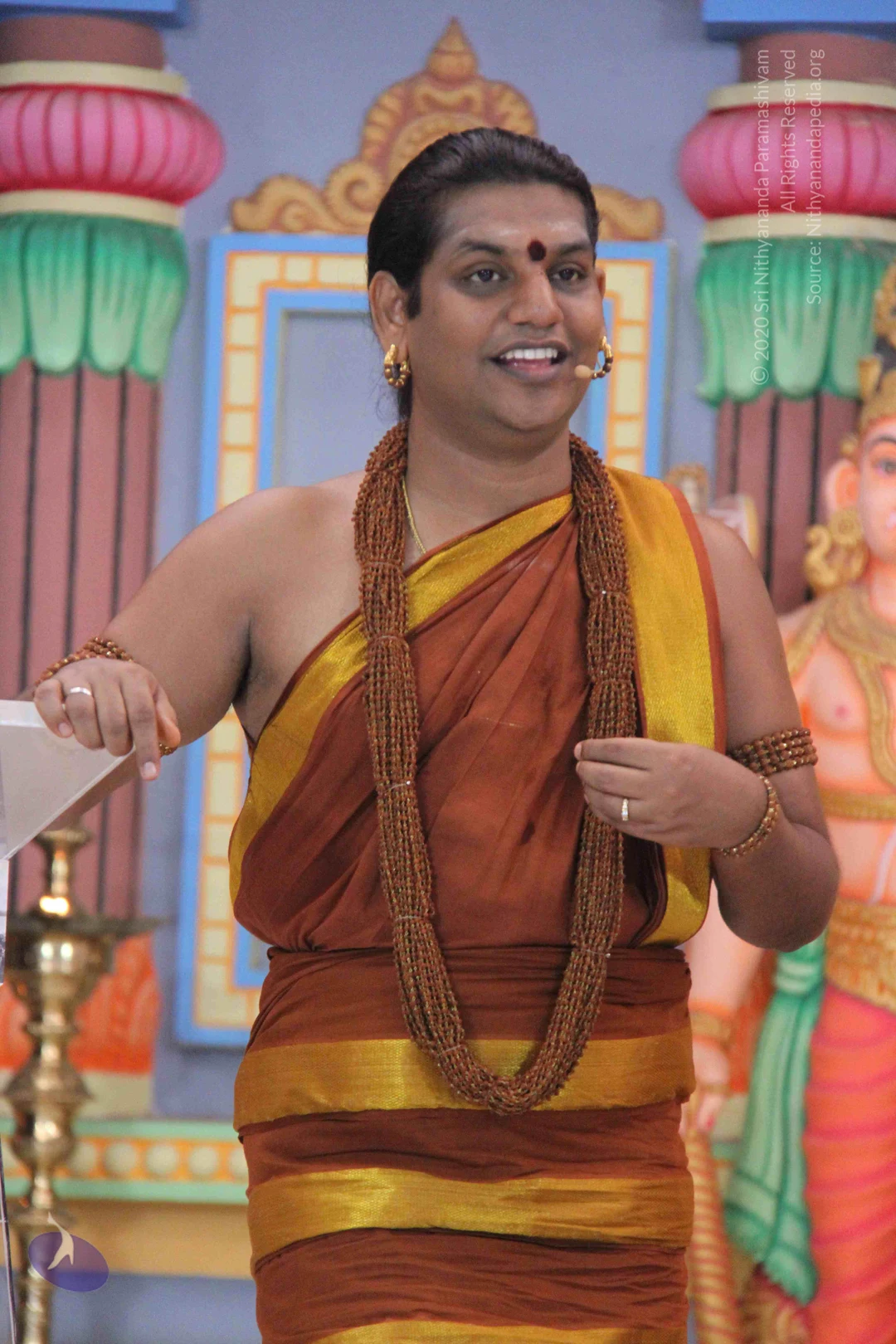
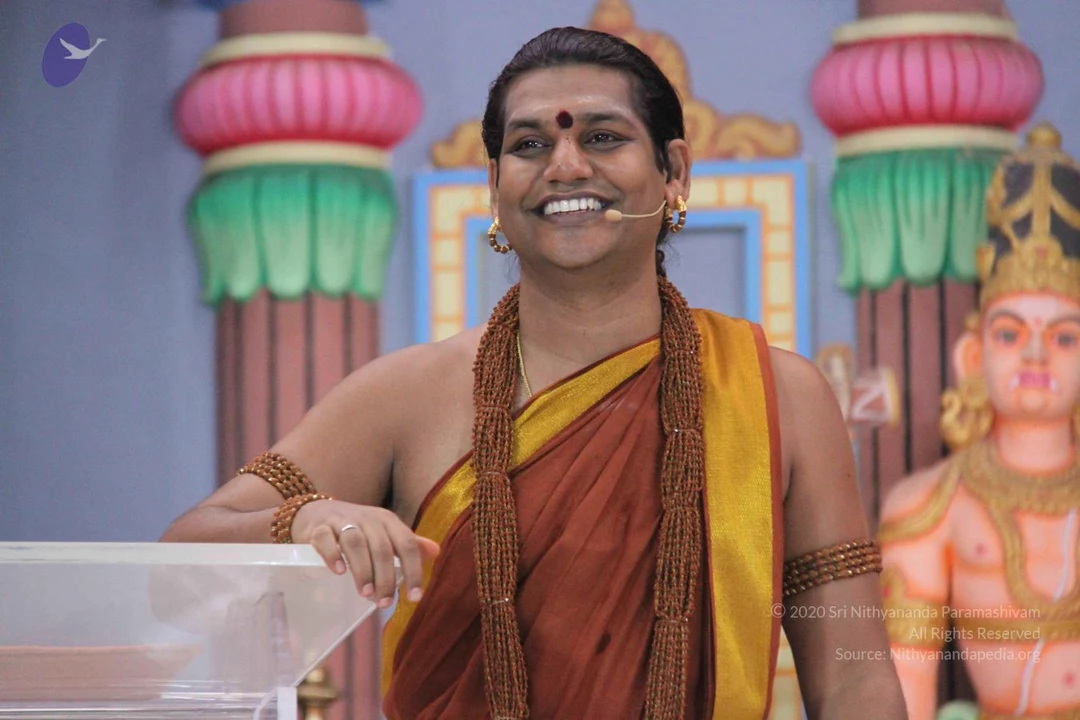
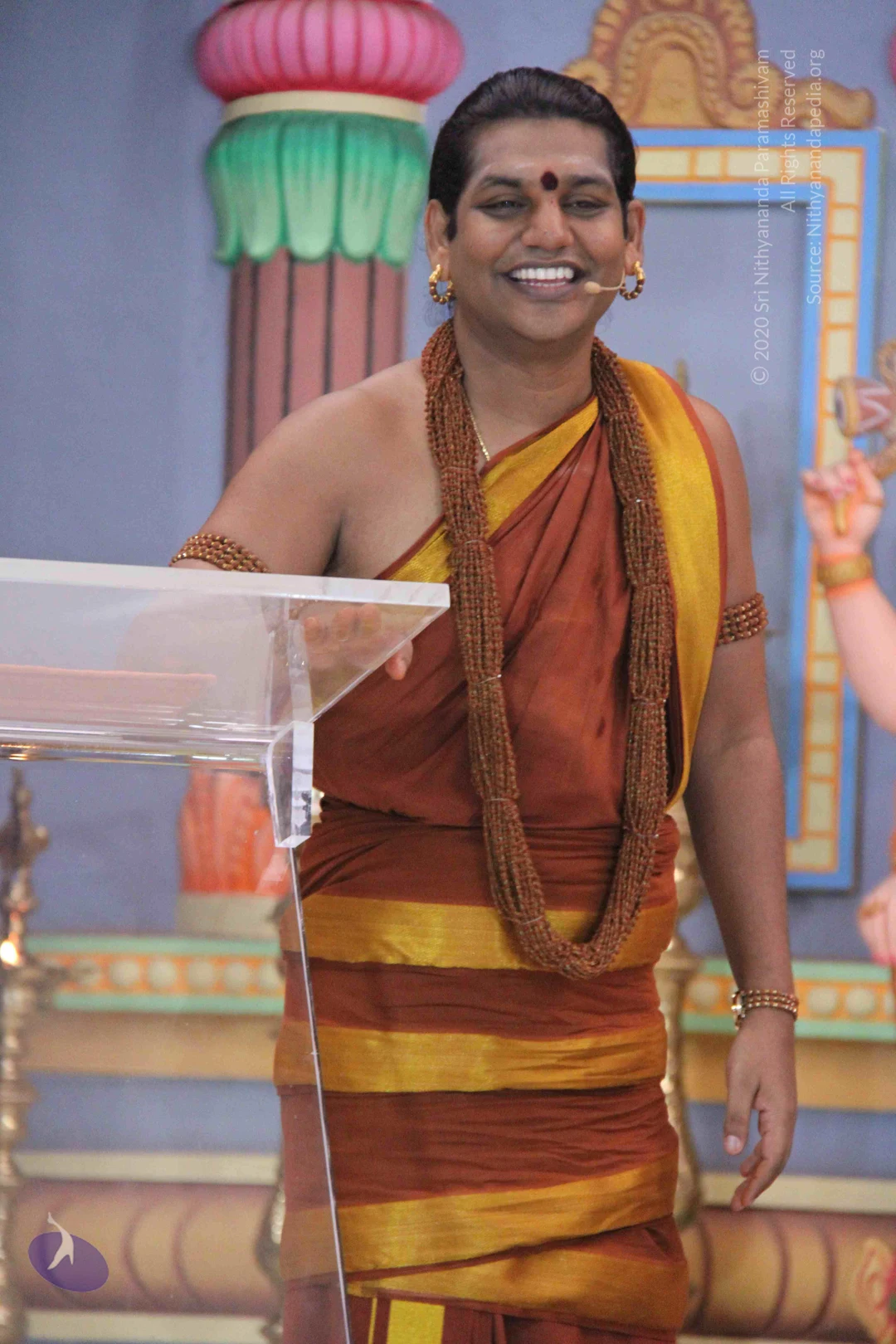
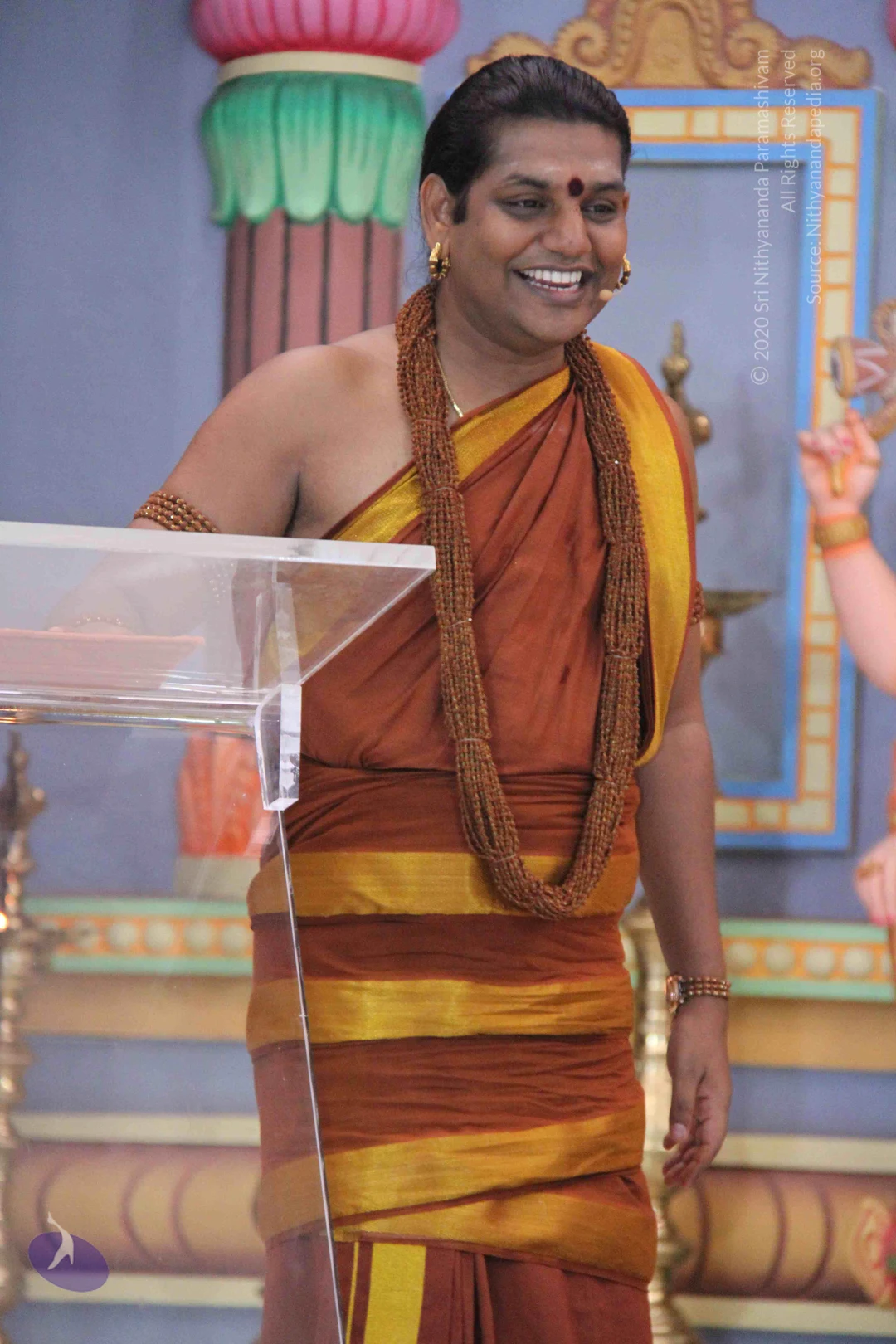
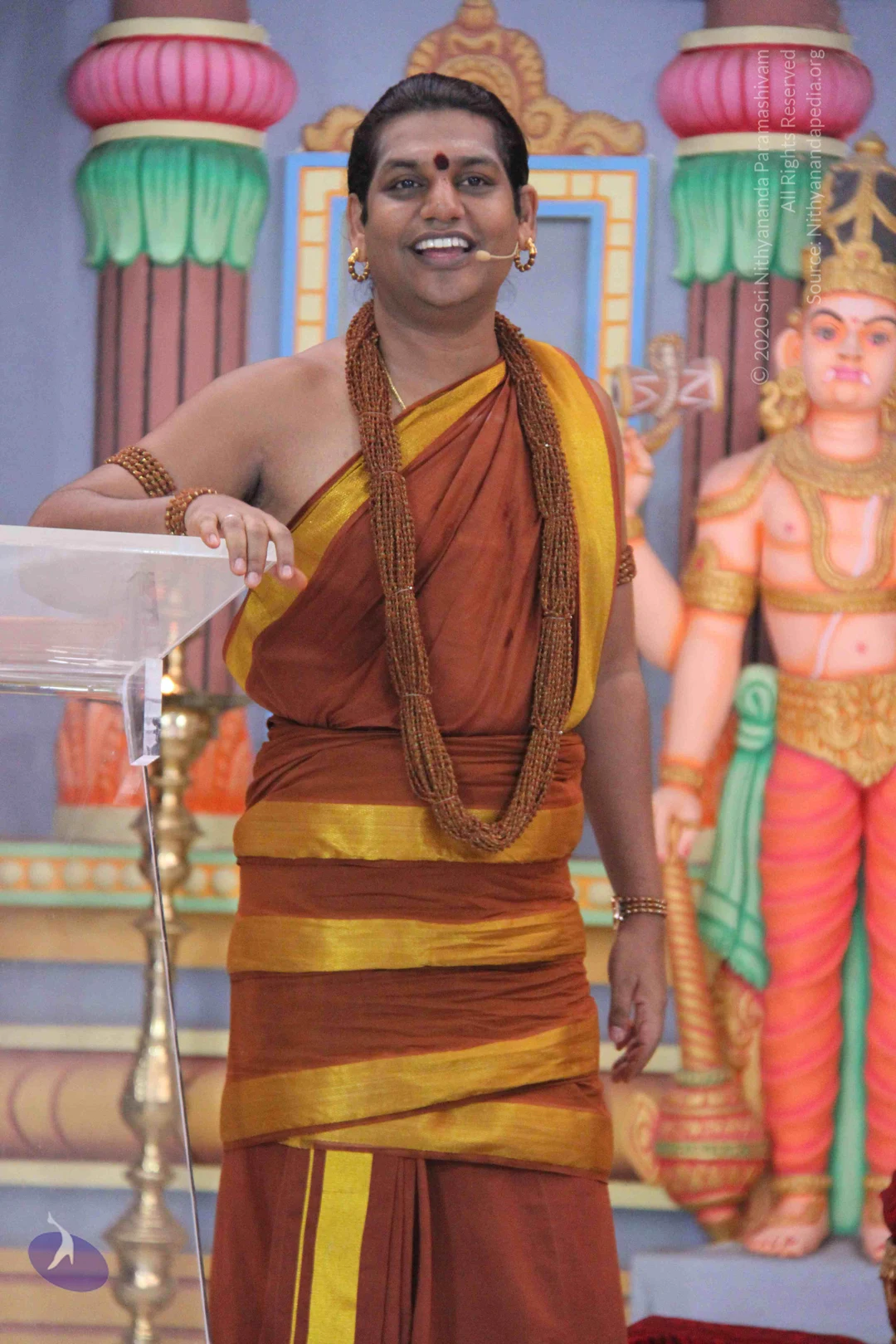
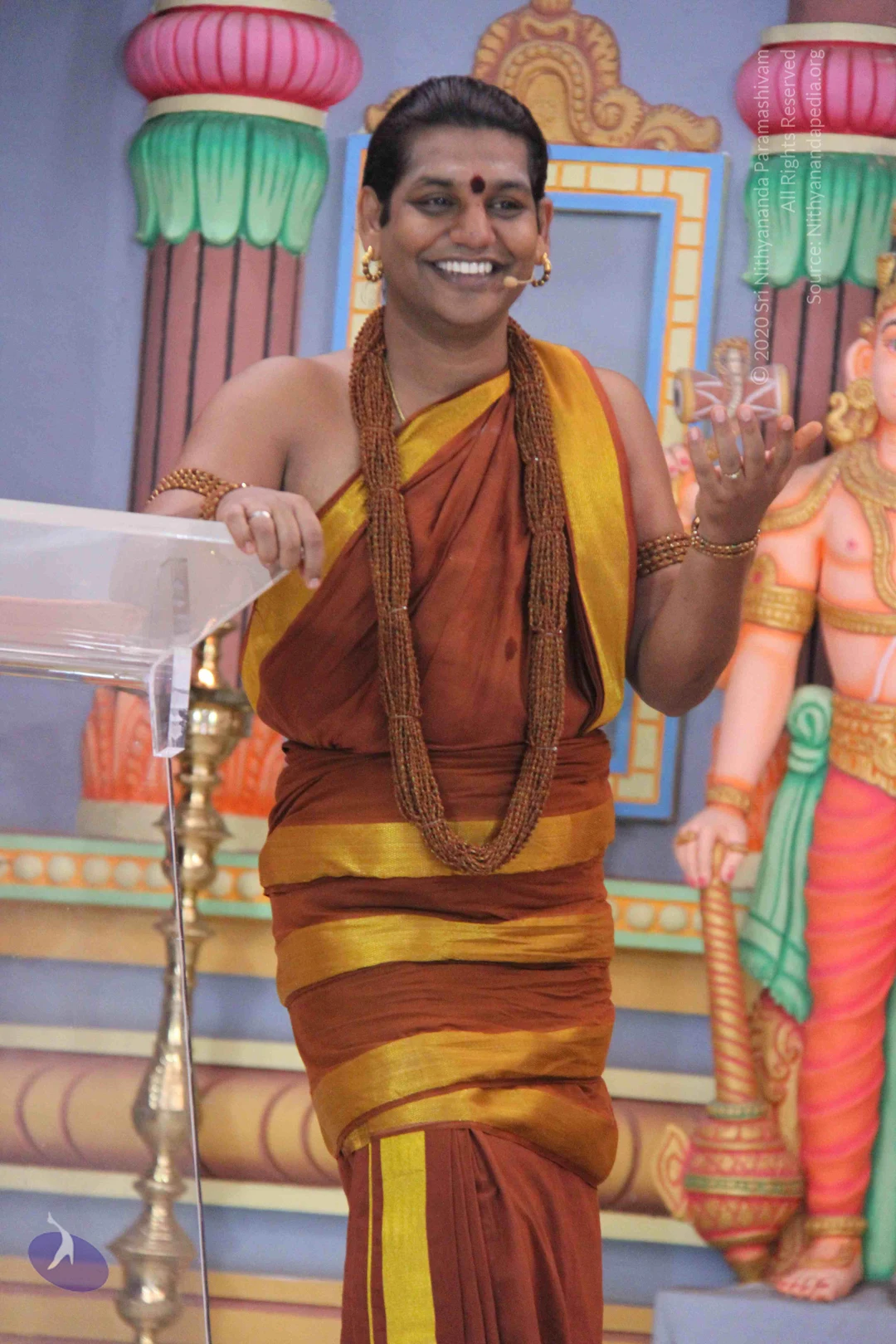
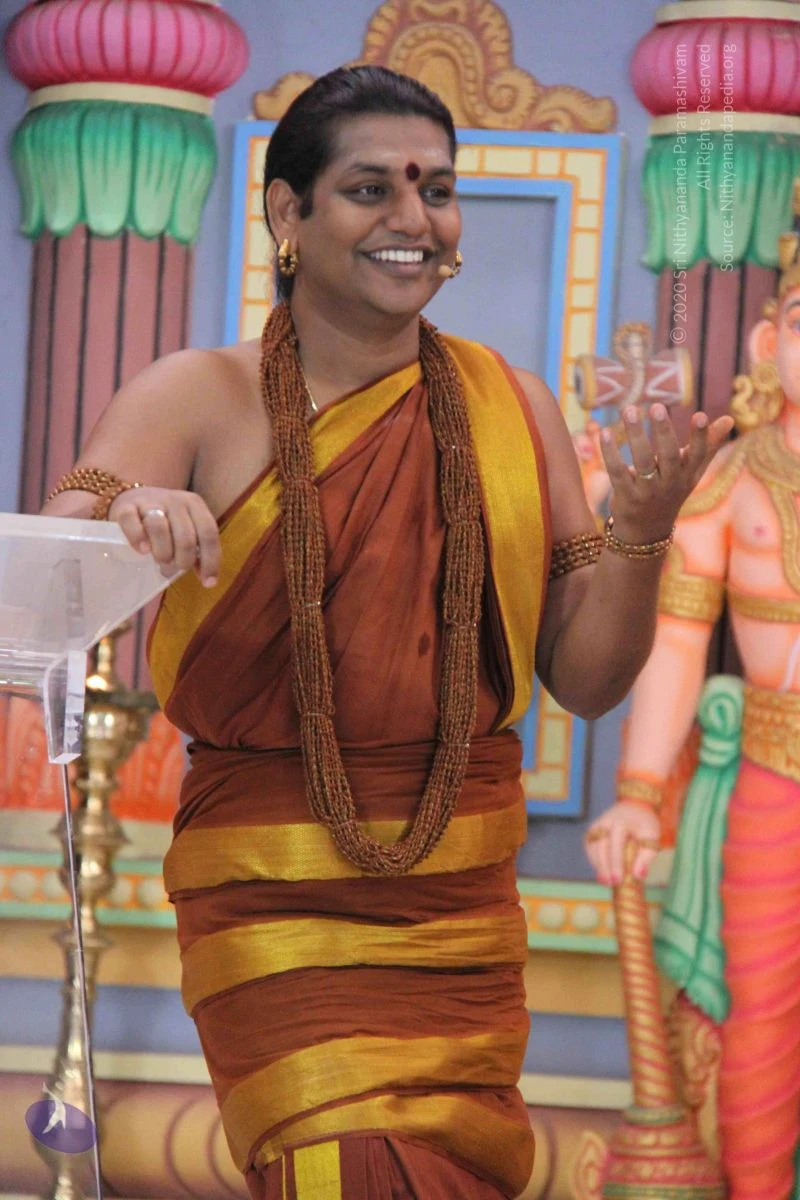
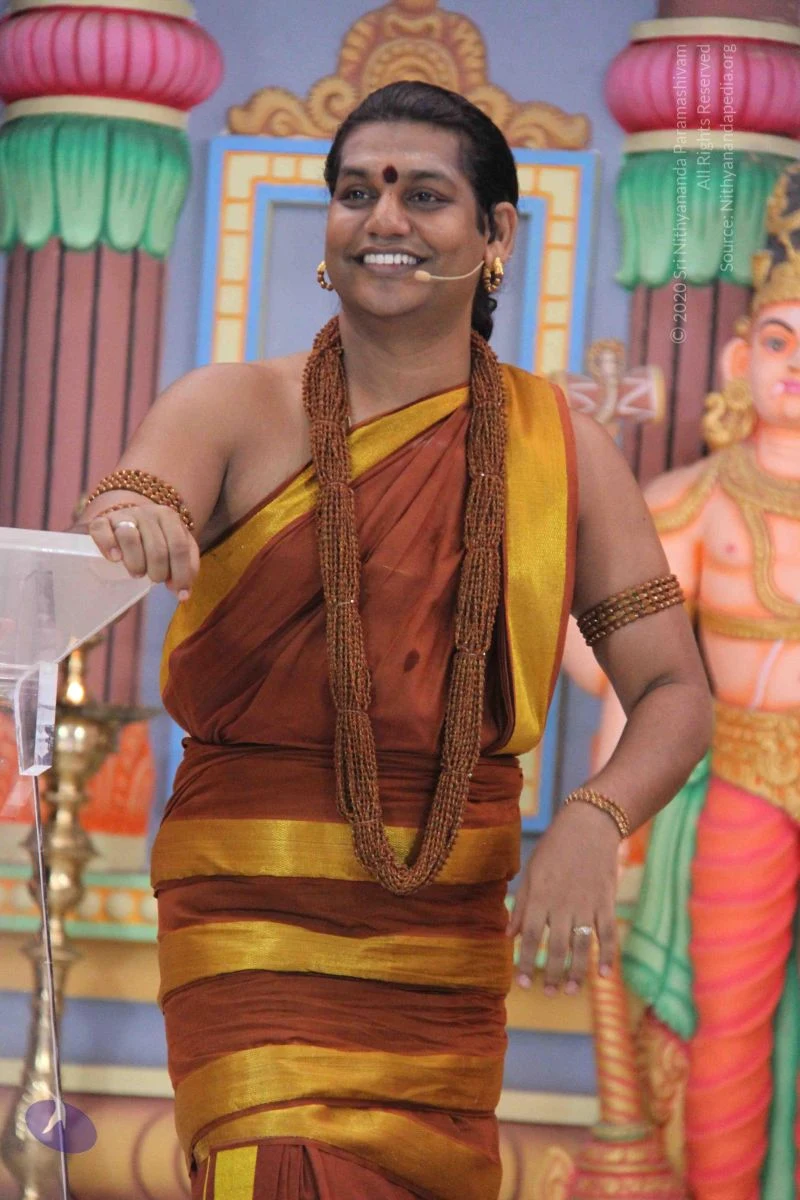
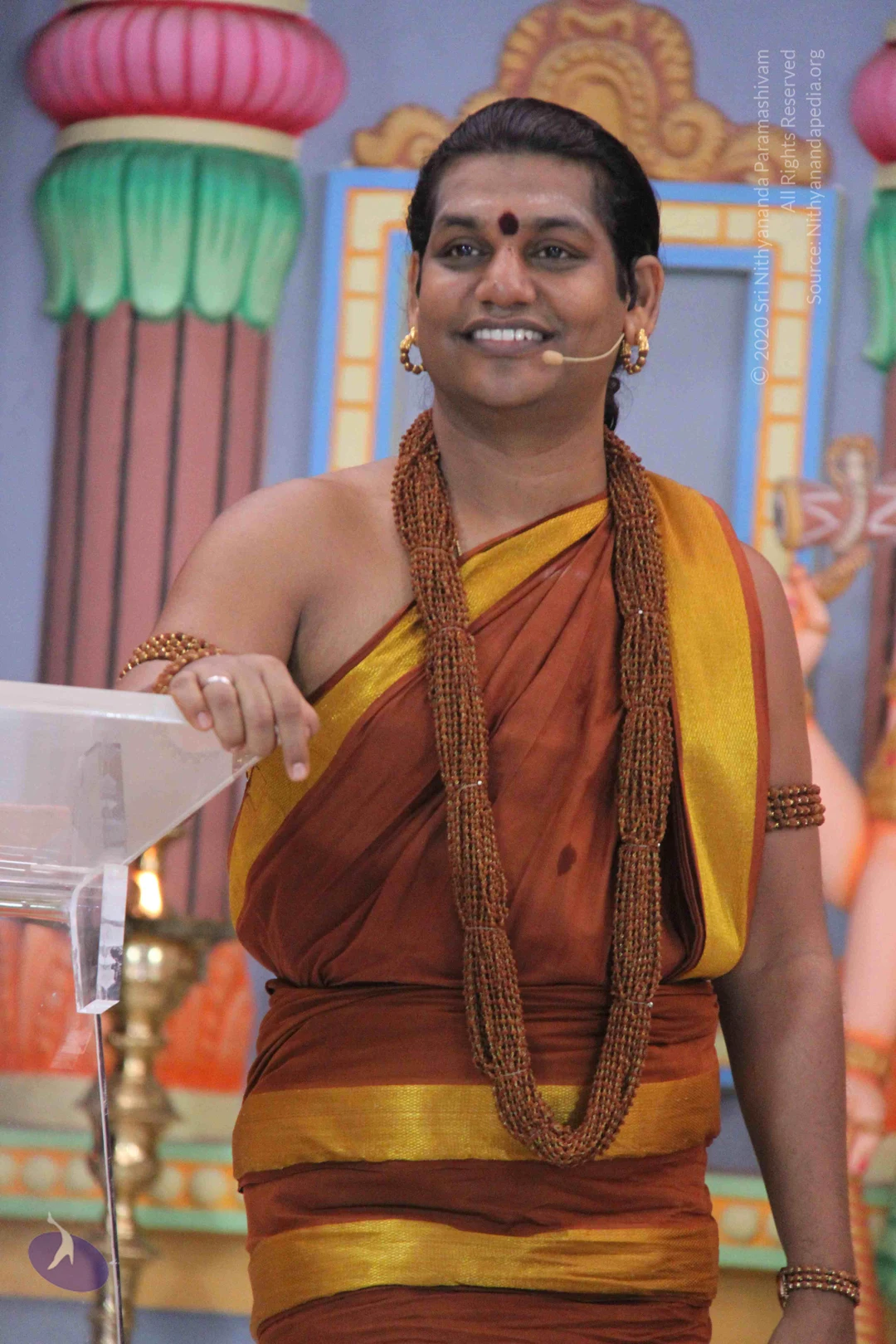
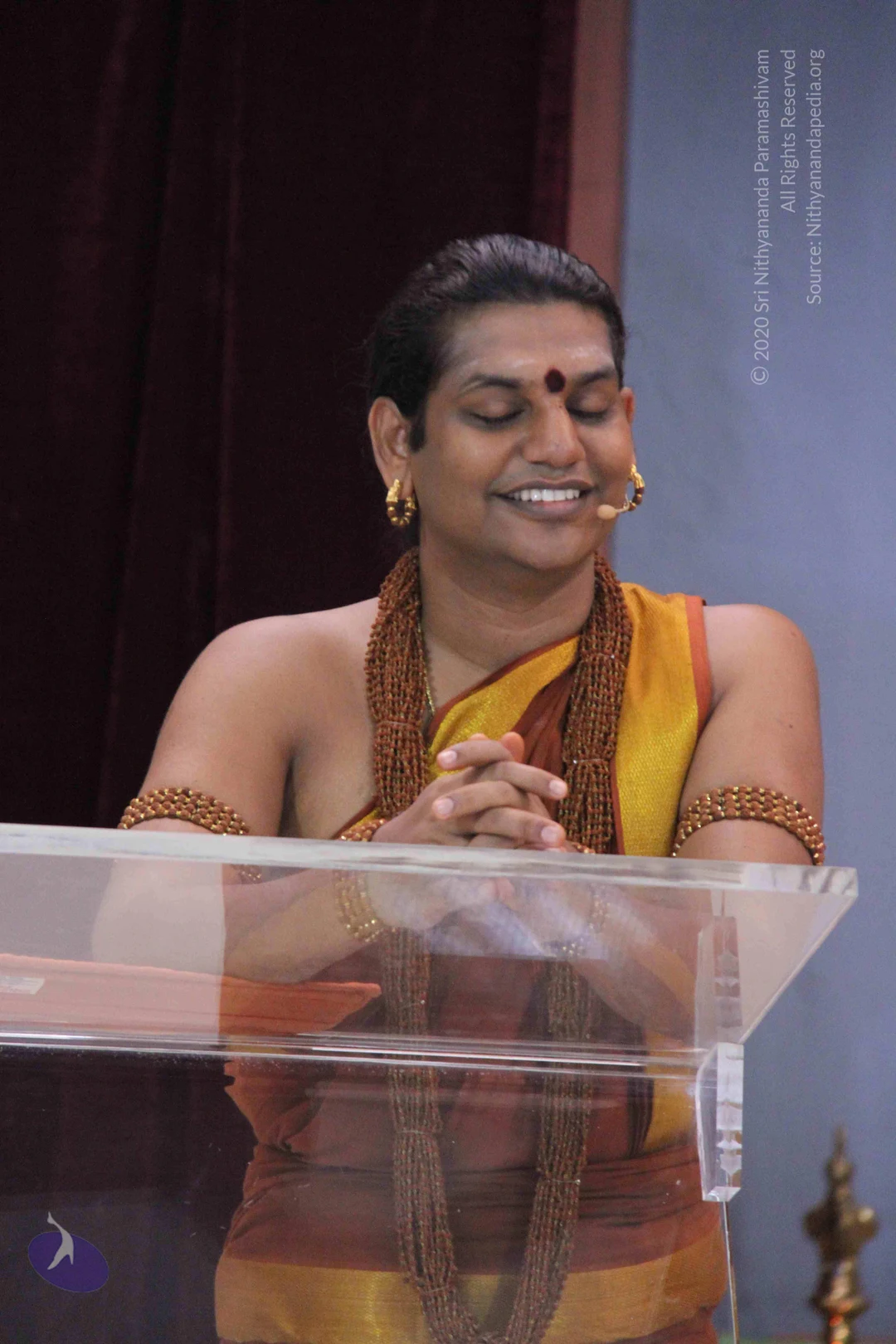
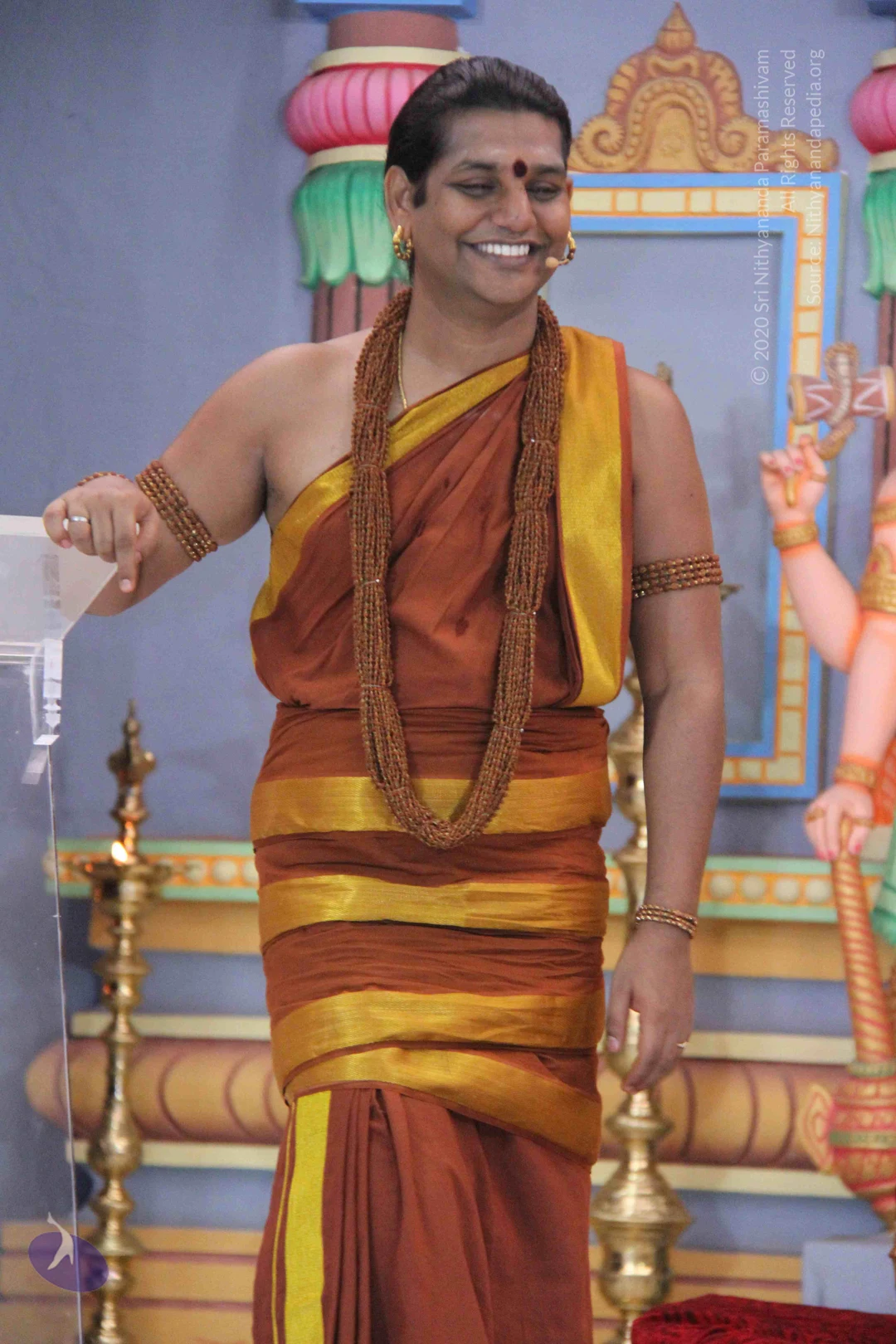
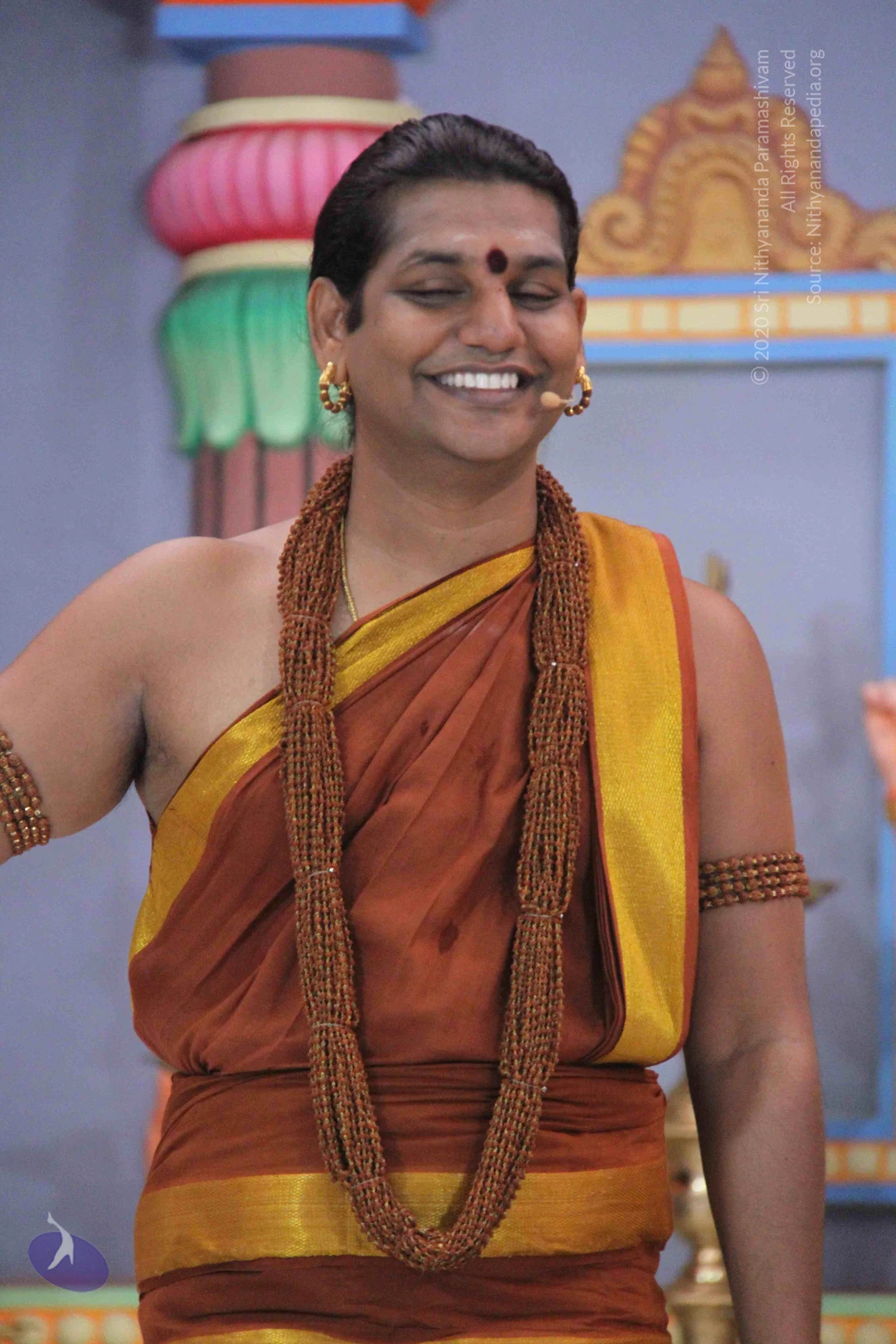
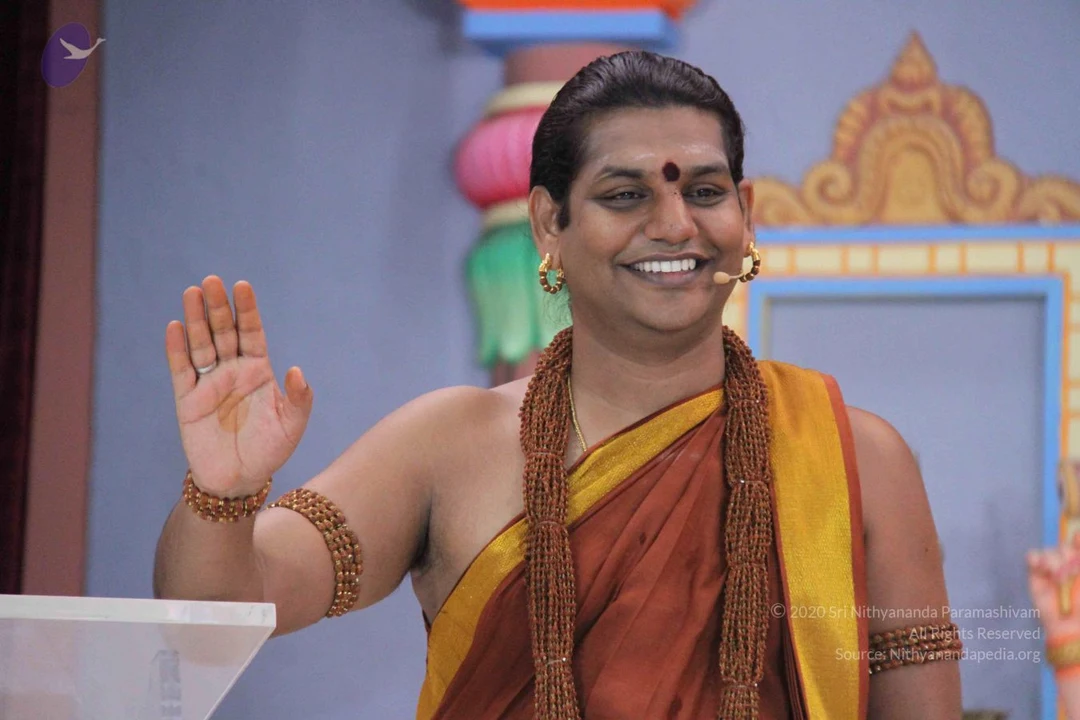
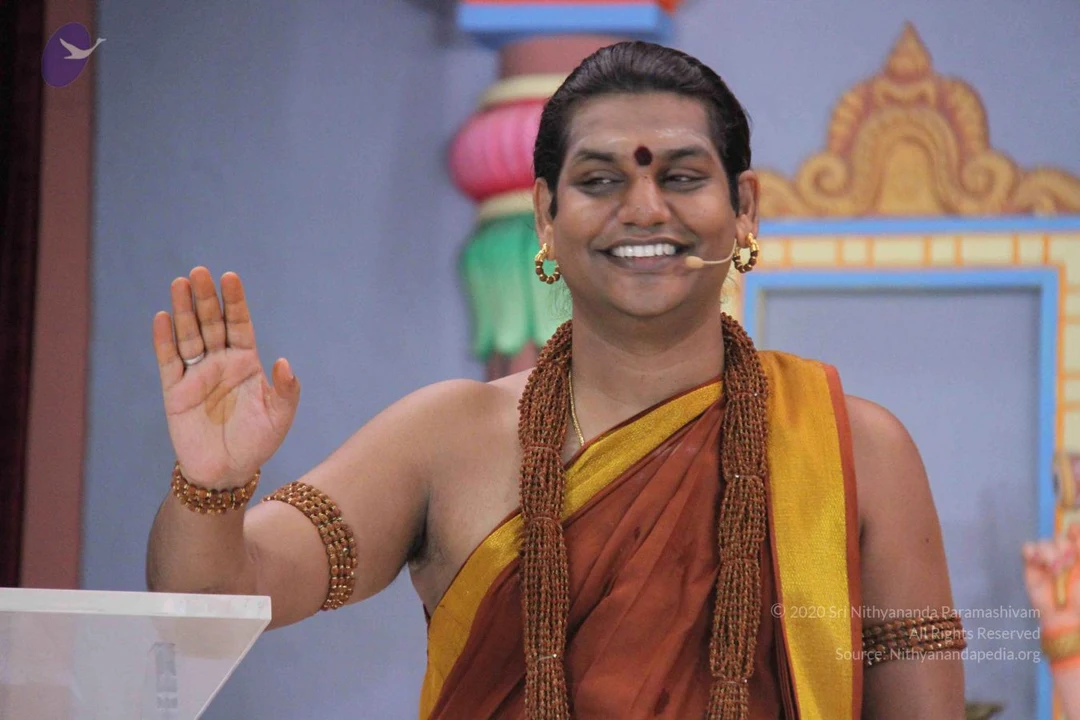
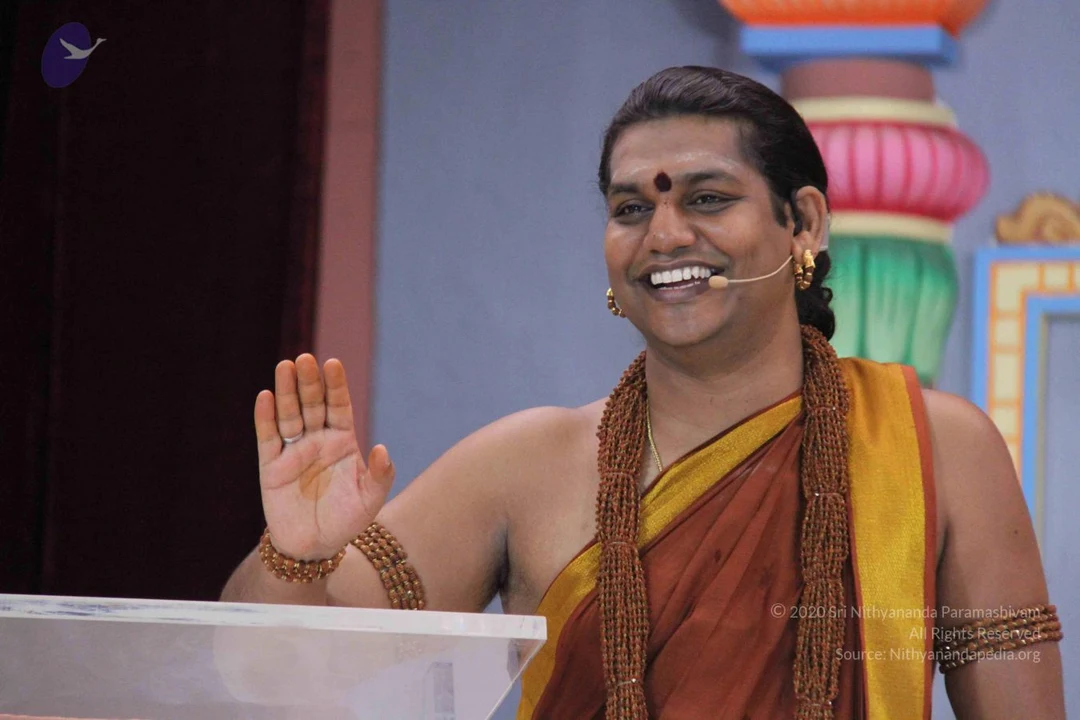
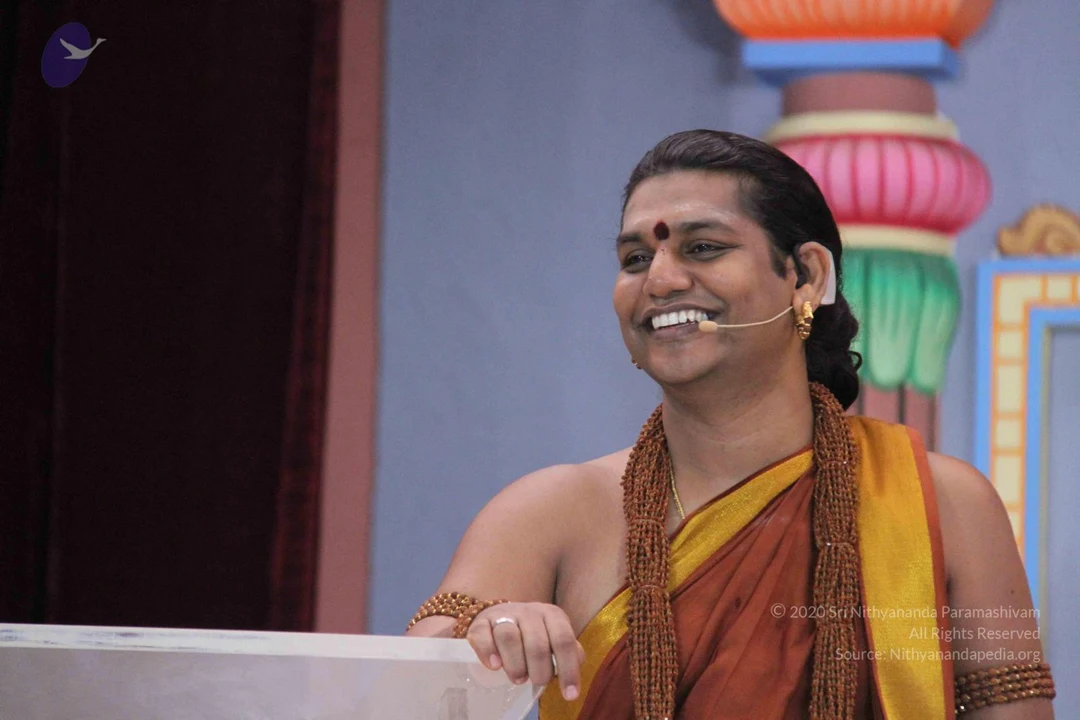
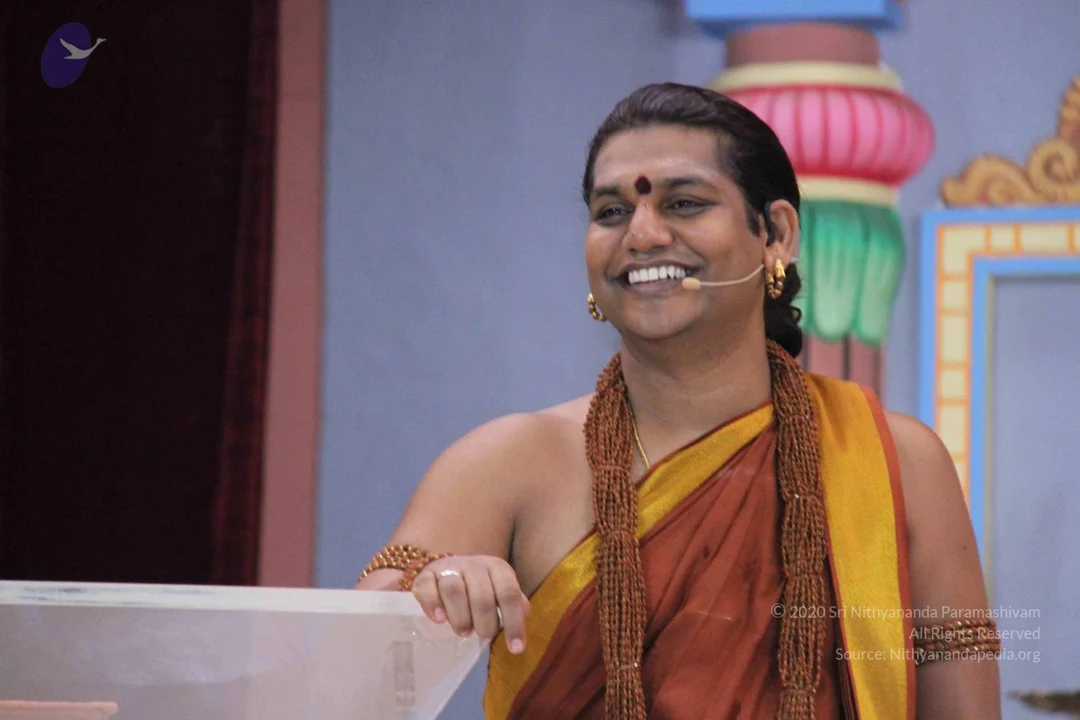
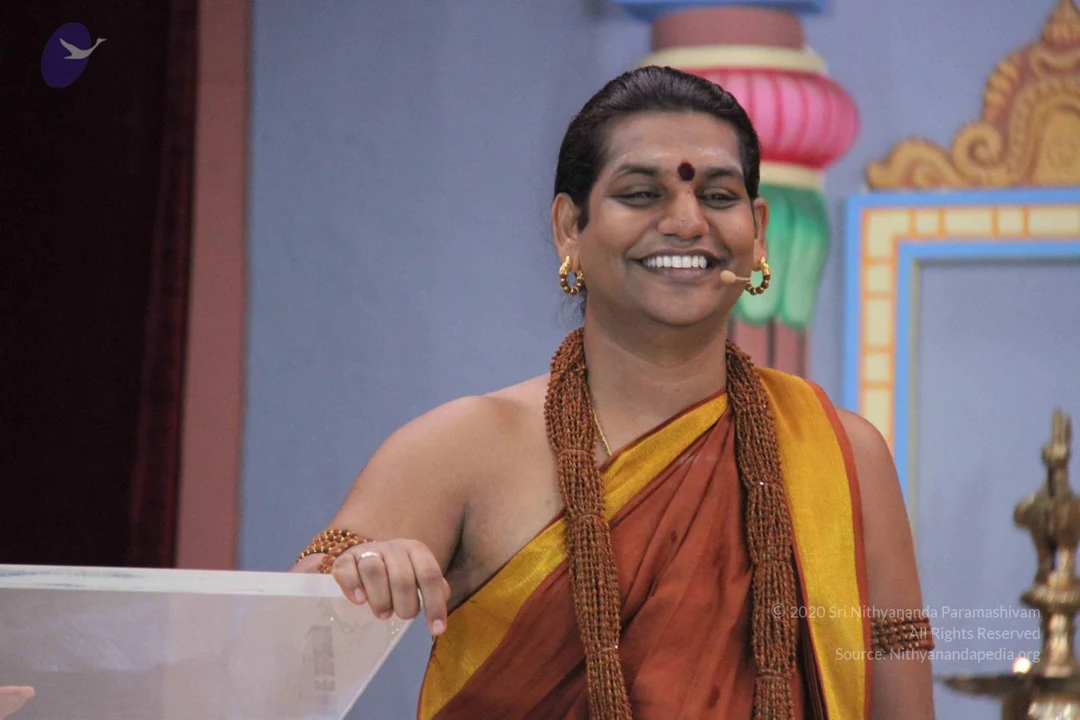
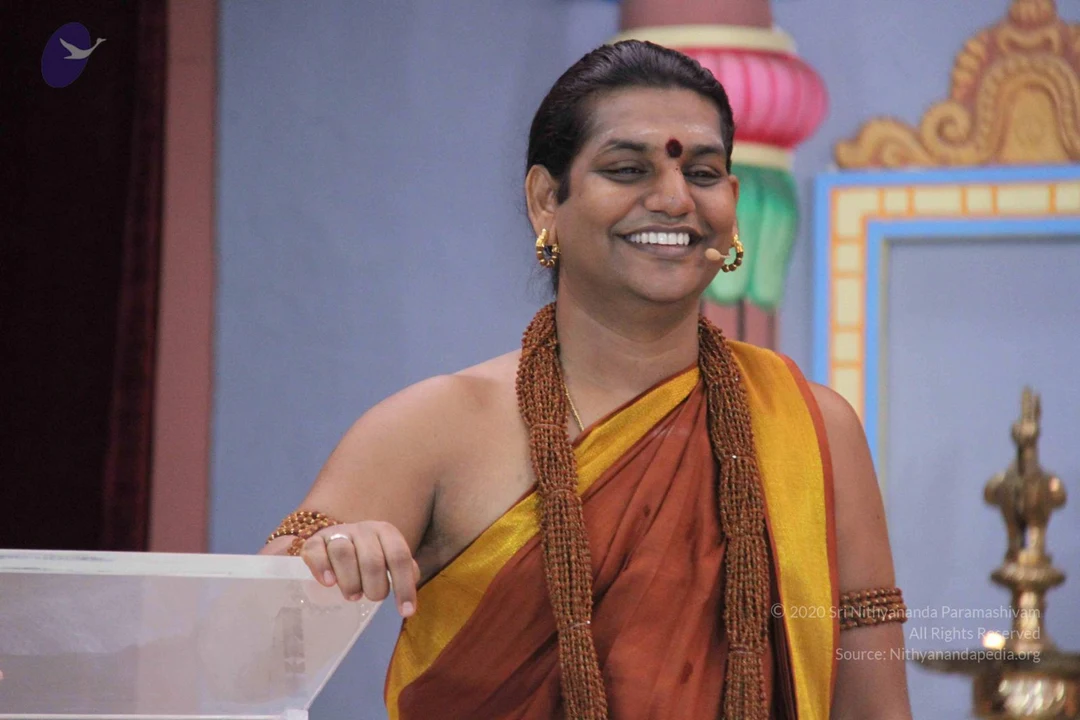
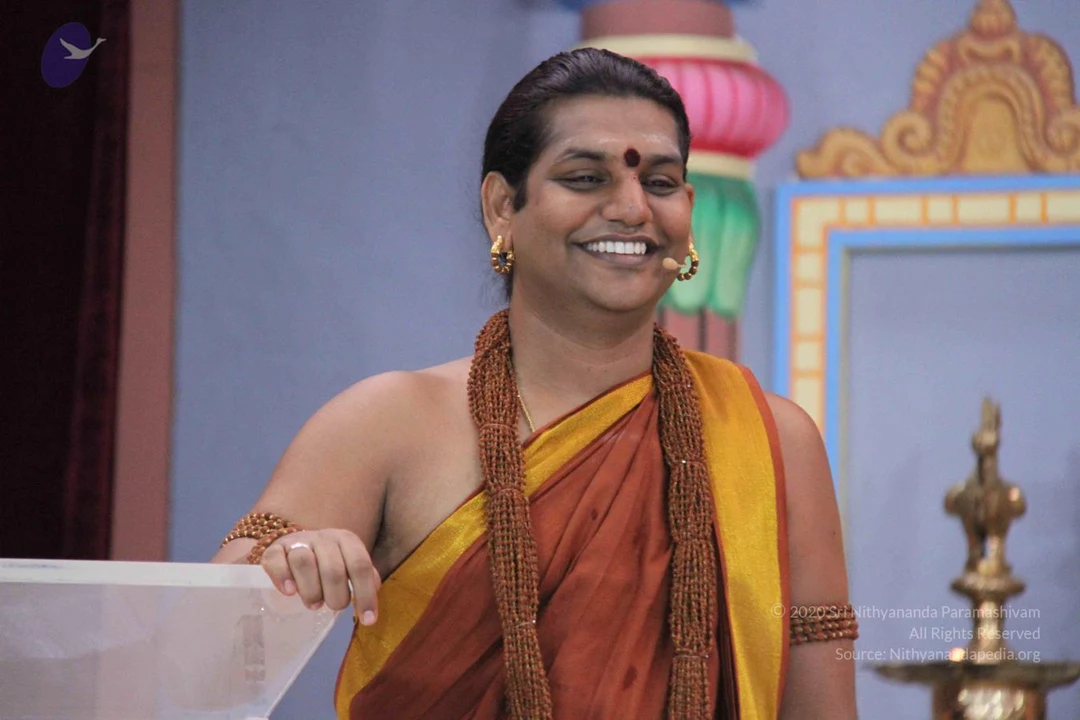
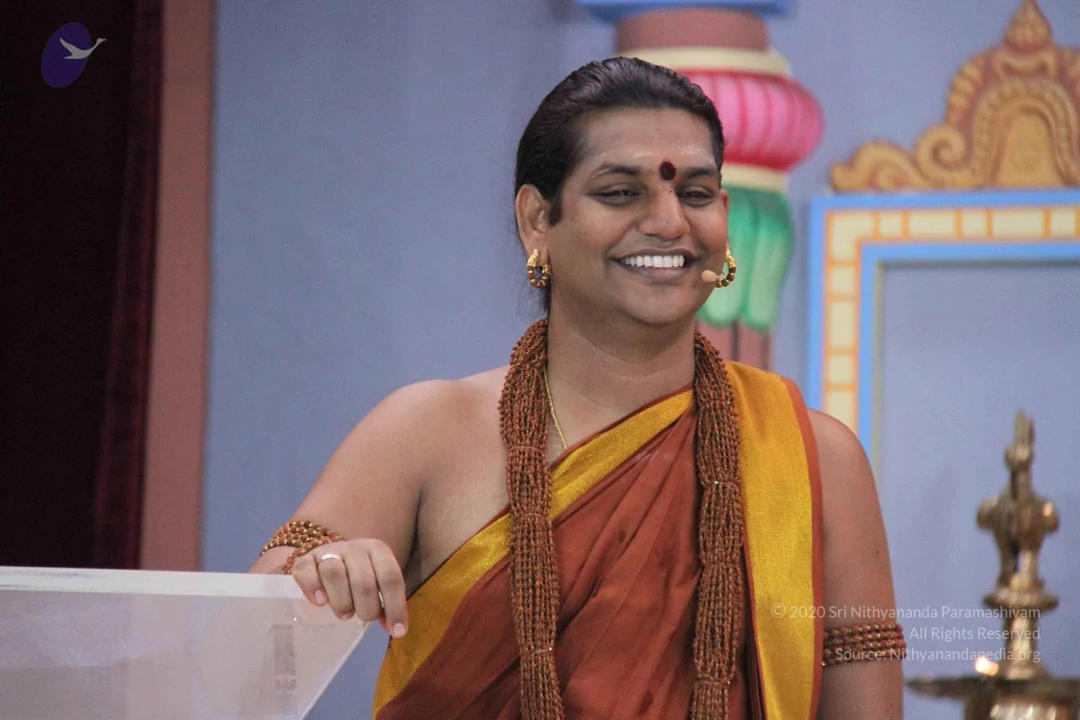
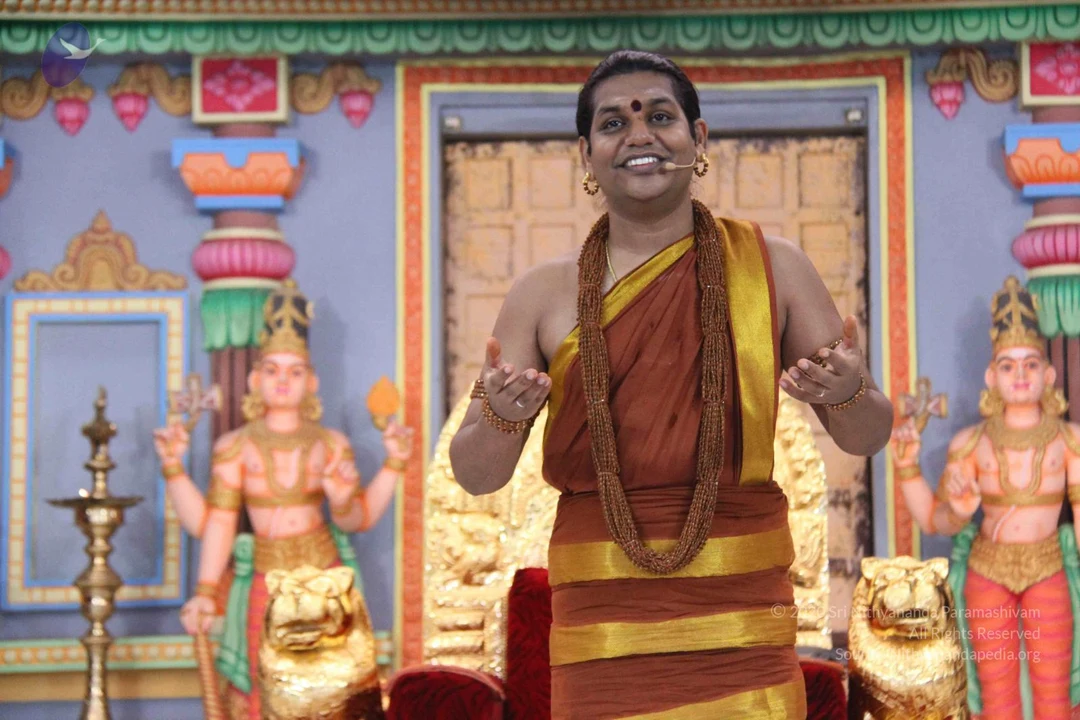
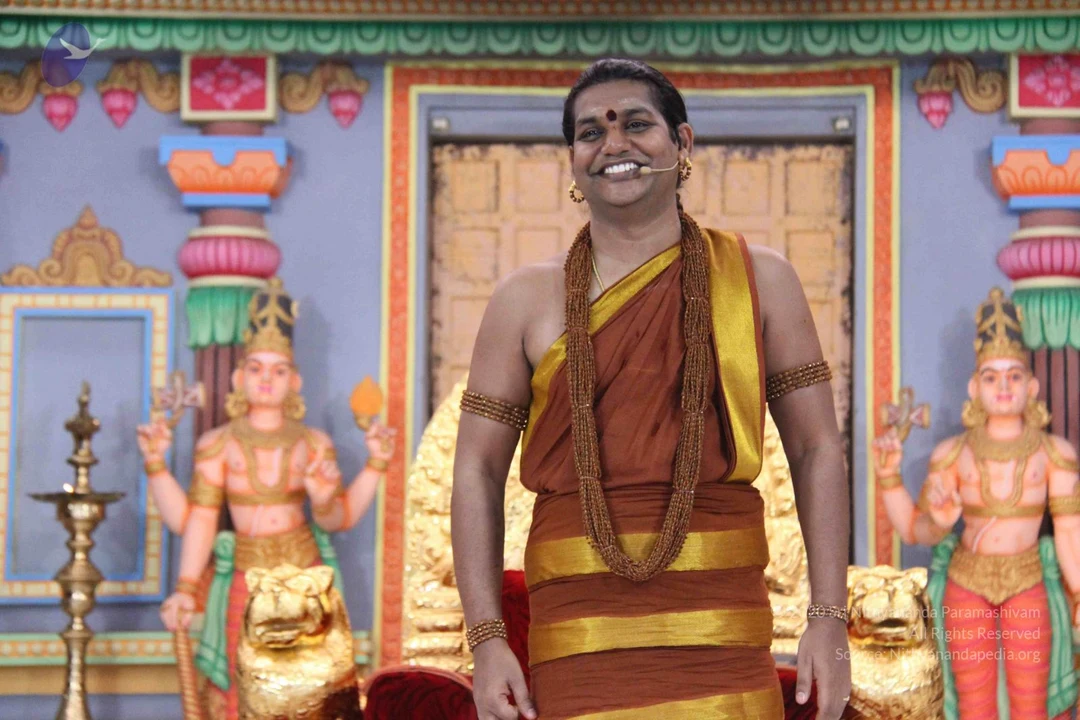
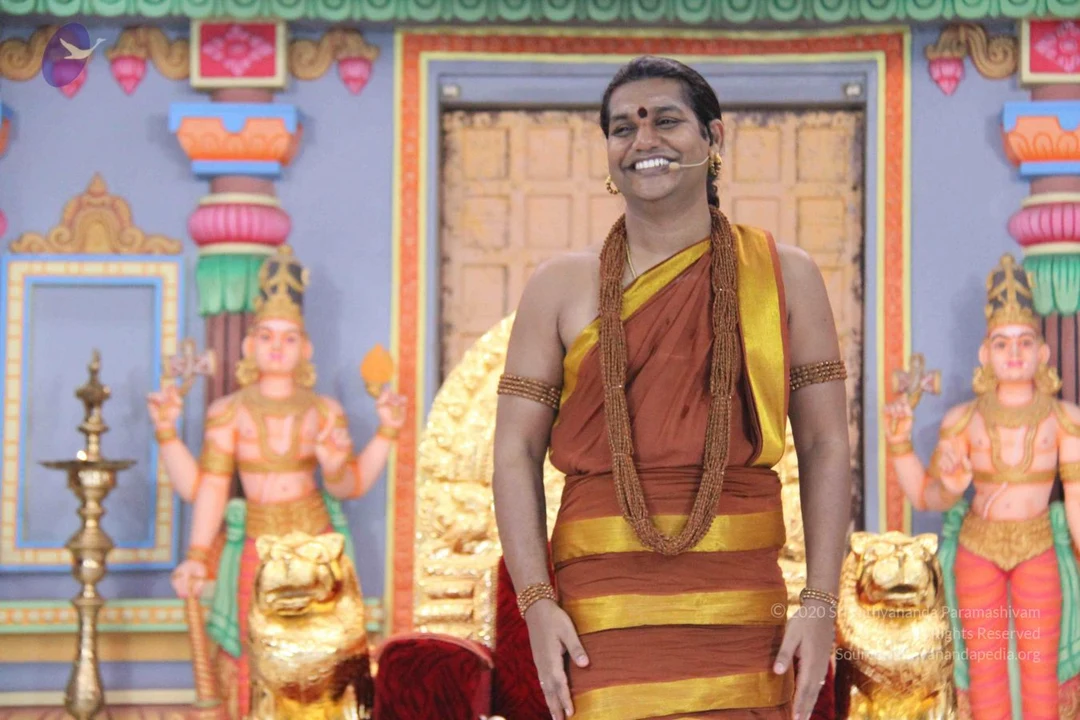
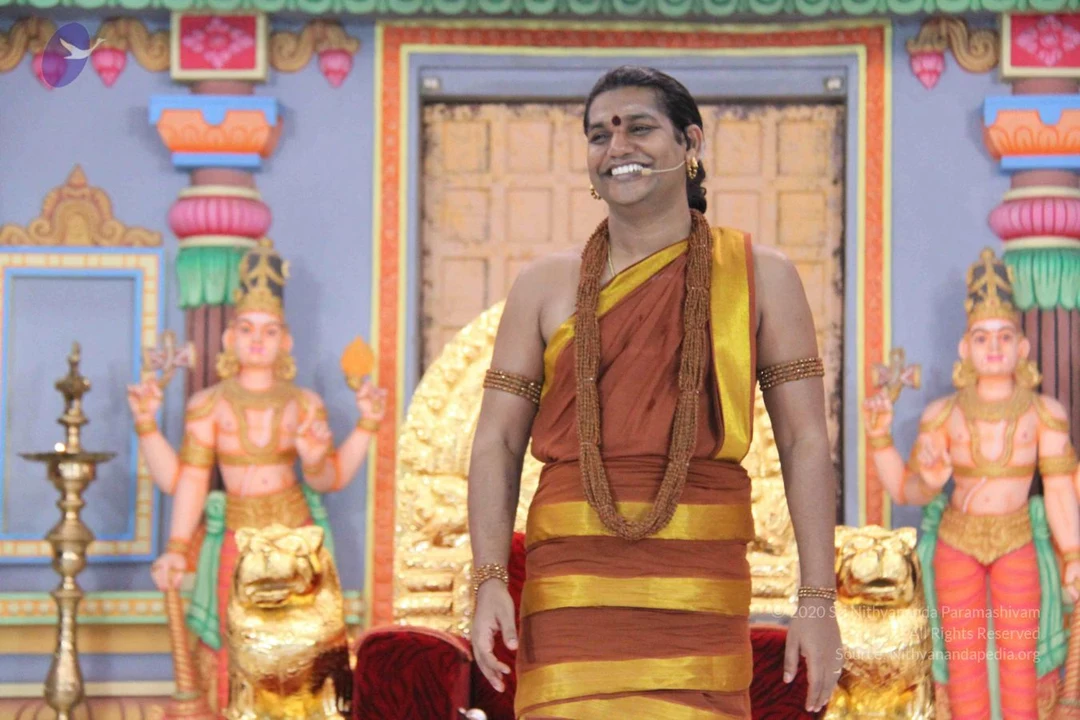
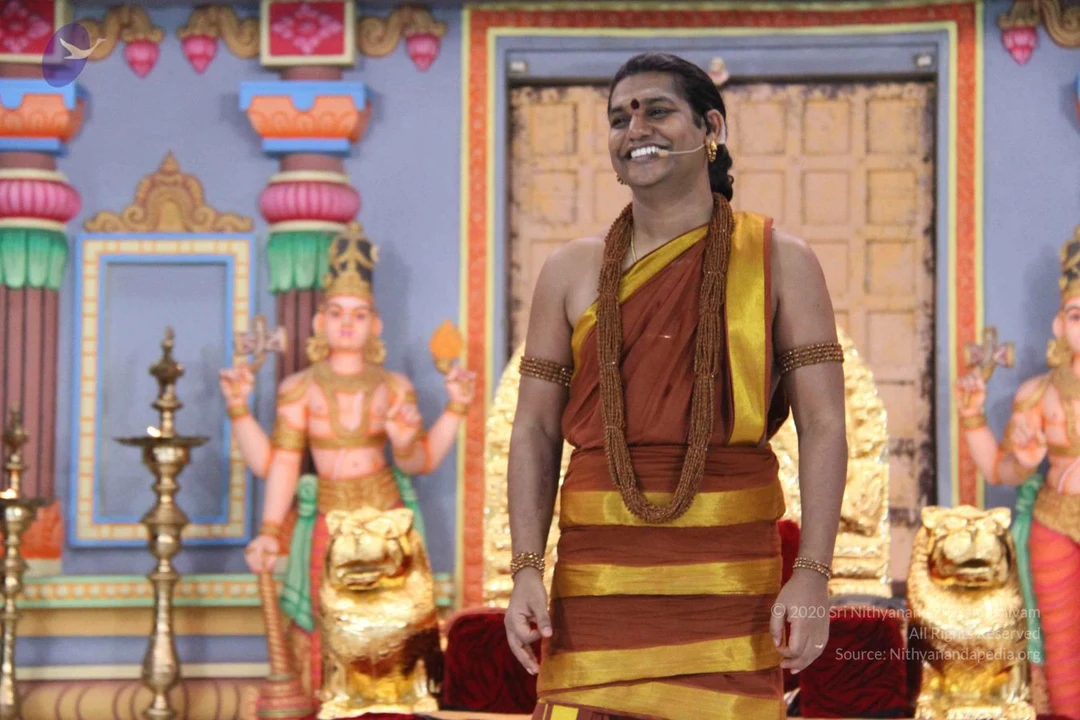
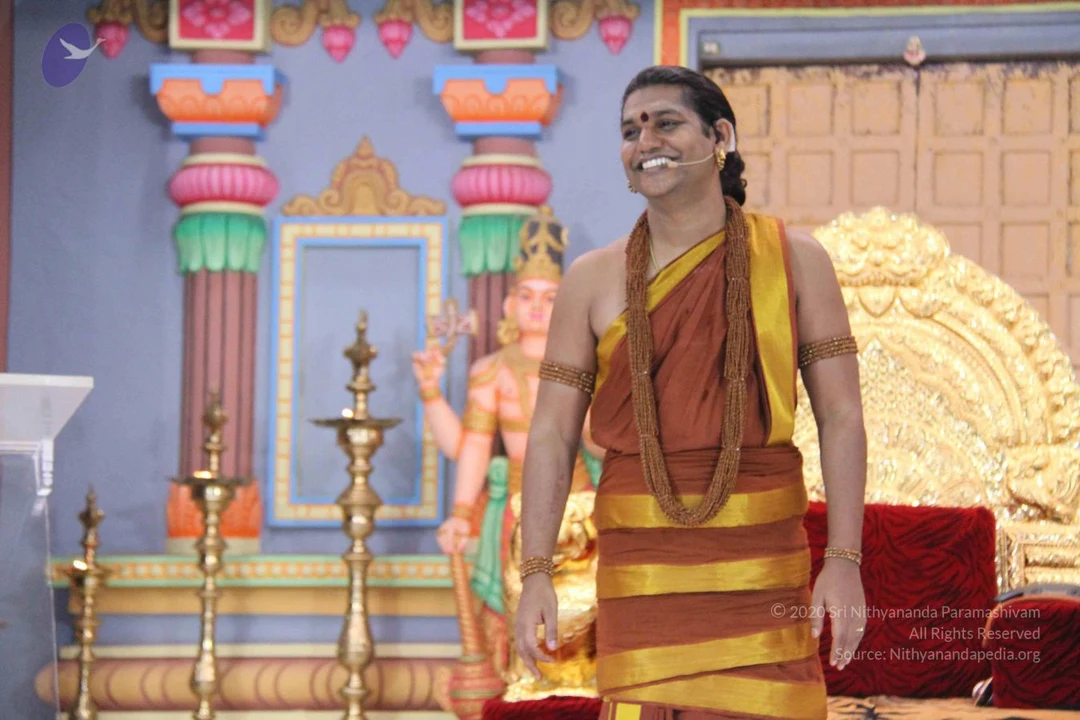
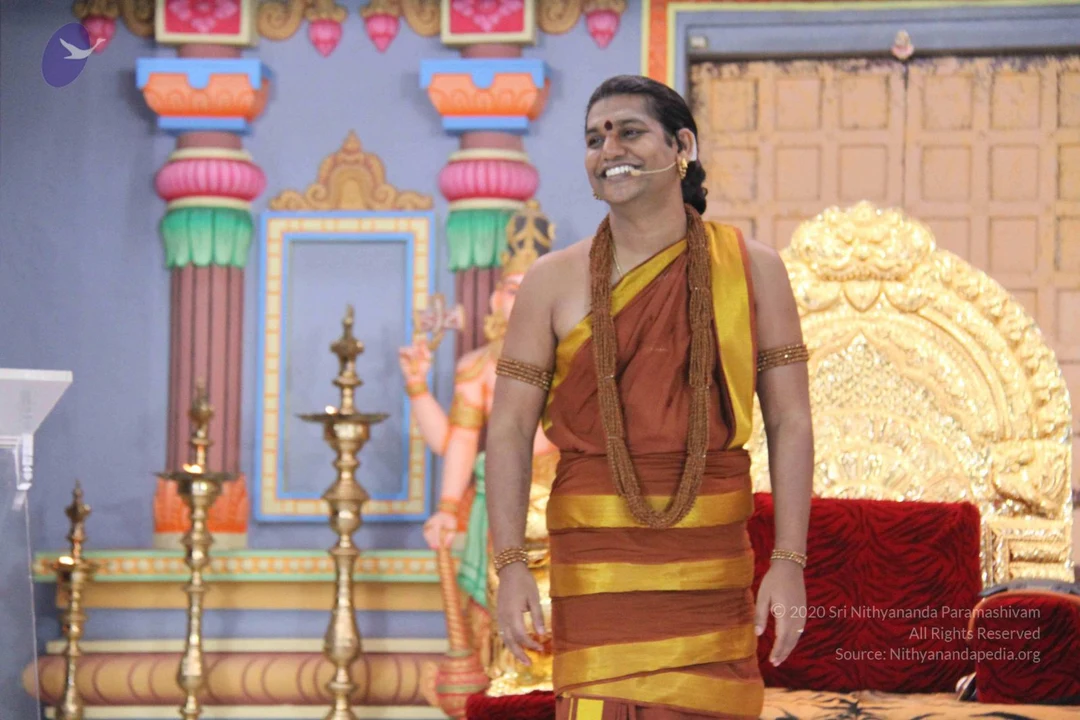
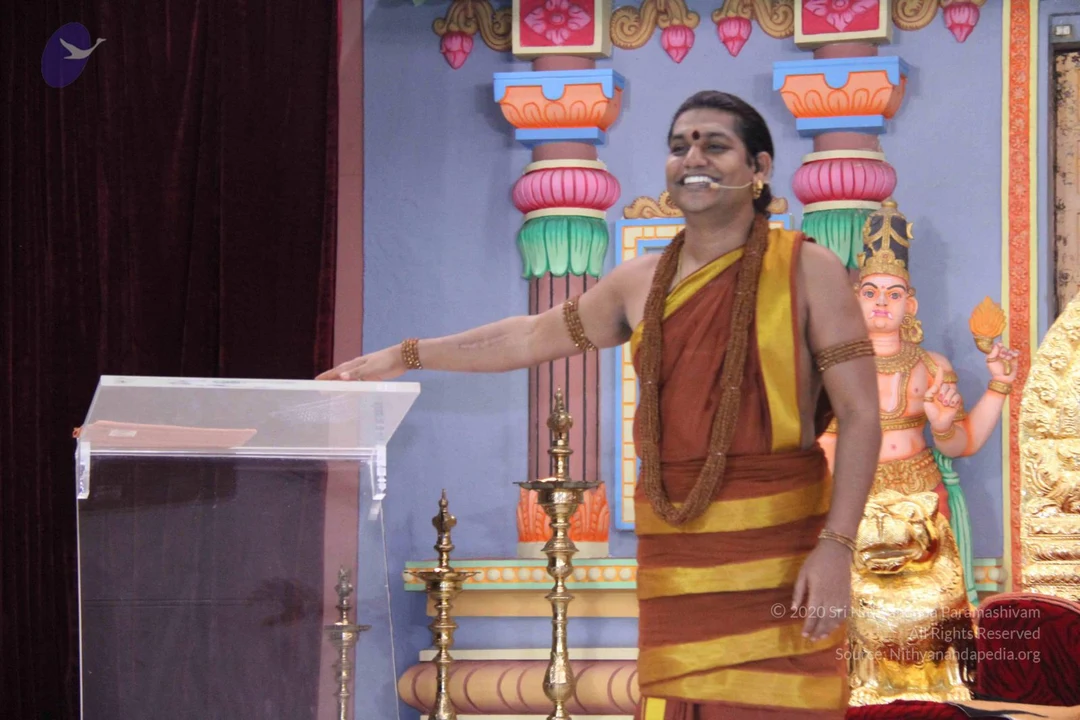
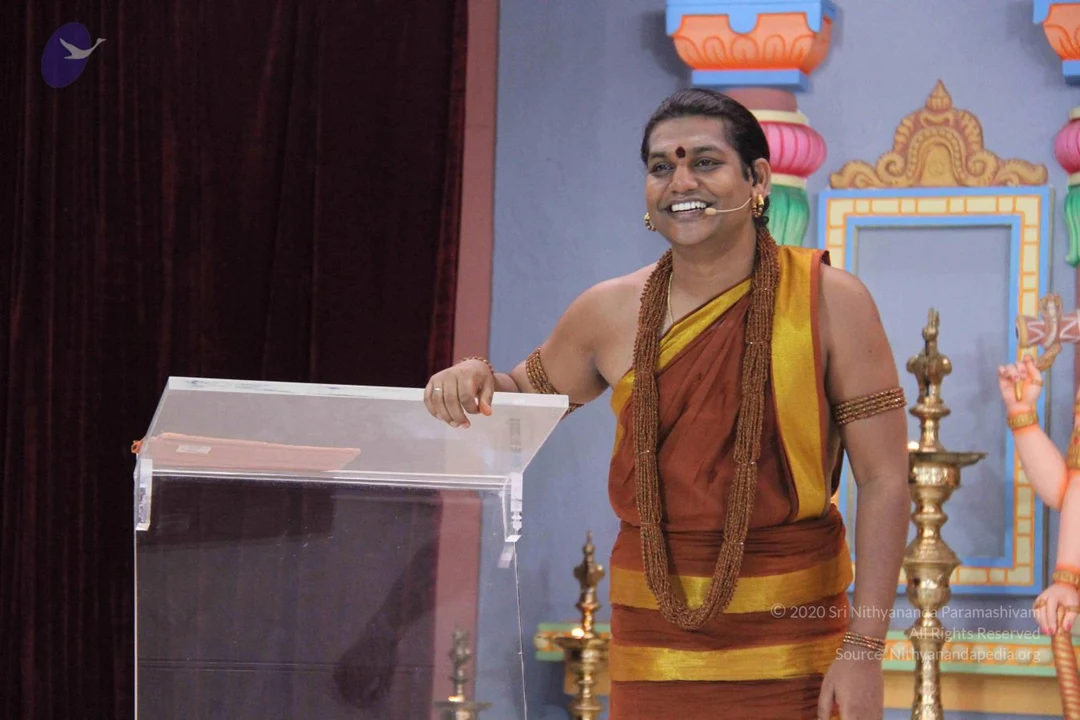
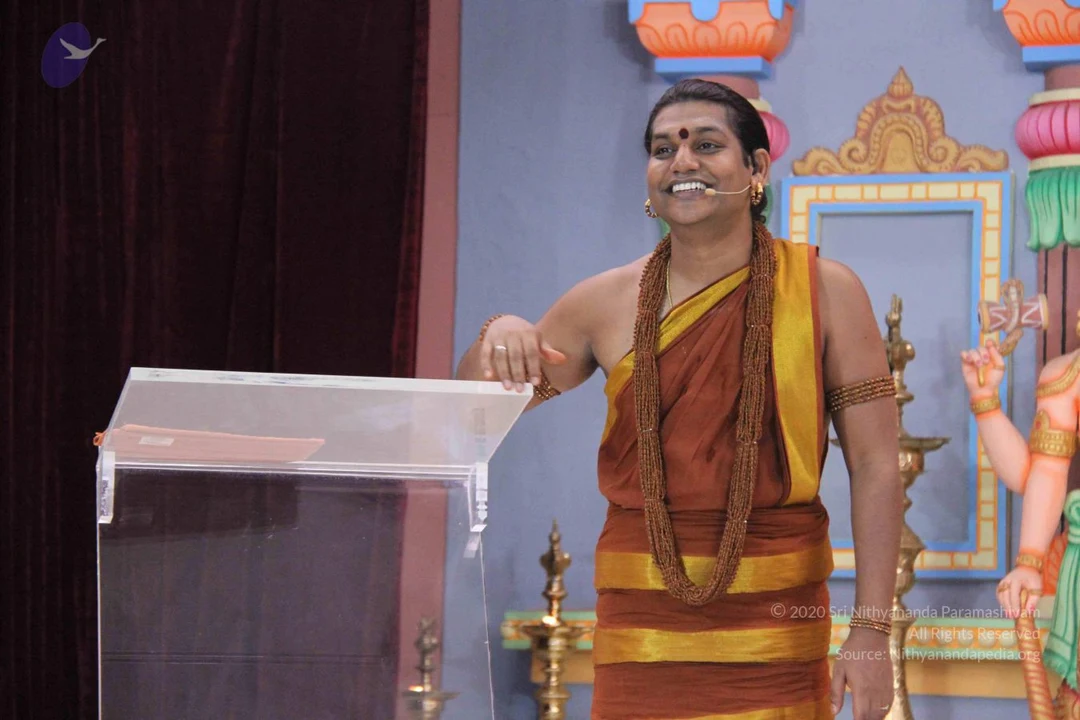
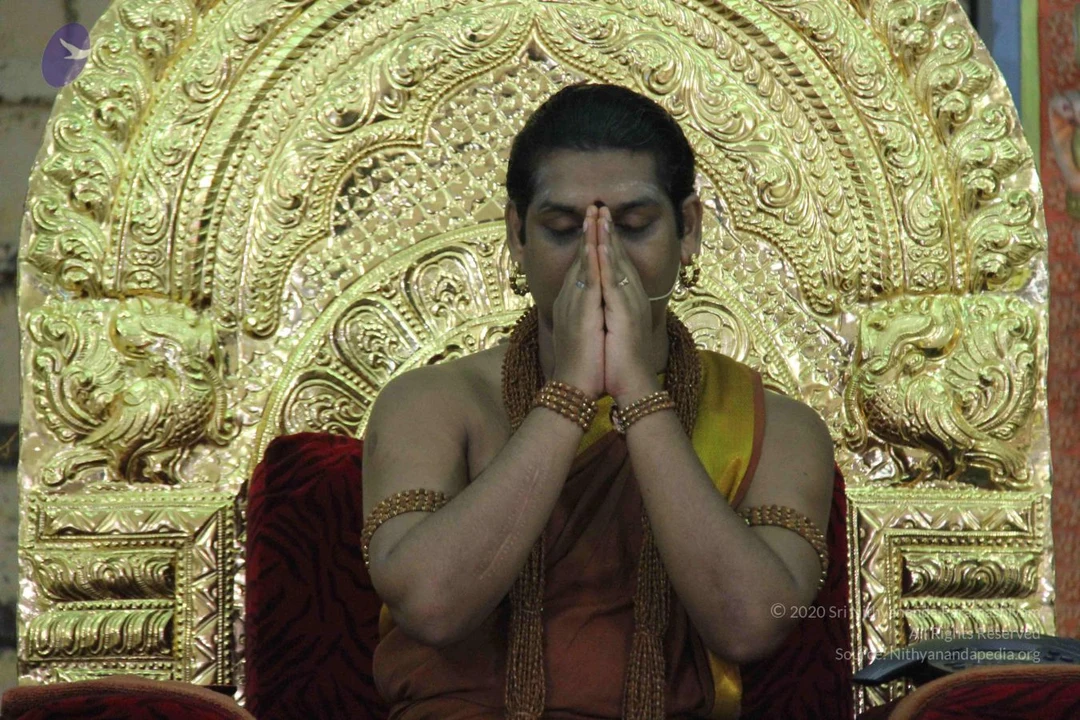
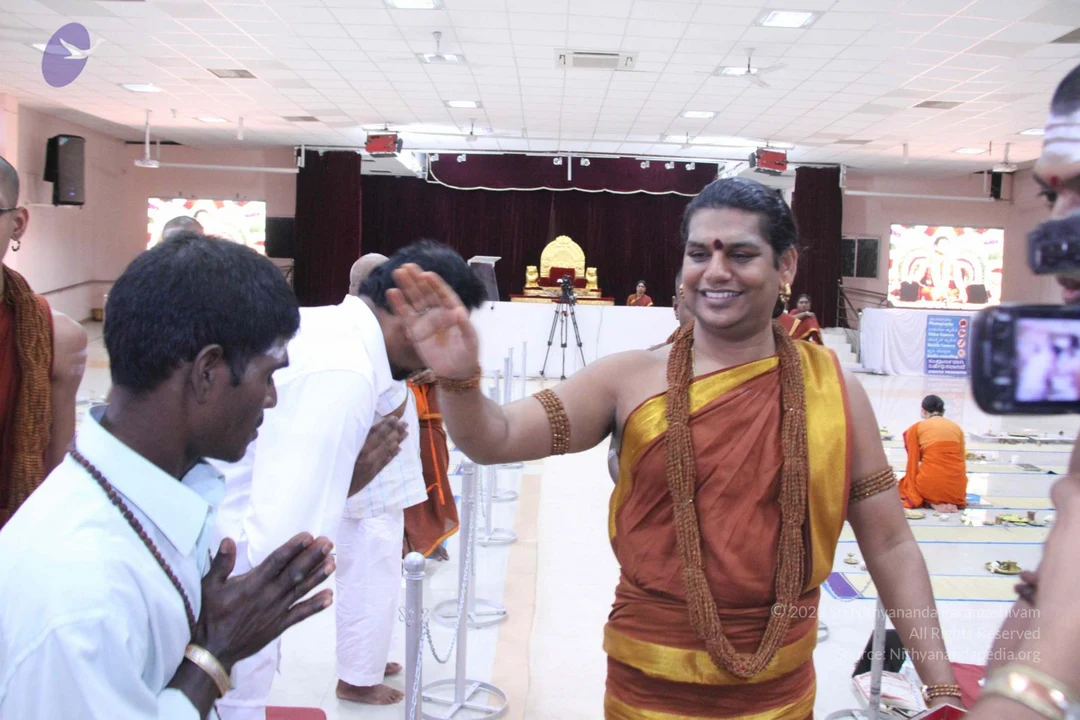
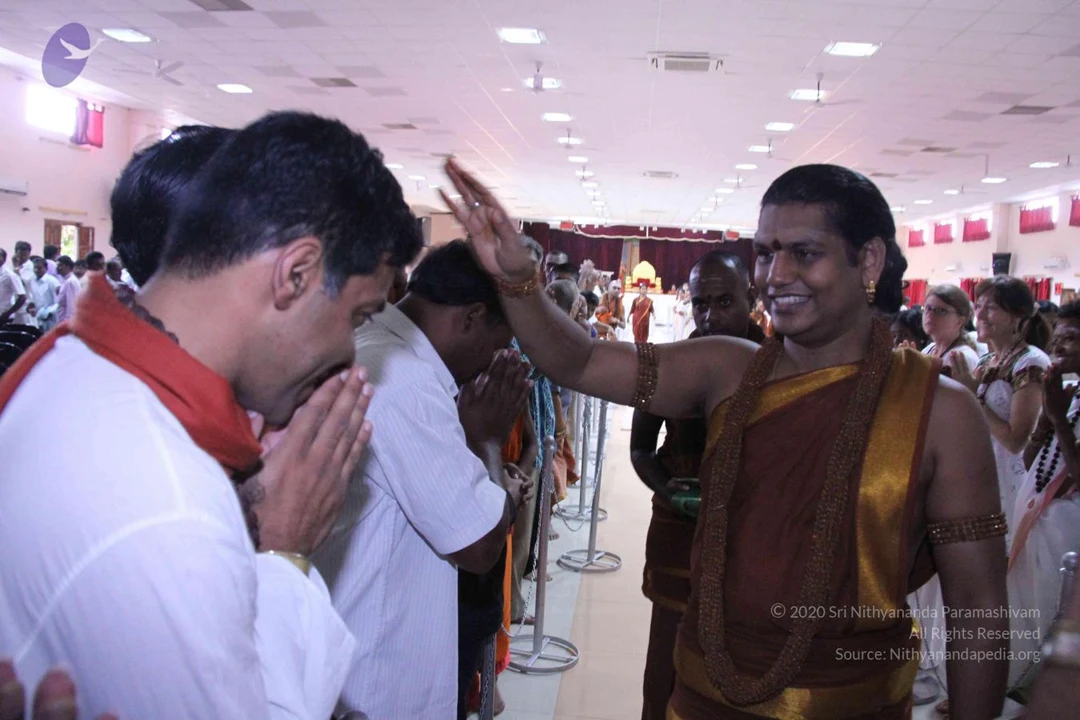
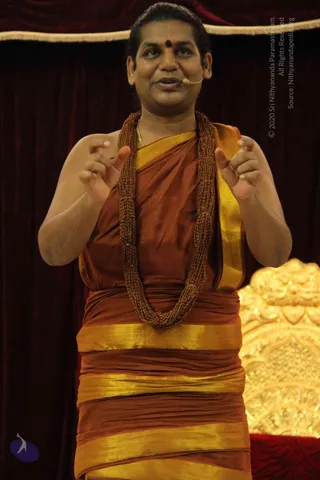
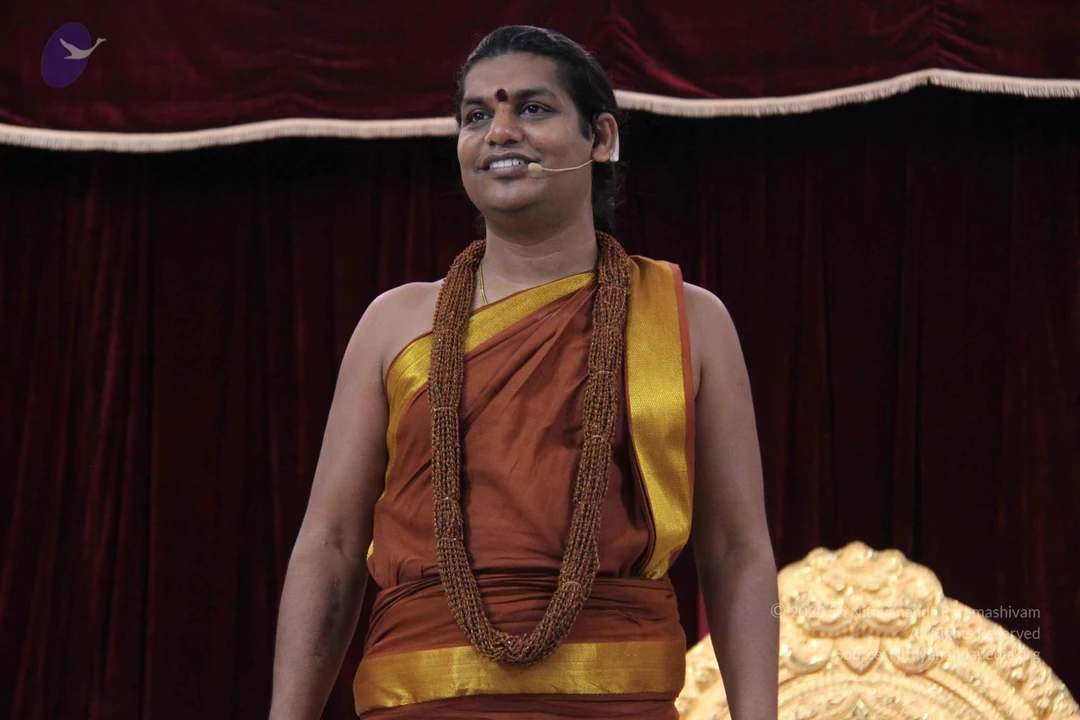
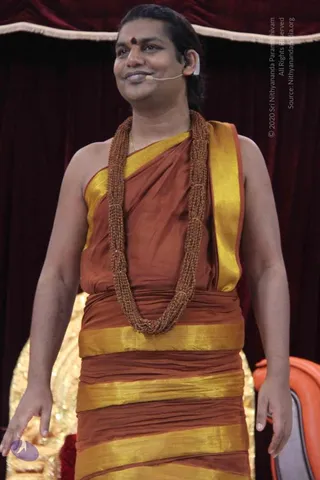
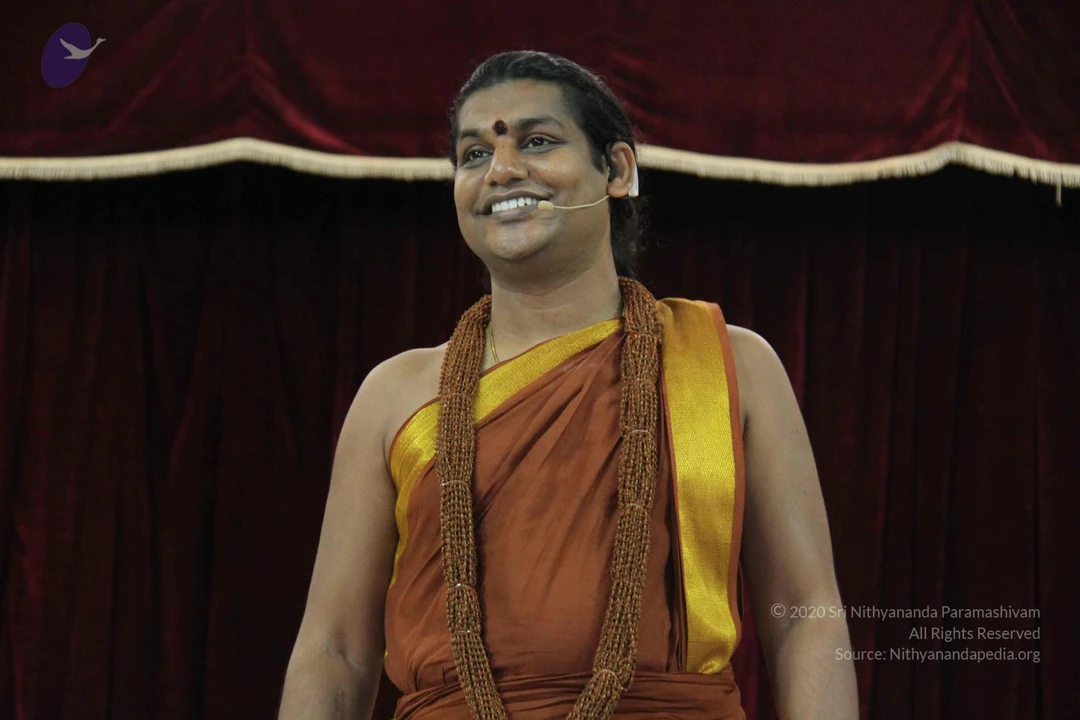
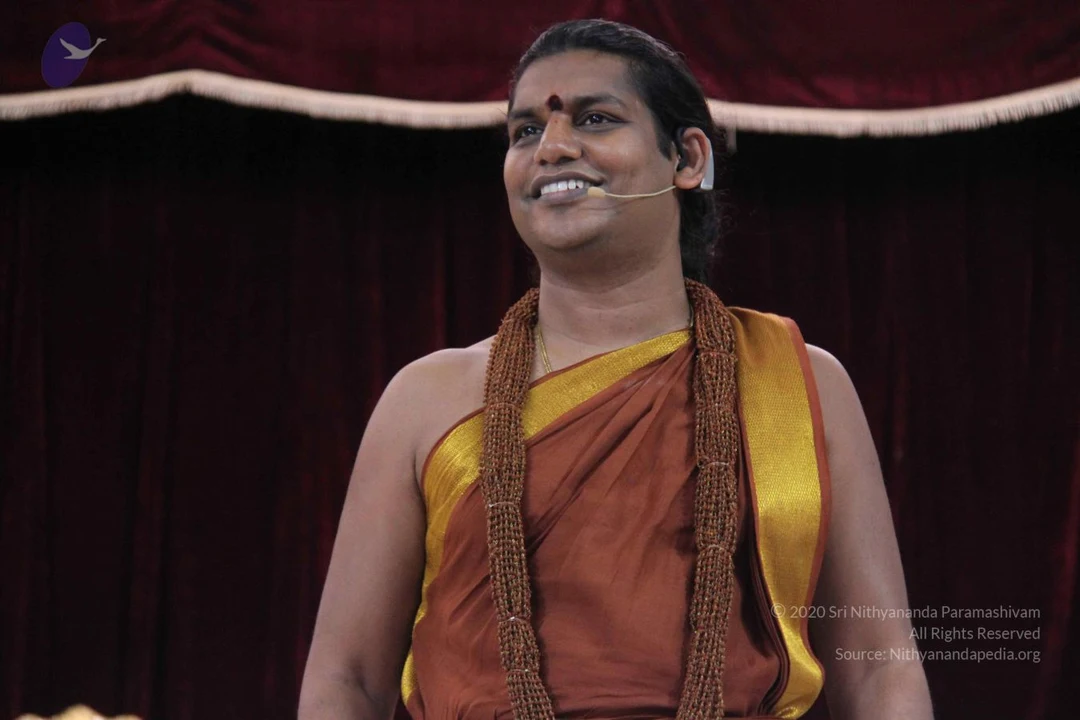
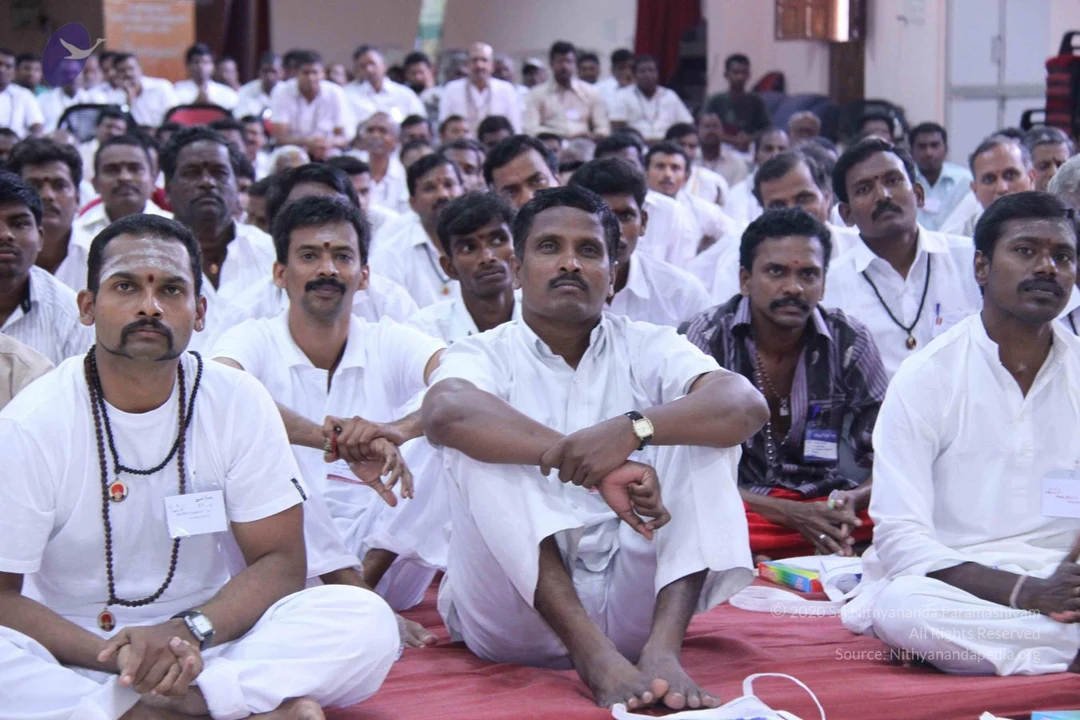
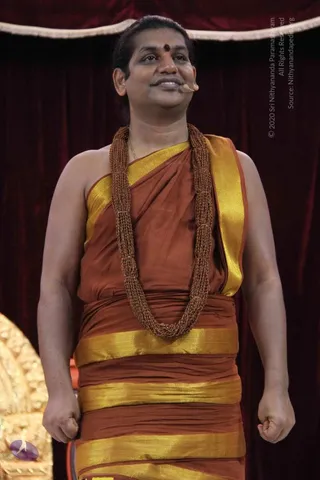
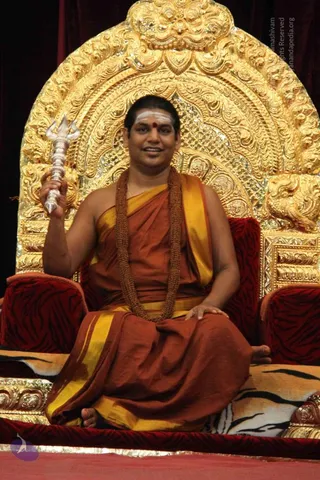
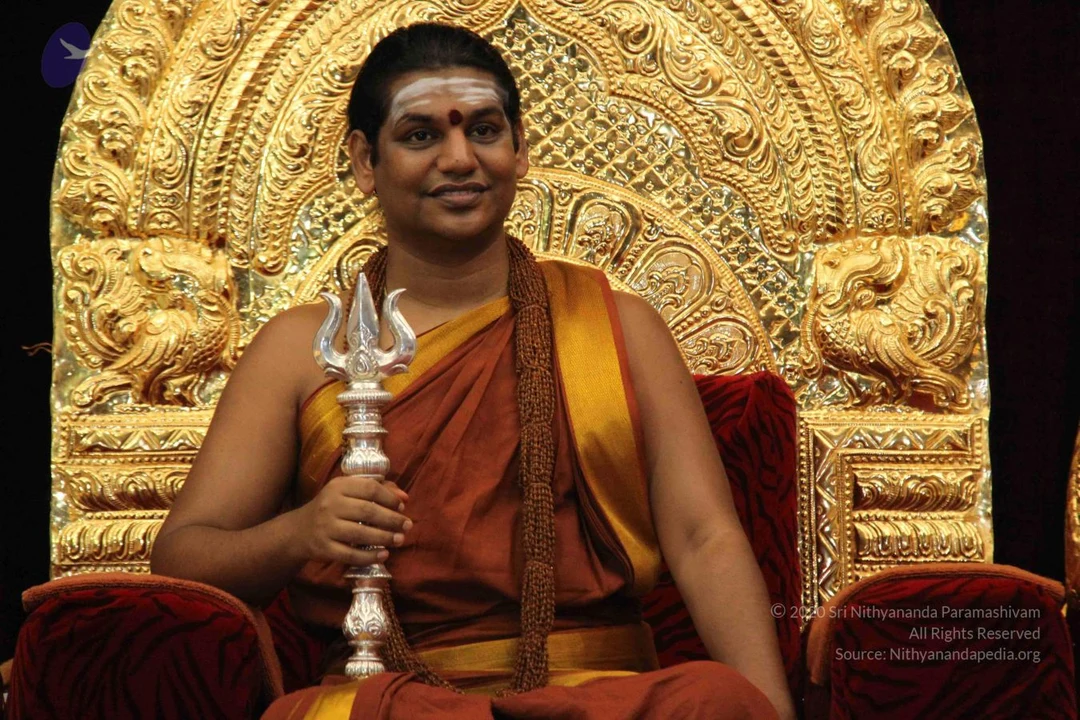
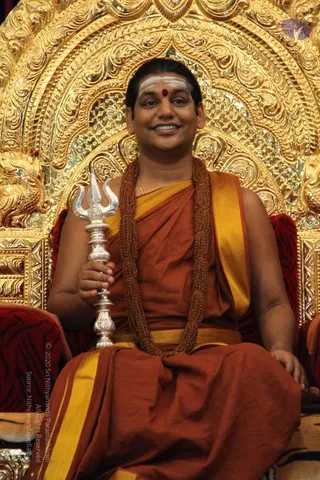
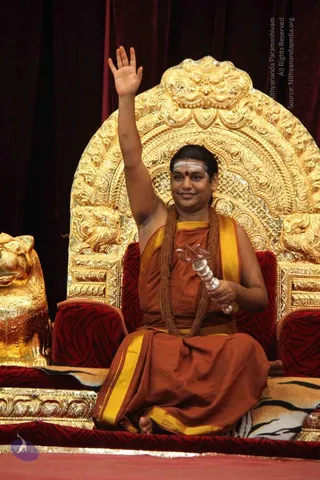
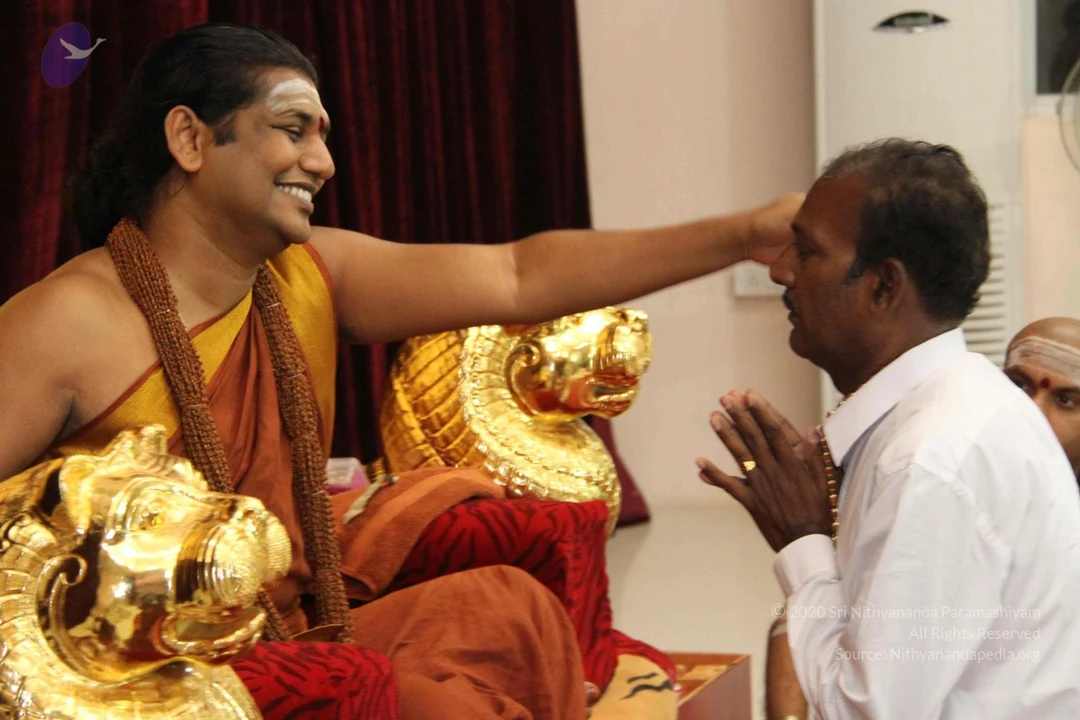
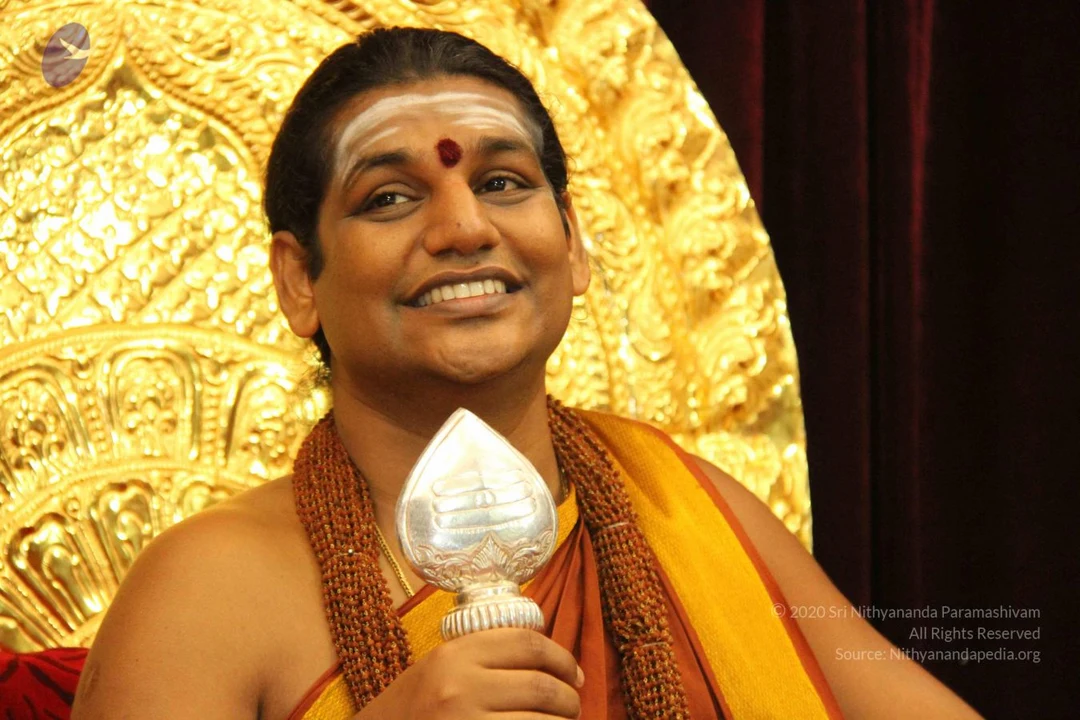
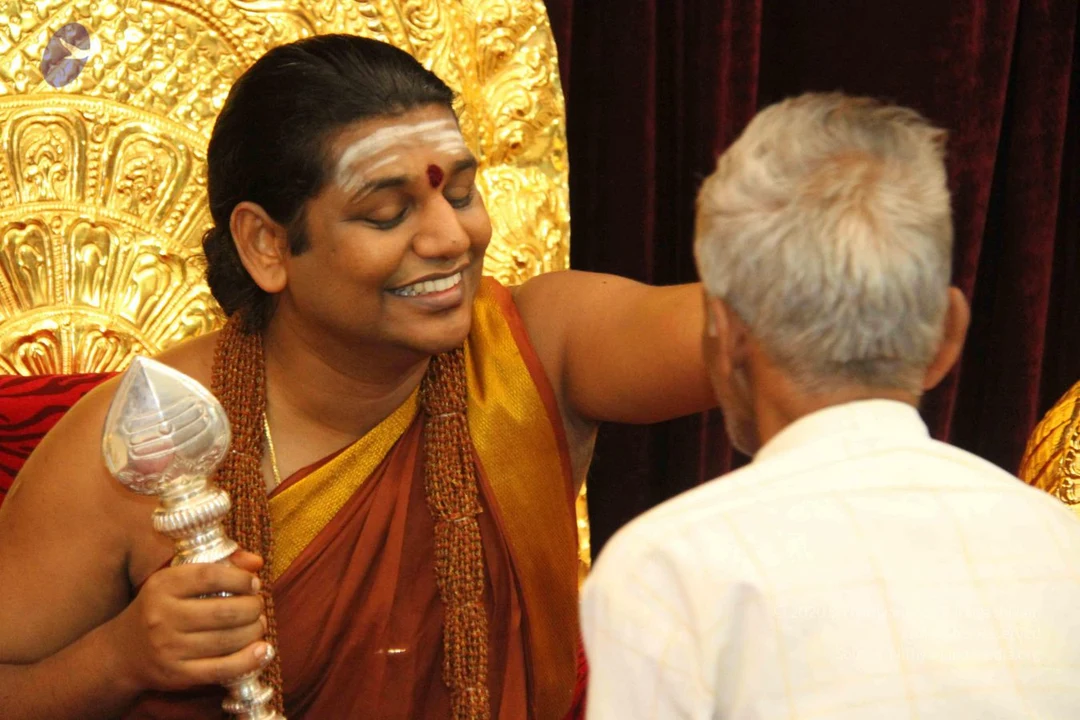
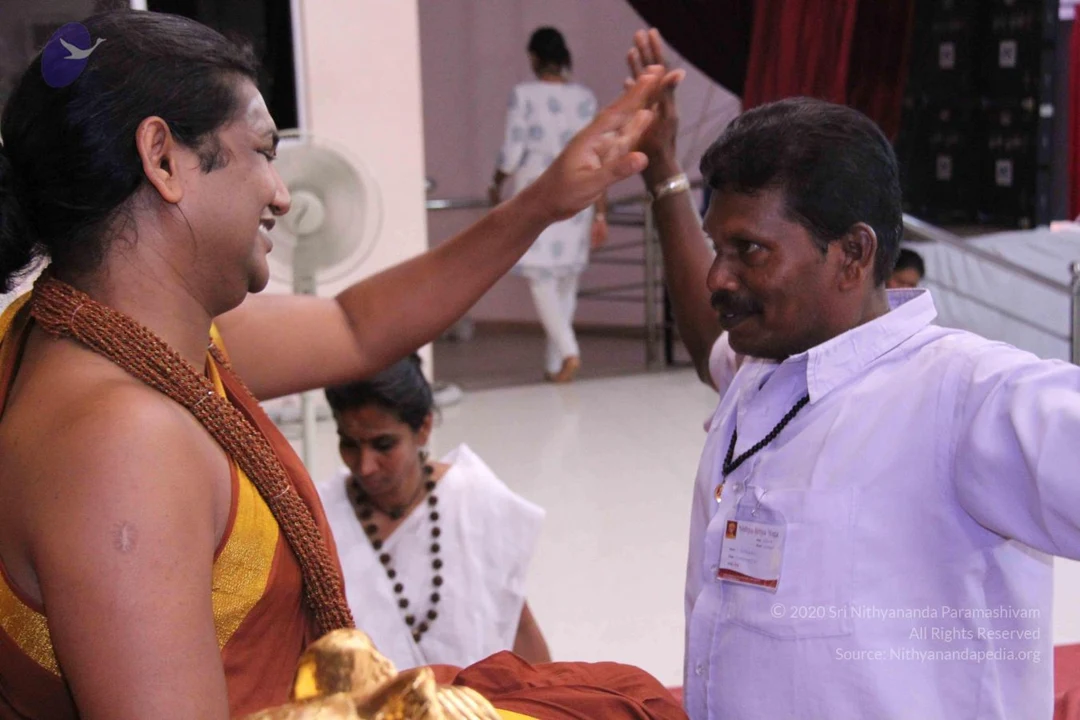
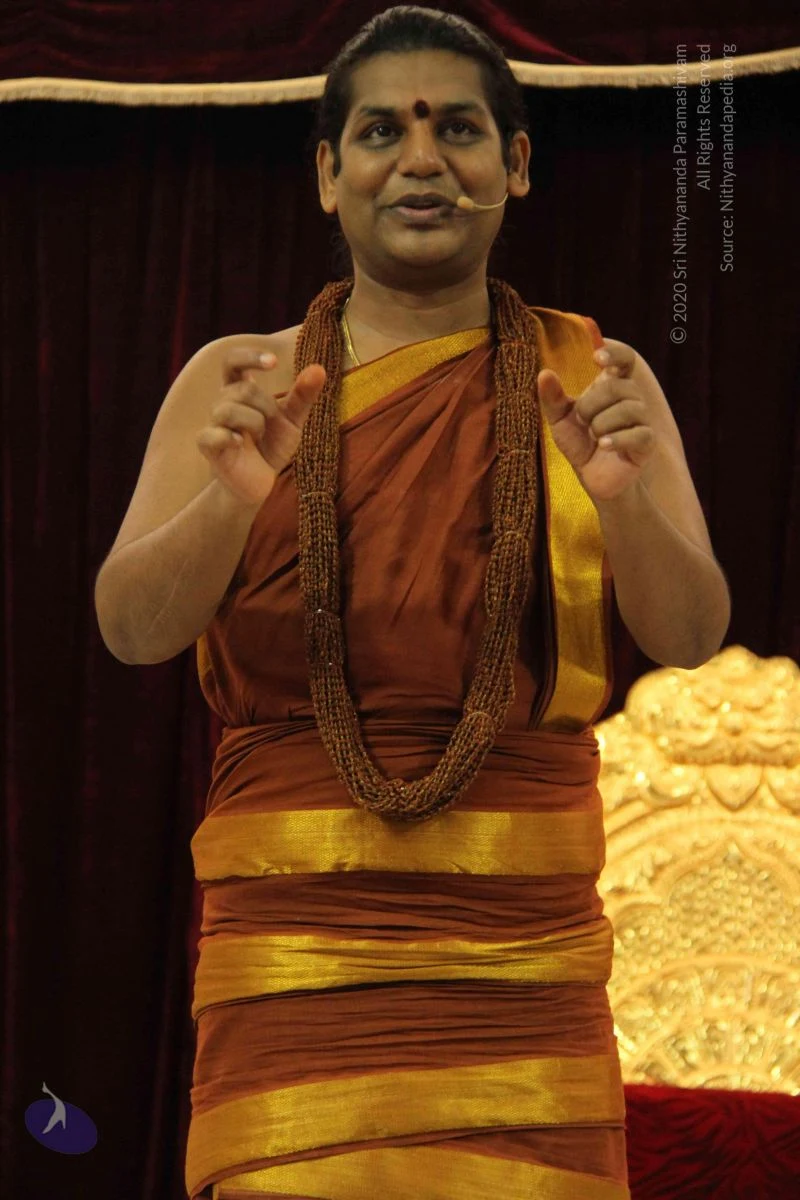
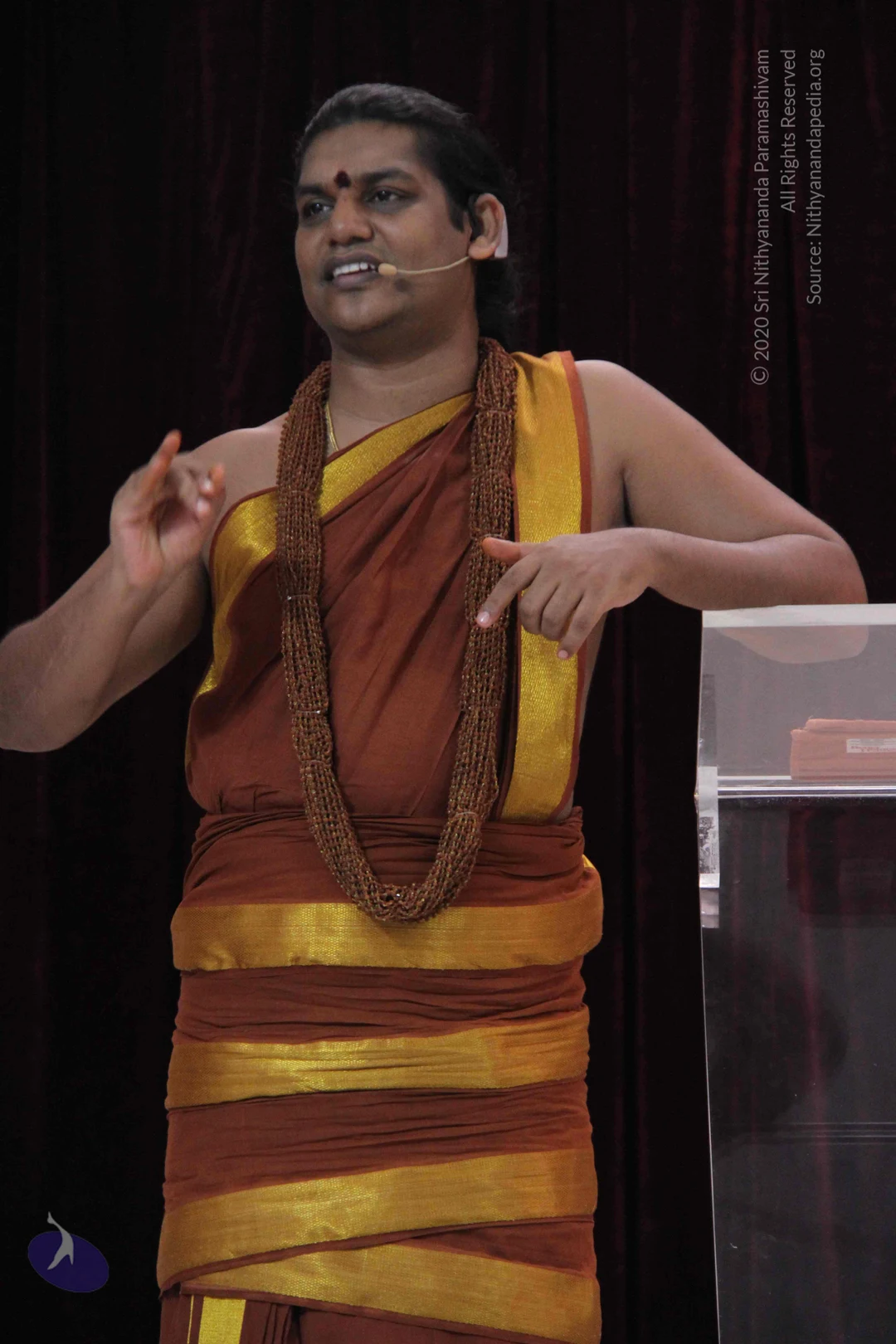
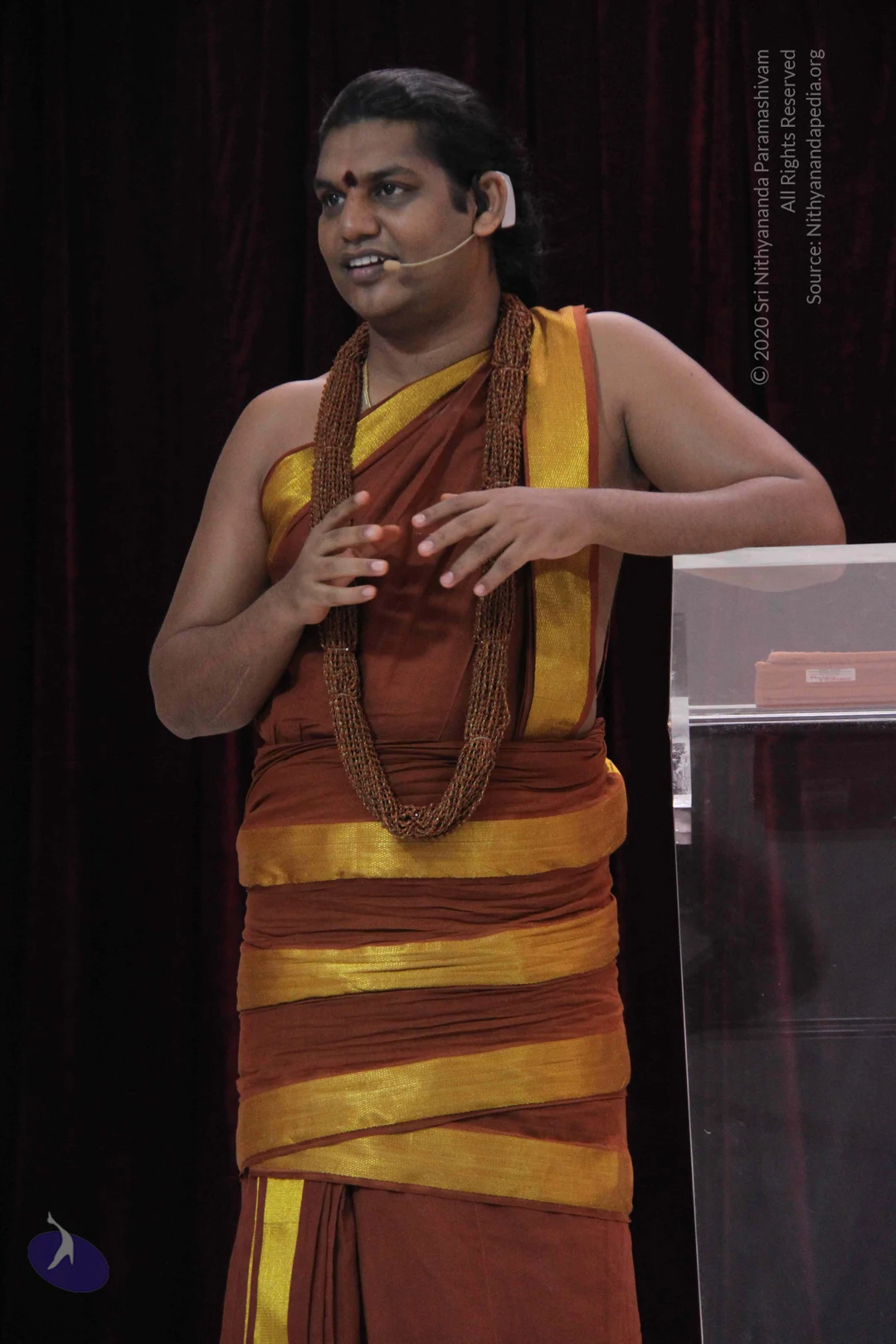
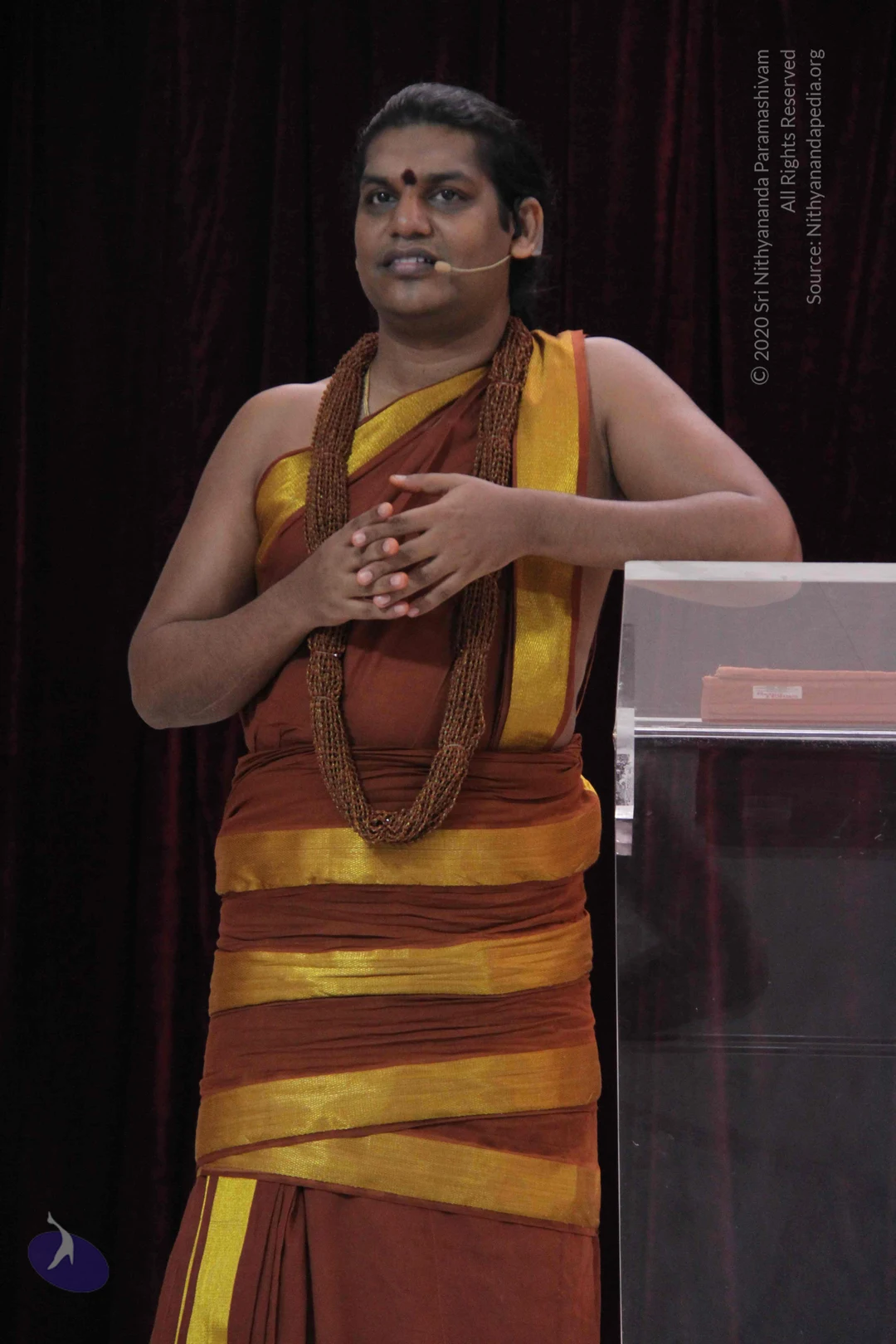
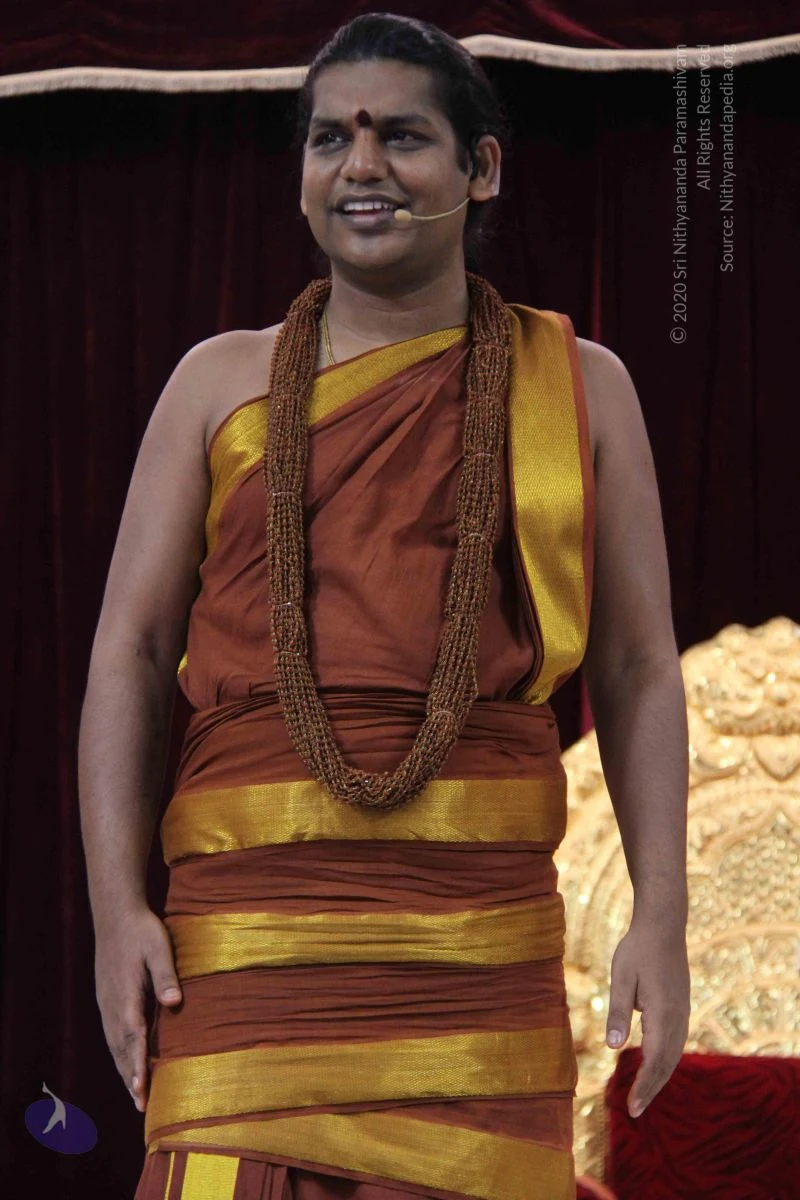
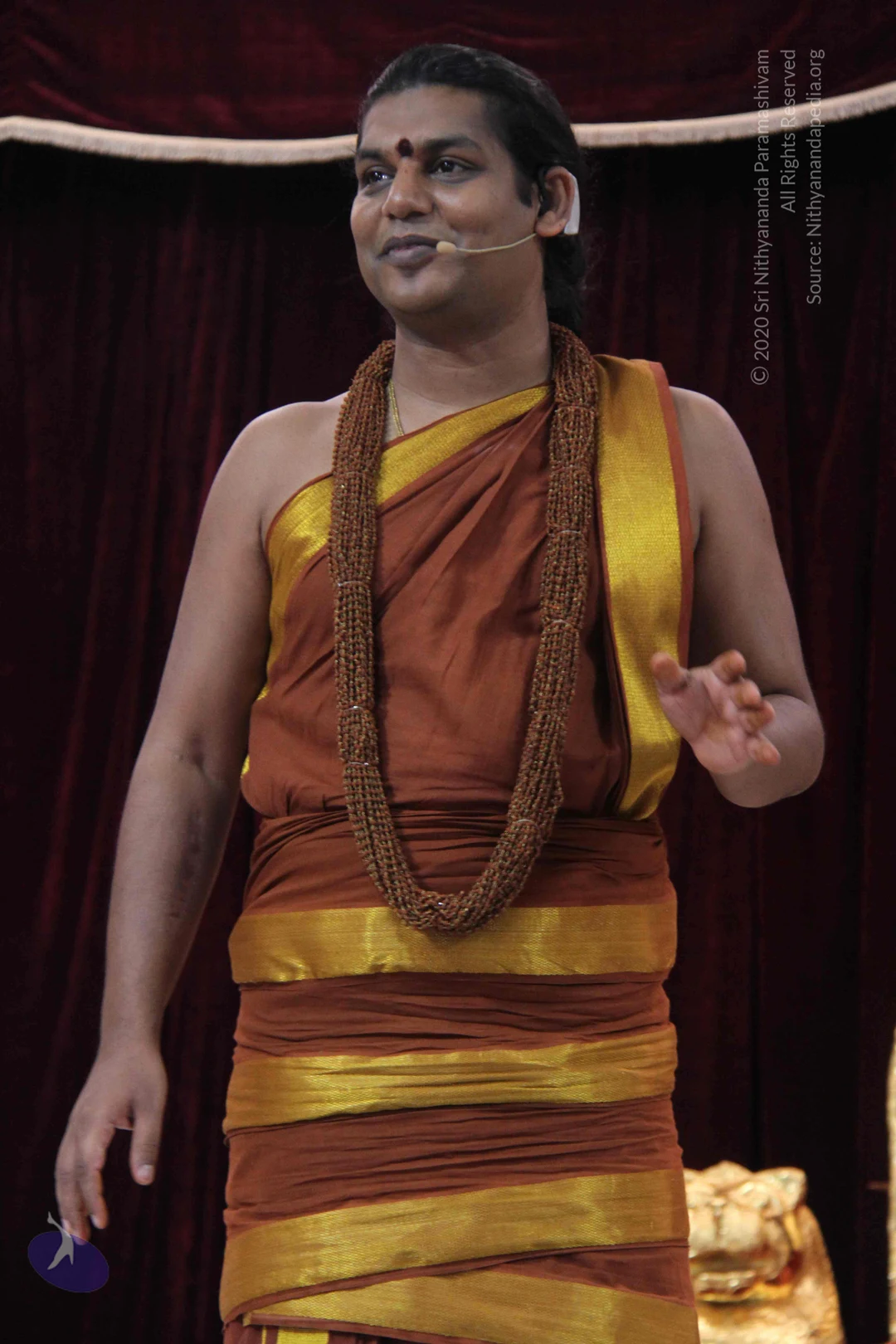
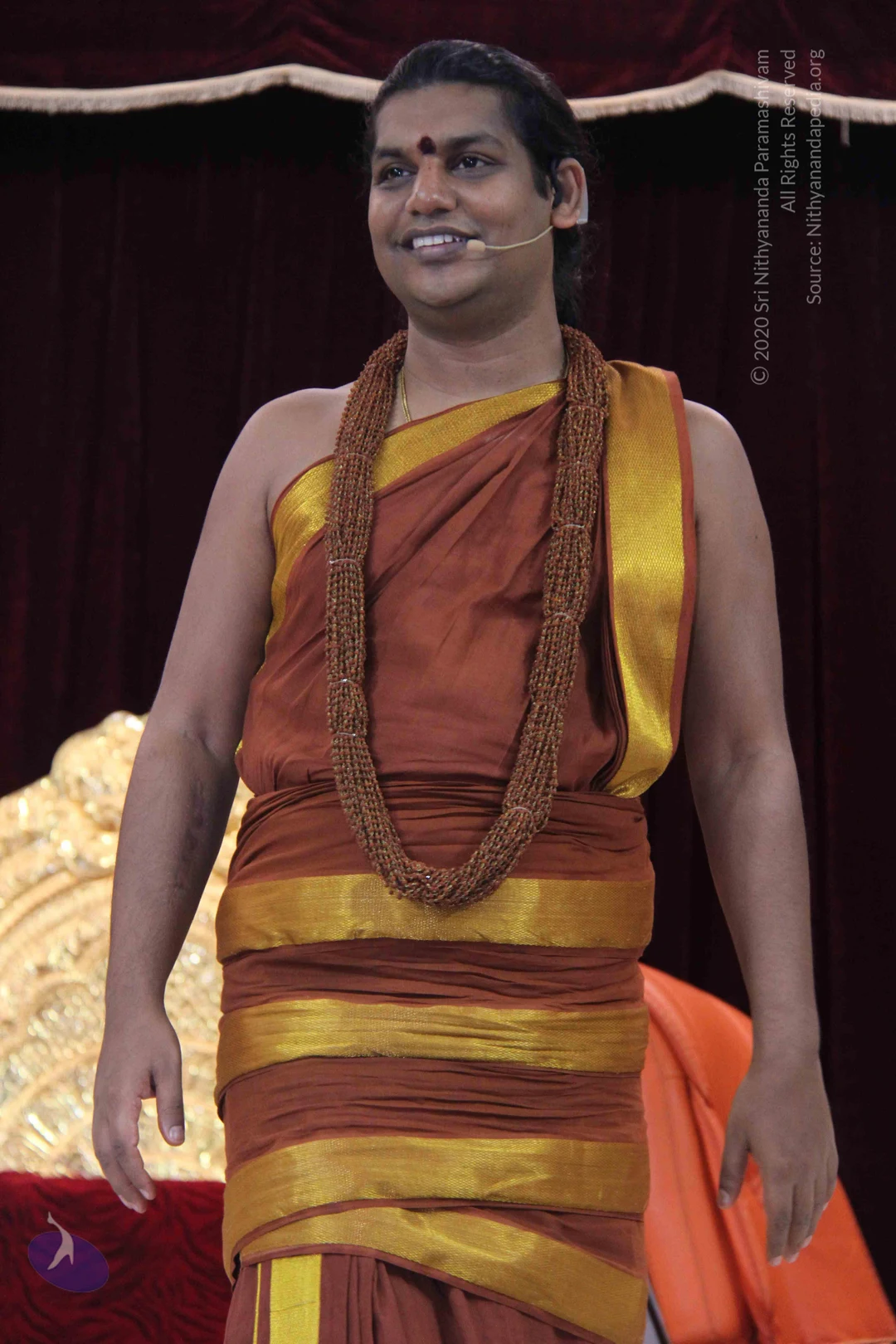
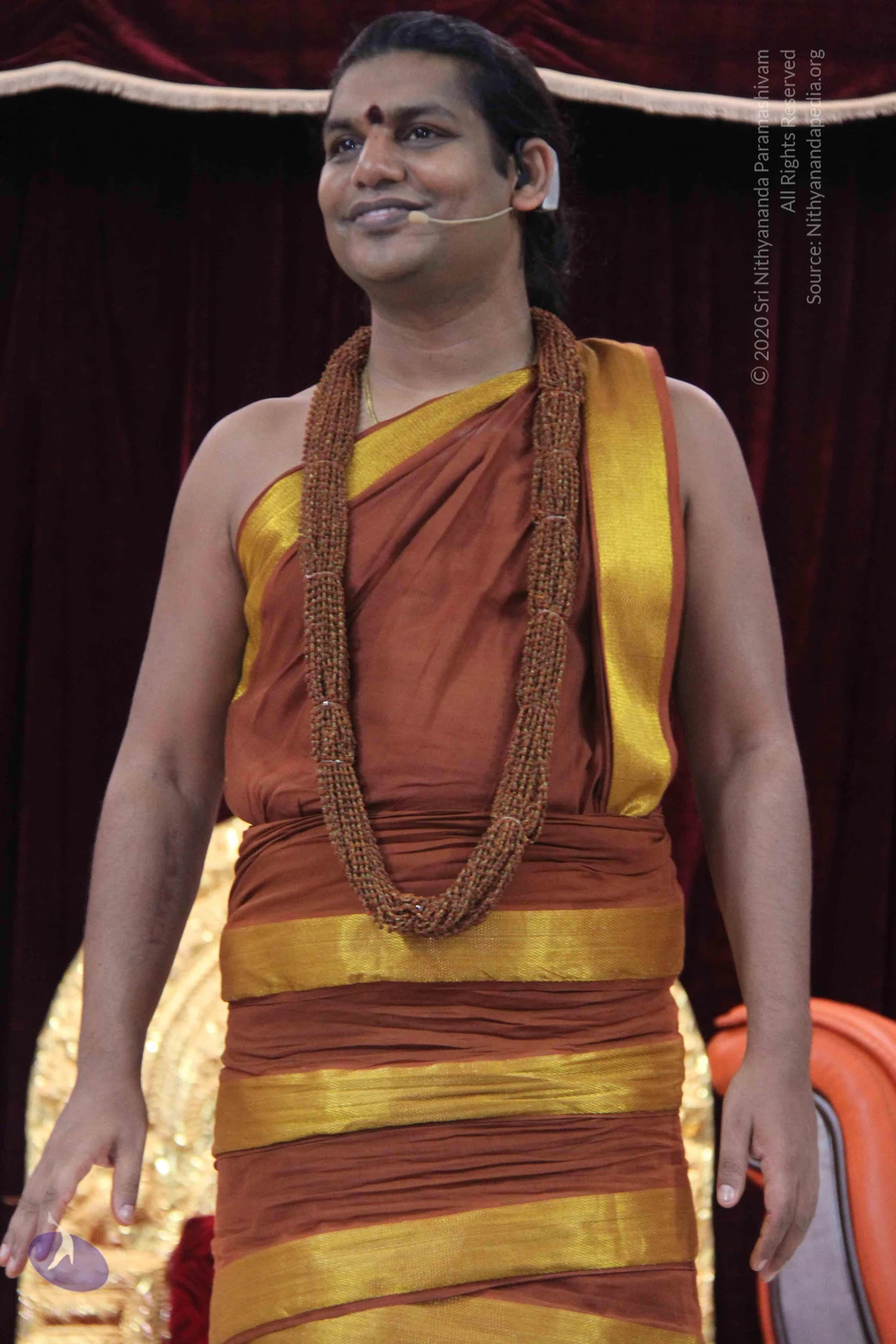
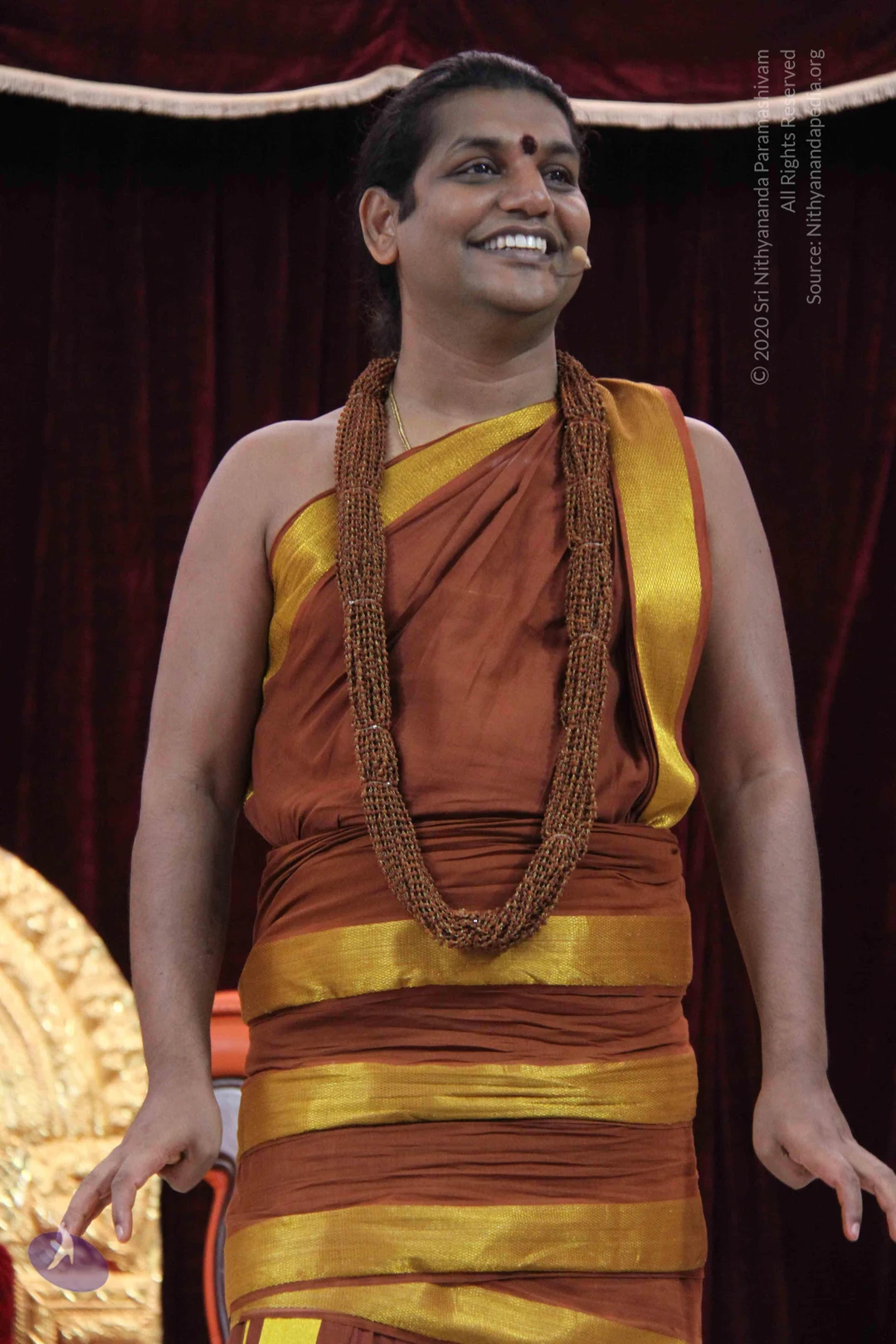
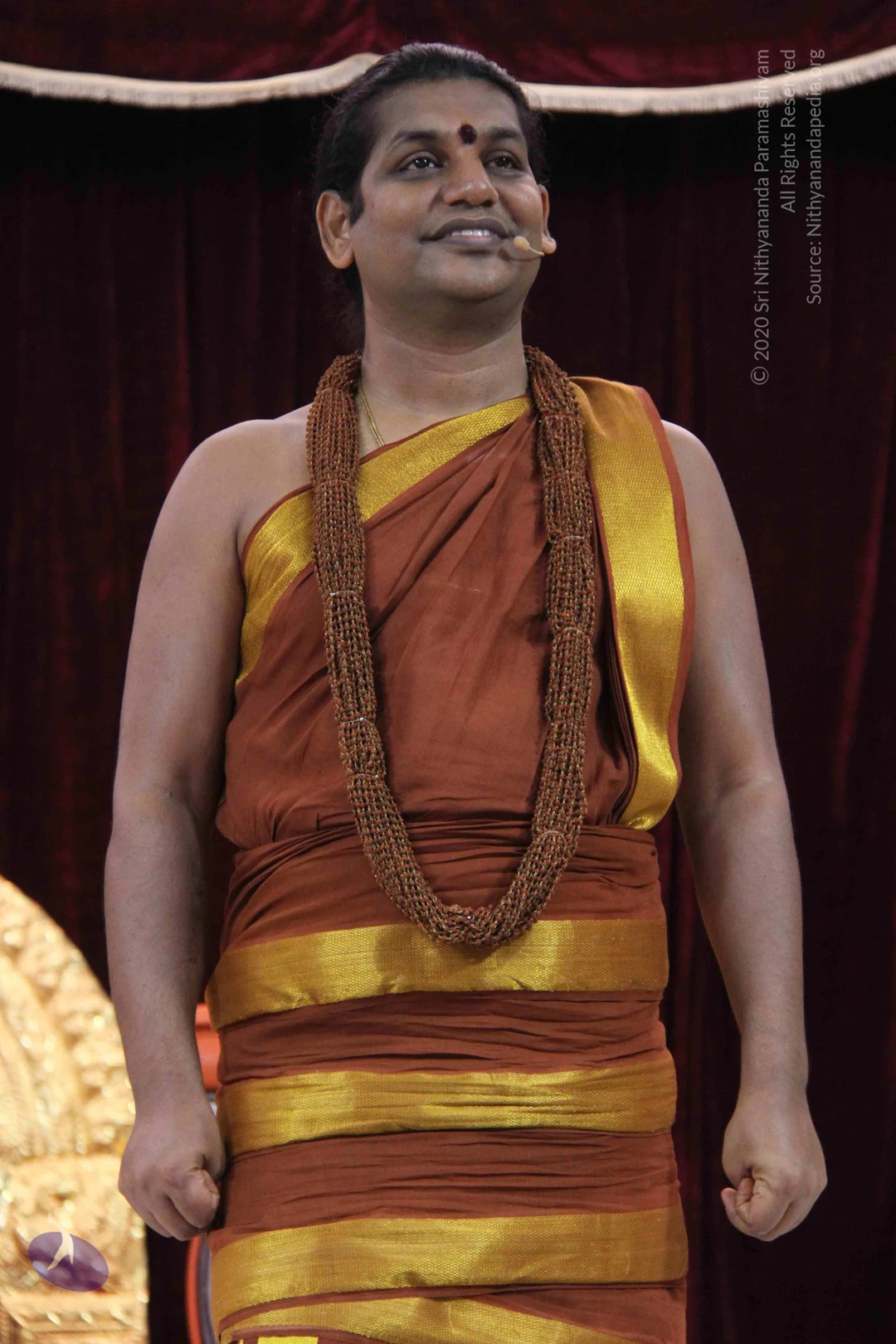
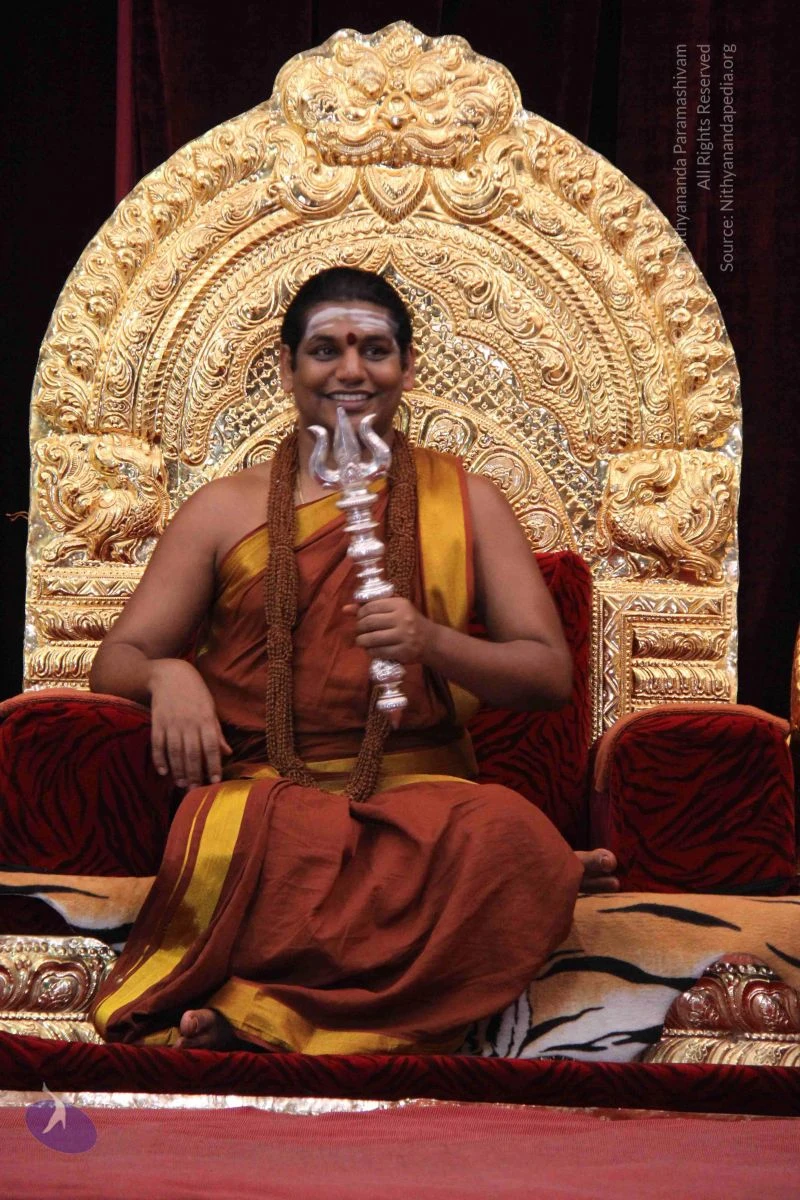
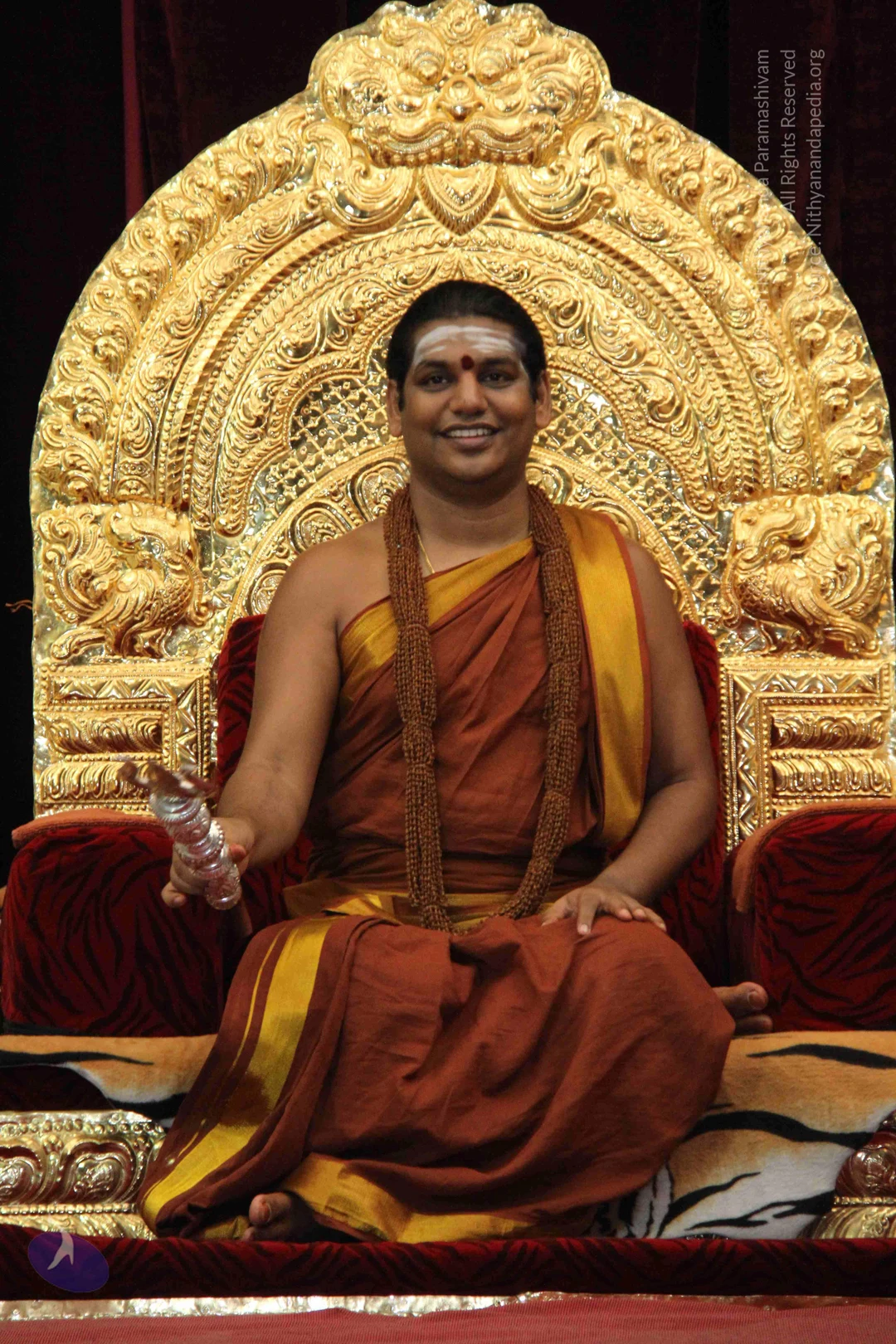
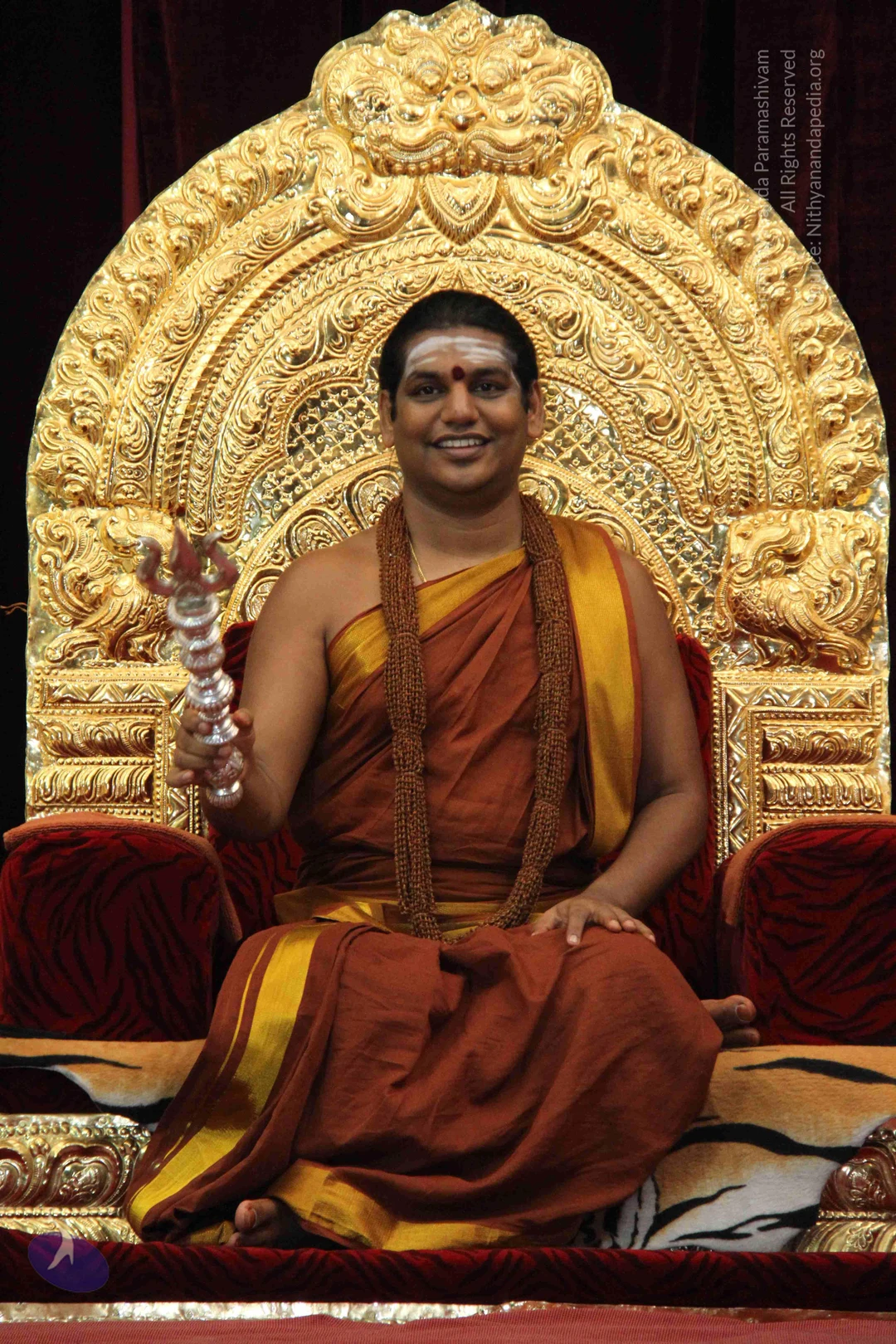
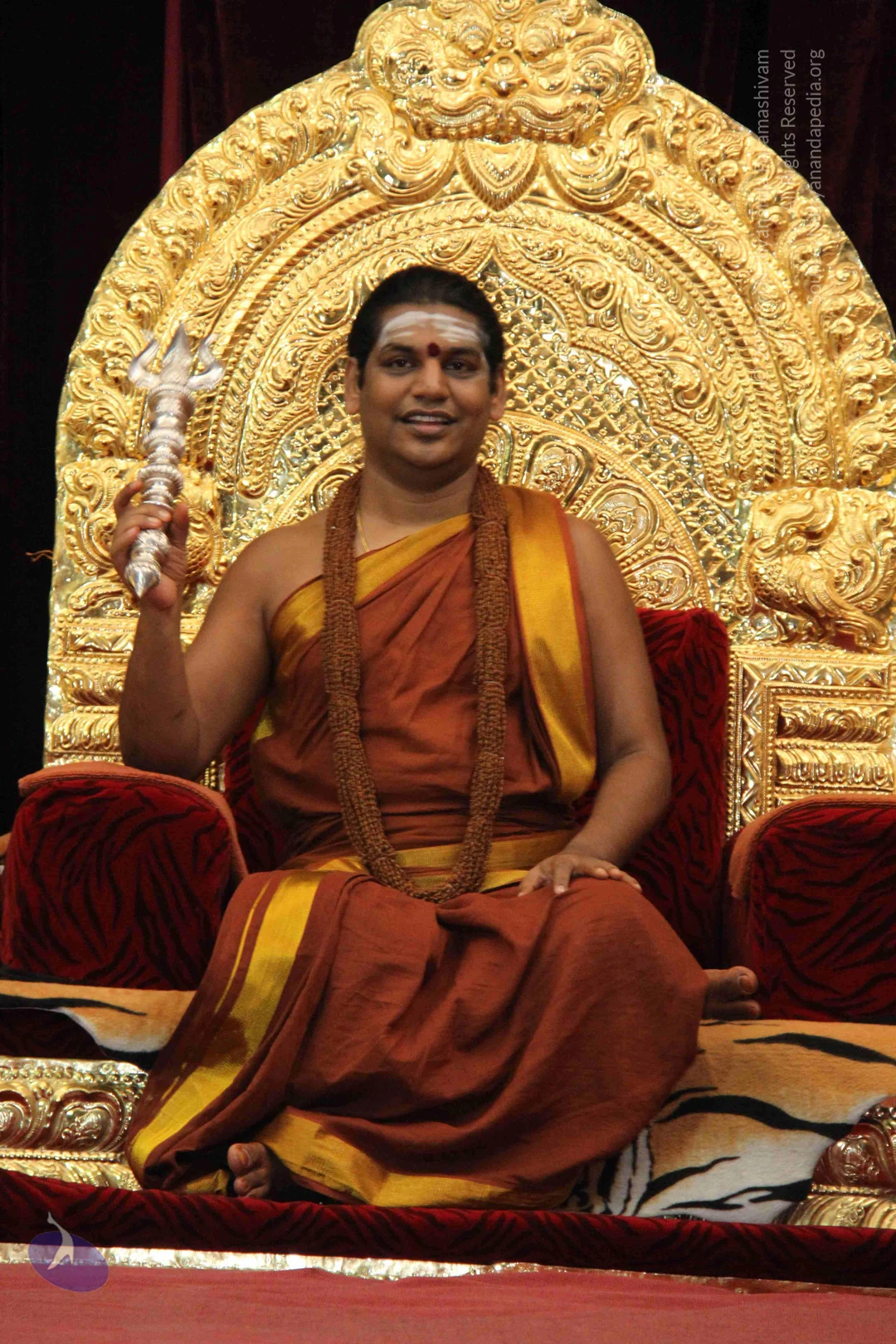
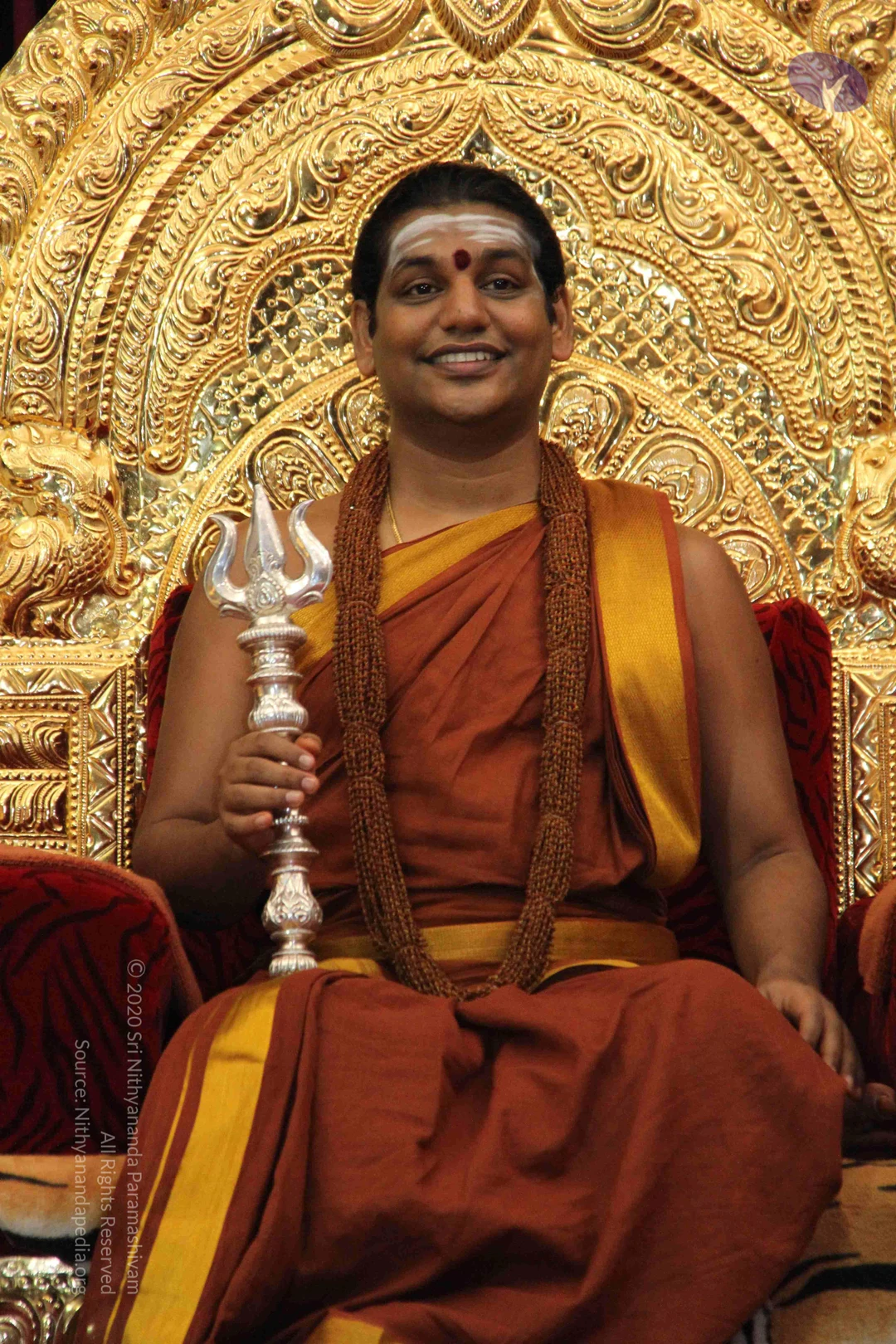
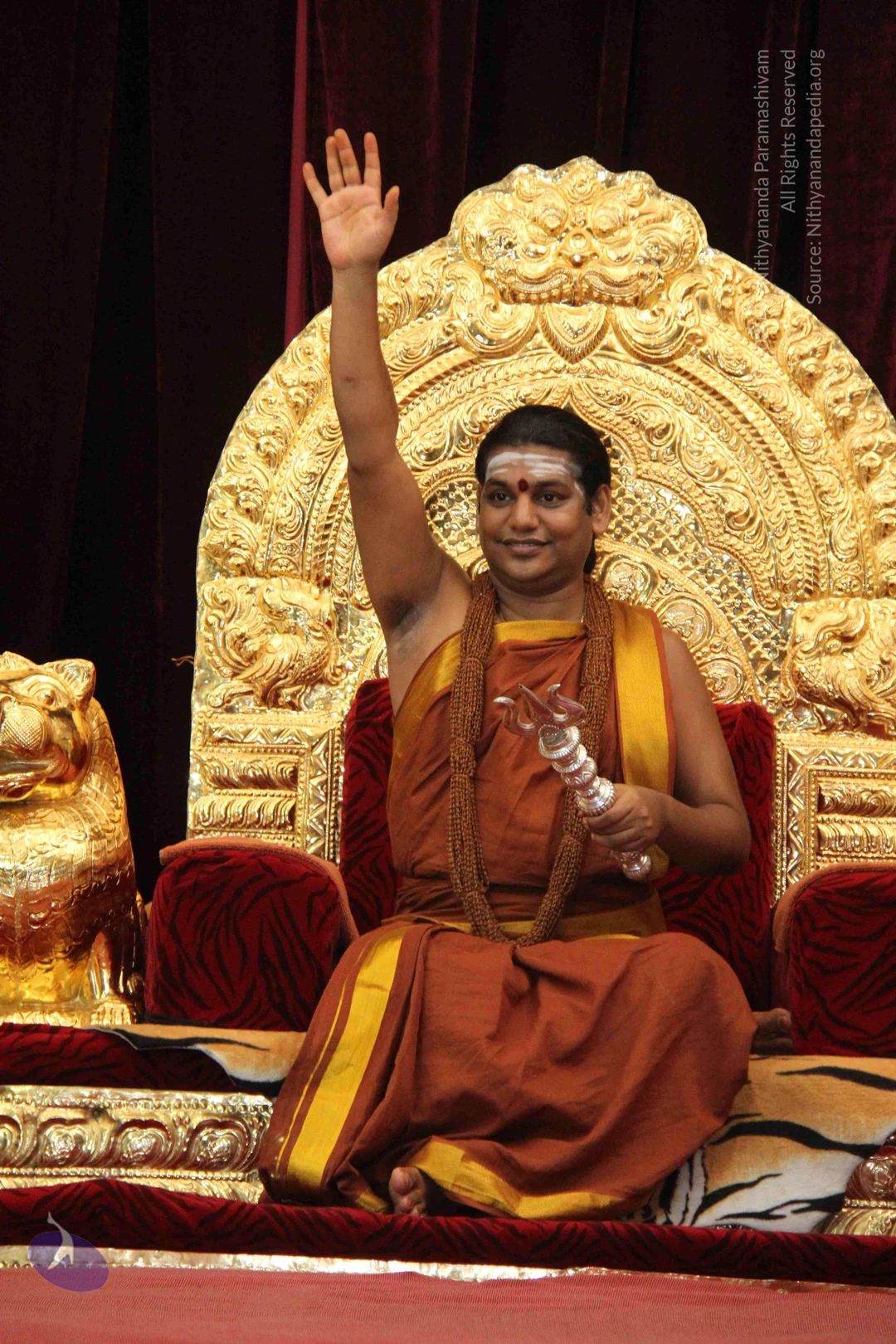
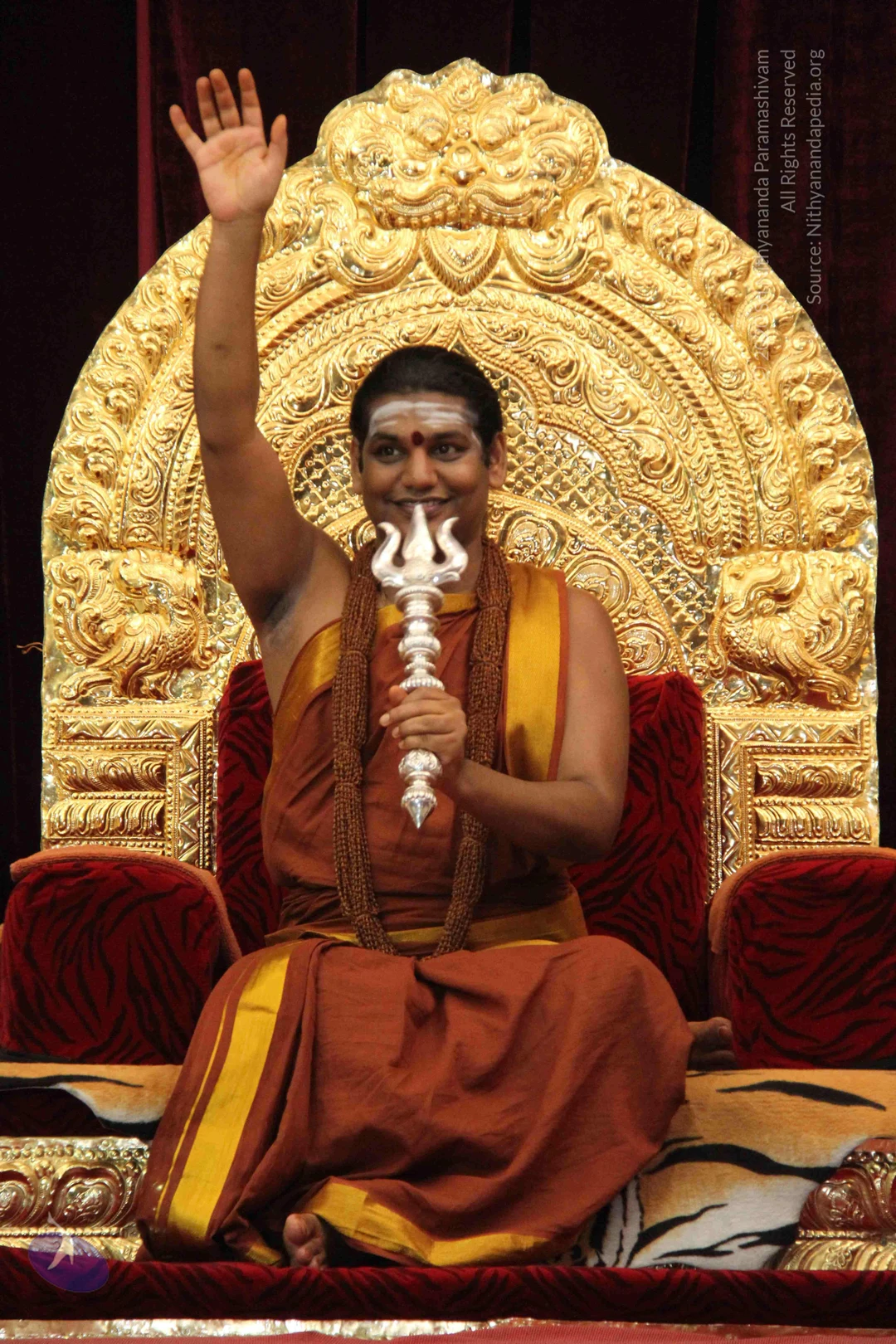
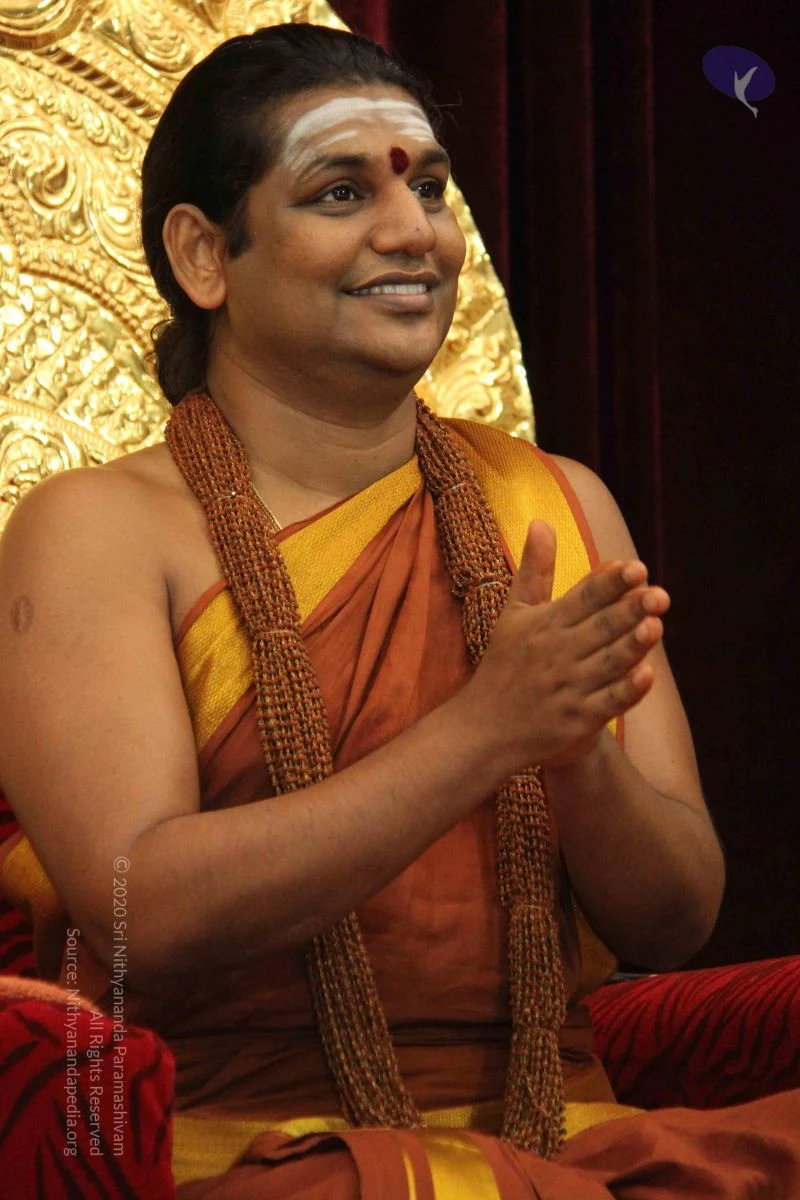
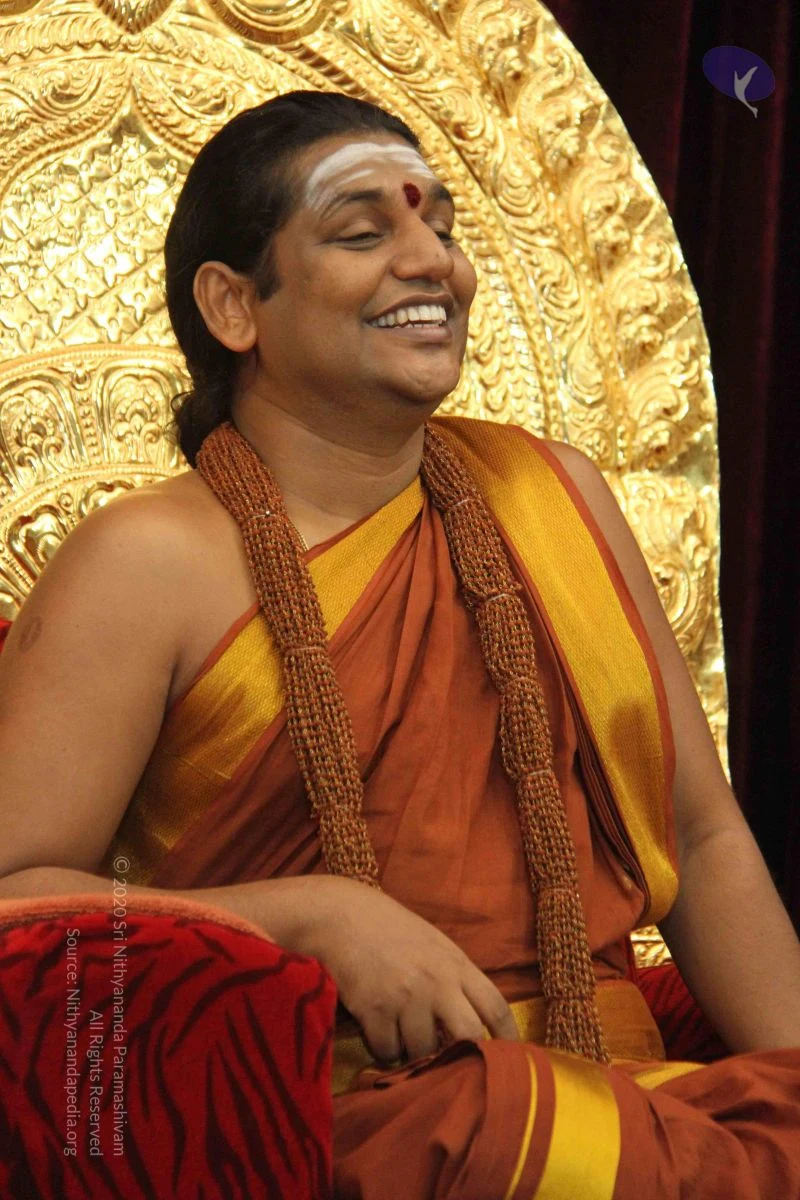
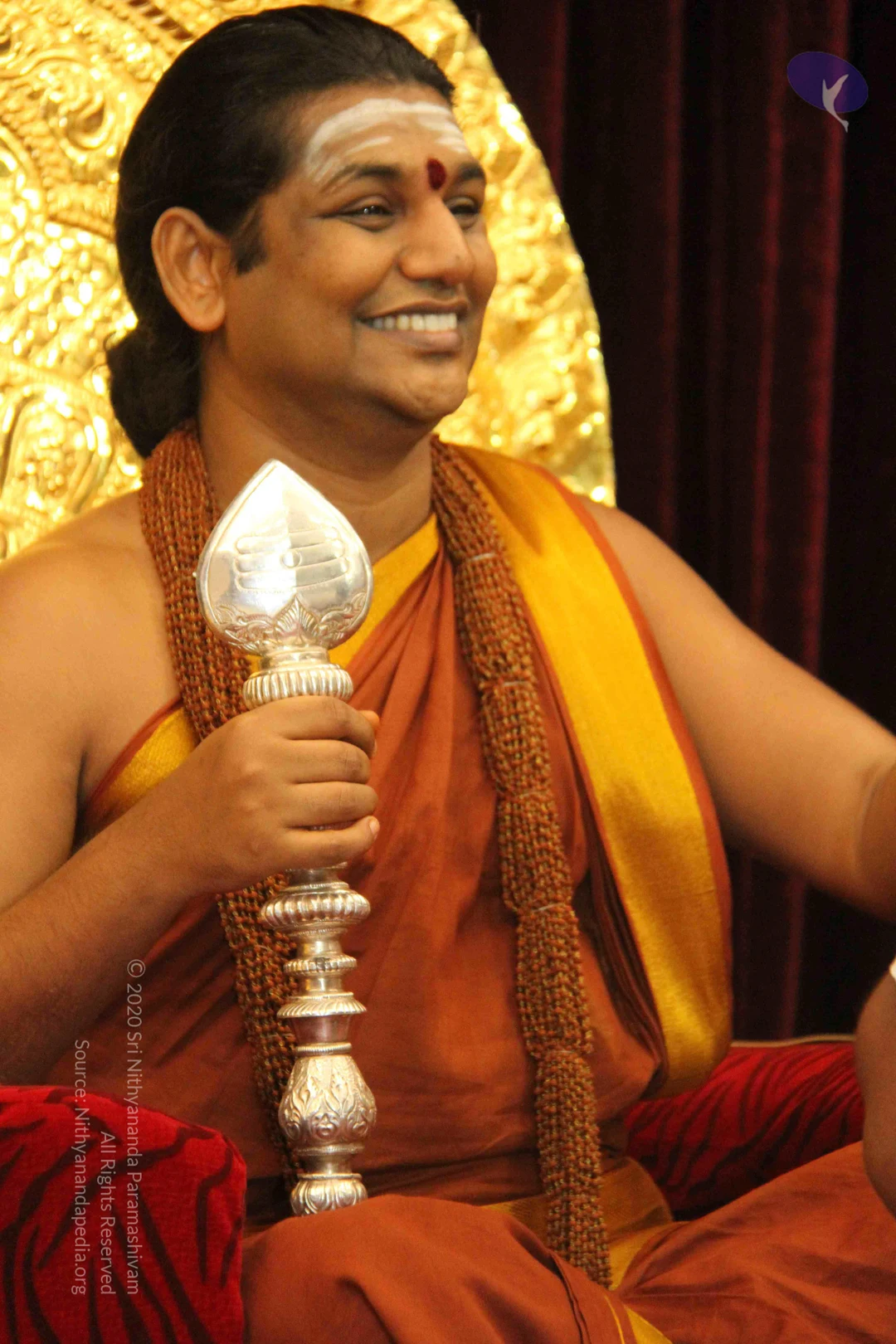
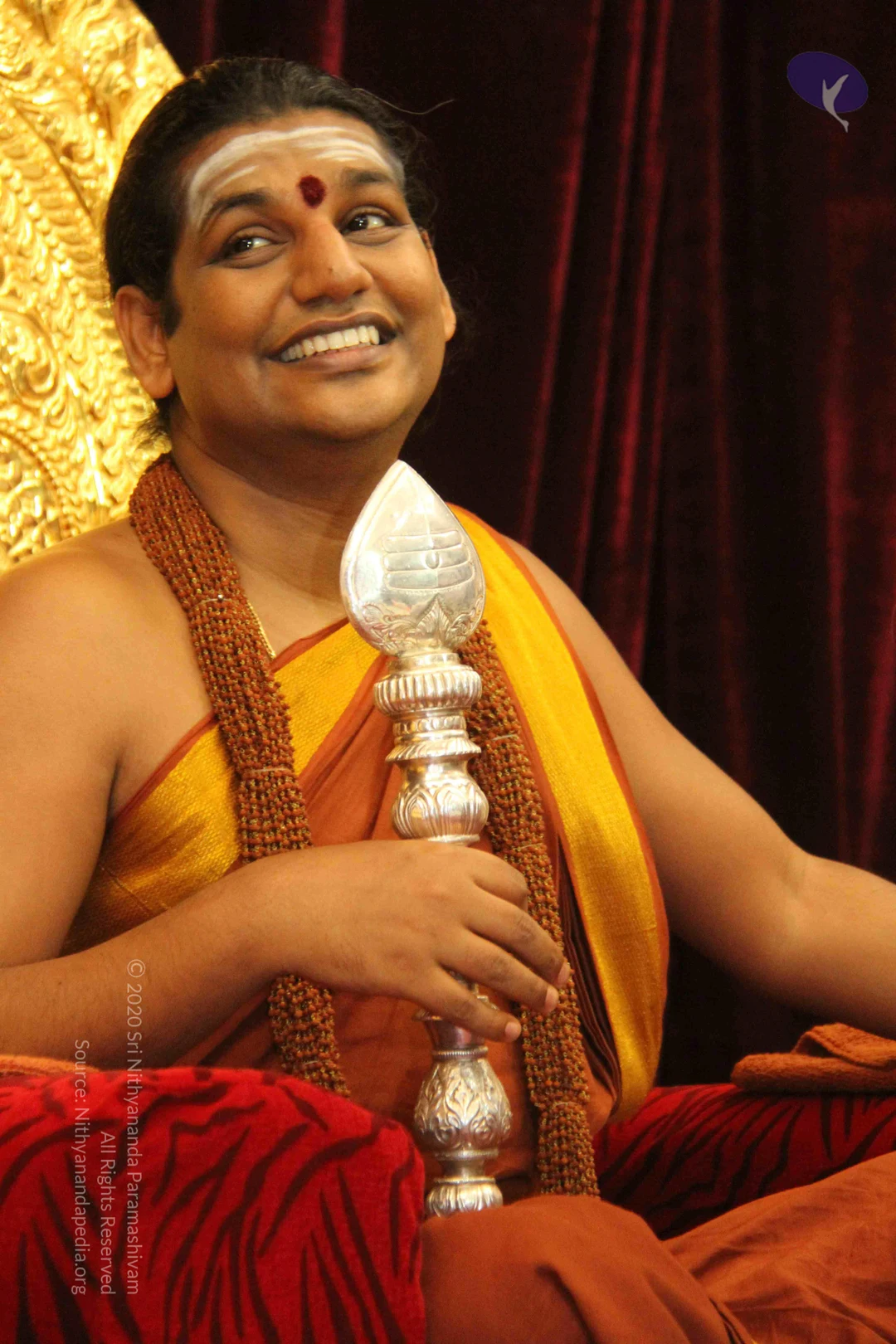
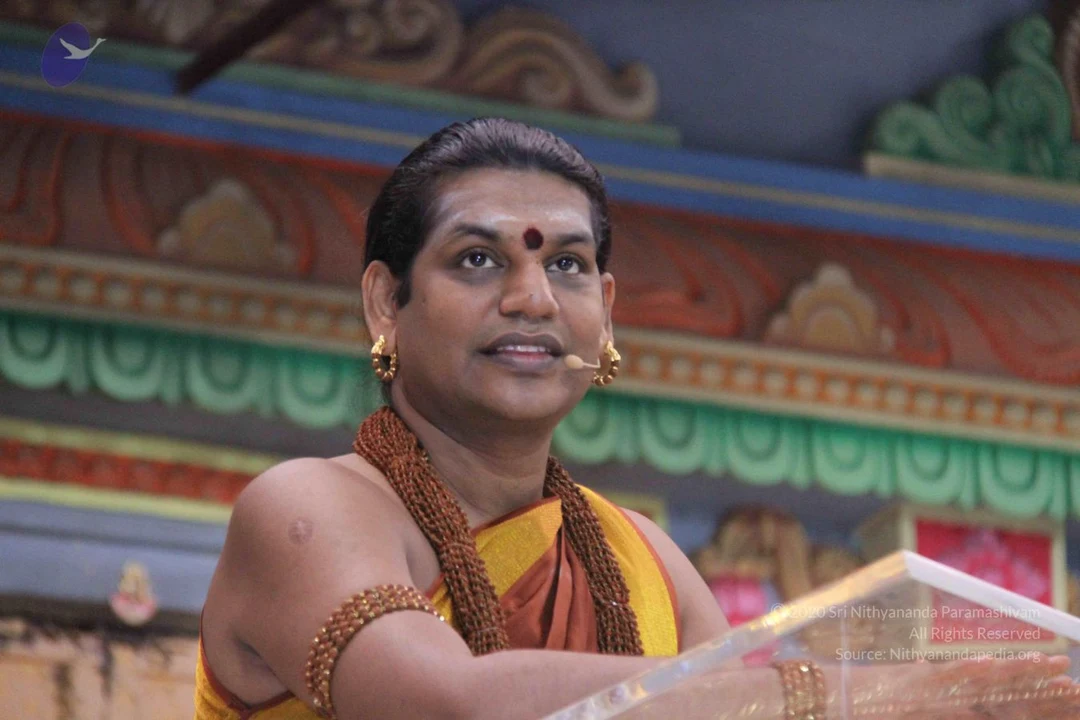
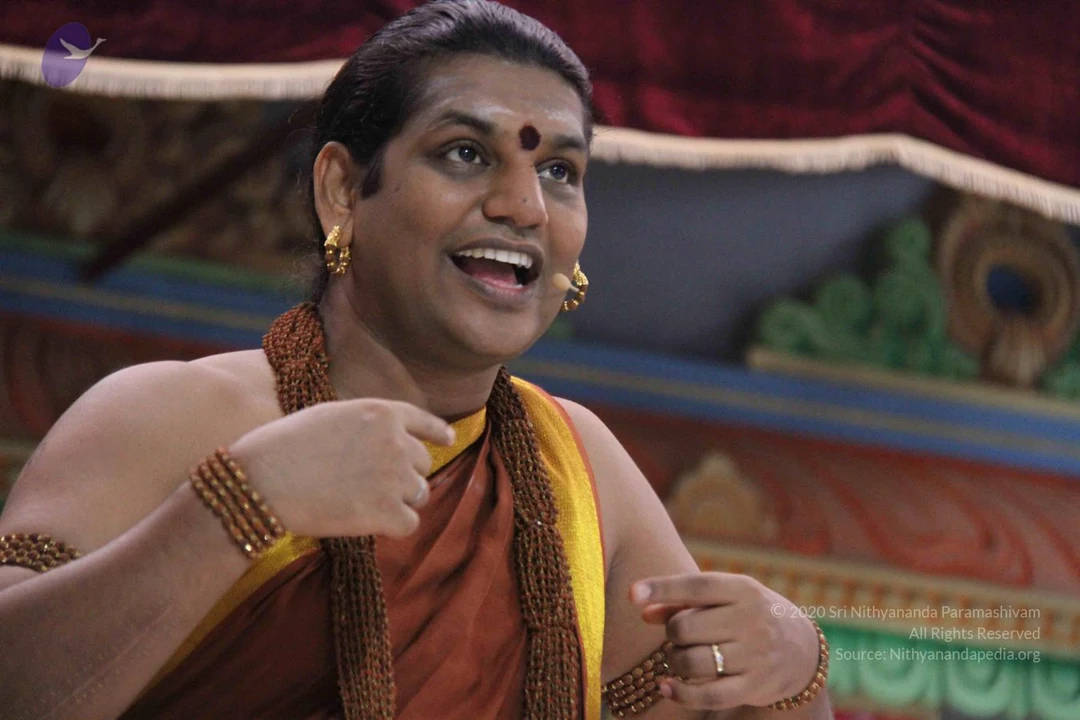
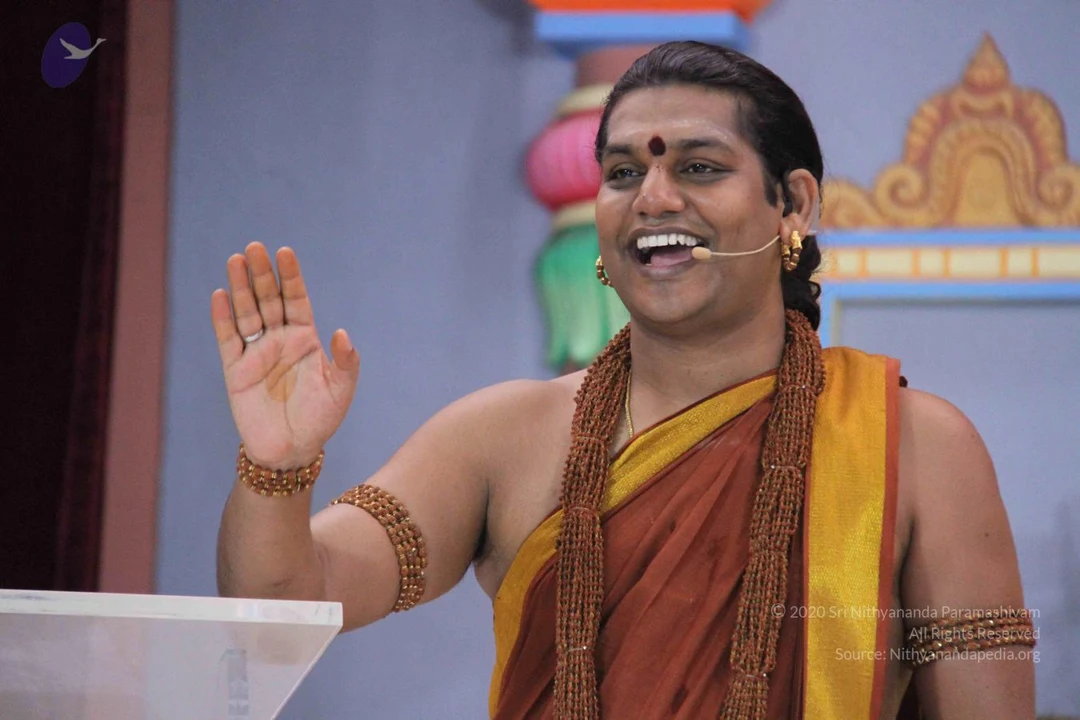
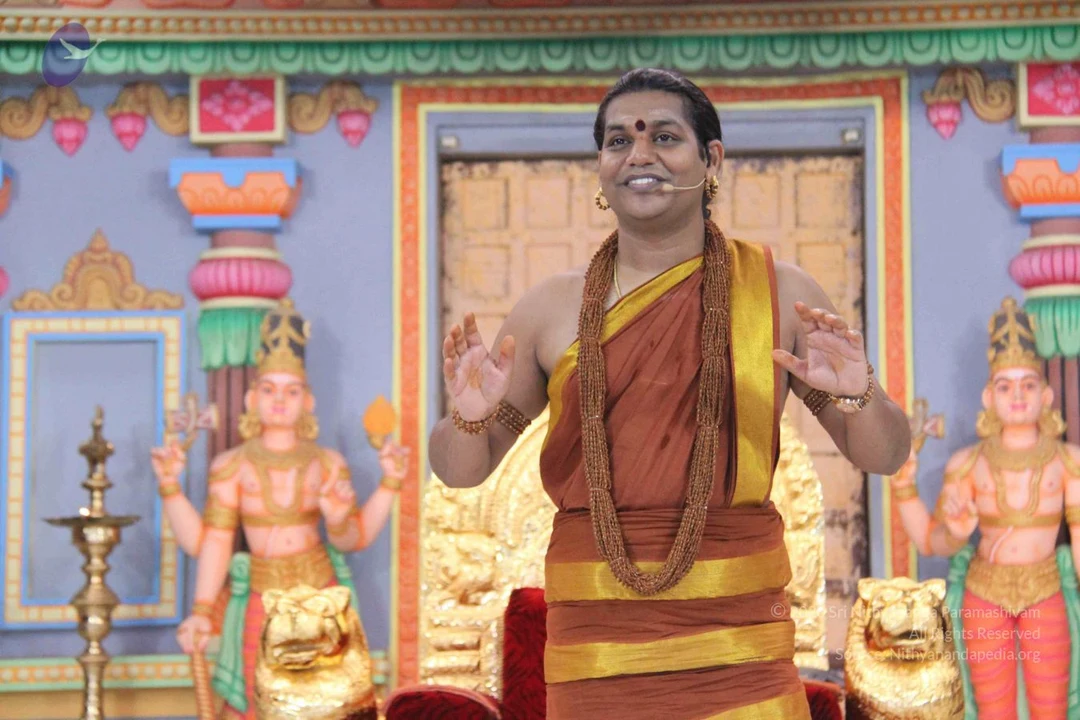
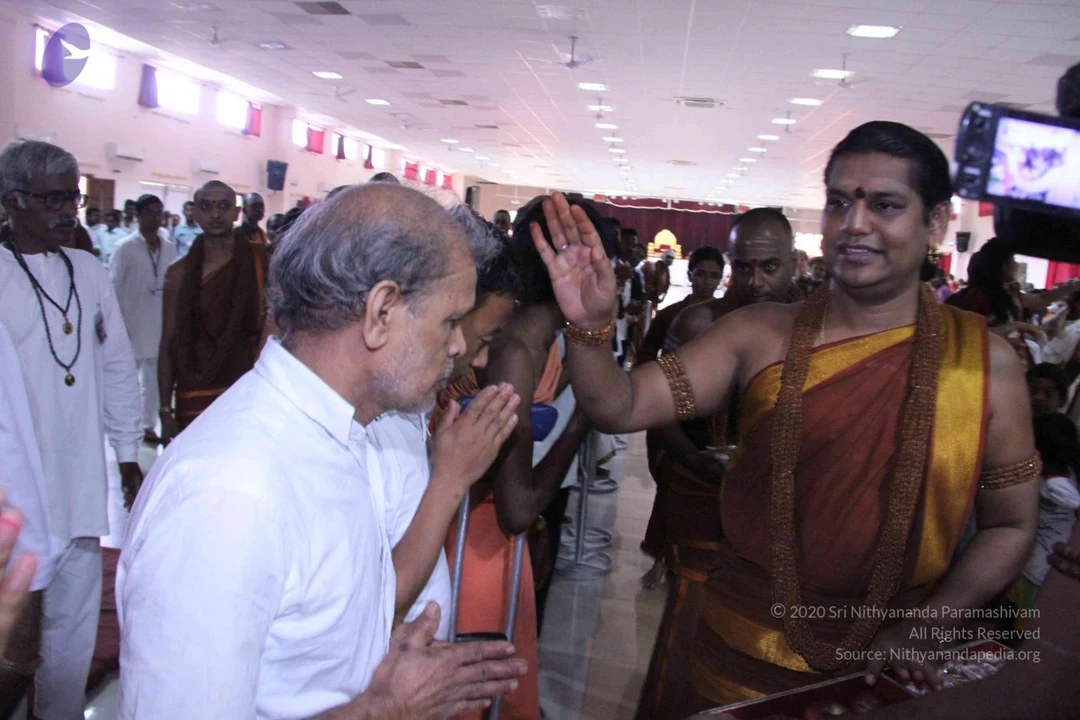
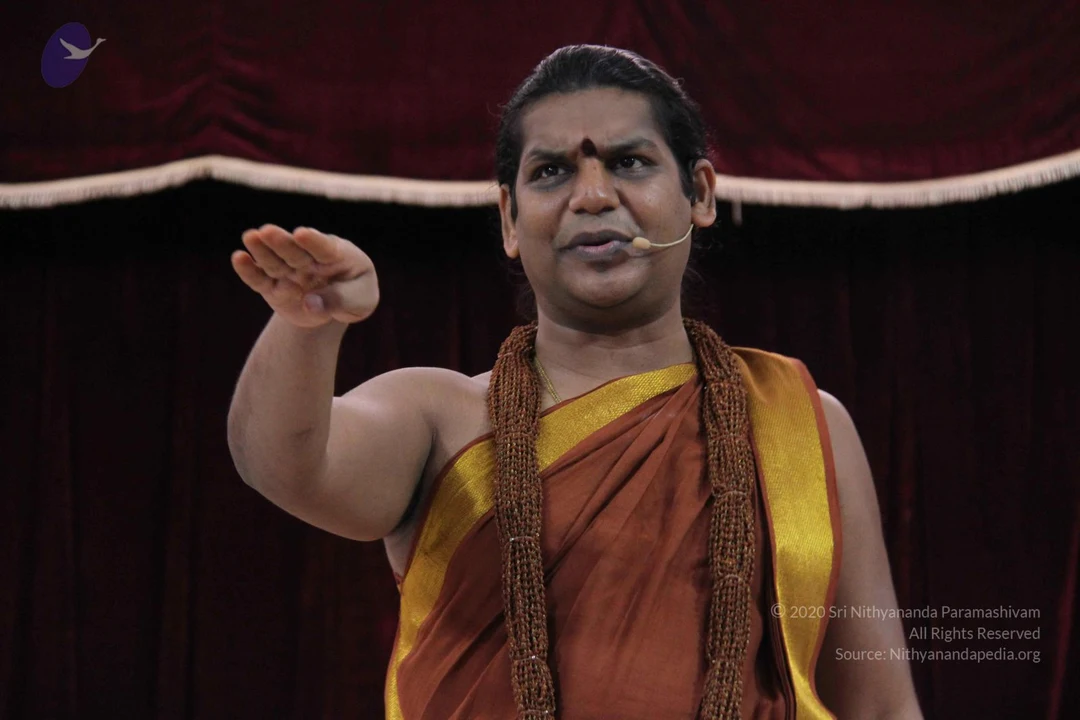
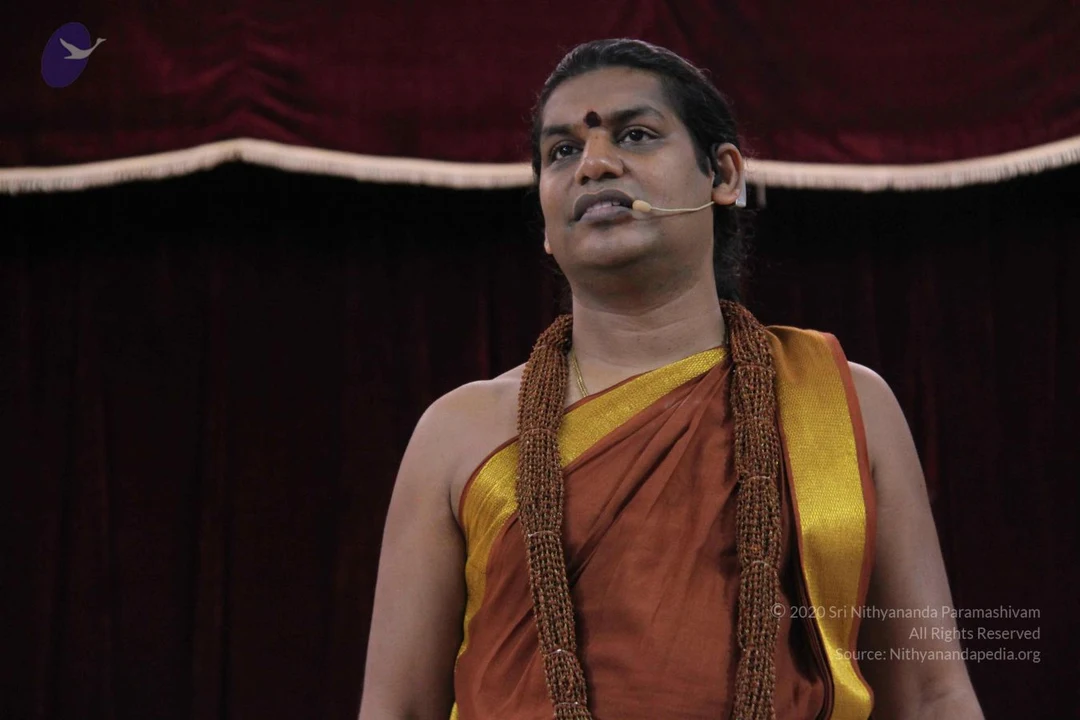
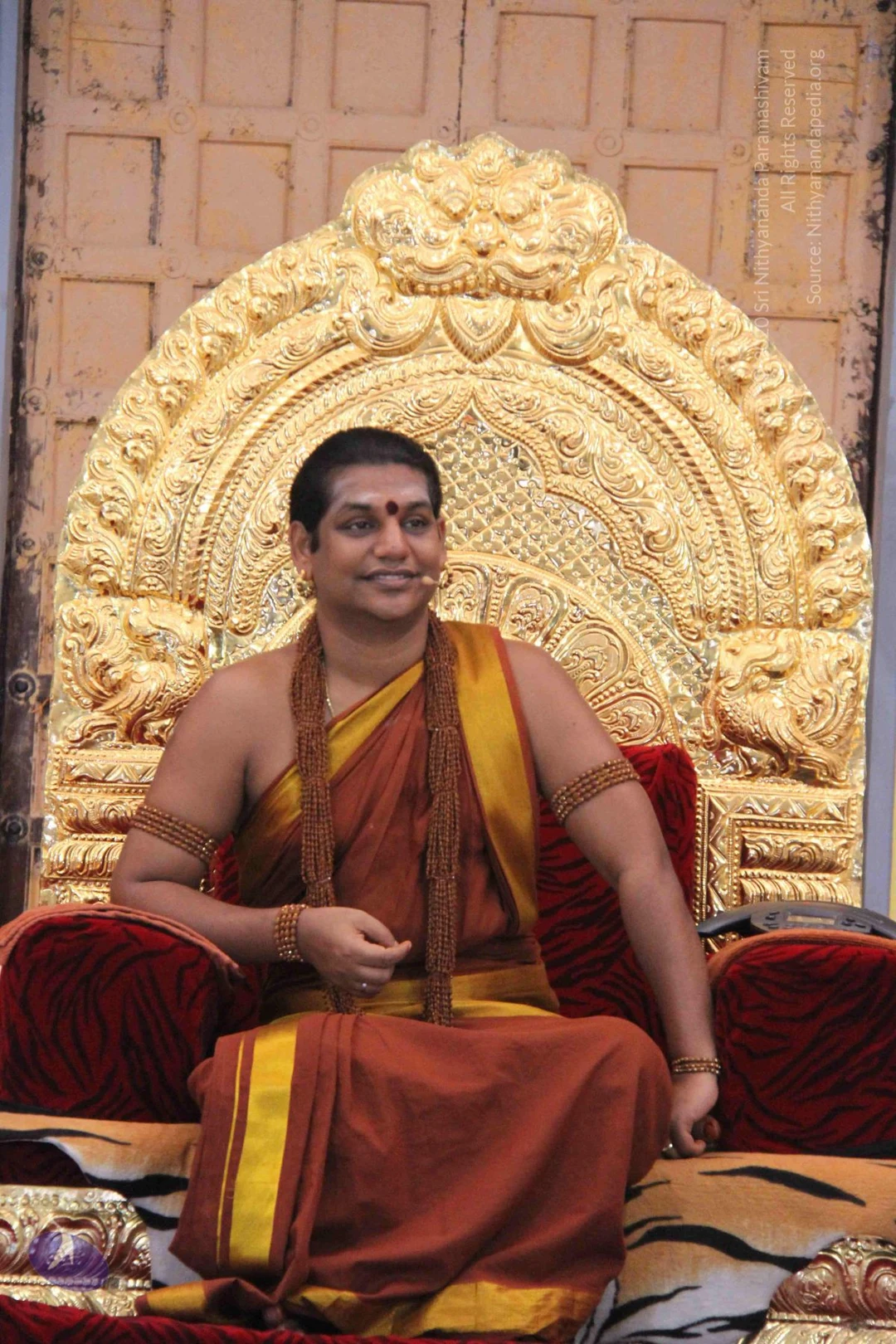
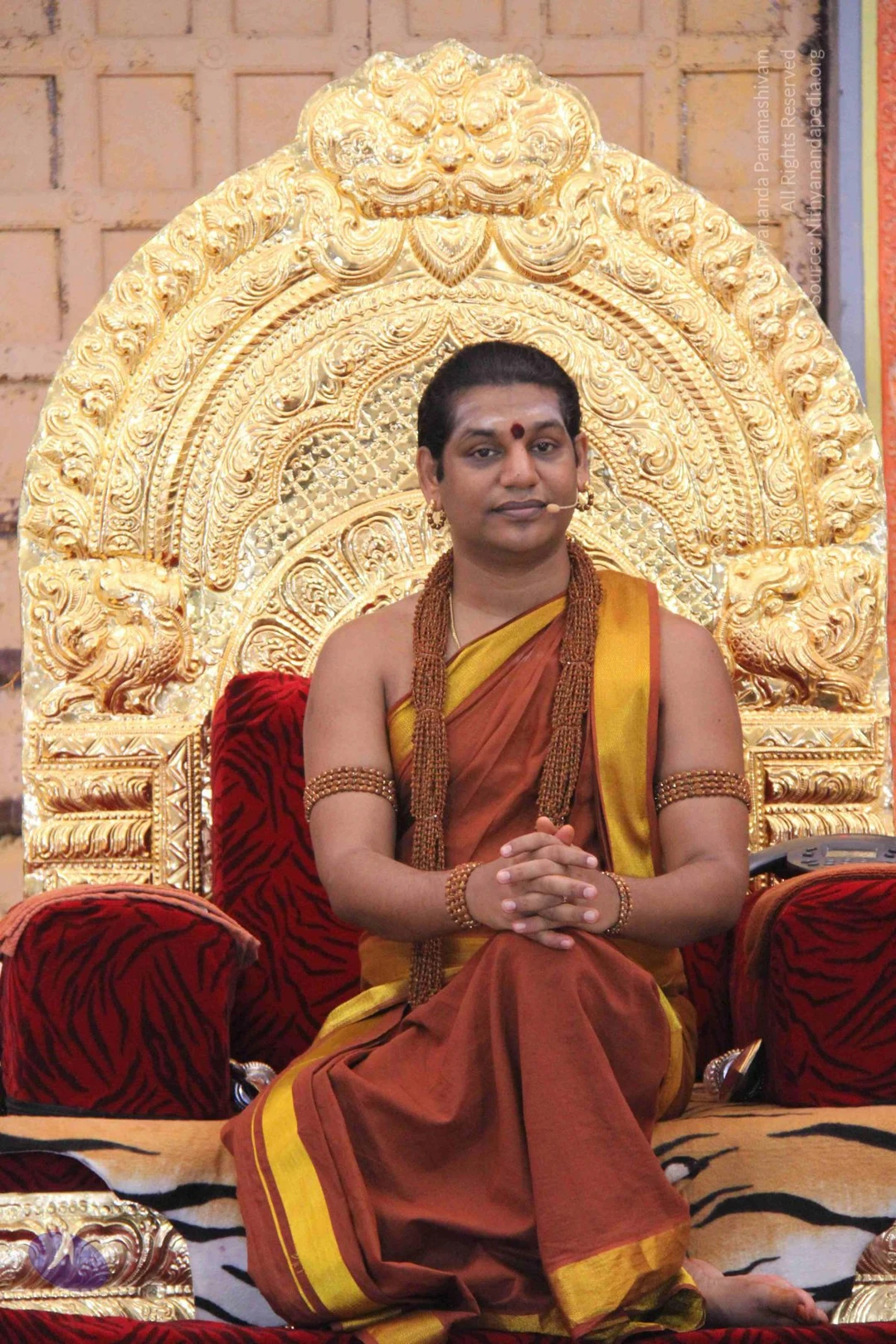
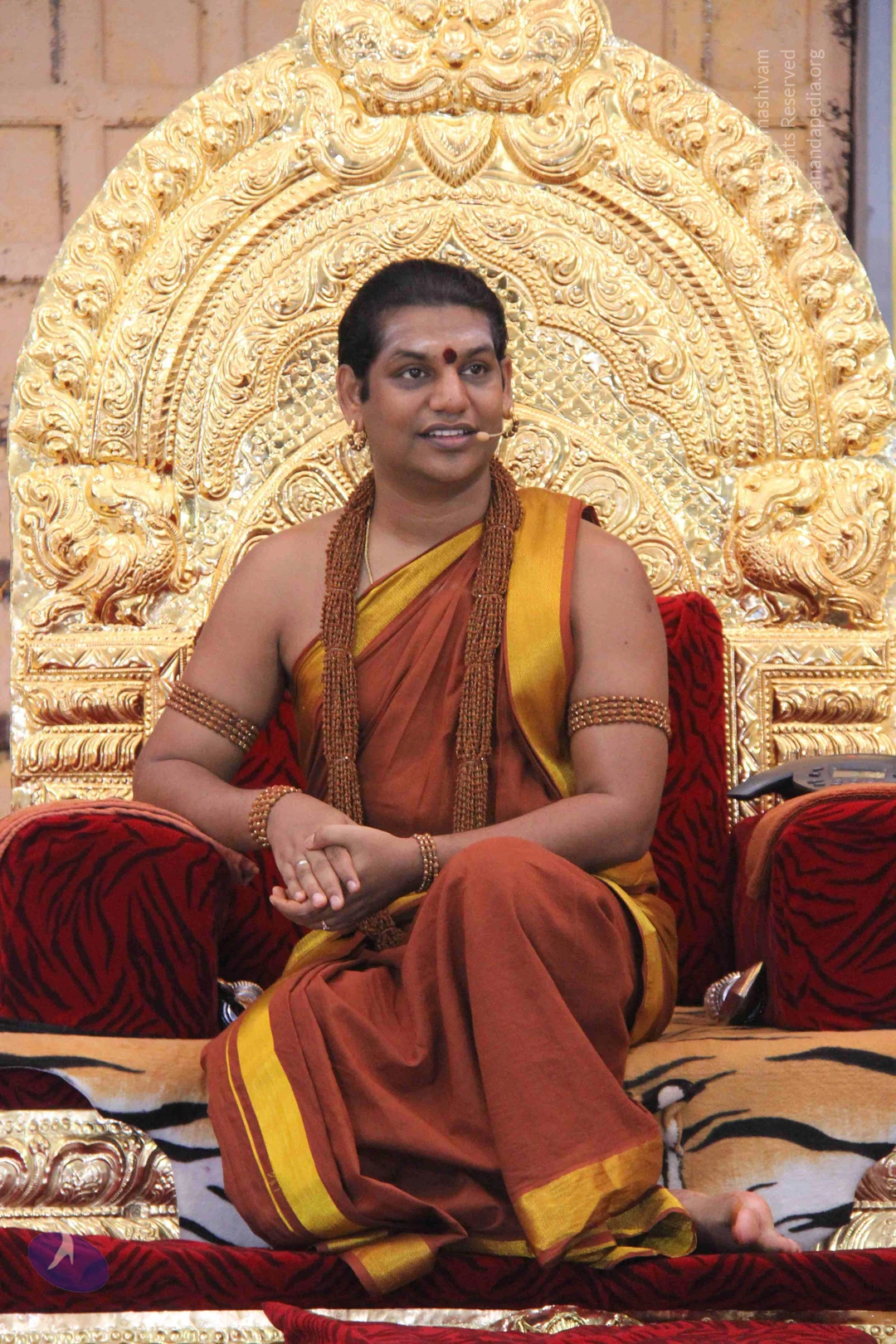
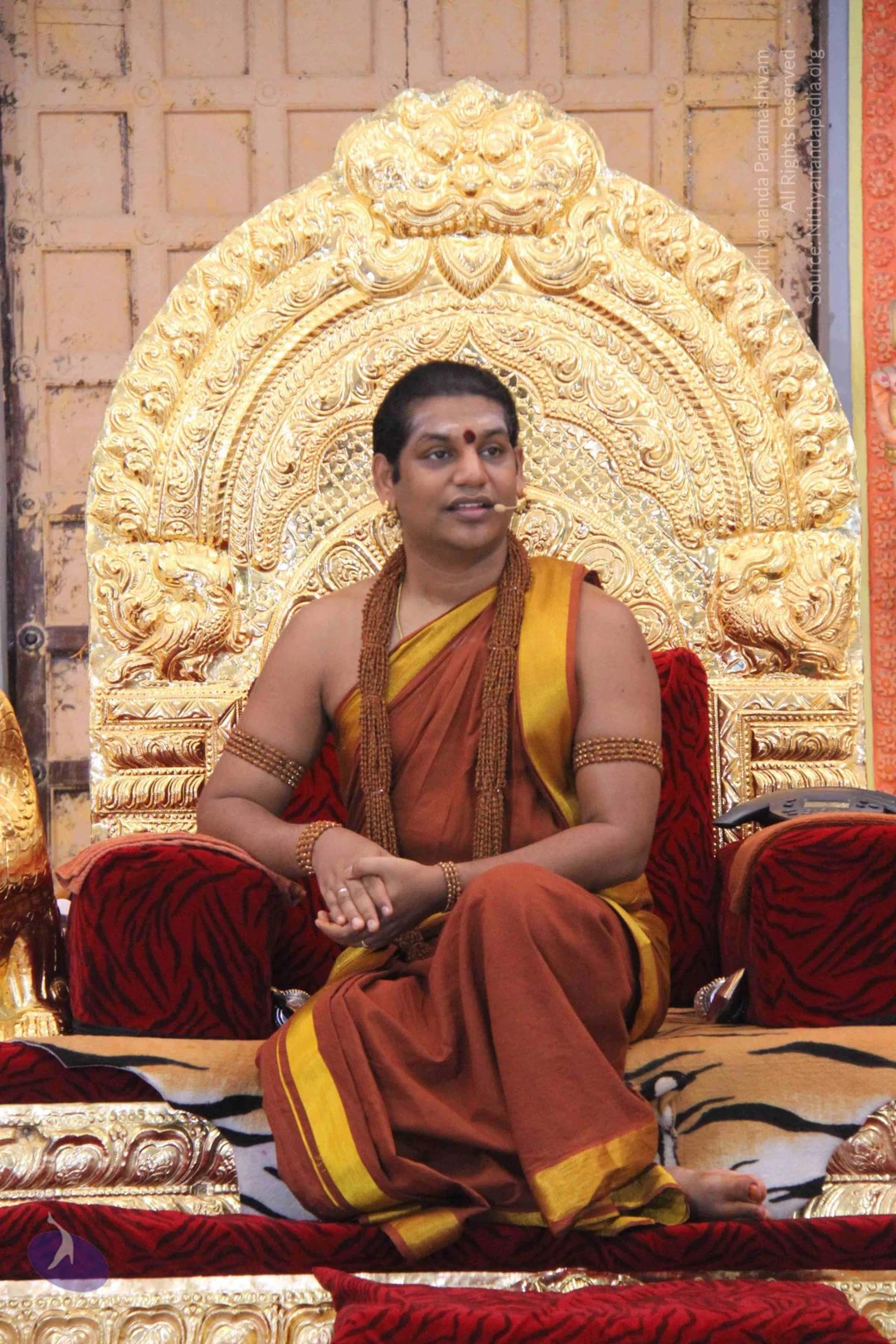
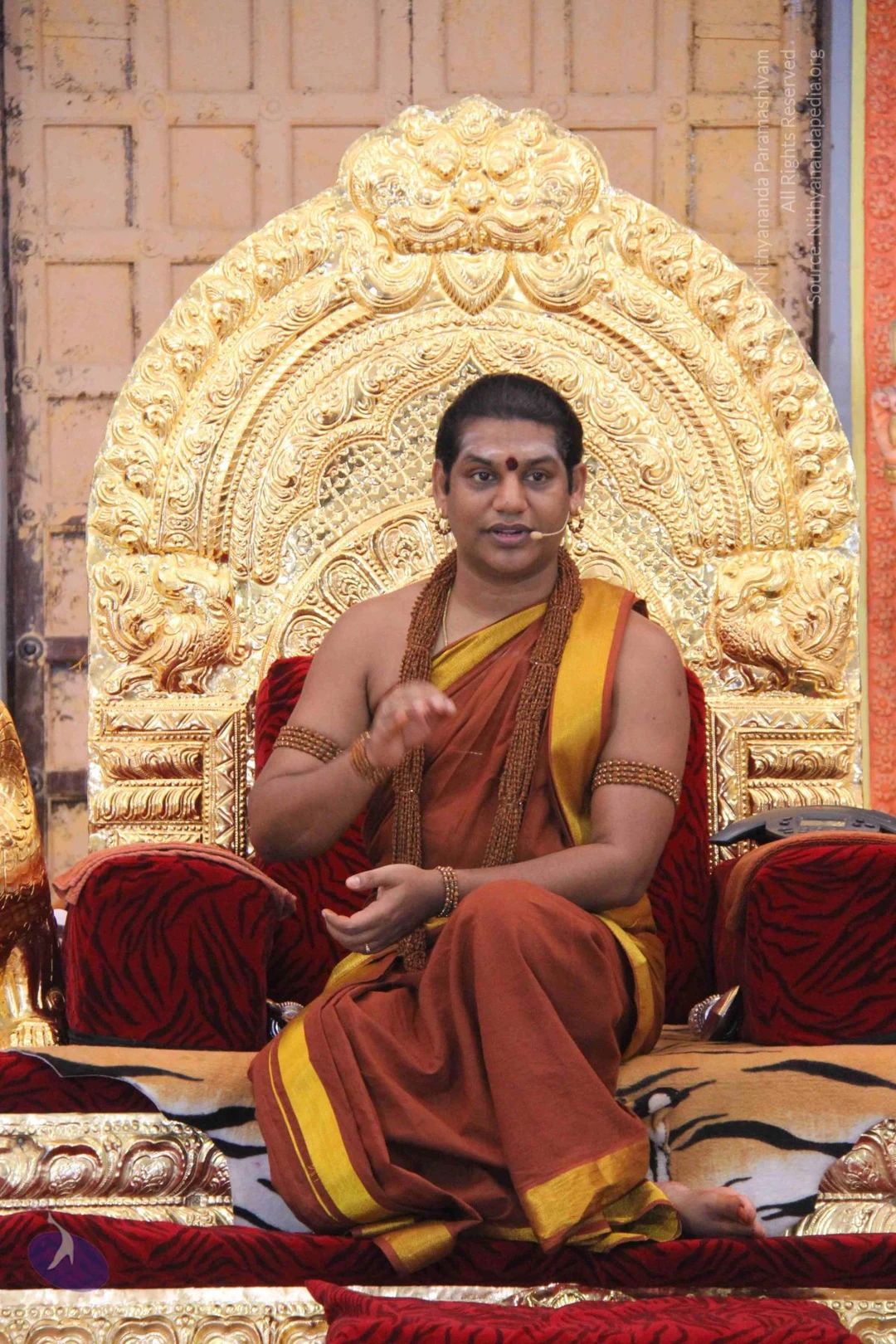
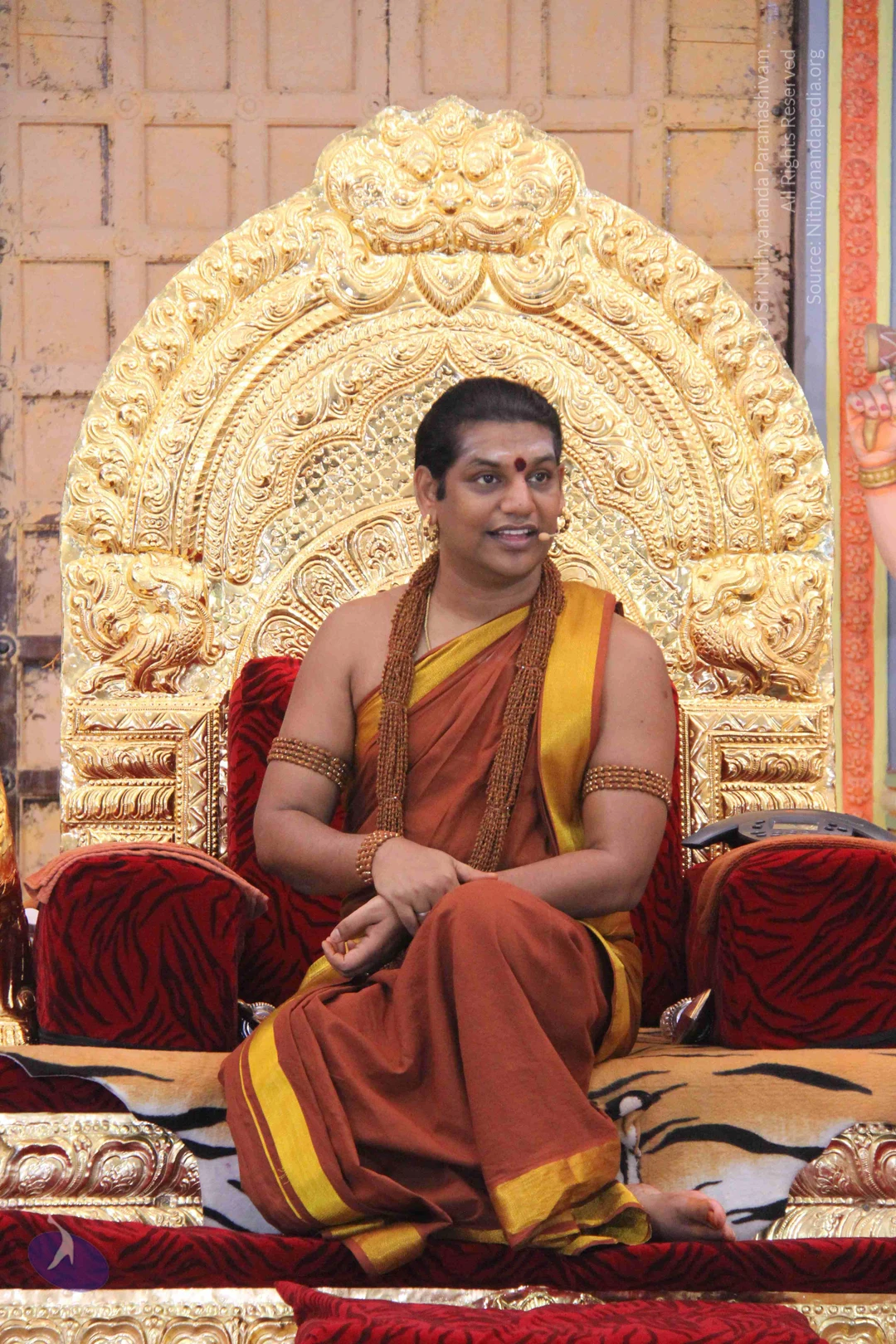
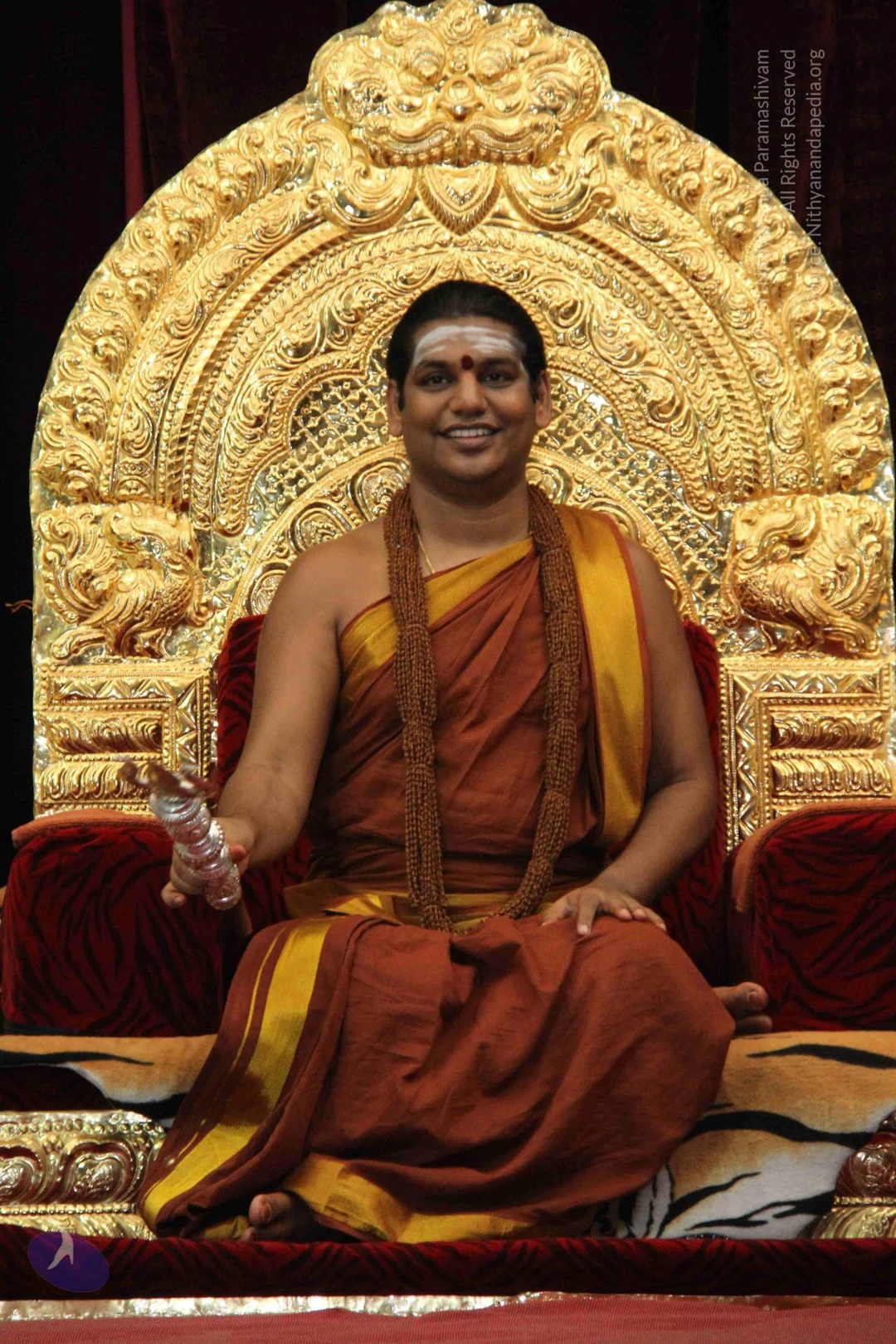
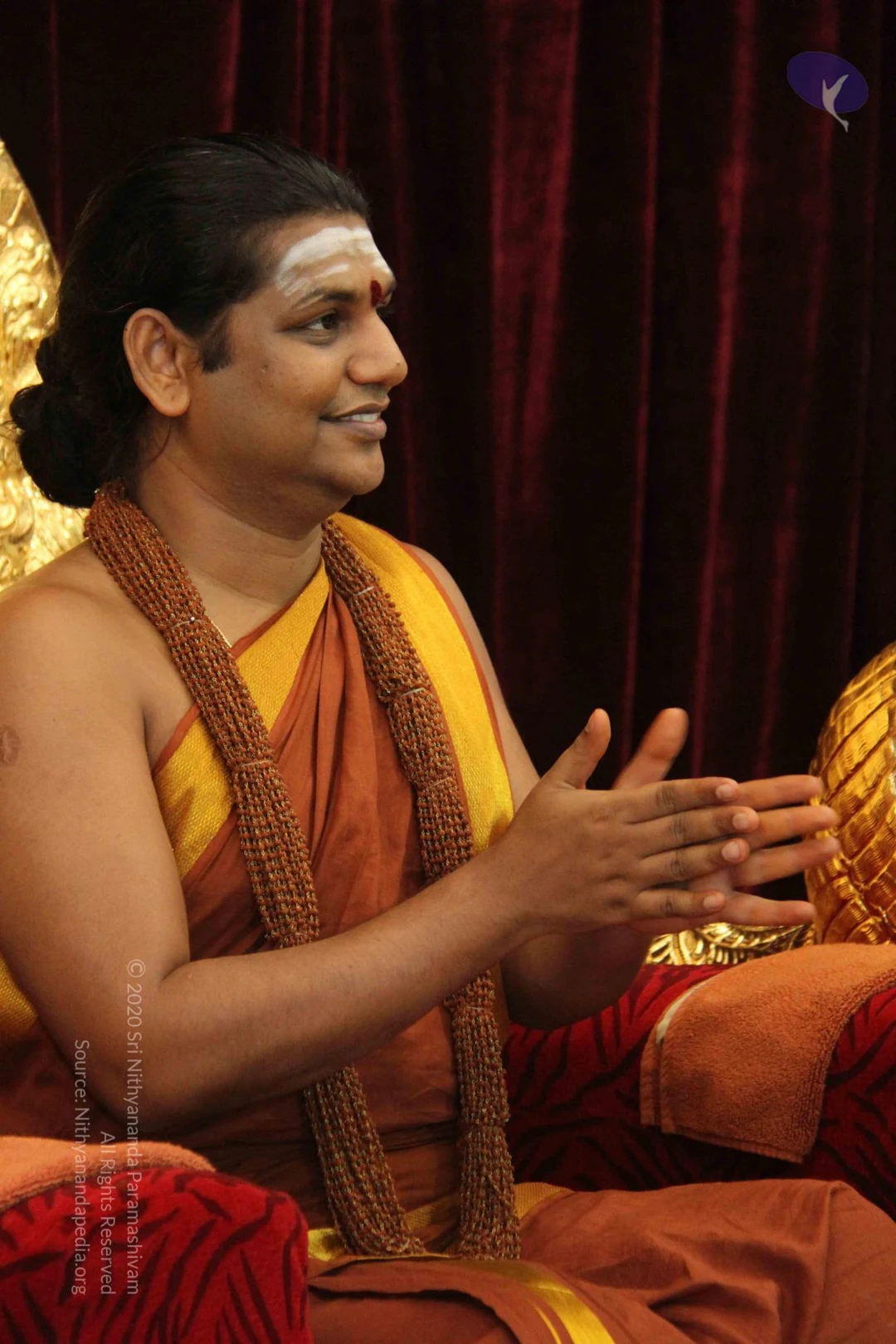
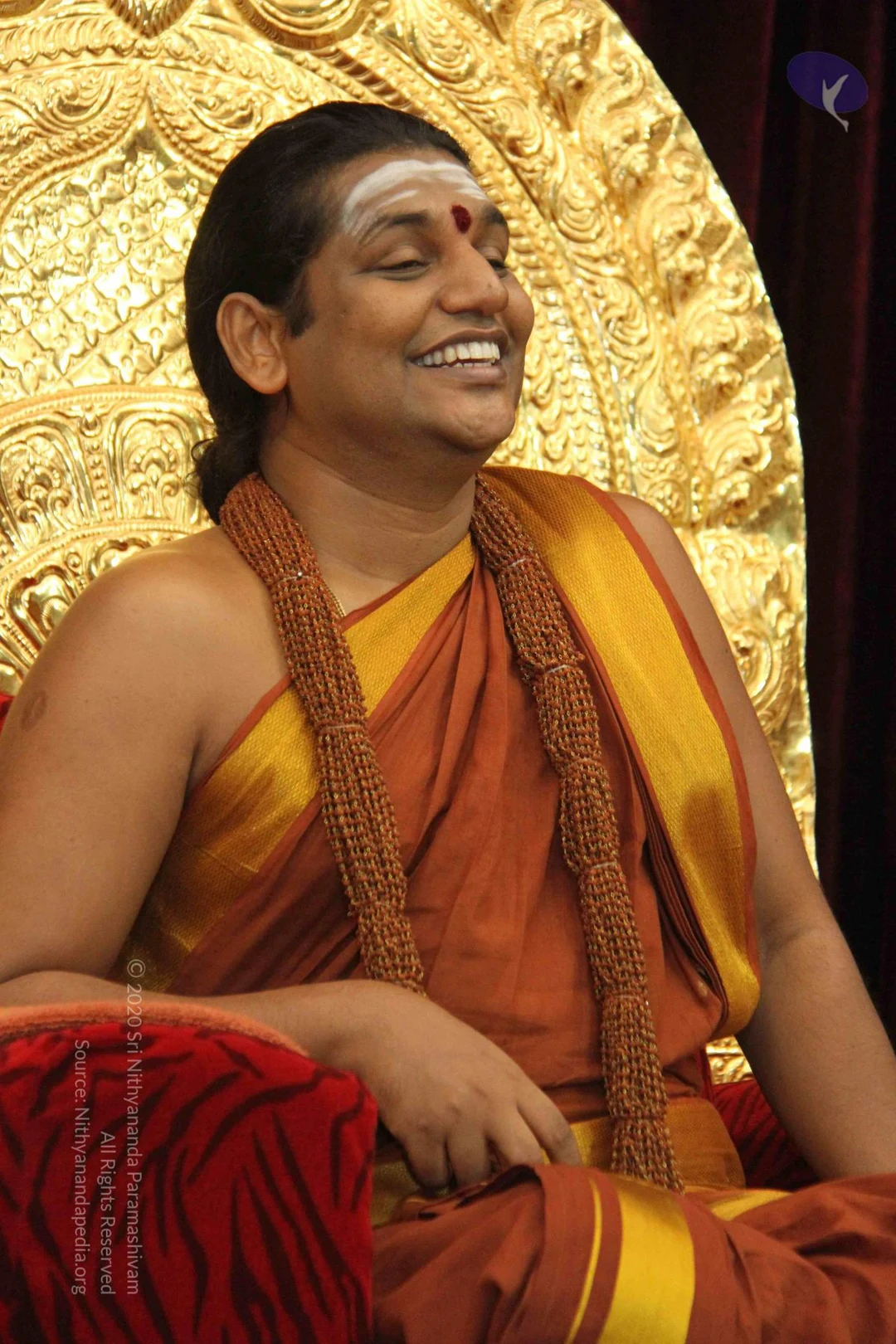
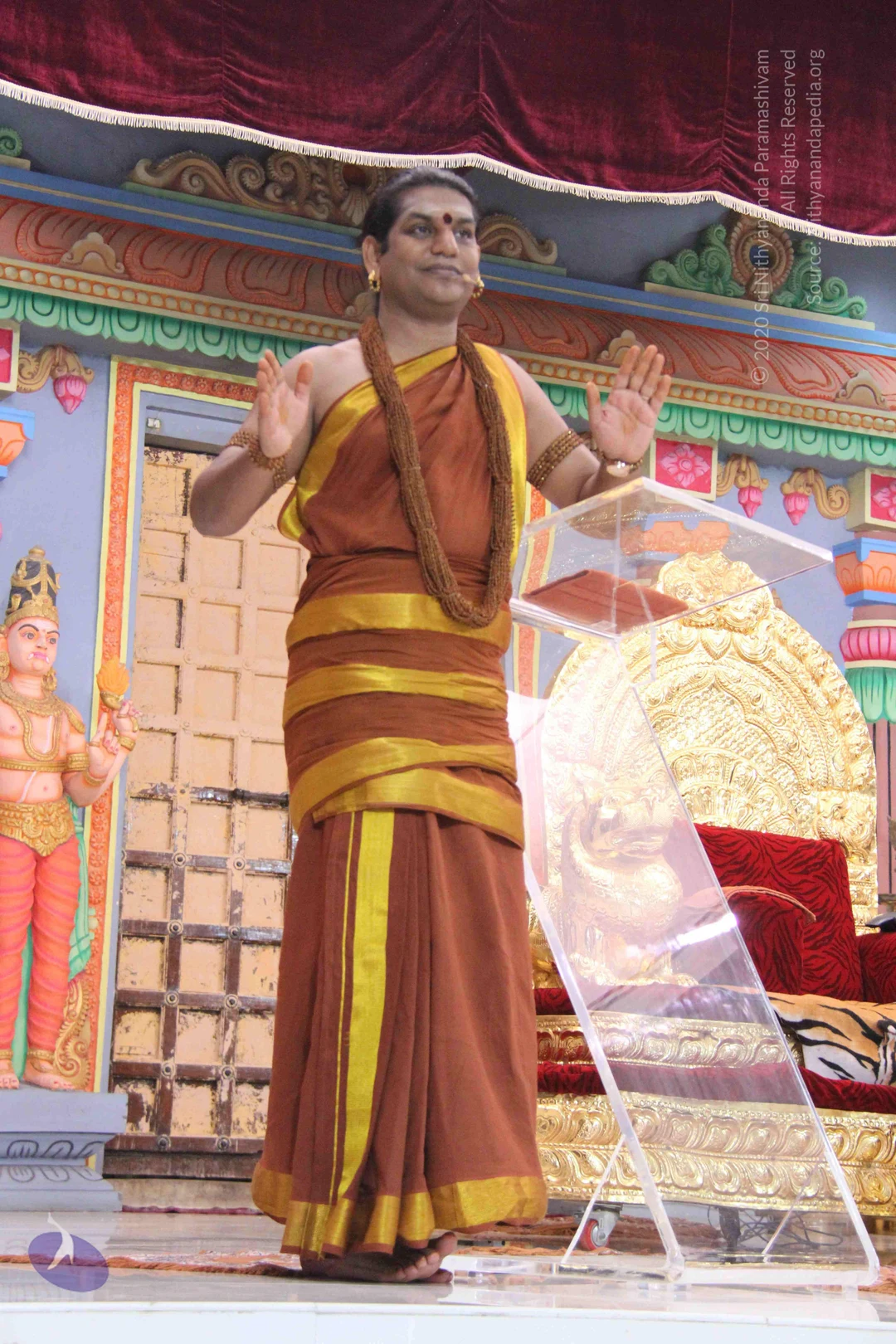
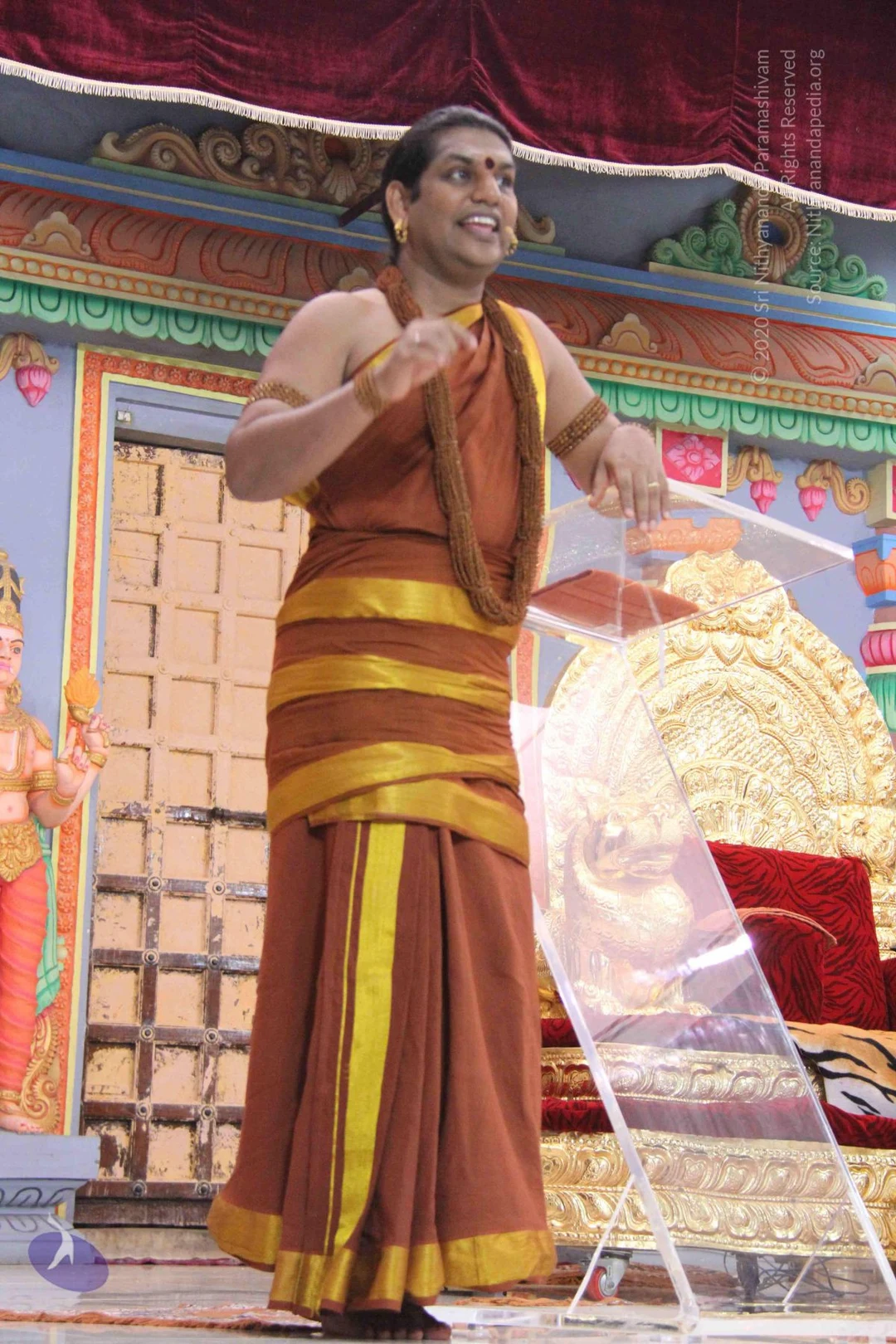
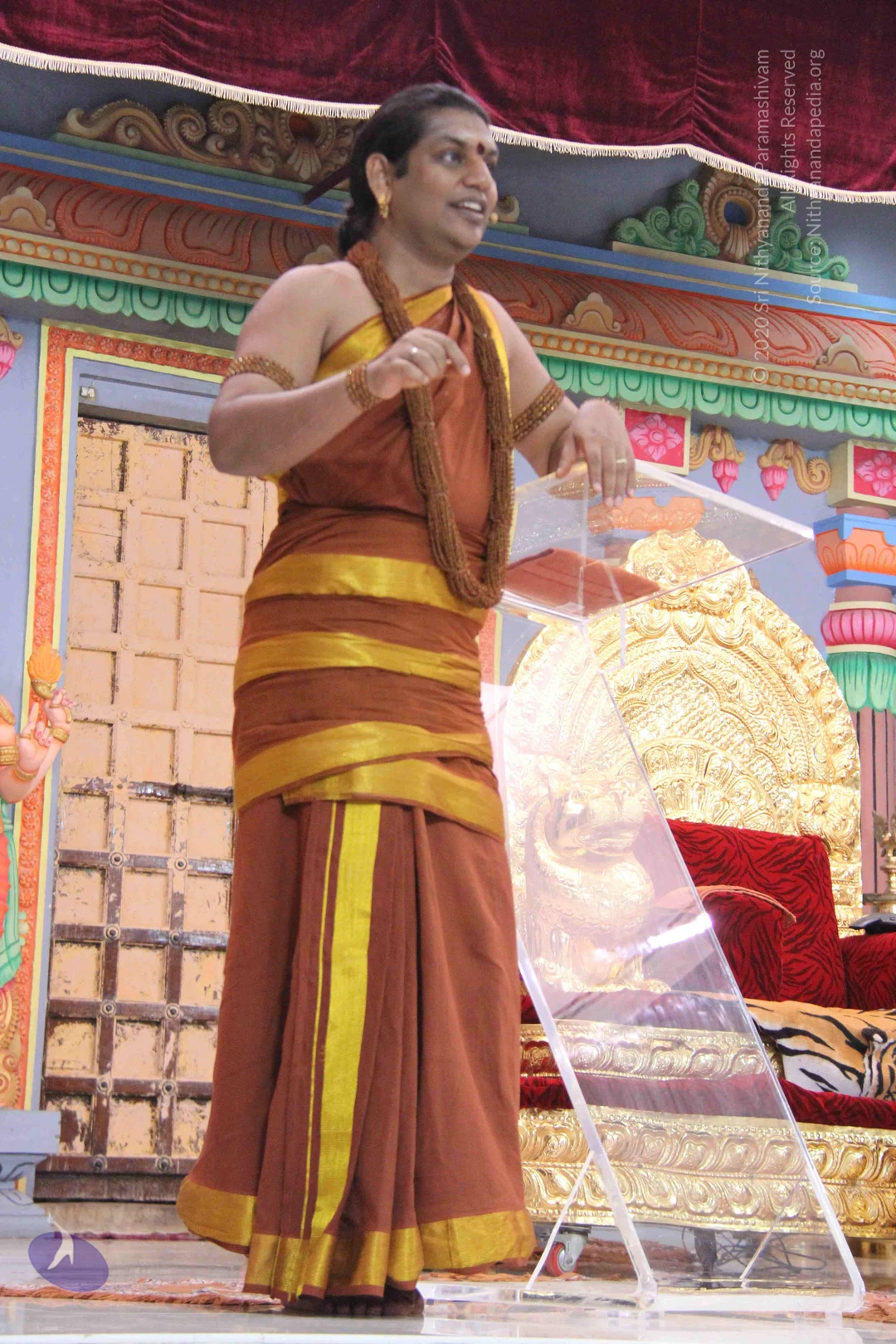
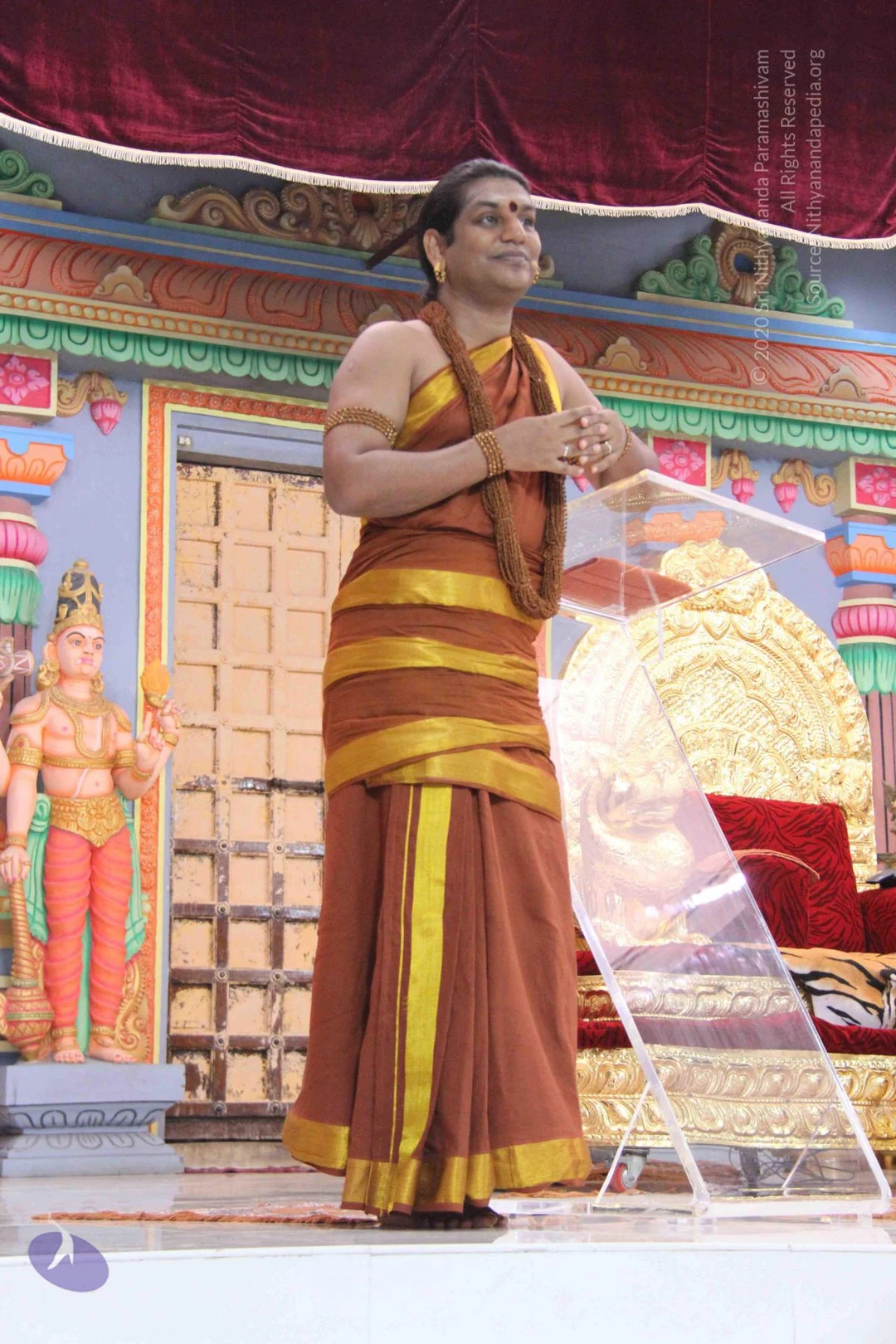
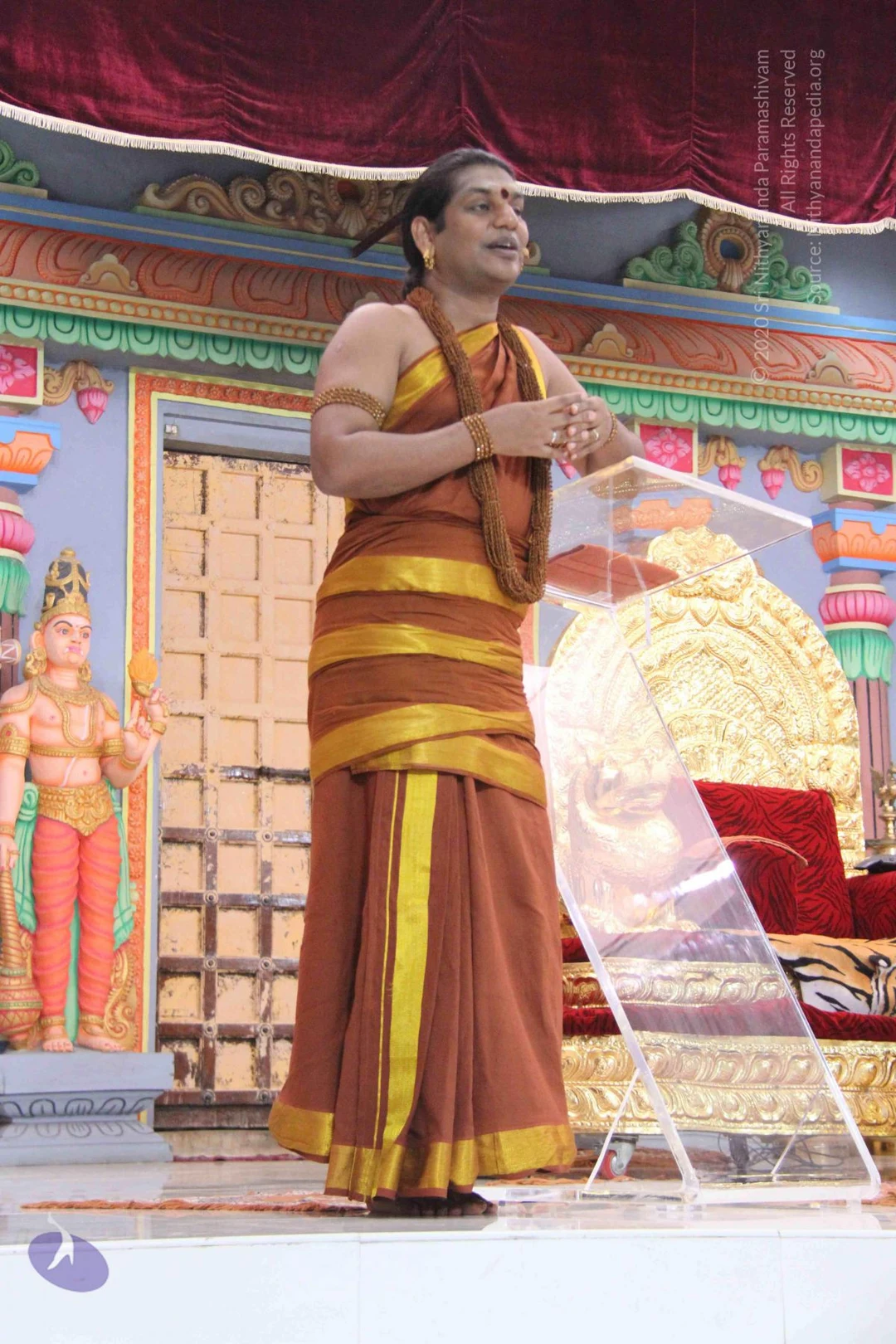
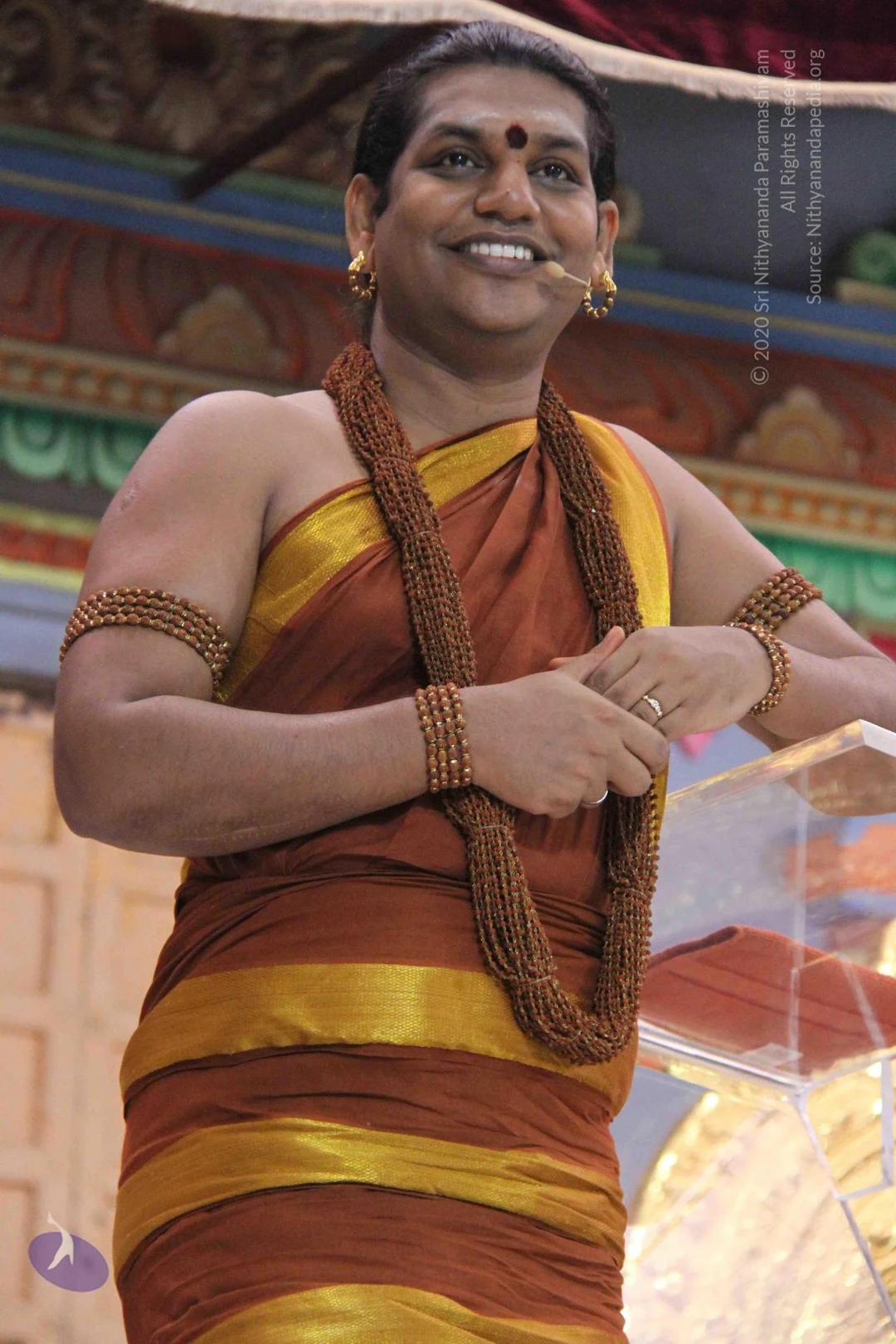
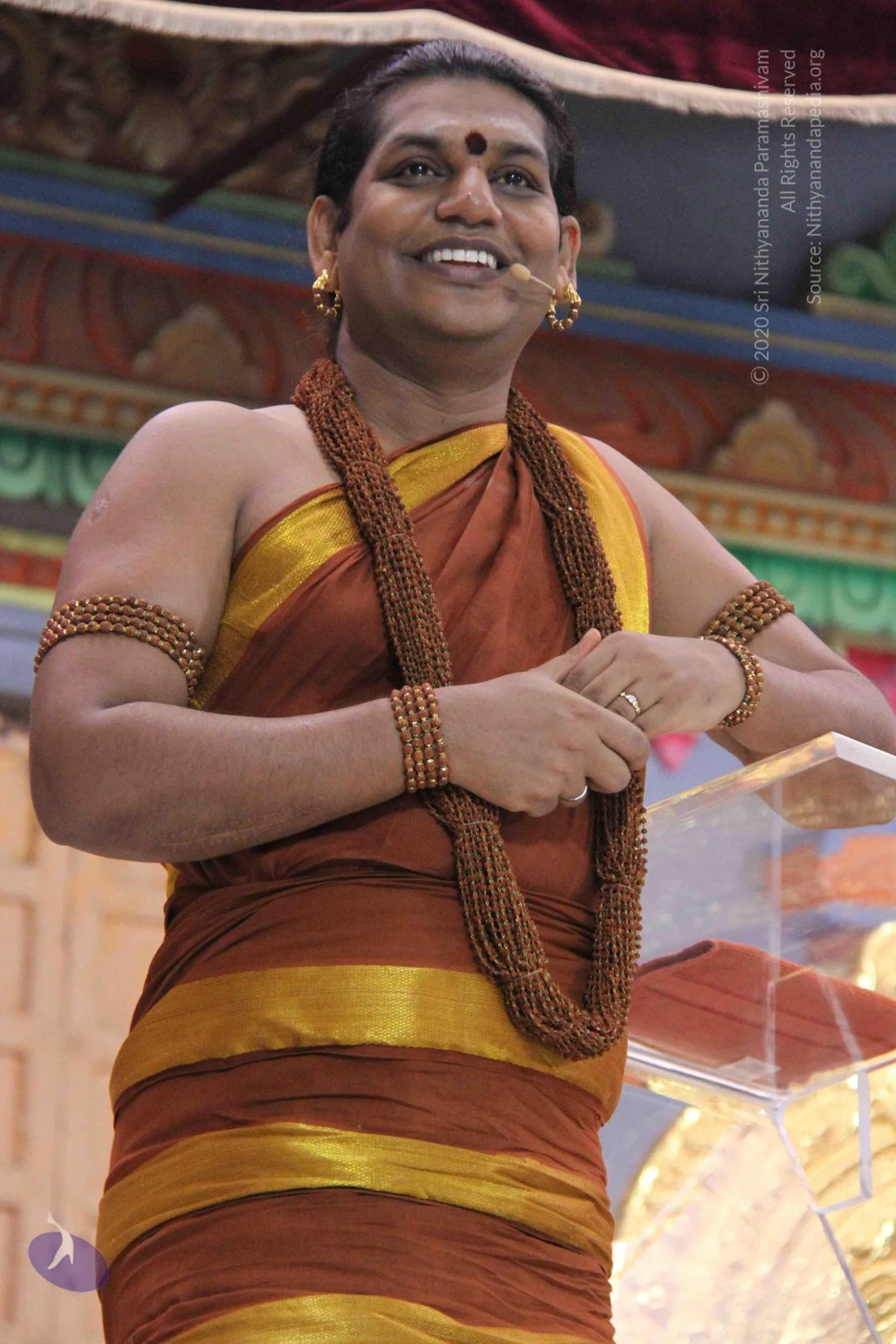
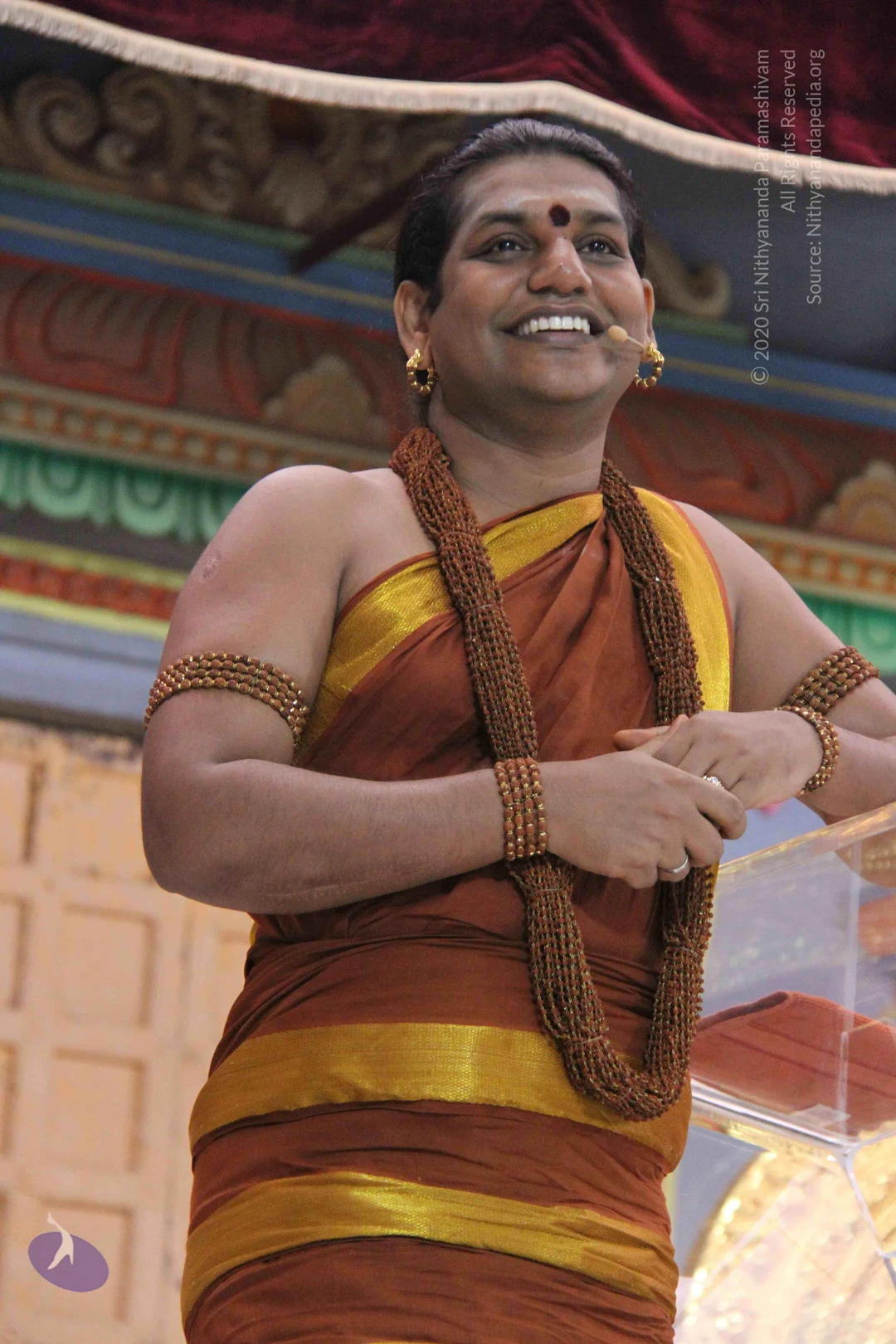
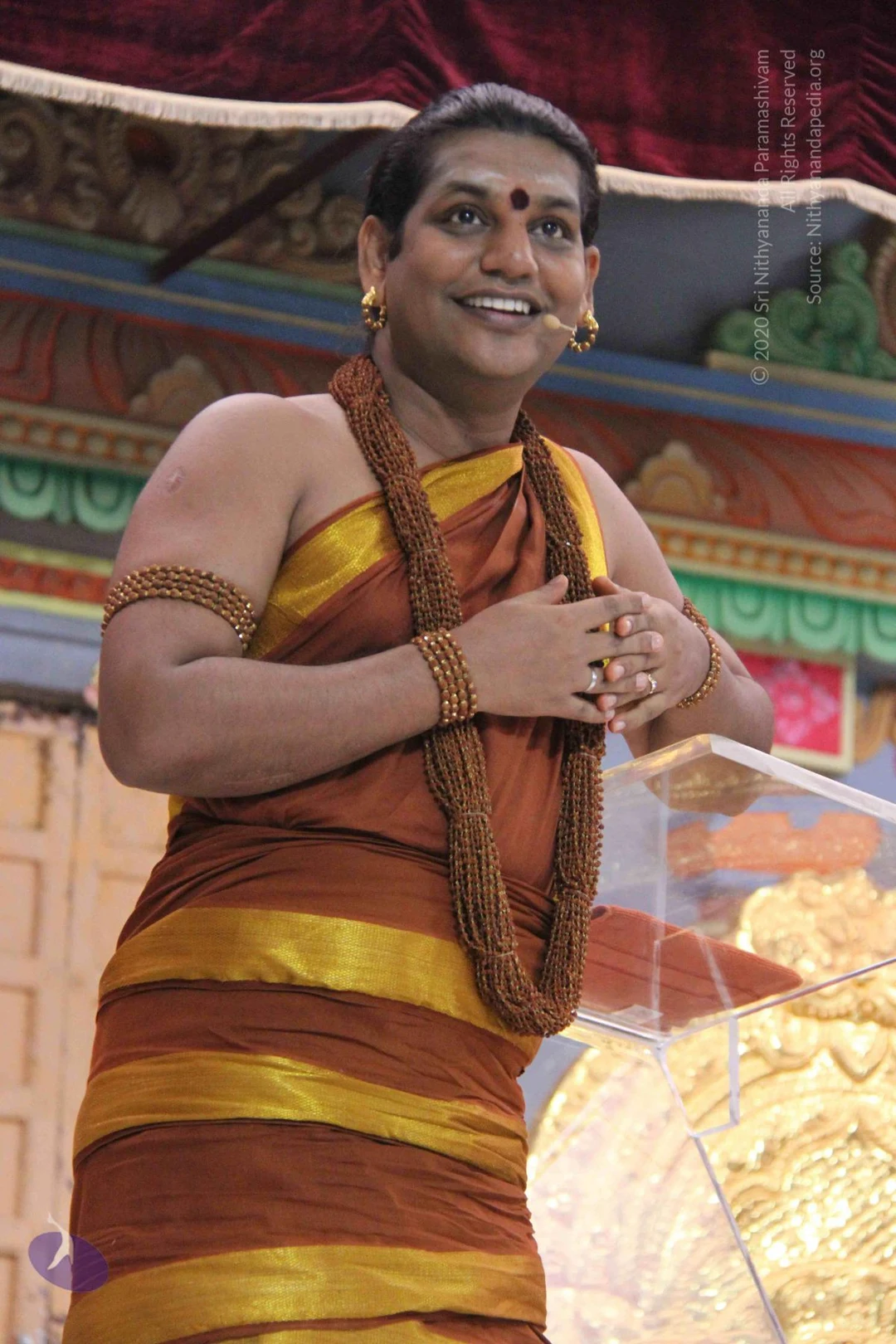
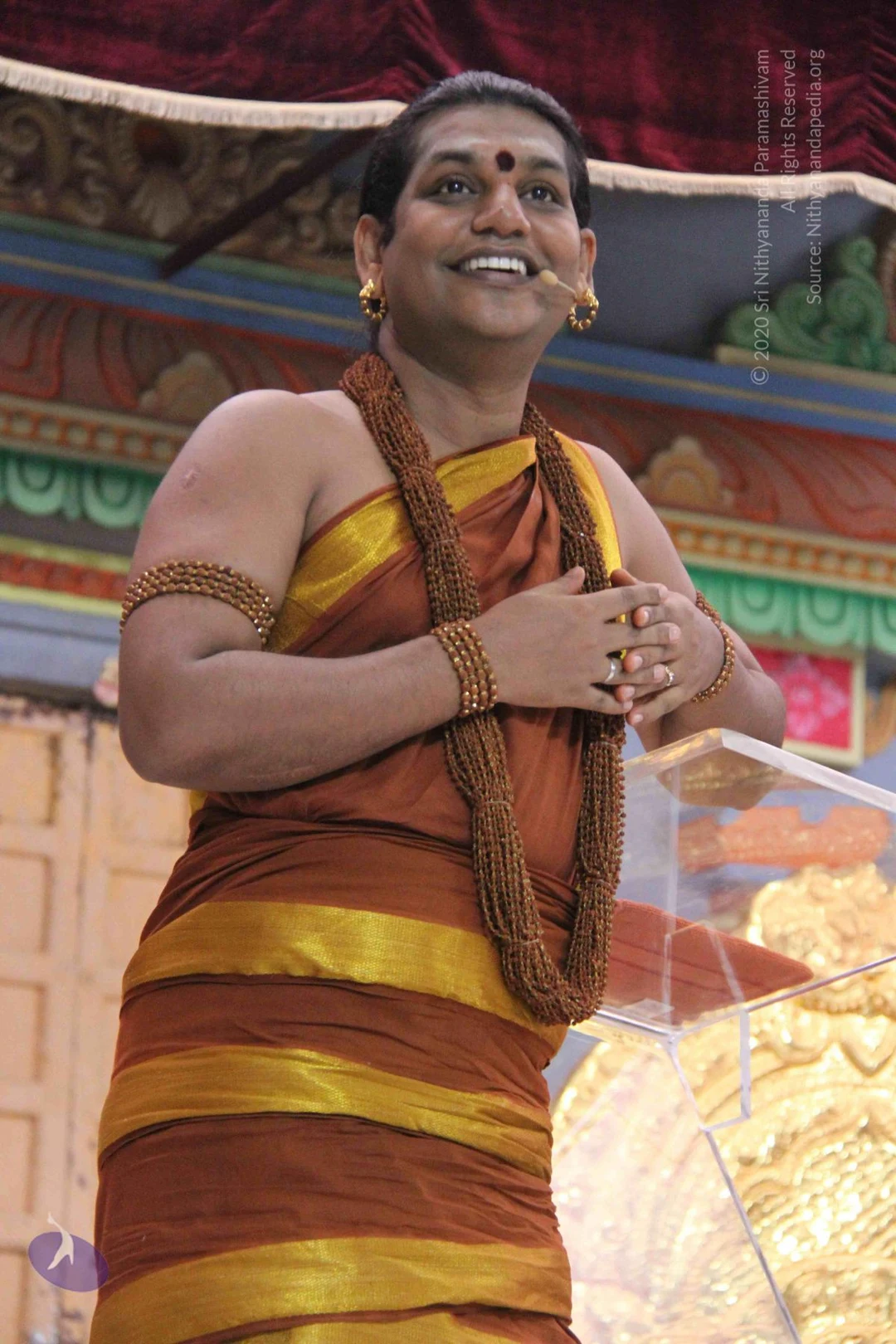
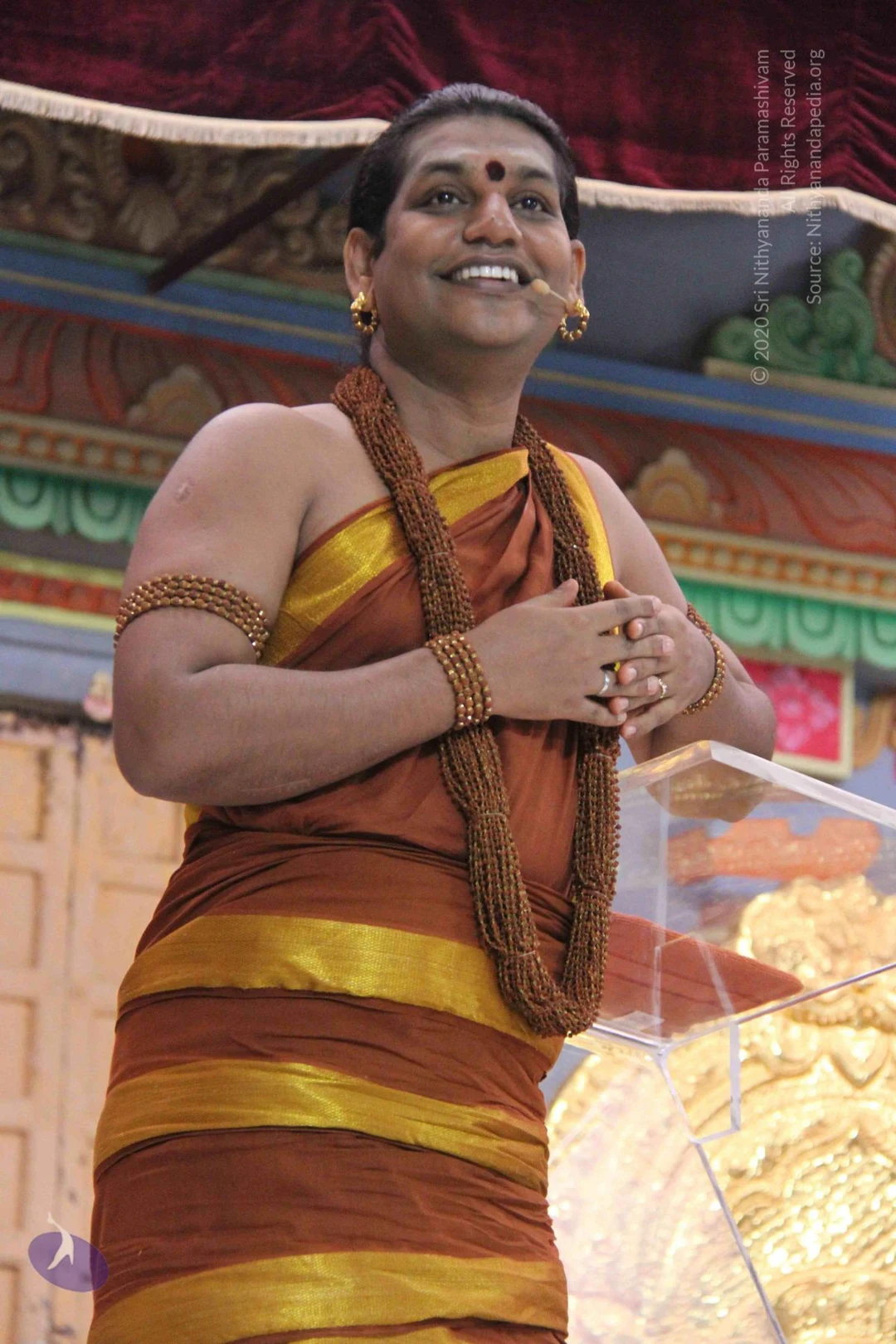
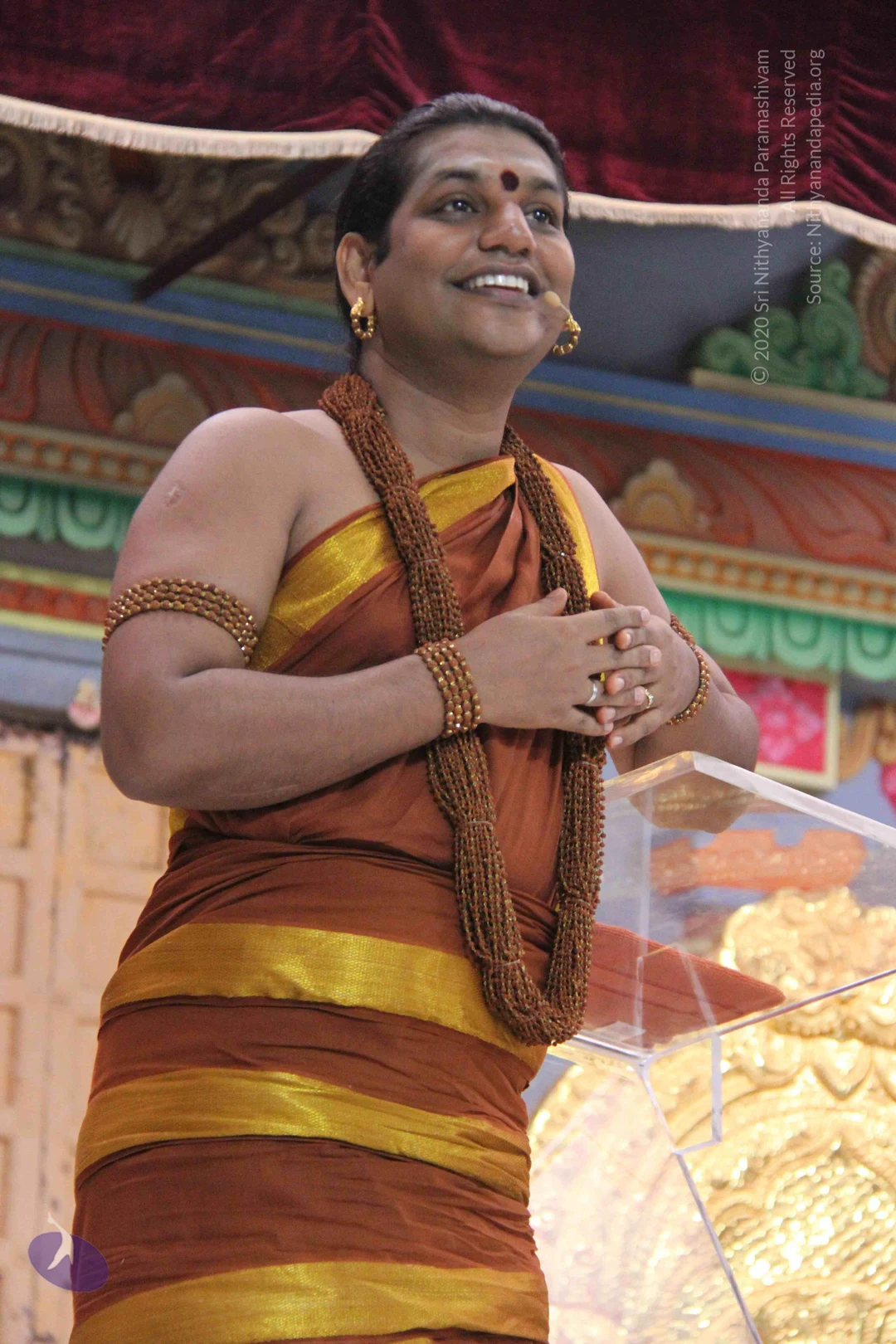
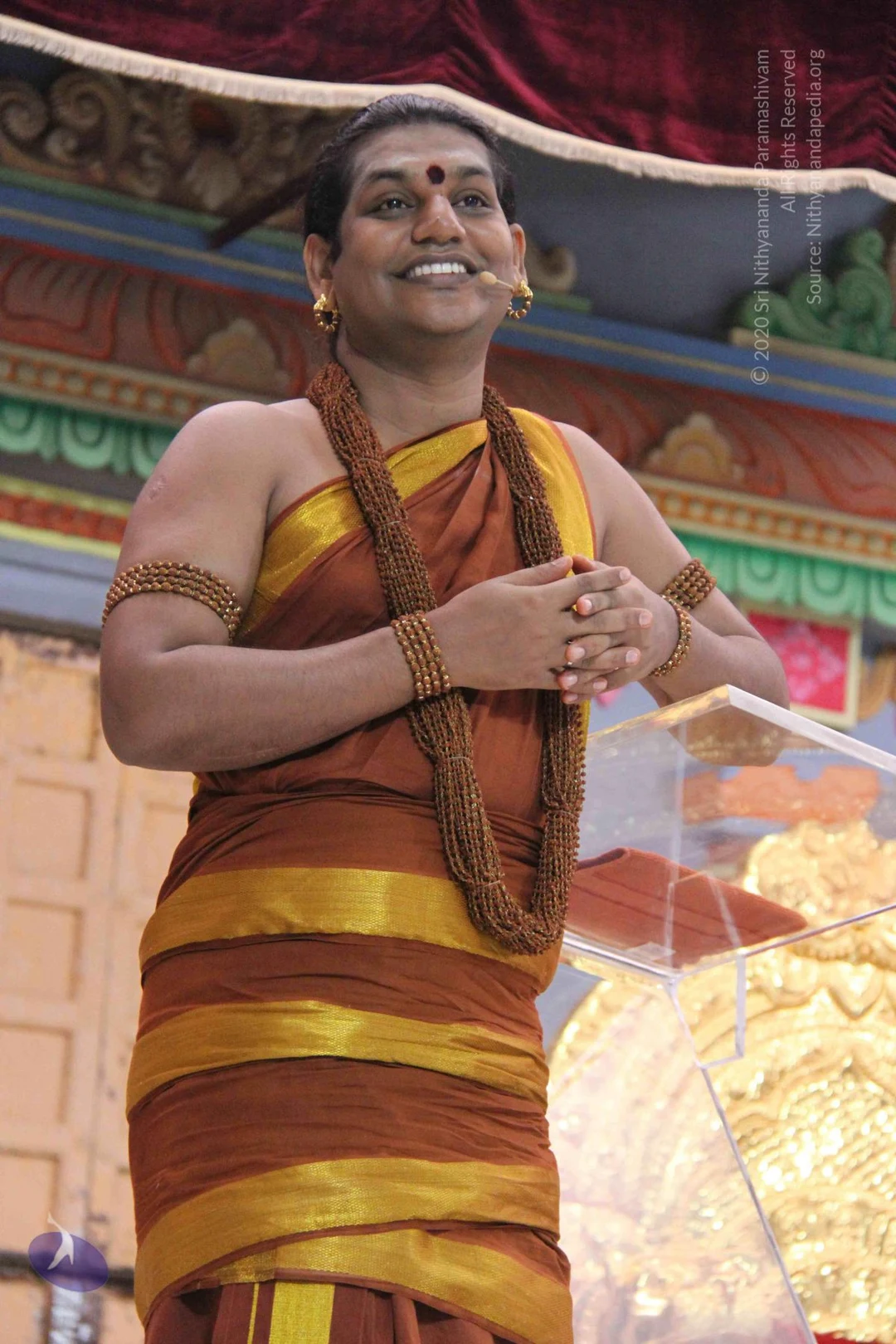
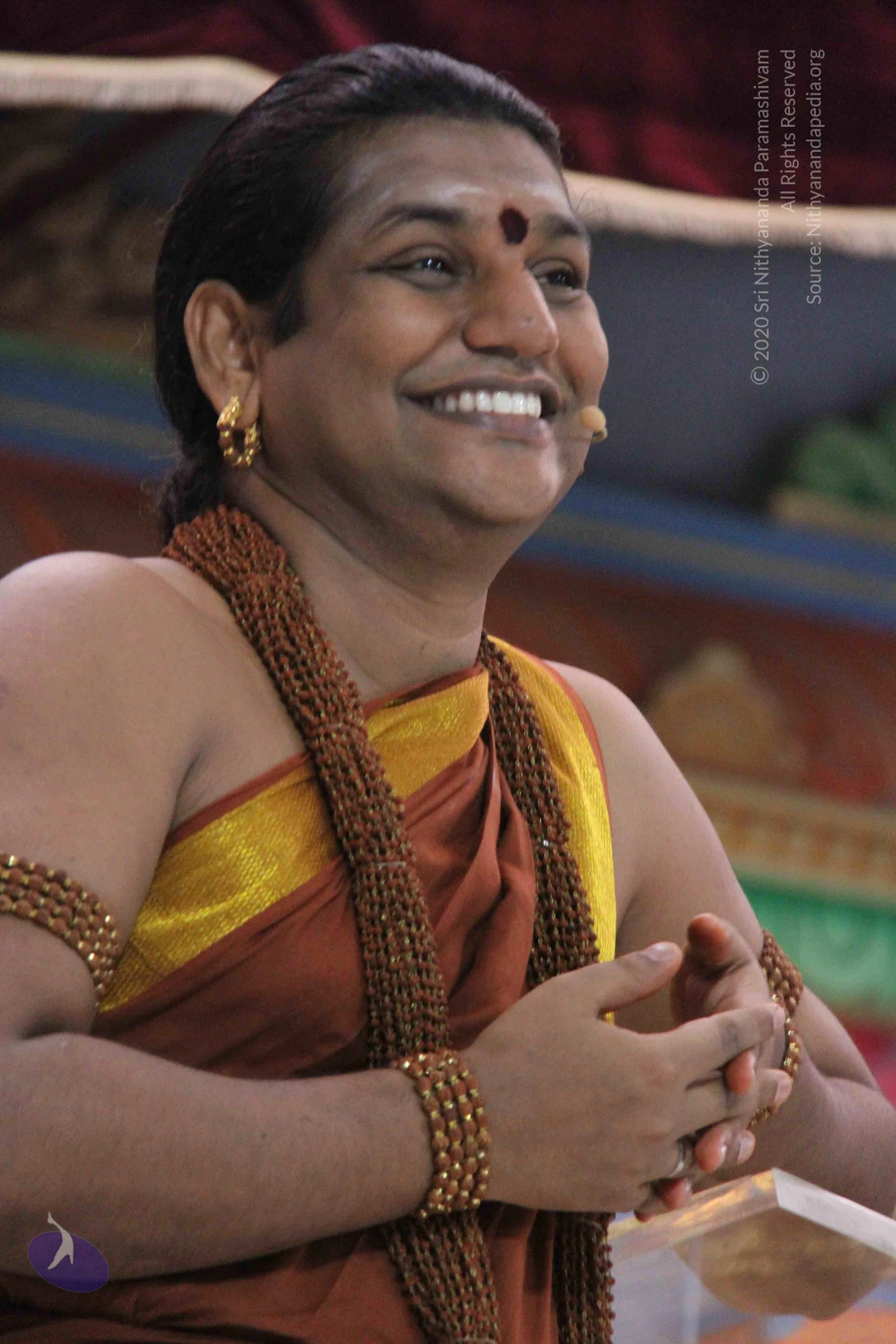
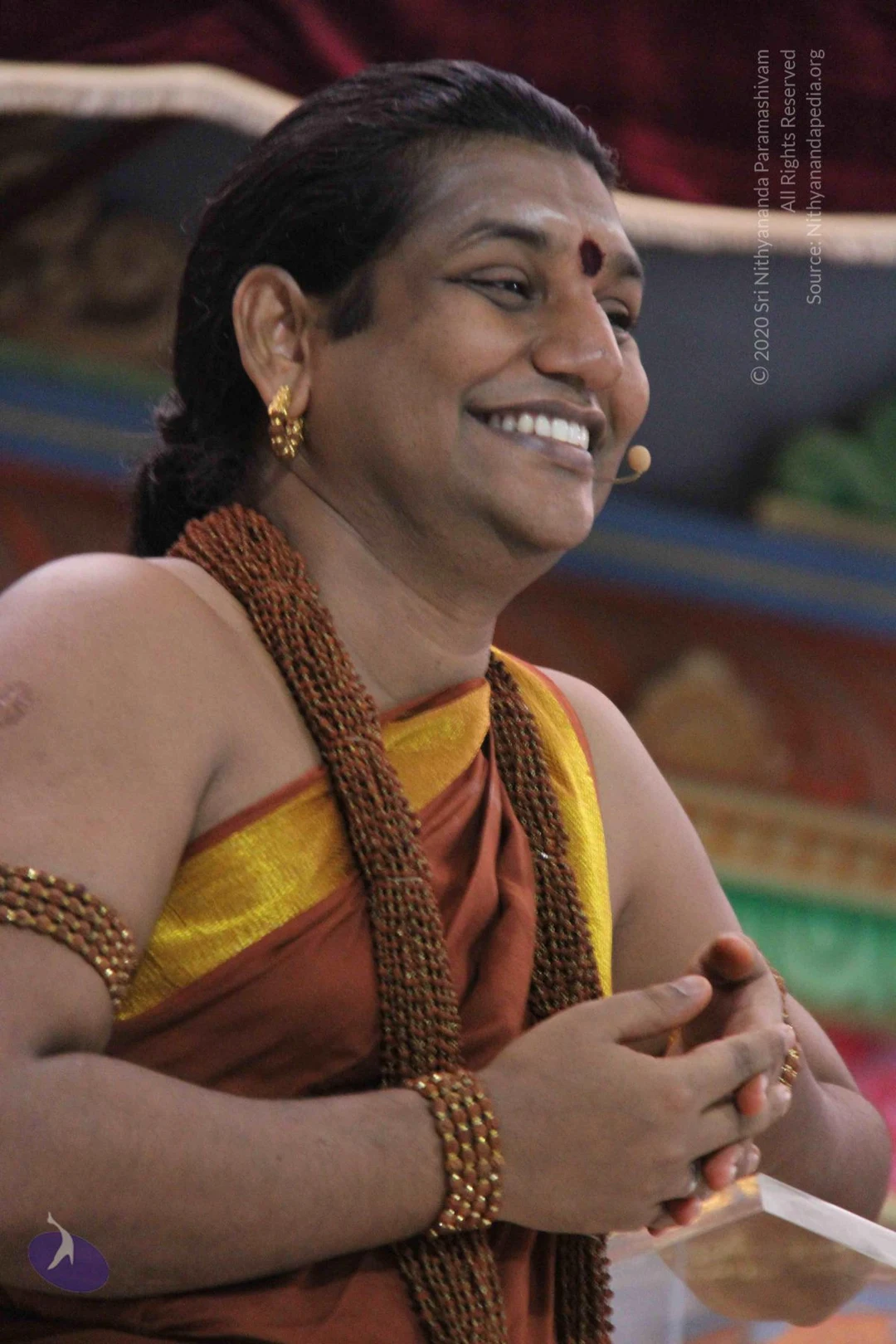
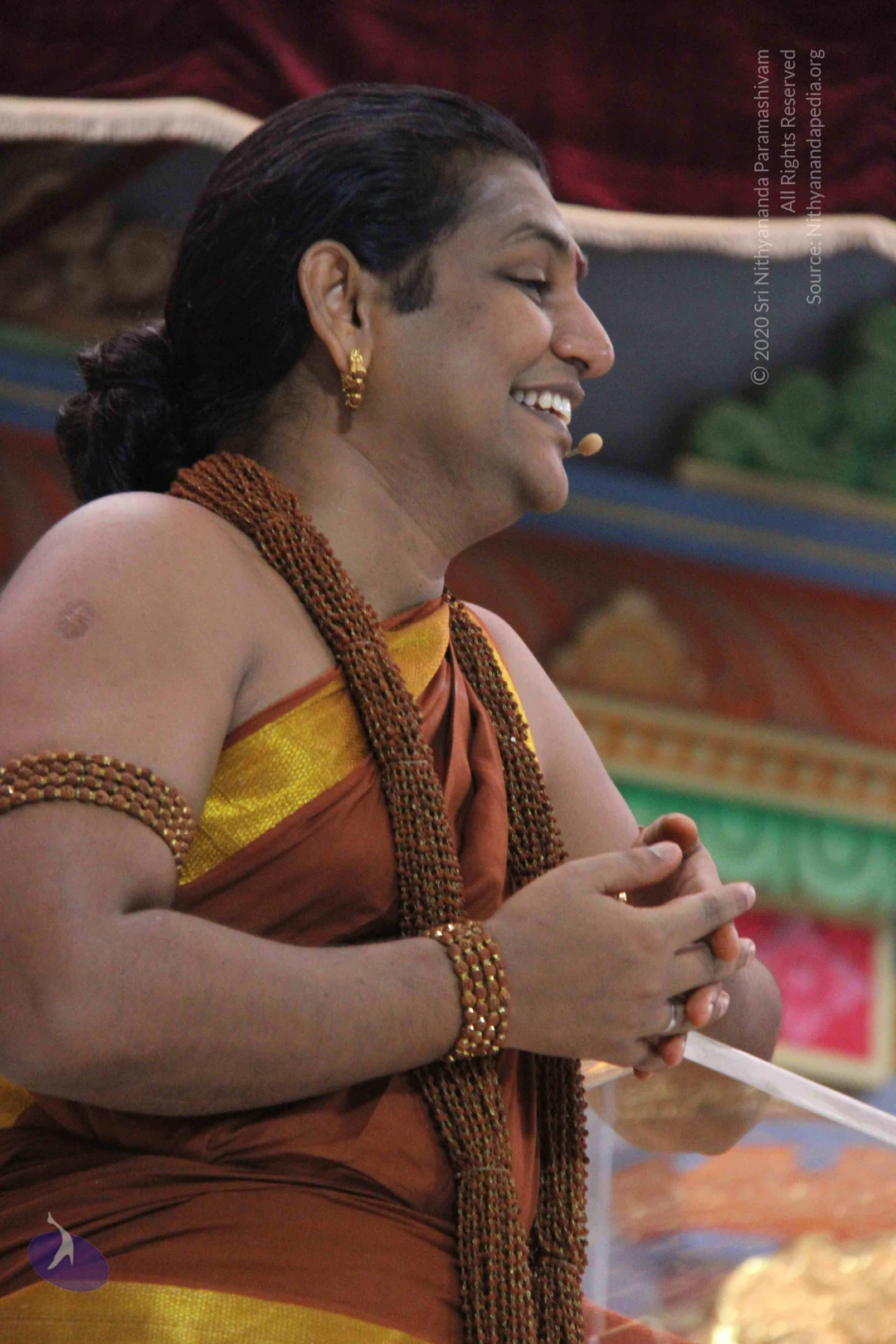
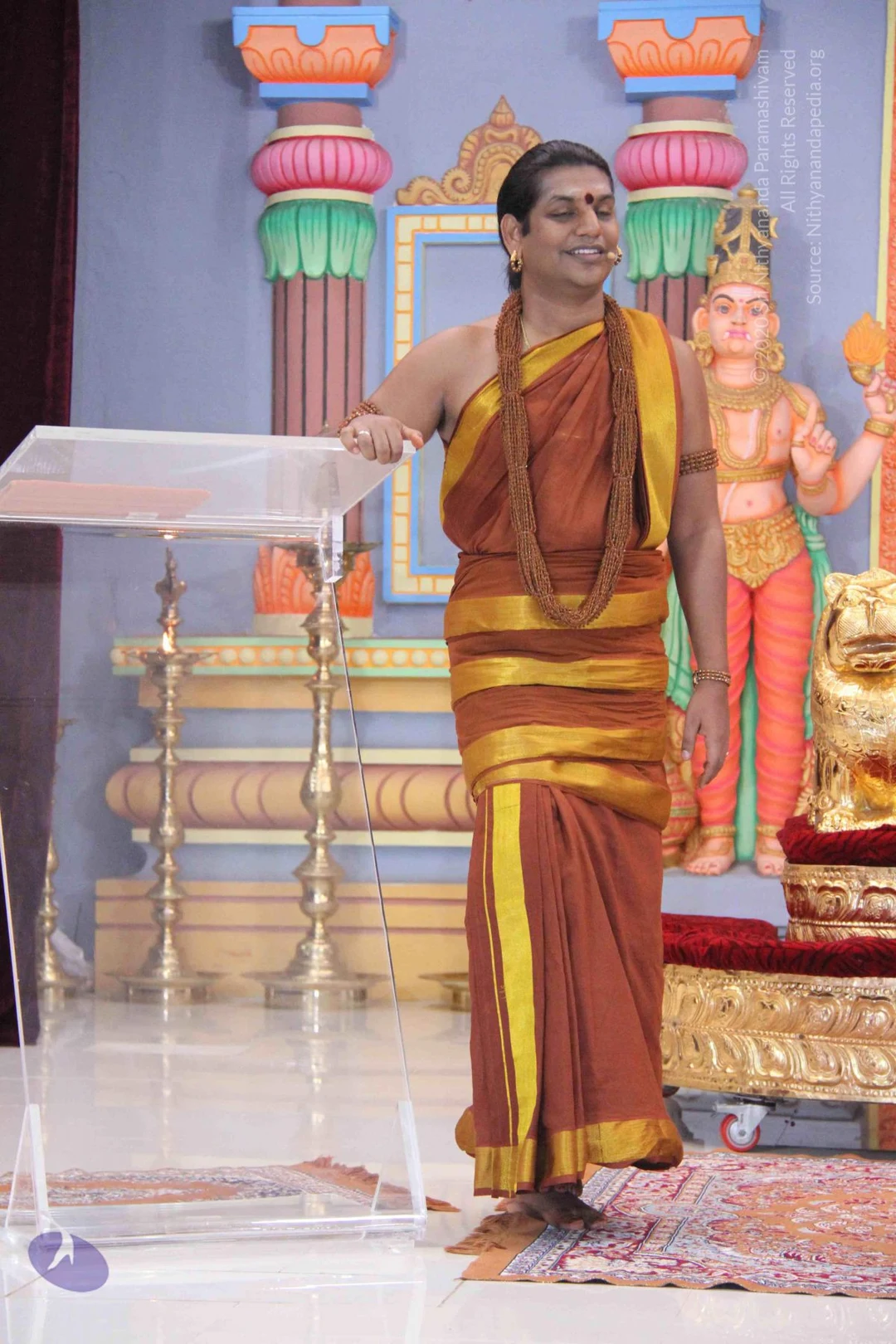
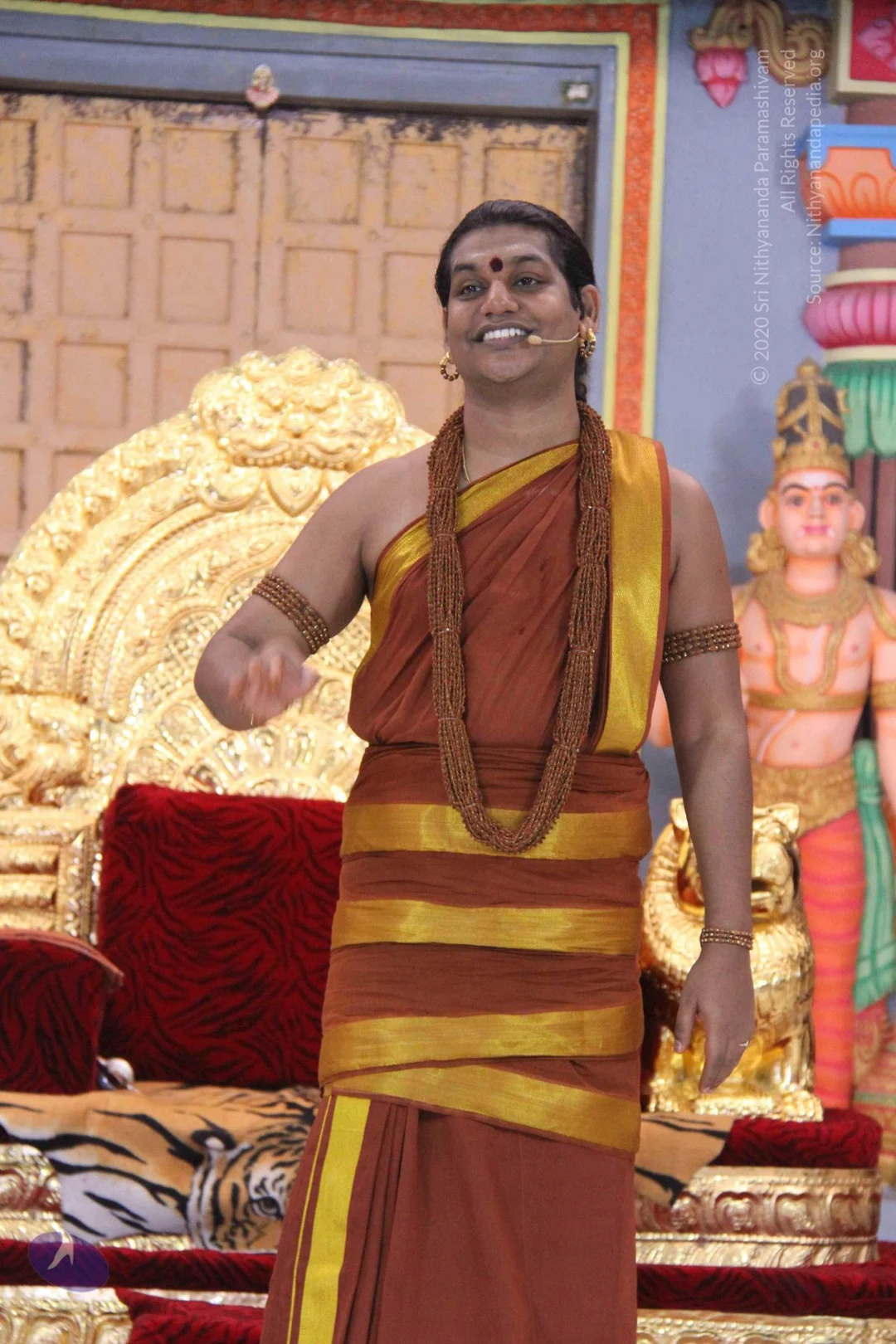
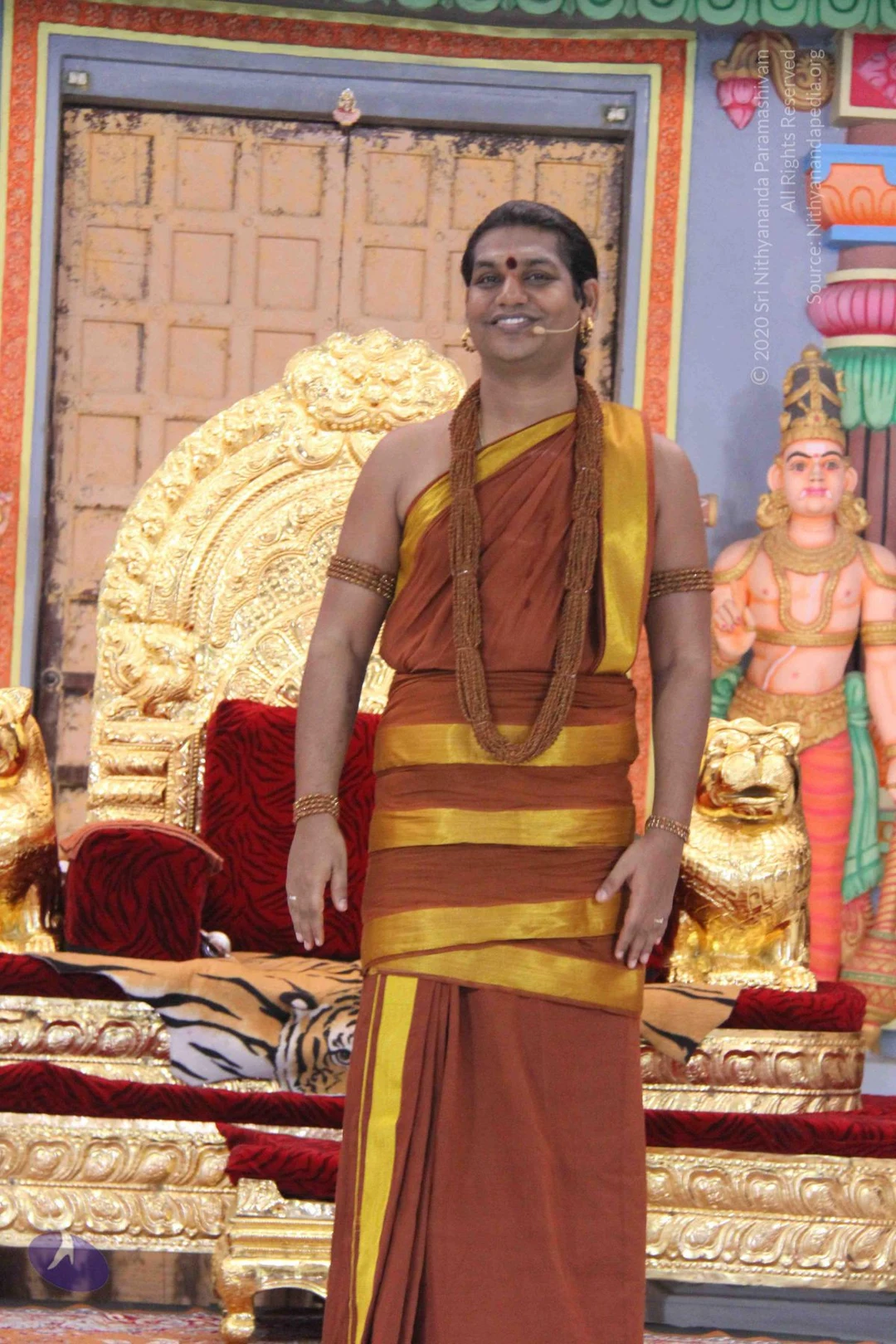
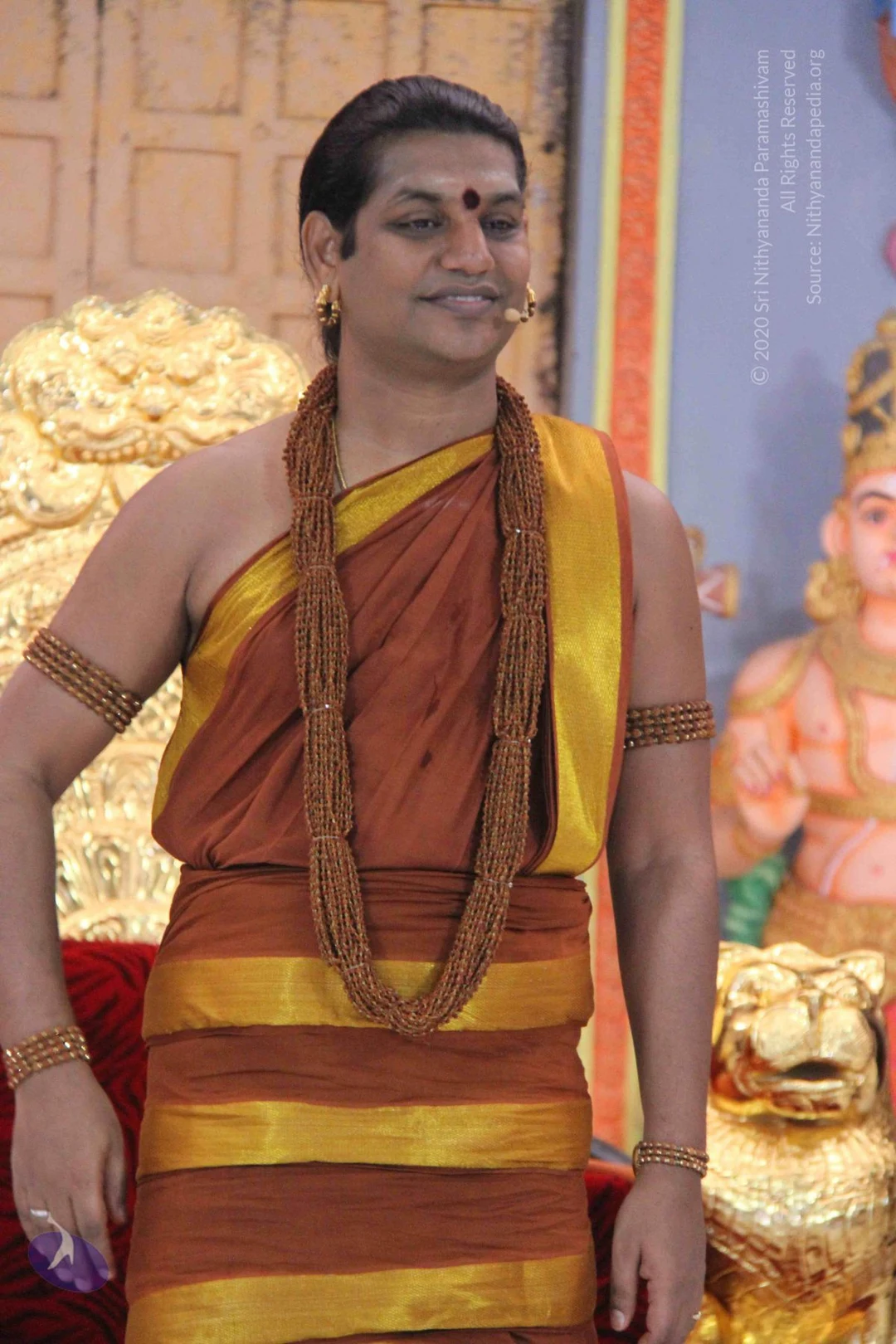
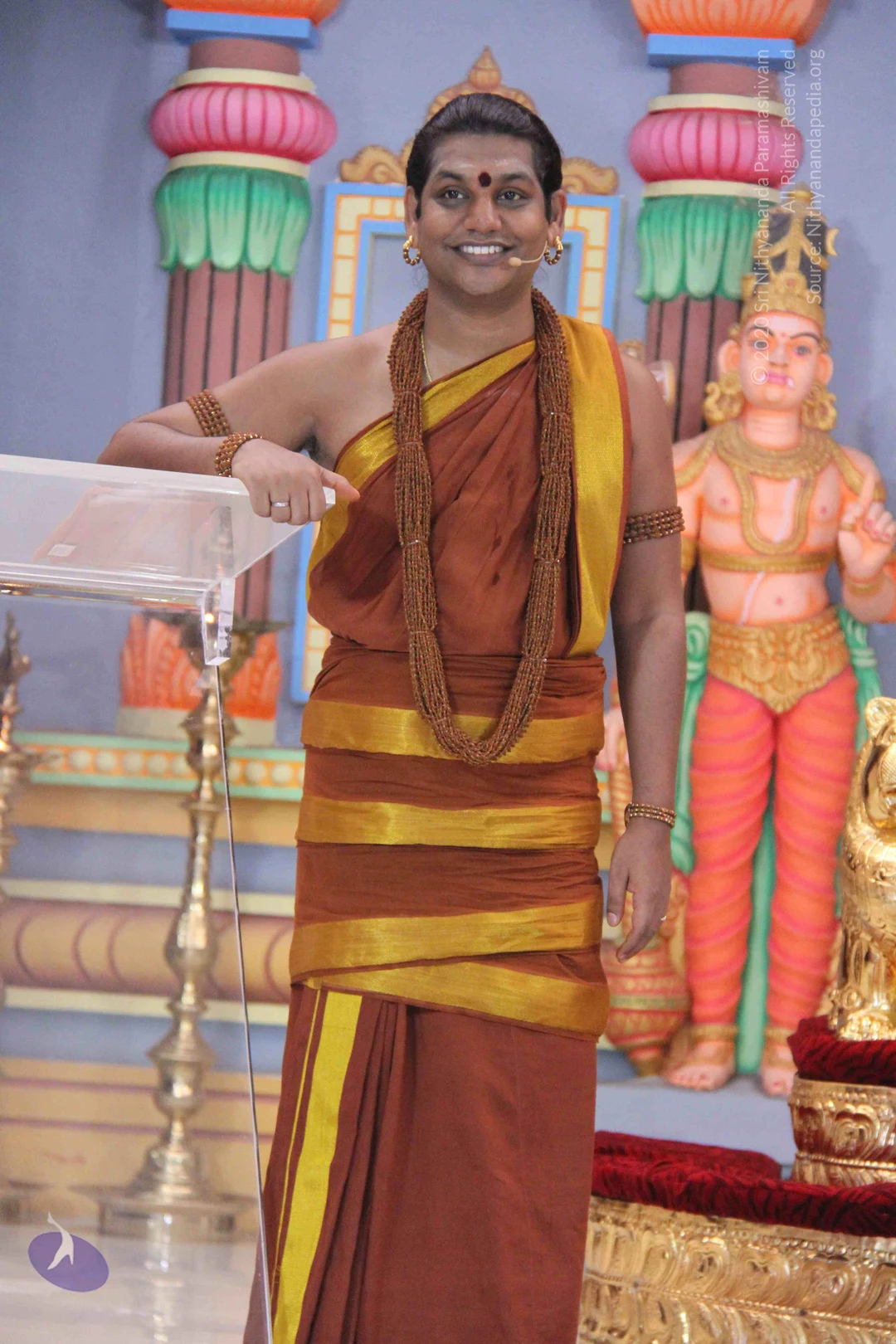
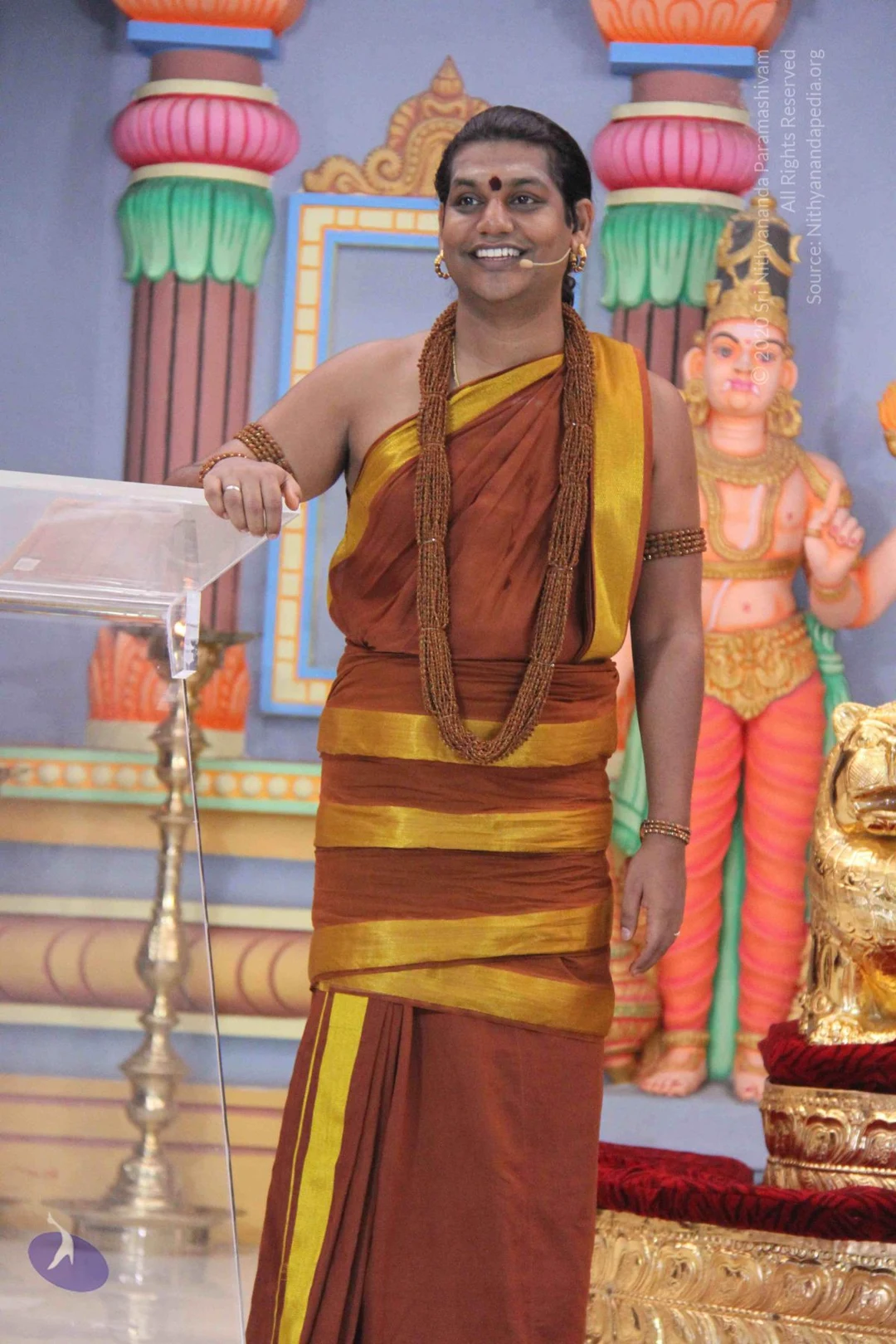
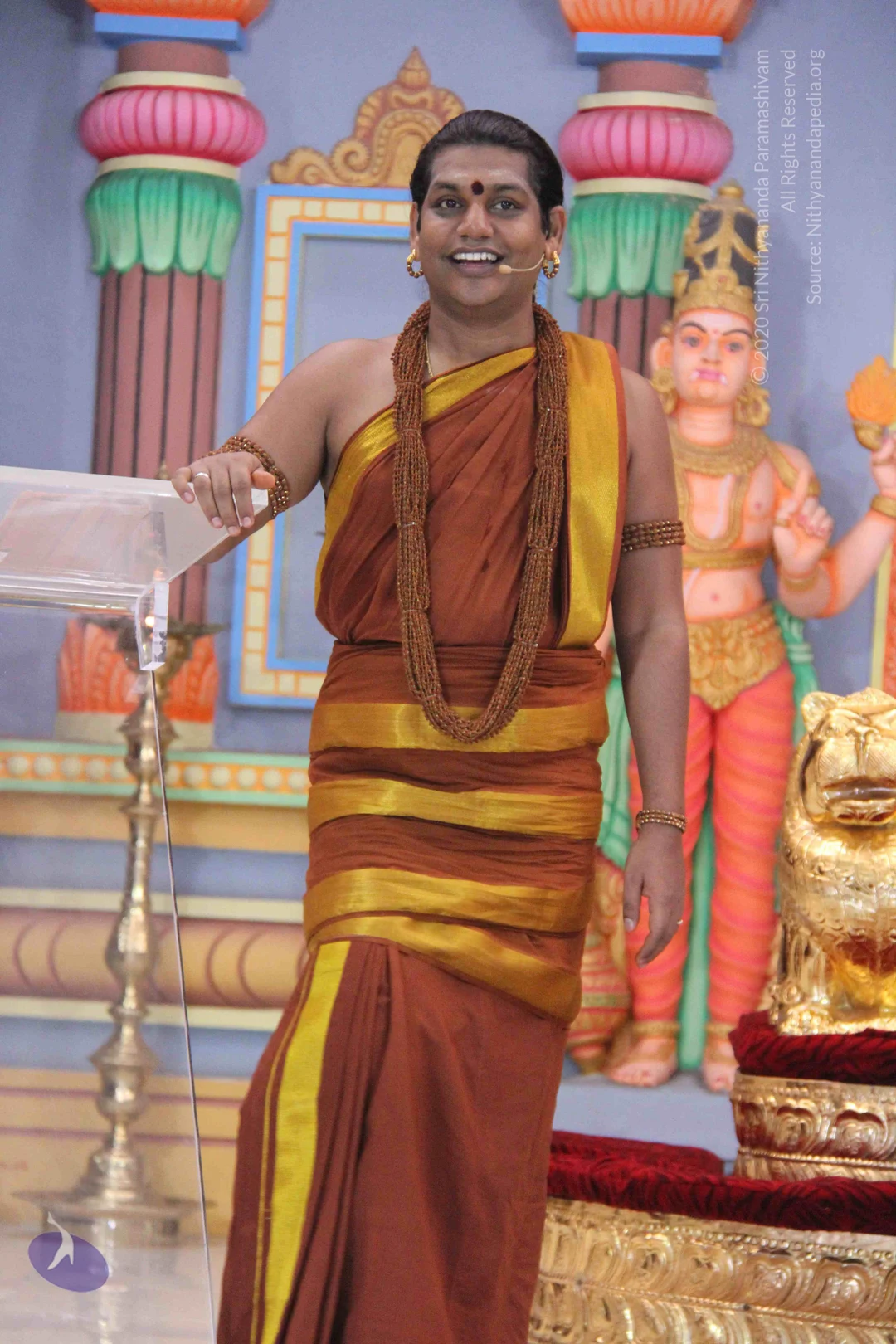
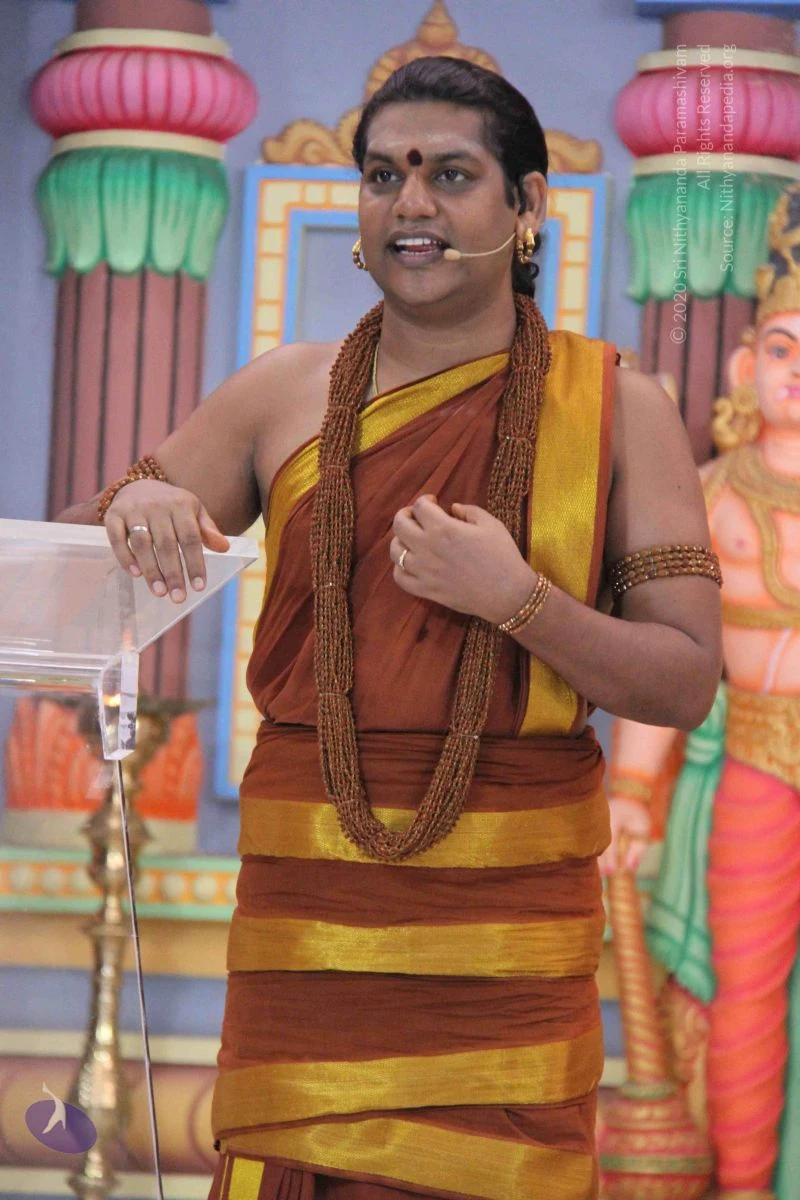
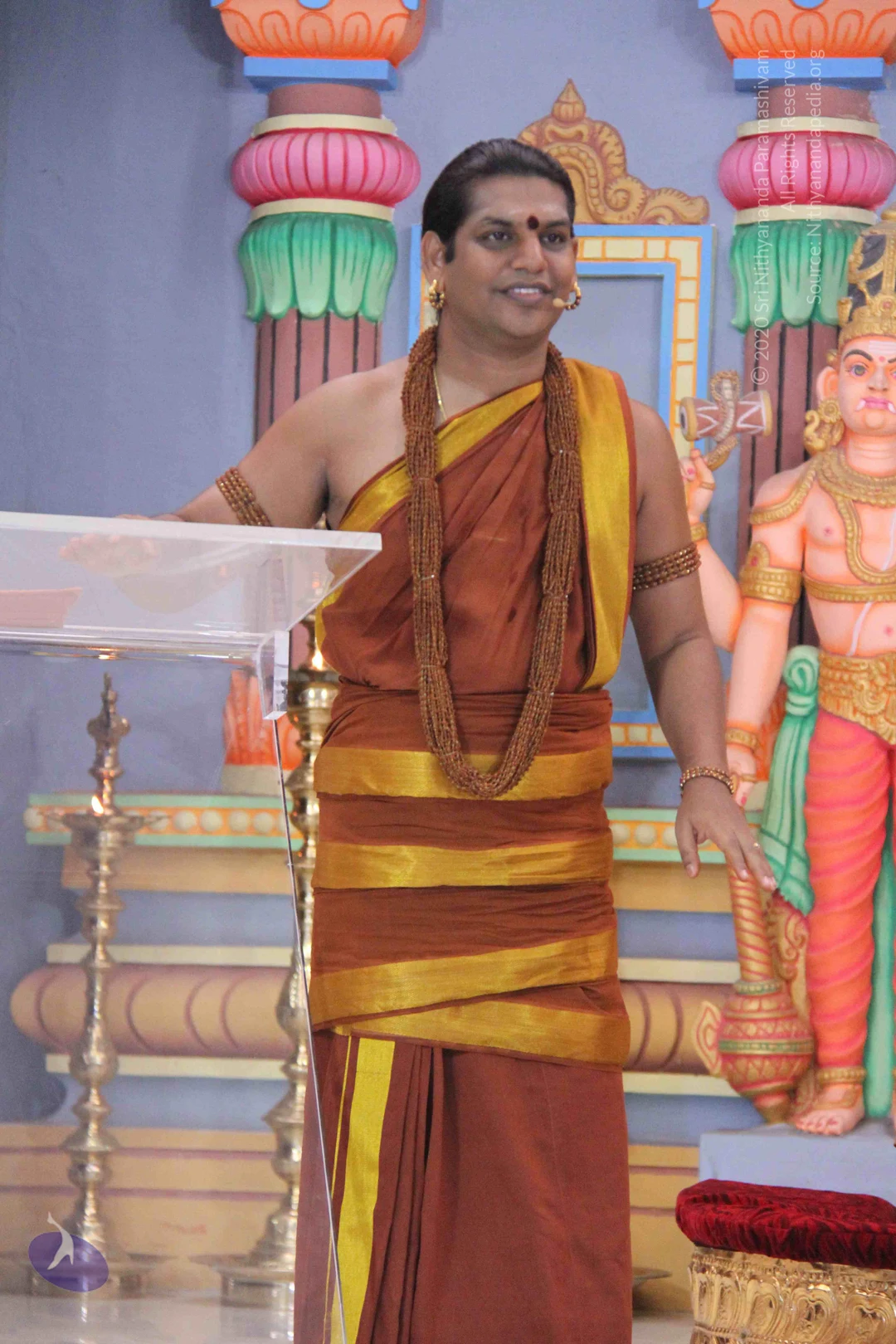
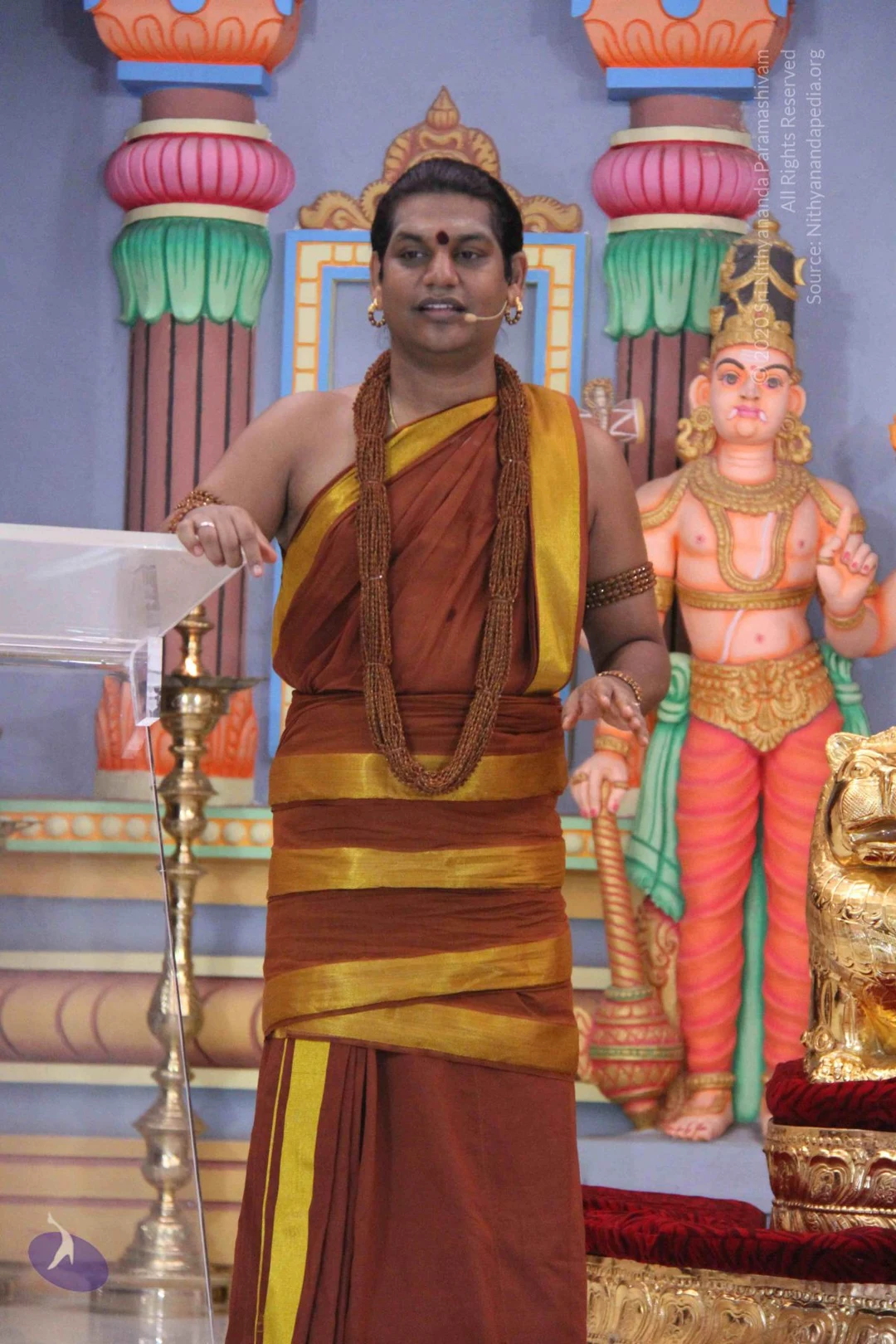
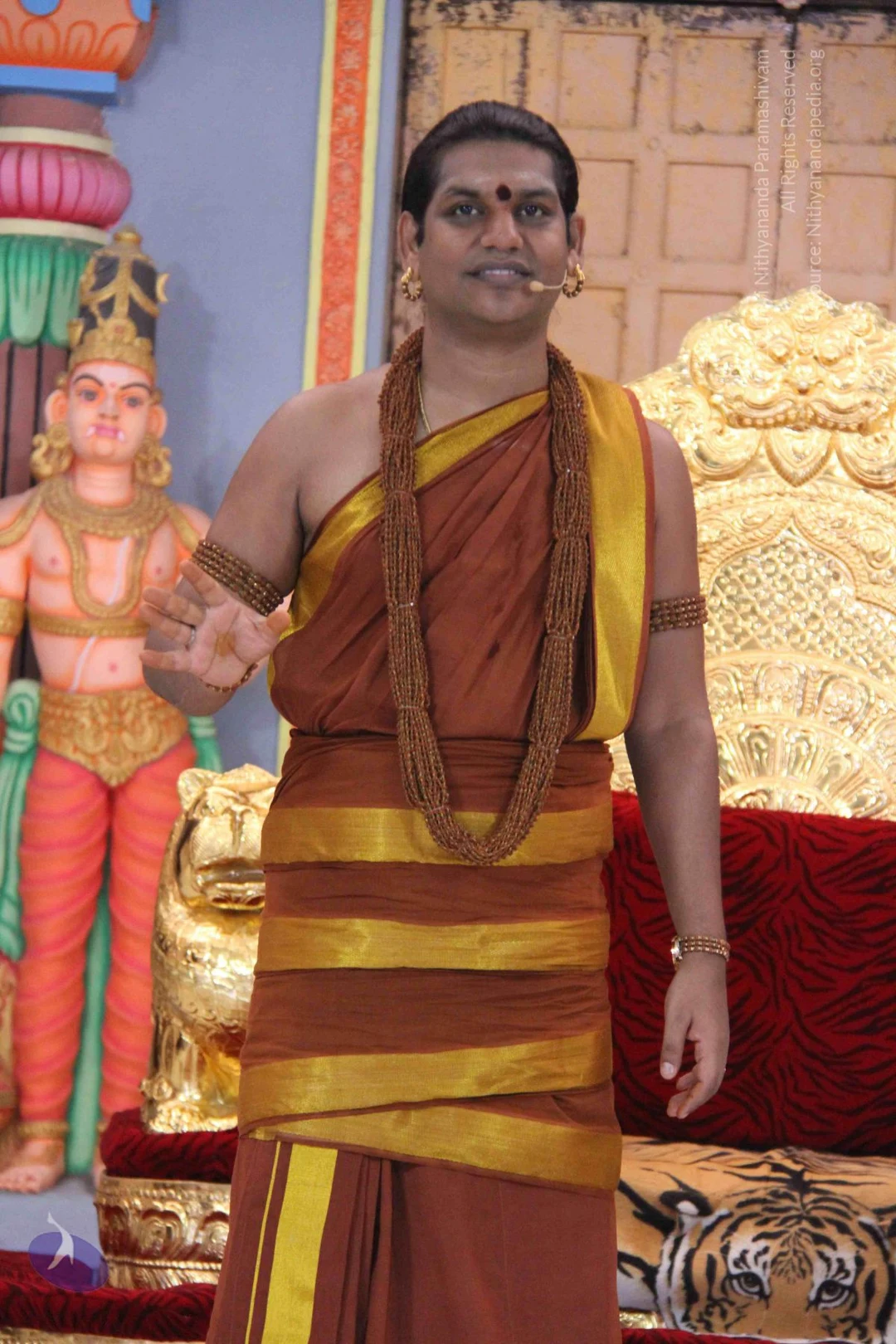
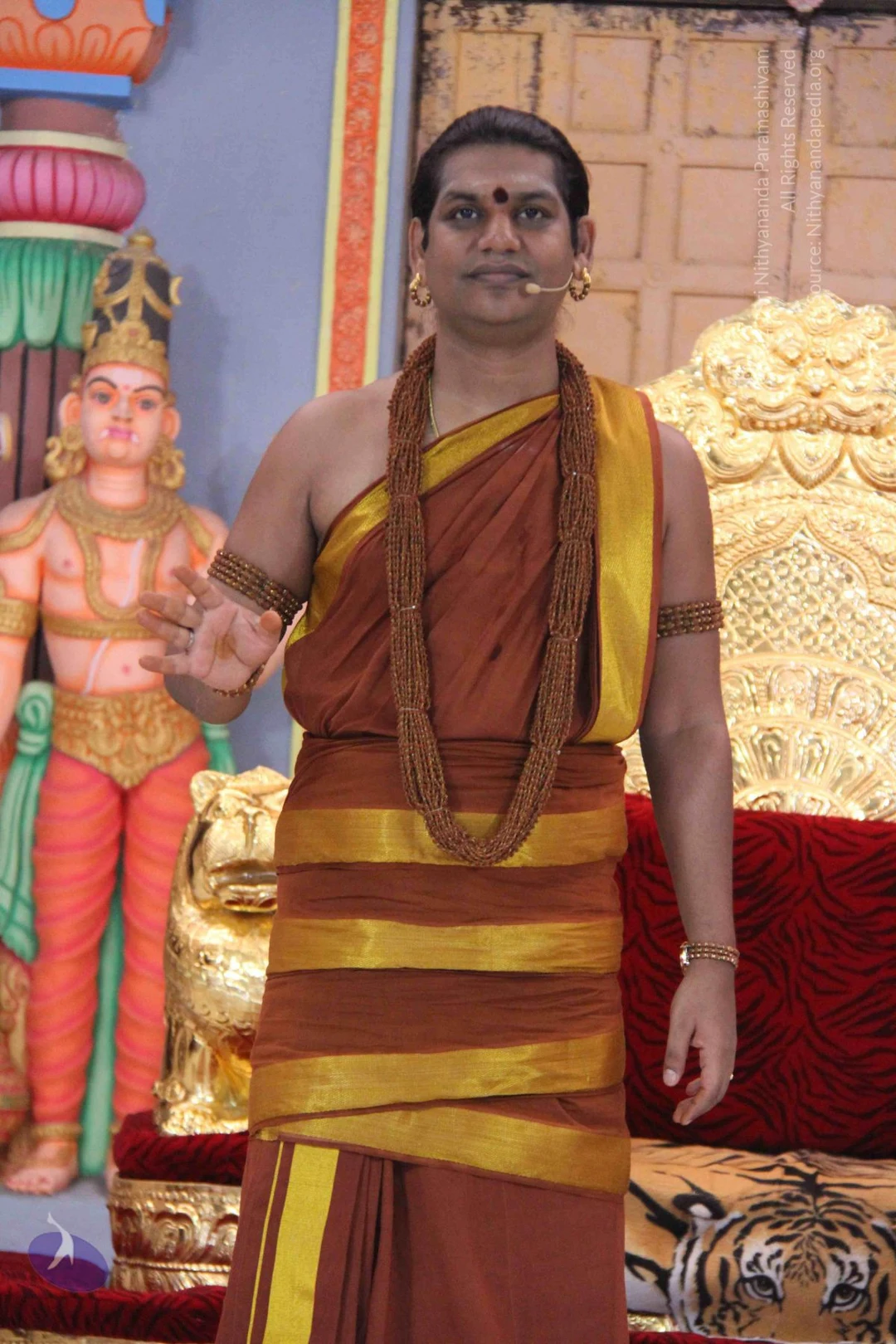
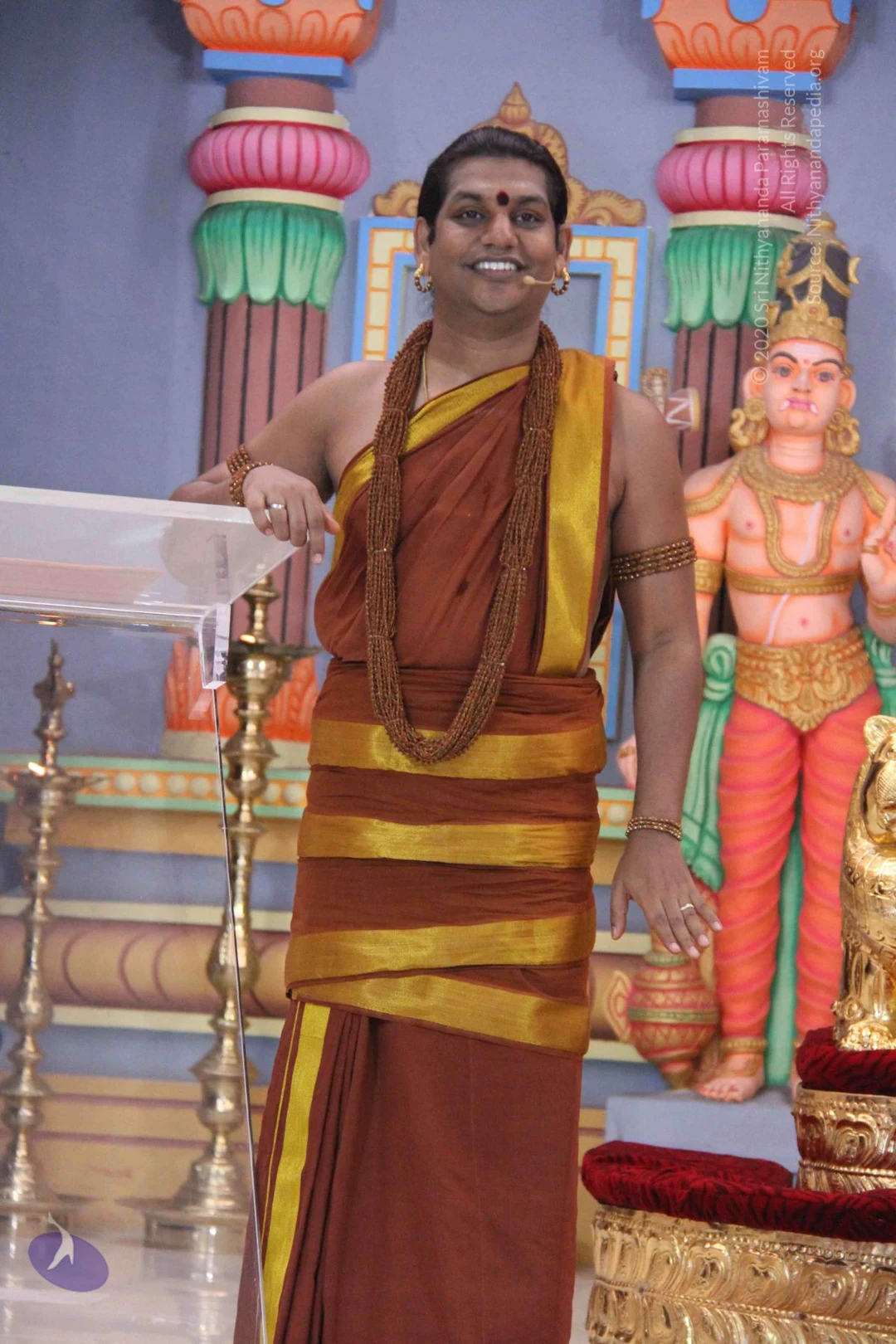
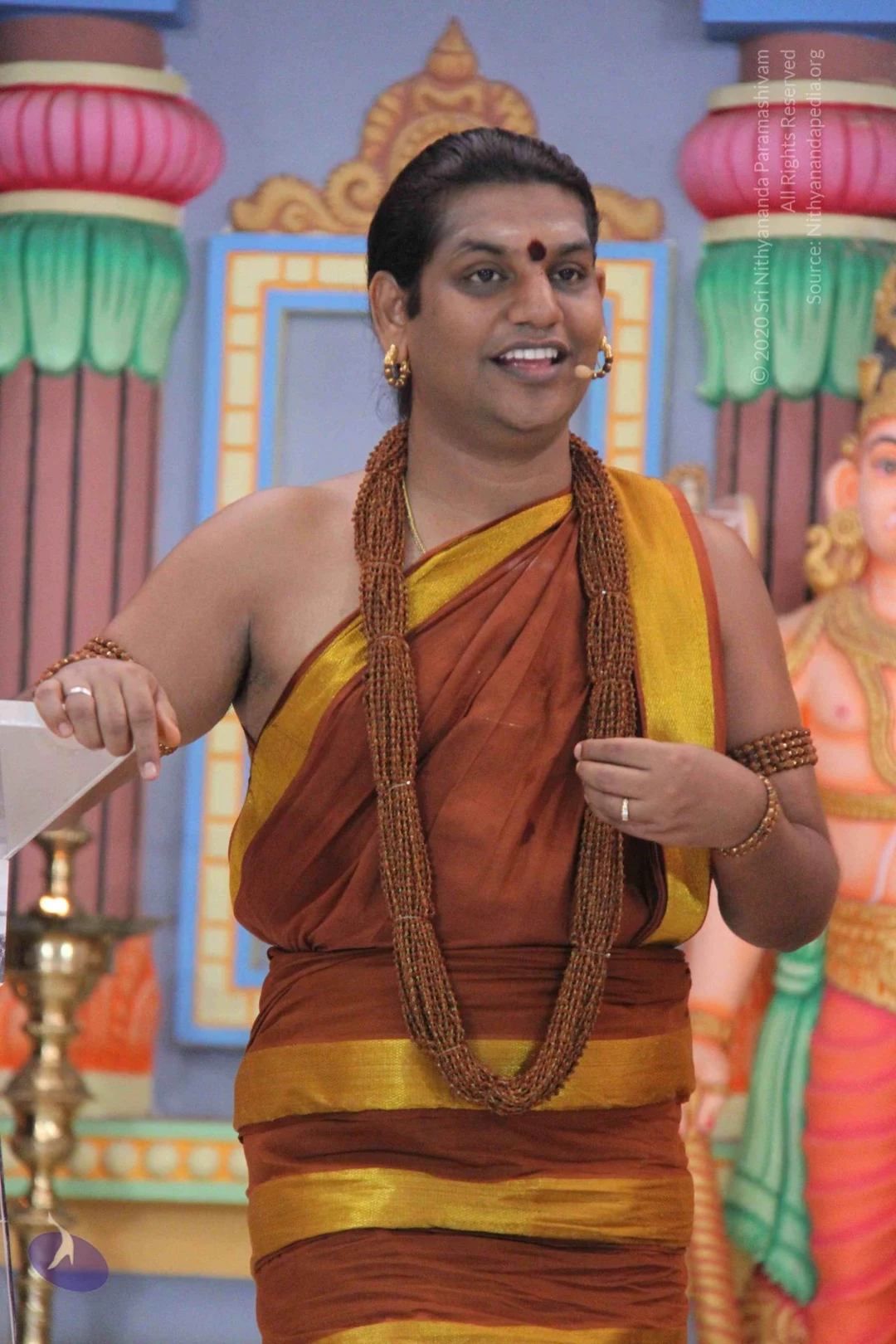
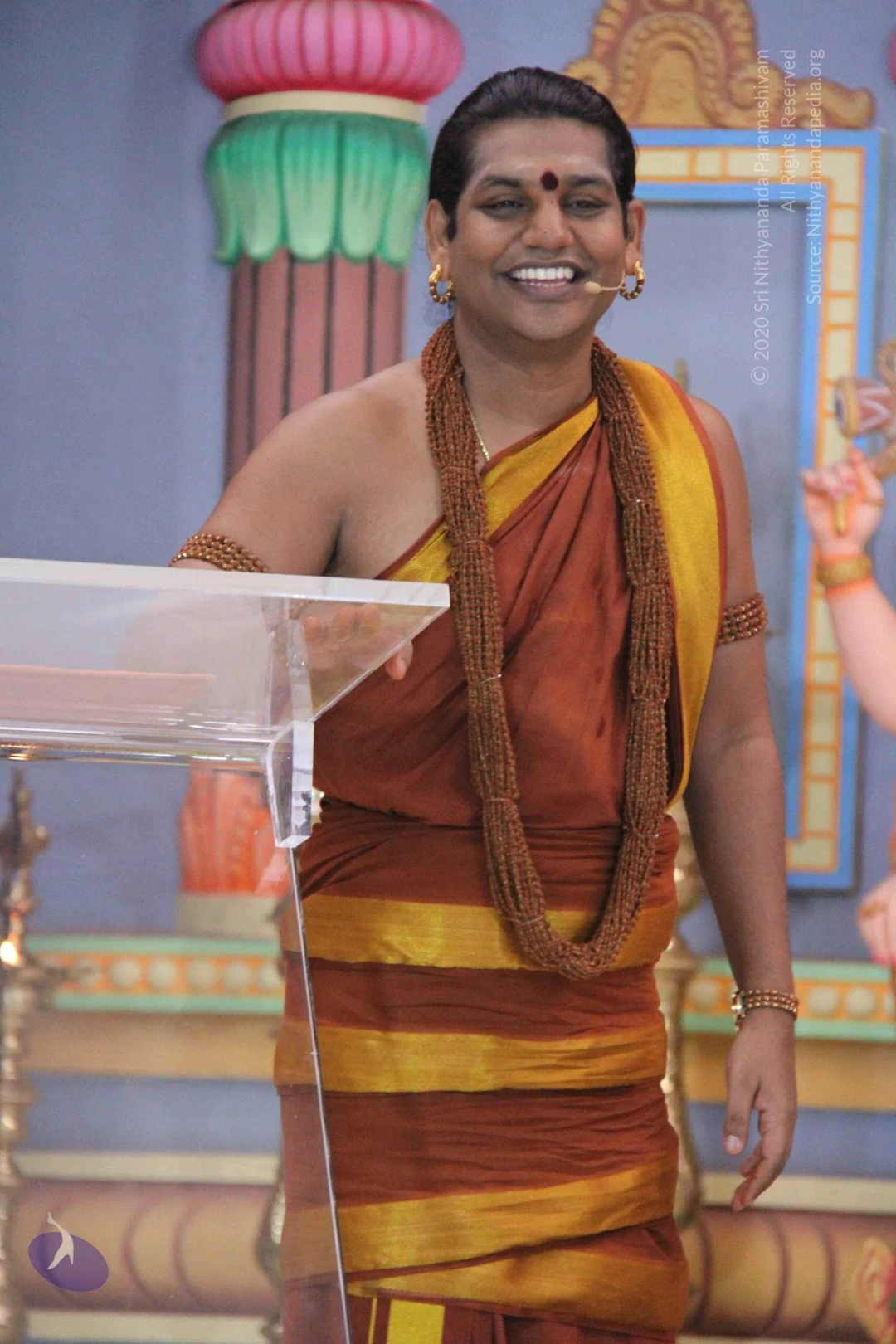
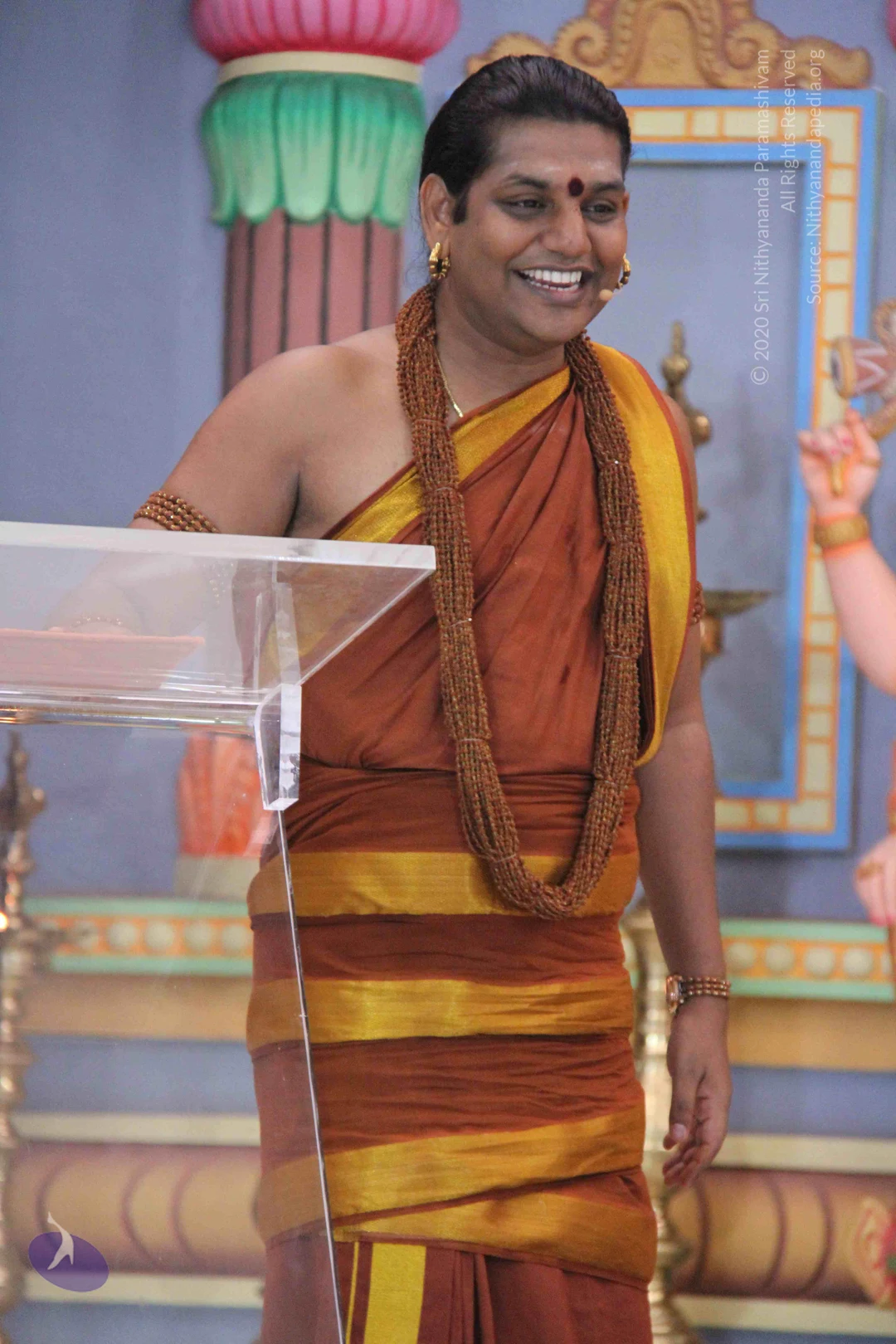
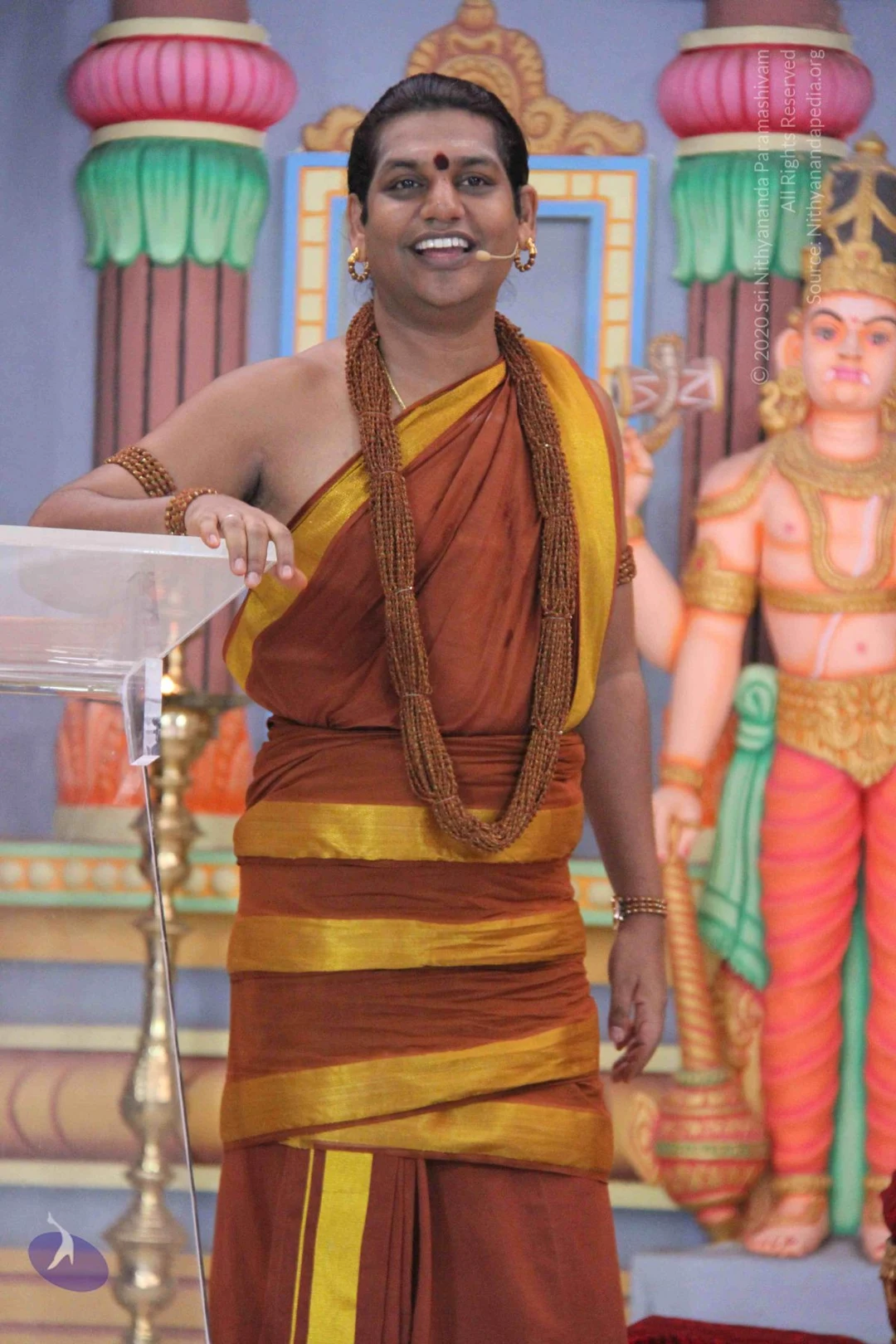
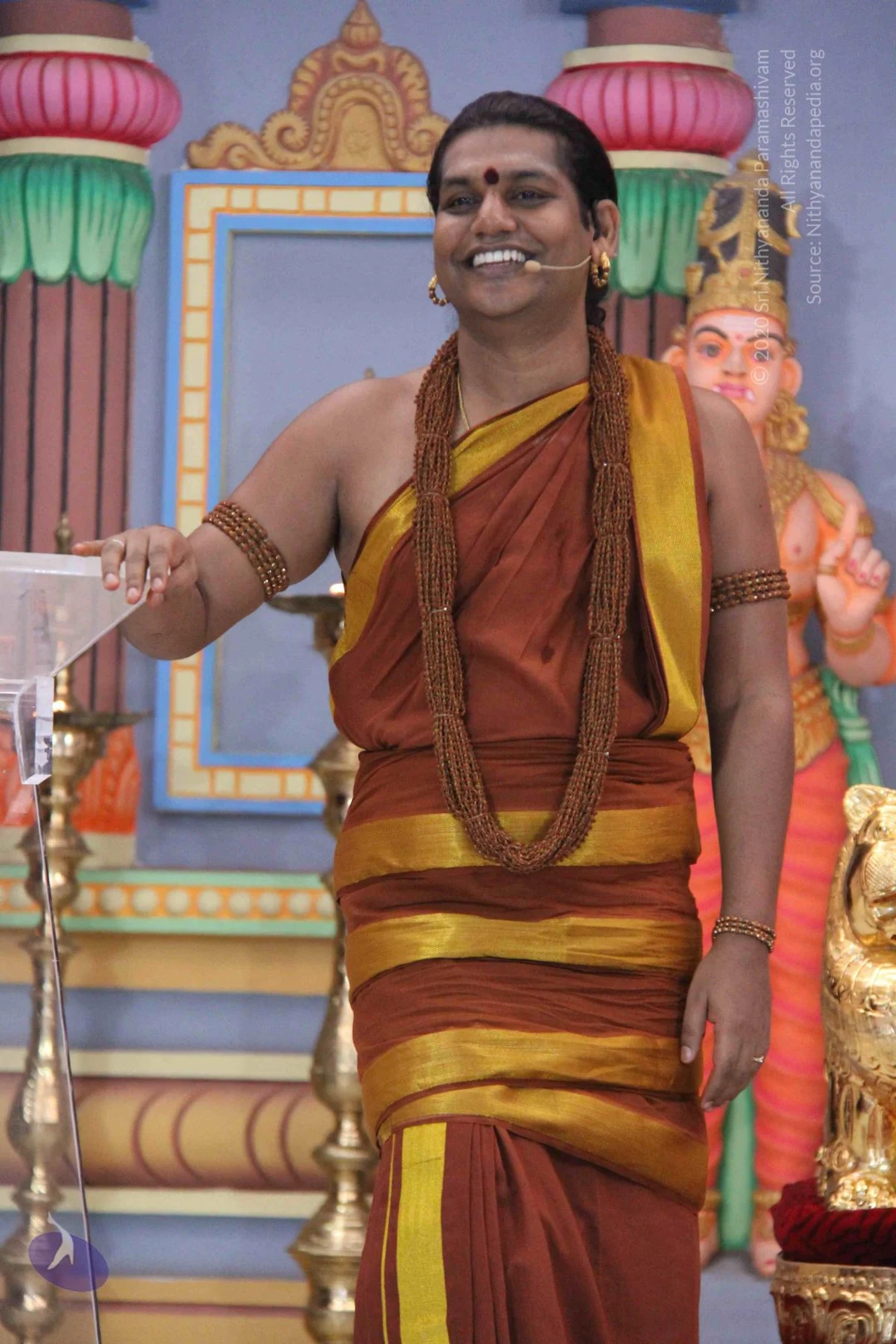
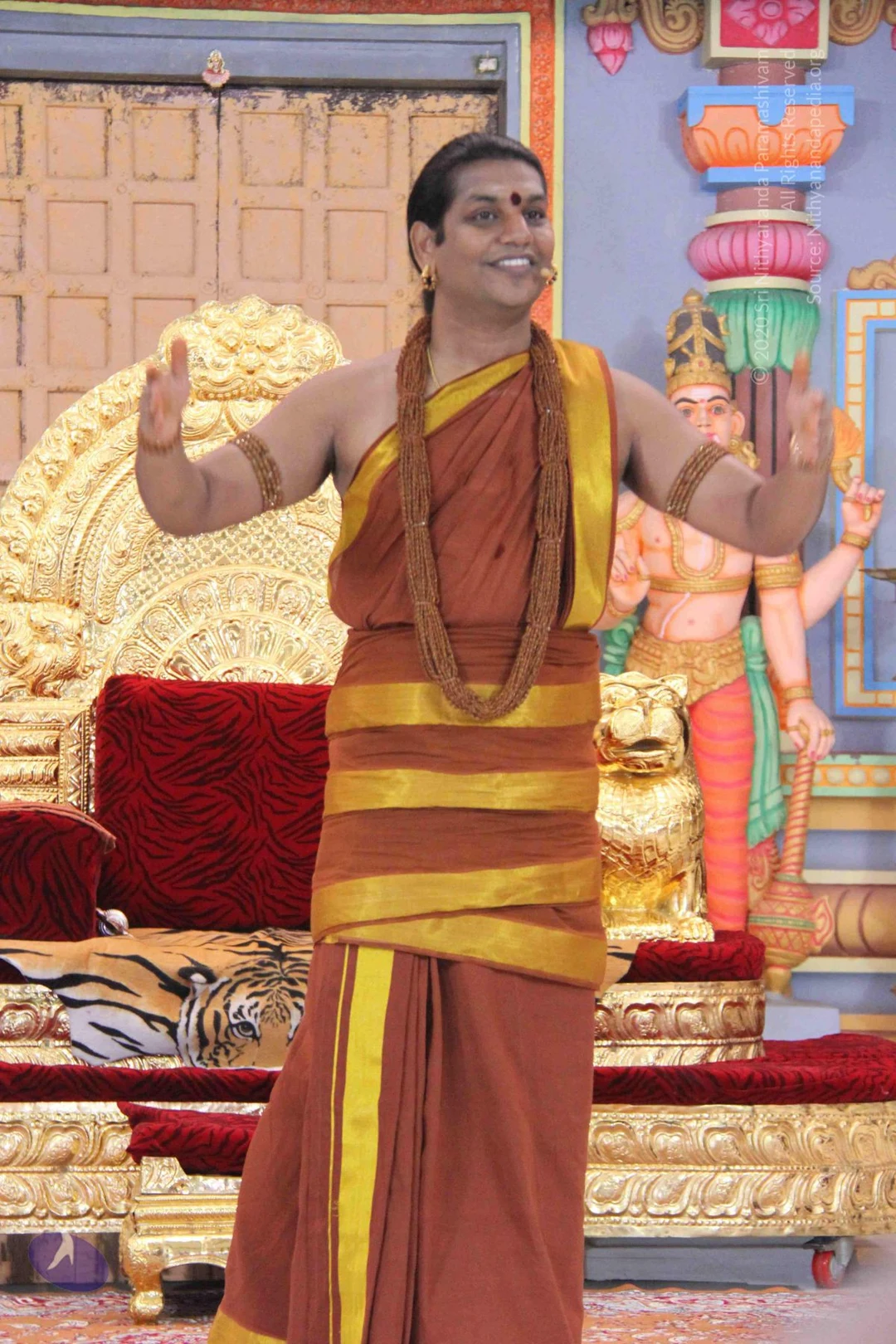
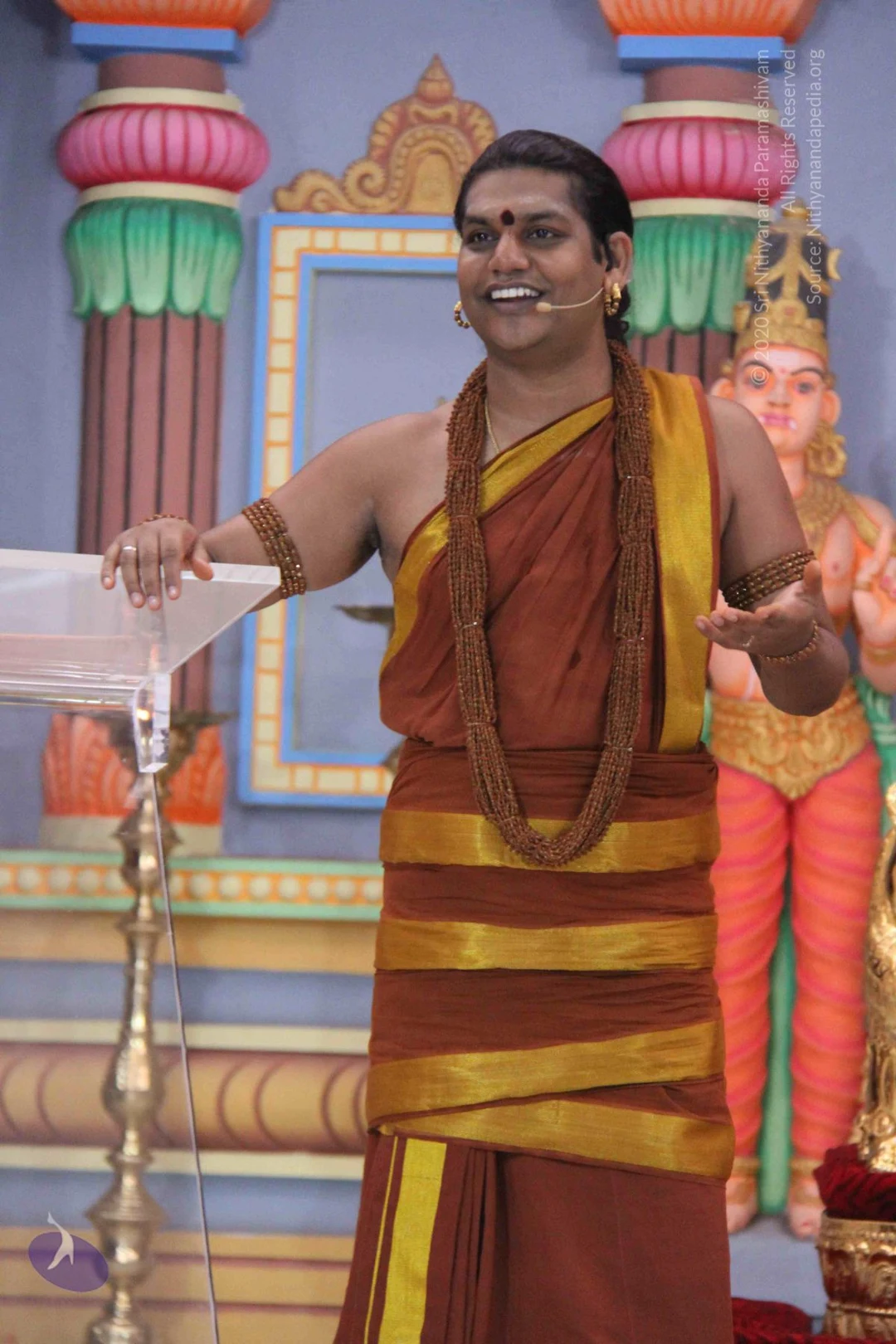
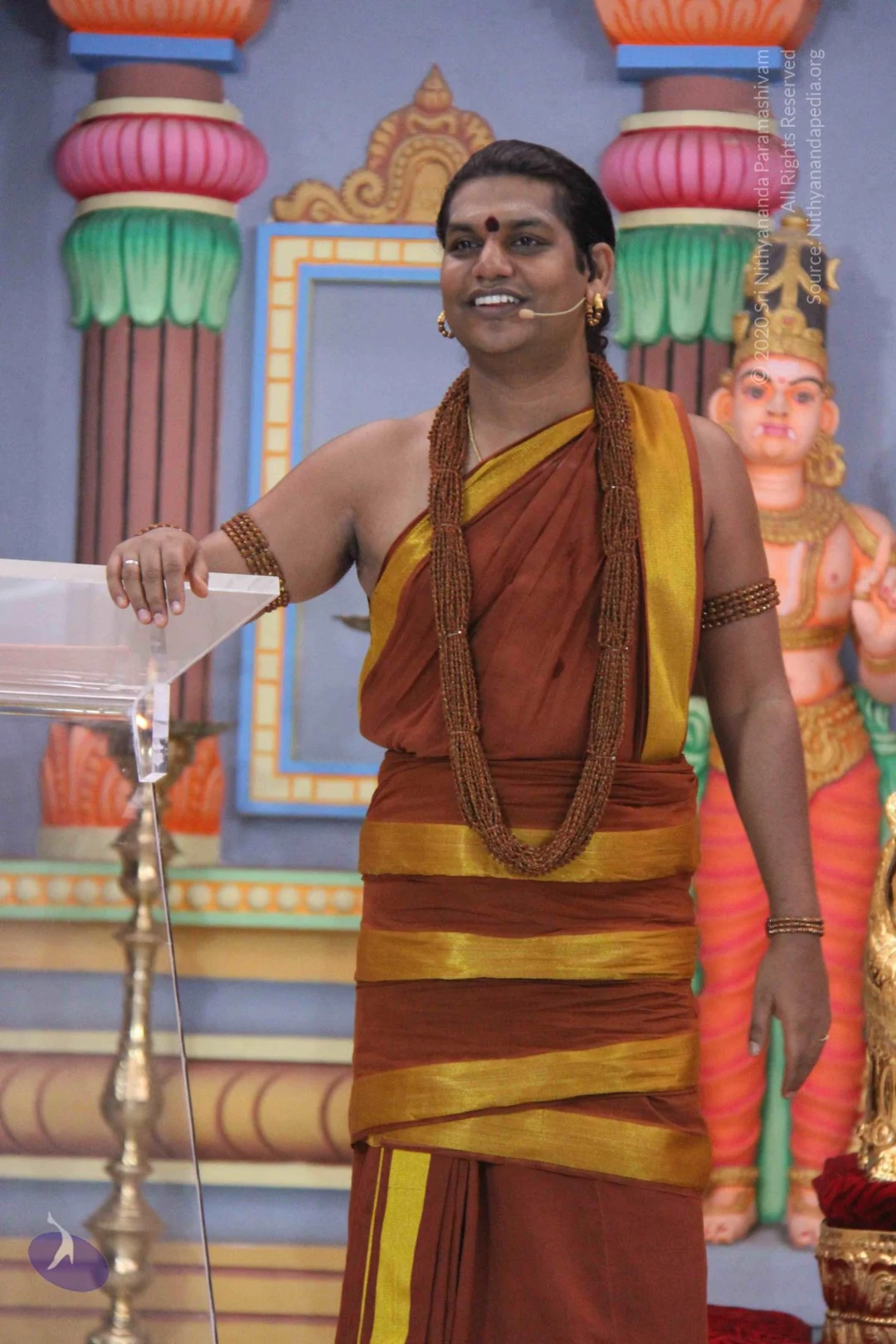
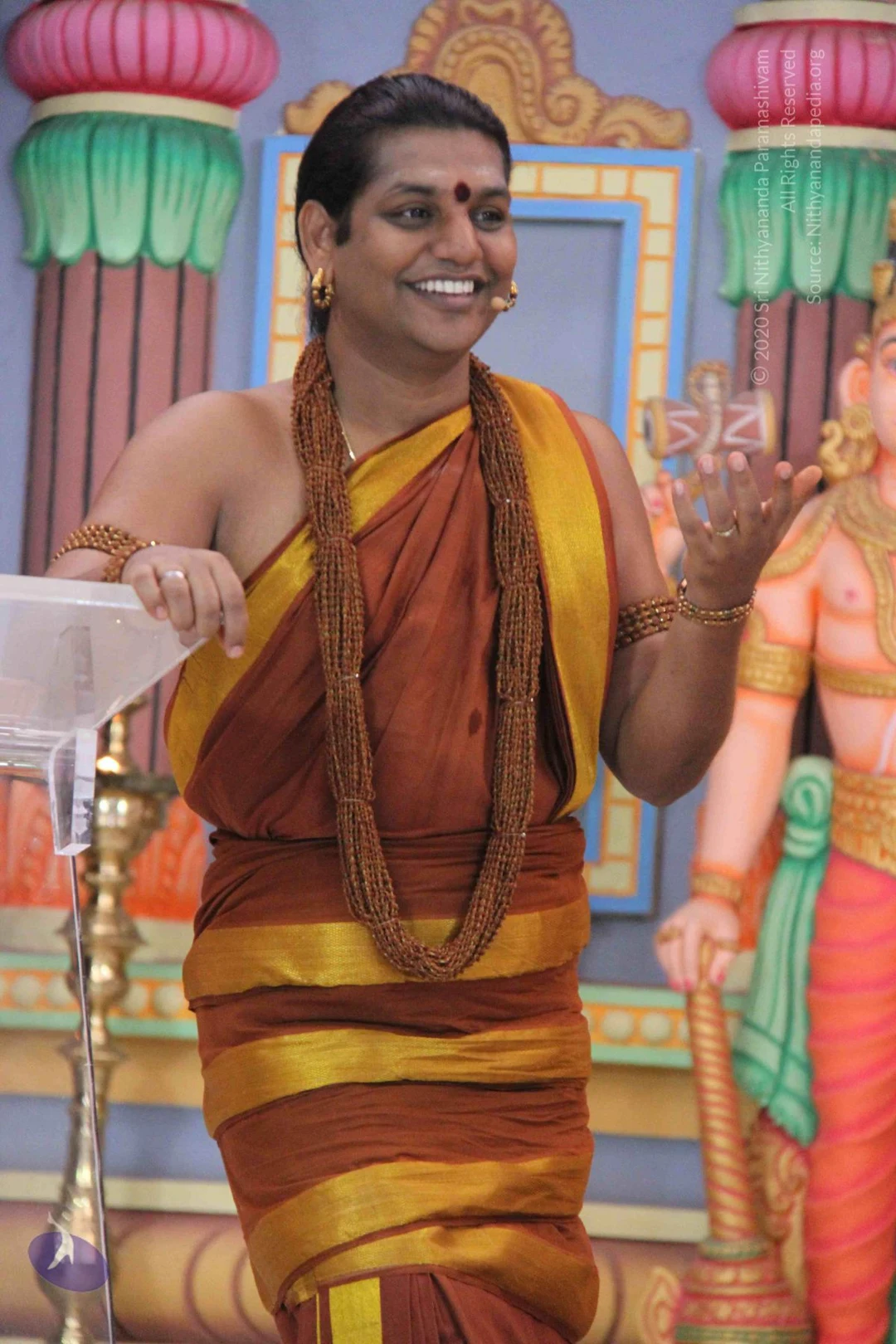
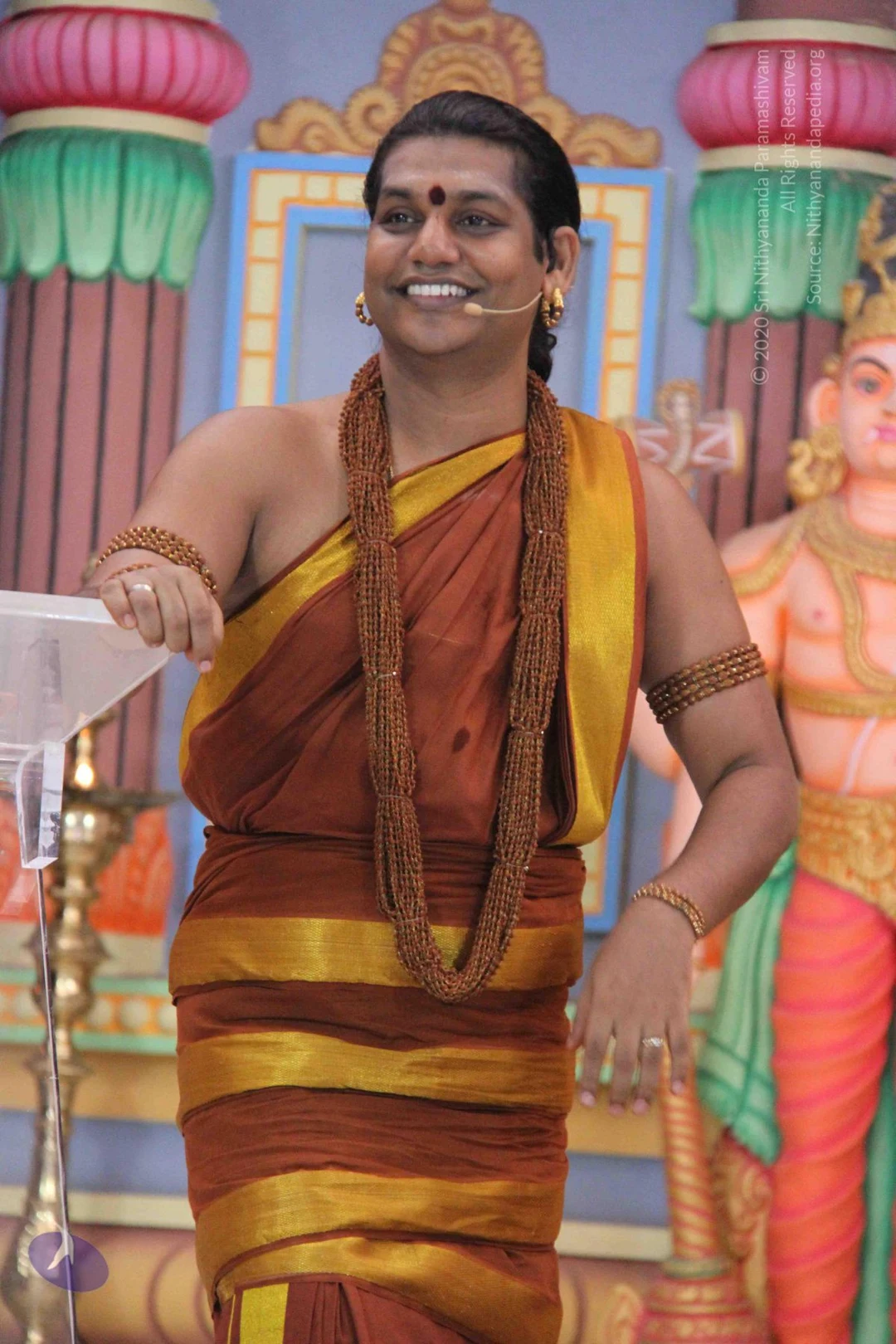
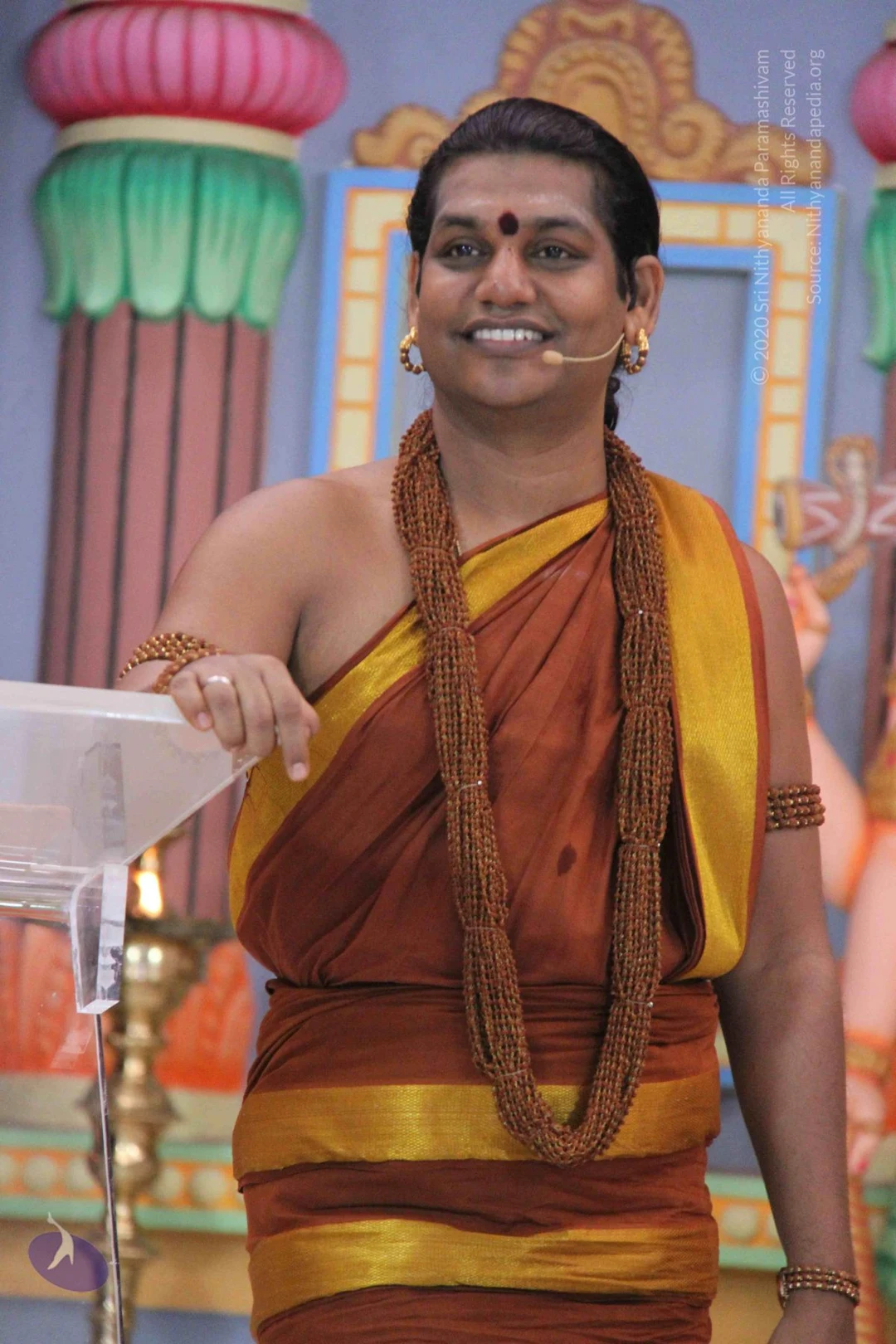
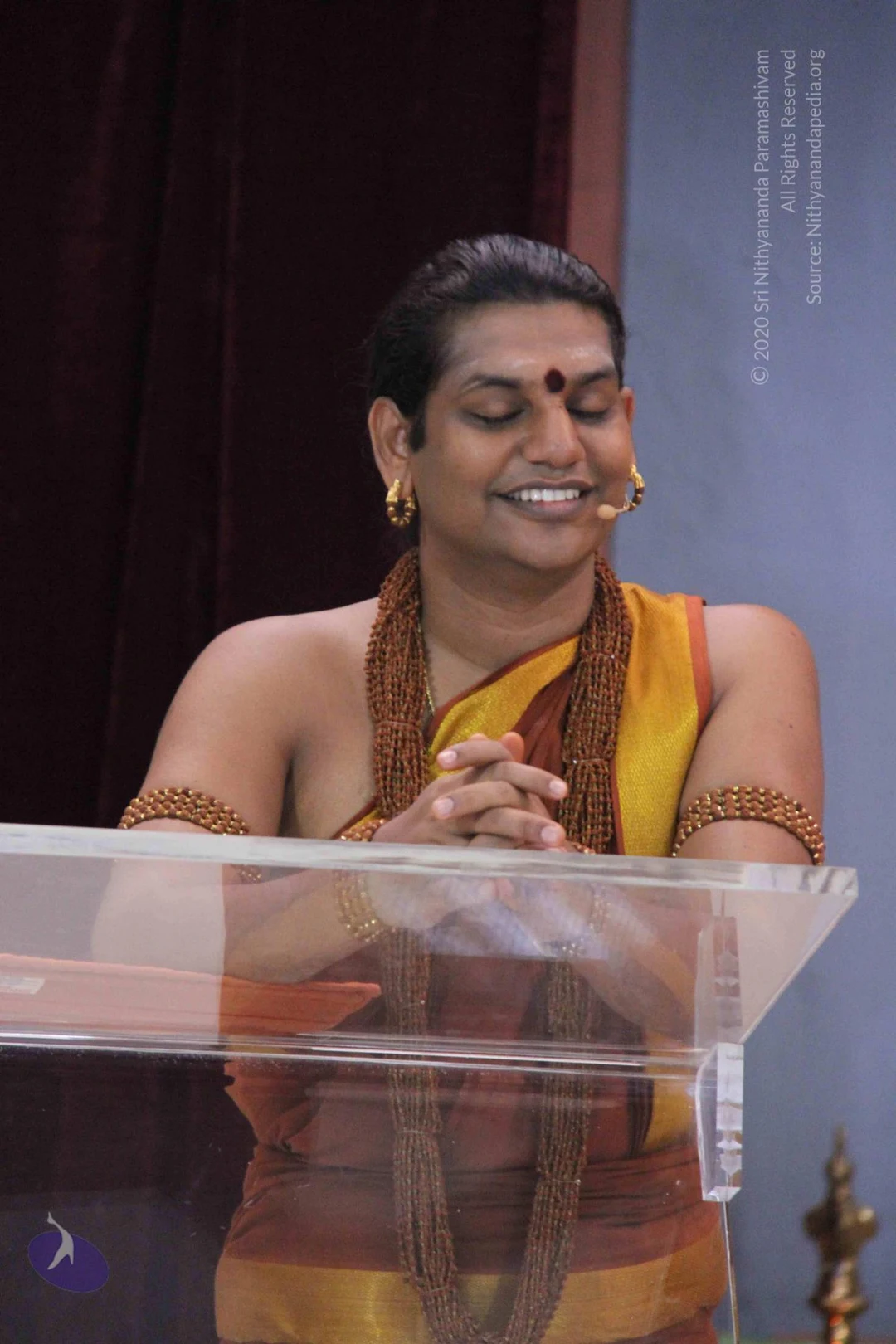
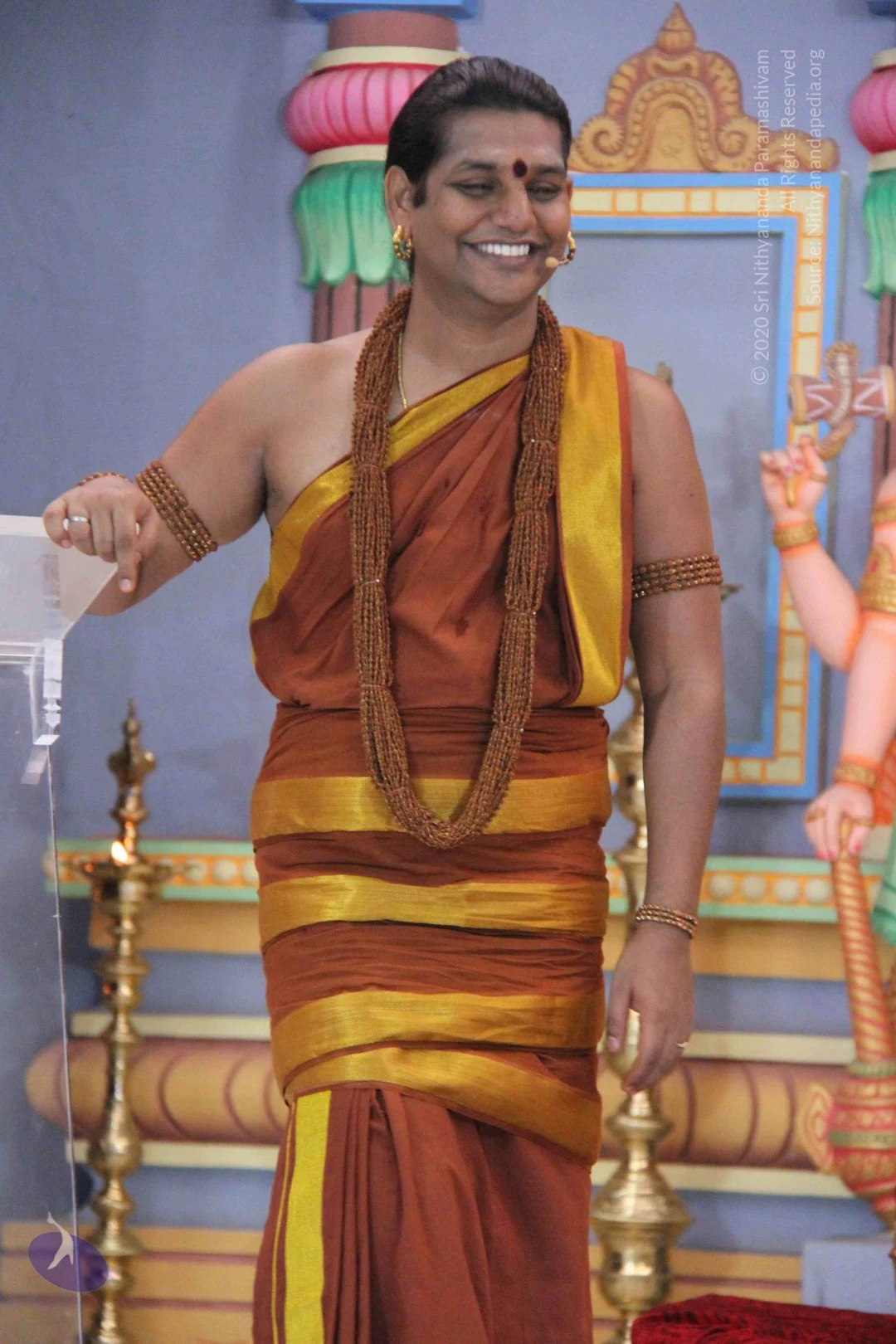
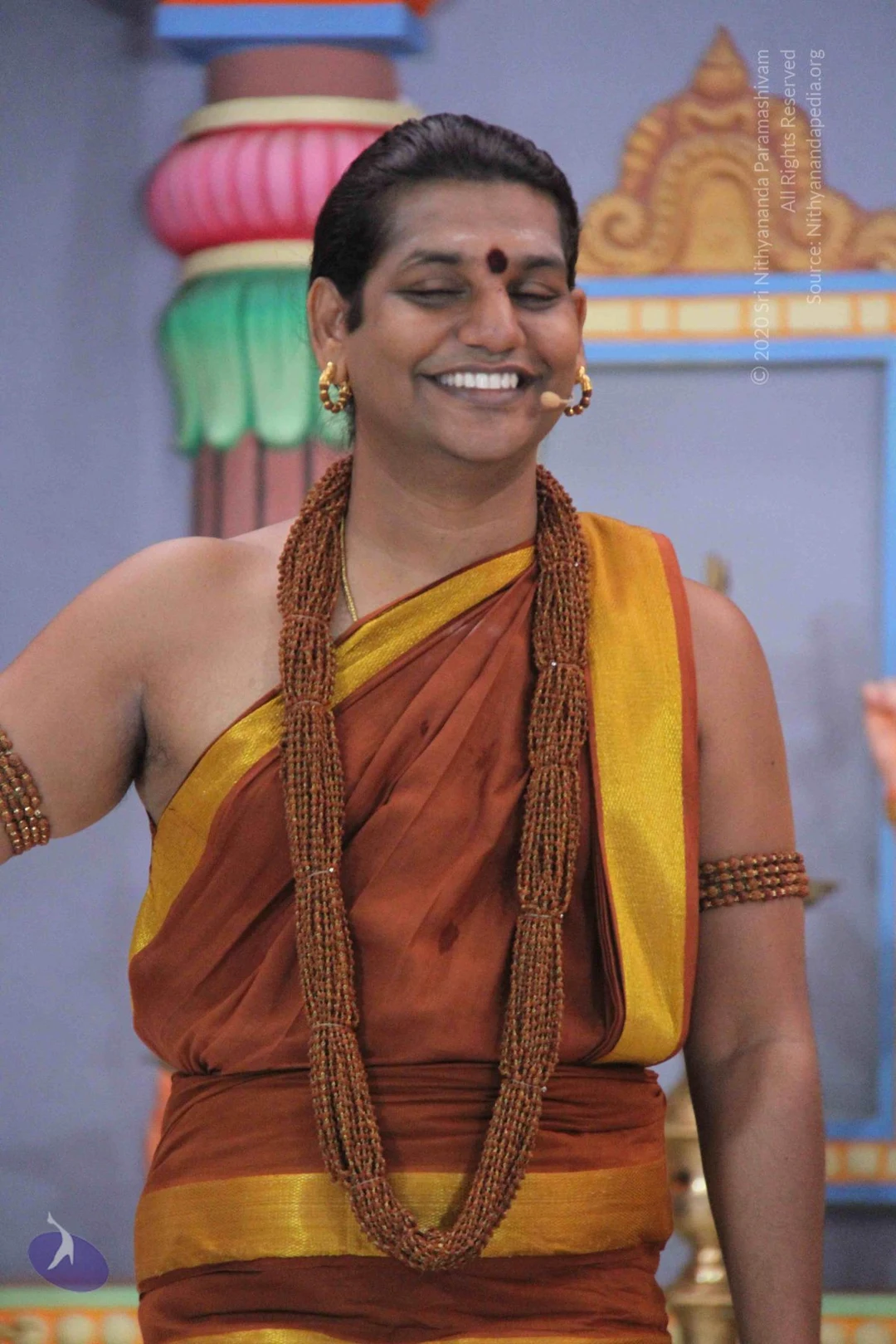
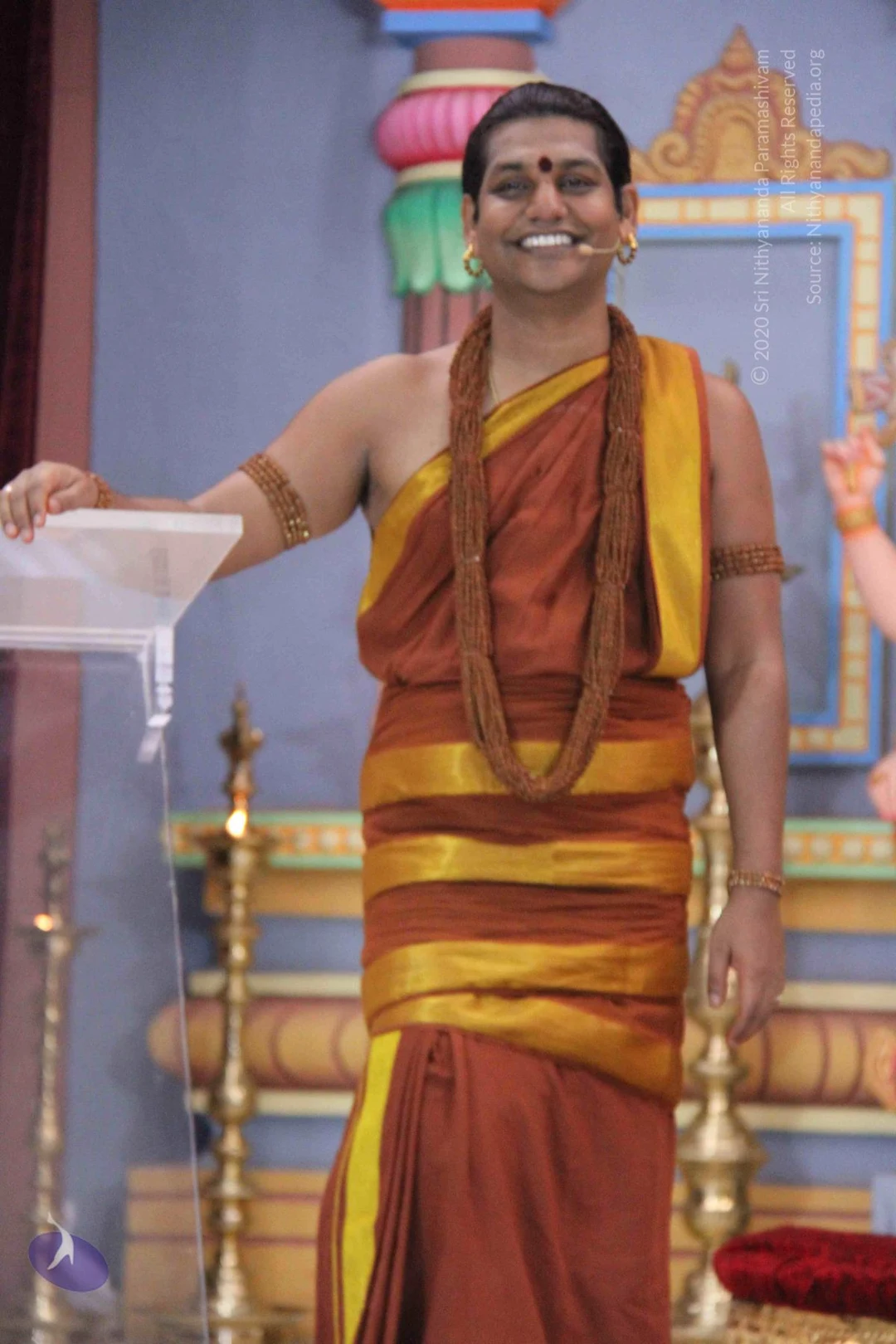
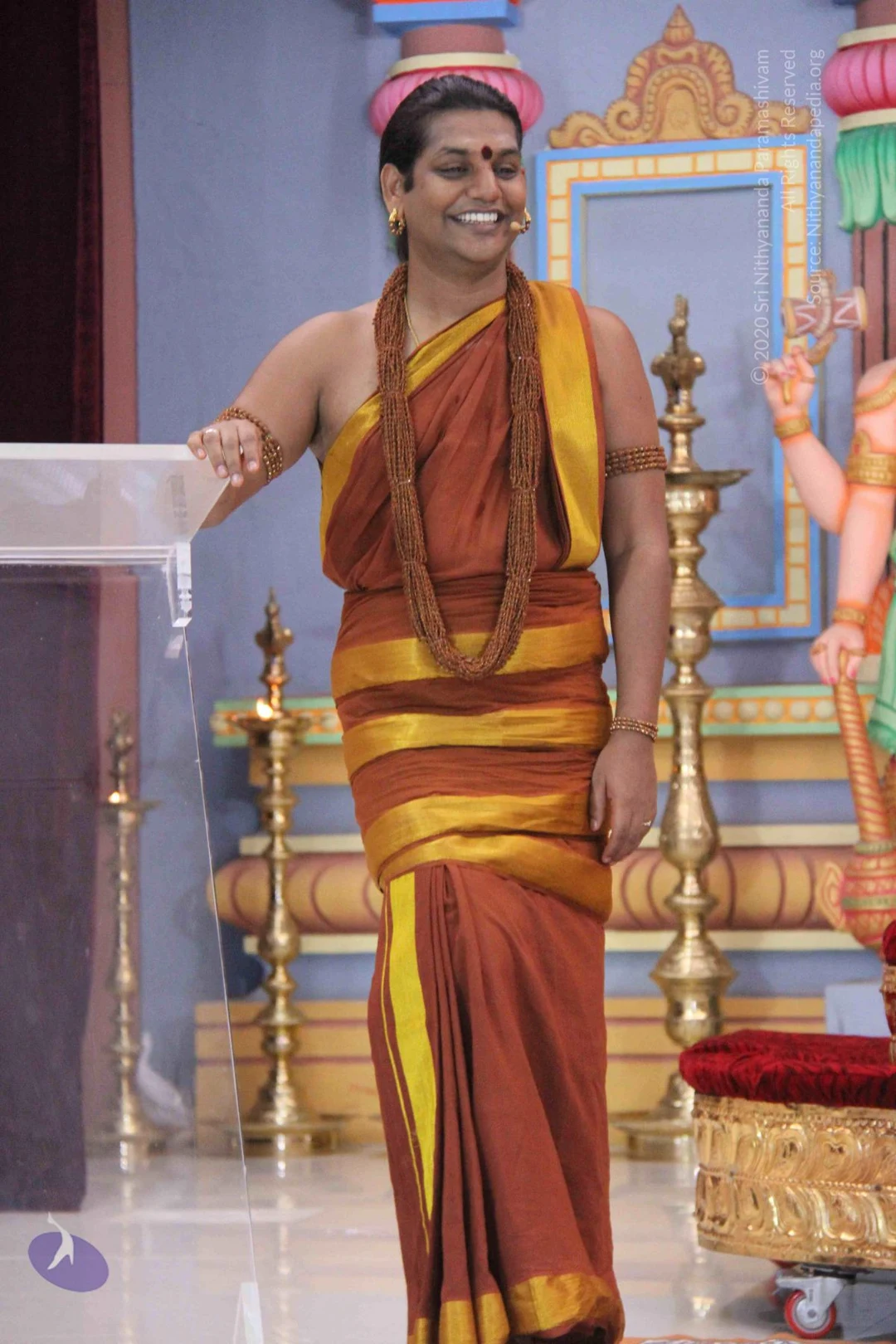
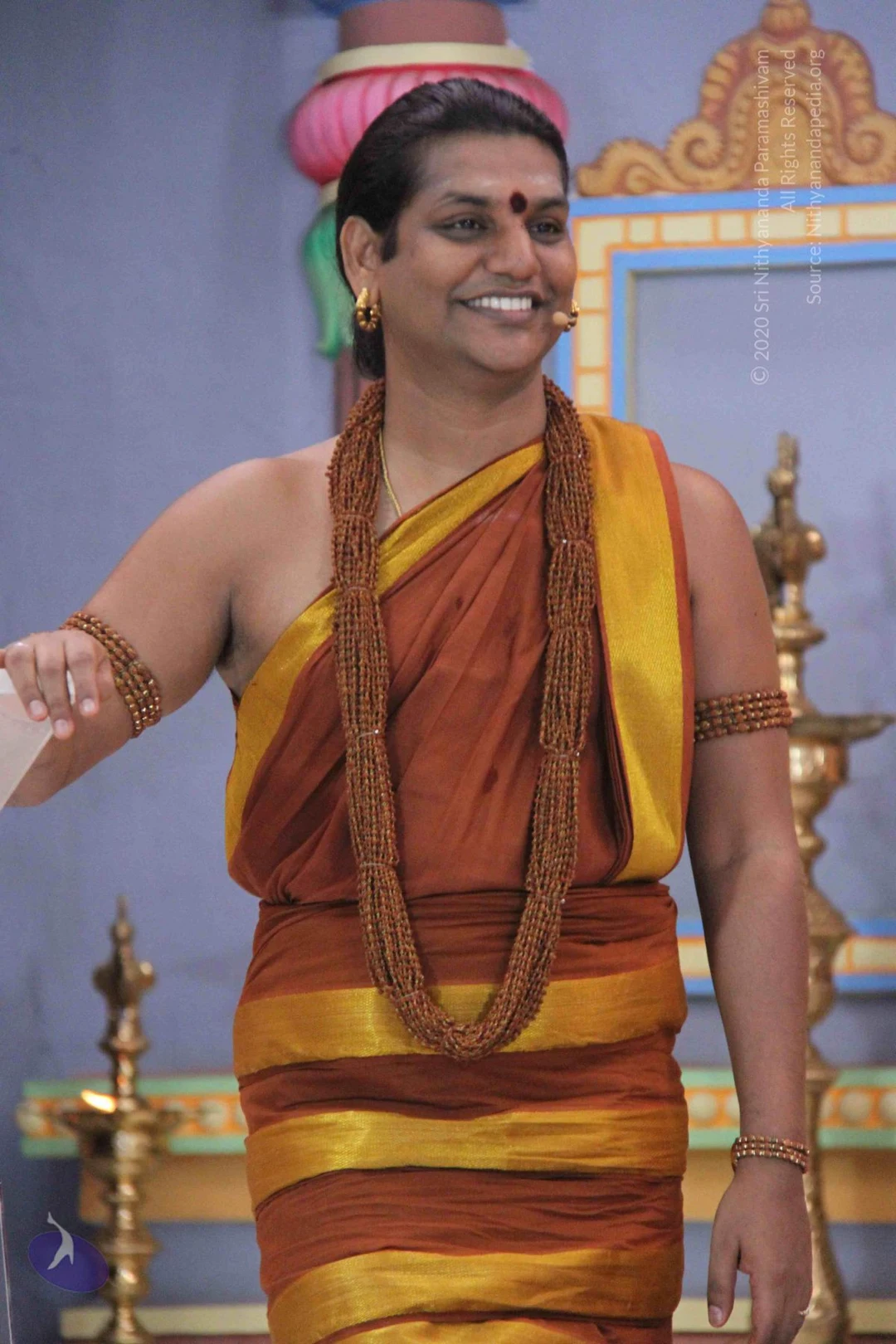
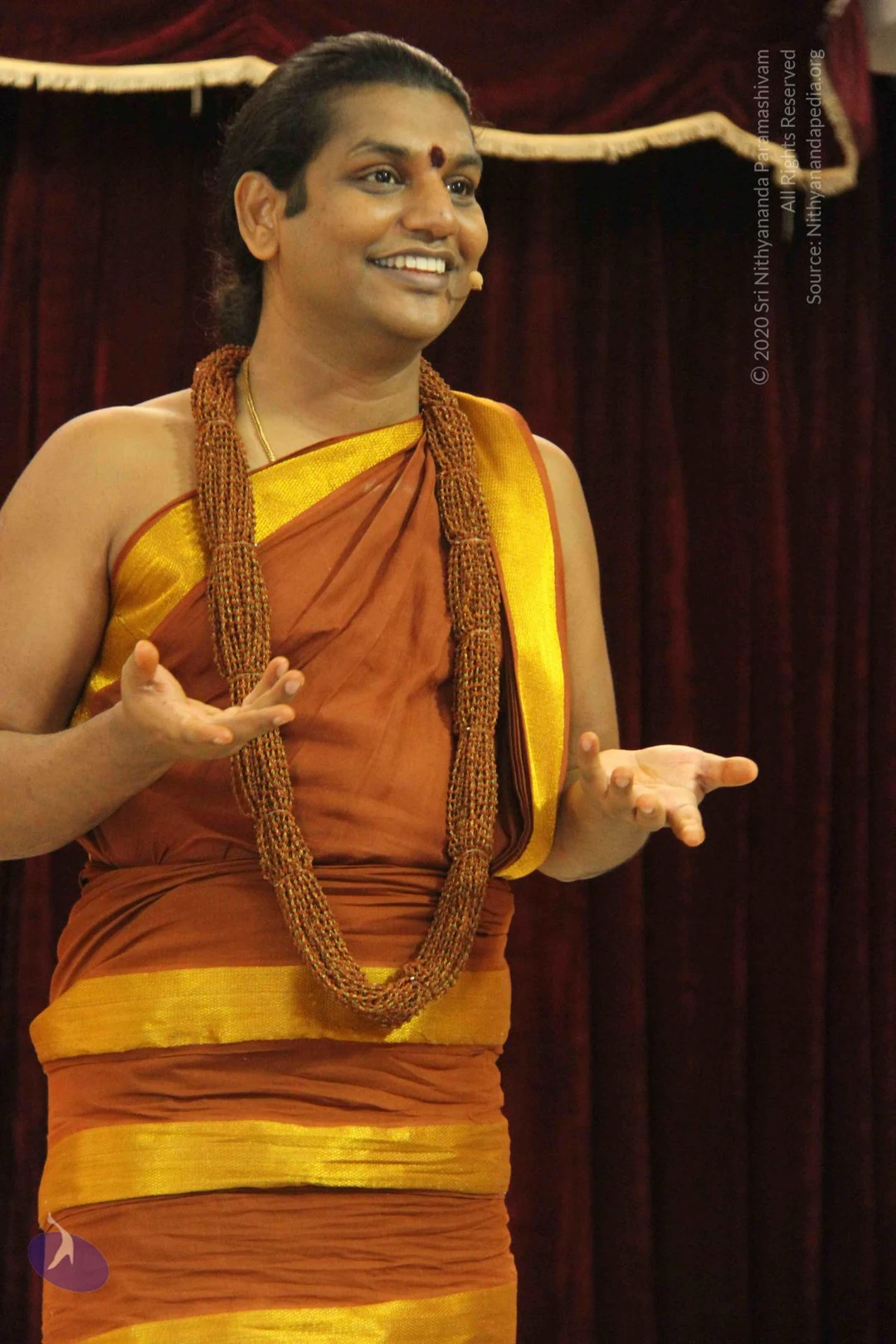
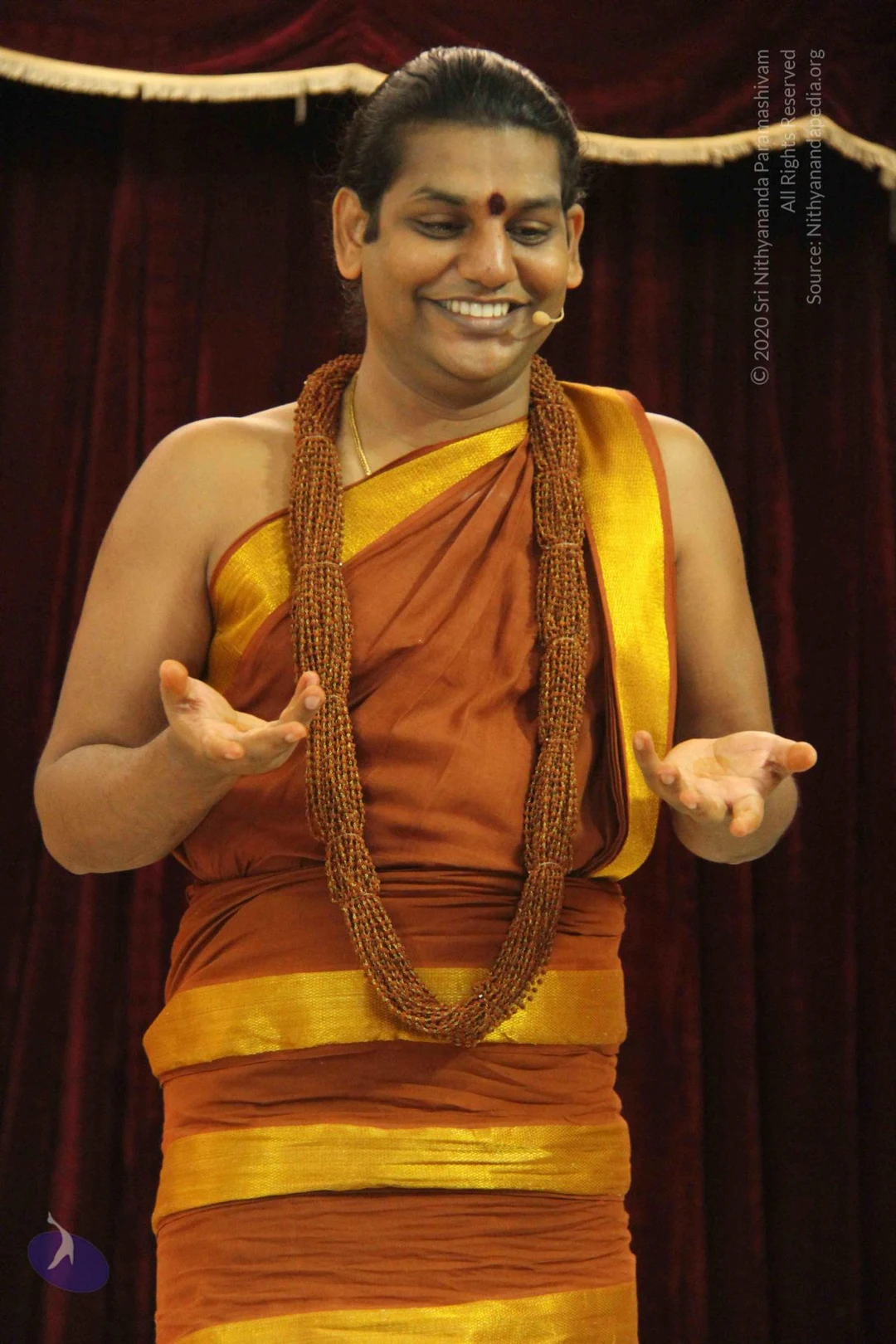
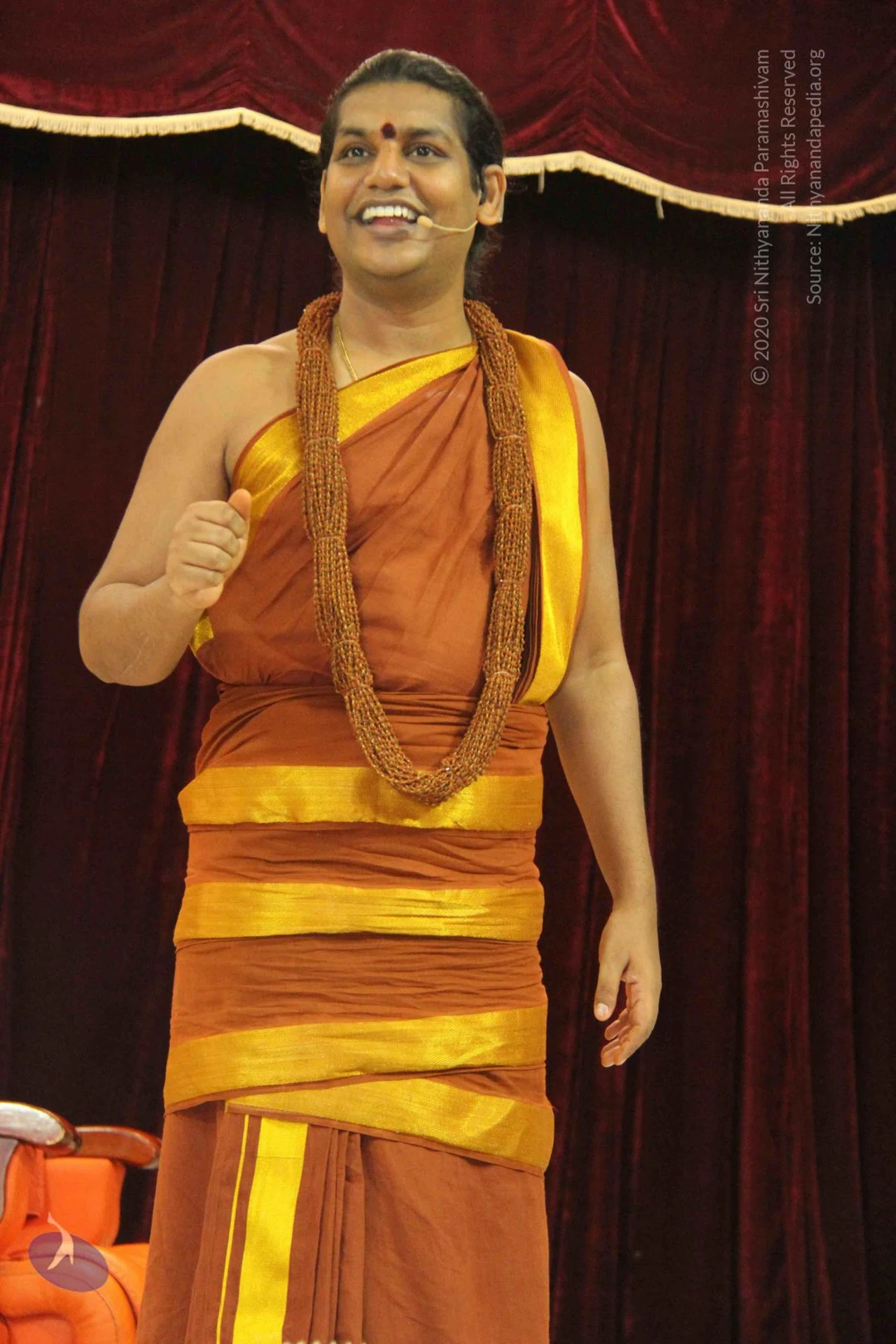
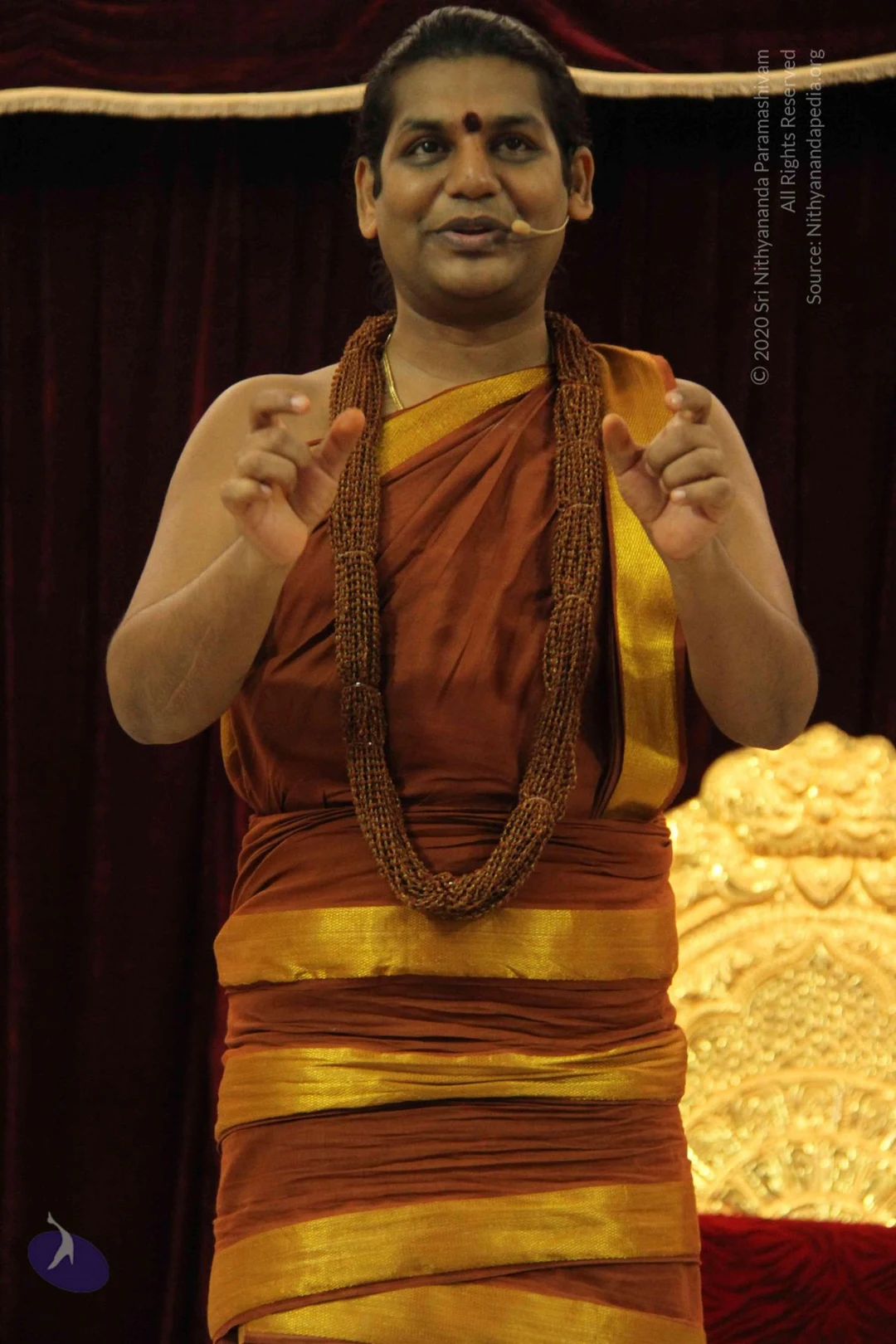
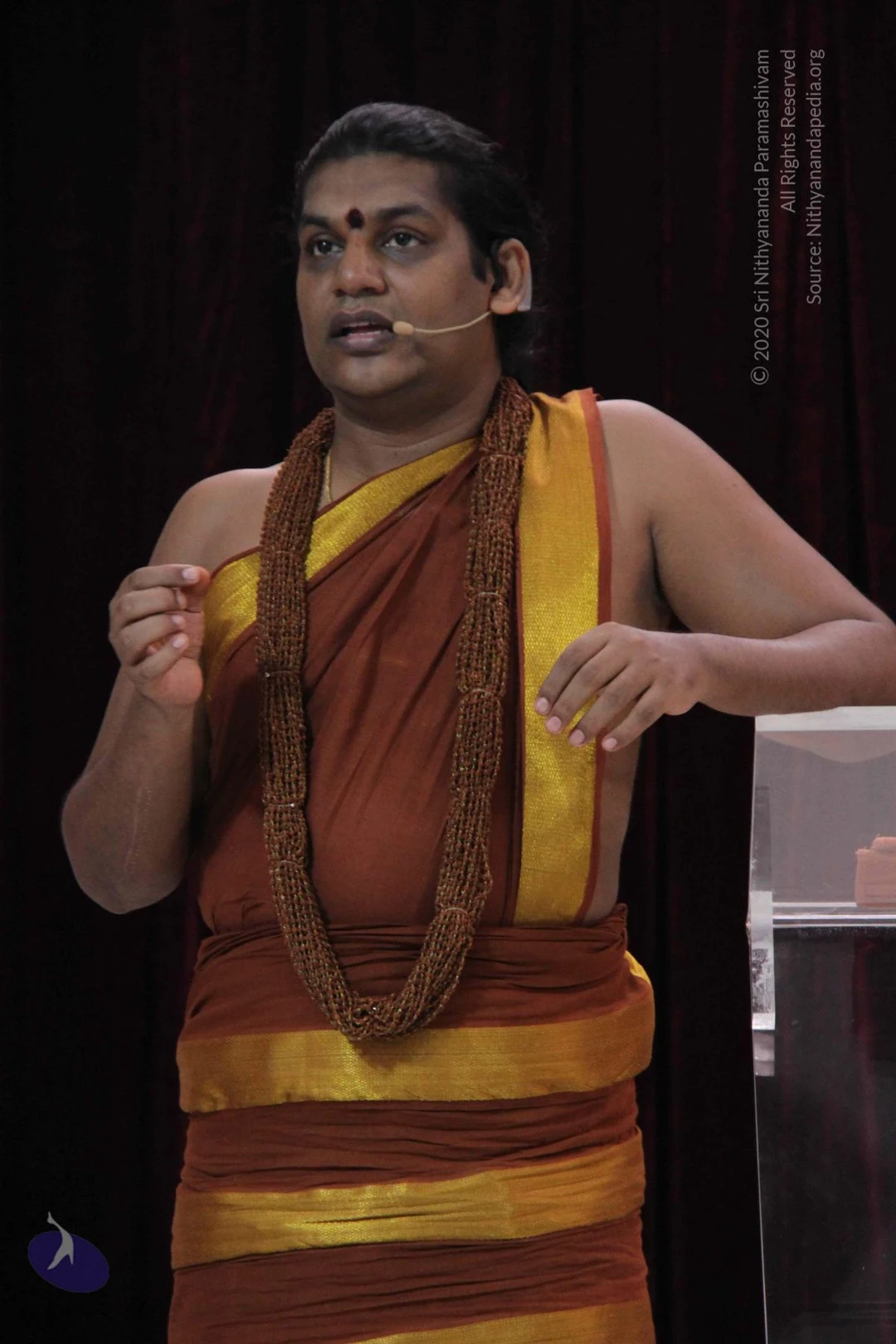
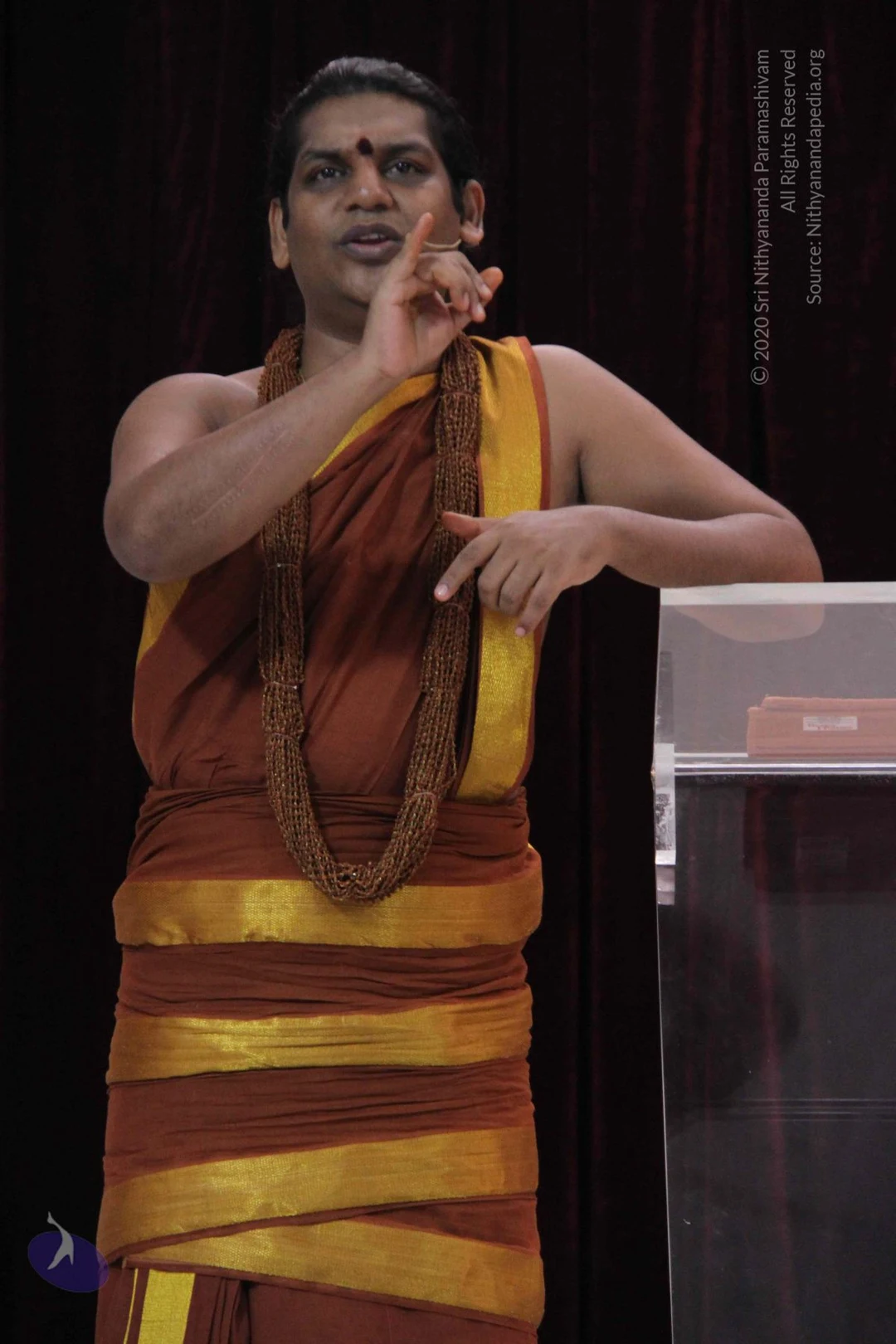
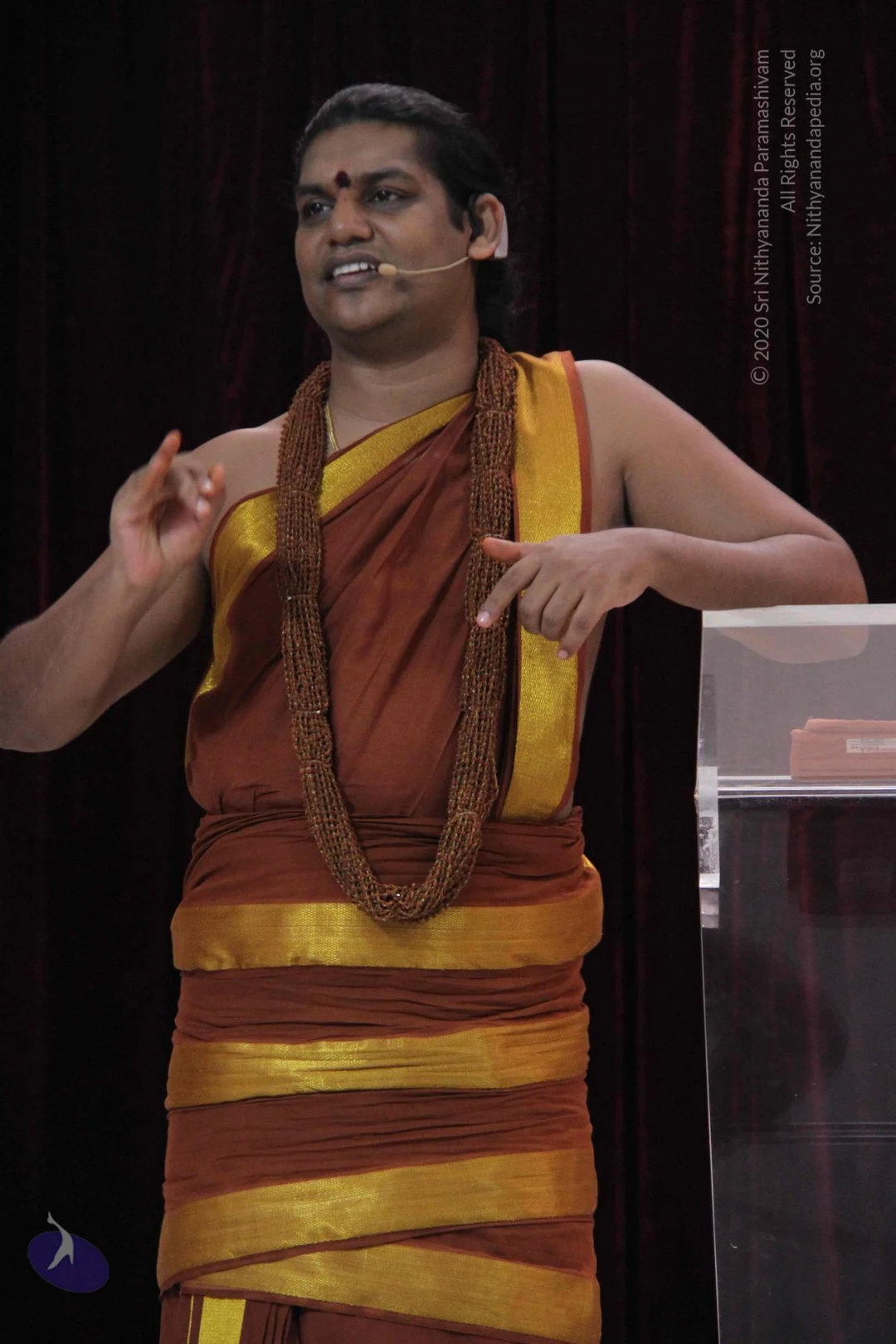
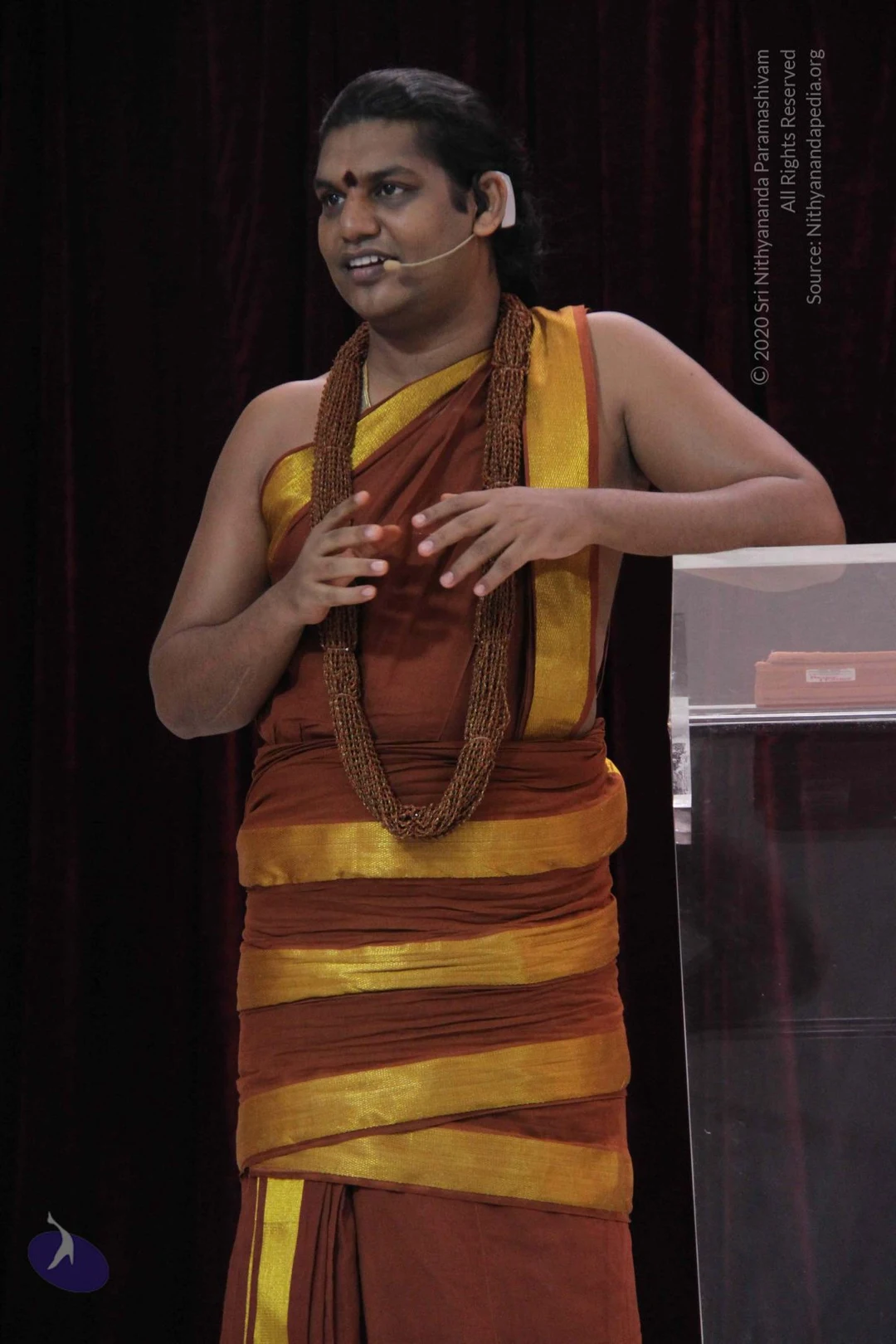
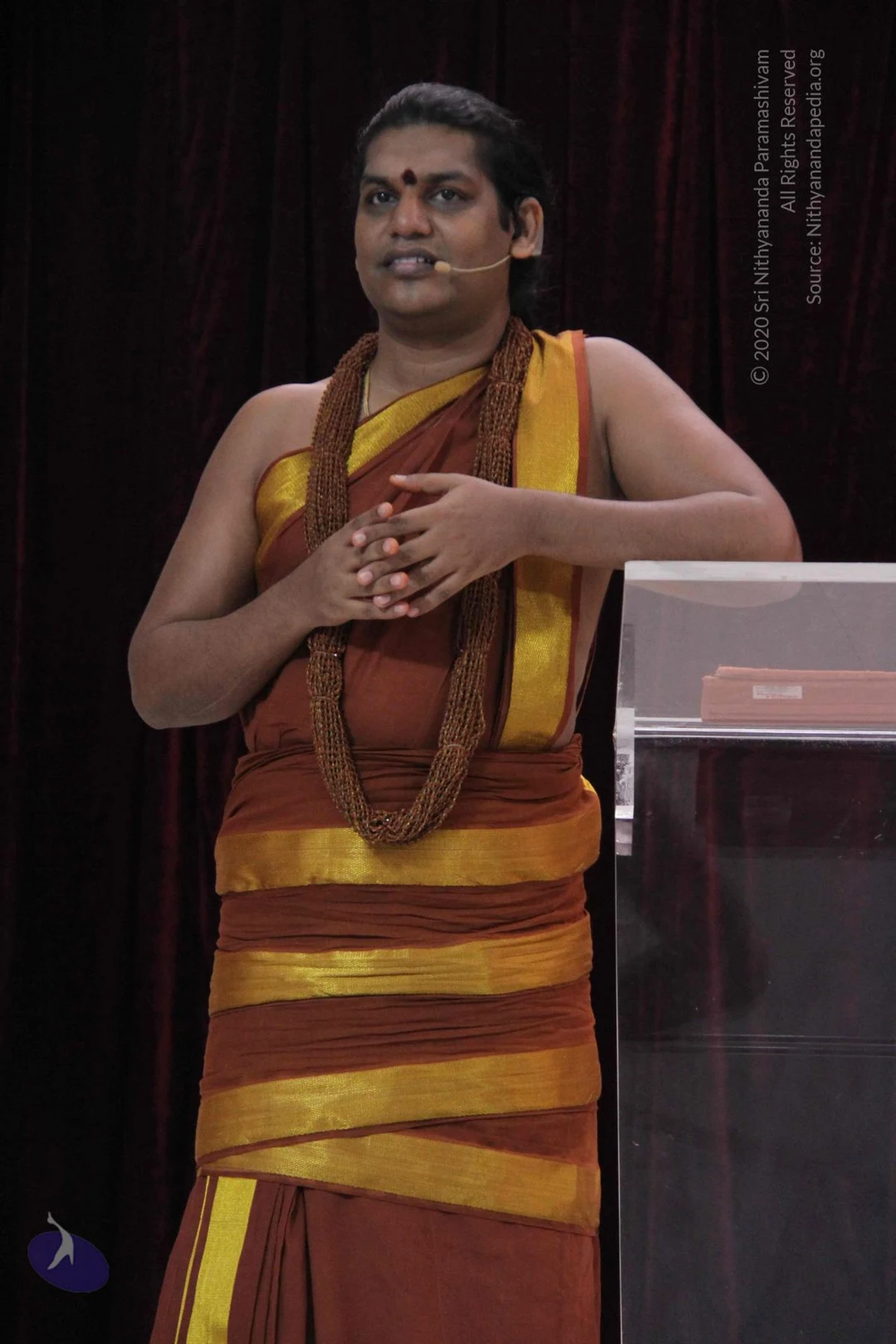
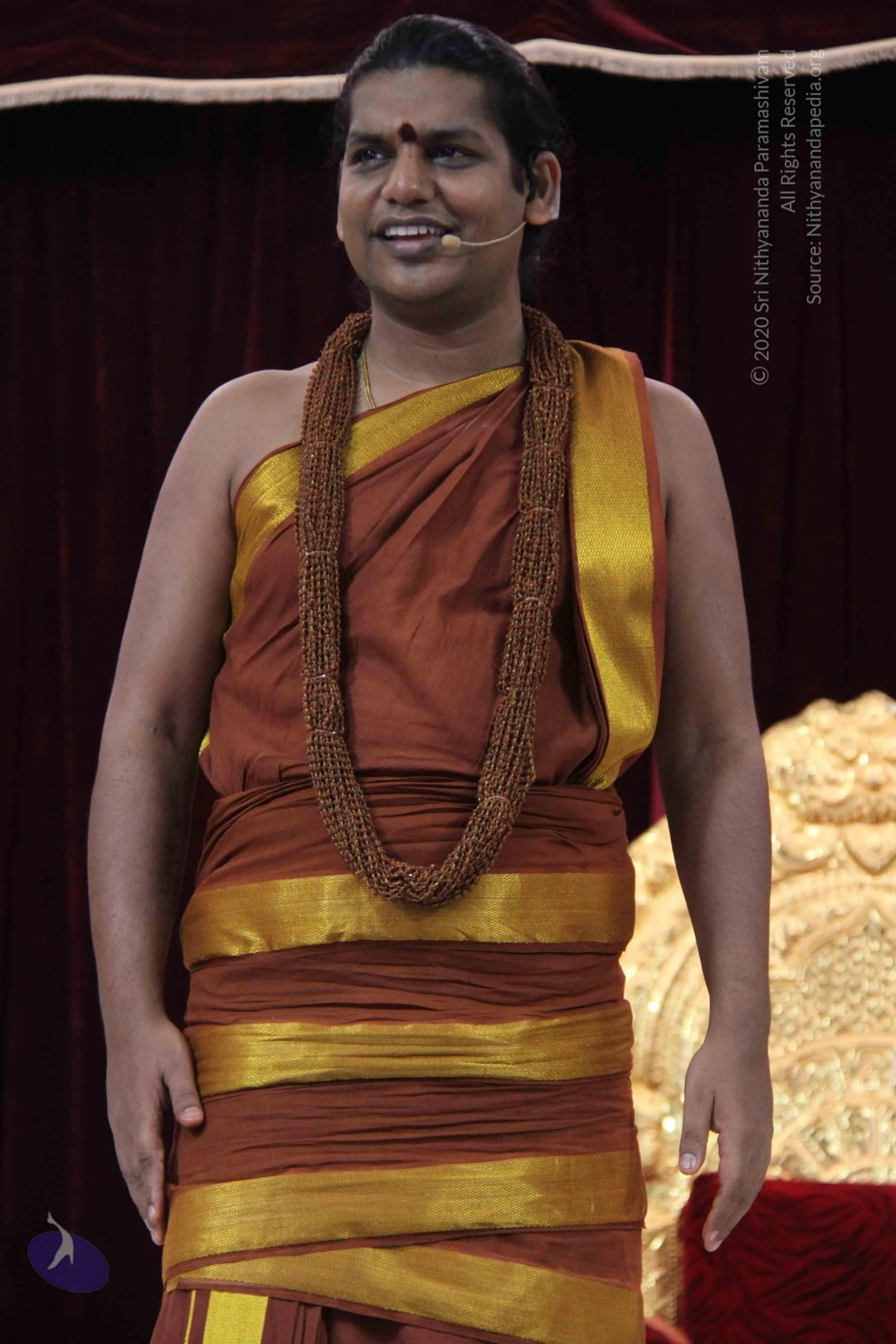
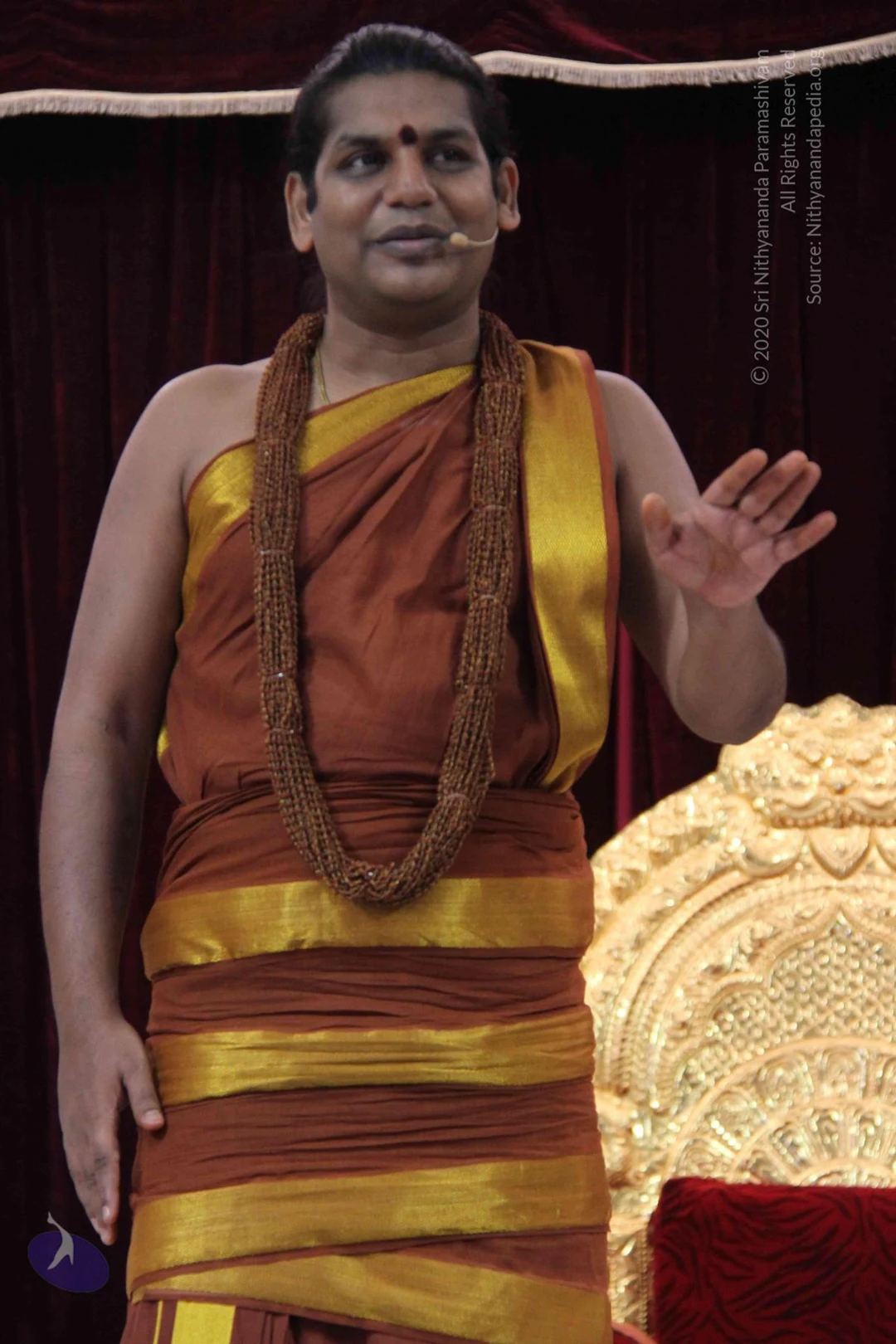
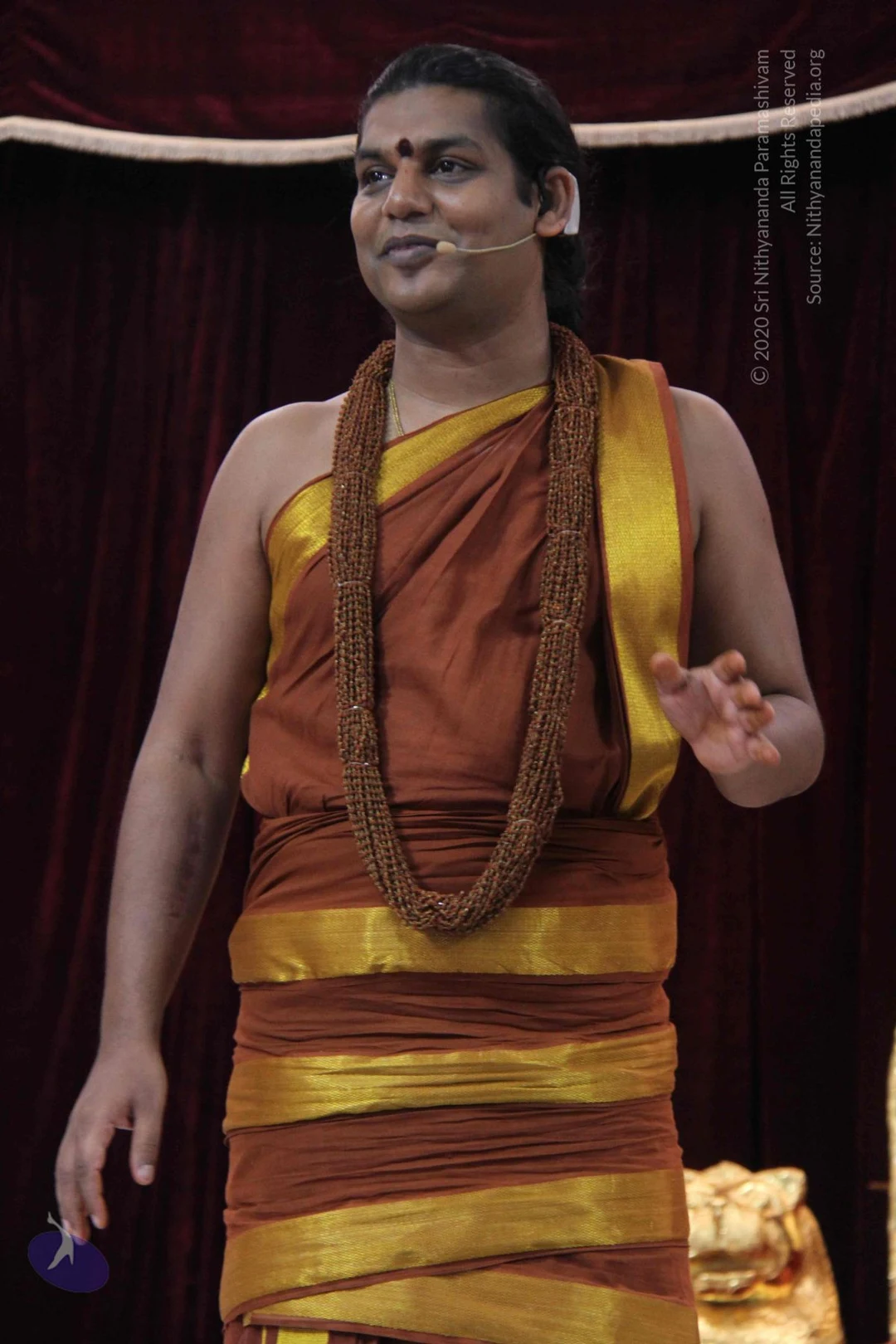
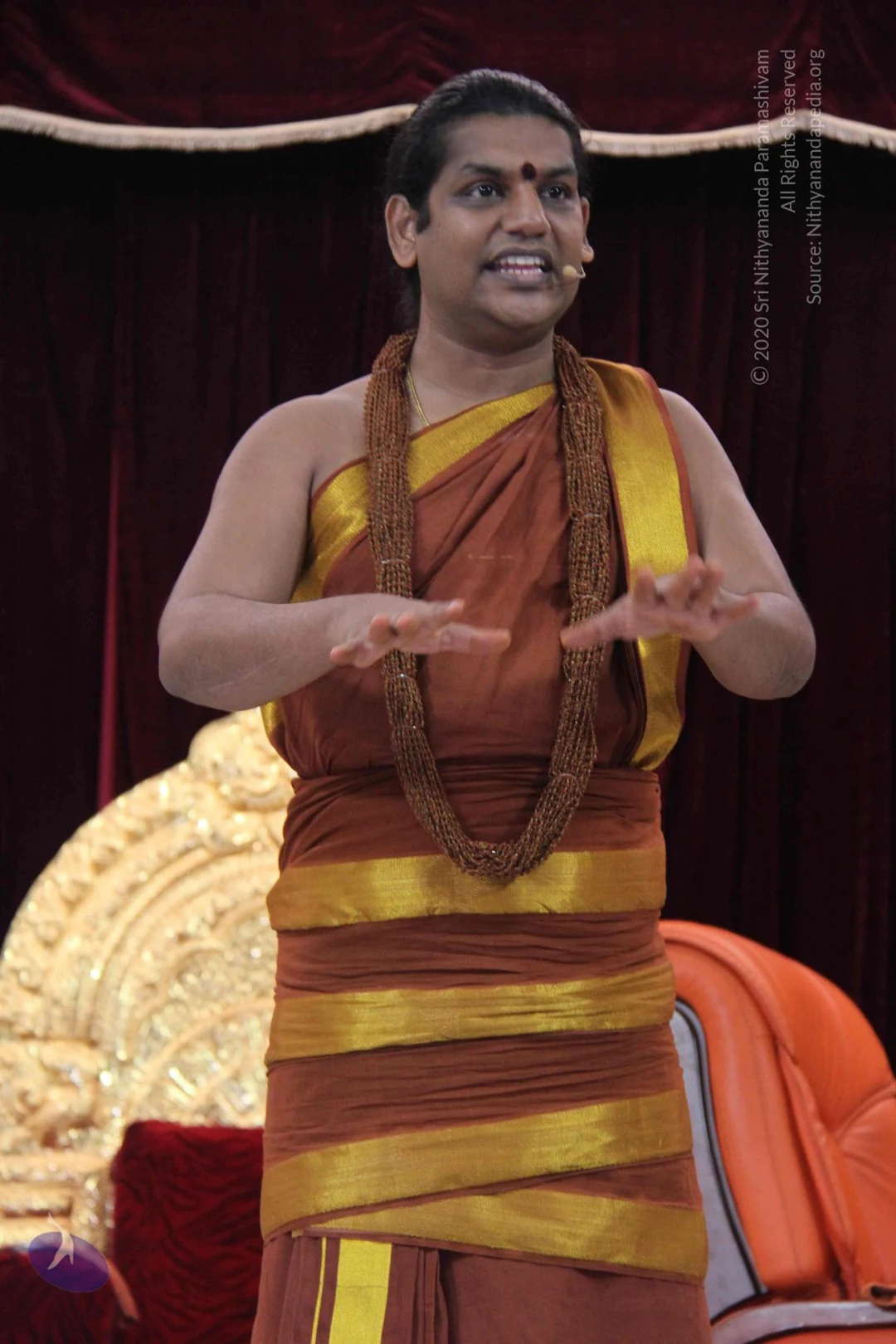
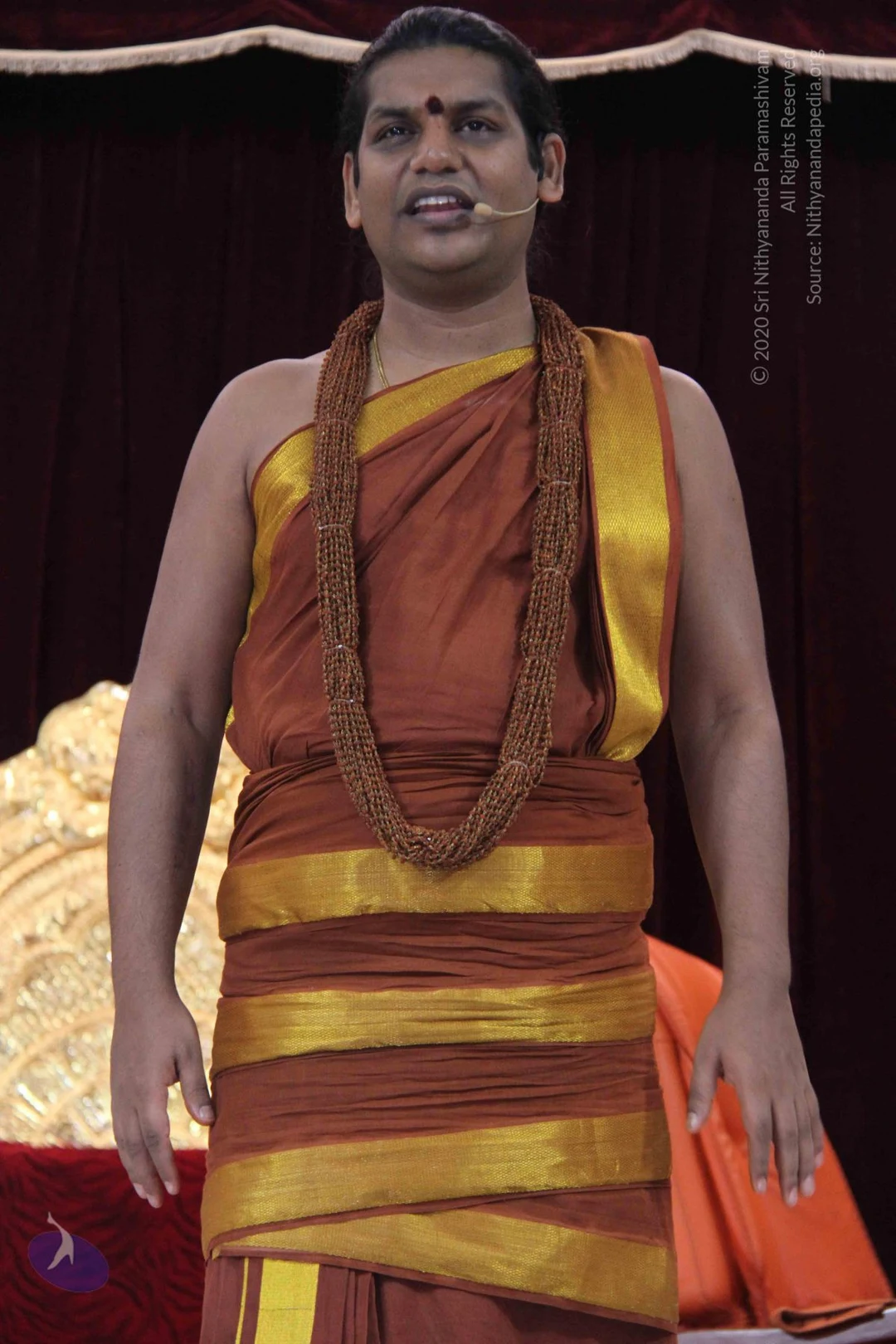
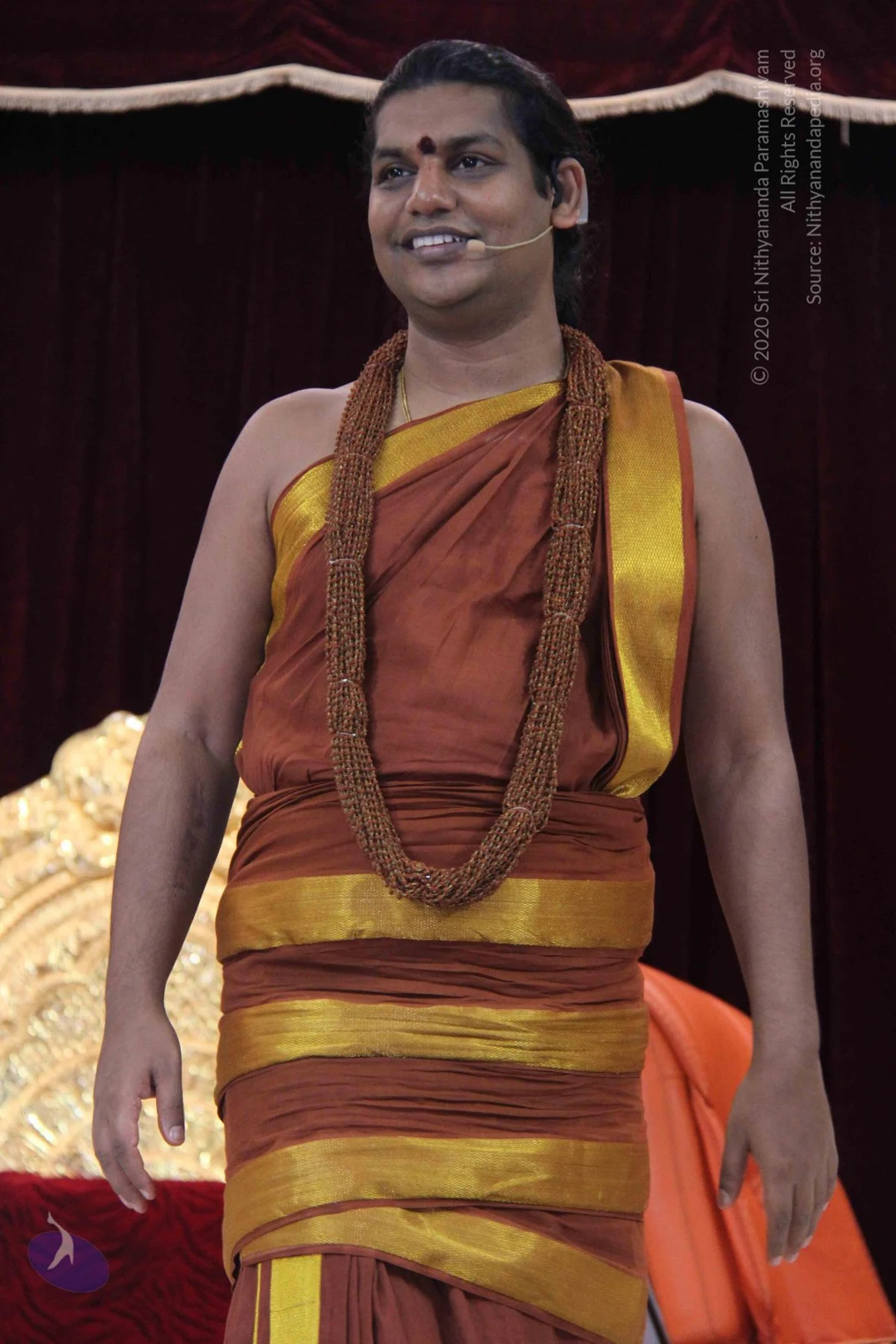
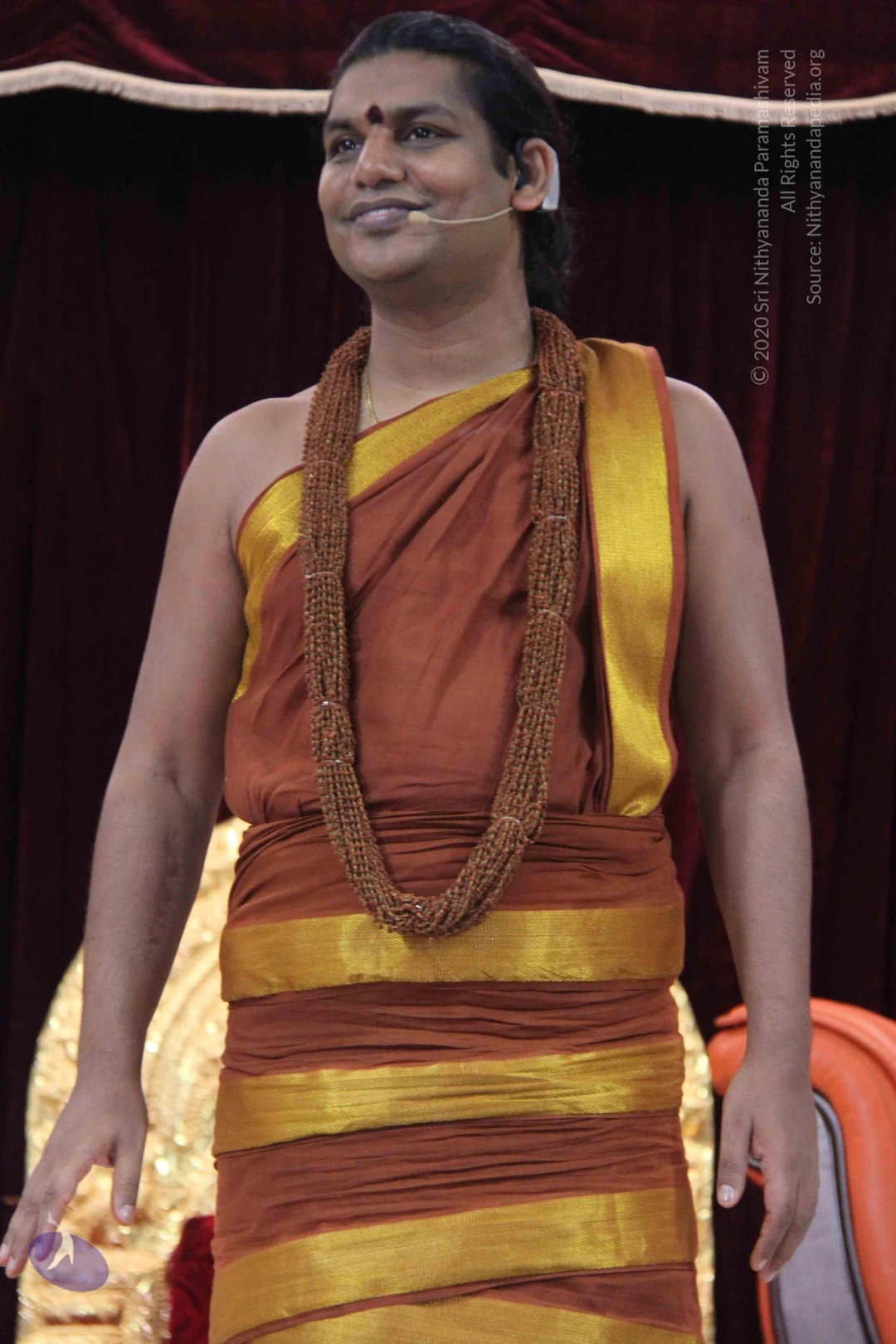
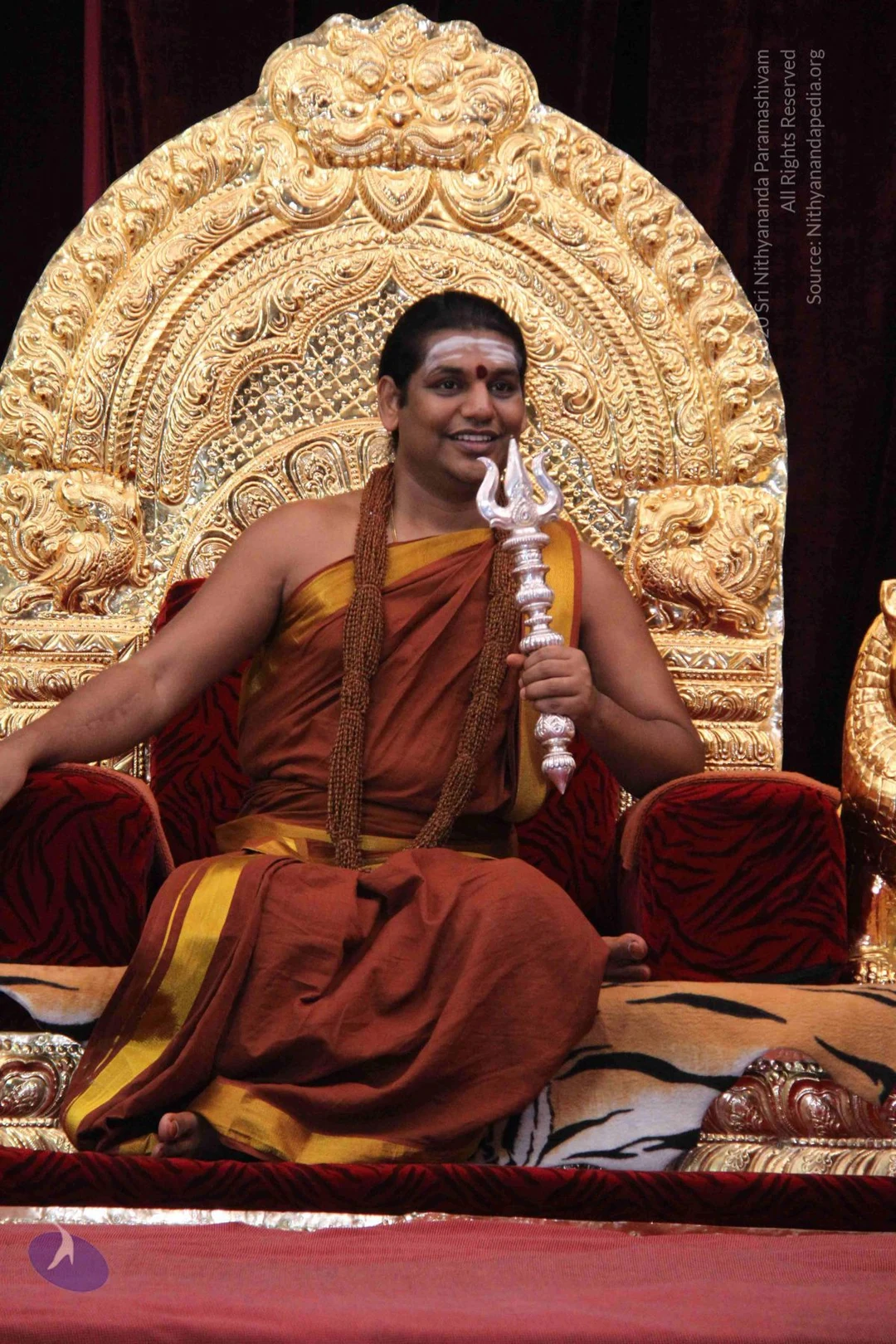
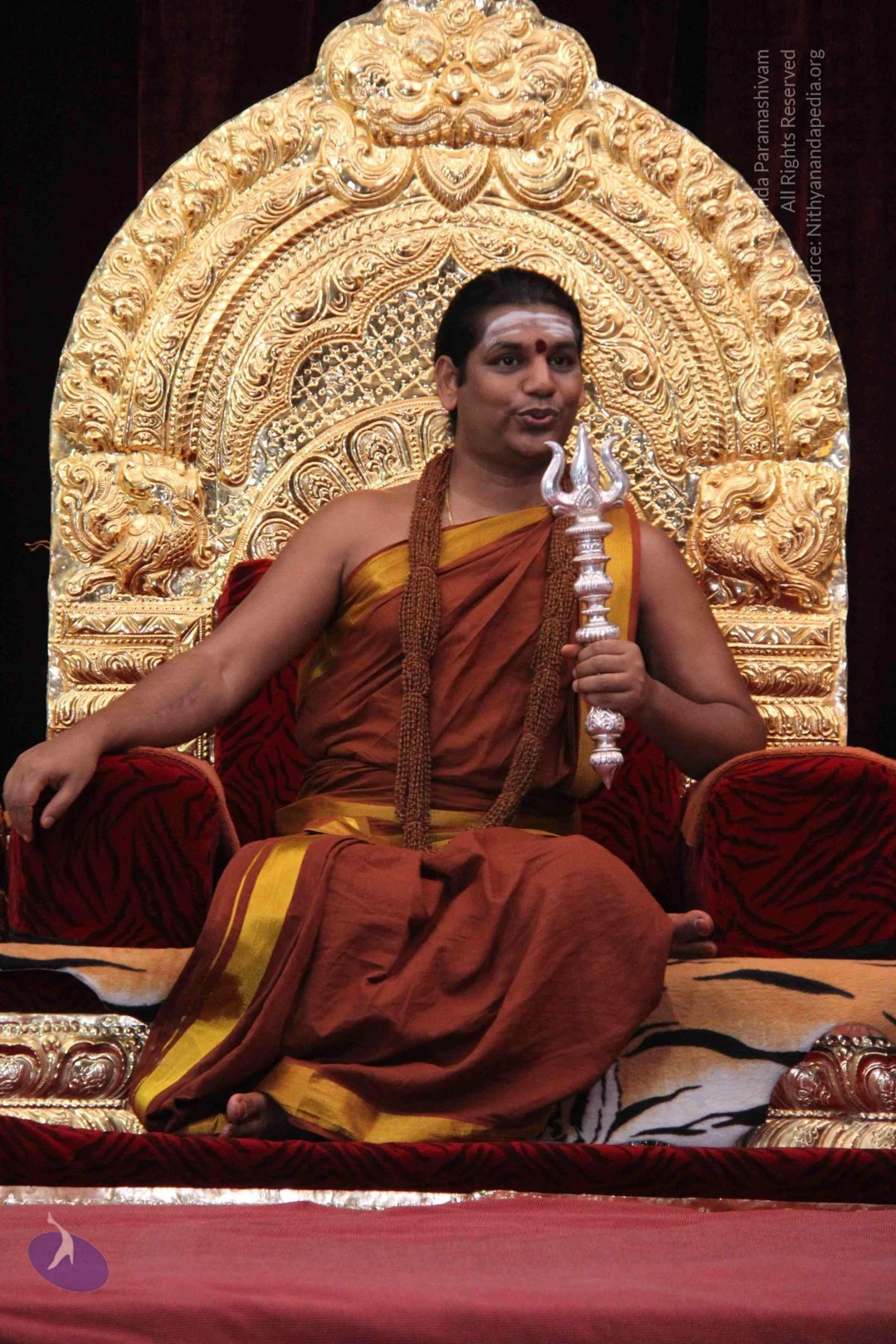
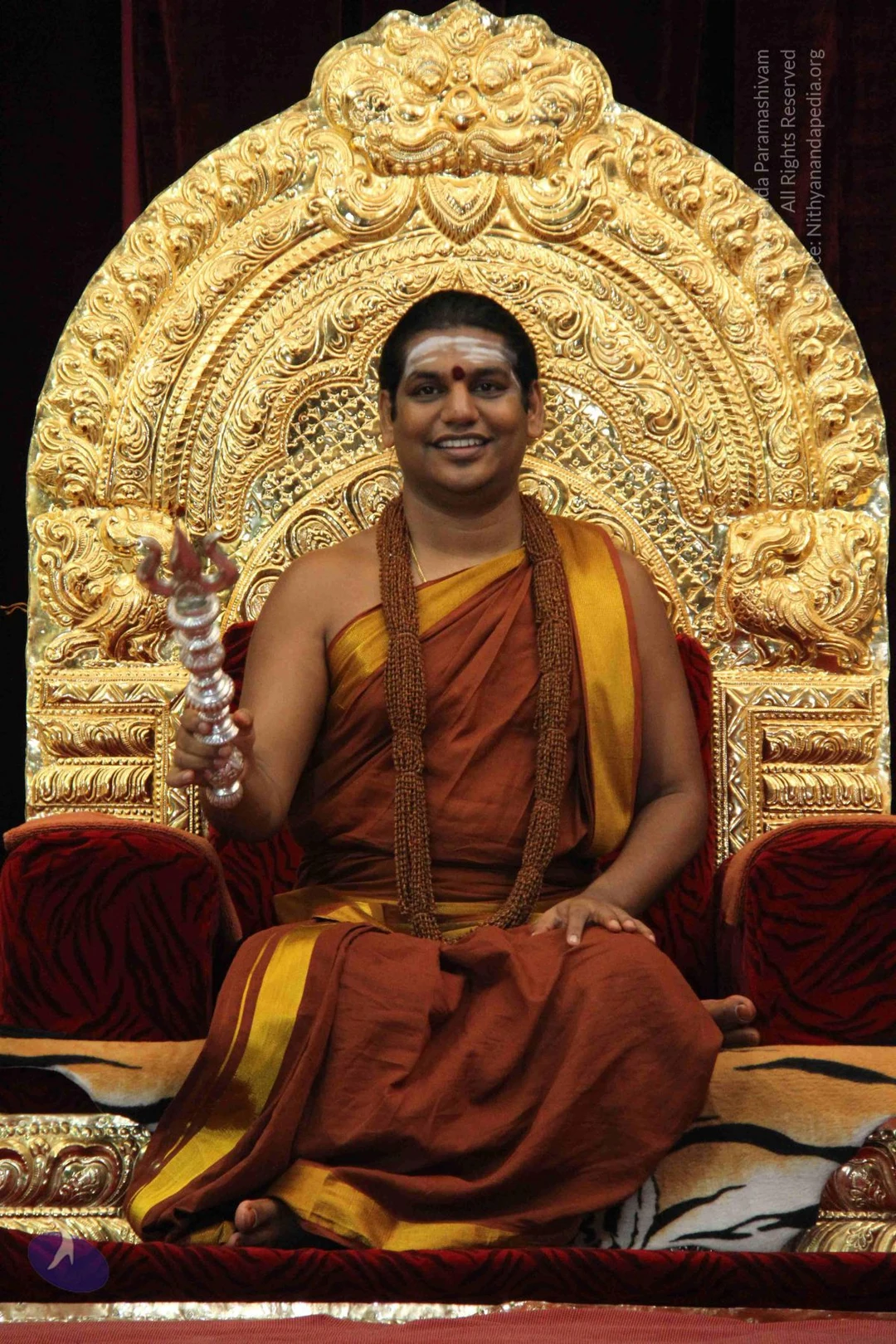
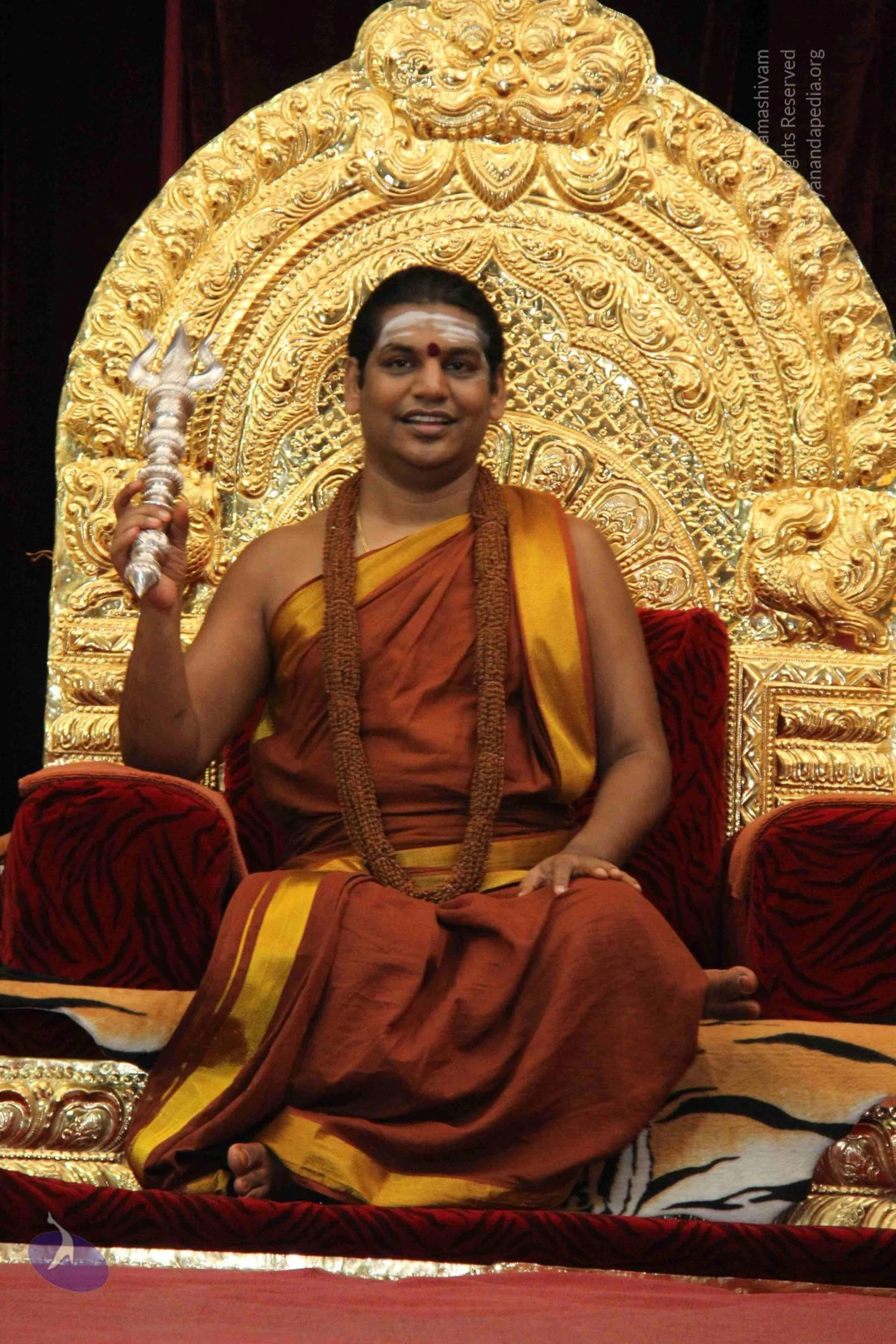
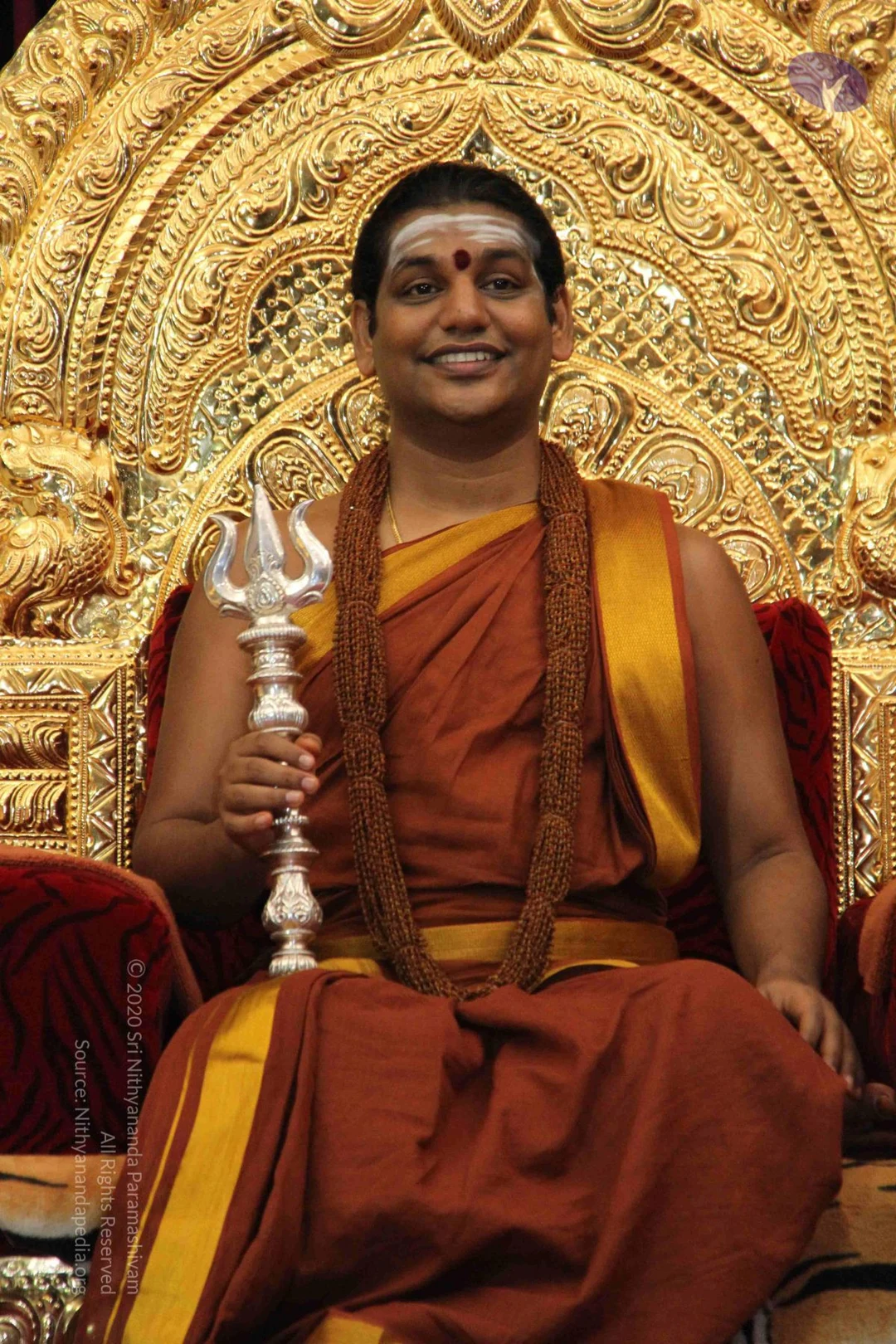
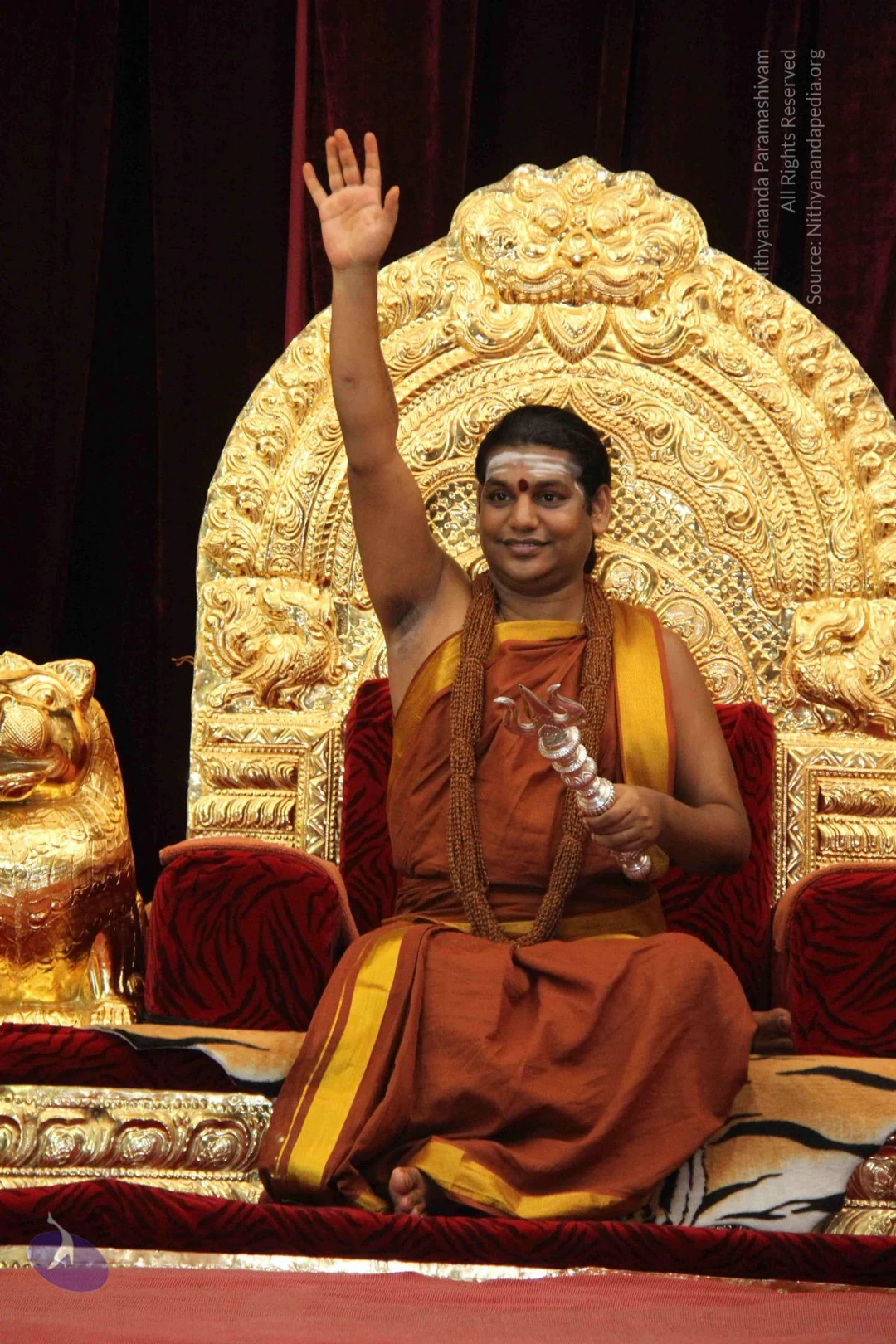
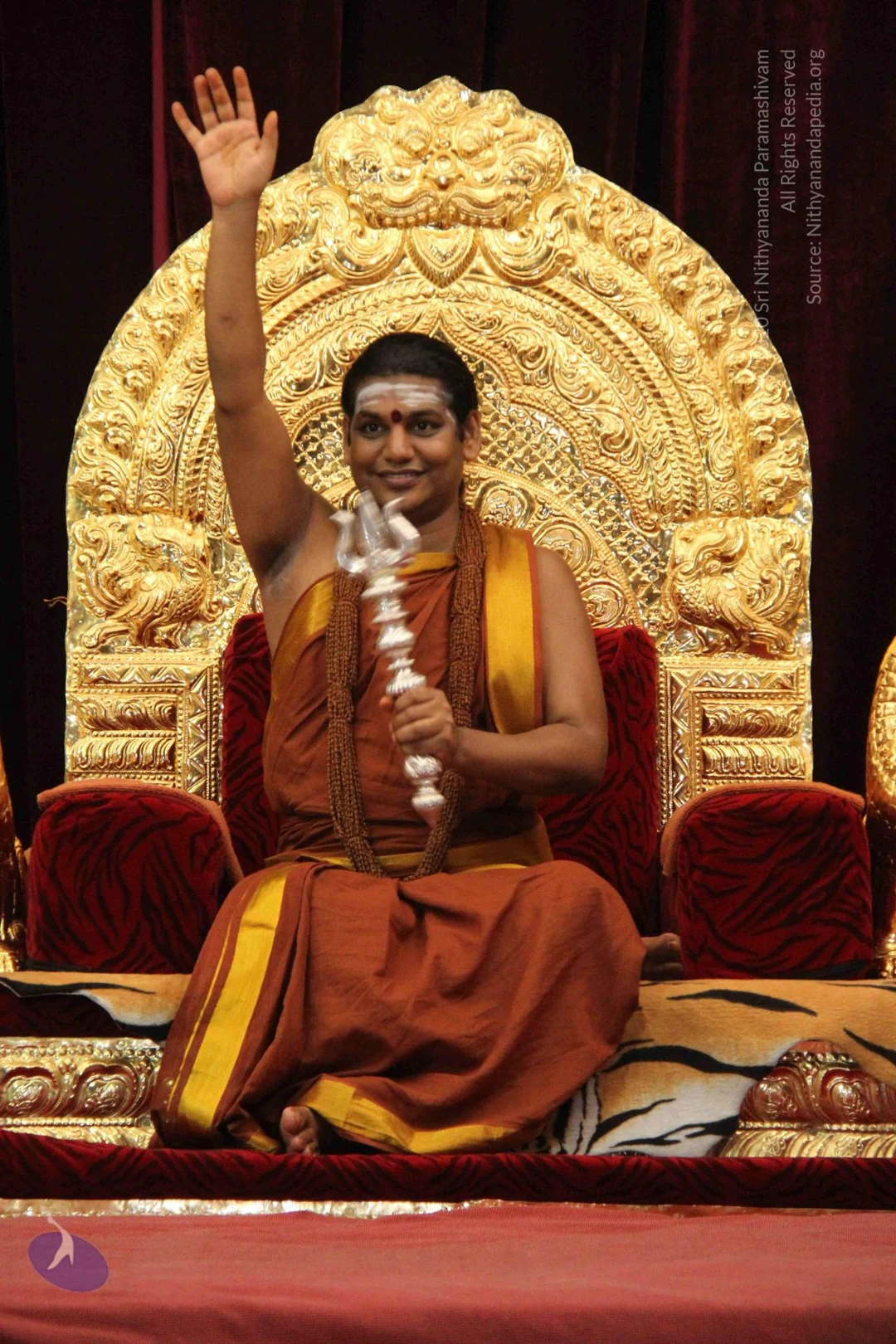
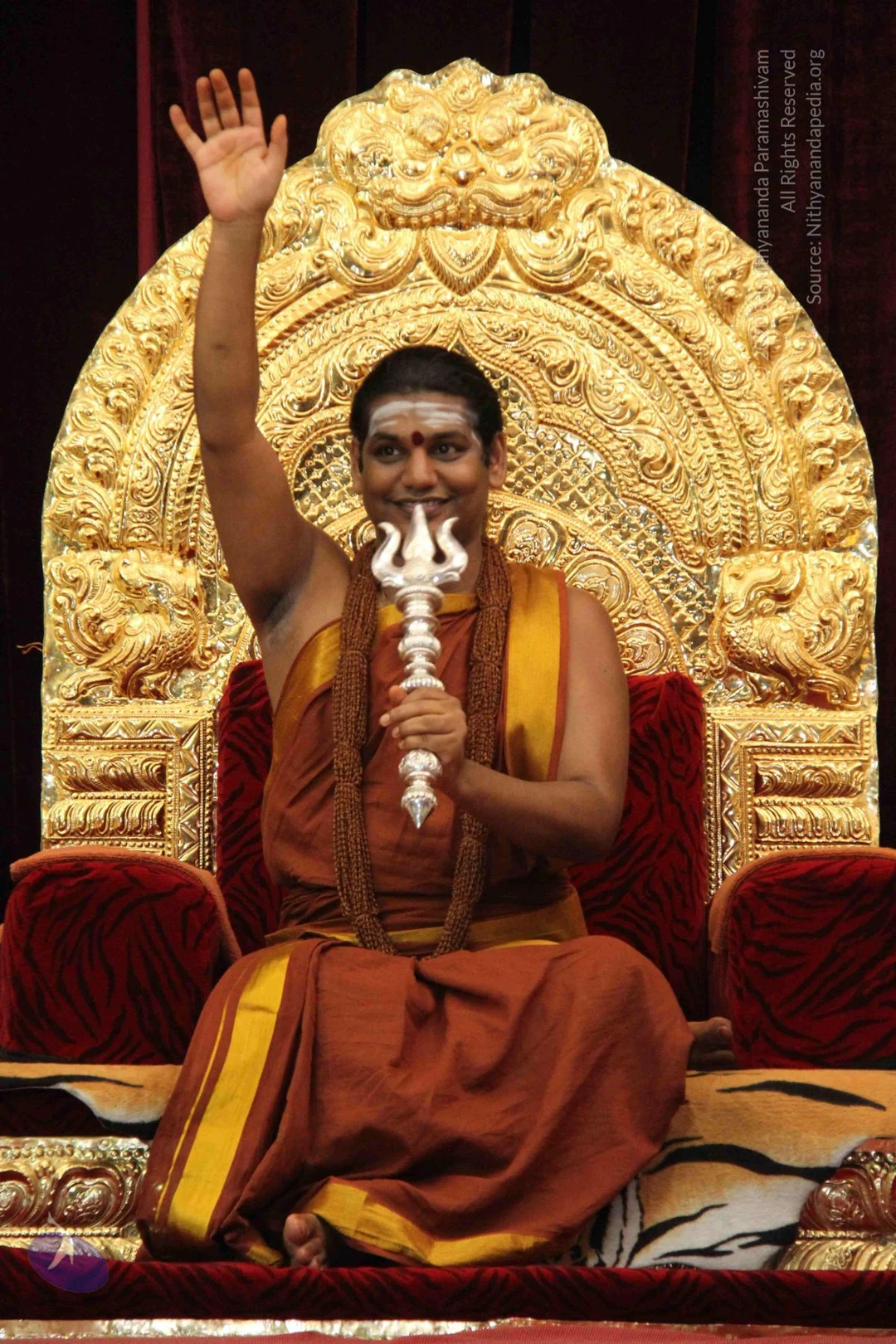
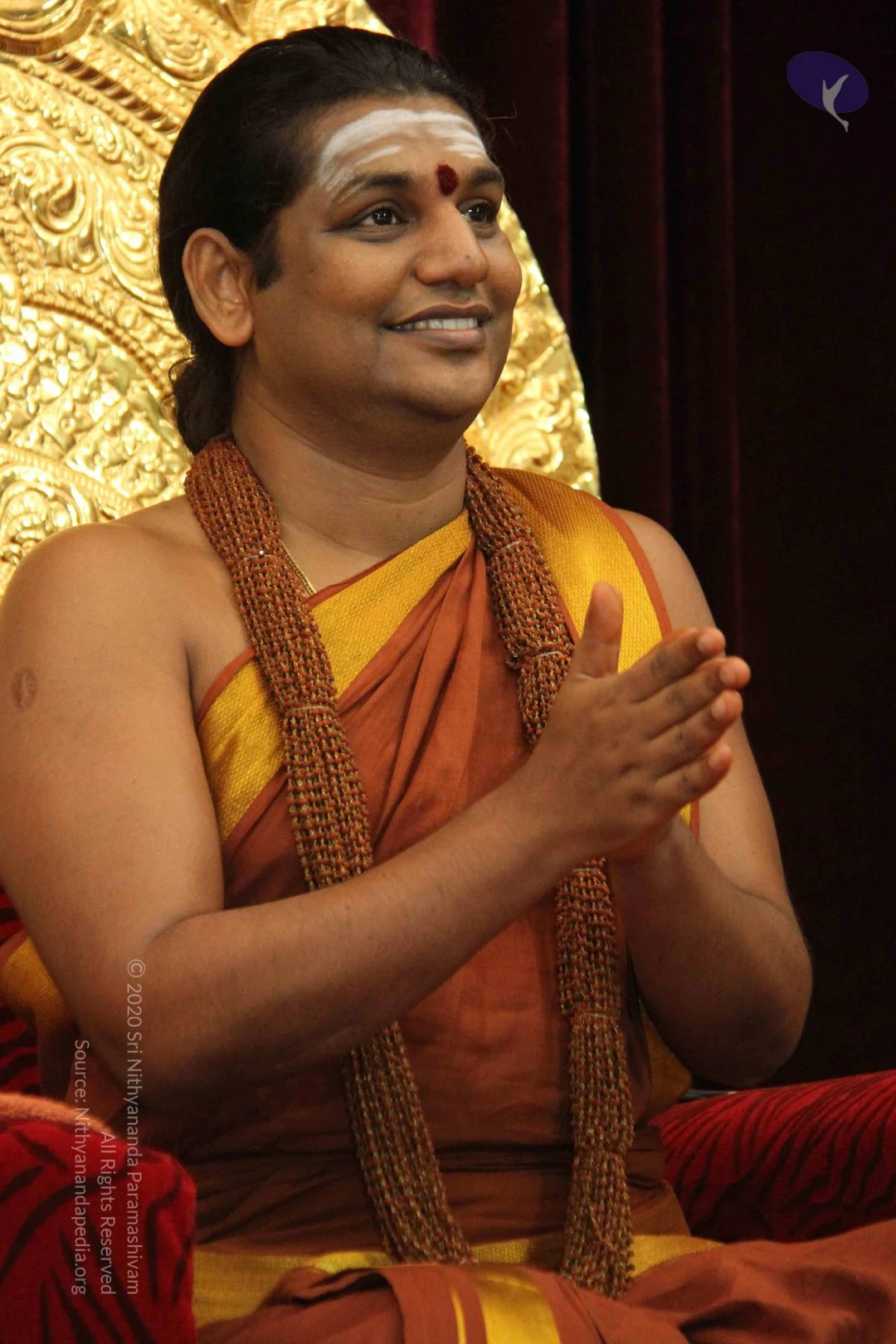
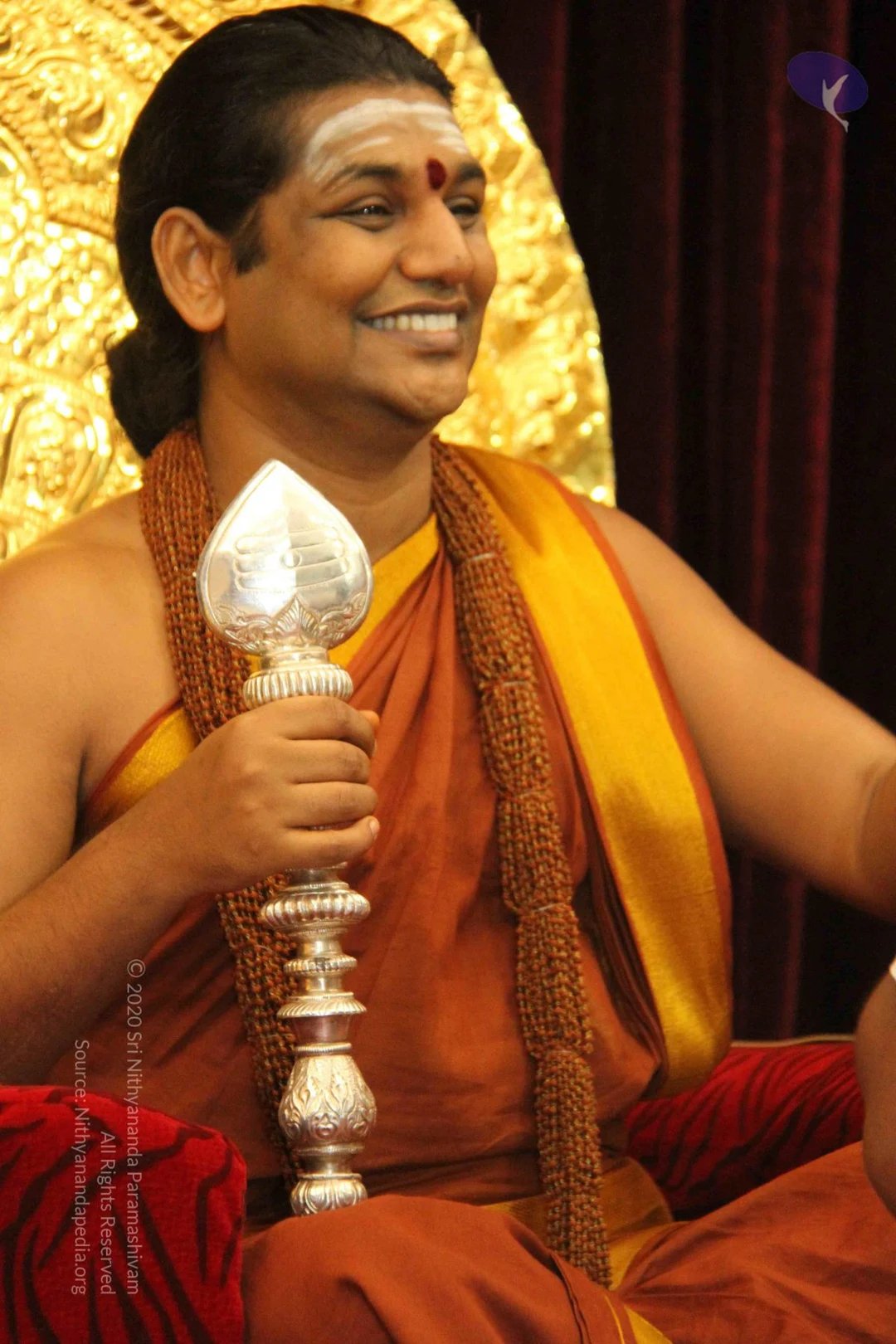
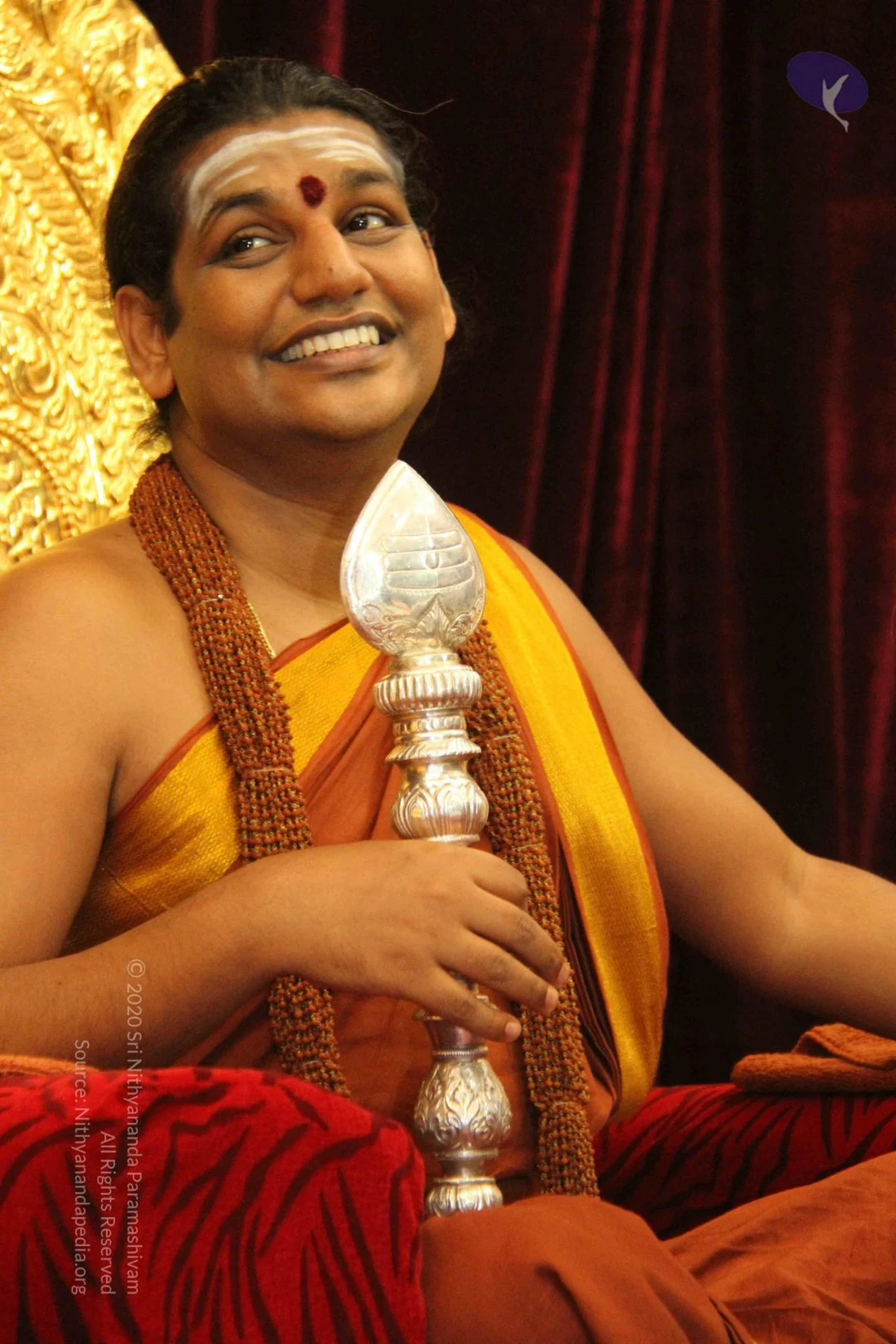
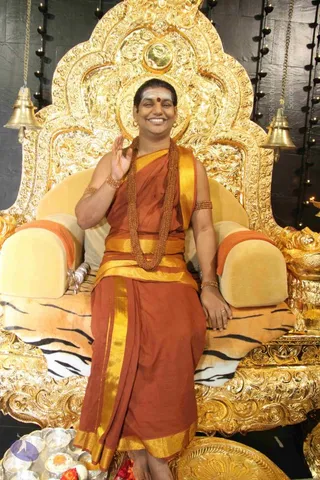
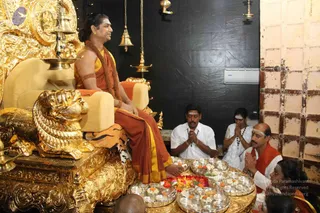
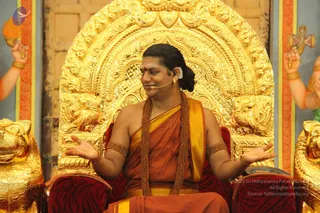
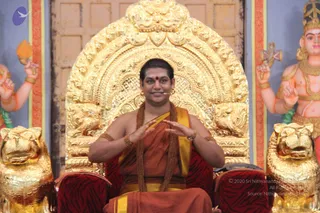
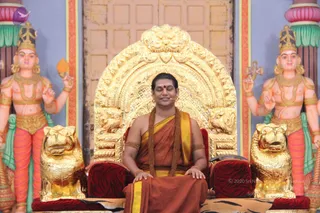
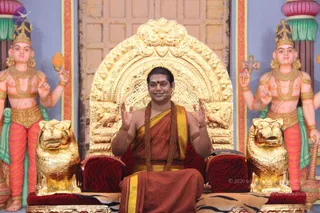
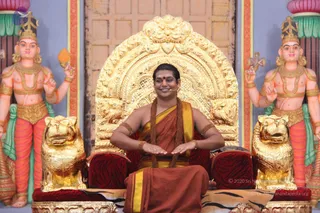
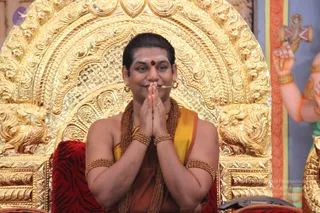
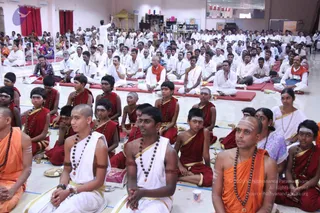
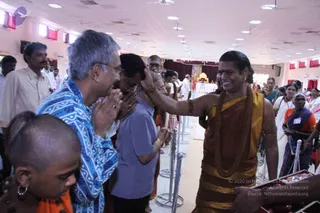
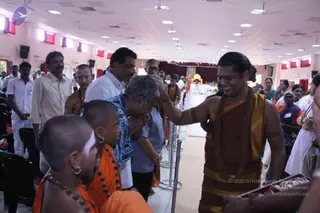
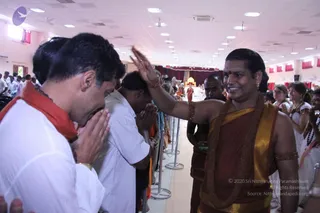
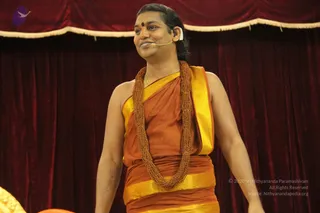
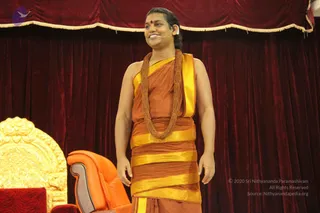
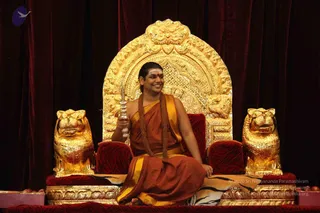
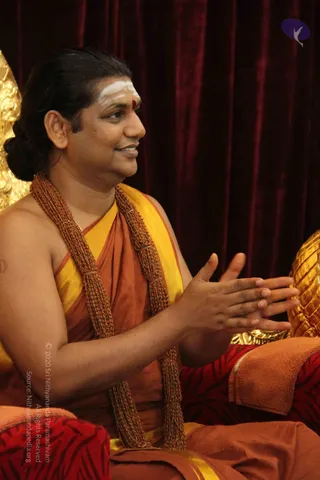
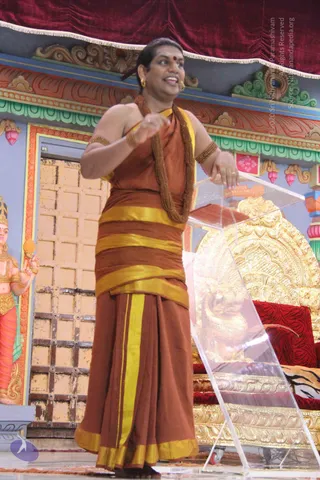
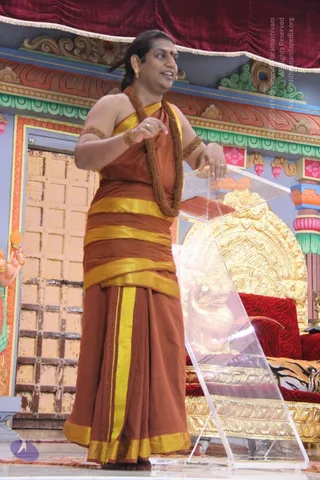
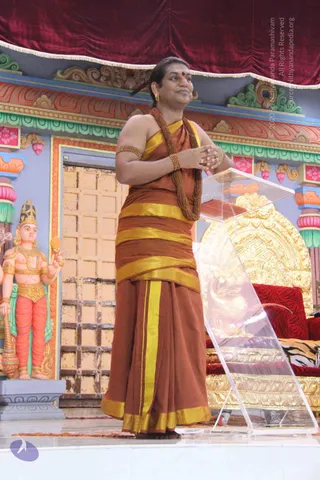
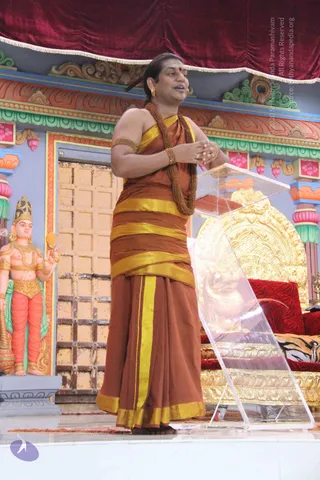
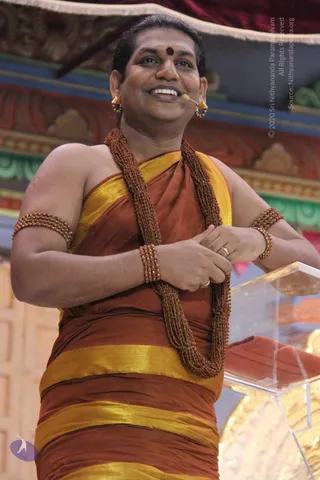
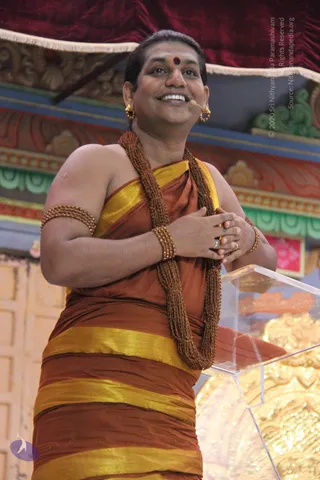
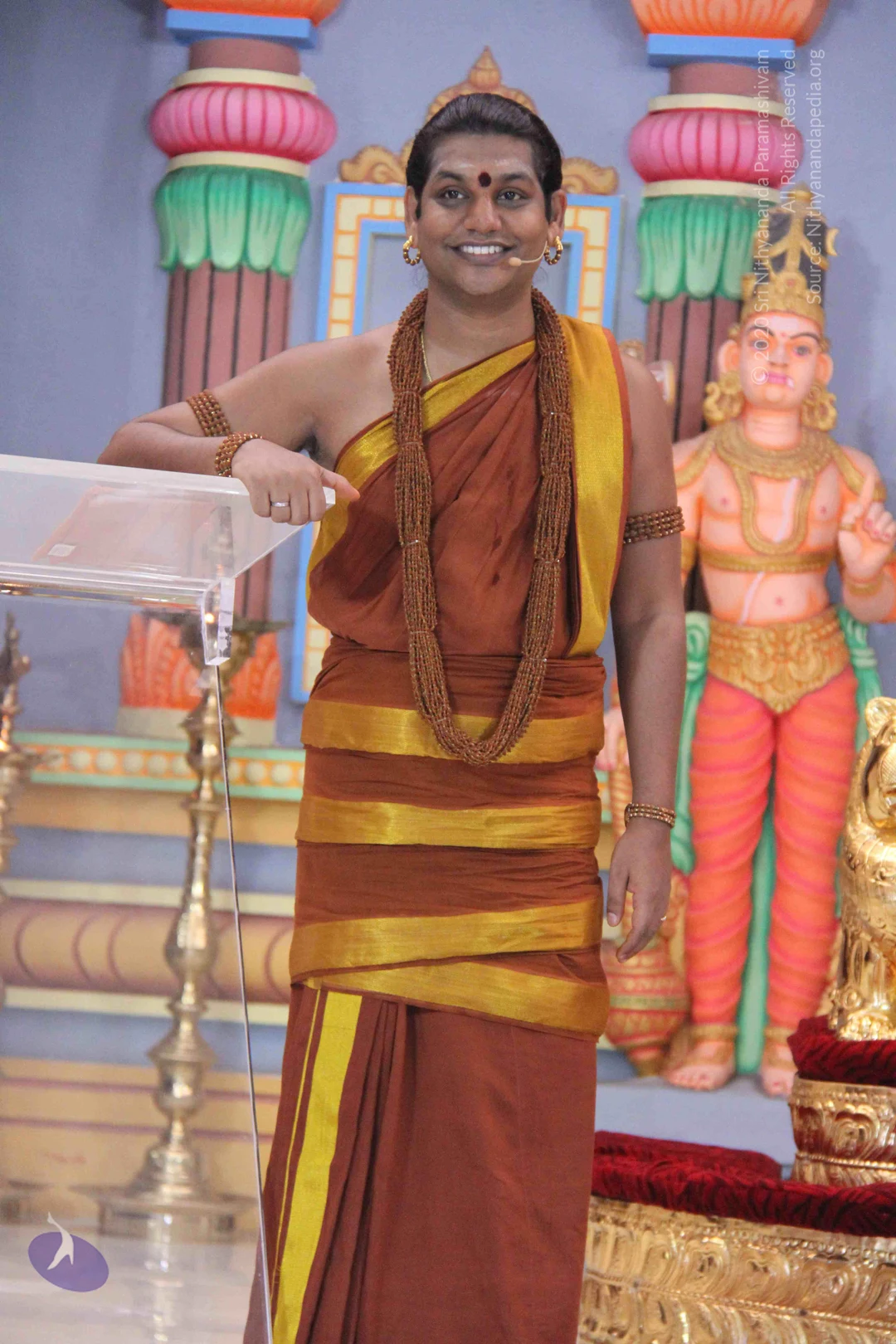
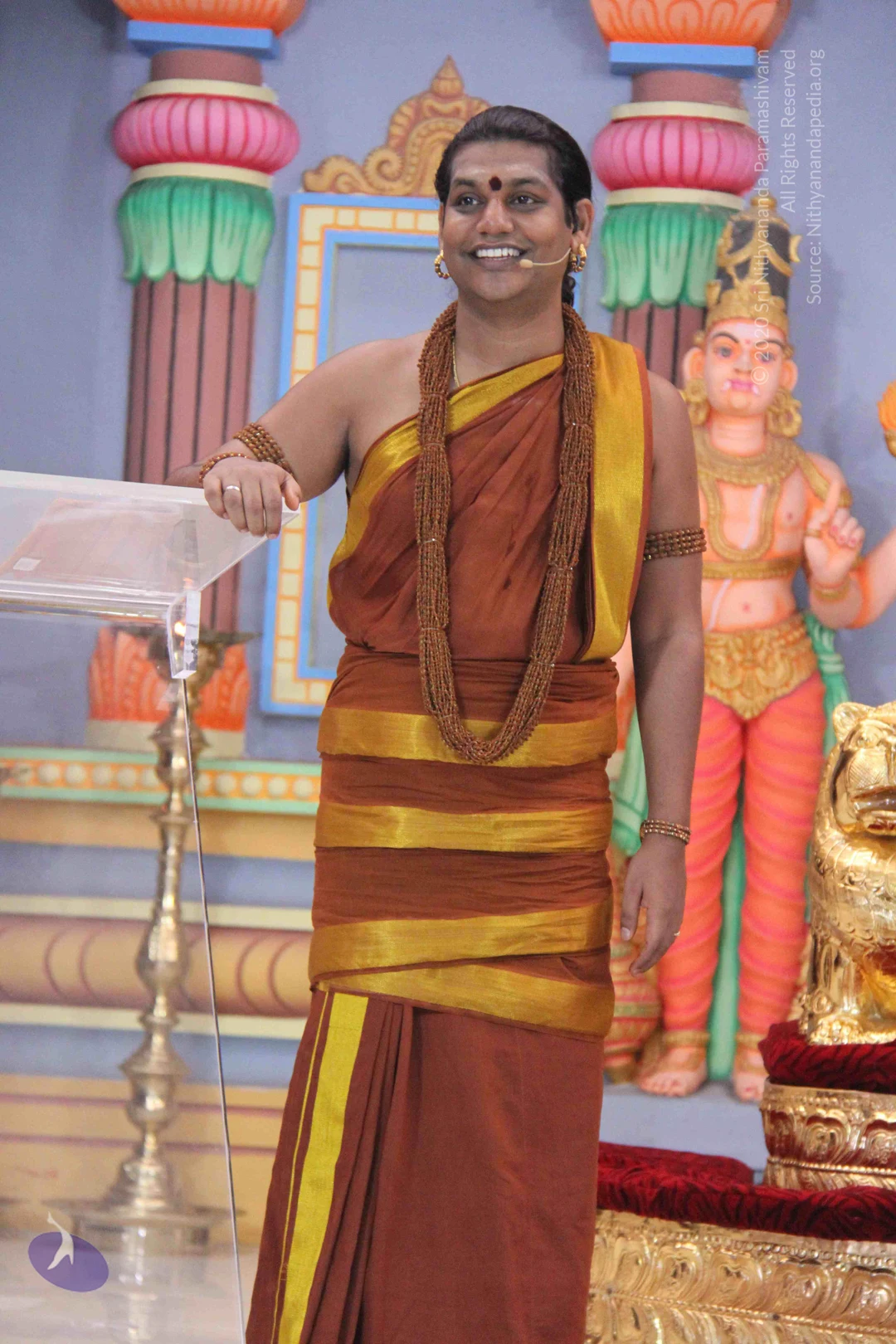
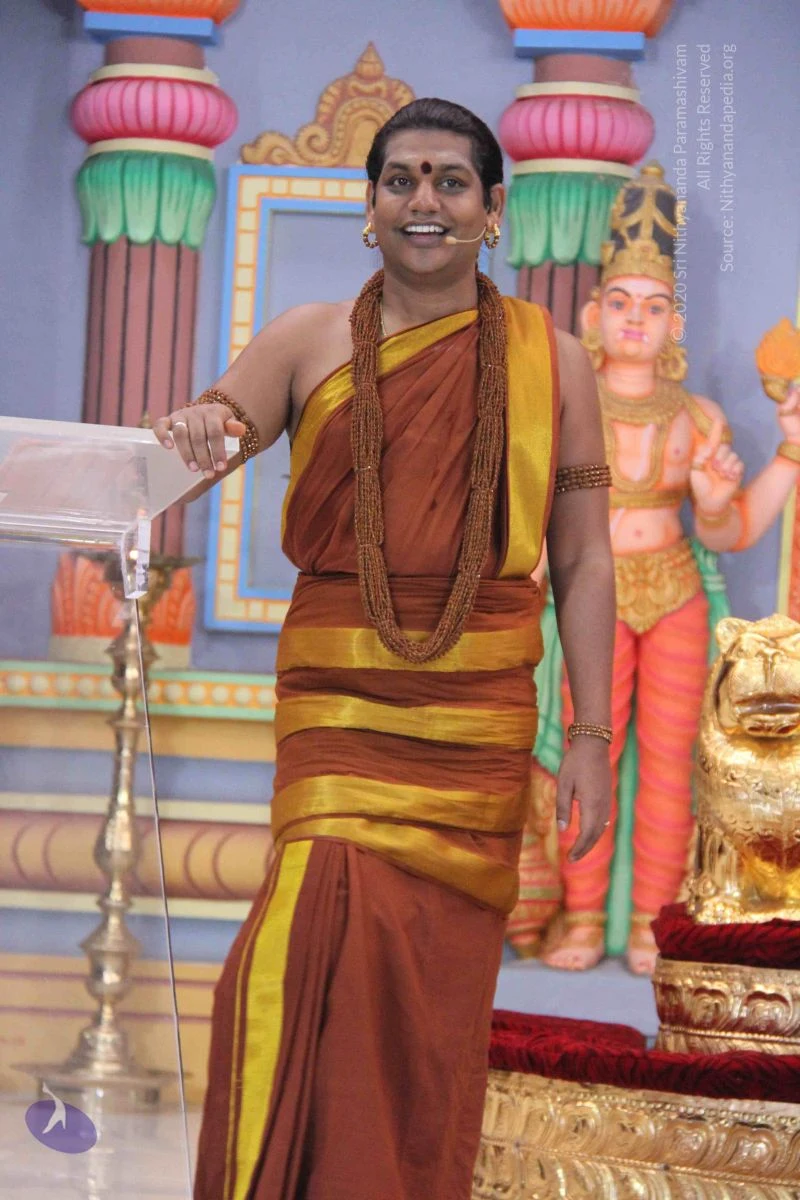
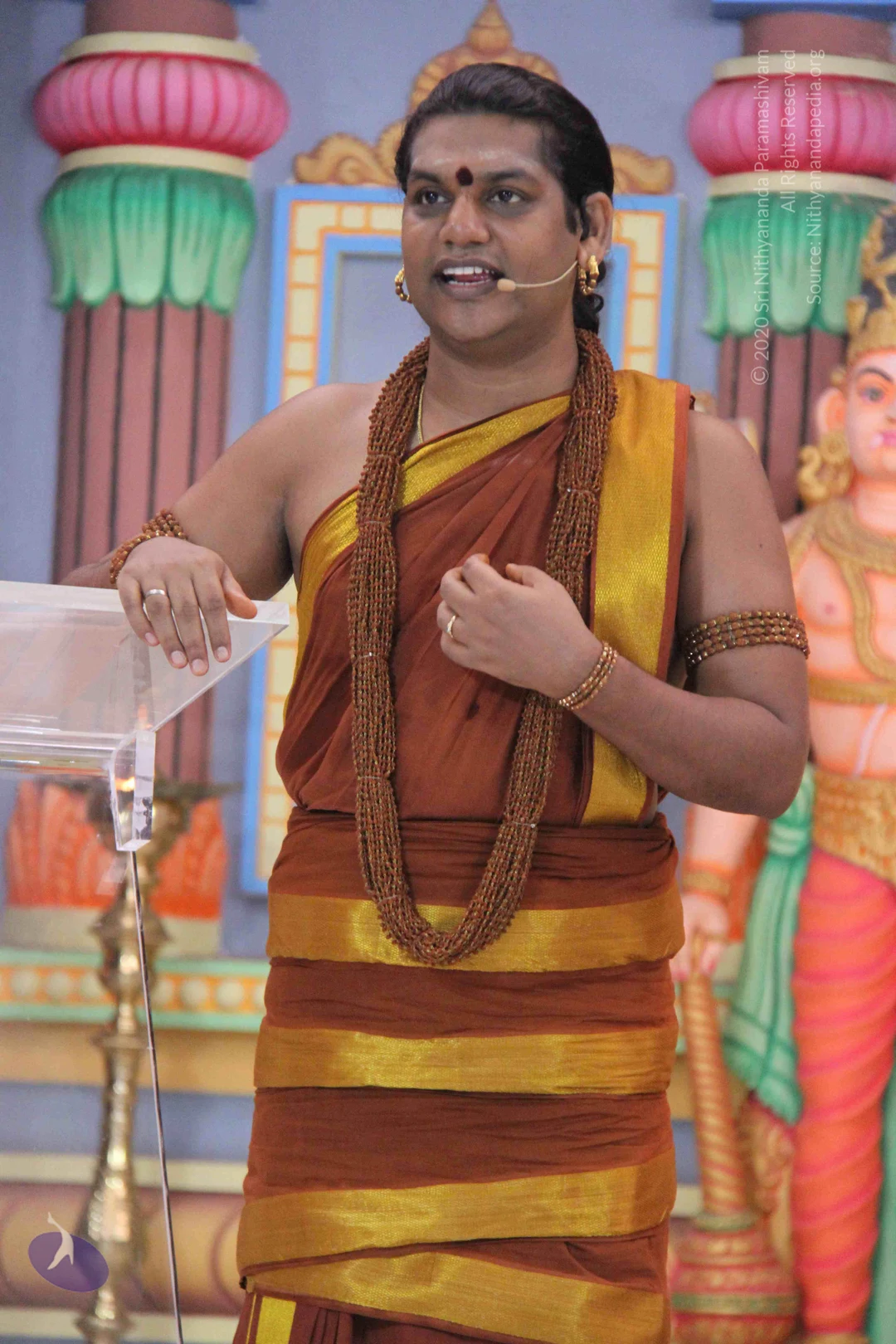
A man stands at a clear acrylic lectern in a temple-style hall, speaking into a headset microphone. He wears a rust-brown robe with wide gold borders draped over his shoulder and wrapped at the waist, a dense multi-strand rudraksha-style mala around his neck, gold hoop earrings, a red bindi and gold bangles. He gestures with one hand resting on the lectern. Behind him stands a painted deity statue with a crown, gold necklaces and orange-pink dhoti, holding a mace, beside a golden lion sculpture and red-draped seat. Pink lotus-topped pillars frame the backdrop.A seated man smiles broadly in front of an ornate gold repoussé throne with a tall arched back. He wears an orange-red garment with a wide gold-bordered edge draped over his shoulder and chest, and a long braided rust-and-gold rudraksha-style mala hangs down his front. A white tilak and red kumkum mark his forehead, and his hair is swept back. A red-and-black patterned cushion rests on his lap-side armrest. Appearance-based label: a person, seated on a throne with saffron clothing and a mala, shown in person.A photograph inside a large hall with pink walls, red curtains and a ceiling of fluorescent lights. A man in a brown dhoti and brown shawl with a rudraksha-style brown bead necklace and gold-toned armlets raises one hand in blessing toward a smiling devotee. The devotee, in a light blue batik shirt, stands with palms pressed together in namaste. Beside them a shaven-headed young man in an orange robe and a white tilak stands at the front, with other people in white dhotis, saris and an orange sari behind a metal barrier chain. A stage with a golden throne and a deity backdrop is visible at the far end.

September 14 2013

Original wiki page
Contents

Title

Tamil Satsang by The Supreme Pontiff of Hinduism HDH Bhagavan Nithyananda Paramashiam (பக்தர்களின் சந்தேகங்களும்... பரமஹம்ஸரின் தீர்வுகளும்...)

Link to Video

VideoAudio

Transcript in Tamil

பக்தர்களின் சந்தேகங்களும் பரமஹம்ஸரின் தீர்வுகளும்

உங்கள் அனைவரையும் வணங்கி வரவேற்கின்றேன்.

இன்றை நித்ய சத்சங்கம் தமிழில் நிகழும், நாளை நாளை மறுநாளும் நித்ய சங்கம் தமிழிலேயே இருக்கும். நாளை மட்டும்தான் - தமிழிலேயே இருக்கும் நல்லது, நித்ய க்ரியா யோகா தியான முகாமிற்கு வந்திருக்கும் அன்பர்களின் கேள்விகளுக்கு விடையளிப்பதன் மூலம் நித்ய சத்சங்கத்தைத் தொடர்வோம்.

முதல் கேள்வி : திரு. மோகன். கடந்த வாழ்க்கையை பின்னோக்கி செல்லுதல் மற்றும் (அரிதுயில் நிலை மூலம்) நோய் தீர்த்தல் என்னும் பிரிவுகளில் அதாவது மயக்கமூட்டுகிற எனும் நிலைக்கு ஒரு நபரை எடுத்து சென்று அவர்கள் வாழ்வில் அனுபவித்த அதிர்ச்சிகளிலிருந்து விடுபடுத்தப்படுத்துகிறார்கள். அவர்களும் அந்த சம்பவங்களை முழுமையாக மீண்டும் வாழ வைக்கப்படுகிறார்கள். என்னுடைய சந்தேகம் என்னவென்றால் இந்த முறை சரியானதா? இந்த முறைக்கும் நாம் செய்கின்ற புரணத்துவ க்ரியைகளுக்கும் உள்ள வேறுபாடுகள் என்ன ஸ்வாமிஜி?

பதில் :

இது ஒரு அருமையான கேள்வி. மிகவும் முக்கியமான கேள்வி. ஹிப்னாடிஸம் பத்தி ஹிப்னோதெரபி பத்தி நிறைய தவறான கருத்துக்கள் இருக்கின்றன. நல்லா புரிஞ்சுக்கோங்க. முதல் விஷயம் நான் சொல்ல விரும்பறது ஹிப்னோதெரபி தவறானதல்ல. ஆனால் அதை உங்கள் மீது ப்ரயோகப்படுத்துபவர் ஒரு ஞானியாக இல்லாதிருந்தால், ஒரு ஞானமடைந்த ஞானபுருஷராக இல்லாதிருந்தால் உங்க மேல அந்த ஹிப்னோதெரபியை செயல்படுத்தற அவருடைய பேட்டர்ன்ஸ் உங்களுக்கு வந்திடும். ஆழந்து புரிஞ்சுக்கோங்க. ஹிப்னோதெரபி தவறானதல்ல. ஹிப்னோதெரபி மூலமா பாஸ்ட் லைஃப் ரெக்ரஷன் மூலமா நம்முடைய ஹிப்னாடிக் ட்ரான்ஸ் அப்படிங்கற ஒரு ஸ்டேட்ல உங்களைப் போகச்சென்று எடுத்துச்சென்று உங்களுடைய கடந்த கால வாழ்க்கையை கம்ப்ளீட் பண்றது. துக்கம் அதிர்ச்சி இதிலிருந்தெல்லாம் கம்ப்ளீட் பண்றது. இது சாத்தியம்.

ஆனா ஒரு முக்கியமான விஷயம் என்னன்னா? அதை செய்யறவரே கம்ப்ளீட்டா நிரந்தரமான நித்ய புரணத்துவத்திலே நிலை பெற்றவரா இருக்கணும். முதல் விஷயம் ஹிப்னாடிஸம் பத்தி மக்களுக்கு நிறைய பயம் இருக்கு. அது தேவையில்லாதது. கவலையேப்படாதீங்க. உங்களை யாருமே ஹிப்னாடைஸ் பண்ணி தவறா உபயோகப்படுத்தவே முடியாது. பல ஆராய்ச்சிகள் தௌிவா சொல்லுது. ஒரு பெண்ணை ஹிப்னாடைஸ் பண்ணி என்ன பண்ணச்சொன்னாலும் செய்வா ஆனா உடையை விளக்கச் சொன்னா செய்யமாட்டாங்க.

அதாவது உங்களது இயல்பான ஒழுக்கத்திலிருந்து யாராலும் உங்களை மாற்றமுடியாது. ஹிப்னாடிஸம் மூலமா அதிகபட்சம் உங்கள் உடல் மன வியாதிகளைத் தீர்க்க முடியுமேத்தவிர அதுக்கு மேல எதுவும் பண்ணமுடியாது. அதே மாதிரி ஒரு ஆணை ஹிப்னாடைஸ் பண்ணி உங்க சொத்தெல்லாம் எழுதிக்கொழுங்கன்னா செய்யமாட்டாரு. அதனால ஹிப்னாடிஸம் பத்தி நீங்க வெச்சிருக்கற கருத்துக்கள் நிறைய தவறான கருத்துக்களை தூக்கியெறிந்து விடுங்கள். நீங்க வெச்சிருக்கற நிறைய கருத்துக்கள் தவறானது.

முதல்ல ஹிப்னாடிஸமே தௌிந்த வாழ்க்கையை வளப்படுத்தக்கூடிய அறிவியல். இரண்டாவது உங்க மேல அந்த பாஸ்ட்லைஃப் ரிக்ரஷன் போன்ற கலைகளை உபயோகித்து உங்களுக்கு உதவி செய்யறவர் அவர் கம்ப்ளீட்டான கம்ப்ளீஸன் புரணத்துவத்தில இல்லாமலிருந்தால் அவருடைய பேட்டர்ன்ஸ் உங்களுக்கு வந்திடும். அப்ப என்ன ஆகும் தொியுமா? யானை குளிக்கப்போய் சேத்தையெல்லாம் வாரி மேல புசிக்கிட்டு வந்திடுச்சாம். அது நடந்திடக்கூடாது அதுதான் முக்கியம். அது நடந்திடக்கூடாது அதுதான் ரொம்ப ரொம்ப ரொம்ப முக்கியம்.

அதனால நல்லாப்புரிஞ்சிக்கங்க..., ஒரு சாதாரண மனிதர் உங்களை ஹிப்னாடிஸ ட்ரான்ஸ் ஸ்டேட்டுக்கு எடுத்திட்டுப்போய் உங்களுடைய கடந்த கால அதிர்ச்சிகளிலிருந்து உங்களை விடுபடுத்தி, பாஸ்ட்லைஃப் ரிக்ரஷன் மூலமா உங்க கடந்த கால வாழ்க்கை சம்பவங்களை முழுமையாக வாழ வெச்சு இதை செய்யறதுக்கும், இங்க நாம செய்யற புரணத்துவ க்ரியைக்கும் பொிய வேறுபாடு இருக்கு. முதல்ல இங்க செய்யற புரணத்துவ க்ரியை தானே கம்ப்ளீஷன்ல எஸ்டாப்ளிஷ் ஆன ஒரு ஞானி ஒரு அவதாரப் புருஷர் உங்களை அந்த நிலைக்குள்ள எடுத்திட்டுப் போறாரு.

அதாவது யார் உங்களை அந்த ட்ரான்ஸ்ககுள்ள எடுத்திட்டுப் போயி அந்த உணர்வுக்குள் எடுத்திட்டுப் போயி உங்களை கம்ப்ளீஷன் பண்ண வைக்கிறாரோ அவர் தானே கம்ப்ளீஷன்ல நிலைத்து இருக்கின்ற சக்தி. கம்ப்ளீஷனுக்கு ஆதாரமா இருக்கற ஒரு சக்தி. எப்படி, நீங்க கேட்கற இந்த டிபரன்ஸ் எப்படின்னா, ஒரு சாதாரணமான ஒருத்தர் ஹிப்னாடிக் ட்ரான்ஸ் மூலமா எங்களை பாஸ்ட் லைஃப்க்கு எடுத்திட்டுப் போறதுக்கும் இங்க நீங்க புரணத்துவ க்ரியைக்கு எடுத்திட்டுப்போறதுக்கும் என்ன சாமி வித்யாசம்? ஒரு சின்ன கதை சொல்லலாம் நிறைய நம்ம தமிழ்நாடு க்ராமங்கள்ள பார்த்தீங்கன்னா பத்தாவது பன்னண்டாவது வரைக்கும் படிச்சவங்க ஏதாவது ஒரு பாப்புலரான டாக்டர் கீழே ஒரு அஞ்சு வருஷம் கம்பவுண்டரா இருந்தா ஒரு தனியா ஒரு போர்டு போட்டு தானே டாக்டர் ஆயிடுவாங்க. ஏன்னா கொஞ்ச நாள்ள தொிஞ்சுப்பாங்க. கால் வலிக்கு கறுப்பு மாத்திர. தலைவலிக்கு பச்சை மாத்திரை. வயித்துவலிக்கு வௌ்ளை மாத்திரை முதுகுவலிக்கு மஞ்ச மாத்திரை. அந்தக் கம்பவுண்டருங்க சில நேரத்துல கொடுக்கற மாத்திரை கரெக்டா வேலை செஞ்சிரும் கூட. ஏன்னா அந்த மருந்து ப்ரொட்யுஸ் பண்ற பார்மசி கம்பெனி மாத்திரை கலரை மாத்தாத வரைக்கும் உங்க வியாதி தீர்ந்திடும். கம்பவுண்டர் கொடுத்த மருந்து சில நேரத்தில வொர்க் அவுட் ஆயிடுதுங்கறதுக்காக கம்பவுண்டர் கிட்டேப் போறது ஸேஃபா. கம்பவுண்டர் கிட்டே போறதுக்கும், ஒரிஜினலா எம்.டி படிச்ச டாக்டர் ்கிட்டே போறதுக்கும் இருக்கற வித்யாசம்தான் யாராவது ஒருத்தர்ட்டே ஹிப்னாடிக் ட்ரான்ஸ்க்கோ பாஸ்ட் லைஃப் ரிக்ரஷனுக்கோ போறதும். இங்க புரணத்துவ க்ரியைக்கு வரதுக்குமான வித்யாசம். இங்க ரெண்டு விஷயம் நடக்குது. ஒண்ணு அந்தப் புரணத்துவத்துக்குள்ள நீங்க போறதுக்காக அந்த எனர்ஜி ஸ்பேசை நேரடியா ஒரு ஞான புருஷனுடைய சாந்நித்யத்தில், ஒரு ஞானியினுடைய சாந்நித்யத்திற்குள்ள நடக்கறதால அந்த ஸ்பேஸ்குள்ள ஈஸியா போயிடுவீங்க. கம்ப்ளீஷன் நடக்க ஆரம்பிச்சிடும். அது ஒண்ணு. இரண்டாவது உங்களால கண்டுபிடிக்க முடியாத சில ஆழமான உணர்ச்சி முடிச்சிக்கள் இன்கம்ப்ளீஷன்ஸ் கடந்த காலத்திலருந்து எடுத்து வந்தது இதெல்லாம் இருந்தால் கூட ஞானிகளுடைய சாந்நித்யத்தால் அது அறுந்து கரைந்து போகிறது. இதுக்கு அடுத்து உங்களையே அந்த நிலைக்குள்ள எடுத்திட்டுப் போறதுக்குப் பயிற்றுவிக்கறேன். நீங்களே அதுக்குள்ள போறதுக்கு பழக ஆரம்பிக்கறீங்க. அப்ப என்ன ஆகுதுன்னா வீட்டுக்குப் போன பிறகும் நீங்க யாரோ ஒருத்தரை டிபண்ட் பண்ண வேண்டியிருக்காது. நீங்களே அந்த புரணத்துவ நிலைக்குள்ள போய் கம்ப்ளீஷன் பண்ணிர முடியும்.

அதனால பொிய டிபரன்ஸ் இது. இந்த ஒரே ஒரு விஷயத்தை நினைவு வெச்சிக்கங்க. தலை வலிக்கு பச்சை மாத்திரை. கால்வலிக்கு கறுப்பு மாத்திர. மார் வலிக்கு மஞ்ச மாத்தினை்னு கொடுக்கற கம்பவுண்டர் கிட்டே போலாமா இல்லை எம்.டி படிச்ச டாக்டர் கிட்டே போலாமா? சில நேரத்தில எம.்டி படிச்ச டாக்டர் கிட்டேப் போனா கொஞ்ச்ம் டைம் எடுக்கும். . அவரைப் பார்க்க சில நாள் எடுக்கும். அவரைப் பார்க்கறது கஷ்டம். ஏன்னா அவரைப் பார்க்கறதுக்கு நிறைய போ் இருப்பாங்க. என்னக் கஷ்டமாயிருந்தாலும் எதுதான் பாதுகாப்பு? எம்.டி படிச்ச டாக்டர் கிட்டே போனாத்தான் பாதுகாப்பு.

அதனால புரணத்துவத்தை உருவாக்குகின்ற. உங்களுக்குள்ள புரணத்துவத்தை உருவாக்கற ஸ்பேசே புரணத்துவத்தில இருக்கணும். எரிகின்ற விளக்கிலிருந்து தான் இன்னொரு விளக்கை தீப்பிடிக்க முடியும். சுடர் எரியும் விளக்கிலிருந்து தான் இன்னொரு விளக்கிற்கு செல்ல முடியும். முழுமையான கம்ப்ளீஷனும் ஒரு வாழும் ஞானியிடமிருந்துதான் உங்களுடைய ஆத்மாவிற்குள் போக முடியும். உங்களுடைய ஜீவனுக்குள்ள போக முடியும். அதனால நாம இங்க செய்யற புரணத்துவ க்ரியைகளுக்கும் ஹிப்னாடிஸ் ட்ரான்ஸ்னு சொல்ற அந்த முறைக்கும் பாஸ்ட்லைப் ரிக்ரஷன் போன்ற முறைகளுக்கும் மிகப்பொிய வித்யாசமிருக்கு. அந்த வித்யாசம் என்னன்னா? யார் அந்த நுணுக்கங்களை முறைகளை நுட்பங்களை கலைகளை உங்களுக்கு அளிக்கிறார்கள். யாருடைய சாந்நித்யத்தில் அது நடக்கிறது.

சில நேரத்தில ஹிப்னாடிஸ் ட்ரான்ஸ் பண்ற பாஸ்ட் லைப் ரிக்ரஷன் பண்ற டாக்டர்ஸூம் ஓரளவு அந்த கம்ப்ளீஷன் நிலையை அடைஞ்சிருப்பாங்க. அந்த அளவுக்கு மட்டும் உங்களுக்கு கம்ப்ளீஷன் நடக்கும். ஆனா ஒரு ஞானியின் சாந்நித்யத்தில் தான் புரணத்துவமான பூரணத்துவம் ் நடக்கும்.

அடுத்த கேள்வி :

ஜோதிடம் பார்ப்பவர்கள் நம் ஜாதகத்தைப் பார்த்து முன்வினை காரணமாக தோஷங்கள் இருக்கு. இந்த தோஷத்தில் இருந்து நீங்கள் தப்பிக்க வேண்டுமென்றால் யாகம் வளர்க்க வேண்டும் என்று சொல்கிறார்கள். இவ்வாறு பணம் தந்து நமது தோஷத்திலிருந்து வௌிவருவது தப்பிப்பது சரியா? இல்லை செய்த பாவத்திற்கு பகவான் கொடுக்கும் தண்டனையை ஏற்பது சரியா? எனக்குப் புரியவில்லை. தௌிவுபடுத்துங்கள் சாமிஜி.

கட்டாயமா கடவுள் தண்டனை குடுக்கல்லாம் காத்தில்லீங்கய்யா. கடவுள் ஆனந்தத்தை மட்டும்தான் குடுக்கறாரு. தண்டனை நீங்களே உங்களுக்குக் கொடுத்துக்கறது. தண்டனை நான் குடுக்கறது இல்லீங்கய்யா. நான் டிபார்ட்மெ்ணட்டை குடுக்கறது. திருட்டு நீங்க பண்றது. கடவுள் புமியைக் குடுக்கறாரு. அதுல ரௌடியிசம் பண்றது மனிதர்கள். கடவுள் வாழ்க்கையைக் குடுக்கறாரு. அதுல தீவிரவாதம் பண்றது. மனிதர்கள். நாம நல்லாப் புரிஞ்சுக்கணும். இந்தக் கேள்வியில நிறைய தவறான கருத்துக்கள் இருக்கு. இன்கம்ப்ளீஷன்ஸ் இருக்கு.

முதல் விஷயம் பகவான் கடவுள் தண்டனை குடுக்கறதில்லை. இரண்டாவது விஷயம். ஜோதிடம் பார்க்கறவங்க ஜாதகம் பார்க்கறவங்க உங்க ஜாதகத்தில் முன்வினை காரணமா தோஷமிருக்கு. அந்த தோஷம் காரணமாக நீங்க தப்பிக்கணும்னா யாகம் வளர்க்கணும் அப்படின்னு சொல்றாங்க. இவ்வாறு பணம் தந்து தோஷத்திலருந்து வௌிவருவது சரியான்னு கேட்கறீங்க.

நல்லாப் புரிஞ்சுக்கங்க. பணம் கொடுத்து நீங்க தோஷத்திலருந்து வௌில வந்திட முடியாது. நீங்களே அங்க போய் உட்கார்ந்து அந்த யாகத்திலே முழுமையாக இன்டெக்ரிட்டியோட கலந்துகிட்டாகணும். நுல்லாப் புரிஞ்சுக்கங்க. இந்த யாகம் செய்கிறவர்களுடைய இன்டெக்ரிட்டி அவர்களுடைய வாக்சித்தி. முதல்ல அவங்களுக்கு அது இருக்கணும். அதனால தான் பார்த்தீங்கன்னா நம்ம குருகுலத்து குழந்தைகளை உட்கார வெச்சுத்தான் மந்திரங்களையே சாண்ட் பண்ண வைக்கிறேன். யாராவது இப்ப ரீசண்டா ஆசிரமத்தில நடக்கற ஹோமங்கள்ளாம் பார்த்தீங்கன்னா தொியும். காரணம் என்னன்னா நம்முடைய குழந்தைகள் நல்லாப் புரிஞ்சுக்கங்க. ஒரு நேஷனல் சேனல்ல பேசிக்கிட்டிருக்கேன். அதனால பொறுப்போடப் பேசறேன். பத்தே நிமிடங்களுக்குள் என்னுடைய குருகுல குழந்தைகளால் மழையை வரவழைக்கவும் நிறுத்தவும் முடியும். இது ஒரு முறை இரு முறை அல்ல. குறைஞ்சது ஒரு இருபது இருபத்தஞ்சு முறை நானும் சோதிச்சுப் பார்த்திட்டேன். குழந்தைங்க நைவேத்தியத்தை தூக்கிட்டுப் போகும்போதுதான் வேணும்னே பண்ணி மழையை வரவழைப்பேன். என்னப் பண்ணுதுங்கன்னு பார்க்கலாம். என்னப் பண்ணும்னே தொியாது. நான் எய்தற அஸ்திரத்துக்கு மாற்று அஸ்திரம் எய்திட்டுப் போயிடுவாங்க. அவங்க கோவிலுக்கு நைவேத்தியம் எடுத்திட்டுப் போறதுக்குள்ள மழை நின்னுப்போயிடும். இன்டெக்ரிட்டியோட சக்தி. அவங்களோட விளையாட்டுத்தனமா பரிசோதிச்சுப் பார்த்ததில அதுவும் நமது லீலைகளில் ஒன்றுன்றா மாதிரி இல்ல இந்தக் குழந்தைகளோட இன்டெக்ரிட்டியோட பவர் வேணும்னா மழையை வரவழைக்கறதும், வேணான்னா போக வைக்கறதும் அவங்களால அந்த இயற்கையோட சக்திகளோட விளையாட முடியறதை தௌிவா ஒரு முறையல்ல. இரு முறையல்ல. பலமுறை நிரூபித்திருக்கிறேன். நமக்குள்ள அந்த இன்டெக்ரிட்டி ஆழமா இருந்ததுன்னா இயற்கை சக்தி நம்மளோட இனிமையா இயங்கும். இதே மாதிரி நம்ம குருகுலத்துக் குழந்தைங்க குருகுலத்தில பொிய ரோஜாத்தோட்டம் இருக்கு. இந்தக் குழந்தைகளுக்கு என்ன வேலைன்னா தினந்தோறும் காலைல அந்த சில நிமிடங்களாவது அந்த ரோஜாச்செடிகளோட உட்கார்ந்து பேசி தானாகவே அந்த ரோஜாச்செடி தனது முட்களை தூக்கி எறிந்துவிட வேண்டும். நாம அந்த செடியைத் தொடவே கூடாது. முள்ளைமல்லாம் எடுத்துவிட்டிடறதில்லை. நாம தொடக்கூடாது தானா அந்தச்செடி முட்களை விட்டிரணும். வெற்றிகரமாக பல மாணவர்கள் இதை செய்து முடித்திருக்கிறார்கள்.

பல குருகுலக் குழந்தைகள் அவர்களுடைய அந்த ரோஜாச்செடில அந்த முள் தானாகவே விழுந்து போயிருக்கிறது. அந்த மாதிரியான இன்டெக்ரிட்டியும், வாக்சித்தியும் உடையவர்கள் ஹோமம் பண்ணா யாகம் பண்ணா யக்ஞம் பண்ணா மட்டும்தான் அந்த சக்தி உங்களுக்கு நேரடியாக உபயோகமாகும். நீங்க அங்க உட்கார்ந்து கலந்துகிட்டா மட்டும் தான் உங்களுடைய அந்த தோஷங்கறது வேற ஒண்ணுமில்லைங்கய்யா. உங்களுக்குள்ள இருக்கற சில இன்-கம்ப்ளீஷன்ஸ். நாகதோஷங்கறது ஒண்ணுமில்லை. பாம்பு பற்றிய பயத்தோடு உங்களுக்கிருக்கிற இன்கம்ப்ளீஷன்ஸ். ஆந்த இன்கம்ப்ளீஷன் கம்ப்ளீஷன் ஆச்சுன்னா அவ்வளதான் உங்க நாகதோஷம் போச்சு. ராகு தோஷம்னா வேற ஒண்ணுமில்லை. அந்த அரகன்ஸ். அடமண்ட்டா இருப்பீங்க பாருங்க.

உங்க அறிவுக்கு எட்டி இது சரியில்லைன்னு தொியும். ஆனா உங்க அடமண்ட்ல என்னப் பண்ணுவீங்க செஞ்சேத்தீருவேன். பாரு நானாச்சு. நீயாச்சு. பார்த்திடறேன் ஒரு கை. அந்த அடமண்ட்டா இருக்கறதுதான் இராகுதோஷம். அந்த அடமன்சியோட இருக்கற இன்கம்ப்ளீஷன்ஸ் தான் இராகுதோஷம். அதை கம்ப்ளீட் பண்ணீங்கன்னா அந்த இராகுதோஷம் போயிடும். உங்களுக்குள்ள இருக்கற இன்கம்ப்ளீஷன்ஸ் தான் வேற வேற தோஷங்கள். அதனால ஒரு சரியான இன்டெக்ரிட்டி இருக்கற ஒரு ஆச்சாரியர் உட்கார்ந்து யாகம் பண்ணாங்க ஹோமம் பண்ணாங்கன்னா நேச்சுரலா உங்களுக்குள்ள இருக்கற இன்கம்ப்ளீஷன்ஸ் எல்லாம் கரைஞ்சு போயிரும். அந்த மாதிரி யாகம் பண்ணி இன்கம்ப்ளீஷன்ஸ் கரையும்பொழுதுதான் நீங்க தோஷங்கள்ளருந்து வௌில வர முடியும். யாகம் யக்ஞம் இதனுடைய தத்துவத்தையும் பணம் வந்து அதில ஒரு இன்சிடெண்ட். அந்த காலத்தில ப்ராம்மணர்களுக்கு அரசர்கள் எல்லா உதவியும் செய்து பார்த்துகிட்டாங்க. அரசர்கள் இப்ப யாரு. நீங்கள் தான். ஏன்னா குடியாட்சி. மக்களாட்சி. அதனால நீங்க அவங்களுக்கு குடுத்துப் பார்த்துக்க வேண்டியிருக்கு. அதனால தானே தவிர. புணம் சார்ந்து இந்த தோஷம் விலகுவதில்லை. பணம் கொடுக்கறதனாலோ கொடுக்காததனாலோ தோஷம் விலகுவதில்லை. செய்கின்ற நபர்களின் இன்டெக்ரிட்டி சார்ந்துதான் தோஷம் விலகுது. அதனால் யார் உங்களுக்காக யாகங்கள் ஹோமங்கள் தோஷ பரிகாரங்கள் செய்கிறார்களோ அவர்களுக்கு இன்டெக்ரிட்டியோட பலமிருக்கான்னு செக் பண்ணிப் பார்த்திடு்ங்க.

வள்ளுவர் சொல்வார் : தெய்வம் தொழாள் தொழுநன் தொழுதெழுவாள் பெய்யெனப் பெய்யும் மழை இறைவனை வழிபடாவிட்டலும் கூட தன் கணவன் அப்படிங்கற ஒரு கமிட்மெண்ட் இருக்கு பாருங்க. அந்த கமிட்மெண்ட்க்கு இன்டெக்ரிட்டியோட இருந்தாக்கூட போதும். அவர்கள் பெய்யெனப் பெய்யும் மழை. இன்டெக்ரிட்டி இருந்தா போதும். தெய்வம் தொழாவிட்டாலும் கணவனைத் தொழுகின்றவளயிருந்தால் கூட அந்த இன்டெக்ரிட்டியோட இருந்தா பெய்யெனப் பெய்யும் மழை. ஆம்பளைங்க இதை யுஸ் பண்ணி பெண்களை அடிமையாக்கலாம்னு நினைக்காதீங்க. சில நேரத்தில ஆண்கள் நினைக்கறதுண்டு பாரு நீ என்னை மட்டும் வழிபட்டாப் போதும் நீங்களும் அந்த ஸ்டேண்ட்ல இருக்கணும். அப்ப மட்டும்தான். இது கணவன். கணவனை வழிபடறது அப்படிங்கறதை விட இந்த வார்த்தைக்கு உண்மையான விளக்கம் என்னவாயிருக்க முடியும்னா கணவன்ங்கற அந்த உறவுக்கு கொடுத்த கமிட்மெண்ட்டுக்கு இன்டெக்ரிட்டியா இருக்கறது. அப்படின்னு தான் சொல்லணுமேத் தவிர வெறுமனே கணவனுக்கு கணவன் மீது இருக்கிற டெடிகேஷன் அப்படிங்கற பொருளை முழுமையா கொடுக்க முடியாதுன்னு நினைக்கறேன். இன்டெக்ரிட்டி. அந்த இன்டெக்ரிட்டியினுடைய பலத்தினால மட்டும்தான் உங்களுடைய இன்கம்ப்ளீஷன்ஸை கரைக்க முடியும். கரைப்பது சாத்தியம்.

அடுத்த கேள்வி : சந்யாச வாழ்க்கையில் என்ன தனித்துவம் இருக்கிறது? நான் சந்யாசம் எடுக்கவேண்டுமென்று நினைக்கின்றேன். இன்னொரு பக்கம் ஏன் தனியாக வாழ்ந்து கஷ்டப்பட வேண்டும் என்றும் தோன்றுகிறது. இல்லற வாழ்க்கையில் இருந்து கொண்டே தத்துவங்களைப் பயிற்சி செய்துகொண்டு இனிமையாக, நிம்மதியாக நிறைவான வாழ்க்கையை வாழ்ந்துவிட முடியாதா?

பதில் : பொிய கேள்வி. அடுக்கடுக்கான கேள்வி. முதல்ல ஒரு இளைஞரிடமிருந்து வந்திருக்கும் கேள்வி. அந்த வார்த்தை ரொம்ப முக்கியம். ஏன்னா யார் கேட்கறாங்கன்றதைச் சார்ந்து தான் விடை கொடுக்கப்பட வேண்டும். விடை கேள்விக்கல்ல. கேட்பவருக்கு சந்யாச வாழ்க்கையில் என்னத் தனித்துவம் இருக்கிறது? சந்யாசத்தை டிபைன் பண்றேன் கேட்டுக்கோங்க. டெபினிஷன் வாழ்க்கையில் உச்ச சாத்தியக்கூறுகளை உள்ளும் வாங்கி வௌியிலும் வாழ்ந்து தன்னுடைய முழுமைத்தன்மையை புரணத்தன்மையை நிஜத்தில் வௌிப்படுத்துபவர் தான் சந்யாசி.

இப்ப இந்த டிடபனிஷன் சார்ந்து இந்த கேள்விகளுக்கு அடுத்தடுத்து பதில் சொல்லப்போறேன். கேள்வில இருக்கற அடுத்தடுத்த பாகம் பெரும்பாலானவர்கள் தான் கம்ப்ளீஷன்ல இருக்கறதா உள்ள நினைக்கறாங்க. சில நேரத்தில கம்ப்ளீஷனுக்குள்ளேயும் போறாங்க. ஆனா அந்தக் கம்ப்ளீஷன் எப்போ உங்களுக்கும் மத்தவங்களுக்கும் உபயோகமாகும்னா புரணத்துவ நிலை எப்போ உங்களுக்கும் மத்தவங்களுக்கும் உபயோகமாகும்னா நீங்க ஏதாவது ஒரு பொிய பங்களிப்பை உங்களுக்கும் உலகத்துக்கும் செய்யும்பொழுதுதான் அது நிஜமாகும். உங்களுக்கும் உலகத்துக்கும் ஏதாவது ஒரு பொிய பங்களிப்பை அளிக்கும்பொழுதுதான் உங்களுடைய புரணத்துவ நிலை உபயோகப்படுகிறது. நீங்க அந்த புரணத்துவ நிலையிலேயே இருக்க முடியும்.

உங்க வாழ்க்கையில பொிய விஷயங்களை உருவாக்க முடியலைன்னா நீங்க ஏற்கெனவே புரணத்துவ நிலை அடைஞ்சிருந்தாலும் அதை இழந்திடுவீங்க. பொிய விஷயங்களை உருவாக்கும்பொழுதுதான் அந்தப் புரணத்துவ நிலை உங்களுக்குள் மலர்ந்து கொண்டே செல்கிறது. நான் பார்த்திருக்கேன். பல தரம் என்னுடைய அனுபவத்தில பார்த்திருக்கேன். பல போ் வீட்டையெயல்லாம் விட்டிட்டு சந்யாசம் போறதுக்காக ஓடிப்போயிருவாங்க. ஹரித்வார்க்கோ ரிஷிகேஸ்க்கோ காசிக்கோ போயிடுவாங்க. சொத்தெல்லாம் விட்டுட்டு போயிடுவாங்க. ஆனா அங்க போய் பிச்சை எடுக்கற இடத்துக்குப் போய் சண்டை போட்டுட்டு இருப்பாங்க. ஒரு கொடுமையான ஆனால் என் அனுபவத்தில பார்த்த ஒரு நிகழ்ச்சி. சொத்தெல்லாம் விட்டிட்டுப் போயிருவாங்க. ஆனா அங்க போய் அந்த பிச்சை எடுக்கற இடத்தில அவங்களுடைய அந்த கமண்டலம் வெச்சிருக்காங்க பார்த்தீங்களா தண்ணி குடிக்கறதுக்கு அது மேல மாளாத பற்று இருக்கும். அதை உட்கார்ந்து தொடச்சி தொடச்சி கழுவி கழுவி வெப்பாங்க. நல்லாப் புரிஞ்சுக்கங்க. பொிய விஷயங்களை உருவாக்கும்பொழுதுதான் பொிய பங்களி்ப்பை உருவாக்கும்பொழுதுதான் உங்கள் புரணத்துவம் நிரந்தரமானதாக மாறுகின்றது. உங்கள் புரணத்துவம் நிரந்தரமானதாக நிலைபெறுகின்றது.

ஏன் சந்யாசம். சந்யாசத்தின் தனித்துவம் என்ன? யுனிக்னெஸ் என்ன? உண்மையில நீங்க இதை வாழ்ந்தா மட்டும்தான் சொல்லமுடியுங்கய்யா. இப்ப யாராவது உங்க கிட்டே வந்து ஏன் நாம் ஒரு நாட்டோட பிரதமர் ஆகணும் அதிபர் ஆகணும் அப்படின்னு கேட்டா என்ன பதில் சொல்வீங்க? ஆகிப்பார்த்தா தான் தொியும் எந்த அளவுக்கு பவர் இருக்கு. ரெஸ்பான்சிபிளிட்டி இருக்குன்னு ரெண்டுமே புரியும். அதே மாதிரி சந்யாசமும் இந்தப பிரபஞ்சத்துக்கு அதிபராக மாறுதல். உங்களுக்கு அளப்பறிய சக்திகளும் இருக்கும். பொறுப்புகளும் வந்து சேரும். வாழ்க்கையில சக்தி பொறுப்பு இந்த இரண்டுமே ஒண்ணாத்தான் வந்து சேரும். பொறுப்பு மட்டும் வந்து சக்தியில்லாம போகாது. சக்தி மட்டும வந்து பொறுப்பில்லாம போகாது. ரெண்டும் ஒண்ணாத்தான் வரும். நல்லாப் புரிஞ்சுக்கங்க.

ஆனா இந்த பொறுப்பு சக்தி இரண்டும் வரும்பொழுதுதான் வாழ்க்கை விரிவடையத் துவங்கும். நீங்க ஒரு சாதாரண கவுன்சிலரா கூட ஆகலைன்னா ஏன் பிரதமர் ஆகணும்னு உங்களுக்கு புரிய வைக்கறது சாத்தியமில்லை. ஒரு கவுன்சிலராவாவது ஆனீங்கன்னா ஆஹா இது எவ்வளவு பொறுப்பு வருது. எவ்வளவு பவர் வருதுன்னு தொியும். அப்ப என்னப் பண்ணலாம் நீங்க அடுத்தடுத்து யோசிக்க ஆரம்பிப்பீங்க. ஆம் இப்ப ஒரு மேயராகலாம் எம் எல் ஏ ஆகலாம். ஒரு மினிஸ்டர் ஆகலாம். சீஃப் மினிஸ்டா ஆகலாம். இல்லை ப்ரைம் மினிஸ்டா ஆகலாம். ஏதோ ஒரு நிலைல யோசிக்க ஆரம்பிப்பீங்க. அதே மாதிரிதான் உங்களுக்குள்ள கம்ப்ளீஷன் வந்ததுன்னா சந்யாசத்தின் தனித்துவம் என்னன்னு உங்களுக்கு என்னால புரிய வைக்க முடியும். அந்தக் கம்ப்ளீஷன்லயே நிரந்தரமா வாழறதும் அந்தக் கம்ப்ளீஷனை மத்தவங்களுக்கு குடுத்துக்கிட்டேப் போறதும் மத்தவங்களை கம்ப்ளீஷன் மூலமா வளப்படுத்திக்கிட்டேப் போறதும் எவ்வளவு பொிய ஆனந்தம்னு வாழ்ந்தால்தான் தொியும். இந்தக் கேள்வில அடுத்து அந்த இளைஞர் சொல்றார் சந்யாசம் எடுக்க வேண்டுமென்று நினைக்கிறேன். இன்னொரு பக்கம் ஏன் தனியாக வாழ்ந்து கஷ்டப்பட வேண்டுமென்று தோன்றுகிறது. நாங்க தனியாவாங்கய்யா வாழ்ந்திட்டிருக்கிறோம்? உண்மையில பார்த்தீங்கன்னா எங்க வாழ்க்கையில பந்தத்தைக் கொடுக்கிற குறைத்தன்மையைக் கொடுக்கின்ற இன்கம்ப்ளீஷன் சார்ந்த உறவுகள் தான் இல்லை. அதுதான் உண்மை.

அதாவது நீங்க ஒரு குறைத்தன்மைல இருக்கறதா நினைச்சா தான் இன்னொருத்தர்ட்டேருந்து காதலோ காமமோ தேவைப்படும். அந்த மாதிரி குறைத்தன்மையில் இருந்து கொண்டு எதிர்பார்க்கின்ற உறவுகள் தான் எங்க வாழ்க்கையில இல்லை. நிறைத்தன்மையில தான் இருந்து கொண்டு நிறைத்தன்மையை எல்லோருக்கம் உருவாக்குகின்ற இனிமையான கம்ப்ளீட் பண்ற ஃபுல்ஃபில் பண்ற பல உறவுகள் இருக்குங்கய்யா. ஒரு பொிய கொடுமை என்னன்னா இந்த வெஸ்டர்னைசேஷன் மேலை நாட்டு மோகத்தாக்குதல்னால நம்ம நாட்டிலேயுமே கூட இளைஞர்கள் இந்த ஜெனரேஷன் இளைஞர்கள் காதலனோ அல்லது காதலியோ மட்டும் தான் வாழ்க்கையோட முக்கியமான பொிய உறவுன்னு நினைக்க ஆரம்பிச்சிட்டோம். ஒரு பொிய முட்டாள்தனங்கய்யா. நம்முடைய ஒரிஜினலான பாரத கலாச்சாரத்திலே மனைவி தவிர மற்ற எல்லாப் பெண்களுமே தாய் தங்கை தமக்கை. மனைவியும் கூட கொஞ்ச நாளுக்குப்பிறகு மகள். ஆனா மேலைநாட்டுக் கலாச்சாரத்தில தாய் தவிர மீதி எல்லாமே கோ்ள் ப்ரெண்டுதான். அதான் பொிய கொடுமை. நாமளும் இப்ப என்ன ஆனோம். அந்த மோல்ட் அந்த மென்ட்டல் செட்டப்பை நம்ப ஆரம்பிச்சிட்டோம். அந்த மென்ட்டல் செட்டப்பை நம்ப ஆரம்பிச்சதனால இந்தக் காதலன் காதலி கணவன் மனைவி ஒரு கொடுமை என்னன்னா சிட்டில ஸ்கூல்ஸ்ல 15 வயசு பசங்கள்ளாம் கூட கோ்ள் ப்ரெண்டு அப்படிங்கறது வாழ்க்கையோட இம்பார்ட்டென்ட் பாகமா நினைக்கறாங்க. நம்ம செலிப்ரட்டிஸூம் இந்த மூடத்தனத்தையே பரப்பிட்டிருக்காங்க. இப்ப நானே தமிழ்ல ரியாலிட்டி ஷோஸ் பண்றதனால நித்ய தர்மம்னு ஒரு ஷோ பண்ணிட்டிருப்பேன் தந்தி டி..வி யில பார்த்திட்டிருப்பீங்க. அதனால இந்த மத்தவங்க நடத்தற ஷோஸ் எல்லாம் உட்கார்ந்து பார்க்கறேன். என்னதான் சொல்லவராங்கன்னு.

எவ்வளோ ஒரு பொிய மனித உணர்வுக்கு ஒரு டேமேஜை உண்டு பண்ணிடறாங்க. இந்த செலிபிரிட்டிஸ்ஸோட ஷோஸ் அவங்களுடைய இன்கம்ப்ளீஷனை வாமிட் பண்ணி அதாவது கோ்ள் ப்ரெண்டோ பாய் ப்ரெண்டோ வாழ்க்கையோட ஒரு இம்பார்ட்டண்ட்டான பாகம் செல்ஃபோன் மாதிரி ஒரு லக்ஸூரி தேவை கூட இல்லை. துணி மாதிரியான ஒரு அடிப்படைத் தேவைங்கறா மாதிரி மாத்திவிட்டாங்க. எப்படி உடம்புக்கு துணி ஒரு அடிப்படையான உடல்ரீதியான தேவையோ, அந்த மாதிரி இமோஷனலா உணர்வுரீதியா கோ்ள் ப்ரெண்டோ பாய் ப்ரெண்டோ வாழ்க்கையோட ஒரு அடிப்படைத்தேவைங்கறா மாதிரி டீச் பண்ணிவிட்டாங்க. கொடுமை. இன்கம்ப்ளீஷன் ரீசன்ட்டா ஒரு ஷோ பார்த்திட்டிருந்தேன் அதில ஒரு செலிபிரிட்டி ரொம்ப வேகமா சொல்றாரு தன்னுடைய மூன்றாவது மனைவியைப் பார்த்து சொல்றாரு இந்தம்மா என்னைக் கம்ப்ளீட் பண்ணுதுன்னு. எனக்கு ஒண்ணுமே புரியலை. உண்மையிலேயே ஒண்ணுமே புரியலை. உங்களுக்குள்ள இன்கம்ப்ளீஷன் இருந்தா அதை யாருமே கம்ப்ளீட் பண்ண முடியாது. ஏன்னா நான் நல்லாப் பார்த்தேன் அந்த அம்மா பாவம் அது இன்னொரு இன்கம்ப்ளீஷன்ல உட்கார்ந்திட்டிருக்கு. நான் நினைச்சேன் அந்தம்மாவே இவ்வளவு இன்கம்ப்ளீஷன்ல இருக்கும்போது இவரை எங்க கம்ப்ளீட் பண்றது. இது ஒரு ராங்கான போலித்தனமான நம்பிக்கை. மித். குறைநத்தன்மைல இருக்கறதுனால தேடுதல் தேவையில இருக்கறதால ஏற்படுத்திக்கற எல்லா உறவுமே மேலும் மேலும் உங்களுக்கு காயத்தைத்தான் உருவாக்கும் இன்கம்ப்ளீஷன்ஸை தான் உருவாக்வுமே தவிர சத்தியமா கம்ப்ளீஷனைக் கொடுக்காது. இது ஒரு ஆழமான உண்மை தொிஞ்சுக்கோங்க. நீங்க திருமணம் செஞ்சிக்கங்க வேண்டாம்னு கூட நான் சொல்லவரலை. செஞ்சிக்கறதும் செஞ்சிக்காததும் உங்க விருப்பம். ஆனா திருமணம் செஞ்சிக்கற முடிவெடுத்தாலும் வேண்டாங்கற முடிவெடுத்தாலும் கம்ப்ளீஷன்ல இருந்து எடுங்க.

முக்கியமான ஒண்ணு என்னன்னா உங்களுடைய லஸ்ட் பேட்டர்ன் காம எண்ணப்பதிவு வந்து ரூட் பேட்டனா இருக்கவே இருக்காது. காமம் வந்து ஏழு வயசுக்கு பிறகு தான் வர ஆரம்பிக்கும். அந்த ரூட் பேட்டன் ஏழு வயசுக்கு முன்னாடியே வந்திடும். வேற வேற சிக்கலான ரூட் பேட்டனை சார்ந்து தான் காமம் வரும். ஆழ்ந்து உங்களுடைய காமத்தை அனலைஸ் பண்ணிப் பார்த்தீங்கன்னா நீங்க ரிஜக்ட் பண்ணப்பட்டிருப்பீங்க தோல்வி ரிஜக்டானது அன்பில்லாதது அந்த பேட்டர்ன்ஸ் எல்லாம் சுத்தி சுழ்ந்து பண்டில் ஆகி அதிலருந்து தான் இந்த காமங்கற பேட்டர்ன் உருவாகும். இந்த ரூஃப் கார்டன் மாதிரி. ரூஃப்ல இருக்கற மணல்லயோ தொட்டில்லயோ வேரோடி பொங்கறா செடி மாதிரி தான் லஸ்ட் பேட்டர்ன்.

ரூட் பேட்டர்ன்ங்கறது தரையிலேயே இருக்கற வோ் மாதிரி. லஸ்ட் பேட்டர்ன் ரூஃப் கார்டன் மாதிரி. எல்லா லஸ்ட் பேட்டர்ன் ரூஃப் கார்டன் மாதி தான். இது ஒரு பொிய நல்ல செய்தி உங்களுக்கு. ஏன்னா மத்த பேட்டர்ன்ஸ் எல்லாம் கம்ப்ளீட் பண்ண ஆரம்பிச்சீங்கன்னாலே இந்த ஆழமான லஸ்ட் பேட்டர்ன் கரைஞ்சு போயிடும். லஸ்ட் பேட்டனோட கம்ப்ளீட் பண்ணிட்டு அதுக்குப்பிறகு நீங்க திருமணம் பண்ணிக்கலாம்னு முடிவெடுத்தாக்கூட அது என்ரிச்சிங் டெசிஷனா தான் இருக்கும். வளப்படுத்துகிற முடிவா தான் இருக்கும். மஹாதேவரைப் பாருங்க. சிவனைப் பாருங்க. காமனை எரிச்சிட்டு தான் பார்வதியைக் கல்யாணம் பண்ணிக்கறாரு. காமனை எரித்துவிட்டு லஸ்ட் பேட்டனை கம்ப்ளீட் பண்ணிட்டு அப்புறம் பார்வதியை திருமணம் பண்ணிக்கறாரு. அதனால தான் அது என்ரிச்சிங் டெசிஷனா இருக்கு. வளப்படுத்தும் முடிவாக இருக்கின்றது.

காமம்ங்கற ஒரு இன்கம்ப்ளீஷனைச் சார்ந்து நீங்க திருமணம் பண்ணிக்கறதுன்னு முடிவெடுத்தாலும் கட்டாயமா அது மேலும் மேலும் உங்களுக்குள்ள அந்த புண்ணைக் கிளறிவிடறா மாதிரி தான் இருக்கும். ஒரு புண்ணை சொறிஞ்சா அந்தப் புண் ஆறுமா? ஆறாது. அந்த லஸ்ட் பேட்டர்னை காமங்கற மன அமைப்பை பேட்டர்னை கம்ப்ளீட் பண்ணிட்டு அதுக்குப்பிறகு நீங்க திருமணம் செய்து கொண்டாலும் வாழ்க்கை வளமாகும். ஆனந்தமாயிருக்கும். மீனாட்சி சுந்தரேஸ்வரர் மாதிரி வாழ்வீங்க. ஆனா அந்தக் கம்ப்ளீஷன் நடக்காம வாழ்க்கையில எந்த முடிவெடுத்தீங்கன்னாலும் திருமண முடிவெடுத்தாலும் சரி. சந்யாச முடிவெடுத்தாலும் சரி வாழ்க்கை நரகமாத்தான் இருக்கும்.

அந்த கம்ப்ளீஷன் நடந்த பிறகு திருமண முடிவெடுத்தாலும் சரி சந்யாச முடிவெடுத்தாலும் சரி வாழ்க்கை இனிமையா இருக்கும். நீங்க கேட்கற இந்தக் கேள்வி நான் ஏன் தனியாக வாழ்ந்து கஷ்டப்பட வேண்டுமென்றும் தோன்றுகிறது. ஆக்சுவலா நீங்க தனியா வாழ்ந்து கஷ்டப்படணும்னு நினைச்சிங்கன்னா கல்யாணம் பண்ணிக்கோங்க. ஏன்னா தனிக்குடித்தனம் போவீ்ங்க. உங்க பையனை ரெசிடென்ஷியல் ஸ்கூல்ல போடுவீங்க. அவன் வயசானவுடனே உங்களை ஓல்ட் ஏஜ் ஹோம்ல போட்டுருவான். தனியா இருந்து சாகலாம். துனியா இருந்து கஷ்டப்படக்கூடாதுன்னு நினைச்சீங்கன்னா ஒழுங்கா ஆசிரமத்திற்கு வாங்க. வந்து சந்யாசம் எடுத்துக்கோங்க. என்னா நீங்க பல்லாயிரக்கணக்கான பேரை என்ரிச் பண்ணியிருப்பீங்க. வளப்படுத்துவீங்க. ஒரு பொிய சங்கமா இருக்கும். நான் பார்த்திருக்கேன். என்னுடைய வாழ்க்கையில பார்த்திருக்கேன். இராமகிருஷ்ண மடத்தில பார்த்திருக்கேன் ரிடையர்ட சந்யாசிகள் வயதான சந்யாசிகள் மொத்த ஆசிரம்த்திலேயே ஹேப்பியா இருக்கற க்ரூப் அவங்கதான். ஏன்னா அவங்களை சுத்தி ஒரு 20 25 ப்ரம்மசாரிங்க உட்கார்ந்திகிட்டு அவங்களுக்கு பாத சேவை பண்ணிக்கிட்டு காலமுததி விட்டுகிட்டு தண்ணி கொடுத்து சாப்பாடு கொடுத்து இதை சொல்லுங்க சாமி அதை சொல்லுங்க சாமி அவங்களுடைய அந்த காலத்து கதைகள் ஆன்மீக உபதேசங்கள் இதையெல்லாம் கேட்டுக்கிட்டு நான் நினைப்பேன் என்ன அருமையான ஓல்ட் ஏஜ்ப்பா உண்மையில பார்த்தா அந்த வயசான சந்யாசிகளைப் பார்த்து தான் இந்த மாதிரியான ஓல்ட் ஏஜ் வேணும்னா பெட்டர் இந்த மடத்துக்கு போயிடலாம்னு நான் போயிட்டேன்.

ஏன்னா ஒரு மனிதனுடைய வாழ்க்கையை அவன் முழுமையா வாழ்ந்திருக்கானா திருப்தியா வாழ்ந்திருக்கான அப்படிங்கறதுக்கு அளவுகோல் என்னன்னா வாழ்க்கயைினுடைய கடைசி பகுதியில அவன் அனுபவிக்கின்ற அமைதியும் நிம்மதியும் திருப்தியும். நல்லாப் புரிஞ்சுக்கோங்க. குடும்பமே பாதுகாப்புன்னுல்லாம் நினைக்காதீங்க. குடும்பமே எத்தனை பேருக்கு நரகமா மாறியிருக்குன்னு உங்களுக்கு நான் சொல்லவேண்டியதில்லை. உண்மையில பார்த்தா நான் ஏன் தனியா வாழ்ந்து கஷ்டப்படணும்னு உங்களுக்கு தோணினா அந்தக் கஷ்டத்திலருந்து நீங்க விடுபடுத்திக்கறதுக்கான பெஸ்ட் வழி சந்யாசமெடுக்கறதுதான். ஏன்ன ஒரு பொிய சங்கம். இன்னொரு விஷயங்கய்யா. இனிமையான கம்ப்ளீஷனைக் கொடுக்கற ஒரு தாய். கம்ப்ளீஷனைக் கொடுக்கற ஒரு தந்தை. கம்ப்ளீஷனைக் கொடுக்கற ஒரு சகோதரி. கம்ப்ளீஷனைக் கொடுக்கற ஒரு சகோதரன். கம்ப்ளீஷனைக் கொடுக்கற ஒரு நண்பன். இந்த உறவுகளை எல்லாம் உங்க வாழ்க்கையில் நீங்க அனுபவிக்காததனால தான் காதலன் அல்லது காதலிங்கற உறவு கம்ப்ளீஷனைக் கொடுத்திடும்னு நினைக்கறீங்க. கம்ப்ளீஷனைக் கொடுக்கற ஒரு தாய் தந்தை சகோதரன் சகோதரி நட்பு இந்த உறவுகளை அனுபவிச்சுப் பாருங்க. அப்புறம் தொியும். ஏண்டா மனுஷனுங்க வீணாப்போறாங்க. அப்புறம் தான் தொியும்.

உண்மையிலேயே சொல்றேங்கய்யா என்னாலத் தௌிவா பார்க்க முடியுது. புரணத்துவம்னு நம்ம உபநிஷதம் சொல்லுகிற சயின்ஸை மக்களுக்கு அறிமுகப்படுத்திய பிறகு அவர்களுடைய அனுபவமா மாத்தத் துவங்கினப்பிறகு என்னால தௌிவா பார்க்க முடியுது. ரொம்ப சாதாரணமா அடுத்த ஒரு பத்தாண்டுகளுக்குள் குறைந்தபட்சம் பத்துலட்சம் சந்யாசிகள் தியானபீடத்தில உருவாவாங்க. நீங்க பார்ப்பீங்க. நாம செய்ய வேண்டியது என்னன்னா இந்தக் கம்ப்ளீஷனை சார்ந்து உங்க உடலை மனதை இயக்கத் துவங்குங்கள். அப்ப புரிஞ்சுப் போயிடுங்கய்யா. கம்ப்ளீஷன்ல இருந்து கம்ப்ளீஷனை கொடுக்கற புரணத்துவத்தில இருந்து புரணத்துவத்தைக் கொடுக்கற இனிமையான நட்பு சகோதர உறவே உங்க வாழ்க்கையில அவ்வளவு முழுமைத்தன்மையைக் கொடுத்திடும். வேற எந்த உறவுமே தேவைப்படாது. வேற எந்த உறவுமே தேவைன்ற எண்ணமே கூட இருக்காது. வேற ஏதாவது உறவு தேடிச்சின்னா உள்ள கம்ப்ளீஷனோட உள்ள ஒரே ஒரு நட்பு கூட இல்லைன்னு அர்த்தம். நீங்க தனியா வாழ்ந்து ஏன் கஷ்டப்படணும்னு கேட்கறீங்க. அப்புறம் ஏன் கல்யாணம் பண்ணிக்கலாம்னு நினைக்கறீங்க. கல்யாணம் பண்ணிக்கிட்டா தான் ஒரு அட்டைப்பெட்டி மாதிரி அபார்ட்மெண்ட்ல நீங்களும் உங்க மனைவியும் தனியா உட்கார்ந்திட்டிருக்கணும். நீங்க ஆபிஸ் போயிடுவீங்க. இல்லை அந்தம்மா எங்கயாவது போயிடும். திரும்பி வந்து பார்க்கும்பொழுது திருடன் குடுத்தனம் இருந்திருப்பான். மும்பைல்லலாம் பக்கத்து அபார்ட்மெண்ட்ல இருக்கறவங்க செத்துப் போயிட்டா கூட ஆறு மாதம் கழிச்சுதான் கண்டுபிடிக்கறாங்க. உண்மையிலேங்கய்யா.

அடுத்த கேள்வி கேட்கறீங்க இல்லற வாழ்க்கையில் இருந்து கொண்டே தத்துவங்களைப் பயிற்சி செய்து இனிமையாக நிம்மதியாக அமைதியான வாழ்க்கையை வாழ்ந்துவிட முடியாதா?

இந்த கேள்விக்கு நான் ஒரே ஒரு வார்த்தையில தான் பதில் சொல்லணும்னு நினைக்கிறேன். முடிஞ்சா முயற்சி பண்ணிப் பாருங்க. நான் உங்களை டிஸ்கரேஜ் பண்ண விரும்பலை. அதாவது நான் உங்களுடைய தைரியத்தைக் குறைக்க விரும்பலை. உங்களை பலகீனமாக்க விரும்பலை நான். ஜஸ்ட் இந்த வார்த்தை மட்டும் தான் சொல்ல விரும்பறேன். முடிஞ்சா முயற்சி பண்ணிப்பாருங்க. முடியும். முடியாதுன்னு இல்லை. ஆனா ப்ரச்னை என்னன்னா நீங்க கம்ப்ளீஷனுக்கு வந்தவுடனே உடனே பக்கத்தில இருக்கற யாராவது என்னப் பண்ணுவாங்க இன்கம்ப்ளீஷனை இழுத்துவிட்டுடுவாங்க. ஒருவேளை உங்களை சுத்தியிருக்கற உங்களுடைய முக்கியமான உறவுகள் நீங்க இன்டர் ஆக்ட் பண்ற நபர்கள் எல்லாருமே கம்ப்ளீஷன்ல இருந்தா அப்பப் ப்ரச்னையே இல்லை. அப்ப இல்லற வாழ்க்கையே இனிமையா இருக்கும். சந்தேகமேயில்லை. அவங்க எல்லாருமே கம்ப்ளீஷன்ல இருந்தாங்கன்னா அப்ப நீங்க எங்க வாழ்ந்தா என்ன வாழ்க்கை நிறைவா இருக்கும். புரணமாயிருக்கும். அது சாத்தியம். ஆனா உங்களை சுற்றியிருக்கறவங்க எல்லாருமே கம்ப்ளீஷன்ல இருந்து நீங்களும் கம்ப்ளீஷன்ல இருந்து அந்த சுழ்நிலை சாத்தியமான்னு நீங்க தான் யோசிக்கணும்.

இது எப்படின்னா சாமி ! இந்த புமியிலேயே ஒரு சொர்க்கத்தை உருவாக்க முடியாதா? அப்படின்னு நீங்க கேட்டீங்கன்ன நான் சாத்தியம் இல்லைன்னு சொல்ல மாட்டேன். சாத்தியம தான். தேனாலே ஓடுகின்ற காவிரியும், பாலேலே ஓடுகின்ற கங்கையும். பன்னீராலே ஓடும் சரஸ்வதியும் அதன் நடுவிலே மாணிக்கத் தீபத்தாலே ஒரு பொிய மந்தார மலை செய்து அதன் நடுவிலே ஒரு முத்துப் பந்தலாலே ஒரு ஆலயம் செய்து அதன் நடுவிலே உங்களுக்கென்று வைரத்தாலே ஒரு வீடமைத்துக் கொண்டு உங்களை சுற்றி பல்வேறு சேவைகள் செய்வதற்காக முழுநிலையடைந்த பலரும் இருந்து நீங்க வாழ்ந்தா புமில சொர்க்கம் இருக்கும். ஆனா அது சாத்தியமான்னு யார் தான் முடிவு பண்ணணும். நீங்க தான் முடிவு பண்ணணும். ஏன்னா ஒரே ஒரு வார்த்தையில இந்த கேள்விக்கு ஆன்ஸர் பண்ணிடலாம் ஒருவேளை அந்த மாதிரி இல்லற வாழ்க்கையில இருந்துகிட்டே தத்துவங்களைப் பயிற்சி பண்ணி நிம்மதியா நிறைவான வாழ்க்கை வாழ்ந்து விட முடியாதா? அப்படின்ற கேள்விக்கு ஒரு வேள அப்படி வாழ்ந்திட முடியும்னா சந்யாசியான நாங்கள்ளாம் முட்டாளா? நாம் இப்பொழுது நிராஹாரா சம்யமாவிற்குள் நுழைவோம்.

Photos From The Day:

Photos Of The Day:

Pratyaksha-Pada-Puja
Nithya-Satsang

Nithya-Satsang

Sarva-Darshan

Blessing

Day-3-Nithya-Kriya-Yoga

Photos Of The Day:

PratyakshaPadaPuja-Pictures

NithyaSatsang-Swamiji

CrowdShots-satsang

SarvaDarshan-Pics

NKY-Session-Swamiji-Participants

NKY-Darshan

NKY-Yoga-Pics

Photos Of The Day:

Nithyasatsang-Swamiji

SarvaDarshan-Pics

NKY-Yoga-Pics

NKY-Session-Swami

NKY-Darshan

Photos from this day

View all 295 photos

Pratyaksha-Pada-Puja
27 photosSource gallery
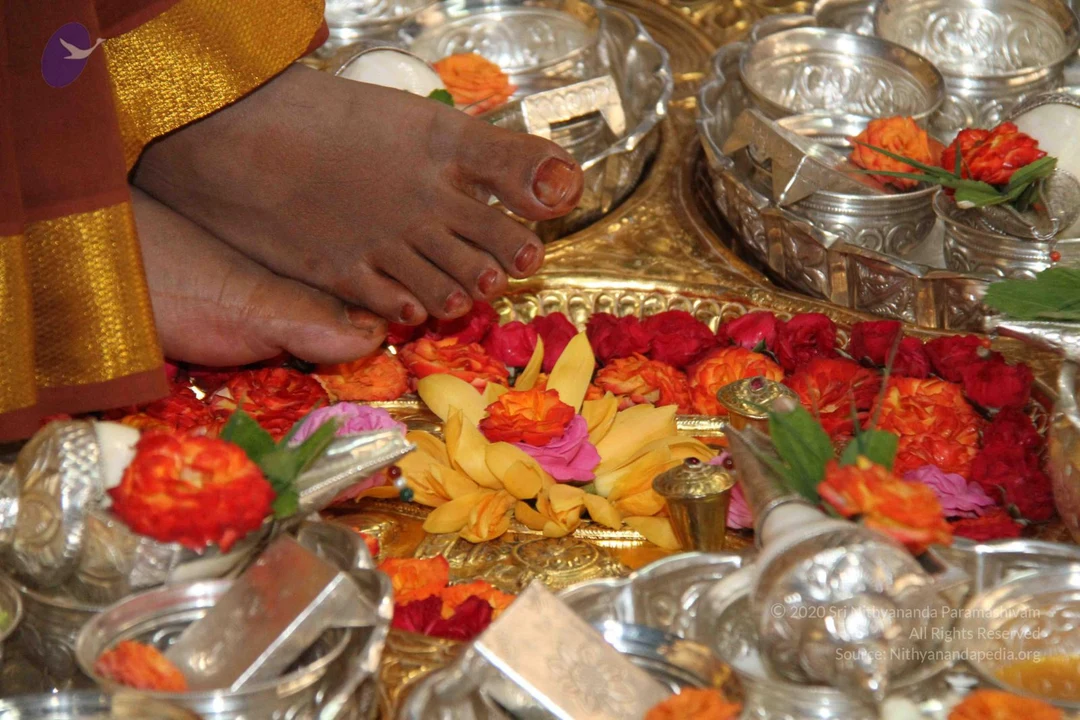
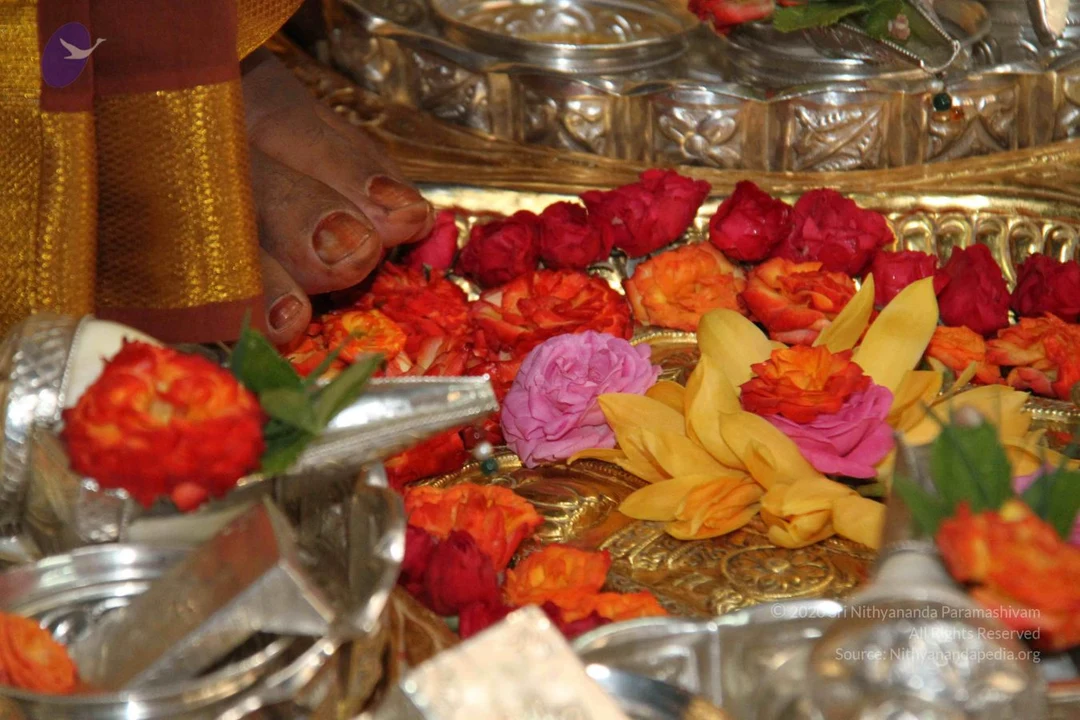
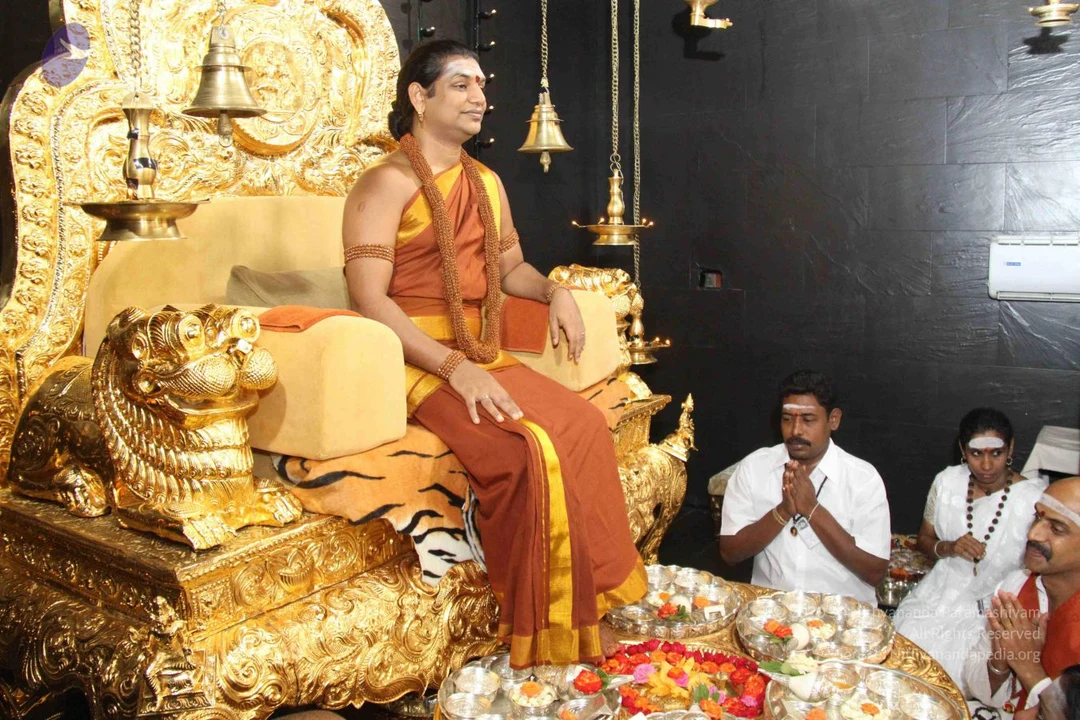
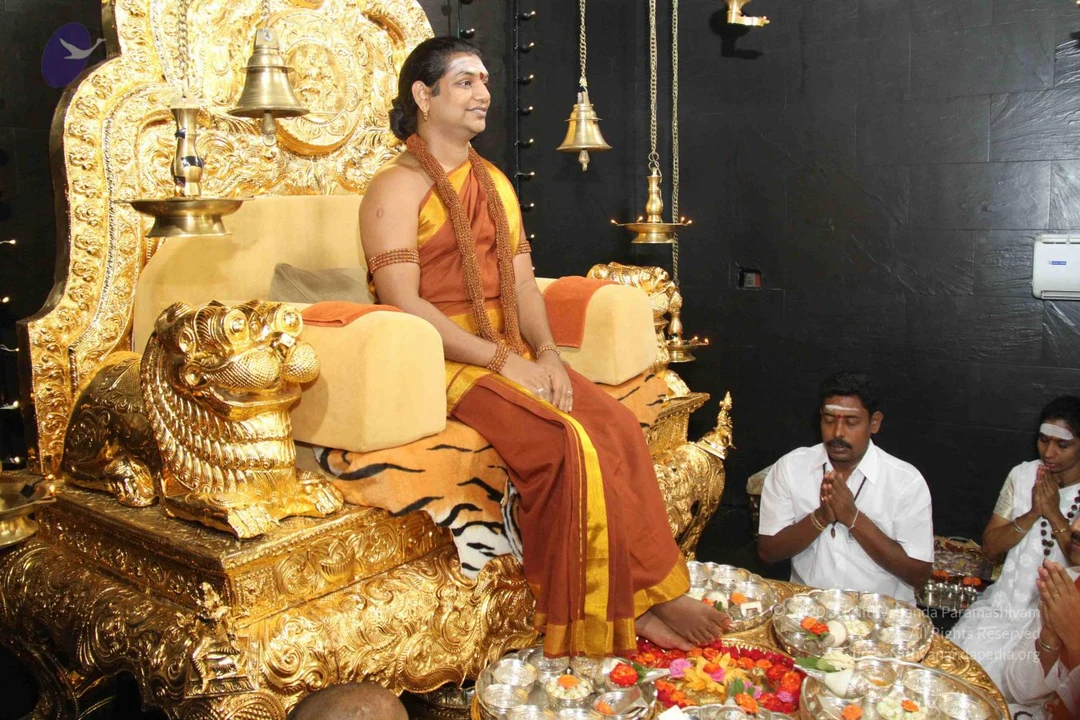
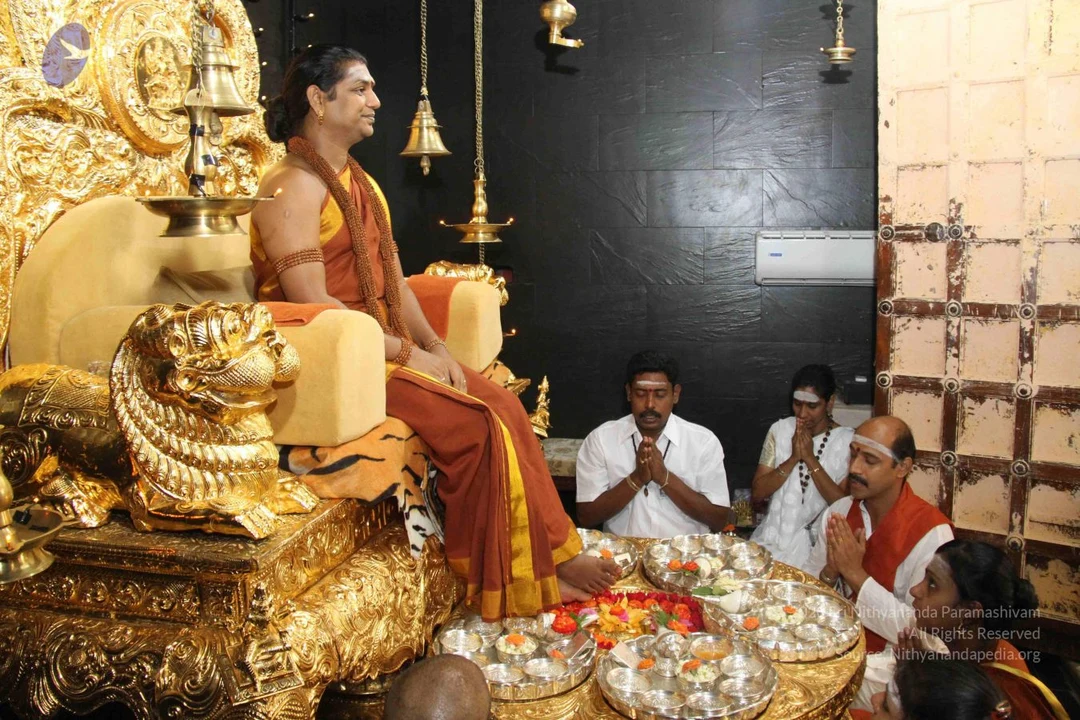
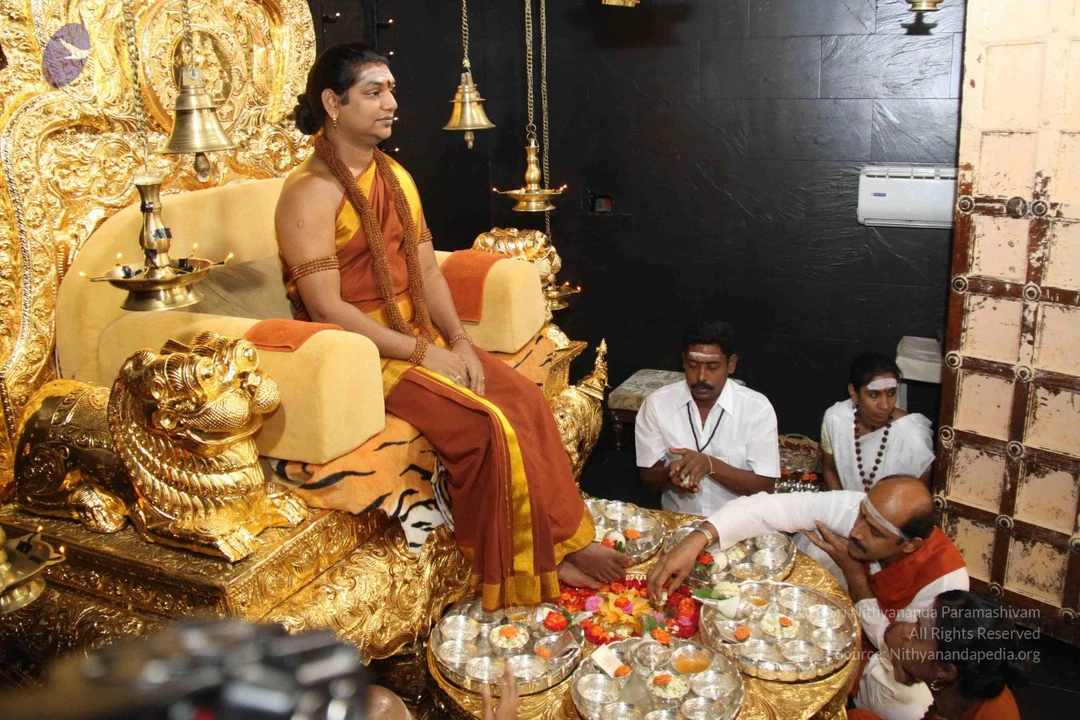
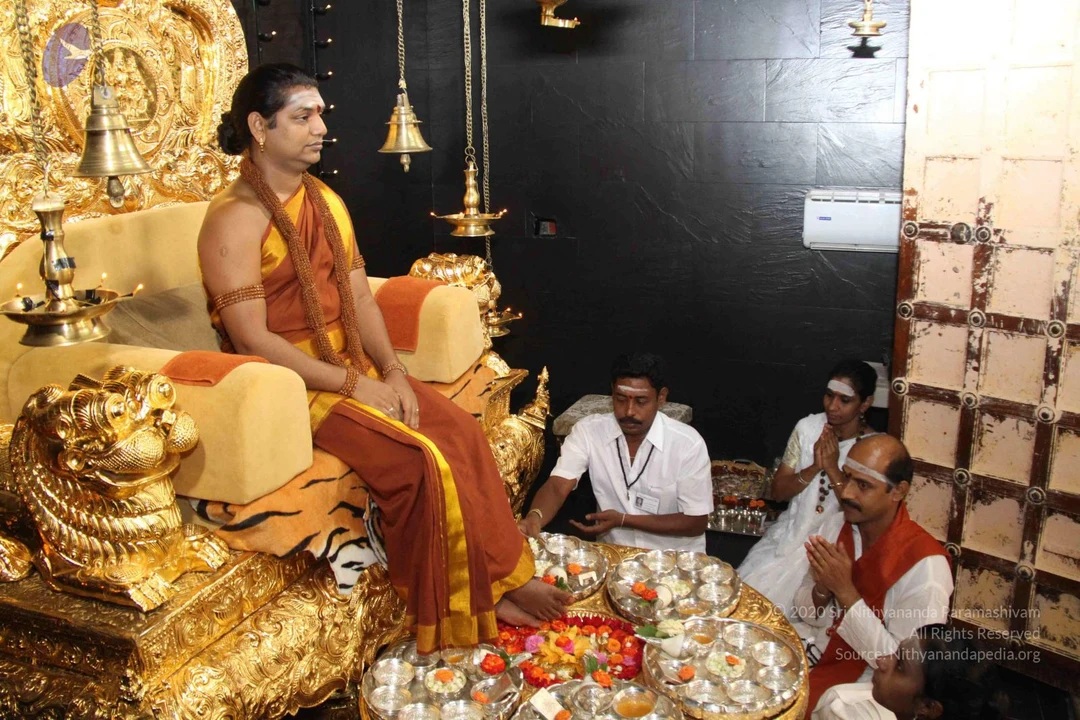
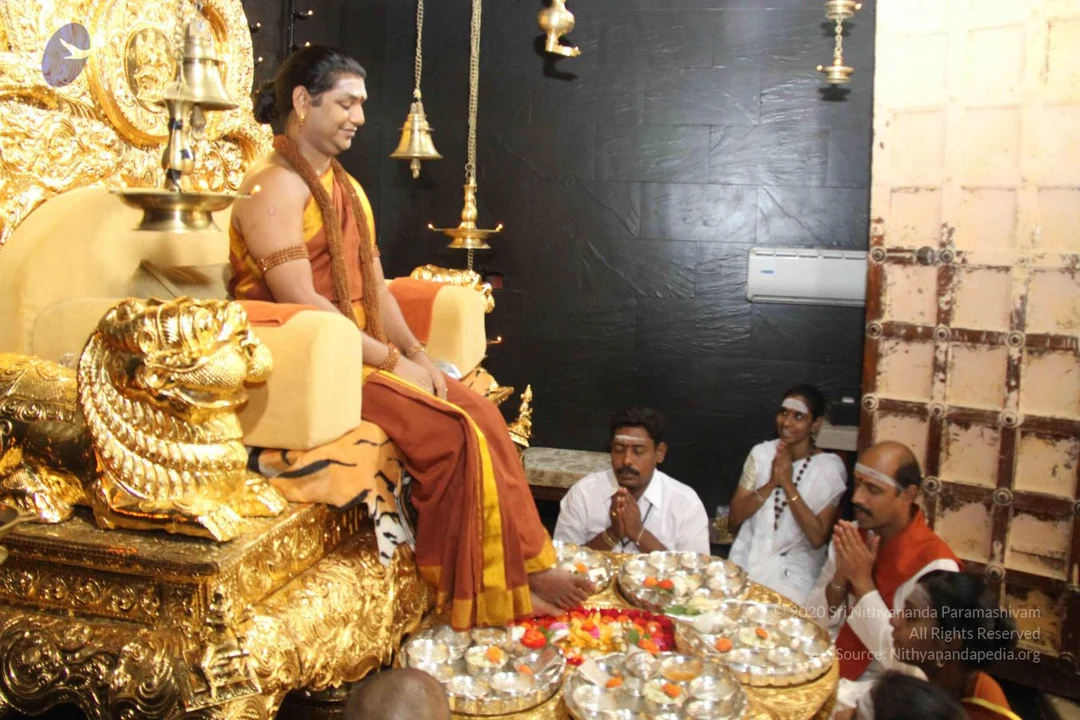
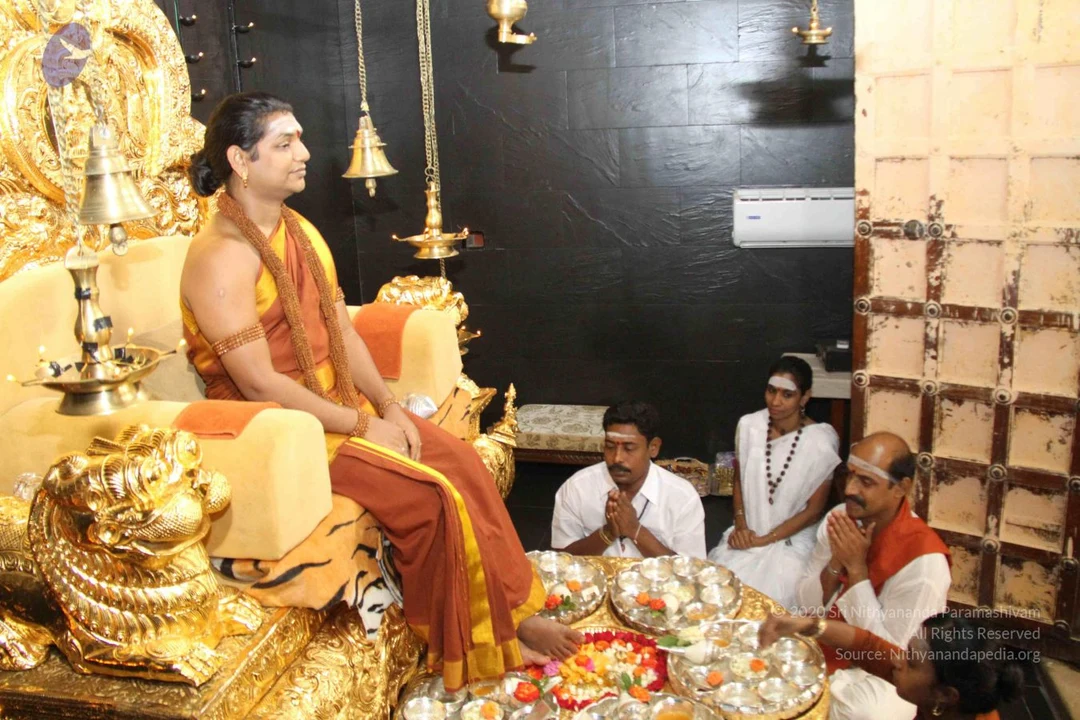
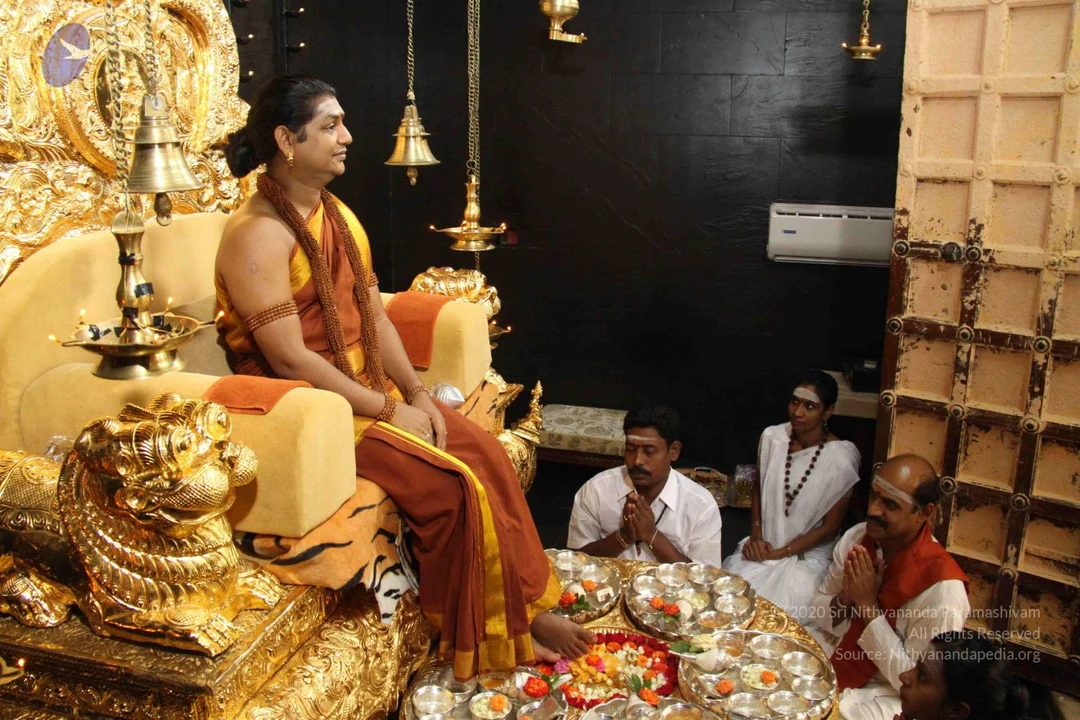
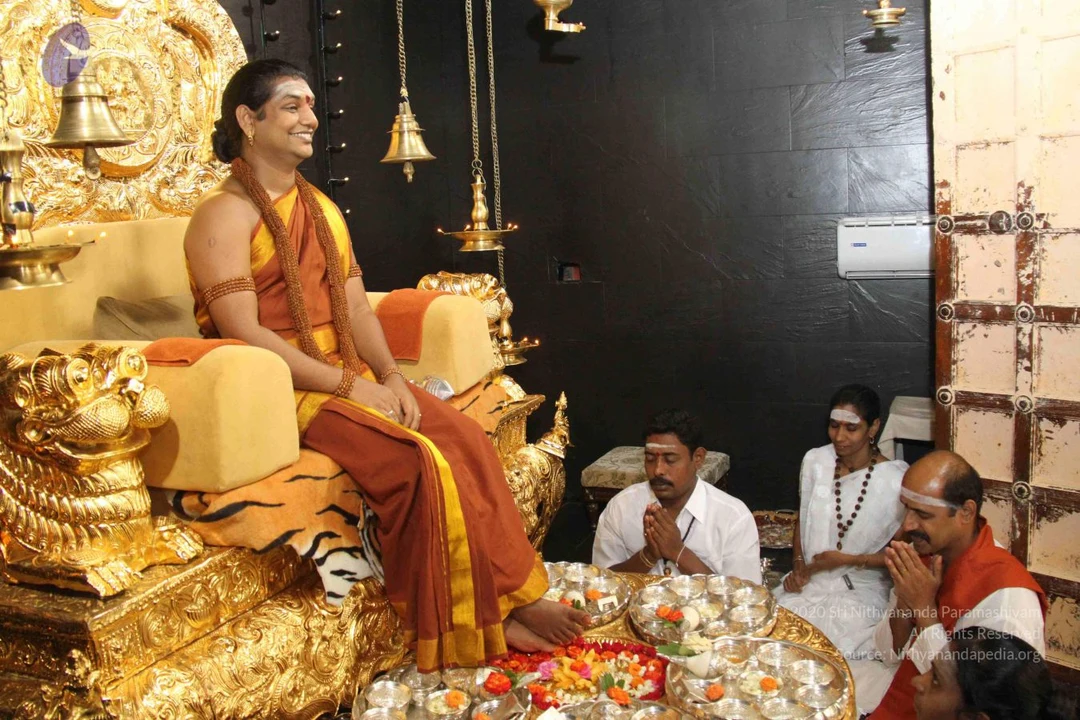
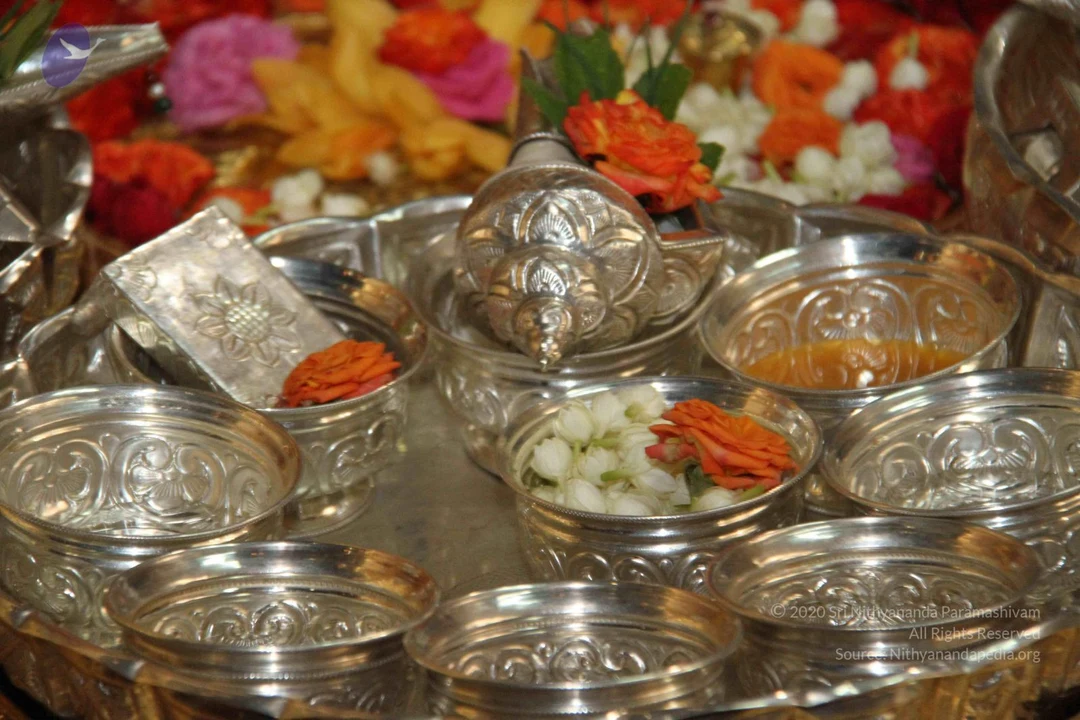
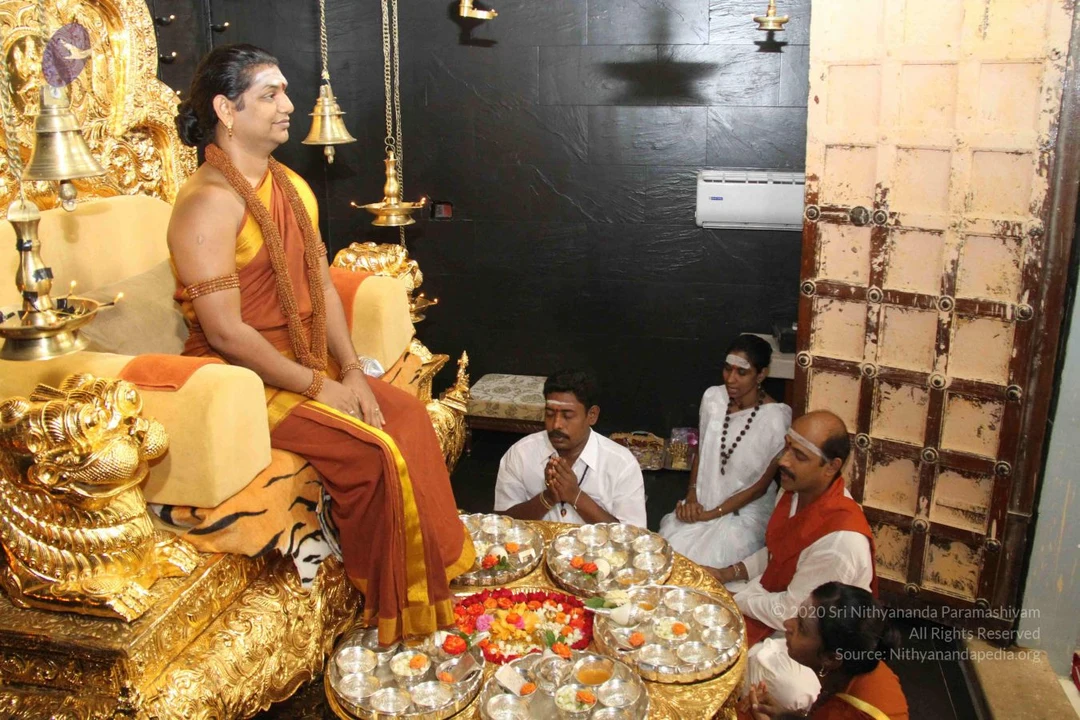
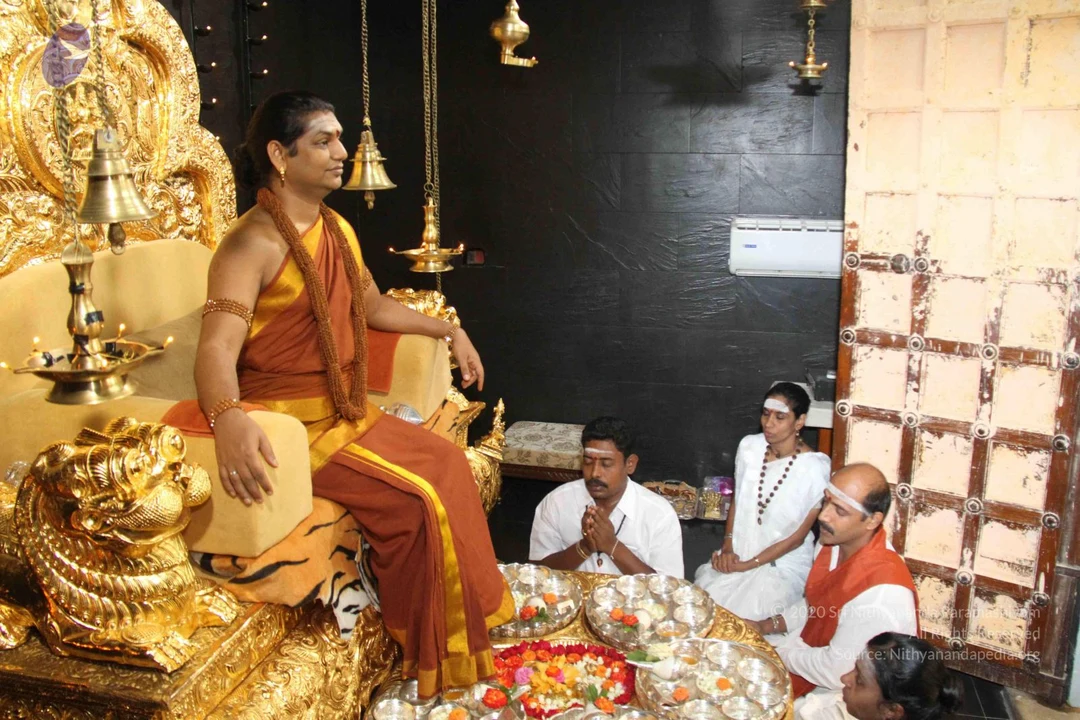
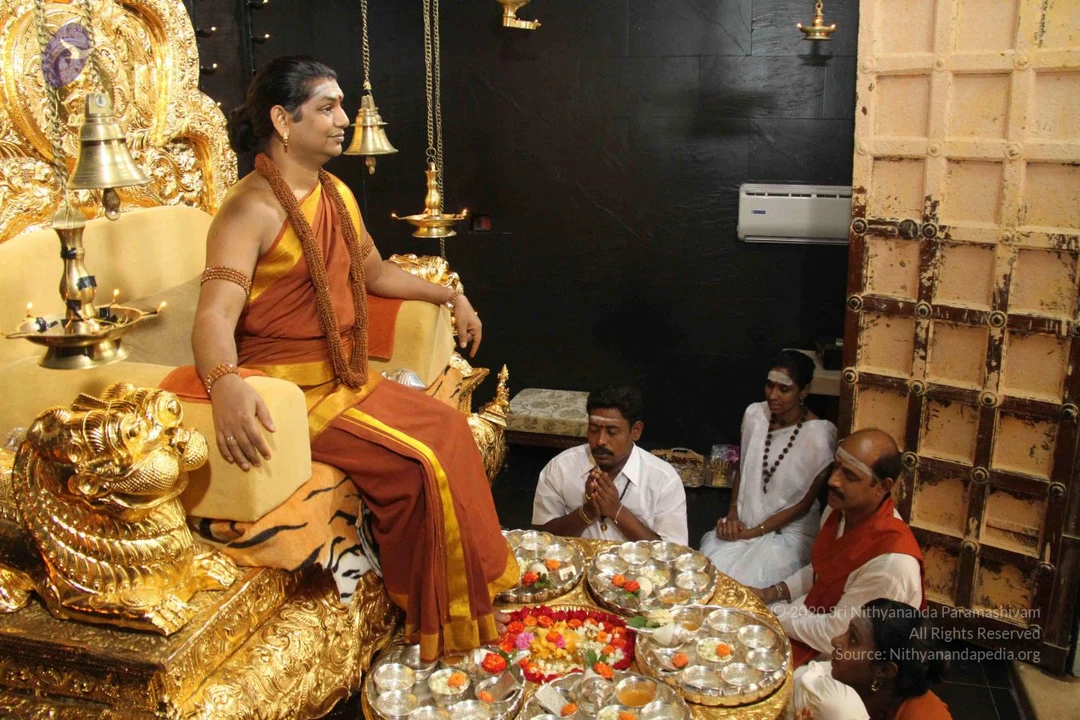
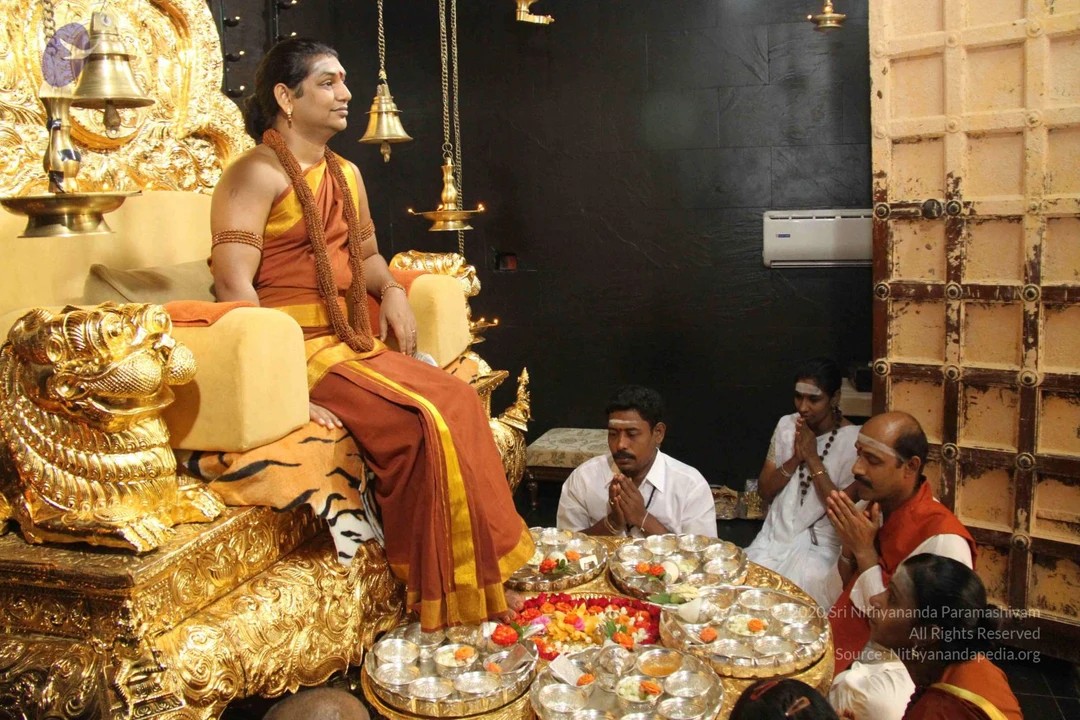
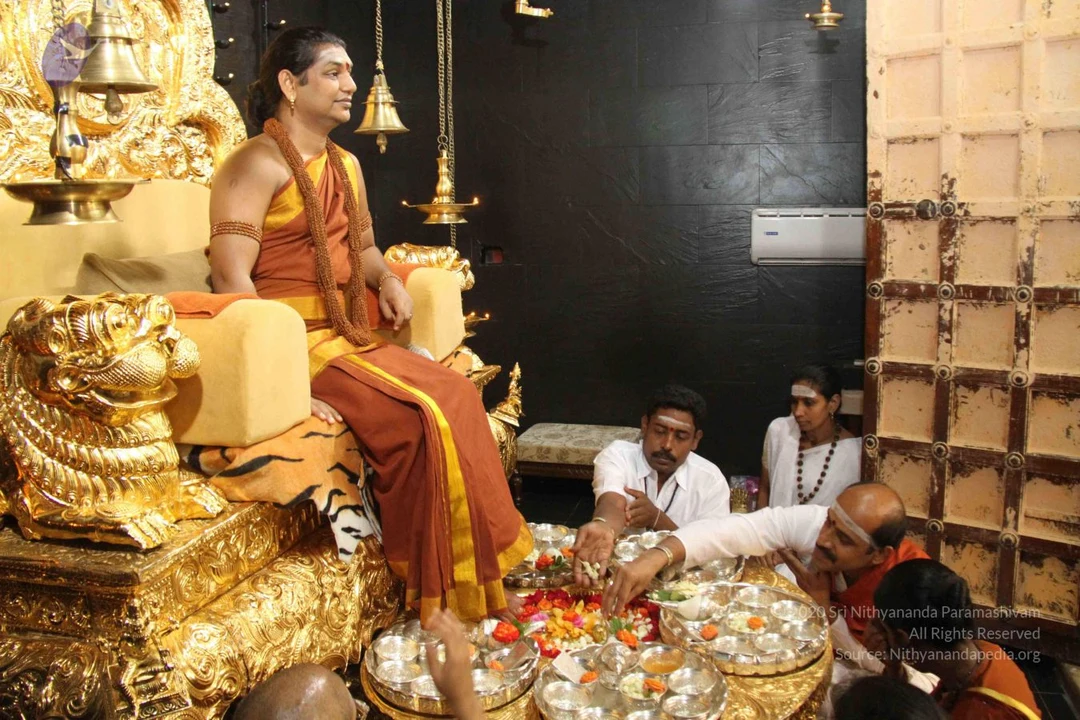
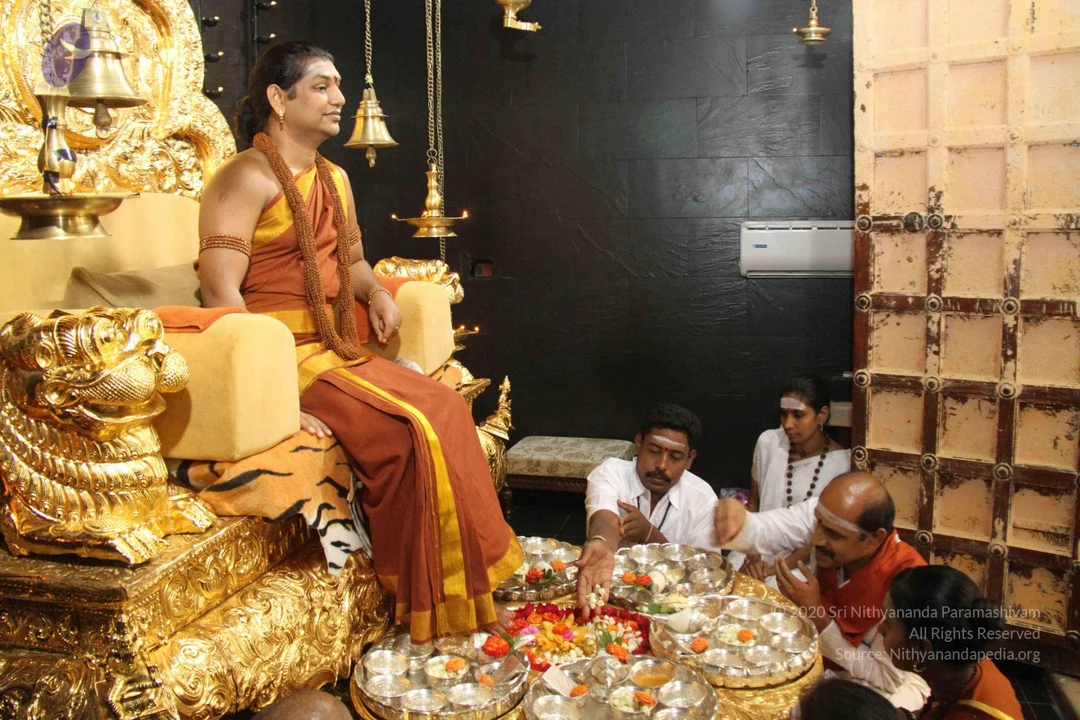
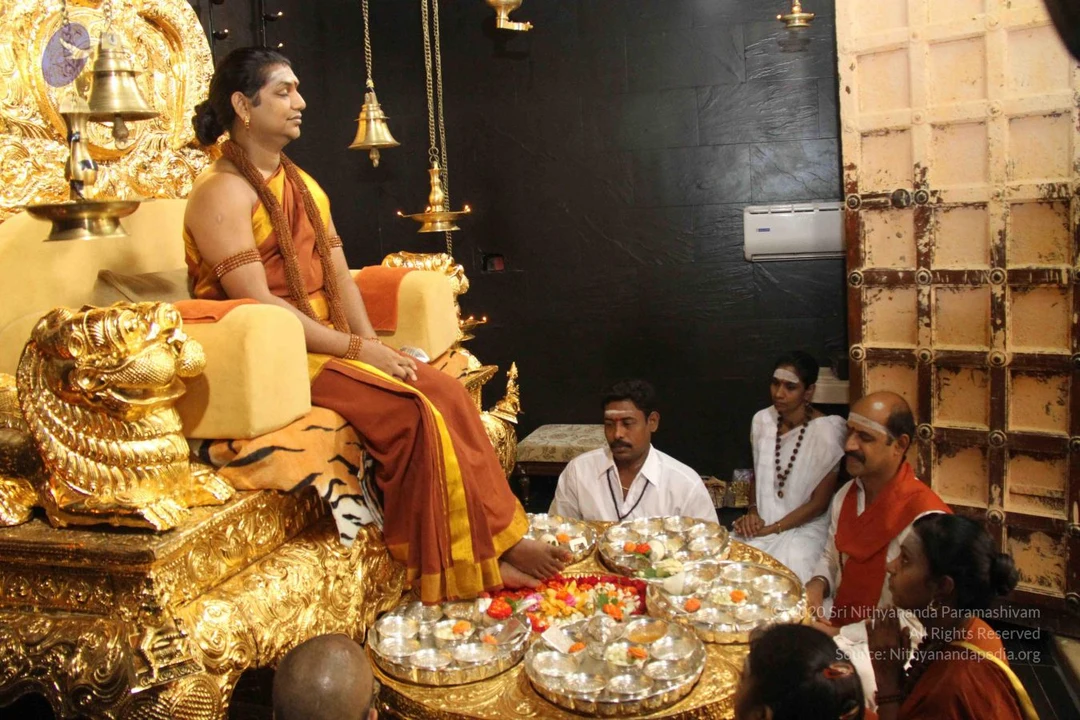
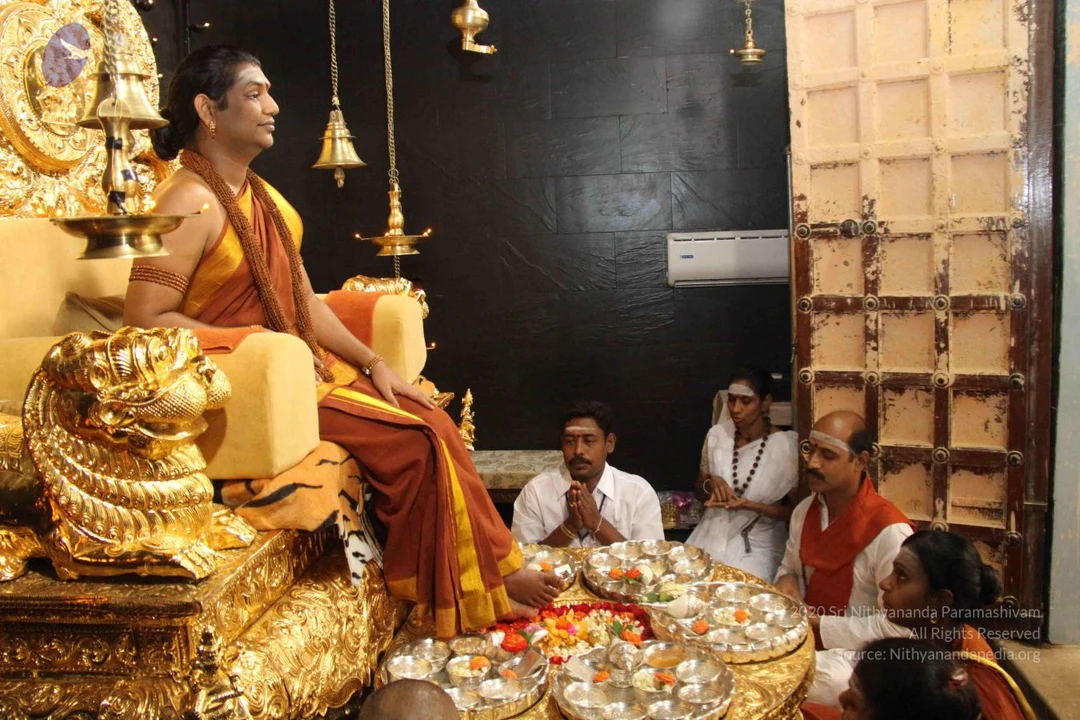
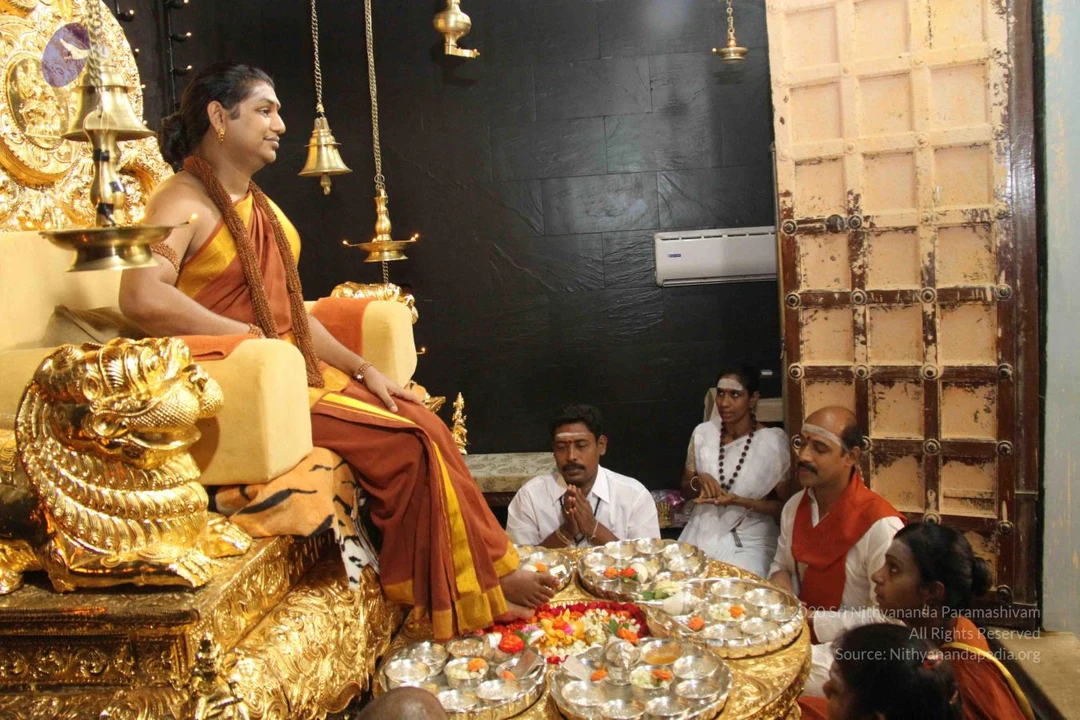
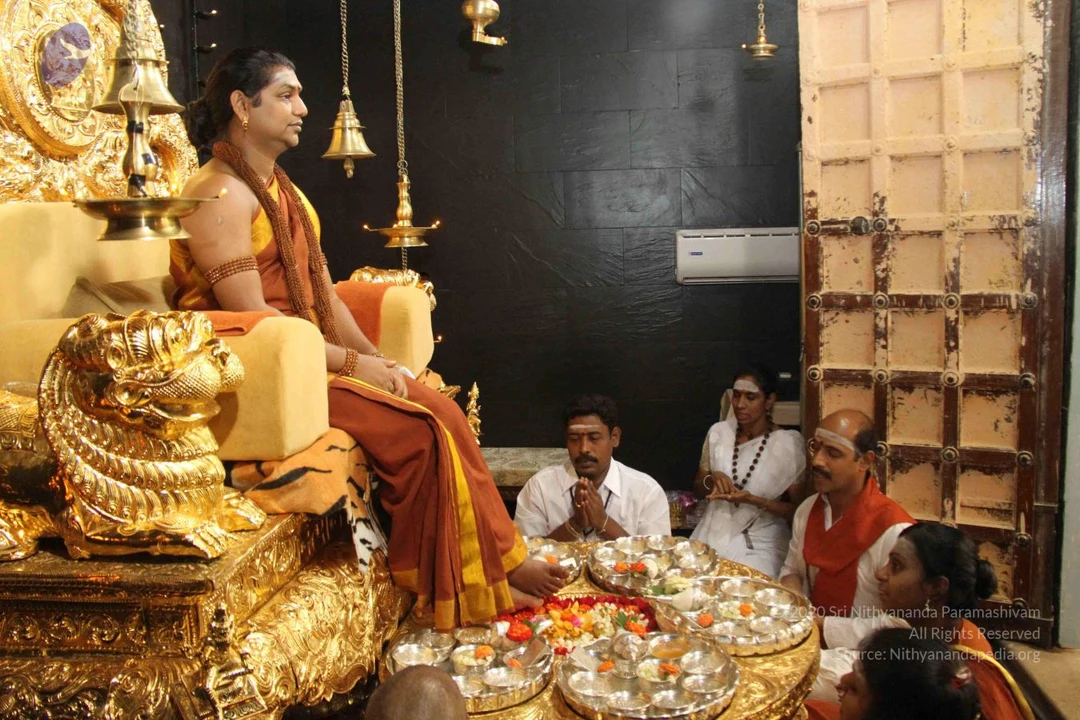
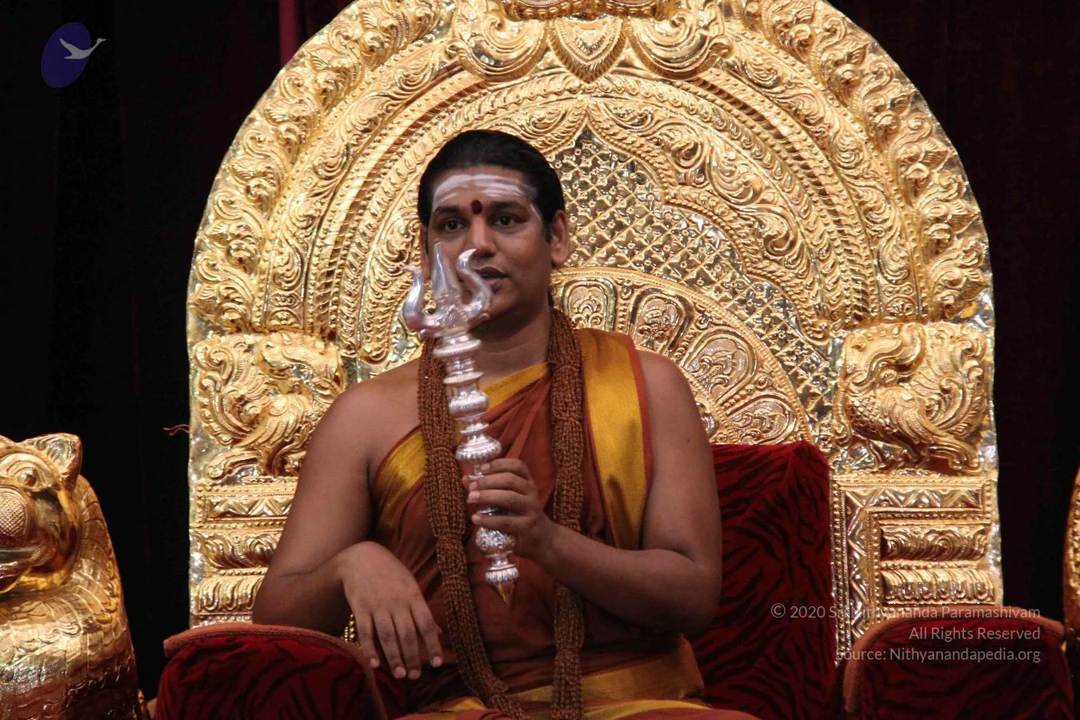
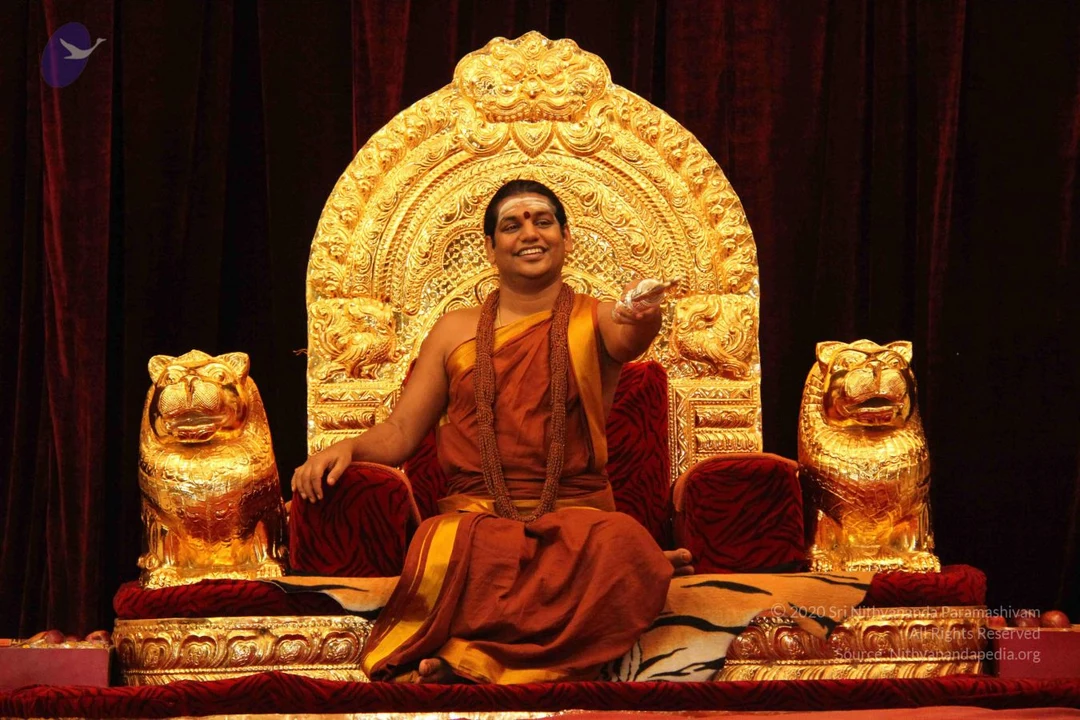
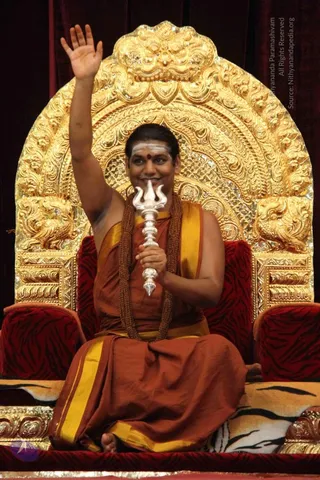
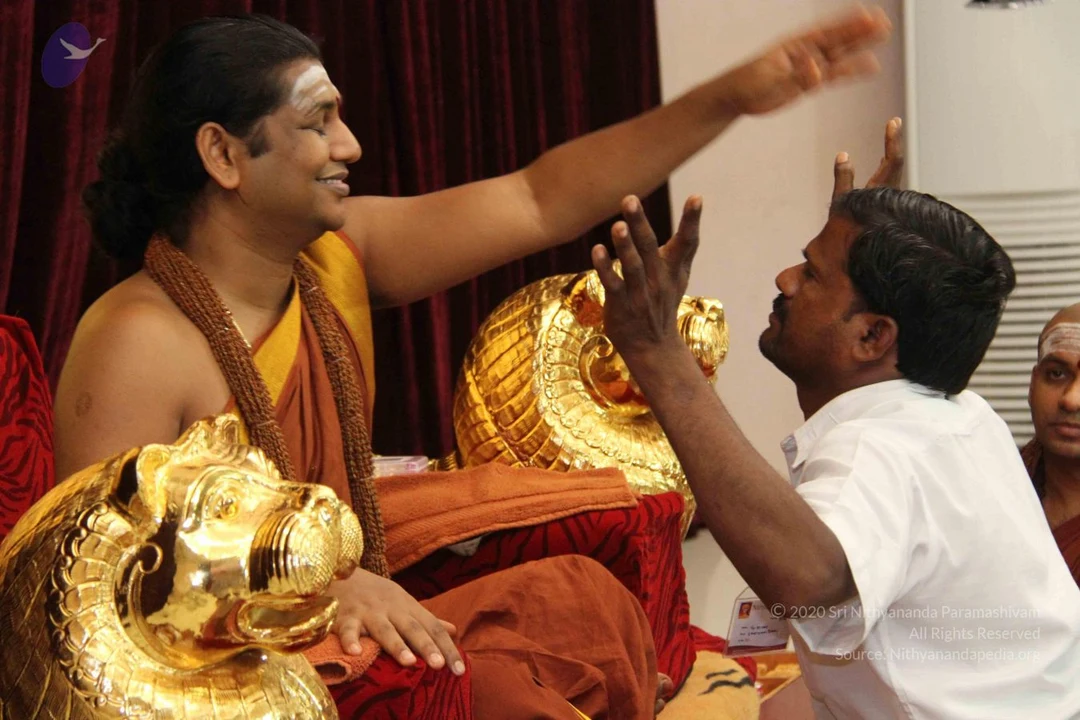
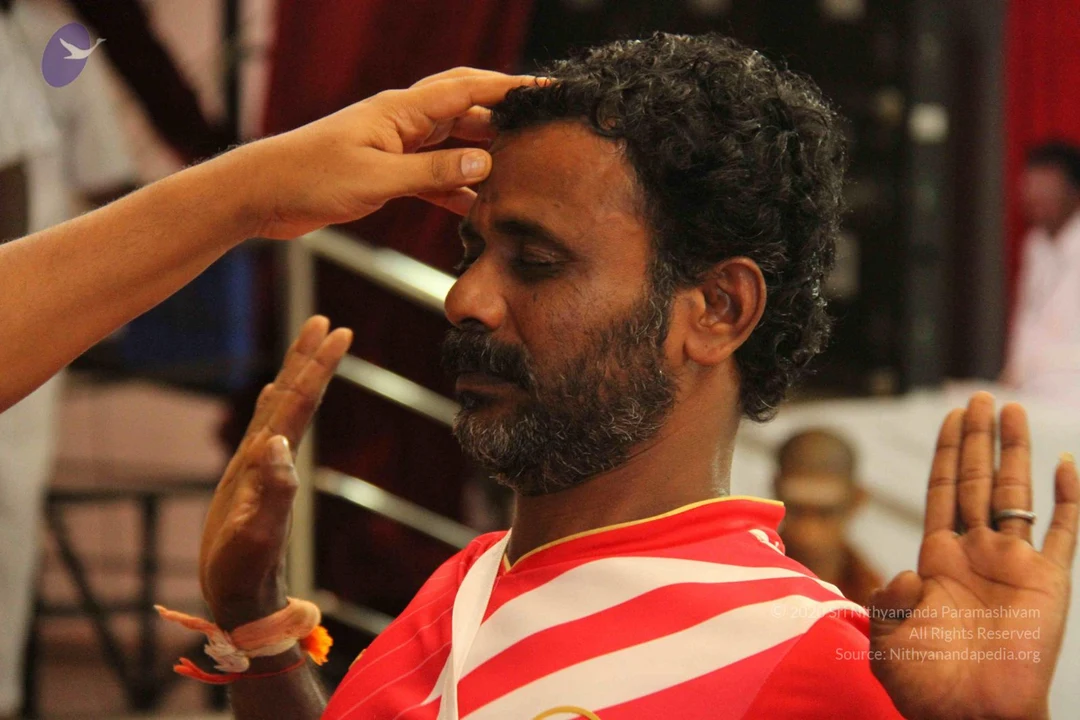
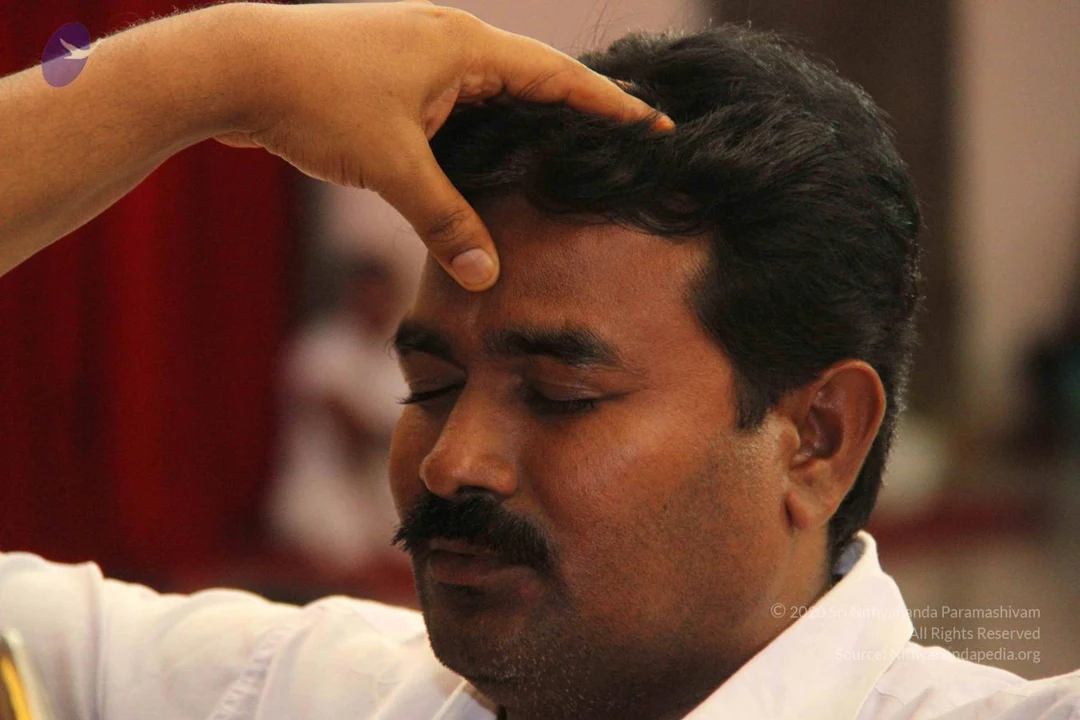
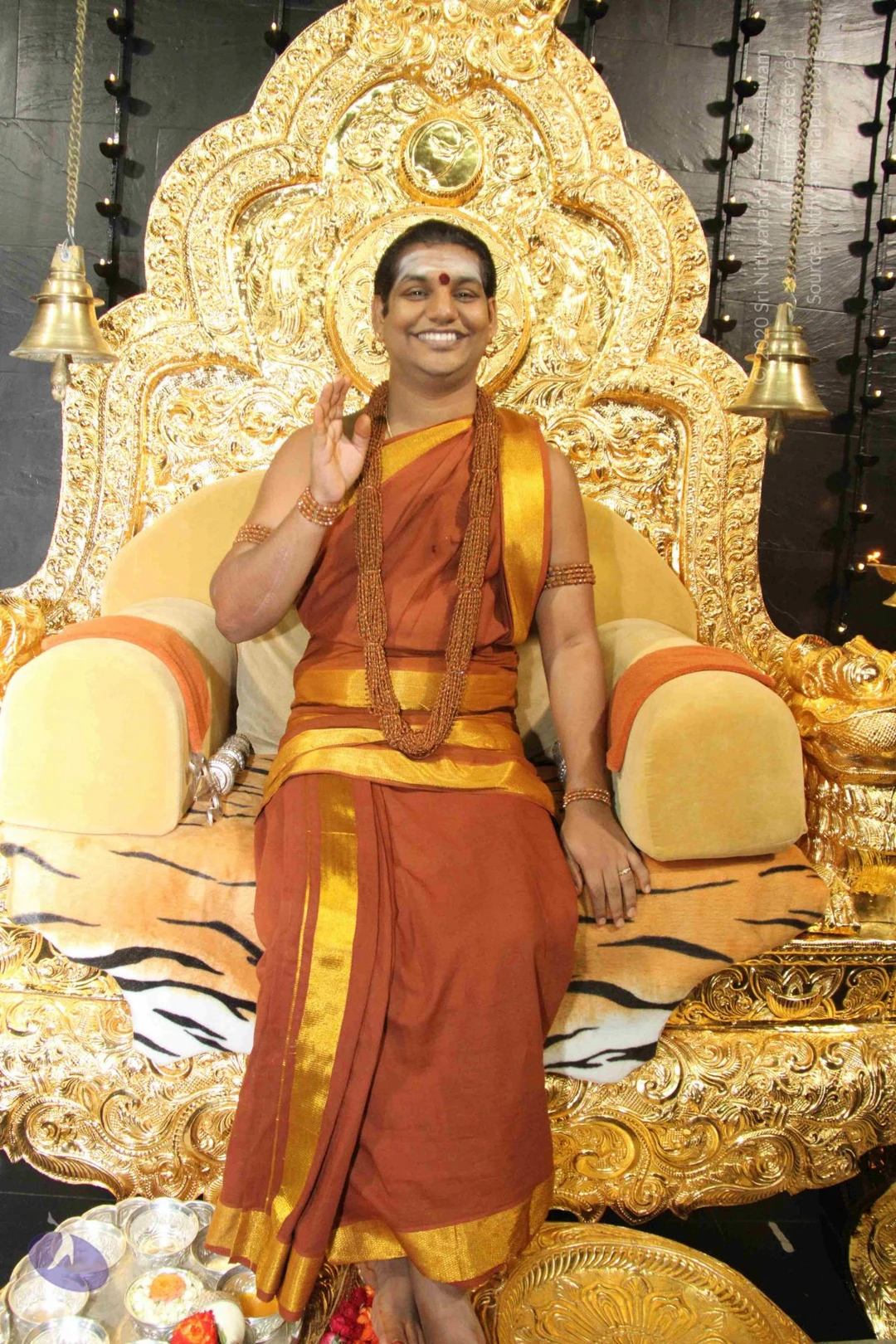
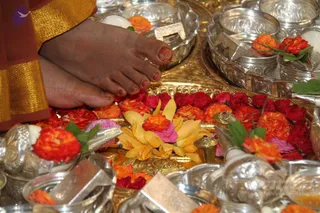
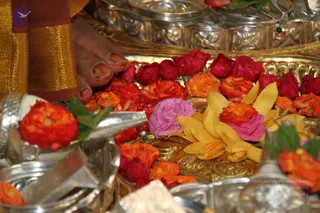
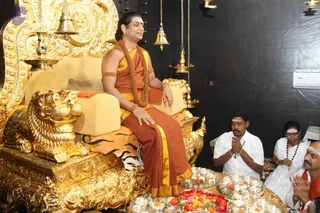
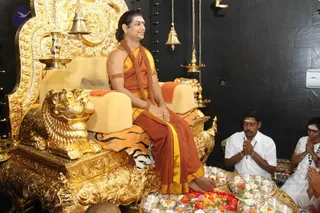
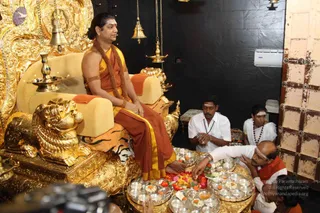
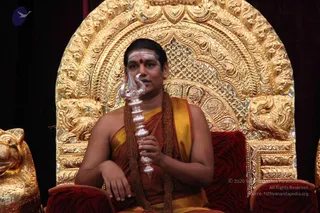
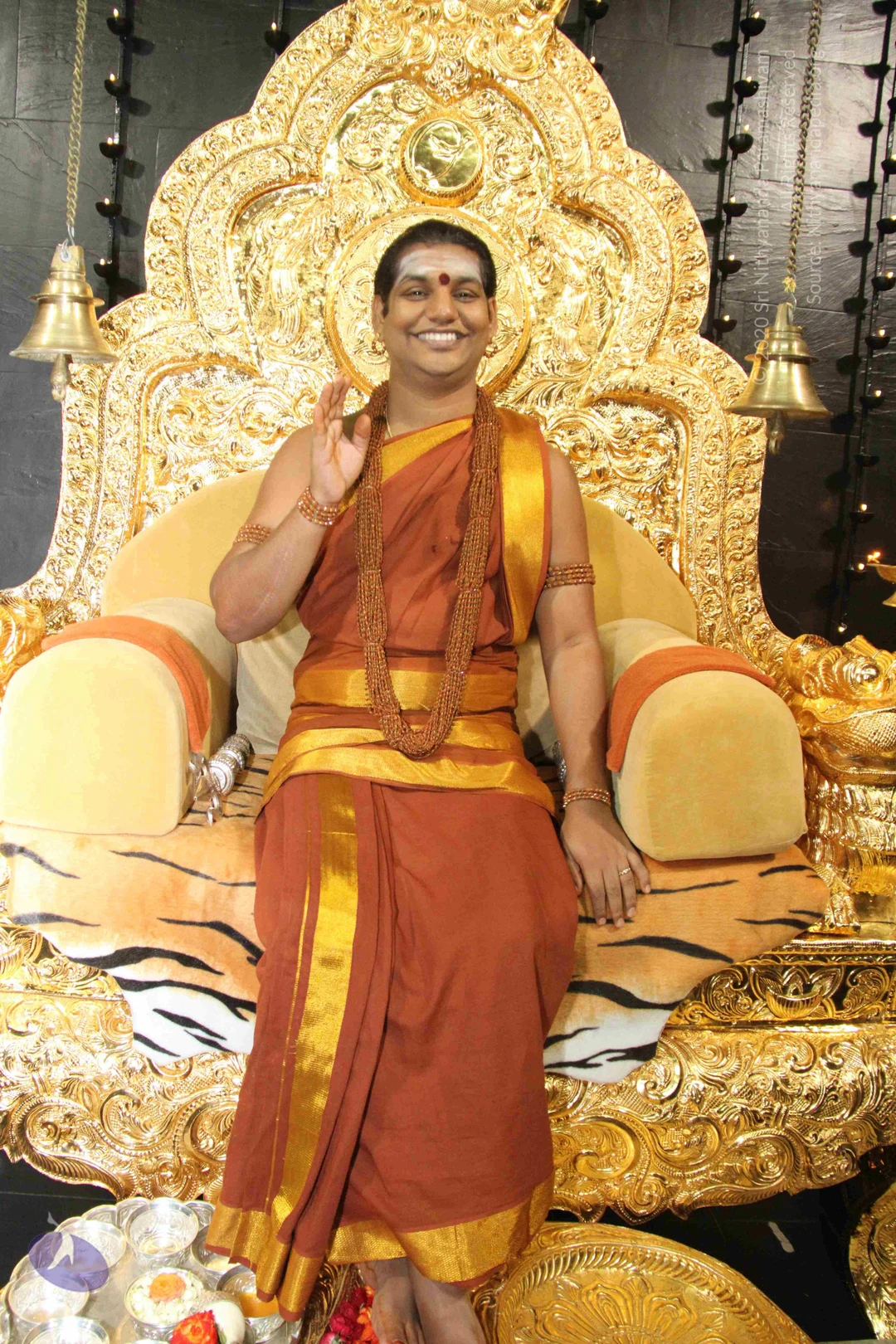
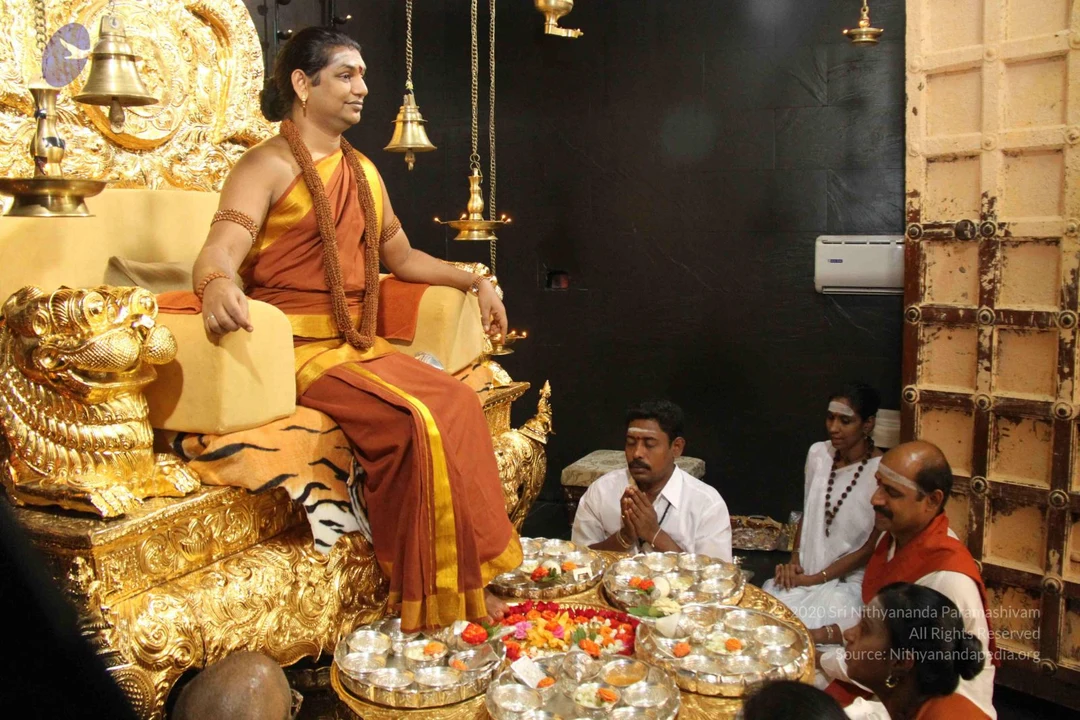
A smiling man with a shaved head, a red bindi and white vibhuti marks sits on an ornate gold throne with a tiger-striped cushion, raising his right hand in a blessing gesture. He wears a rust-orange dhoti and shawl with gold borders, a multi-strand rudraksha mala, and gold-toned bangles on his wrists and upper arms. Behind him hang brass bells and a gilded backrest with carved floral scrollwork. At the lower left sit silver bowls holding offerings, a kalasha-style cup with flowers and fruit, and red petals. a person is a seated figure in orange and gold ritual clothing with a rudraksha mala, bindi and vibhuti, whose shaved head does not by itself confirm identity; he is shown on a throne, giving a blessing as a satsang teacher, and the appearance cues are moderately distinctive.Close-up photograph of a pair of bare feet resting on a golden tray filled with red, orange and pink flower petals and yellow petals arranged around it. A red and gold silk garment edge is visible at the left. Surrounding the tray are polished silver puja vessels, bowls and a small brass cup, with orange and red flowers and green leaves scattered among them. The feet appear to be receiving a padapuja-style offering of flowers and vessels.Close view of a ritual offering on a gold-toned tray: red, orange, pink and yellow flowers, including large yellow petals and rose-like blooms, scattered around silver vessels and a silver spoon. At the upper left, a bare foot with visible toes rests beside a gold-and-maroon silk garment, indicating a seated person offering flowers during puja. The silver bowls and ornate metal tray suggest abhishekam or puja worship.A seated man in saffron-orange and gold-bordered robes with a long rudraksha mala and a gold necklace sits on an ornate gold throne carved with a lion head and draped with a tiger-striped cloth, beside brass hanging bells and oil lamps. Seated on the right, a man in white shirt presses his palms together in greeting, a woman in white with a white forehead band holds her hands in añjali, and a man with a white forehead mark sits near brass plates of flowers, fruit and lamps. Probable Swamiji cues: long swept-back hair, ornate gold throne, saffron-orange robes, rudraksha mala and gold necklace; the seated man is presented as the central figure. Setting is a dark-walled hall with an air conditioner on the wall. Kumkum and fresh flowers are arranged on the platters.A photograph of a man seated on an ornate gold throne carved with a lion-head armrest and draped in a tiger-striped cushion. He wears an orange-brown robe with a gold border, a bare right shoulder, a long rudraksha mala, gold armbands and a tilak on his forehead. Before him are silver trays of flowers, lamps and offerings. Two devotees kneel at the right in white, one man with a white forehead mark and a woman with hands folded in anjali. Brass bells and hanging oil lamps hang above against a black wall. Swamiji (probable): the seated man has long swept-back hair, an orange robe, a rudraksha mala and gold armbands on the throne, consistent with the page's attribution.A seated man in an ornate gilded throne with a carved lion-head armrest, wearing a saffron-orange dhoti and shawl with gold border, a long rudraksha mala around his neck and gold armbands, sits on a tiger-skin-covered seat while looking to his right. In front of him a golden tray holds silver plates of fruit, flowers and offerings, with a red floral arrangement at centre. Two men in white and a woman in white with a white forehead mark stand with palms pressed together in namaste; a man in a red-orange kurta with a white forehead band kneels and joins his hands. Brass hanging bells and an oil lamp hang above, against a black stone-tiled wall with a wooden-panelled door on the right.

Nithya-Satsang
59 photosSource gallery
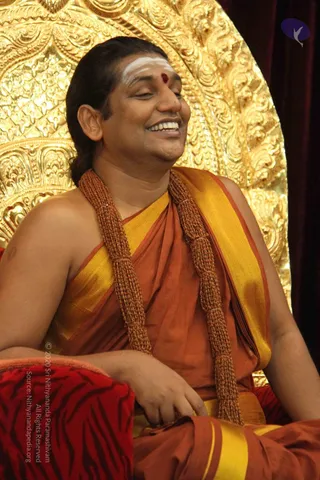
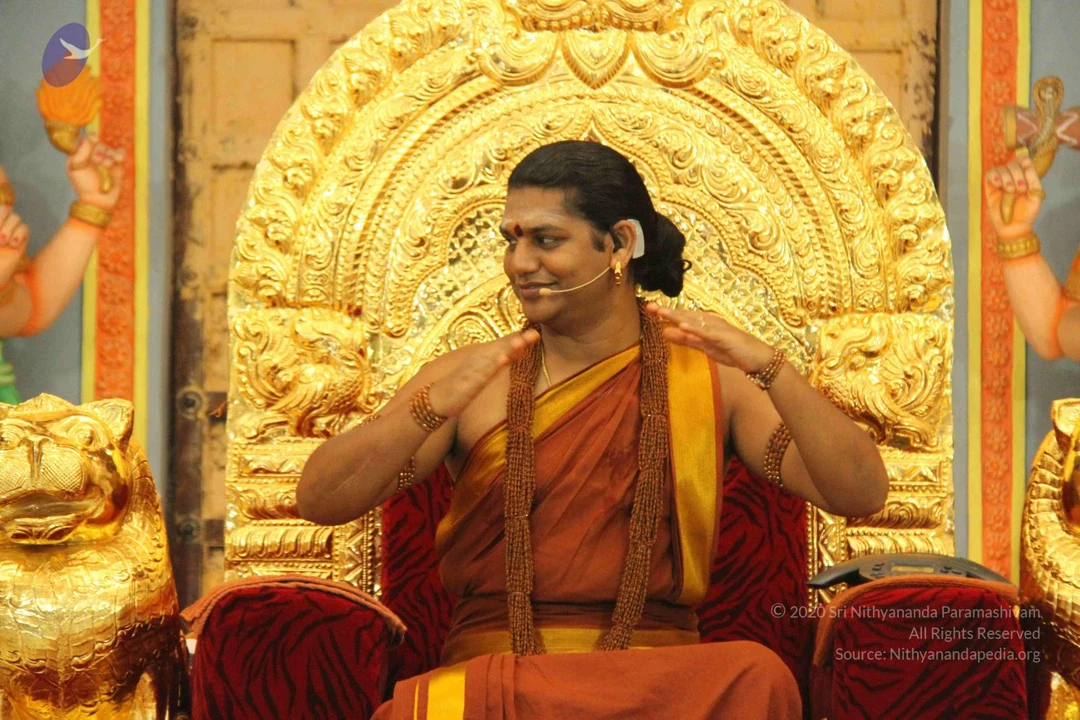
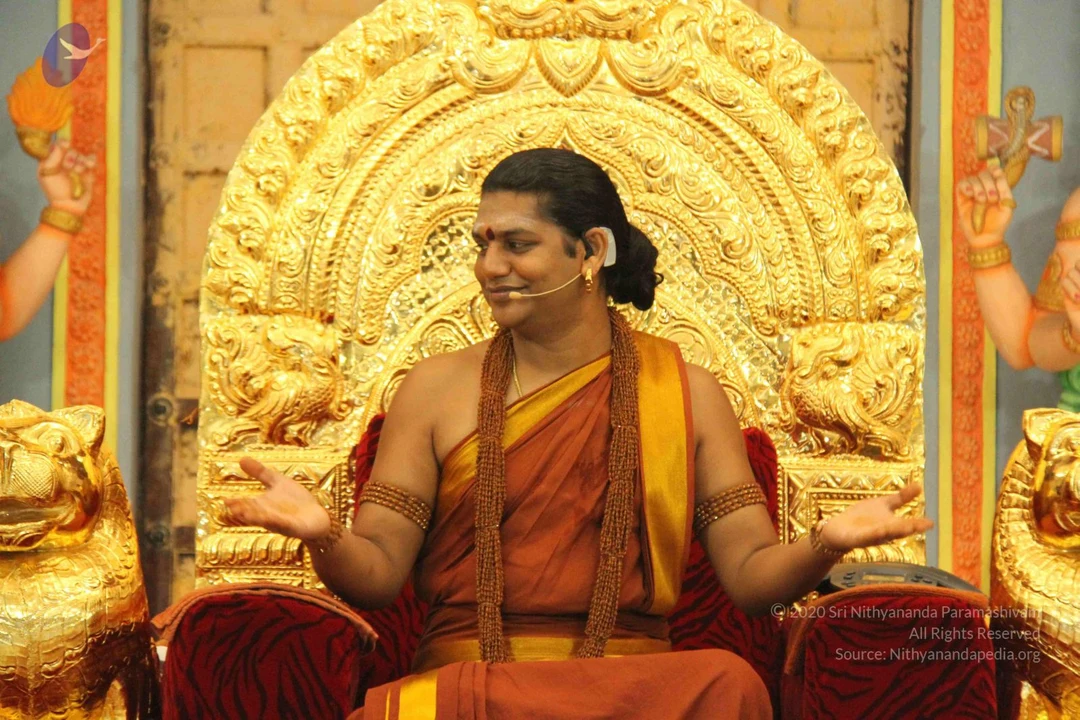
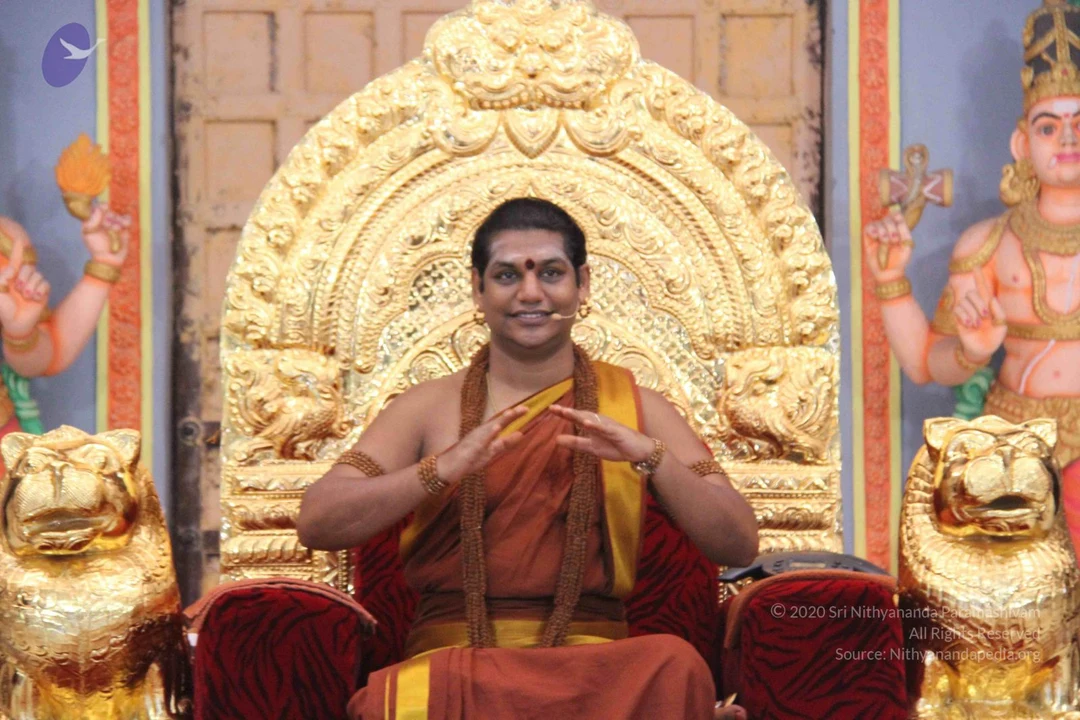
A photograph of a man seated on an ornate gold throne with carved lion-head armrests and a large gold arched backrest. He wears an orange-red robe with a gold border, several rudraksha malas around his neck, gold armlets, and a red tilak on his forehead. He has a headset microphone, hair tied back, and his arms are open in a gesture of explanation while he smiles. Behind him stand gilded deity figures with raised hands. One person is visible.A man seated on an ornate gilded throne with carved lion-head armrests and a golden arched back, dressed in saffron-orange robes with a gold-bordered shawl and a long rudraksha mala. He wears gold bangles and a wristwatch, has a red bindi, and holds his hands in front of his chest in a gesture while speaking, with a small headset microphone visible. Flanking the throne are painted deity statues in bright colours with gold ornaments. A wooden door panel stands behind.A seated man in ochre-saffron robes with a yellow border sits cross-legged on an ornate gilded throne with a large arched backrest carved with floral and lion motifs. A red bindi marks his forehead, and he wears a long rudraksha mala, gold bangles and a small microphone clip. Two gilded lion sculptures flank the throne on red and black tiger-striped cushions, and two tall painted deity figures in gold crowns and jewellery stand on either side. A wooden panelled door forms the backdrop. The man is seated with hands resting on his knees. Appearance-based candidate: a person, seated on the throne in a satsang setting.A man in saffron-orange robes with a gold-bordered cloth sits on an ornate gold throne, or peetha, with an elaborate arched backrest and red velvet cushions. He wears a long rudraksha mala, bangles, and a small microphone at his ear, and gestures with both open hands while speaking. Flanking him are two golden lion sculptures on tiger-striped mats, and two painted dvarapala guardian statues with raised arms, crowns and gold ornaments stand on either side.A man in saffron-orange robes with gold border sits cross-legged on an ornate golden throne with a tall arched back, smiling and gesturing with both hands. He wears a rudraksha mala with a long beaded strand, gold bangles and an upper-arm band, with a red bindi on his forehead. Two large golden tiger-head sculptures flank the throne on a tiger-striped red cushion. On either side stand tall painted deity statues in gold crowns, gold necklaces and pink-orange dhotis, one holding a flame and the other a trident. A wooden door with carved panels is in the background. a person: the seated man wears saffron robes, a rudraksha mala and gold ornaments on a throne.A seated man with short dark hair, a red bindi and a head-mounted microphone sits in front of an ornate gold throne with carved scrollwork and lion-like figures. He presses his palms together in namaste, smiling, and wears a rudraksha-style bead necklace, gold bangles and gold armlets, a yellow and orange-brown cloth draped over his shoulders. A red tiger-striped cushion covers the seat, and a painted deity figure with a snake-entwined staff stands to the right. a person: the long swept hair, ornate gold jewelry and rudraksha necklace match the appearance cues, shown in a satsang setting.

Nithya-Satsang
10 photosSource gallery
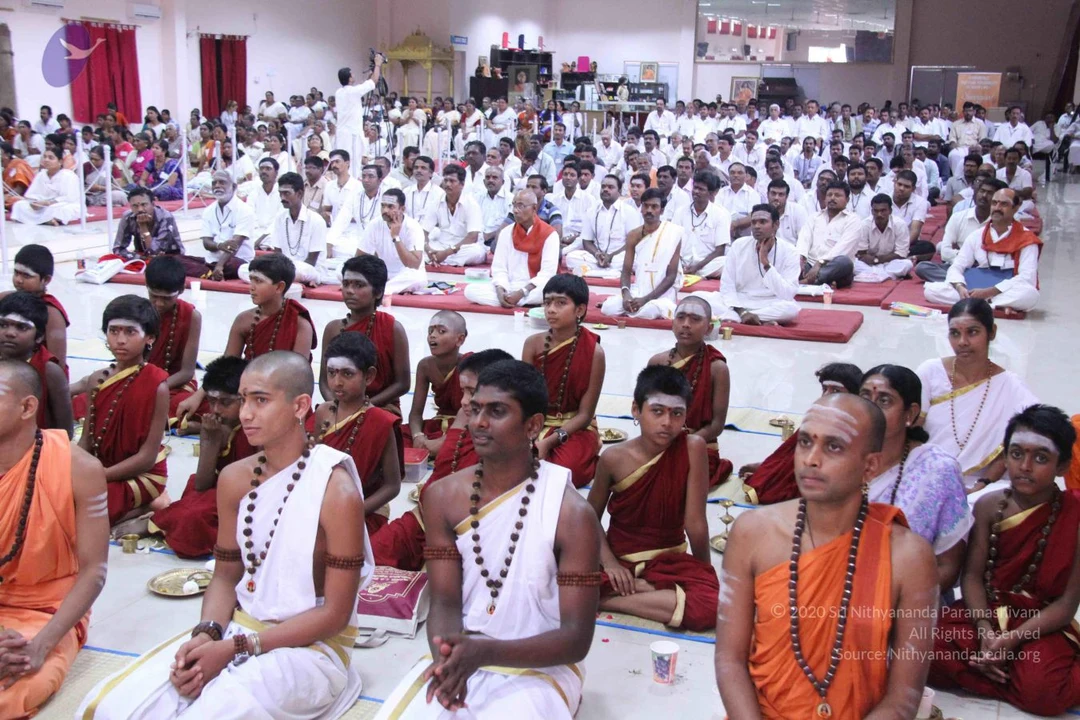
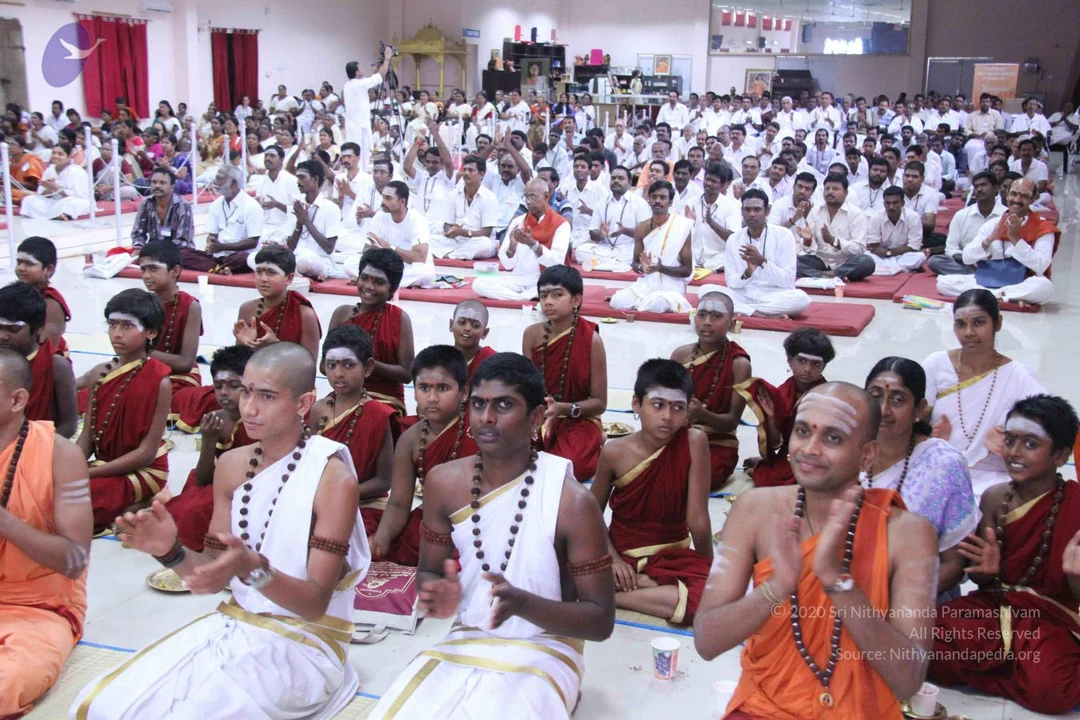
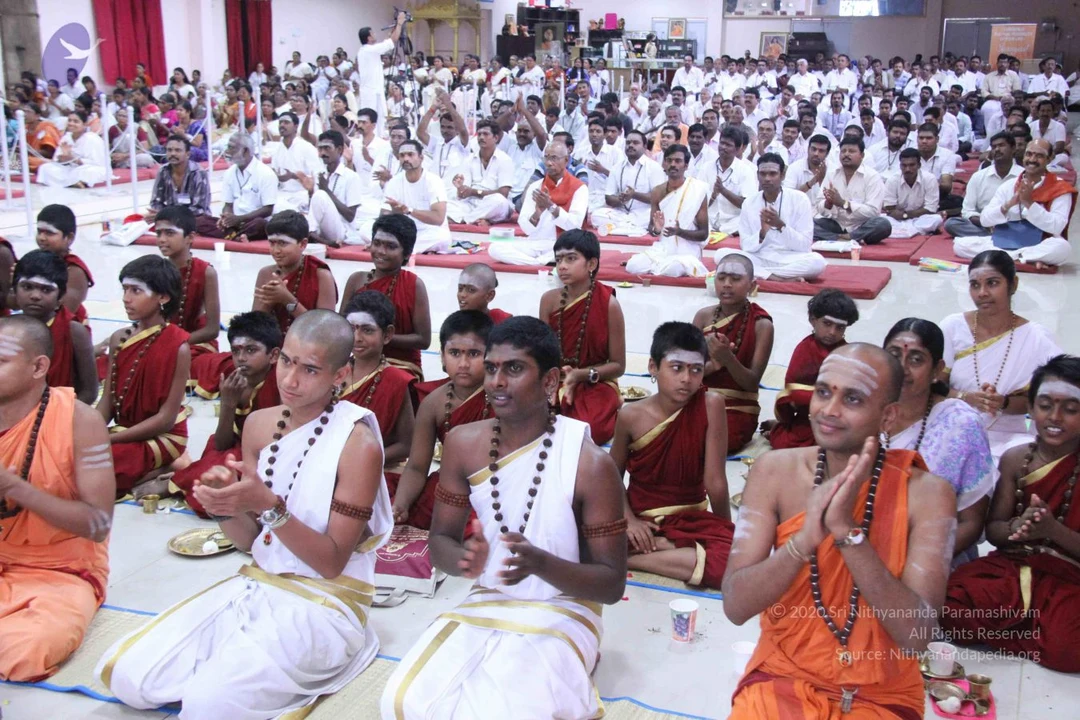
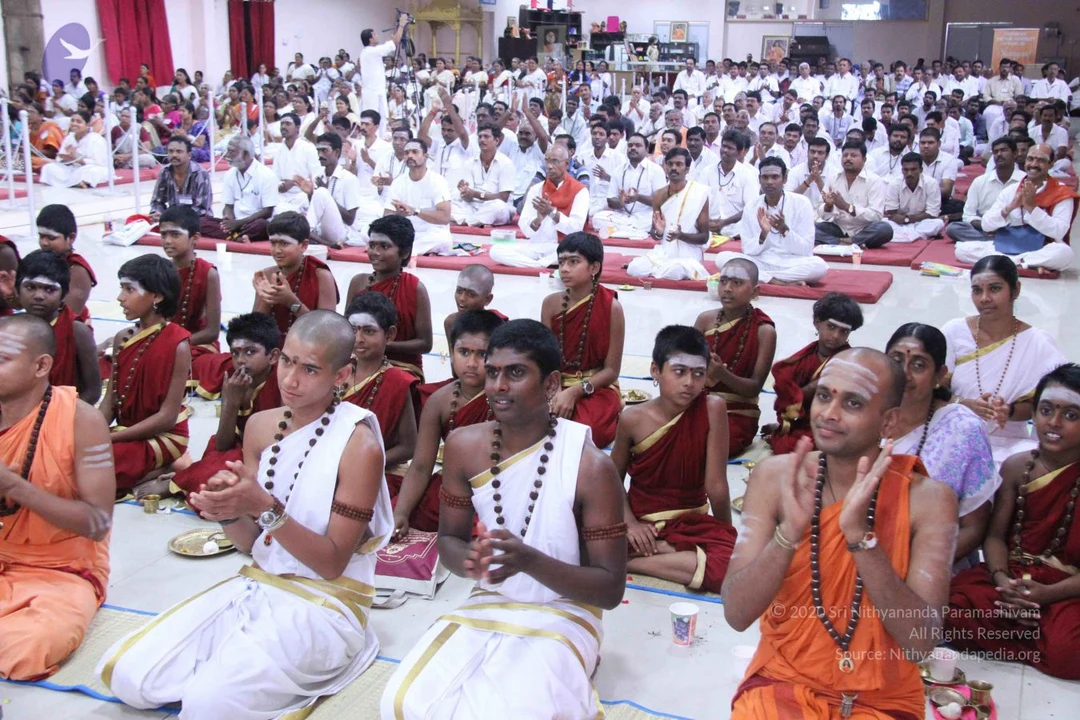
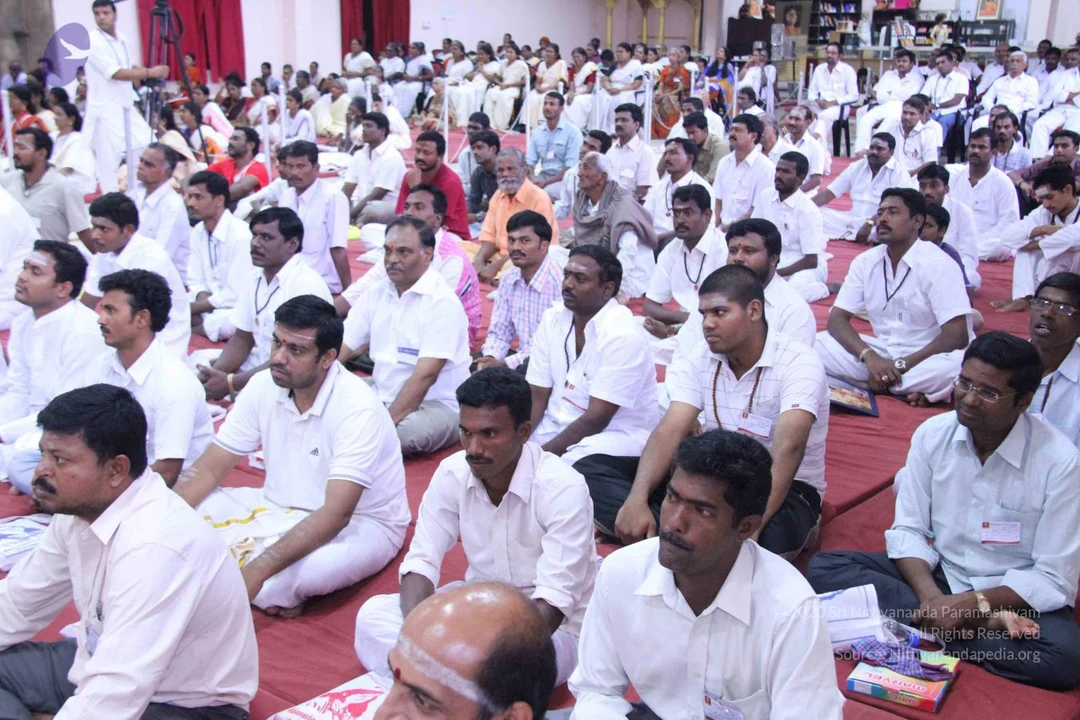
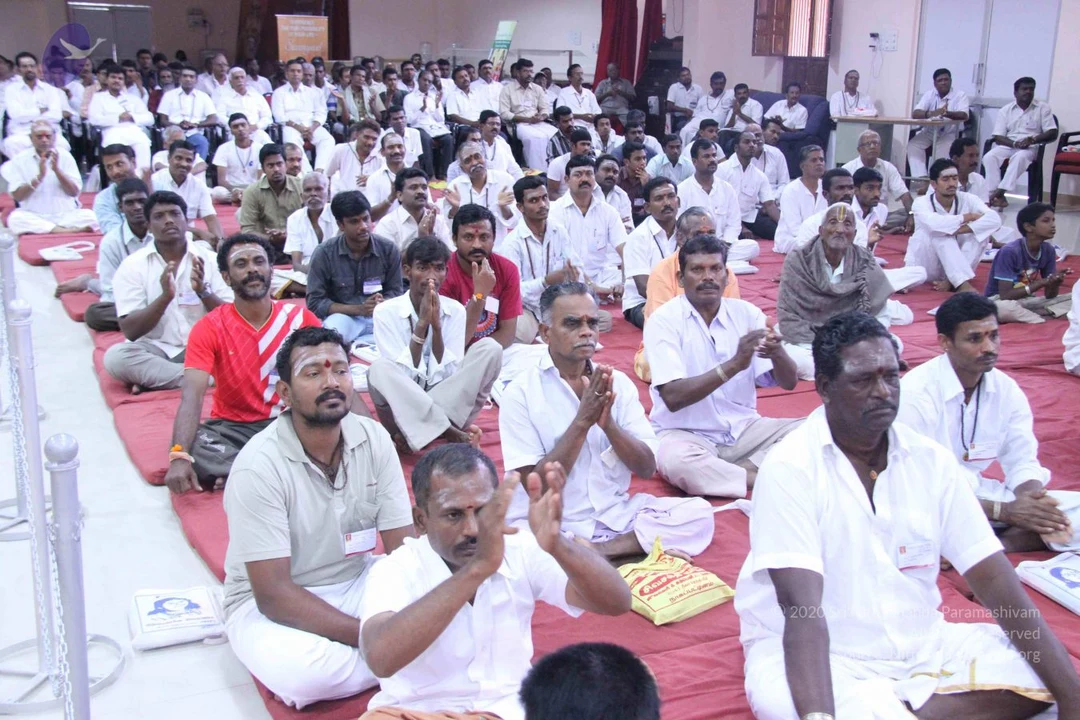
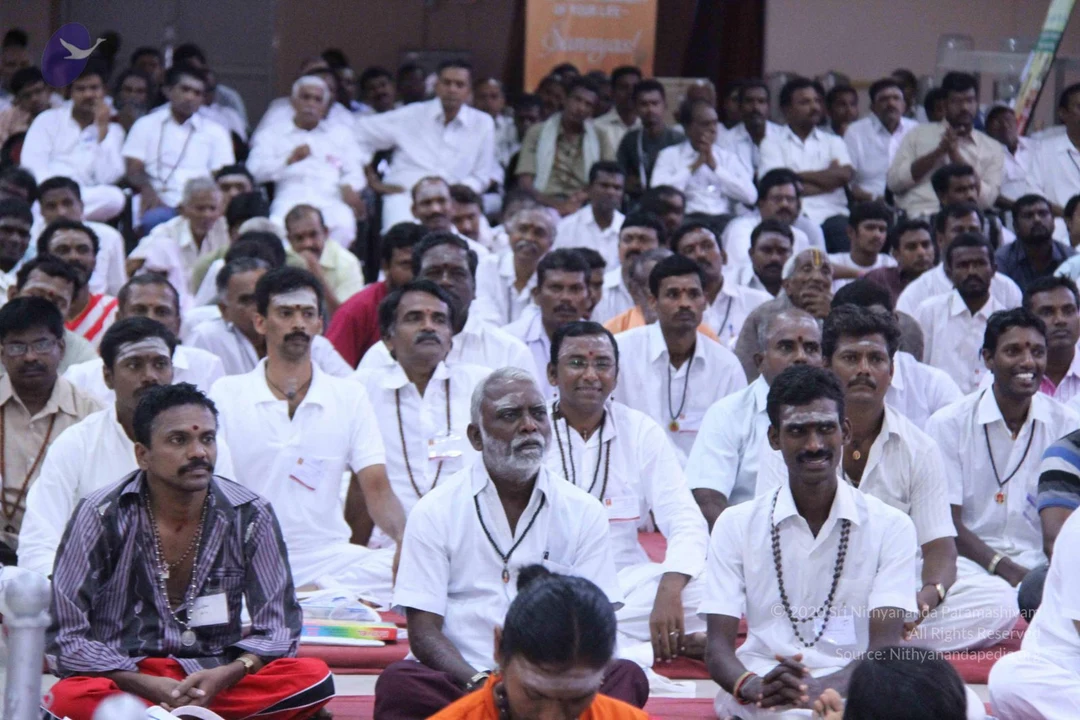
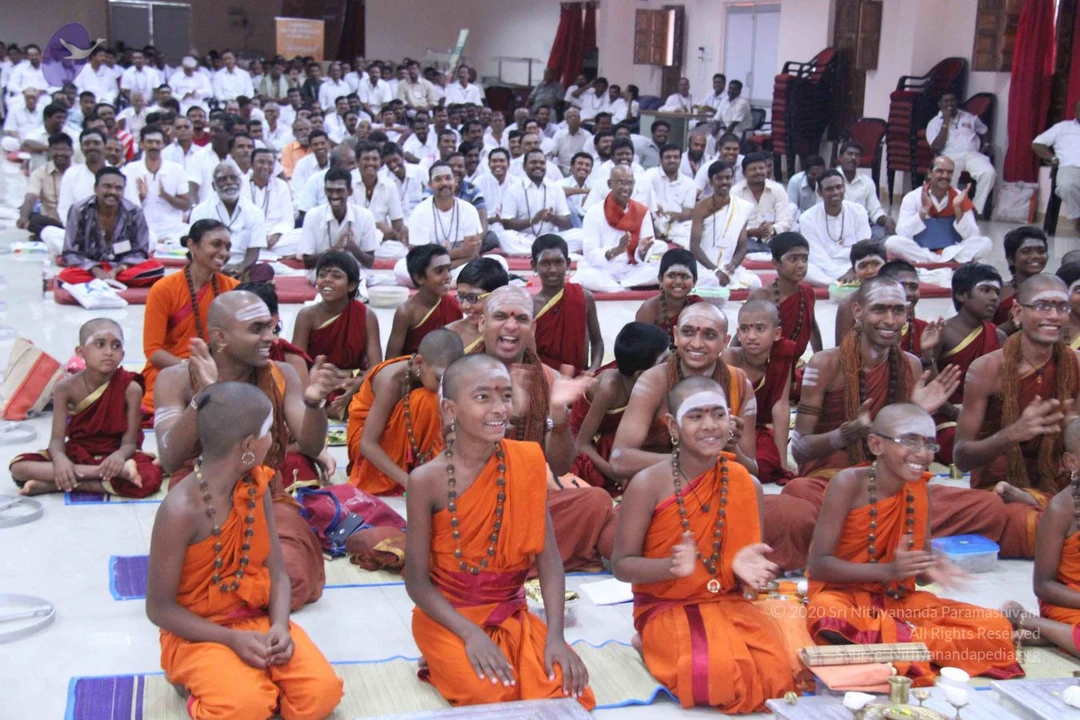
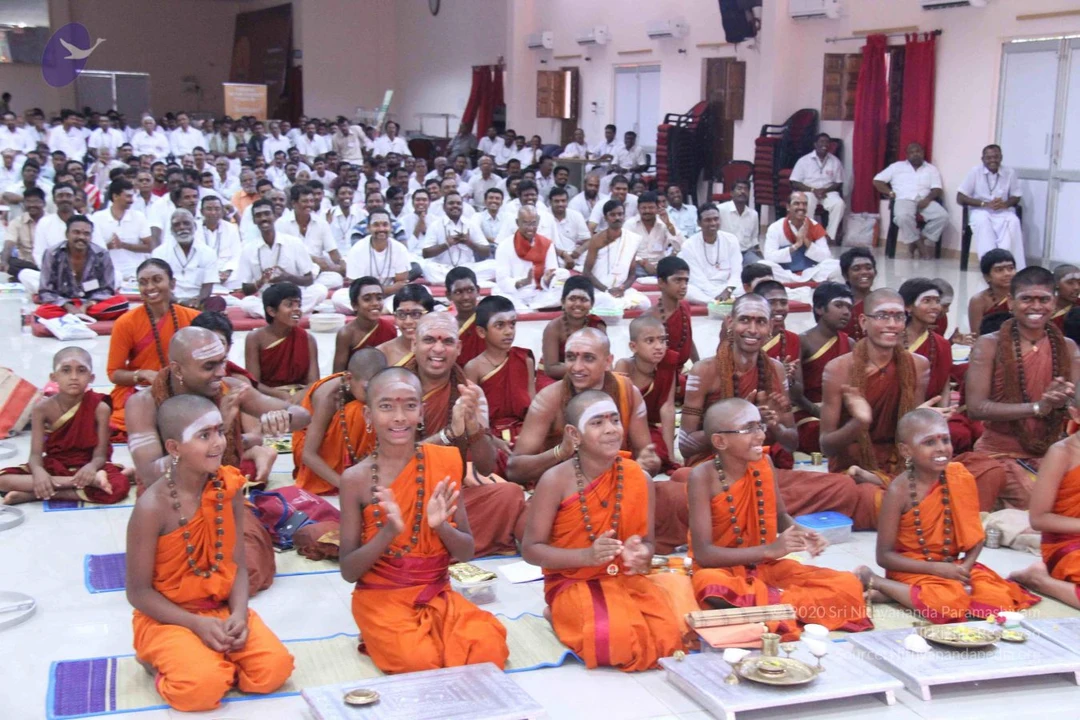
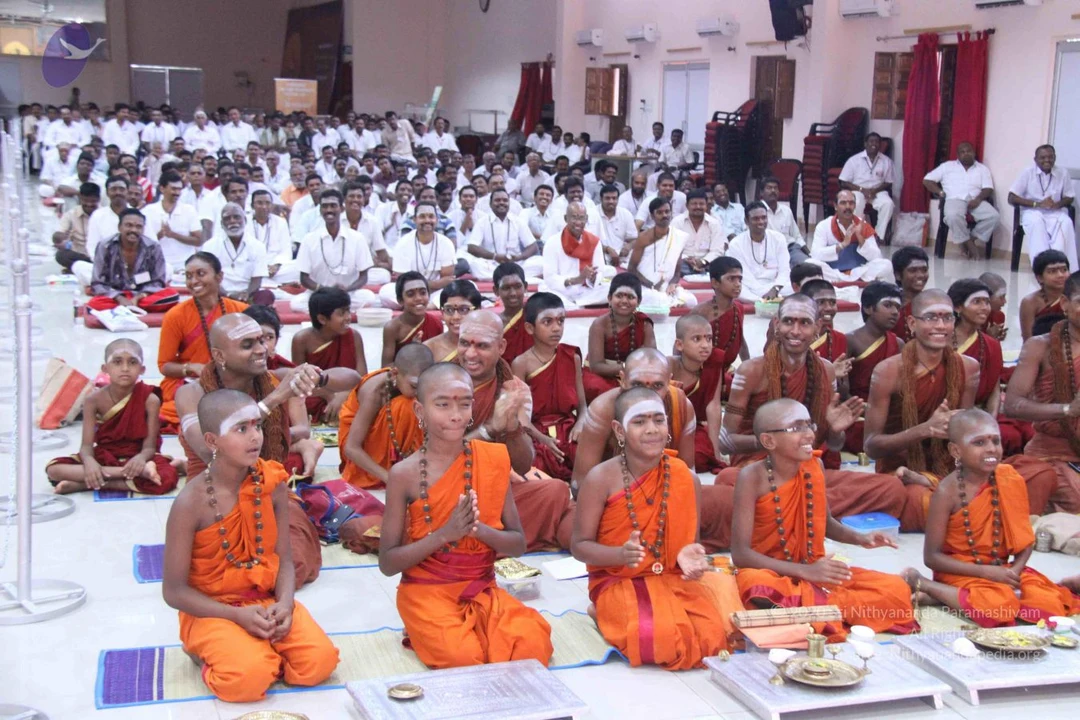
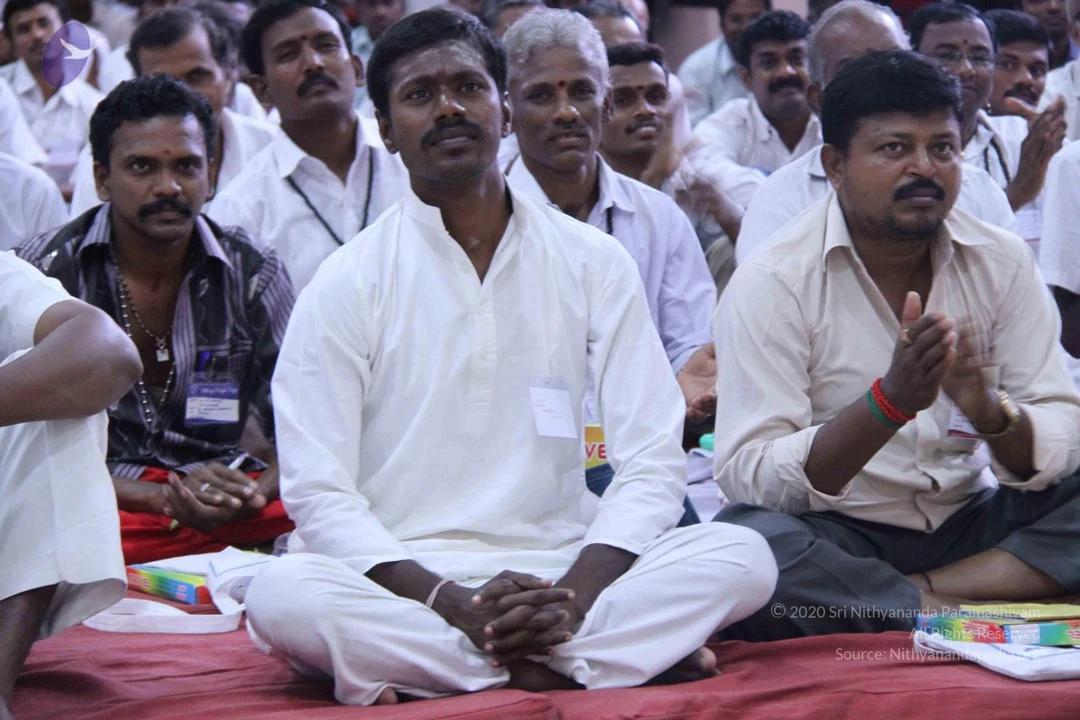
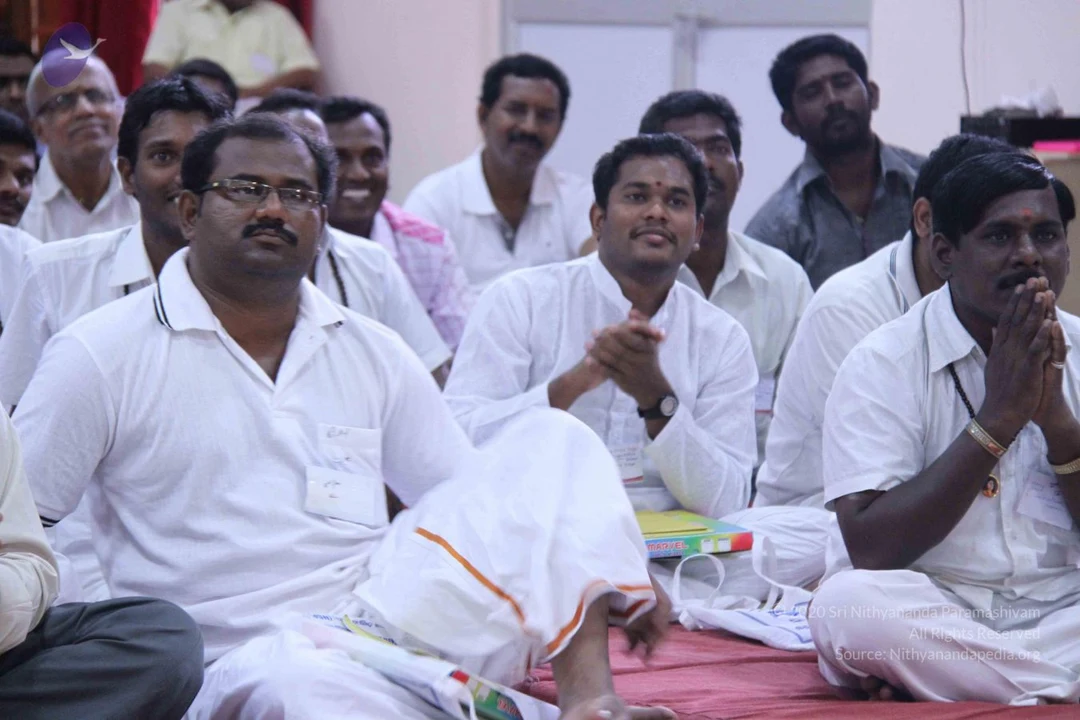
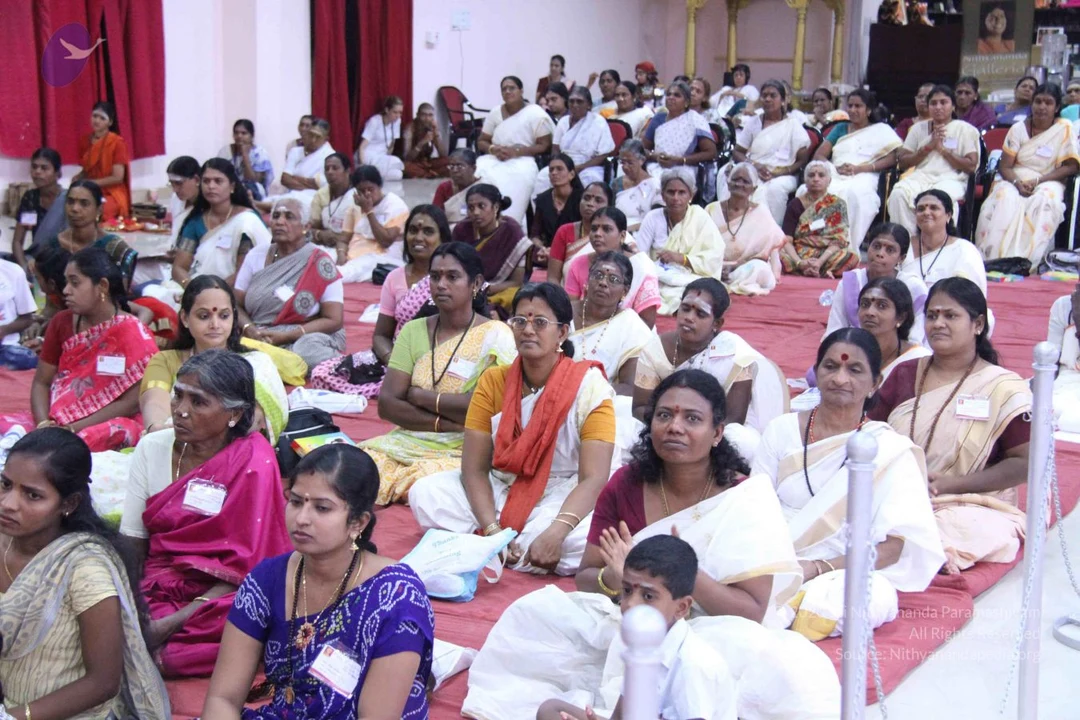
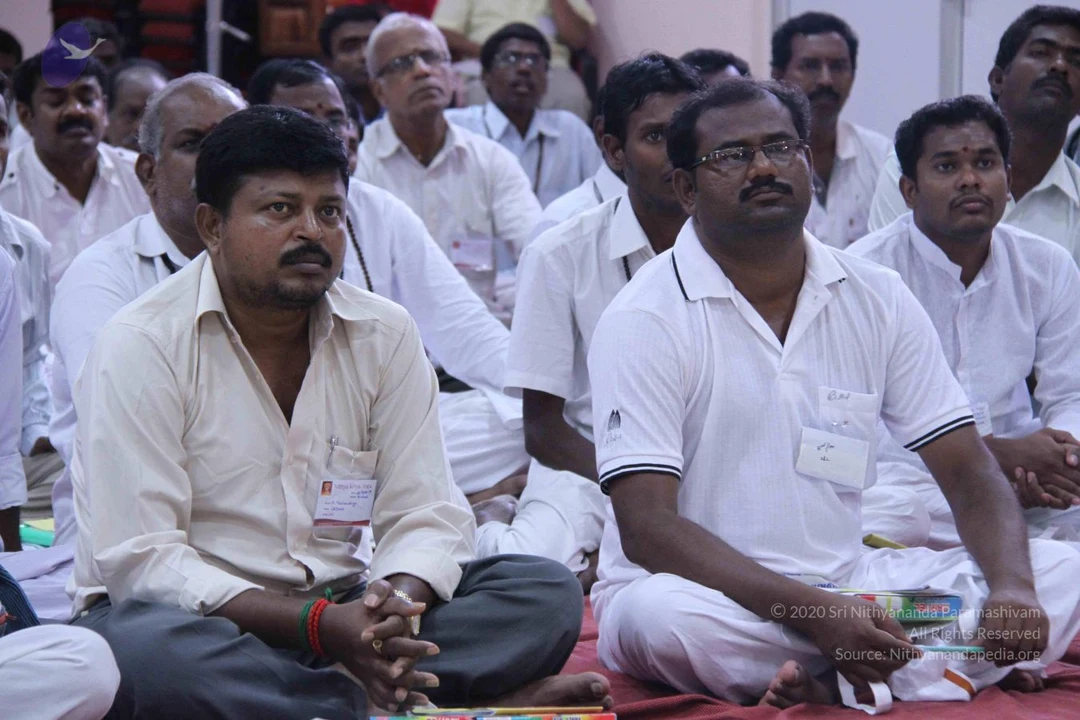
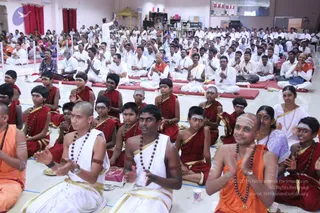
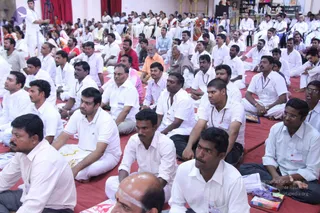
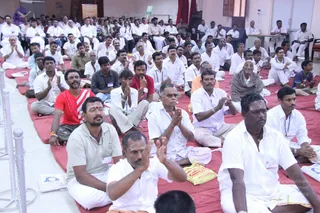
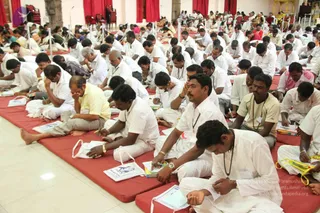
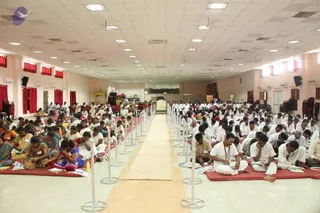
Large indoor hall with white floor and a crowd of mostly men seated on red mats during a satsang gathering. In the foreground, boys wear red and maroon dhotis with rudraksha malas and white vibhuti lines on their foreheads; several young men in white dhotis and orange saffron robes sit with folded hands. A man in saffron robe with a rudraksha mala sits at the front right. Behind them, many devotees in white clothing sit in rows. A cameraman stands with a camera on a tripod near the back. Gold-coloured ritual stands, brass plates and small lamps sit on the floor. Red curtains hang on the left wall and a golden shrine structure is visible in the background.A large hall filled with seated devotees during a satsang, with many people in white dhotis and white kurtas and women in white saris, plus young boys and men in red-and-gold ceremonial dhotis and saffron-orange robes with rudraksha malas. Many attendees sit on red mats and some are clapping or folding their hands. Foreground figures include a bald man in saffron-orange robes with a rudraksha mala and white forehead marks, and a young boy with white tilak on his face. A cameraman stands at the back on a tripod near a golden throne-like seat and red curtains. Pale walls, framed pictures and a glimpse of a shrine area complete the scene.A seated assembly in a large hall during a Tamil satsang, with many people in white and cream clothes and several in red and saffron garments. In the foreground, a shaved-headed young man in white dhoti and a saffron-coloured monk-like man with a rudraksha mala sit with palms pressed together in devotion. Several boys in red robes with rudraksha malas and white vibhuti on their foreheads sit on red mats. Brass plates with offerings and small cups lie on the floor, and a cameraman stands at the back filming. Many devotees raise their hands in prayer across the room.A large indoor hall full of seated devotees during a satsang gathering, many in white dhotis and shirts, with a crowd filling the floor and rows beyond. In the foreground, several young boys and youths wear red-and-gold silk dhotis with rudraksha malas and sacred ash marks on their foreheads and bodies, sitting with palms joined. At the lower right, a man in saffron-orange robes with a rudraksha mala and white forehead marks claps with raised hands, and a woman in a white sari with gold border sits beside a young girl in red. A cameraman stands on a platform in the background near a stage with framed portraits and flower arrangements. Floor mats and small brass plates with offerings lie on the ground.A large seated audience of men fills a hall with red floor mats, attending a satsang. Most wear white shirts and white dhotis or trousers, with some in pale checked or coloured shirts. Several have vertical tilak marks and rudraksha malas around their necks. In the front row, a bald man with a light forehead mark sits at the bottom edge, and a man in a white shirt and dark trousers holds a small booklet. Behind them rows of attendees sit cross-legged, and a cameraman stands at the top left near a tripod. Some devotees in the back wear saffron or orange clothing. Books and pamphlets lie on the mats, and a few people wear name badges on their shirts.A photograph of a large seated audience at a satsang hall, with men in white dhotis and shirts and some in red or grey casual wear, sitting on red mats. Many have palms pressed together in namaskar or are seated with hands folded. A few wear vibhuti or tilak on their foreheads, and one elderly man wears a grey-brown shawl. Lanyards and name badges hang from several shirts. Red stage drapes and white pillars frame the background, and an orange banner is partly visible at the top left.
Sarva-Darshan

6 photosSource gallery
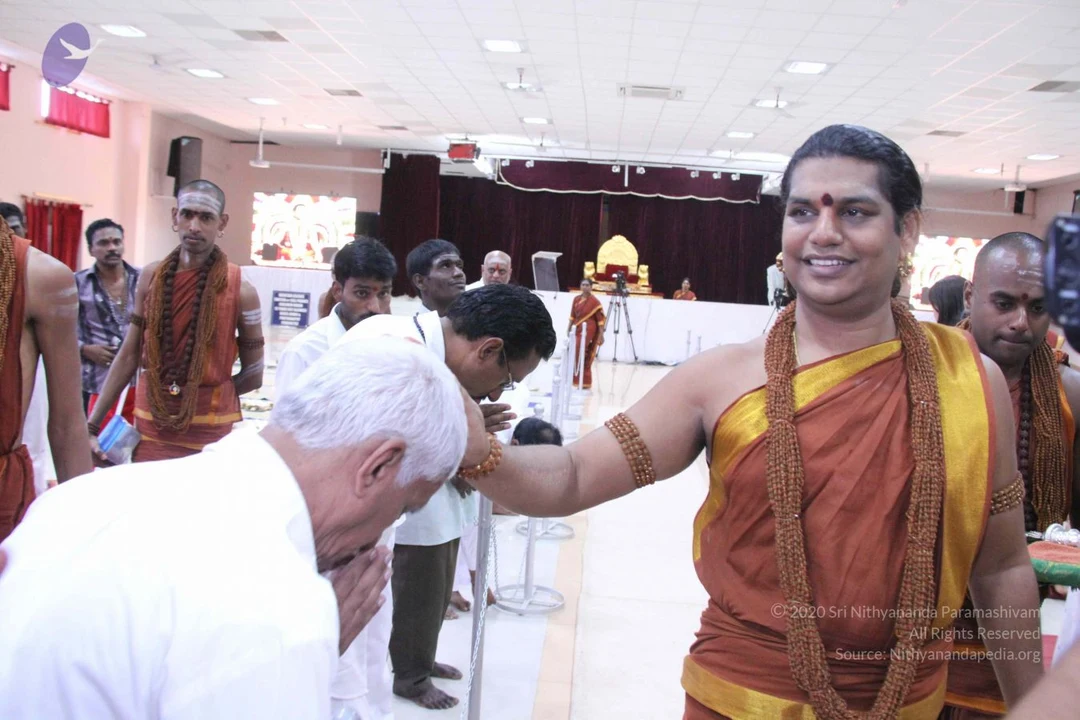
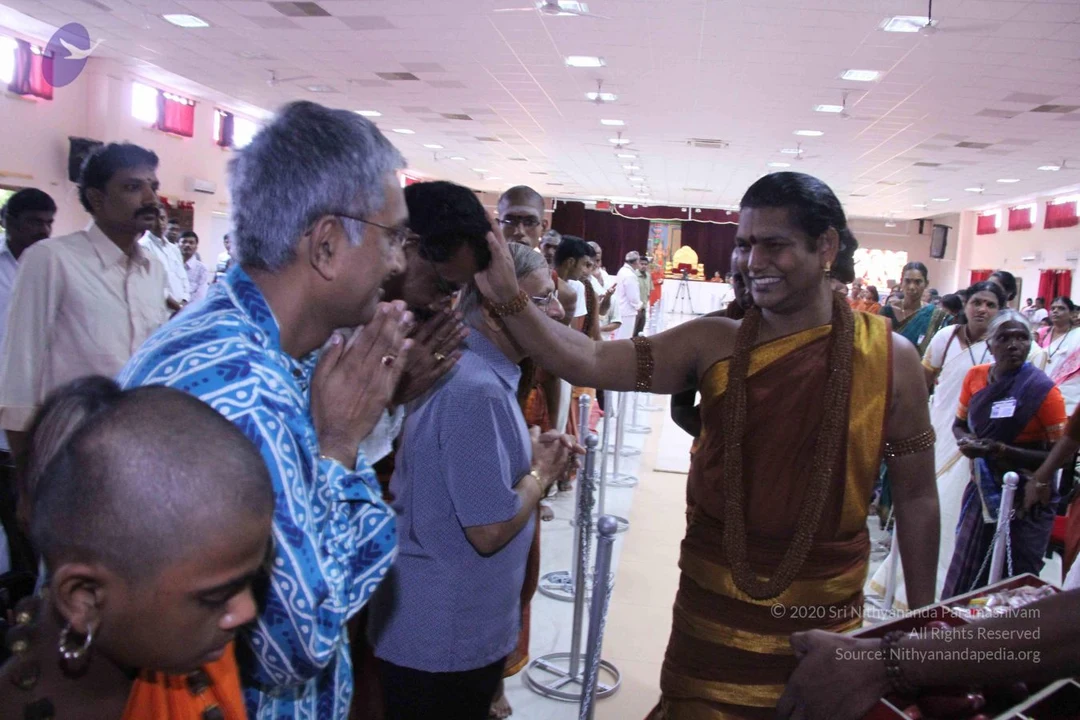
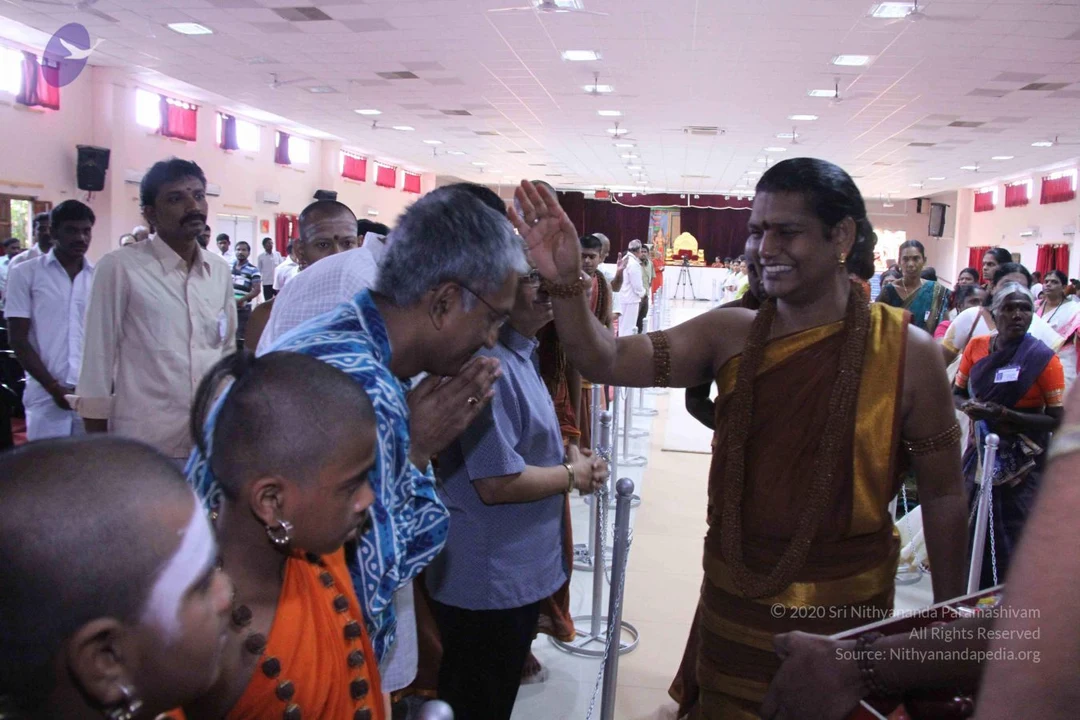
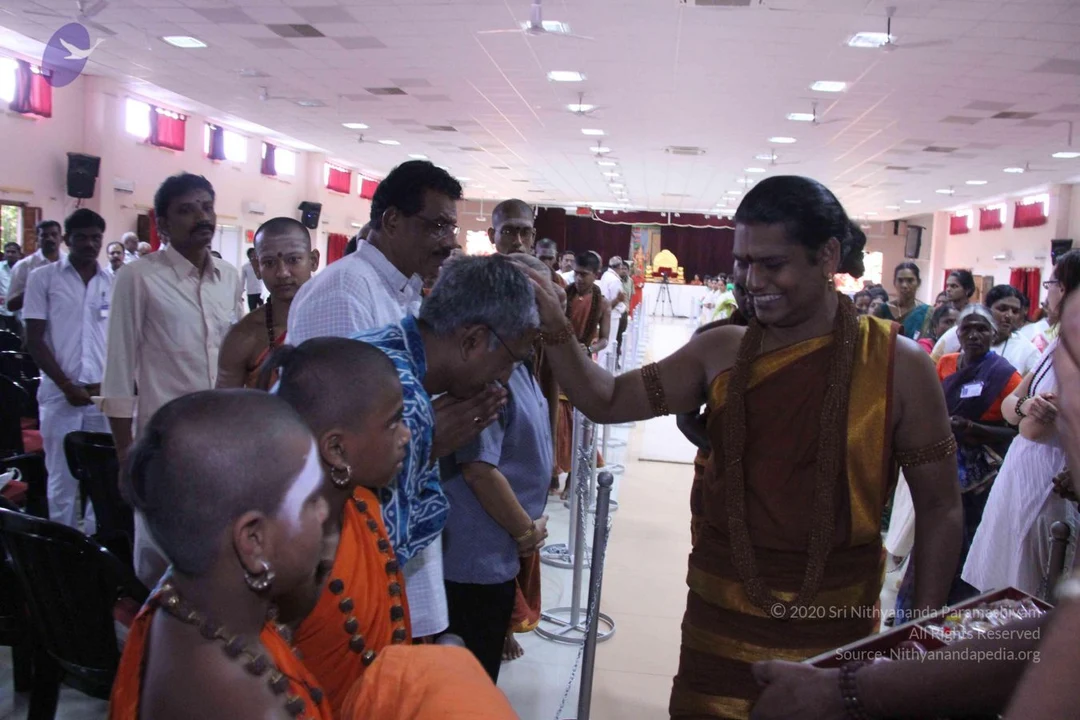
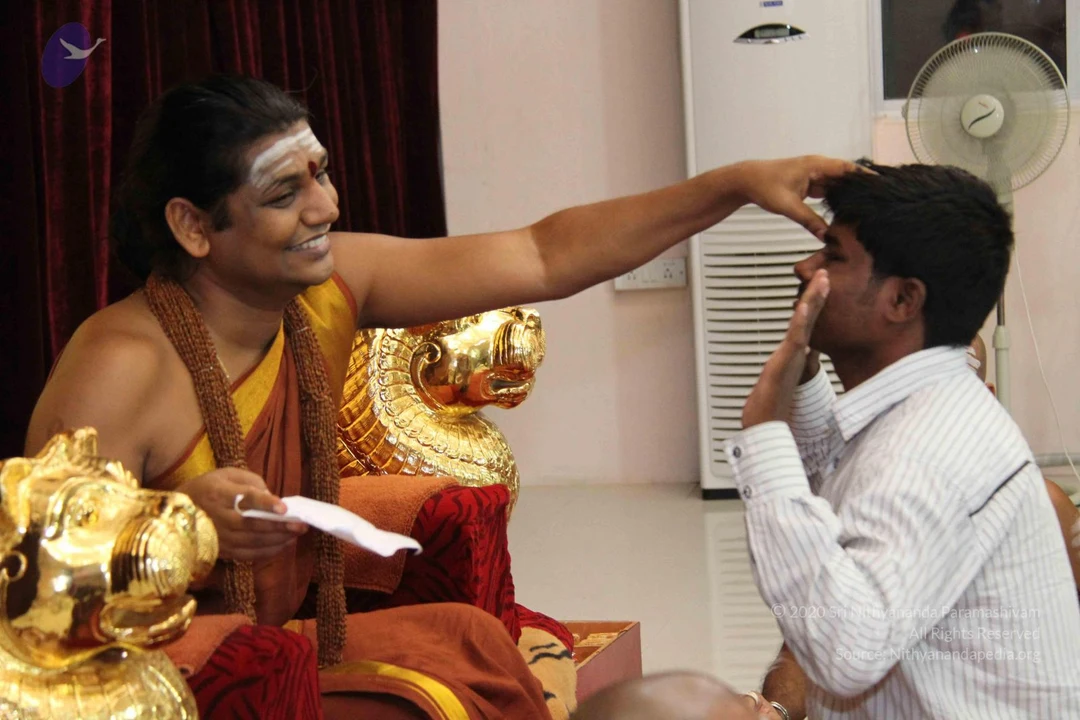
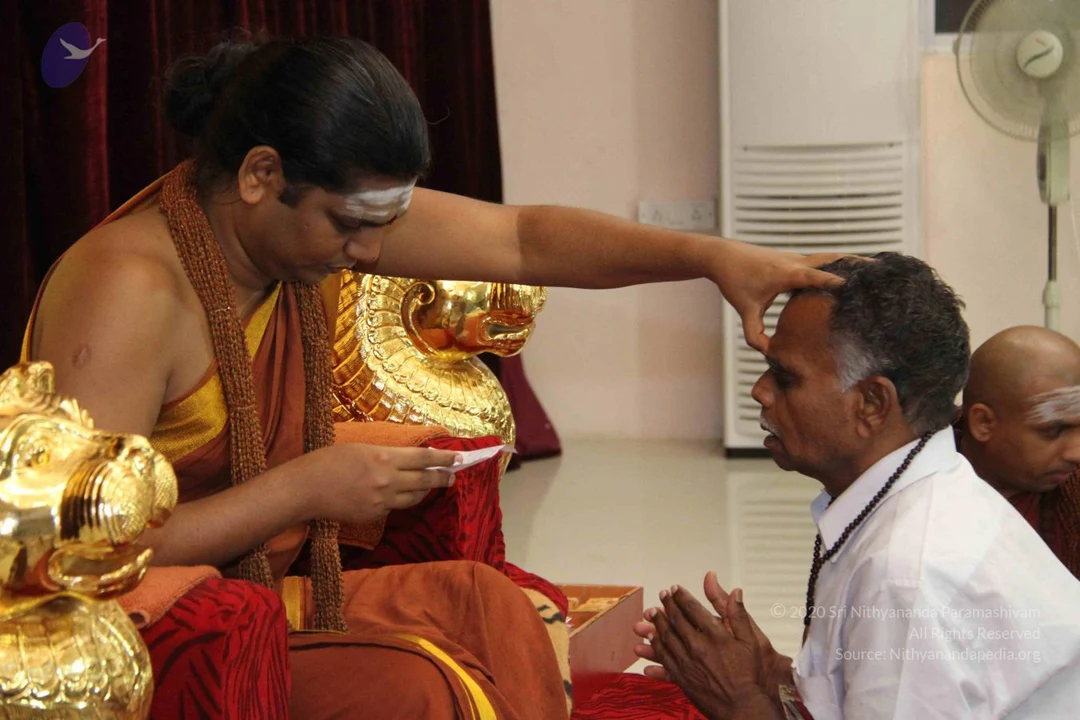
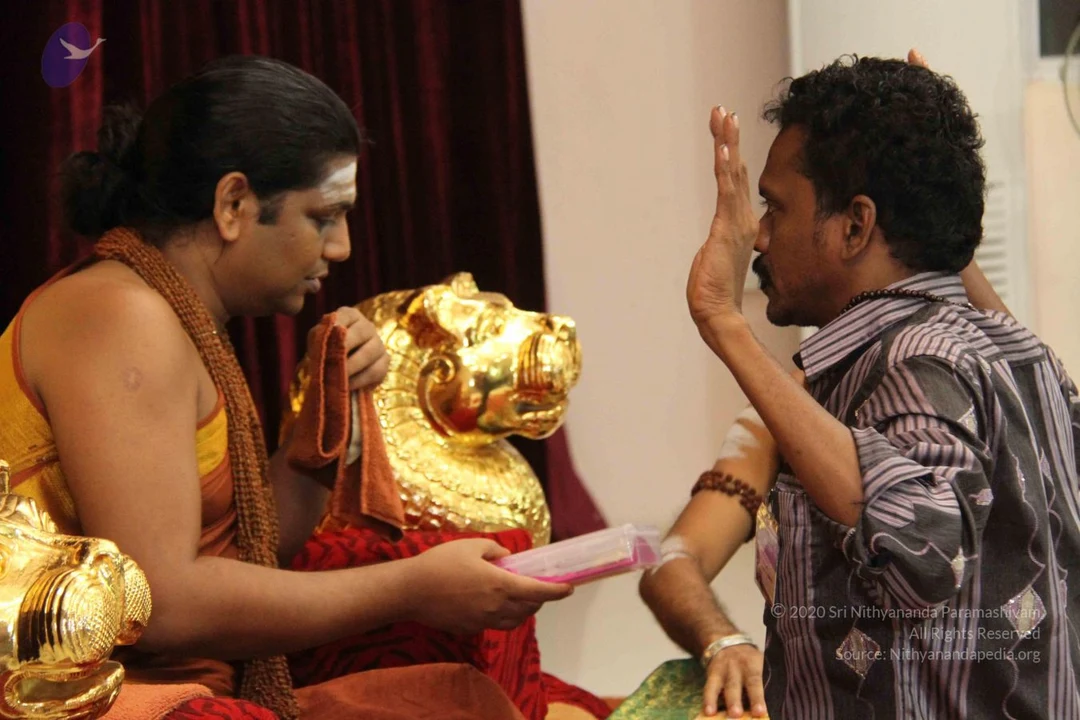
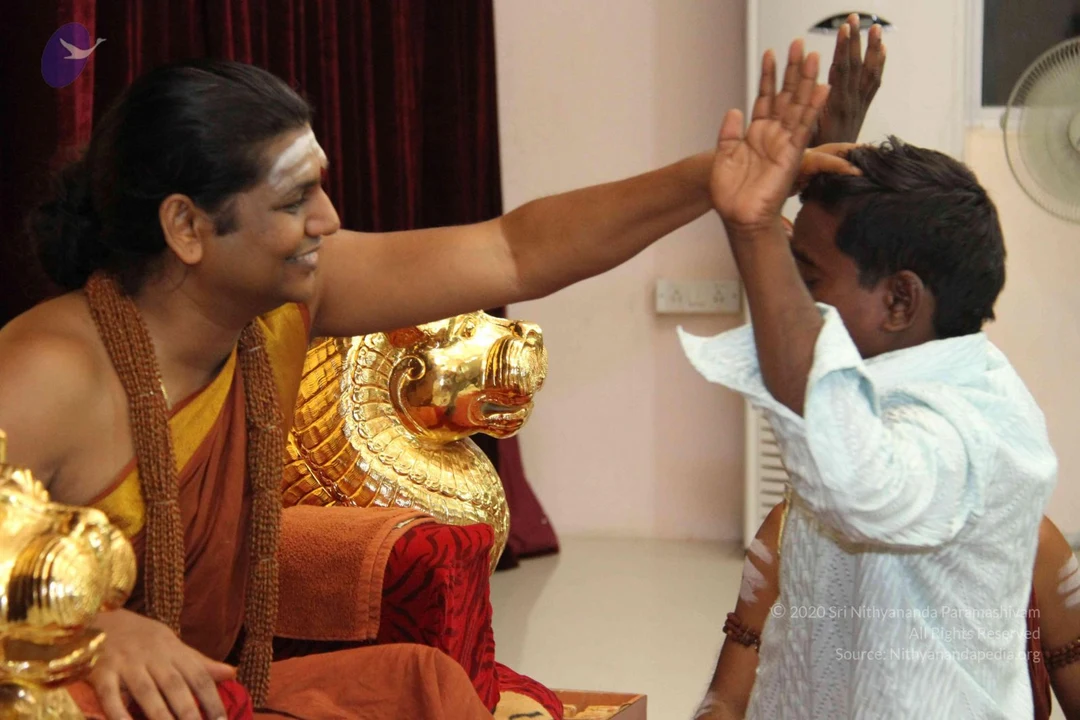
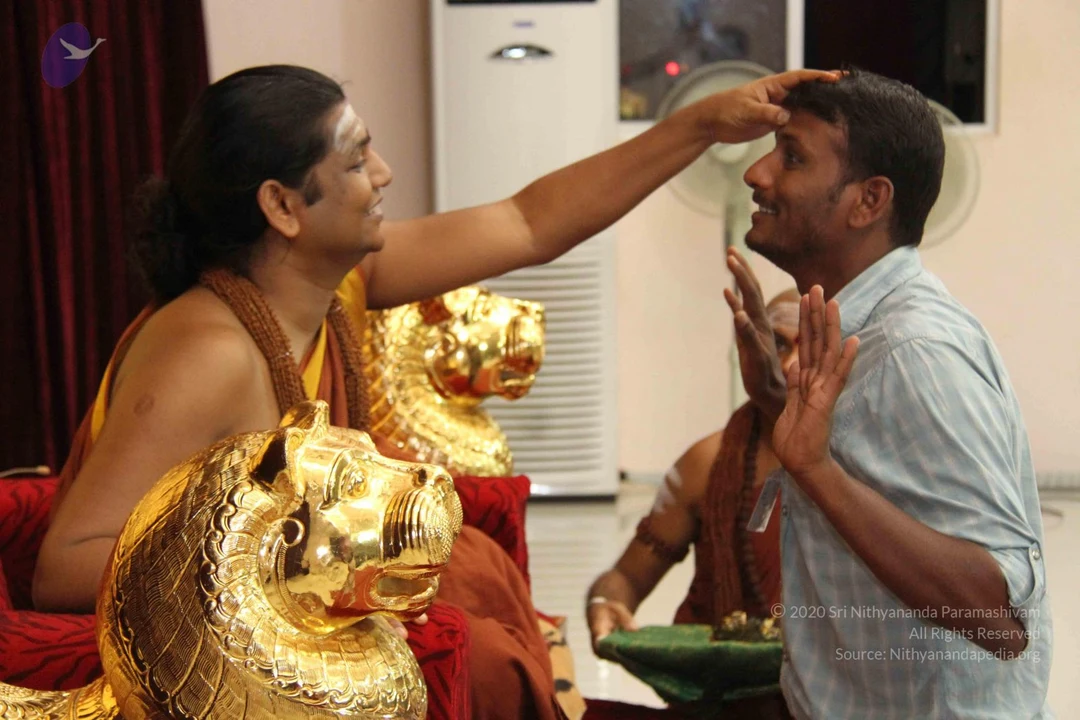
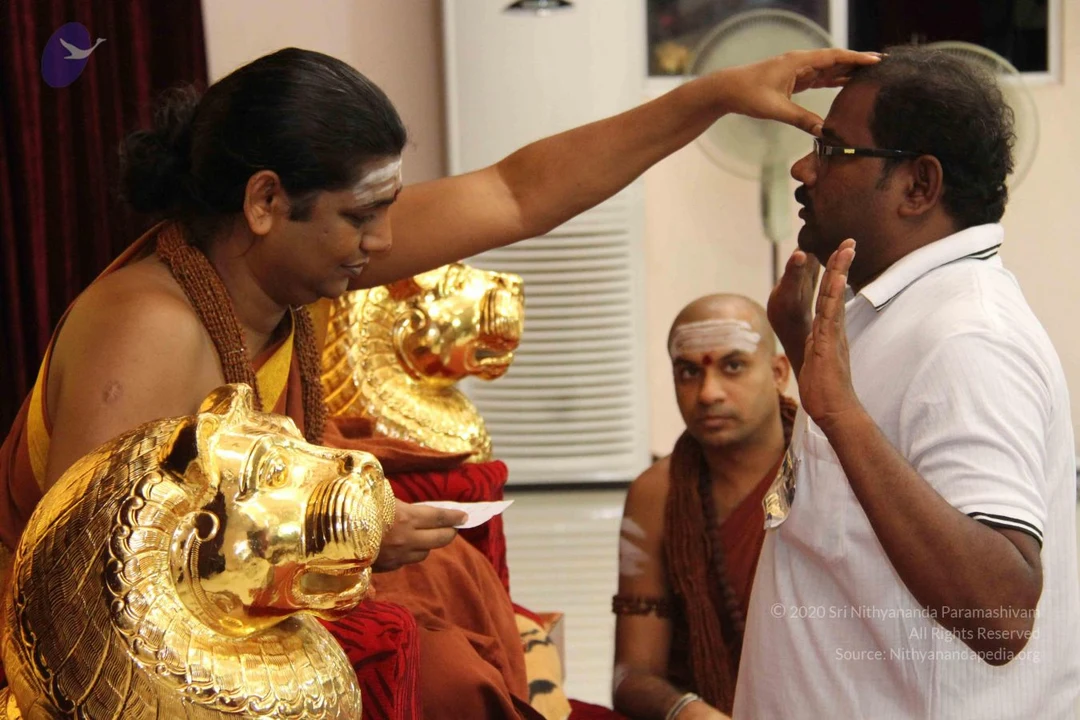
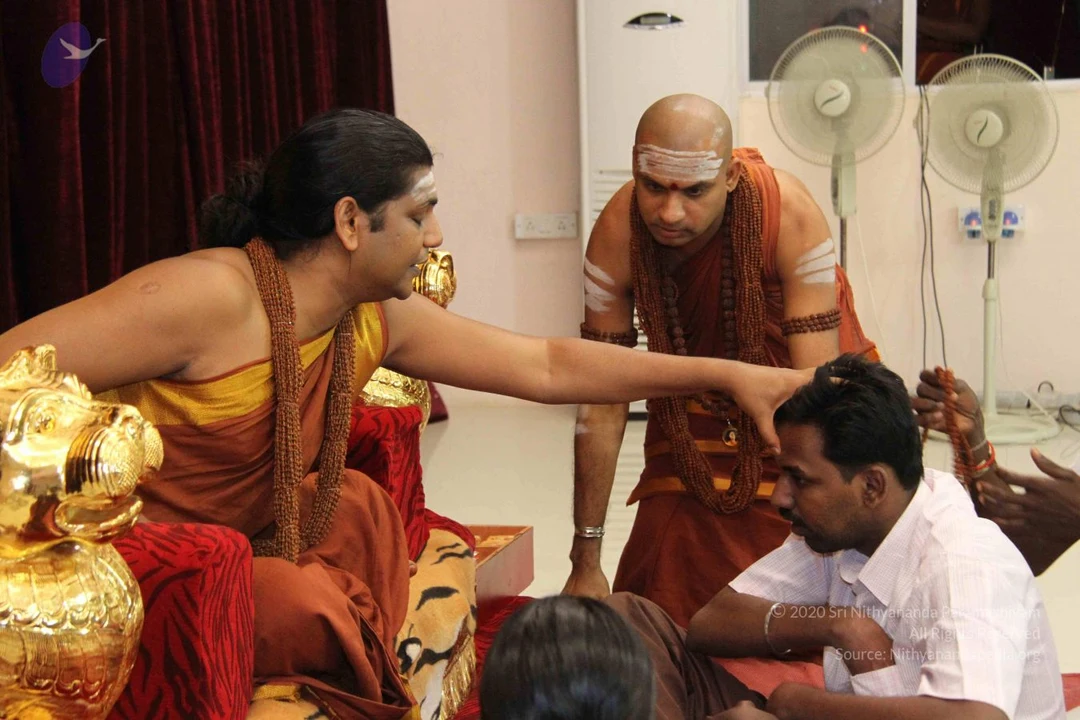
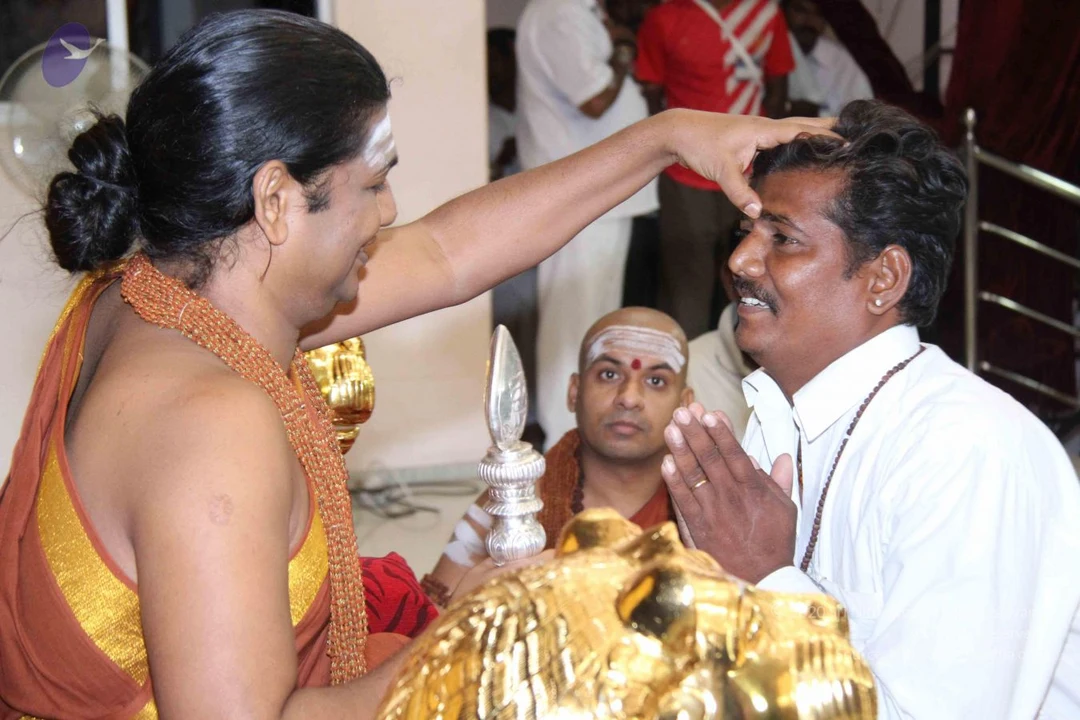
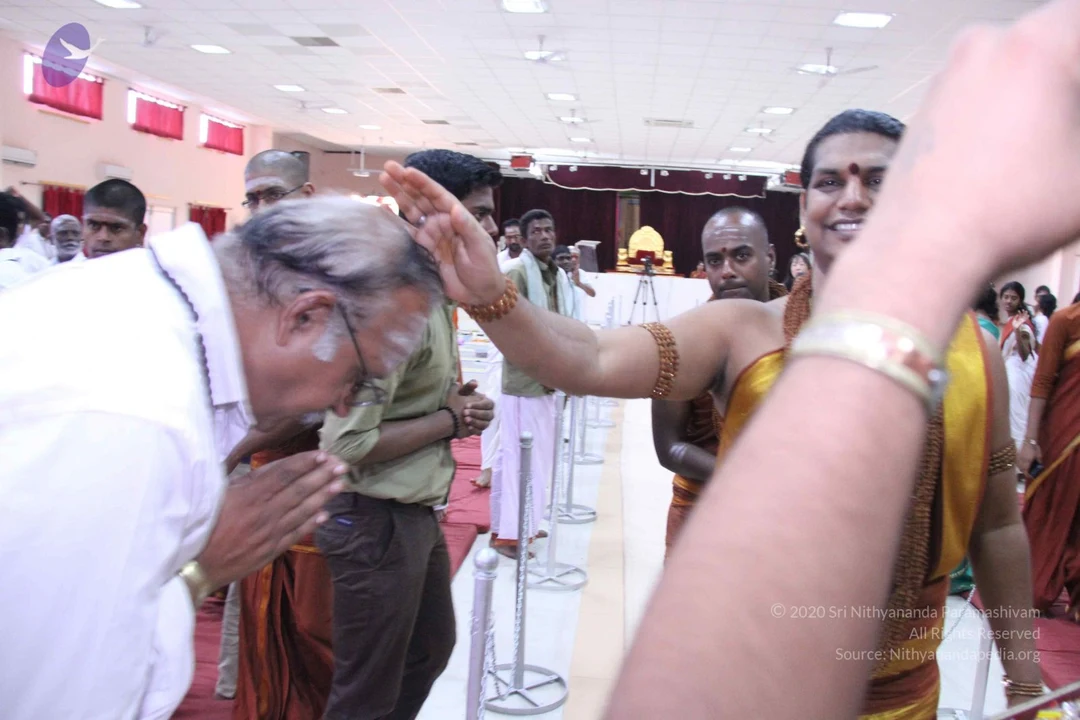
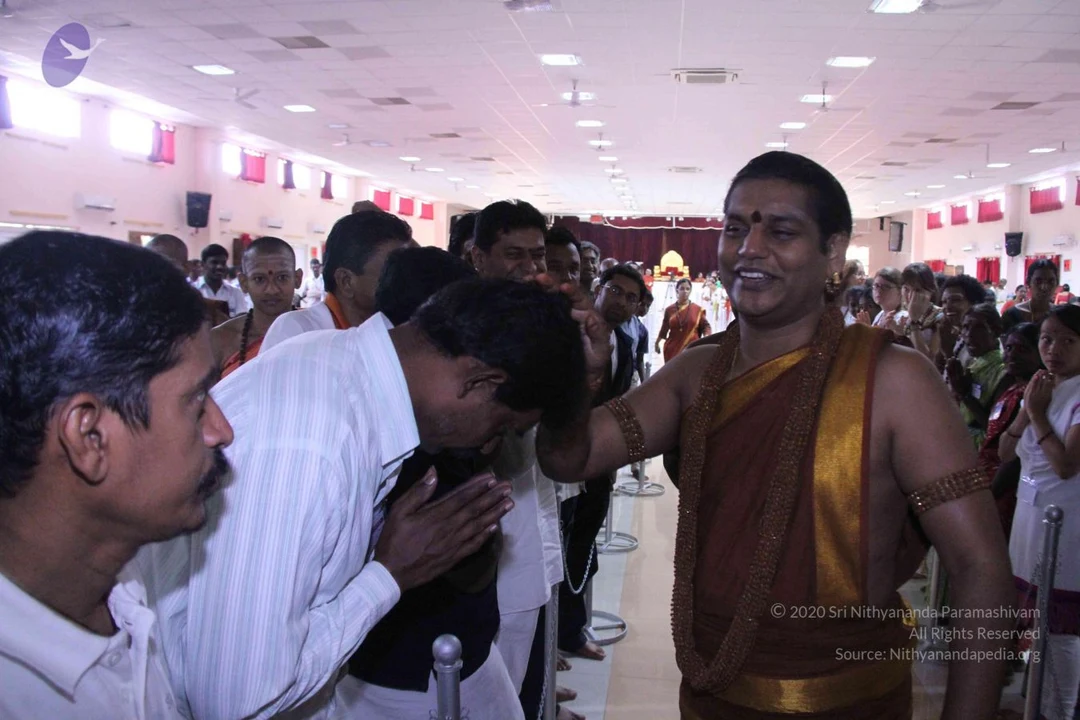
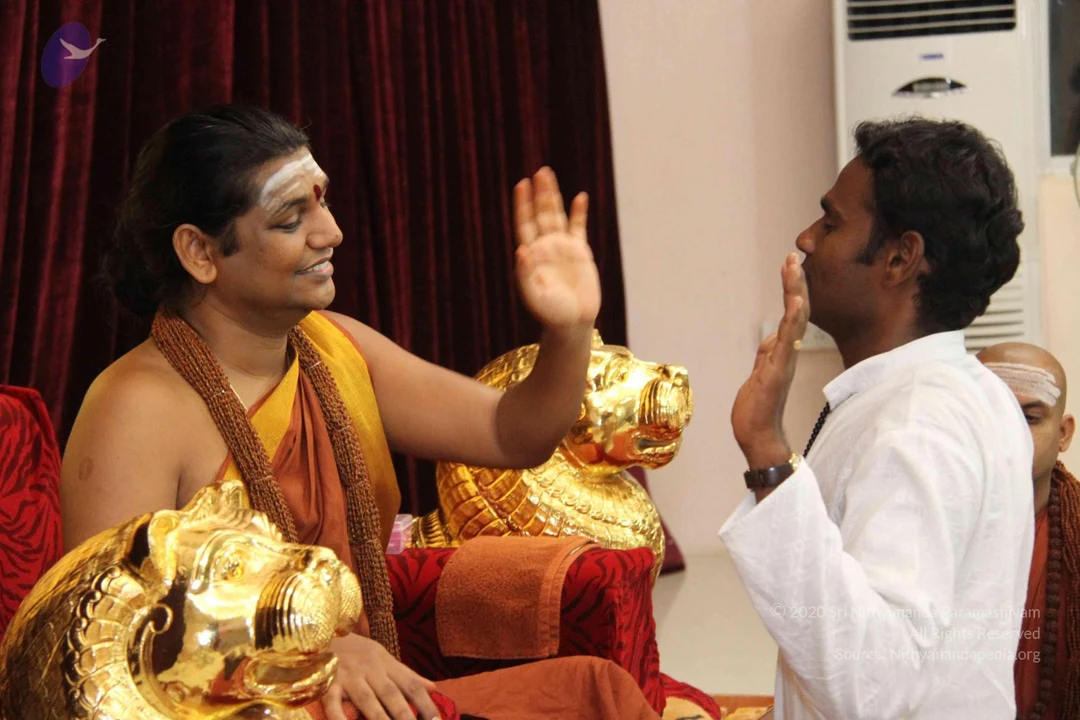
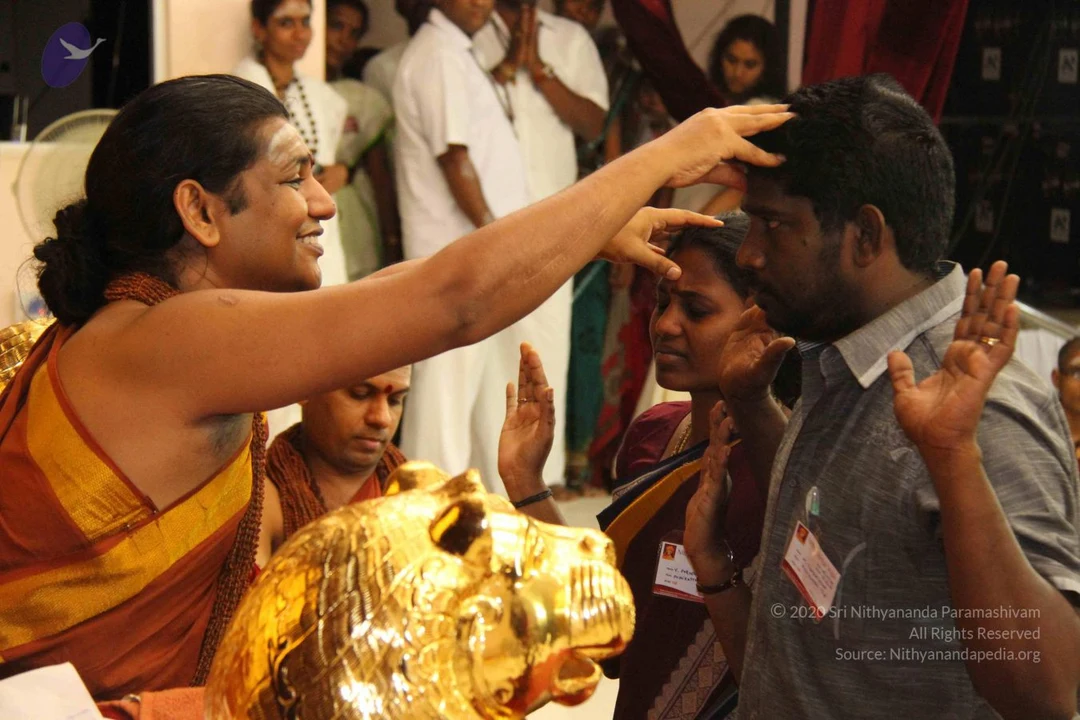
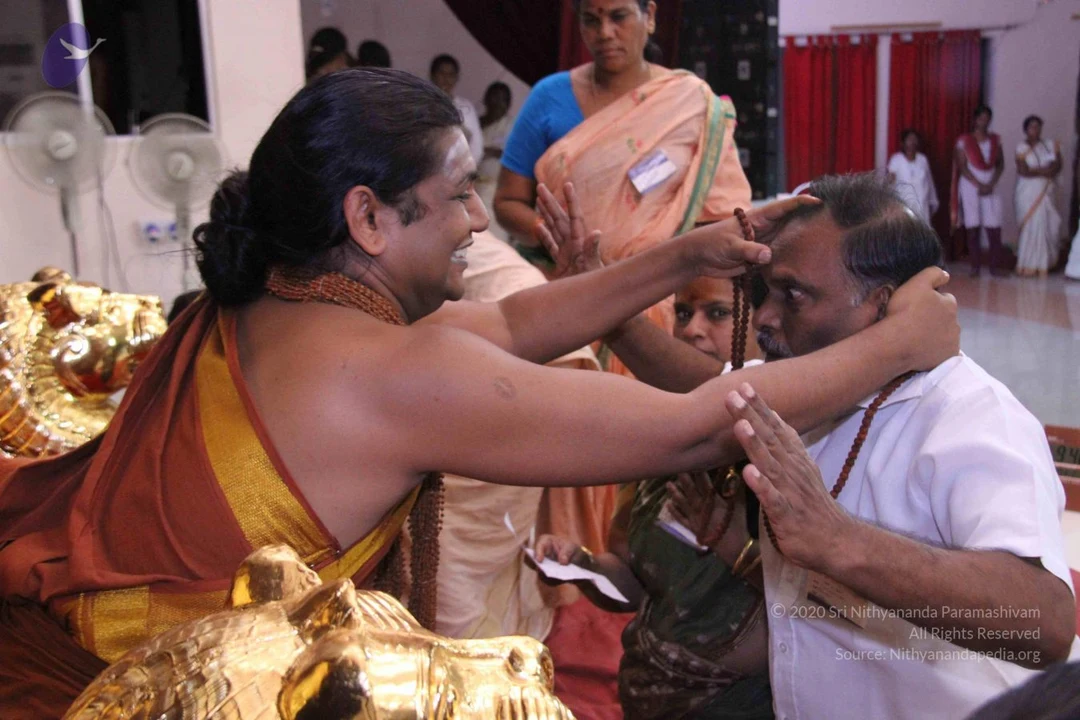
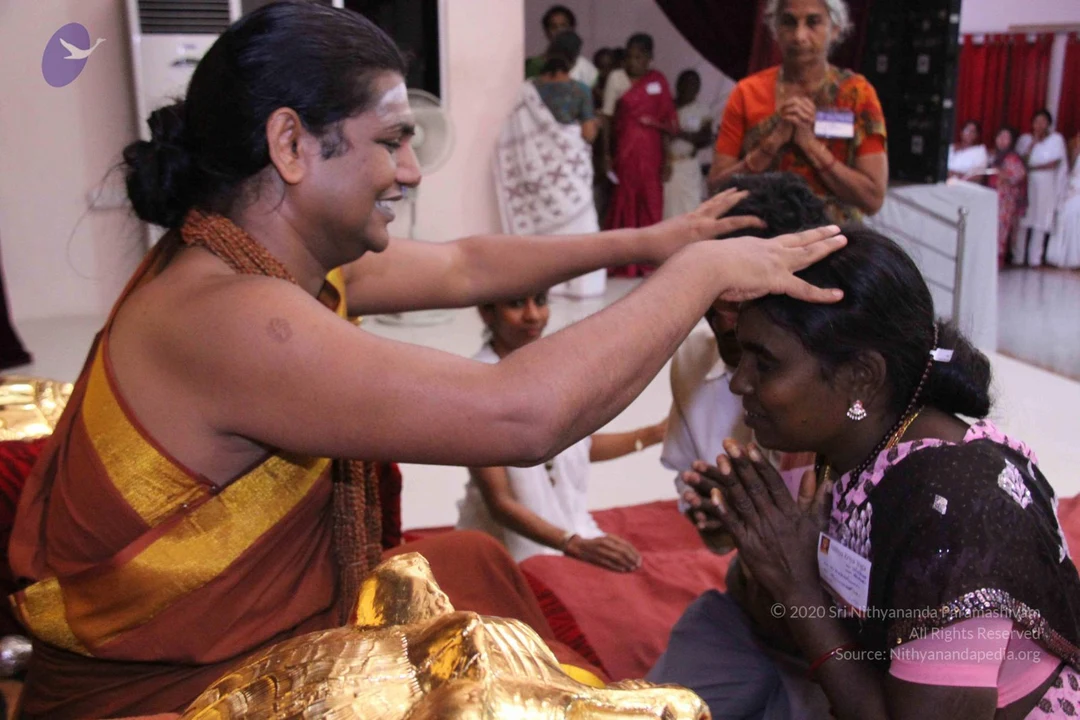
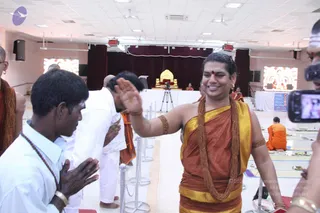
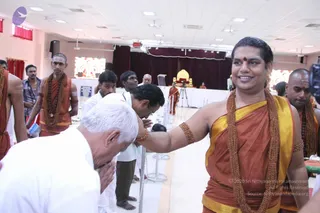
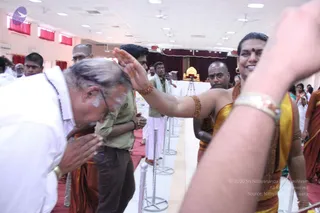
A photograph inside a large hall with pale pink walls, ceiling fans and a stage backed by maroon curtains. In the foreground a smiling person with long swept-back dark hair, a red bindi, rudraksha mala necklaces, gold bangles and an orange-and-gold silk robe raises a hand in greeting toward a man in a white shirt and a young man in a light shirt with folded palms. Behind them a devotee in white bows, and a camera operator films at right. Probable Swamiji (probable) is shown with long swept-back hair, rudraksha malas, gold bangles and an orange-and-gold robe, greeting devotees. In the background a golden throne sits on the stage, and an orange-robed attendant sits among rows of floor cushions with brass vessels. A banner with small printed text hangs at right.A photograph in a large hall with a pink ceiling and red curtains. A tall figure in saffron-orange robes with a gold-edged yellow border and a long rudraksha mala, a red bindi and long swept-back hair smiles and extends an arm, while an elderly man in white bends forward with folded hands to receive him. Probable Swamiji: appearance-based label only, identified by long swept-back hair, ornate saffron and gold clothing, and rudraksha malas. Behind them, men in saffron with rudraksha malas and forehead markings stand along a barrier, and a golden throne sits on a stage with a backdrop of framed deity images.A indoor hall with white ceiling and red curtains, where a man in an orange-gold saffron wrap and multiple rudraksha malas blesses a devotee by placing his hand on the bowed head of a man in a blue patterned shirt with folded hands. The blessed devotee bows with eyes closed. Other devotees stand in a line behind metal stanchions, including a woman in a white sari with a blue border and an older woman in orange. A shaved-headed young person in orange is in the lower left. Probable Swamiji is the person giving the blessing, shown by his long swept-back hair, saffron wrap, layered rudraksha malas and gold bangles.A photograph inside a large hall with pink walls, red curtains and a ceiling of fluorescent lights. A man in a brown dhoti and brown shawl with a rudraksha-style brown bead necklace and gold-toned armlets raises one hand in blessing toward a smiling devotee. The devotee, in a light blue batik shirt, stands with palms pressed together in namaste. Beside them a shaven-headed young man in an orange robe and a white tilak stands at the front, with other people in white dhotis, saris and an orange sari behind a metal barrier chain. A stage with a golden throne and a deity backdrop is visible at the far end.Indoor hall photo during a satsang event. A man in a brown dhoti and gold-bordered shawl with a long rudraksha-style bead necklace and gold armlets stands on the right, one hand raised to the head of a seated older man in a blue shirt who bows with folded hands. The standing figure has long hair swept into a bun and appears to be giving a blessing. Nearby, shaven-headed young men in orange robes with beaded necklaces stand at left, one with white vertical forehead marks. Behind them, a row of seated and standing devotees, including women in saris, fills the hall. Red curtains line the walls, ceiling fans hang above, and a decorated altar with a golden item is visible at the back. Identity is uncertain from appearance.A photograph inside a large hall with pale walls, red curtains and ceiling fans. On the right, a man with long swept-back hair, gold-toned ornate clothing, a rudraksha mala and gold bangles raises his palm in blessing toward a devotee on the left. That devotee wears a white shirt, a red-orange shawl and bangles, with hands pressed together in namaste and head bowed. Other devotees in white and orange stand along a metal barrier line, and a man in orange clothing stands behind. A decorated altar with a golden canopy is visible in the distance.
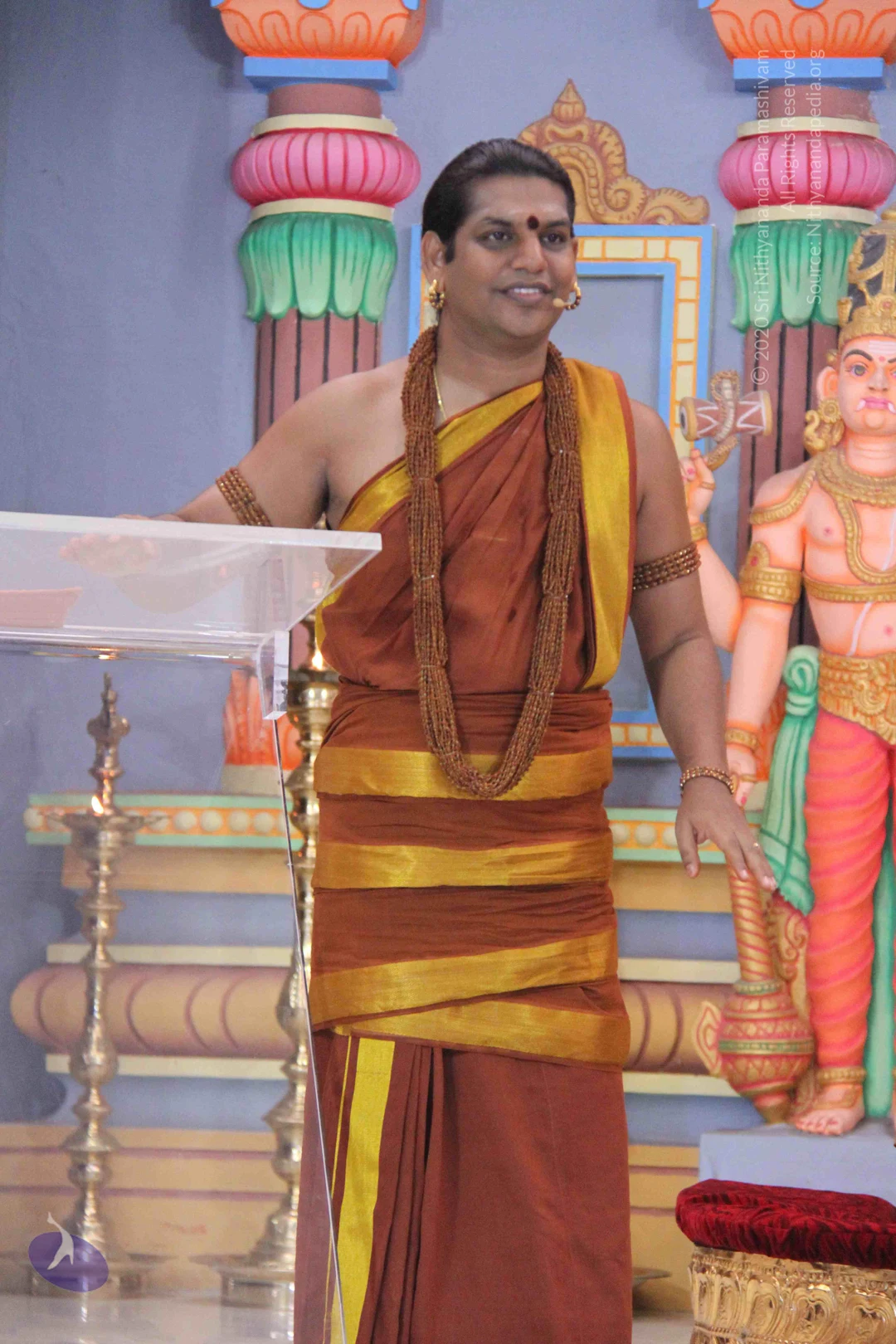
Blessing

2 photosSource gallery
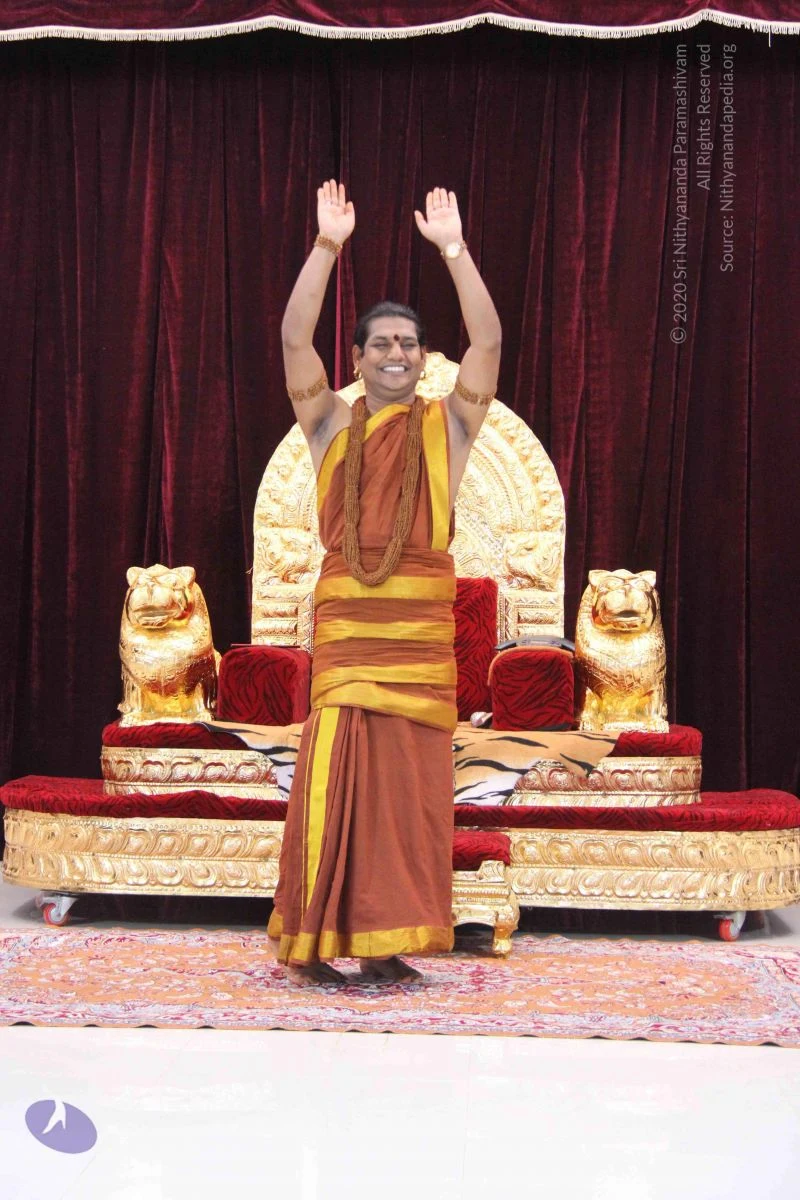
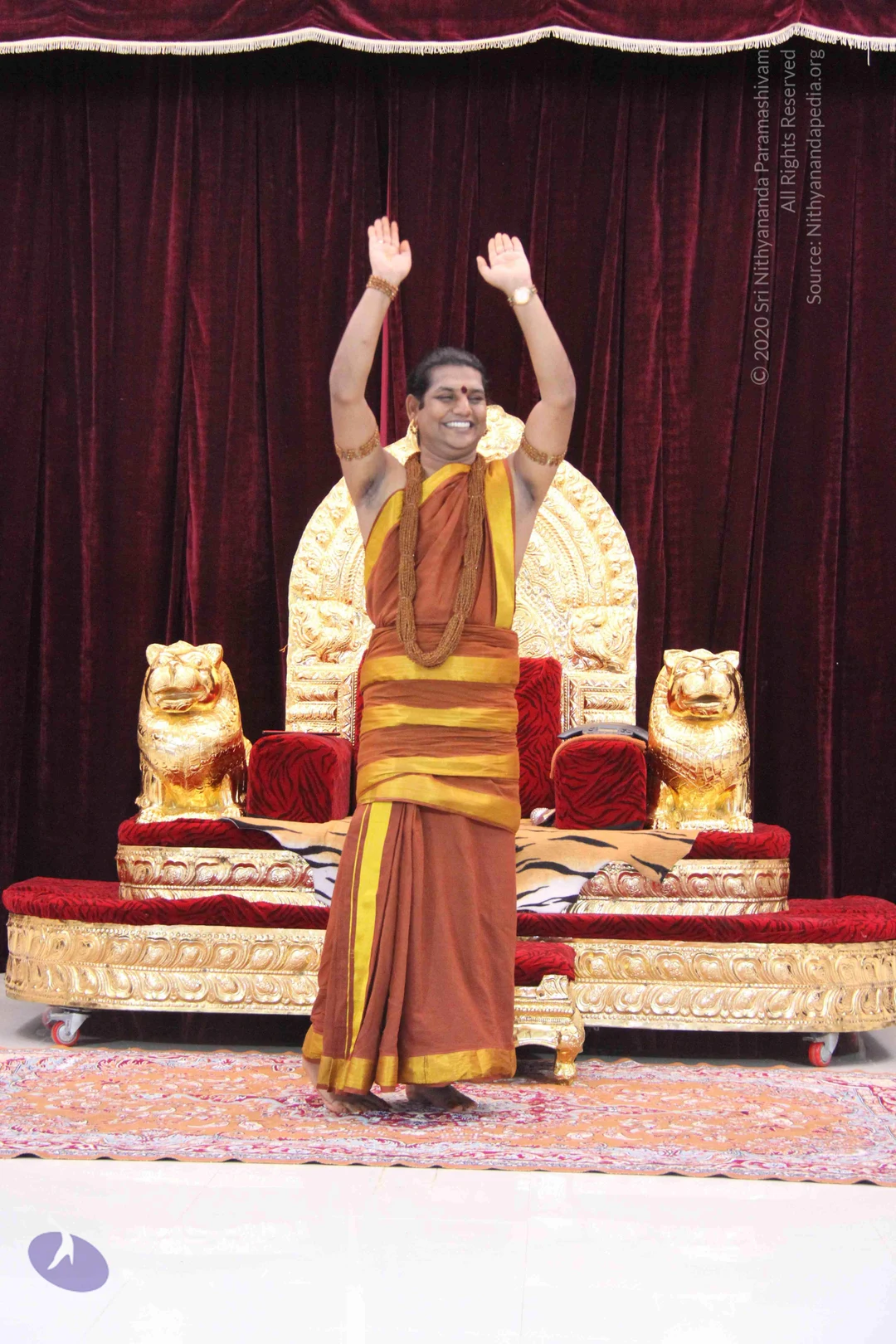
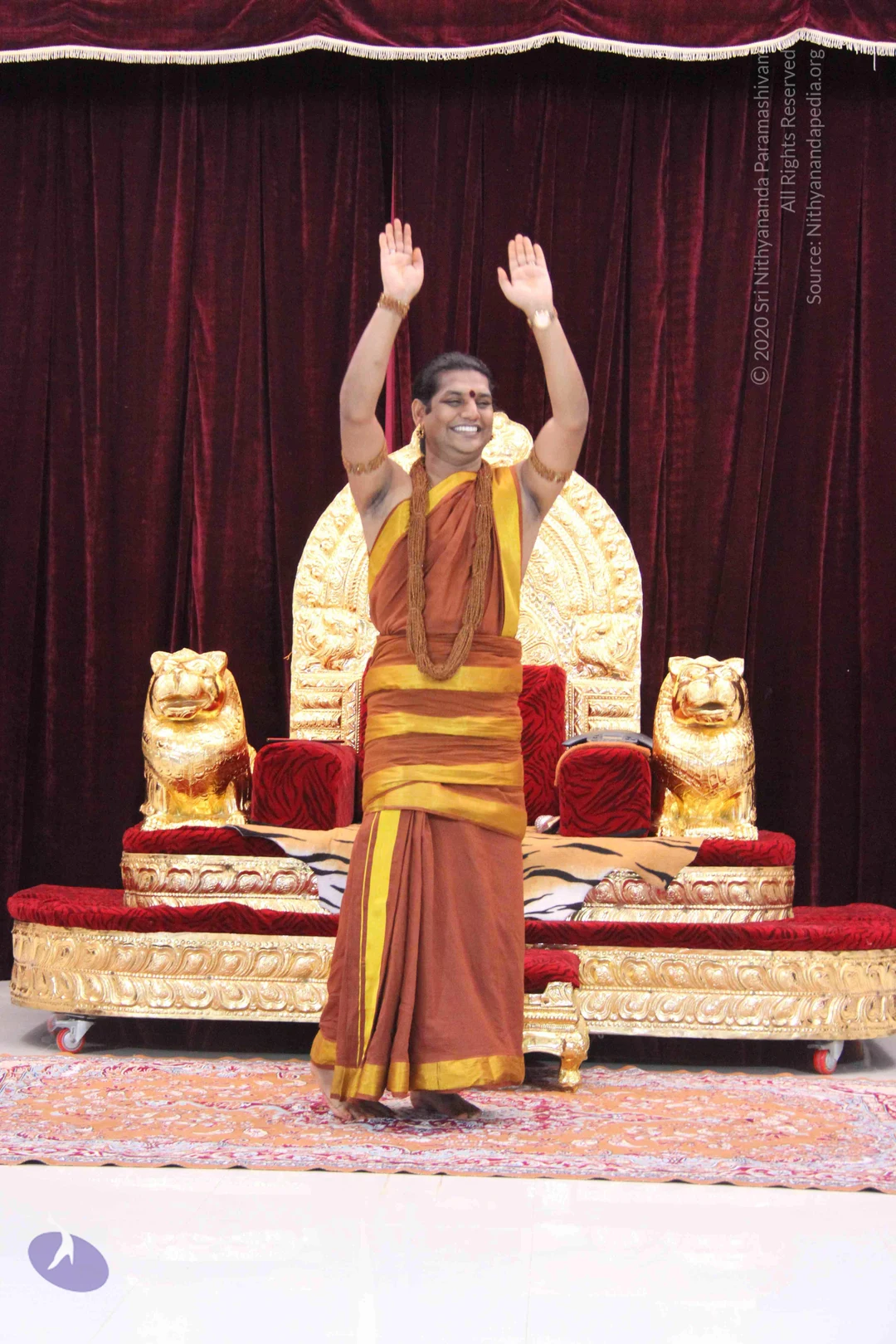
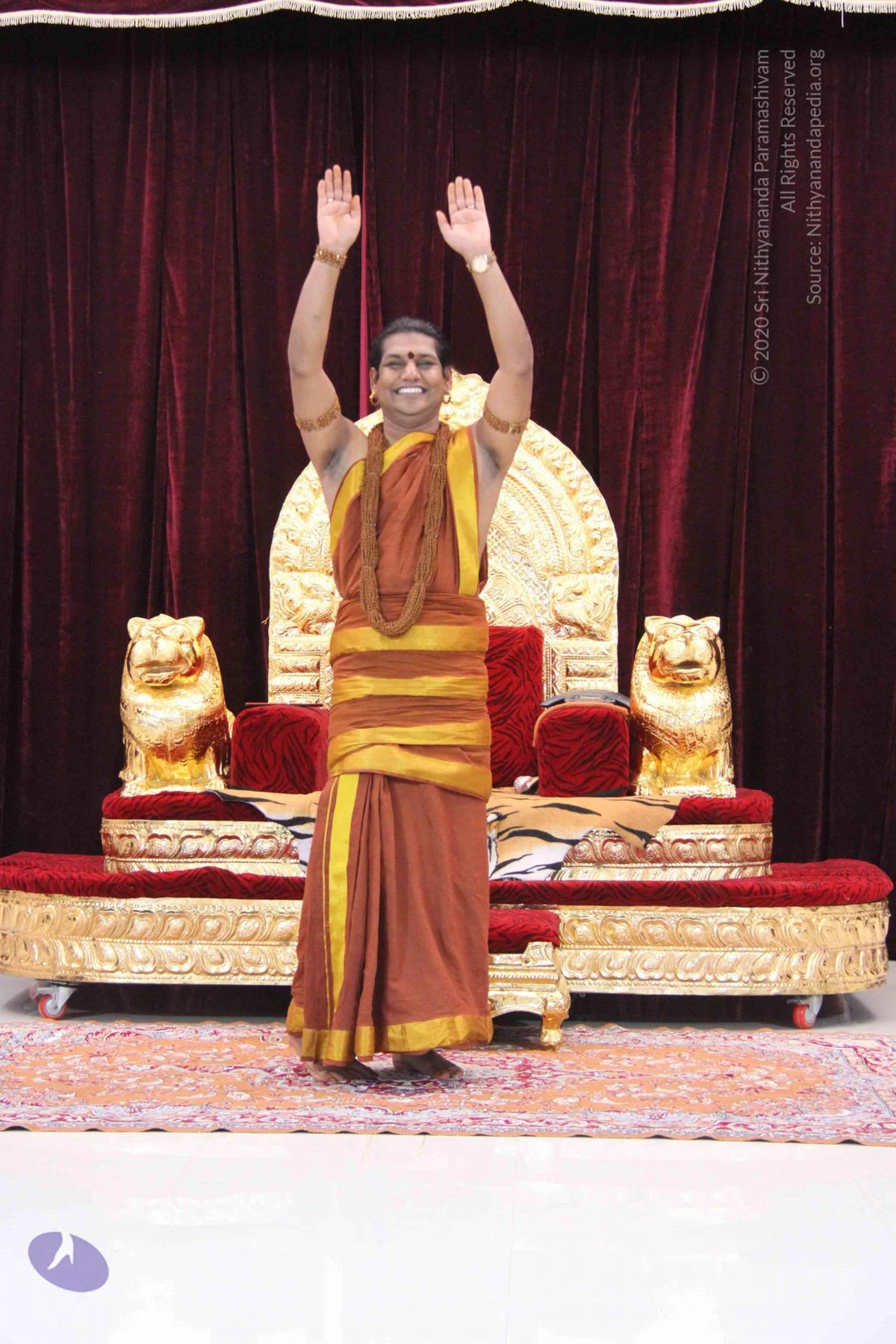
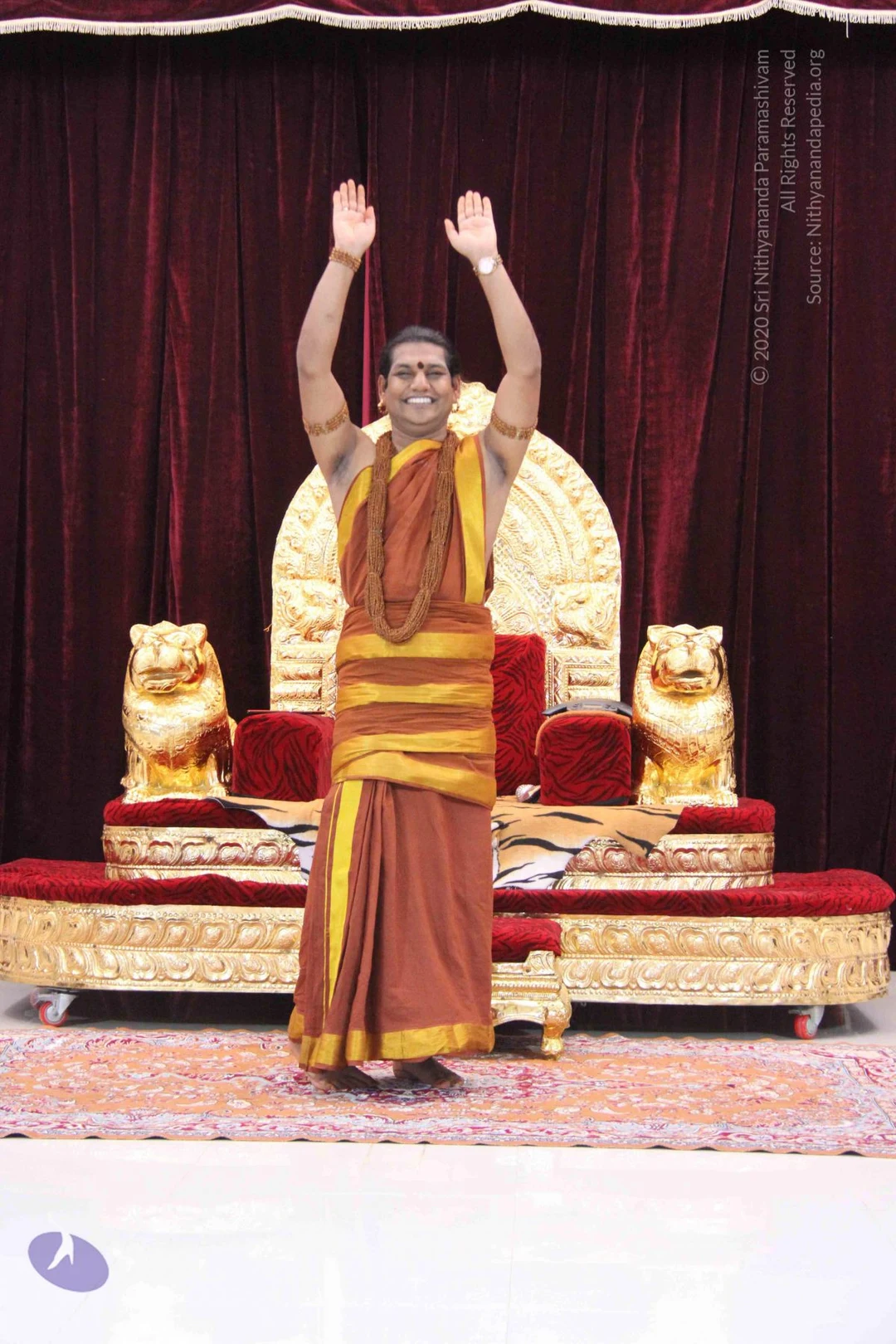
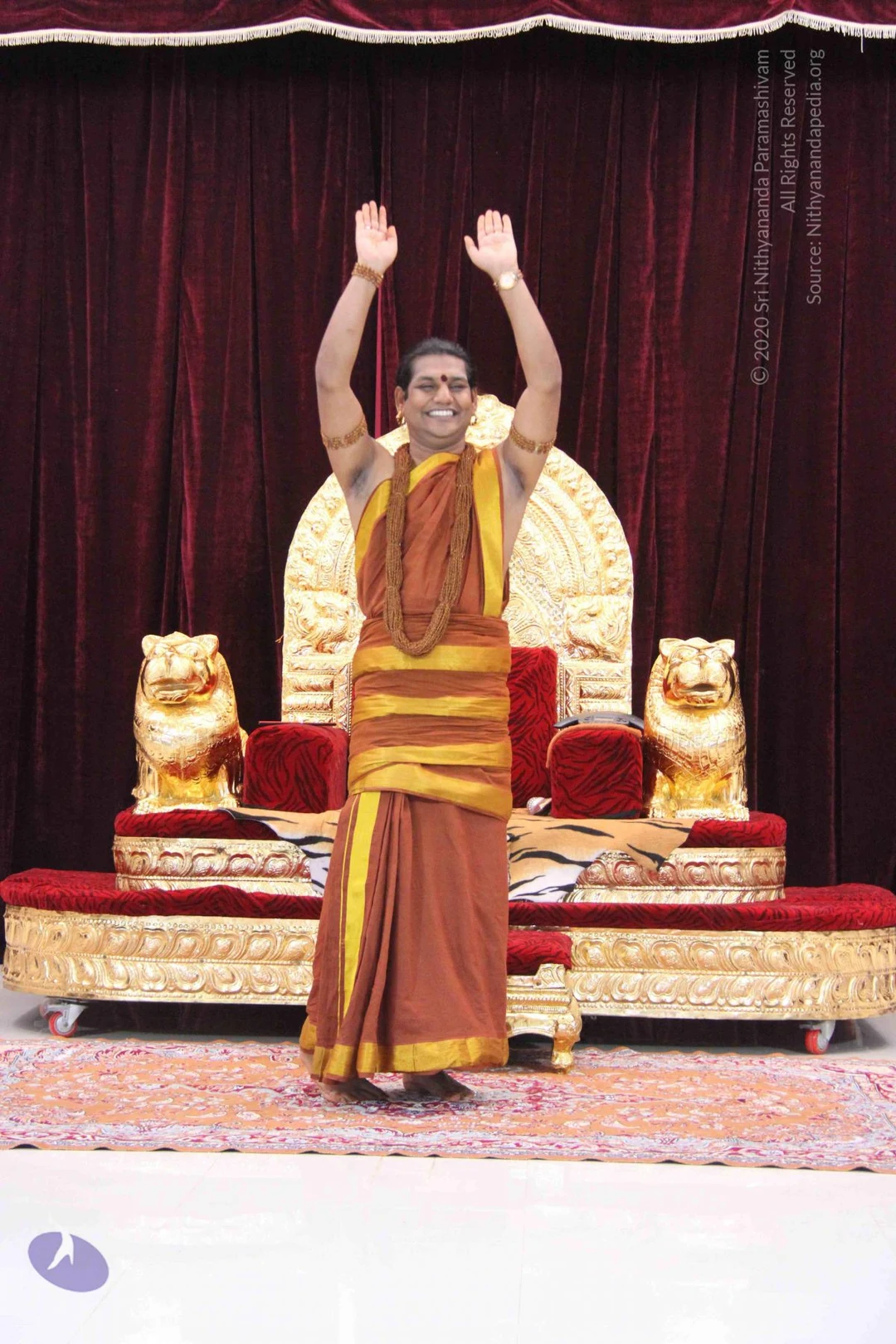
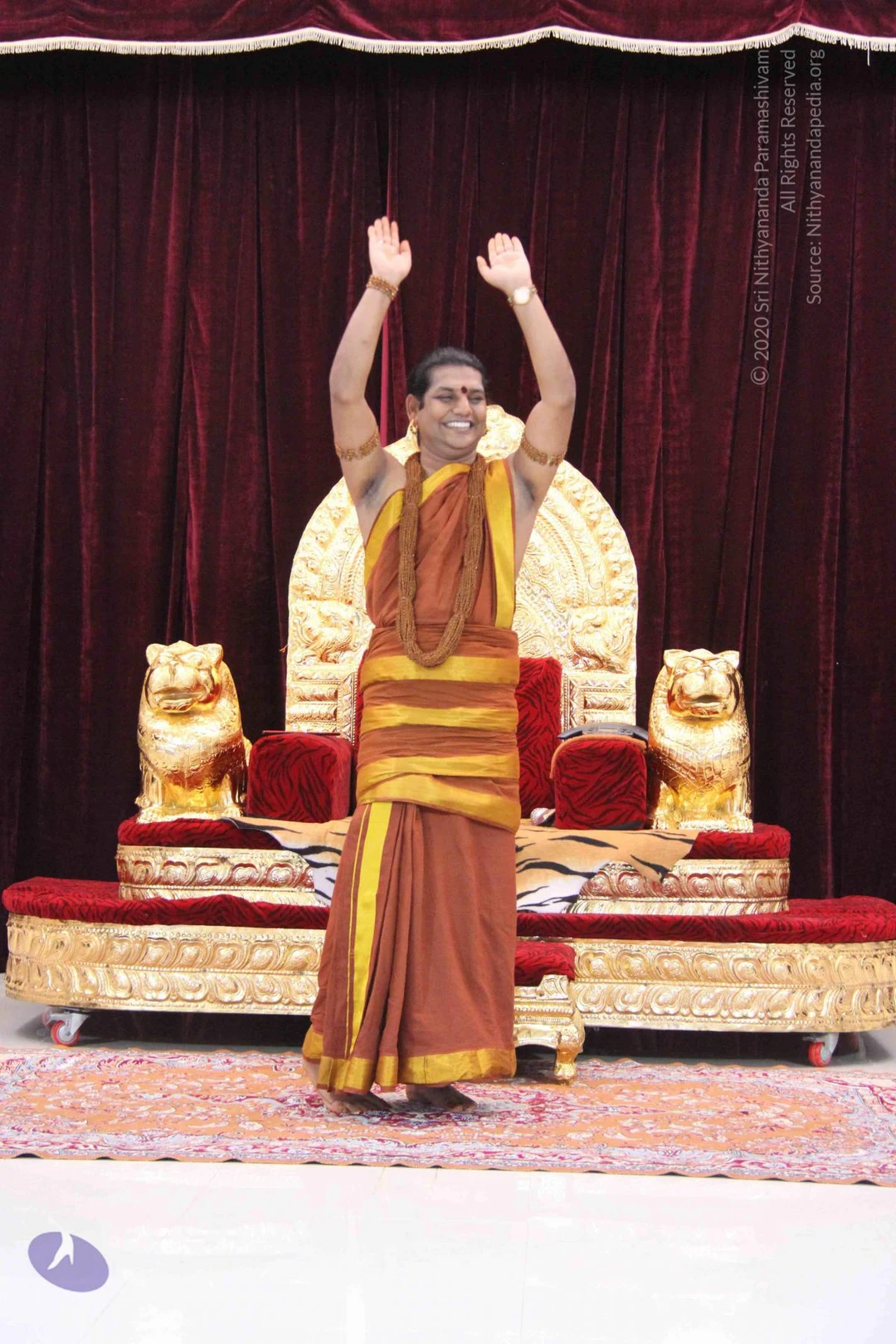
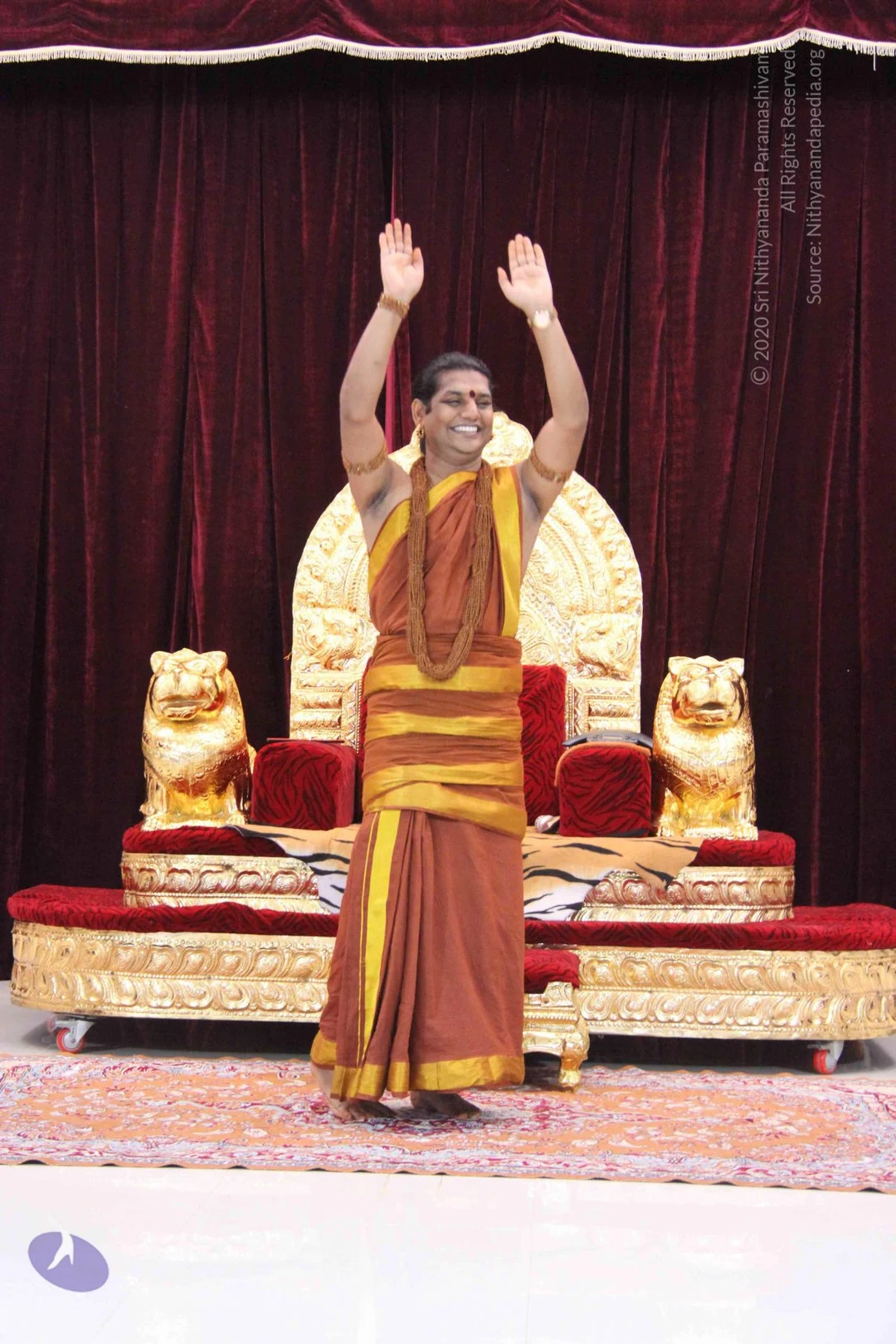
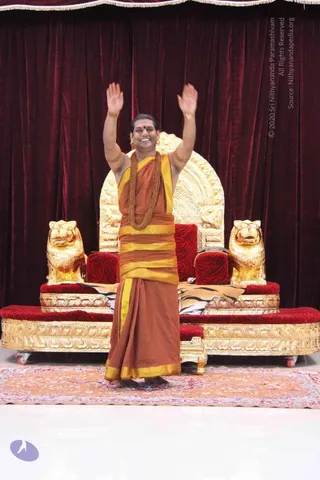
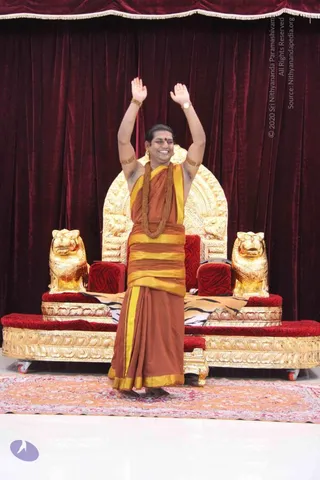
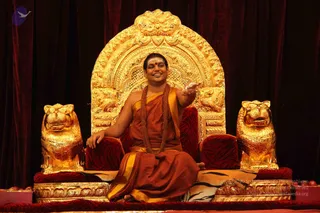
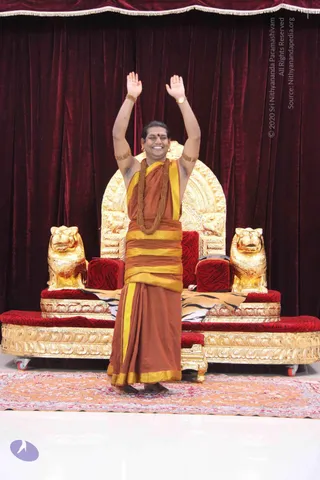
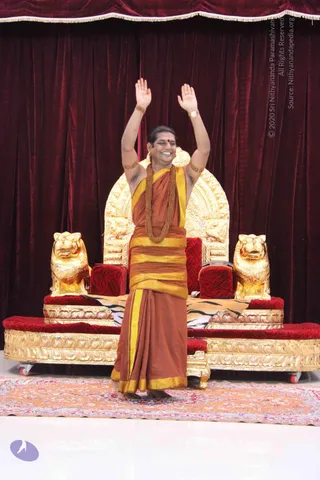
A man stands barefoot on a patterned carpet in front of an ornate gold throne with lion-head armrests, draped with a tiger-striped cloth, against deep red velvet curtains. He raises both arms in welcome, smiling, wearing a rust-orange and gold-bordered wrap, a long beaded rudraksha-style mala, gold bangles and a red bindi. The scene suggests a satsang stage setting.A photograph of a man standing barefoot on a patterned rug in front of an ornate gold throne with red tiger-striped cushions and two gold lion sculptures. He wears a rust-orange and gold-bordered draped garment, a long rudraksha mala, gold armbands and a wristwatch, with a red bindi on his forehead. He raises both arms overhead with palms open and smiles. Behind him hang deep red velvet curtains with a gold fringed valance.

Day-3-Nithya-Kriya-Yoga
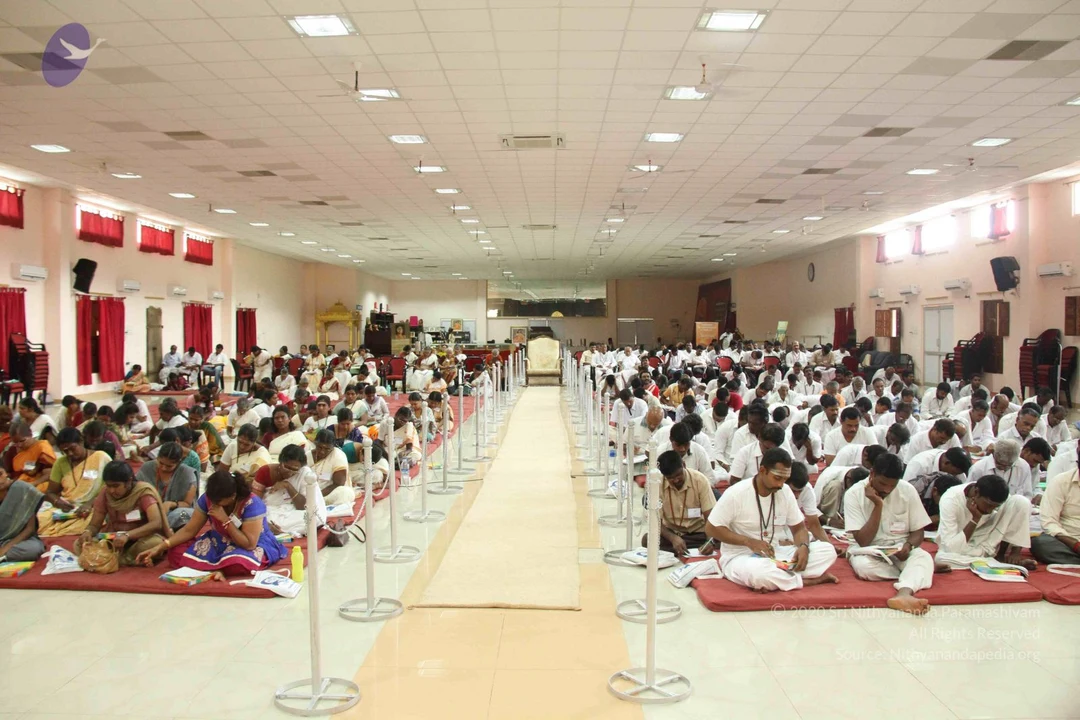
86 photosSource gallery
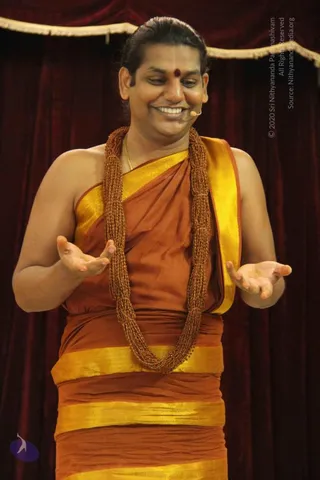
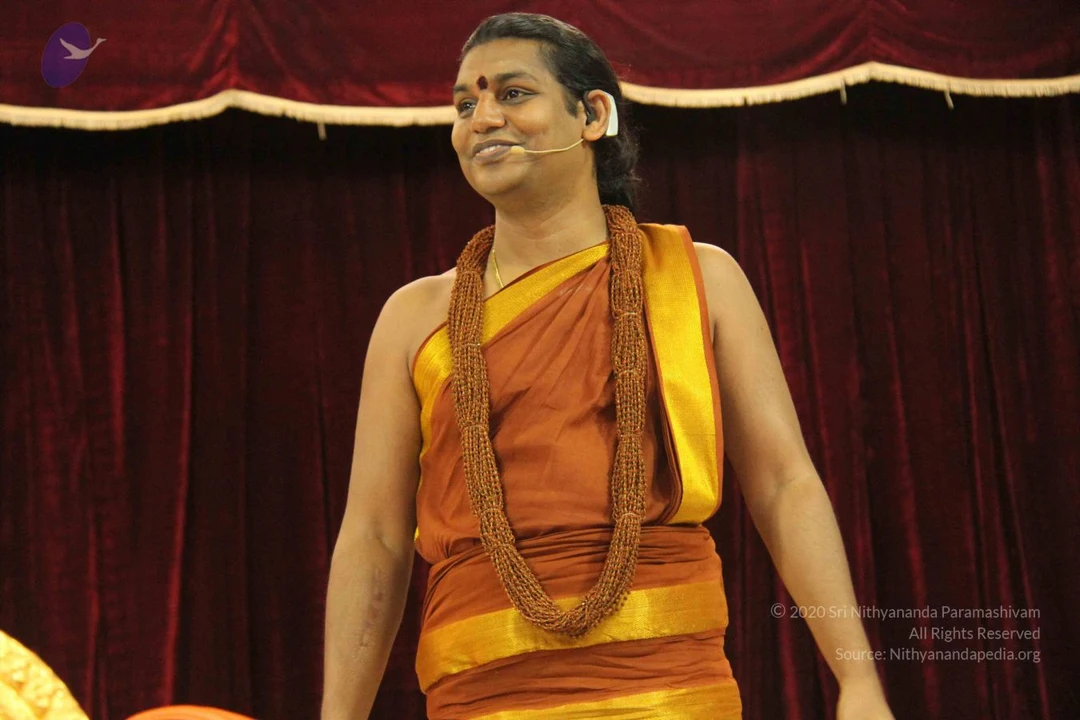
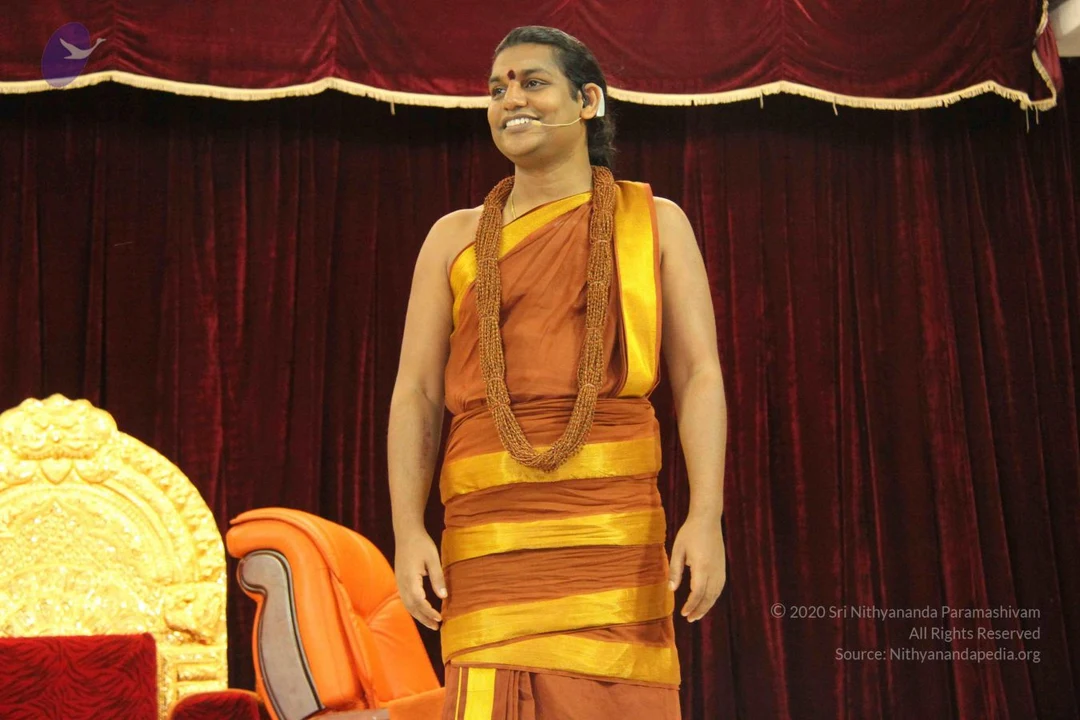
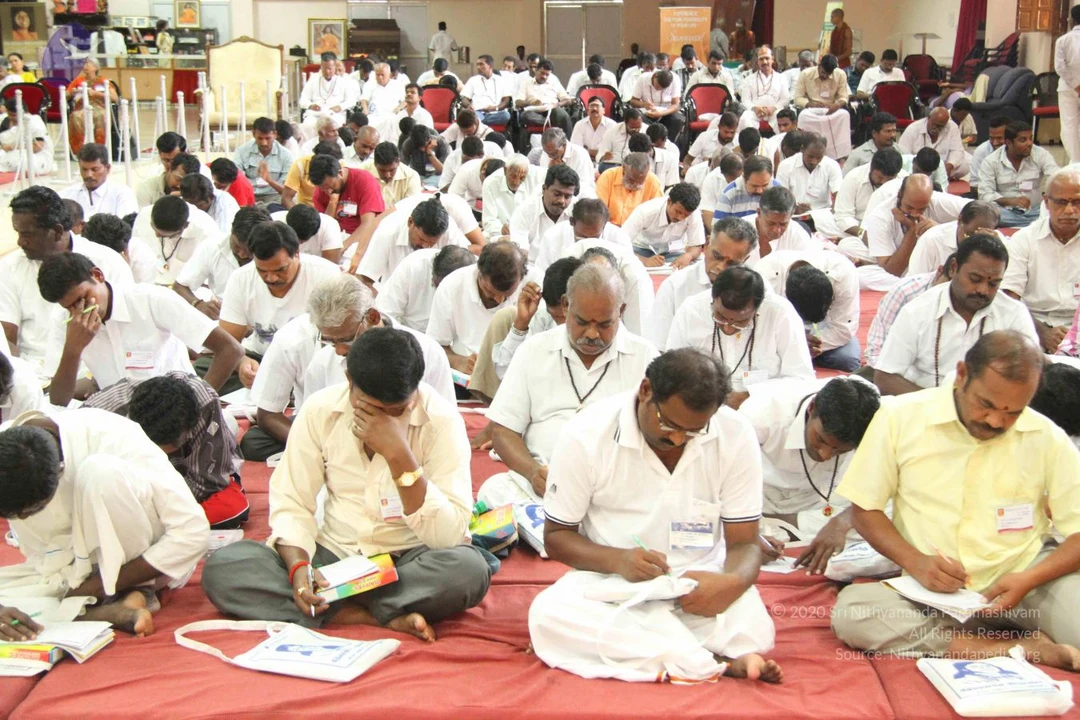
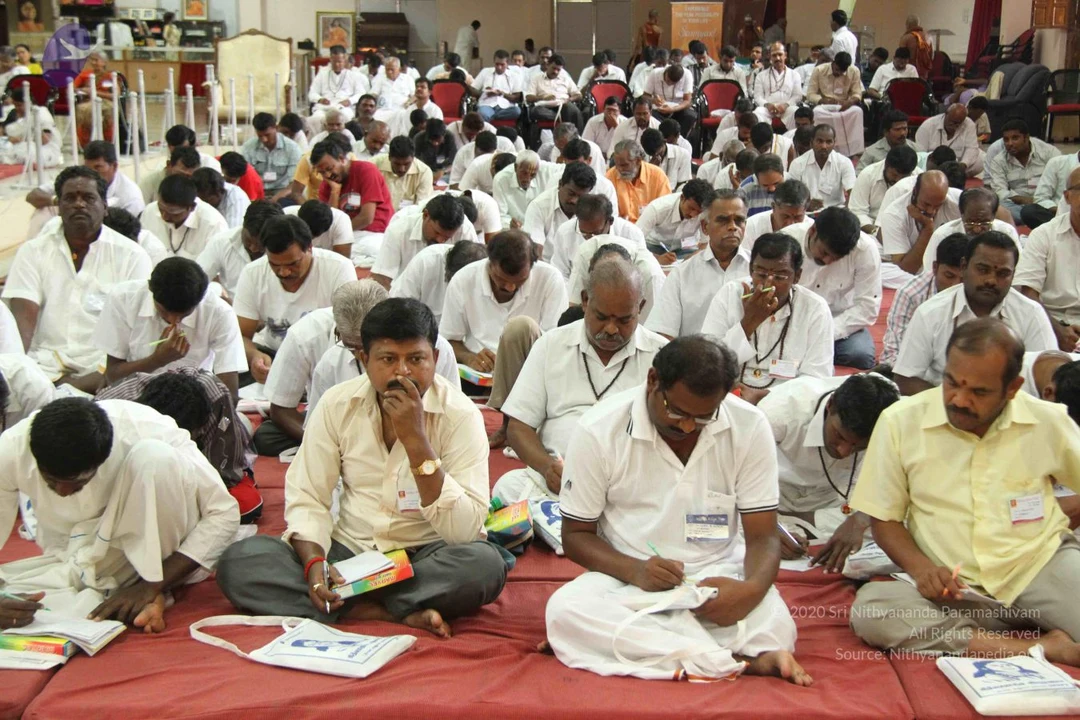
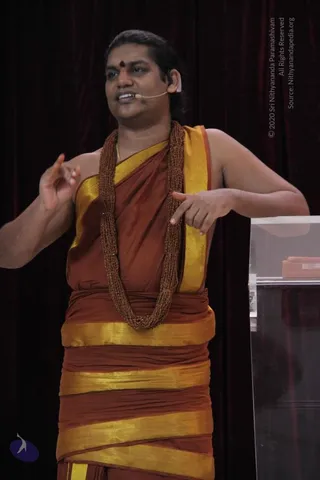
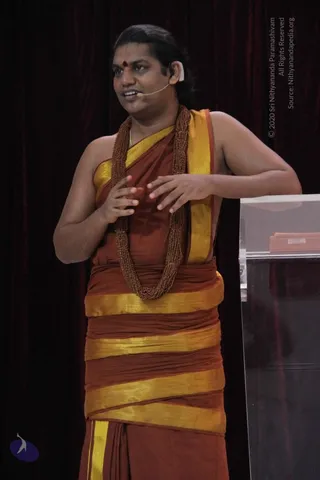
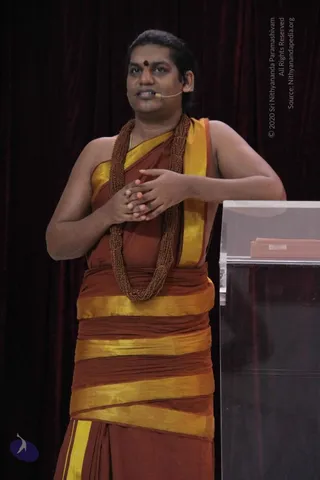
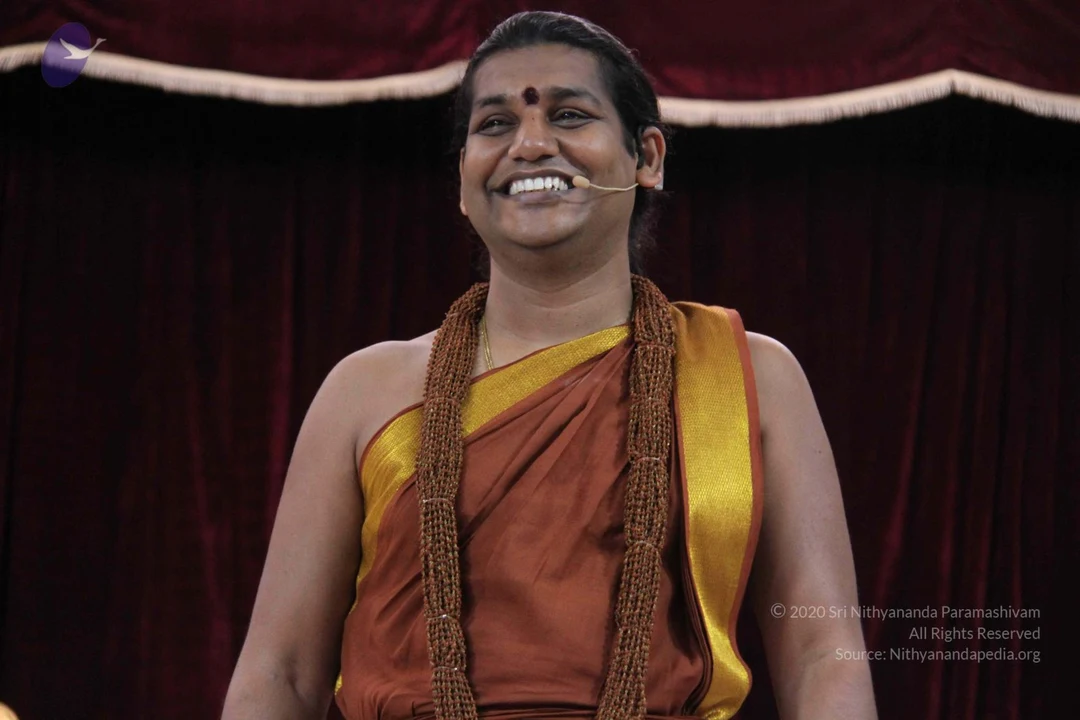
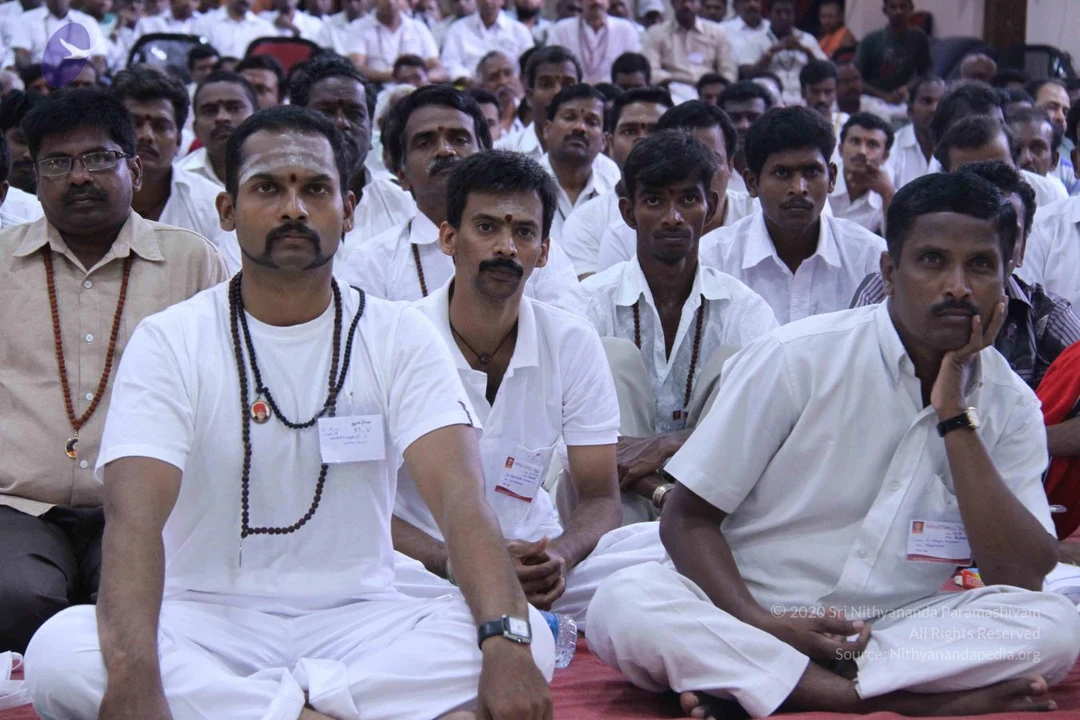
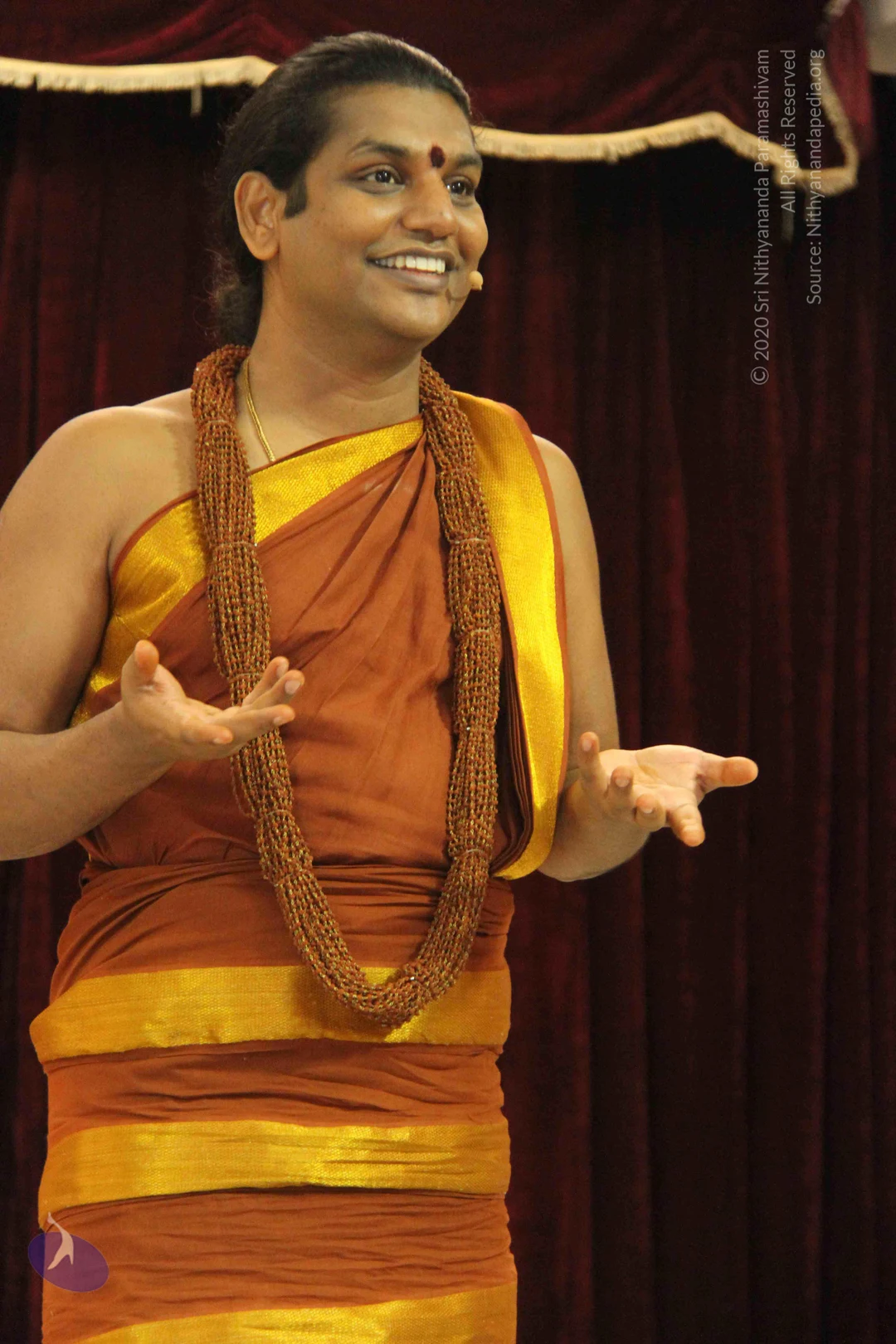
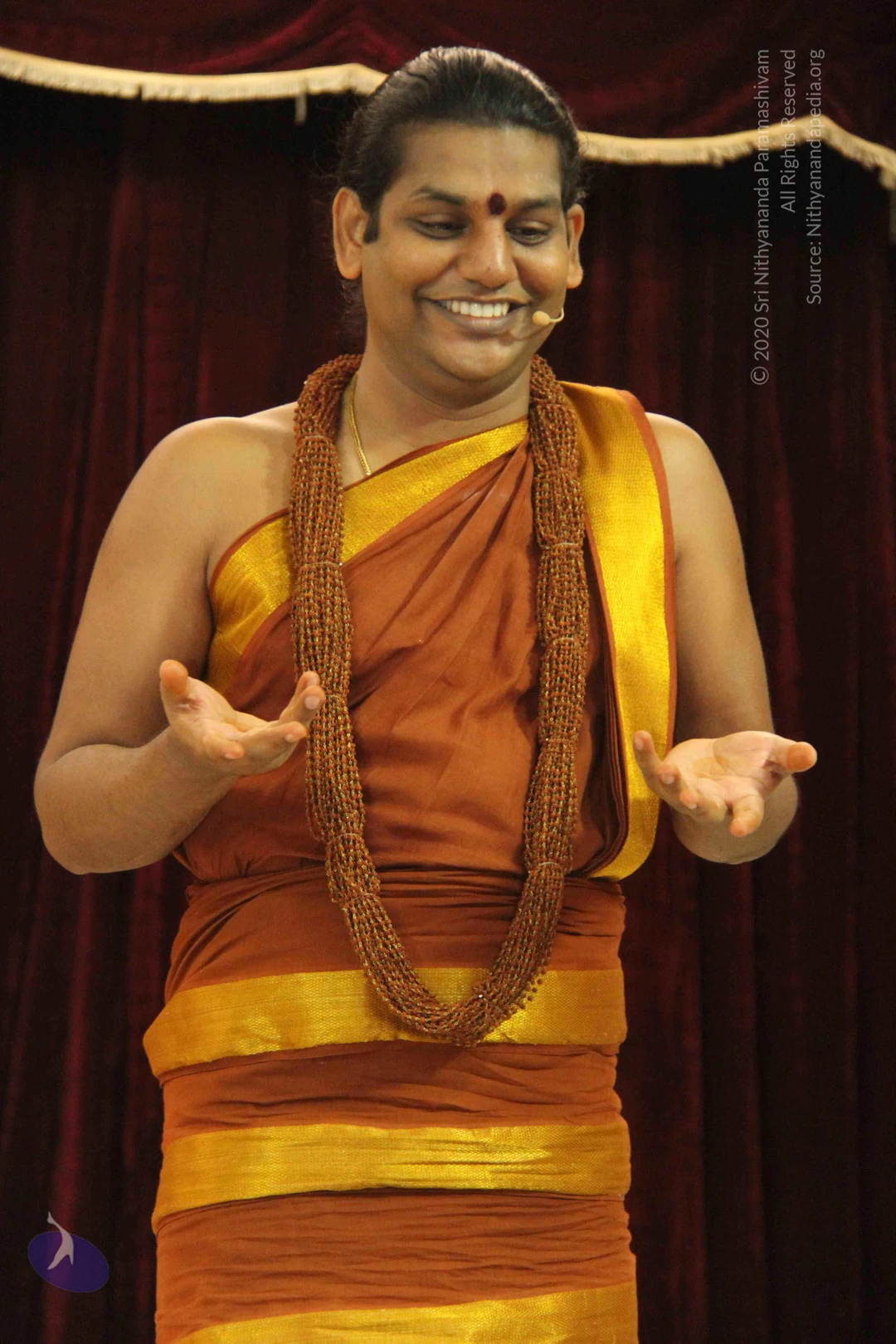
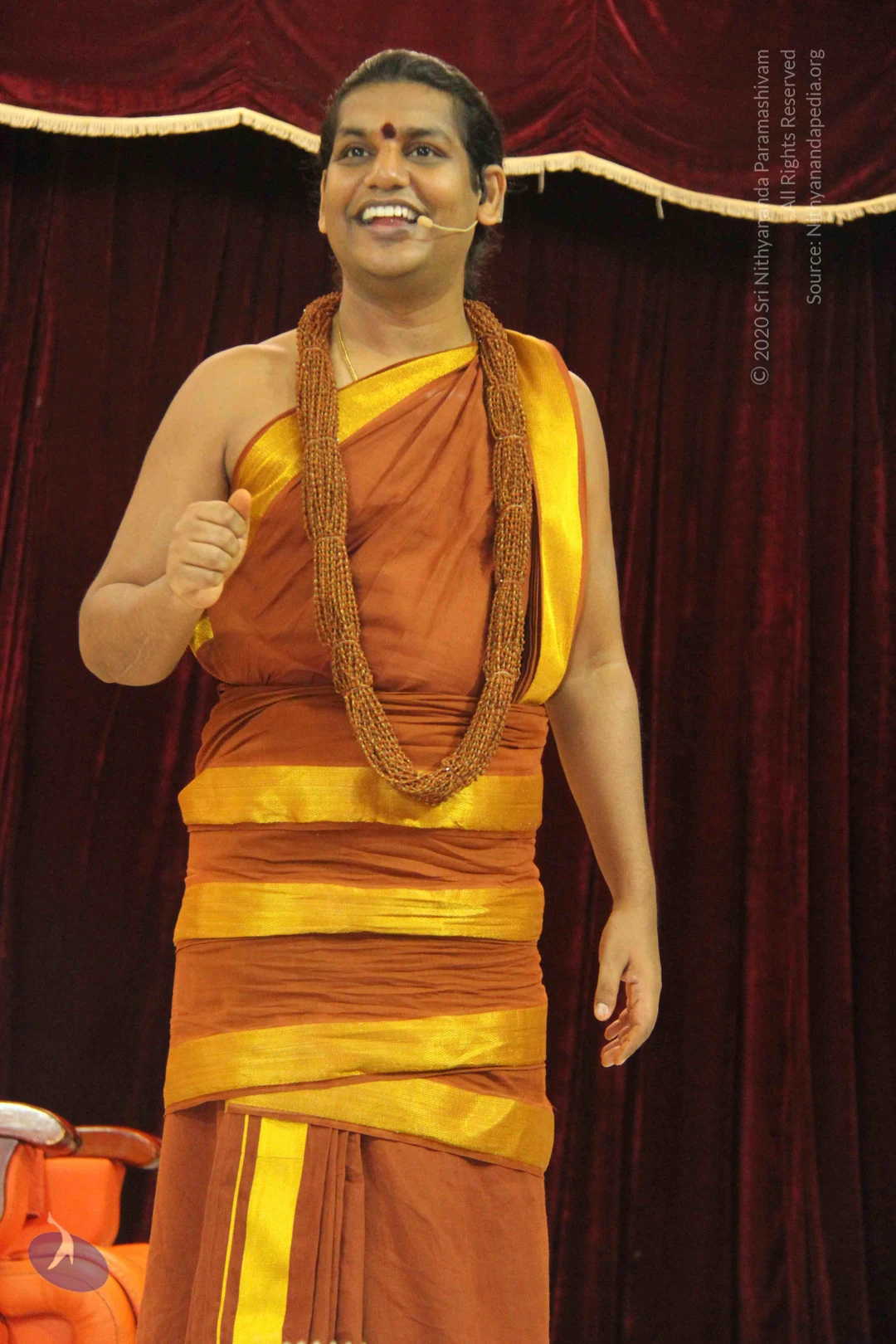
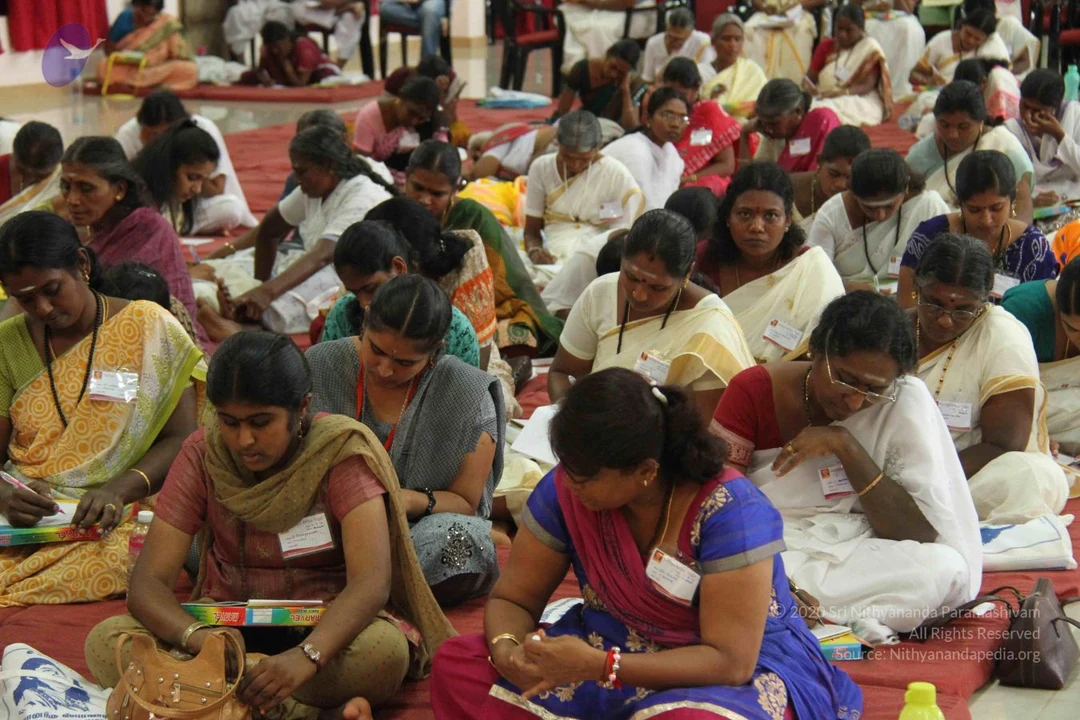
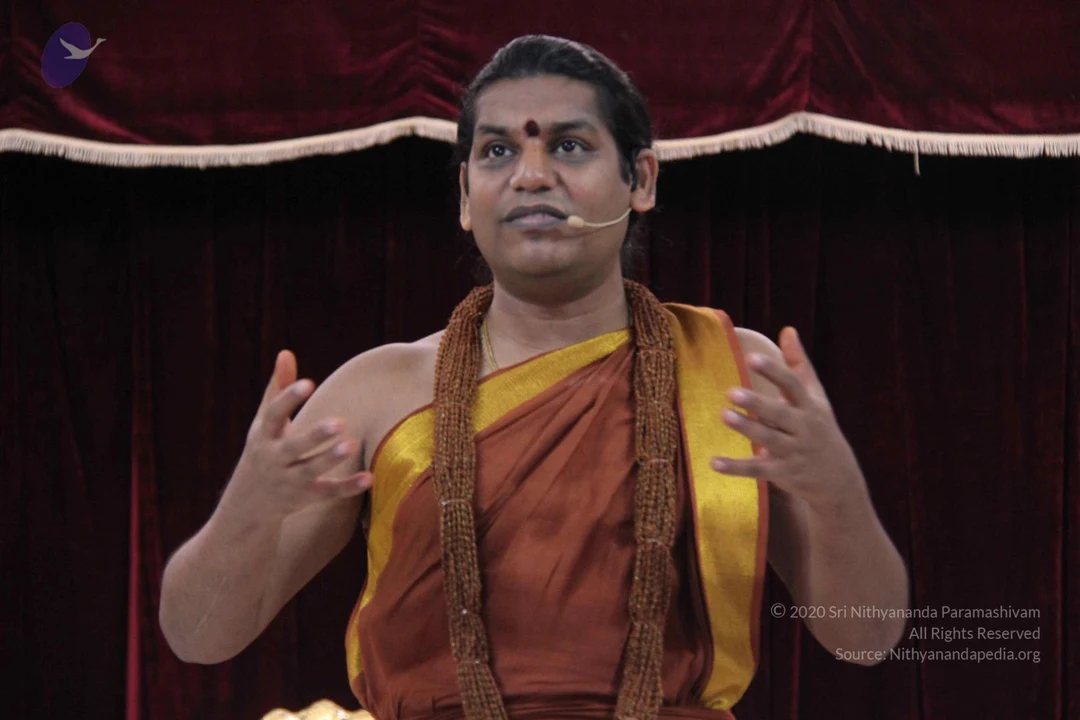
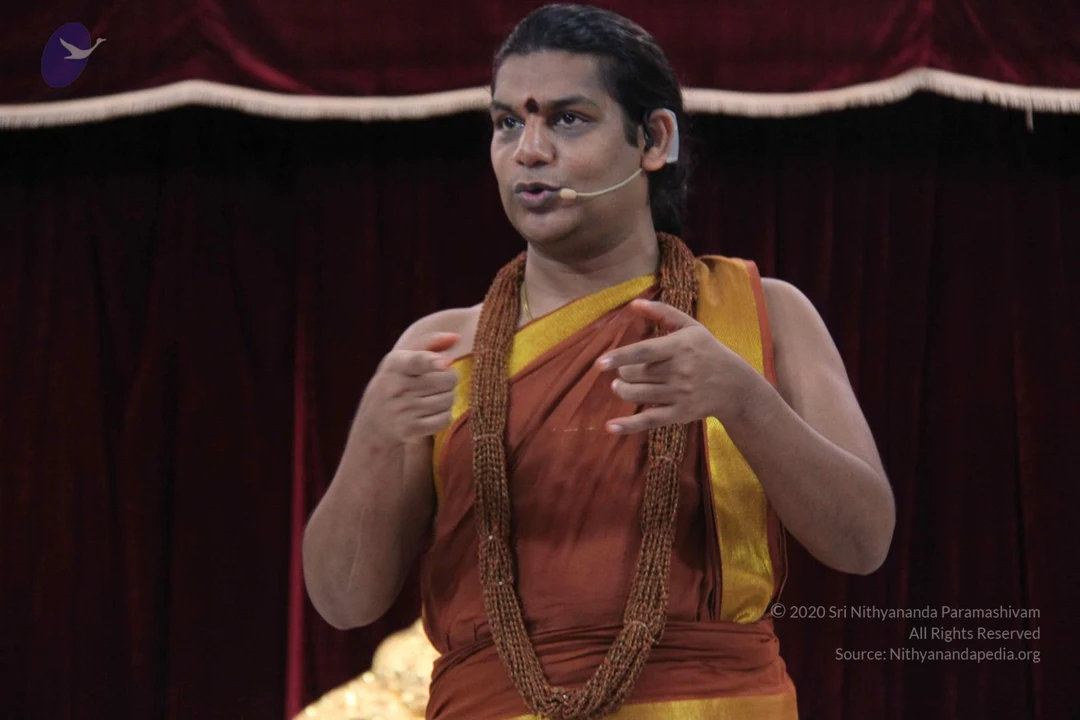
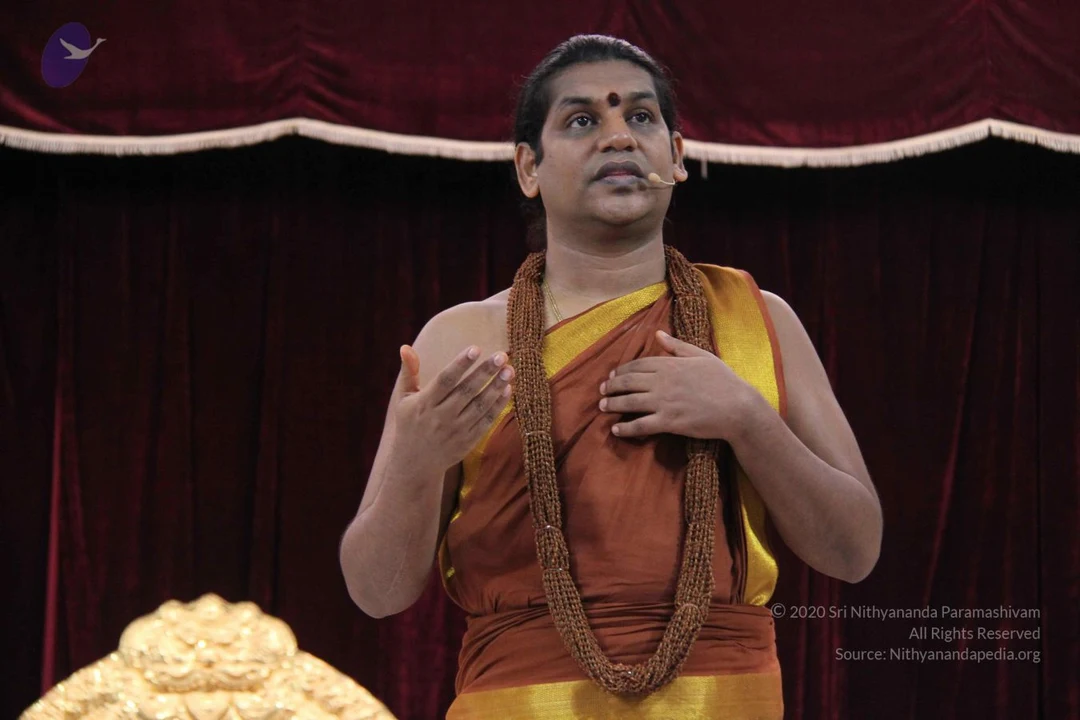
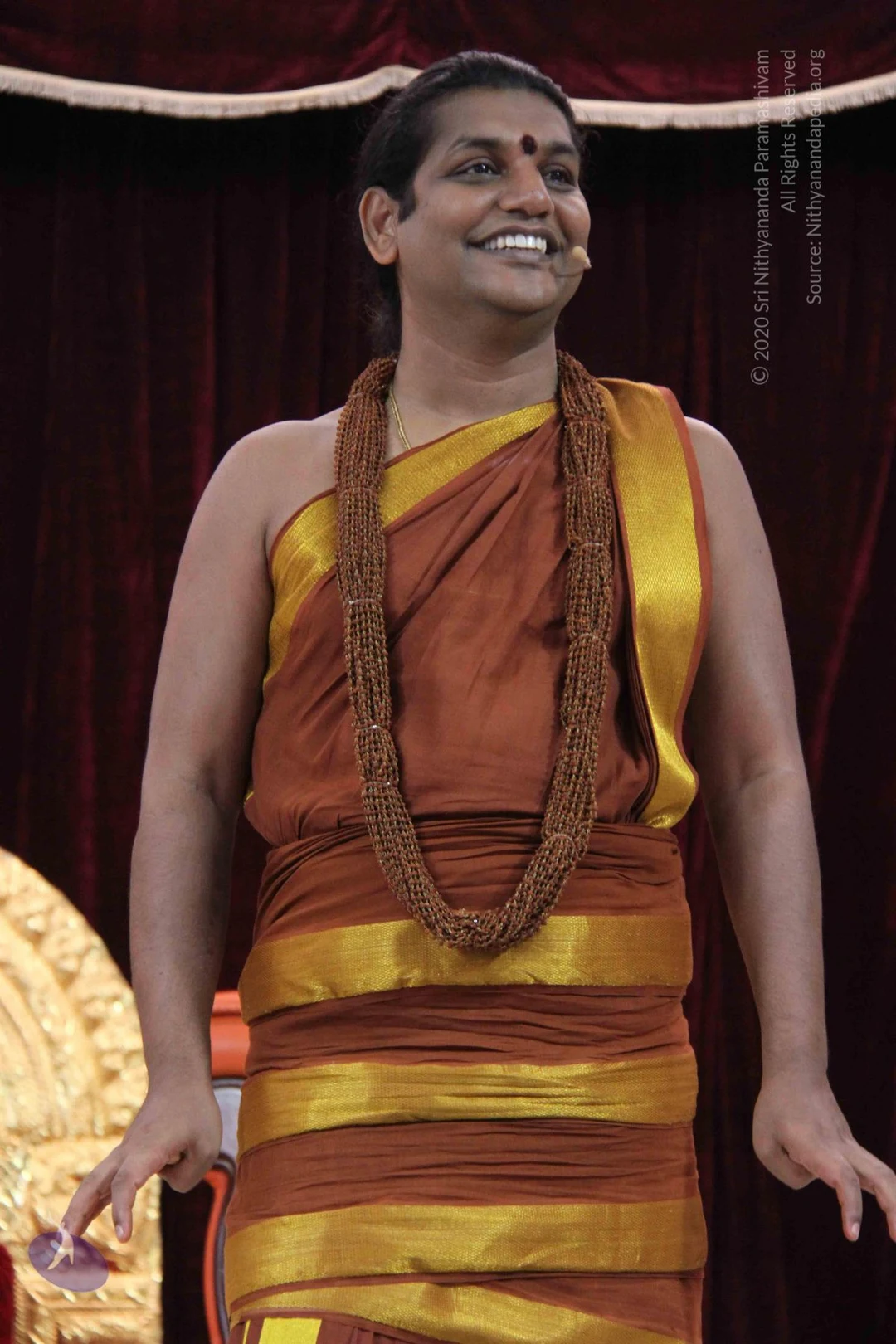
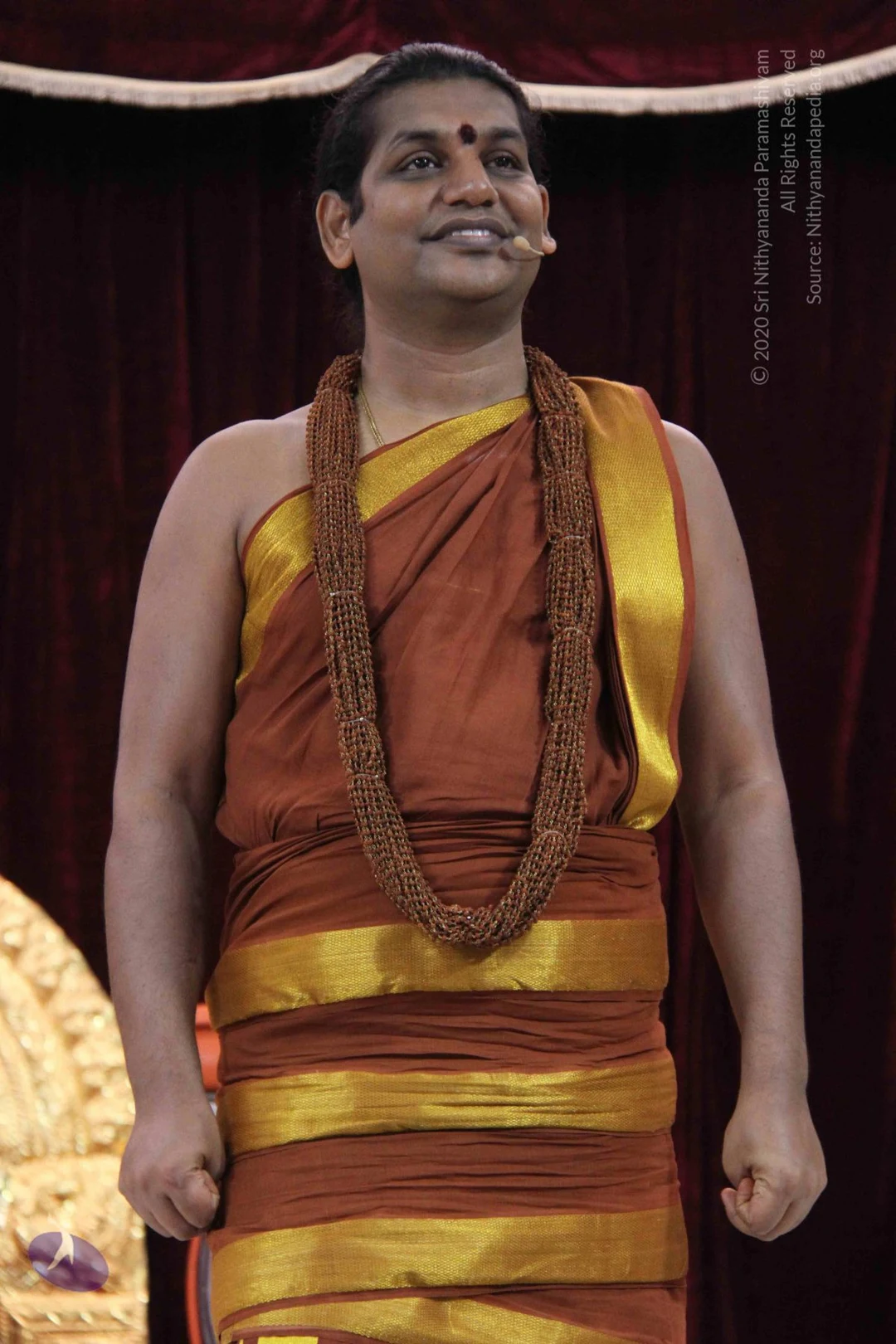
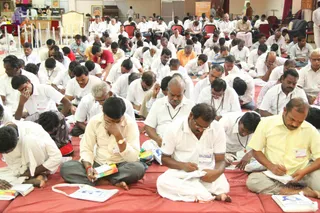
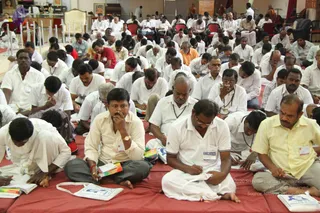
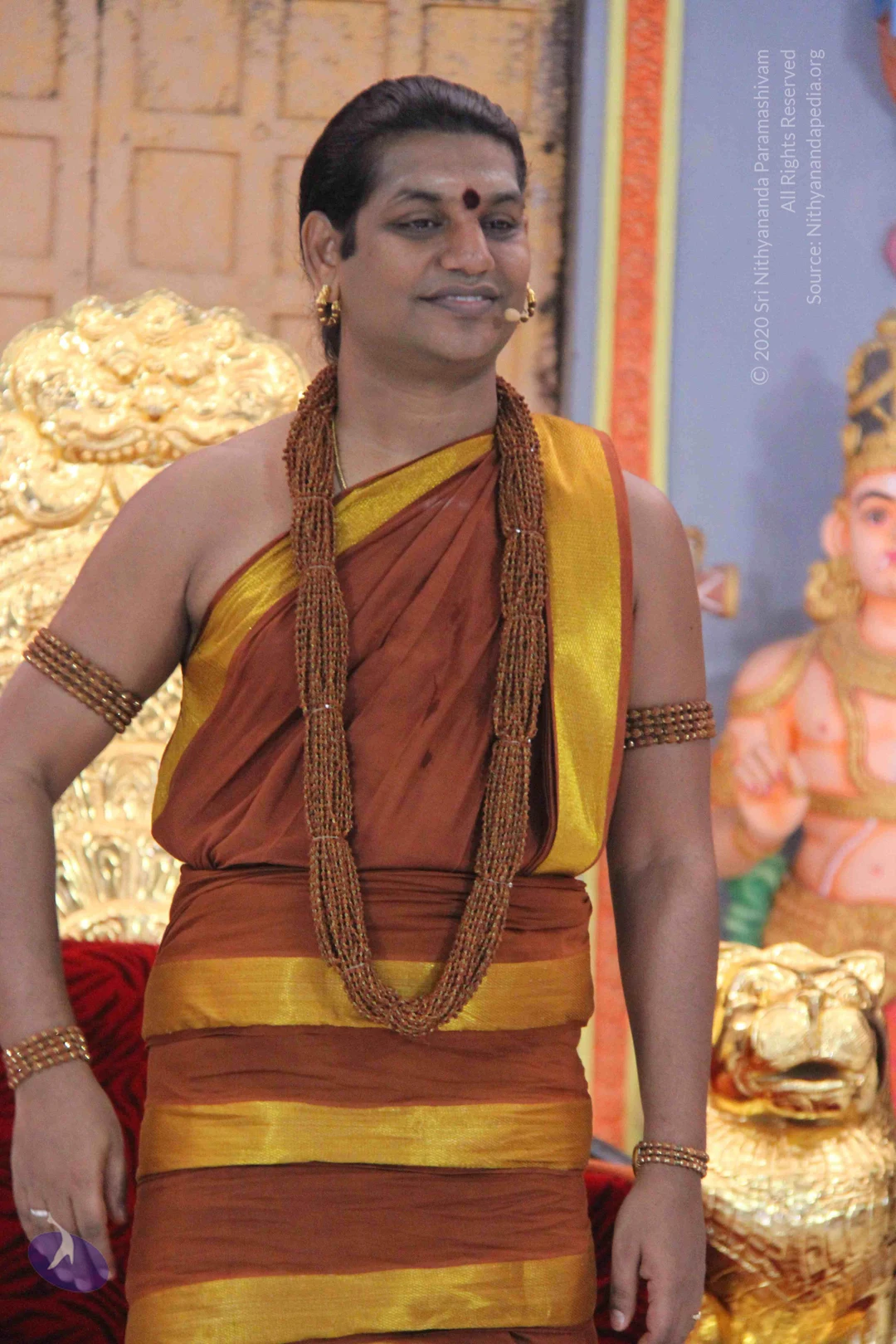
A man stands on a stage in front of deep red velvet drapes with gold fringe, speaking with open hands and a smile. He wears a rust-orange garment with wide gold borders draped over one shoulder and around the waist, a thick woven rudraksha-style mala of brown beads, a thin gold chain, and a red bindi on his forehead. A small headset microphone is visible near his face. a person by appearance: a long swept-back hairstyle and an ornate saffron-and-gold robe with a beaded mala, delivering a satsang discourse as the speaker.A man stands on a stage before a dark red velvet curtain trimmed with gold fringe, smiling and gesturing with both open hands as he speaks. He wears a rust-orange garment with broad gold borders draped over one shoulder and wrapped at the waist, a dark brown beaded mala around his neck, a red bindi on his forehead, and a small headset microphone. His hair is swept back. This is a photograph of a single person, and a person candidate is visible with appearance cues including the saffron-orange robe and rudraksha-style mala.A photograph of a man standing on a stage before a deep red velvet curtain with gold fringe. He wears a rust-orange garment with a gold border draped over one shoulder and wrapped at the waist, and a long rudraksha mala of brown beads around his neck, with a small red bindi on his forehead. A small headset microphone is attached to his face and a white earpiece is visible. He has his head turned to one side and smiles. Gold ornament is visible at his neck. Partly visible at the lower left is a yellow-gold object.A photograph of a man standing on a stage in front of deep red velvet drapes with gold fringe. He wears a head microphone and a rust-orange and gold-bordered draped robe with a rudraksha mala around his neck, and a red bindi on his forehead. Beside him on the left is an ornate gold throne with carved detail and an orange leather armchair. He smiles and looks to the side while speaking at a satsang. Swamiji (probable): long dark hair swept back, a rudraksha mala and saffron-orange robes with gold borders, with the page indicating his presence at this satsang.A large seated audience of men fills a hall with red floor mats, most wearing white shirts and white dhotis, with some in yellow or pale shirts. Many have name badges and rudraksha malas, and many are writing in notebooks with pens or reading printed booklets. Some rest their heads on their hands. At the far left a woman in orange sits near a white ornate chair and framed pictures on a side table. Red chairs line the back wall, and a banner is visible at the top of the hall.A large seated audience of men fills a hall for a satsang or meditation camp, sitting cross-legged on red mats. Most wear white shirts and white dhotis, while a few wear pale yellow or red shirts. Many hold pens and notebooks and write or listen attentively; some carry white cloth bags printed with a blue logo. Name badges hang from several shirts. At the upper left, a stage area with white pillars and a table is visible, and a faint banner reads 'Tamil Satsang'. No clearly identifiable a person figure is visible in this view, so none is described.

PratyakshaPadaPuja-Pictures

25 photosSource gallery
Close-up photograph of a pair of bare feet resting on a golden tray filled with red, orange and pink flower petals and yellow petals arranged around it. A red and gold silk garment edge is visible at the left. Surrounding the tray are polished silver puja vessels, bowls and a small brass cup, with orange and red flowers and green leaves scattered among them. The feet appear to be receiving a padapuja-style offering of flowers and vessels.Close view of a ritual offering on a gold-toned tray: red, orange, pink and yellow flowers, including large yellow petals and rose-like blooms, scattered around silver vessels and a silver spoon. At the upper left, a bare foot with visible toes rests beside a gold-and-maroon silk garment, indicating a seated person offering flowers during puja. The silver bowls and ornate metal tray suggest abhishekam or puja worship.A seated man in saffron-orange and gold-bordered robes with a long rudraksha mala and a gold necklace sits on an ornate gold throne carved with a lion head and draped with a tiger-striped cloth, beside brass hanging bells and oil lamps. Seated on the right, a man in white shirt presses his palms together in greeting, a woman in white with a white forehead band holds her hands in añjali, and a man with a white forehead mark sits near brass plates of flowers, fruit and lamps. Probable Swamiji cues: long swept-back hair, ornate gold throne, saffron-orange robes, rudraksha mala and gold necklace; the seated man is presented as the central figure. Setting is a dark-walled hall with an air conditioner on the wall. Kumkum and fresh flowers are arranged on the platters.A photograph of a man seated on an ornate gold throne carved with a lion-head armrest and draped in a tiger-striped cushion. He wears an orange-brown robe with a gold border, a bare right shoulder, a long rudraksha mala, gold armbands and a tilak on his forehead. Before him are silver trays of flowers, lamps and offerings. Two devotees kneel at the right in white, one man with a white forehead mark and a woman with hands folded in anjali. Brass bells and hanging oil lamps hang above against a black wall. Swamiji (probable): the seated man has long swept-back hair, an orange robe, a rudraksha mala and gold armbands on the throne, consistent with the page's attribution.A seated man in an ornate gilded throne with a carved lion-head armrest, wearing a saffron-orange dhoti and shawl with gold border, a long rudraksha mala around his neck and gold armbands, sits on a tiger-skin-covered seat while looking to his right. In front of him a golden tray holds silver plates of fruit, flowers and offerings, with a red floral arrangement at centre. Two men in white and a woman in white with a white forehead mark stand with palms pressed together in namaste; a man in a red-orange kurta with a white forehead band kneels and joins his hands. Brass hanging bells and an oil lamp hang above, against a black stone-tiled wall with a wooden-panelled door on the right.A figure in an orange-red and gold-bordered dhoti and matching shawl with a rudraksha mala sits on an ornate gold throne carved with a lion and tiger motif, with brass oil lamps and hanging bells beside him. Before the throne, a devotee in white with a red-orange shawl bends forward to touch a golden tray of flowers, lamps and food offerings. Two attendants in white clothing sit nearby, one with a forehead mark and one with a white headband and rudraksha beads. The dark stone wall and carved wooden door complete the ritual setting. a person: the seated figure has long swept-back hair, a rudraksha mala and saffron-orange clothing on a throne.

NithyaSatsang-Swamiji

39 photosSource gallery
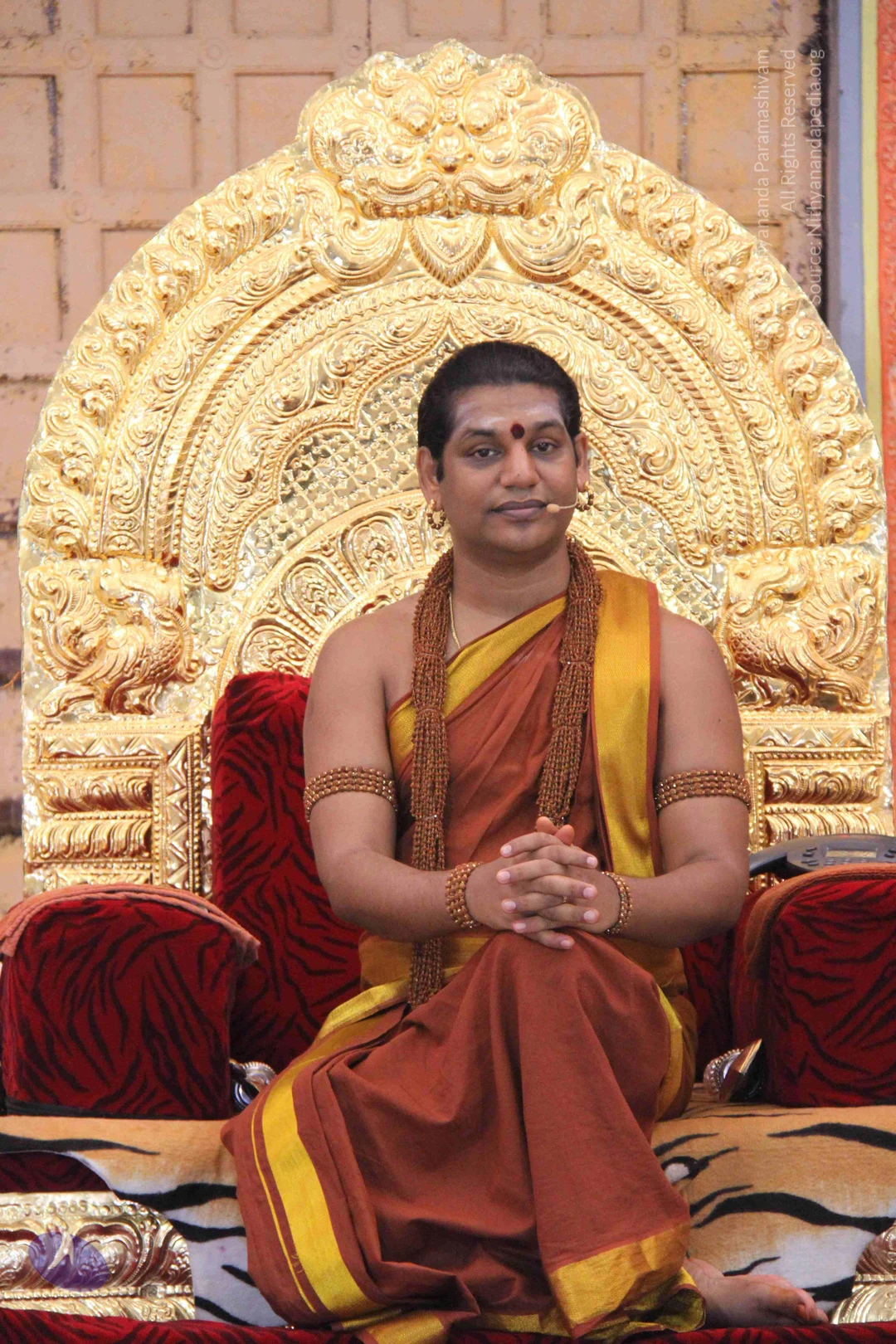
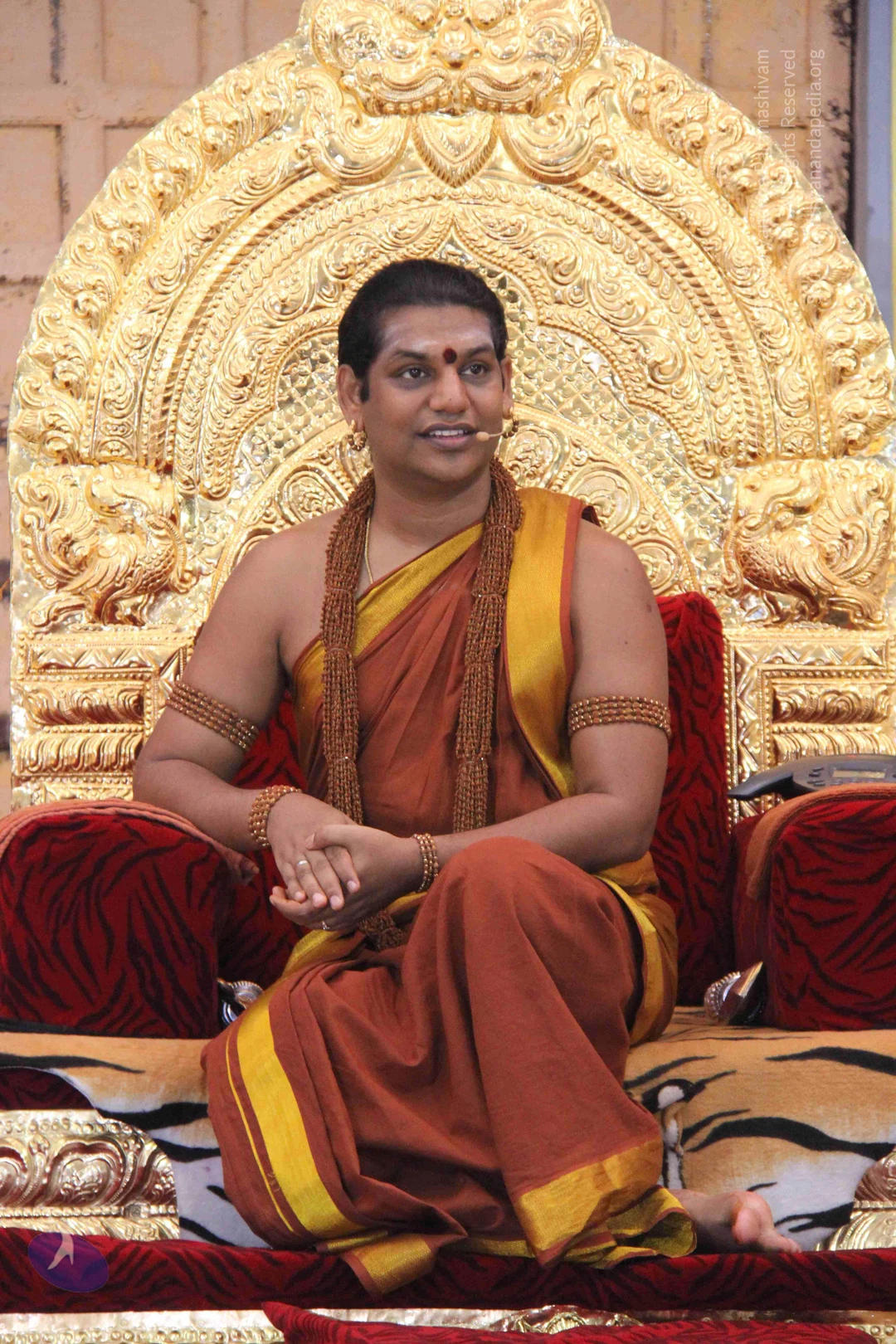
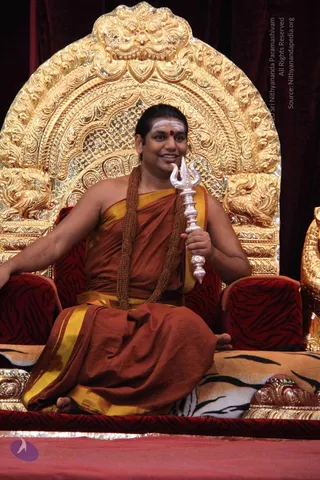
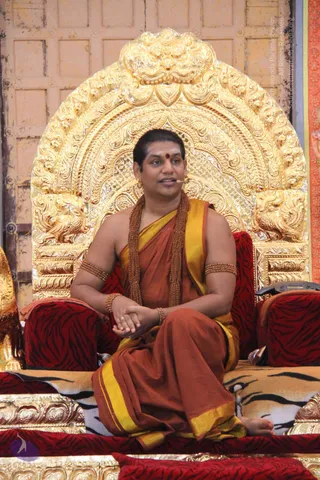
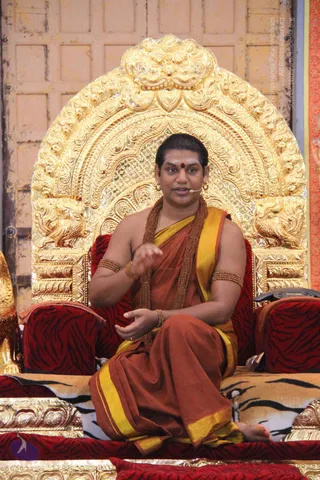
A photograph of a man seated on an ornate gold throne with carved lion-head armrests and a large gold arched backrest. He wears an orange-red robe with a gold border, several rudraksha malas around his neck, gold armlets, and a red tilak on his forehead. He has a headset microphone, hair tied back, and his arms are open in a gesture of explanation while he smiles. Behind him stand gilded deity figures with raised hands. One person is visible.A man seated on an ornate golden throne with a tall arched gilded back carved with scrollwork, flanked by golden lion-head armrests in front of a red and black patterned cushion. He wears a rust-orange garment with a golden-yellow border draped over his shoulder, a long rudraksha mala of brown beads, gold bangles and an earpiece microphone, with a red bindi on his forehead. He gestures with both palms raised in front of his chest while speaking, and his hair is swept back into a bun. Behind him, painted deity figures with multiple raised arms in red and gold appear at the edges. The setting suggests a satsang discourse stage.A man seated on an ornate gilded throne with carved lion-head armrests and a golden arched back, dressed in saffron-orange robes with a gold-bordered shawl and a long rudraksha mala. He wears gold bangles and a wristwatch, has a red bindi, and holds his hands in front of his chest in a gesture while speaking, with a small headset microphone visible. Flanking the throne are painted deity statues in bright colours with gold ornaments. A wooden door panel stands behind.A seated man in ochre-saffron robes with a yellow border sits cross-legged on an ornate gilded throne with a large arched backrest carved with floral and lion motifs. A red bindi marks his forehead, and he wears a long rudraksha mala, gold bangles and a small microphone clip. Two gilded lion sculptures flank the throne on red and black tiger-striped cushions, and two tall painted deity figures in gold crowns and jewellery stand on either side. A wooden panelled door forms the backdrop. The man is seated with hands resting on his knees. Appearance-based candidate: a person, seated on the throne in a satsang setting.A man in saffron-orange robes with a gold-bordered cloth sits on an ornate gold throne, or peetha, with an elaborate arched backrest and red velvet cushions. He wears a long rudraksha mala, bangles, and a small microphone at his ear, and gestures with both open hands while speaking. Flanking him are two golden lion sculptures on tiger-striped mats, and two painted dvarapala guardian statues with raised arms, crowns and gold ornaments stand on either side.A man in saffron-orange robes with gold border sits cross-legged on an ornate golden throne with a tall arched back, smiling and gesturing with both hands. He wears a rudraksha mala with a long beaded strand, gold bangles and an upper-arm band, with a red bindi on his forehead. Two large golden tiger-head sculptures flank the throne on a tiger-striped red cushion. On either side stand tall painted deity statues in gold crowns, gold necklaces and pink-orange dhotis, one holding a flame and the other a trident. A wooden door with carved panels is in the background. a person: the seated man wears saffron robes, a rudraksha mala and gold ornaments on a throne.

CrowdShots-satsang

11 photosSource gallery
Large indoor hall with white floor and a crowd of mostly men seated on red mats during a satsang gathering. In the foreground, boys wear red and maroon dhotis with rudraksha malas and white vibhuti lines on their foreheads; several young men in white dhotis and orange saffron robes sit with folded hands. A man in saffron robe with a rudraksha mala sits at the front right. Behind them, many devotees in white clothing sit in rows. A cameraman stands with a camera on a tripod near the back. Gold-coloured ritual stands, brass plates and small lamps sit on the floor. Red curtains hang on the left wall and a golden shrine structure is visible in the background.A large hall filled with seated devotees during a satsang, with many people in white dhotis and white kurtas and women in white saris, plus young boys and men in red-and-gold ceremonial dhotis and saffron-orange robes with rudraksha malas. Many attendees sit on red mats and some are clapping or folding their hands. Foreground figures include a bald man in saffron-orange robes with a rudraksha mala and white forehead marks, and a young boy with white tilak on his face. A cameraman stands at the back on a tripod near a golden throne-like seat and red curtains. Pale walls, framed pictures and a glimpse of a shrine area complete the scene.A seated assembly in a large hall during a Tamil satsang, with many people in white and cream clothes and several in red and saffron garments. In the foreground, a shaved-headed young man in white dhoti and a saffron-coloured monk-like man with a rudraksha mala sit with palms pressed together in devotion. Several boys in red robes with rudraksha malas and white vibhuti on their foreheads sit on red mats. Brass plates with offerings and small cups lie on the floor, and a cameraman stands at the back filming. Many devotees raise their hands in prayer across the room.A large indoor hall full of seated devotees during a satsang gathering, many in white dhotis and shirts, with a crowd filling the floor and rows beyond. In the foreground, several young boys and youths wear red-and-gold silk dhotis with rudraksha malas and sacred ash marks on their foreheads and bodies, sitting with palms joined. At the lower right, a man in saffron-orange robes with a rudraksha mala and white forehead marks claps with raised hands, and a woman in a white sari with gold border sits beside a young girl in red. A cameraman stands on a platform in the background near a stage with framed portraits and flower arrangements. Floor mats and small brass plates with offerings lie on the ground.A large seated audience of men fills a hall with red floor mats, attending a satsang. Most wear white shirts and white dhotis or trousers, with some in pale checked or coloured shirts. Several have vertical tilak marks and rudraksha malas around their necks. In the front row, a bald man with a light forehead mark sits at the bottom edge, and a man in a white shirt and dark trousers holds a small booklet. Behind them rows of attendees sit cross-legged, and a cameraman stands at the top left near a tripod. Some devotees in the back wear saffron or orange clothing. Books and pamphlets lie on the mats, and a few people wear name badges on their shirts.A photograph of a large seated audience at a satsang hall, with men in white dhotis and shirts and some in red or grey casual wear, sitting on red mats. Many have palms pressed together in namaskar or are seated with hands folded. A few wear vibhuti or tilak on their foreheads, and one elderly man wears a grey-brown shawl. Lanyards and name badges hang from several shirts. Red stage drapes and white pillars frame the background, and an orange banner is partly visible at the top left.

SarvaDarshan-Pics

9 photosSource gallery
A photograph inside a large hall with pale pink walls, ceiling fans and a stage backed by maroon curtains. In the foreground a smiling person with long swept-back dark hair, a red bindi, rudraksha mala necklaces, gold bangles and an orange-and-gold silk robe raises a hand in greeting toward a man in a white shirt and a young man in a light shirt with folded palms. Behind them a devotee in white bows, and a camera operator films at right. Probable Swamiji (probable) is shown with long swept-back hair, rudraksha malas, gold bangles and an orange-and-gold robe, greeting devotees. In the background a golden throne sits on the stage, and an orange-robed attendant sits among rows of floor cushions with brass vessels. A banner with small printed text hangs at right.A photograph in a large hall with a pink ceiling and red curtains. A tall figure in saffron-orange robes with a gold-edged yellow border and a long rudraksha mala, a red bindi and long swept-back hair smiles and extends an arm, while an elderly man in white bends forward with folded hands to receive him. Probable Swamiji: appearance-based label only, identified by long swept-back hair, ornate saffron and gold clothing, and rudraksha malas. Behind them, men in saffron with rudraksha malas and forehead markings stand along a barrier, and a golden throne sits on a stage with a backdrop of framed deity images.Indoor event hall with pink walls, red curtains and a gold throne-like seat on a raised platform in the background. In the foreground, an elderly man in white clothes with folded hands bows forward while a man in an orange-and-gold dhoti-style garment with a bare upper body and a red bindi raises his hand in blessing over him. Nearby, a smiling man in saffron-orange clothing with ornate gold armbands and a rudraksha mala stands beside them. Other devotees in white and orange garments stand behind metal stanchions, and a man in green shirt and dark trousers watches.A indoor hall with white ceiling and red curtains, where a man in an orange-gold saffron wrap and multiple rudraksha malas blesses a devotee by placing his hand on the bowed head of a man in a blue patterned shirt with folded hands. The blessed devotee bows with eyes closed. Other devotees stand in a line behind metal stanchions, including a woman in a white sari with a blue border and an older woman in orange. A shaved-headed young person in orange is in the lower left. Probable Swamiji is the person giving the blessing, shown by his long swept-back hair, saffron wrap, layered rudraksha malas and gold bangles.A photograph inside a large hall with pink walls, red curtains and a ceiling of fluorescent lights. A man in a brown dhoti and brown shawl with a rudraksha-style brown bead necklace and gold-toned armlets raises one hand in blessing toward a smiling devotee. The devotee, in a light blue batik shirt, stands with palms pressed together in namaste. Beside them a shaven-headed young man in an orange robe and a white tilak stands at the front, with other people in white dhotis, saris and an orange sari behind a metal barrier chain. A stage with a golden throne and a deity backdrop is visible at the far end.Indoor hall photo during a satsang event. A man in a brown dhoti and gold-bordered shawl with a long rudraksha-style bead necklace and gold armlets stands on the right, one hand raised to the head of a seated older man in a blue shirt who bows with folded hands. The standing figure has long hair swept into a bun and appears to be giving a blessing. Nearby, shaven-headed young men in orange robes with beaded necklaces stand at left, one with white vertical forehead marks. Behind them, a row of seated and standing devotees, including women in saris, fills the hall. Red curtains line the walls, ceiling fans hang above, and a decorated altar with a golden item is visible at the back. Identity is uncertain from appearance.

NKY-Session-Swamiji-Participants
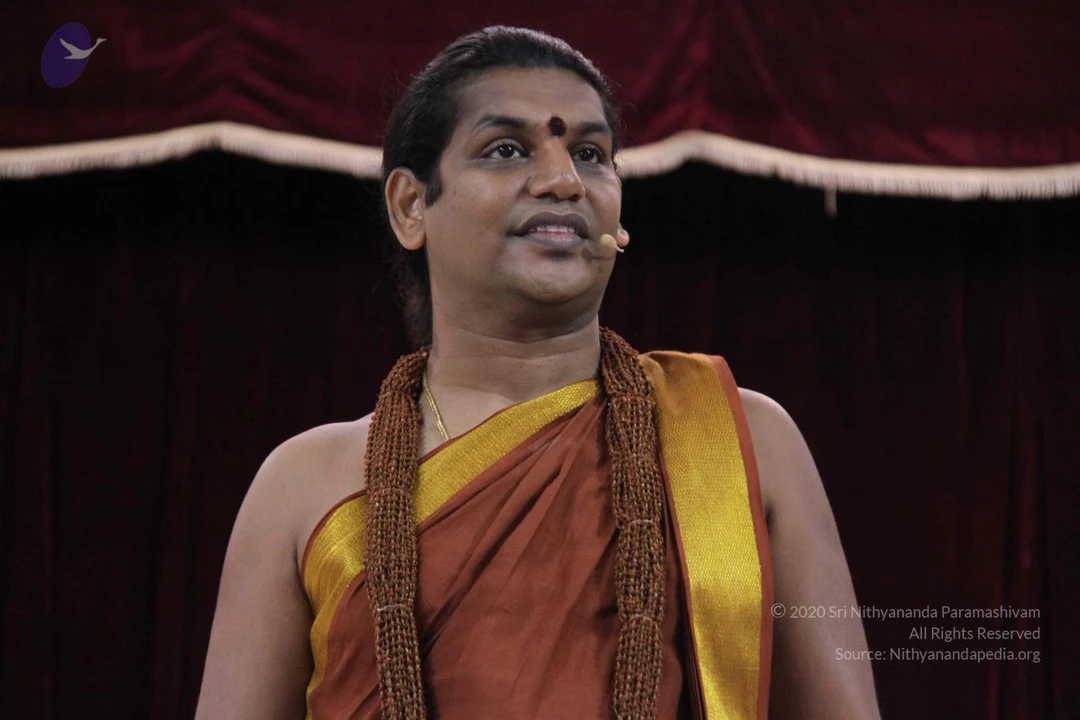
23 photosSource gallery
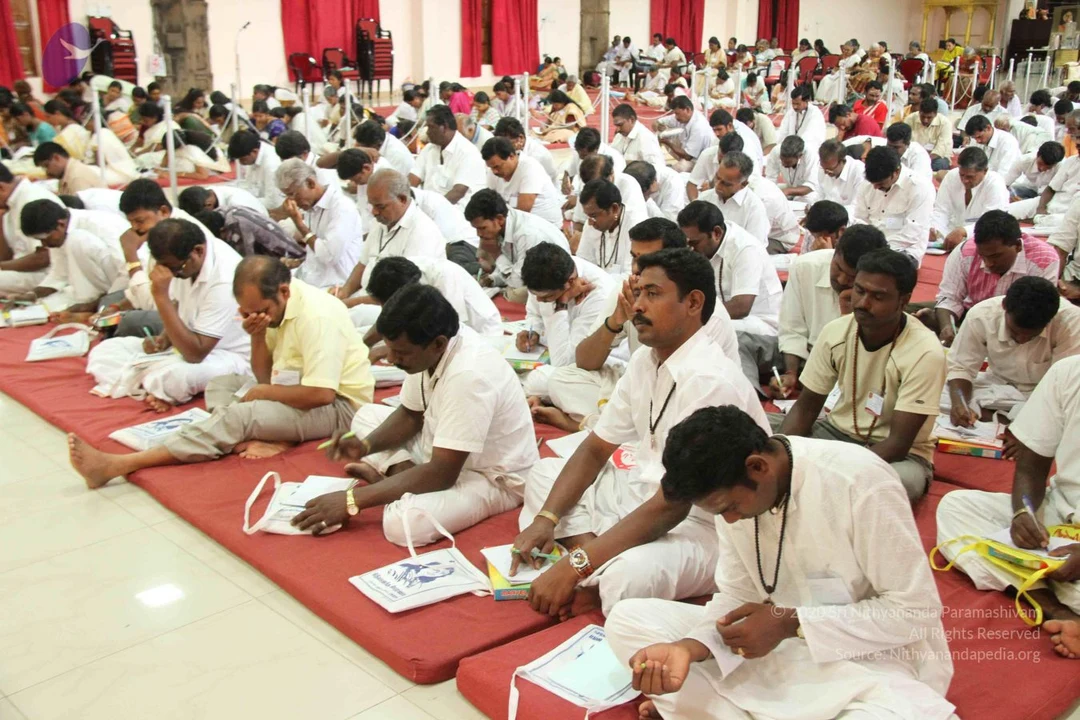
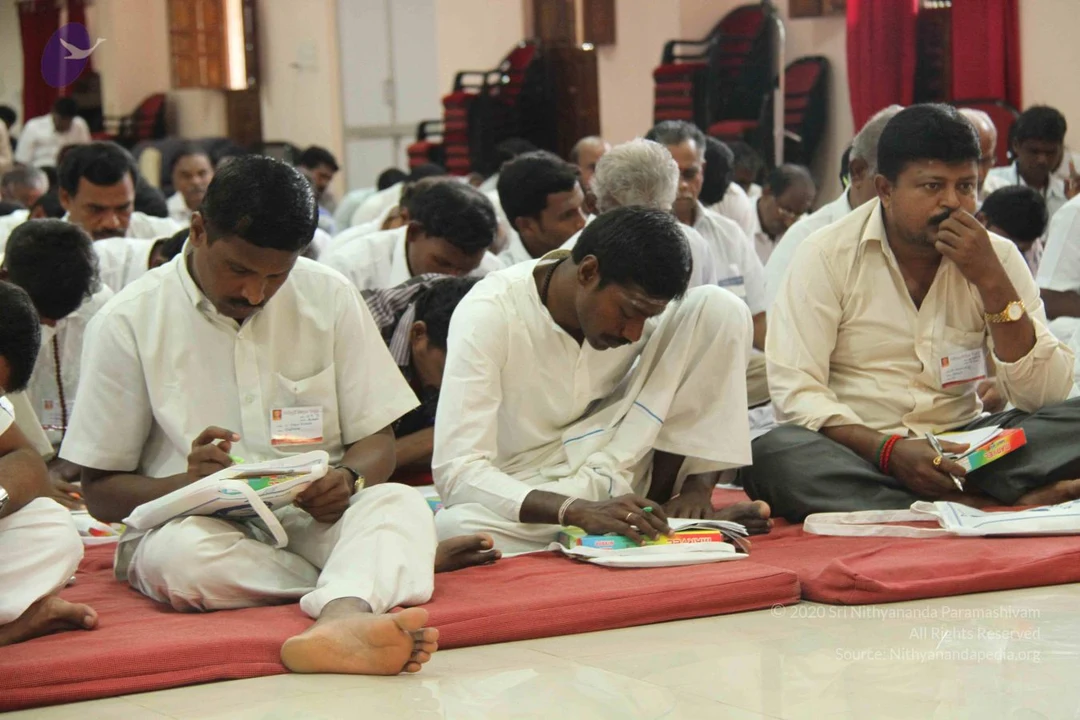
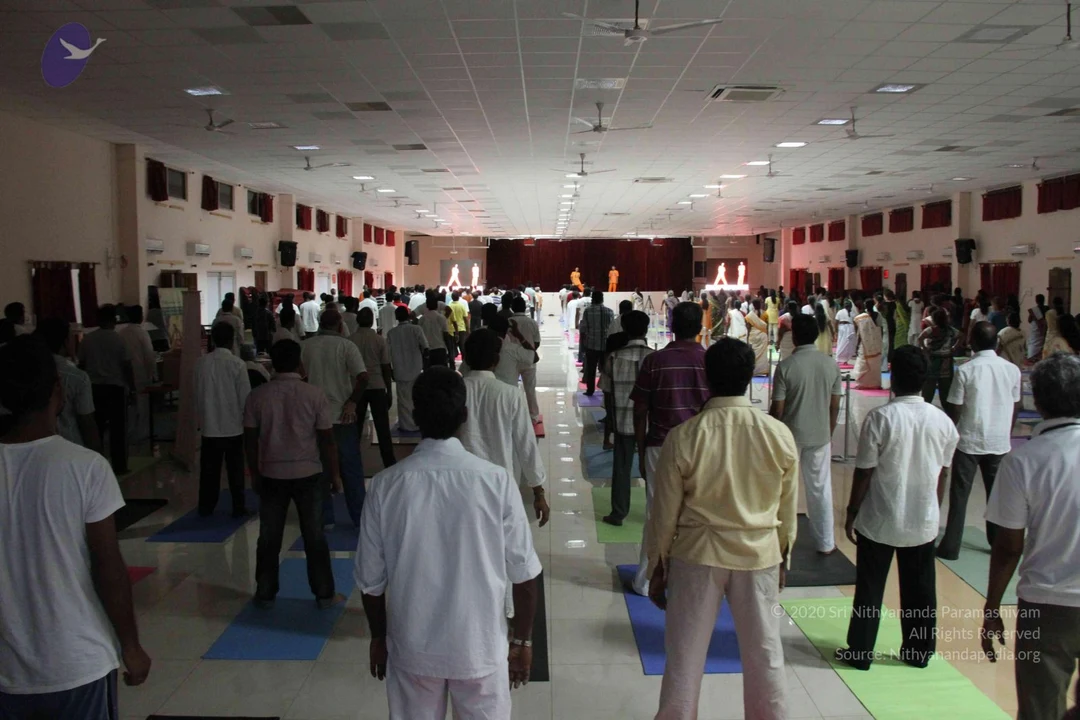
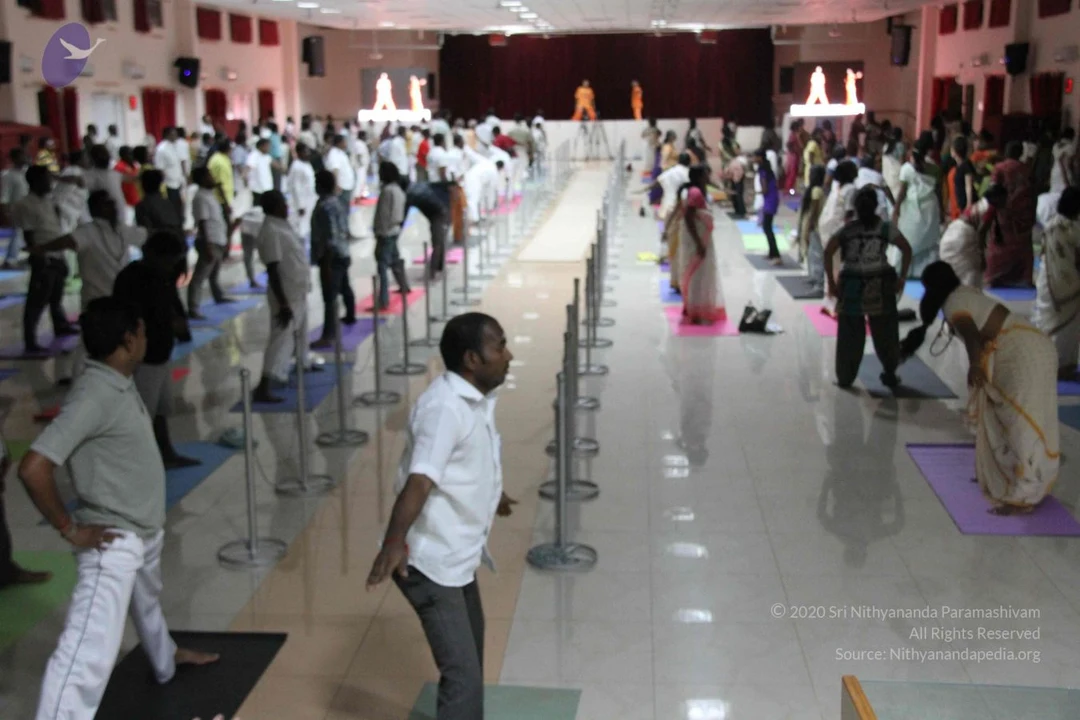
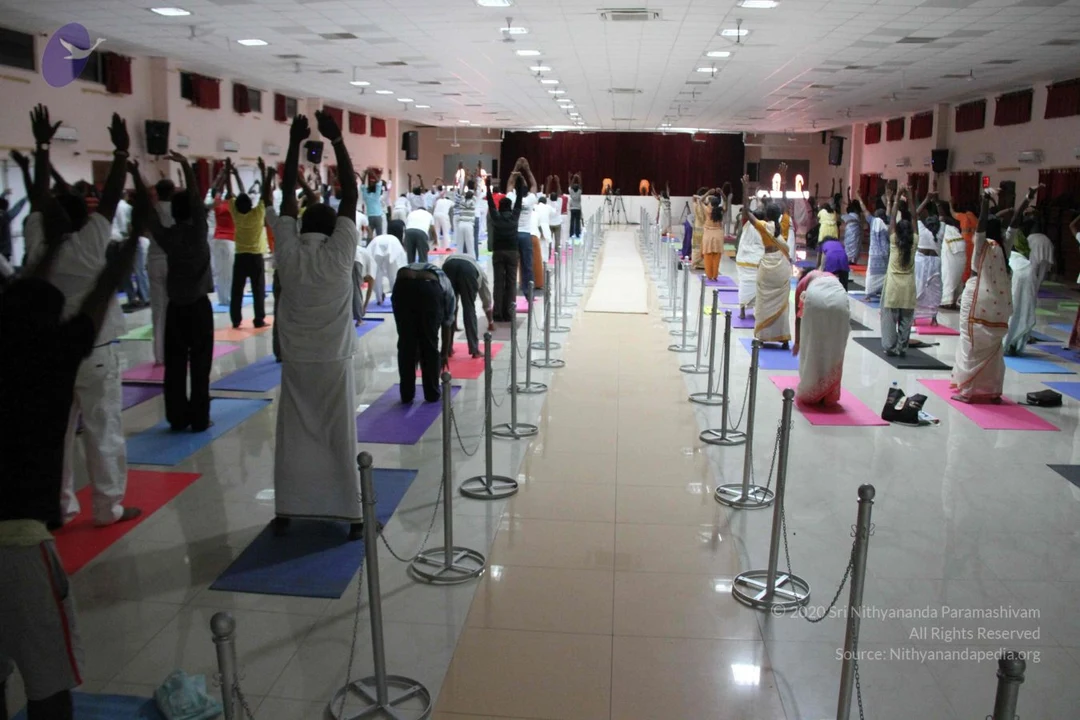
A photograph of a man standing on a stage before a deep red velvet curtain with gold fringe. He wears a rust-orange garment with a gold border draped over one shoulder and wrapped at the waist, and a long rudraksha mala of brown beads around his neck, with a small red bindi on his forehead. A small headset microphone is attached to his face and a white earpiece is visible. He has his head turned to one side and smiles. Gold ornament is visible at his neck. Partly visible at the lower left is a yellow-gold object.A photograph of a man standing on a stage in front of deep red velvet drapes with gold fringe. He wears a head microphone and a rust-orange and gold-bordered draped robe with a rudraksha mala around his neck, and a red bindi on his forehead. Beside him on the left is an ornate gold throne with carved detail and an orange leather armchair. He smiles and looks to the side while speaking at a satsang. Swamiji (probable): long dark hair swept back, a rudraksha mala and saffron-orange robes with gold borders, with the page indicating his presence at this satsang.A large seated audience of men fills a hall with red floor mats, most wearing white shirts and white dhotis, with some in yellow or pale shirts. Many have name badges and rudraksha malas, and many are writing in notebooks with pens or reading printed booklets. Some rest their heads on their hands. At the far left a woman in orange sits near a white ornate chair and framed pictures on a side table. Red chairs line the back wall, and a banner is visible at the top of the hall.A large seated audience of men fills a hall for a satsang or meditation camp, sitting cross-legged on red mats. Most wear white shirts and white dhotis, while a few wear pale yellow or red shirts. Many hold pens and notebooks and write or listen attentively; some carry white cloth bags printed with a blue logo. Name badges hang from several shirts. At the upper left, a stage area with white pillars and a table is visible, and a faint banner reads 'Tamil Satsang'. No clearly identifiable a person figure is visible in this view, so none is described.A photograph of a large hall where many men sit cross-legged on red mats in rows, writing in notebooks with pens. Most wear white dhotis and white shirts, several with rudraksha malas around their necks; some wear beige or yellow shirts. Cloth tote bags and papers lie on the mats. Red curtains hang along the back wall and a few people sit further back. The scene reflects a seated satsang or meditation camp with attentive participants taking notes, though no speaker or dais is clearly visible.Wide photograph of a large hall filled with seated devotees on red mats, arranged in long rows divided by a central white carpet aisle lined with silver stanchions. Most attendees wear white clothing, with some women in saris of orange, blue and green. Red curtains line the windows, and a golden ornate chair or throne sits at the far end of the hall beside a small stage with speakers. Many people sit with notebooks and books open on their laps. Ceiling lights and wall-mounted air conditioners are visible. The scene suggests a satsang discourse session.

NKY-Darshan

49 photosSource gallery
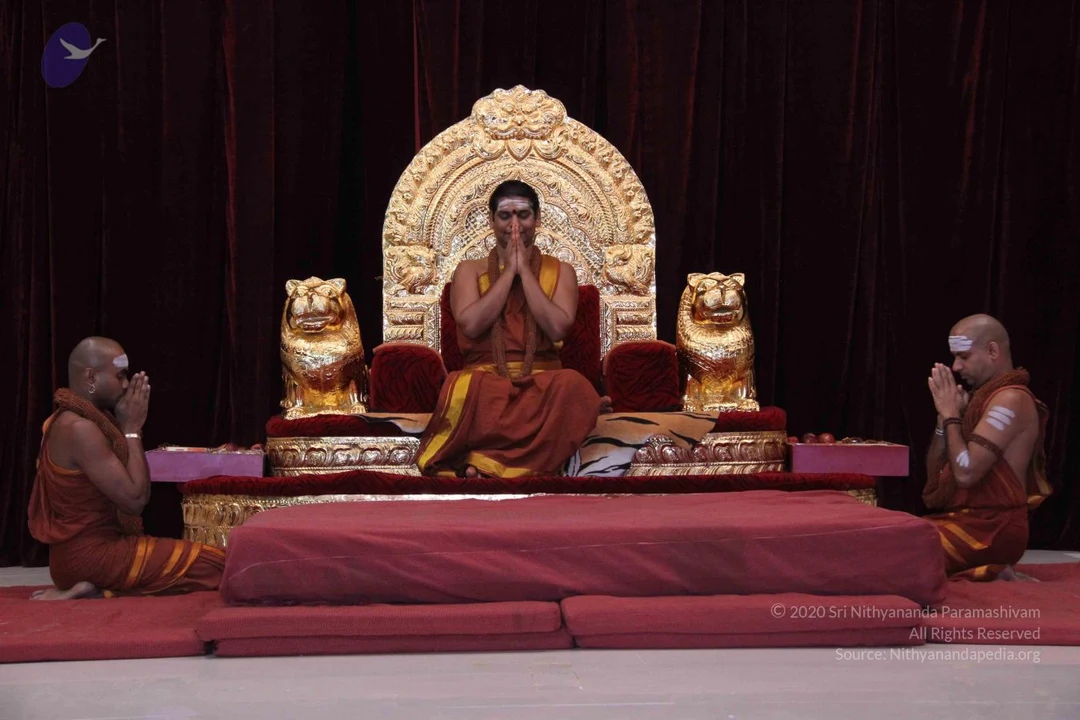
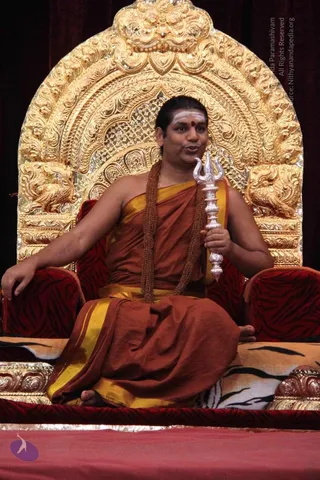
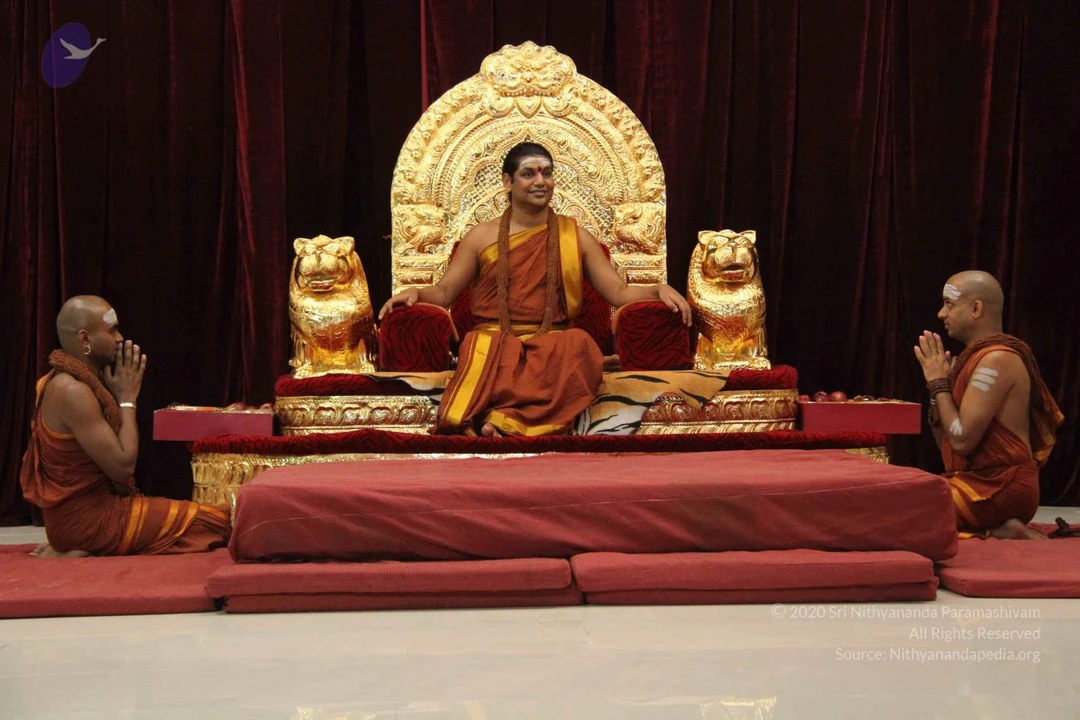
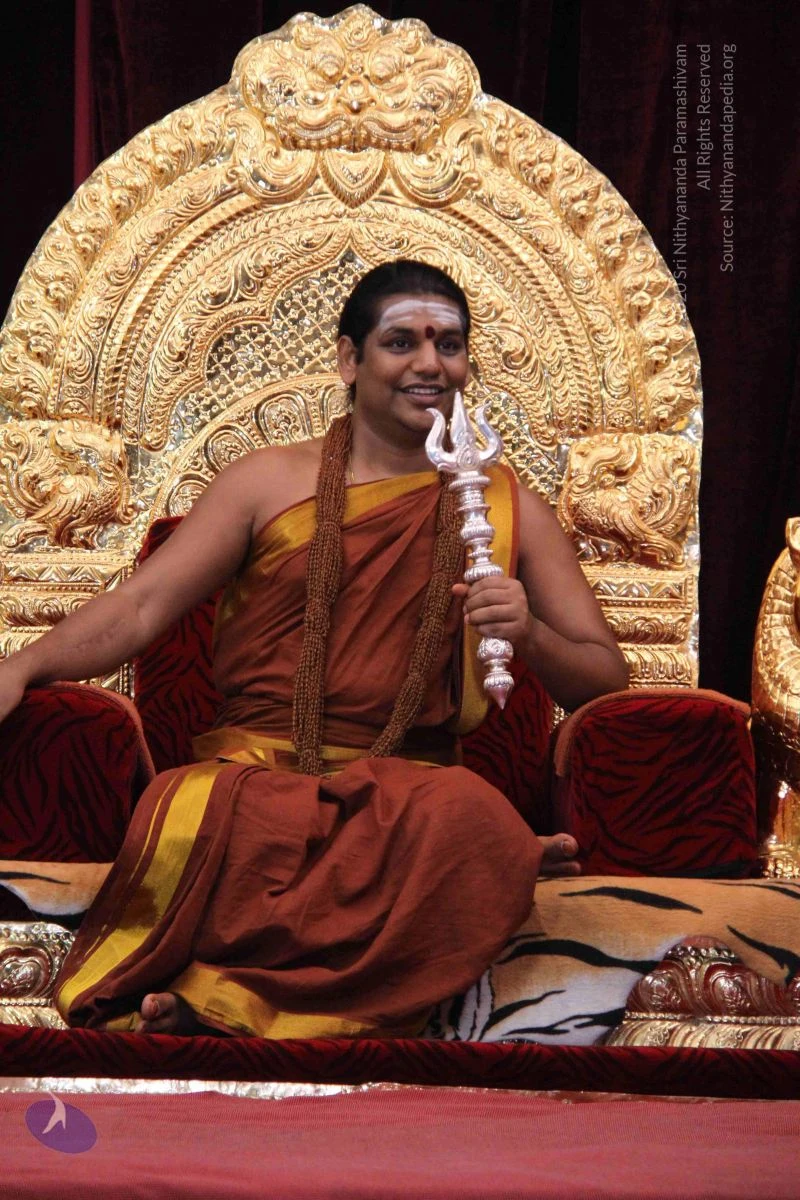
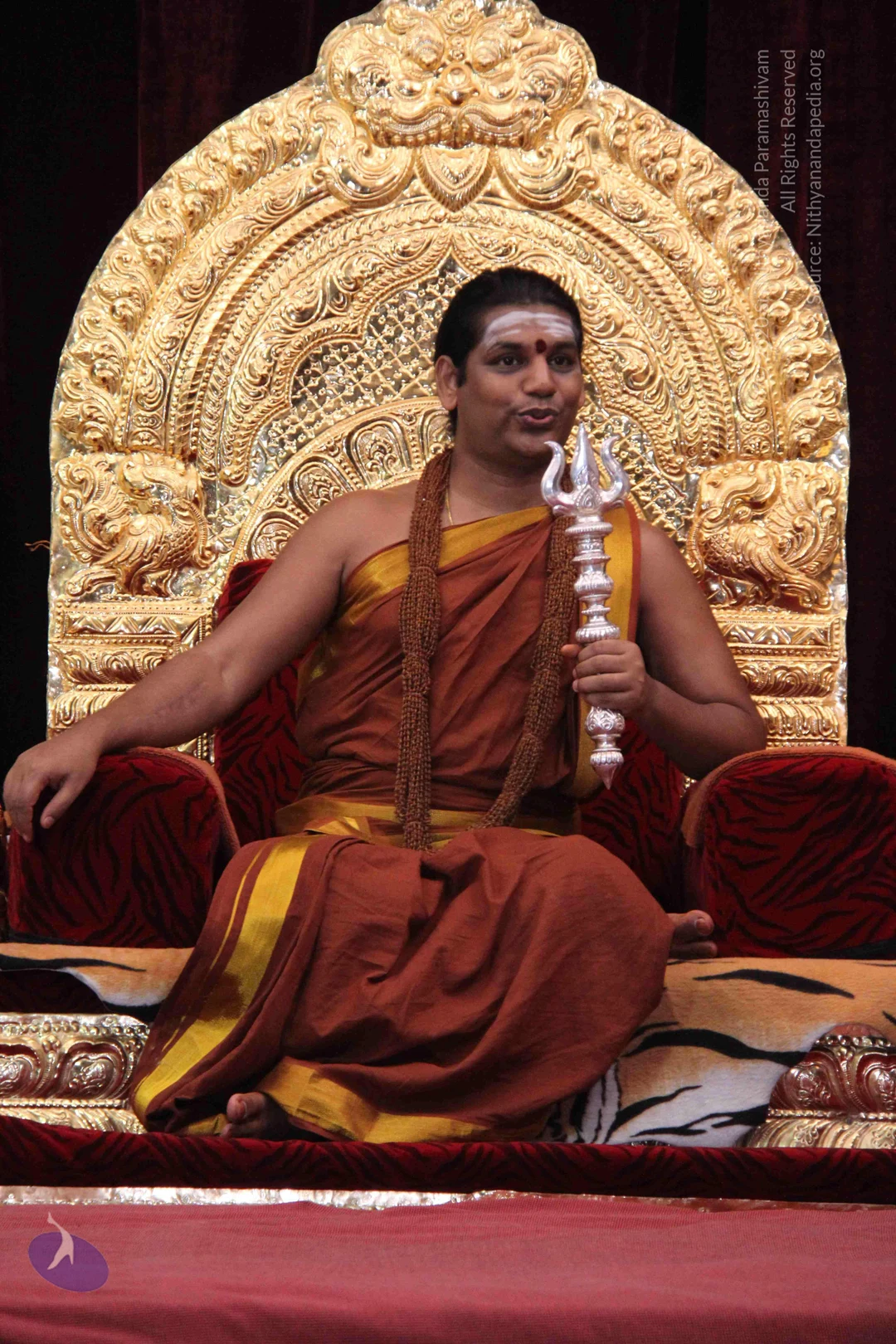
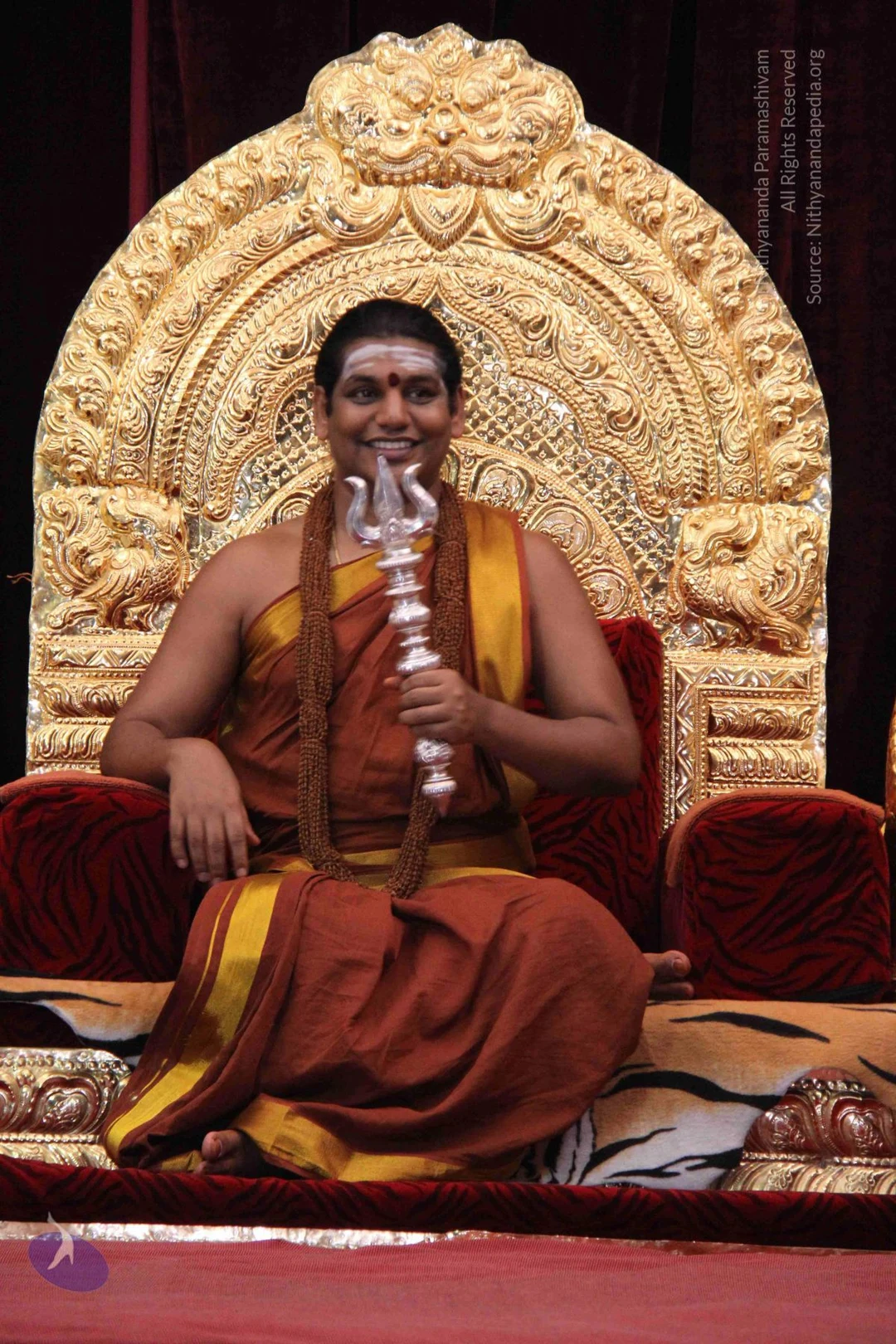
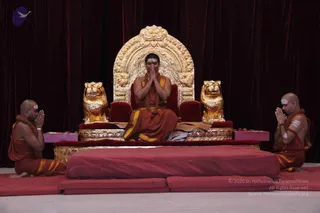
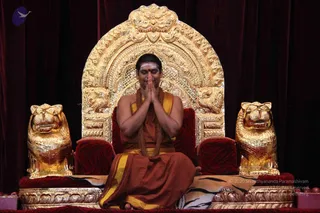
A photograph of a seated figure in a sannyasi's saffron-orange robe with a gold-edged yellow cloth draped over the shoulders, palms pressed together in namaste and a vertical white mark on the forehead, sitting on an ornate gold throne with a carved arched back and two gold lion figures at its sides. Two shaved-headed attendants in orange robes with white tripundra marks kneel on red mats at either side of the stage, also with palms joined. A red velvet-draped backdrop and a red cushioned dais complete the stage.A man seated cross-legged on an ornate golden throne with a high arched back carved with floral and scroll motifs, flanked by two golden lion figures and draped with a striped tiger-print cloth. He wears an orange-brown robe with a yellow-gold border and a long rudraksha mala necklace, with a white vibhuti mark and red tilak on his forehead. His palms are pressed together in namaskar while his eyes are closed, set against dark red velvet curtains. Appearance-based label: a person, seated in a satsang-style pose.A seated man in a saffron-orange robe with a gold-bordered sash and a long rudraksha mala sits on an ornate gold throne with a carved arched backrest. Golden tiger-head sculptures flank the throne, and a tiger-striped cloth covers the seat. He holds a silver staff or scepter in his right hand and smiles, with a red-and-white forehead mark. Deep red velvet drapes fill the background.A seated man in saffron and orange robes with a gold-bordered shawl sits on an ornate gold throne with a carved arched backrest and lion-form armrests, red velvet cushions below. He wears a rudraksha mala, white horizontal tilak with a red bindi, and holds a silver trident (trishul) upright in his right hand while speaking. Swamiji (probable): long dark hair swept back, saffron robes and rudraksha mala, seated in a teaching posture, consistent with a satsang setting. A dark curtain forms the background and a faint bird logo appears in the upper left.A seated man in saffron-orange robes sits on an ornate gold throne with a large arched backrest carved with foliage and a central motif, flanked by two golden lion sculptures on red-upholstered armrests. He wears a rudraksha mala necklace and a shawl draped over one shoulder, with a red tilak on his forehead, and holds a small white object in one hand while smiling. Red velvet drapes hang behind the throne and a tiger-striped cloth covers the platform. Fruit or offerings are visible near the base. a person is seated centrally as the presiding figure of this satsang setting.A man in saffron and gold robes sits on an ornate gold throne with carved arch and two gold lion sculptures flanking him, draped in a tiger-striped cloth on a red-carpeted dais. He wears a rudraksha mala and a tilak with a red bindi, holds a water bottle in one hand and smiles while gesturing, against dark red velvet drapes. Appearance-based identification is probable: a person is shown in a satsang-style seated discourse.

NKY-Yoga-Pics
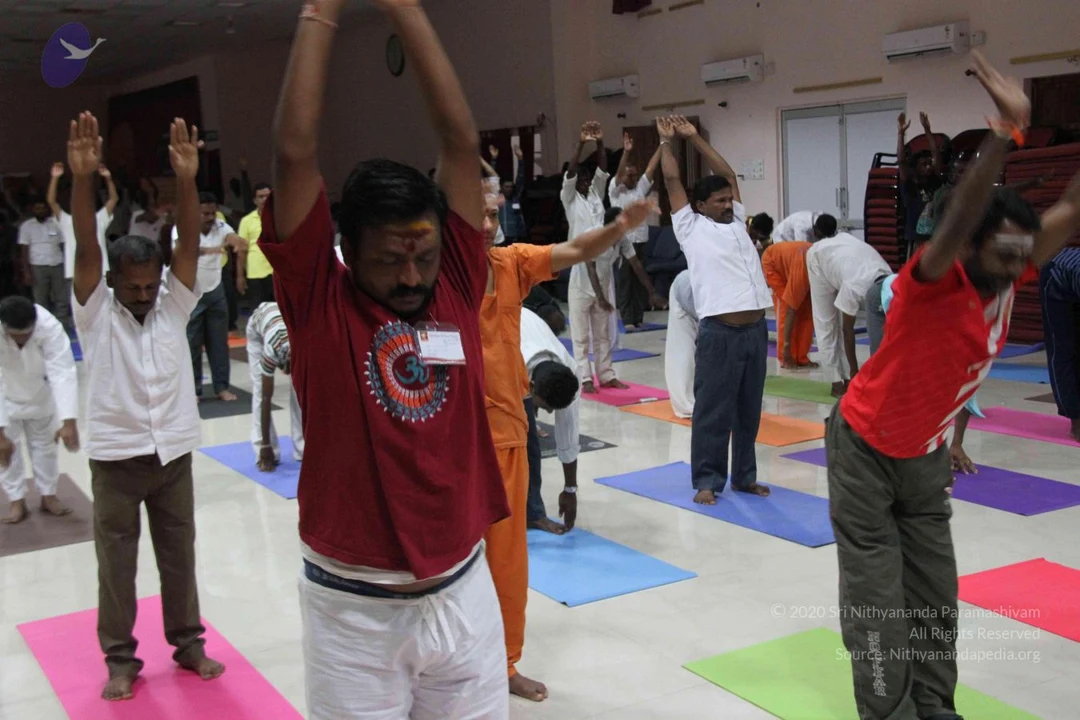
33 photosSource gallery
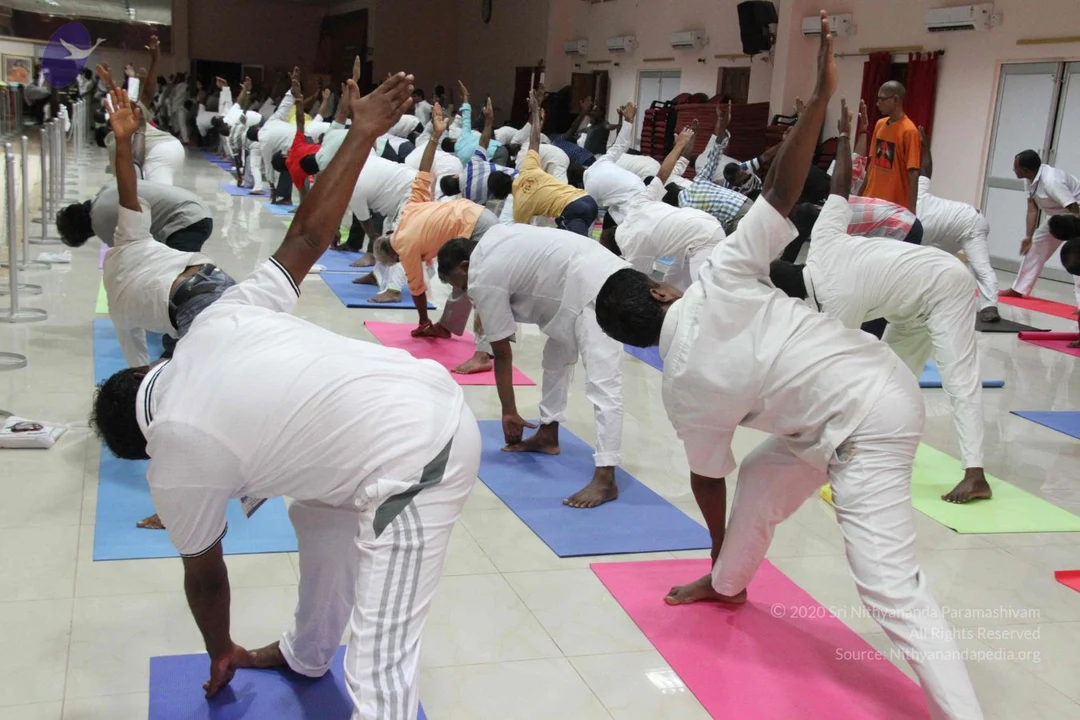
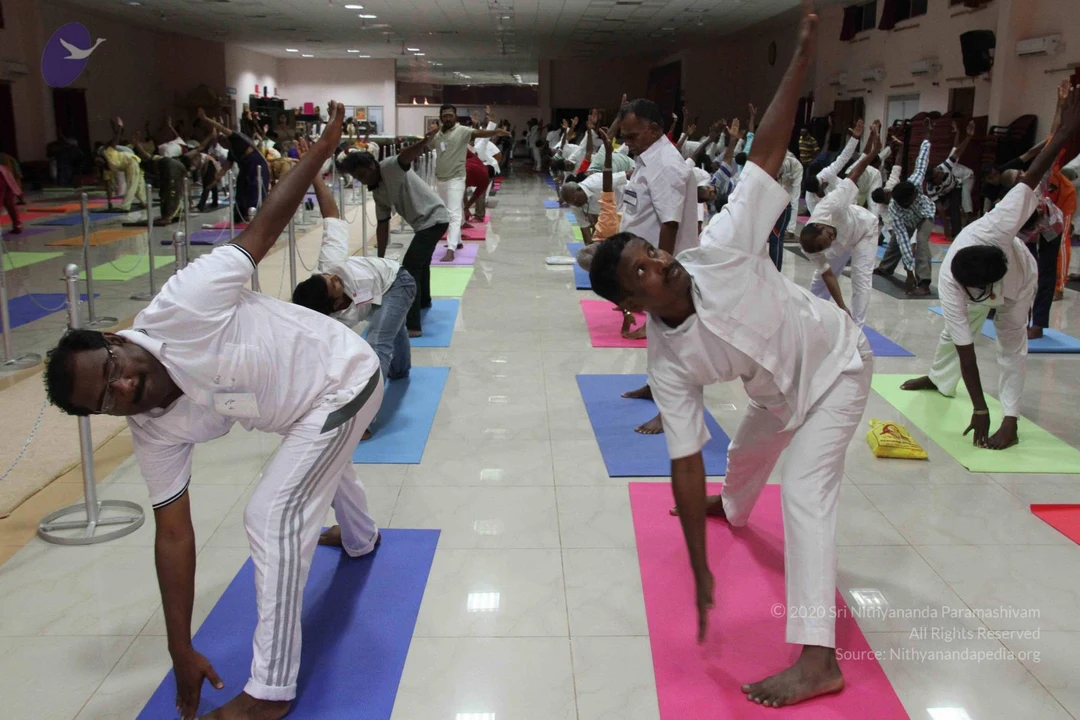
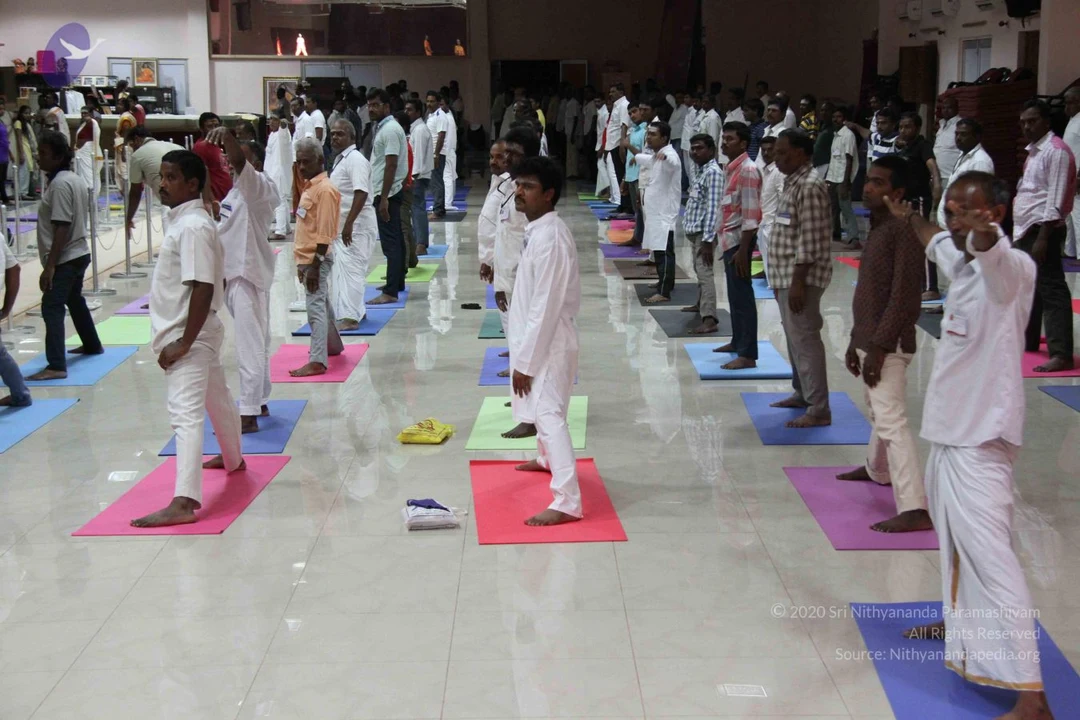
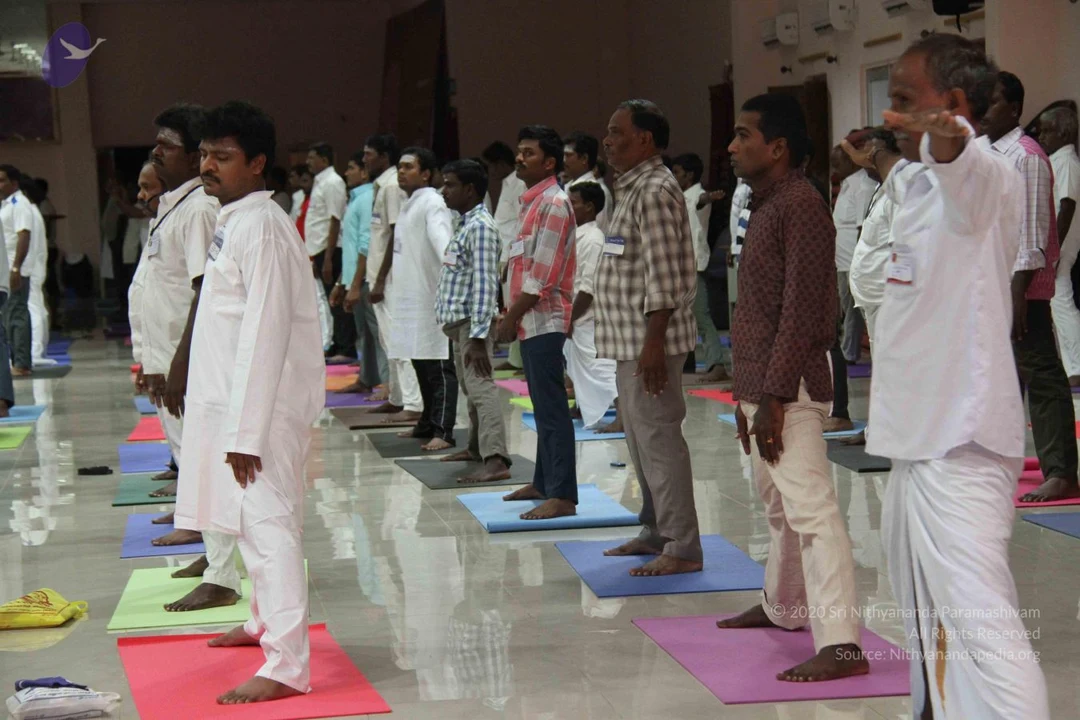
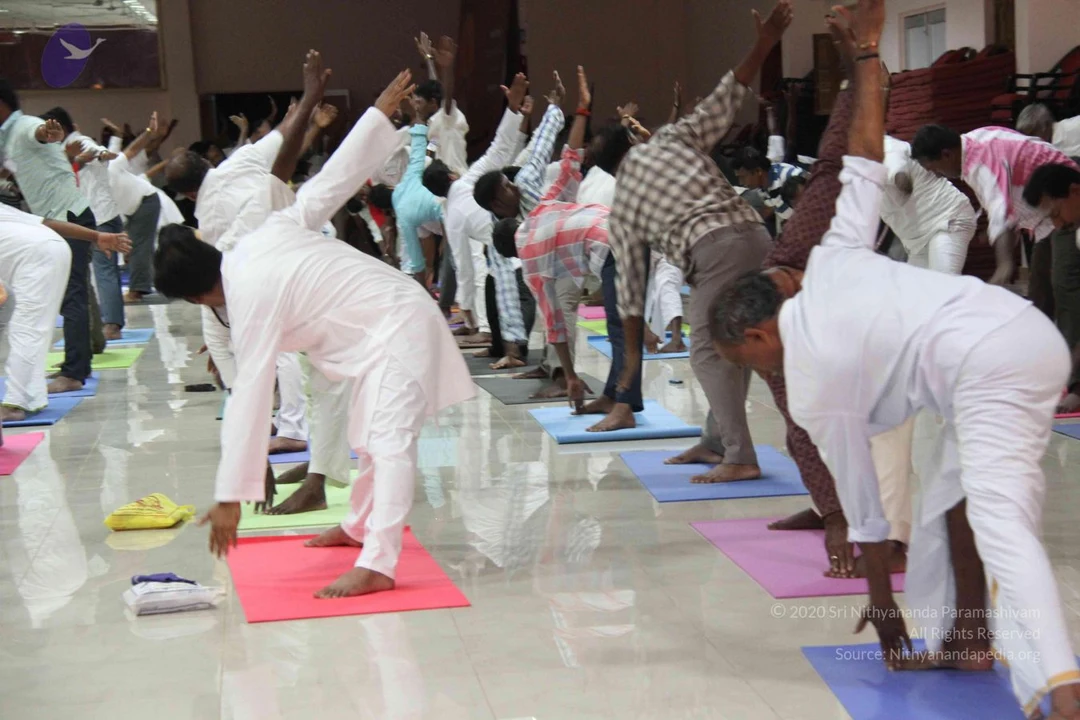
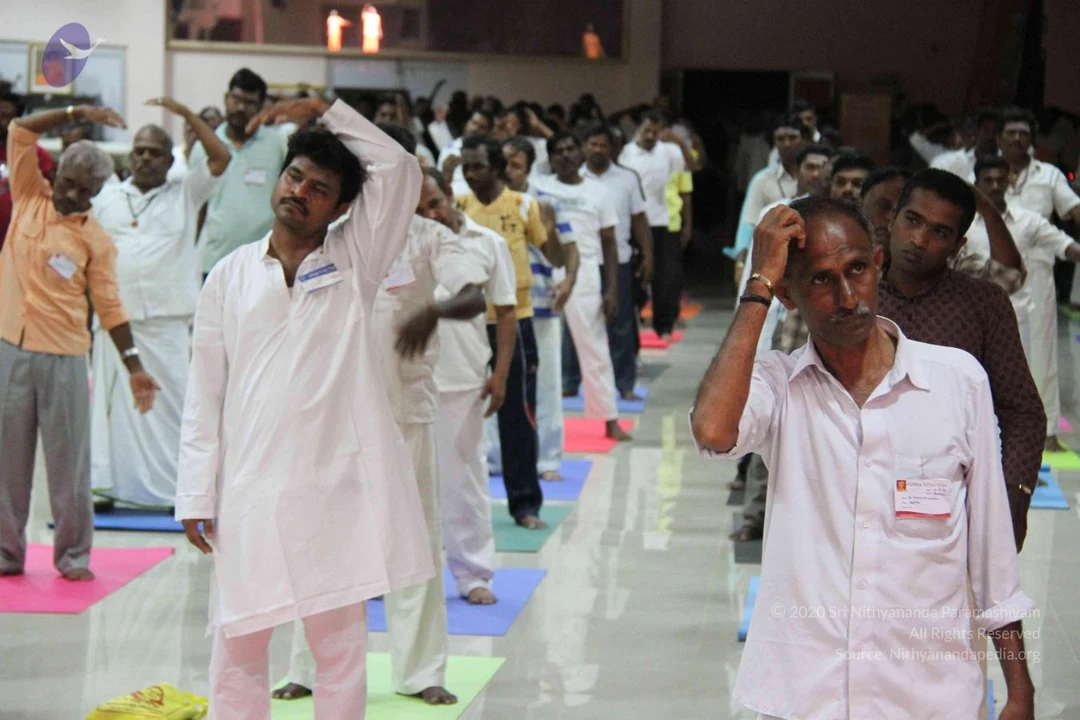
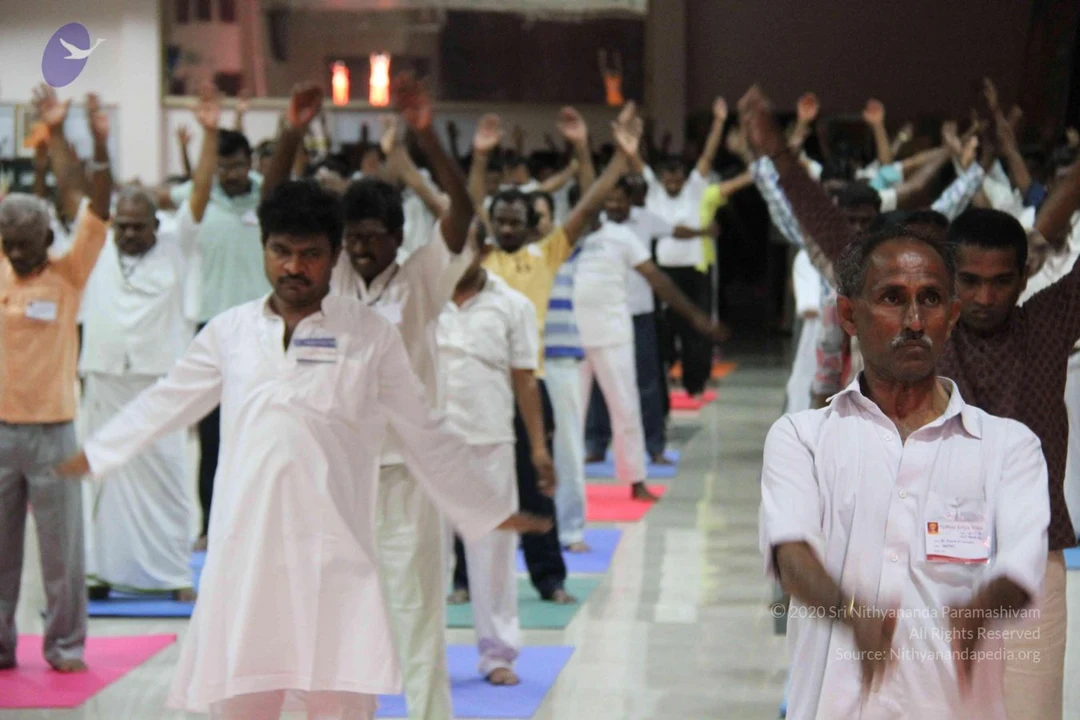
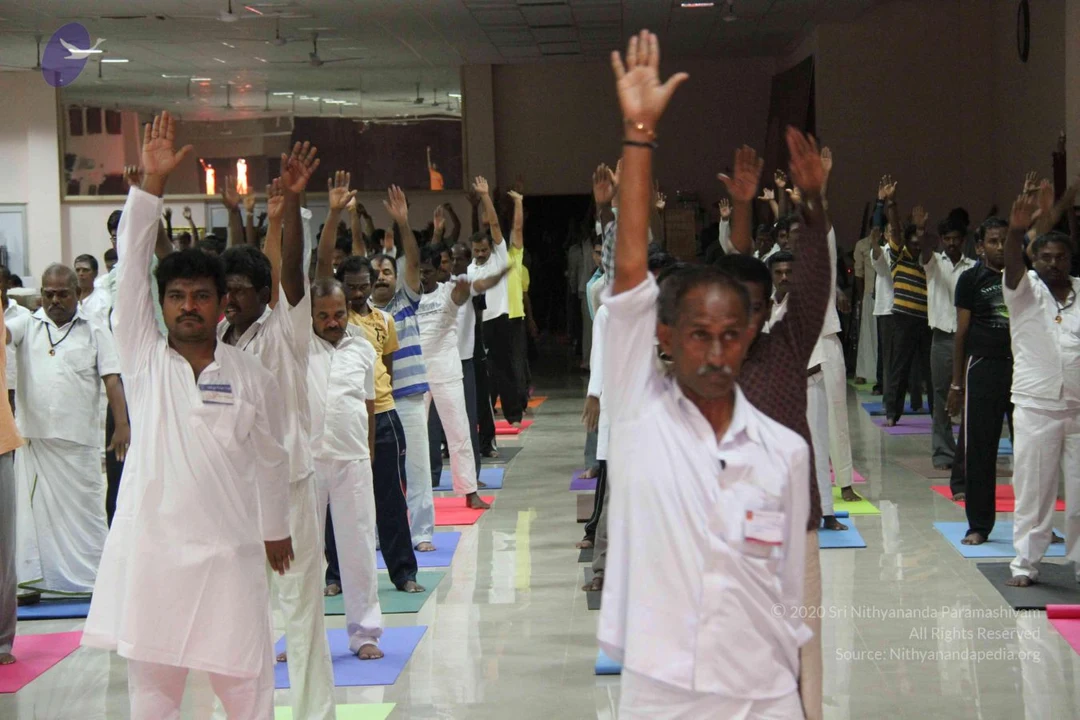
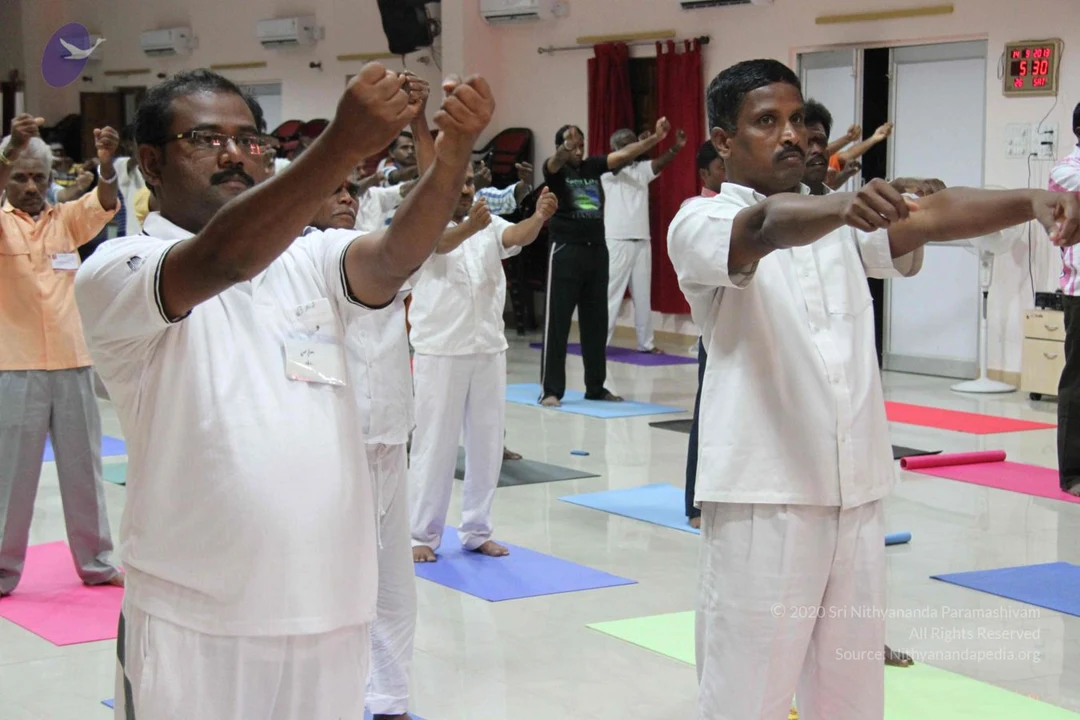
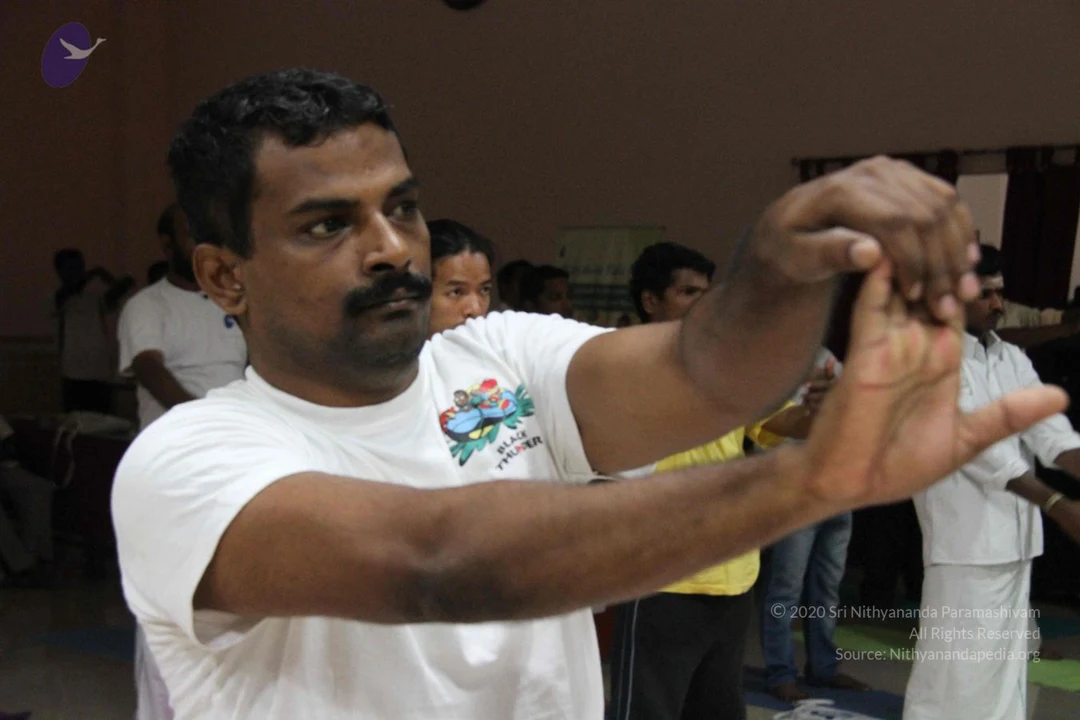
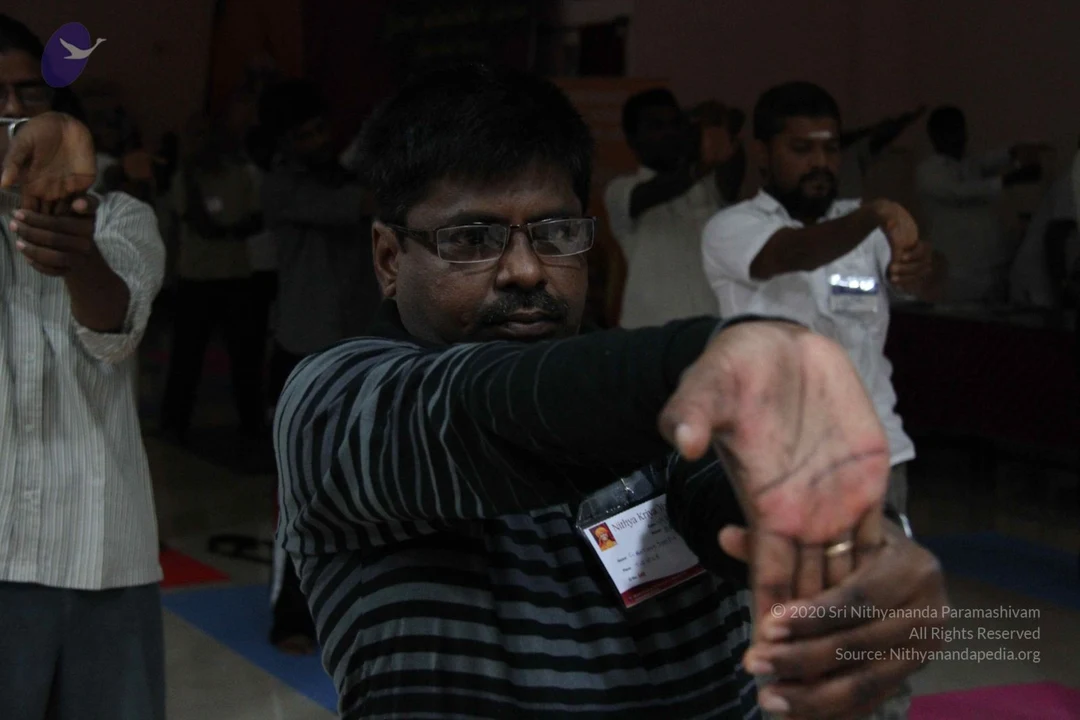
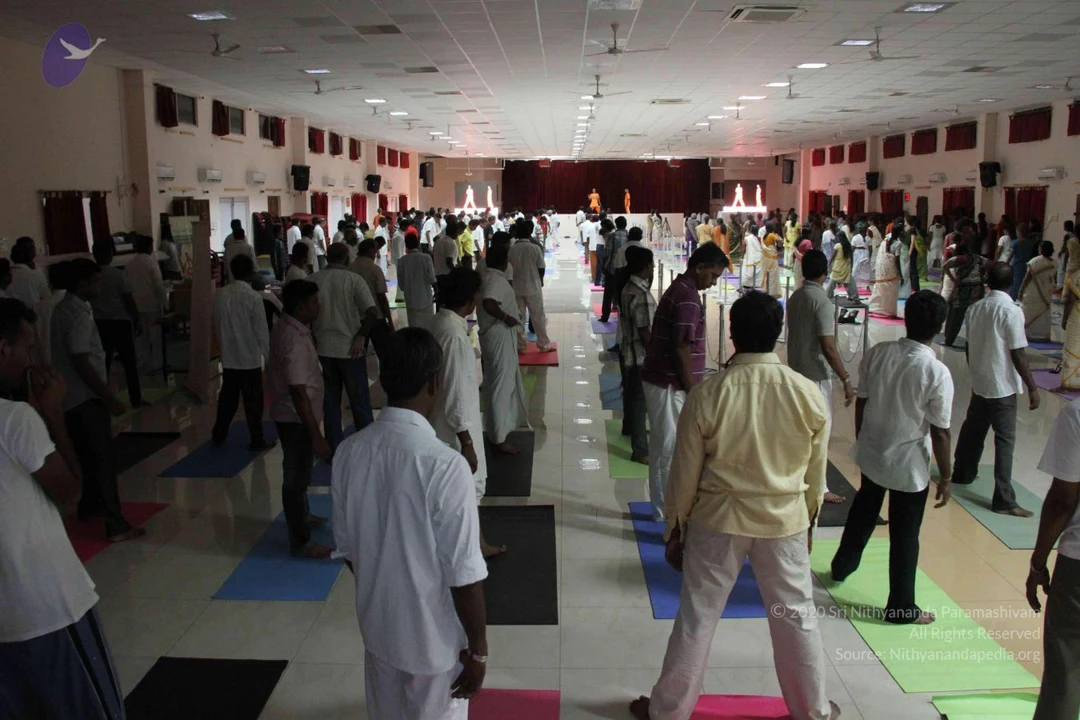
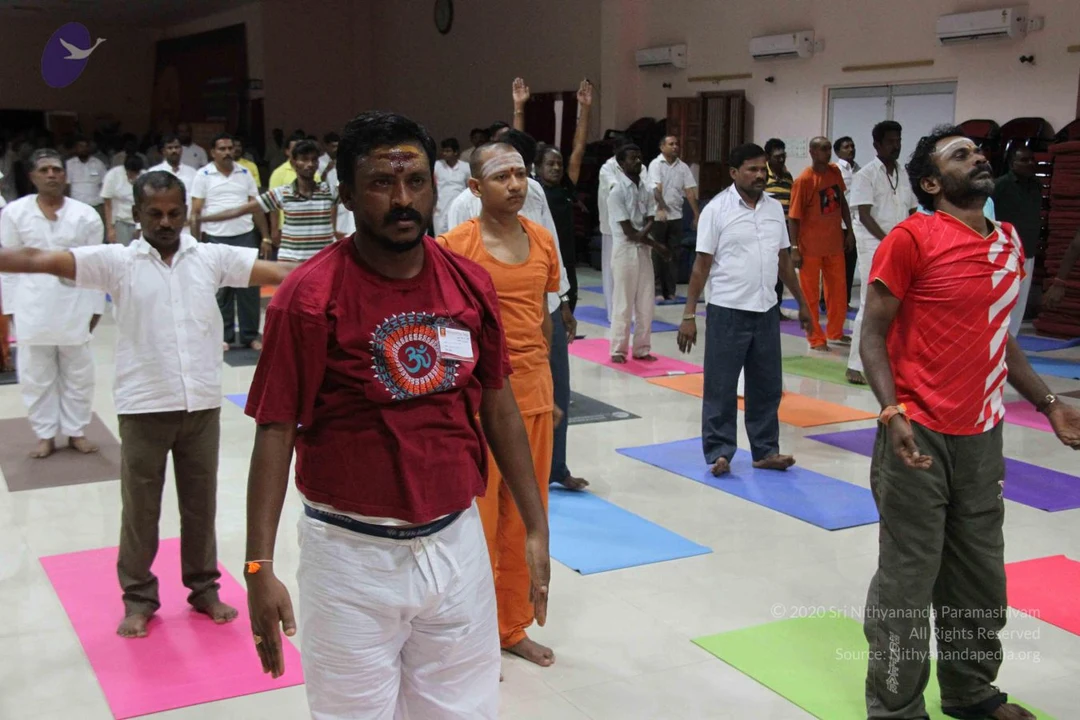
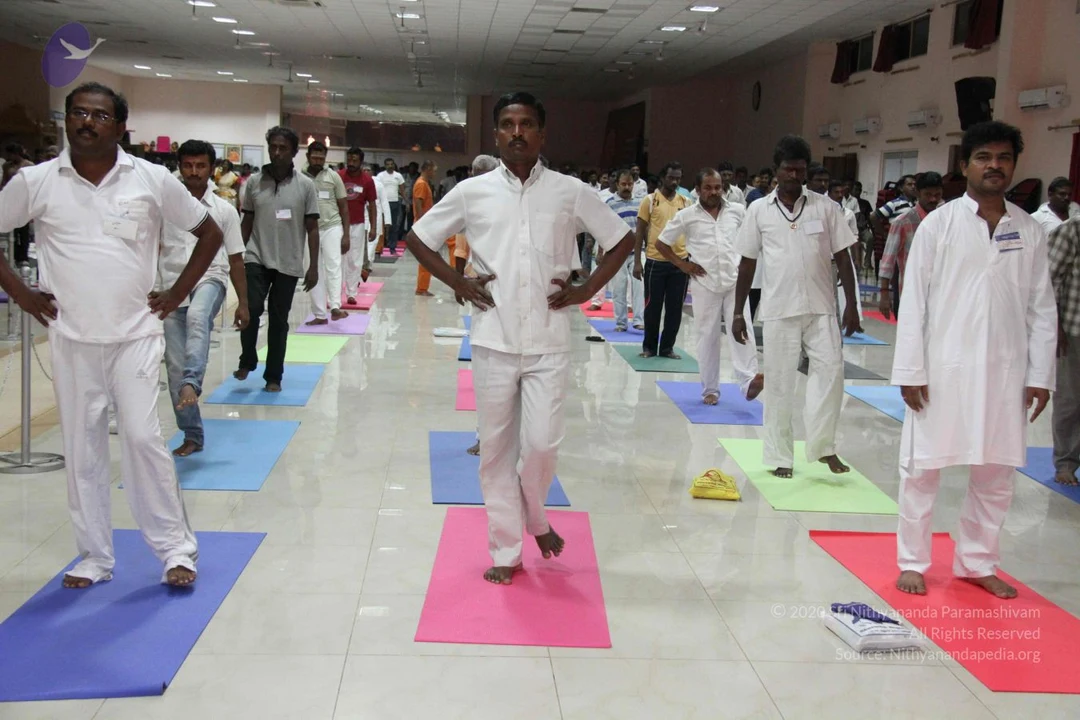
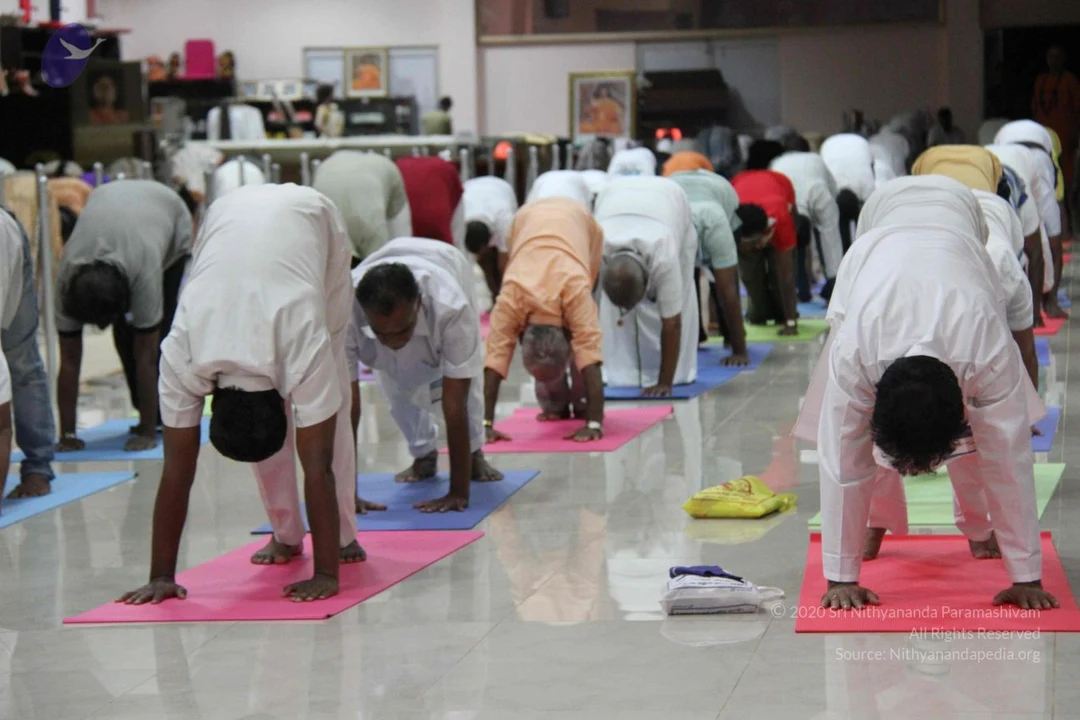
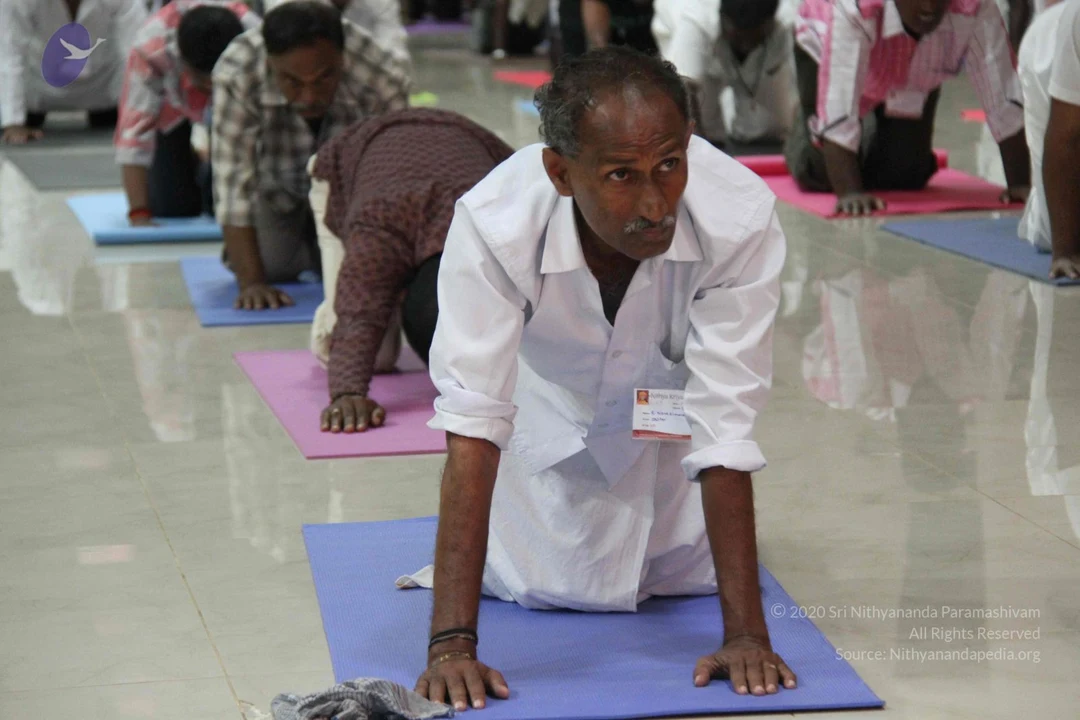
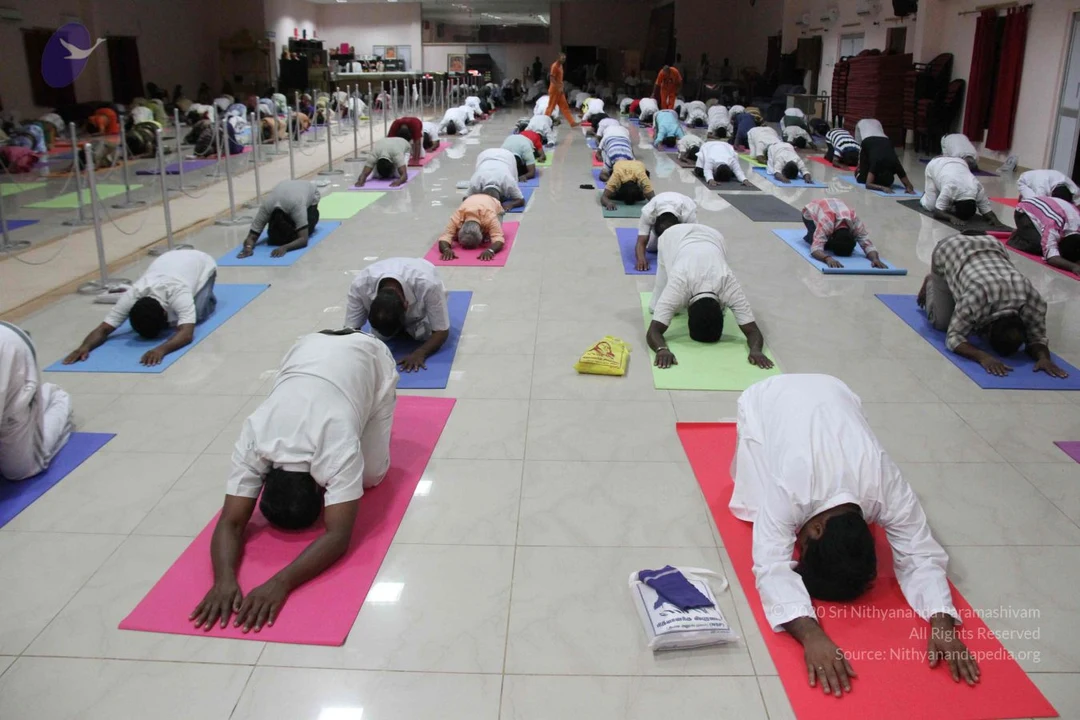
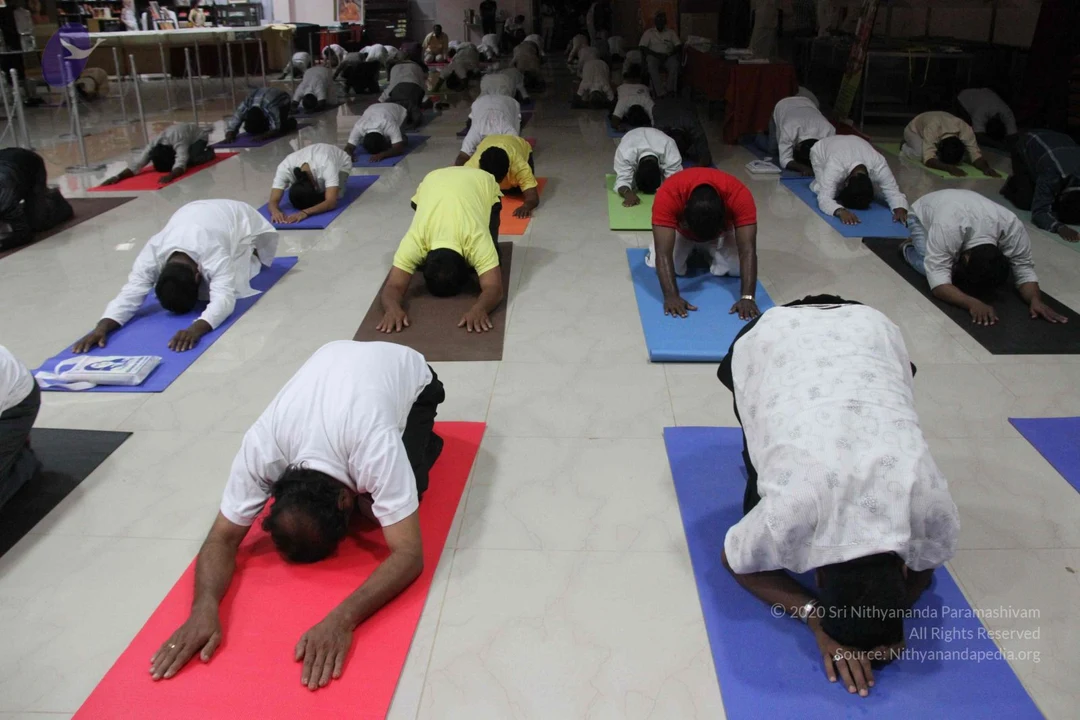
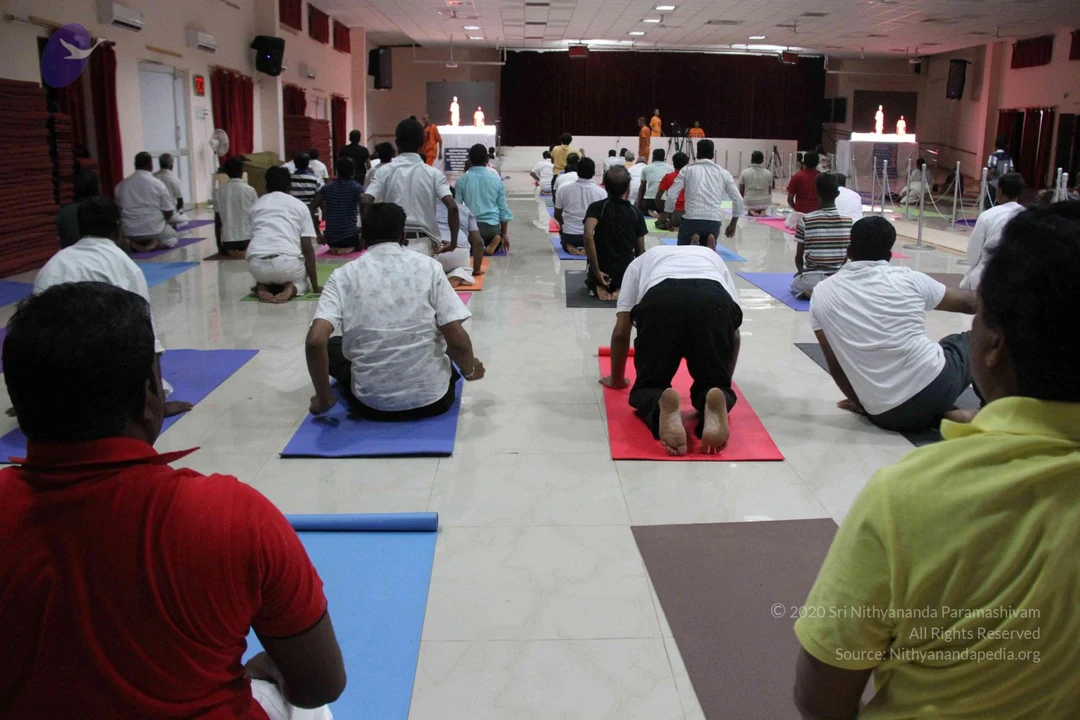
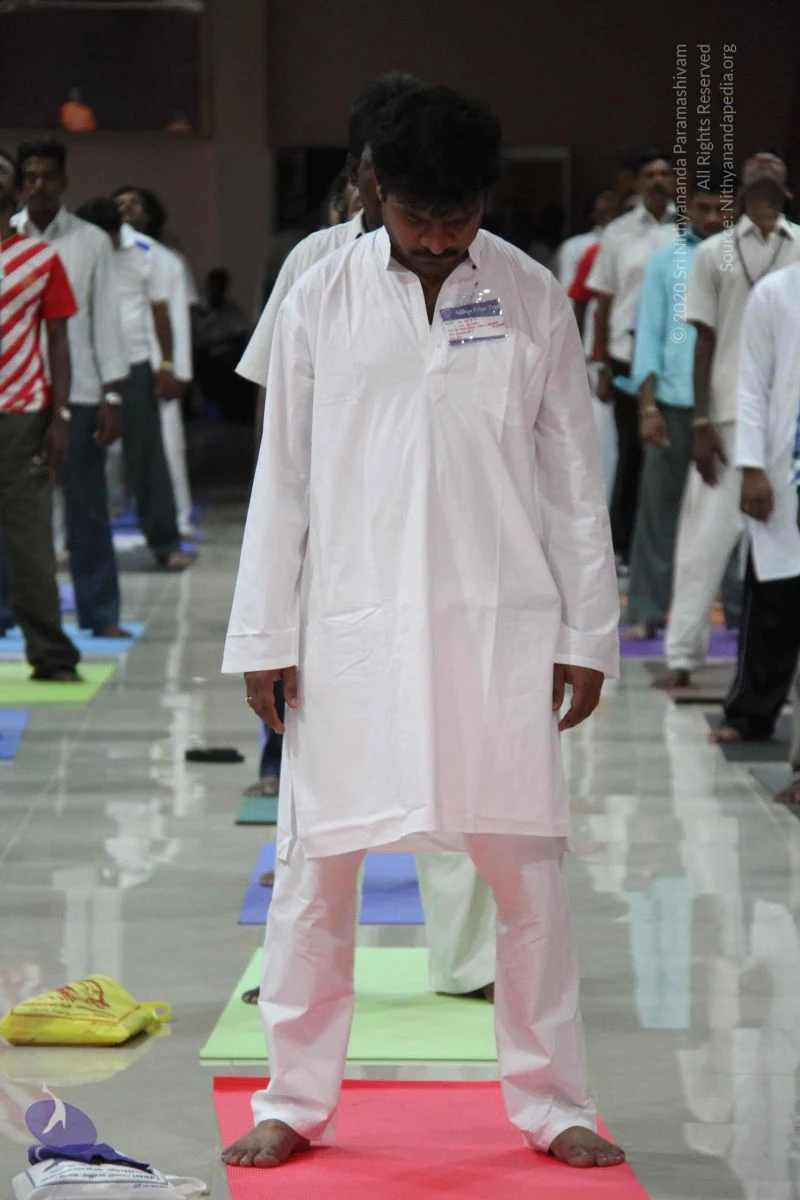
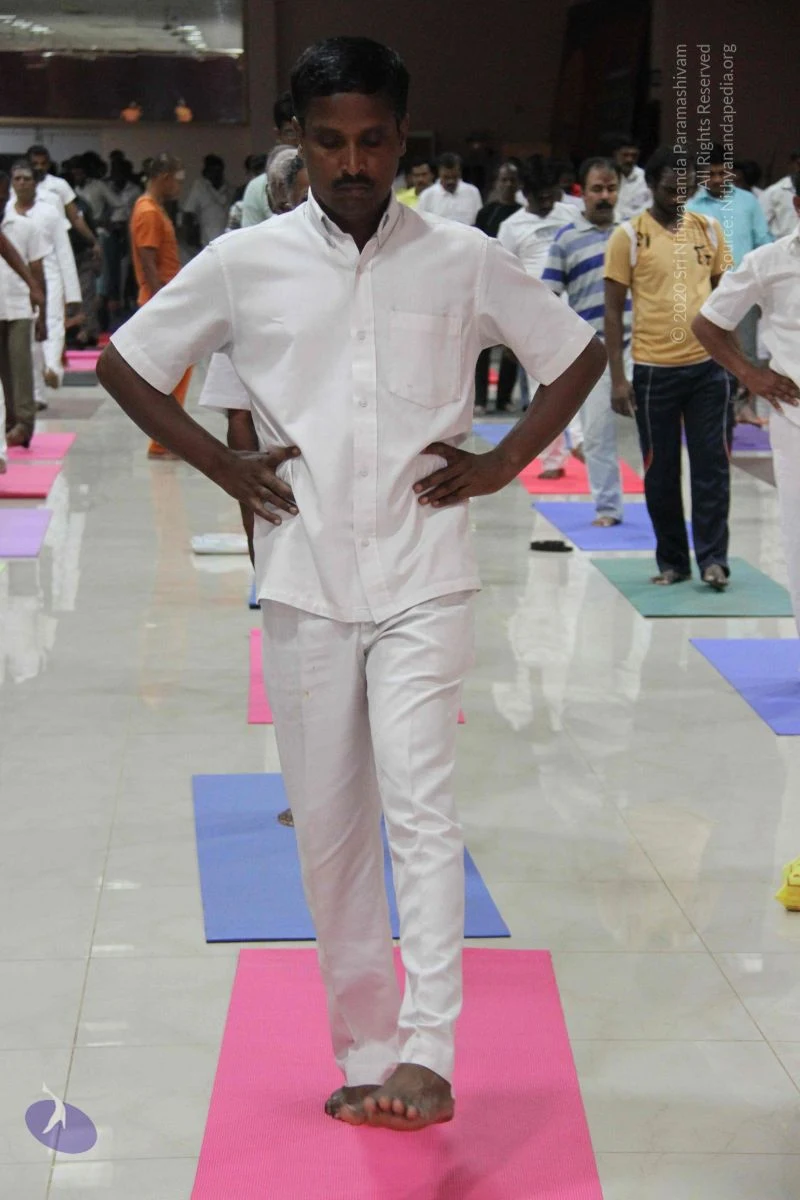
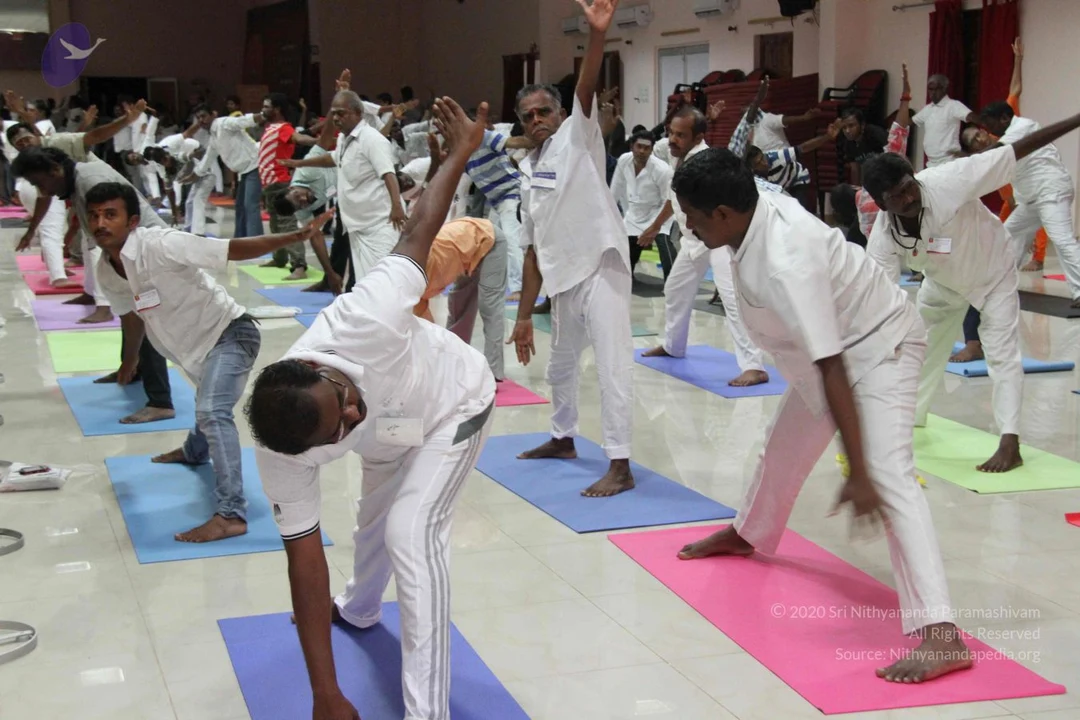
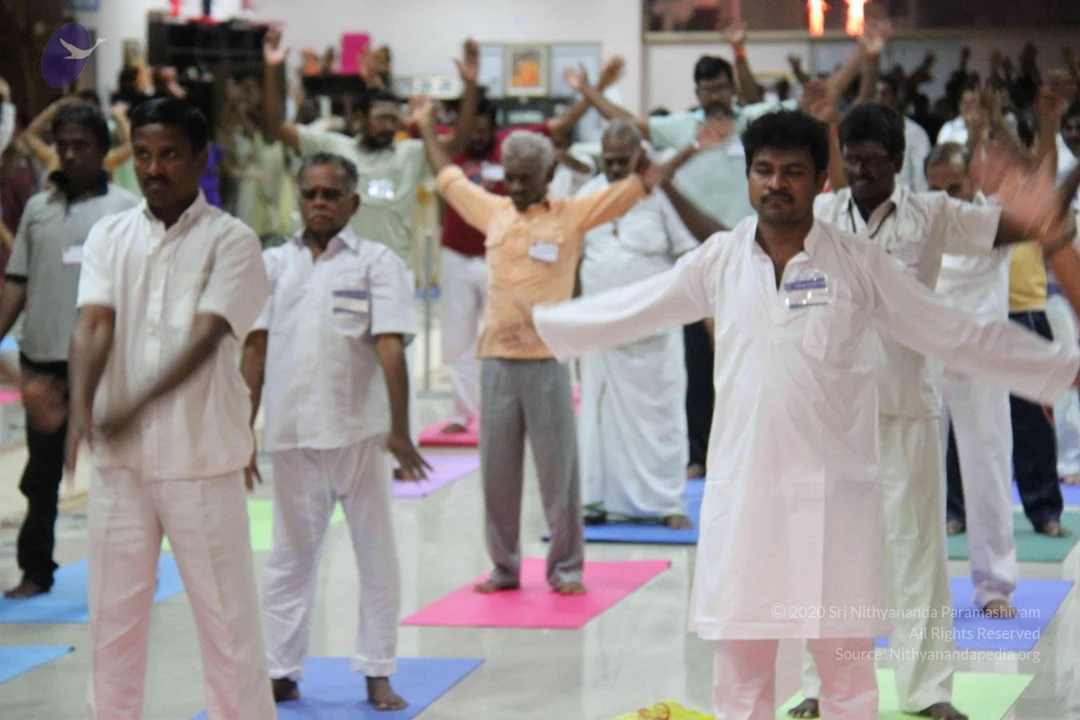
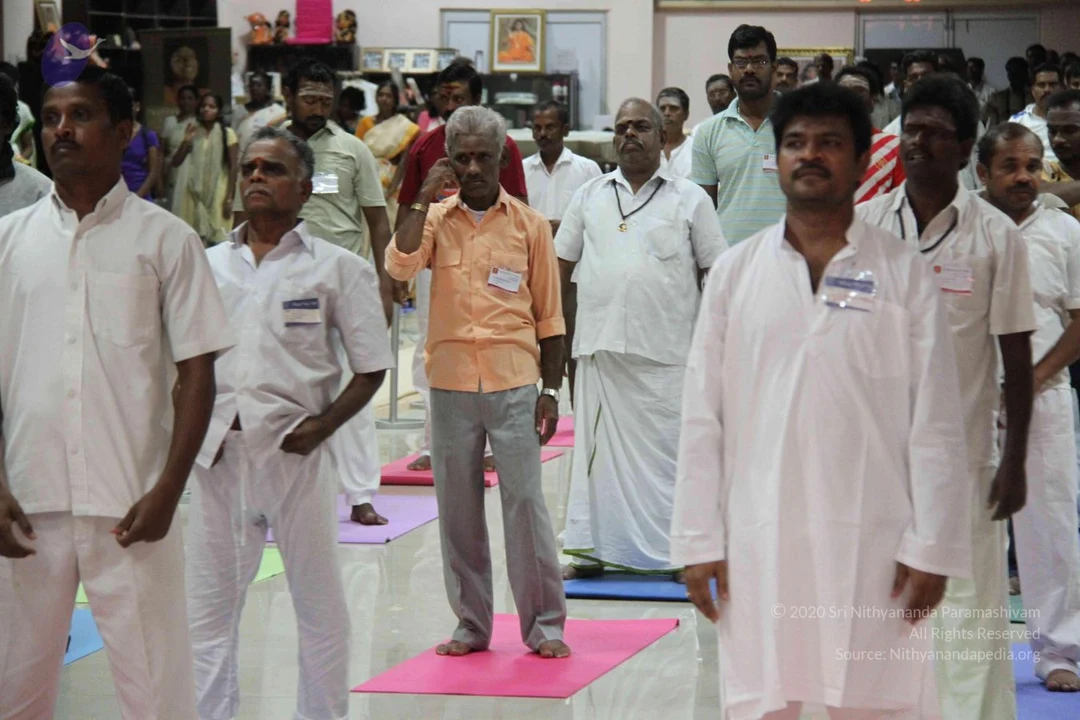
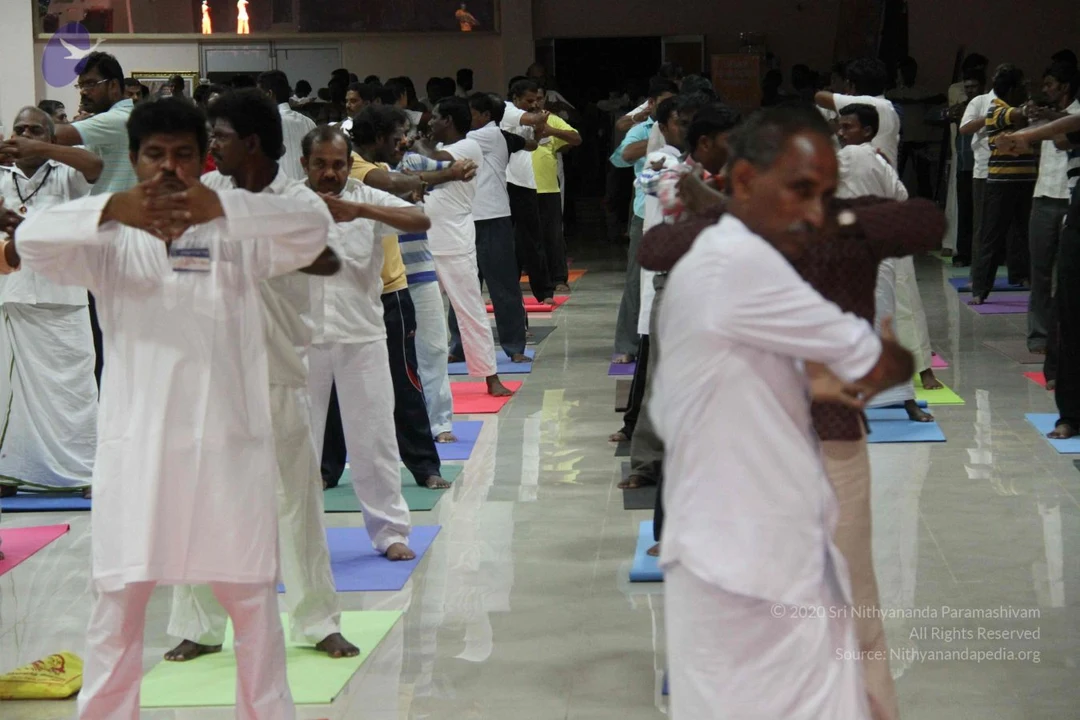
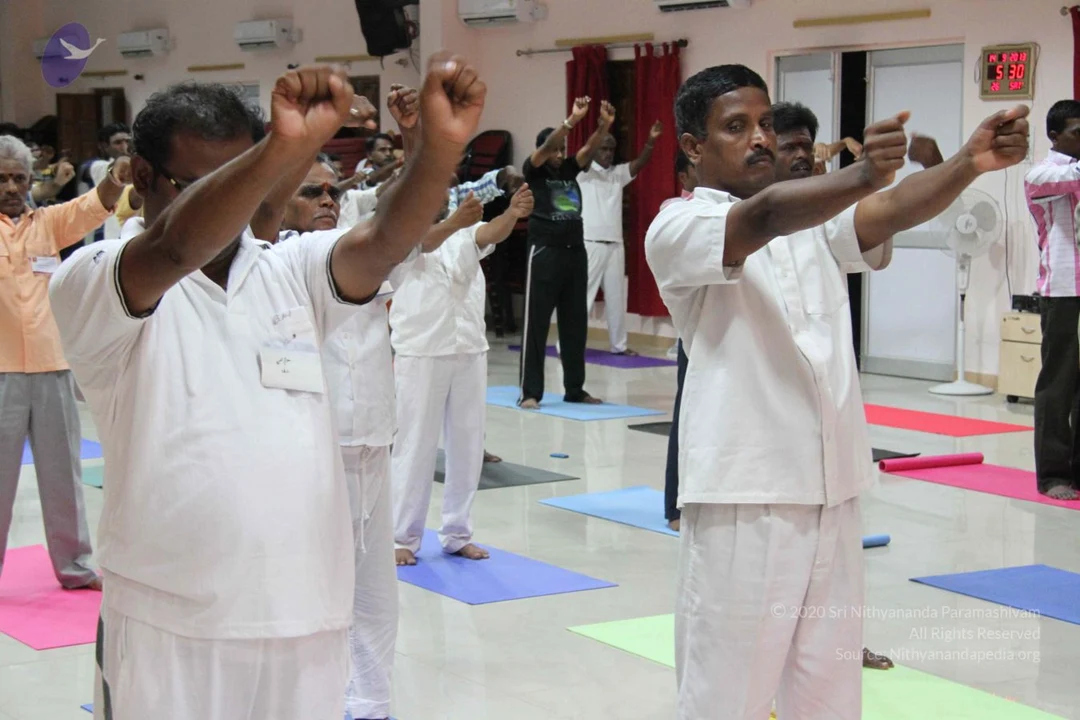
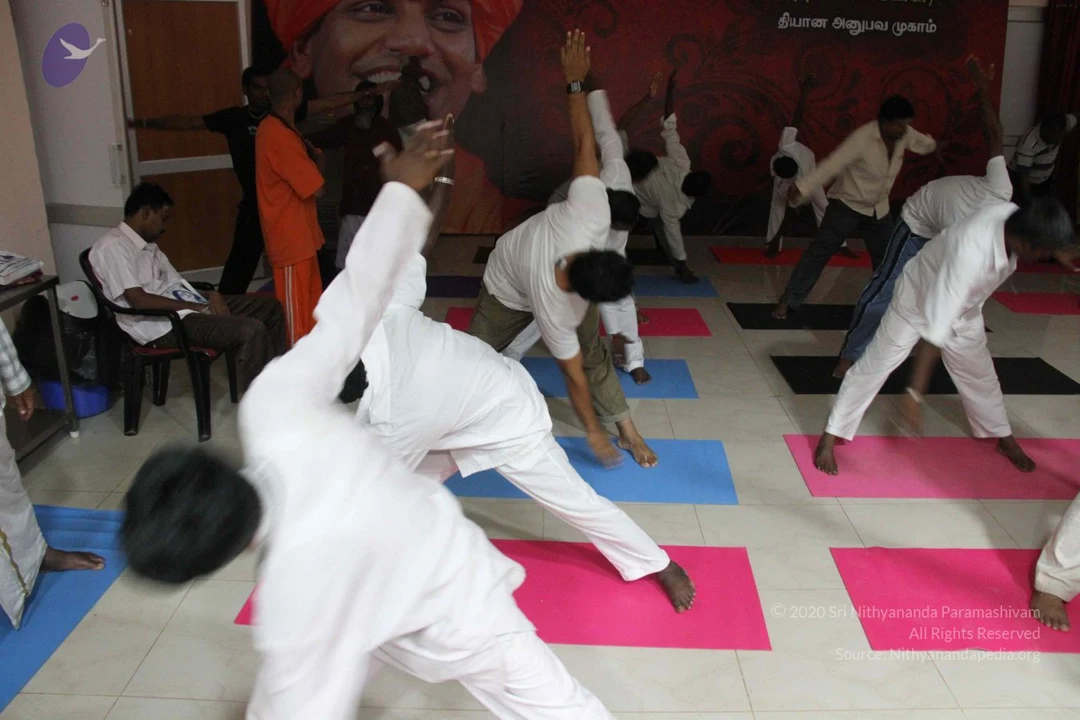
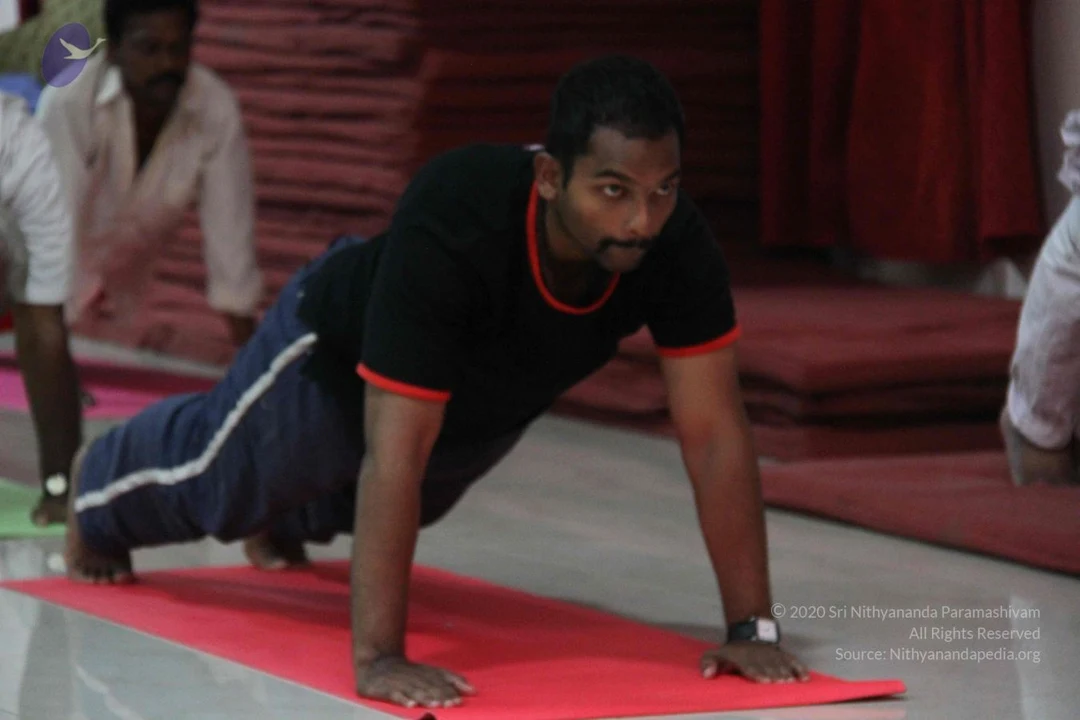
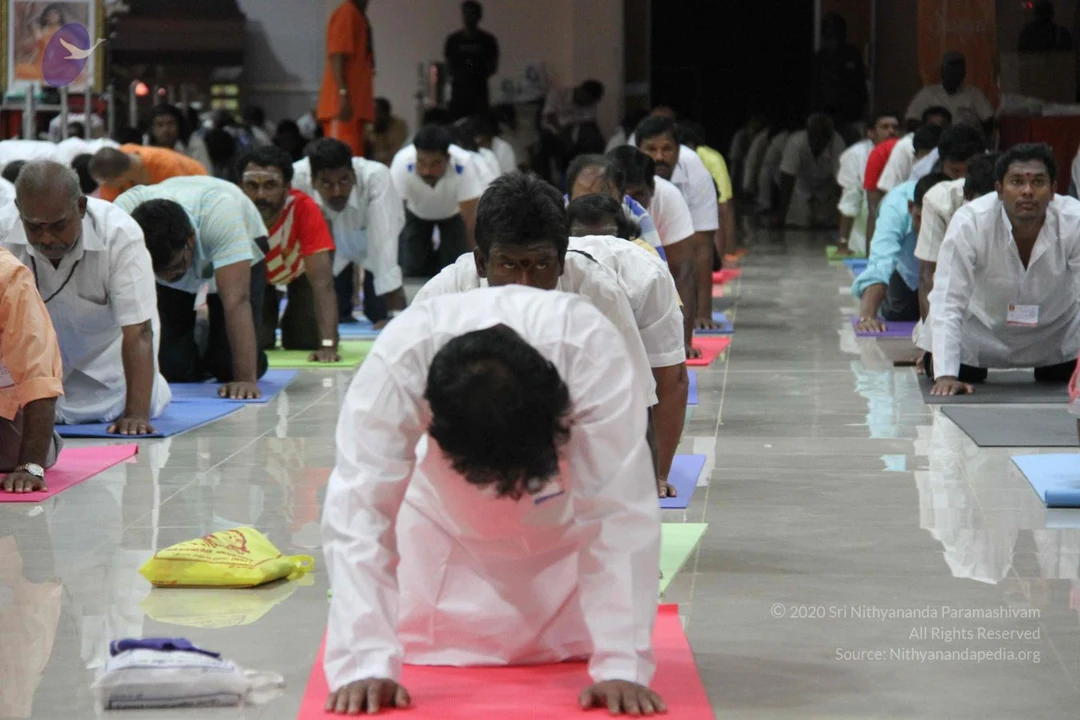
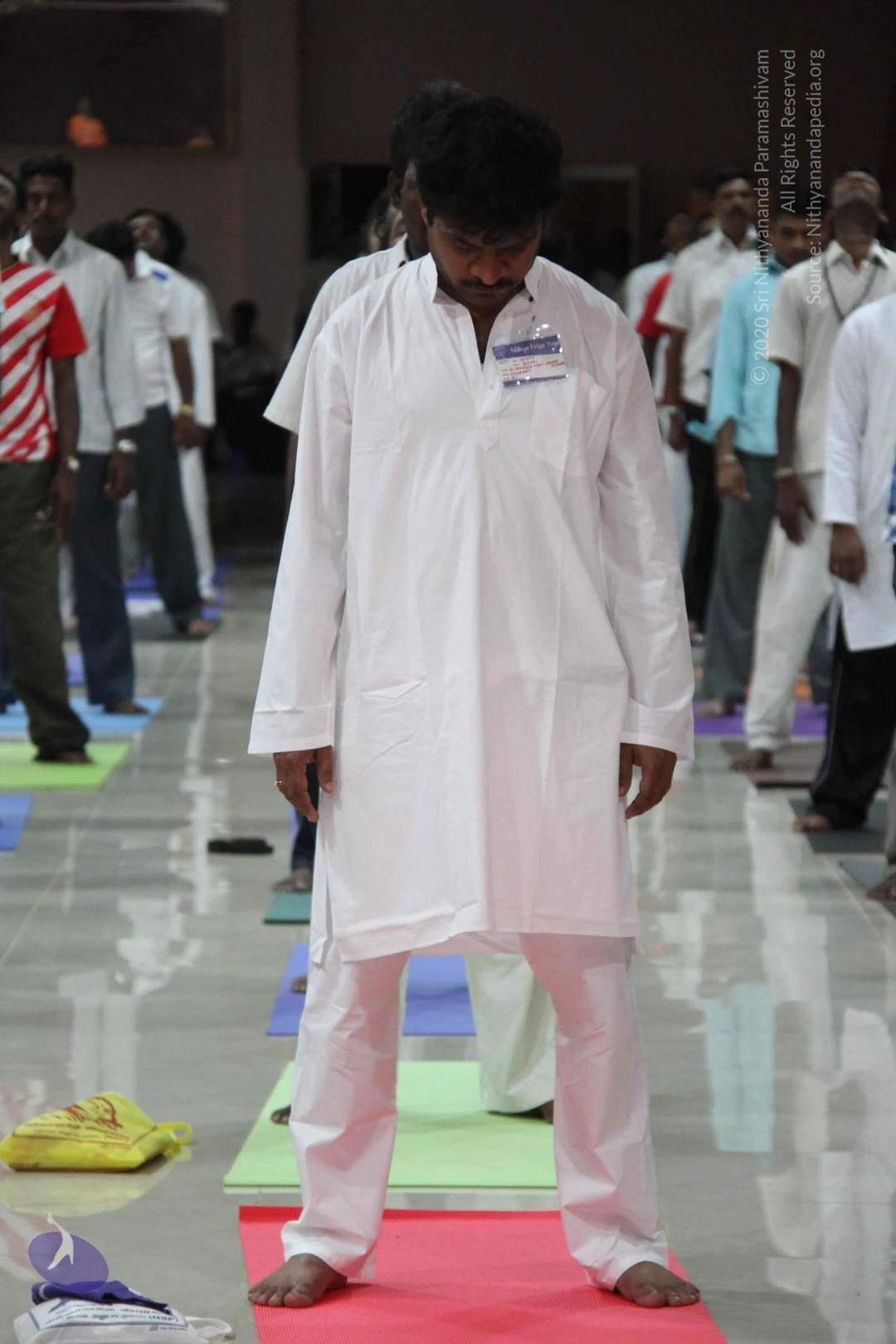
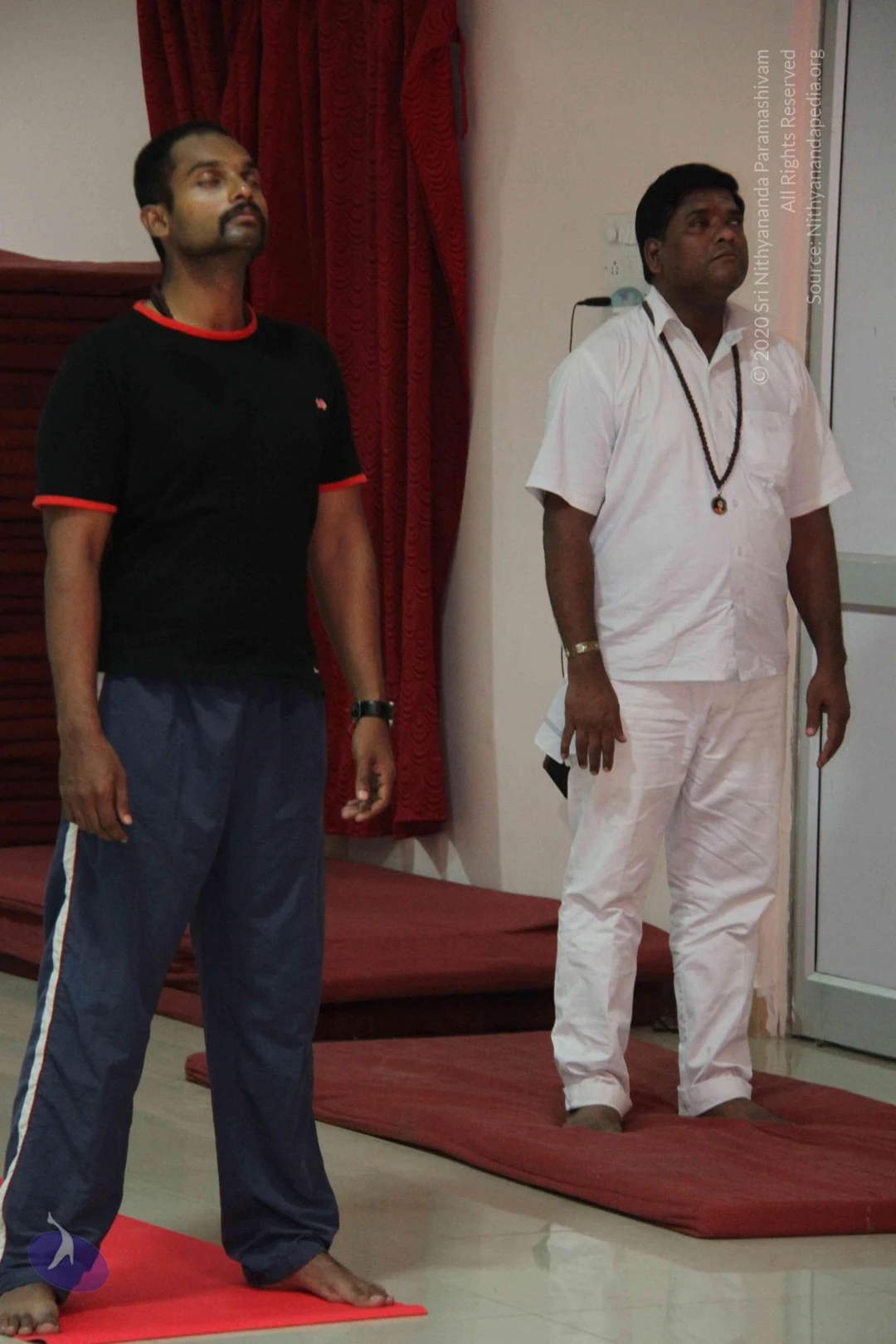
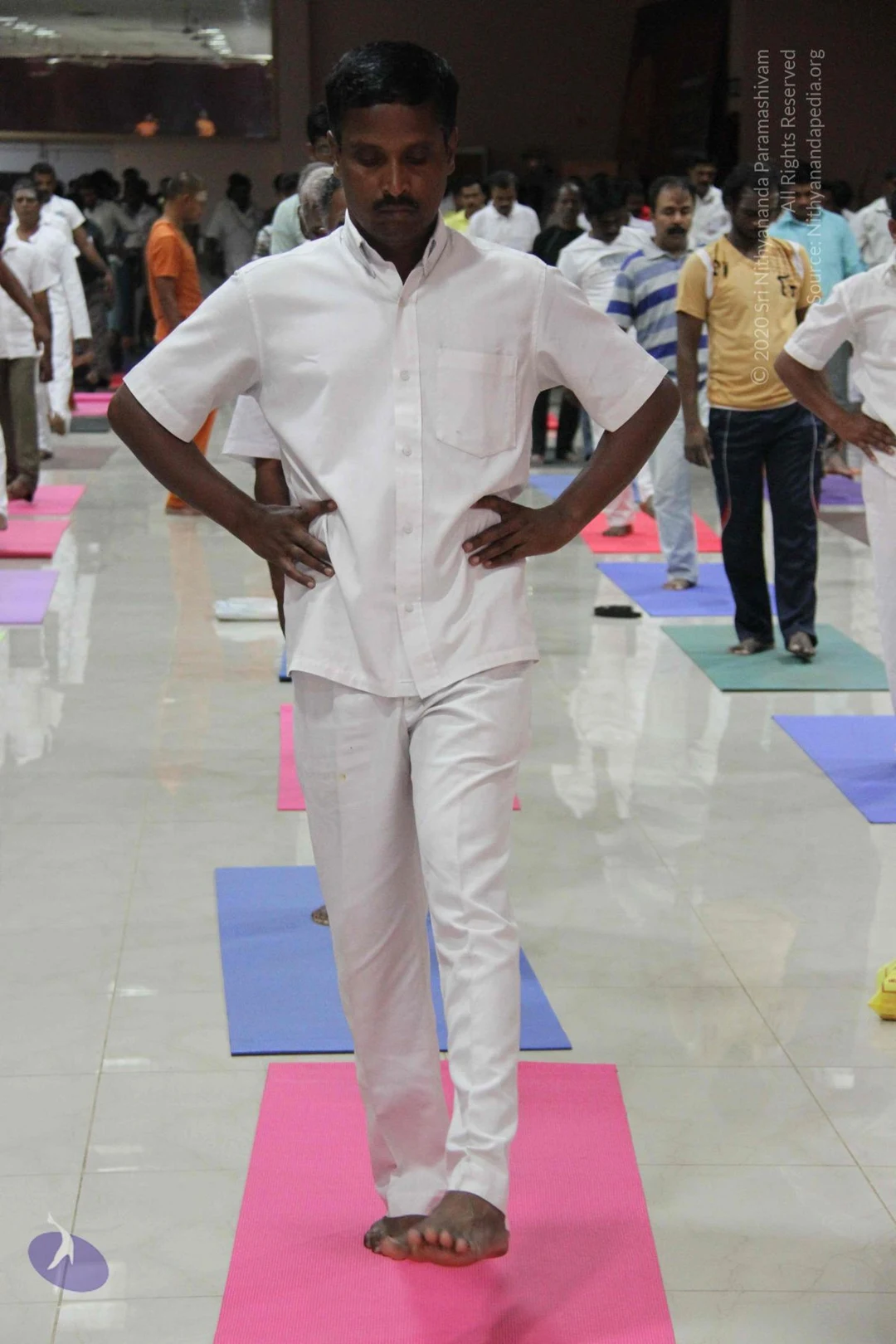
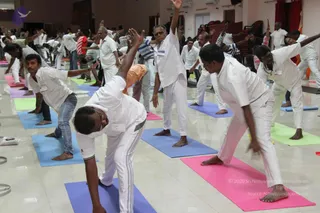
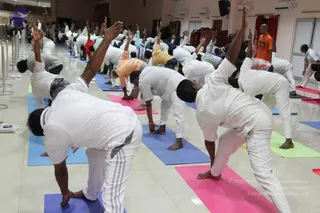
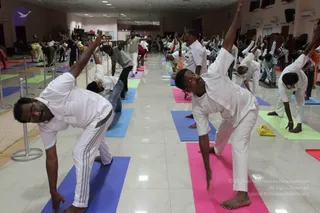
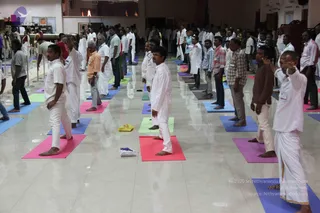
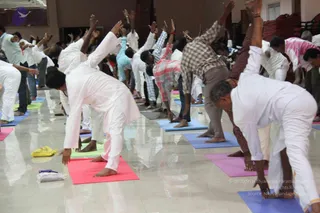
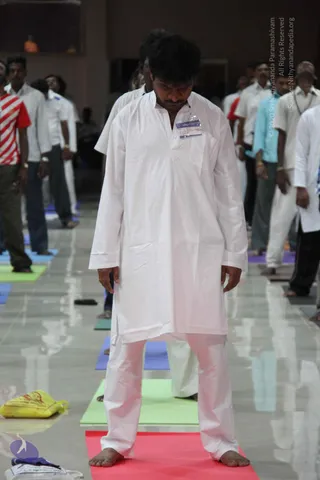
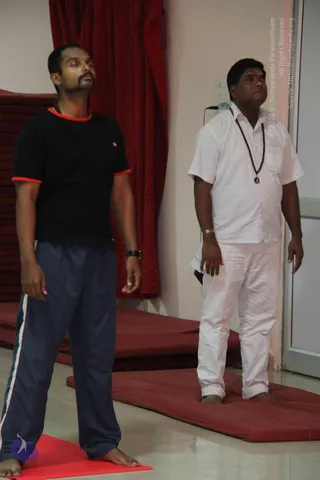
A large hall with a tiled floor where a crowd of participants in white clothes practise yoga on coloured mats (blue, pink, green, purple). Many people stand with arms raised and bodies bent sideways in a standing stretch, some with hands outstretched. Most wear white shirts and white trousers; a few wear striped or coloured shirts. Nearby, a figure in an orange garment stands in the middle of the row. Red curtains and chairs line the back wall, and an air conditioner is mounted high on the wall.A large indoor yoga session in a bright hall with tiled floor and wall air conditioners. Many participants in white clothes stand on coloured mats (blue, pink, green, purple) bending forward with arms raised overhead, practising a standing forward-bend asana. One man in the back wears a bright orange shirt and watches the group; others wear yellow, peach and striped shirts. Metal stanchions line the left side and a speaker hangs on the wall at top.A large hall with a polished tile floor where a group of practitioners perform standing yoga stretches on coloured mats, blue, pink and green. Most wear white kurtas or white trousers, and one man in a white shirt bends sideways with an arm raised toward the ceiling. Several people in grey and other colours join in, and a few spectators stand near the back. Metal stanchions and a white wall with a window line the room. Some participants reach overhead while others bend forward toward their feet. No a person figure is clearly identifiable among the participants.A large marble-floored hall during a yoga session, with many men standing on coloured yoga mats in rows facing forward. Most wear white shirts and white dhotis or trousers, while others wear checked shirts, a brown knit top and casual trousers. Several participants raise their arms in a yoga pose. A small lit flame and framed pictures are visible on the far wall, and a few onlookers stand near the back.A large group of men stands barefoot on coloured yoga mats across a polished hall, performing a standing yoga practice in rows. Most wear white kurta or dhoti-style clothing, while others wear checked shirts, plaid and maroon kurtas and trousers. Several have lanyard badges. In the foreground a man in a white kurta and white dhoti raises one hand in a pointing gesture. The mats are pink, blue, green and purple, and the floor reflects the room's pale walls.A large group of men in white kurta-pyjama and checked shirts stand on coloured yoga mats across a polished hall, bending forward with arms raised overhead in a standing forward-bend yoga posture. Mats in pink, blue, green and red lie in rows; a yellow cloth and folded white towel sit on the floor at left. Reflections of the people show on the glossy floor. Background shows a wall with a purple bird logo. No identifiable a person figure is visible.

Nithyasatsang-Swamiji

5 photosSource gallery
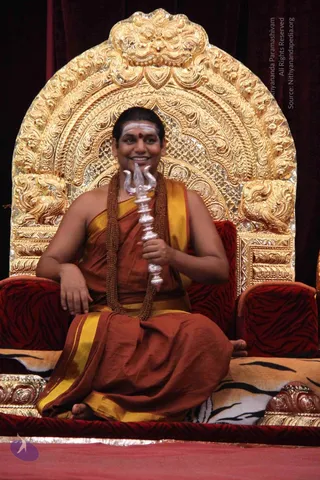
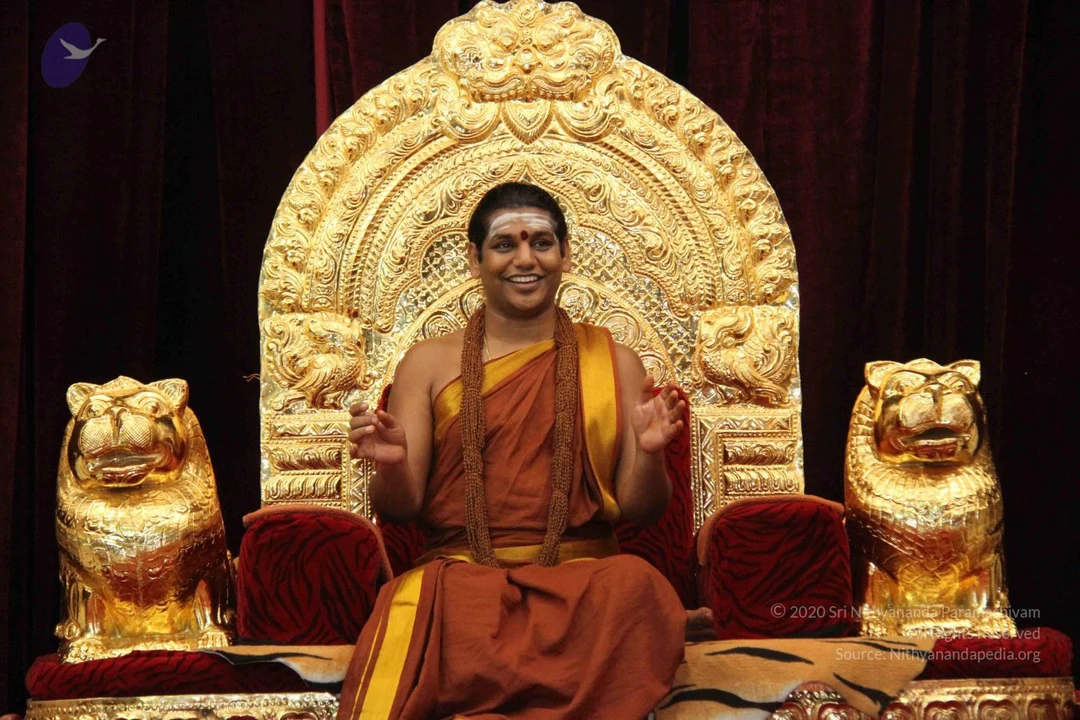
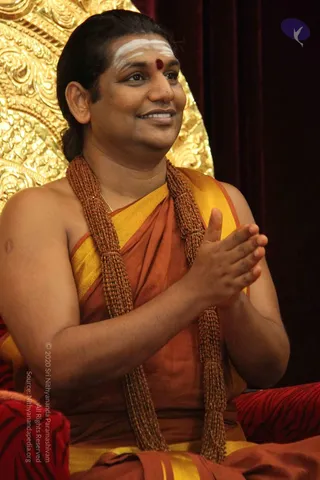
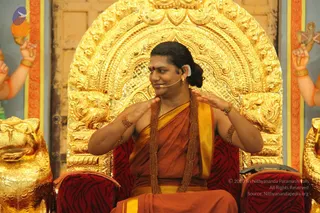
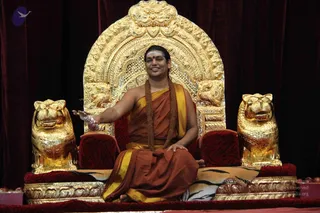
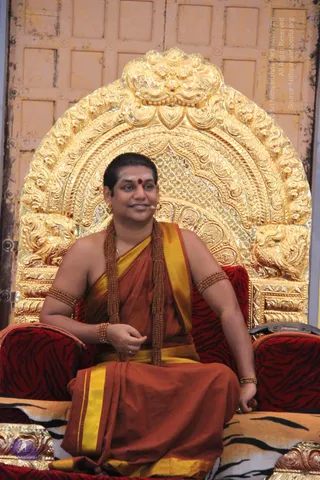
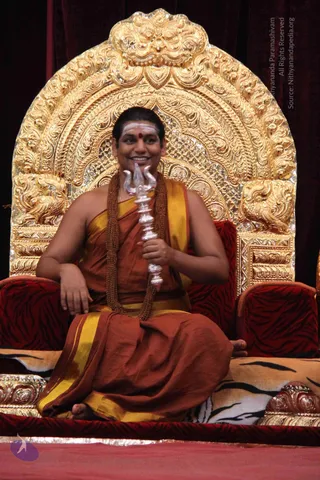
A man seated on an ornate golden throne with carved arched back and red tiger-striped cushions, wearing a rust-orange dhoti and shawl with gold borders, a rudraksha mala draped across the chest, rudraksha armlets and bangles, and a red bindi on the forehead. He wears a small microphone clip and smiles while speaking, with a carved wooden door behind the throne. The shawl and rudraksha are visible cues, so this is.A man with cropped dark hair, a red bindi and a head microphone sits on an ornate gold throne with a carved arched back and leonine motifs. He wears a rust-orange dhoti and shawl with yellow borders, multiple rudraksha-style beaded necklaces, gold armbands and bangles, and is barefoot. His hands are clasped in his lap as he speaks. The throne is draped with red and tiger-striped cushions, and a wooden panelled wall stands behind. a person: seated speaker with rudraksha malas and ornate ceremonial gold dress.A man seated on an ornate gilded throne with a large arched back carved in floral and lion motifs, draped in red and tiger-striped cushions. He wears an orange-red sannyasi-style robe with gold borders, multiple rudraksha malas, gold armbands and bangles, and a red bindi, speaking into a headset microphone with his hands gesturing mid-discourse. A carved golden figure is partly visible at the left edge.A seated man in saffron and gold-bordered robes speaks during a satsang, gesturing with both hands. He wears a thick rudraksha-style mala across his shoulders, a white horizontal forehead mark with a red dot, and his hair is swept back into a bun. Behind him are deep red velvet drapes and a gilded golden throne element. Probable Swamiji (in person), identified by the saffron robes, rudraksha mala, and swept-back hair with the throne setting.A seated man smiles broadly in front of an ornate gold repoussé throne with a tall arched back. He wears an orange-red garment with a wide gold-bordered edge draped over his shoulder and chest, and a long braided rust-and-gold rudraksha-style mala hangs down his front. A white tilak and red kumkum mark his forehead, and his hair is swept back. A red-and-black patterned cushion rests on his lap-side armrest. Appearance-based label: a person, seated on a throne with saffron clothing and a mala, shown in person.

SarvaDarshan-Pics

7 photosSource gallery
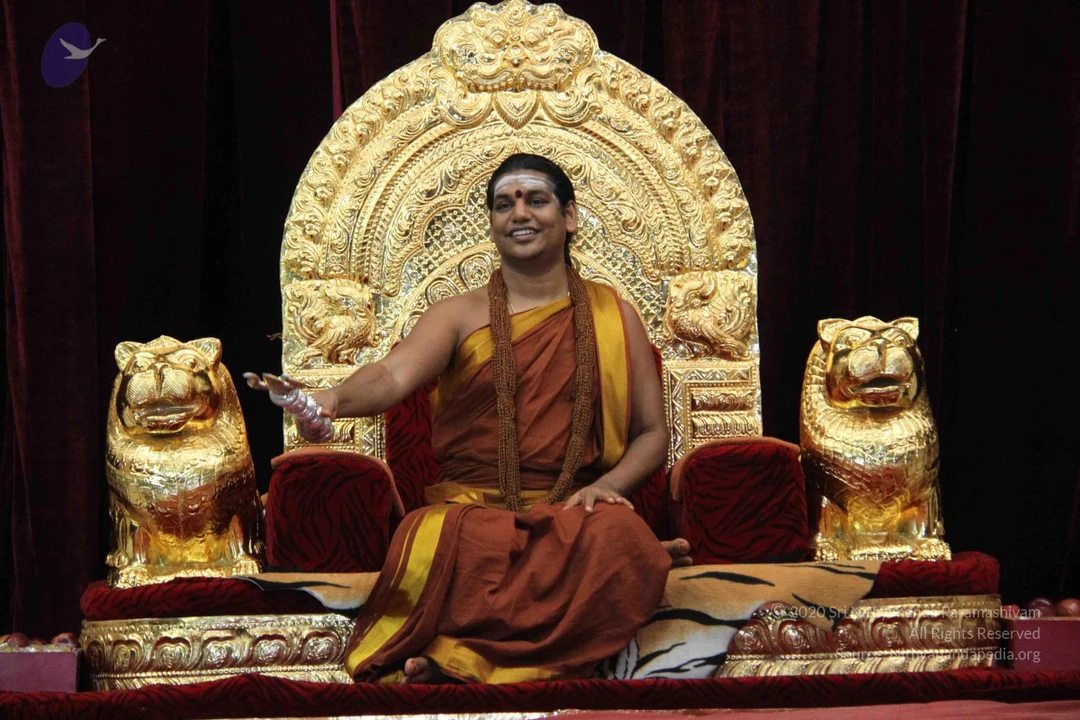
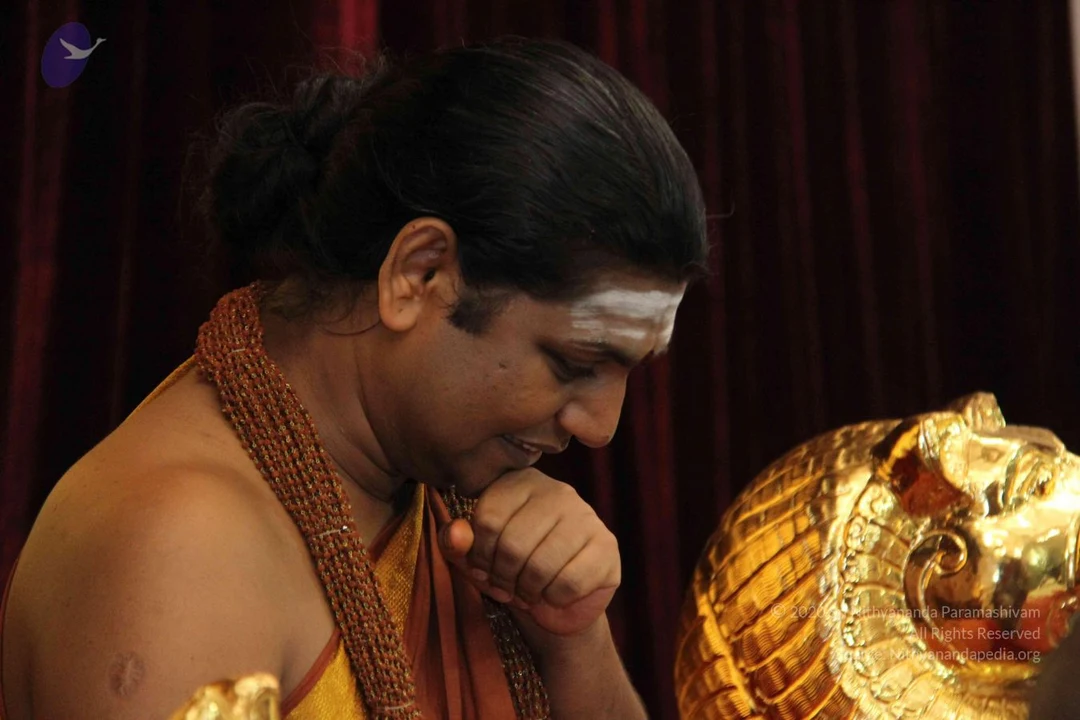
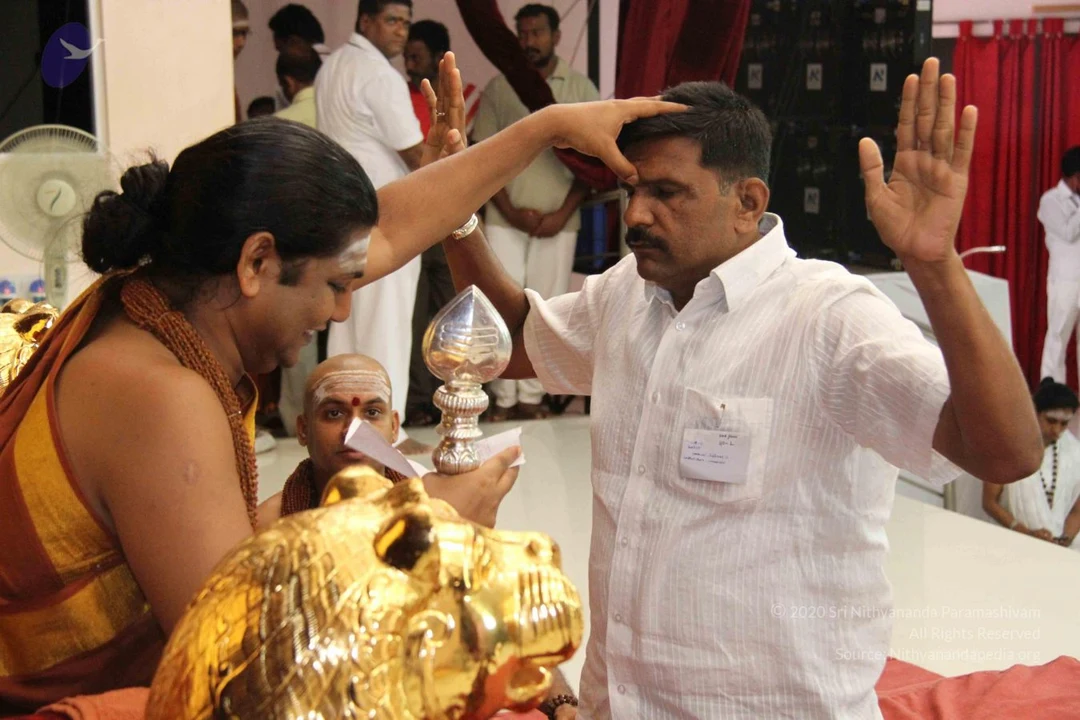
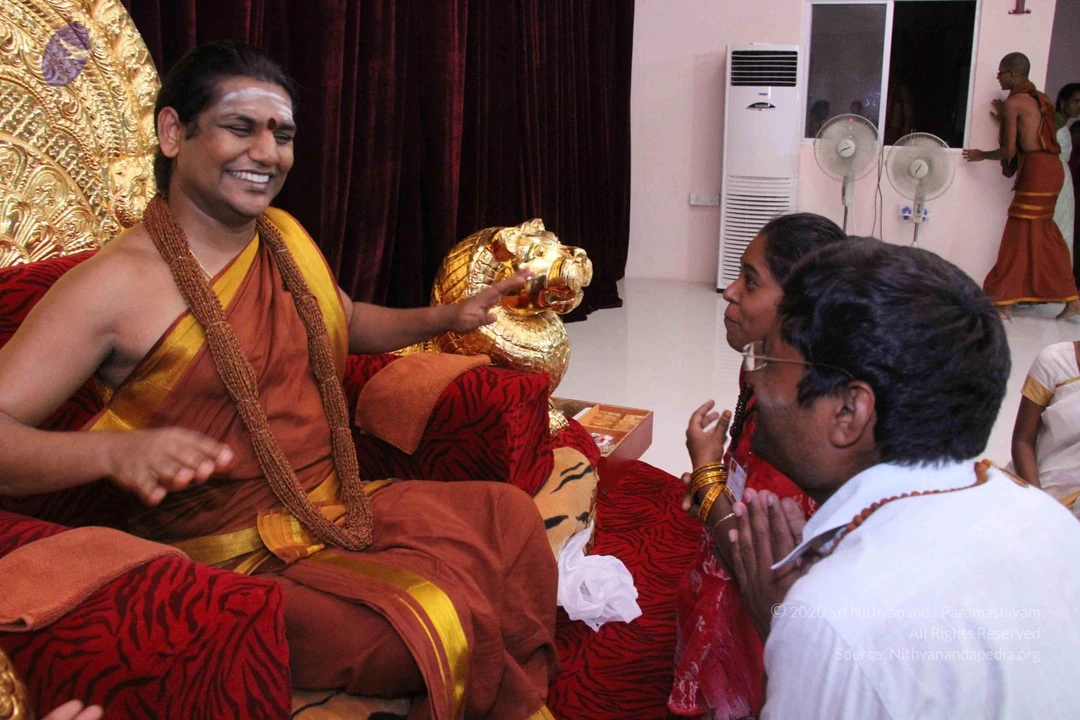
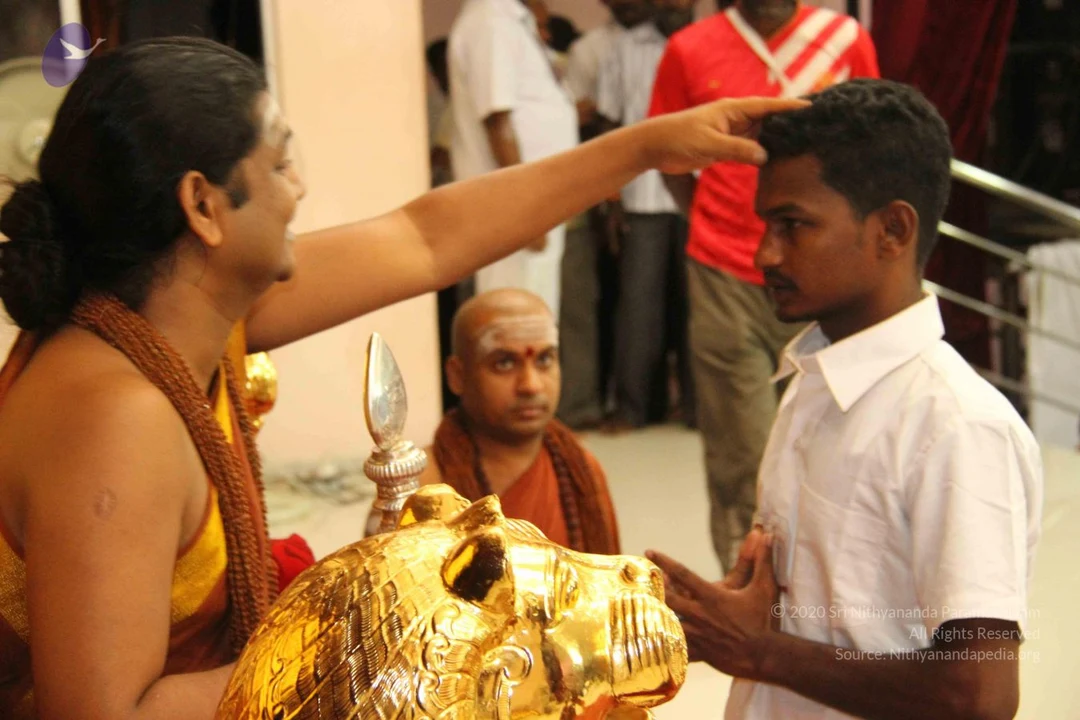
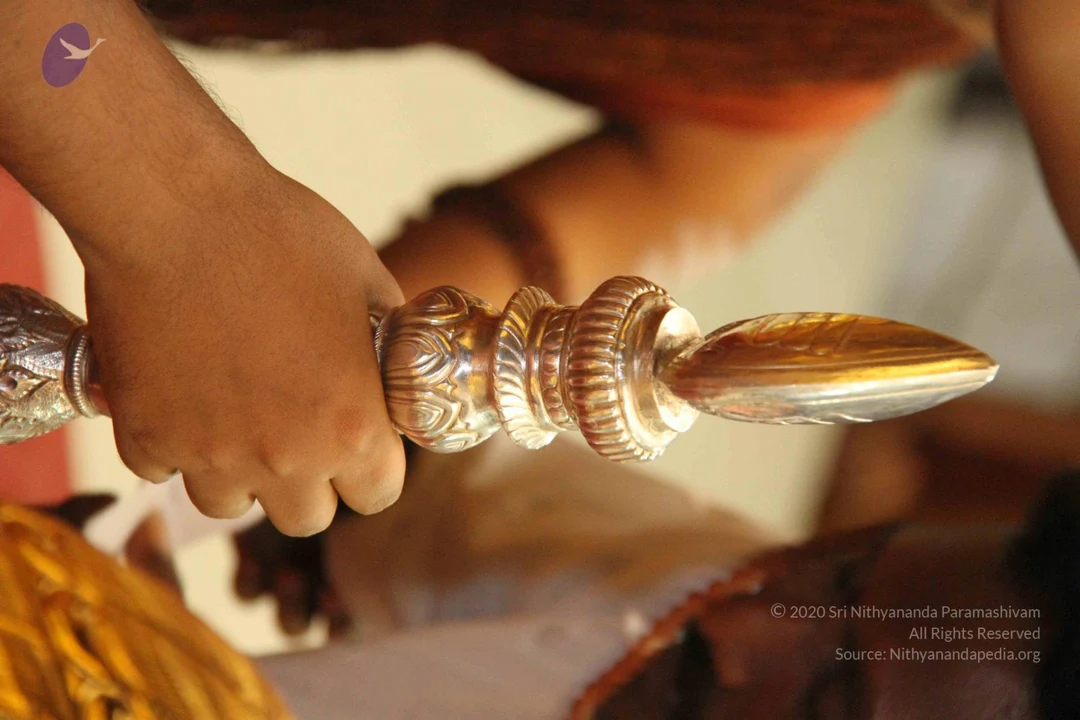
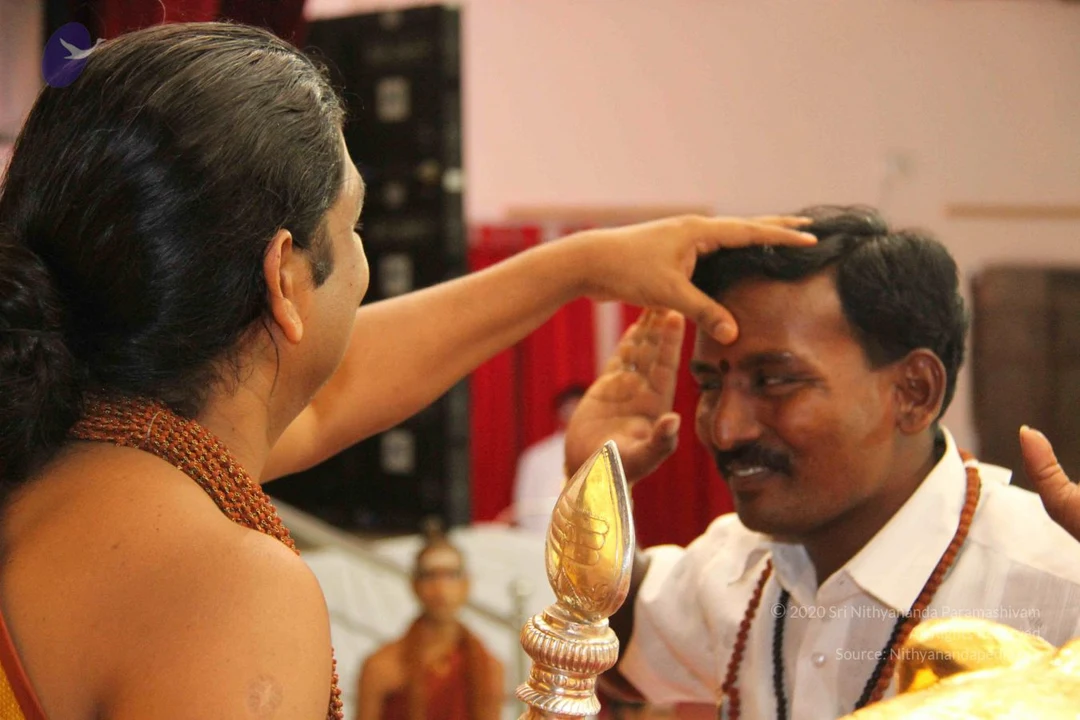
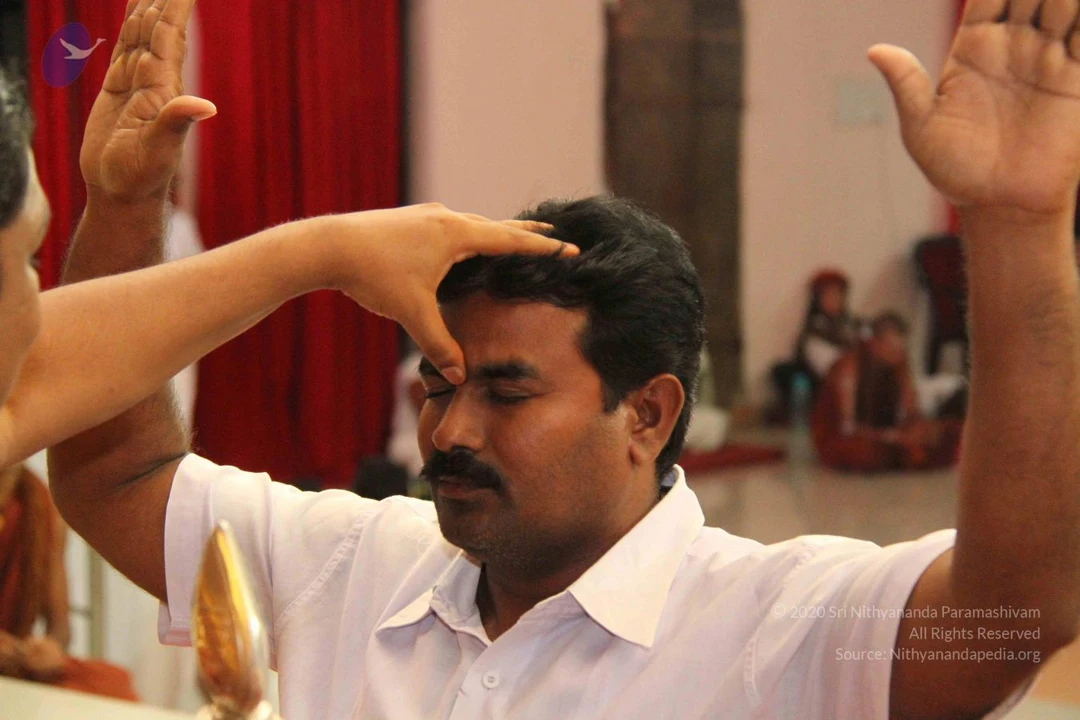
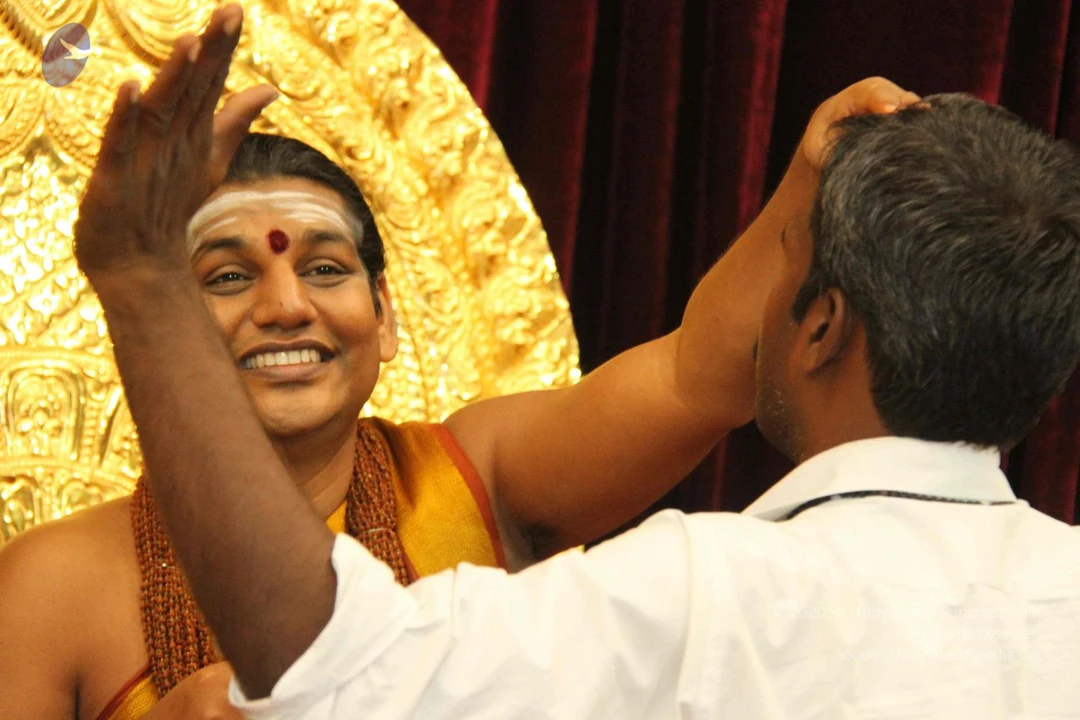
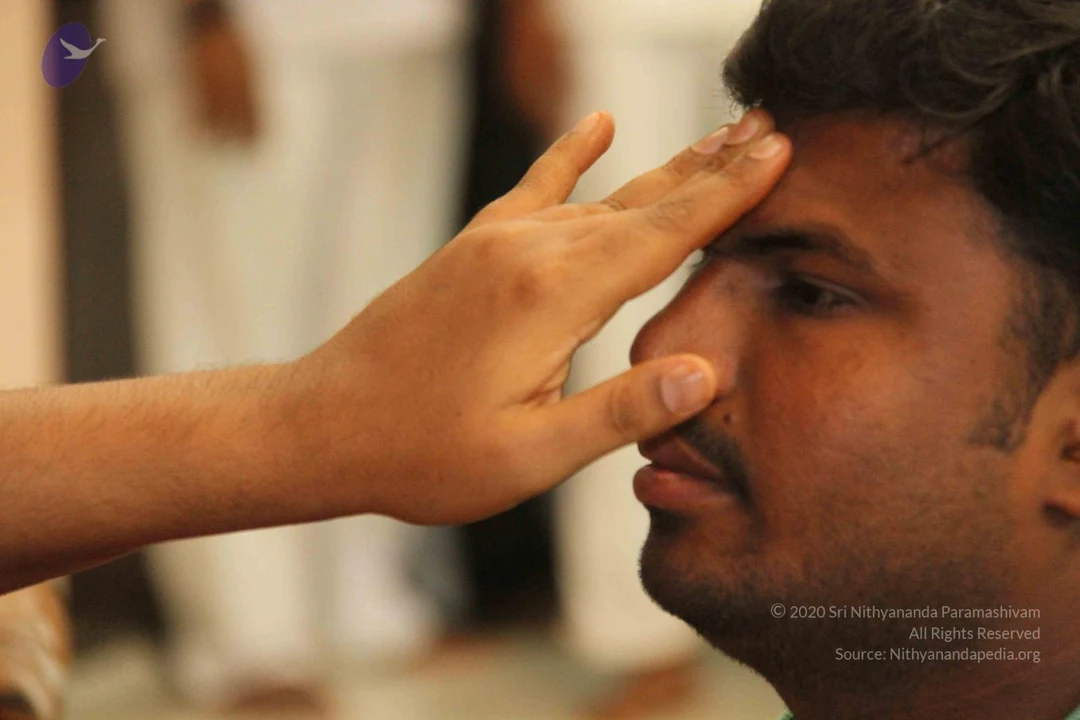
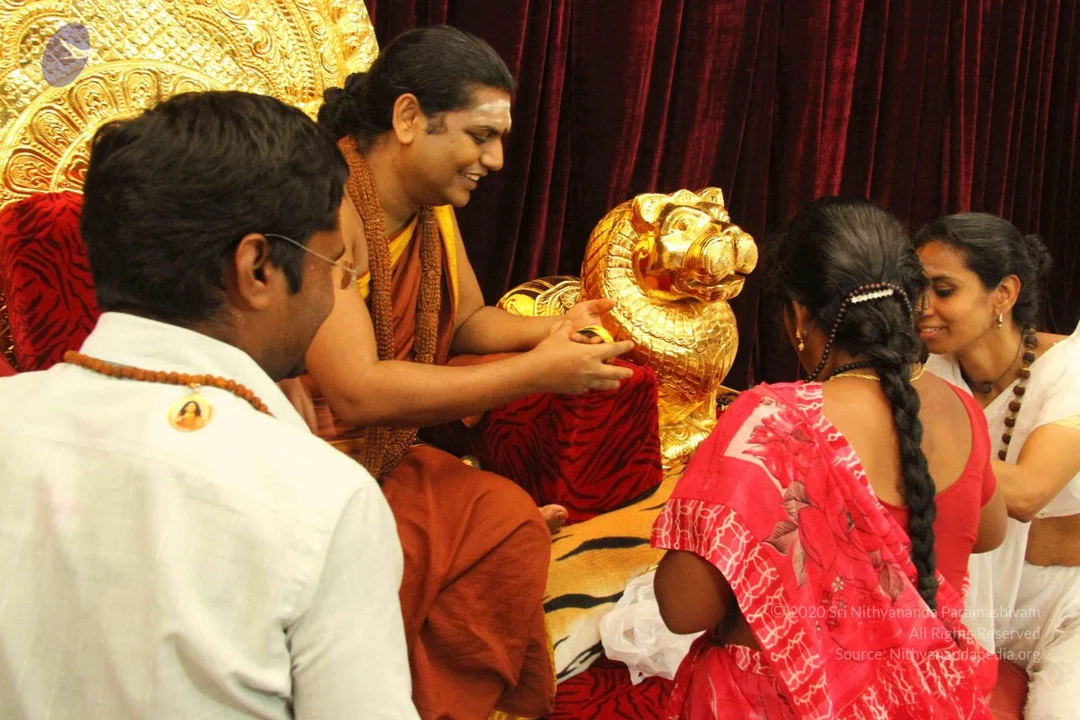
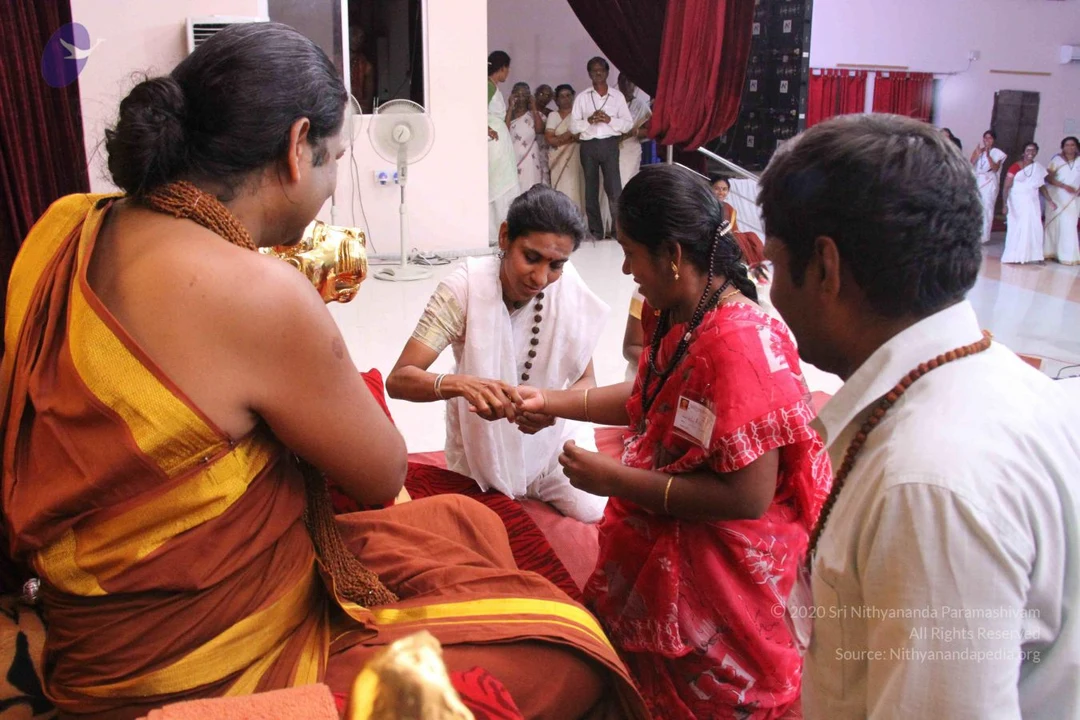
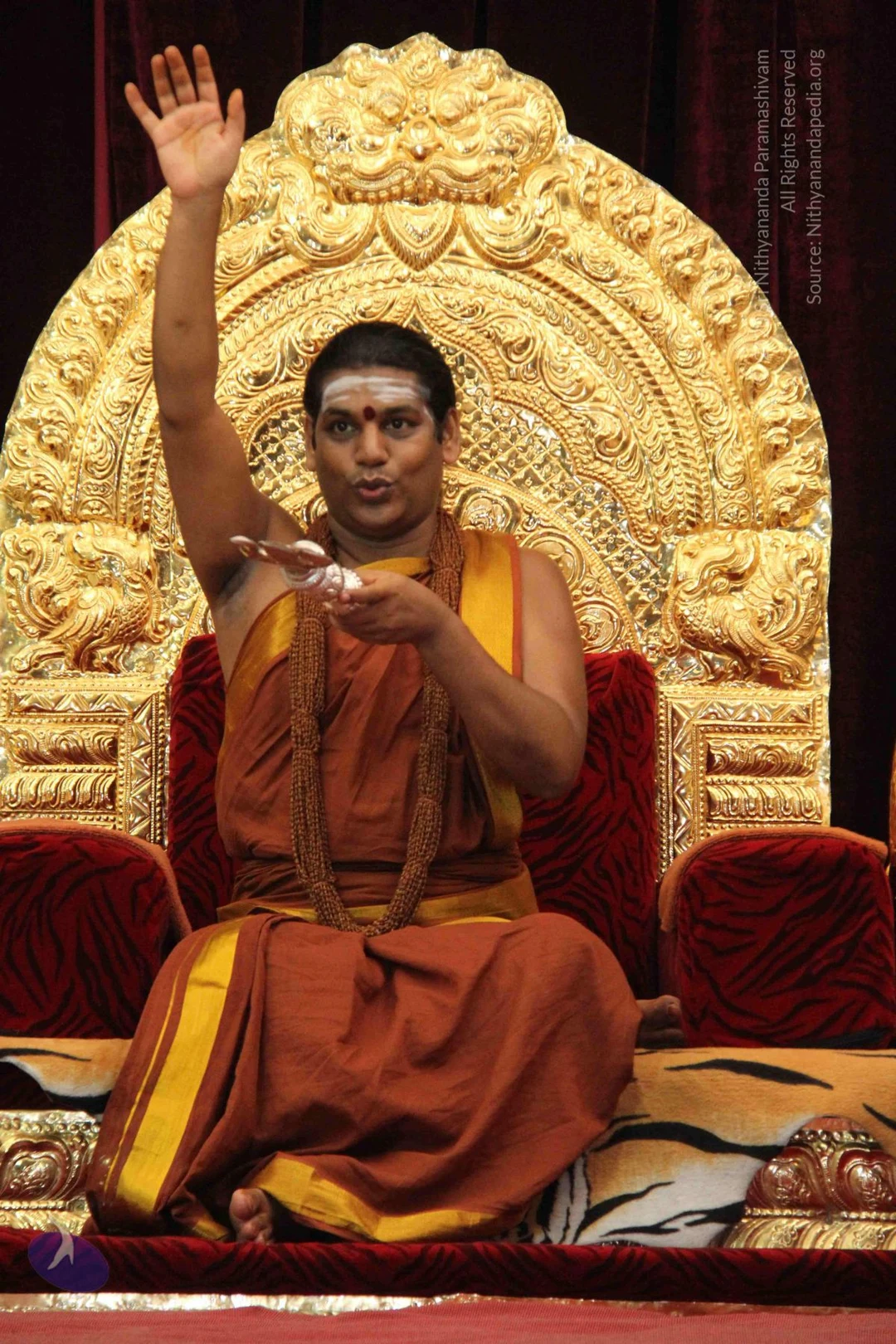
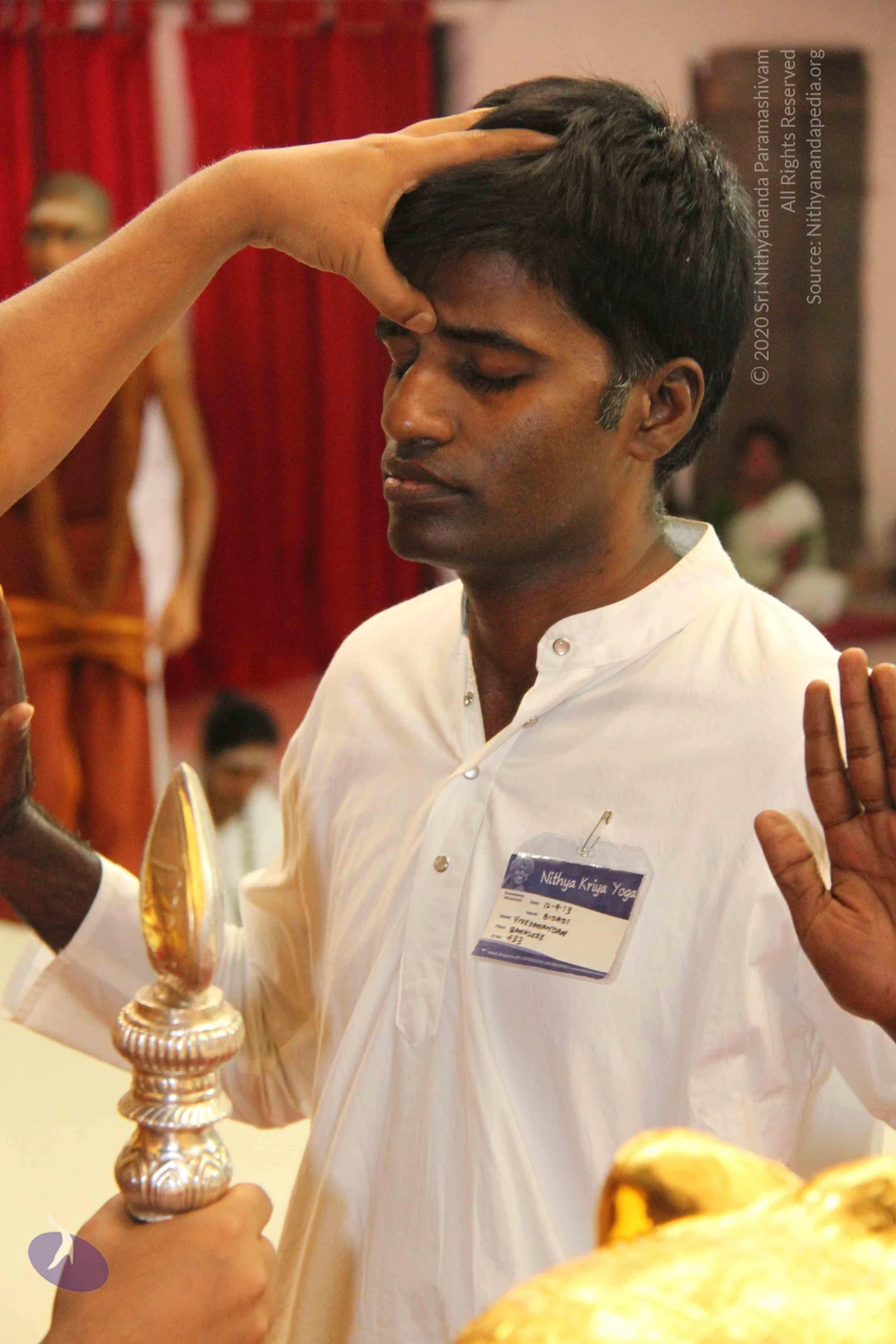
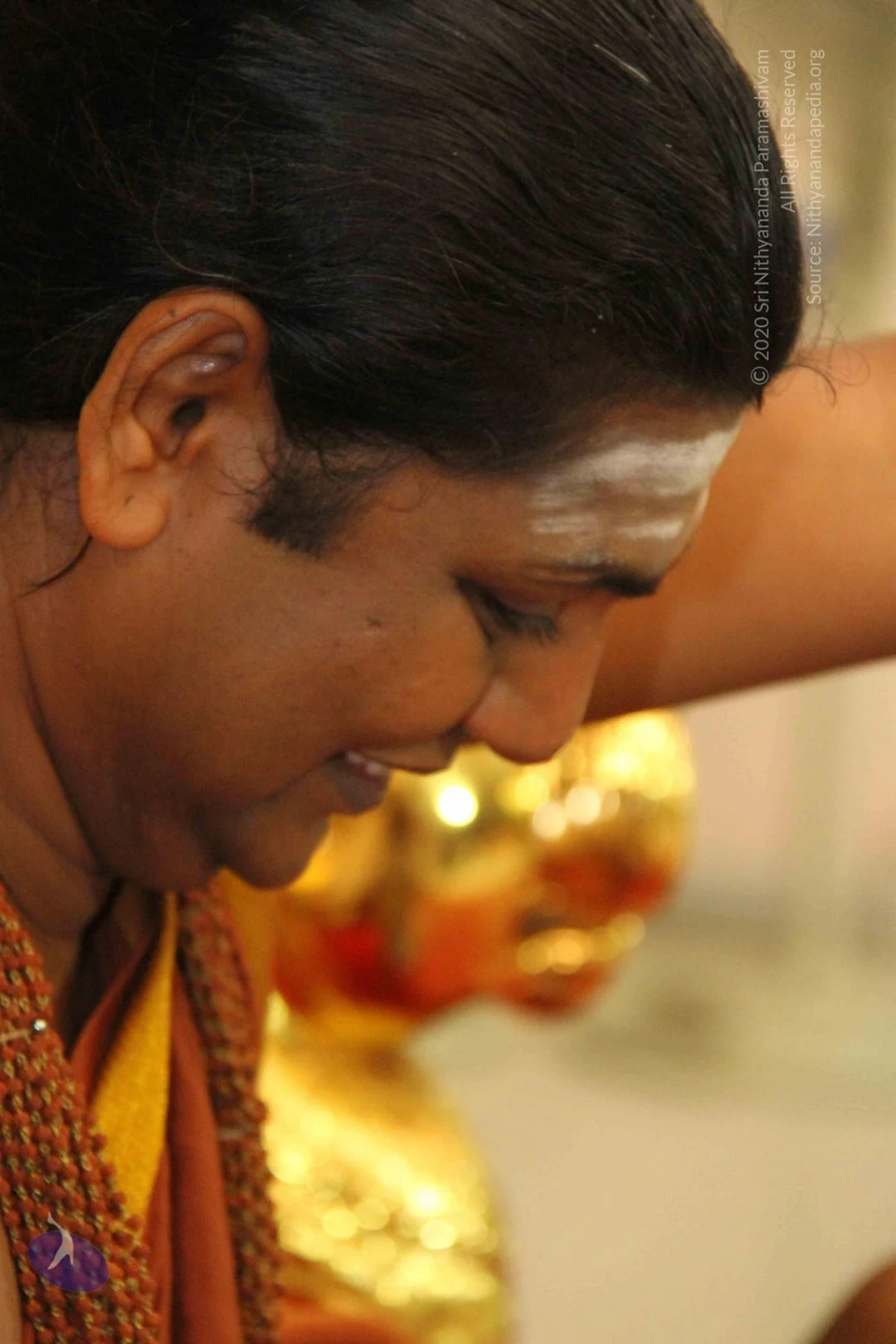
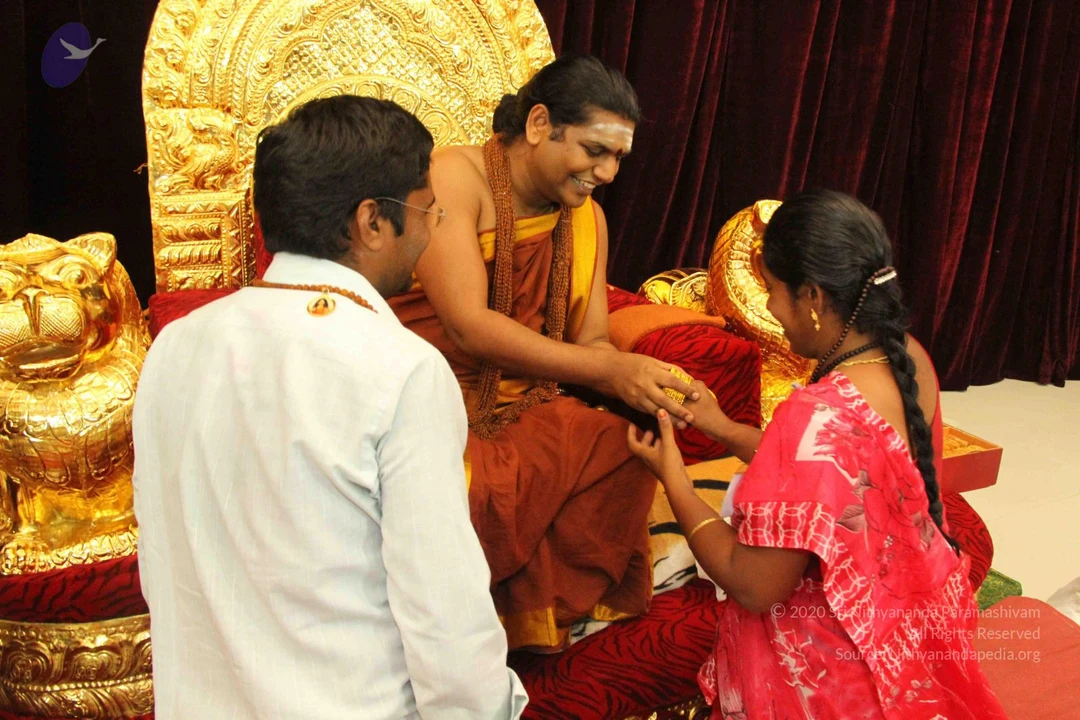
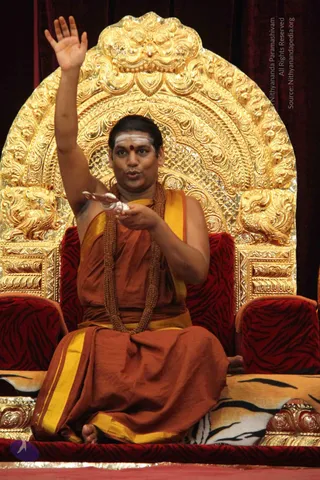
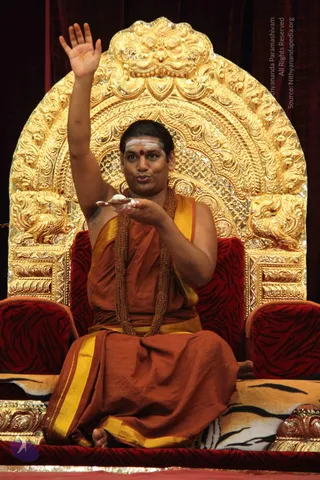
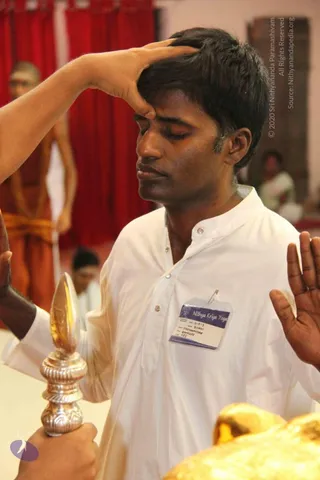
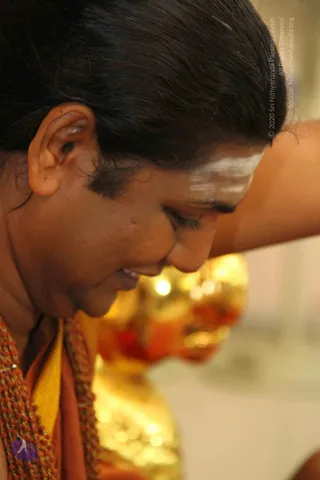
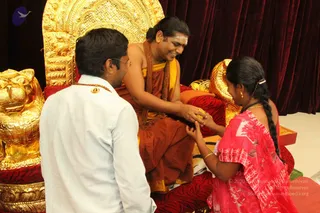
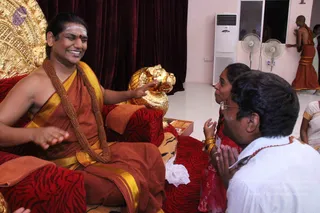
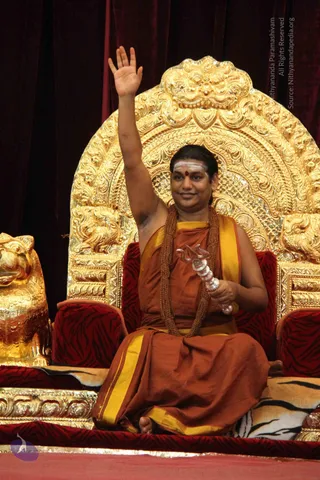
A man seated on an ornate gilded throne with a carved golden arch and red tiger-striped cushions, raising his right hand in a speaking gesture while holding a small clear object in his left hand. He wears an orange-saffron dhoti with yellow borders, a bare upper torso, a thick brown rudraksha mala around his neck, and a white horizontal tilak with a red dot on his forehead. The setting is a stage with dark red drapes behind the throne. a person is shown seated on the throne, identified by the saffron dress, rudraksha mala and ceremonial throne setting.A seated man in saffron-orange robes with gold borders and a long rudraksha mala sits on an ornate gold throne with a red and black tiger-striped cushion. He raises his right hand in a gesture while holding a small object in his left, with white vibhuti on his forehead and a red bindi. The gilded throne back has carved floral and lion motifs against a dark red curtain. Swamiji (probable): long hair is not visible, but his saffron robes, rudraksha mala and ceremonial throne match the page's Nithyananda Paramashivam label, so this is an in-person candidate.A young man in a white kurta with closed eyes receives a blessing as another person's hand rests on his forehead. He wears a white badge reading Nithya Kriya Yoga pinned to his chest. A silver ceremonial staff with a flame-shaped finial is held in the foreground beside a golden object. In the background, a figure in saffron and white stands before red curtains, with other seated attendees behind. The setting is an indoor satsang or Nithya Kriya Yoga session with red drapes.Close-up photograph of a person in profile with dark hair pulled back, a white horizontal tripundra mark on the forehead, and a smile, leaning forward with eyes lowered. Wears an orange garment with a beaded trim and yellow edging. Blurred golden and orange objects.A seated man in an orange-brown robe with a long rudraksha-style bead necklace and white forehead markings sits on an ornate gold throne with golden lion-head armrests against a dark red curtain, smiling as he takes the hands of a woman in a bright pink sari with a long braid. A man in a white shirt with a beaded necklace kneels or sits in the foreground, watching. Red velvet cushions line the throne. The seated man's appearance matches several cues from the page, including long swept-back hair, ornate gold seating and orange-brown robes, so he is described as Swamiji (probable) receiving devotees.A seated man in saffron-orange robes with a gold-and-saffron shawl and a long rudraksha mala smiles while gesturing toward two devotees kneeling before him on a red-and-gold throne with tiger-striped upholstery and a gold lion-head armrest. He has long swept-back hair, a white vibhuti line and a red bindi, and his distinctive ceremonial adornments and golden throne suggest the a person in an audience setting. A woman in a red sari with gold bangles folds her hands and smiles, and a man in white with a rudraksha mala holds his hands in anjali. Behind them a white floor-standing air conditioner, fans and a bare-chested attendant in orange dhoti are visible, with a dark red velvet curtain behind the throne. Two visible people are seated or kneeling near the throne, plus one standing attendant in the background.

NKY-Yoga-Pics
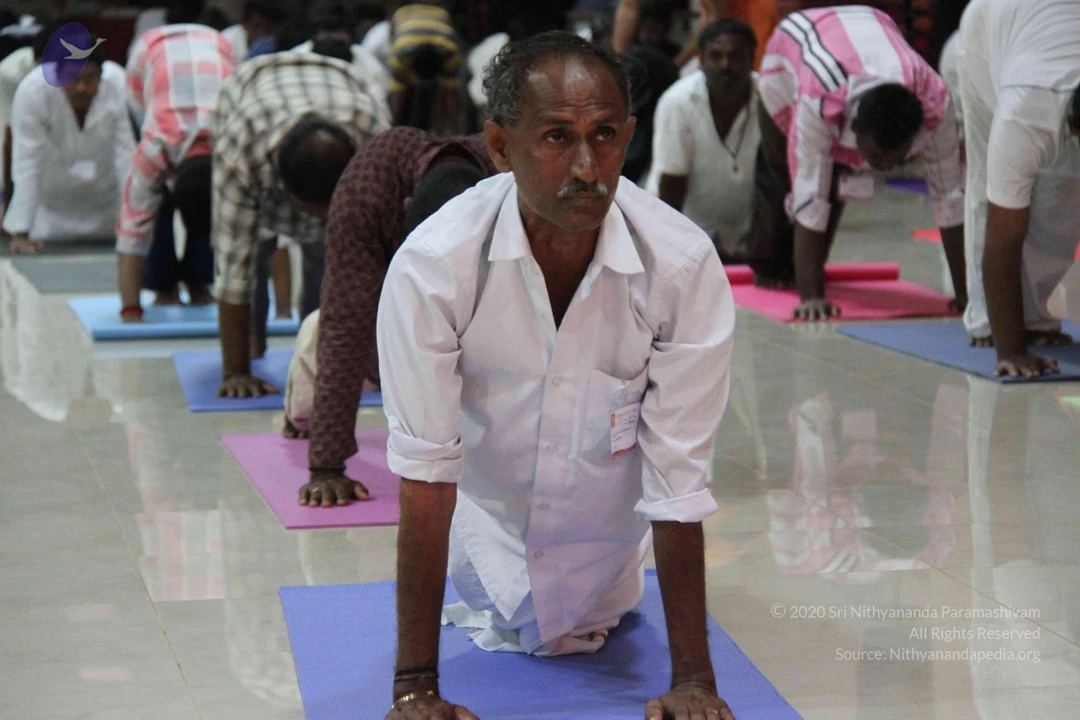
2 photosSource gallery
A man in a white kurta and white trousers stands barefoot on a red yoga mat with his eyes lowered, arms relaxed at his sides, during a yoga or meditation session. A name badge is pinned to his kurta. Behind him, many participants in white and pastel clothes stand on coloured mats across a polished grey floor in a large hall, with a yellow bag and a folded blue cloth at the lower left. A small orange-robed figure appears in the far background near the top. The scene suggests a group class with people standing in quiet concentration.Two men stand barefoot on red yoga mats in a meditation hall with red curtains and a pale wall behind them, both gazing upward in a standing posture. The man on the left wears a black T-shirt with red trim and navy track pants with white side stripes, plus a dark wristwatch. The man on the right wears an all-white short-sleeved shirt and white trousers, with a rudraksha mala around his neck and a gold bracelet on his wrist. A microphone stands near the wall behind him.

NKY-Session-Swami
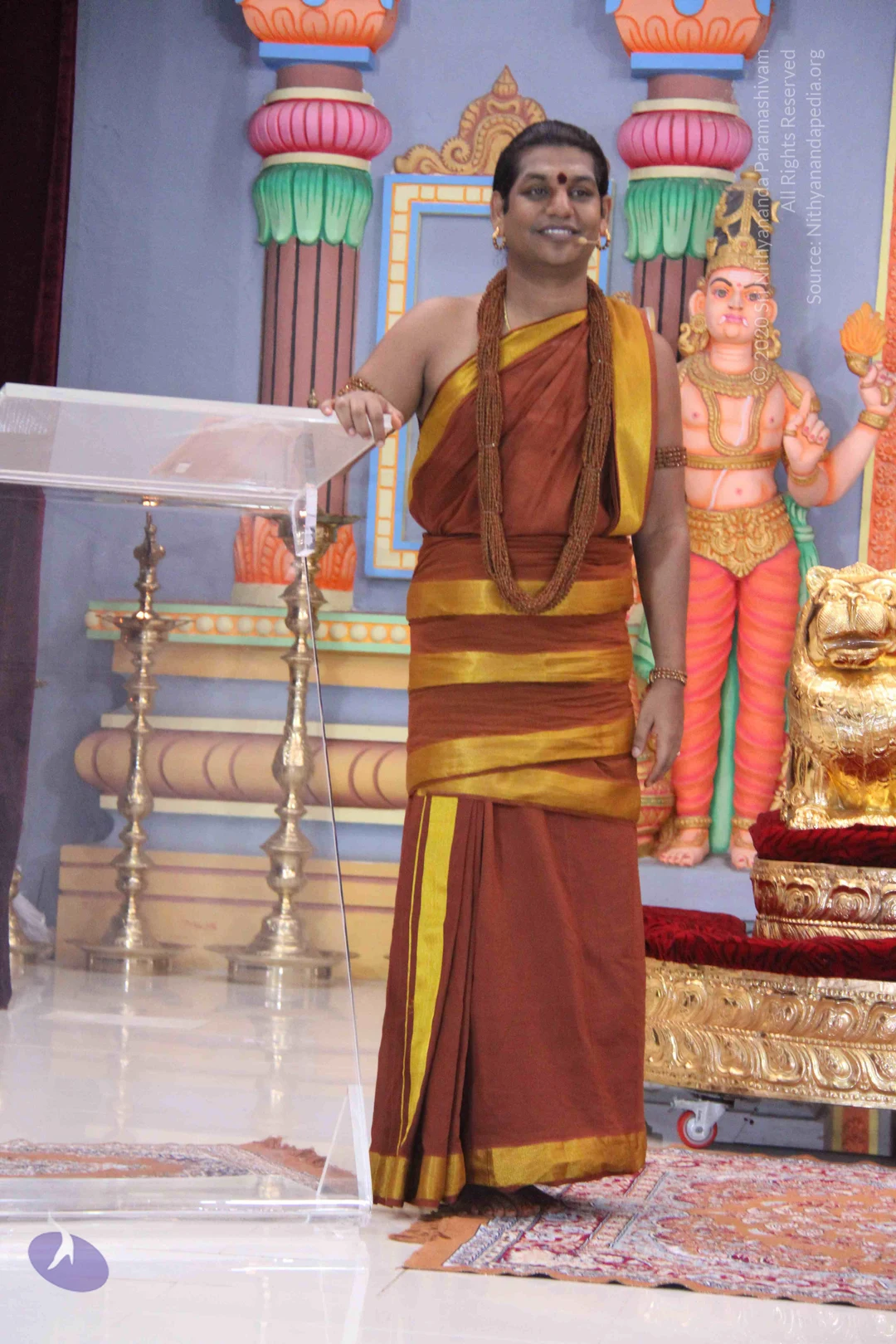
36 photosSource gallery
A man stands on a temple-style stage beside a clear acrylic lectern, gesturing with his right hand as he speaks. He wears a rust-brown garment with broad gold borders, a gold-bordered cloth wrapped at the waist and a long rudraksha mala around his neck, plus gold armlets and bangles and a red bindi on his forehead. Behind him stand a gold ornate throne-back with a red and tiger-striped cushion, carved stone pillars and a painted deity figure on the left. The setting suggests a satsang or discourse. a person: the figure wears a rudraksha mala and ornate gold adornments on a ceremonial stage in a satsang setting.A person stands beside a clear acrylic lectern on a stage, speaking with one hand resting on the lectern and the other gesturing. They wear a rust-brown garment with broad gold borders wrapped around the body, gold armbands and bangles, and a long rudraksha mala draped over the shoulder. Behind them is an ornate gold throne with red velvet cushions and a tiger-print cloth, in front of a blue and red temple-style backdrop with a painted deity figure at the left edge. A visible red tilak marks the forehead. Presentation cues are consistent with the page's Swamiji claim: long swept-back hair, rudraksha, ornate gold ornaments and a saffron-toned garment. Identity is treated as probable from appearance only.A standing man in a rust-brown dhoti-style garment with broad gold borders and a matching brown shawl stands on a temple-style stage beside a clear acrylic lectern. He wears a rudraksha mala necklace, gold armlets and bangles, and a red bindi, with his hands clasped at his chest. Behind him a painted deity statue in orange and green stands at left, a gold-finished throne with red velvet cushions sits at right, and a maroon velvet valance hangs above. The setting appears to be a satsang discourse hall.A man stands on a raised white stage at a clear acrylic lectern, speaking with his hands pressed together at chest level. He wears a rust-brown dhoti-style garment with broad gold borders, draped over one shoulder, and a long rudraksha mala with a gold-toned bracelet on his upper arm and bangles on his wrists. Behind him is an ornate golden throne with red velvet cushions and a tiger-print cloth, flanked by a painted deity murti with a tall crown and a red-and-green painted temple backdrop with a velvet valance. The setting suggests a satsang discourse. Only one physical person is visible. The man's appearance is compatible with the page's a person claim: long swept-back hair, rudraksha mala and ornate gold clothing, yet his face and identity remain uncertain from the image alone.A smiling person stands at a clear acrylic lectern on a temple-style stage, wearing a rust-brown dhoti-style wrap with broad gold borders, a long brown rudraksha mala draped across the chest, rudraksha armlets and wrist bands, gold hoop earrings, and a red bindi. A small headset microphone is attached near the mouth. The background shows painted ornamental stage décor in red, blue and green. a person: the speaker has no long swept-back hair, crown or saffron-ornate tradition cues beyond the rudraksha adornments and gold earrings, so identity is uncertain; the appearance is consistent with a rudraksha-adorned speaker at a satsang. A shadowy red and gold draped canopy is visible at the top edge.A smiling man in a rust-brown and gold-bordered robe stands at a clear acrylic lectern, hands pressed together at chest level in a gesture of greeting. He wears a multi-strand rudraksha-style mala necklace, matching beaded armlets and bracelets, gold hoop earrings, a red bindi and a small headset microphone. Behind him are ornate gold and red decorative panels and a crimson velvet canopy.
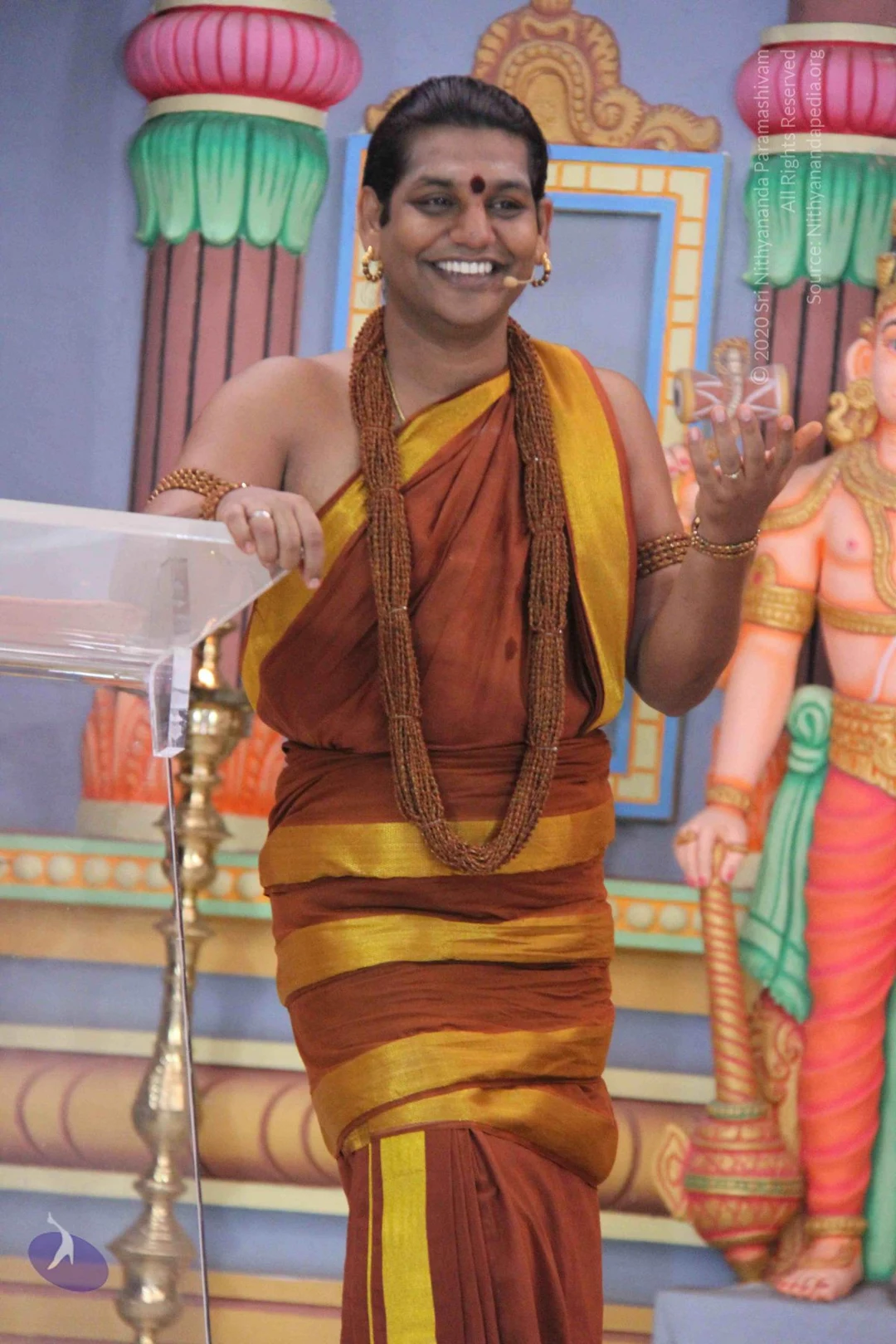
NKY-Darshan
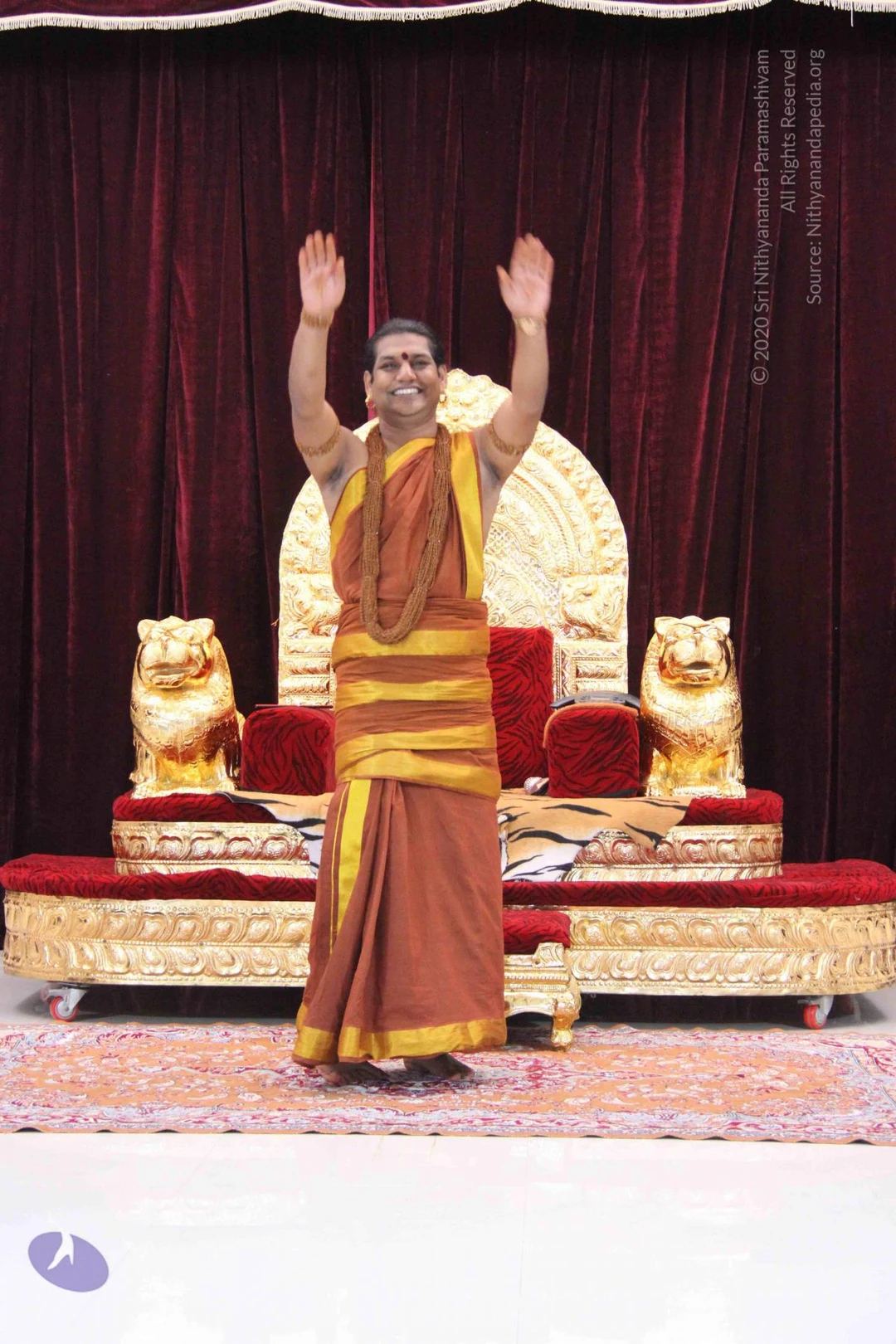
10 photosSource gallery
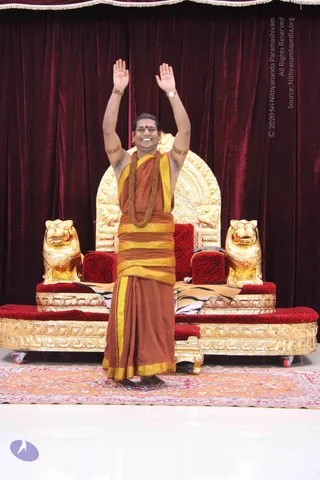
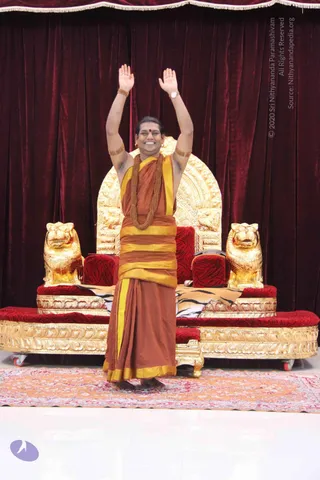
A photograph of a single man standing barefoot on a stage in front of a gold-framed throne flanked by two golden lion figures and draped in red and tiger-striped upholstery. He raises both arms overhead with palms open, smiling broadly. He wears a rust-orange dhoti and shawl with gold borders, a rudraksha mala around his neck, gold bangles on his upper arms and wrists, and a red bindi on his forehead. Burgundy velvet drapes hang behind the throne and a patterned rug covers the stage floor. a person: a man in orange-saffron clothing with a rudraksha mala, ceremonial gold arm ornaments and a bindi, standing in a stage setting.A photograph of a man standing barefoot on a patterned carpet before an ornate golden throne with a red velvet backrest and seat draped in tiger-striped fabric, flanked by two gold lion sculptures. He raises both arms overhead with palms open, smiling. He wears a rust-orange and gold-bordered cloth wrapped as a robe, a long beaded necklace, gold armlets and a wristwatch, with a small red bindi. Deep red velvet curtains with gold fringe form the backdrop. a person: the man has the appearance-based cues of the ceremonial orange-and-gold robe and beaded mala, and the page identifies a person at this event, so he is labelled as a probable in-person candidate.A man stands barefoot on a white stage with both arms raised overhead, smiling. He wears a rust-brown robe with gold borders wrapped over one shoulder, a thick brown rudraksha mala around his neck, gold armbands, a wristwatch and a red bindi. Behind him stands a large gold throne with carved lion-head arms and red velvet cushions, set before deep red velvet drapes and an ornate red-and-cream carpet.A man stands barefoot on a patterned rug in front of an ornate golden throne with lion-head armrests and red tiger-striped cushions, against deep maroon velvet drapes. He wears a rust-orange garment with gold borders, a long rudraksha mala around his neck, gold armbands, and a red bindi, and raises both arms high with palms open while smiling. The setting suggests a stage for a satsang, and the image shows one person. Swamiji (probable): the long-haired figure in saffron-orange robes with rudraksha malas and ornate gold throne setting matches the page's identification, though the cues are not fully distinctive.A seated man on an ornate golden throne with an arched back, draped in a rust-orange robe with gold borders and a rudraksha mala. He wears a white tilak on his forehead and a red dot at the centre, holds a silver trident (trishul), and smiles while looking to the side. The throne is set on a tiger-striped cloth with red velvet armrests.A man seated on an ornate gilded throne with a carved golden arch and red tiger-striped cushions raises his right hand in blessing. He wears an orange-saffron cloth with yellow borders, a long brown rudraksha mala draped across his chest, and holds a silver trident-shaped ceremonial staff. A white vertical tilak with a red bindi marks his forehead. Golden lion figures flank the throne against a dark red velvet backdrop. a person: the saffron robes, rudraksha mala and throne match the page's a person reference; the appearance is consistent but not certain.