Skip to content
Sunday

17 February 2013

Listening is the First Step in Spirituality

Dated photos
366
Source pages
1
Media
3
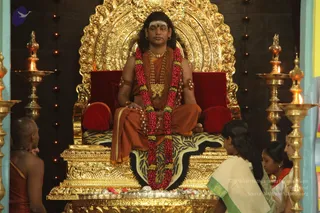
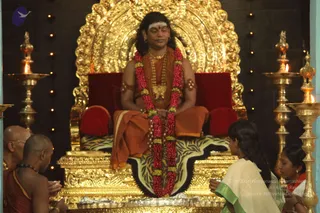
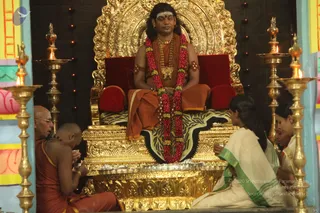
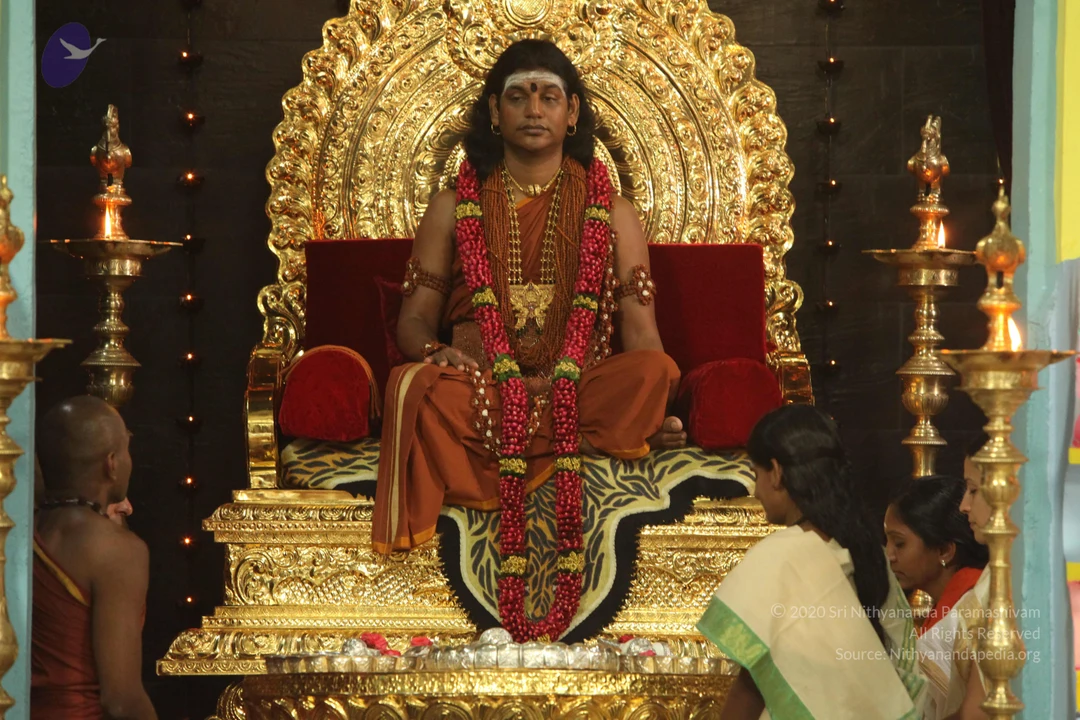
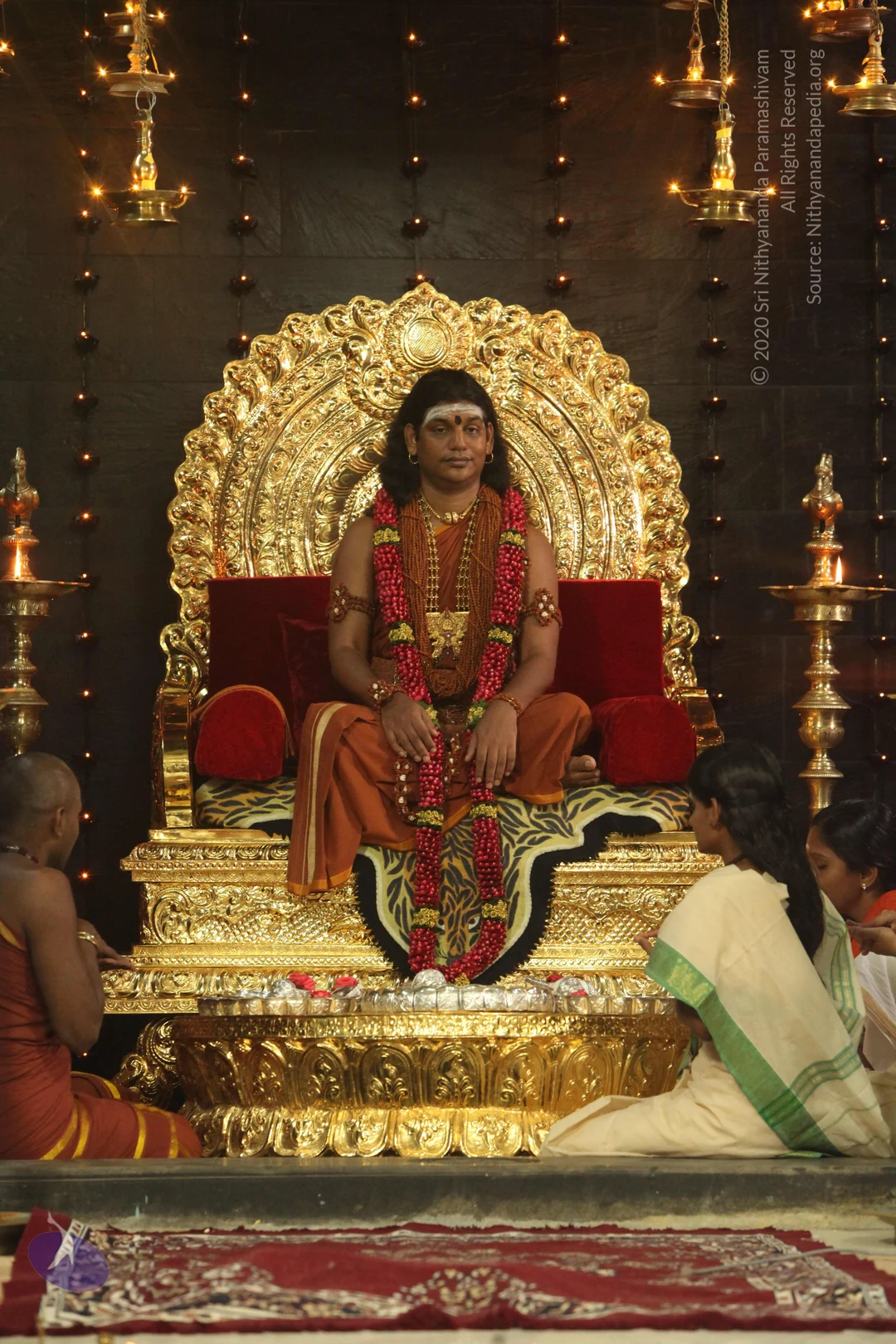
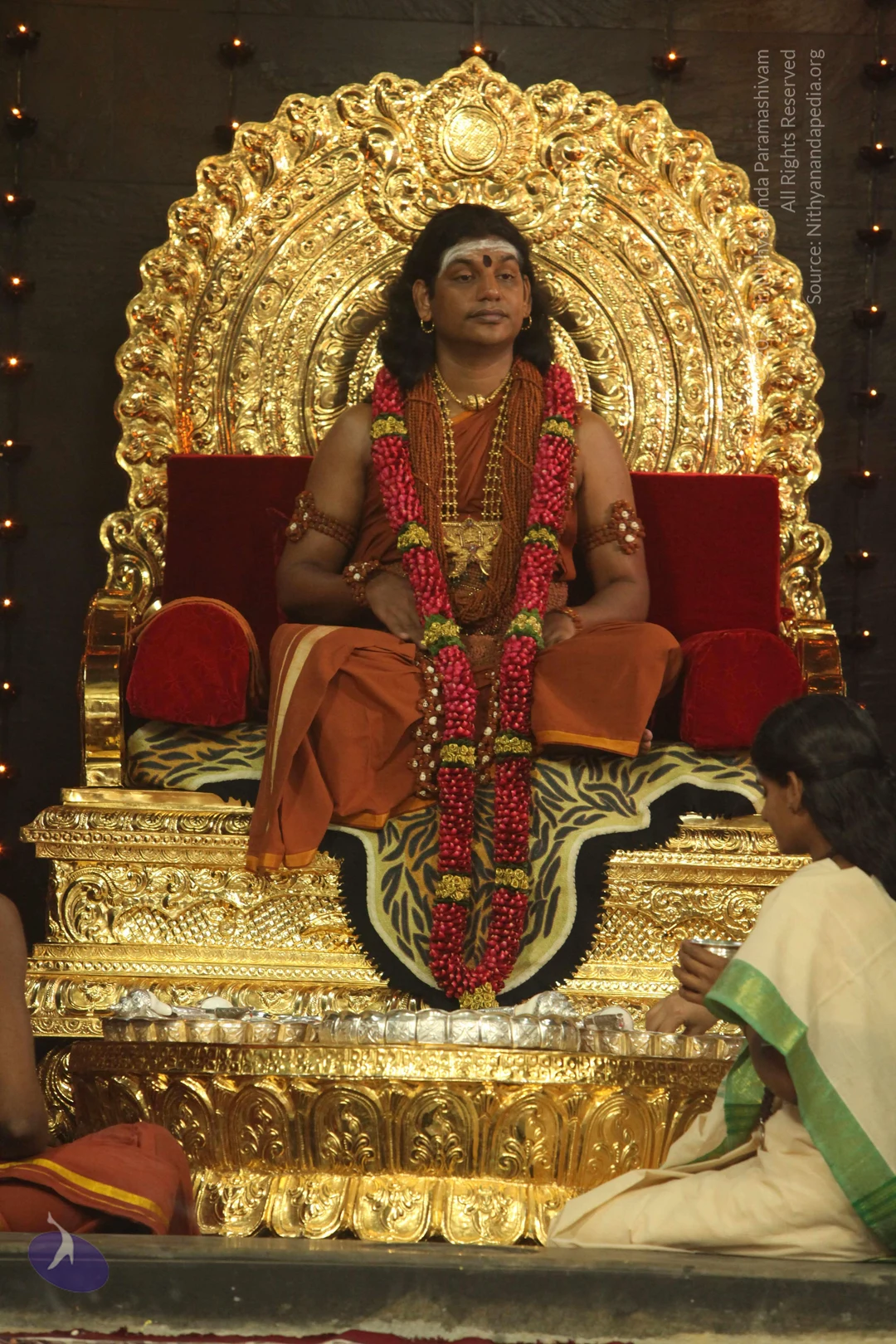
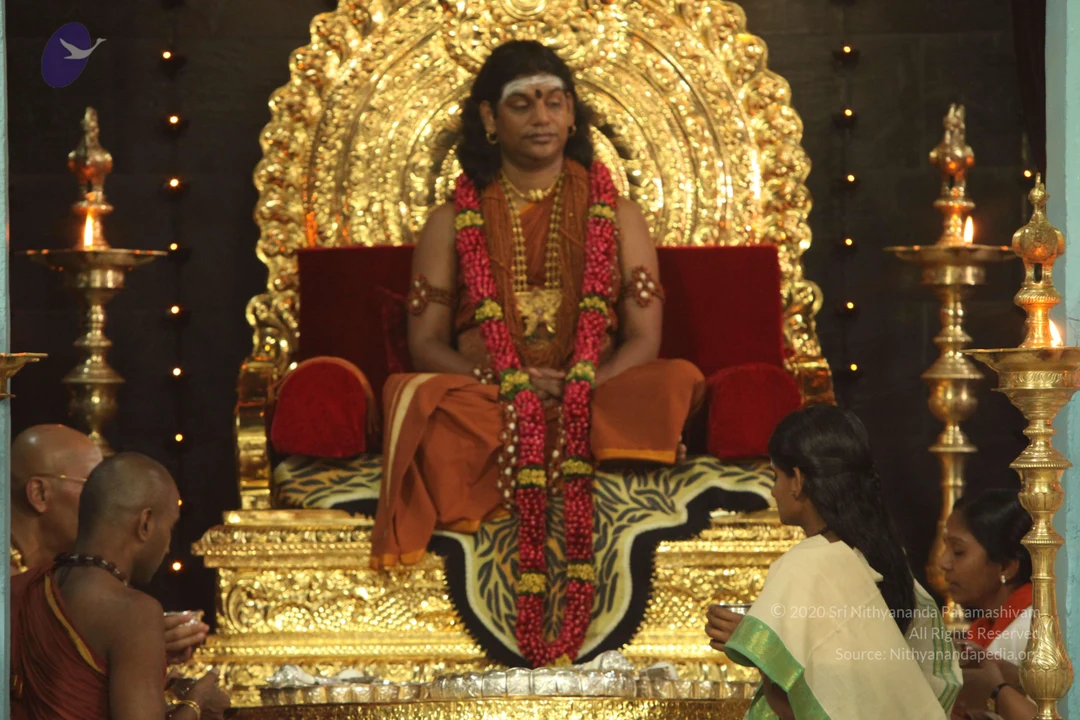
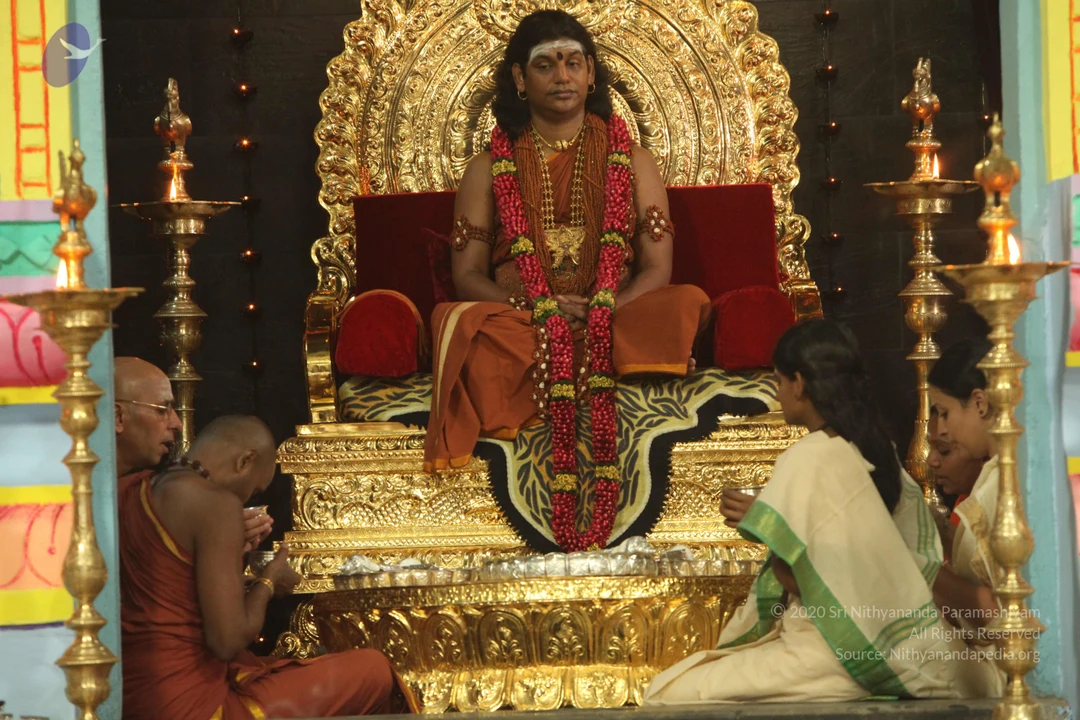
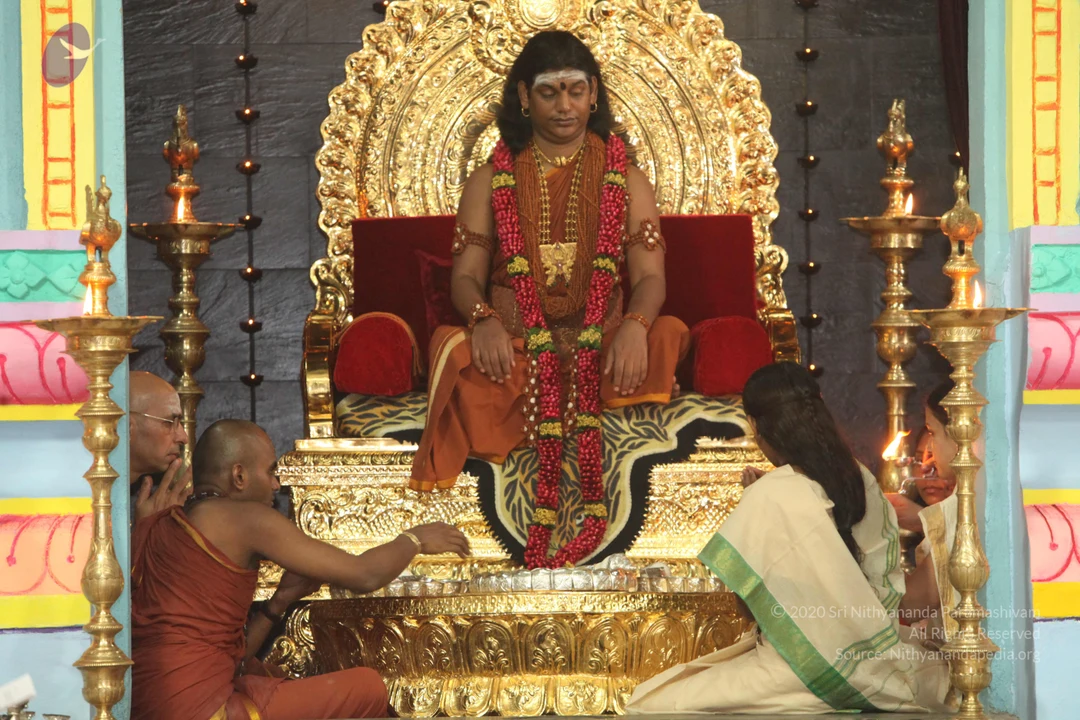
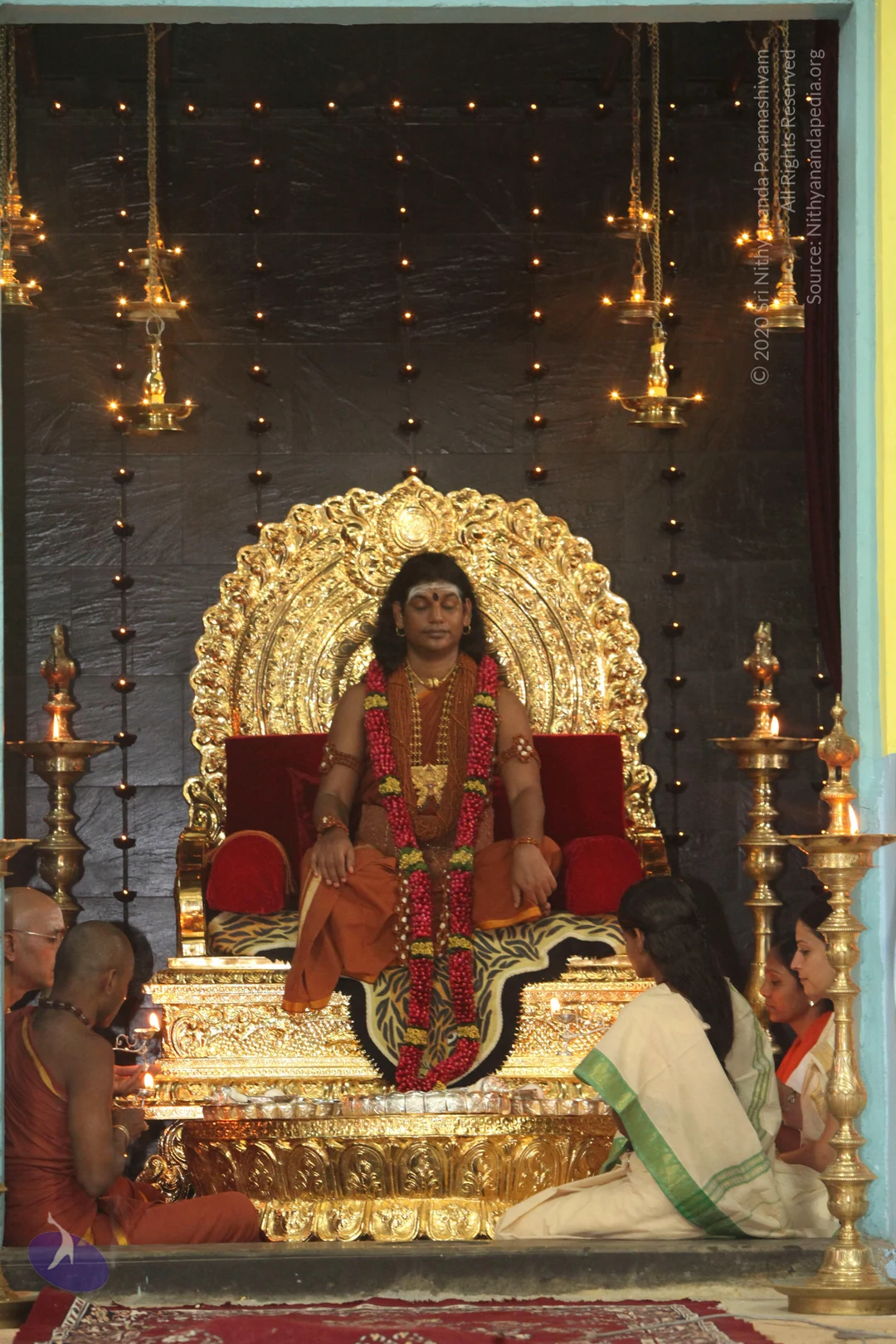
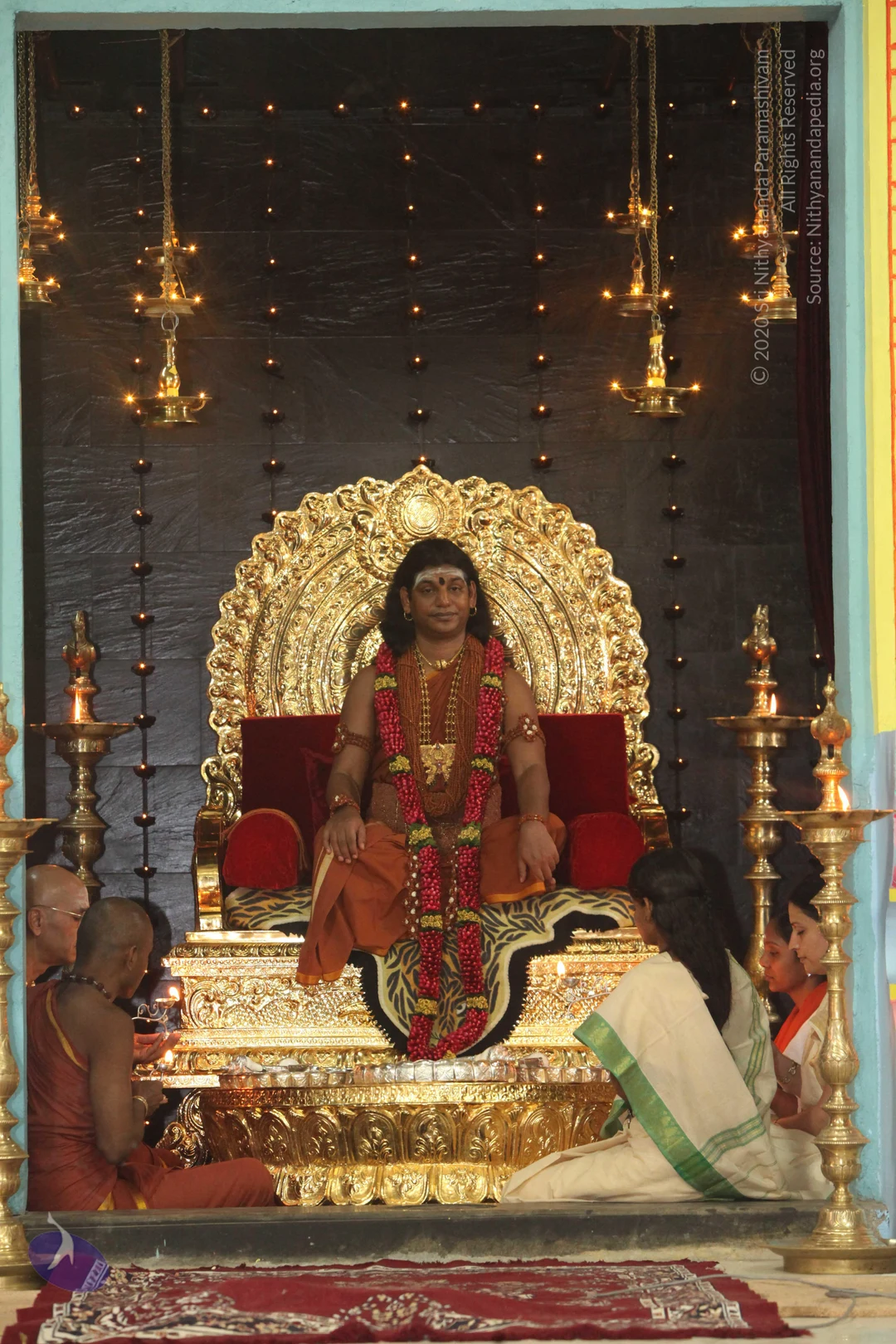
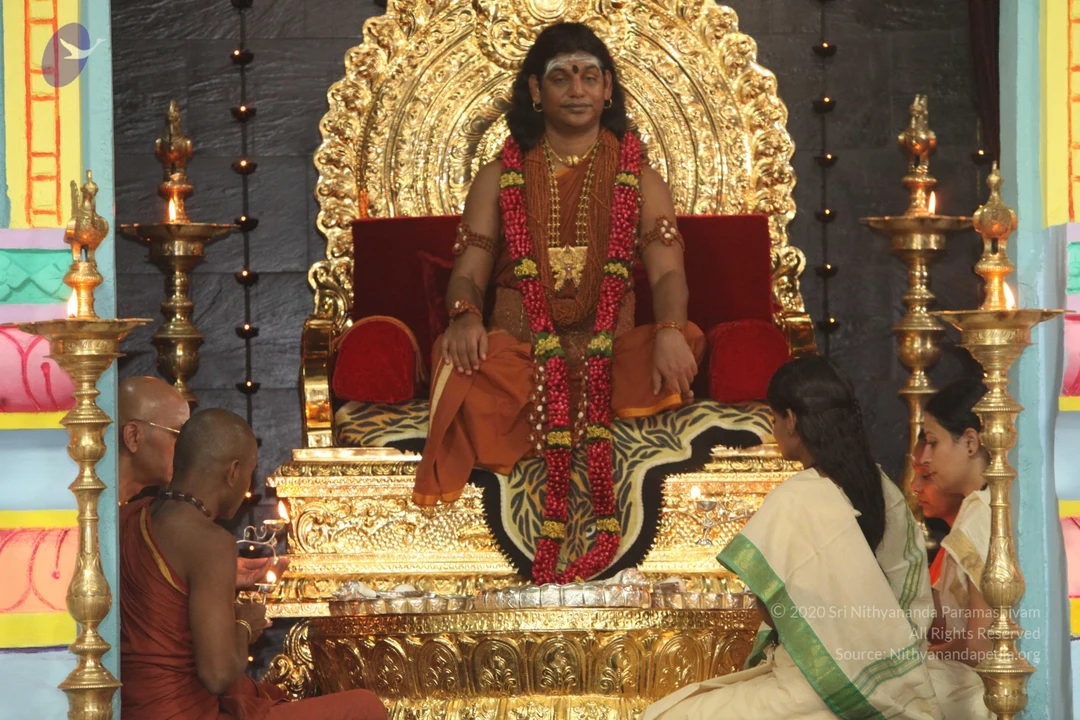
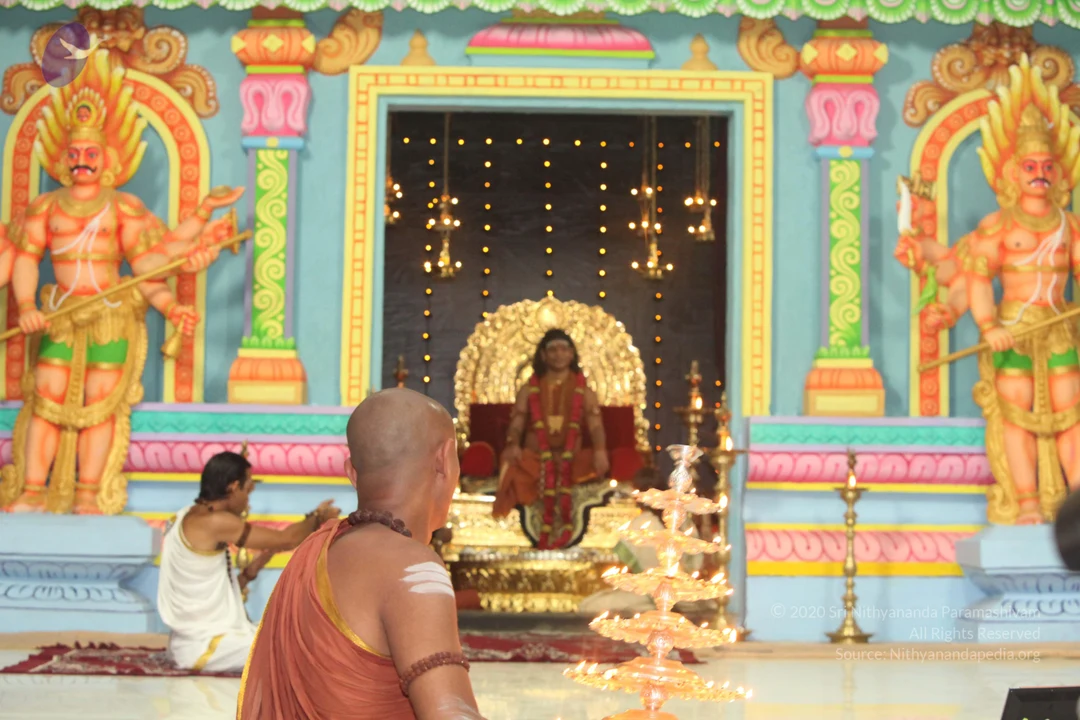
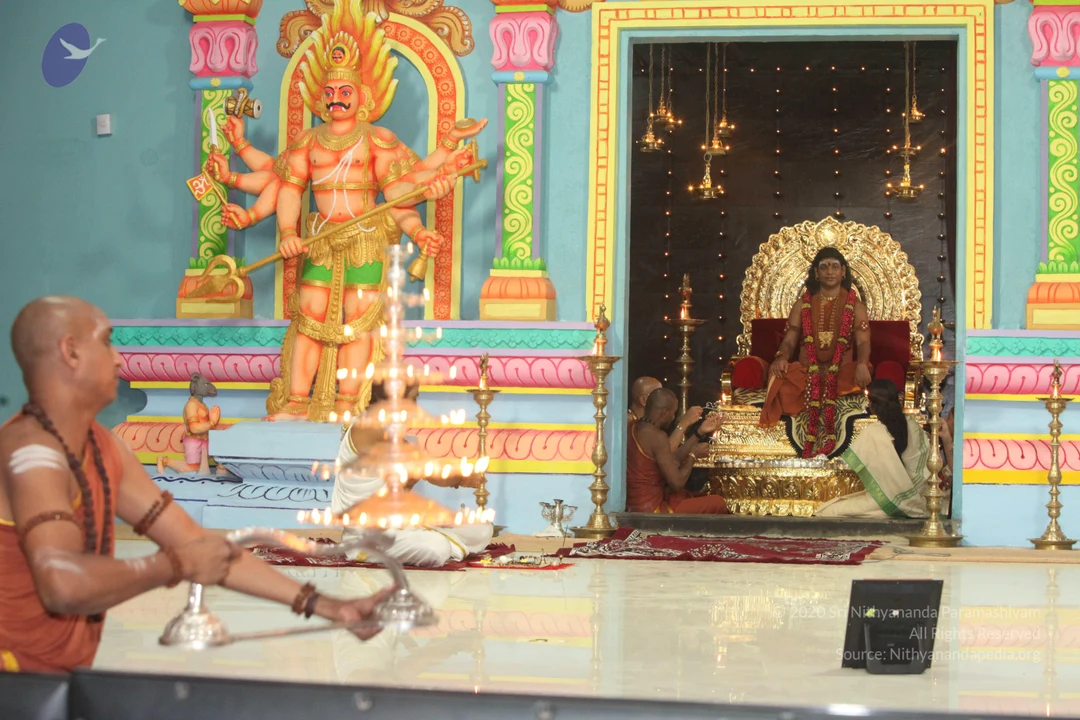
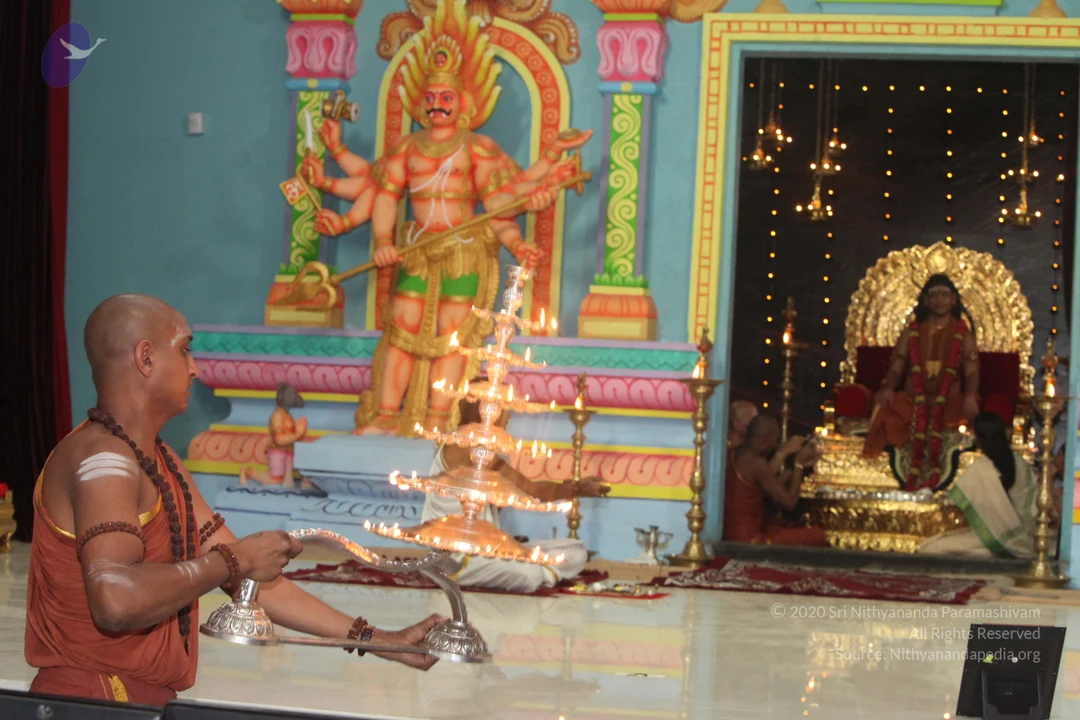
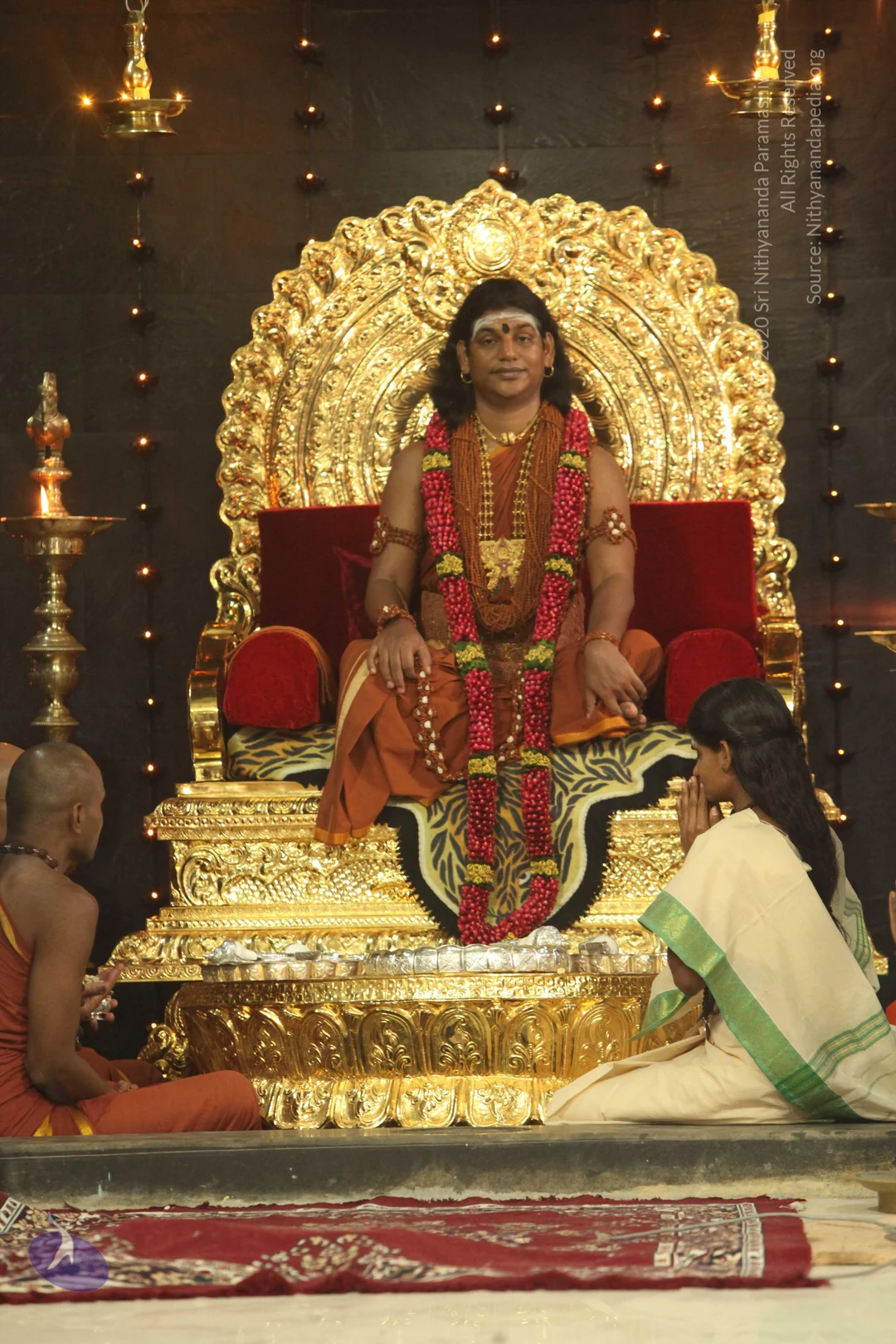
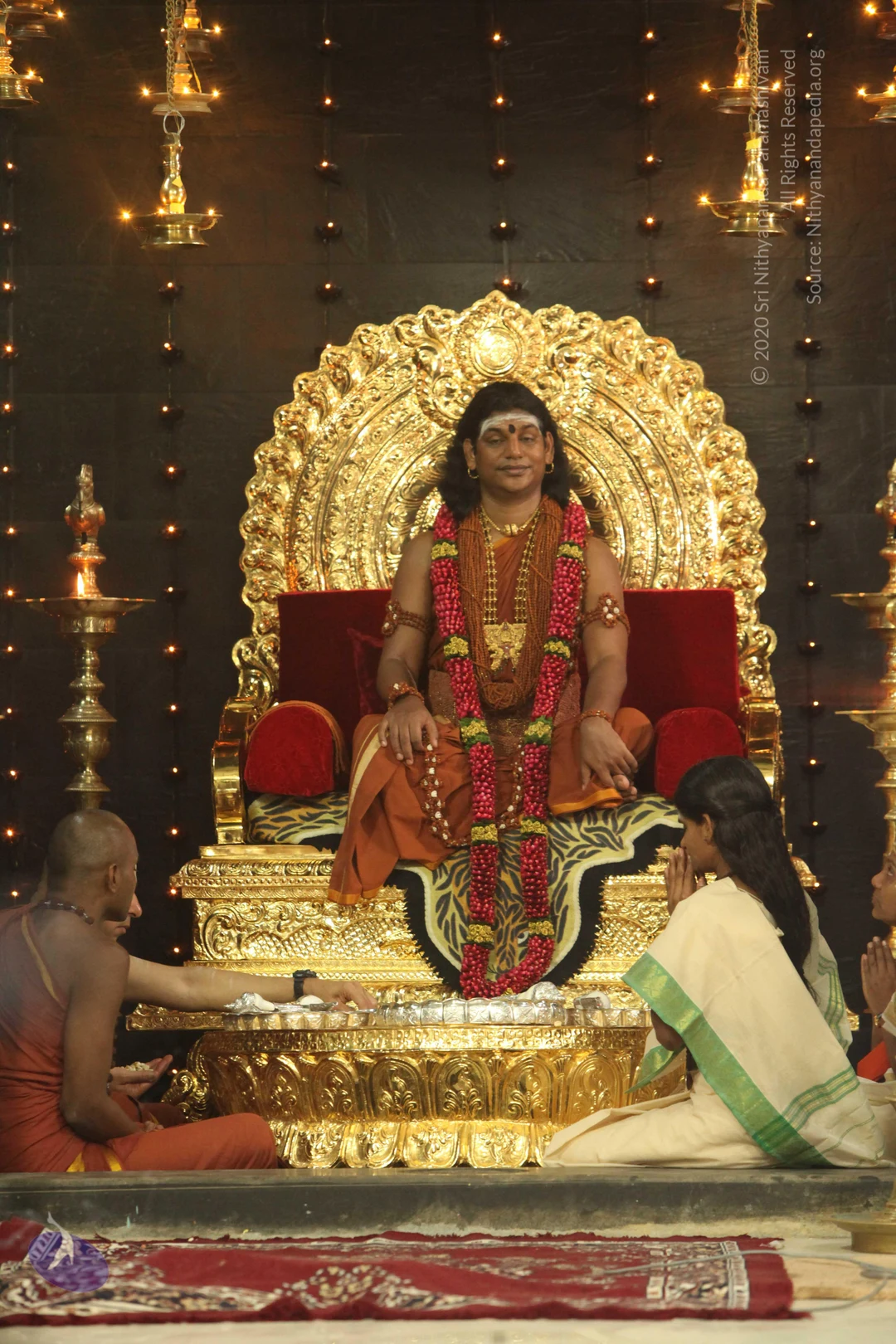
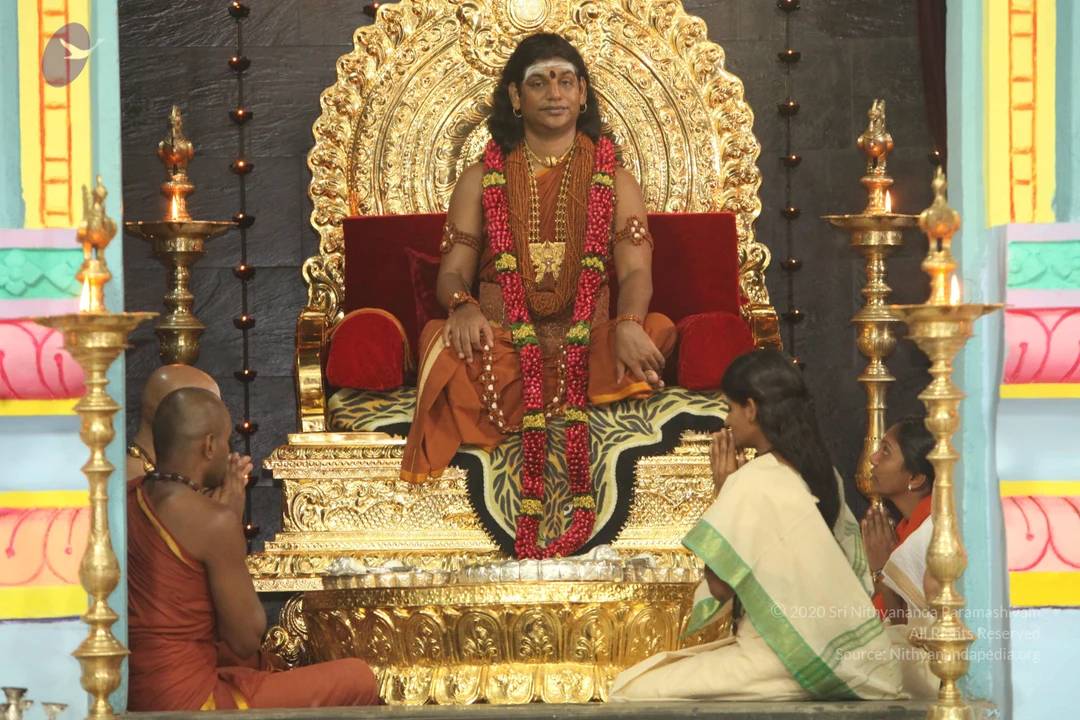
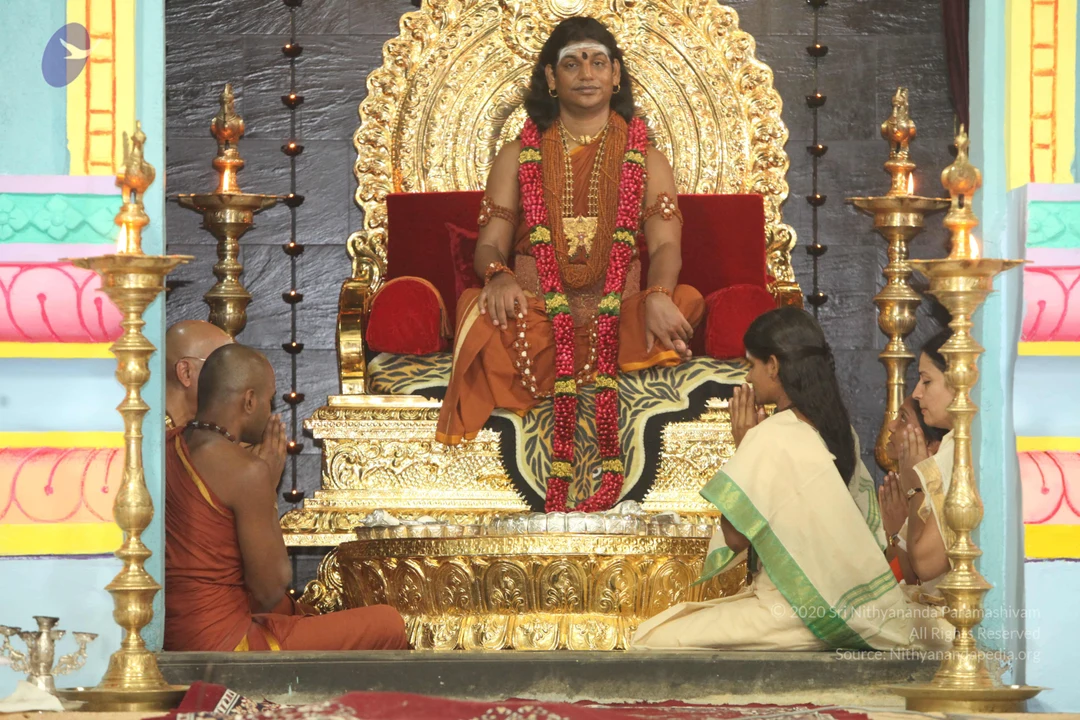
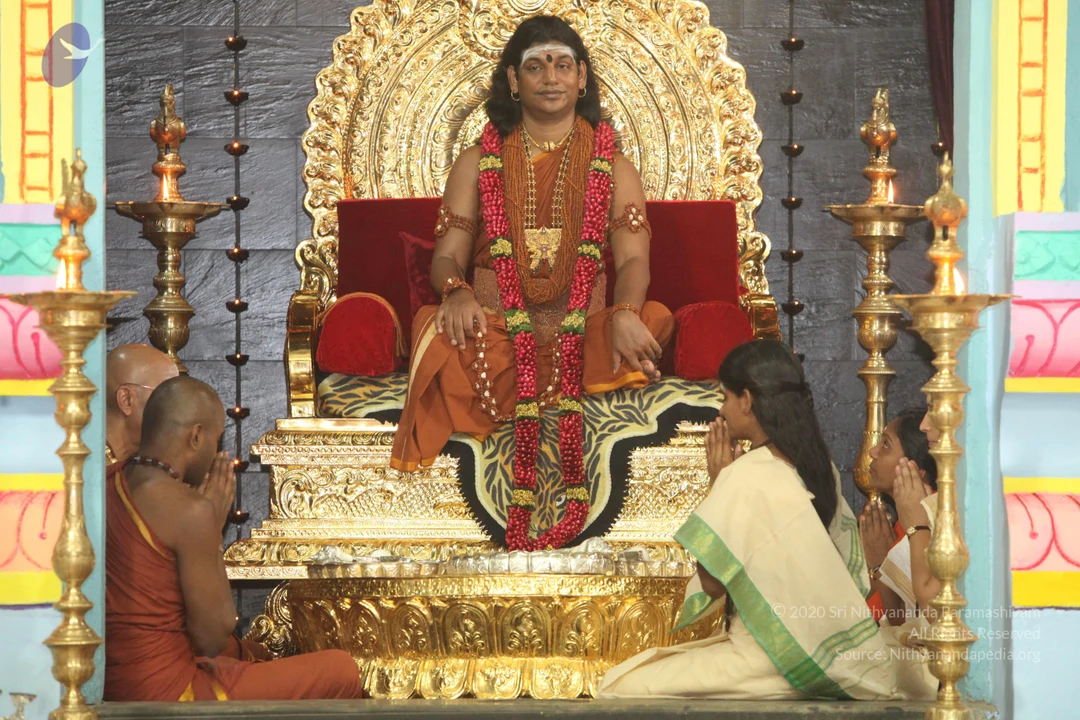
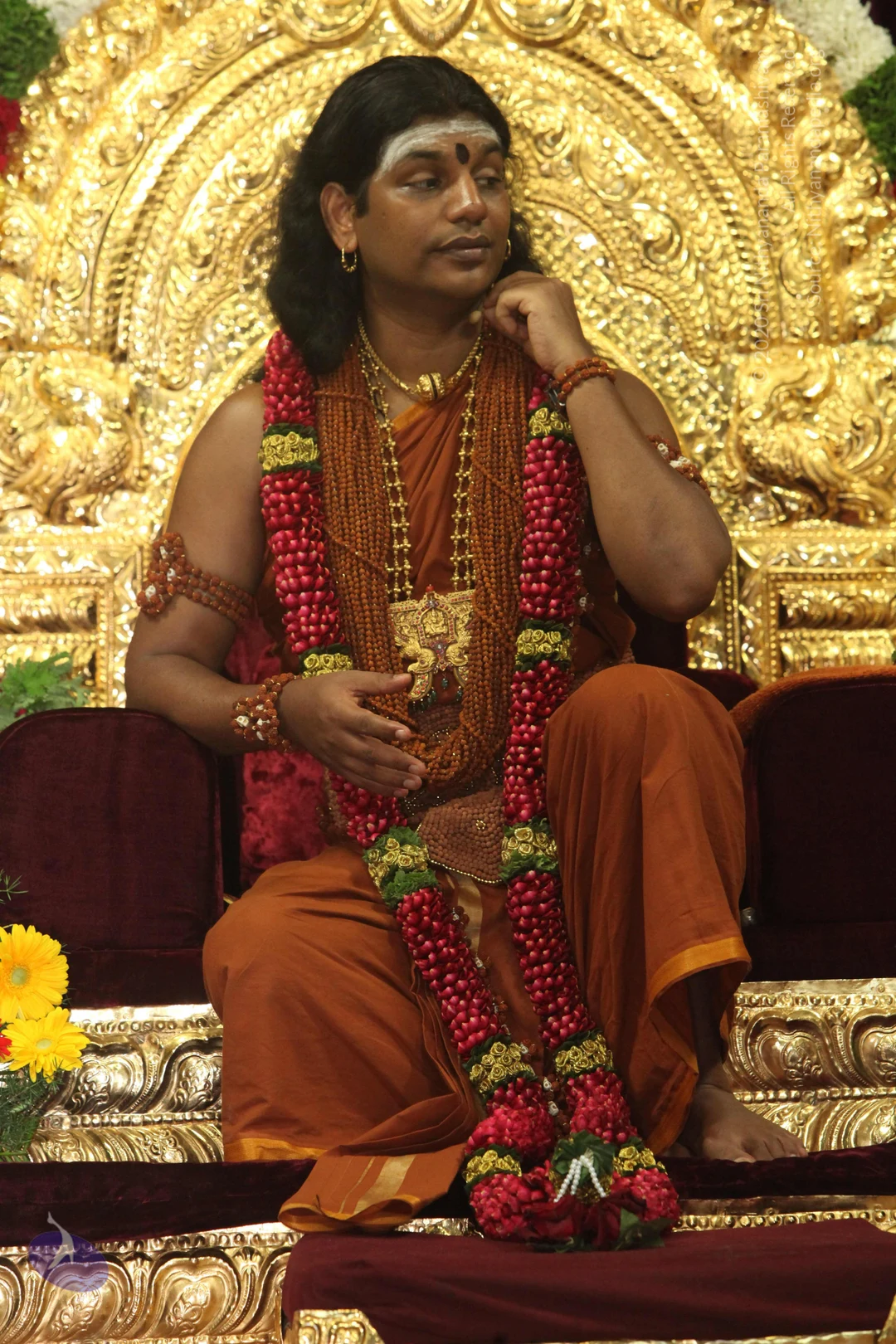
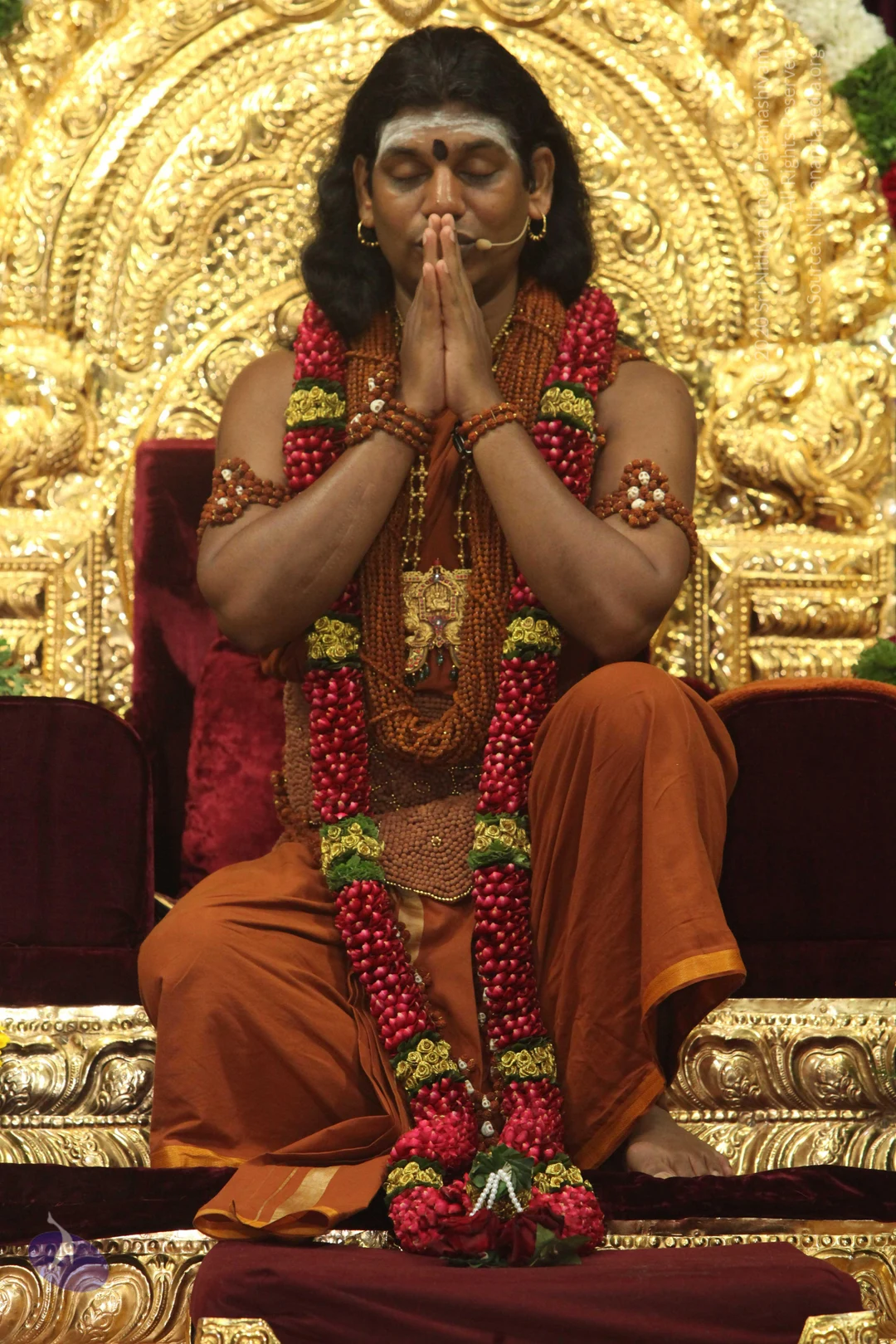
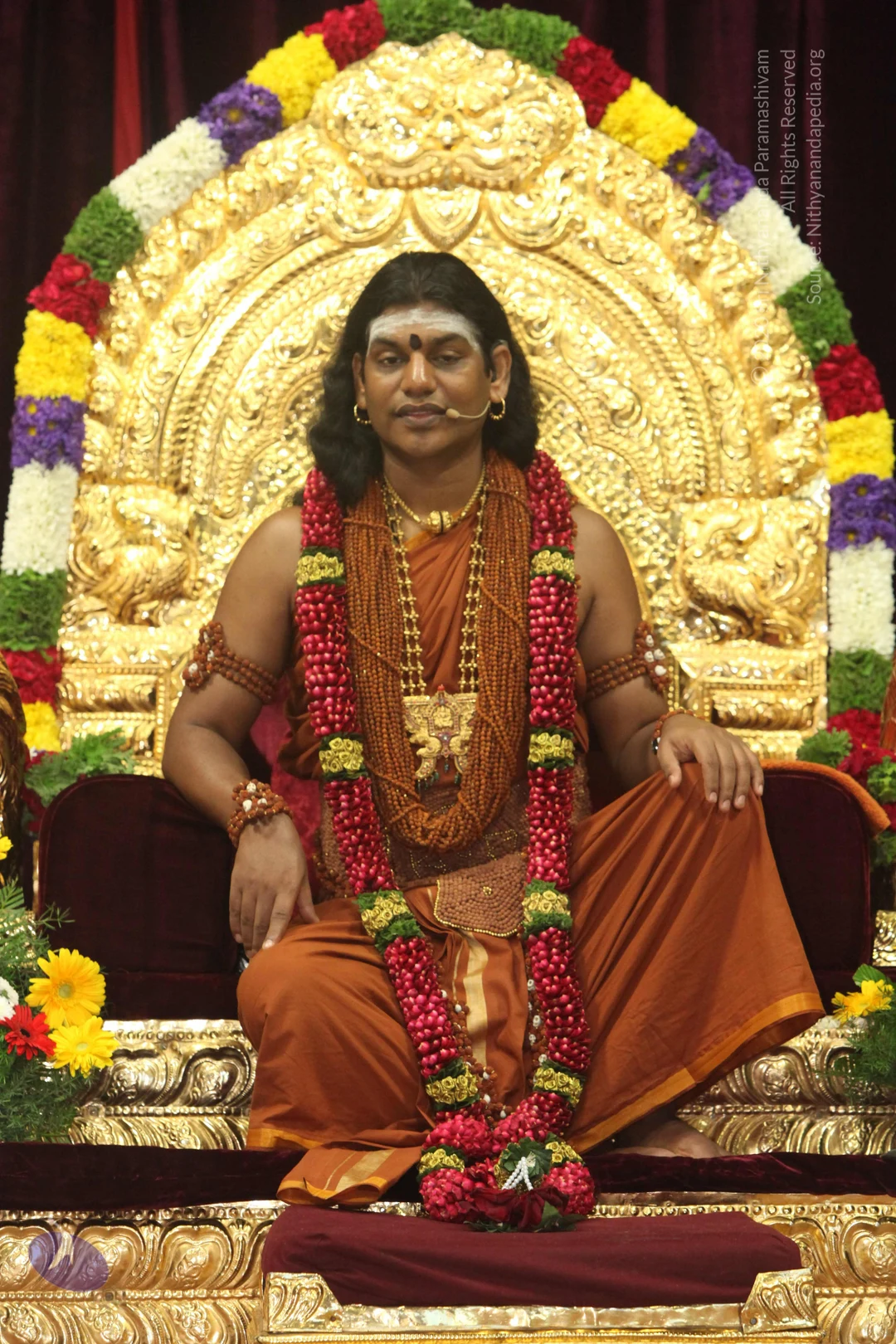
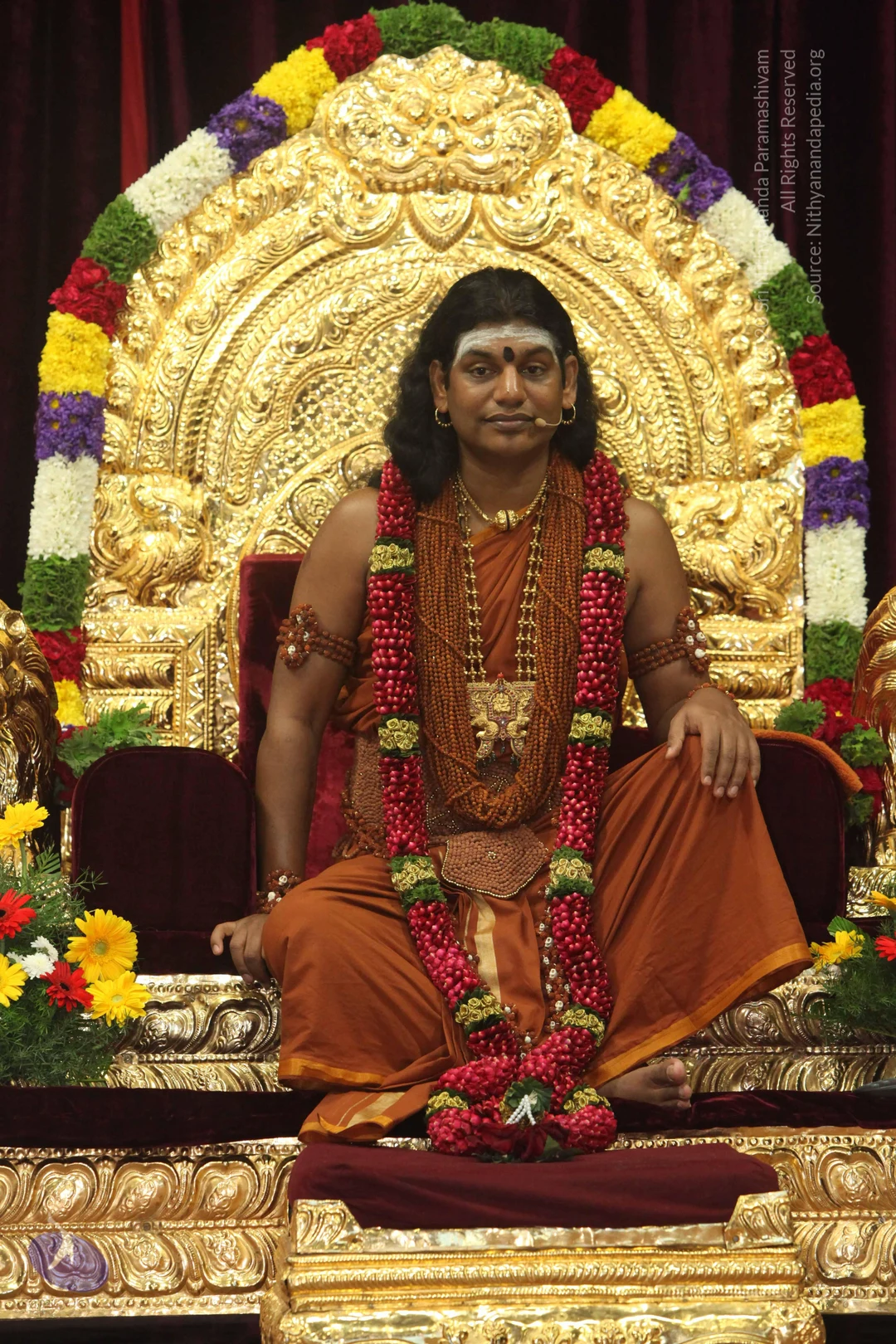
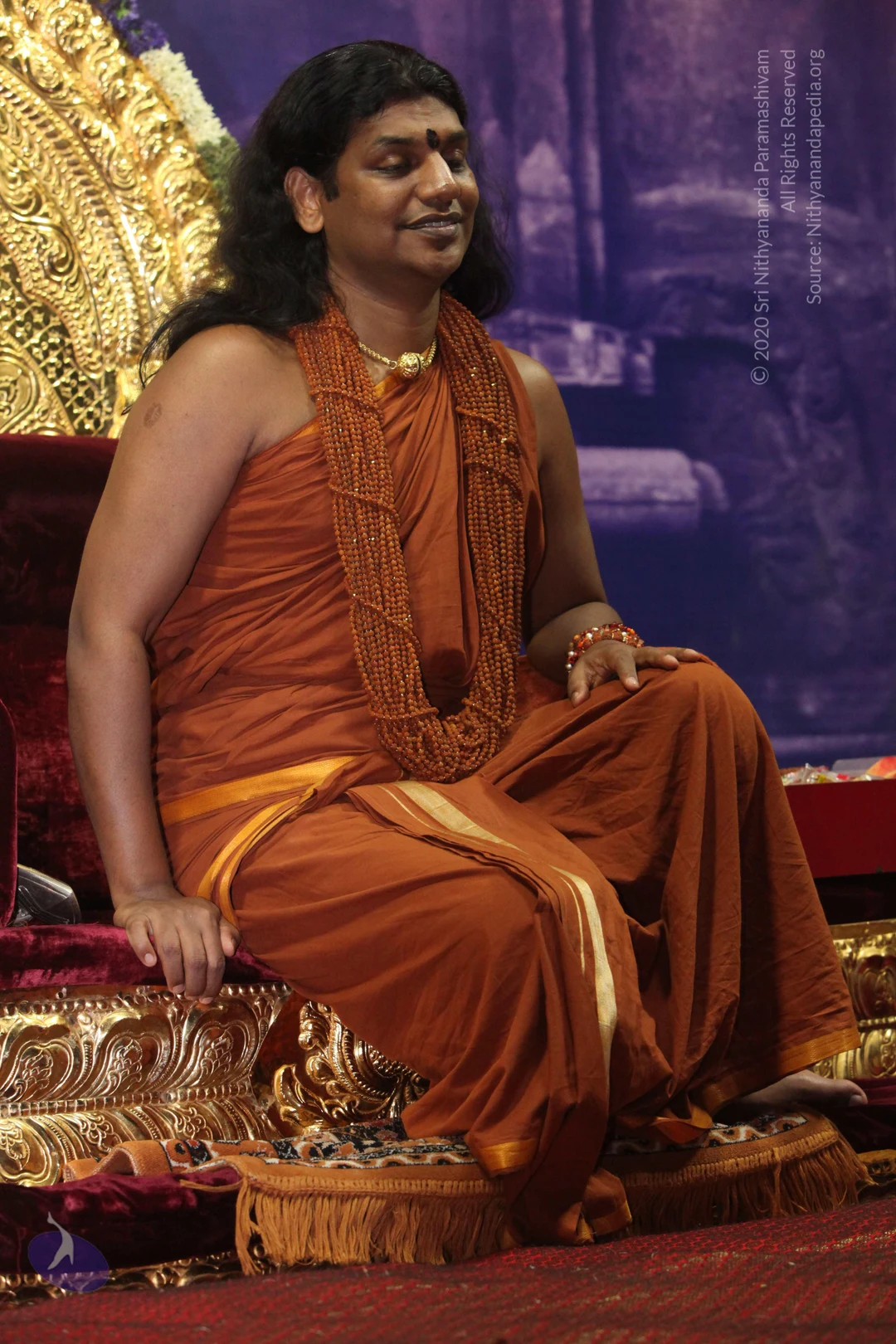
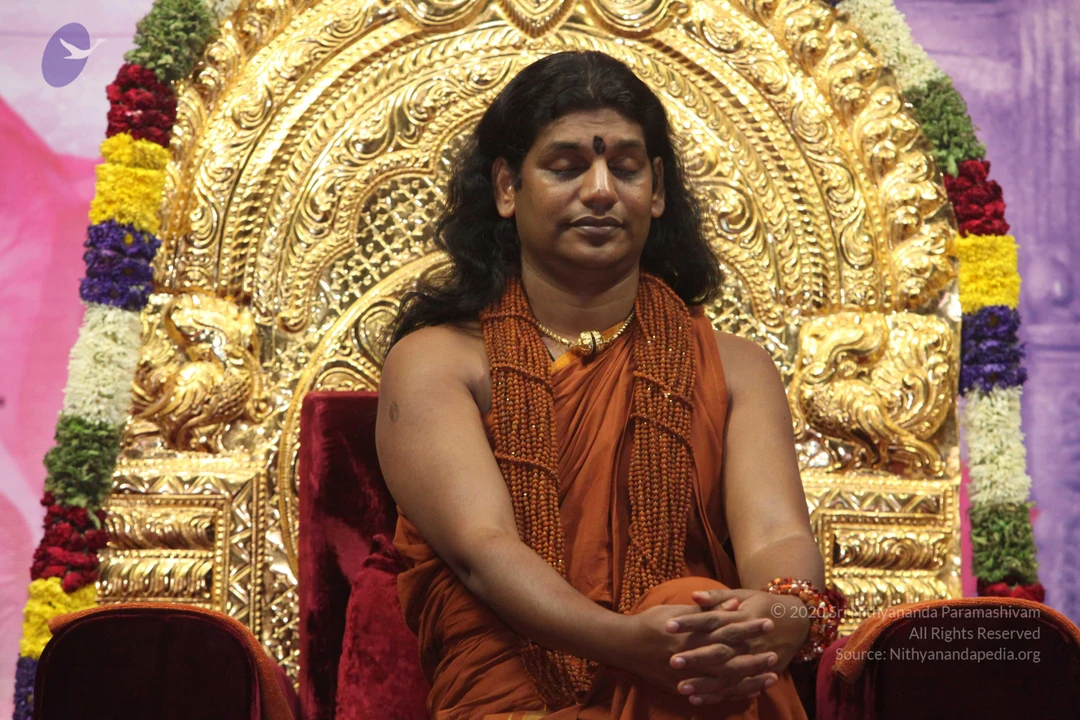
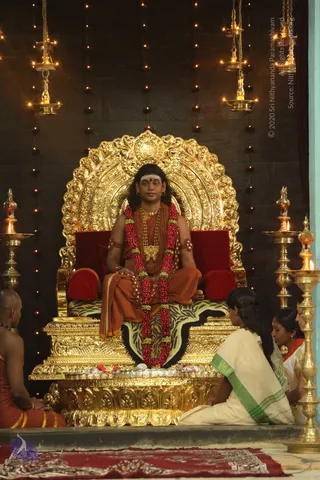
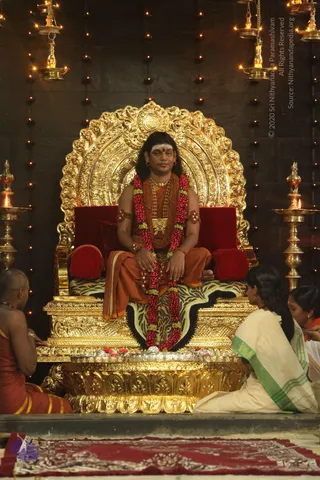
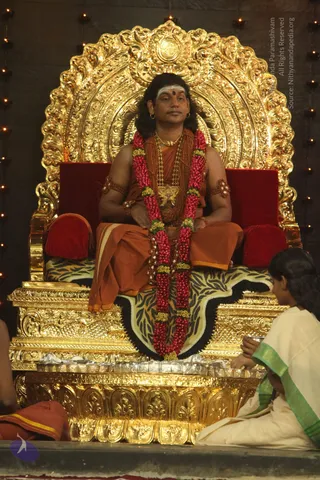
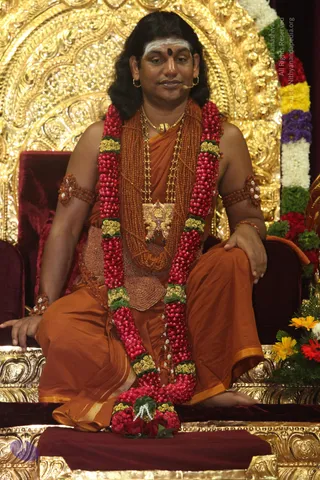
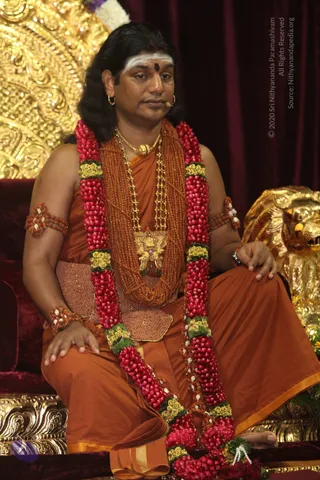
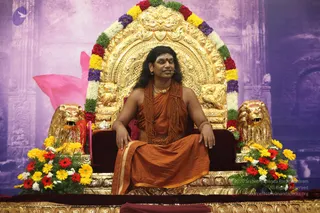
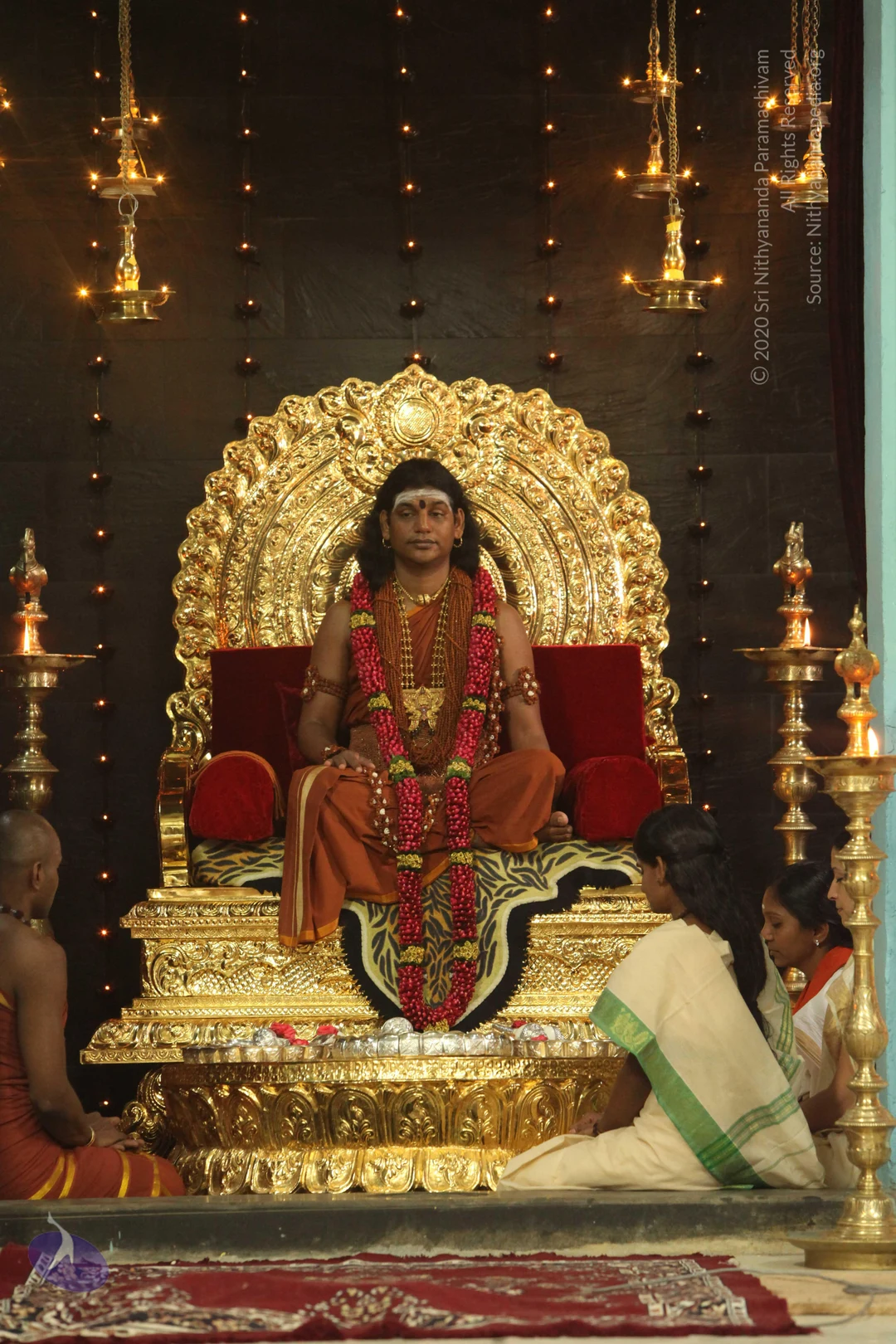
A seated man on an ornate gold throne with red velvet cushions and a leopard-print seat cover, wearing an orange-saffron dhoti and shawl, a gold ceremonial necklace, a rudraksha mala, and a long red and white flower garland. He has long swept-back hair and a white tilak with a red bindi, and sits in meditative stillness. Lit brass oil lamps stand on both sides. In the foreground, a shaved-headed man in orange clothing sits at the left edge, and women in white and green sarees sit at the right, with offerings in front of the throne. The setting appears to be a pada puja.A seated figure sits on an ornate gilded throne with a red cushioned back and a tiger-striped cloth draped over the seat, centred between two tall brass oil lamps with lit flames. The seated person wears an orange-saffron cloth, a gold necklace, a white forehead mark, and a long red and yellow garland of flowers, with bangle-style armlets. Probable Swamiji (appearance cues: long swept-back hair, saffron clothing, ornate gold adornments and garland); seated in the central position of honour. Two people sit in the foreground at the lower left, one shaved-headed in orange with a rudraksha mala, and at the lower right a woman in a white sari with a green border holds a small cup. Another woman sits at the right edge. Gilded lamps and a silver tray of offerings sit at the base of the throne, in a satsang or pada puja setting.A photograph of a golden ornate throne centred on a seated man in saffron-orange robes with a long swept-back hairstyle, a white tilak on his forehead, a red and white flower garland and rudraksha mala, and a gold necklace; his appearance is a person seated in a Padapuja-style setting. Two brass lamps flank the throne, with a third on the right and a red and gold curtain behind. Seated at the lower left, a shaved-headed man in orange robes and a woman in a cream sari with a green border sit cross-legged, holding small cups or vessels. Another woman in cream stands at the right, and two more women sit at the far right edge. Silver trays with offerings are placed in front of the throne.

February 17 2013

Original wiki page
Contents

Title

Listening is the First Step in Spirituality

Description:

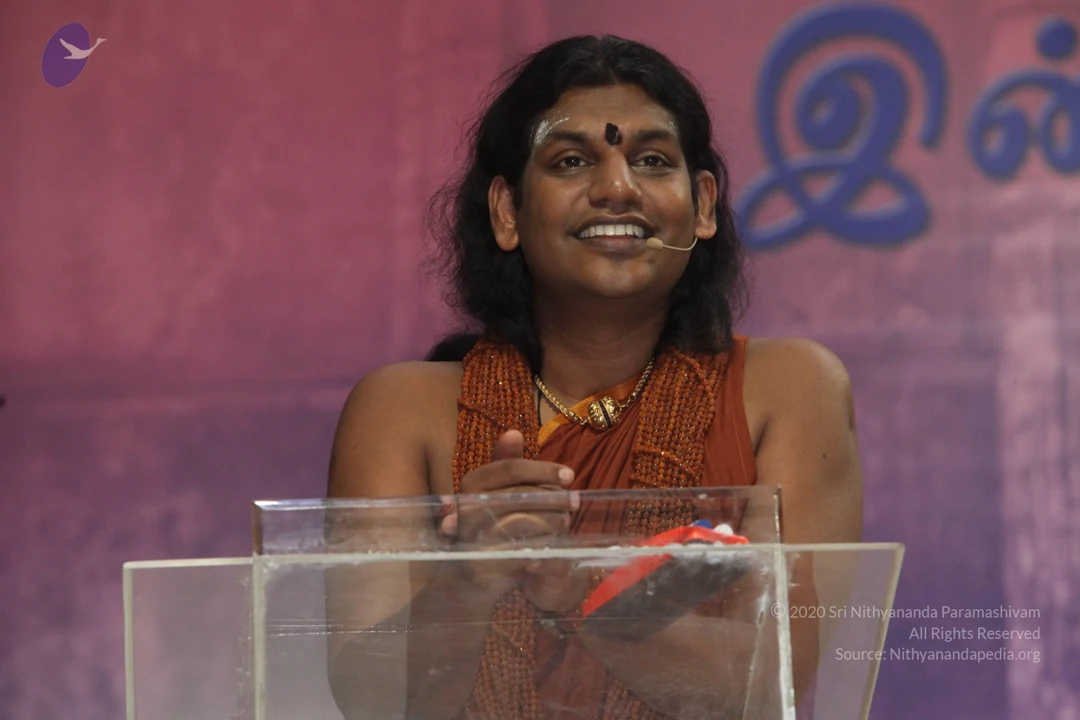
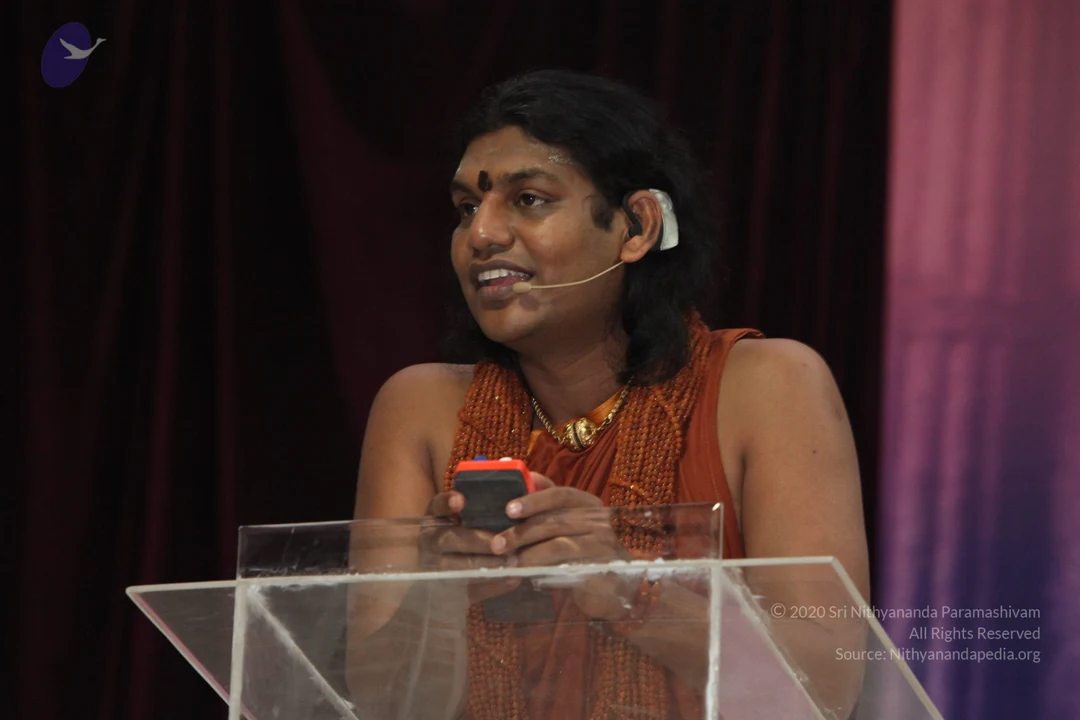
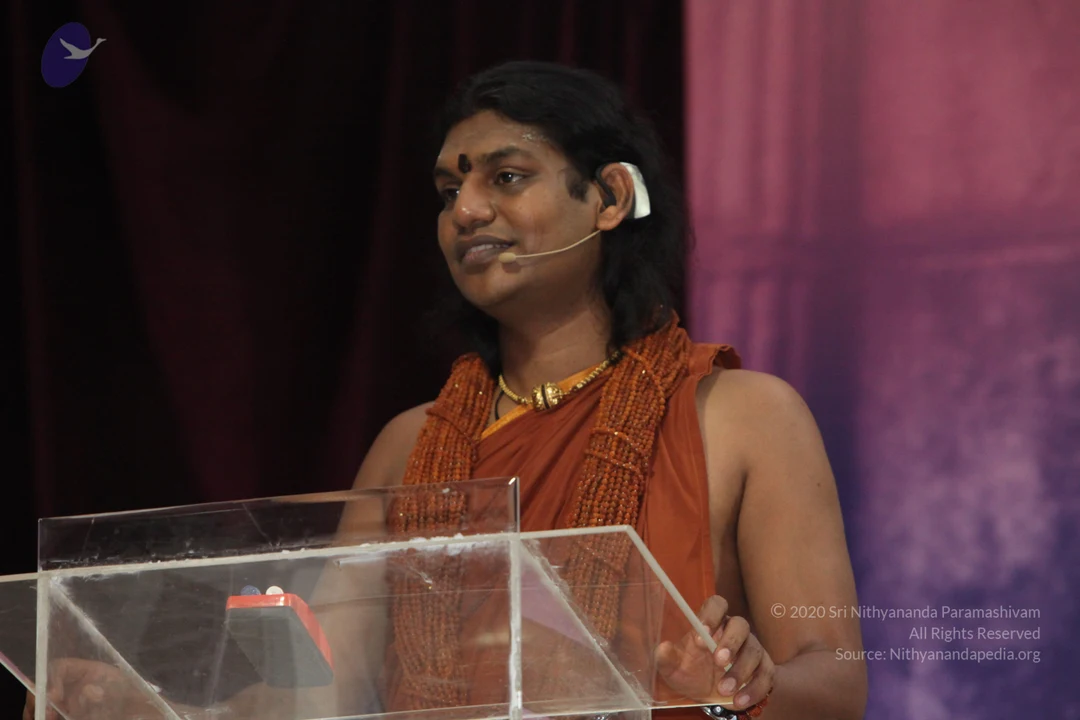
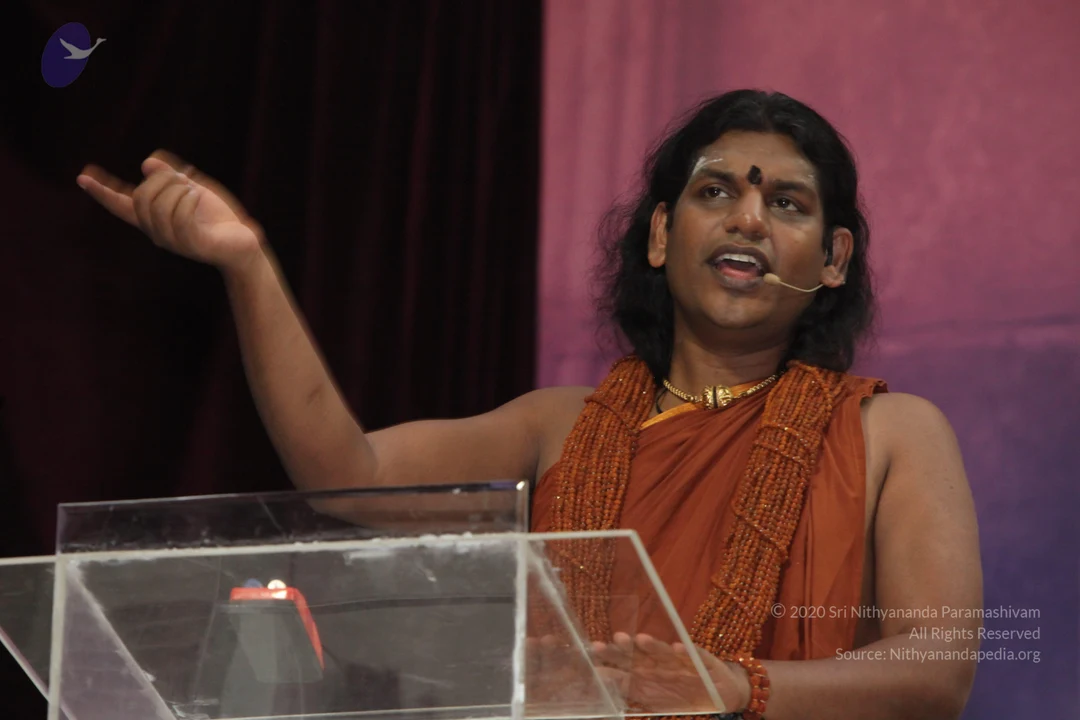
In today’s morning satsang, Paramahamsa Nithyananda creates a new definition for integrity. Integrity is beyond both morality and ethics. It means quite simply, continuously honoring the words we give to ourselves and to others. When one declares one’s commitment wholeheartedly one finds fulfillment. If the commitment is perverted by inauthenticity, one harms either oneself through guilt or others through violence. Following every word to completion, bringing integrity deeply into life, destroys agamya karma, the karma one accumulates through distraction. It can even reduce prarabdha karma, the work we took birth to accomplish.

Link to Video:

VideoAudio

Transcript

(00:28)

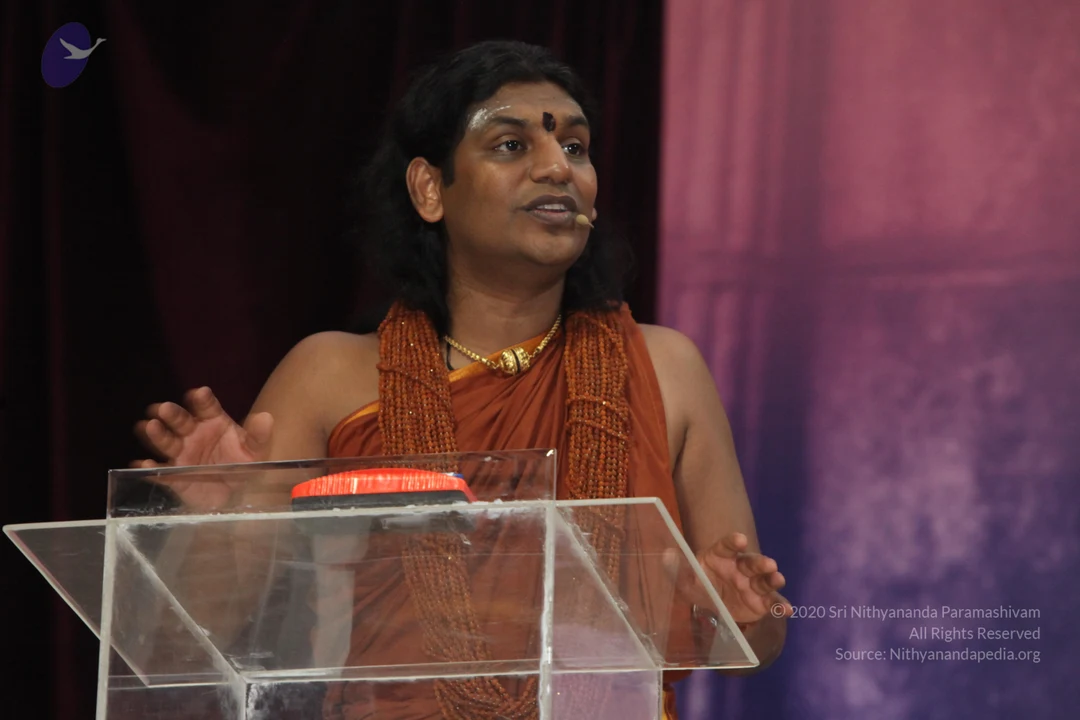
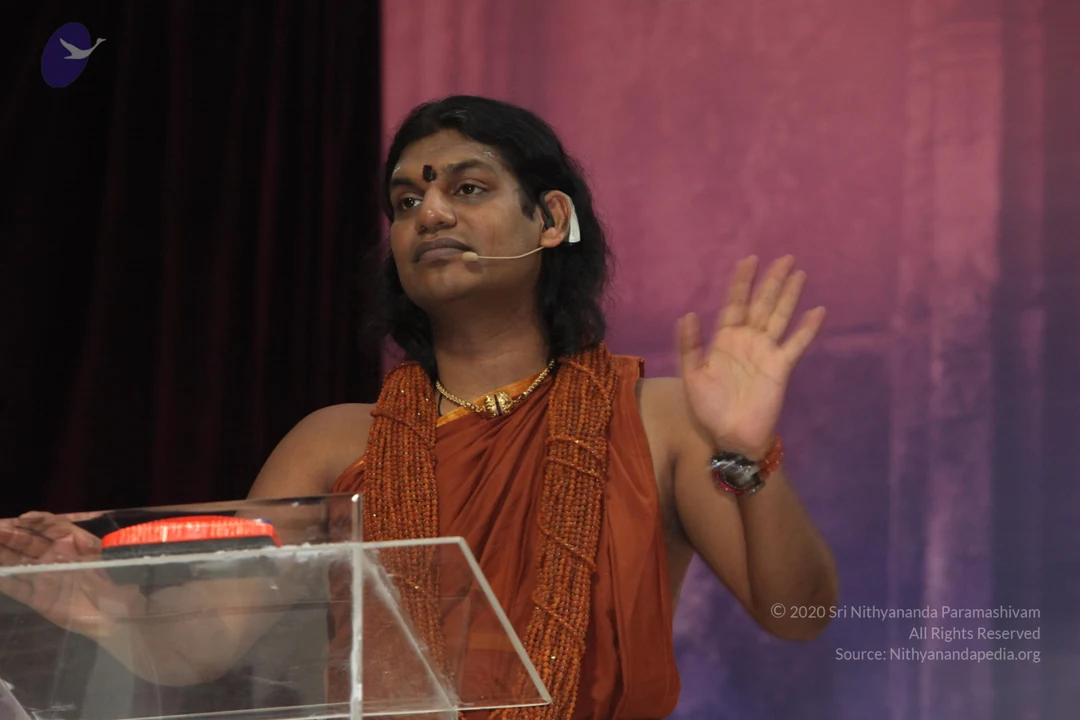
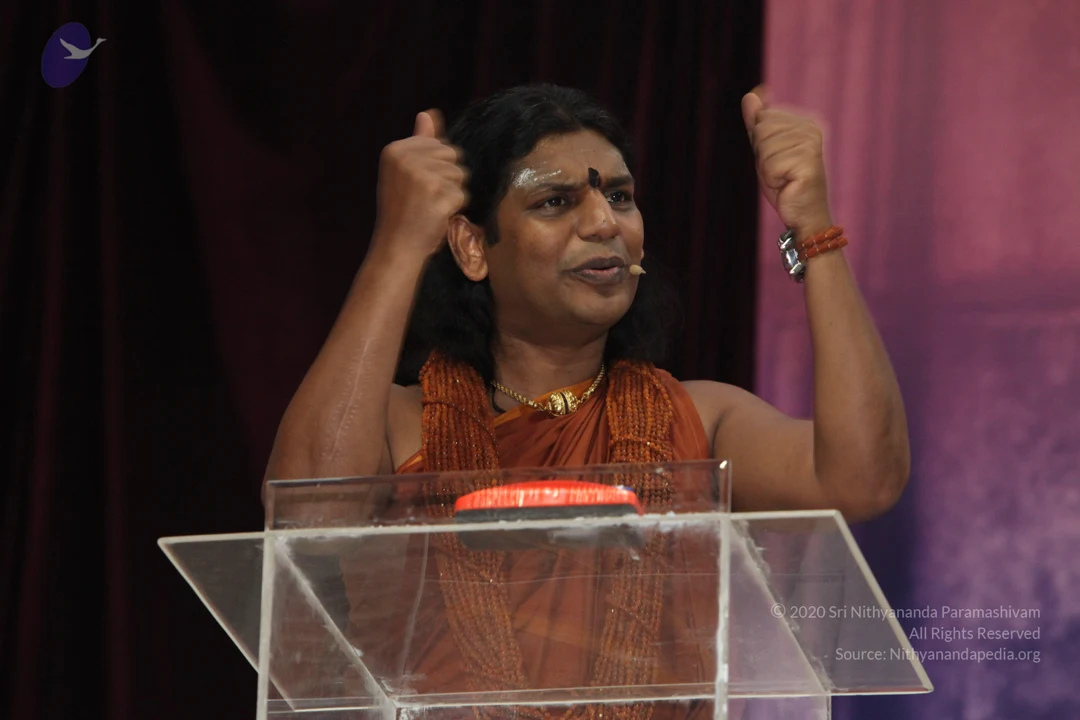
Great. Come on, let's enter into today’s satsang. First thing listen, please listen. The first statement today I wanted to make; usually Masters, many teachers I don’t want to say Masters, many teachers say again and again how much ever you listen, only if you practice you will achieve it. I wanted to reverse it, how much ever you try to practice only if you listen you will achieve it…. Listen, how much ever you try to practice it if you listen you will achieve it. Many time you would have heard people saying how much ever you listen, only if you practice you will achieve it. But here I am saying how much ever you try to practice, only if you listen you will achieve it. How many of you cognize what I am saying? You should have observed the word try to practice it - means without listening how much ever you practice it will only be trying to practice not practicing. Only if you listen, practicing starts. Listen!

(02:21)

Today I am going to share some of the tattvas, truths about Integrity. Then from tomorrow I will start the Katho Upanishad. I wanted to define Integrity once more. Honoring the words you give for you and to others as your life is - Integrity. Integrity is neither morality nor ethics. It is beyond both. Listen, only when you utter the word ‘I’ you exist. Till you remember the word ’I’ in your inner space, you do not exist. You may say, “No, no, no when I sleep in the night I don’t remember ‘I’ in the deep sleep but when I come back I remember ‘I’ but throughout the night I see ‘I’ existed.” No. Your body existed throughout the night. You have not existed. Listen, this argument is not going to win. That is not right. Throughout the night when you don’t remembered you; your body existed, you have not existed. For example just because Bidadi ashram existed for last few days I have not existed here. I went to Kumbh mela and came. Body only… the Bidadi ashram existed. Just because your body existed, it does not mean you have existed.

(04:38)

When you remember the word ‘I’ only then you exist. Everything starts with word, everything starts with a declaration, everything starts with commitment. So, listen…. Clearly expressed word is fulfillment, the word which is perverted and hurting yourself is guilt, the word which is hurting others is violence, the word which goes on expanding you is desire, the words which constantly keeps you in completion and expansion you is integrity. Listen…. if you just decide, “From this moment I will honour the words I utter to me and to others as my life”, drastically the inner thoughts, inner chattering will reduce. Breakthrough in your thinking process will happen. Because the moment you become aware you have to complete or fulfill every word you utter to you and to others you will become aware of your thinking. And every thought you will know is it from fear or greed or jealously or ego or arrogance and immediately you will complete it. Completion can be done in so many ways. Either by working with the person who is related to the root pattern with which you are suffering or by catharsis a primal sound releasing methods or unclutching. All the three can be used for completion based on the depth of the pattern you are carrying. You can try all the three on every pattern you are carrying. All the three on every pattern you are carrying.

(8:06)

I tell you if you are the only person responsible for that pattern, sit with the mirror and do swapoornatva. I tell you, mirror should be your Atma murti, personal Deity when you begin your sadhana. And all the Gurukul kids and all the ashramites, till you finish swapoornatva you will have mirror as your Deity. All devotees after you complete your swapoornatuva only you can even choose which Deity you want to carry for you as ishta devata. Till then mirror is your Deity because constantly doing swapoornatva completion is required in the initial level. Many time you do not even know the commitments which you give it to you out of fear and you go on trying to fulfil them which leads to deeper and deeper fears…. Many of the people for whom you are giving life they don’t need your life, they just need a psychiatric pill. Many patterns for which you are giving life does not need your life, they just need few minutes of completion. And I also have one more important news for all you guys. I will announce share it with you guys from tomorrow actually the discussion starts. I am going to be doing a conflict resolution show in one of the major Tamil channel. Every evening in prime time will be called as ‘Meenakshi Darbar’.... And I also wanted to start the conflict resolution show in the morning satsang also, through two-way video conferencing we can start.

(11:06)

Because in conflict resolution you naturally start doing listening and living both…. Listening and living…. Tomorrow the discussion is starting. Maybe in a week the show will start or in ten days the show is expected to start…. Listening and living. Just bring integrity in your thinking, you will see so much of extraordinary powers express in you. Only when you bring integrity your bio-memory stops feeding itself as a matter and stops asking food from externally. If you have tried THE samyama and failed, understand you have not brought integrity in your thinking. Bring integrity in your thinking. Your bio-memory becomes so soft, so subtle it stops asking for food from external world. It takes food directly from space.

(14:05)

When you bring integrity in thinking, you do not waste your inner space in making more and more complications. Continuing to make more and more complications is agamya, accumulating karmas. If you stop making more and more complications you will start exhausting even the complications you made earlier which is called prarabdha. Listen. The complications you made is prarabdha, complications you are making is agamya. Without even knowing, continuing to make complications is maya. The complication you made is prarabdha, making is agamya, not even having this knowledge is maya.

(15:19)

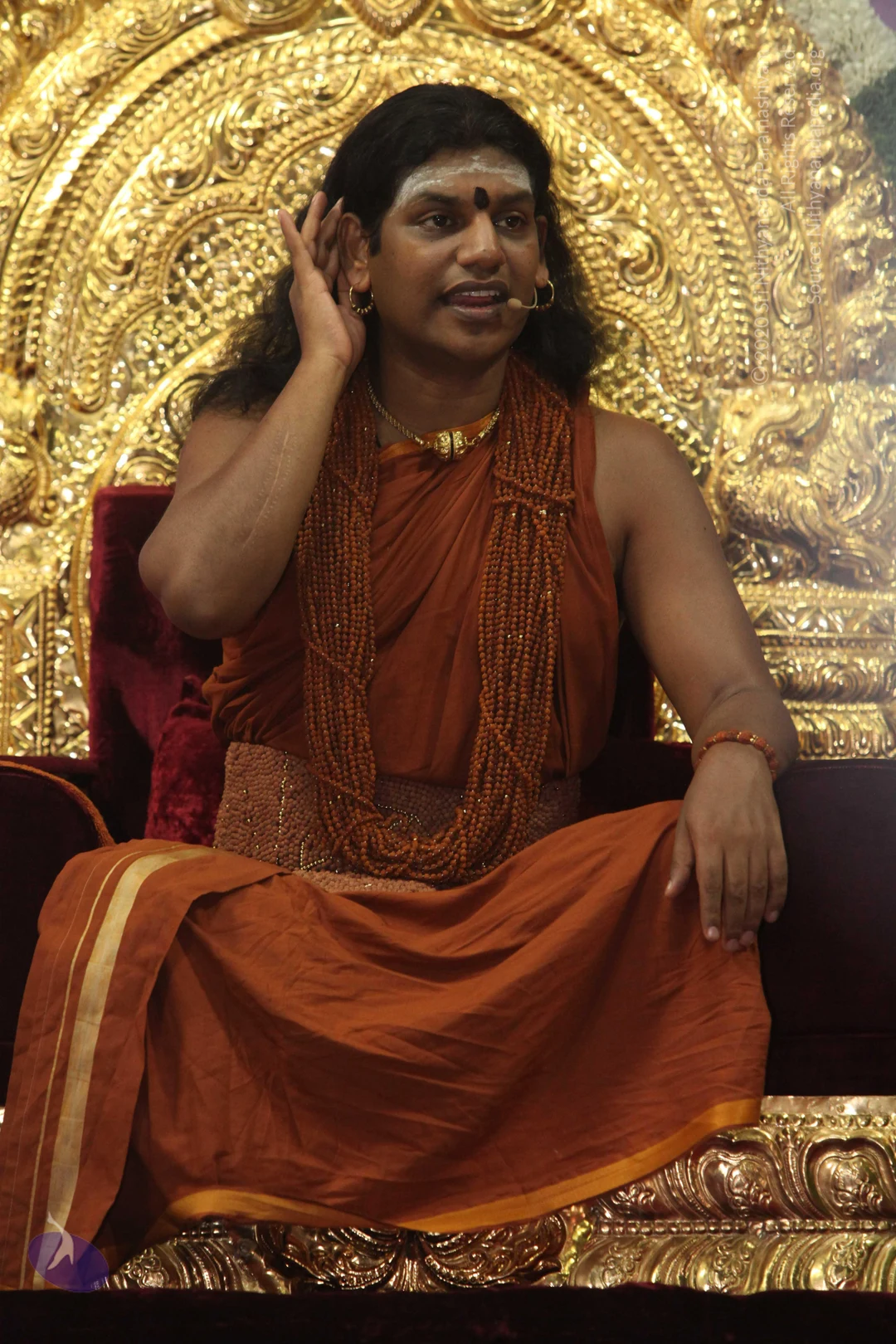
Constantly making complications means you do not listen to your heart’s cry. I really wanted to make the entrance of all the main halls; Chit shaba, Raja sabha every hall entrance, the outside of the entrance should be painted like a ear. When they see they should remember that they are walking into the ear. So that you know by entering into this door you commit to listen…. I also wanted all the Ashramites, every one to have Rudraksha earrings, all the disciples, devotees also just to remind you to listen, listen, listen. In Vedic tradition, the earrings are given for the initiated ears. The ears which have heard the mantras which listened the mantra, which are ready to listen for them only earrings are given. Ear drilling is a religious ritual in Vedic tradition. Child is taught to listen and given the commitment; child gives the commitment from now I start listening.

(17:14)

Construction department soon paint all the entrances as the ears. When they enter they should know they are entering into a ear, clear?... Moksha Priyan, your drawing is not right, you did only half side, half size…. All over the world all you guys try. The entrance of the hall on the wall make...make a beautiful painting of the ears in all our temples. At least in one door; the Anada shaba door. Los Angeles can do Ananda shaba door. Toronto, San Jose all make it like a ear painting, beautiful big painting of the ear and the door should be like a ear opening. When the people enter, they should know they are entering into the ear. So, that they understand that inside this hall, they have to listen. This hall is made for listening. Even Hyderabad all our temples, this will be a nice design…. Listen. Listening to your ‘Self’ constantly is Ajapa Japa. Being in the completion with you is unclutching. Being in integrity with the Master is feeling connection. I am re-defining E of you. Understand eN-chanting, feeling connection and unclutching and I am also replacing all three of them with this AIRE; A, I, R, E.

(20:49)

Listen. When you sit to listen - you, when you constantly feel, are you integrated with you? You will see all your inauthenticities will be exposed to you. Naturally you will find solution for you. Lack of integrity is nothing but putting all your problems under the carpet and postponing. Listen. Today if you have a certain incompletion and if you think I will do the completion tomorrow. Now let me push it under the carpet. I have to do my job for next few hours. I tell you next few hours is going to add more incompletion and more things are going to be pushed under the carpet. Listening… listening to you - to you is the first step in spirituality. People again and again come and ask Me, “The moment I sit for meditation or unclutching I have more thoughts, Swamiji. What to do? I have more confusion; I have more problems. Next time I don’t want to sit for meditation or unclutching.” How will you not have? Unclutching is not switching of the electricity to your house. It is cleaning, sweeping and wiping of your house. It is not that like electricity you will switch off and you will be unclutched. No. It is cleaning and sweeping and wiping. First listen to your inner space. That is the first step for meditation, for life. Listen.

(24:45)

Constantly listening to your own inner space is beginning of Integrity. If your inner space says, “There is nothing more to listen only silence is there.” Then it is end of Integrity. You’ve achieved Integrity. When you start listening to your inner space you start Integrity. When you listen only silence from your inner space, you achieved Integrity. As long as you are listen….hearing something from your inner space, it is lack of Integrity. Go on listening. Even while you are sitting, driving, talking, walking, listen to you also when you are talking. It is listening to you, going to bring integrity to you…. Listening to you, going to bring integrity to you. Listening. Listening. Listening. Untiringly listening. Intensely bringing integrity to your life. As I said how much ever you try to practice, only if you listen you will achieve it. I am changing the statement. You listen from many people how much ever you listen only if you practice, you will achieve it. But I tell you, how much ever you try to practice, only if you listen you will achieve it. Listen…. I tell you, only if you see the result of the spiritual truths in your life, you will be inspired to live them. You will be inspired to make them as satyas. All your doubts are nothing but your fight with those tattvas. So, if you have that result of even one tattva, you will start living all four tattvas. You will be inspired, I tell you, terribly inspired. You don’t know how terribly I am inspired and I am going crazy with these four tattvas. Twenty four hours I am looking into Myself and saying, “Can I enrich in any other way?..Can I enrich in any other way?”

(29:01)

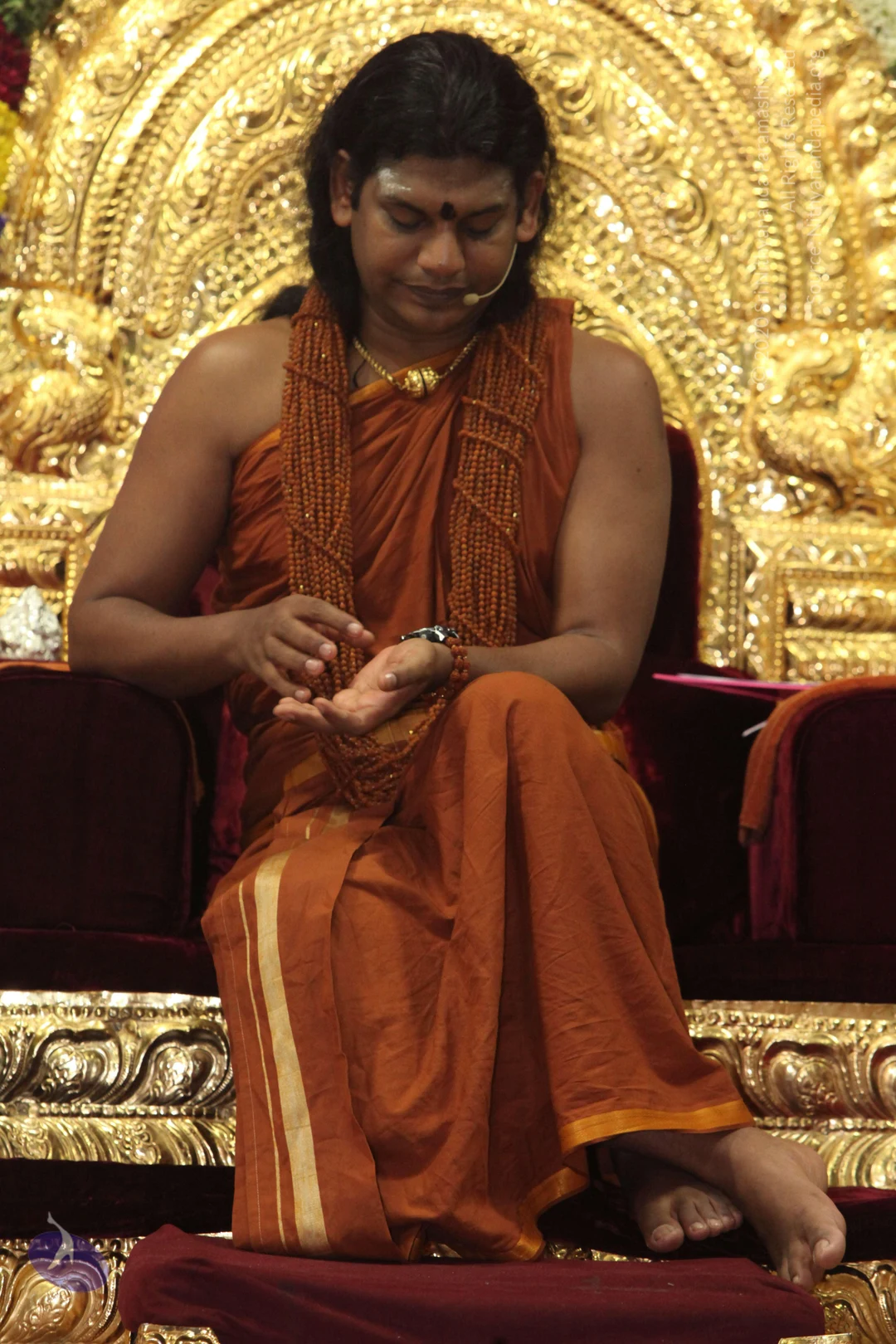
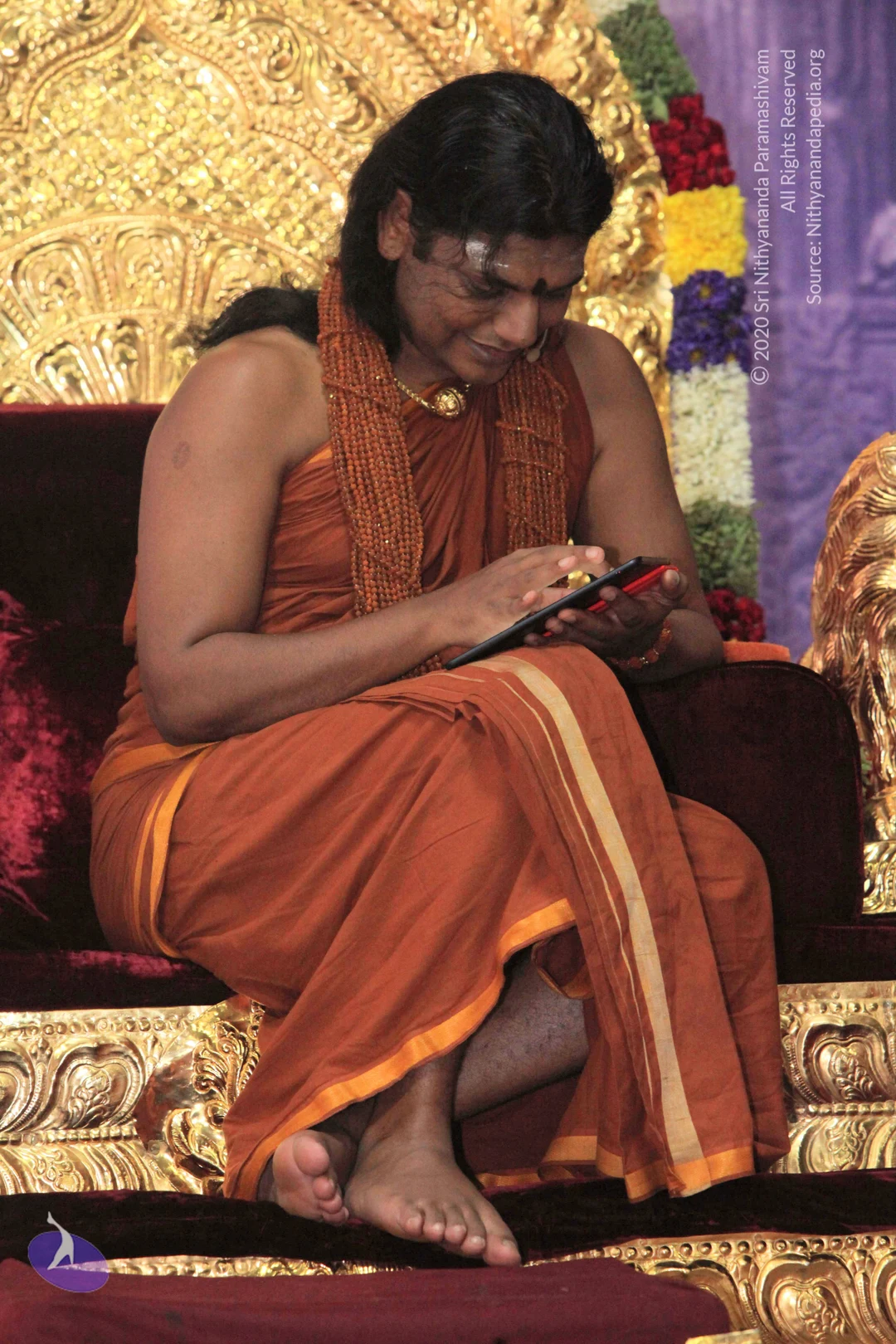
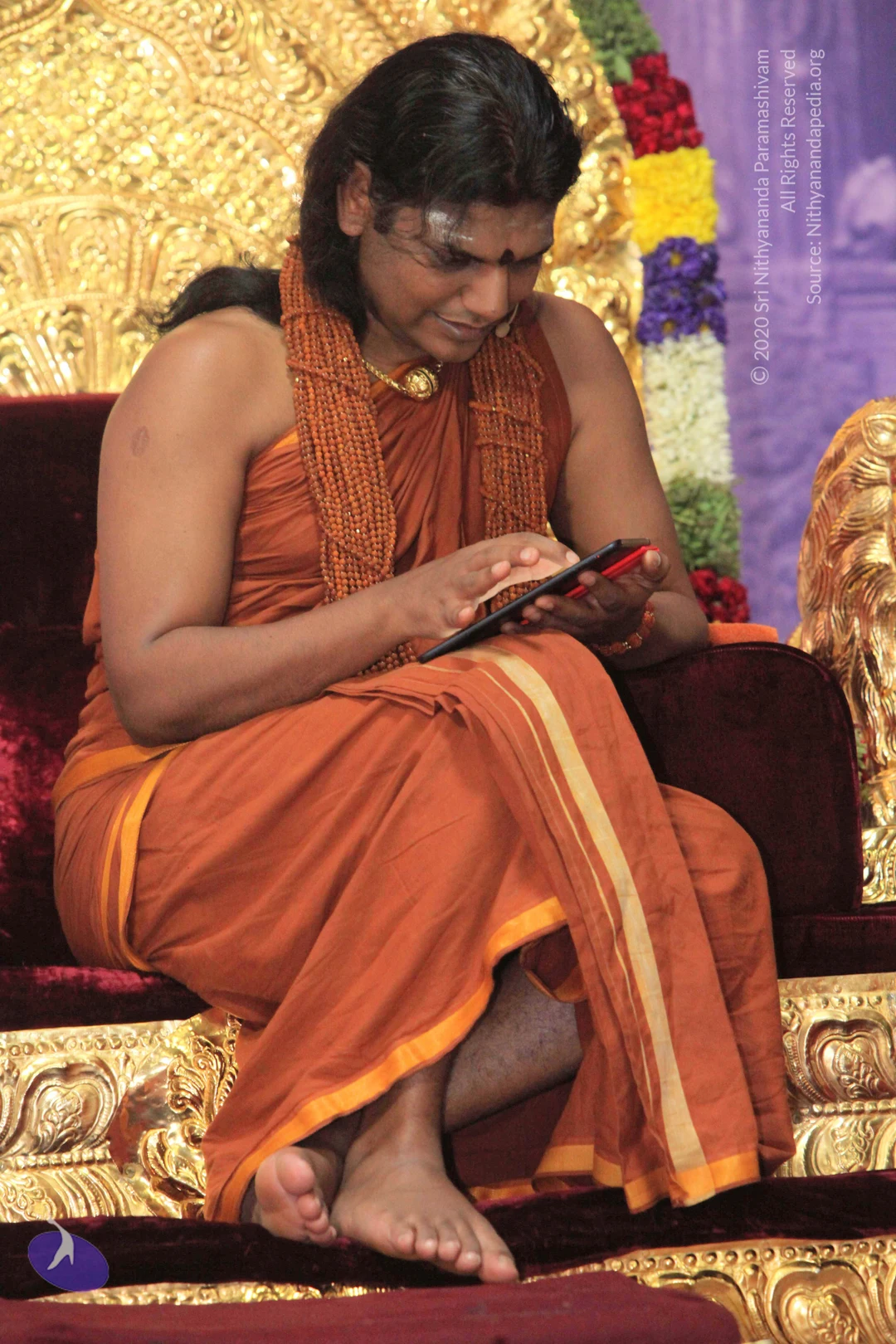
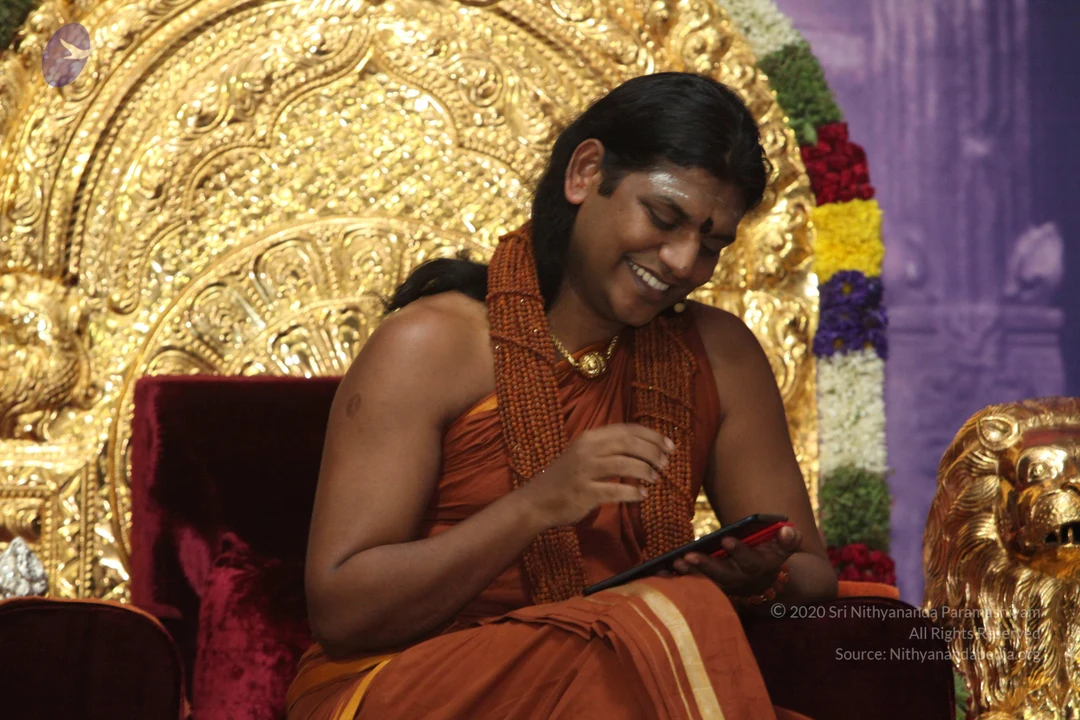
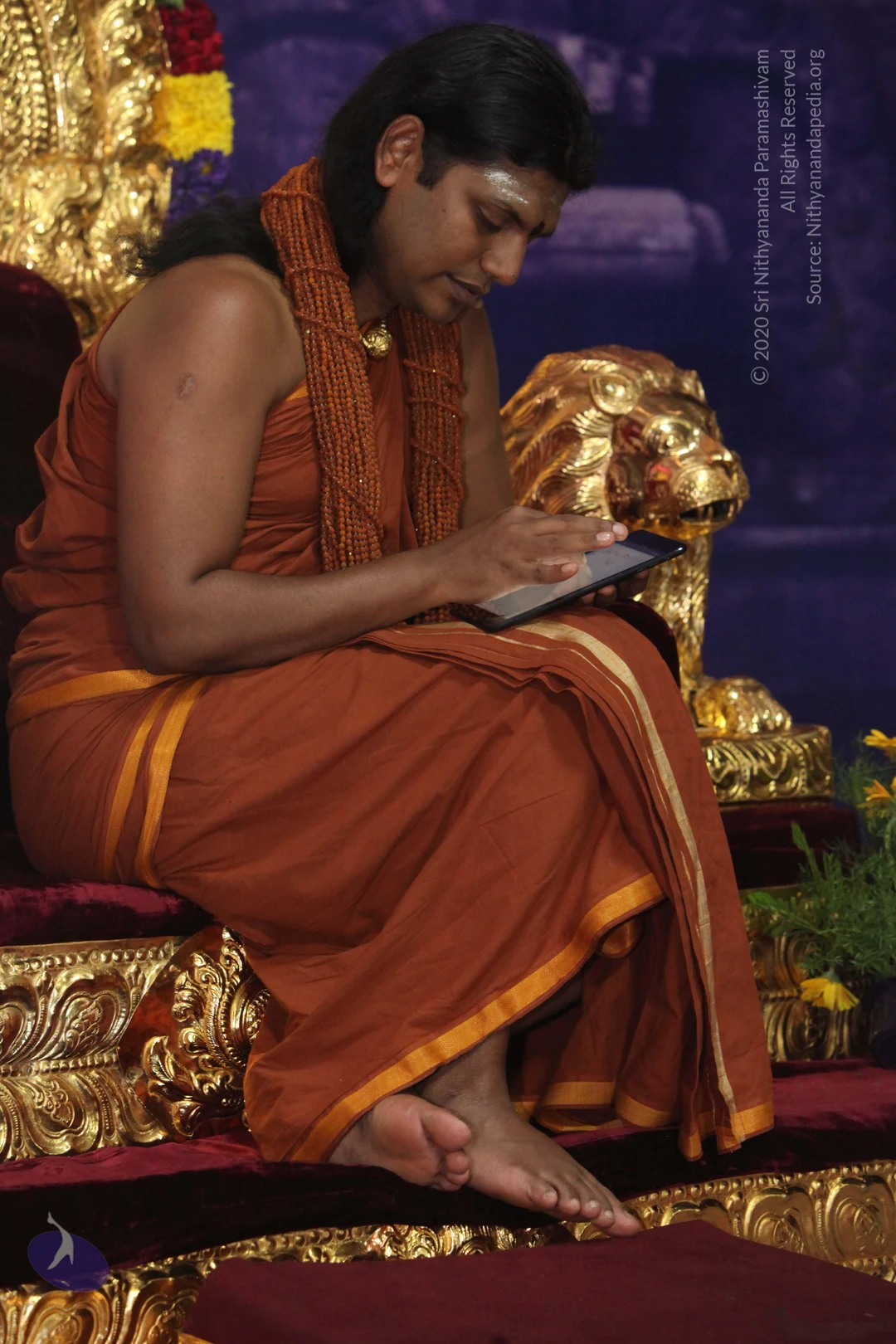
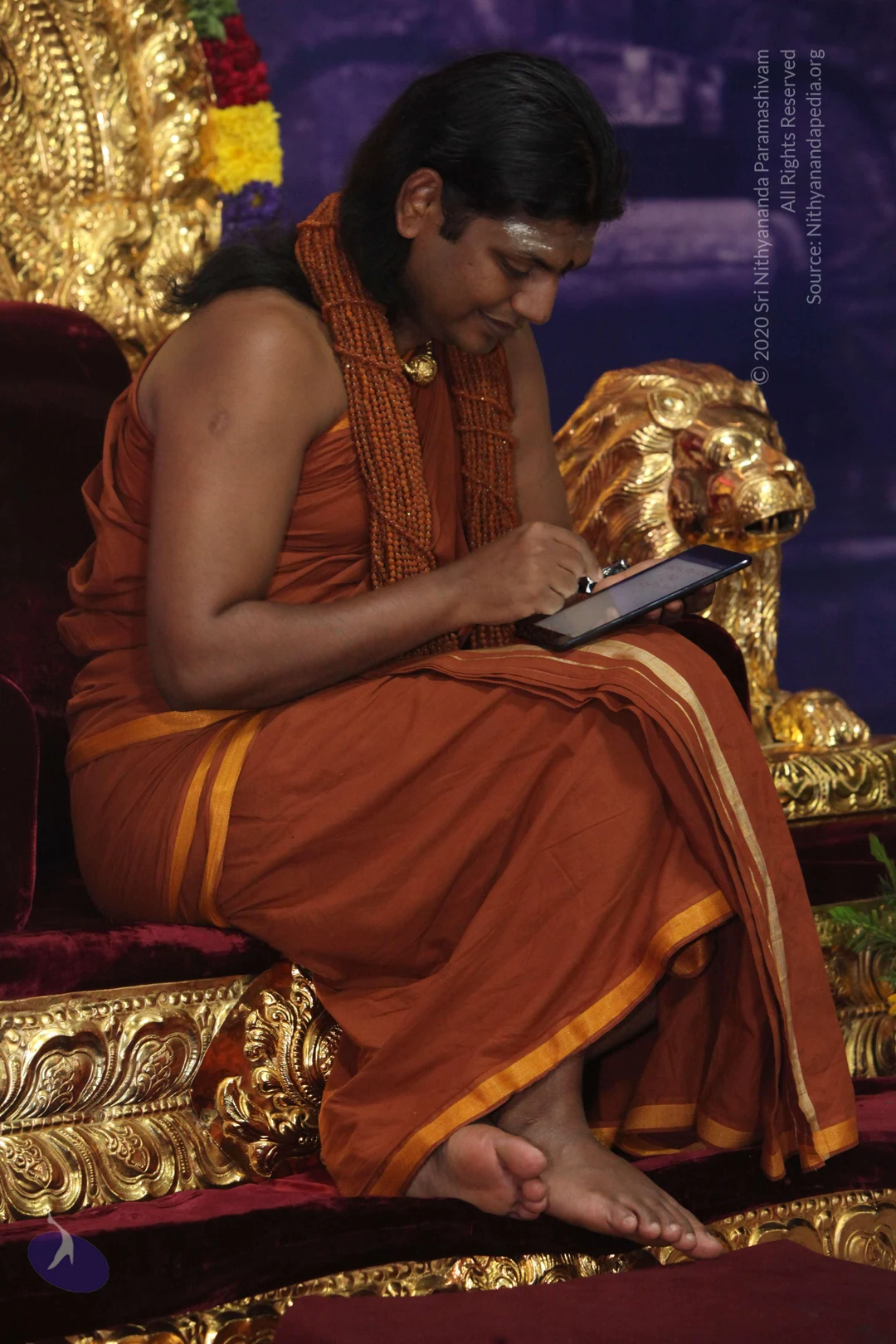
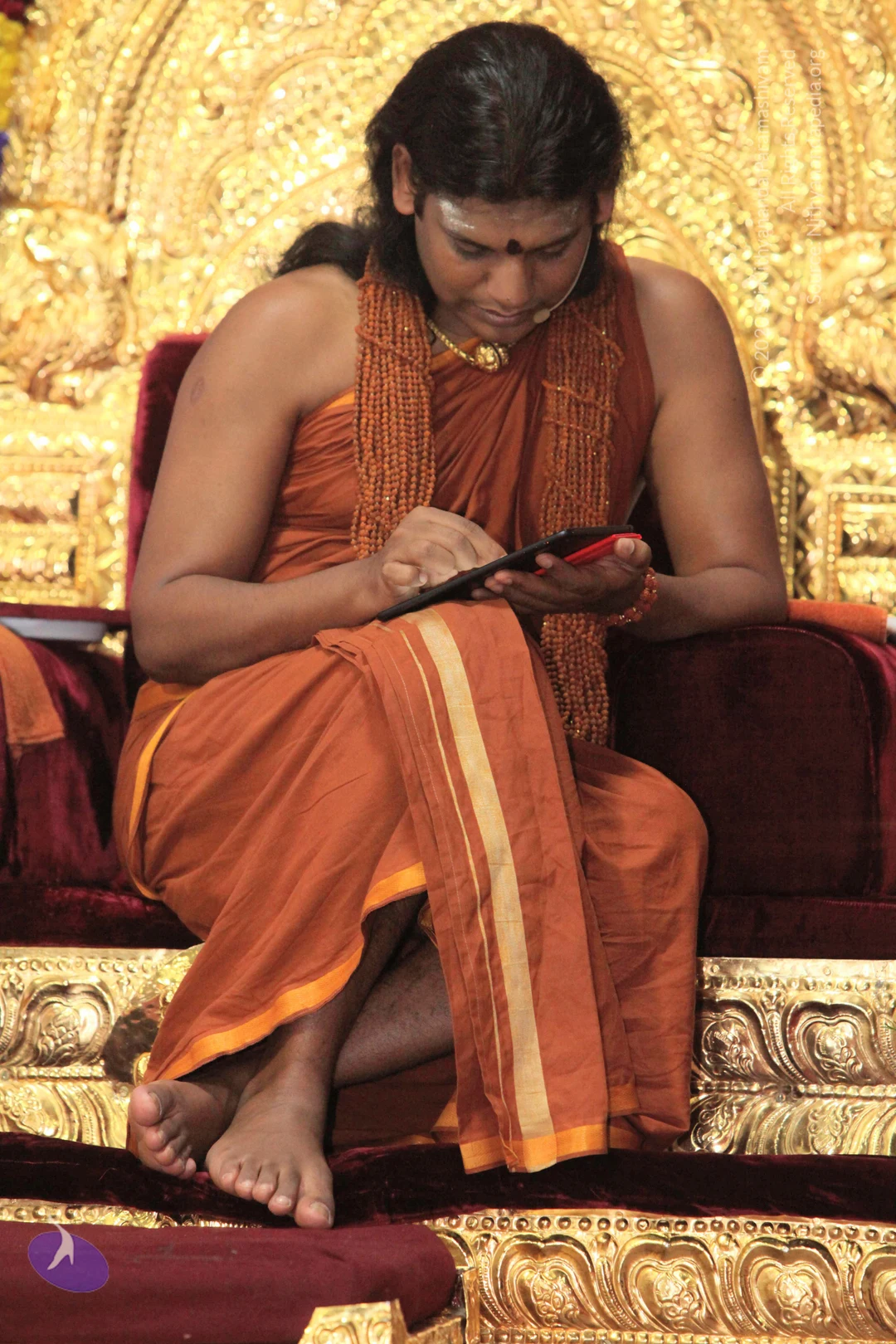
Today I am taking up a commitment with all you guys with Kalabhairava as witness. I am going to use the I-pad given by Muktananda. He has given Me I-pad where I can start penning down. I am going to pen down Akashic records directly. And it will be published in My own handwriting. See, to read akashic records I need this setup of video and all that. So, it... it limits My contribution of Akashic records to the world. Whenever I find time, when I am travelling in the car or in the flight, I have so much time. And during the time all the participants doing the kriya, for example from today next twenty one days all the Inner Awakening participants will be doing at least fifty kriya. So, I am going to have at least fifty, forty two minute. Is it not? Fifty, forty two minute means how many hours? Thirty five hours. Because there are no.. you see if I restrict Myself only to Akashic reading, reading the Akashic records; I need the camera and I need a silence, people have to be listening. And when I am… when they need to do something I cannot be reading. Lot of restrictions. So, I was thinking what way I can enrich Myself, give more contribution to the world. Suddenly idea clicked. Come on, let’s just allow the Kalabhairava to download and go on pen it down. So, from today, I commit with you guys Kalabhairava will download the Akashic records and just pen it down. And I promise to you it will be a new handwriting; His handwriting. It will be His handwriting. Thanks to Muktananda for giving that I-pad, and thanks to Moksha Priyan to synerging it.

(31:36)

So, from today I will be continuously... whenever I find time, especially these times, you know when I was looking into My life, what all is the time I am wasting, not being contributing to people; not enriching to people. So, the flight when I am travelling ..in the flight and when I am driving to a place one place to another that time and when people are doing the kriya after I give the instructions when they are doing the kriya, those time. All these are the times I am wasting. See when they do Kriya I need to give instructions, then I need to….My presence needs to be here and afterall I can be just seeing, and volunteers are there. I don’t need to waste the time. But I can’t do Akashic readings at that time. Because if I am reading it will be disturbing the people doing kriya. So, now.. next breakthrough you guys can expect everyday pages and pages of Akashic records downloaded in the own handwriting of Kalabhairava – Maha Kaala. And whoever wants to receive the handwritings of akashic records of Kalabhairava freely in your as your email please mail it. We will make a email ID, you just mail it to that mail ID. I will compile all of them. Morksha Priyan please compile all of that. After every download of akashic records, writing I will just press a button and mail it to guys. Enjoy.

(33:34)

Ma, Akashic records written by Kalabhairava something you can create a mail ID whoever wants they can subscribe to that mail ID; they will automatically receive all the Akashic Records downloaded and written by Kalabhairava. So, naturally My time is used more. Of course I am looking into that also. There is no end for Integrity, there is no end for Authenticity, there is no end for Responsibility, there is no end for enriching. It is eternal for everyone. You are struggling in your level, I am struggling in My level, that's all. Maybe I don’t want to use the word struggling for in My level. Expanding in My level. Even for your level I don't want to use the word struggling. You are expanding from your level, I am expanding from My level. That's all…. I will also request Kalabhairava. Already I requested and He accepted to give the writing answers also for devotees questions. Ma, we will have a mail ID. All the Akashic readings questions people can send whenever I find time I will let Kalabhairava to answer the questions by writing…. Actually when I requested He laughed and said, “Alright I will start writing in different languages. Start the work.” I said, “Great.” I tell you guys when you stretch yourself to this level, Kalabhairava will start writing through any one of you. It’s not My wholesale agency. I am not a whole sale agent, understand. I am not a sole owner, sole proprietor. All you need to do is having this level of authentic dedication to this enriching…. How many of you are shocked when you heard that I am thinking and working how many more ways I can enrich others? So, listen. When you create this same shock for others, Kalabhairava will express through you. That’s all.

(36:49)

So, all you guys can you create a mail ID some proper mail ID, Ma? What is the title you are going to give? Akashik records something hmm? You can give … ah yes akashic readings... no, no it is not readings., writings na. So, you should say just akashic records Ma. See the mail ID is: [email protected]. Whoever wants to receive, whoever wants to receive the Akashic records downloaded by Kalabhairava and written with His own handwriting are requested to send your subscription of course free, it is free. You just need to enroll by sending a mail to this mail ID. And Moksha Priyan, will compile it. You will get the original facemail itself .. in the original handwriting of Kalabhairava. In that same way you will get it electronically. It can be sent now ma? You send it and I send it. Yes, you guys work on all the technical things. Morksha Priyan you compile all the mails, and in one button I should be able to send the mail. Great. I am very happy. One more contribution to the people, to the world.

(38:55)

Continue, continue, continue. I tell you only when you see the result of at least the first tattva you will have the joy and inspiration to live all the tattvas…. Continuously live it. I tell you, it will be just a joy to live these satyas. It will be a joy to contribute to the world. It will be just a joy to contribute, to enrich. With this I will move to the next part of the morning satsang: Dial the Avatar. Listen unless you enjoy living these tattvas you will not be able to contribute. You will not be able to enrich others. Enjoying living these tattvas.

(41:54)

Sakshi Pramana:

Sharing from dyaan yoga experience

Tags:

Paramahamsa Nithyananda, create, new, morality, ethics, commitment, violence, life, agamya, prarabdha, karma, birth

Photos Of The Day:

01-PADA-PUJA
02-MORNING-SATSANG
03-SARVA-DARSHAN

04-TAMIL-IA-SESSION

05-PANCHAKRIYA-SESSION

06-IA-DARSHAN

Photos from this day

View all 366 photos

01-PADA-PUJA

23 photosSource gallery
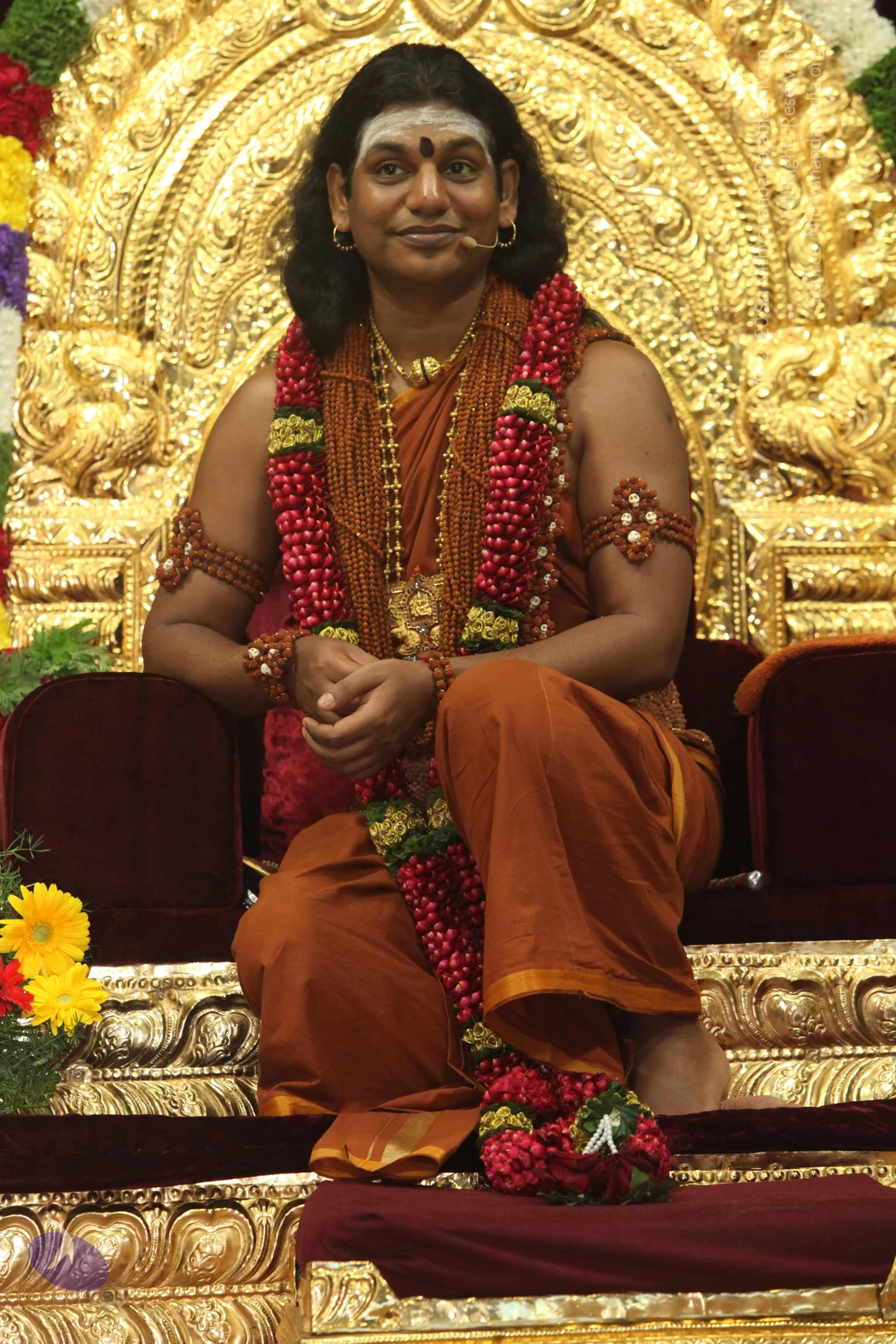
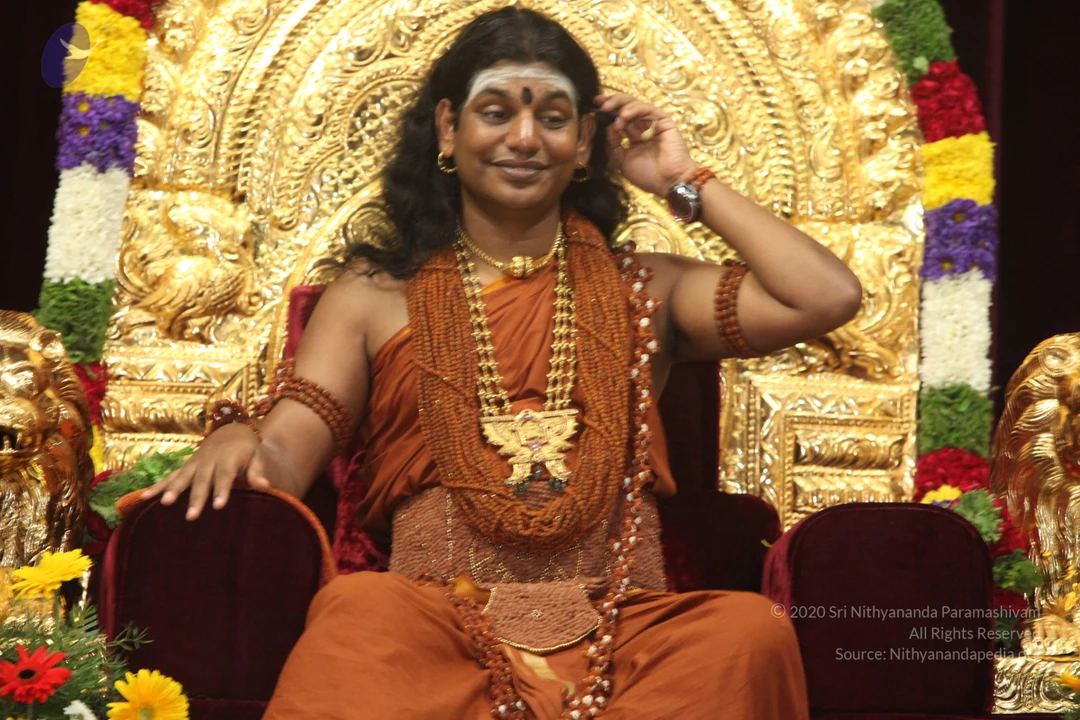
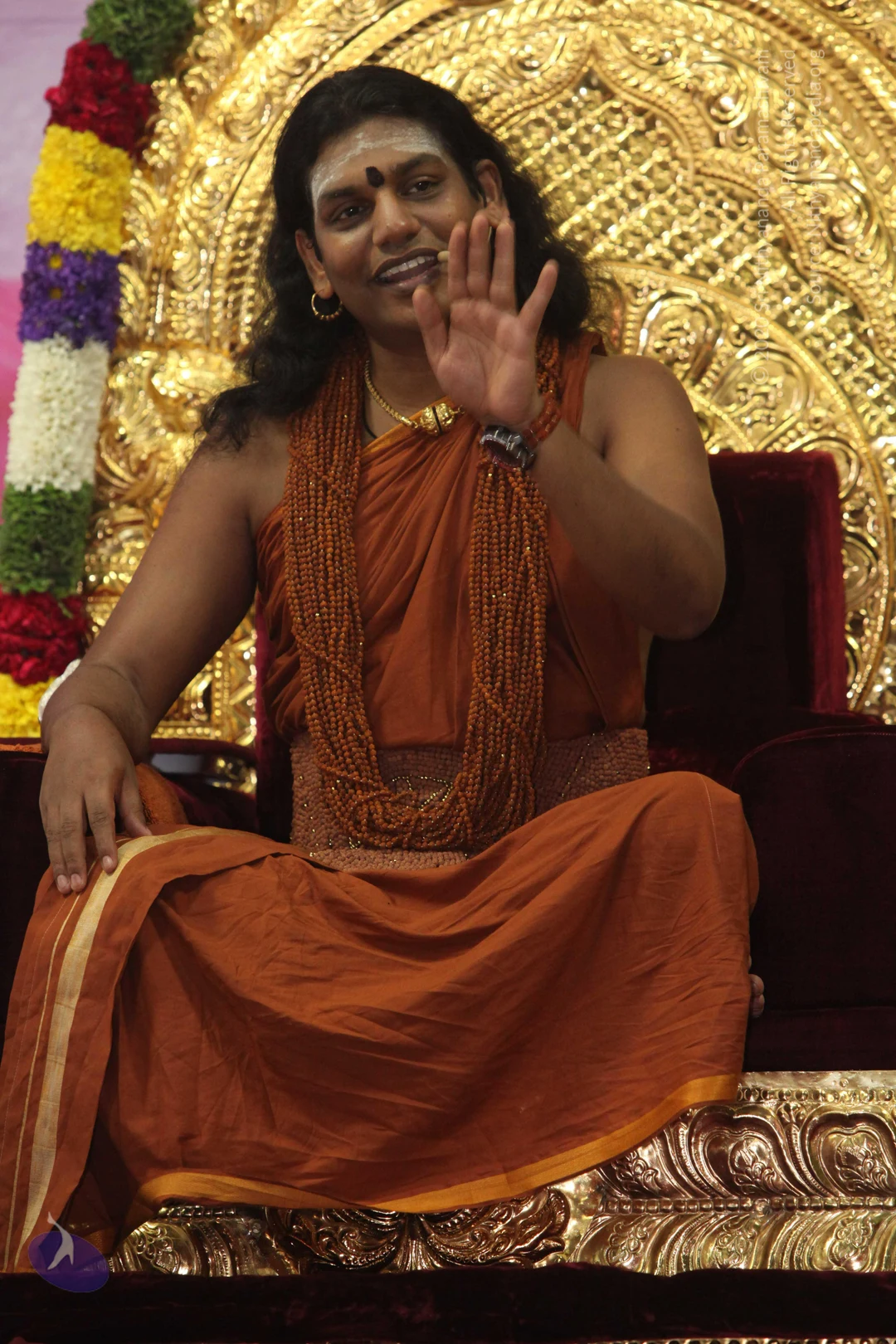
A seated man in orange-saffron robes sits on an ornate gold throne with a red velvet seat and a tiger-striped cloth, wearing layered red and green flower garlands, a gold pendant, rudraksha beads, and a white-and-red tilak on his forehead. Lit brass oil lamps hang from above and stand on either side, and a row of red lamp-like beads hangs on the dark wall behind. Three women in cream sarees with green borders sit at the lower right, one with a small offering tray placed before the throne, while a shaven-headed man in orange sits at the lower left. A red and patterned carpet lies in the foreground.A seated man on an ornate gold throne with red velvet cushions and a leopard-print seat cover, wearing an orange-saffron dhoti and shawl, a gold ceremonial necklace, a rudraksha mala, and a long red and white flower garland. He has long swept-back hair and a white tilak with a red bindi, and sits in meditative stillness. Lit brass oil lamps stand on both sides. In the foreground, a shaved-headed man in orange clothing sits at the left edge, and women in white and green sarees sit at the right, with offerings in front of the throne. The setting appears to be a pada puja.A seated man with long dark hair, white and red tilak on his forehead, wearing an orange-saffron dhoti and shawl, rudraksha malas and a gold ceremonial pendant, sits on an ornate gold throne with red cushions and a leopard-print cloth. A large garland of red and yellow flowers hangs over his chest and a tray of offerings sits at his feet. Ornate brass oil lamps light the dark wall behind him. Two seated women in cream saris with green borders and a shaven-headed man in orange cloth sit in front at the lower left and right. The Swamiji (probable) is seated in a throne setting, with long hair, saffron clothing and rudraksha malas, and the frame includes a satsang-type gathering.A seated man in a rust-orange sannyasi cloth and ornate gold-and-red regalia sits on an elaborately gilded throne with a red velvet back cushion and a leopard-print seat cover. He wears a long red-and-green-accented garland, a multi-strand bead mala across his chest, gold chains, and white and red forehead markings. A woman in a white sari with a green border sits at the lower right near a silver-tiled offering tray, and a partly visible figure in orange sits at the lower left. Small oil lamps line the dark background wall. Swamiji (probable): the seated central figure shows long swept-back hair, rudraksha-style beads, orange robes and gold necklaces on a throne, consistent with the page's Swamiji label.A seated figure sits on an ornate gilded throne with a red cushioned back and a tiger-striped cloth draped over the seat, centred between two tall brass oil lamps with lit flames. The seated person wears an orange-saffron cloth, a gold necklace, a white forehead mark, and a long red and yellow garland of flowers, with bangle-style armlets. Probable Swamiji (appearance cues: long swept-back hair, saffron clothing, ornate gold adornments and garland); seated in the central position of honour. Two people sit in the foreground at the lower left, one shaved-headed in orange with a rudraksha mala, and at the lower right a woman in a white sari with a green border holds a small cup. Another woman sits at the right edge. Gilded lamps and a silver tray of offerings sit at the base of the throne, in a satsang or pada puja setting.A photograph of a golden ornate throne centred on a seated man in saffron-orange robes with a long swept-back hairstyle, a white tilak on his forehead, a red and white flower garland and rudraksha mala, and a gold necklace; his appearance is a person seated in a Padapuja-style setting. Two brass lamps flank the throne, with a third on the right and a red and gold curtain behind. Seated at the lower left, a shaved-headed man in orange robes and a woman in a cream sari with a green border sit cross-legged, holding small cups or vessels. Another woman in cream stands at the right, and two more women sit at the far right edge. Silver trays with offerings are placed in front of the throne.

02-MORNING-SATSANG
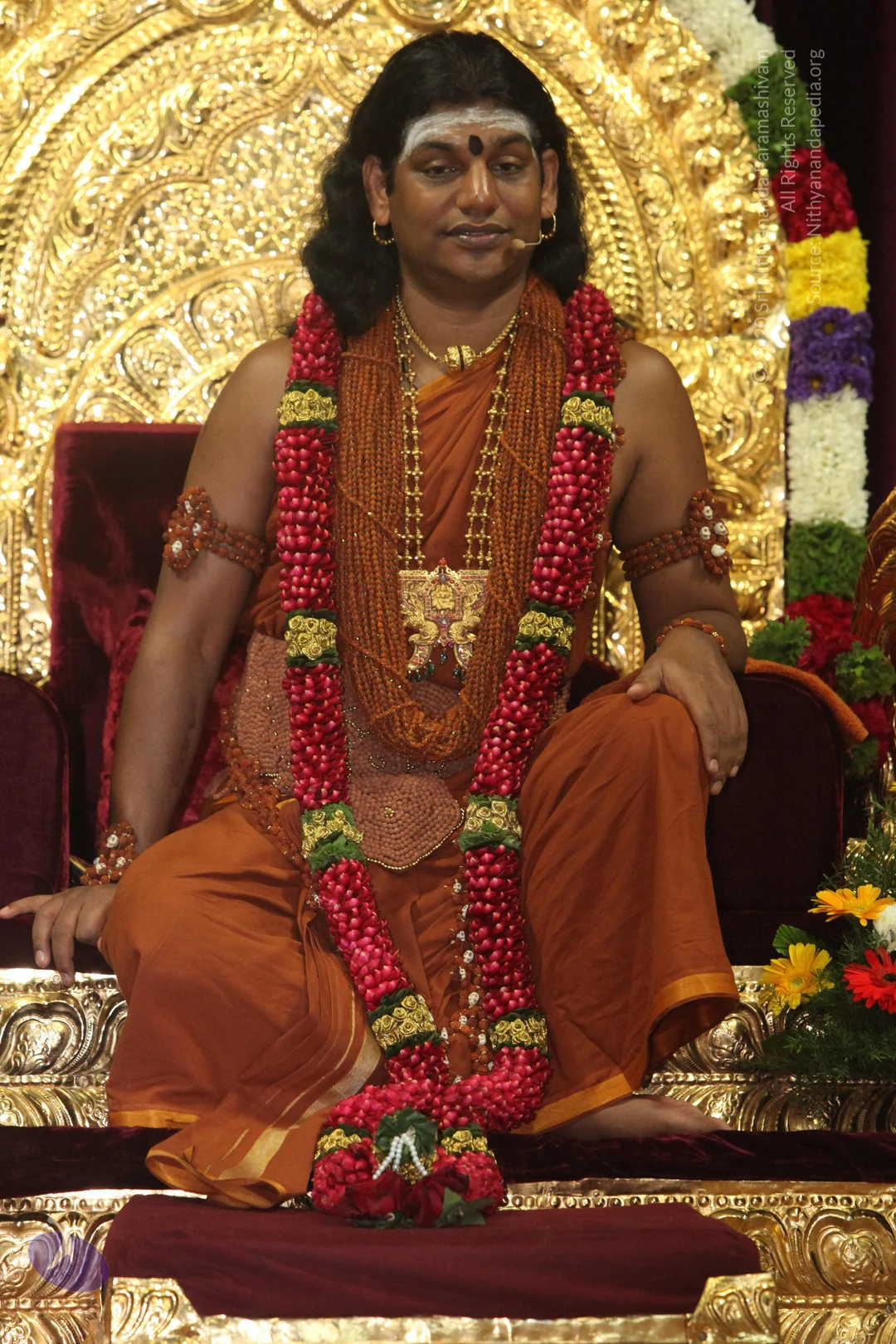
123 photosSource gallery
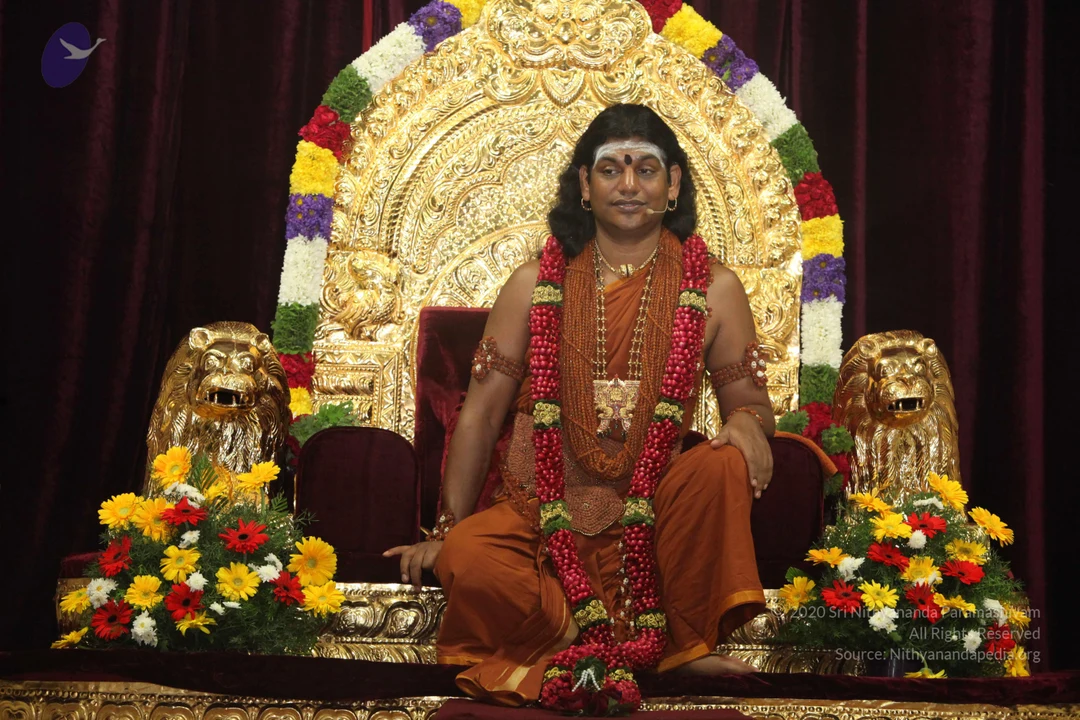
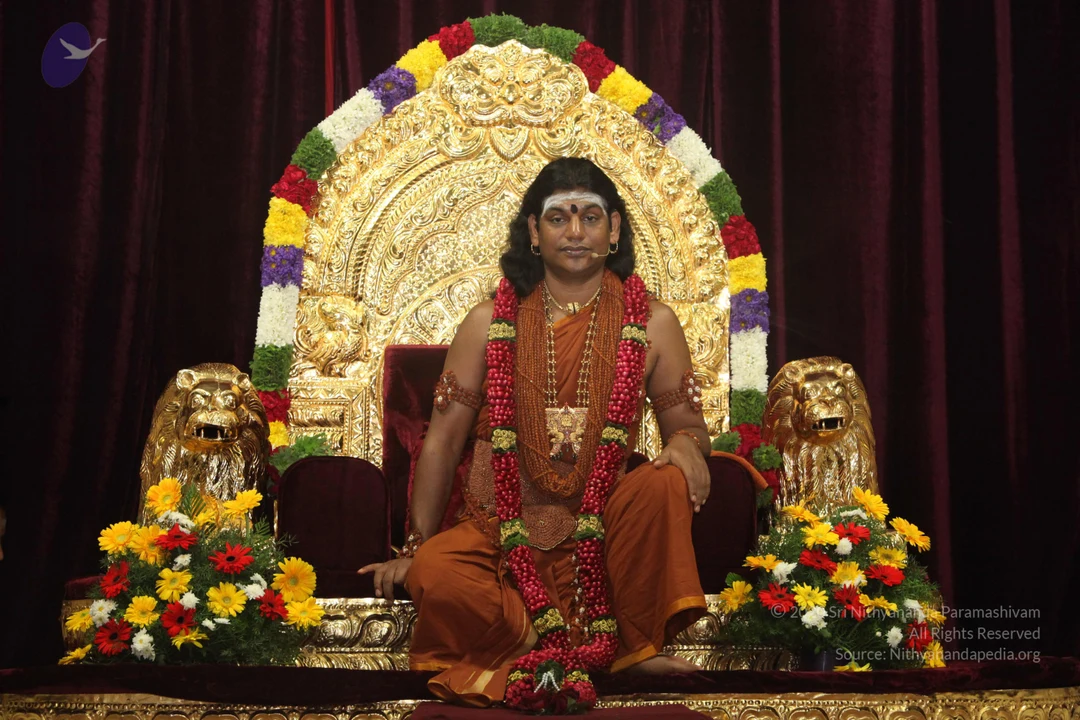
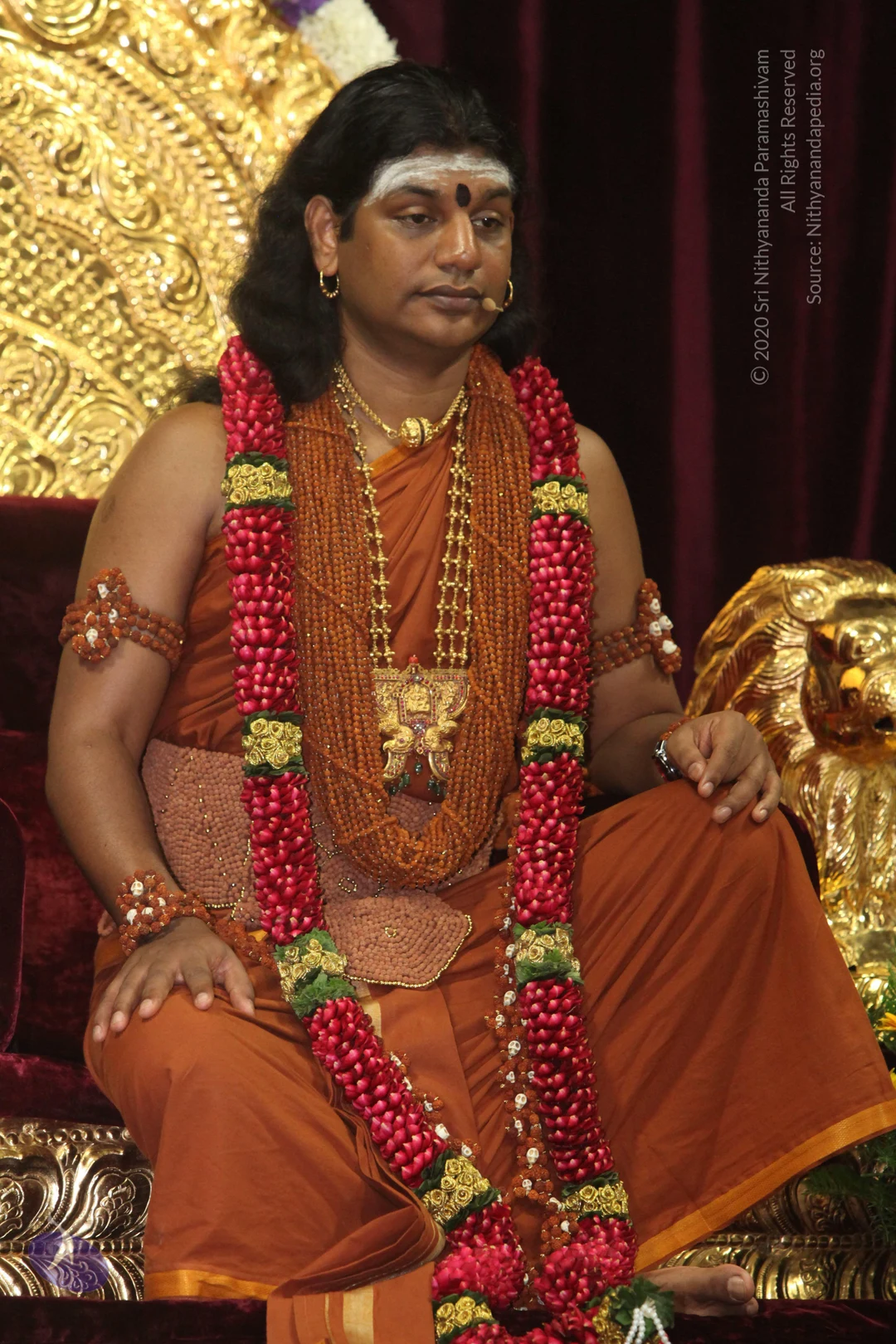
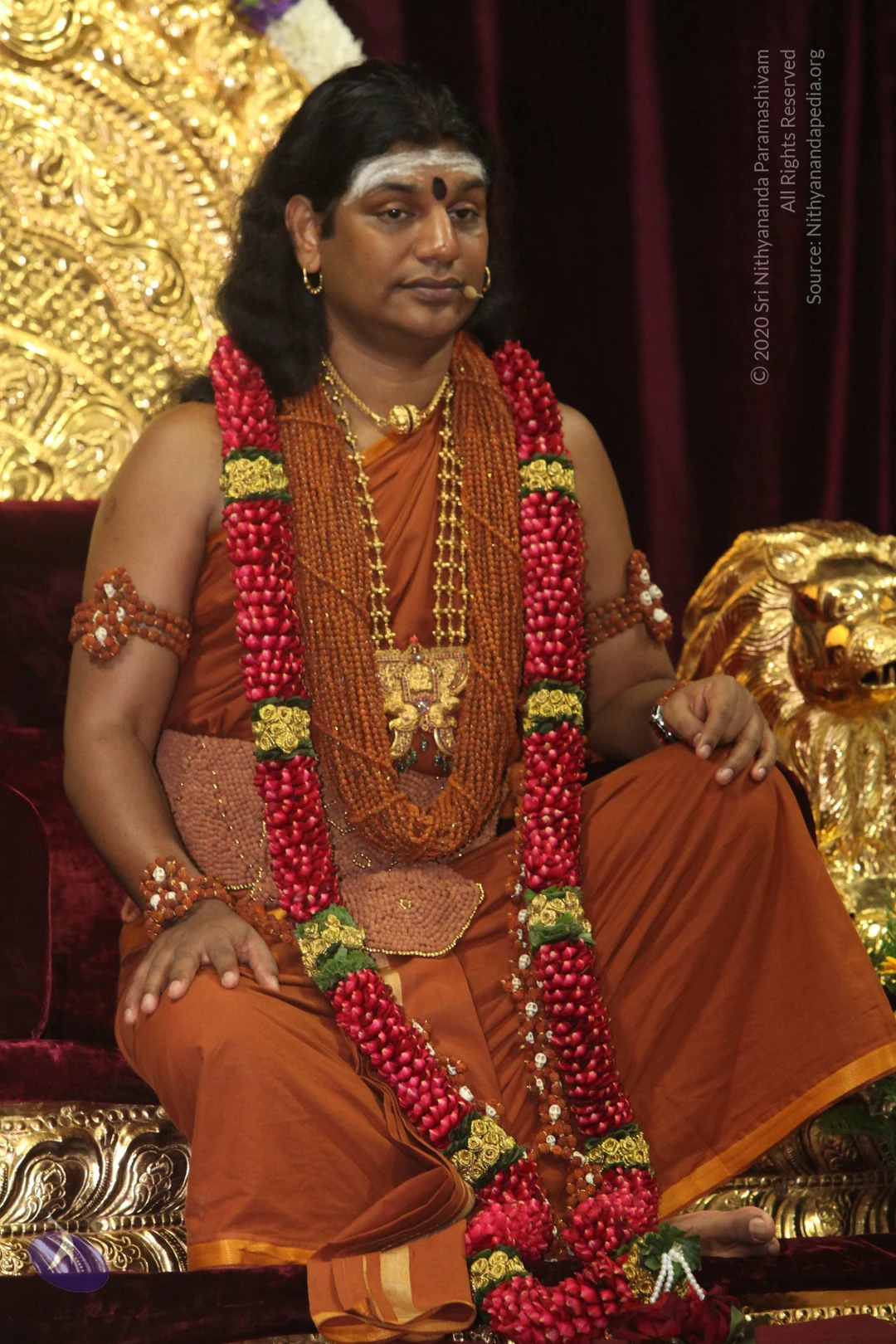
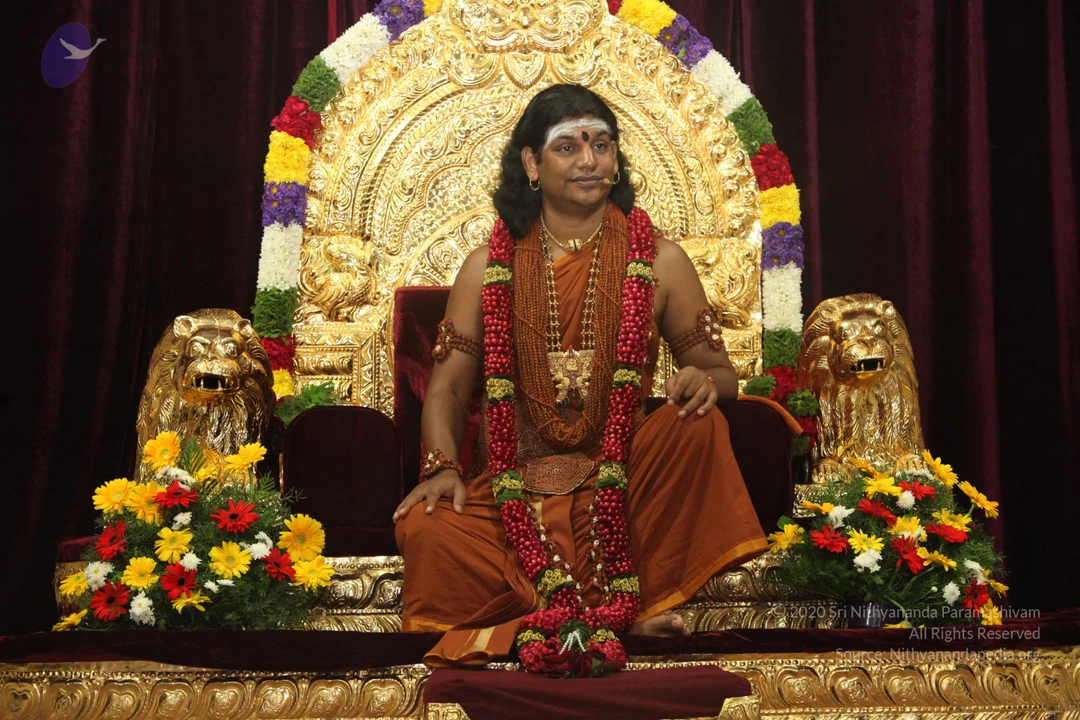
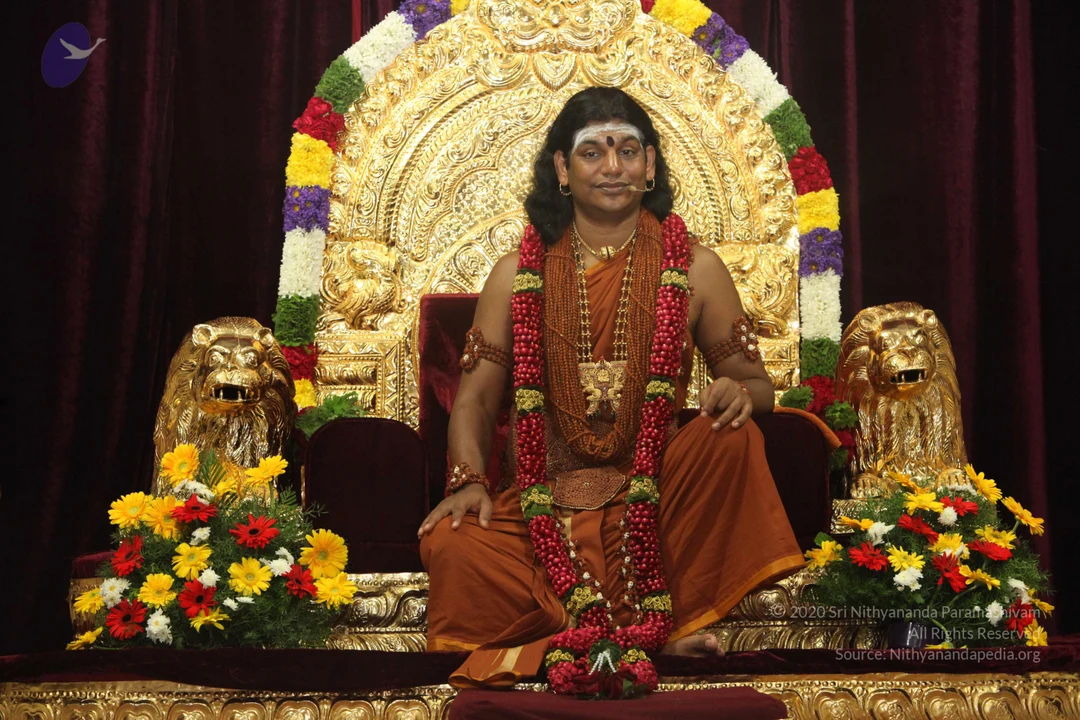
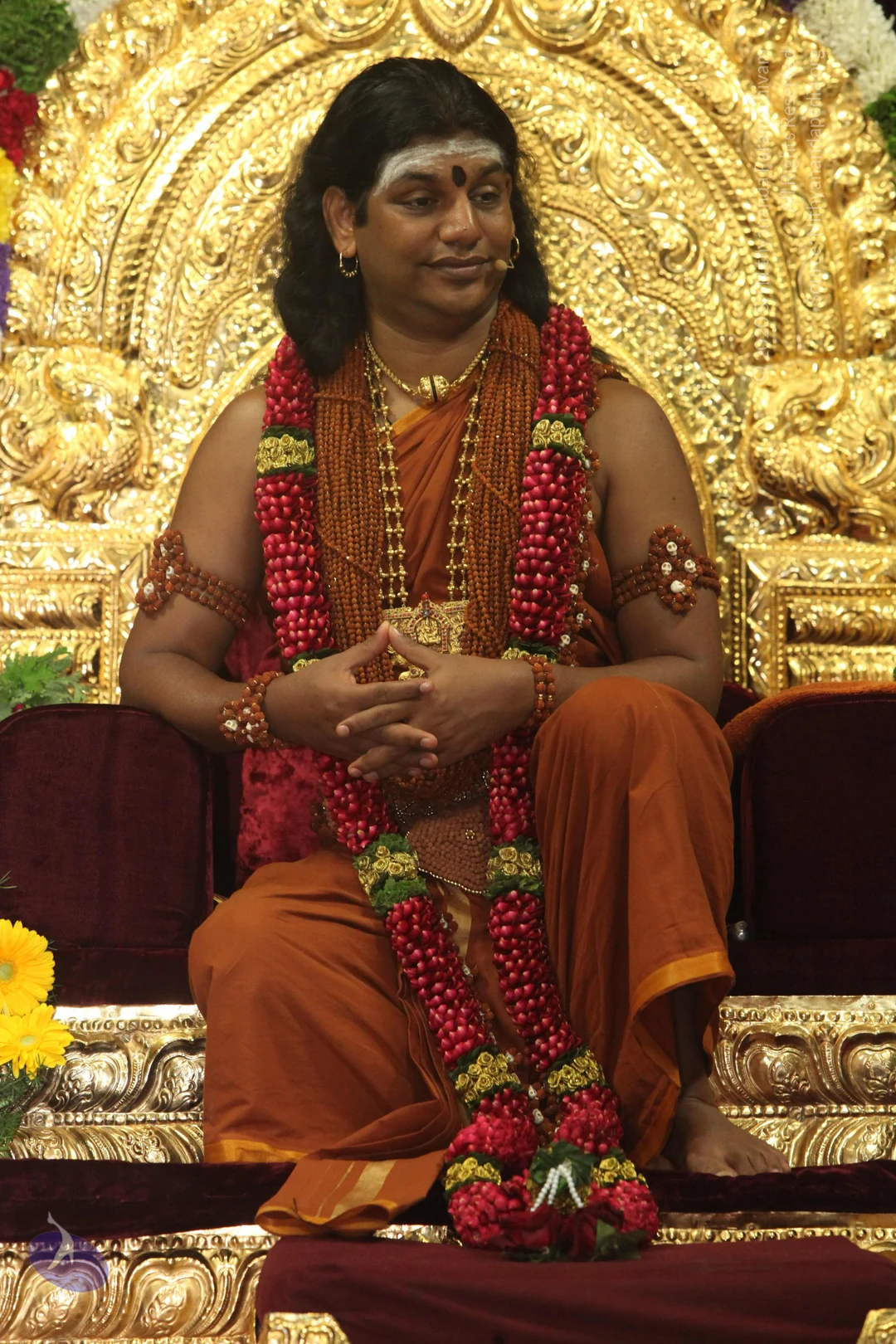
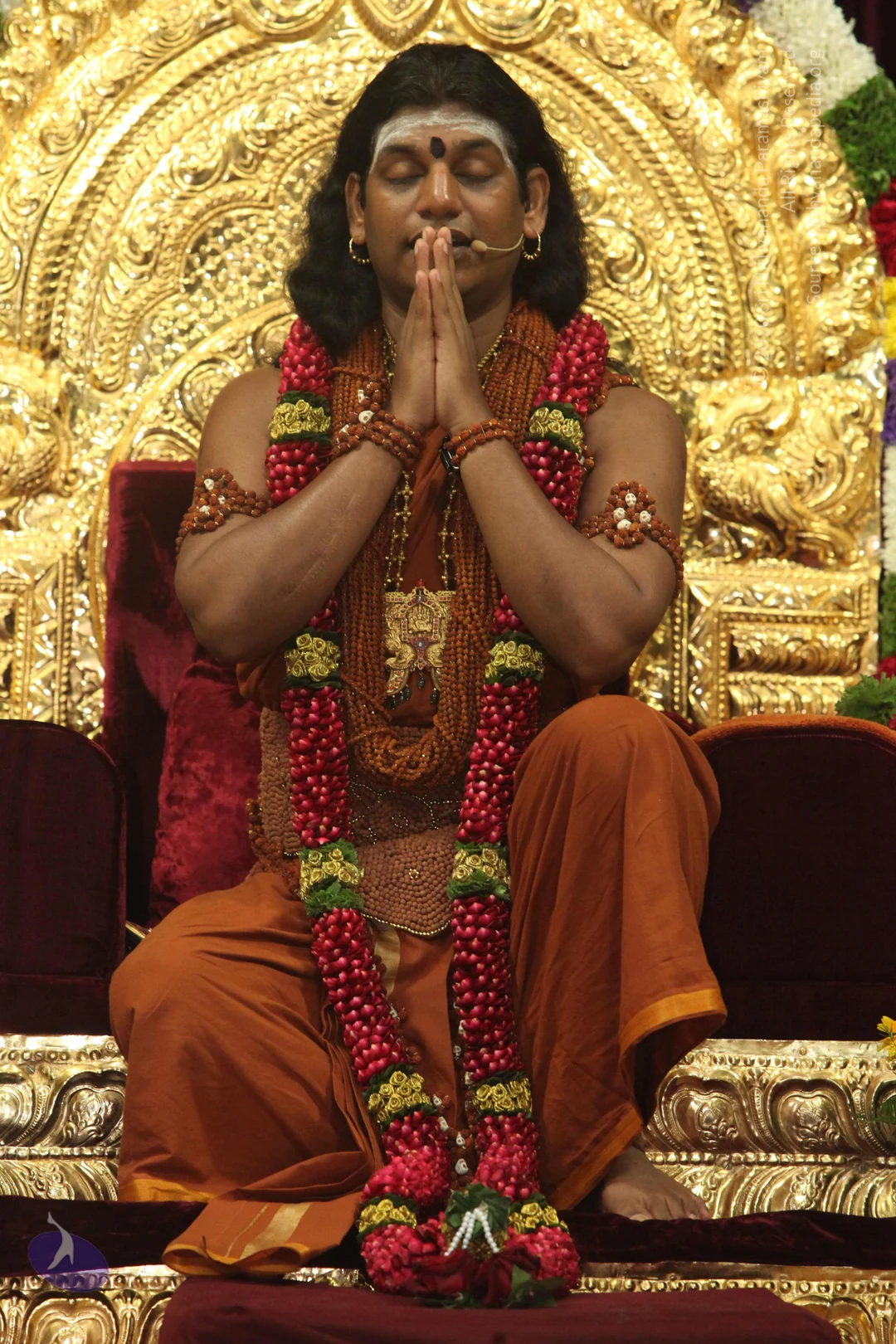
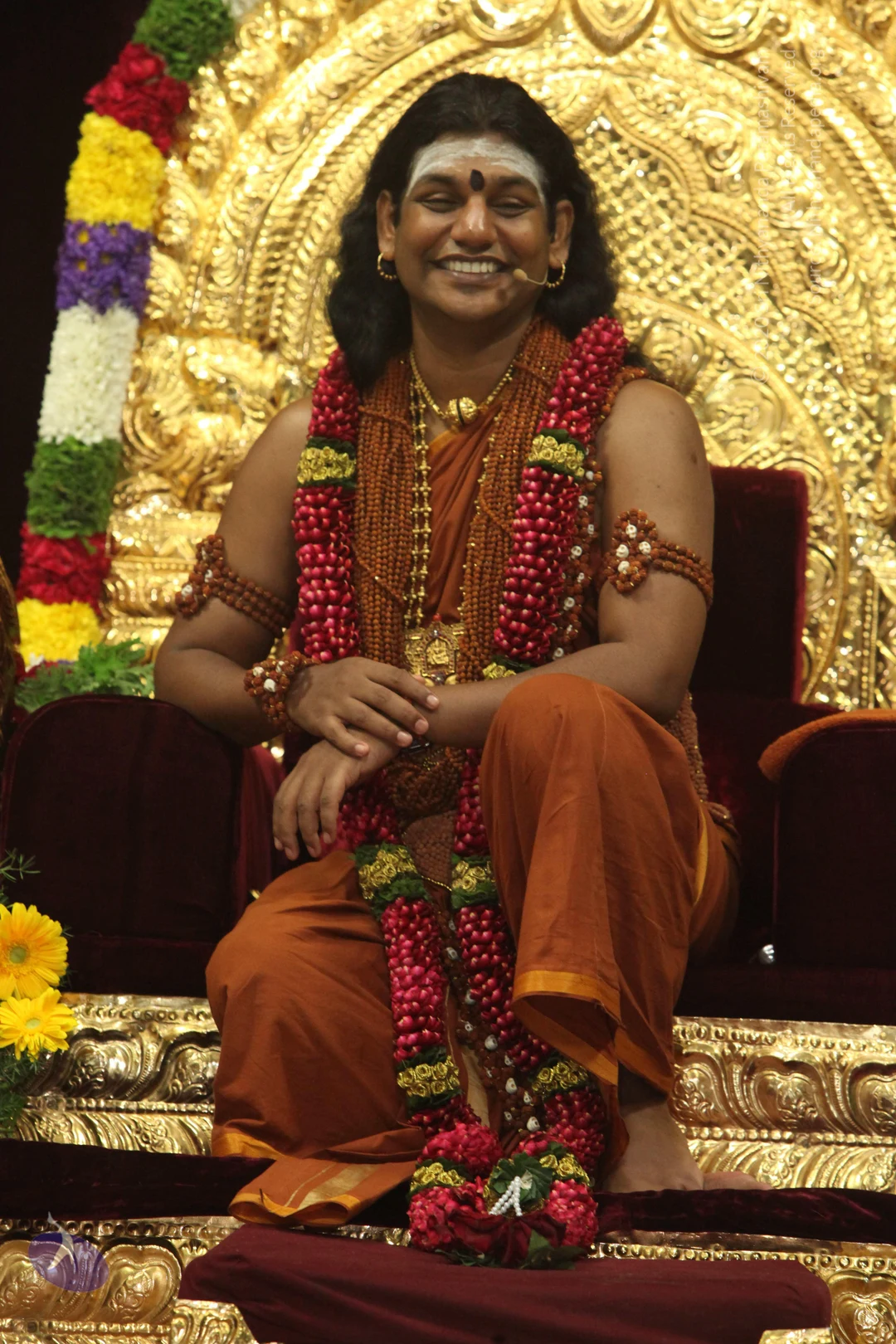
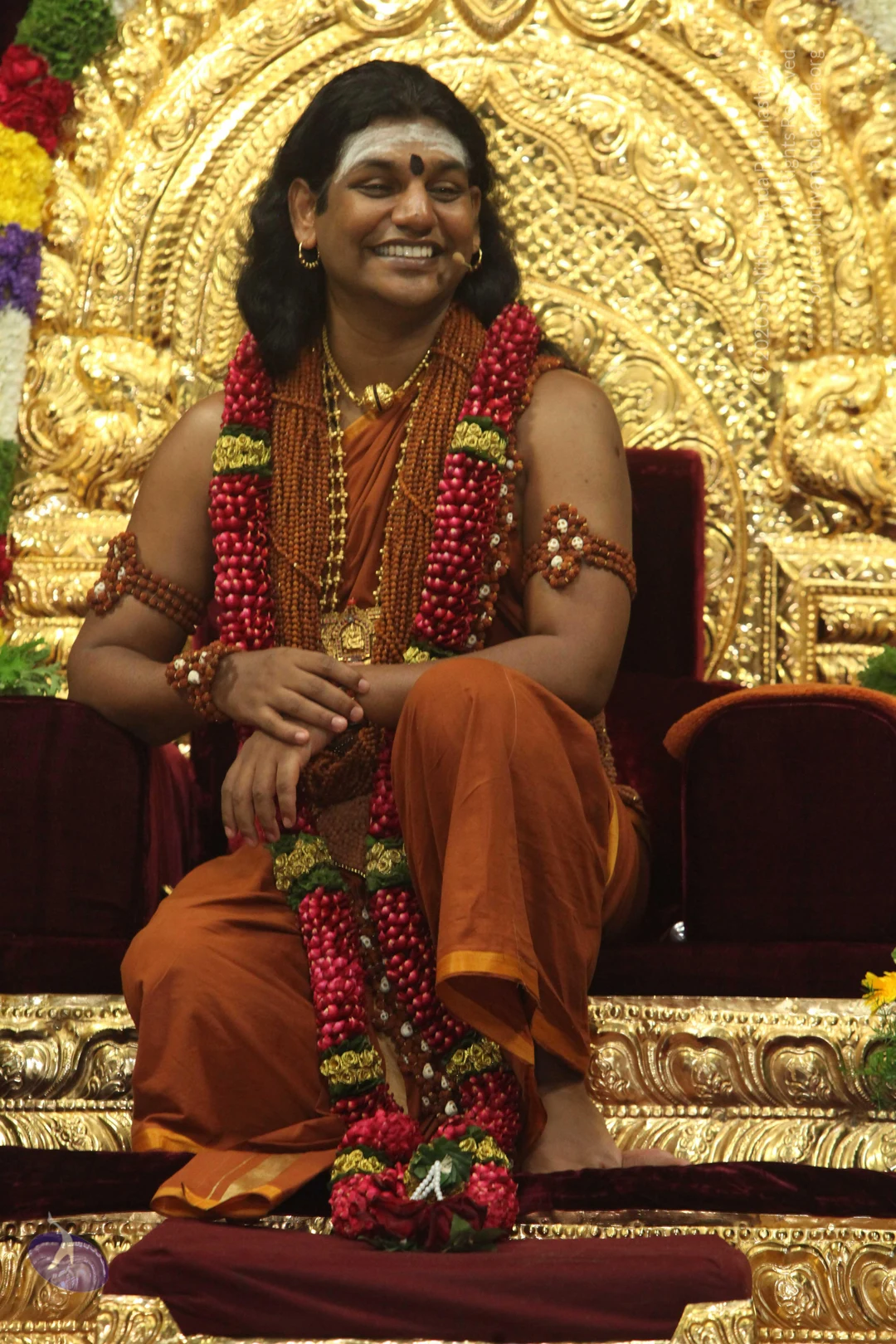
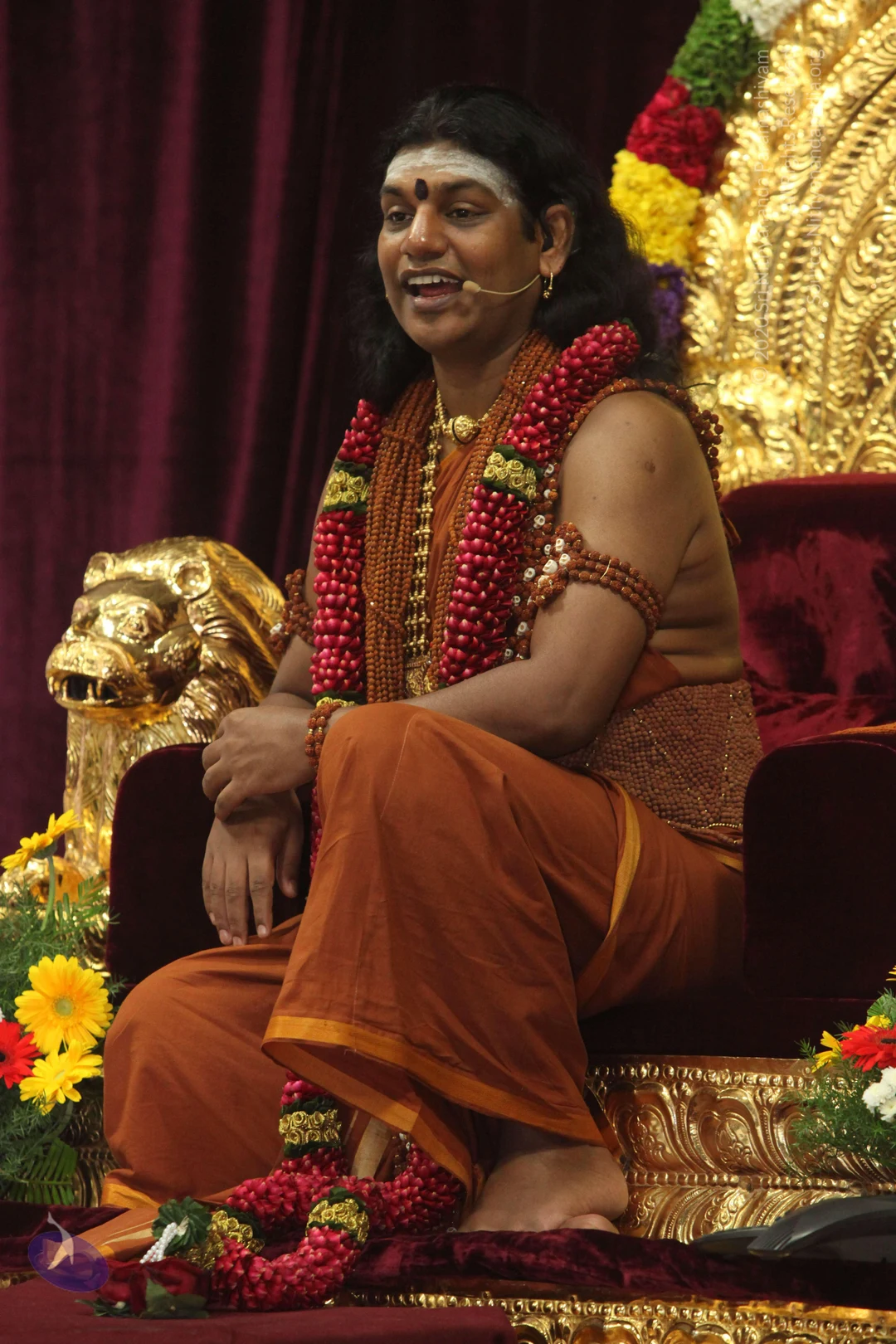
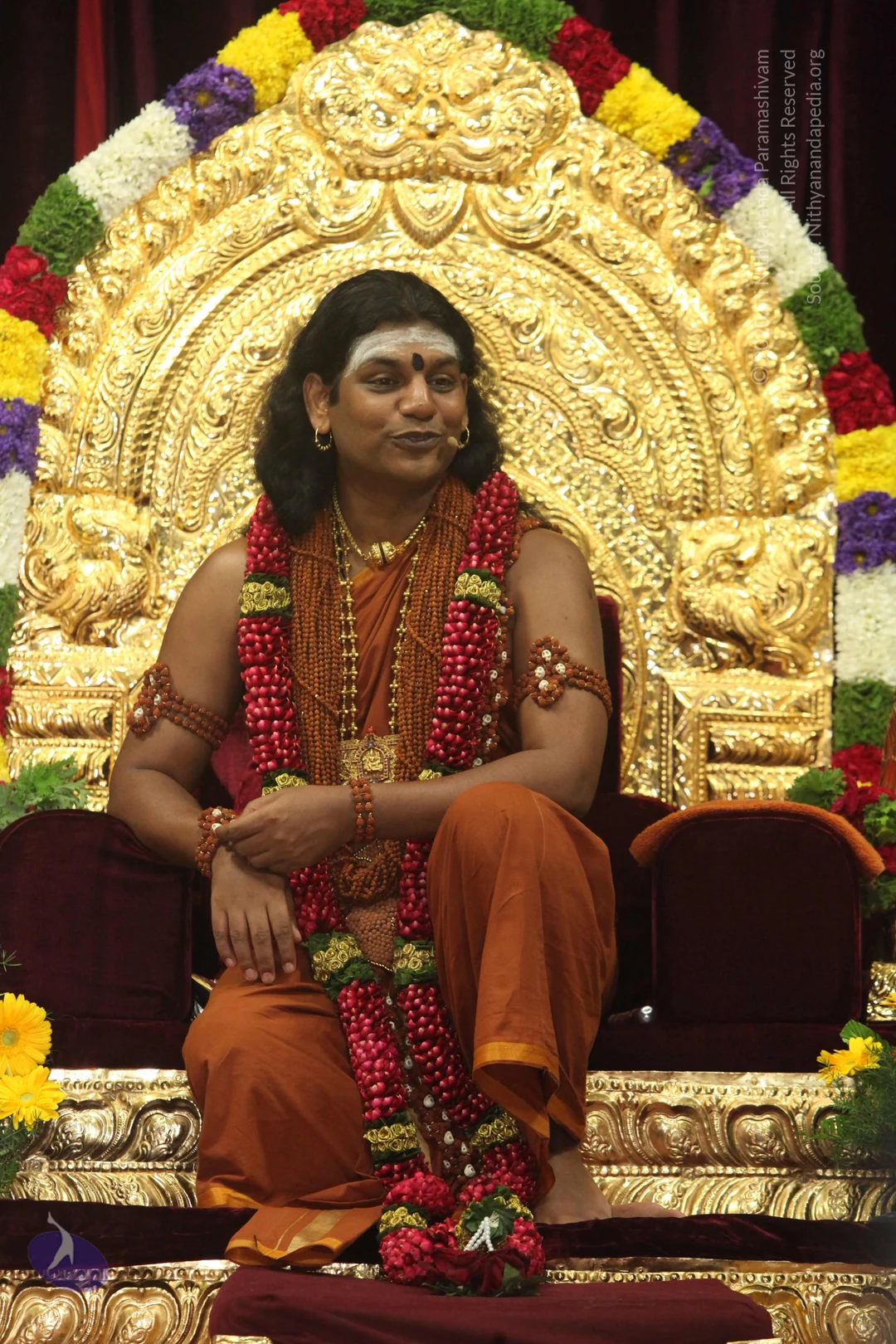
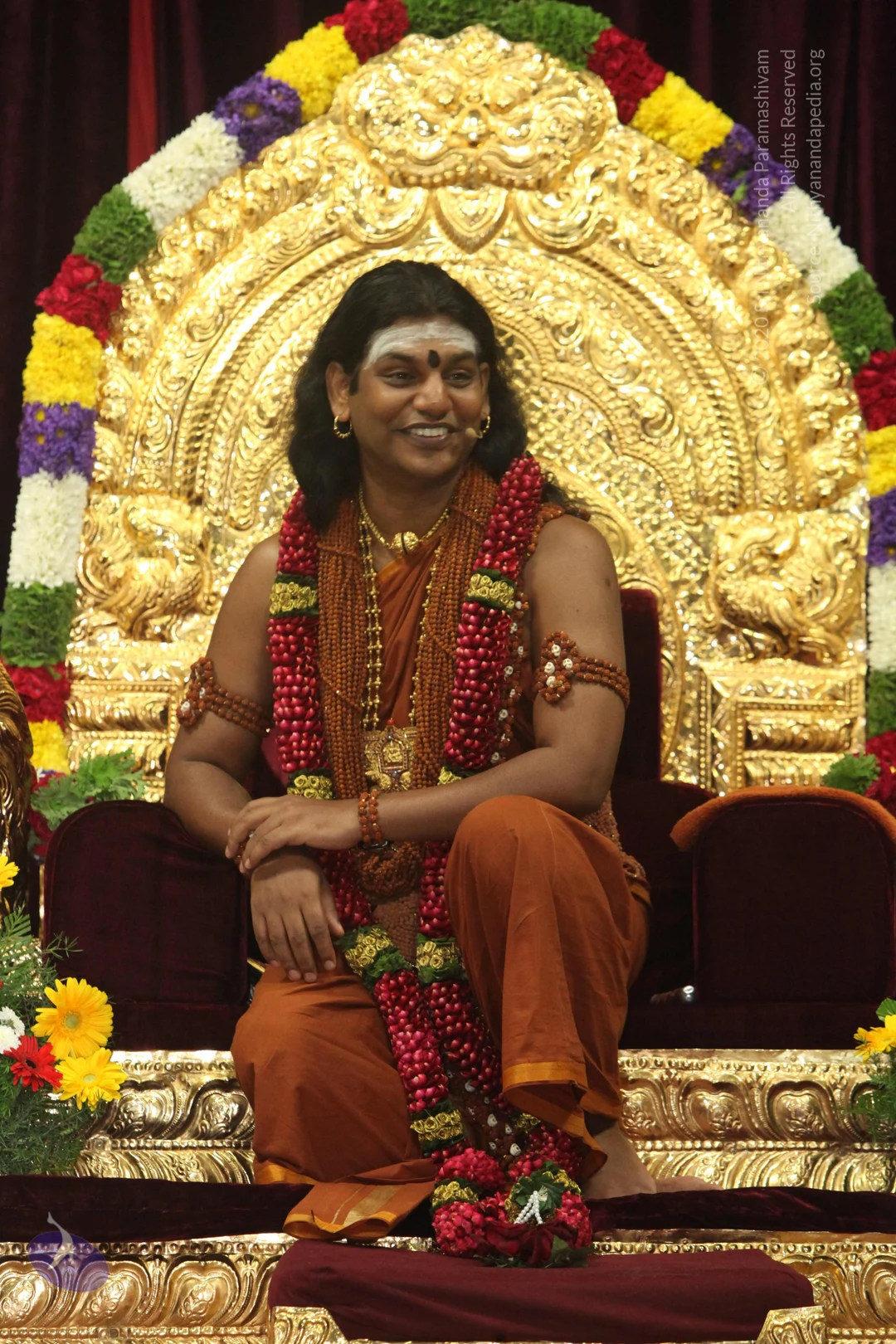
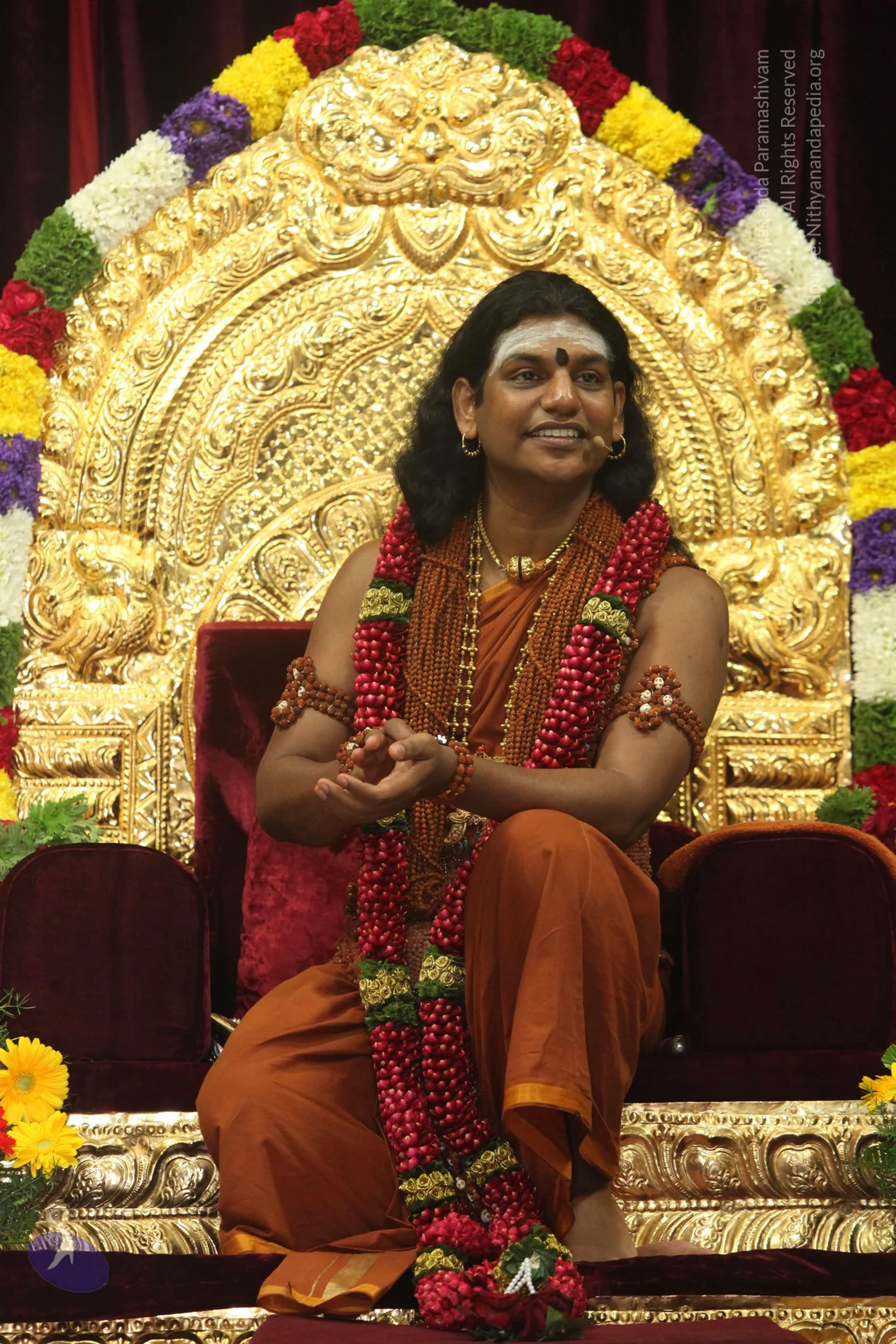
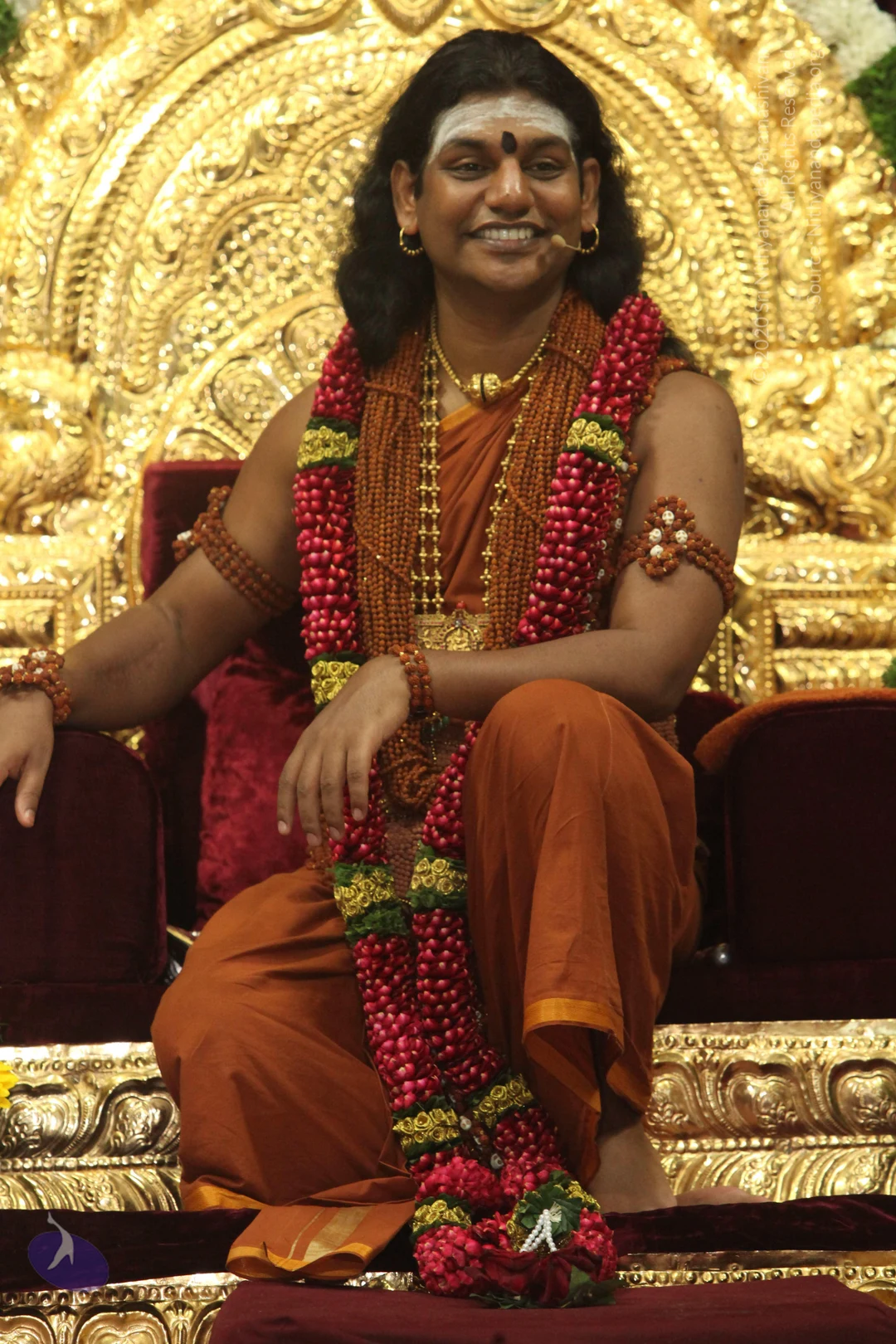
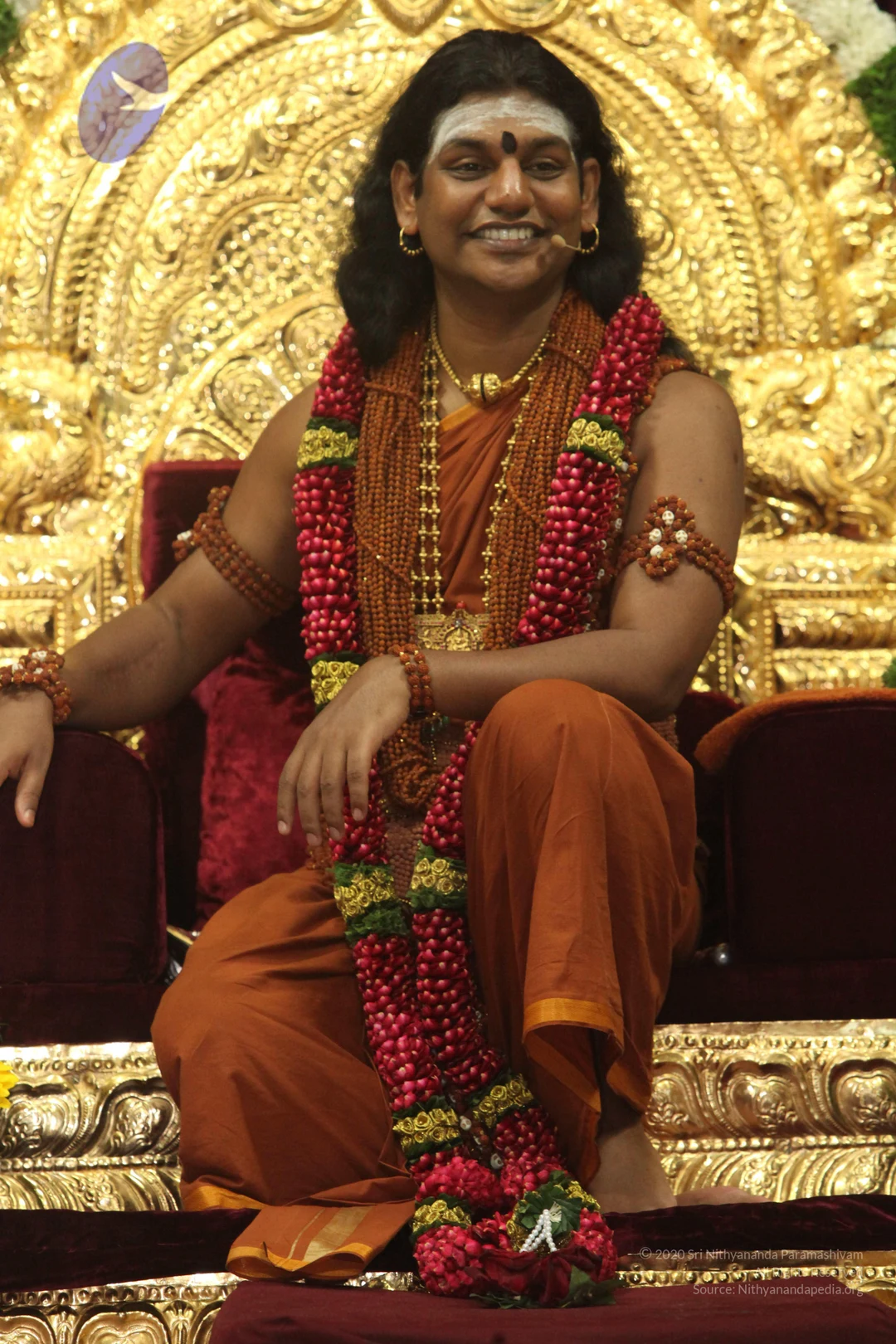
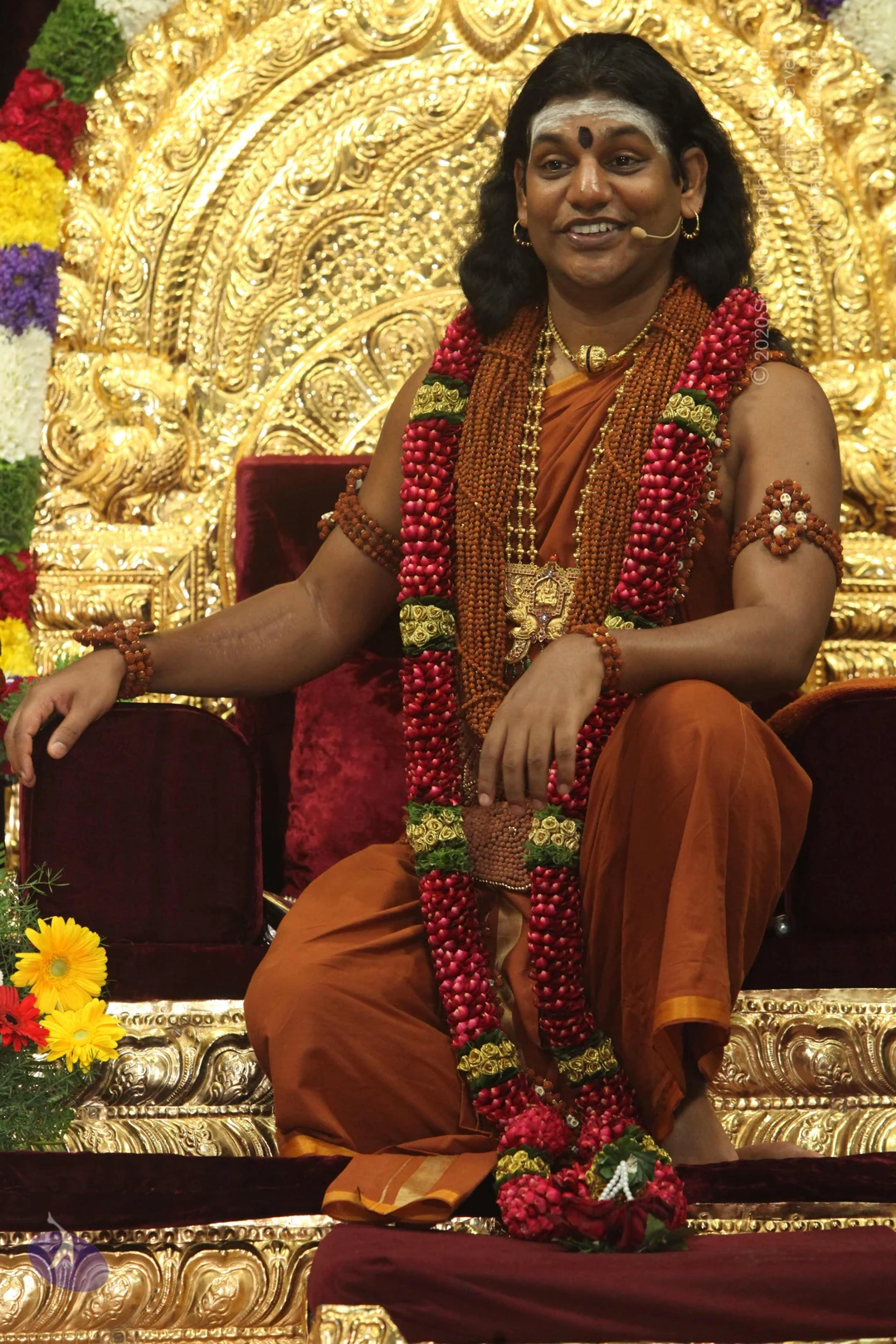
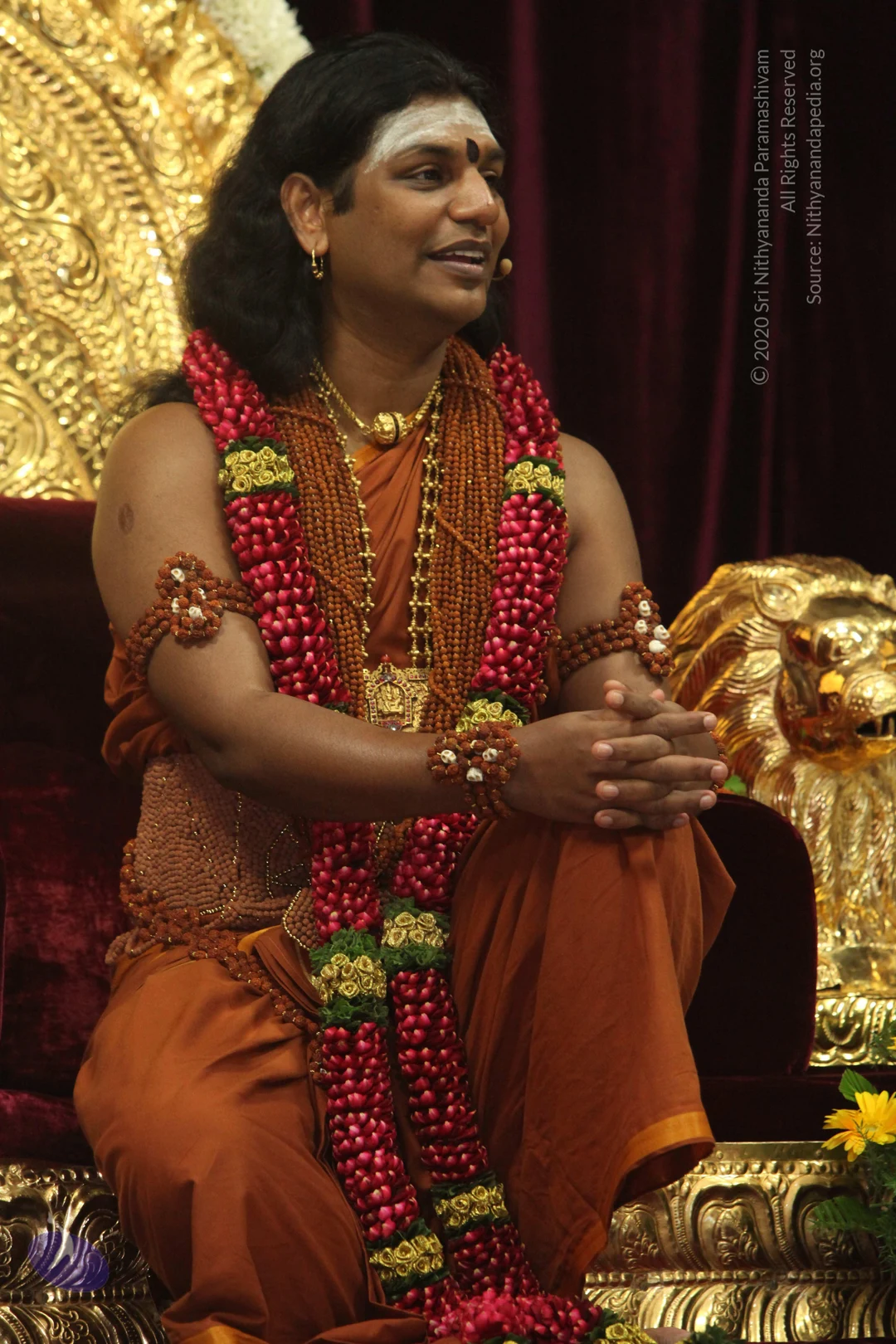
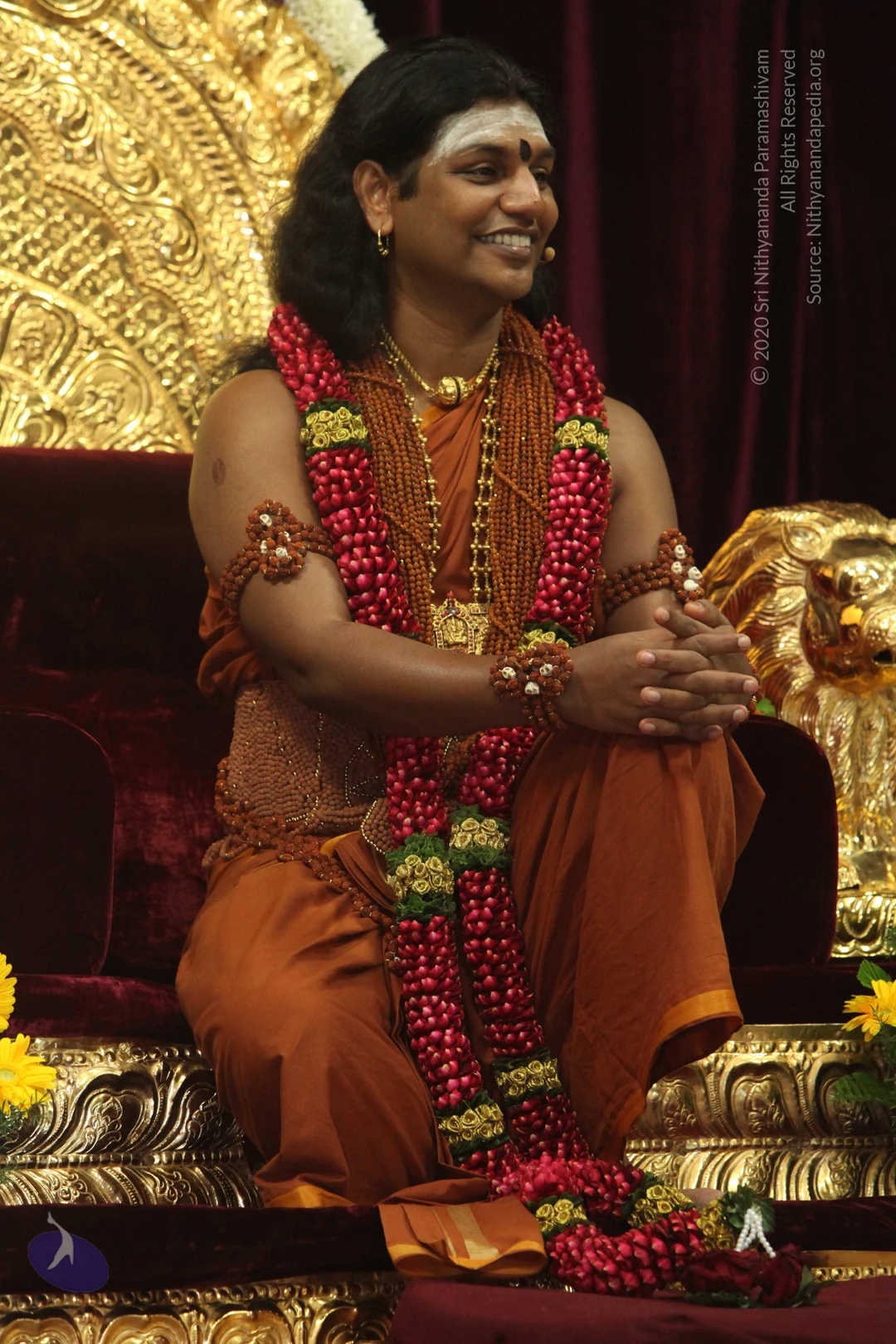
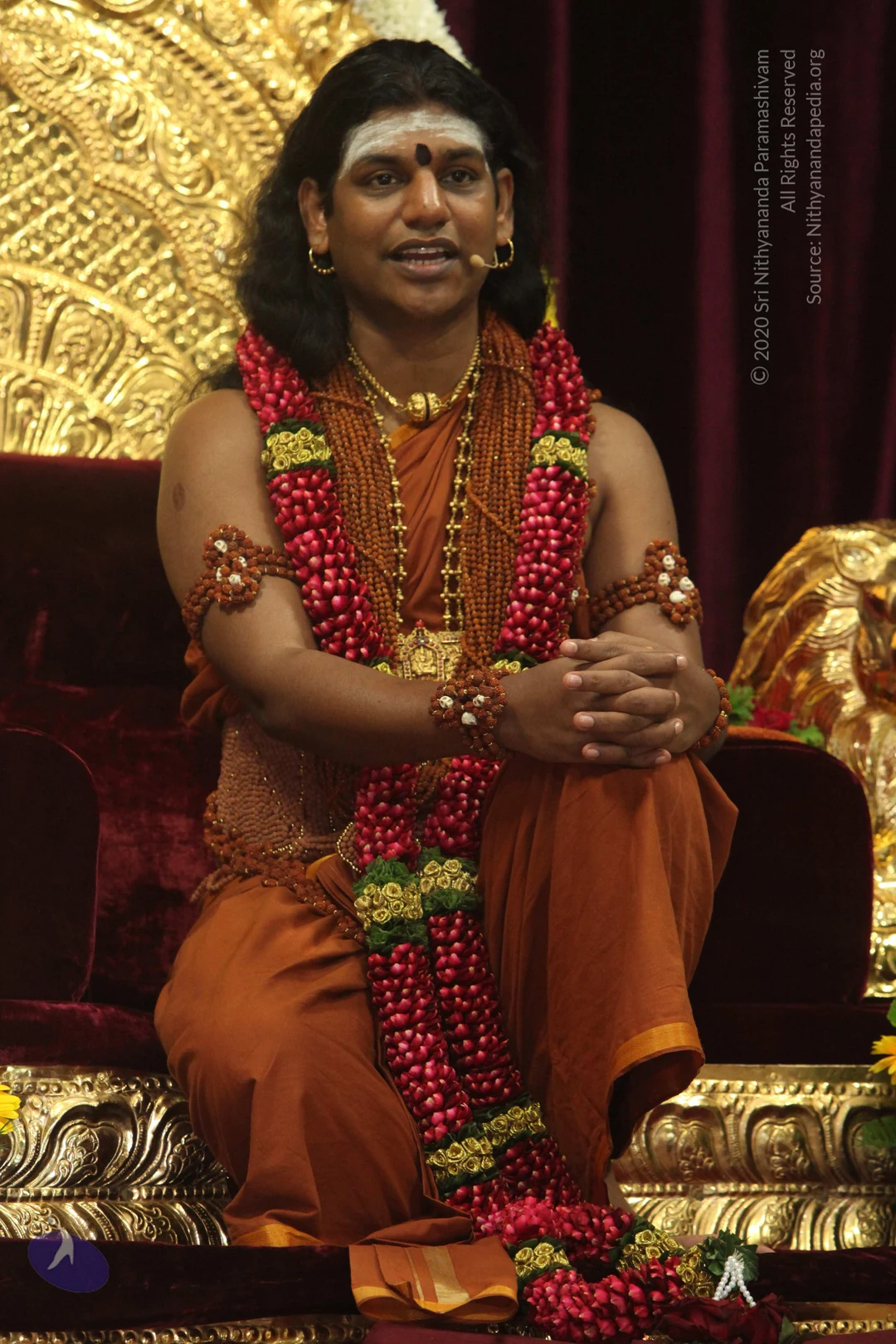
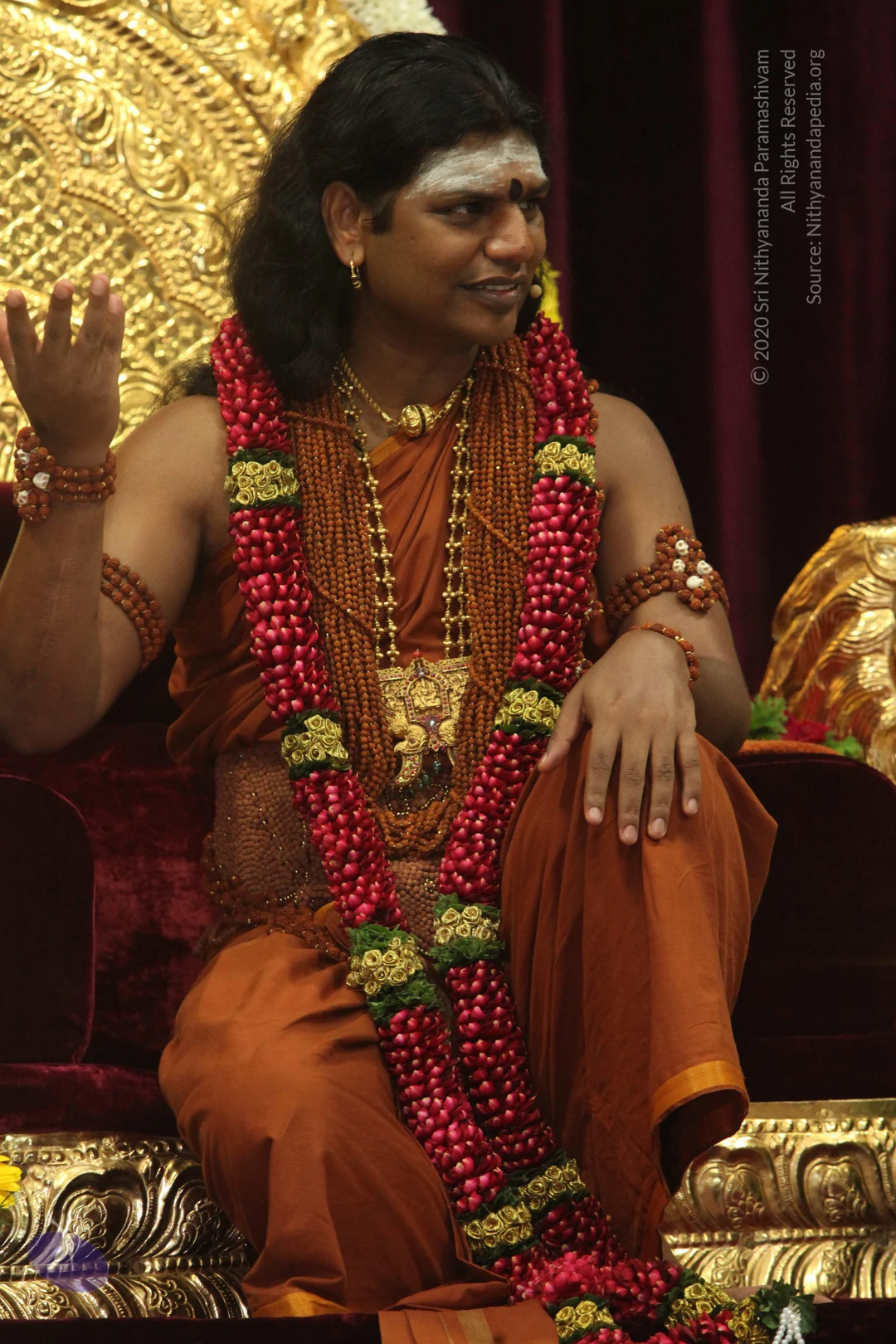
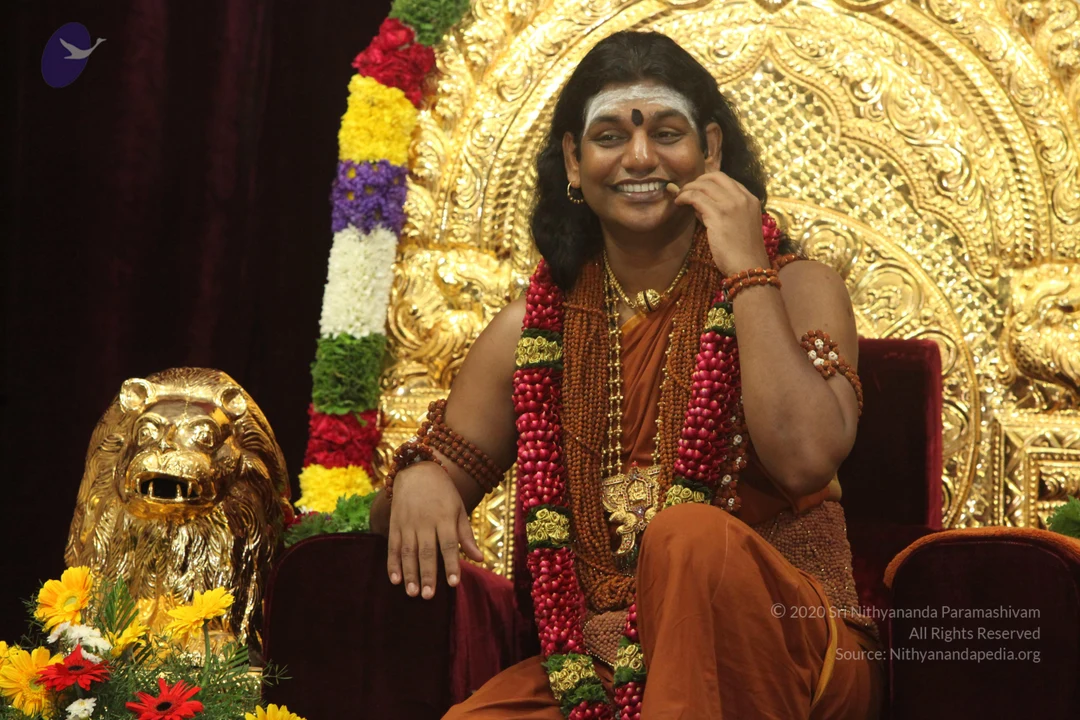
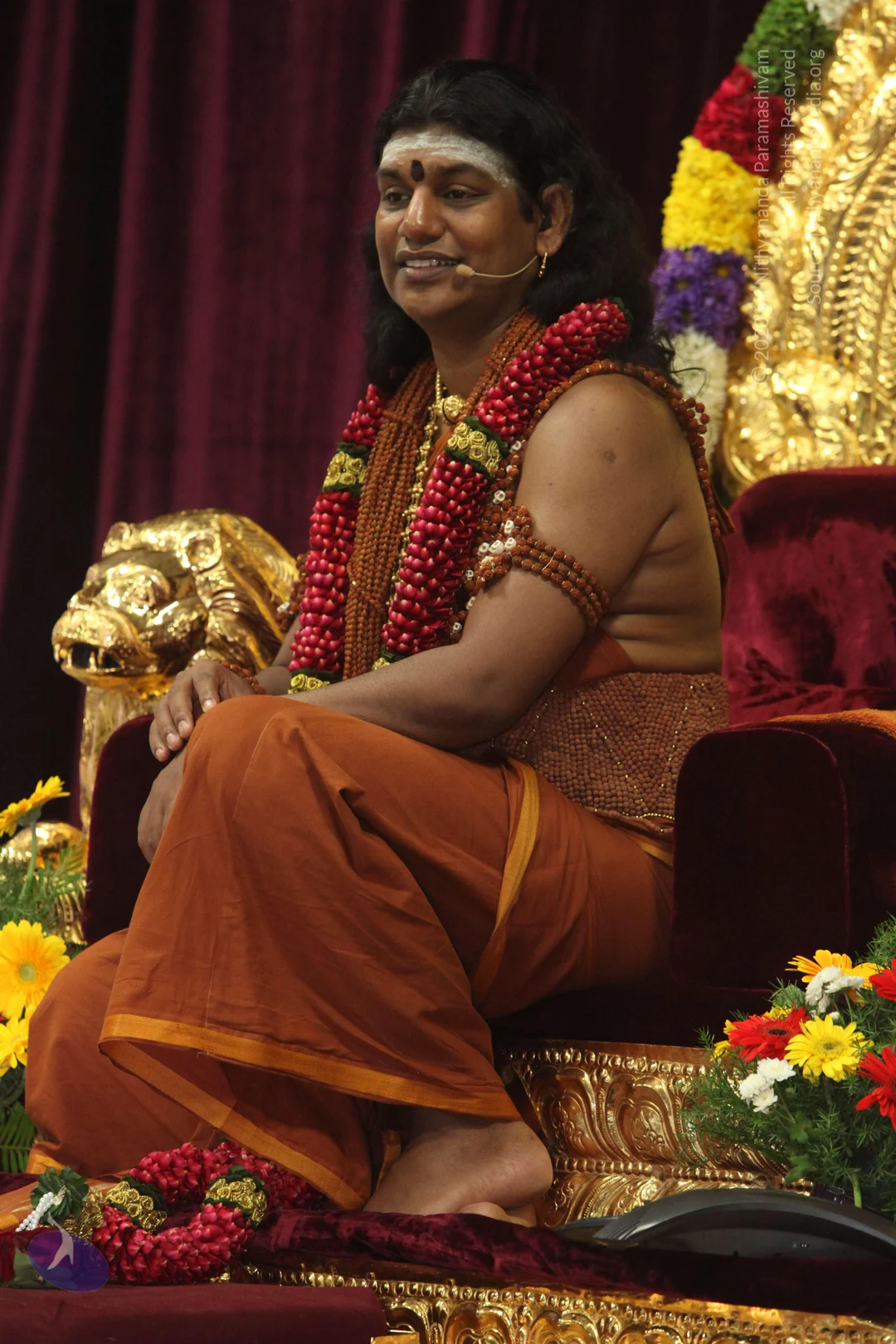
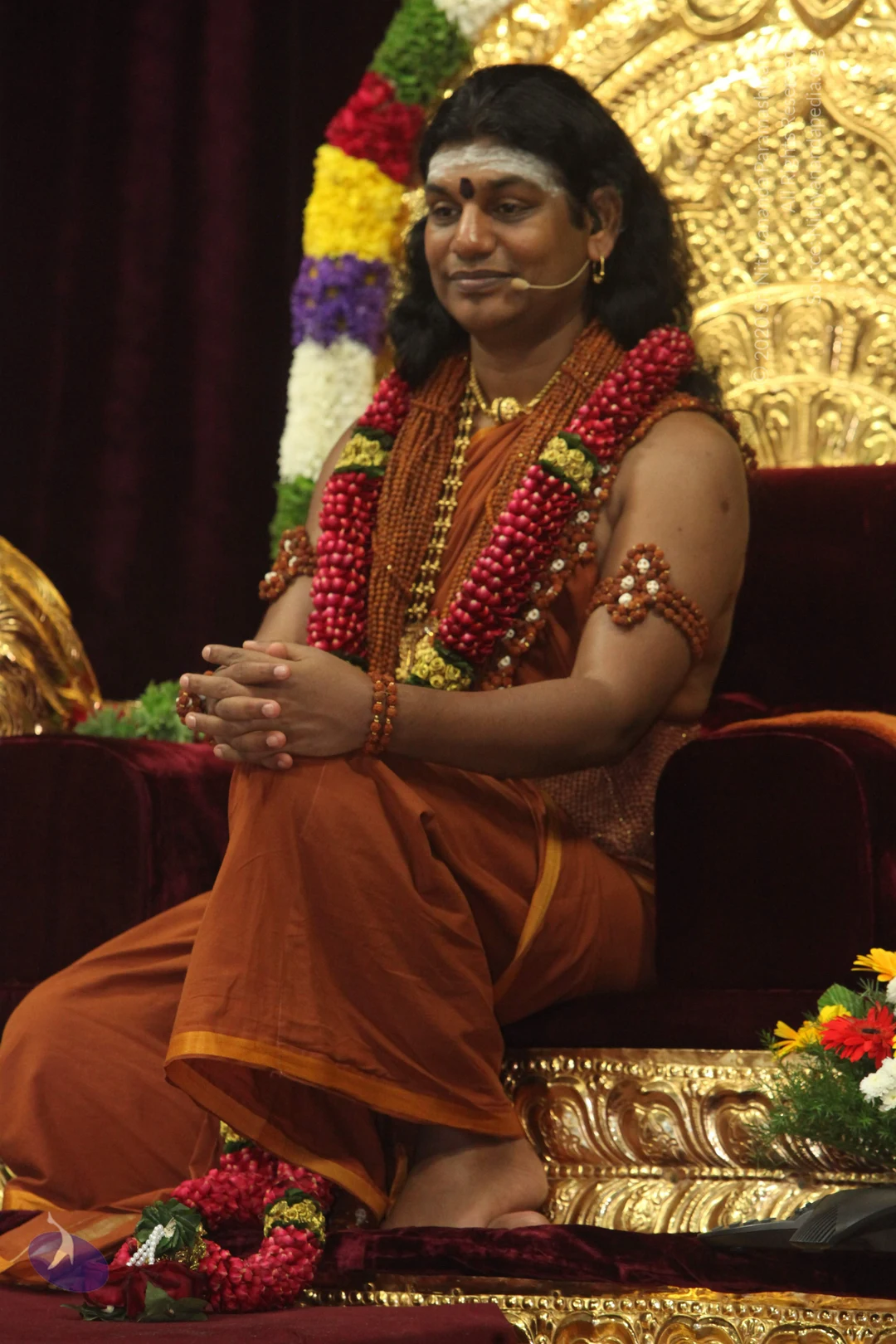
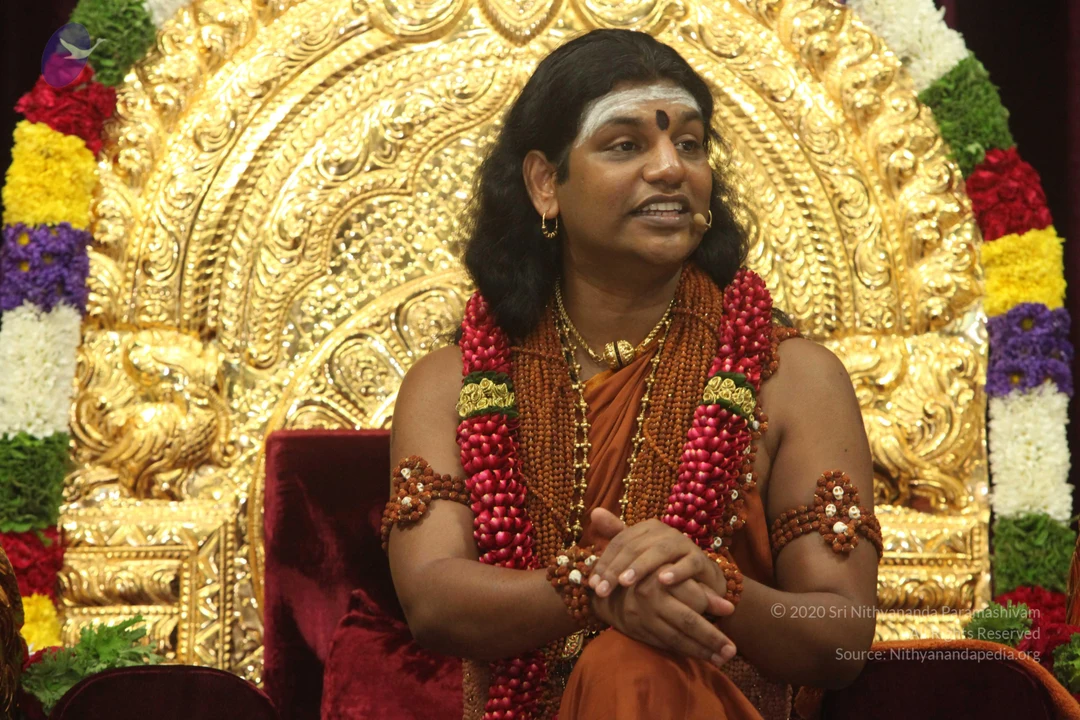
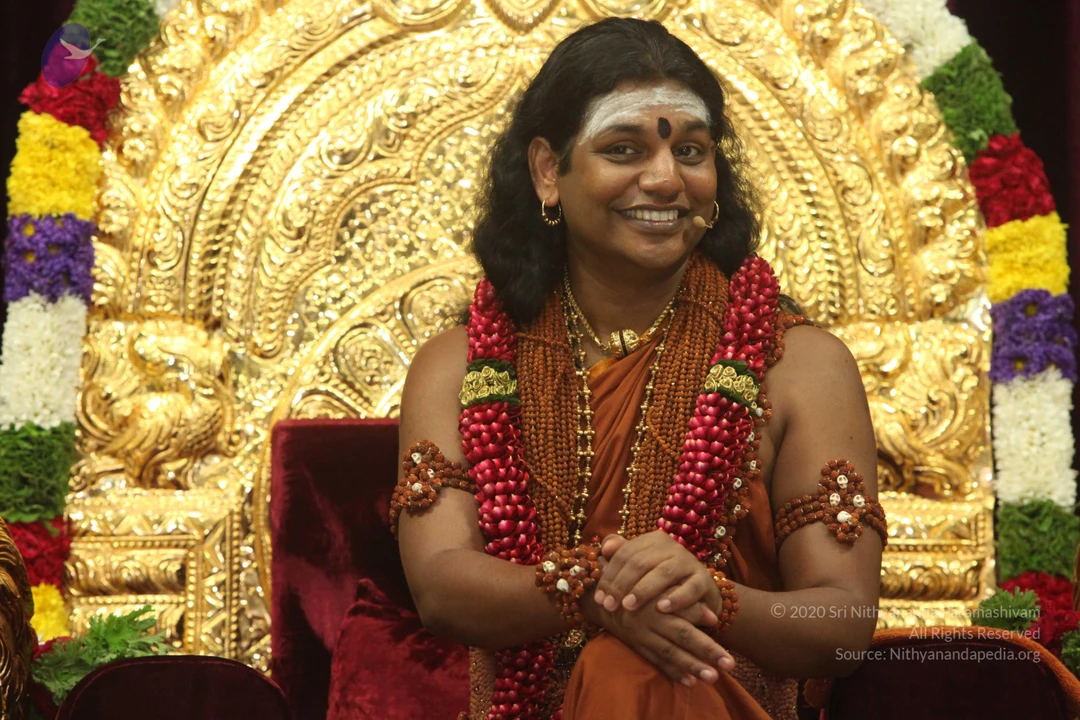
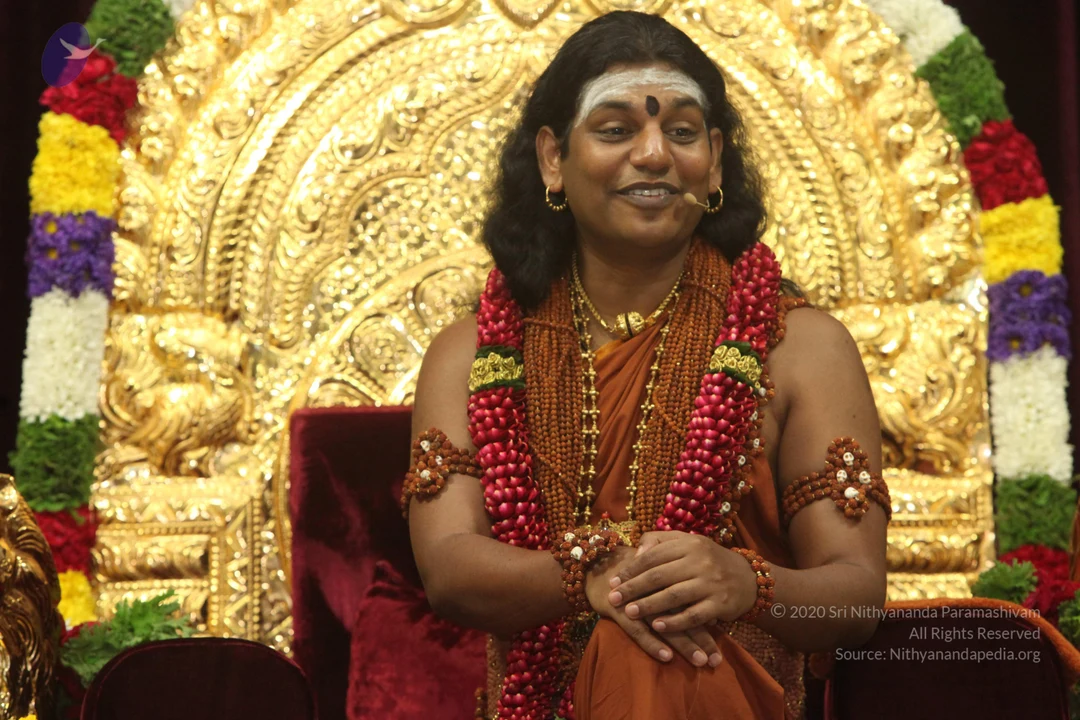
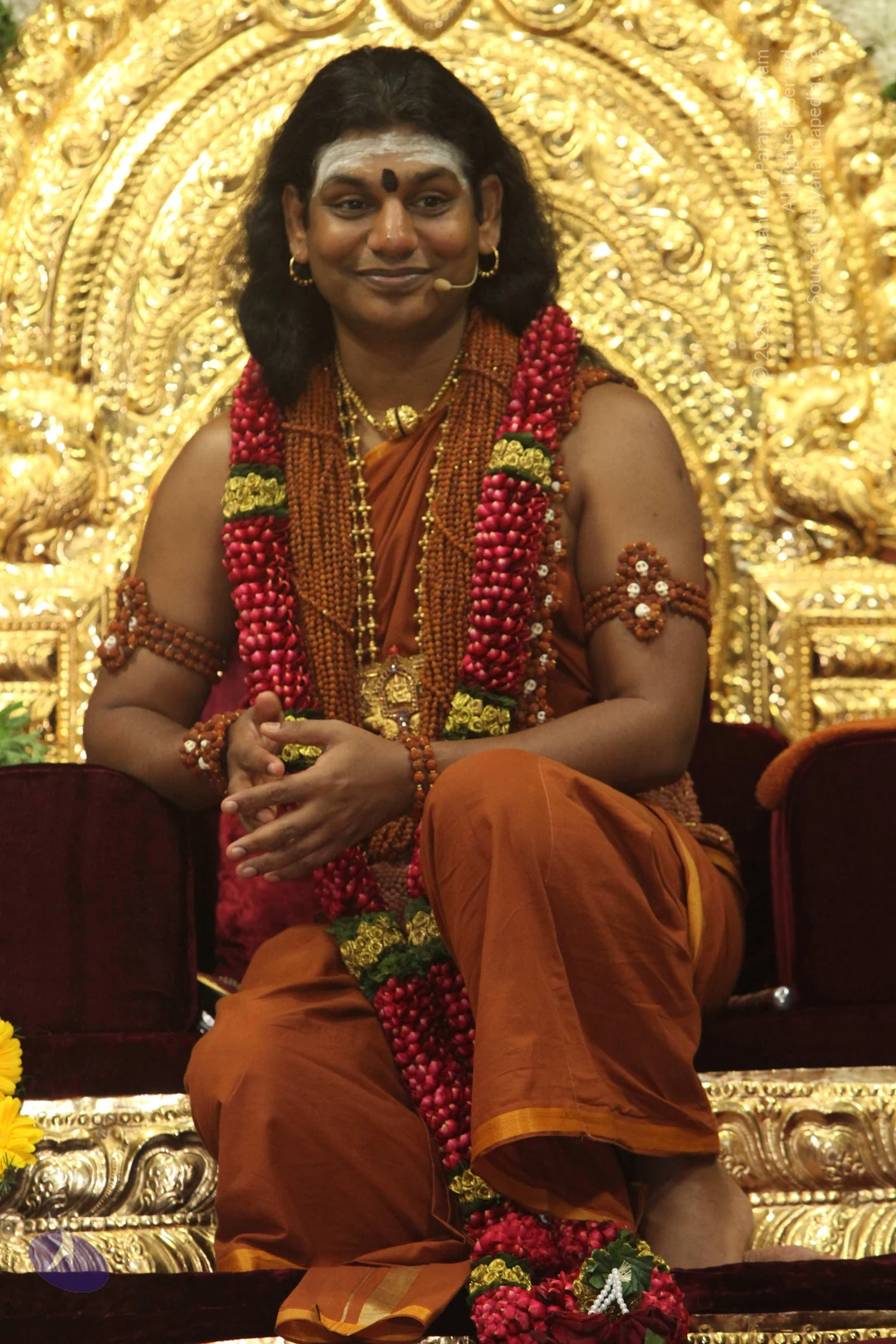
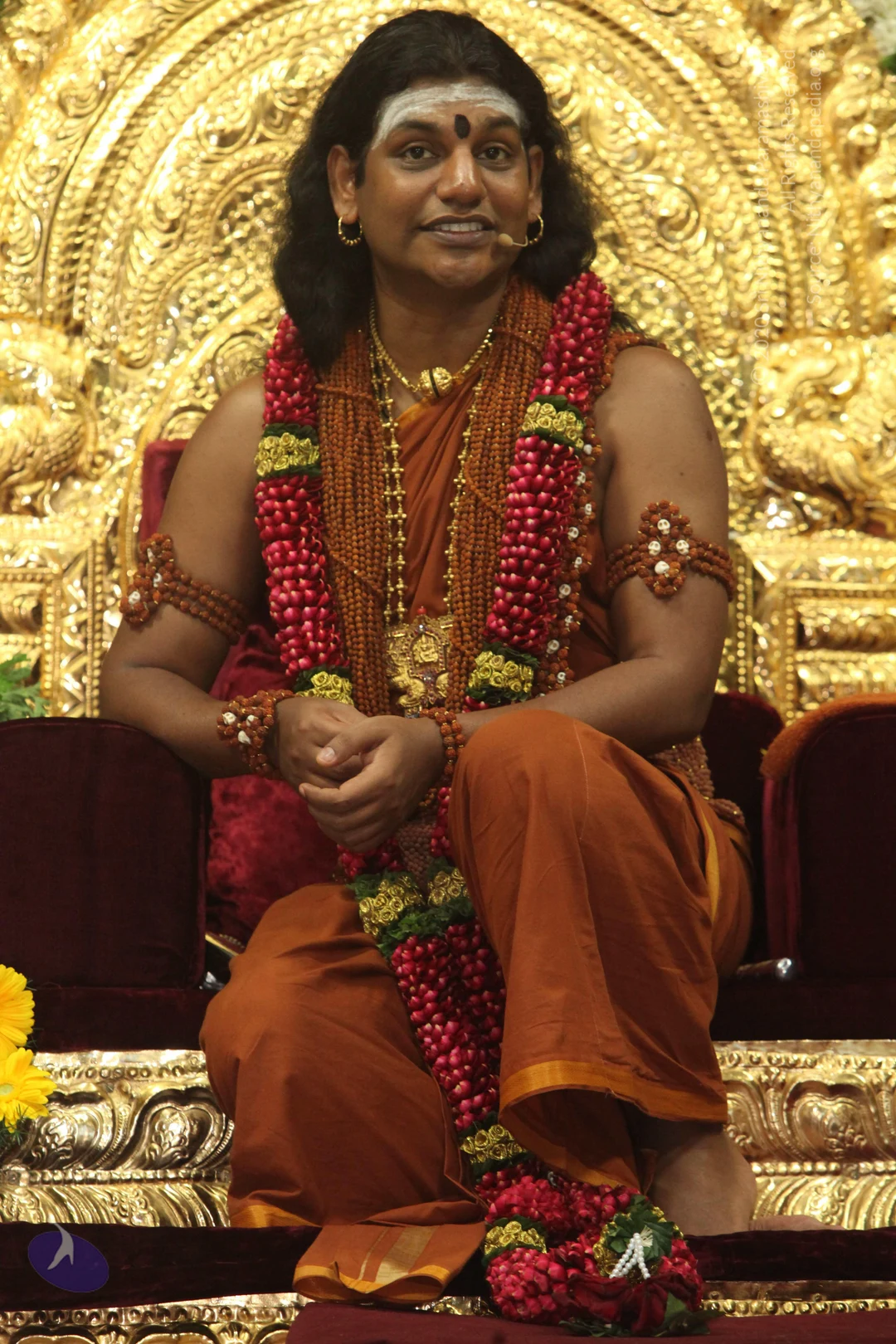
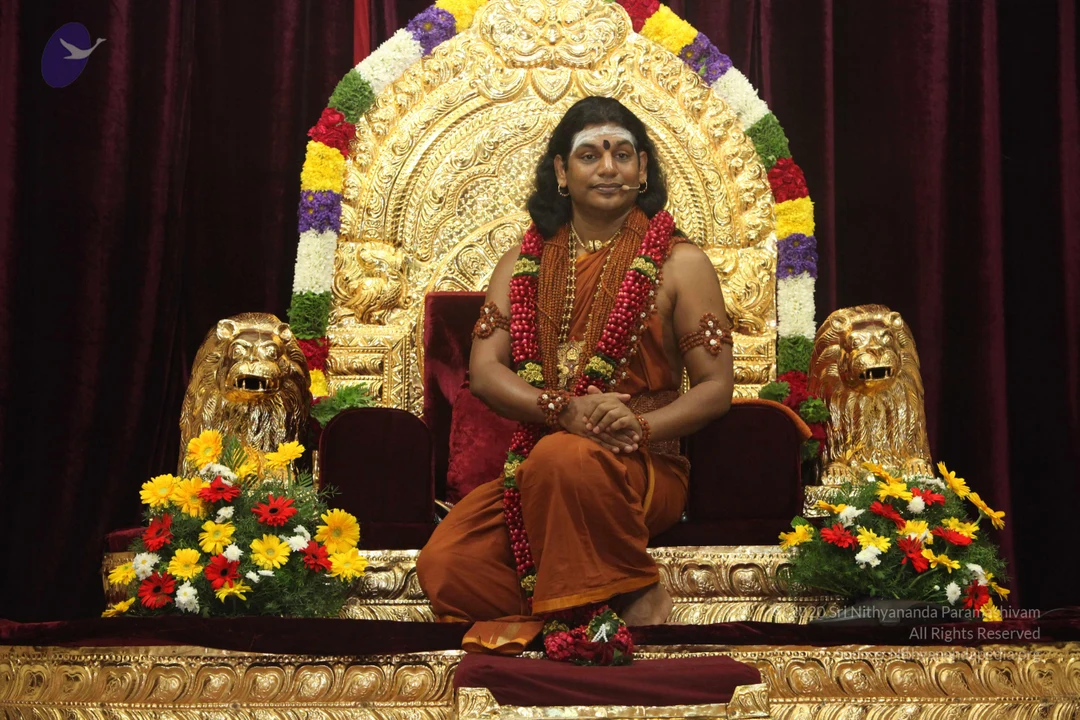
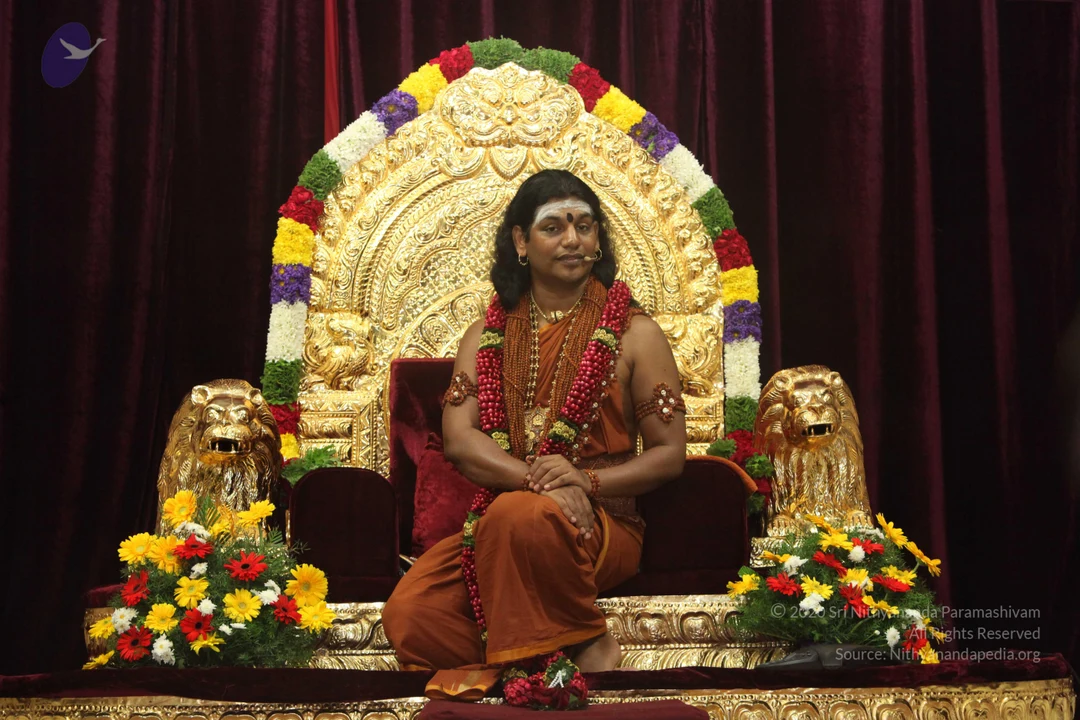
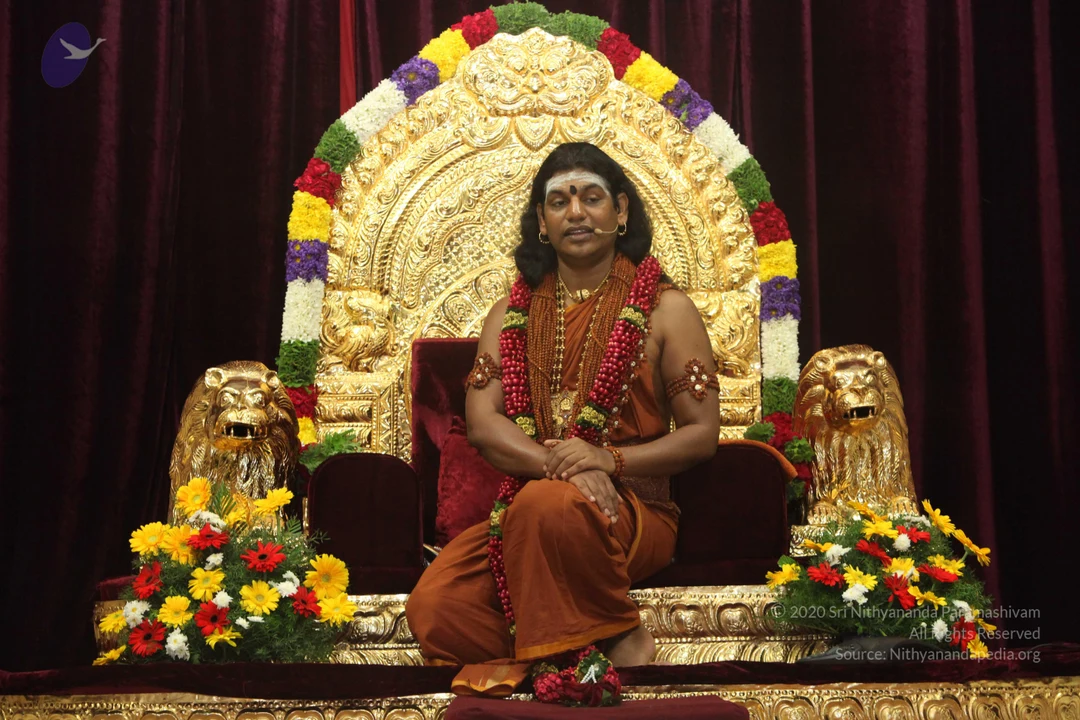
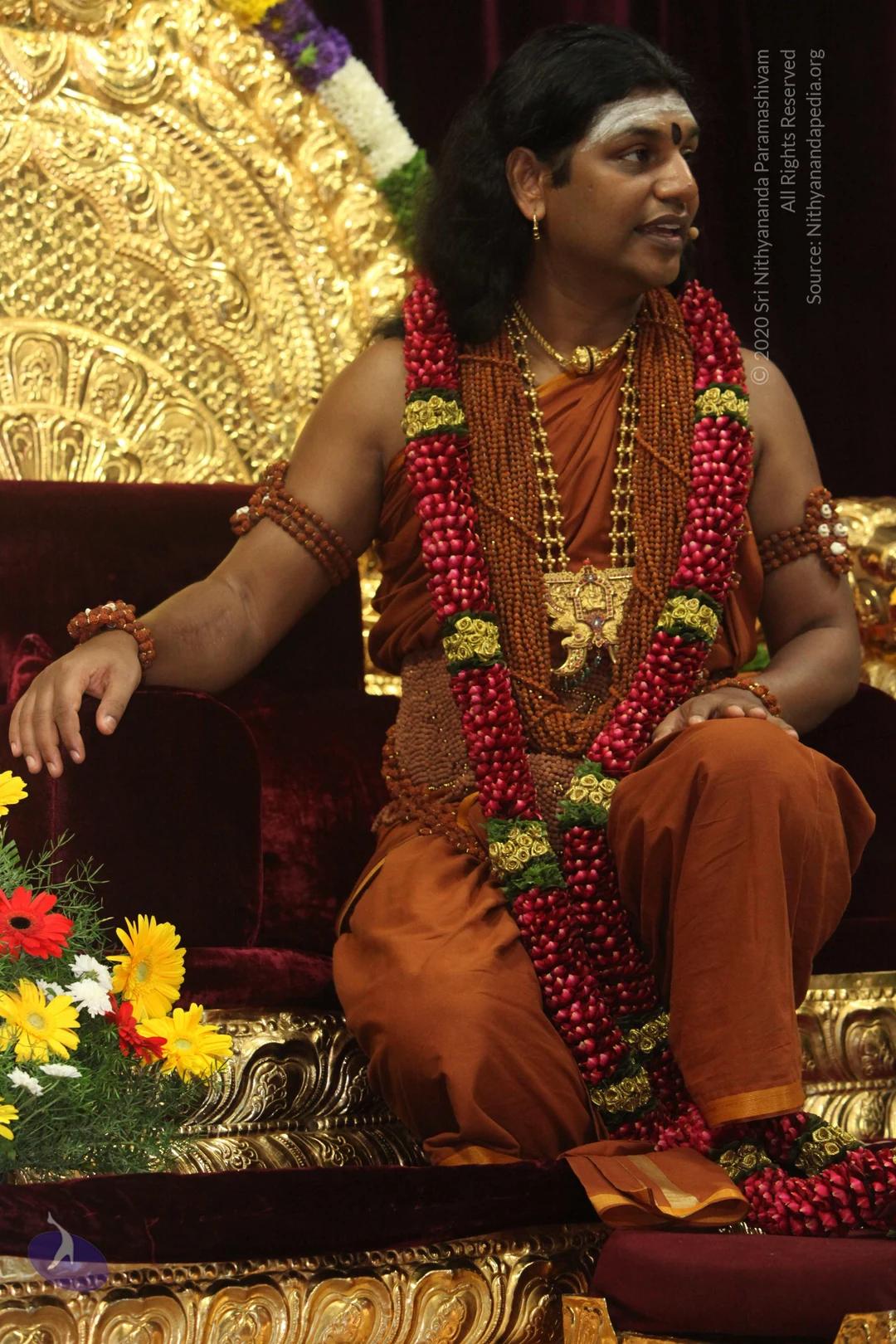
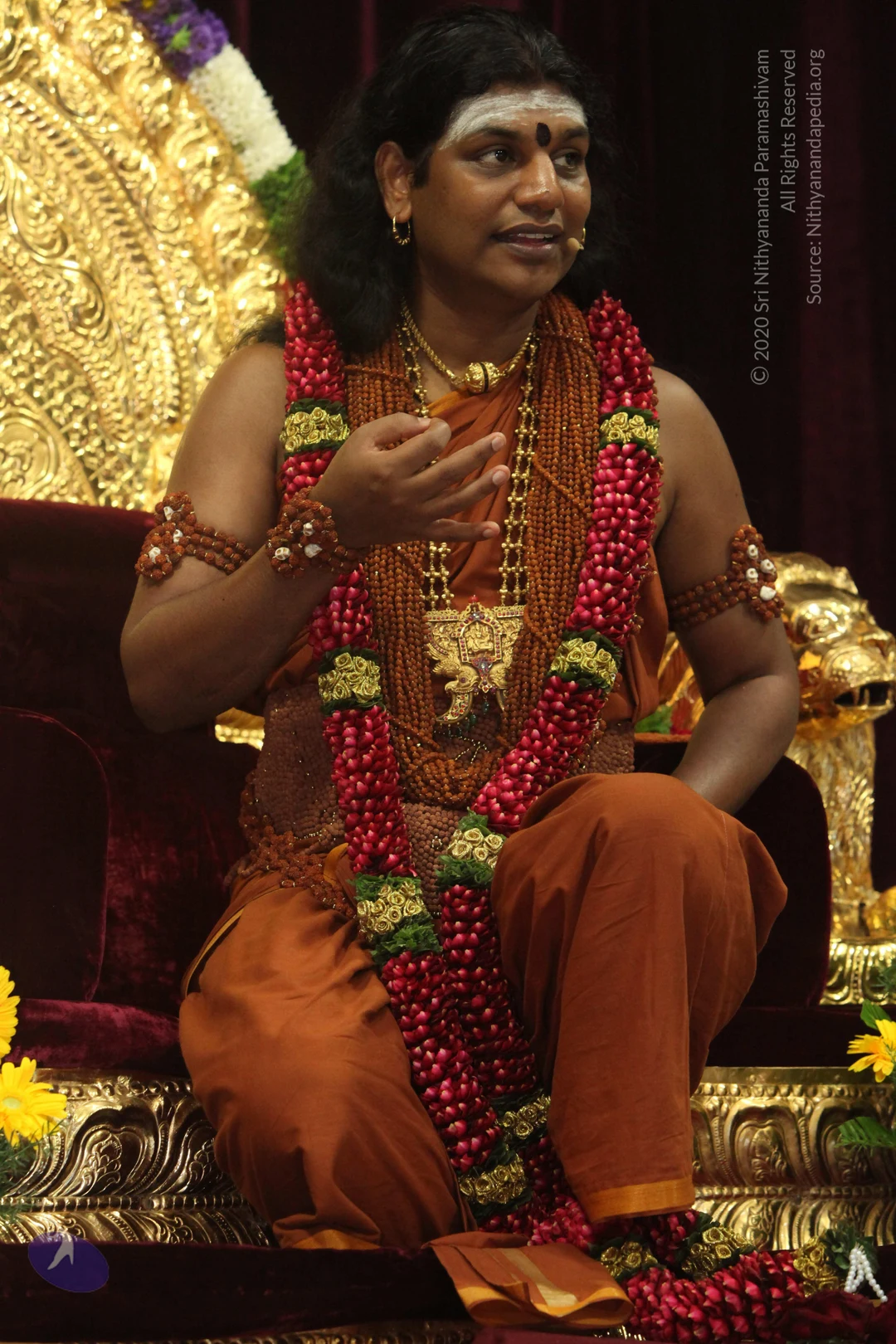
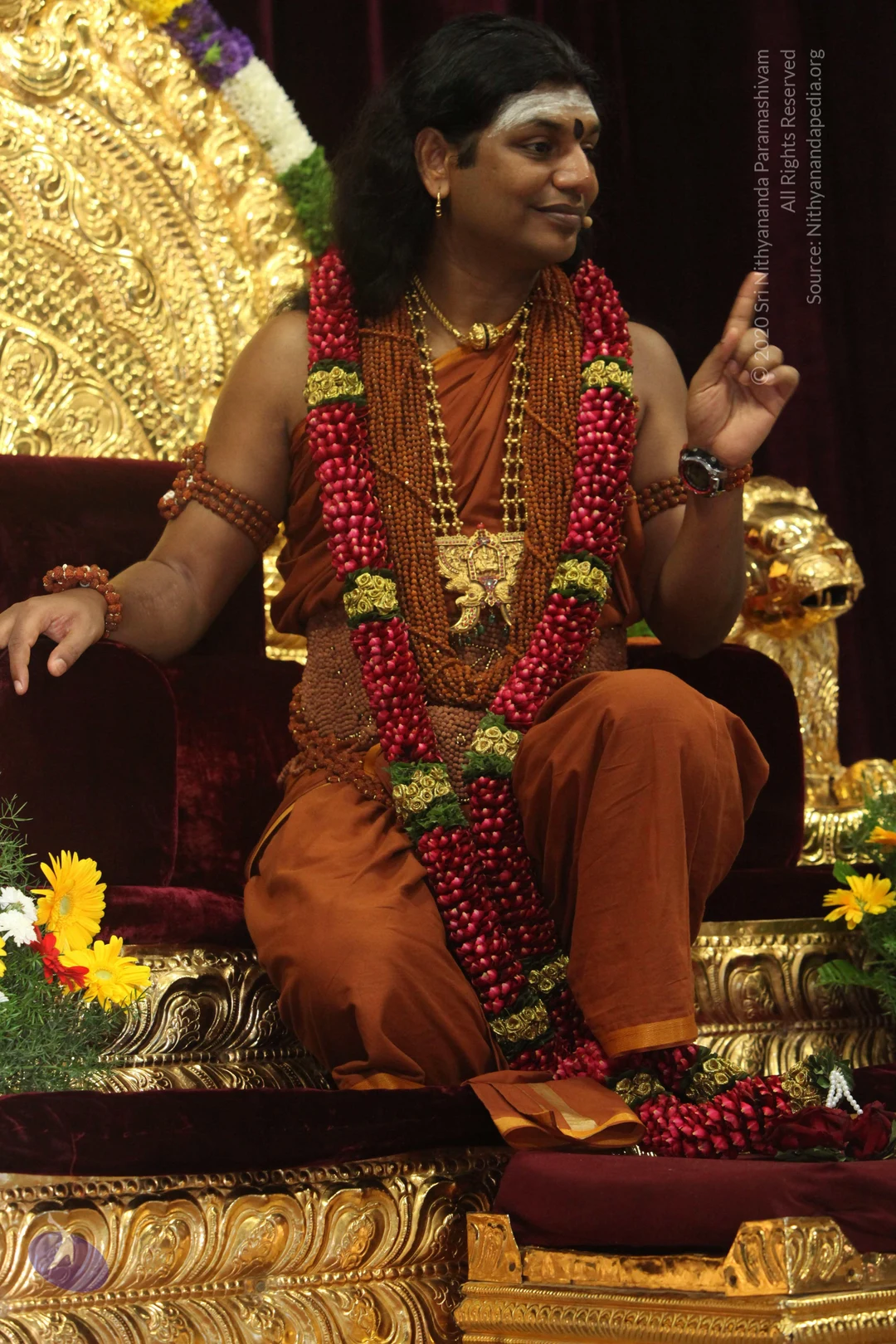
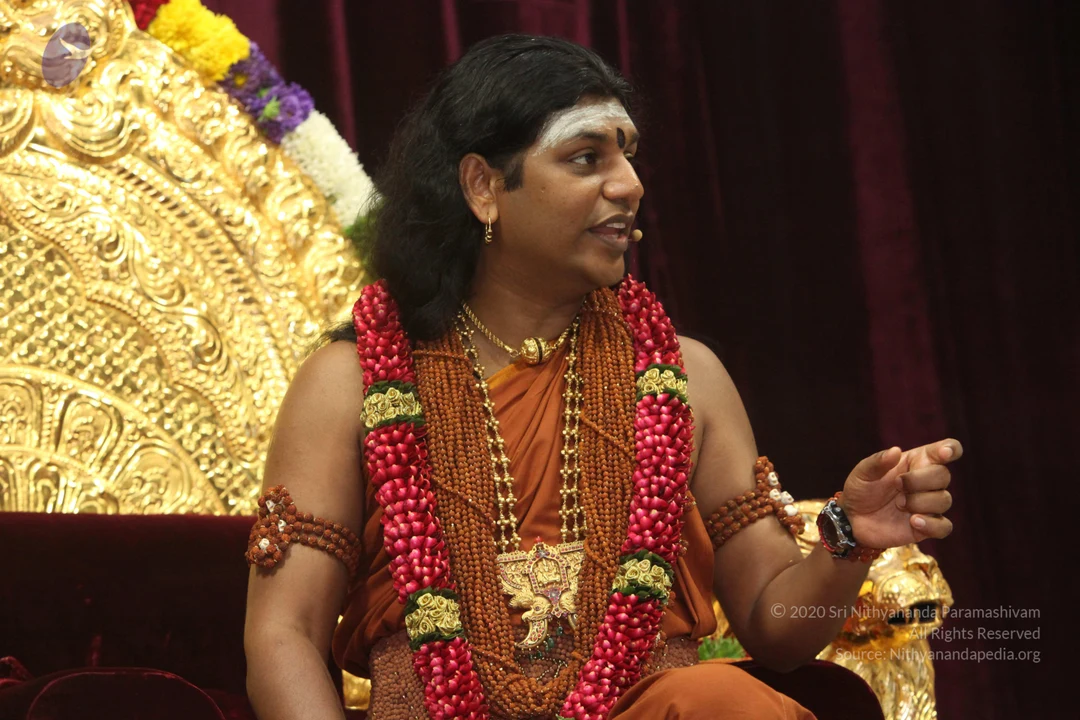
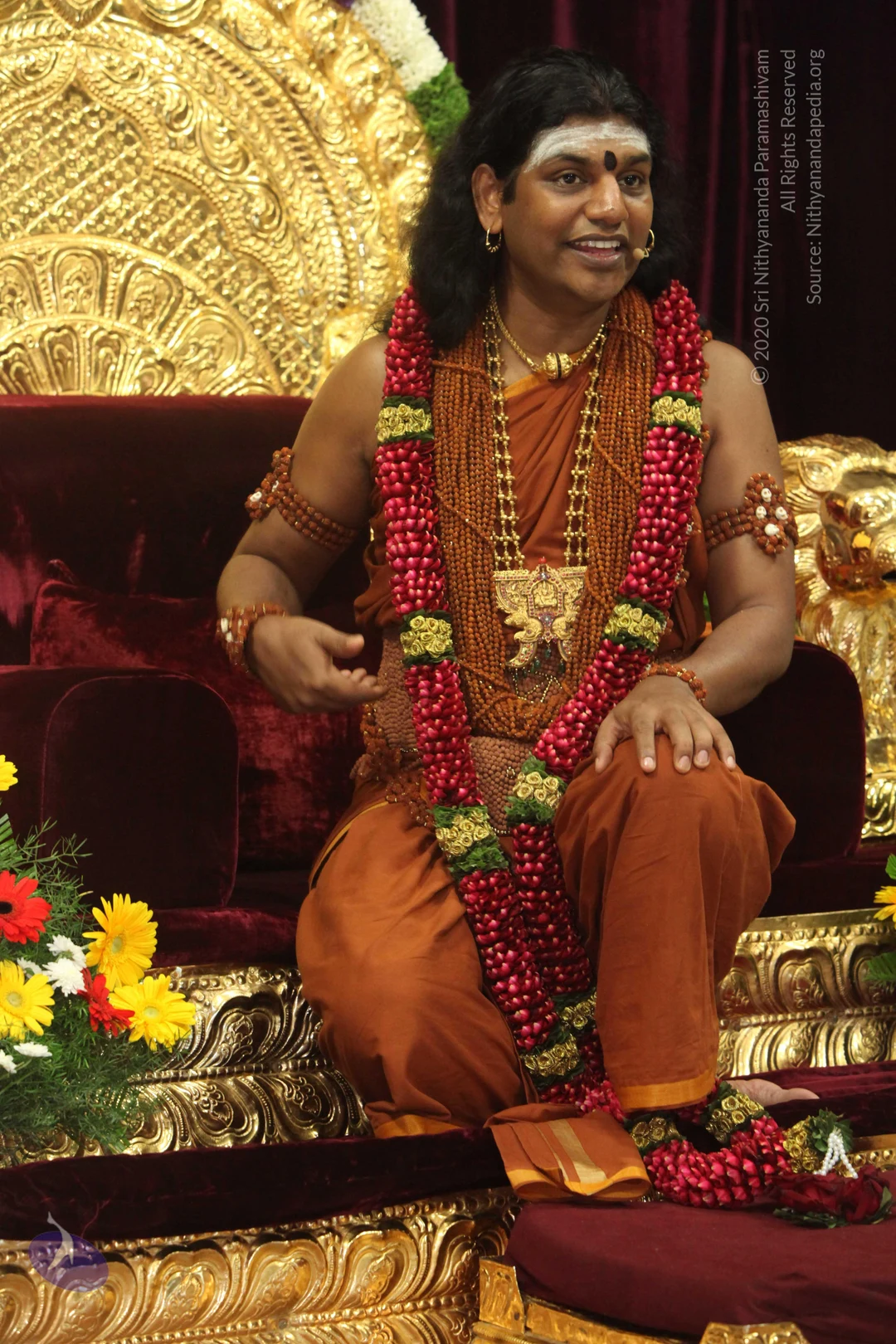
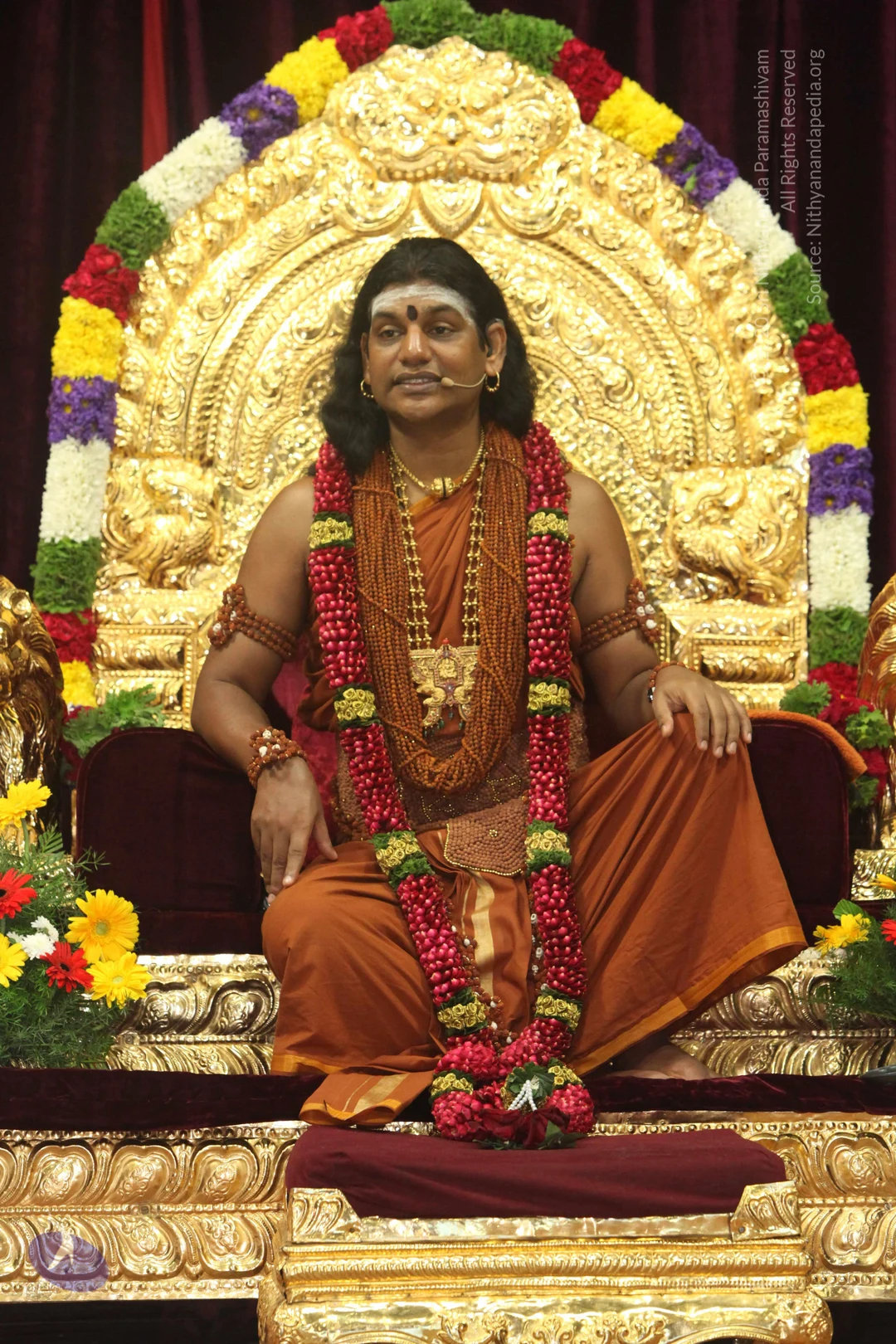
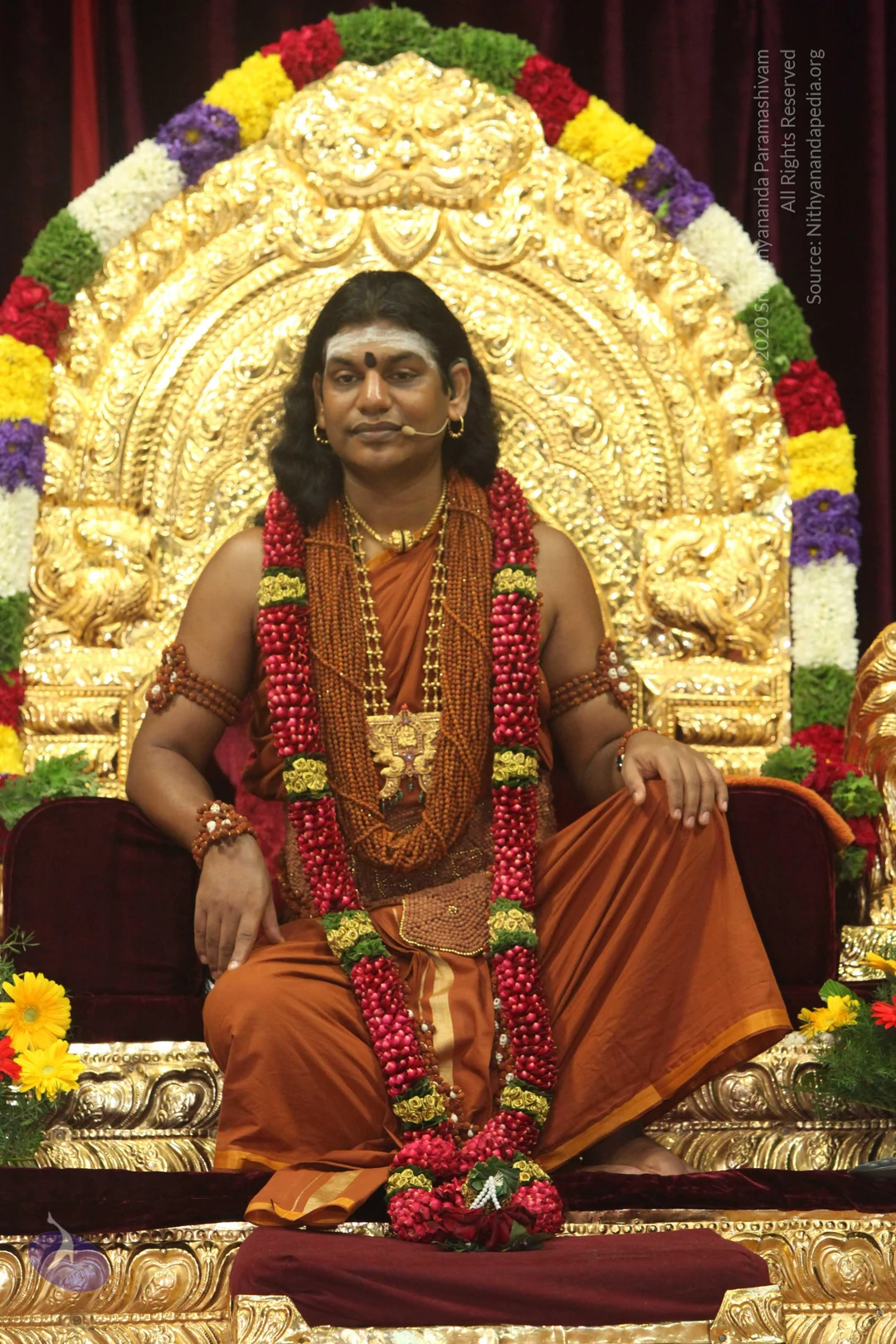
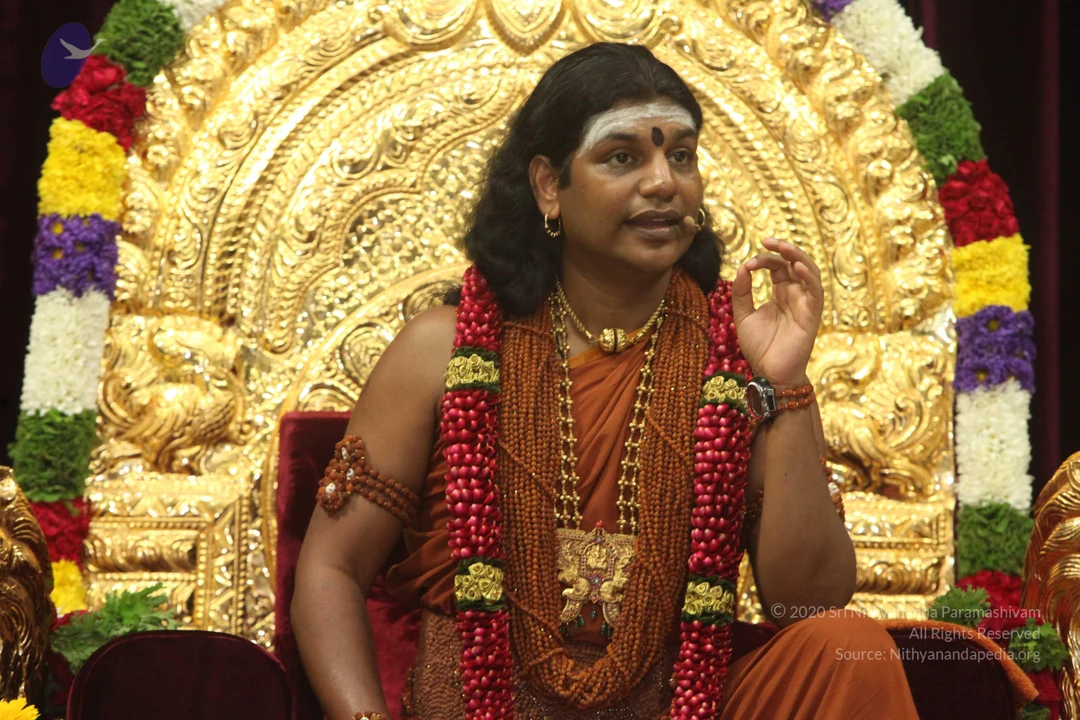
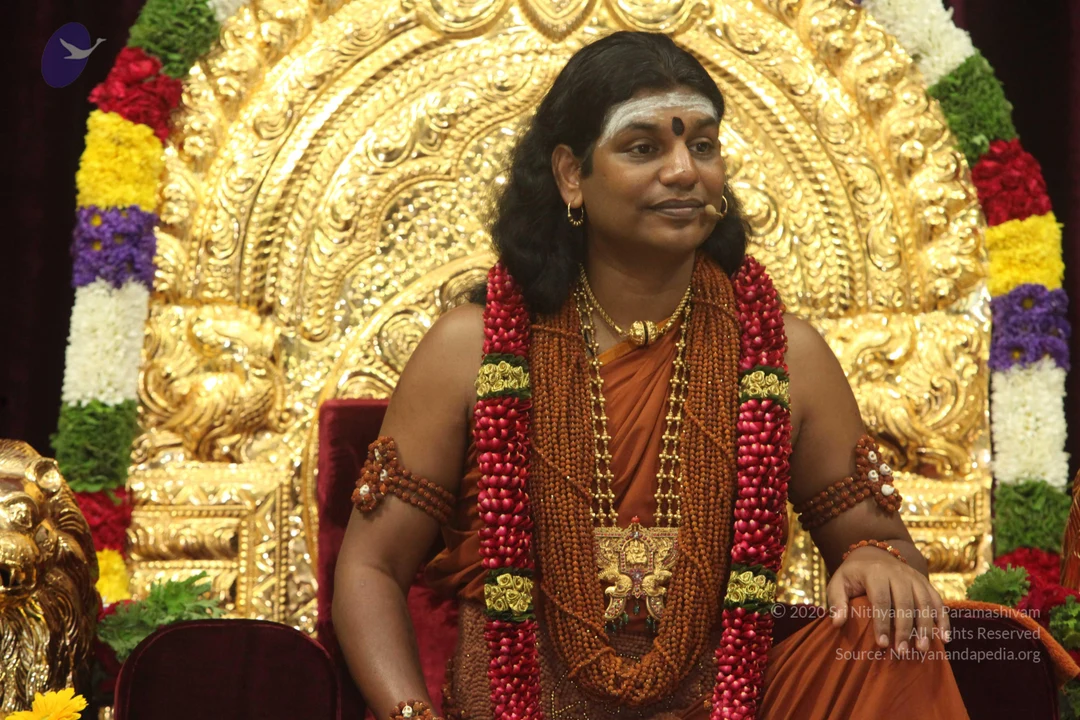
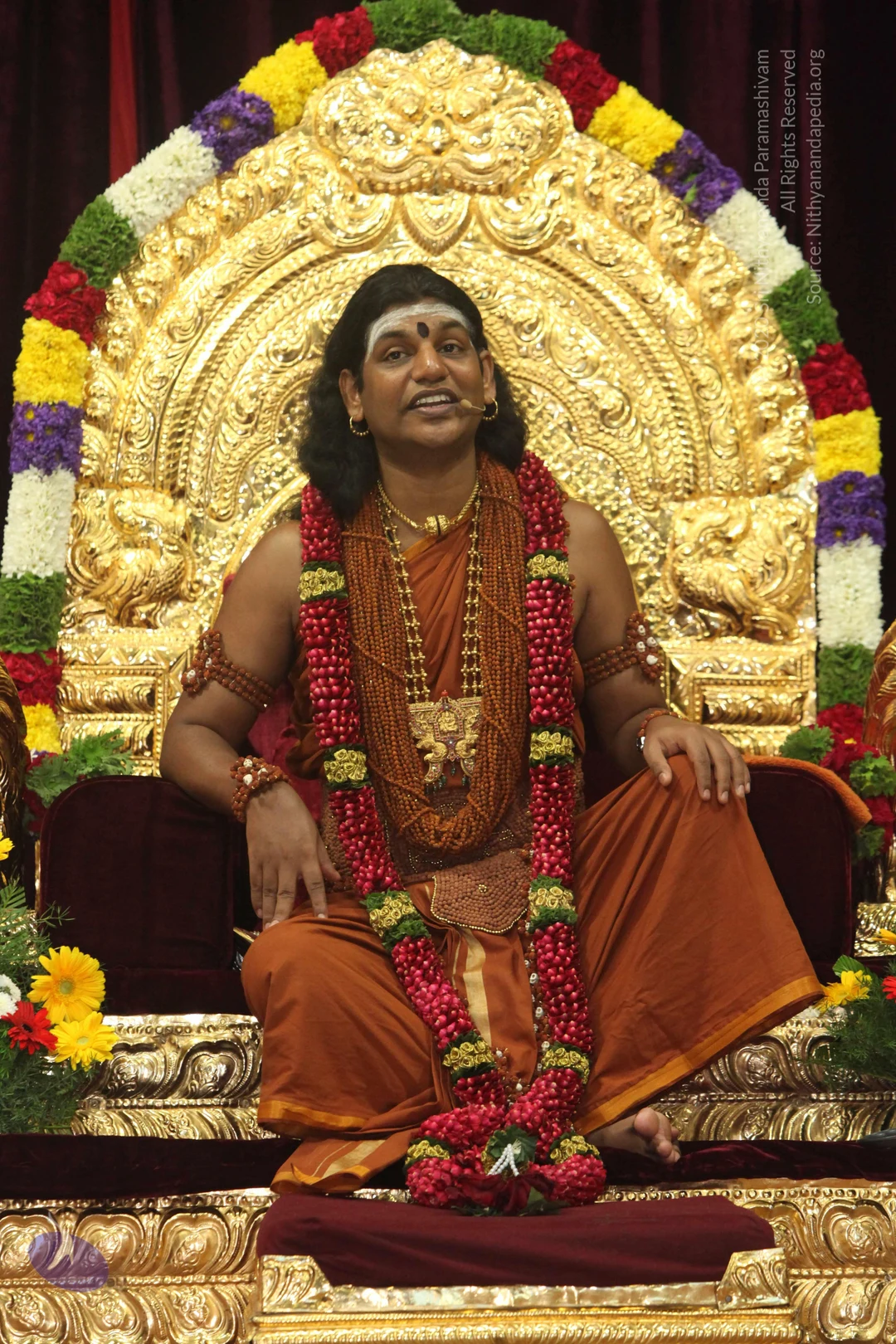
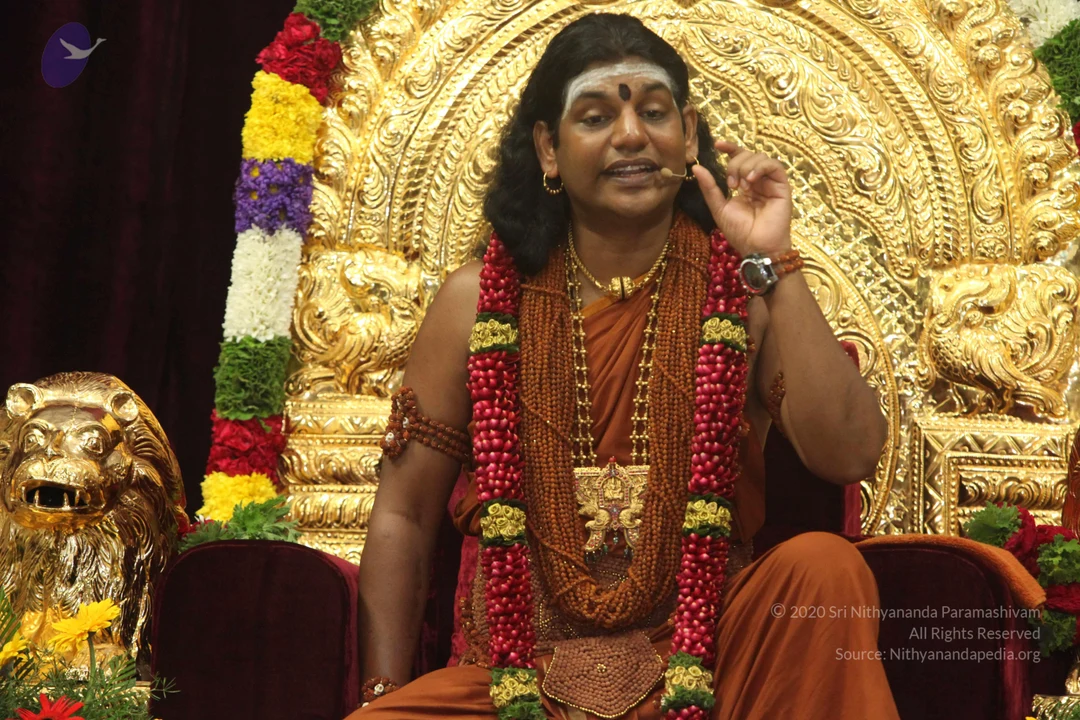
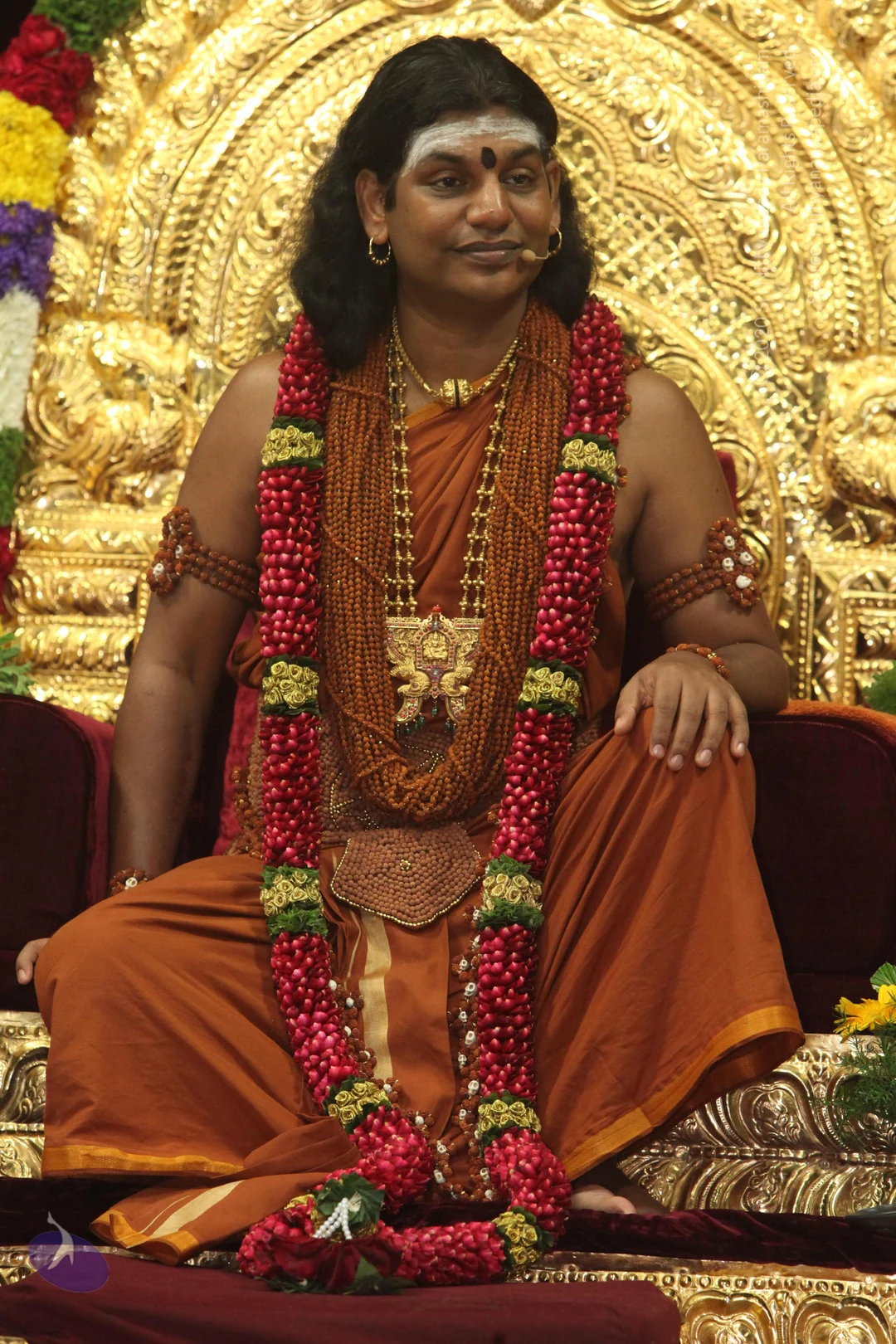
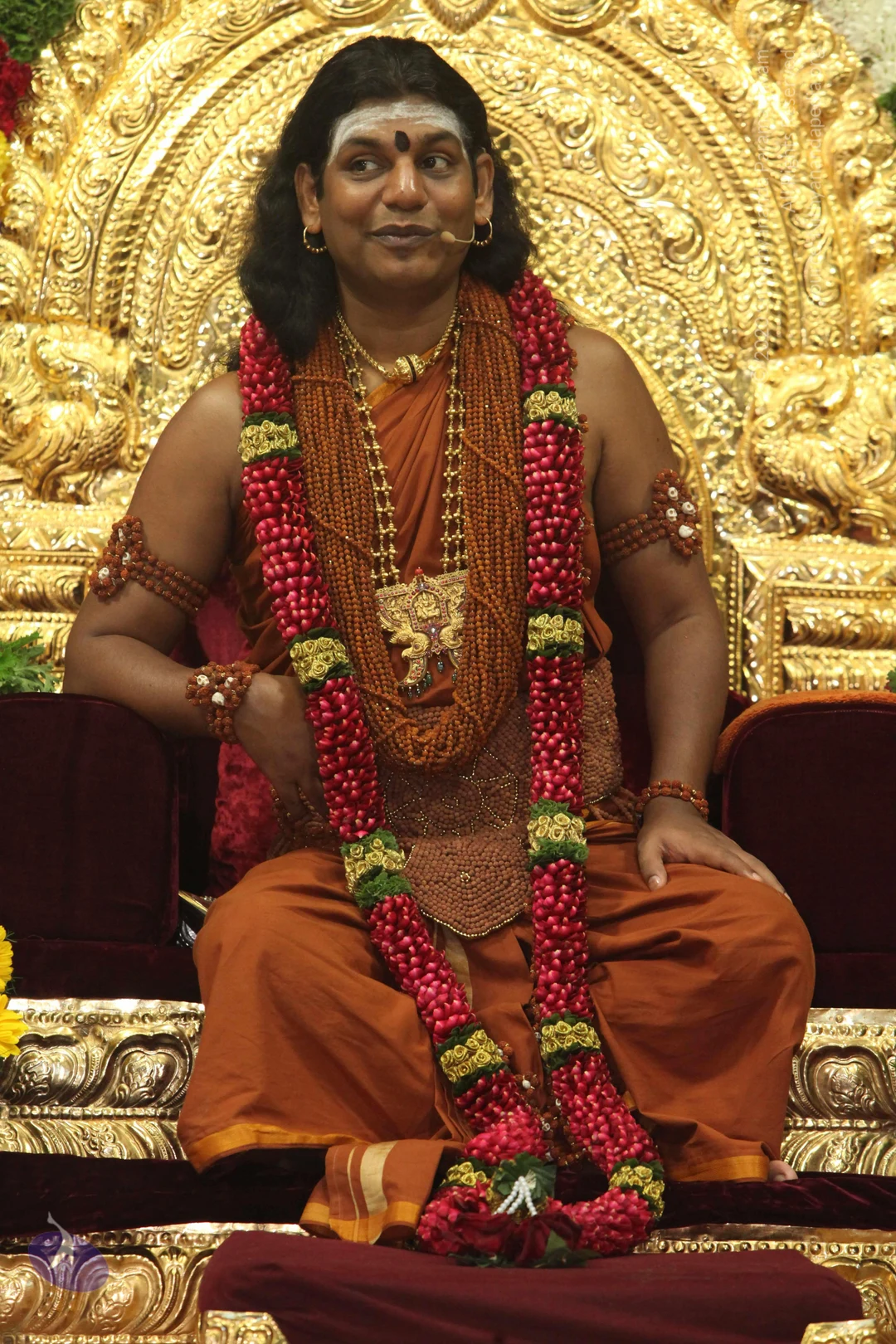
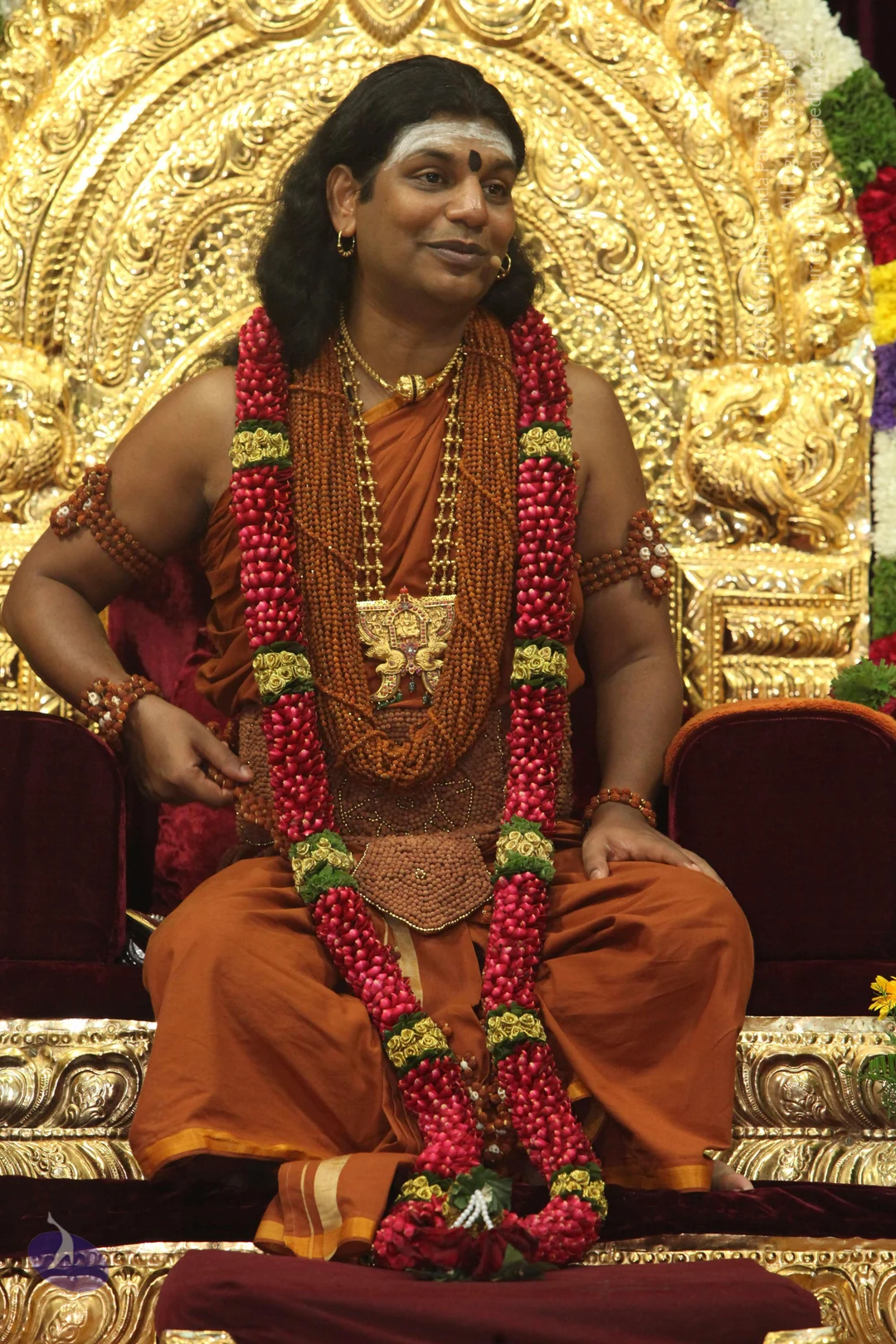
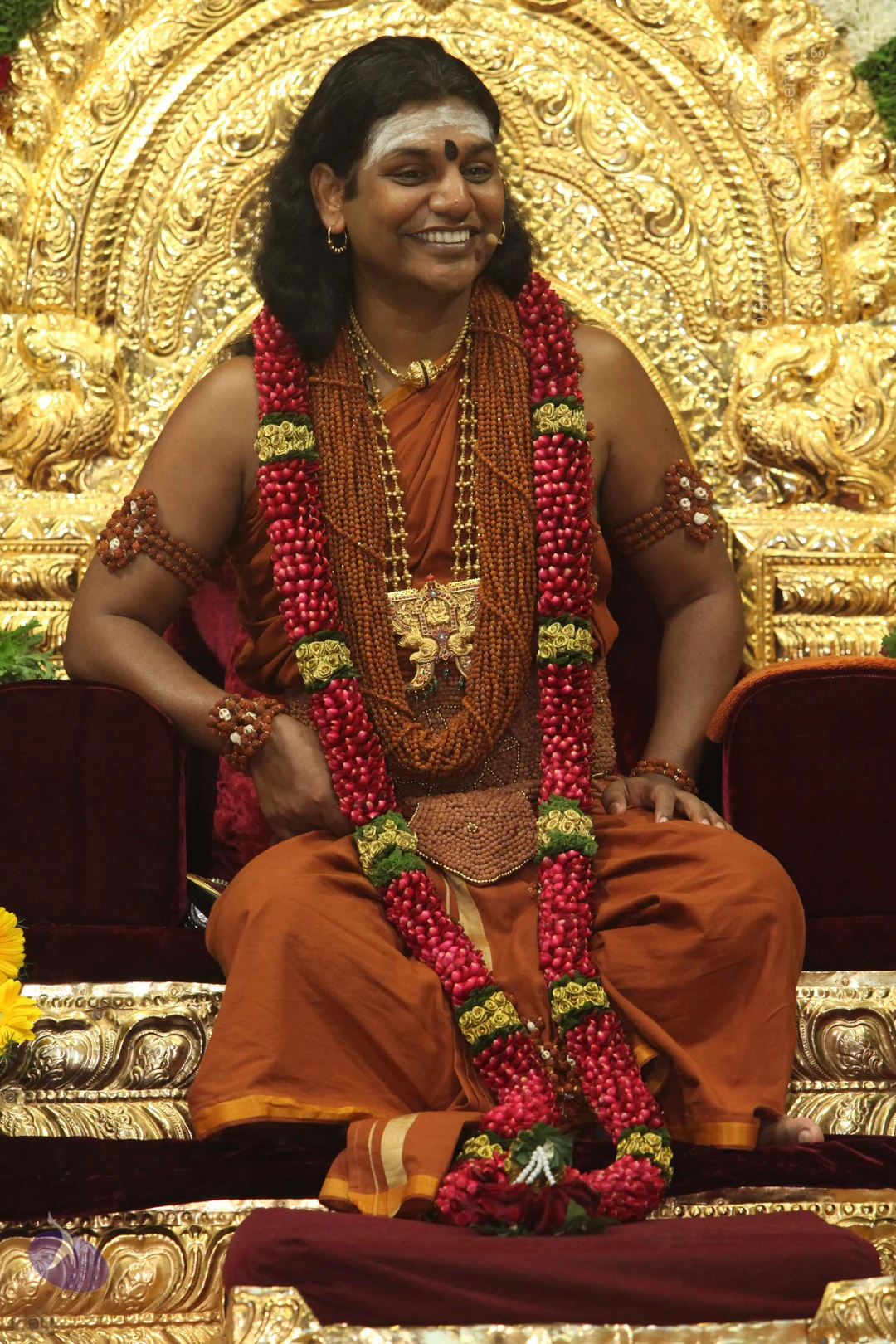
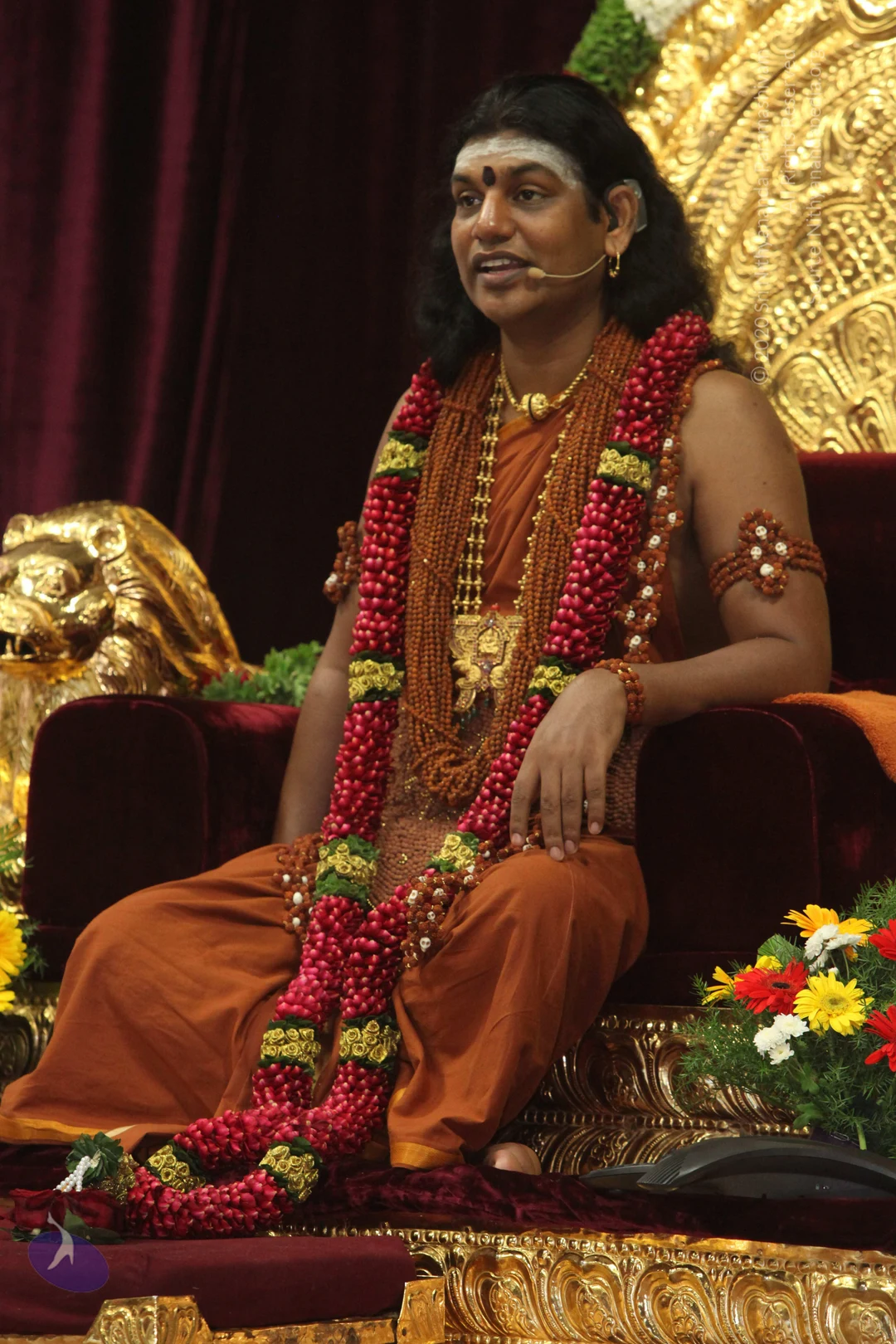
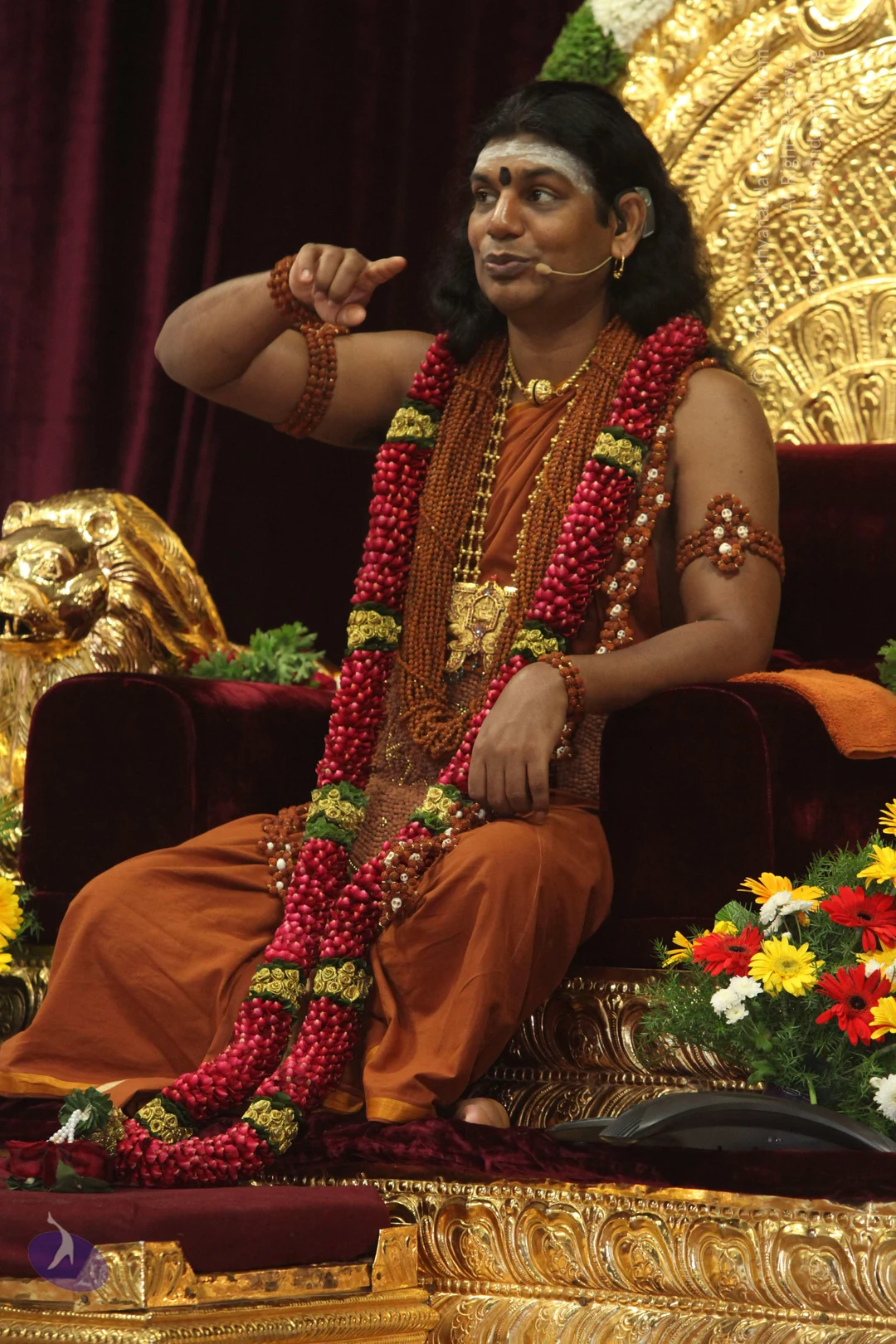
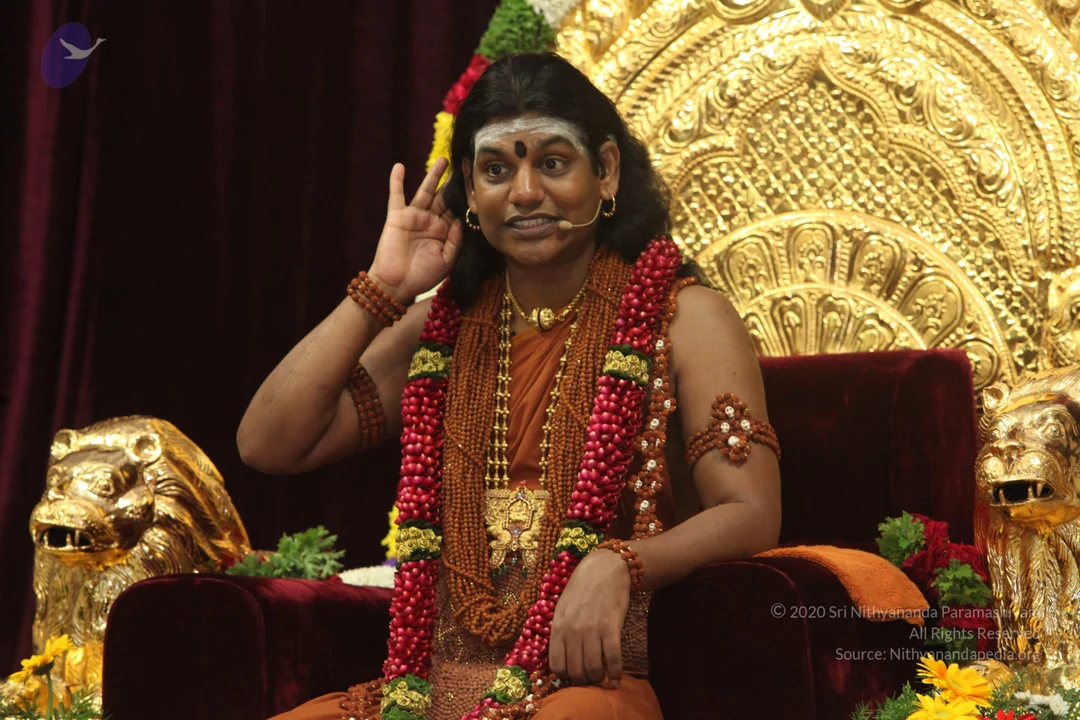
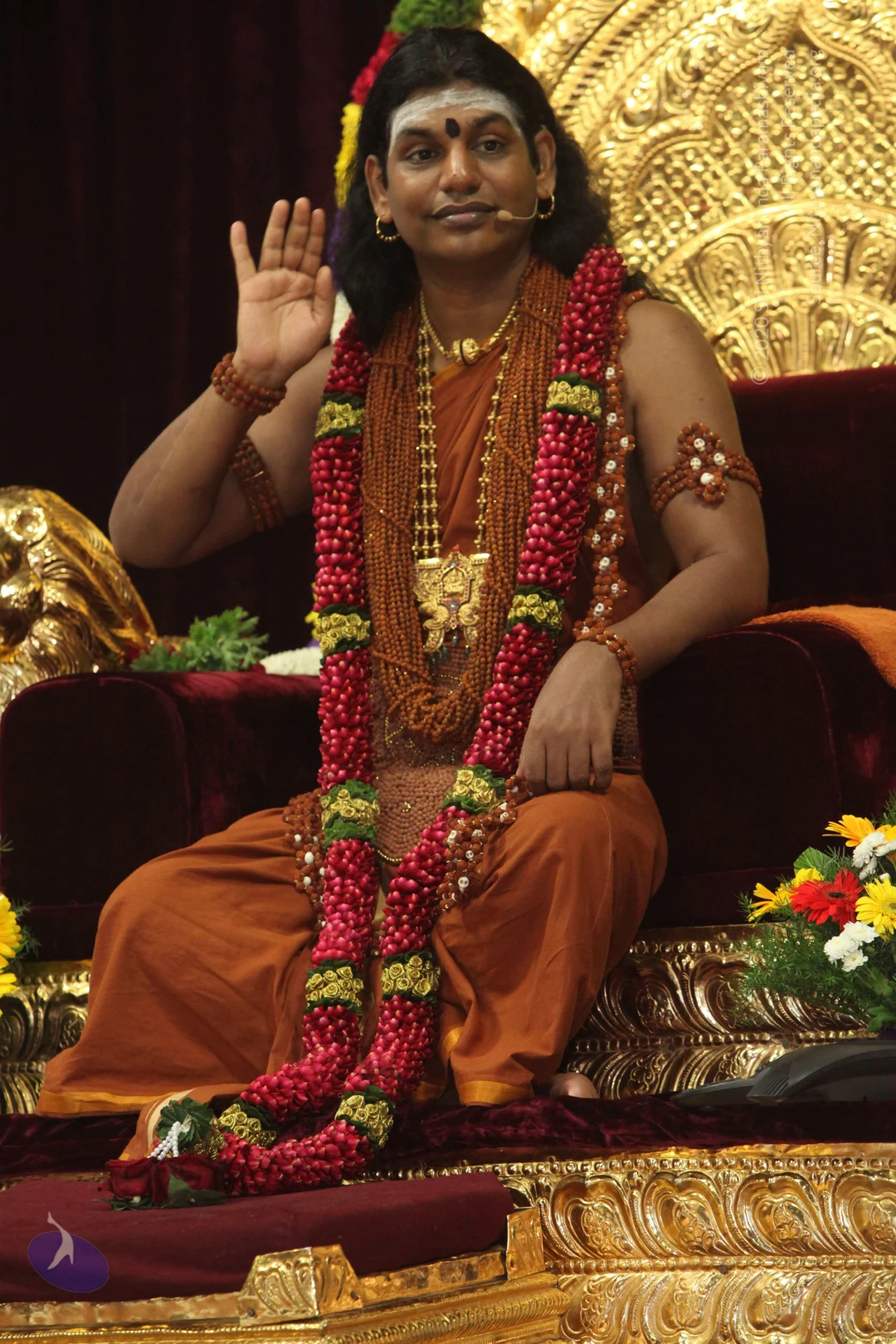
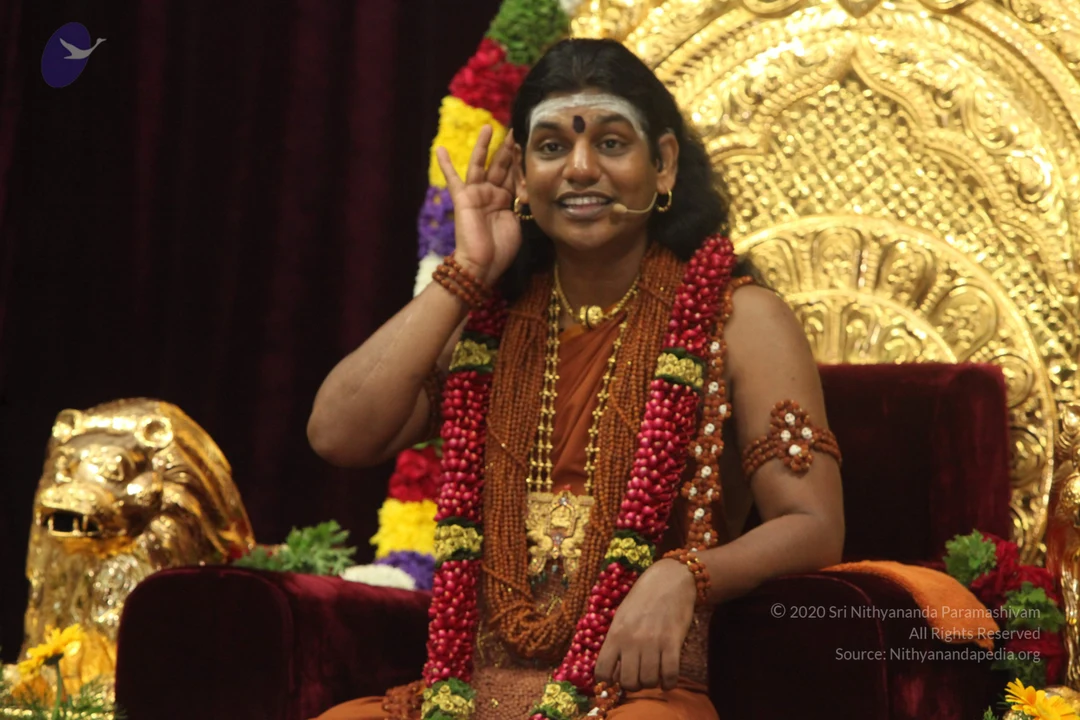
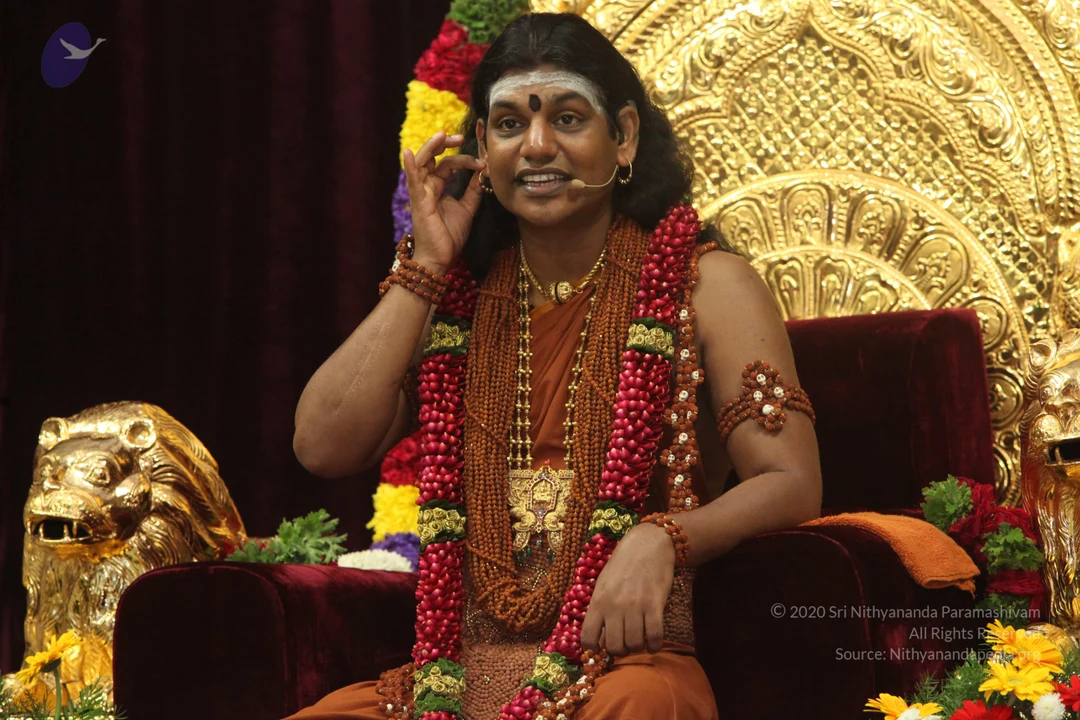
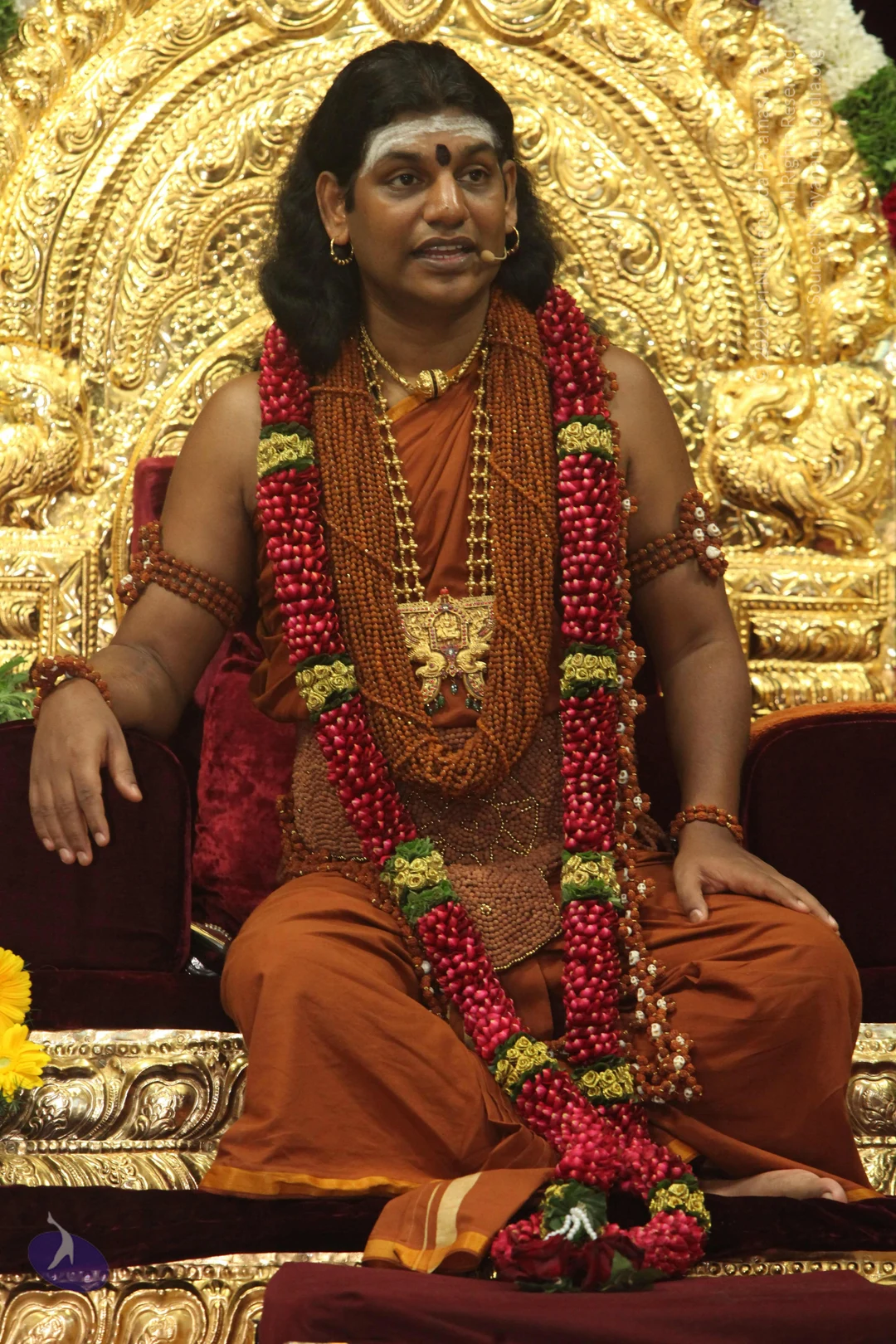
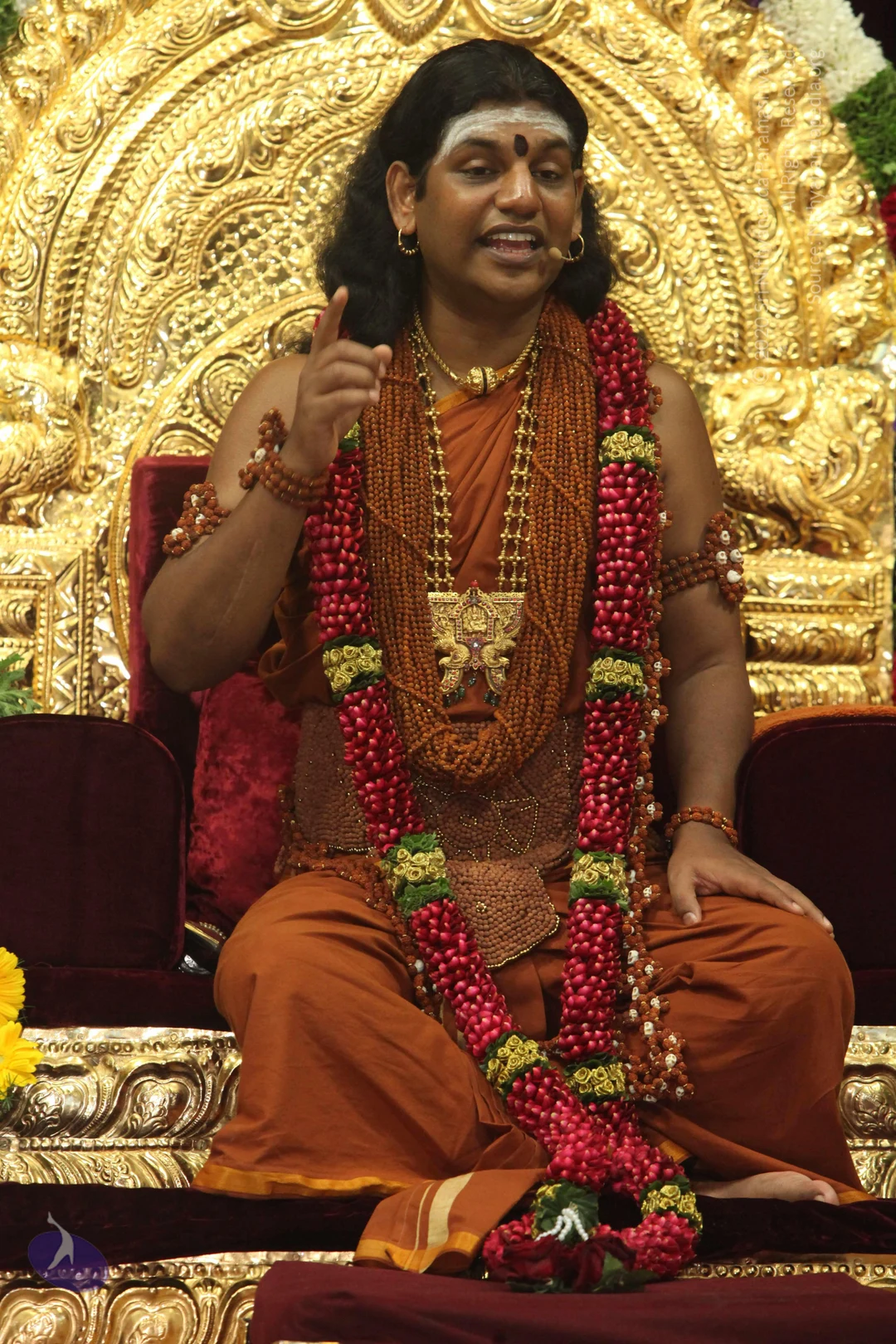
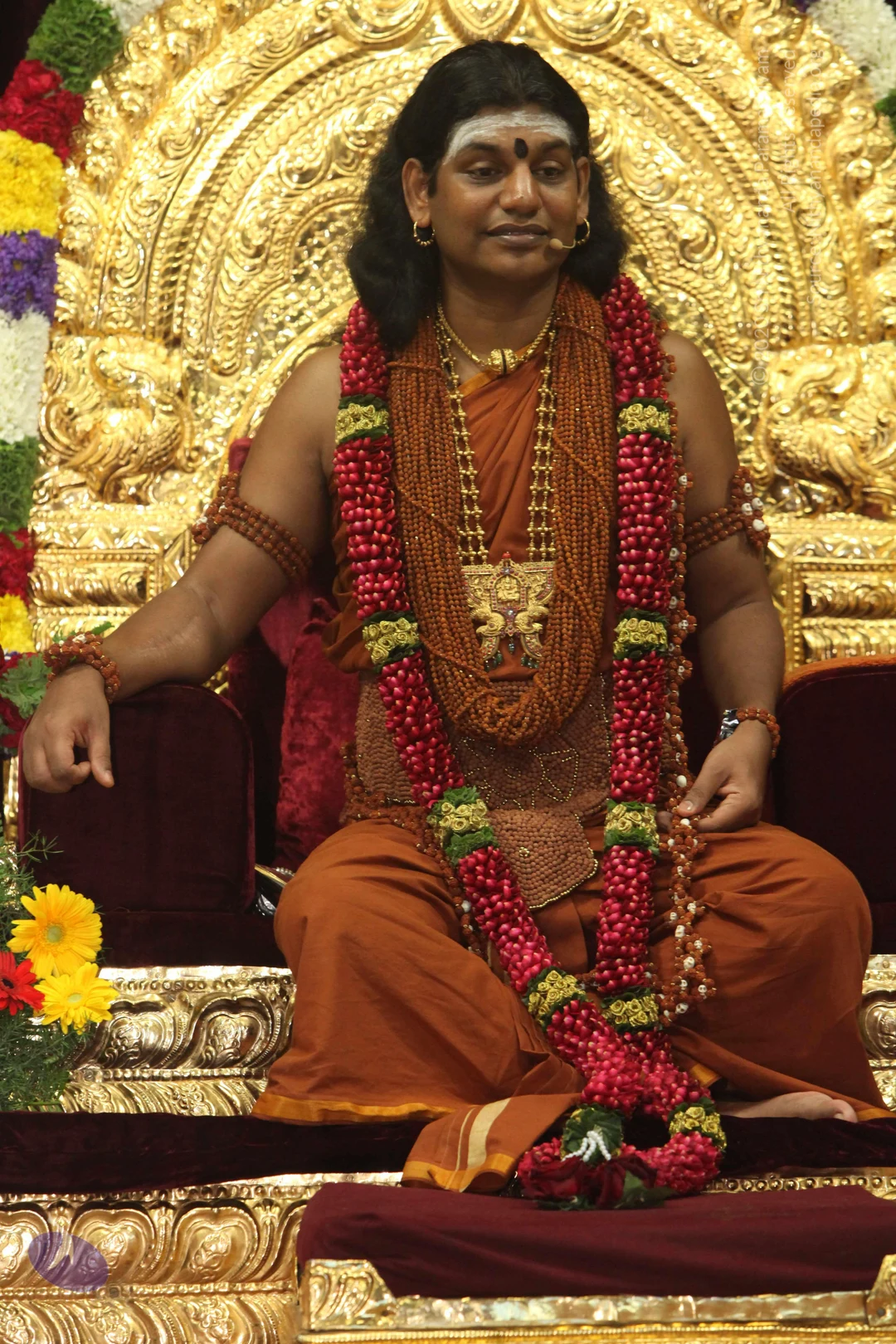
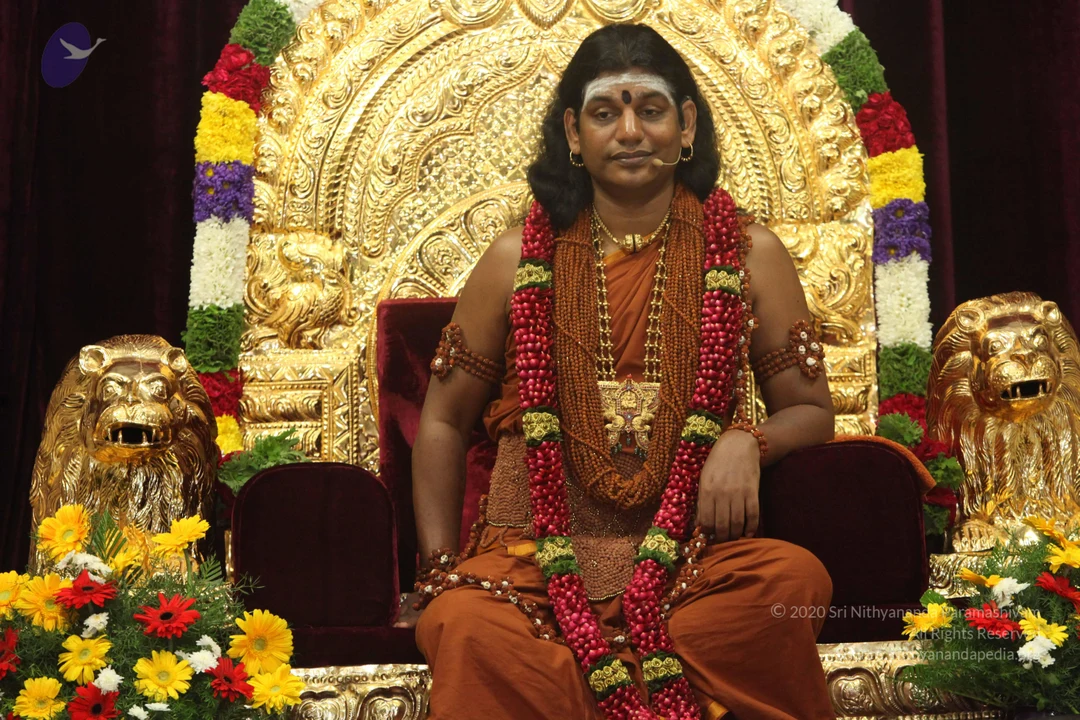
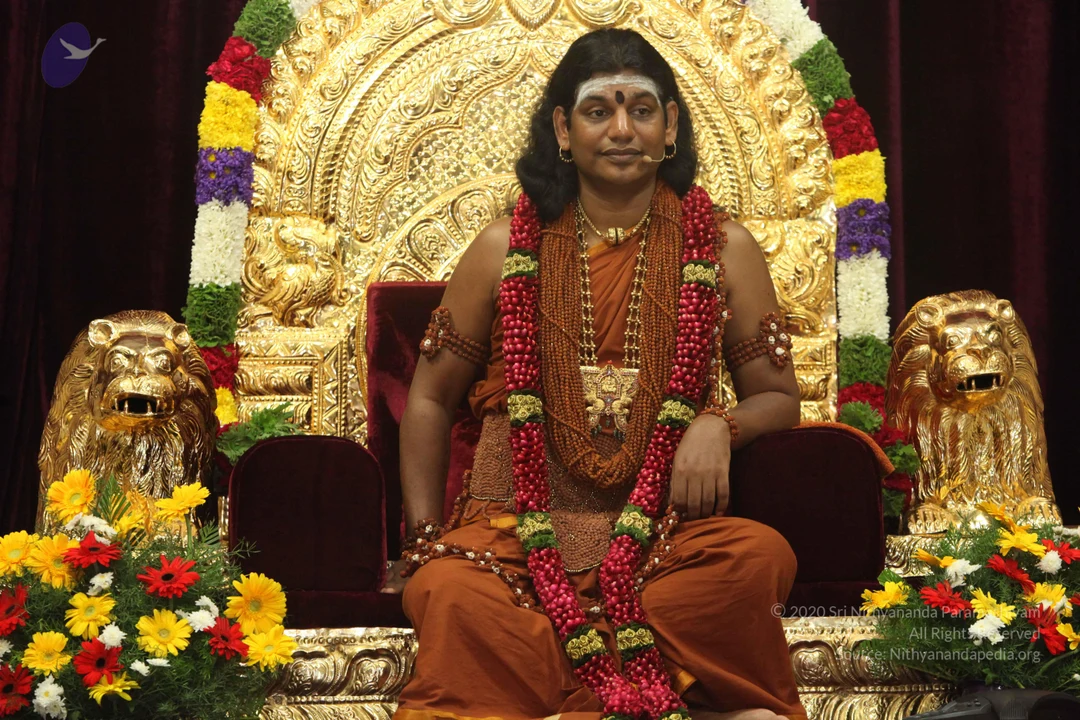
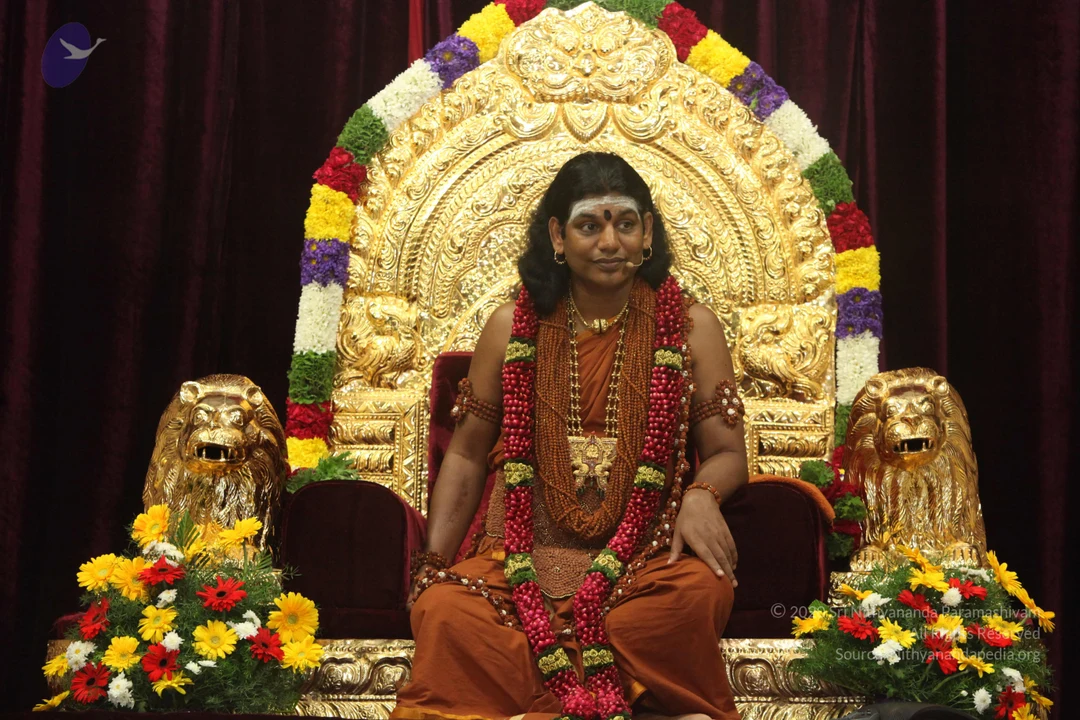
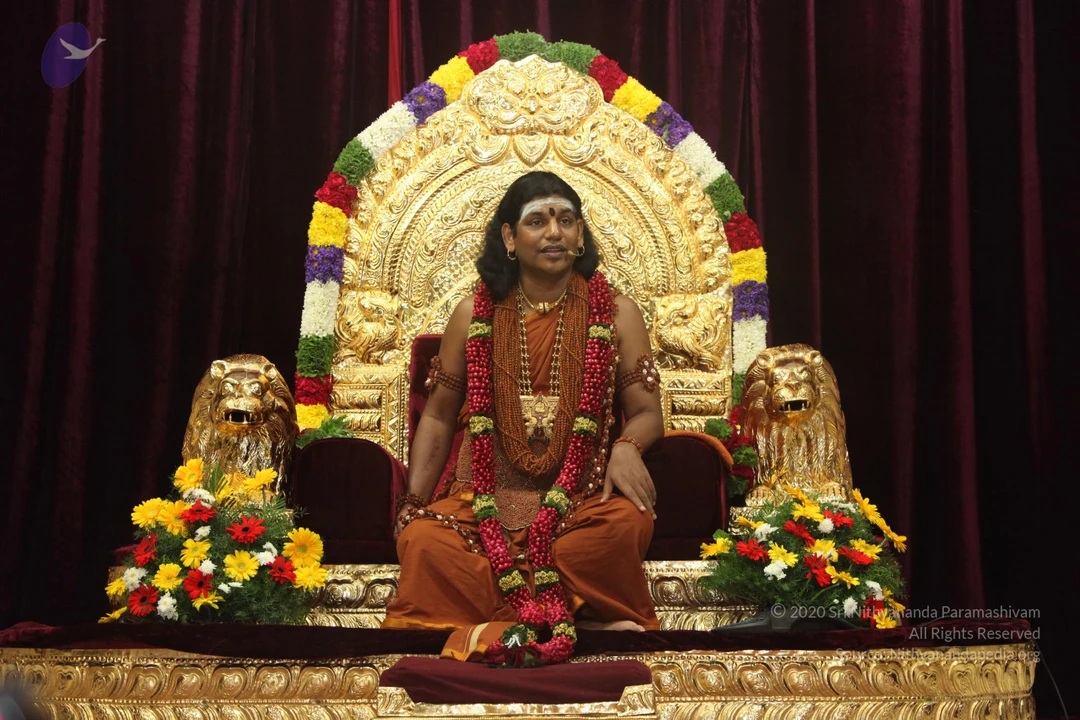
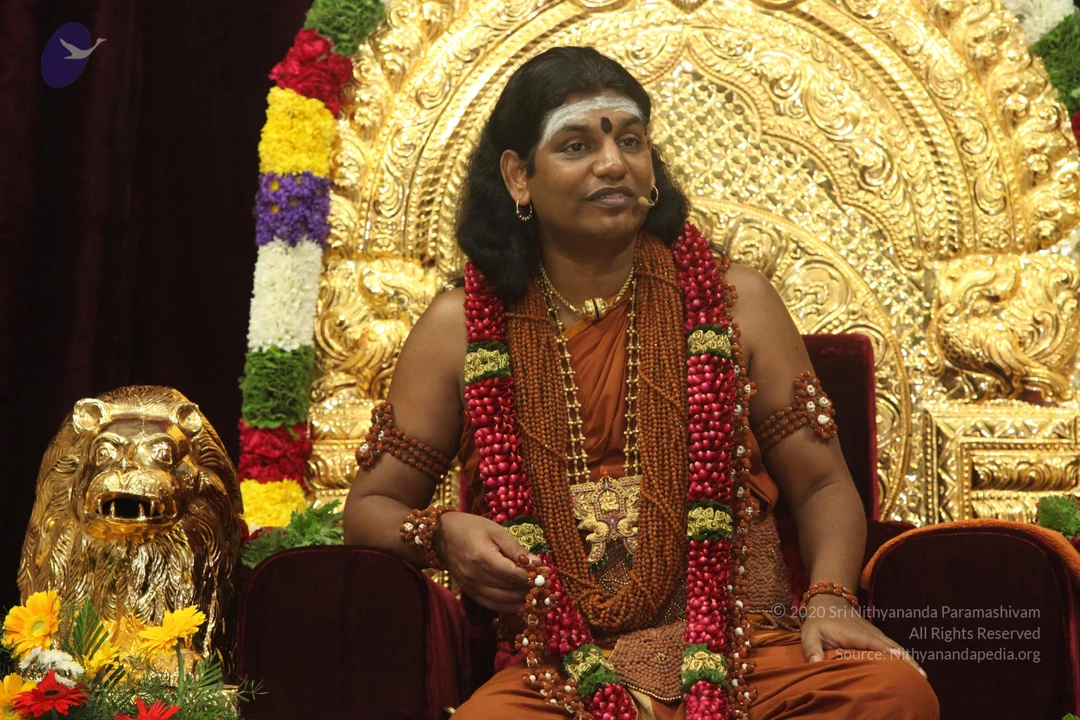
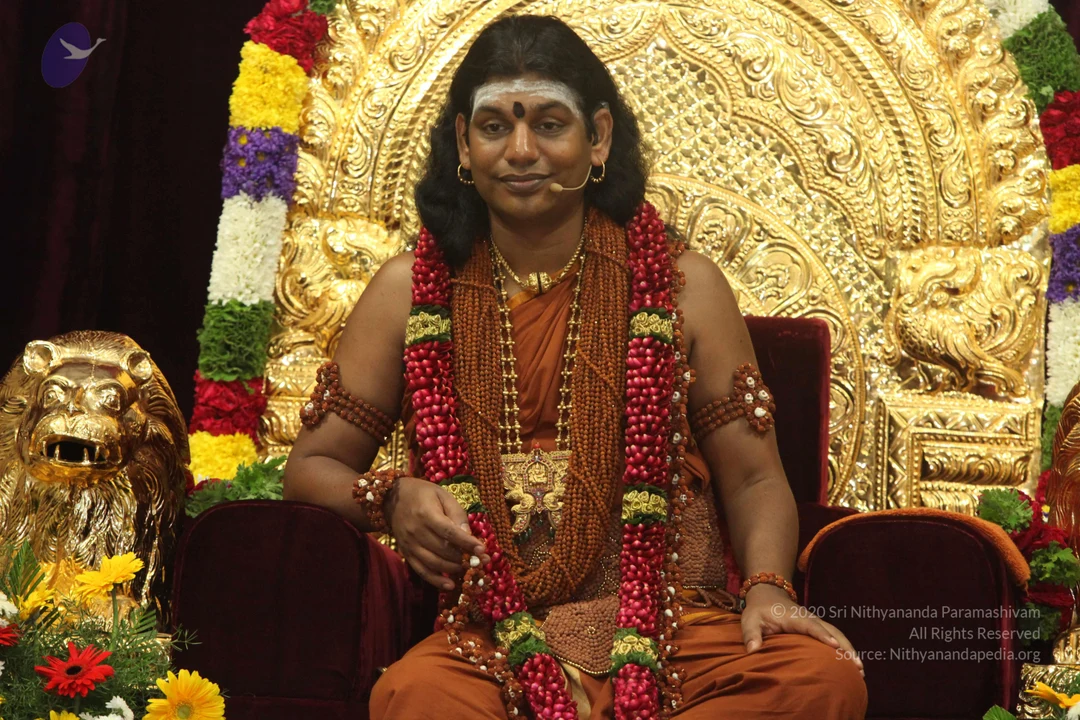
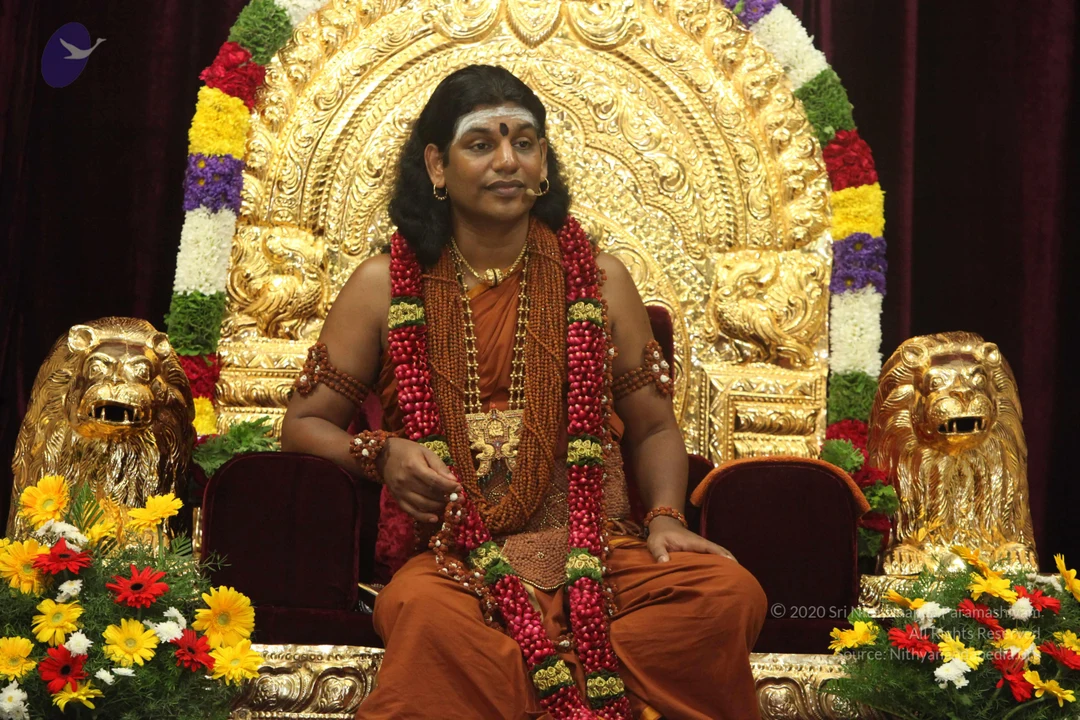
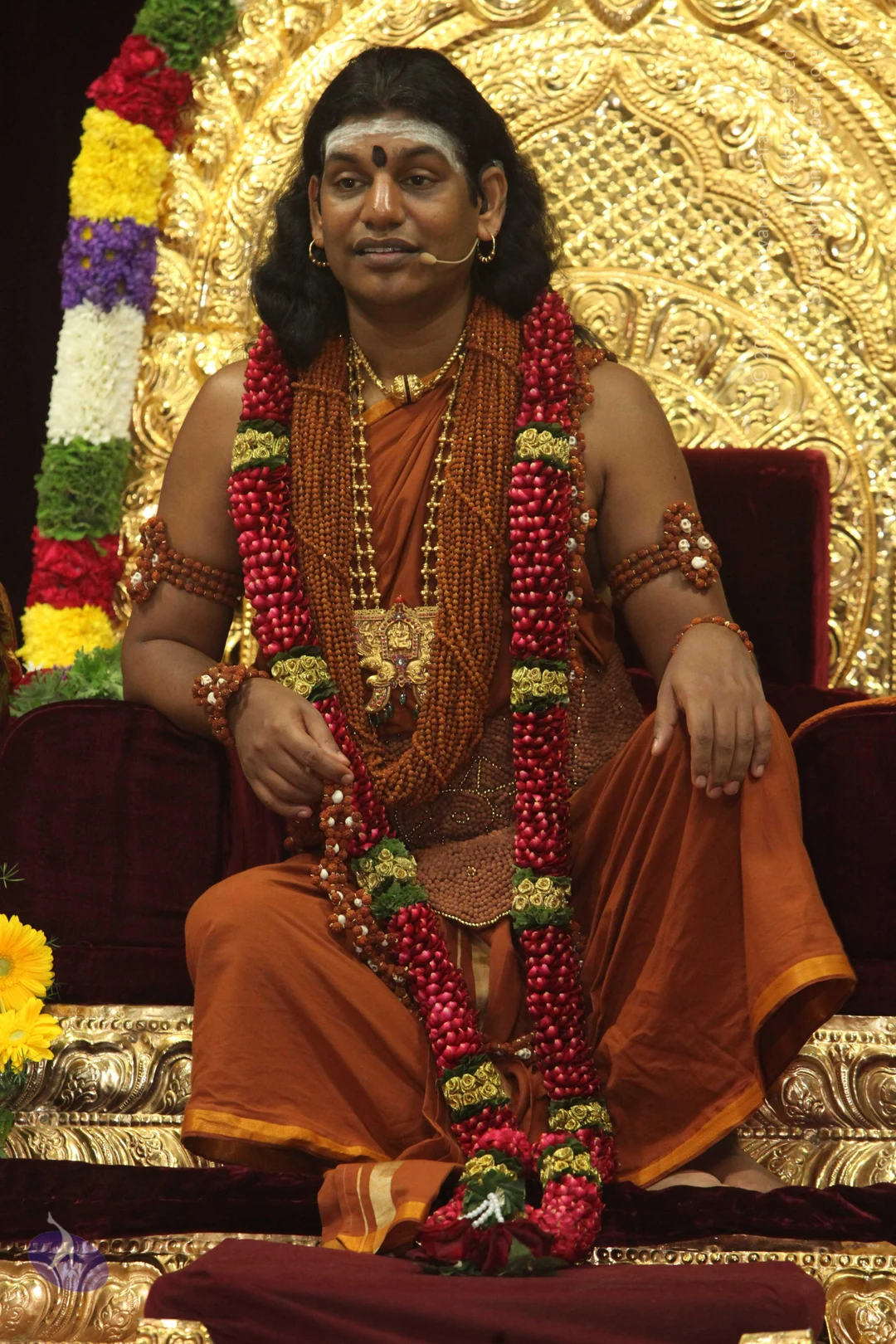
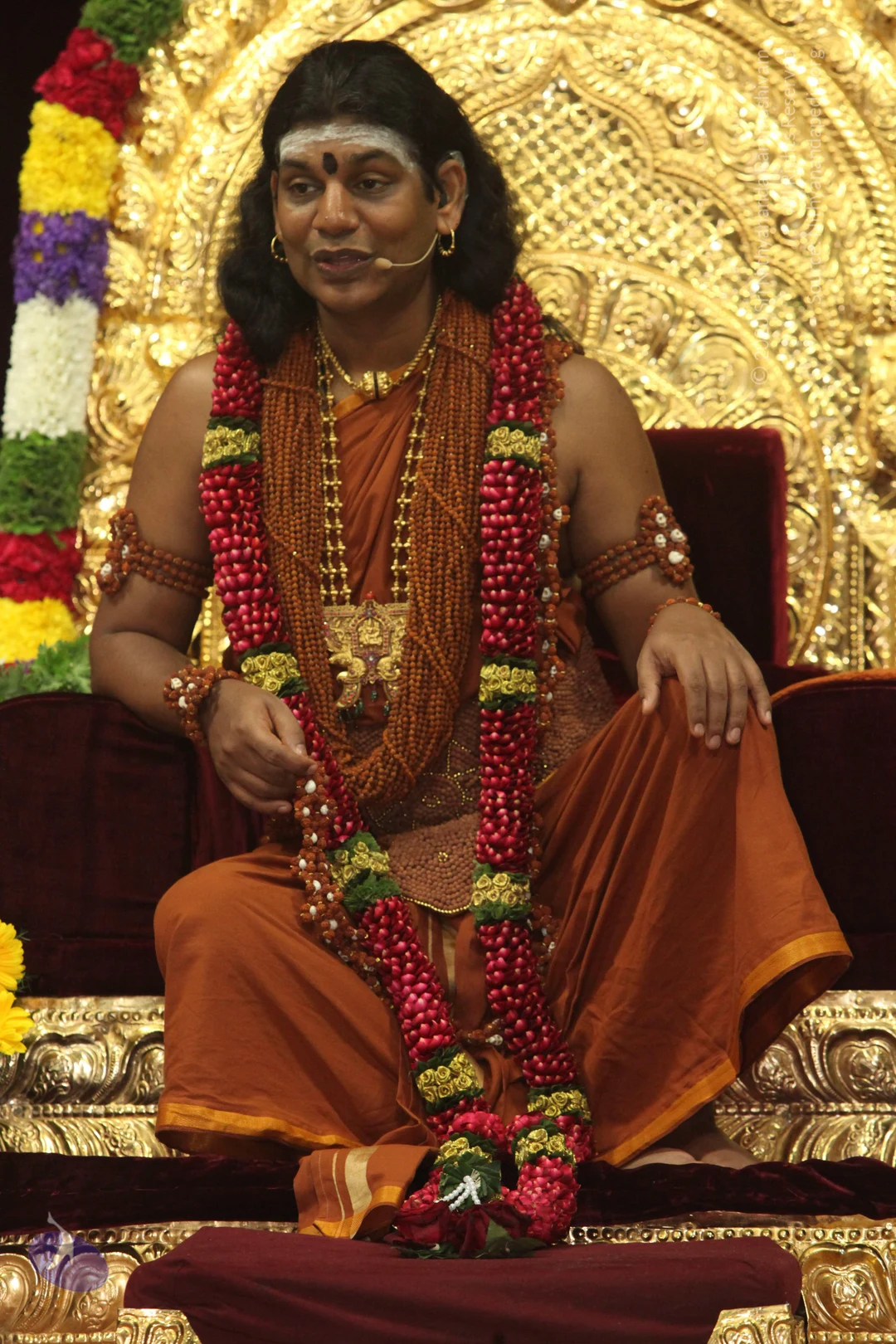
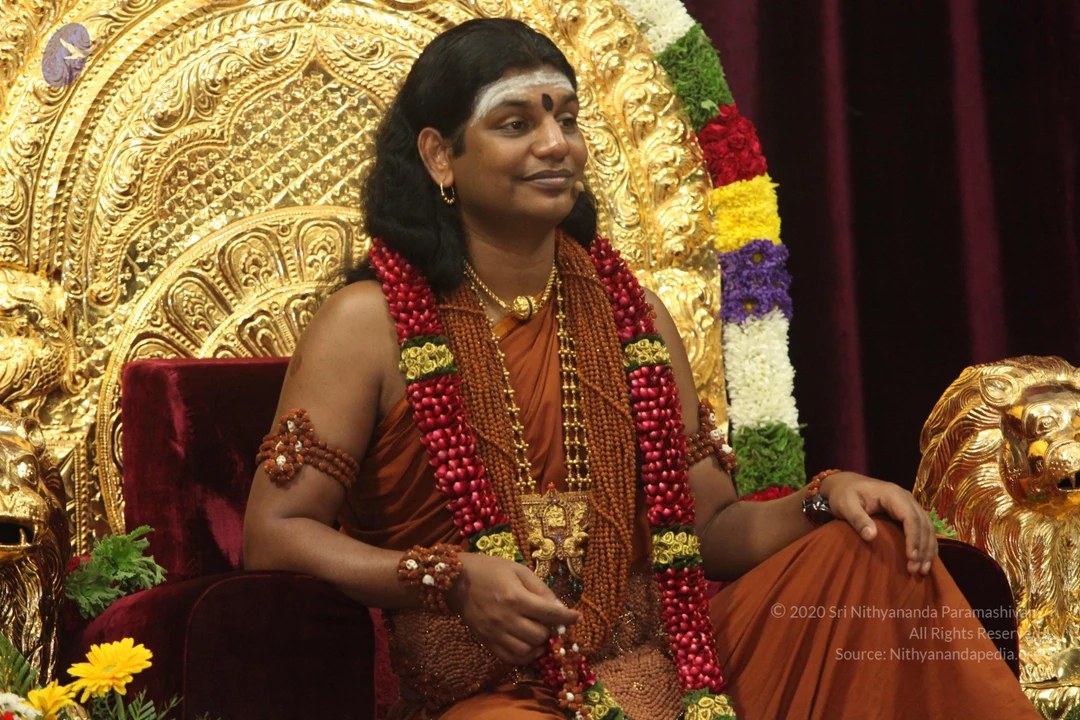
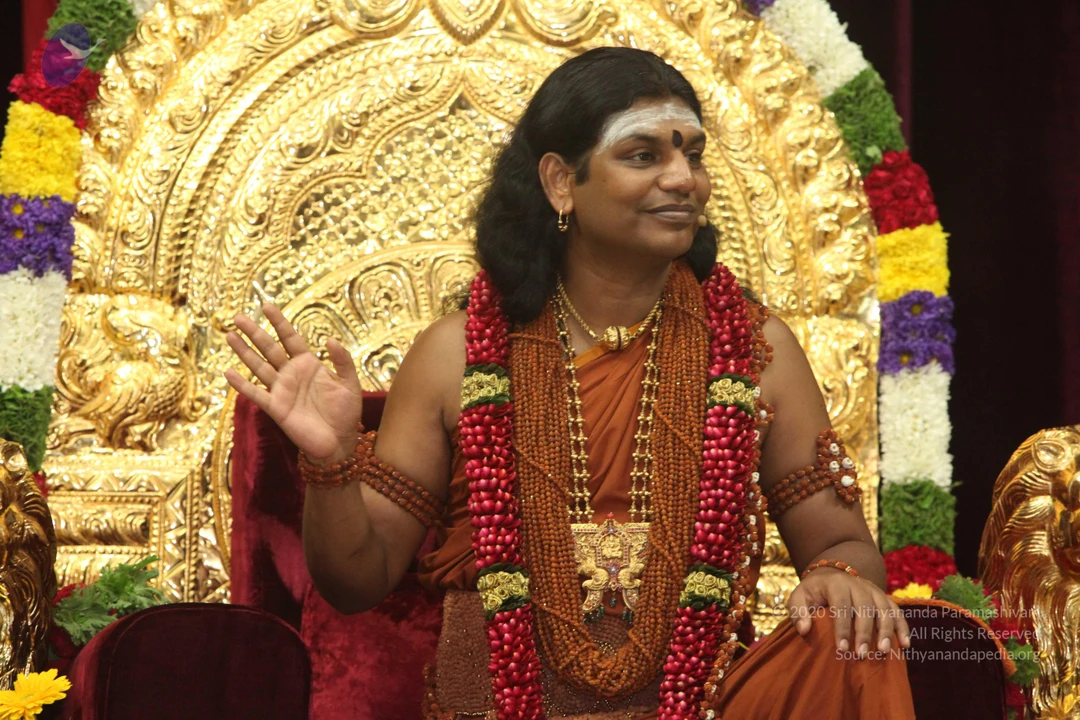
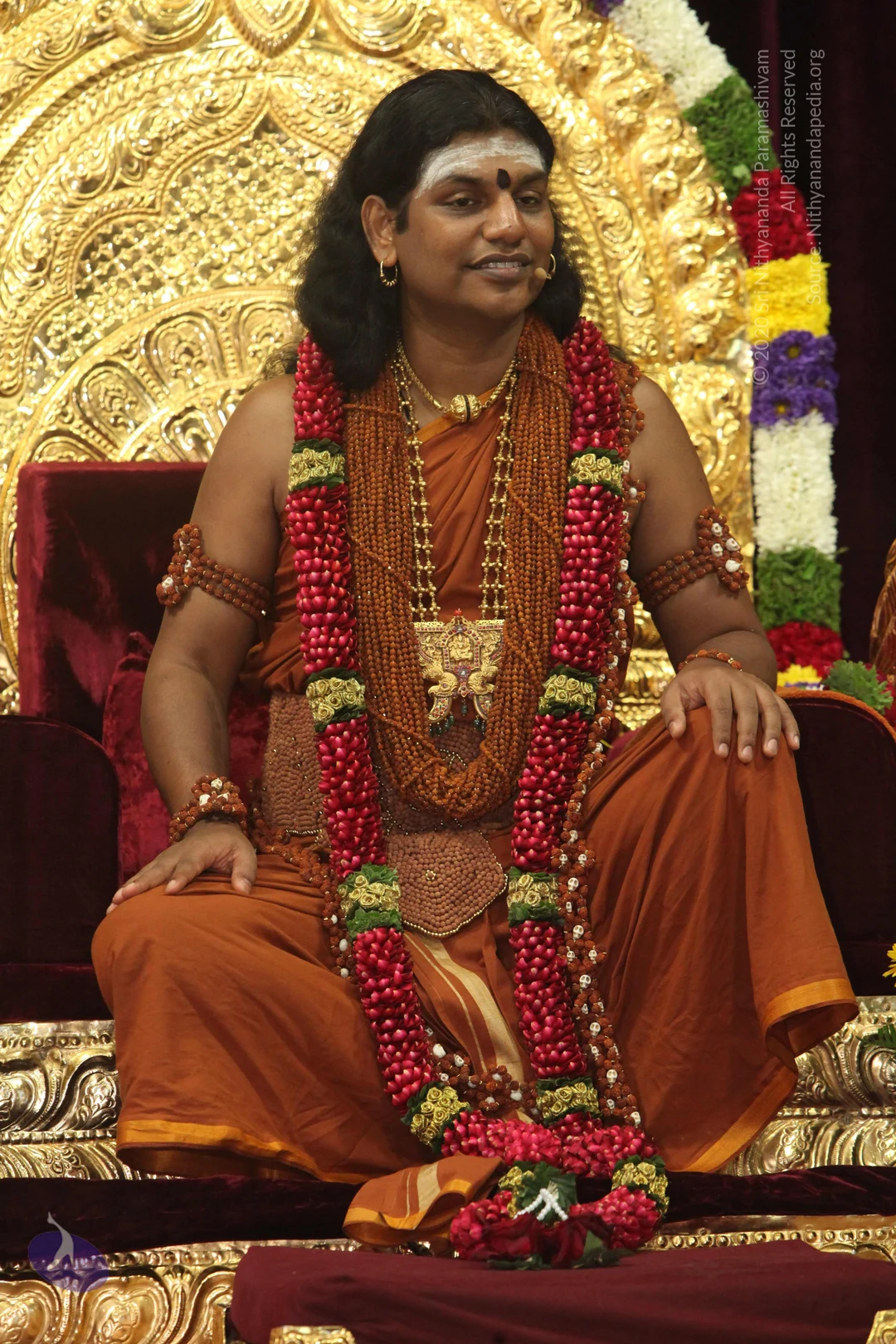
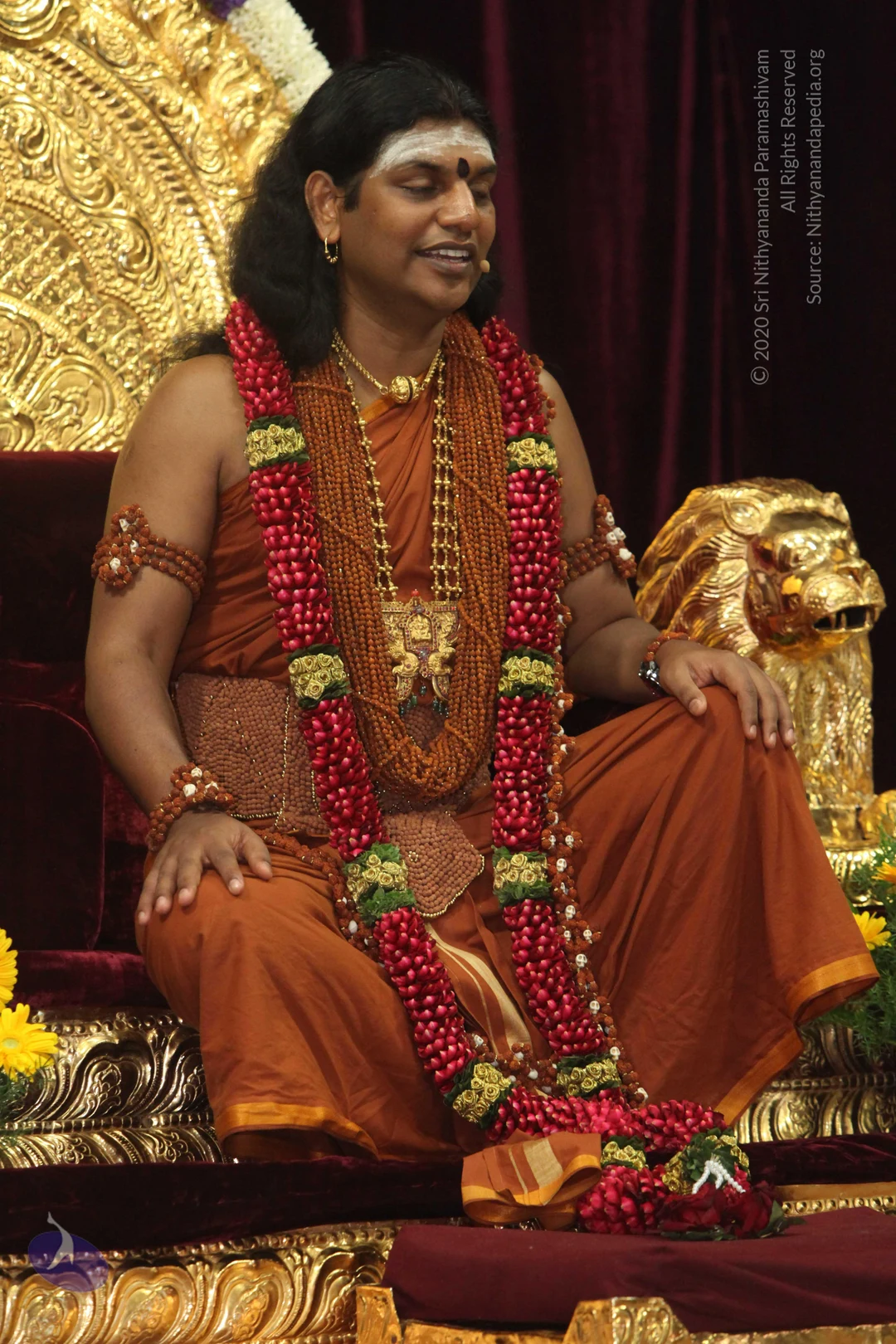
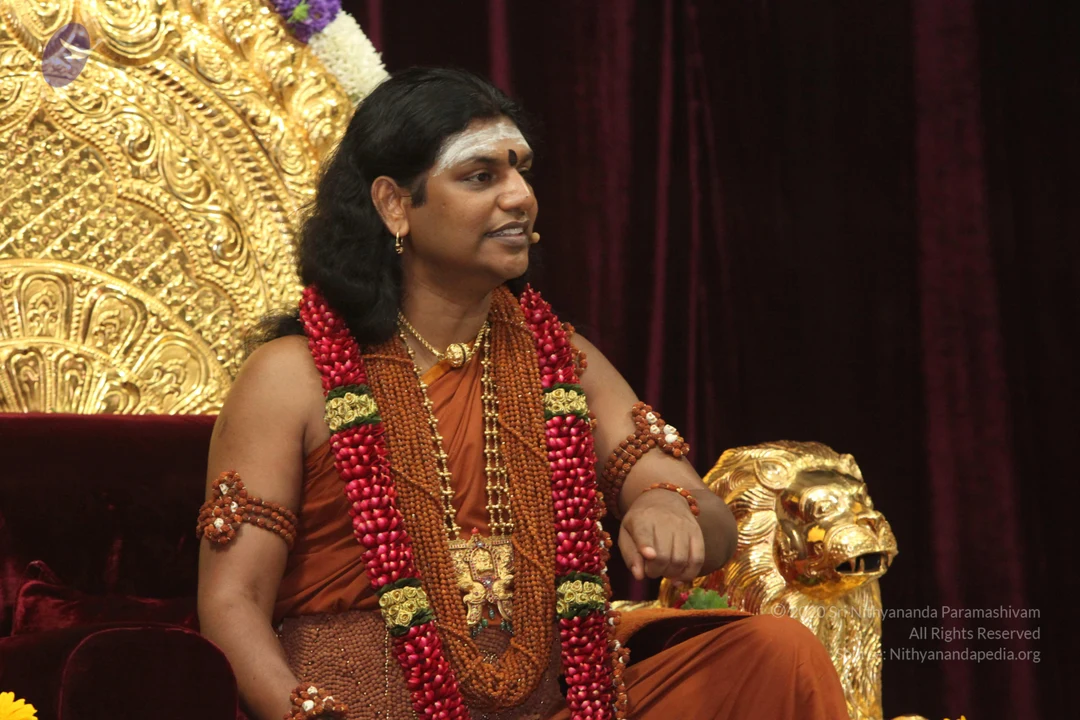
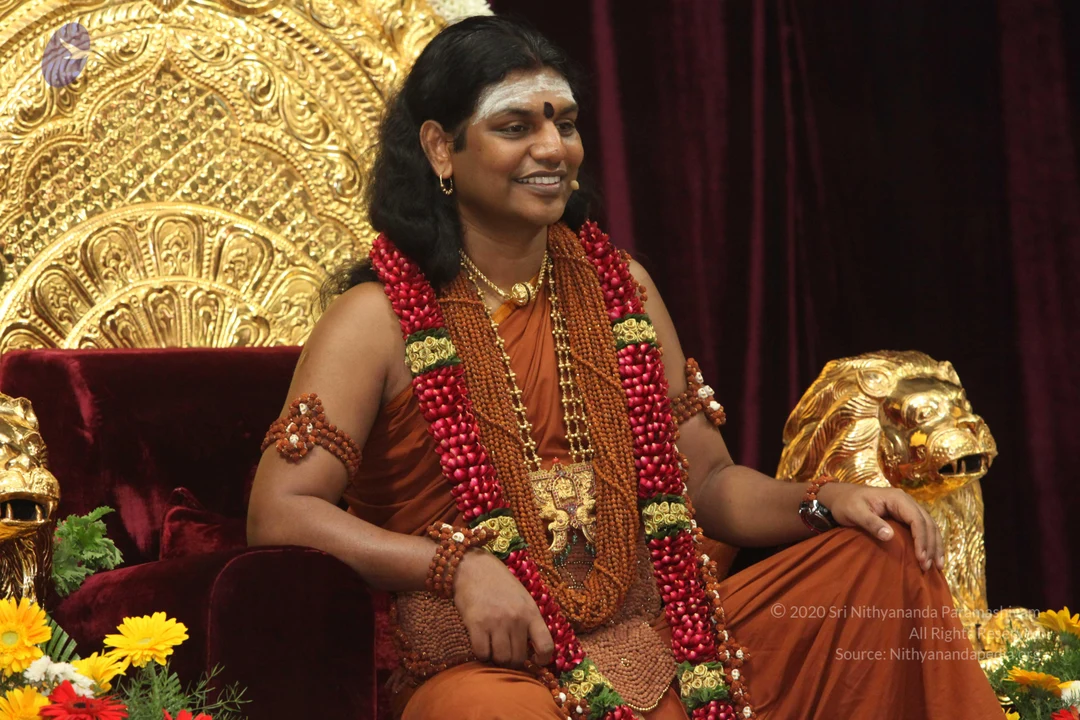
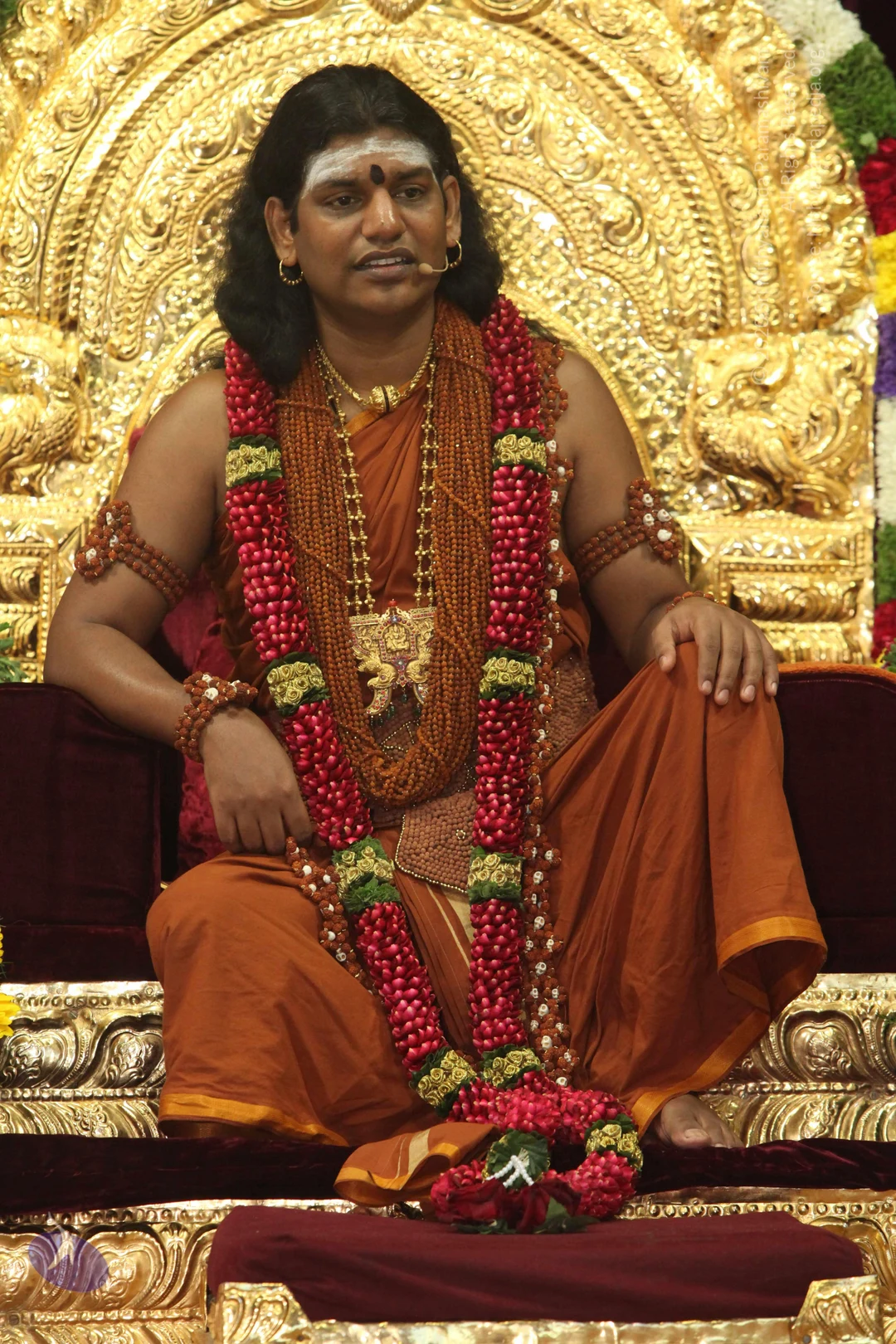
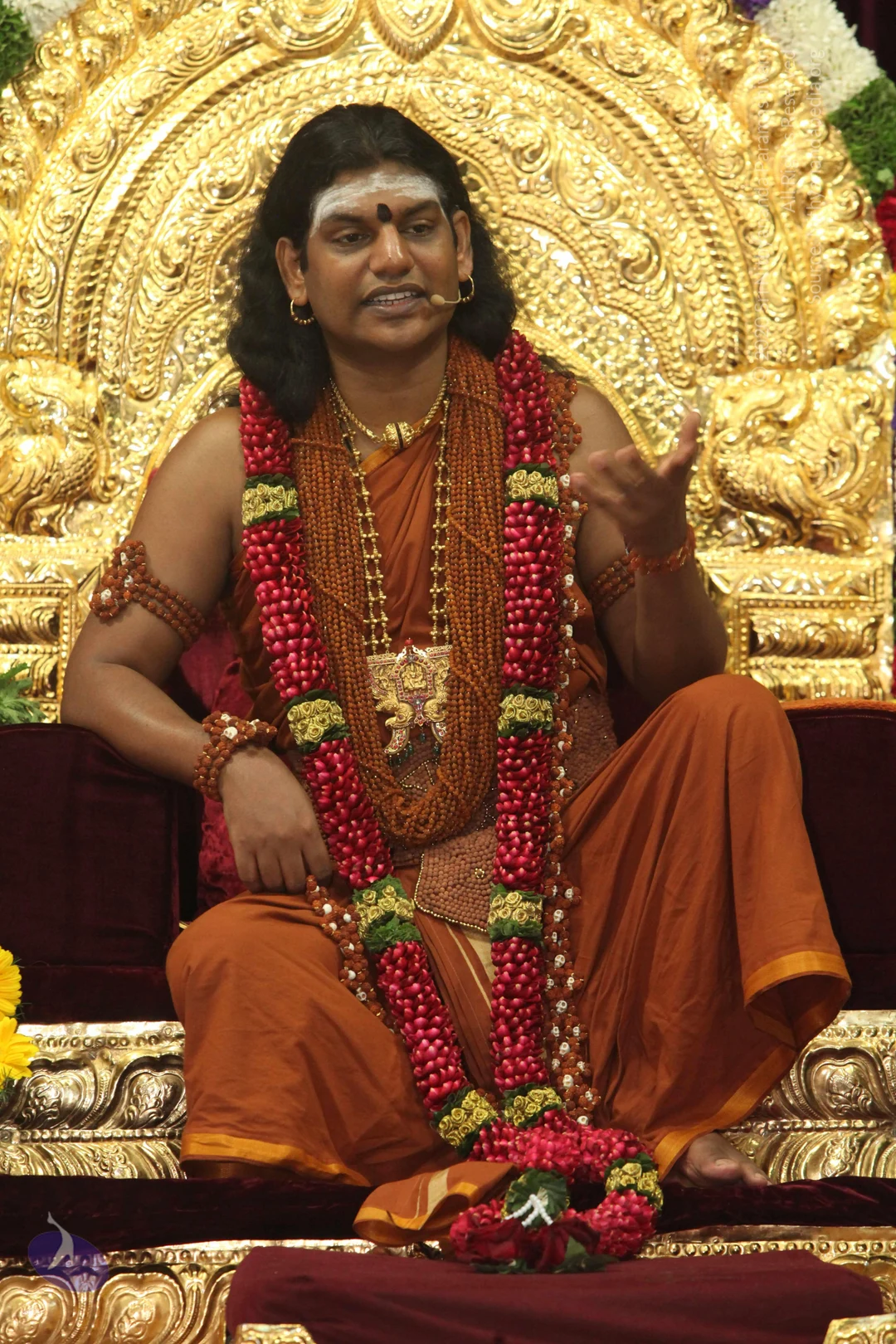
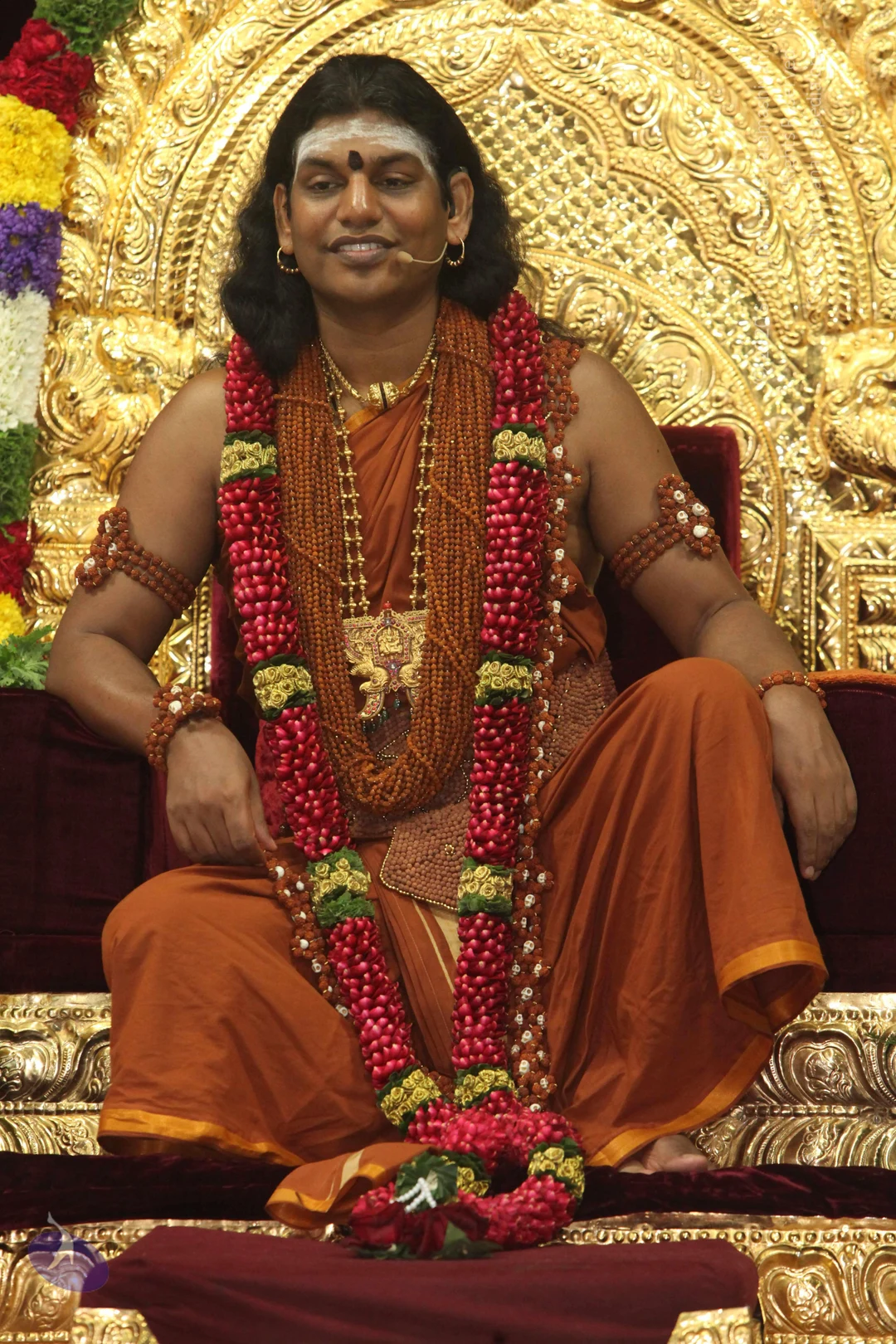
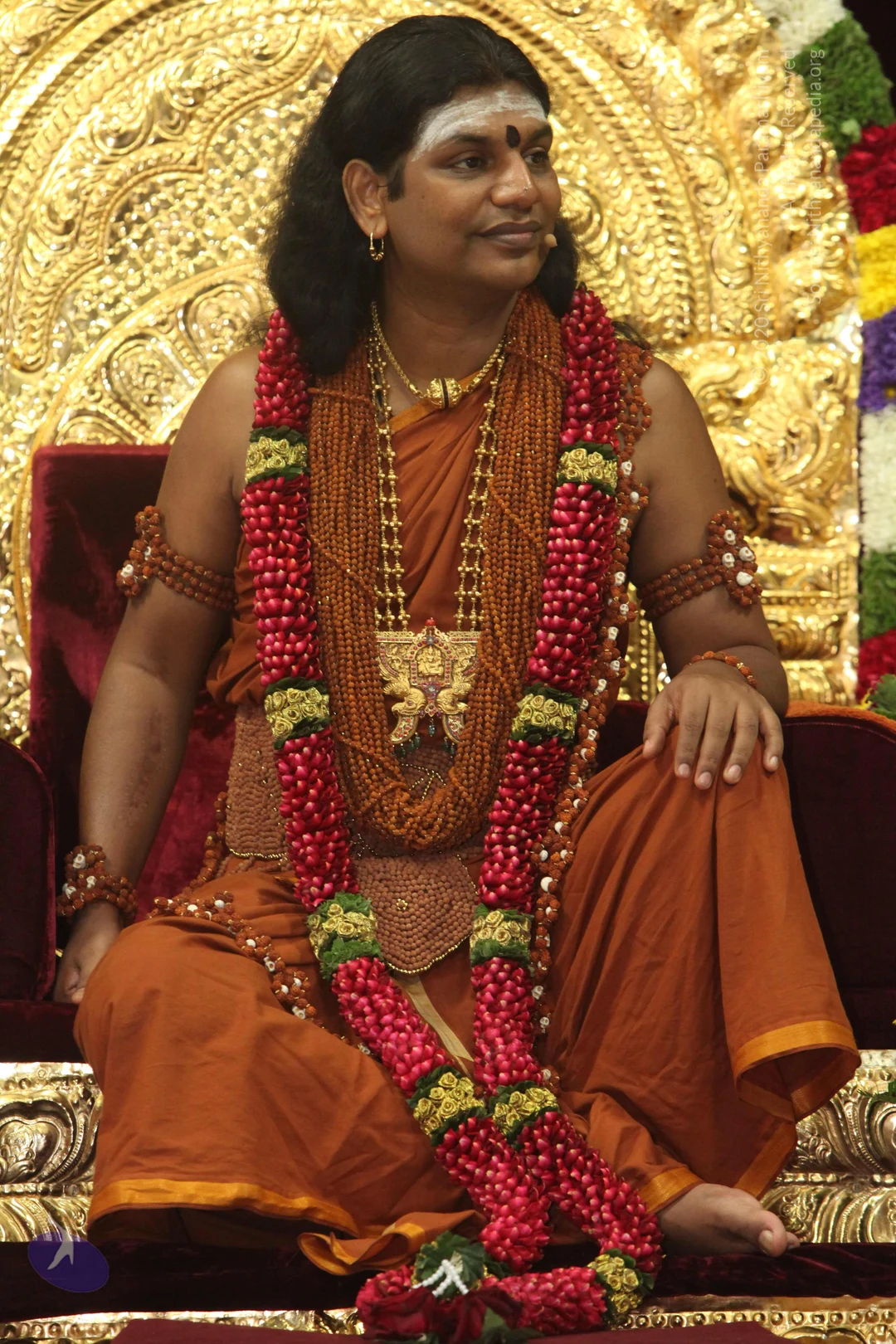
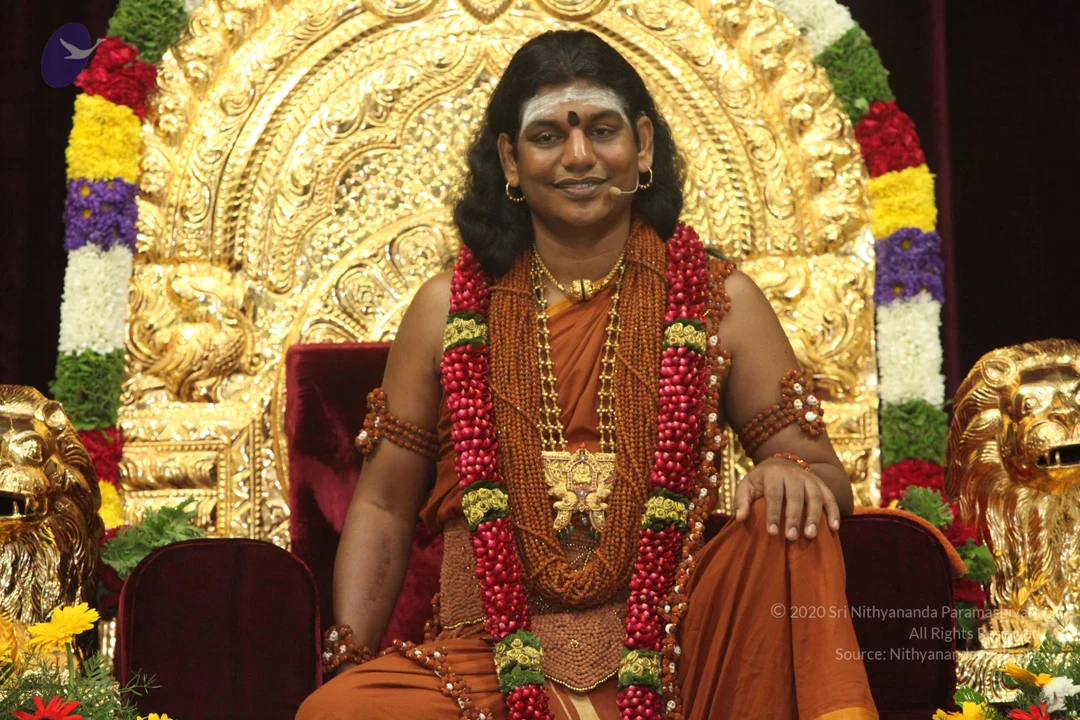
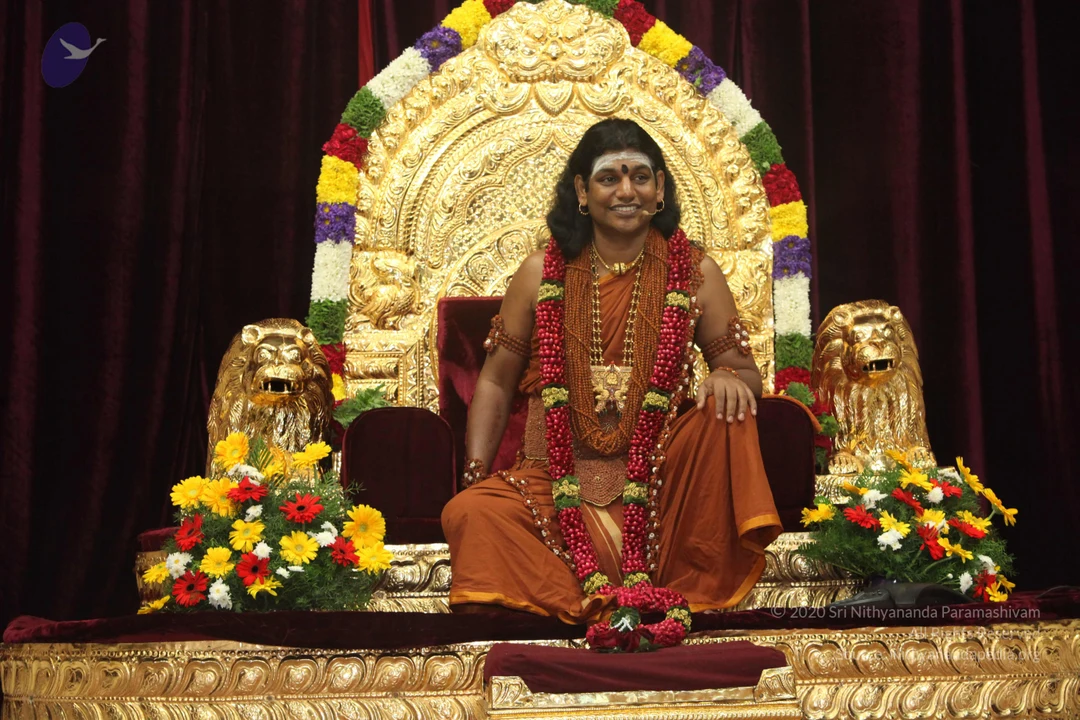
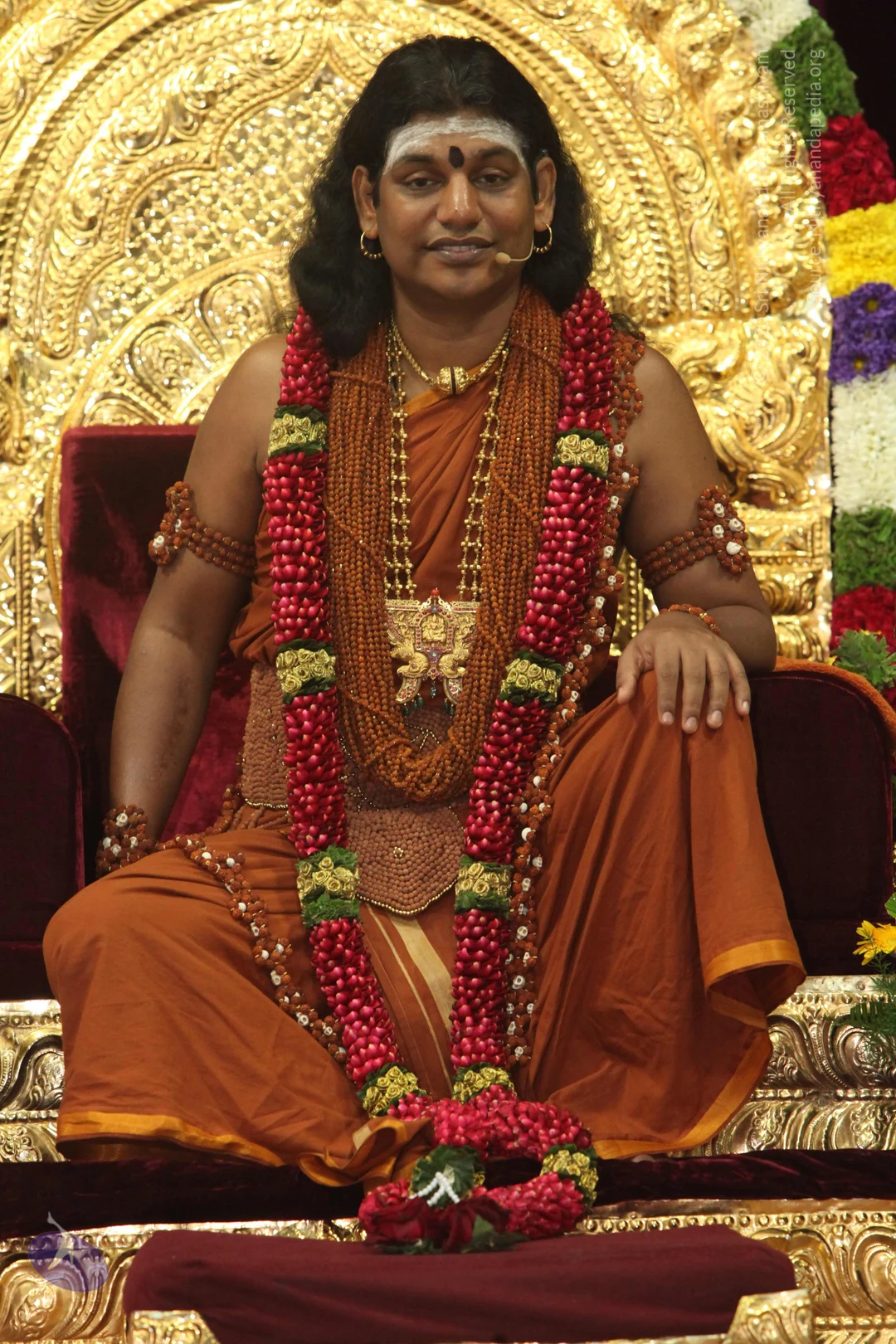
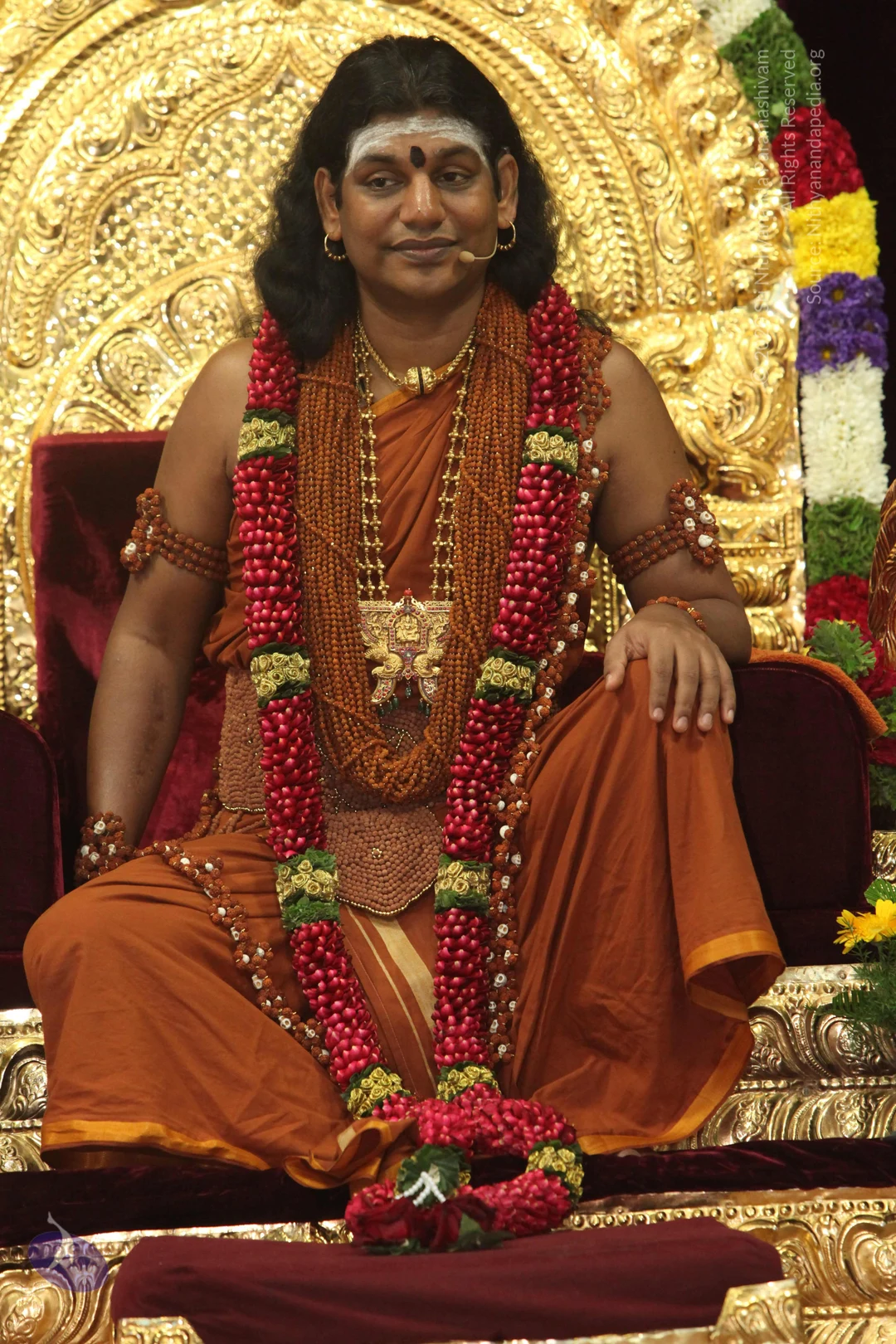
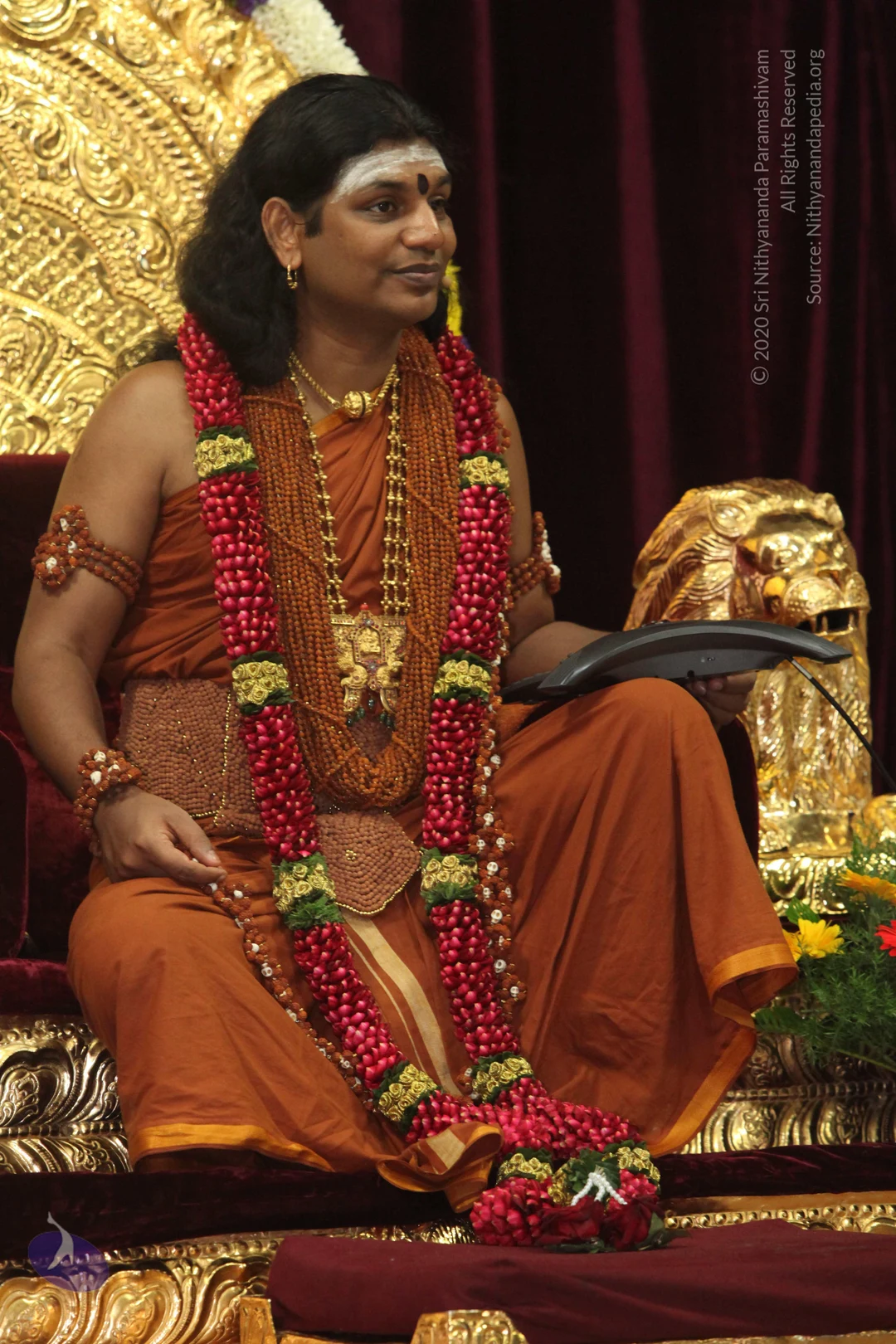
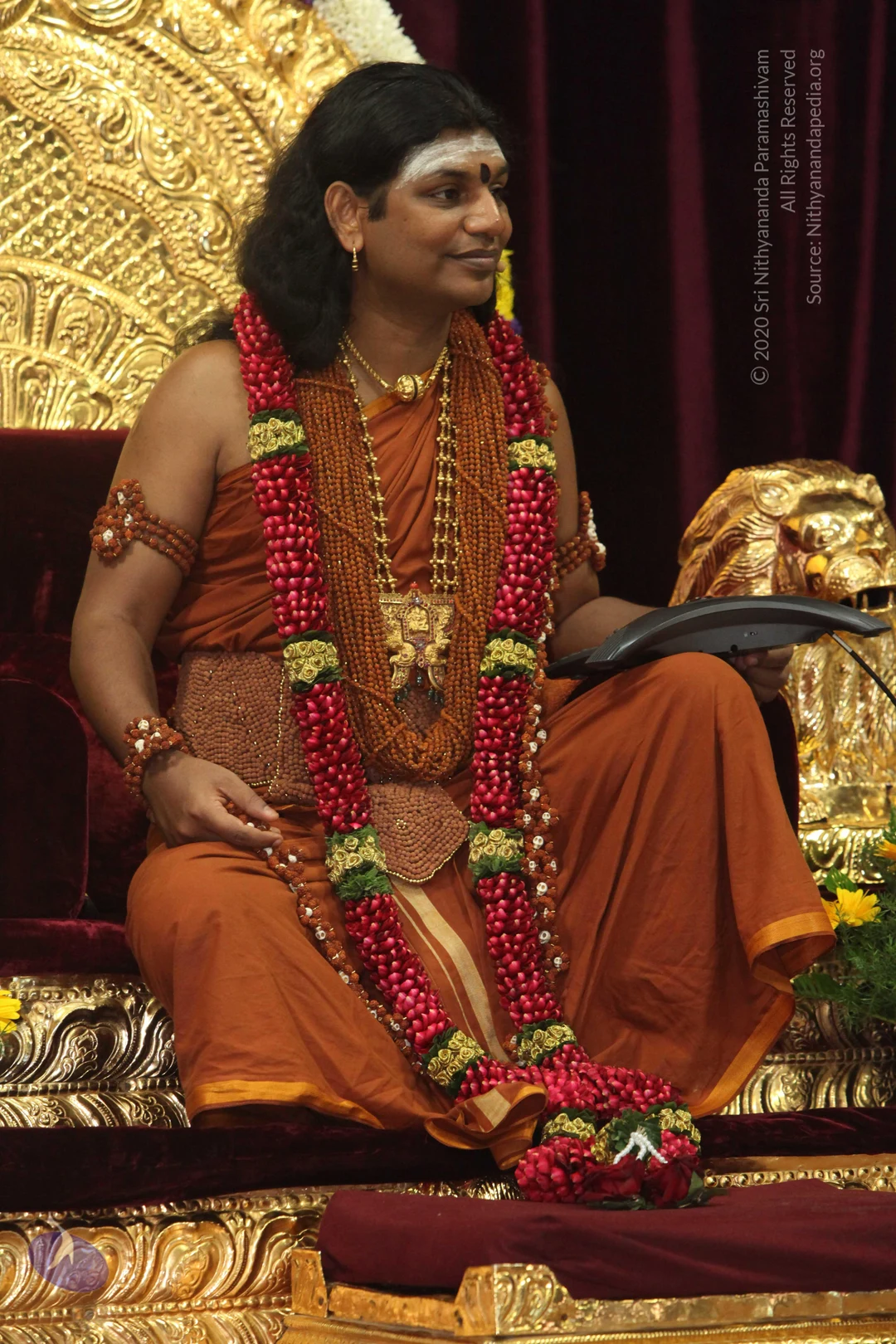
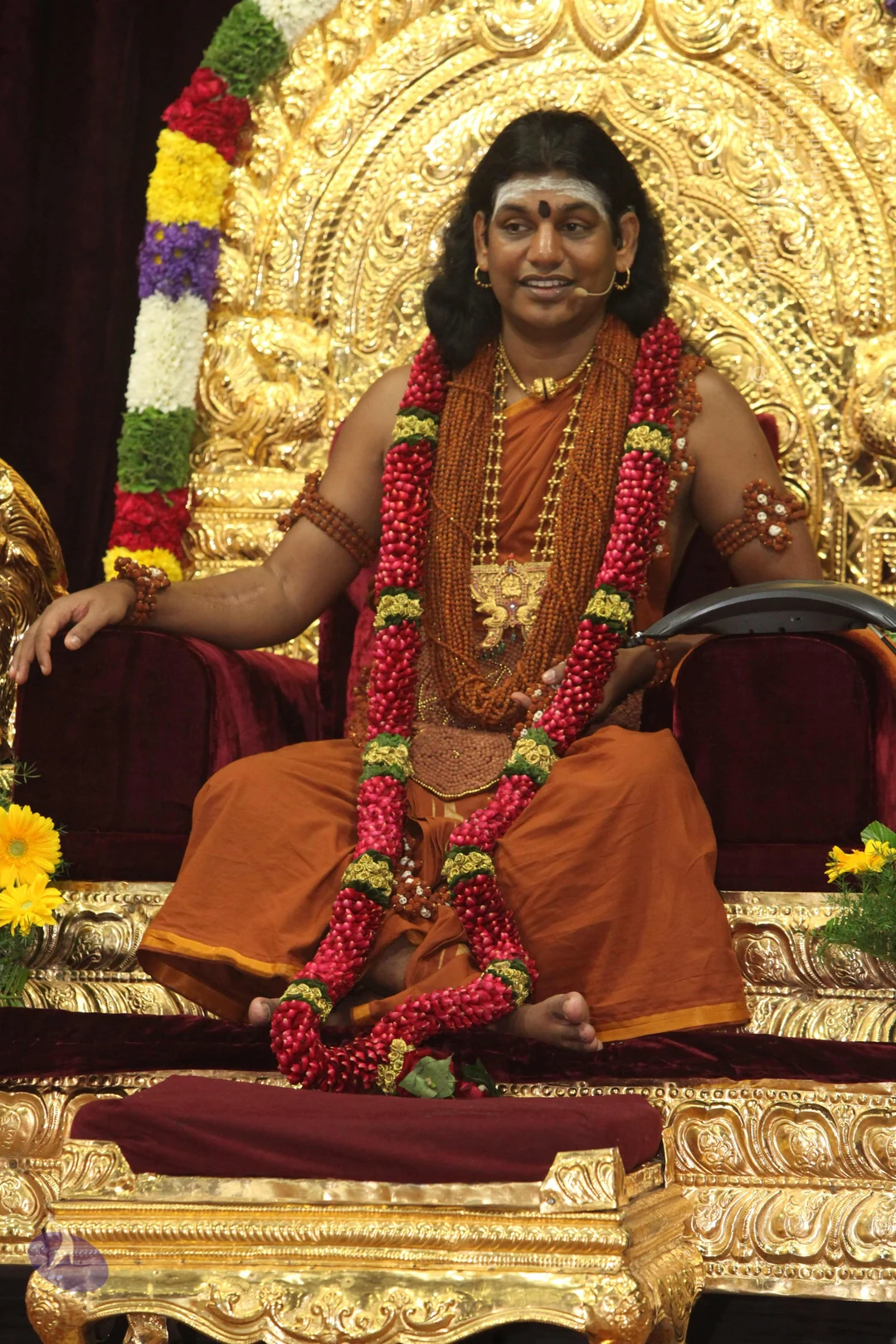
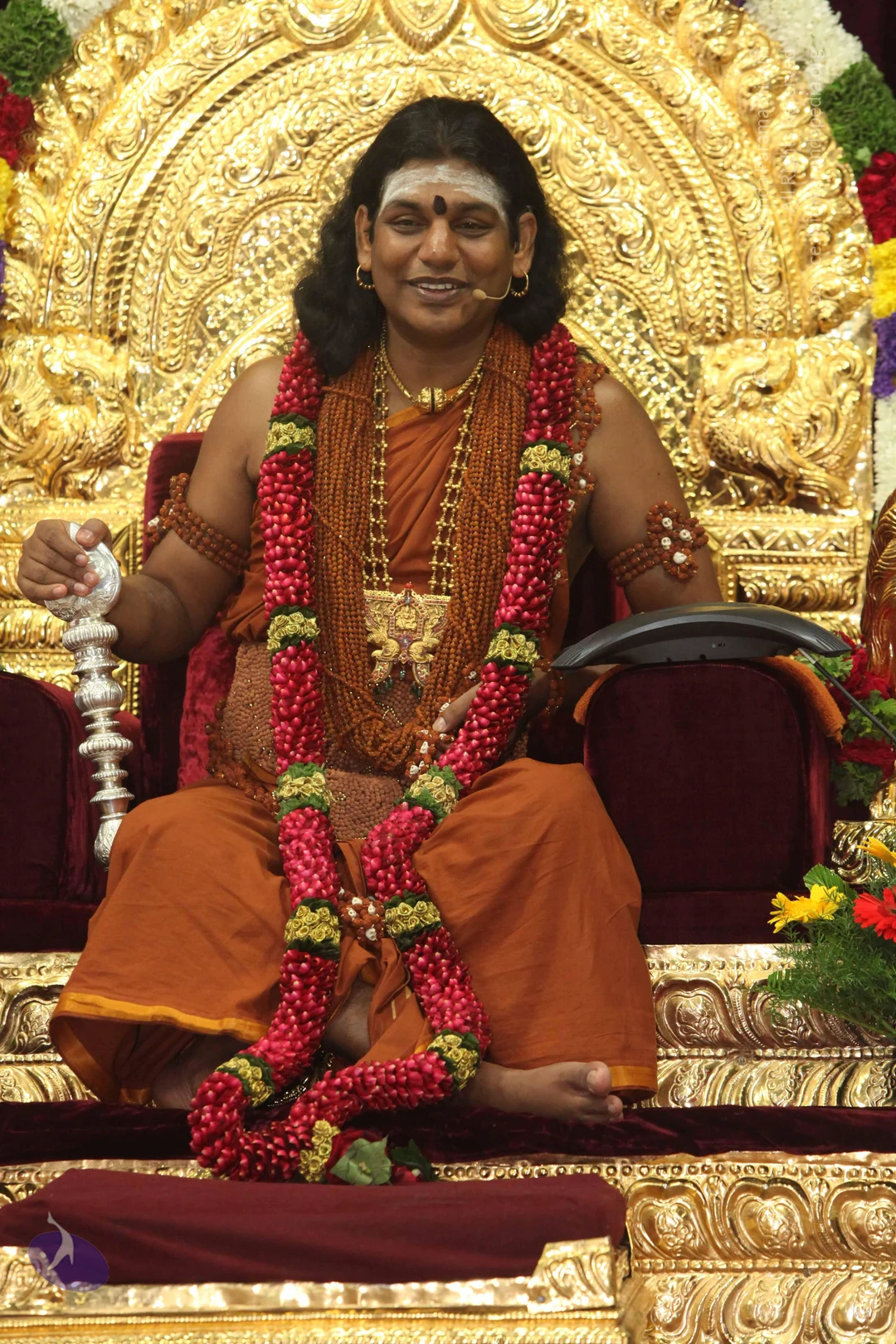
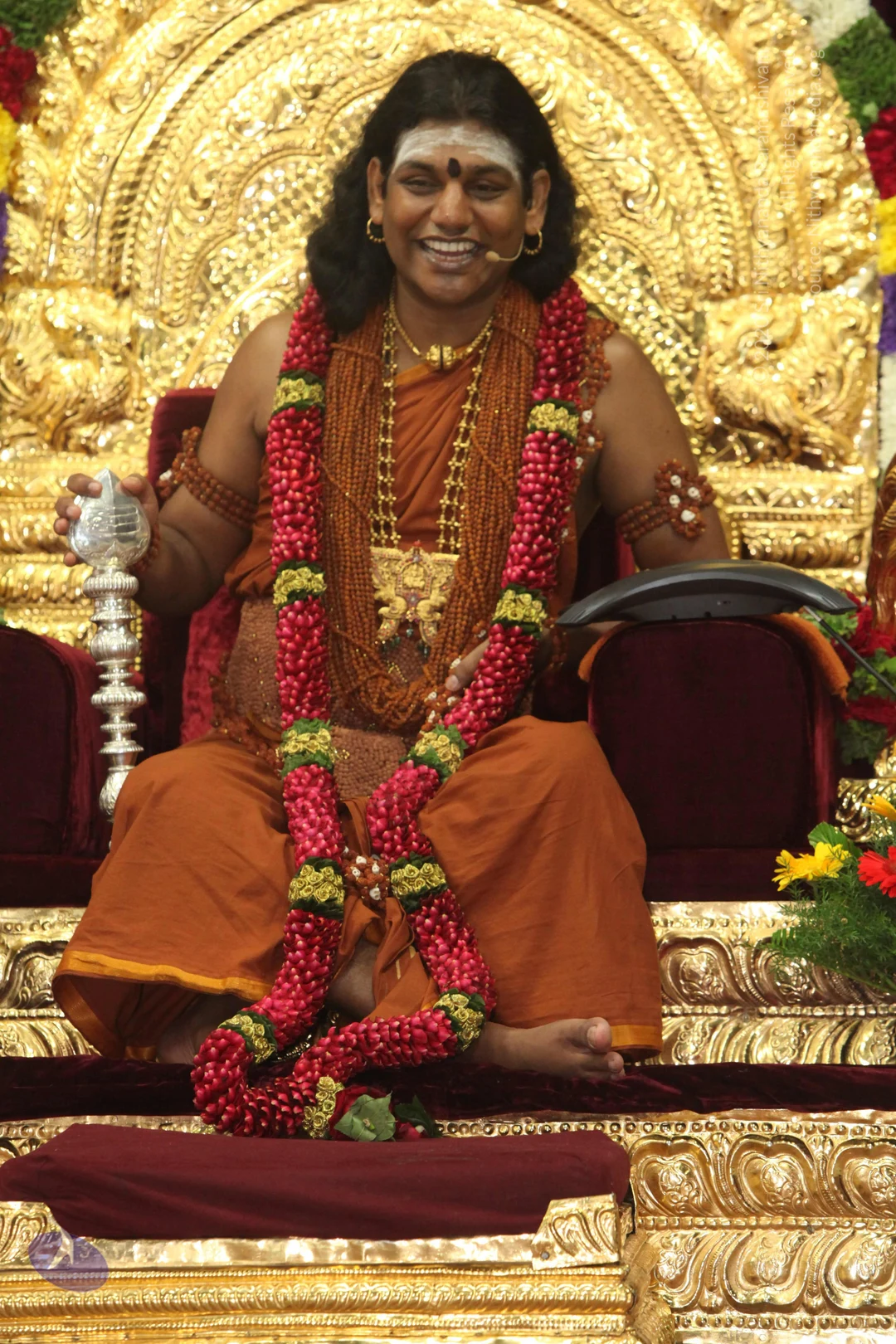
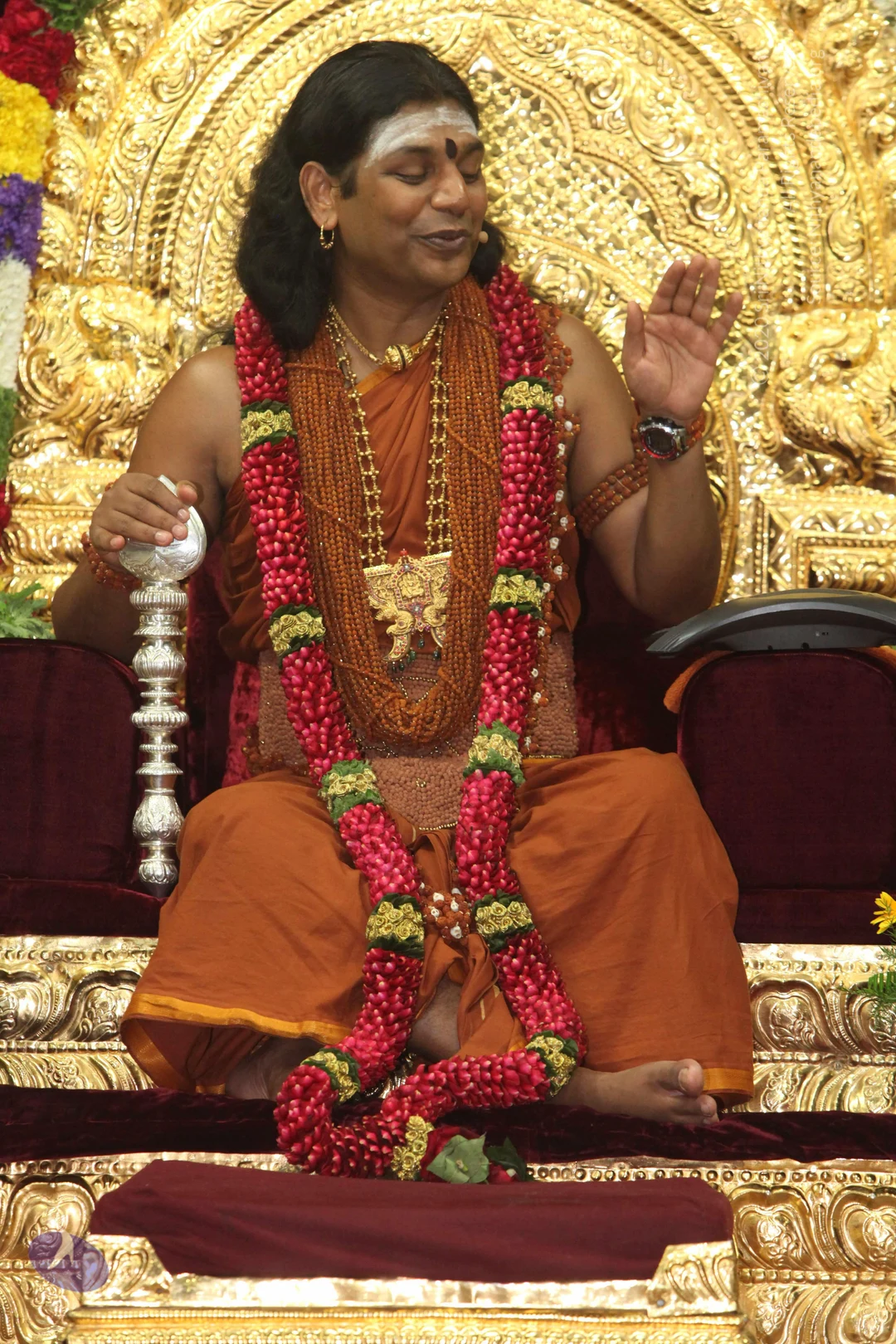
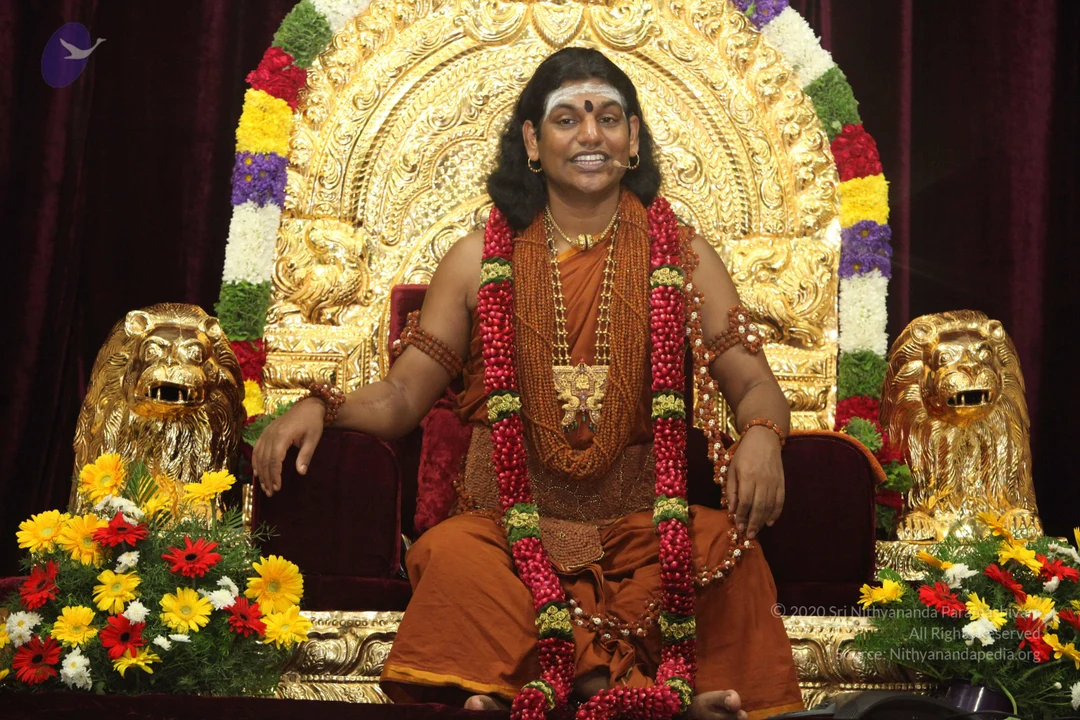
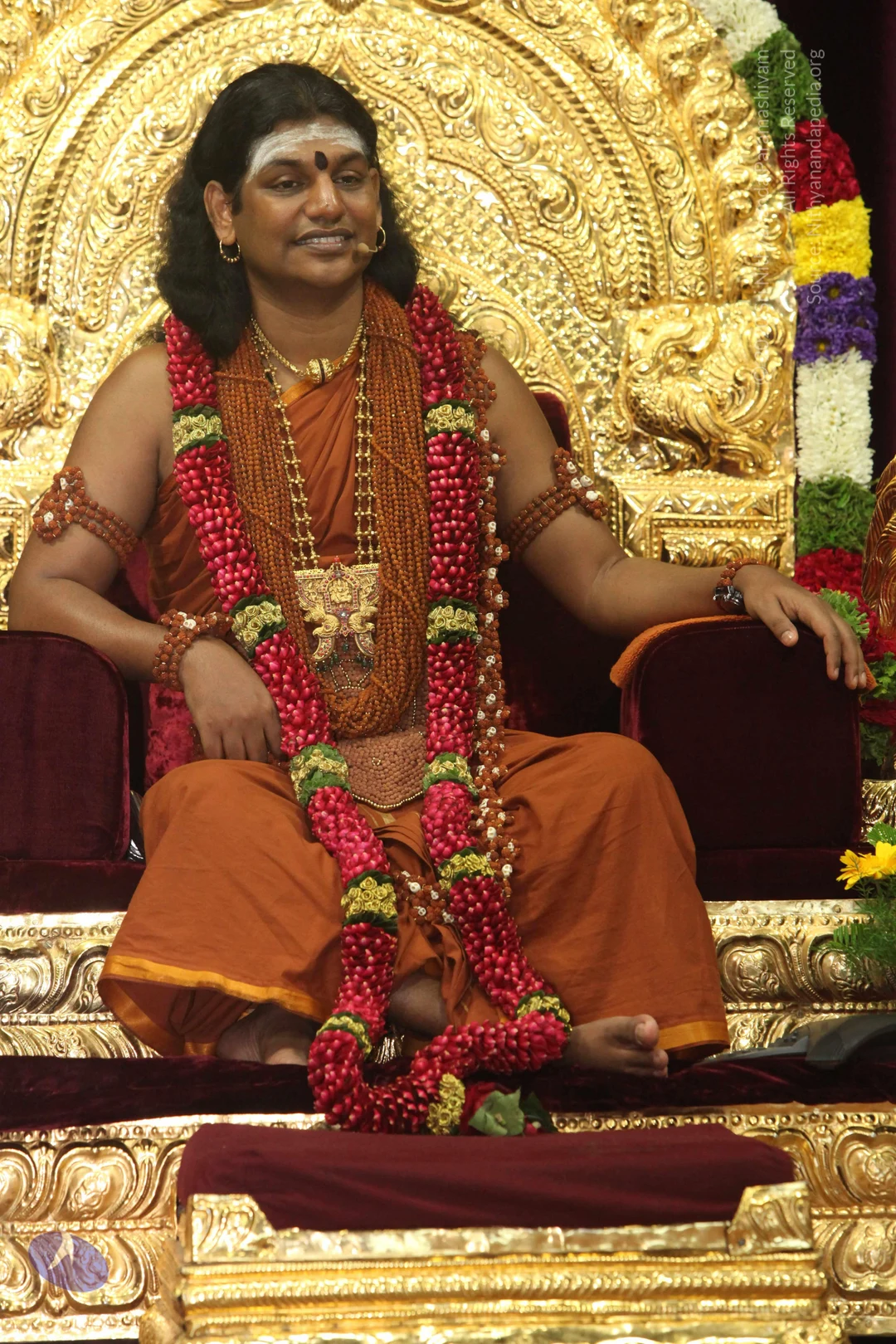
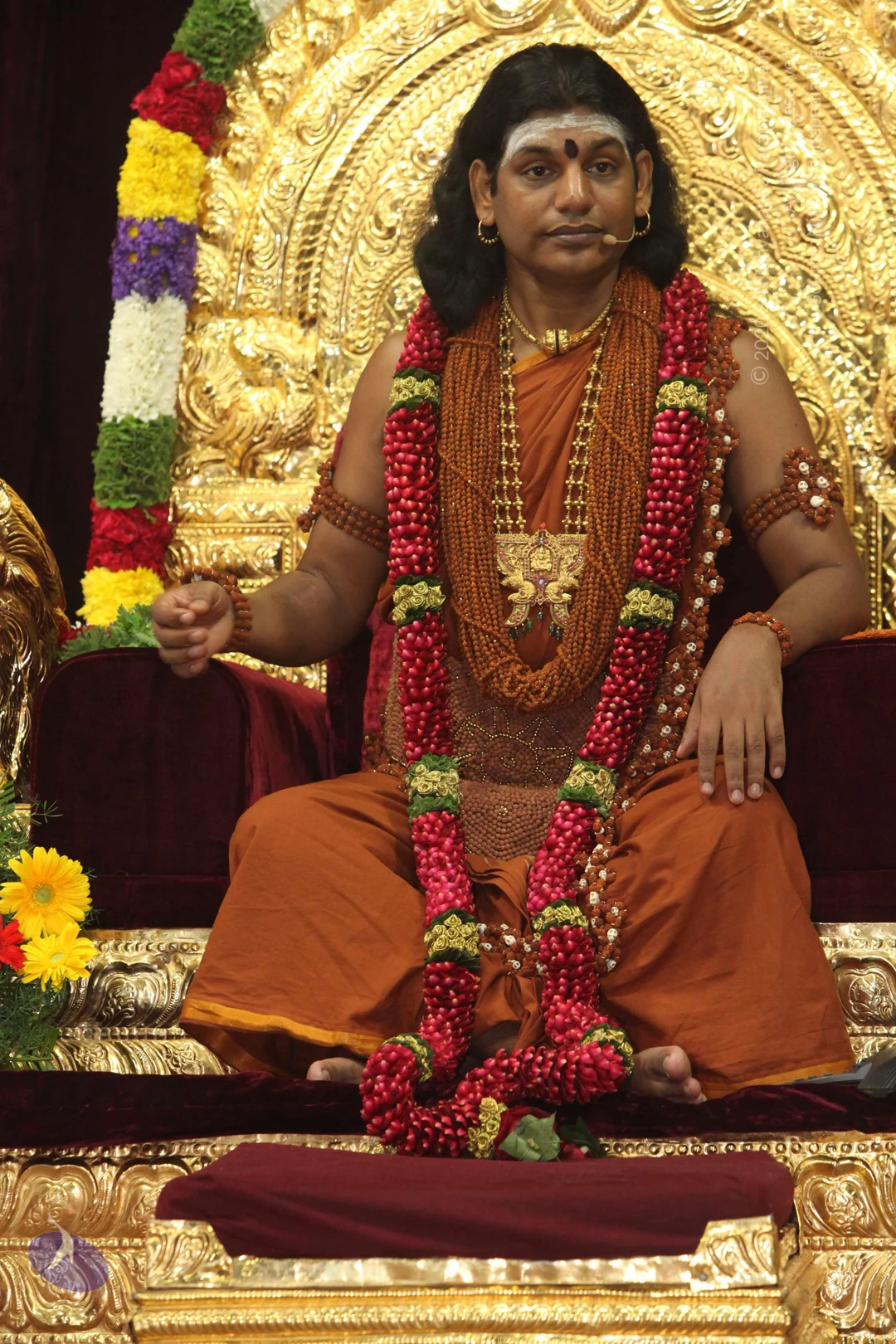
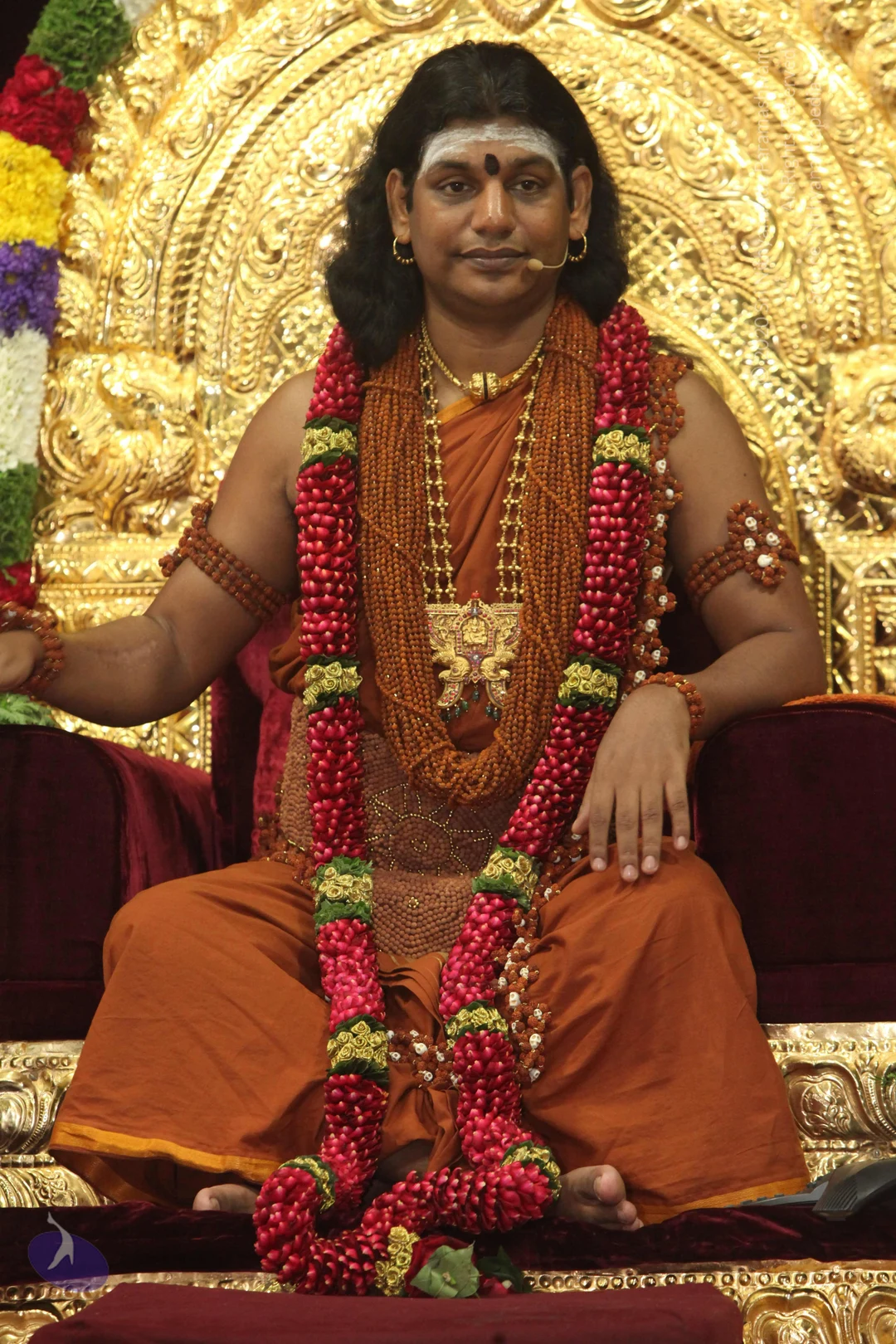
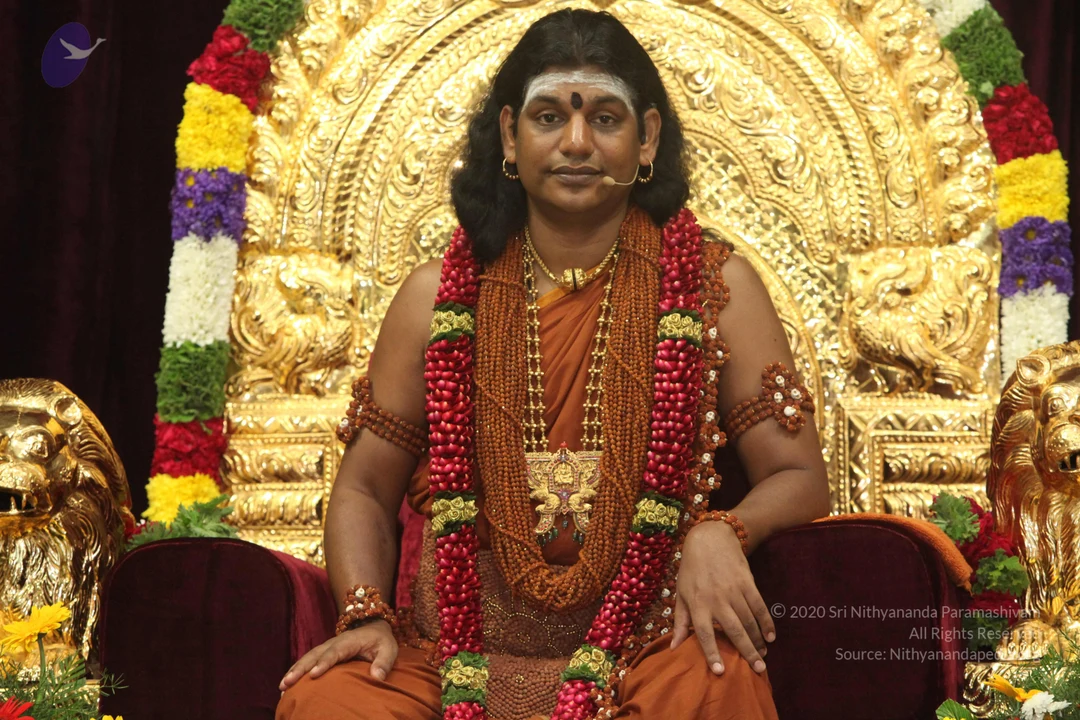
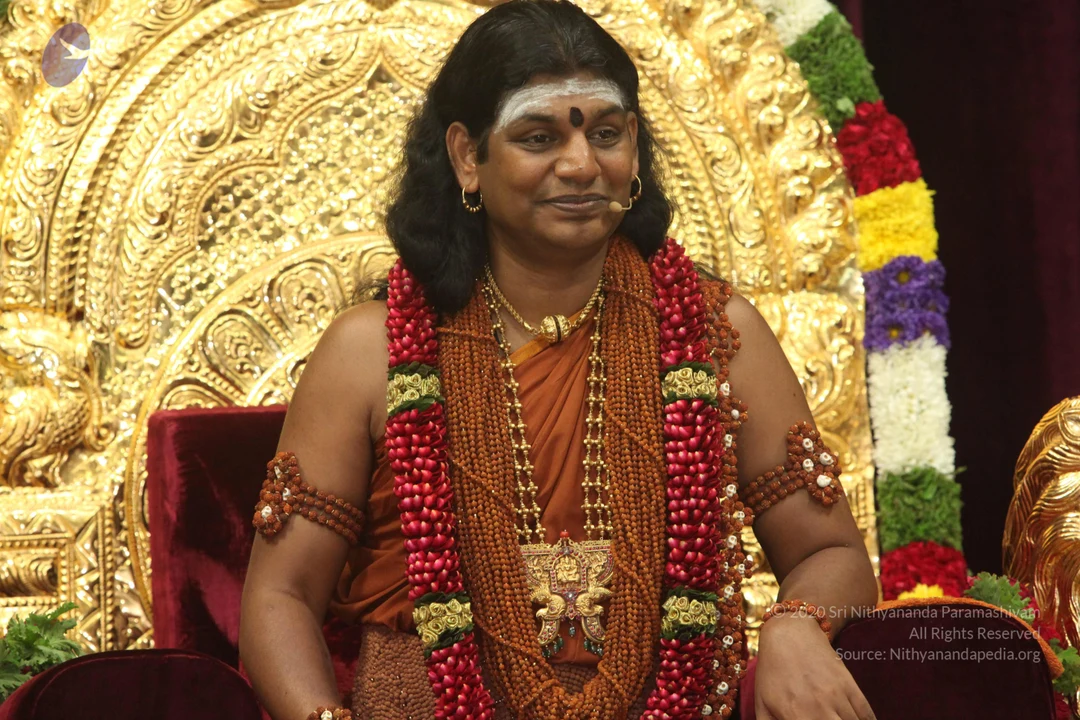
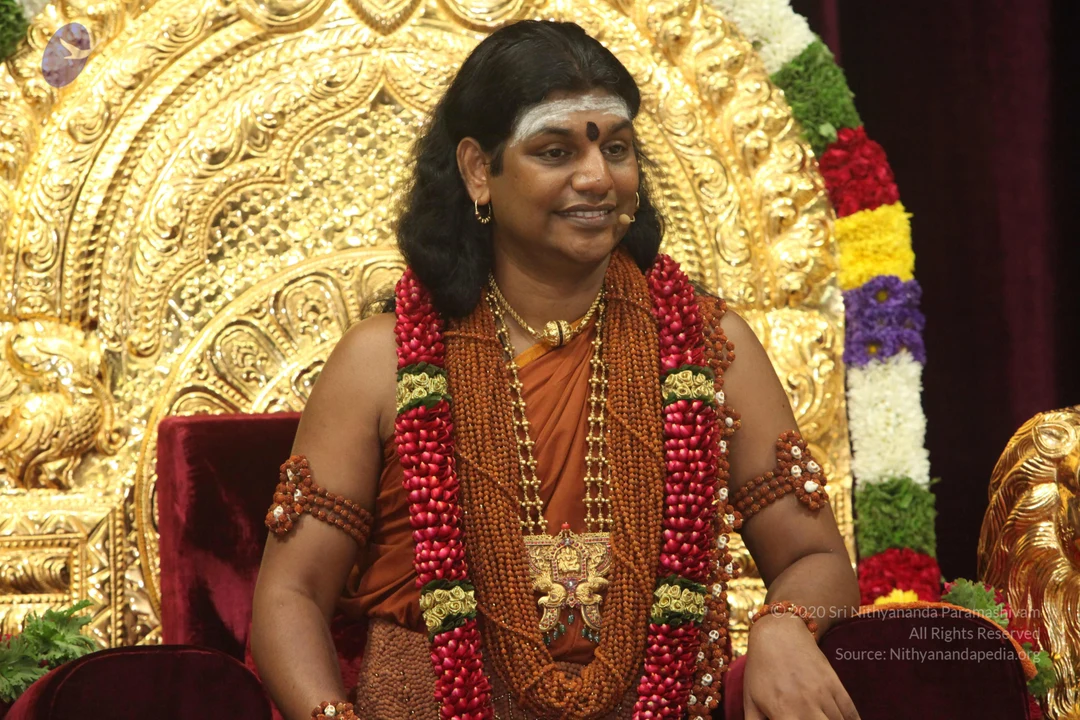
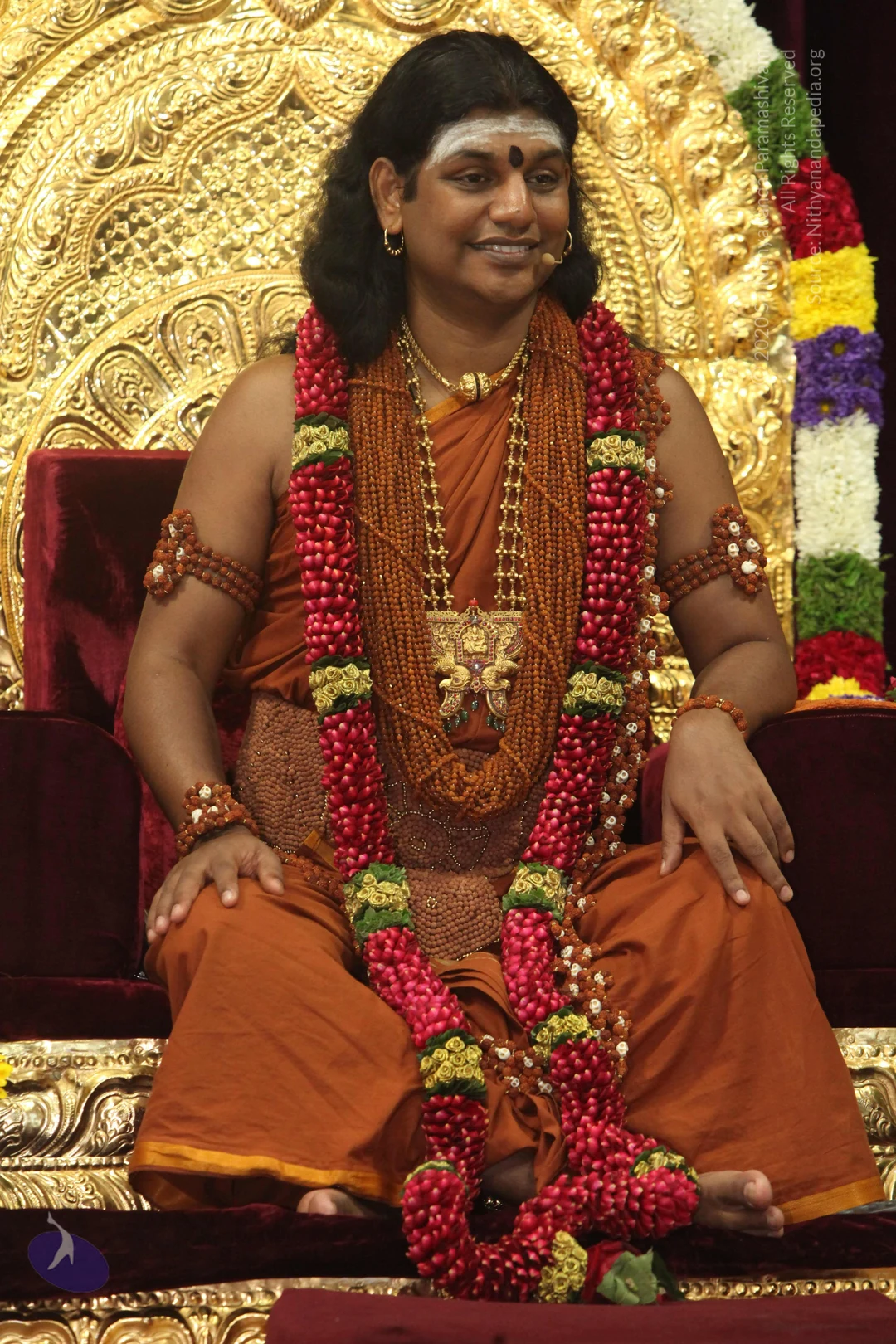
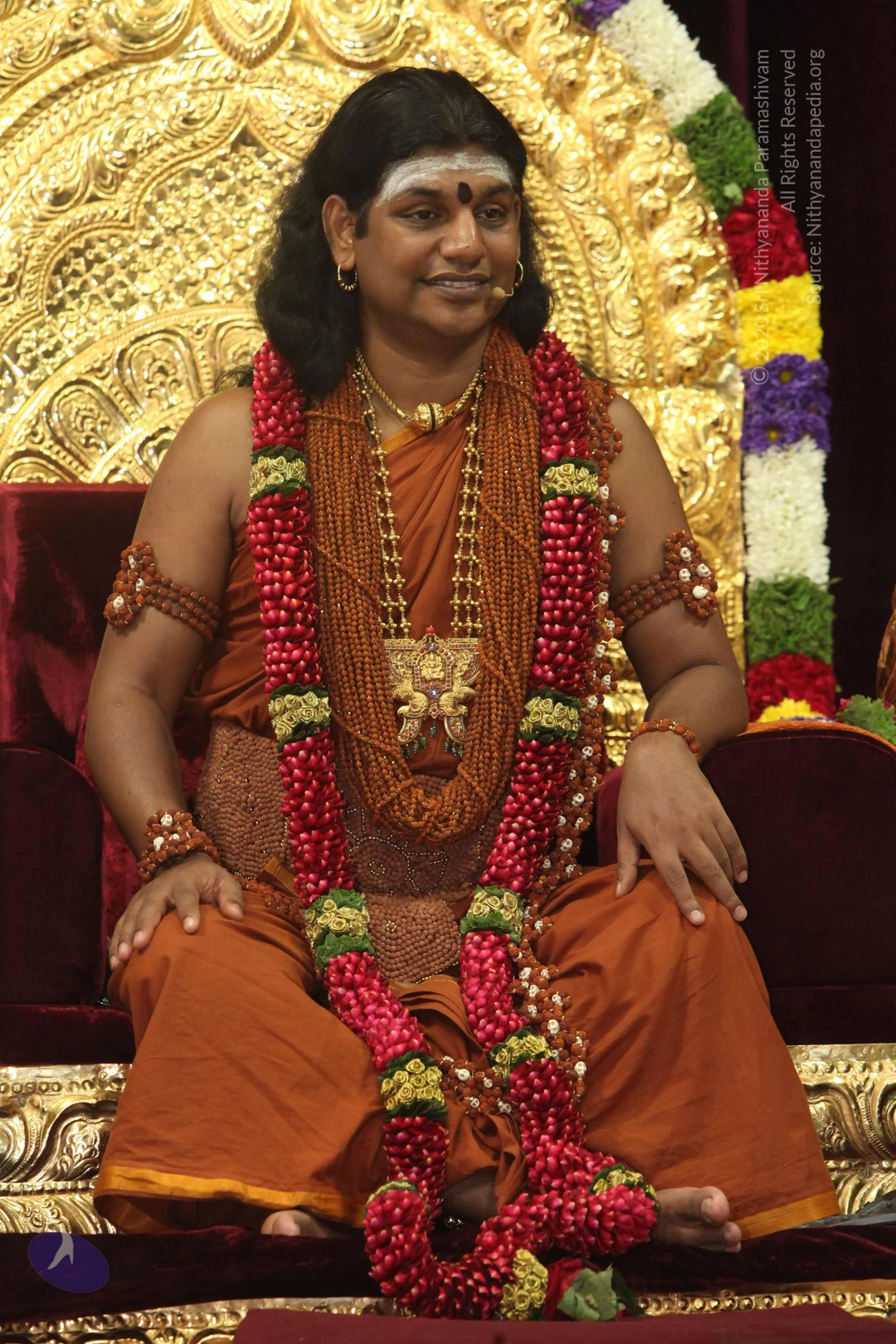
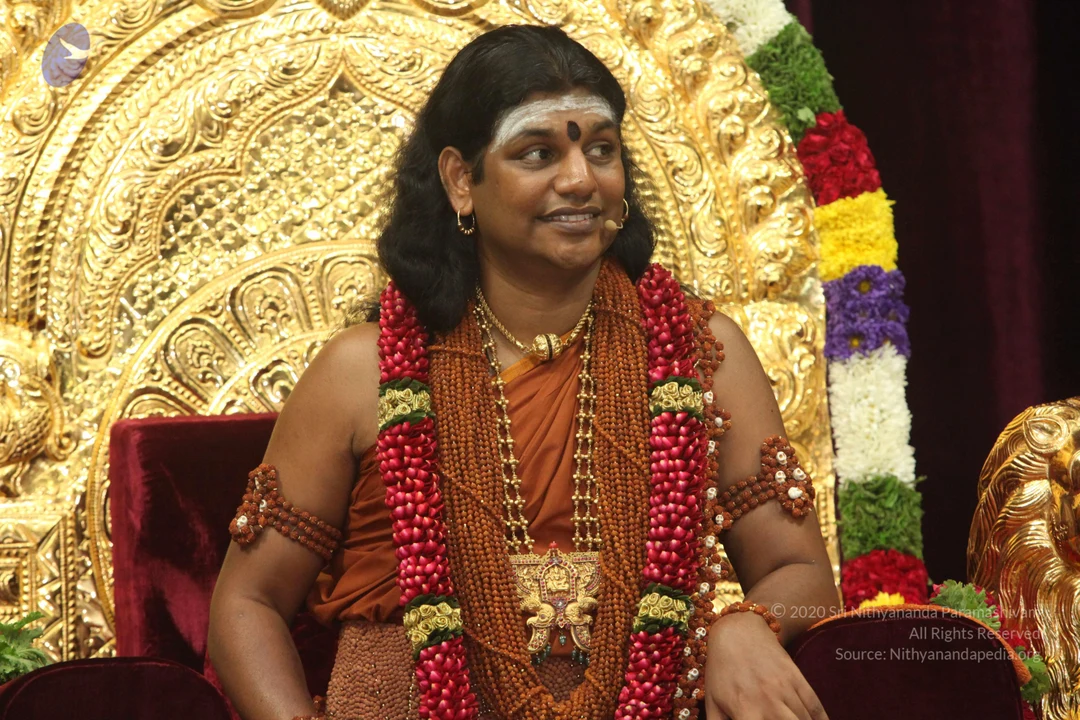
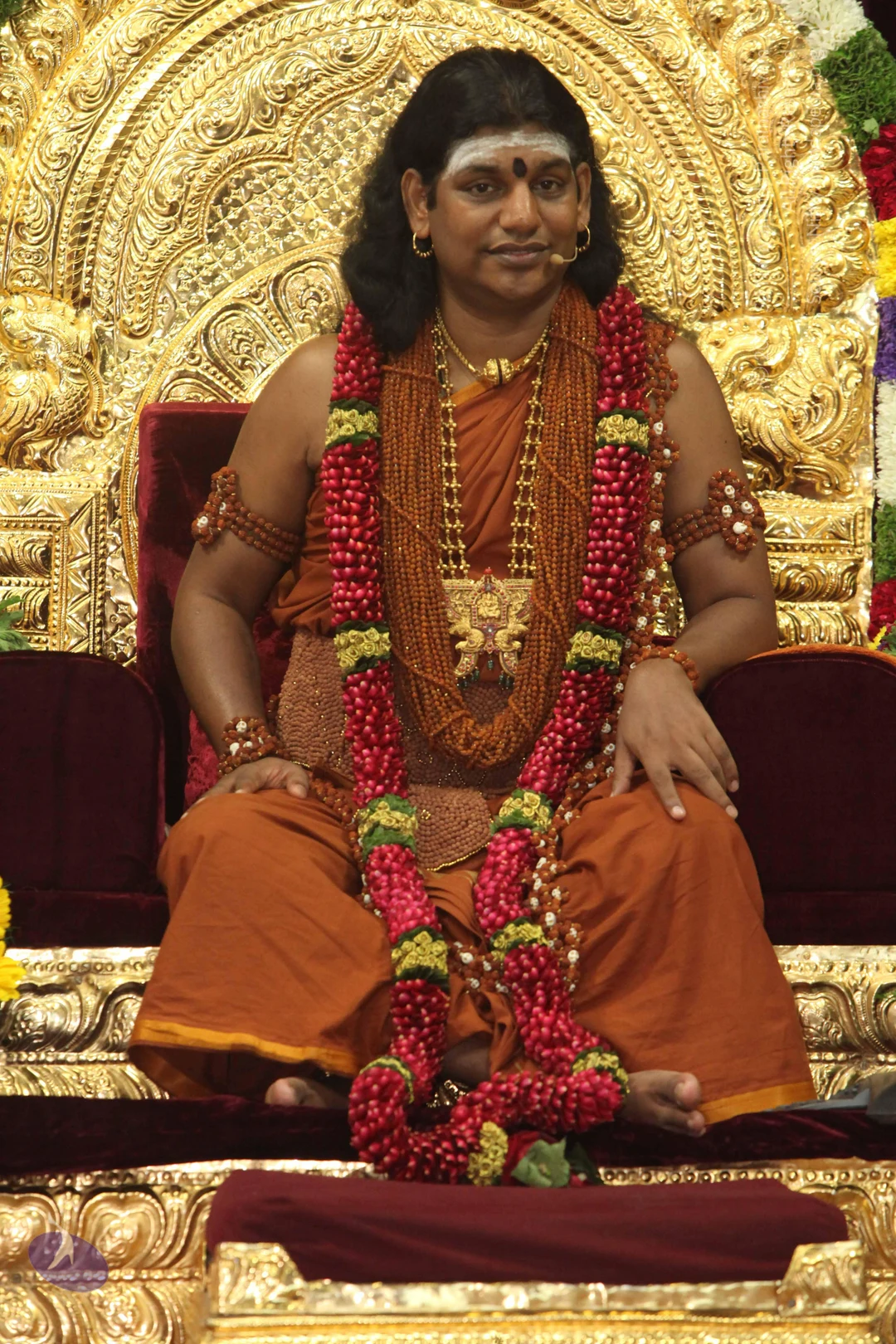
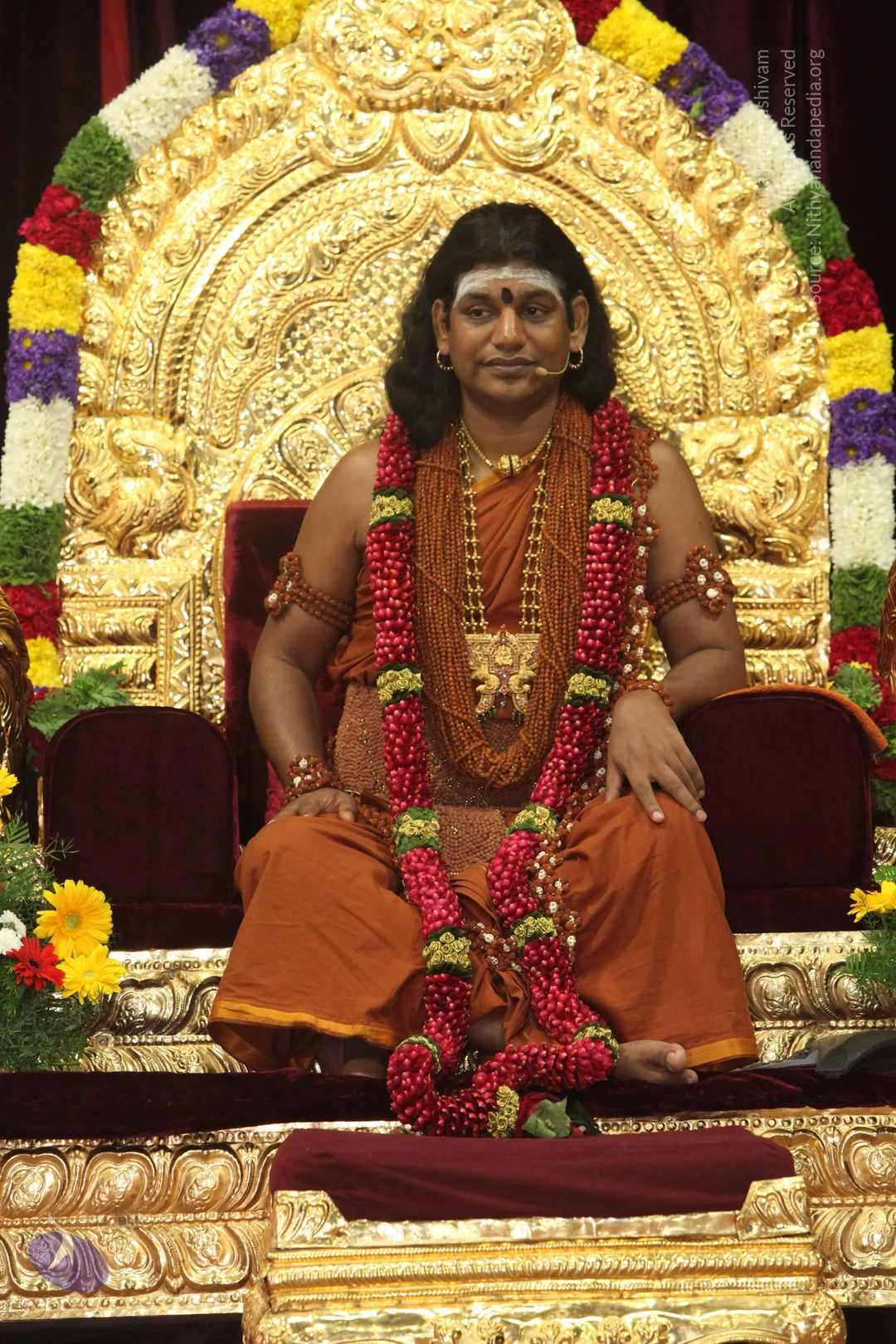
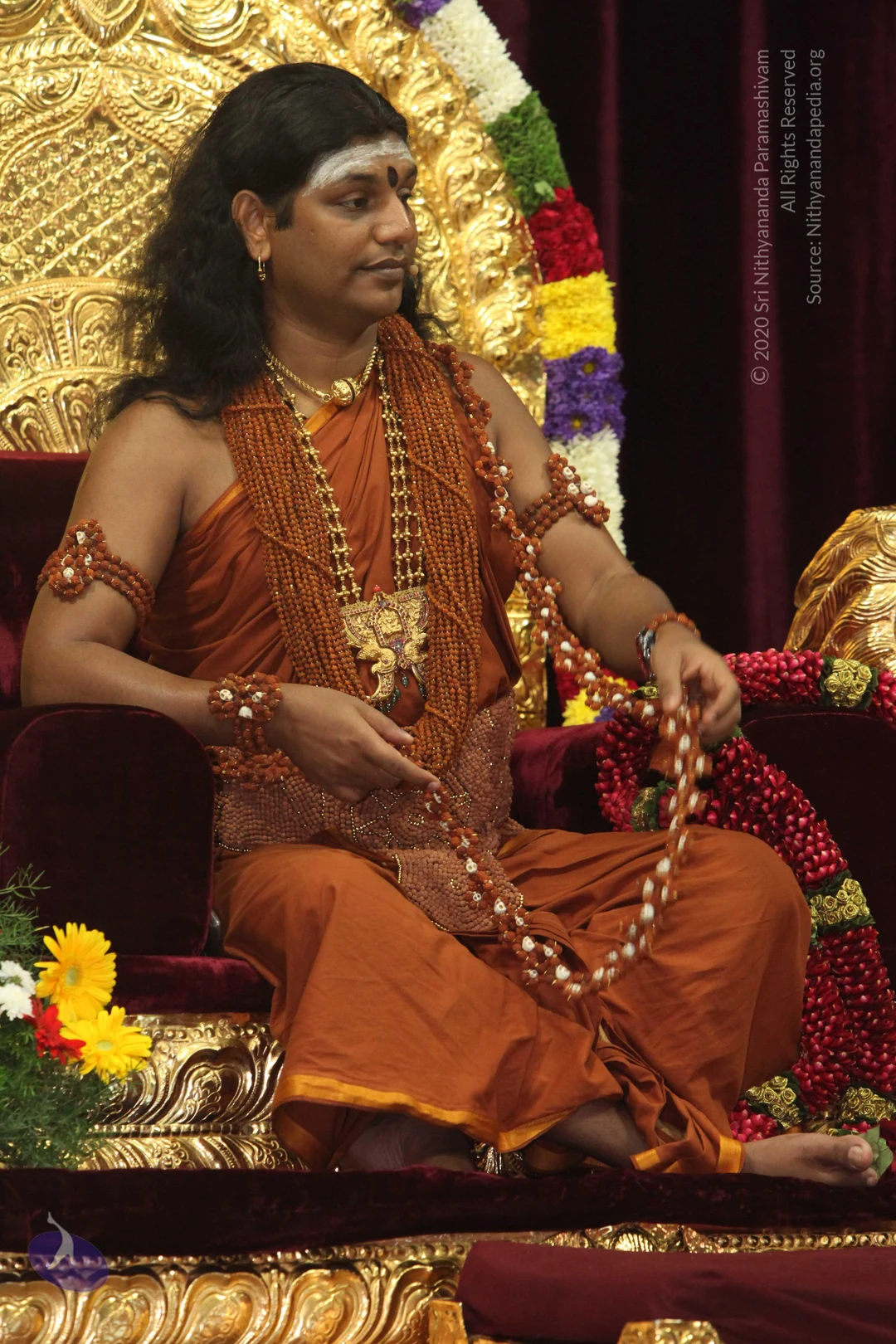
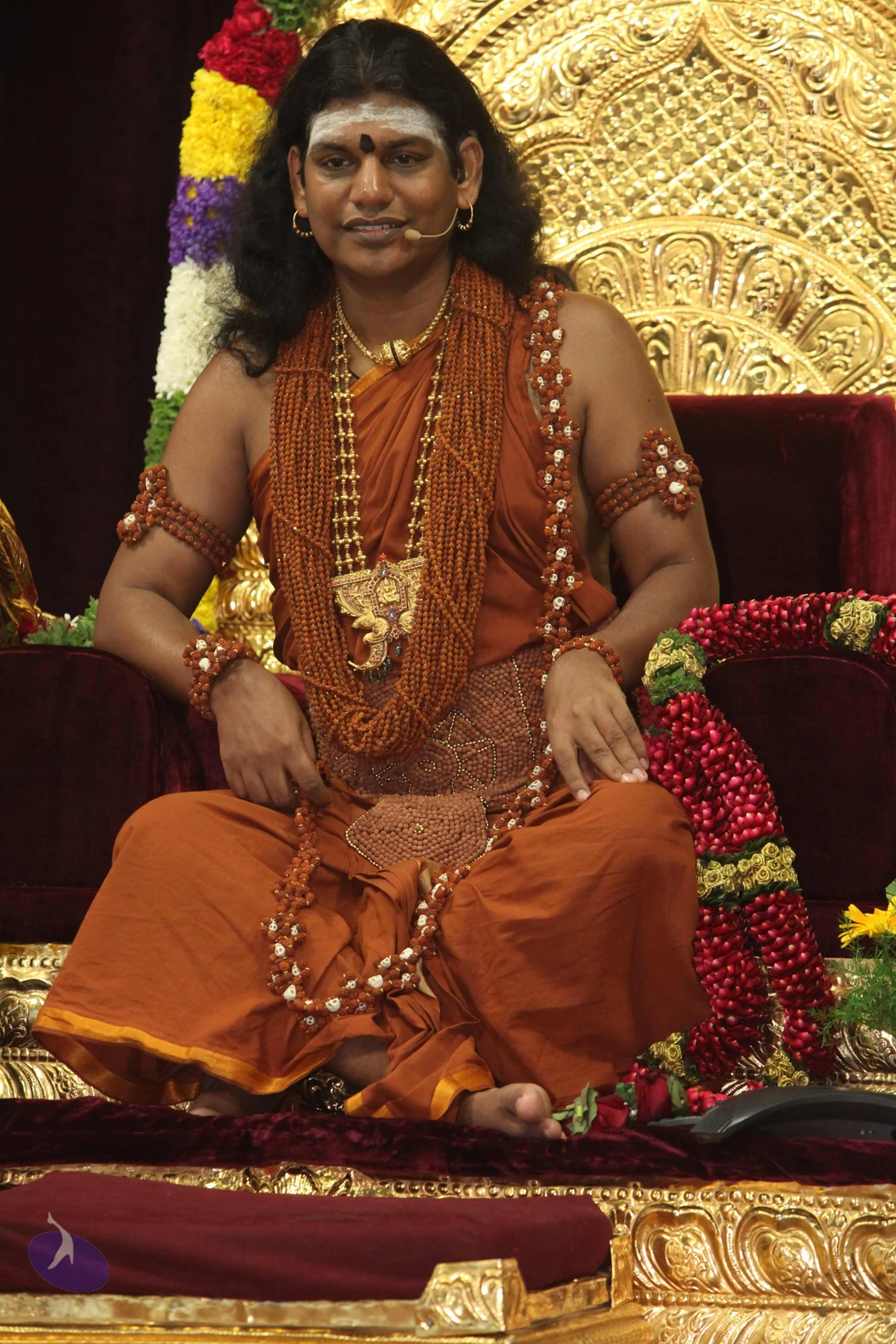
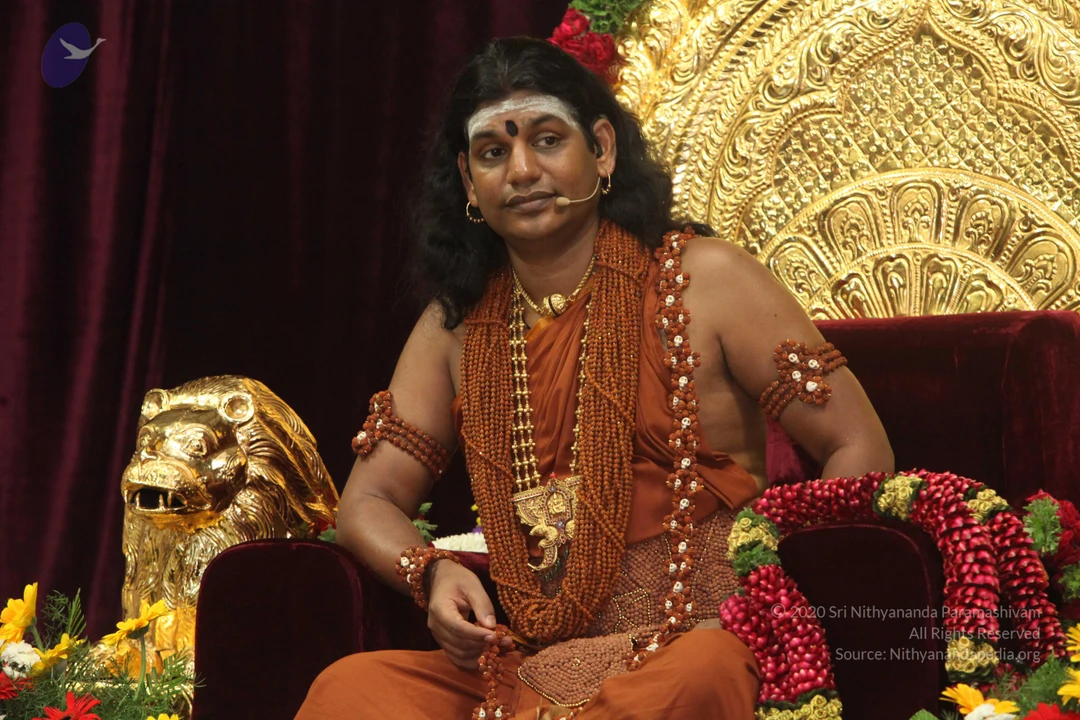
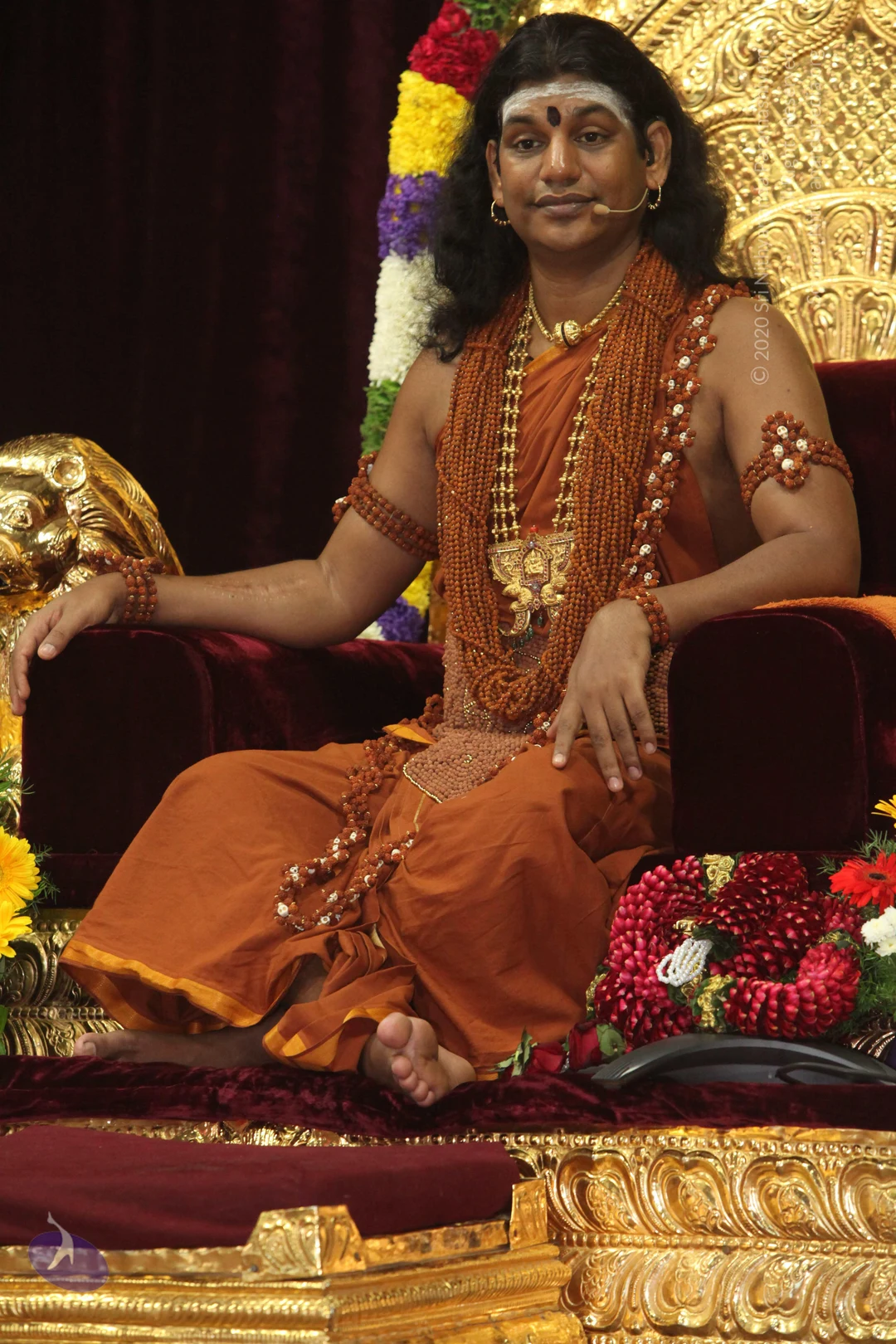
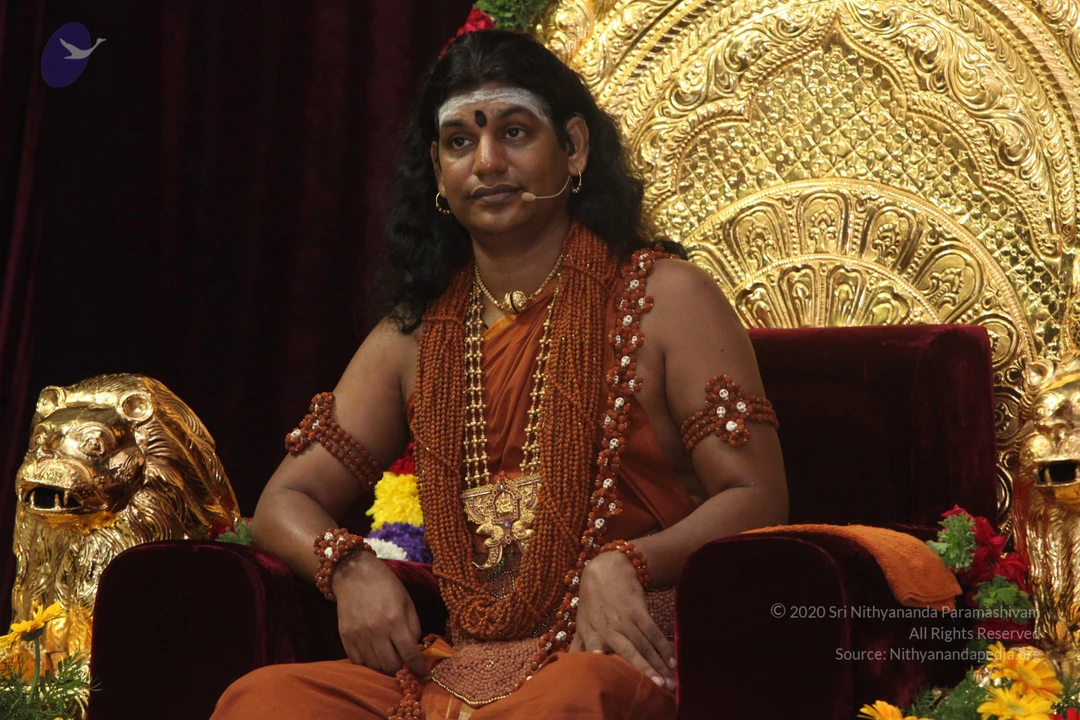
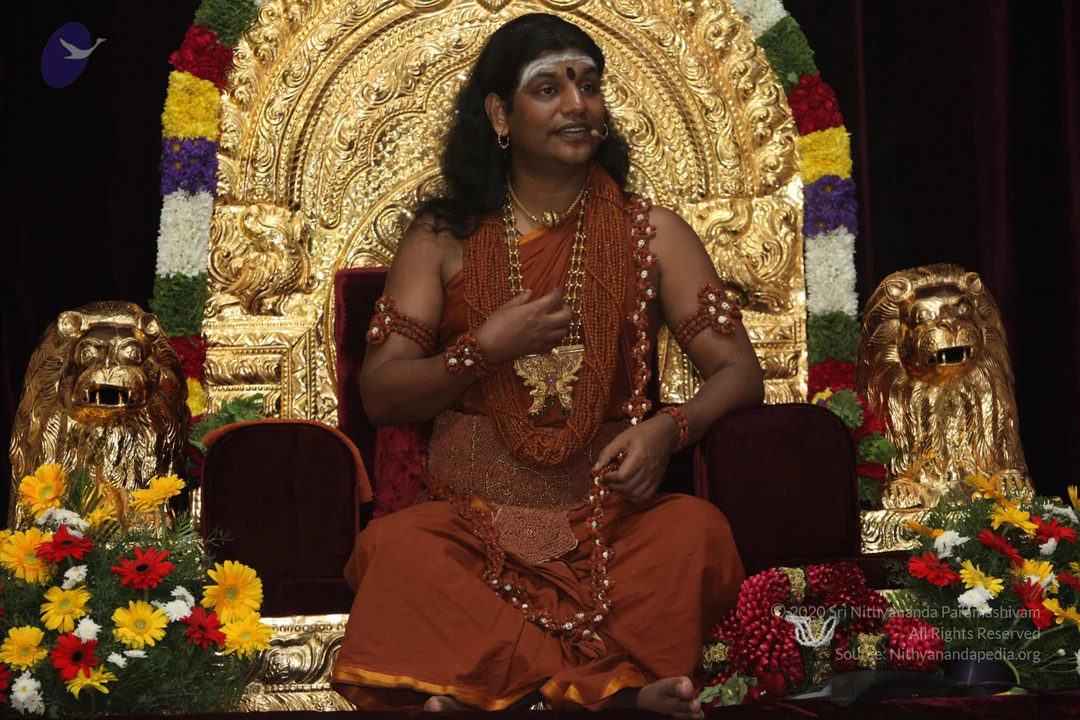
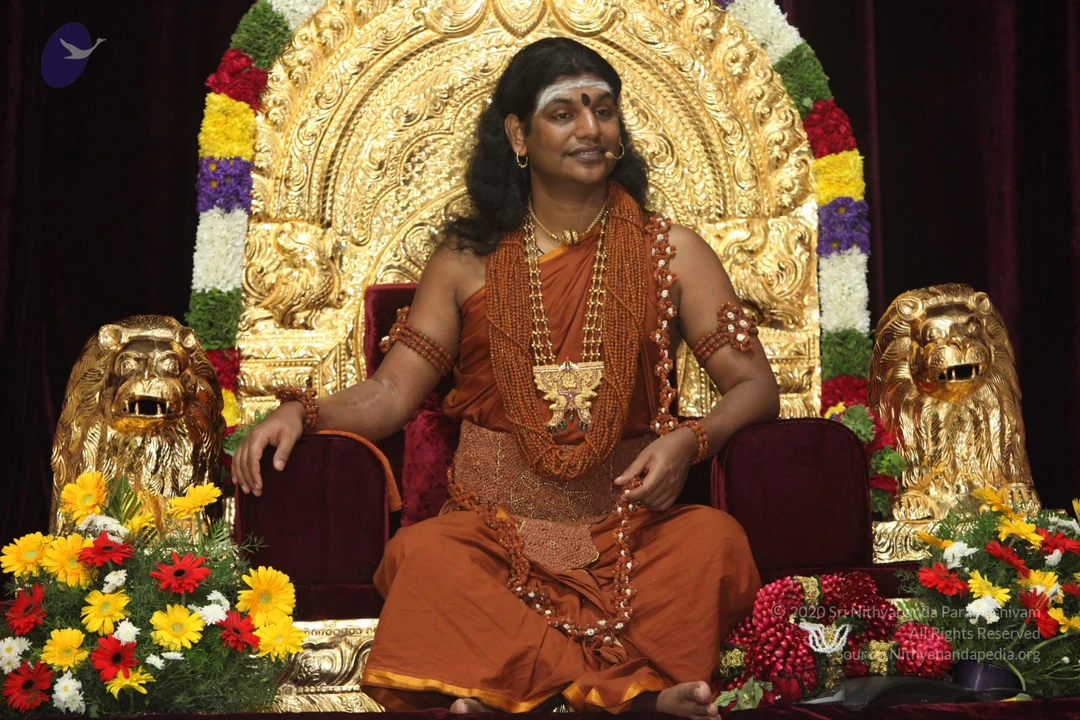
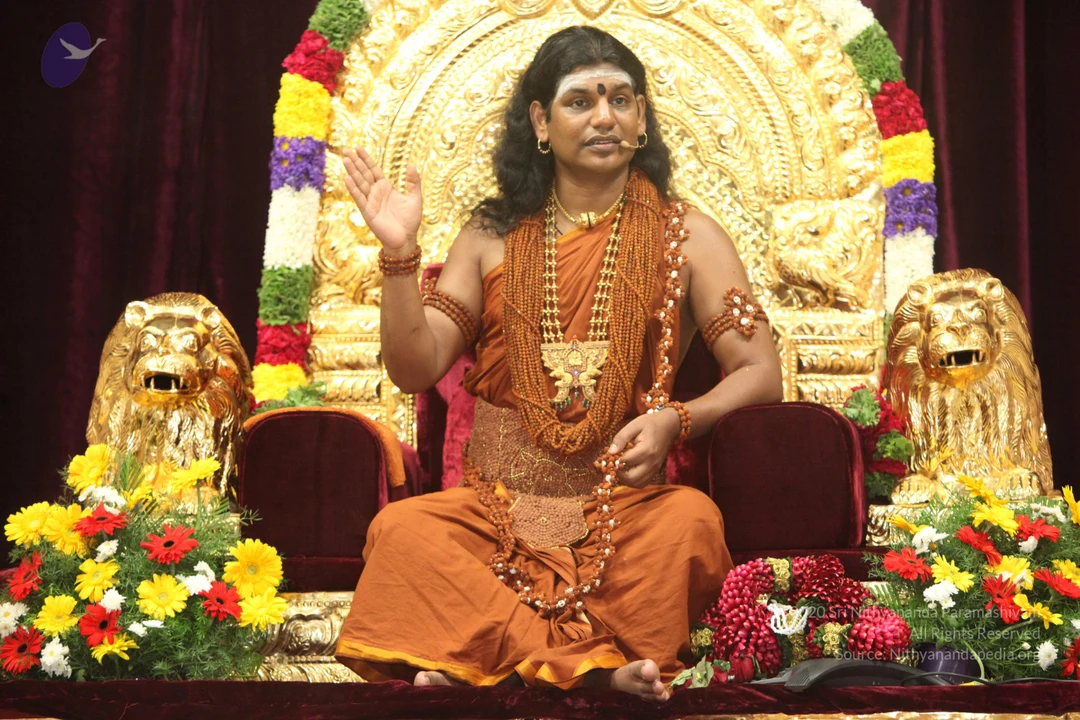
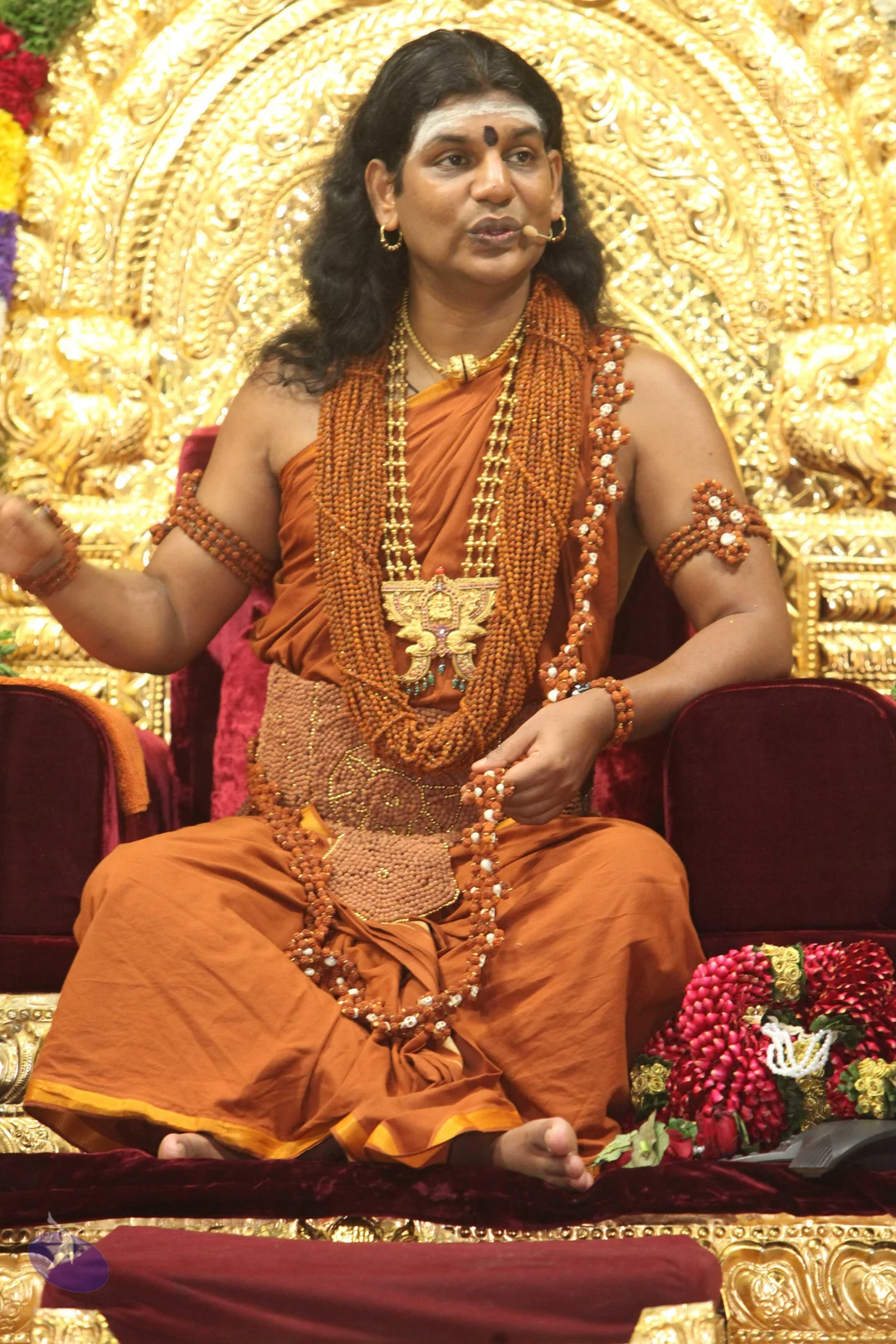
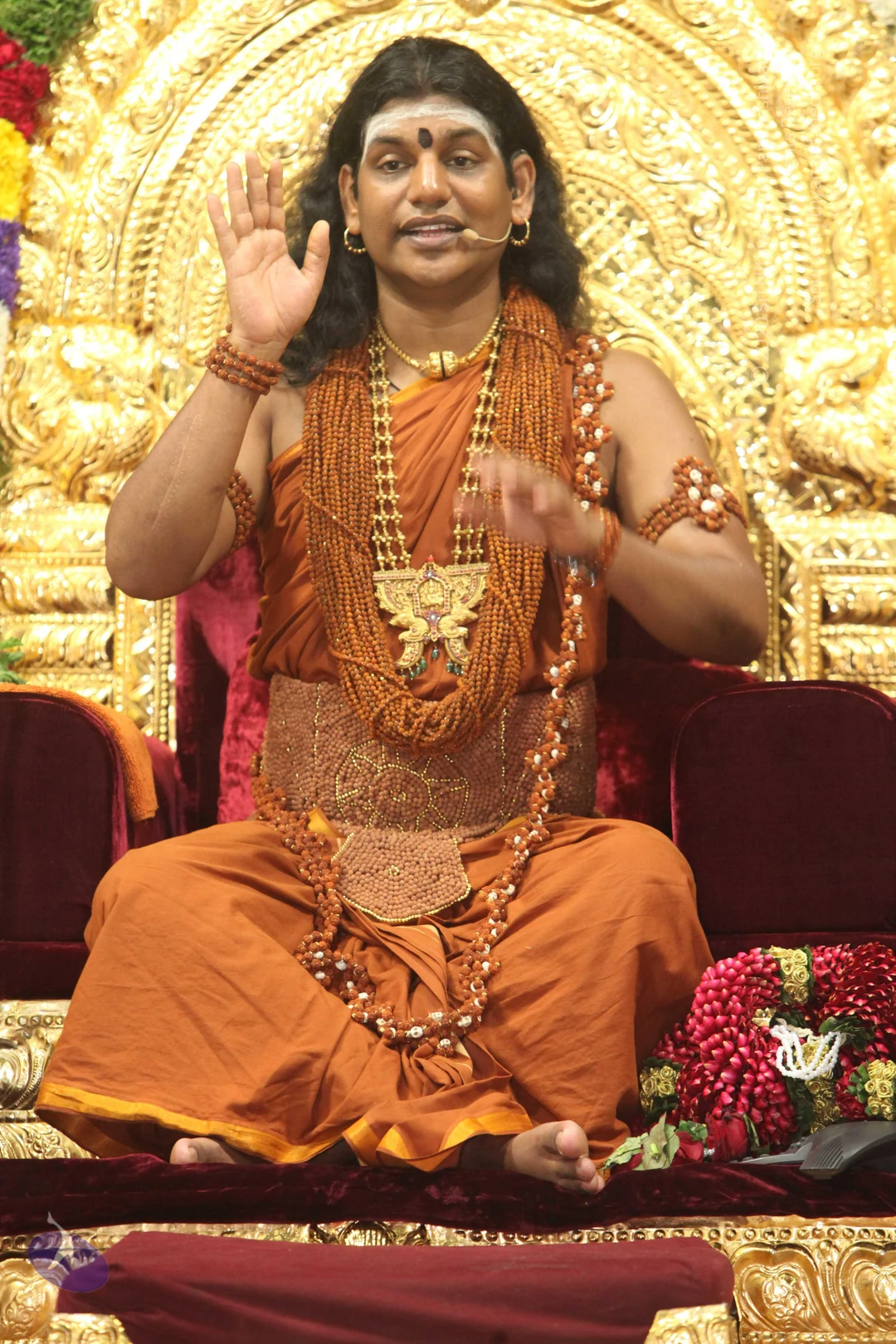
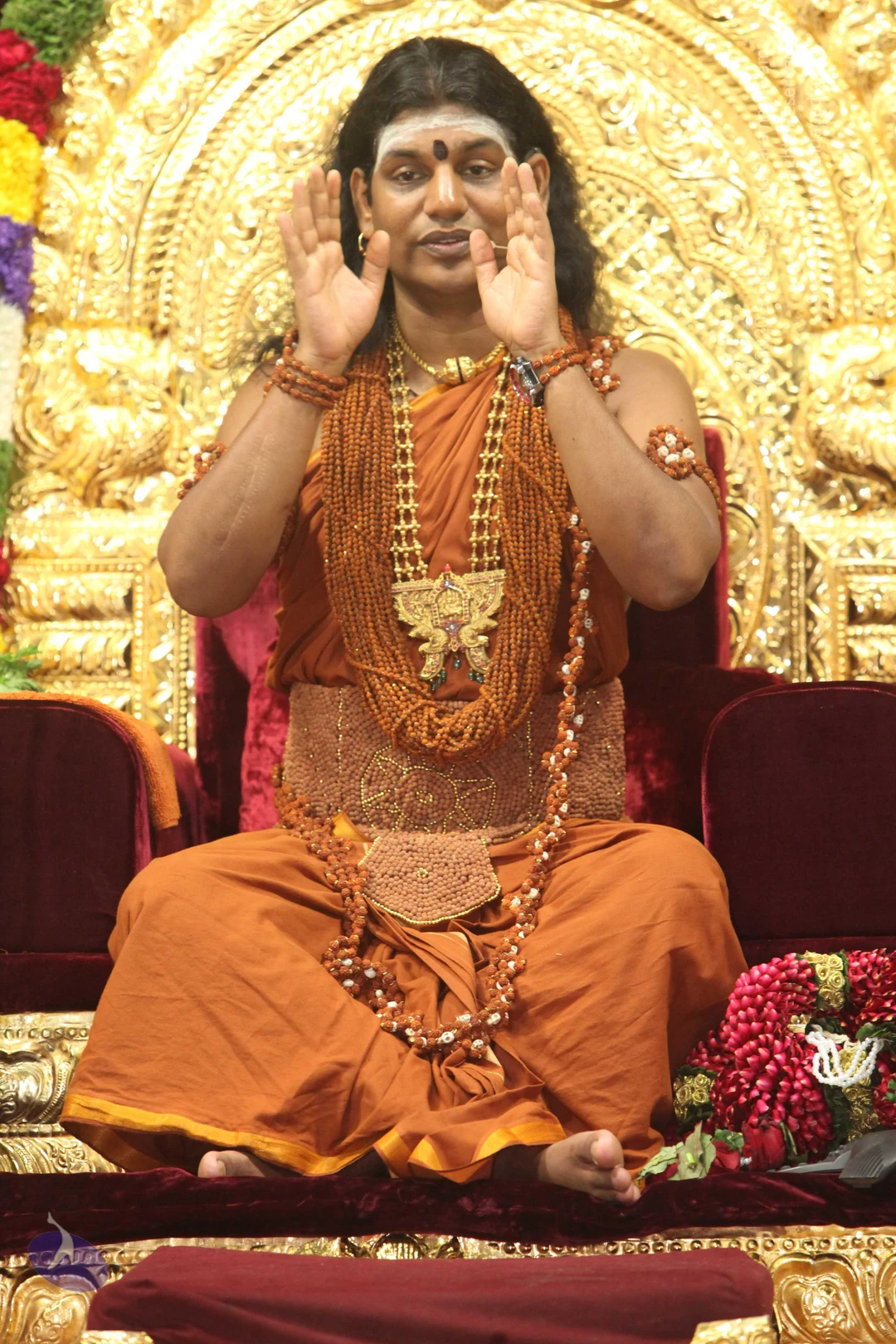
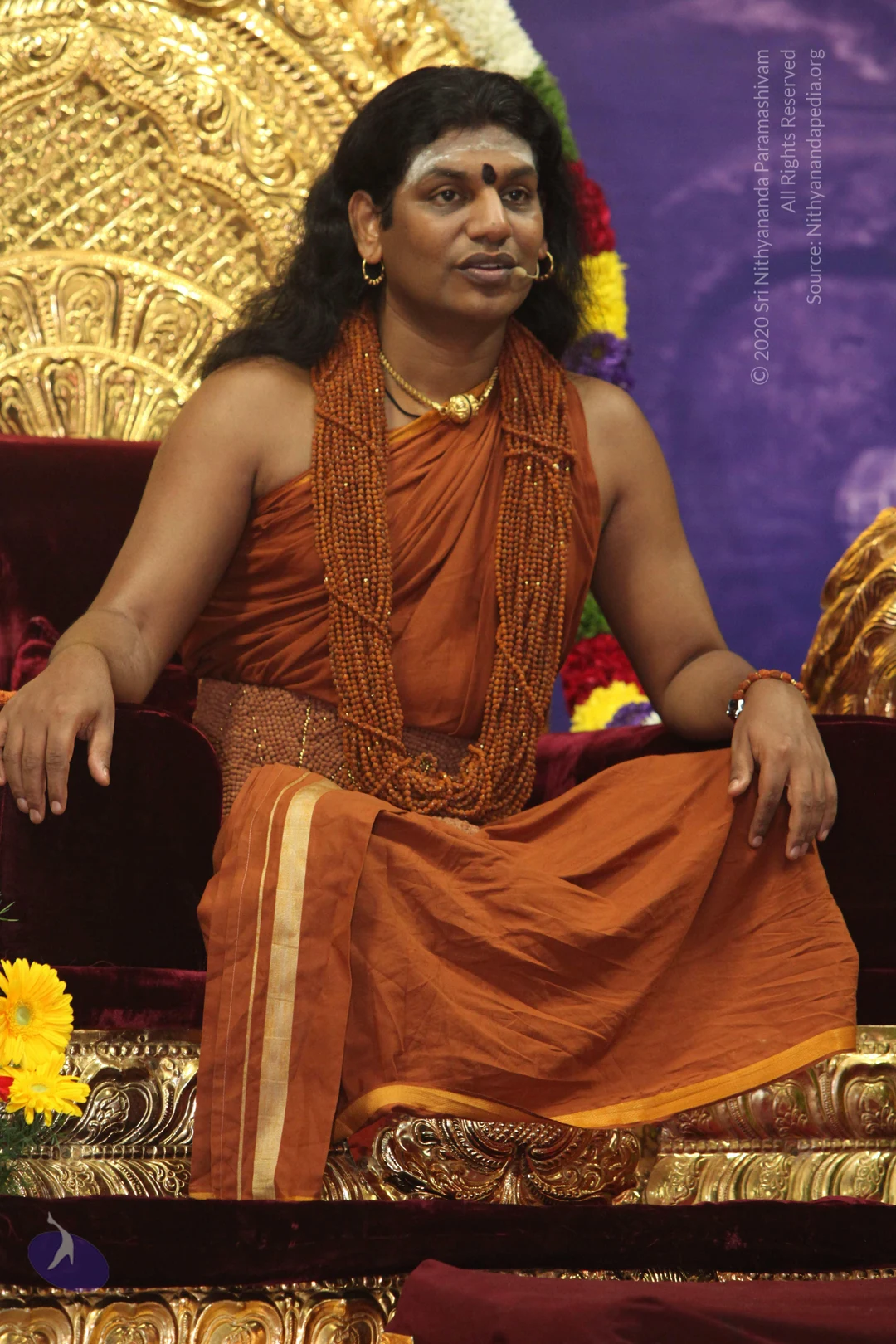
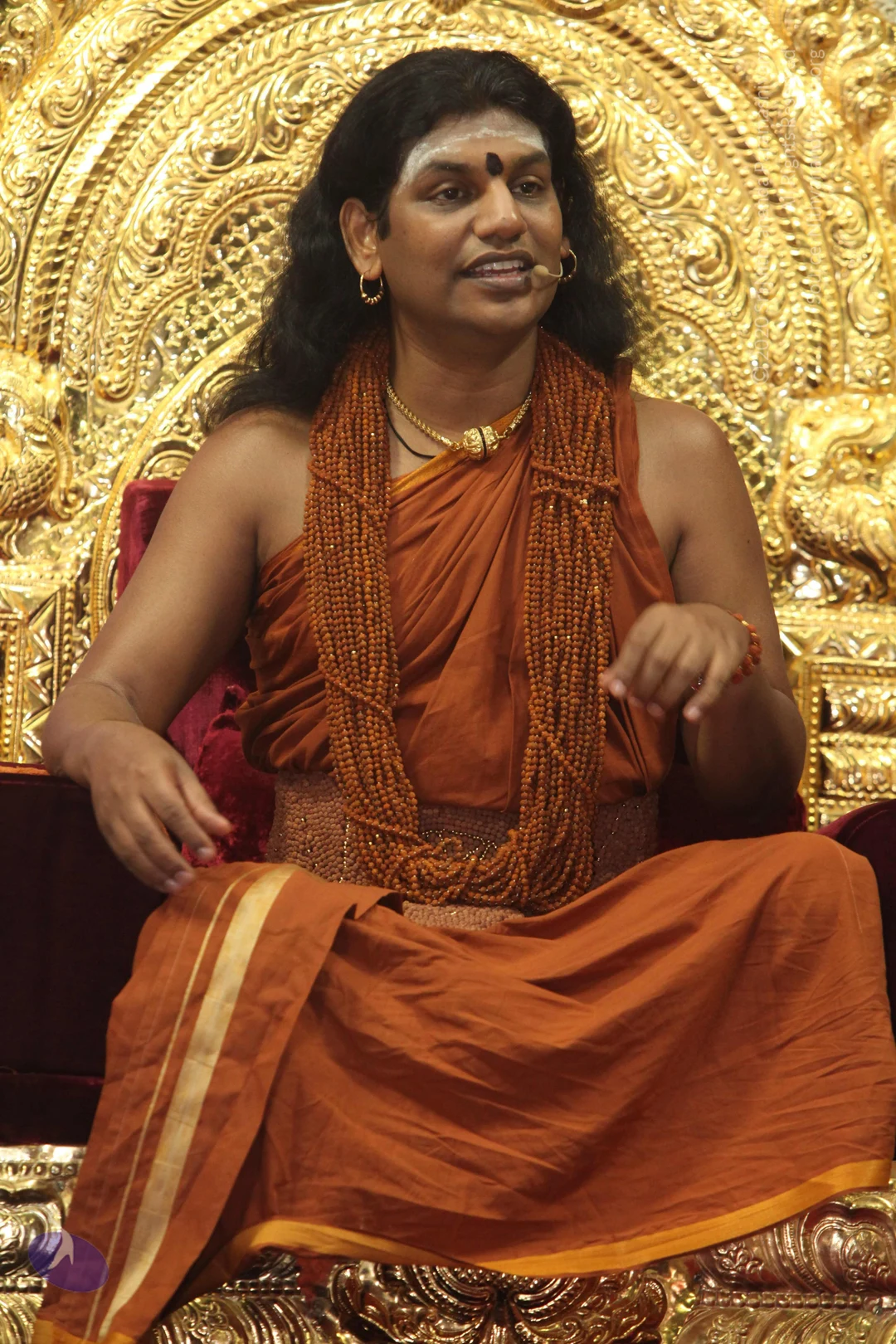
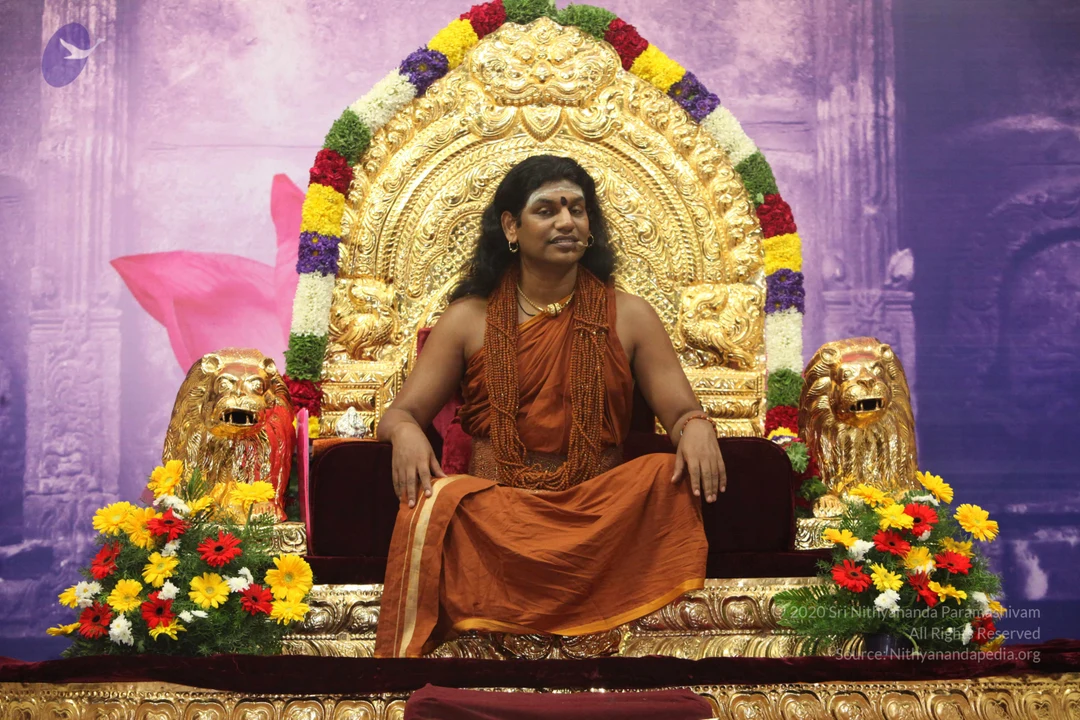
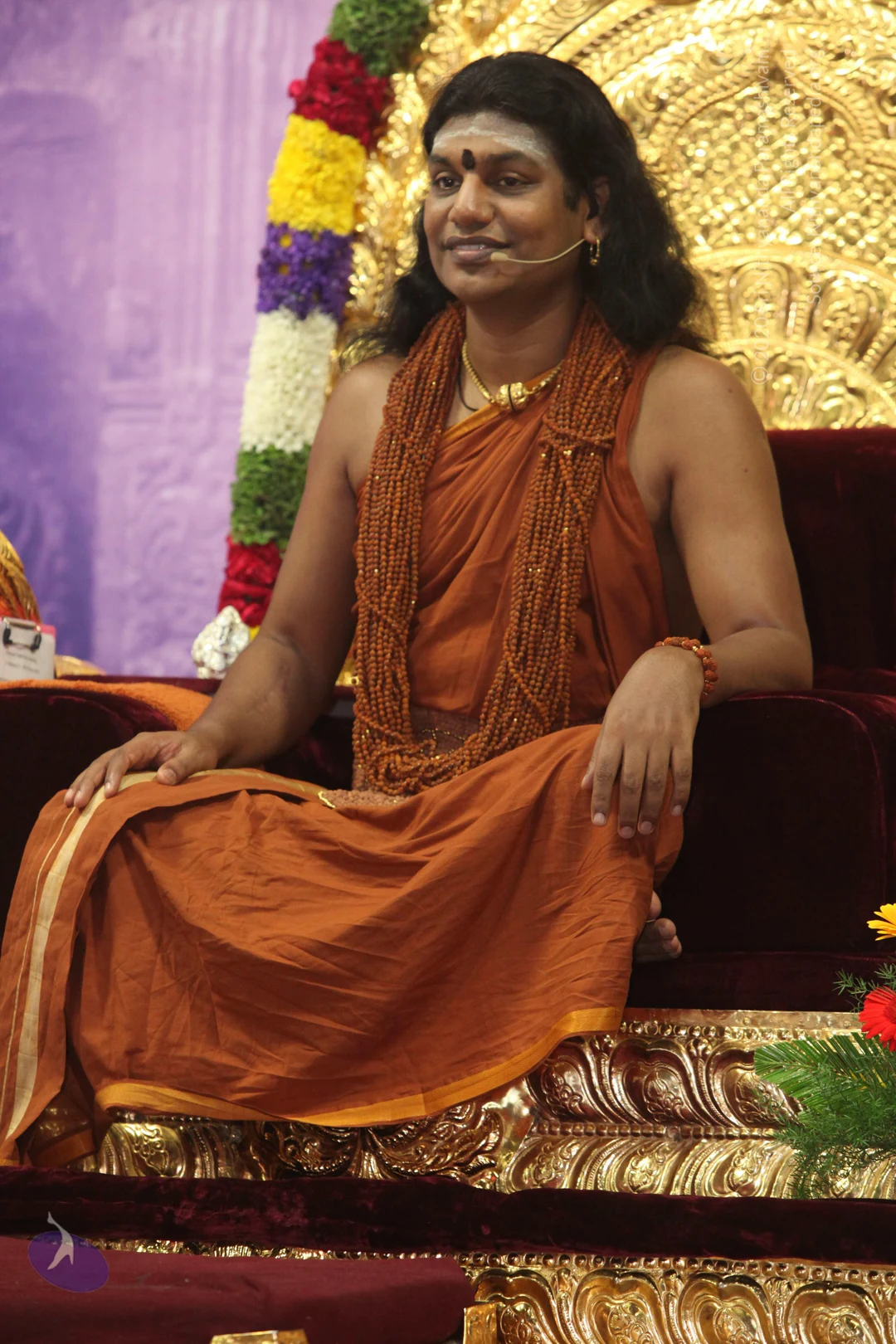
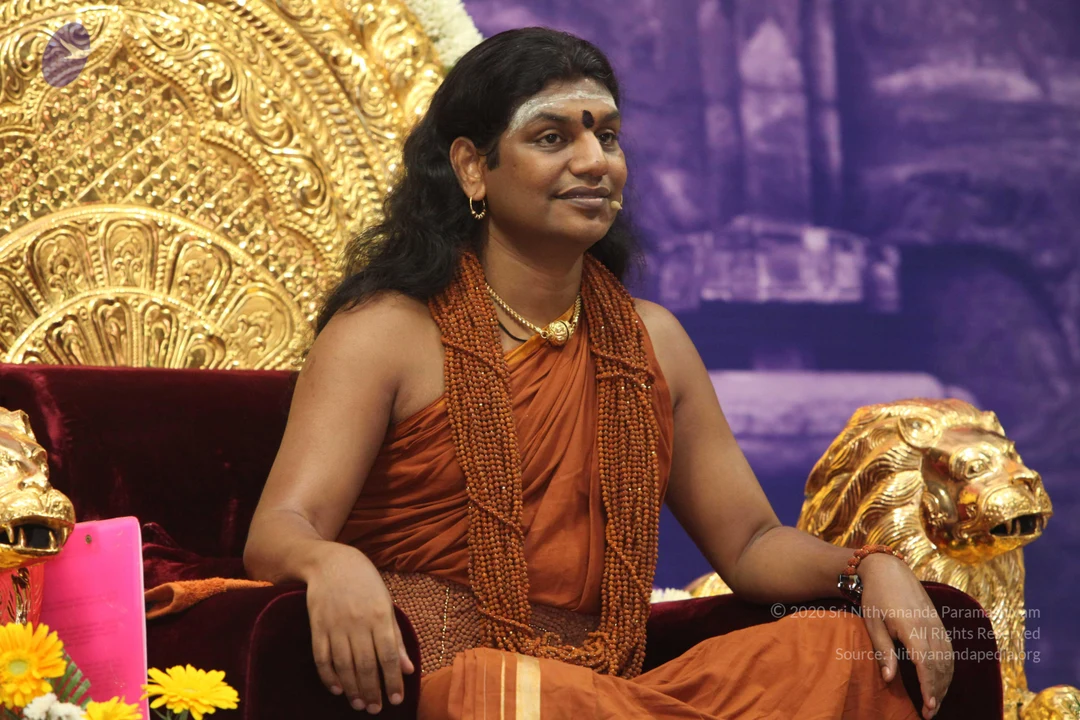
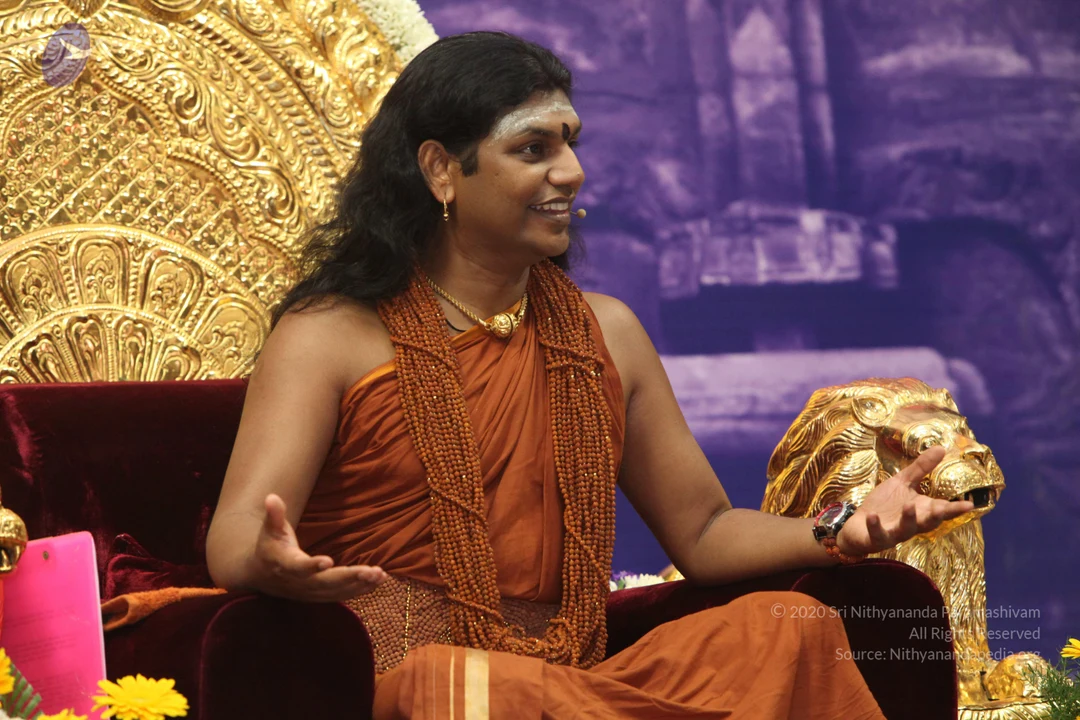
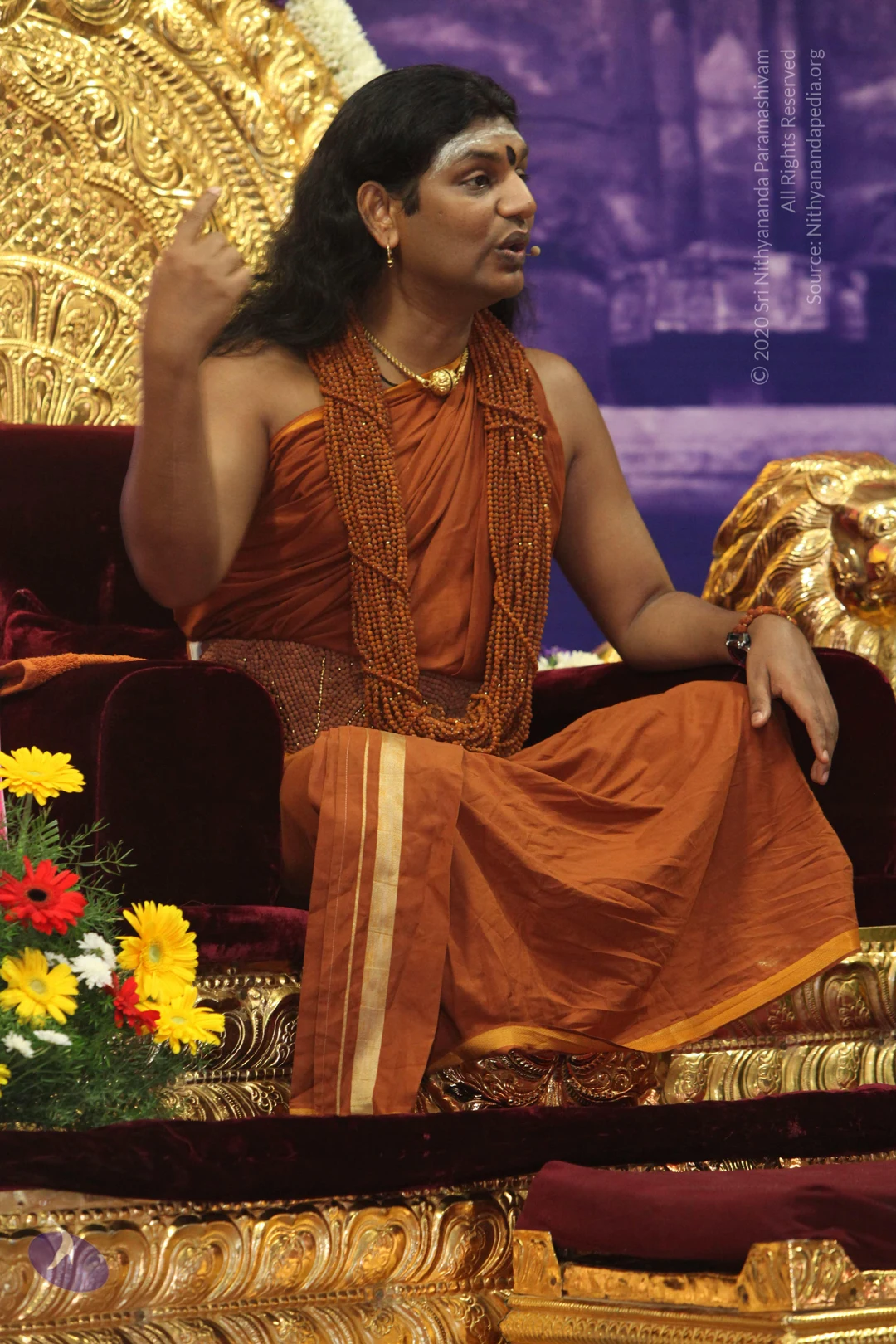
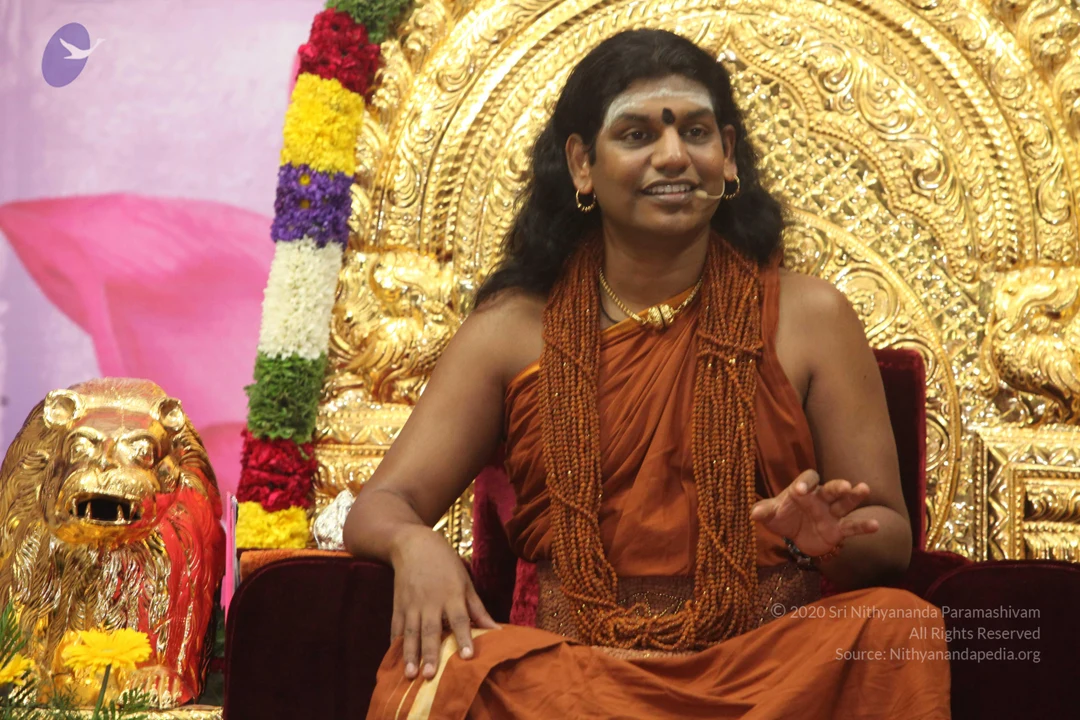
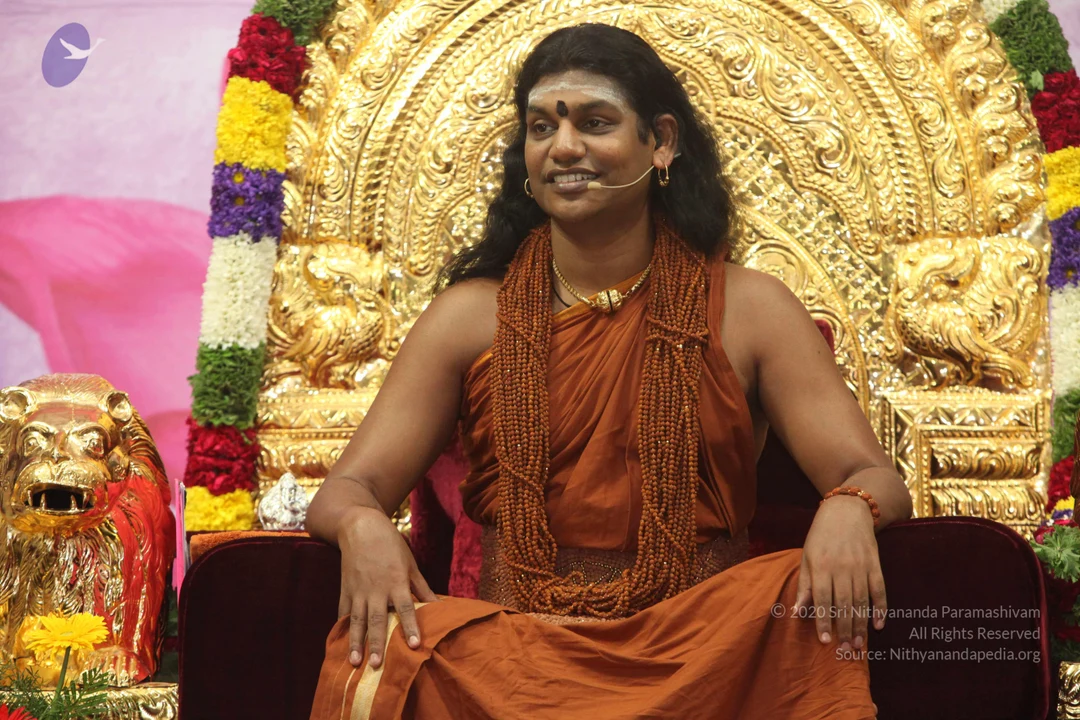
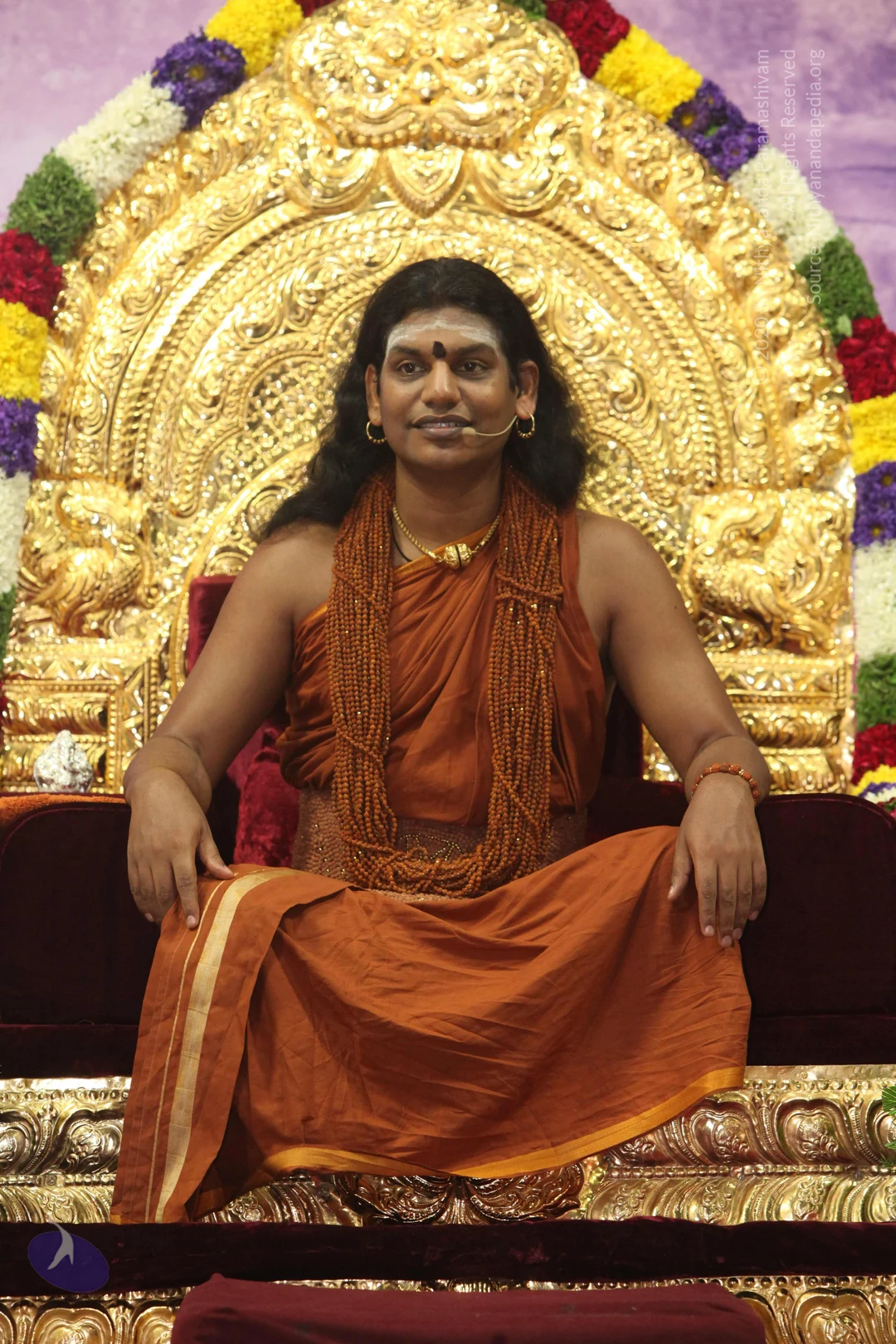
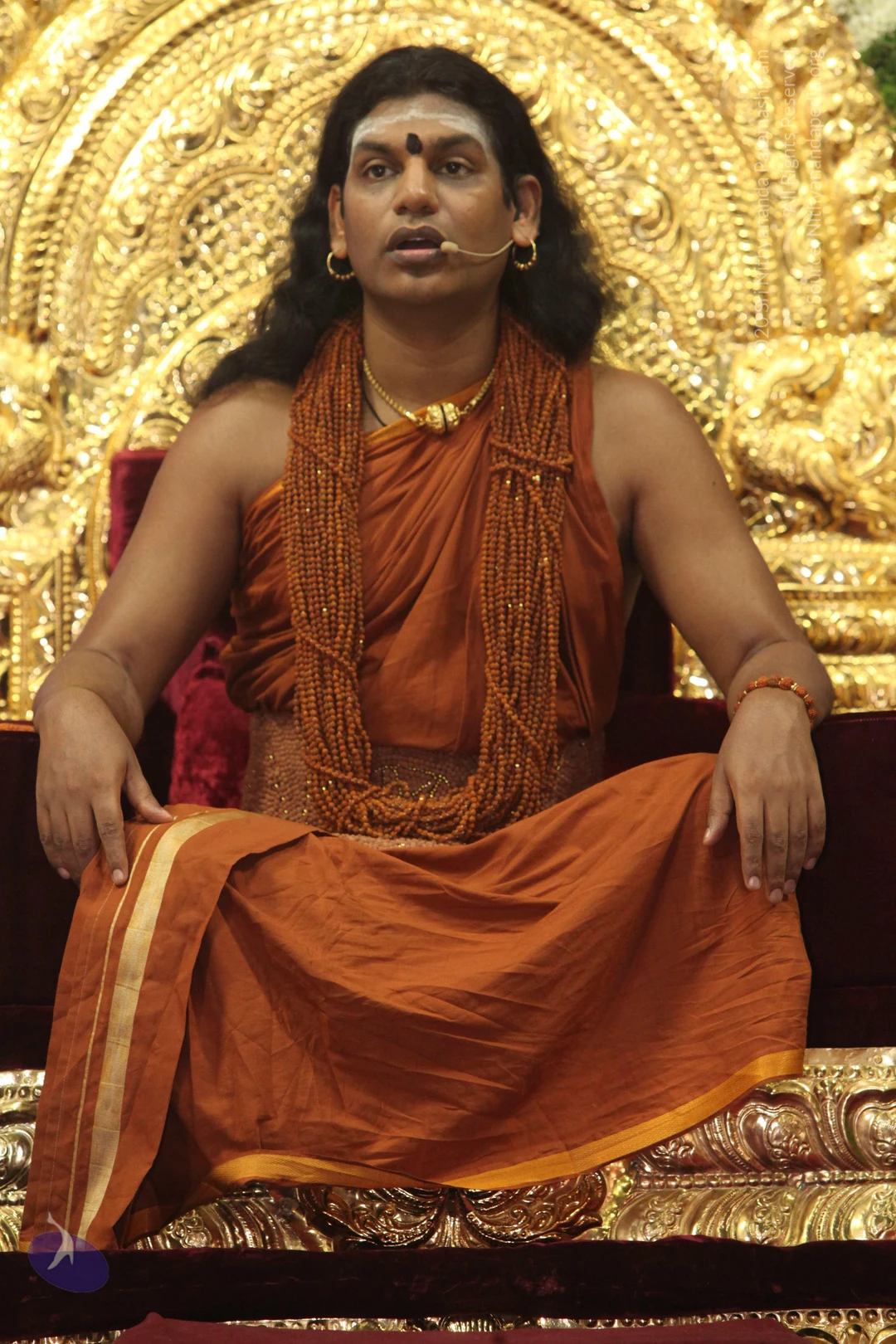
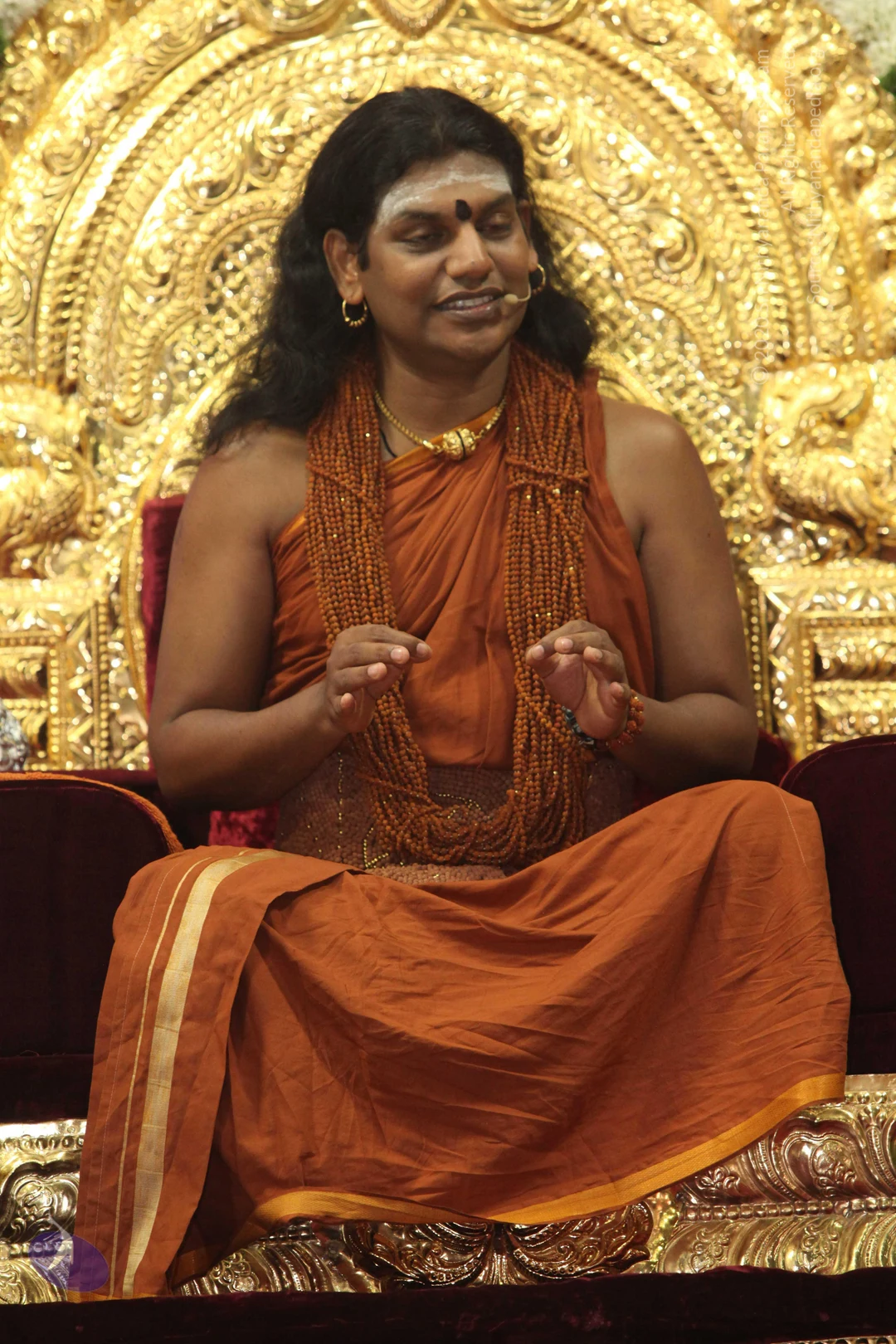
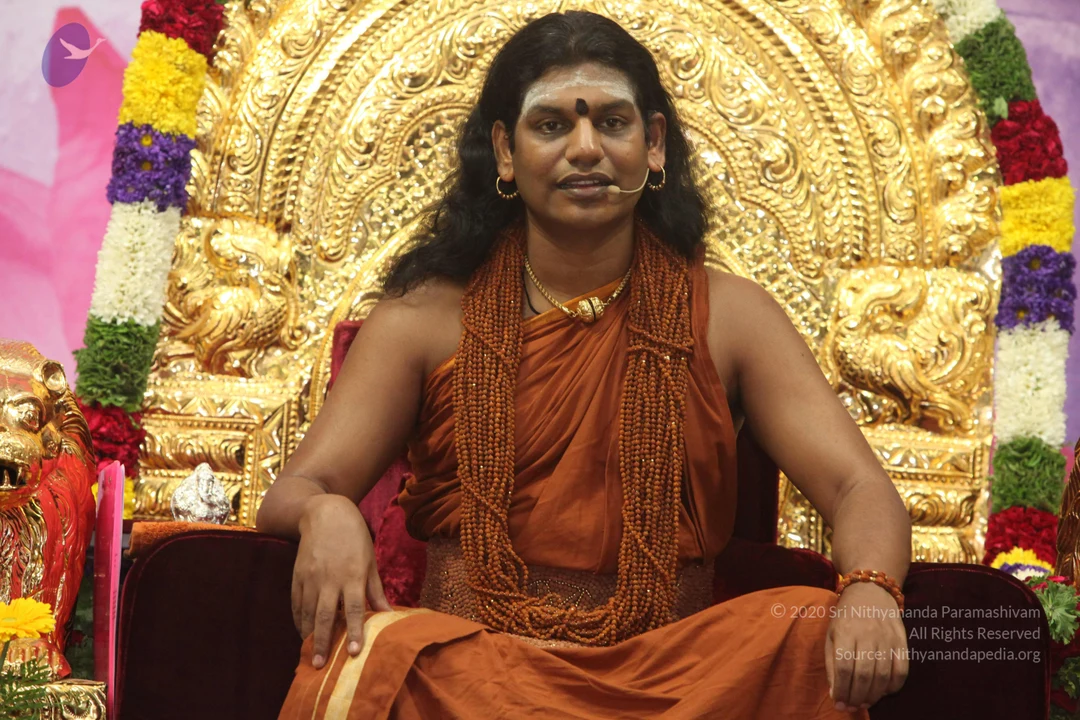
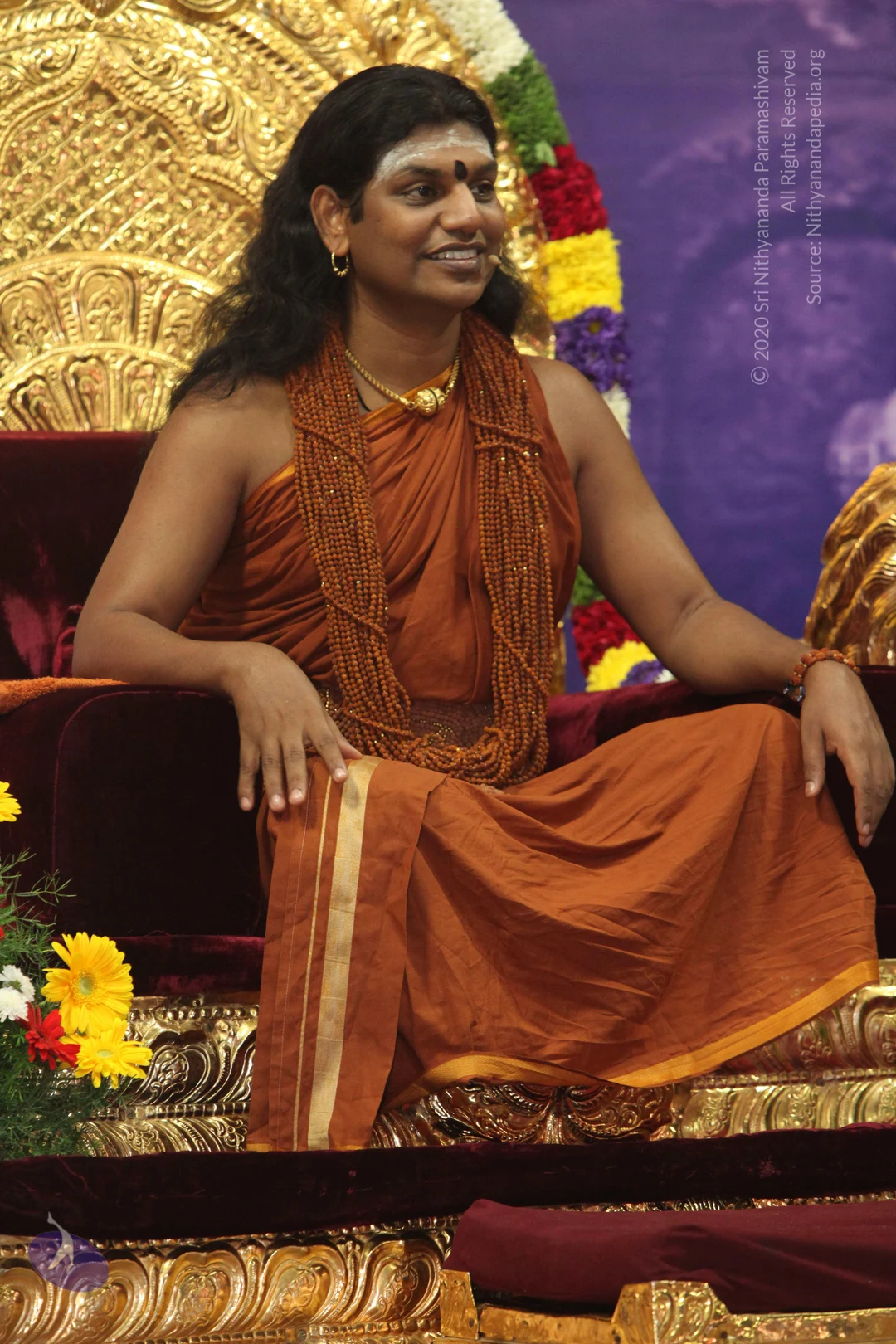
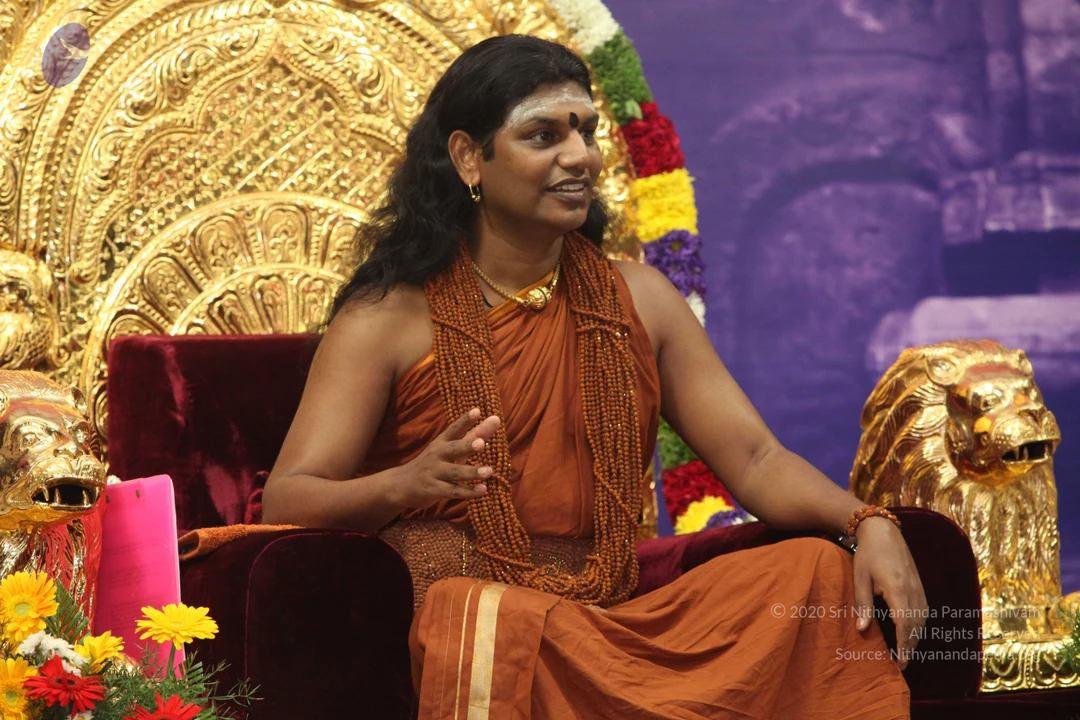
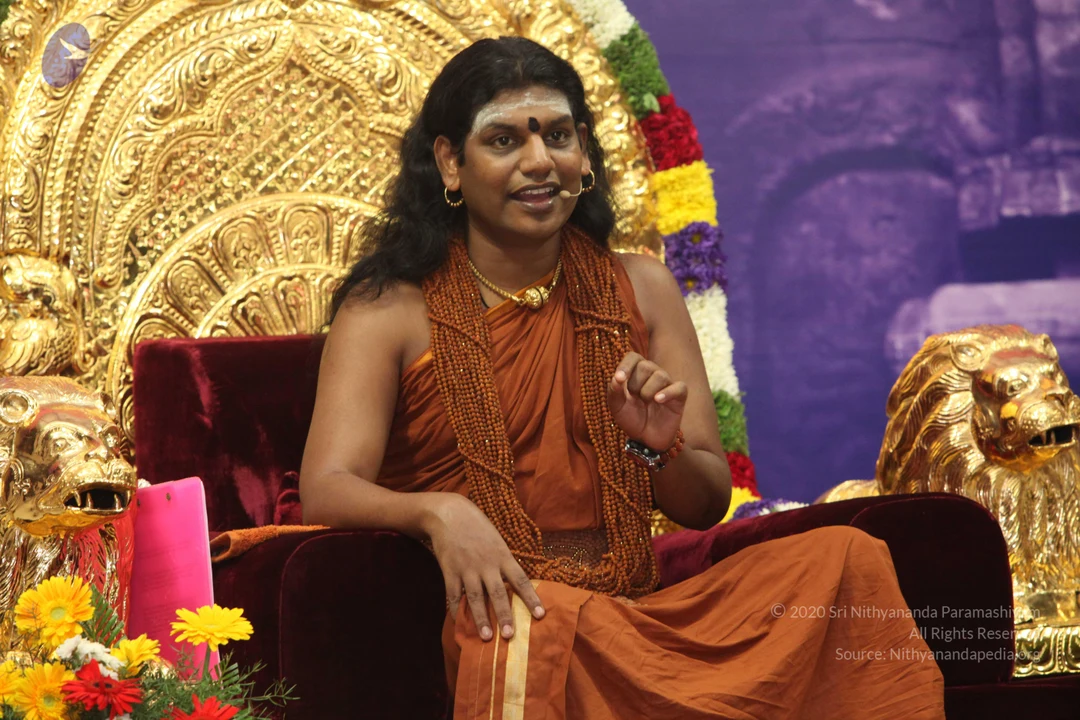
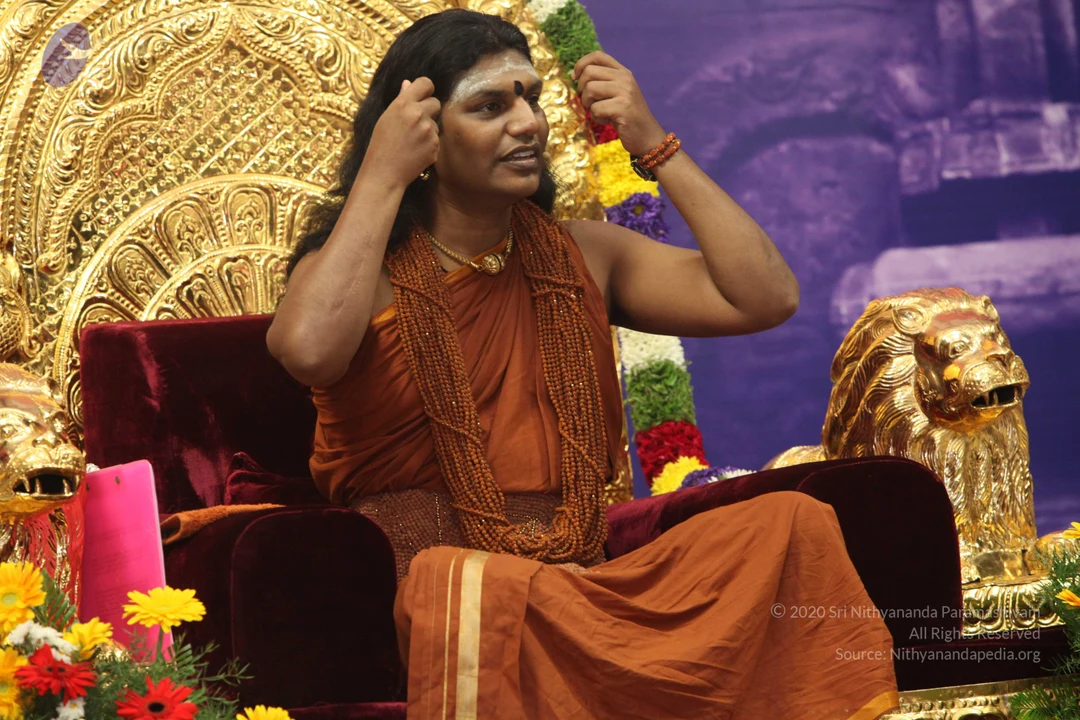
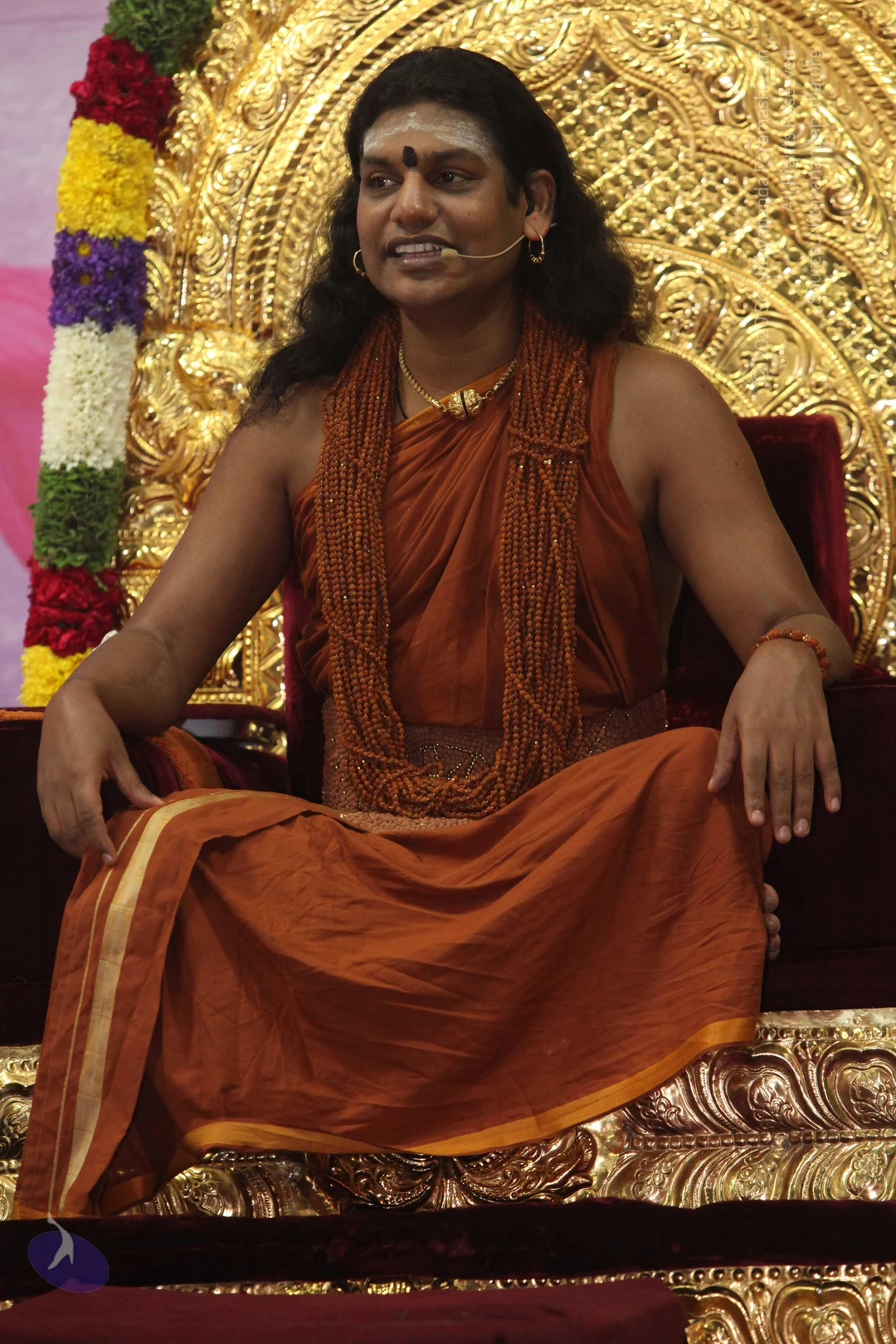
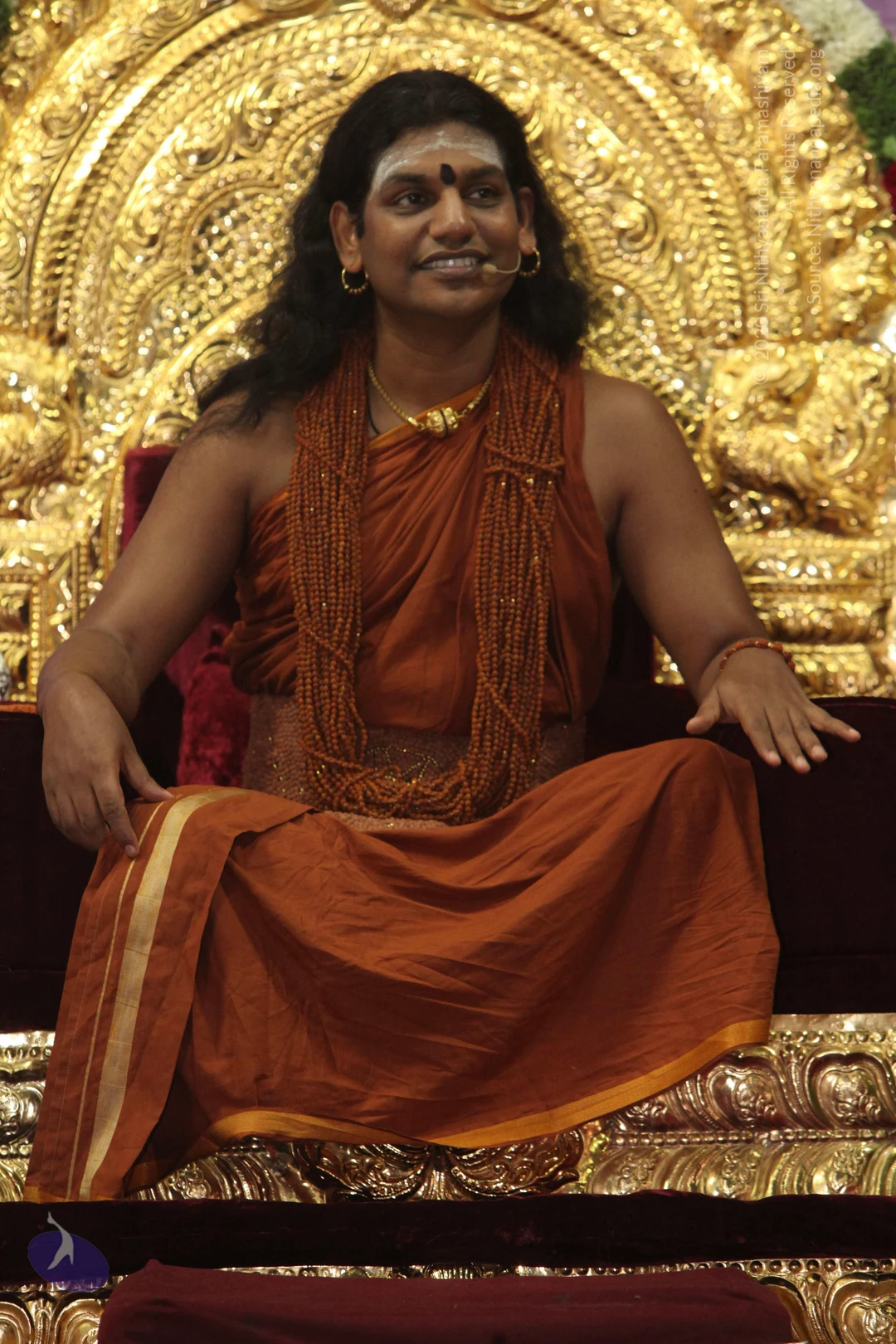
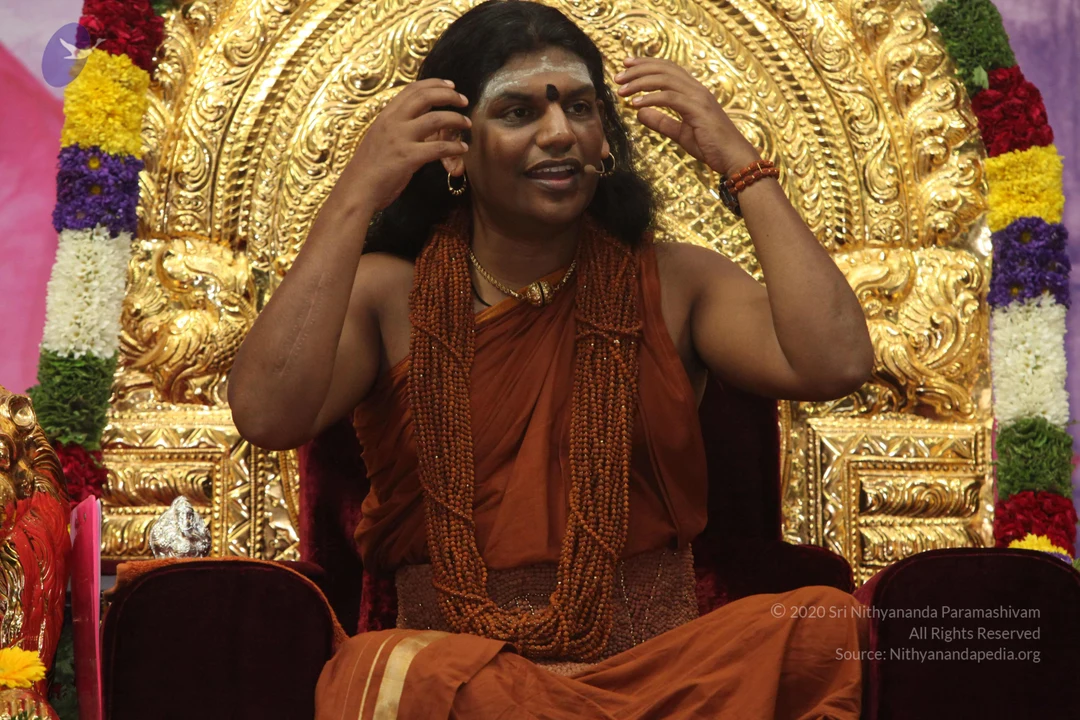
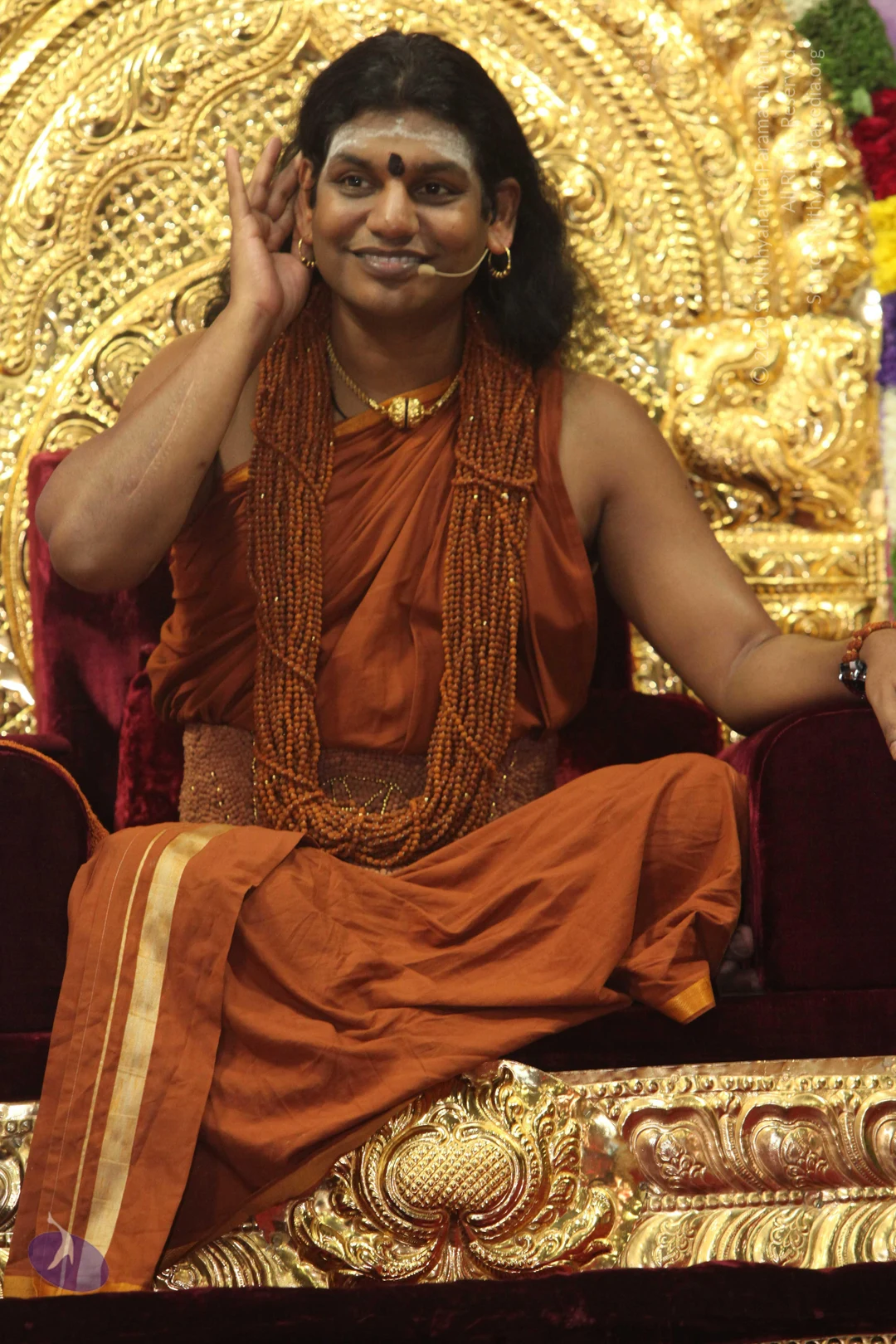
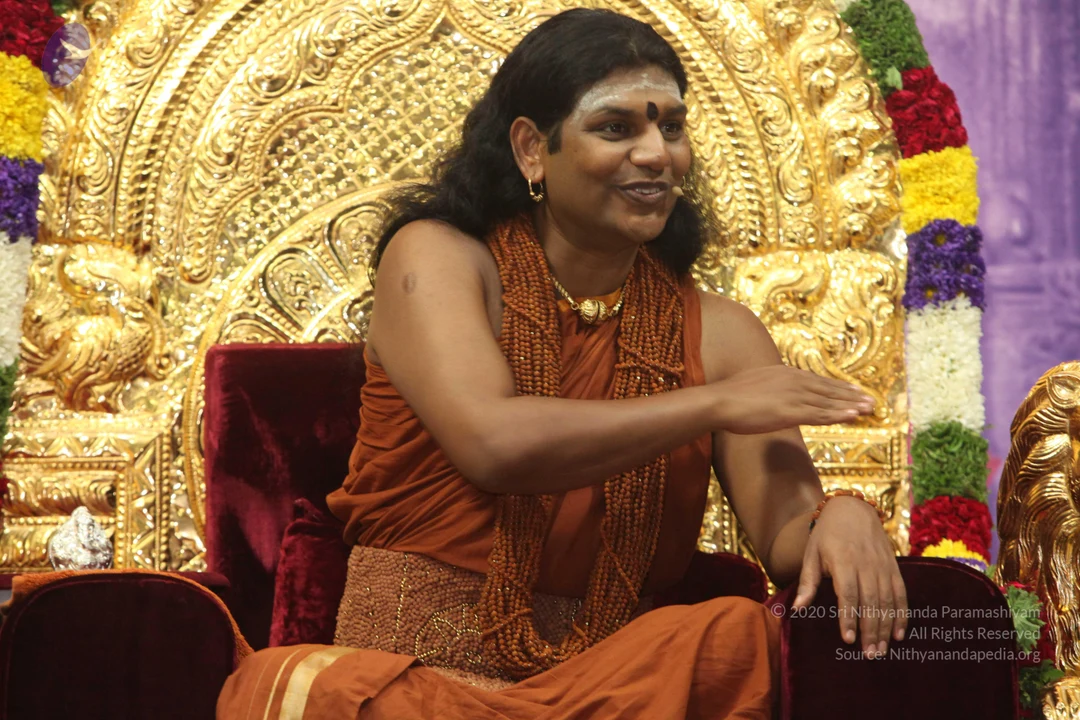
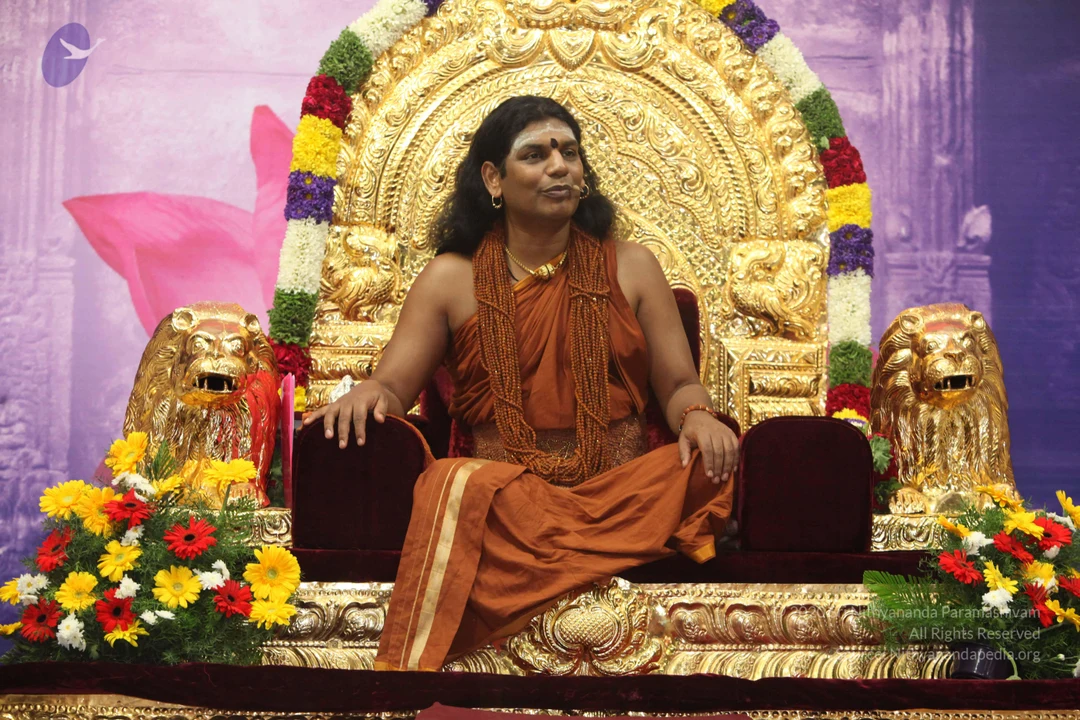
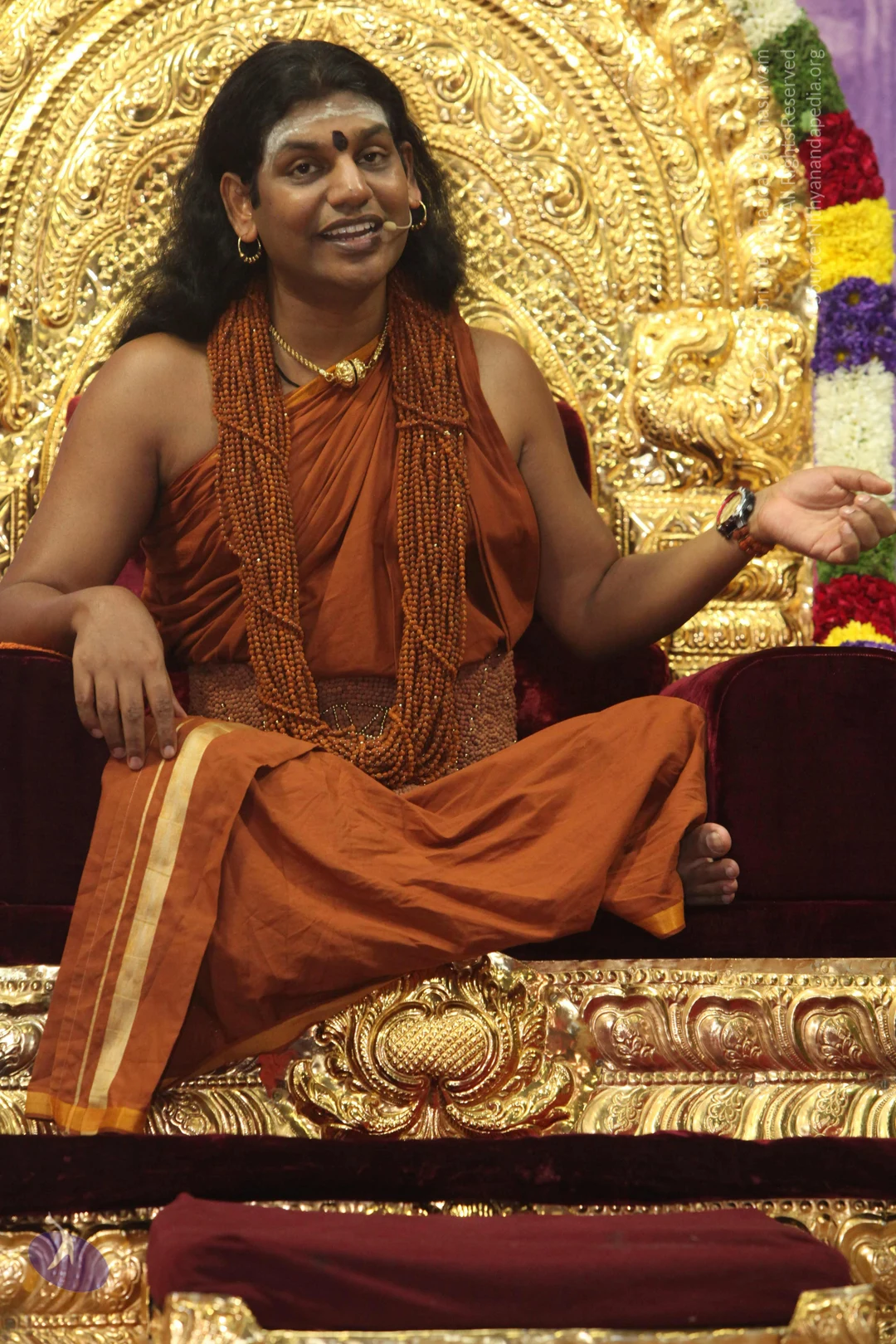
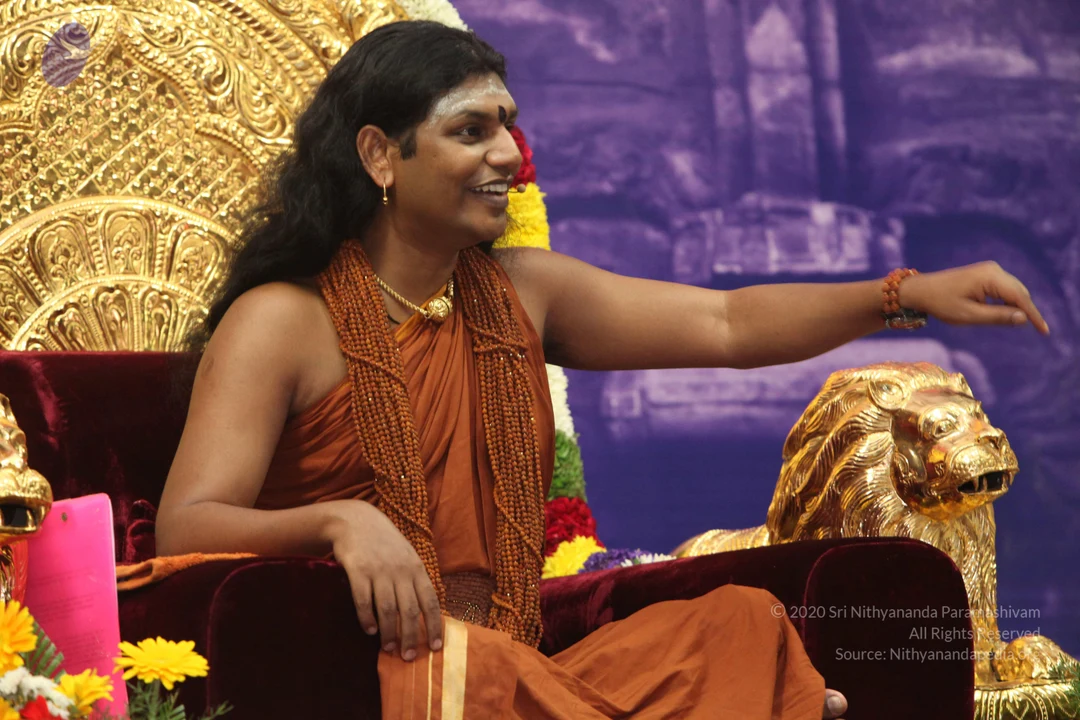
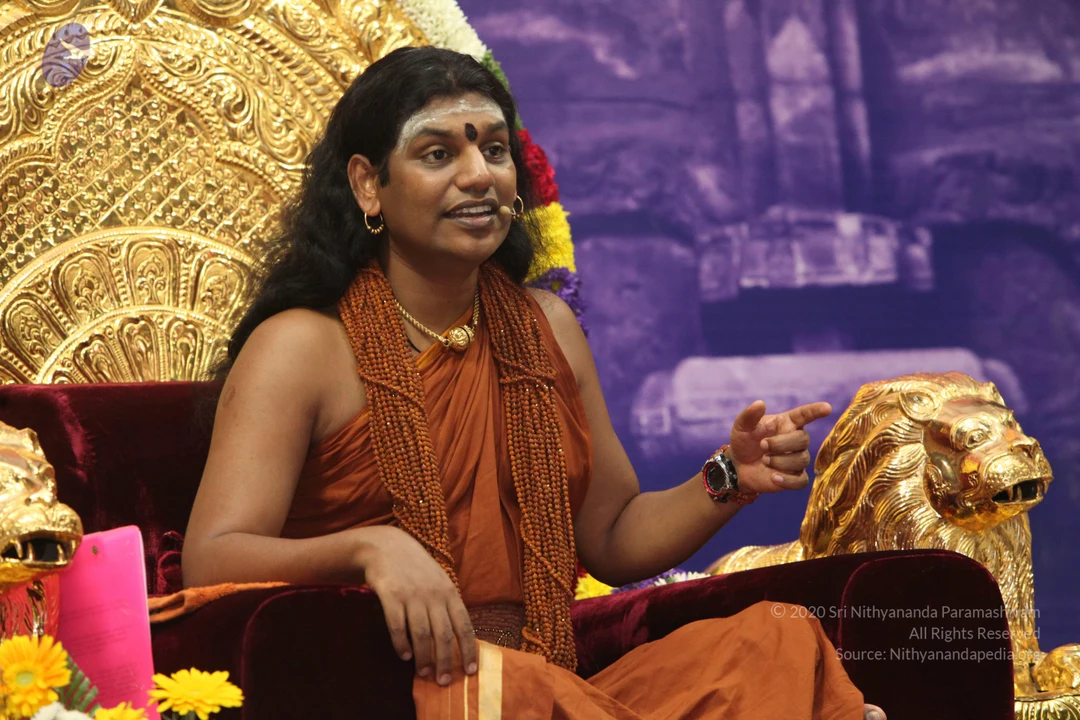
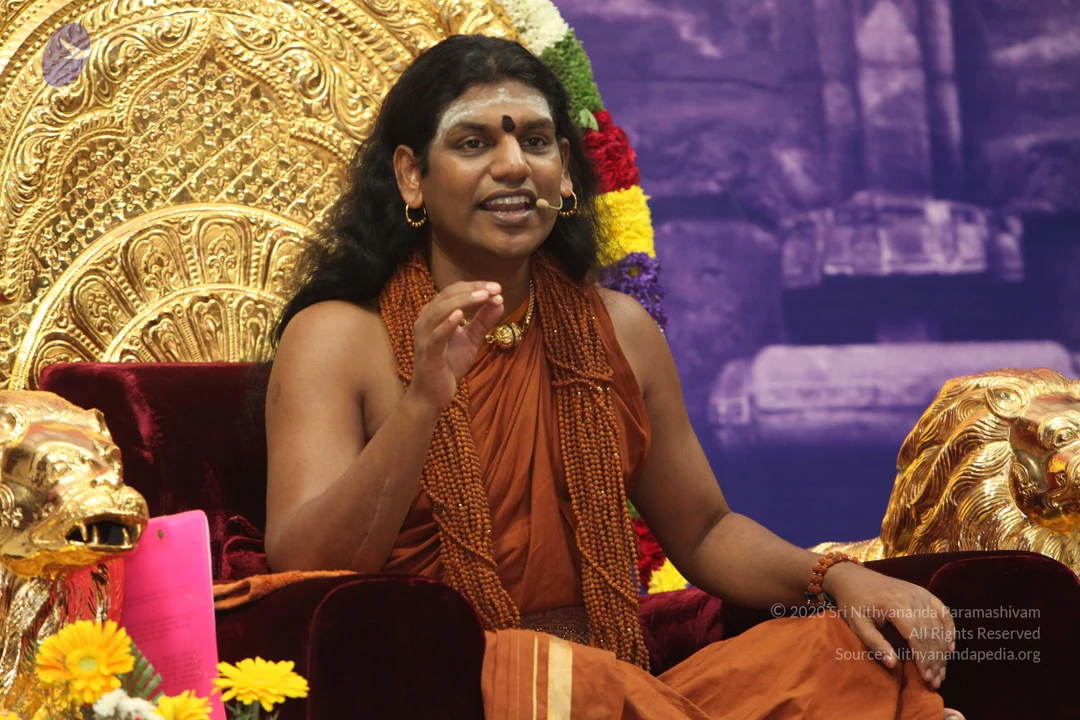
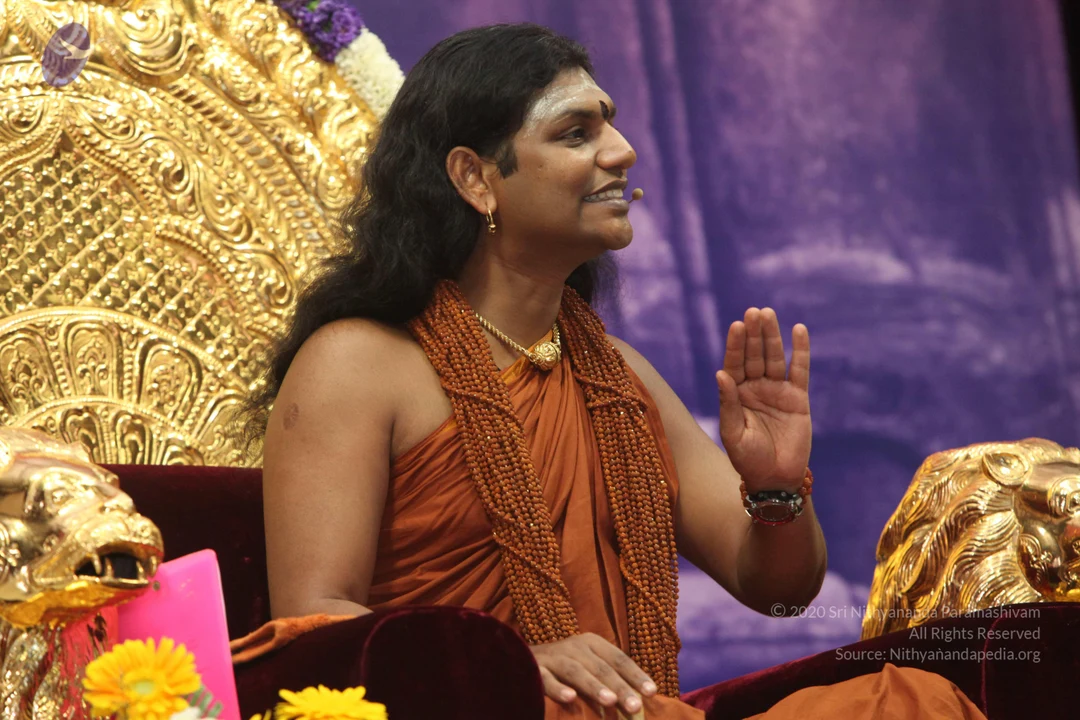
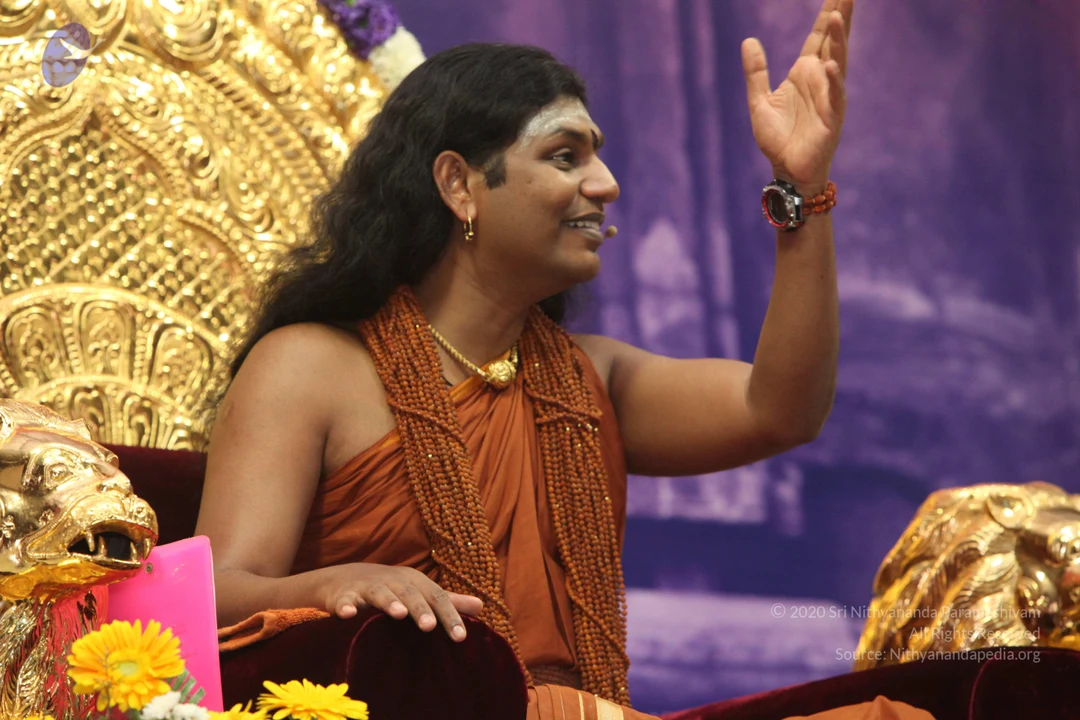
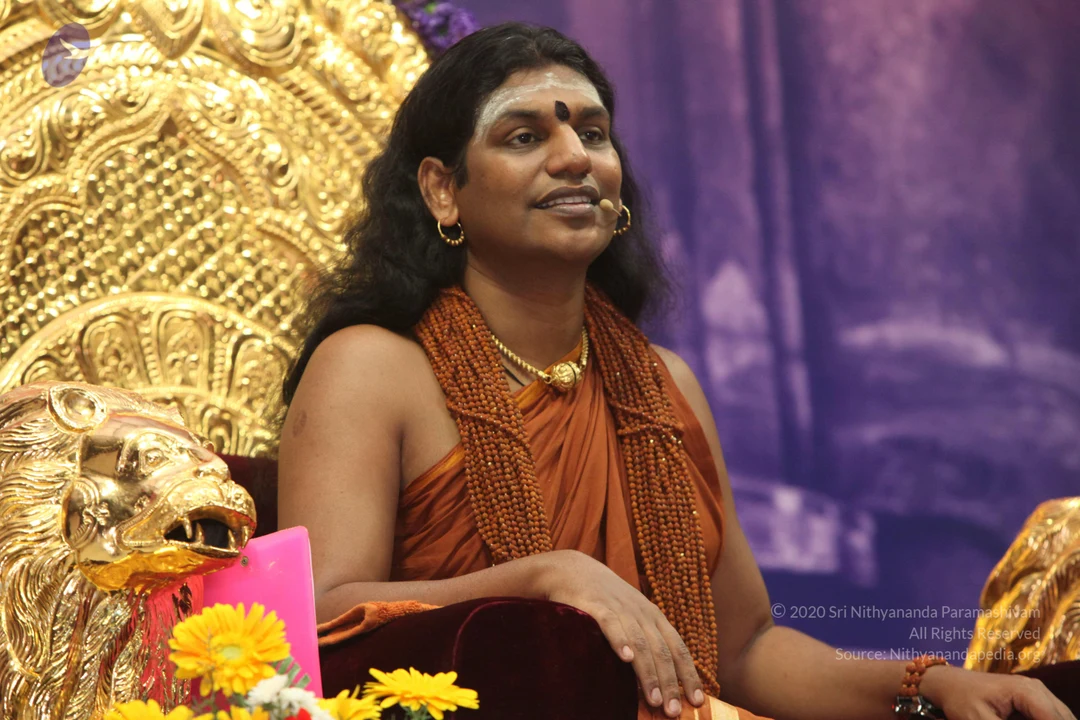
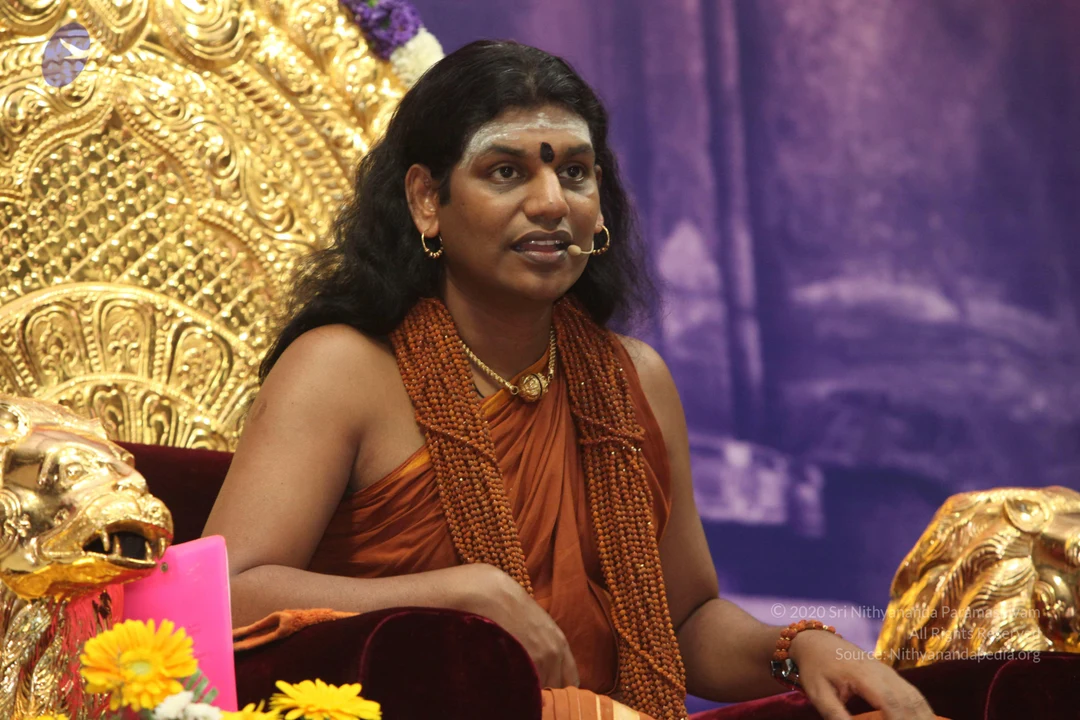
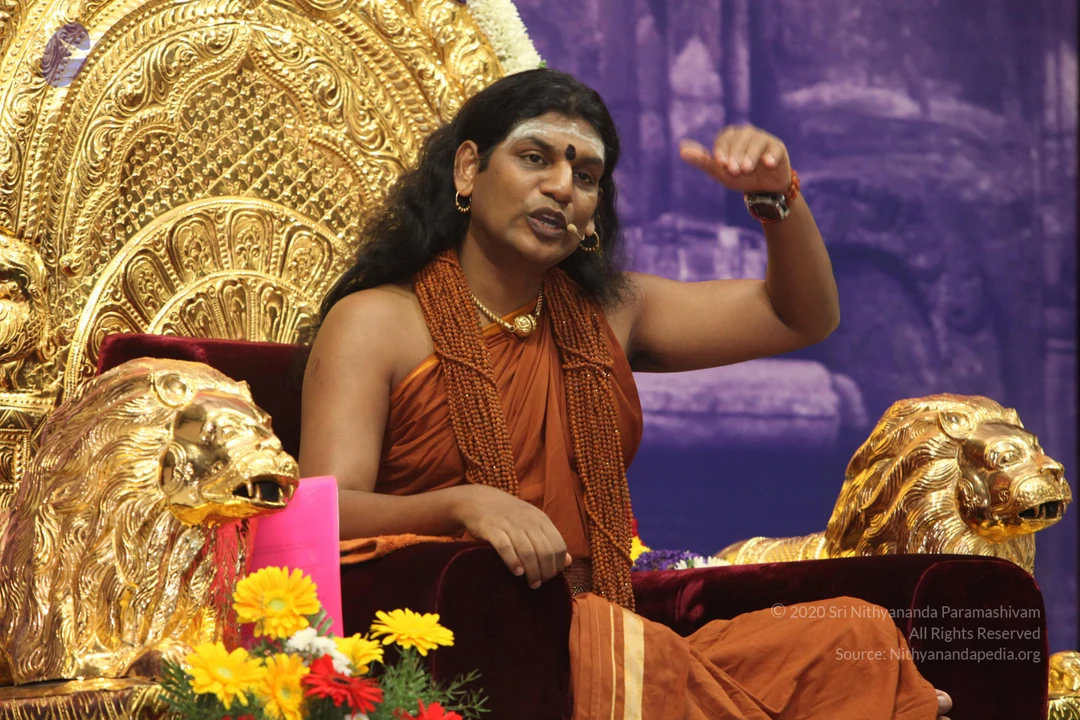
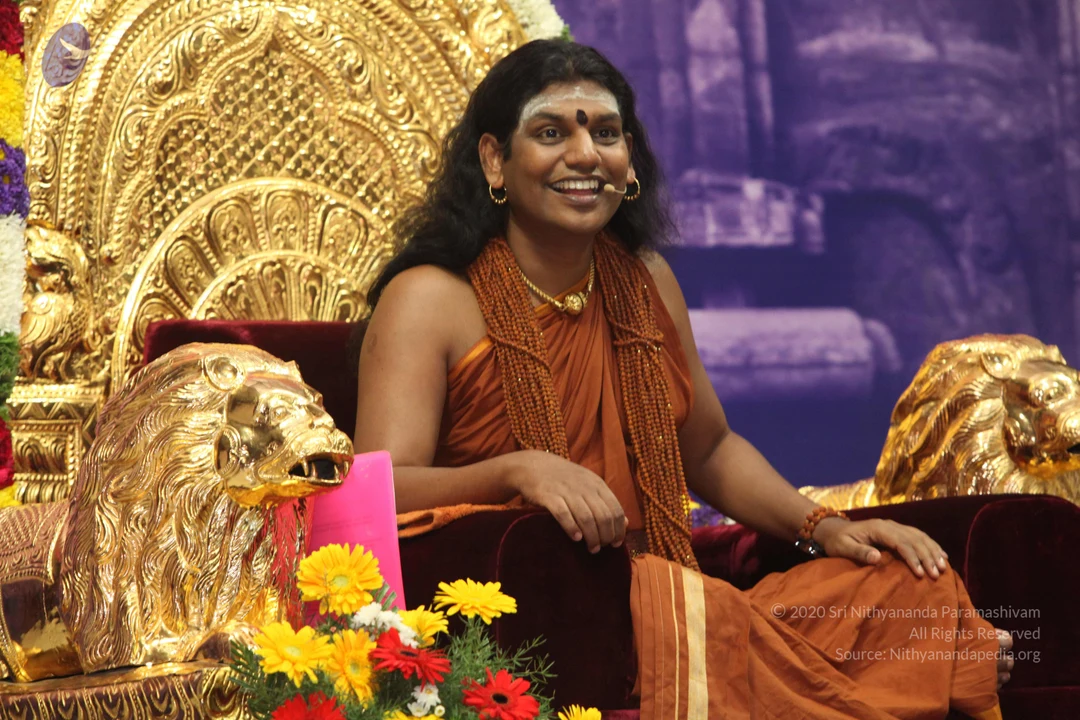
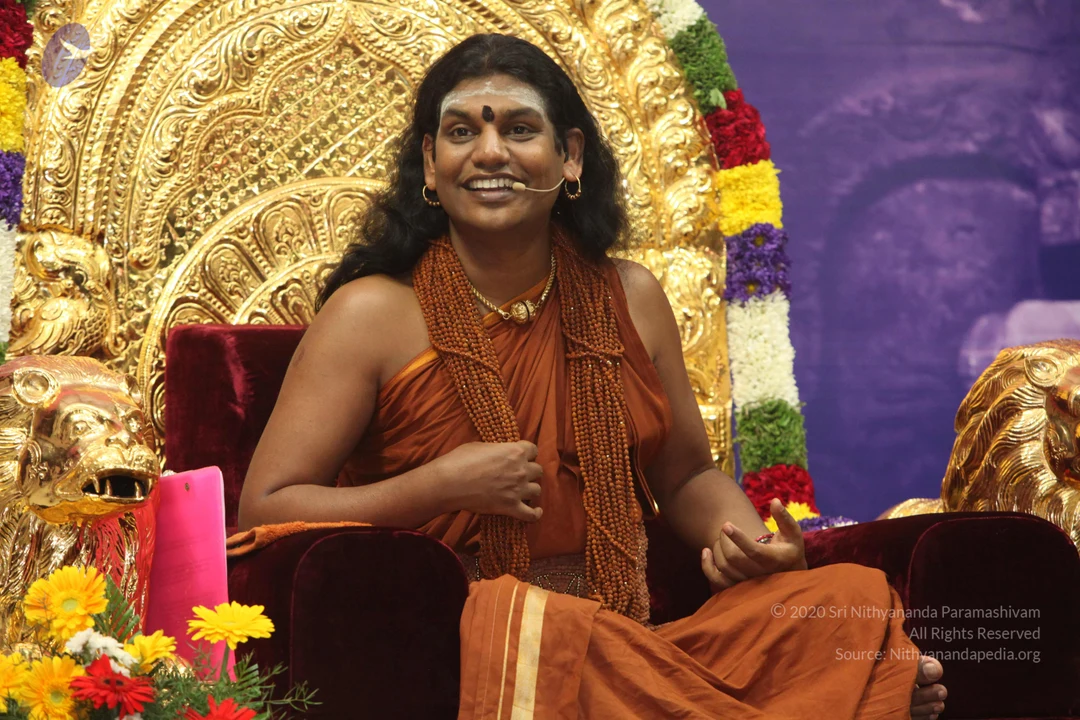
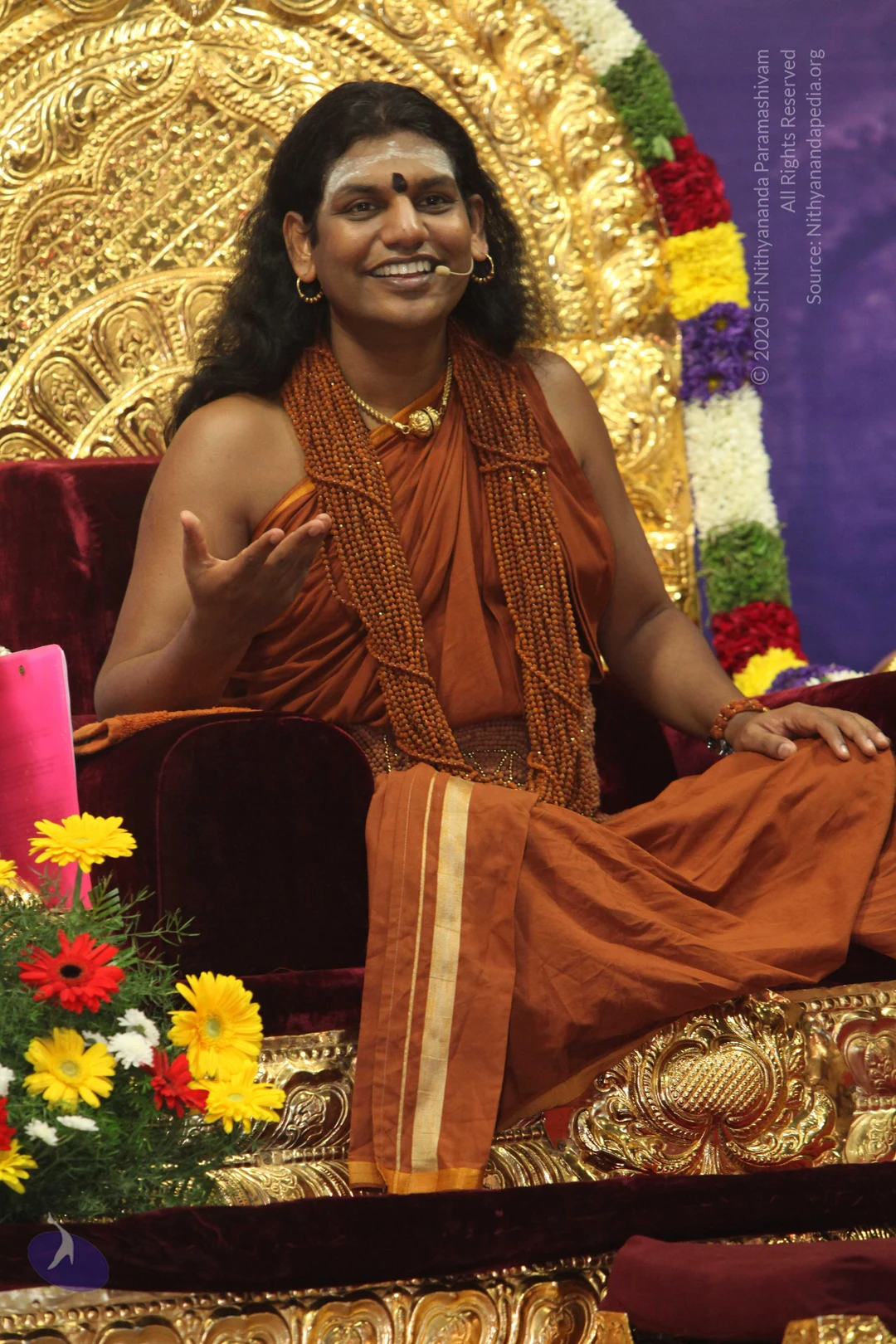
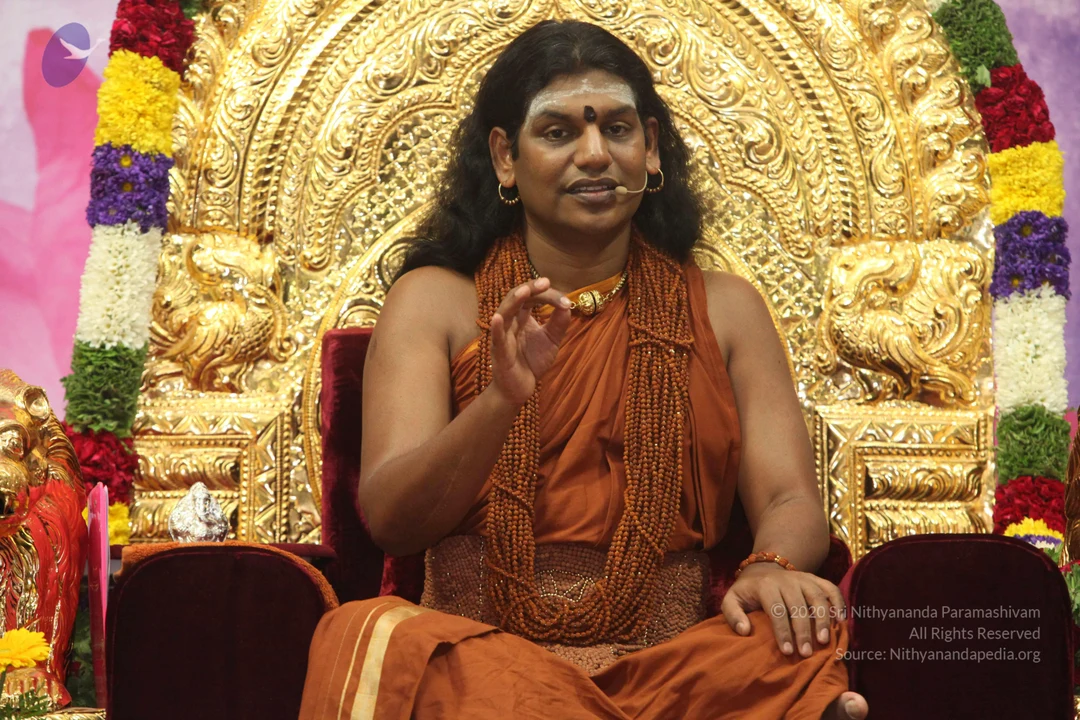
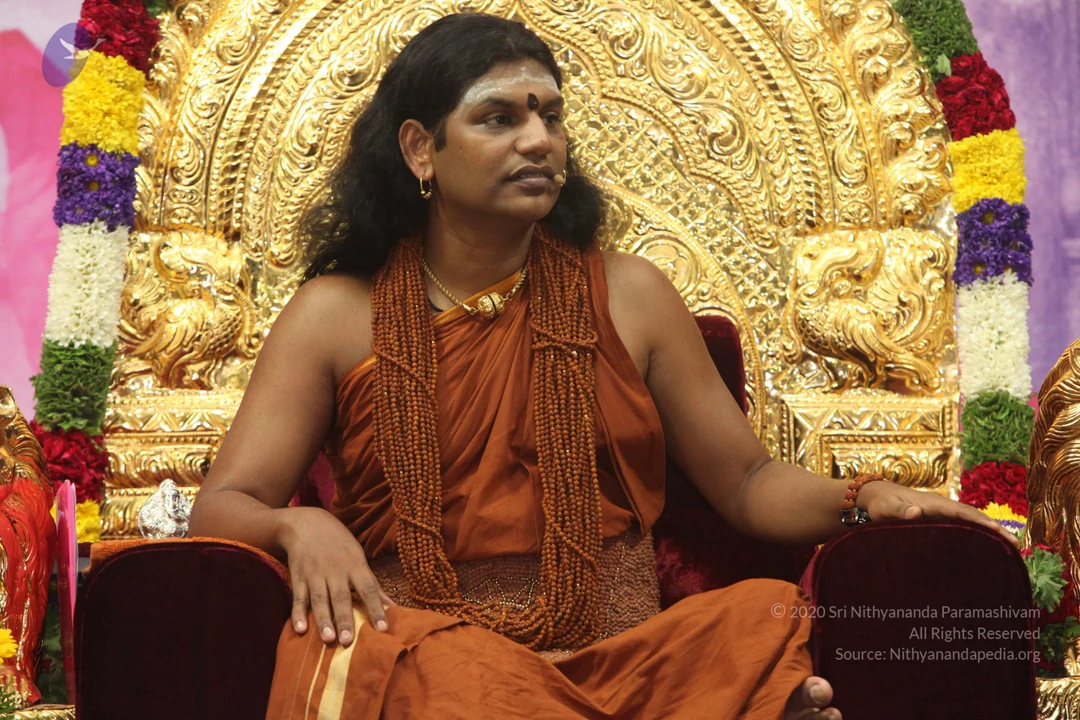
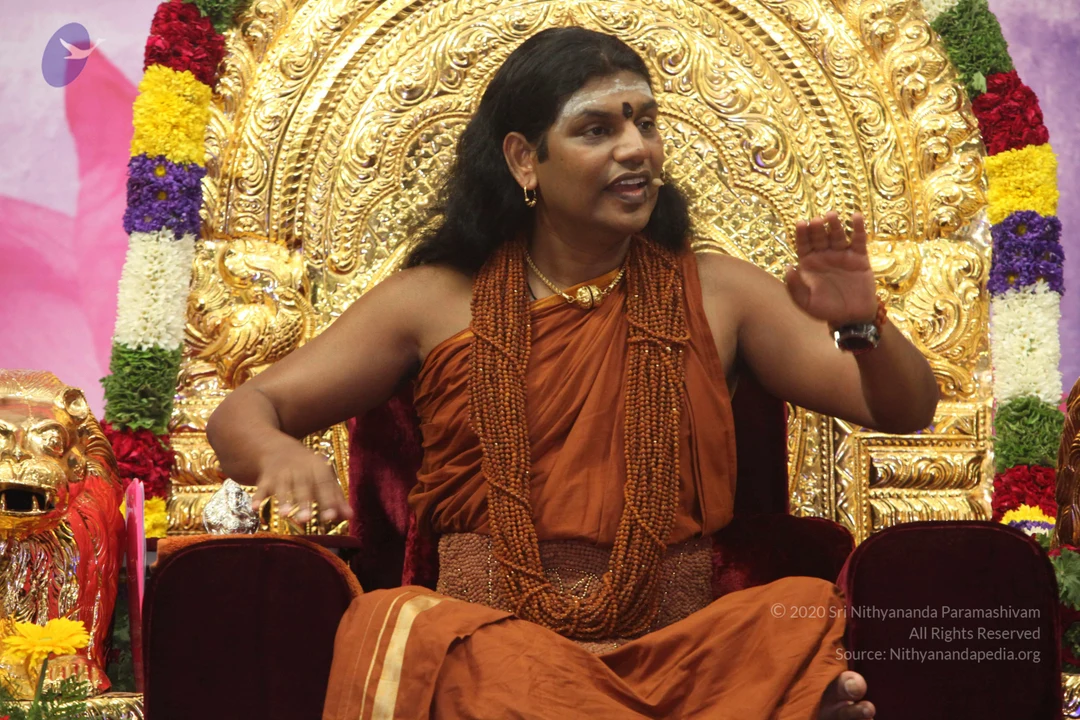
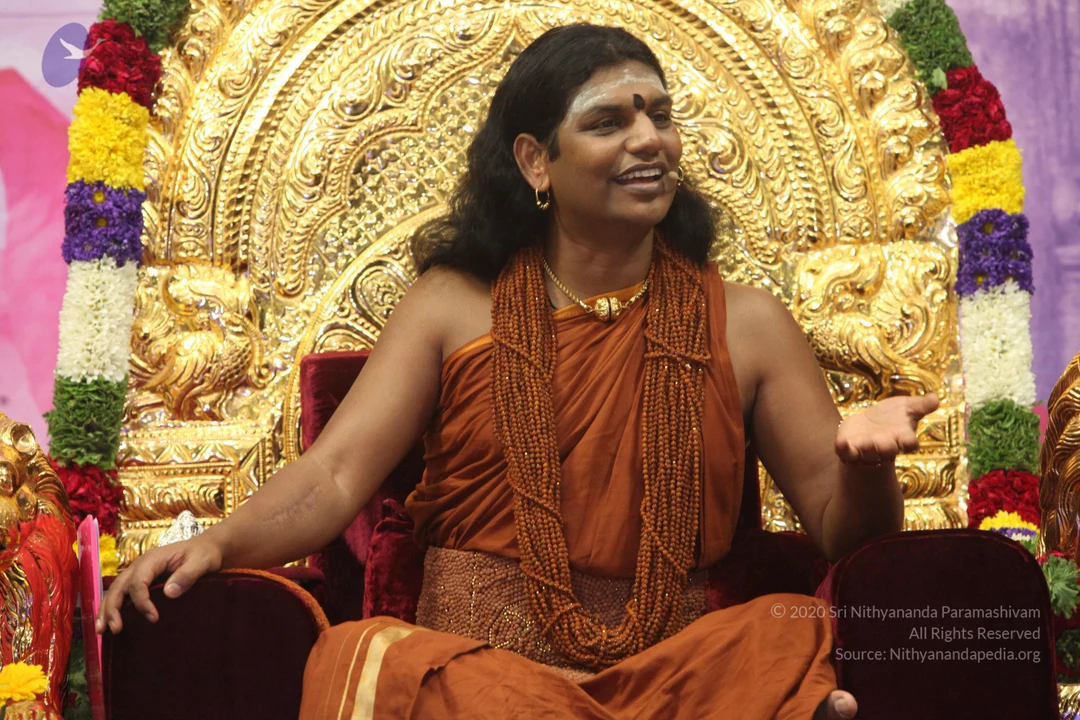
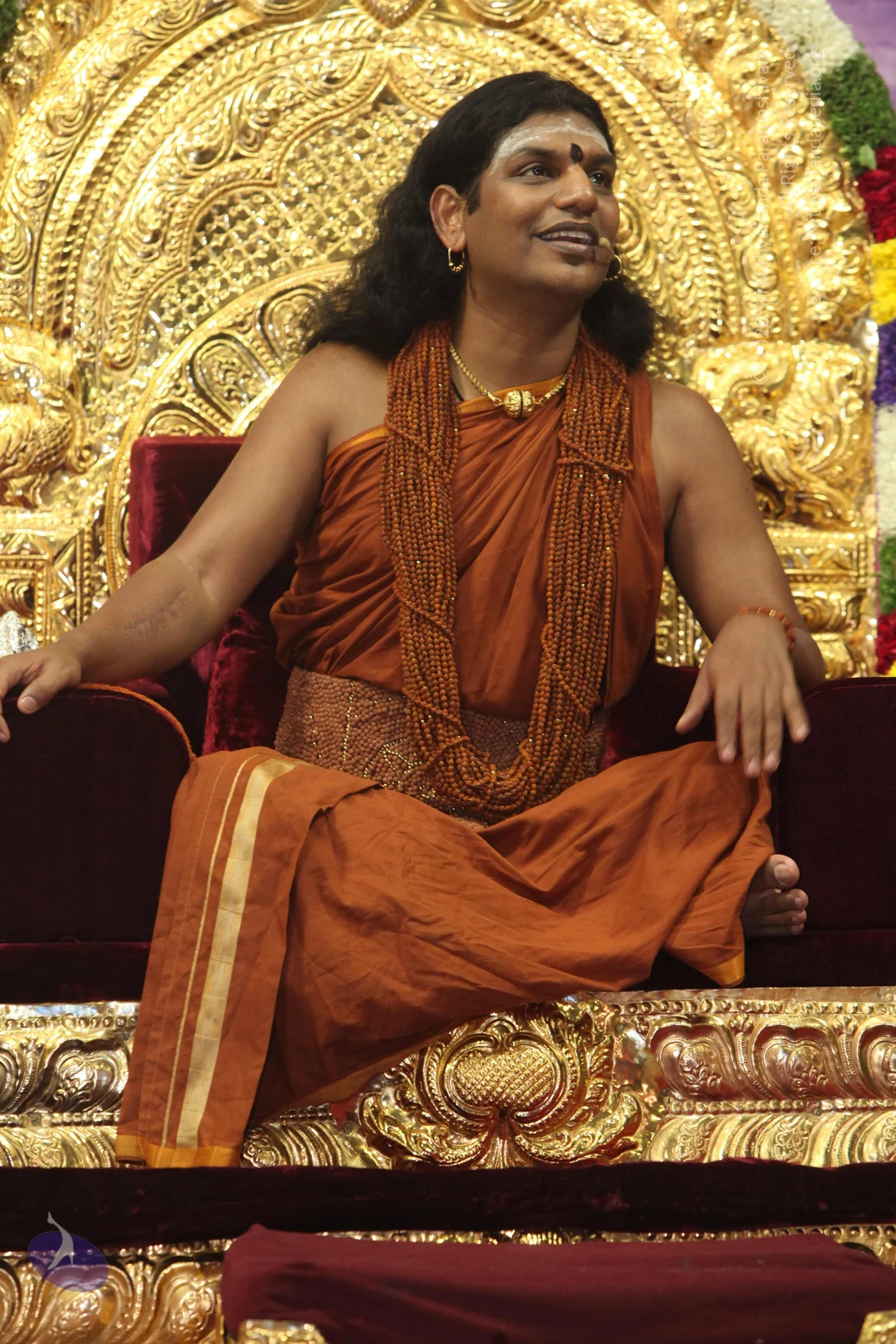
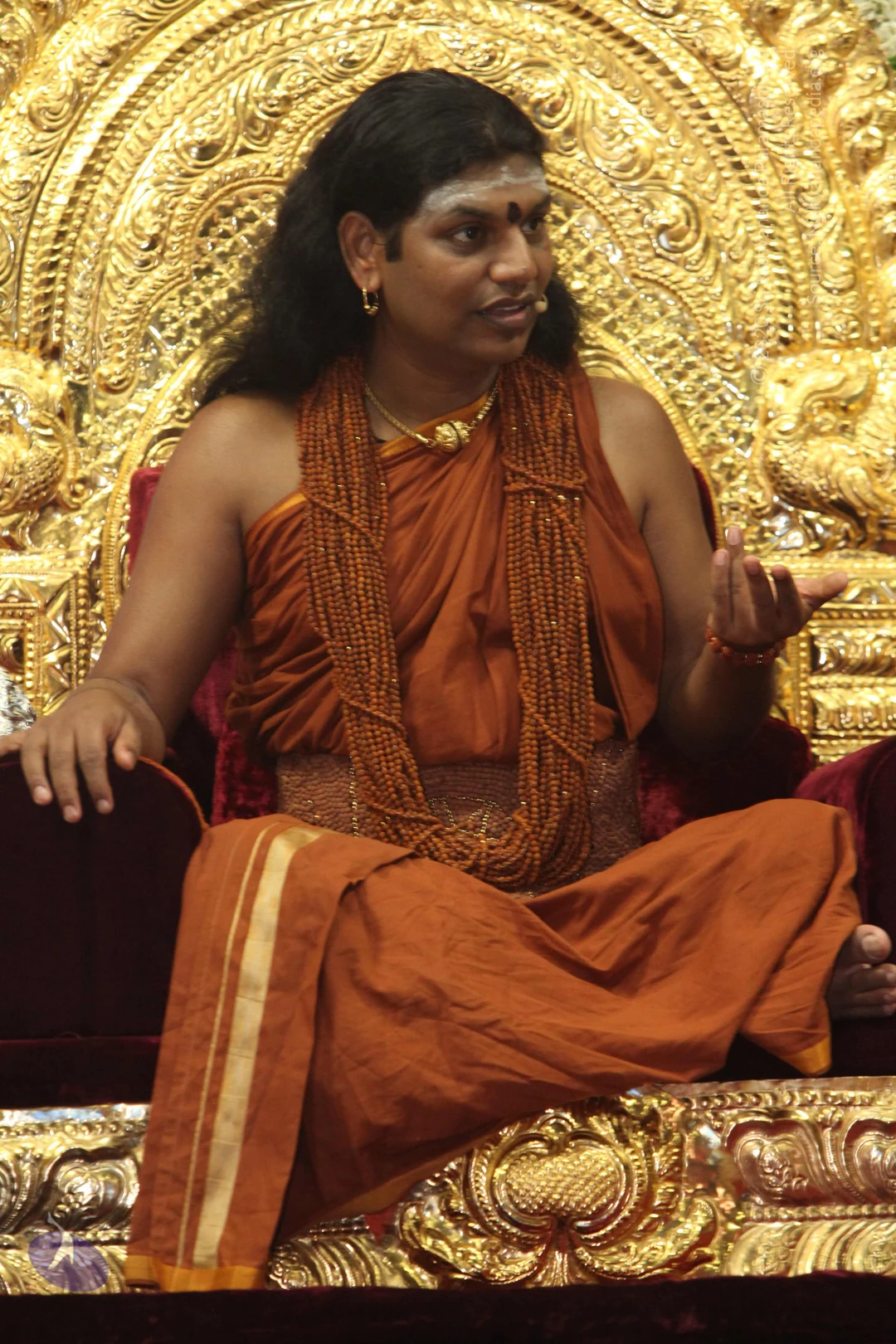
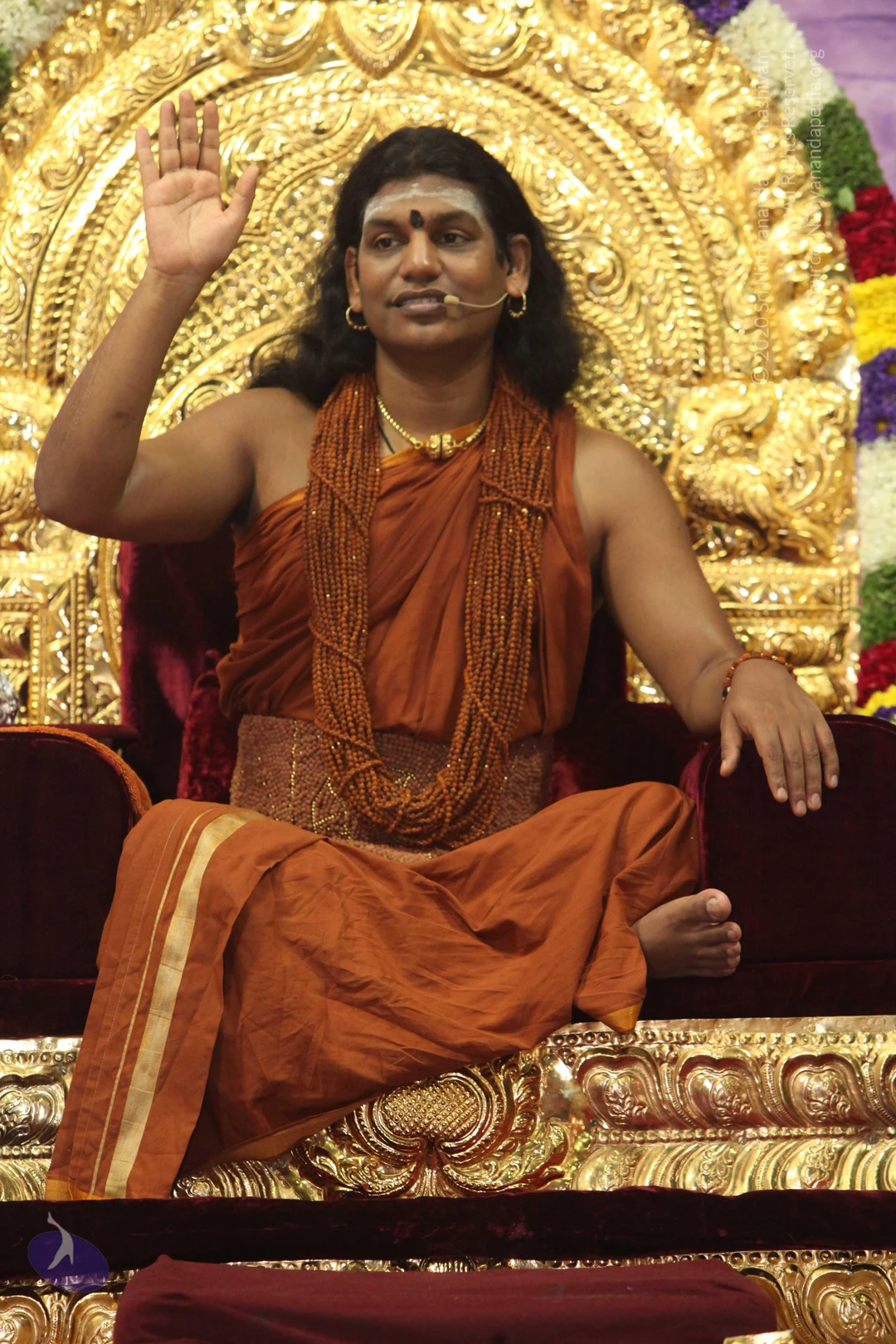
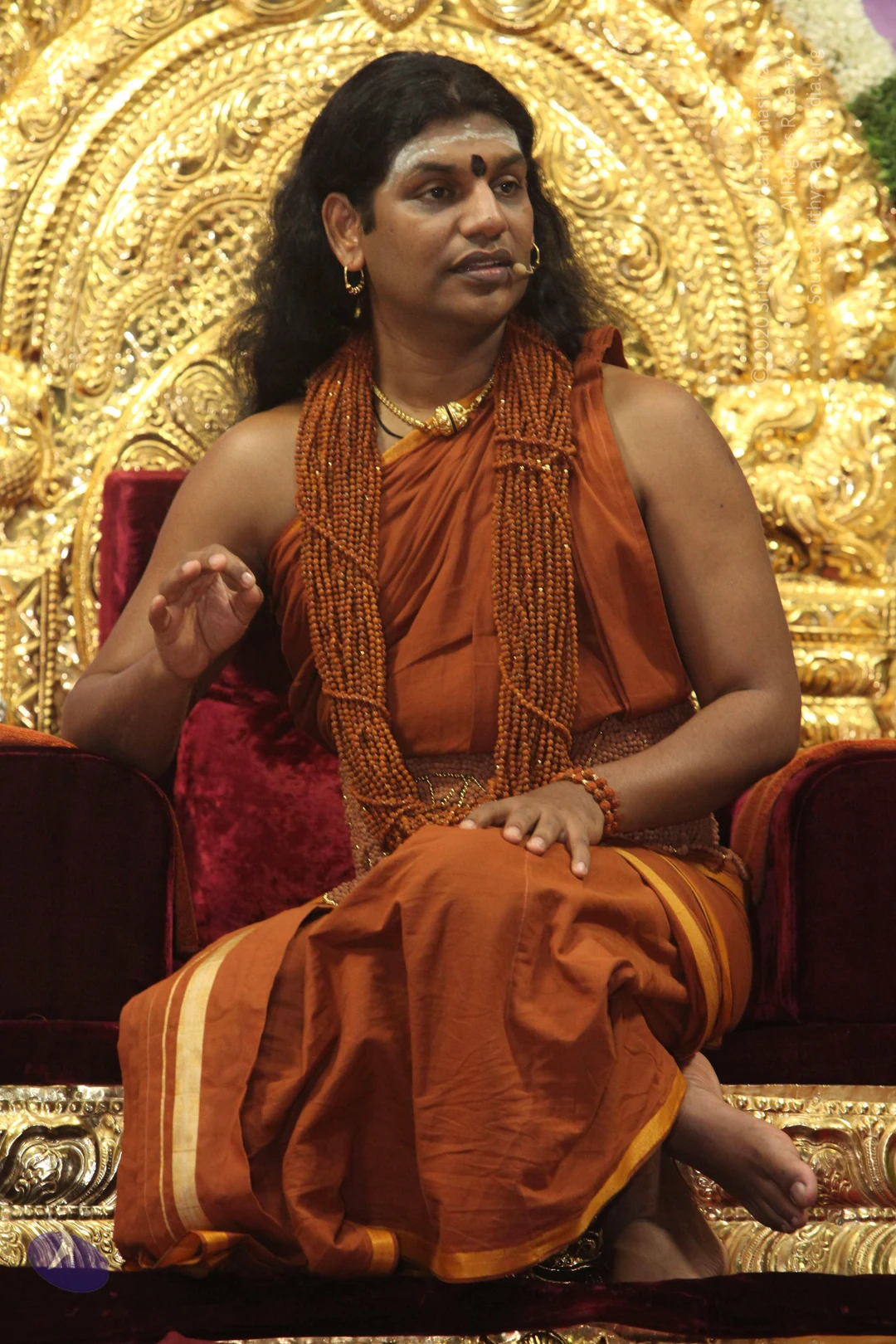
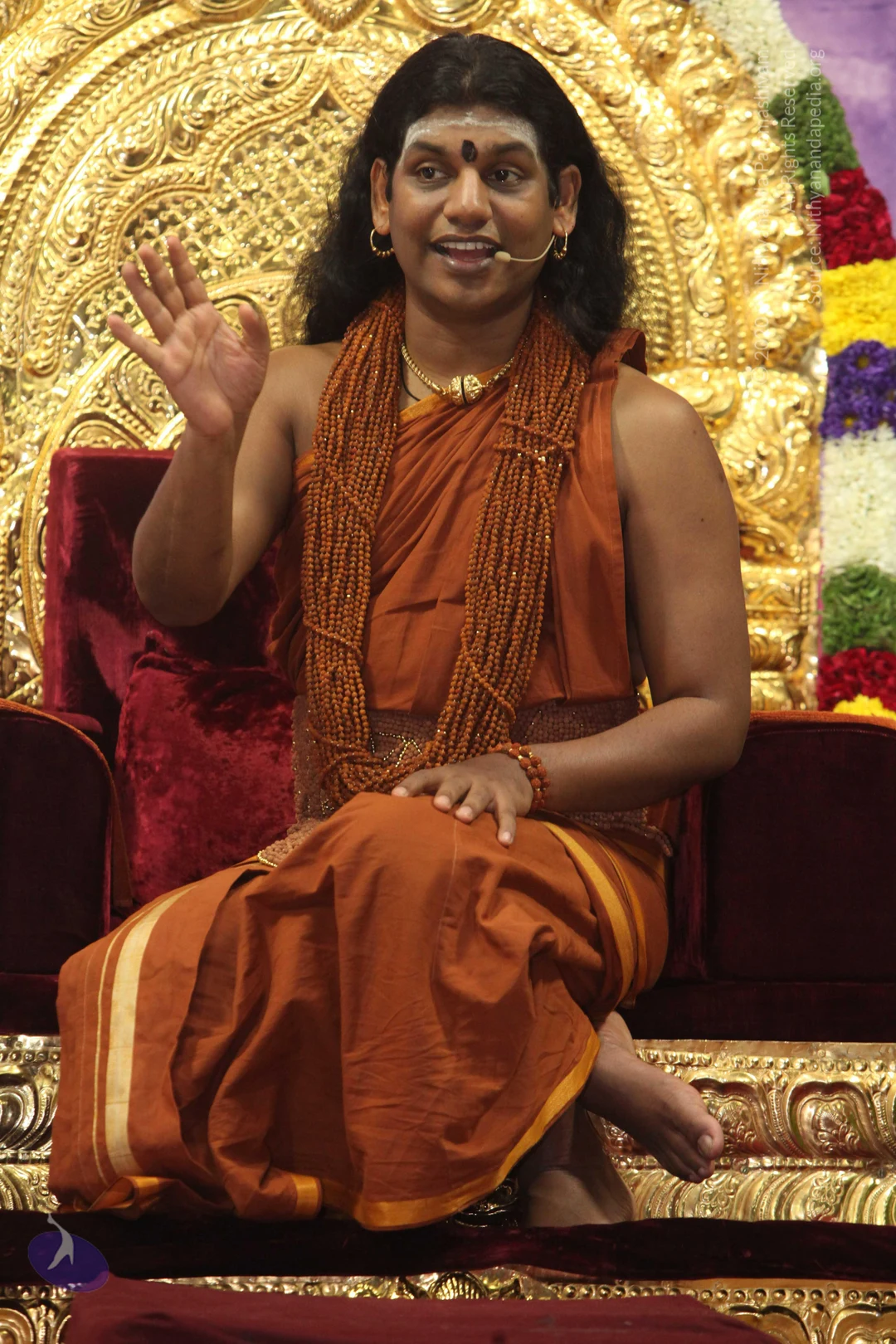
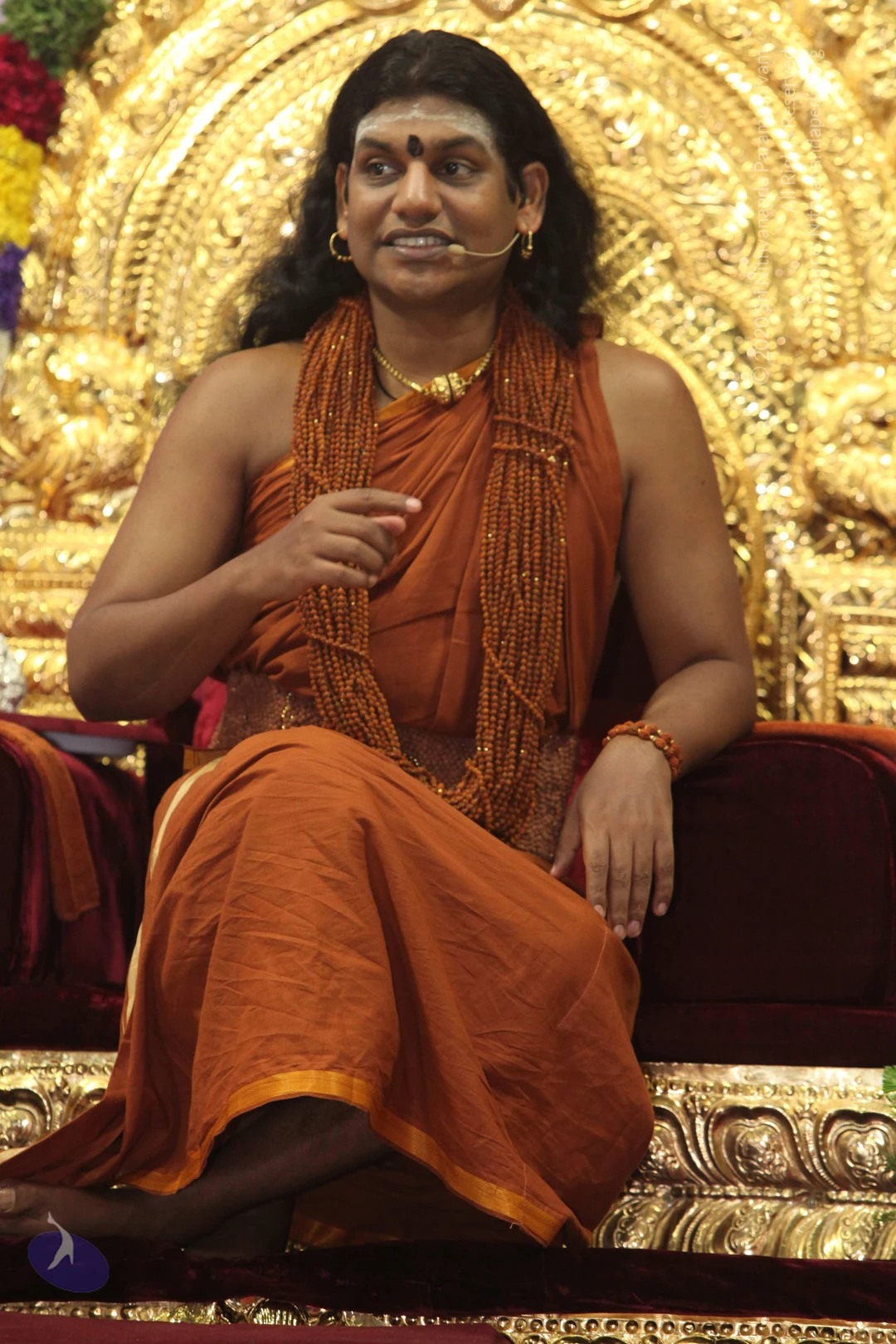
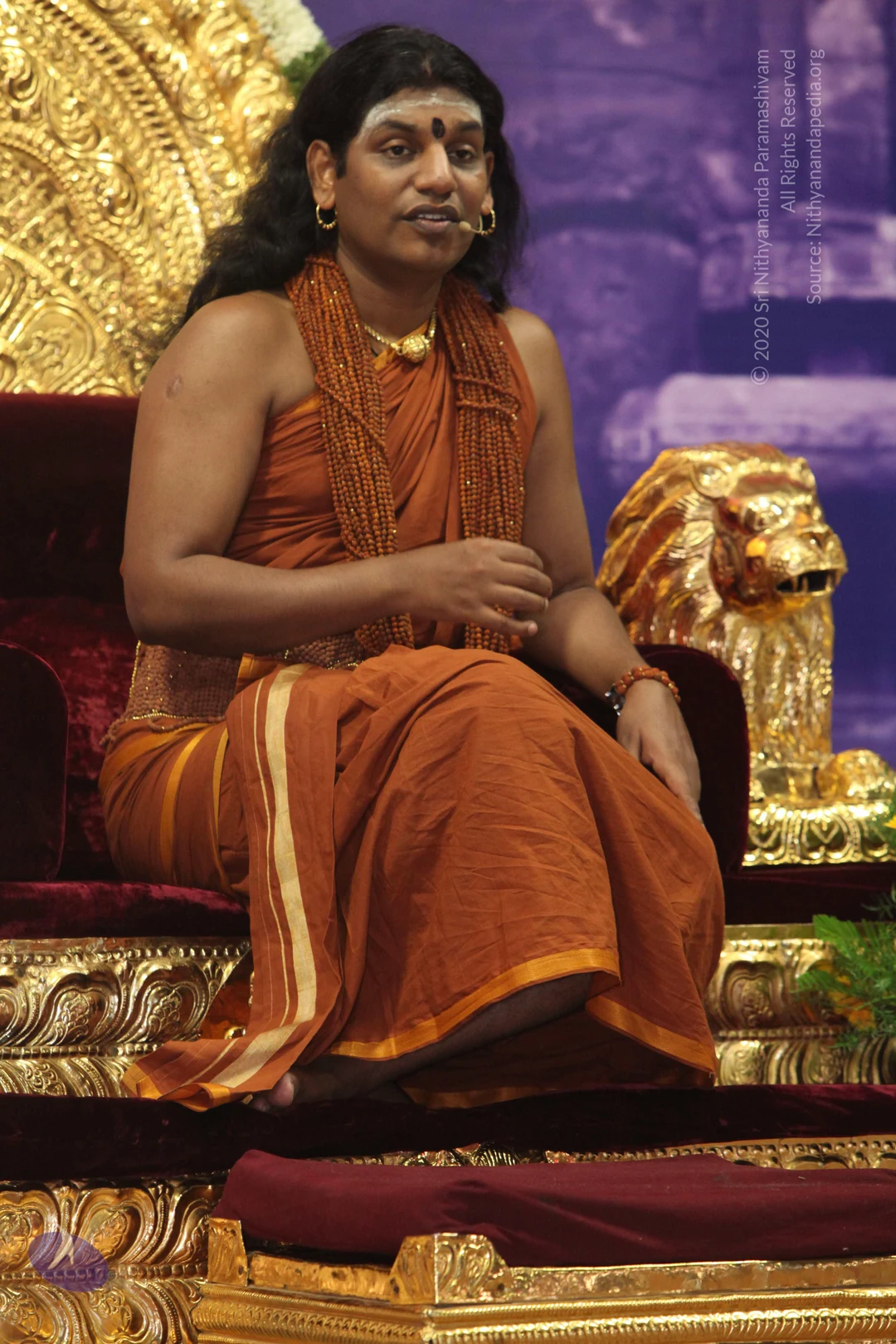
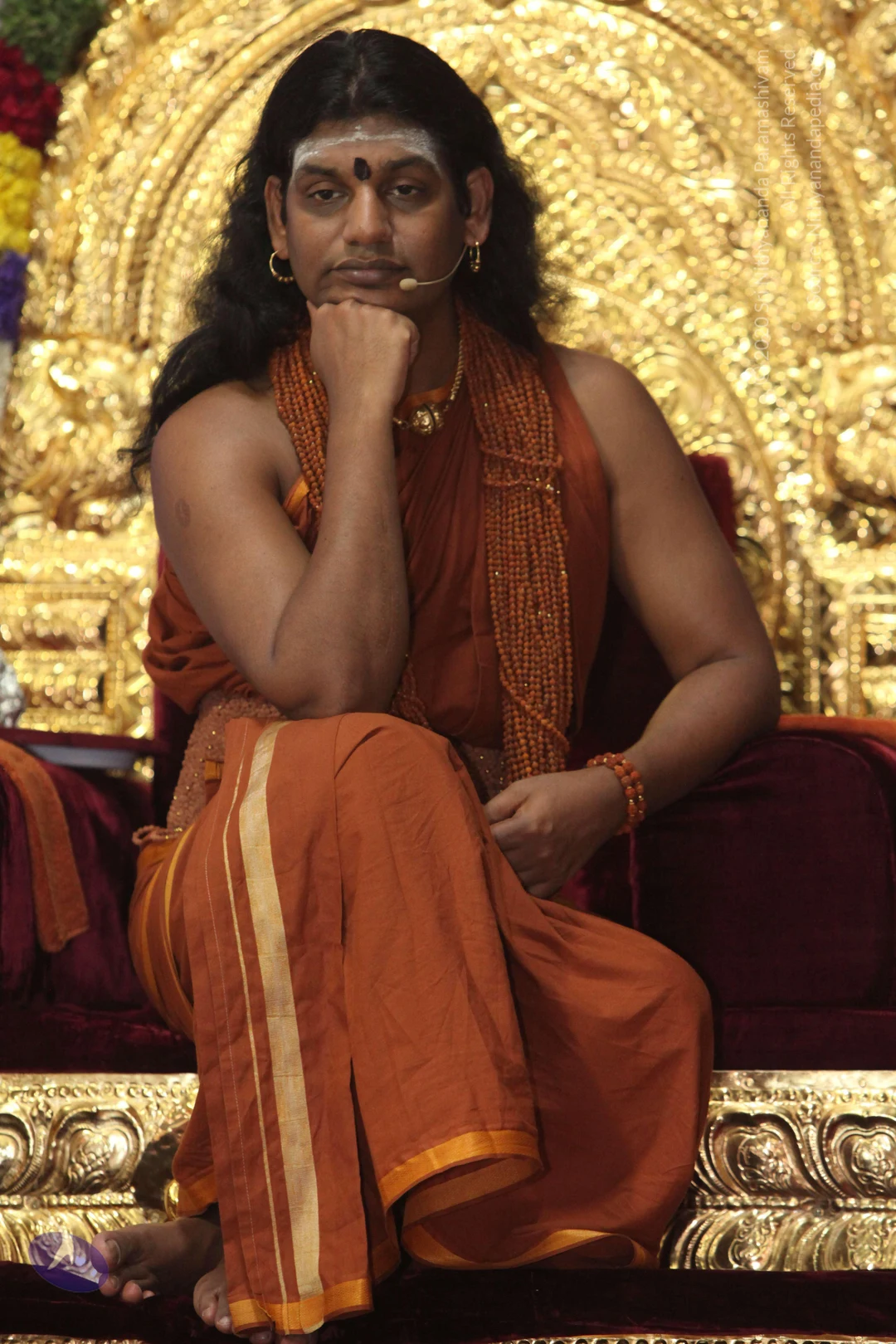
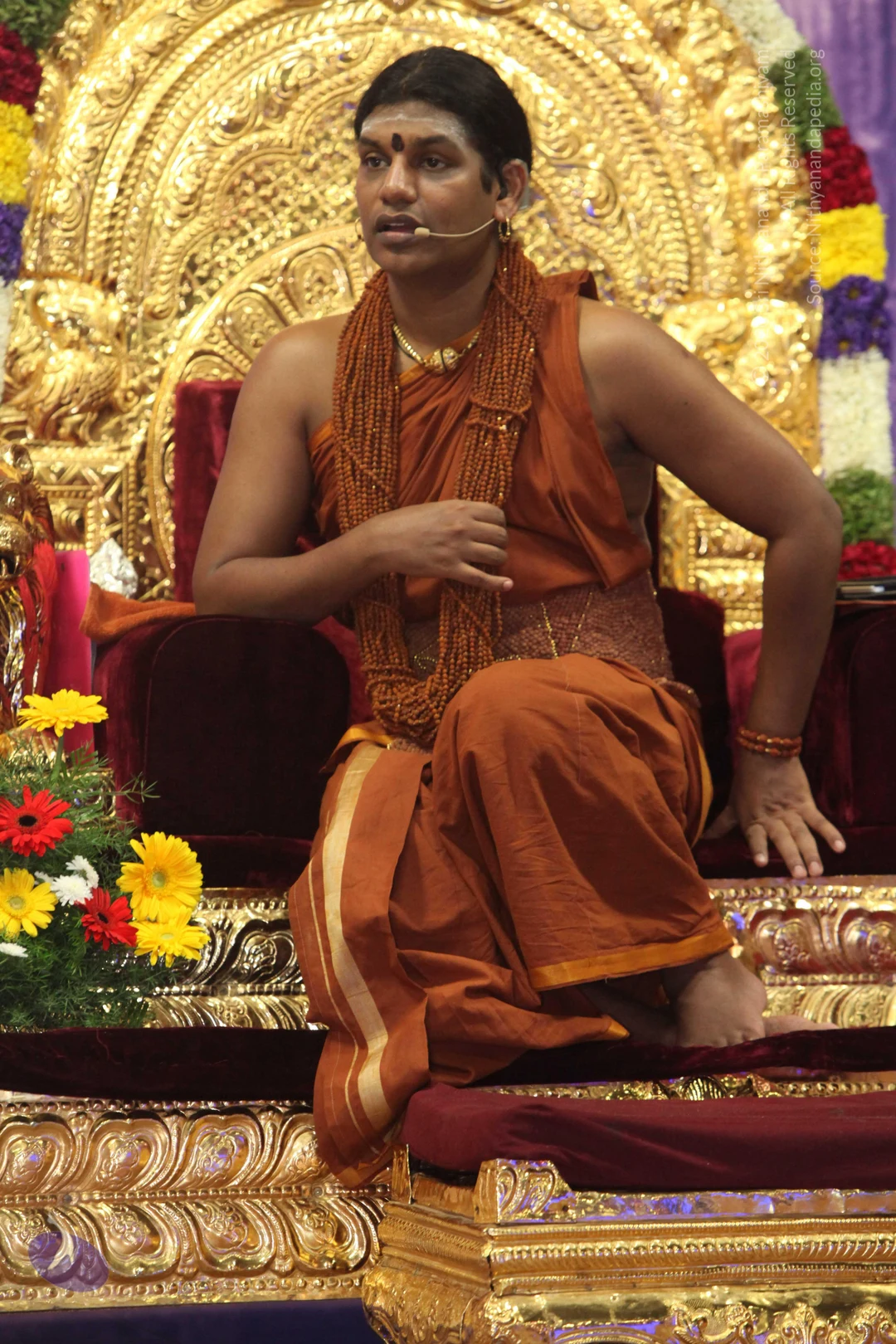
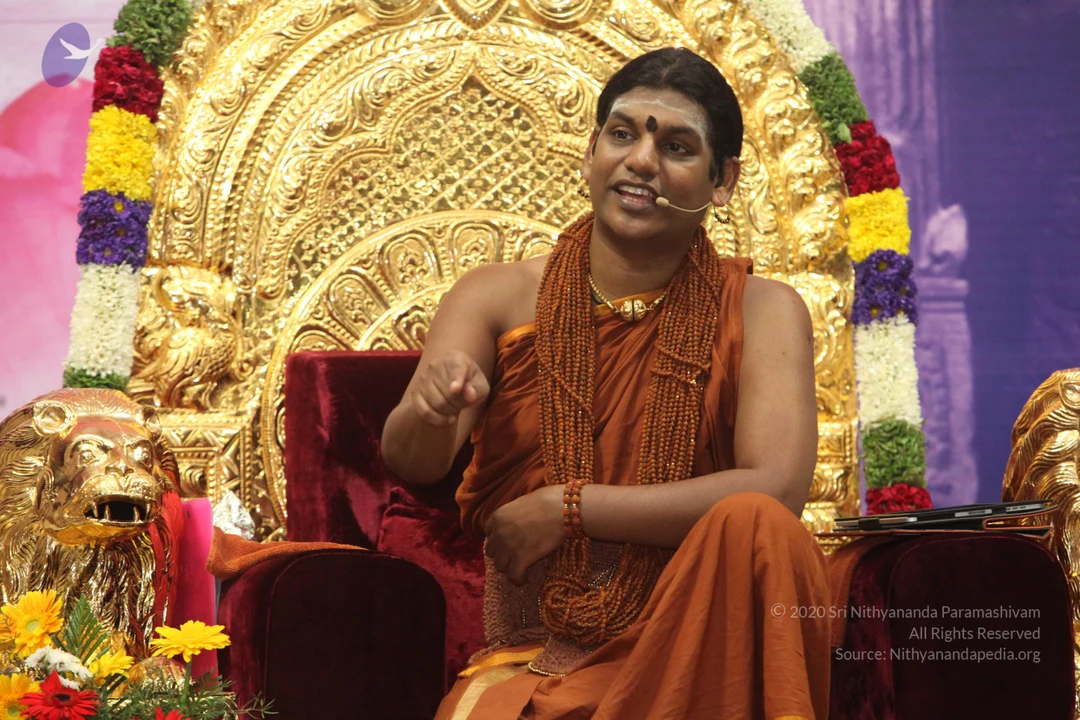
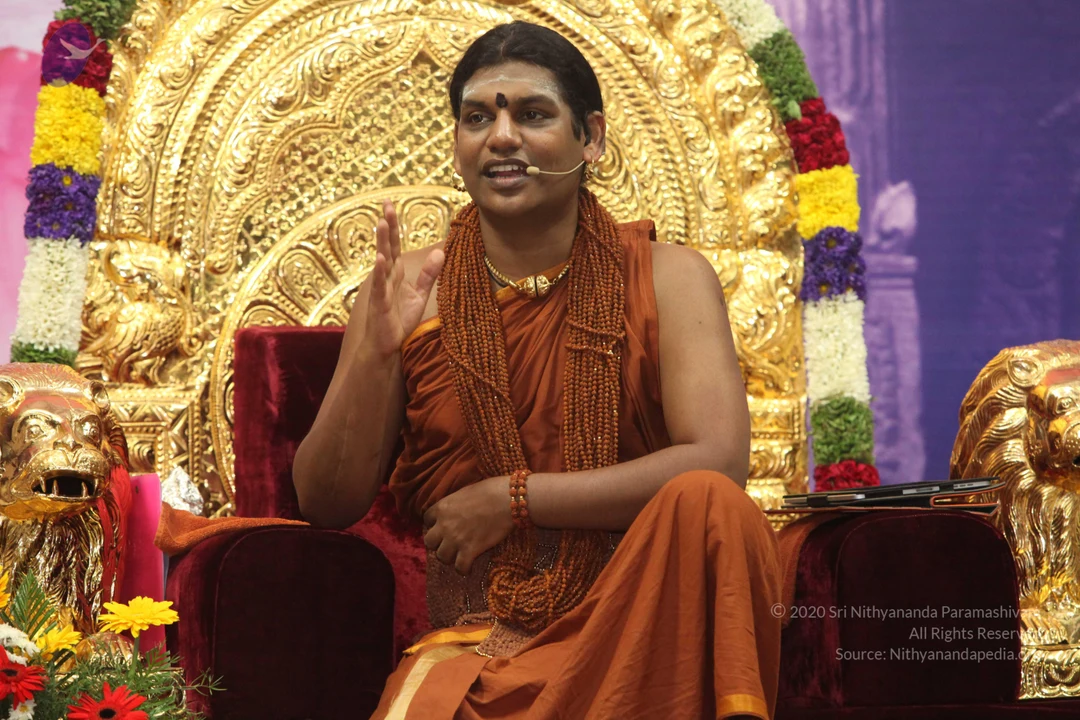
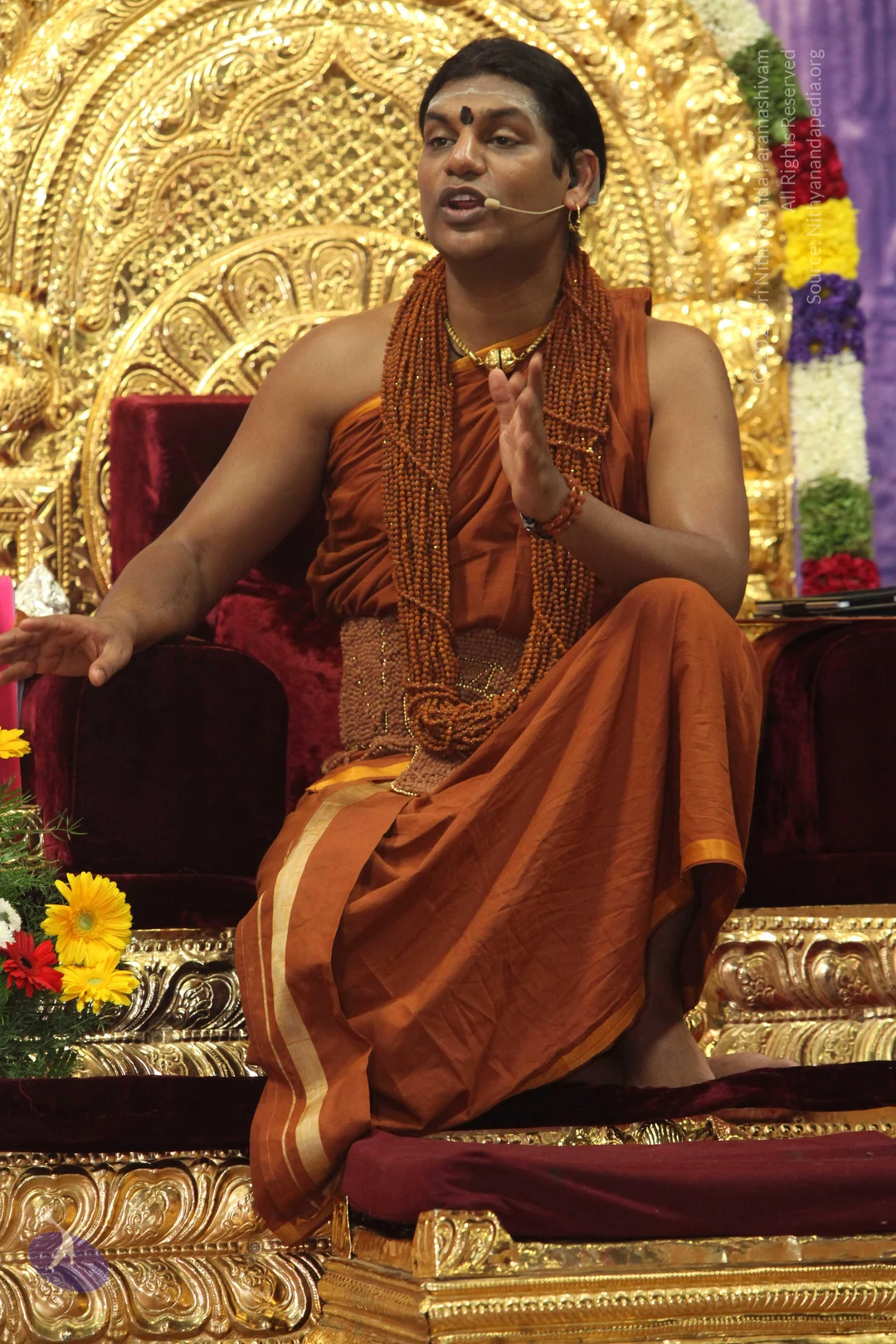
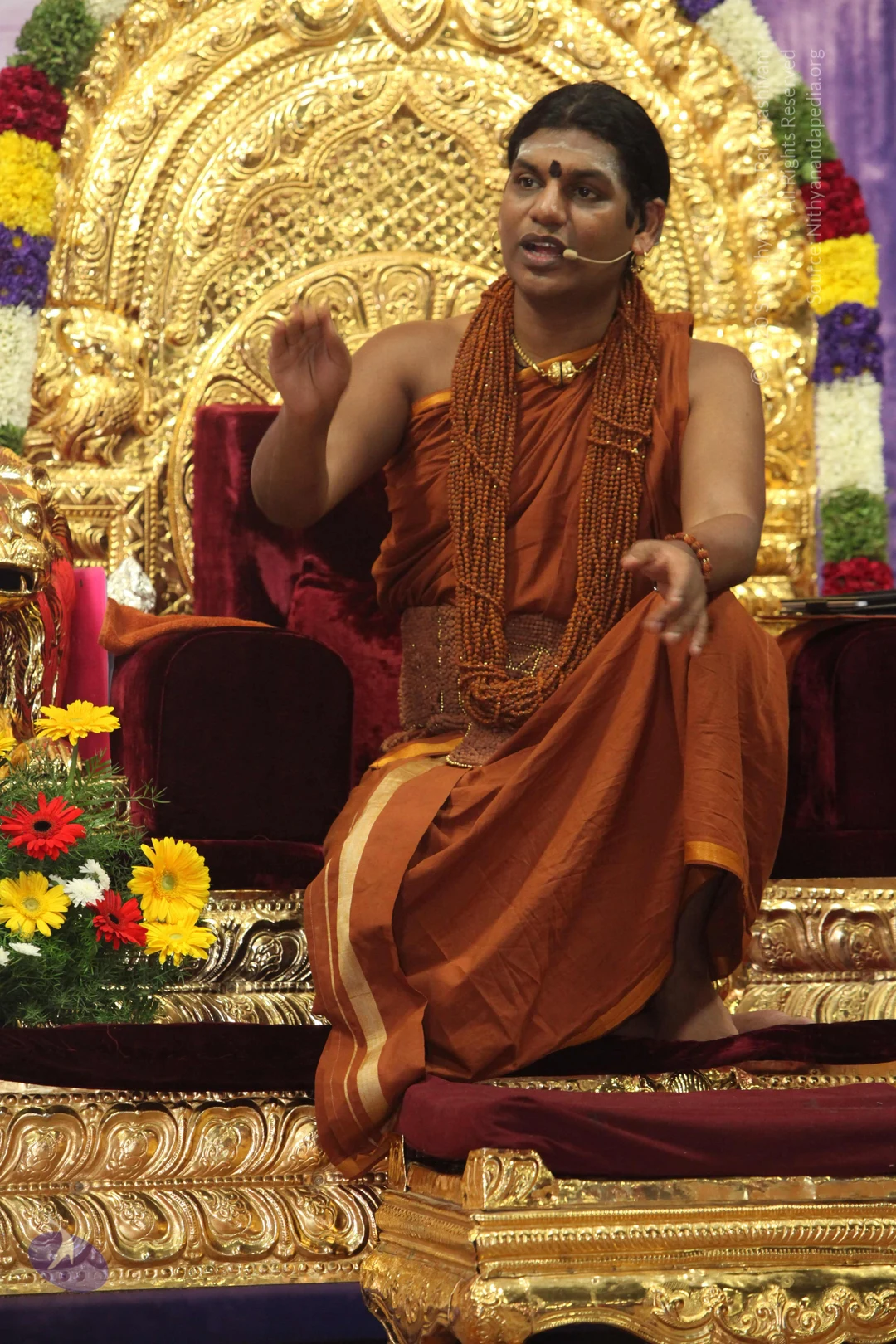
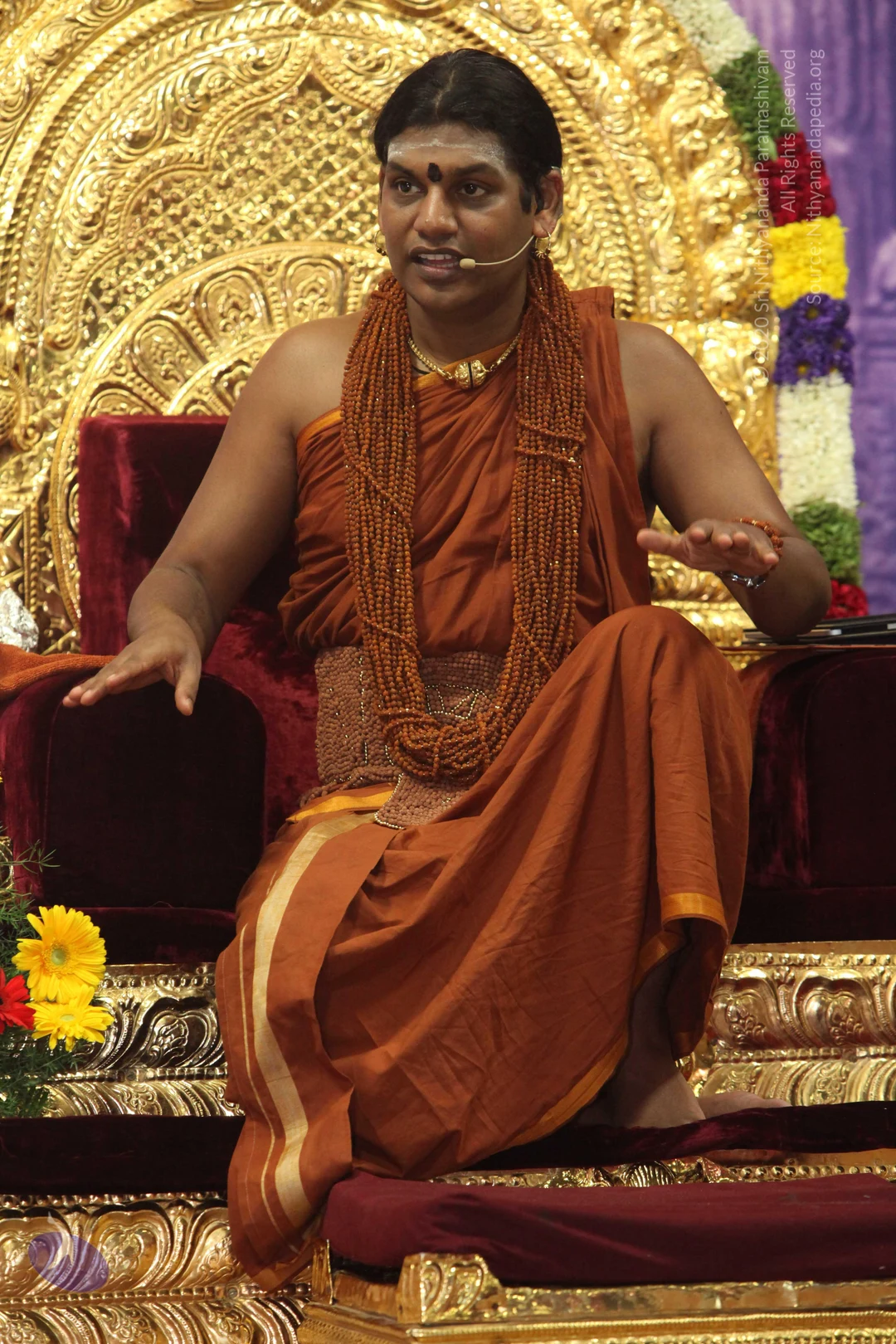
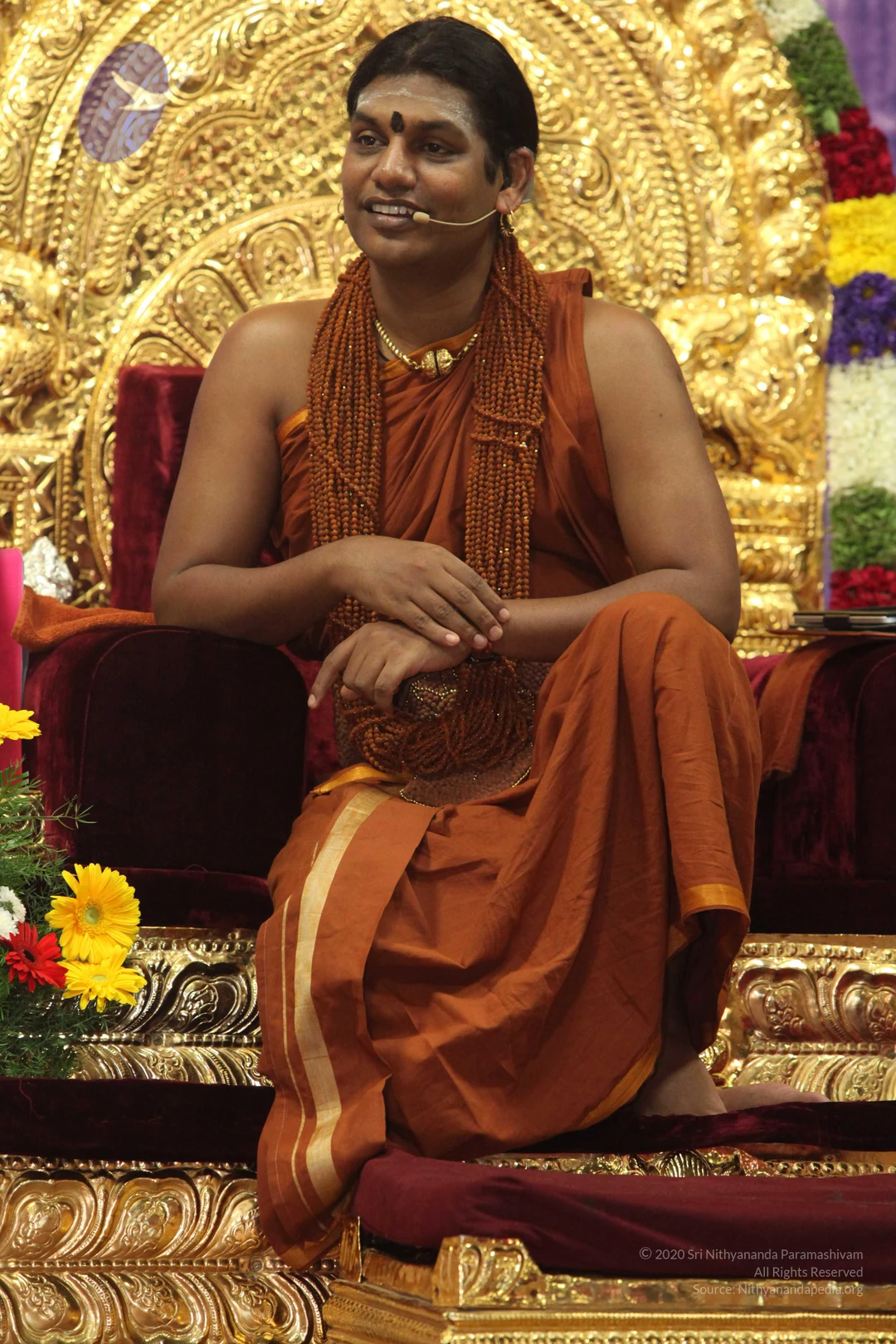
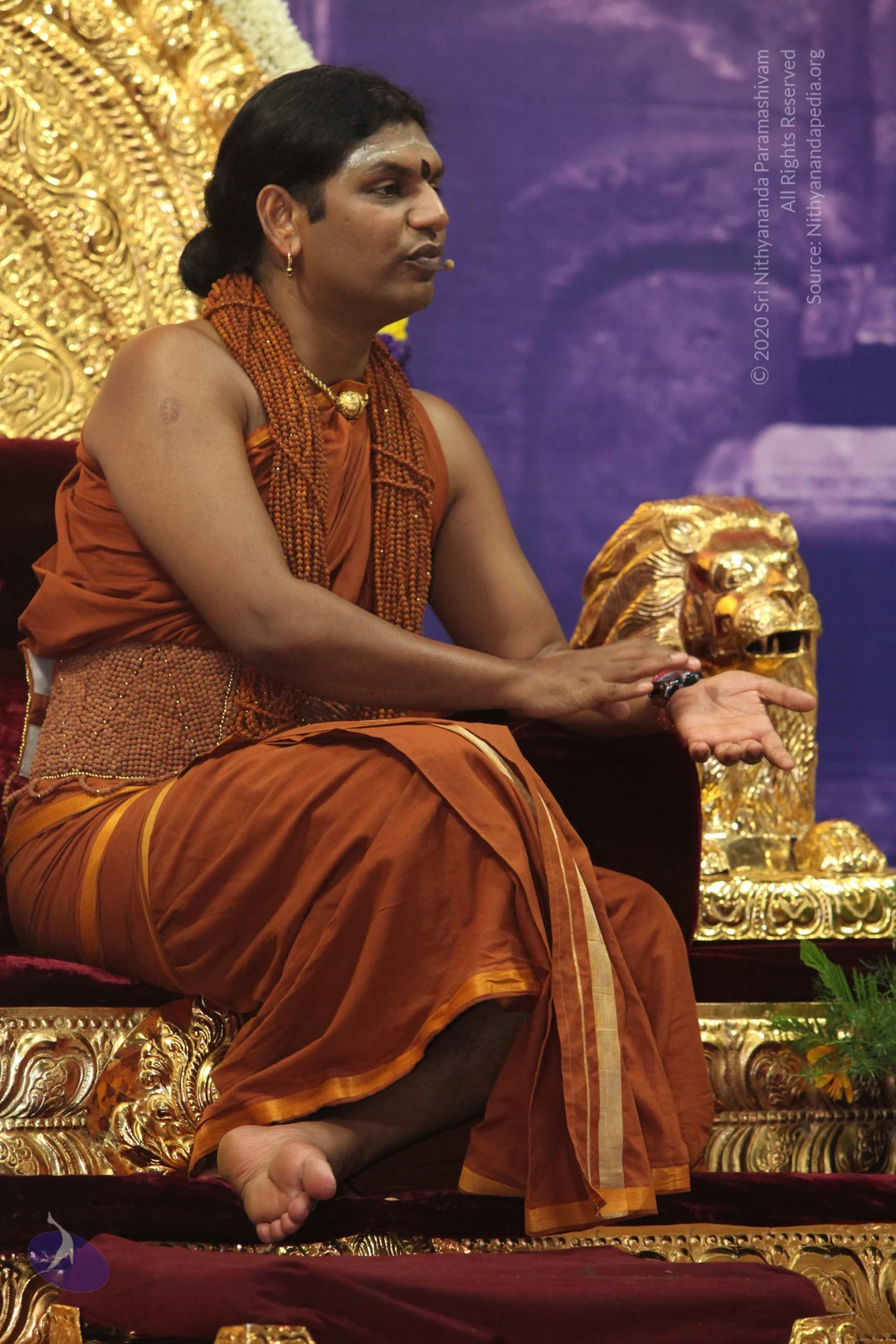
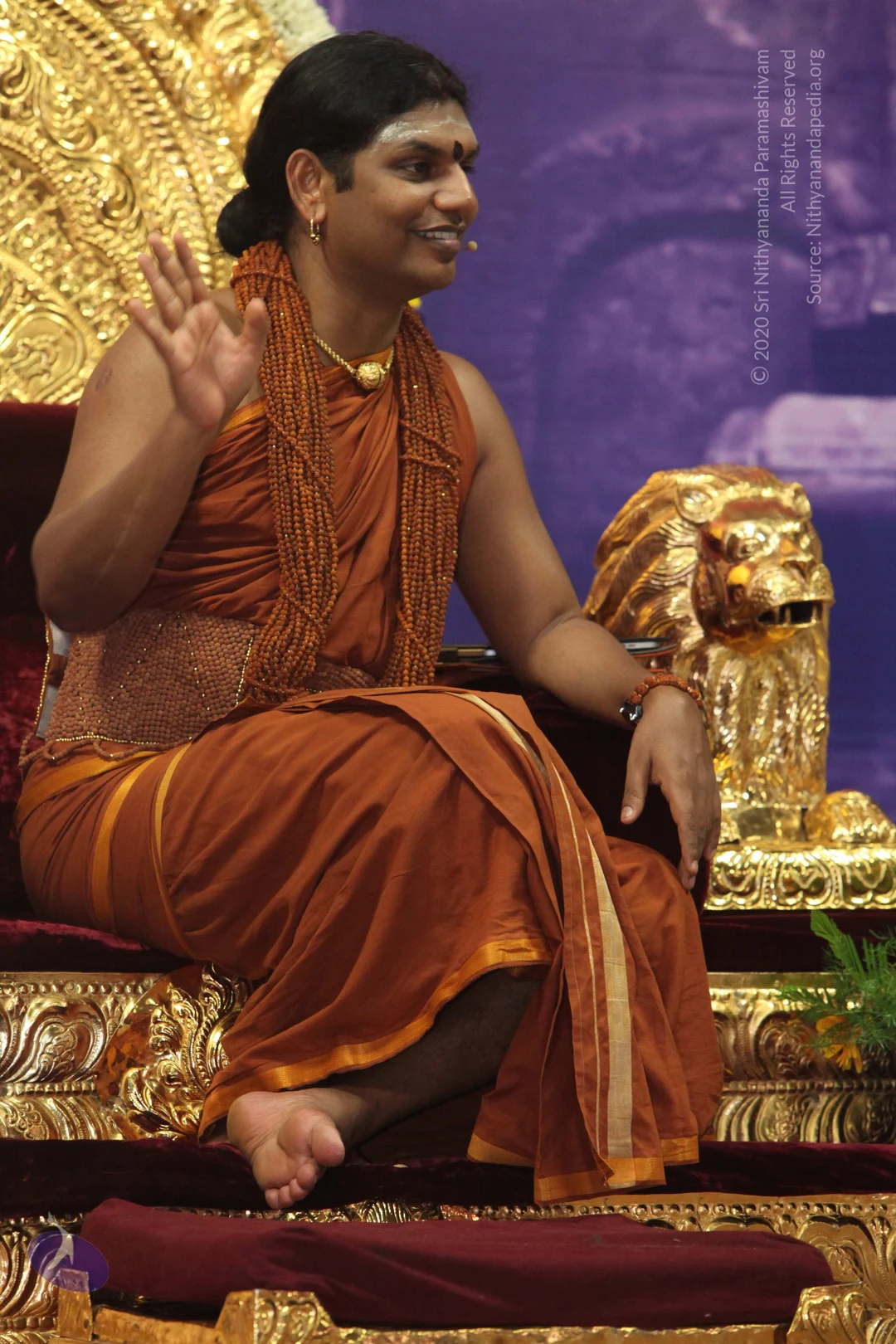
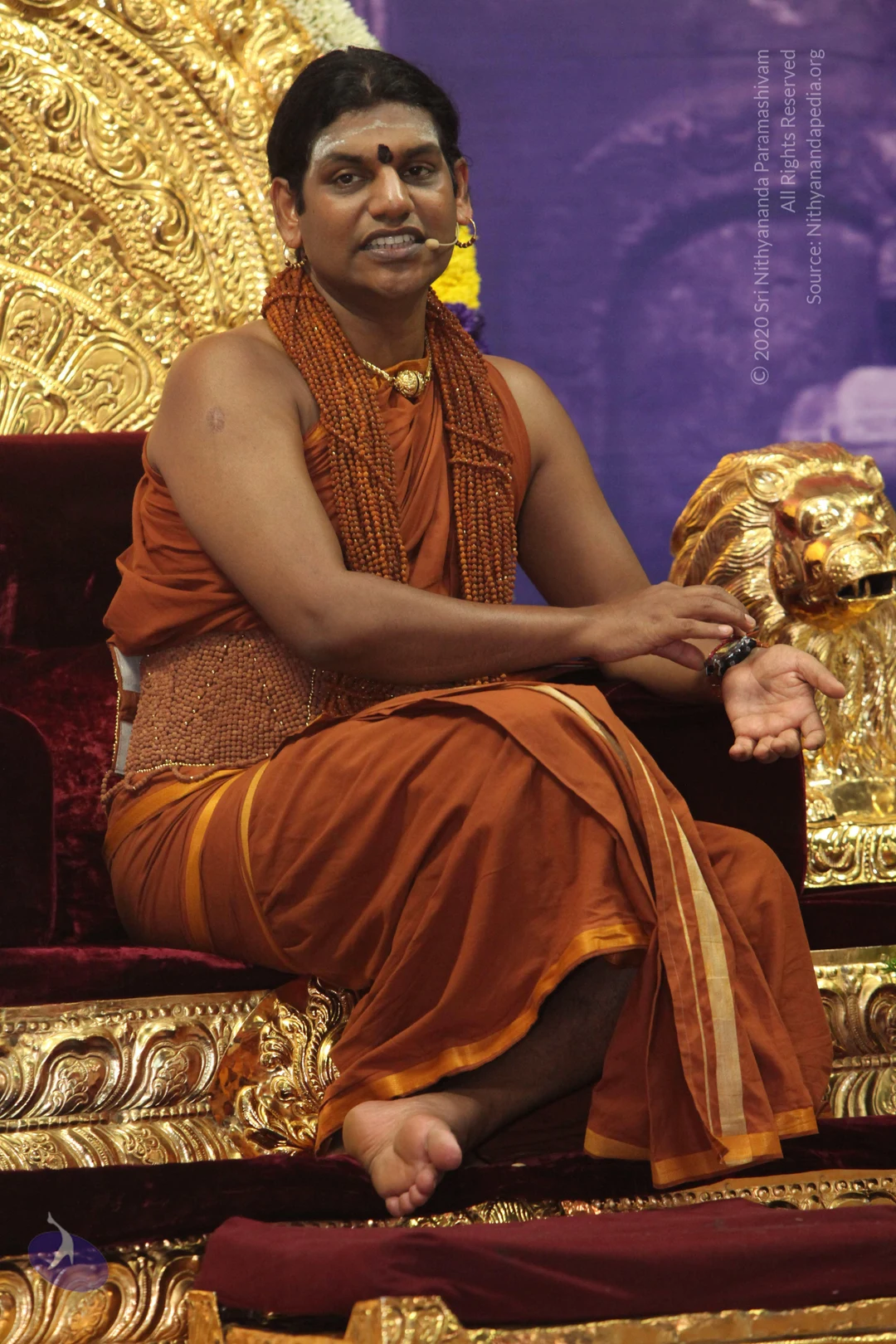
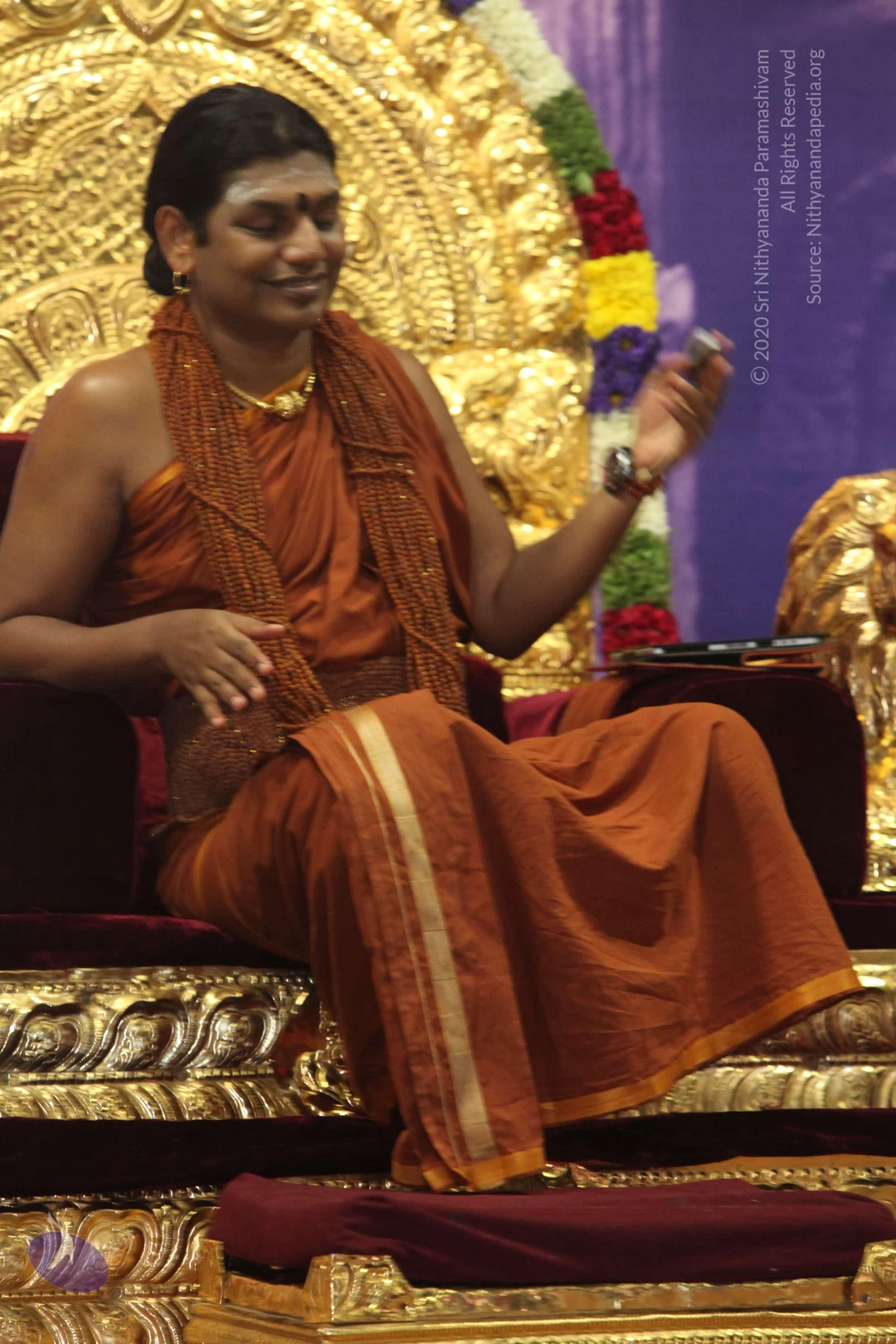
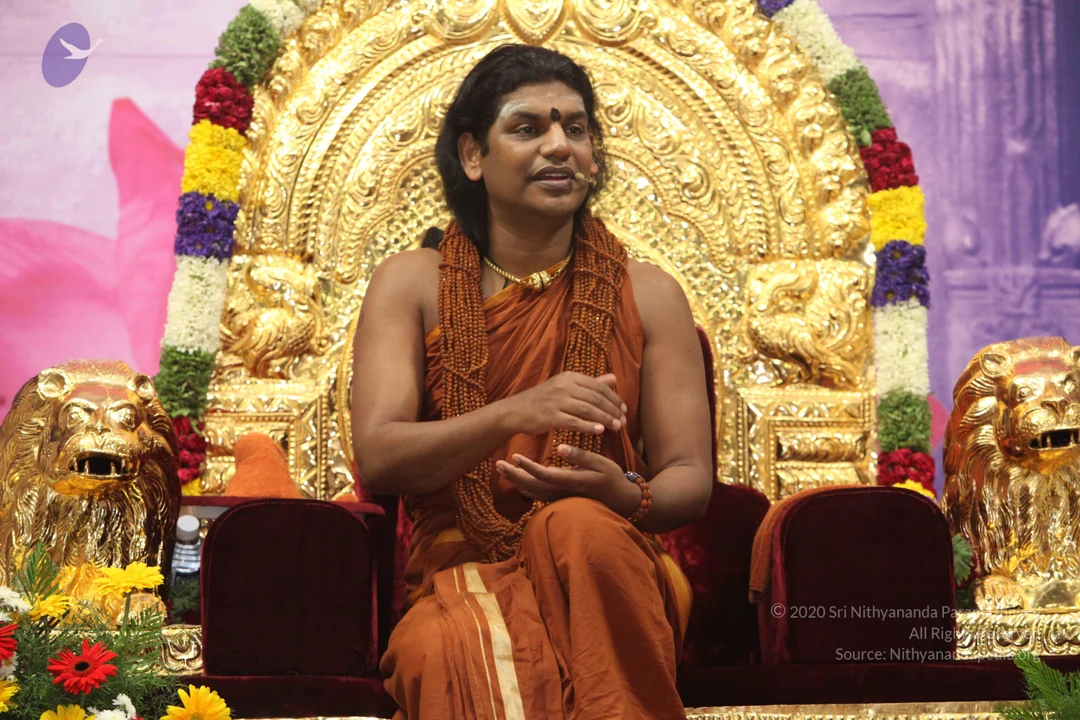
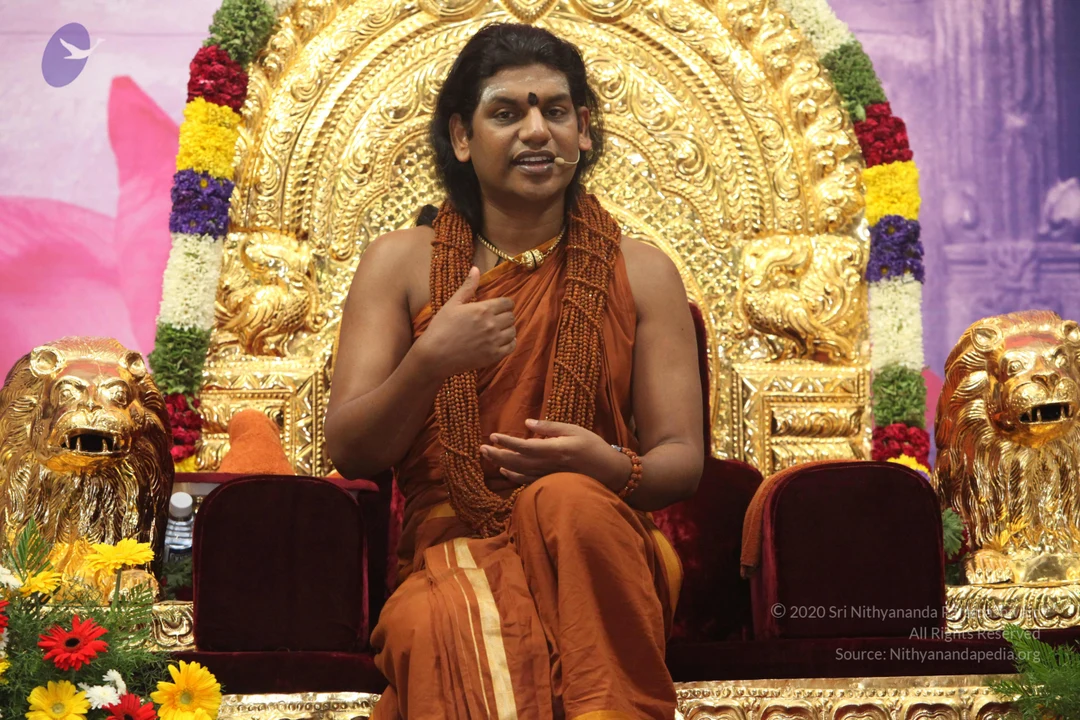
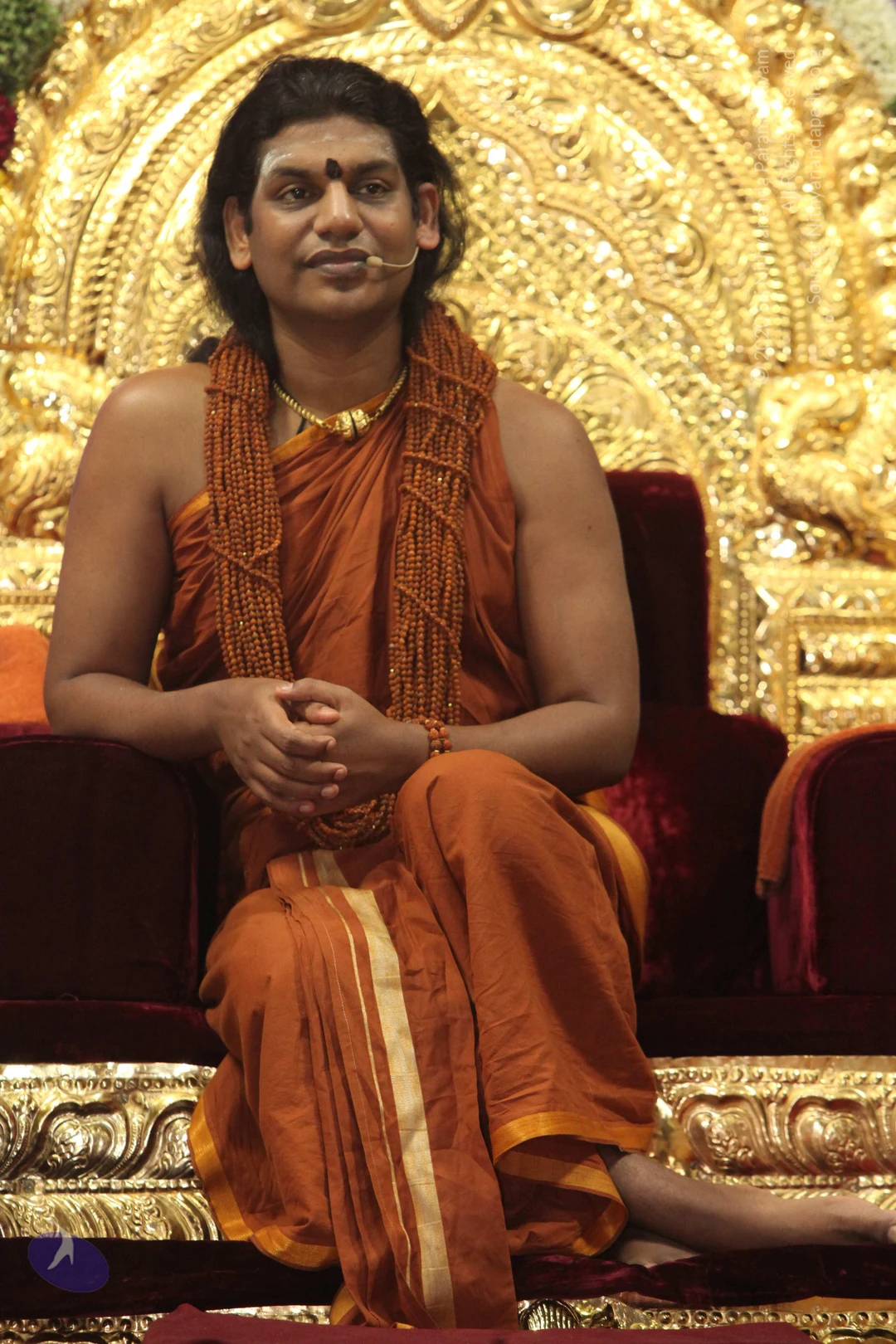
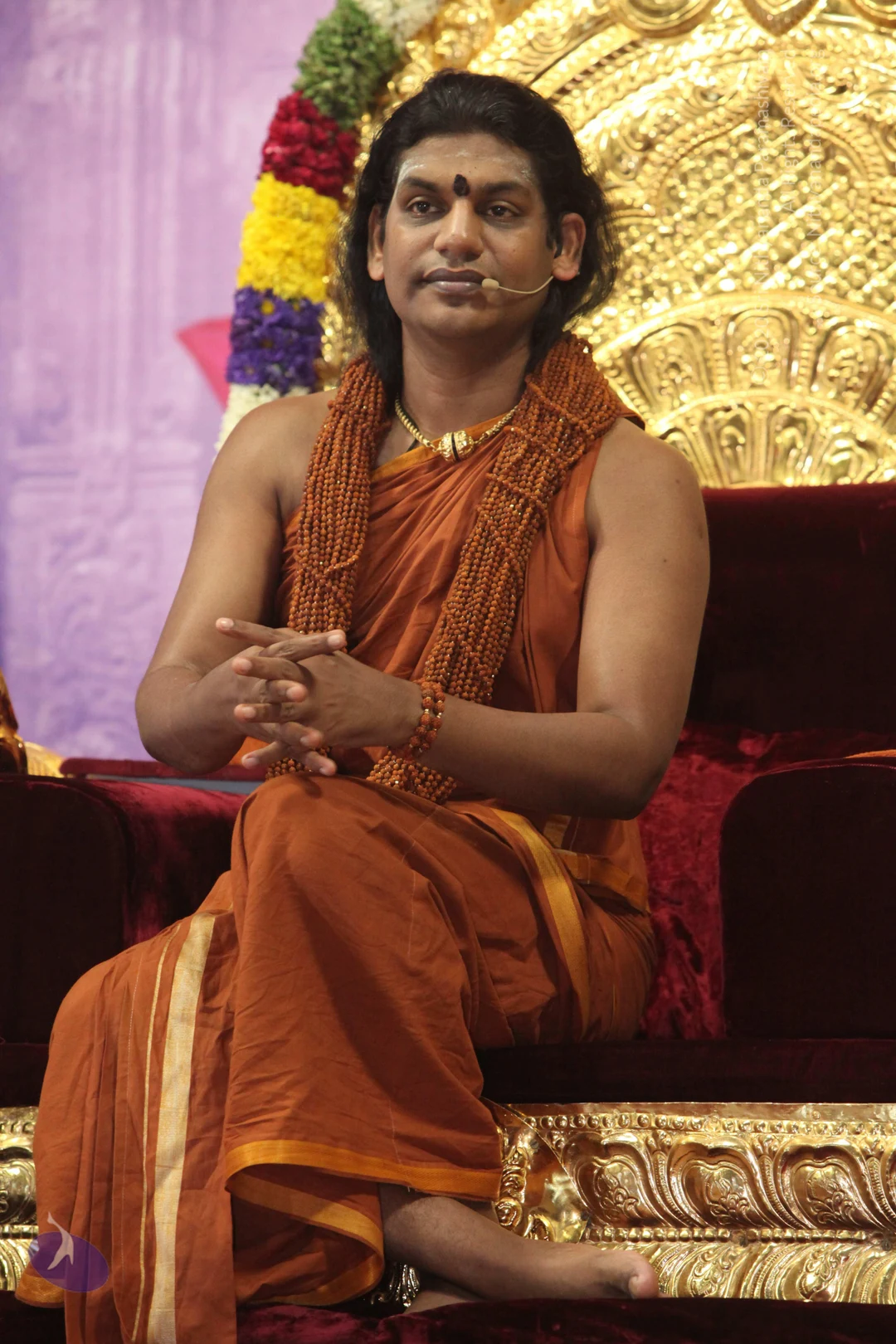
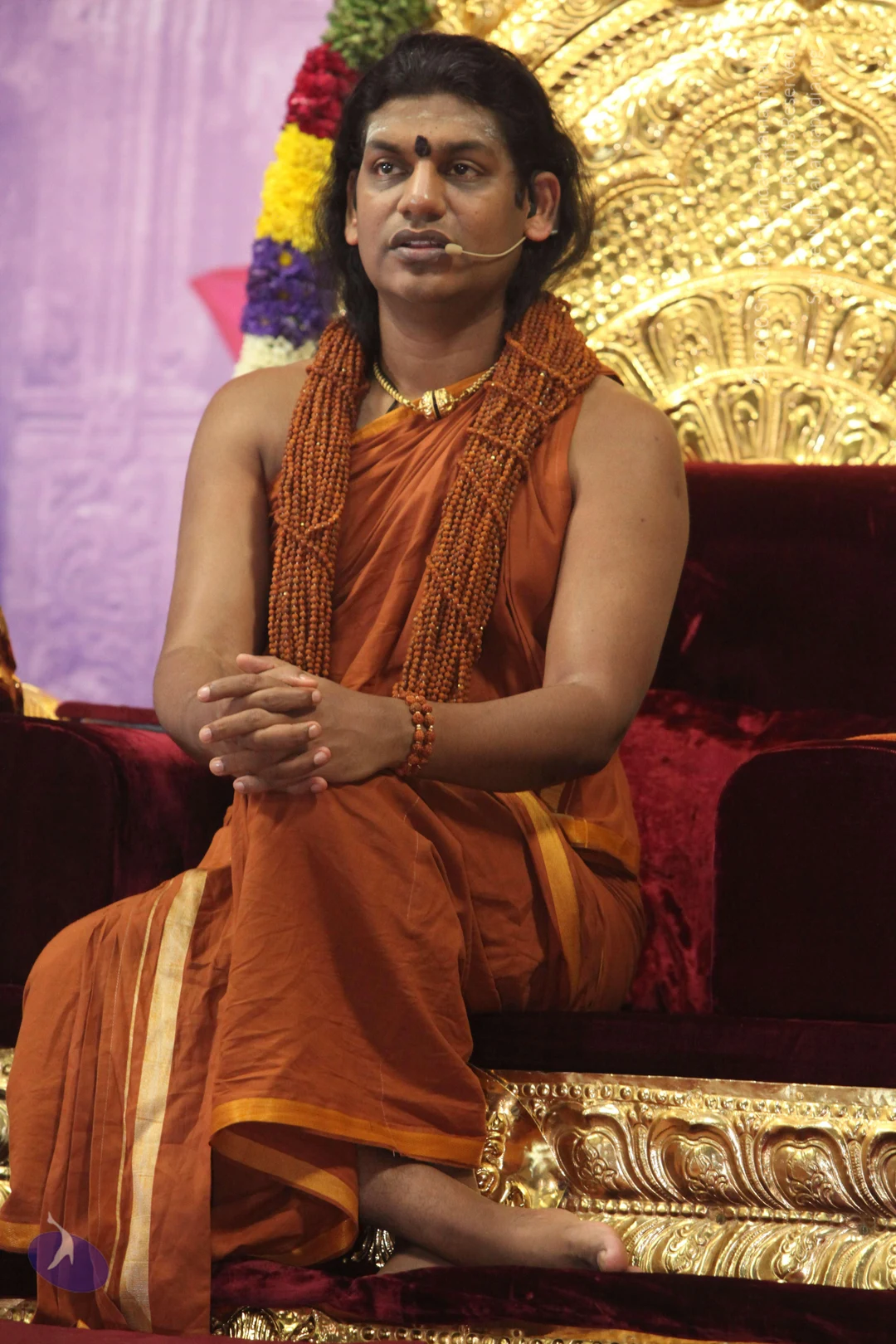
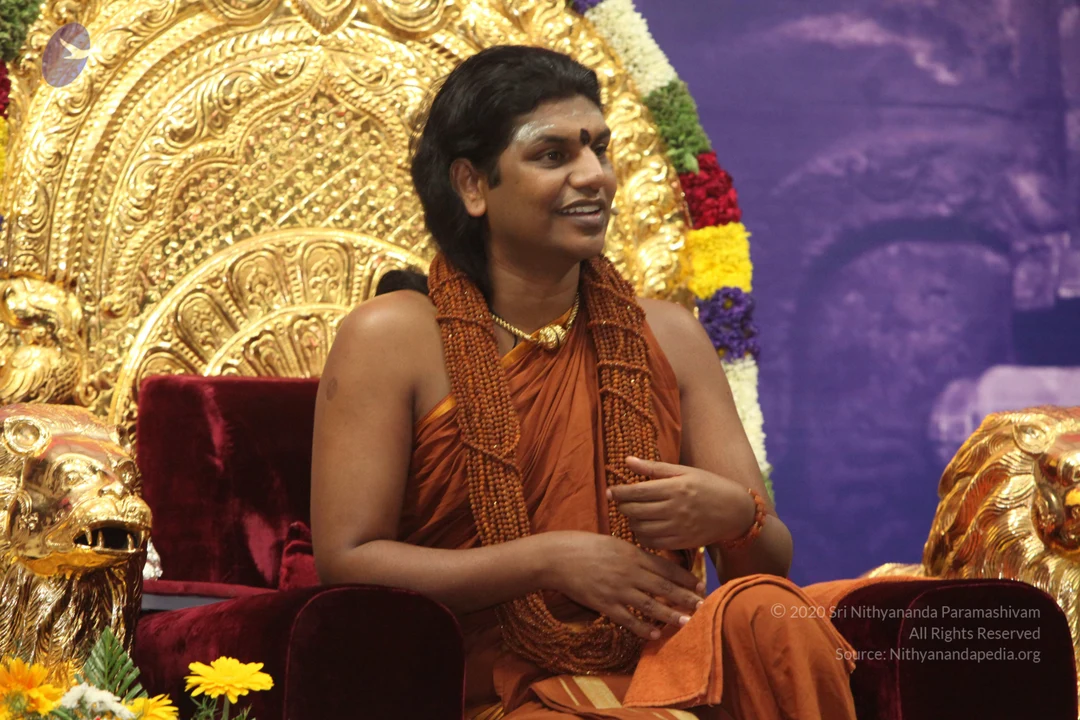
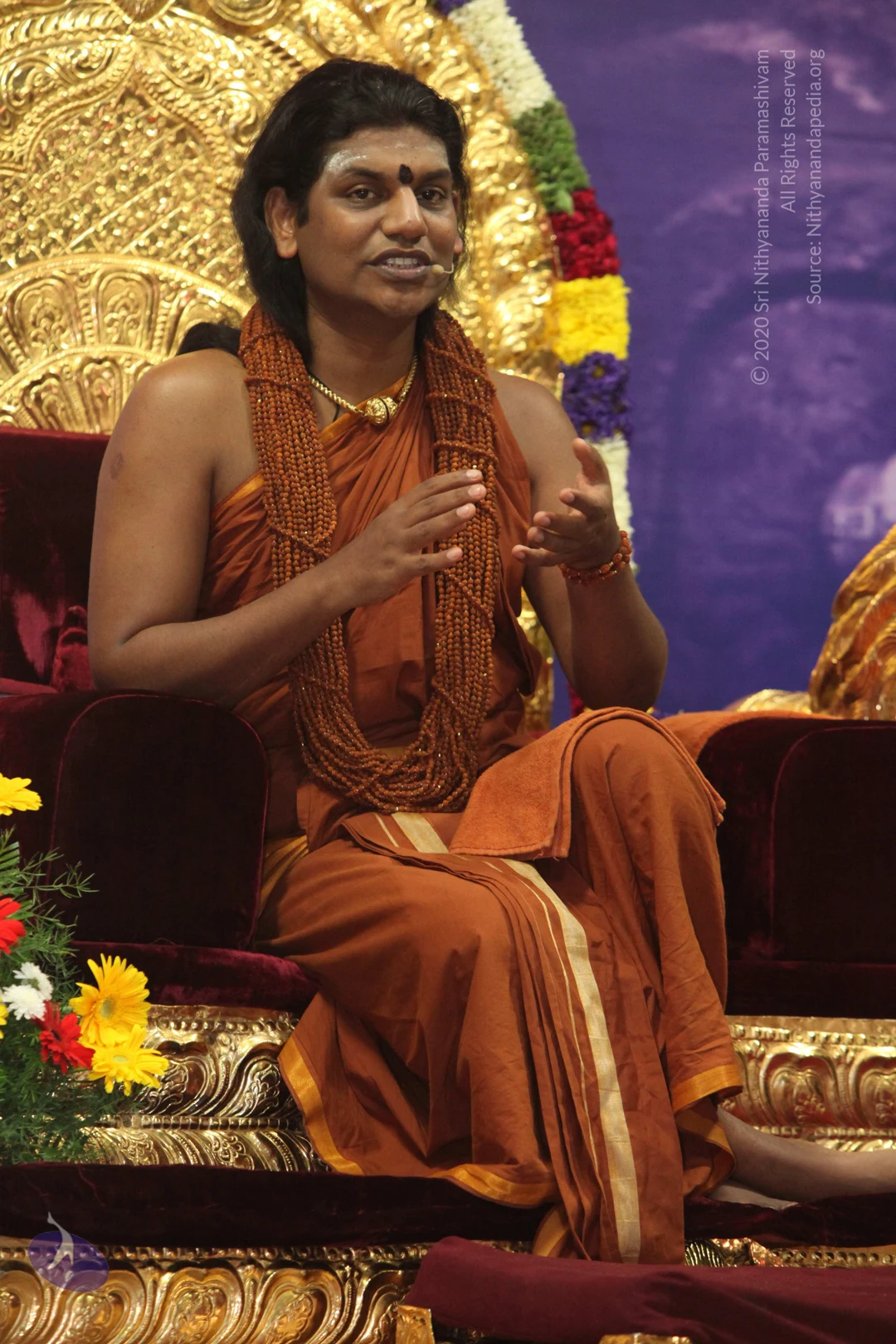
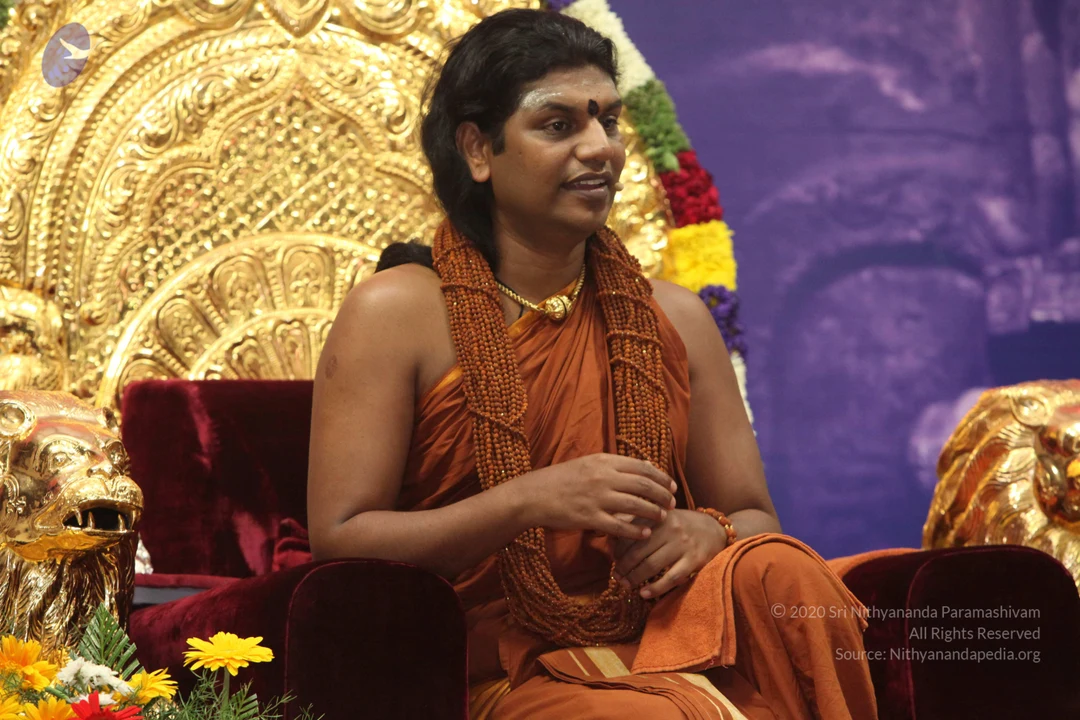
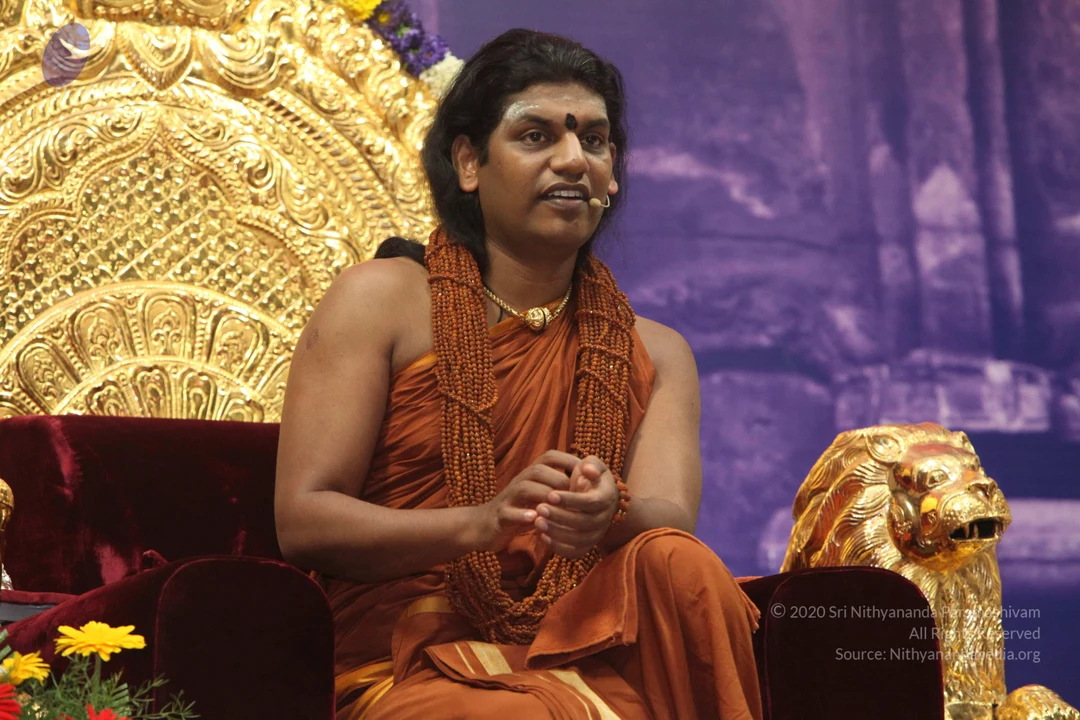
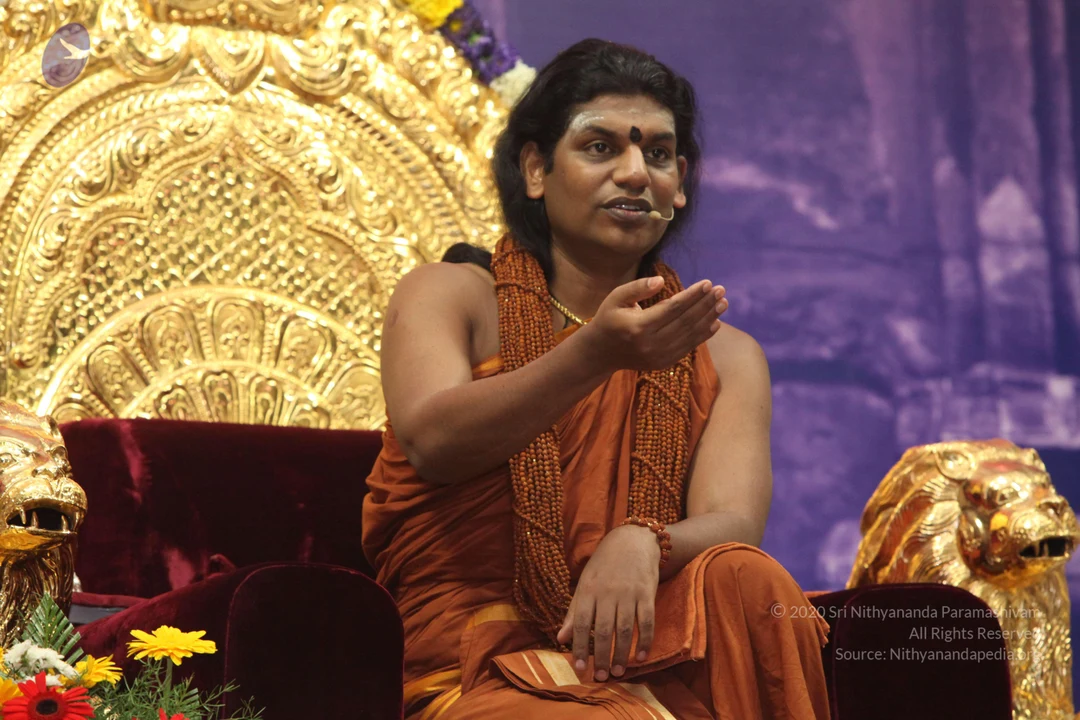
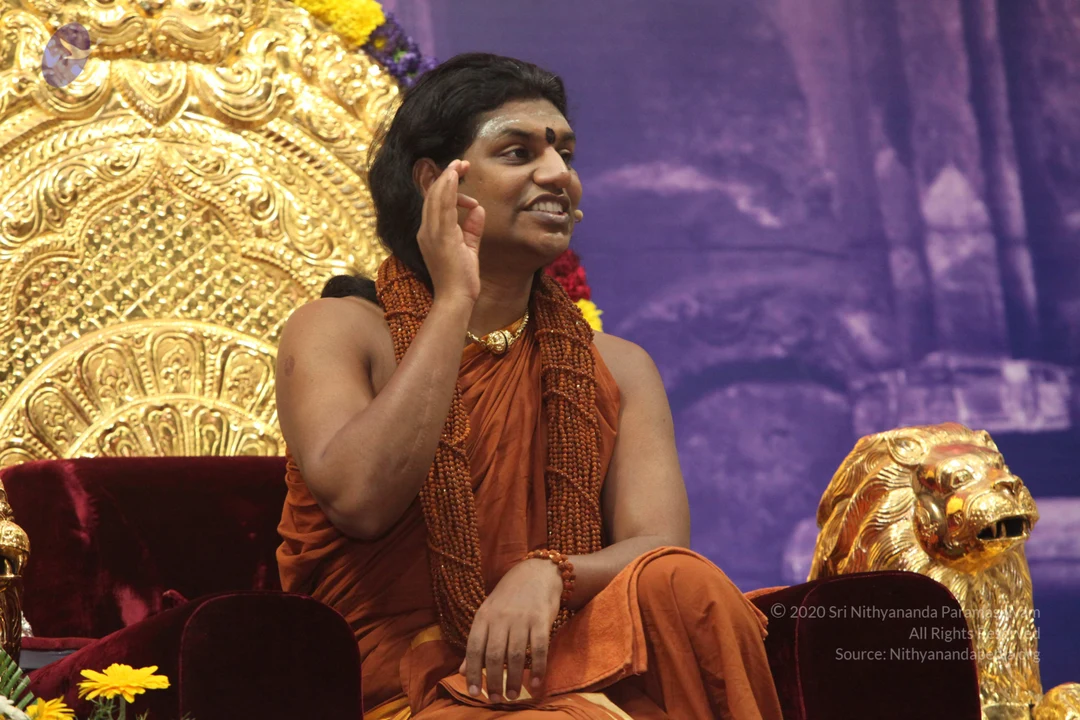
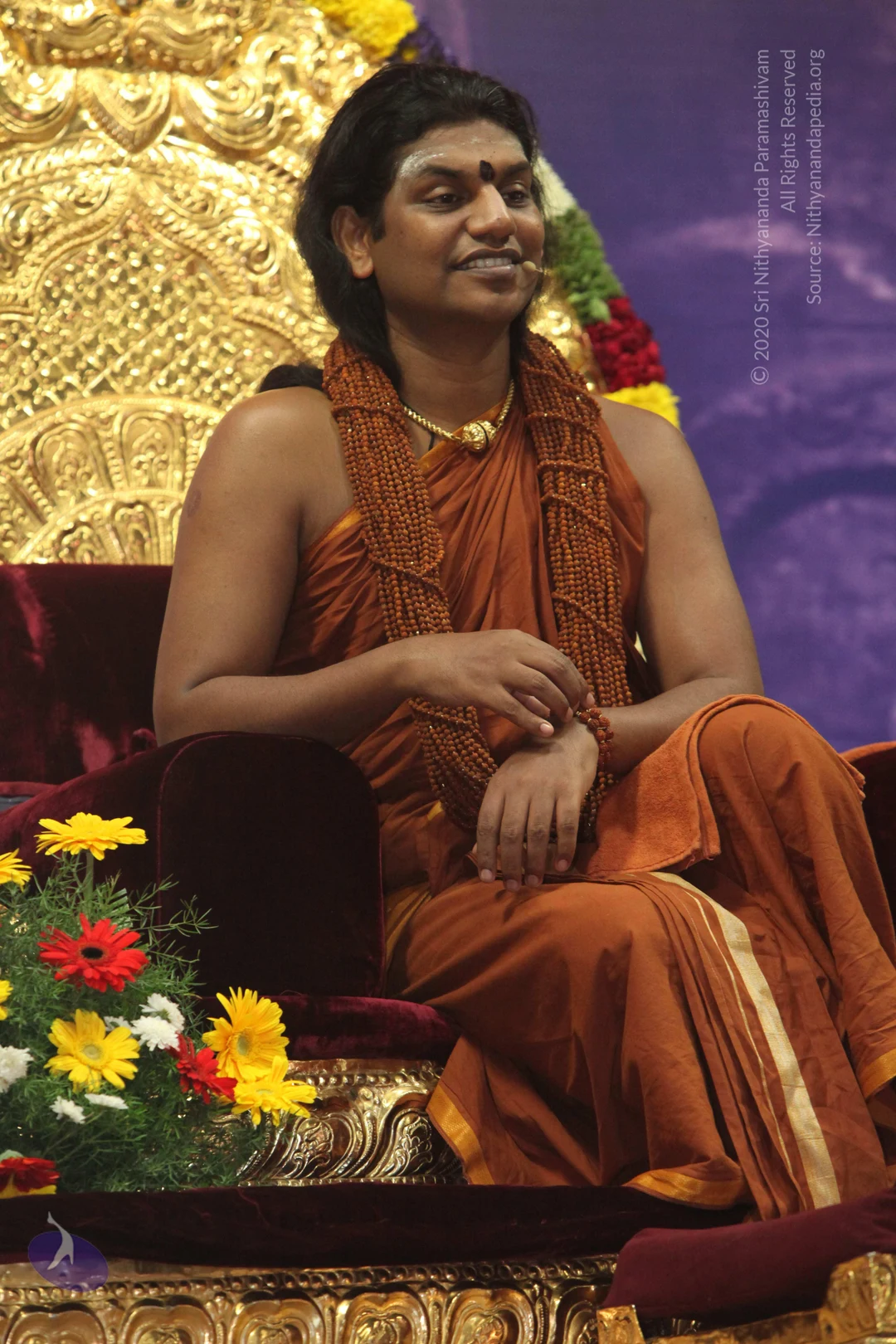
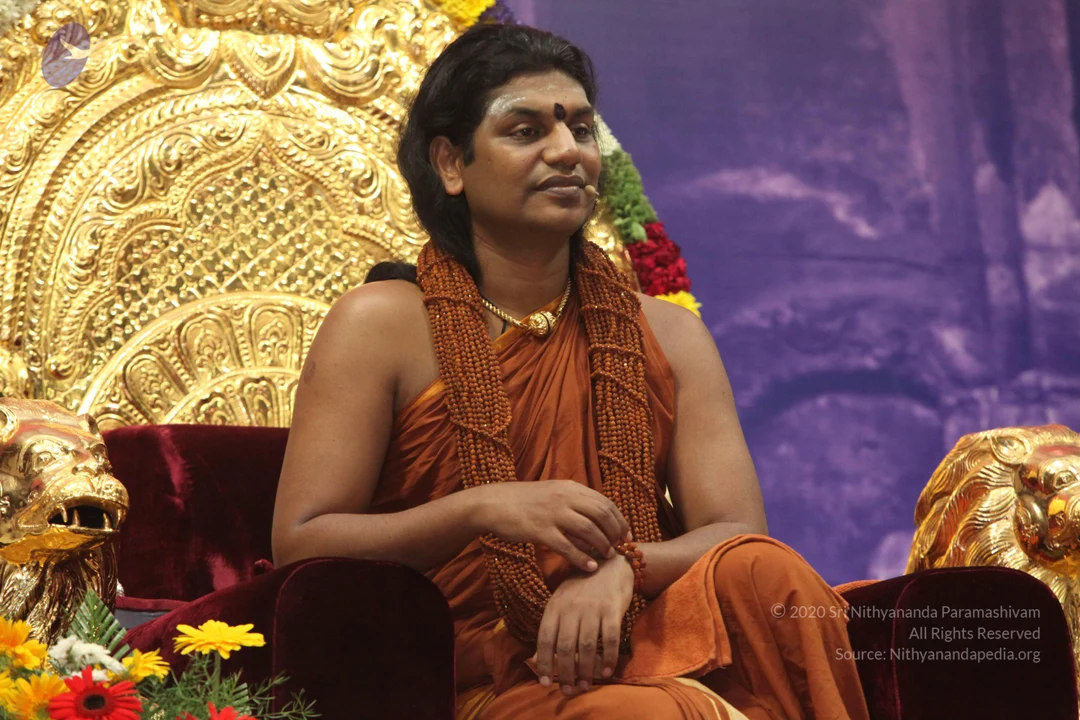
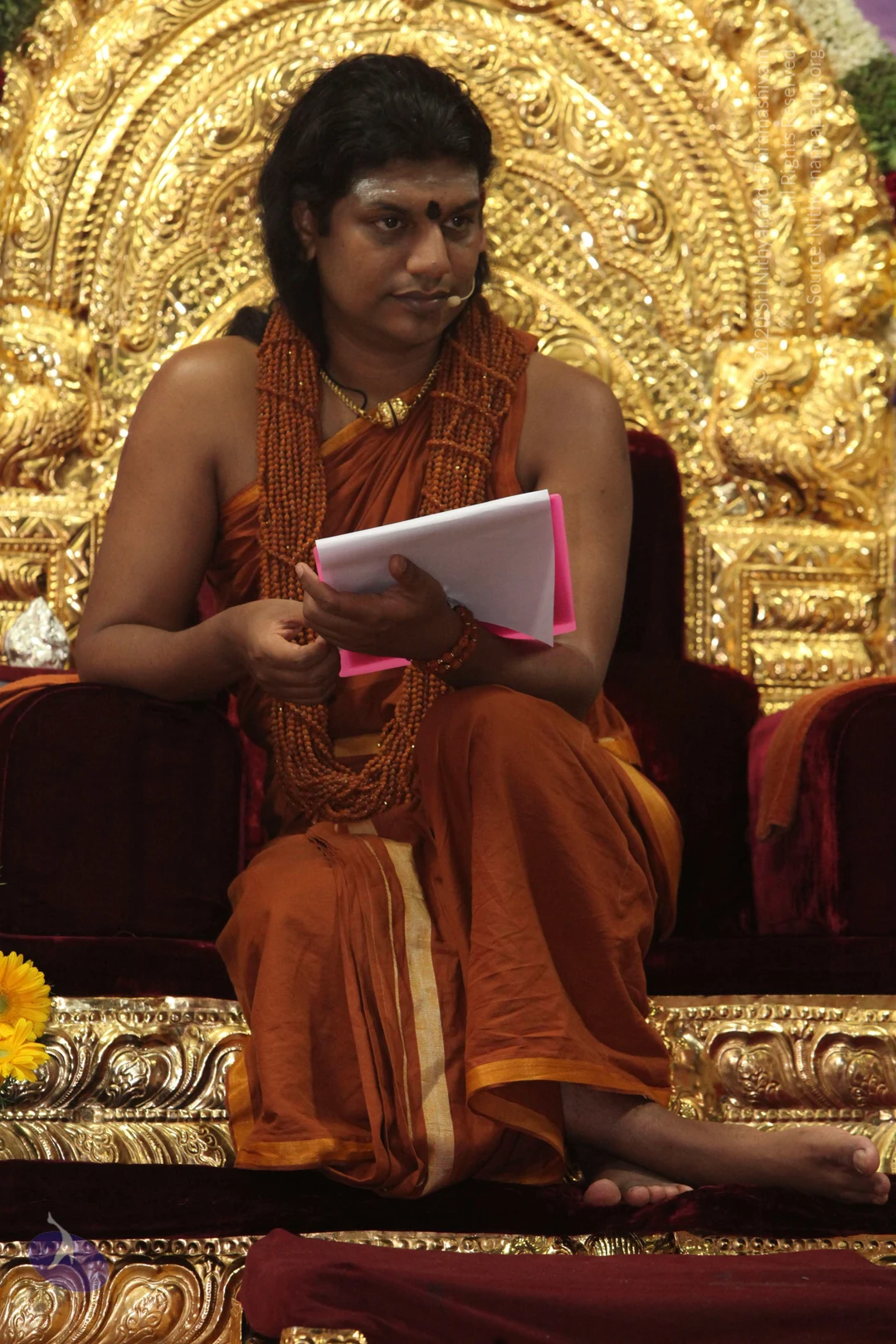
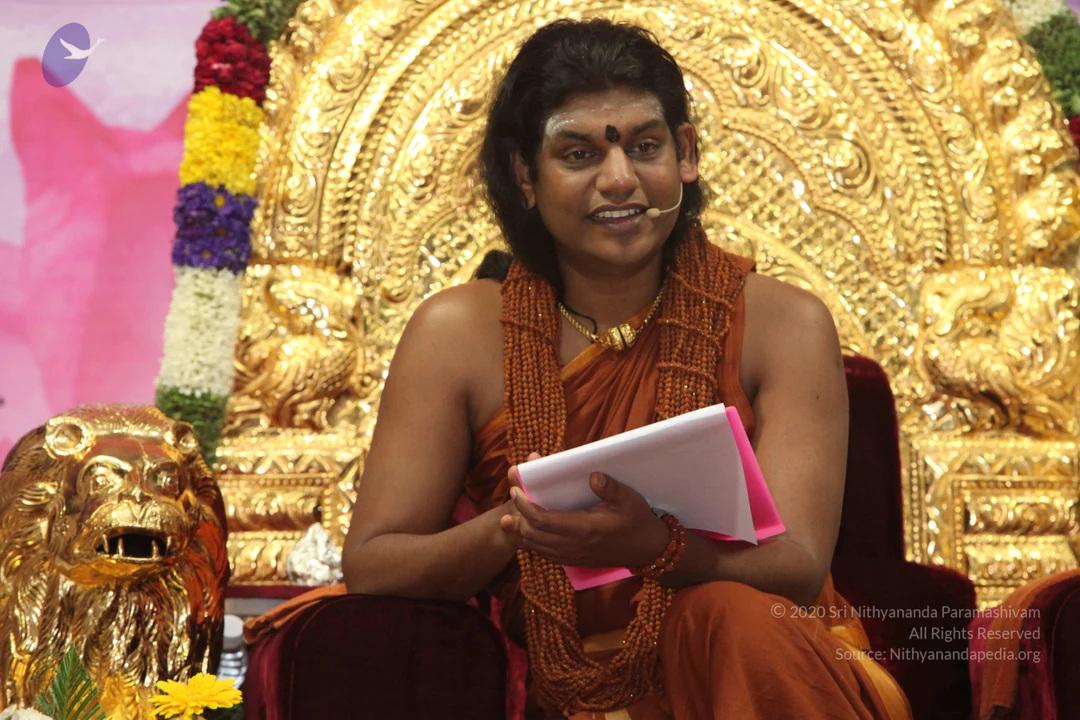
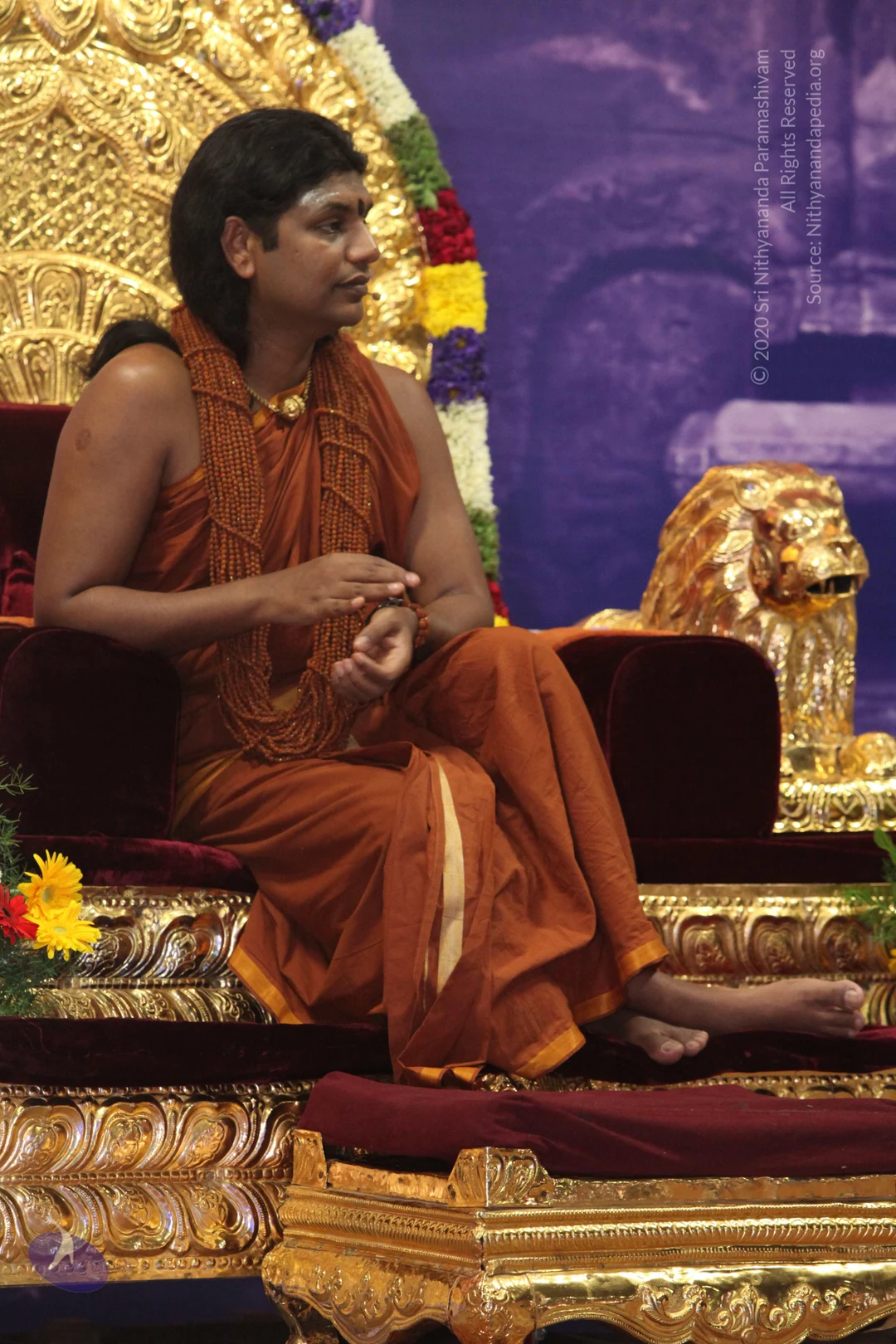
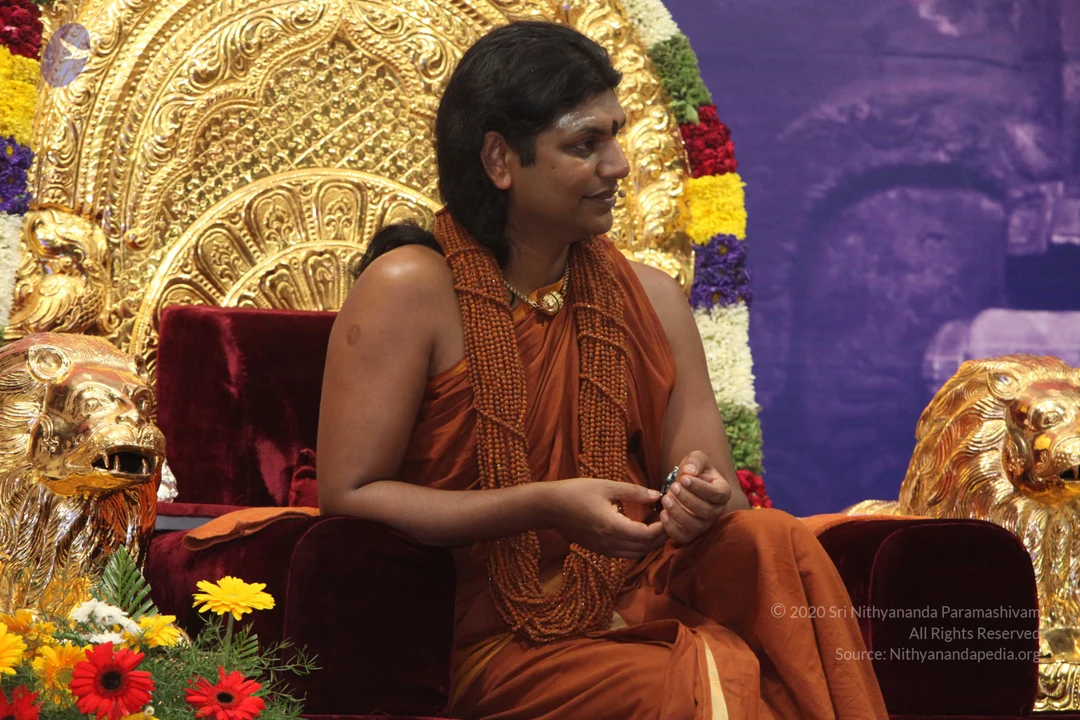
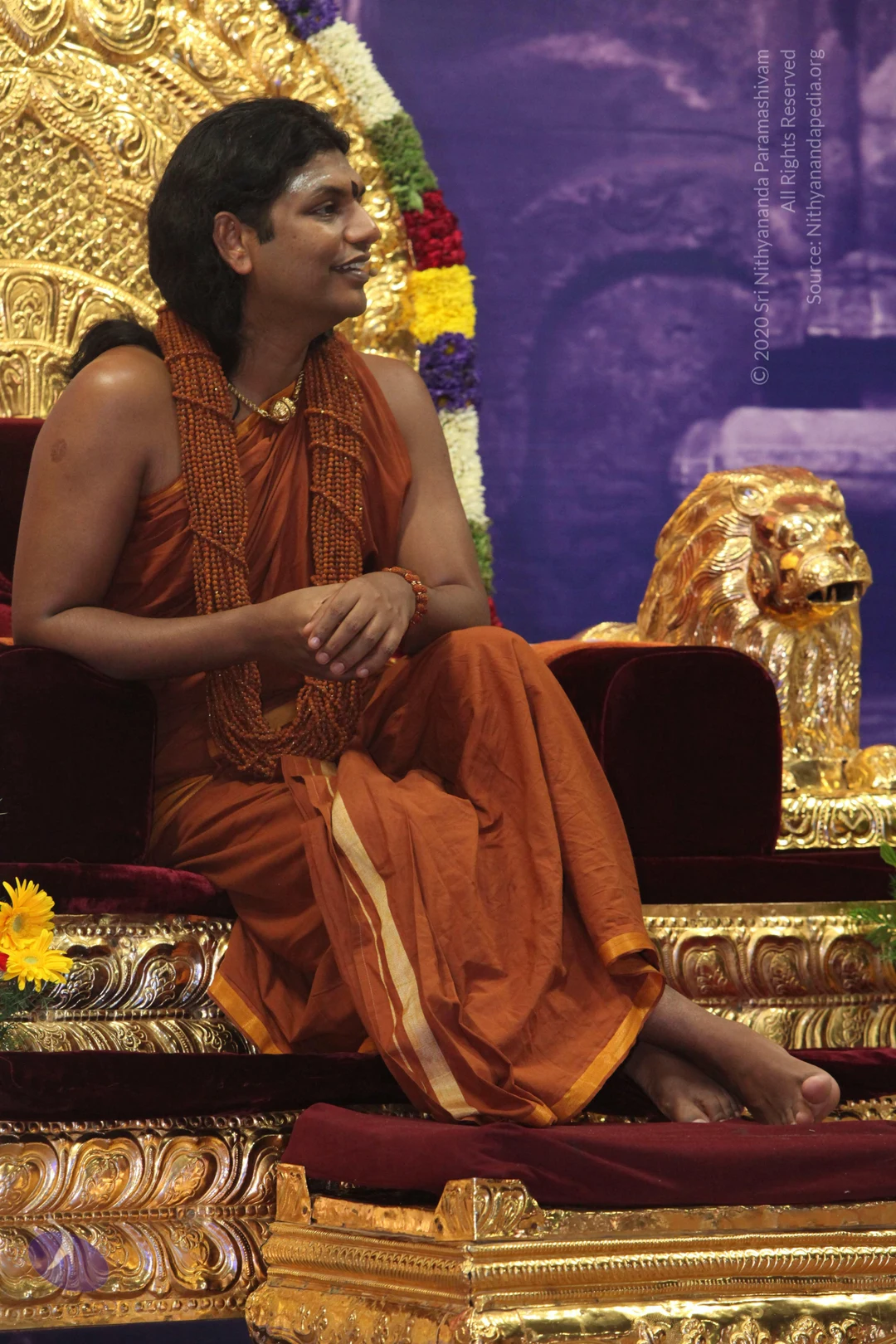
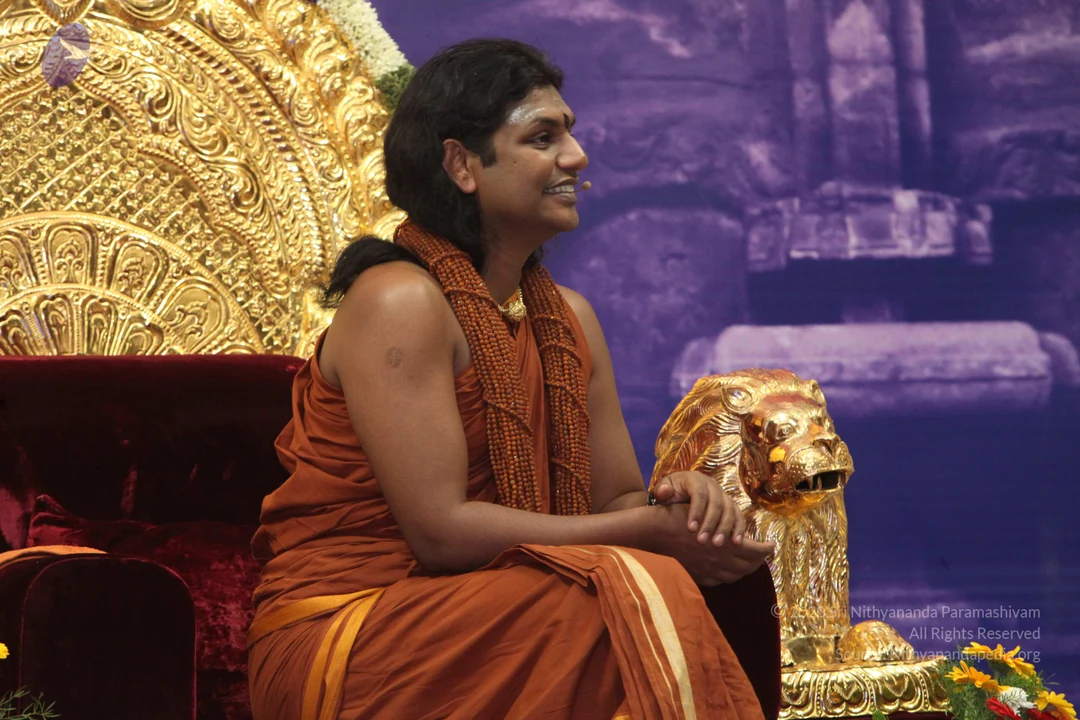
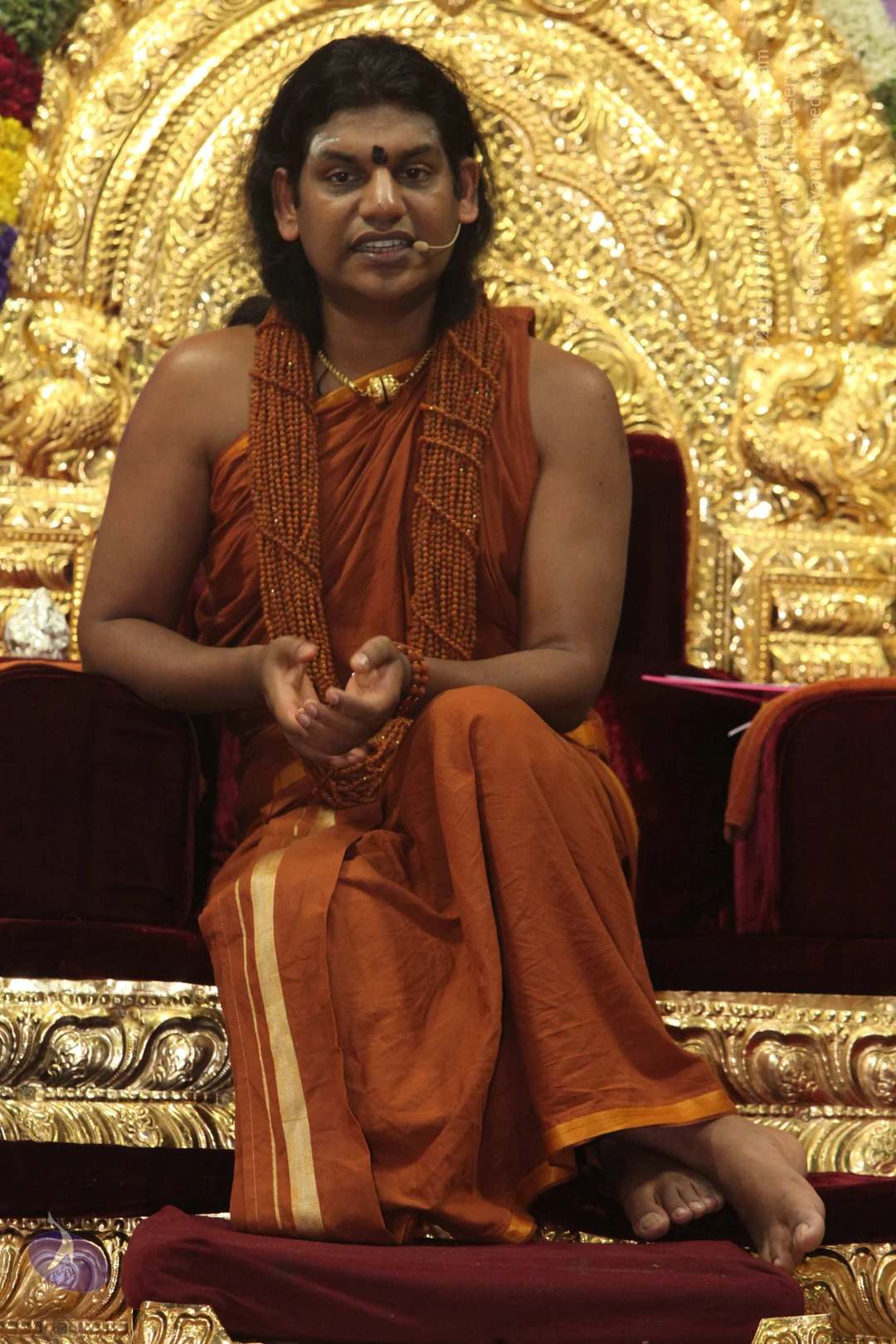
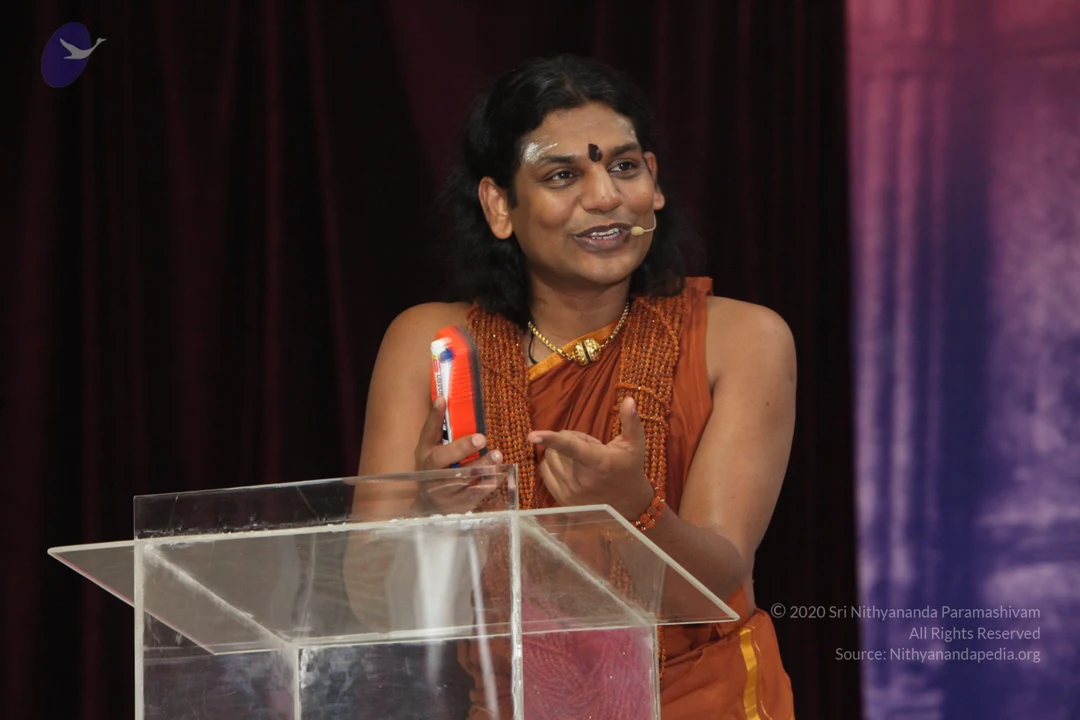
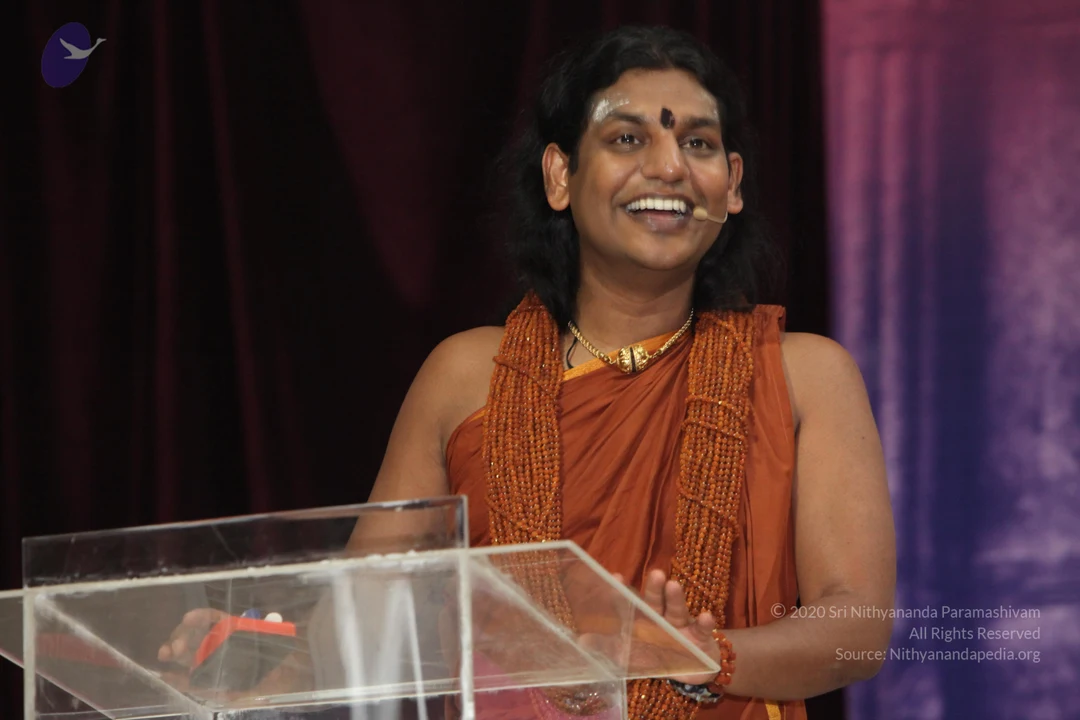
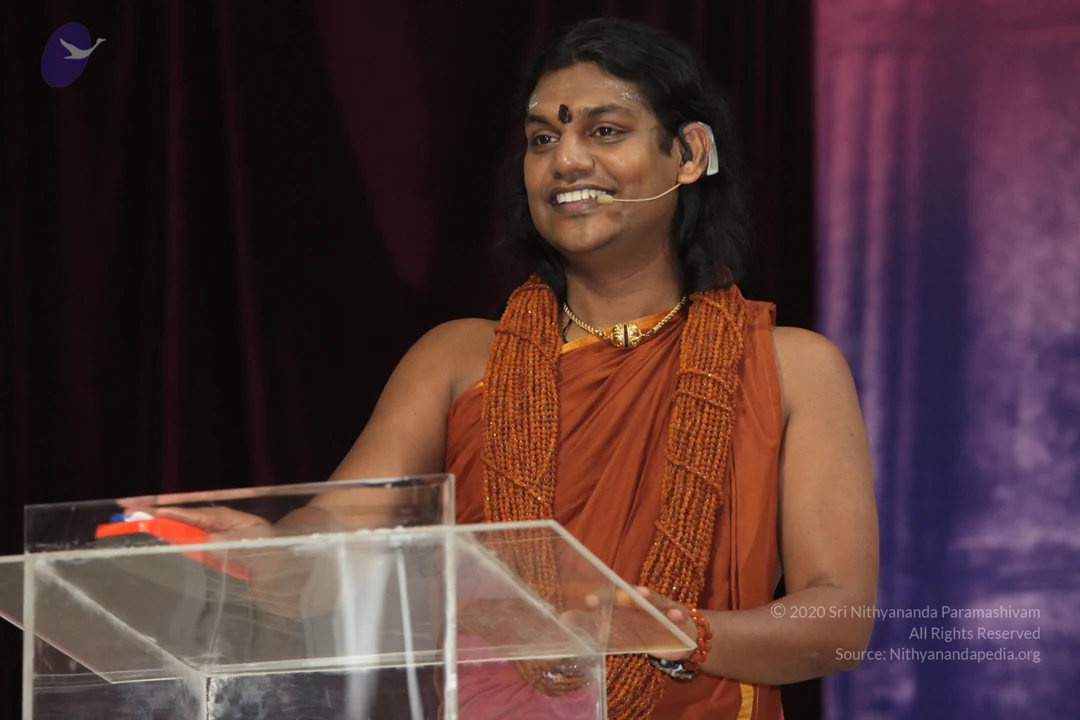
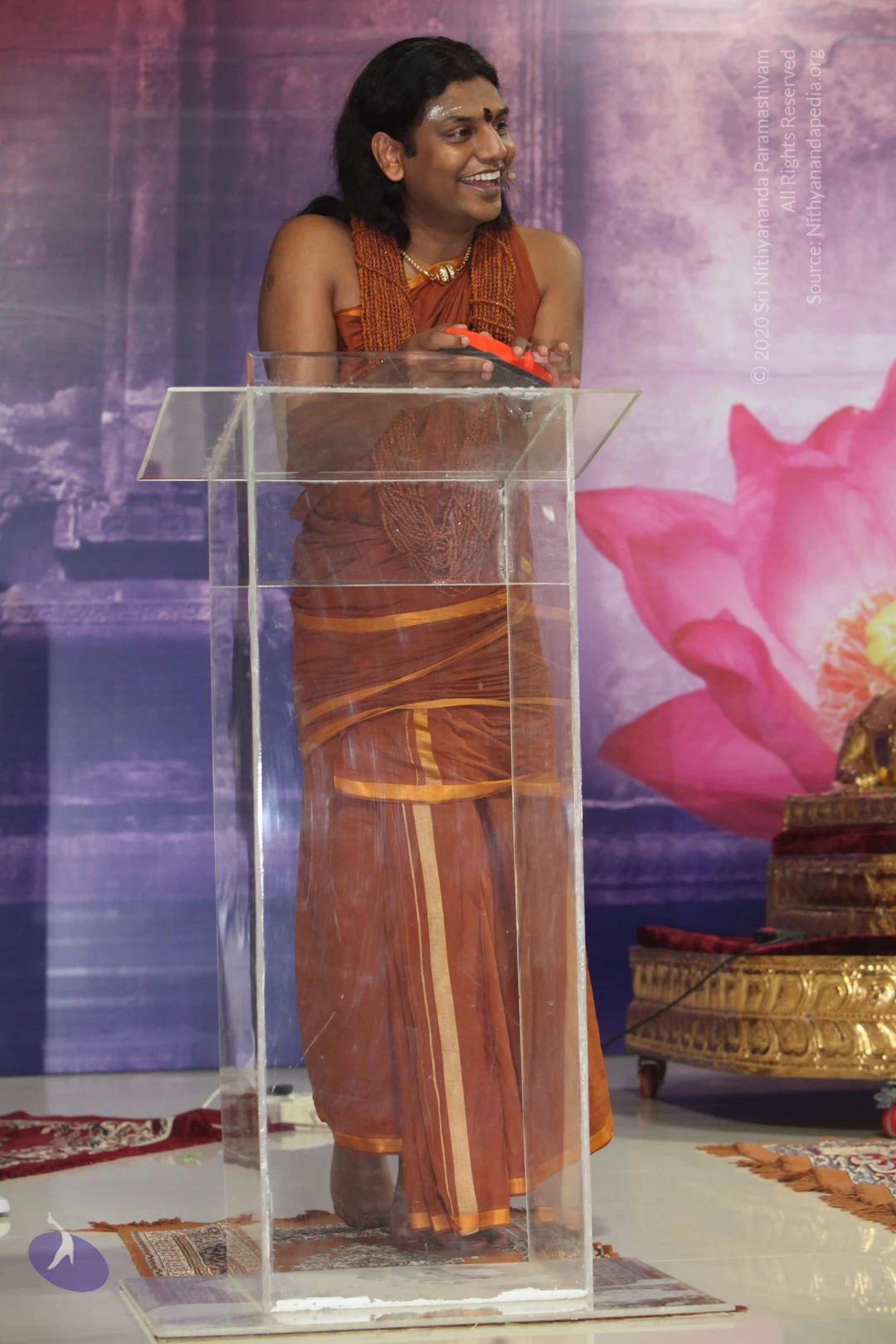
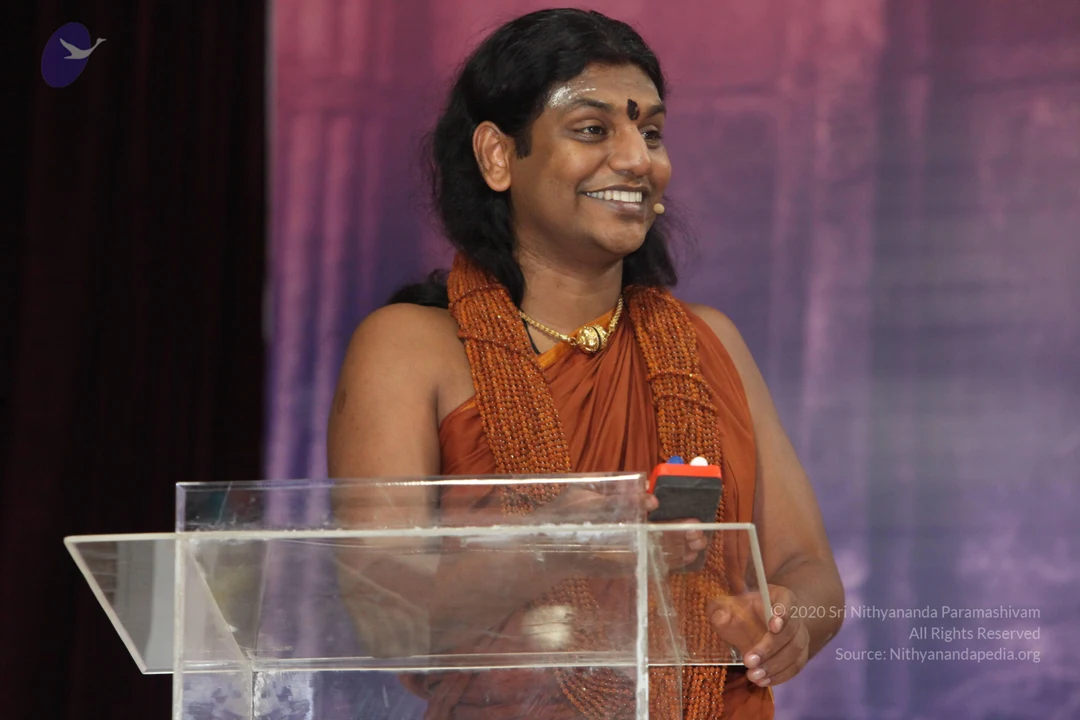
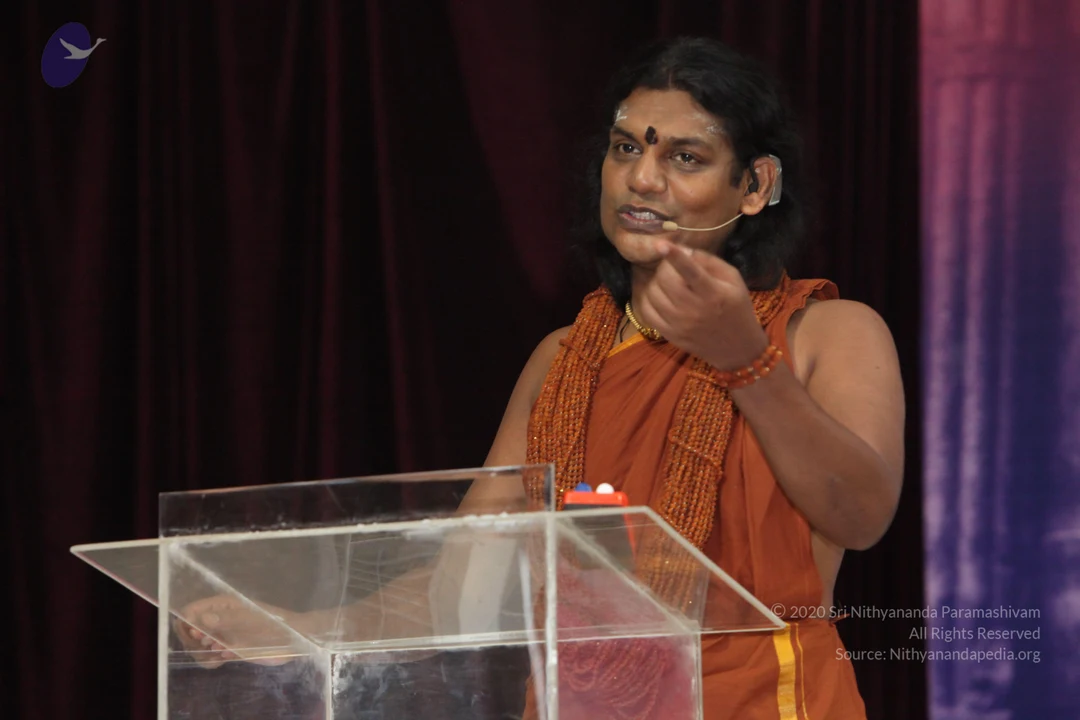
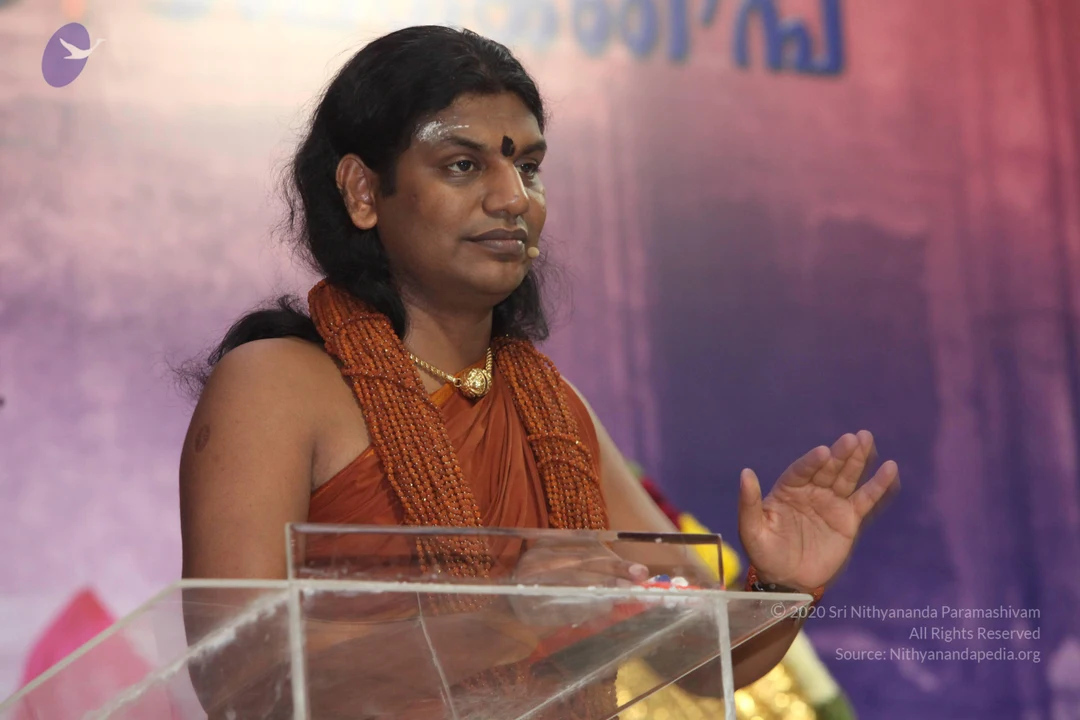
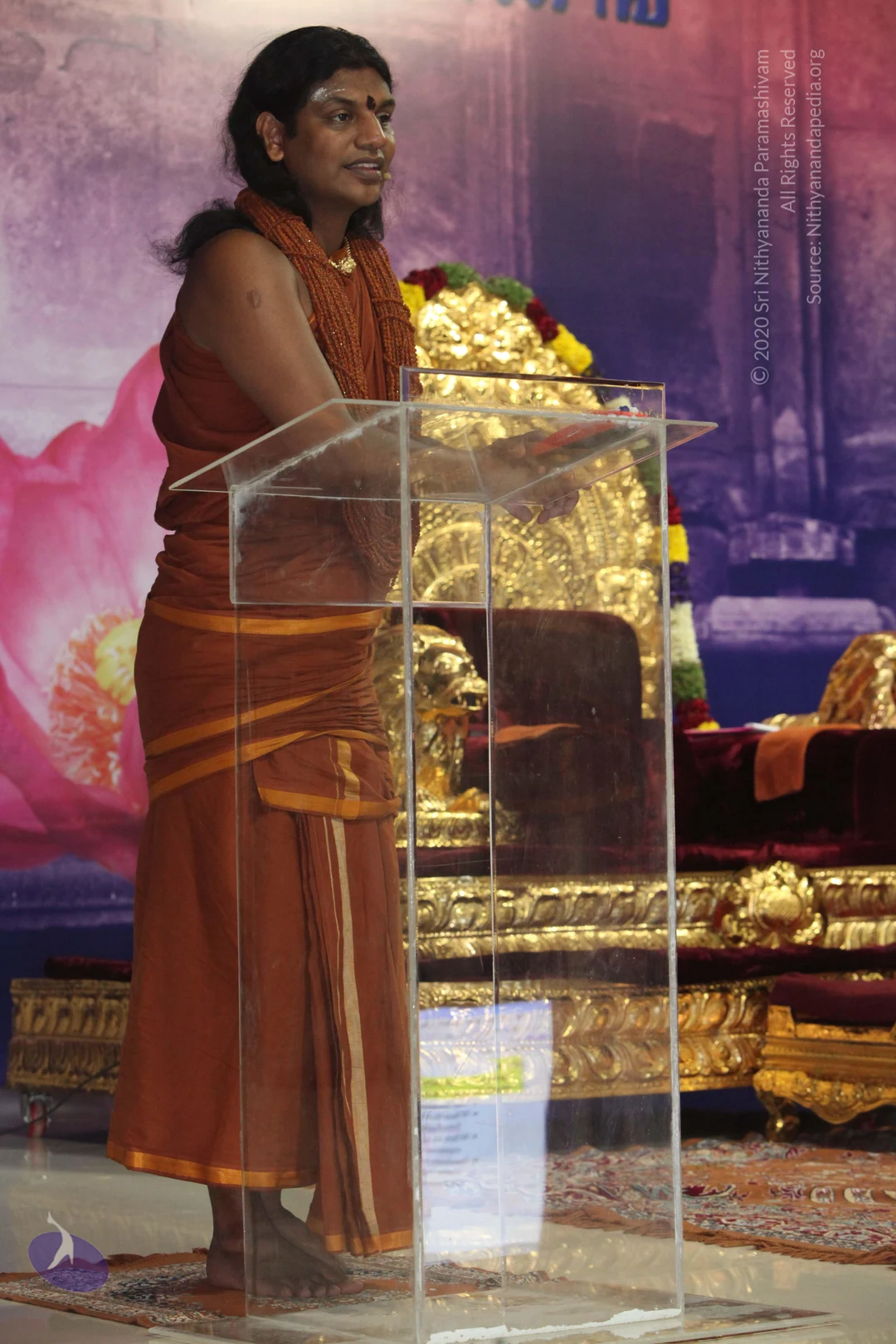
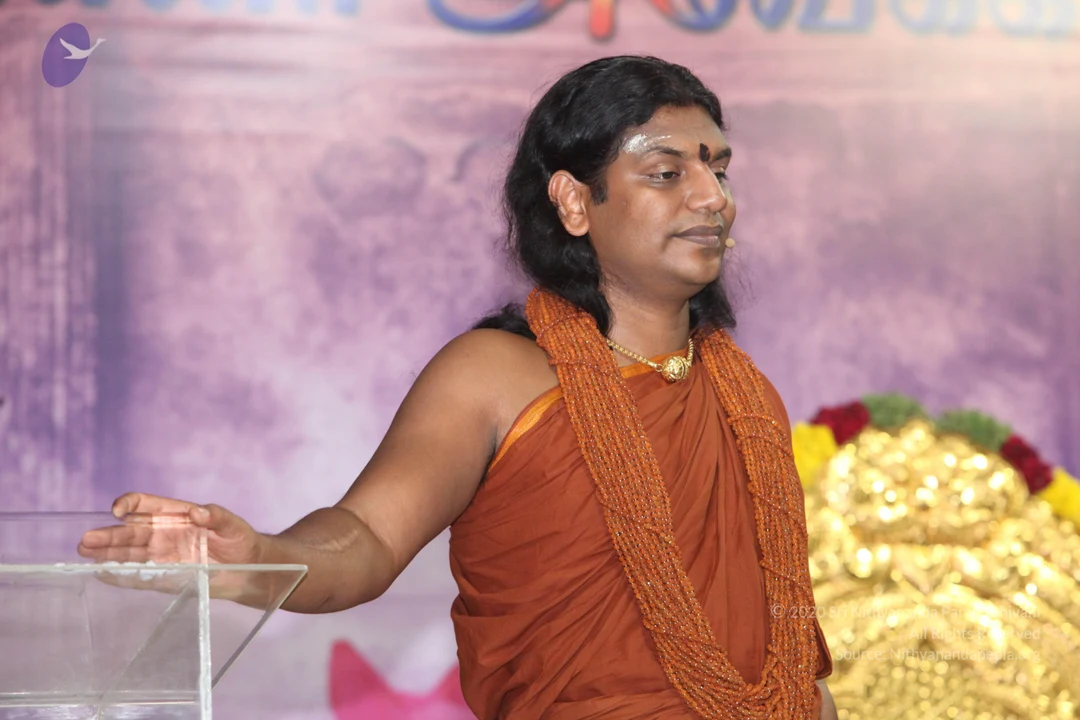
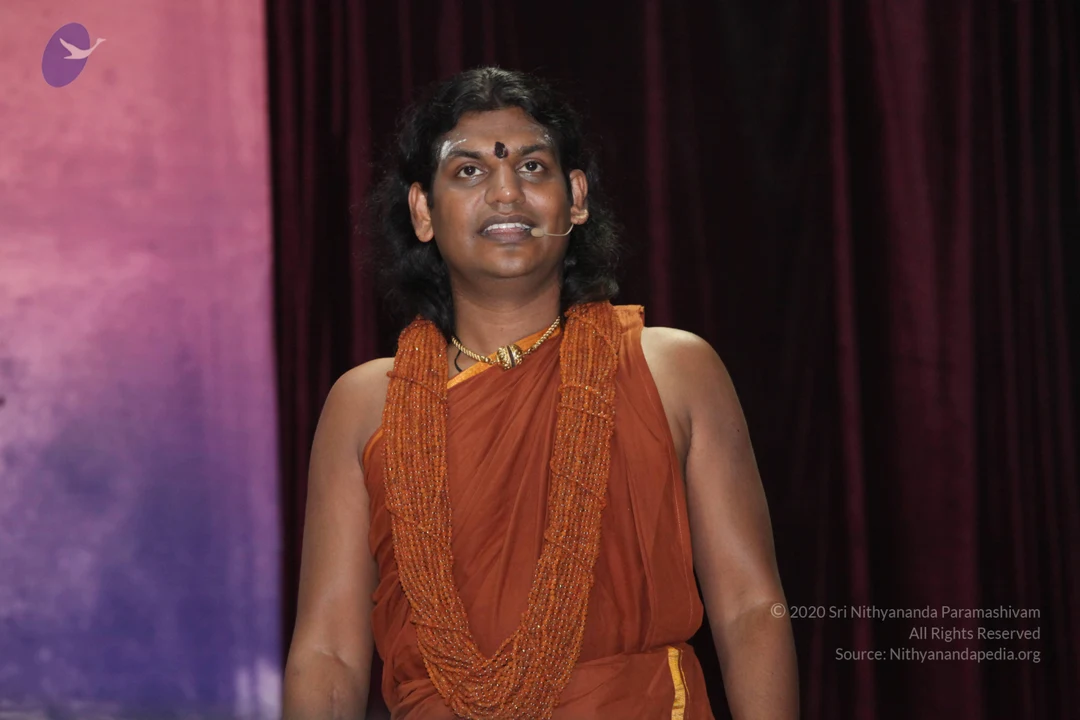
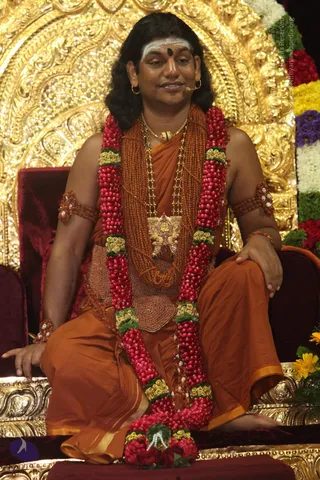
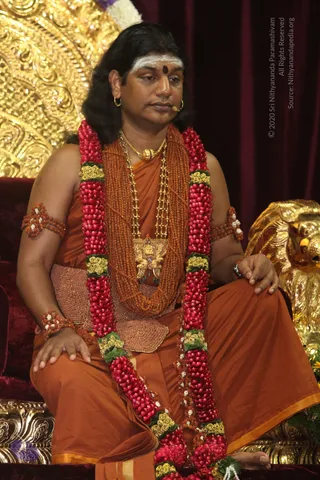
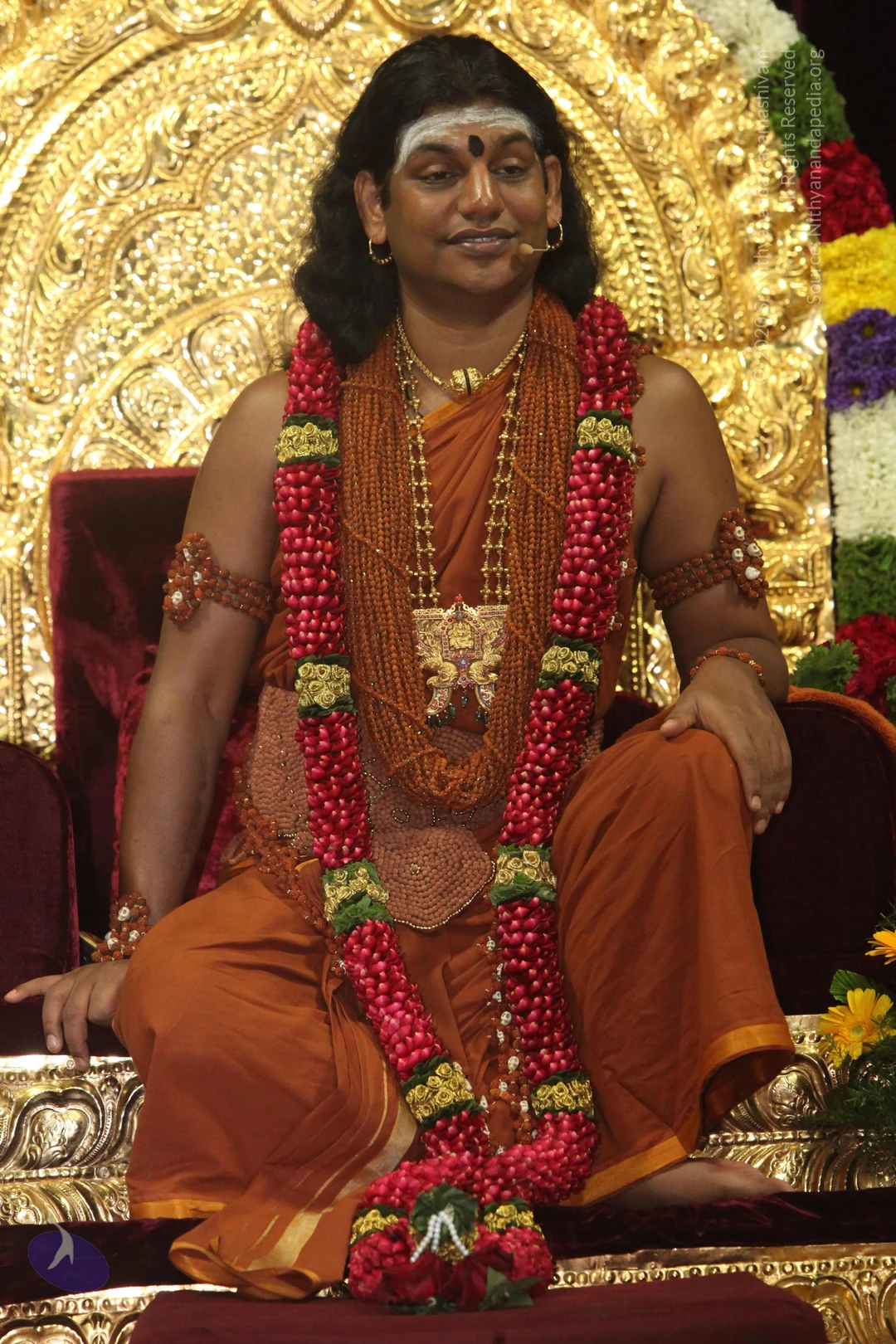
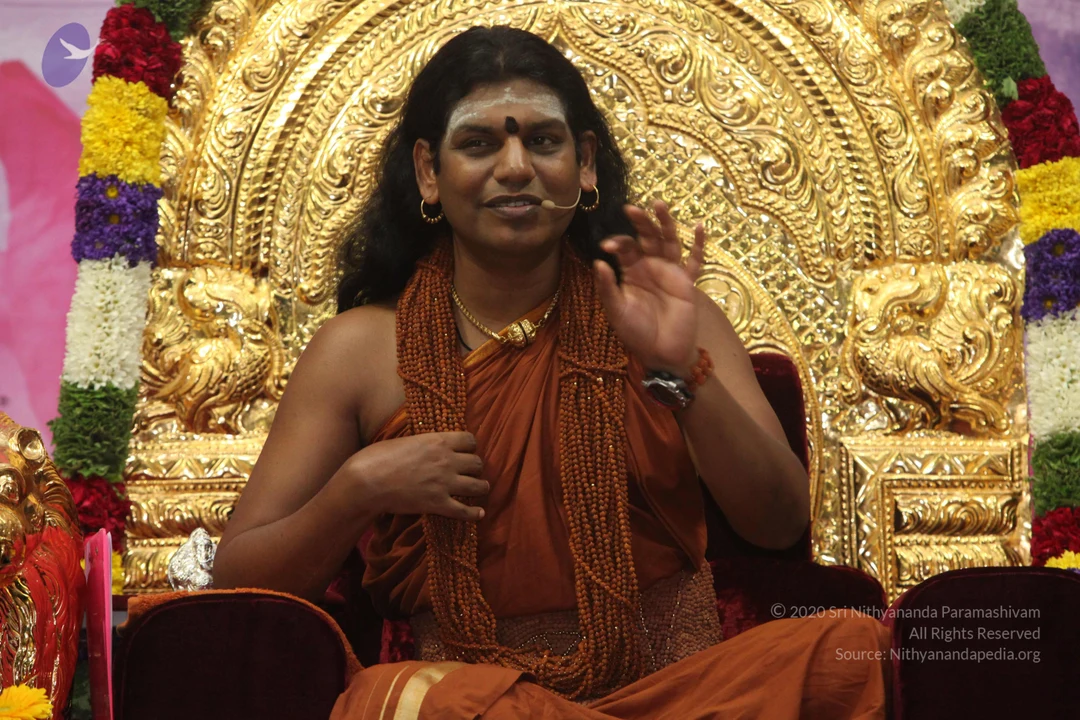
A seated man in orange-saffron robes sits on an ornate gold throne with a red velvet cushion, speaking into a head microphone. He wears long swept-back dark hair, a white vertical tilak with a dark bindi on the forehead, small gold hoop earrings, multiple strands of rudraksha beads, a gold ornamental pendant, and red-and-pink flower garlands with green leaves draped across his chest. Rudraksha bands are on his upper arms and wrists. Flowers in yellow, purple and white decorate the background and the throne. Swamiji (probable): long hair, orange robes, rudraksha malas and gold necklaces seated on a throne, presented as the speaker at a satsang.A seated man in saffron-orange robes sits on an ornate gilded throne with a maroon velvet cushion. He wears a long red and white flower garland with gold-edged leaves, multiple strands of rudraksha beads, a gold ceremonial necklace with a central pendant, rudraksha armlets and a white vibhuti tripundra with a red bindi on his forehead. A small headset microphone is visible near his face. Behind him are golden arched carvings and a column of marigold-style flowers in yellow, purple, white and red. He appears to be speaking to an audience. Swamiji (probable) based on the long swept-back hair, saffron clothing and rudraksha ornaments.A man seated cross-legged on a golden throne with ornate carved scrolls and two golden lion heads flanking him, in front of deep maroon draped curtains. He wears an orange-saffron dhoti and shawl, a long red and white flower garland with green accents, layered rudraksha and beaded necklaces, and a gold pendant. A white tilak with a red bindi marks his forehead, and he has gold earrings and a small microphone clipped near his face. His hands rest on his knee while he speaks. Bright yellow, red and white flower arrangements decorate the base of the throne and the arch behind him, which is trimmed with multicolored flower strands. a person is seated in the centre as the speaker, with rudraksha mala and ceremonial gold cues, presenting a satsang on the stage.A seated man on an ornate golden throne with lion-head armrests, backed by a golden arch decorated with a multicoloured garland of red, yellow, purple, green and white flowers, against draped maroon velvet curtains. He wears saffron-orange robes, a long red-and-green flower garland, rudraksha beads, gold necklaces, a white forehead mark with a red bindi, and drop earrings, with his hands resting on the throne. Flower arrangements of yellow and red blooms sit at the base of the dais. Swamiji (probable): long swept-back hair, saffron robes, rudraksha malas and ornate gold necklaces, seated as the speaker of a satsang.A man seated on an ornate gold throne in front of a deep red velvet backdrop, wearing an orange saffron dhoti and shawl with a white vibhuti line and red bindi on his forehead, multiple strands of rudraksha beads, gold chains with a large gold pendant, rudraksha armlets and a long red-and-white flower garland with gold-leaf ornaments. He has a small headset microphone at his ear and rests his hands on his knee, looking to the side. A gold lion sculpture stands at the right edge.A seated man in saffron-orange robes sits on a red velvet throne with ornate gold carved panels behind him and a gold lion sculpture to the right. He wears long swept-back dark hair, a white vibhuti line with a central kumkum dot, gold hoop earrings, a headset microphone, multiple rudraksha malas across his chest and arms, and a large gold pendant. A thick red and green flower garland hangs to his knees. His hands rest on his lap and knee. The description is consistent with a satsang setting.

03-SARVA-DARSHAN
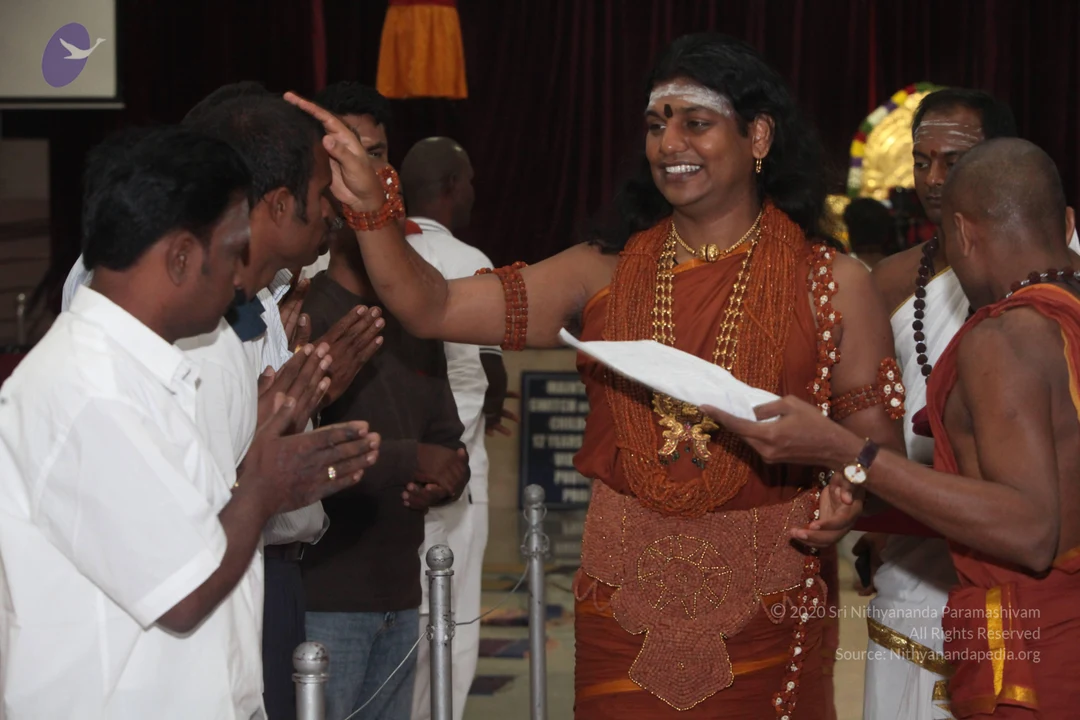
12 photosSource gallery
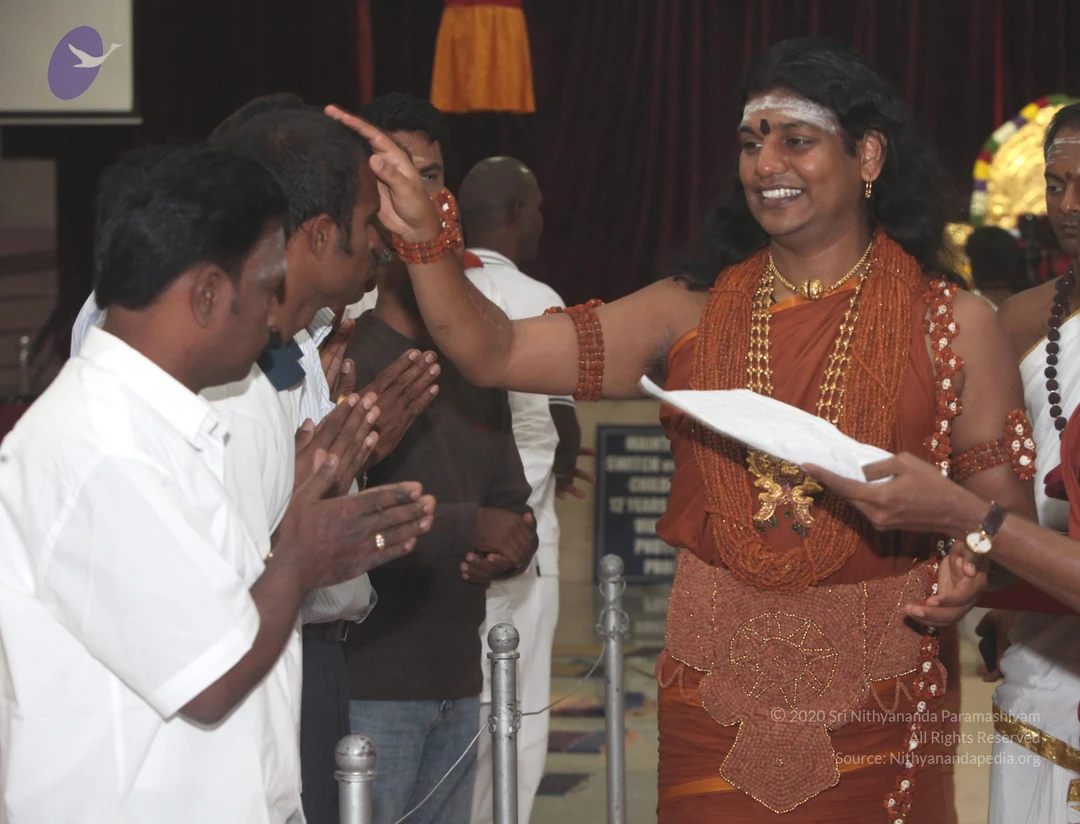
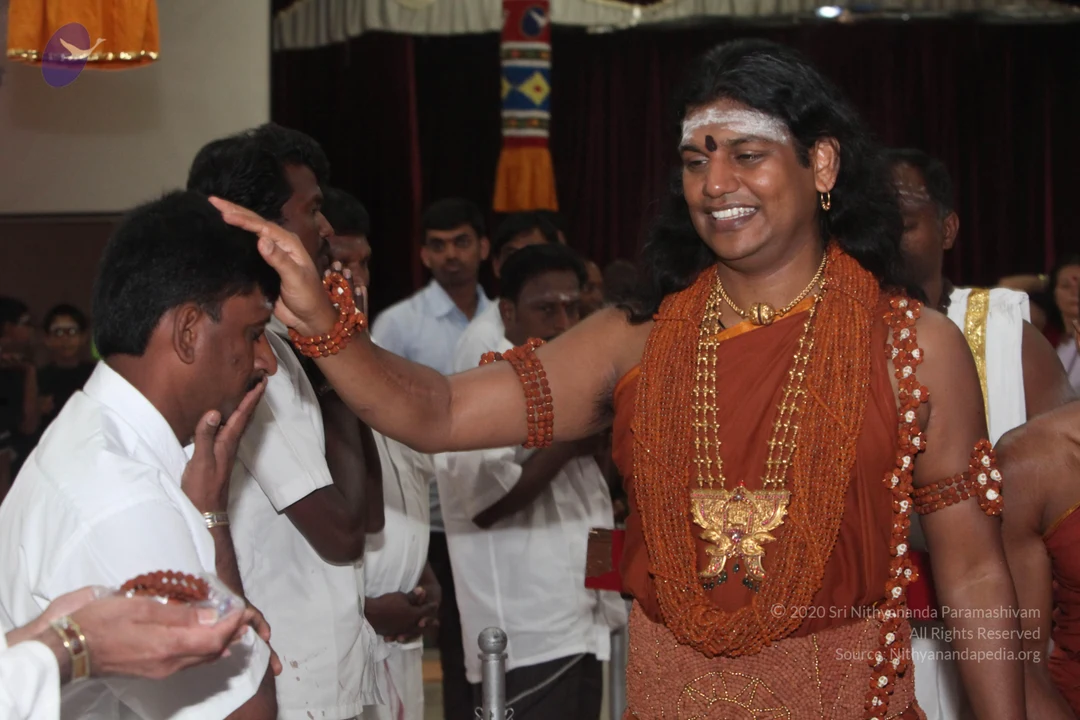
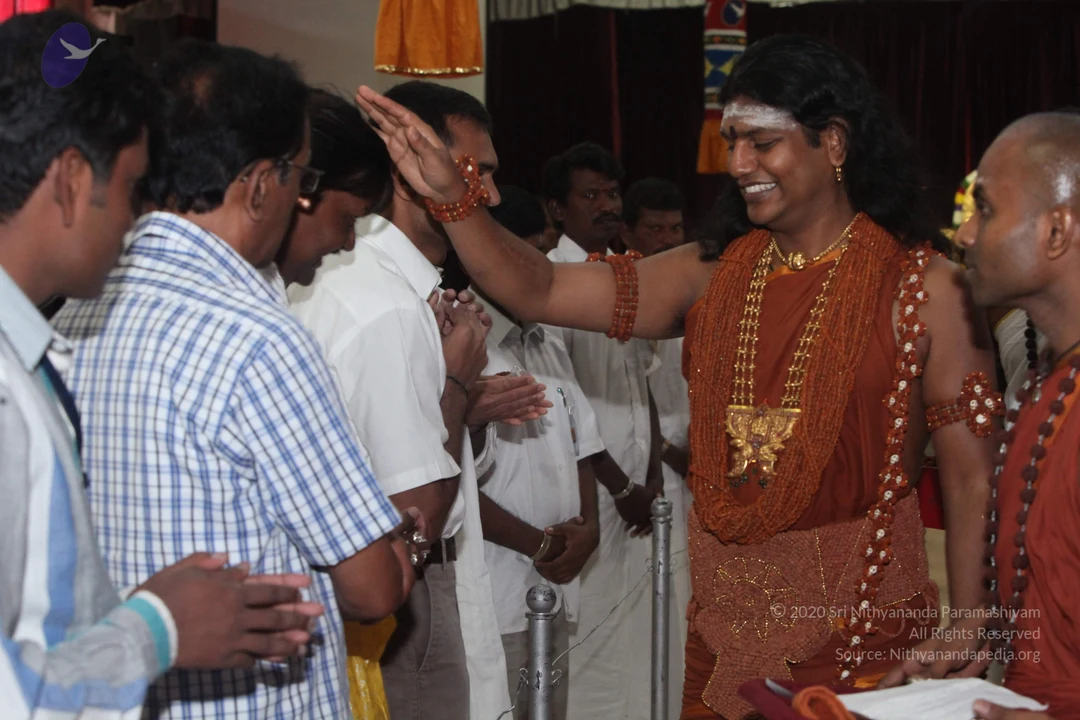
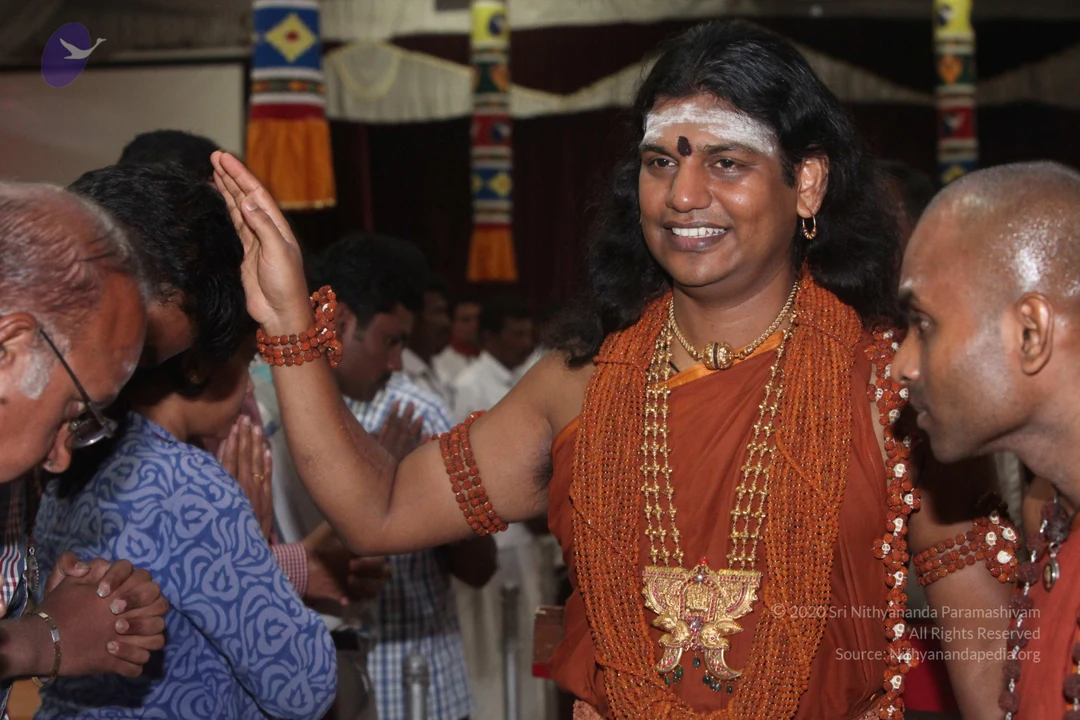
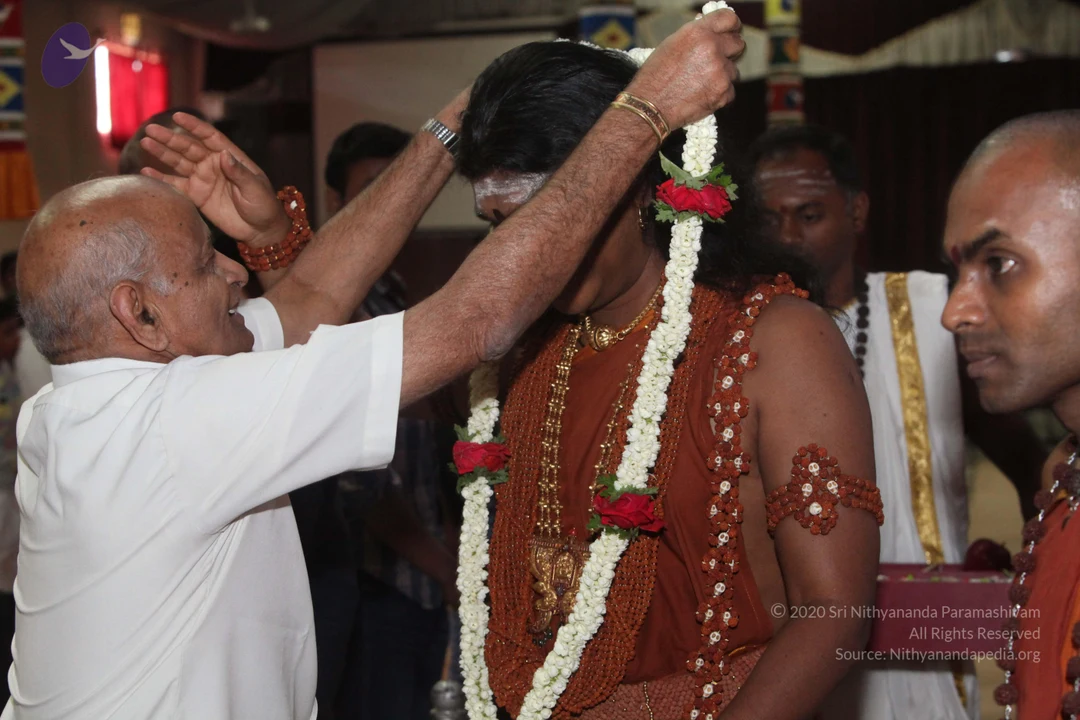
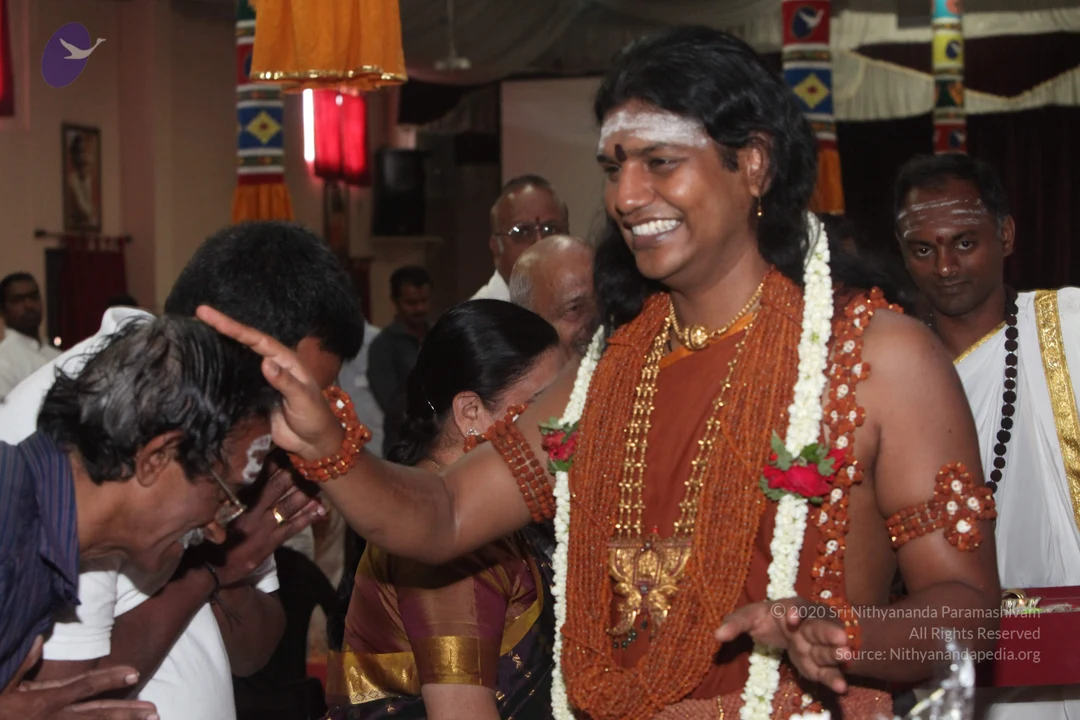
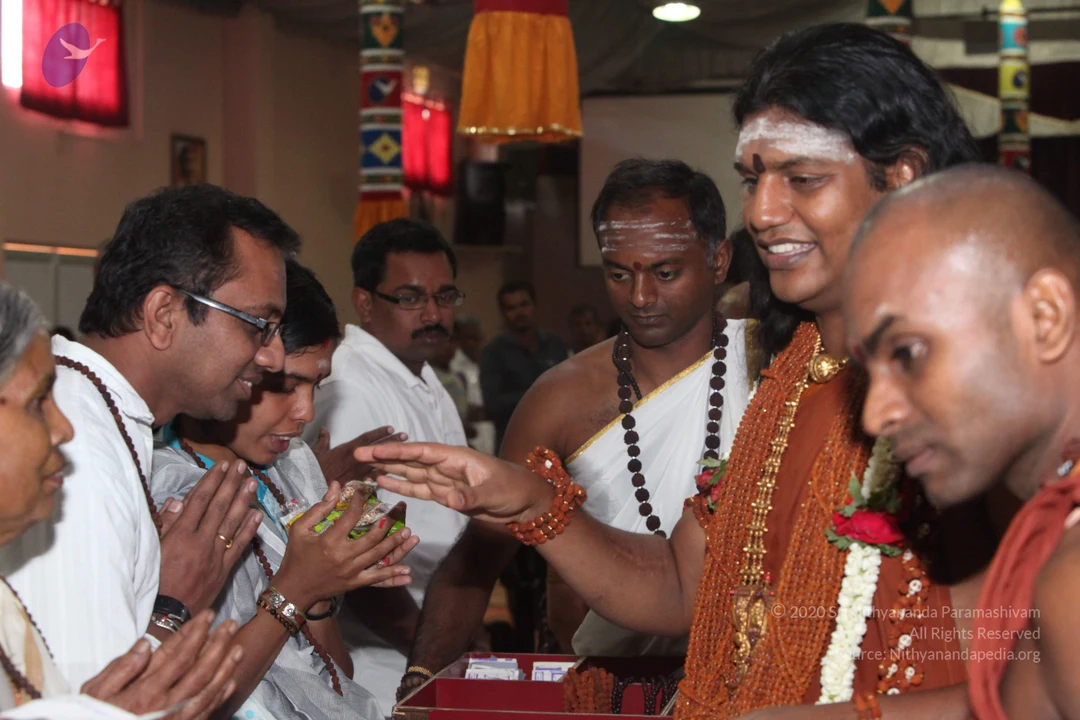
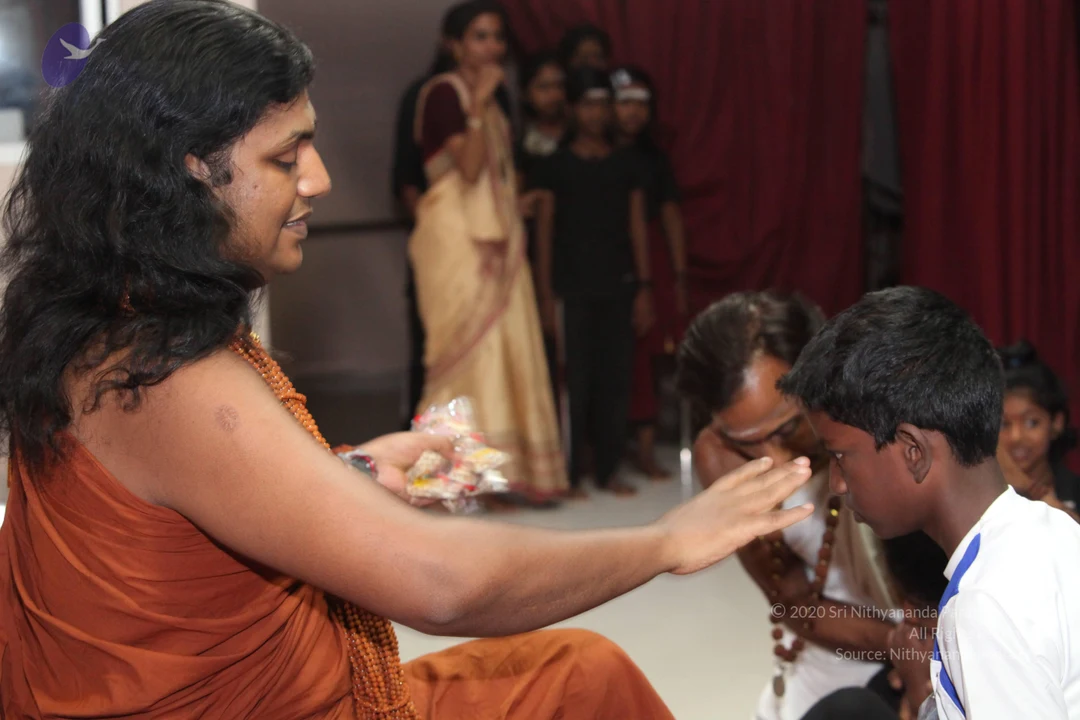
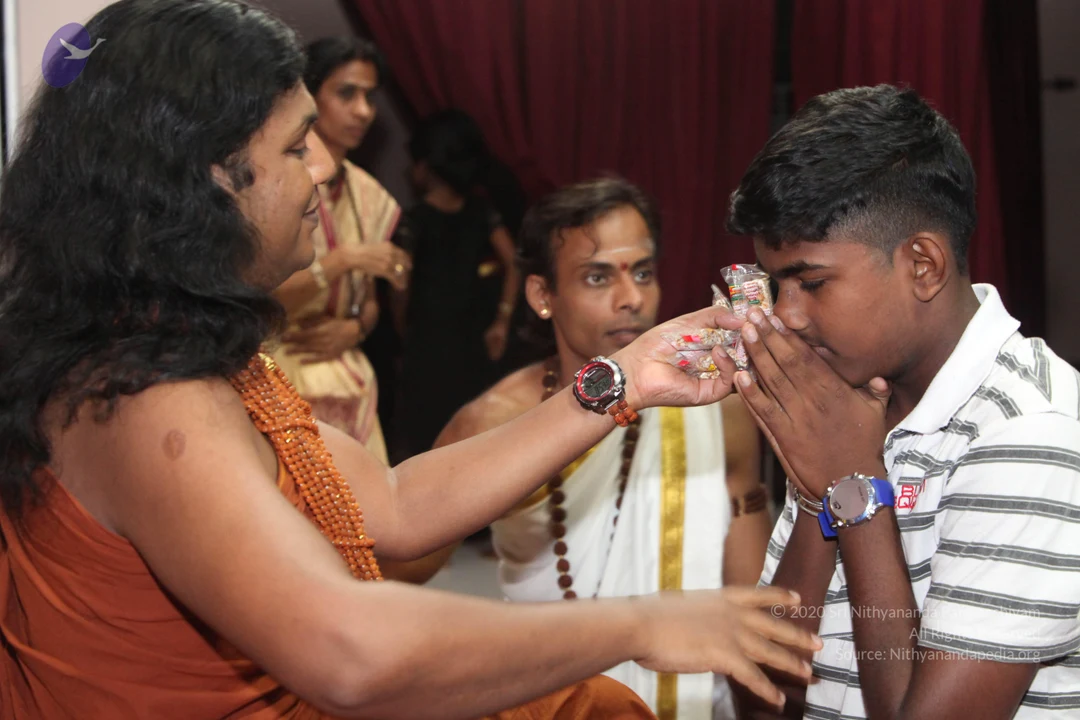
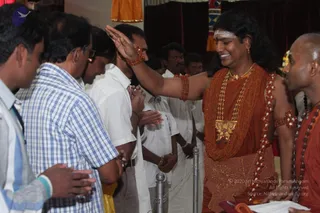
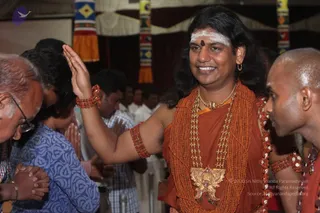
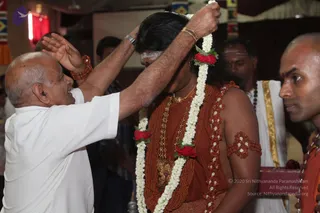
A photograph of an indoor ashram gathering in which a central figure in saffron-orange robes and a long orange-beaded necklace, with white vibhuti marks on the forehead, long dark hair and a crown-like gold ornament, extends a hand toward a devotee's forehead. The figure carries a white paper and wears a bead bracelet and ornate gold necklace. Around them, men in white dhotis and shirts stand with palms pressed together in namaskar, and a man in saffron with a rudraksha mala holds a sheet of paper beside them. A tall striped stanchion and a red-and-gold backdrop with a gold decorative element appear behind the group. Figure is in the center, with a deity murti partially visible at the right edge.A photograph of a long-haired figure in saffron-orange robes with layered beaded necklaces, rudraksha-style red beads on the arms, and a white forehead marking with a dot, smiling and raising one hand toward the head of a man with a paper in the other hand. Several men in white shirts stand with palms pressed together in front of him, while a robed attendant in white stands at the right edge. Metal stanchions and a dark curtain form the background.Photograph of a saffron-clad figure with long dark hair, a white vibhuti band and red bindi, smiling broadly while extending a hand in blessing toward a man in a white shirt who leans forward with hands joined. The central figure wears layered rudraksha and beaded malas, a gold ceremonial necklace with a golden emblem, and orange-red beaded armlets, with an orange wrap and matching garment. Behind them, several men in white shirts and dhotis stand in an indoor hall with orange and red draped decor, and a red-and-yellow banner hangs in the background. a person is the central figure, identified by long swept-back hair, saffron clothing, rudraksha malas and ceremonial gold necklace, giving a blessing to a devotee.A photograph of a long-haired man in orange-saffron robes and a thick rudraksha-bead garland, with gold chains and a gold pendant, smiling as he extends his right hand toward the head of a standing devotee. He wears a white forehead mark and orange beaded bangles. Around him, several men in white shirts and checked shirts stand with palms pressed together in namaskar and hands folded in reverence. A saffron-clad sannyasi with a shaved head stands at the right edge. Orange and maroon drapes hang in the background, and a metal barrier rail runs in front of the group. Swamiji (probable): the orange robes, long swept-back hair, rudraksha garland and gold ornaments suggest the figure is Swamiji, here blessing a devotee at darshan.A photograph at a satsang gathering shows a smiling man with long dark swept-back hair, a white vibhuti band with a red kumkum dot on his forehead, and an orange-saffron robe with layered rudraksha malas and a gold ceremonial necklace with a pendant. He raises one palm in blessing toward devotees. To his left, an older man in glasses and a woman in a blue patterned top stand with hands pressed together in namaskar. Behind them, several people in white and checked shirts stand near a draped tent backdrop with colourful striped tassels. On the right, a shaved-headed man with rudraksha bracelets stands in profile.A photograph of a ceremonial garlanding. An elderly bald man in a white shirt and white dhoti stands at left, raising both arms to place a long white jasmine garland with red roses over the head of a seated or standing figure in dark hair wearing a saffron-orange robe, gold necklaces, rudraksha beads and a red-beaded armlet. The garlanded figure has white vibhuti marks on the forehead. At right, a shaved-headed attendant with a red tilak and rudraksha mala watches, and another man in white clothes with a gold border stands behind. Red and gold decorations fill the background.

04-TAMIL-IA-SESSION
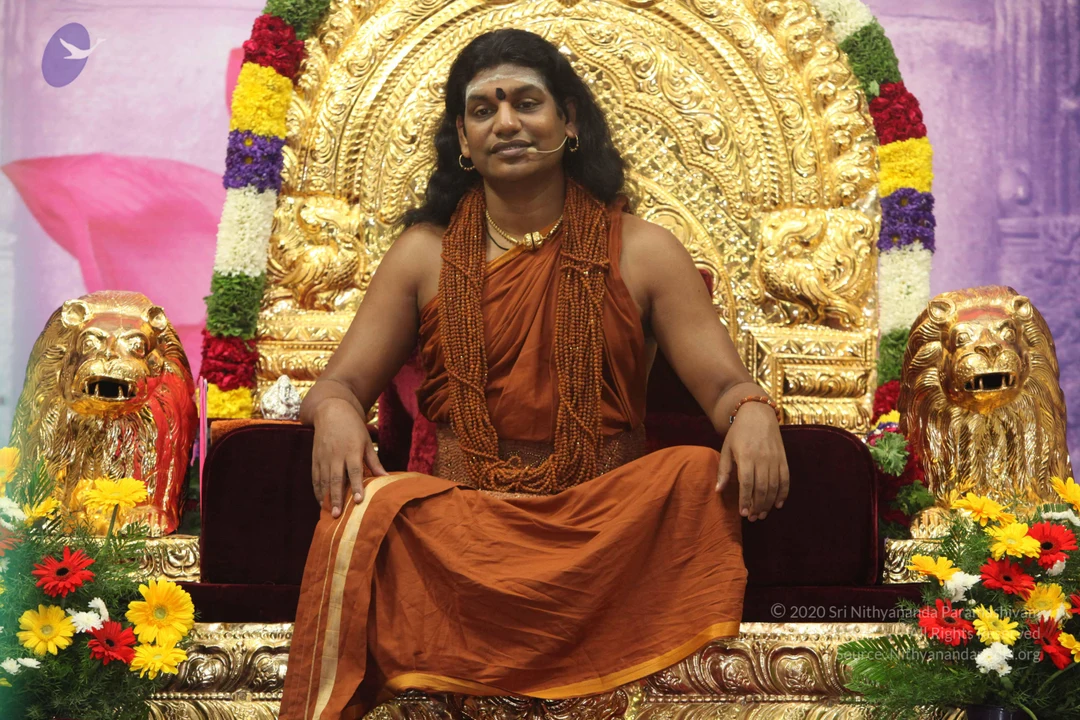
187 photosSource gallery
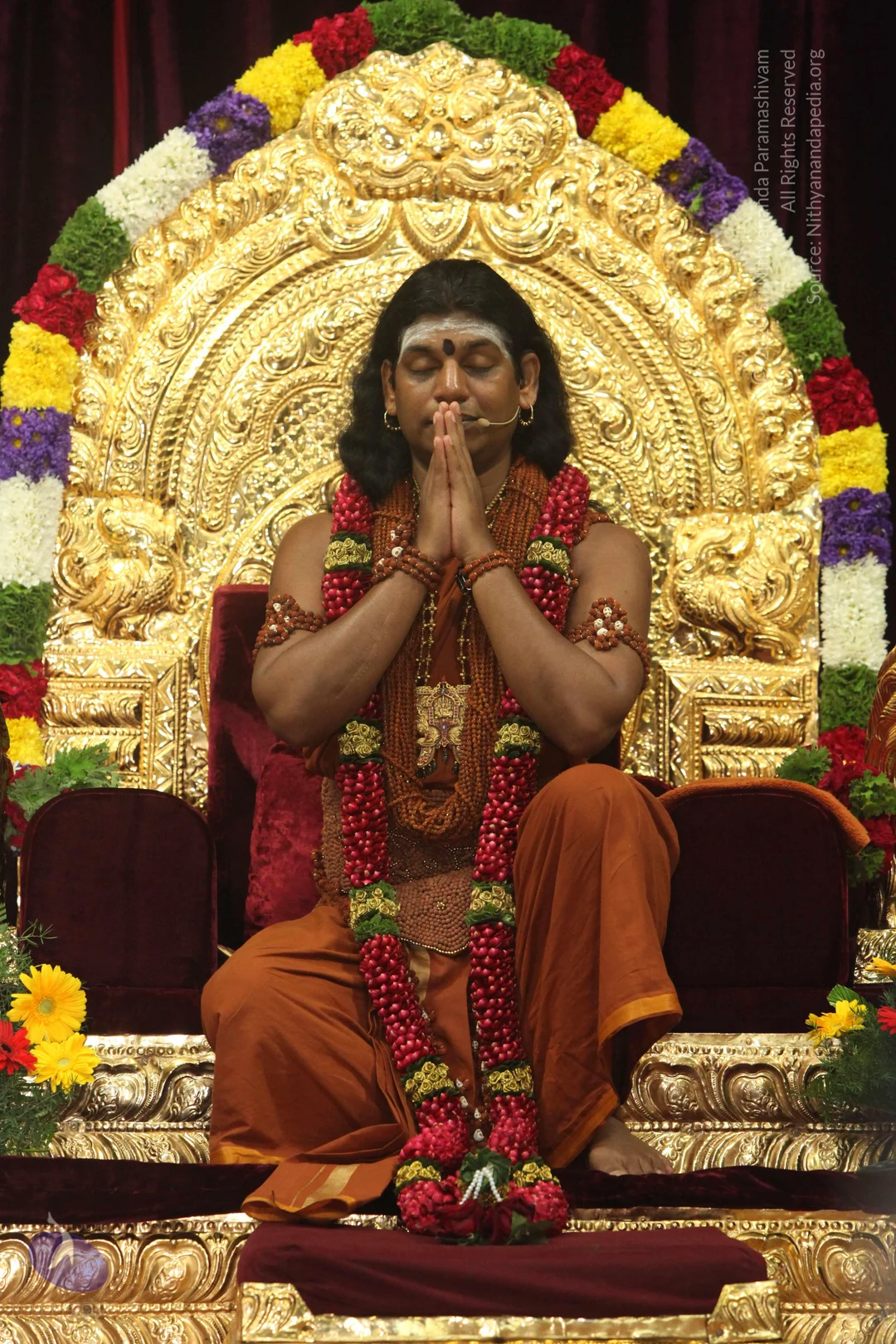
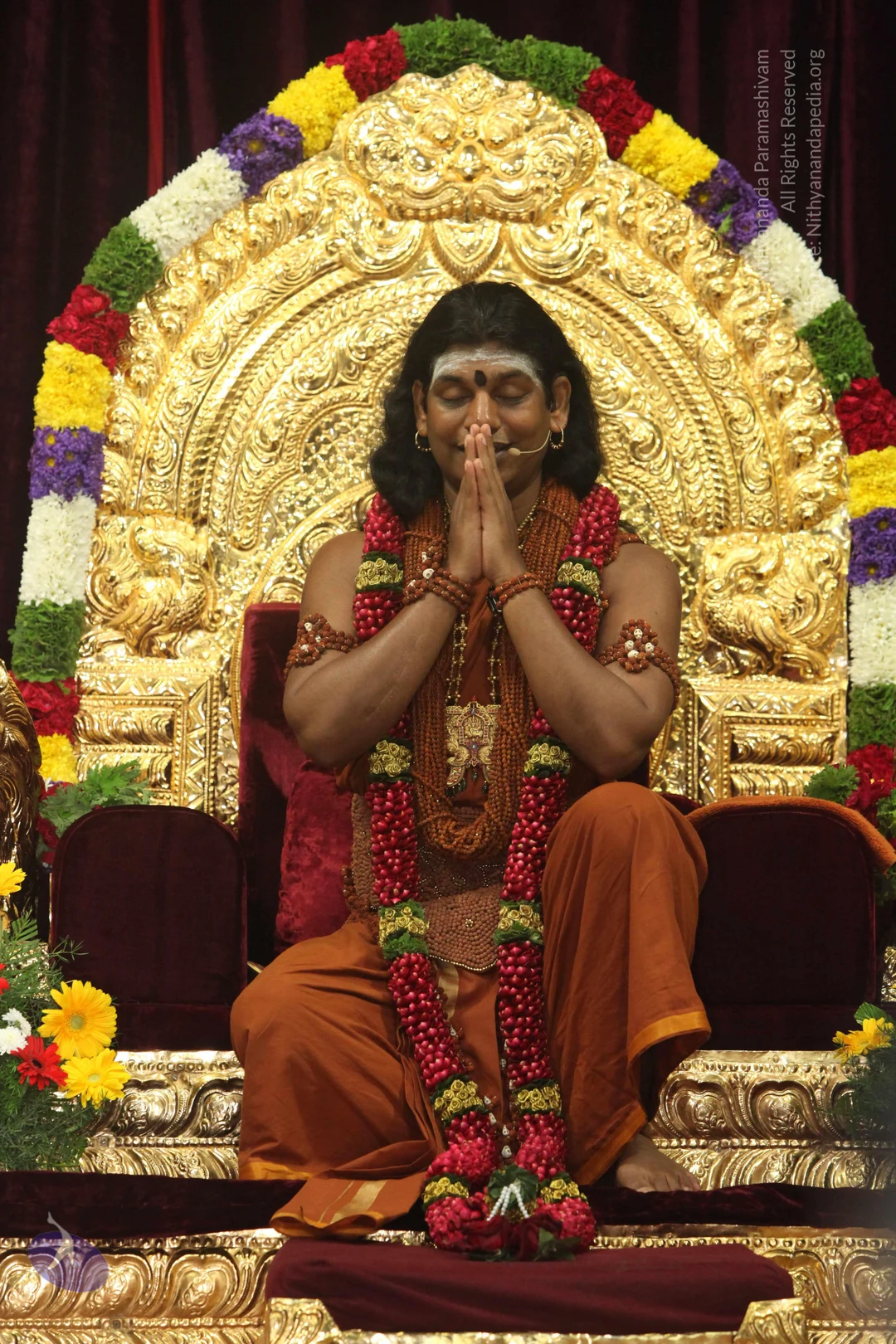
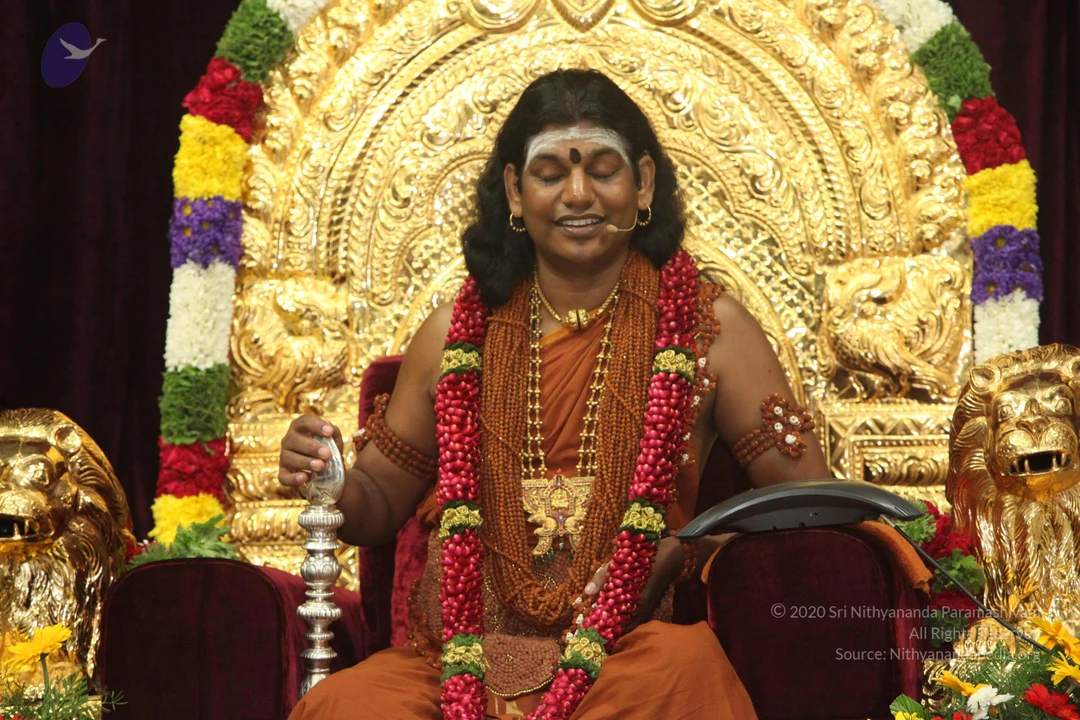
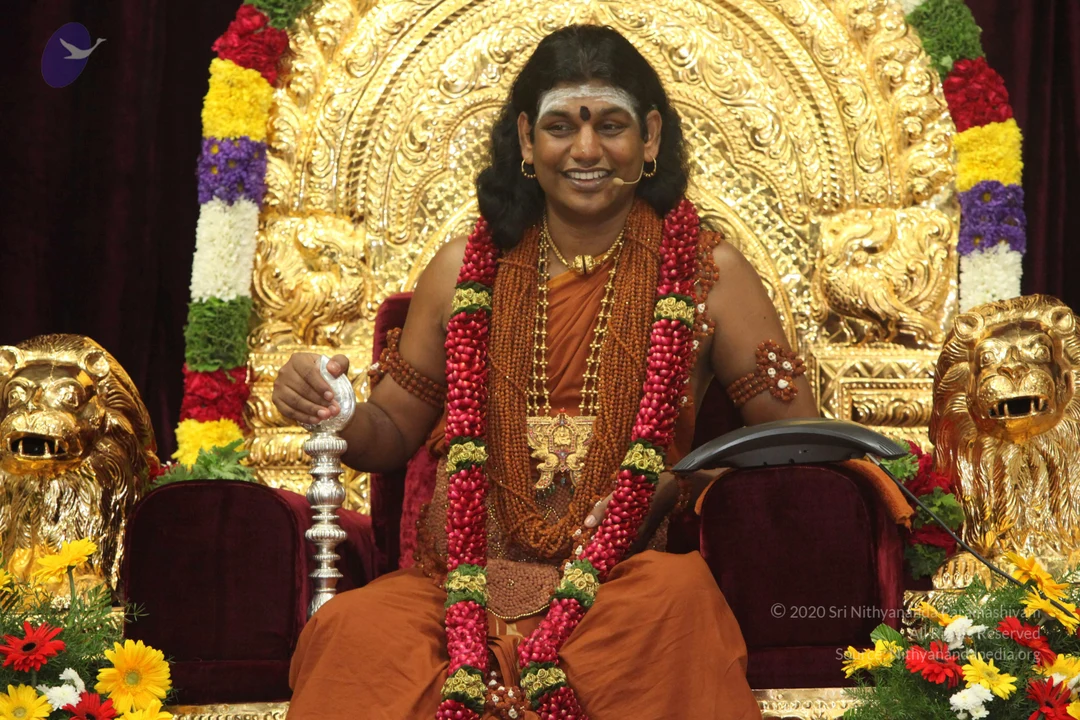
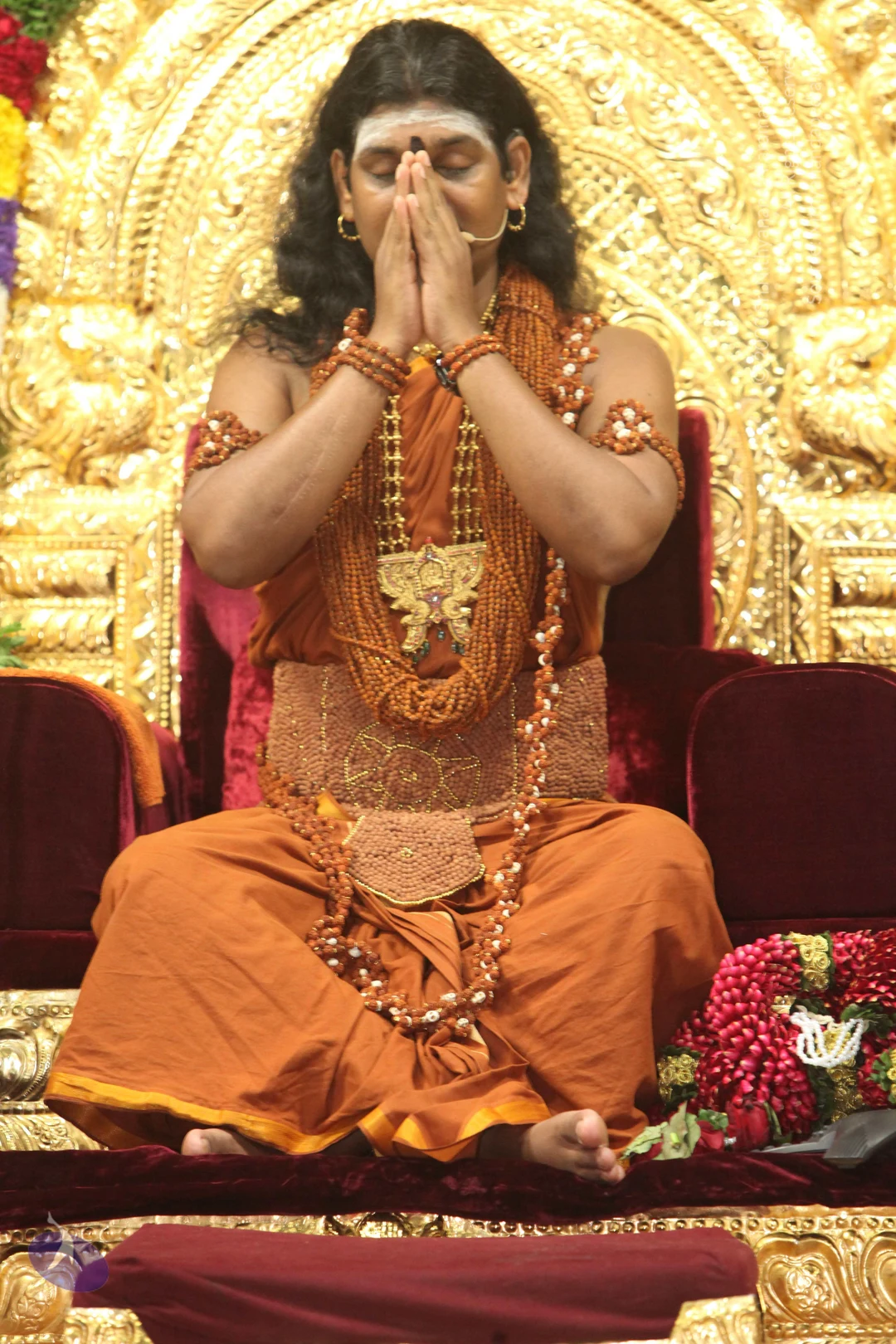
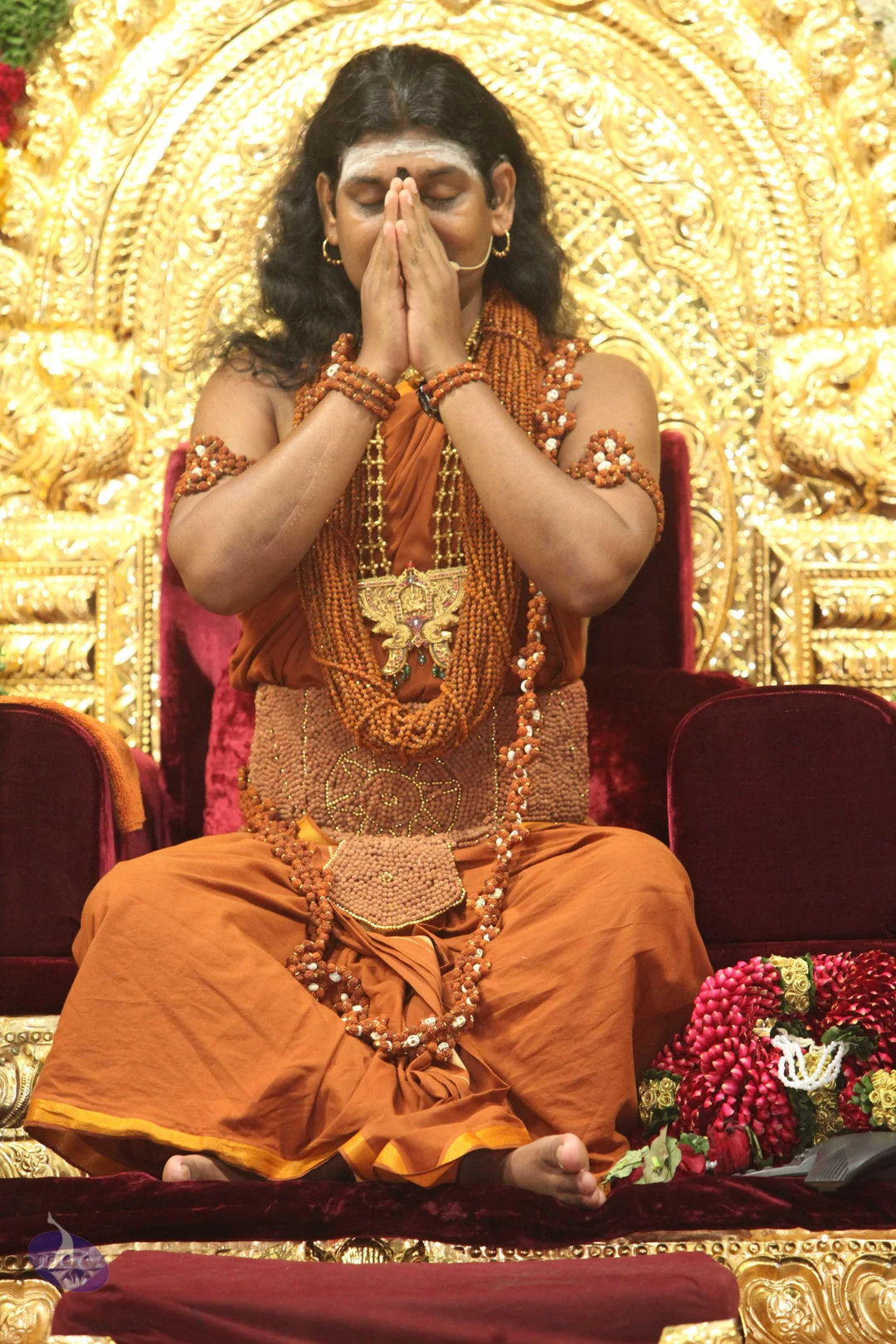
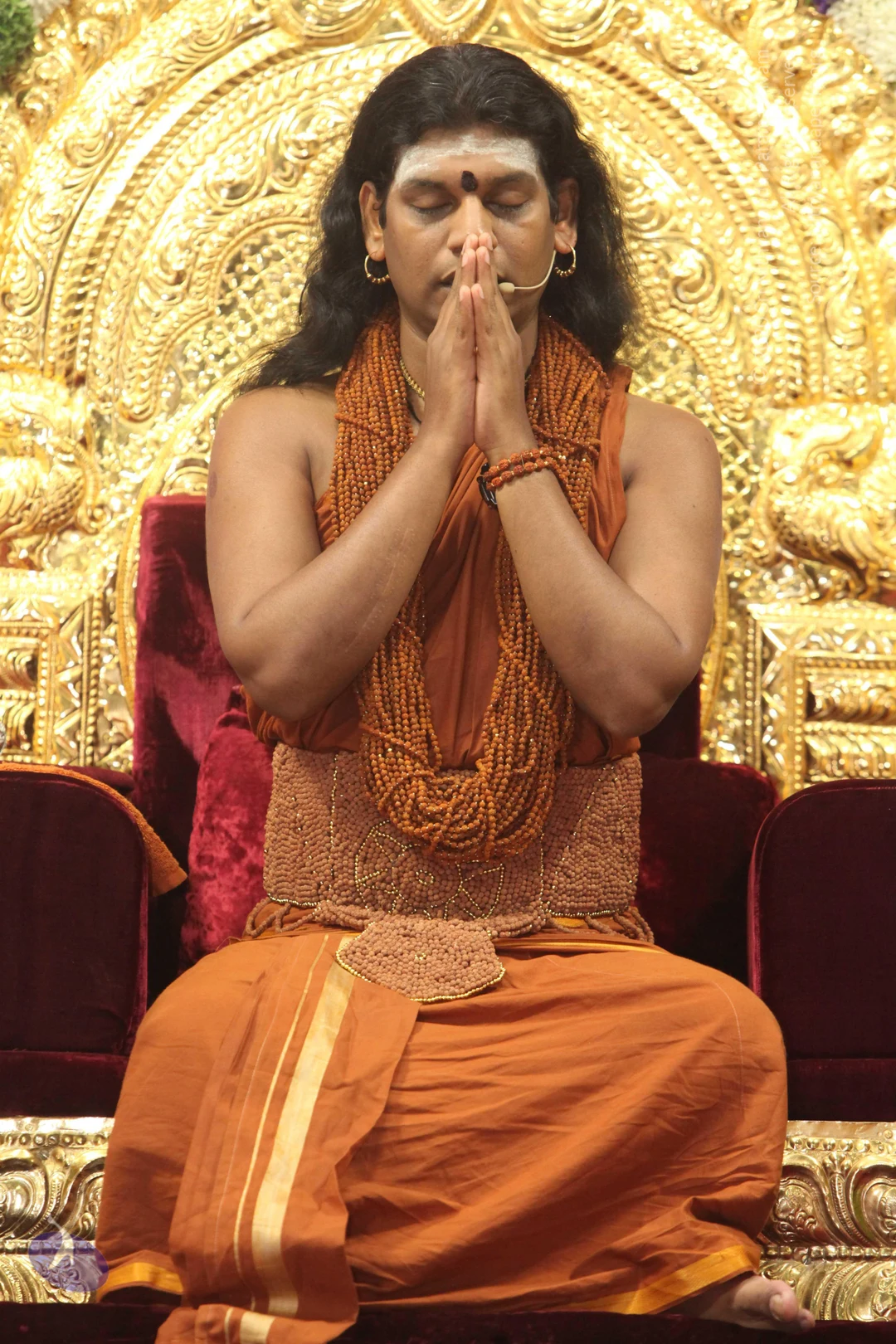
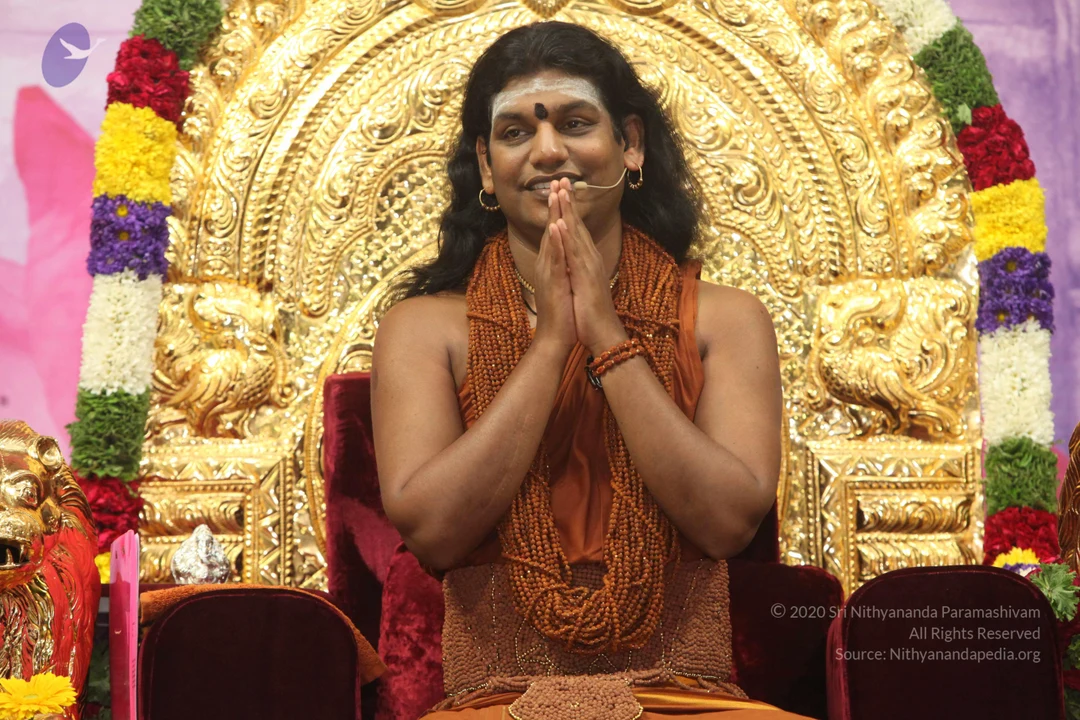
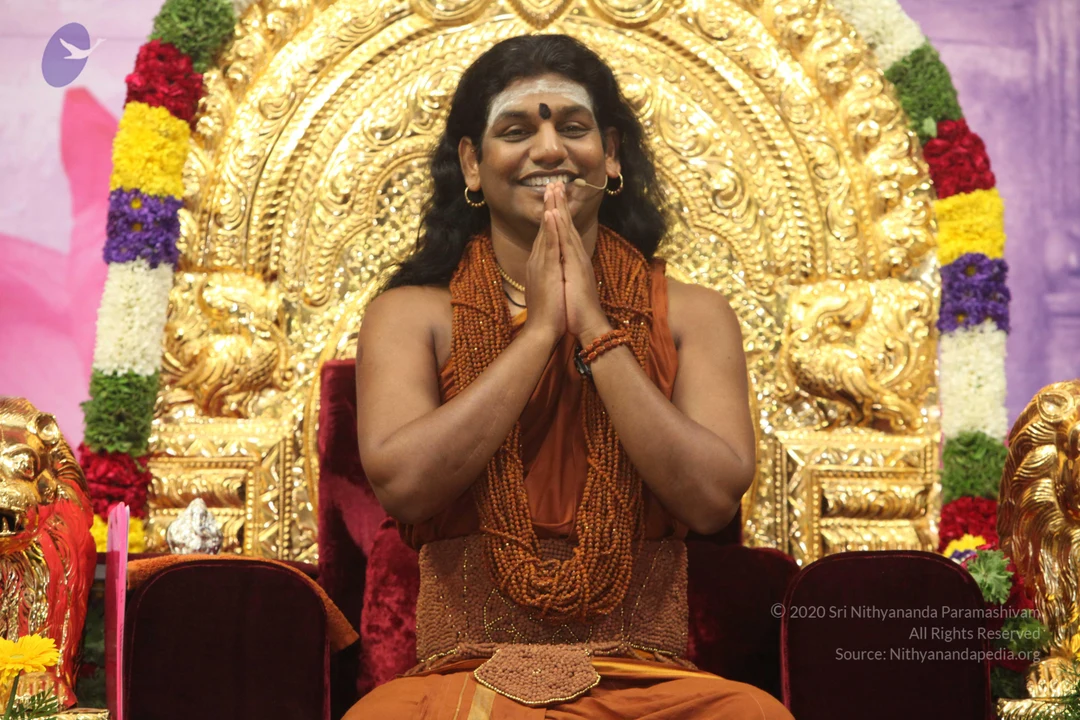
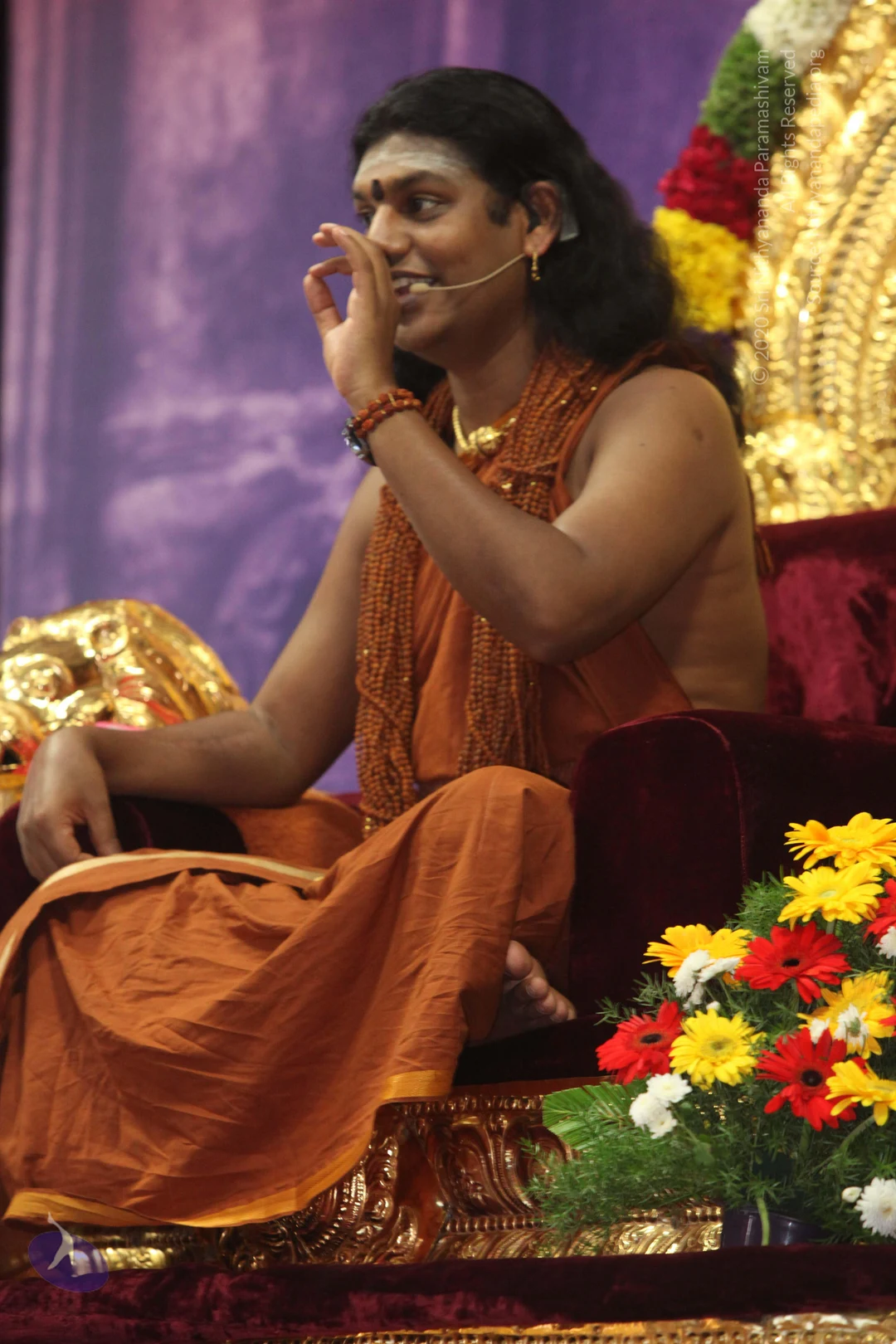
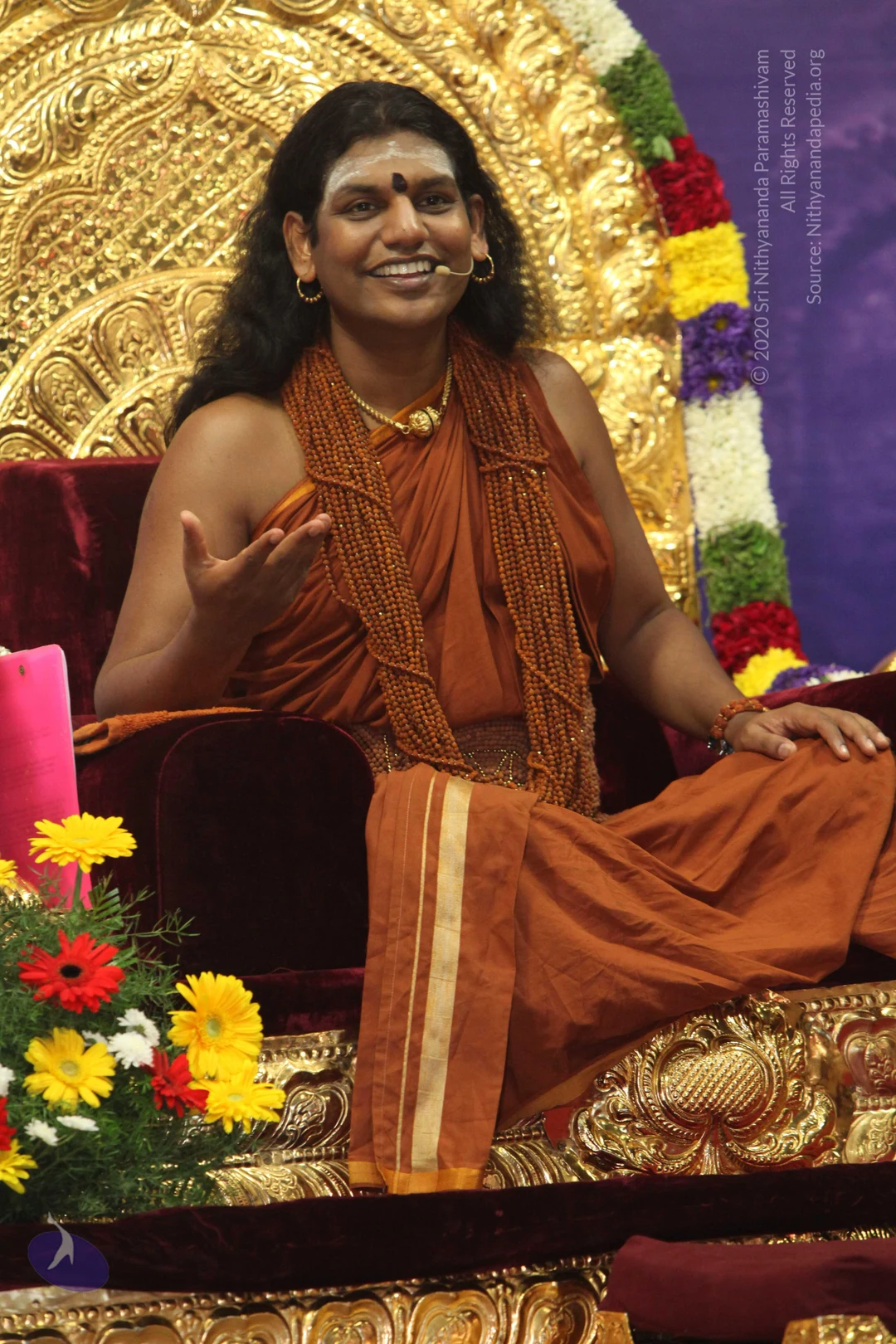
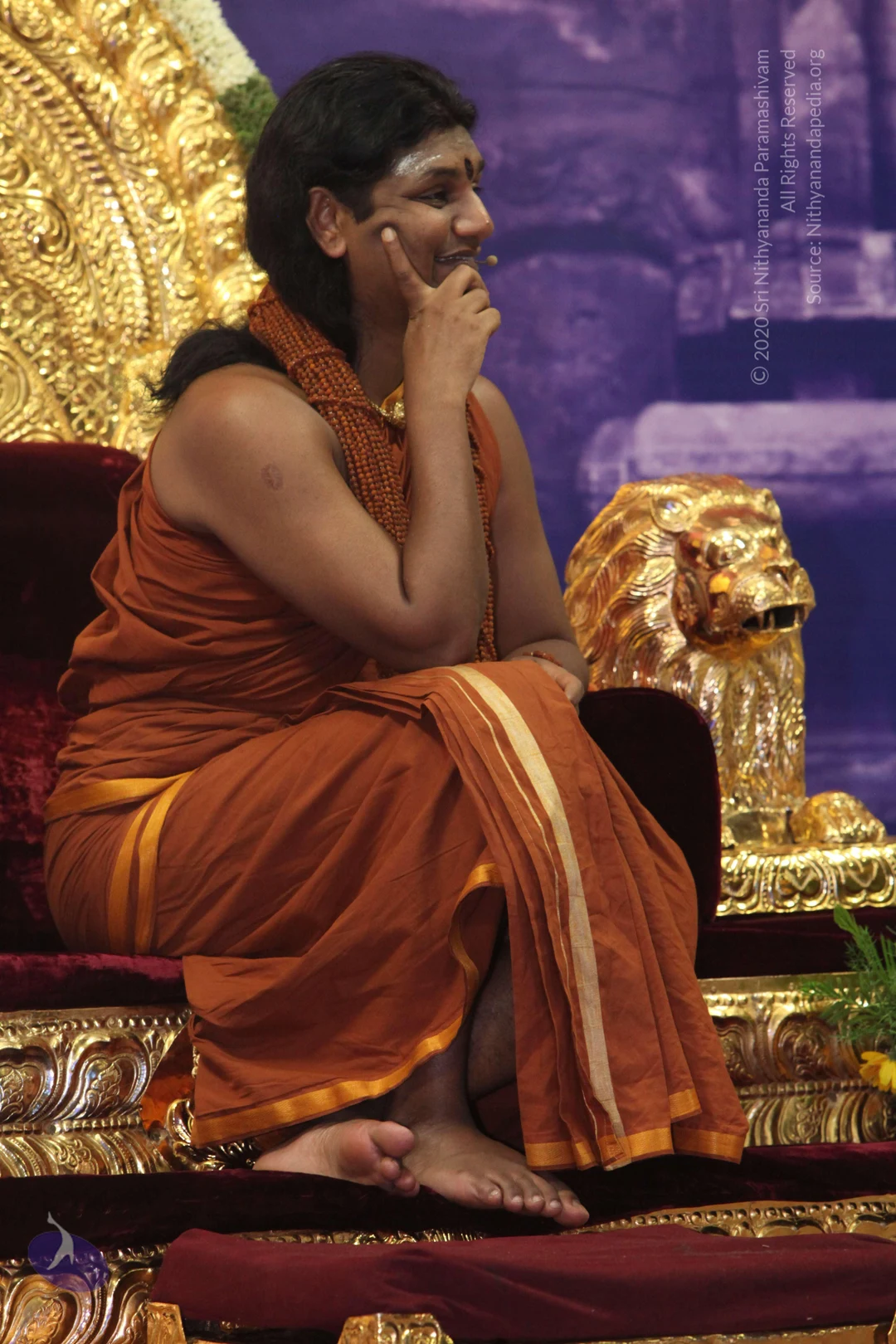
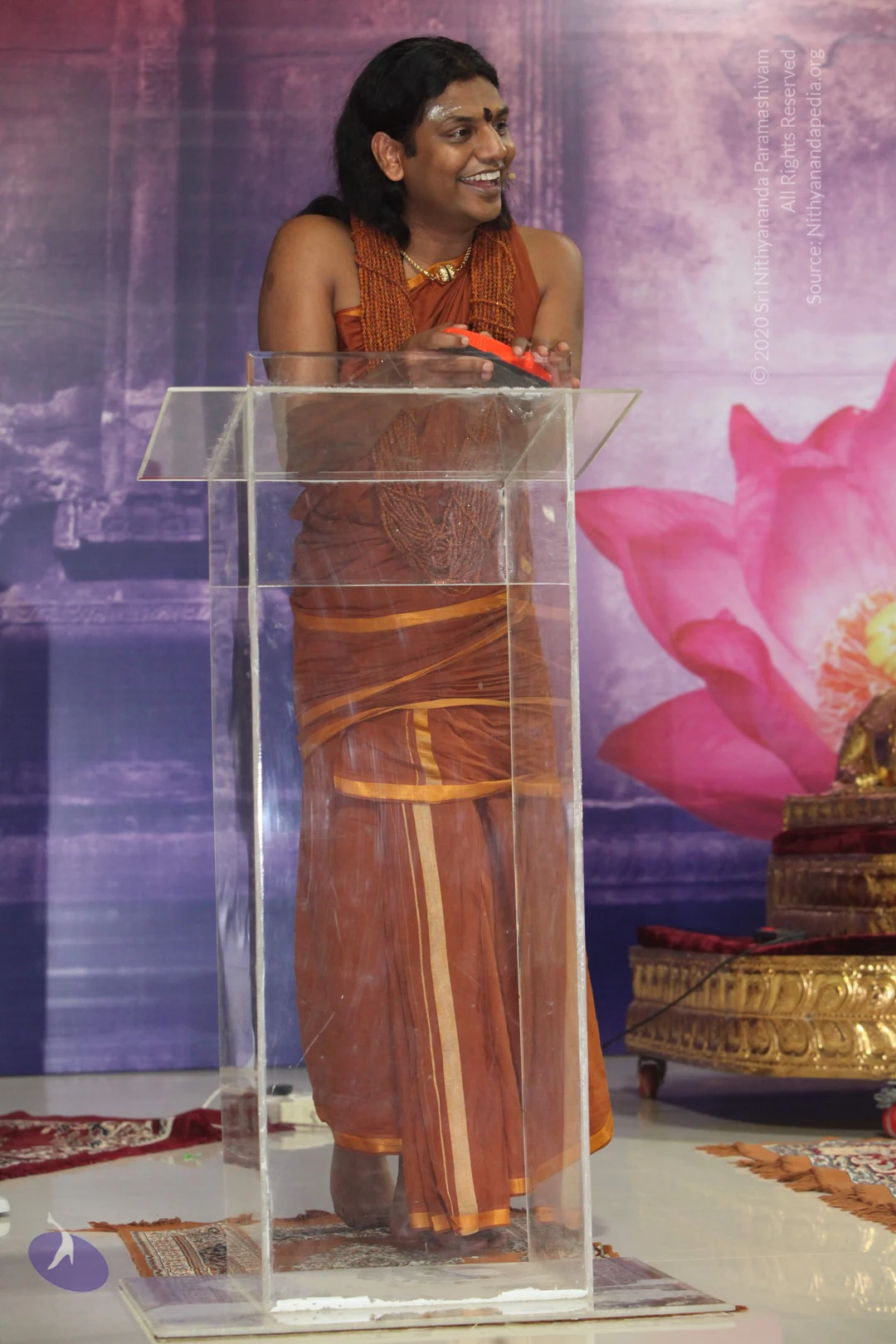
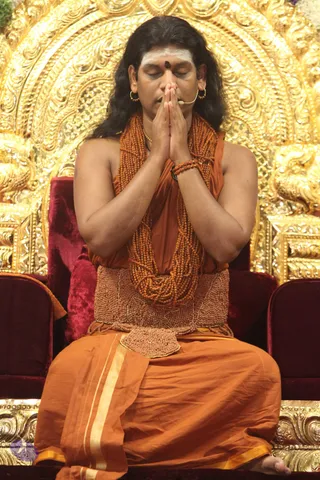
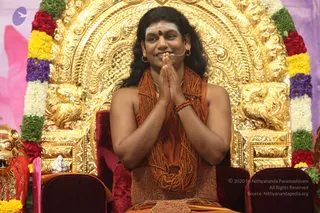
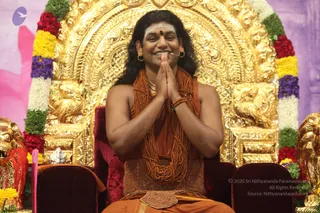
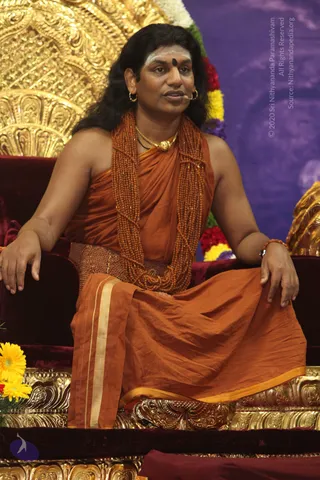
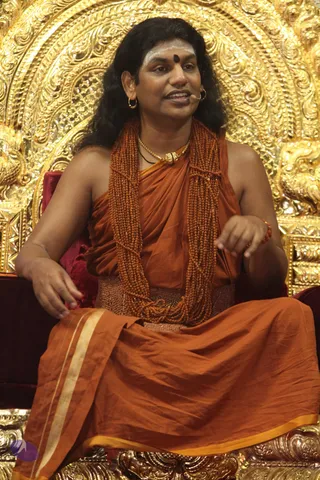
A man with long dark swept-back hair sits in a red velvet throne chair before an ornate gold repoussé backdrop, eyes closed and palms pressed together in anjali mudra. He wears a saffron-orange shawl over the upper body, layered rudraksha malas, a beaded reddish-brown waist ornament, and an orange dhoti with gold border. A white vertical tilak and red bindi mark the forehead, and a small headset microphone is clipped near his face. Gold hoop earrings and a wrist mala are visible. The setting suggests a seated satsang or darshan.A man seated on a red velvet throne before an ornate gold arch carved with lion heads and scrollwork, framed by garlands of red, yellow, purple and white flowers. He wears an orange-saffron shawl over bare shoulders, multiple strands of rudraksha beads across his chest, a bead bracelet, gold earrings and a white tilak with a red dot on his forehead. He holds his palms pressed together in namaste while smiling, and a small clip-on microphone is attached near his mouth. A carved golden lion sits at the left edge. The setting suggests a satsang or discourse. a person, seated in the teaching posture with rudraksha malas, saffron clothing and a throne.A man seated on a red velvet chair before an ornate golden throne carved with lion heads and garlanded with red, yellow, white and purple flowers. He wears long dark hair, a white forehead marking with a dark bindi, a saffron-orange robe, a thick rudraksha mala with a beaded belt and a small microphone clipped near his mouth. He sits with palms pressed together in namaste and smiles warmly. Golden lion figures flank the throne on both sides and a pink backdrop shows behind. Swamiji (probable) appears in person, seated as a speaker at a satsang, with his distinctive long hair, saffron clothing and rudraksha malas as the identifying cues.A seated man in saffron-orange robes speaks into a small headset microphone during a satsang discourse. He has long dark hair, a white forehead marking with a central dark bindi, hoop earrings, and wears a layered rudraksha mala with a gold pendant necklace and a rudraksha bracelet. He sits on an ornate gold-and-maroon velvet throne with gilded carvings, with yellow gerbera flowers at the lower left and a backdrop of colourful garlands on a purple sky-like cloth. Swamiji (probable): long swept-back hair, saffron robes, rudraksha mala and gold necklace on a throne with gilded carvings.A man with long swept-back dark hair sits on an ornate gold throne with carved repoussé backdrop, speaking with a head microphone. He wears saffron-orange draped robes, multiple strands of orange rudraksha malas, a gold necklace, gold hoop earrings, and a white-and-red forehead mark with a central dot. a person, seated and addressing an audience; his hands gesture mid-talk. No other people are visible.A man seated cross-legged on an ornate gold throne with a carved arched back, flanked by two golden lion sculptures, speaking into a headset microphone. He wears an orange-saffron dhoti-style garment with an orange shawl, layered rudraksha malas, a gold necklace and a red bindi. The throne is decorated with an arch of garlands in red, yellow, purple and white flowers, with yellow and red flower arrangements at its base. Behind him are a pink lotus and a purple-toned stone backdrop. The appearance-based cues of long swept-back hair, saffron clothing, rudraksha malas and a throne are consistent with the page's Swamiji reference, so this is a probable Swamiji seated in a satsang setting.

05-PANCHAKRIYA-SESSION
5 photosSource gallery
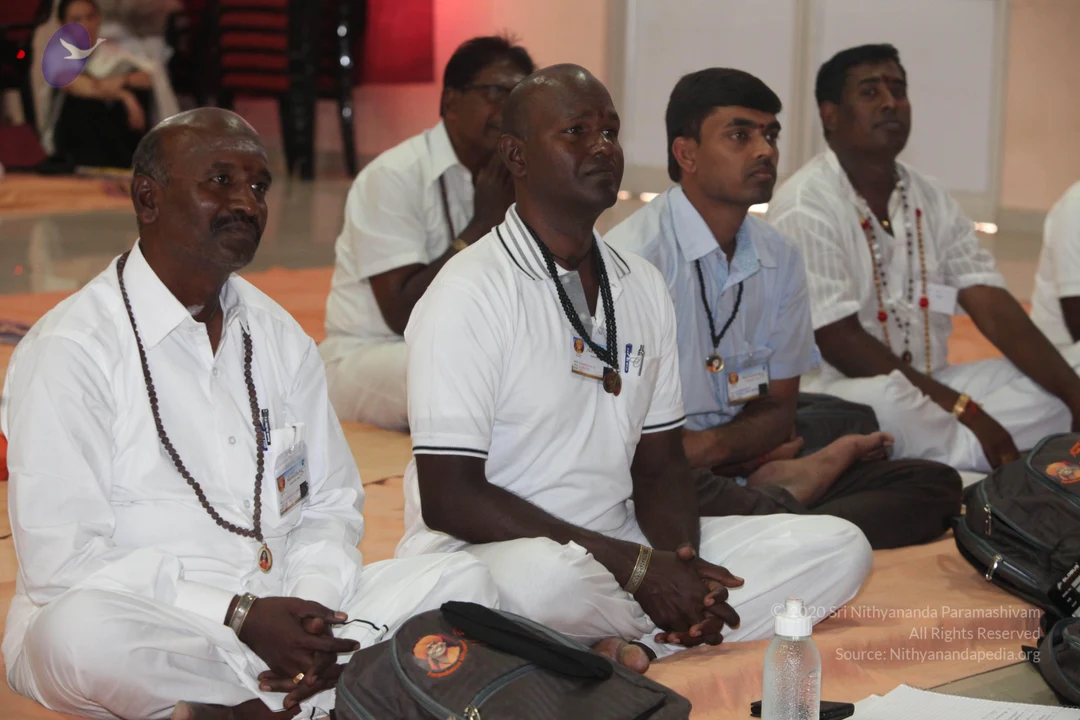
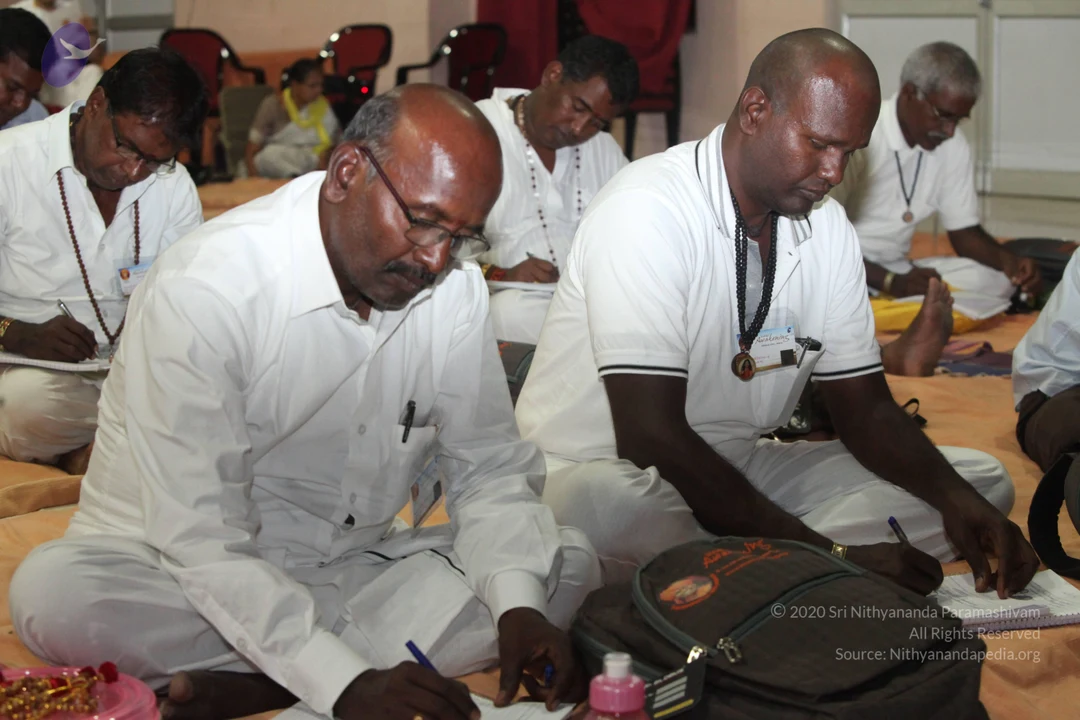
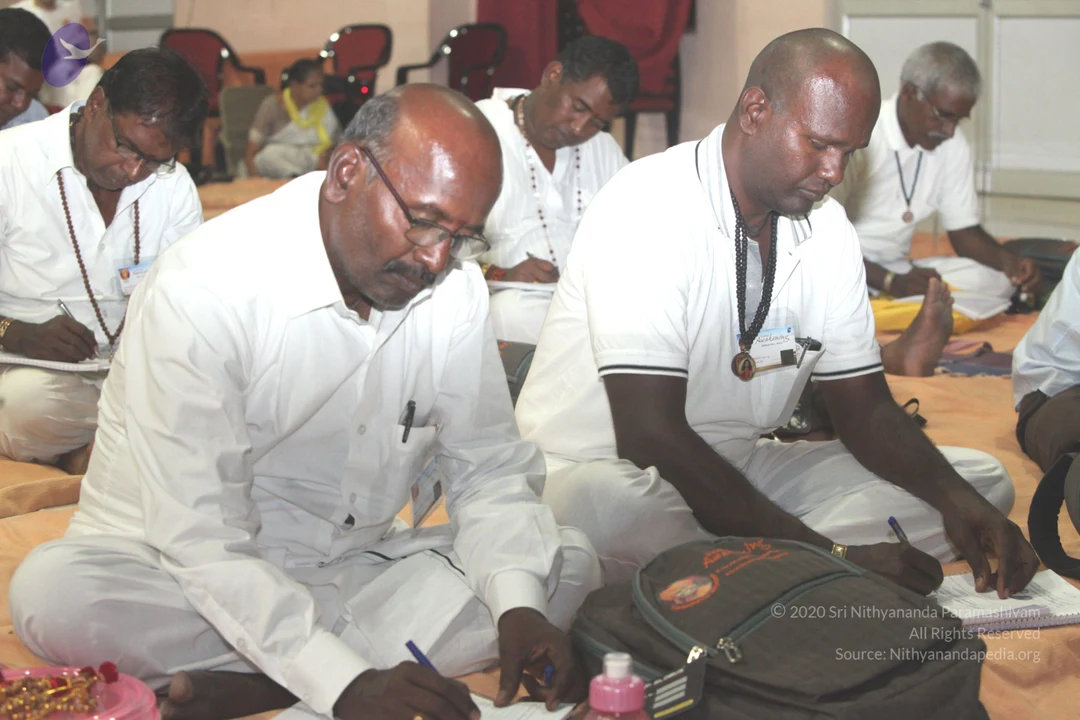
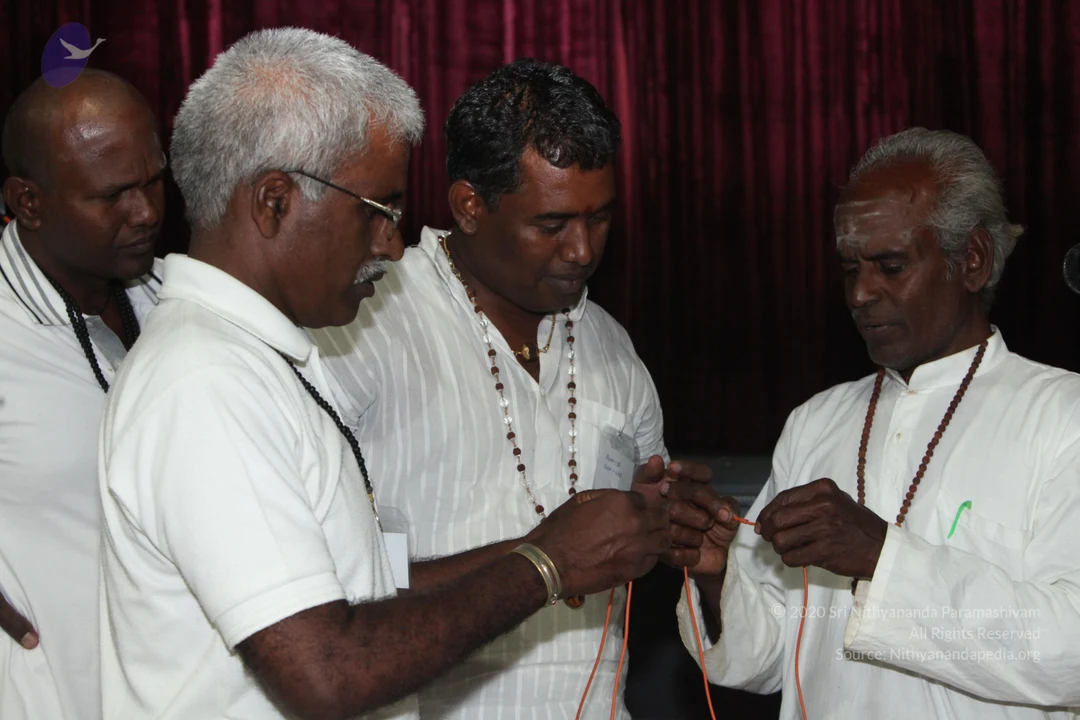
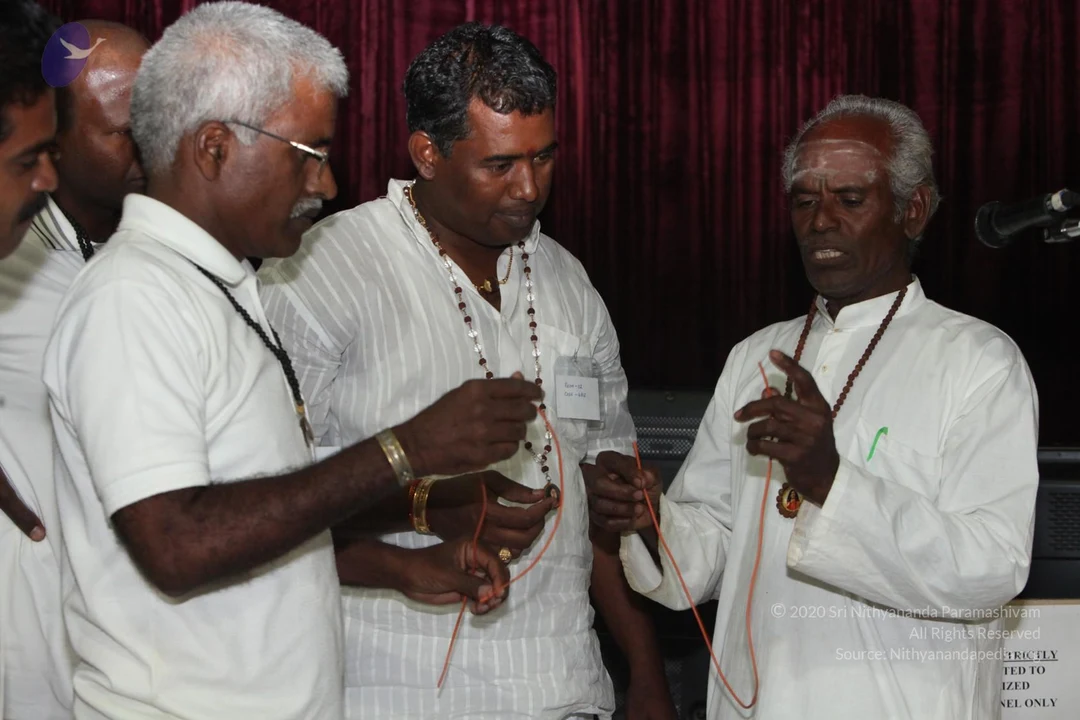
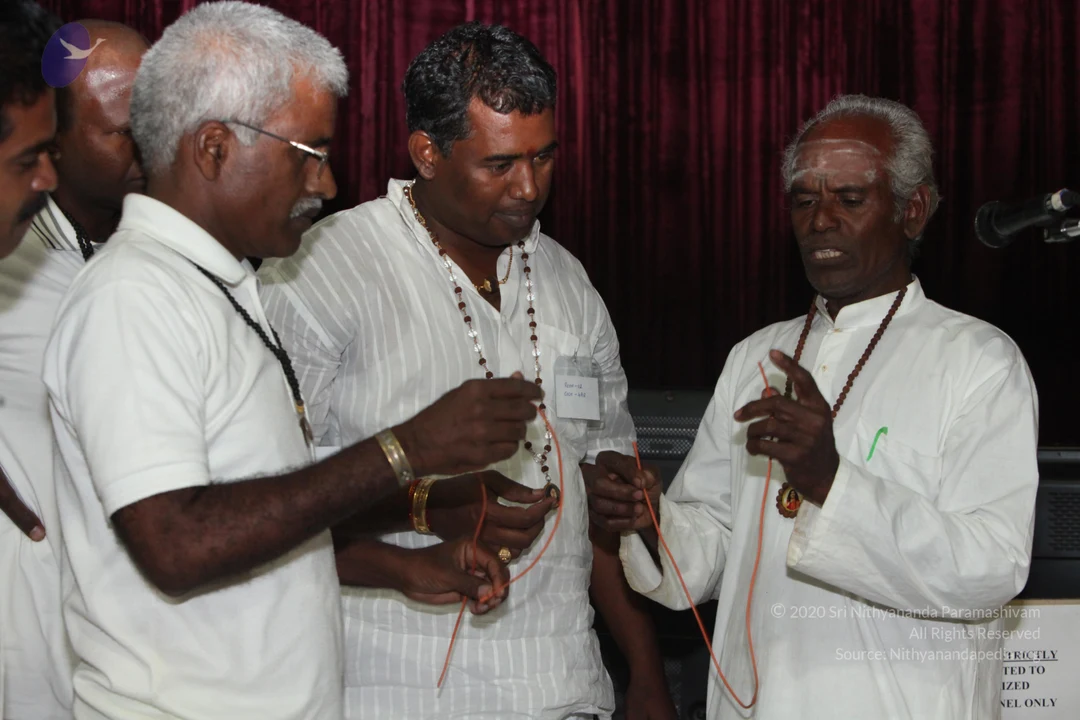
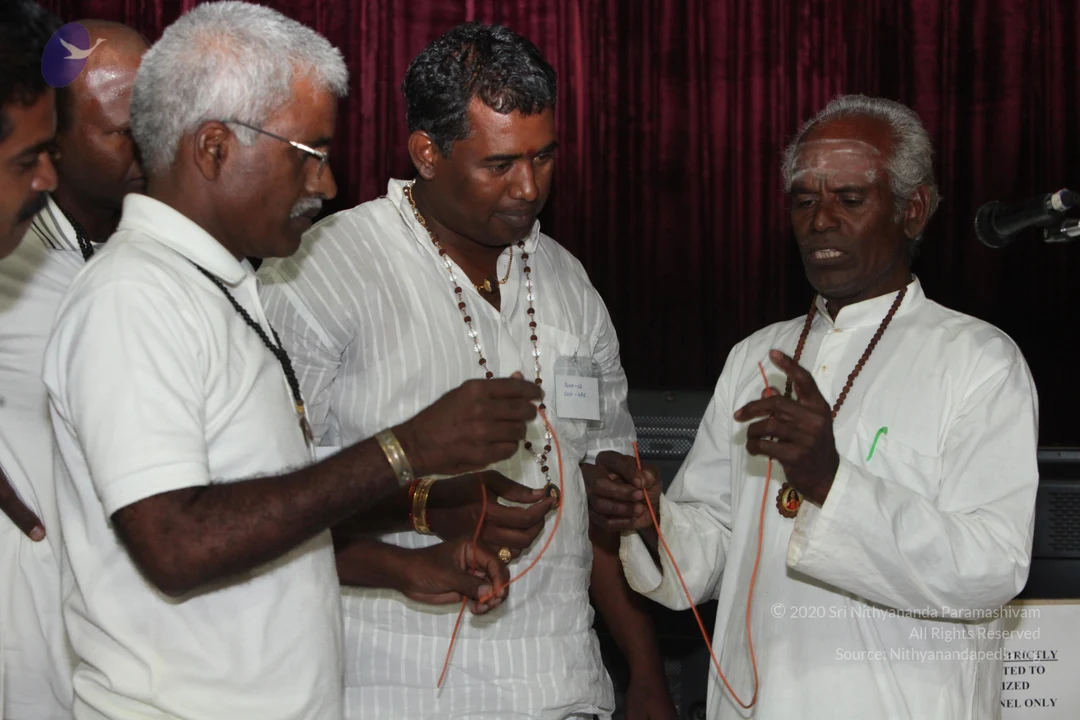
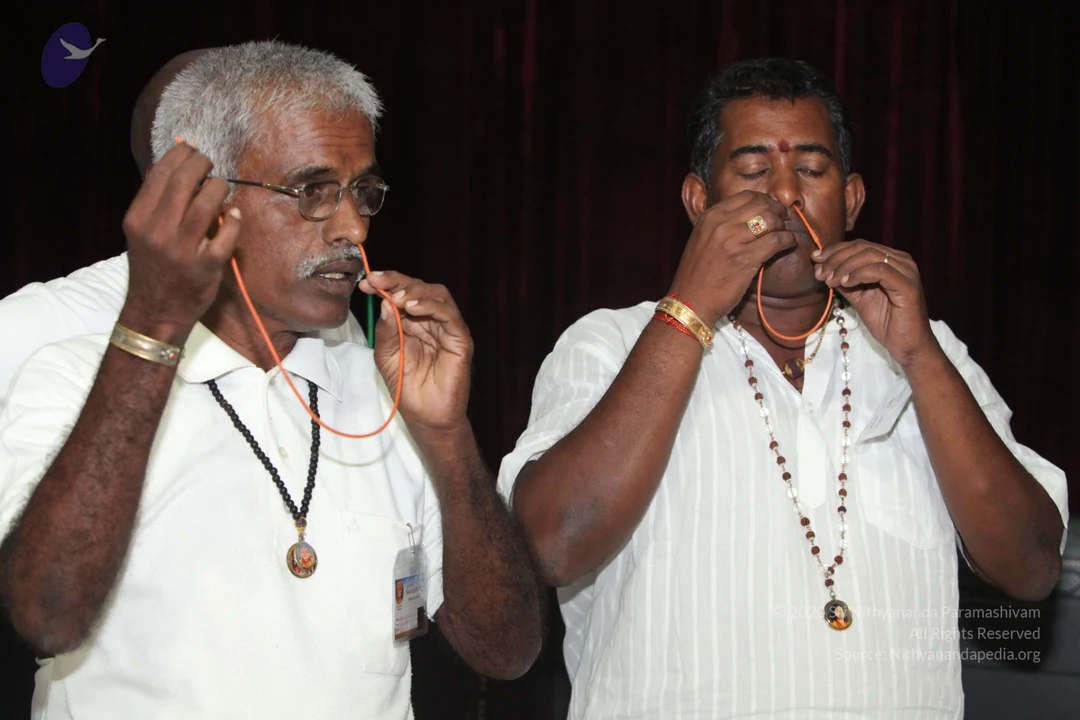
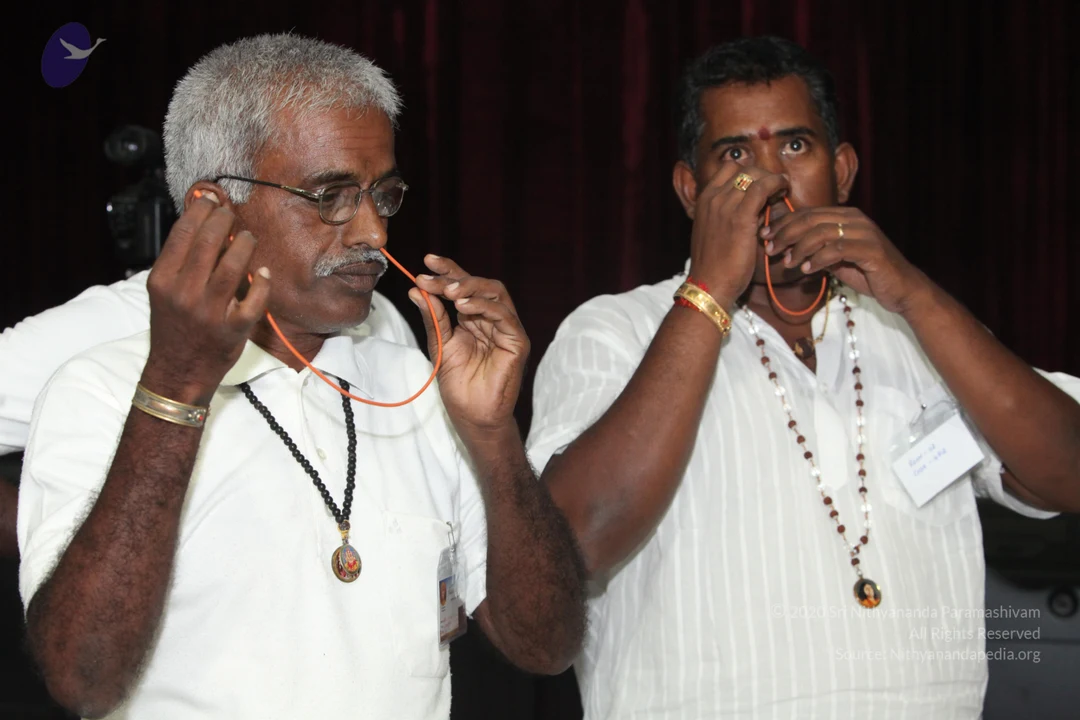
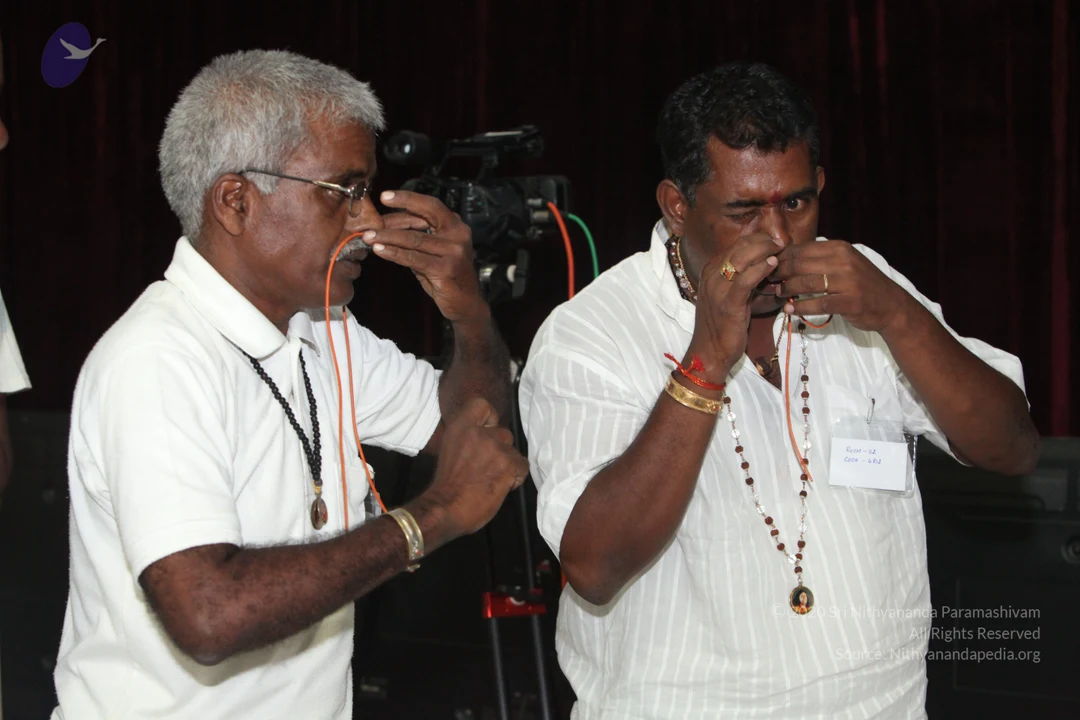
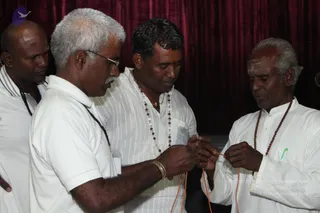
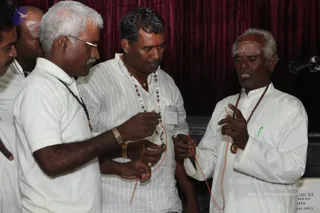
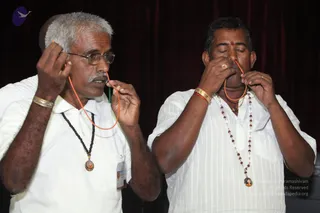
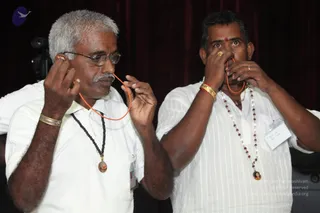
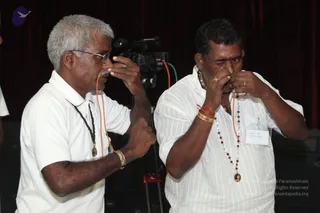
Four men in plain white clothes stand close together in a hall before a dark red velvet curtain. Two men at centre hold and tie an orange-red thread between them, while a man on the right in a white kurta and a rudraksha mala works the thread with his hands. A bald man stands at far left in white with a dark bead necklace. The men are focused on the knot, and one wears a white shirt with a name badge clipped to the pocket.Two men in white shirts stand side by side against a dark red curtain, each holding an orange cord to one nostril as they practice a nasal breathing exercise. The man on the left has short grey hair, glasses and a dark bead mala with a round pendant; he holds the cord with his right hand and wears a gold bangle. The man on the right has dark hair, closed eyes, a red bindi and a rudraksha mala with a round pendant, and wears a gold ring and a red-and-gold bracelet. Both have their eyes partly closed in concentration.Two men in white shirts stand indoors in front of a dark red curtain, each holding an orange cord to his face in a guided practice. The man on the left, wearing glasses and a black beaded mala with a round pendant, pulls the cord toward his ear and nose. The man on the right, wearing a white striped shirt, a gold bangle, a rudraksha mala and a small red mark on his forehead, holds the cord to his nose with both hands. A name badge hangs from each shirt pocket. A camera and lighting stand are visible at the left edge.Two men in white shirts stand side by side performing a nasal breathing practice, each holding an orange cord near one nostril with their fingers. The man on the left wears wire-rimmed glasses, a black beaded mala and a gold bracelet. The man on the right wears a striped white shirt, a rudraksha mala with a pendant, gold rings and a red thread on his wrist, and a name badge is pinned to his shirt. A video camera on a tripod stands behind them against a dark red curtain.

06-IA-DARSHAN
16 photosSource gallery
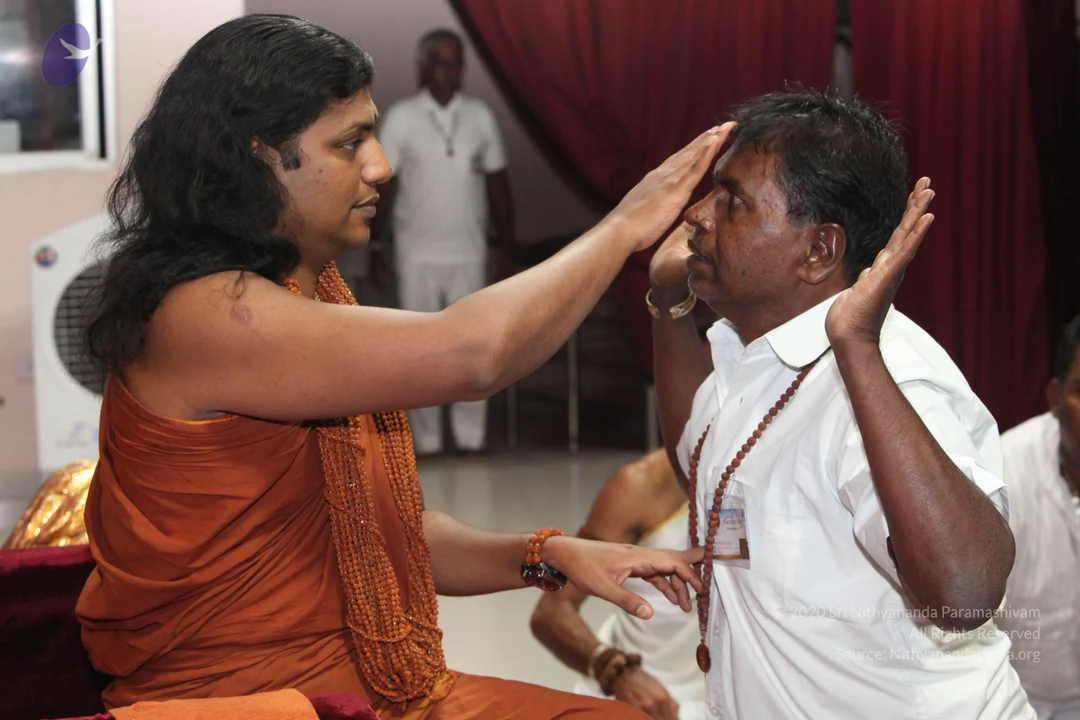
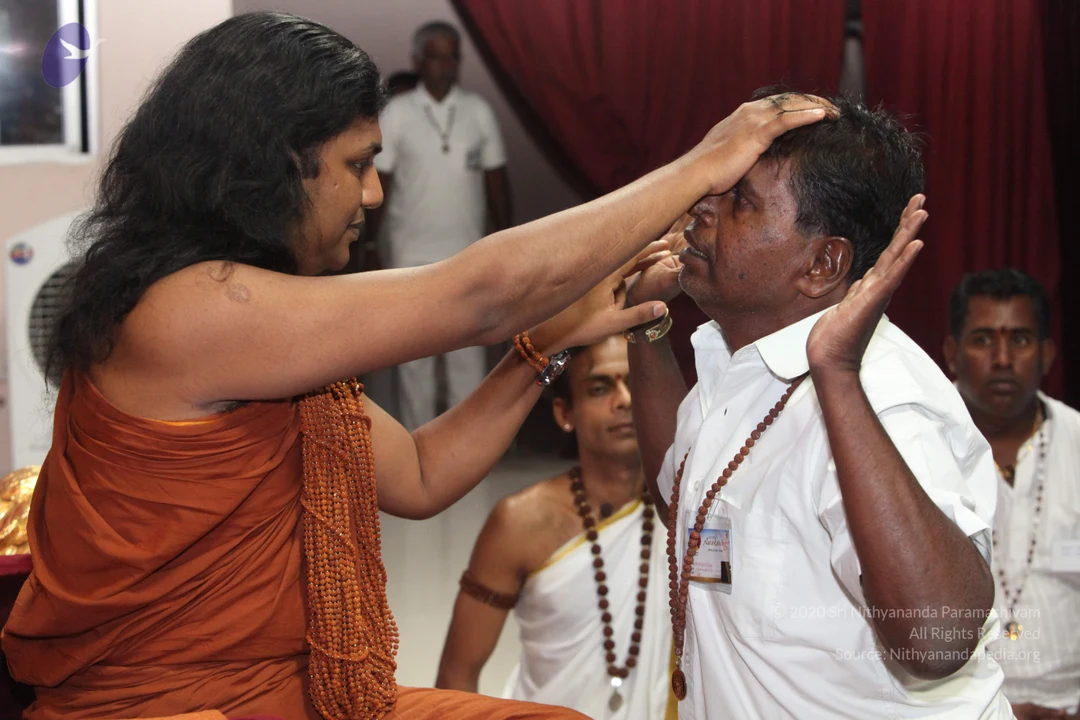
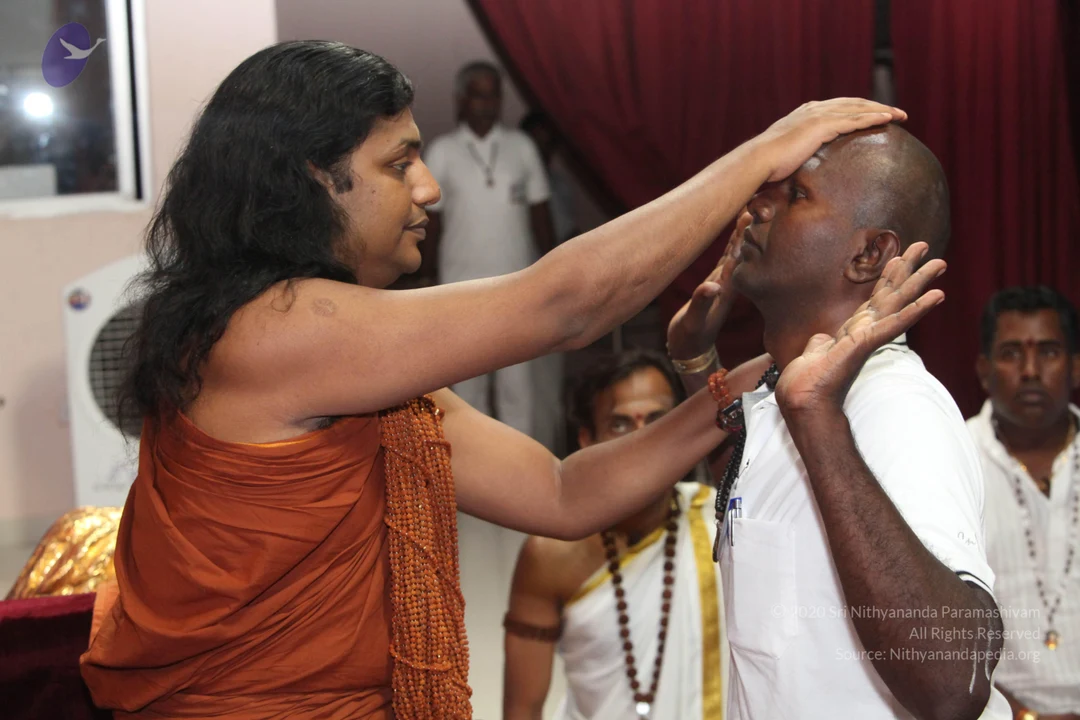
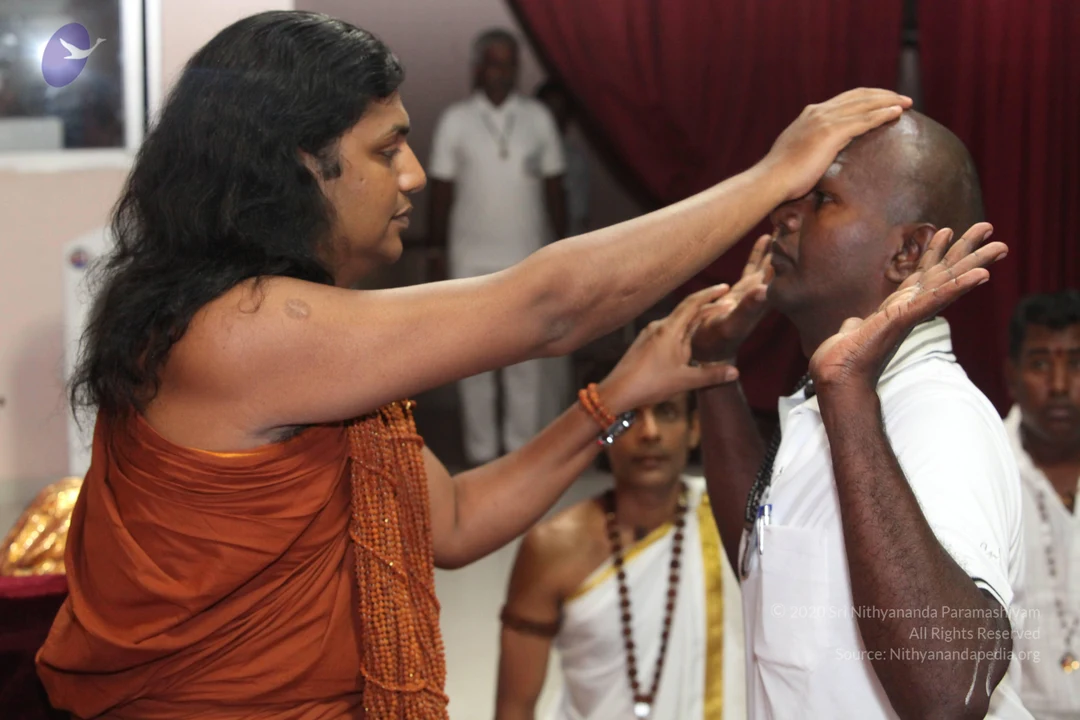
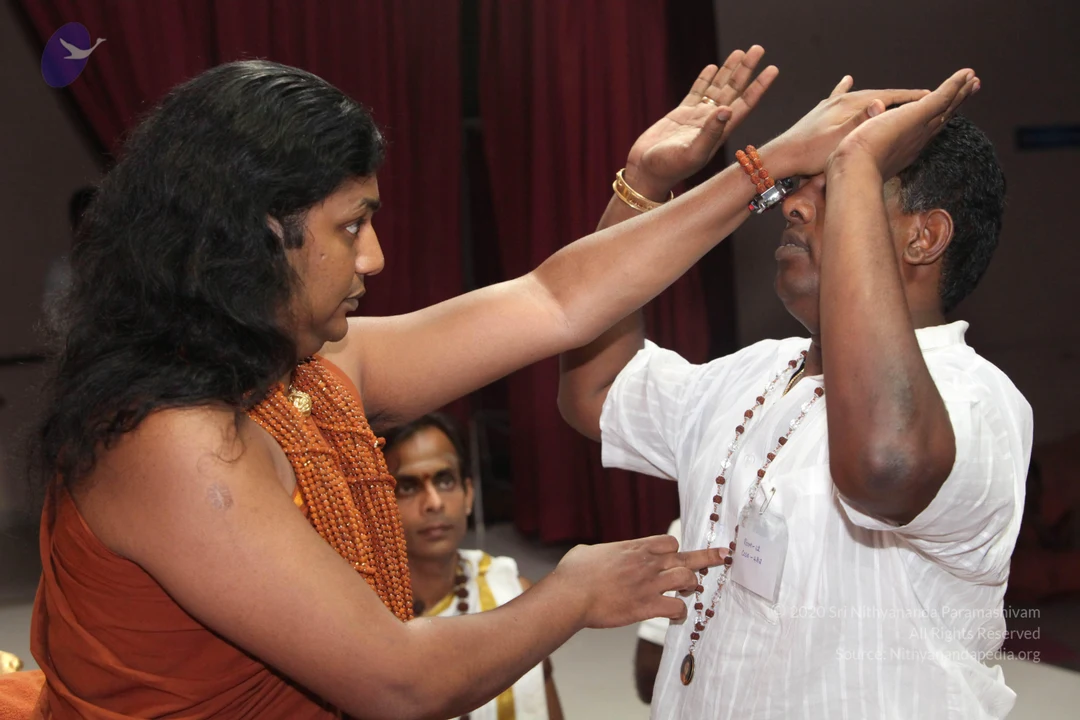
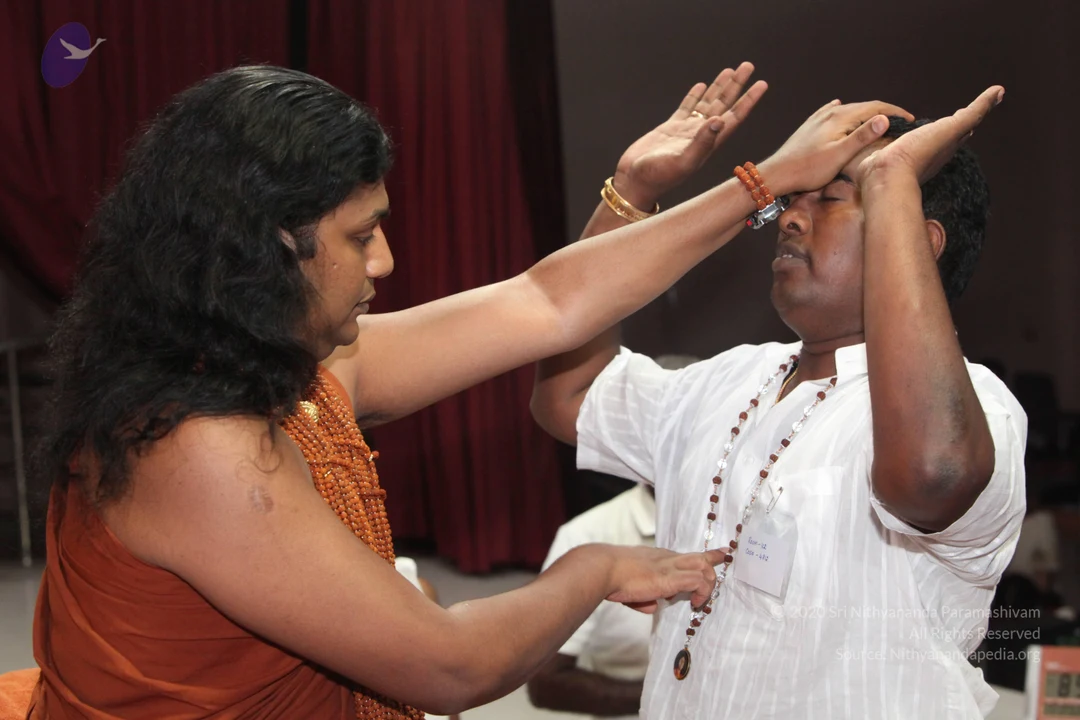
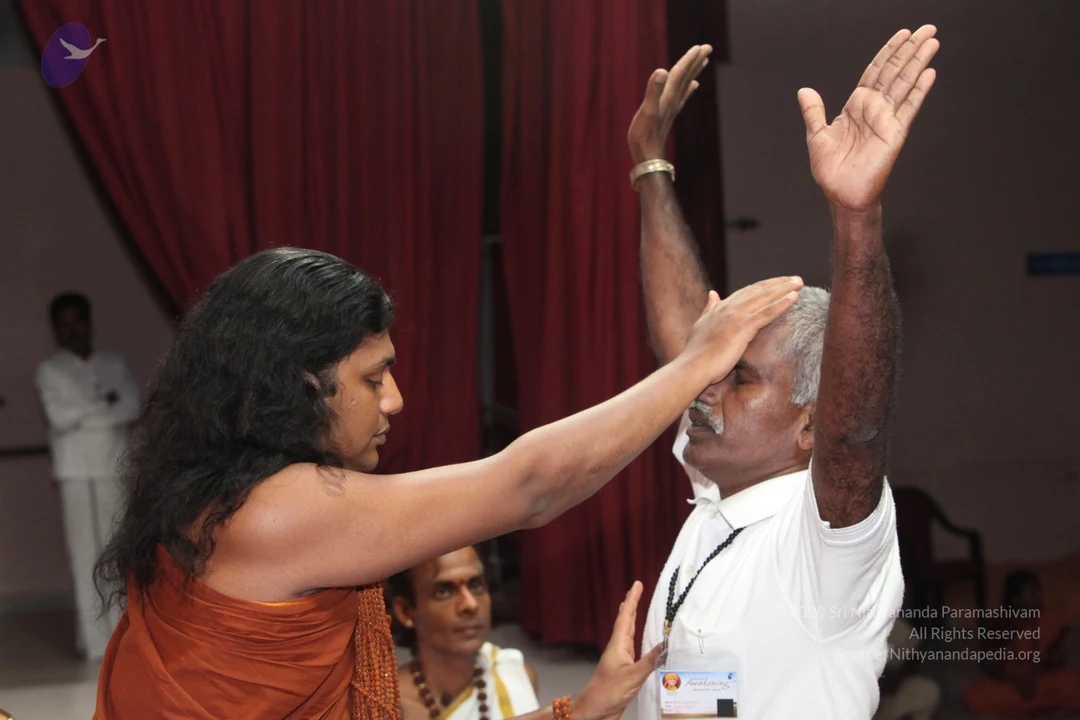
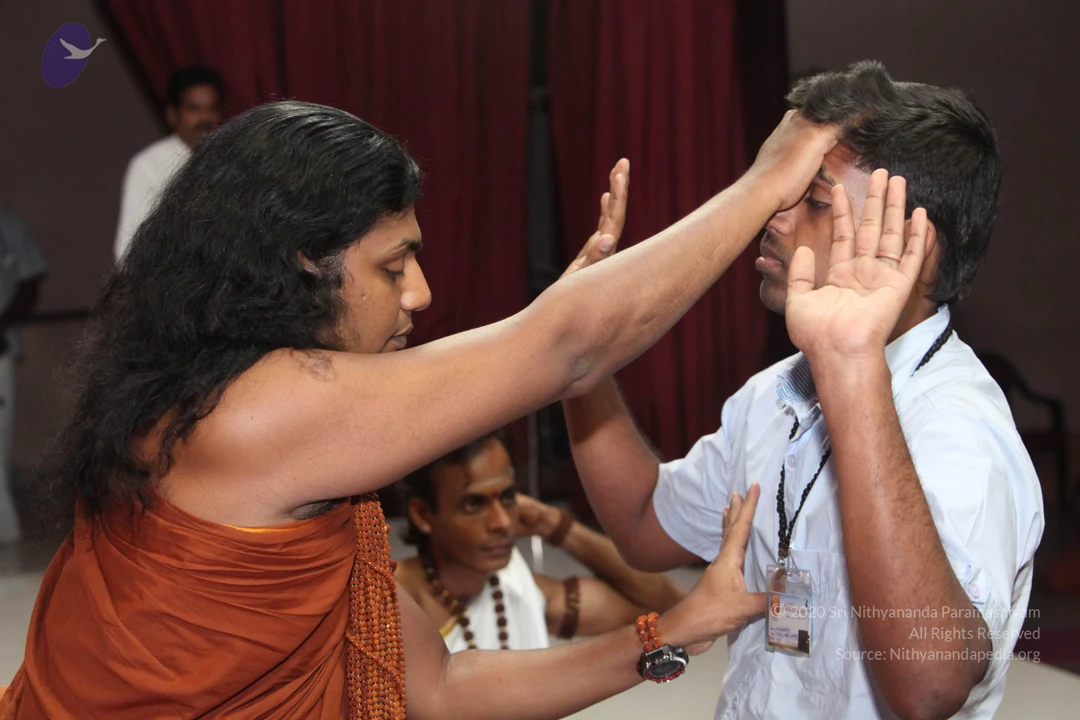
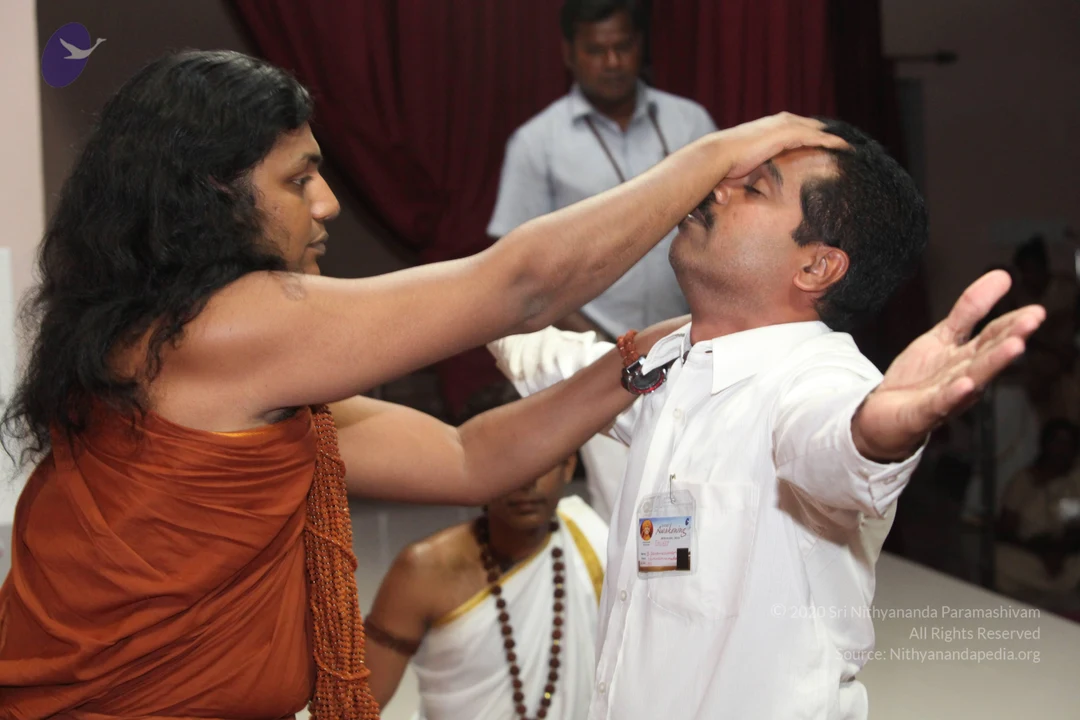
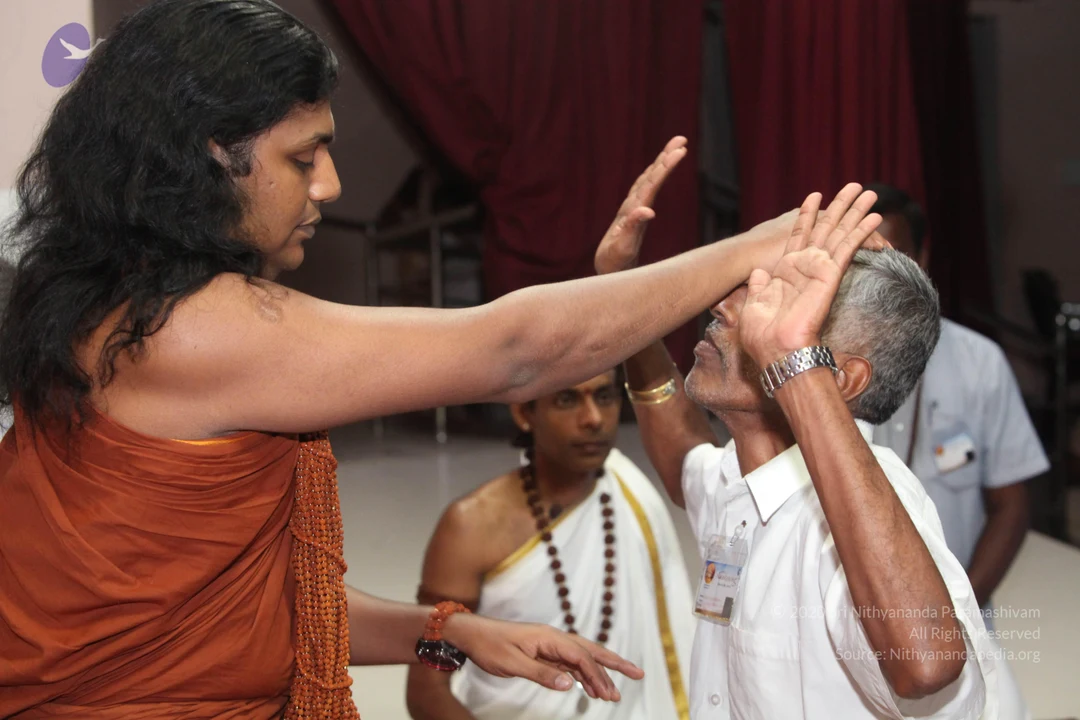
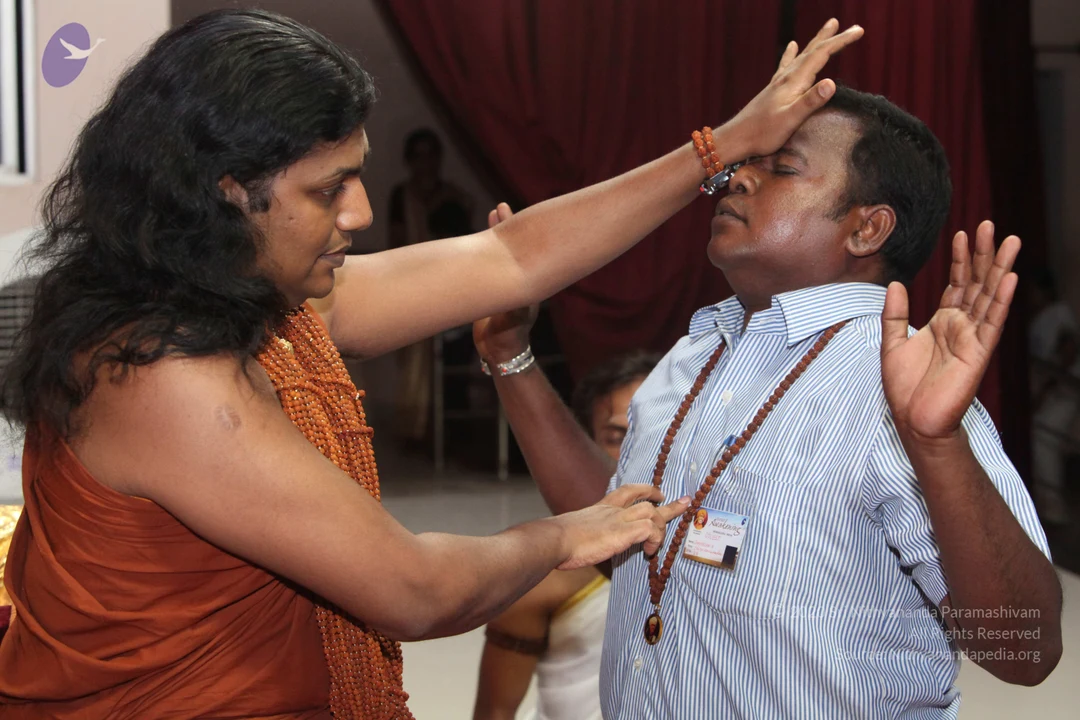
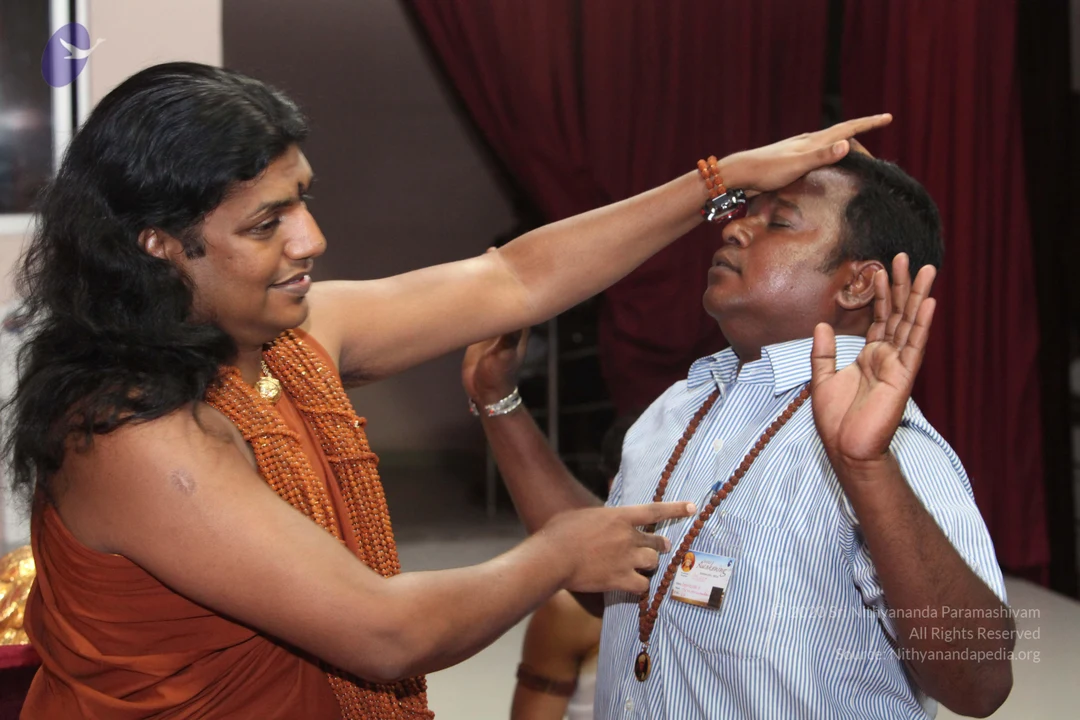
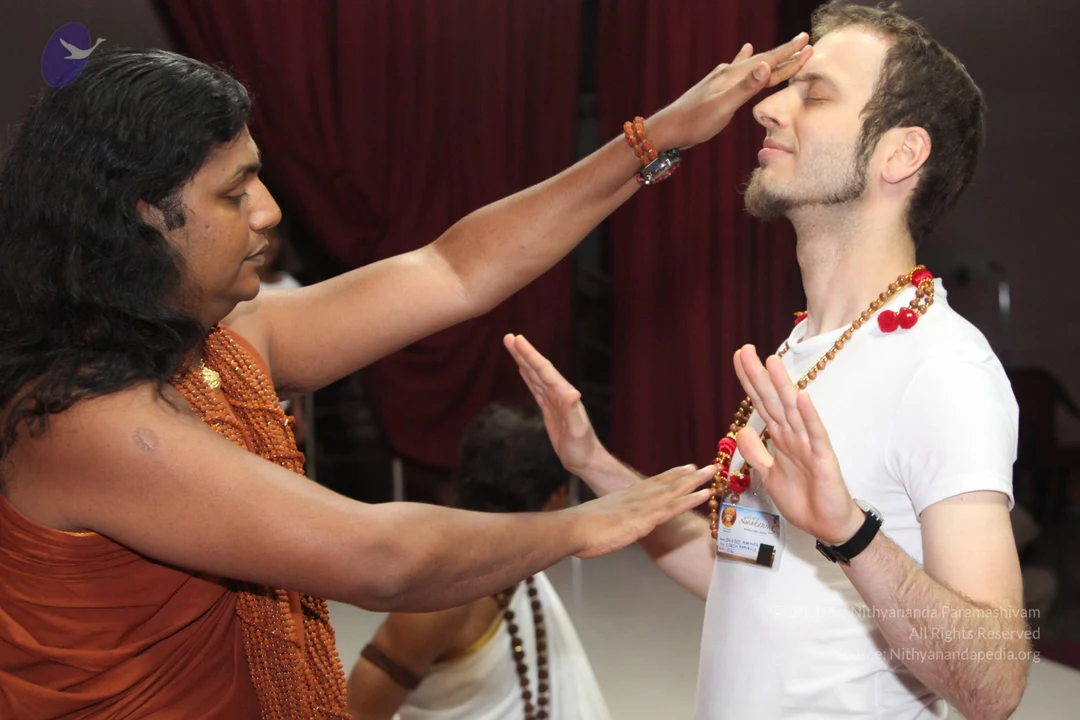
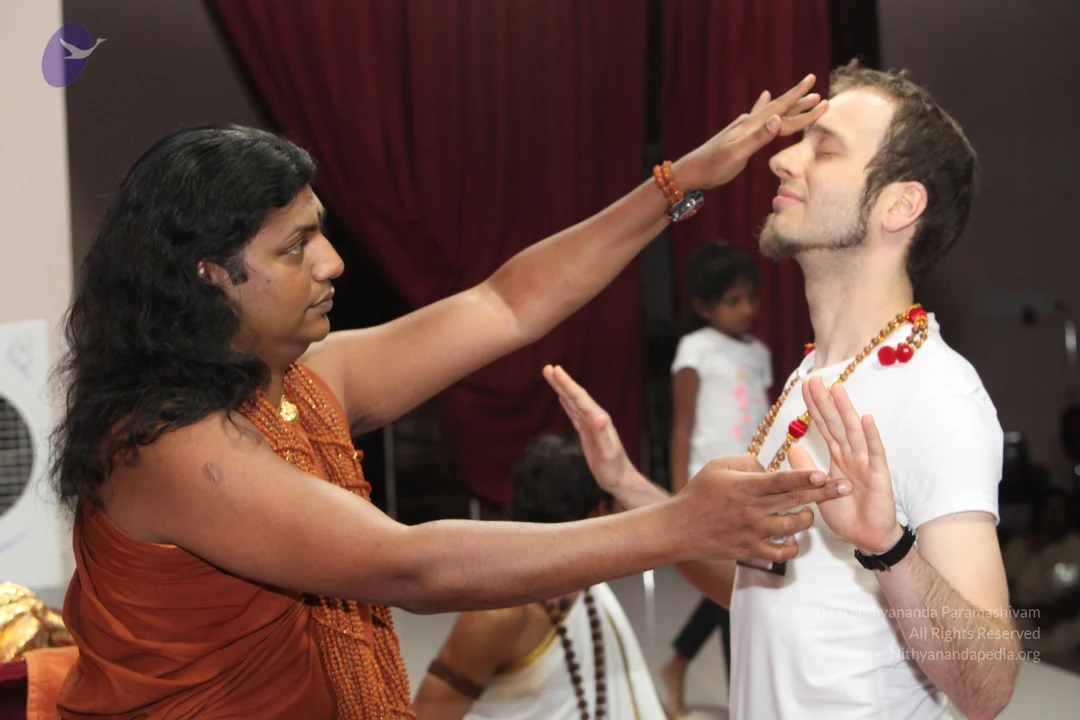
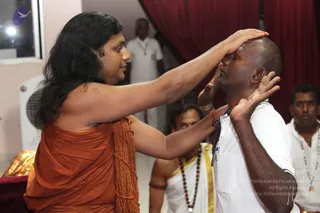
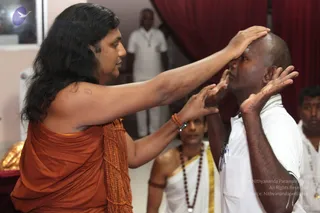
A photograph of a long-haired figure in a saffron-orange robe and multiple orange rudraksha malas sitting and placing both palms on the forehead of a short-haired man in a white shirt with a rudraksha mala and a name badge. The blessing figure's hand rests on the devotee's head while the devotee holds his palms raised in front of him. Behind them a standing man in white clothes, a red curtain and a white appliance are visible. Appearance-based label: Swamiji (probable), a long-haired figure in saffron with several rudraksha malas, giving a forehead blessing to a devotee, consistent with a satsang blessing moment. Total visible people: about four, including the partly visible standing man and a seated figure at the right edge.A photograph of a private blessing moment indoors. A woman with long dark hair, wearing an orange saffron wrap and a long rudraksha mala, sits and presses her right palm on the crown of a seated man's head. The man wears a white collared shirt, rudraksha mala and a small ID badge, and holds his hands up near his head. Behind them a seated man in white and a bare-chested man with beads watch, and a standing man in white stands beside maroon drapes. A purple logo appears at the upper left. The woman's appearance does not establish an identity, so she is described by role only as a devotee-facing giver of blessing.A long-haired man in an orange saffron shawl and a long rudraksha mala places both hands on the head of a shaved-headed man in a white shirt with a rudraksha mala. The blessing figure is a probable Swamiji, with long swept-back hair, saffron clothing and rudraksha beads. Behind them stand other devotees in white dhotis and white shirts with rudraksha malas, one in a gold-bordered dhoti. Red curtains hang in the background and a gold cloth is visible at the lower left.A photograph of a long-haired figure in an orange-saffron shawl and orange rudraksha mala placing both hands on the head of a bald, smiling man in a white shirt with a white-clad man in the background. The figure stands on the left, arms extended, touching the devotee's crown while the devotee closes his eyes and lifts his palms near his face. Behind them, a second man in white dhoti with rudraksha mala and gold border sits, with a red curtain and white-clad attendees in the background. The scene appears to be a blessing or darshan moment during a satsang. Probable Swamiji is the figure in orange with long hair and rudraksha mala.A woman with long dark hair, wearing an orange-brown garment and layered orange-brown rudraksha beads with a gold necklace, reaches forward with both arms to press her palms against the forehead of a man in a white shirt. The man has rudraksha and white beaded necklaces, a small name badge on his chest, and a red-and-white beaded bracelet on his wrist, and he stands with his hands raised to his head. Behind them a man in white with a saffron-bordered cloth watches, and red curtains hang in the background. The woman's wrist also shows a bracelet with gold and red beads. The scene appears to be a blessing or energy transmission during a satsang-style gathering, with a probable depiction of a person as the woman in orange-brown.A photograph of a long-haired figure in saffron-orange robes and multiple orange rudraksha malas placing both hands on the forehead of a seated man with closed eyes. The man wears a white short-sleeved shirt, white trousers, a red-and-wooden bead mala and an ID badge on his chest, and a gold bangle is visible on the giver's wrist. Dark red curtains and a light wall form the backdrop of a hall. The giver appears to be a probable Swamiji by appearance cues of long swept-back hair, saffron robes and rudraksha malas, performing a forehead blessing on a devotee. Two people are visible.