Skip to content
Saturday

27 October 2012

Supreme Pontiff of Hinduism HDH Bhagavan Sri Nithyananda Paramashivam

Dated photos
166
Source pages
1
Media
7
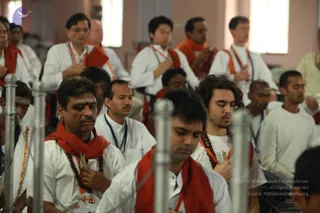
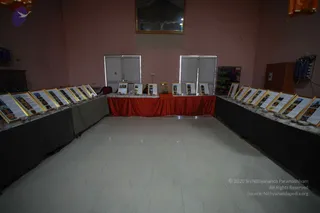
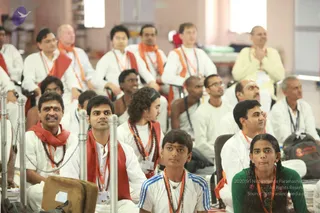
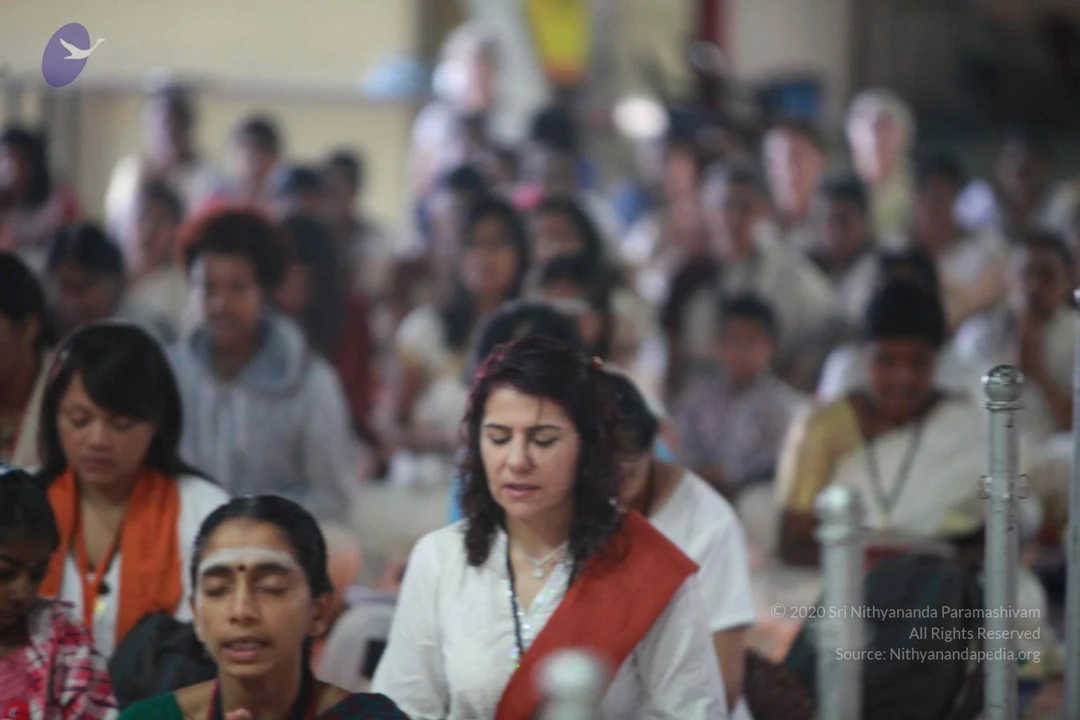
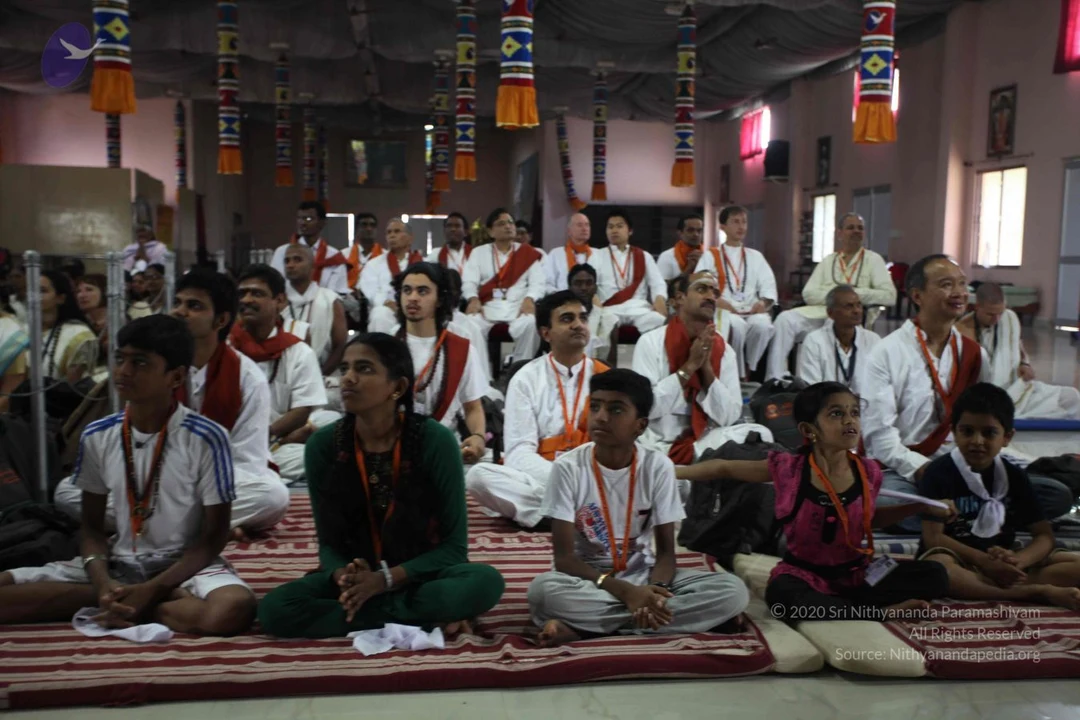
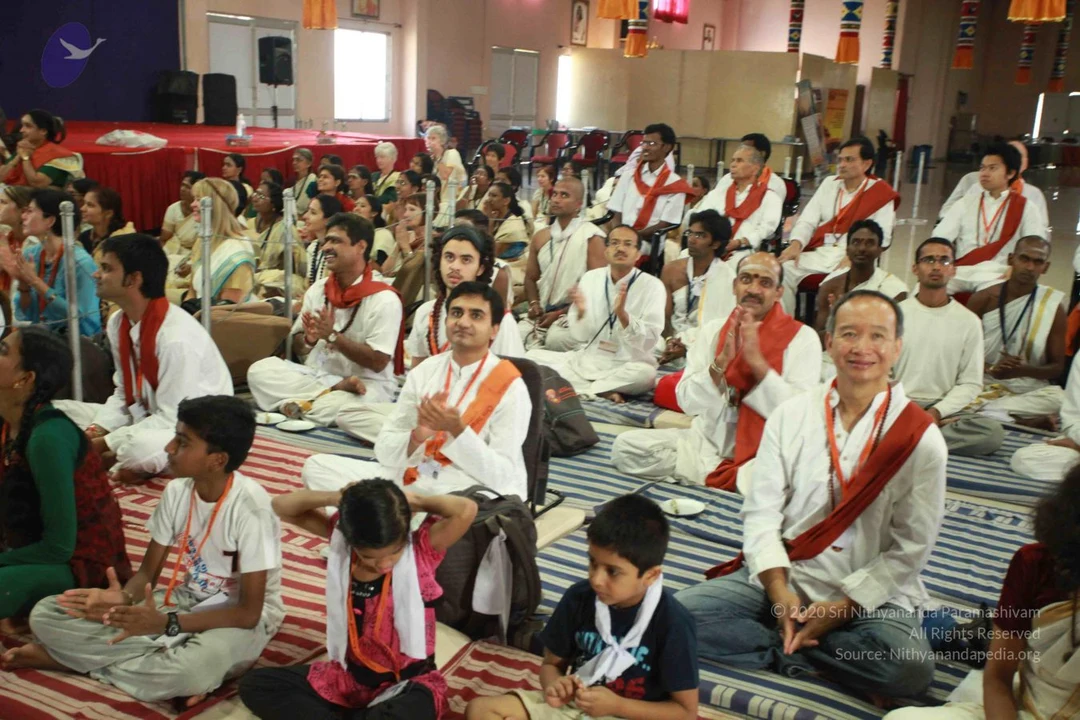
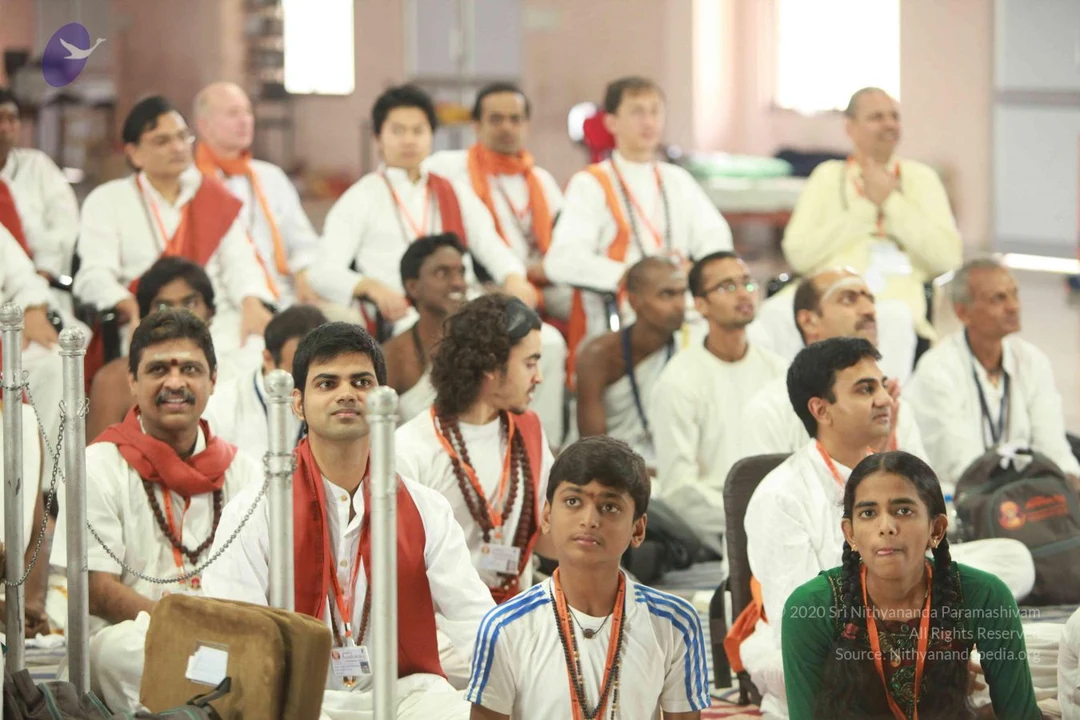
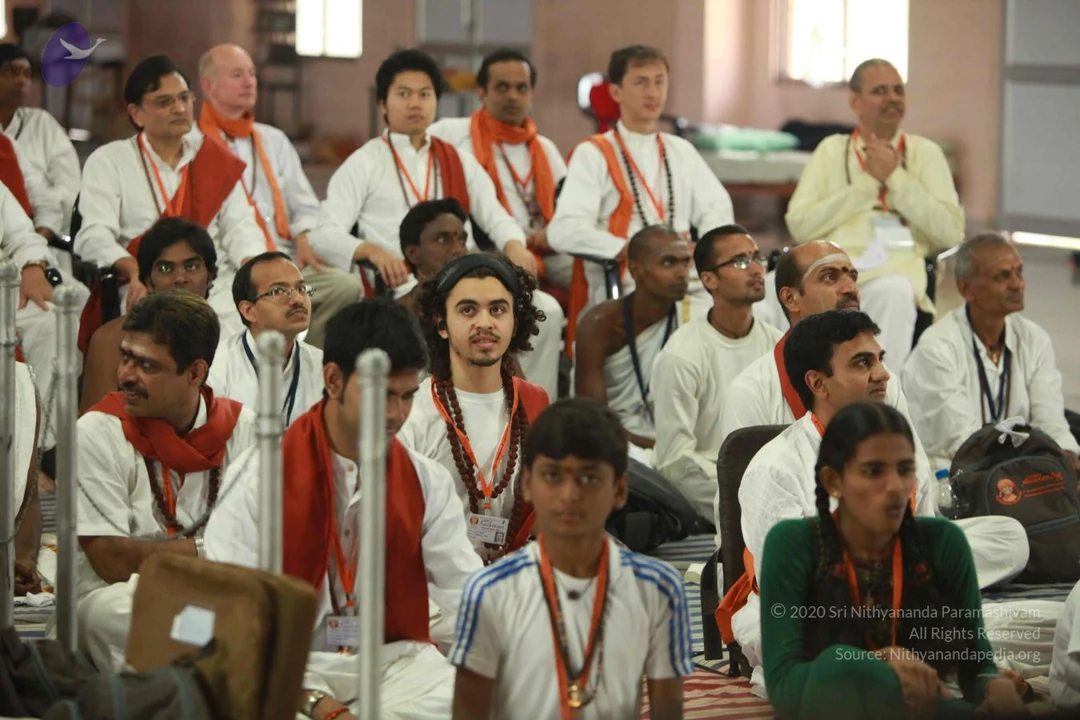
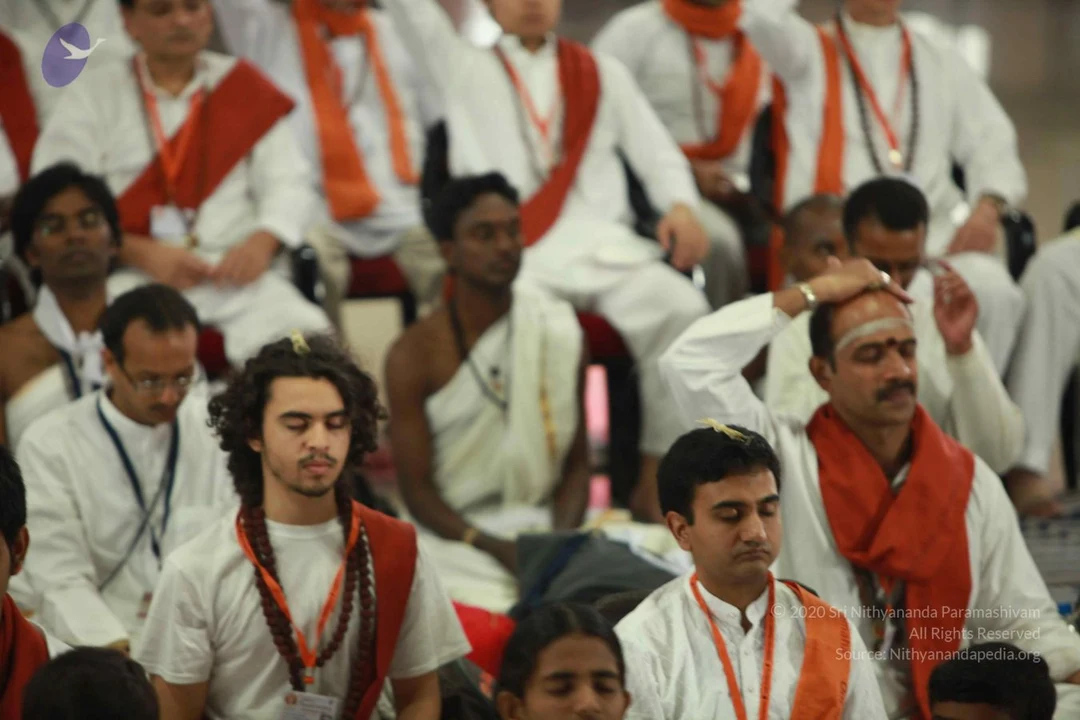
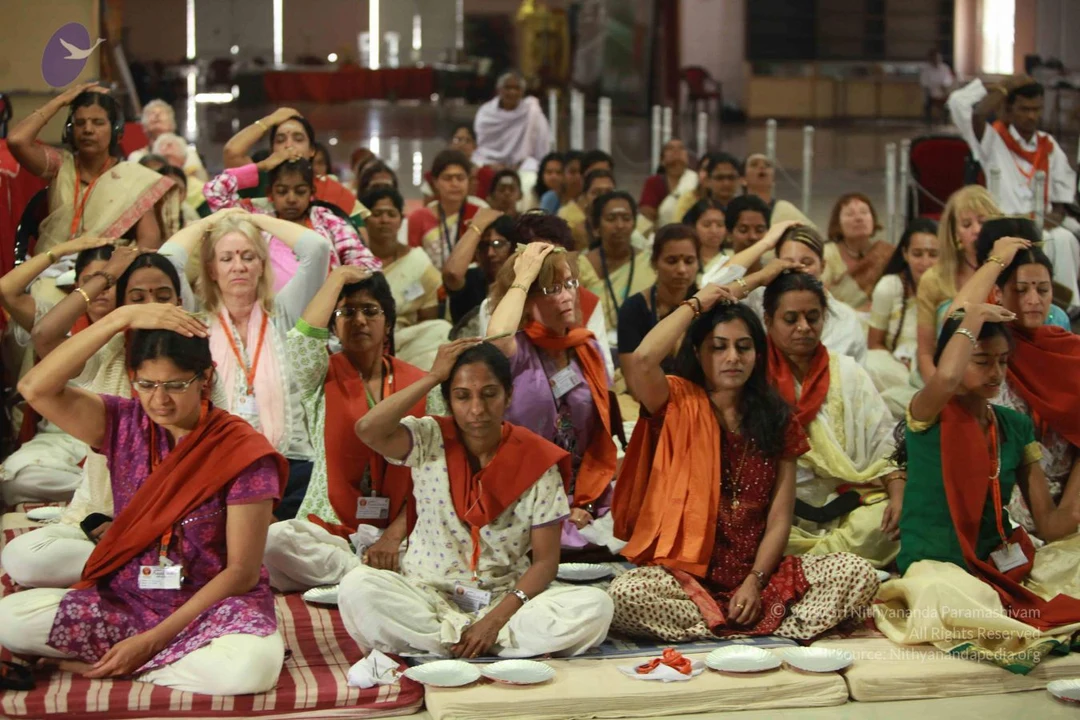
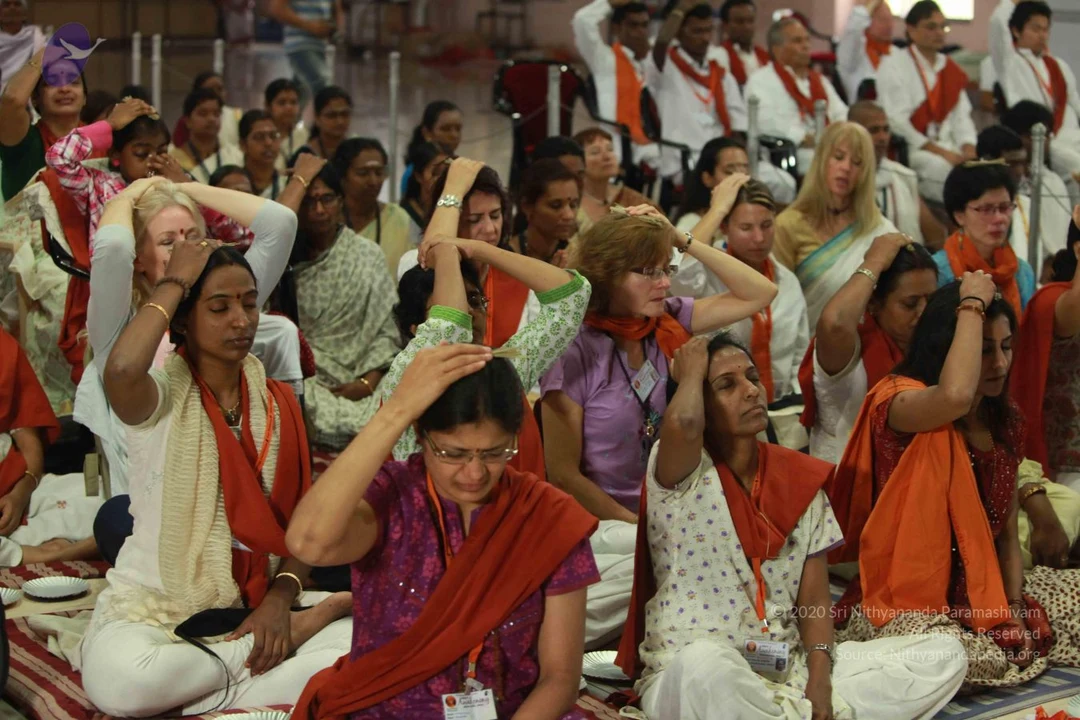
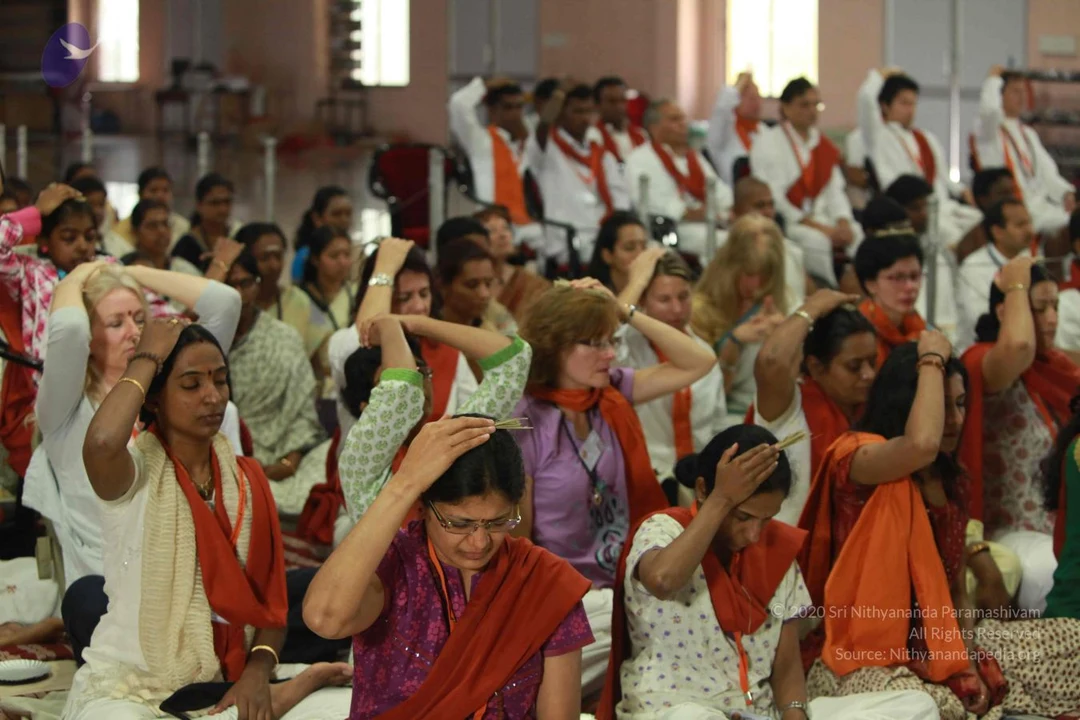
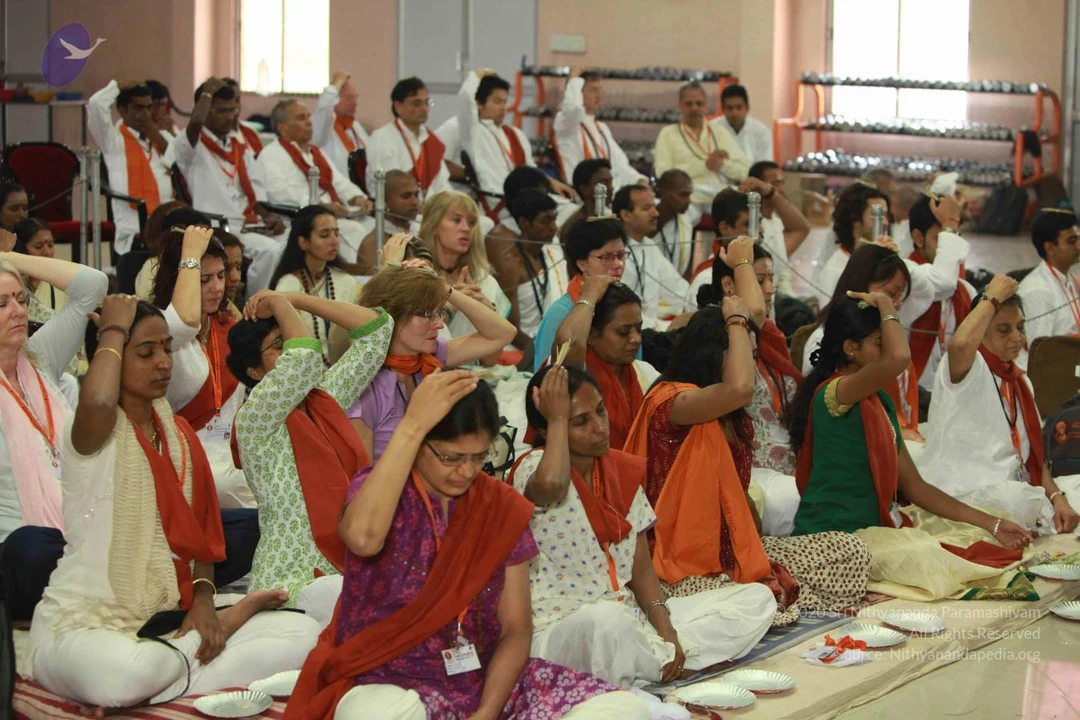
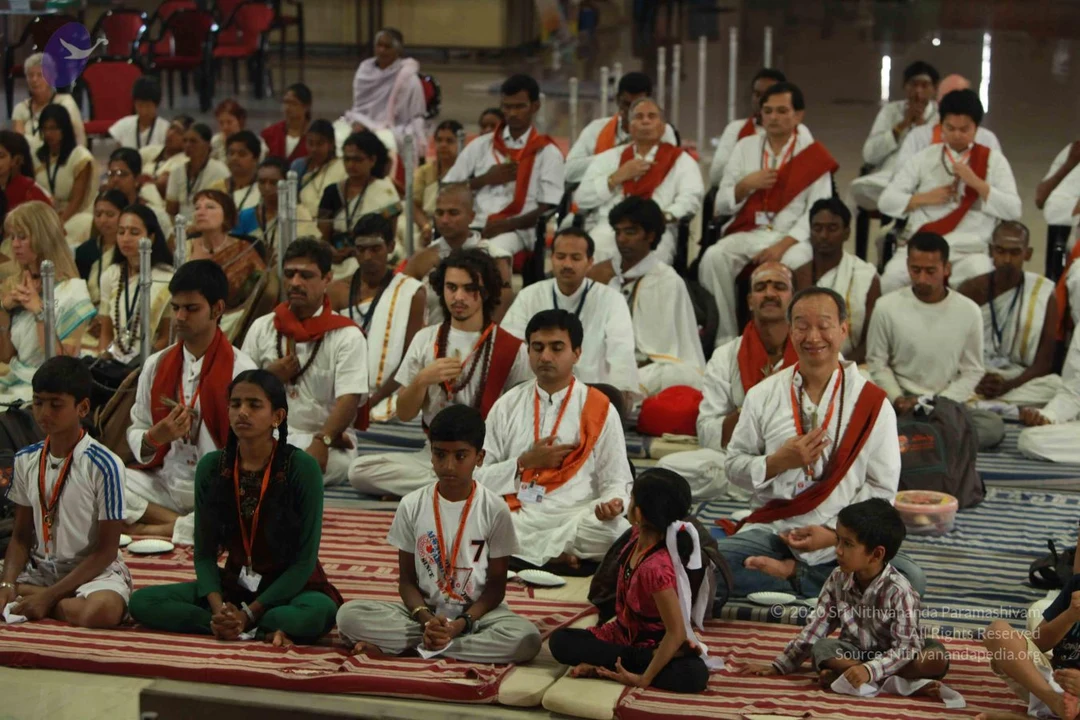
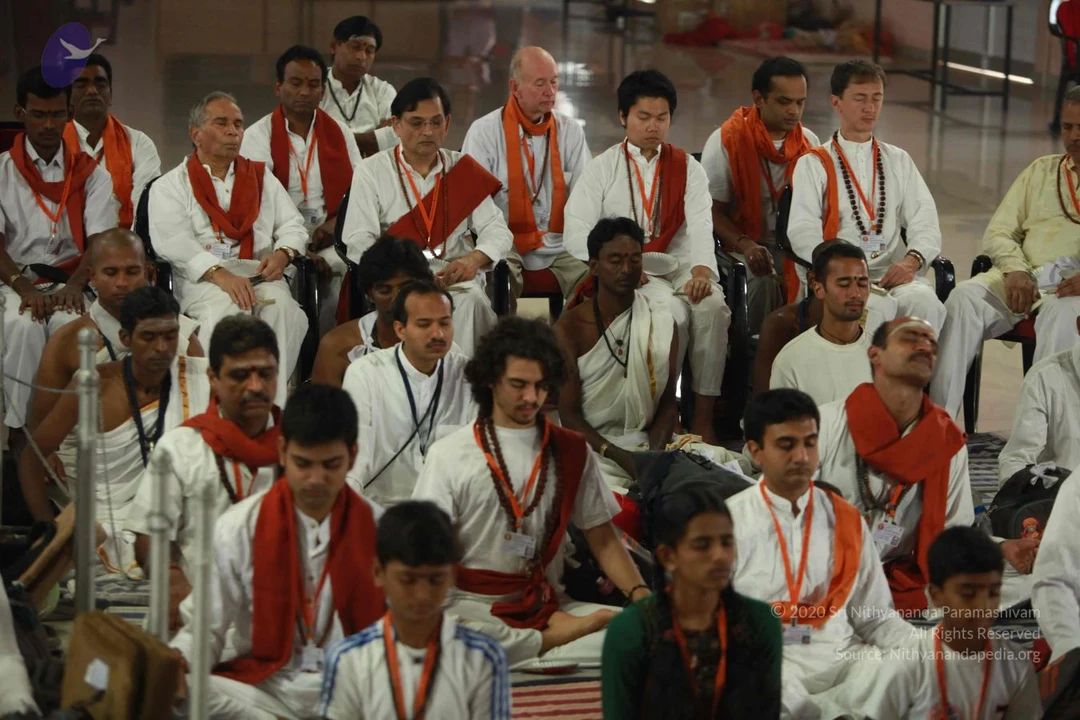
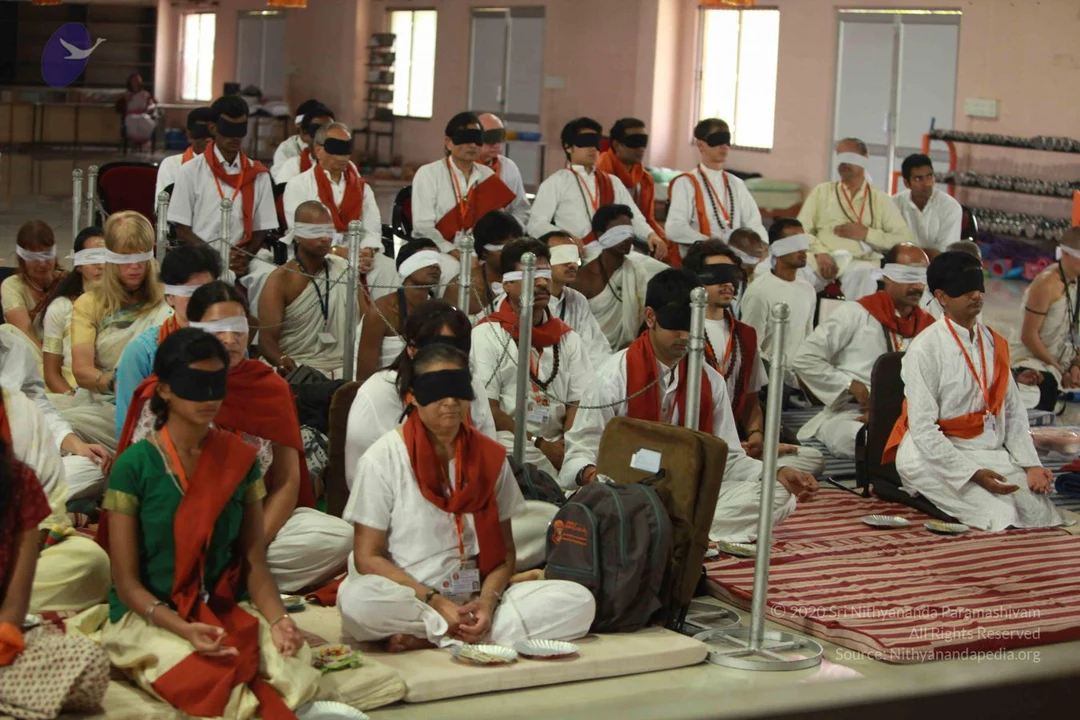
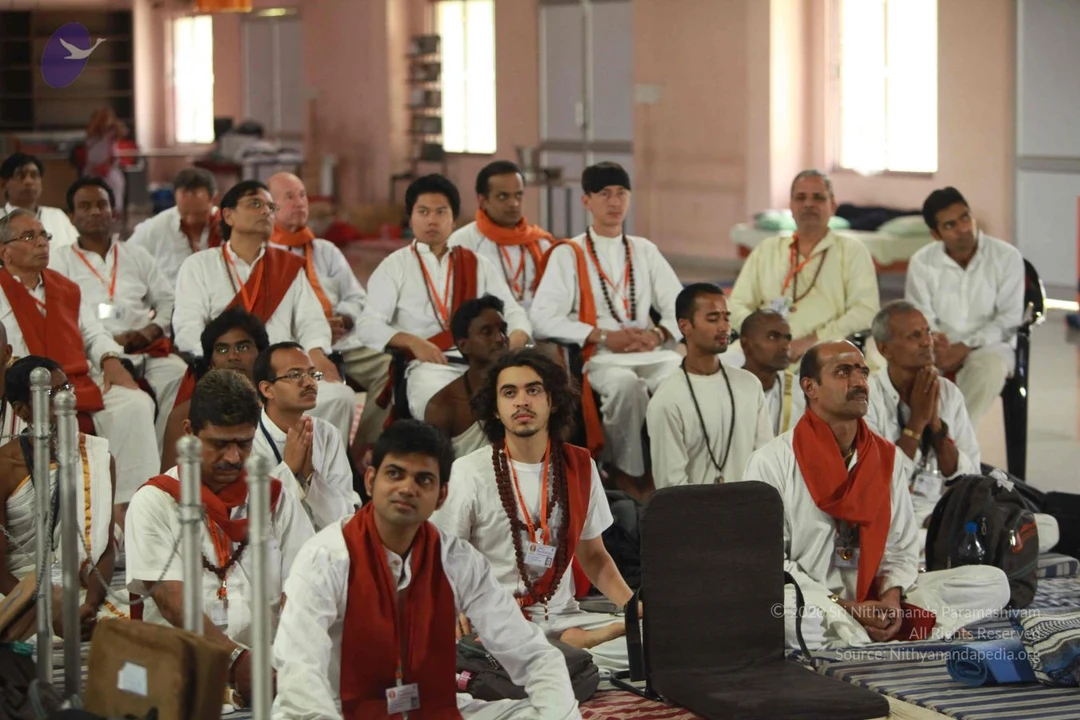
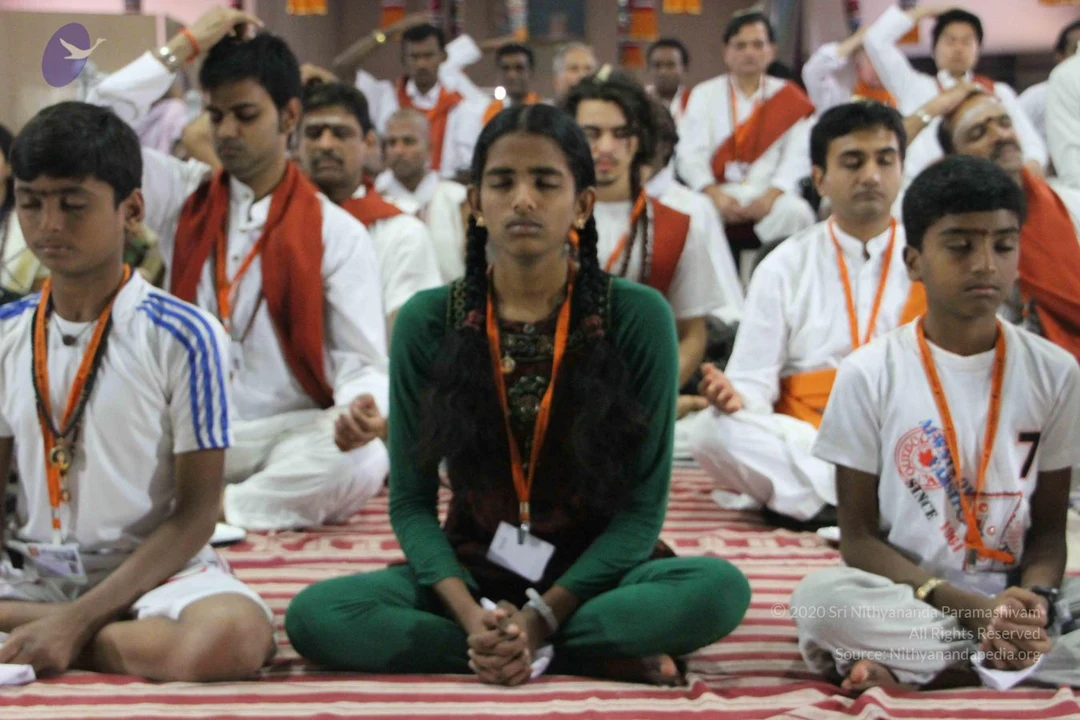
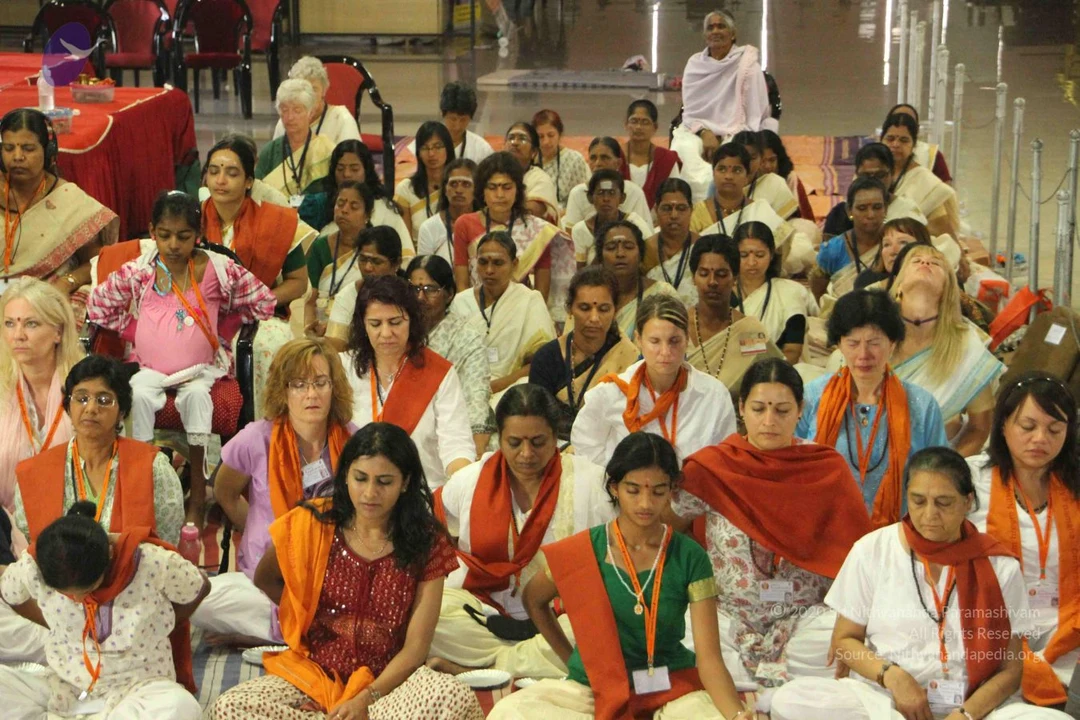
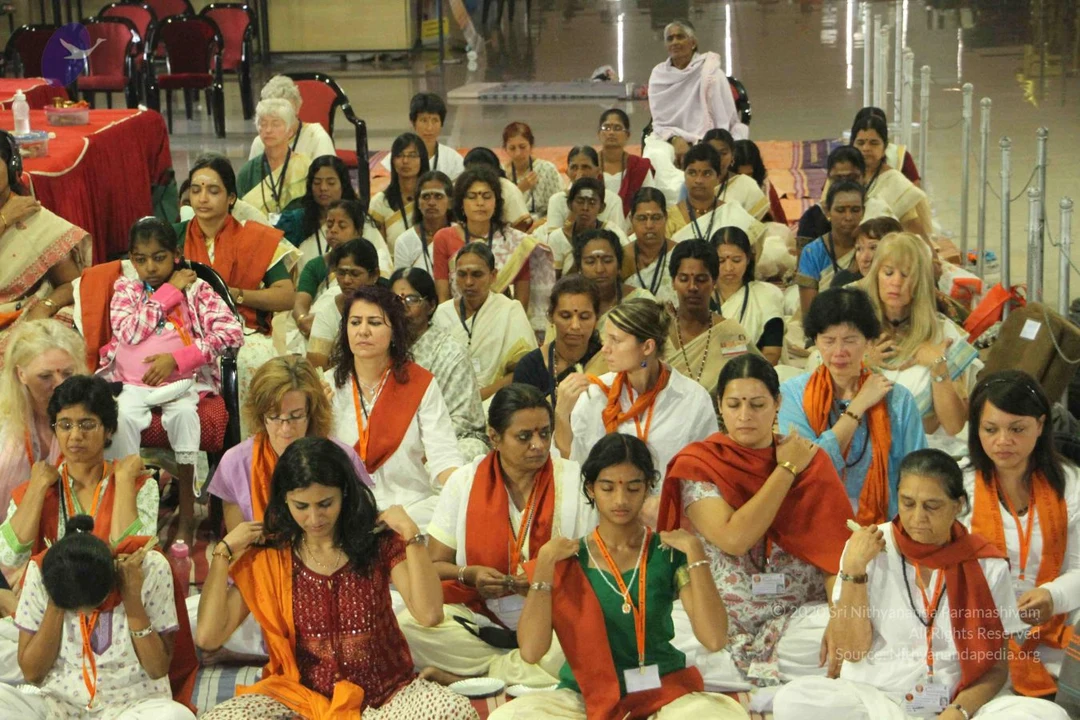
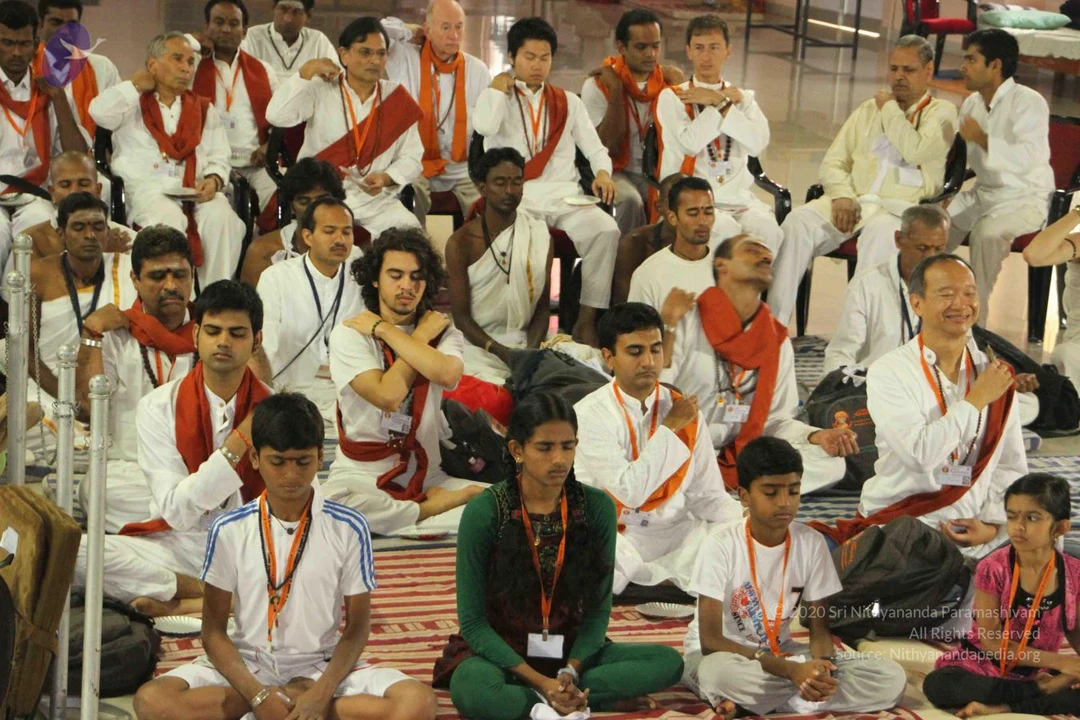
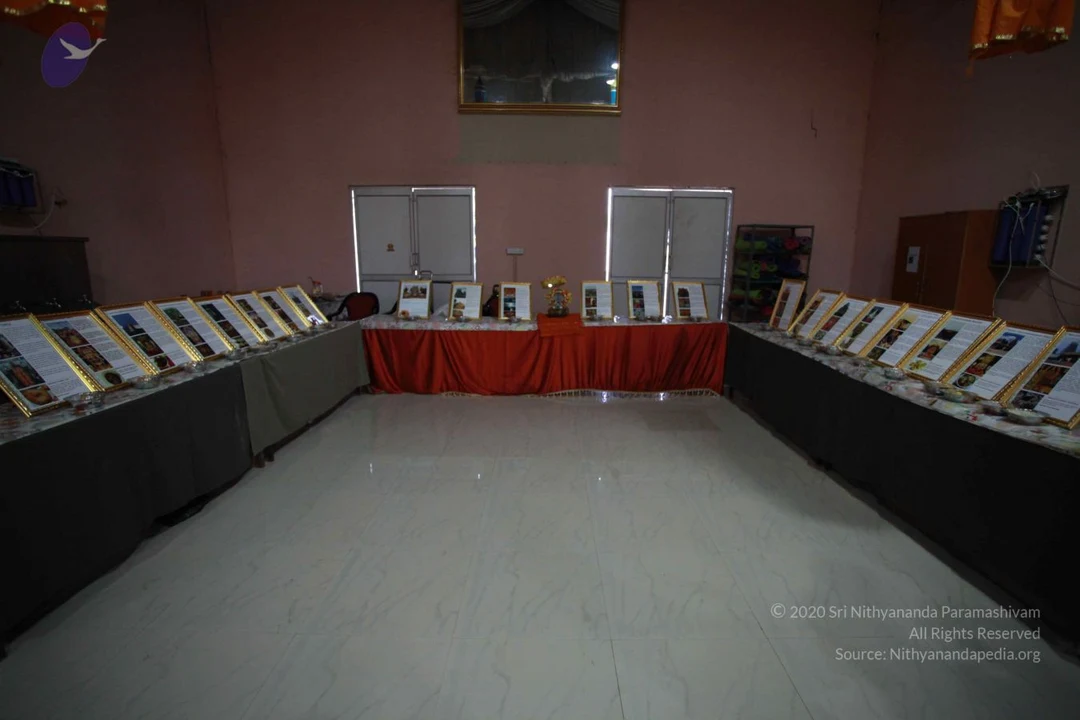
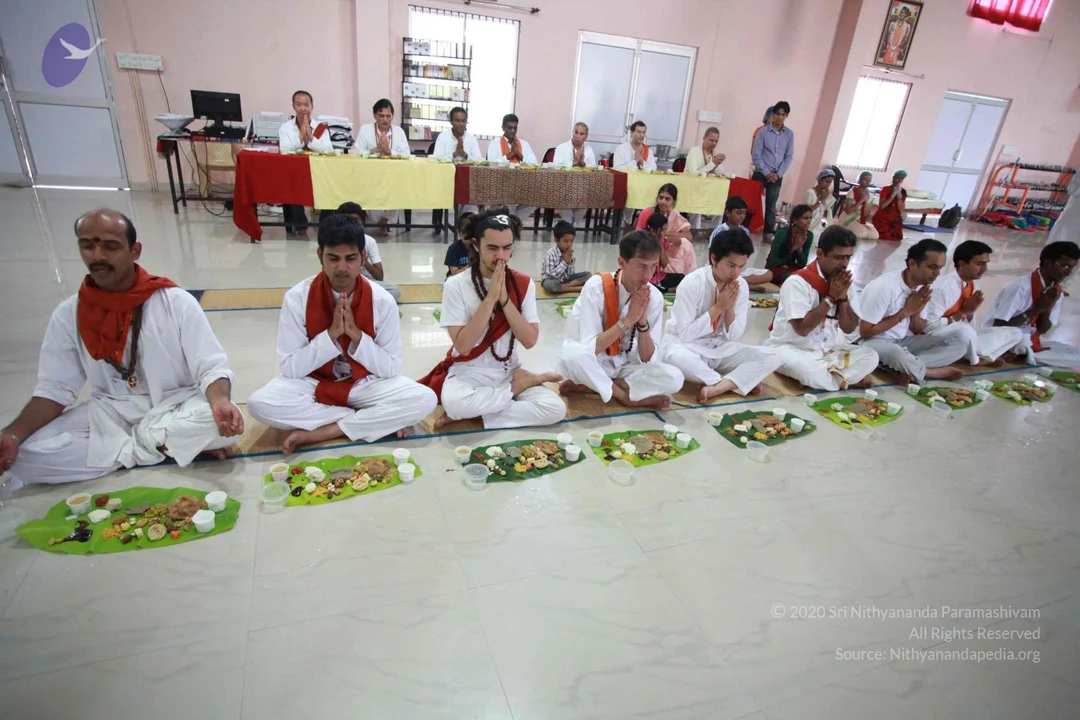
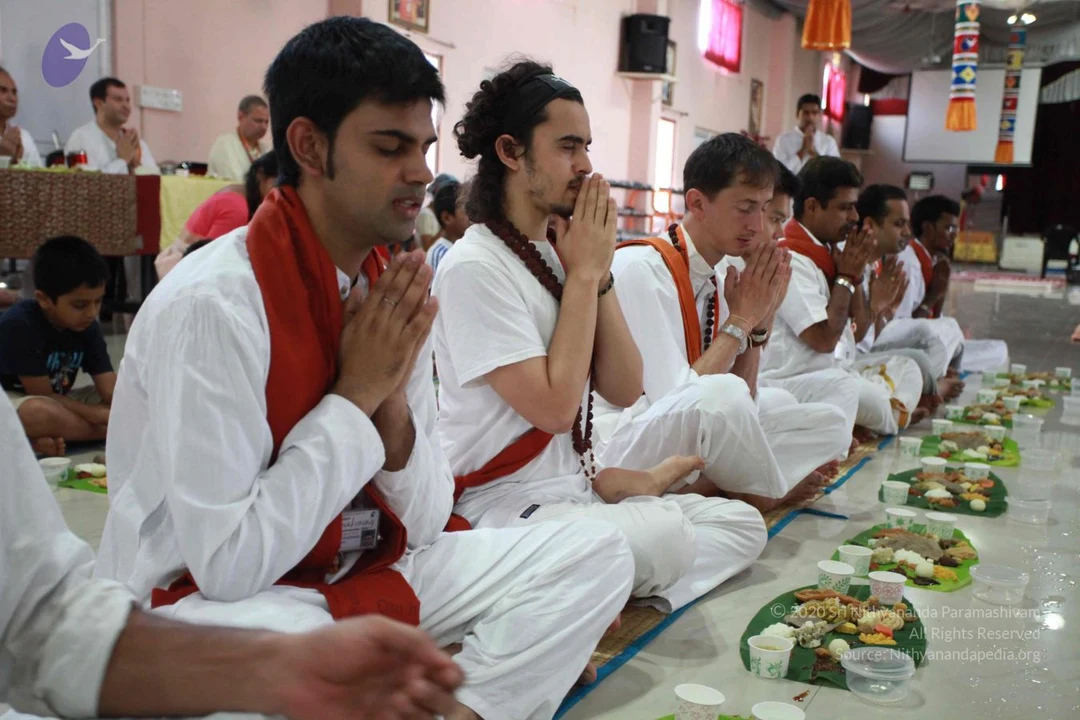
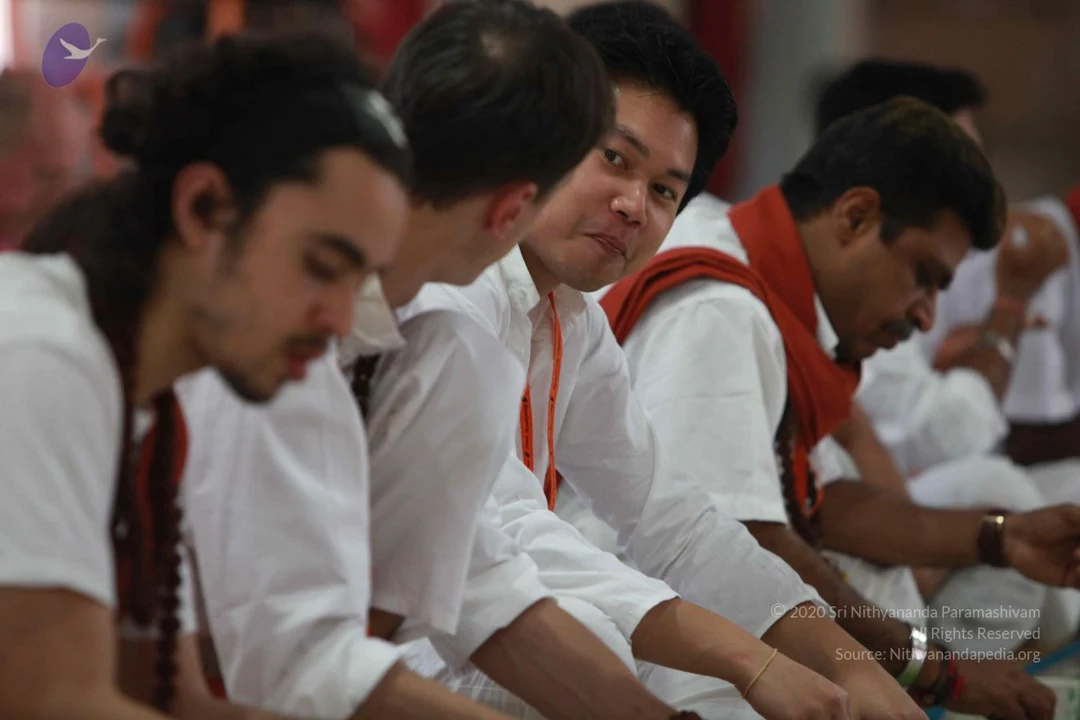
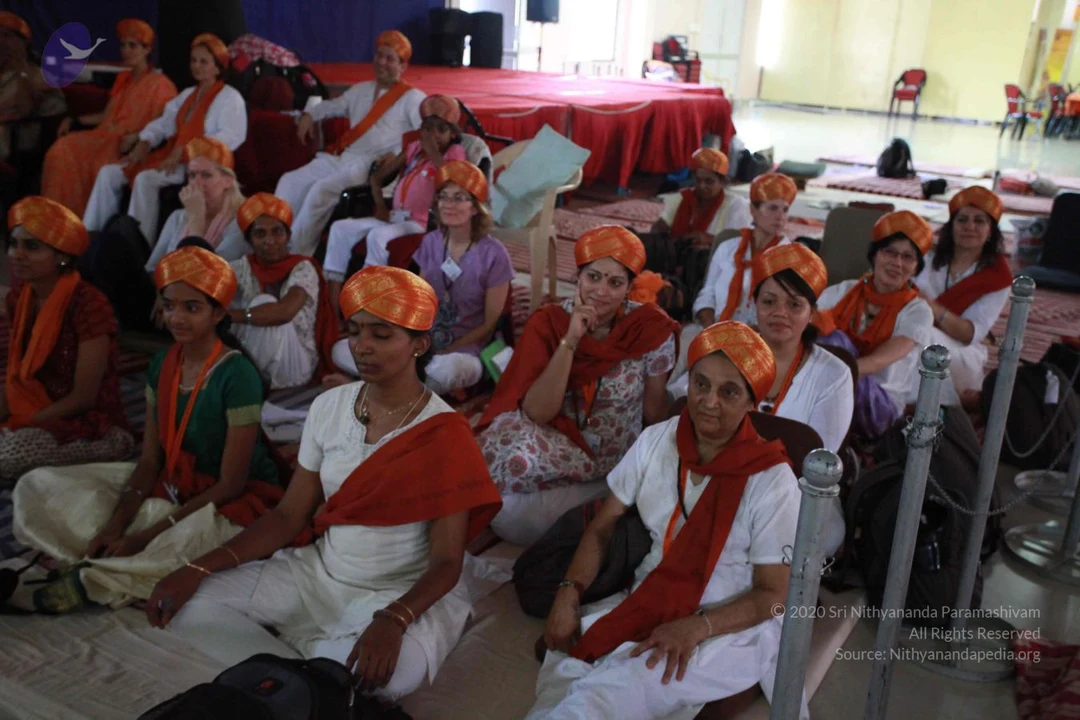
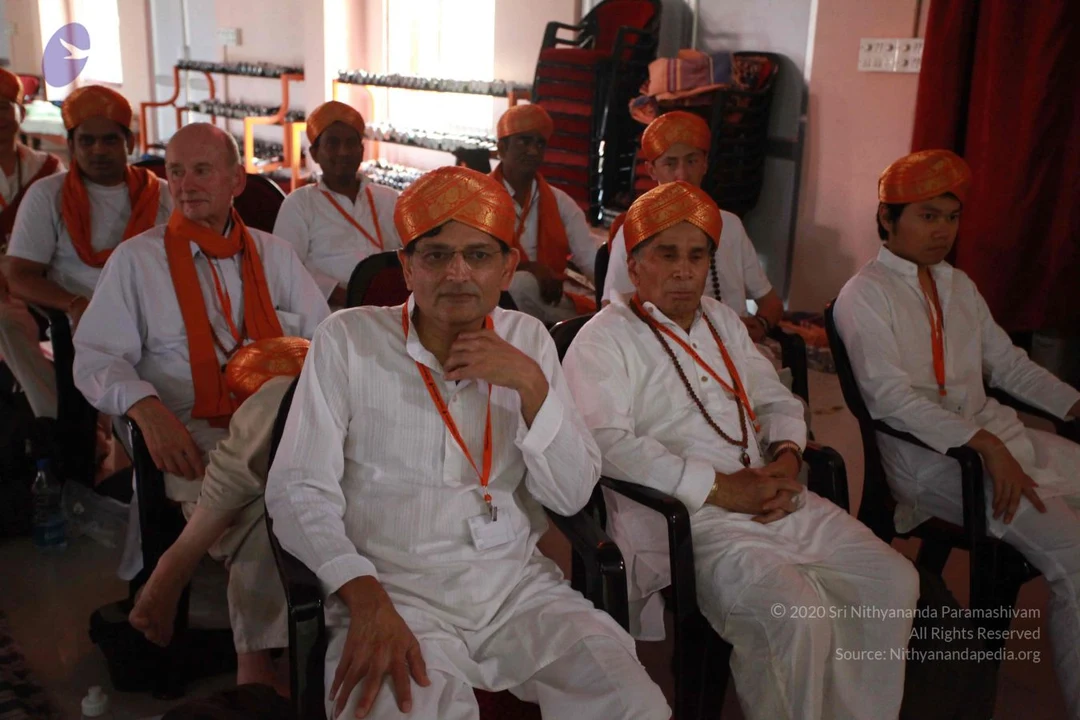
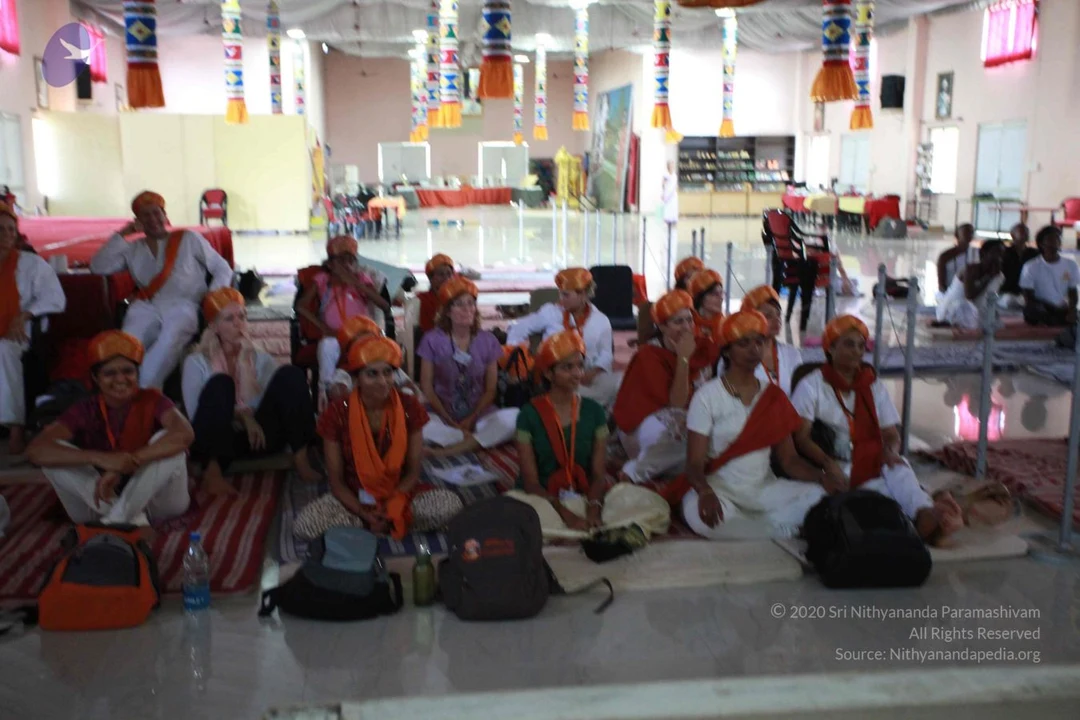
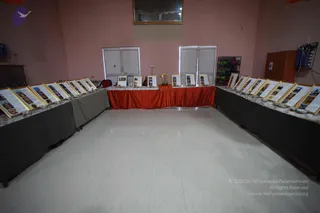
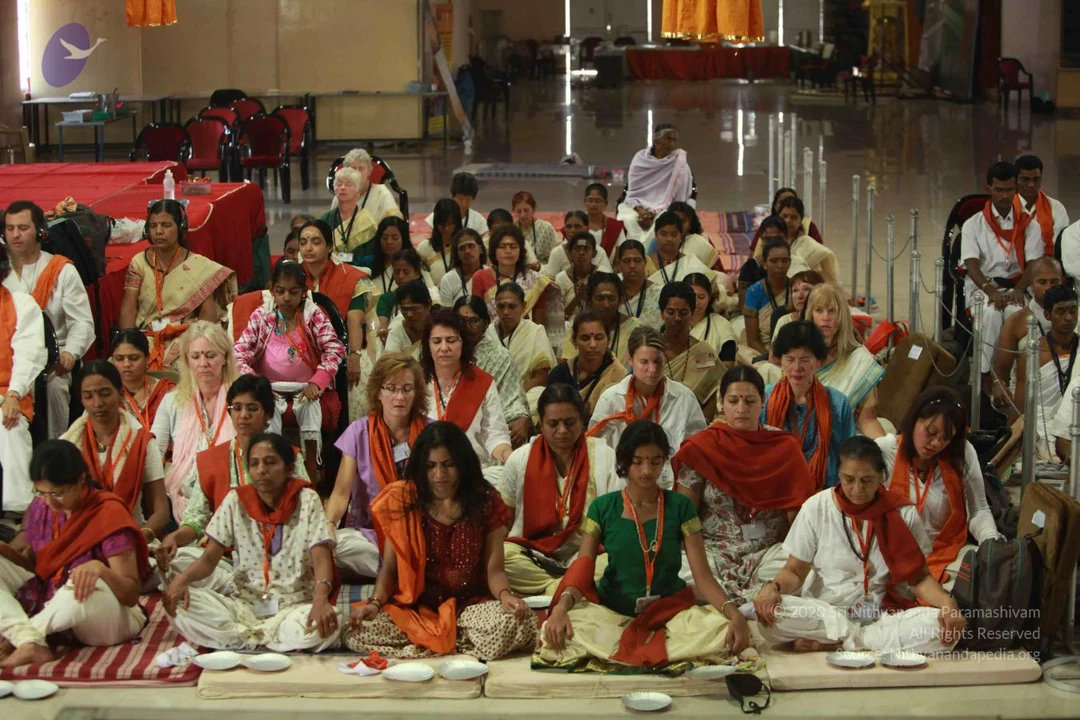
A photograph of a seated congregation at an indoor ashram or temple hall, with many men in white shirts and white dhotis-style clothing, wearing orange or red shawls and rudraksha malas. Several people stand or sit with hands pressed to their chests in prayer, eyes closed. Steel railings separate the foreground from the group. Pale pink walls and tall windows are visible behind them. A man in front wears a red shawl, white shirt, rudraksha mala and tilak, holding incense sticks. a person is not visibly present in this frame.Empty hall with pink walls and a polished white marble floor, viewed from one end. Along the left and right sides, black-draped tables hold rows of framed photographs with gold frames and printed text panels, each set on a small plate or dish. A central table with a red cloth holds more framed pictures and a small brass or gold ornament. Windows and a wall mirror are visible, with orange cloth hangings at the top corners. No people are present.A seated audience in a bright hall with pink walls and tall windows, attending a session. Many men wear white kurtas with orange and red shawls or stoles and beaded rudraksha malas with orange lanyards and name badges. A young man in a blue-and-white striped tracksuit top and a young girl in a green top with a braid sit in the front row. A bald older man in a yellow garment stands at the right, hands together in a gesture of reverence. Metal railings and chains are visible in the foreground, and a brown bag rests at lower left.

October 27 2012

Original wiki page

Photos from this day

View all 166 photos

Paduka_Pooja

16 photosSource gallery
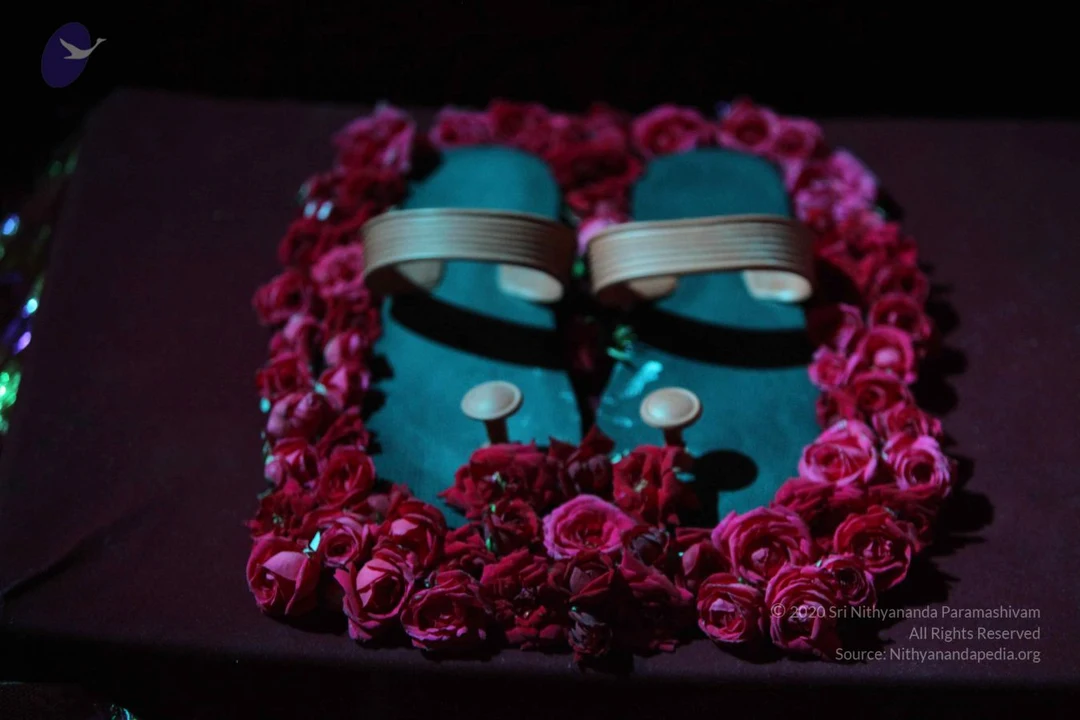
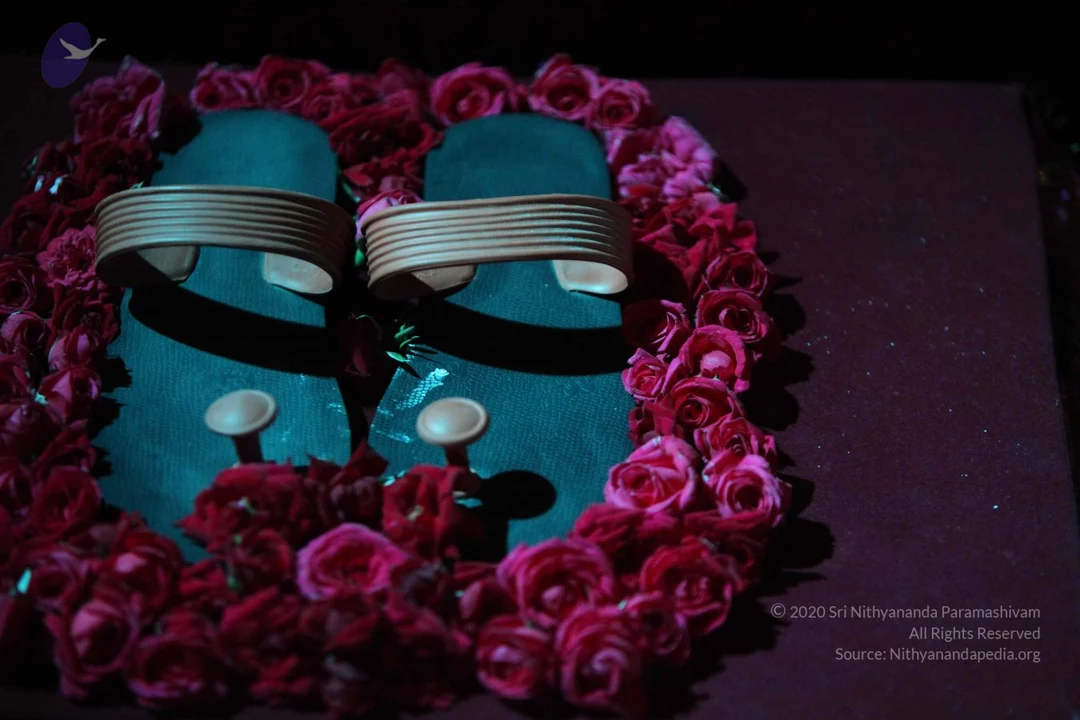
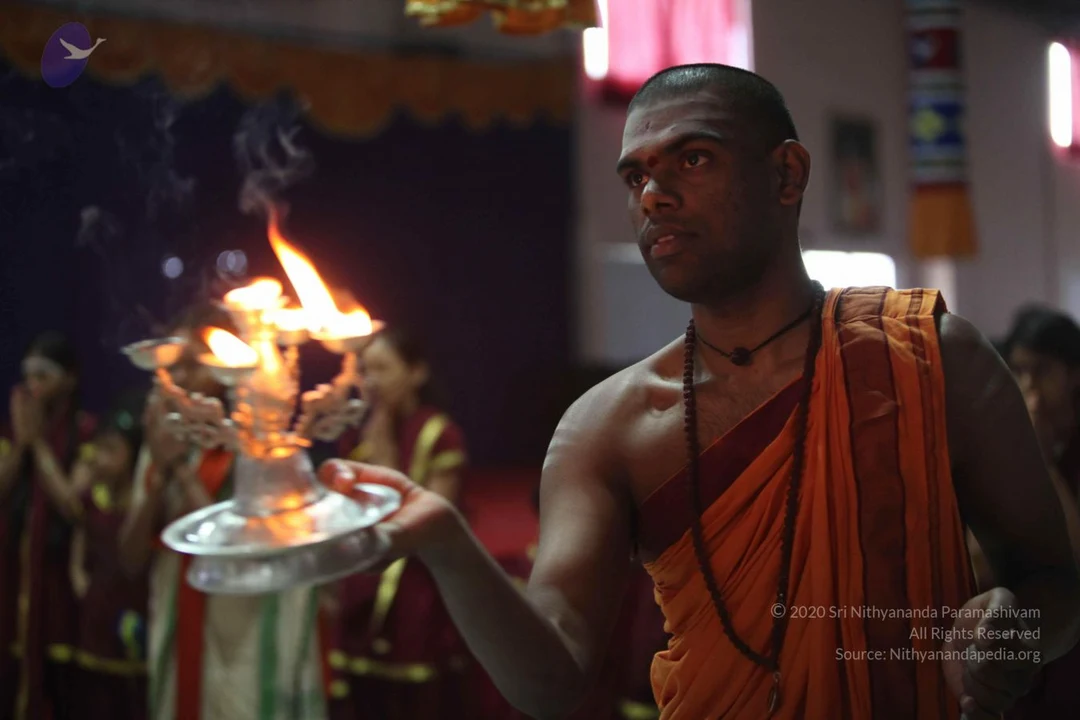
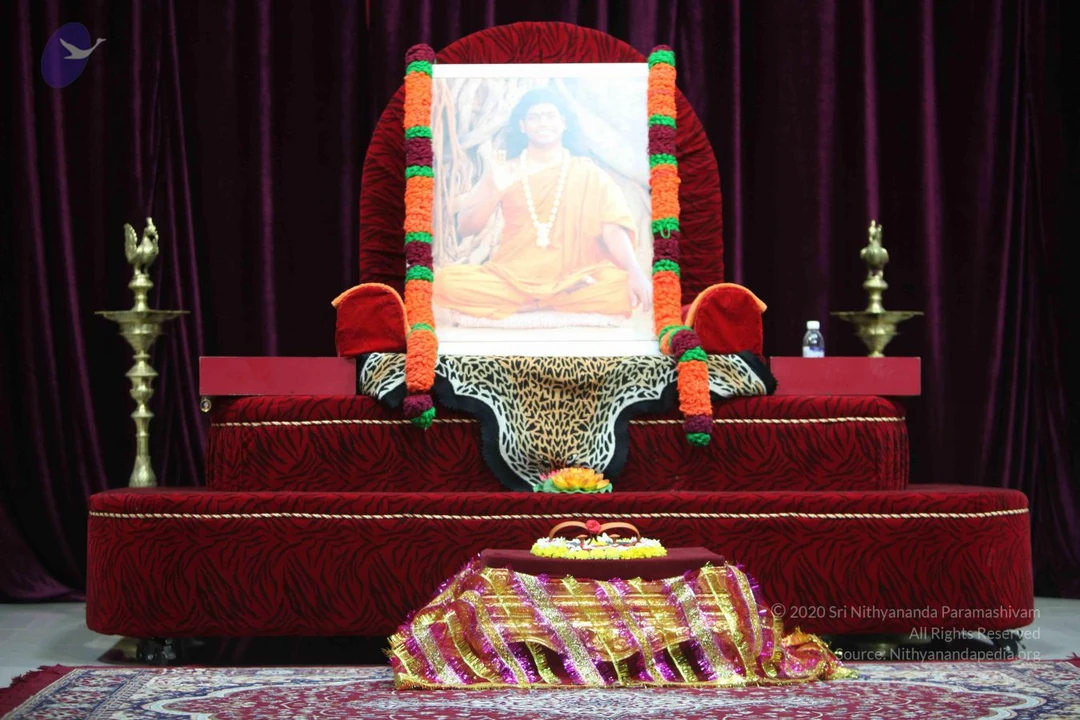
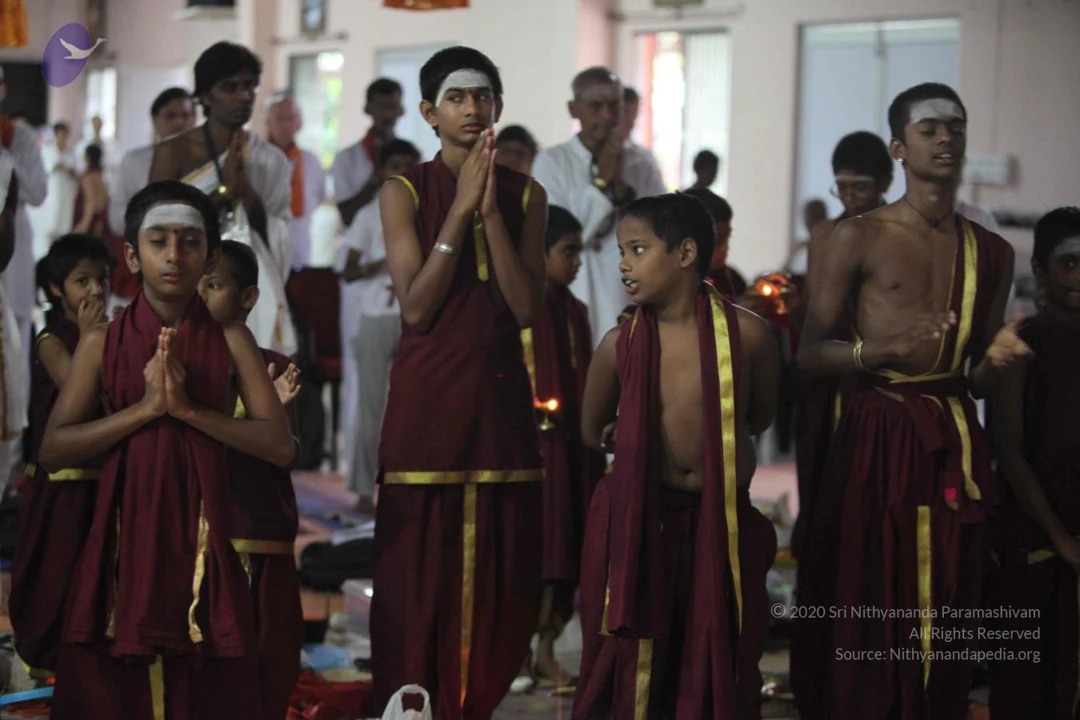
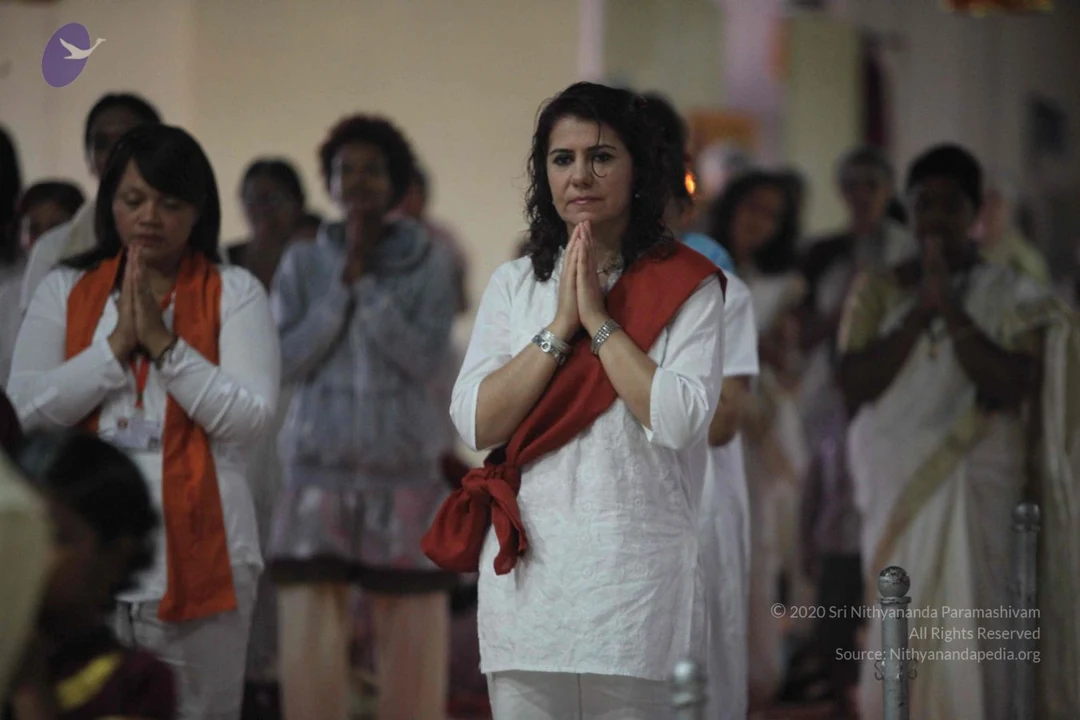
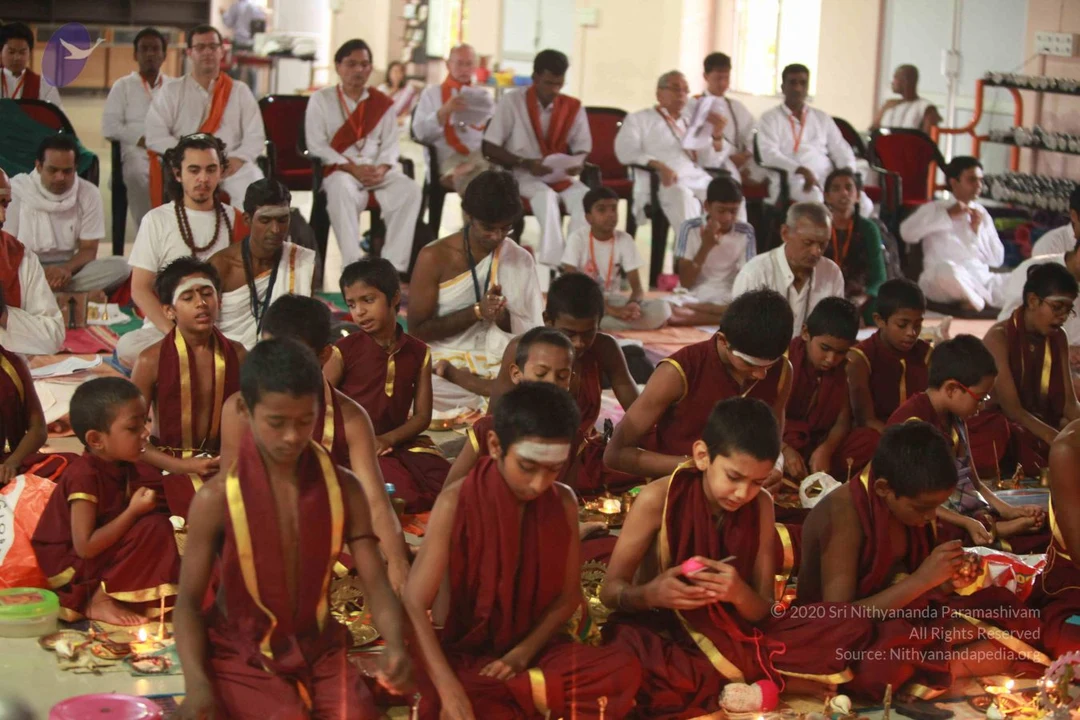
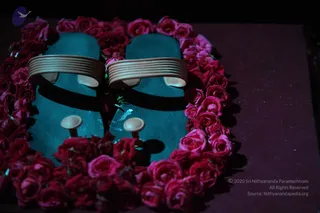
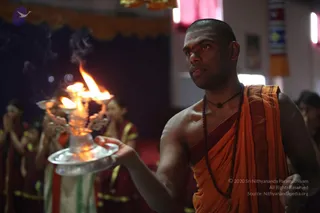
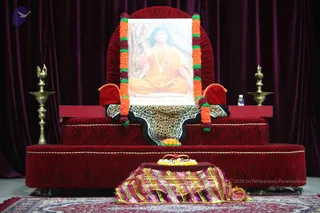
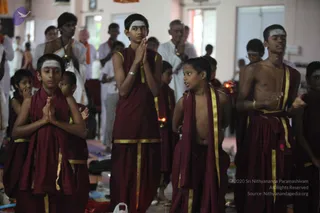
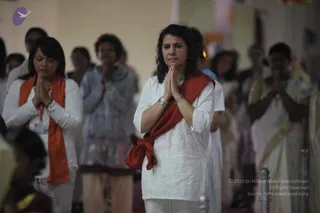
A pair of teal-coloured wooden padukas, sandal-style footwear with light brown cross straps and wooden pegs, sits on a dark maroon cloth. The padukas are encircled by a square border of pink and red roses, with a dim, dark setting around them. No people are visible. This appears to be a padukas display for padapuja, shown as a ritual offering arranged with flowers.A photograph of a pair of wooden padukas, sandals with raised pegs and multi-strap leather-like bands, set on a teal cloth and encircled by a heart-shaped wreath of pink and red roses. The dark background and a plum-coloured surface frame the offering in a dim, intimate setting. This appears to be a paduka pooja arrangement, with no people visible.A shaved-headed man in saffron-orange dhoti and shawl, bare-shouldered with a rudraksha mala and a dark cord necklace, holds a silver aarti plate bearing lit oil lamps in both hands. Smoke rises from the flames. Behind him, several people in maroon and gold-bordered garments stand with hands folded in prayer, and a red and gold backdrop hangs in the hall. The scene reads as an aarti during a puja. The aarti bearer shows no distinctive a person cues such as long hair or crown, so no identification is made.A ceremonial stage set for a padapuja-style honour, with an empty red velvet throne-like seat dominating the frame. Above the seat hangs a large printed portrait of a saffron-robed man seated cross-legged before a tree trunk, wearing a white beaded mala and raising one hand, framed by garlands of orange marigolds with green and maroon accents. Below the portrait a leopard-print cloth drapes the seat, with a small floral arrangement and a bottle of water beside. Two tall brass oil lamps stand on either side against deep purple curtains. In front, a red-cushioned platform holds a plate of flowers and a pair of sandals, and a pink and gold sequined cloth covers a low table. No people are visible.A photo of young boys in maroon dhoti-style garments with gold borders and maroon shawls, standing with palms pressed together in namaskar during a ritual in a hall. Several boys wear white vibhuti or tilak marks on their foreheads. Behind them, older men in white dhotis and saffron shawls stand with hands folded, and an oil lamp glows in the background. The setting appears to be a devotional gathering with padapuja-style reverence.A photograph of devotees standing in a hall during a devotional gathering, with palms pressed together in namaskar. In the foreground a woman in a white kurta with a red shawl tied at her waist stands with eyes lowered, hands folded at her chest and wristwatch visible. To her left another woman in a white top and orange-red scarf, with a name badge, also holds her palms together. Behind them several blurred figures in white and grey clothing, including a man in a cream dhoti with gold border on the right, stand in similar prayer posture. A small warm light glows in the background.

Swamiji session
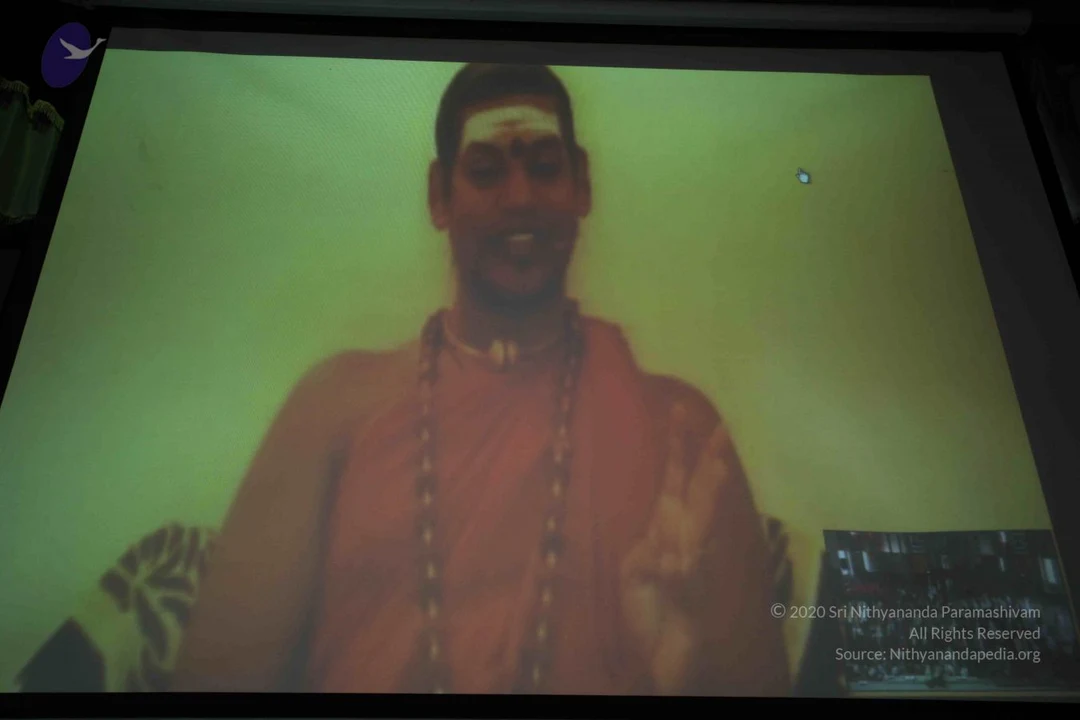
47 photosSource gallery
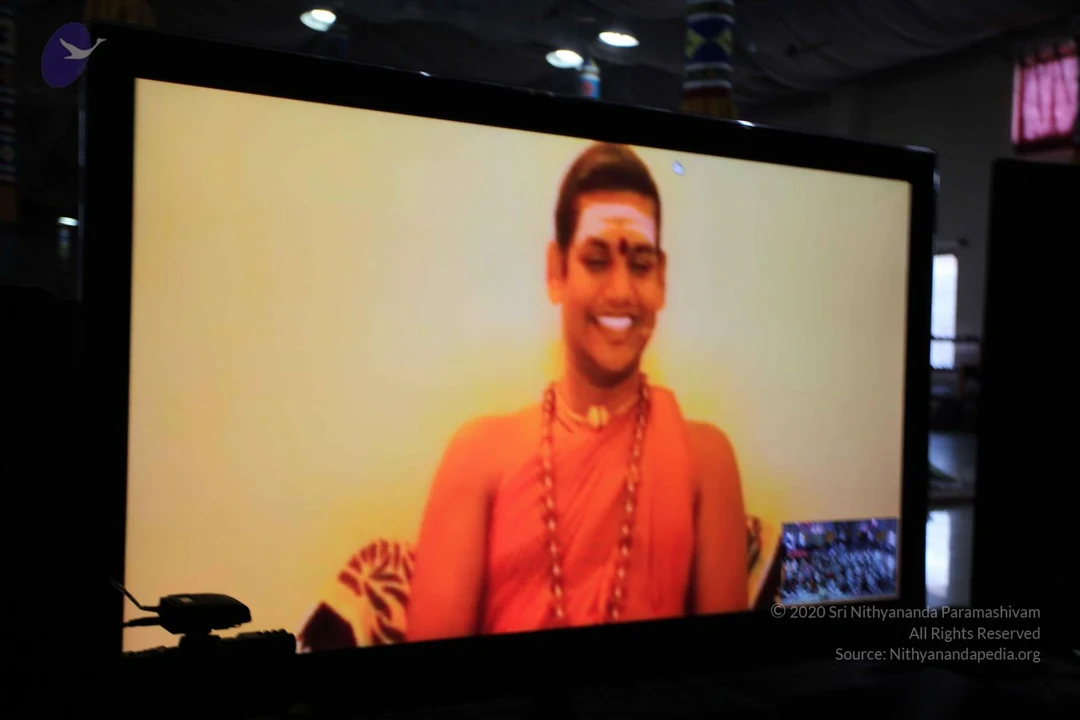
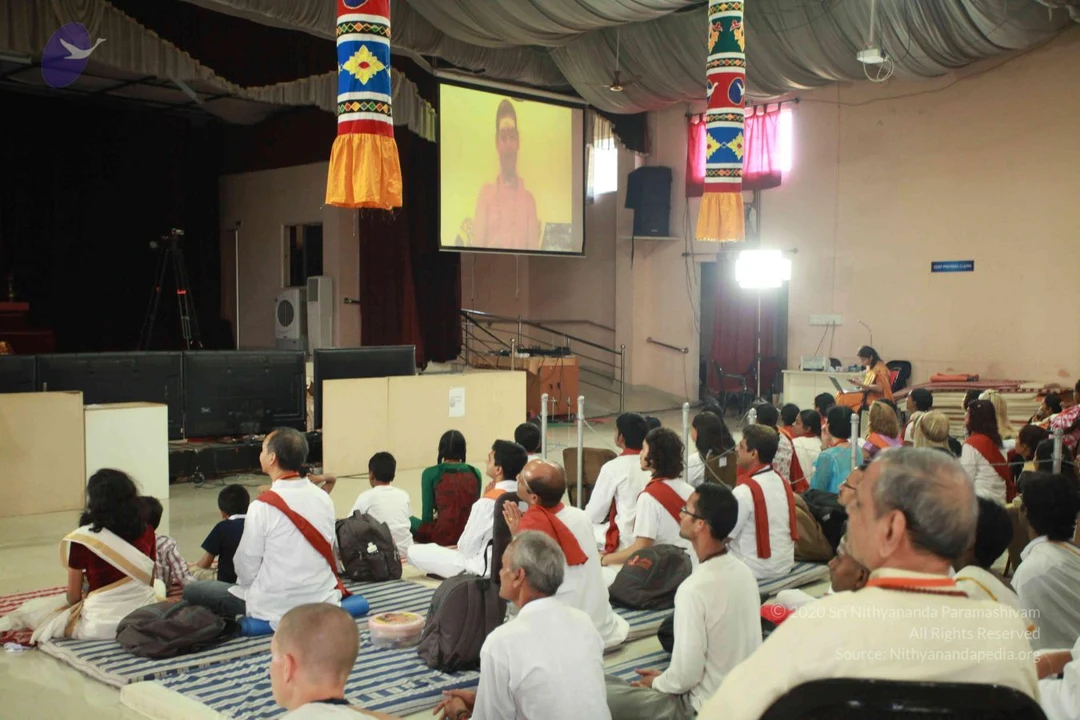
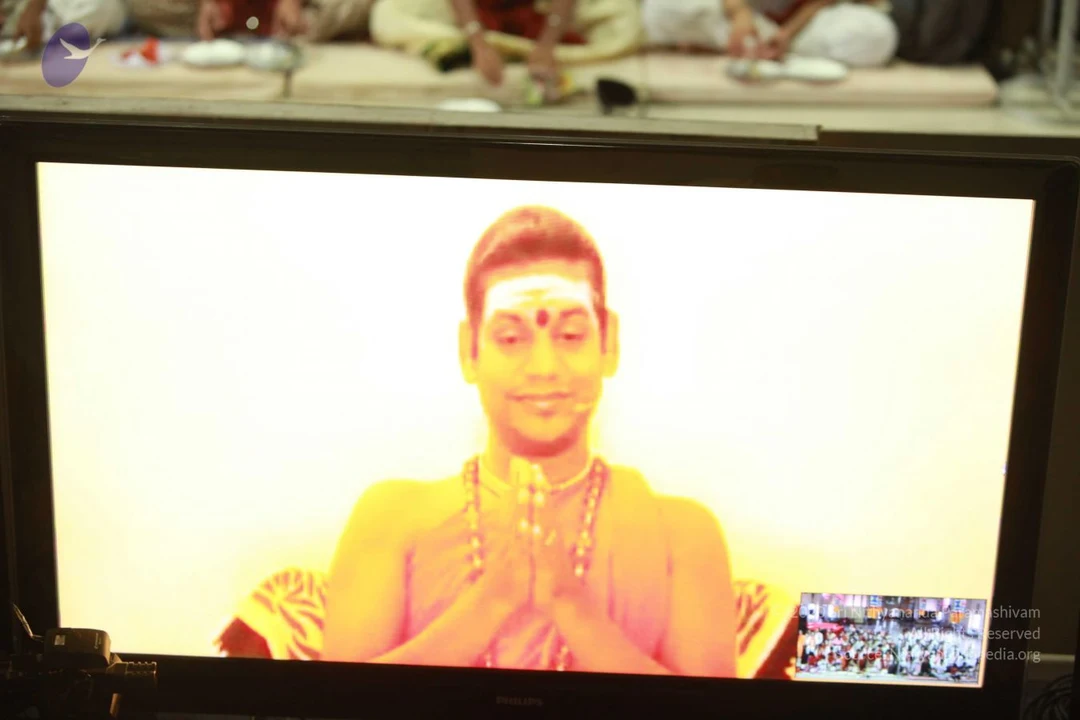
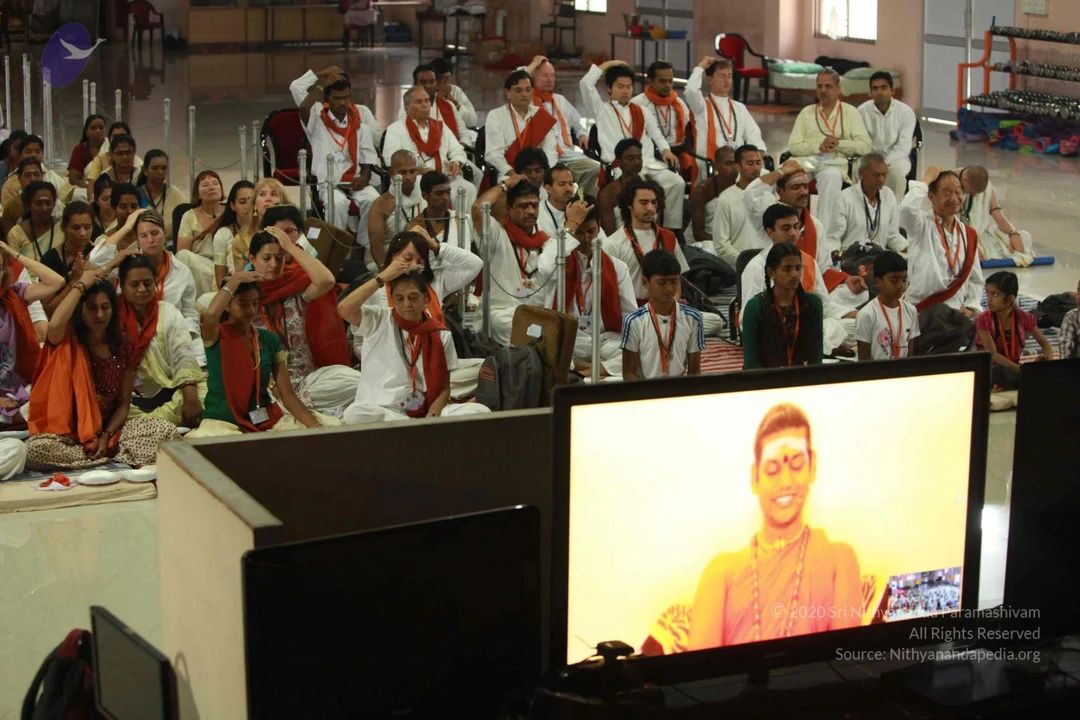
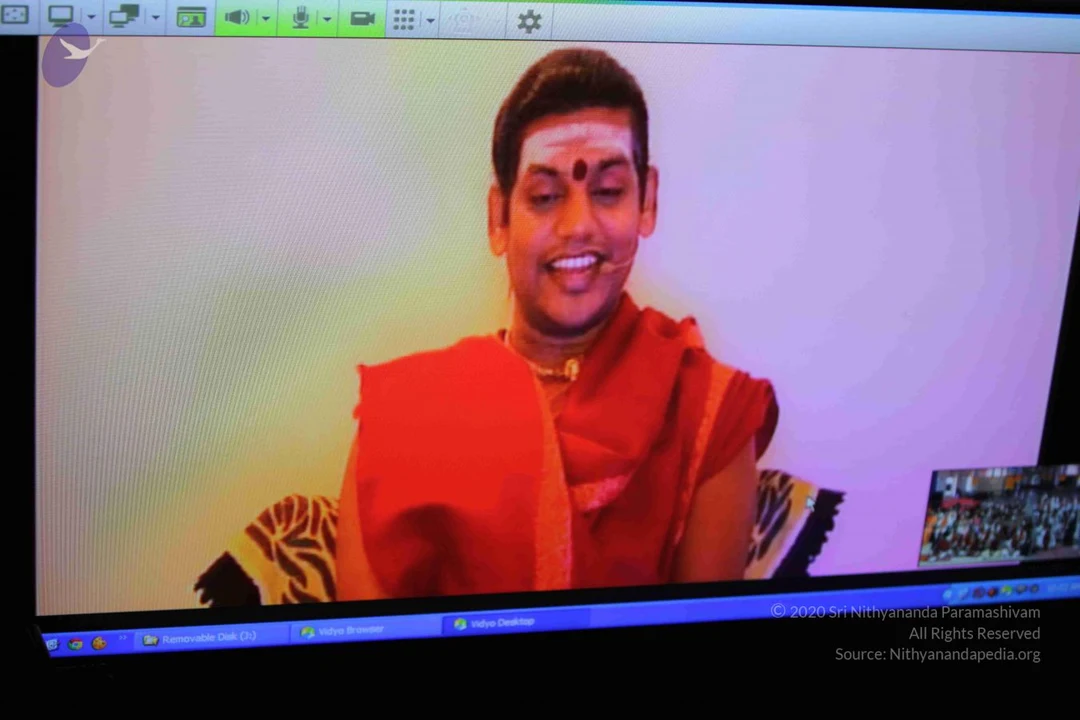
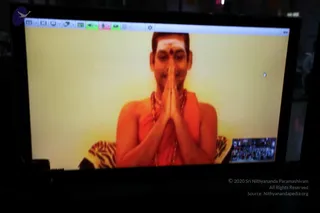
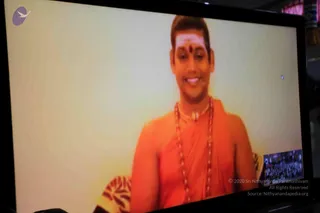
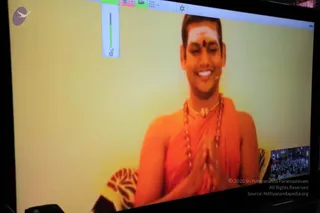
A photograph of a flat-screen monitor showing a video conference window. On screen, a man with a red bindi and tilak on his forehead sits with palms pressed together in namaste against a yellow wall, wearing an orange-saffron garment with rudraksha malas around his neck and a striped cushion behind him. A small inset thumbnail in the lower right shows a seated audience. The monitor sits in a dim room with a blurred figure at the right edge. The image depicts a screen, not a physical person in the room.A photograph of a flat-screen monitor showing a video feed of a smiling man in an orange saffron robe with a white and red tilak on his forehead and multiple rudraksha malas around his neck. A small inset in the lower corner of the screen shows a crowd. The monitor sits in a room with a colourful wall at the edge of the frame.A photograph of a computer monitor showing a video call window. On screen, a smiling man with a white and red forehead marking and a red bindi, wearing saffron-orange robes, a rudraksha mala and a white ceremonial necklace, presses his palms together in greeting against a warm yellow backdrop. A small inset at lower right shows a seated audience. The on-screen figure appears to be a person, based on the saffron robes, rudraksha mala and ornate necklace, though this is a depiction on a screen and the appearance is not fully certain. The on-screen image is not a physical person in the room, and a small pale patterned cushion is visible at the lower left.A photograph of a wall-mounted flat-screen monitor in a dim room showing a video call window. On the screen, a smiling man with a white and red forehead mark and a red bindi stands with palms pressed together in namaste. He wears an orange-saffron garment and multiple red-brown rudraksha malas around his neck. A small inset in the lower right shows a seated audience. A camera sits on the monitor's stand at lower left, and a video call toolbar runs along the top of the screen.A flat-screen monitor in a dark room shows a video call window with a toolbar of icons across the top. On the screen, a man in saffron-orange robes with a bare chest and a rudraksha mala necklace sits with palms pressed together in namaste, eyes closed, and a sandalwood or vibhuti mark on his forehead. A small inset thumbnail in the lower right shows a seated crowd.A flat-screen monitor displays a video feed of a smiling man with a shaved head and a white tilak mark on his forehead, wearing an orange-saffron robe and a long rudraksha mala with a pale ceremonial necklace. The screen shows a warm yellow background. A small webcam sits on the monitor base, and a blurred indoor hall with pillars and a pink curtain surrounds it. The shown figure is an orange-robed man on a screen, with the cues being the orange robe, rudraksha mala and tilak; appearance-based identification remains uncertain.

THE SamyamaParticipants

34 photosSource gallery
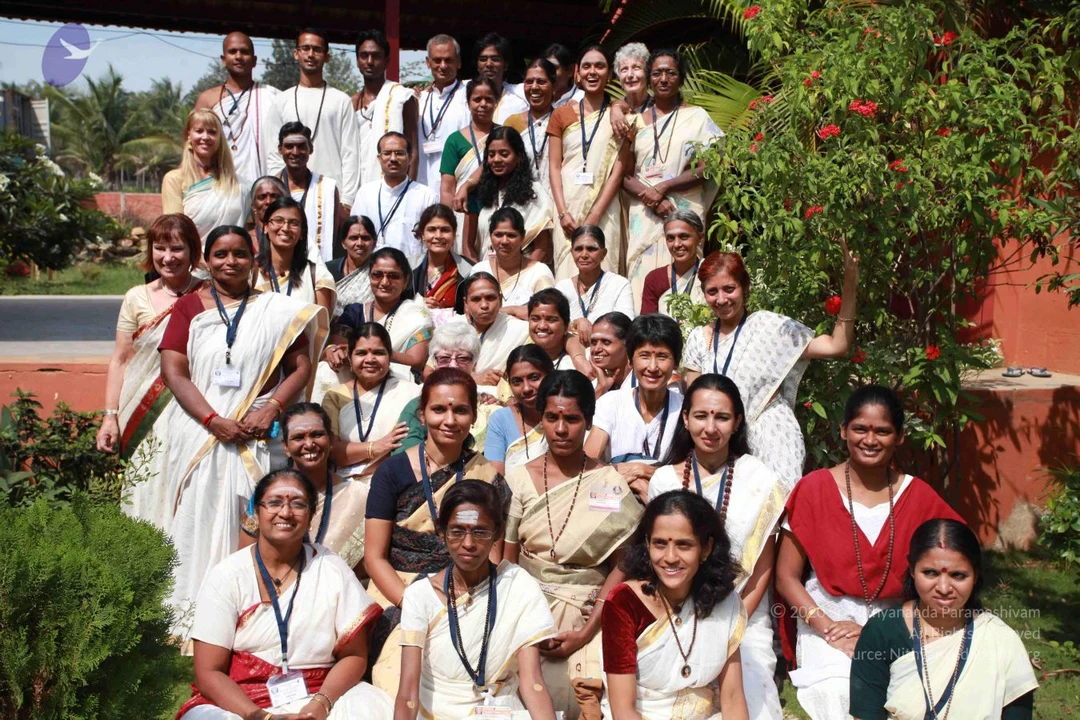
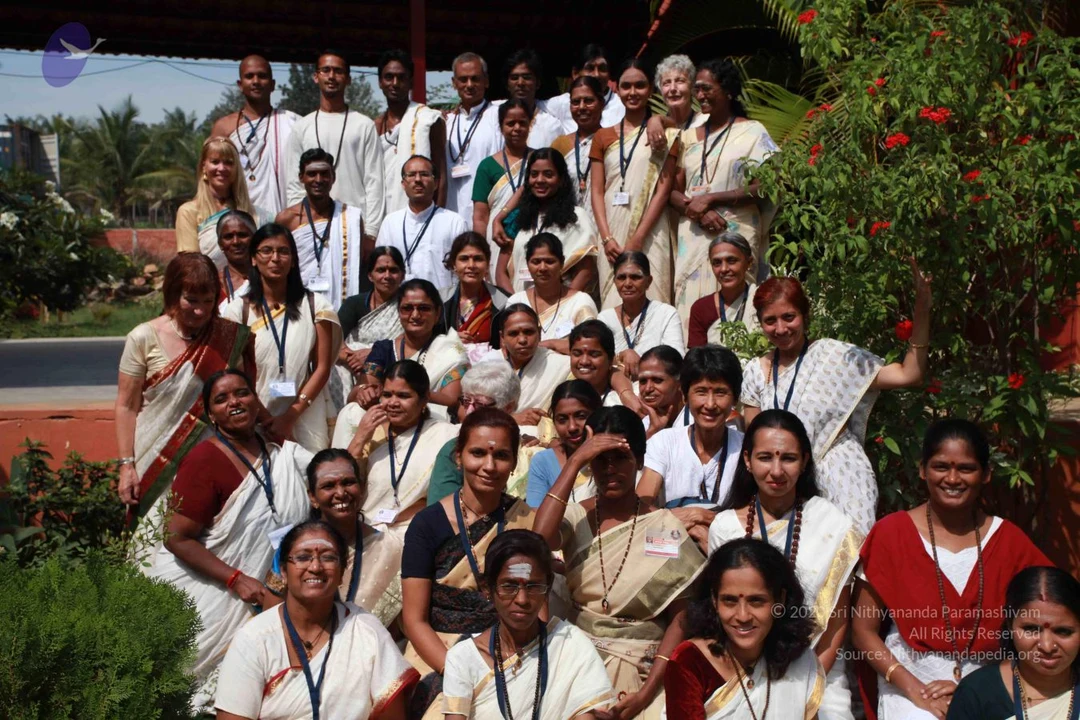
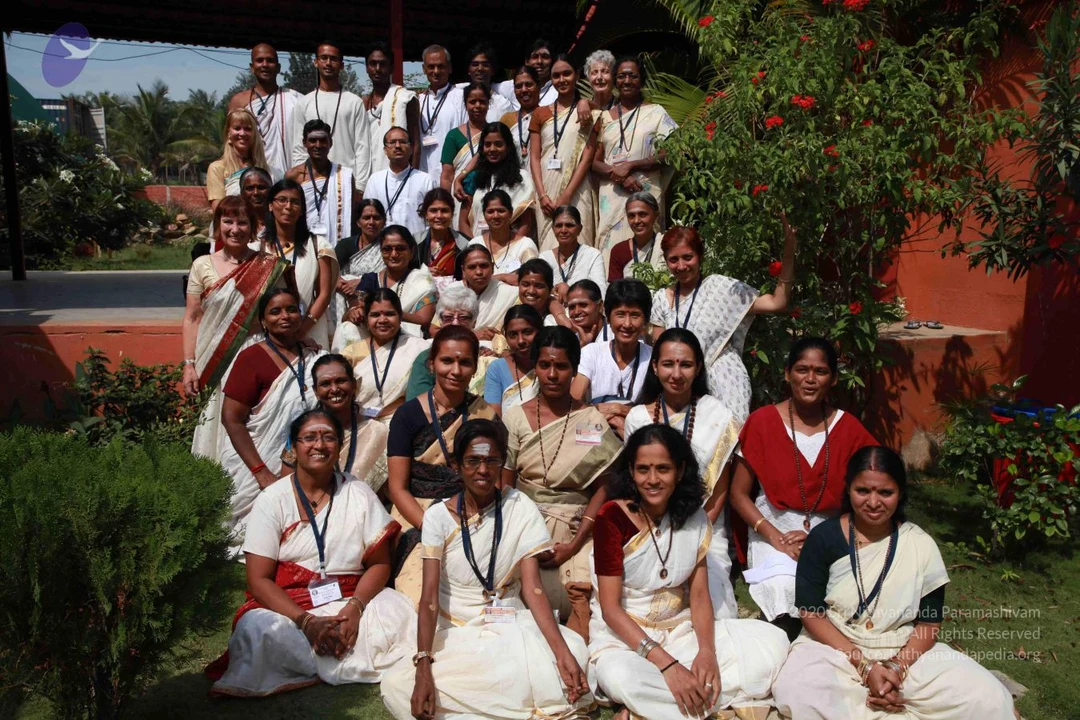
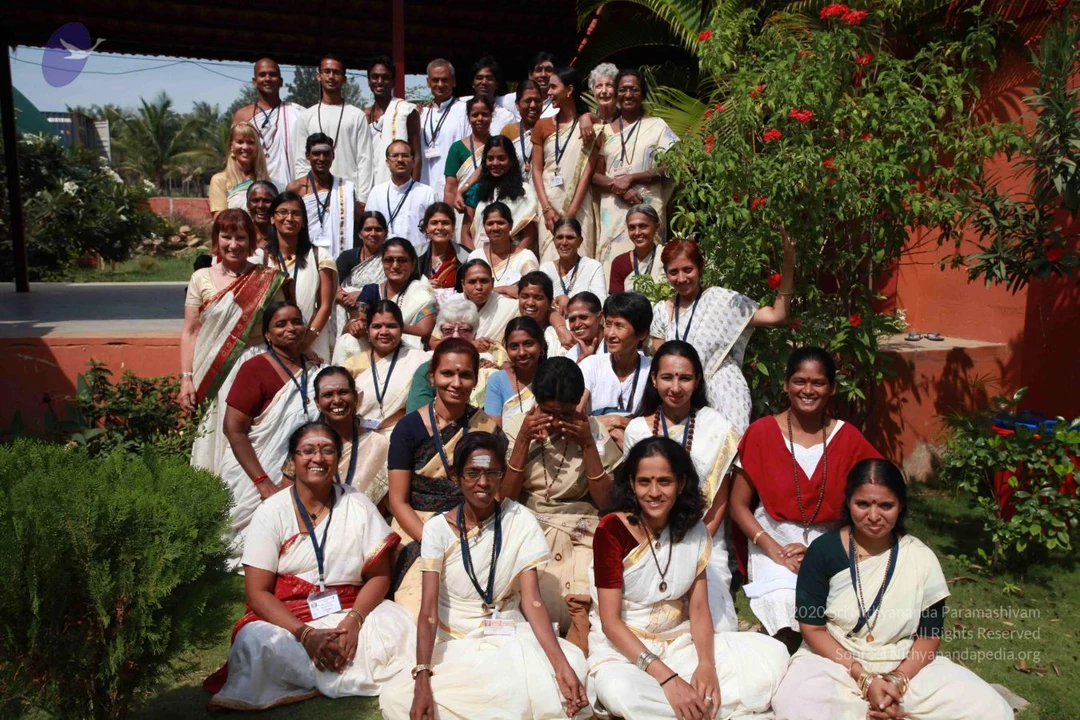
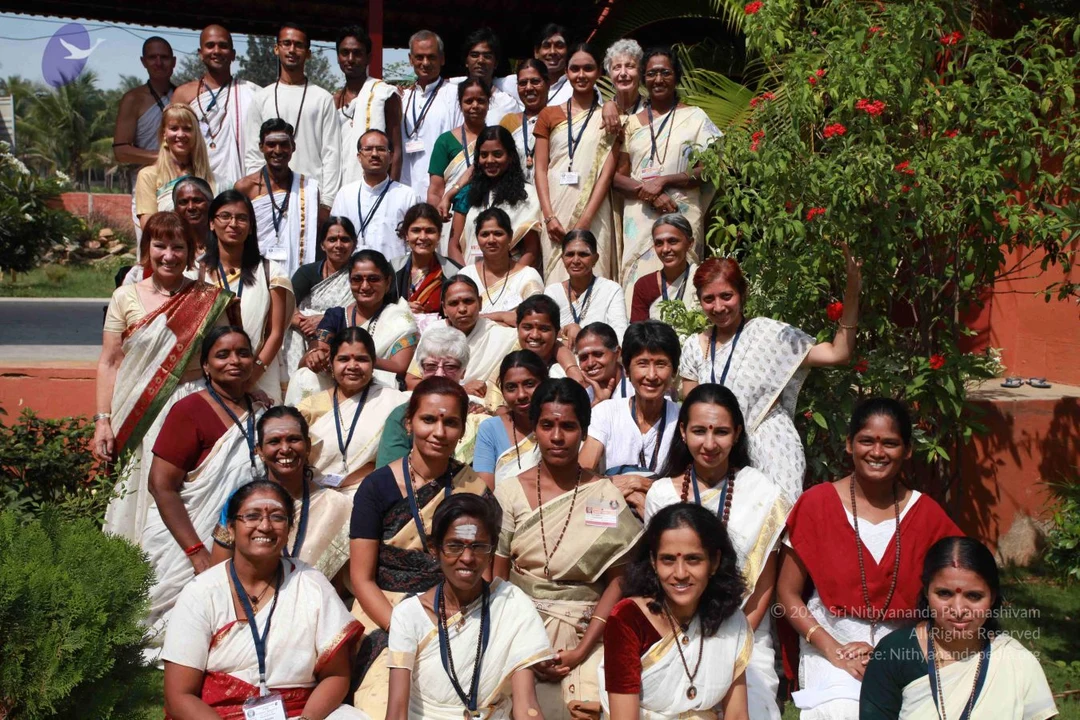
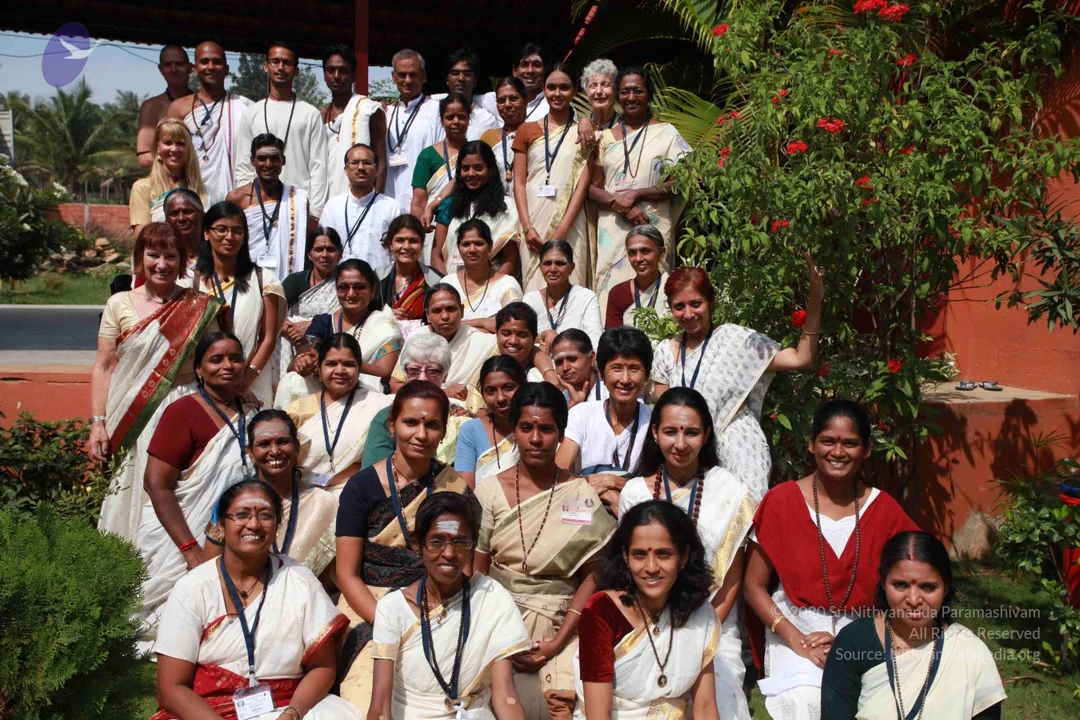
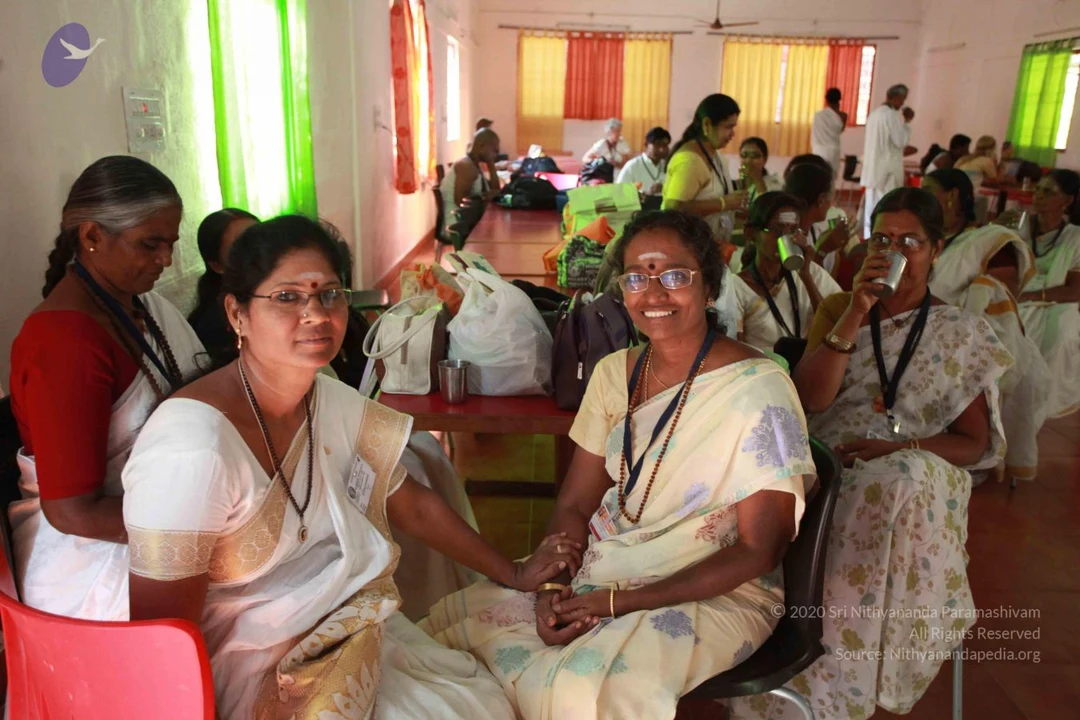
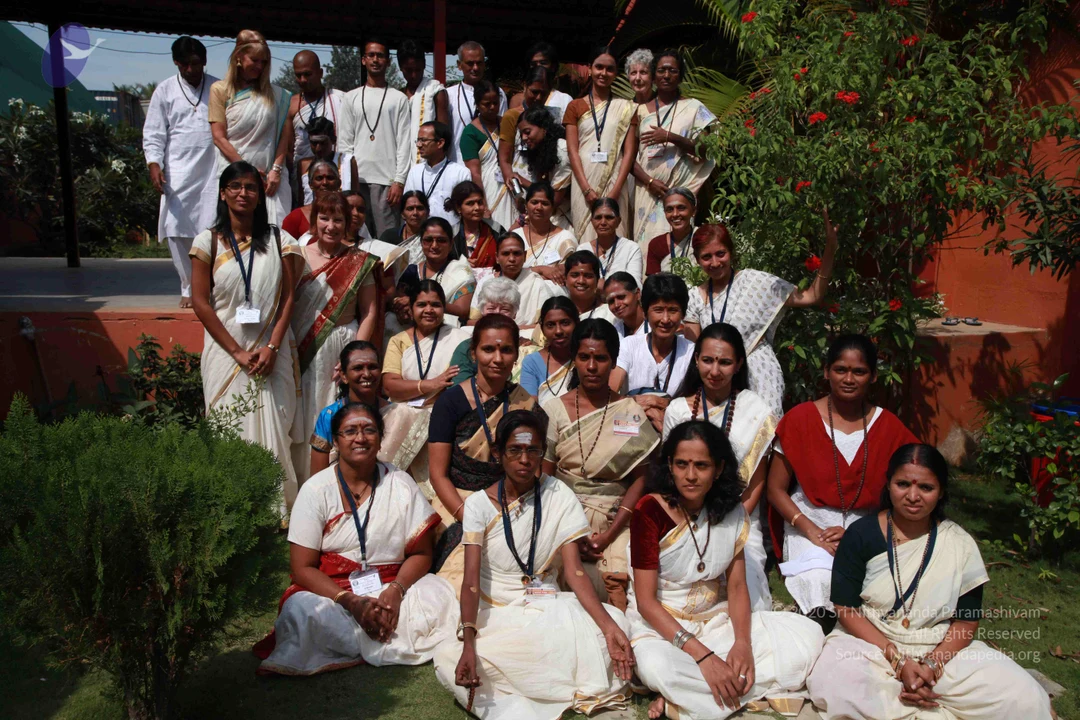
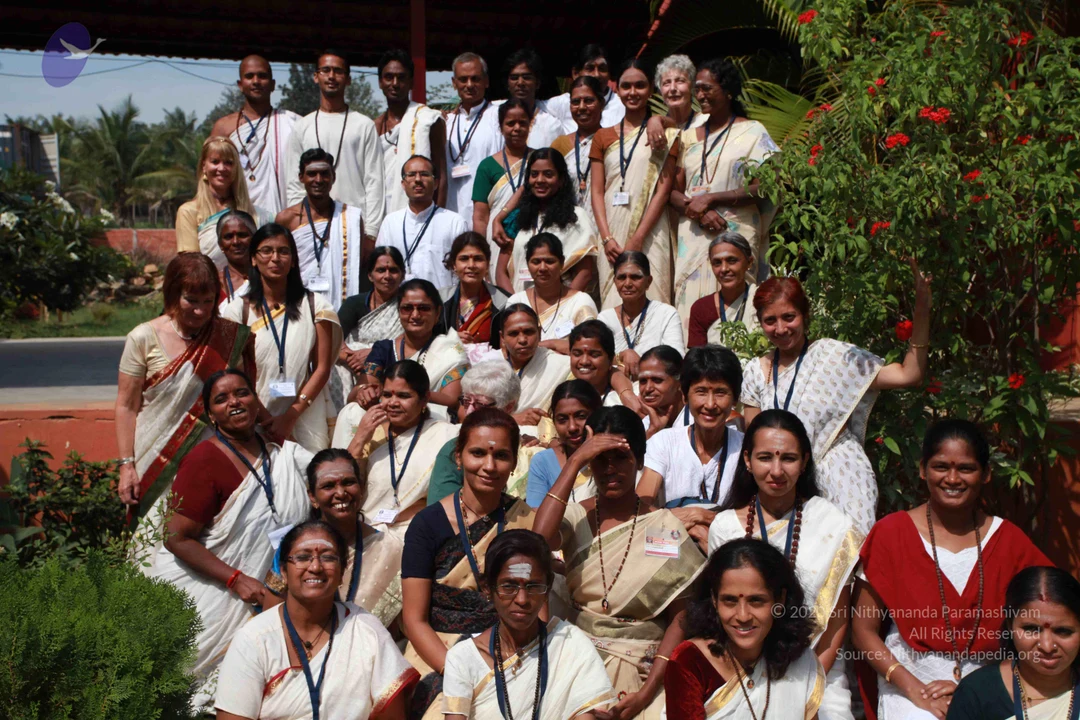
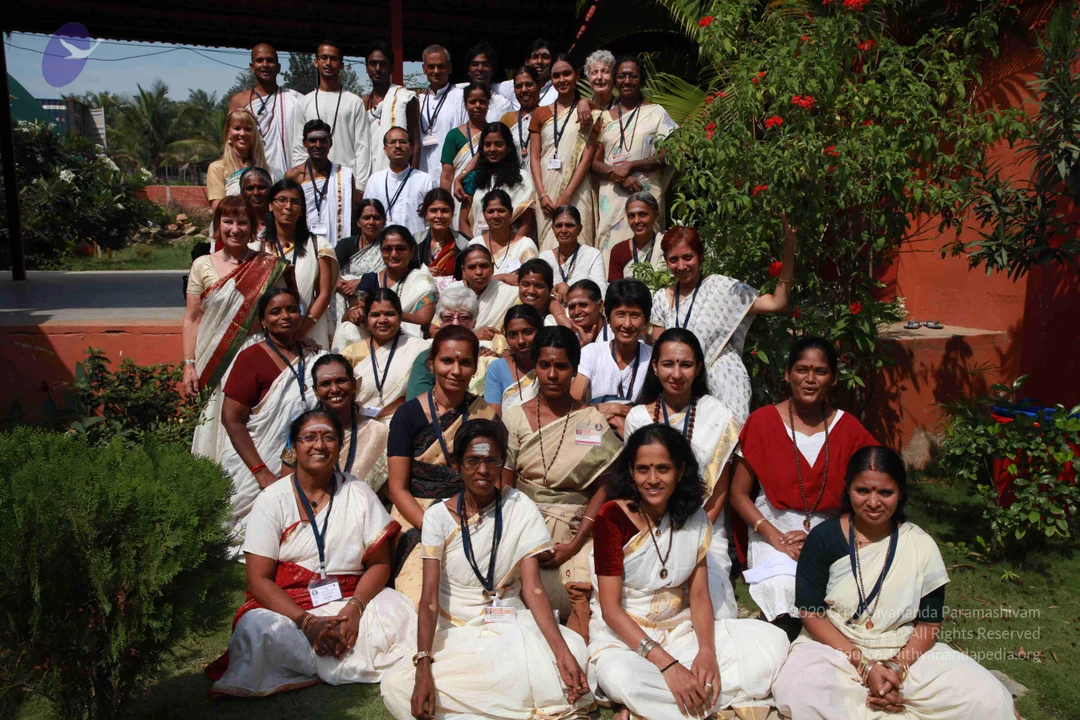
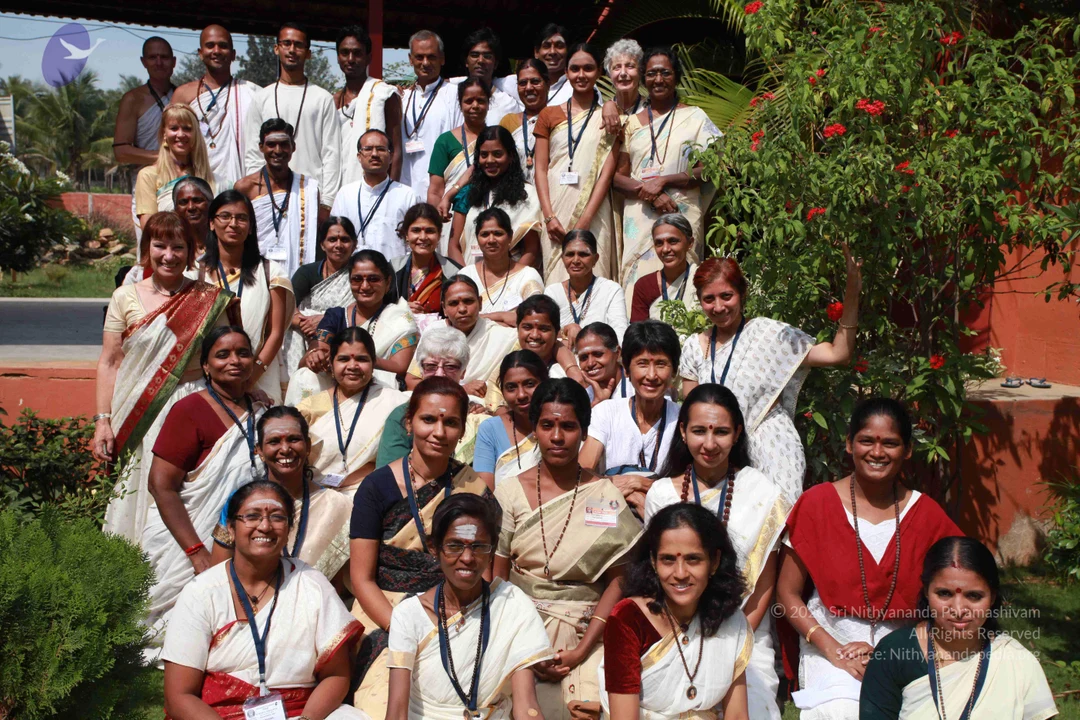
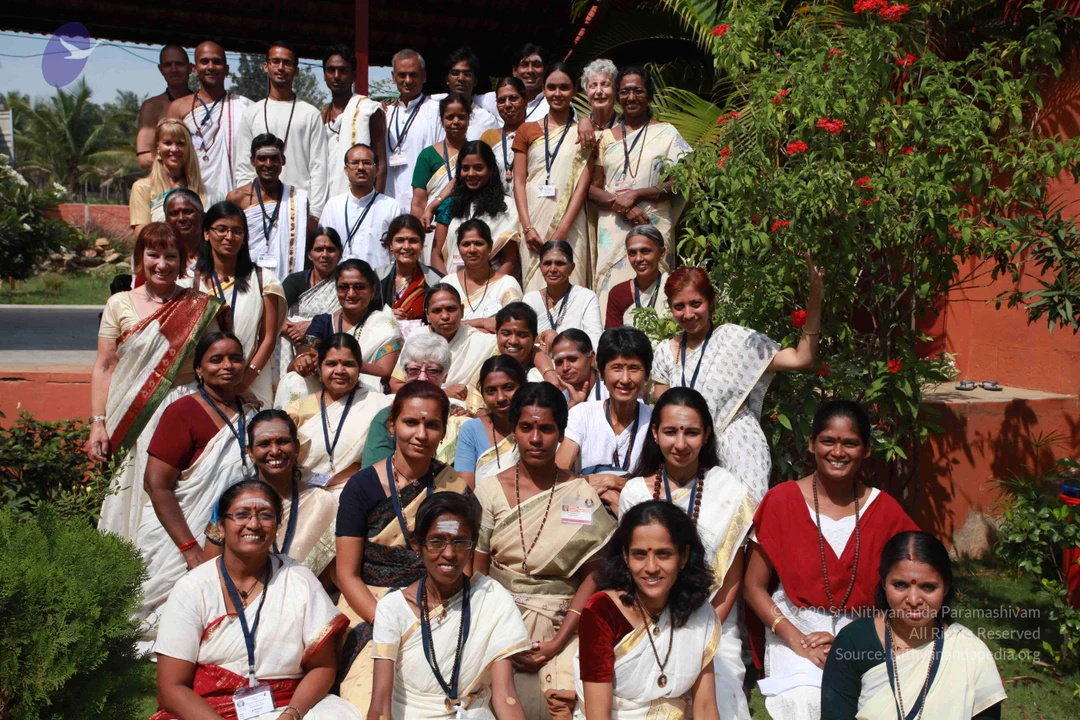
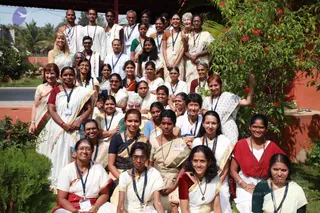
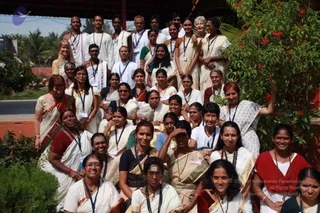
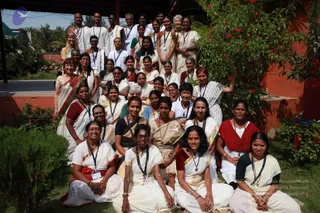
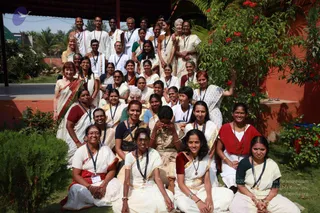
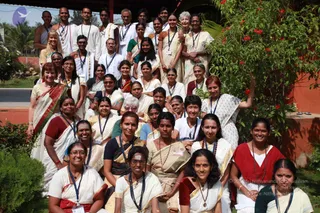
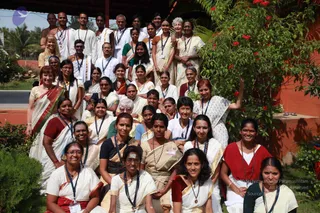
Large group photograph of many participants standing and seated outdoors in front of a red-orange wall, green shrubs and a flowering red-blossom tree. Most women wear white and cream saris with gold borders and blue lanyards with ID badges; several men in white shirts and white dhotis stand at the back. Some women wear rudraksha beaded mala necklaces and red blouses. Palm trees and a tiled-roofed structure appear at the top left.A large group photo of Samyama participants posed outdoors in front of a red-flowering shrub and a covered pavilion with palm trees behind. Most women wear white or cream sarees with coloured borders, some in red, maroon or gold; several men wear white shirts and dhotis. Many wear blue lanyards with name badges. Some have vibhuti or kumkum marks on their foreheads and rudraksha malas around their necks. Several sit in the front row while others stand behind. No a person candidate is visible in the group.A large group photograph of Samyama participants posed outdoors in a garden with red flowering shrubs and an orange-red wall behind them. Many women in cream and gold-bordered saris, some with red or maroon blouses, sit in the front rows wearing blue lanyards and rudraksha-style beaded necklaces. Behind them stand rows of men and women in white kurtas and white clothing with lanyards, some under a dark-roofed pavilion. The participants are smiling and posed closely together.Group photograph of a large group of participants posed outdoors in front of a red-orange wall and a flowering red-blossomed shrub, with palm trees behind. Many women sit on the lawn in the front rows wearing white and cream saris with coloured borders, some in red, maroon and green blouses, with blue lanyards and name badges around their necks; some wear rudraksha-style beaded malas. Men stand in the back rows in white shirts and white dhotis-style clothing with lanyards. A woman in the front centre covers her eyes with her hands. No clearly identifiable a person figure is visible in this group photograph.Large group photograph of participants posed outdoors on a stepped red-brick platform beside green foliage and red flowers. Many women in white and cream saris with coloured borders, some in maroon, gold and red, wear blue lanyards and rudraksha-style beaded necklaces. Men stand at the back in white dhotis and shirts with lanyards, one bare-chested figure at the upper left. A woman in the front centre has a tilak on her forehead. Roughly 40 people are visible.Group photograph of a large cohort of participants posed outdoors in front of a terracotta-painted wall beside a flowering shrub with red blossoms and palm trees. Many women wear white or cream saris with coloured borders and blue lanyard badges, several with rudraksha-style beaded necklaces, and some with red or maroon garments. Men in white shirts and white dhotis stand at the back, some wearing lanyards. Several women in front kneel or sit on the grass, smiling at the camera. The scene is a casual participant group portrait with no visible deity, throne or ritual objects.

21itemsNaivethyam

30 photosSource gallery
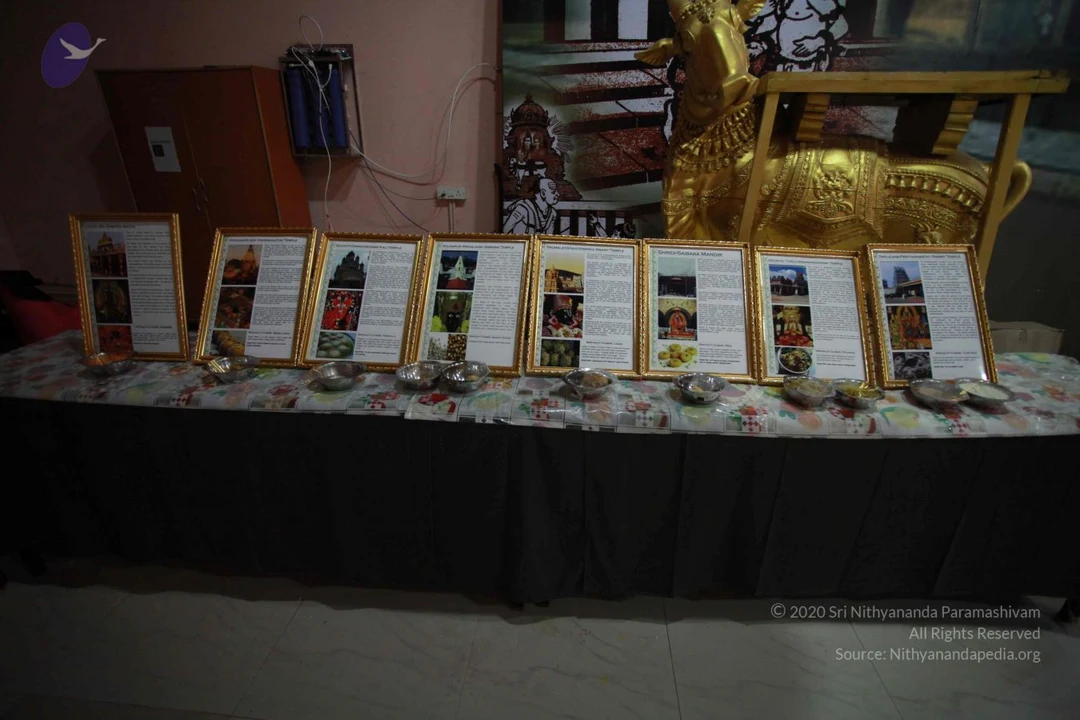
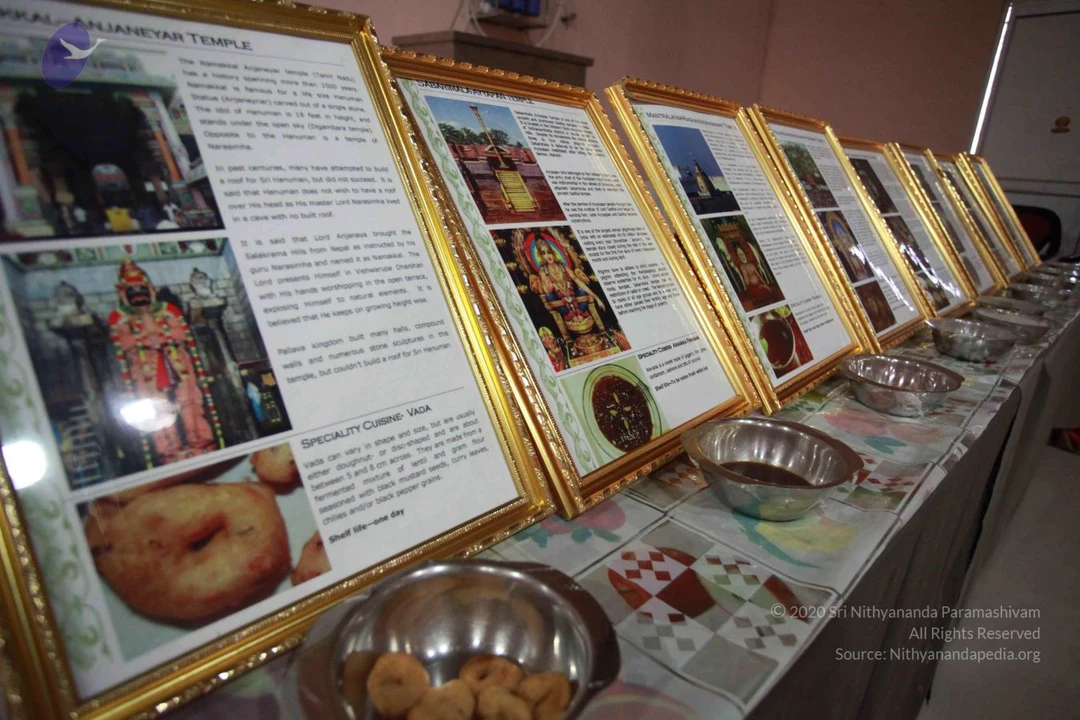
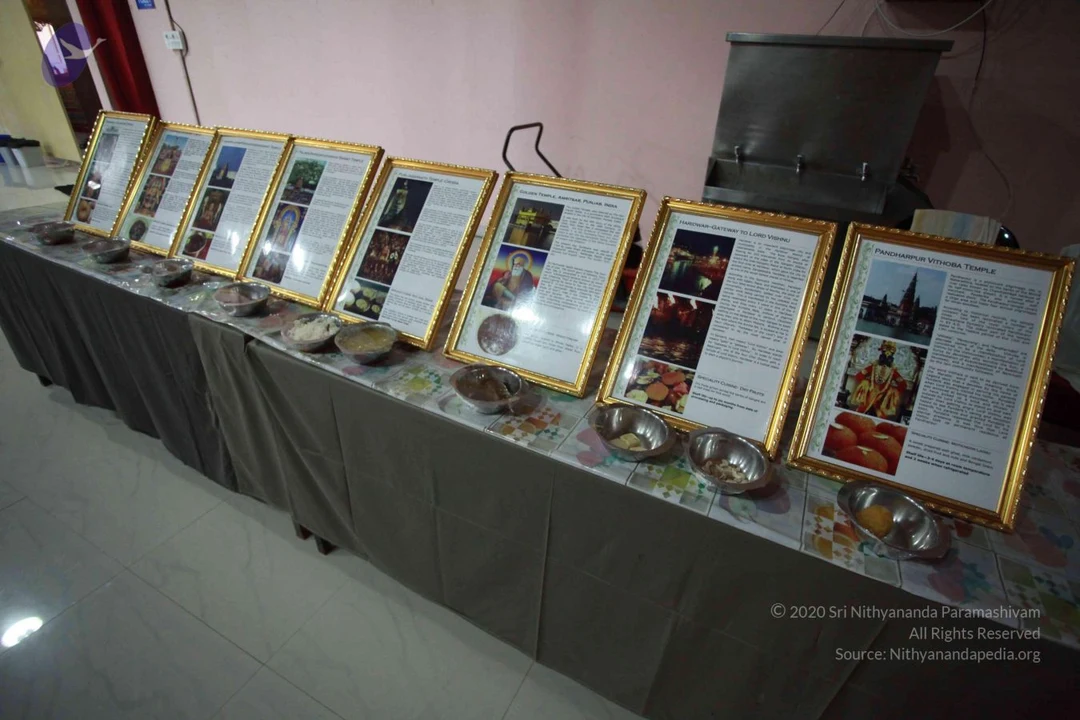
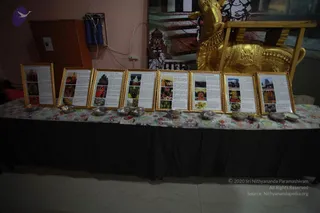
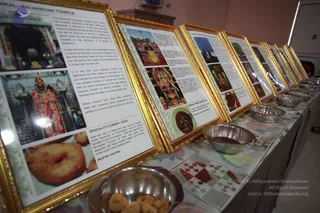
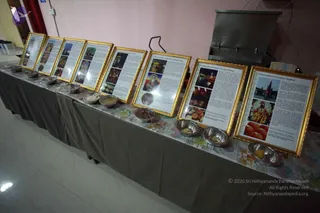
A small brown and speckled finch perches on the edge of a pale white stone ledge in a dimly lit room. Behind it, out of focus, a golden shrine or altar frame and a pale cushioned seat are visible, with a red and white striped cloth at the right edge. No people are present in the scene.A photograph of a table draped with a multicolored floral tablecloth over black fabric, holding a row of eight small silver bowls and eight gold-framed informational panels standing behind them. Each panel shows temple photographs and printed text about a shrine or temple. A large golden statue of a seated deity, with a crown and ornate ceremonial decoration, stands at the upper right beside a red-and-gold backdrop of a temple illustration. No people are visible in the scene.Empty hall with pink walls and a polished white marble floor, viewed from one end. Along the left and right sides, black-draped tables hold rows of framed photographs with gold frames and printed text panels, each set on a small plate or dish. A central table with a red cloth holds more framed pictures and a small brass or gold ornament. Windows and a wall mirror are visible, with orange cloth hangings at the top corners. No people are present.Interior of an empty hall with a pale tiled floor and pink walls. Two long tables draped in black cloths form a U-shape, holding rows of framed certificates or photo panels with gold frames and small offering dishes. A central table covered in red cloth holds a small ornate figure and a few framed photos. No people are visible.A photograph of a display table with several gold-framed panels describing temples, including Namakkal Anjaneyar Temple and Sarabha/Sanjeevi-style temple entries, each with photographs and text. Framed panels show a red-faced deity murti with garlands and a painted temple scene. In the foreground, steel bowls hold fried vada snacks and a dark liquid, and a rectangular tablecloth with a red and white pattern covers the table. No people are visible in the scene.A photograph of a long draped table in an indoor hall set with a row of gold-framed informational boards, each pairing photographs of temples and deities with printed paragraphs. Small metal bowls holding food offerings sit along the table's cloth and tiled runner, and a steel container stands at the back right. No people are visible. The framed boards depict temple scenes including a board headed Pandharpur Vithoba Temple showing a deity figure and a board headed Pandharpur Gateway to Lord Vishnu, with a figure in red and orange robes. The setting suggests a naivedyam display of offerings arranged in front of temple photographs.

Darshan

23 photosSource gallery
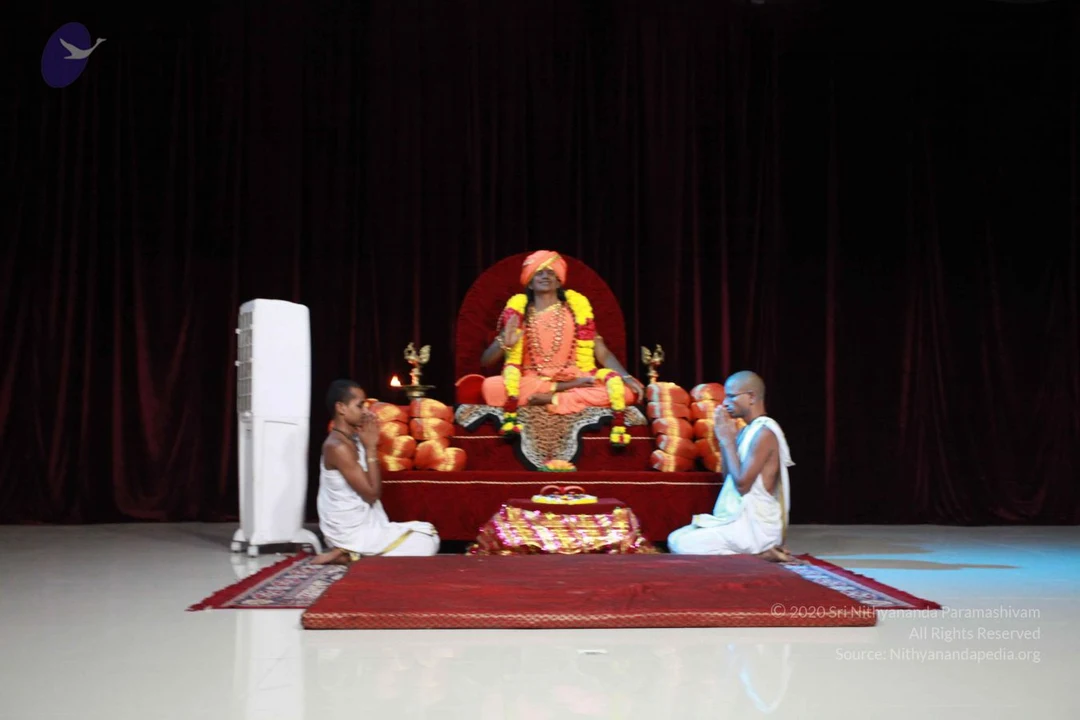
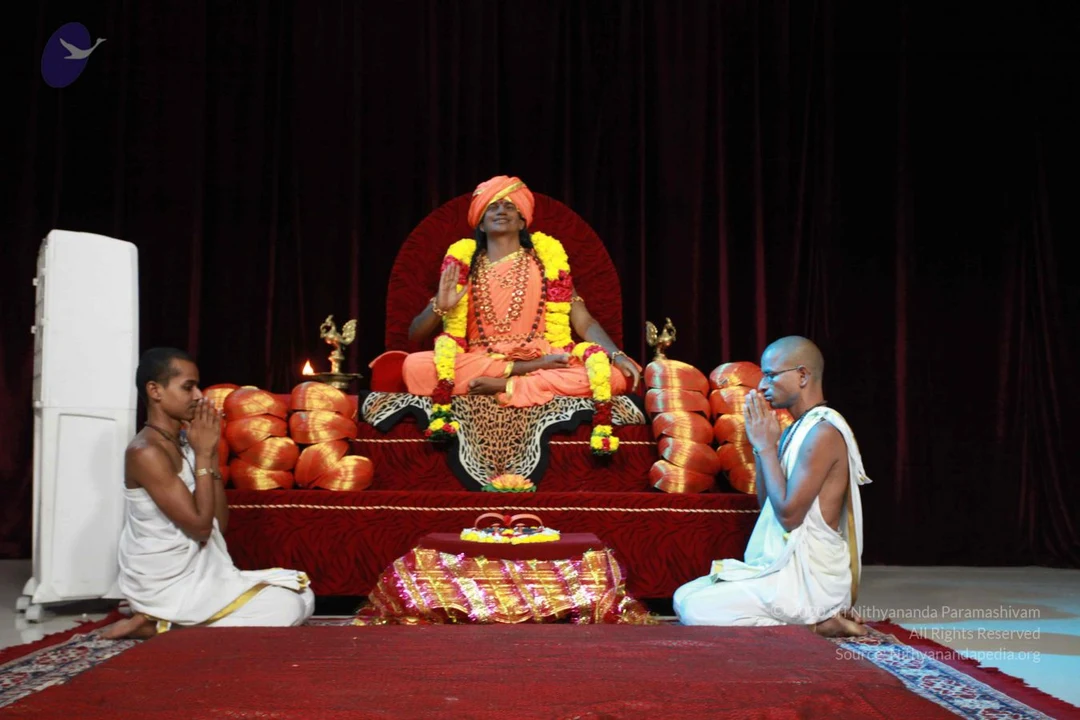
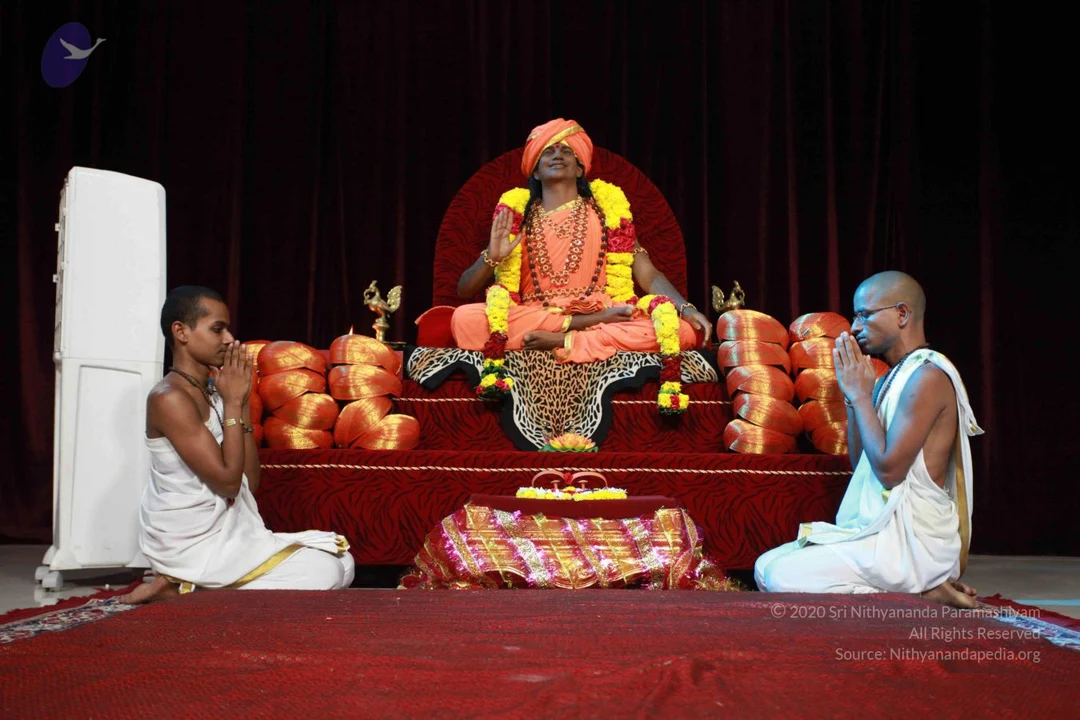
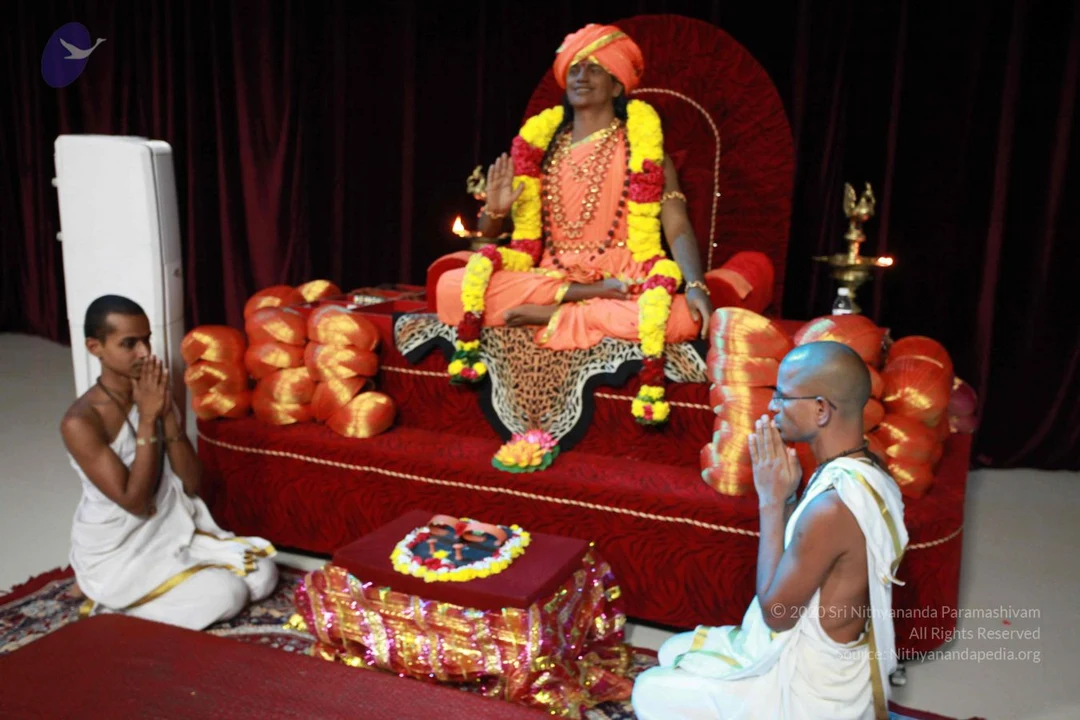
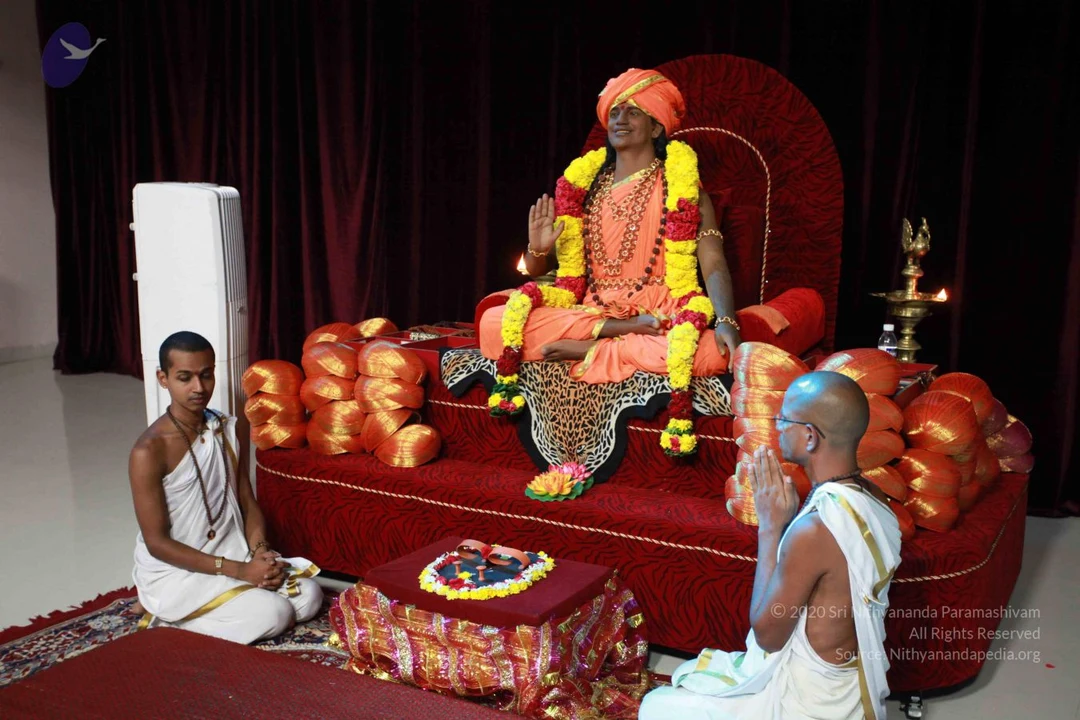
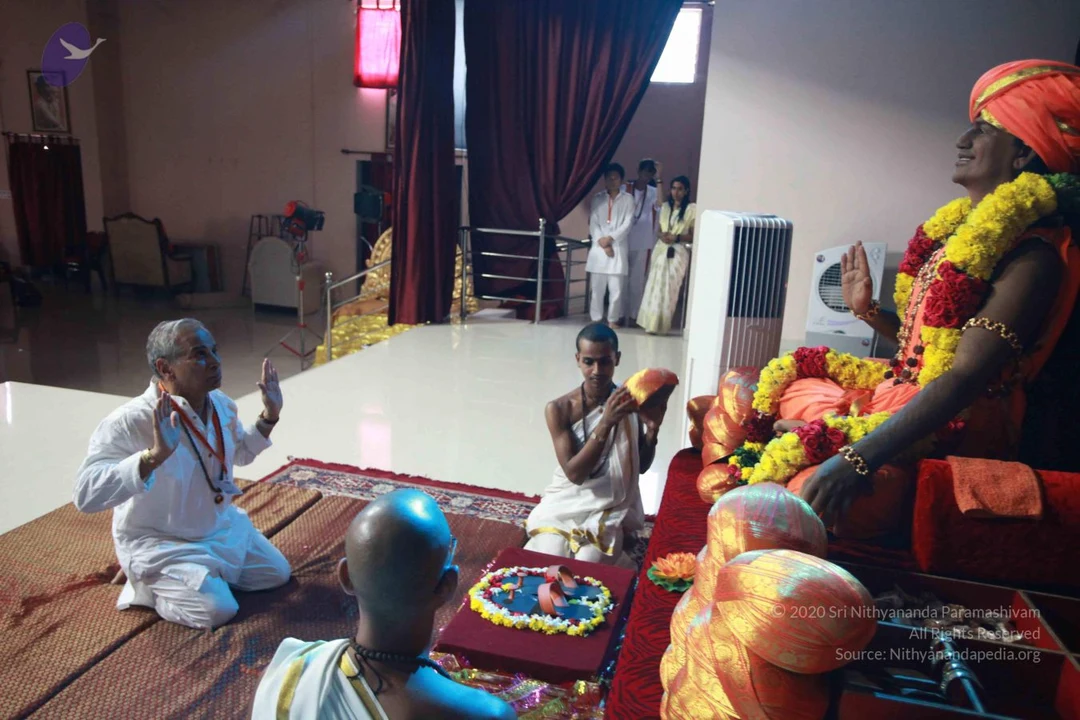
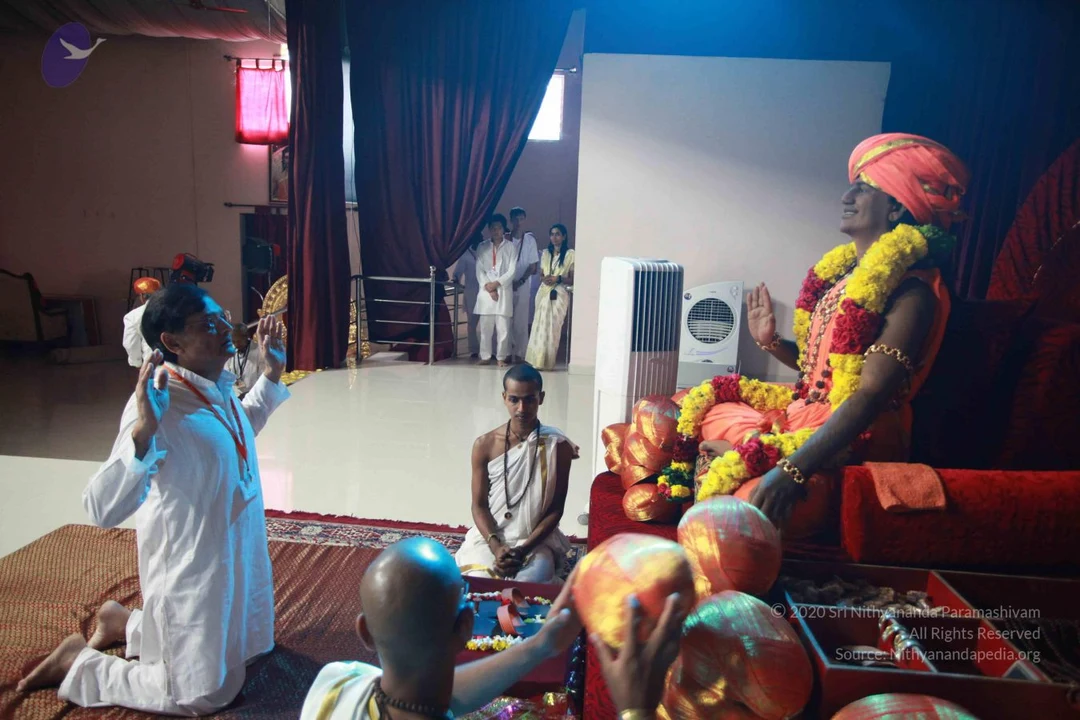
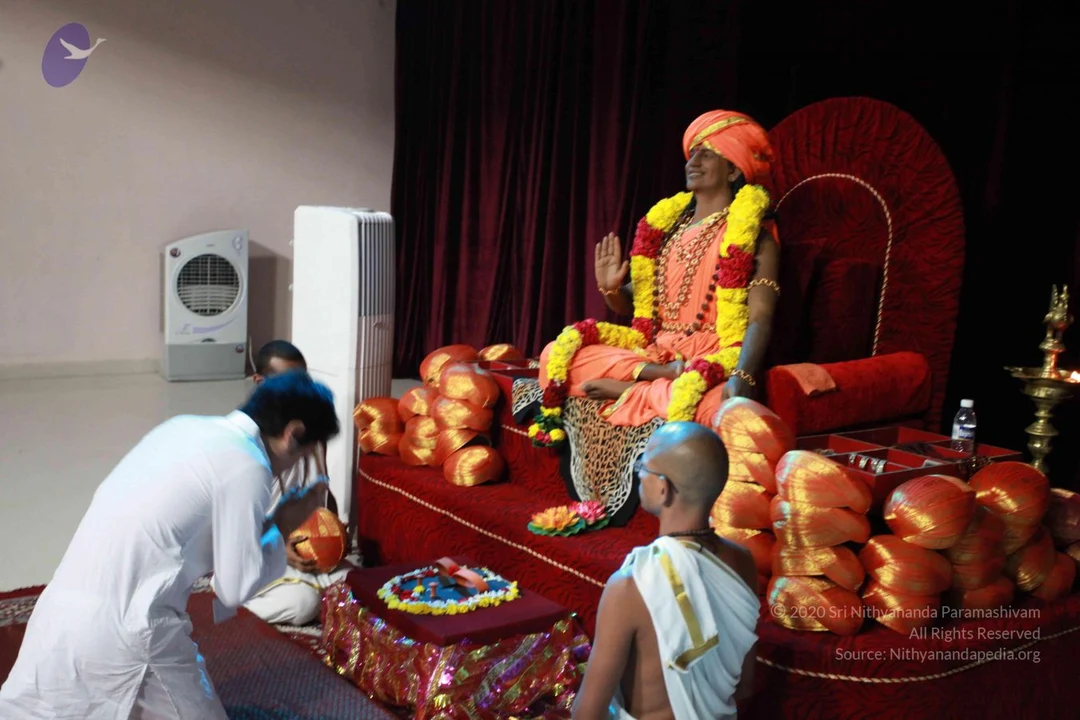
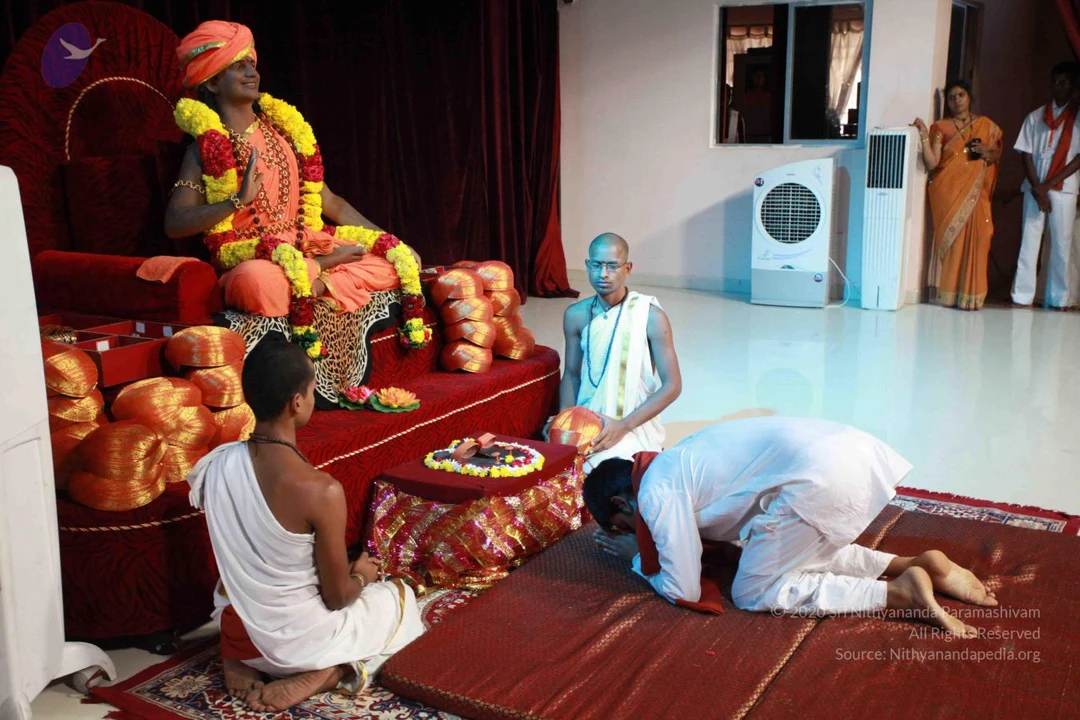
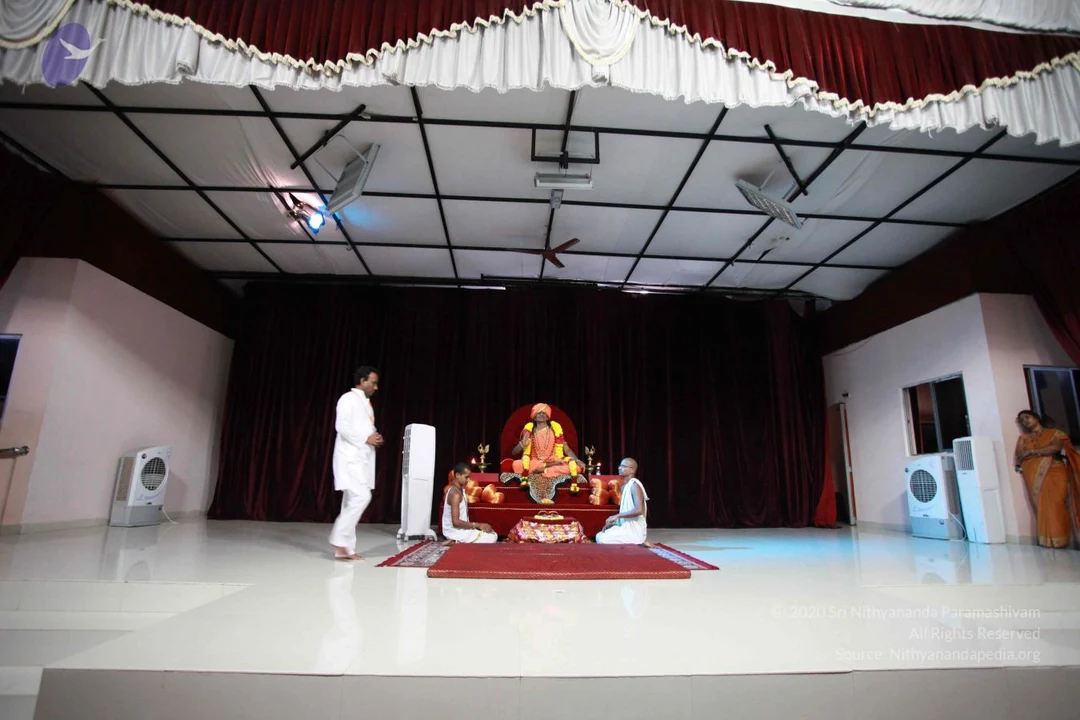
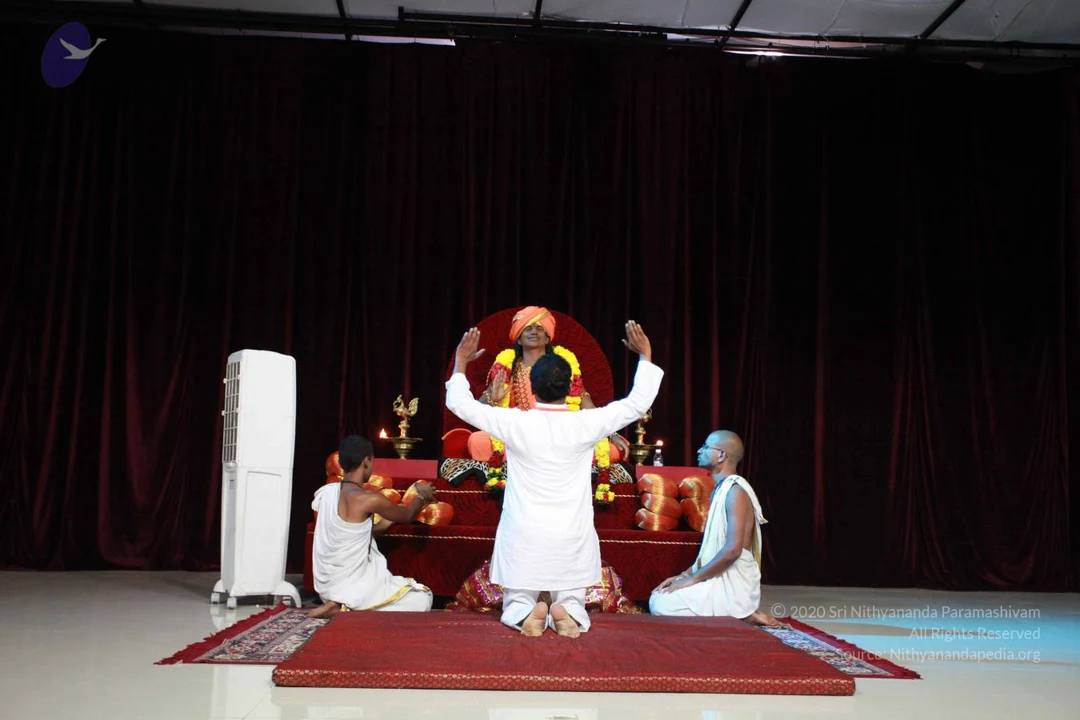
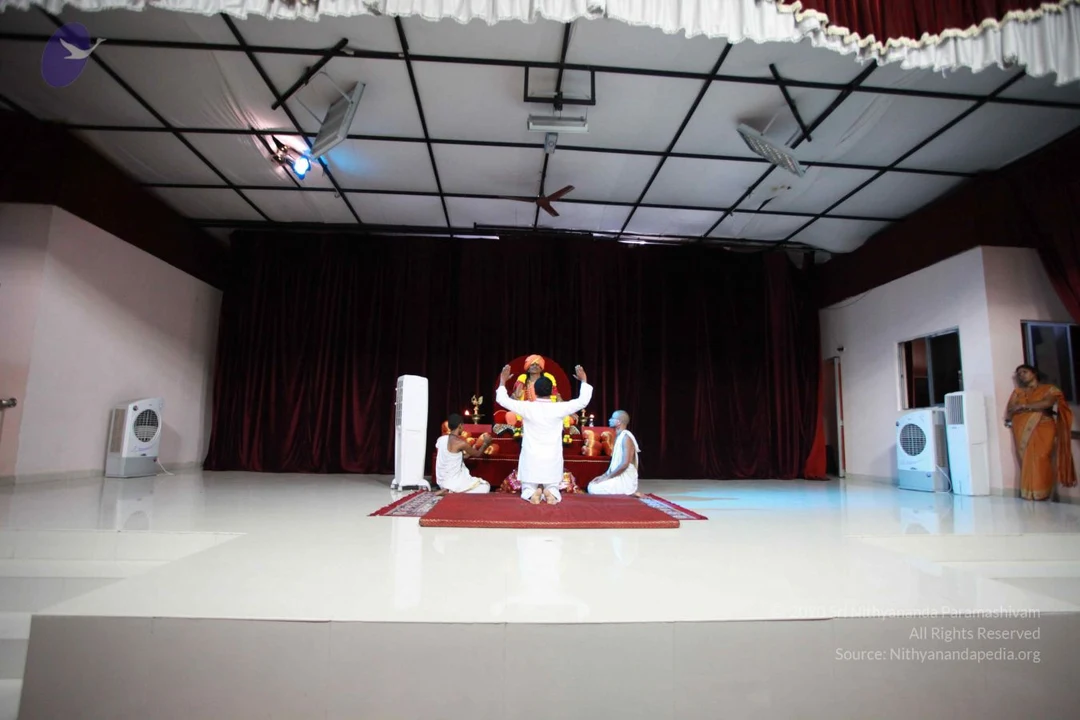
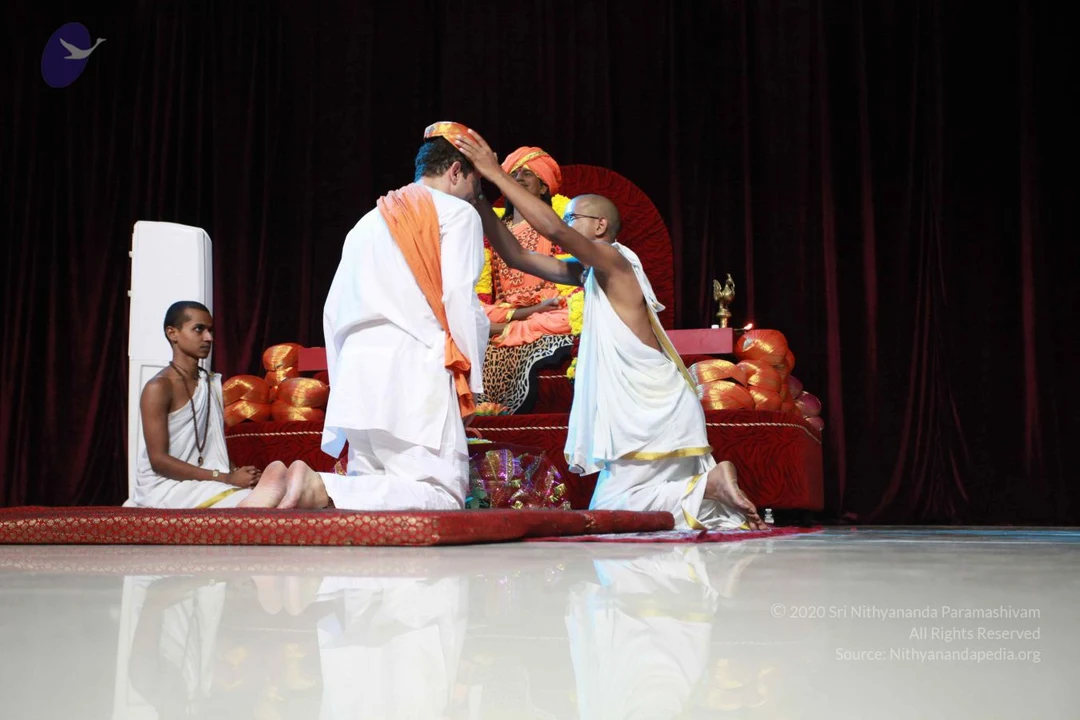
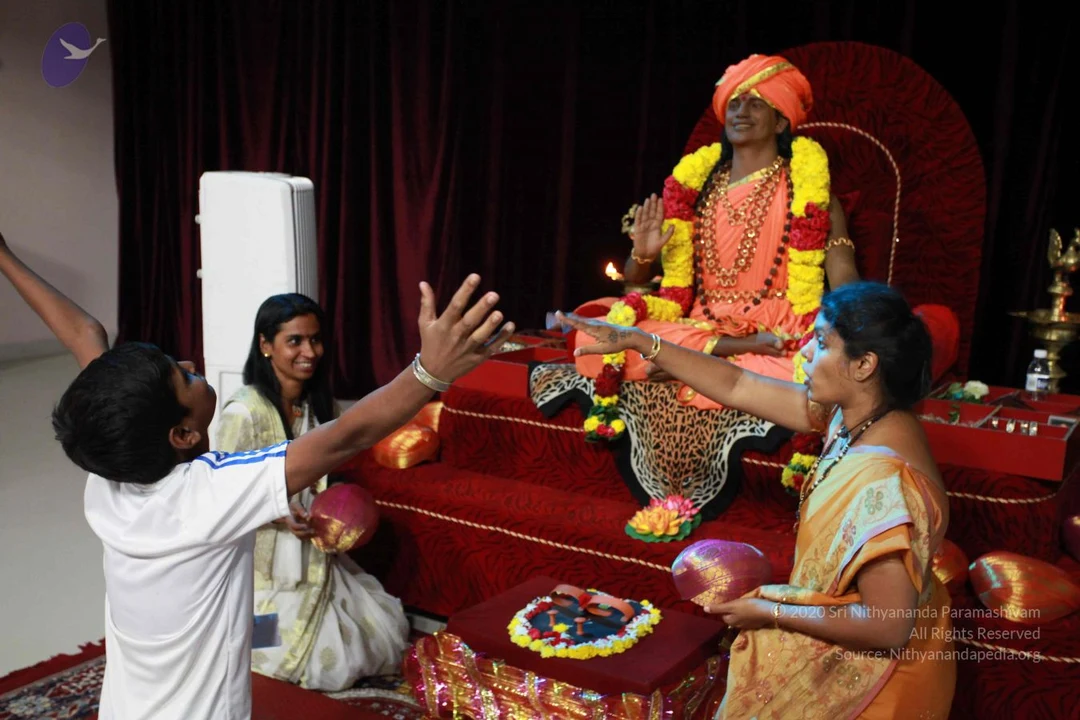
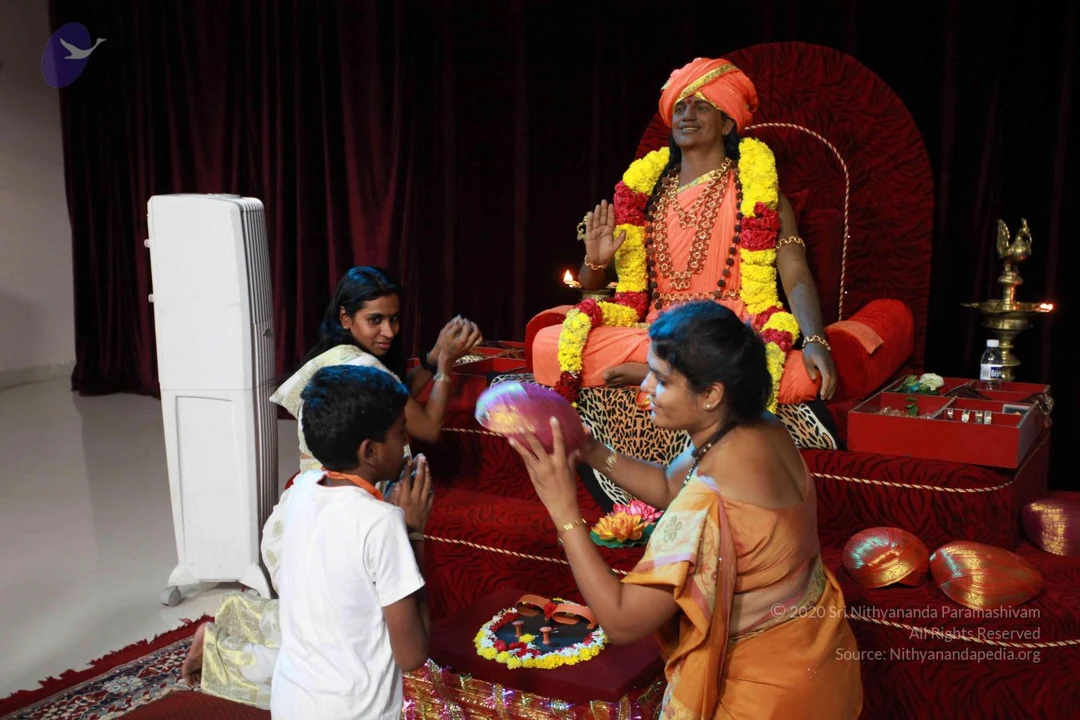
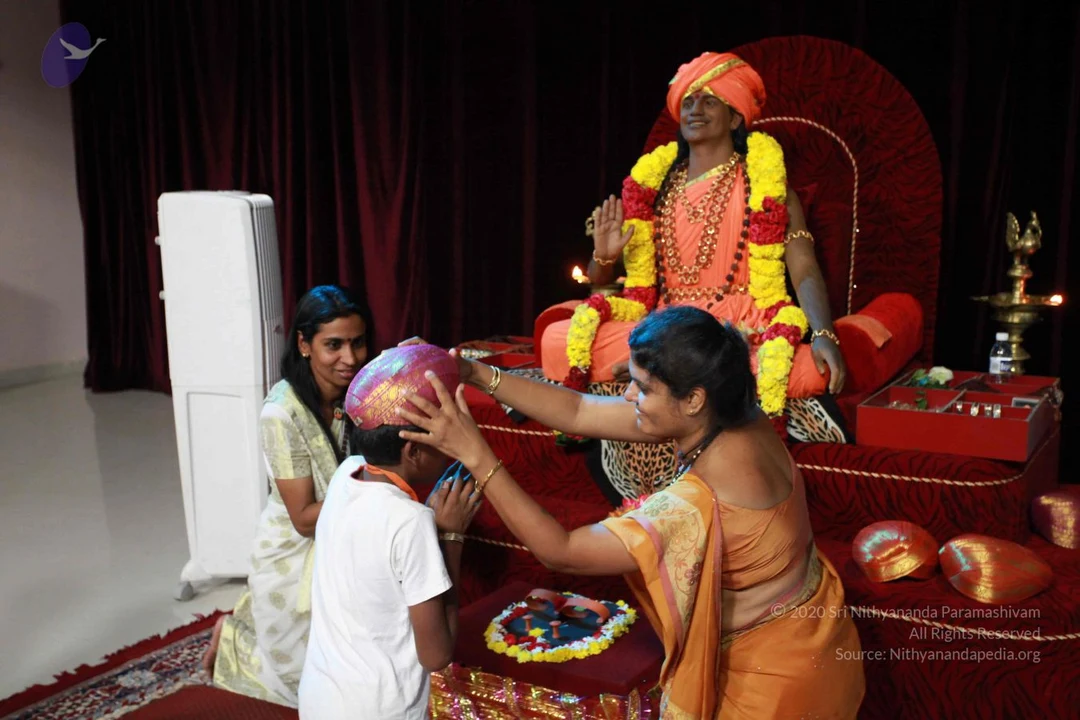
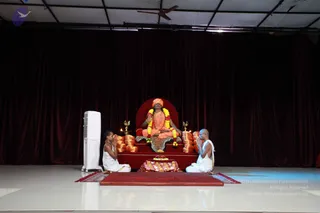
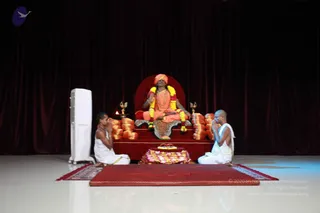
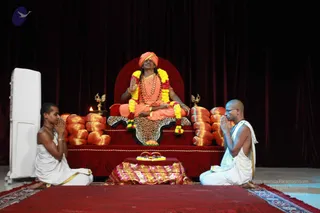
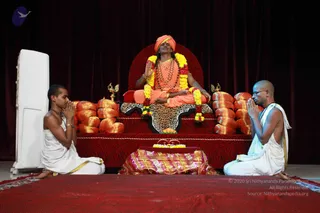
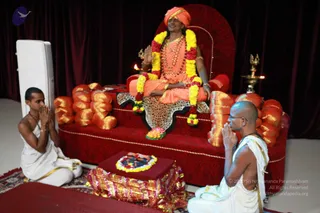
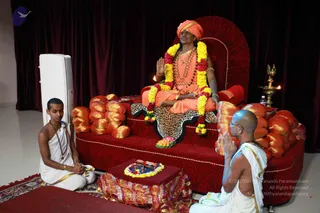
A seated figure on a red-cushioned throne on a stage before dark red drapes, wearing an orange-saffron turban and orange robes with a rudraksha mala and a garland of yellow and orange flowers, hands raised in namaste. Two men in white dhotis kneel on red mats on either side with hands in anjali mudra, a small brass oil lamp burns beside the throne, and a tray with offerings sits in front. A white tower fan stands at left. The appearance is a probable match to Swamiji based on the saffron turban, orange robes, rudraksha mala and floral garland, seated in a puja-like session.A photograph on a stage with dark red drapes behind. A figure seated on an ornate red and orange cushioned throne, wearing an orange turban and orange-saffron robes, with a rudraksha mala and a garland of marigolds and yellow flowers draped over the shoulders, hands raised in greeting. Two young men in white dhotis kneel on red mats on either side with palms pressed together in namaskar. Brass oil lamps flank the throne, a small tray of offerings sits before it, and a white tower fan stands to the left. The figure's identity is uncertain from appearance; roles described are the seated teacher and two kneeling devotees.A photograph of a seated figure on a red throne-like dais with orange cushions and a leopard-print rug, hands folded in namaskar. The central figure wears an orange turban, orange clothing, a gold ornate necklace and a long yellow-and-orange marigold garland. Two devotees in white dhoti-style garments kneel on red carpets on either side with palms pressed together. In front is a small tray with flowers and a red-and-gold cloth, with an oil lamp and brass lamp stands nearby, and red curtains behind. a person: the central figure shows the orange turban, ornate necklace and garland cues, so the identification is appearance-based and uncertain.A photograph of a seated figure on an ornate red throne with gold-and-orange cushions and a leopard-print panel, hands in anjali mudra. The central figure wears an orange turban, orange robes, layered rudraksha malas, a ceremonial gold necklace, and a garland of marigolds and red flowers. Two devotees in white dhoti-style cloth kneel on the red carpet at either side with palms pressed together in prayer; the man on the right is shaven-headed and wears spectacles. A small offering tray with garlands sits before the throne, and a flame-patterned cloth and a white stand are at the left edge. Draped red curtains form the backdrop.A photograph of a seated figure on a red cushioned throne backed by a red curtain, wearing an orange saffron robe, orange turban, layered gold necklaces and a large garland of yellow and red flowers, with palms pressed together in greeting. Two men in white dhoti-style cloth sit on the floor in prayer pose: one on the left, with a shaved head, and one on the right, bare-chested with a gold-bordered white cloth and rudraksha mala, also with palms joined. A red cushioned box with a flower-garlanded decorated object sits in front, and oil lamps stand on the throne's sides.A photograph of a seated figure on a red cushioned throne-like couch against a dark red drape. The central figure wears an orange turban, orange robes, a long ornate gold-and-beaded necklace, and wears a rudraksha mala, with a large garland of yellow and red flowers draped over the shoulders, and holds one hand raised in blessing. Two men in white dhoti-style clothing with saffron borders sit on the floor before him: one young man seated cross-legged on the left with hands folded, and a shaved-headed man on the right with palms pressed together in namaskar. A small red-draped table holds a floral-rimmed deity murti. A brass oil lamp burns at the right, and a white cooler stands at the left. Swamiji (probable) is the central seated figure, identified by his orange turban, rudraksha mala and ornate saffron attire.

Galleria

13 photosSource gallery
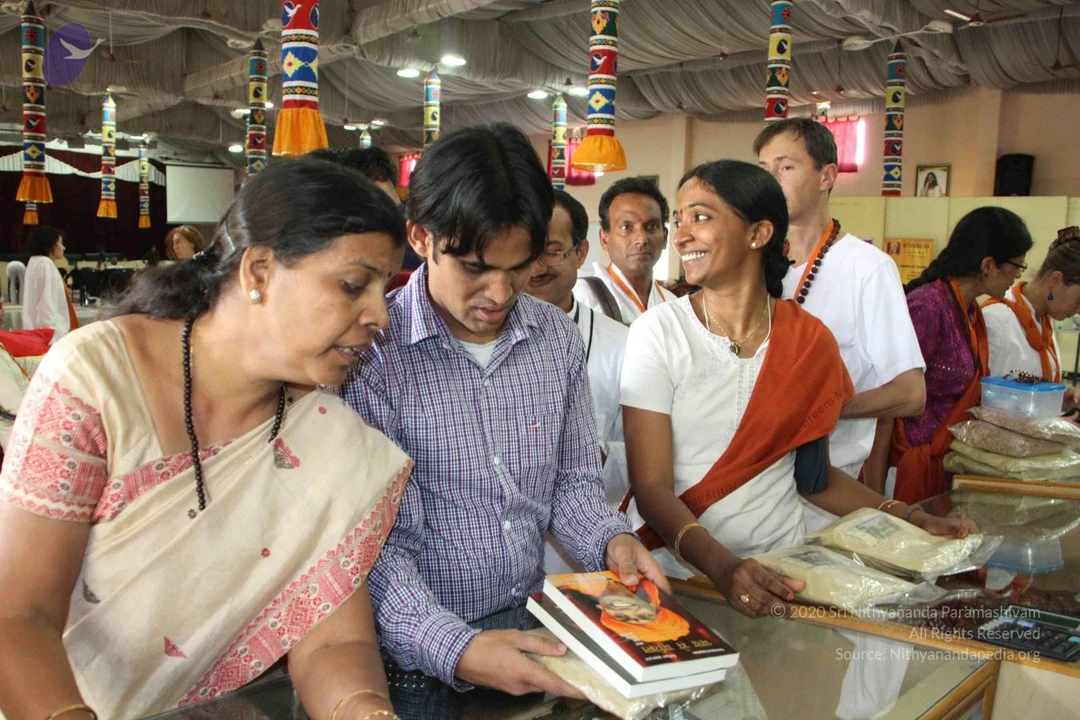
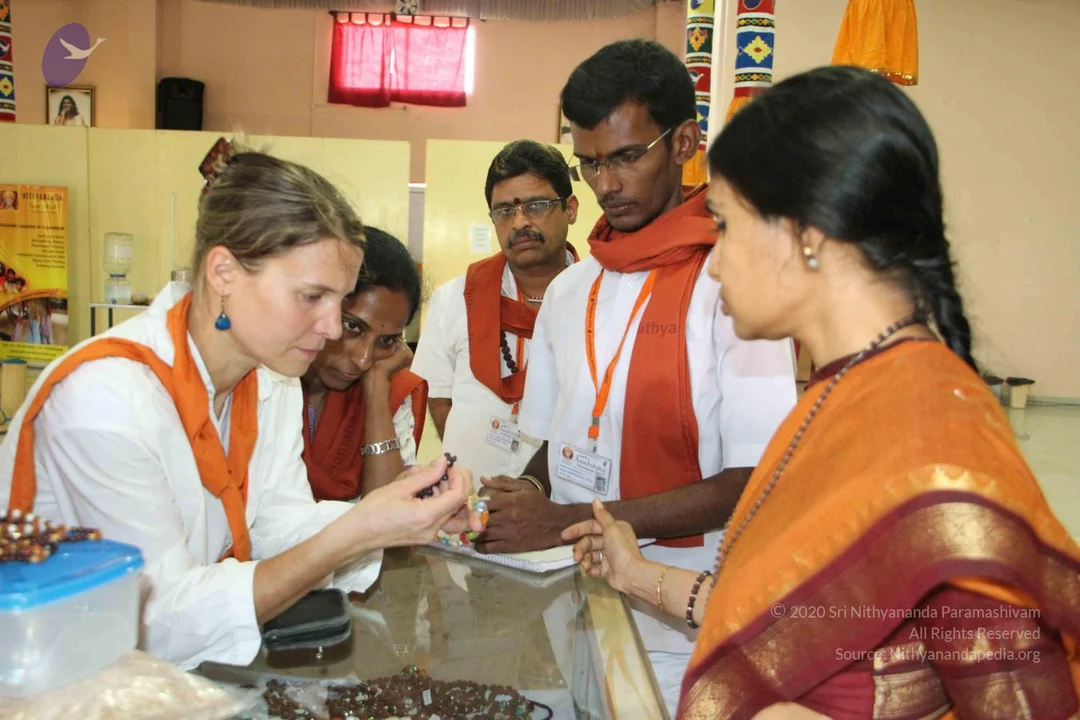
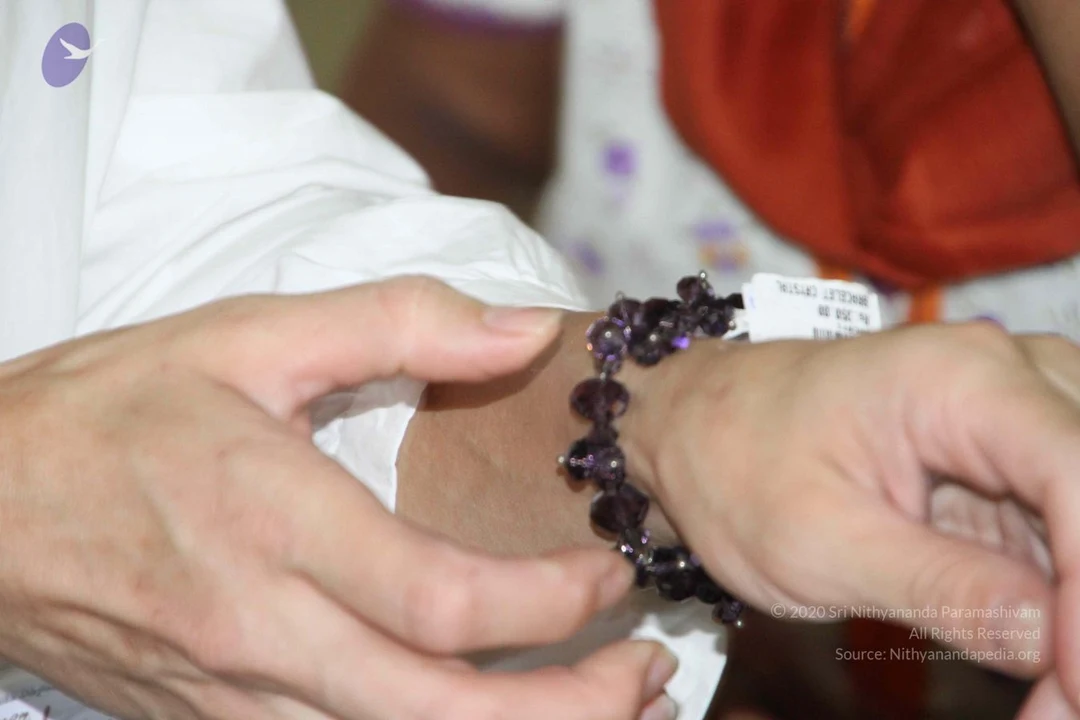
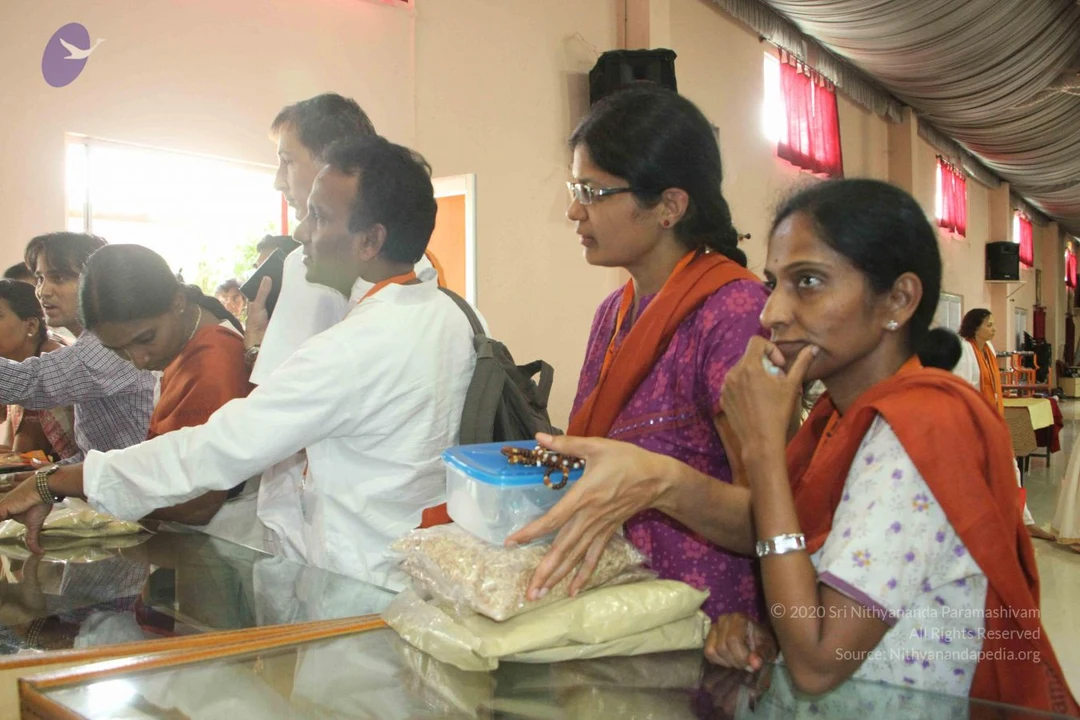
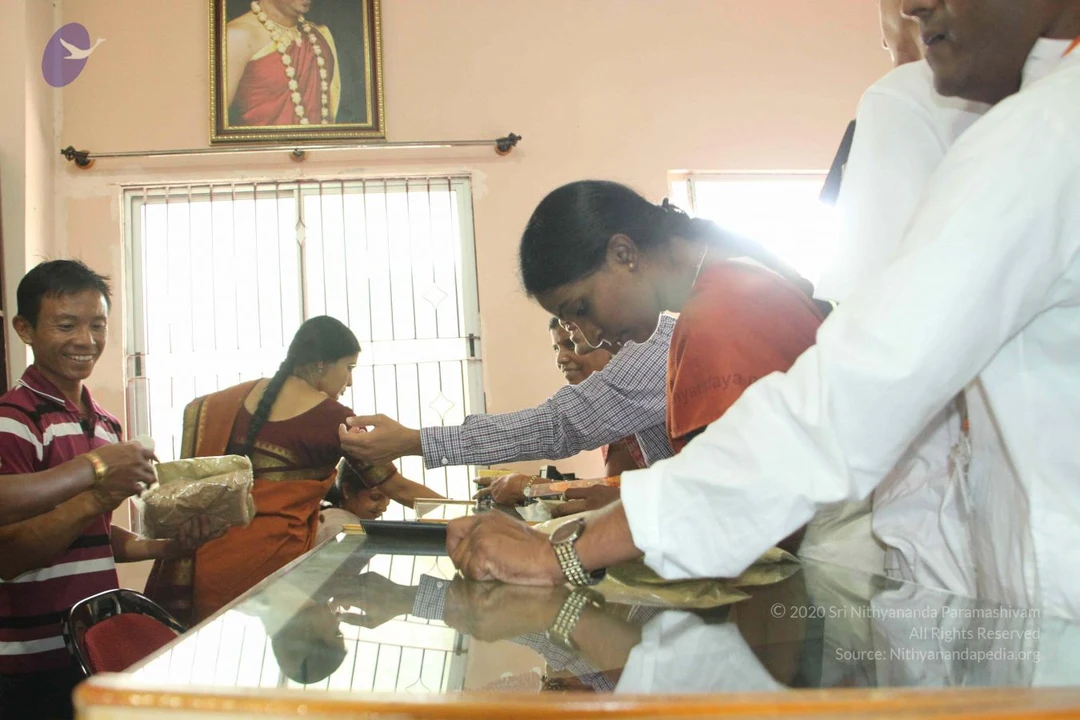
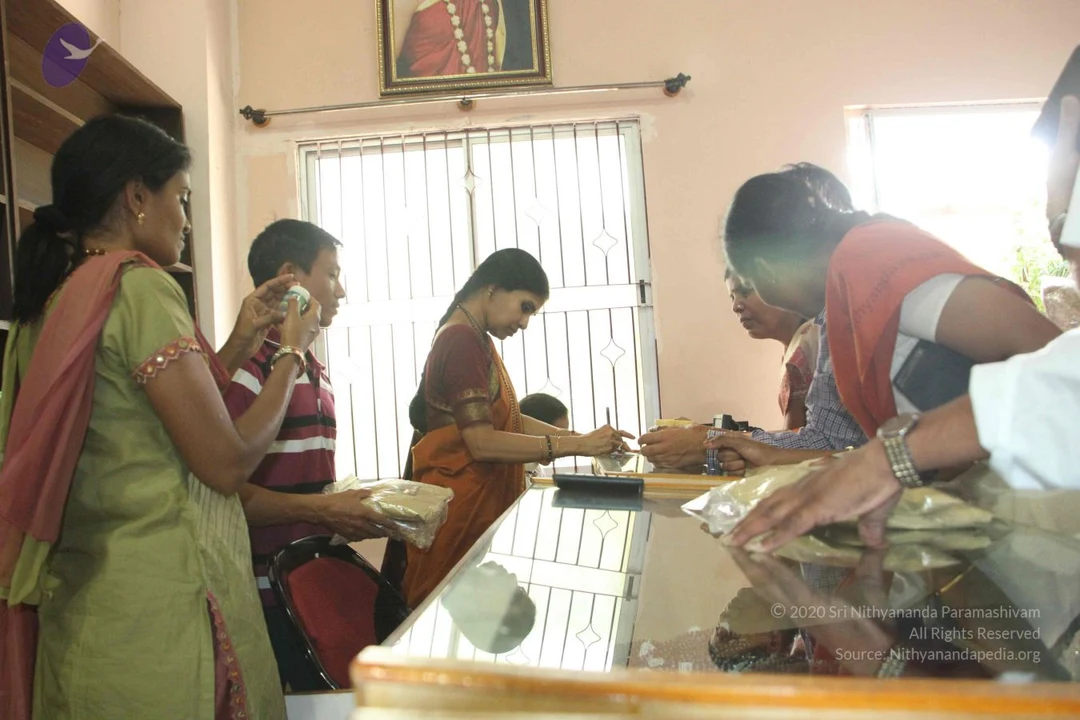
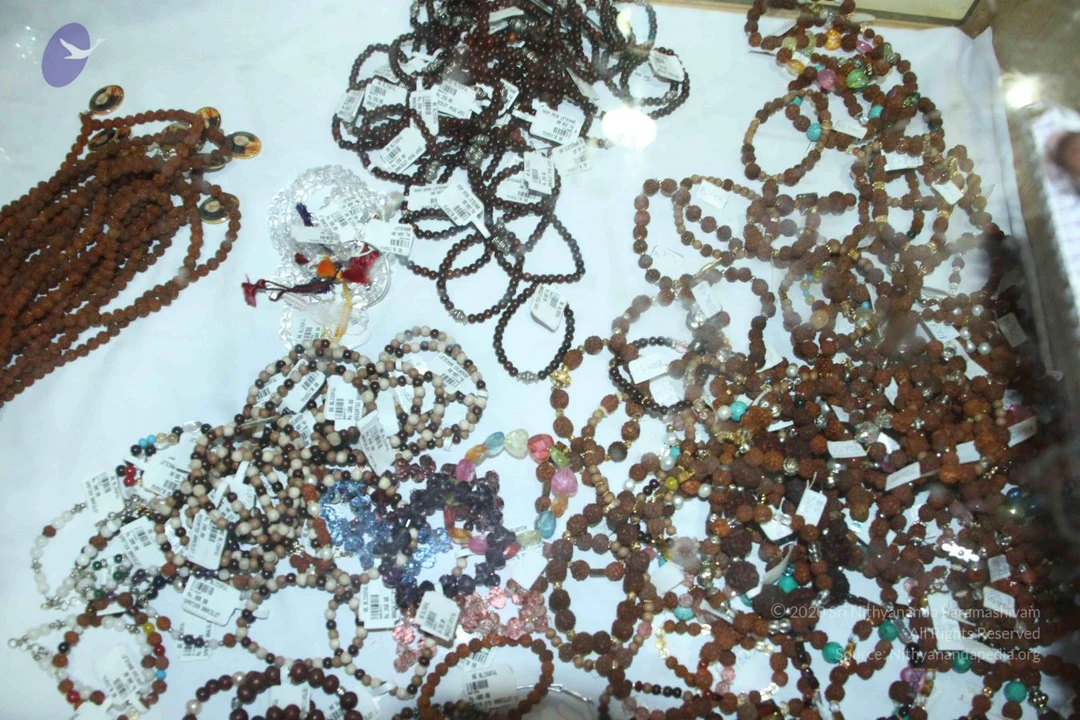
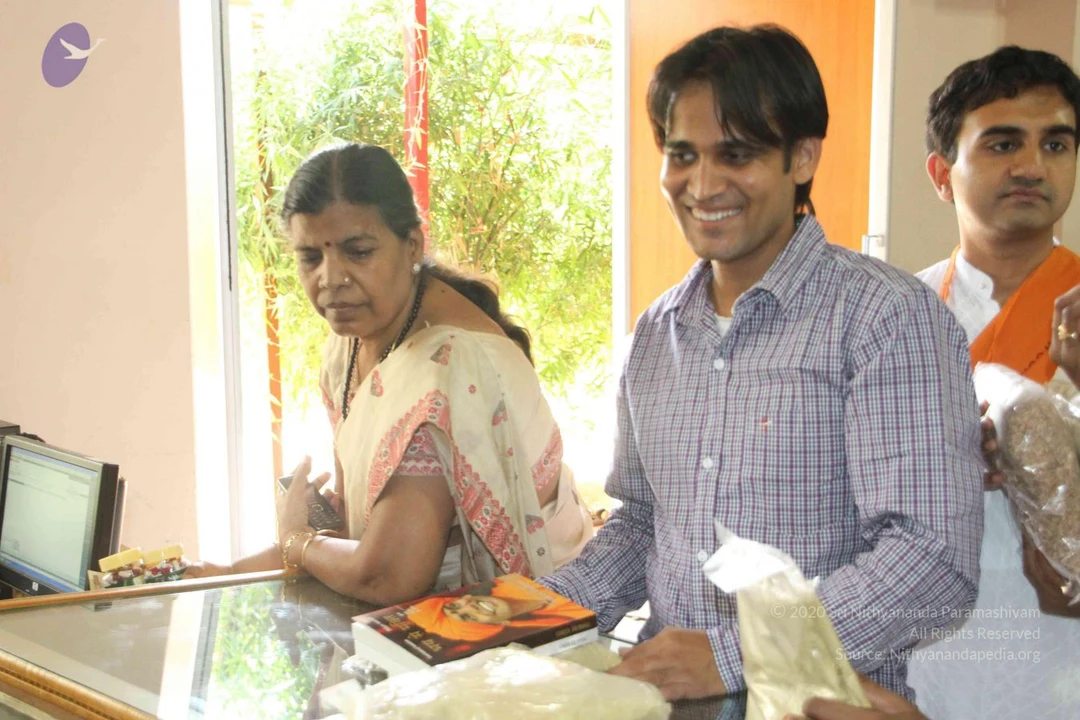
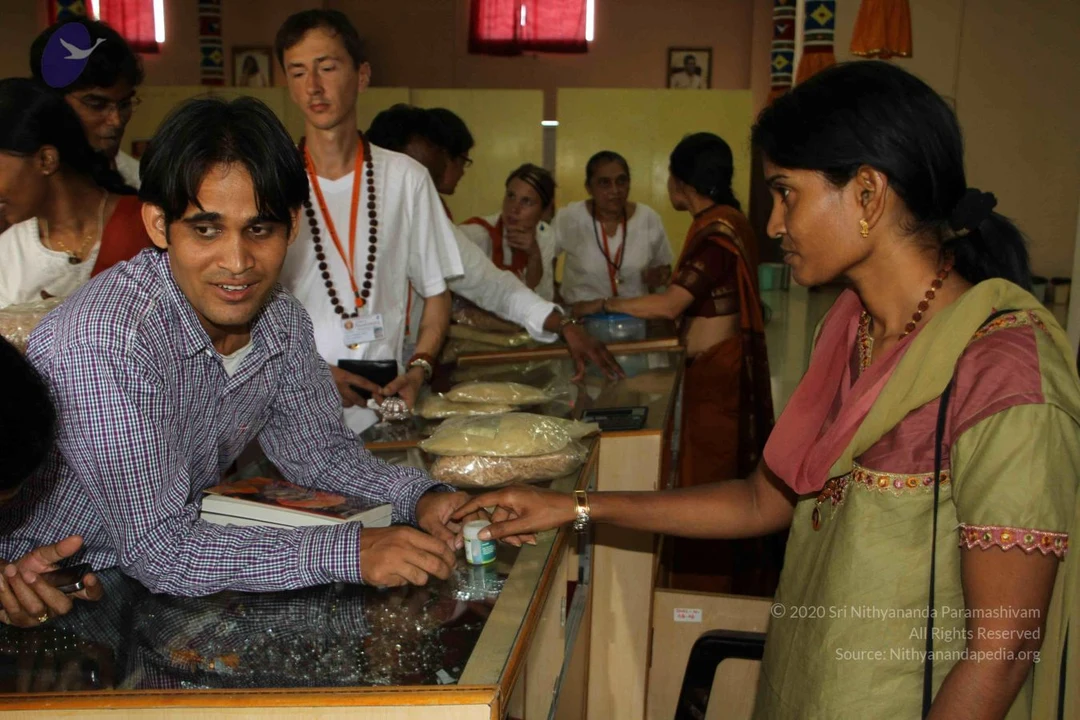
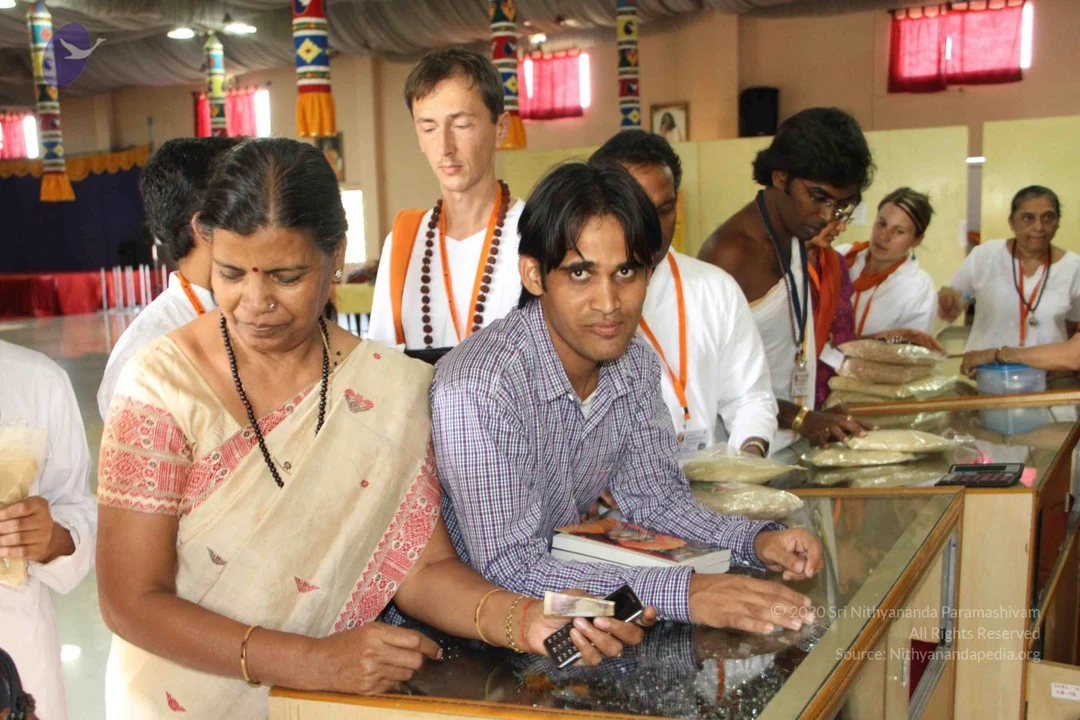
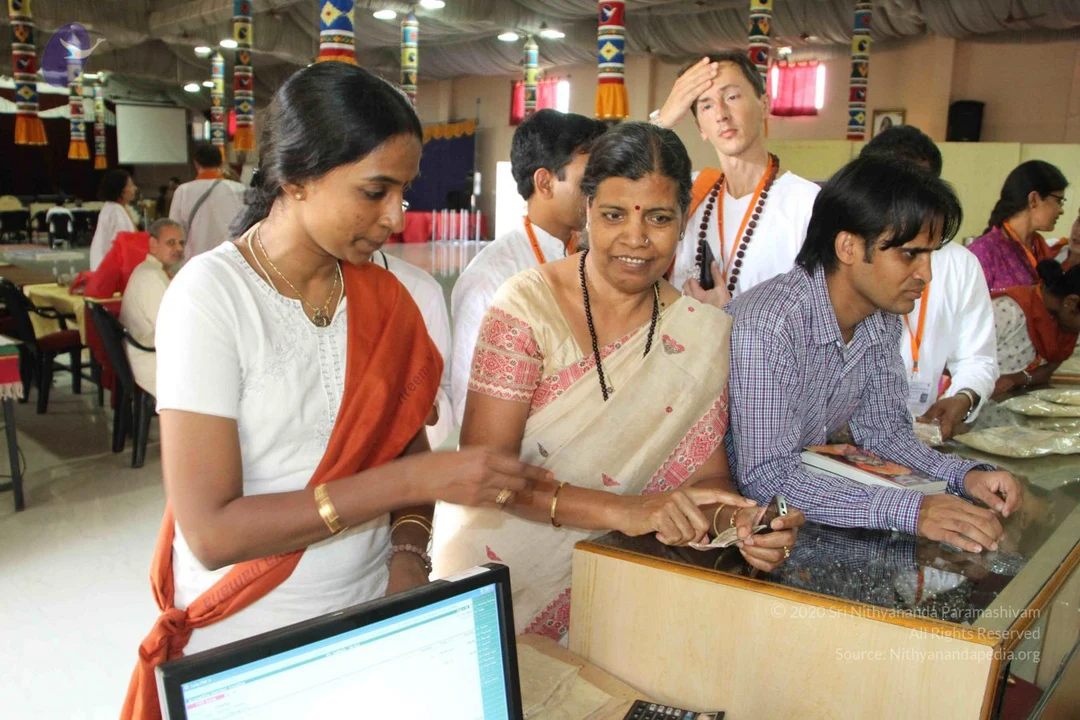
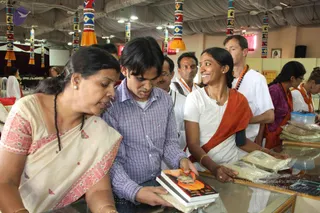
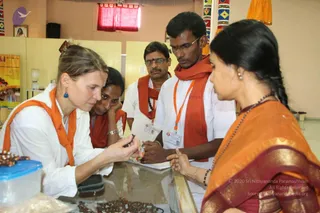
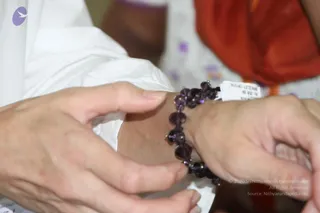
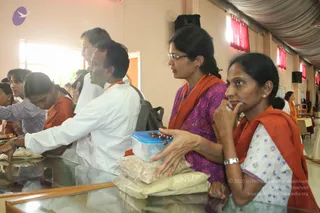
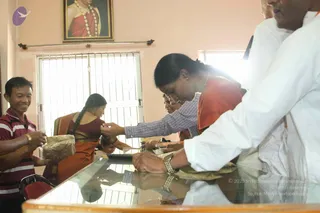
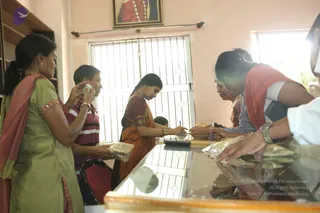
A photograph of a counter display at an indoor event hall with colourful striped pillar drapes overhead. A woman on the left in a cream saree with red border and a black beaded mala watches as a young man in a blue-and-white checked shirt examines books on the glass counter. A smiling young woman in white with an orange shawl stands behind the counter beside packets of grain or herbs. Behind them, men and women in white kurtas and orange shawls, one with a rudraksha mala, stand watching. Books with orange covers sit on the glass display. No a person candidate is visible.A photograph of a group at a glass counter in an indoor hall with yellow partitions and a framed portrait on the wall. A fair-haired woman in a white shirt with an orange scarf handles rudraksha beads and a small bead bracelet while a woman in an orange sari with a rudraksha mala looks on. Two men in white with orange scarves and lanyards stand behind the counter, one wearing glasses, and another woman in an orange-red top rests her chin on her hand. Strings of brown beads and a plastic container lie on the counter.Close-up photo of two hands fastening a dark purple crystal bead bracelet onto a person's wrist. The bracelet has a small paper price tag reading Bracelet Crystal. One hand wears a white sleeve, and an orange garment appears at the upper right edge. The setting appears to be a small gathering. The visible cues do not establish whether a person candidate is present.Photograph of devotees standing in a line at a glass counter in a hall with pink walls and red curtains. A woman in a purple salwar with an orange shawl wears glasses and holds a clear plastic box containing a rudraksha-style bead mala. Beside her, a woman in a white floral top and orange shawl rests her hand near her chin. Several people in white shirts and orange shawls stand behind the counter, which holds sealed plastic packets of grain or prasad. Other attendees are visible at the left and in the background near a table draped in cloth.A photograph of people serving food at a glass-topped counter in a pink-walled room. A framed portrait hangs high on the wall above a window with metal grilles. A woman in a dark red sari with a long braid stands at left, and a woman in a dark top with an orange shawl reaches forward across the glass. A man in a red-and-white striped shirt smiles at left, holding a plastic-wrapped bag. A man in white clothing stands at right, his hands on the counter. Leaf plates and small bowls are set out on the glass.A photograph of a counter in a bright room with a pink wall and a framed portrait of a figure in red robes and beads hanging above a barred window. Several people stand at a glass-topped counter: a woman in a pale green salwar with a pink dupatta on the left holds a small item, a man in a red-and-white striped shirt holds a wrapped packet, and a woman in an orange sari with a bangle and gold necklace counts or records items at the counter. On the right, people in orange and red shawls handle small wrapped packets. Calculator and paper sit on the glass. The scene appears to be an ashram or temple office with packets being distributed or collected.

Padhuka-puja

9 photosSource gallery
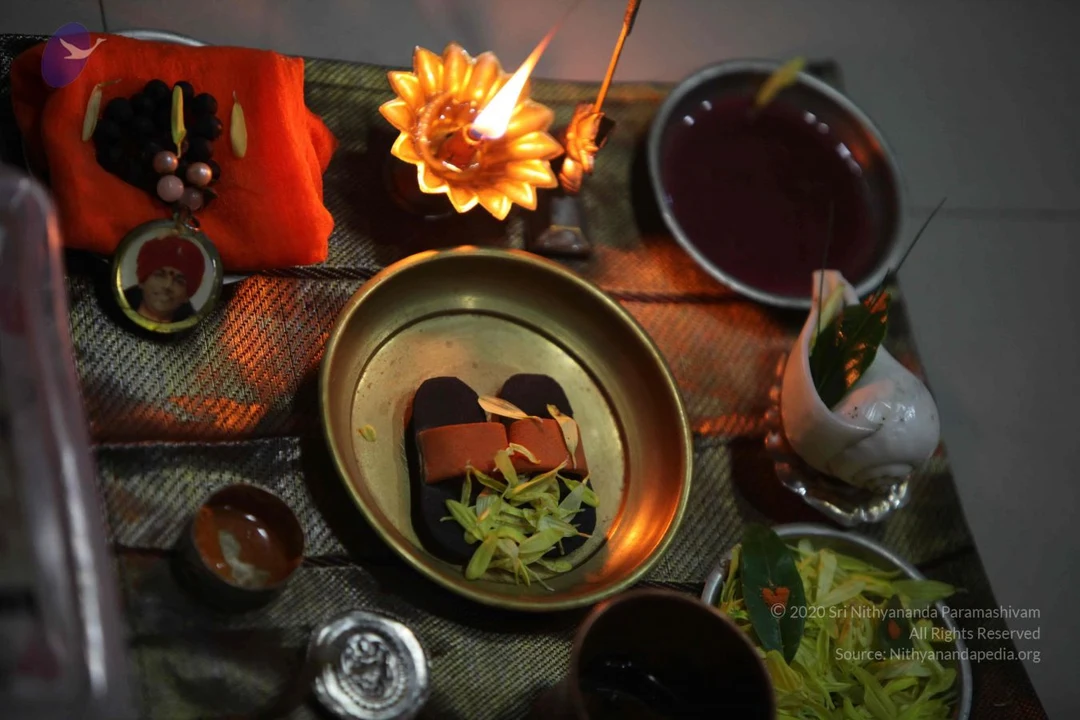
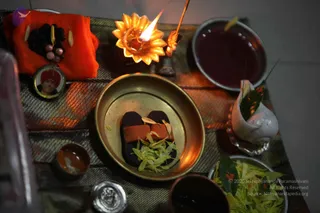
A pair of teal-coloured wooden padukas, sandal-style footwear with light brown cross straps and wooden pegs, sits on a dark maroon cloth. The padukas are encircled by a square border of pink and red roses, with a dim, dark setting around them. No people are visible. This appears to be a padukas display for padapuja, shown as a ritual offering arranged with flowers.A photograph of a pair of wooden padukas, sandals with raised pegs and multi-strap leather-like bands, set on a teal cloth and encircled by a heart-shaped wreath of pink and red roses. The dark background and a plum-coloured surface frame the offering in a dim, intimate setting. This appears to be a paduka pooja arrangement, with no people visible.A ceremonial stage set for a padapuja-style honour, with an empty red velvet throne-like seat dominating the frame. Above the seat hangs a large printed portrait of a saffron-robed man seated cross-legged before a tree trunk, wearing a white beaded mala and raising one hand, framed by garlands of orange marigolds with green and maroon accents. Below the portrait a leopard-print cloth drapes the seat, with a small floral arrangement and a bottle of water beside. Two tall brass oil lamps stand on either side against deep purple curtains. In front, a red-cushioned platform holds a plate of flowers and a pair of sandals, and a pink and gold sequined cloth covers a low table. No people are visible.A photo of young boys in maroon dhoti-style garments with gold borders and maroon shawls, standing with palms pressed together in namaskar during a ritual in a hall. Several boys wear white vibhuti or tilak marks on their foreheads. Behind them, older men in white dhotis and saffron shawls stand with hands folded, and an oil lamp glows in the background. The setting appears to be a devotional gathering with padapuja-style reverence.A photograph of devotees standing in a hall during a devotional gathering, with palms pressed together in namaskar. In the foreground a woman in a white kurta with a red shawl tied at her waist stands with eyes lowered, hands folded at her chest and wristwatch visible. To her left another woman in a white top and orange-red scarf, with a name badge, also holds her palms together. Behind them several blurred figures in white and grey clothing, including a man in a cream dhoti with gold border on the right, stand in similar prayer posture. A small warm light glows in the background.Close overhead photo of a puja setup on a woven striped cloth. A lit golden lotus-shaped oil lamp burns at the top centre. A brass plate holds a pair of dark wooden paduka sandals topped with orange-red sweets and shredded green leaves, a padapuja-style offering. A small framed photograph of a man with a red head covering rests on an orange cloth beside a rudraksha-style bead mala. Bowls of reddish liquid, a small silver deity murti at the bottom left, and a bowl of green leaves surround the plate. No people are visible.

swamiji's-session
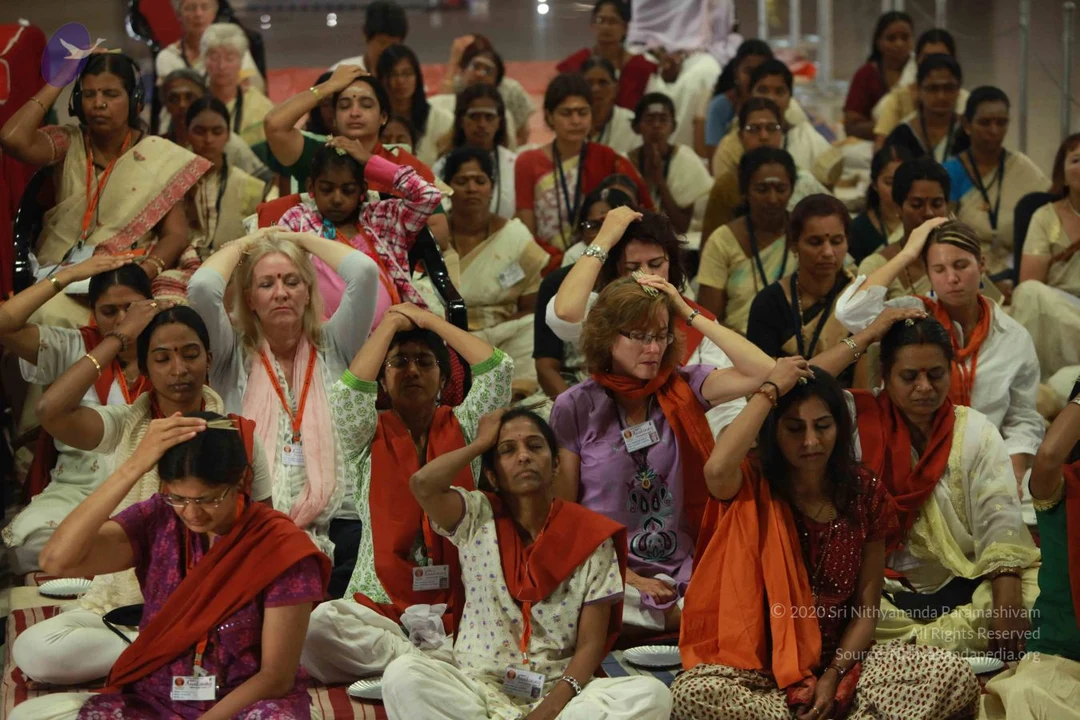
20 photosSource gallery
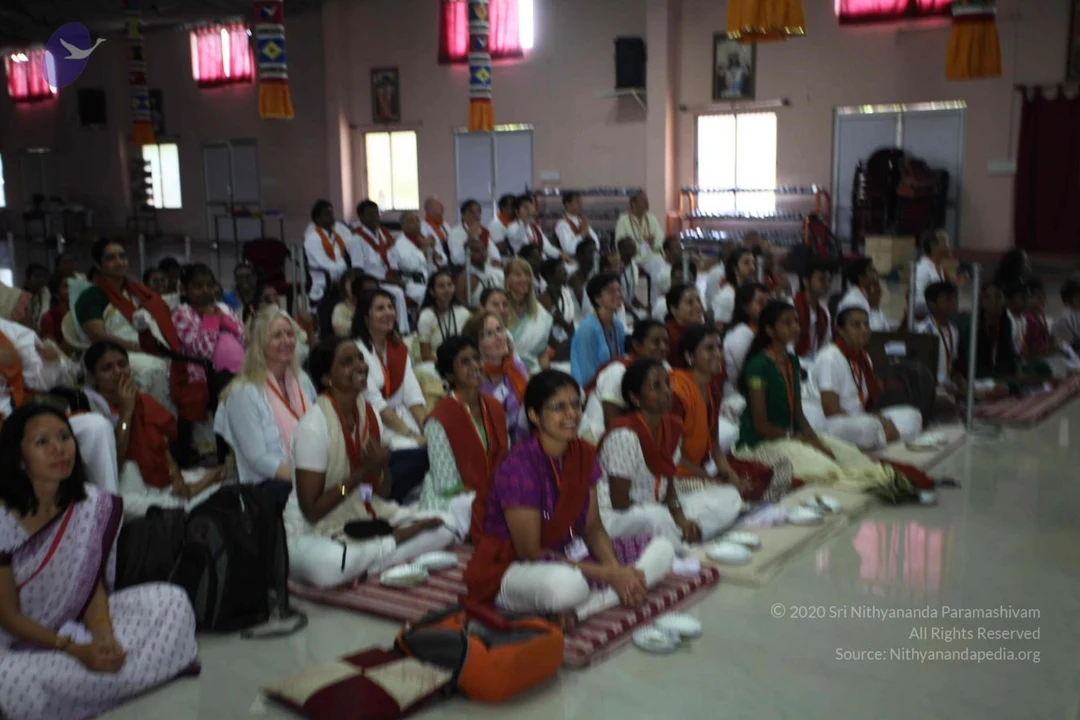
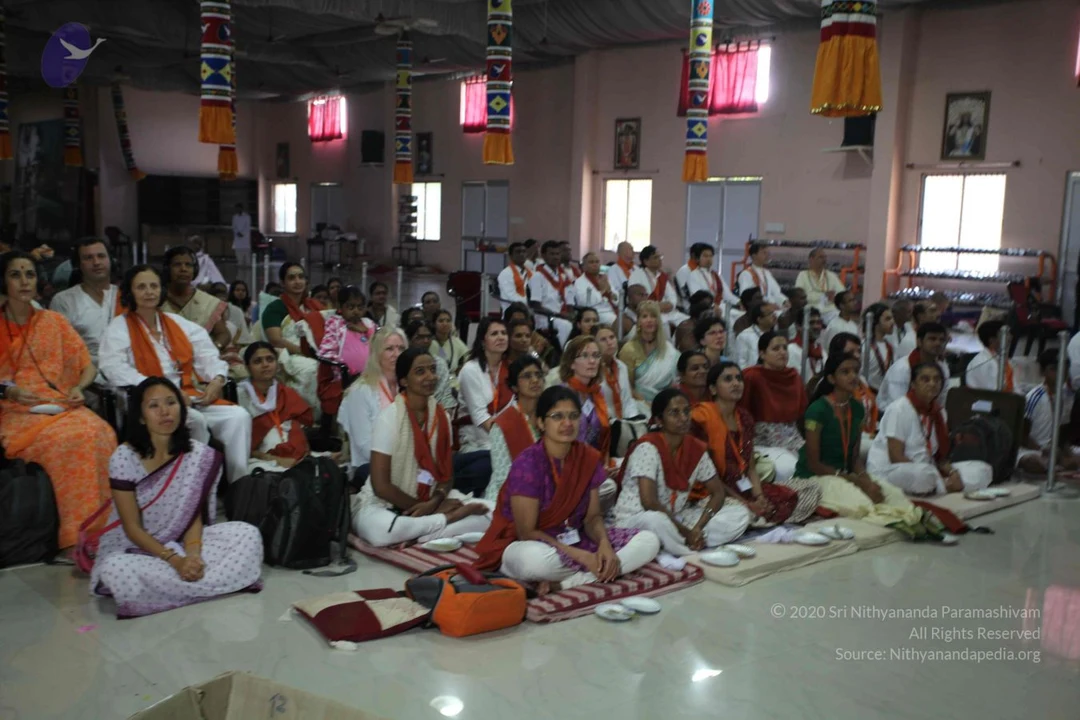
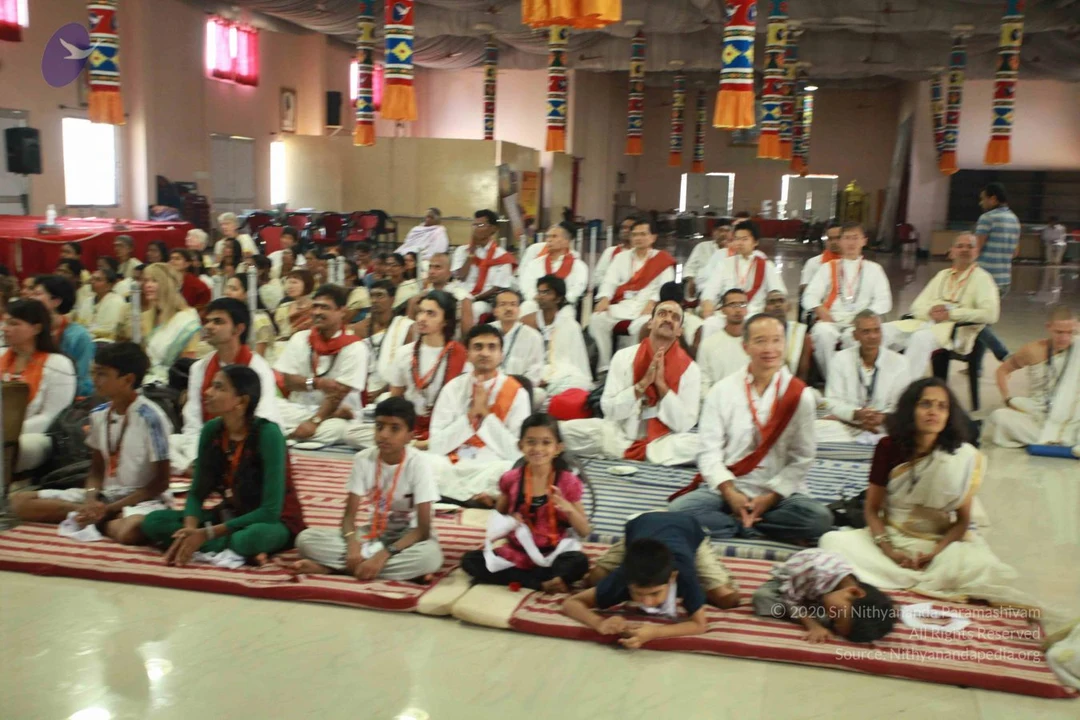
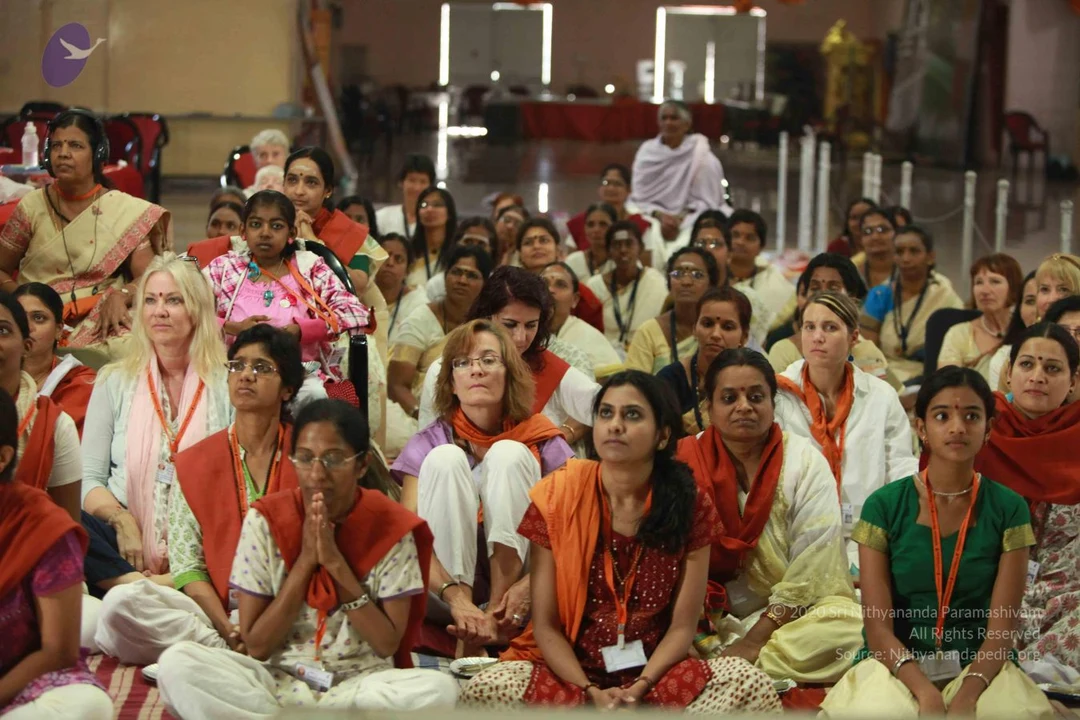
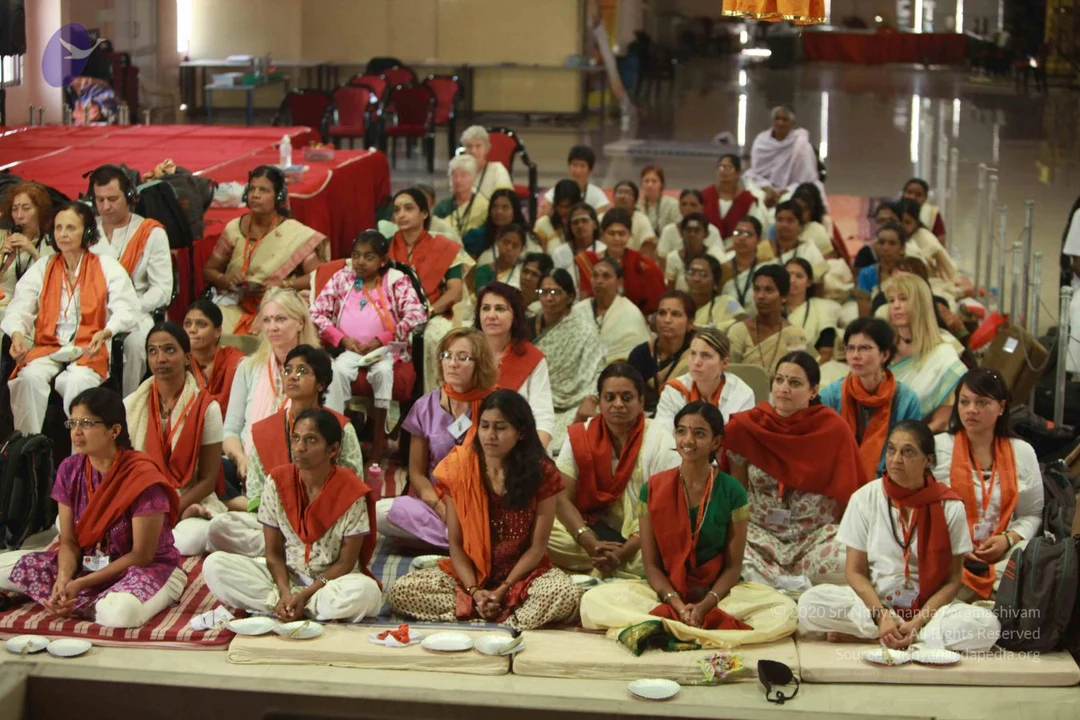
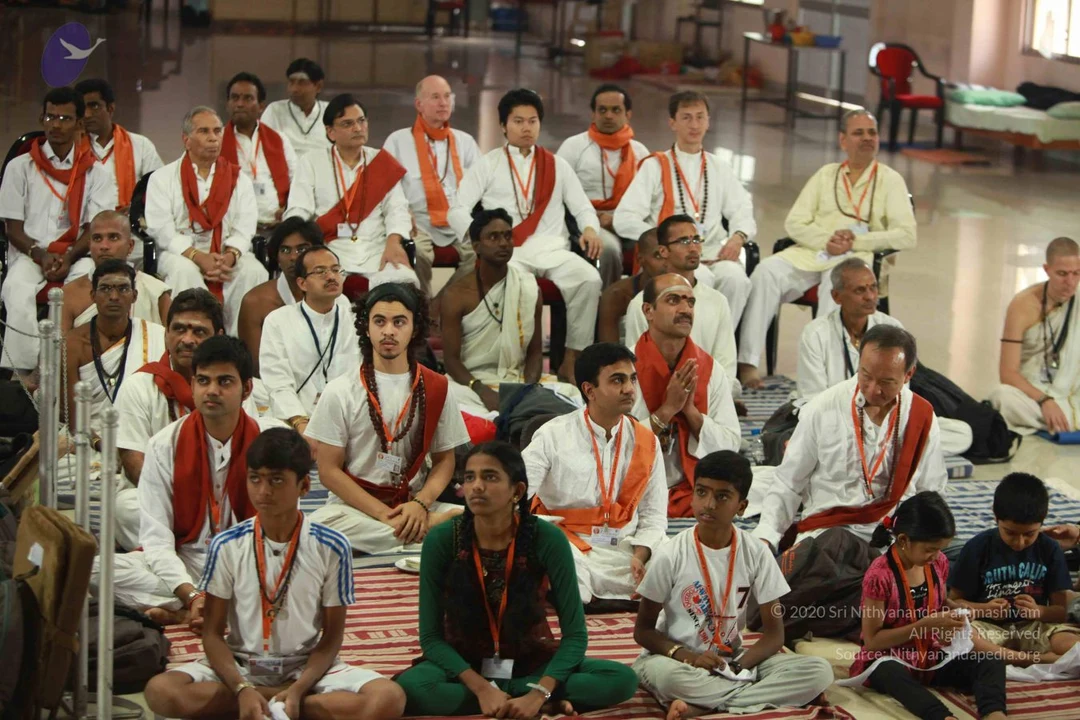
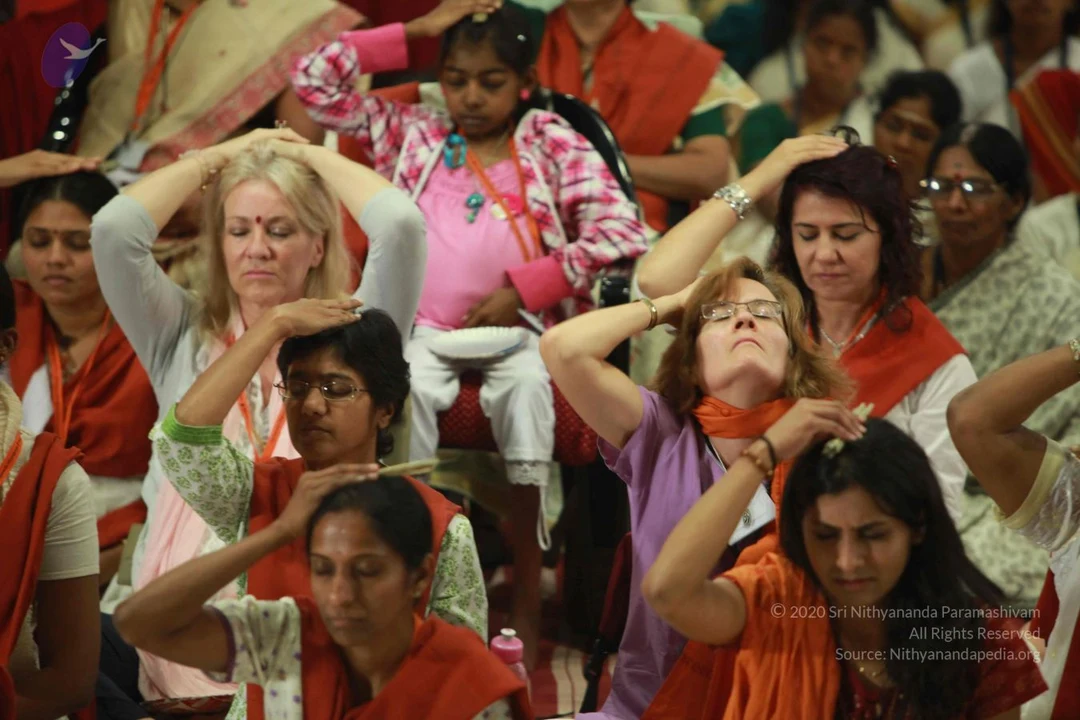
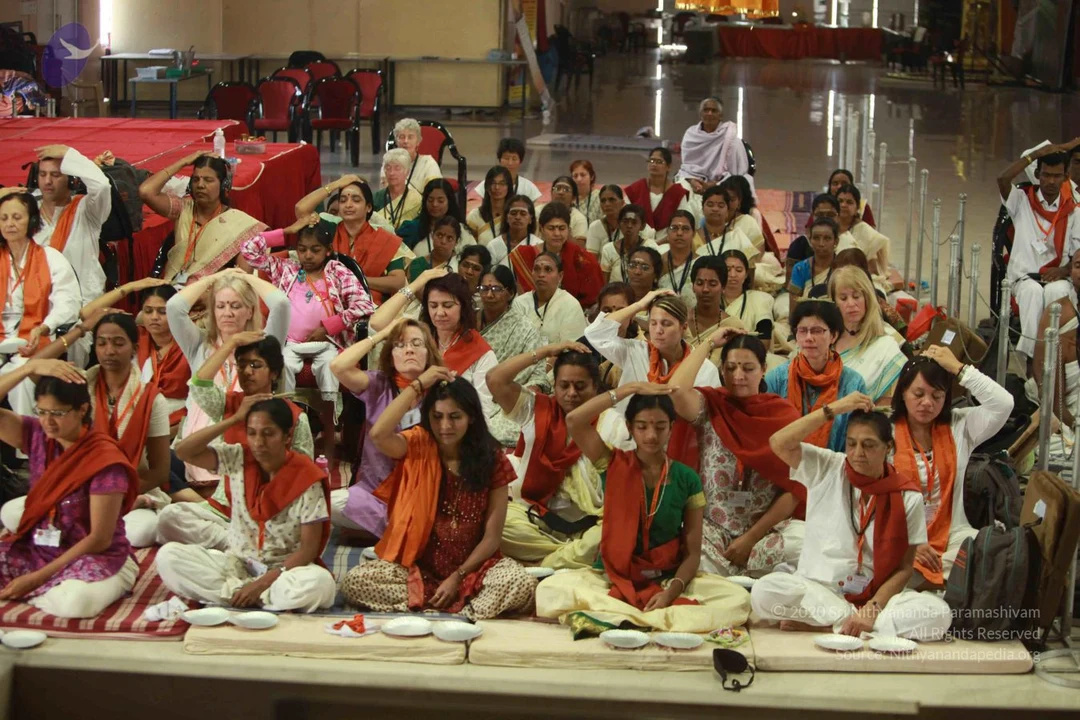
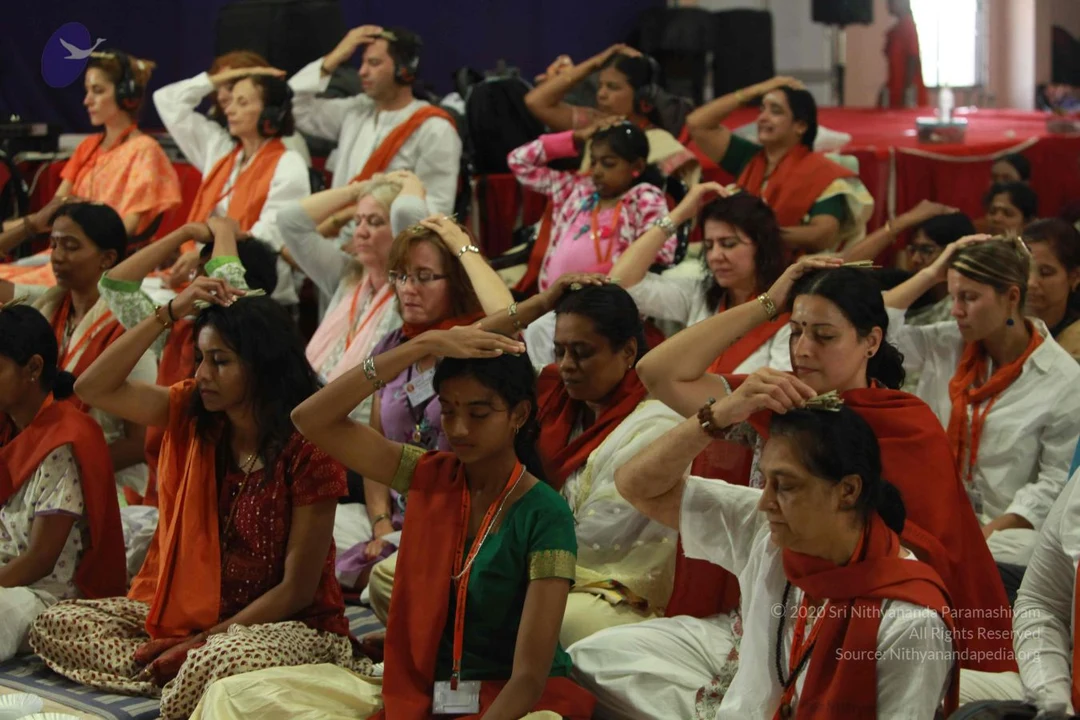
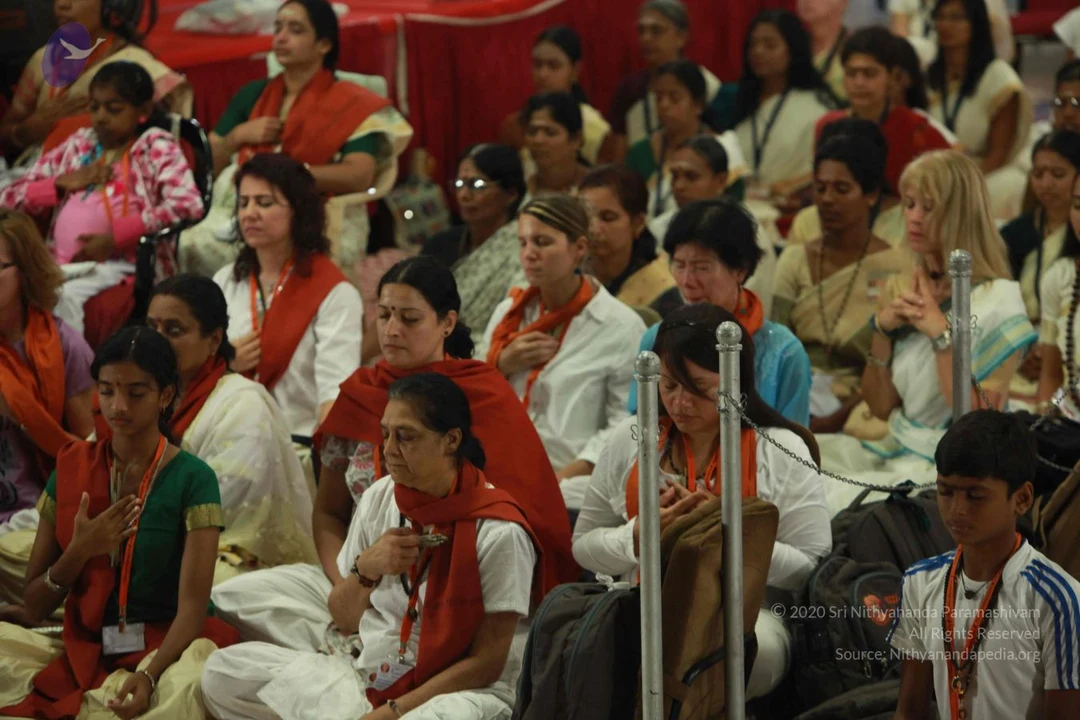
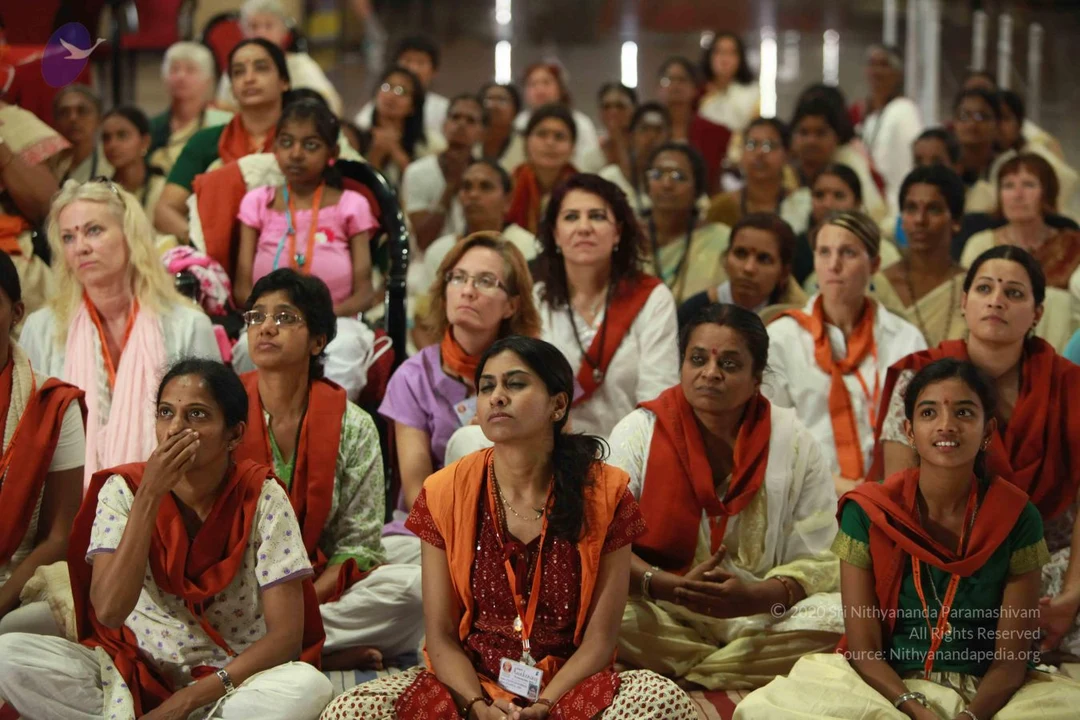
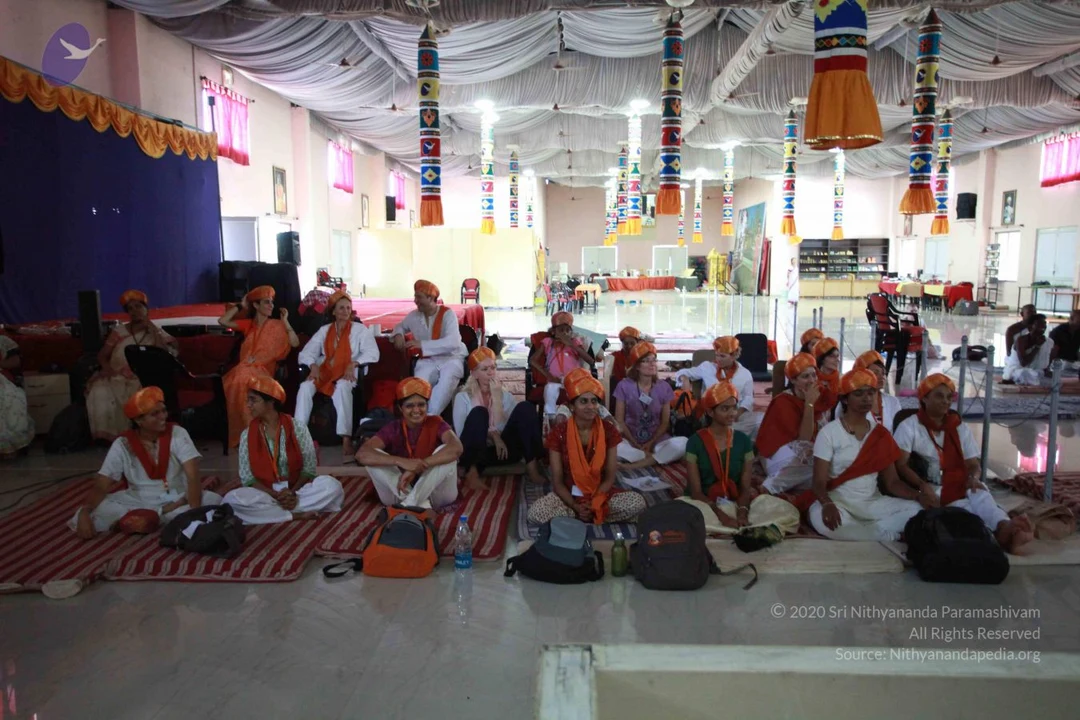
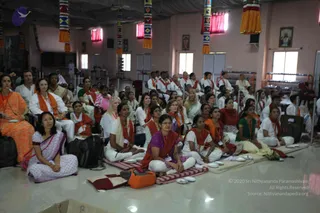
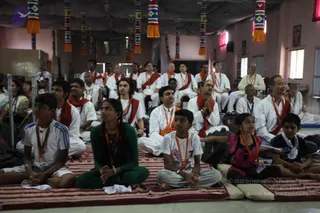
A photograph of a flat-screen monitor showing a video conference window. On screen, a man with a red bindi and tilak on his forehead sits with palms pressed together in namaste against a yellow wall, wearing an orange-saffron garment with rudraksha malas around his neck and a striped cushion behind him. A small inset thumbnail in the lower right shows a seated audience. The monitor sits in a dim room with a blurred figure at the right edge. The image depicts a screen, not a physical person in the room.A photograph of a wall-mounted flat-screen monitor in a dim room showing a video call window. On the screen, a smiling man with a white and red forehead mark and a red bindi stands with palms pressed together in namaste. He wears an orange-saffron garment and multiple red-brown rudraksha malas around his neck. A small inset in the lower right shows a seated audience. A camera sits on the monitor's stand at lower left, and a video call toolbar runs along the top of the screen.A flat-screen monitor in a dark room shows a video call window with a toolbar of icons across the top. On the screen, a man in saffron-orange robes with a bare chest and a rudraksha mala necklace sits with palms pressed together in namaste, eyes closed, and a sandalwood or vibhuti mark on his forehead. A small inset thumbnail in the lower right shows a seated crowd.A flat-screen monitor displays a video feed of a smiling man with a shaved head and a white tilak mark on his forehead, wearing an orange-saffron robe and a long rudraksha mala with a pale ceremonial necklace. The screen shows a warm yellow background. A small webcam sits on the monitor base, and a blurred indoor hall with pillars and a pink curtain surrounds it. The shown figure is an orange-robed man on a screen, with the cues being the orange robe, rudraksha mala and tilak; appearance-based identification remains uncertain.A large hall with pink walls and hanging colourful woven panels with orange tassels. A dense crowd of seated participants, mostly women in white salwar kurtas, orange and red shawls, and saris in purple, pink, and green, sits on mats and cushions on a polished floor, facing forward toward an unseen speaker. Framed portraits hang on the walls, and a bag rests near the front row. Several people in white and orange clothing fill the middle and back rows.A seated group of participants in an ashram hall with pink walls, hanging colourful striped tassel decorations and a patterned fabric ceiling. Most adults wear white kurta-style clothes with red or orange shawls and orange lanyards, while children wear white t-shirts, a green salwar and a pink dress. They sit cross-legged on striped red-and-white mats and cushions, attentive and facing forward, some with hands folded in prayer. A man in the front centre has his palms pressed together. Framed pictures hang on the back wall and a speaker is visible on the right.
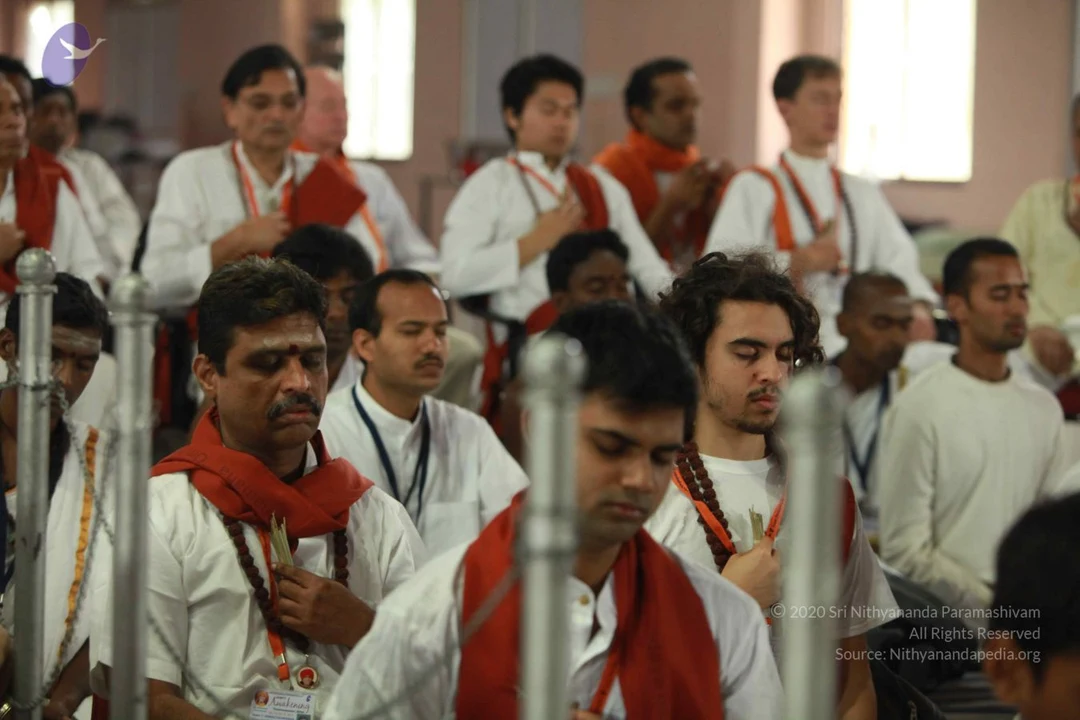
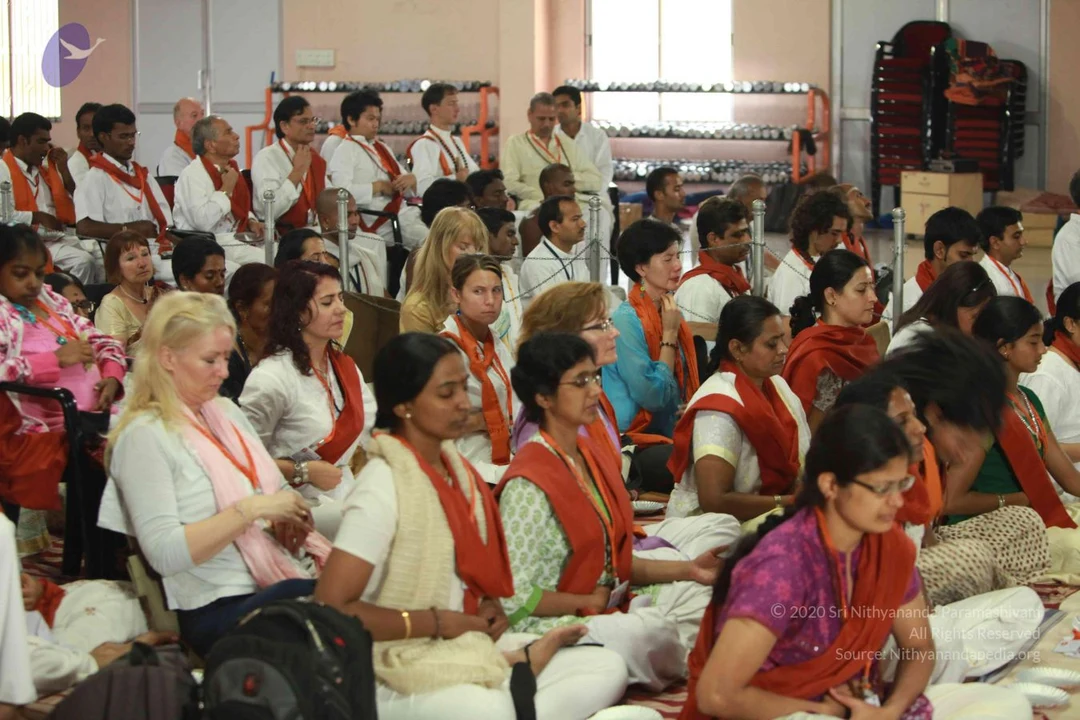
THESamayama-Participants
4 photosSource gallery
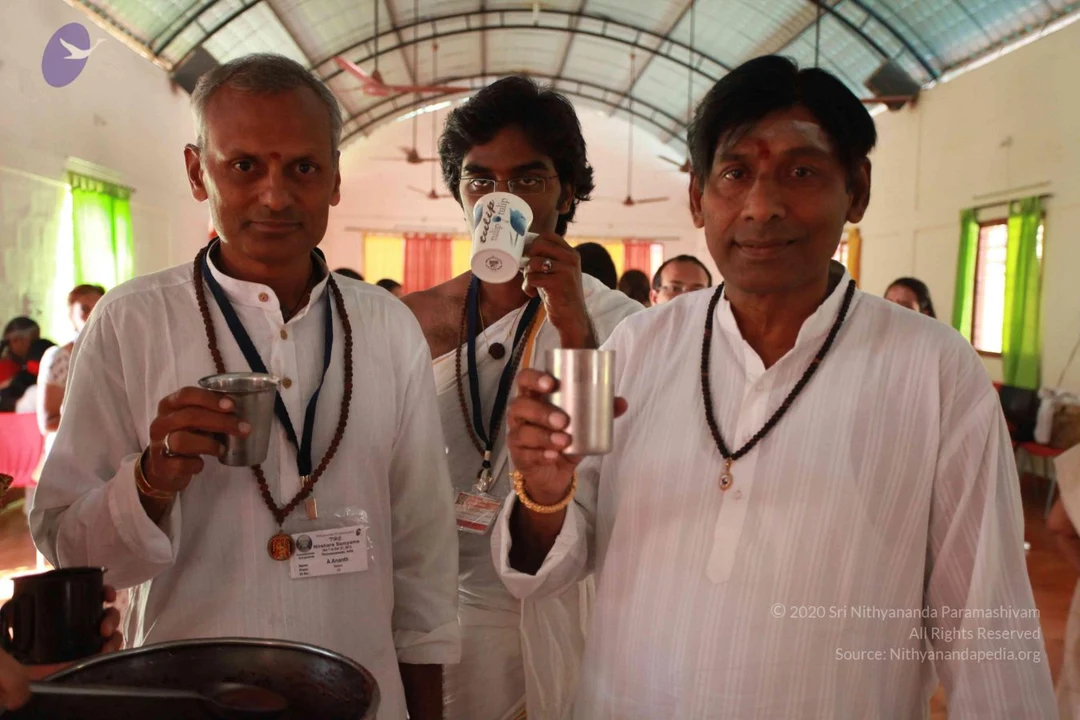
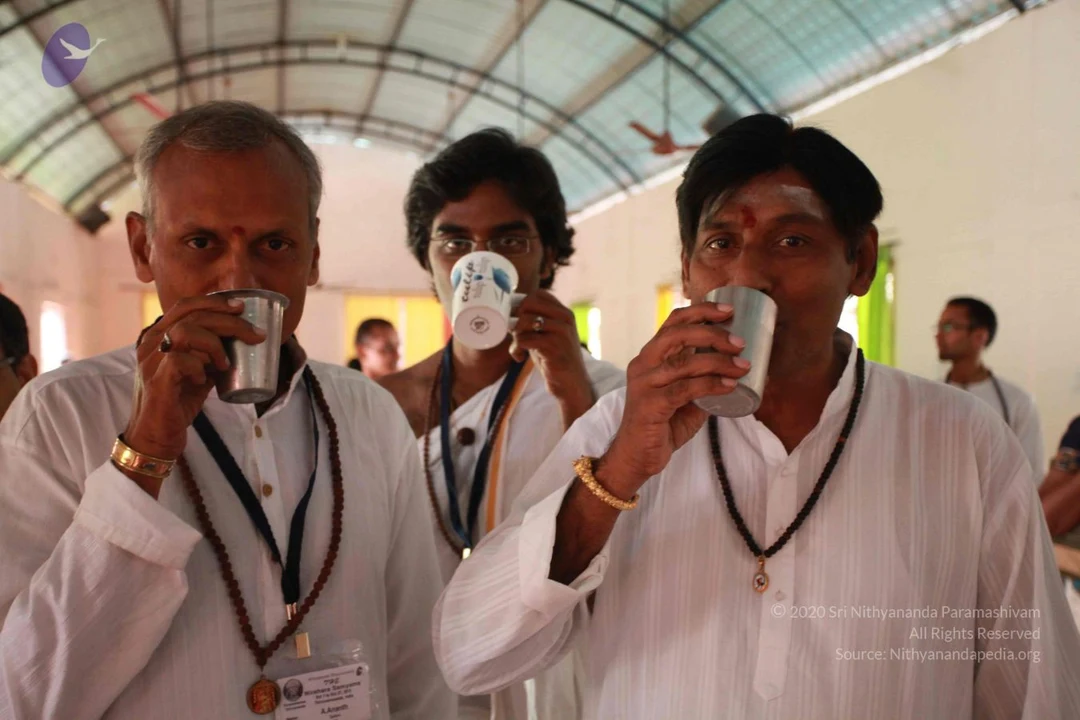
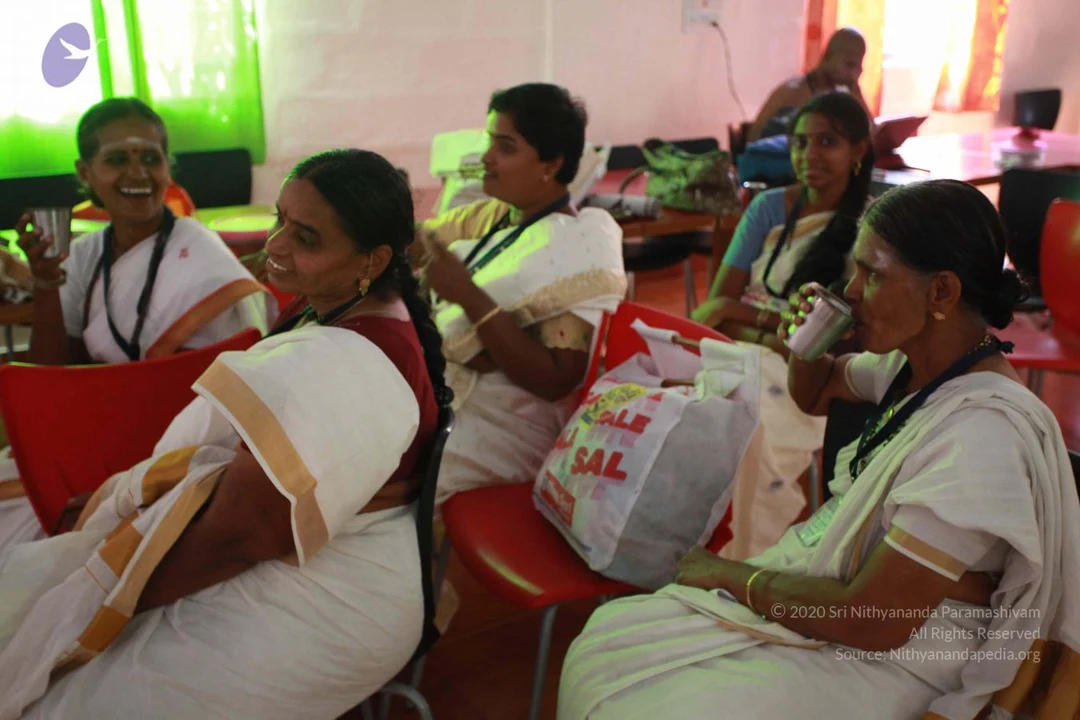
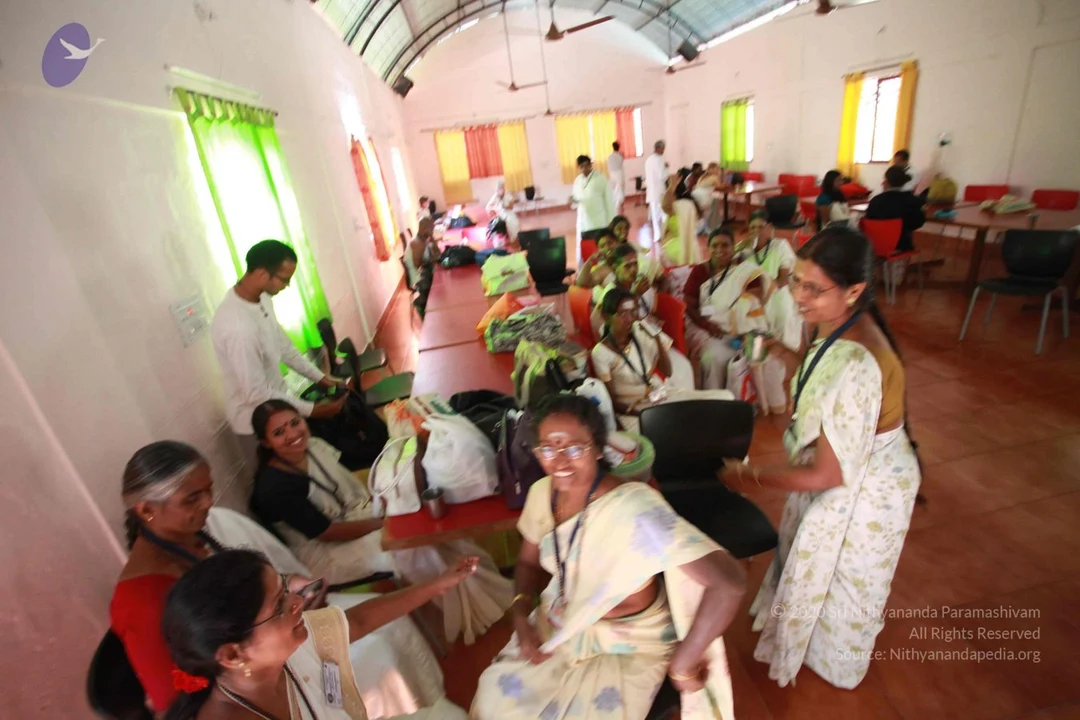
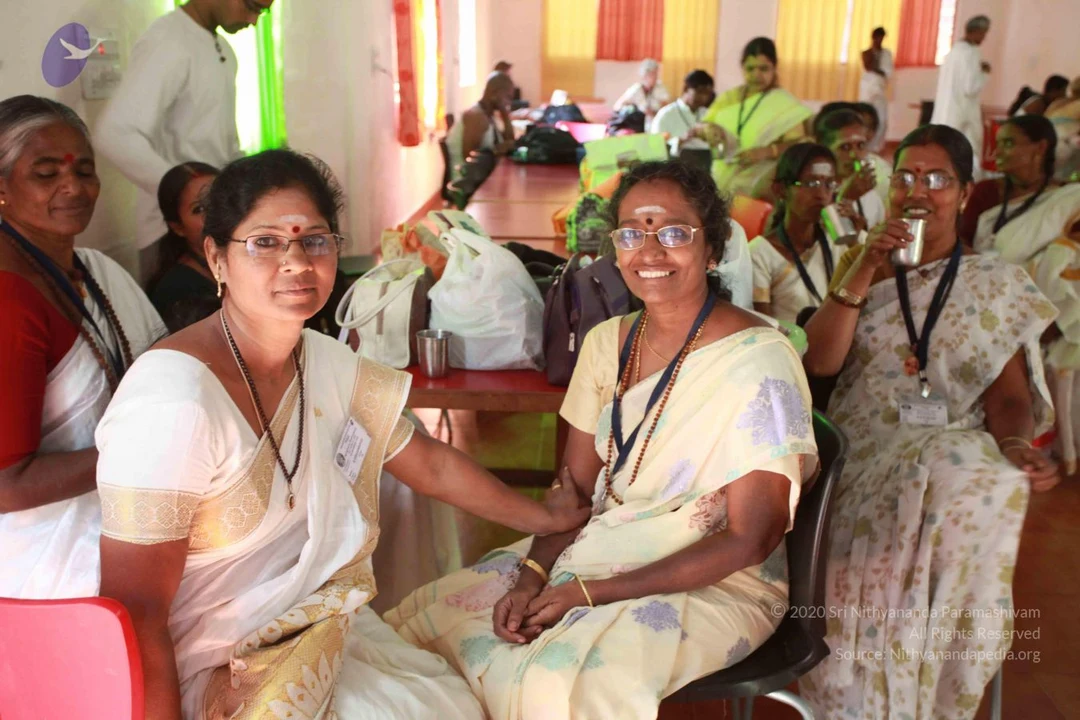
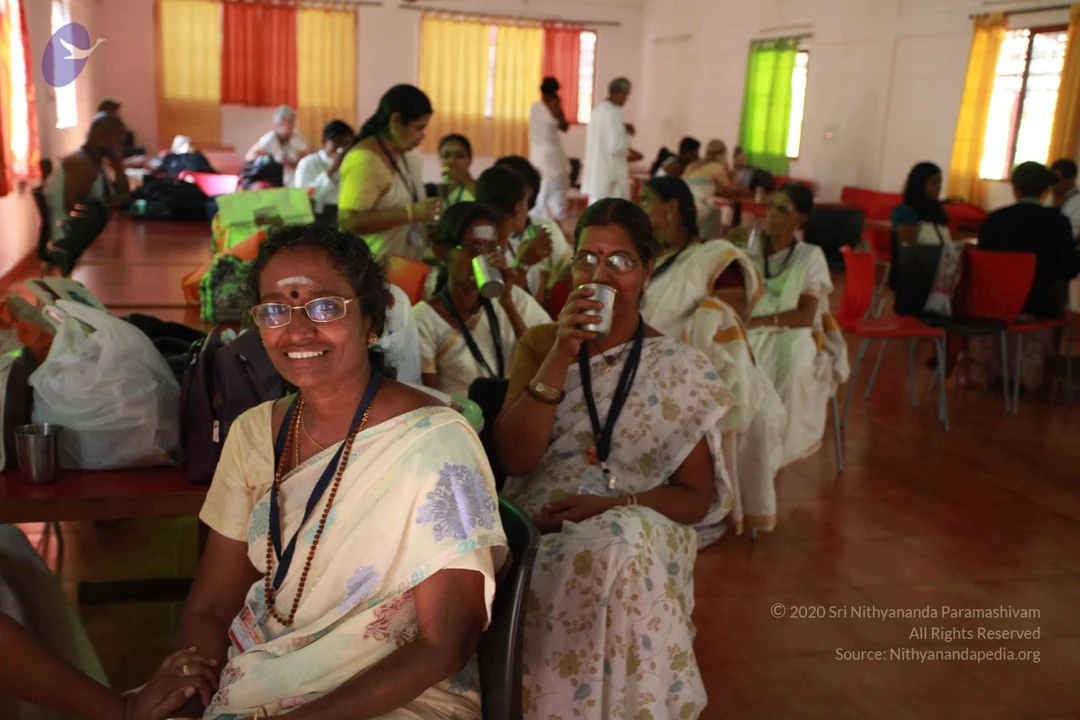
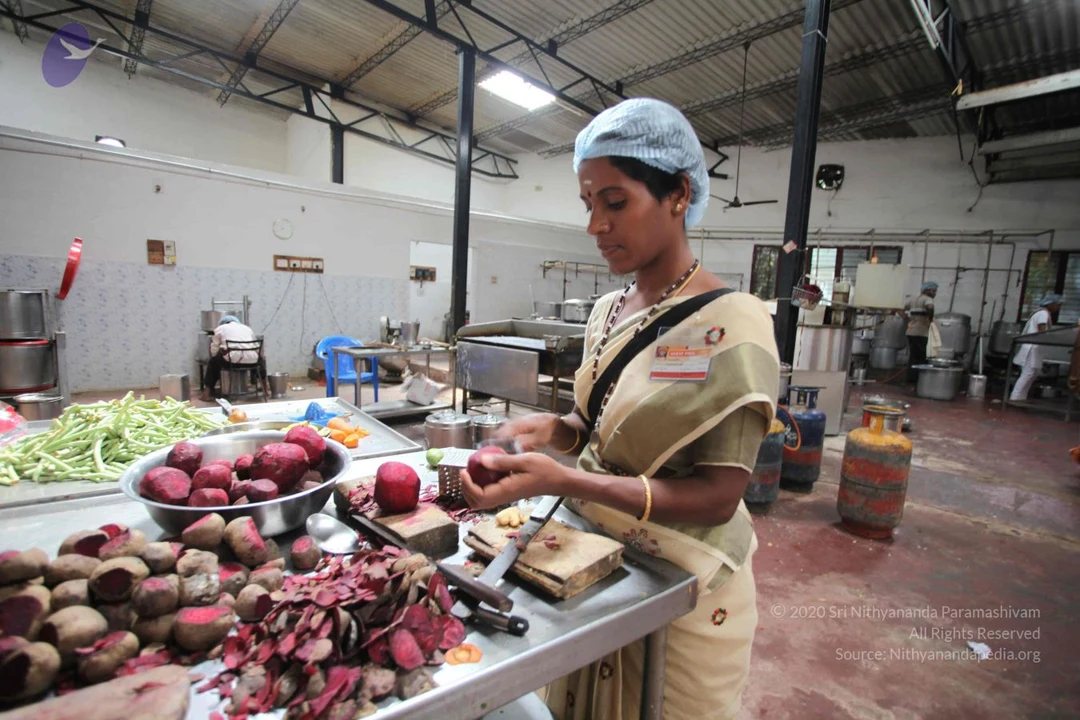
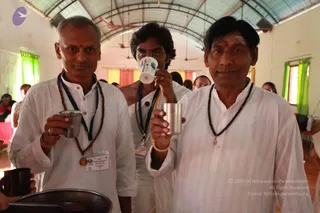
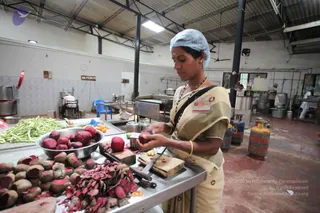
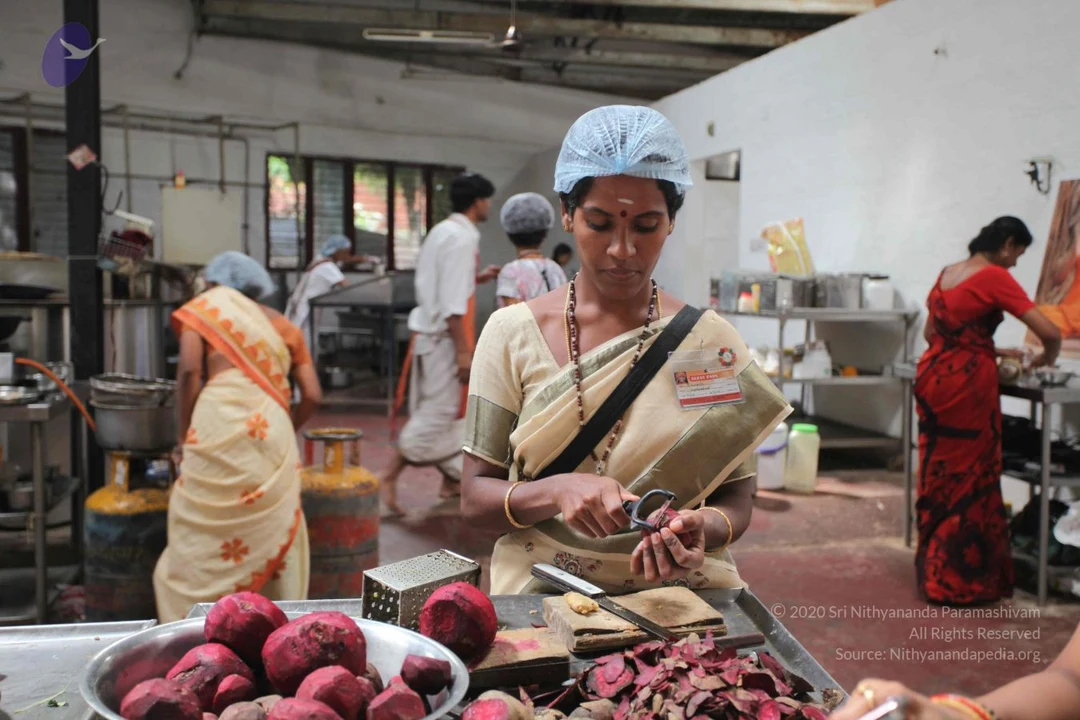
Large group photograph of many participants standing and seated outdoors in front of a red-orange wall, green shrubs and a flowering red-blossom tree. Most women wear white and cream saris with gold borders and blue lanyards with ID badges; several men in white shirts and white dhotis stand at the back. Some women wear rudraksha beaded mala necklaces and red blouses. Palm trees and a tiled-roofed structure appear at the top left.Group photograph of a large group of participants posed outdoors in front of a red-orange wall and a flowering red-blossomed shrub, with palm trees behind. Many women sit on the lawn in the front rows wearing white and cream saris with coloured borders, some in red, maroon and green blouses, with blue lanyards and name badges around their necks; some wear rudraksha-style beaded malas. Men stand in the back rows in white shirts and white dhotis-style clothing with lanyards. A woman in the front centre covers her eyes with her hands. No clearly identifiable a person figure is visible in this group photograph.Three men stand close together in a high-ceilinged hall with arched roof and ceiling fans, green and yellow curtains behind them. Left, a man in white kurta with rudraksha mala and a name badge holds a steel tumbler. Centre, a man in white dhoti and open-chested wear with glasses and a lanyard raises a white ceramic cup to his lips. Right, a man in white kurta with rudraksha mala and a red-marked forehead holds a steel tumbler and smiles. Other people stand in the background, and a metal tray is at the lower left. A caption on the image reads a pedia.org, which is not includedA woman in a cream and gold sari with a light blue hairnet grates a red beetroot over a wooden chopping board in a large commercial kitchen. Steel prep tables hold a bowl of whole beetroots, heaps of beetroot peel, green beans and sliced carrots. Stainless steel pots and gas cylinders line the industrial floor under a corrugated roof. A lanyard with an ID badge hangs on her chest, and a wall plaque is visible in the background. No a person candidate is visible.
21-Items-Naivedyam

20 photosSource gallery
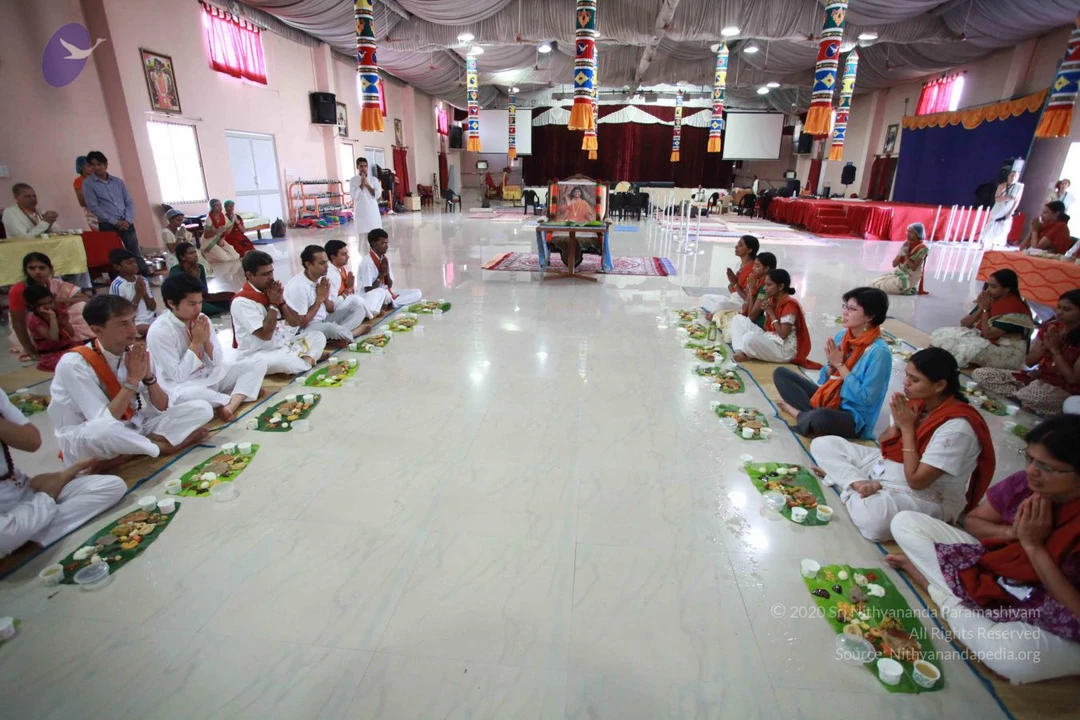
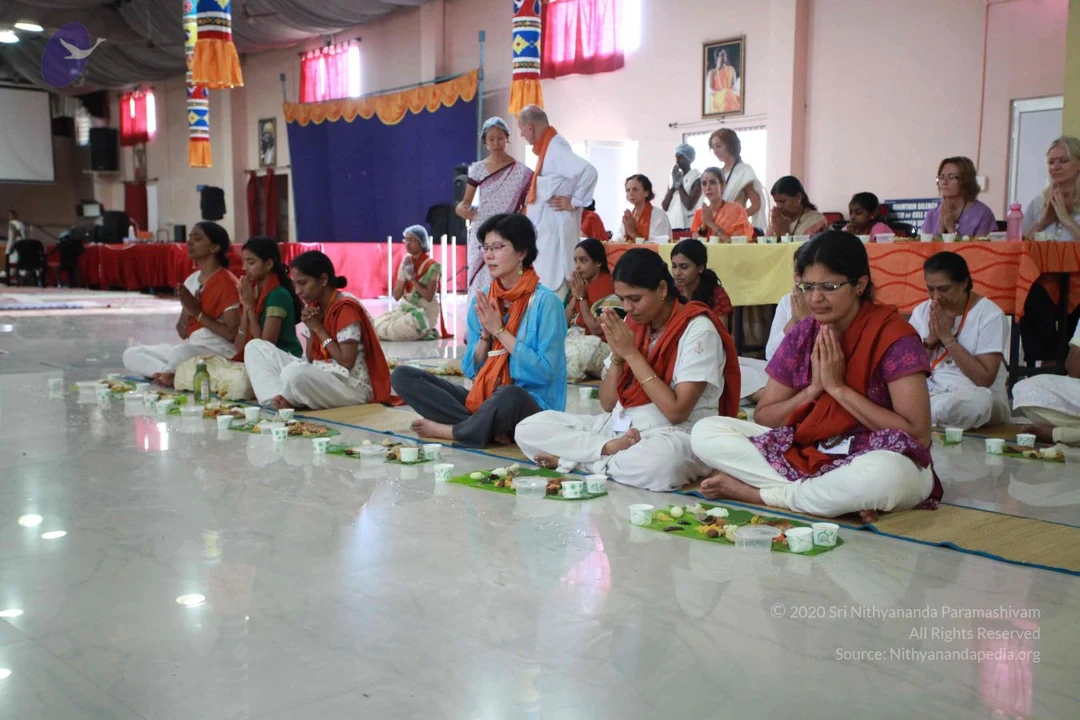
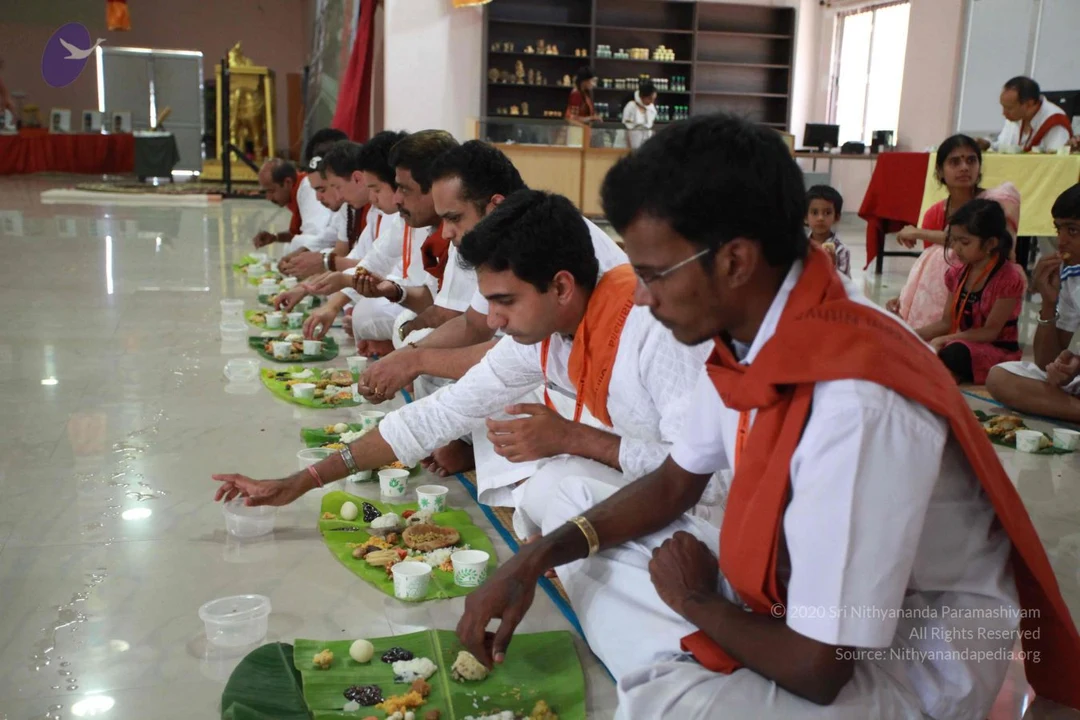
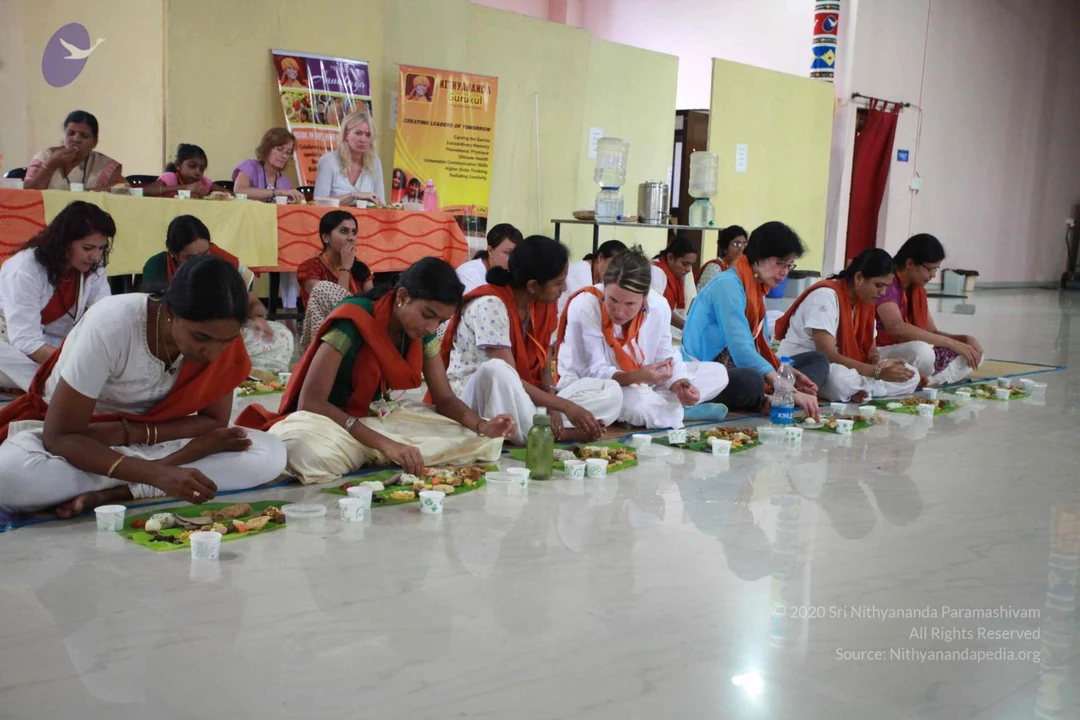
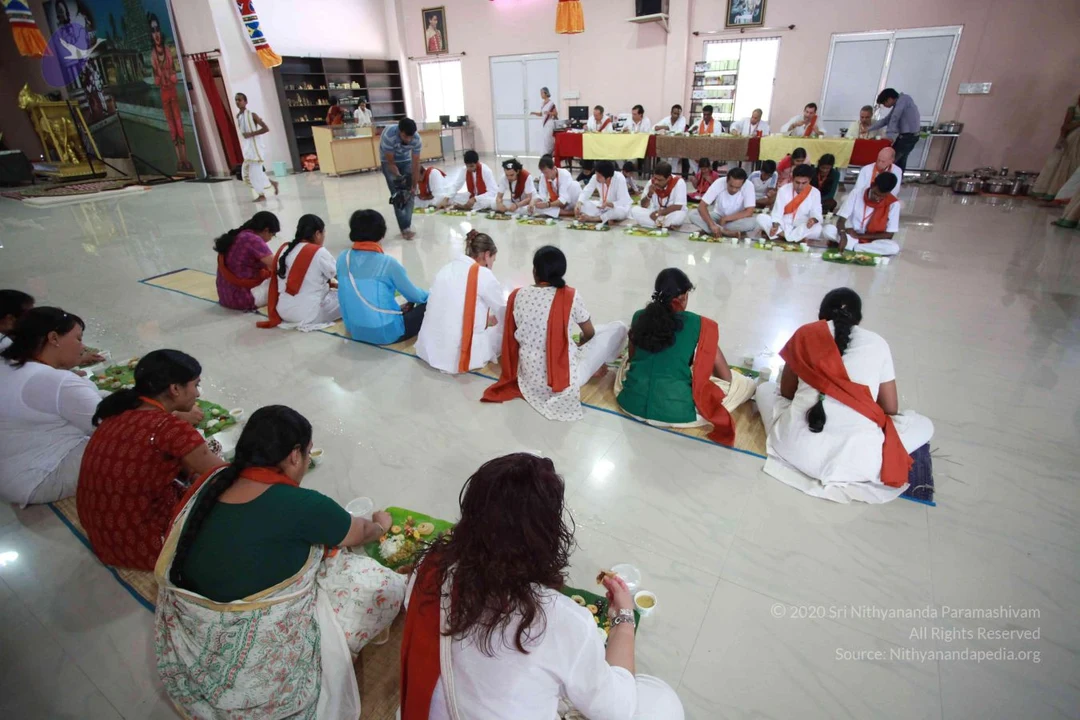
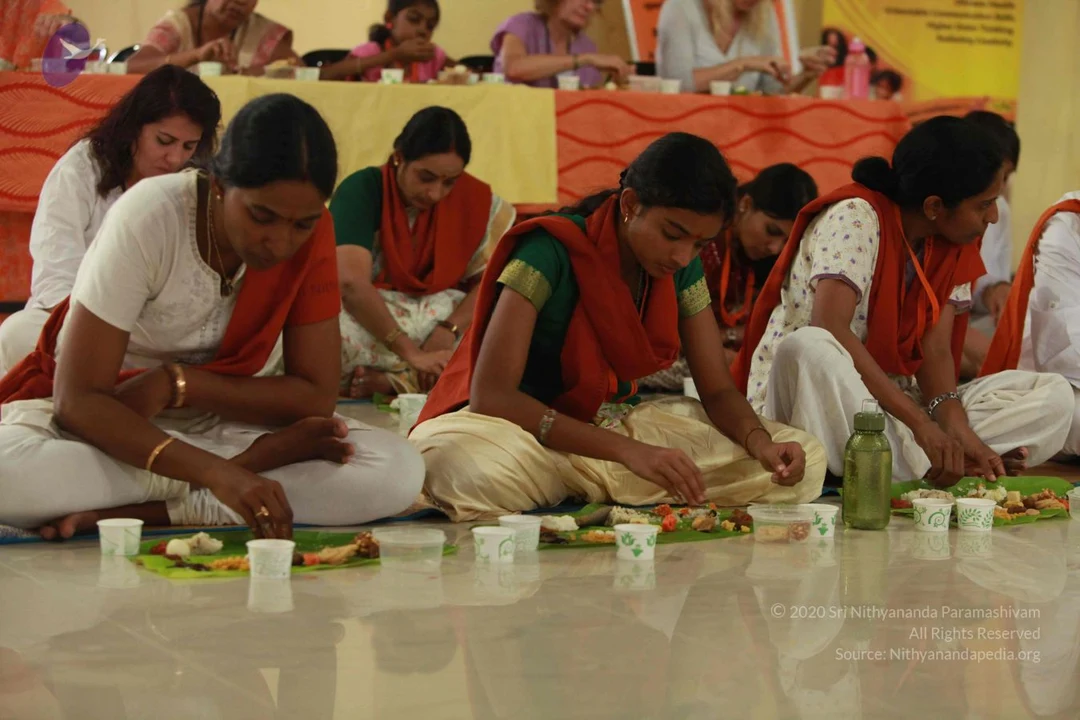
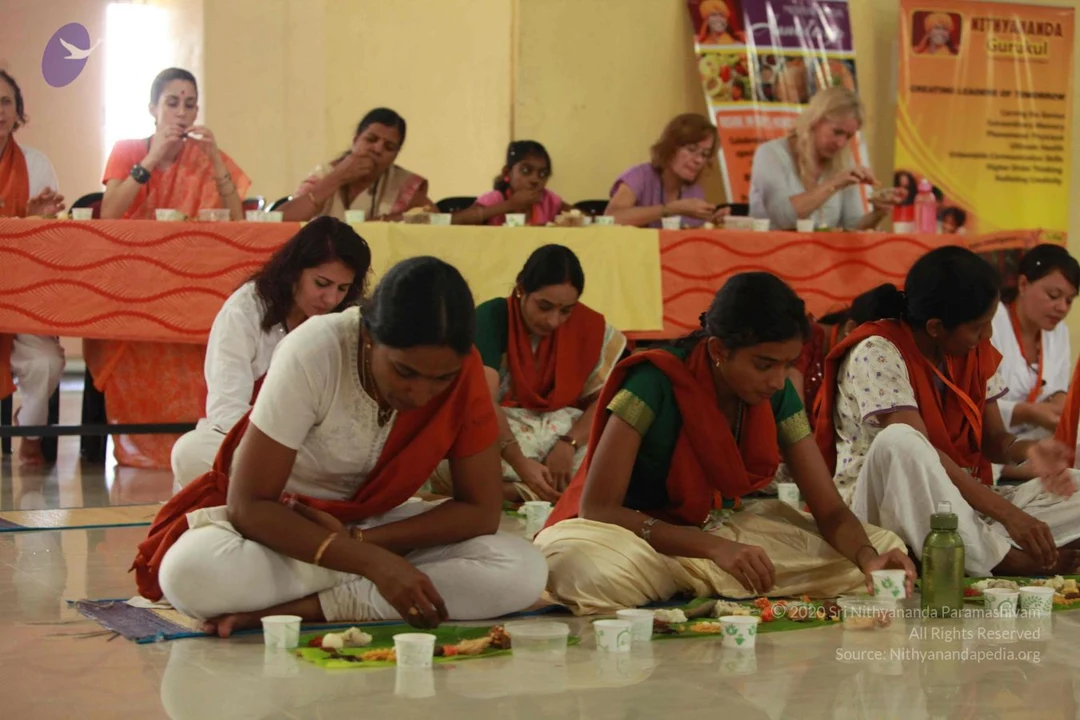
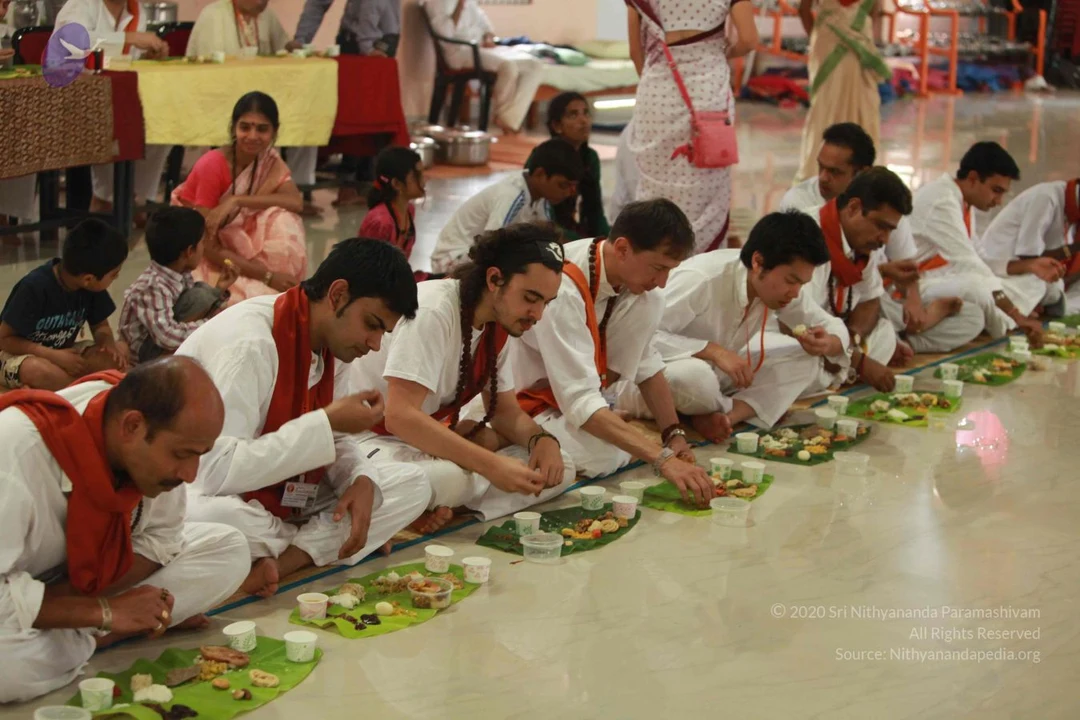
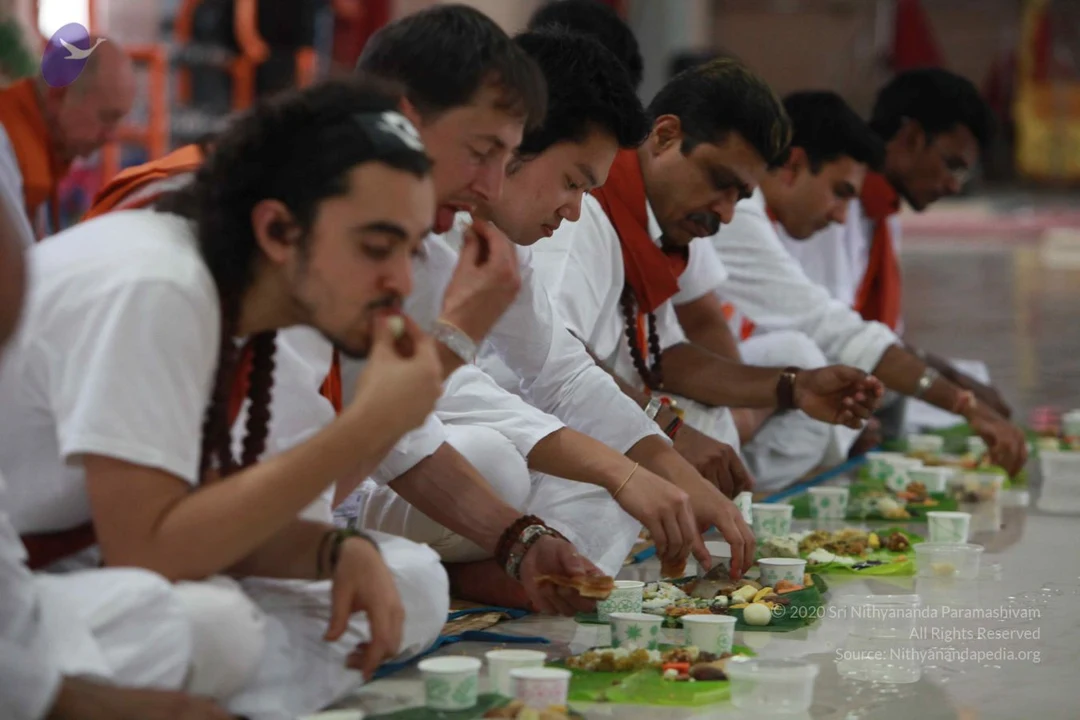
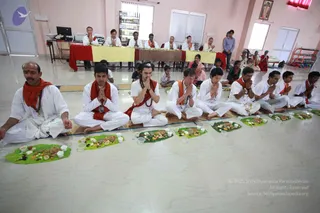
A photograph of a table draped with a multicolored floral tablecloth over black fabric, holding a row of eight small silver bowls and eight gold-framed informational panels standing behind them. Each panel shows temple photographs and printed text about a shrine or temple. A large golden statue of a seated deity, with a crown and ornate ceremonial decoration, stands at the upper right beside a red-and-gold backdrop of a temple illustration. No people are visible in the scene.Empty hall with pink walls and a polished white marble floor, viewed from one end. Along the left and right sides, black-draped tables hold rows of framed photographs with gold frames and printed text panels, each set on a small plate or dish. A central table with a red cloth holds more framed pictures and a small brass or gold ornament. Windows and a wall mirror are visible, with orange cloth hangings at the top corners. No people are present.Interior of an empty hall with a pale tiled floor and pink walls. Two long tables draped in black cloths form a U-shape, holding rows of framed certificates or photo panels with gold frames and small offering dishes. A central table covered in red cloth holds a small ornate figure and a few framed photos. No people are visible.A photograph of a display table with several gold-framed panels describing temples, including Namakkal Anjaneyar Temple and Sarabha/Sanjeevi-style temple entries, each with photographs and text. Framed panels show a red-faced deity murti with garlands and a painted temple scene. In the foreground, steel bowls hold fried vada snacks and a dark liquid, and a rectangular tablecloth with a red and white pattern covers the table. No people are visible in the scene.A photograph of a long draped table in an indoor hall set with a row of gold-framed informational boards, each pairing photographs of temples and deities with printed paragraphs. Small metal bowls holding food offerings sit along the table's cloth and tiled runner, and a steel container stands at the back right. No people are visible. The framed boards depict temple scenes including a board headed Pandharpur Vithoba Temple showing a deity figure and a board headed Pandharpur Gateway to Lord Vishnu, with a figure in red and orange robes. The setting suggests a naivedyam display of offerings arranged in front of temple photographs.A photograph of a large hall with pale pink walls where a group of men and women sit cross-legged on the floor in white clothing with orange-red shawls, many with palms pressed together in namaskar. In front of each seated devotee is a green leaf plate holding a vegetarian meal with small bowls of food, a naivedyam-style offering. A row of people sits behind a long table draped in yellow and red cloths at the back of the room, and a framed deity picture hangs on the upper right wall. Several people stand along the sides of the room.

Darshan
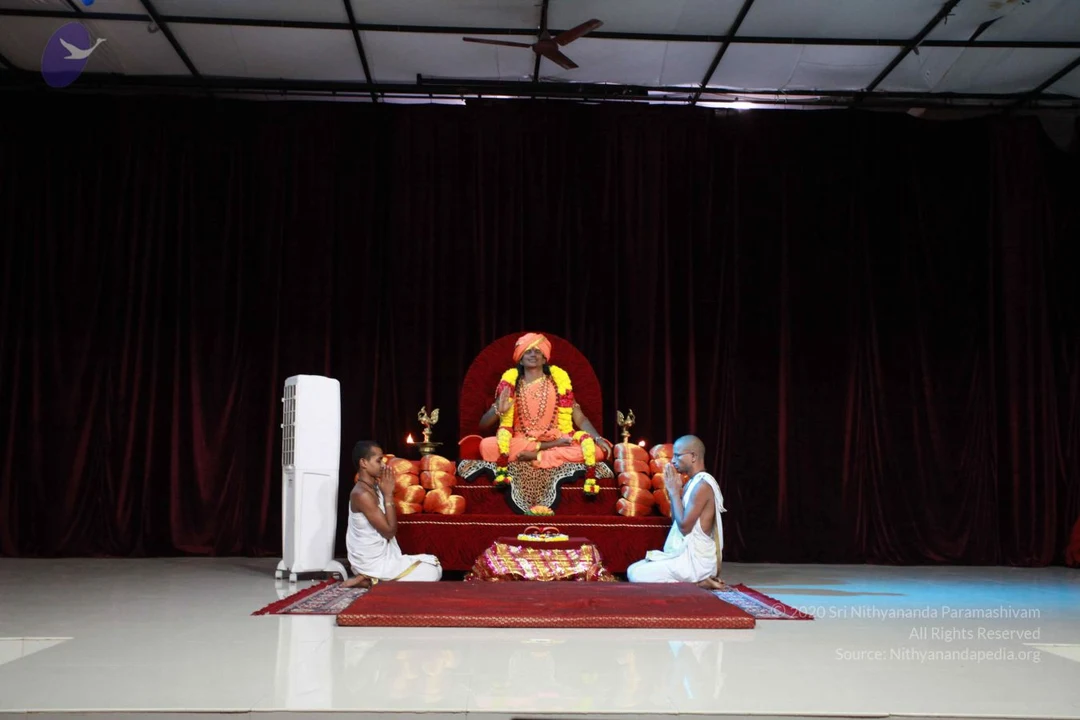
21 photosSource gallery
A seated figure on a red-cushioned throne on a stage before dark red drapes, wearing an orange-saffron turban and orange robes with a rudraksha mala and a garland of yellow and orange flowers, hands raised in namaste. Two men in white dhotis kneel on red mats on either side with hands in anjali mudra, a small brass oil lamp burns beside the throne, and a tray with offerings sits in front. A white tower fan stands at left. The appearance is a probable match to Swamiji based on the saffron turban, orange robes, rudraksha mala and floral garland, seated in a puja-like session.A photograph on a stage with dark red drapes behind. A figure seated on an ornate red and orange cushioned throne, wearing an orange turban and orange-saffron robes, with a rudraksha mala and a garland of marigolds and yellow flowers draped over the shoulders, hands raised in greeting. Two young men in white dhotis kneel on red mats on either side with palms pressed together in namaskar. Brass oil lamps flank the throne, a small tray of offerings sits before it, and a white tower fan stands to the left. The figure's identity is uncertain from appearance; roles described are the seated teacher and two kneeling devotees.A photograph of a seated figure on a red throne-like dais with orange cushions and a leopard-print rug, hands folded in namaskar. The central figure wears an orange turban, orange clothing, a gold ornate necklace and a long yellow-and-orange marigold garland. Two devotees in white dhoti-style garments kneel on red carpets on either side with palms pressed together. In front is a small tray with flowers and a red-and-gold cloth, with an oil lamp and brass lamp stands nearby, and red curtains behind. a person: the central figure shows the orange turban, ornate necklace and garland cues, so the identification is appearance-based and uncertain.A photograph of a seated figure on an ornate red throne with gold-and-orange cushions and a leopard-print panel, hands in anjali mudra. The central figure wears an orange turban, orange robes, layered rudraksha malas, a ceremonial gold necklace, and a garland of marigolds and red flowers. Two devotees in white dhoti-style cloth kneel on the red carpet at either side with palms pressed together in prayer; the man on the right is shaven-headed and wears spectacles. A small offering tray with garlands sits before the throne, and a flame-patterned cloth and a white stand are at the left edge. Draped red curtains form the backdrop.A photograph of a seated figure on a red cushioned throne backed by a red curtain, wearing an orange saffron robe, orange turban, layered gold necklaces and a large garland of yellow and red flowers, with palms pressed together in greeting. Two men in white dhoti-style cloth sit on the floor in prayer pose: one on the left, with a shaved head, and one on the right, bare-chested with a gold-bordered white cloth and rudraksha mala, also with palms joined. A red cushioned box with a flower-garlanded decorated object sits in front, and oil lamps stand on the throne's sides.A photograph of a seated figure on a red cushioned throne-like couch against a dark red drape. The central figure wears an orange turban, orange robes, a long ornate gold-and-beaded necklace, and wears a rudraksha mala, with a large garland of yellow and red flowers draped over the shoulders, and holds one hand raised in blessing. Two men in white dhoti-style clothing with saffron borders sit on the floor before him: one young man seated cross-legged on the left with hands folded, and a shaved-headed man on the right with palms pressed together in namaskar. A small red-draped table holds a floral-rimmed deity murti. A brass oil lamp burns at the right, and a white cooler stands at the left. Swamiji (probable) is the central seated figure, identified by his orange turban, rudraksha mala and ornate saffron attire.

01-THE-SAMYAMA-PARTICIPANTS

1 photoSource gallery
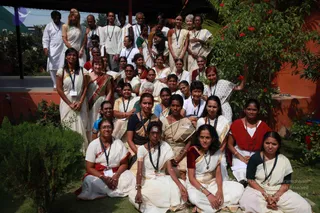
A group photograph of a large crowd of women and men posed outdoors on grass beside a red-painted wall, red flowering shrubs and a shaded pavilion. Most women wear white or cream sarees with gold or coloured borders, several in red, maroon, black and mustard tones, with blue lanyards and name badges. Men in white kurta-style clothes stand at the back. Several seated women in front wear rudraksha malas and pendants. No clearly identifiable a person candidate is present.

October 27 2012

1 photoView all
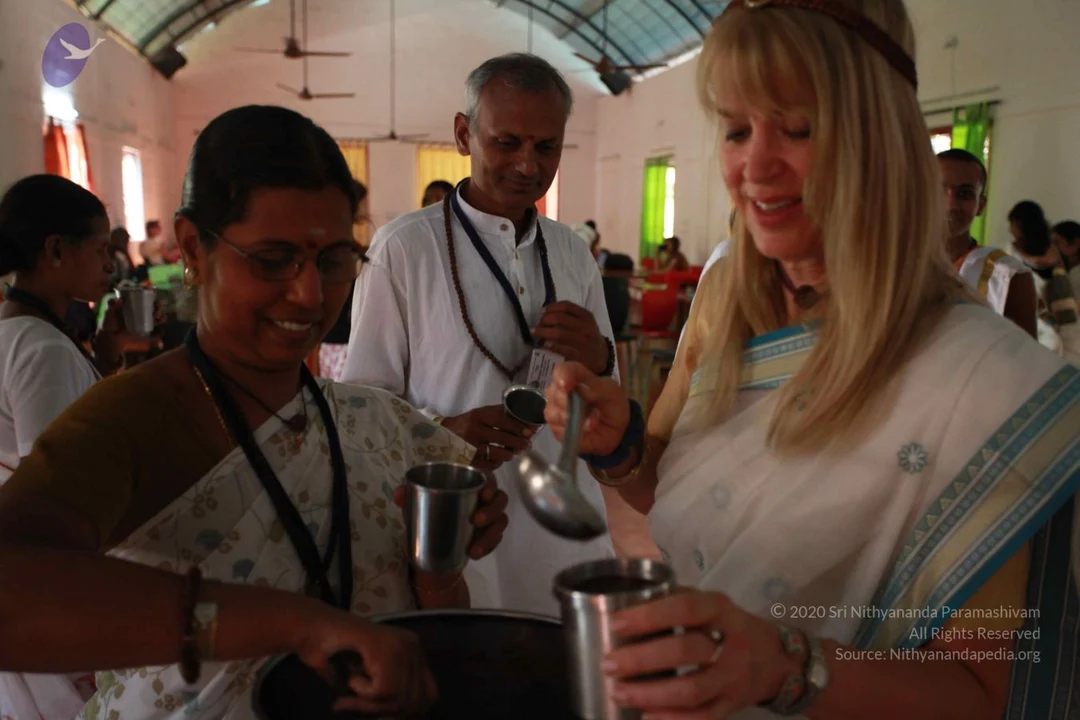
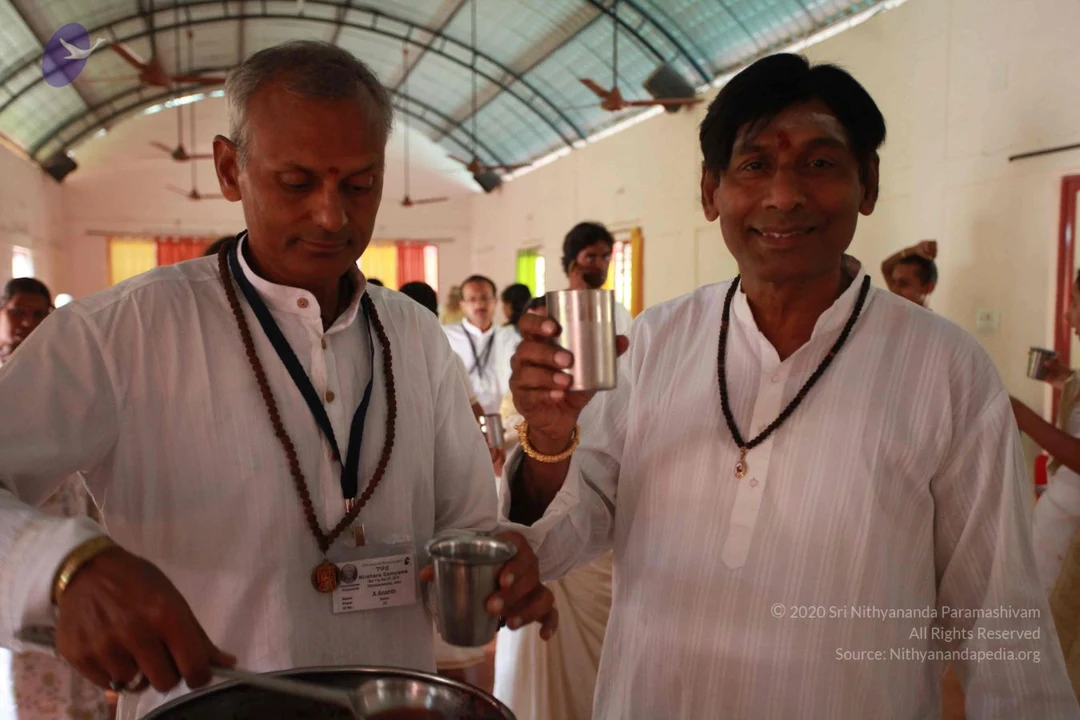
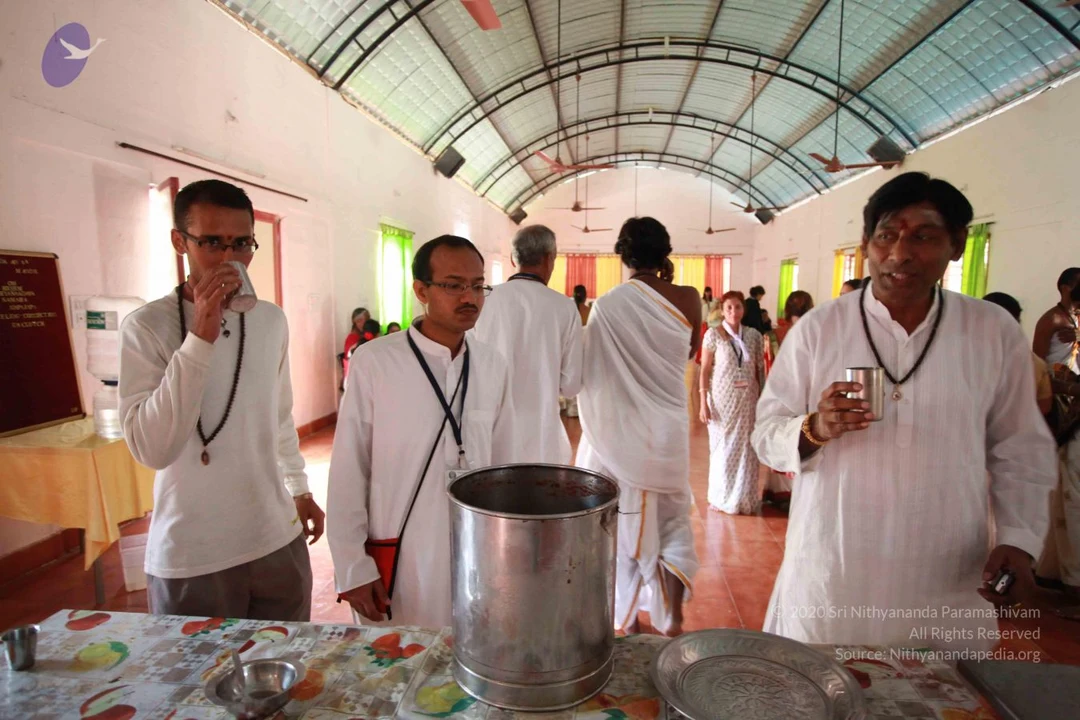
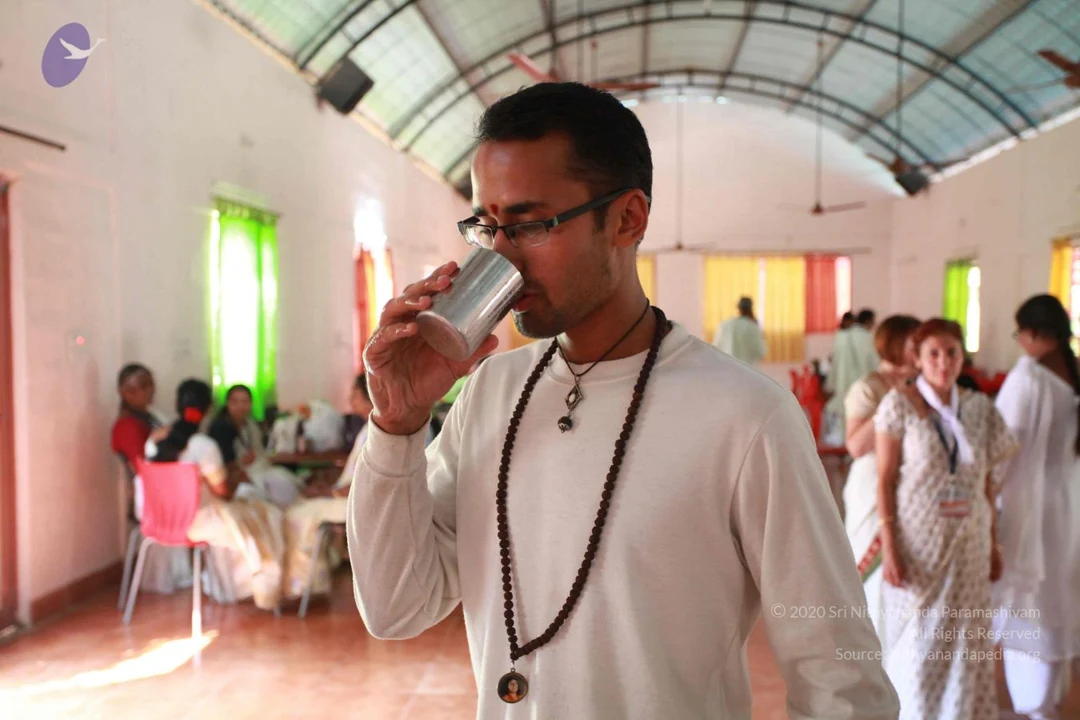
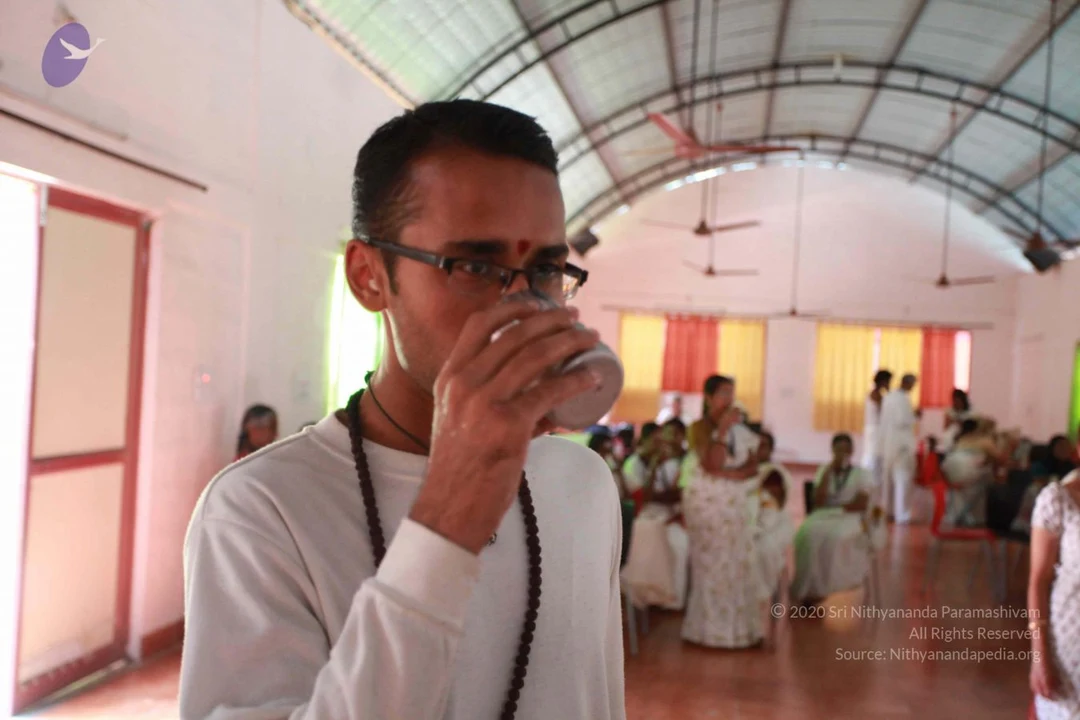
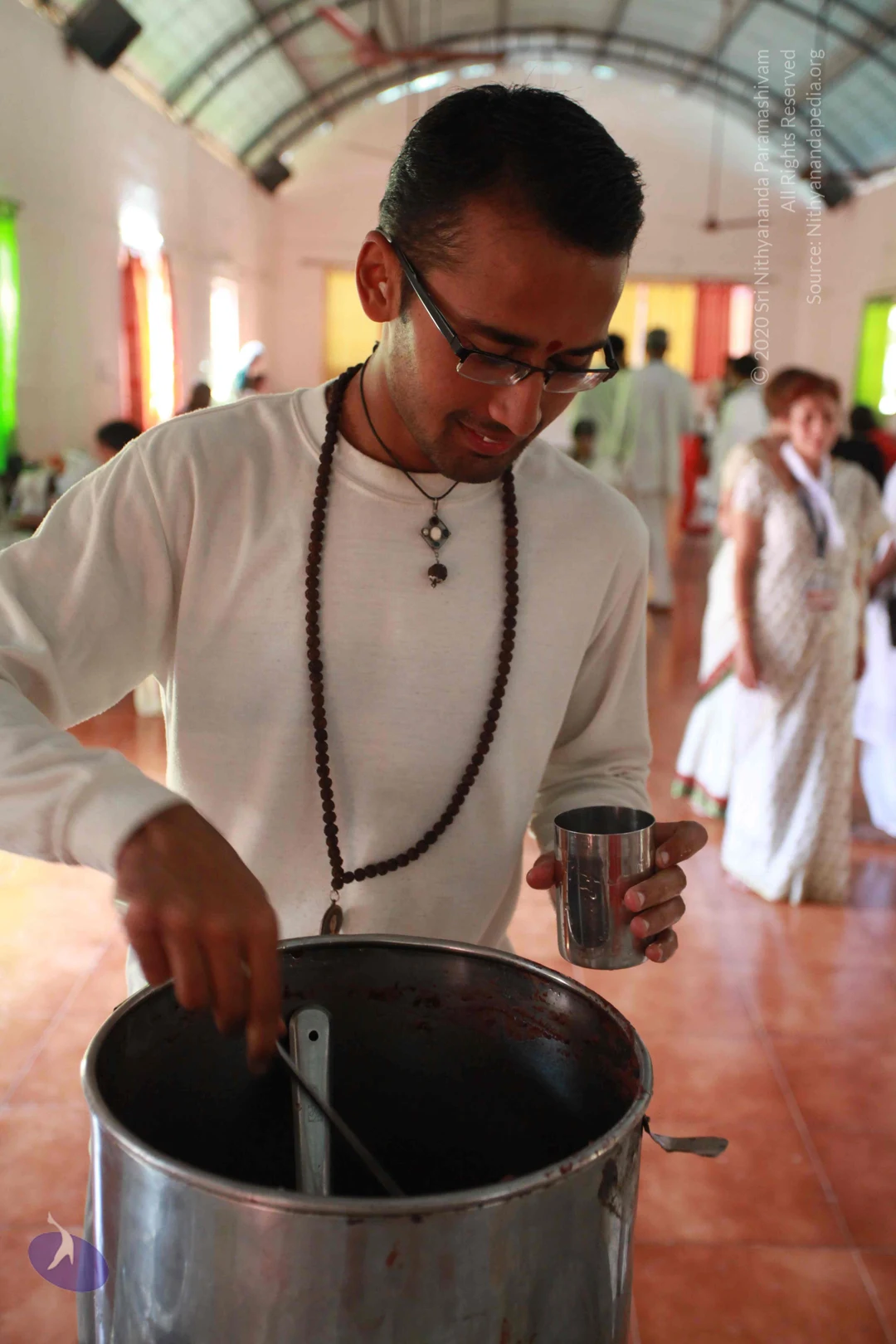
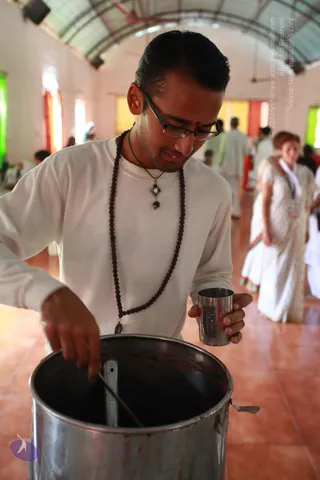
A man in a white long-sleeved top, wearing glasses, a red bindi, a long rudraksha mala and a pendant necklace, stoops over a large stainless steel pot, stirring its dark contents with a ladle while holding a small steel cup in his other hand. Behind him, a hall with an arched roof and tiled floor has several people in white clothing, including a woman in a white sari with a lanyard, moving about the room.