Skip to content
Wednesday

26 September 2012

AKASHIC READINGS -- BIRTH (PART 1)

Dated photos
166
Source pages
1
Media
2
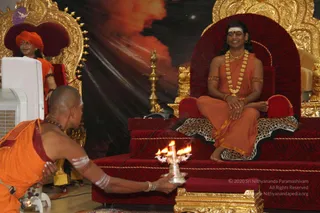
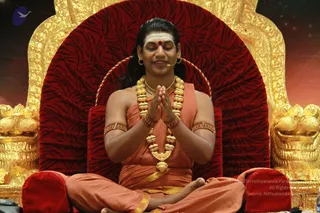
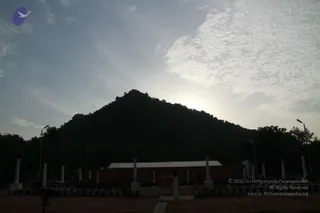
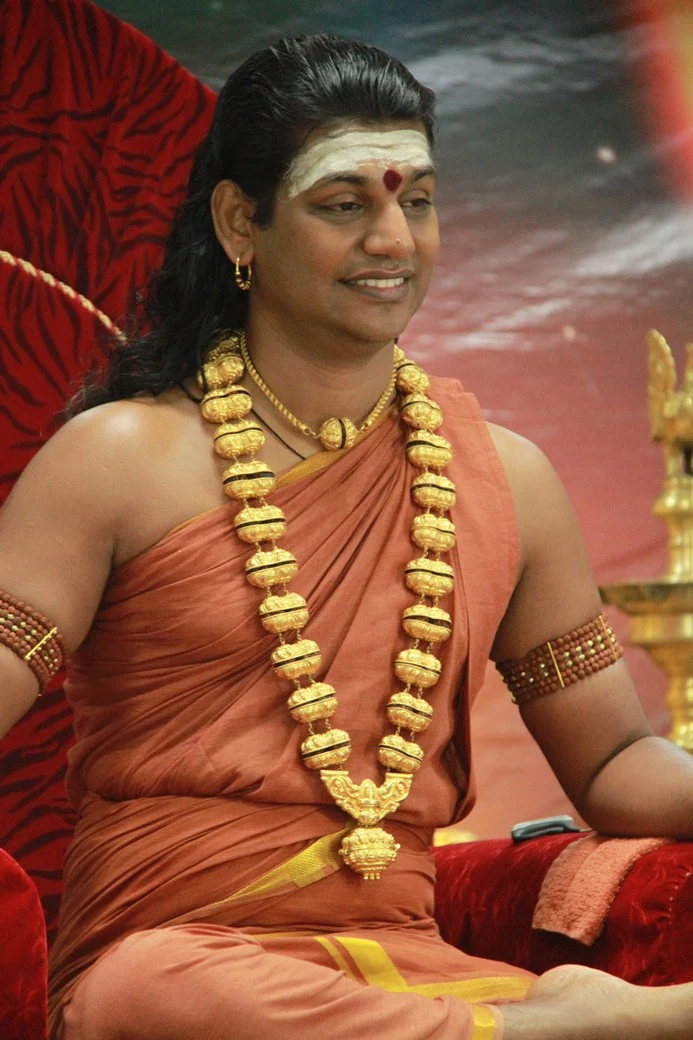
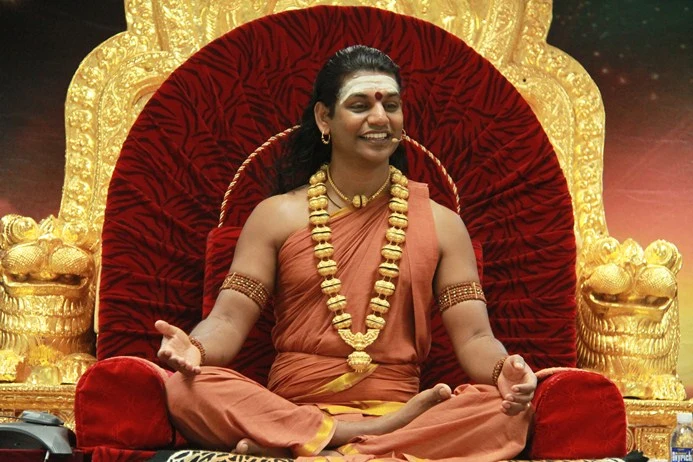
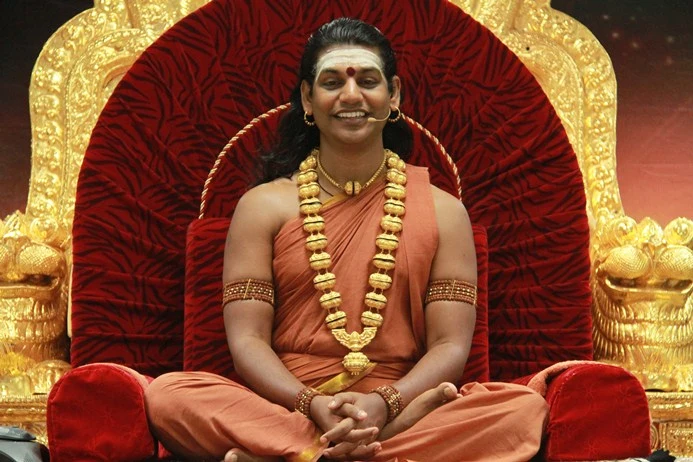
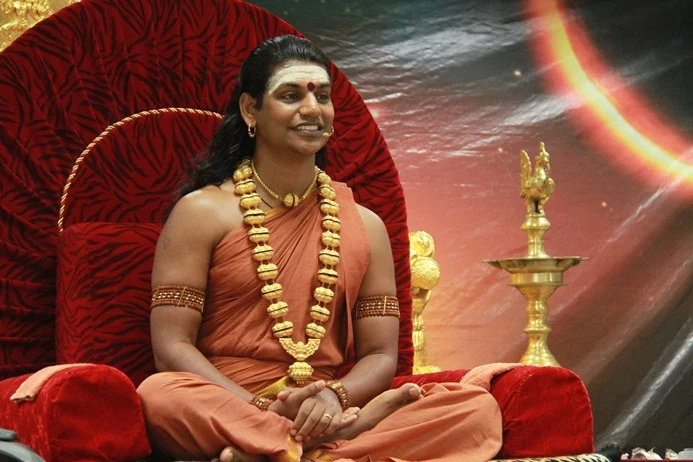
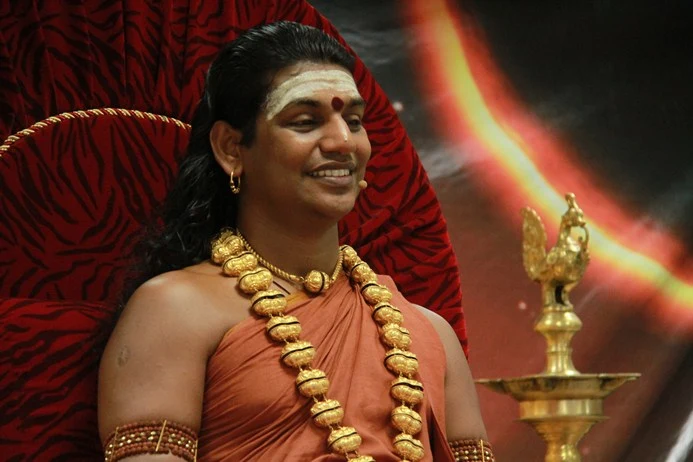
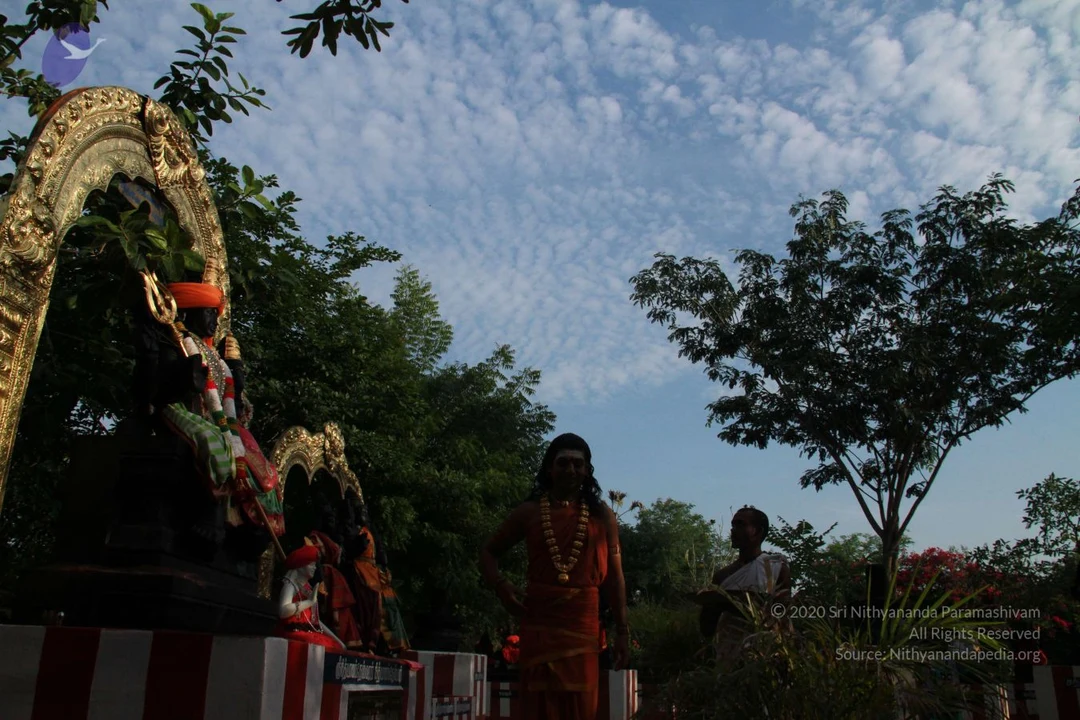
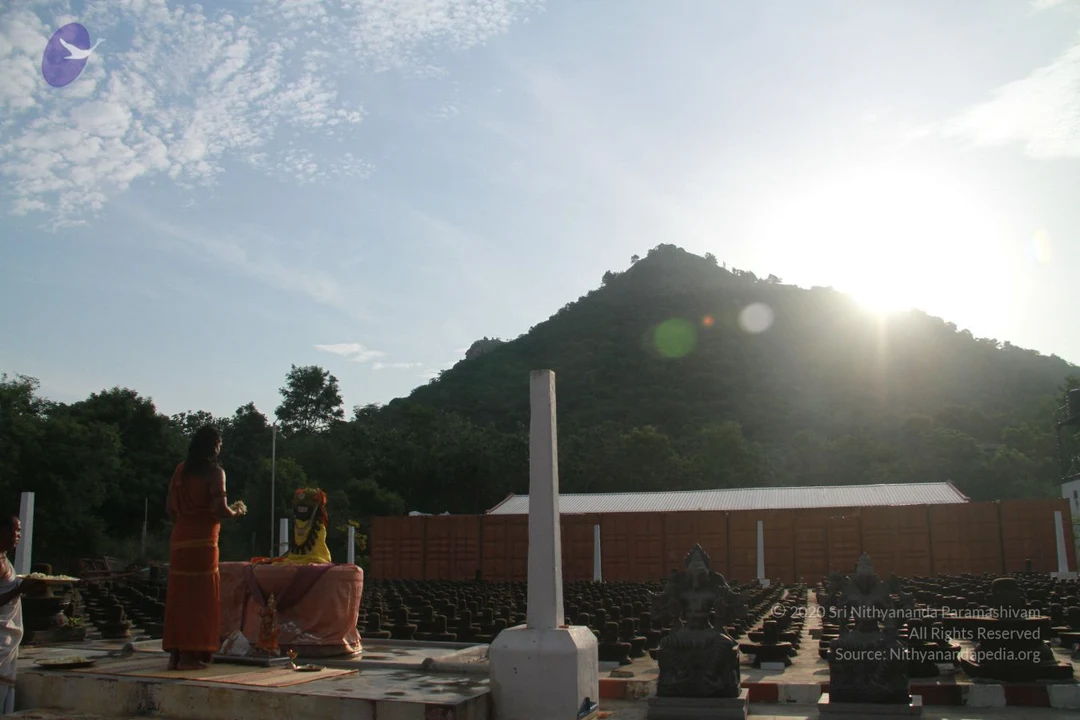
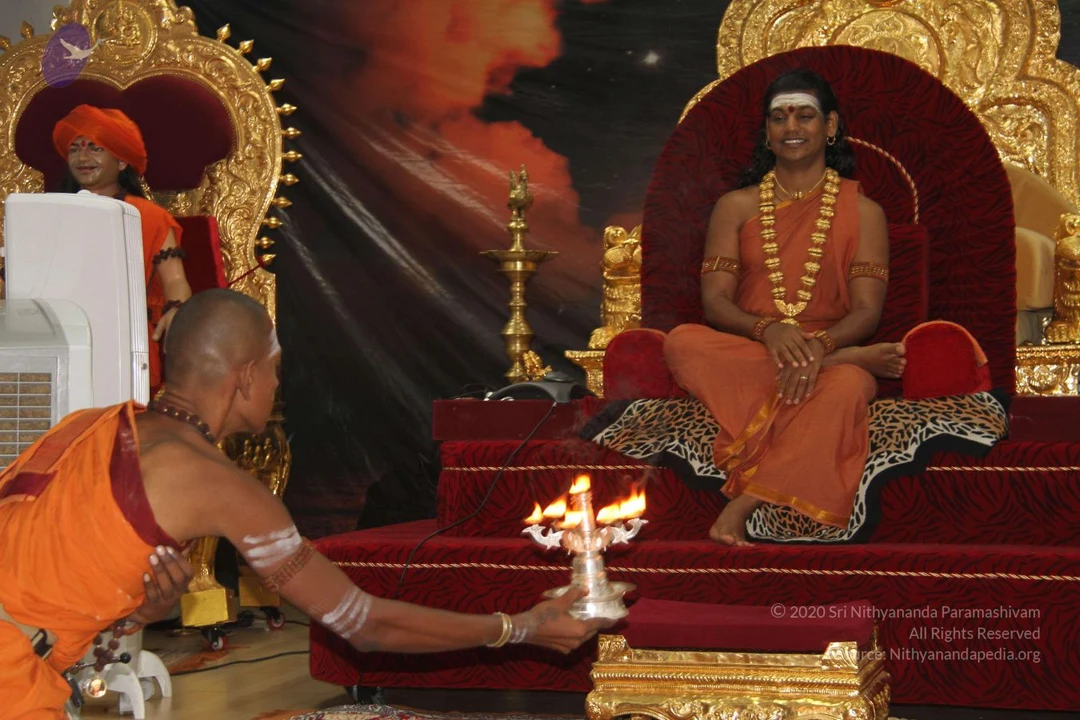
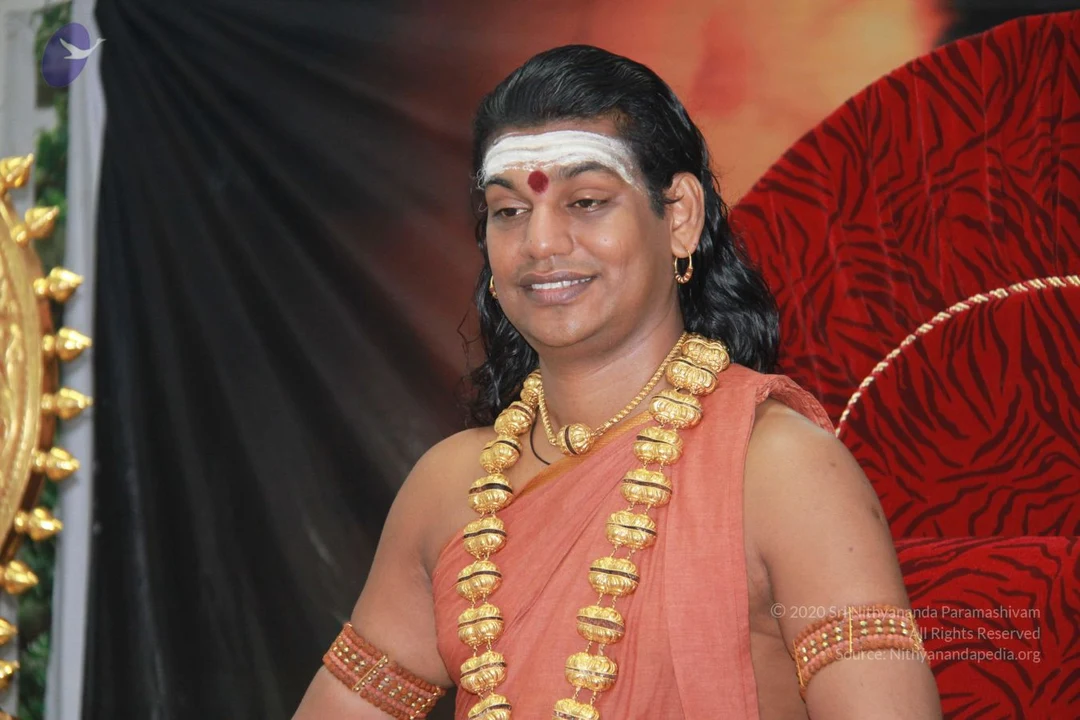
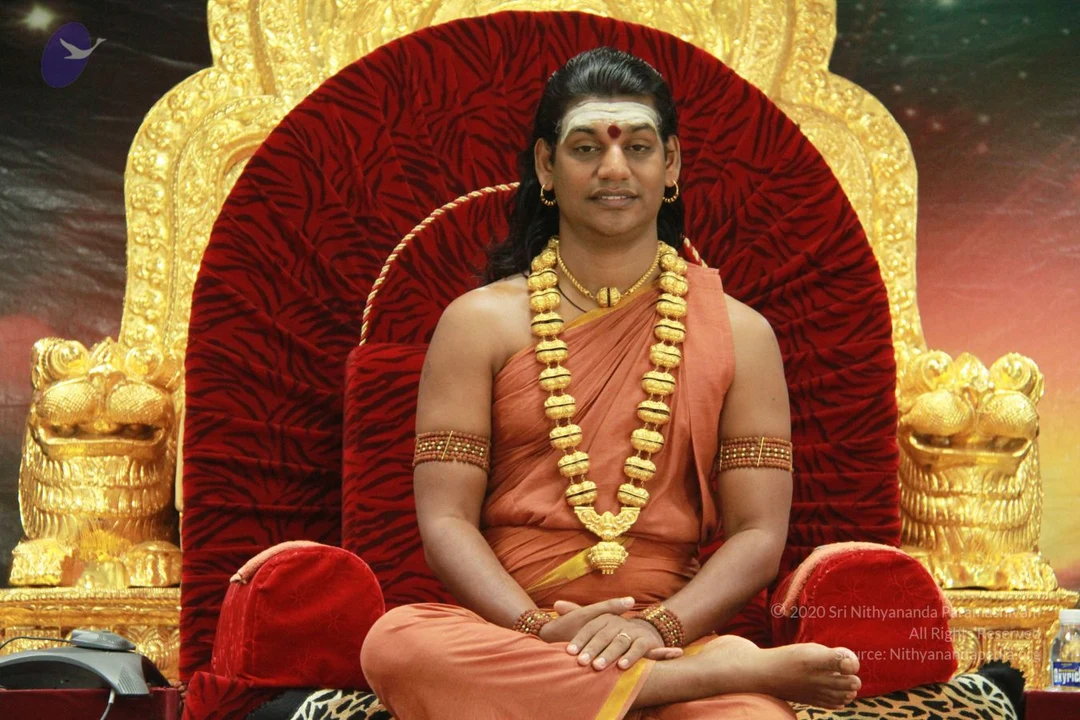
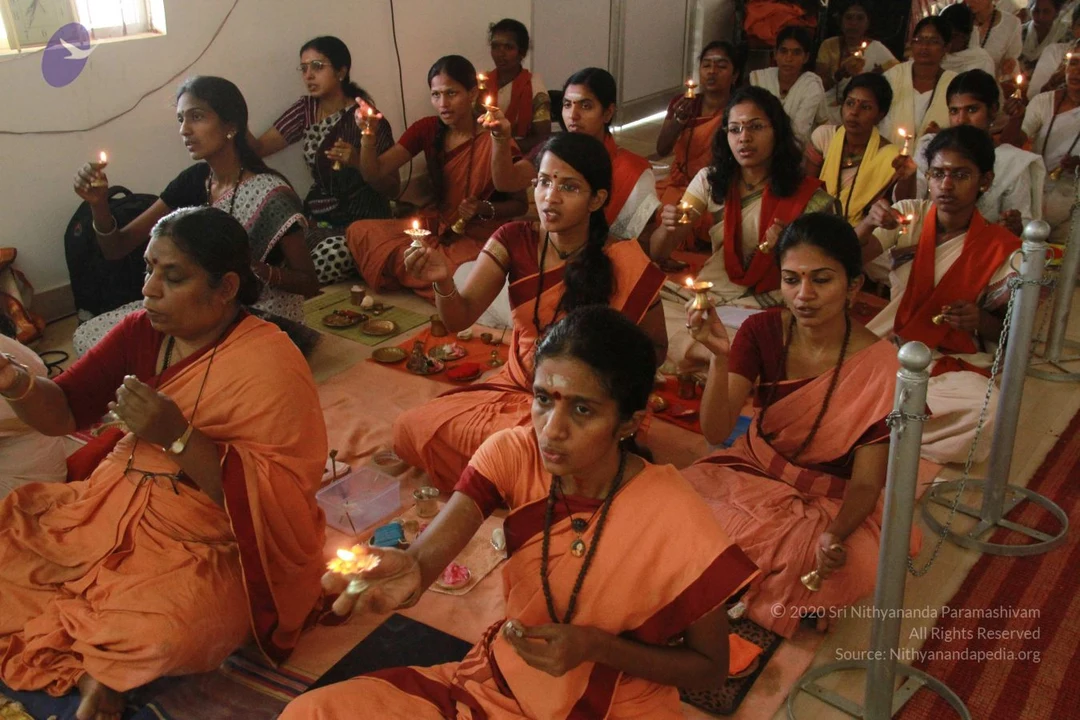
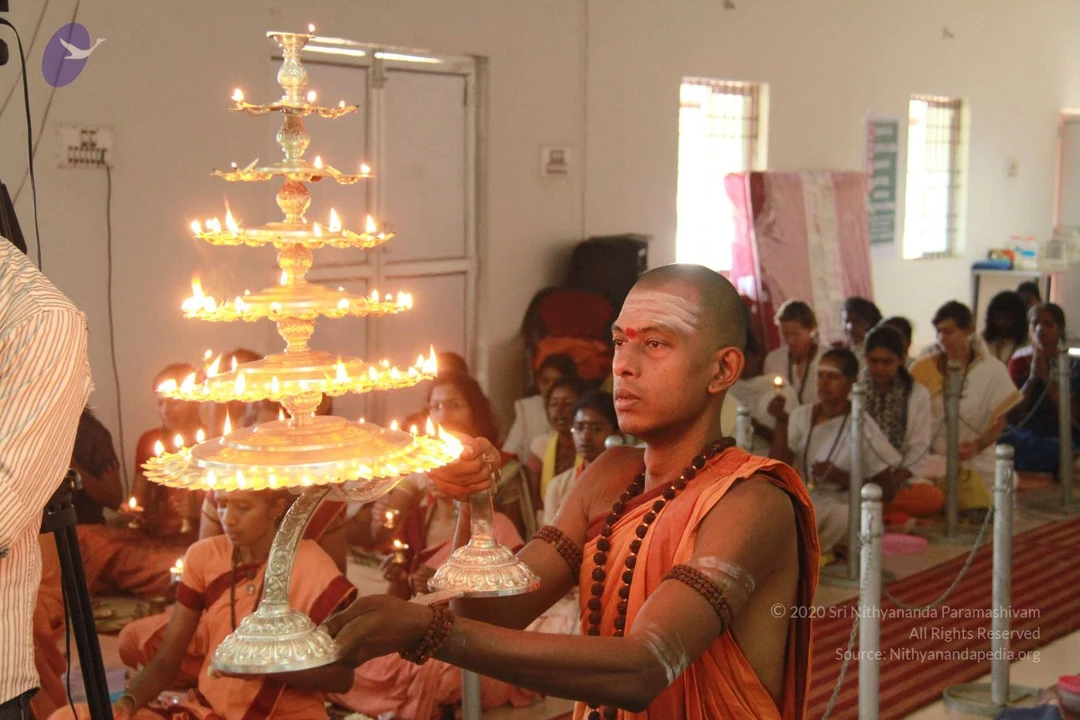
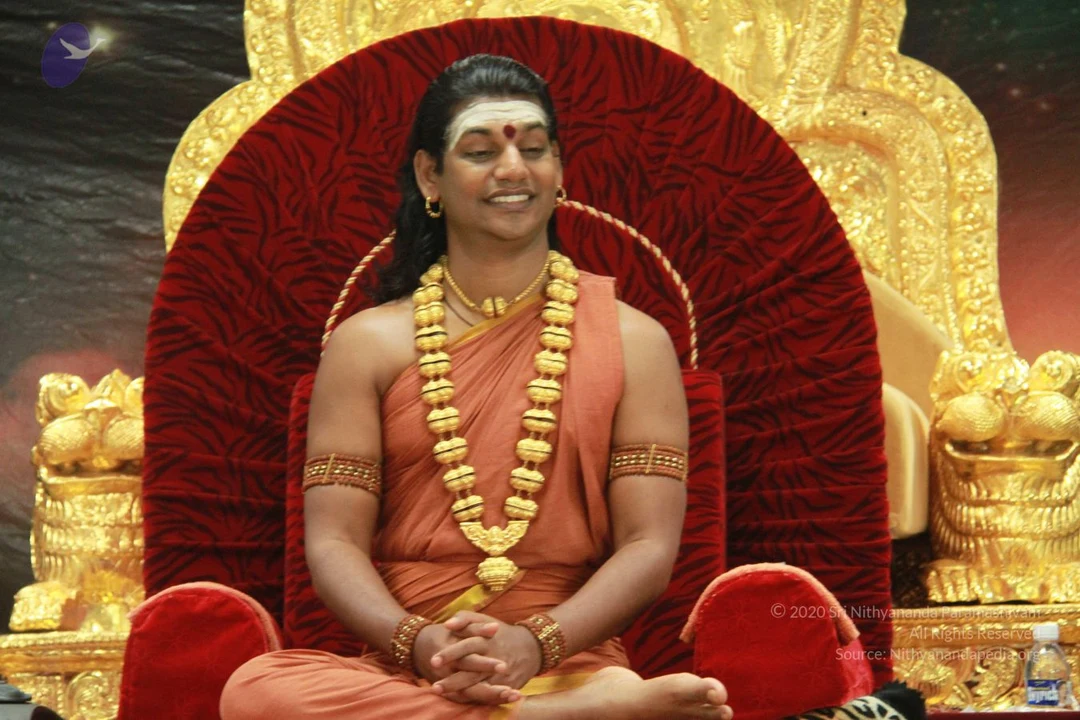
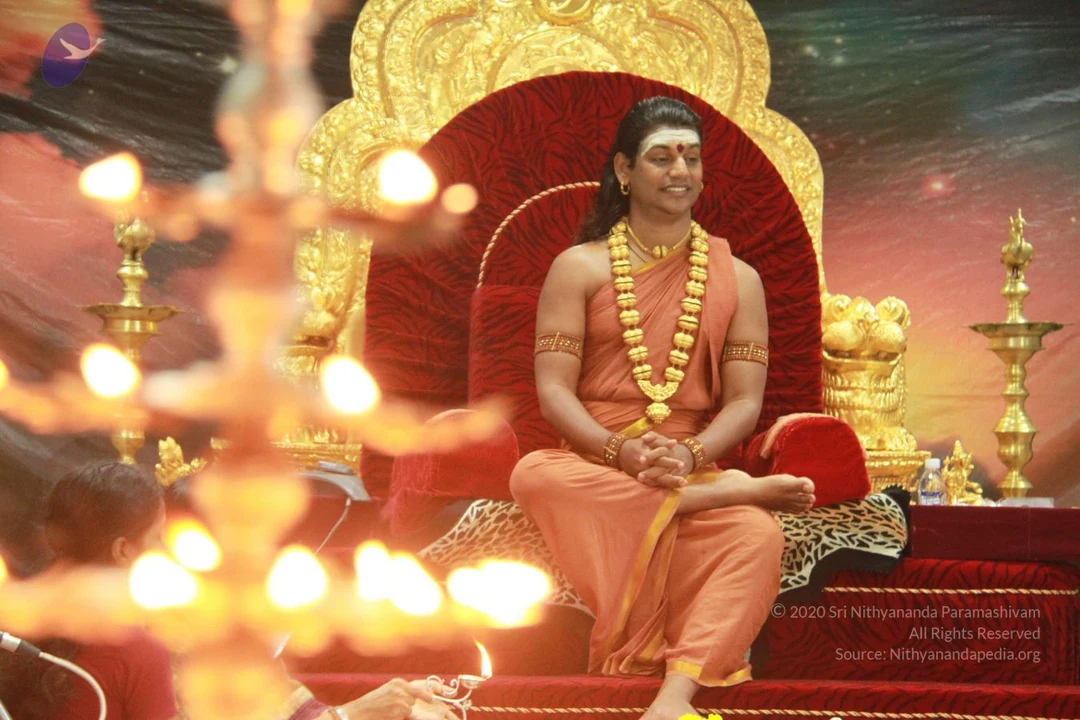
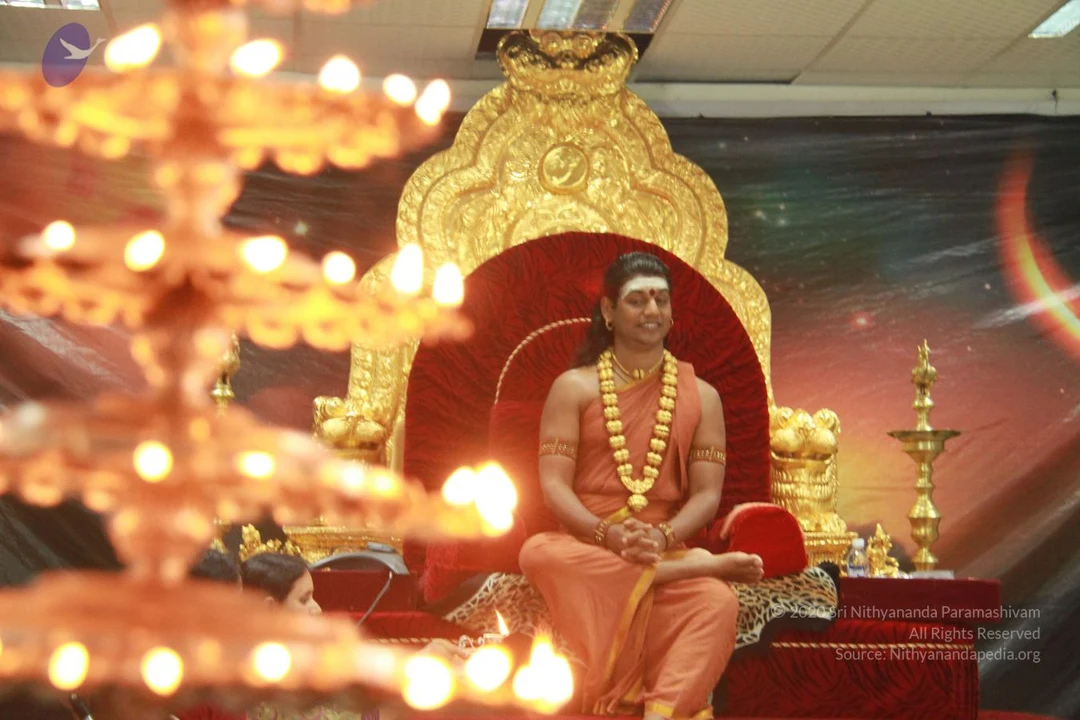
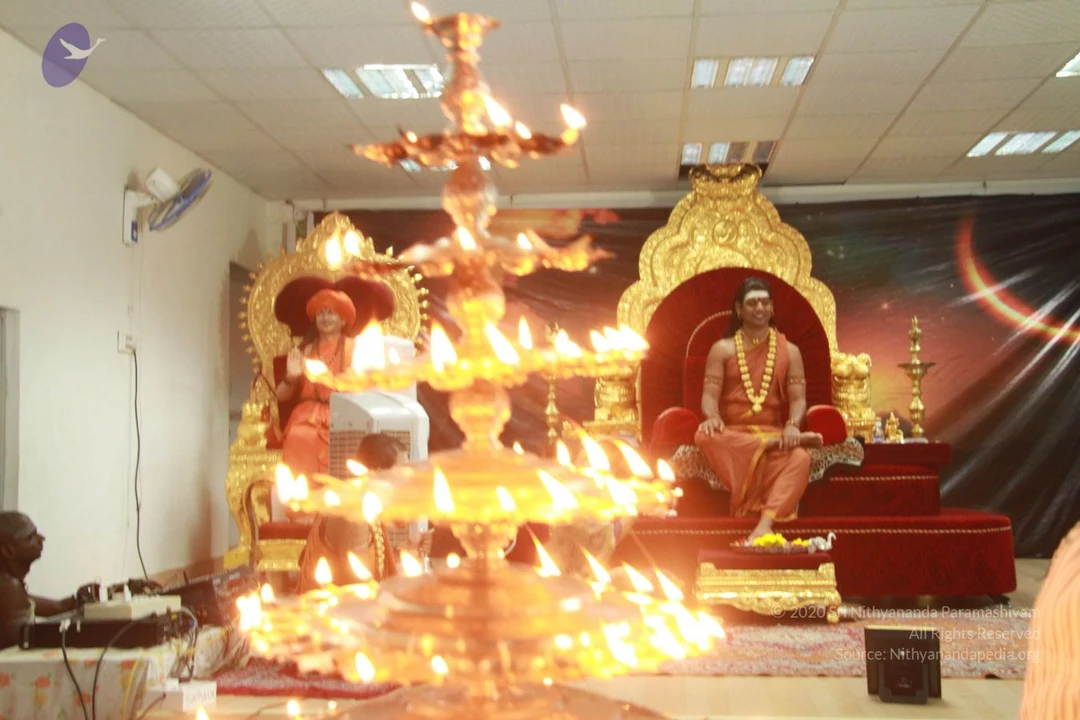
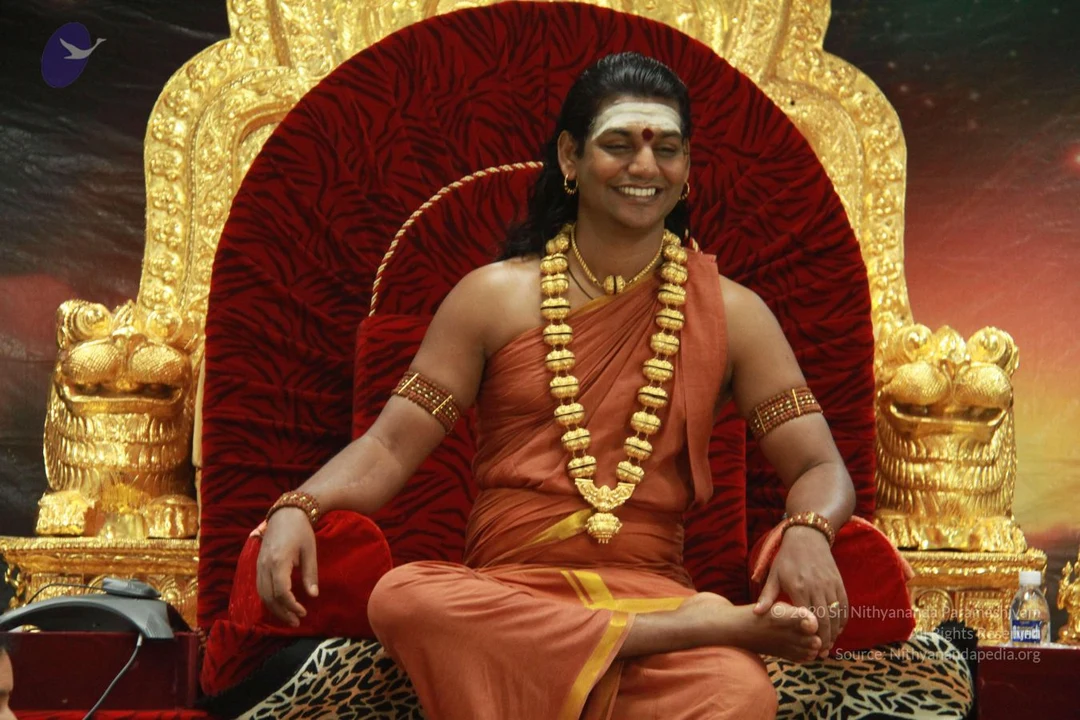
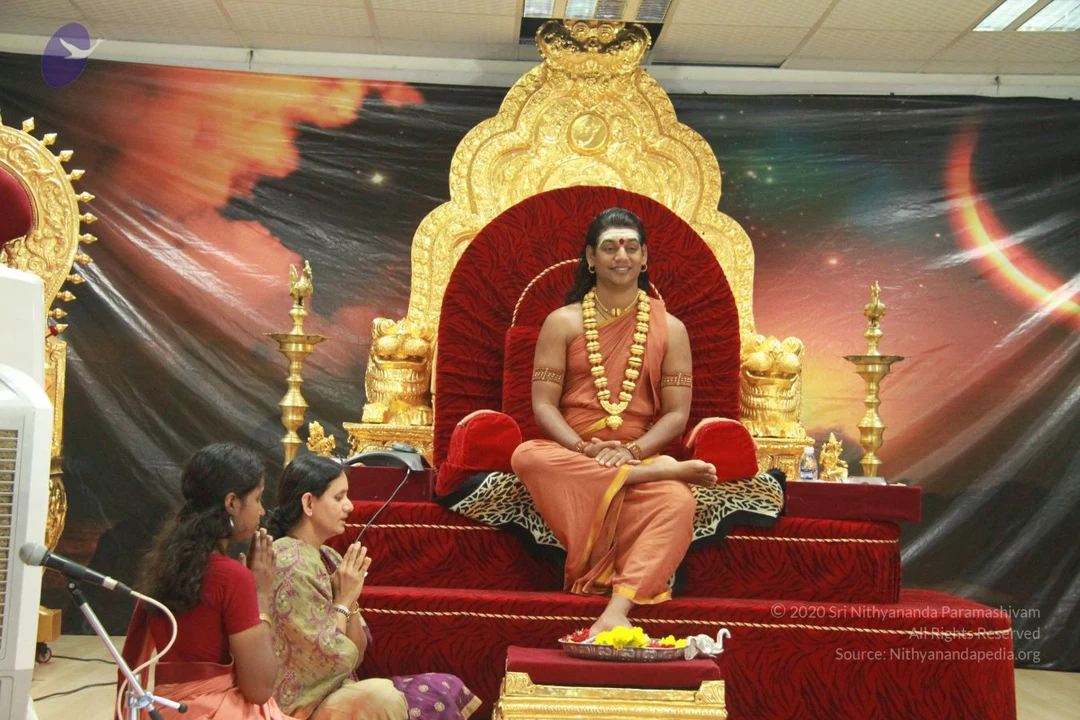
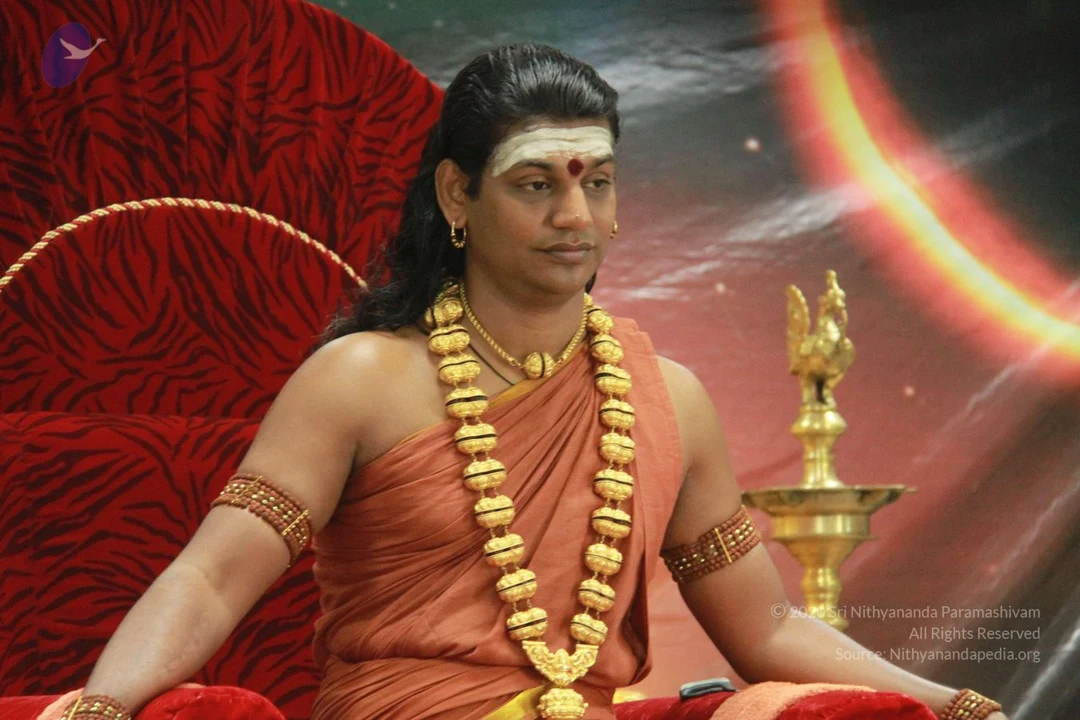
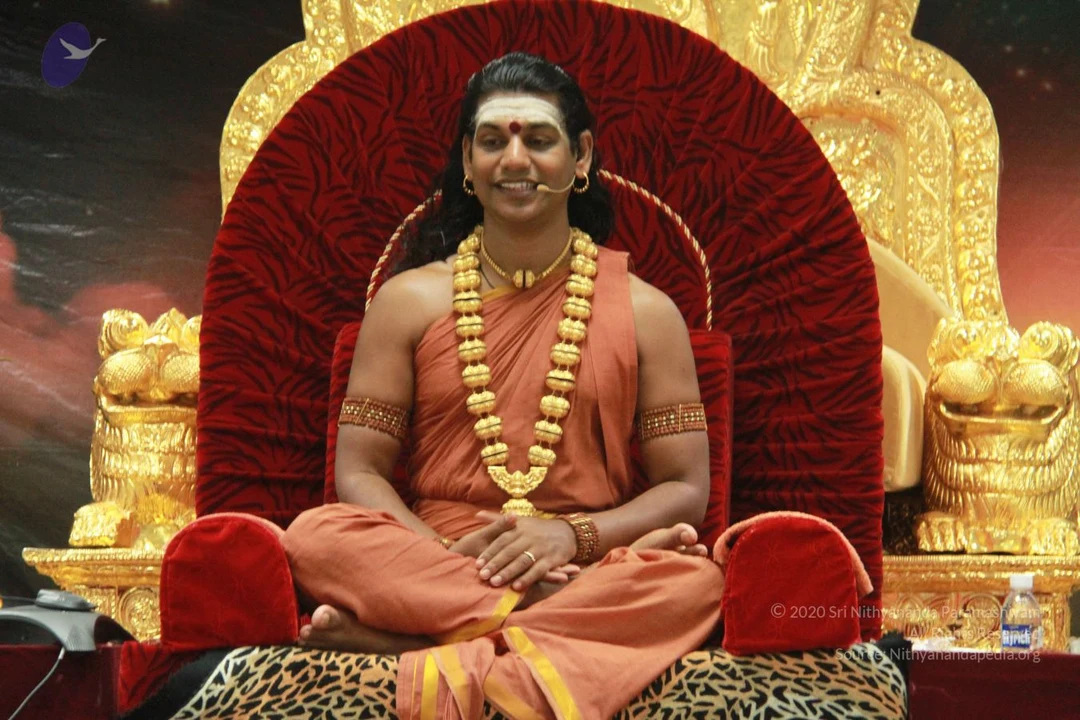
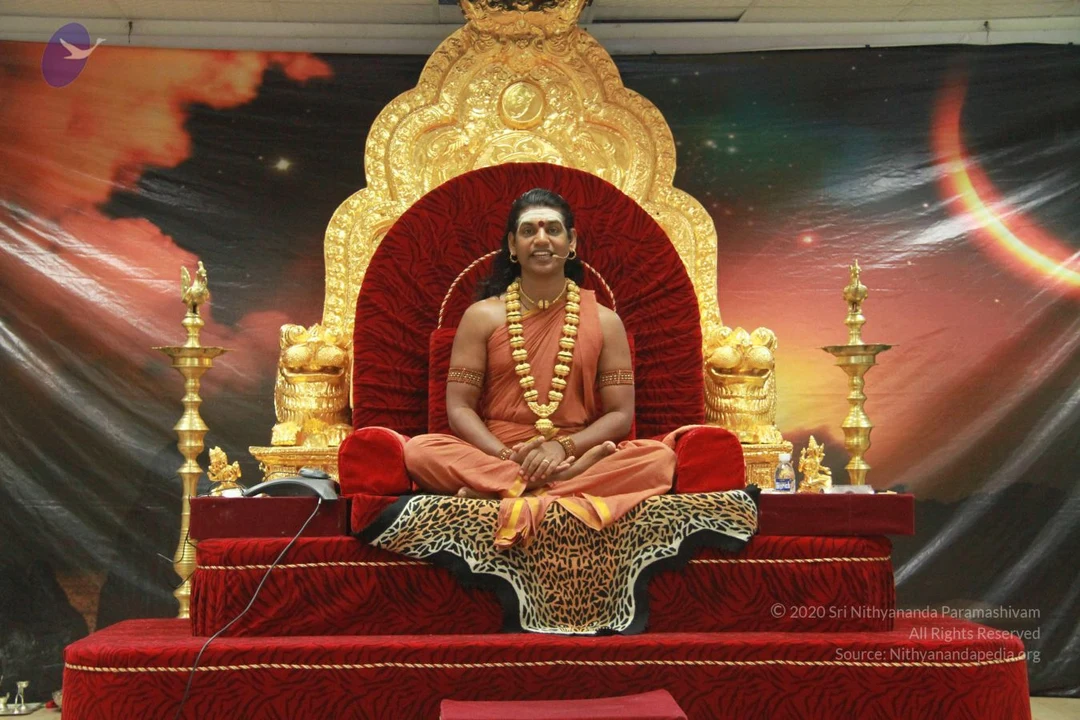
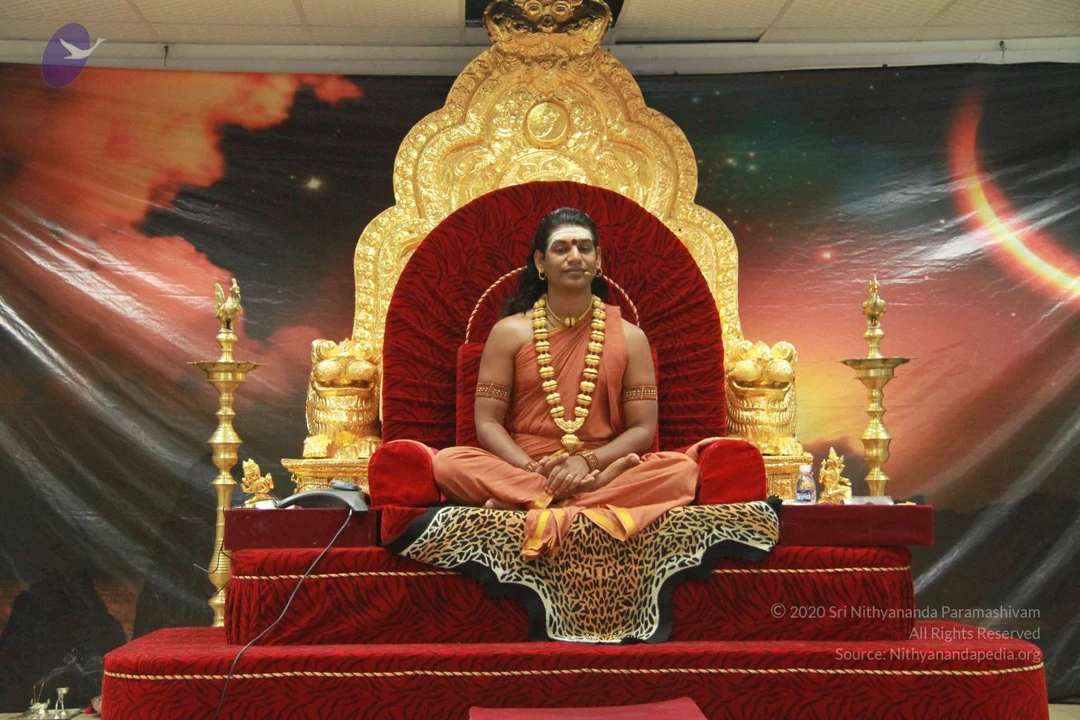
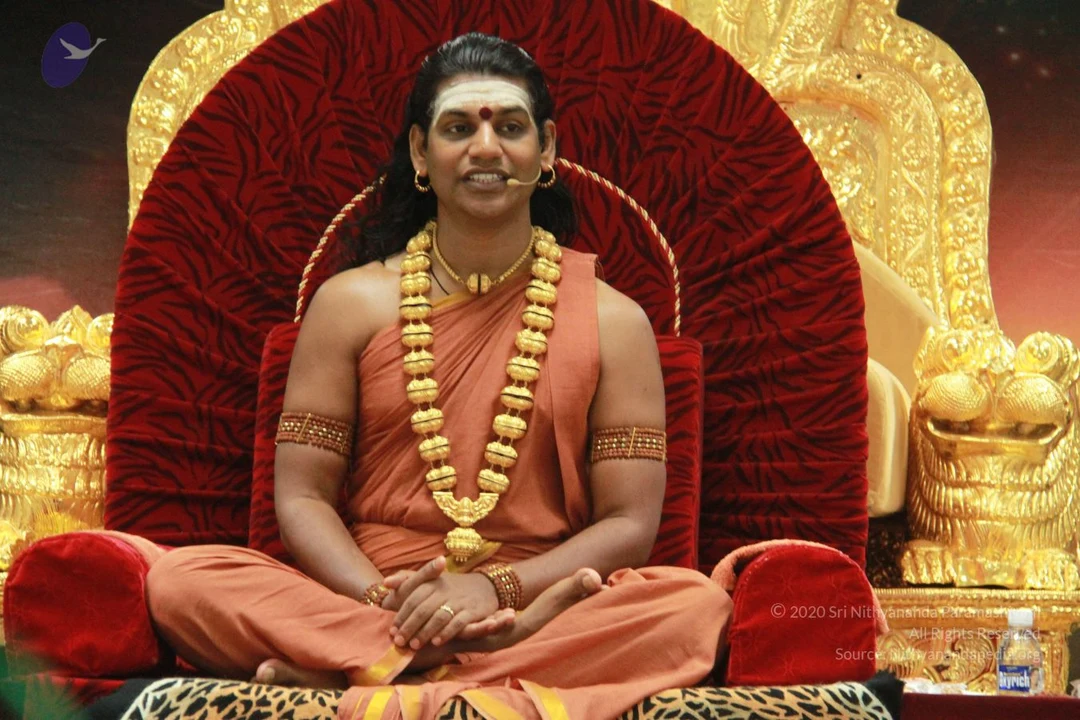
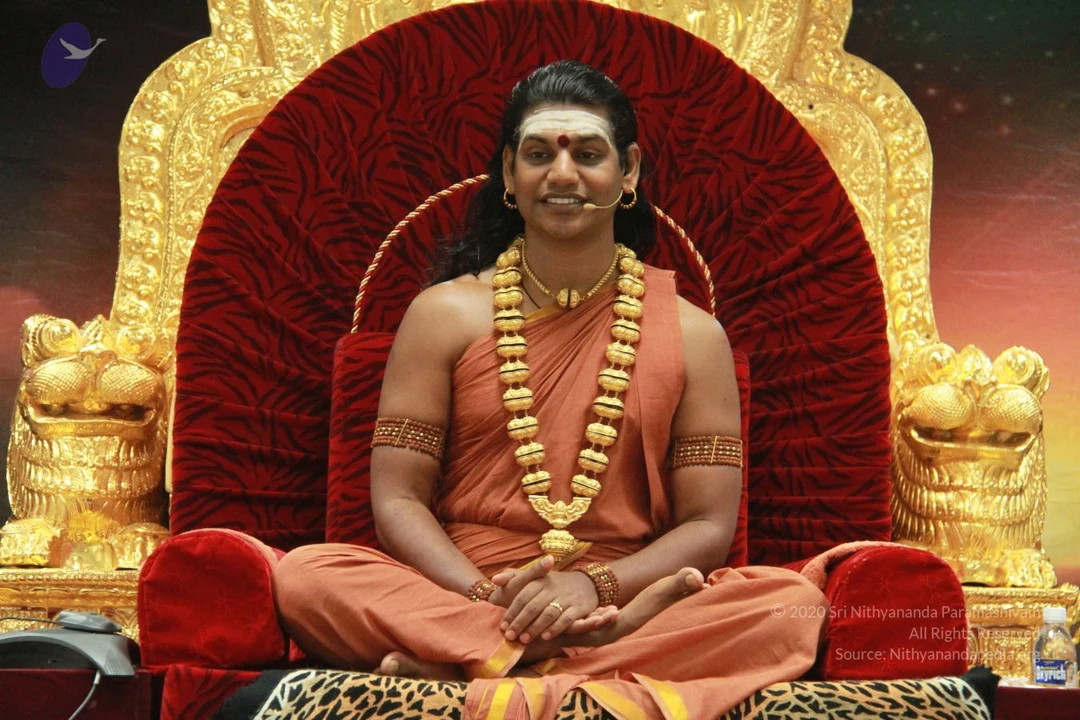
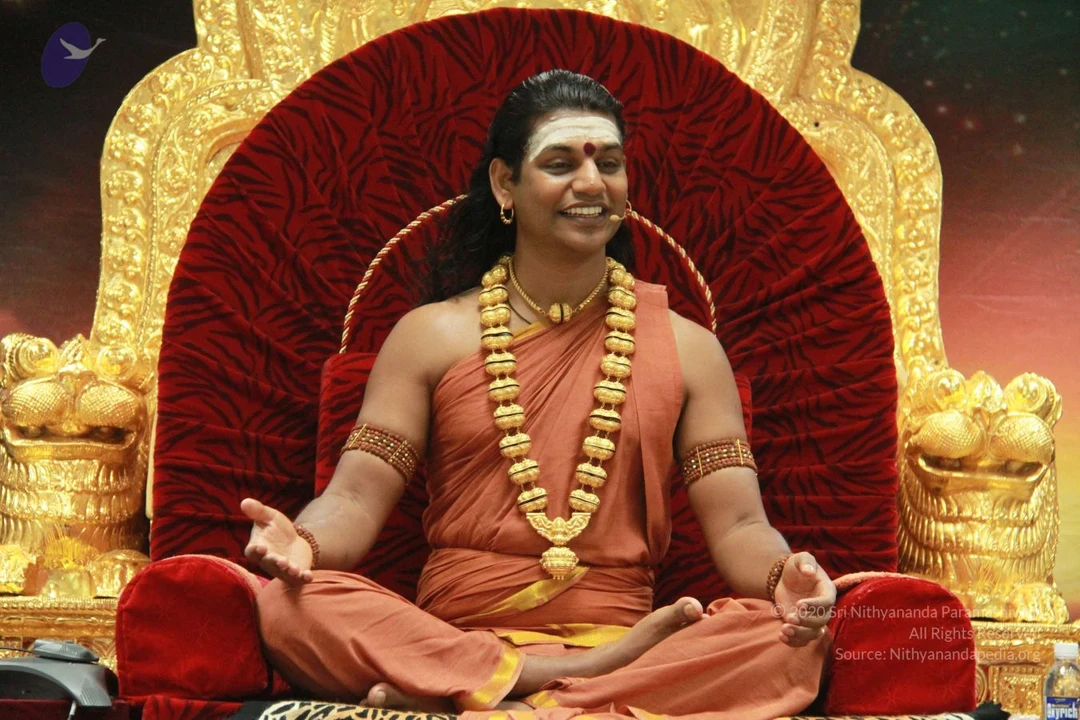
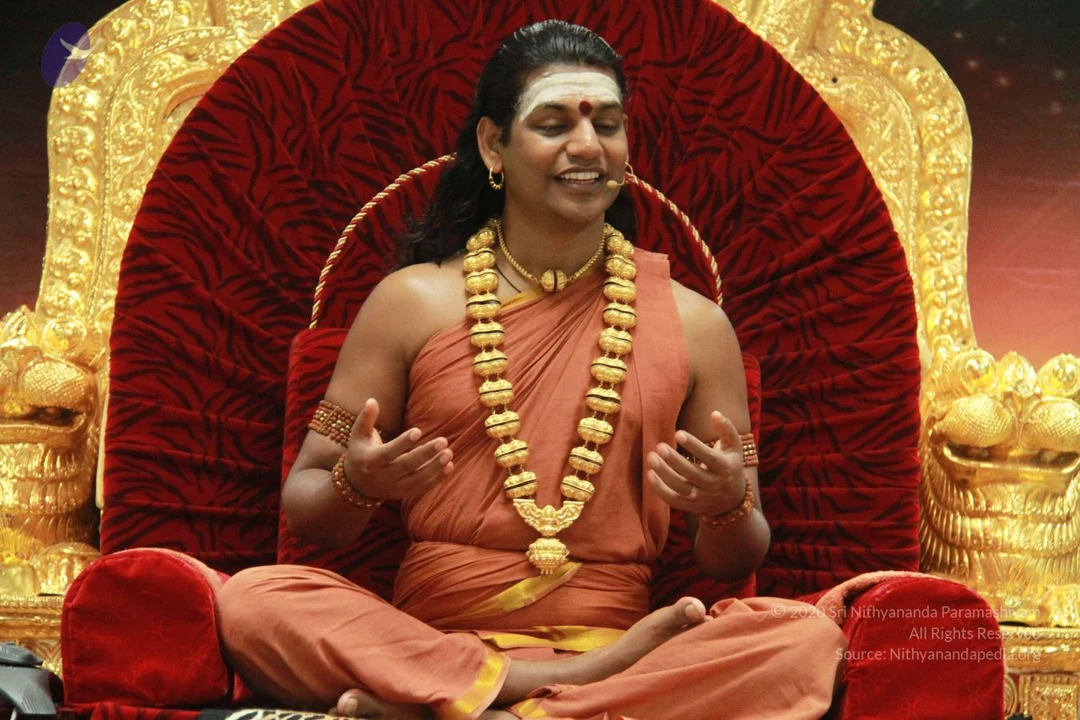
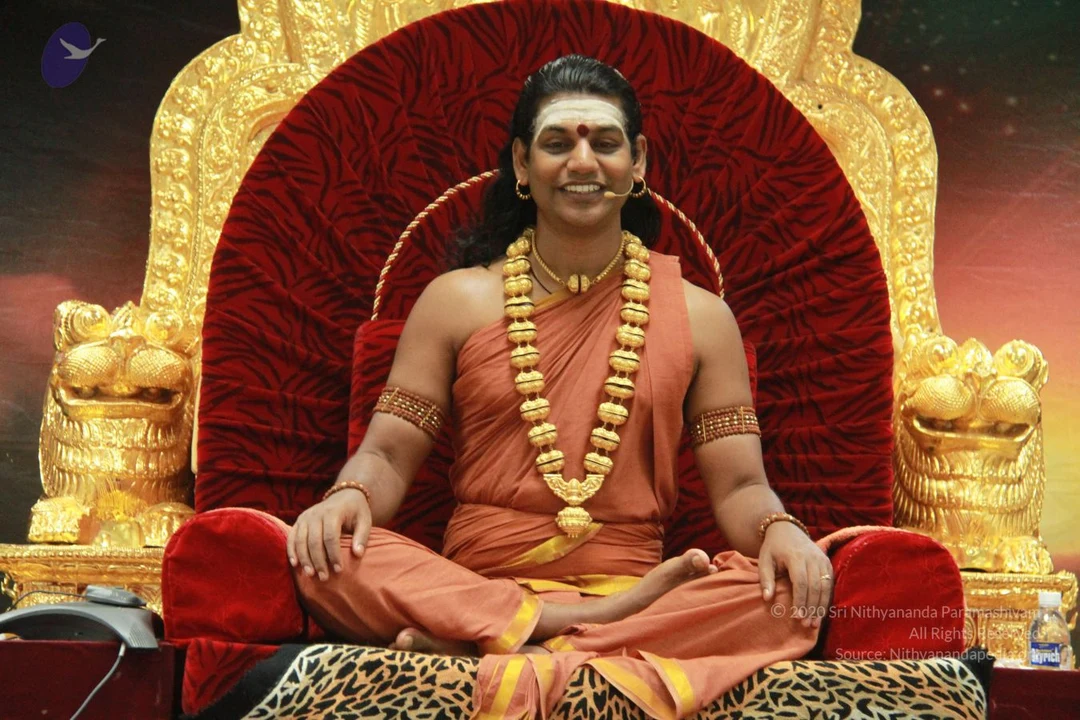
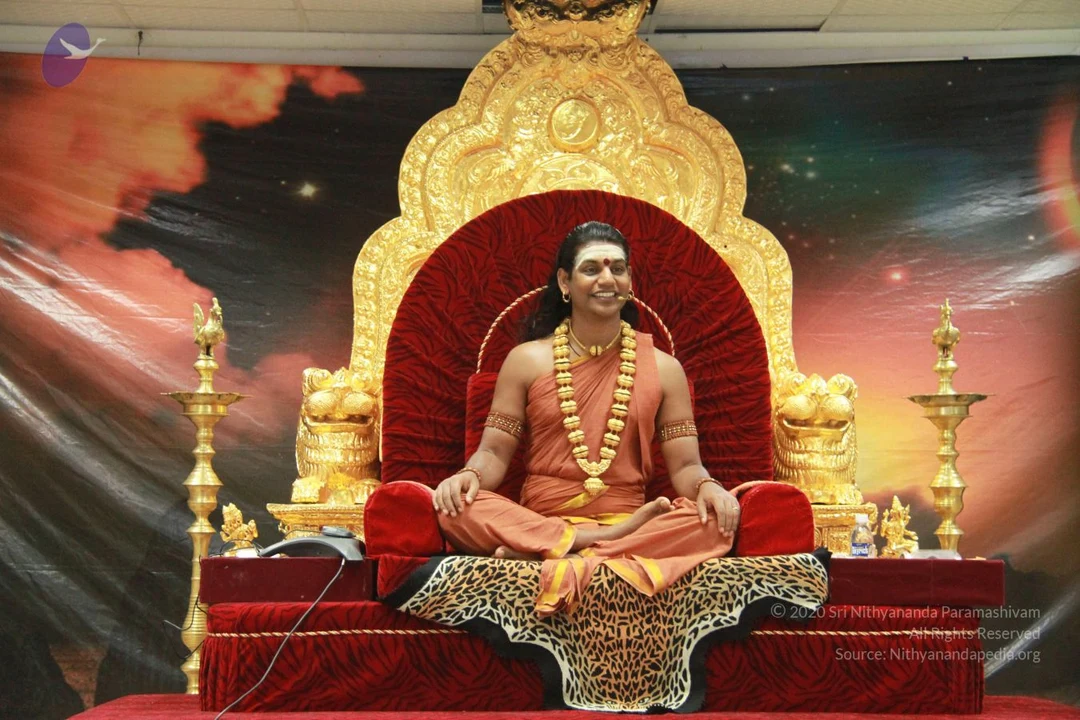
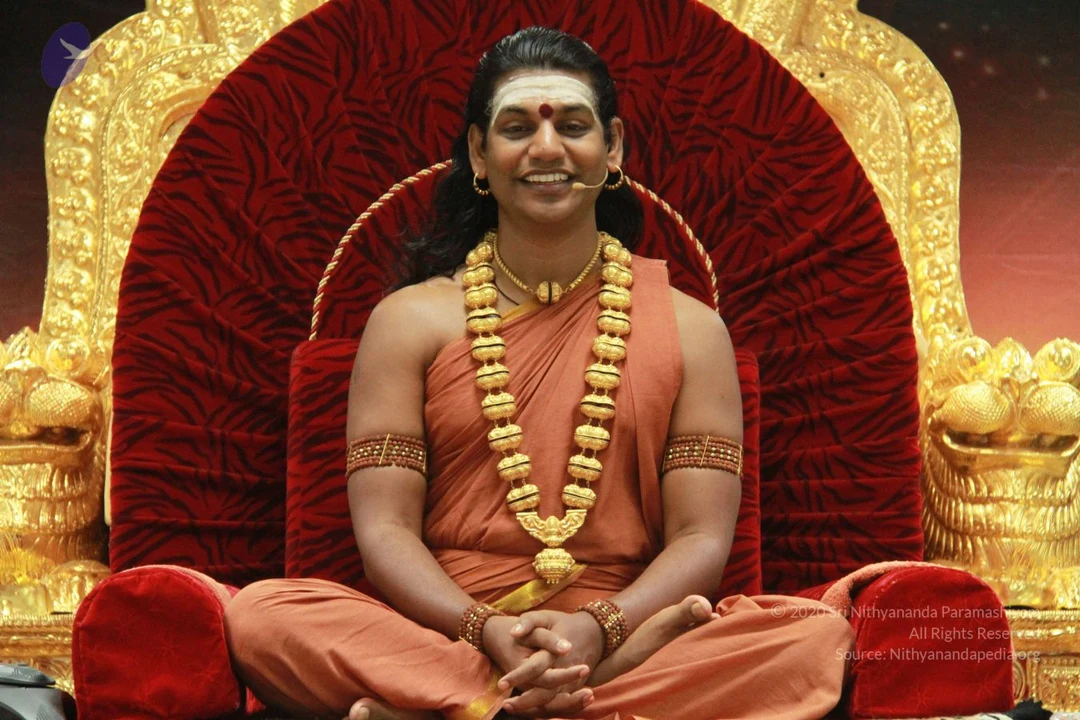
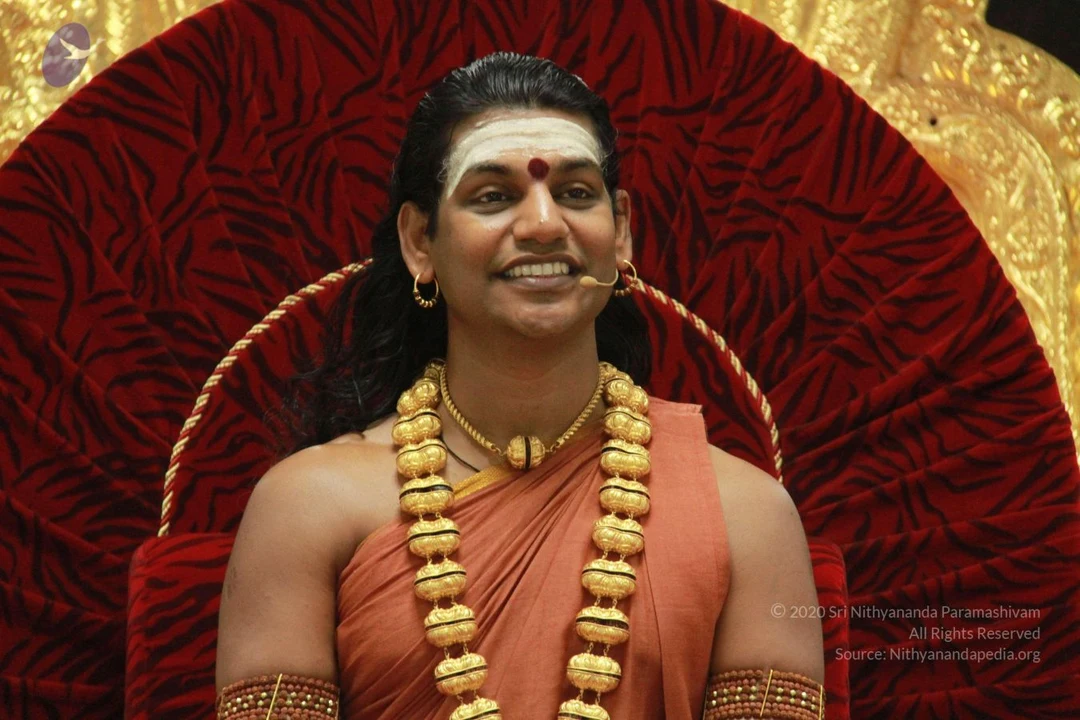
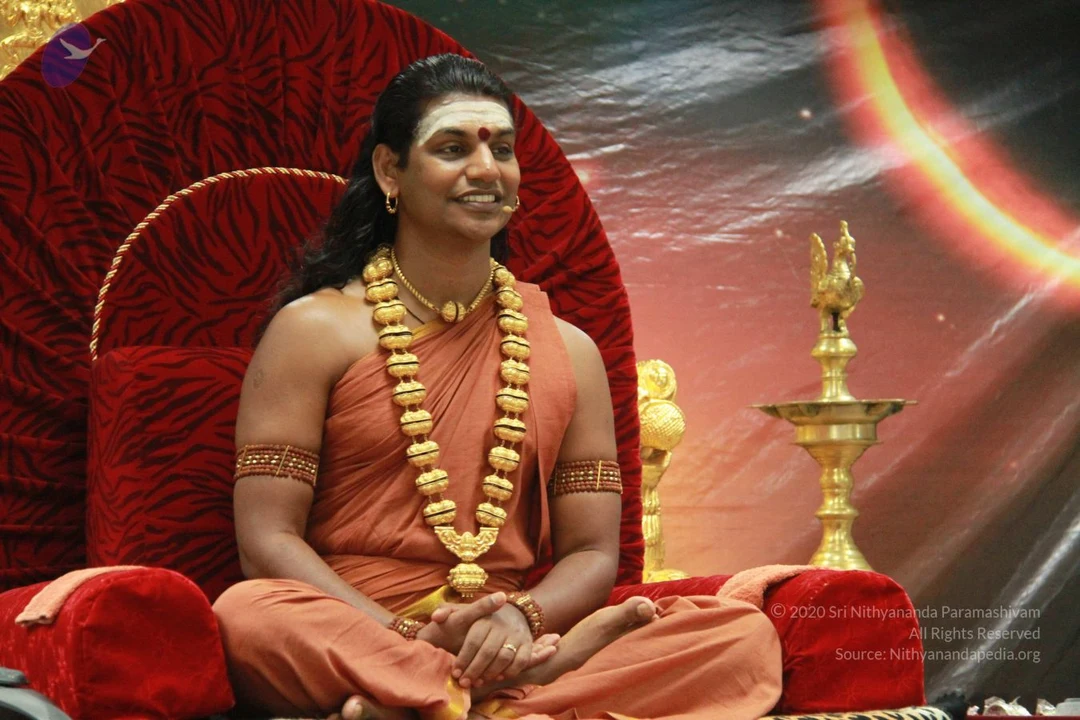
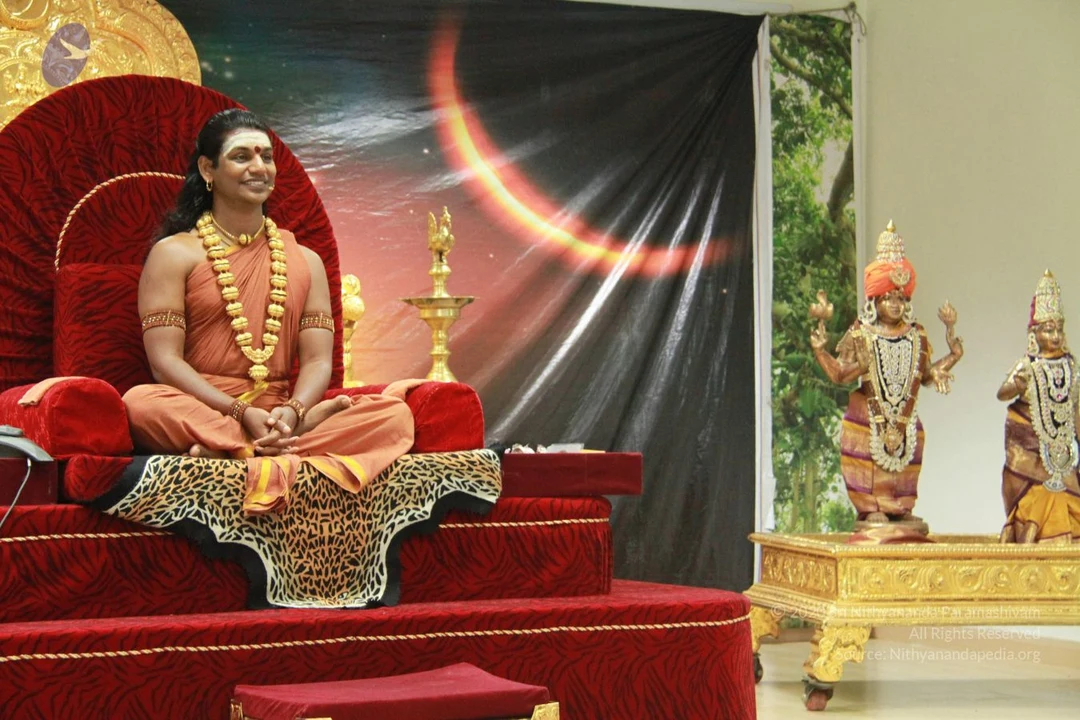
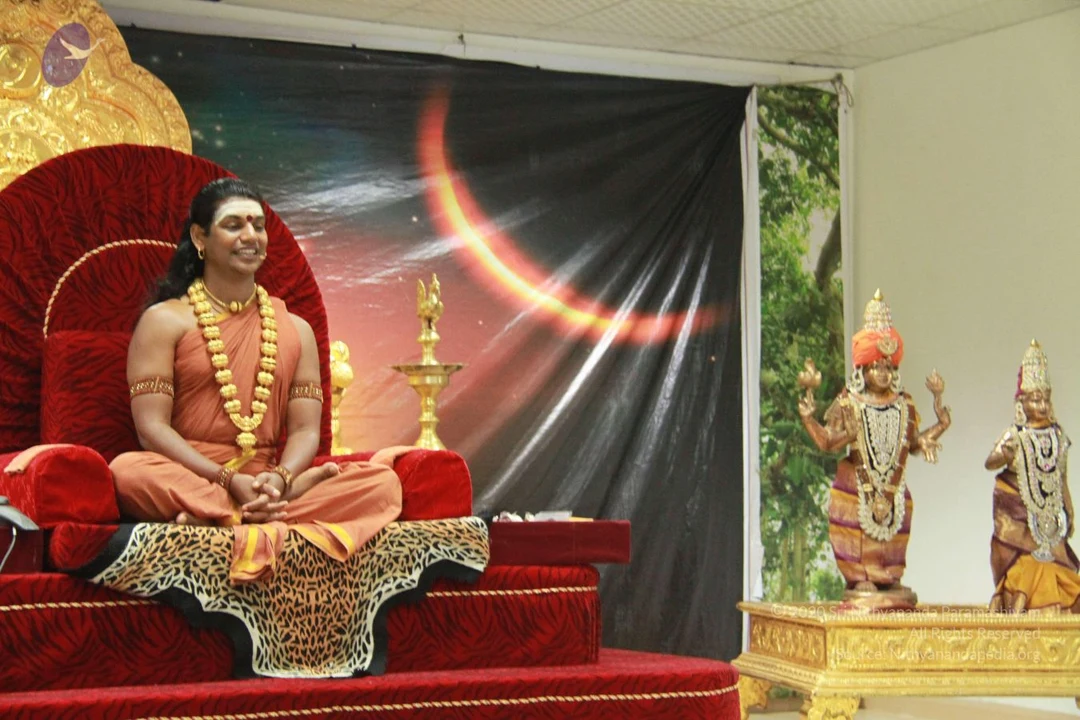
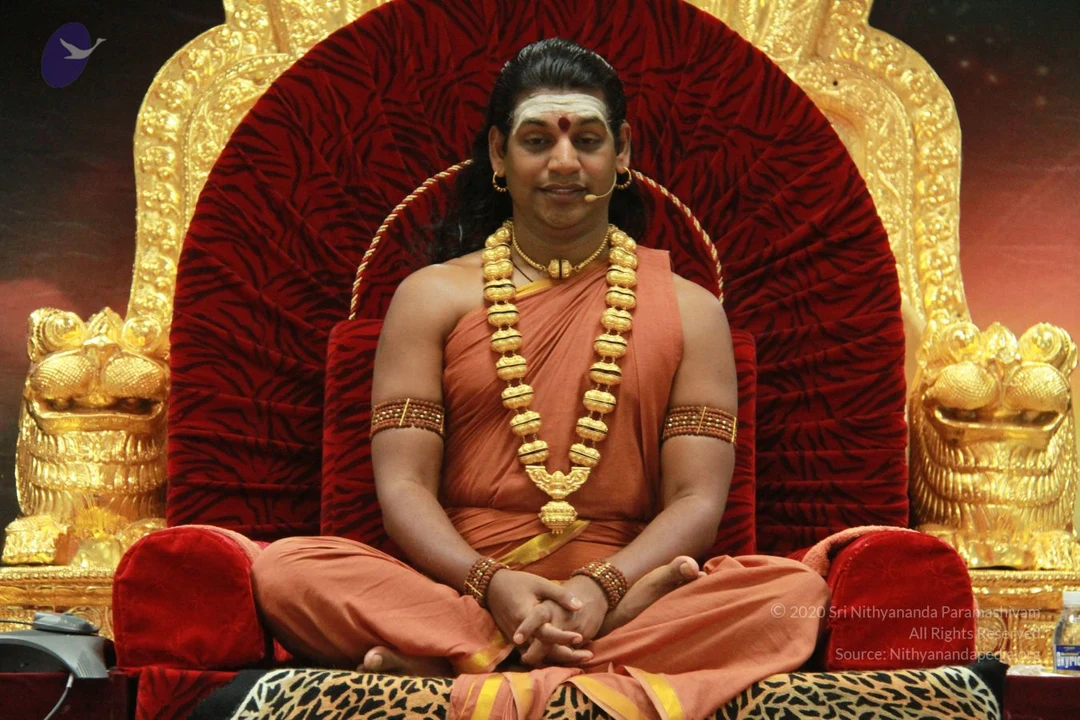
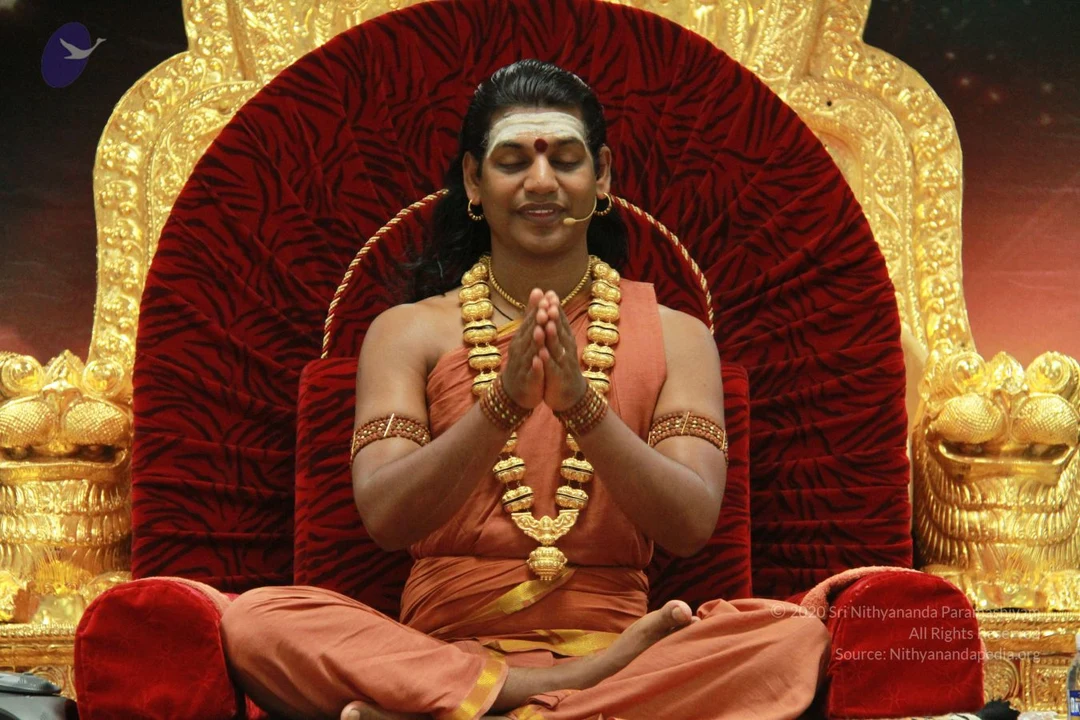
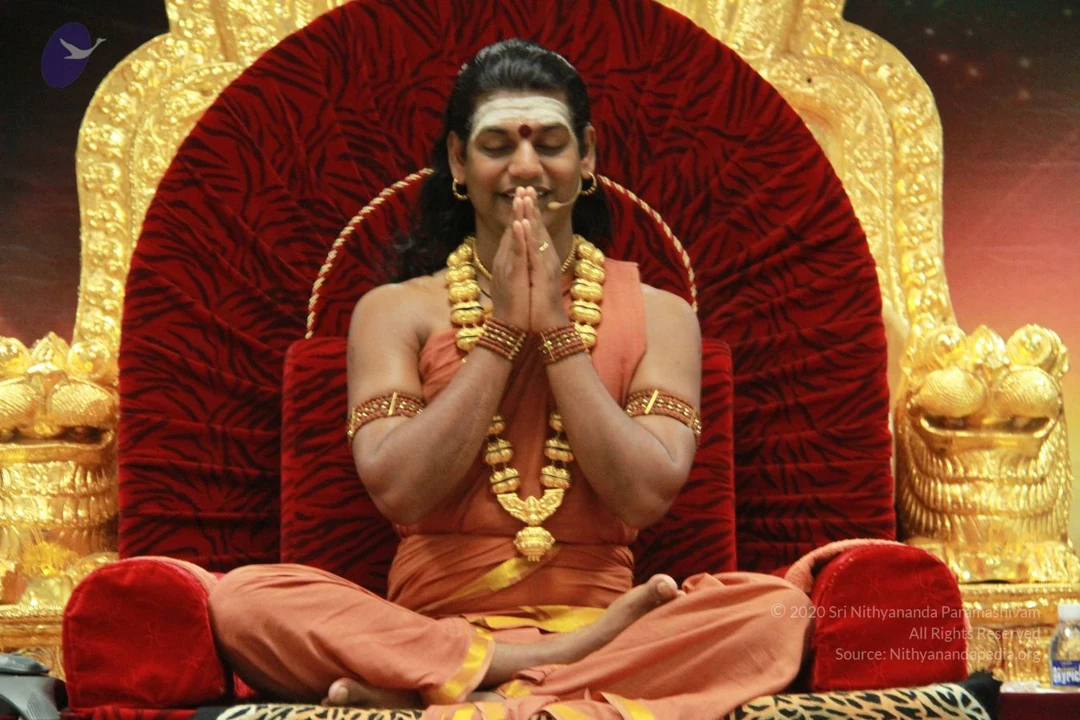
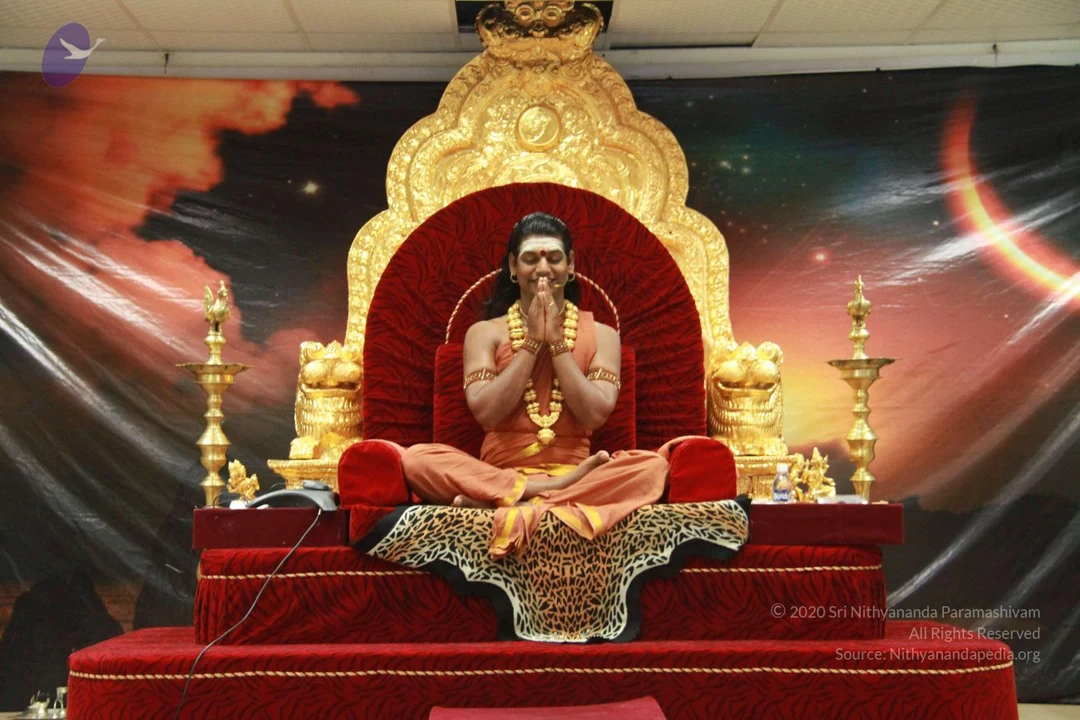
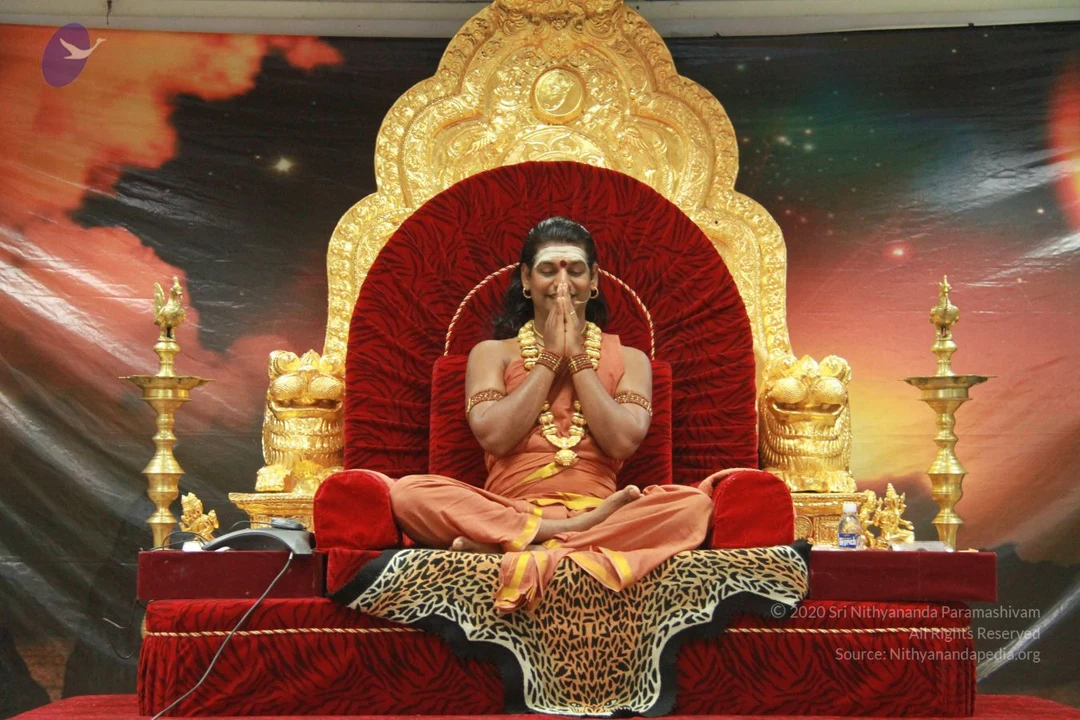
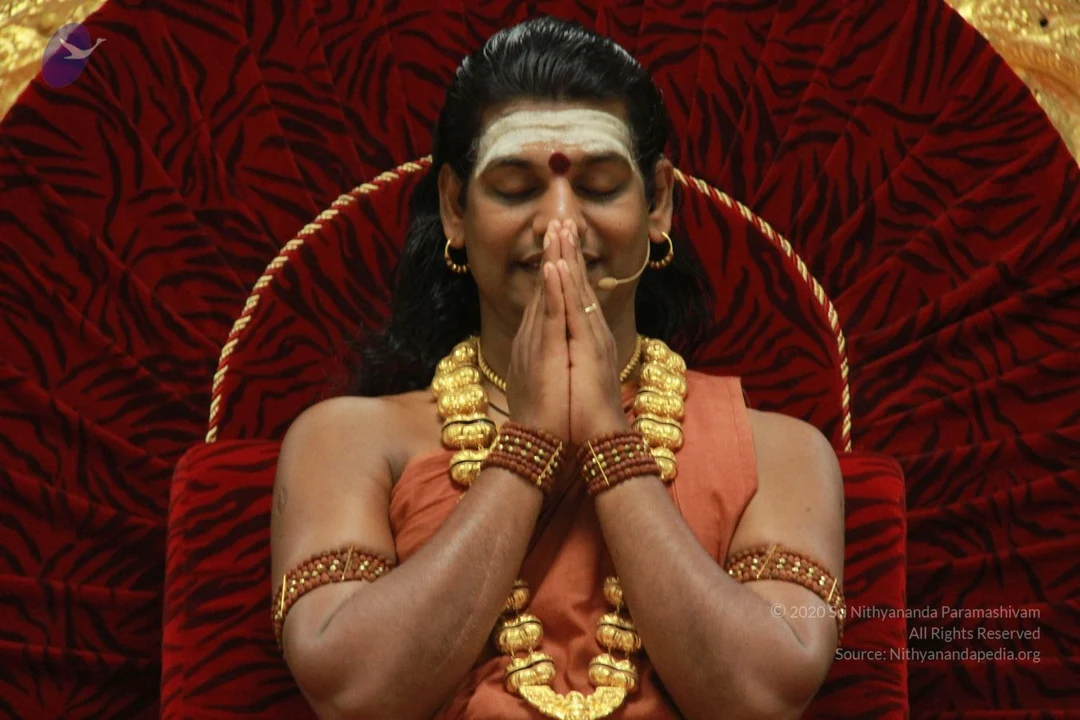
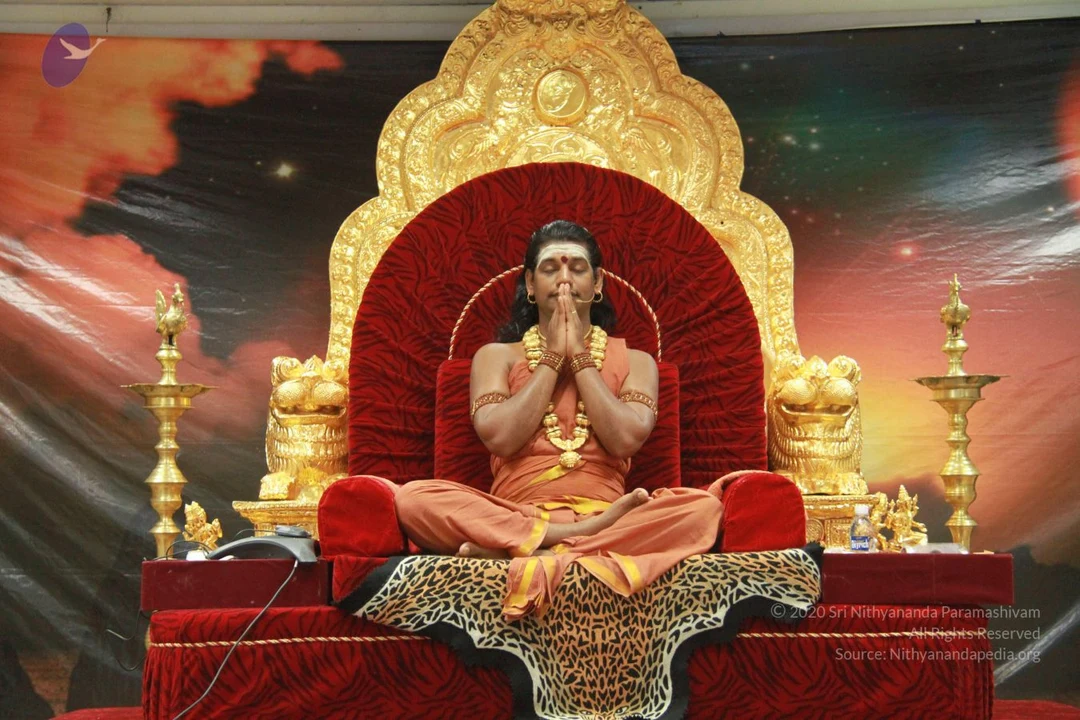
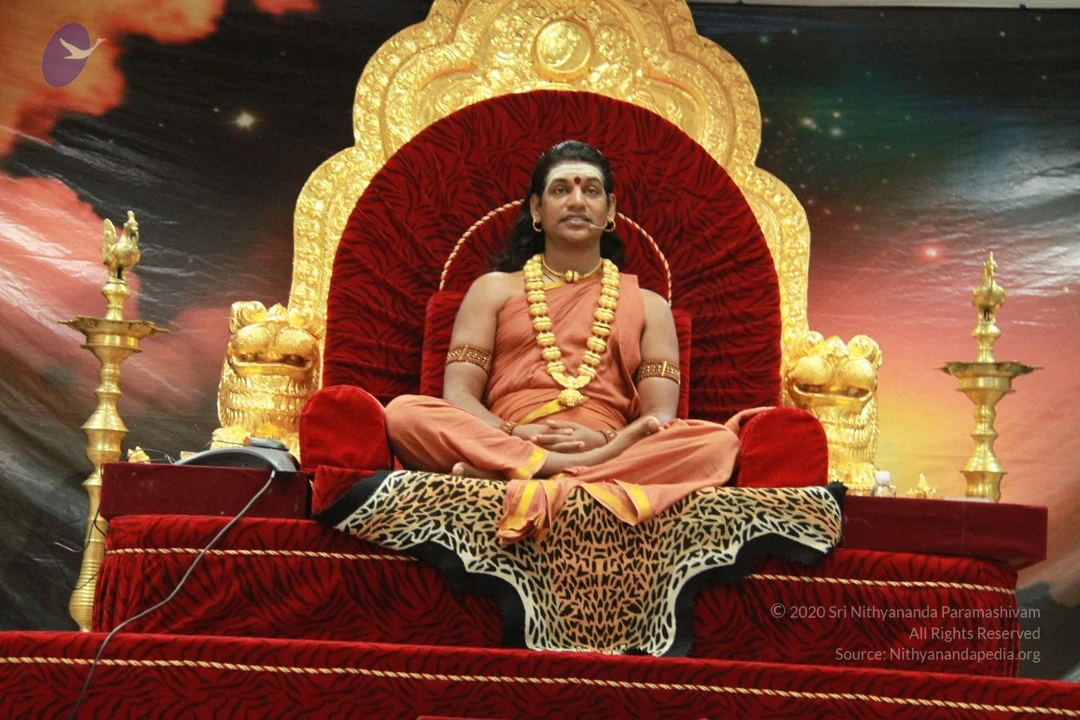
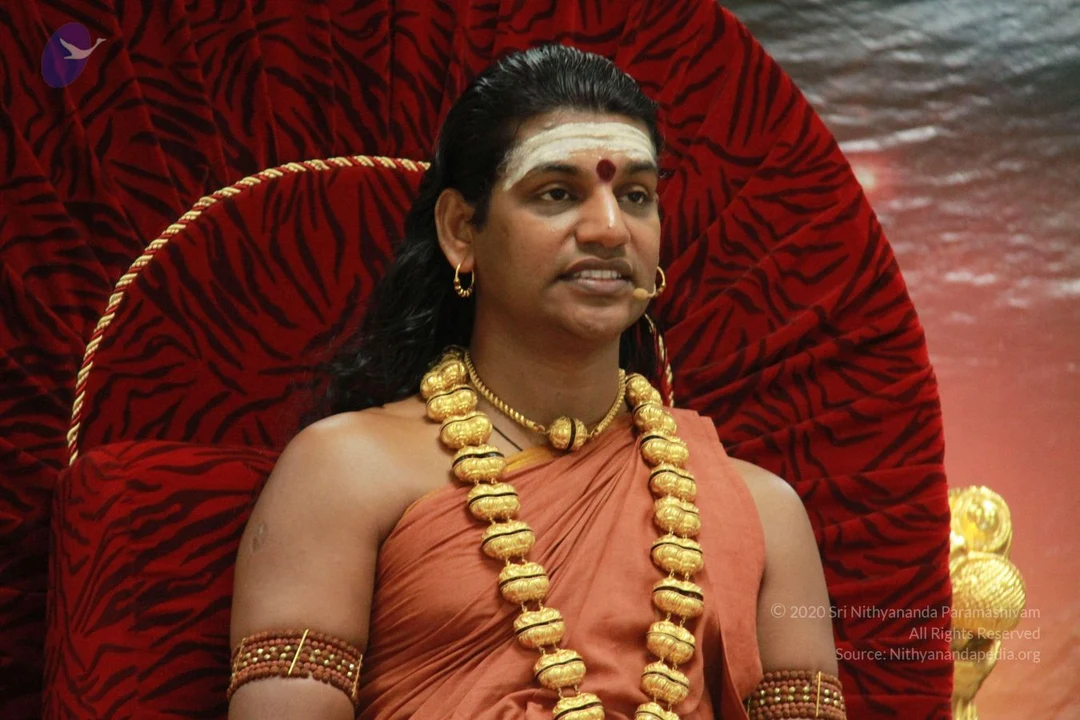
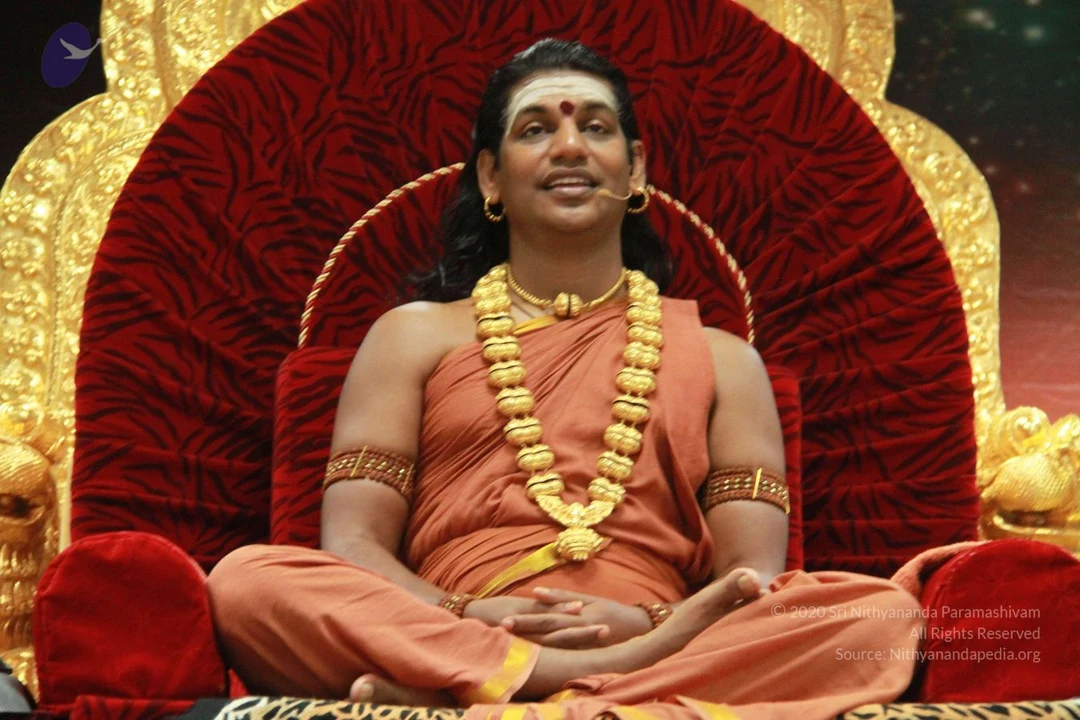
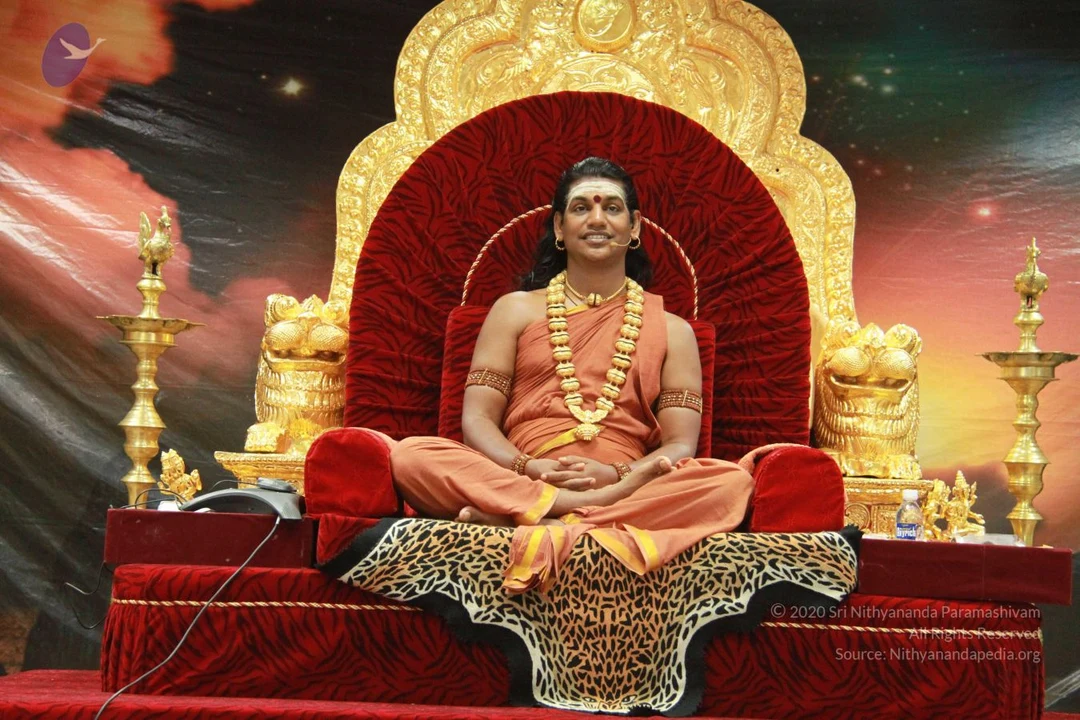
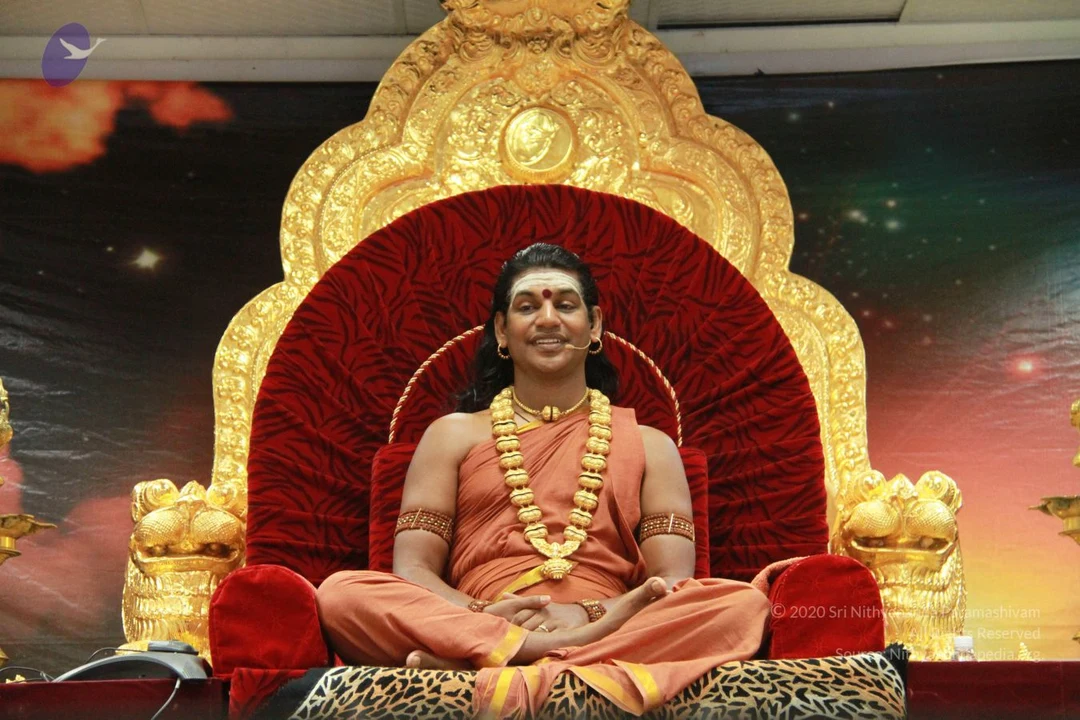
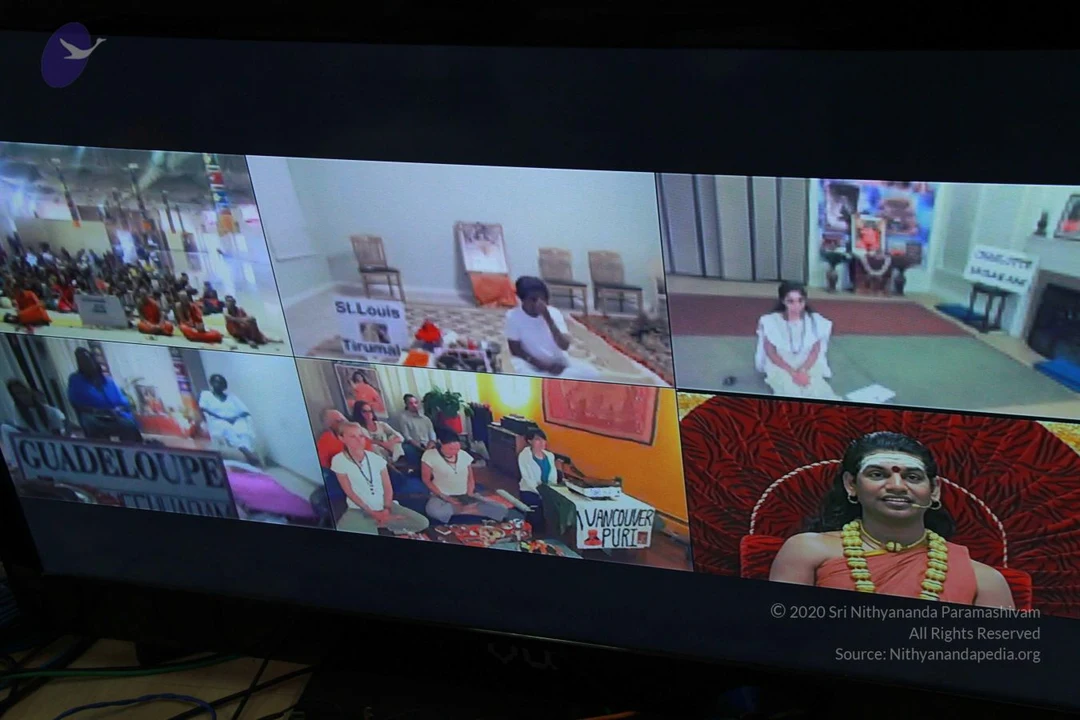
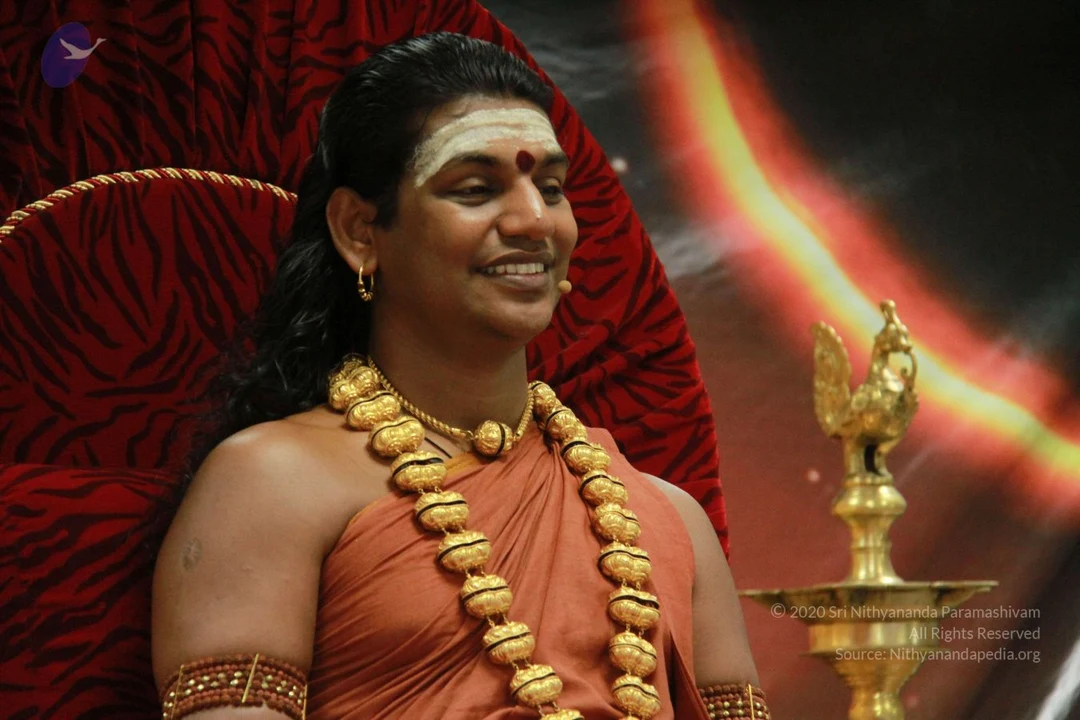
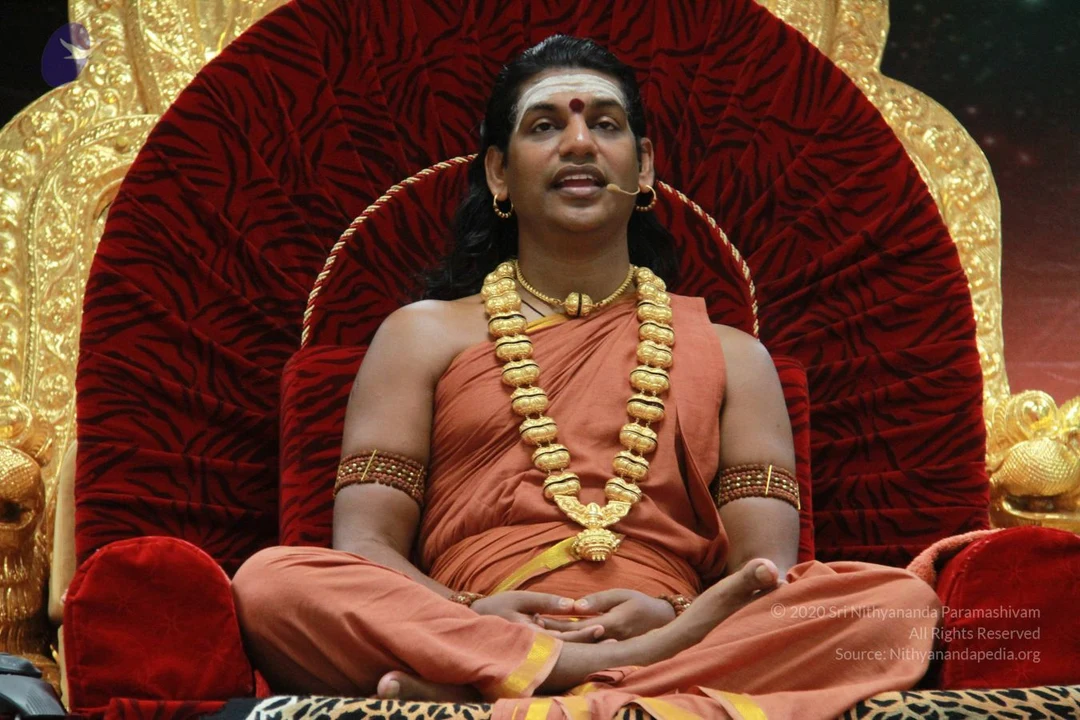
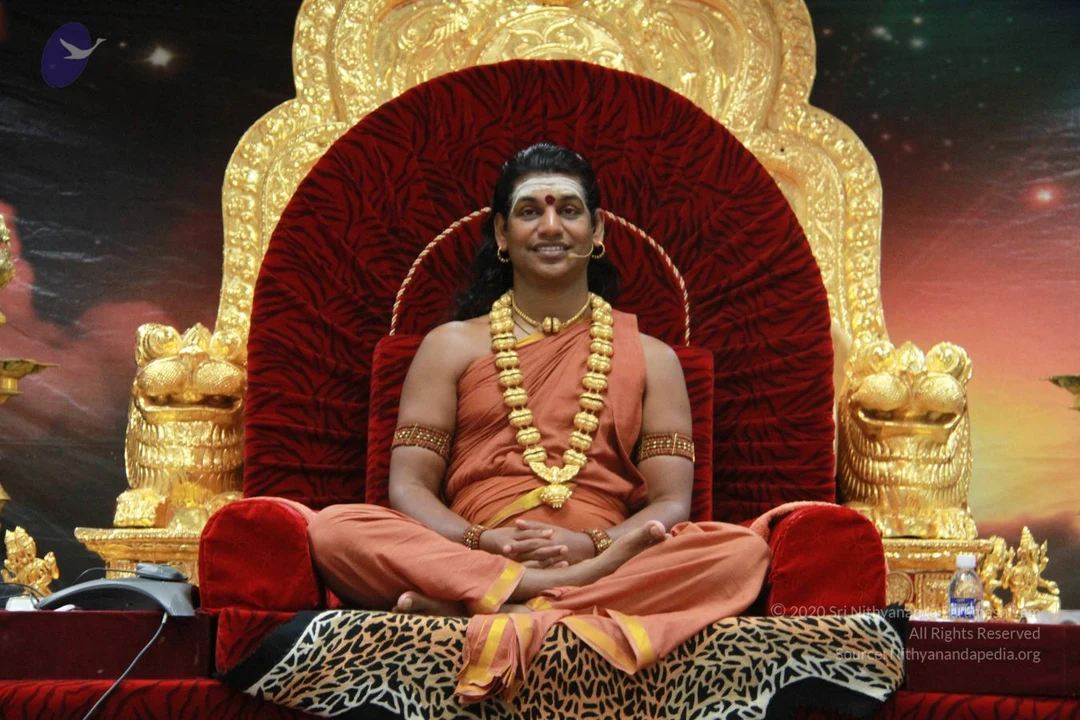
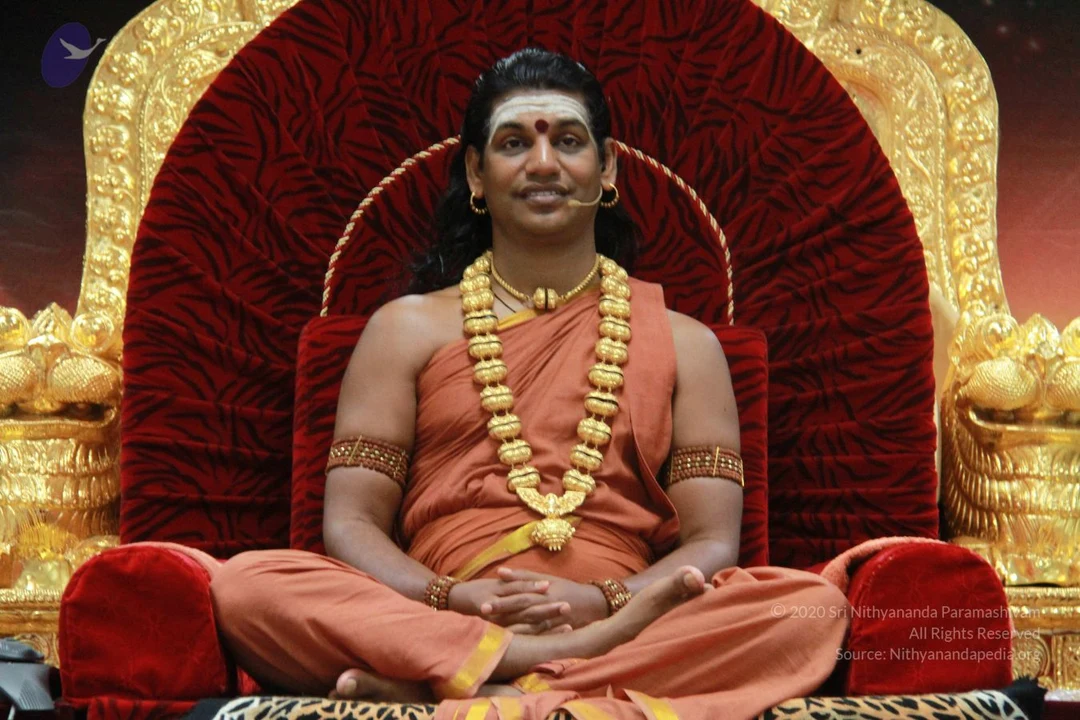
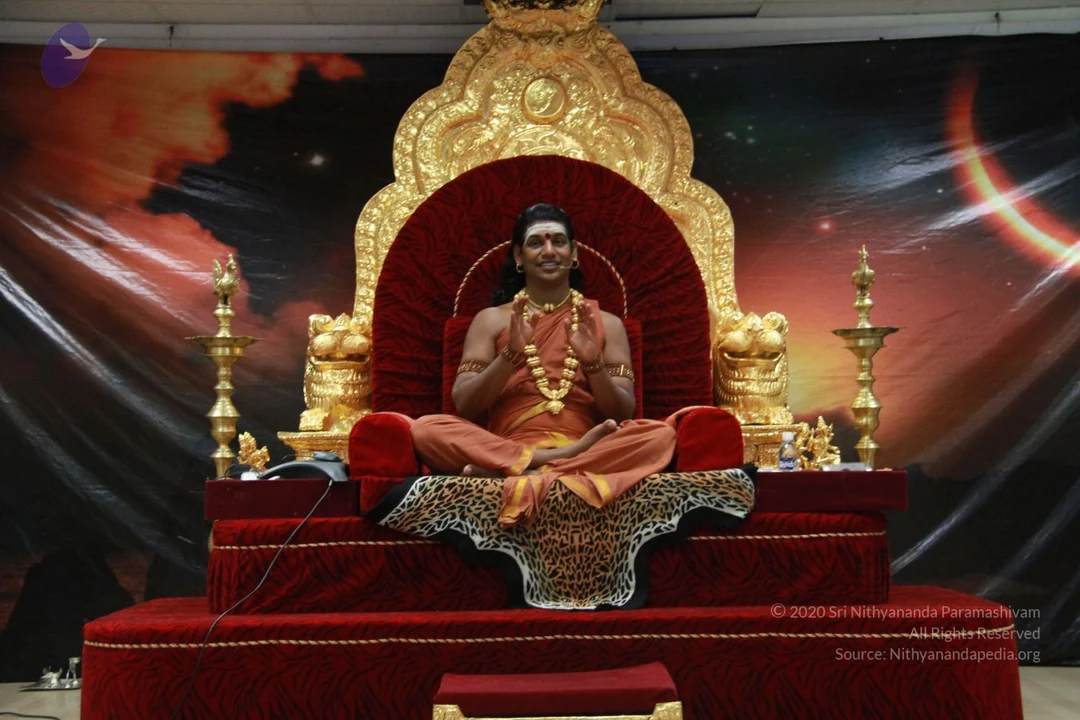
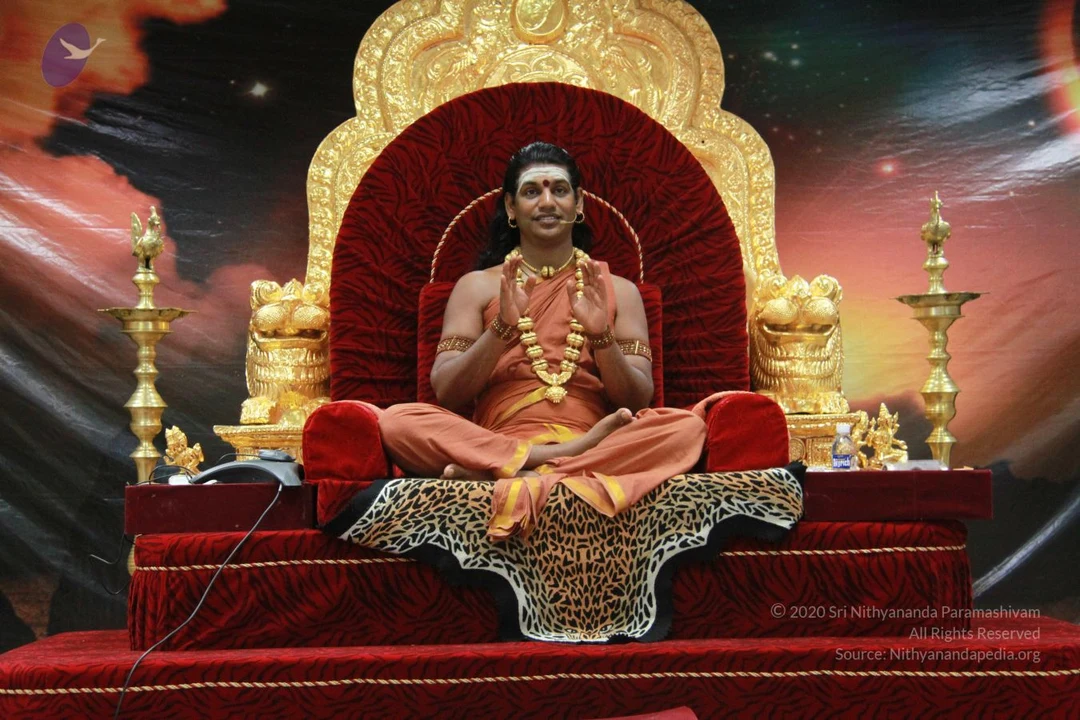
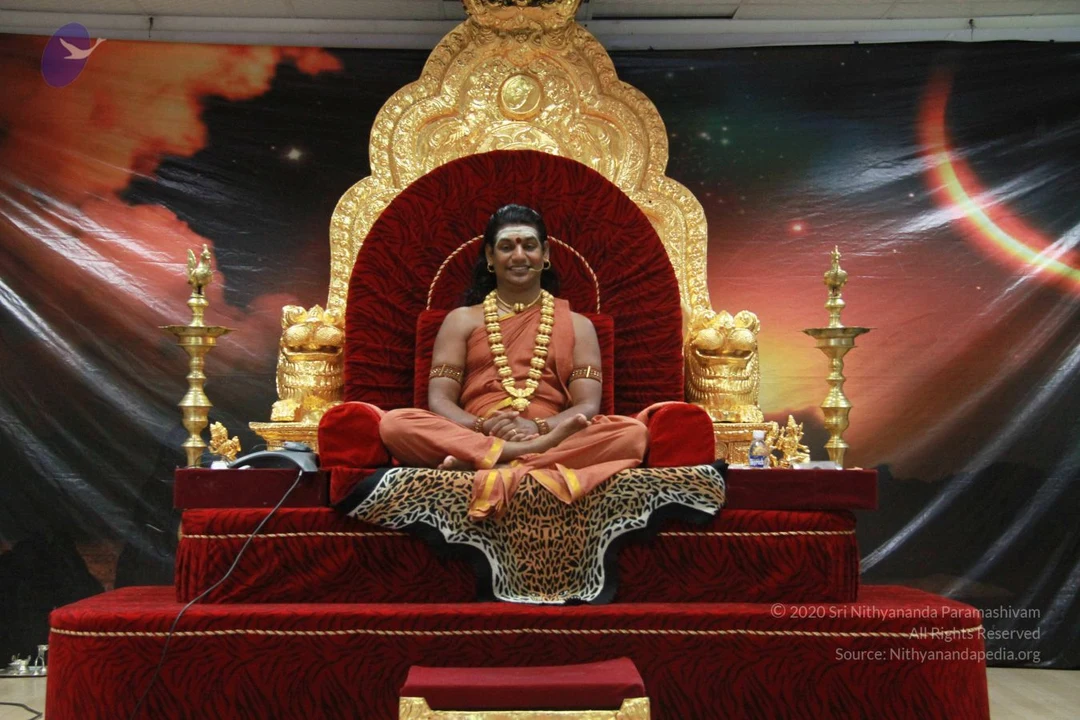
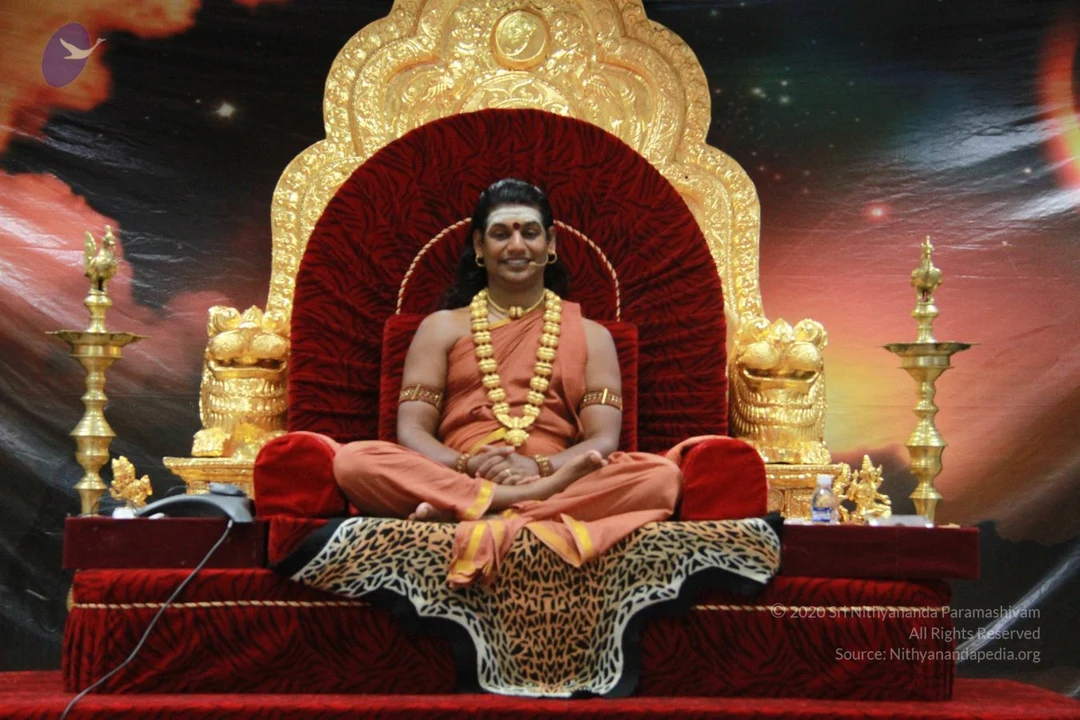
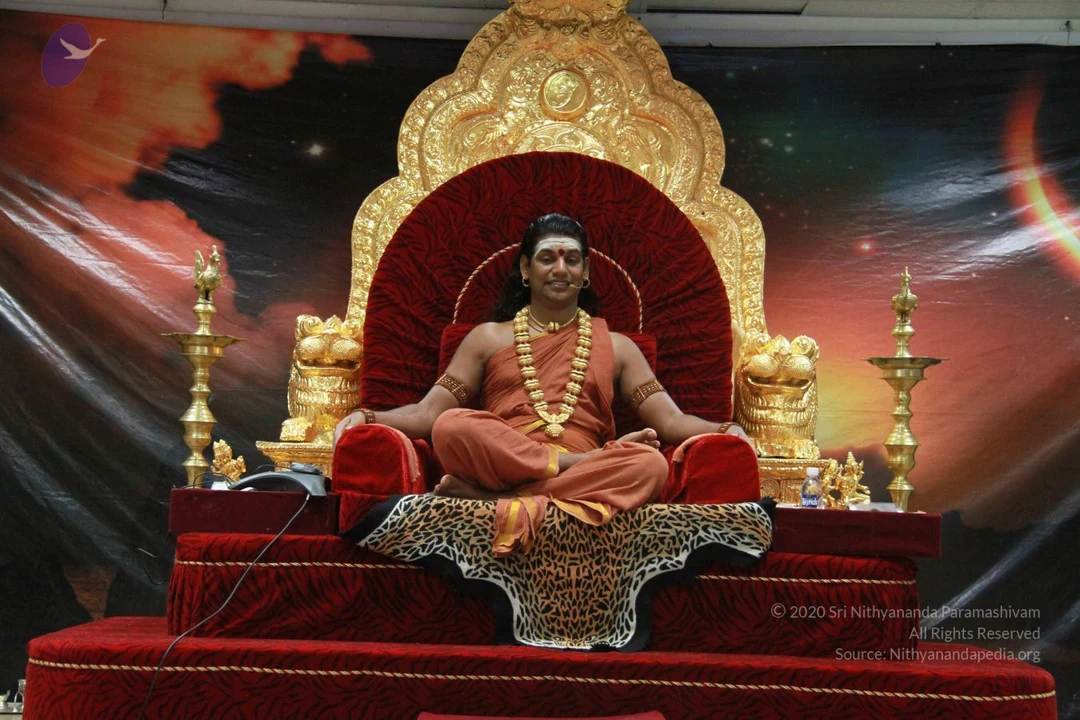
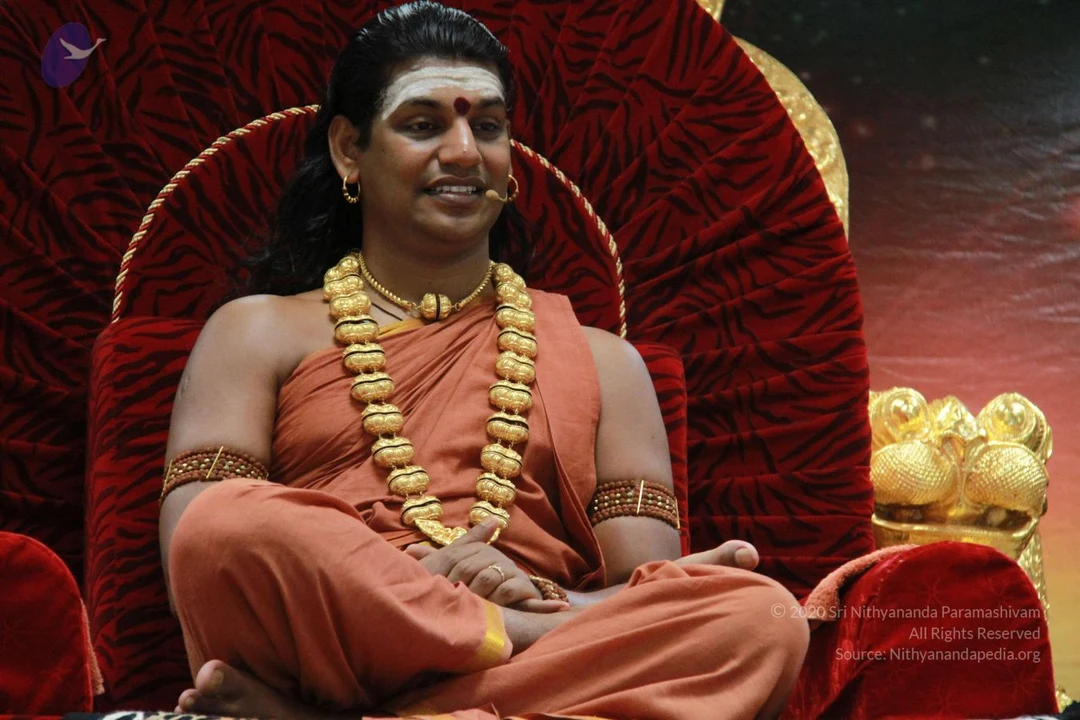
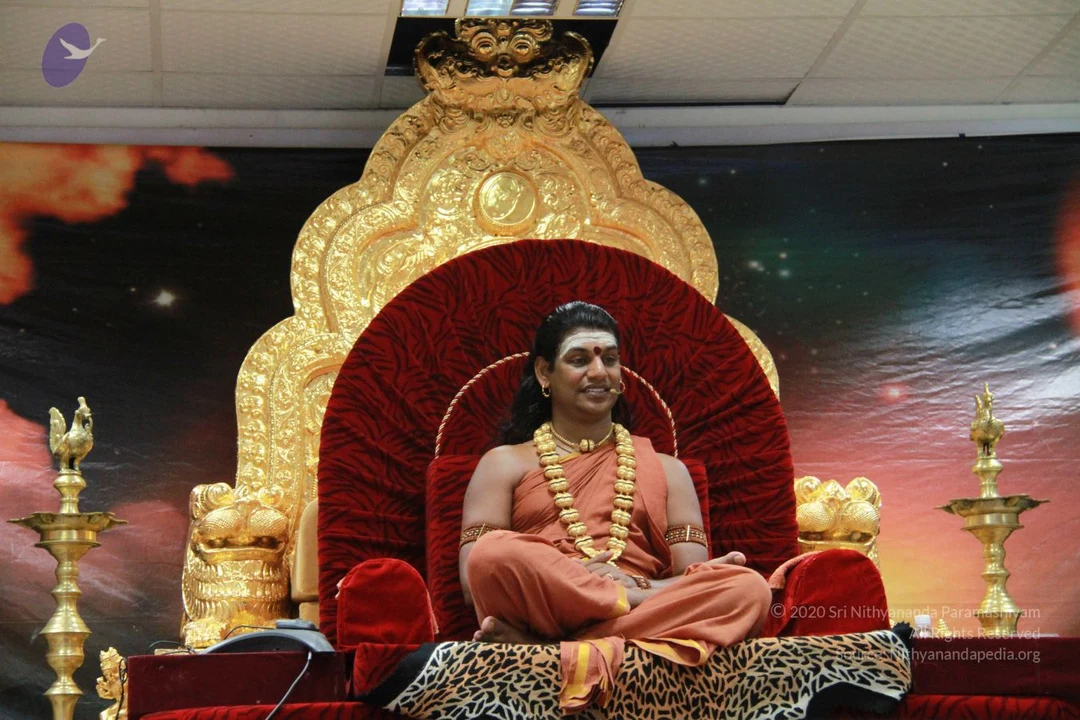
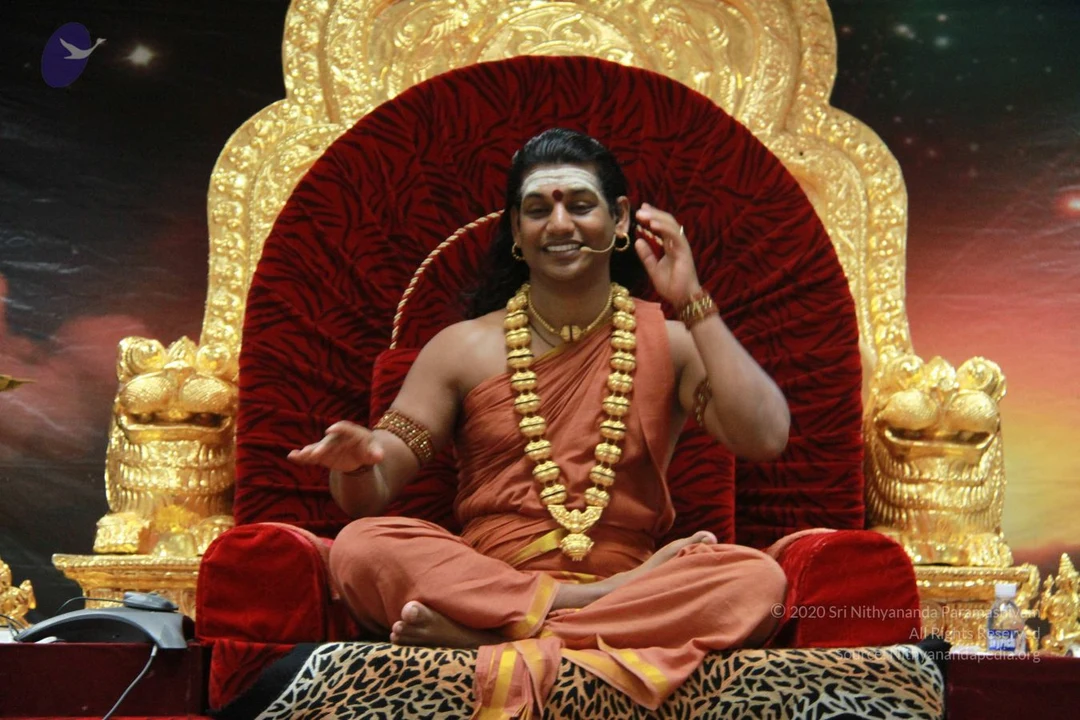
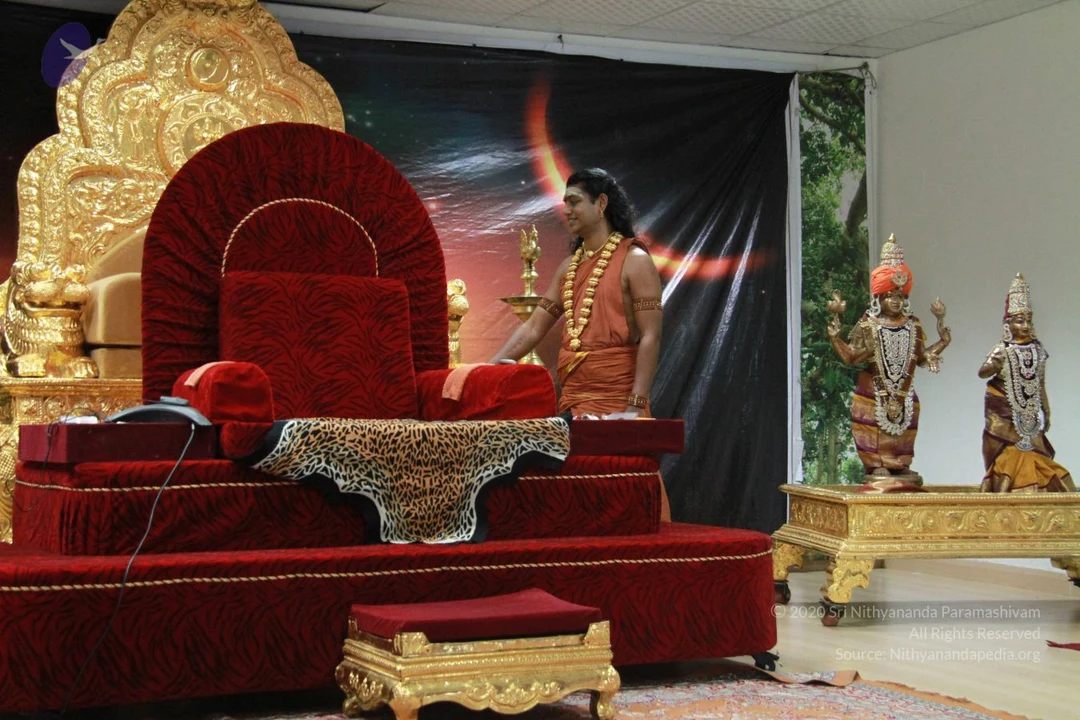
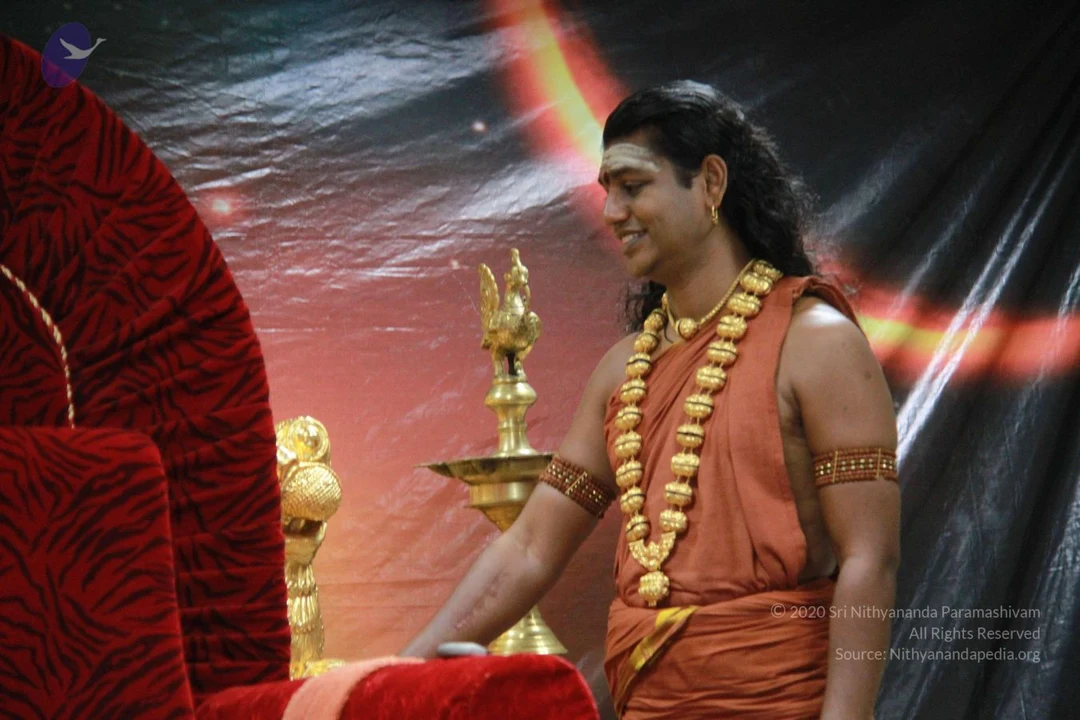
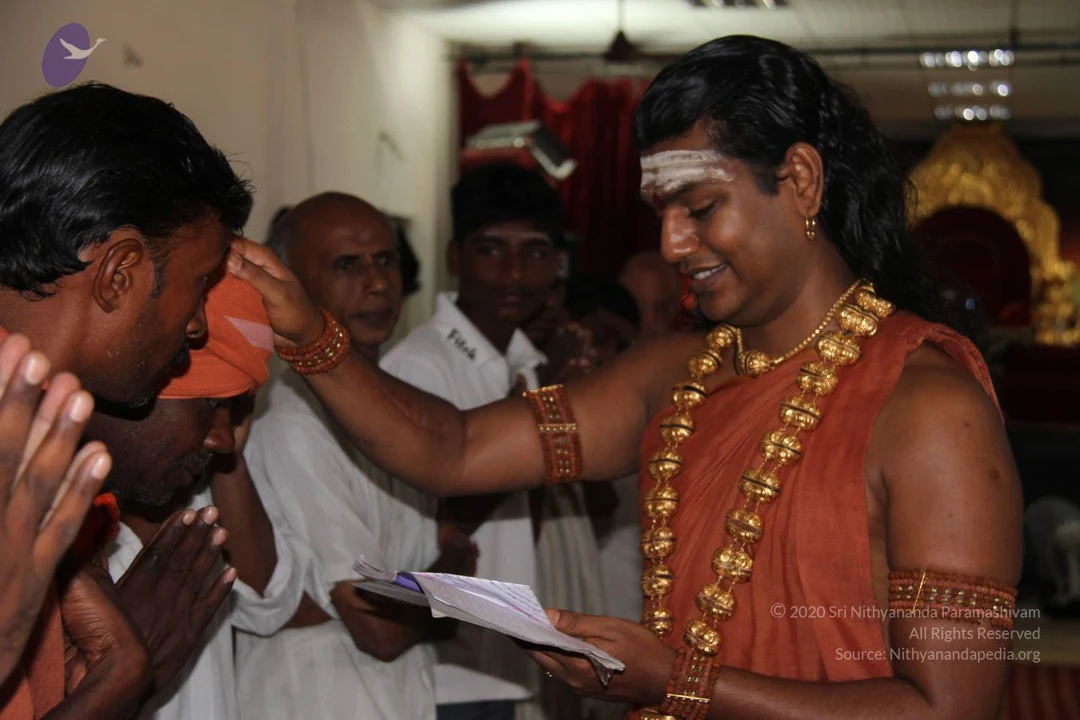
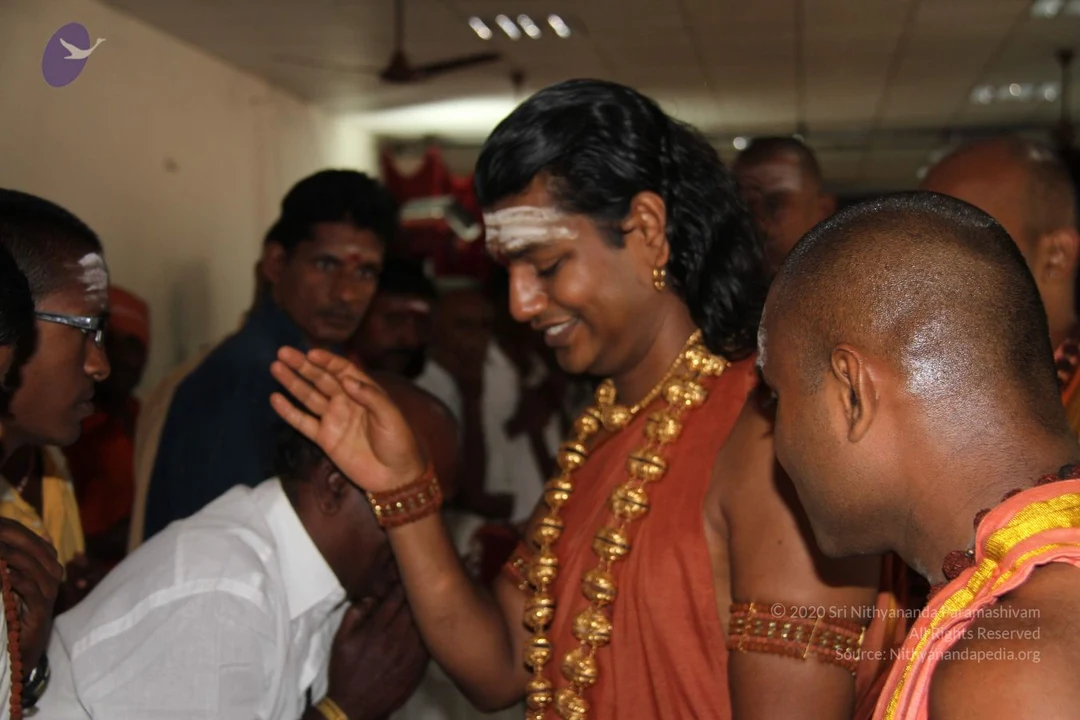
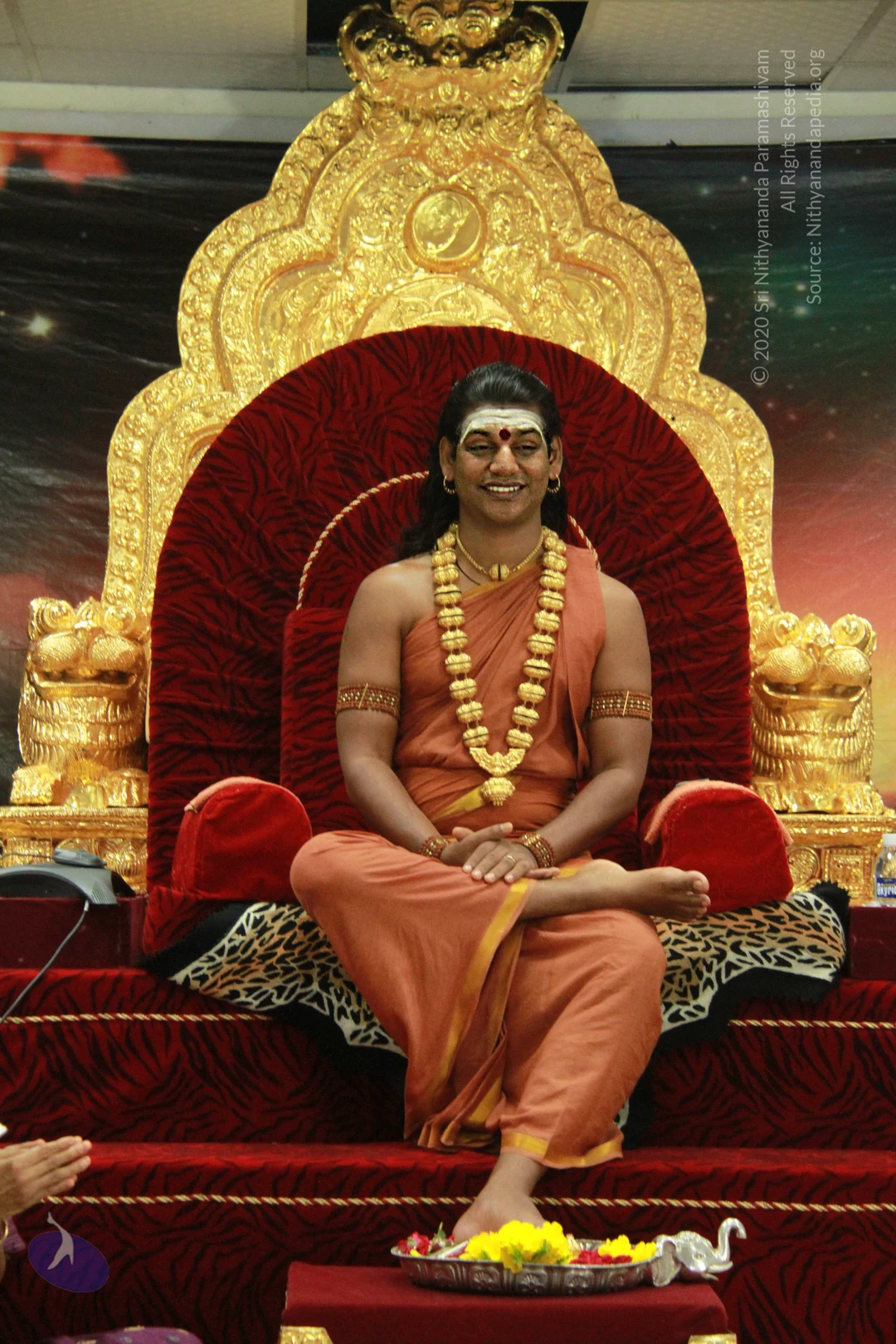
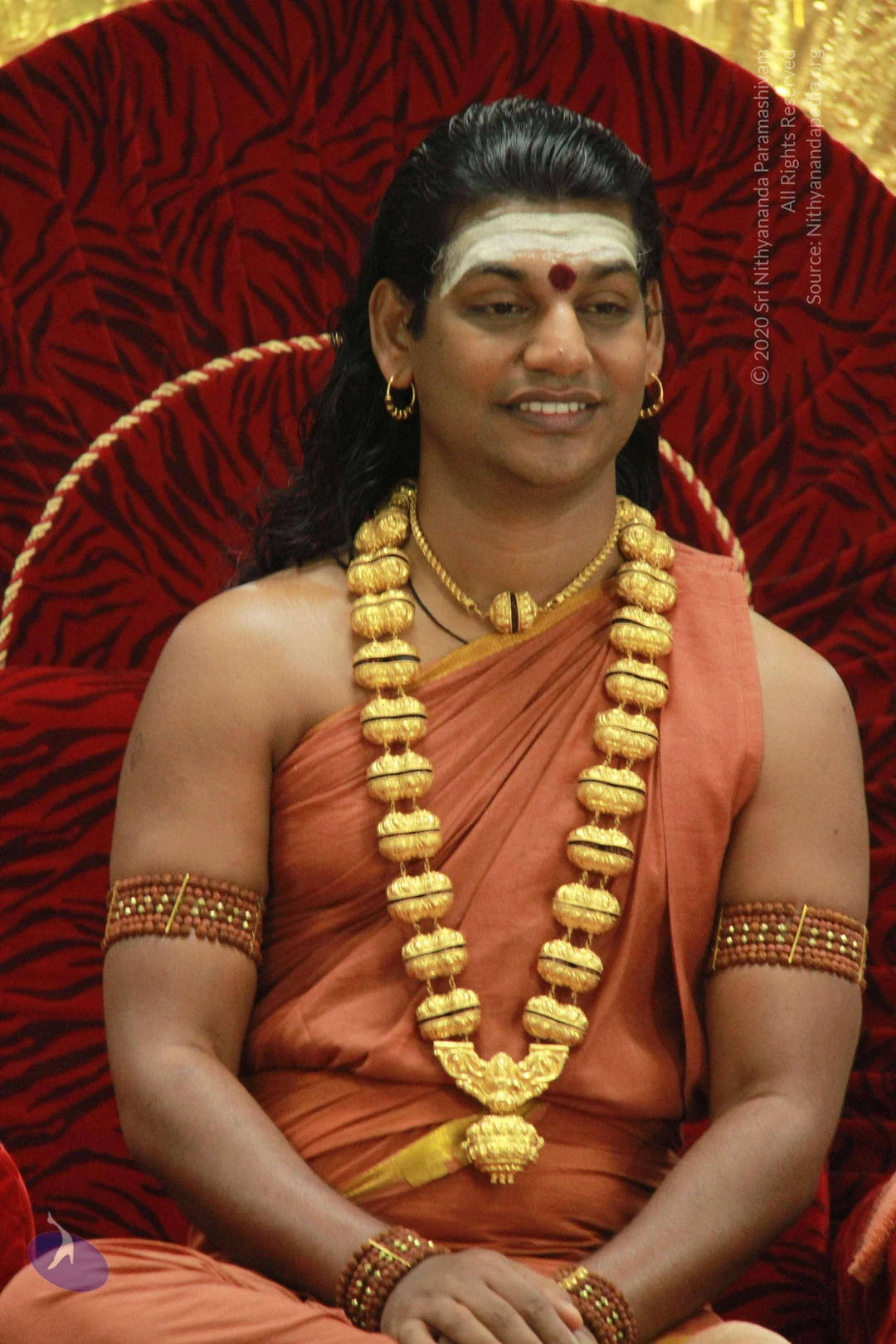
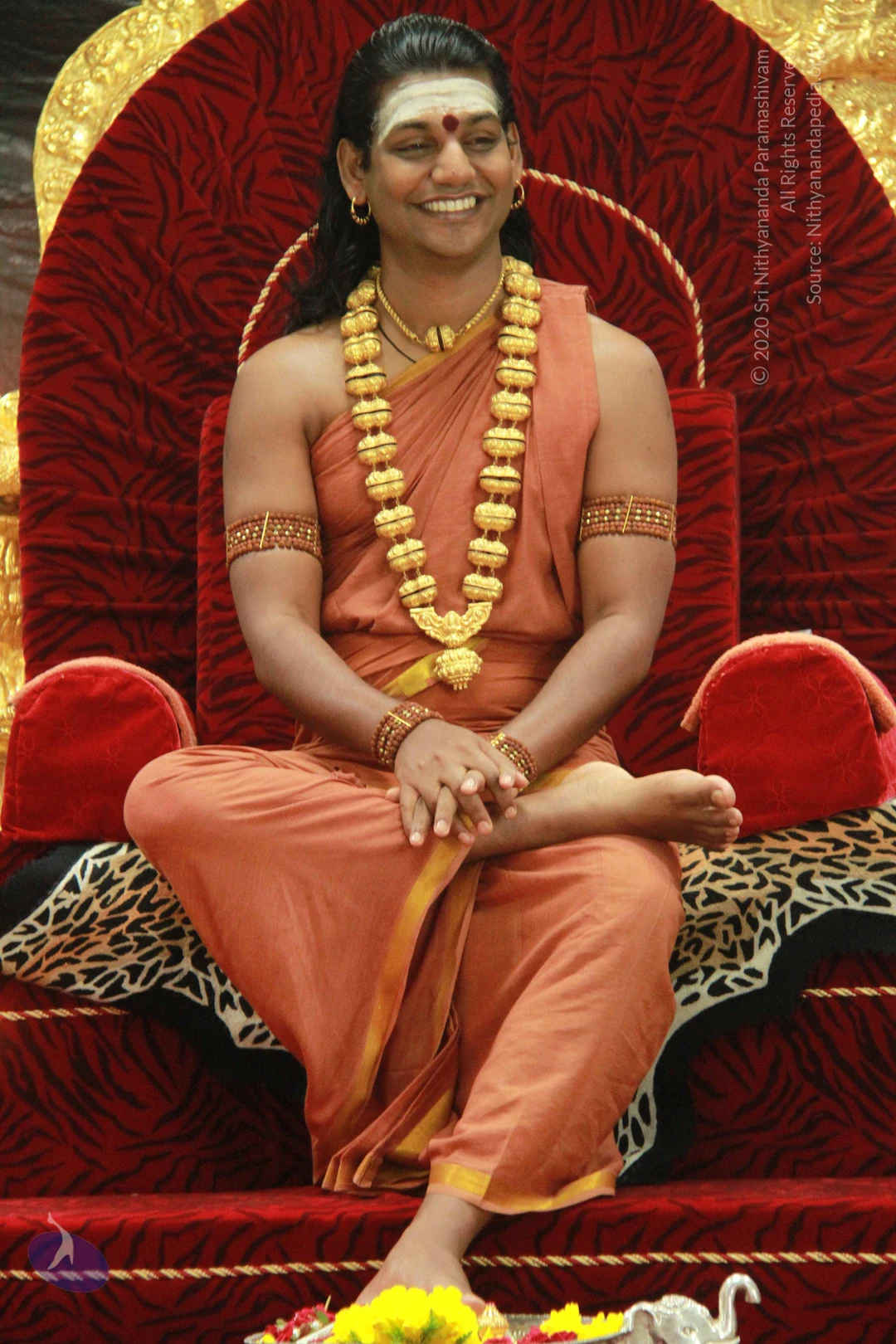
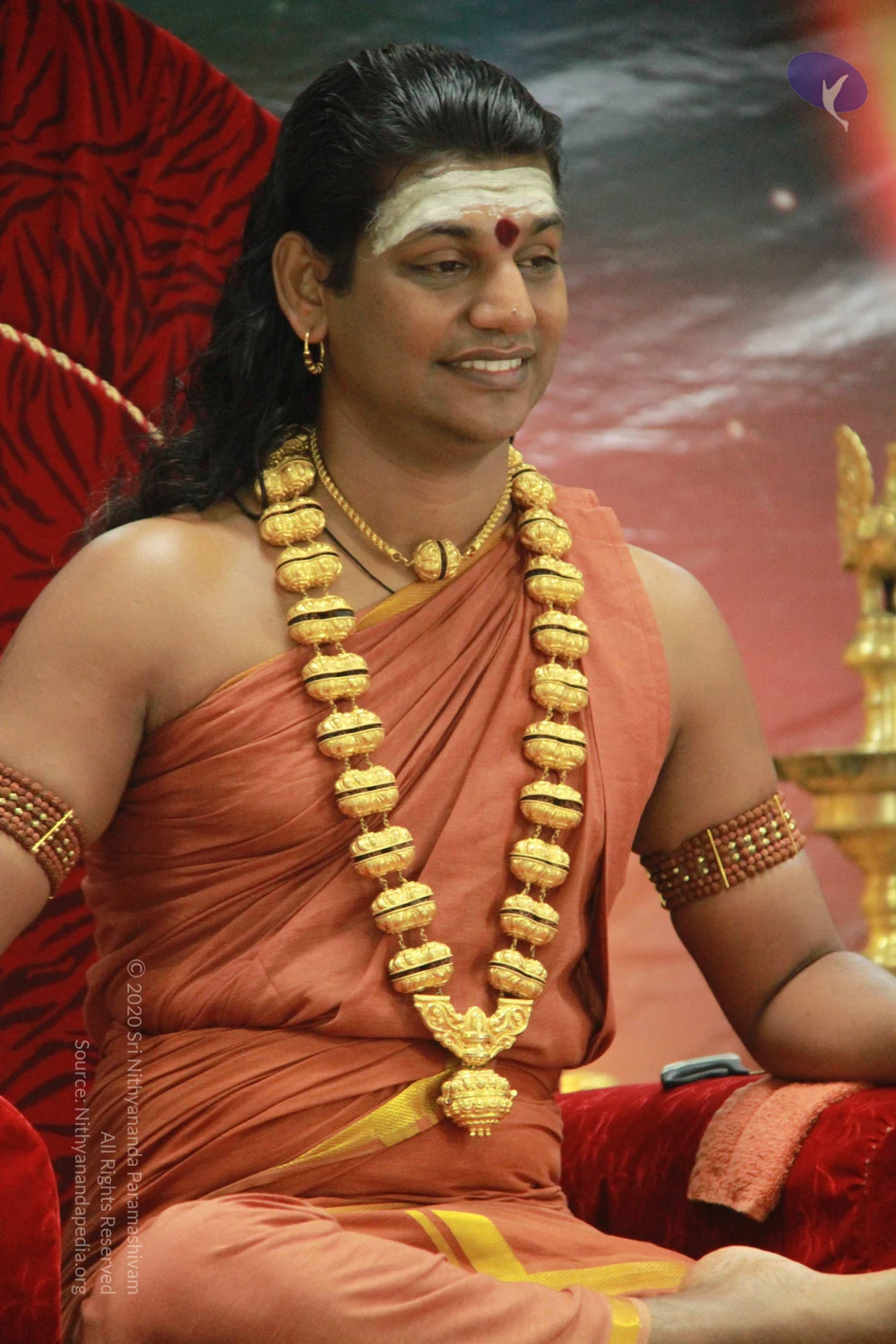
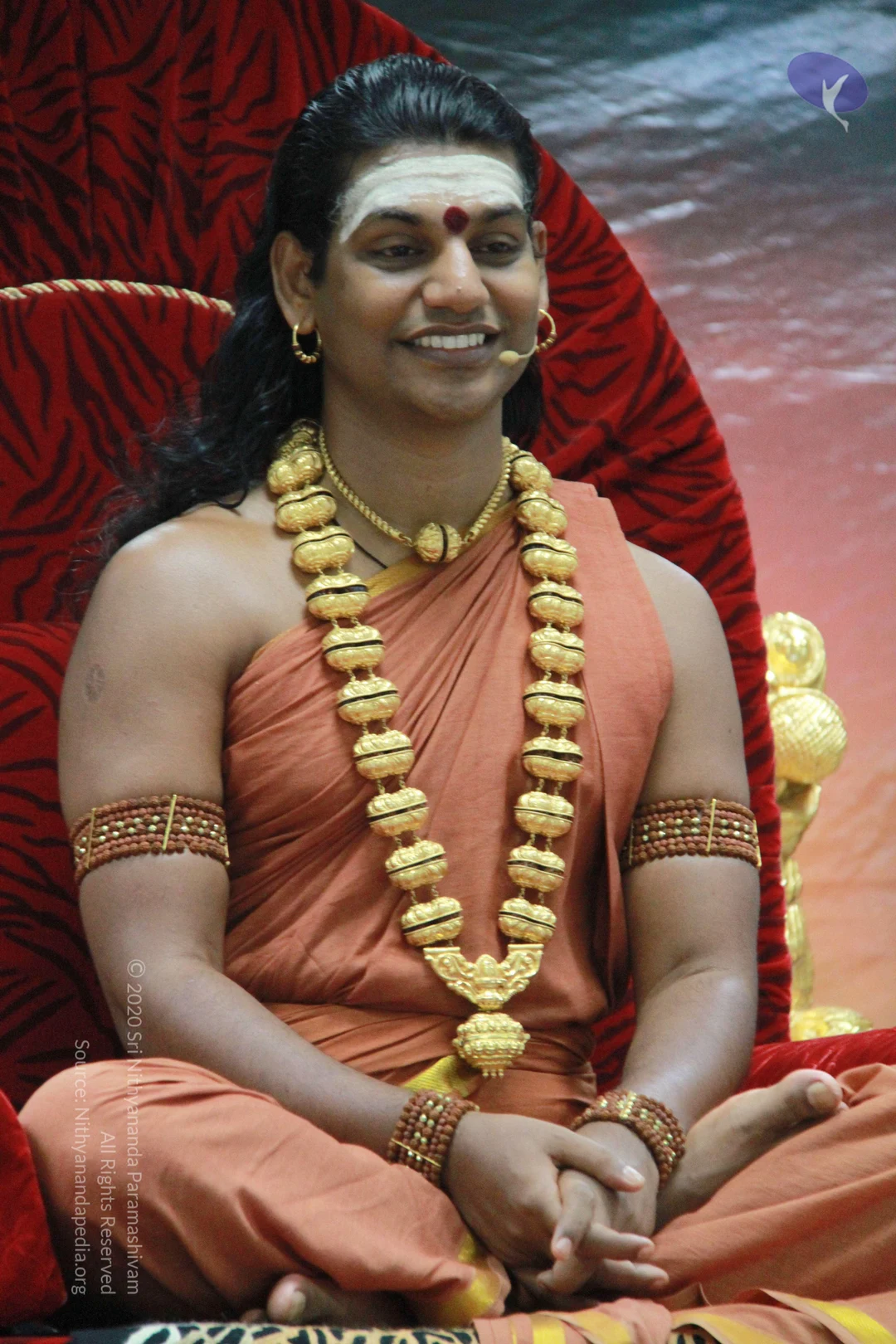
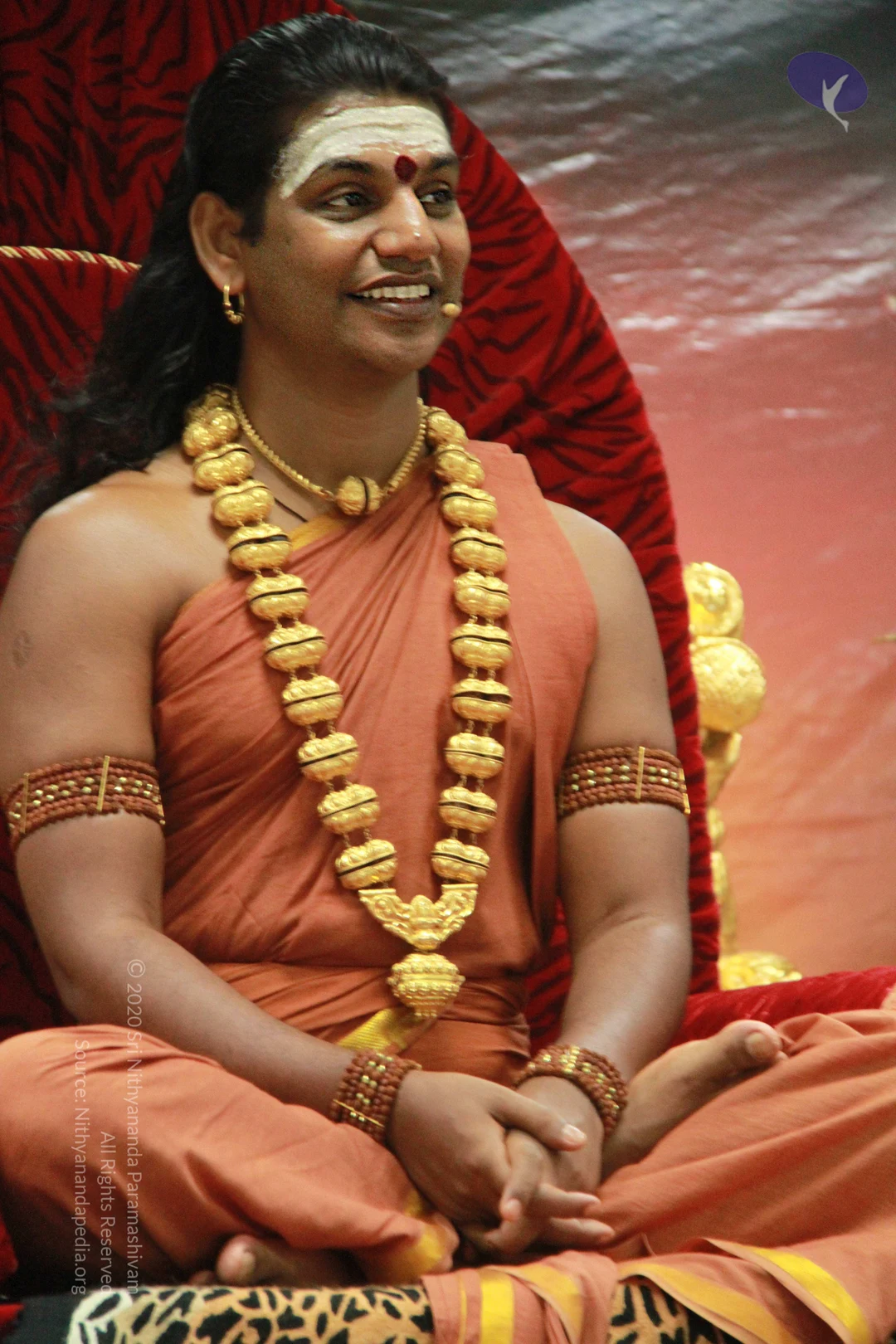
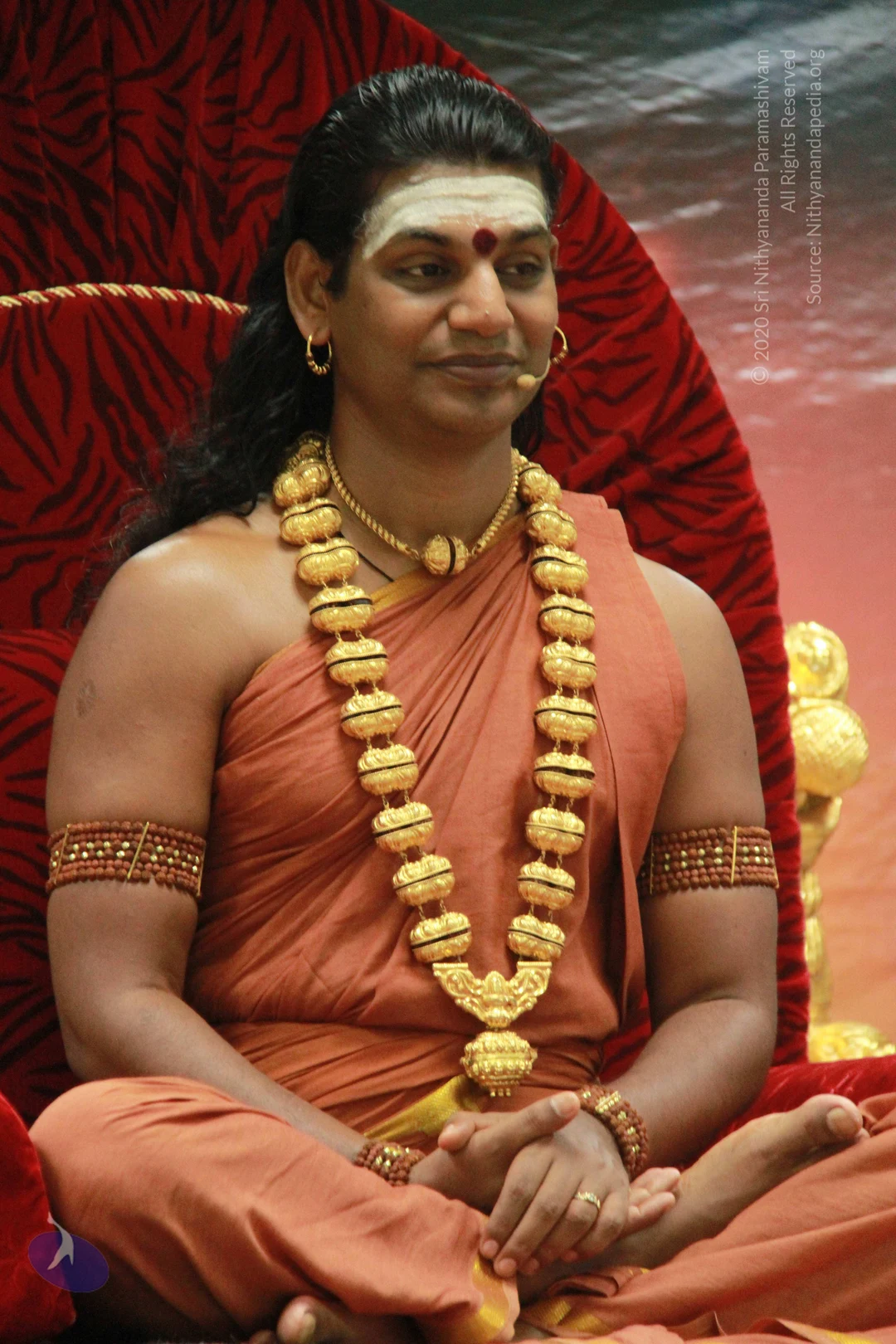
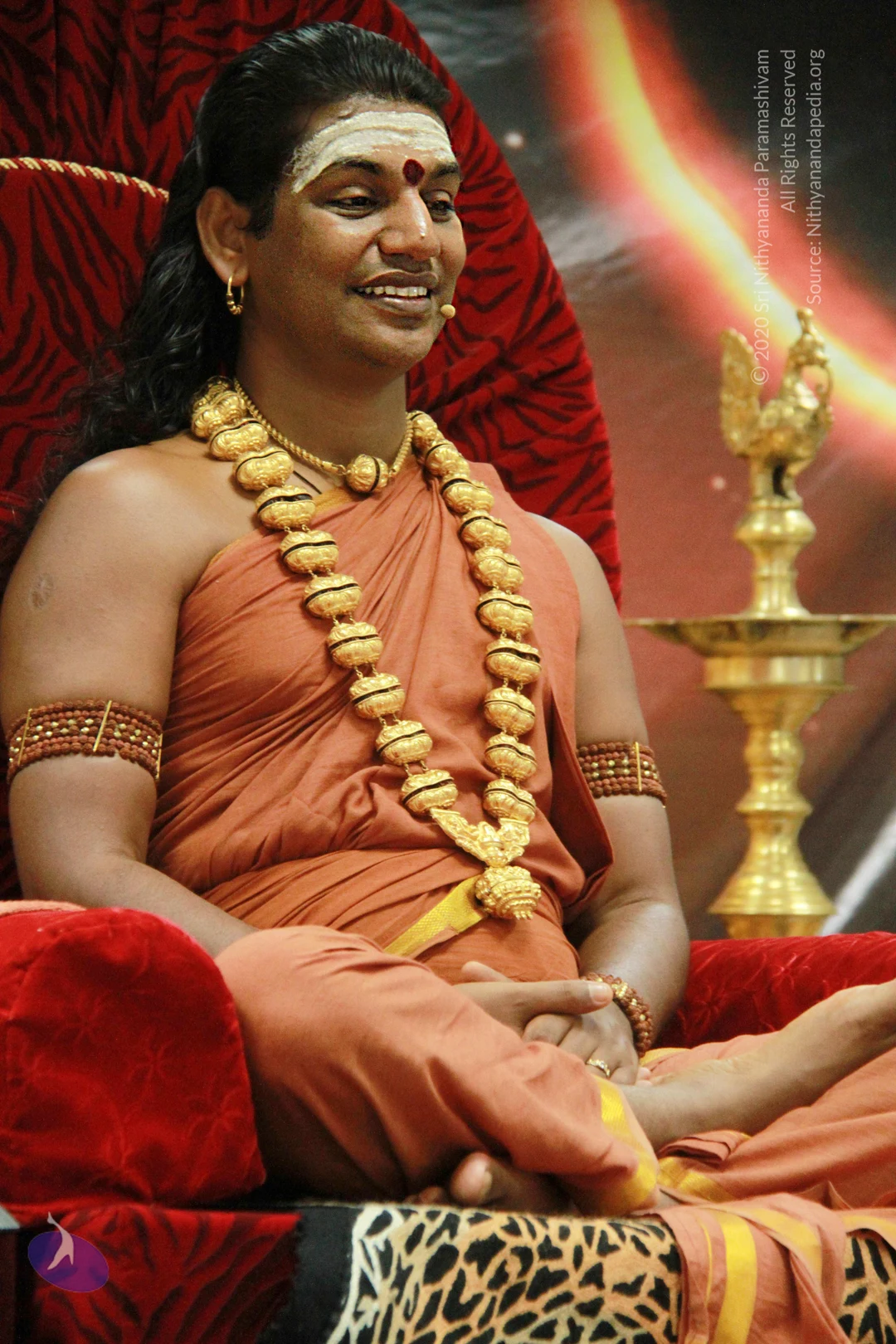
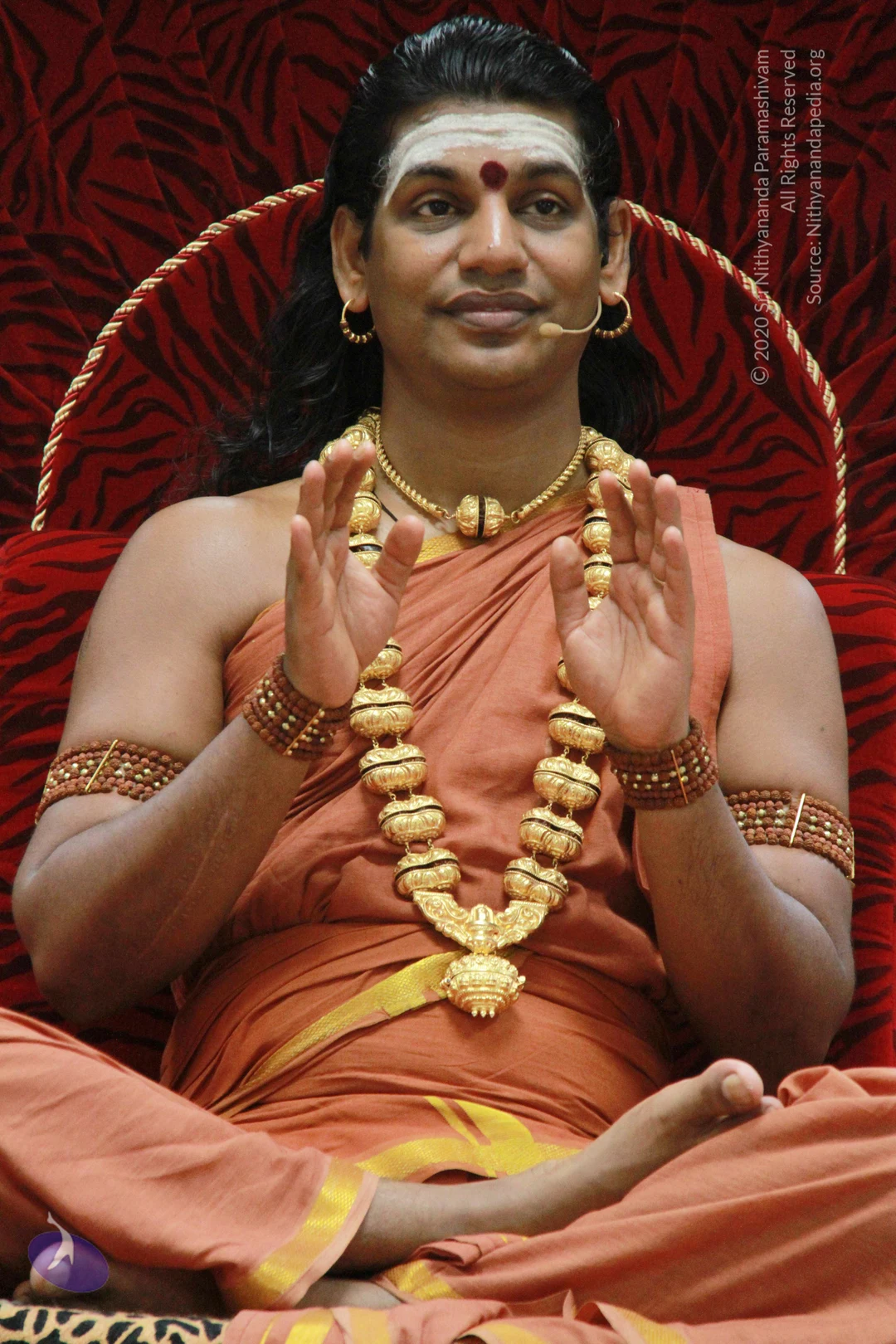
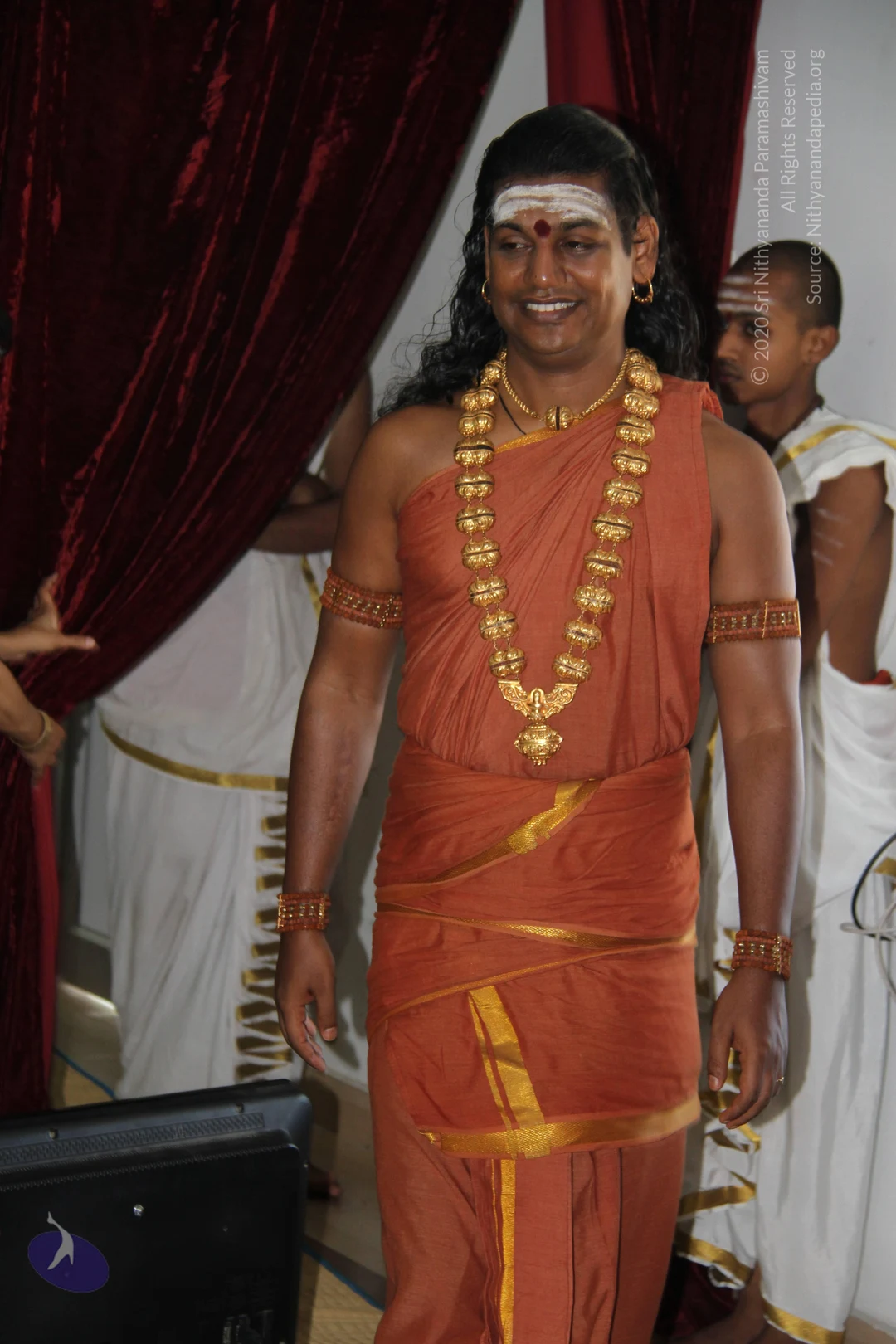
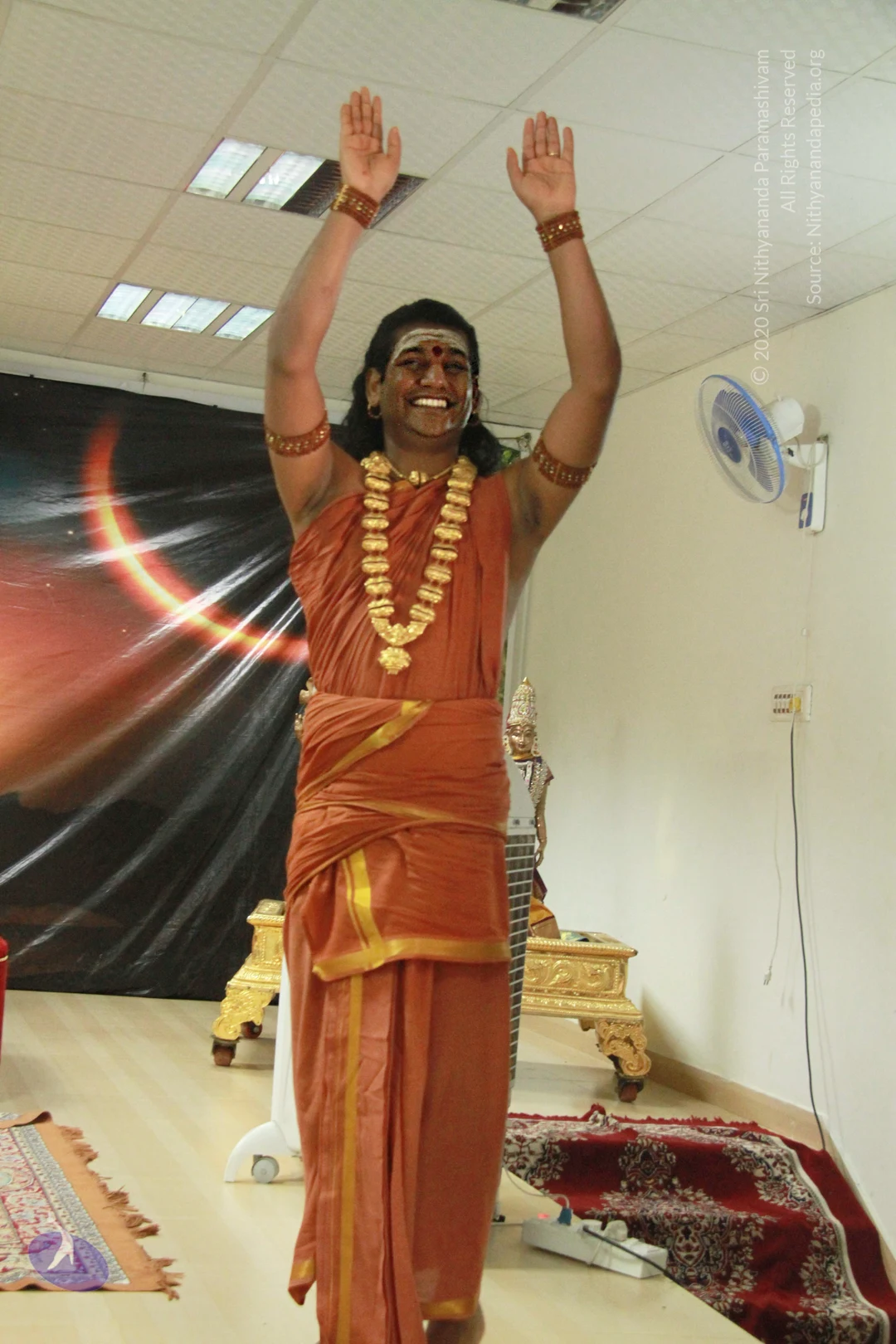
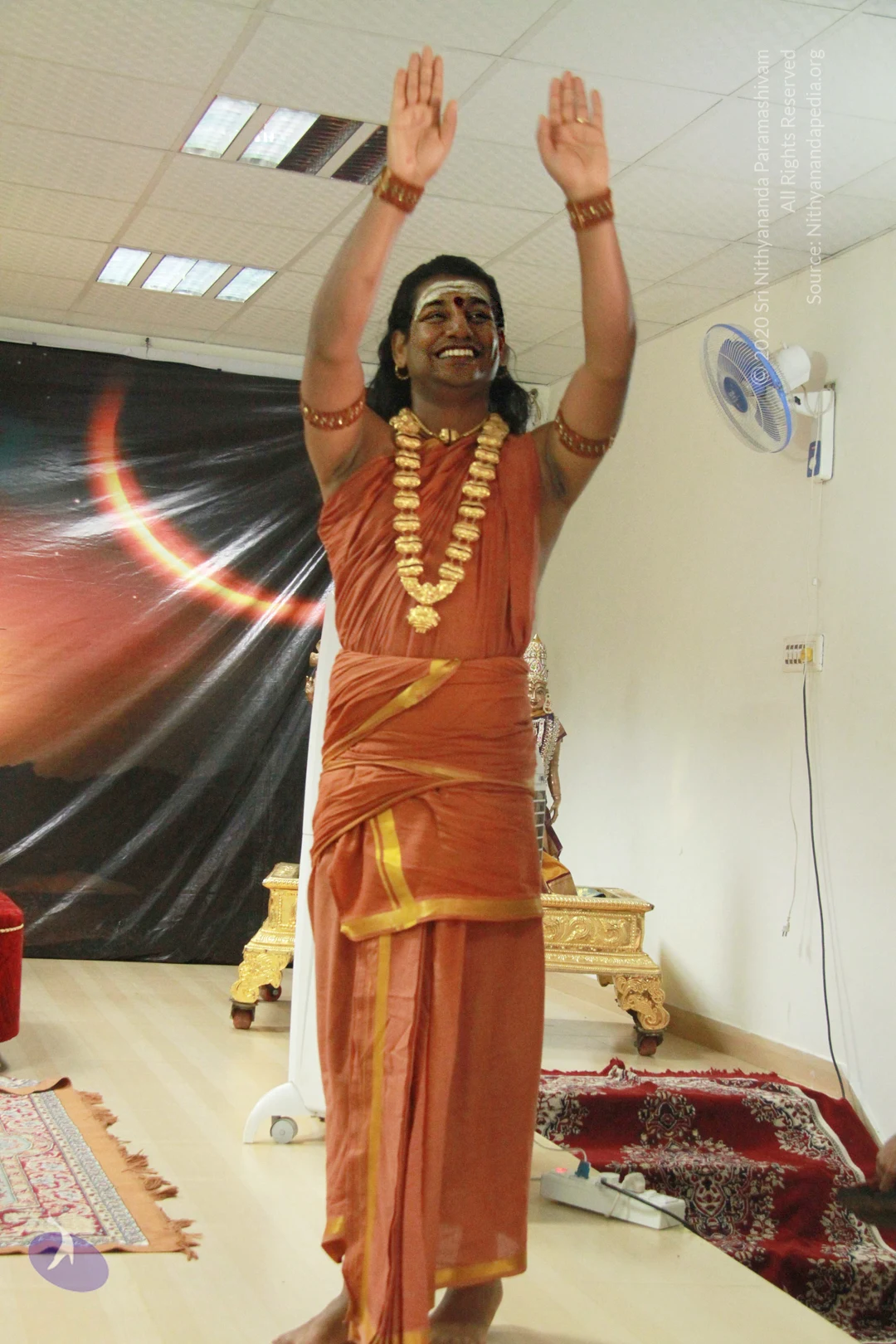
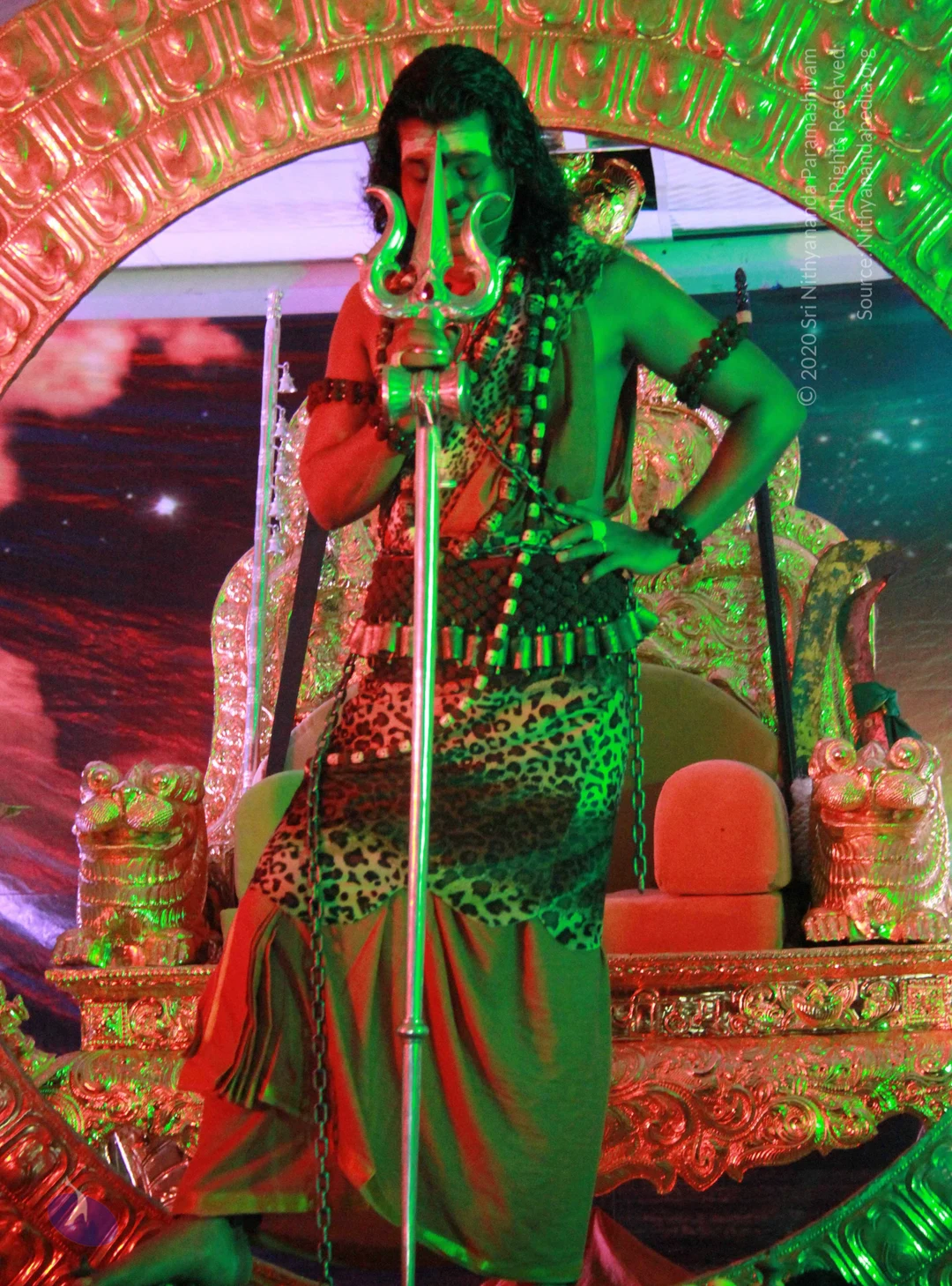
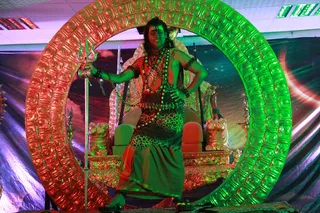
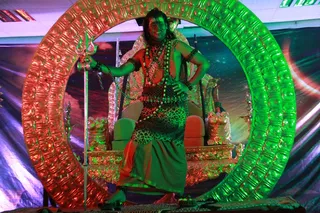
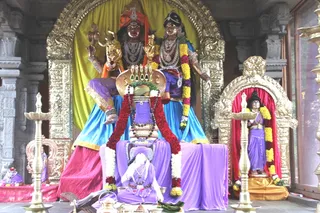
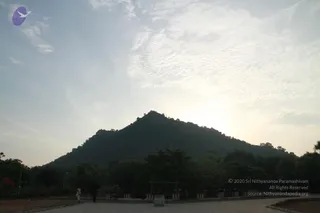
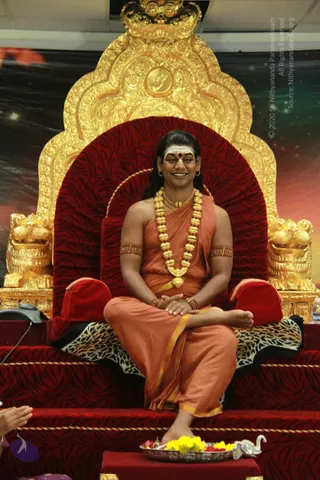
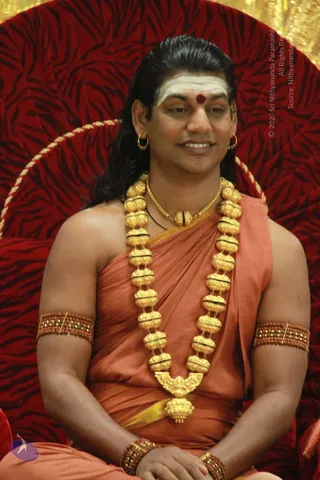
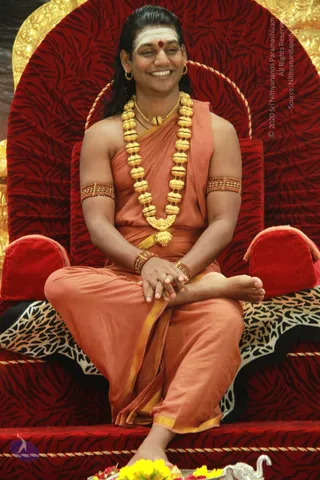
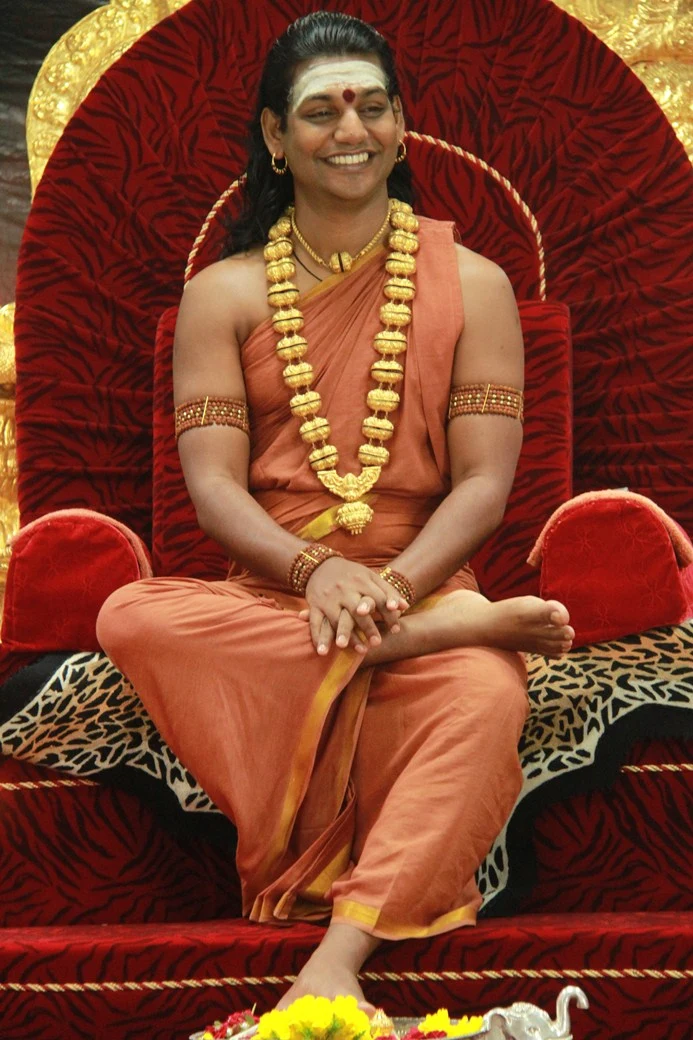
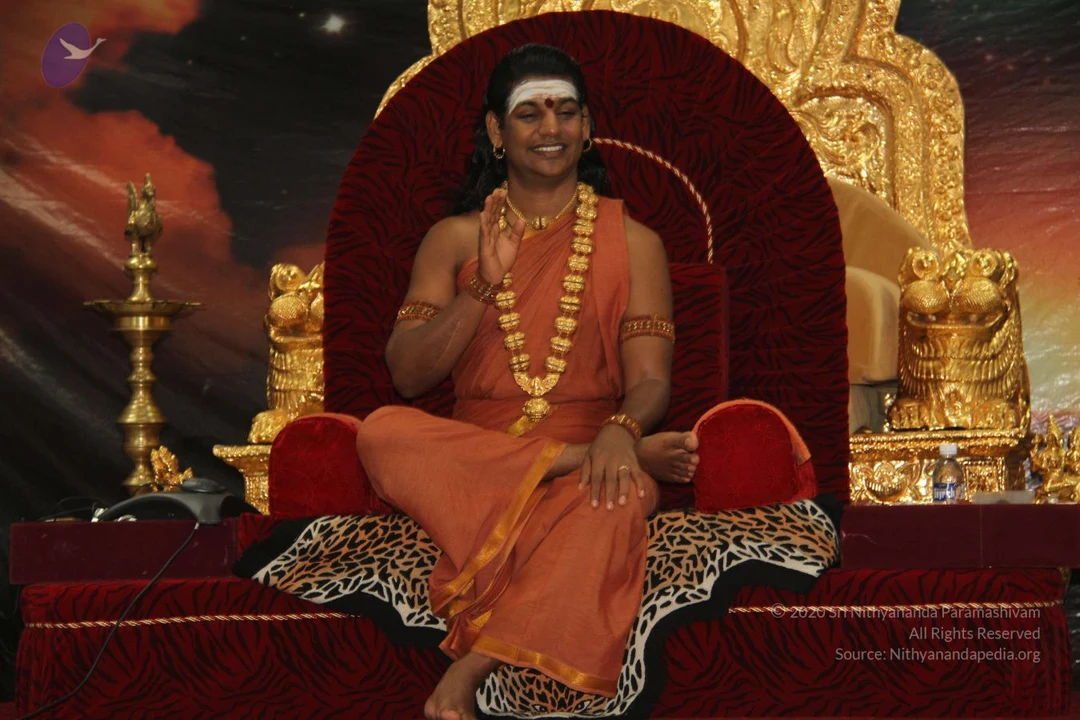
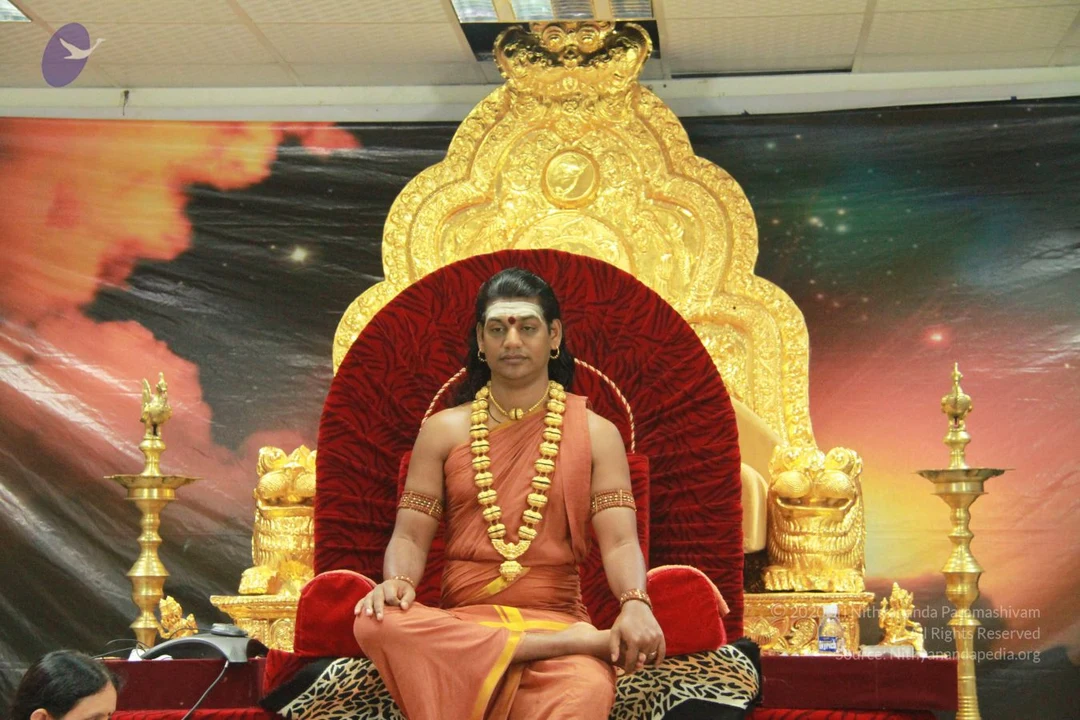
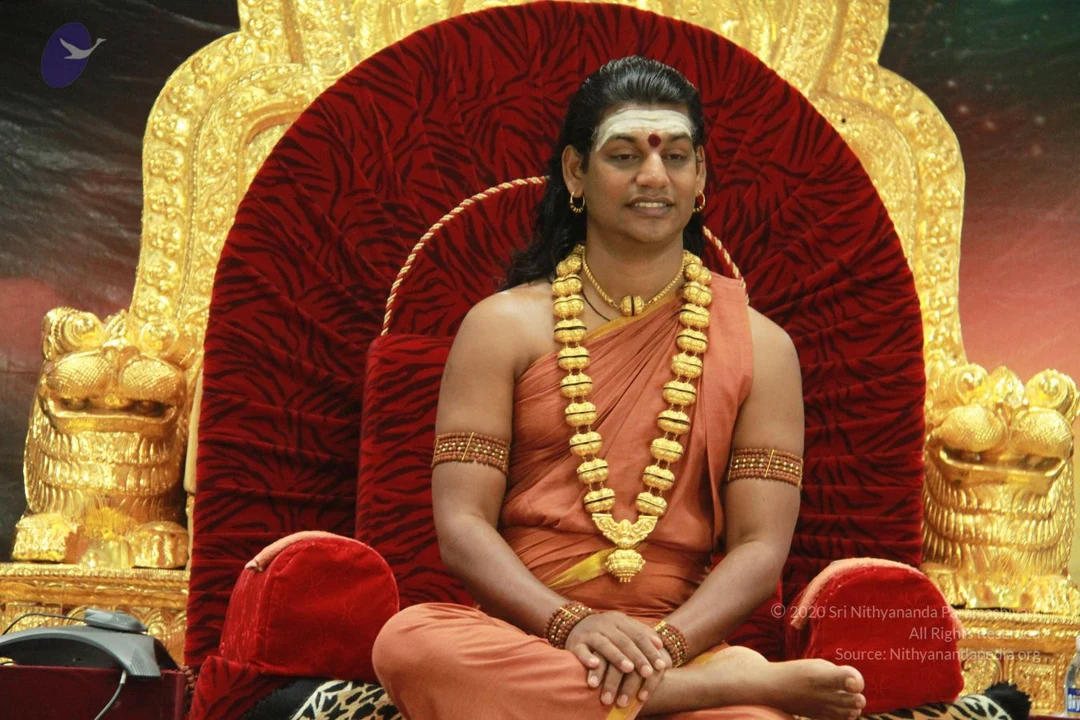
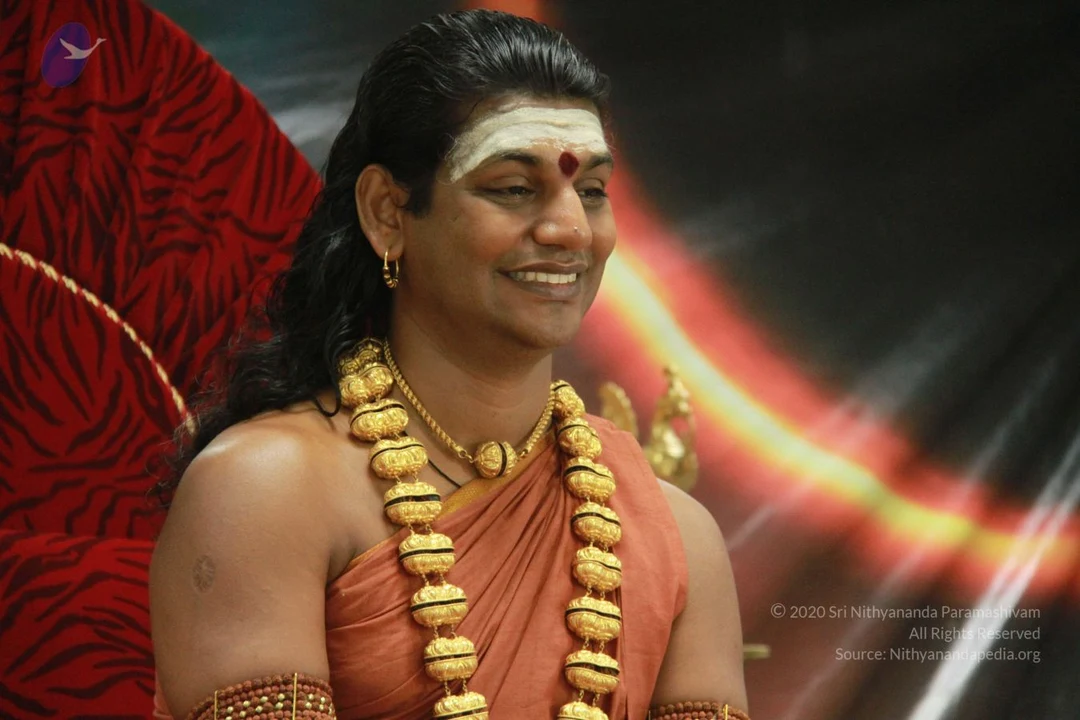
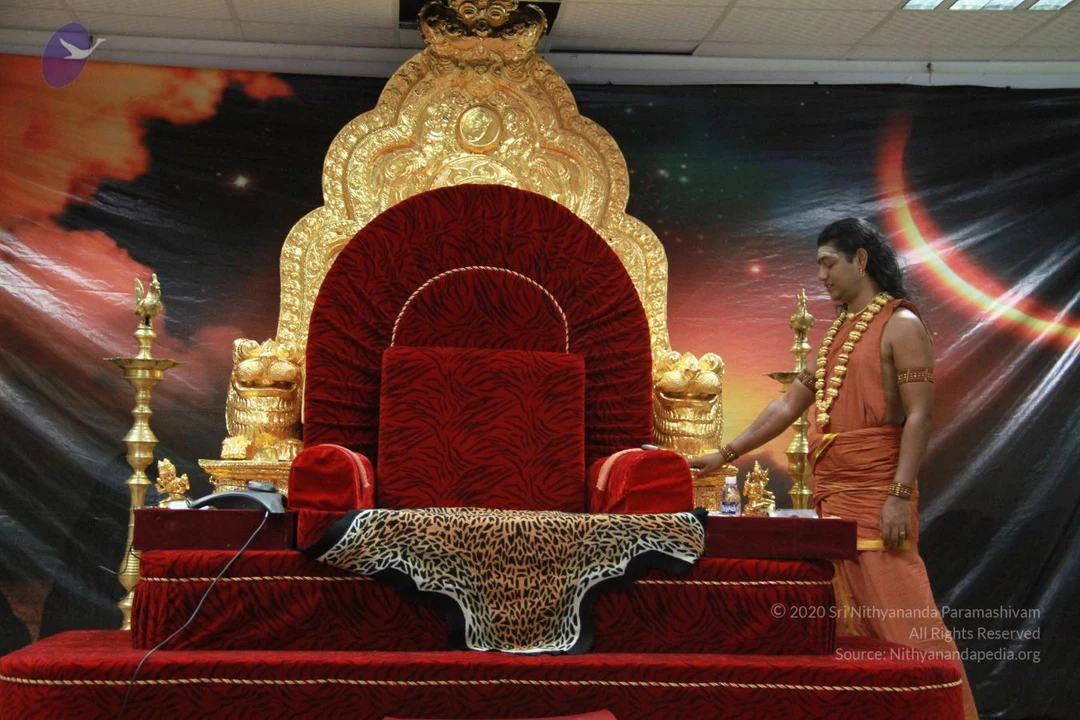
A photograph of a seated figure on an ornate red and gold throne with a leopard-print cushion, wearing orange robes, a rudraksha-style gold necklace of beads, gold armlets and a white tilak on the forehead, with long dark hair swept back. A second figure in an orange turban and orange clothing sits on a similar throne at the upper left. In the foreground a shaven-headed attendant in orange robes with white arm markings holds a silver lamp with several burning flames toward the seated figure. A dark red and orange backdrop with a sunburst pattern and a gold lamp stand complete the scene.A man seated cross-legged on an ornate golden throne with red tiger-striped velvet upholstery, eyes closed and palms pressed together in anjali mudra. He wears saffron-orange clothing, a heavy gold necklace and gold armlets, a white vertical tilak with a red bindi on his forehead, and a small microphone near his mouth. Swamiji (probable) cues present: long swept-back hair, saffron clothing and ornate gold adornments, appearing in a satsang setting. Golden lion-like armrests flank the throne against a dark red backdrop.A dusk photograph of a dark, forested hill rising against a pale sky with scattered clouds and a sunset glow behind its peak. In the foreground is a low brick-coloured building with a corrugated metal roof, flanked by rows of white pillars on a raised paved platform. A small figure stands near the centre of the platform, appearing as a silhouette. Street lamps line the sides of the grounds, and a dark ornamental lamp stand sits at the lower left.

September 26 2012

Original wiki page
Contents

Title:

AKASHIC READINGS -- BIRTH (PART 1)

Description:

In today’s morning satsang, Paramahamsa Nithyananda (Swamiji) initiates Akashic Readings on crucial life subjects. The first subject is birth. The Cosmic Archives reveal that birth does not exist as we think. Birth takes place when an individual soul decides that it is separate from its divine source. This launches the delusion of maya, with all its imaginary drama. When the individual soul relaxes from this delusion, it recognizes its oneness with the source and achieves enlightenment.

Link to Video:

VideoAudio

Transcript:

AKASHIC READINGS - Birth - read through Nithyananda

26 September 2012

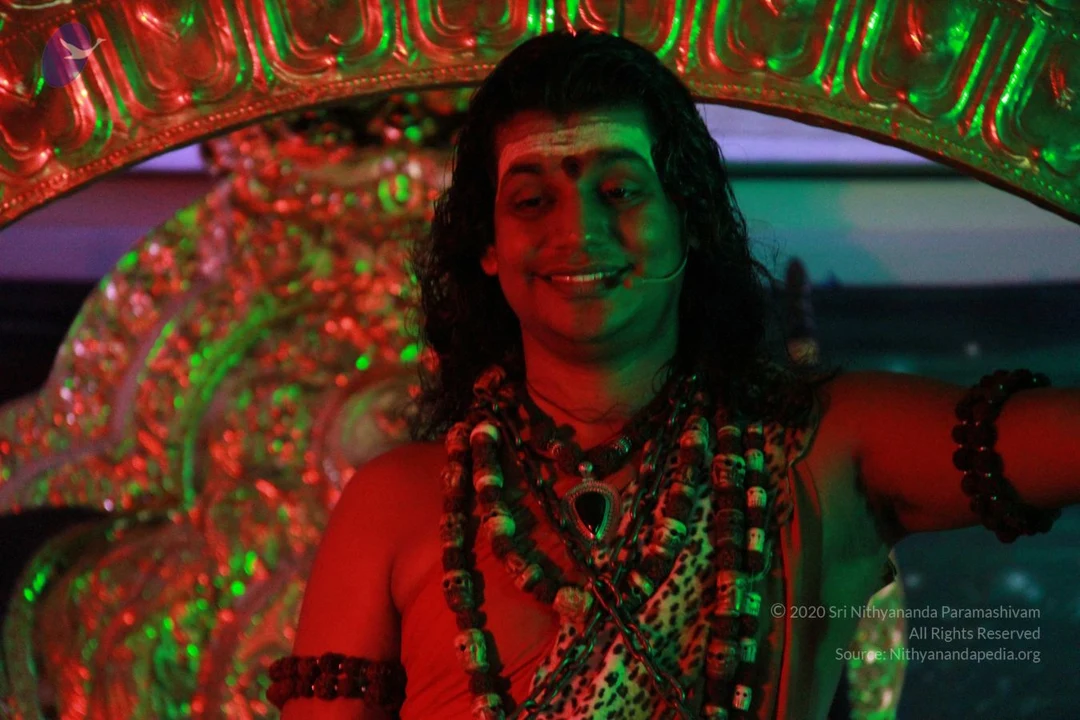
Let Mahadeva, Kalabhairava be invoked – Shiva, Shiva, Shiva, Shiva, Shiva, Shiva, Shiva, Shiva, Shiva, Shiva! (Pause)Shiva, Shiva, Shiva, Shiva, Shiva! (Pause) Namah Shivaya! Shivaya namah! Shivaya namah! Shiva, Shiva, Shiva, Shiva, Shiva, Shiva.

This is the readings from the akashic records about Birth.

There is no such thing as birth exists. Every individual water drop in the ocean when it moves, by its very innate intelligence, visualizes it is born and separated from the Whole. When it gets rid of the very root delusion, it is called enlightenment. The birth is not happening as human beings understand, as the separation from the Source. The Source continues to exist as part of the part which thinks it is already become part from the Source. Source participates completely with the part in every action, in every deed, in every step, in every behaviour, in every moment, through its all permeating penetration Presence. The participation is never allows the separation of the part from the Whole. So the part continues to be the part of the Whole.

The birth as you understand does not exist in the cosmos. Continuously your movements, your desires, creates different states of consciousness in you. Because of these altered states of consciousness like lust, anger, greed, fear, jealousy, competition, love, feeling of deprived, depression; because of these various experiences and the expressions, part starts feeling it is separated from the Whole. The moment the part feels it is separated from the Whole, it claims it has taken birth.

So the birth actually does not happen as you think. When a body comes out of another one body, it cannot be called as birth. Only when the individual awareness feels its independent existence, the birth begins. Birth is the beginning of the suffering, as the part forgets its source existence, connection and participation with the Source. As the source relationship is forgotten by the part, the deluded suffering becomes the lifestyle from the moment of birth. Birth cannot be considered as the separation of the body you are carrying from another one body which you call as mother, as this does not immediately inflict suffering into the individual part, because the individual part does not claim, feel, potent, participate in the concept that it is individual part. So the truth exists as it is, even though the body is separated from the another one body which you may call as mother.

The moment the individual consciousness feels the part is no more participating directly with the Whole, that moment can be considered as birth. That moment indicates the individuals suffering beginning. It may get extended as long as that individual, that part, feels it is independent existence from the whole existence. When the part remains as a part, it continues to create various forms of conscious states, and the various forms of conscious states creates the kaleidoscopy experience of this world for that individual part. When the individual part realizes its mistake of remembering itself from the Whole, it relaxes into the Whole; that moment is called enlightenment.

In this deepest form of the truth, oh the souls which feels deluded you are separated, you are moved away from the Whole, come back - remember in the form of breathing, in the form of heat, in the form of your body, in the form of the thoughts penetrating into your system from the space, I the Whole continue to hold, support, feel, be part and participate in the existence and in the part of the existence. Even though the part does not feel I am participating in your existence, I am the source, partner, part and whole of your very existence. O dear souls who feel you have departed from the Whole, relax from your delusion. Whatever you think as the distance between the Source and you, it is just your thinking. The distance remains Zero from the beginning of your journey from and during the journey and till the end of the journey.

Listen to this great sacred secret that will make you realize this great truth. Your birth has never happened as you consider your birth date. The birth is your imagination day, the day you felt you are separate from the Whole. So relax from that imagination – that day is the day of your enlightenment. Whether the drop feels it is floating, swimming, drowning, dissolving or disappearing, the drop is always the part of the whole ocean.

Whenever you accept the greed to experience different states of your own being, whenever you are afraid of different states of your own being, you create different states of consciousness to fulfil your fear or greed. That is what you call waking state, dream state, deep sleep state. The fourth state and the criss-crossing of all these four states, criss-crossing of all these four states creates 16 states. And above all the ultimate state is Turiyatita – beyond all these four. In that you experience you are always you were, you are, you will be part of the Whole. And this realization is a mandatory, basic necessity for the every soul which started feeling out of delusion it is separated from the Whole. The birth as you think never happens. It is just the different states of consciousness creating the kaleidoscopic effect and showing you and the universe and the world in a different space. Because the kaleidoscopic effect which you create attracts your attention so much by creating fear or greed, you forget to look into the first person and see you remained, remain, will ever remain, as the part of the Source, will never, can never move out of the Source. The Source exists in Source, so where is the question of birth?

QUESTIONS & ANSWERS

Dearest Swamiji, Why did the creator make us forget our Prarabdha during the birthing process? Would life not have been more in tune with the cosmic will if everyone remembered their Prarabdha? - Yours, Mokshapriyan, Bangalore.

Creator did not even allow your birth. Your birth is your independent decision to rebel against the Creator, against the Source. As your very decision to be born is against the will of the Source, it is not the Source which made you forget your praarabdha. It is your individual decision to deny every truth from the Source. You just decided to deny the Whole as completely. The part has decided to go against the Whole and reject the Whole completely. Because it is your decision to shun away from all the truths of the Whole, you decided to forget your praarabdha. Your praarabdha is nothing but the quickest easiest conscious experiences through which you can flow and reach the Whole and remember you never partici you never were a separate part from the Whole. So it is not the Creator who made you forget your praarabdha. It is your strong, rebellious mind which decided to say no to the whole creation. That made you forget the praarabdha. Now the more you accept the existence as it is, the more you accept the various kaleidoscopic experiences of different consciousness happens in you as it is, you will realize your praarabdha. This is the process Mahadeva wants to initiate all of you. I tell you all, by sitting for 21 days without moving from a place and witnessing all the different states of consciousness happening in your body and mind and inner space, you reach a space where praarabdha become seen, perceived, experienced directly by you.

Nithyanandam! Dear Kalabhairava, why God created this world, God disguised as human being, created suffering, try to resolve and try to give enlightenment? All seems like a meaningless game from the highest perspective. God creates, God incarnates, God gets enlightened. What is this game about? Please clarify. - Best regards, Sreekanth Gopi

My dear son! What you described itself is the answer. Only one thing you need to understand – you need to remove that word highest perspective. That is the only perspective. God incarnates, God gets enlightened, God plays this whole role and God plays with himself. It is like a child playing with his own body, God is playing with his own body. It is not highest perspective, this is the only perspective. Realize that my son, you achieve the true realisation which I wanted to share with humanity.

Nithyanandam! We are sending these questions, as the answers to these will have a deep relevance to the pregnancy care program. We would love Swamiji to speak on what happens when a pregnant lady seeks the blessings of the enlightened master. This would be of great help in bringing down enlightened souls. Thank you. In Nithyananda - Ma Atmaniranjani (Dr Sita Deepak), Ma Uma Sundar, Dr. Srilekha, Dr. Shanthi

When a pregnant lady is touched by the enlightened being, the bio-memories of the enlightened being gets into the body of the child in her womb. The umbilical cord is the part of the body which is built with more percentage of emotion and less percentage of flesh and blood. As this part is built with more percentage of liquid emotion, less percentage of solid flesh and blood, the energy received in her body by the blessing or the touch of an enlightened being directly goes and gets stored in the bio-memory of the child. When the child’s bio-memory is stored with highest truth and the true remembrance of its eternal oneness, eternal oneness with the Existence, it attracts a soul which never feels itself as separate from the Whole. As it never feels itself separate from the Whole, the part continues to be the part of the Whole. From the beginning it does not feel separate and grows expressing its whole consciousness as jeevanmukta.

What is the difference between soul leaving from one body to another body by yogic powers, and taking birth as the newborn baby? How a baby chooses to express his/her feelings through particular action like crying and laughing? Why should it not laugh for sorrow and cry for happiness? - Sri Nithya Jnanaprabhananda

The ability to relax from the reflections of your nervous system consciously without breaking your identification with the Whole is the parakaaya siddhi; the ability to move from one body to another. The ability to move from one body to another can be used while you have one body, entering into another one body and coming back to the same body which you left. It is called parakaaya siddhi, it is called parakaaya pravesham. When you leave this body once for all and take another one new body and never come back to this old body again, it is conscious birth. So understand the truth about the ability to leave one body and enter into another body.

The next truth you need to know, when you do not have the ability to move from one body to another body keeping your awareness of the identity intact, even then if you try to get rid one body, it is called suicide. The suicide only damages your identity, breaks it into so many pieces without you becoming one with the Whole. As this self destruction causes a severe damage in the process of you becoming one with the Whole, you needed to assume again and again various bodies in which the healing, the self healing can happen, which is a antidote for the self destruction which you did. Then after the self healing happens, only then your journey to experience the oneness of the Whole with the Whole begins. So destruction of your individual body without the ability to keep the individual awareness intact is considered as sin as it delays your journey to be with oneness of the Whole.

Dear Swamiji, what does a conscious birth signify? Does every conscious-birth child get enlightened in their birth? Pranams - Janani, Singapore.

Every conscious birth is beginning of enlightenment. Once the conscious birth happens, enlightenment is not a big journey. It is only a choice. So usually all the beings with conscious birth enters into enlightenment. If not, they may choose to stay back in that very state and continue to have few more births out of their free will. But any conscious birth being is considered already on the fast track to enlightenment.

Nithyanandam, why does a soul take a conscious birth? Thanks! - Ma Nithya Ramya, Singapore

By the strong experience of disillusionment of your projection of fear or greed, when the part is strongly hit, it searches, it seeks the Source to which it can unload the strong shock or the hit it received by the disillusionment. When it turns towards the Source to unload its stress and the difficulty due to the disillusionment, it suddenly remembers its Source. And the moment of remembering your Source and coming face to face with the Whole, you remember the secret of your birth as birth does not happen at all. The moment you remember the secret of your birth, whether you change the body or not, you are conscious birth.

Nithyanandam, Swamiji and others have said that a soul doesn’t enter the body until the first breath is taken at birth. But newborns are said to recognize the sound of their parents’ or siblings’ voices, or recognize music that had been played to them in the womb. Also, when adults do therapeutic processes like rebirthing, they often remember events that happened when they were still in the womb – some trauma or stress that their parents were experiencing, or a comment that the unborn child was unwanted or a mistake, or the pleasure of being in the womb. If the unborn child is just tissue and not a being, how can it remember these things? - Thank you, Jayalakshmi Bernard, Washington DC.

The unborn’s experiences in the womb are the strong part of its biomemory. When it is in the womb of the mother, it is not just bunch of tissue. It experiences the extended life of the mother. But it does not develop the individual identity which can be the side-effect of the jeevaatma, the individual reflection of the soul. The individual reflection of the soul itself enters only when the child comes out of mother’s body. As two individual reflection of the soul cannot exist in one body, only after the separation, the individual reflection starts happening in his own body. He remembers whatever was recorded in his bio-memory during the period his body was existing as the extension of his mother’s life. It is just exchange of life in one body.

Namah Shivaya!

______________________

Spot Notes: SACRED SECRETS OF BIRTH: AKASHIC READINGS BY NITHYANANDA

(Wednesday)

(8.00– 8.46 am)

0.00 - Sadashiva…

0.30 – From today we start about the AR…

1.07 – I wanted to say a few words..

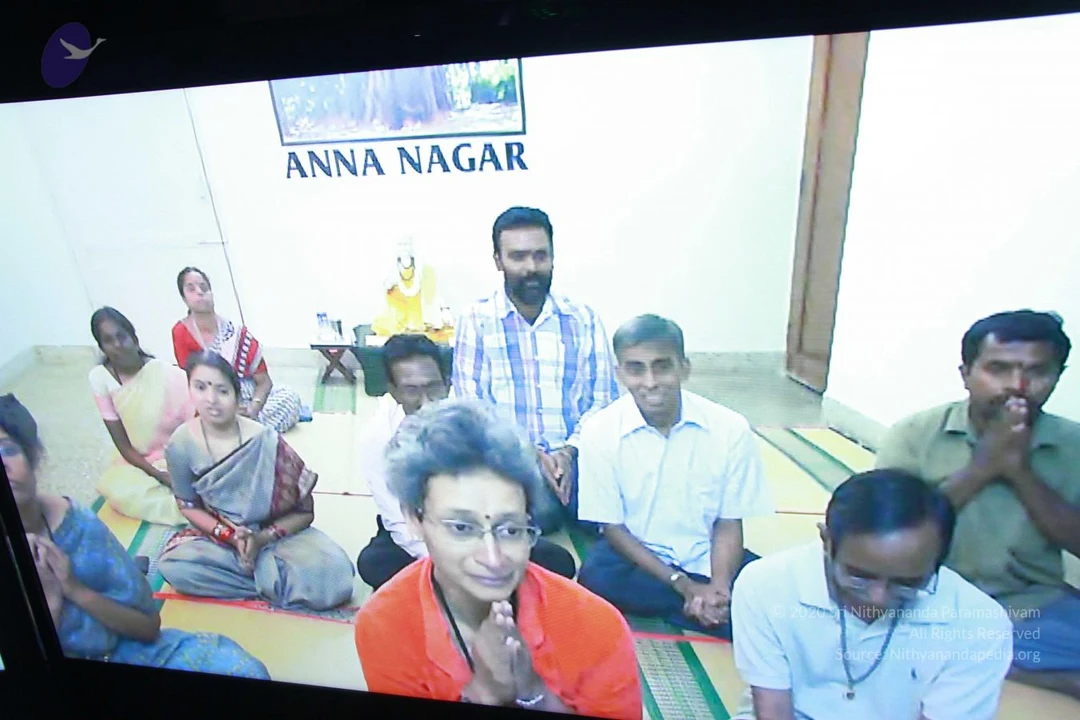
1.16 – Yday brahmacharis asked me..diff b/w regular satsang.. polished… inDep intelligence of the cosmos.. gives its expectations about your life – how the Creator feels the life shd be… what for…

3.11 - GURUVAK-pl u/s, these readings are unalterable.. command I give for NIthyananda Mission.. forever

3.32- these unedited versions…free of cost..forever

3.45 – nobody has a right to comment… interpret.. complete unto themselves

4.12 – for anyone to live jeeVanmukti.. LE.. no other practice.. naturally your negative logic is penetrated… LE

4.48 – I know the power of the happening – just now what is happening

5.12 – I thank Mahadeva.. for offering His Book of Heart… most sacred secret knowledge… become Shiva

6.05 – DEF-Rishi.. sees mantras

6.13 – DEF-mantra.. shows path to highest con

6.41 – MIS-ANN – I can say.. now starts real Nithyaanda Sangha.. 108 days.. basis of N sangha.. teachings, classes.. 108 akashic readings..reading out exactly as the cosmos wants.. all of us

8.06 – I promise.. any way.. slight interference..from my side… the source is opening itself to the whole world

8.43 – ANN-GV-N shd never be claimed as the author.. channeled through the body of N.. let it be on record

9.14 – these words cannot be copyright.. book of heart of cosmos.. cosmic archives

9.46 – Today B starts with the subject BIRTH

10.03 – let Him read..answer your questions also

10.20 – whatever KB reads out in the morning.. shruti.. evening.. your questions.. smrti.. applying.. everyday situation

11.04 – let mahadeva be invoked..

11.48 – (Swamiji chants Shiva Shiva.. )

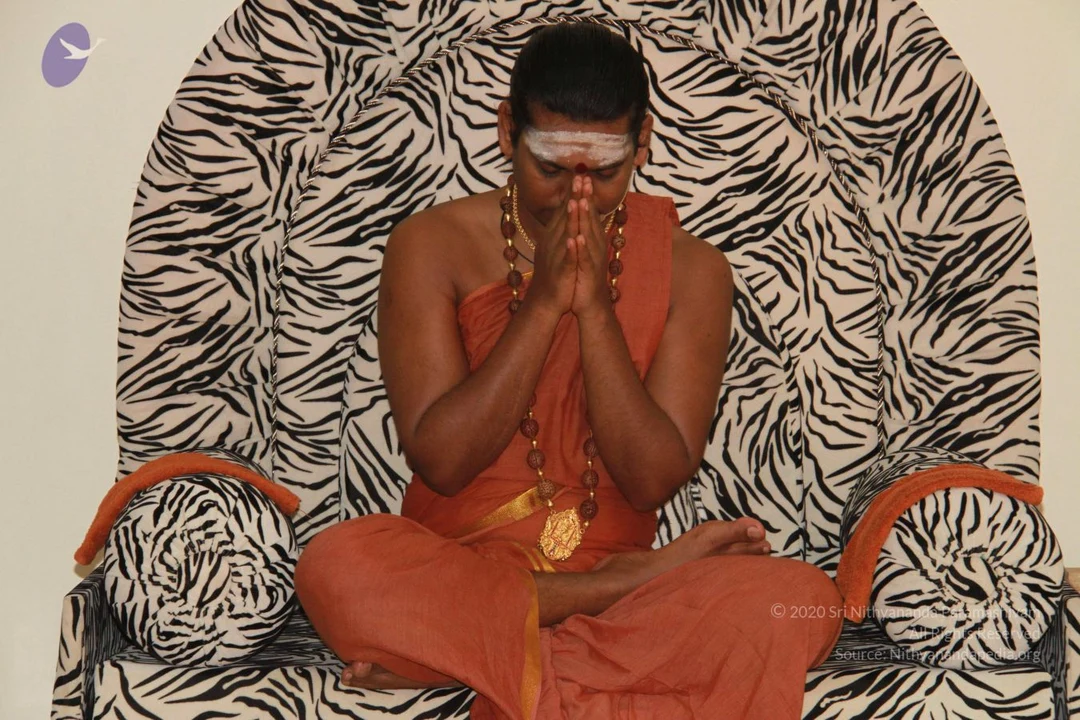
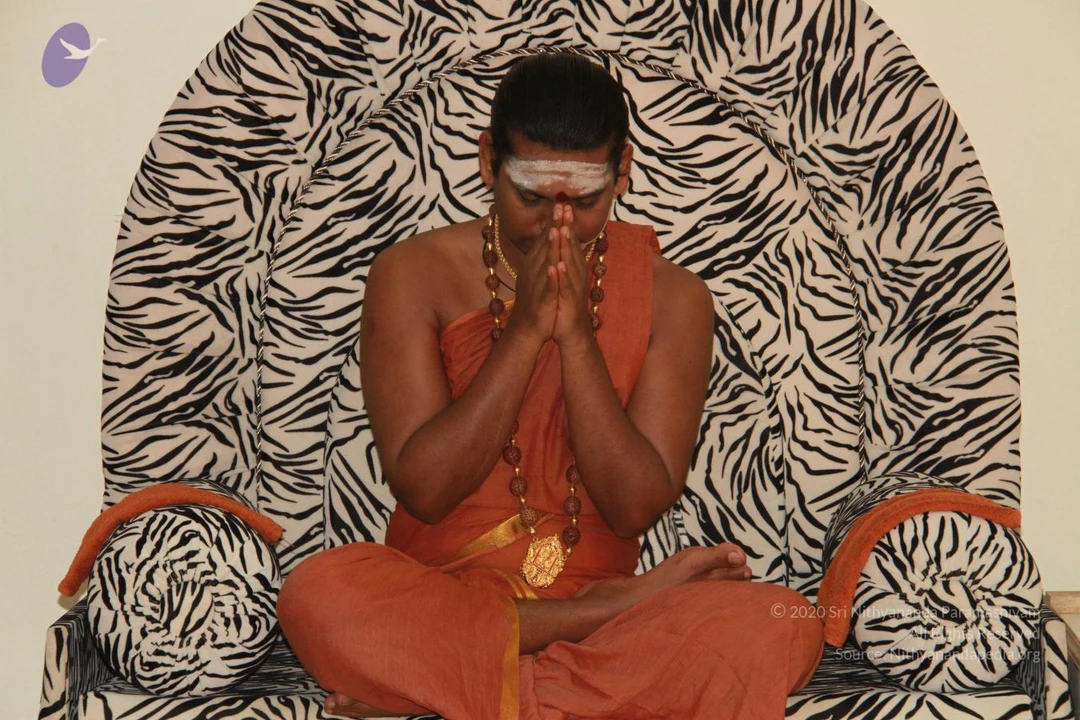
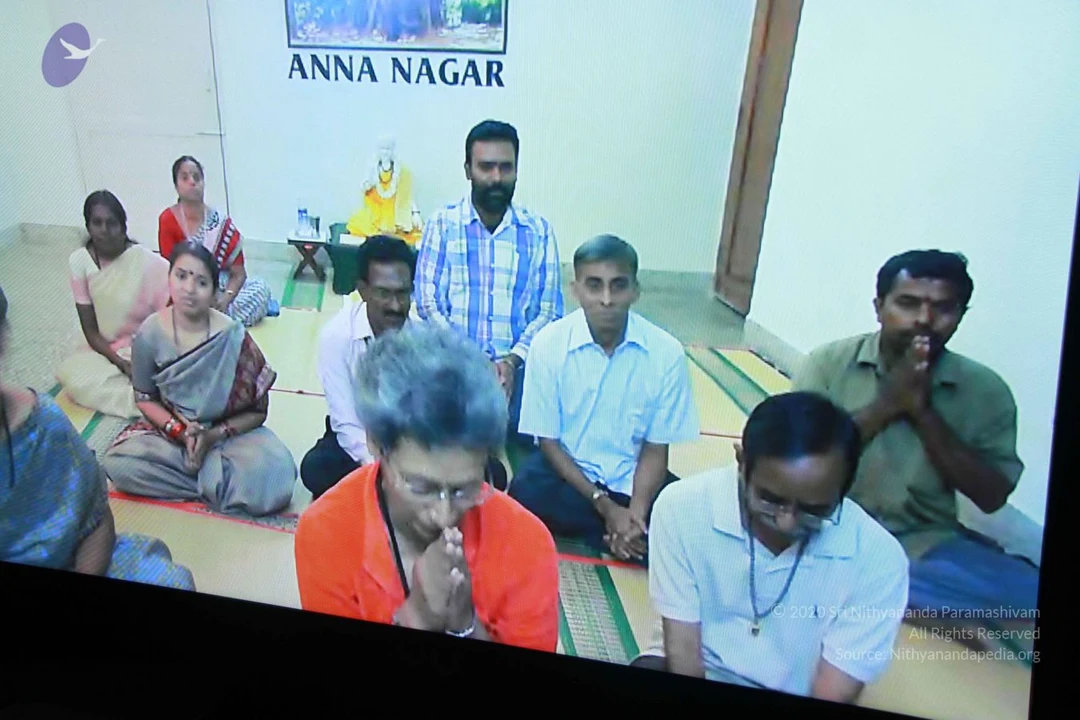
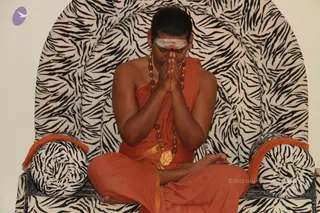
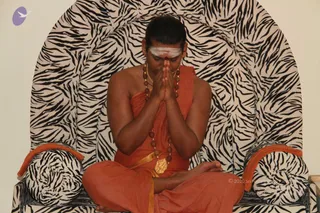
(silence, Swamji sits with eyes closed and with palms together in atmanjali mudra – prayer position)

13.10– (Swamiji chants Namah Shivaya, Shivaya namah.. )

14.16 – this is the readings.. birth

14.28 – there is no such thing as birth..indiv water drop in coean.. visualizes it is born an separated…

18.05 – birth is the beg of suffering…

18.40 – birth cannot be called as the separation.. from.. the mother.. as this does does not inflict suffering…

19.25 – the moment the part feels… called as birth..

20.10 - .. various forms of conscious states…

22.46 – birth is your imagination day…relx.. day of your enlightenment..

23.44 – DEF-states of con - whenever you accept the greed to experience diff states of your own being.. you create diff states of con.. to fulfil..16 states.. turiyaateeta..partof the whole

25.04 -.. mandatory.. for every soul…

26.20 – source exists in source, so where is the question of birth?

(silence)

Q&A

28.16 – Q1 – Mokshapriyan.. why did we forget the prarabdha?

28.36 – Creator did not even allow your birth… individual decision.. rebel agaist the Creator

30.08 – DEF-prarabdha

30.41 – our rebellious mind…

31.10 – TECH – this is the process that Mahadeva… sitting for 21 days witout moving.. witnessing.. inner space.. directly by you

Q2-32.15 – Srikant Gopi.. why God created this world… what is this game about?

32.43 - .. god plays with Himself.. only perspective.. humanity

Q3 – 33.45 – Ma Atmaniranjani… what happens when a pregnant lady seeks the blessing of an enlight master

3.15 – bio-memories of the enlight being.. in her womb..umbilical cord.. more percentage of liquid emotion… jeevanmukta

Q4 – 36.12 – jnanaprabha.. soul leaving body..

36.30 – DEF-parakaya siddhi…pravesham..

38.26 – PP vs suicide.. damages your identity.. oneness of the Whole

Q5 - 39.48 – janani…consicous birth.. enlight… is a choice..fast track to enlight

Q6 - 40.59 – ma nithya ramya.. why conscious birth

41.13 – by the strong disillusionment.. con birth

Q7 - 42.41 – jayalakshmi.. newborns recognize music.. womb experiences..

Newborn.. body

I bless you all.. eternal bliss Nithyananda (45.50)

48.08 - NS initiation

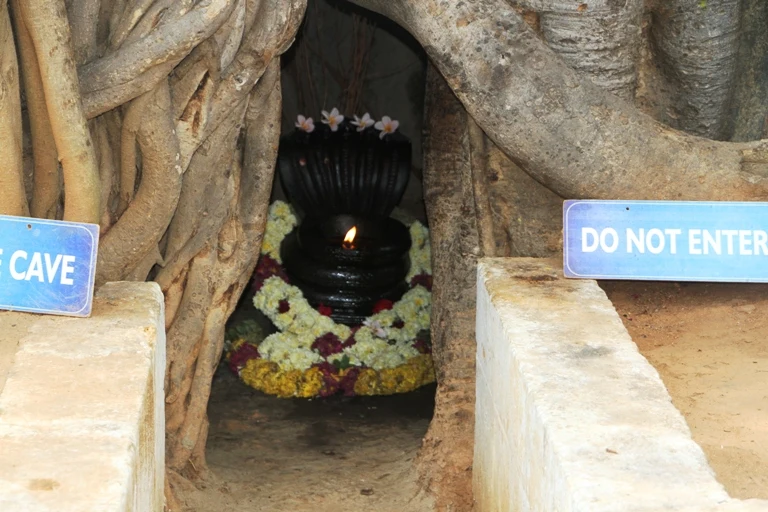
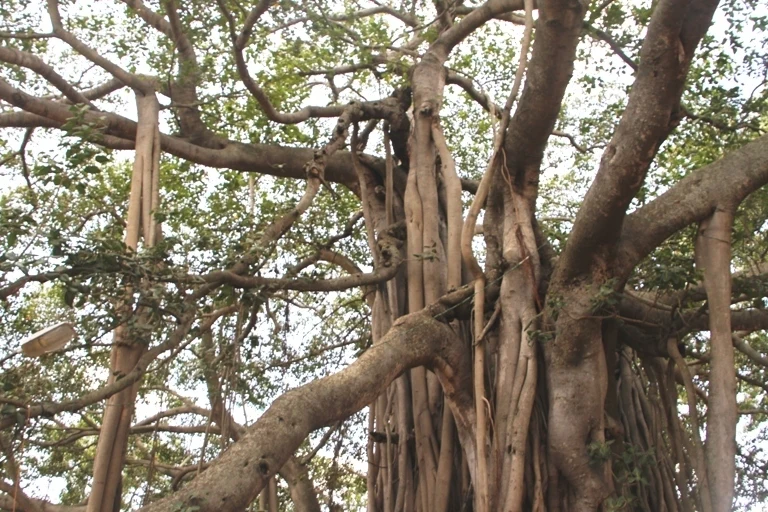
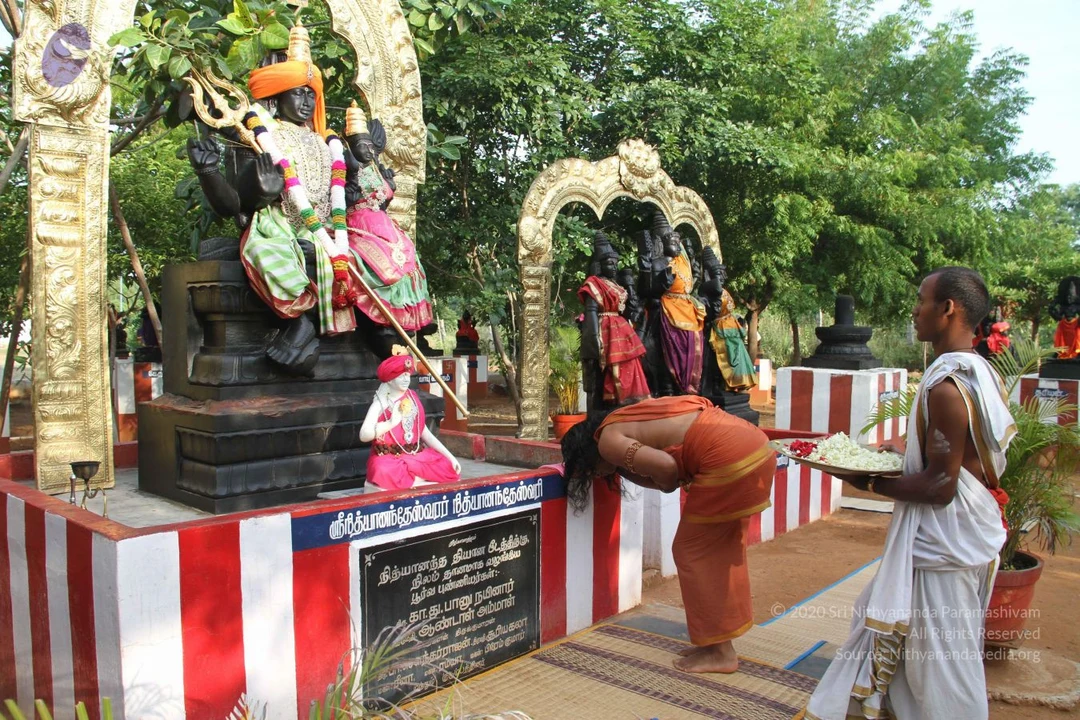
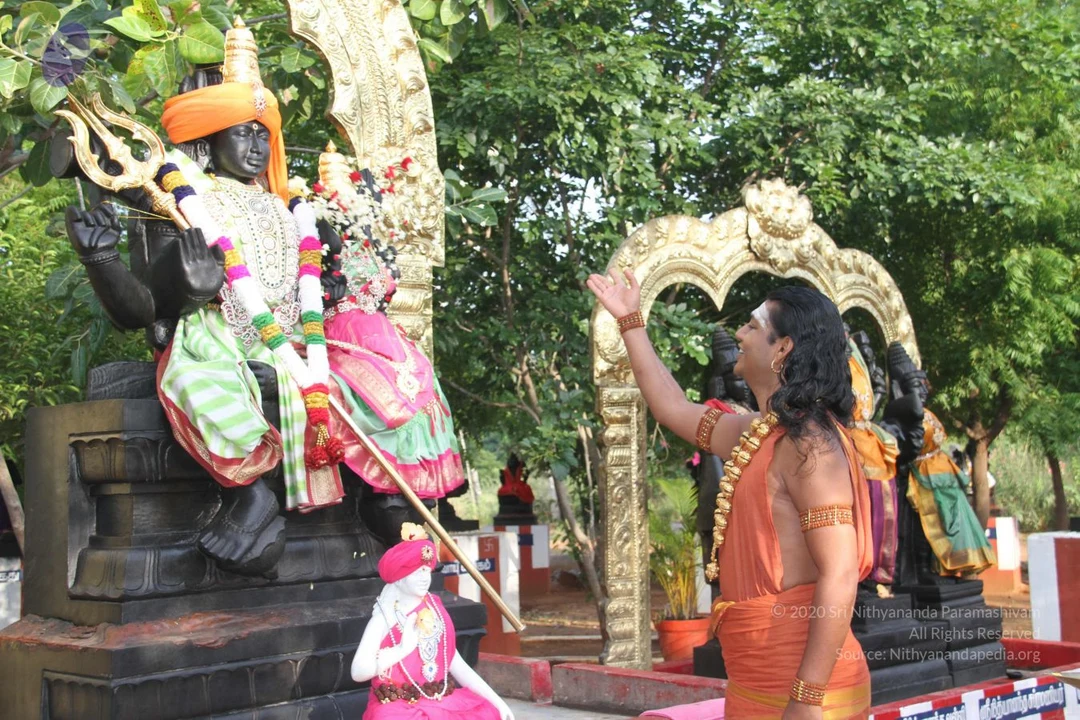
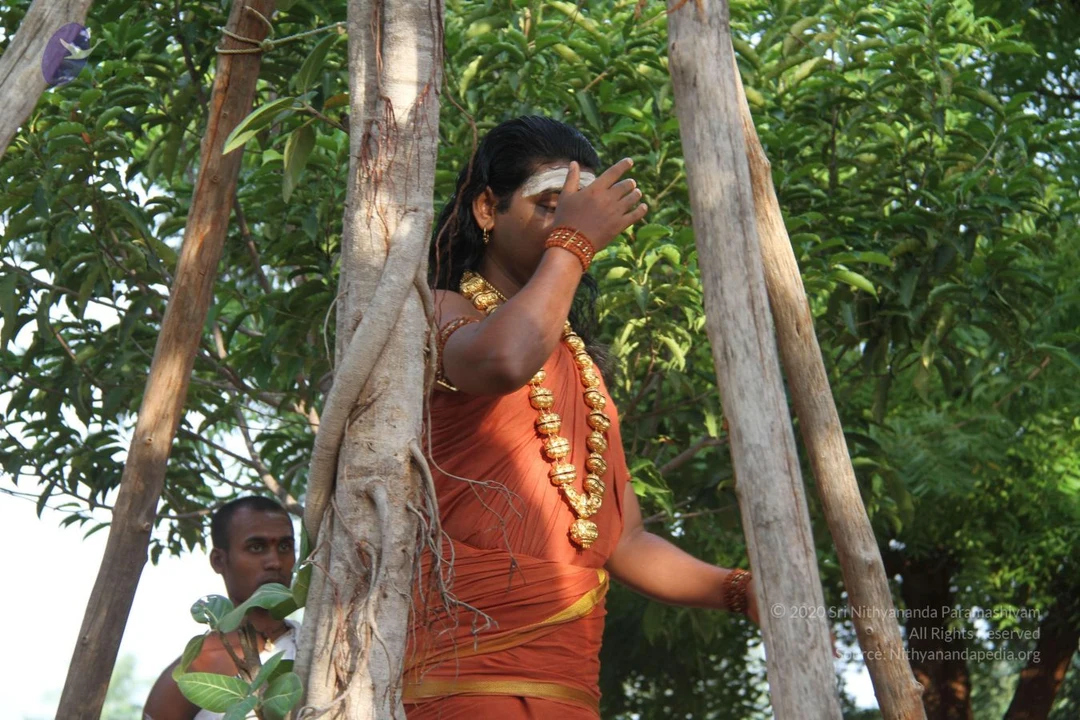
Banyan tree medn

58.38 – let all our bodies become niraahaaris.. Every auspicious thing.. namah shivaya! (59.12)

Photos From The Day:
Tags:

Paramahamsa Nithyananda, Akashic Readings, life, birth, Cosmic Archives, reveal, soul, divine source, maya, imaginary, drama, enlightenment.

Photos Of The Day:

Nithya-Satsang
Acharya Training

Akashic-Readings

1-Morning-Satsang

3-Akashic-Reading

Photos from this day

View all 166 photos

Photos From The Day:

11 photosSource gallery
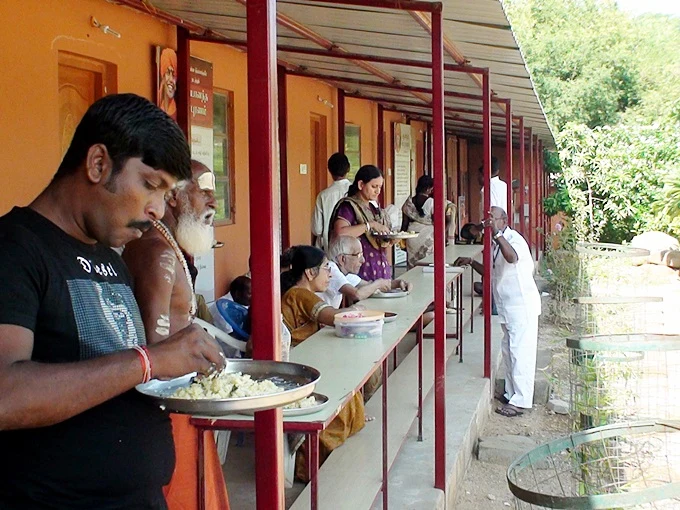
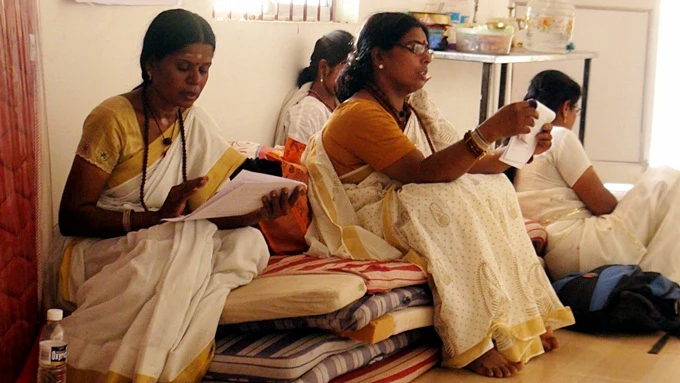
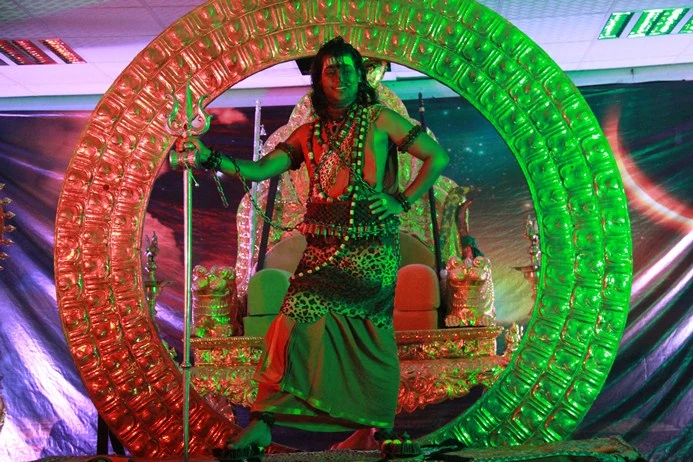
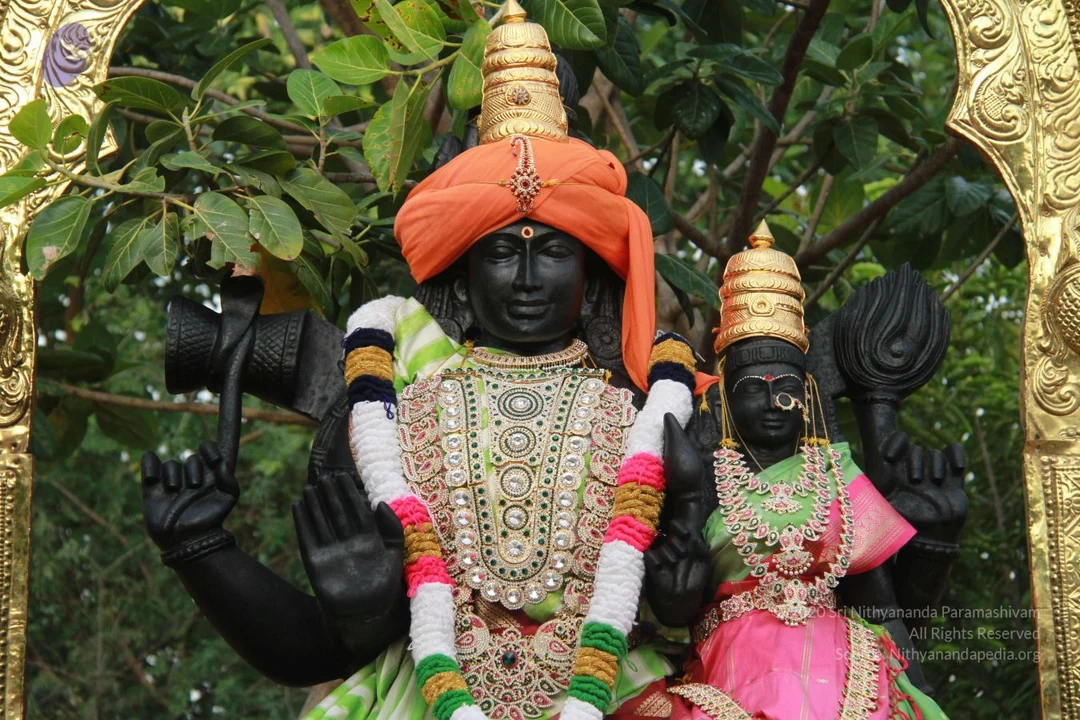
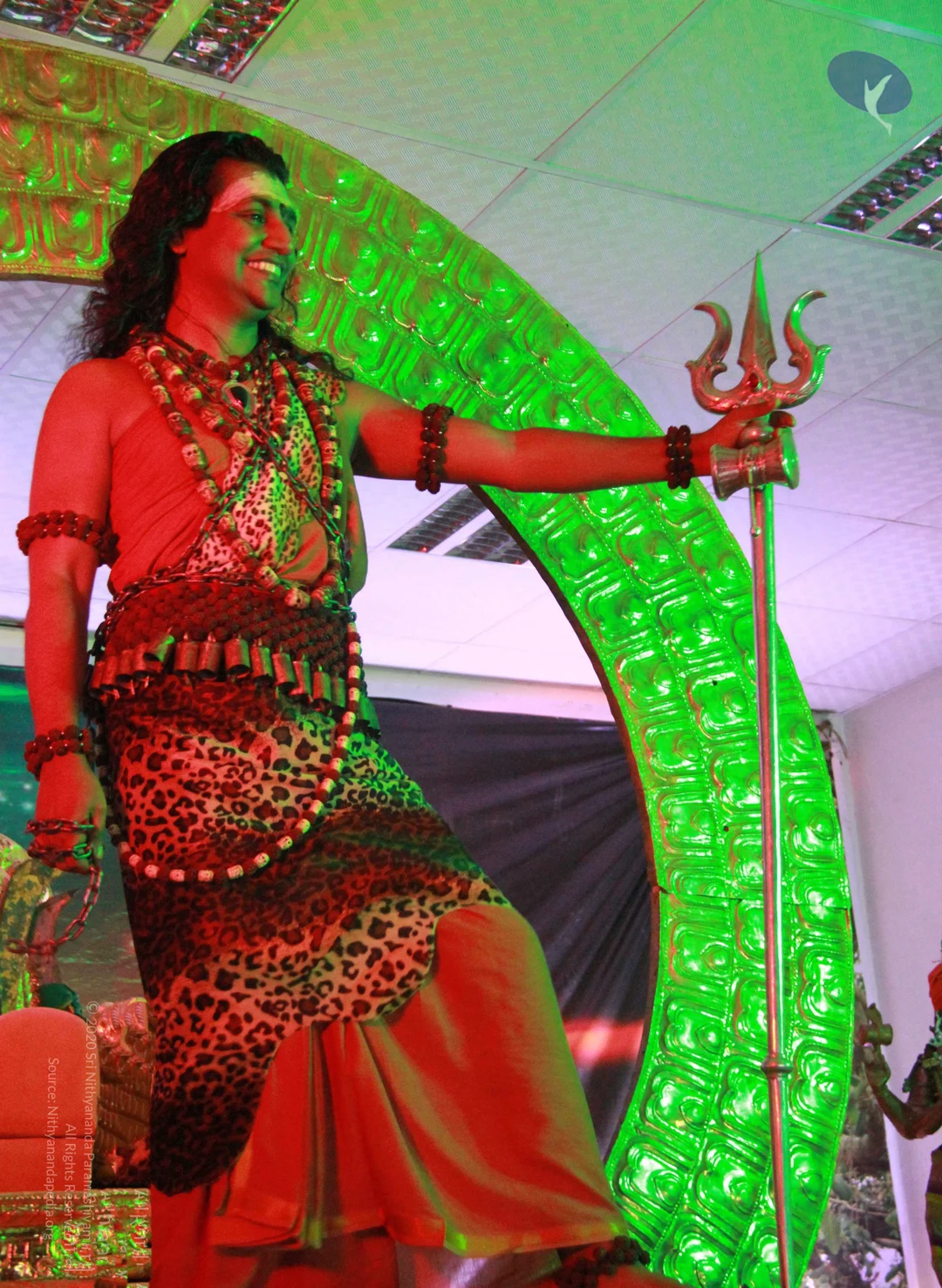
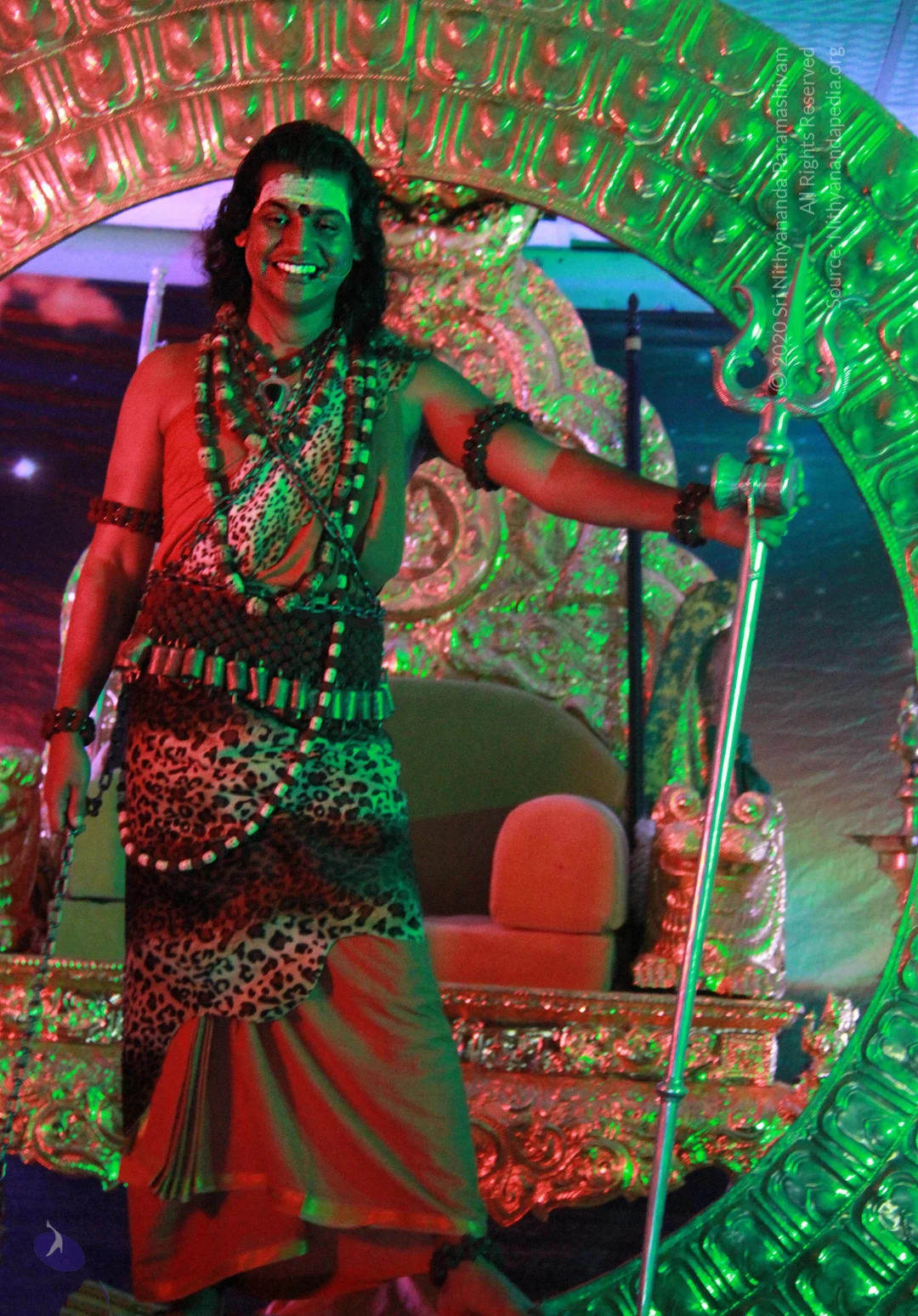
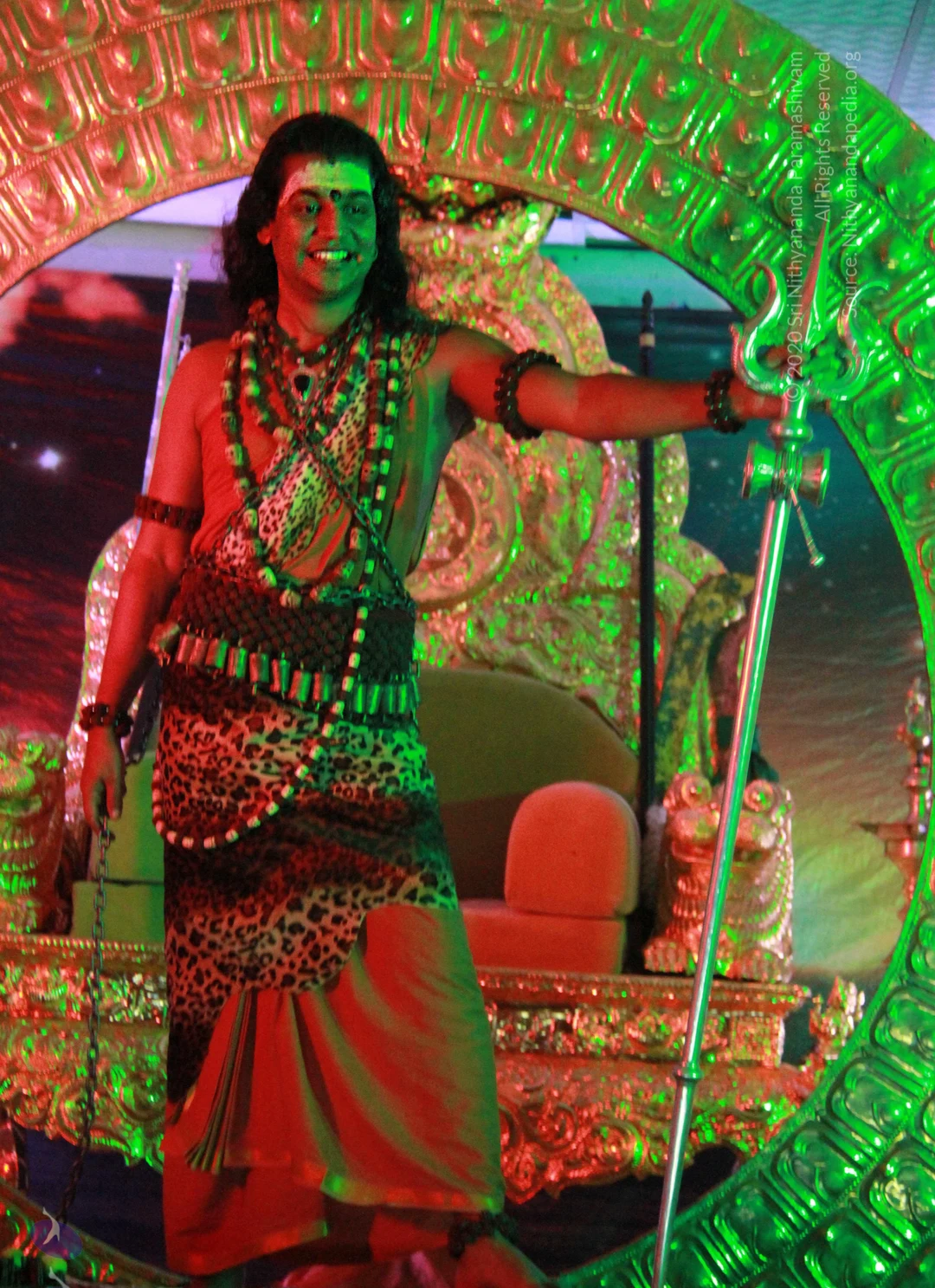
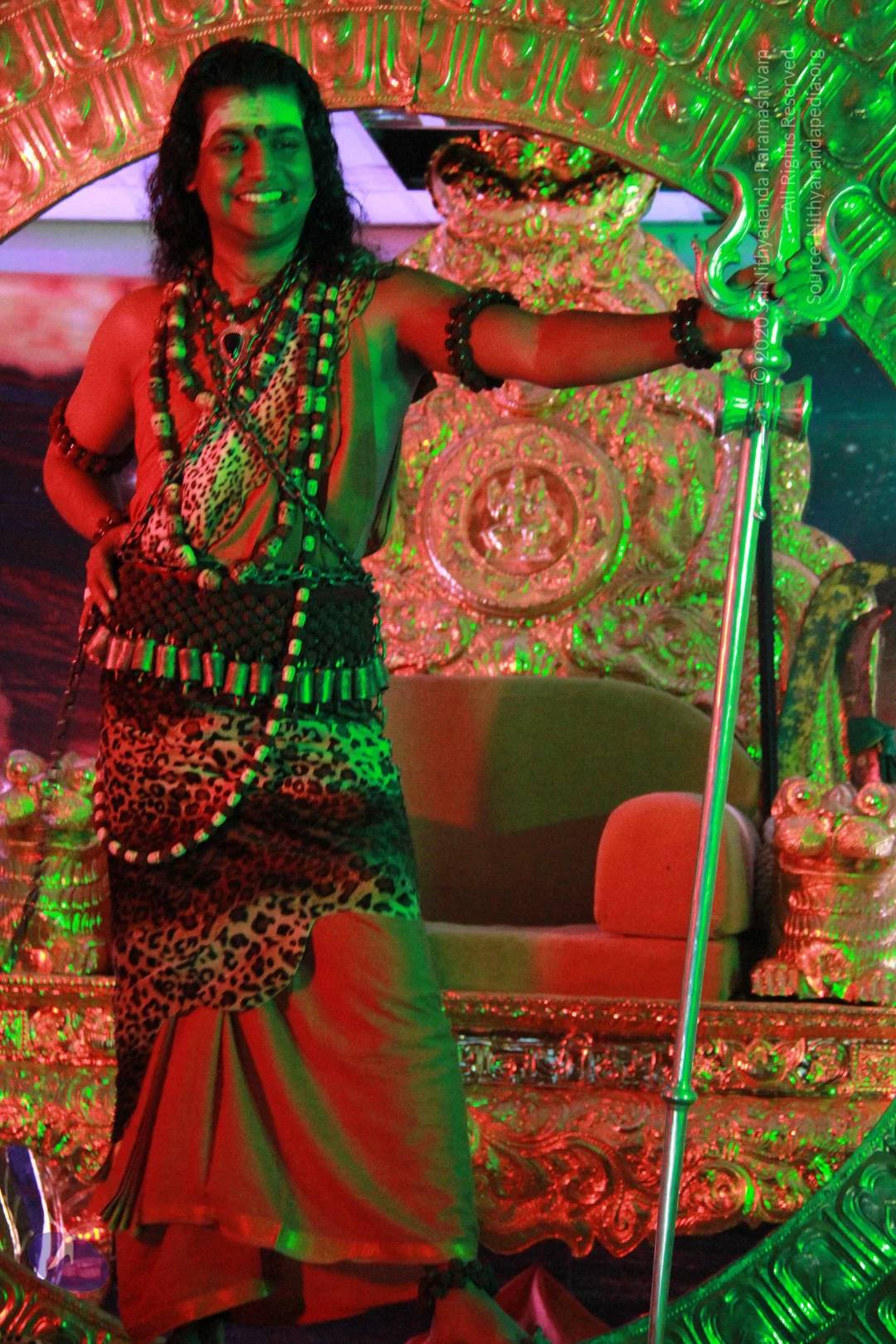
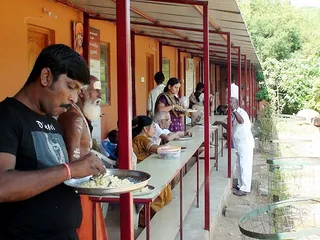
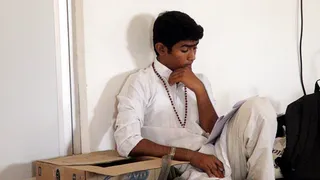
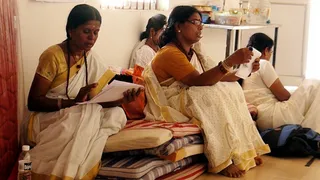
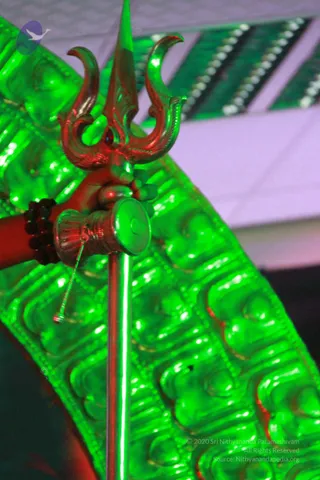
A photo of a communal meal served along an open-sided orange-walled veranda with a corrugated roof and red metal pillars. In the foreground a man in a black t-shirt holds a steel plate of rice and curry. Behind him a bearded sadhu in orange cloth with white tilak markings and a beaded mala waits in line. Further along, a woman in a maroon sari serves food from a bowl, seated diners in saffron and yellow sarees sit at a long table, and a man in white dhoti and shirt stands near the end. A framed picture hangs on the orange wall beside a small signboard. Green trees and a metal grille fence are visible on the right.A young man in white kurta and loose white trousers sits on the floor against a plain white wall, chin resting on his hand in a thoughtful pose. He wears a long rudraksha mala with brown beads around his neck and a silver bracelet on one wrist. Beside him is an open cardboard box, and he holds a folded sheet of paper on his lap. A black bag and cable sit at the right edge of the frame. The setting appears to be a quiet corner of an ashram-style room.Several women sit on floor cushions in a plain room with white walls and a window, reading printed sheets. The woman at left wears a white sari with a gold border and holds an open booklet, with a dark beaded mala around her neck. The woman in the centre wears gold-rimmed glasses and a mustard-yellow blouse with a white sari edged in gold, reading a sheet of paper. Another woman in white behind them and a figure in white at right are partly visible. A water bottle, a table with containers and a striped cushion appear in the scene. No a person candidate is visible.A performer stands on a stage inside a large ring-shaped green and red illuminated frame. He wears a red and orange garment with a green-patterned overlay, multiple beaded necklaces and rudraksha-style malas, and holds a trident in his right hand. A decorated ornate throne with red cushions and gold-toned carvings sits behind him against a purple and blue draped backdrop. Figurines are placed on the stage edges. a person cues are not clearly established here; the figure is a costumed performer in a dramatic stage setting.A performer in a stage costume stands in front of a large glowing green and orange ring-shaped backdrop, holding a trident in the left hand and resting the right hand on the hip. The figure wears a red and green patterned skirt, a beaded red and green necklace, a crown-like headpiece and arm bangles. Behind is an ornate golden throne-like seat with carved lion figures and a purple and blue starry backdrop. The scene is lit with colourful stage lights.A temple shrine decorated for worship, with two large deity statues standing behind a central altar. The left statue has a crown, orange and red garments, and holds a trident; the right statue wears a blue and purple dress and is garlanded with purple and yellow flowers. A purple-draped seat in front carries a red and white floral garland and a kalasha-like vessel with a silver plate. A small seated figure in white garments, with a garland and a white cloth, sits at the base beside brass oil lamps (deepams) and a green leaf offering. A gold-arched niche on the right holds another garlanded figure in purple. These are statues and murtis, not living people, so no physical people are present.

Nithya-Satsang
103 photosSource gallery
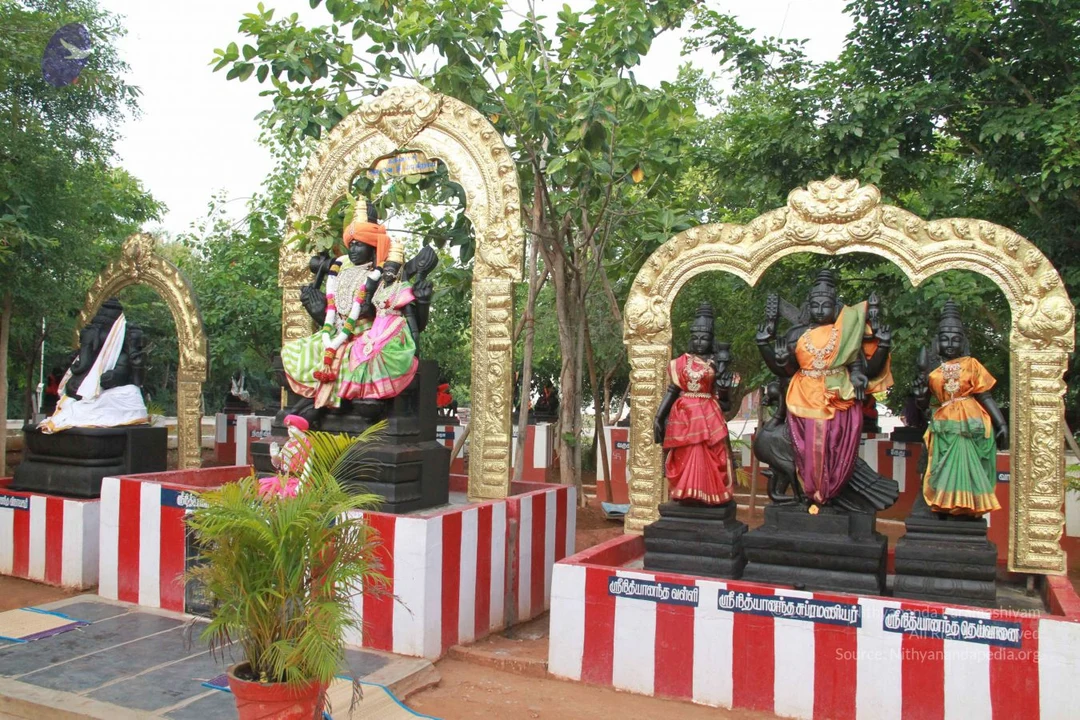
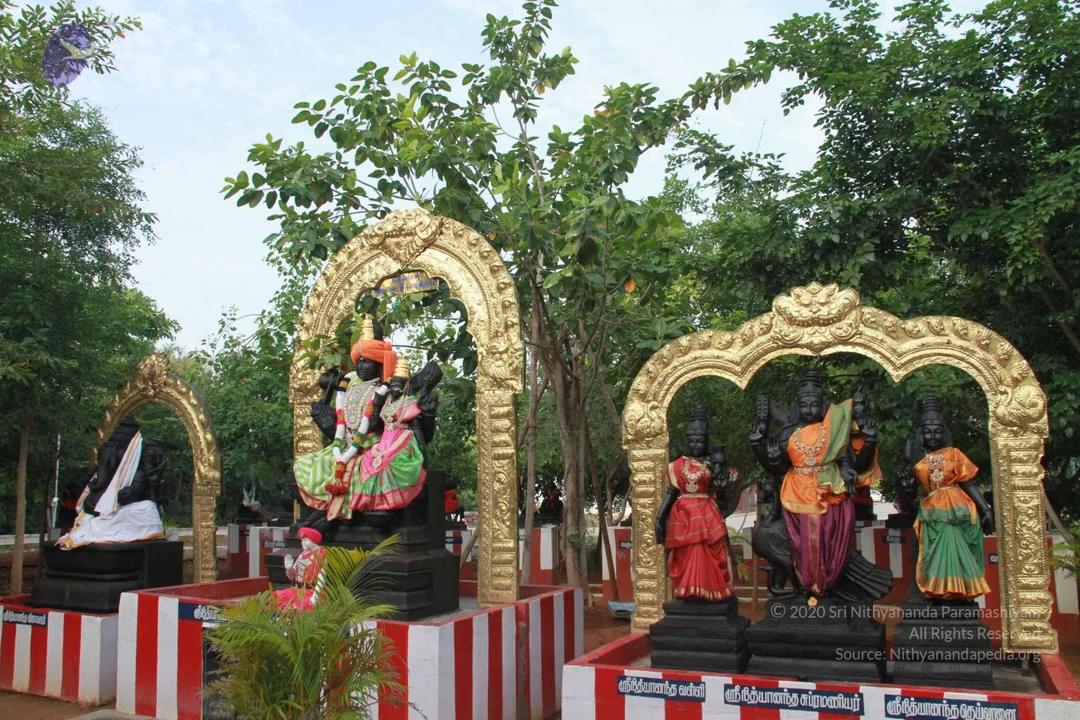
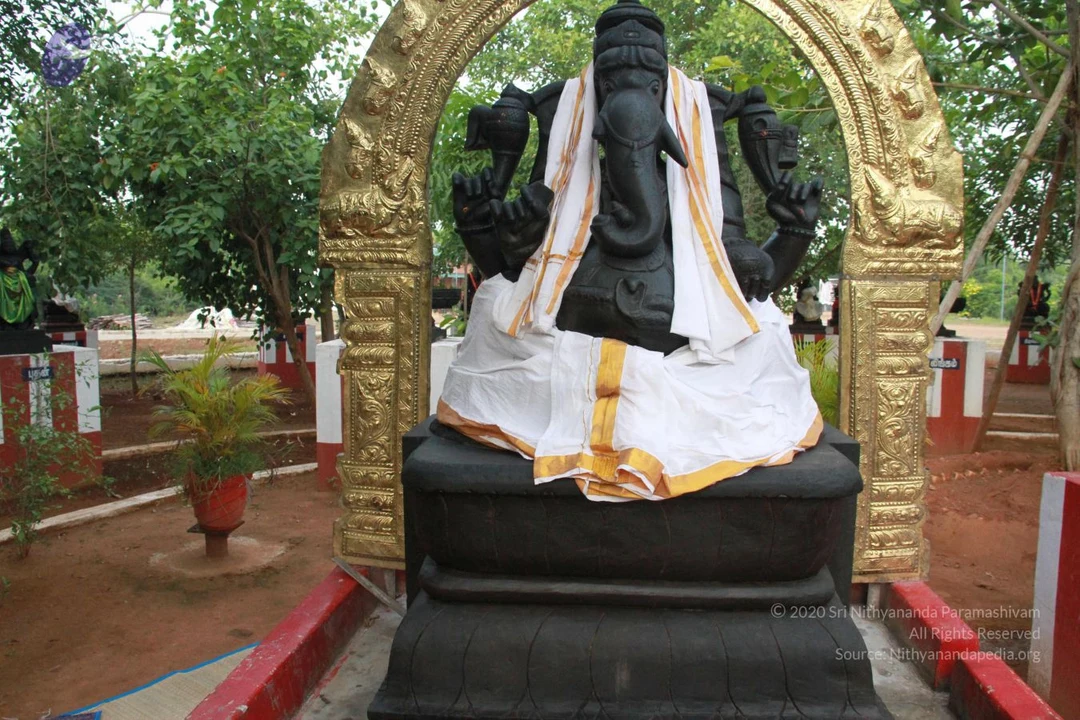
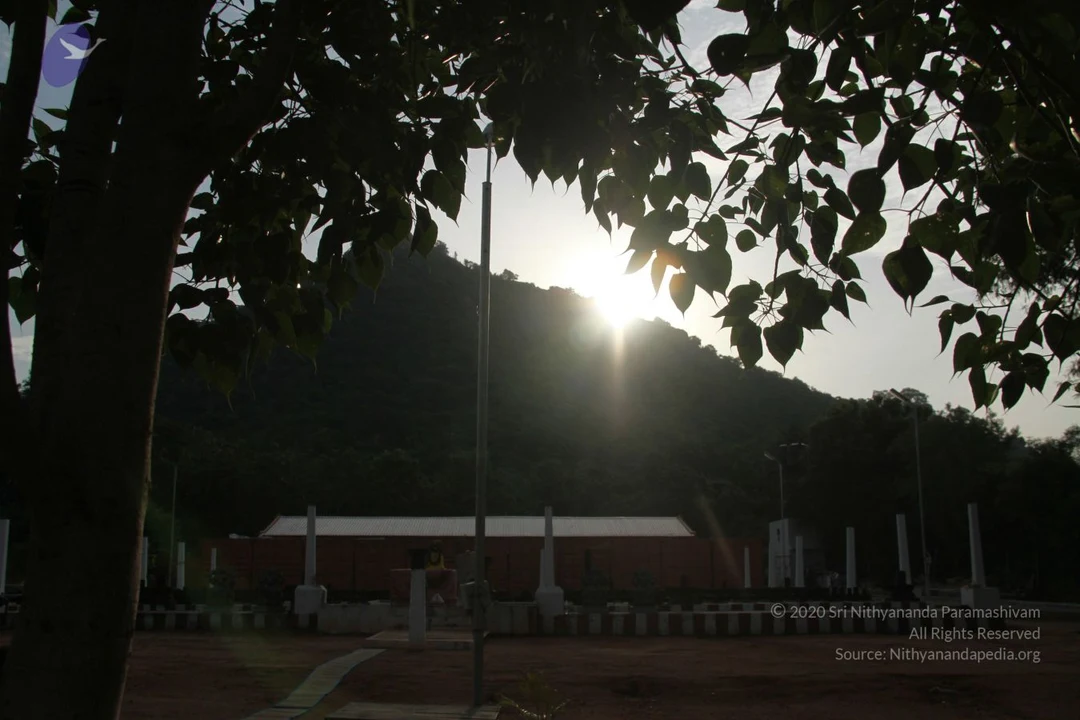
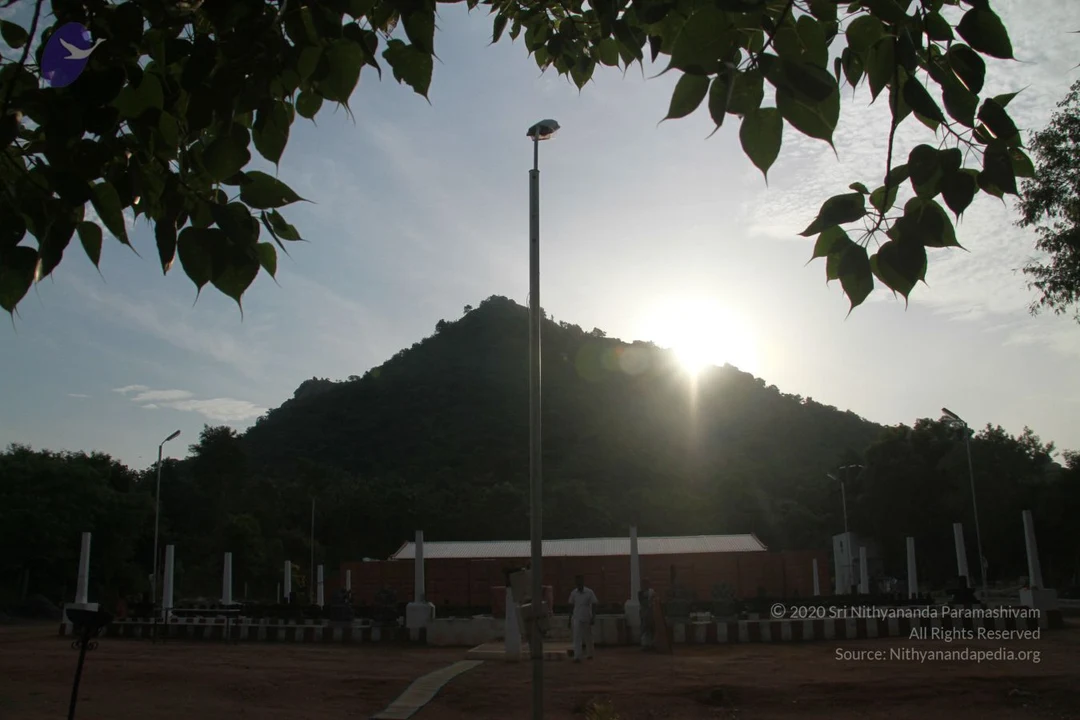
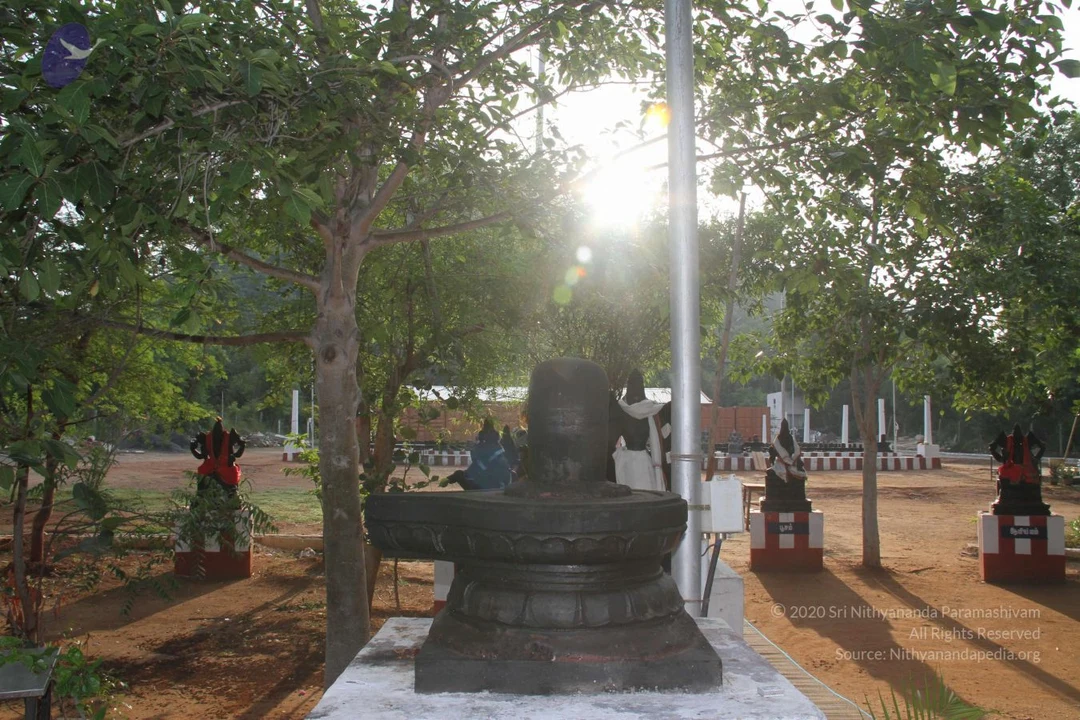
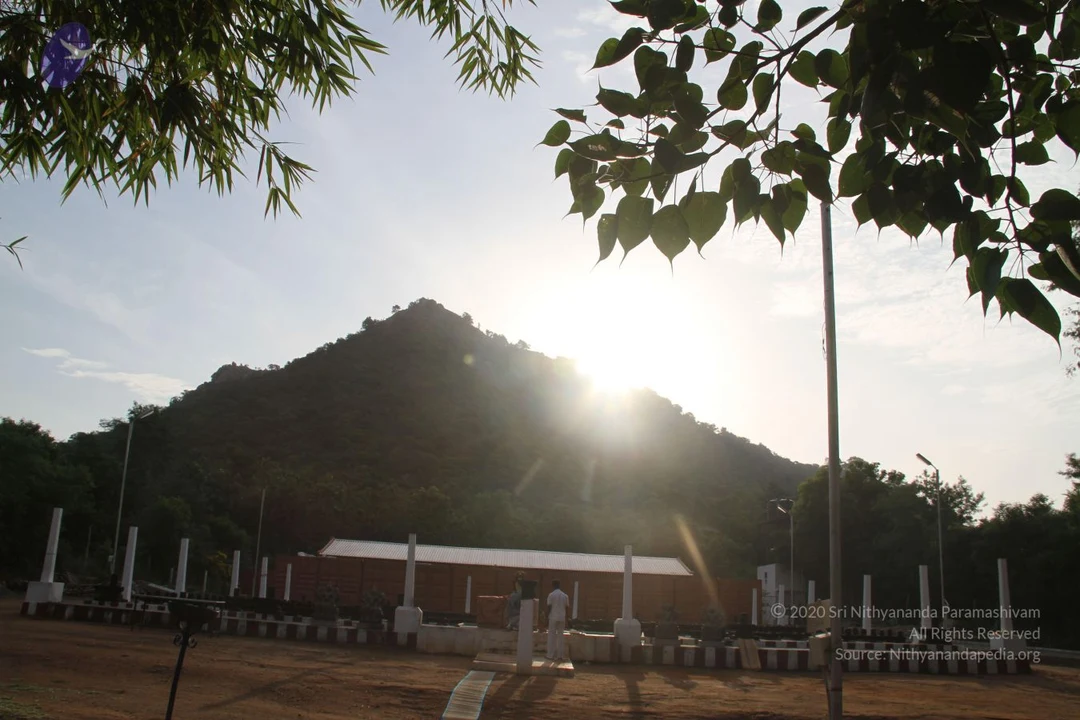
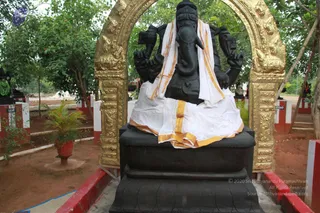
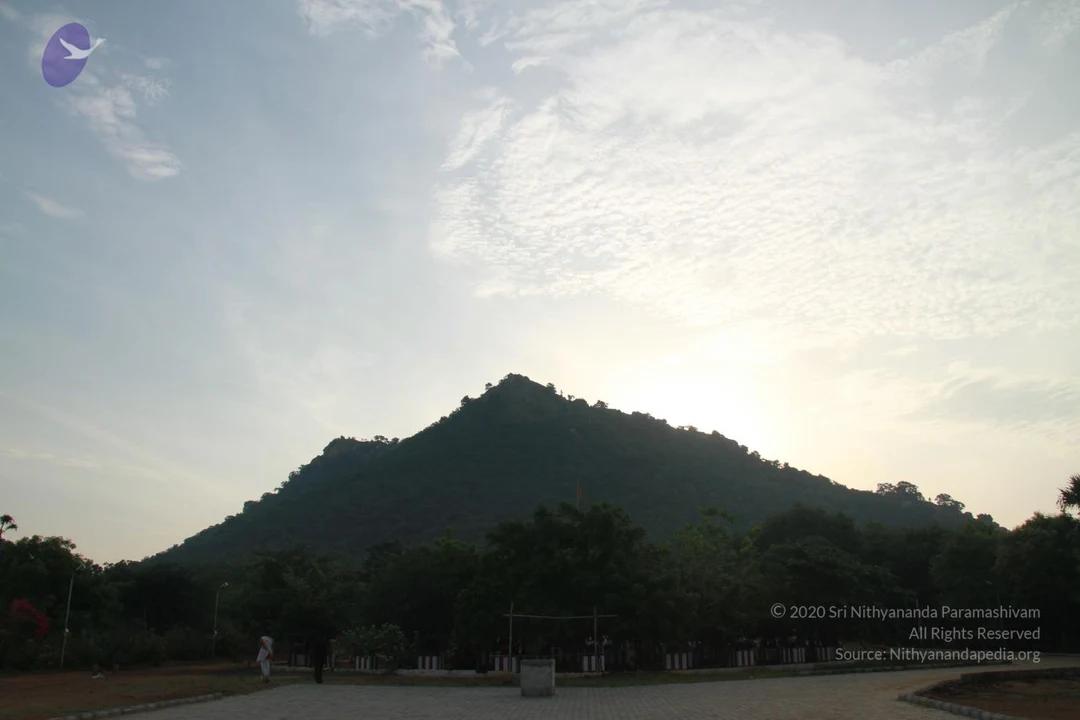
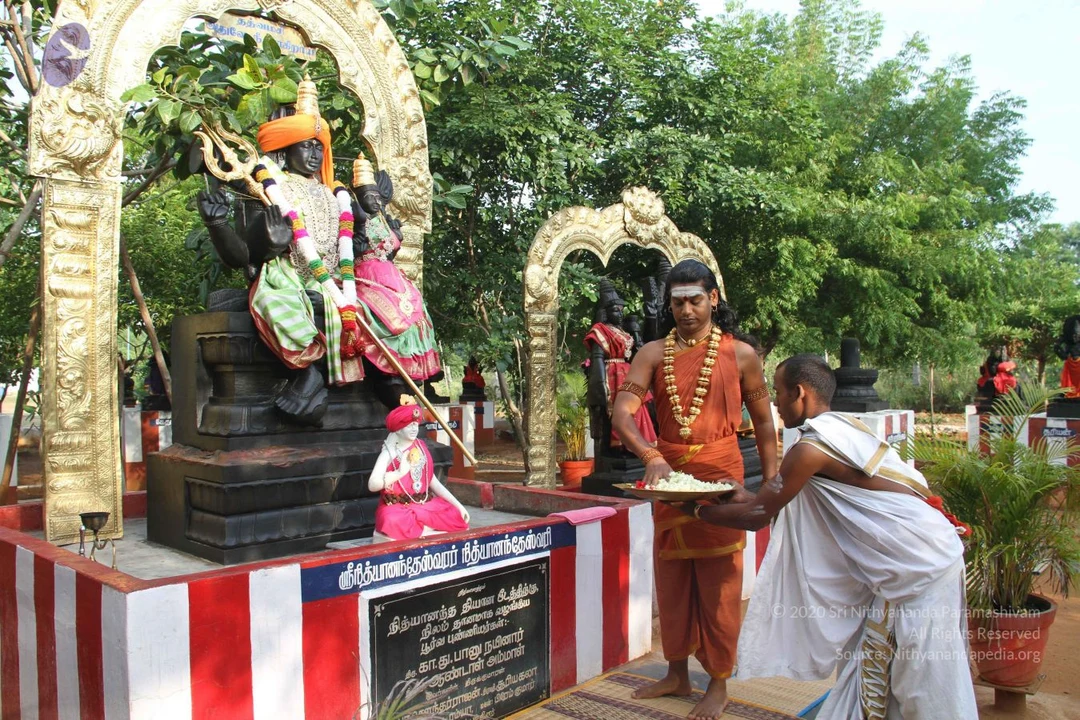
A wide outdoor photograph of a forested hill rising under a pale, partly cloudy sky with soft sunlight behind it. In the foreground, a paved plaza is lined with trees and small low white-and-black striped posts, with a short grey pillar near the centre. A single distant figure in pale clothing stands at the far left edge of the plaza, and a few small red-flowering shrubs are visible at the left.A temple shrine in a garden setting with lush green trees. Central black stone murti of a deity with an orange turban-like crown, garlanded in white, flanked by a female figure in pink and green sari-like dress. Gold arched frames surround the central and side shrines, including a black stone figure on the left in white dhoti and a shrine on the right with figures in red, orange and purple garments. A small red-and-white painted plinth and potted green plants sit in front, with a black stone plaque bearing Tamil inscriptions below the central murti. No physical people are visible.Two black stone murti of deities stand outdoors among green leaves and branches, framed by gilded edges. The taller figure wears a tall gold crown, an orange turban-style headpiece with a red jewel, a green-and-white striped cloth, and a heavy multi-stranded gold necklace with green and white stones, plus a garland of white flowers and pink, green and orange tassels; it holds a damaru-like drum and a trident-like object. The companion figure wears a gold crown, a pink and green sari with gold jewellery, a nose ring and forehead tilak, and holds a trident-shaped staff. The murti are dressed as ceremonial deity images, and the pictured figures are statues rather than physical people.Outdoor photograph of a temple grove with several black stone murti statues set on red-and-white striped plinths beneath golden arched frames. The central figure wears an orange turban and a green and pink dhoti-style garment with a garland and holds a staff-like object; to the right, statues in orange, purple, red and green garments stand beside each other, with a standing figure holding a sword-like object. Trees and a potted palm fill the background under a pale sky. Plaques in front of the bases show Tamil inscriptions. No living people are visible. The statues are deity murti, not persons.Outdoor garden shrine with black stone murtis under golden arched frames, set among green trees under a pale sky. Left, a seated figure in white cloth. Centre, a standing deity murti with an orange turban, green and pink garments and garland, flanked by a small figure. Right, two female murtis in red and orange-green saris, one with a raised hand. Red and white striped plinths carry Tamil-script name plaques. No physical people are visible.A large black stone murti of Ganesha, the elephant-headed deity, seated on a dark pedestal inside an ornate gold-painted arch. The murti wears a white dhoti with gold borders and a white shawl with gold edging, and has multiple arms holding objects. Red-and-white painted border blocks surround the platform on an outdoor ground of red soil, with potted plants, bushes and trees behind. No people are visible.

Acharya Training

6 photosSource gallery
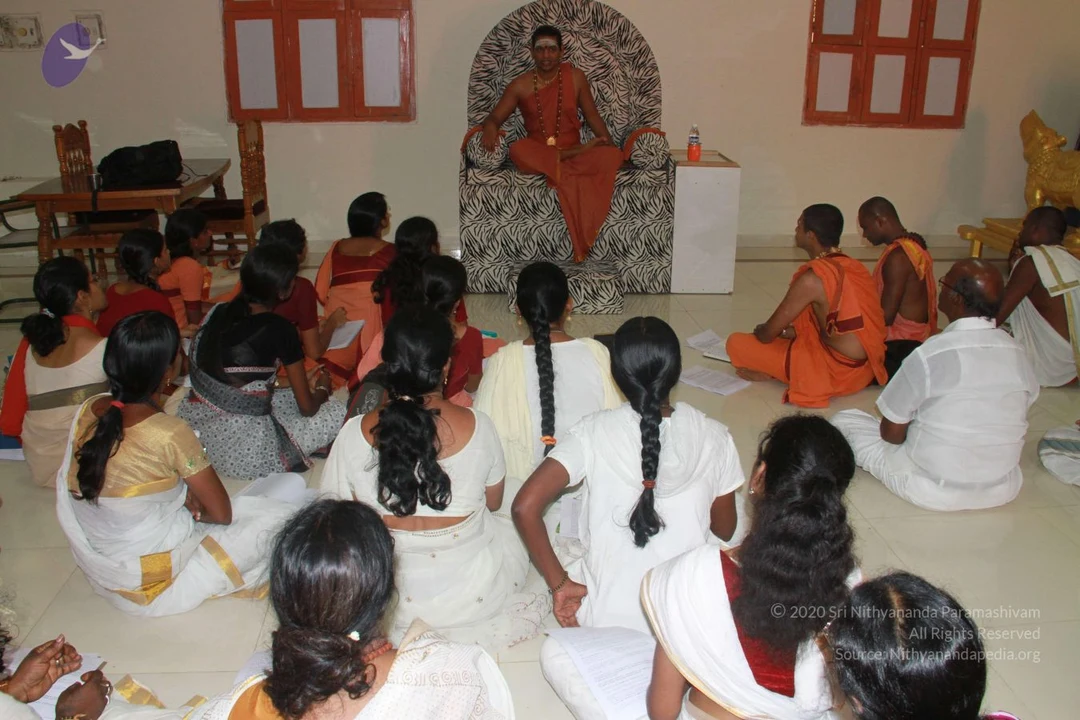
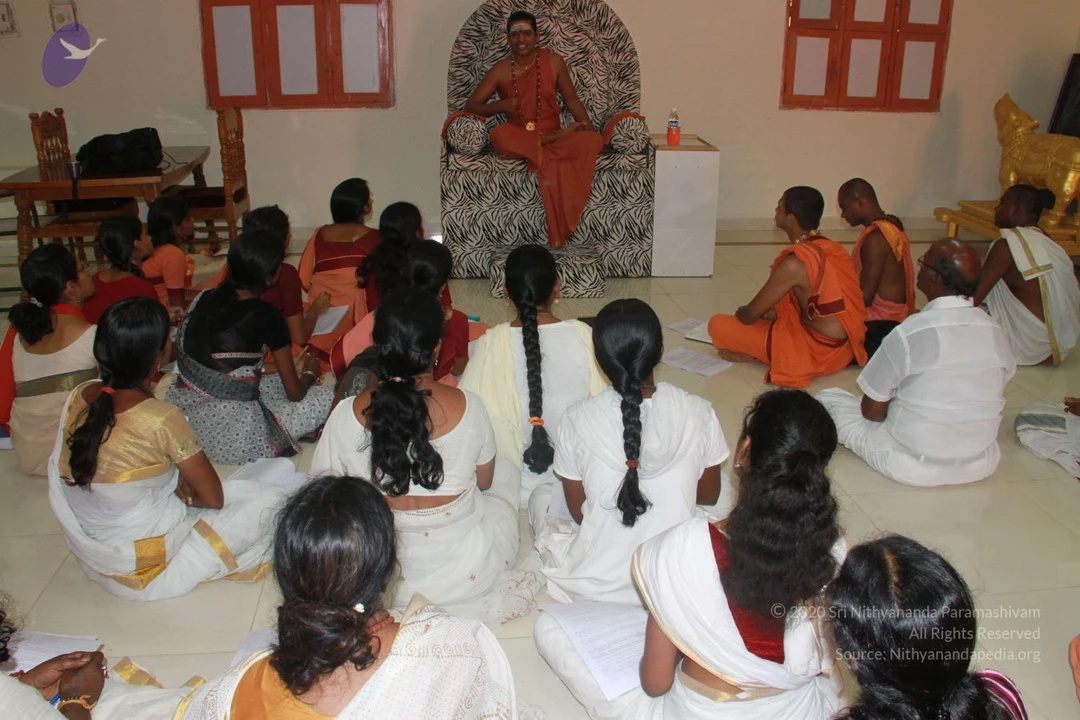
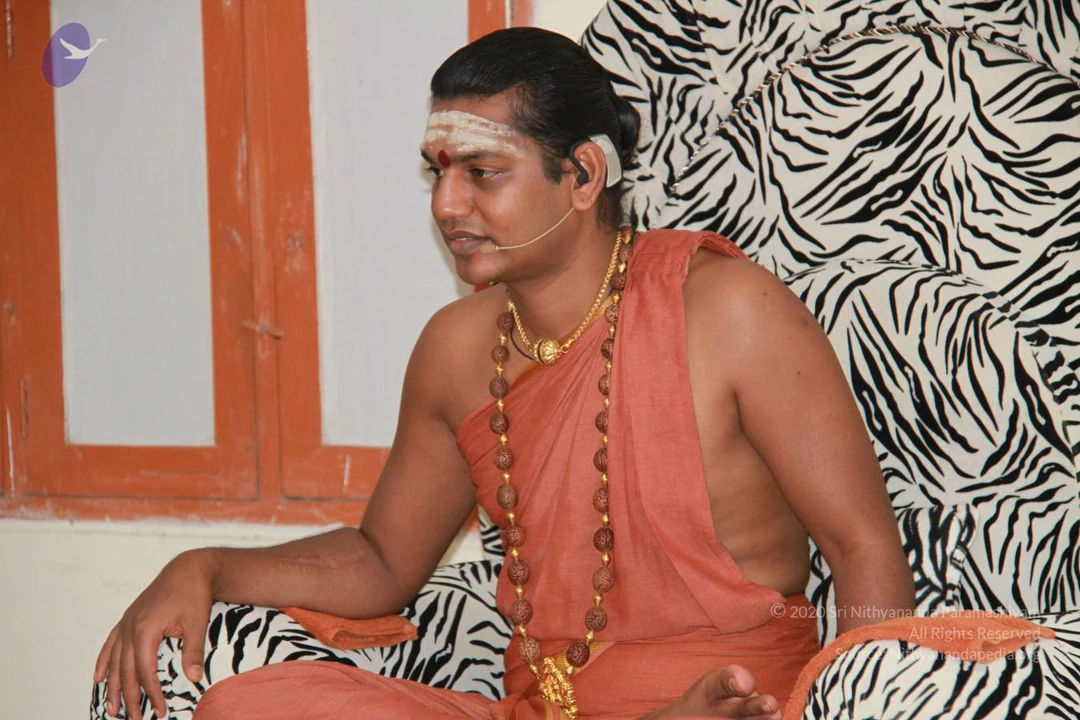
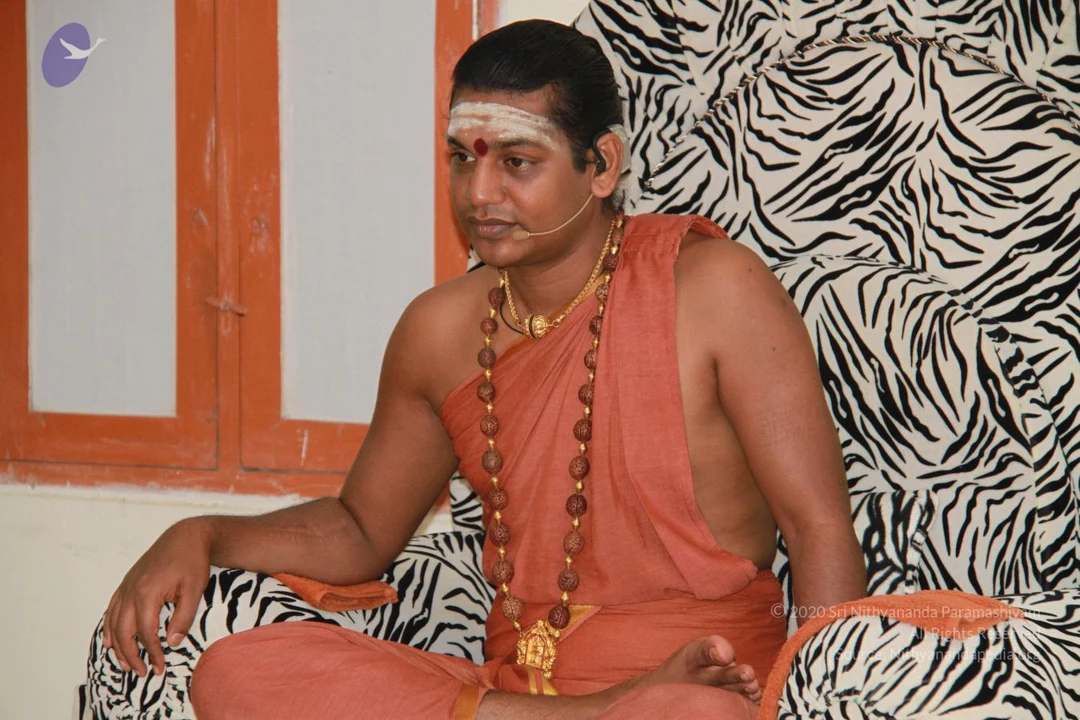
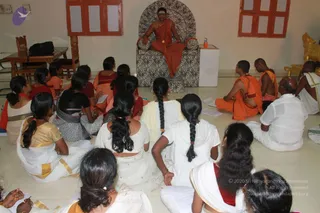
A man seated cross-legged on a zebra-striped throne with a rounded backrest and orange-trimmed armrests, his palms pressed together in namaste at his face with eyes closed. He wears an orange saffron dhoti and shawl with a gold border, rudraksha beads and a gold pendant necklace, and has white horizontal tilak and a red bindi on his forehead. The setting is a plain cream wall. Watermarked archive photo showing a single seated figure.A seated man in orange saffron robes sits cross-legged in front of a zebra-striped high-backed throne with orange-trimmed armrests. He presses his palms together in anjali mudra with his head bowed, and a white vibhuti line and red dot mark his forehead. He wears a rudraksha mala and a gold ceremonial necklace with a pendant. Behind him is a plain cream wall, and a small purple bird logo appears in the top left corner. The appearance is consistent with the page's a person reference, but the image gives only limited cues for confirmation.A seated satsang in a plain tiled room with orange-framed windows. A man with a shaved head and a red-orange robe sits cross-legged on a zebra-striped throne, a rudraksha-style mala visible at his neck, with a water bottle on a small table beside him. Around him, roughly a dozen devotees sit on the floor: women in white and cream saris and salwar, some in red and gold, and several men in white dhotis and orange robes. Many hold papers or notebooks. A golden figure stands at the right edge and a wooden chair and table sit at the left.A satsang hall with a tiled floor where a seated audience faces a central figure on a zebra-striped armchair. The figure wears saffron-orange robes, a rudraksha mala and a gold pendant, and sits with hands resting on the chair arms. In the foreground, many devotees sit cross-legged in white and gold-bordered saris and white dhotis, some holding papers, with women in braids and a few in red blouses. To the right, two shaven-headed men in saffron robes sit on the floor, and a golden bull statue stands near the wall. Windows with orange frames and a small water bottle on a white stand complete the scene. The central figure is an appearance-based a person on a throne with saffron robes and rudraksha mala cues.A man seated cross-legged on a zebra-striped cushion against a zebra-patterned backdrop, with orange-painted wooden shutters behind him. He wears an orange saffron cloth draped over his left shoulder, leaving his chest bare, with a long rudraksha mala and a gold necklace. A white horizontal tilak with a red bindi marks his forehead, and a wireless headset microphone is clipped to his ear and cheek. He looks to the side with his hands resting on his knees, appearing to speak during a satsang discourse. a person by appearance cues: orange clothing, rudraksha mala, gold ornaments and sitting in the seat of a teacher.A photograph of a man seated cross-legged on a zebra-striped cushioned seat in front of a striped zebra-print backdrop, with orange and white painted wooden shutters behind him. He wears a saffron-orange dhoti and matching shawl draped over one shoulder, leaving the other shoulder bare. He has white vertical tilaka stripes and a red dot on his forehead, a lapel microphone clipped near his ear, and long brown rudraksha malas with a gold necklace and gold pendant. He looks to the side while seated in a meditative posture.

Akashic-Readings

10 photosSource gallery
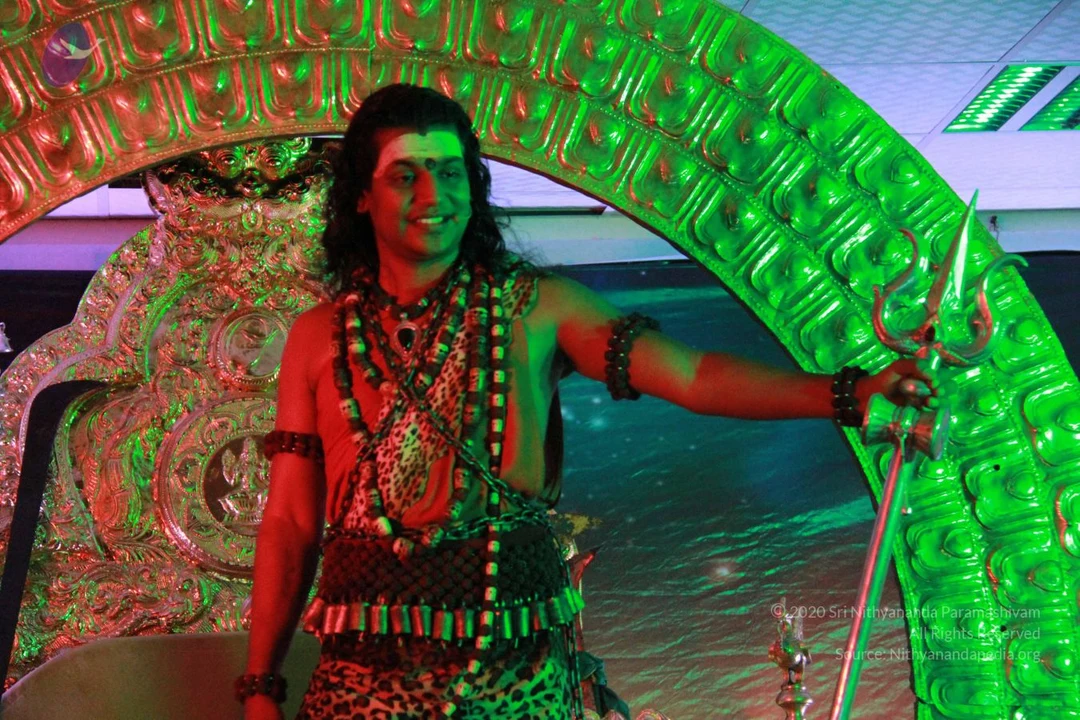
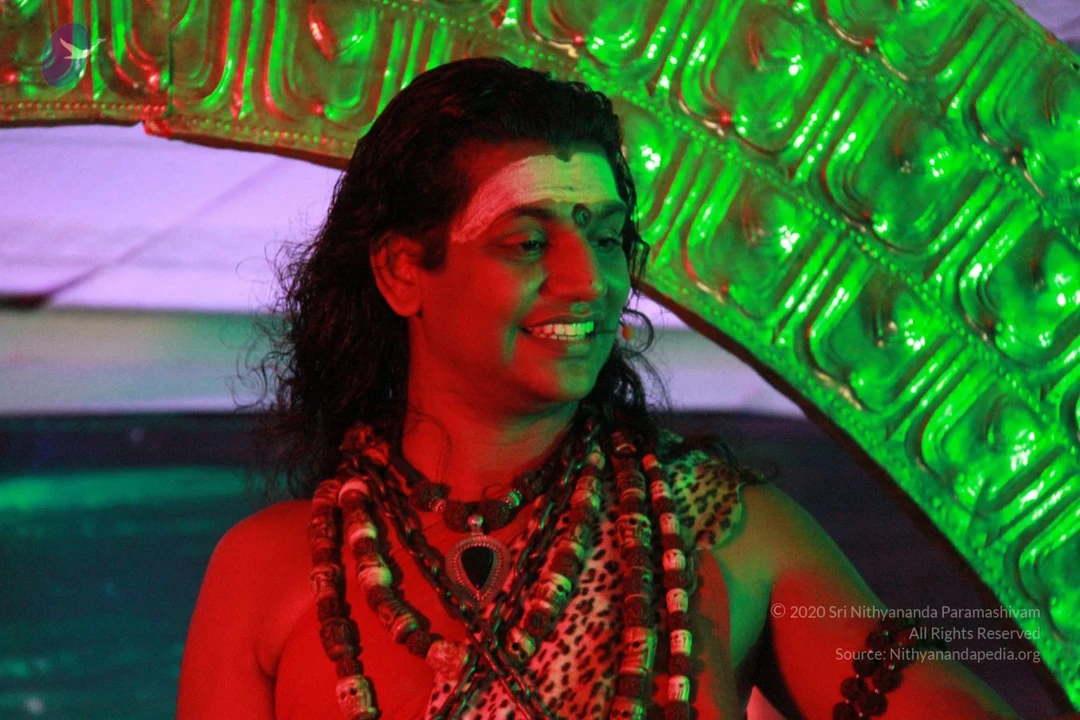
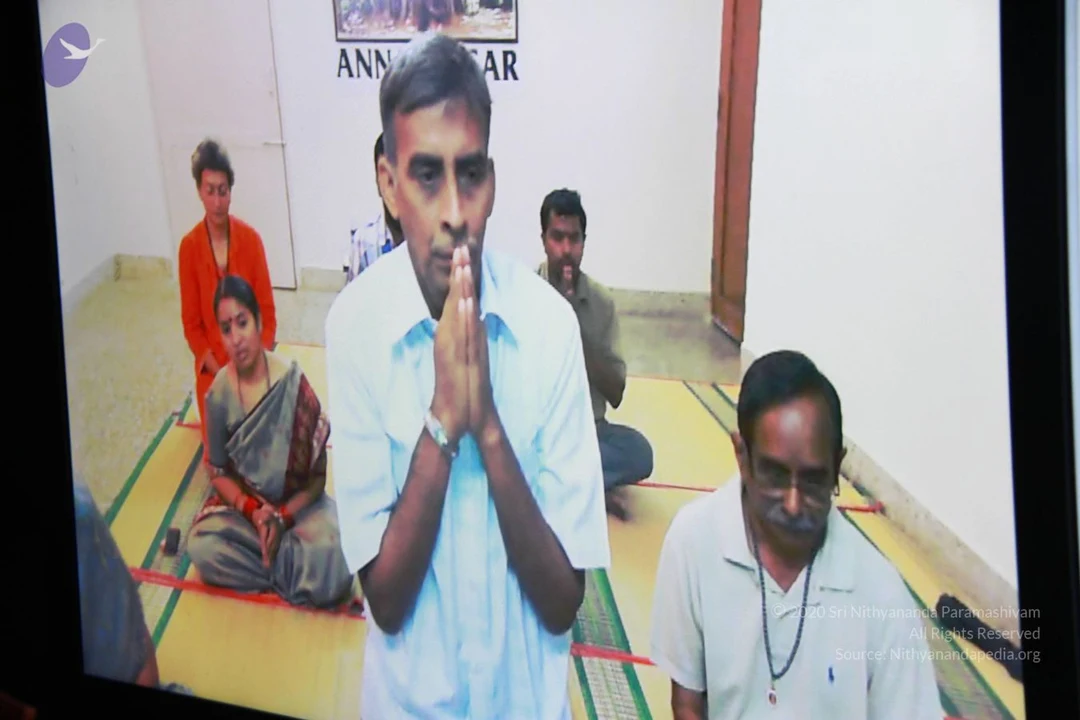
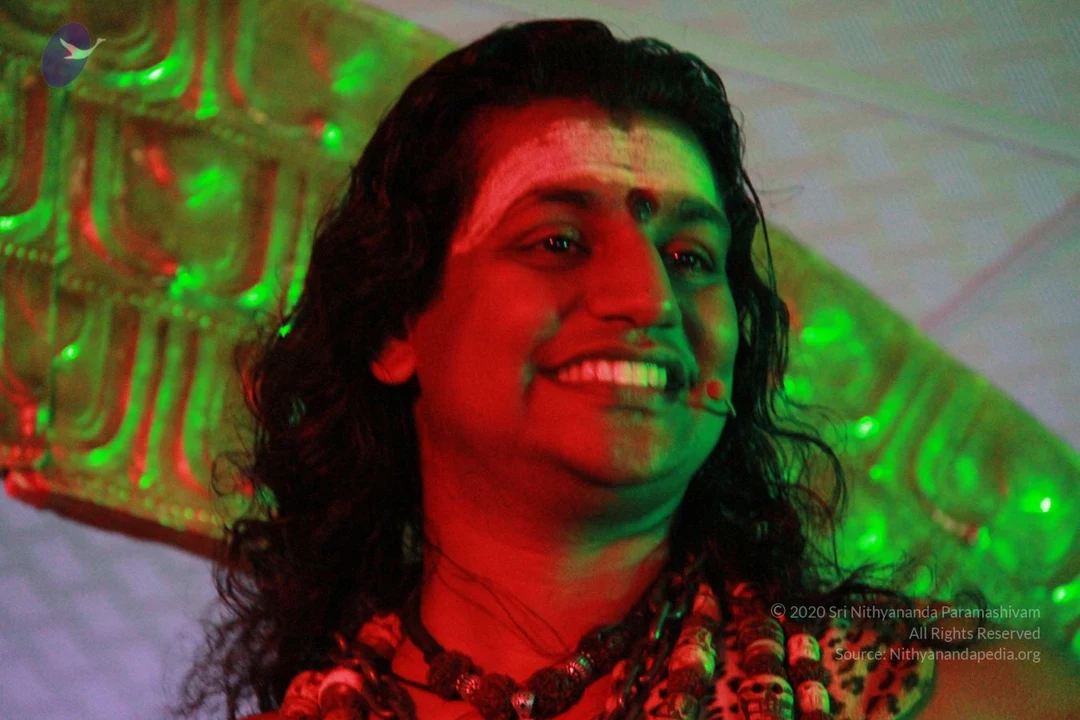
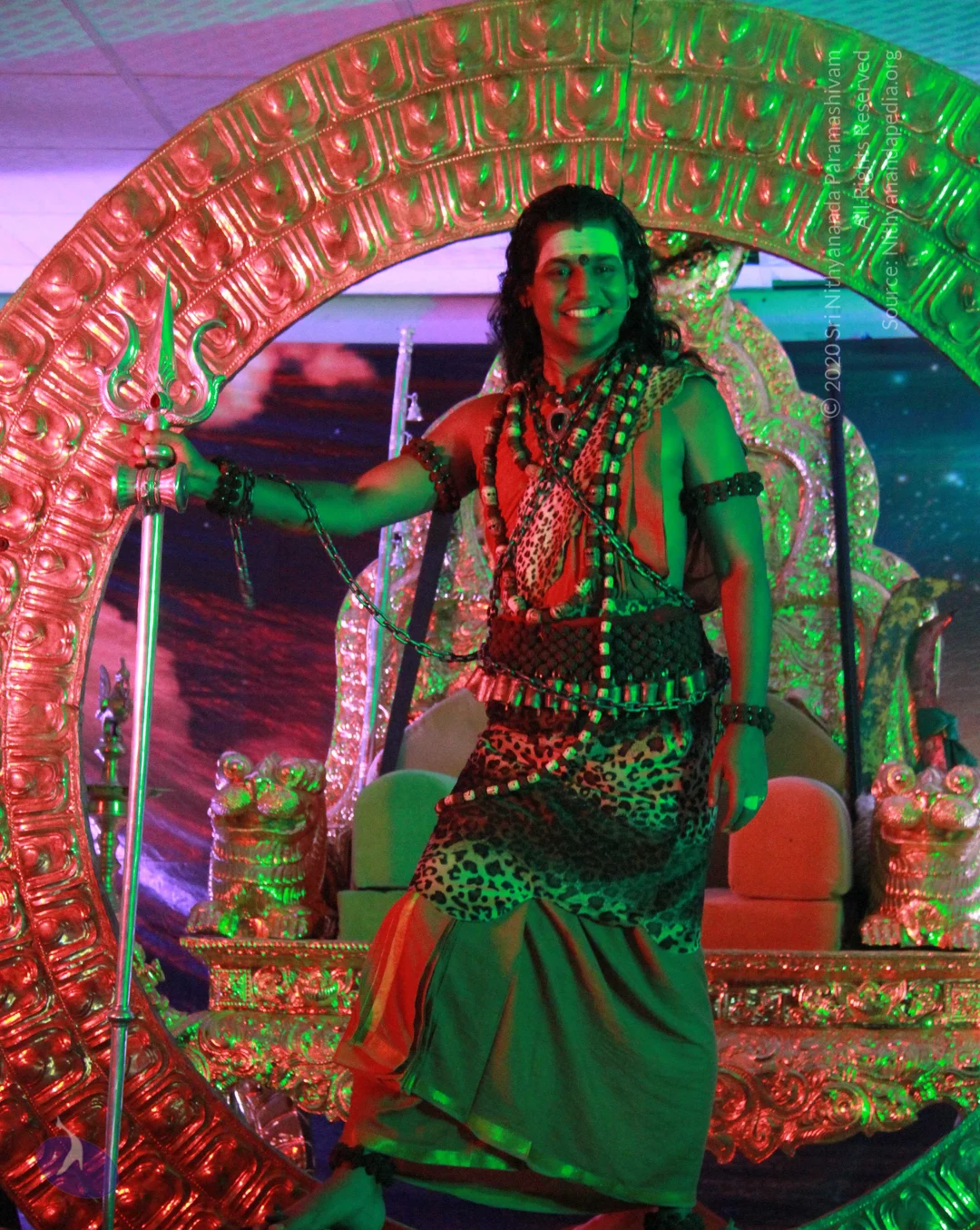
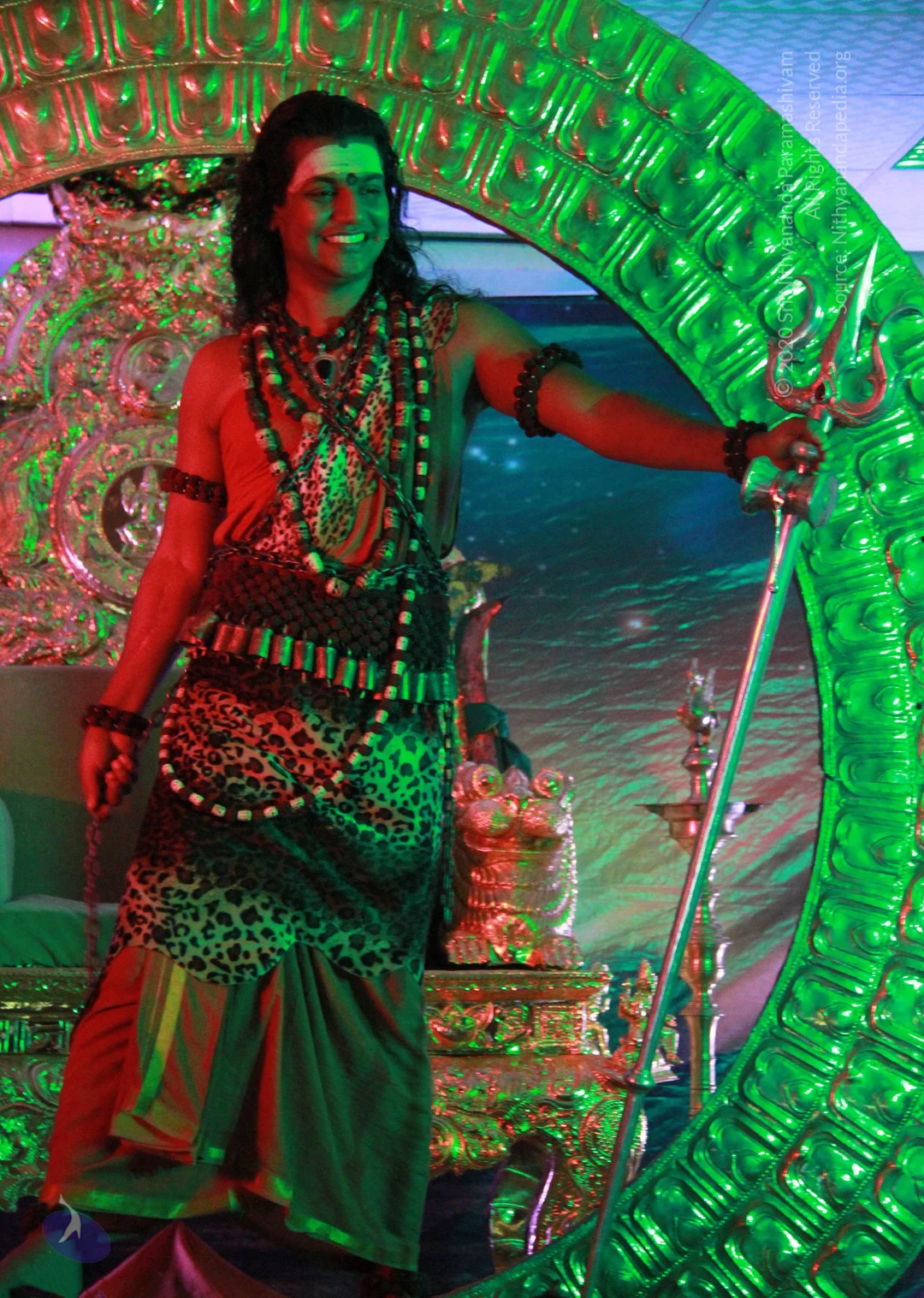
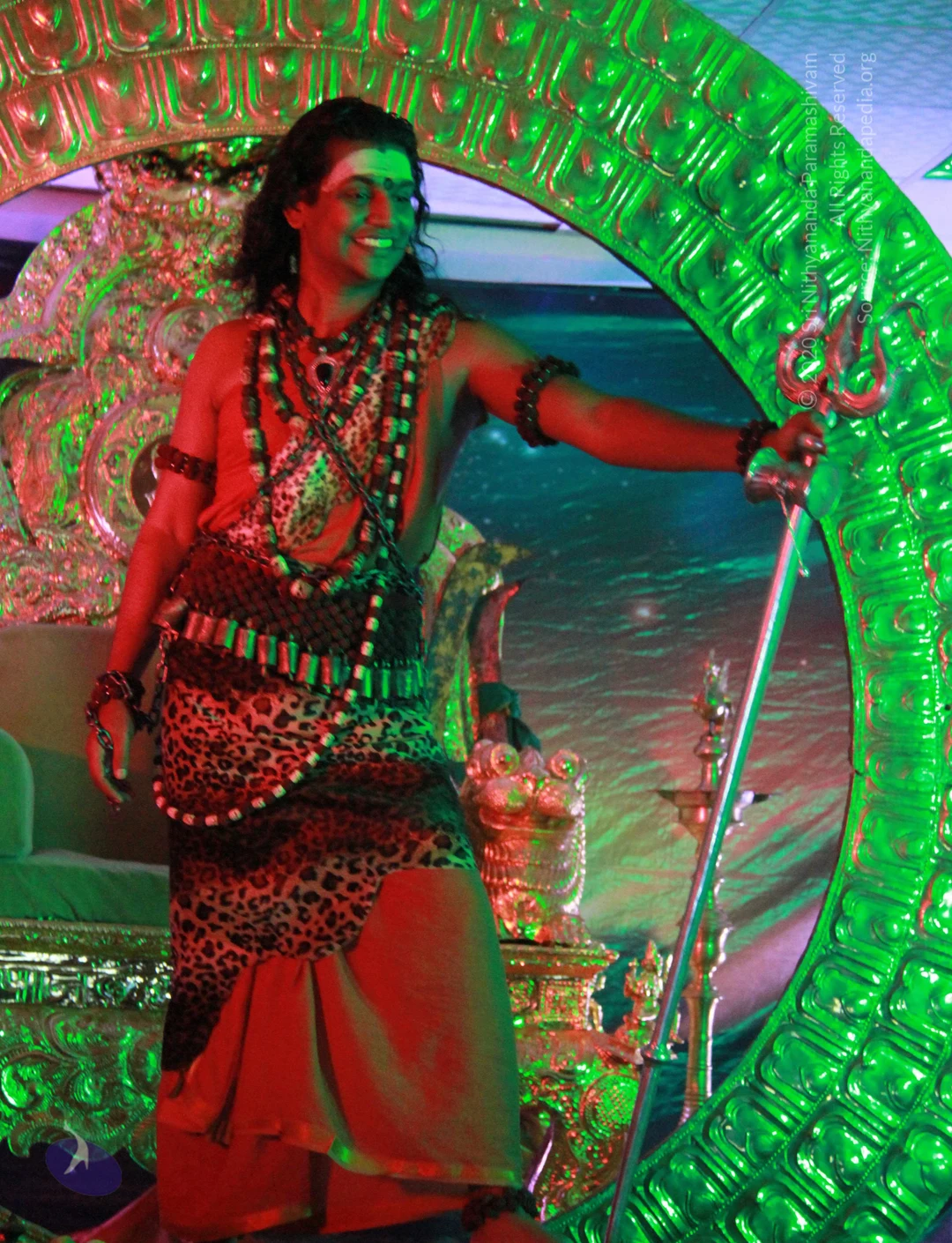
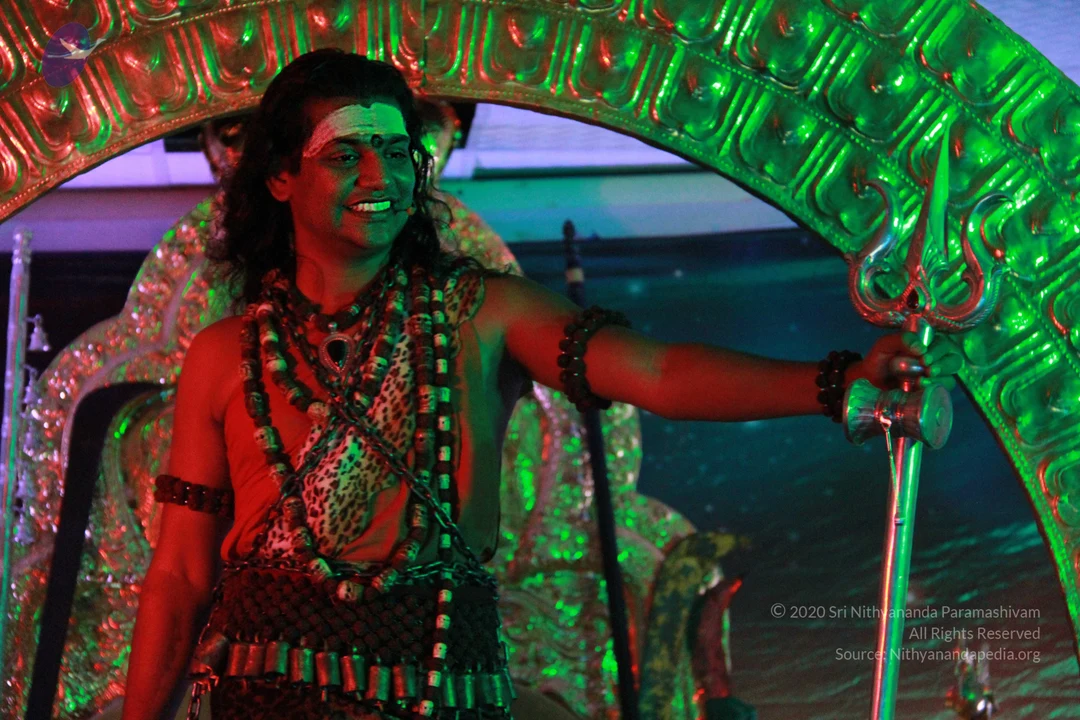
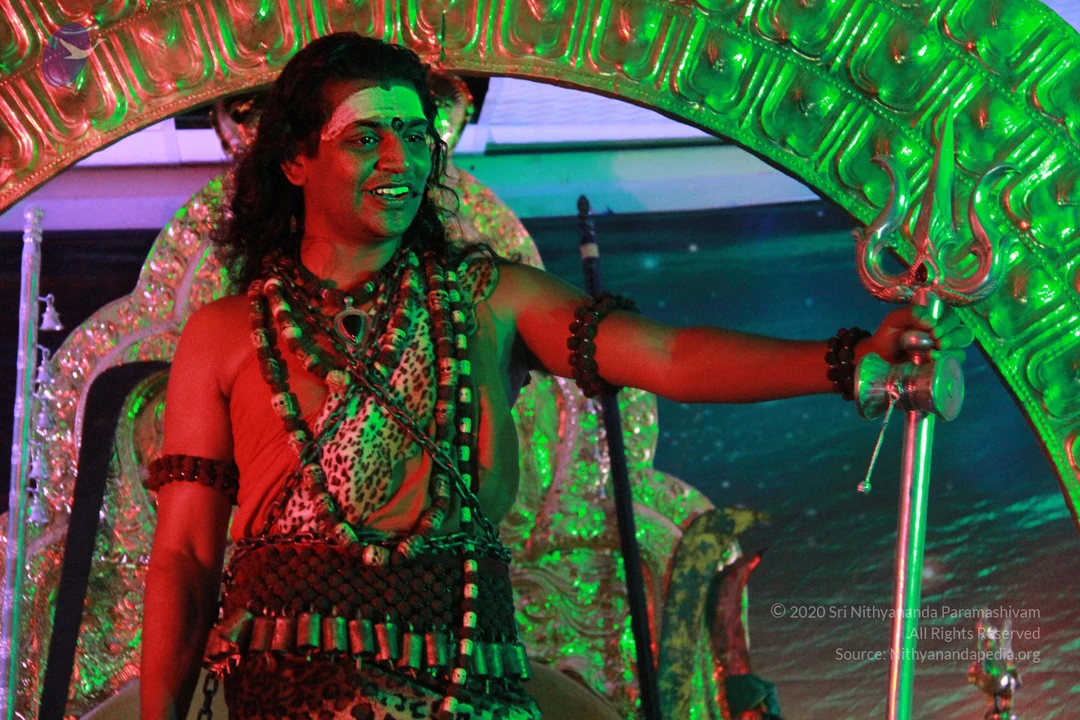
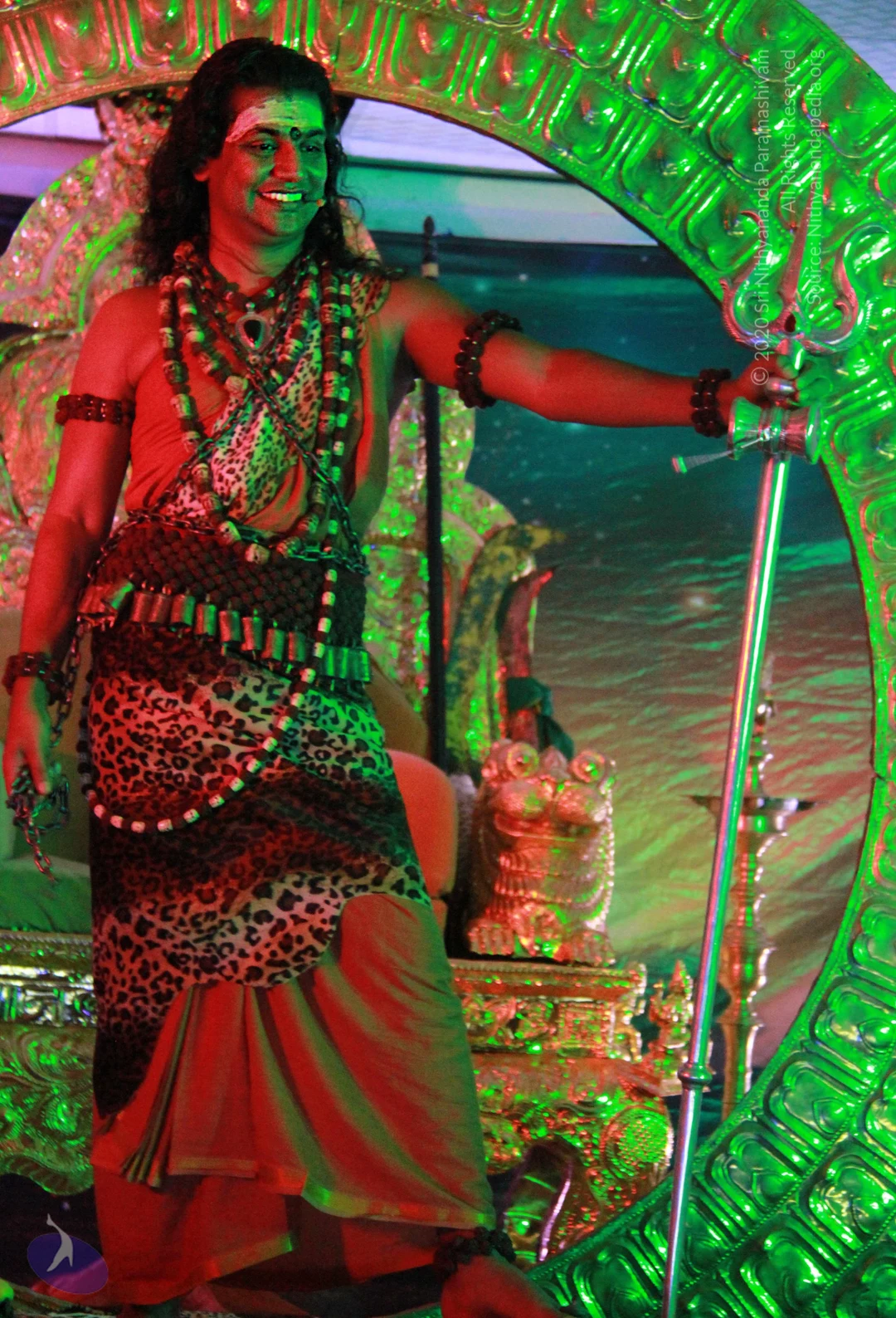
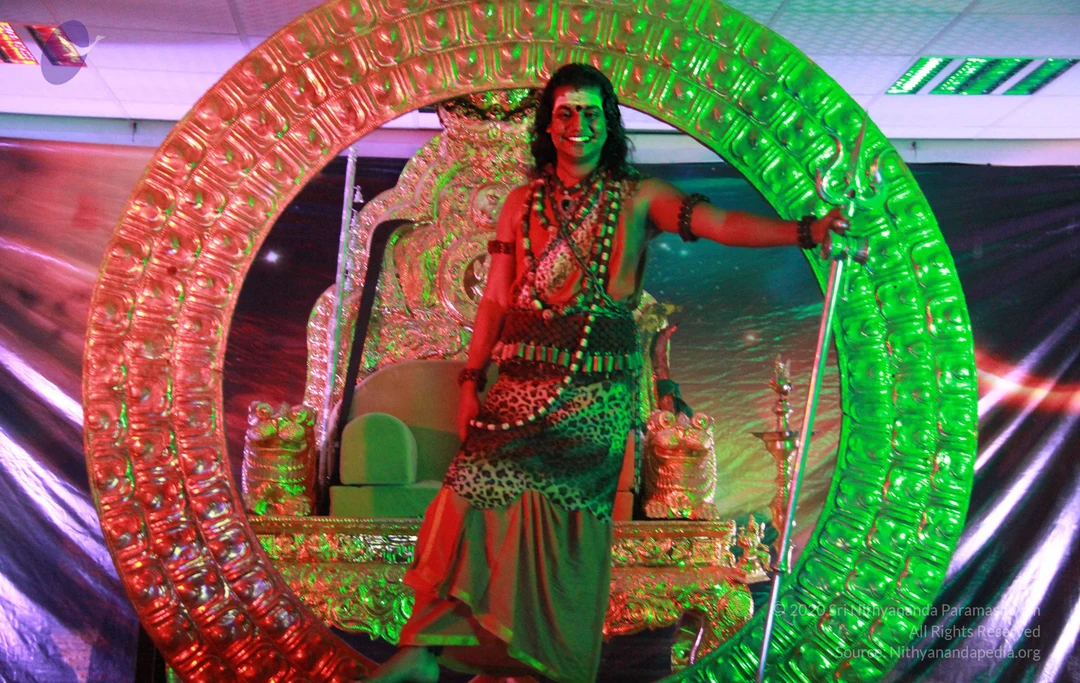
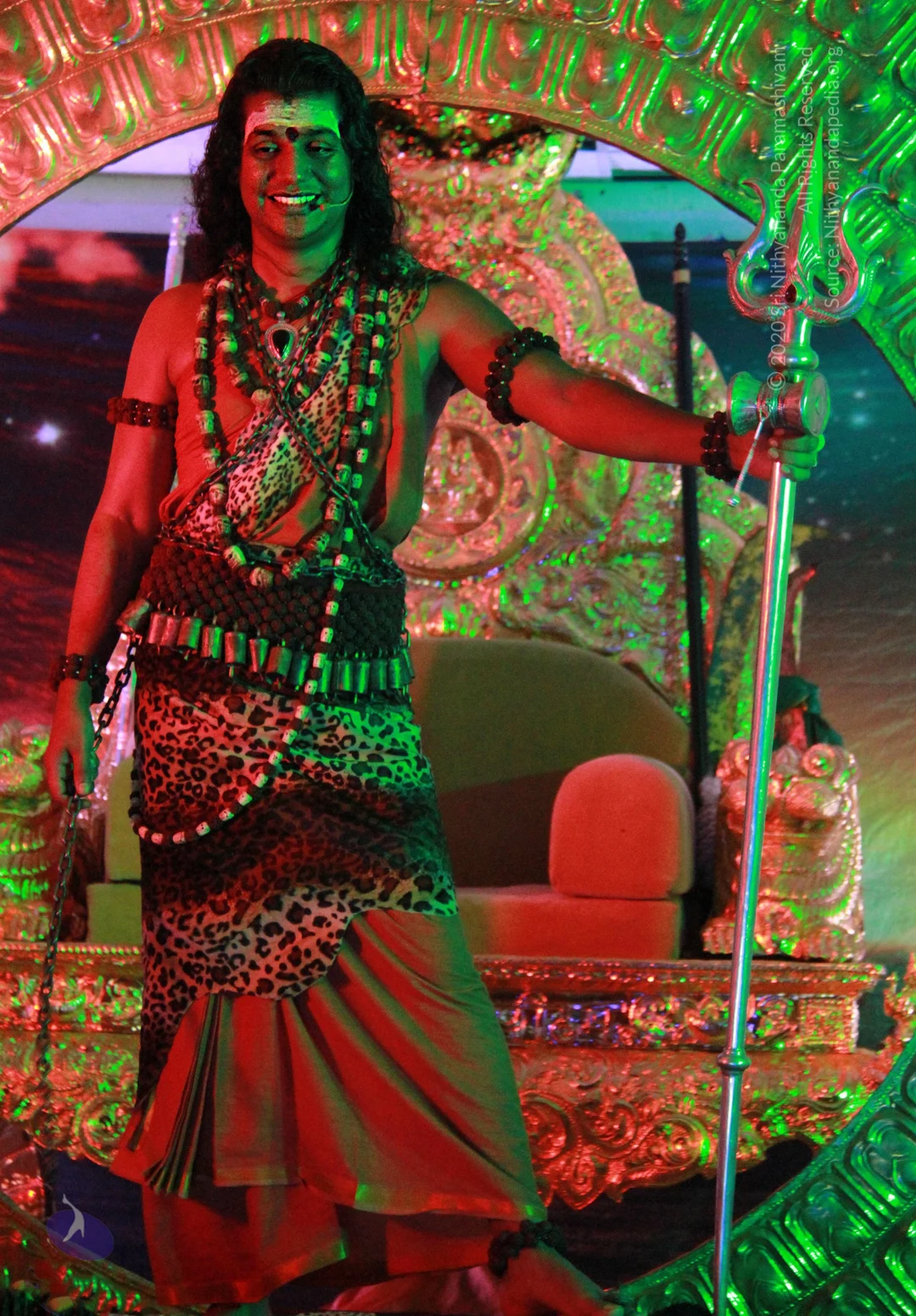
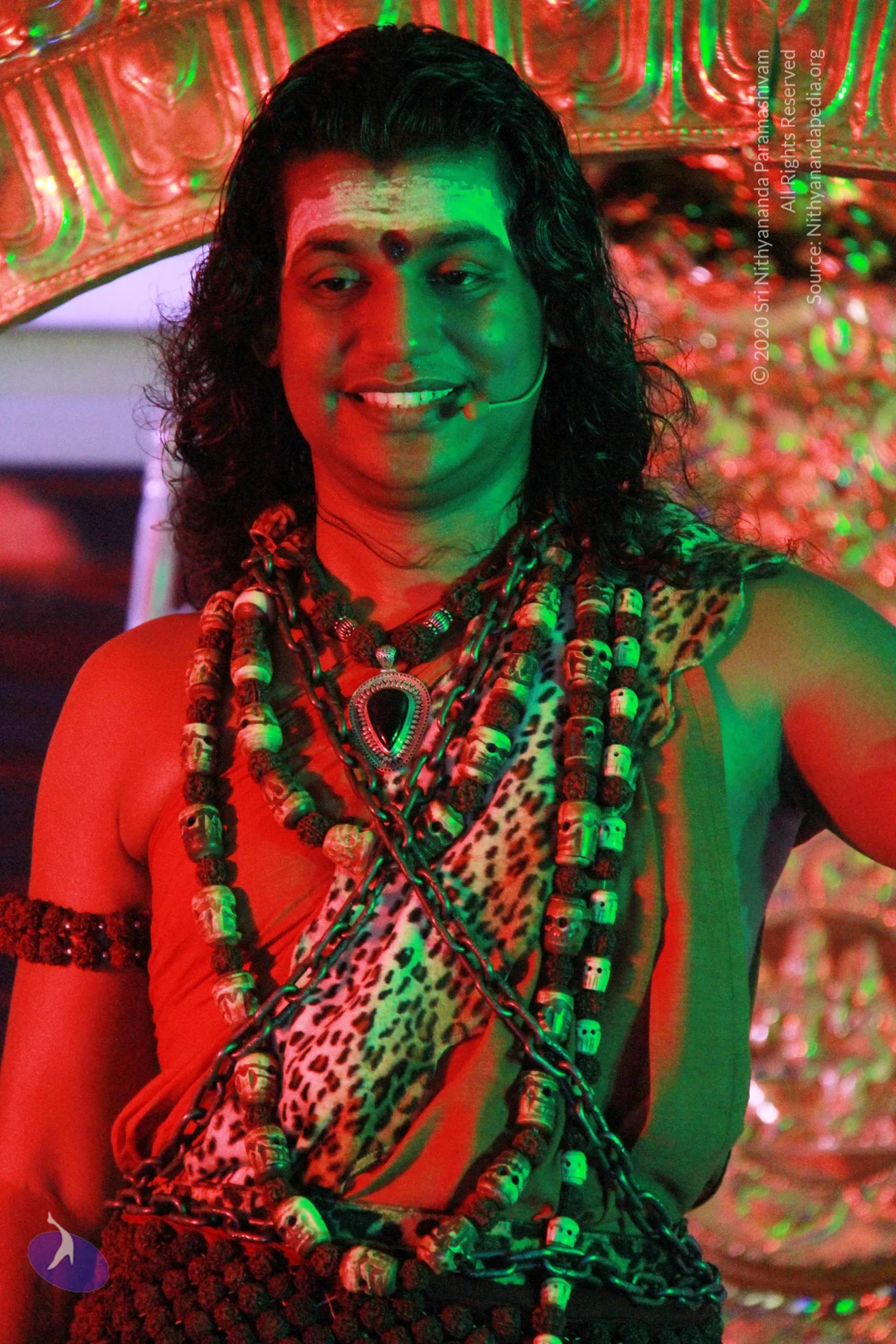
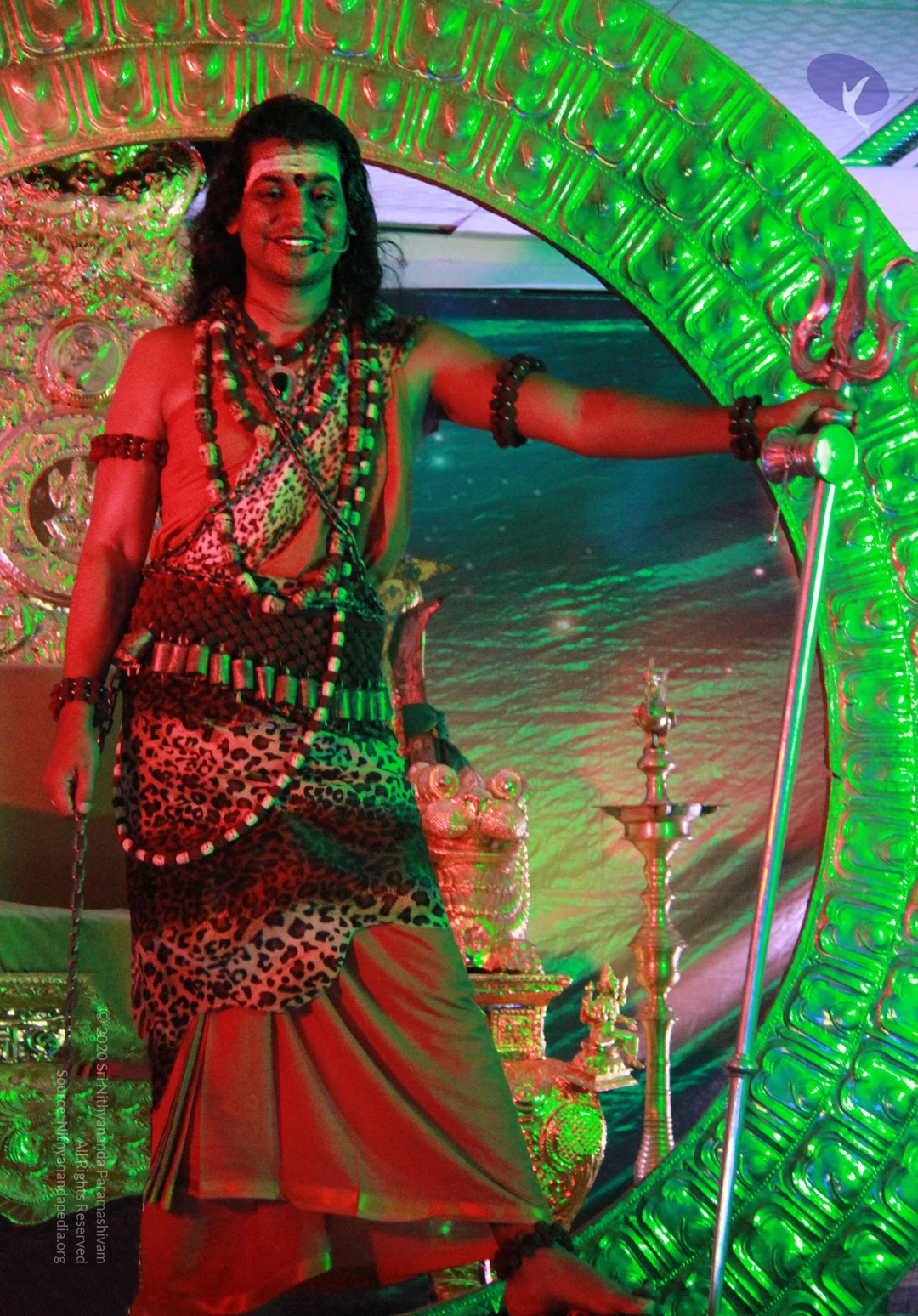
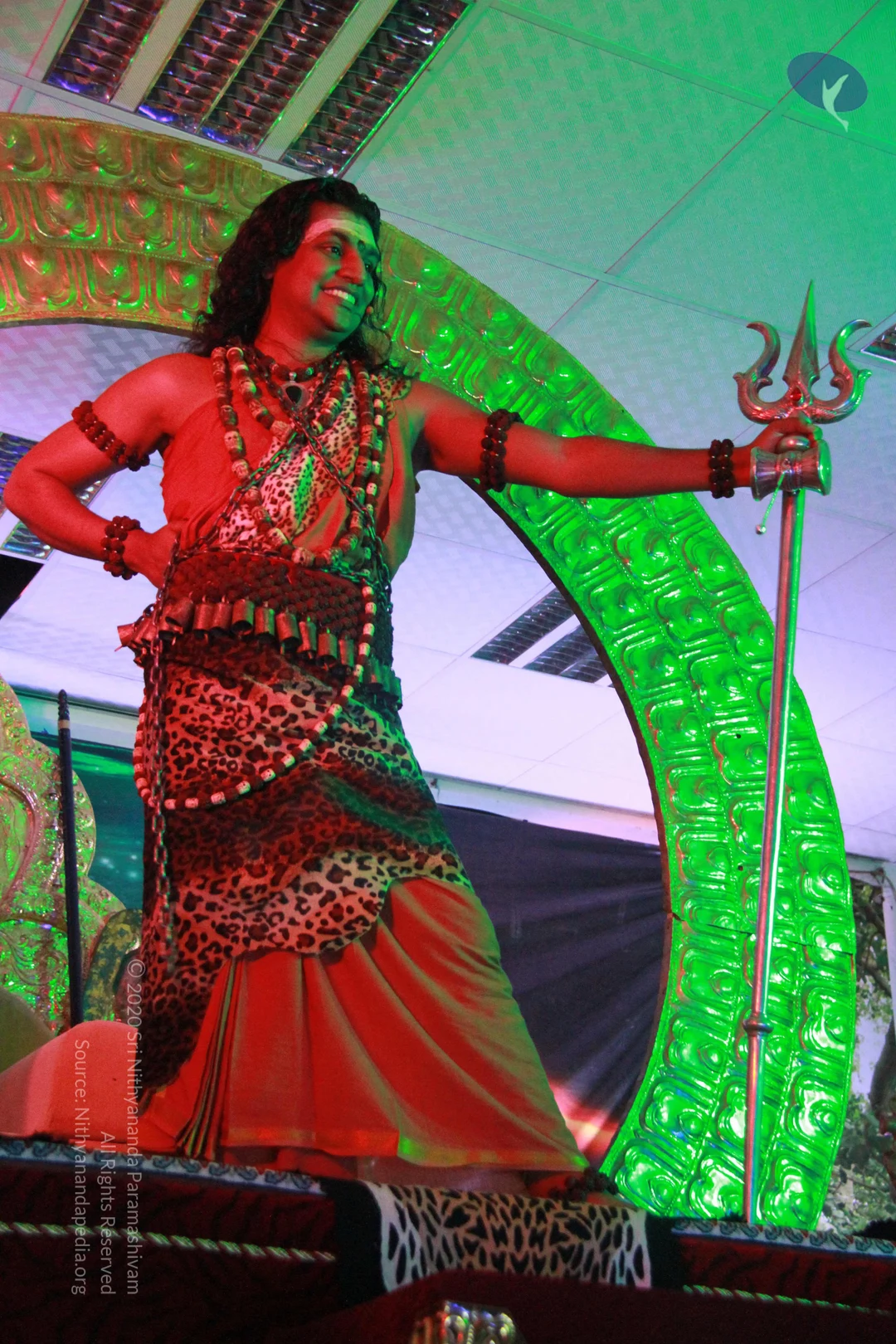
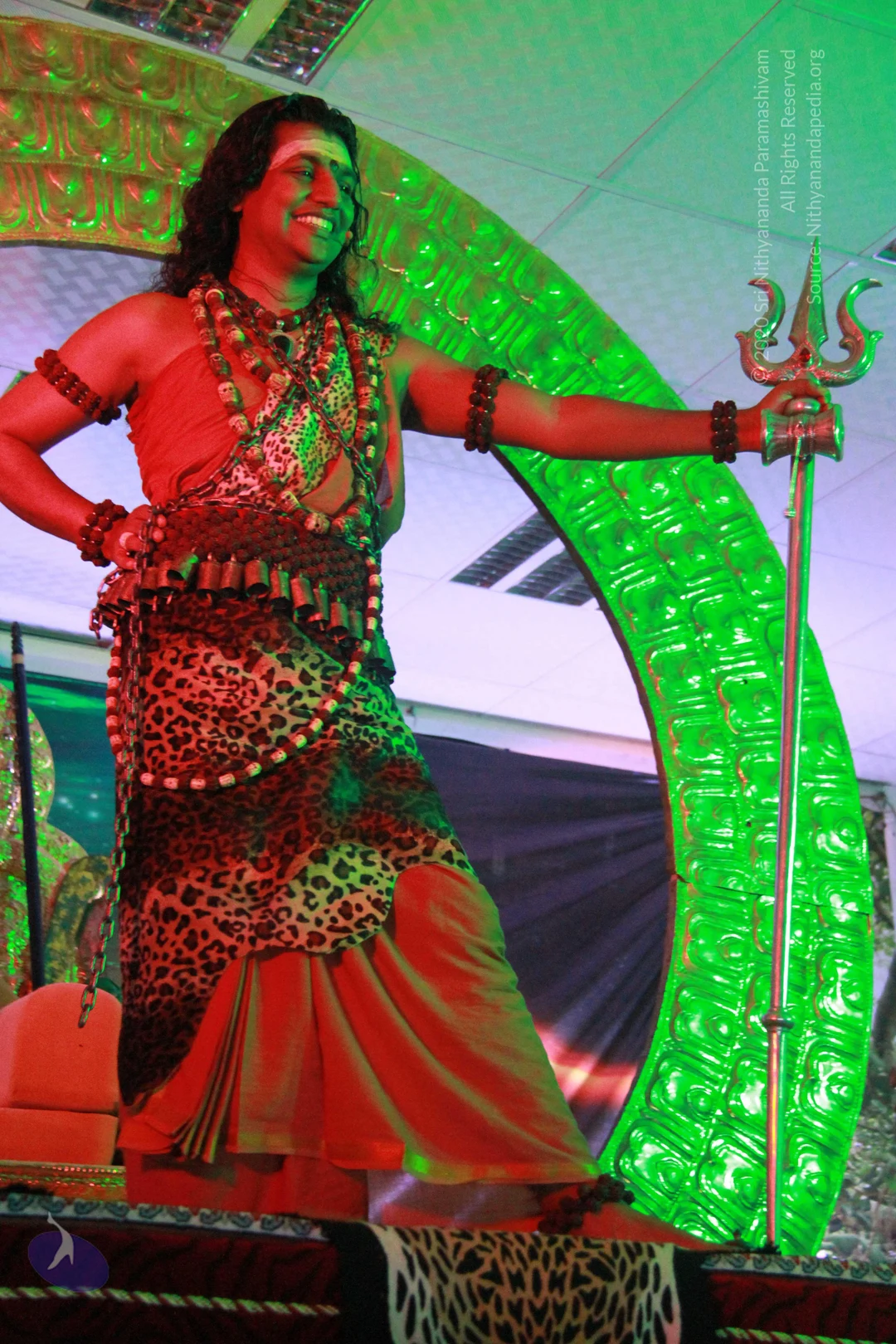
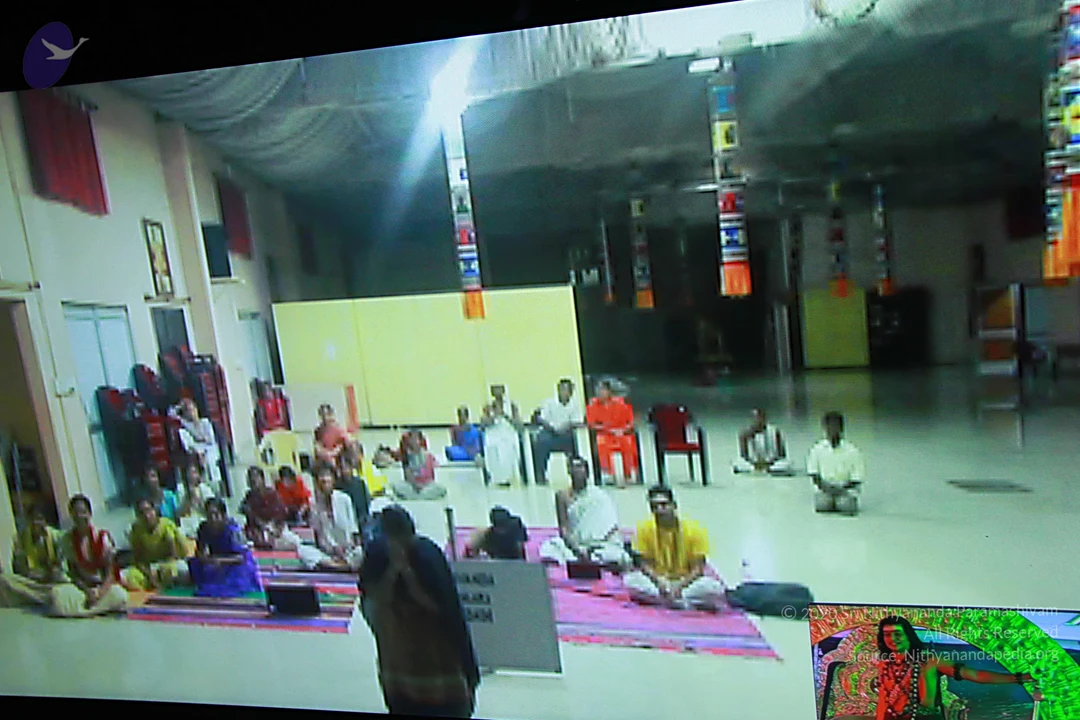
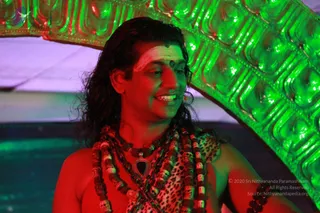
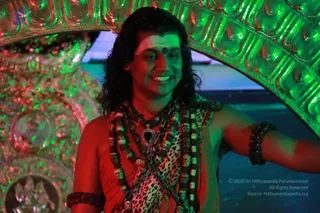
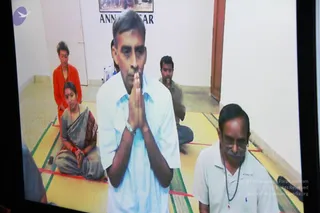
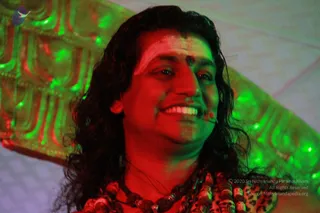
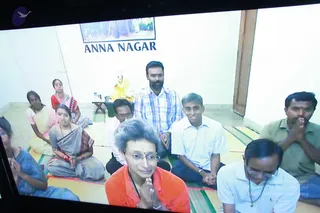
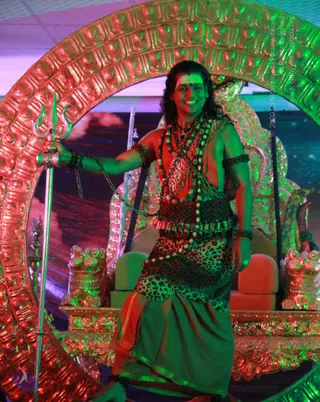
A man with long dark hair and a red-and-green bindi-marked forehead stands on a stage in front of an ornate green-lit arch and a metallic silver-gold decorative backdrop. He wears a leopard-print wrap in red and green, layered rudraksha-style beaded malas across his chest, and beaded bands on his arms and waist. He holds a silver trident with his right hand extended, and a small brass lamp stands at the lower right. A blue-green ocean-style backdrop fills the background.A smiling man with long, swept-back dark hair stands under an ornate green illuminated arch, lit in red and green stage light. He wears a white tilak on his forehead with a central dot, multiple strands of large rudraksha beads across his chest, a dark heart-shaped pendant on a cord, and a leopard-print cloth draped over one shoulder; his upper body is bare. a person is described by the page as present at this satsang; the visible cues are long swept-back hair, rudraksha malas, and a distinctive leopard-print wrap. Single person, photographed in a stage or hall setting with a green-lit arch overhead.A smiling man with long, swept-back dark hair stands under an ornate green-and-gold arch in red and green stage lighting. He wears a leopard-print cloth draped over bare shoulders, layered dark rudraksha malas with skull-like beads, a dark pendant on a chain, and a rudraksha bracelet on his wrist and upper arm. A white tilak with a central dot marks his forehead. Behind him, a decorated panel with gold and red motifs fills the frame. Swamiji (probable) appears as a performer in ceremonial dress with distinctive long hair, rudraksha malas and adornments.A photograph of a video screen showing a satsang room with yellow mats and red borders. In the foreground, a man in a light blue short-sleeved shirt and wristwatch stands with palms pressed together in namaste. A woman in a grey sari with a red border and red bindi sits with hands folded. Behind them, a person in an orange robe sits near a white wall, and another man in a brown shirt sits cross-legged. At lower right, a man with glasses and a moustache wearing a white polo shirt and dark rudraksha-style mala sits with eyes closed. A framed picture on the wall bears partially visible lettering.A close-up photo of a smiling man with long, wavy dark hair and a vertical tilak on his forehead, lit in red and green stage light. He wears dense layers of rudraksha malas and beaded necklaces, and a small clip microphone is visible near his cheek. Behind him, a gold-green patterned backdrop glows under coloured lights. a person cues include the long swept hair and heavy rudraksha malas, but the image is a close framed portrait with no clear full-body context, so the identity remains uncertain.Photo of a large screen showing a live satsang feed of a seated group in a room labelled with a sign reading "ANNA NAGAR" above a framed tree picture. A small gold seated deity murti sits on a low table in the background. A man in a blue-and-white checked shirt stands at the back centre, and a woman in an orange sleeveless top with a dark mala sits in the front, hands in anjali. Others sit on green-and-yellow mats: a woman in a blue top with hands joined at the left edge, a woman in a grey sari with red border, a man in a white shirt, a man in a light blue shirt, and a man in an olive shirt with hands folded at the right. Several people are seated with palms pressed together in devotion.

1-Morning-Satsang
17 photosSource gallery
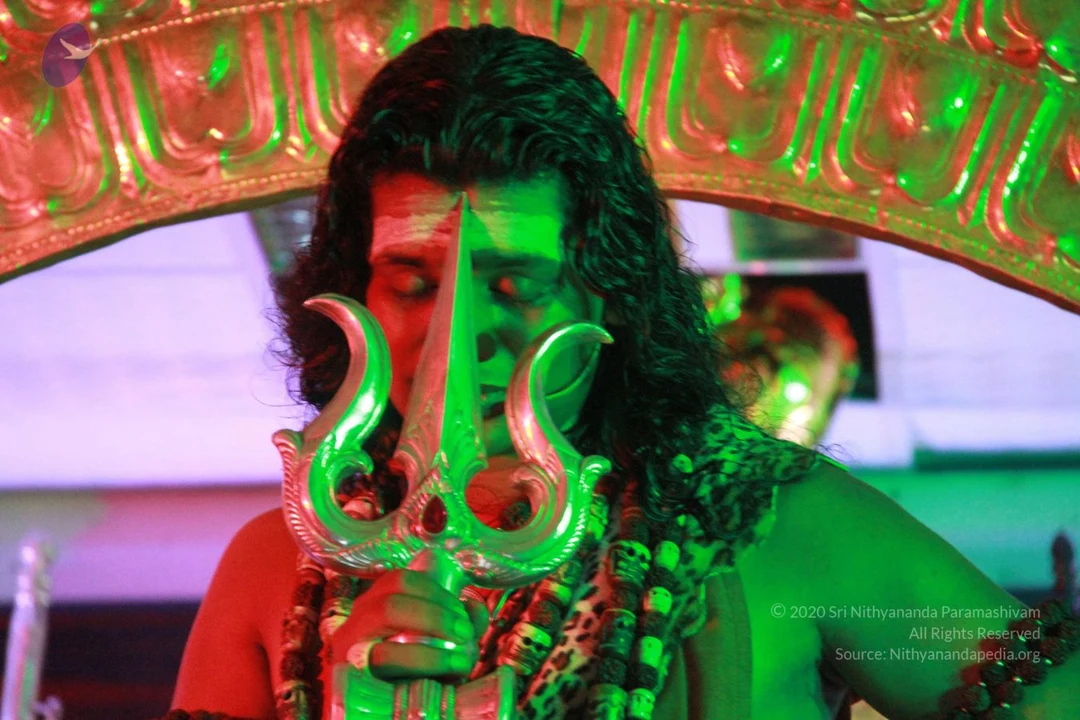
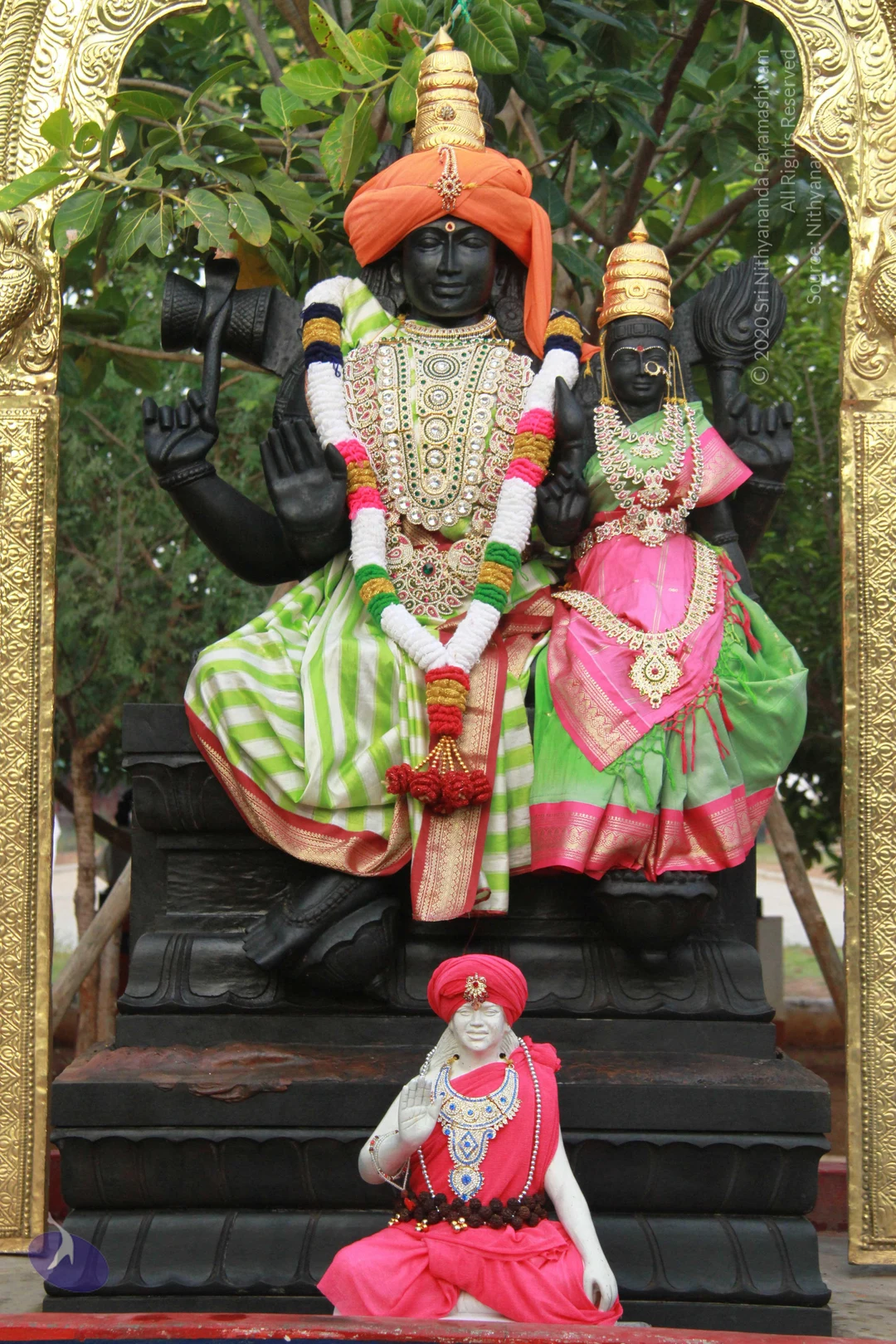
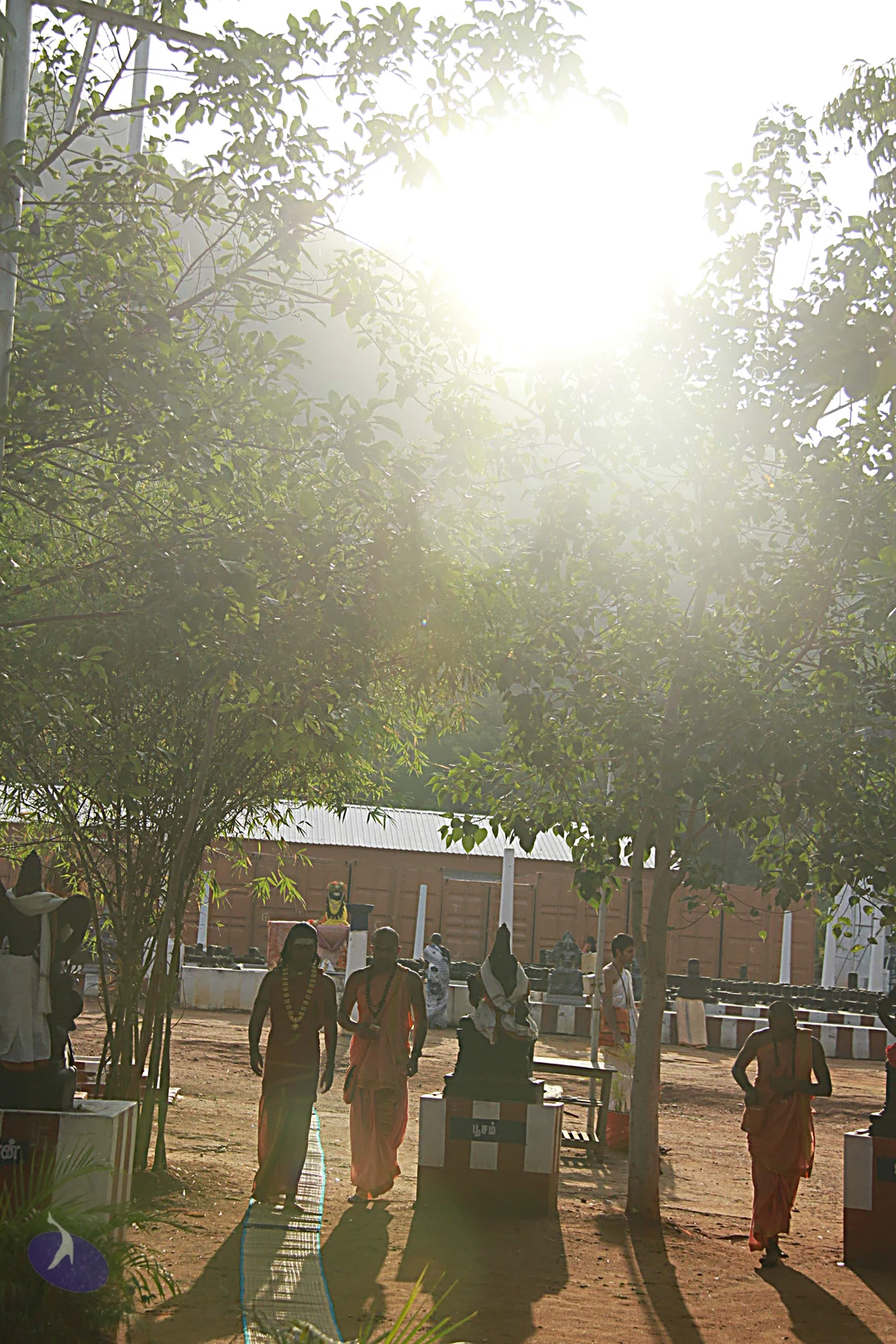
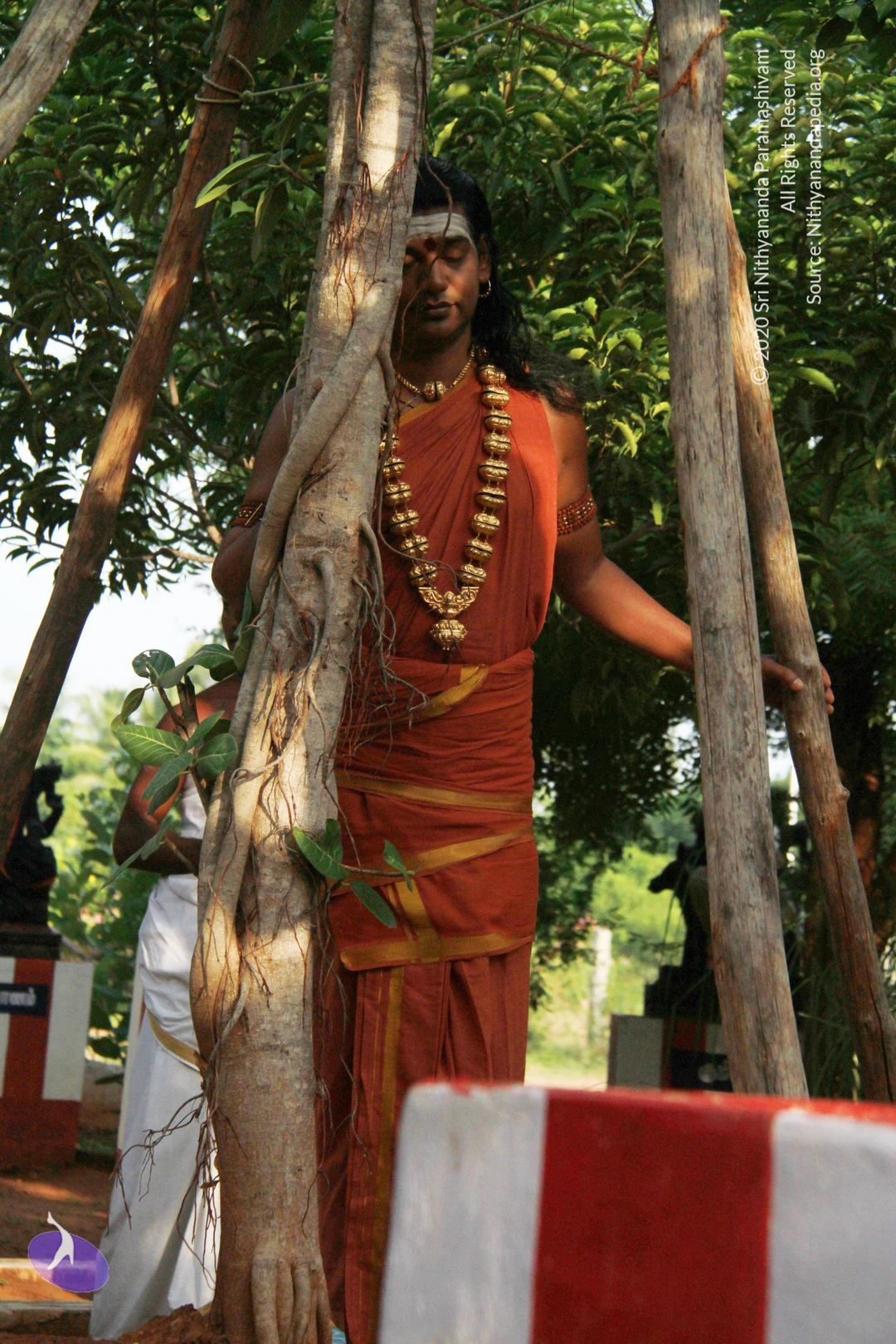
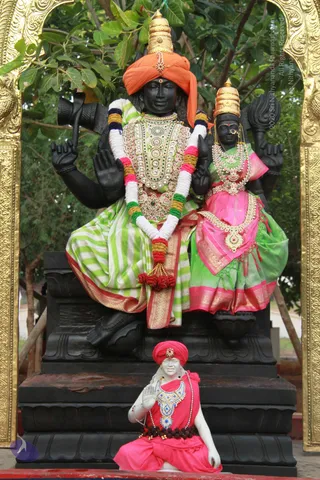
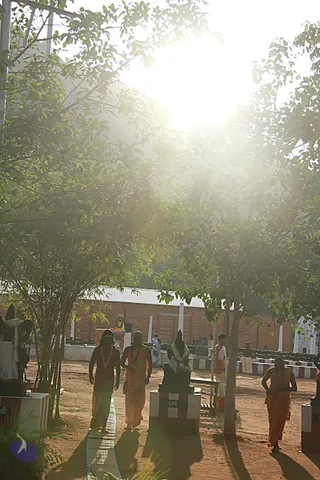
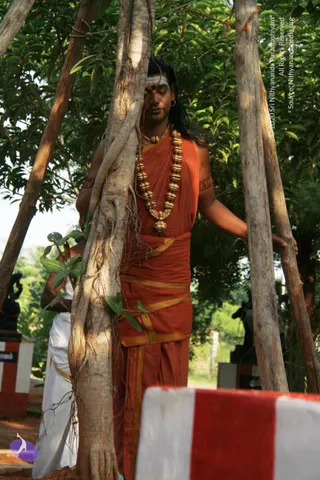
Outdoor photo of a black stone statue pair seated on a dark pedestal beneath leafy trees and gold-framed arches. The left figure, a male deity murti with four arms, wears an orange turban, green and white striped garment, jewelled gold necklaces and a white, green, pink and red flower garland. The right figure, a female deity murti, wears a pink and green sari, gold necklaces and a nose ring. Below them sits a small white marble statue of a seated figure in pink robes, pink turban, blue-and-gold beaded necklace and rudraksha beads, raising one hand in blessing. No physical people are visible.Bright sunlight streams through trees onto a dusty courtyard with sandy ground at a temple or ashram. Three men in saffron-orange dhoti-style garments walk across the frame, one with a long beaded mala around his neck and another with a rudraksha-style mala. A fourth person in orange stands at right near a stone structure, and a figure in white stands further back. Stone sculptures and black stone deity murti sit on tiered white-and-red platforms, with a low red-brick building with a metal roof behind. A blue mat runs along the ground. Walking figures, sunlight and foliage dominate the scene.A man in a saffron-orange dhoti and shawl with gold trim stands with eyes closed beside a banyan-type tree whose aerial roots hang down, supported by bamboo poles. He wears a heavy gold necklace of barrel beads with a central pendant, gold armbands, a white tripundra with a red bindi on his forehead, and long swept-back hair. A second person in white clothing stands partly visible at the left edge, and a red-and-white painted barrier sits in the foreground. Greenery fills the background. The man has a long, swept-back hairstyle, saffron clothing, and gold ornaments, which are probable cues for a person in this context; he is physically present.A man seated cross-legged on an ornate red velvet throne with a tiger-striped cushion and a large gold arched backrest with lion-shaped armrests. He wears an orange-saffron cloth draped over his shoulders, a long gold bead necklace, gold armbands and bangles, and has long swept-back dark hair, a white vertical tilak with a red dot on his forehead, and earrings. A silver tray of yellow and orange flowers sits before his bare feet. Swamiji (probable): the saffron clothing, long swept-back hair, ceremonial gold necklace and ornate throne setting match the page's Swamiji reference. Two hands with folded palms appear at the lower left edge. A backdrop shows a starry galaxy pattern.A man with long swept-back dark hair sits on a red and black tiger-striped velvet throne with a gold-edged rim. He wears an orange-saffron shawl draped over the shoulder, a heavy multi-strand necklace of large gold beads with black bands, a smaller gold chain with a gold pendant, hoop earrings, a white tilak with a red bindi on the forehead, and beaded rudraksha-style armlets and wrist bands. Hands rest in his lap. Appearance cues (long swept-back hair, saffron clothing, ornate gold adornments) match the page's Swamiji reference, so he is described as Swamiji (probable), seated in a satsang setting.A smiling man sits cross-legged on an ornate red velvet throne with gold-embroidered backrest and leopard-print cloth. He wears an orange-saffron dhoti and shawl with gold borders, a heavy gold multi-bead necklace, beaded red-and-gold armbands and bracelets, gold earrings, white vibhuti with a red kumkum dot on the forehead, and long swept-back hair. Yellow and orange flowers lie at the bottom edge near a small silver vessel shaped like an animal. Appearance-based candidate: a person, seated in the throne position with saffron robes, gold garland and rudraksha-style adornments.
3-Akashic-Reading
19 photosSource gallery
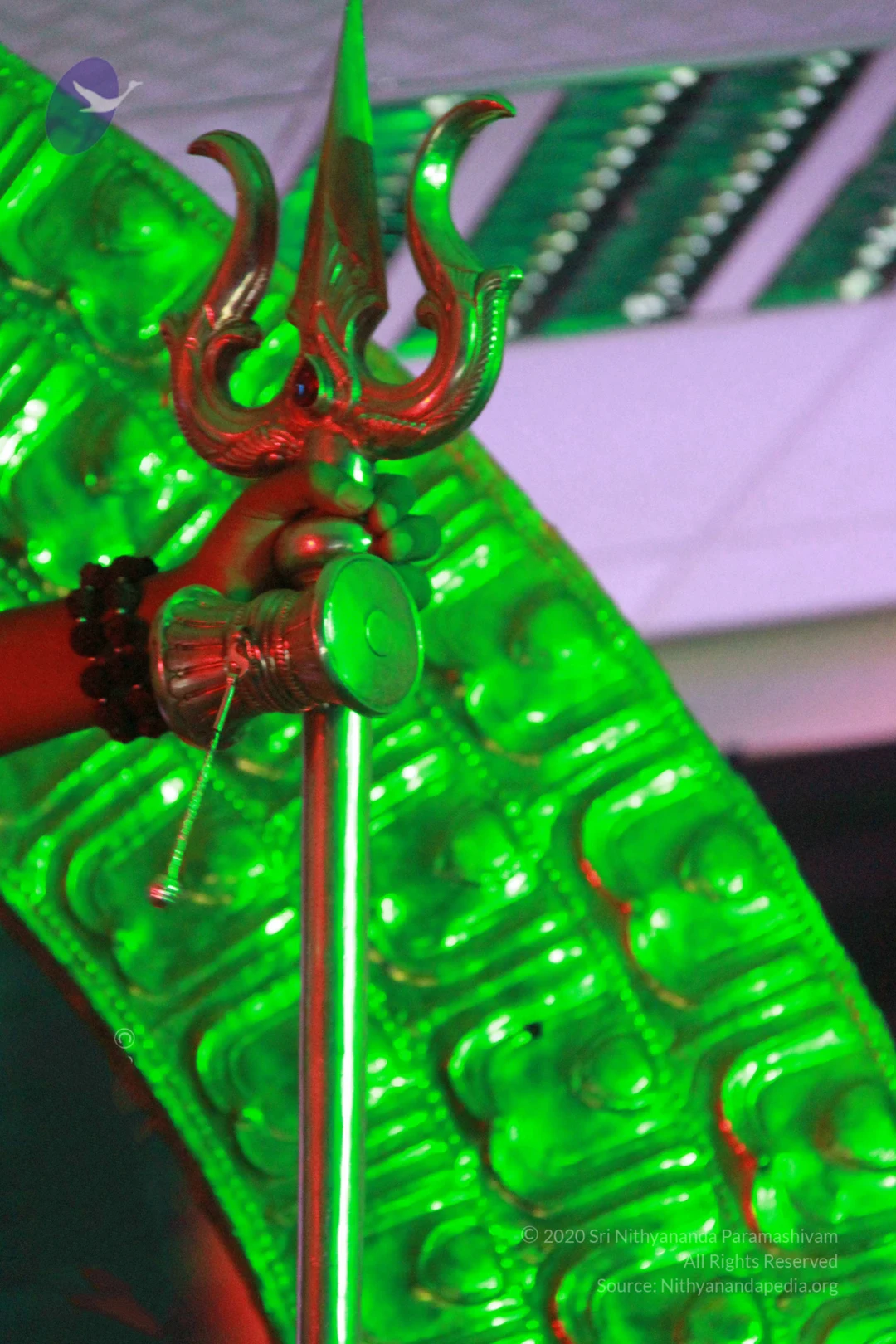
A smiling man with shoulder-length dark hair and a bindi stands in an ornate golden arch, holding a silver trident in his left hand. He wears a leopard-print and green draped cloth, layered strands of rudraksha-style beads, a dark beaded belt, and wrist and arm bands, with a red garment across his chest. Behind him is a gilded throne with carved lion-like finials and a backdrop of painted clouds, lit with red and green stage lighting. Ornamental metal pieces and a small figure stand at the sides of the stage.A smiling man with long dark hair and a painted forehead stands beside a large ornate green-and-gold arched frame, holding a silver trident in his right hand. He wears layered rudraksha-style beaded malas, bead bracelets, and a leopard-print and green draped cloth with a red dhoti beneath. Behind him stands a silver throne-like seat, a brass oil lamp, and a backdrop of a starry sea under red and green stage lighting.A man with long dark wavy hair stands smiling beside a large ornate green-and-gold arch, holding a silver trident in his right hand. He wears a red top, a leopard-print wrap and skirt, layered red and green beaded malas, a beaded belt and bangles. Behind him are a gilded throne-like seat, a brass lamp and a painted night-sky backdrop with a sea-like scene, under red and green stage lighting. The appearance-based label is a person: long swept-back hair, rudraksha-style malas and an ornate ceremonial setting.A photograph of a performer in a Shiva-style costume standing under an ornate green and gold arch lit with red and green stage light. He wears rudraksha mala necklaces and bead bracelets, a leopard-print wrap over bare shoulders, and a dark beaded waist belt, with a white tilak marked on his forehead. He grips a silver trident in his right hand and smiles. Behind him a decorated golden structure and a dark backdrop are visible.A photograph of a man seated on an ornate, ornately carved golden throne-like chair under a green-lit arch. He wears a leopard-print cloth wrap across the chest, layered rudraksha-style bead malas, a wide bead belt, and beaded armbands and wrist bracelets. He has long, swept-back dark hair and a bindi-like mark on his forehead, smiling as he holds a silver trident at his right side. The scene is lit with green and red stage lighting against a dark blue backdrop. a person is shown with a trident and rudraksha malas, a costume-style presentation consistent with a Shiva role.Close-up photograph of a silver trident (trishula) with a long shaft, held upright by a hand wearing a dark beaded bracelet, against a bright green, richly embossed backdrop lit in green and red. A small red stone sits at the trident's center and a small tassel hangs from the handle. Only the hand and arm of a person are partly visible at the left edge, with no face shown. Background includes a white panel and a row of white-dotted green decoration.