Skip to content
Saturday

24 March 2012

Supreme Pontiff of Hinduism HDH Bhagavan Sri Nithyananda Paramashivam.

Dated photos
23
Source pages
1
Media
1
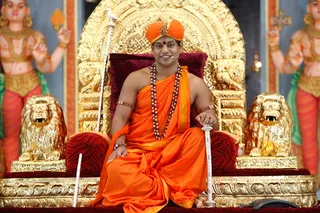
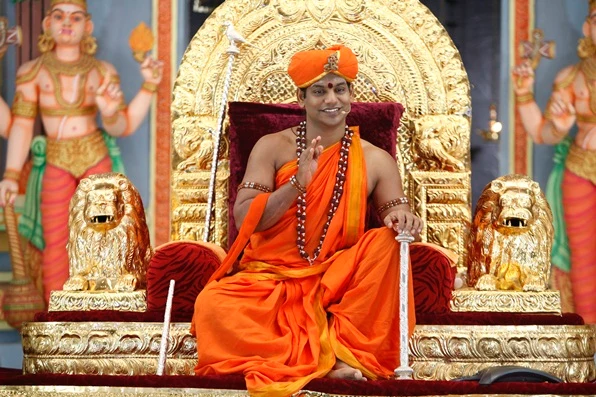
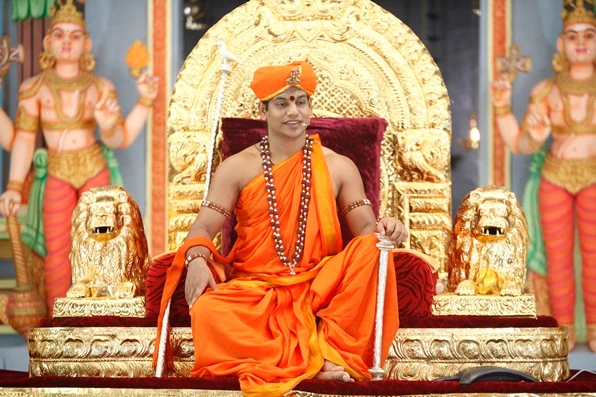
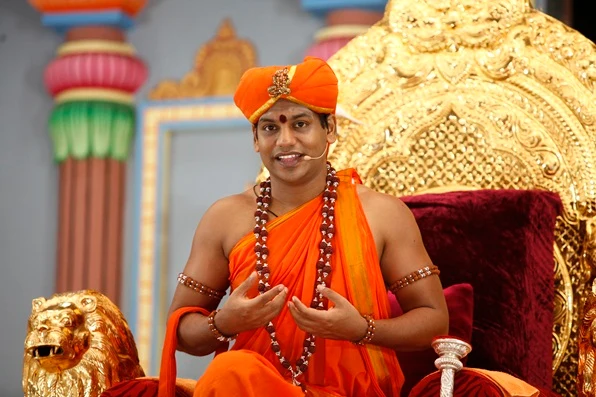
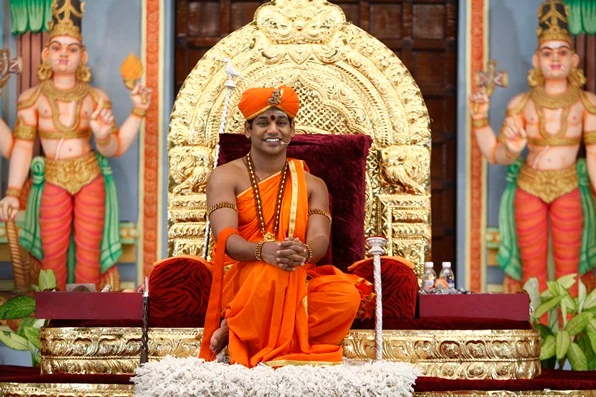
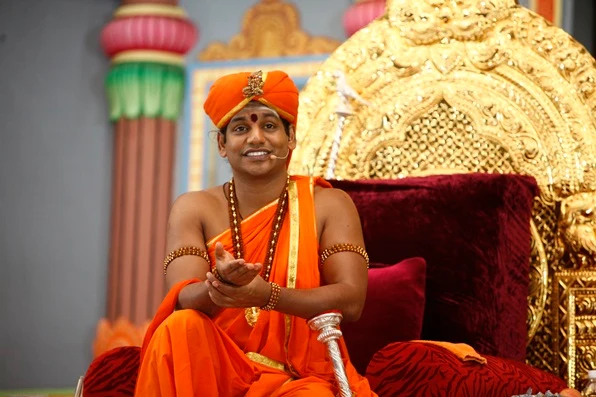
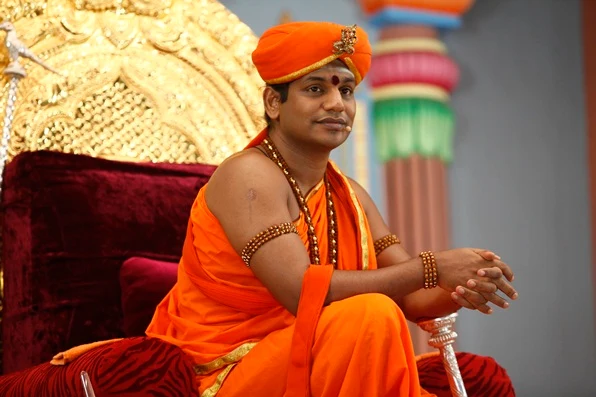
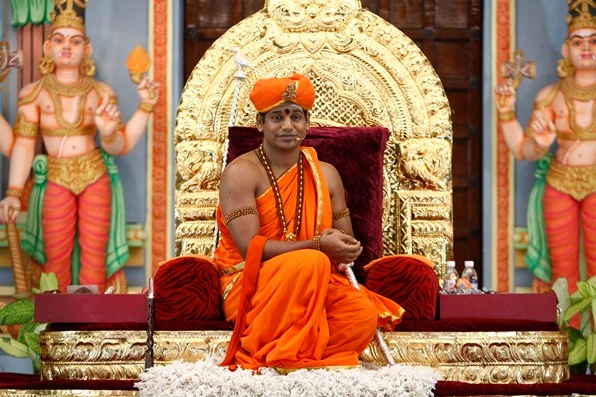
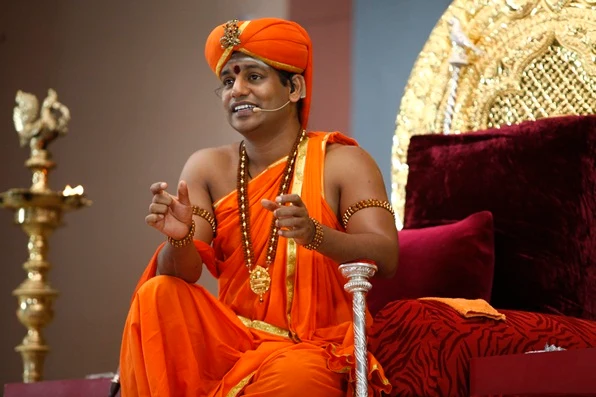
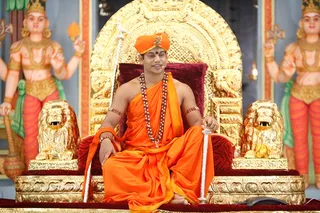
A seated man in saffron-orange robes and an orange turban speaks with both hands raised, wearing a headset microphone. He wears a long rudraksha mala and gold-toned bangles on his arms. He sits on an ornate gold throne with a red cushion, beside a gold lion sculpture. Behind him are pillars painted in pink, blue and gold with gilded decoration.A man in saffron-orange robes sits on an ornate gold throne with lion-shaped armrests and red velvet cushions. He wears an orange turban, a rudraksha mala necklace, and gold armbands, and rests his hands on his lap. Behind him are decorated pillars in blue, pink and gold, with a gilded throne back. Swamiji (probable) is seated on the peetha, with cues of an orange turban, saffron clothing, rudraksha mala and ceremonial gold ornaments.A photograph of a man seated on an ornate golden throne flanked by two golden lion sculptures, wearing an orange saffron turban with a gold ornament, saffron-orange robes, a rudraksha mala necklace, gold bangles and a lapel microphone. He sits with one hand resting on a golden staff and a small red cushion behind him, in front of painted columns with gold-clad divine figures holding objects. Swamiji (probable) appears to be the seated figure, given his saffron robes, turban, rudraksha mala and ceremonial throne, consistent with the page description of a Satsang presidential address.

March 24 2012

Original wiki page
Contents

Title:

Supreme Pontiff of Hinduism HDH Bhagavan Sri Nithyananda Paramashivam.

Narration

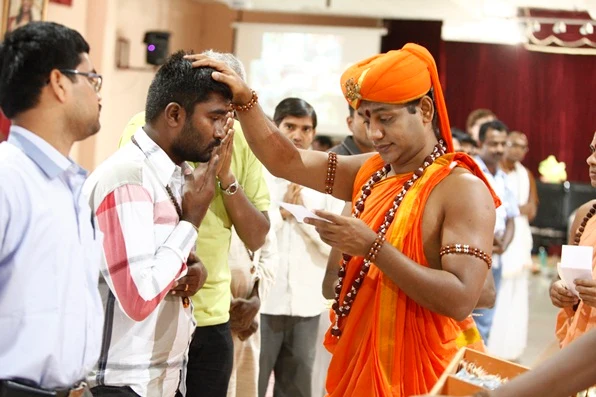
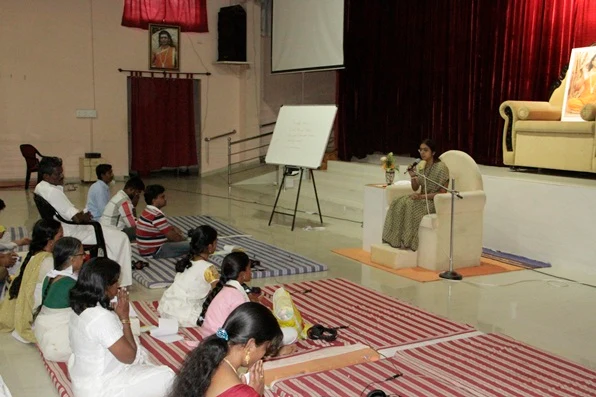
On this day, the Supreme Pontiff of Hinduism Bhagavan Sri Nithyananda Paramashivam conducted a Q&A session, answering the questions of each and everyone who were attending that day’s Presidential Address. In this discourse , He further expounded on the concepts of Richness and Thyaga. SPH explained that Richness means enjoying and being entertained by all the multi dimensions of your life. Richness is something that continuously enriches you. When Thyaaga happens in you, you will not even know it. Thyaaga is a spiritual current which runs through your nervous system and strengthens your nervous system again and again. Sadists are those who believe life is suffering. Blessed are those who believe life is bliss. Thyaaga makes you rich and gives you the truth that "Life Is Bliss". Later that day the trained acharyas of SPH prepared the delegates to receive the one day experiential Kalpataru meditation by SPH.

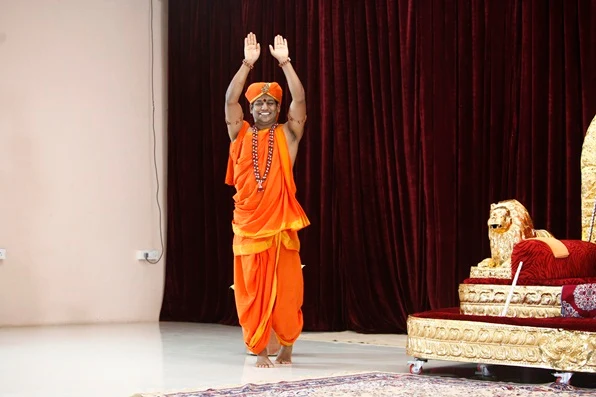
That day’s Presidential Address-Nithyananda Satsang was conducted by the Supreme Pontiff of Hinduism Bhagavan Nithyananda Paramashivam on 24 March 2012, in Adi Kailasa, Bengaluru, Karnataka, India.

Photos From The Day:
Sakshi Pramana:

Sharing from Program/Yatra

Photos from this day

View all 23 photos
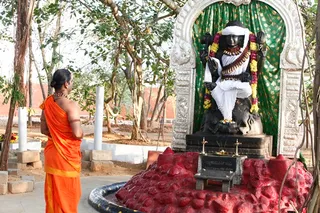
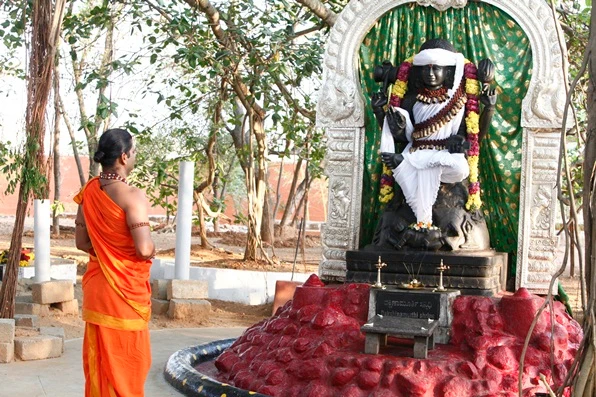
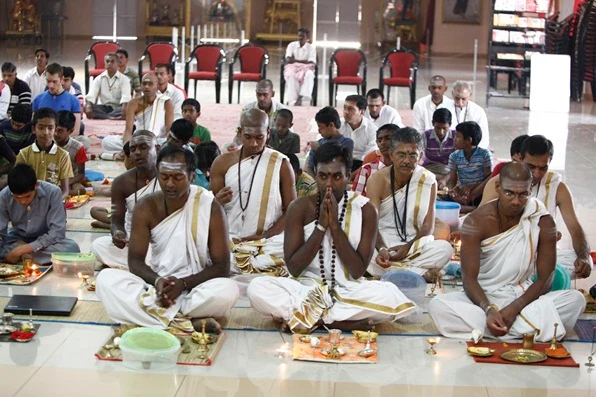
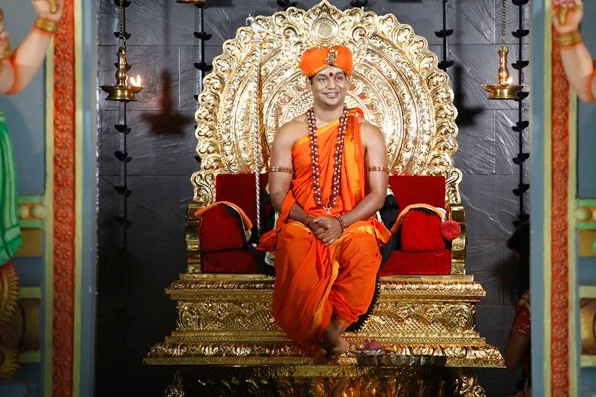
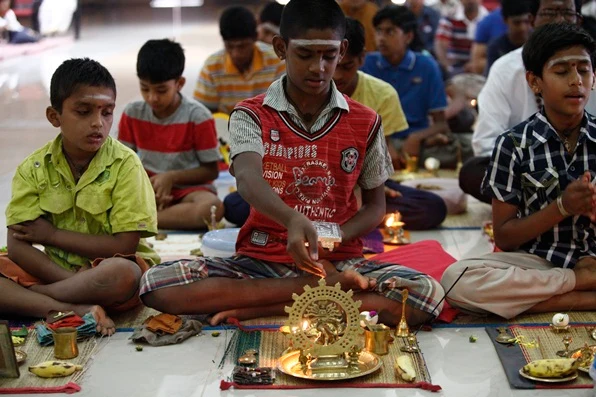
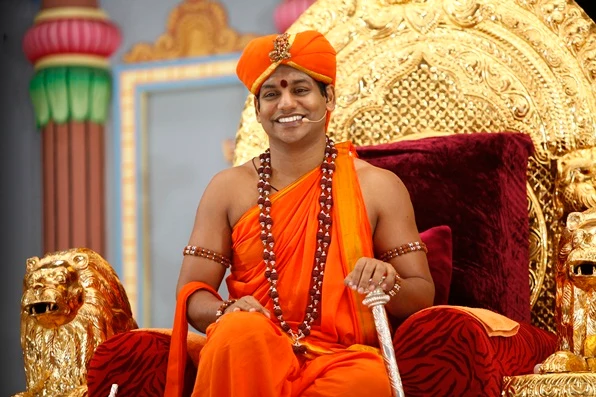
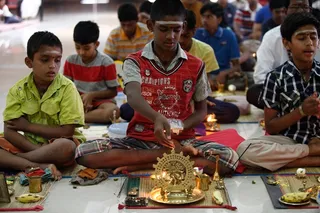
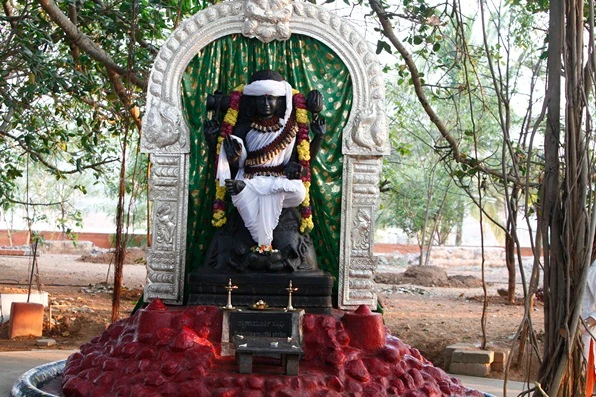
A black stone statue of a seated Hindu deity murti stands in an ornate silver-framed arch niche against a green cloth backdrop. The figure wears a white dhoti-like cloth and a white band across the head, with a rudraksha-style necklace, and is garlanded with marigold and yellow flower garlands. Red flower petals are heaped at its base, with small brass lamps and a plaque set before it. Bare trees and a dusty open ground surround the shrine outdoors.A devotee in an orange saffron sari with a dark rudraksha-style necklace stands with hands folded in prayer before a black stone Shiva-form murti. The murti wears a white cloth, a garland of yellow and orange flowers, a rudraksha mala, and sits on a black base with a small lamp and vibhuti-marked stone. A green cloth backdrop and carved white arch frame the shrine, surrounded by red-painted stone offerings in a circular basin. Trees and a brick wall are visible behind the shrine in an outdoor garden setting.A photograph of a seated group of men in an indoor hall performing a puja. In the foreground, several shaved-headed men wear white dhotis with gold borders and bare upper bodies, sitting cross-legged on a mat. The central man has his palms pressed together in namaskar and wears a rudraksha mala. Brass thalis, small oil lamps, flowers and kumkum-marked offerings sit in front of them. Behind them, other men and boys in white and colourful shirts sit on the floor and in red chairs, watching. A small table with a laptop and a shelf of books appear at the right edge.A seated man in saffron-orange robes sits on an ornate gold throne with a large golden back and red cushions, hands folded in his lap and feet bare on a golden plinth. He wears an orange turban, a rudraksha mala and a bindi, with bangles on his arms. Behind him are decorated pillars and hanging brass oil lamps, and a small offering tray sits at the base of the throne. One physical person is visible.A group of boys and young men sit cross-legged on mats in a hall, eyes closed or lowered, during a puja. In the foreground a boy in a red-and-white striped sports jersey with a vibhuti mark on his forehead holds a small object over a brass lamp stand, while a brass plate with offerings, a small brass lamp and a yellow bowl sit before him. Other participants wear striped shirts, plaid shirts and green tops, and some have sacred ash marks on their foreheads. Small oil lamps and a brass kalasha-style vessel are visible on the floor, and an older man in white sits in the background.A seated man in saffron-orange robes sits on an ornate gold throne with carved lion armrests and a red cushioned seat, hands joined at his chest in a greeting gesture. He wears an orange turban, multiple rudraksha malas and a gold armband, and a red bindi is visible on his forehead. Behind the throne, painted deity figures with multiple arms stand against a pale background, and two gold lion figures flank the seat on a red-carpeted dais. The scene suggests a seated satsang or discourse setting. Swamiji (probable): the seated figure's orange turban, saffron robes, multiple rudraksha malas and gold ornaments match the visible cues. Presenting as the seated discourse speaker on the throne, he is the single person visible.A seated man in saffron-orange robes sits cross-legged on an ornate gold throne flanked by two golden lion sculptures, with a dark red cushioned seat. He wears an orange turban-style head covering, multiple rudraksha malas around his neck, and beaded bracelets on his arms, holding a small staff in one hand. Behind him stand two large painted deity statues with multiple arms, wearing red and green garments and gold ornaments. The setting appears to be a temple-like hall for a satsang. Swamiji (probable): the seated figure in saffron with turban, rudraksha malas and a ceremonial throne matches the page's description of a presidential satsang discourse, though the image itself does not establish identity.A smiling man sits on an ornate golden throne with red cushions and golden lion armrests, wearing an orange turban, orange saffron robes draped over his shoulders and arms, multiple rudraksha mala necklaces, gold bangles on his upper arms and wrists, and a red bindi on his forehead. He holds a white staff in his right hand, and a small microphone clips near his mouth. Behind him is a gilded backdrop with golden panels and pink and white decorative pillars. a person is seated as the speaker, presiding over the satsang.A man in saffron-orange robes and an orange turban sits on an ornate golden throne with carved lion figures at its arms, cushioned in deep red. He wears a headset microphone, multiple rudraksha malas, and gold armbands, gesturing with one raised hand while smiling. Behind him is a decorated stage with pillars in pink, blue and gold. The setting suggests a satsang discourse.A seated man in saffron-orange robes and an orange turban speaks with both hands raised, wearing a headset microphone. He wears a long rudraksha mala and gold-toned bangles on his arms. He sits on an ornate gold throne with a red cushion, beside a gold lion sculpture. Behind him are pillars painted in pink, blue and gold with gilded decoration.A man in saffron-orange robes sits on an ornate gold throne with lion-shaped armrests and red velvet cushions. He wears an orange turban, a rudraksha mala necklace, and gold armbands, and rests his hands on his lap. Behind him are decorated pillars in blue, pink and gold, with a gilded throne back. Swamiji (probable) is seated on the peetha, with cues of an orange turban, saffron clothing, rudraksha mala and ceremonial gold ornaments.A photograph of a man seated on an ornate golden throne flanked by two golden lion sculptures, wearing an orange saffron turban with a gold ornament, saffron-orange robes, a rudraksha mala necklace, gold bangles and a lapel microphone. He sits with one hand resting on a golden staff and a small red cushion behind him, in front of painted columns with gold-clad divine figures holding objects. Swamiji (probable) appears to be the seated figure, given his saffron robes, turban, rudraksha mala and ceremonial throne, consistent with the page description of a Satsang presidential address.