Skip to content
Saturday

21 January 2012

THE SUPREME PONTIFF OF HINDUISM HDH BHAGAVAN NITHYANANDA PARAMASHIVAM

Dated photos
11
Source pages
1
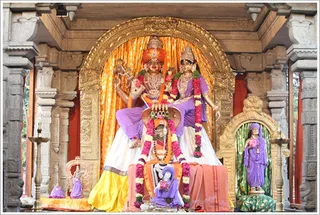
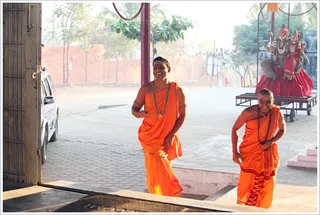
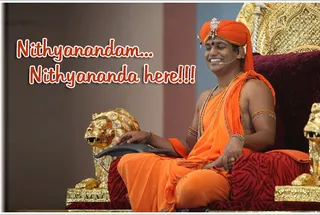
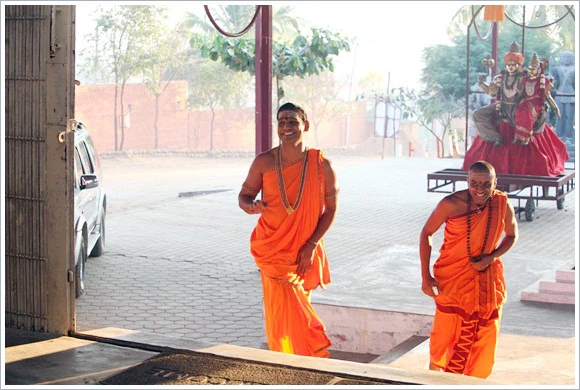
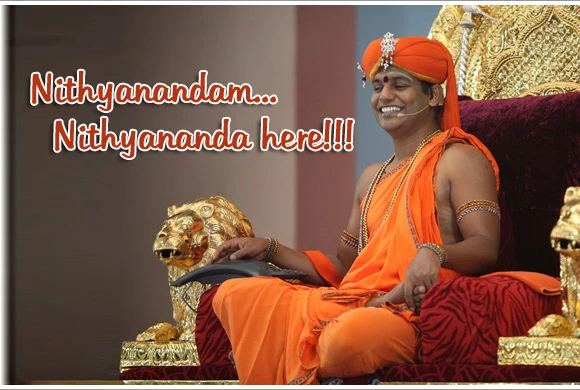
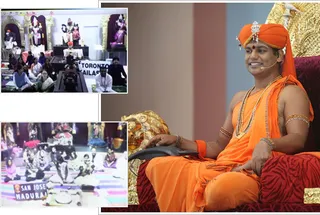
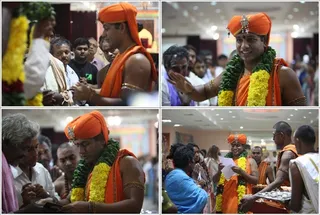
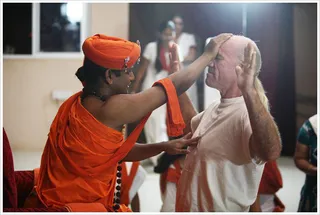
A decorated shrine with two large deity murti figures seated side by side on a raised platform, both draped in purple and white garments with garlands of marigolds and flower strands hanging from their shoulders. A shivalingam sits at their feet, surrounded by flower offerings. Ornate golden arches and carved stone pillars frame the shrine, with a golden drape behind. Small figures in purple robes stand to the right and left, and lit oil lamps sit near the base. No living people are visible.Two men in saffron-orange sannyasi robes walk across a paved courtyard toward the viewer, past an open gate at left. The taller man in front wears a rudraksha mala and a long orange shawl draped over his shoulder and smiles; the shaved-headed man beside him wears a beaded mala and orange robes. At right, a red-and-gold ratha or palanquin carries decorated deity murti figures with crowns and red garments. A white car is parked beyond the gate, and a red boundary wall and trees stand in the background under hazy daylight.A graphic with the overlaid text "Nithyanandam... Nithyananda here!!!" in orange script at upper left. A smiling man in orange saffron robes and an orange turban sits on a red and gold ornate throne flanked by golden lion-head armrests. He wears a rudraksha mala, multiple beaded necklaces, bangles and a head microphone, and rests his hand on a golden lion. Swamiji (probable) by his orange robes, turban, ornate throne, beaded malas and gold jewellery, though the image is a stylized overlay rather than an event photo.

January 21 2012

Original wiki page
Contents

Title

THE SUPREME PONTIFF OF HINDUISM HDH BHAGAVAN NITHYANANDA PARAMASHIVAM

Photos
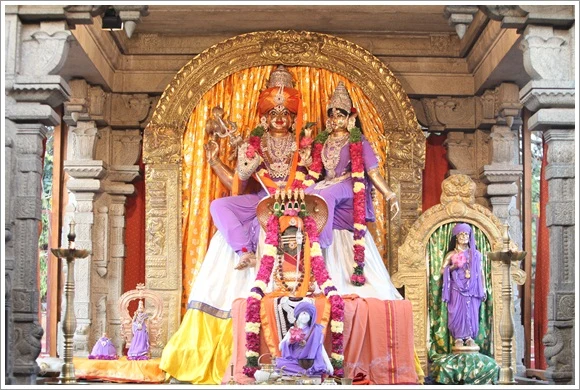
Photos from this day

View all 11 photos
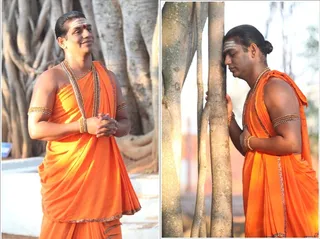
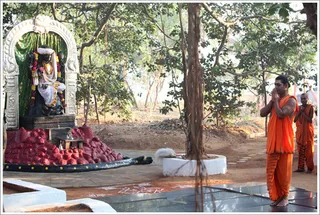
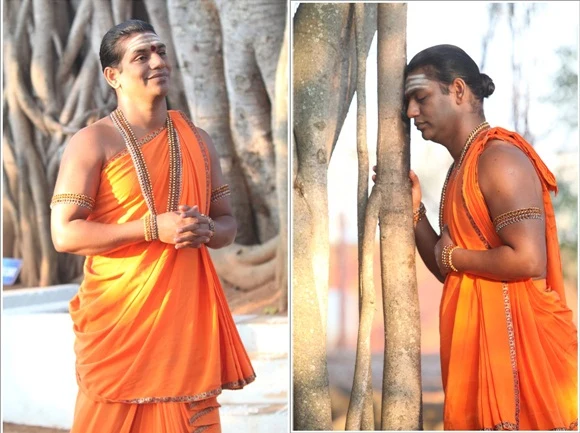
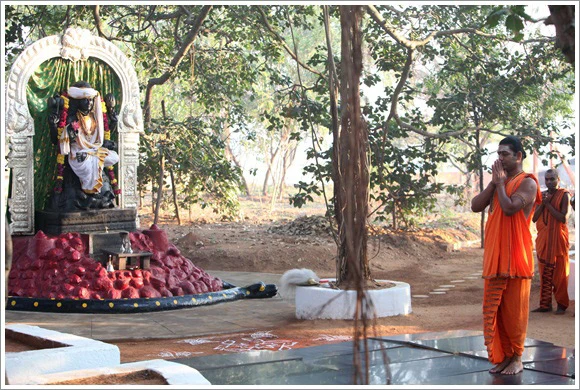
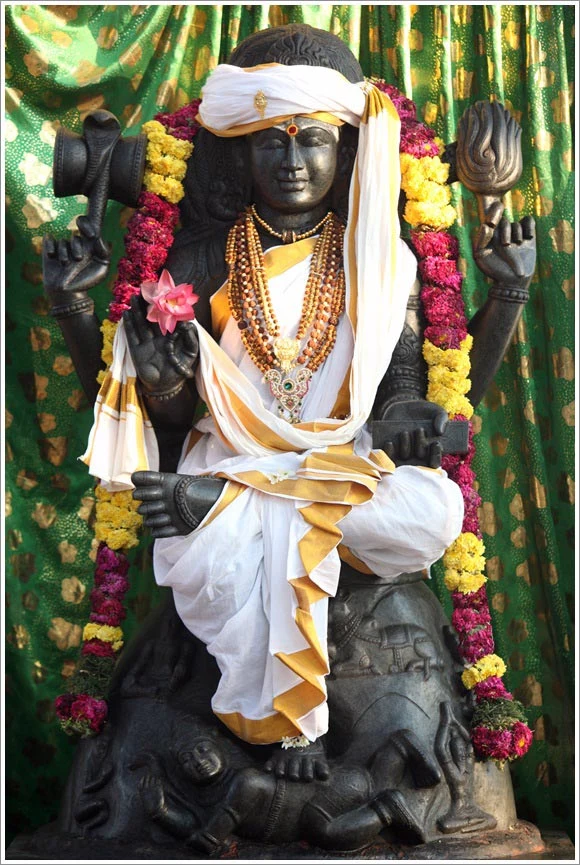
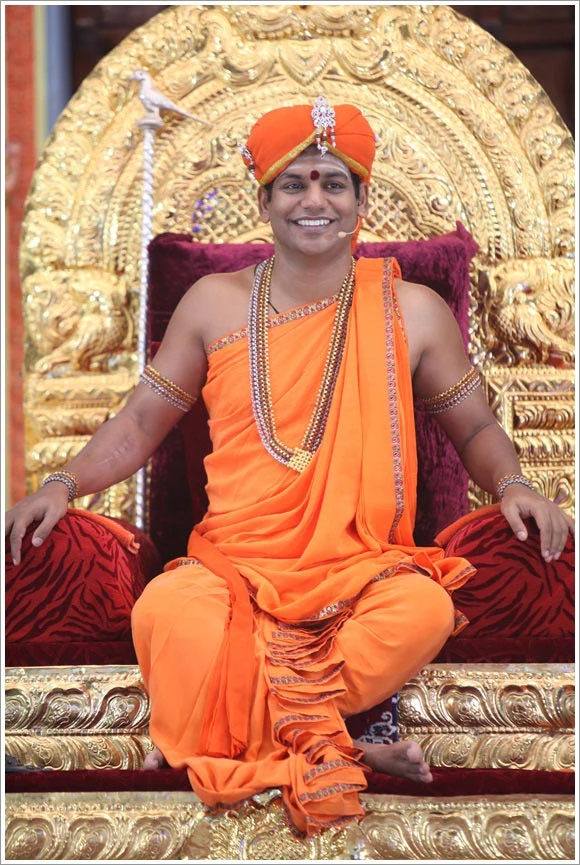
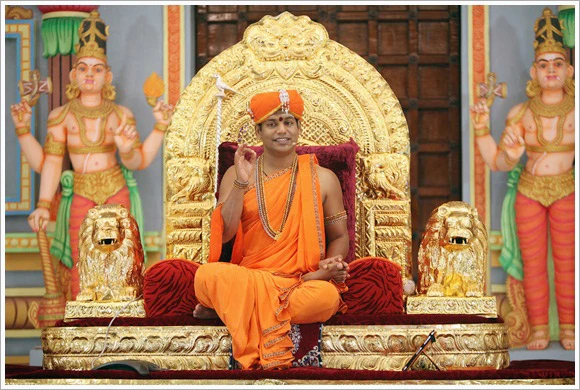
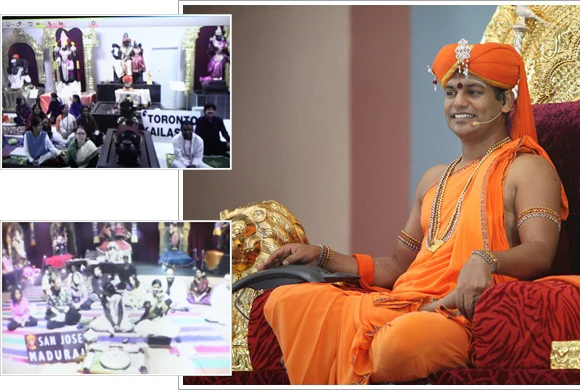
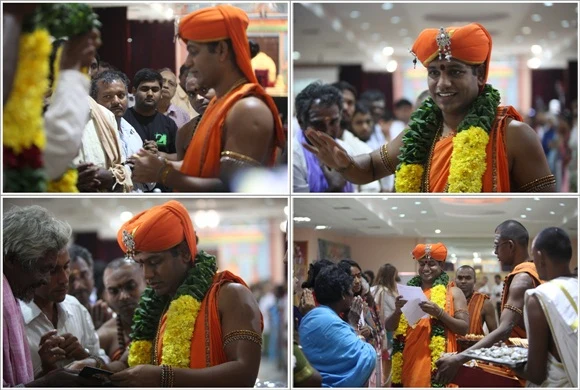
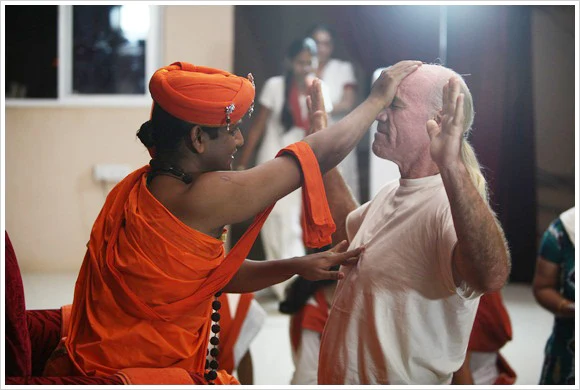
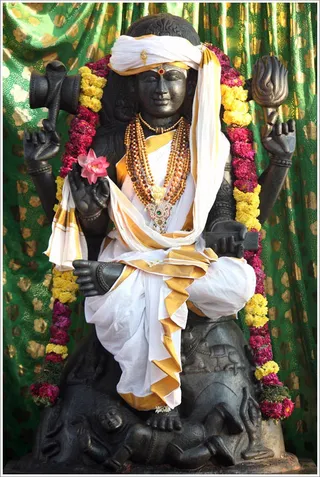
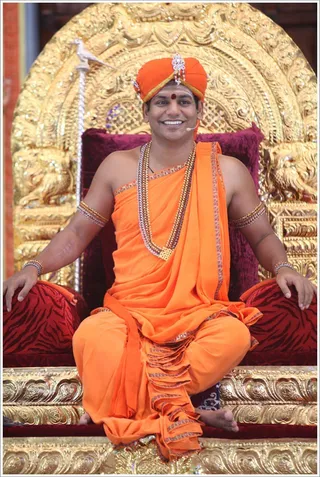
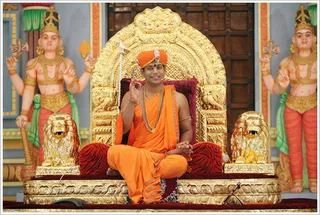
A decorated shrine with two large deity murti figures seated side by side on a raised platform, both draped in purple and white garments with garlands of marigolds and flower strands hanging from their shoulders. A shivalingam sits at their feet, surrounded by flower offerings. Ornate golden arches and carved stone pillars frame the shrine, with a golden drape behind. Small figures in purple robes stand to the right and left, and lit oil lamps sit near the base. No living people are visible.Two men in saffron-orange sannyasi robes walk across a paved courtyard toward the viewer, past an open gate at left. The taller man in front wears a rudraksha mala and a long orange shawl draped over his shoulder and smiles; the shaved-headed man beside him wears a beaded mala and orange robes. At right, a red-and-gold ratha or palanquin carries decorated deity murti figures with crowns and red garments. A white car is parked beyond the gate, and a red boundary wall and trees stand in the background under hazy daylight.A two-panel photo collage of a man in saffron-orange draped robes with gold-toned bangles on his upper arms and wrists and a beaded ornamental necklace. In the left panel he stands outdoors before a large banyan tree with his hands pressed together in front of his chest, gazing upward. In the right panel he leans his forehead against the trunk of the banyan, with a tilak mark on his brow and his hair tied up. The collage is composed of photographs and shows one man. Probable Swamiji by appearance: long swept-back hair, saffron robes, rudraksha-style beaded necklaces and ornate gold-toned arm adornments, shown in a devotional posture beside a banyan tree.Outdoors beneath a large banyan tree, a standing man in orange saffron robes and an orange dhoti stands with palms pressed together in namaste before a shrine. Beside him, a second monk in saffron robes stands with hands folded. The shrine has a white arched stone frame enclosing a black Shiva lingam decorated with flower garlands and a green cloth backdrop, with a mound of red offerings or flowers at its base and small oil lamps before it. The ground is swept with white kolam-style patterns and a dark stone slab lies in the foreground. Two people are visible, both in saffron monastic attire.A dark stone murti of a four-armed deity seated on a carved pedestal, draped in white cloth with gold borders and wearing a white head cloth with a red bindi. Multiple strands of rudraksha-style beads and a gold pendant with green stones hang on the chest. Garlands of yellow and magenta flowers encircle the figure, and a single pink lotus is held in one hand. Behind it hangs a green curtain with gold dot patterns. Carved animals and figures decorate the base. No physical people are visible.A smiling man in an orange turban with a red bindi and an orange saffron dhoti and shawl with gold trim sits on an ornate gilded throne with red velvet cushions. He wears a long gold-beaded necklace, gold armlets and bangles, and rests his hands on the throne arms. Background shows gold carved throne panels. Swamiji (probable) appears to be the seated figure, wearing orange and gold ceremonial dress with a turban and necklace.A seated man in saffron-orange robes and an orange turban sits cross-legged on an ornate gold throne flanked by two gold lion sculptures with red cushions. He wears a rudraksha mala and a gold necklace, and raises one hand in a teaching gesture. Behind the throne stand two painted deity figures with gold crowns, ornaments and bare upper bodies, holding ritual objects. The setting is a gilded hall with a microphone stand in front. Appearance-based candidate: Swamiji (probable), with long hair, saffron clothing, rudraksha mala and gold necklace visible.A three-panel graphic collage with a large central photograph and two smaller inset screenshots. The large panel shows a smiling man with a shaved head wearing an orange turban with a jewelled ornament, orange robes, layered beaded necklaces and bangles, seated on an ornate gold-and-red throne with a striped red cushion. The upper-left inset shows a livestream of a seated group before deity murtis under a sign reading Toronto Kailasa, with a kalasha-like setup. The lower-left inset shows a similar seated group with a sign reading San Jose Madurai. The collage's central figure matches the page's swamiji reference only through appearance cues including the orange turban, saffron robes and rudraksha-style malas, so this is a probable identification.A graphic with the overlaid text "Nithyanandam... Nithyananda here!!!" in orange script at upper left. A smiling man in orange saffron robes and an orange turban sits on a red and gold ornate throne flanked by golden lion-head armrests. He wears a rudraksha mala, multiple beaded necklaces, bangles and a head microphone, and rests his hand on a golden lion. Swamiji (probable) by his orange robes, turban, ornate throne, beaded malas and gold jewellery, though the image is a stylized overlay rather than an event photo.A four-panel collage of photographs from an indoor event in a hall with cream walls and red-curtained areas. In the upper left and right panels and lower left, a man in an orange-saffron turban and orange-saffron shawl, wearing a yellow and white marigold garland, receives greetings from people in white and dark clothes. Gold armlets and a gold-toned ornament are visible on the man in orange. In the lower right panel, the man in orange stands among other saffron-clad men, one holding a silver tray, while people in white and a woman in blue face them and a man in white holds papers. Several people are visible across the panels, with the collage itself showing no more than the pictured crowd.A photograph of an indoor blessing moment. A figure in saffron-orange robes and an orange turban, with a rudraksha mala around the neck and a wrap draped over the shoulder, cups both hands against the forehead of a bald older man in a white shirt. Another person in orange sits behind the blessing figure's arm, and a bald man in a light top stands with eyes closed. Figures in white clothing stand in the background near a doorway and window in a plain hall. Probable Swamiji (orange robes, orange turban, rudraksha mala) is performing the forehead blessing; the candidate is in_person.