Skip to content
Friday

20 January 2012

Dated photos
18
Source pages
1
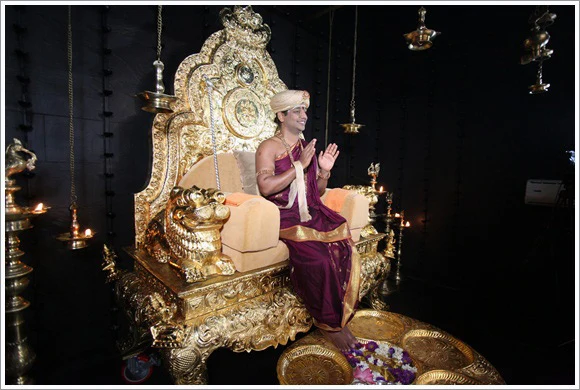
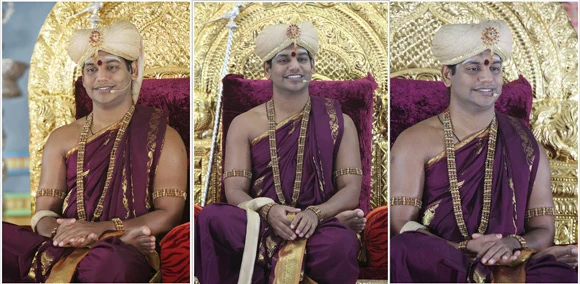
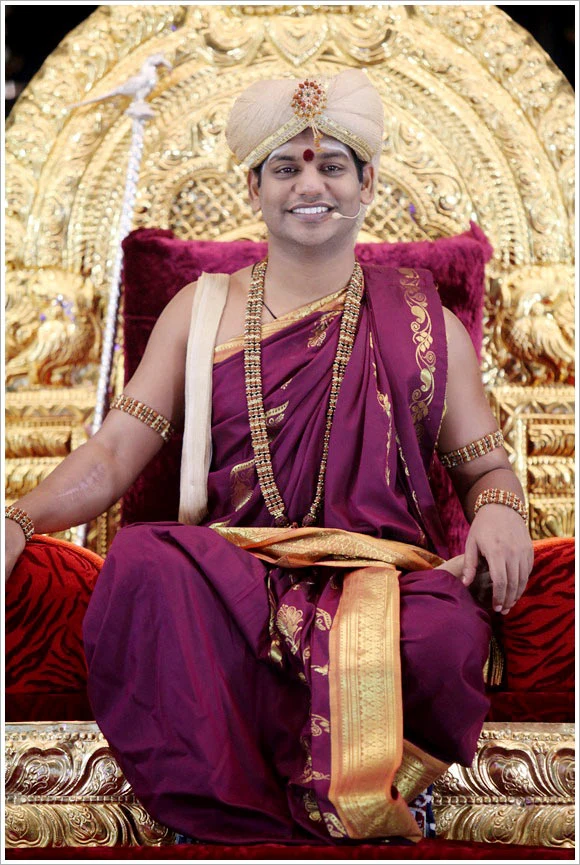
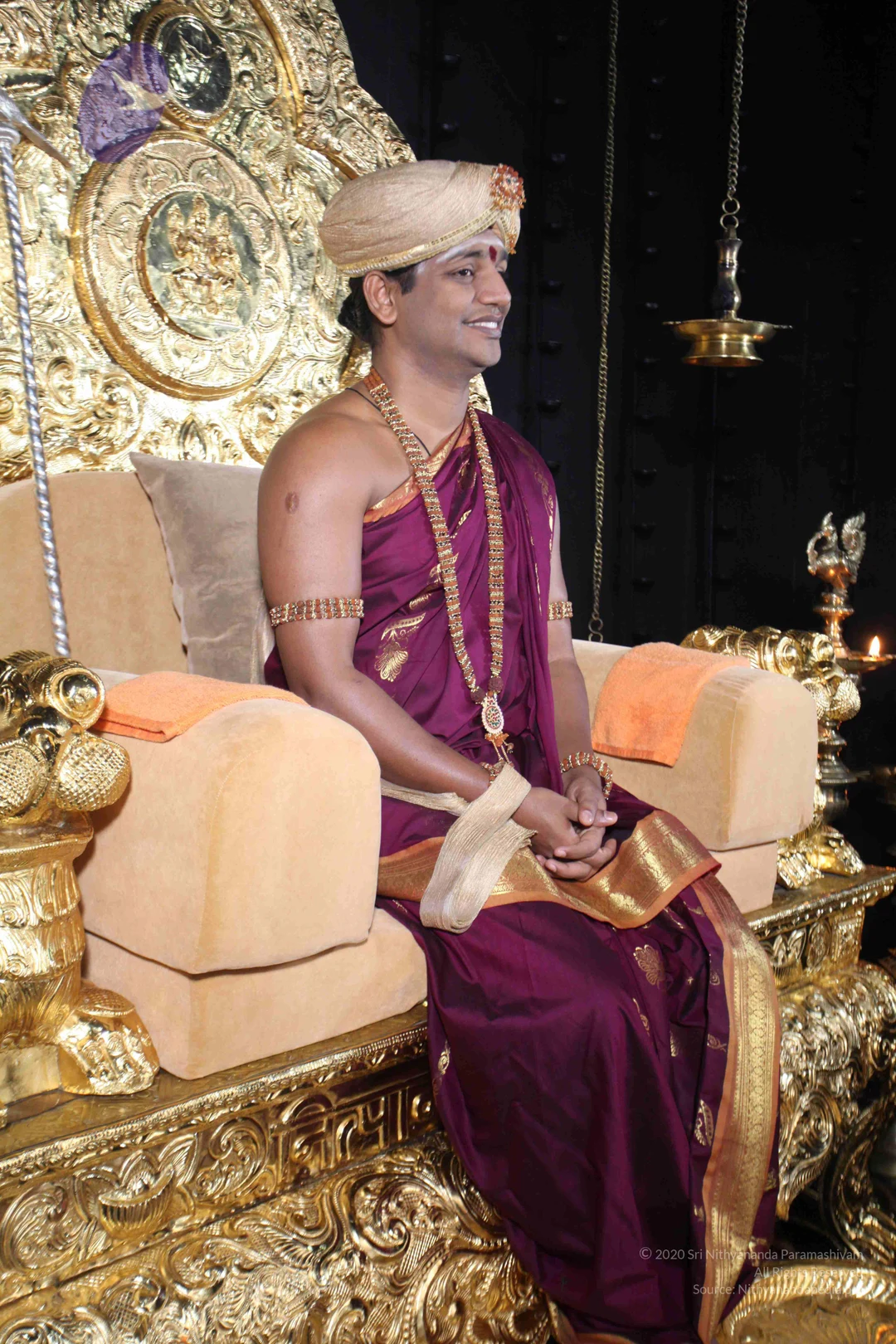
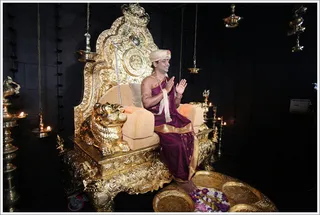
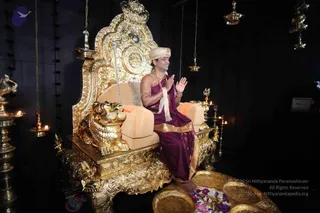
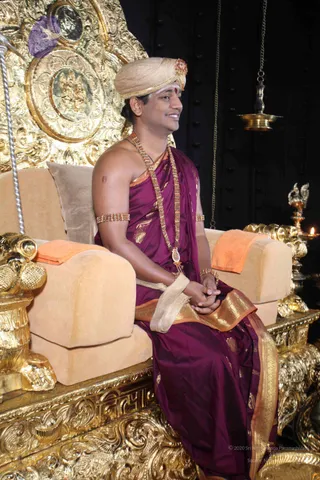
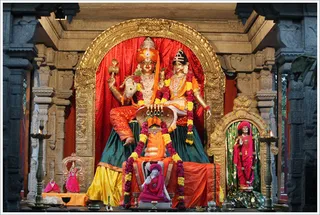
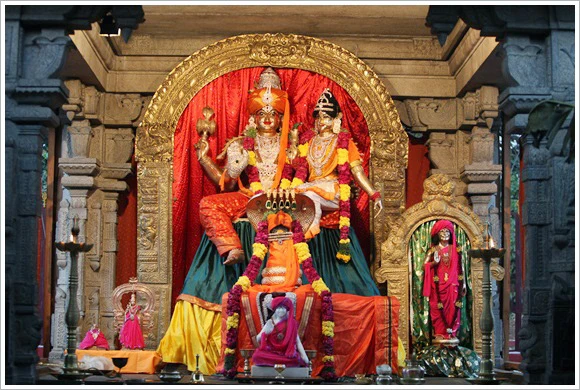
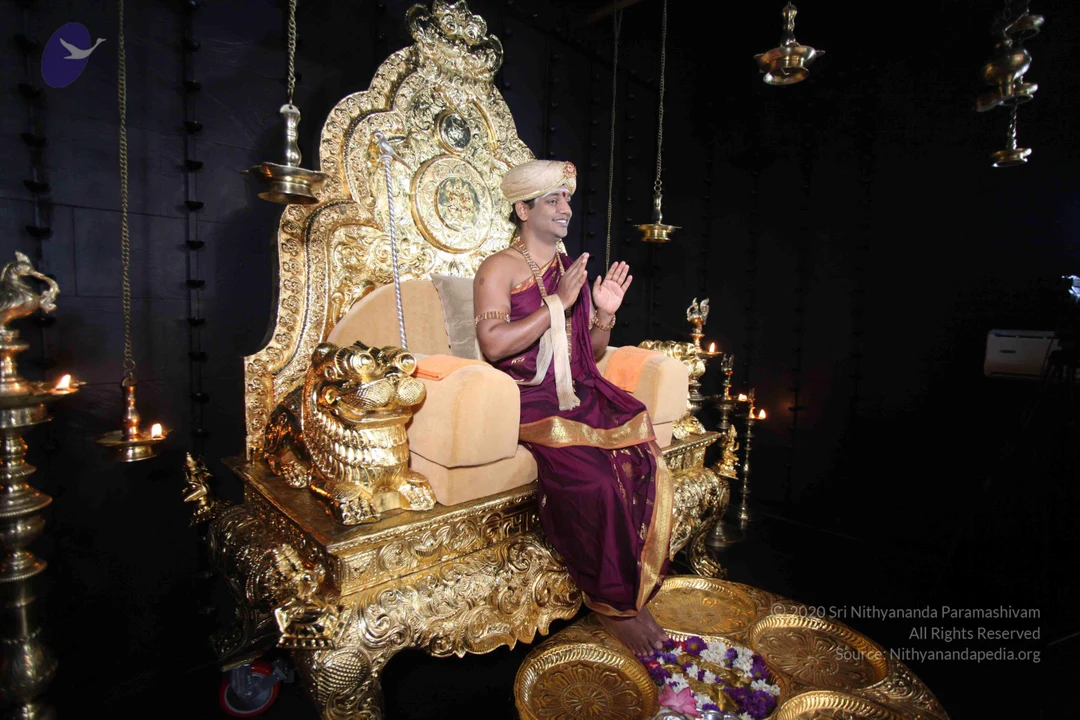
A photograph of a man seated on an ornate gold throne with carved lion-head armrests and gilded backrest, against a dark background hung with brass hanging oil lamps. He wears a cream turban, a plum-purple dhoti with gold border, a gold-coloured shawl, and gold bangles and necklaces, and holds his palms together in greeting while smiling. His bare feet rest on a brass tray with purple flowers. a person: the seated man's appearance is consistent with the page's a person reference, based on the turban, distinctive purple and gold attire and ornate throne, so a person is set to in_person. Lit oil lamps stand at the sides.A seated man in a cream turban with a red tilak on his forehead sits on an ornate gold-carved throne with peach upholstered armrests and orange cloth draped over them. He wears a deep plum-coloured silk garment with gold border and a long multi-strand gold necklace with a pendant, plus gold armlets and bangles, and his hands rest folded in his lap. Behind him a brass hanging lamp hangs from chains, and a lit brass oil lamp stands at right against a dark wall.A decorated temple shrine with a gilded arched frame and red curtain behind a pair of ornate deity murtis seated on a raised green-and-orange throne. The two figures wear gold crowns, gold jewellery and orange-yellow garments, and are draped with fresh garlands of yellow and orange flowers. A small pink-clad figure stands to the right in an alcove, and smaller decorated figures and brass lamps sit on the lower ledge. No living people are visible.

January 20 2012

Original wiki page
Contents

Title

Narration

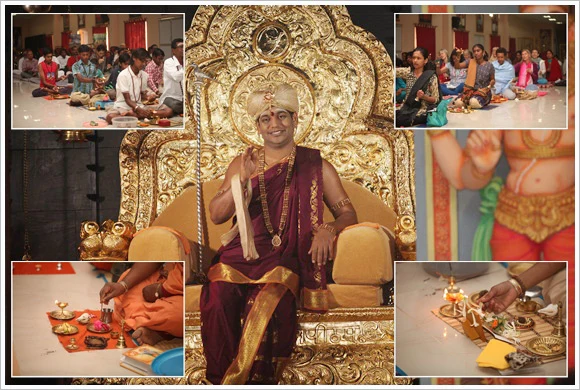
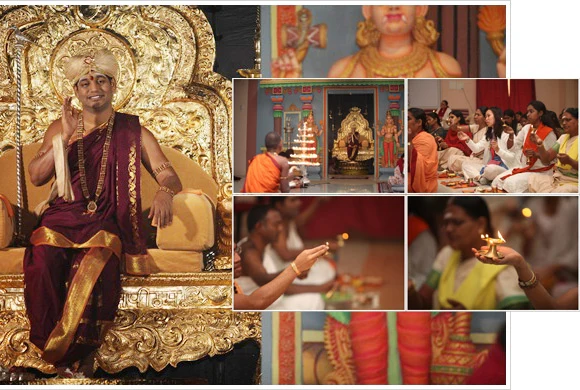
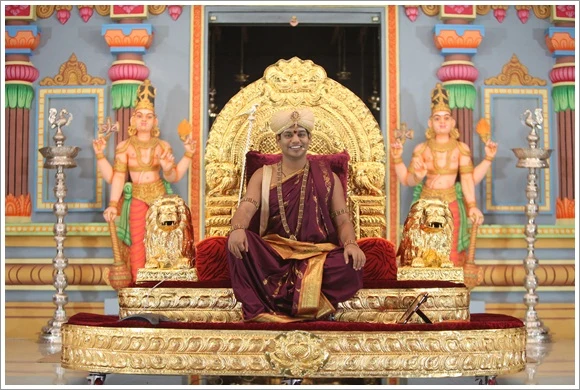
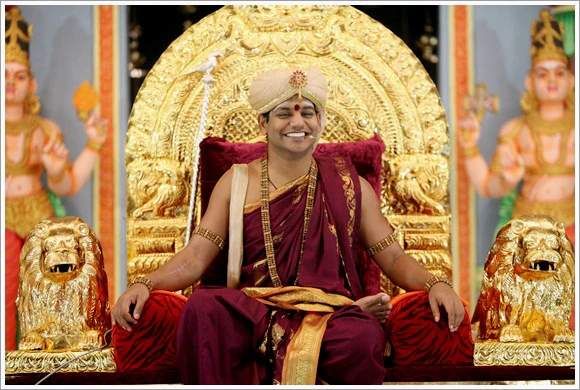
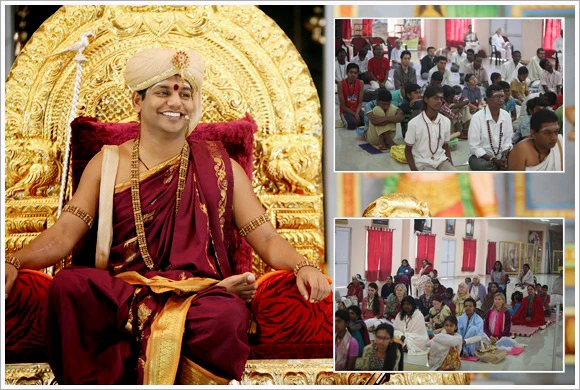
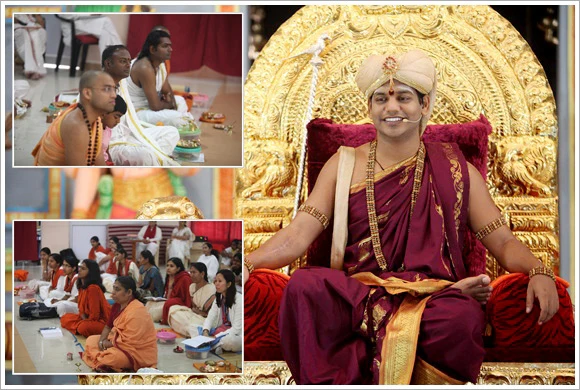
The Supreme Pontiff of Hinduism, Jagatguru Mahasannidhanam, His Divine Holiness, Bhagavan Nithyananda Paramashivam, expounded on the Cosmic Principles of Karma Yoga from the 36th verse, 3rd chapter of the Srimad Bhagavad Gita during the everyday live public talk - Nithyananda Satsang. In this talk, The Supreme Pontiff of Hinduism explained that Arjuna represents the unconsciousness of humanity. He further explained that all this philosophizing, encouraging, inspiring, everything is just till one feels uncomfortable with the lower identity and gets comfortable with one’s higher existence. He gave an example of how he uses the power of materialization to create new jewelry replicating the jewellry designs used on the deity in Madurai Meenakshi temple. The live talk ended with instructions for a powerful Kriya process for curing congenital color vision disorder.

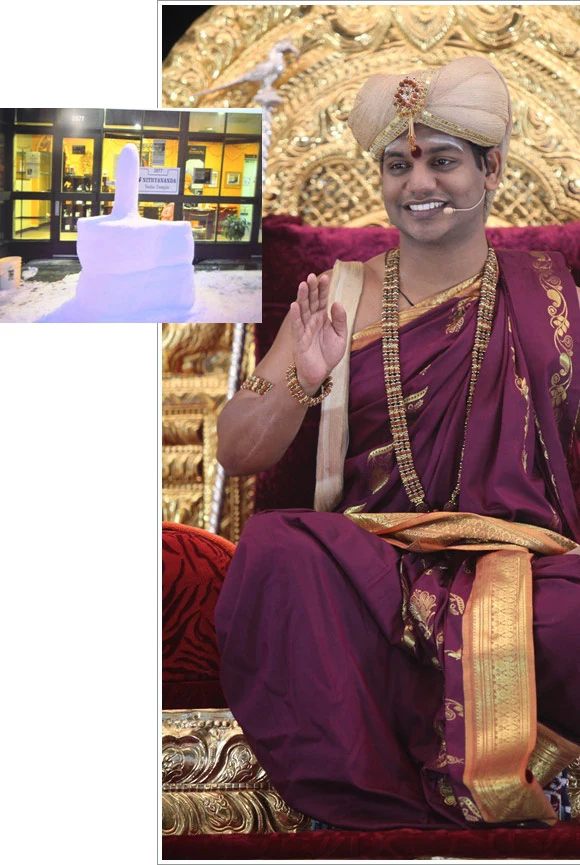
On this day, a 6 ft Shiva linga was made out of snow at the Seattle Nithyanandeshwara temple and received the blessings of the Supreme Pontiff of Hinduism with many offerings of Pratyaksha Pada Puja to Him at the Bidadi Adheenam. Uttamotama Seva was offered at Nithyanandeshwara Sadashiva Devasthanam to Nithyanandeshwara Mahasadashiva Parashiva and Nithyanandeshwari Parashakti, with various rituals, Sevas, Enriching activities and Power Manifestations, inspiring millions towards the Science of Hinduism.

Photos
Photos Of The Day:

1-Pada-Puja
Photos from this day

View all 18 photos

Photos

16 photosSource gallery
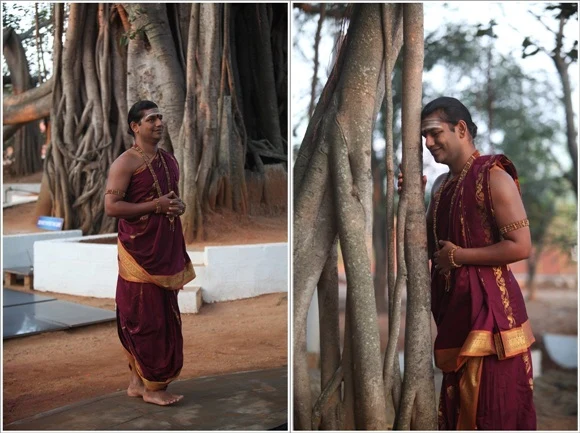
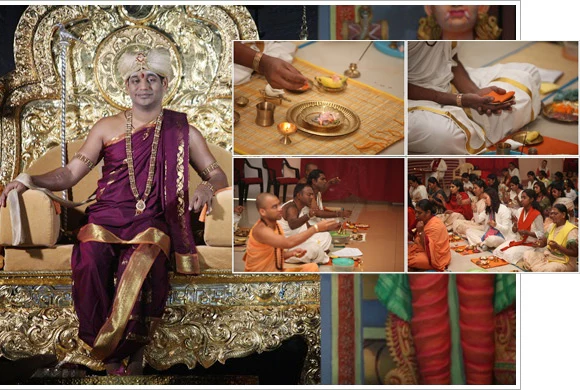
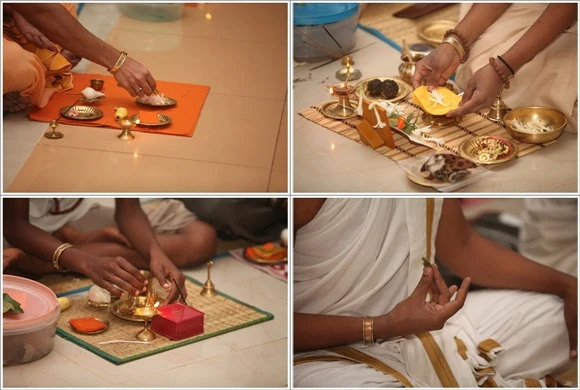
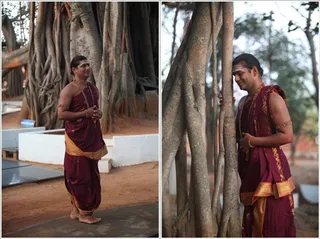
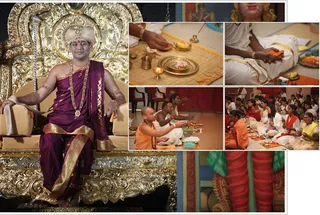
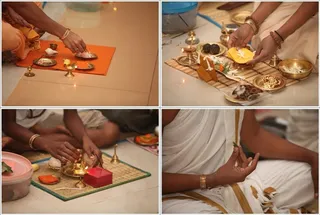
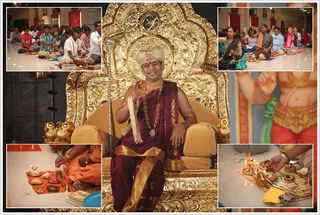
A decorated temple shrine with a gilded arched frame and red curtain behind a pair of ornate deity murtis seated on a raised green-and-orange throne. The two figures wear gold crowns, gold jewellery and orange-yellow garments, and are draped with fresh garlands of yellow and orange flowers. A small pink-clad figure stands to the right in an alcove, and smaller decorated figures and brass lamps sit on the lower ledge. No living people are visible.Two-panel collage of photographs showing one man in a maroon dhoti and maroon shawl with gold-bordered edges, wearing a rudraksha mala and a gold armlet. In the left panel he stands barefoot with hands folded near his chest on a mat beside a large banyan tree with hanging aerial roots and a white stone platform. In the right panel he stands close to the trunk of the banyan tree, one hand touching the bark, with a gold necklace and gold bangle visible. The setting is an outdoor ashram area with red earth and green foliage. a person identity cannot be confirmed from appearance alone.A man seated on an ornate gilded throne with carved lion-head armrests, wearing a maroon and gold dhoti with a bare upper body, a cream turban and a white shawl draped over one shoulder, palms pressed together in greeting. Bright flower petals and a round brass plate with offerings lie at the base of the throne. Behind him, a dark walled hall is lit by hanging brass oil lamps and small lamps on the ledges. Swamiji (probable) seated on the golden throne, with the turban, bare-chested upper body and ornate dress as cues.Multi-panel collage of temple and satsang imagery. The large left panel shows a man seated on an ornate gilded throne with carved silver-gold backrest, wearing a white turban, purple silk dhoti with gold border, a gold necklace and armbands, holding a ceremonial staff; a probable Swamiji by these cues, appearance-based, since he is a seated figure in purple and gold adornment. Smaller right panels show hands offering a brass plate with oil lamp and flowers, a priest in orange robe conducting a puja with brass vessels and a kalasha, and a seated crowd of devotees in white and red saris and orange robes before ritual plates, with decorative red and gold drapery at the edges.A four-panel collage of close-up photographs showing puja preparations on mats. Top-left, a hand places offerings on an orange cloth beside brass lamps and a small bowl. Top-right, hands arrange fruit, flowers and grains on a woven mat with brass bowls and a small kalasha-like vessel. Bottom-left, hands with bangles hold a brass lamp beside a red box and a flower on a green mat. Bottom-right, a person in white dhoti with gold border sits in a meditative mudra. Only partial hands and limbs are visible, so people are not counted as whole figures.Multi-panel collage of photographs from a person Satsang event. The central panel shows a man seated on an ornate gold throne with carved backrest, wearing a white turban with a red tilak, a deep maroon robe with gold-bordered shawl, and a rudraksha mala and gold pendant necklace, holding a white cloth in one hand. Left panel: seated devotees in white and colourful clothes on a white floor before a small oil lamp and offering tray. Upper right: a row of seated women and men in saris and kurtas facing a painted deity figure. Lower left: a priest in saffron robes arranging offerings and a kalasha-style vessel on a red cloth. Lower right: hands performing a puja with a lit lamp and brass items on a tray. Overall a ritual and satsang scene.

1-Pada-Puja

2 photosSource gallery
A photograph of a man seated on an ornate gold throne with carved lion-head armrests and gilded backrest, against a dark background hung with brass hanging oil lamps. He wears a cream turban, a plum-purple dhoti with gold border, a gold-coloured shawl, and gold bangles and necklaces, and holds his palms together in greeting while smiling. His bare feet rest on a brass tray with purple flowers. a person: the seated man's appearance is consistent with the page's a person reference, based on the turban, distinctive purple and gold attire and ornate throne, so a person is set to in_person. Lit oil lamps stand at the sides.A seated man in a cream turban with a red tilak on his forehead sits on an ornate gold-carved throne with peach upholstered armrests and orange cloth draped over them. He wears a deep plum-coloured silk garment with gold border and a long multi-strand gold necklace with a pendant, plus gold armlets and bangles, and his hands rest folded in his lap. Behind him a brass hanging lamp hangs from chains, and a lit brass oil lamp stands at right against a dark wall.