Skip to content
Thursday

19 January 2012

THE SUPREME PONTIFF OF HINDUISM HDH BHAGAVAN NITHYANANDA PARAMASHIVAM

Dated photos
21
Source pages
1
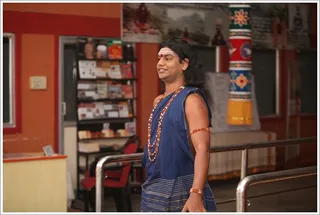
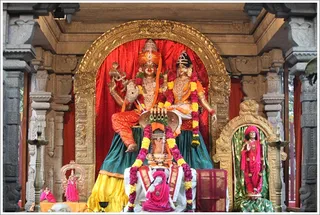
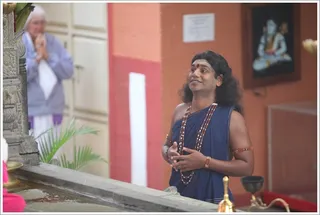
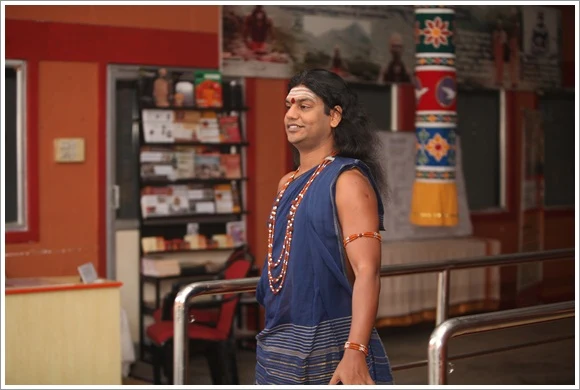
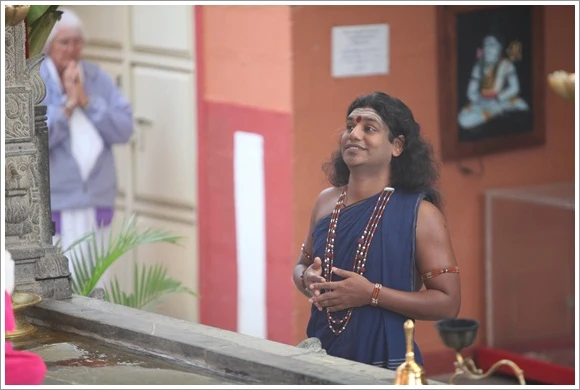
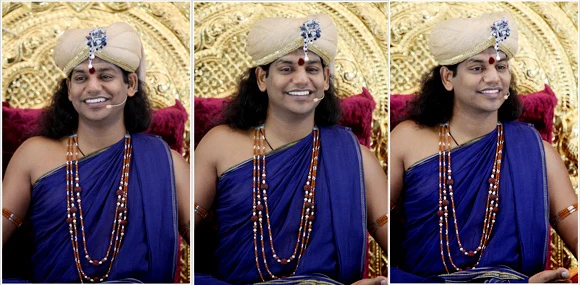
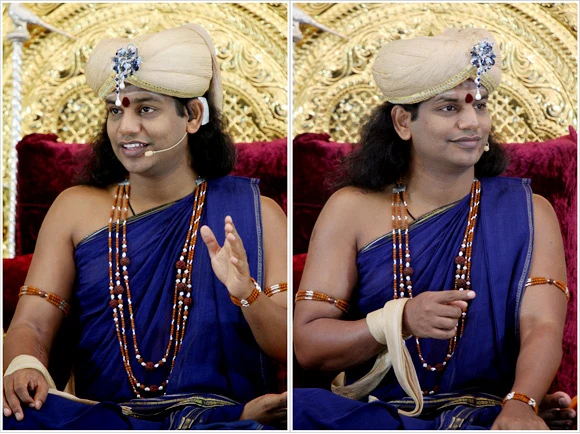
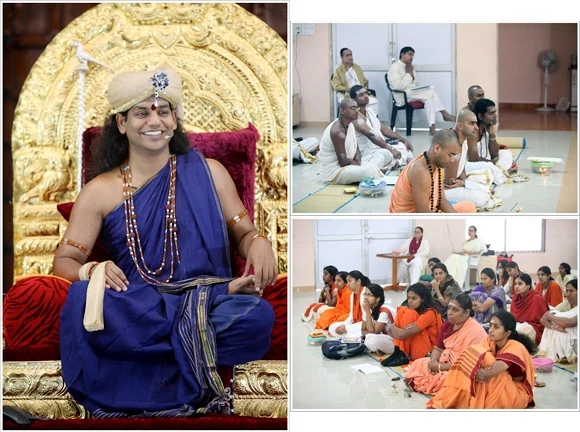
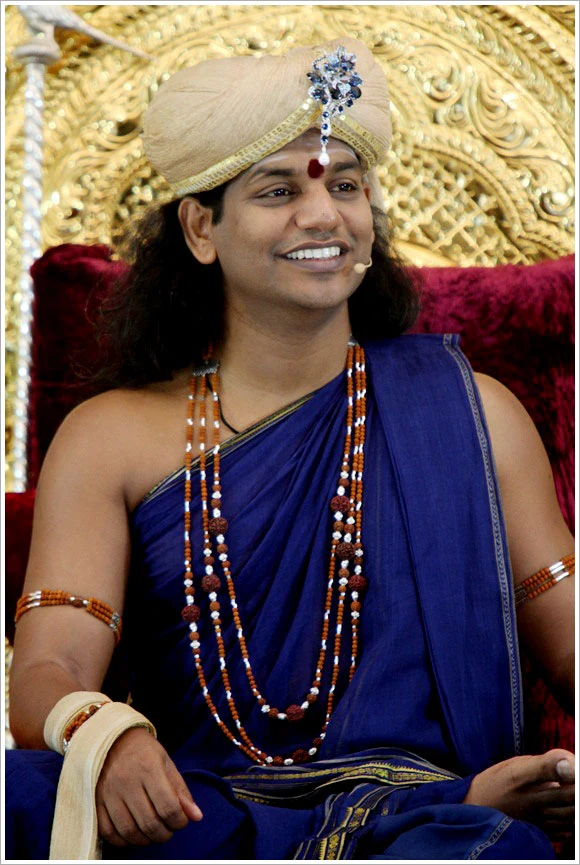
A man with long, swept-back dark hair and a white forehead mark stands smiling inside a bright hall with orange walls. He wears a blue sleeveless garment with a striped lower border, a rudraksha-style bead mala across his chest, and an orange bangle on his wrist. Behind him a bookshelf stocked with books and a tall pillar painted with colourful geometric patterns stand against a wall of framed religious artwork. A reception desk and red chair are visible at left, and a metal railing runs across the foreground.A temple shrine with a gilded arched niche framing a deity murti pair seated on a raised platform, one figure with a crown and multiple arms holding objects, the other wearing a crown and green-and-red garments. Both are draped with bright orange and yellow marigold garlands and a large purple-and-white garland hangs down. Red curtains line the back of the shrine, and smaller painted figures in pink and green stand in side niches. Carved grey stone pillars frame the scene, and a pink-clad figure sits in the foreground.A photograph of a man with long dark hair standing with hands pressed together in namaskar near a stone-carved shrine structure. He wears a sleeveless deep blue garment and multiple rudraksha mala necklaces, with a red tilak on his forehead and bangles on his wrists. Behind him on the left, an elderly woman in a light blue top and white dhoti-style cloth also stands with hands folded. A framed deity picture hangs on the coral-red wall, and a brass lamp sits at the lower right.

January 19 2012

Original wiki page
Contents

Title:

THE SUPREME PONTIFF OF HINDUISM HDH BHAGAVAN NITHYANANDA PARAMASHIVAM

Photos From The Day:
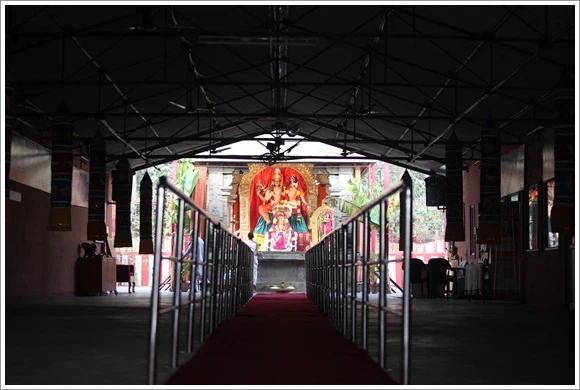
Photos from this day

View all 21 photos
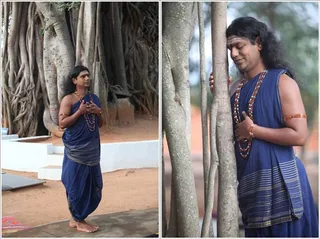
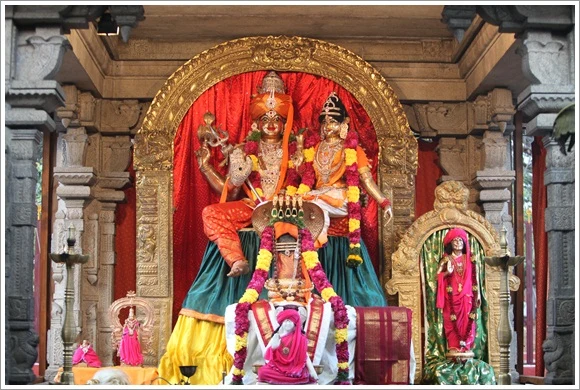
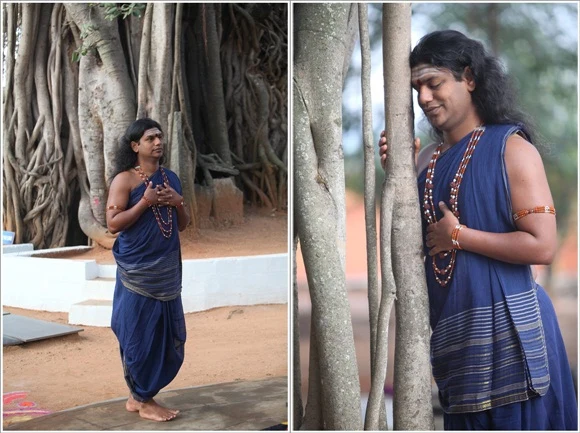
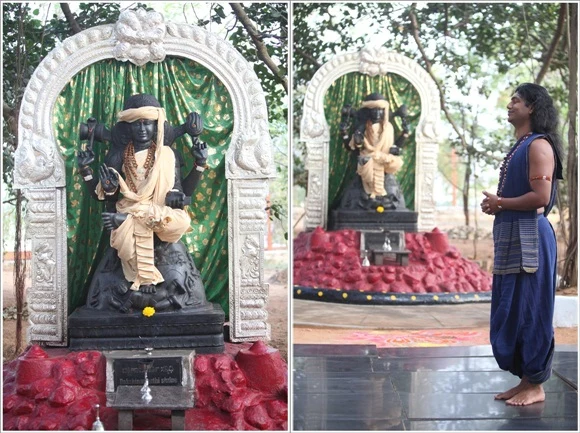
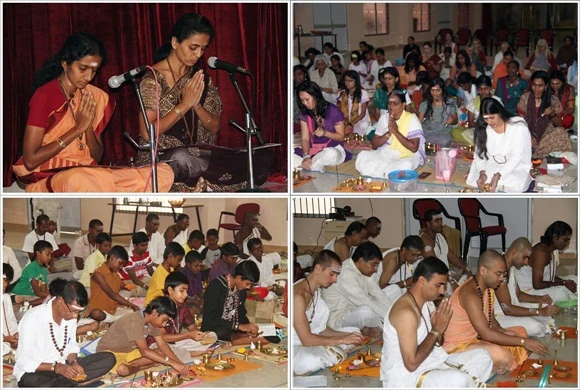
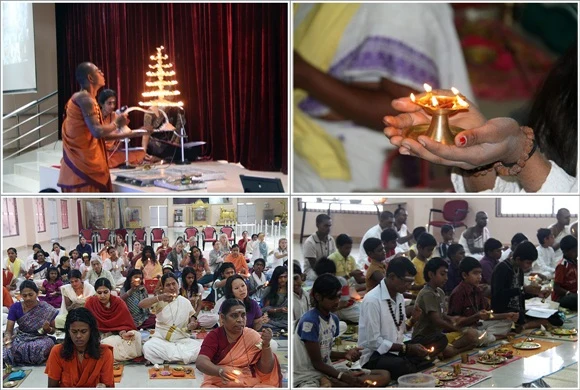
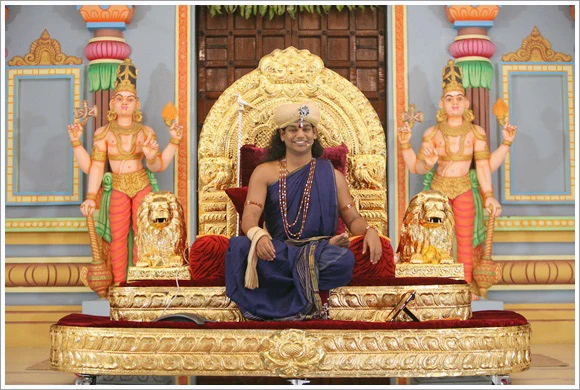
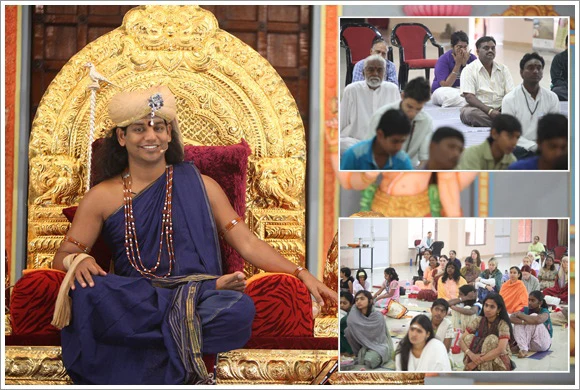
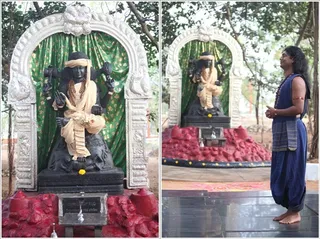
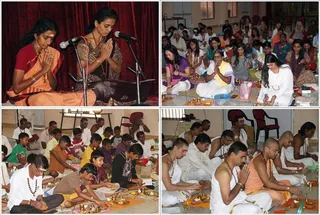
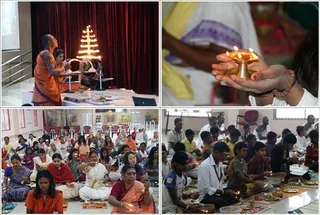
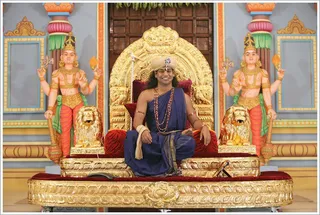
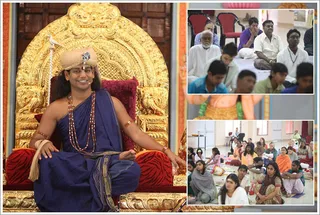
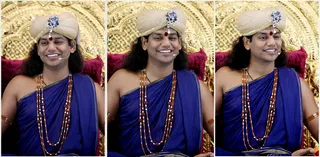
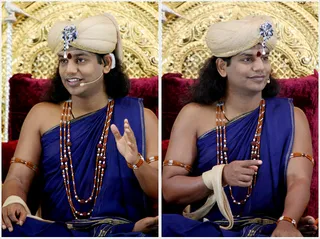
A photograph of an interior hall leading to a shrine. A long red carpet runs down the centre toward a raised shrine decorated in red, gold and pink, housing a large deity murti with multiple arms in red and blue garments. Metal railings line both sides of the walkway, and hanging cloth banners in yellow and maroon are visible along the ceiling. Potted plants stand near the entrance and a small table sits to the left. No people are visible in the scene.A temple shrine with a gilded arched niche framing a deity murti pair seated on a raised platform, one figure with a crown and multiple arms holding objects, the other wearing a crown and green-and-red garments. Both are draped with bright orange and yellow marigold garlands and a large purple-and-white garland hangs down. Red curtains line the back of the shrine, and smaller painted figures in pink and green stand in side niches. Carved grey stone pillars frame the scene, and a pink-clad figure sits in the foreground.A man with long, swept-back dark hair and a white forehead mark stands smiling inside a bright hall with orange walls. He wears a blue sleeveless garment with a striped lower border, a rudraksha-style bead mala across his chest, and an orange bangle on his wrist. Behind him a bookshelf stocked with books and a tall pillar painted with colourful geometric patterns stand against a wall of framed religious artwork. A reception desk and red chair are visible at left, and a metal railing runs across the foreground.A photograph of a man with long dark hair standing with hands pressed together in namaskar near a stone-carved shrine structure. He wears a sleeveless deep blue garment and multiple rudraksha mala necklaces, with a red tilak on his forehead and bangles on his wrists. Behind him on the left, an elderly woman in a light blue top and white dhoti-style cloth also stands with hands folded. A framed deity picture hangs on the coral-red wall, and a brass lamp sits at the lower right.A two-panel collage of photographs showing a single man outdoors beside large banyan tree trunks and roots. In the left panel he stands barefoot on sandy ground near a white-washed step, hands pressed together at his chest. In the right panel he leans against a tree trunk with eyes lowered and a slight smile. He wears long dark hair, a blue draped cloth wrapped around his body and a rudraksha mala with a gold armlet. The collage contains one physical person.A two-panel collage. The left panel shows a black stone deity murti seated in an arched white stone niche before a green draped backdrop, wearing a cream dhoti-like cloth, rudraksha-style beads and a flower, with red offerings heaped at its base and a small lamp set in front. The right panel shows the same murti with a yellow flower at its base, and a standing man in a blue robe and blue patterned wrap with rudraksha mala beads and bare feet, hands folded in front of him, facing the shrine on a polished black floor. Because this is a collage of two photographs, it is graphic.A four-panel collage of photographs from a KAILASA gathering. Top left: two women in saris, hands folded in namaste, singing or chanting at microphones before a red curtain. Top right: a large seated audience of mostly women in white, pastel and bright saris, with brass oil lamps and offerings in front of them. Bottom left: rows of boys and young men in white dhotis and kurtas seated on the floor with small oil lamps and brass plates. Bottom right: young men with shaved heads in white and saffron robes, rudraksha malas around their necks, seated with hands folded before brass lamps and plates. The collage shows a puja or satsang-style ritual; the pictured people are not counted as physical people in this graphic.A four-panel collage of temple-style ritual activity. Top left: a stage with a tiered lamp stand of lit oil lamps, where a saffron-robed monastic figure with a shaved head stands beside a seated person in orange. Top right: a close view of a hand holding a brass oil lamp with a lit flame, and a wrist with red thread. Bottom left: a seated group of women in saris and salwar, some in orange and red, with brass lamps before them in a hall with framed pictures. Bottom right: rows of children and young people in white and maroon uniforms sitting cross-legged on a floor with brass plates and lit lamps. The collage depicts an aarti-style lamp ceremony with devotees.A man seated cross-legged on an ornate gilded throne with red cushions and a gold lion-figured base, centred in front of a decorated ceremonial backdrop. He wears a purple-blue draped garment, a turban with a jewelled ornament, layered rudraksha malas and bangles. Two gold-coloured standing deity figures with multiple arms flank the throne, each with a lion at its foot, and a golden arched canopy frames the seat. The walls are painted in pastel blue, pink and yellow with gold trim and a wooden door behind. Swamiji (probable) seated on the throne, identified by the turban, rudraksha malas and ornate throne setting.A three-panel collage. The large left panel shows a man seated on an ornate gold throne with carved lion-like finials and a red cushioned seat, wearing a saffron-tan turban with a jewelled ornament, a blue draped robe, a rudraksha mala and beaded necklaces, and holding a ceremonial staff with a crescent finial. The upper-right panel shows a seated group of men and boys in white, cream and blue clothing on a cream floor, with two older men in the back row. The lower-right panel shows many seated women and girls in white, pink and orange saris and salwar kameez, with some sitting on mats. A caption-like title reads THE SUPREME PONTIFF OF HINDUISM. Panel subjects are shown in photographs, so the collage itself has no physical people.A three-panel graphic collage of the same seated man in close-up, smiling broadly, wearing a cream and gold turban with a jewelled ornament and a red bindi. He wears a royal blue shawl or wrap over one shoulder and multiple strands of rudraksha-style beaded malas. Behind him is a gold ornate throne with red cushioning. He has a headset microphone and gestures with one hand in the rightmost panel. Appearance-based probable Swamiji cues present: turban, rudraksha malas and ornate throne with blue ceremonial dress.A two-panel collage of the same man seated on a red cushioned throne with ornate gold carved backdrop. He wears a beige turban with a jewelled crest and red bindi, a blue draped garment, long amber and rudraksha-style beaded malas, and bangles on his wrists. In the left panel he gestures with his right hand while speaking into a headset microphone; in the right panel he points with his right hand and holds a cream cloth over his left arm. Panels are graphic, with no other physical people visible.