Skip to content
Saturday

19 November 2011

THE SUPREME PONTIFF OF HINDUISM HDH BHAGAVAN SRI NITHYANANDA PARAMASHIVAM

Dated photos
252
Source pages
1
Media
1
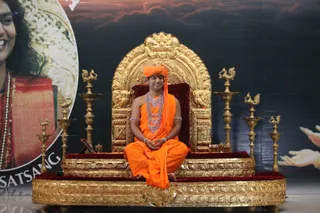
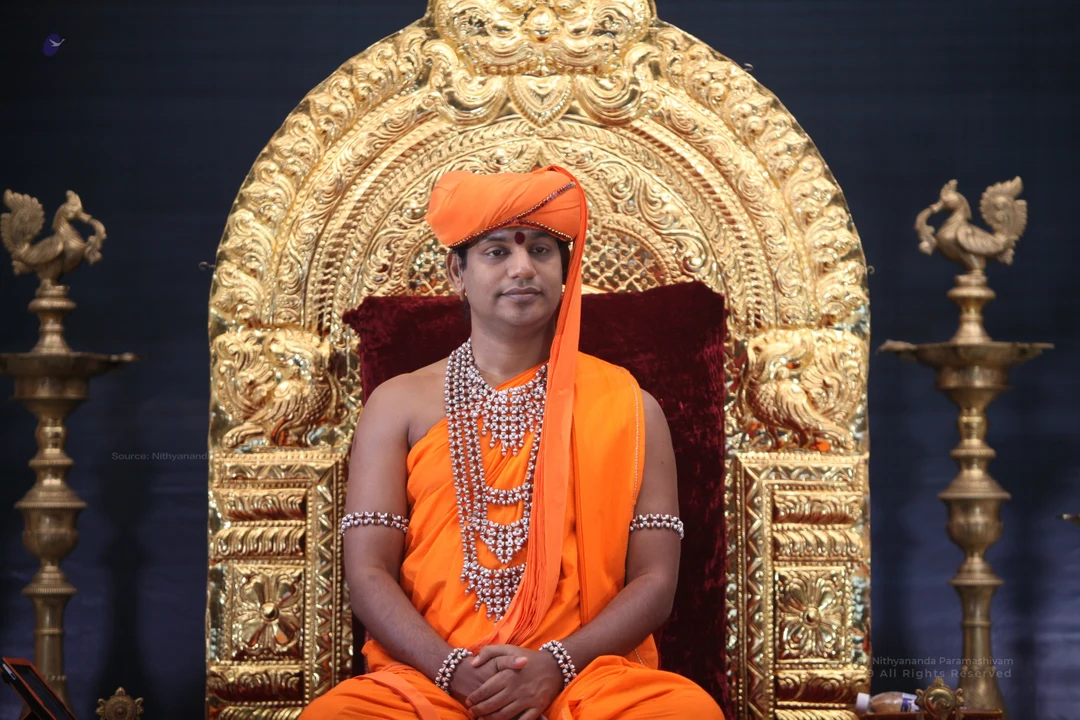
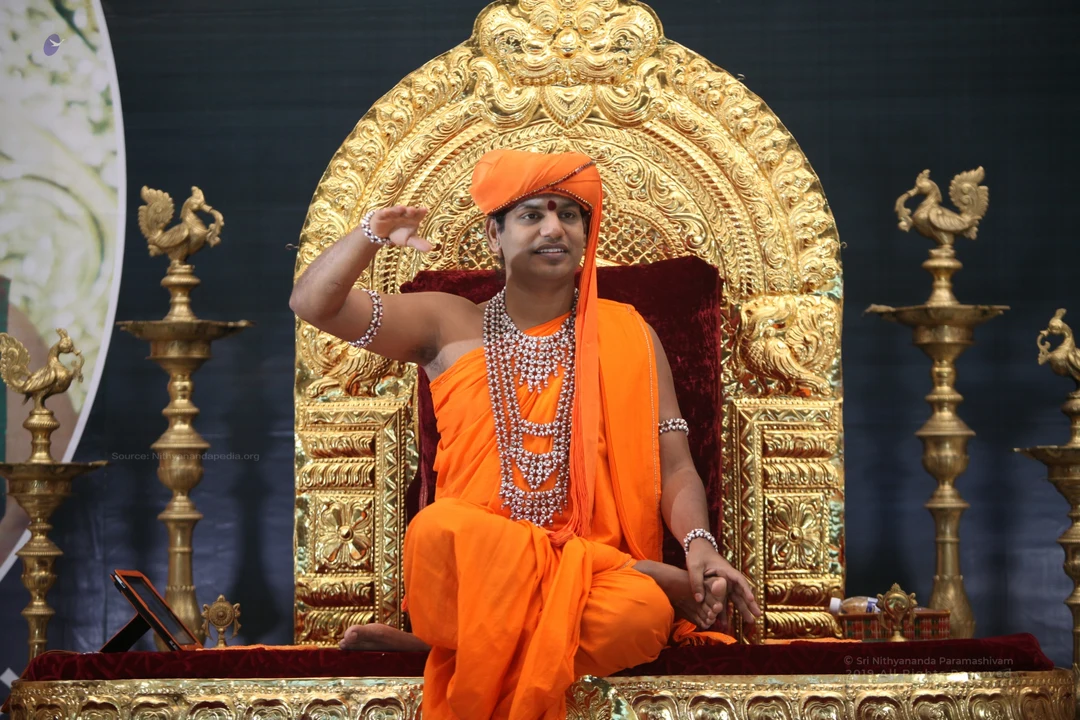
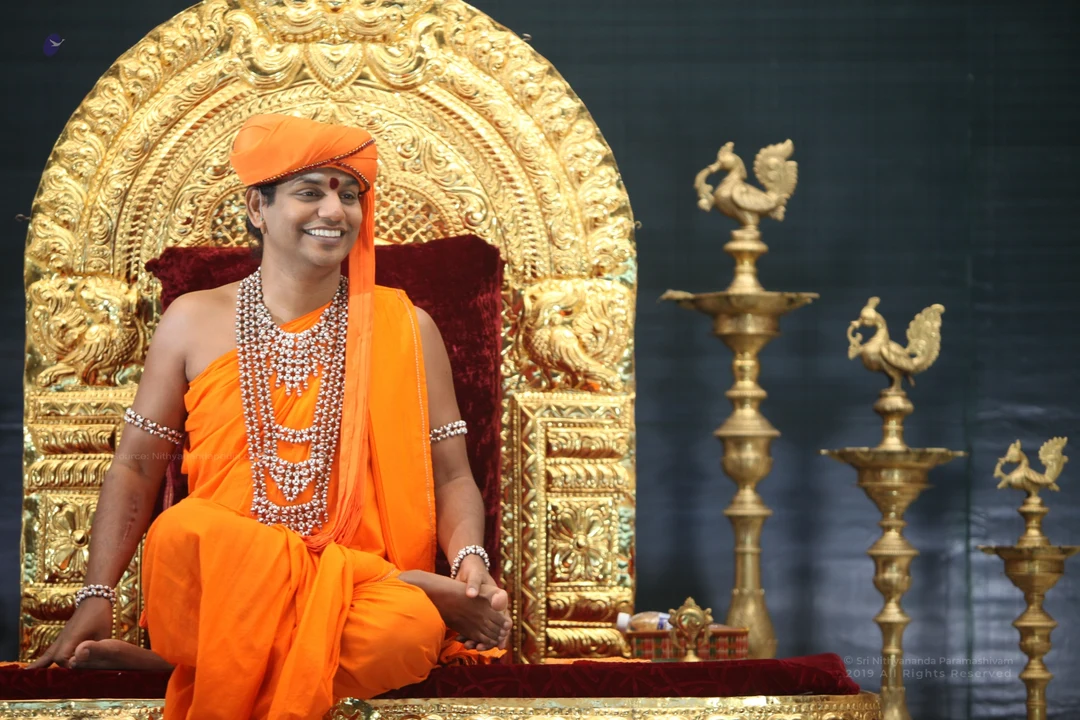
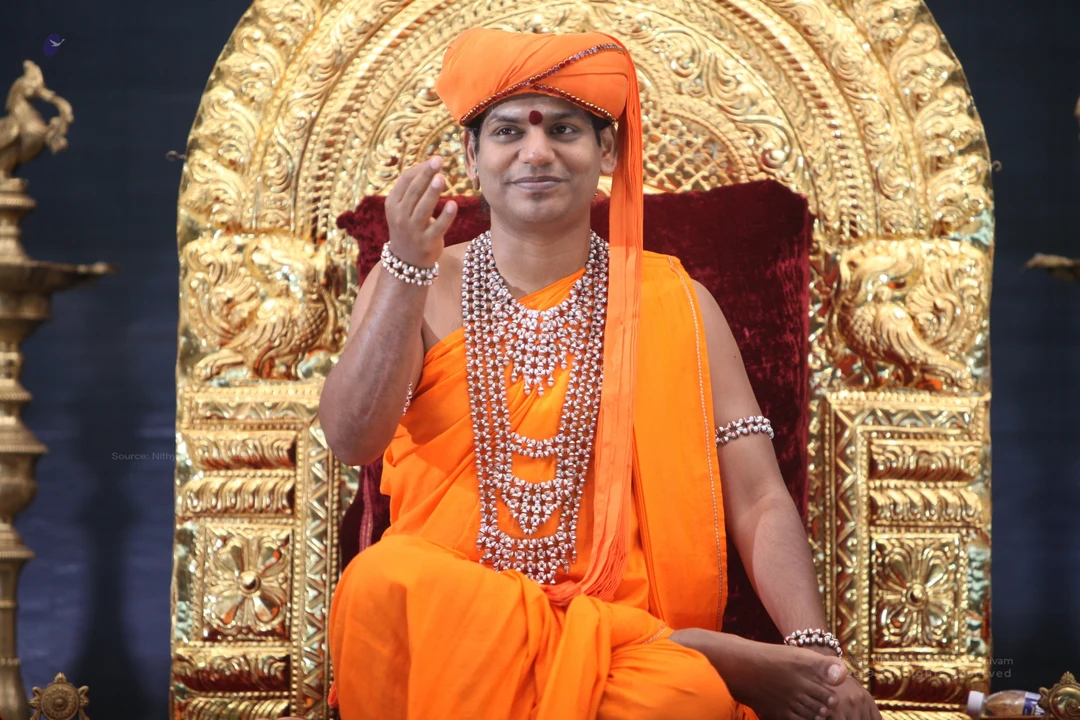
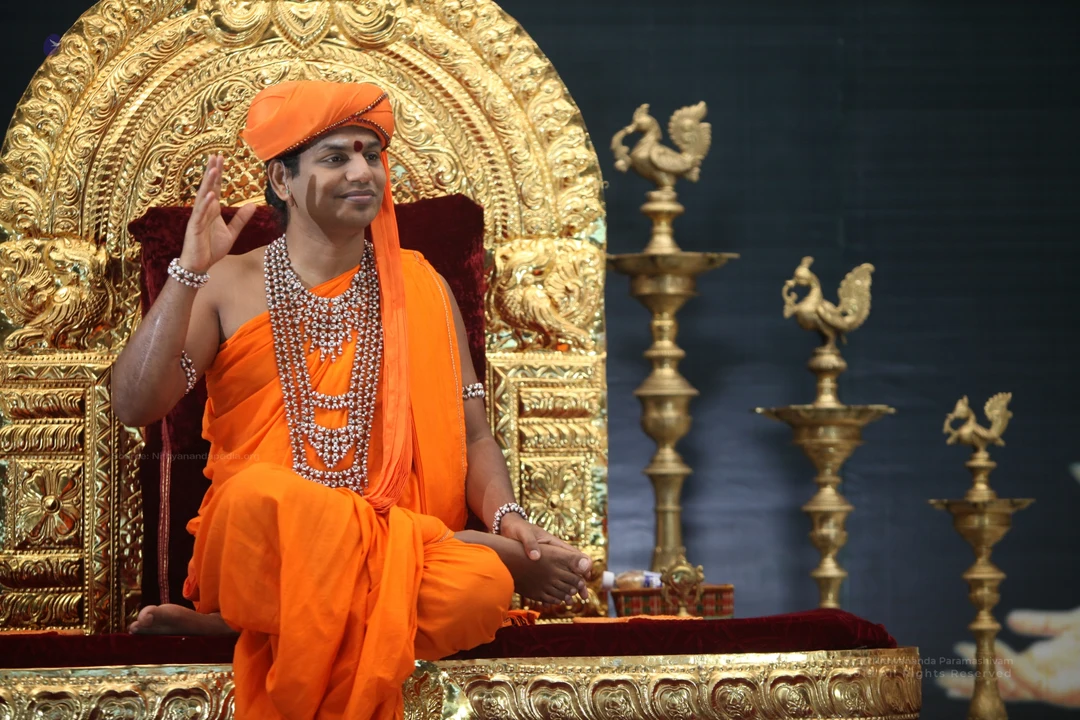
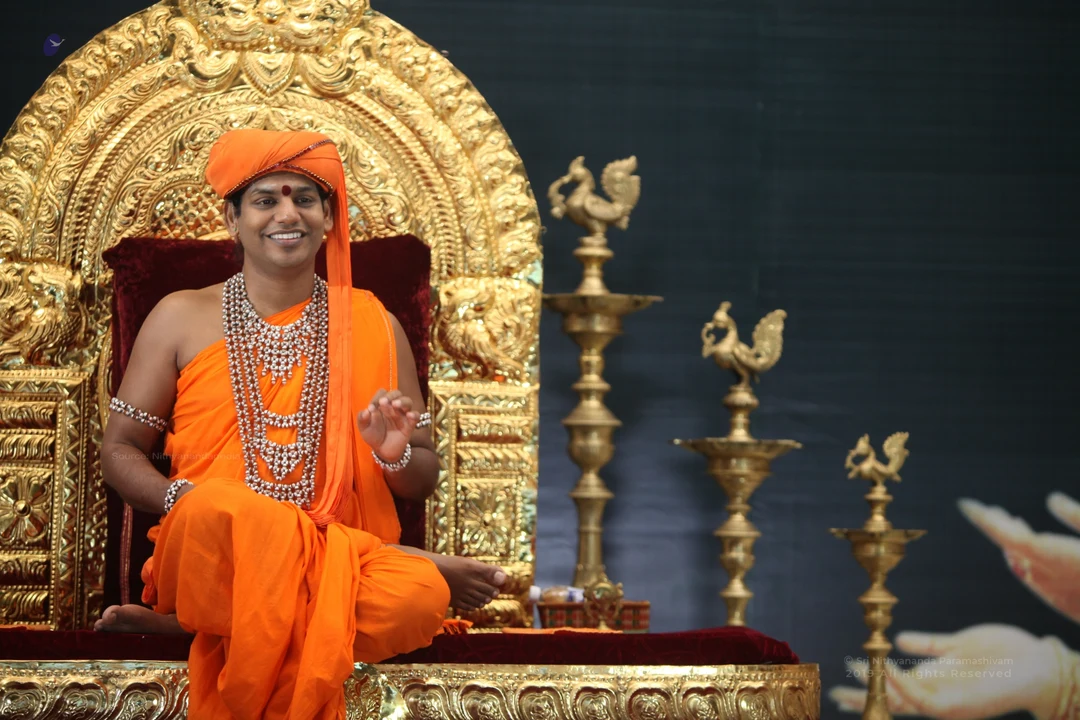
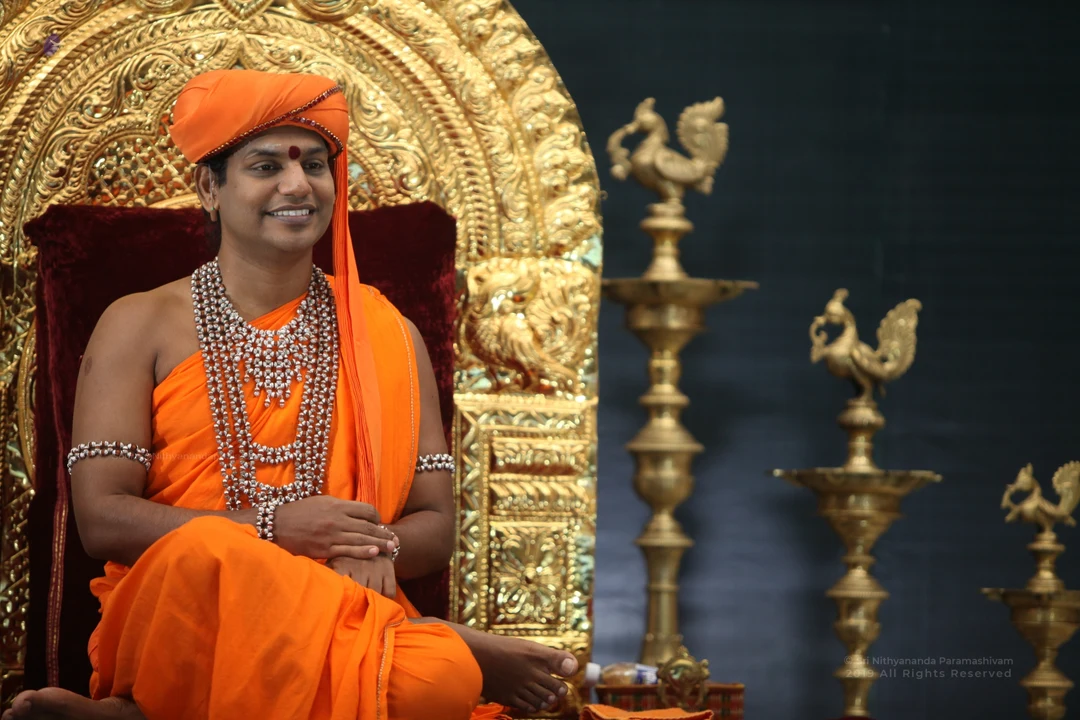
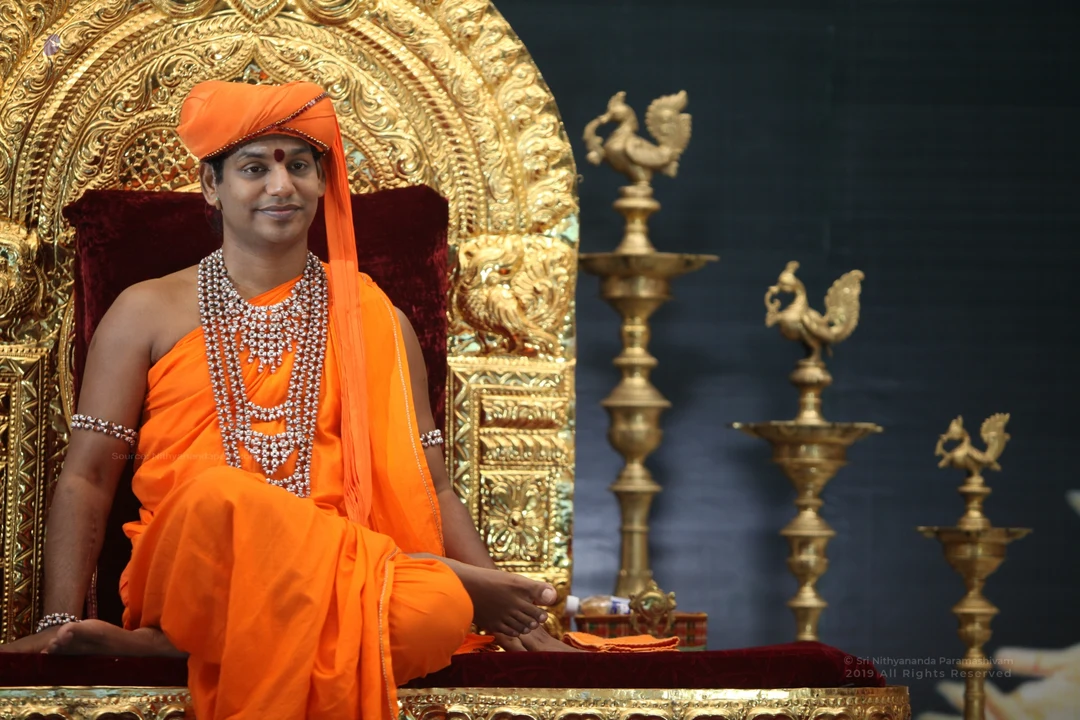
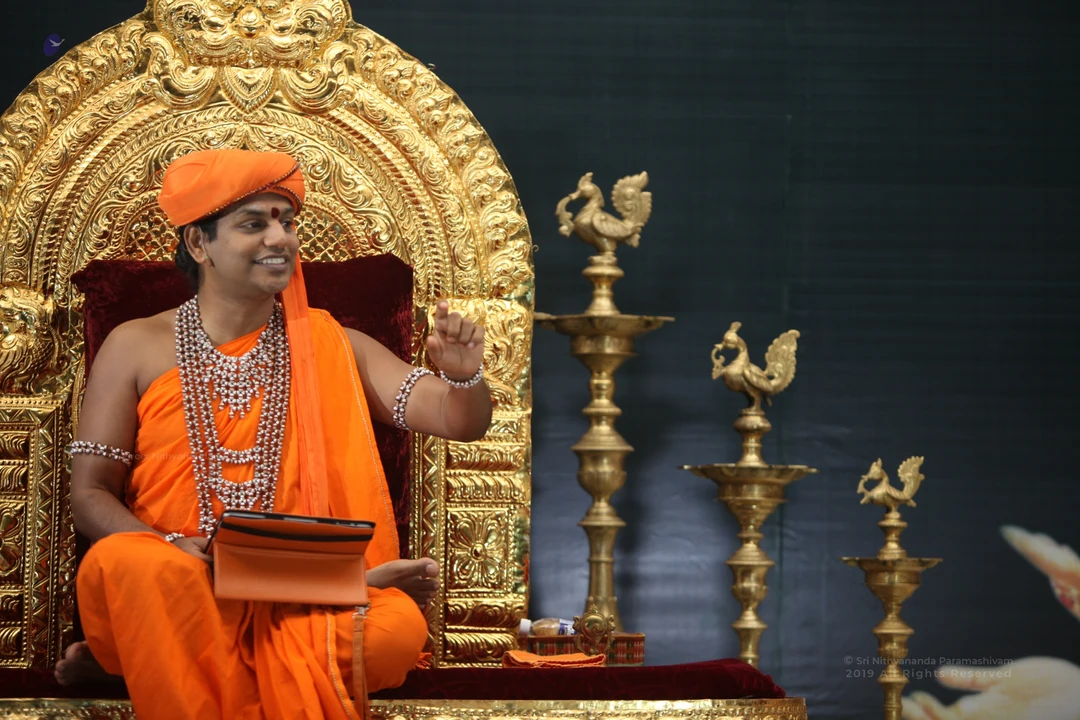
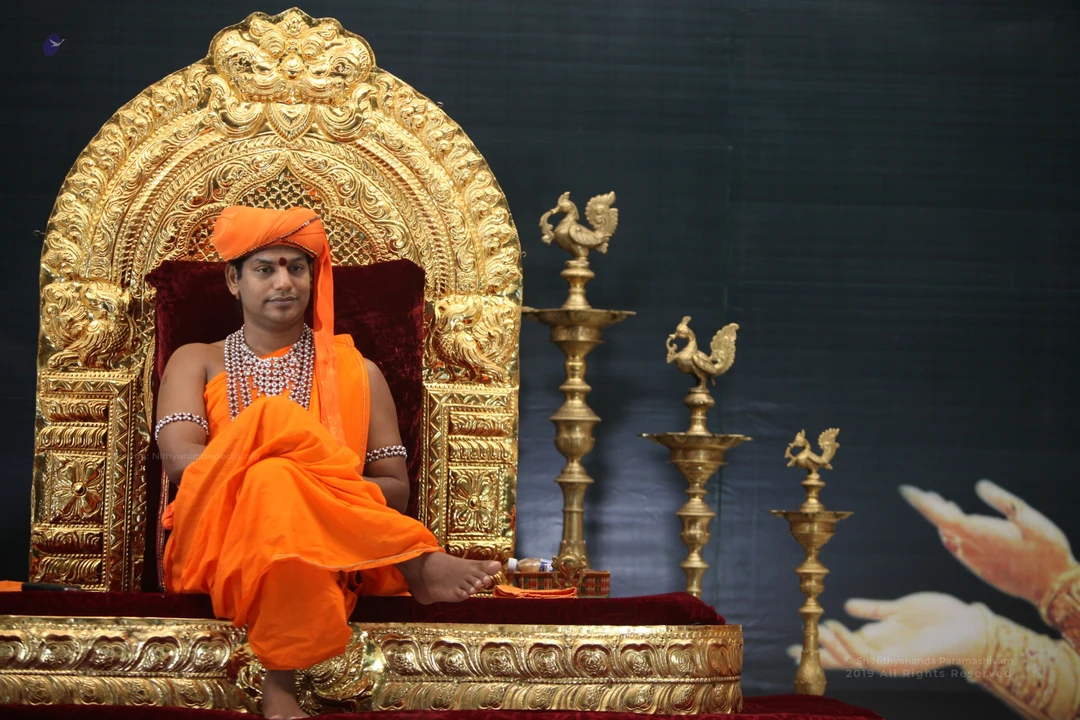
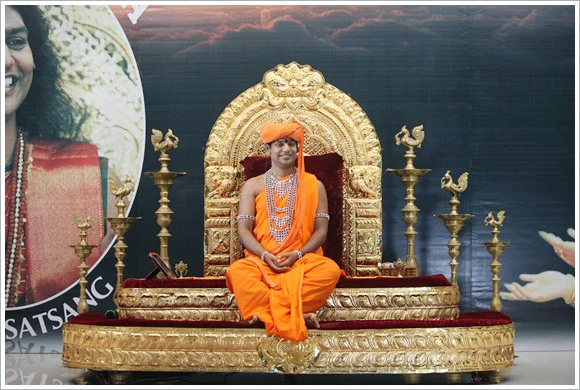
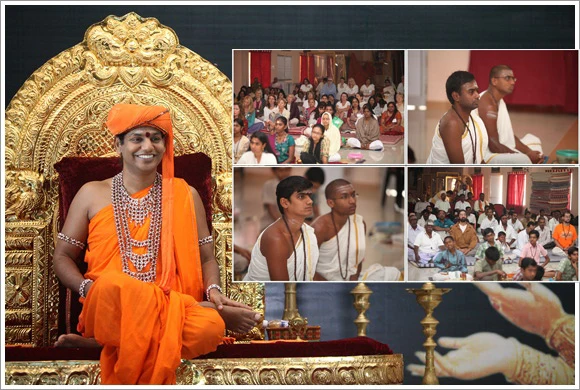
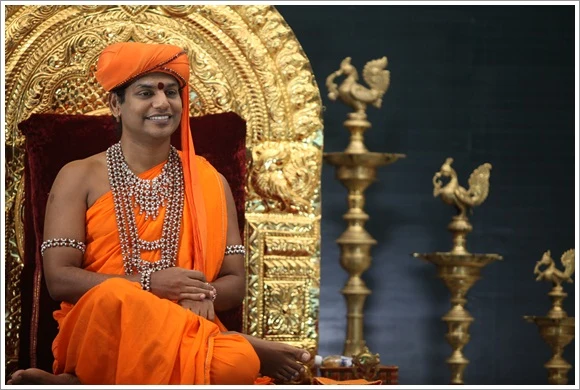
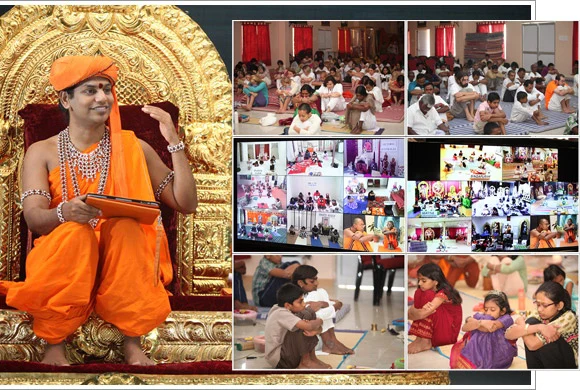
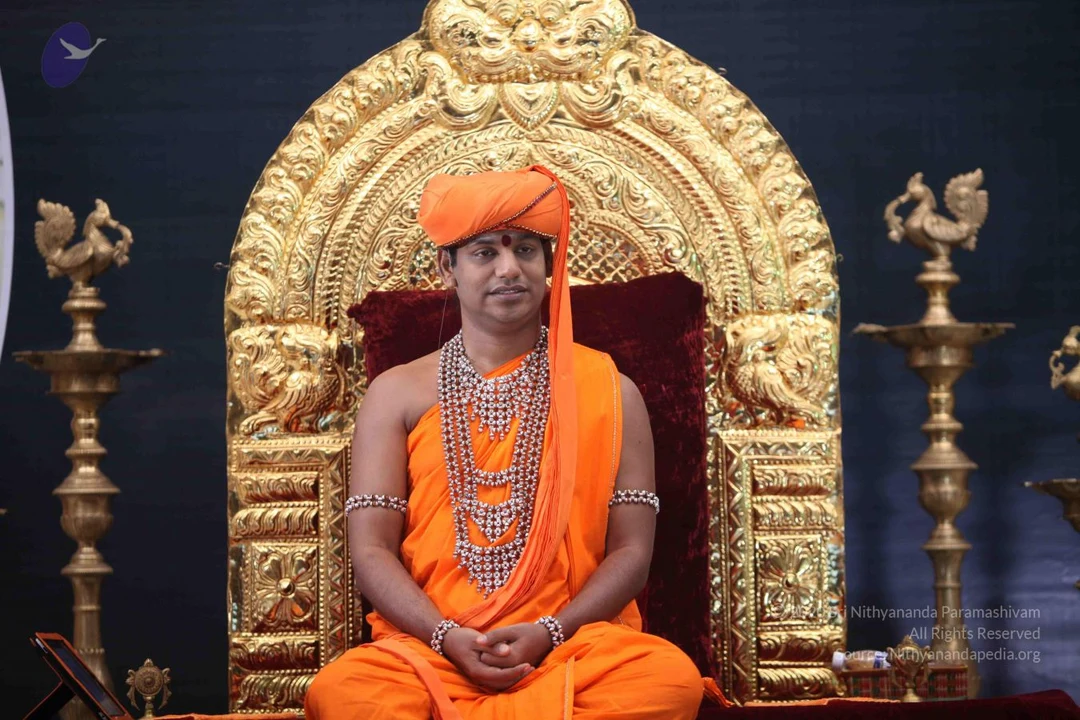
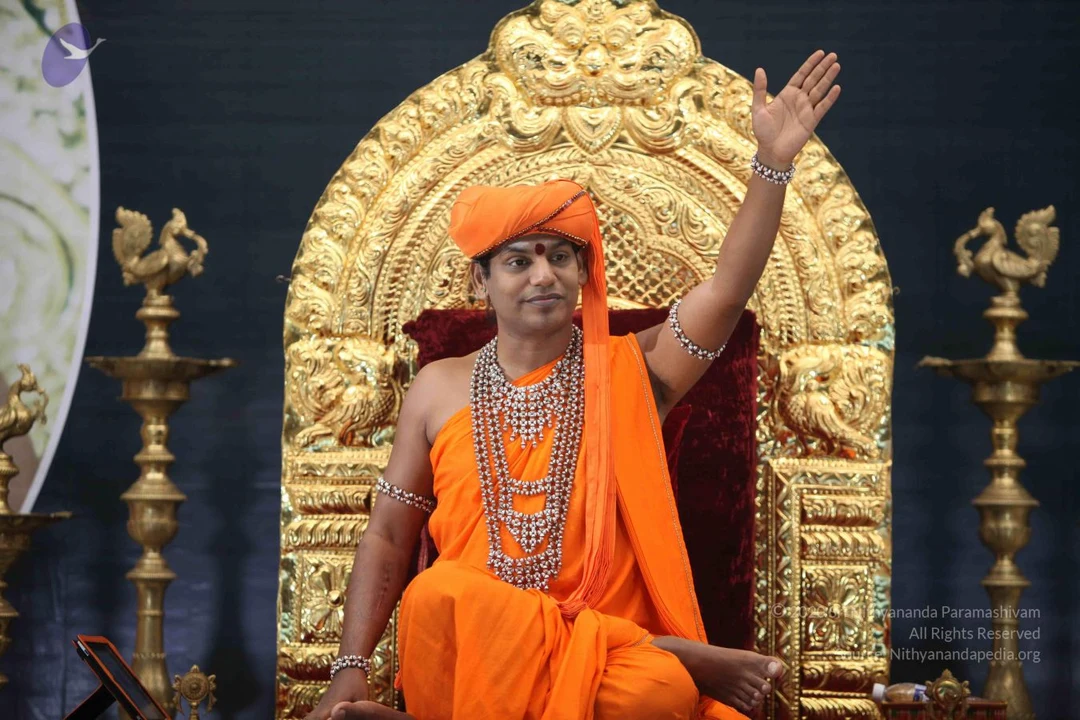
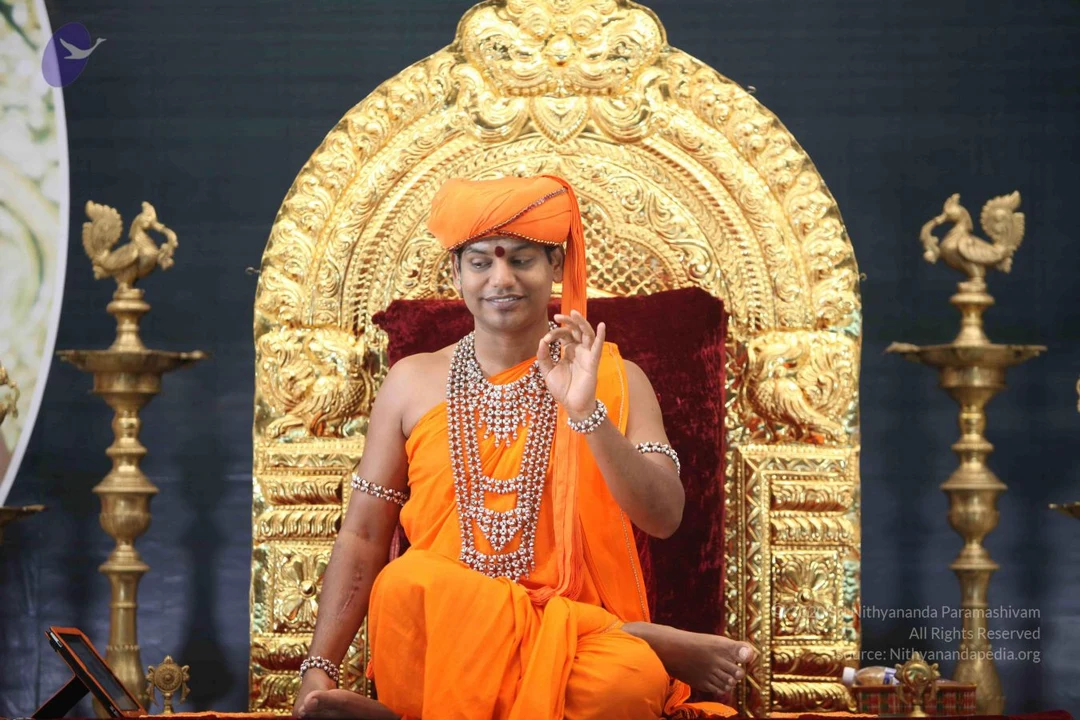
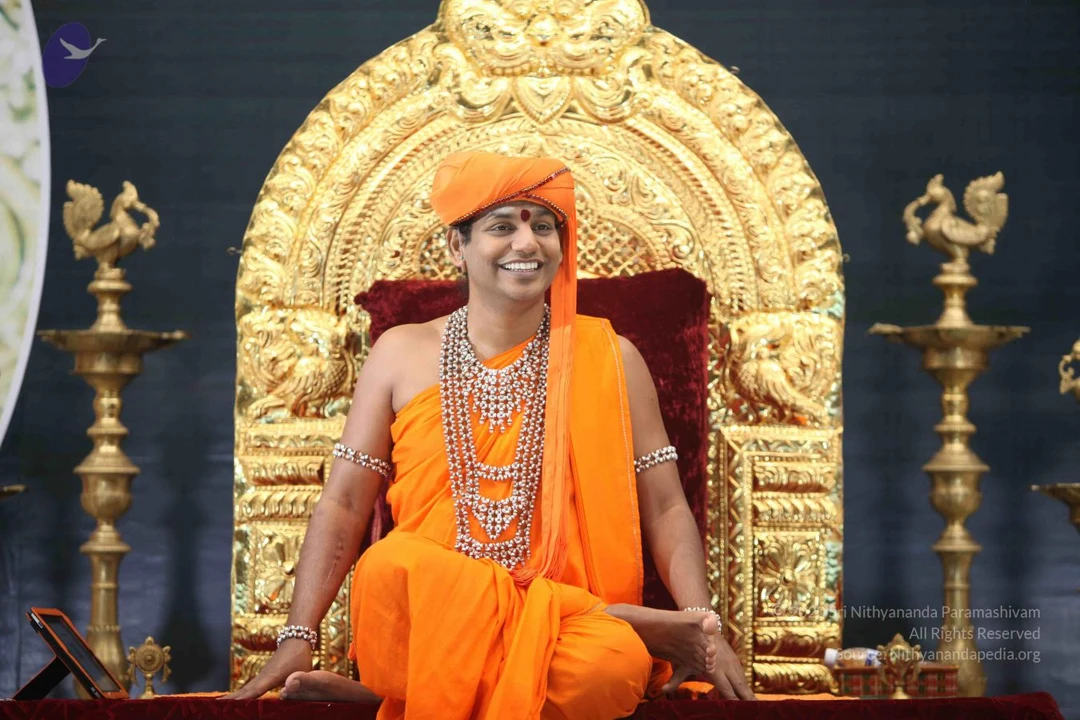
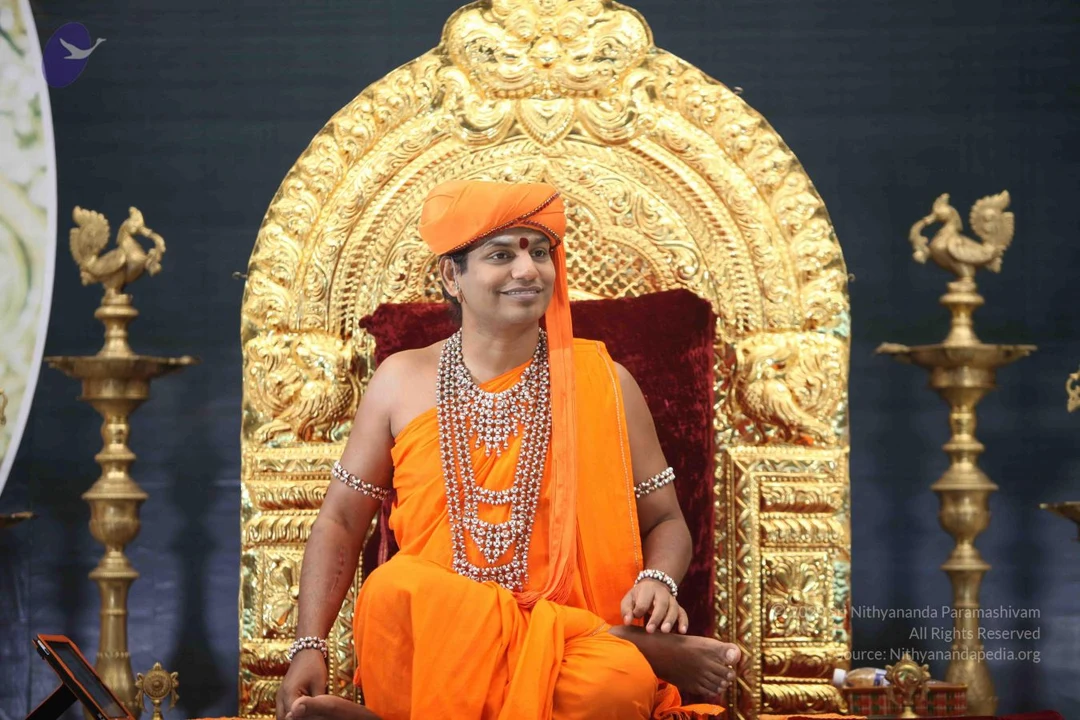
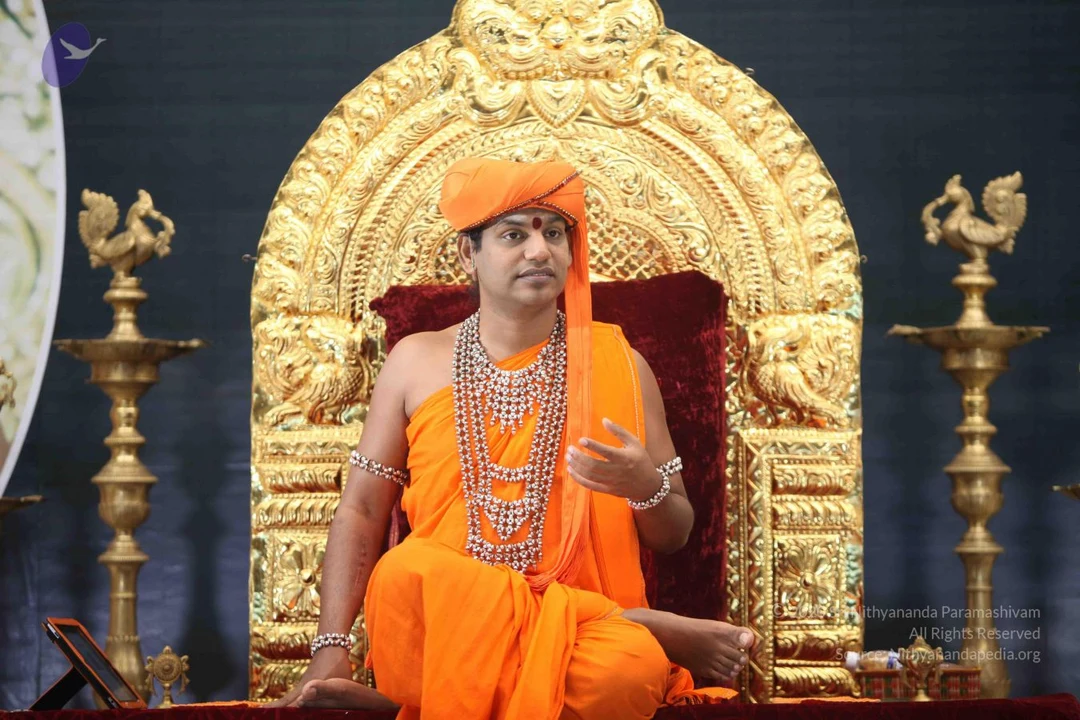
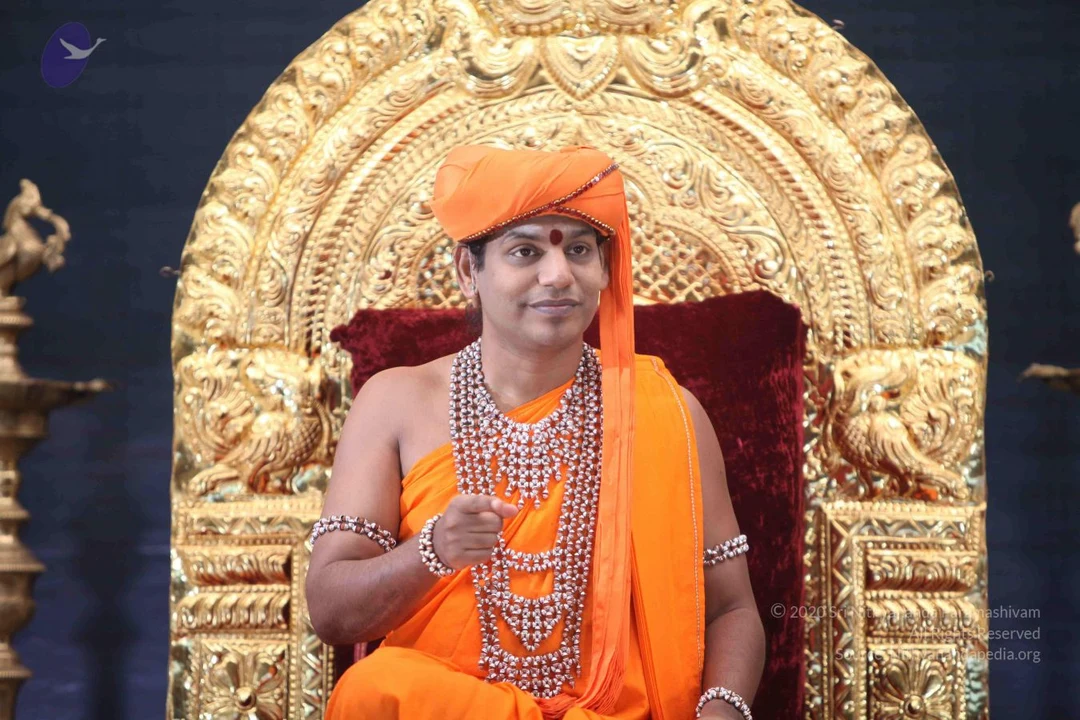
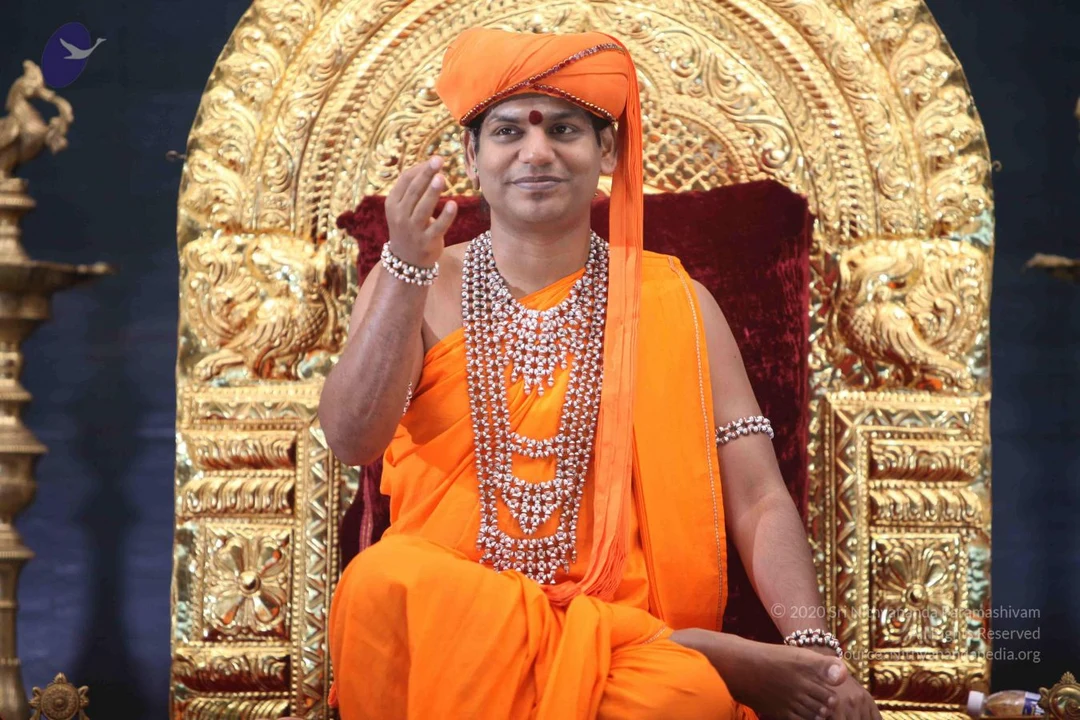
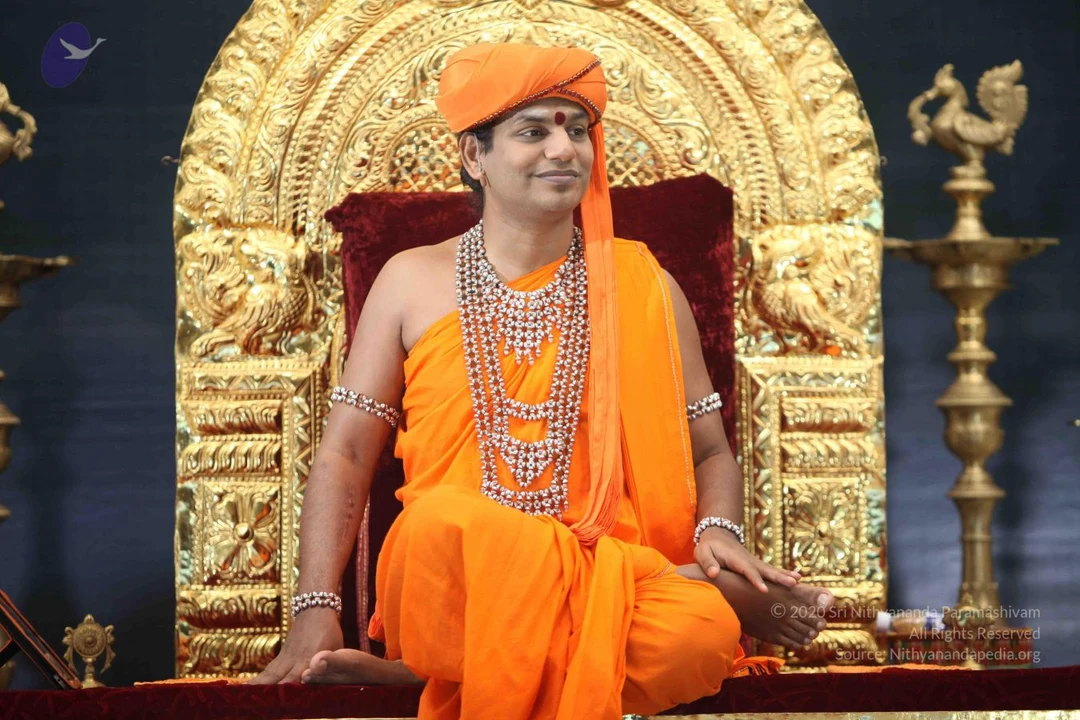
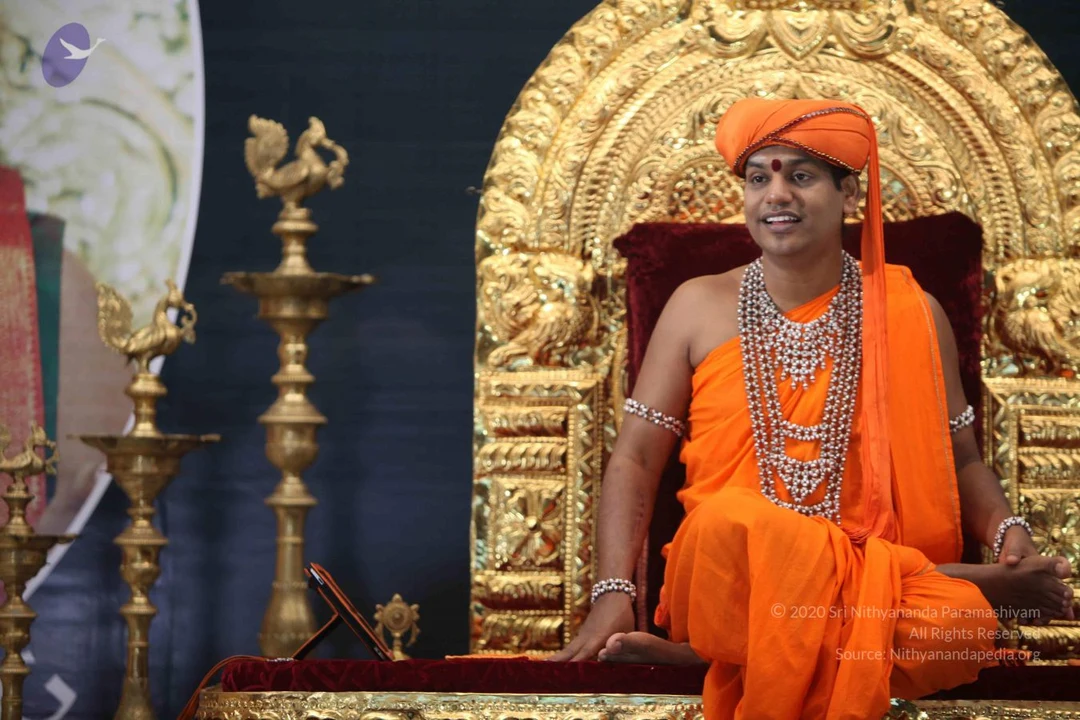
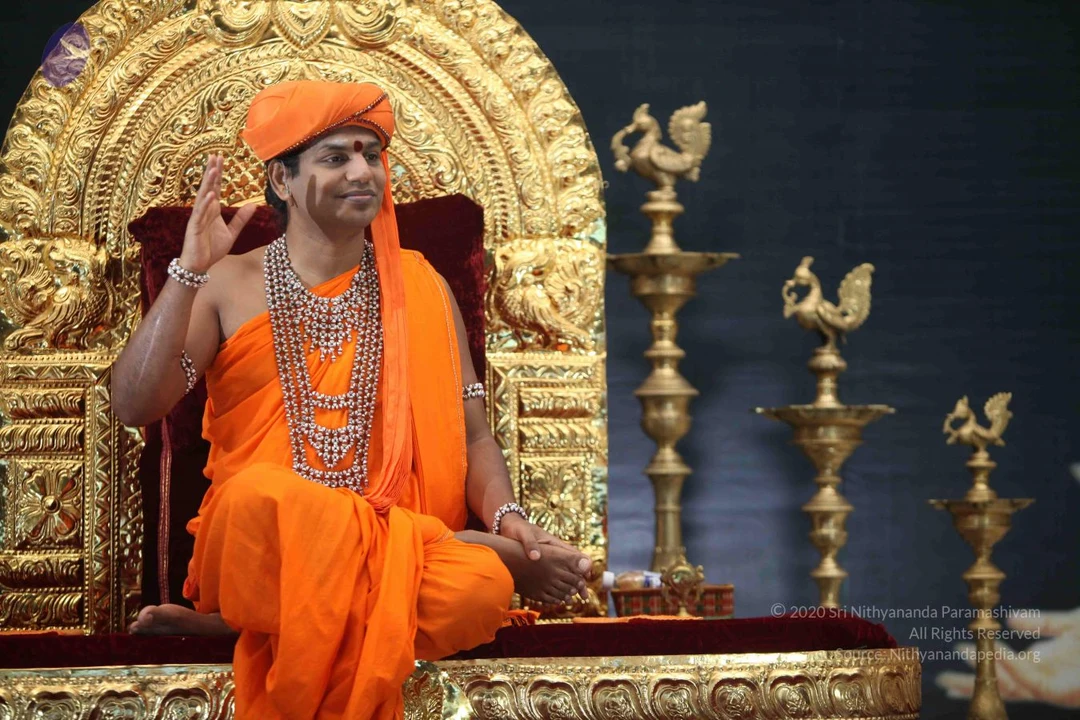
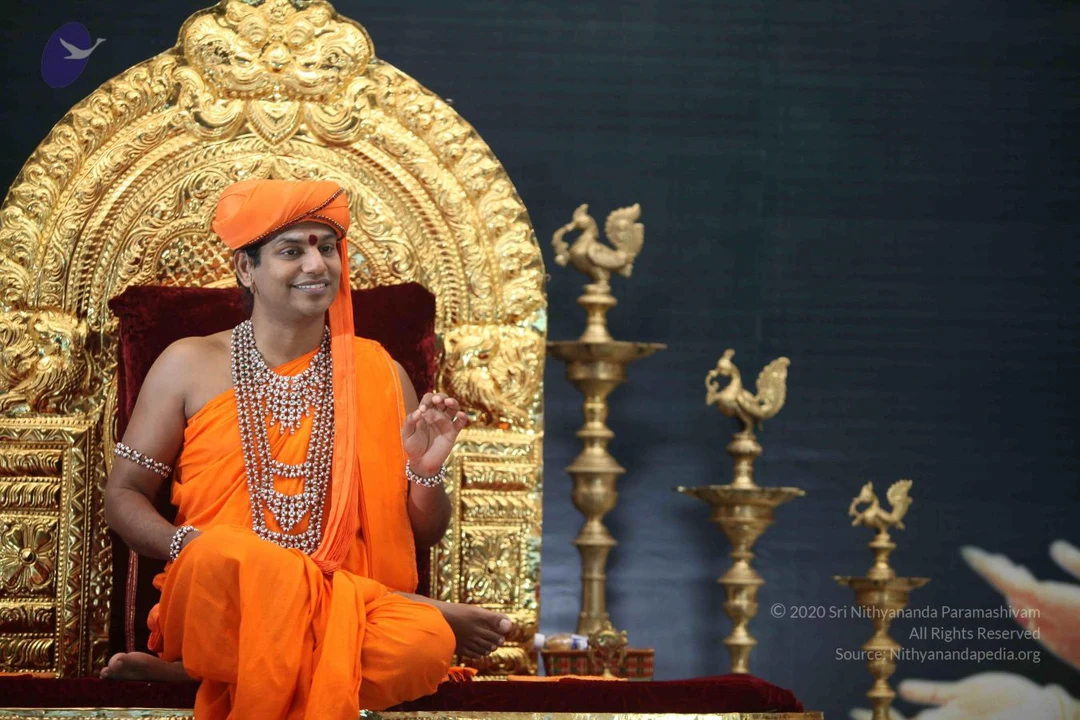
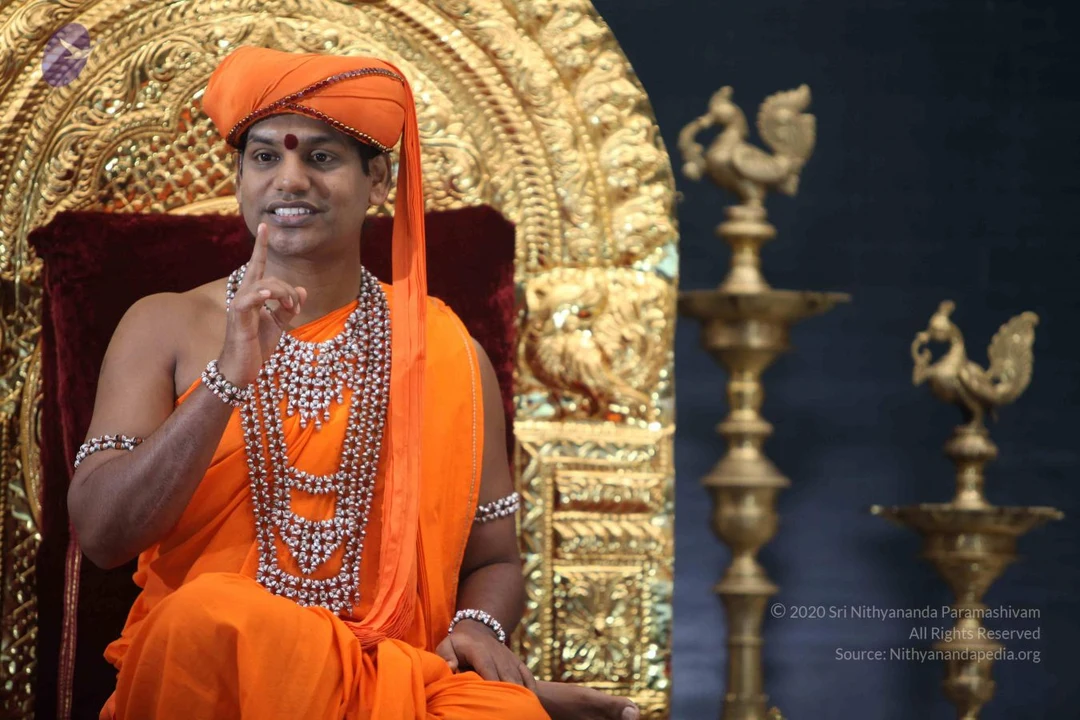
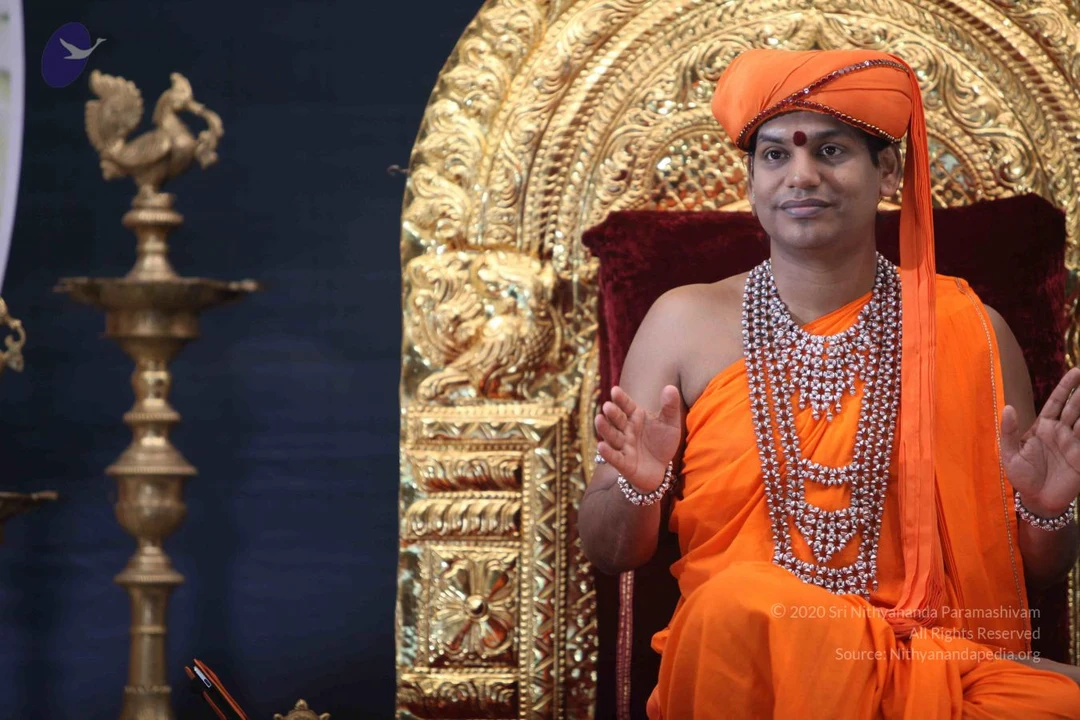
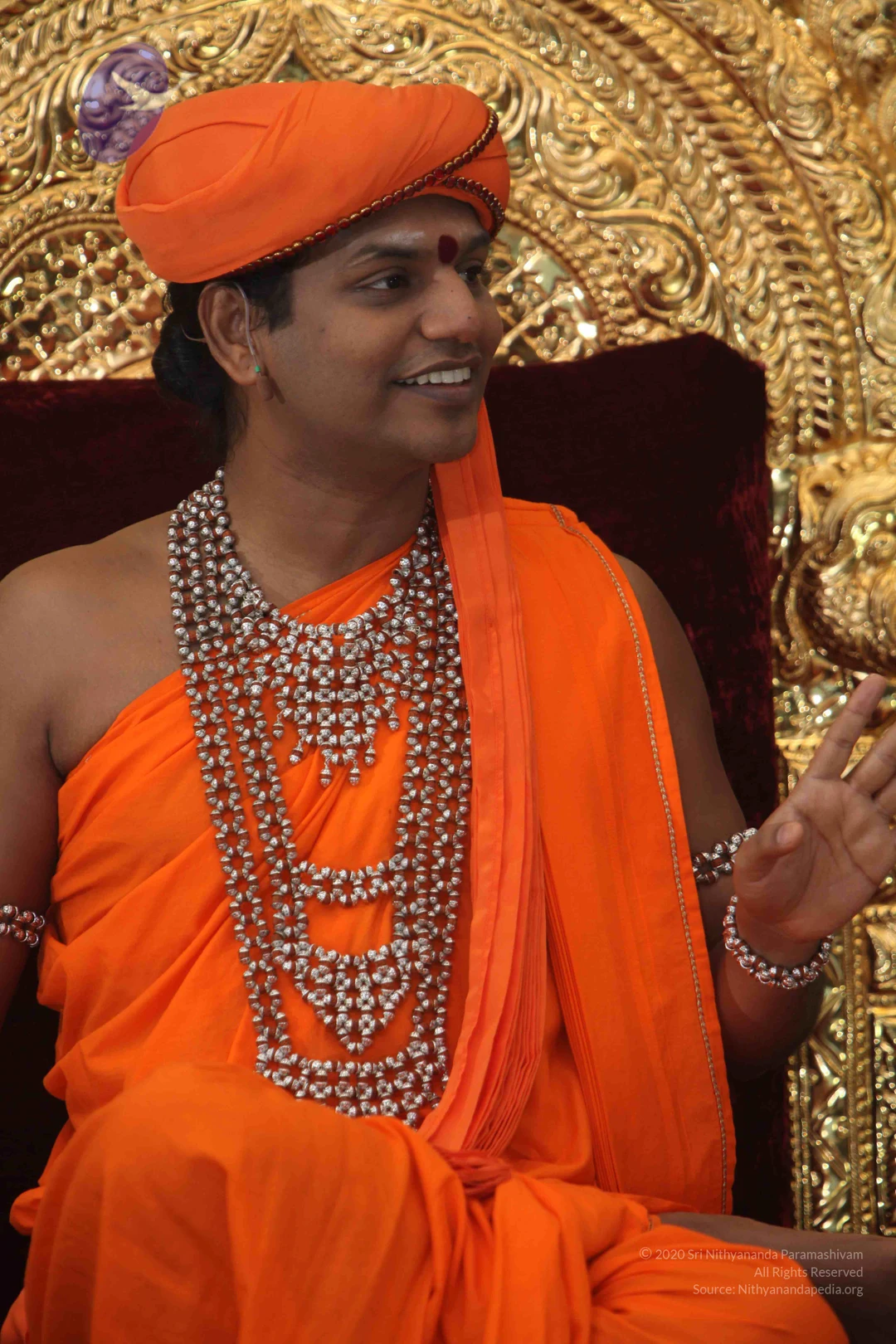
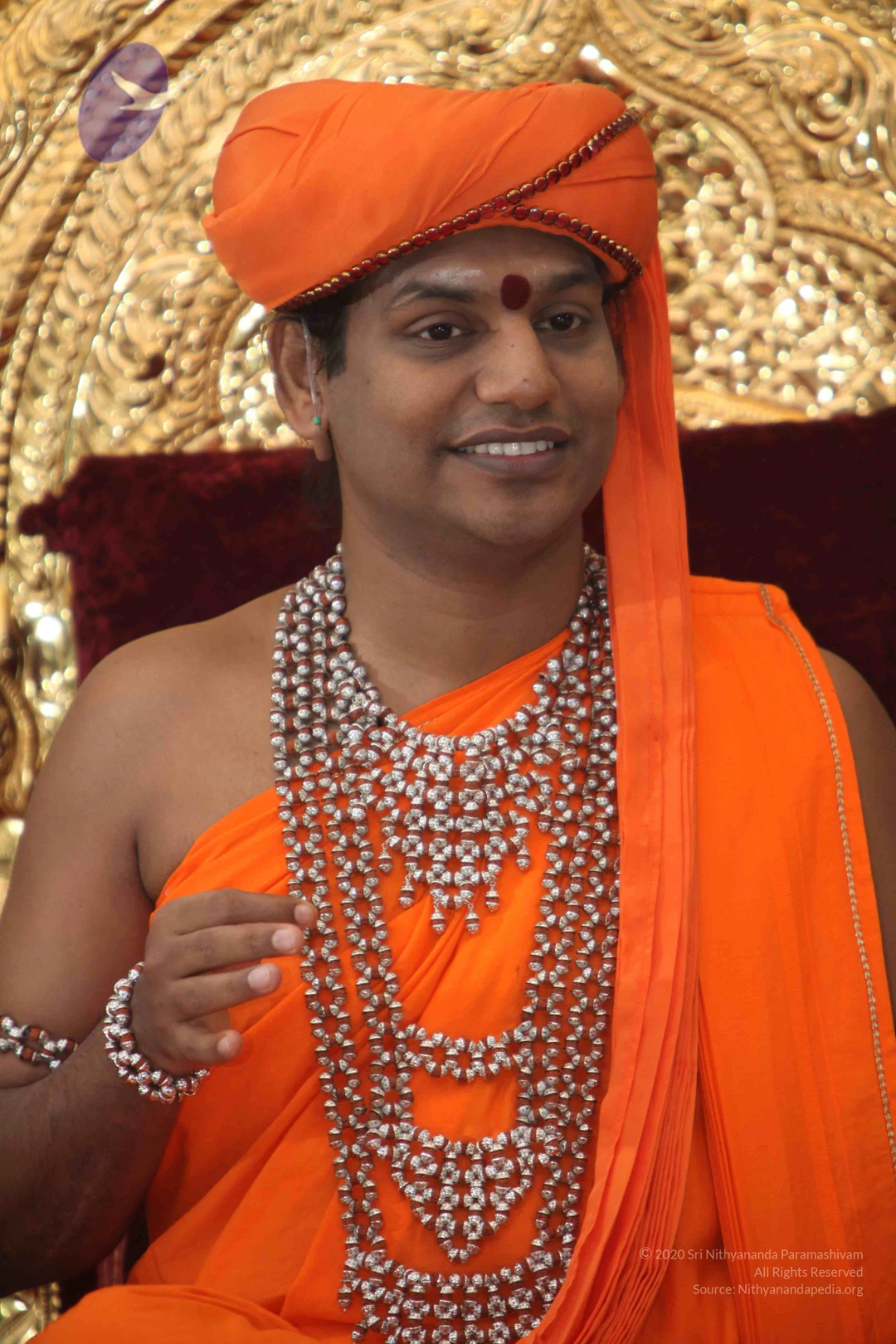
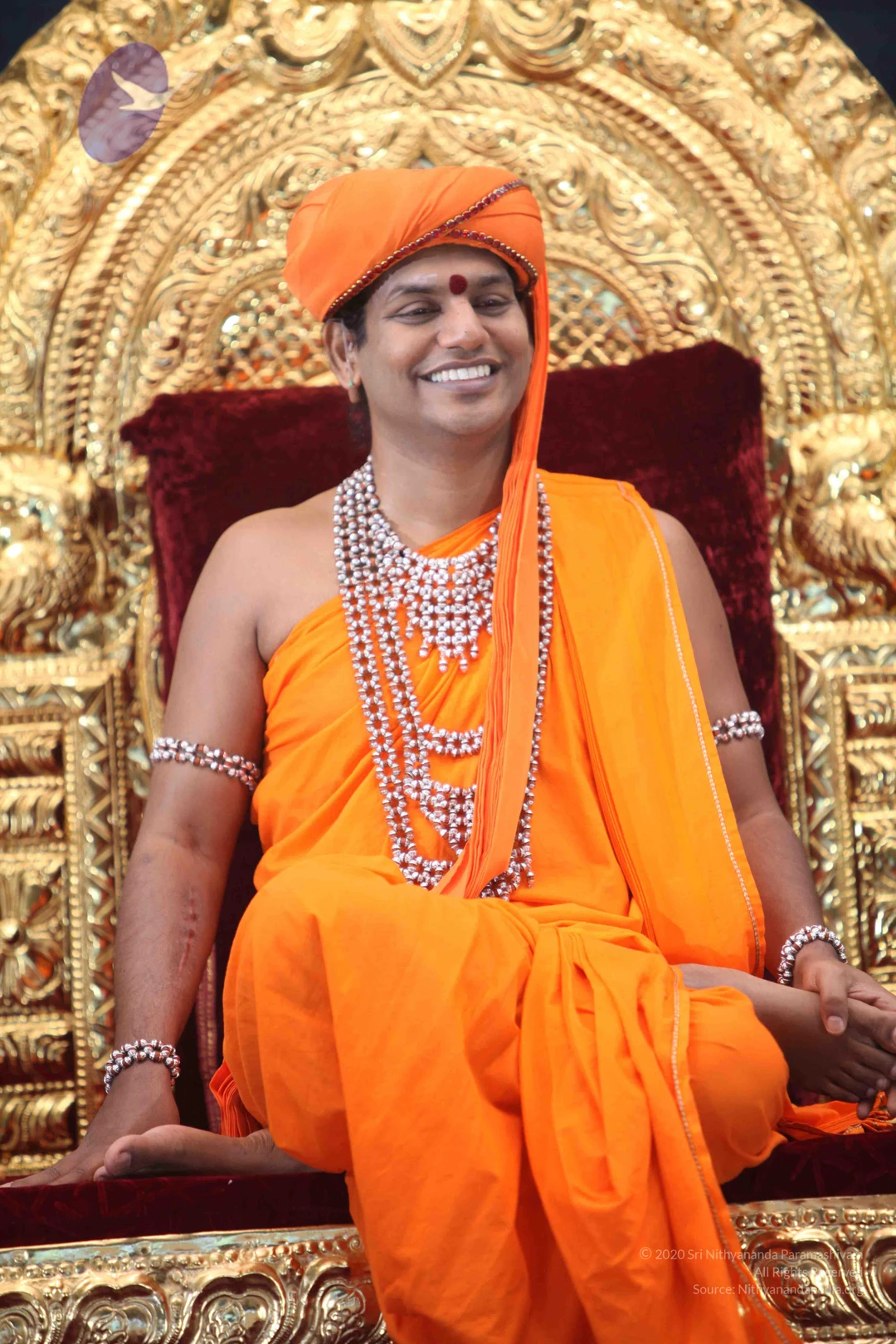
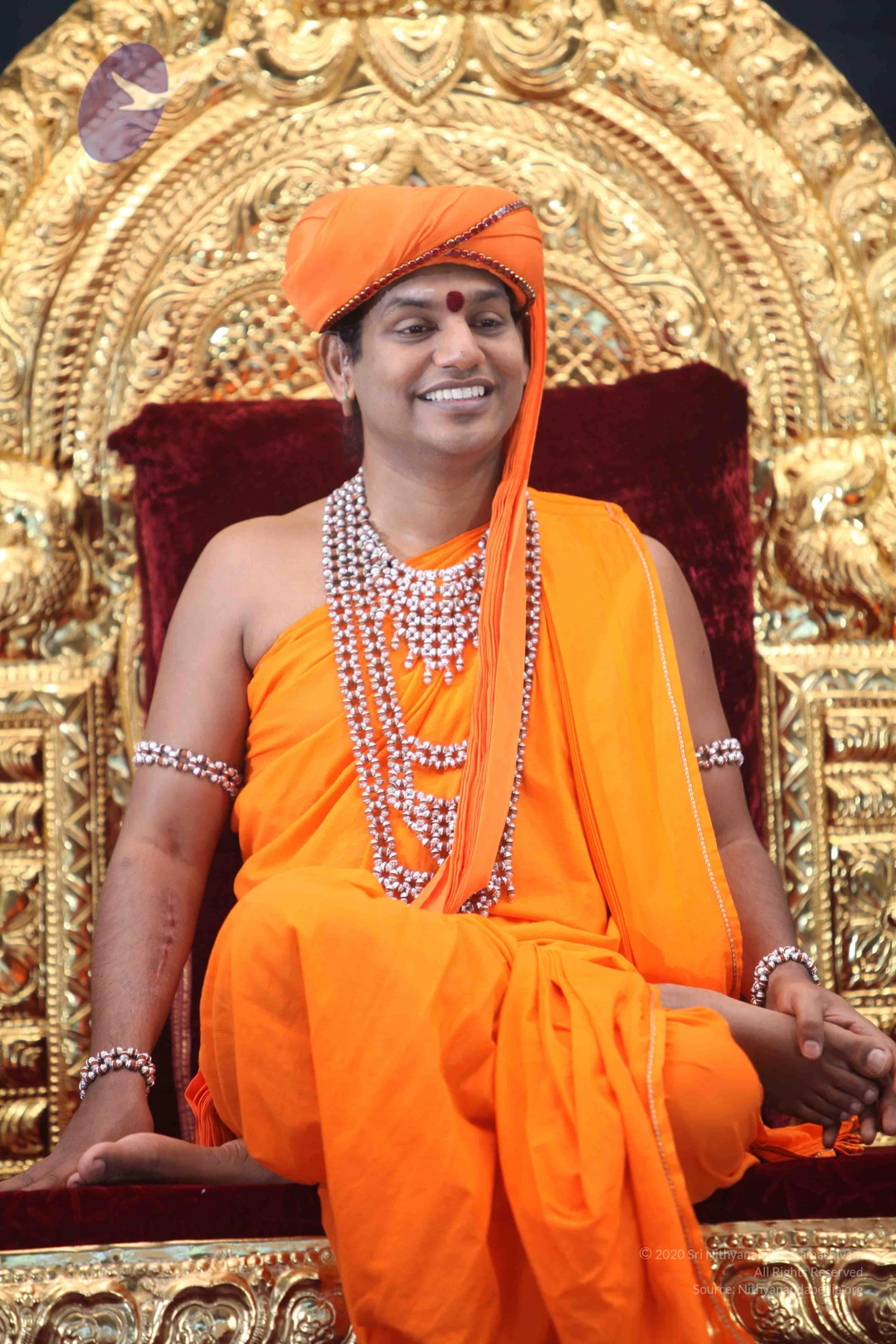
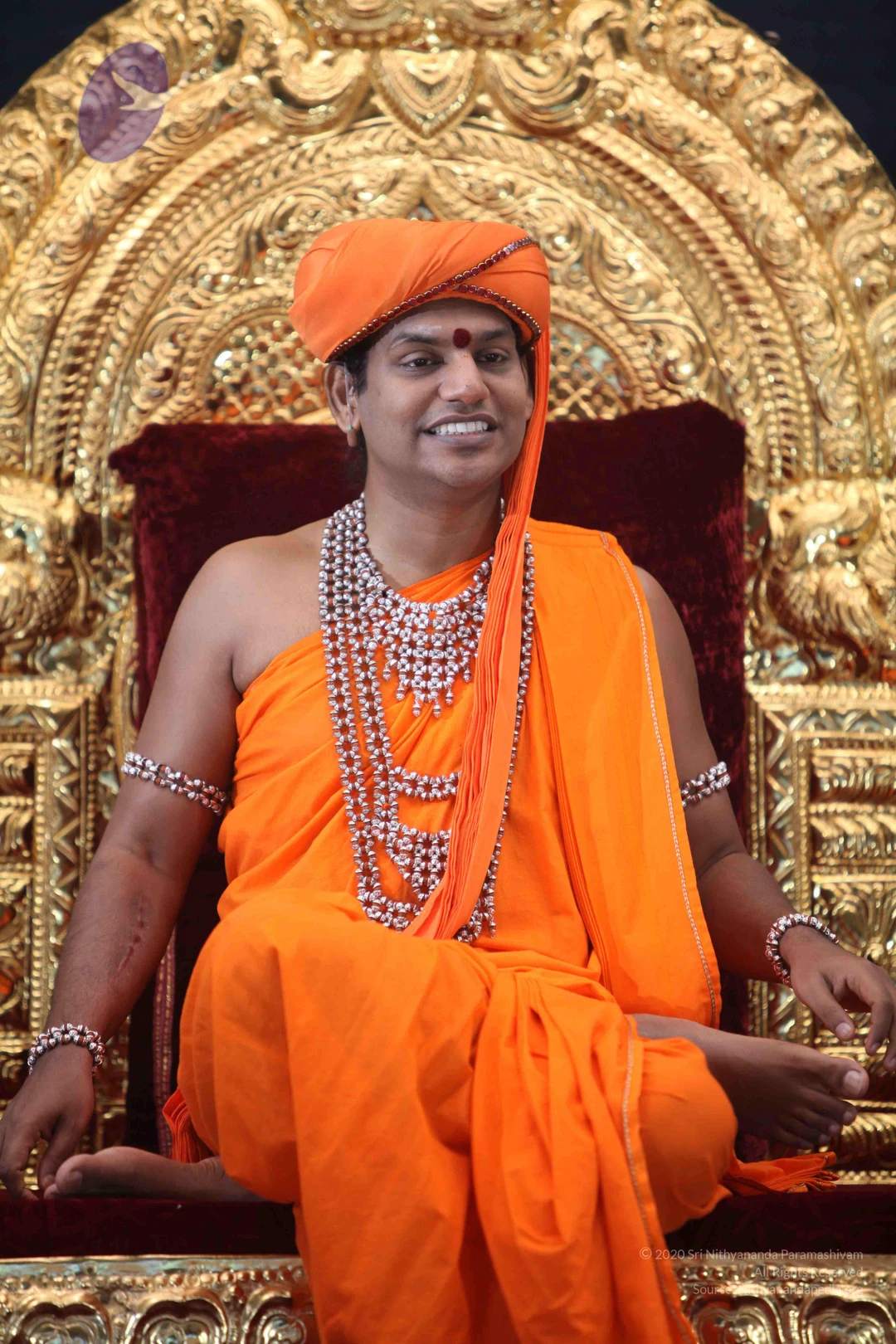
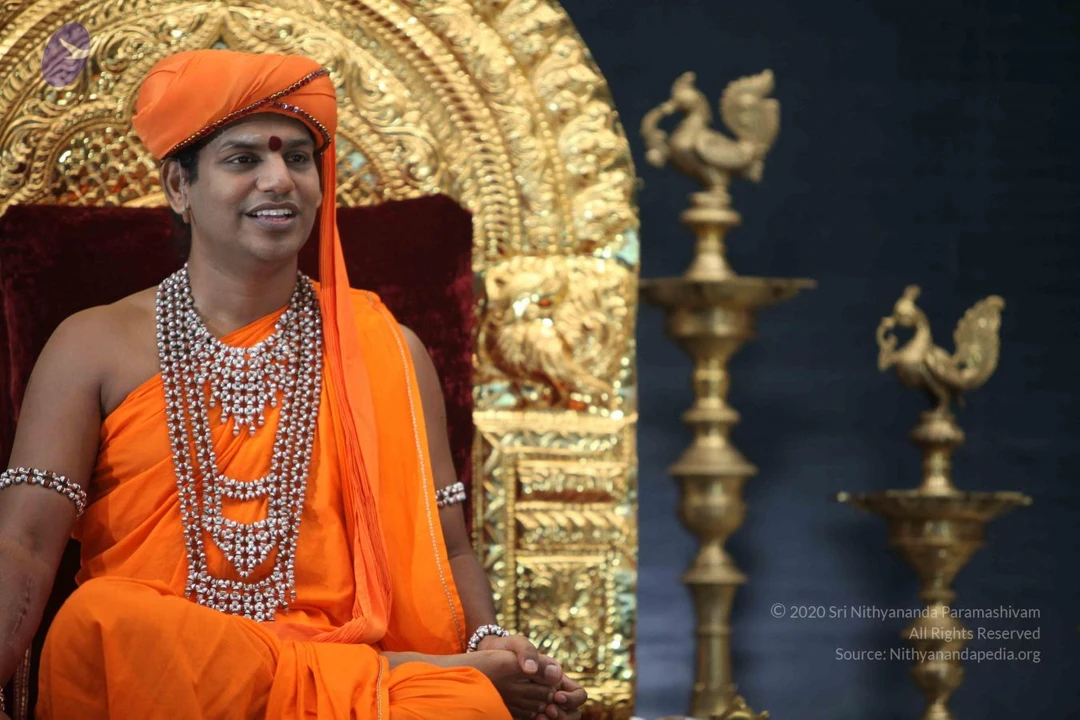
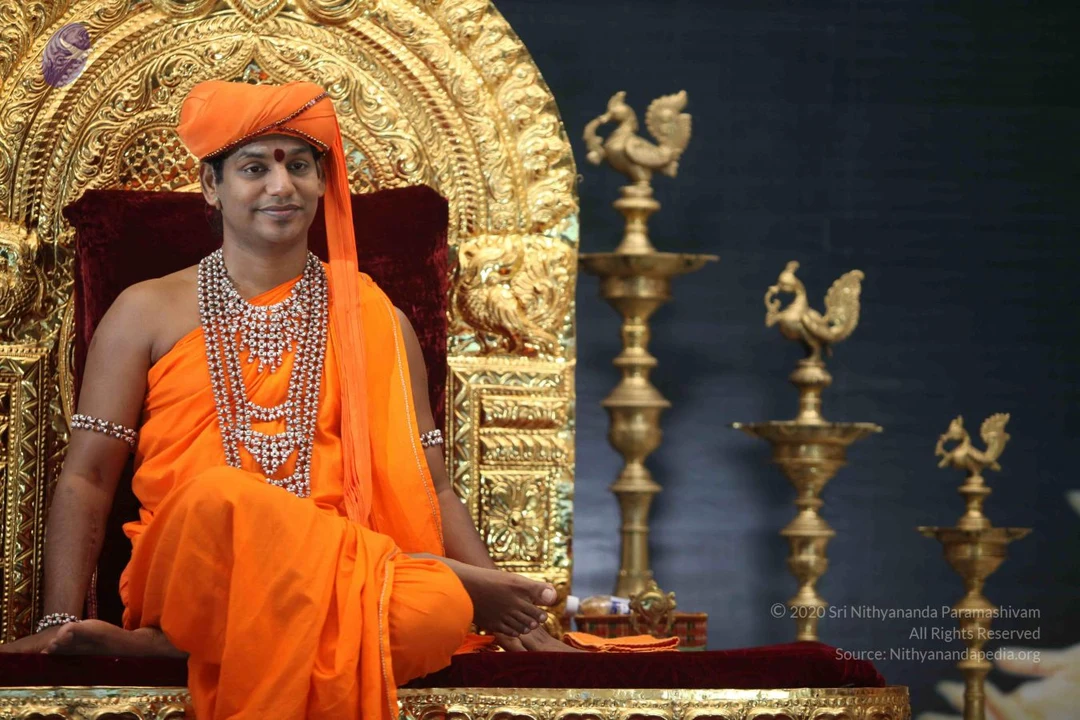
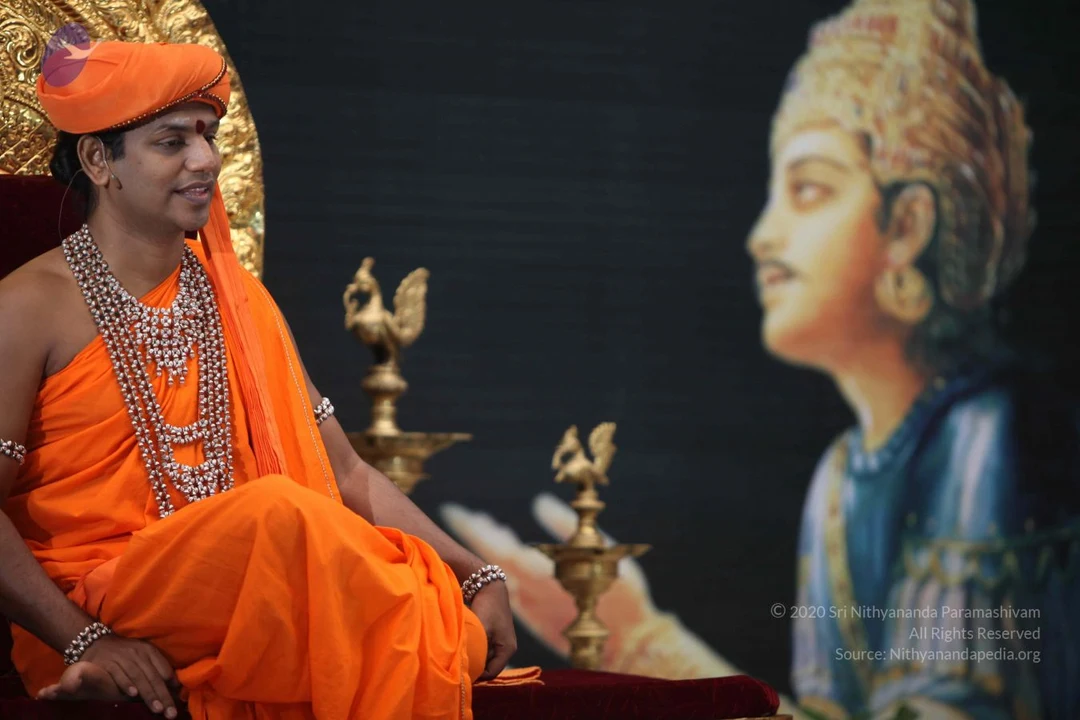
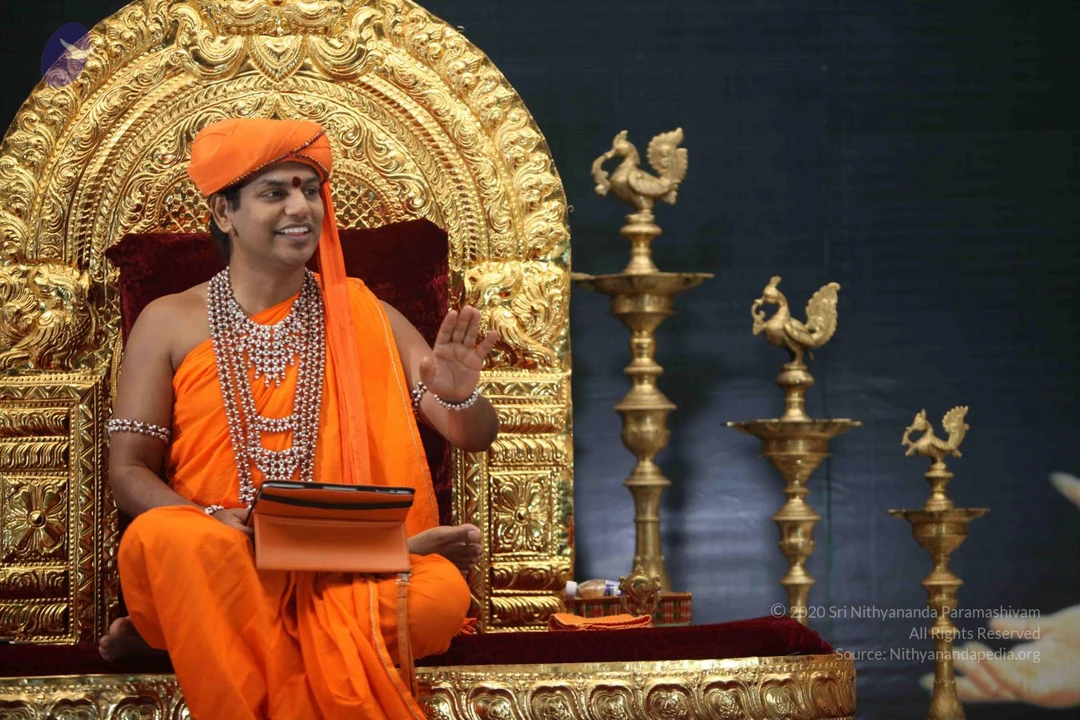
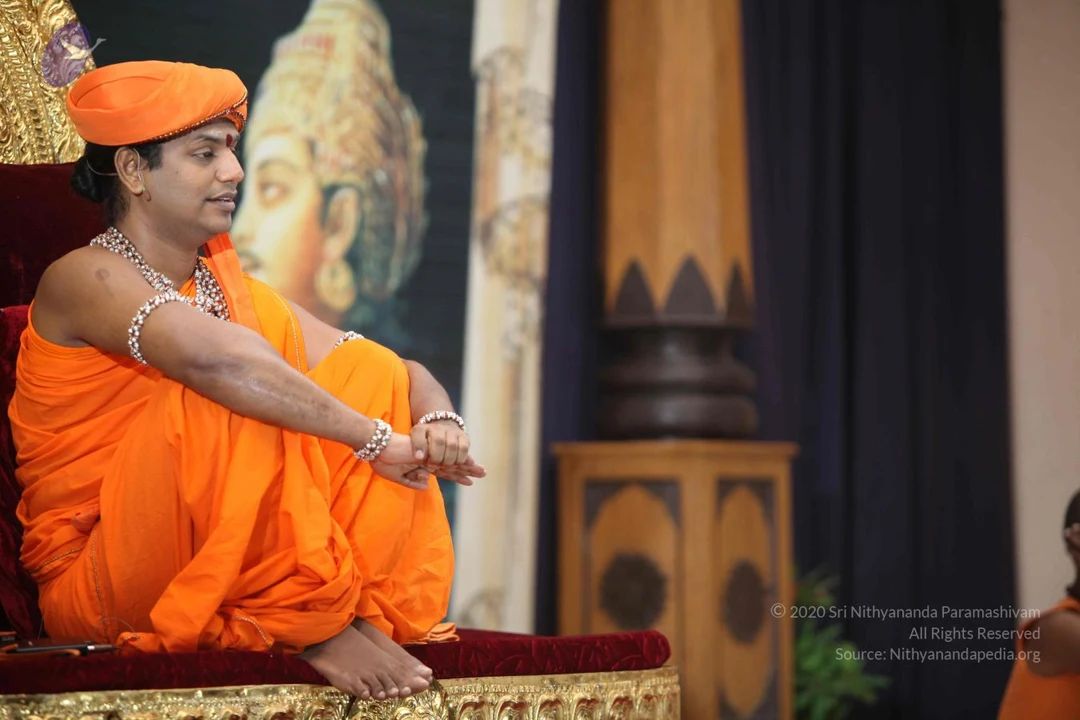
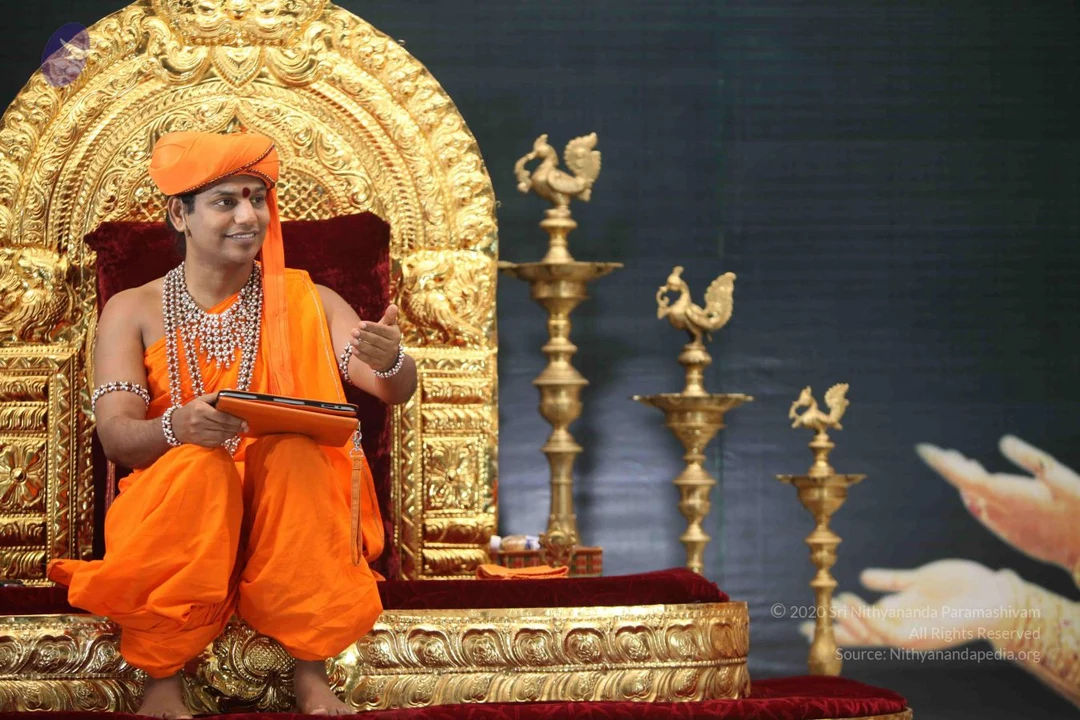
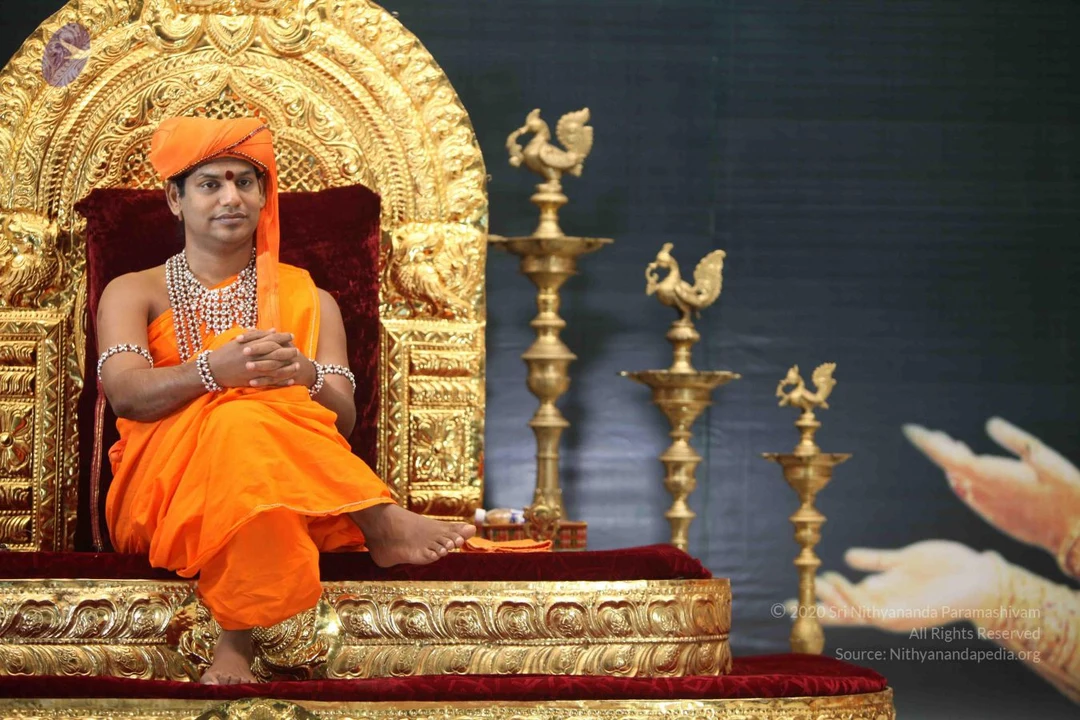
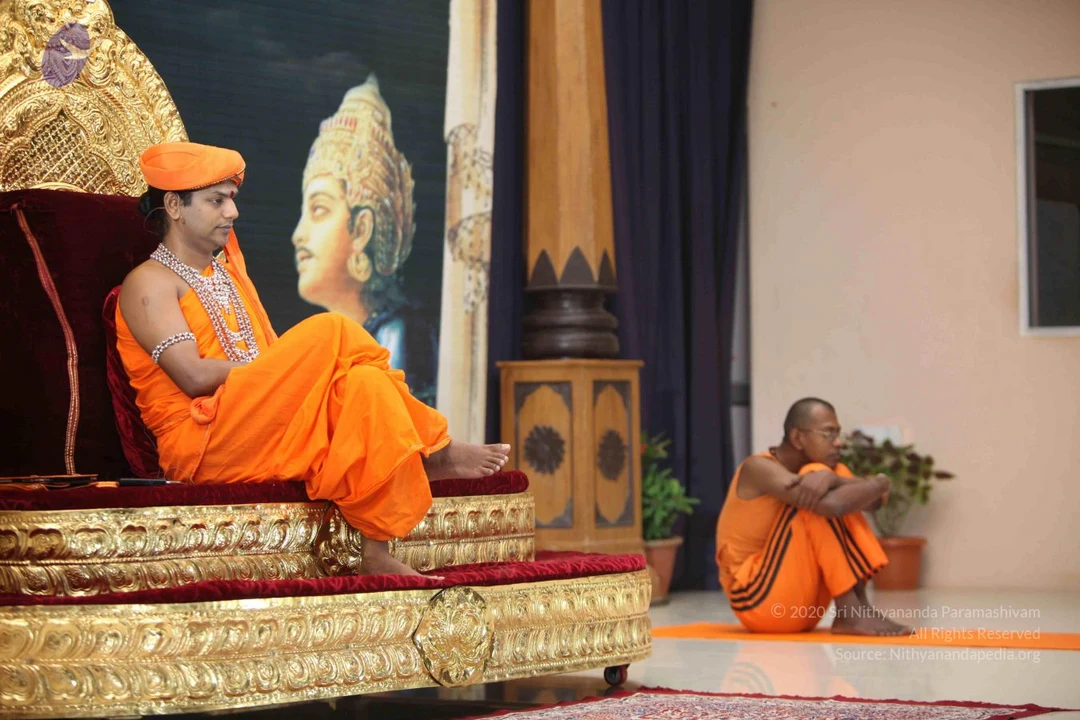
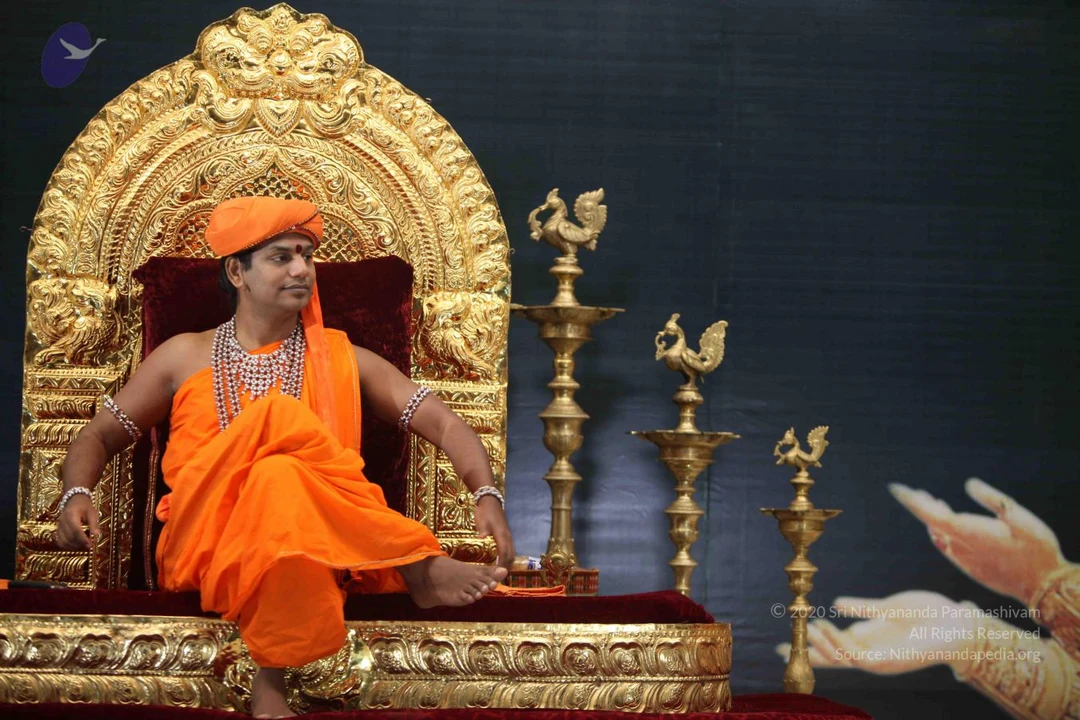
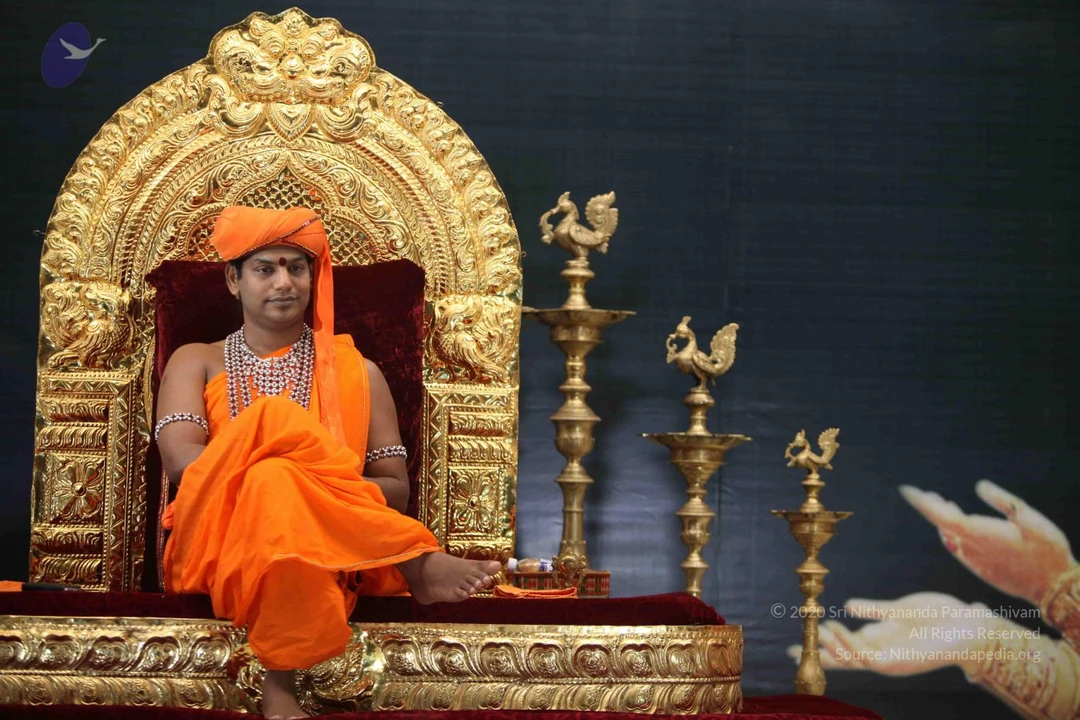
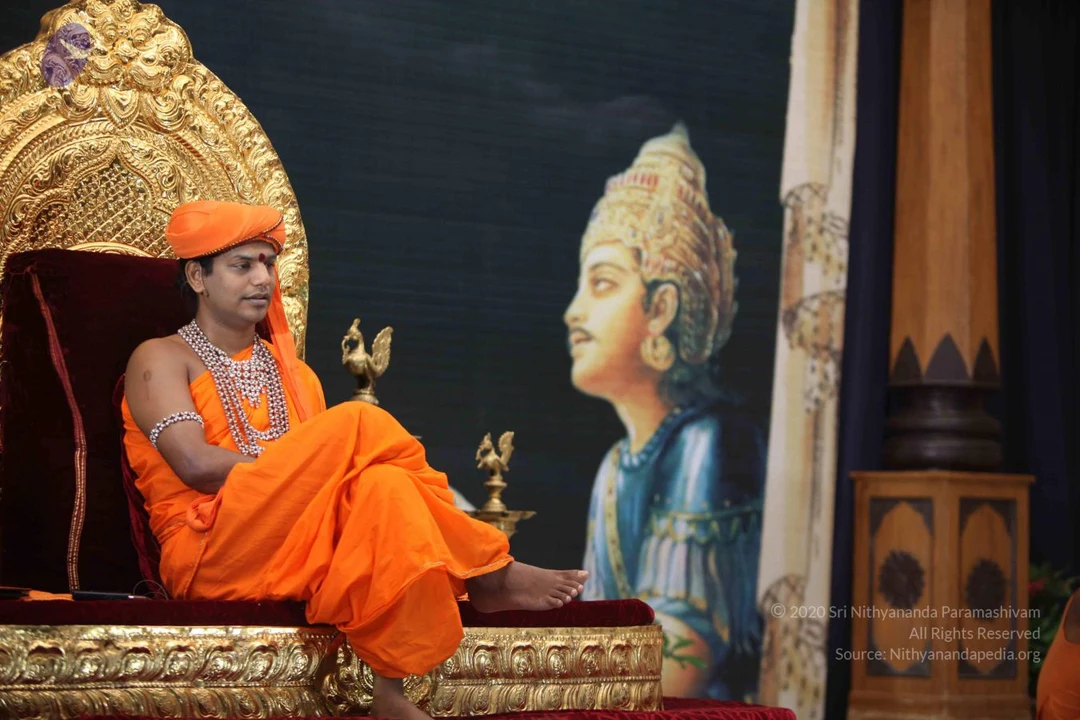
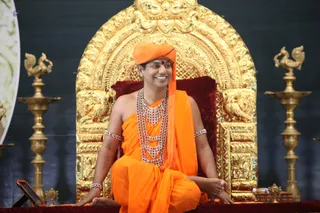
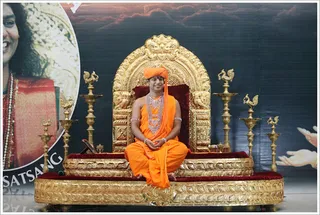
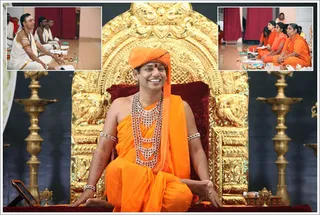
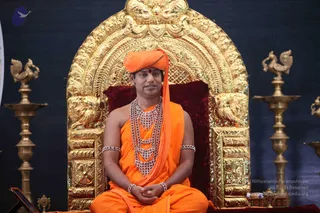
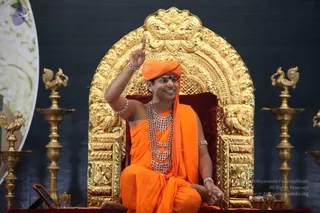
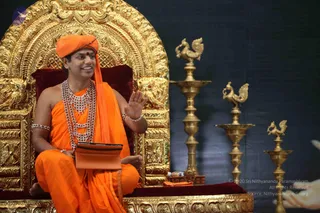
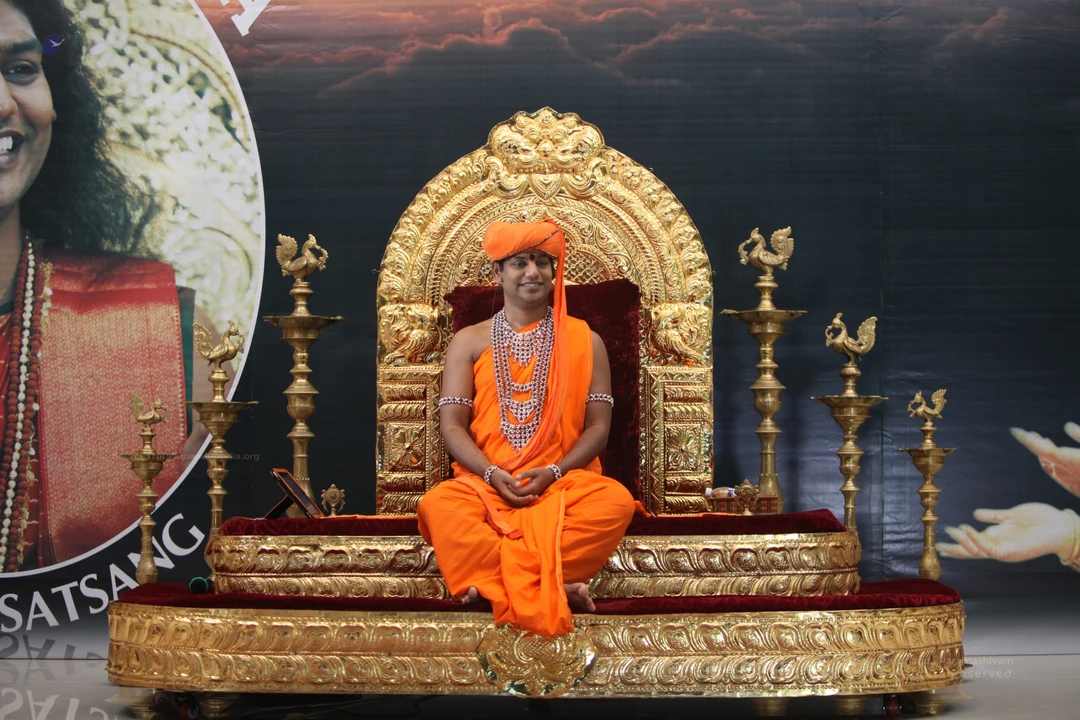
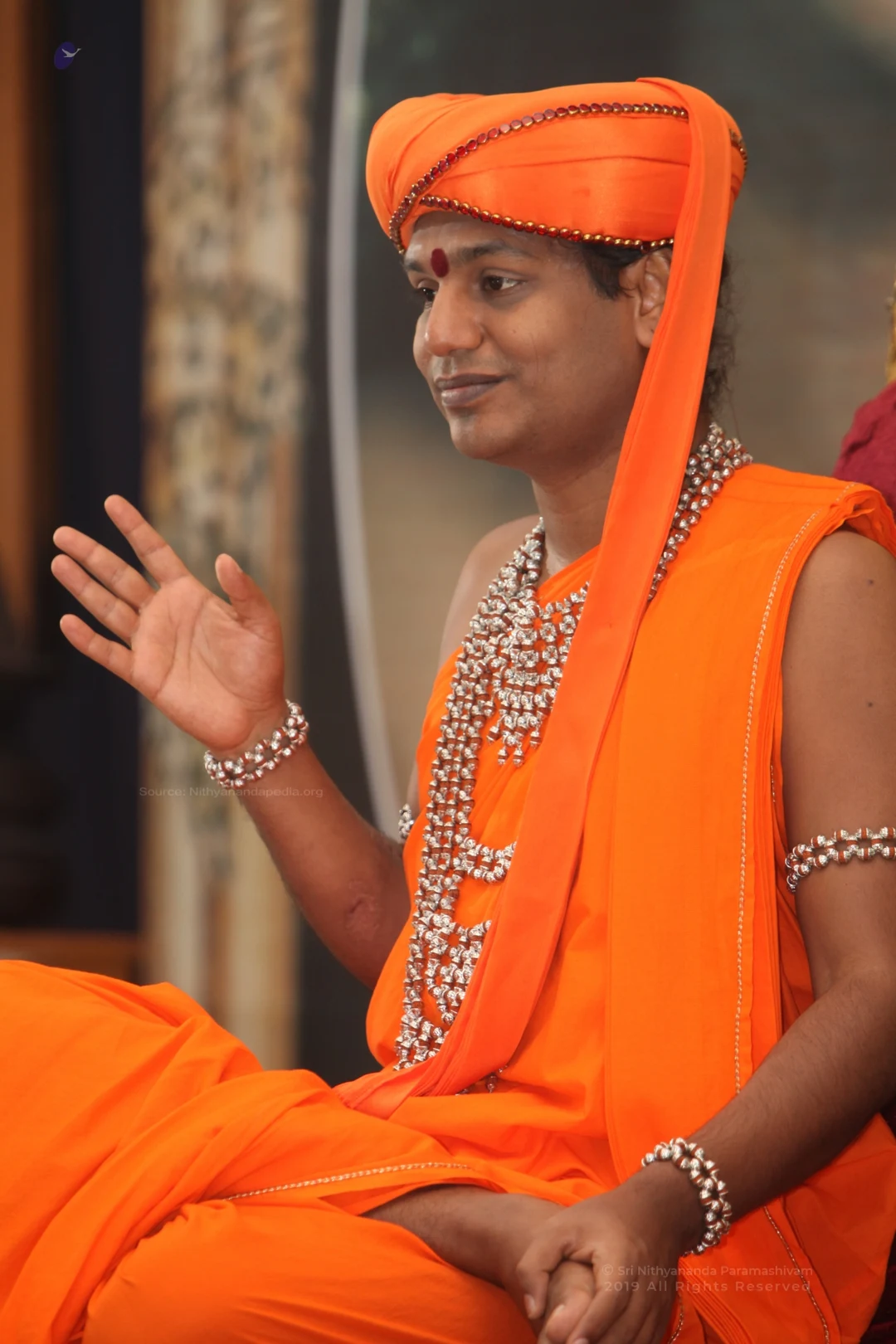
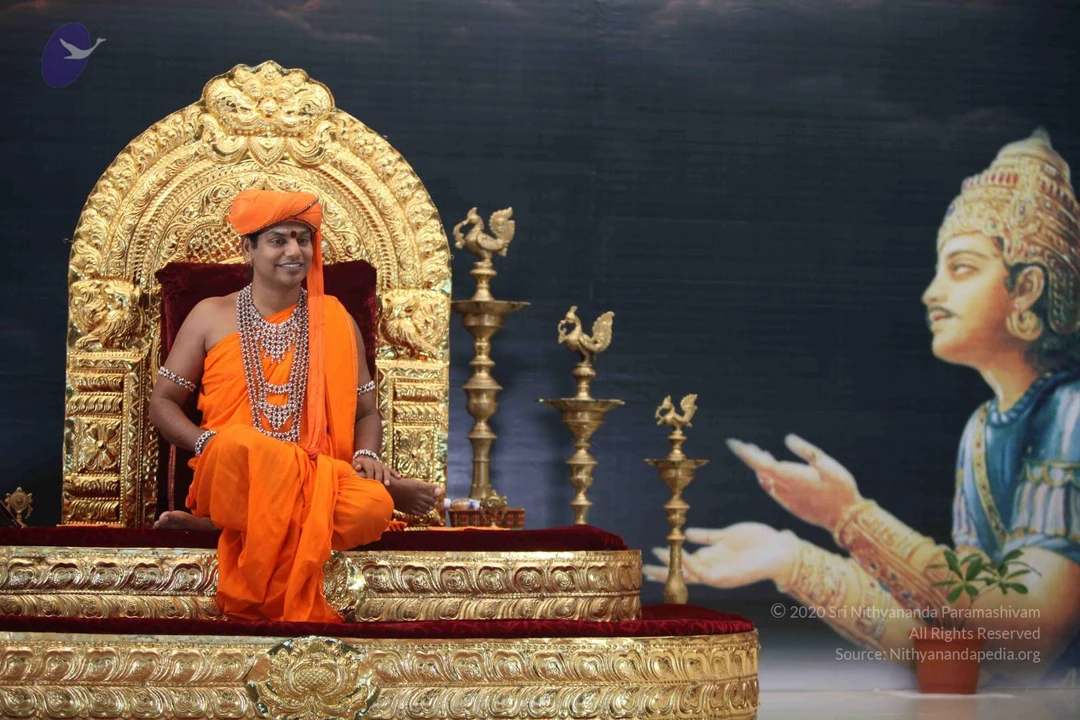
A seated figure in orange saffron robes and an orange turban sits cross-legged on an ornate gilded throne with red velvet cushions, hands folded in the lap. He wears a multi-strand white beaded necklace and white beaded armlets. Gold oil lamps with bird-shaped finials stand on either side of the throne. Behind him is a dark backdrop with a large portrait of a smiling man in red and gold garments, and partial text reading SATSANG appears at the lower left. A plain cloth-shaded platform covers the base. Swamiji (probable) is seated on the throne, wearing saffron robes, orange turban, and a layered beaded necklace, consistent with the page's Bhagavad Gita Satsang setting.

November 19 2011

Original wiki page
Contents

Title:

THE SUPREME PONTIFF OF HINDUISM HDH BHAGAVAN SRI NITHYANANDA PARAMASHIVAM

Photos
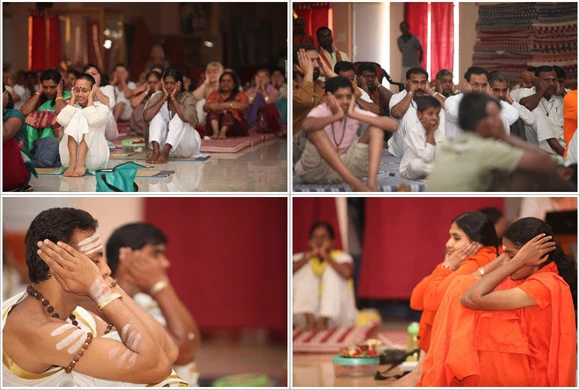
Temple Visit | Paduka Puja | Bhagavad Gita Satsang – 19 November 2011

Sakshi Pramana:

Sharing from Other (Specify)

Photos Of The Day:
Temple

BGSatsang

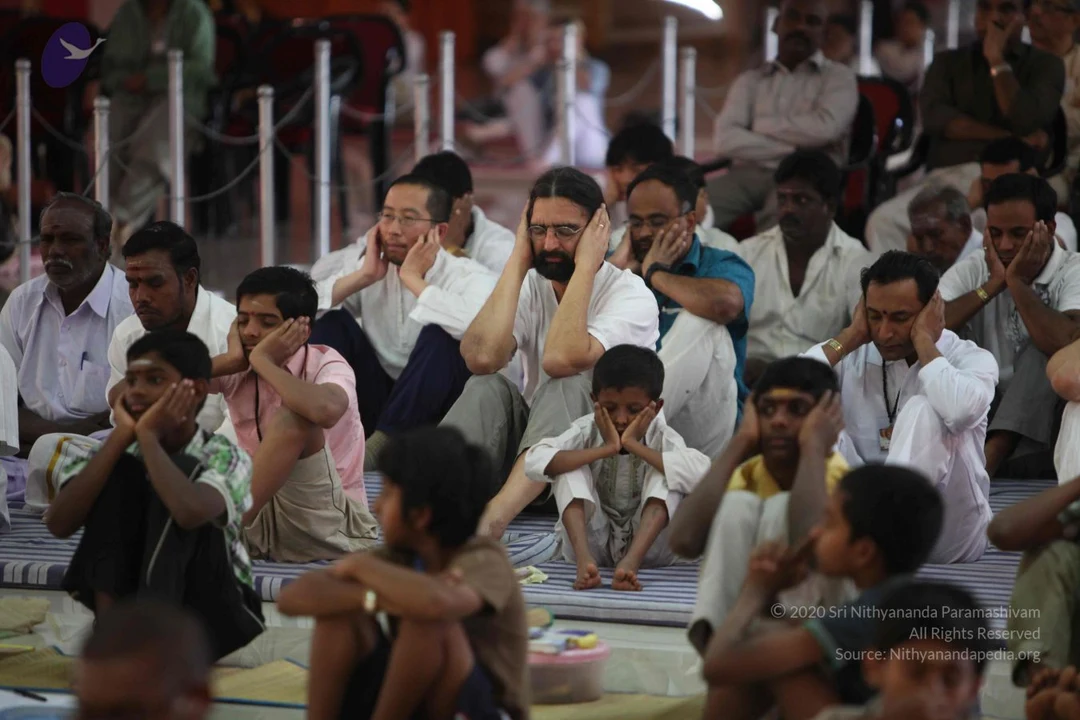
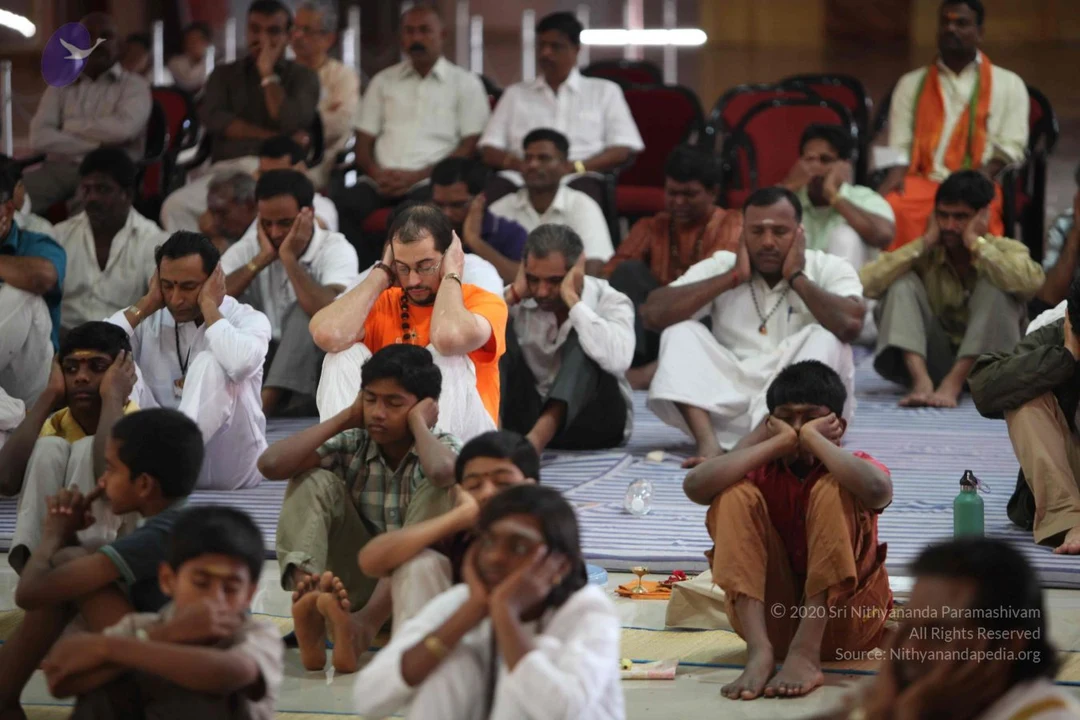
NithyaKriya-Autism

Sarva-Darshan

VIP-Meeting

Photos from this day
View all 252 photos
Photos
30 photosSource gallery
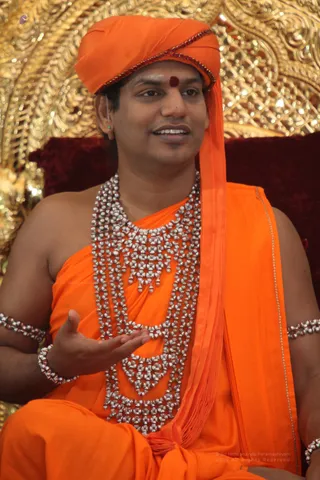
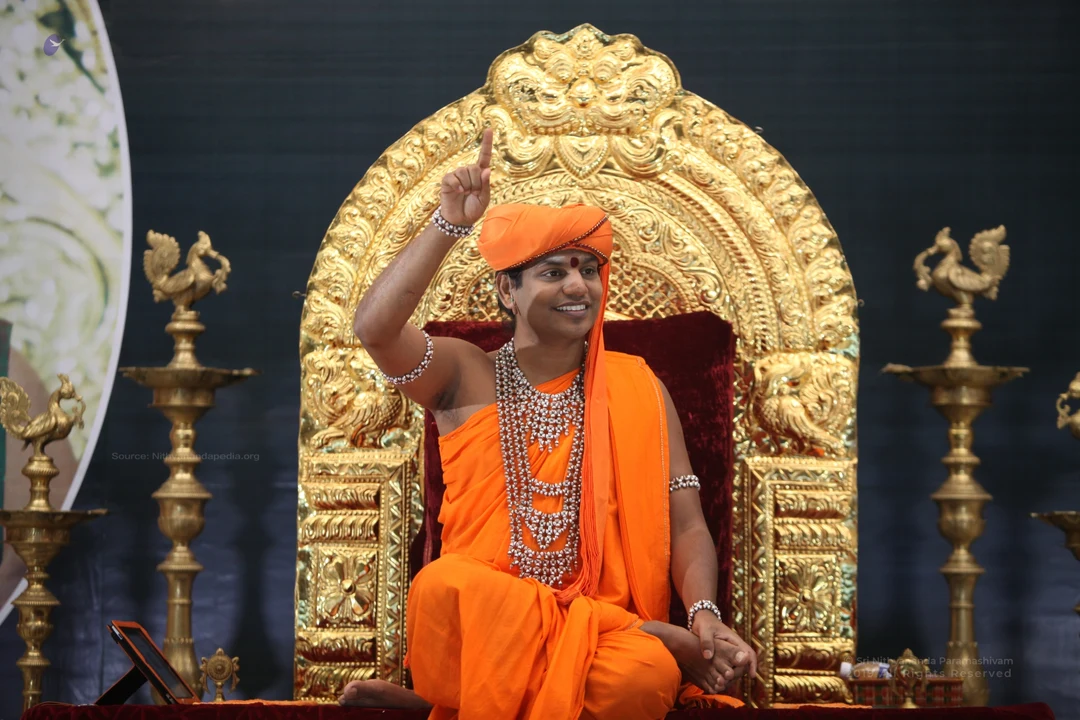
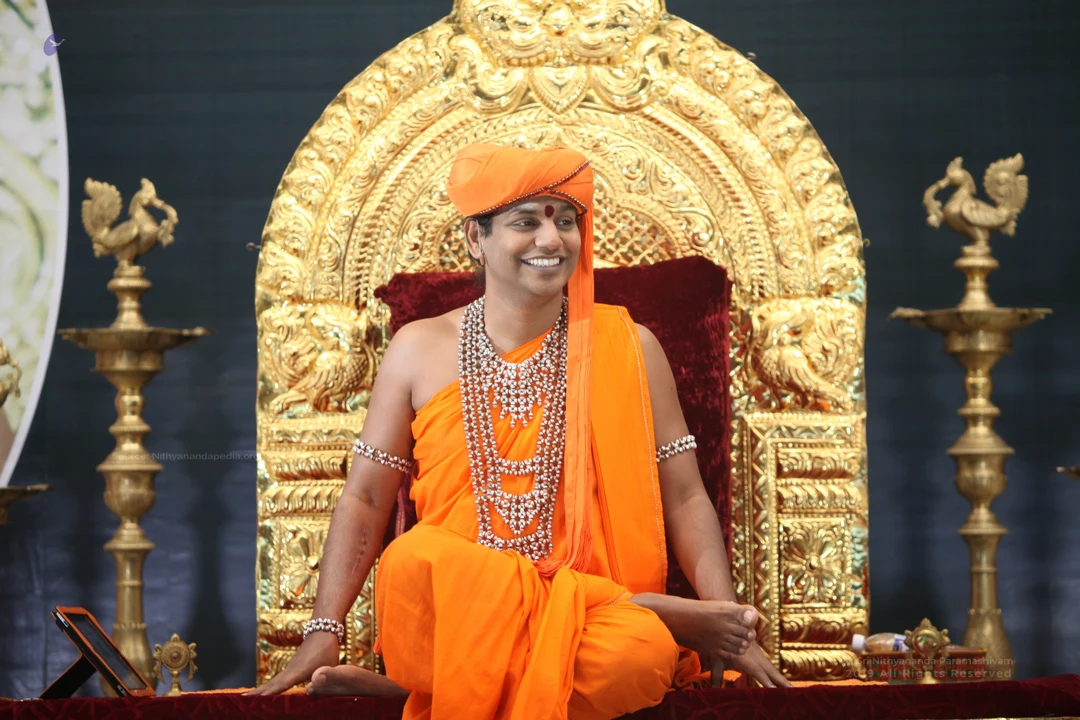
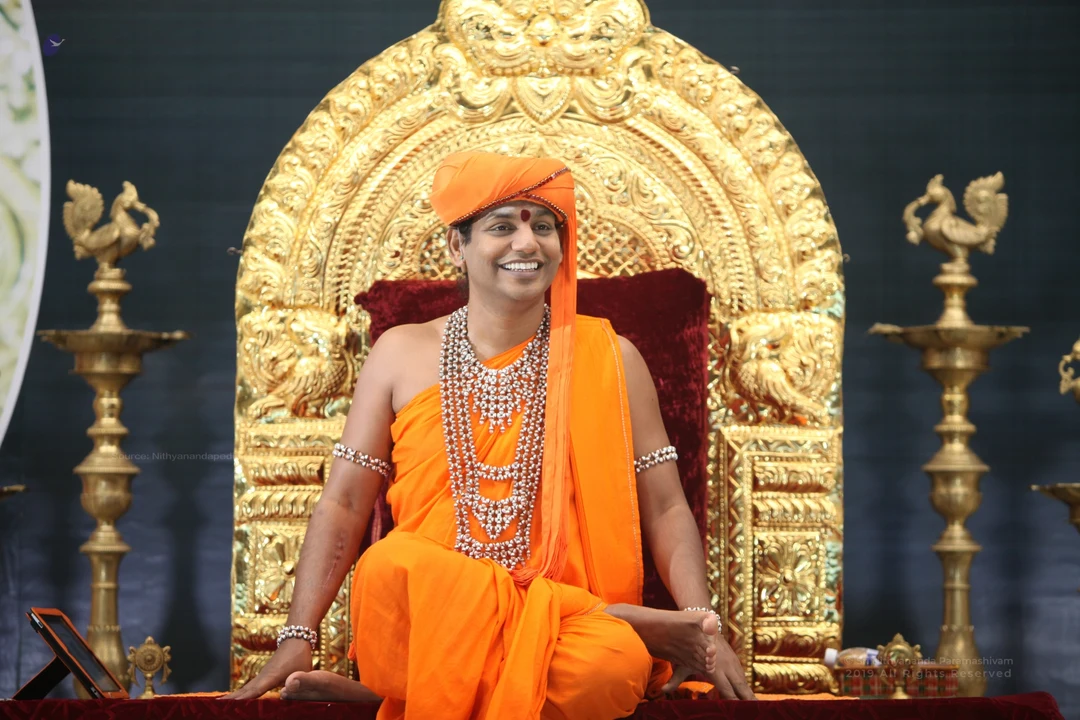
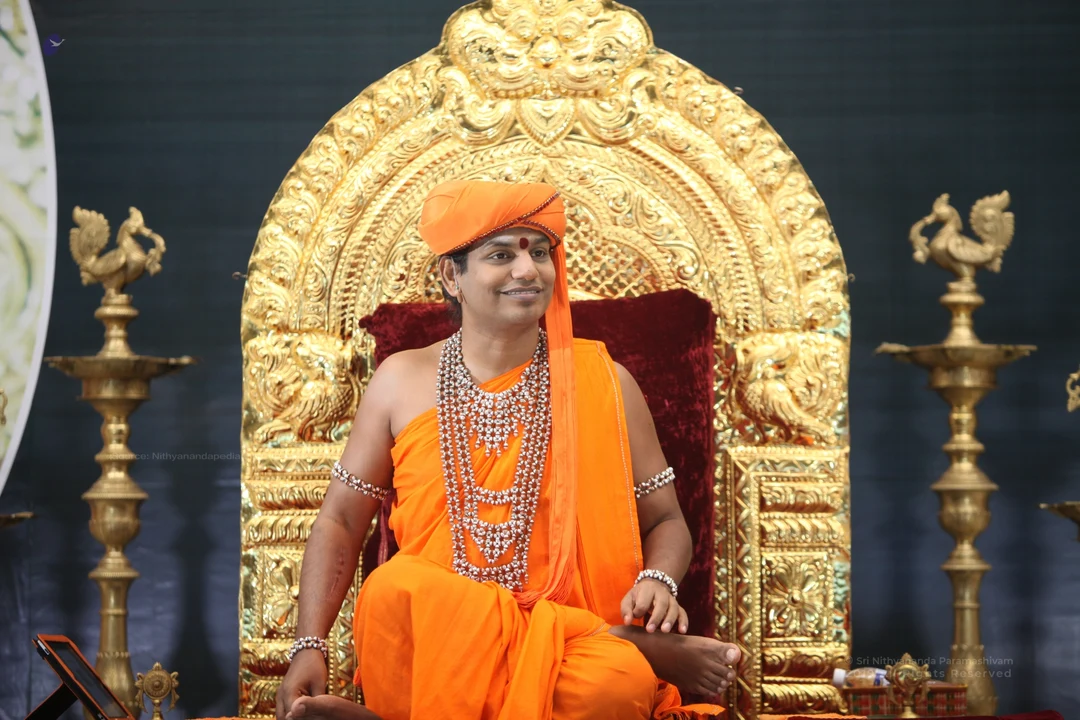
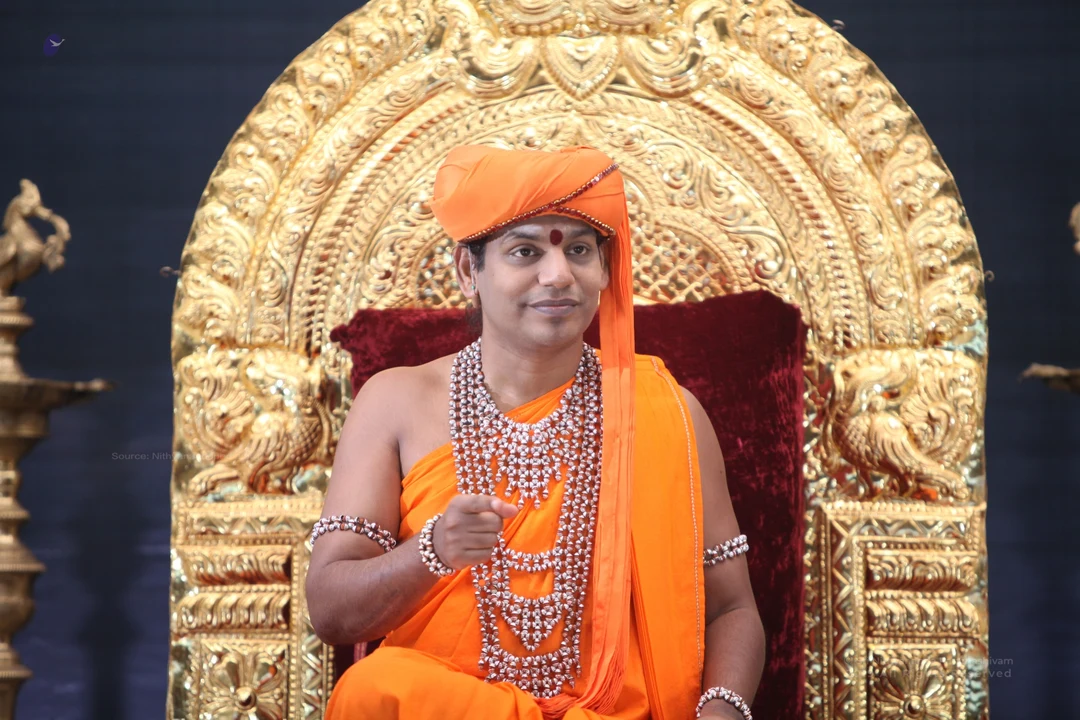
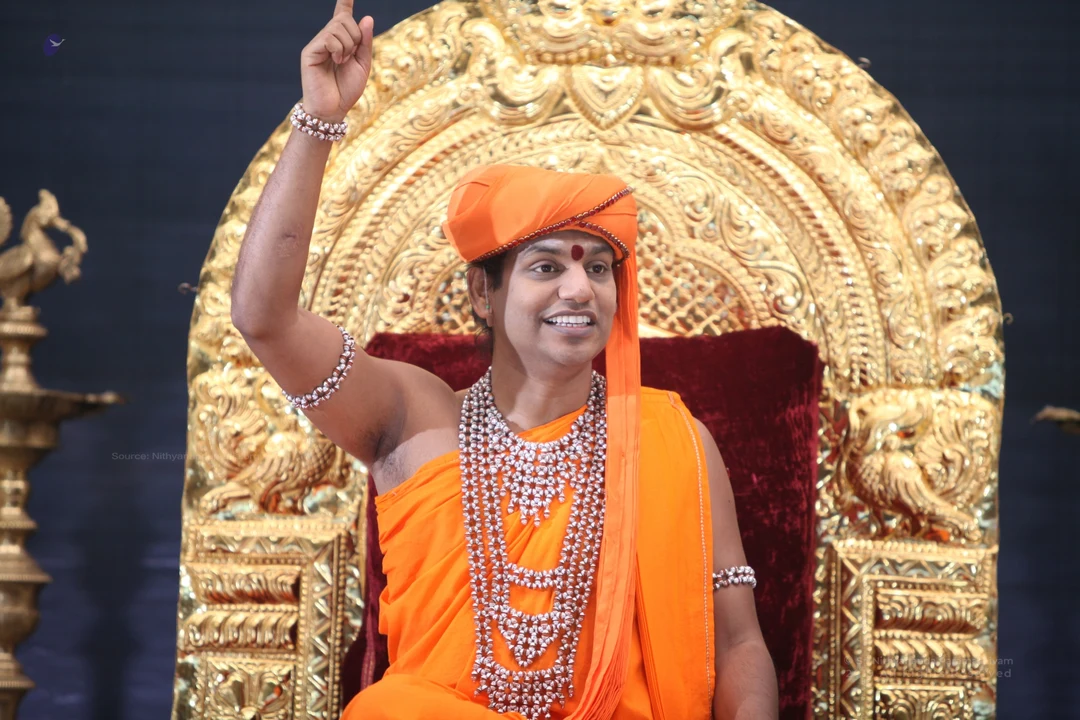
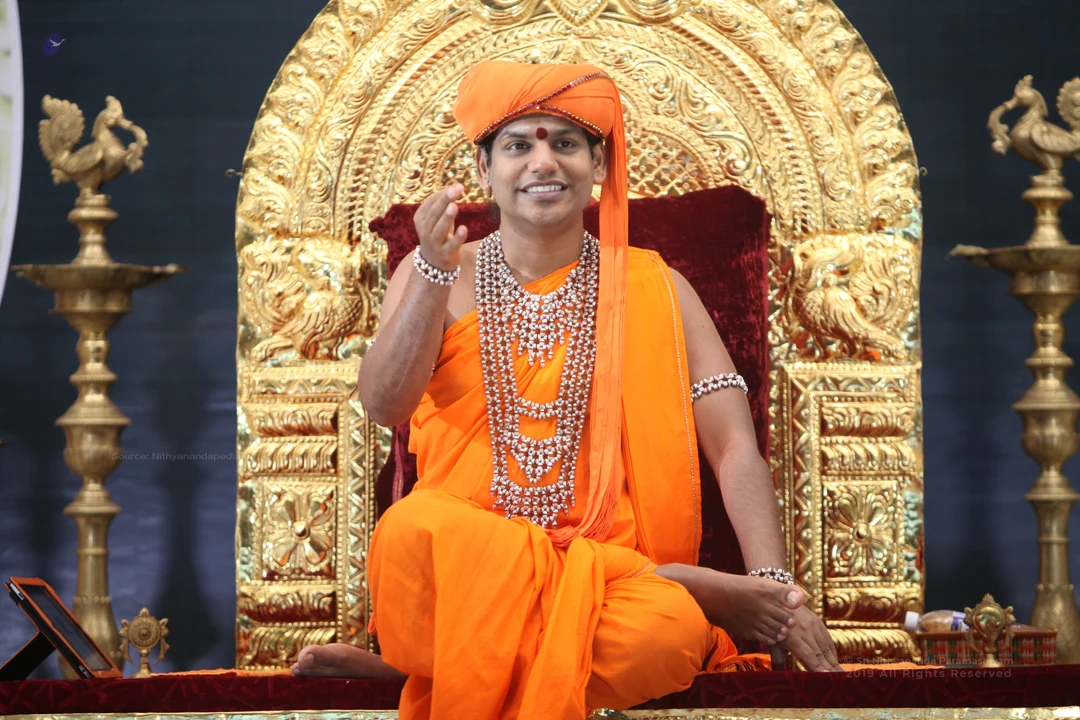
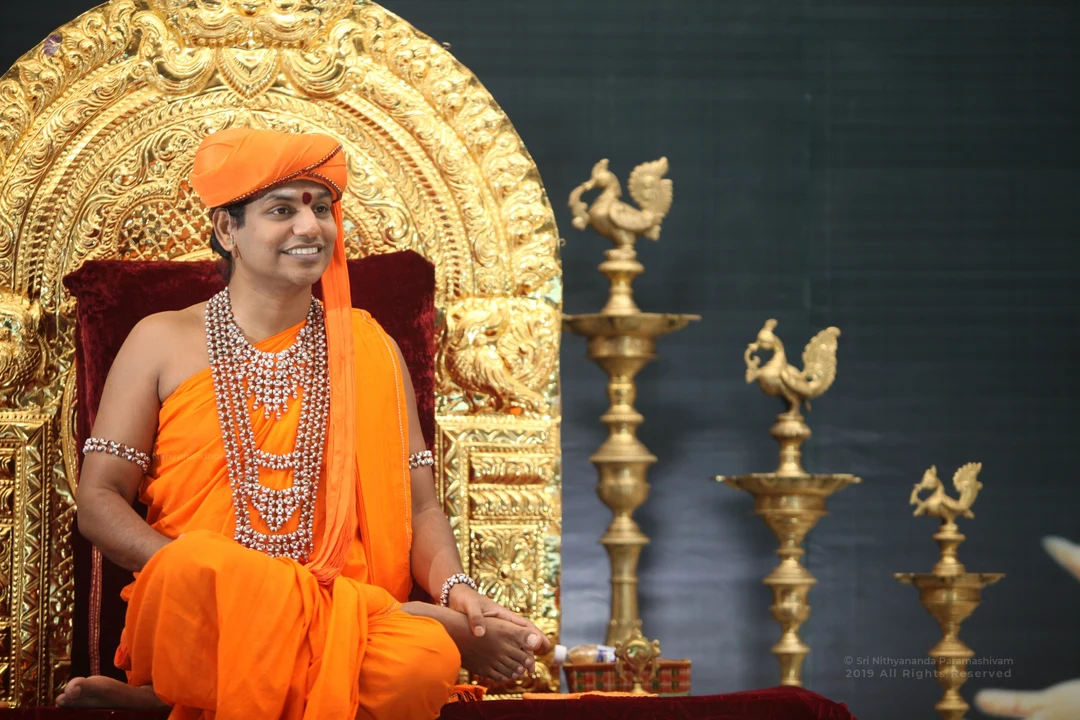
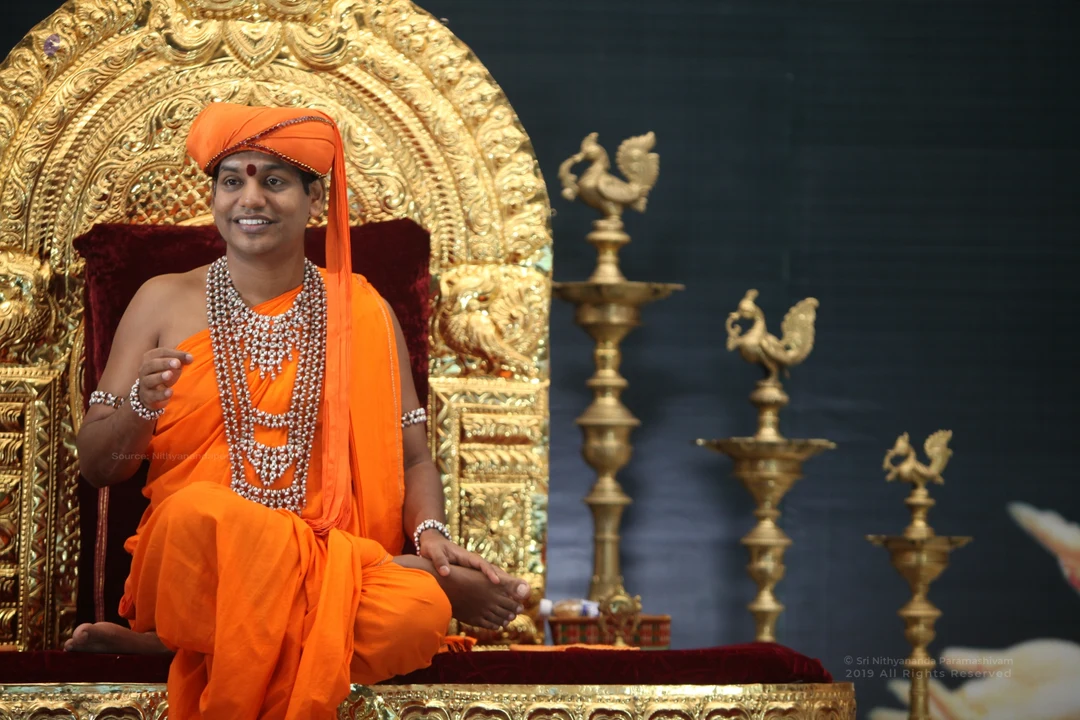
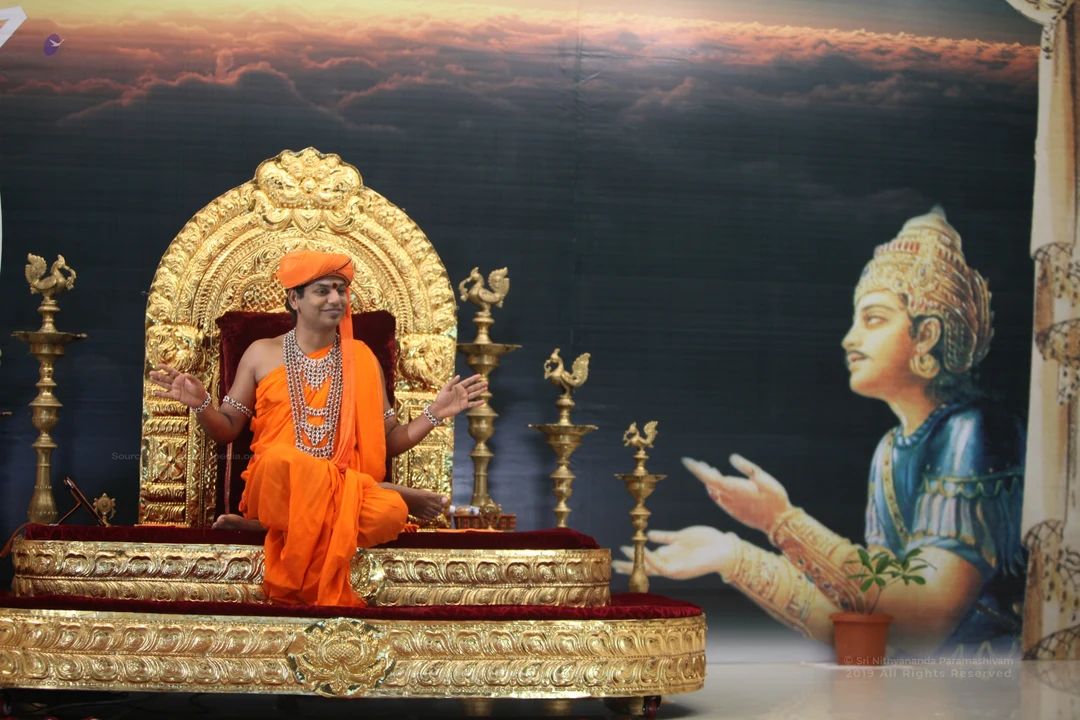
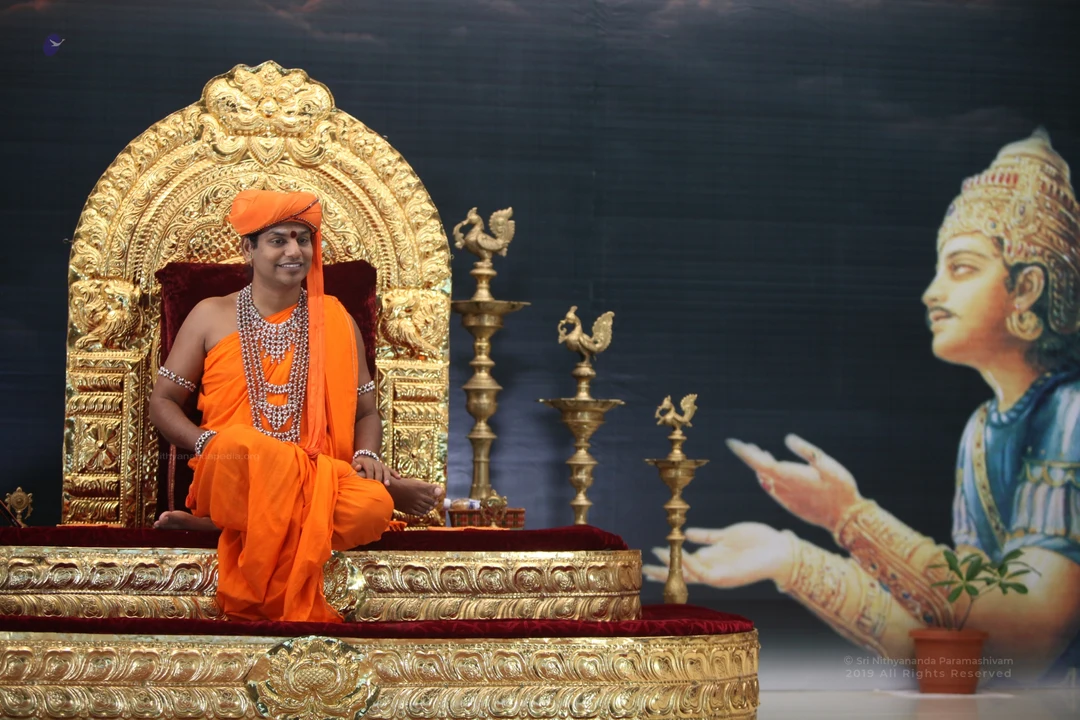
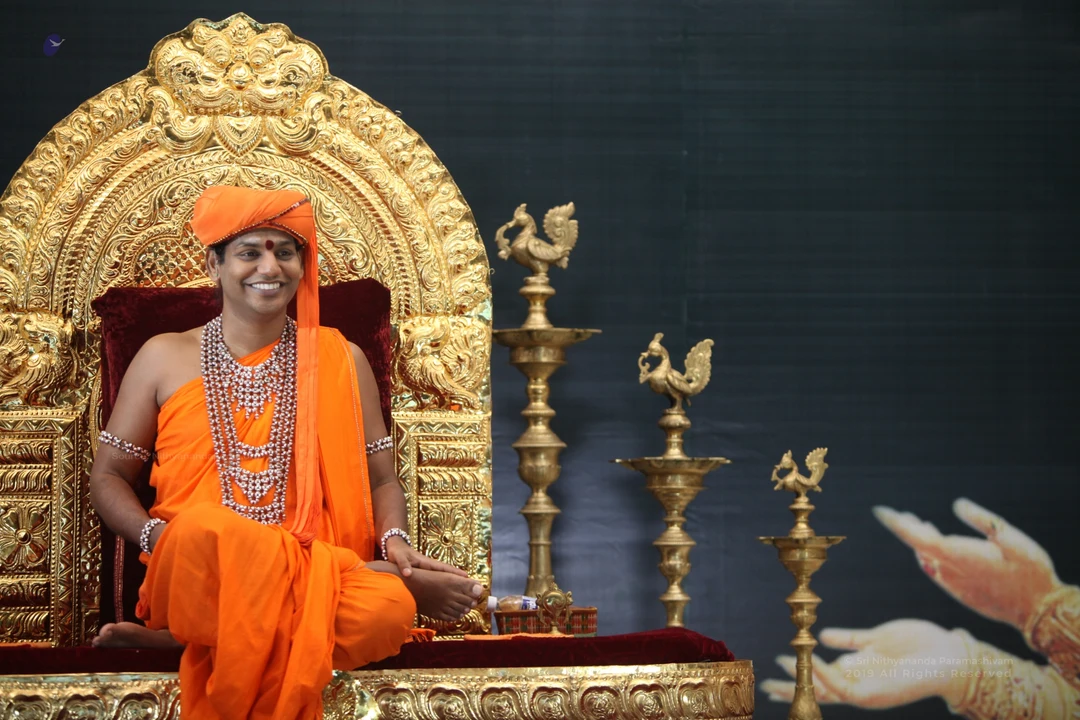
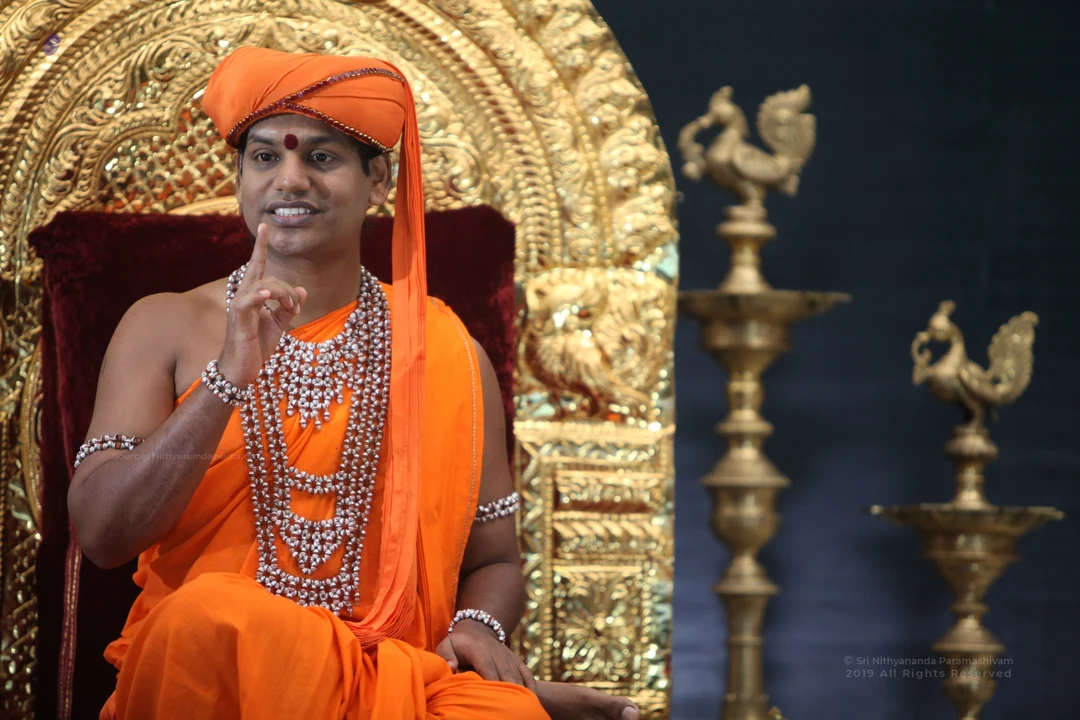
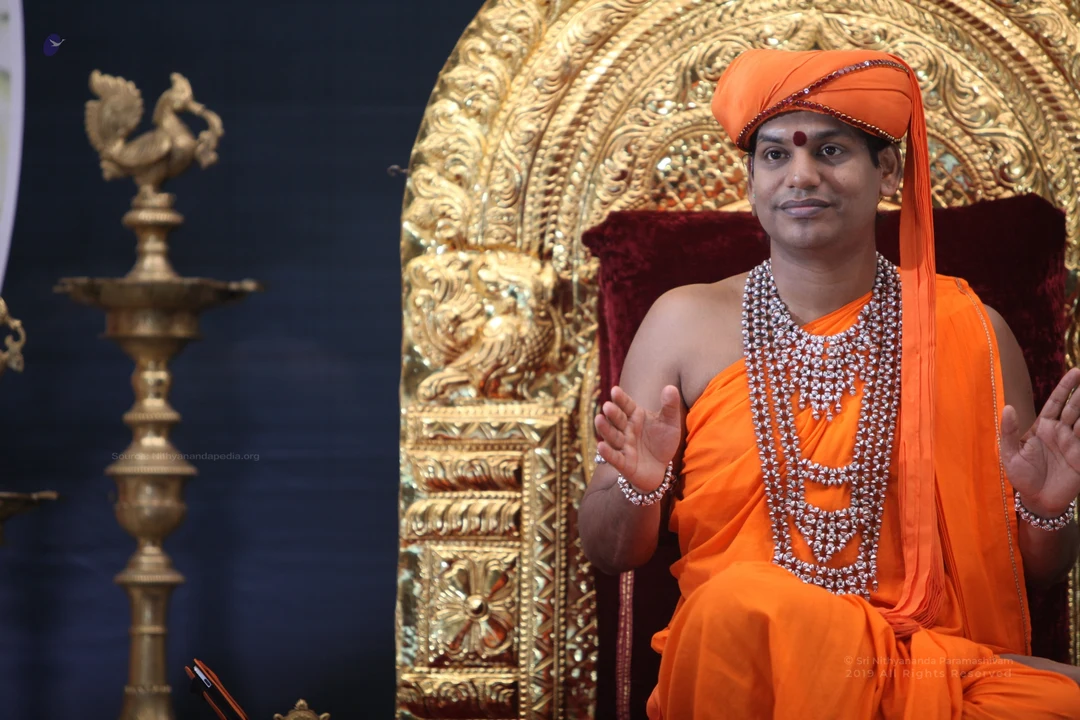
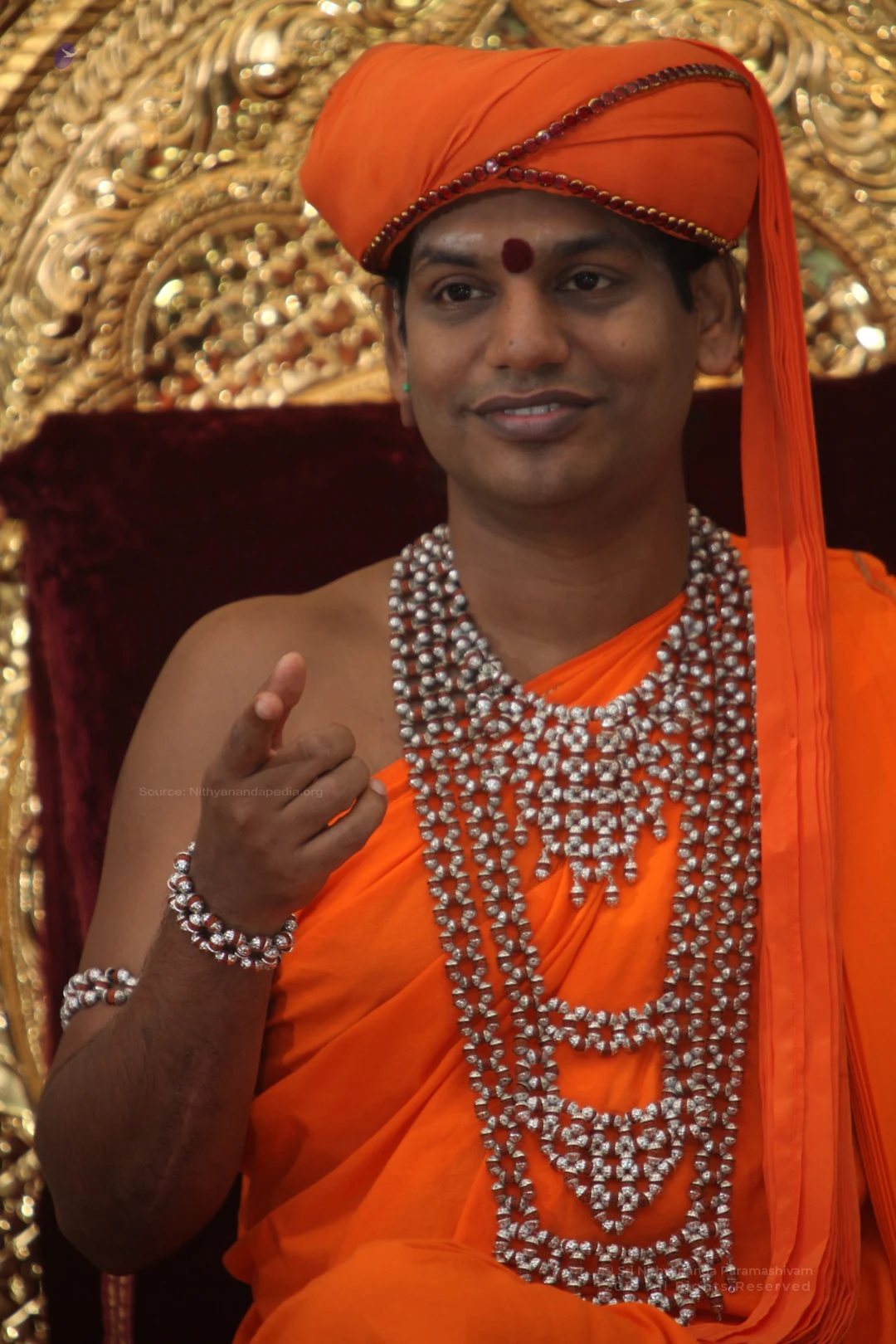
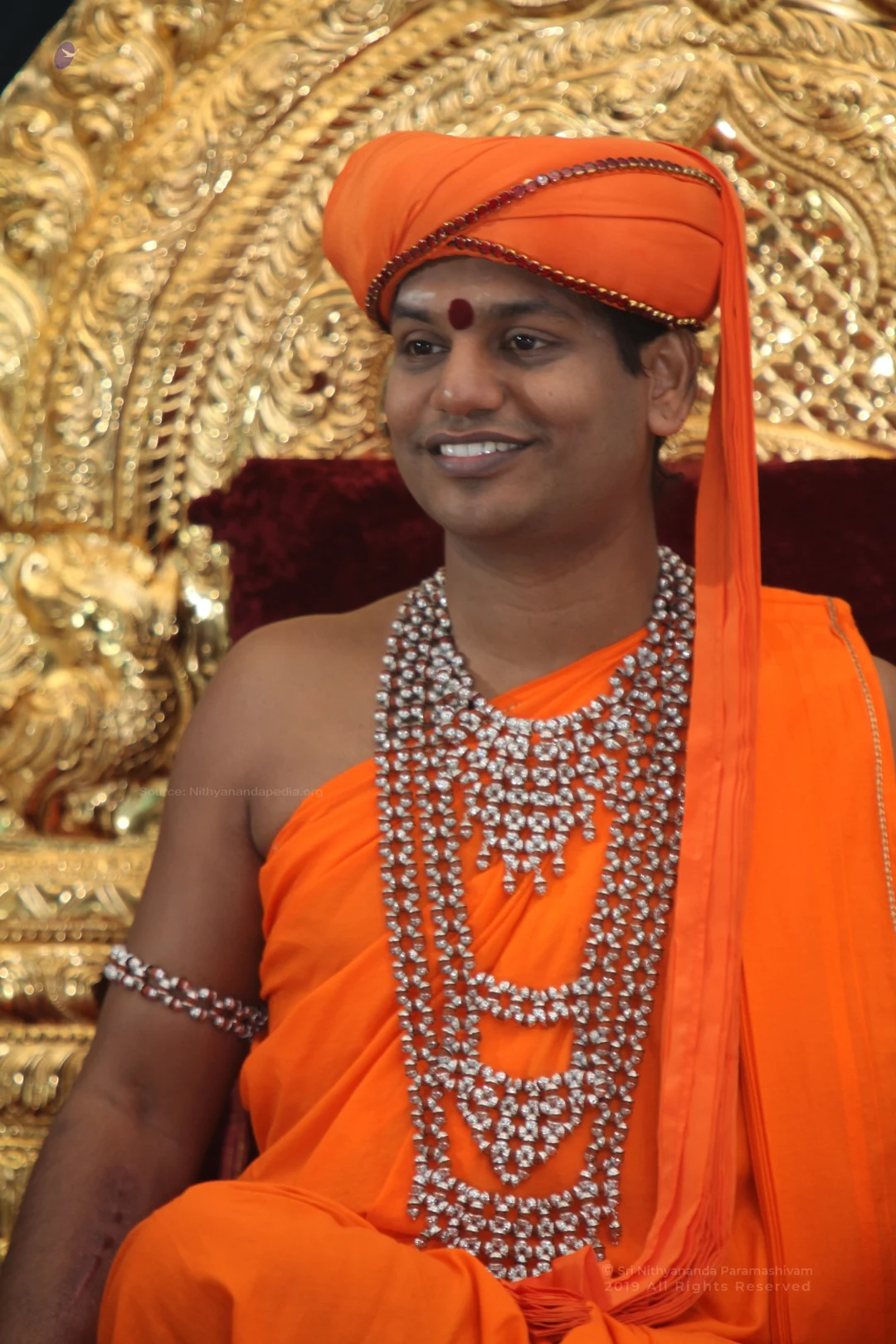
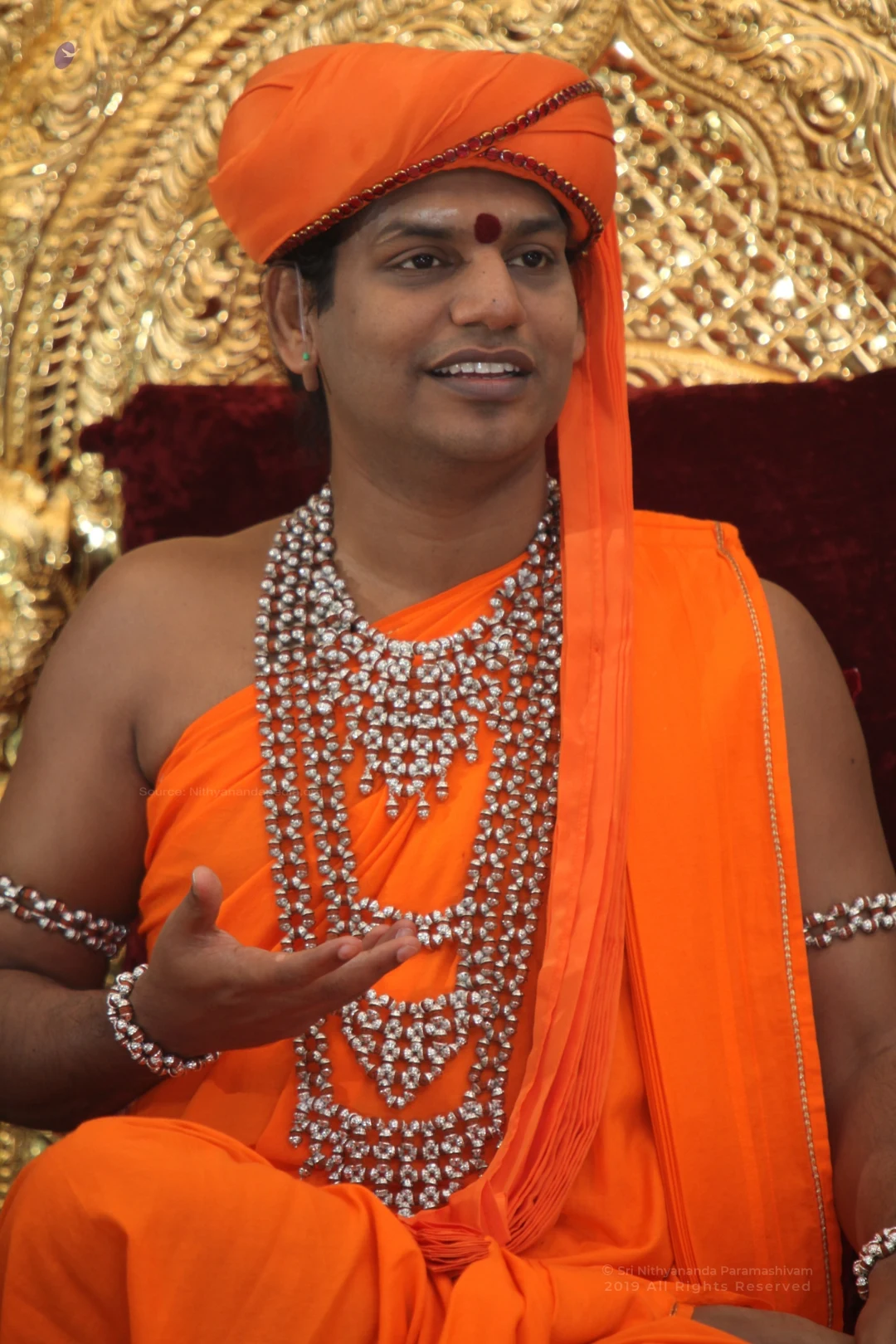
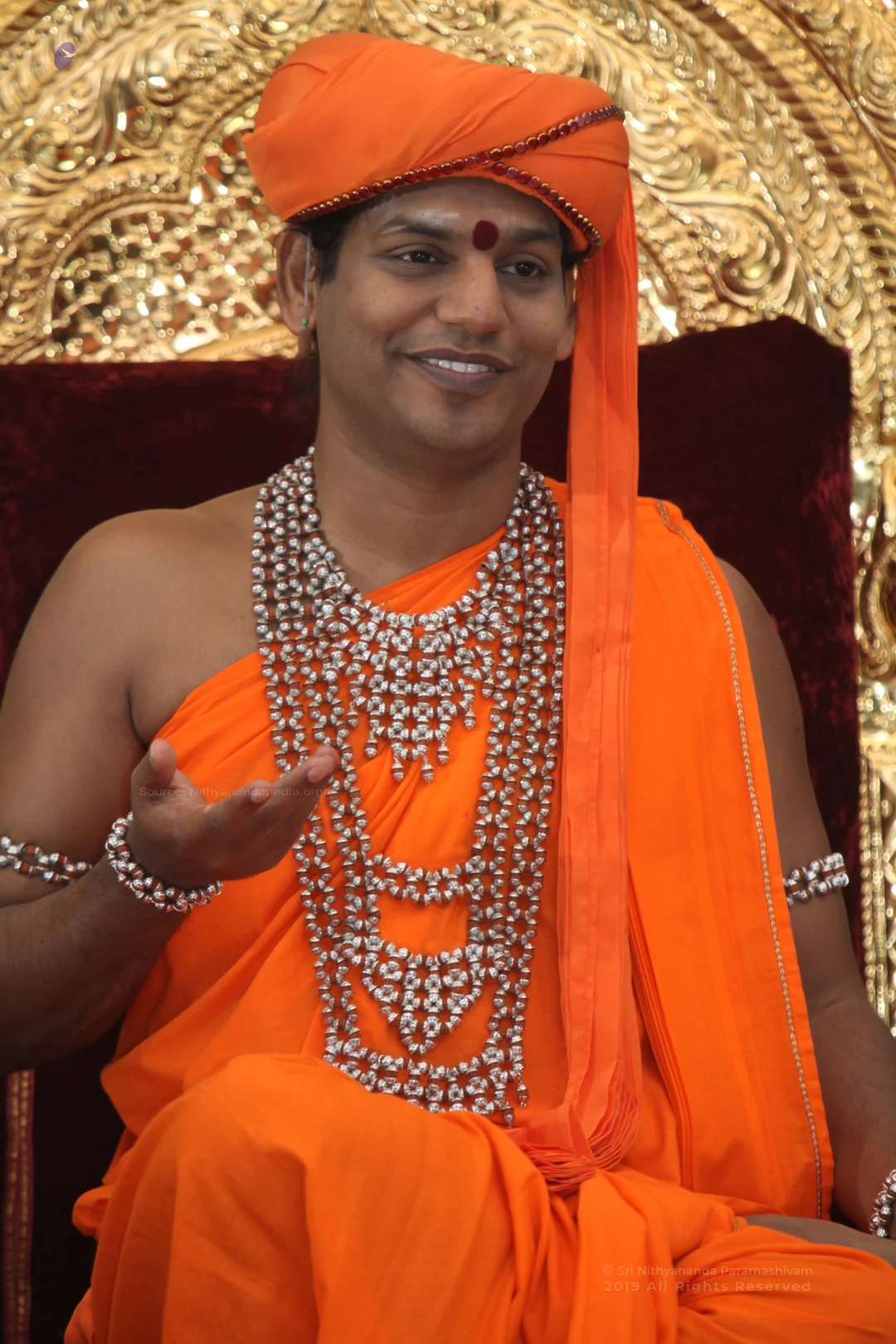
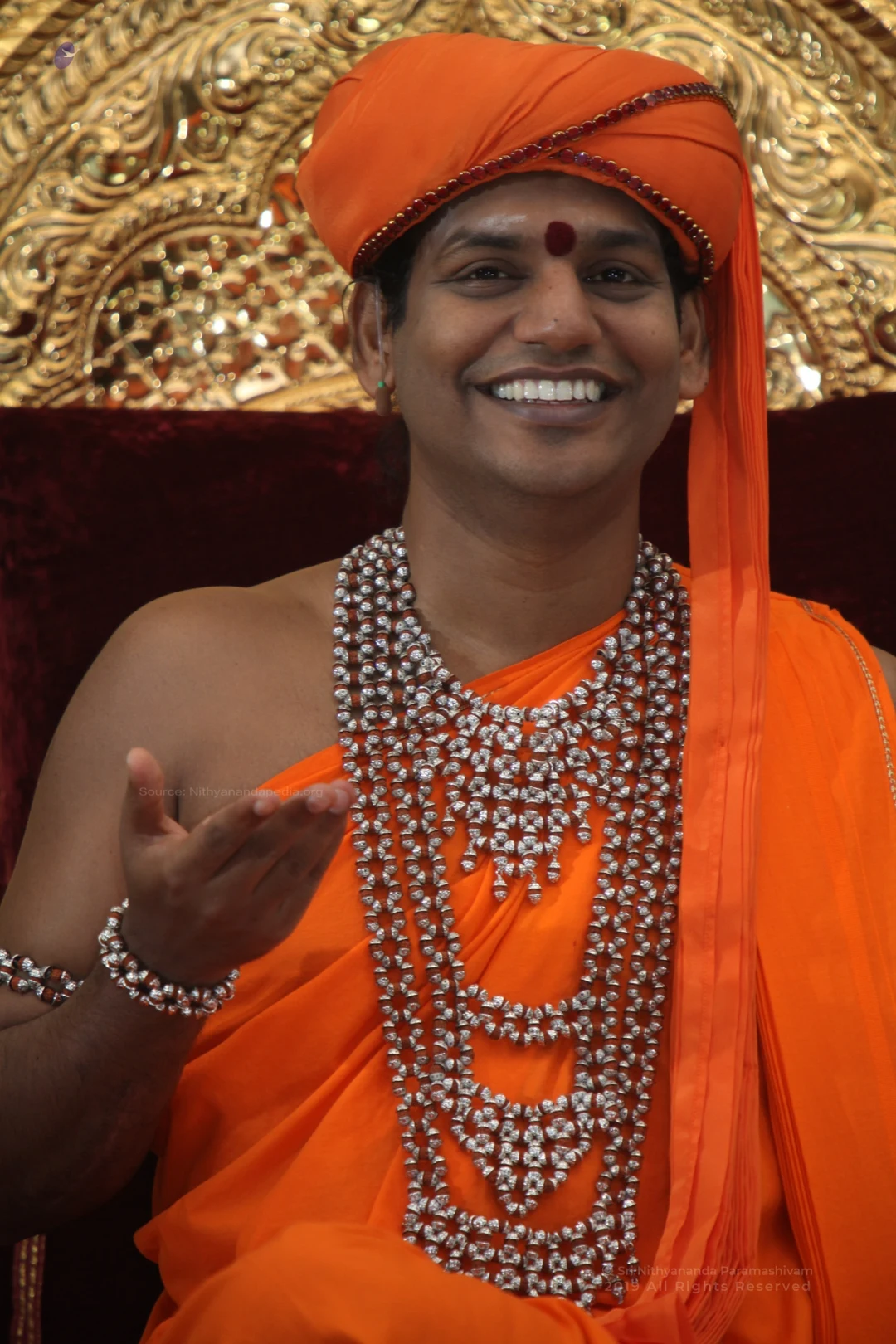
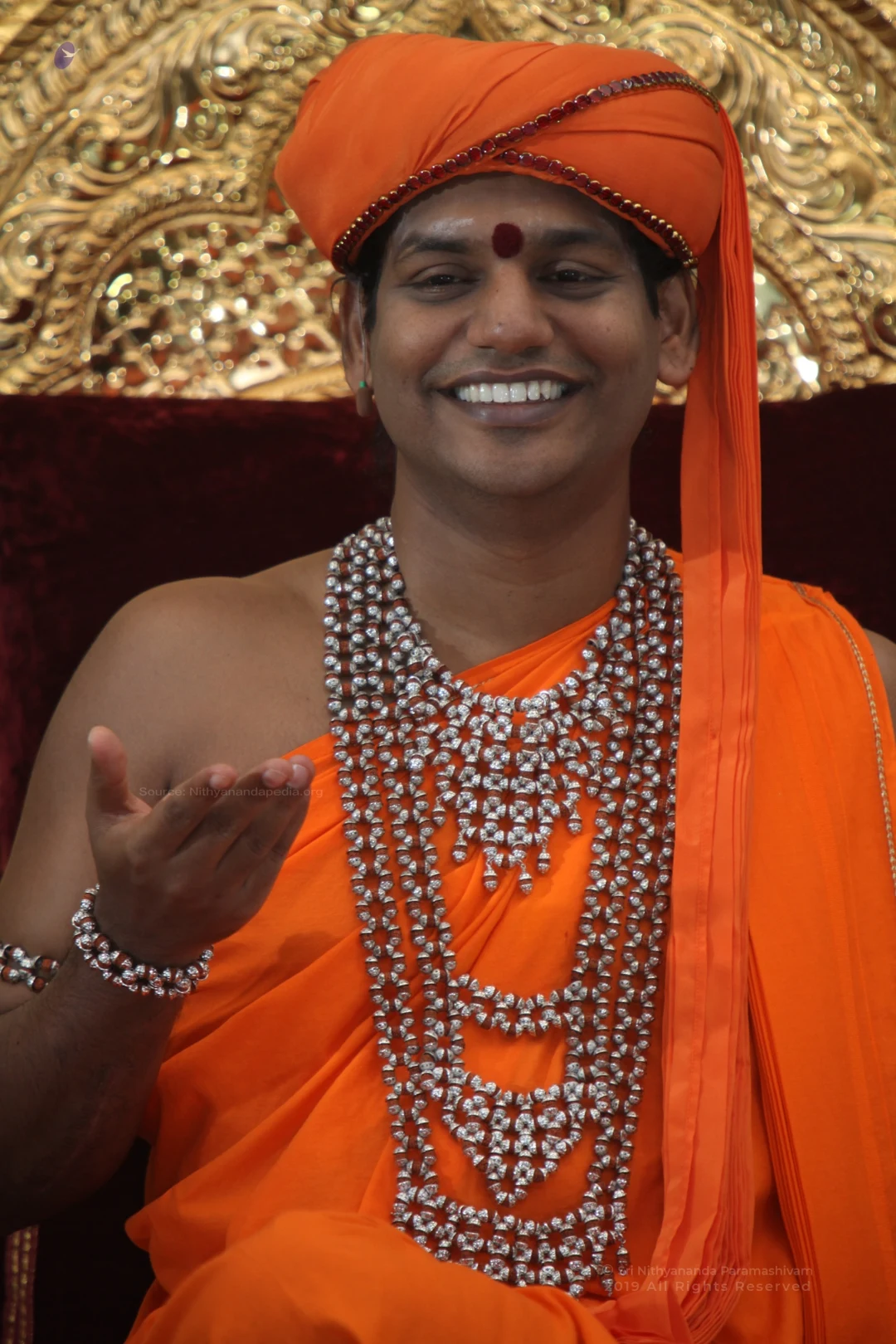
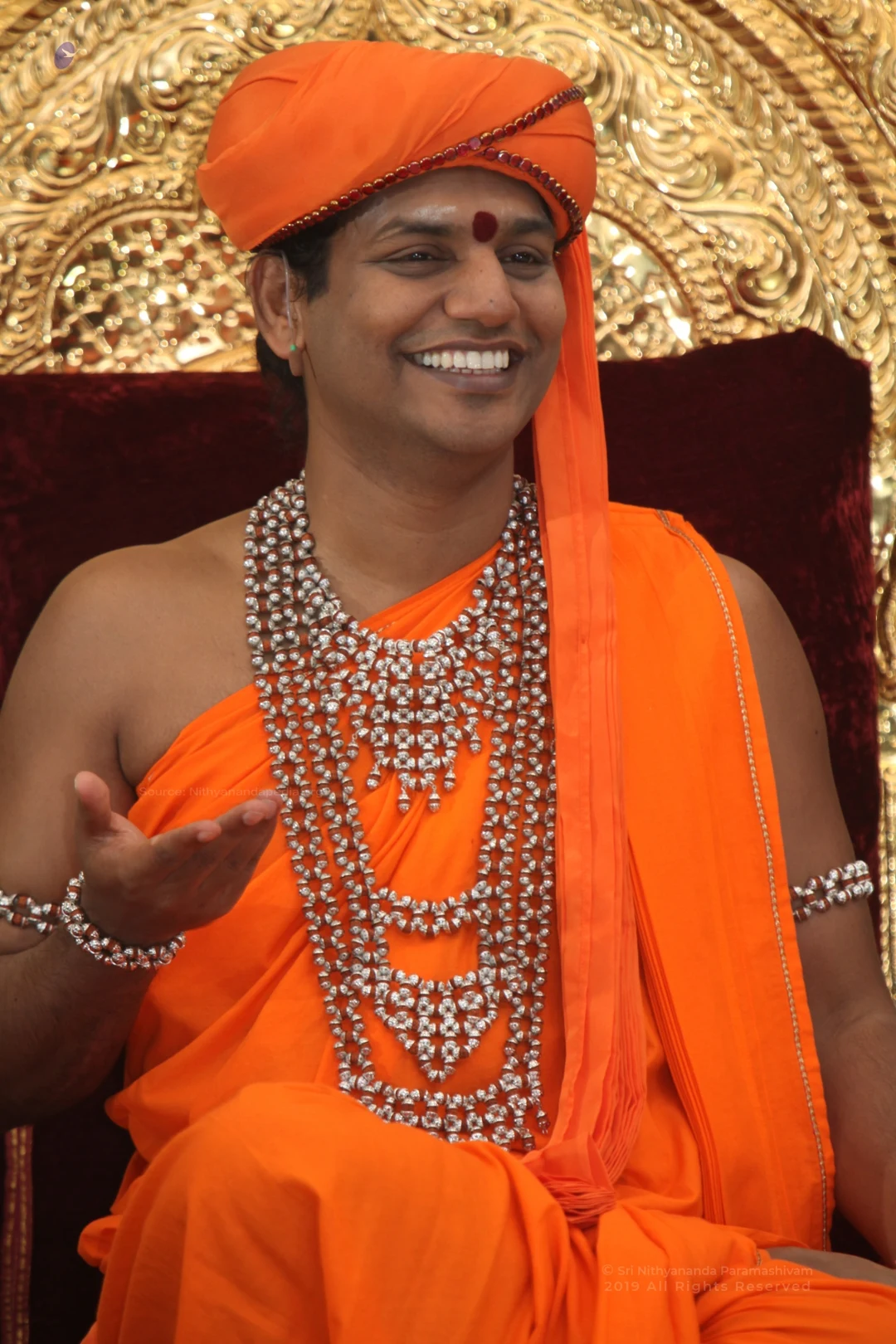
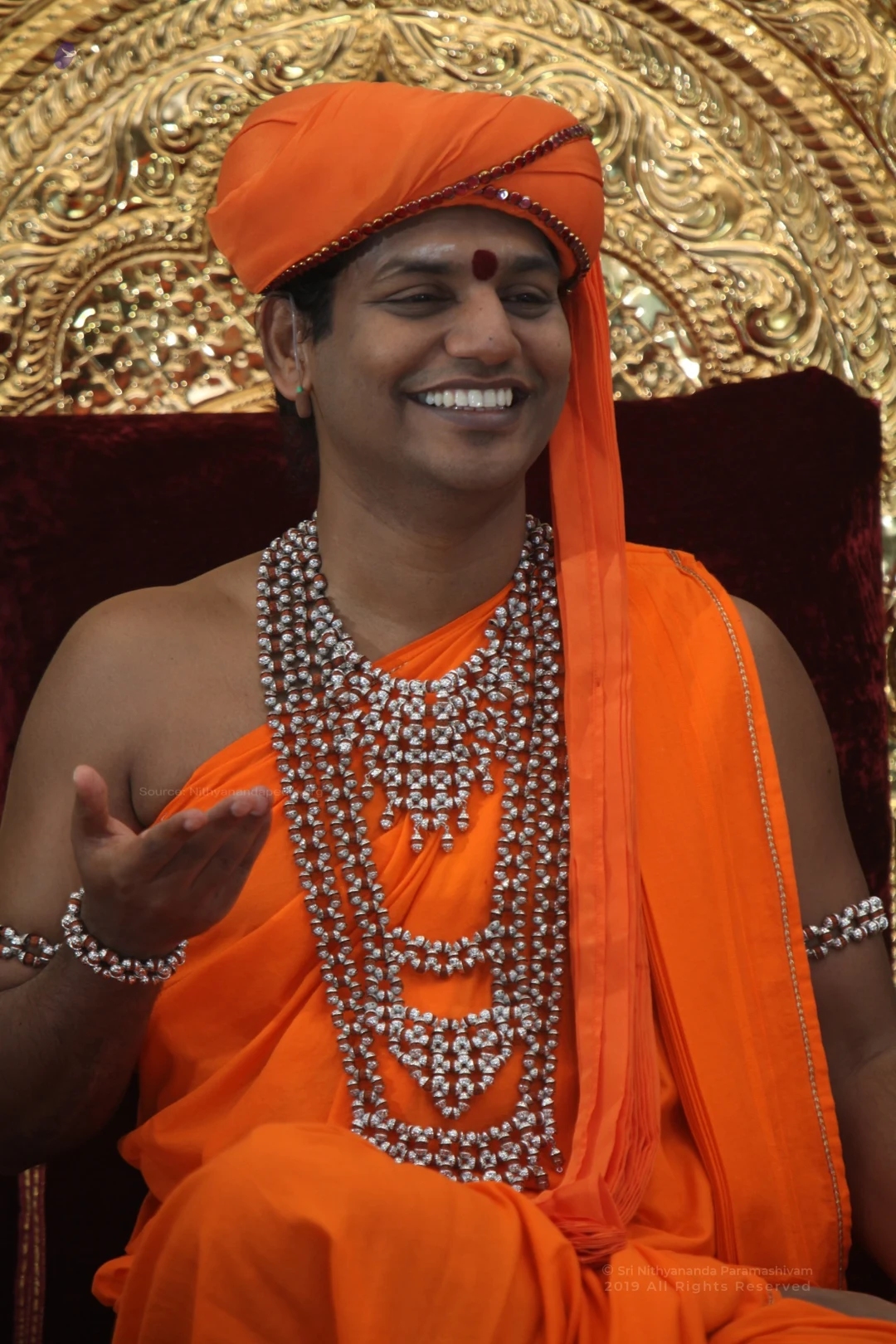
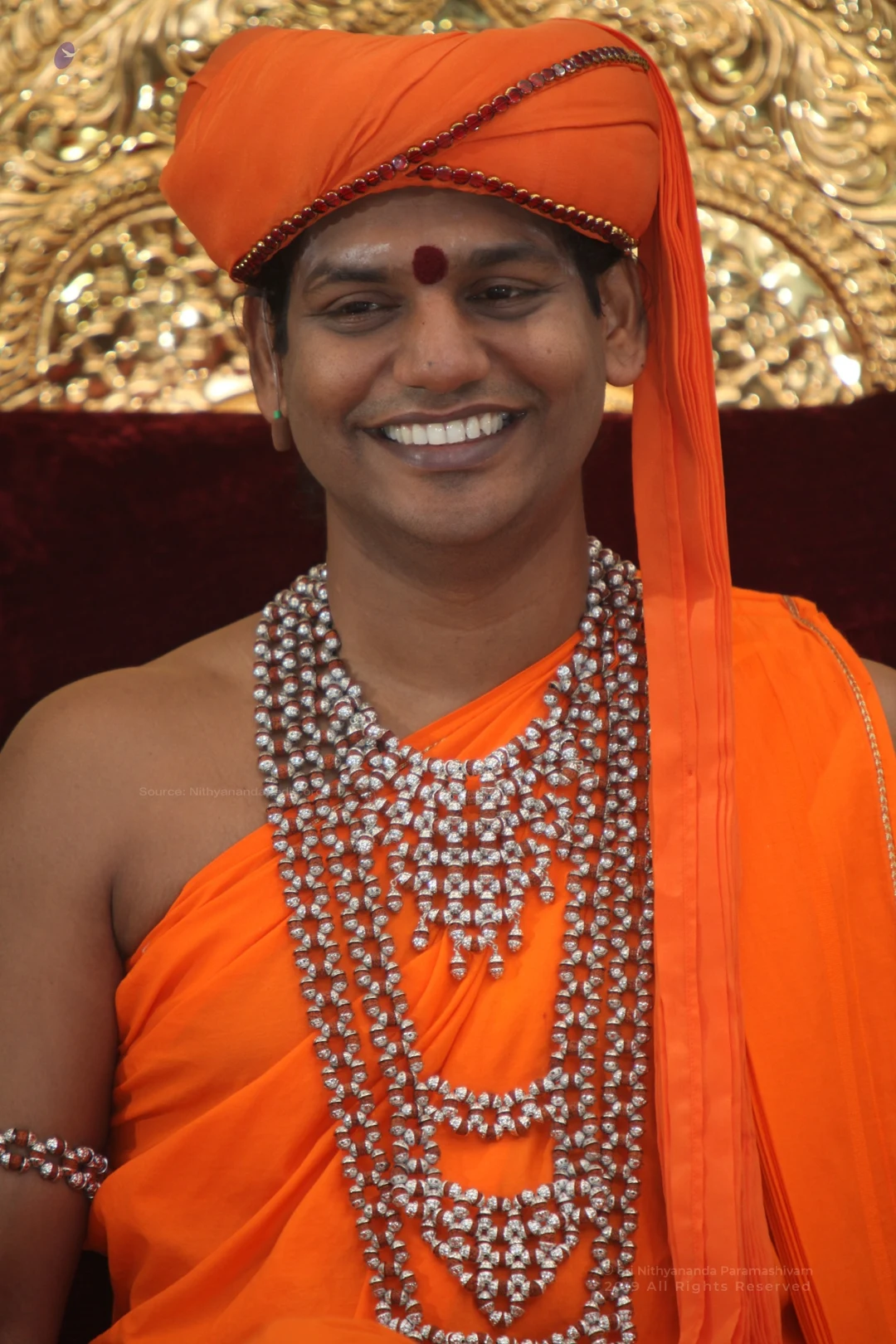
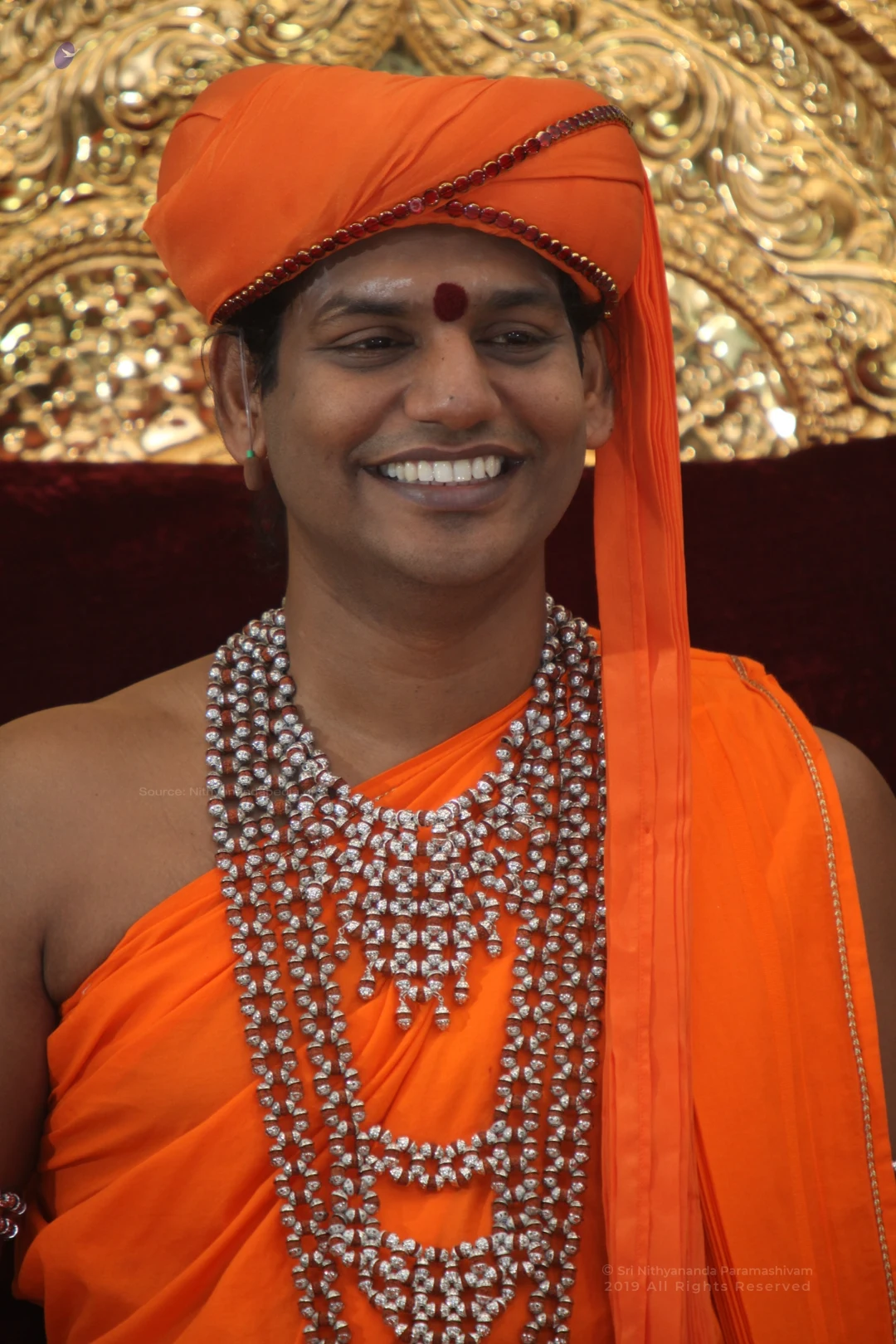
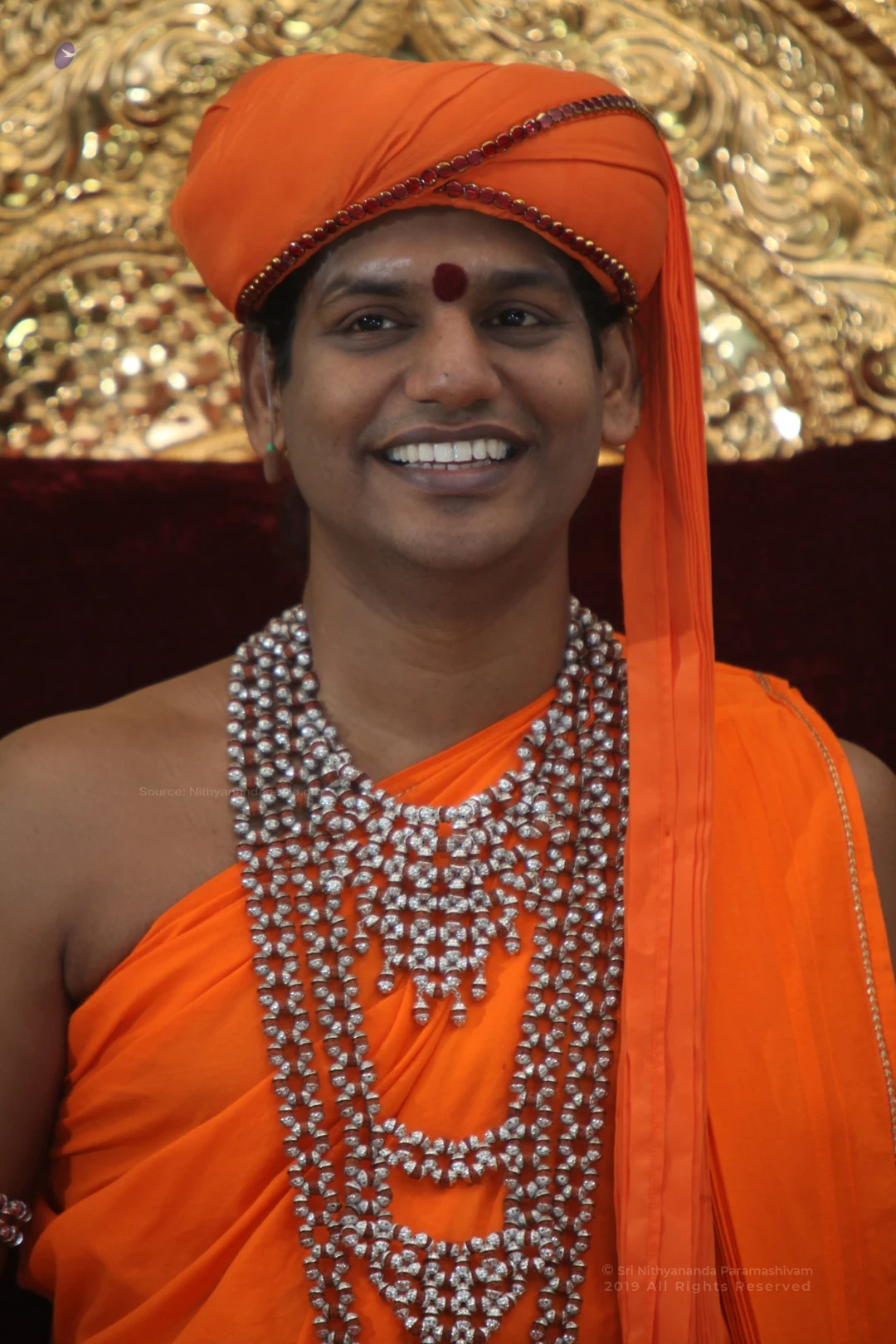
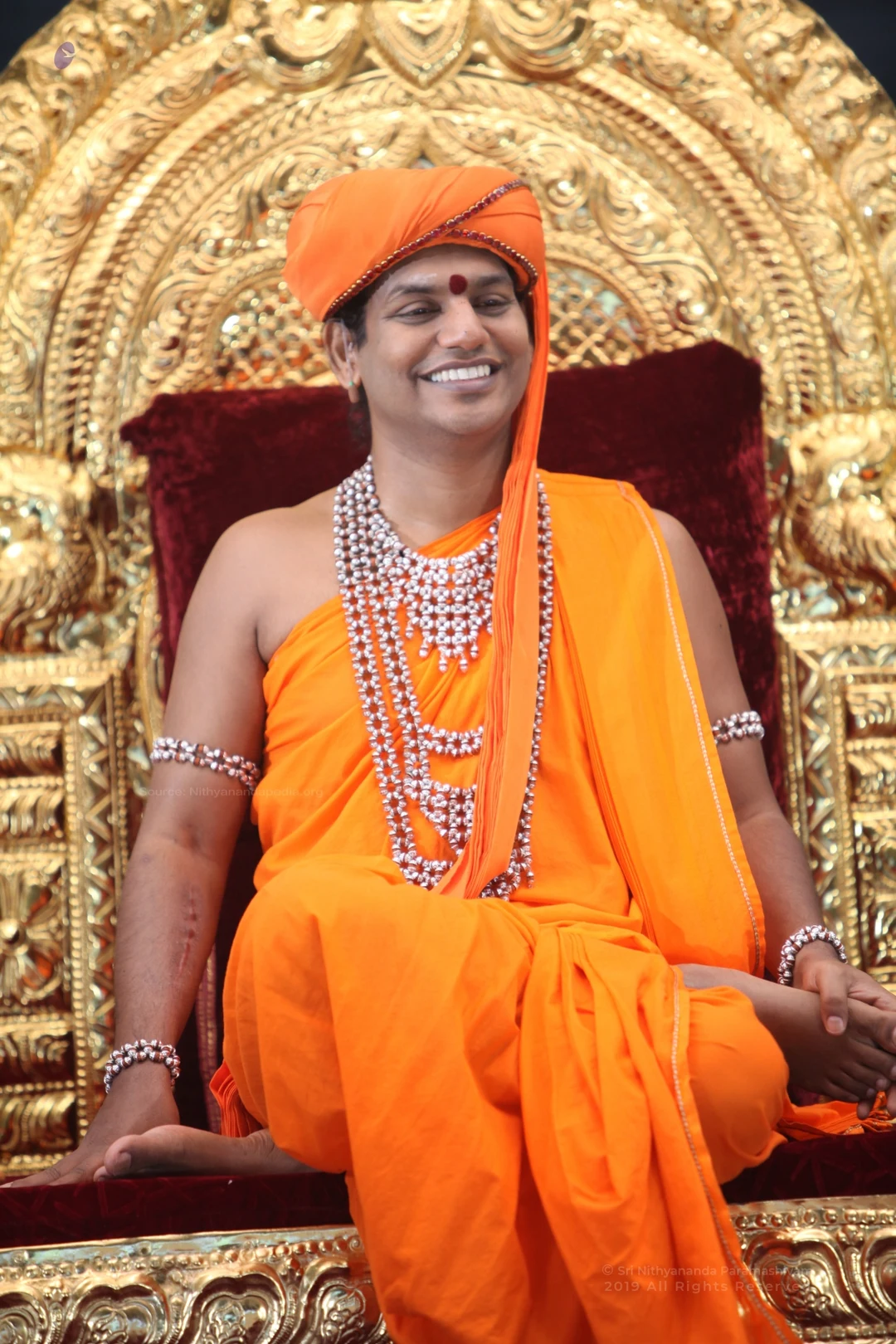
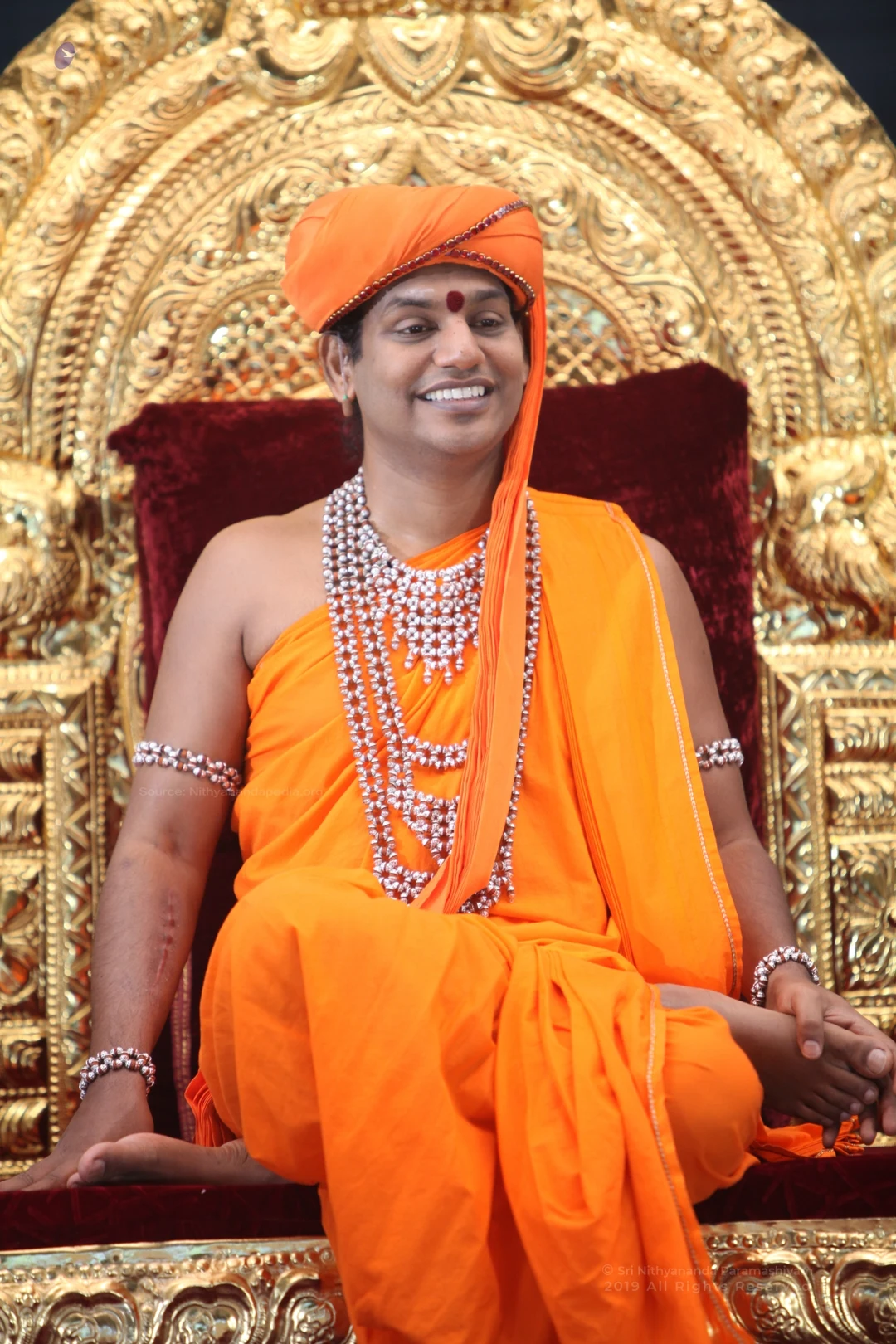
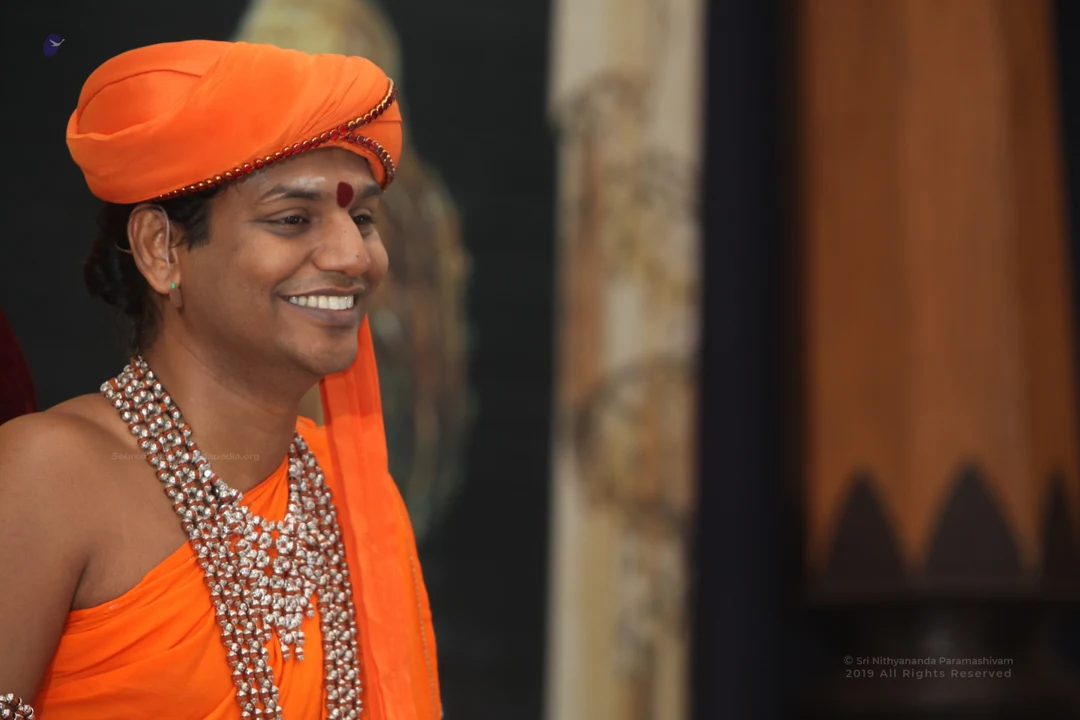
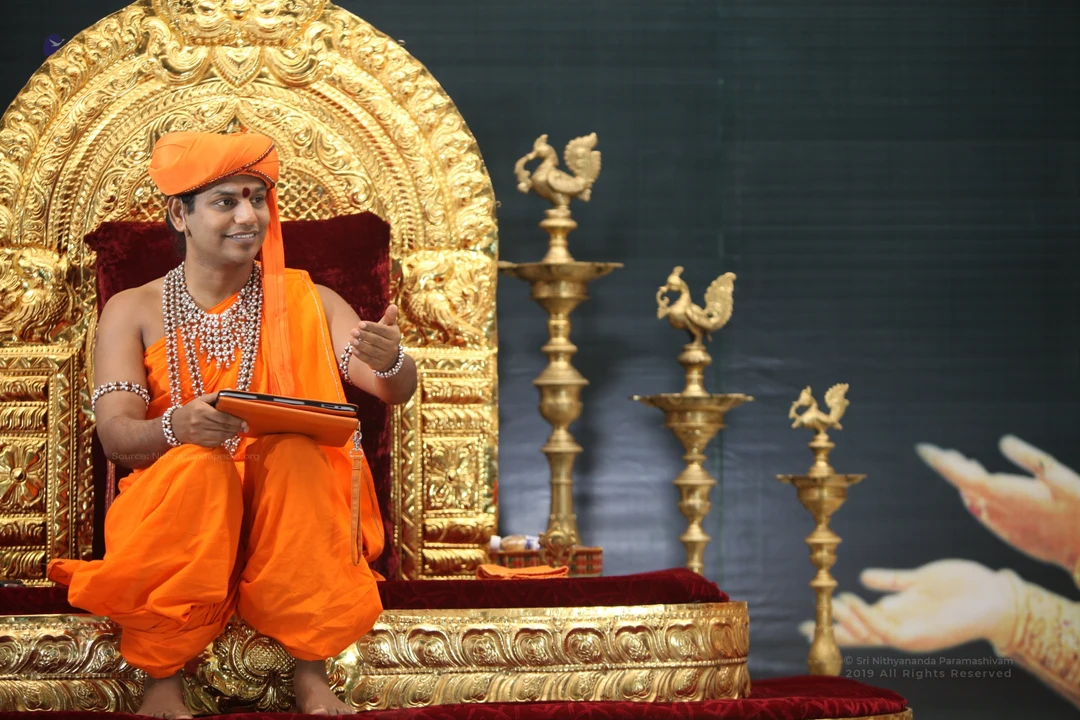
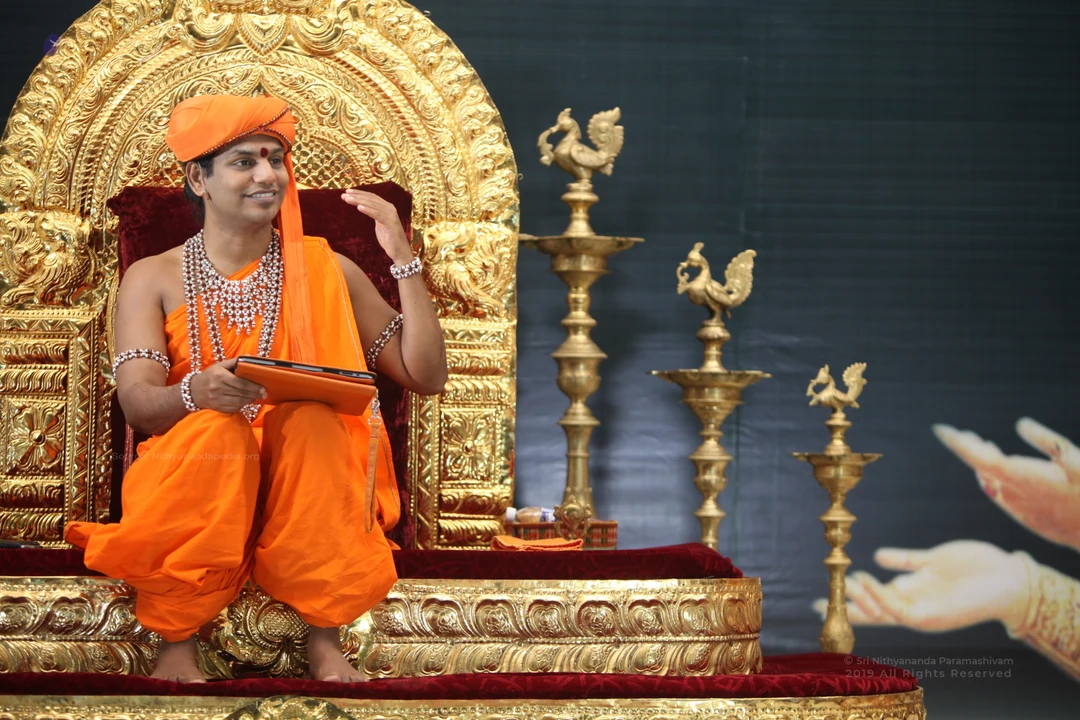
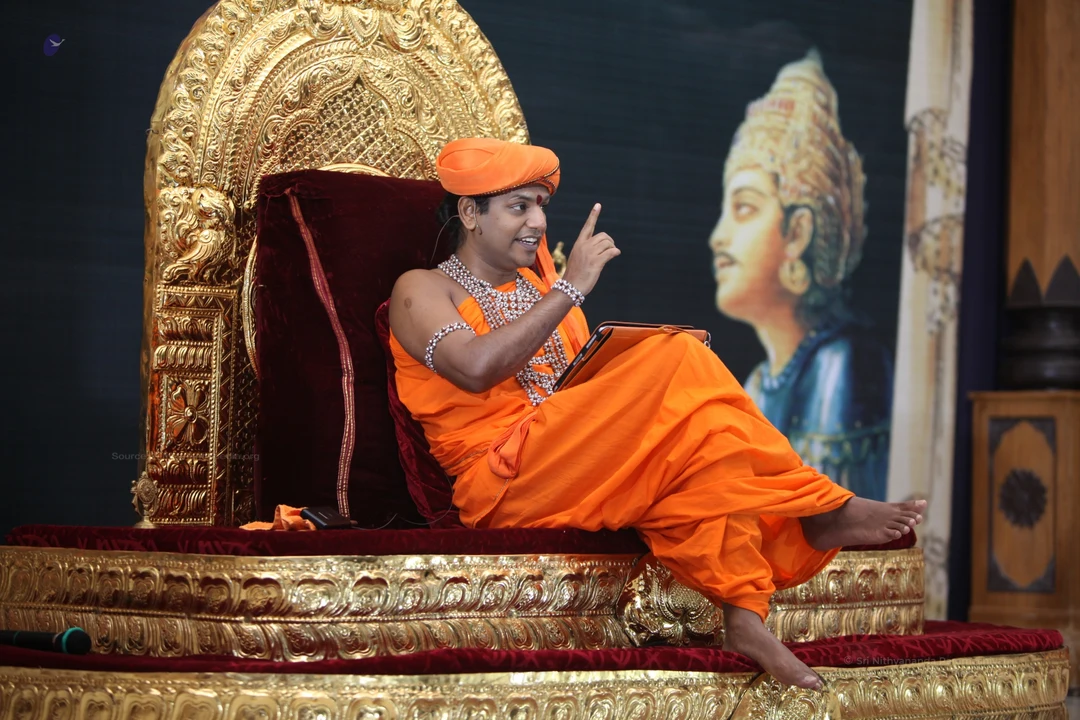
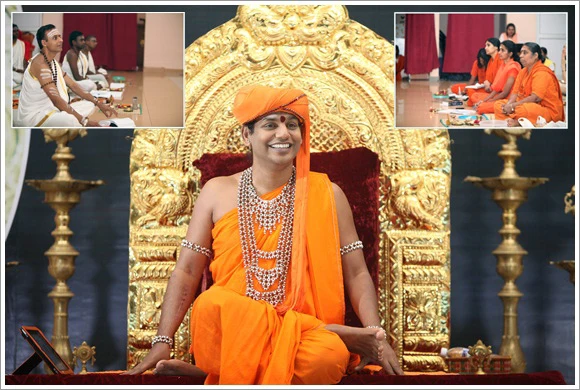
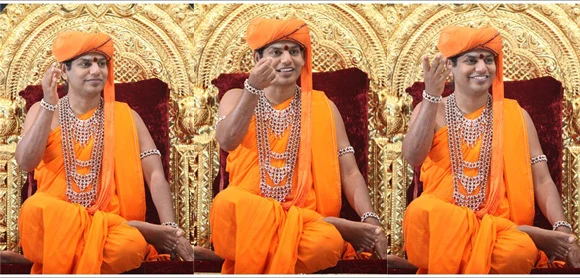
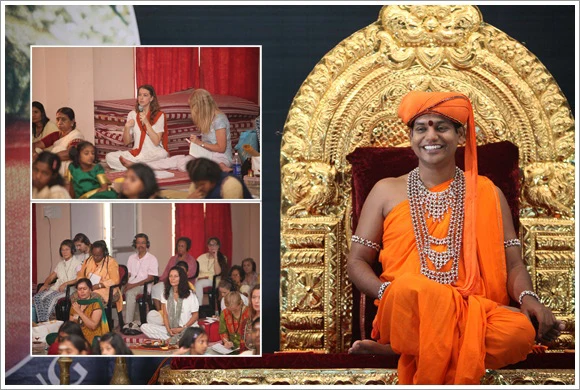
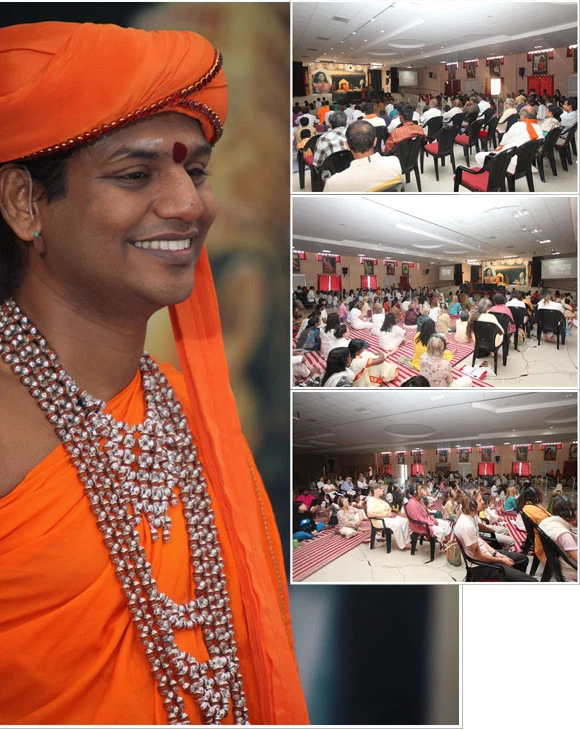
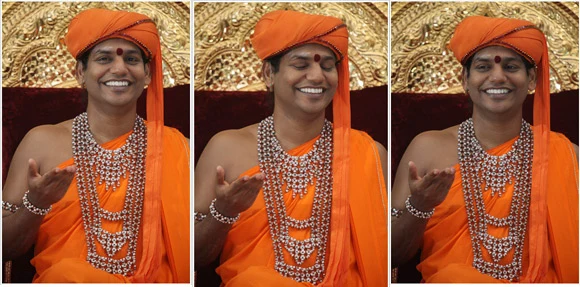
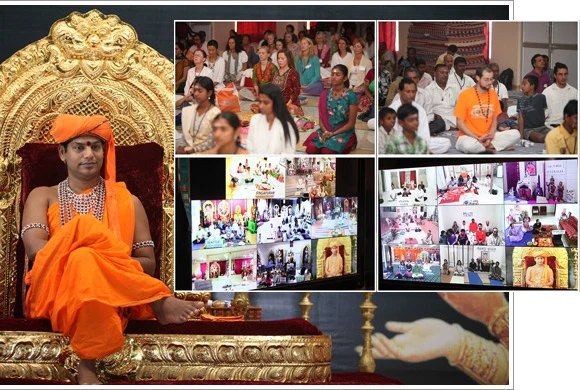
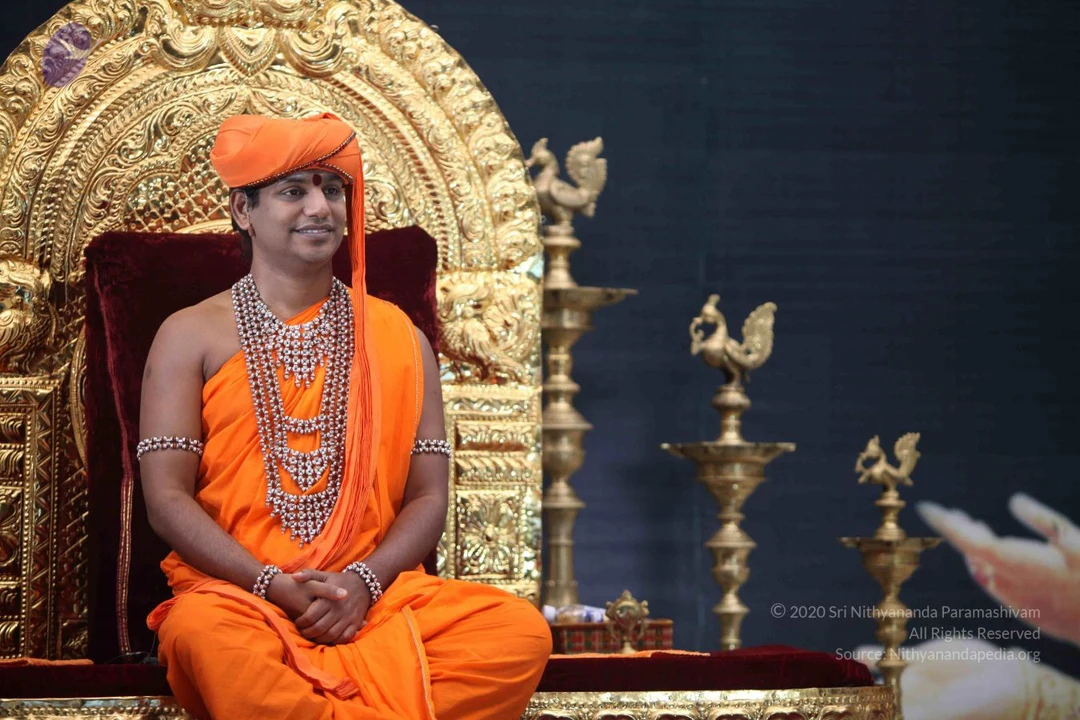
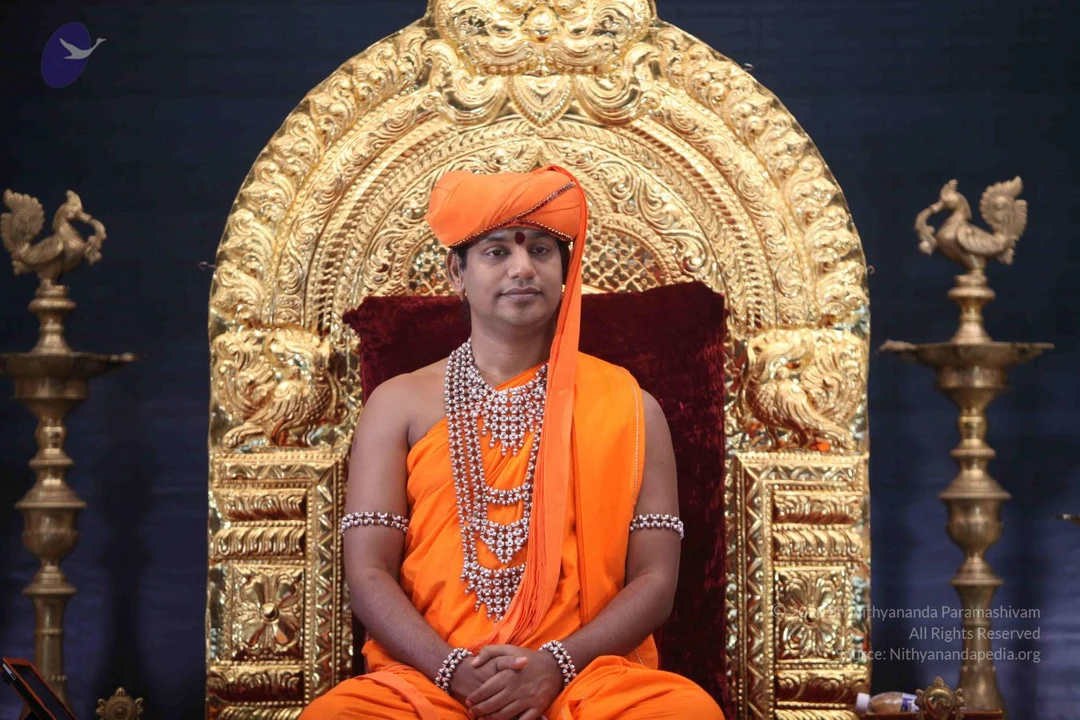
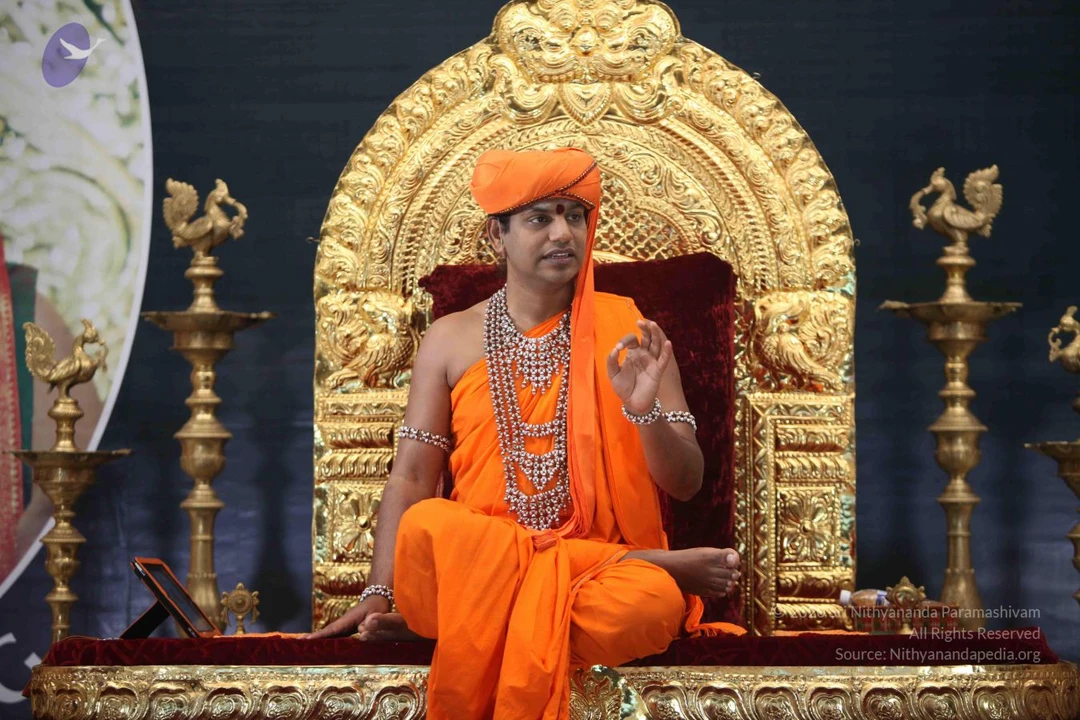
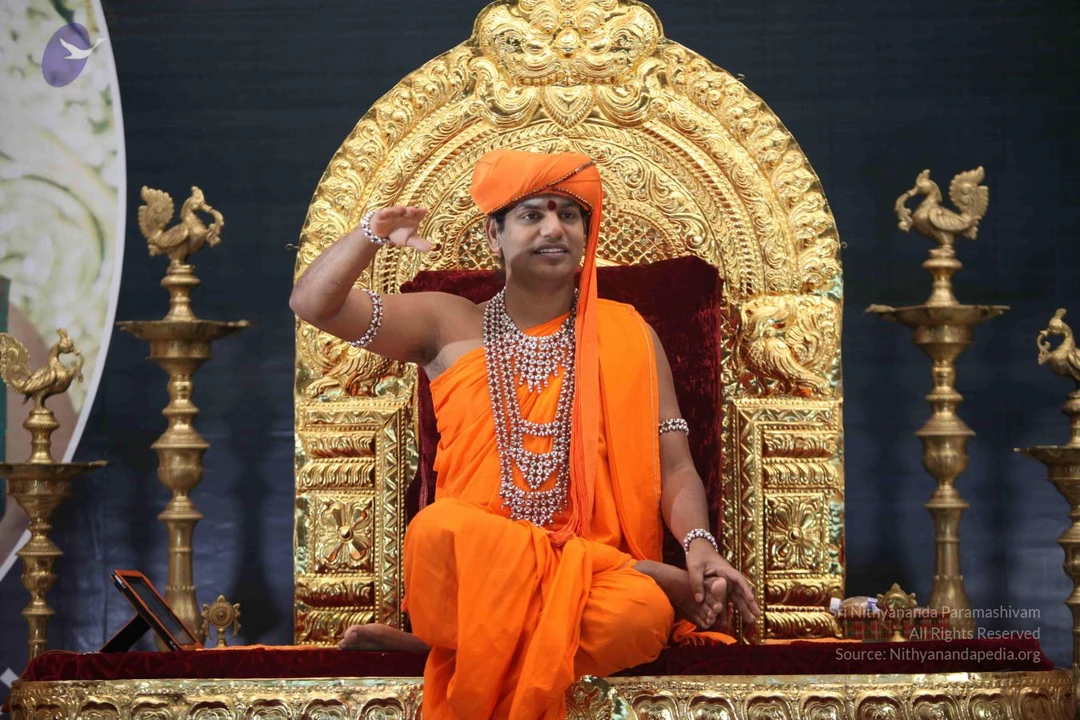
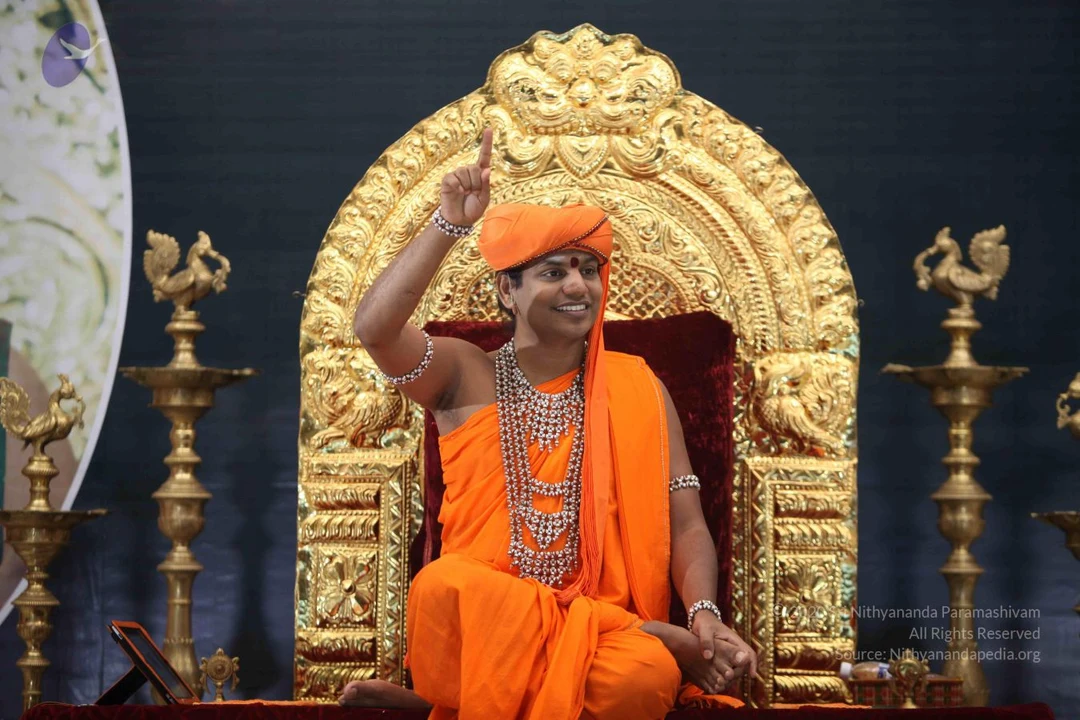
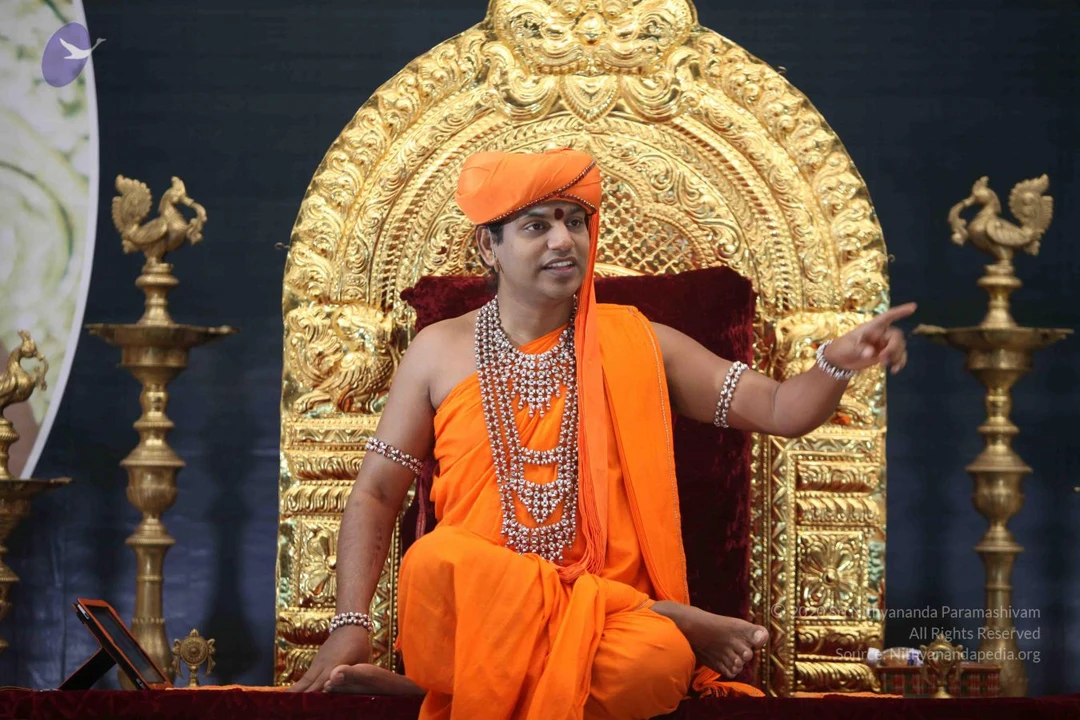
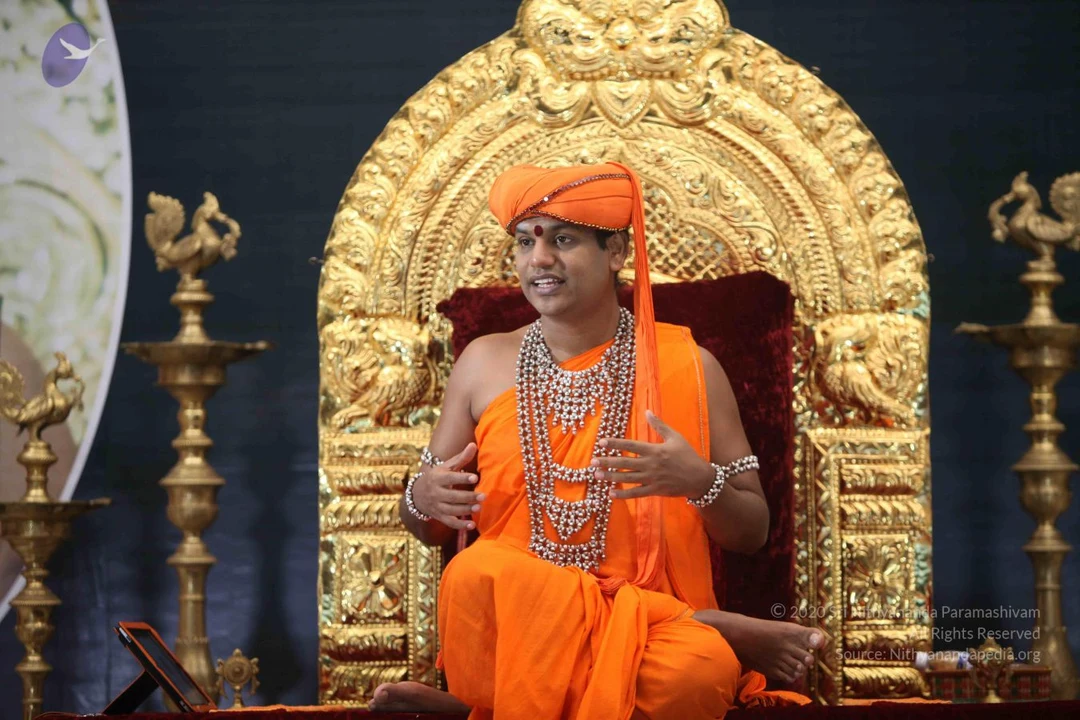
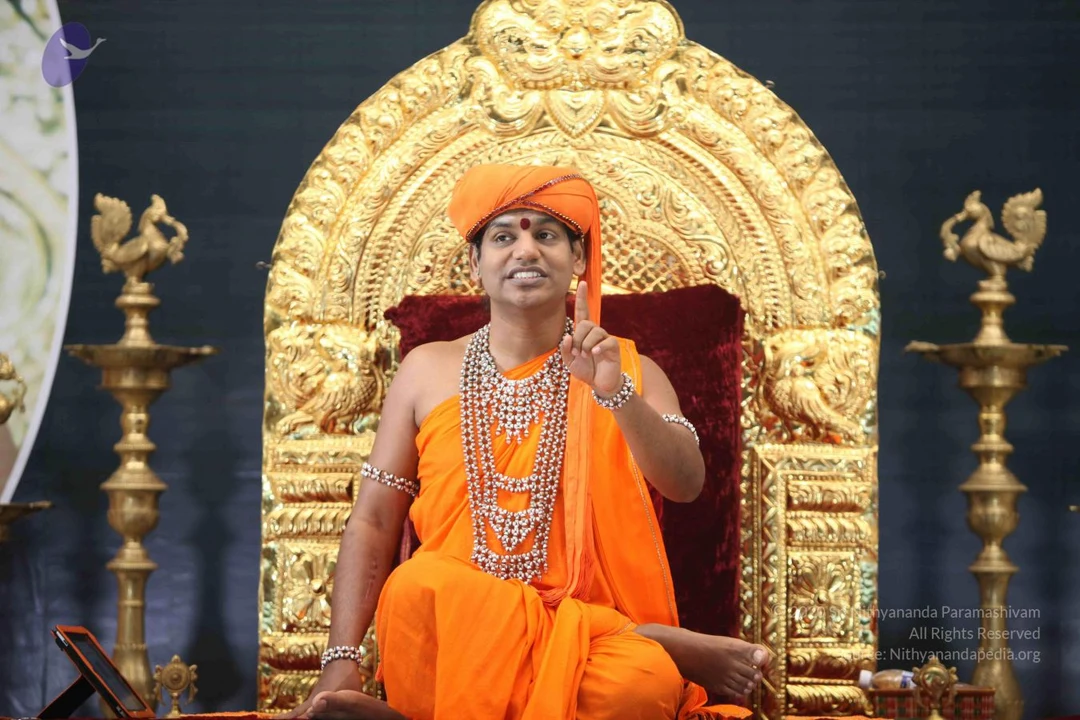
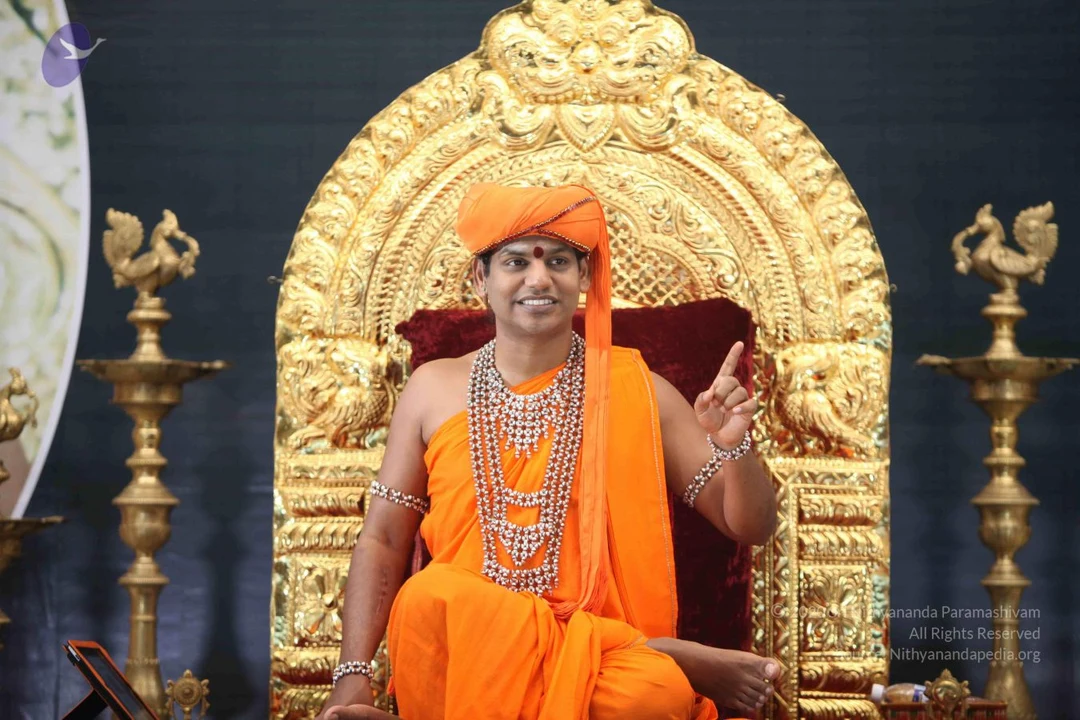
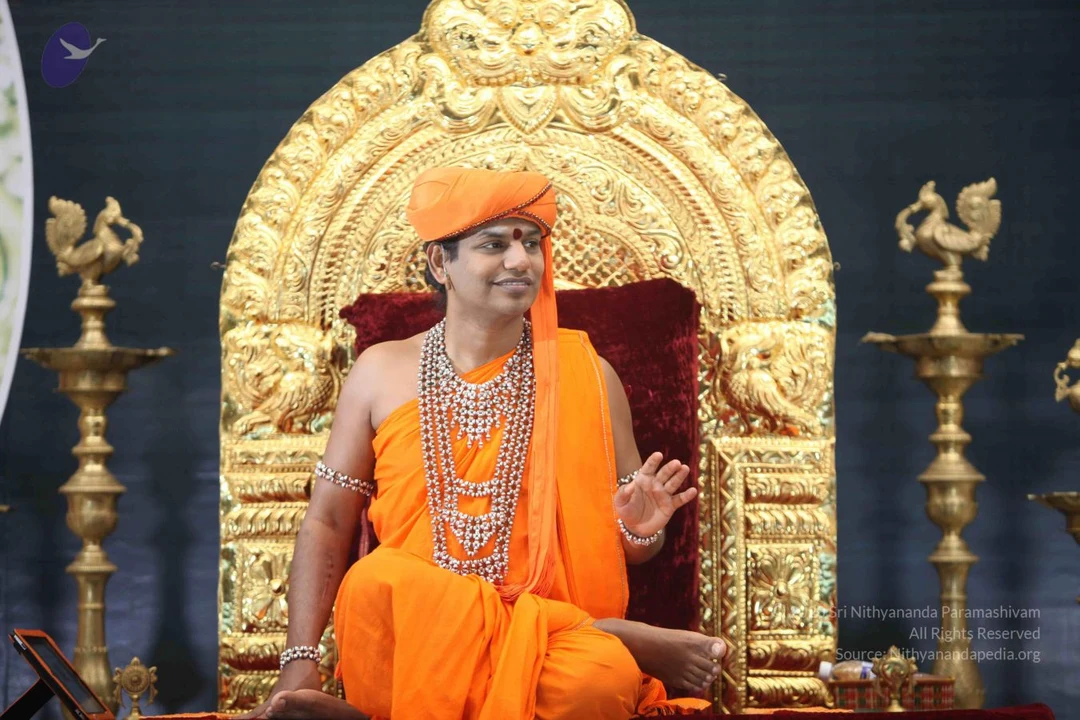
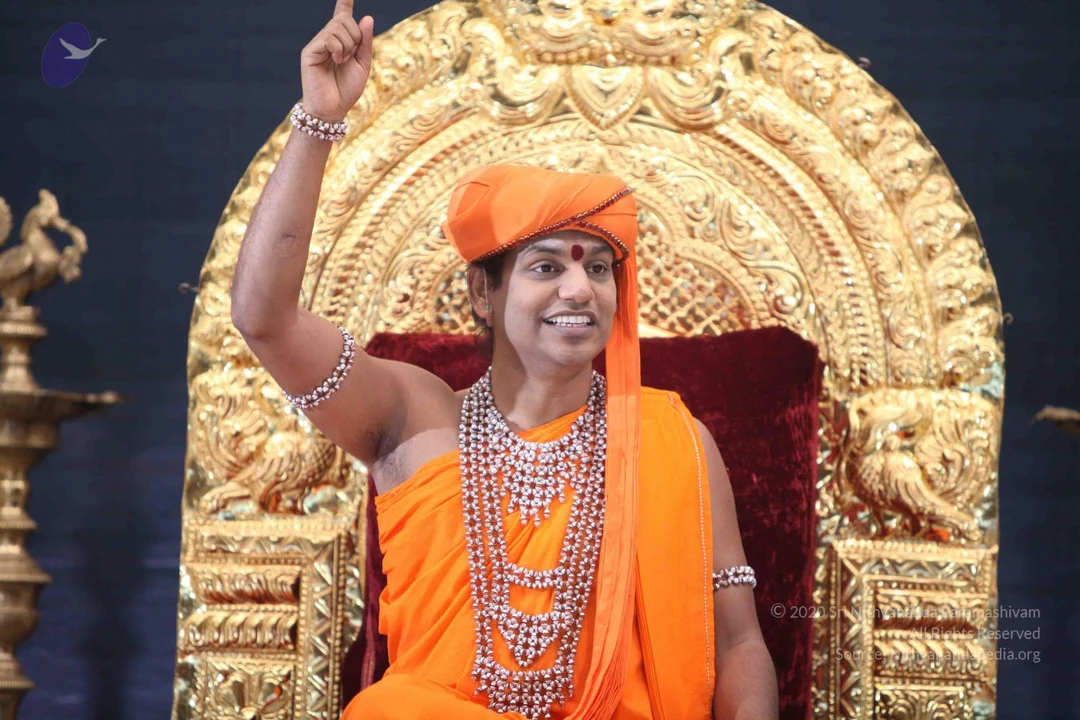
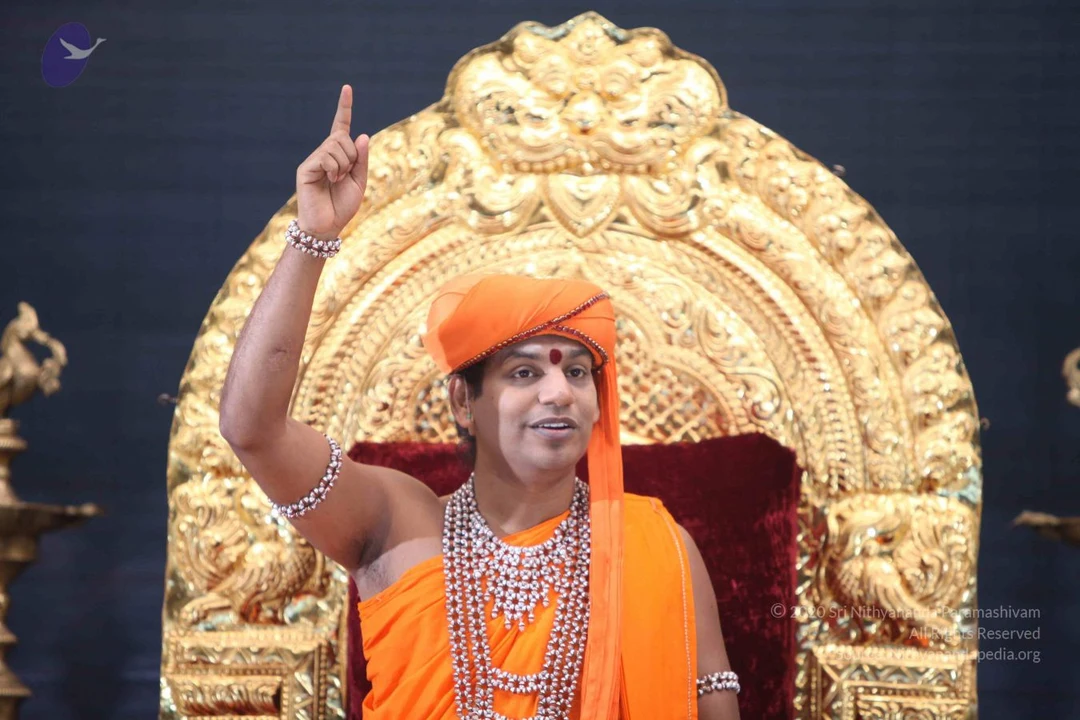
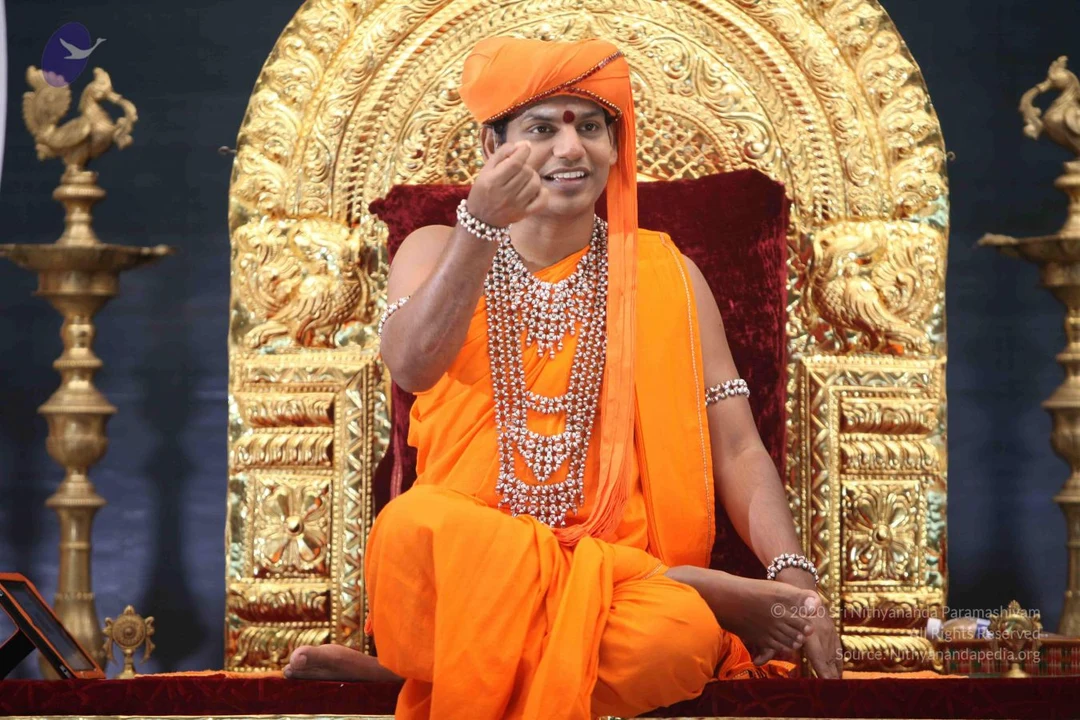
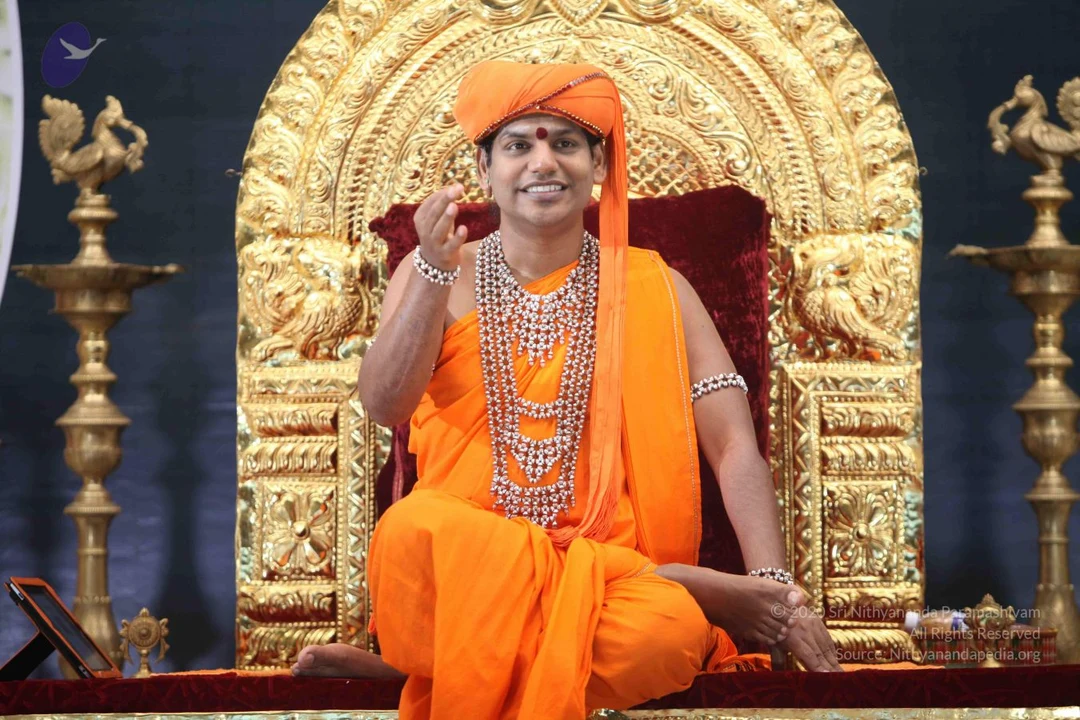
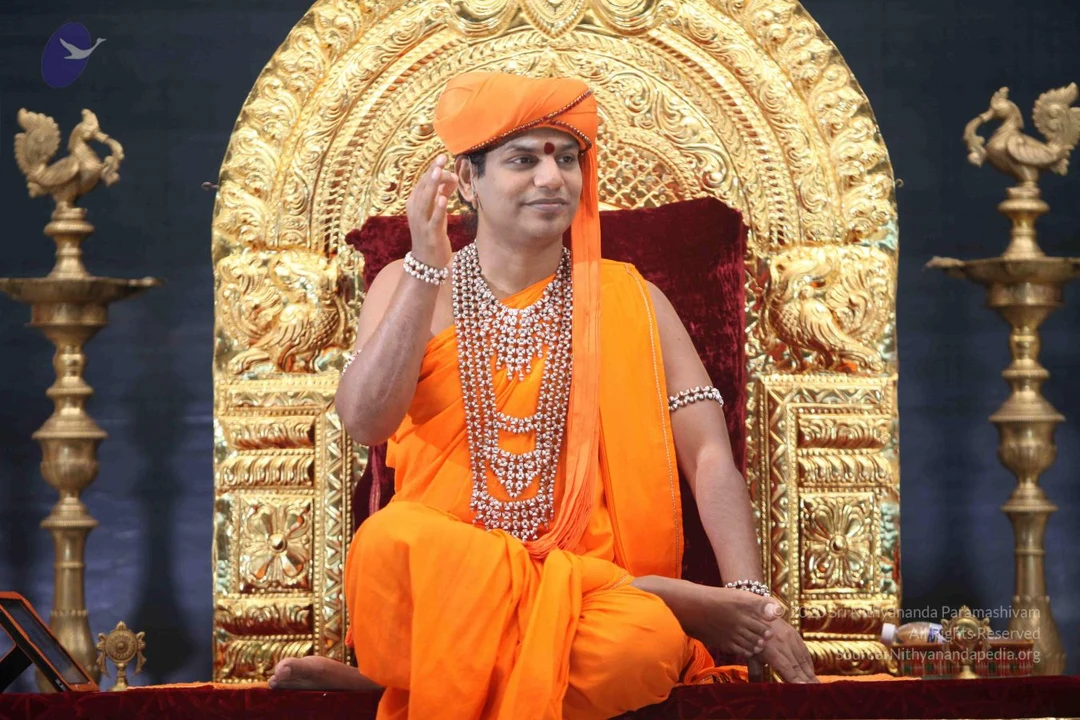
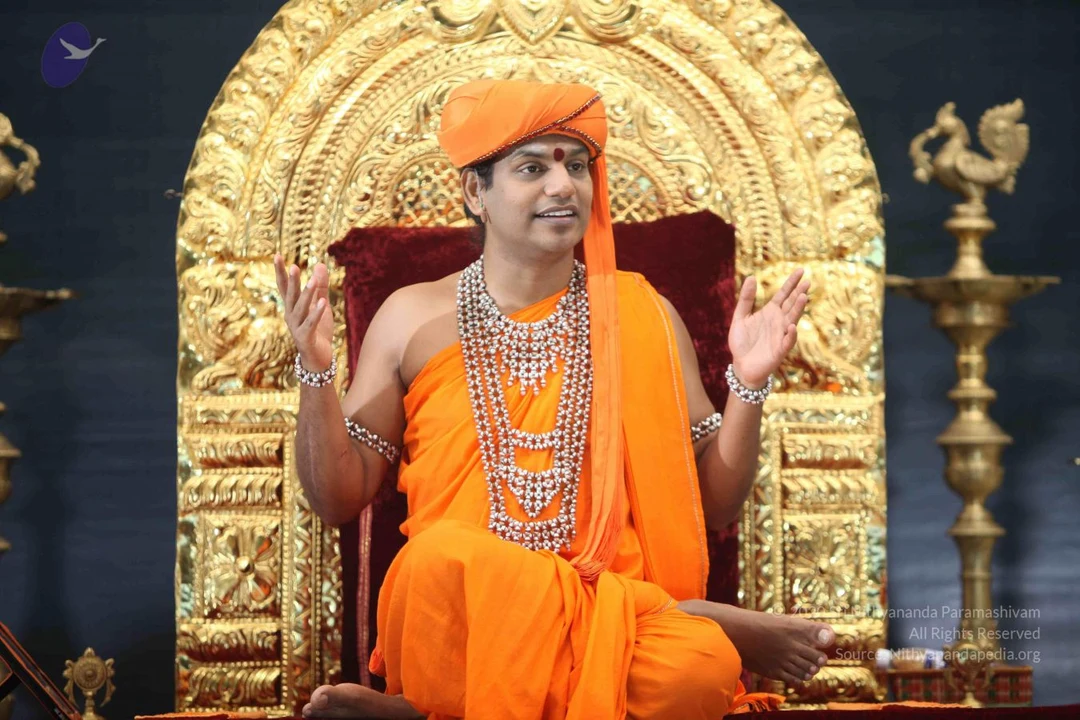
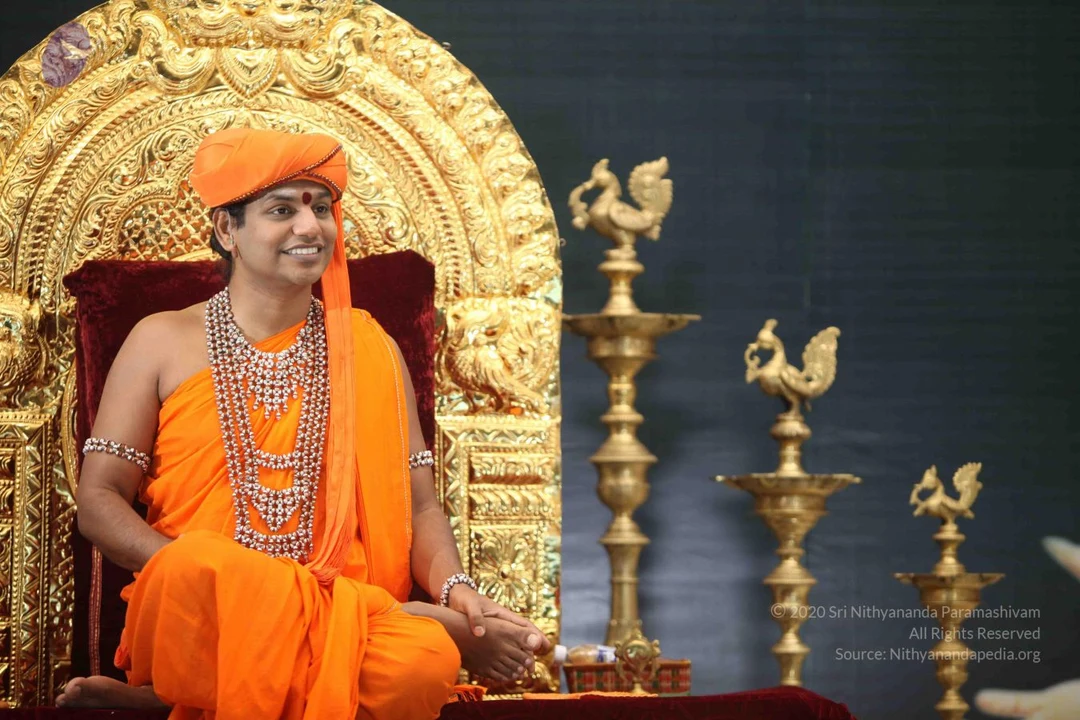
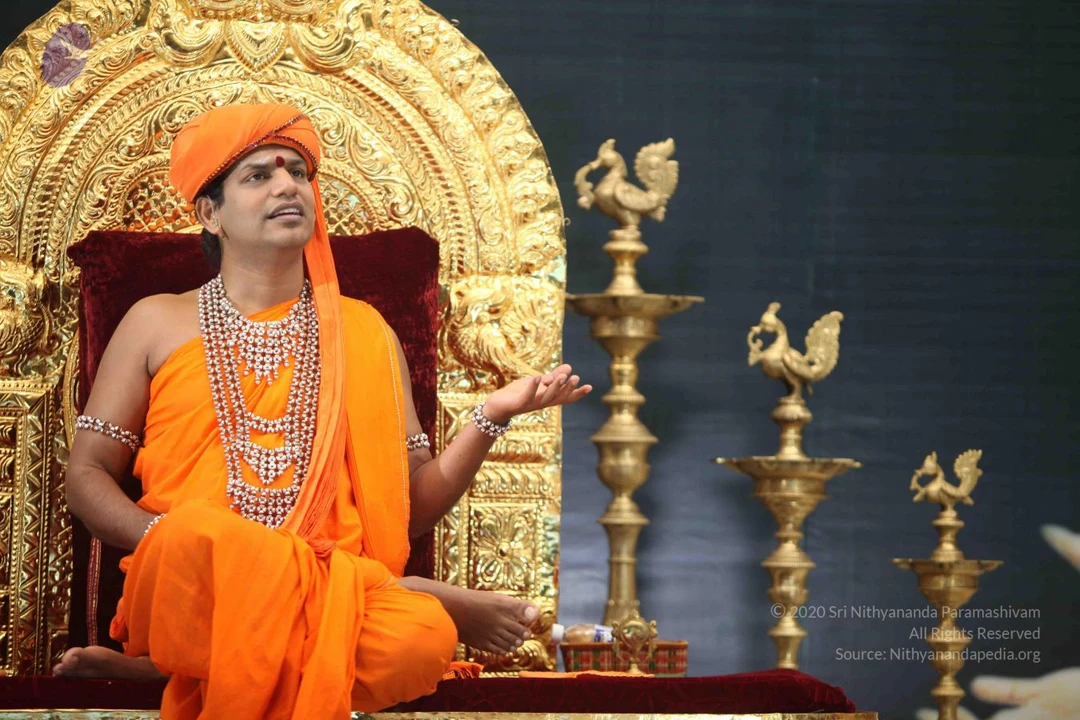
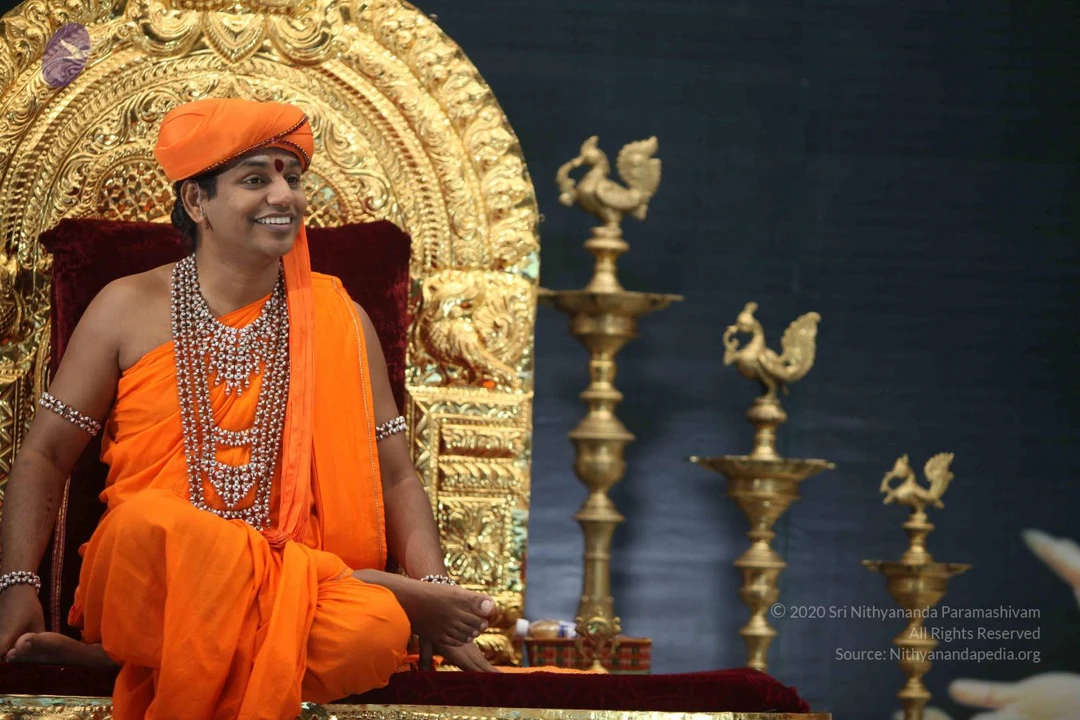
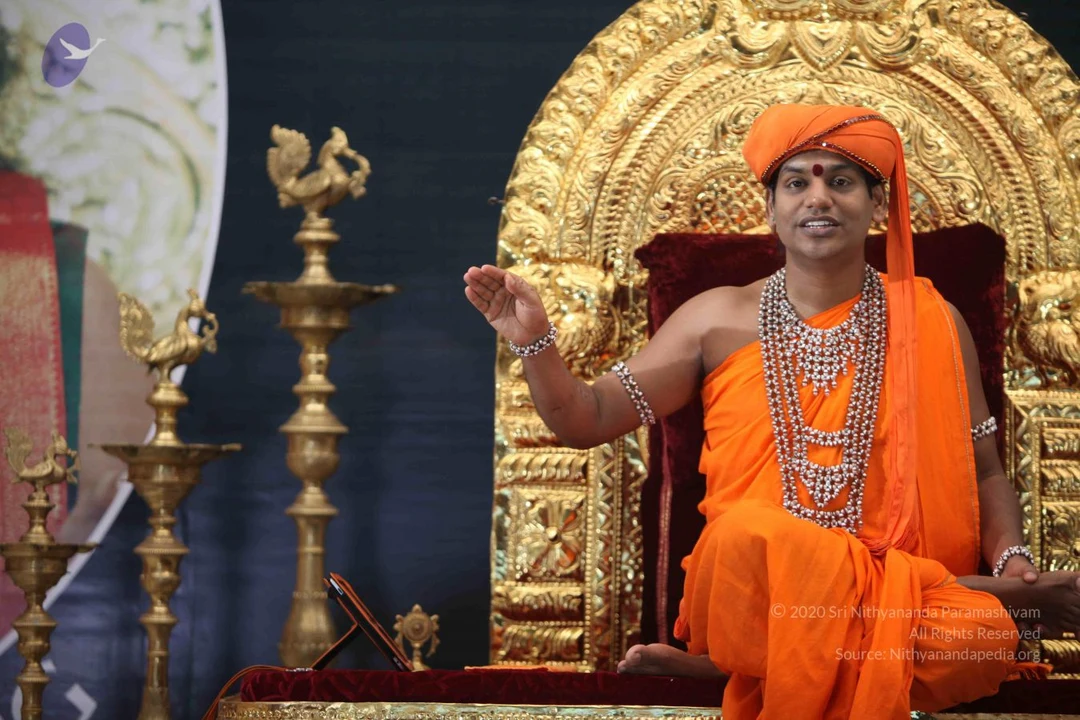
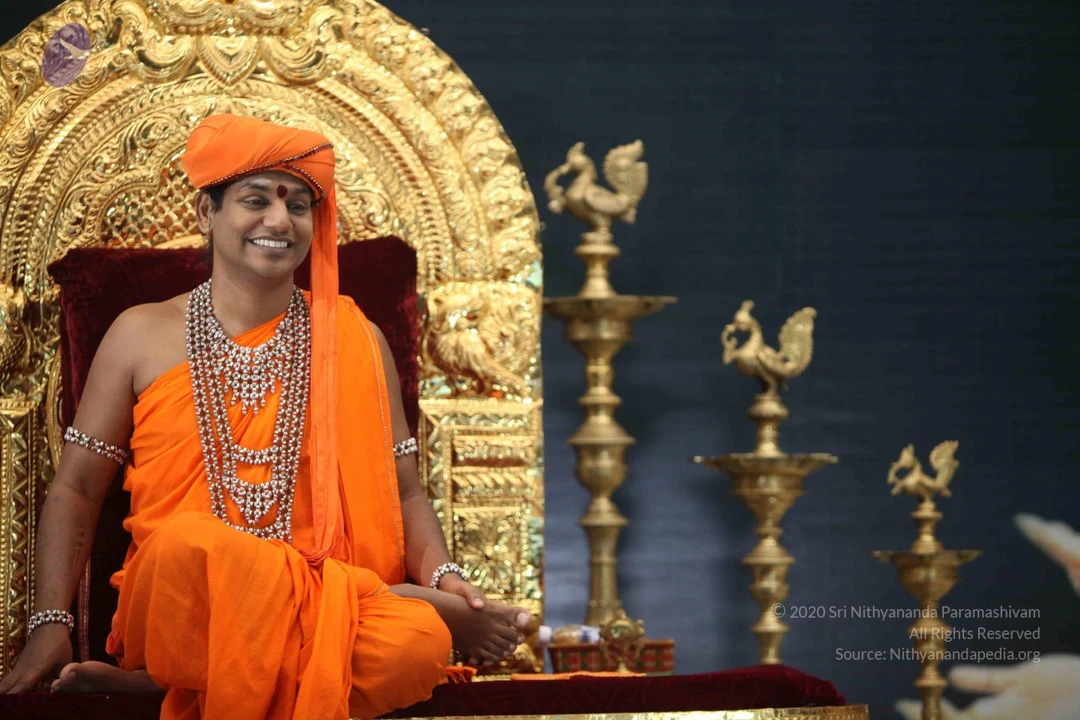
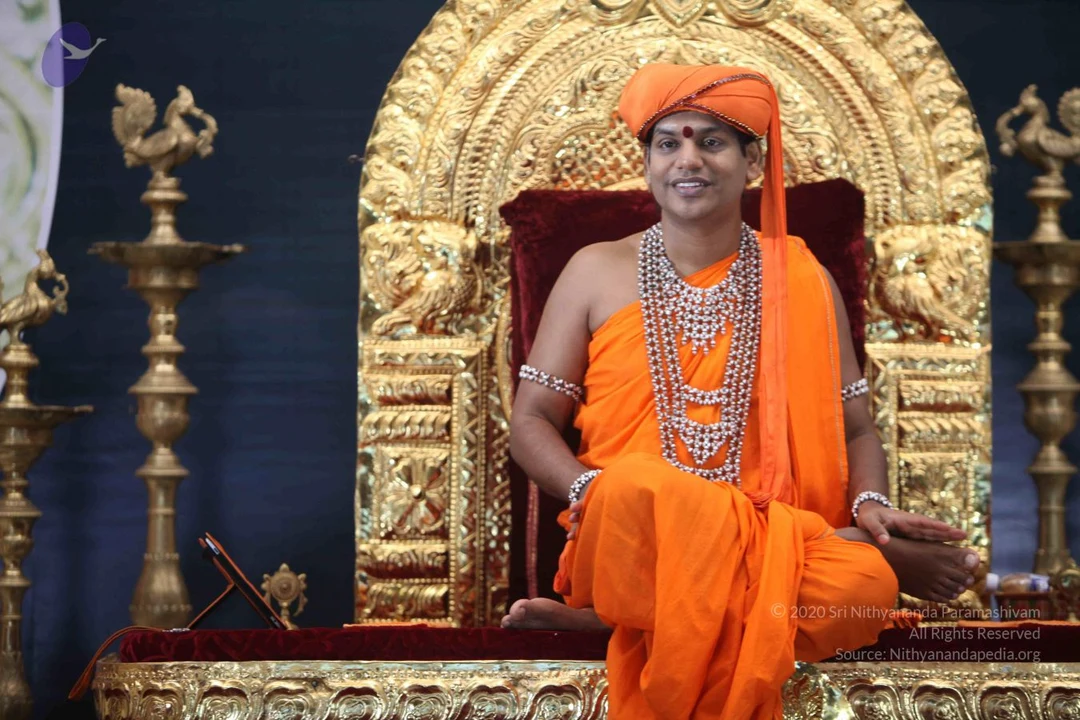
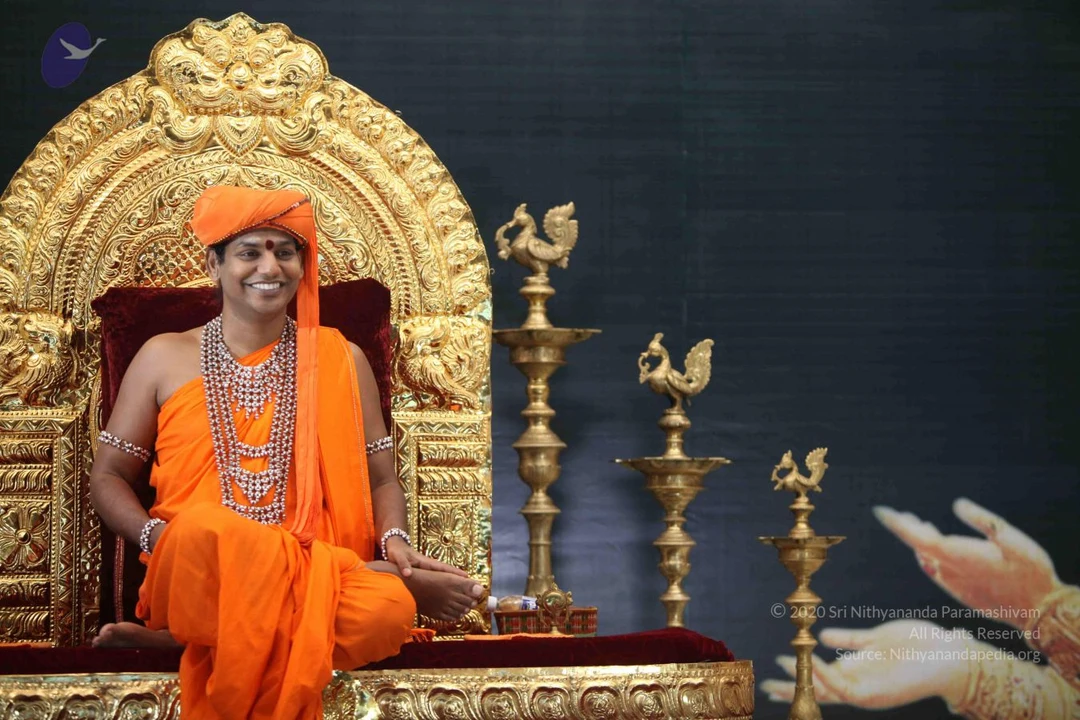
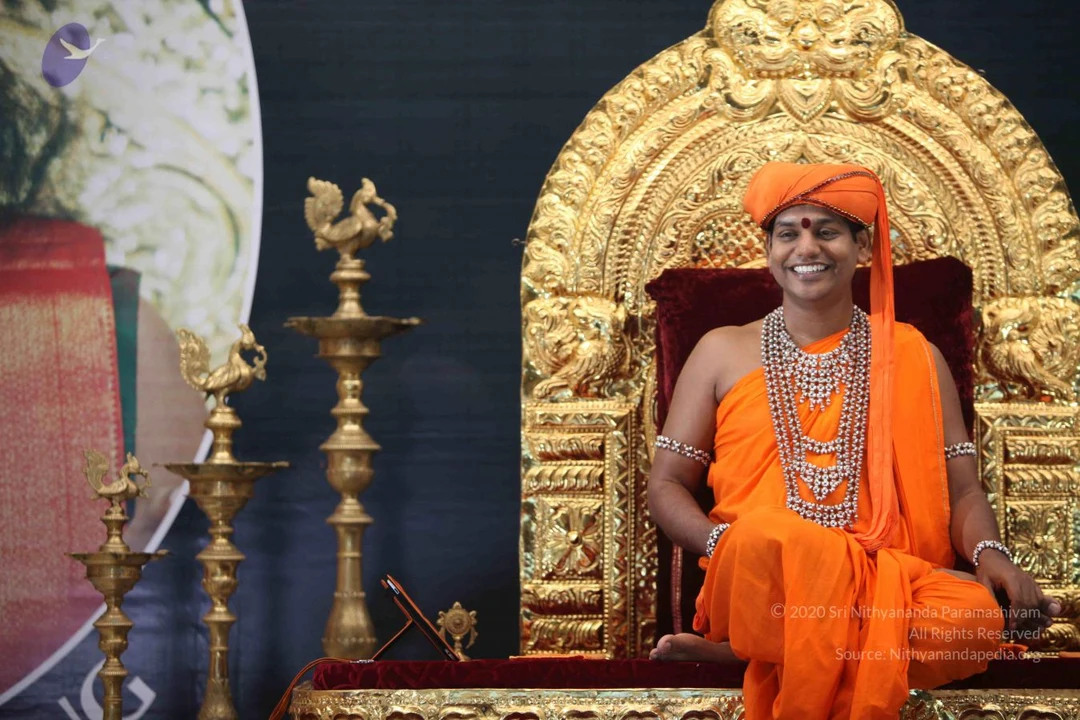
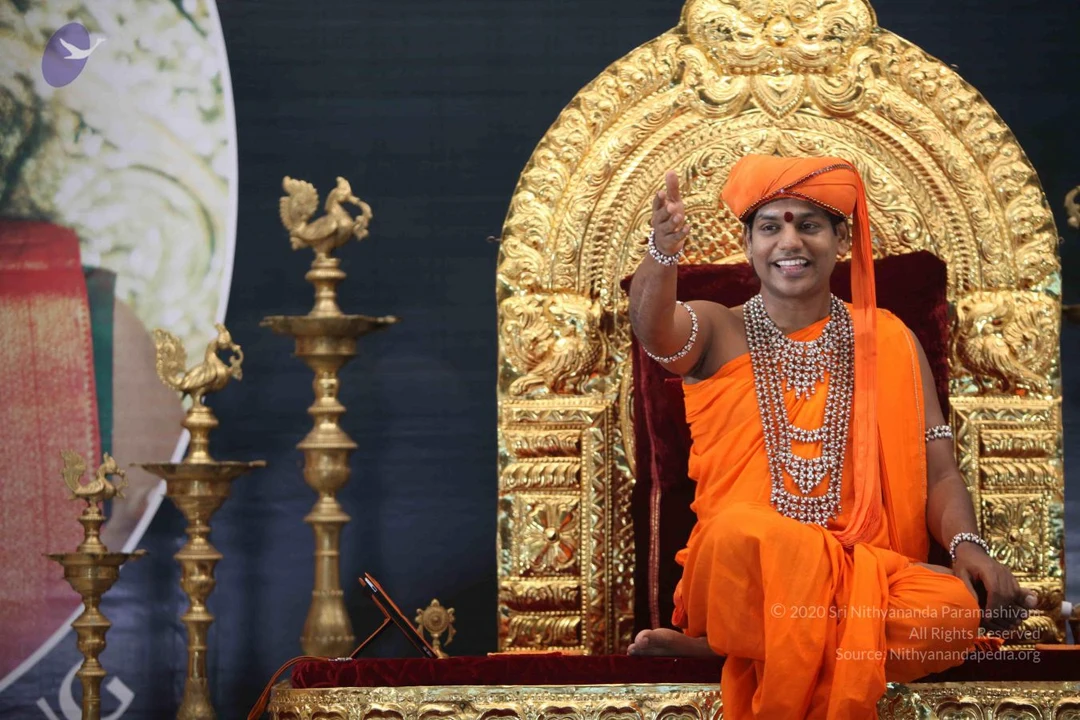
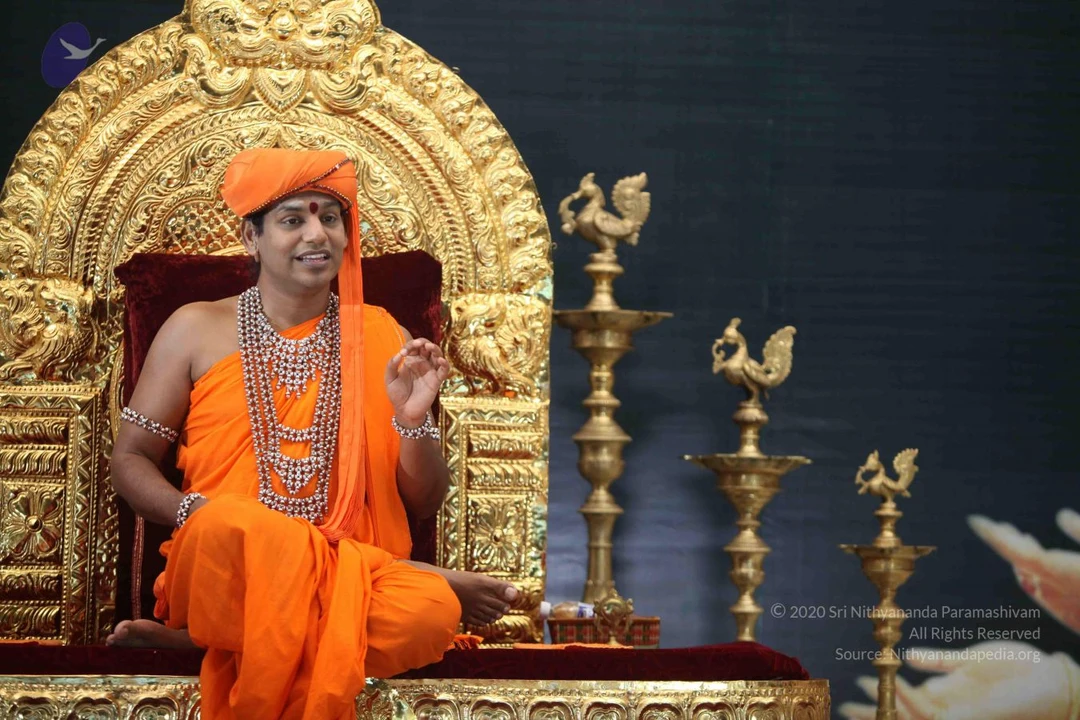
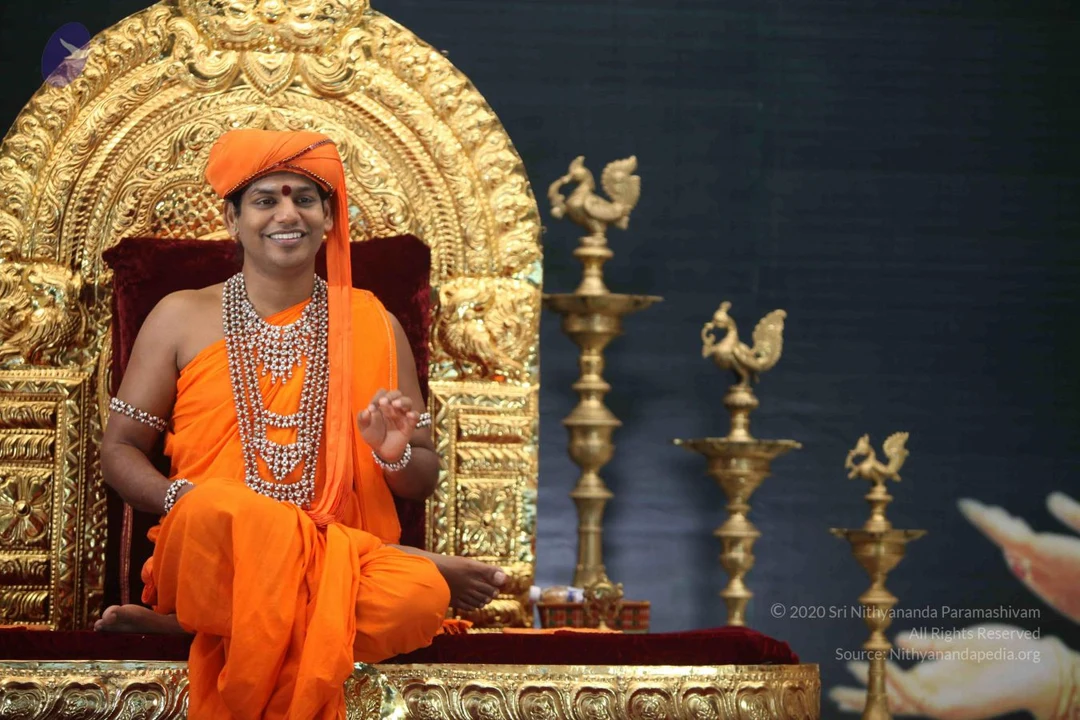
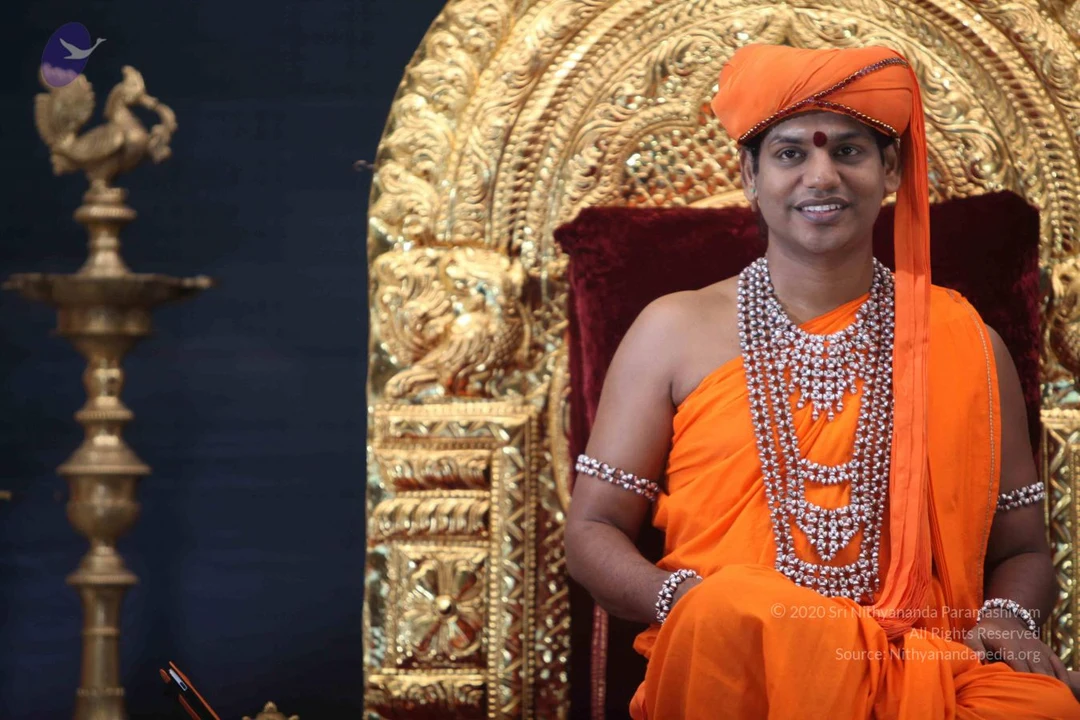
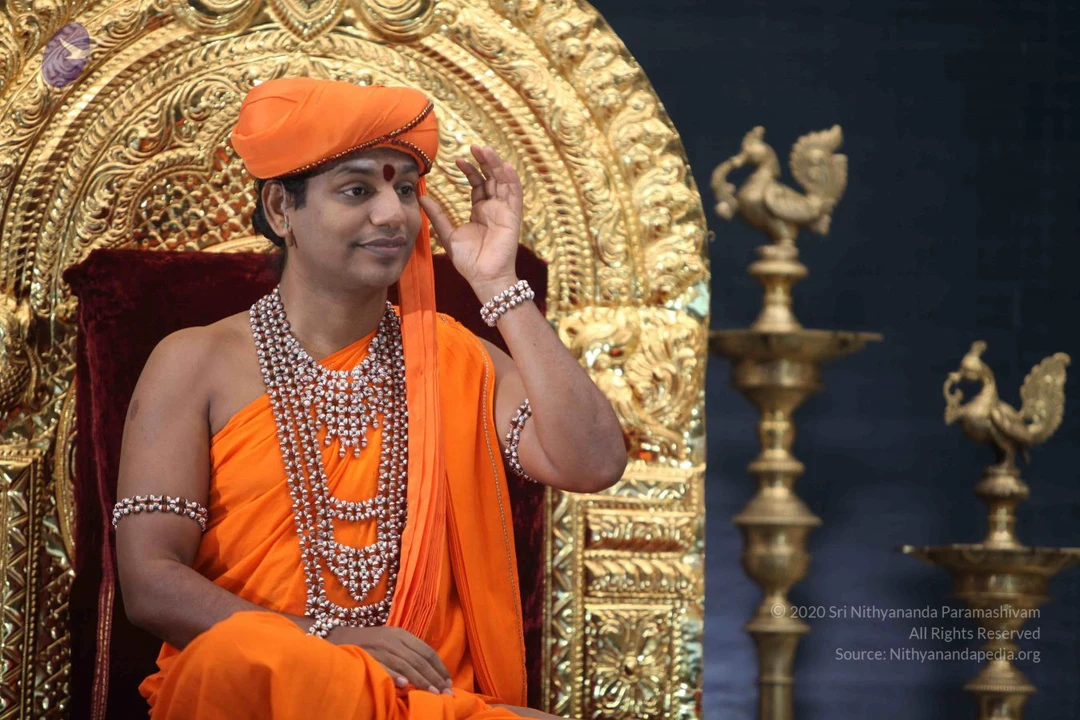
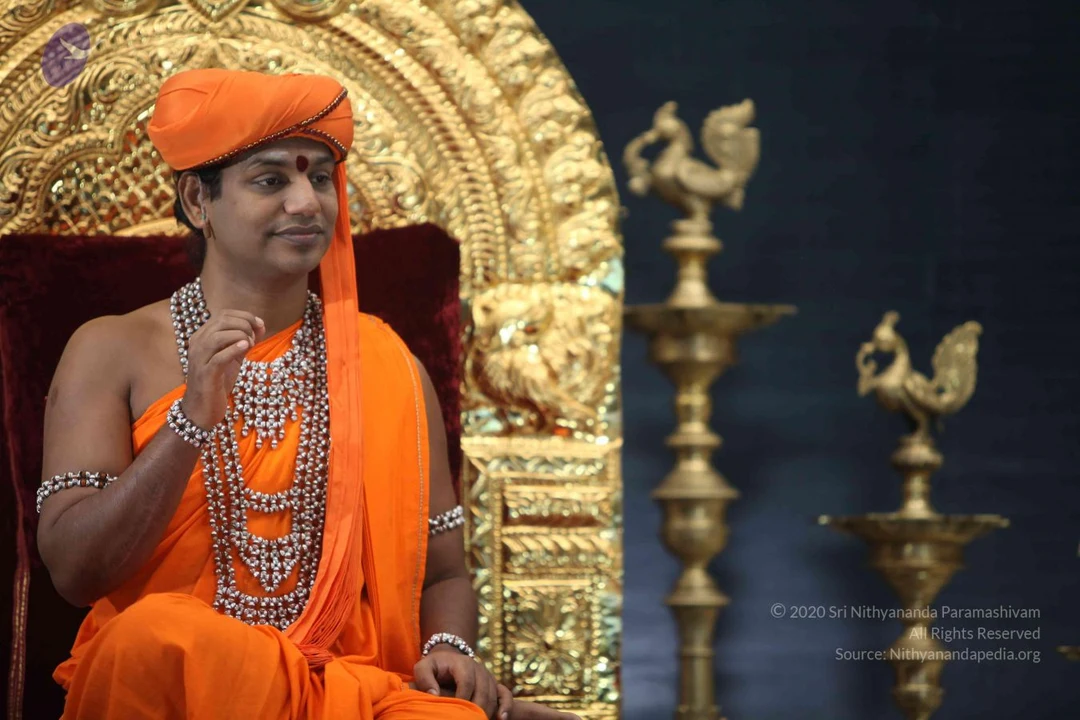
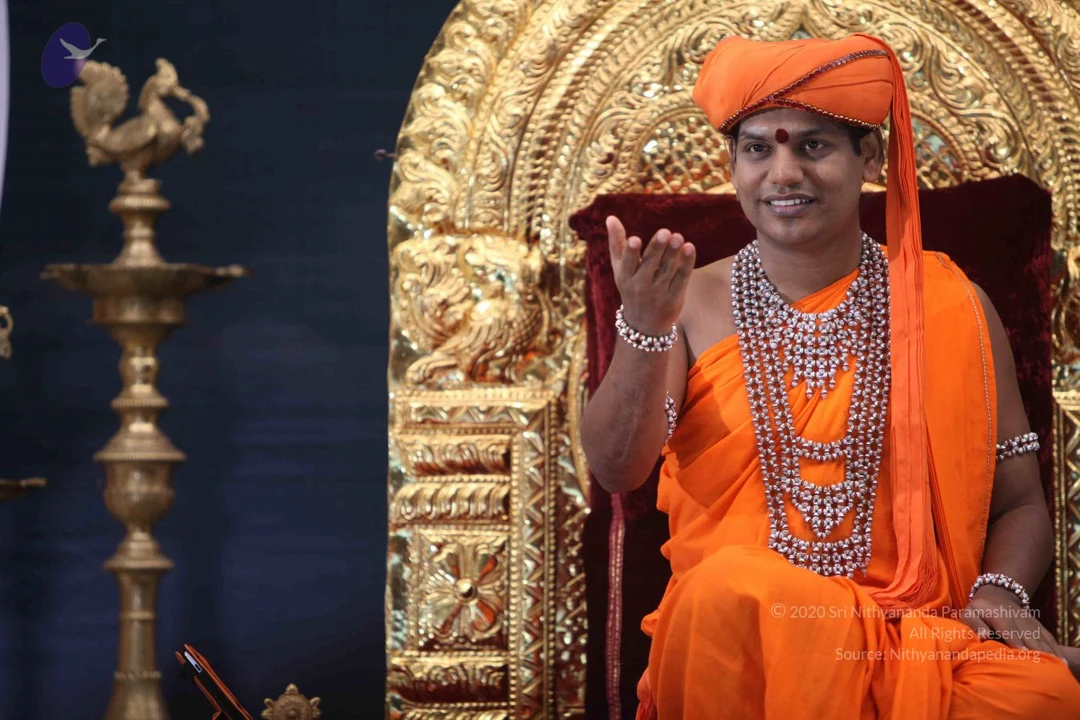
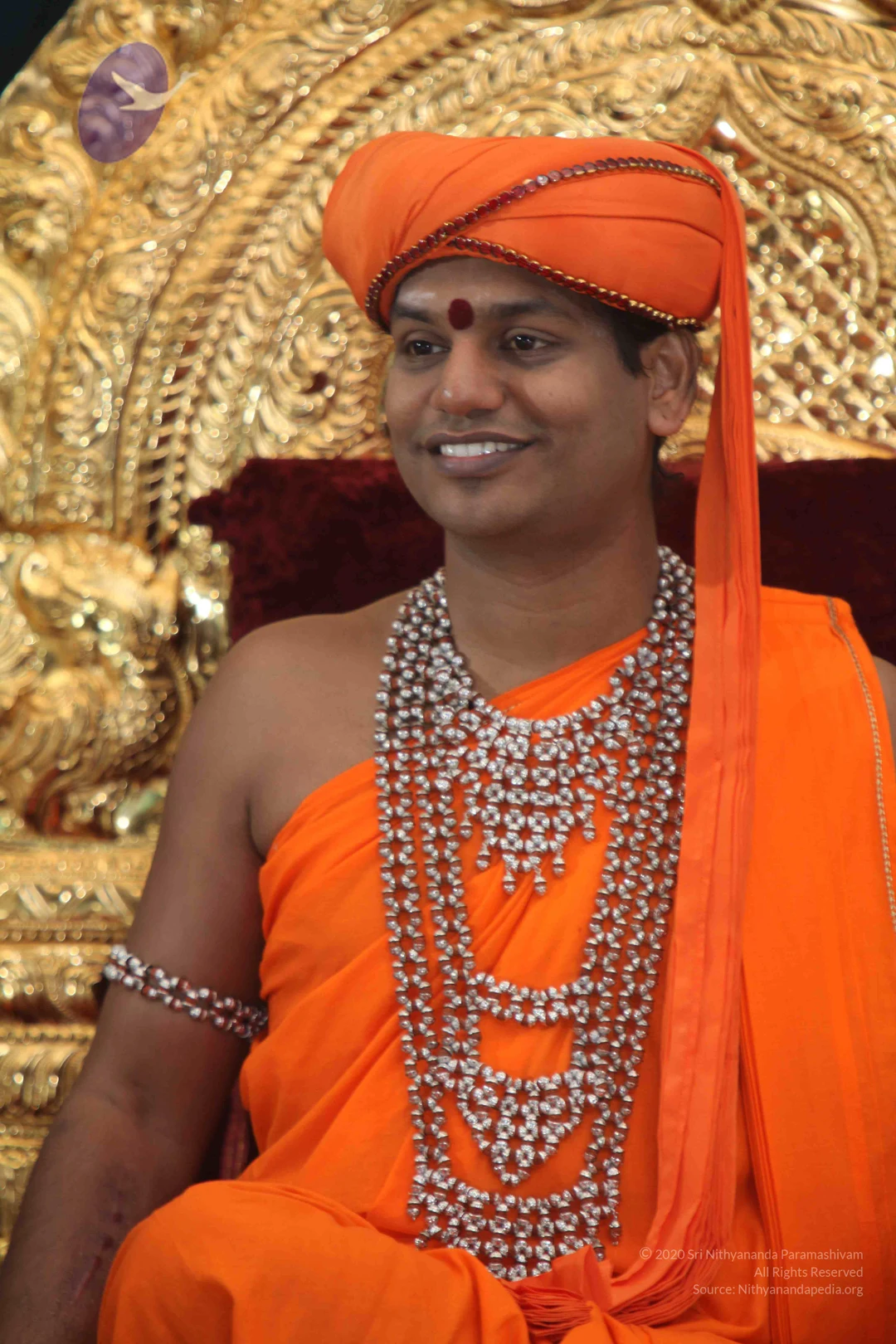
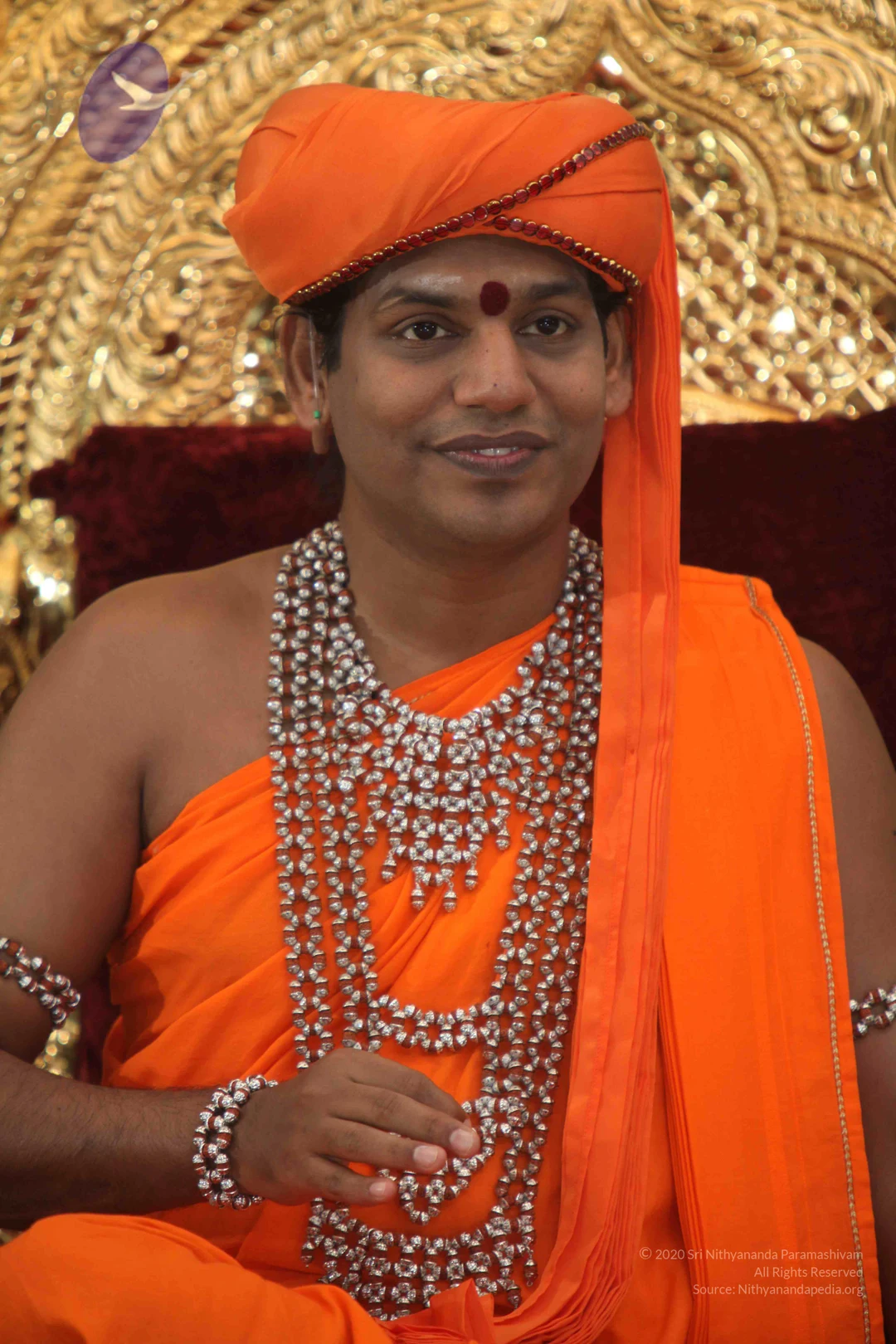
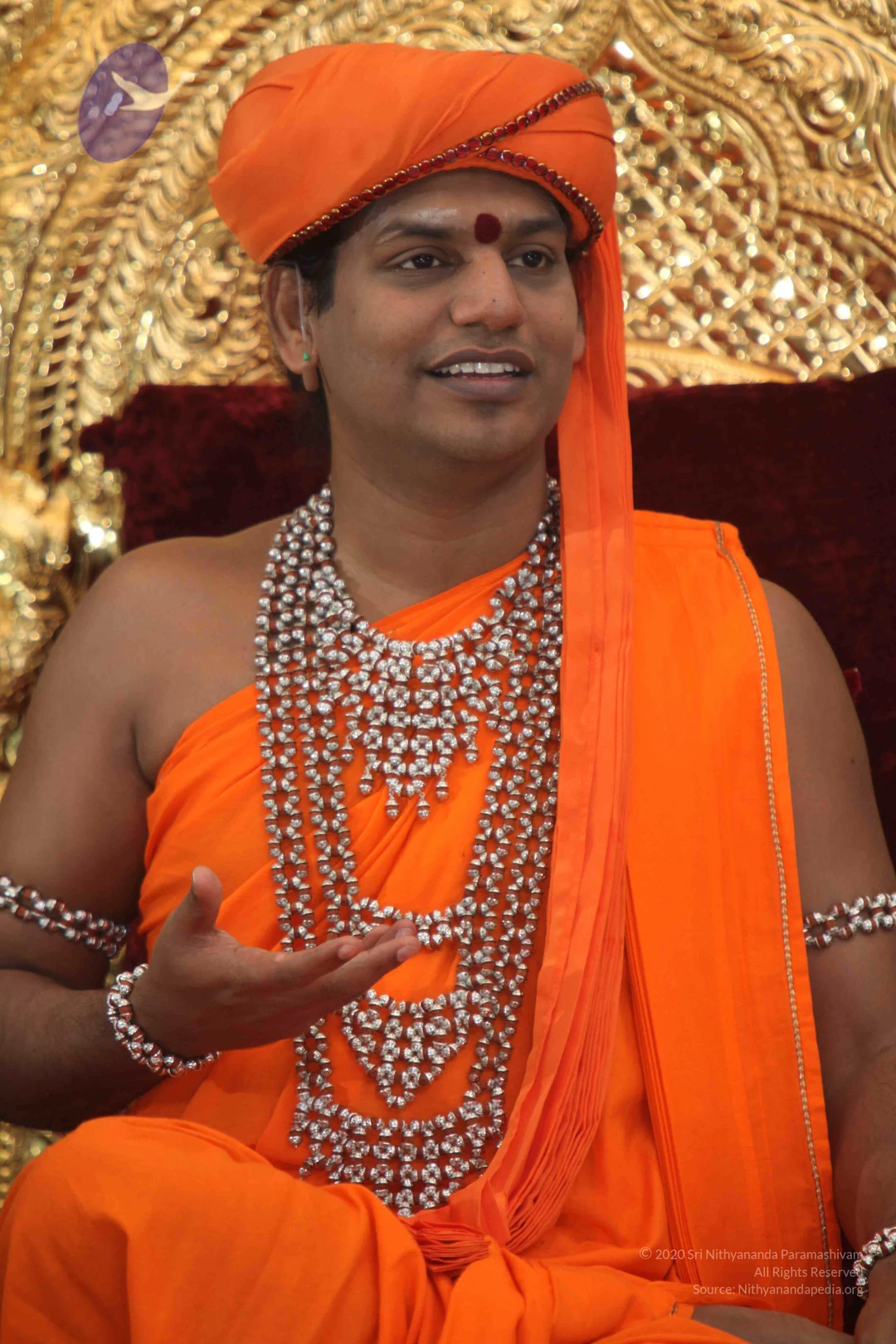
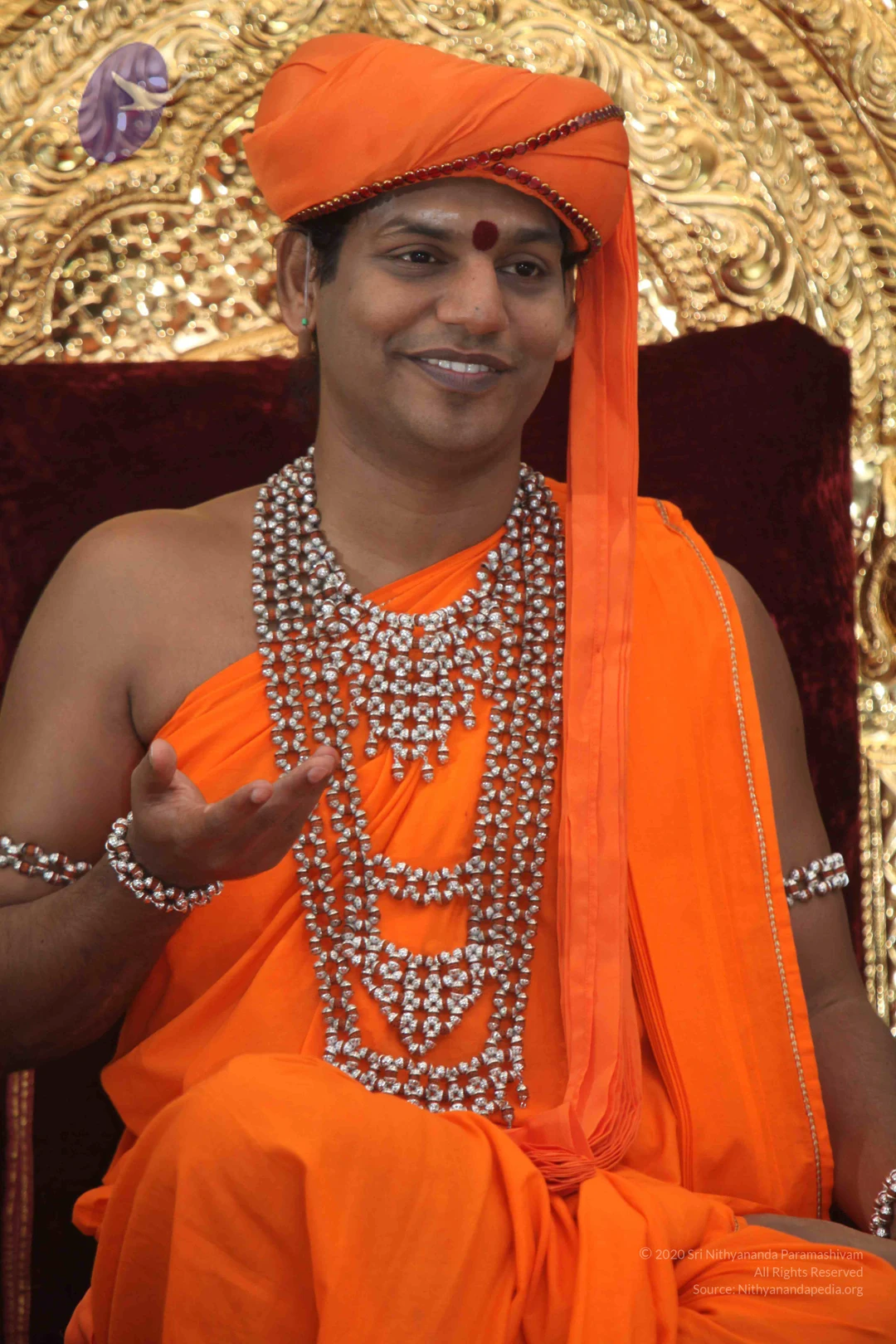
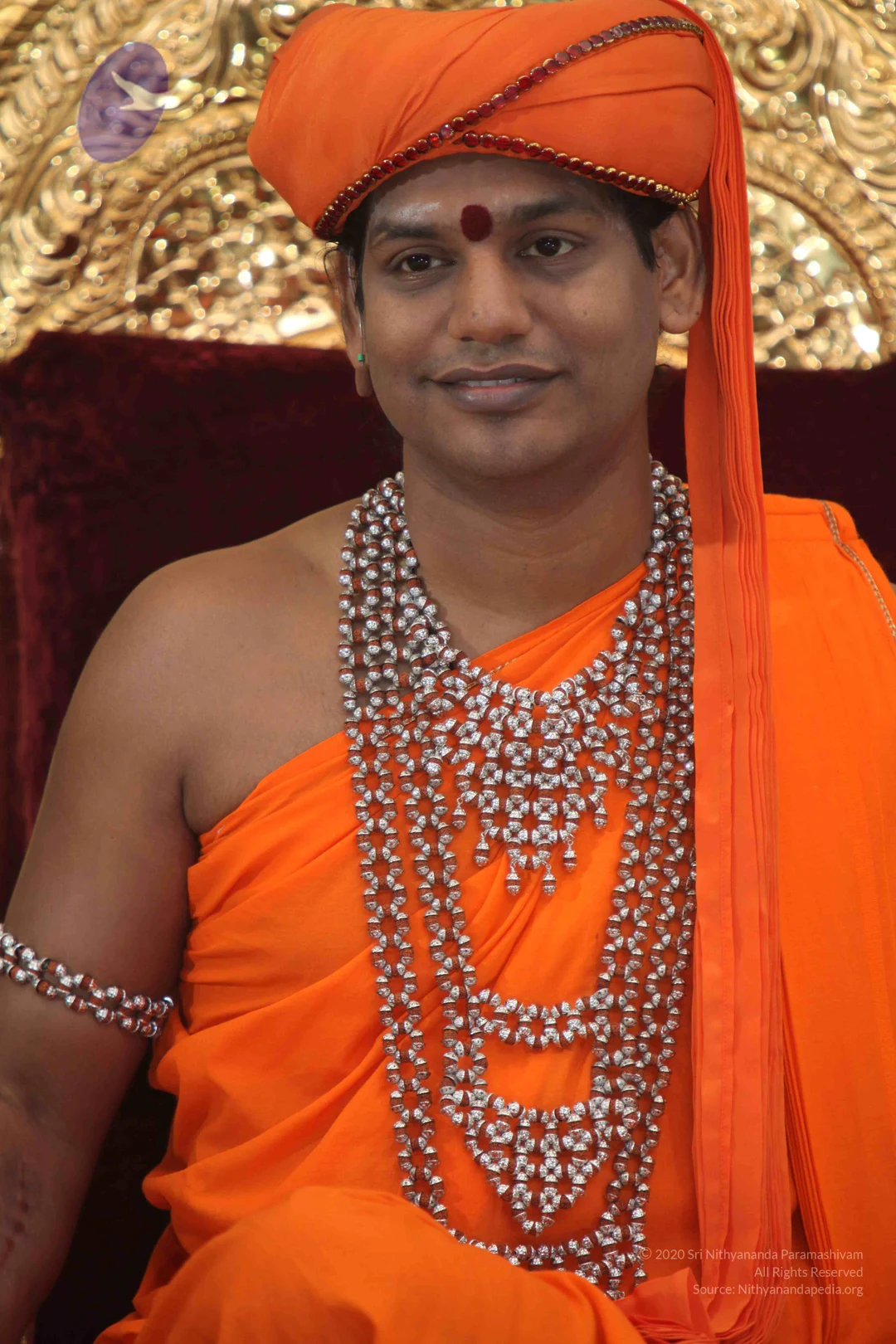
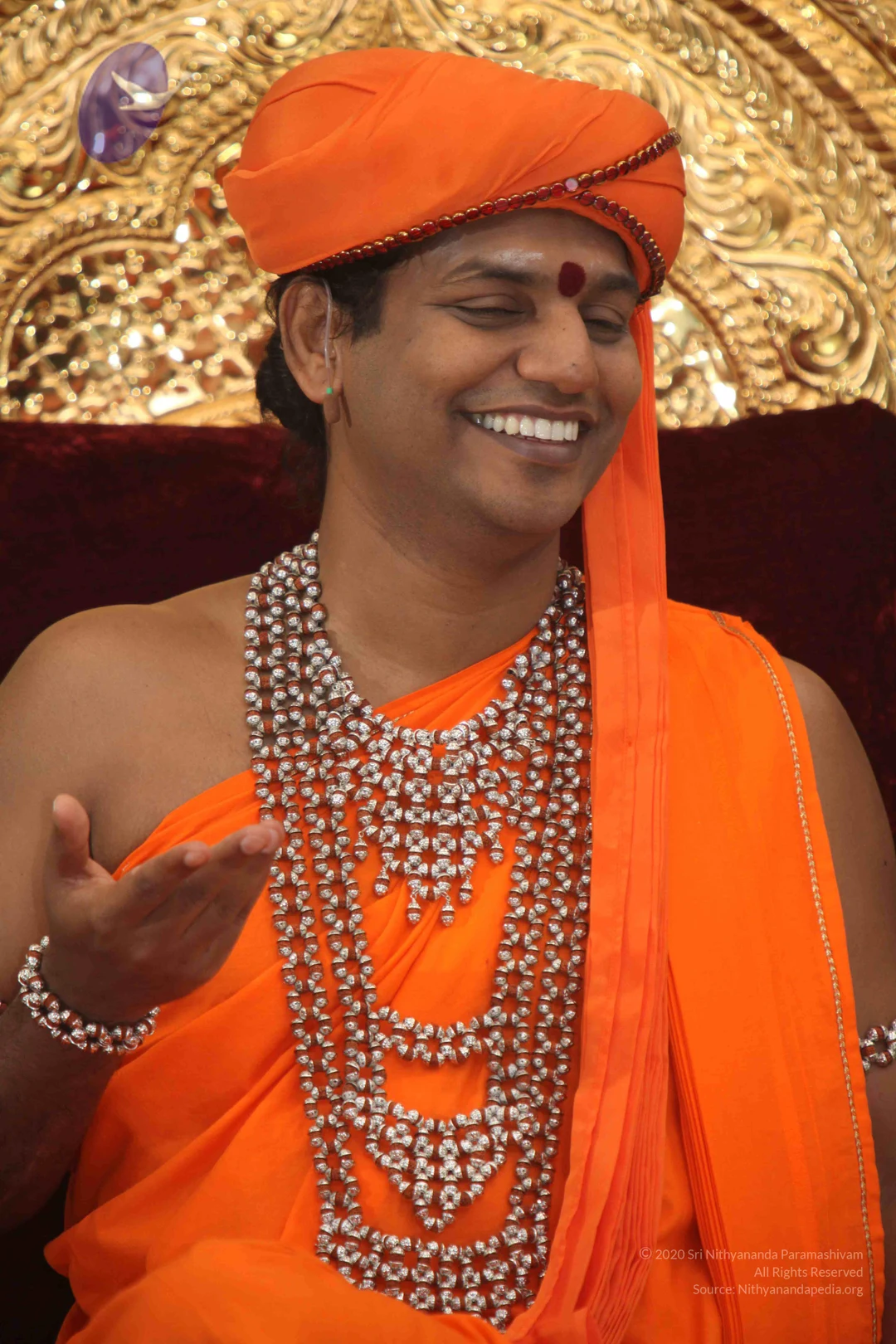
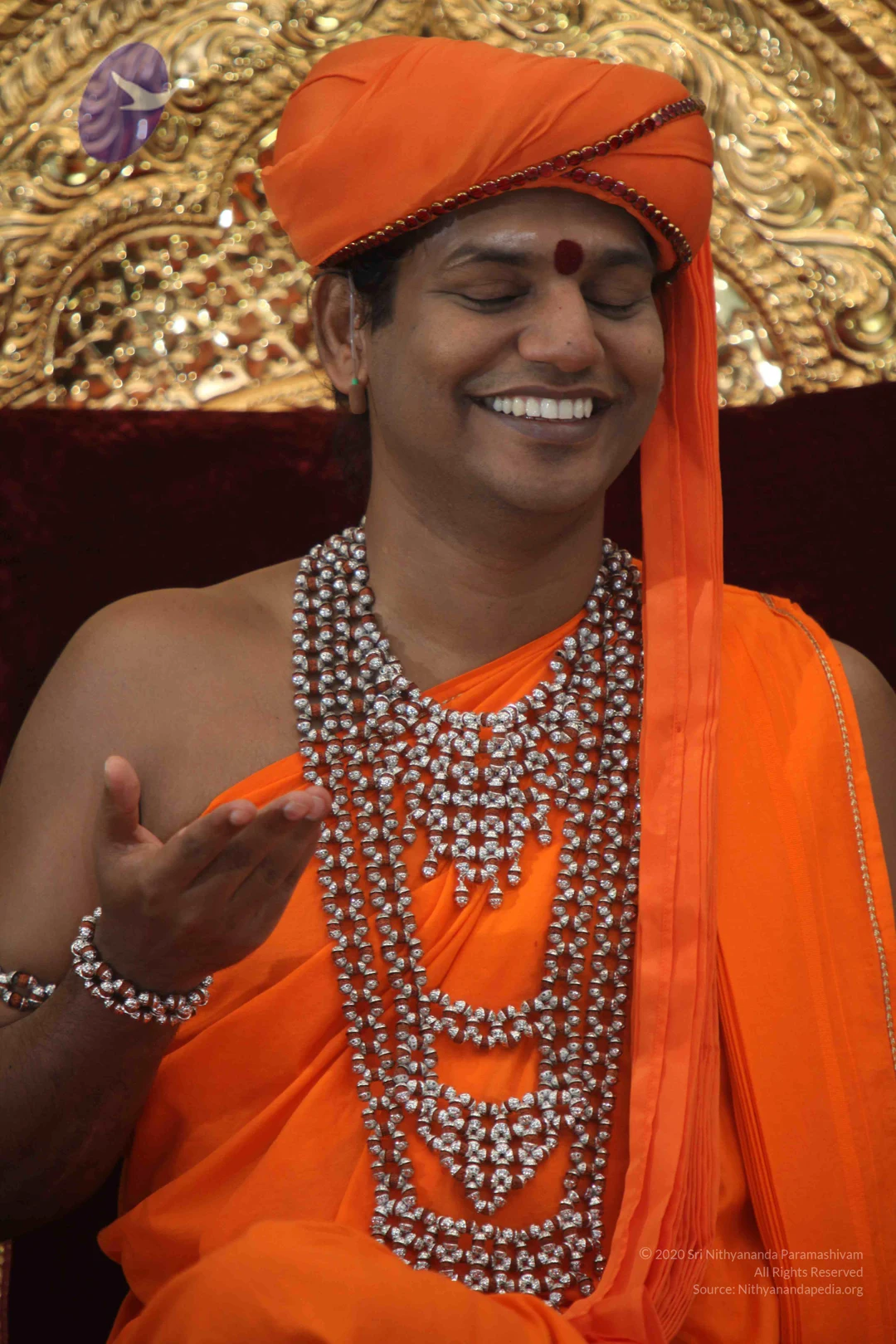
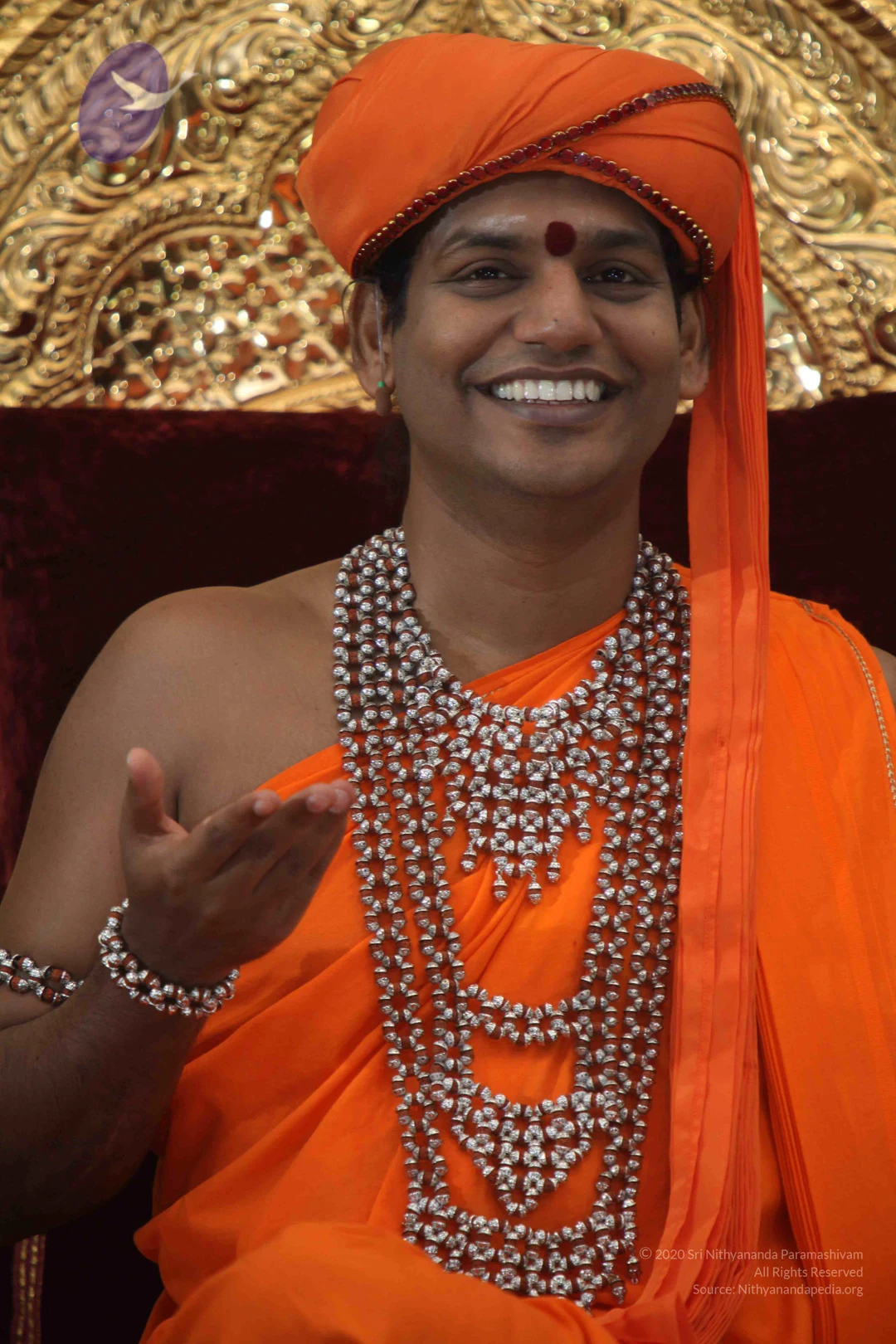
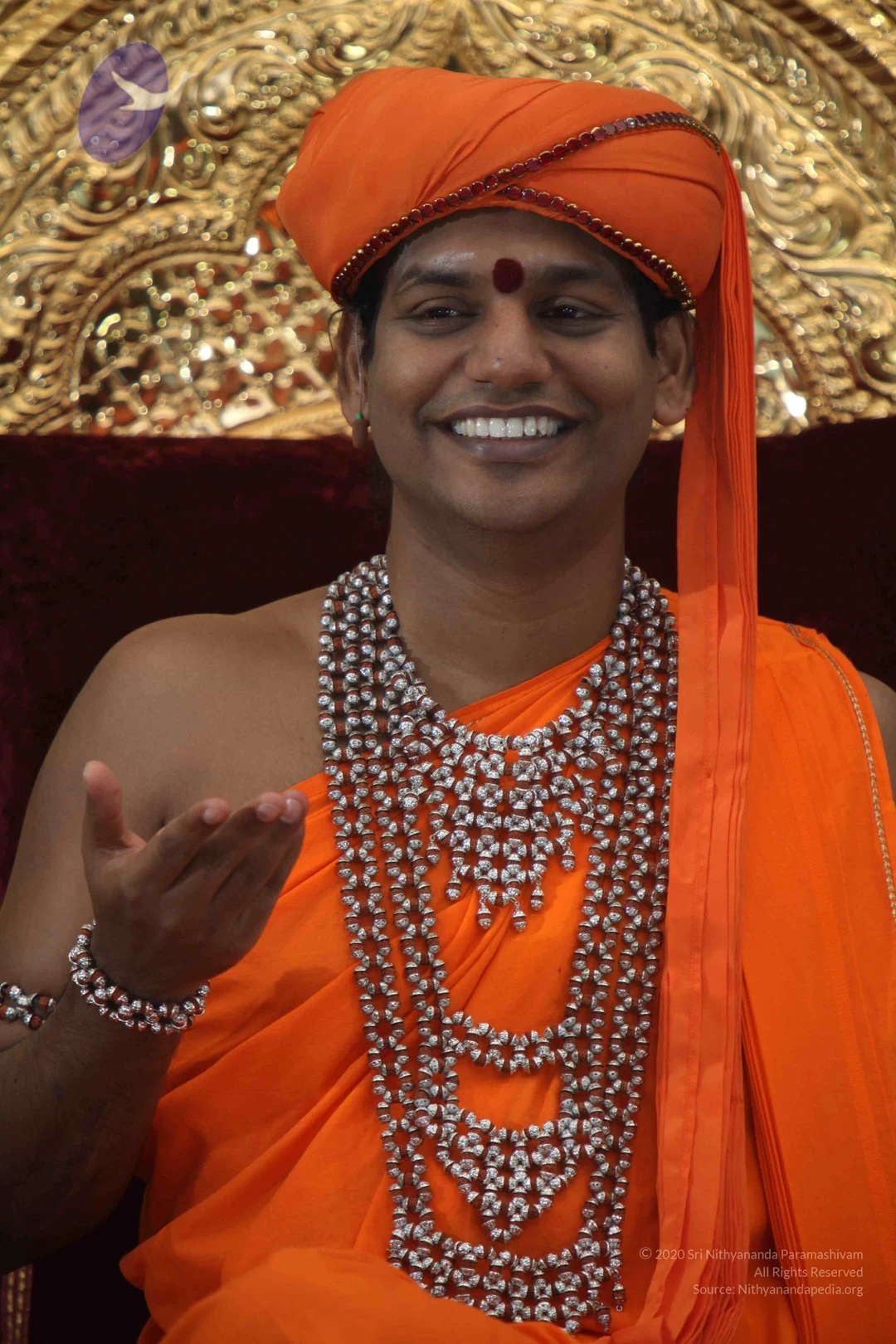
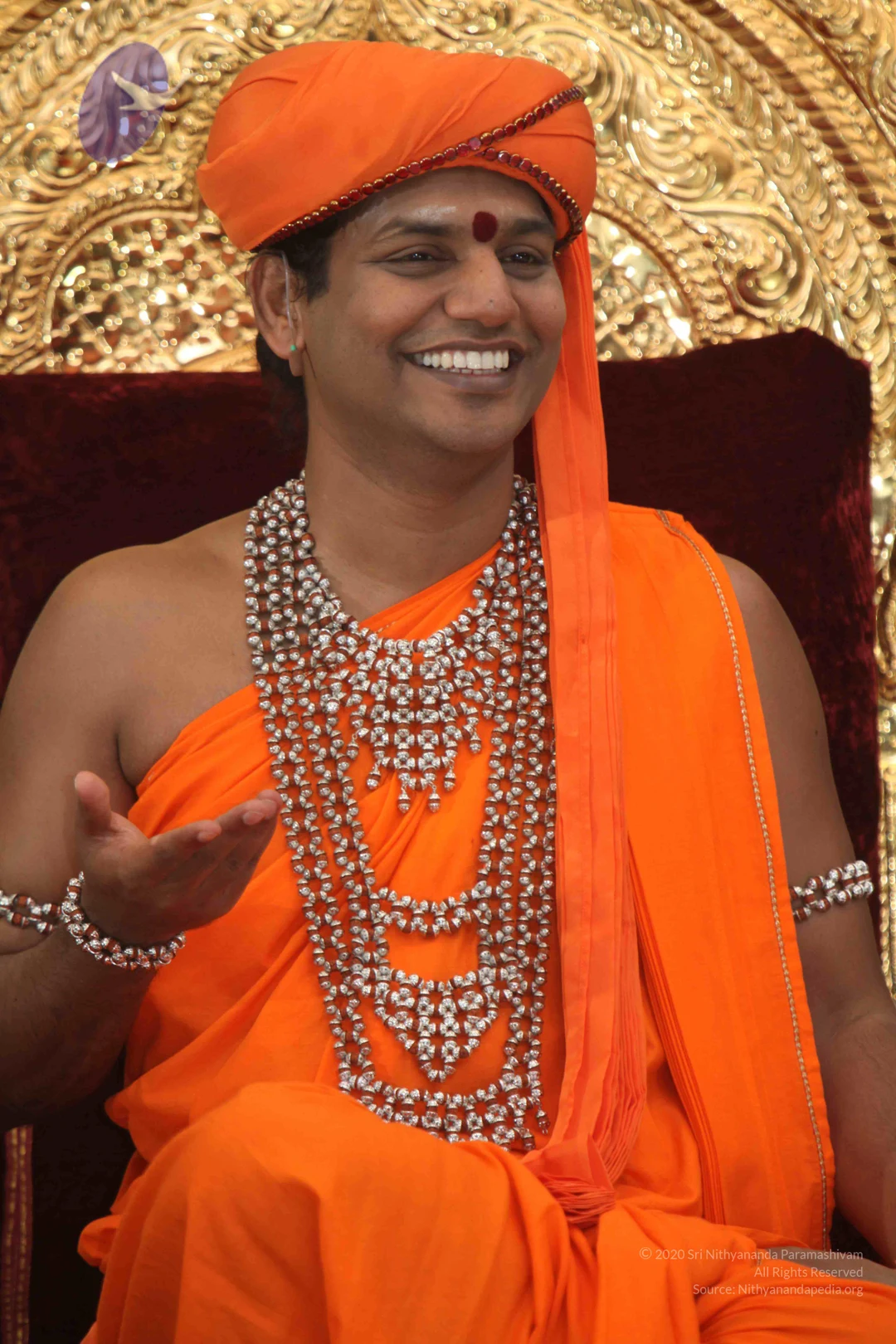
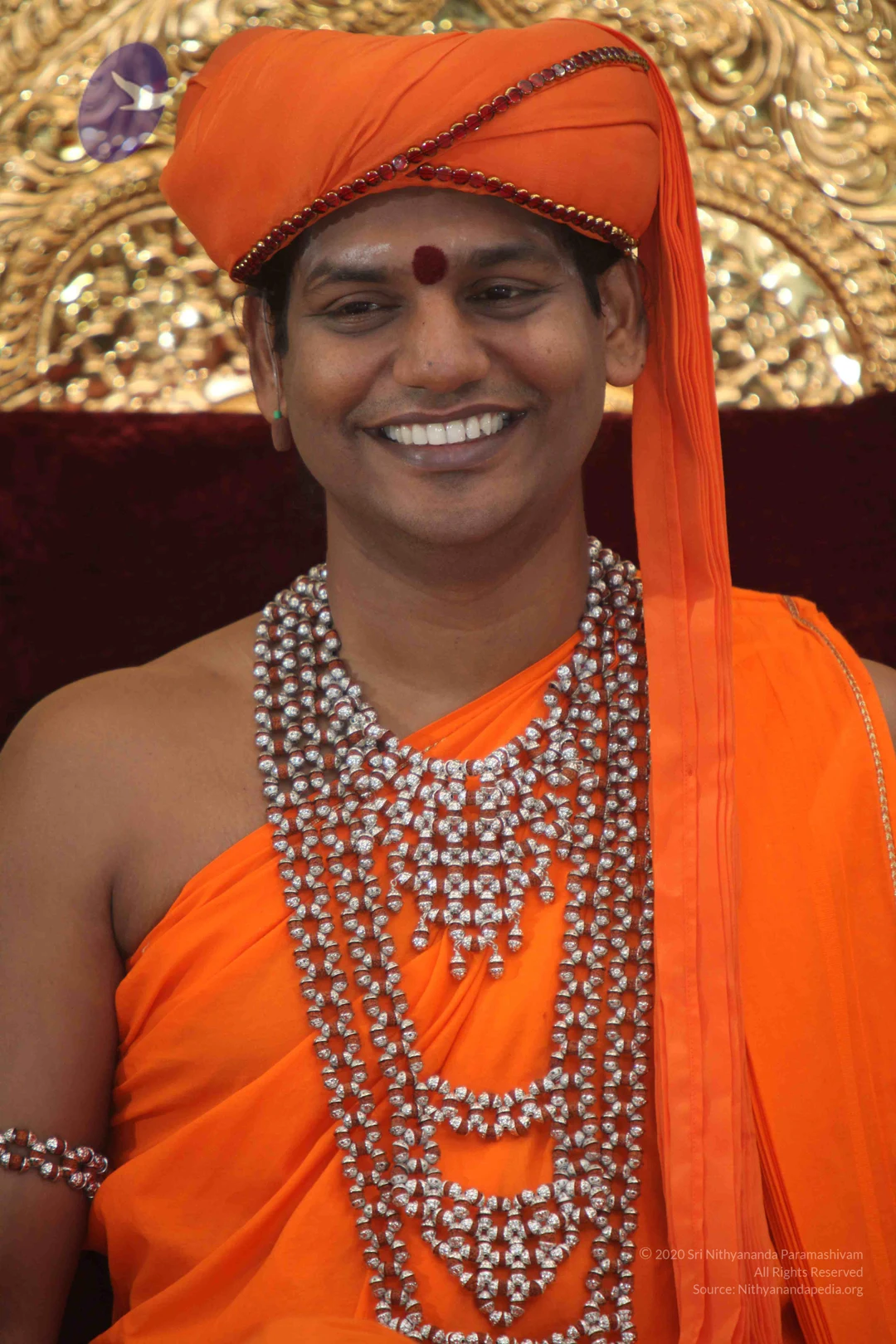
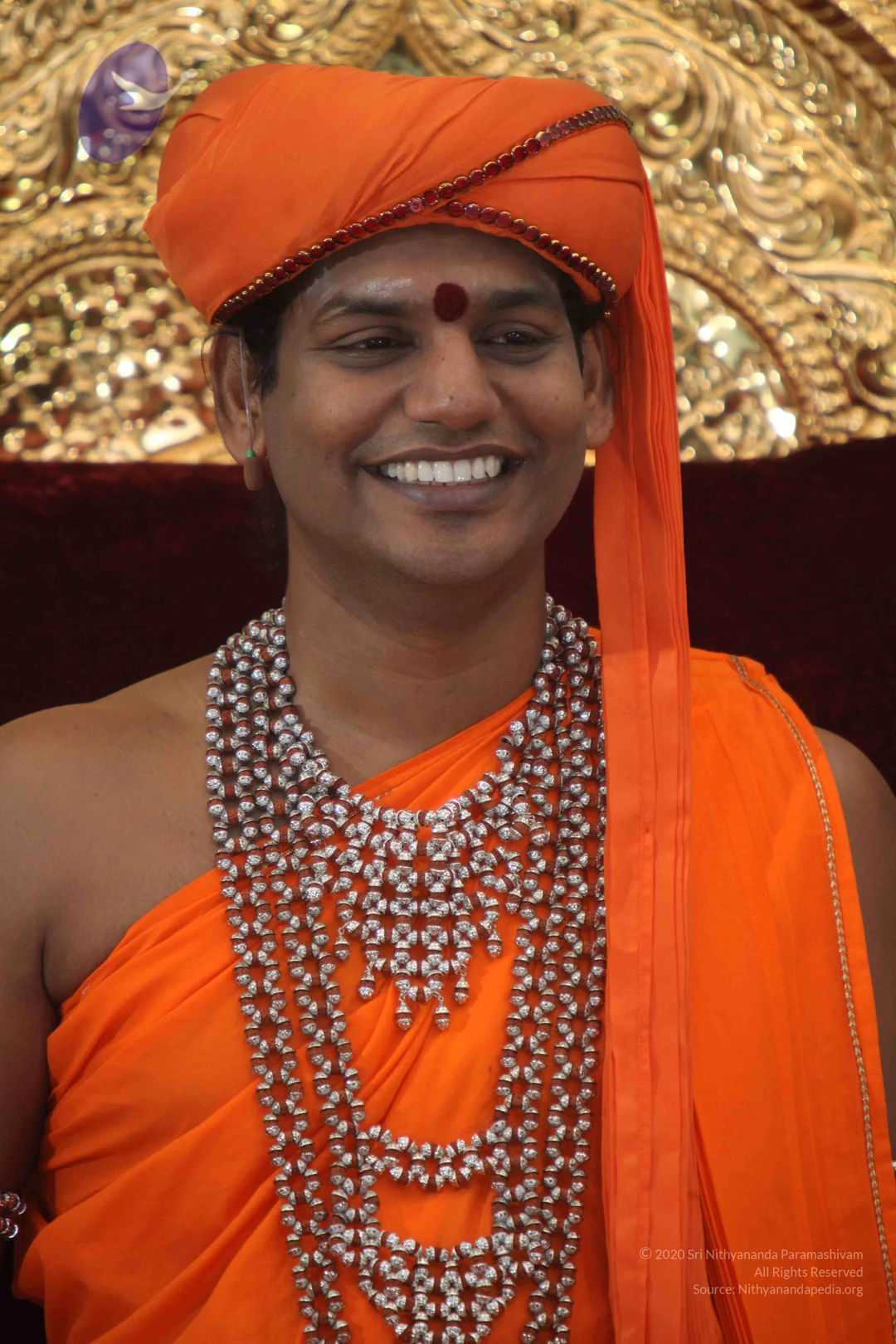
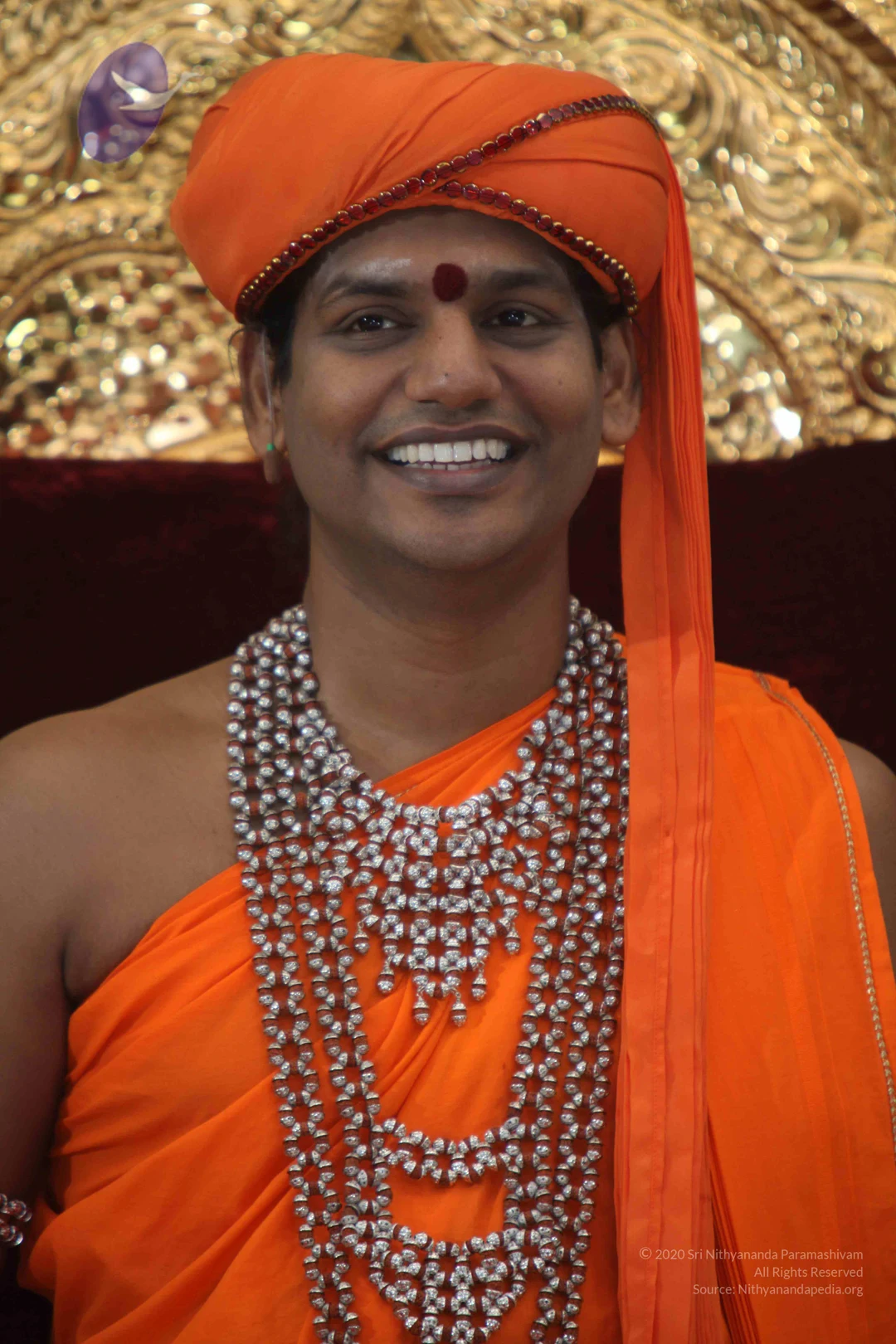
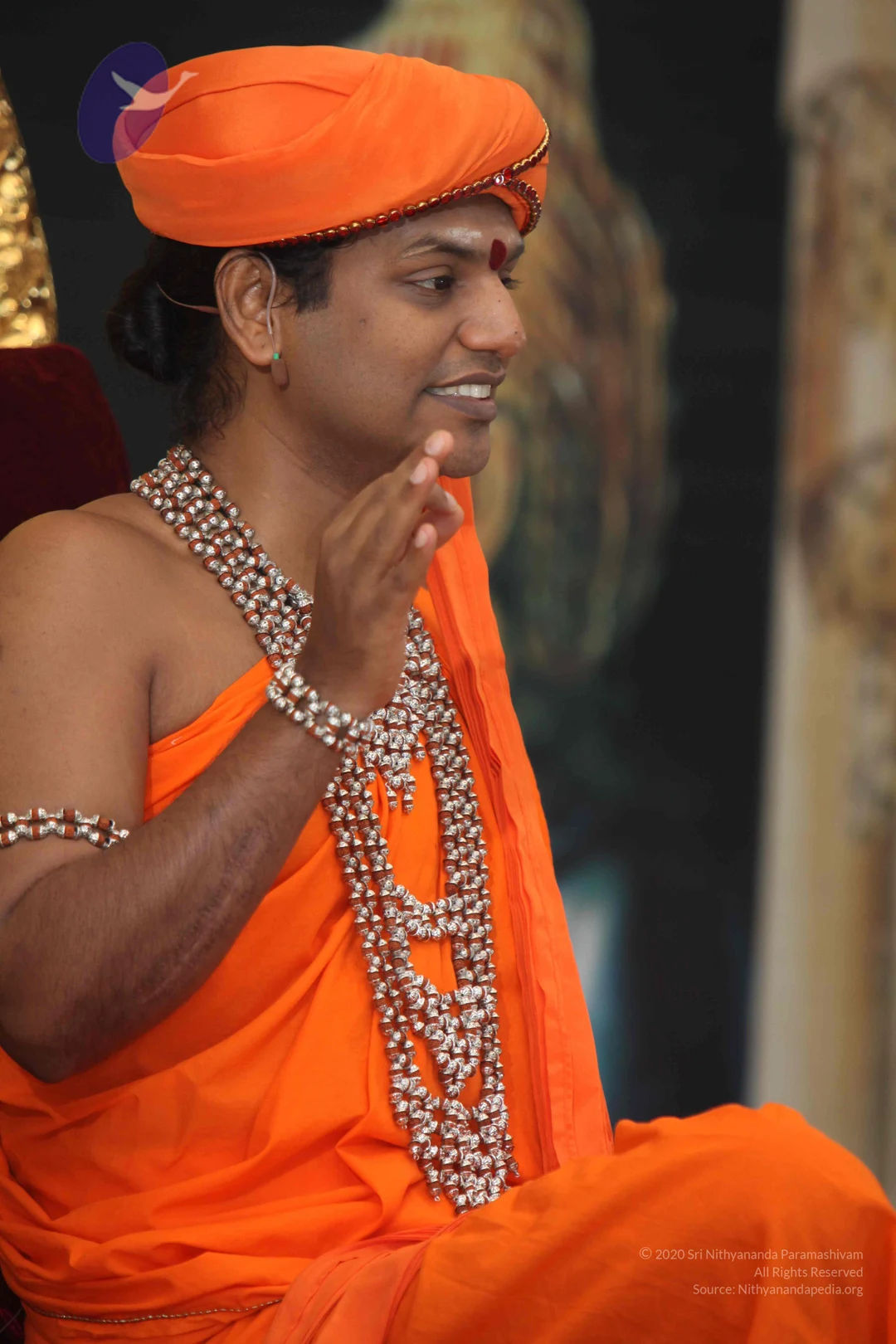
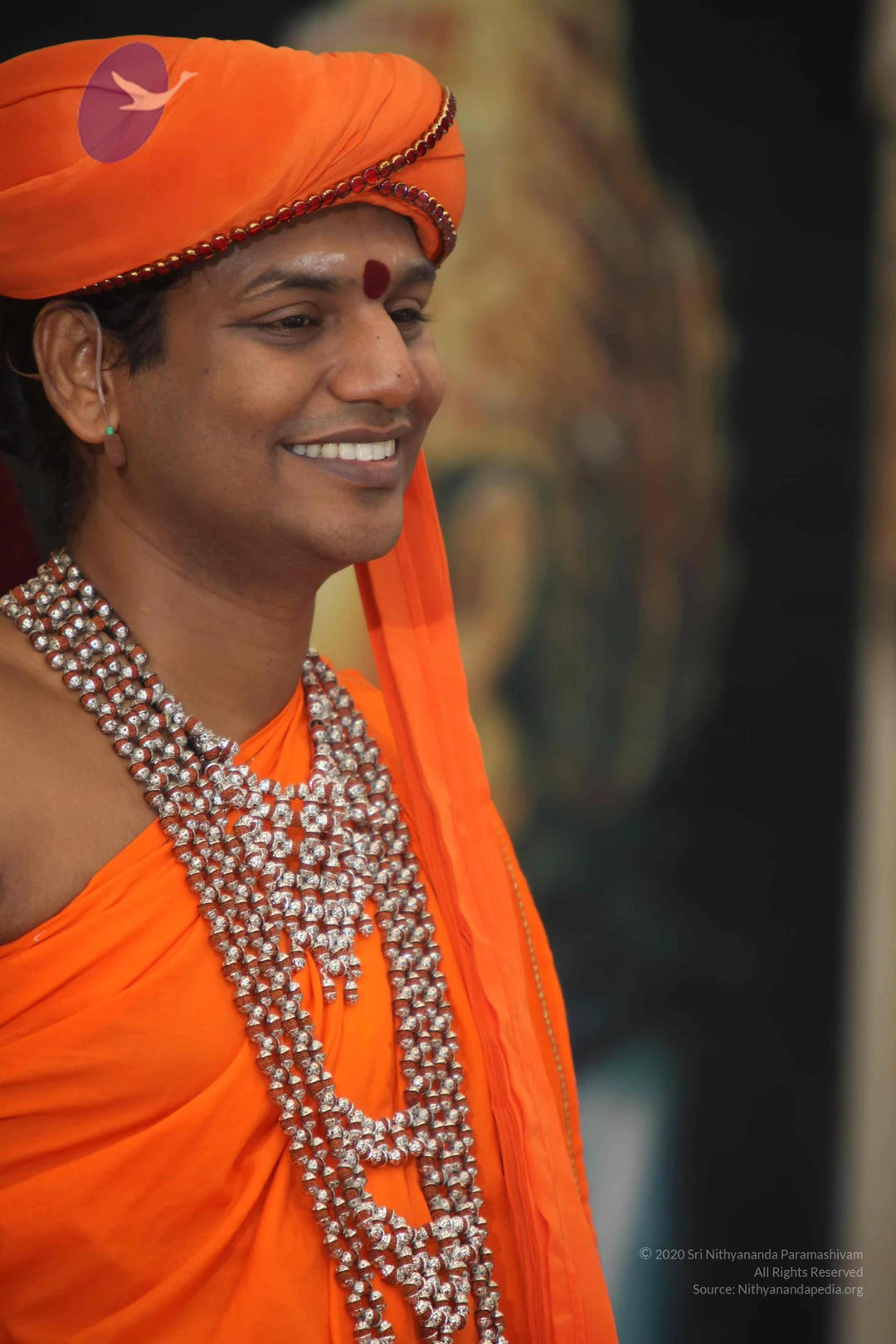
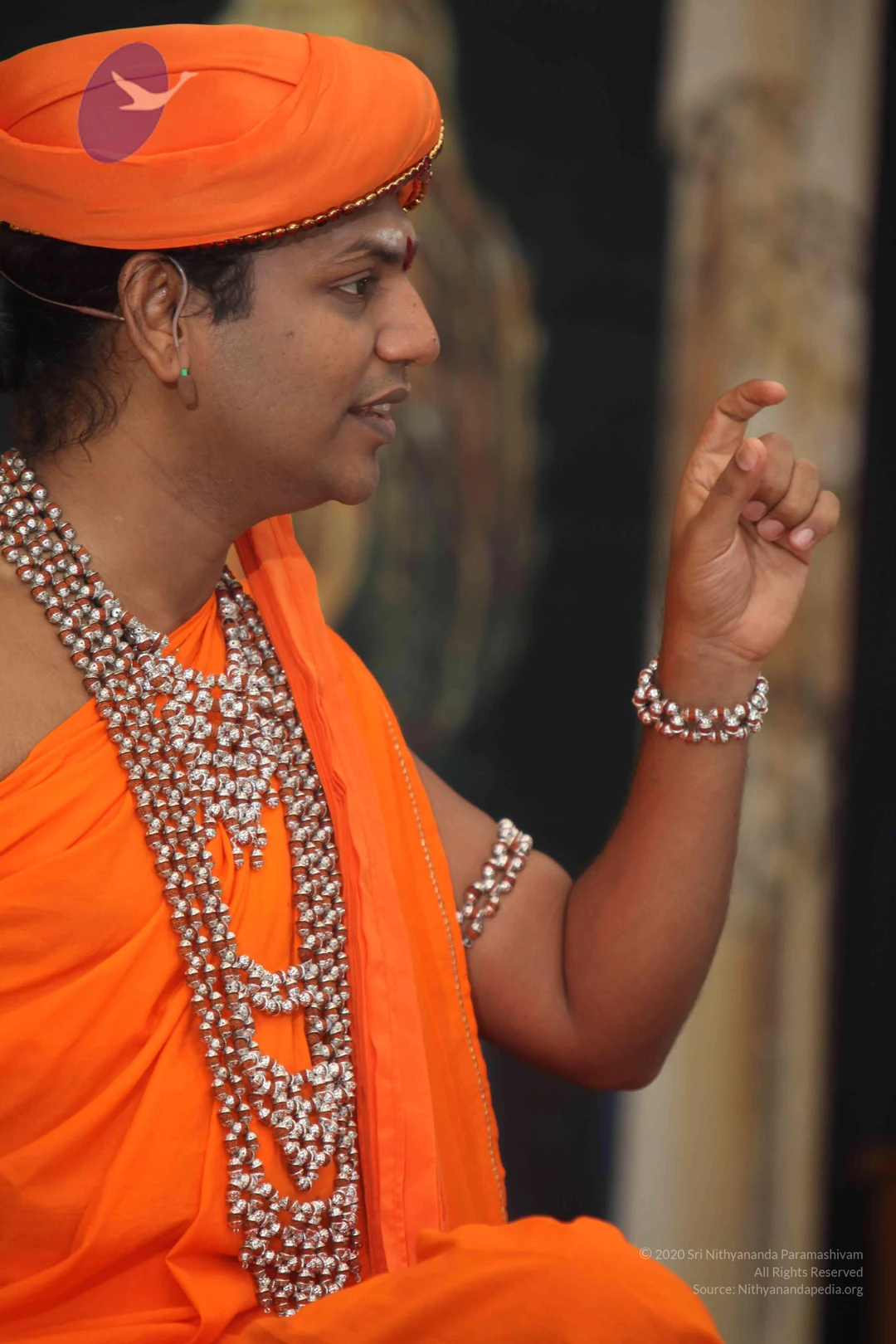
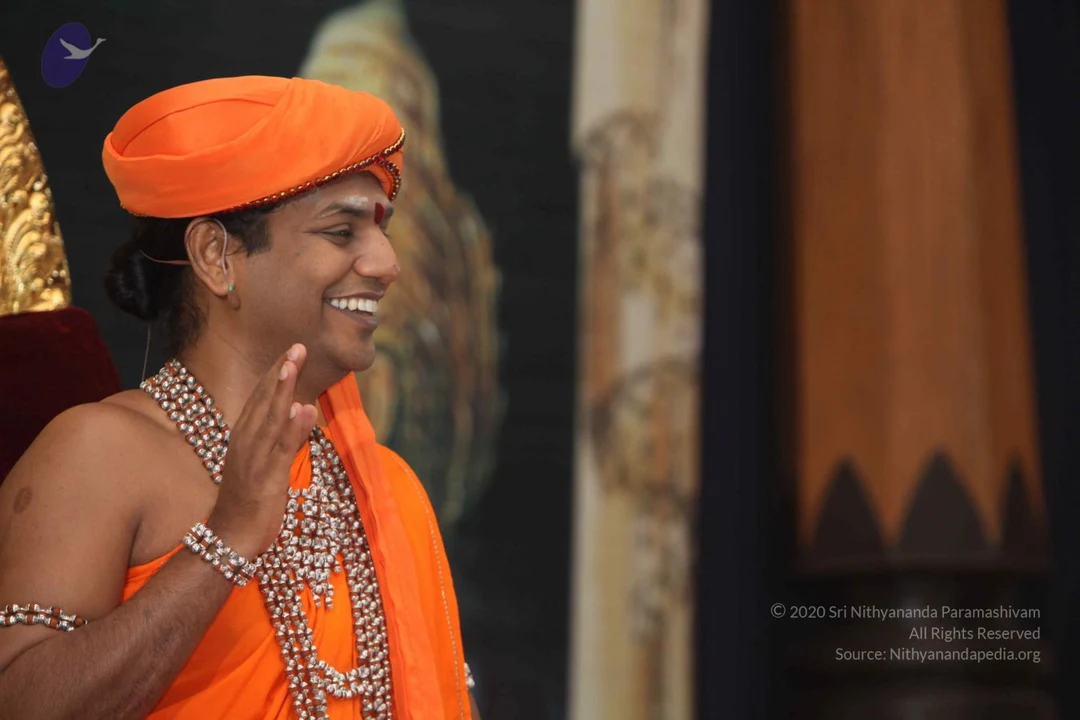
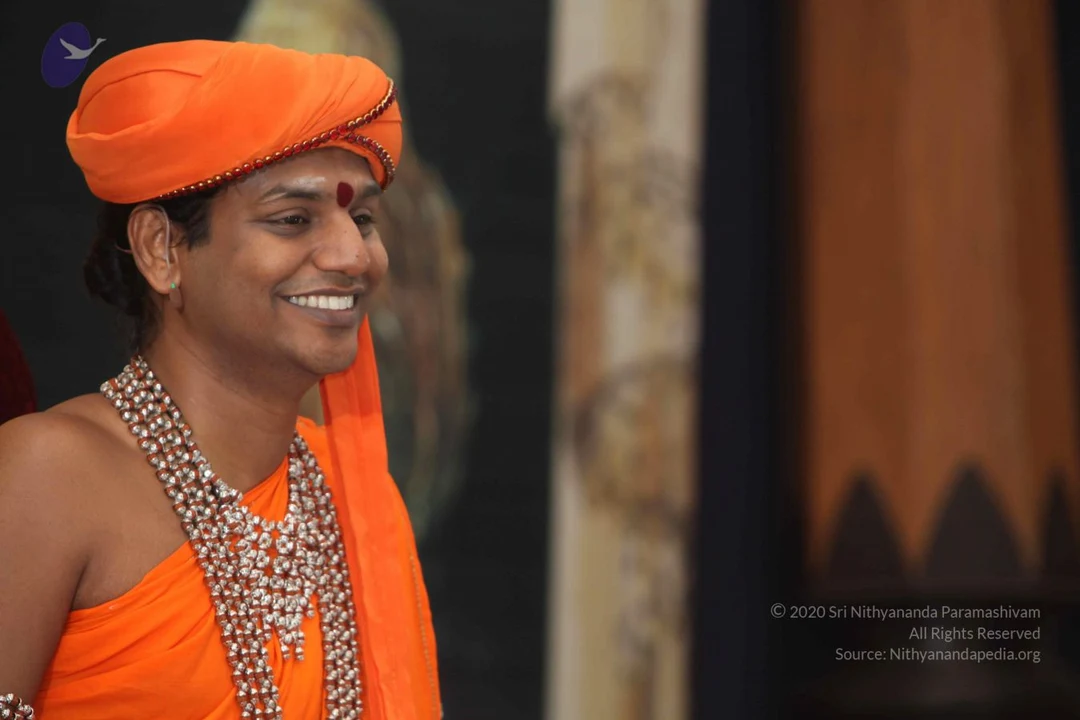
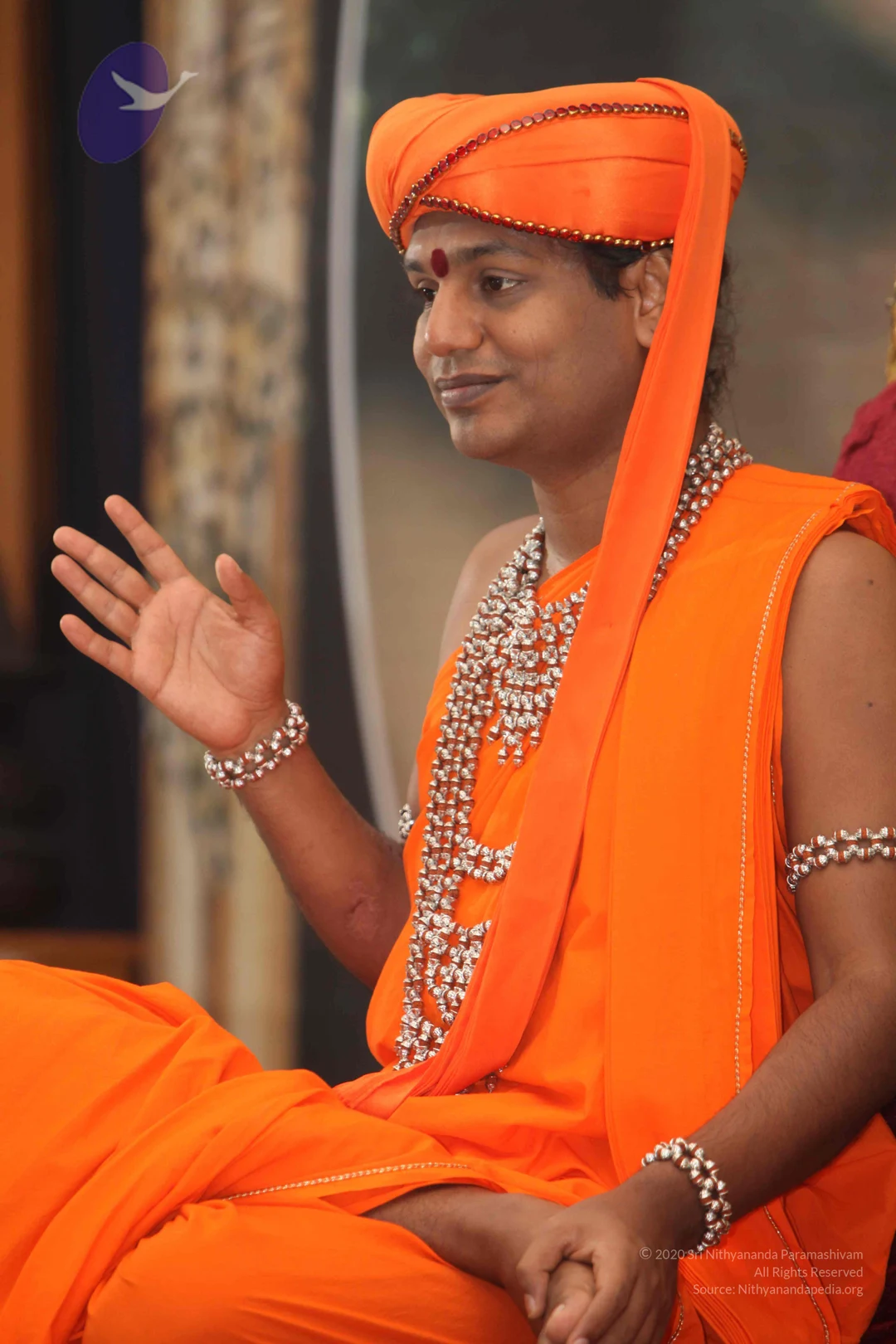
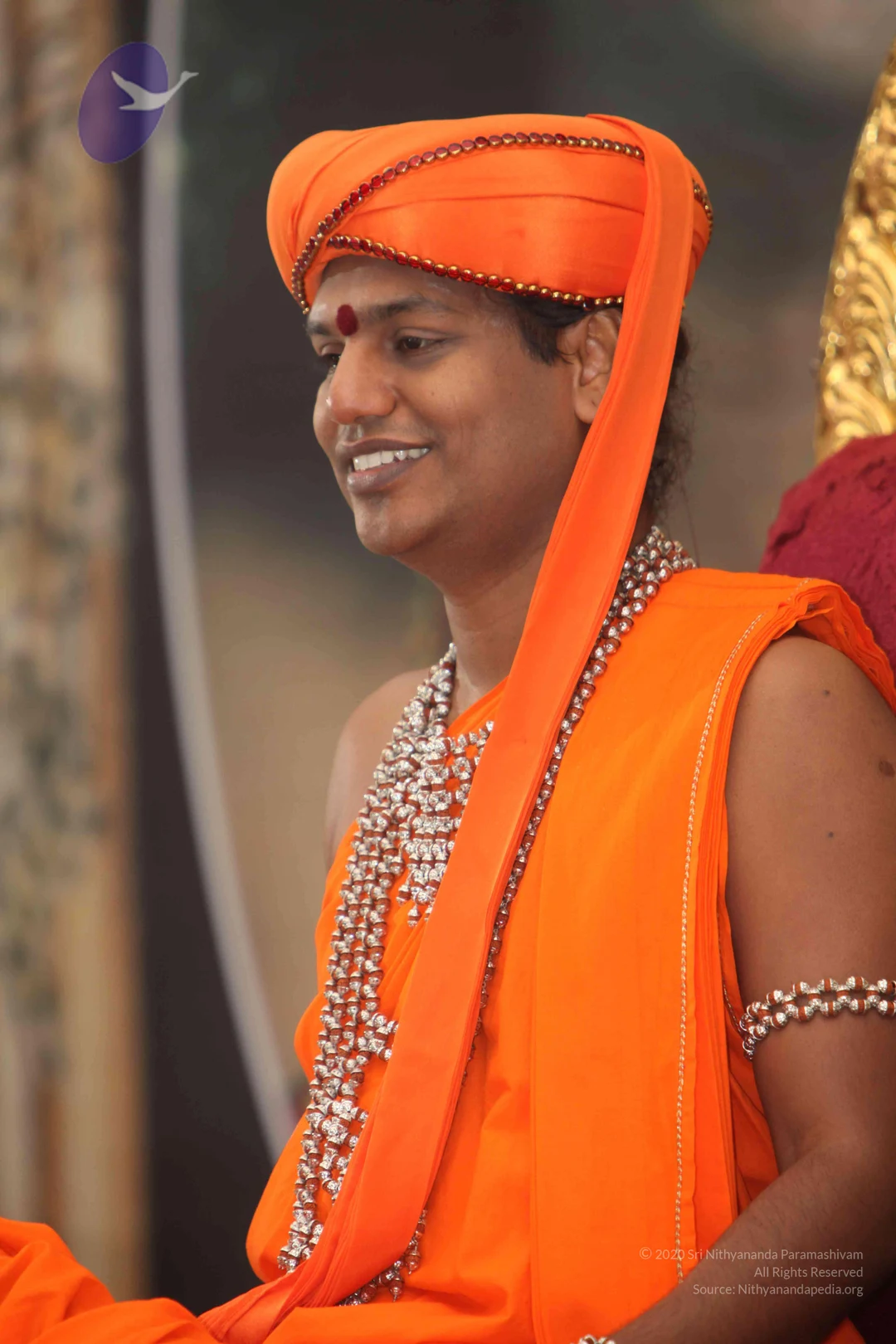
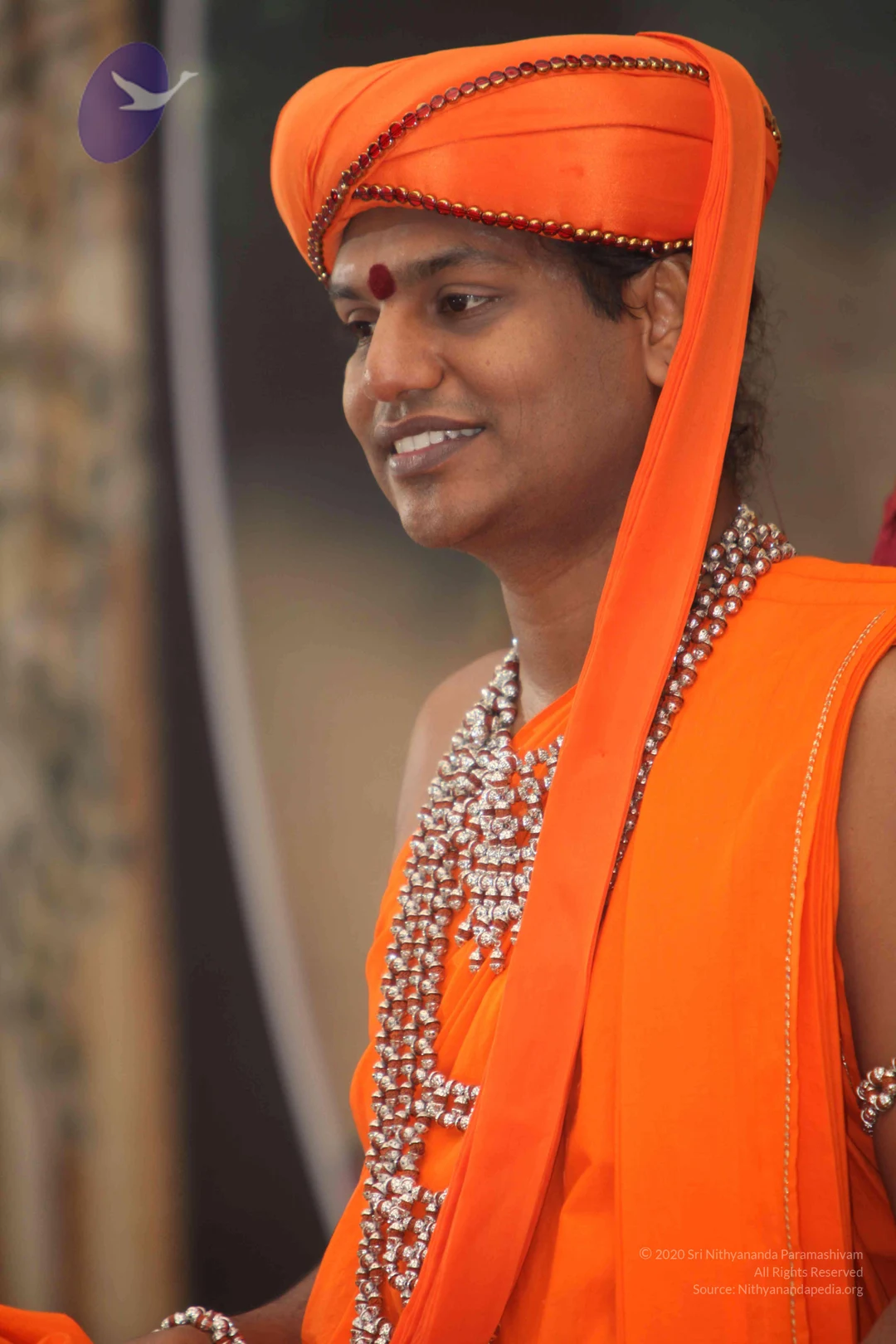
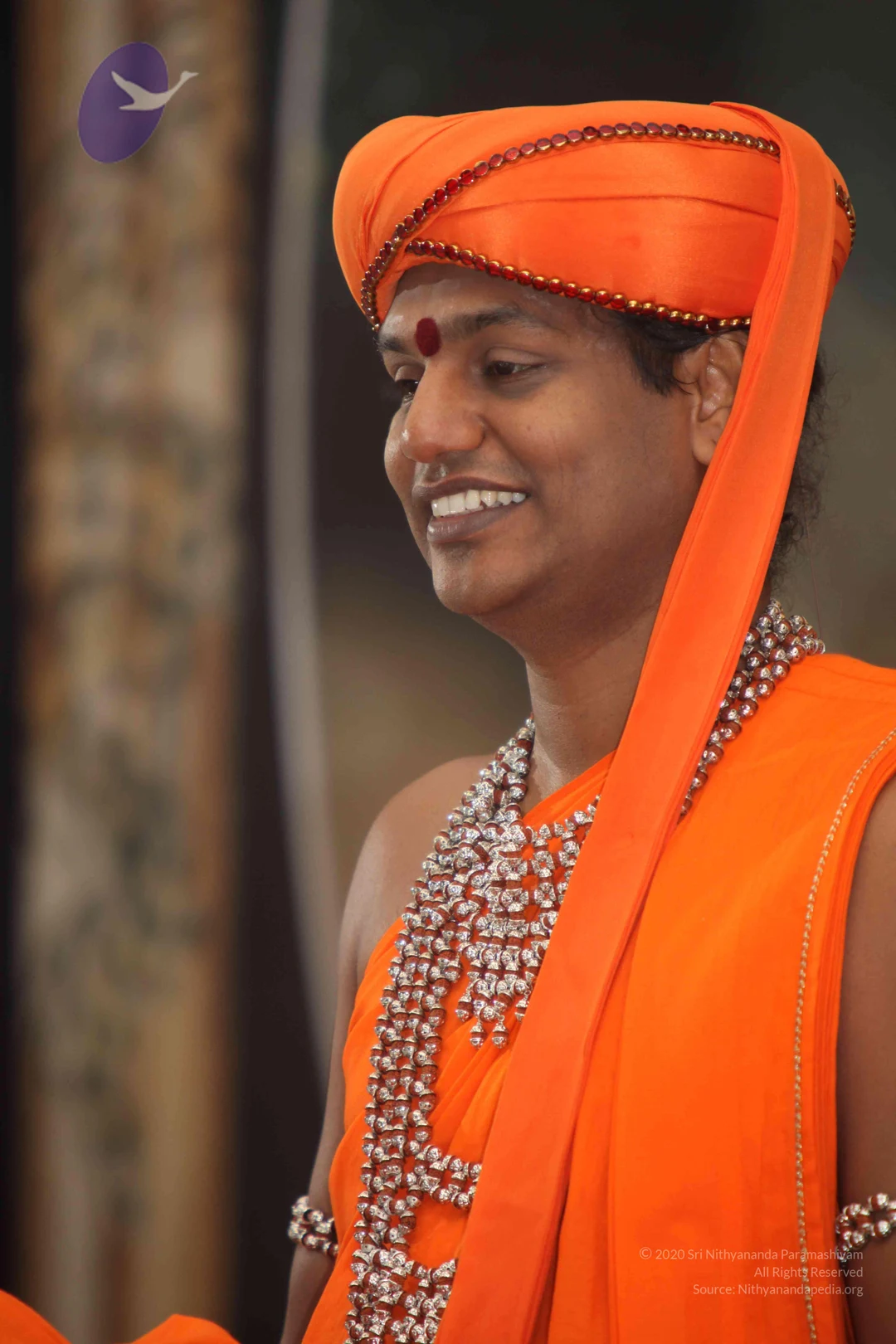
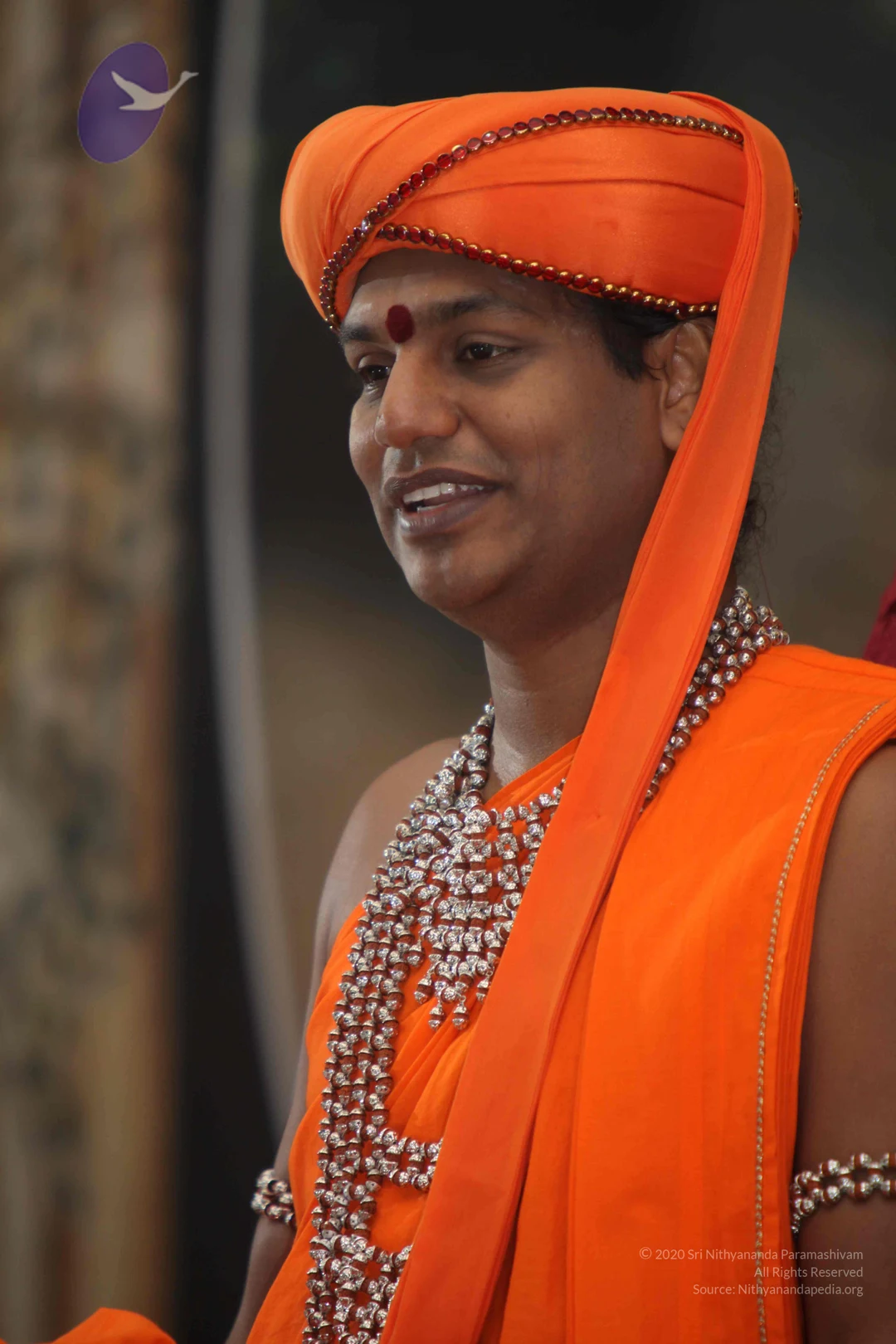
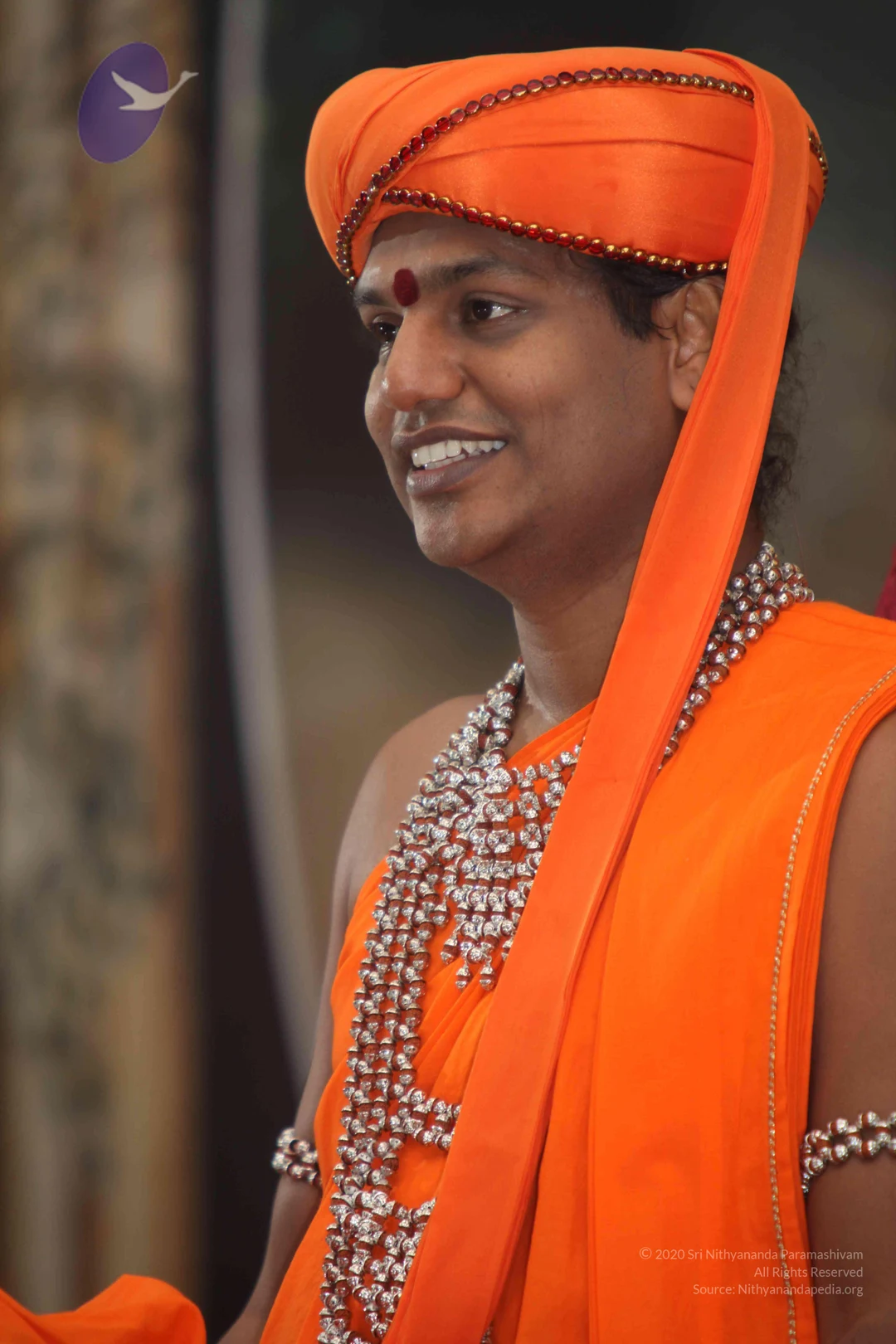
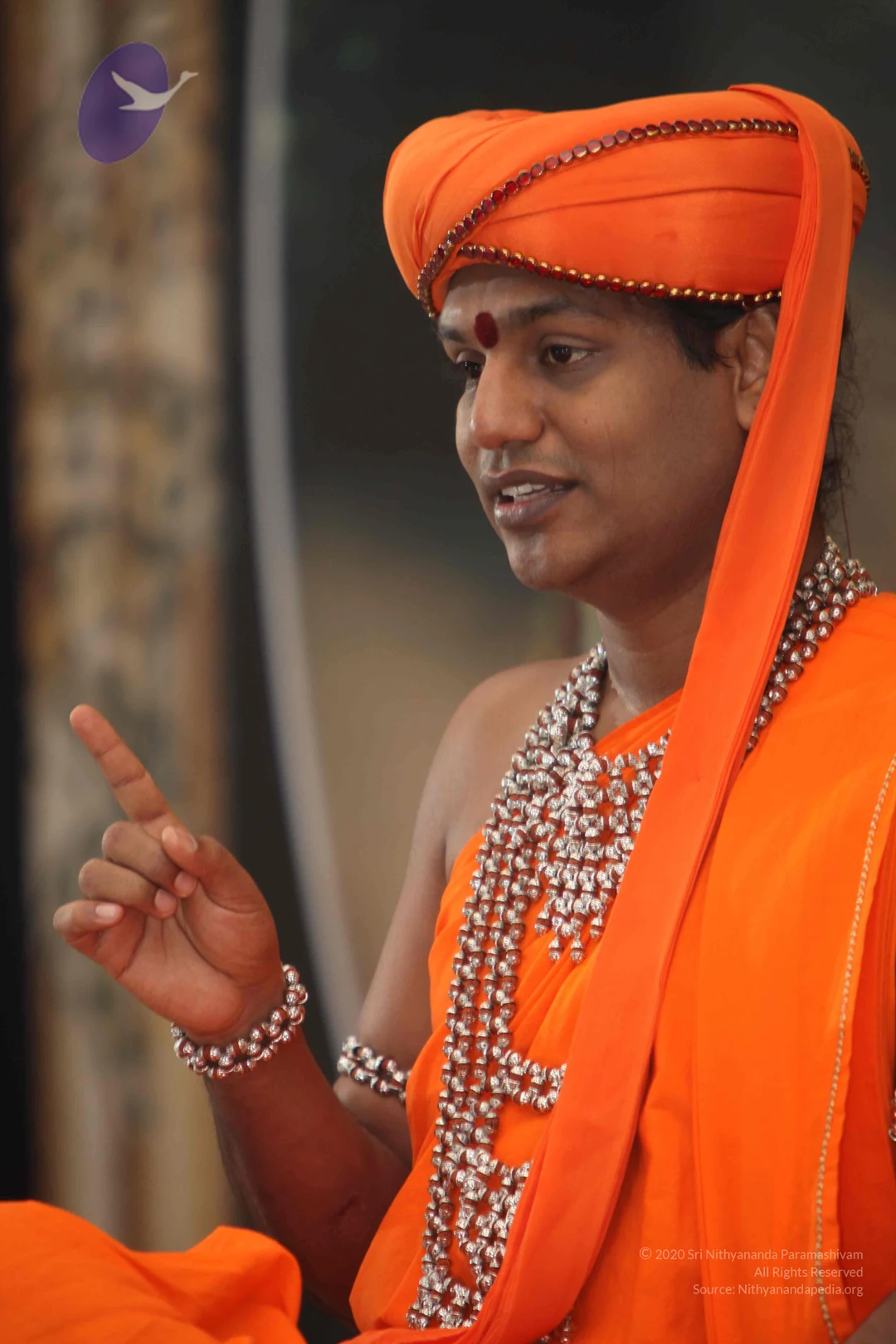
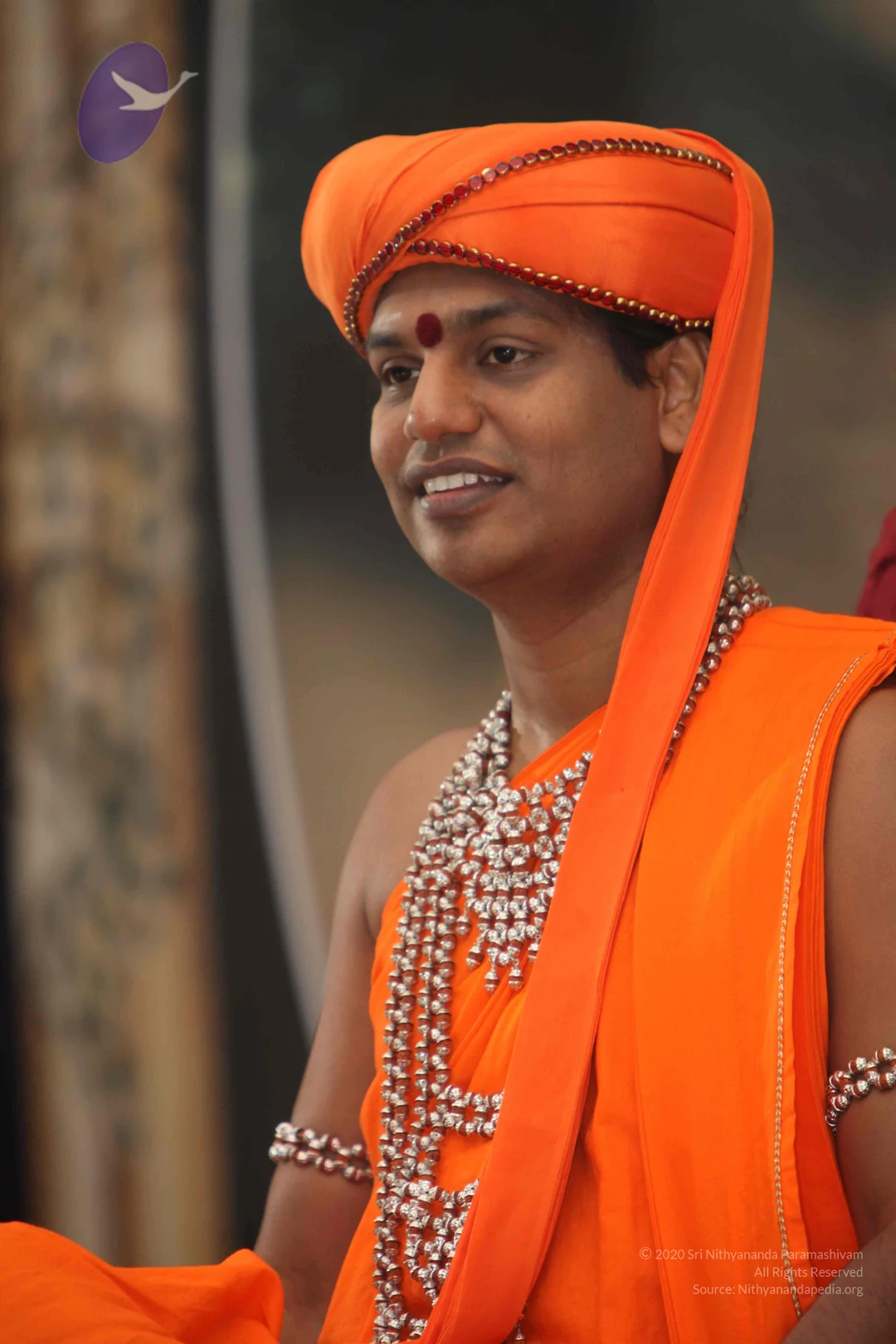
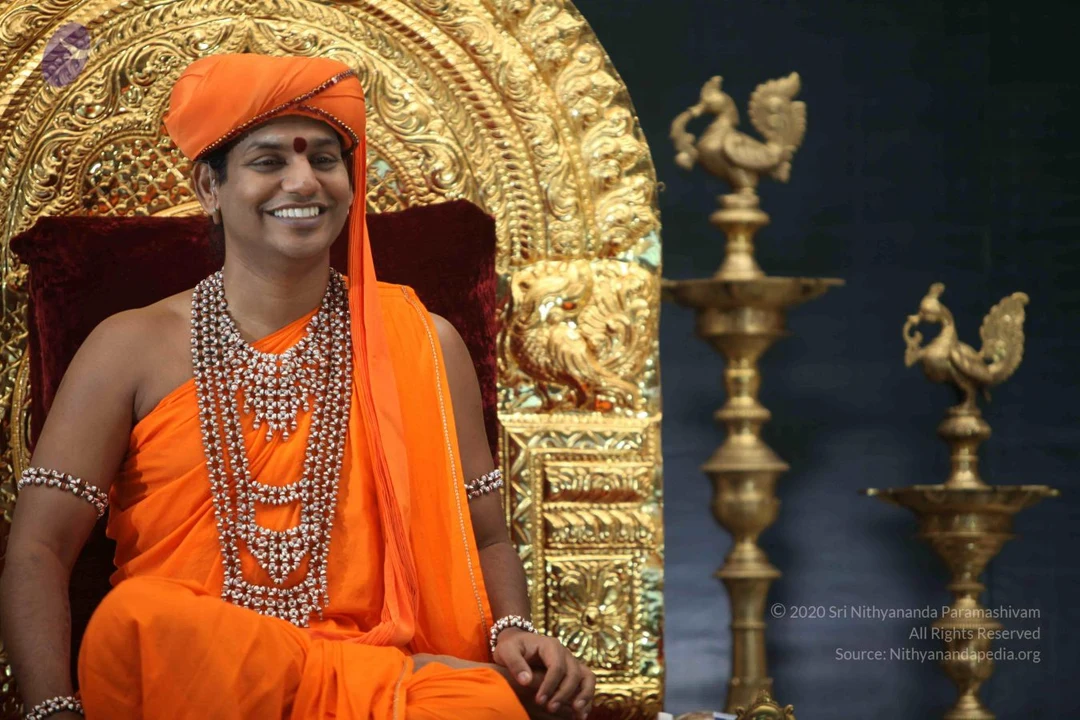
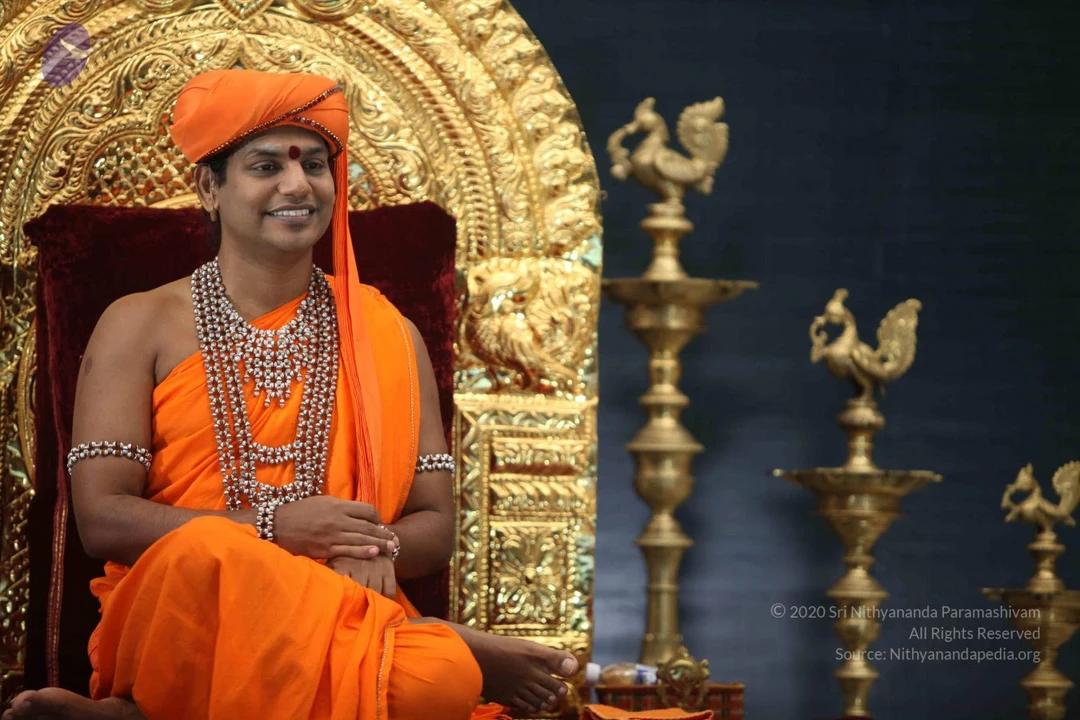
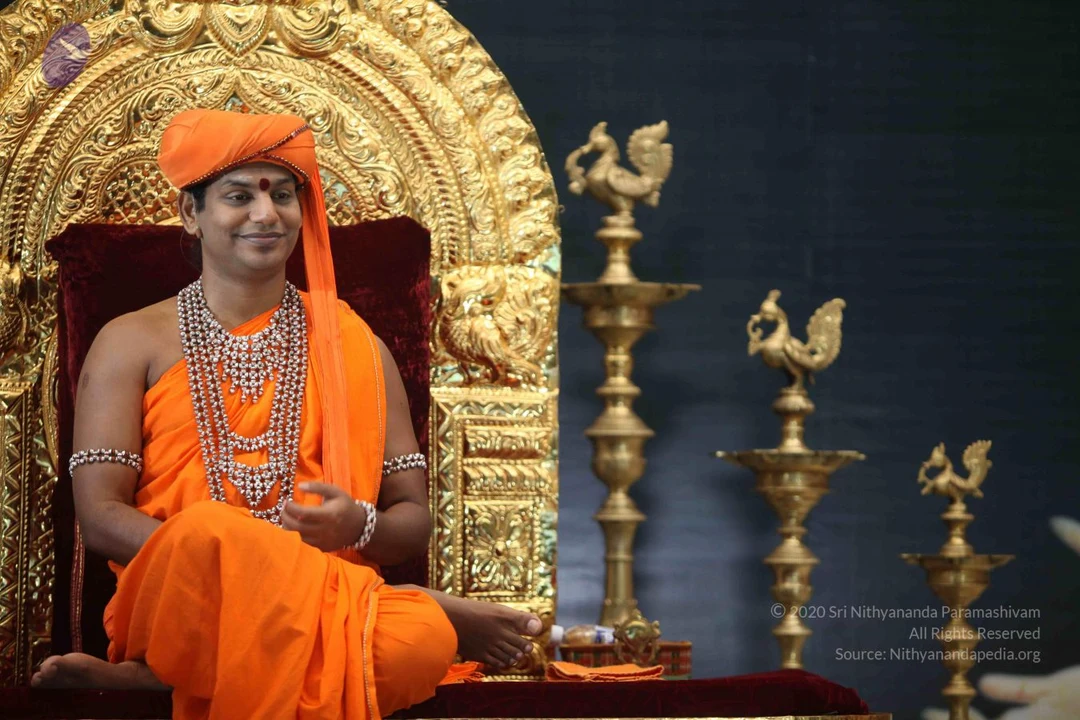
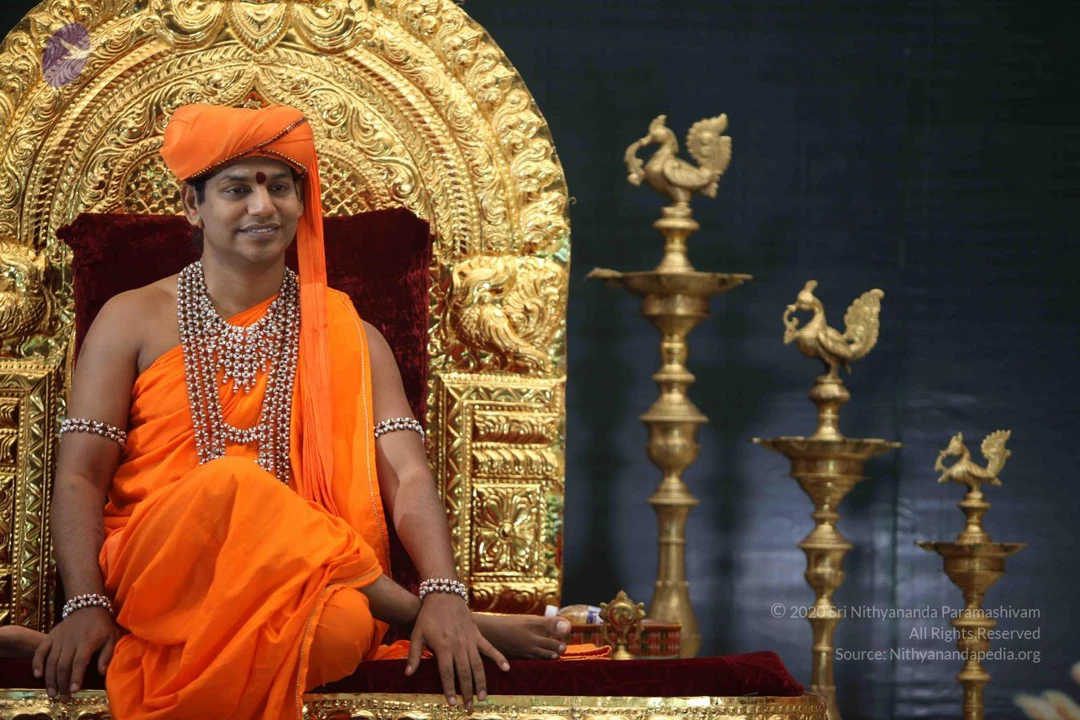
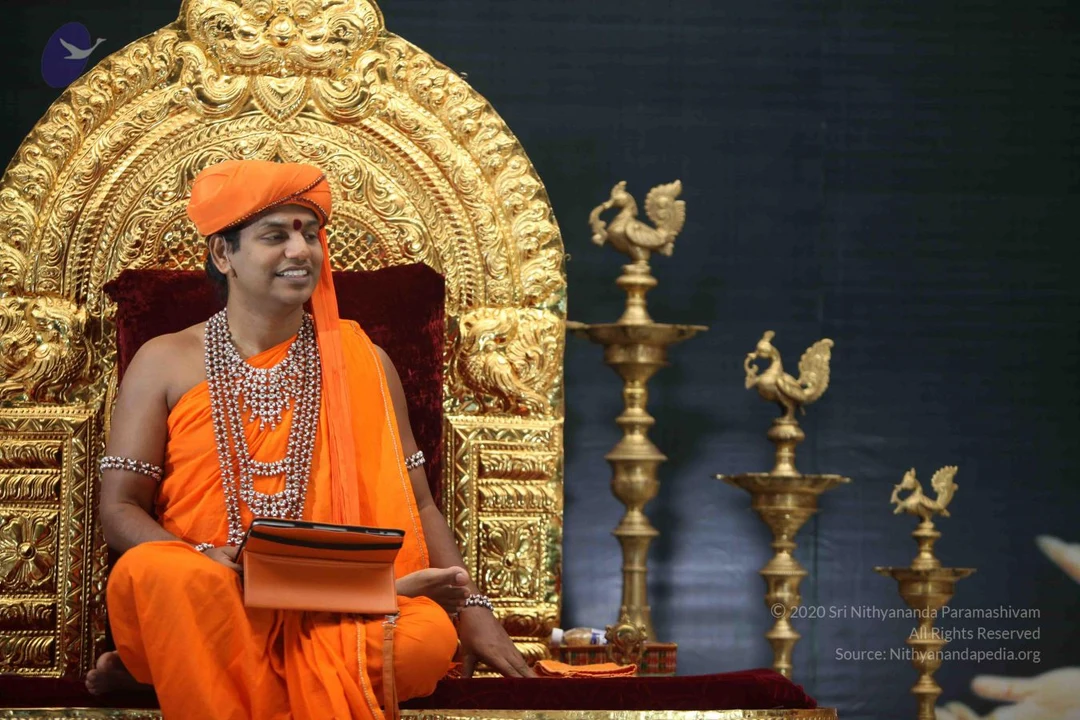
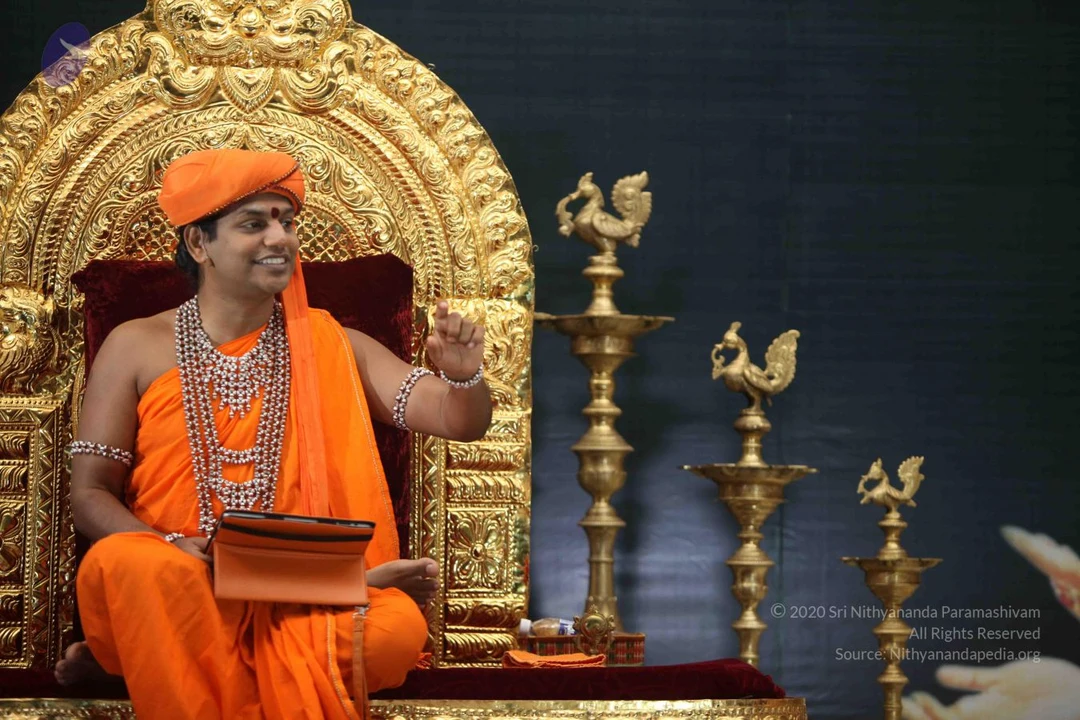
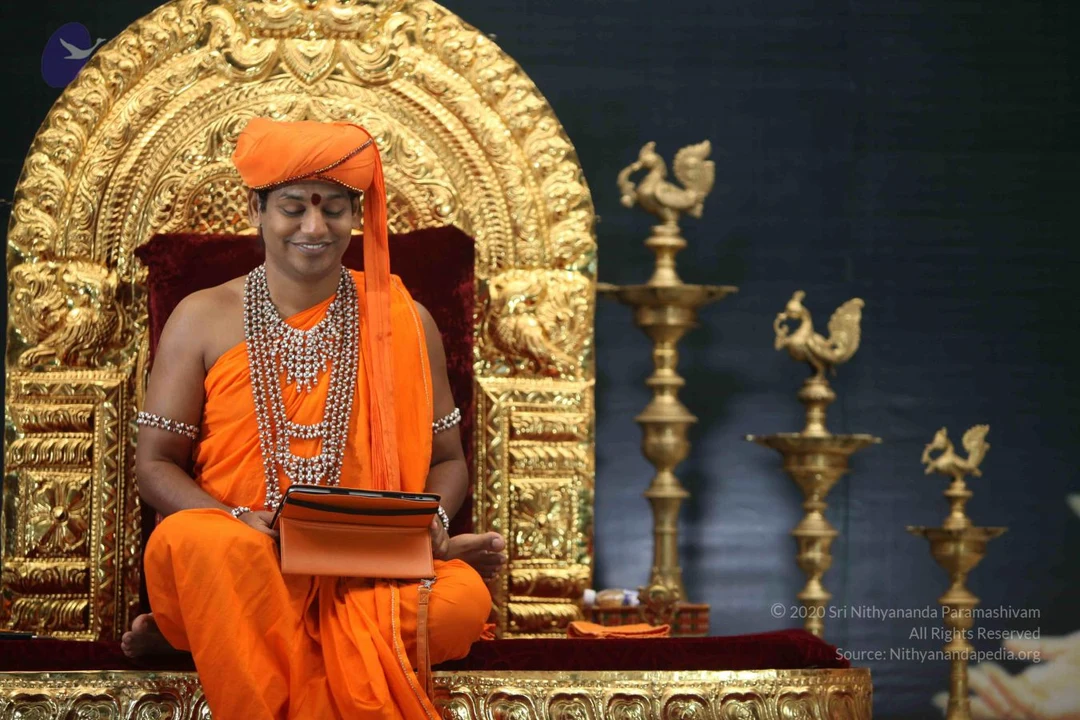
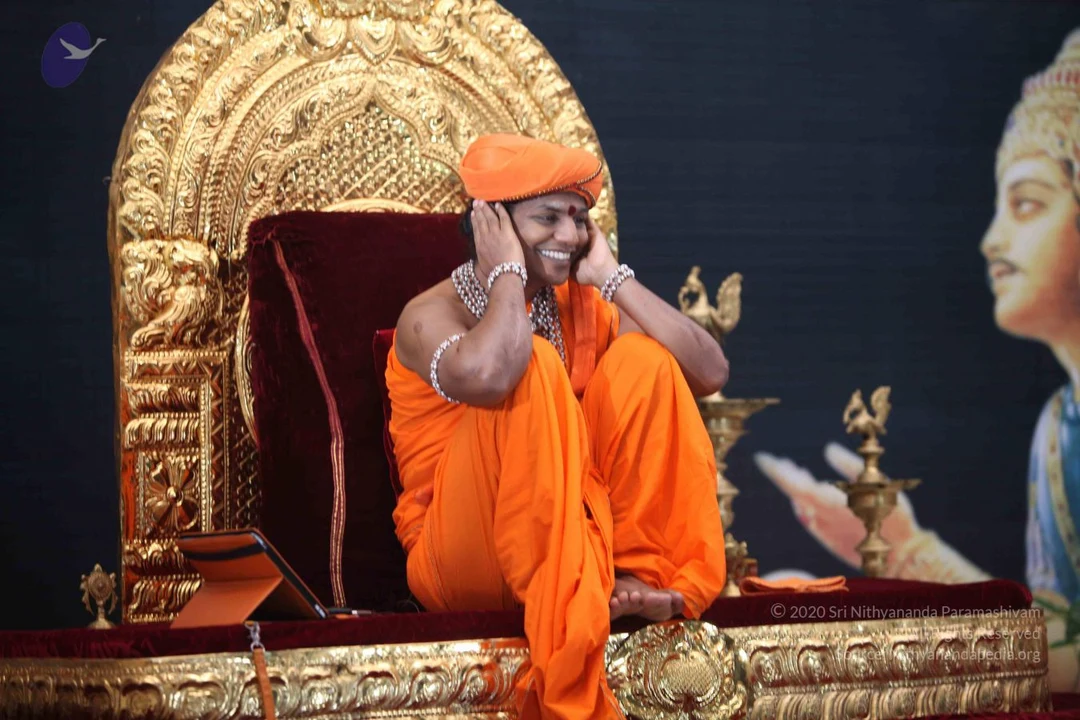
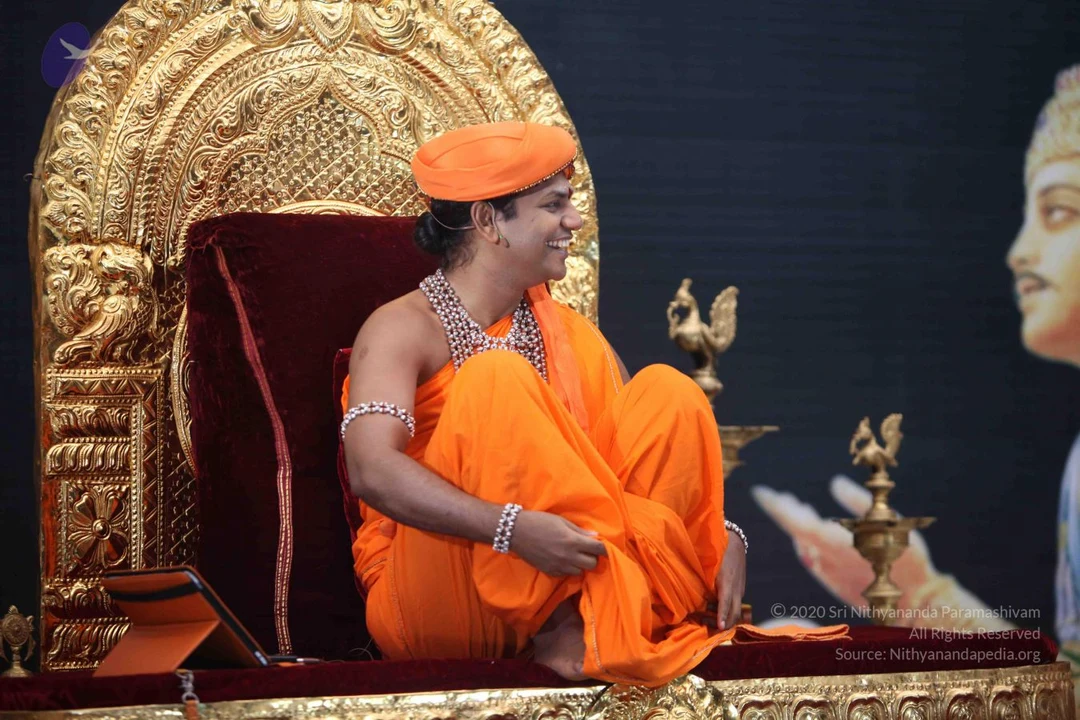
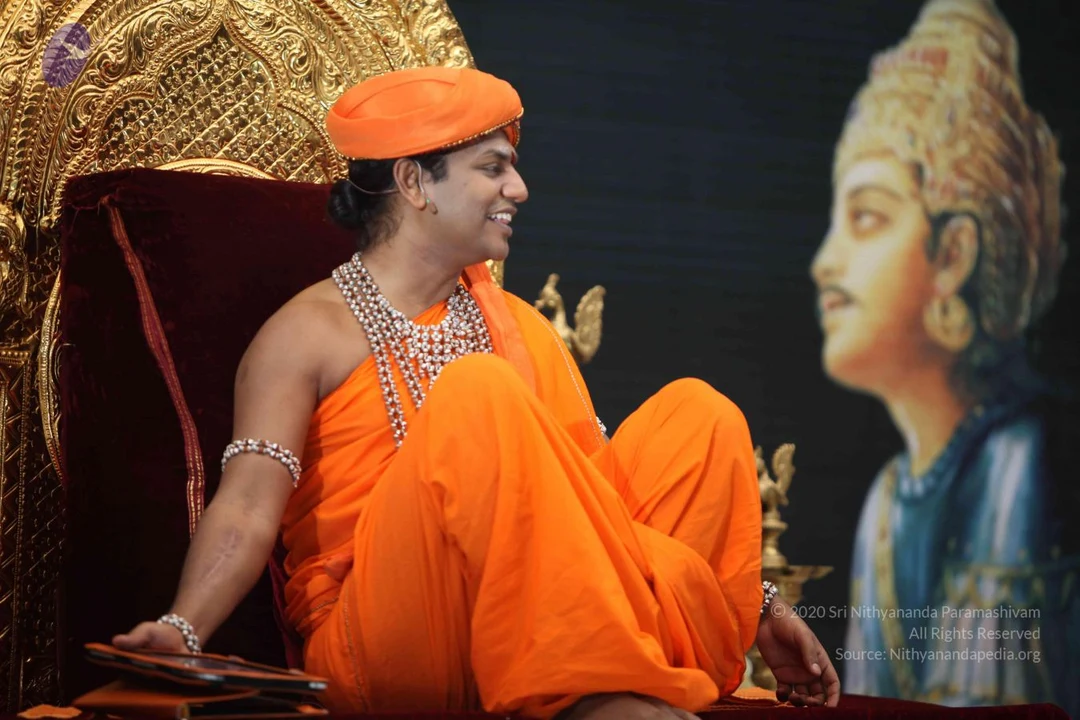
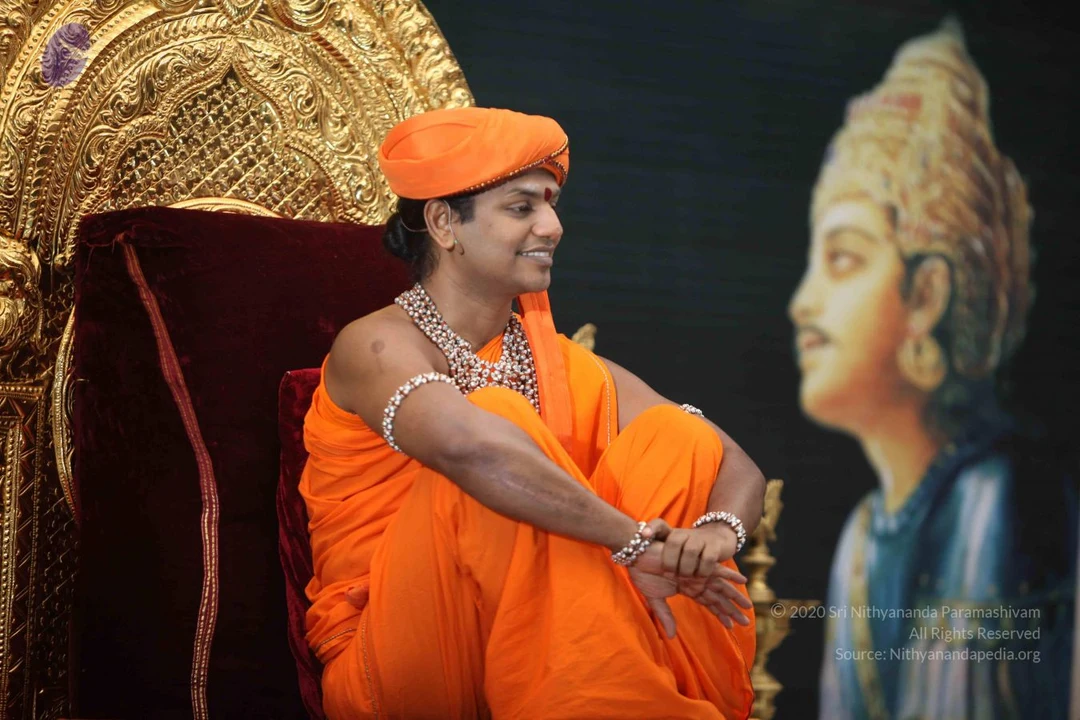
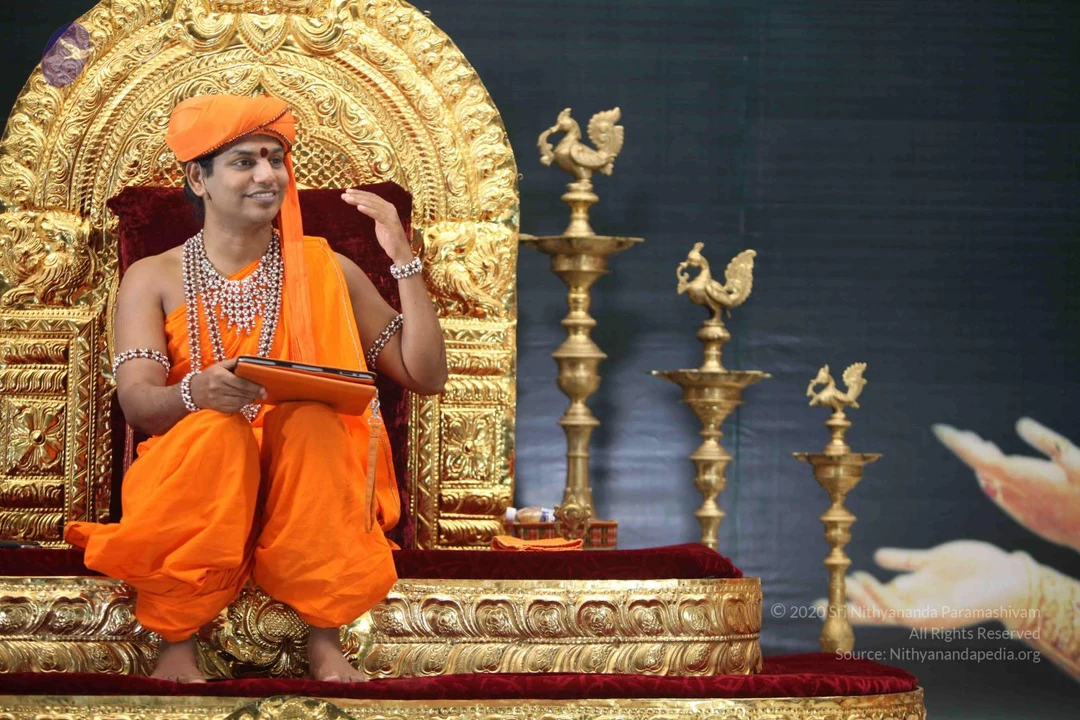
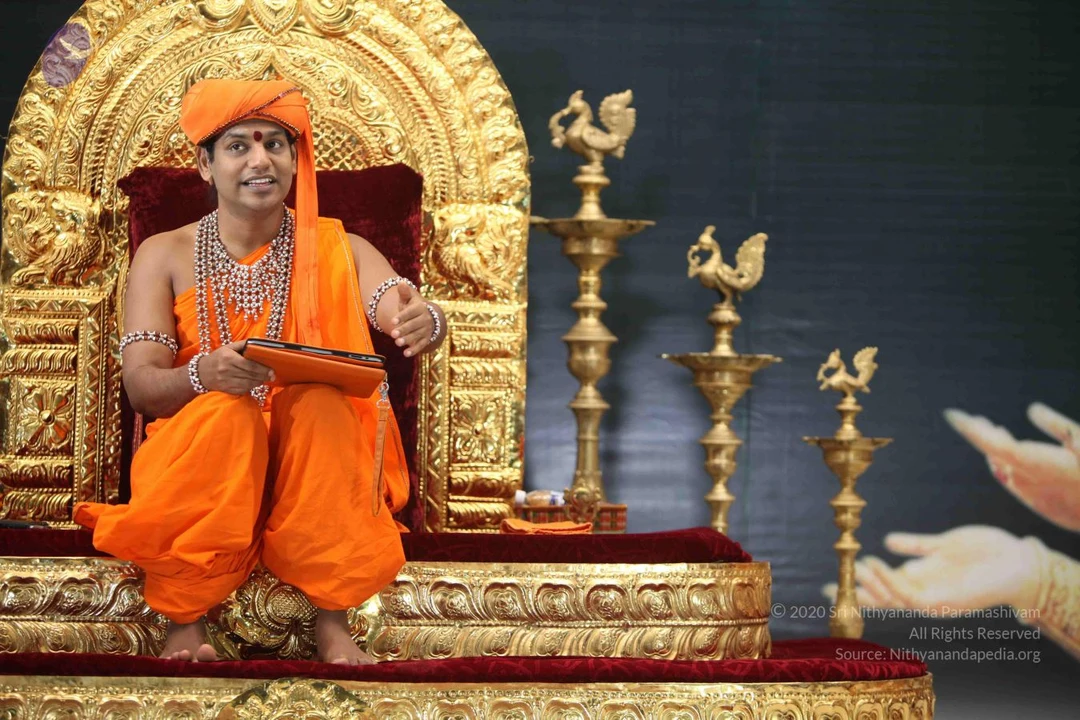
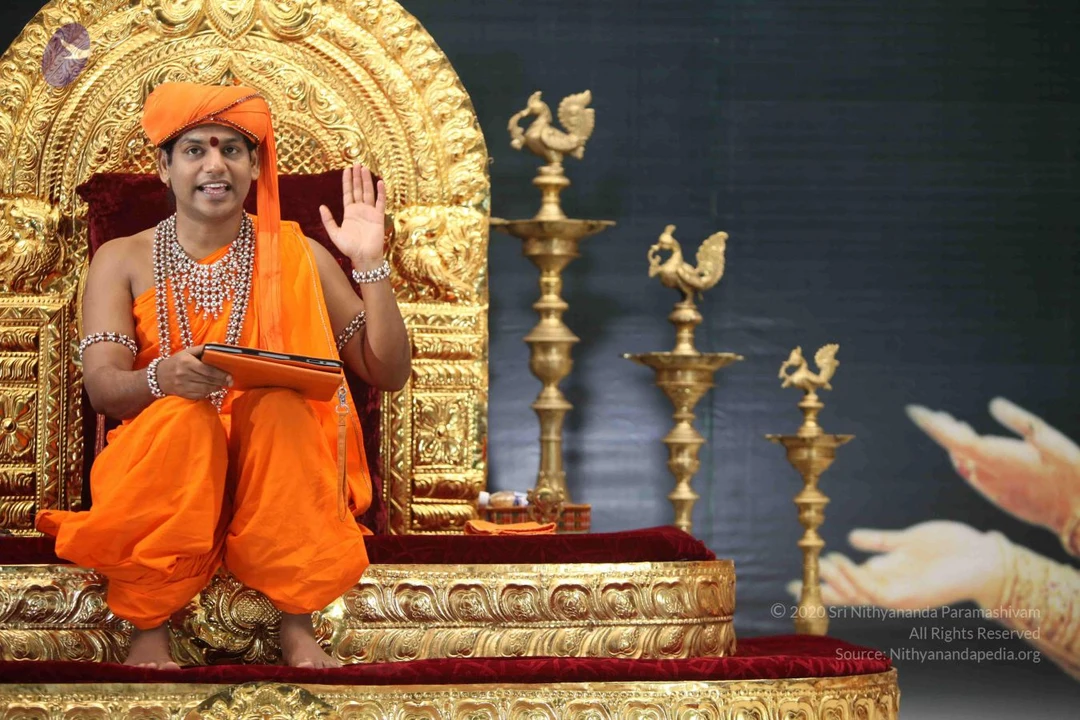
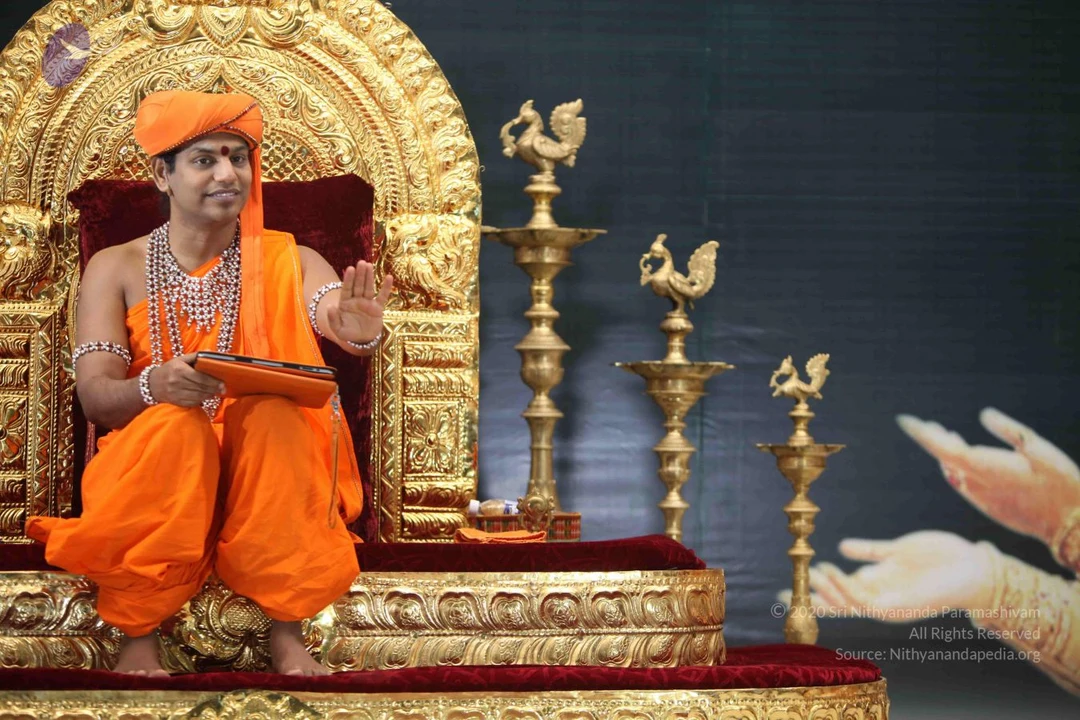
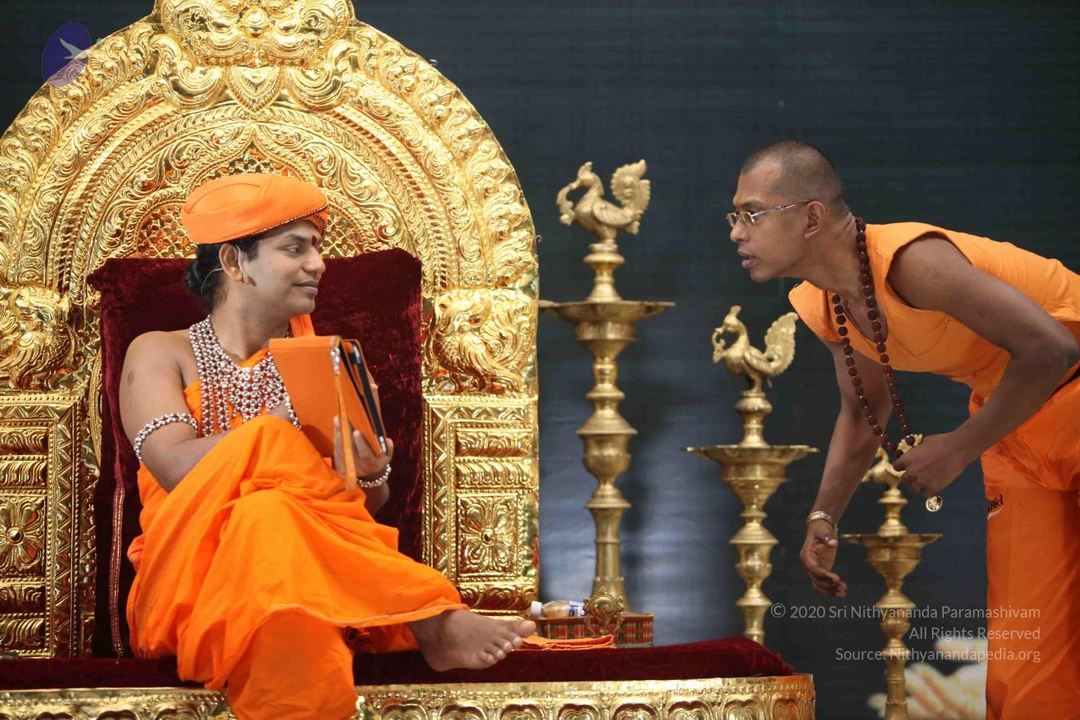
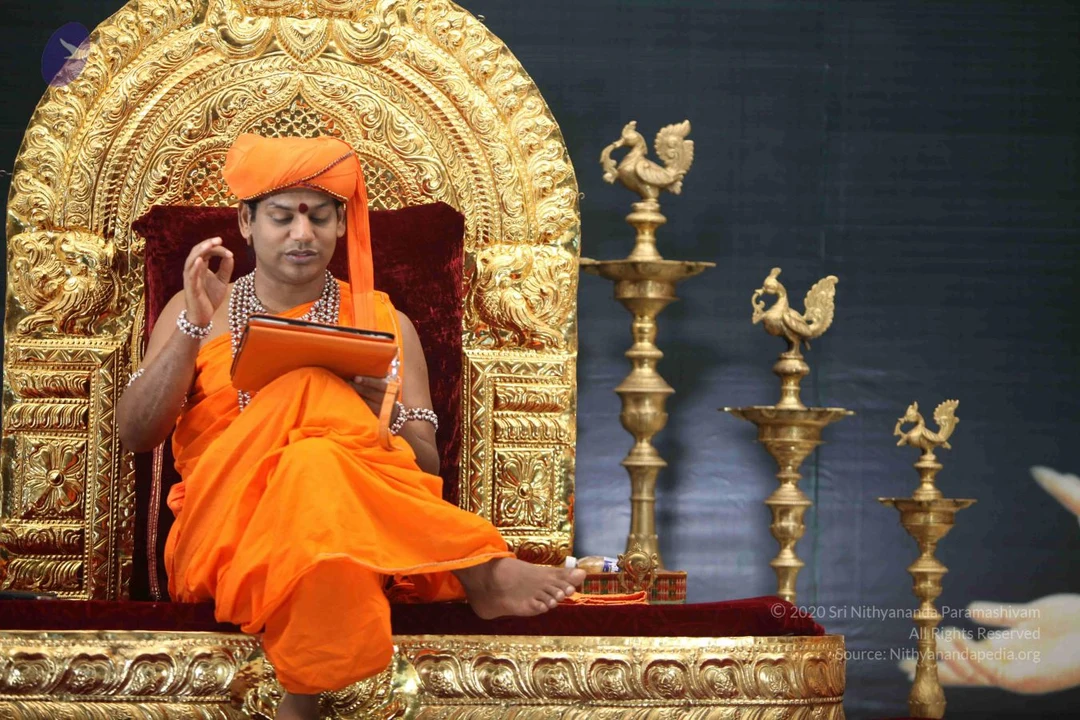
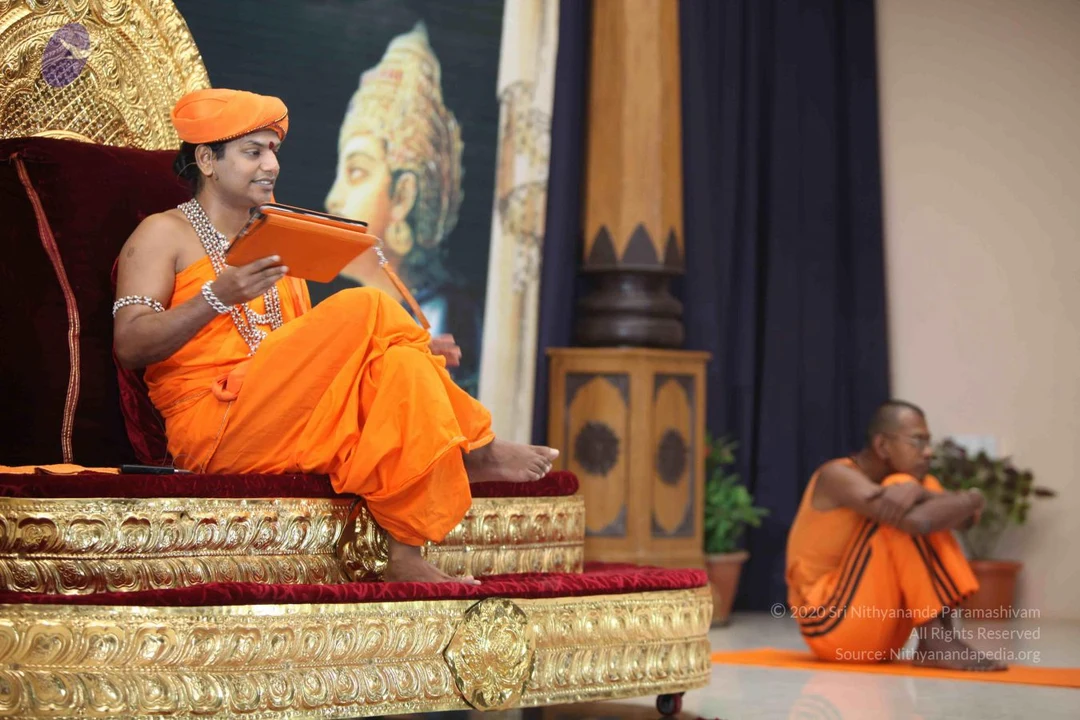
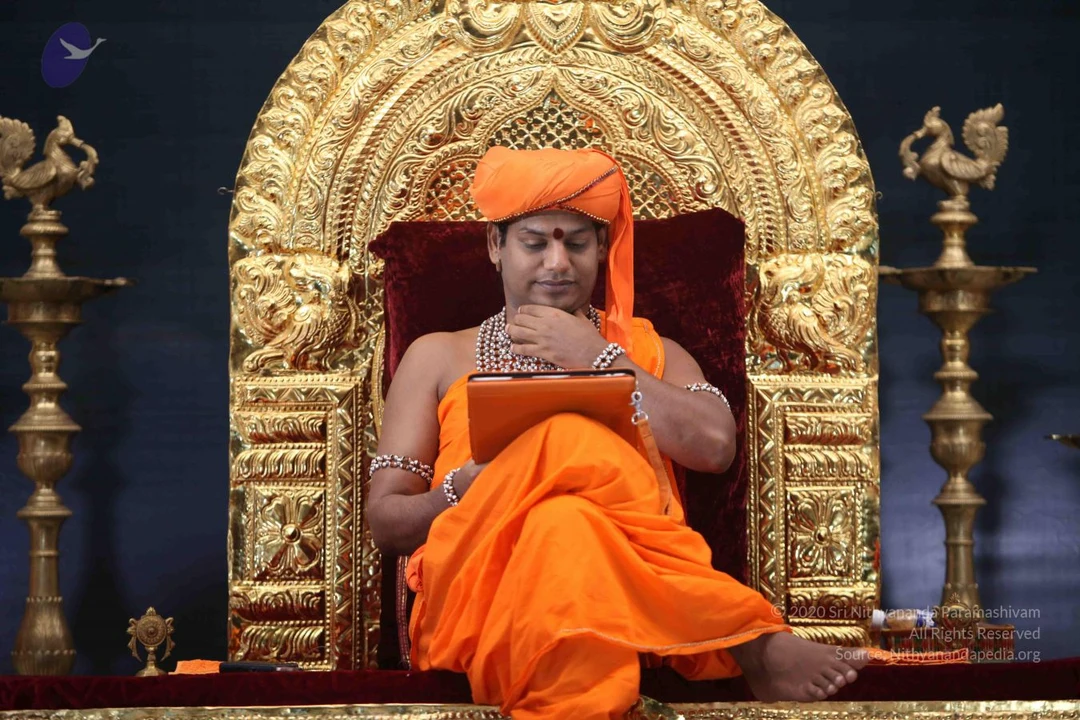
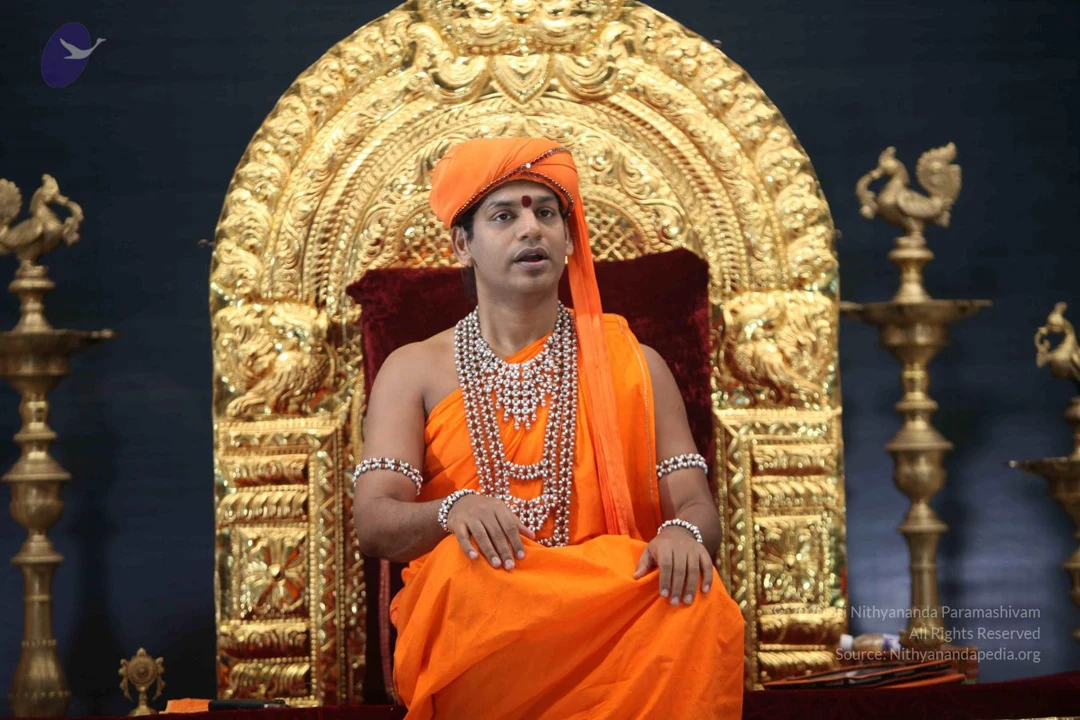
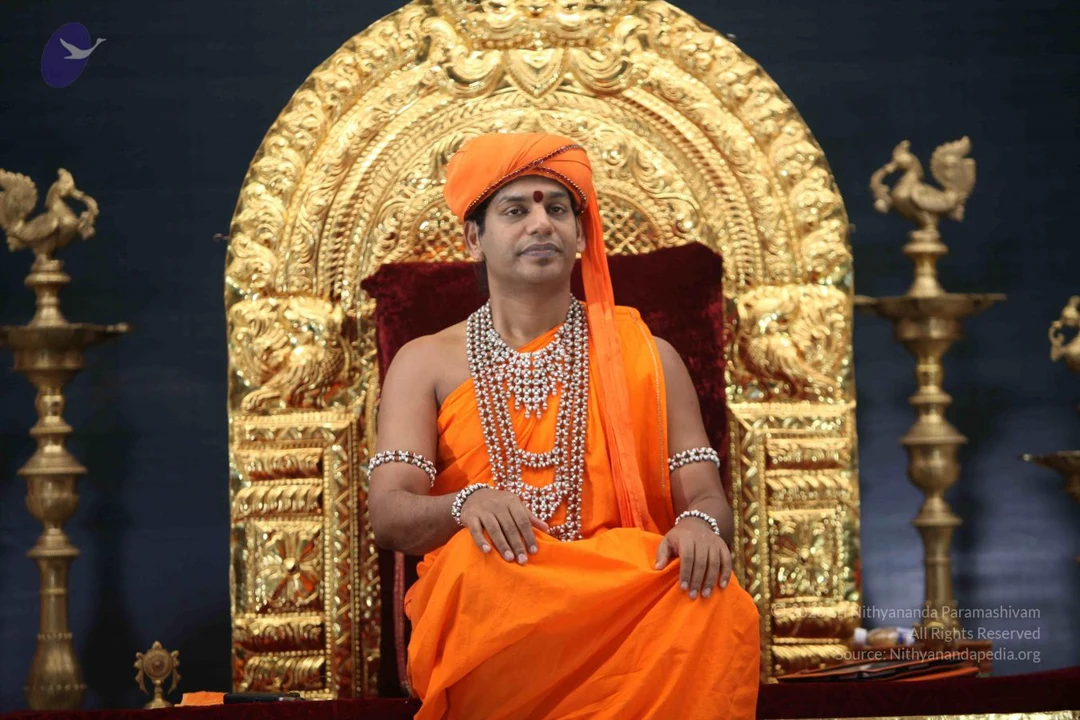
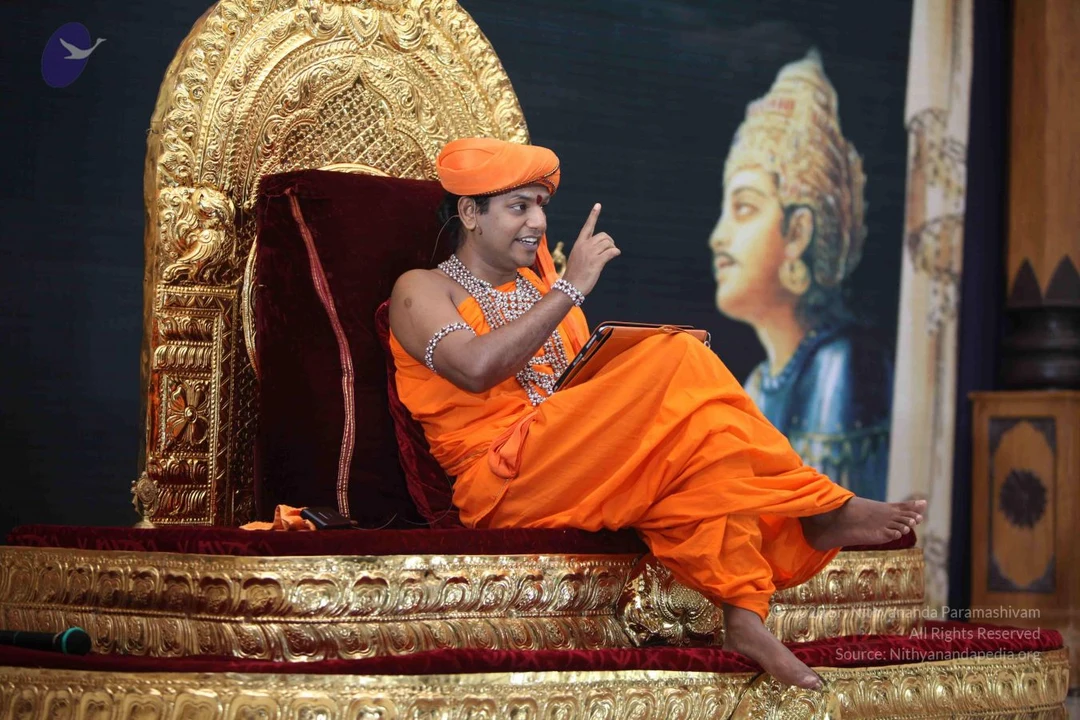
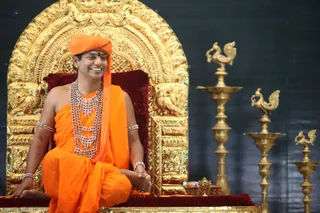
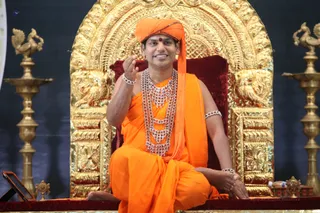
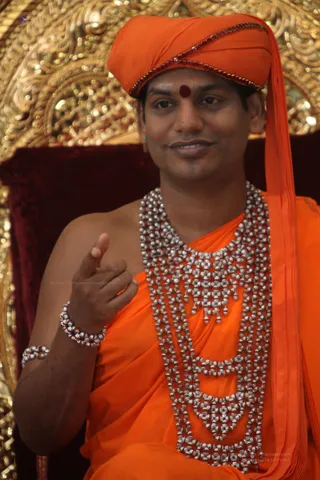
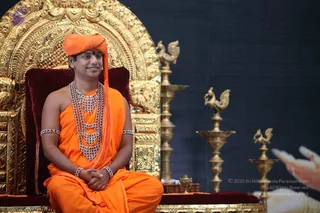
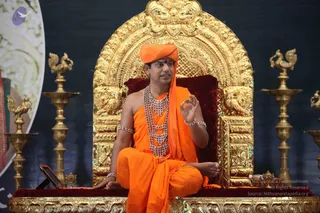
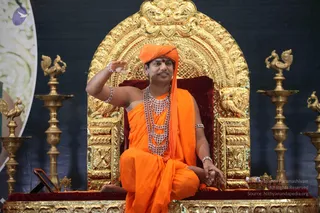
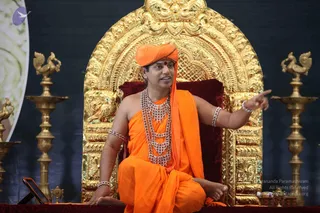
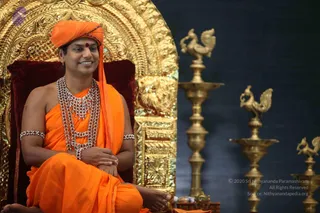
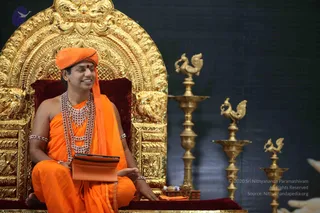
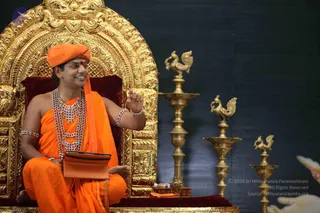
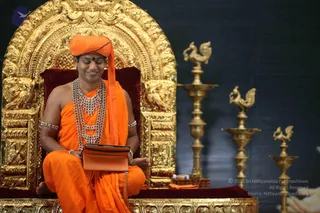
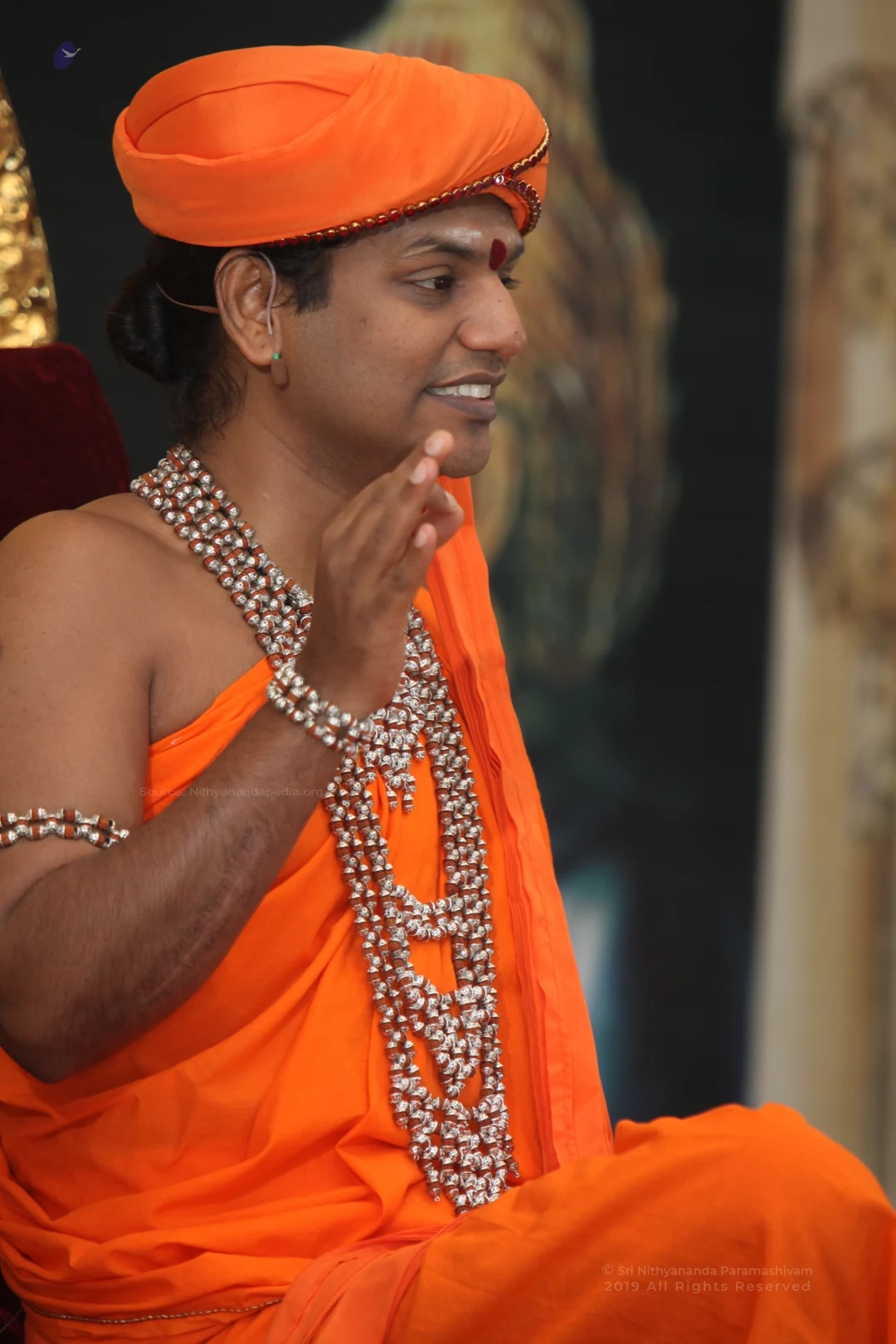
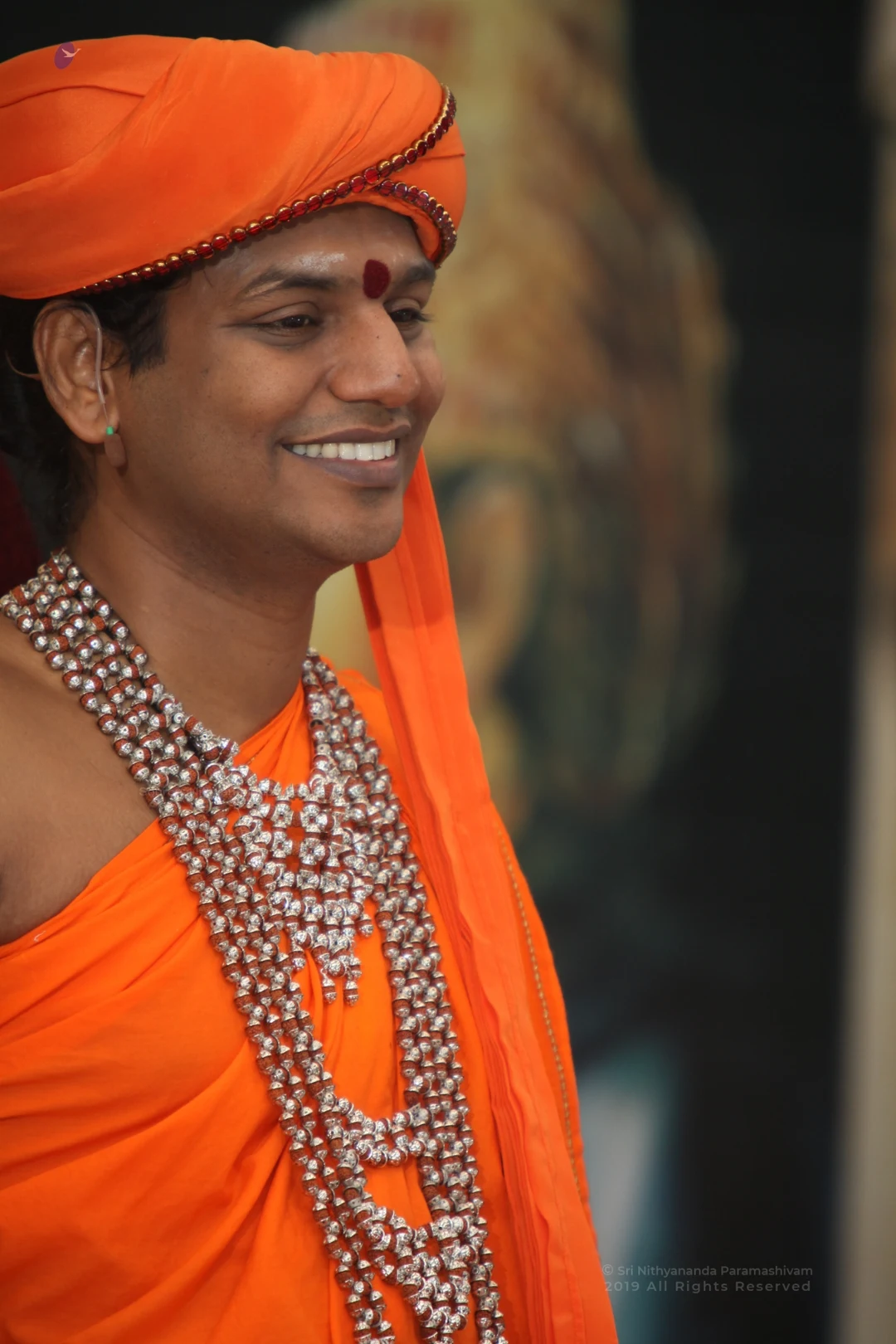
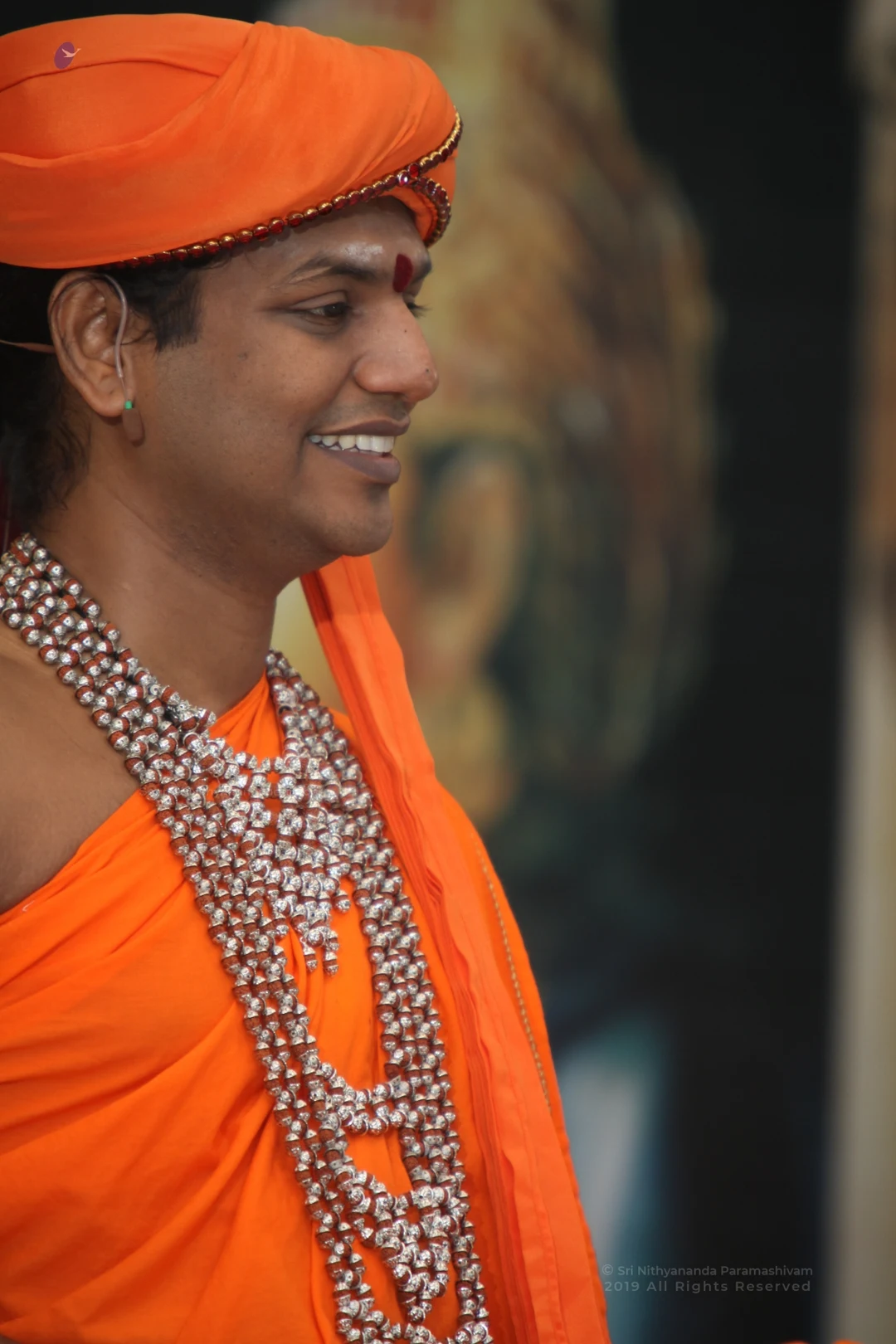
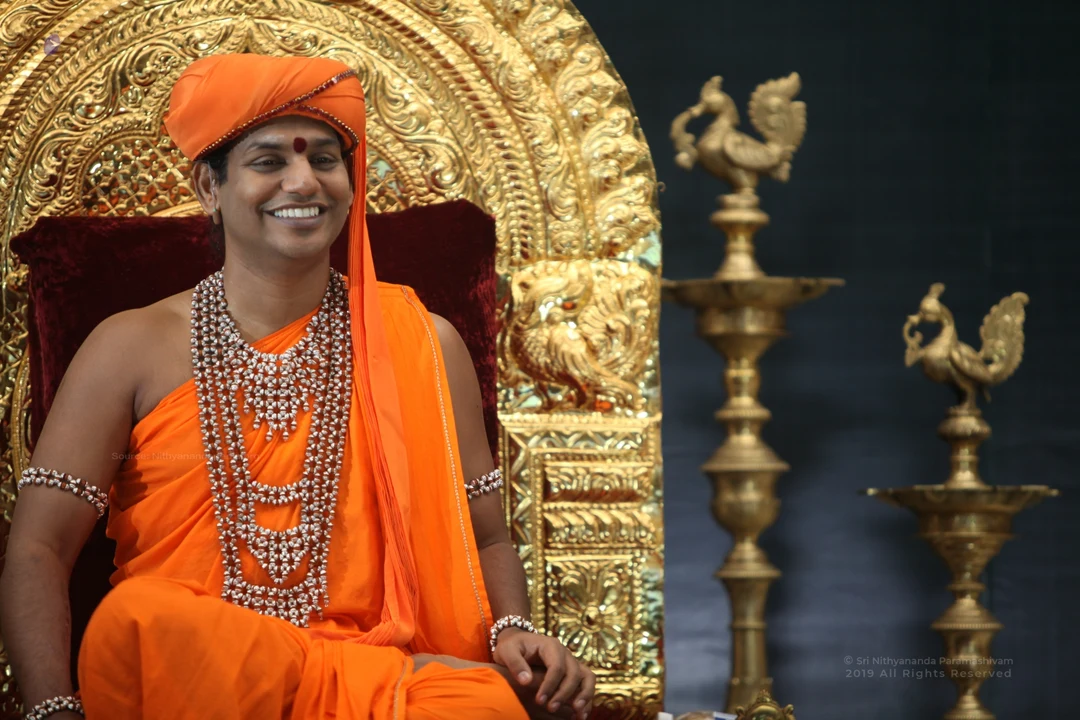
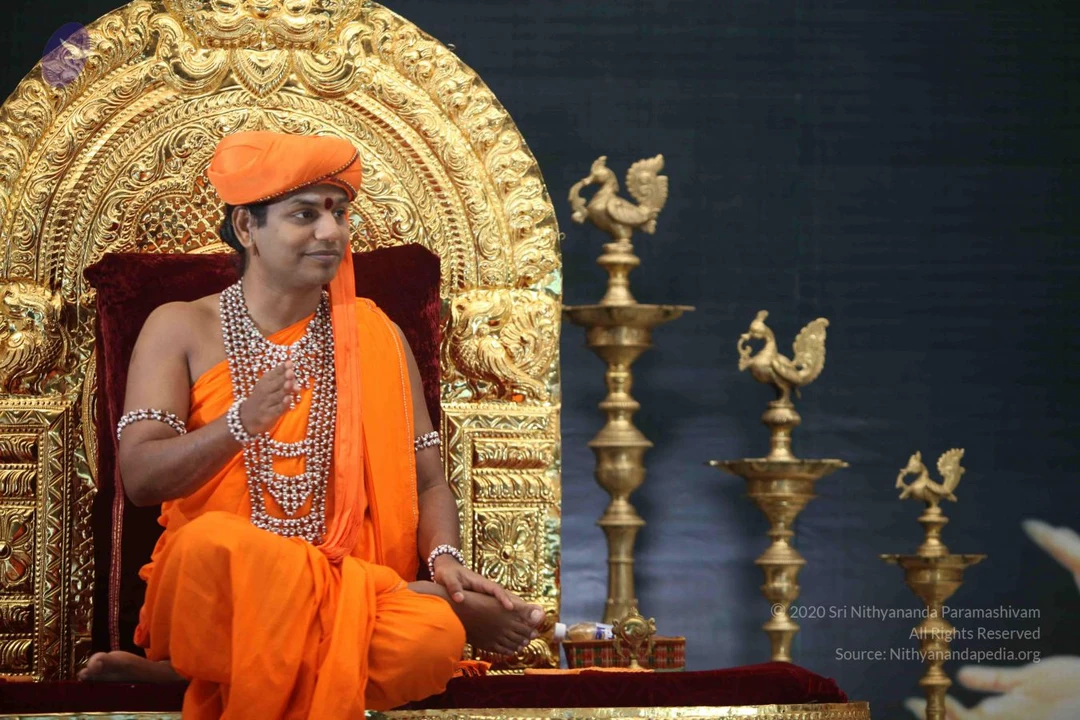
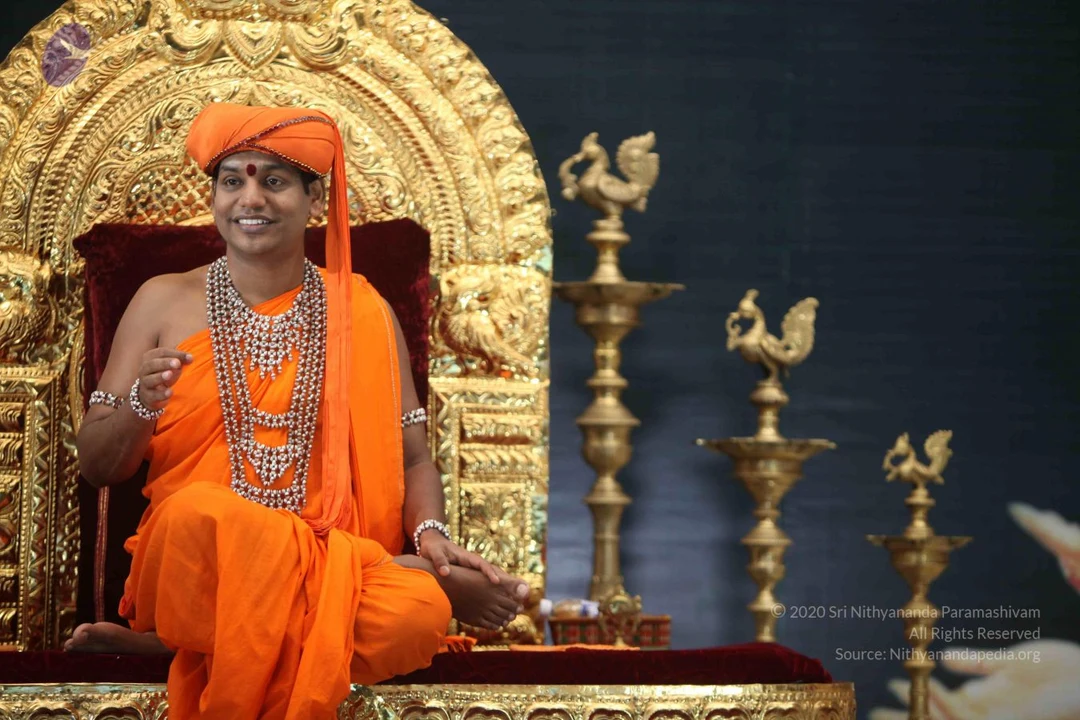
A seated figure in orange saffron robes and an orange turban sits cross-legged on an ornate gilded throne with red velvet cushions, hands folded in the lap. He wears a multi-strand white beaded necklace and white beaded armlets. Gold oil lamps with bird-shaped finials stand on either side of the throne. Behind him is a dark backdrop with a large portrait of a smiling man in red and gold garments, and partial text reading SATSANG appears at the lower left. A plain cloth-shaded platform covers the base. Swamiji (probable) is seated on the throne, wearing saffron robes, orange turban, and a layered beaded necklace, consistent with the page's Bhagavad Gita Satsang setting.A seated man in saffron-orange robes sits on an ornate gilded throne with arched carved panels and peacock-shaped finials. He wears an orange turban with a red bindi, a multi-strand white beaded necklace, and white bracelets on his upper arms and wrists. He smiles while resting one hand on a red cloth beside a small tablet. Tall brass oil lamps flank the throne against a dark backdrop, and a white decorative panel is partially visible at the left edge. The man's appearance, including saffron robes, turban and layered beaded necklaces, matches the Swamiji (probable) cues, so he is treated as a probable in-person presence.A smiling man in saffron-orange robes sits cross-legged on an ornate golden throne with an arched gilded backrest carved with lion motifs and a red velvet cushion. He wears an orange turban with a red bindi, a layered silver-white beaded necklace, and beaded bracelets on his arms and wrists. Beside him stand tall brass oil lamps (deepams) topped with rooster-shaped finials.A seated man in a saffron-orange turban with a red and gold beaded band and a dark red bindi on his forehead sits on an ornate gold-carved throne with a deep red velvet backrest. He wears saffron-orange robes draped over one shoulder, a long multi-strand silver beaded necklace, and silver-and-red beaded bracelets. He smiles and raises one hand in a gesturing pose. a person: the saffron turban, ceremonial silver necklaces and throne cues are present, but the single photo offers limited distinctive evidence, so the identification is an appearance-based candidate.
Temple Visit | Paduka Puja | Bhagavad Gita Satsang – 19 November 2011
20 photosSource gallery
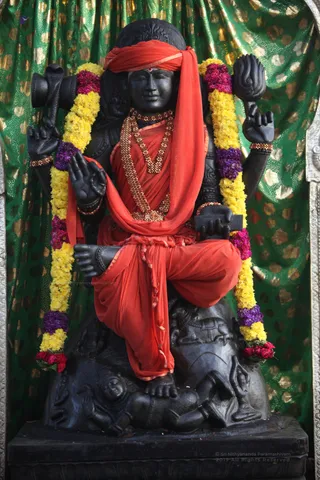
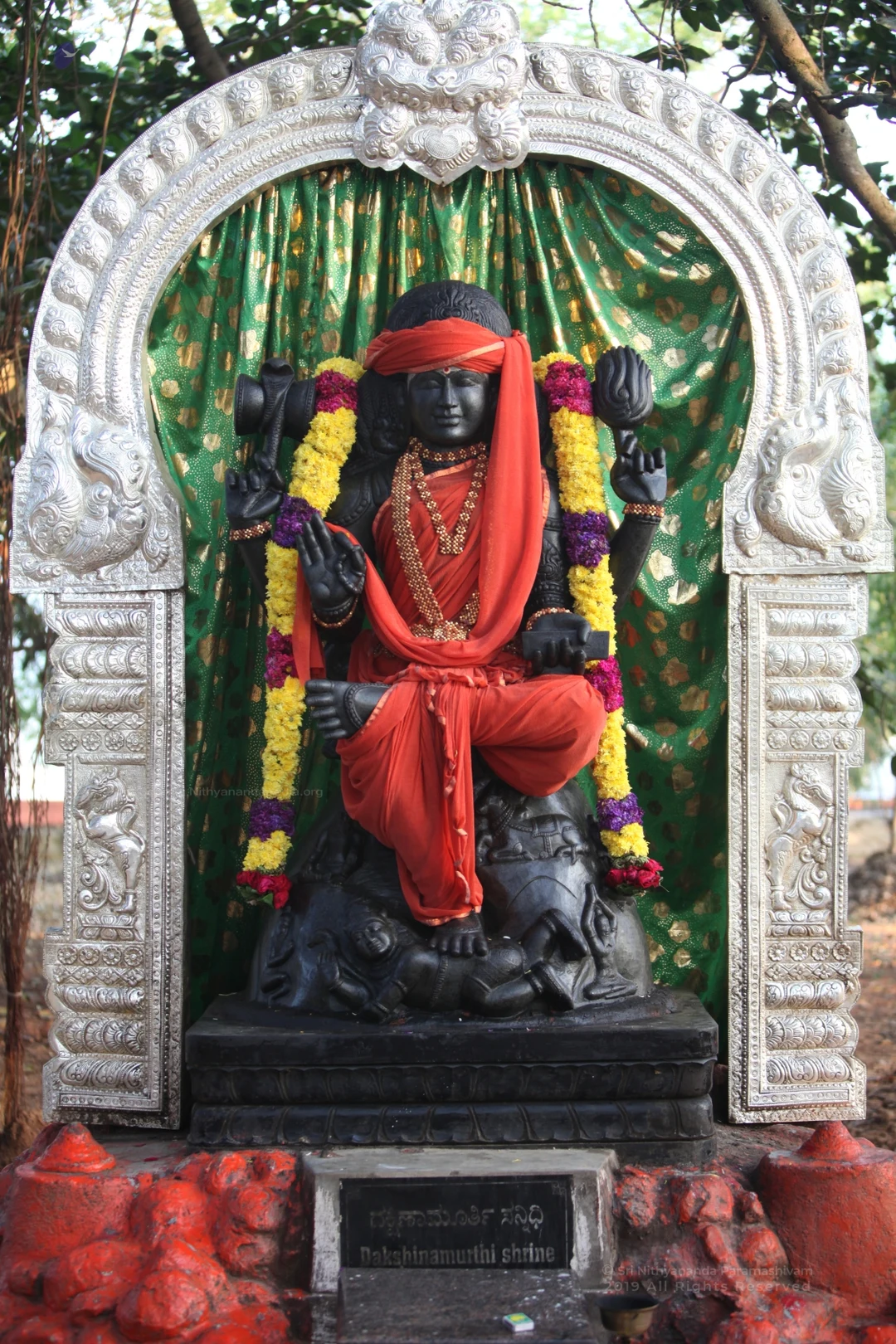
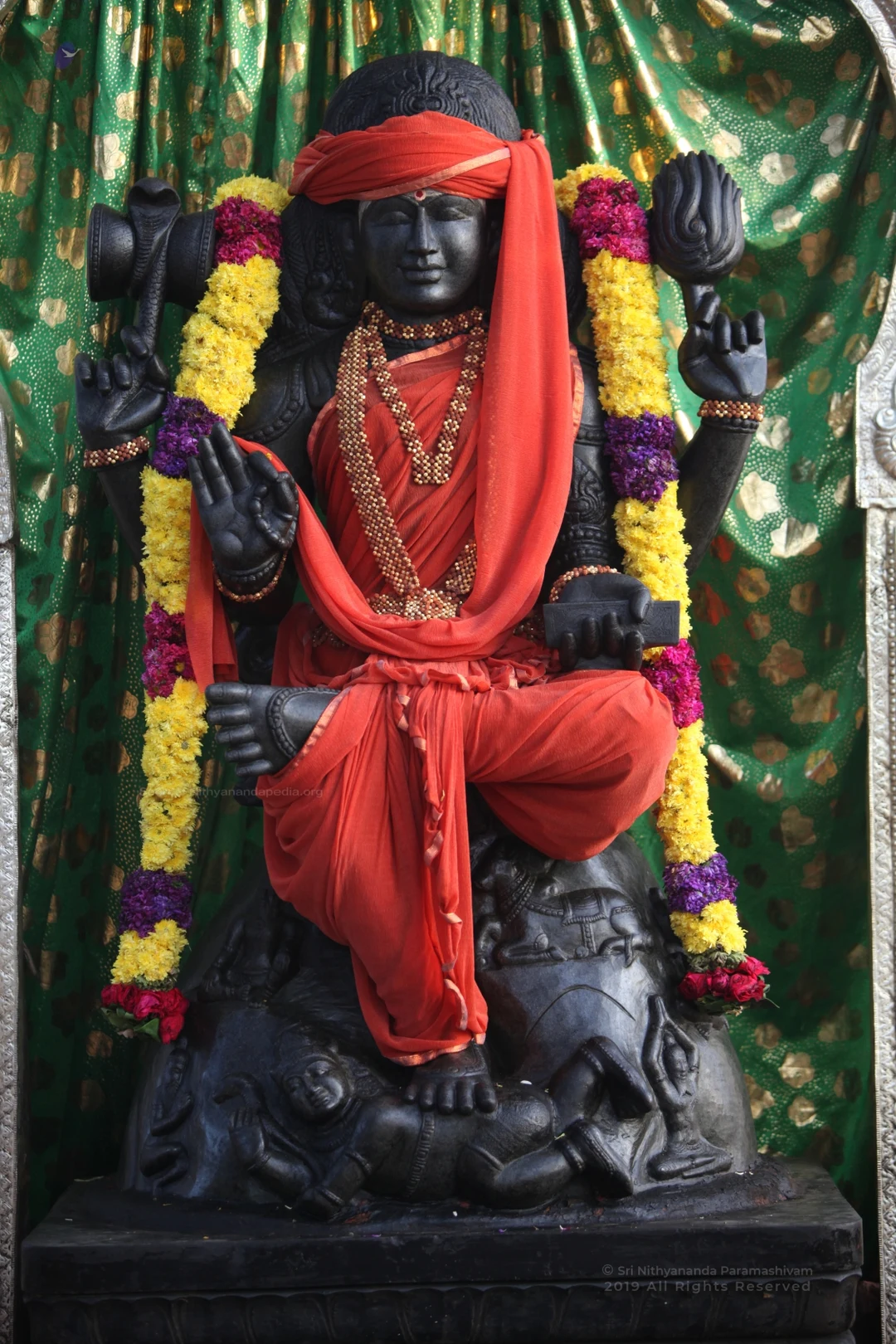
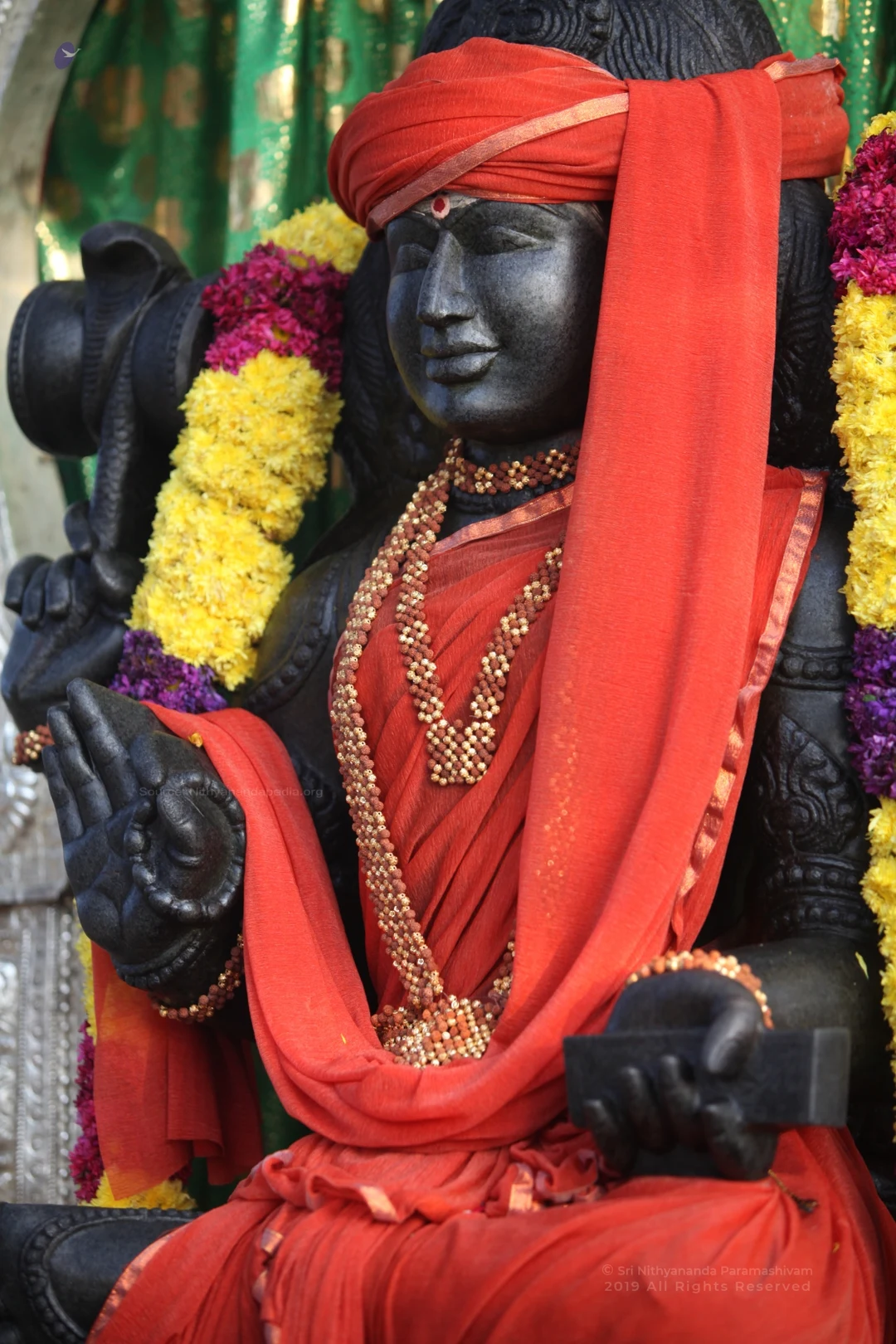
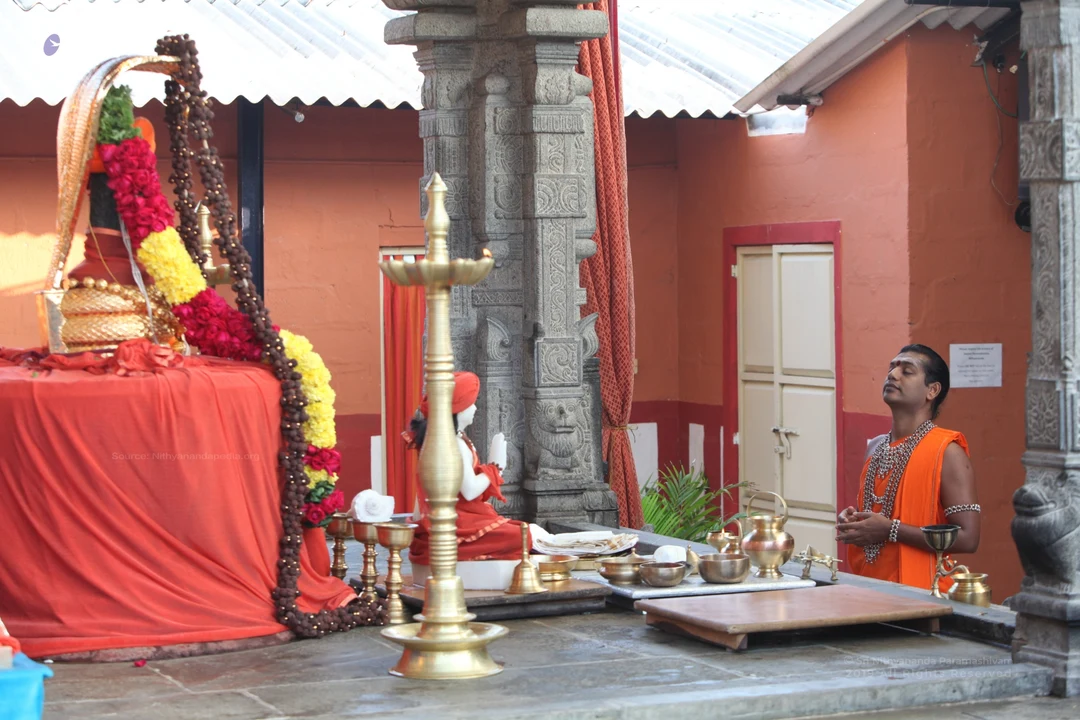
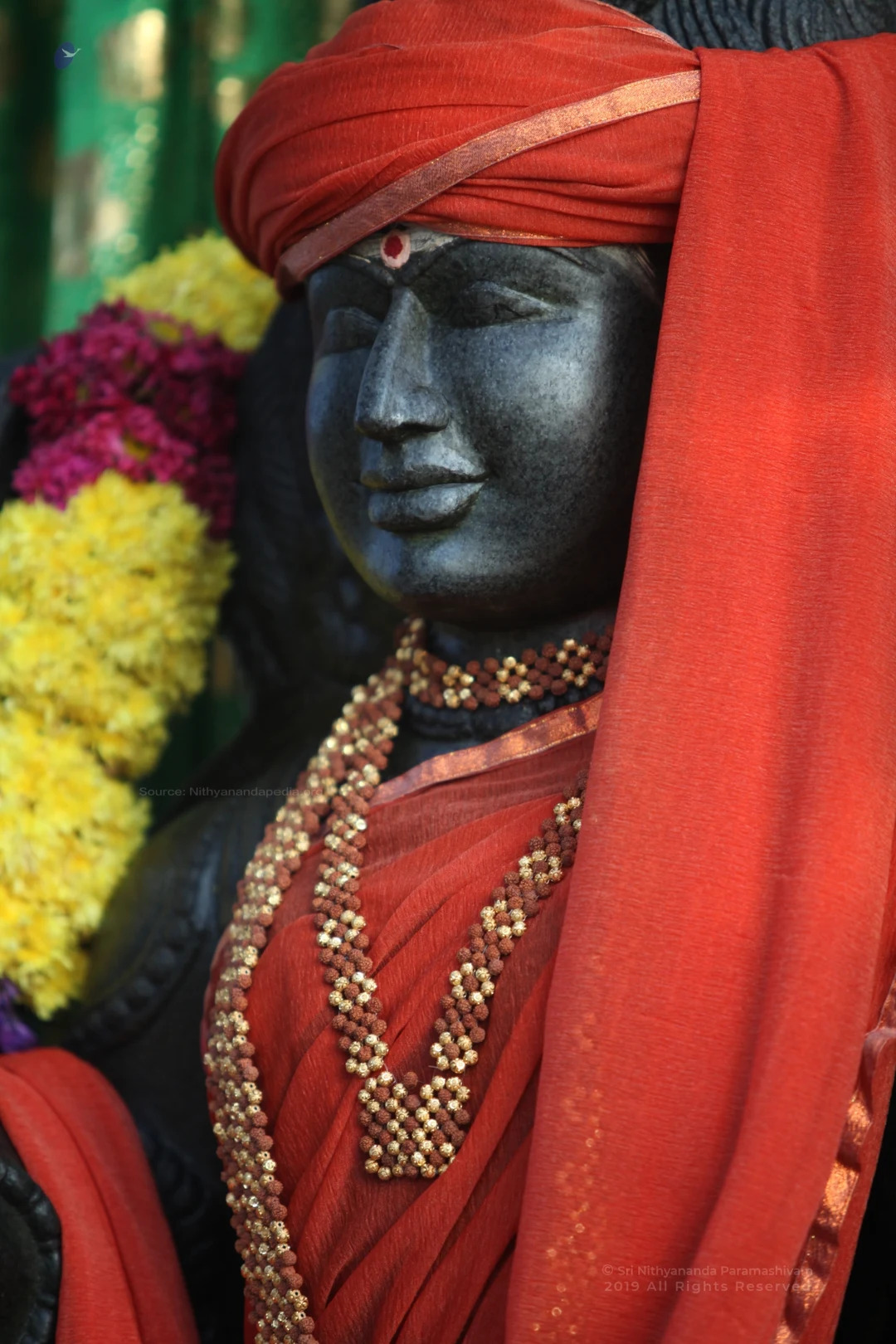
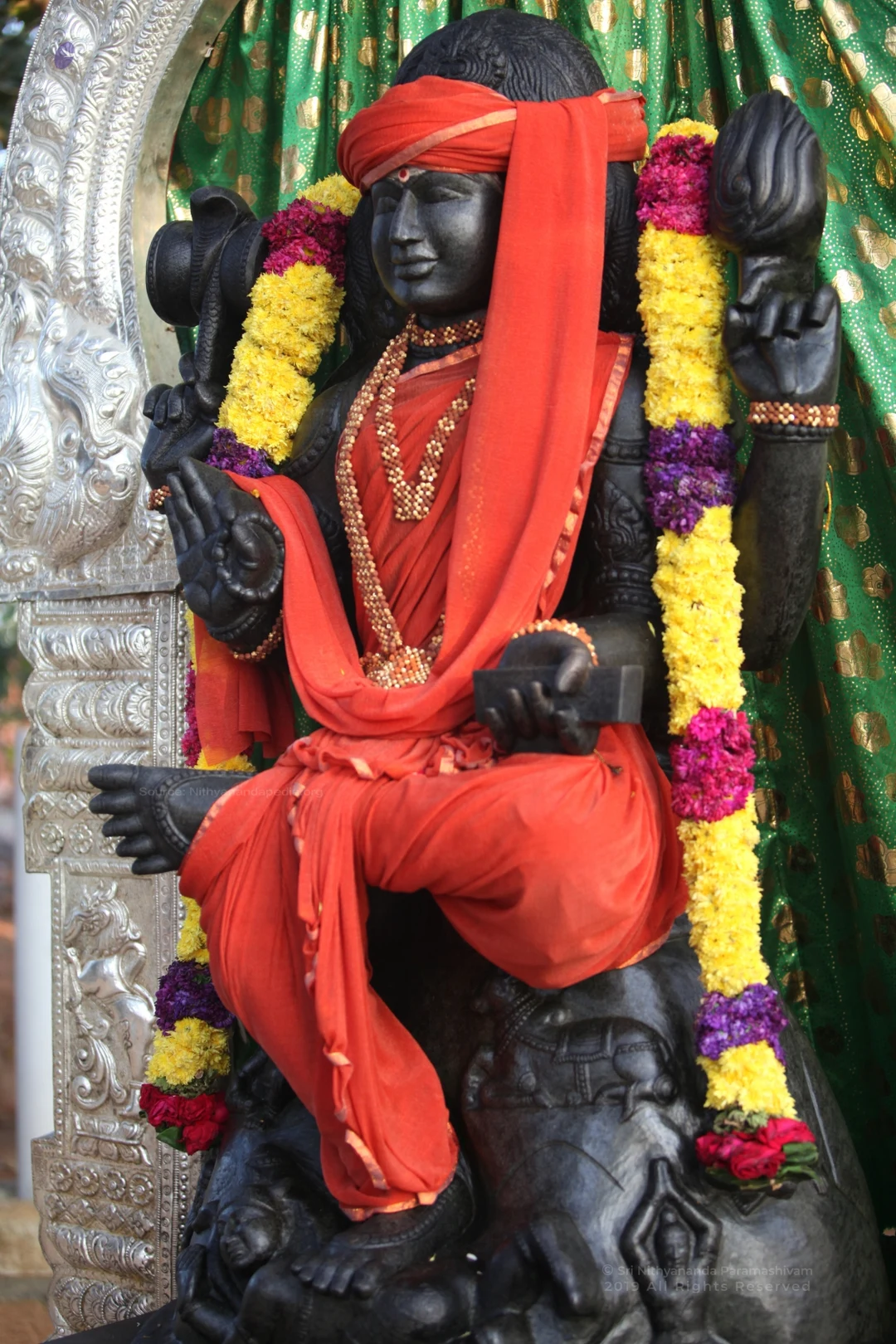
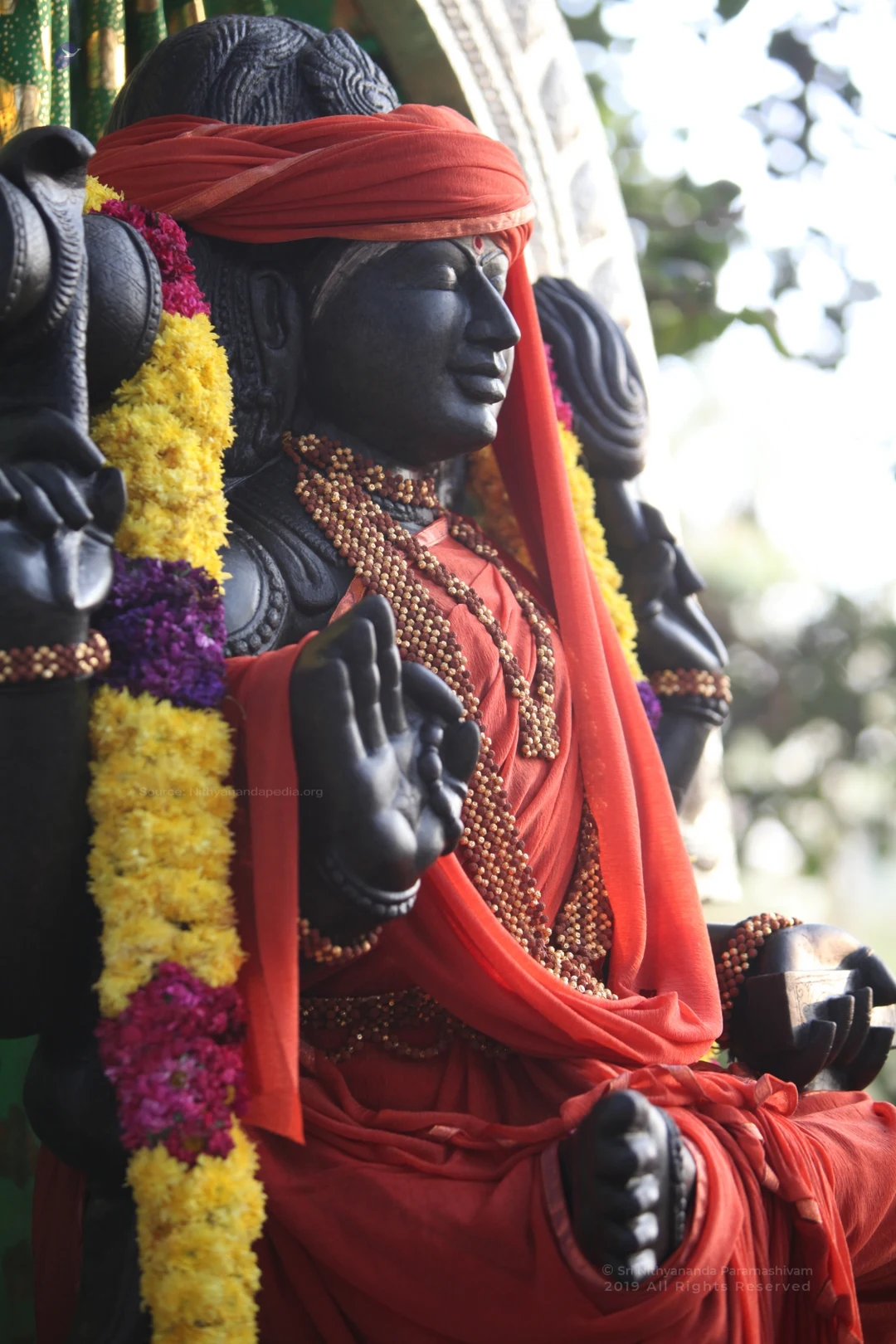
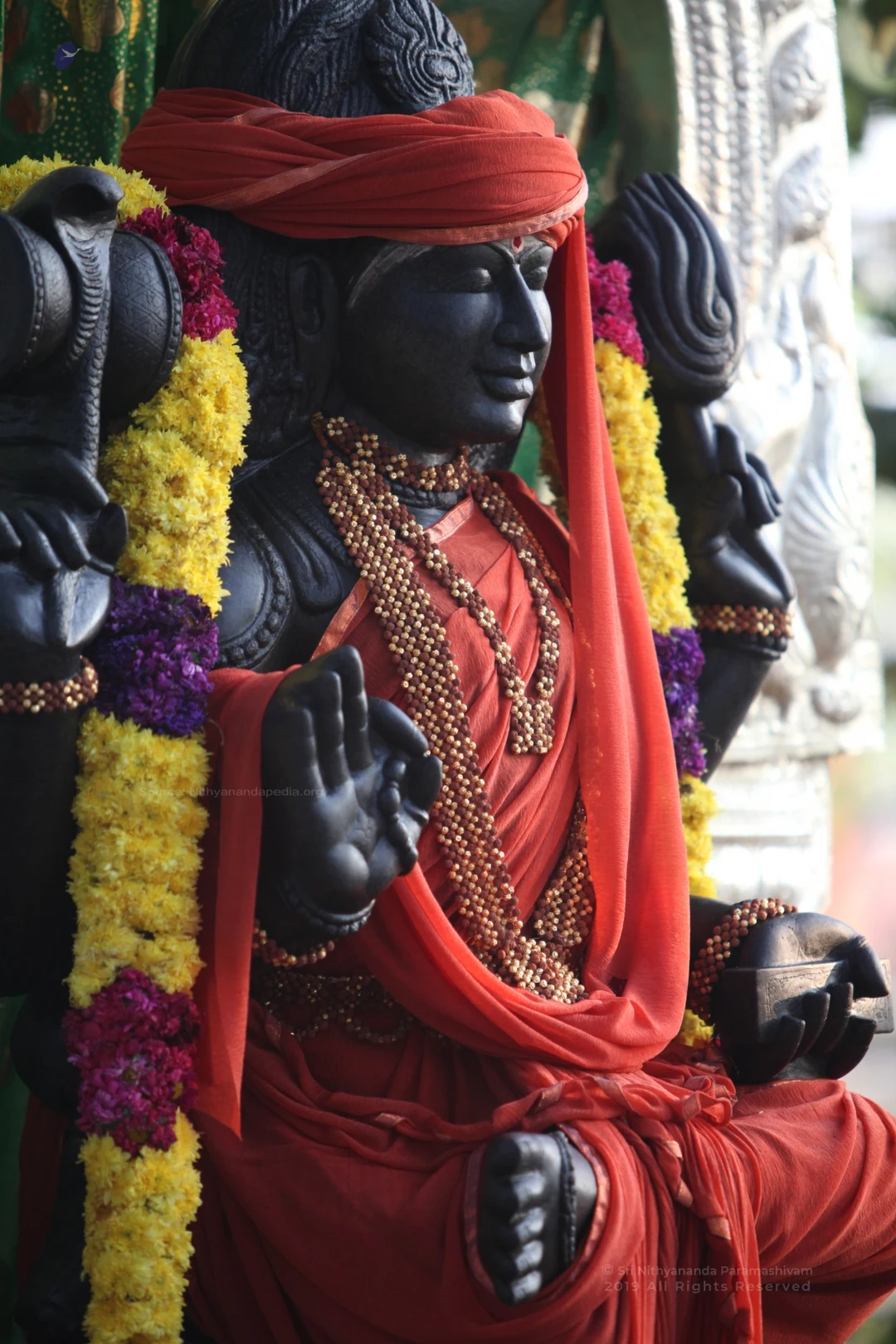
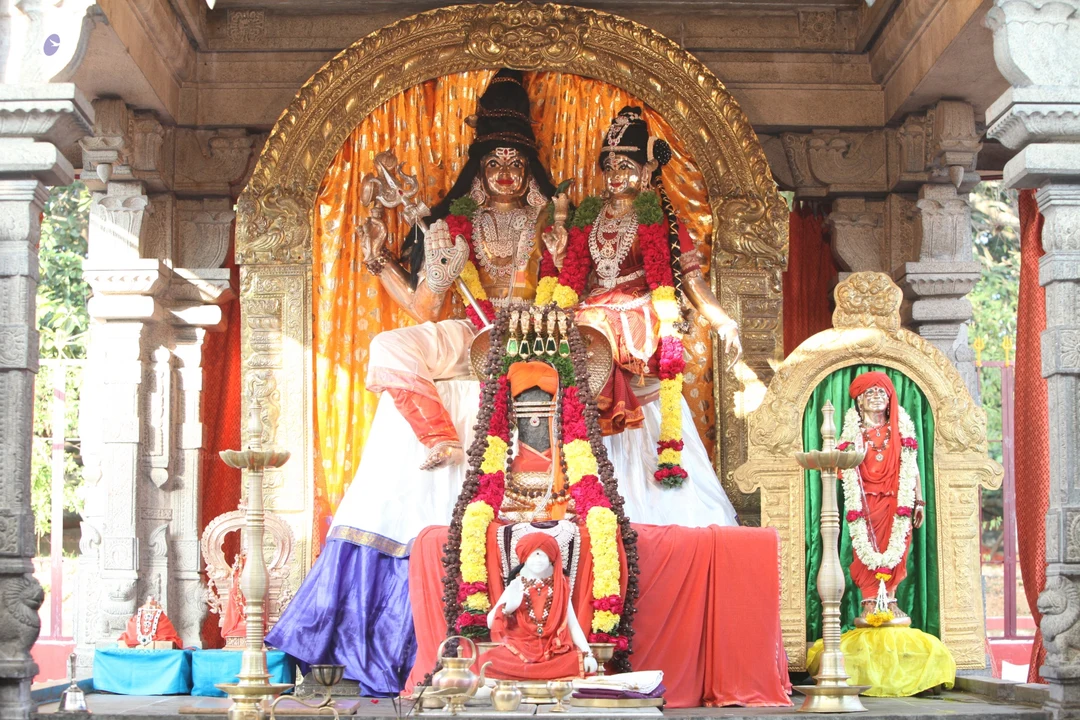
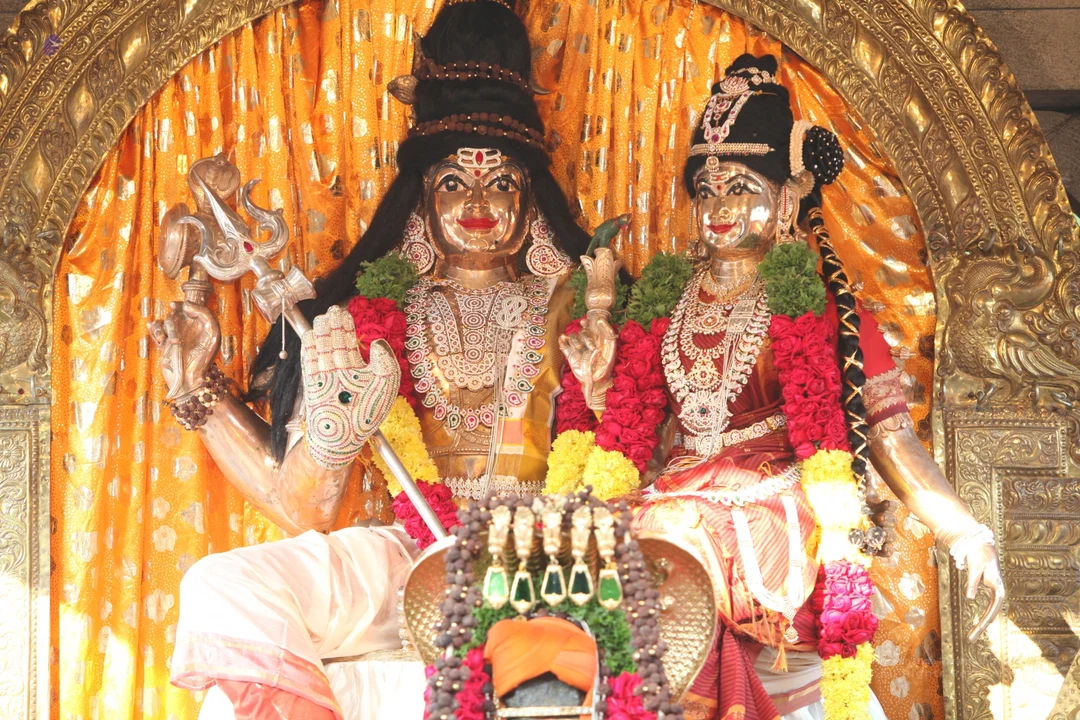
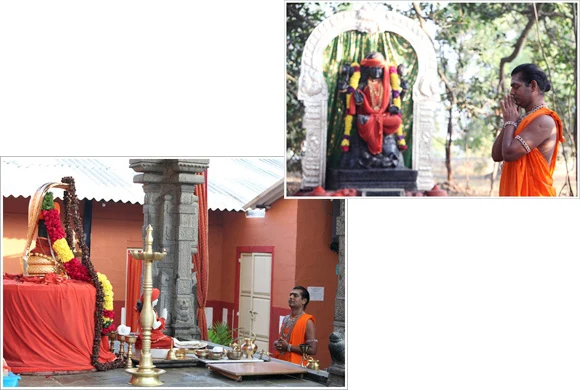
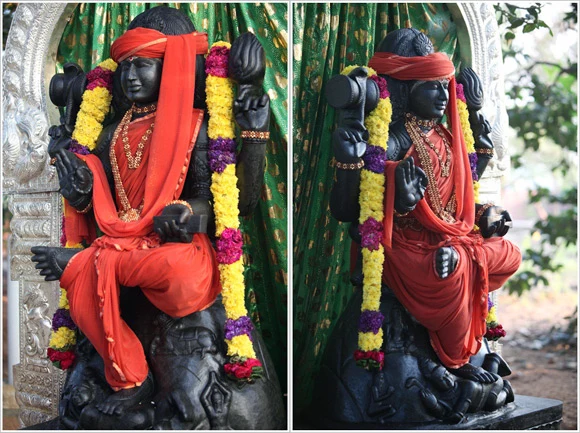
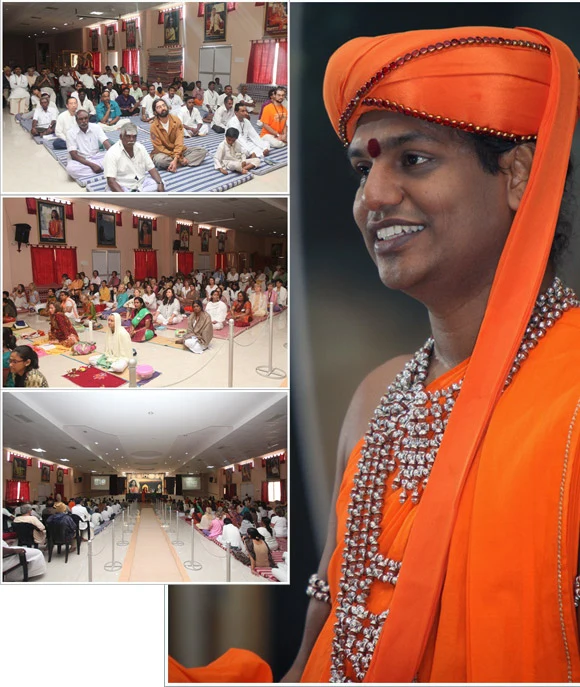
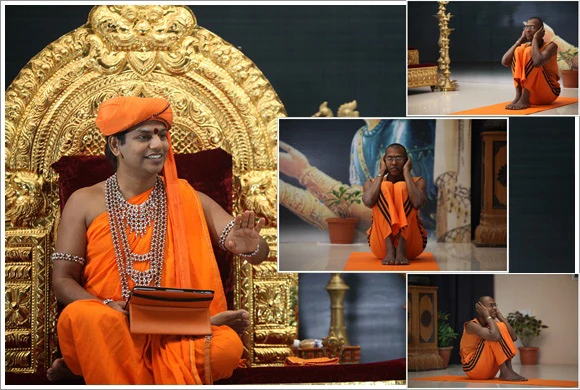
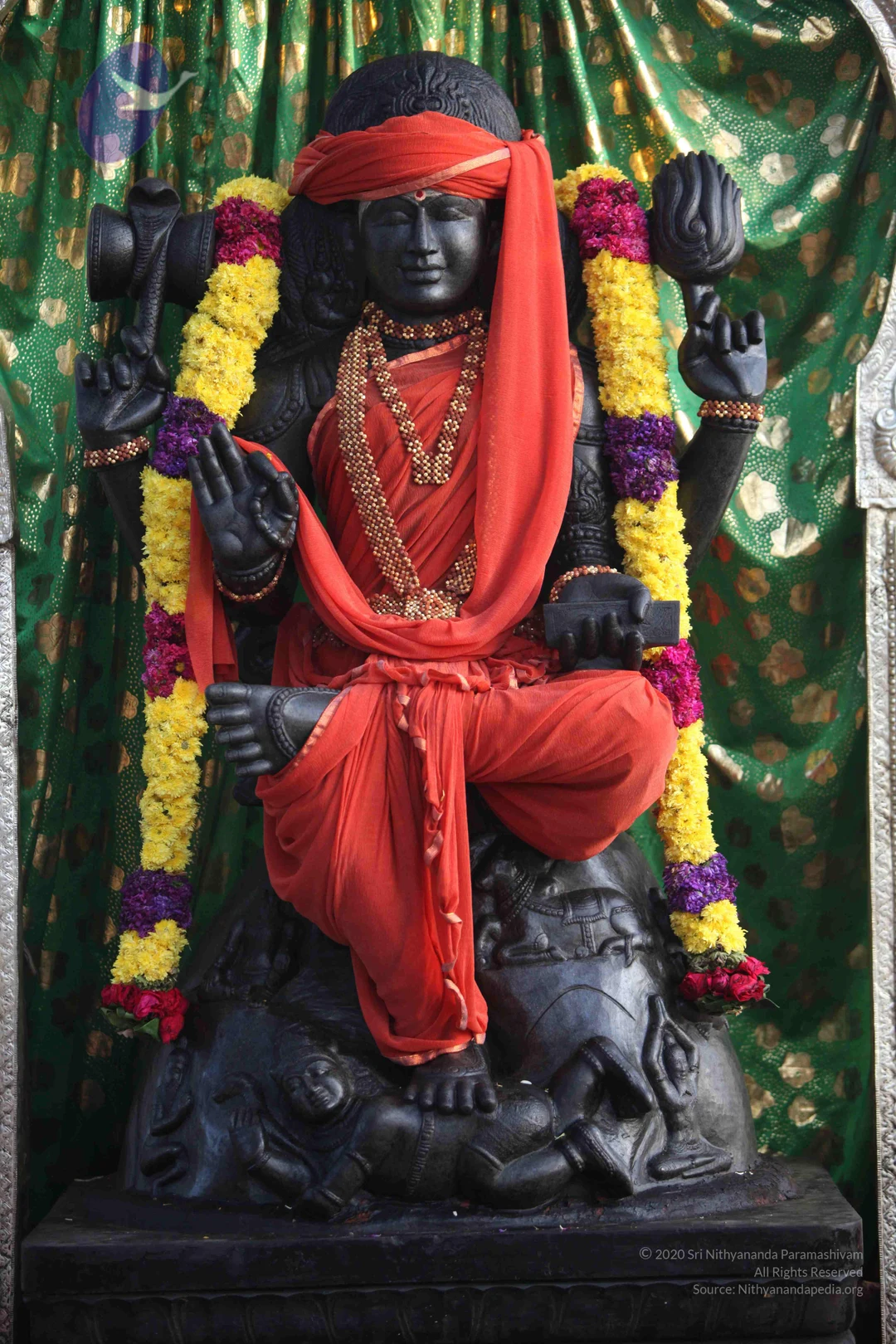
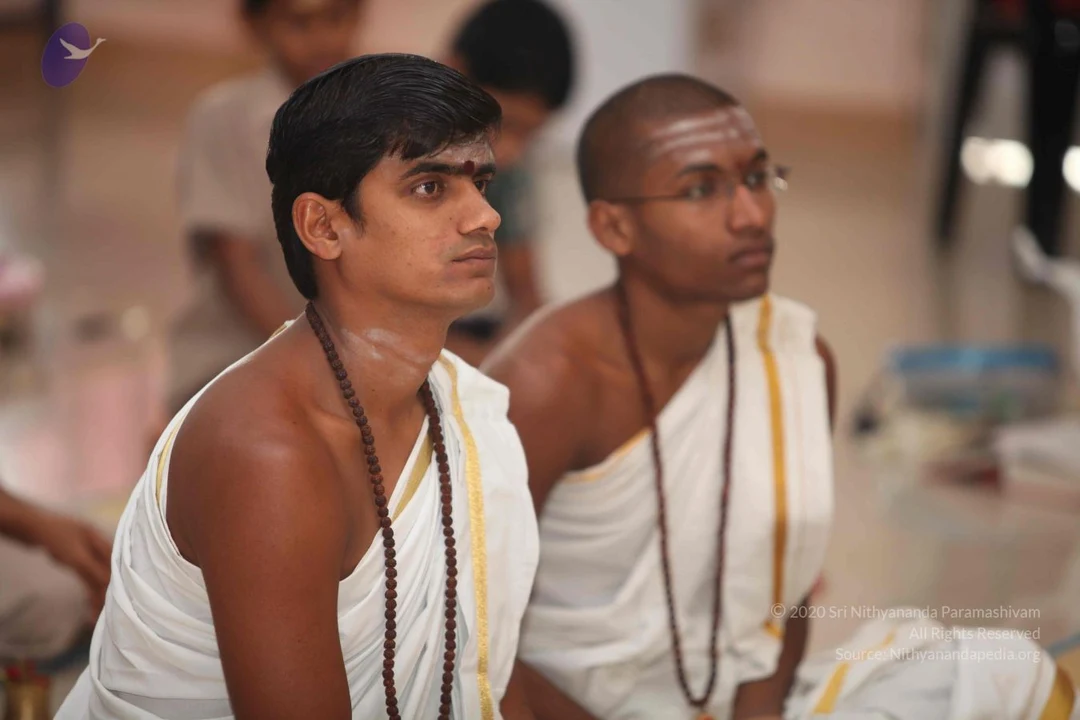
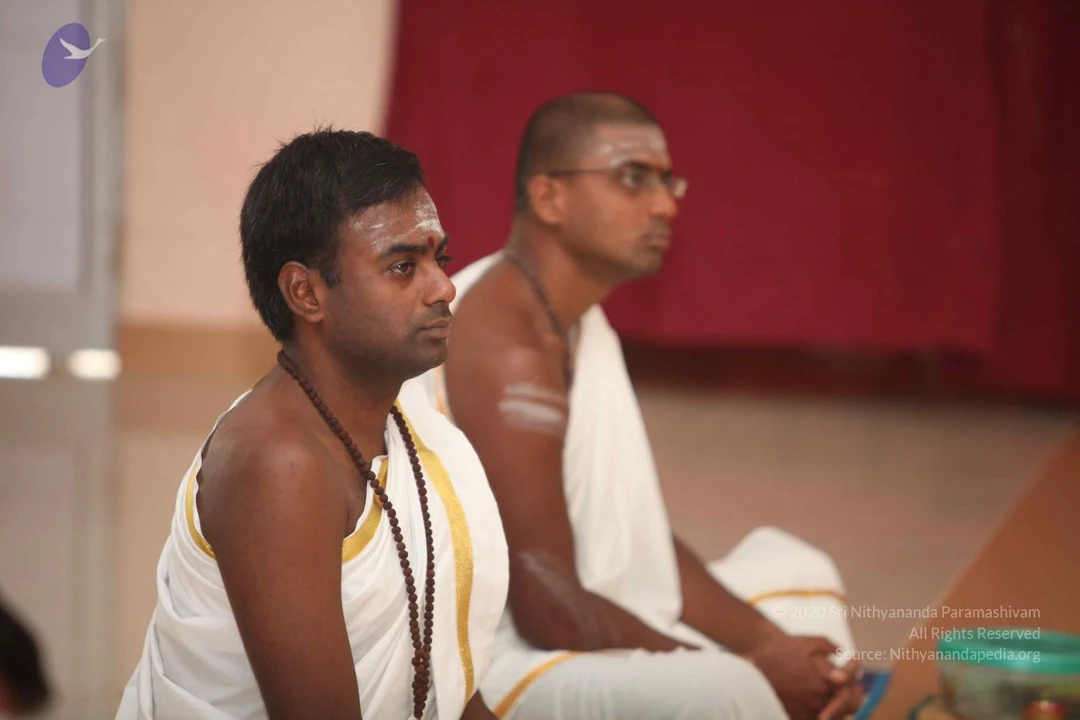
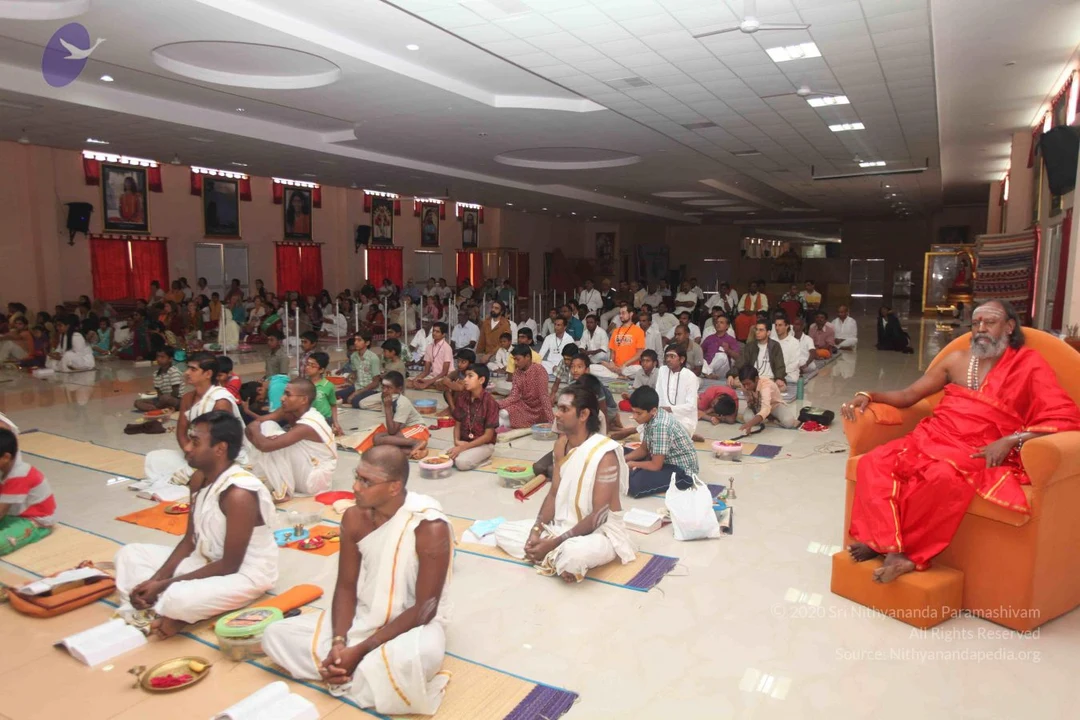
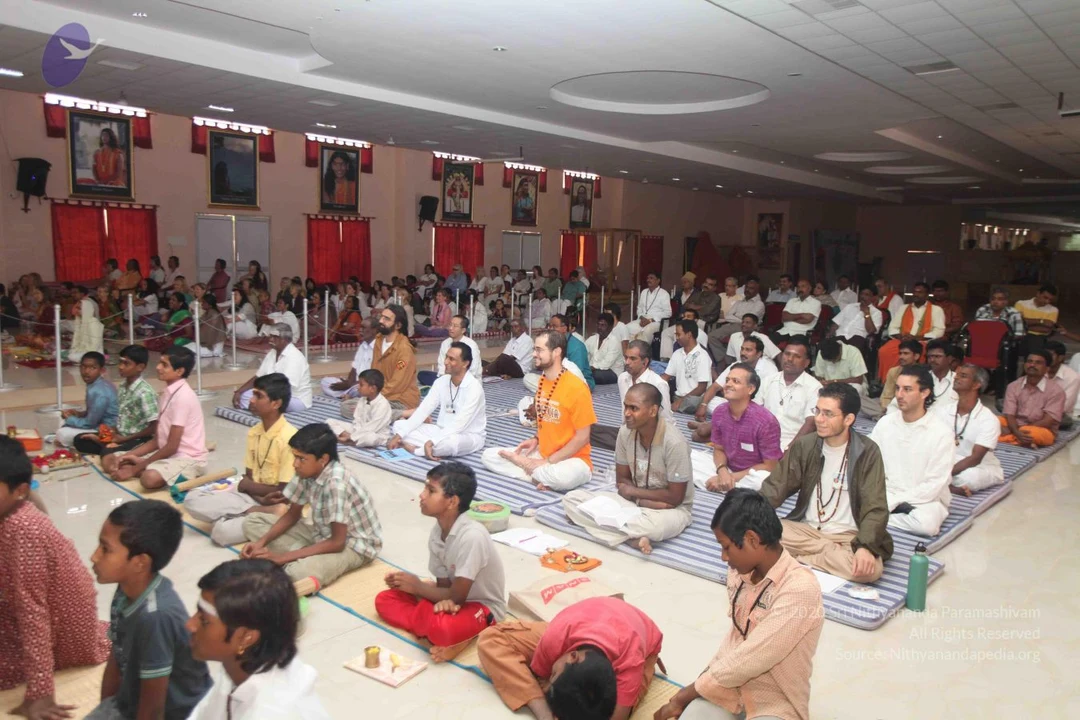
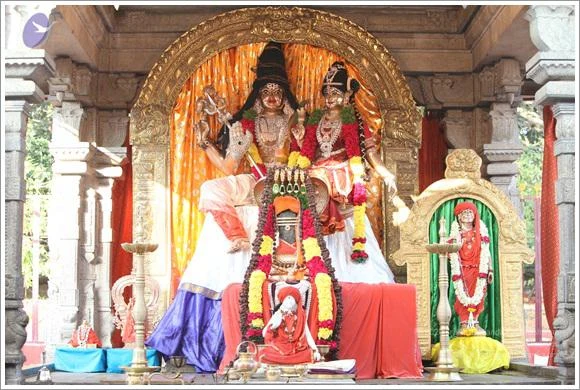
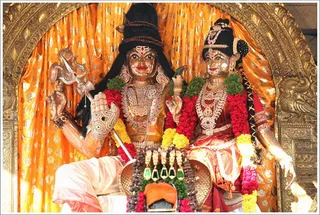
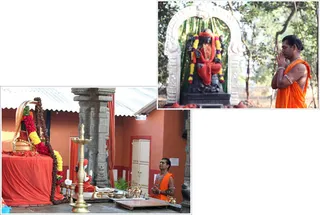
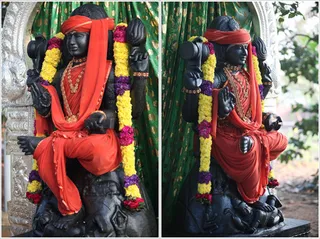
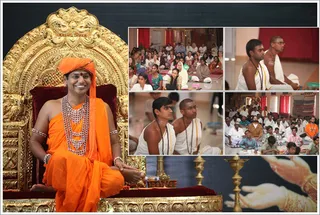
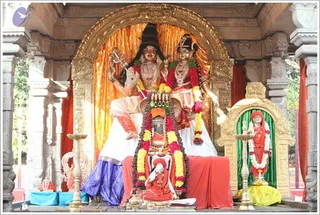
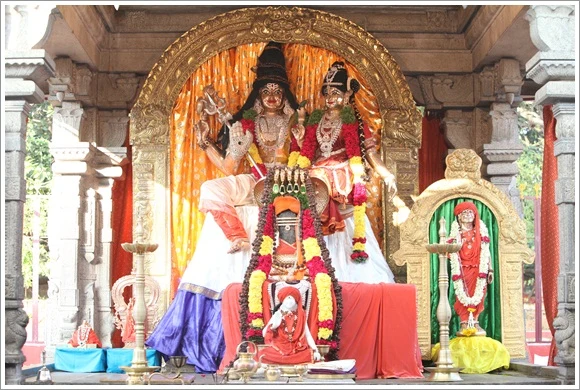
A photograph of a pair of decorated deity murtis seated side by side on a raised peetha under a gold-and-orange draped backdrop. The figure on the left holds a trident and has a tall dark crown and a crescent-style headdress with silver and gold ornaments, while the figure on the right wears a red sari-style garment, a dark crown and layered gold necklaces. Both are adorned with bright marigold and red flower garlands, and a row of green-tipped oil lamps and a saffron cloth sit in front. This is a temple image of the divine couple, with no living people visible.A two-panel collage of photographs from a temple visit. The left panel shows a red-draped altar with a brass oil lamp (deepam) lit beside a bowl and offerings, a garland of yellow and red flowers draped over a golden seat, and a man in orange robes seated before it. The right panel shows a black stone deity murti decorated with red and yellow flower garlands under a white arch, with a man in orange robes and rudraksha beads standing in anjali mudra in front. Both panels show ritual worship at a shrine. Physical people visible: two, the seated man and the standing man in orange clothing.Two side-by-side photographs of a black stone statue of a seated deity, shown from front and three-quarter angles. The figure wears an orange-red turban and orange-red draped cloth over the body, with ornate gold-toned necklaces and armbands. Garlands of yellow, purple and red flowers hang from the shoulders. The statue sits on a dark carved pedestal with a lion-like animal beneath, set in a silver-framed niche with green drapery behind it and foliage at the right edge. No living people are visible. The figure is a deity murti, not a person.A seated man in saffron-orange clothing sits on an ornate gold throne with red cushions and carved lion-like arms, flanked by gold lamps topped with rooster figures. He wears an orange turban, a multi-strand rudraksha-style mala of beads, a heavy ceremonial necklace and armbands, with hands resting on his lap. Behind the throne is a dark blue backdrop with a partial photo of a smiling woman in red and a banner reading SATSANG. Only one physical person is visible. Swamiji (probable) is seated on the throne wearing saffron with rudraksha beads and a crown-like turban.A collage of three photographs from a KAILASA event. The large central panel shows a smiling man seated cross-legged on an ornate gold throne with carved lion-like figures, wearing a saffron-orange turban, saffron-orange draped robes, layered white beaded necklaces, and bangles on his wrists; oil lamps and a brass vessel stand beside the throne. The smaller upper-left panel shows a priest in white ritual clothing seated before offerings, with other men in white around him. The smaller upper-right panel shows several people in saffron-orange robes seated on the floor at a low table with items arranged before them. The appearance of the central figure with his turban, saffron robes, necklaces and throne is a probable match for Swamiji, though this is an appearance-based label only.A multi-panel graphic collage with a large golden ornate throne panel and four smaller photograph panels. The main panel shows a seated man with a shaved head in a bright orange turban, orange sash, layered rudraksha malas and ceremonial beaded necklaces, with bangles on his wrists, seated on a gold and red throne with a red cushion. Probable Swamiji by visible cues: orange turban, rudraksha malas and ornate ceremonial gold necklaces. Smaller panels show a crowd seated in a hall, two men in white dhotis with bare chests seated together, a row of seated devotees in white and orange clothing, and a wide hall of seated participants. Brass oil lamps and a hand offering appear at the bottom edge.

Temple

8 photosSource gallery
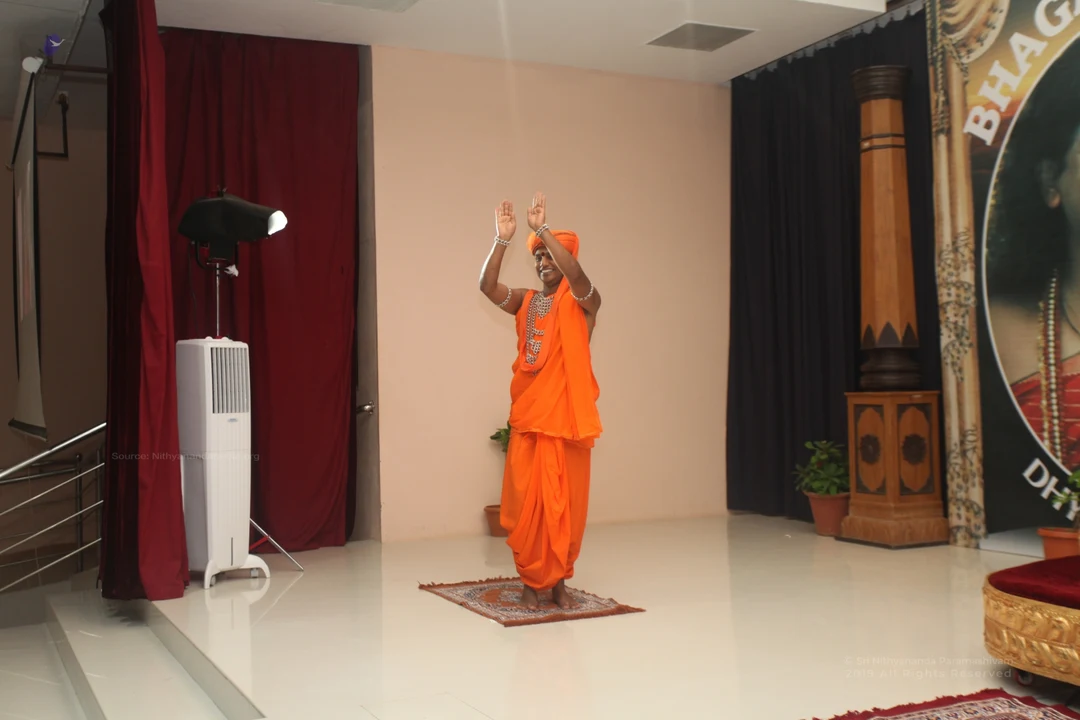
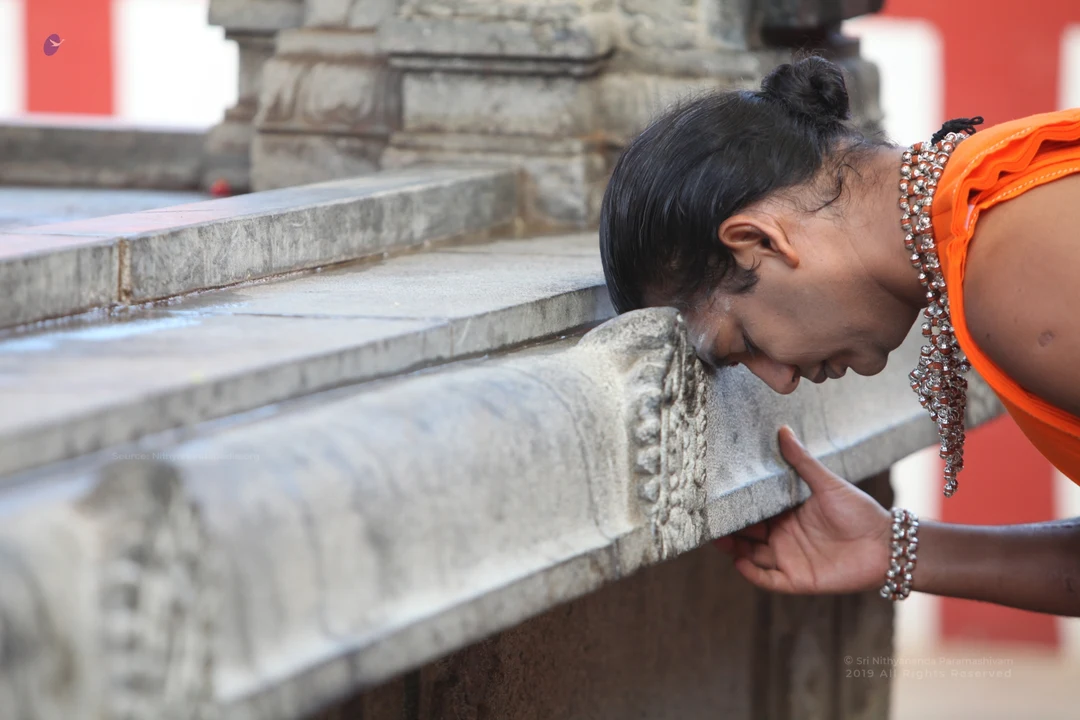
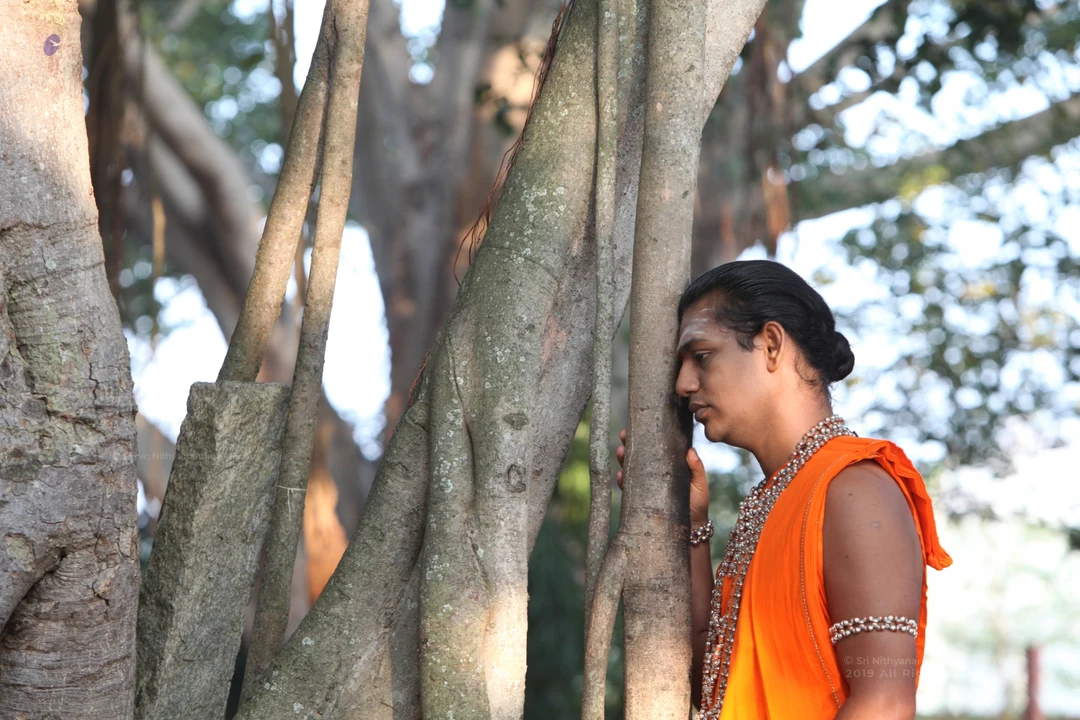
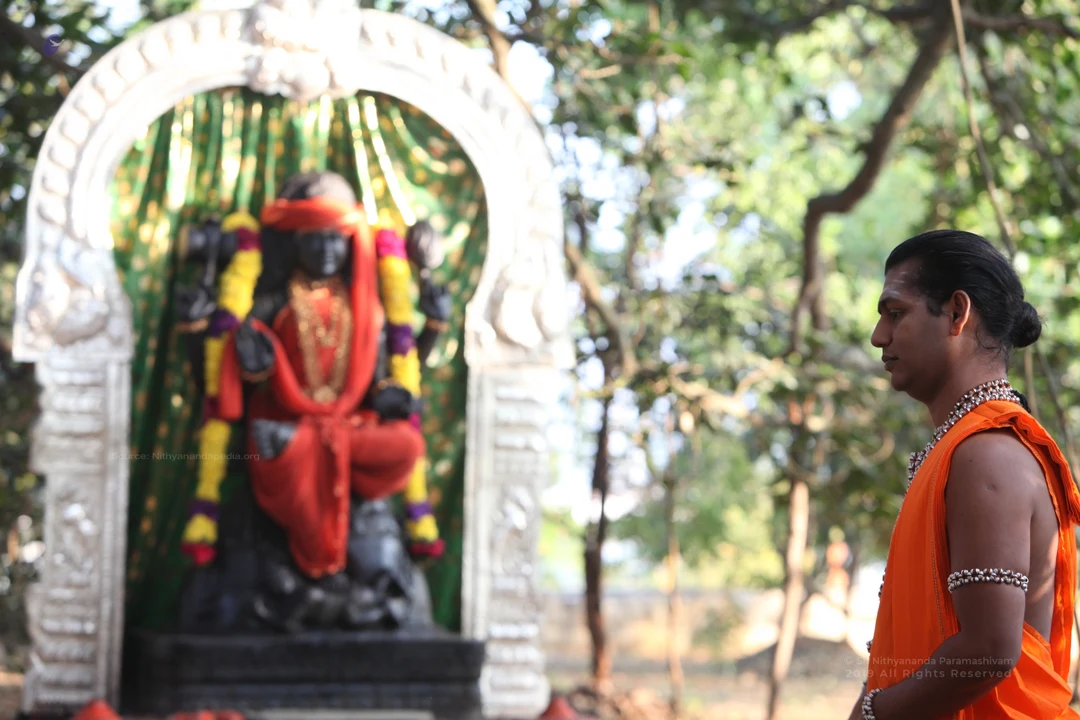
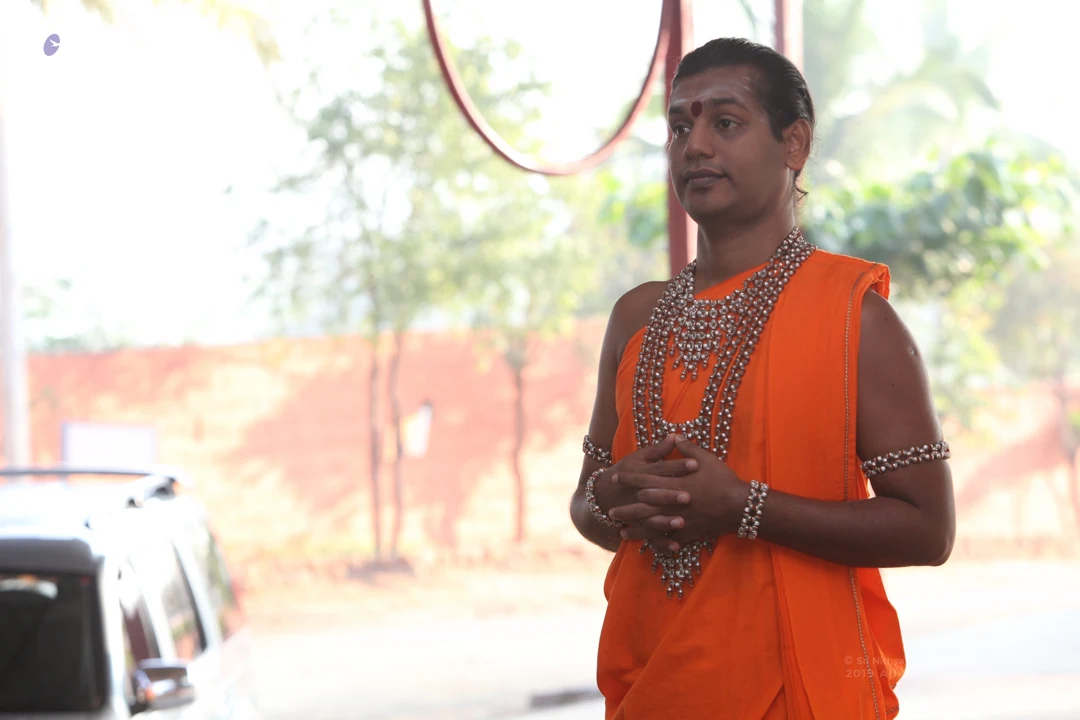
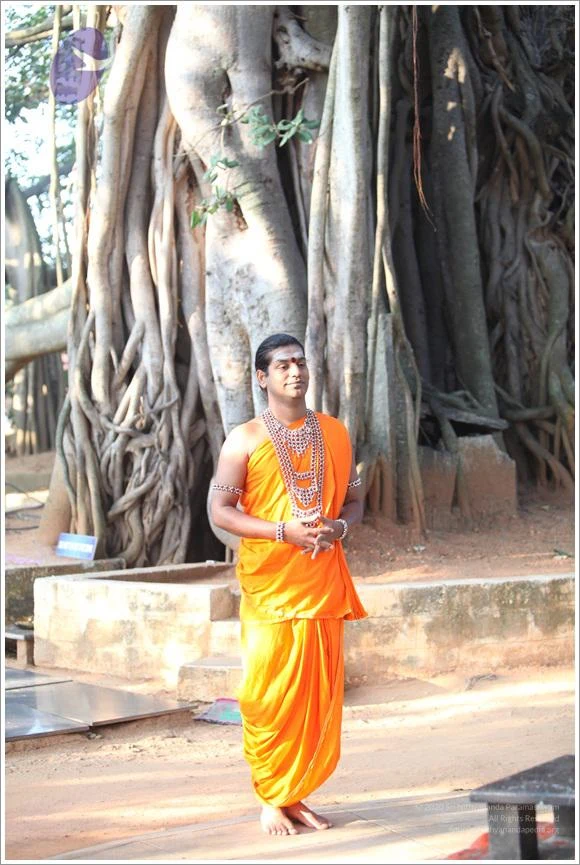
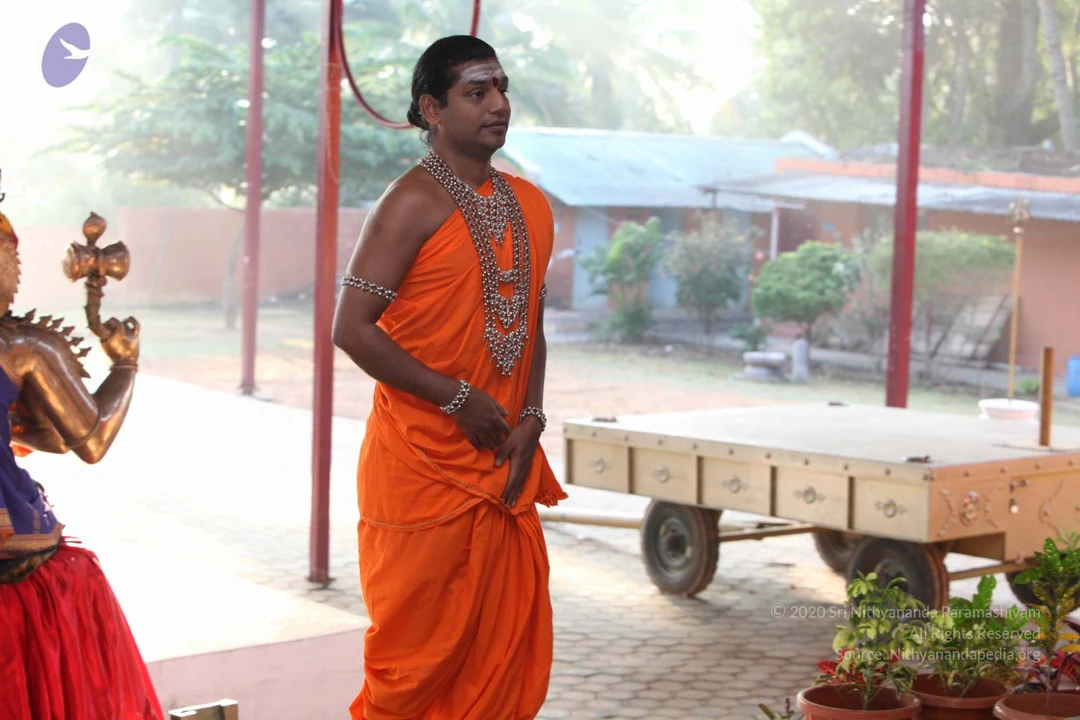
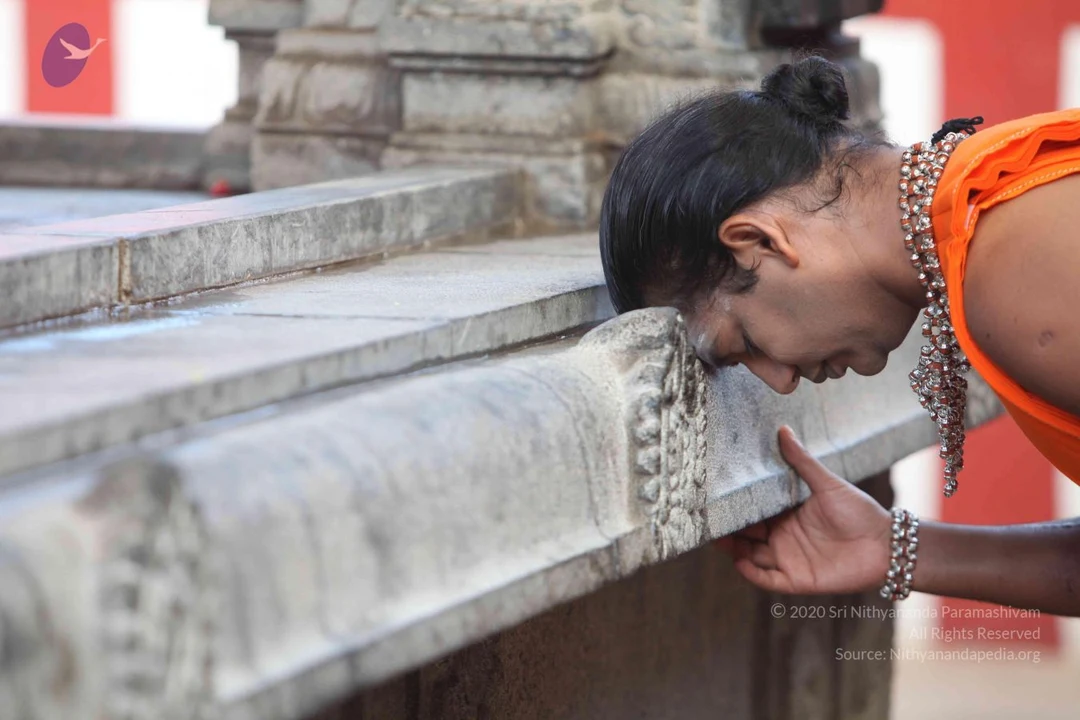
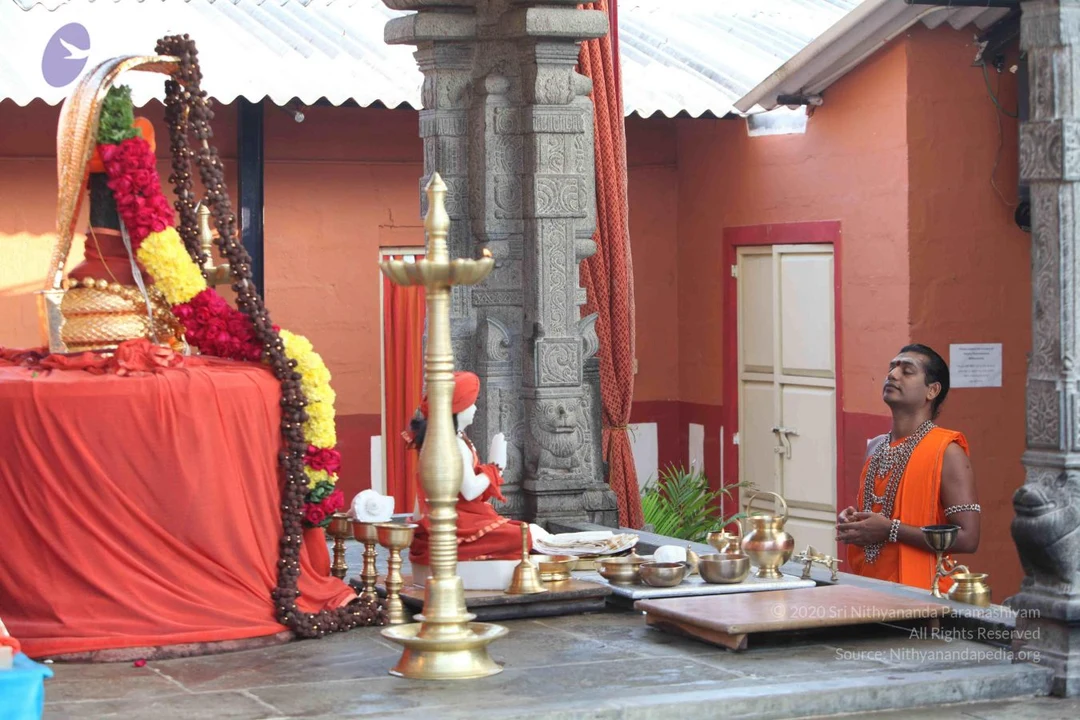
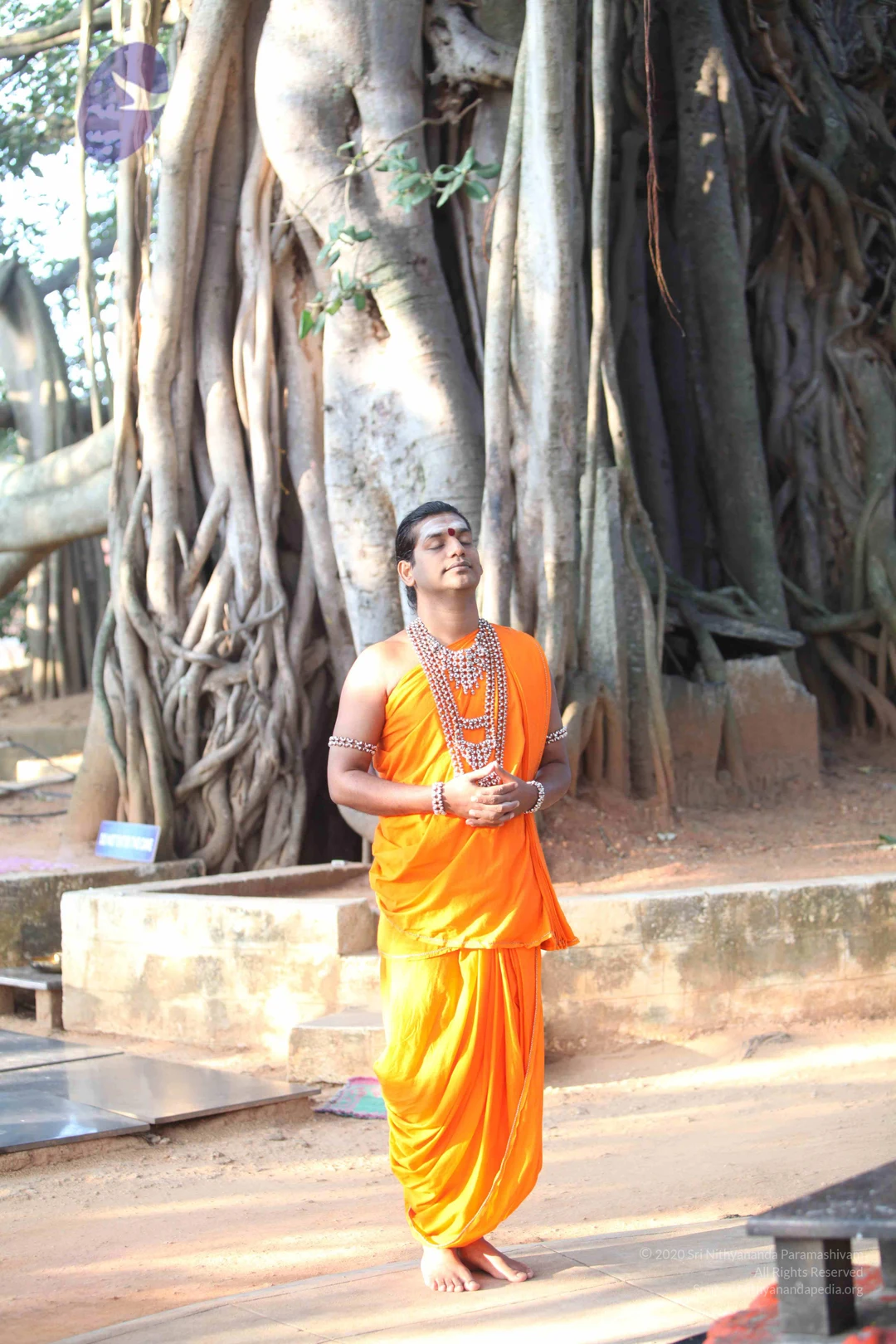
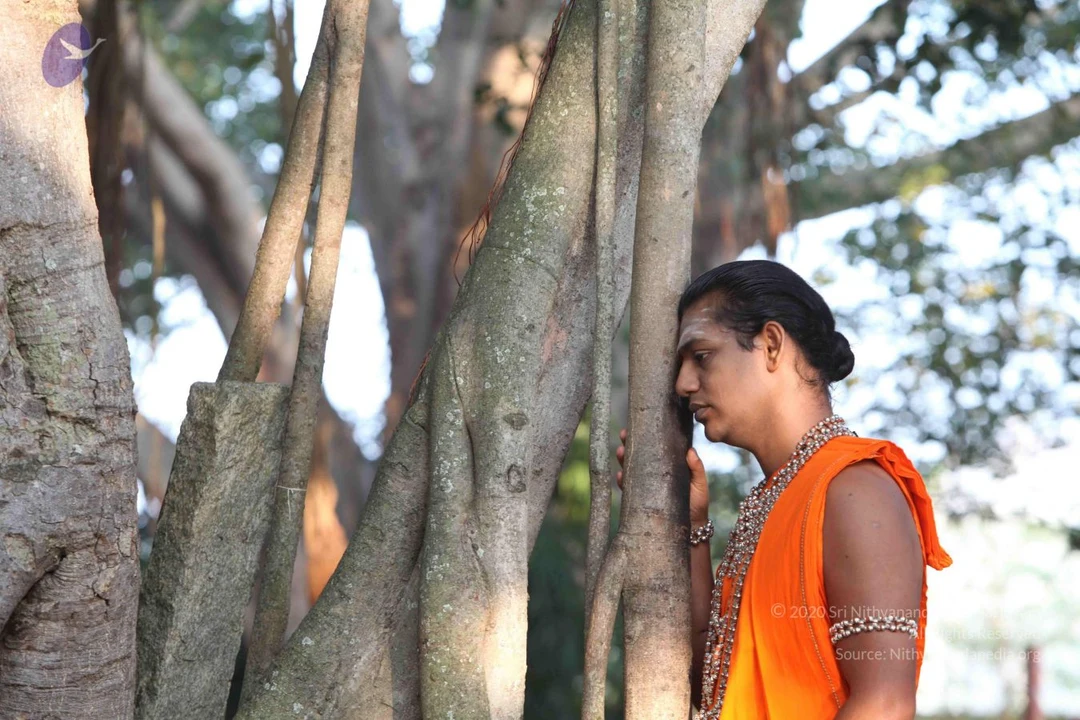
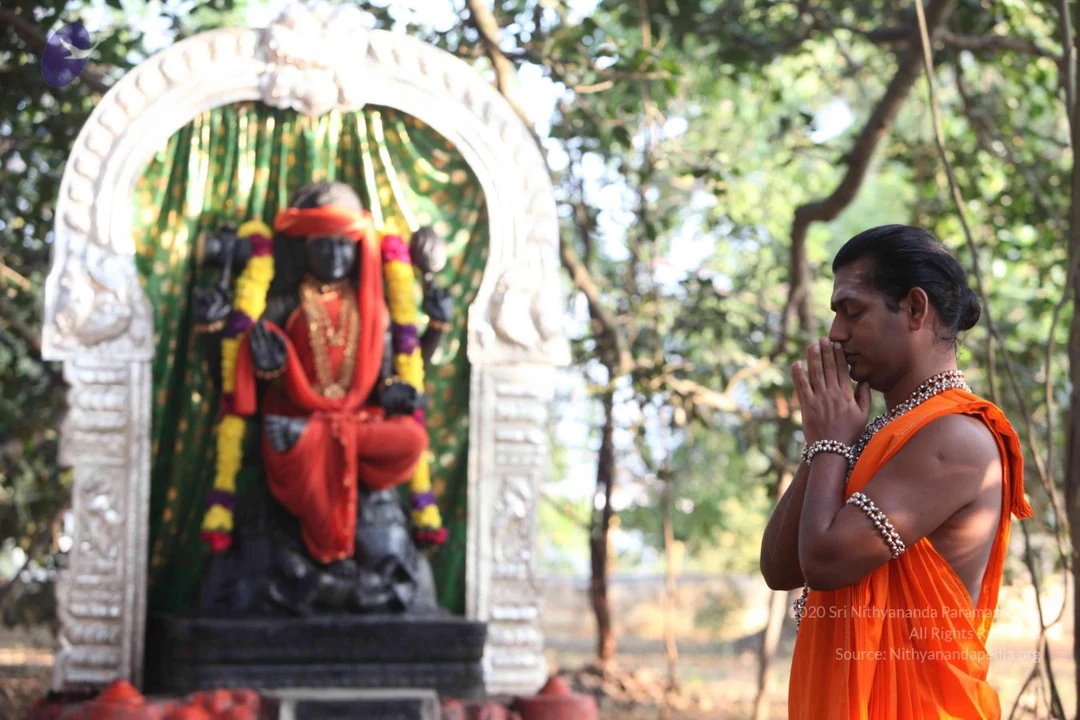
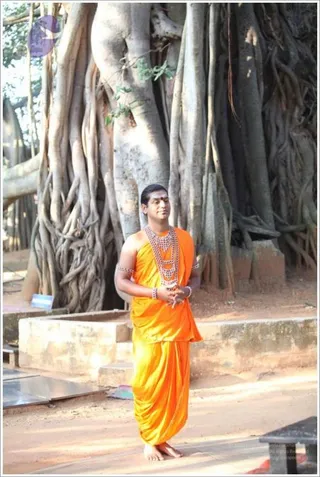
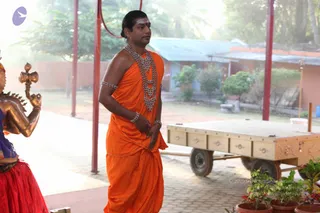
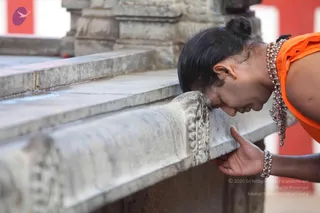
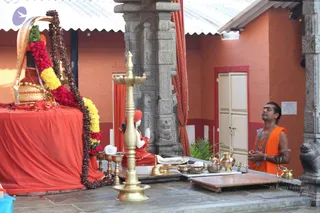
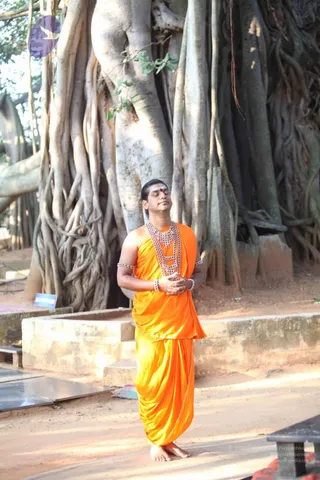
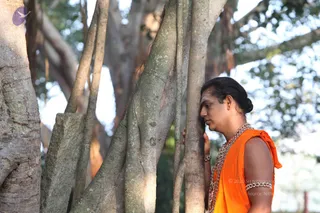
A barefoot man in saffron-orange dhoti and matching upper cloth stands on sandy ground before a large banyan tree with dense aerial roots. He wears a multi-strand white beaded necklace with a large ornate pendant, armlets and bangles, and a red tilak mark on his forehead. His hands are folded at his chest and he gazes upward in quiet stillness. A low stone platform and a small blue-lit sign sit at the base of the tree, with a dark metal slab at lower left. The scene appears to be an outdoor temple or ashram setting. a person: long hair swept back, ornate beaded adornments and saffron clothing, standing alone as a devotee in an outdoor setting.A man in a saffron-orange dhoti and shawl stands on a paved courtyard beside a golden deity murti holding a staff, with a red-skirted figure at the left edge. He wears a layered silver necklace, silver armlets and bangles, and a red tilak on his forehead, with his hair swept back. Behind him are a tiled-roof building, potted plants and a wooden flatbed cart with metal fittings under morning haze.A person in a saffron-orange sleeveless top with a silver beaded necklace and a bun of dark hair bows low and touches their forehead to the carved grey stone edge of a temple step or platform, with one hand resting on the stone. Weathered carved stone and a red-and-white painted wall appear behind.A man in orange robes and a silver necklace stands with palms together at a temple shrine, eyes closed in prayer. Beside him stands a brass ritual setup with a tall brass oil lamp, brass bowls, a kalasha-style pot and small brass vessels on a wooden tray. To the left, a sculpted figure sits draped in red and orange cloth beneath a garland of red and yellow flowers and a rudraksha mala, with a red-and-gold shawl and a brass vessel nearby. Grey carved stone pillars and orange walls frame the courtyard.A barefoot man stands on a sandy ground beside a large banyan tree with thick, twisting aerial roots and a low stone platform at his side. He wears a saffron-orange silk garment draped over one shoulder and wrapped around the lower body, with a long layered silver-coloured rudraksha-style necklace, silver armlets and bangles. He has a red tilak mark on his forehead, hair swept back, eyes closed, and his palms pressed together at the chest in a prayer gesture. Photo of one person in a calm outdoor ashram setting, with a blue informational sign visible at the left edge.A man in an orange saffron garment leans his head and one hand against the trunk of a large banyan-type tree with thick aerial roots. He wears a multi-strand beaded necklace of pale rudraksha-style beads, a beaded bracelet, and a tilak mark on his forehead, with his dark hair pulled back into a bun. Sunlight filters through the leaves in the background. Appearance cues are consistent with the page's a person reference, though the face is not used for identification.

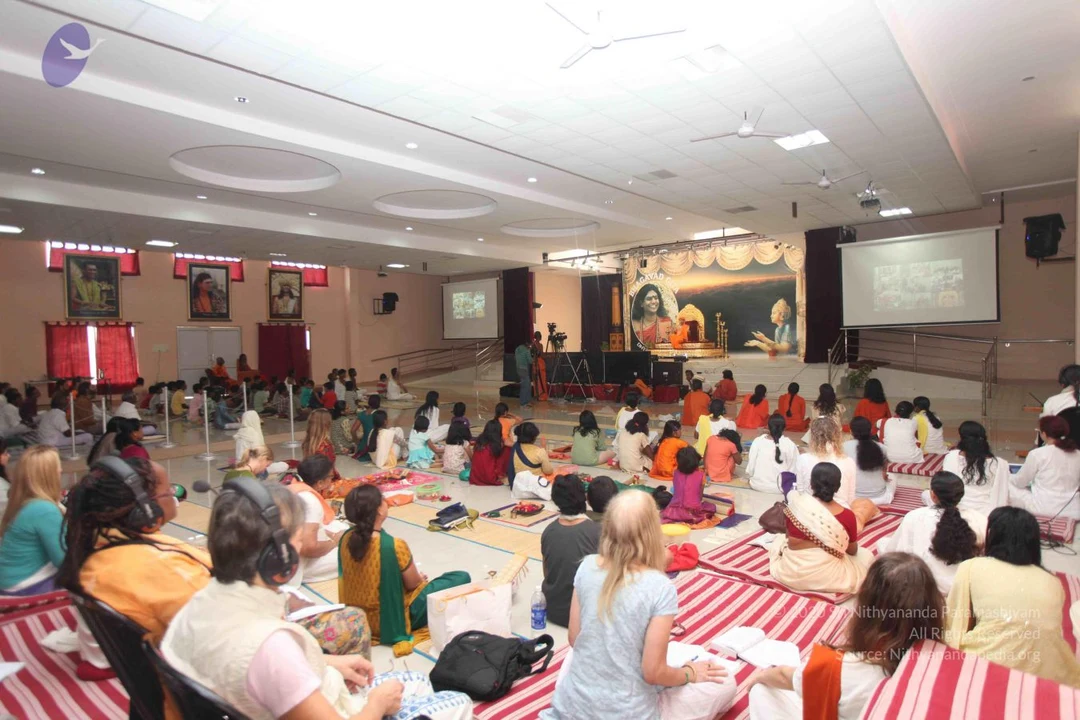
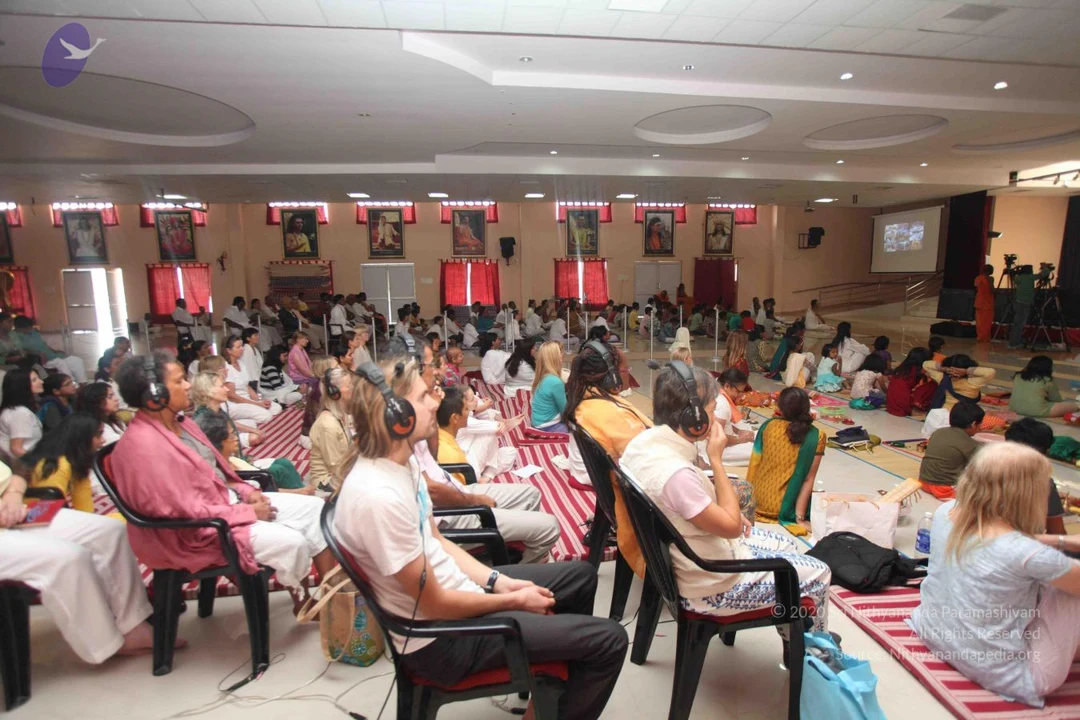
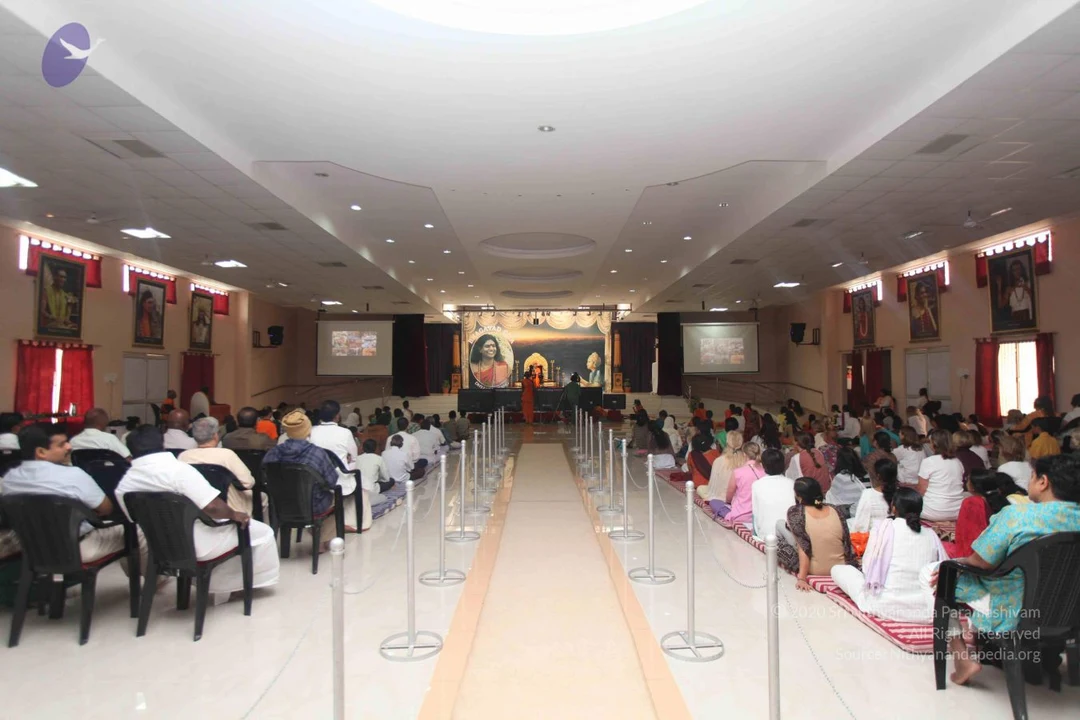
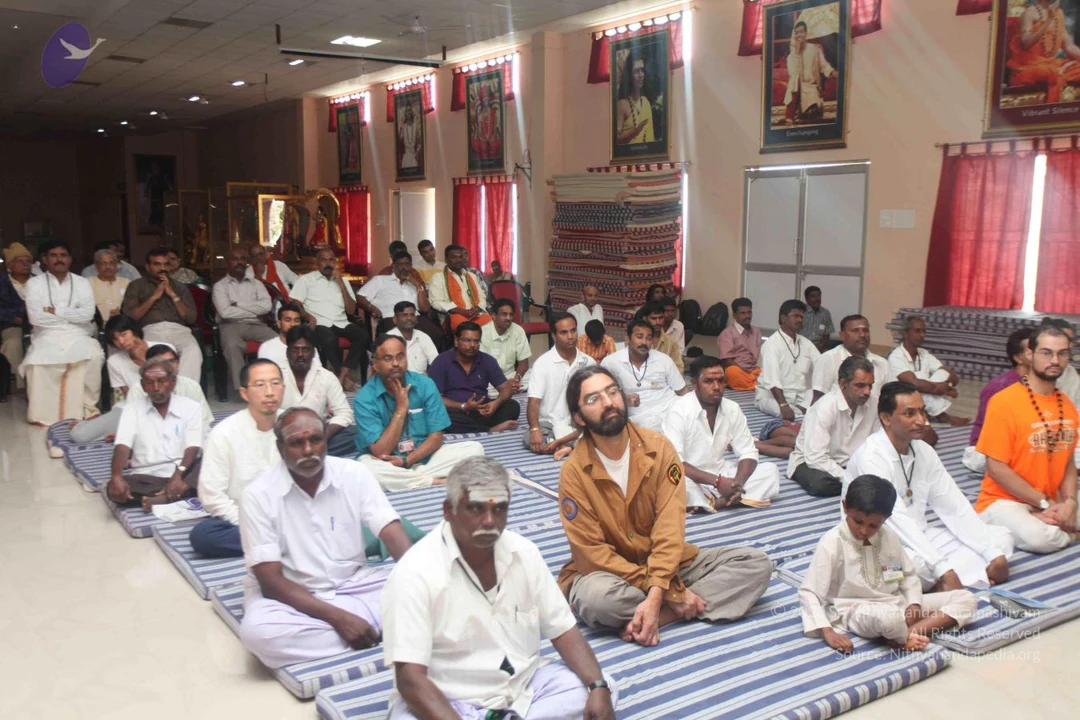
BGSatsang
106 photosSource gallery
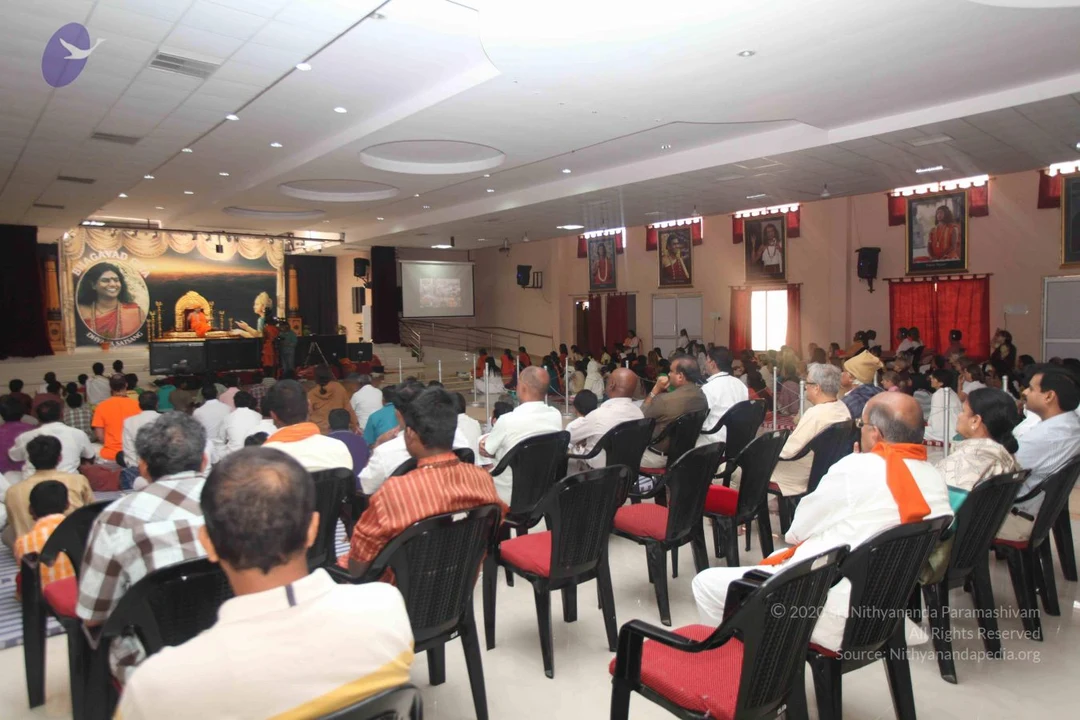
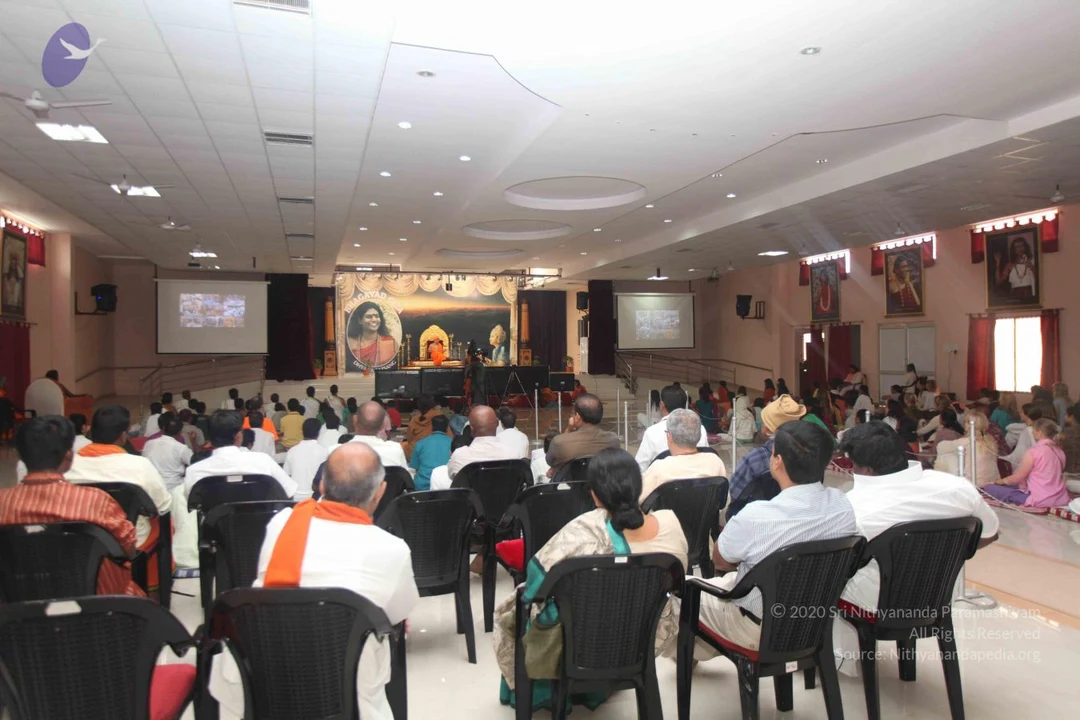
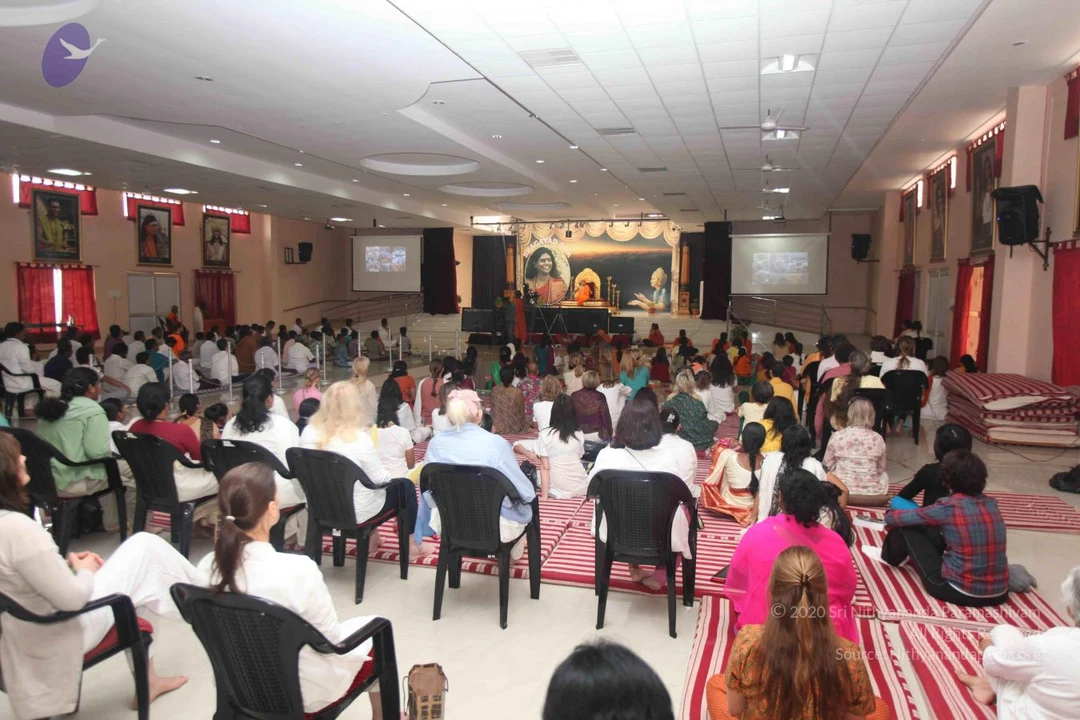
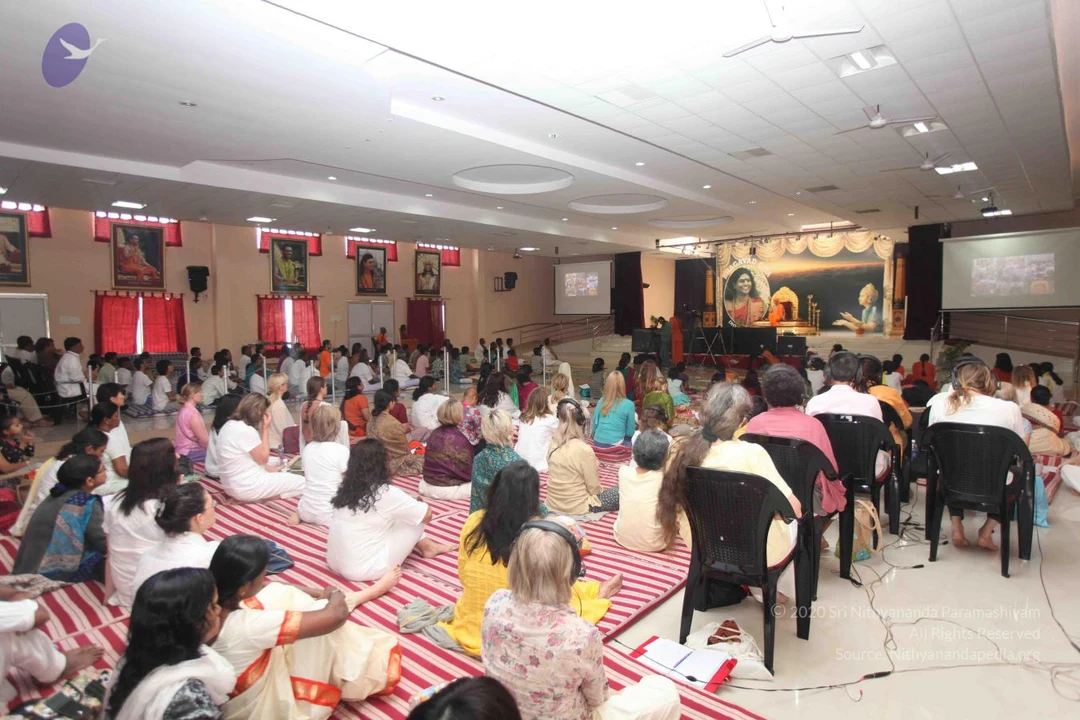
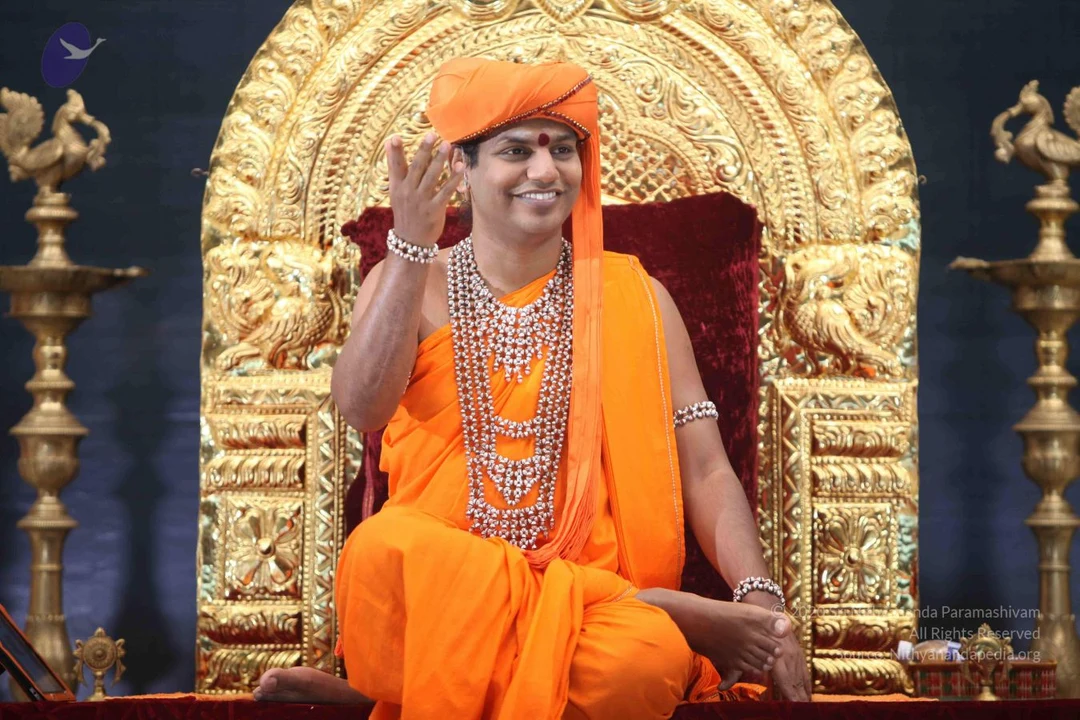
A seated man in saffron-orange robes sits on an ornate gilded throne with a crimson velvet cushion and carved arched backrest. He wears an orange turban with a red bindi, a shawl draped over his shoulders, a multi-strand silver-toned necklace, and silver armlets and bangles. His hands rest folded in his lap. Gold oil lamps with bird finials flank the throne against a dark blue backdrop. A small tablet and a silver tray sit at the lower edges of the frame.A seated figure in saffron-orange robes and matching orange turban sits cross-legged on an ornate gold throne with a deep red velvet cushion. He wears a layered silver-white beaded necklace, matching beaded armlets and beaded bracelets, and a red bindi on his forehead, with hands folded in his lap and a gentle smile. Behind him is a gold-carved arched throne back, and beside him stand brass oil lamps topped with rooster figures. A dark backdrop and a partly visible pale hand at the right edge complete the scene. Swamiji (probable) is the seated figure, based on his orange turban and robes, ornate throne and layered beaded necklace.A seated man in saffron-orange robes and an orange turban sits on an ornate golden throne with a red velvet cushion, gesturing with his right hand in discourse. He wears layered silver-toned beaded necklaces, silver bangles on his upper arms and wrists, and a vermilion tilak. Flanking the throne are tall golden oil lamps topped with rooster figures, and a small tablet or book rests on the red-draped dais. Swamiji (probable): the orange robes, orange turban, ornate silver necklaces and bangles, seated on the throne while teaching, match the page's description of a satsang discourse. The image is a photo of one person in front of a dark backdrop with a partial circular graphic at left.A seated man in saffron-orange robes and an orange turban sits on an ornate golden throne with carved arch and lion figures, raising his right hand in a gesture while speaking. He wears layered silver-toned beaded necklaces, bangles on both arms, and a red mark on his forehead. Flanking the throne are tall golden lamp stands topped with bird figures, and a red velvet cushion covers the seat. Appearance-based probable identification: Swamiji (probable), seated as the speaker on the throne, with orange robes, orange turban, layered beaded necklaces and bangles as cues.A seated man in saffron-orange robes sits on an ornate gilded throne with a deep red cushion, raising his right index finger while smiling. He wears an orange turban with a red bindi, layered white beaded necklaces, and white bangles on his upper arm and wrist. Flanking him are brass oil lamps topped with rooster figures, and a small brass object sits near his feet. The dark blue backdrop and a partial decorative panel on the left complete the setting. Swamiji (probable) appearance cues: saffron clothing, turban and ornate necklaces on a throne; he is the single person present.A seated man in saffron-orange robes and an orange turban sits on an ornate golden throne with a red velvet cushion, gesturing with his right arm toward the side. He wears layered silver-white beaded necklaces, silver armlets and bracelets, and a red bindi on his forehead. Two golden lamps with bird-shaped finials stand on either side of the throne, and a gold-framed backdrop with a circular light panel is behind him. Swamiji (probable): the saffron robes, orange turban, layered jewelled necklaces and ceremonial throne are the qualifying cues, and he is seated as the speaker at a satsang-style event. A small red-cloth table with a tablet device sits at lower left.
NithyaKriya-Autism

56 photosSource gallery
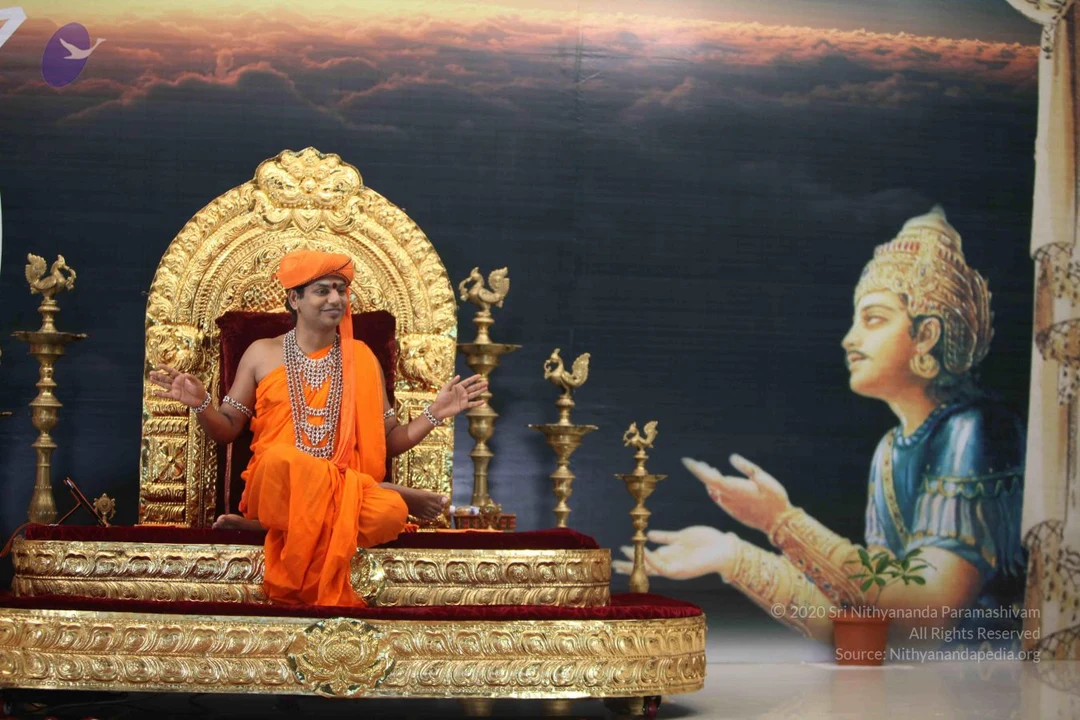
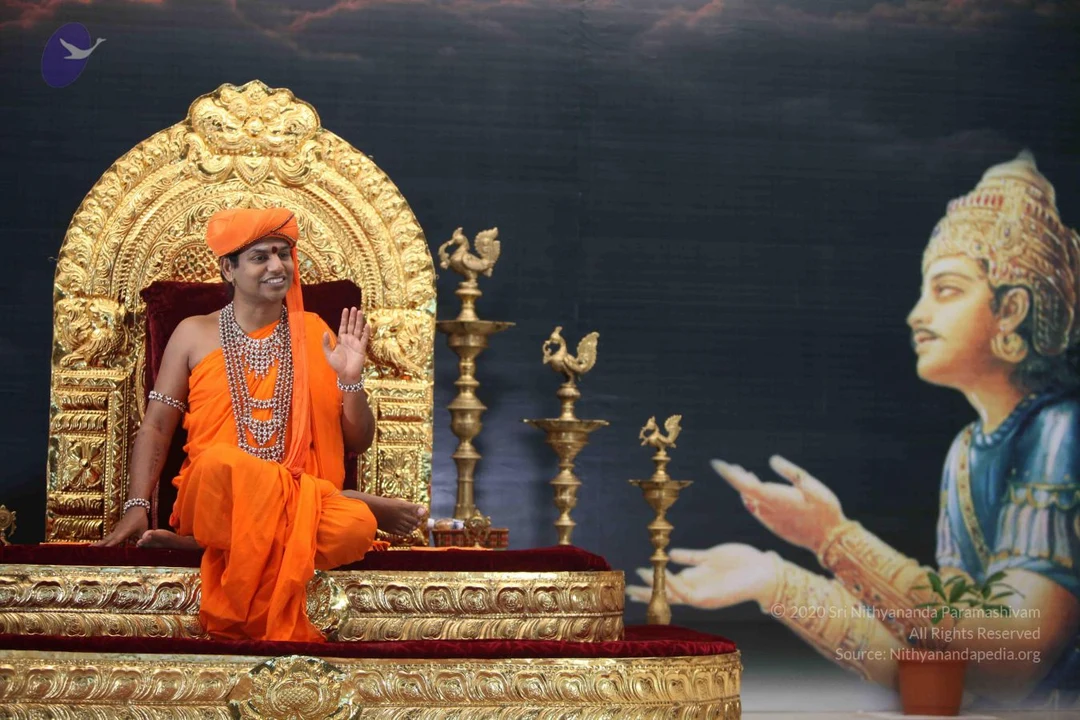
A temple shrine dominated by two large painted deity figures seated side by side on a raised platform, each with multiple arms and crowns, one with a trident and a blue-skinned look, the other in red and gold adornment with a red-and-white sari-like garment. Between them stands a dark lingam decorated with marigold and yellow flower garlands, flanked by brass oil lamps and a brass kalasha. Gold-painted arches, orange drapes and pillars frame the shrine, and a smaller red-clad deity murti with a flower garland stands at the right. No people are visible in the scene.A seated man in saffron-orange robes and an orange turban with a red bindi sits on a red velvet cushioned throne with ornate gold carved arch behind him. He wears layered silver-toned beaded necklaces and matching silver armlets, hands folded in his lap, smiling and gazing to the side. Beside him stand tall brass oil lamps topped with roosters, against a dark blue backdrop. A caption reads ' '. Probable Swamiji seated in the throne position, with orange turban and saffron robes as visible cuesA seated man on an ornate gold throne with a red cushioned seat raises his right hand in a blessing gesture while smiling. He wears an orange-saffron turban, an orange robe draped over bare shoulders, a long multi-strand white beaded necklace and silver armlets, and a red tilak on his forehead. He holds a small orange-covered book or tablet on his lap. Three tall brass oil lamps with rooster-shaped finials stand beside the throne against a dark blue backdrop, and a small brass tray with offerings sits at the base. Appearance-based label: a person, seated in a blessing posture on a throne.A man seated cross-legged on an ornate gilded throne with carved lion-motif armrests and a deep red velvet seat cushion. He wears an orange turban with a small red bindi, an orange draped robe, a multi-strand white beaded necklace and white beaded armbands. He holds a small orange cloth-covered book in one hand and smiles toward the side. Beside him stand three tall brass lamps topped with rooster-shaped finials, and a dark blue backdrop fills the background. Swamiji (probable) based on the orange turban and robes, beaded necklace and seated throne presentation; the page indicates Swamiji at this event.A photo of a seated figure in saffron-orange robes on an ornate gold throne with a deep red velvet cushion. He wears a saffron turban with a red tilak, long white beaded necklaces, beaded armlets, and a saffron shawl. He holds a saffron-covered book in his lap and raises one hand in a gesture while smiling. Beside the throne stand three tall gold oil lamps topped with bird finials, on a dark blue backdrop.A photograph of a seated man in saffron-orange robes on an ornate gold throne with arched carved back and a deep red cushion. He wears an orange turban with a red bindi, a multi-strand white beaded necklace, and white beaded armbands, and holds a small orange-and-black pouch or book in his lap while smiling with eyes lowered. Behind him stand tall brass oil lamps with rooster-shaped finials and a dark blue backdrop. Swamiji (probable): the saffron robes, turban, and ornate beaded necklace on a golden throne are consistent with the page description of a satsang setting.
Sarva-Darshan

16 photosSource gallery
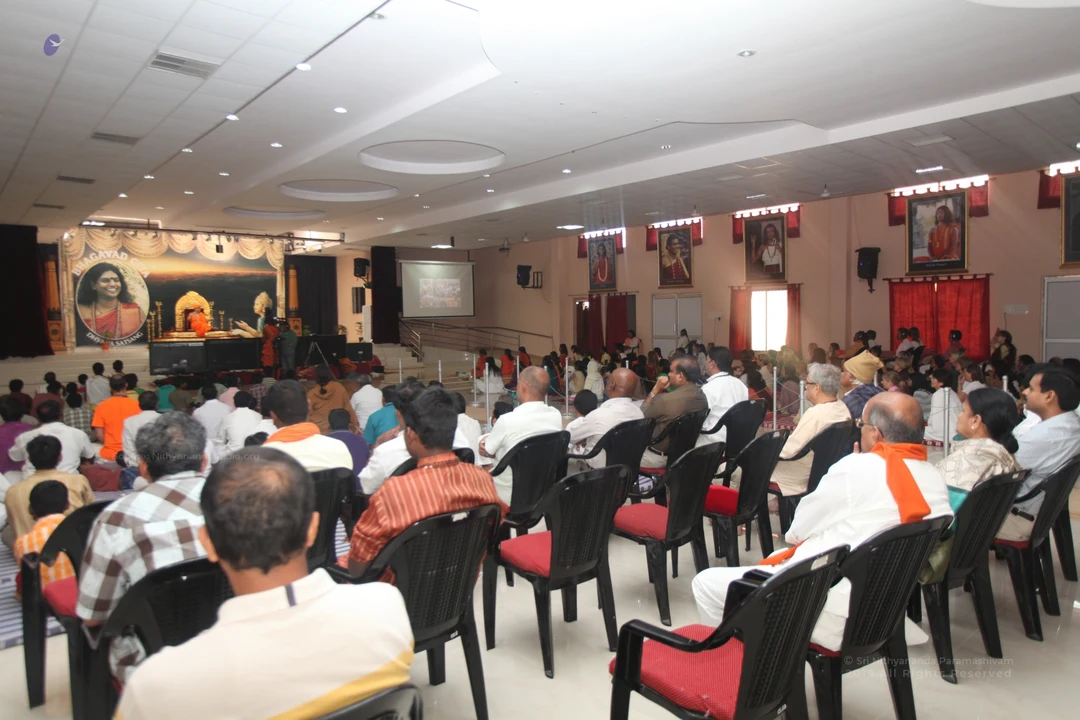
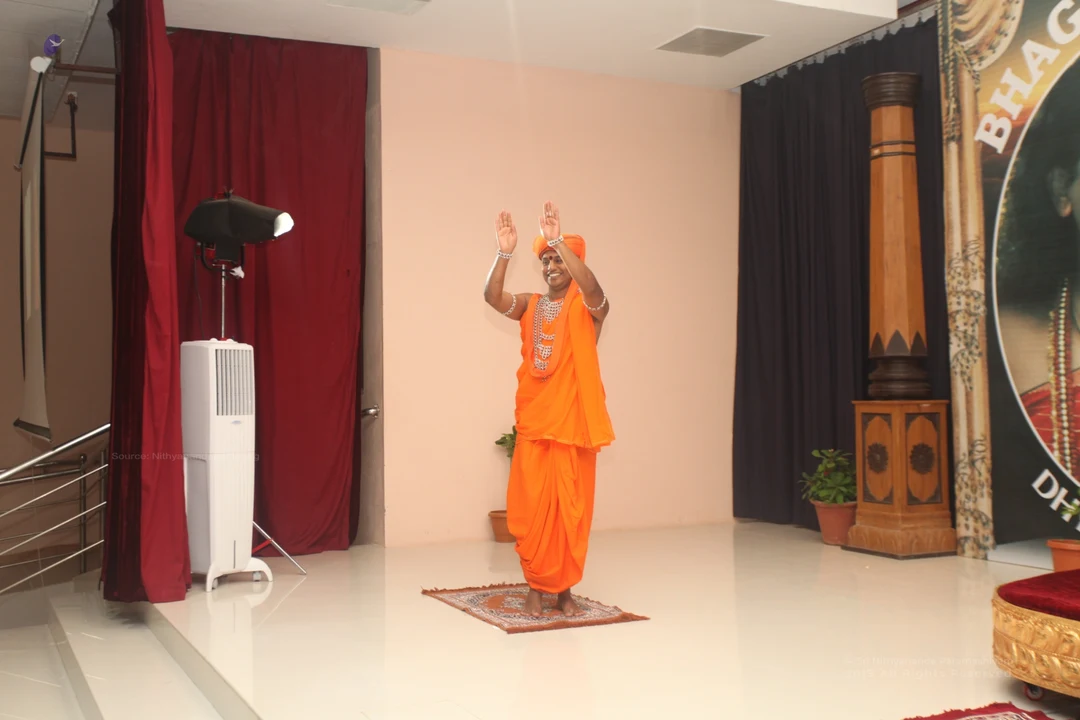
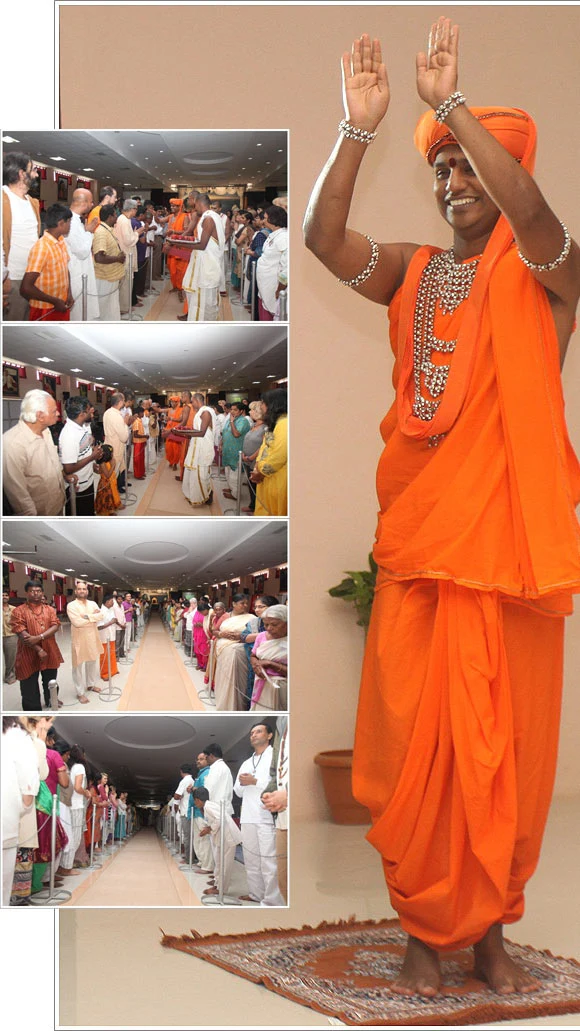
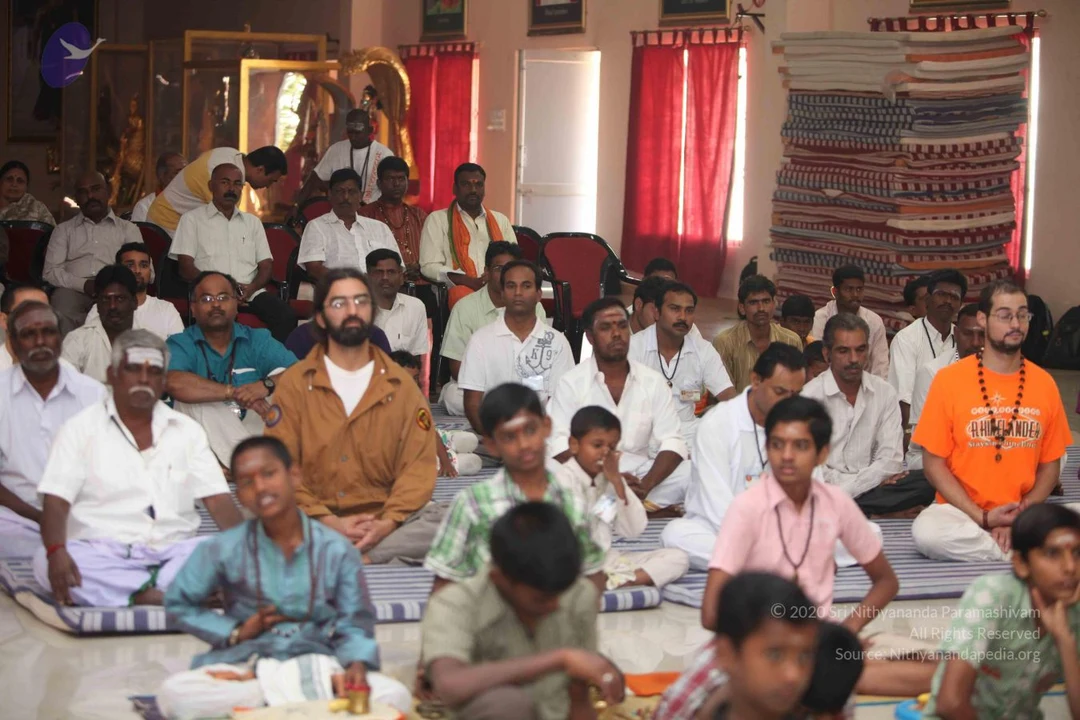
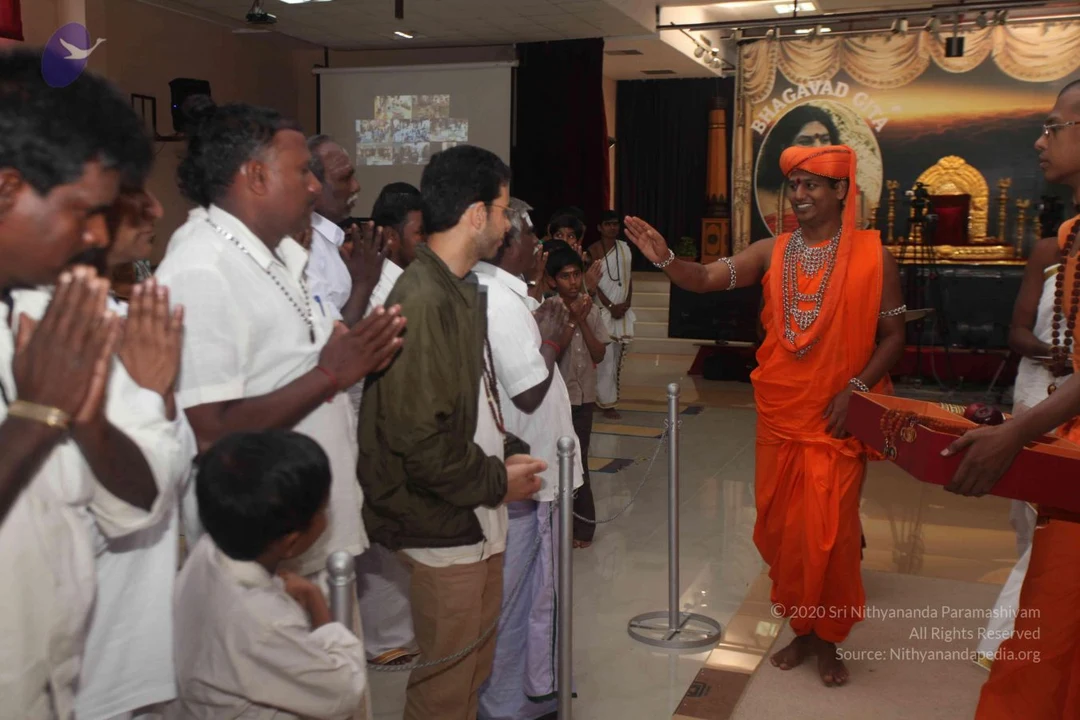
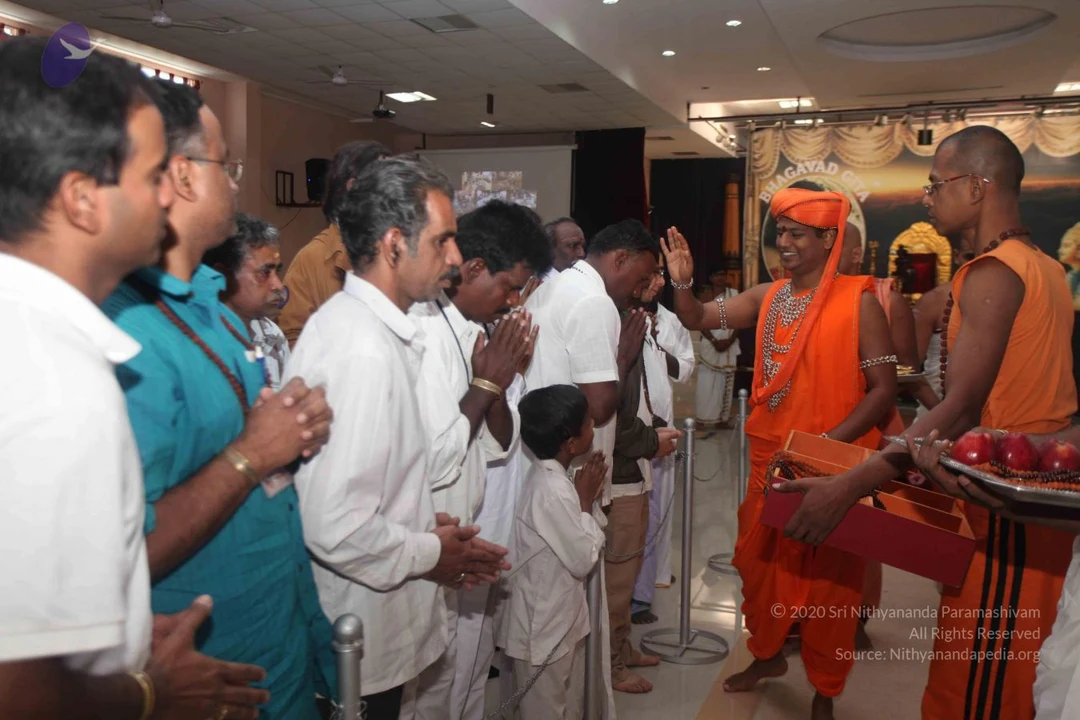
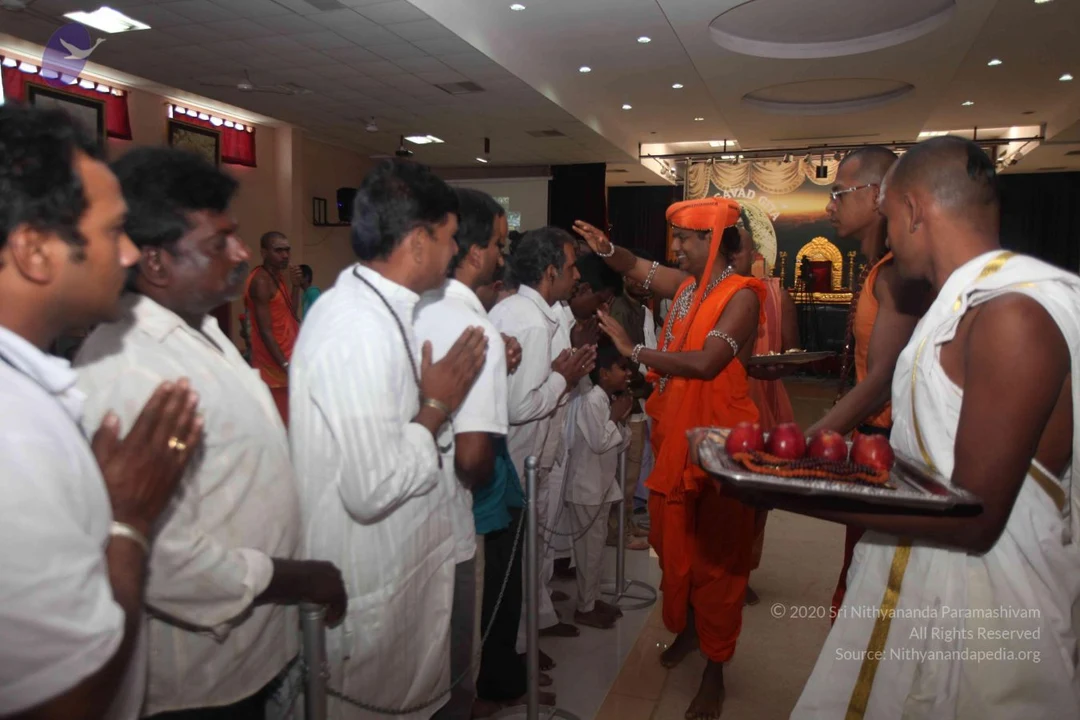
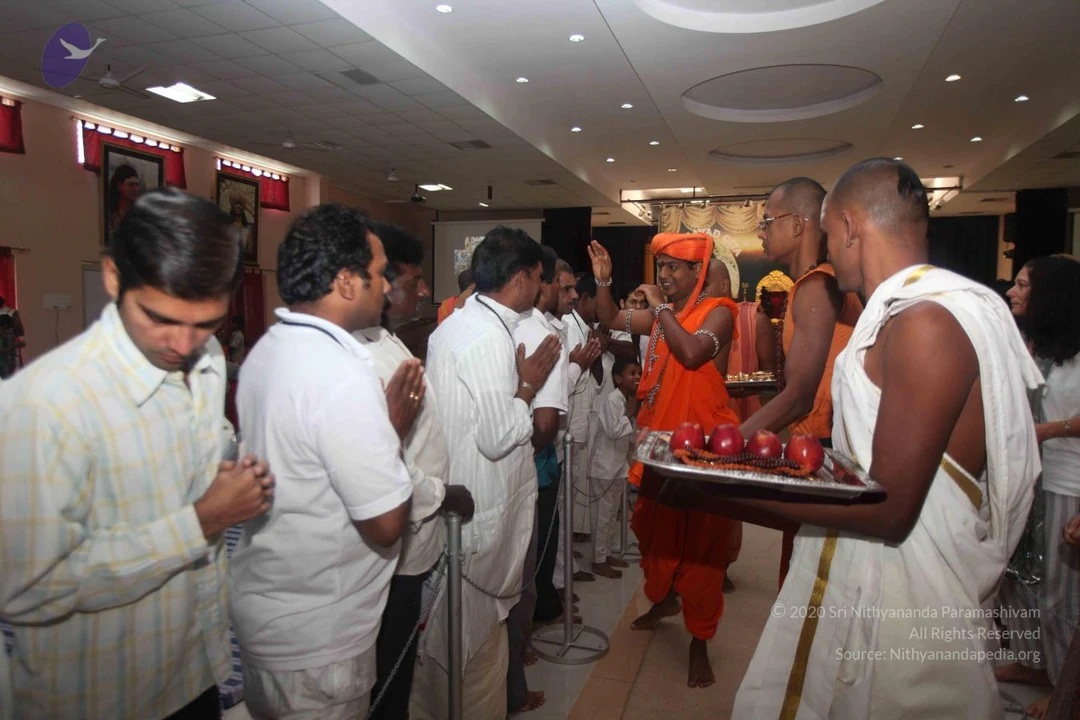
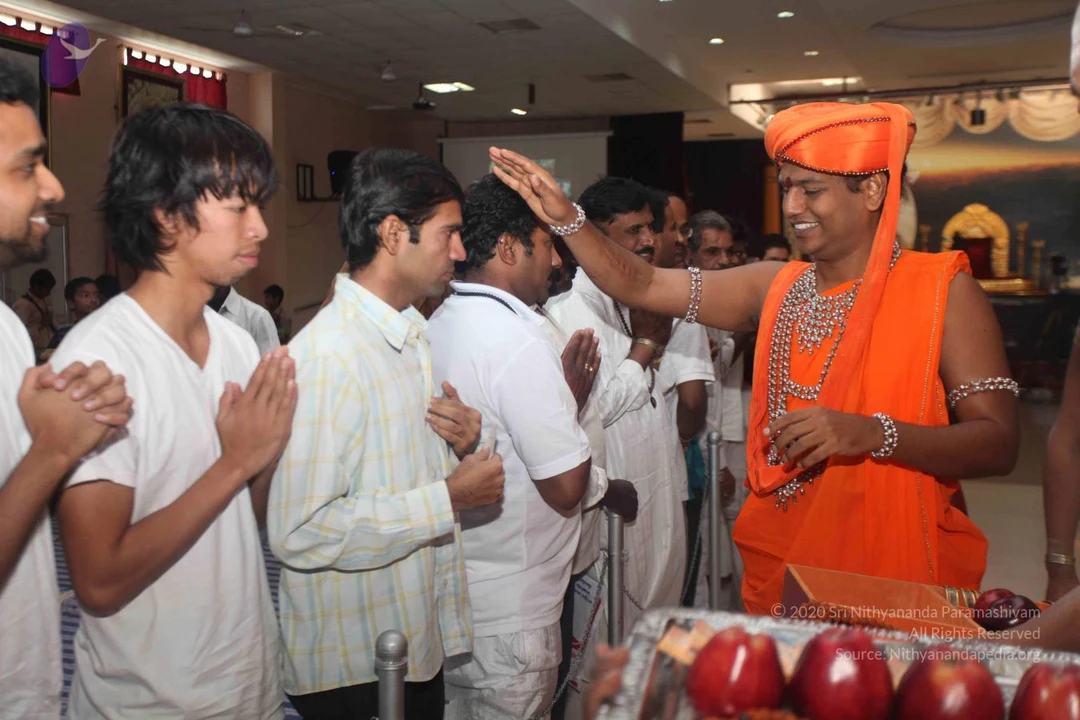
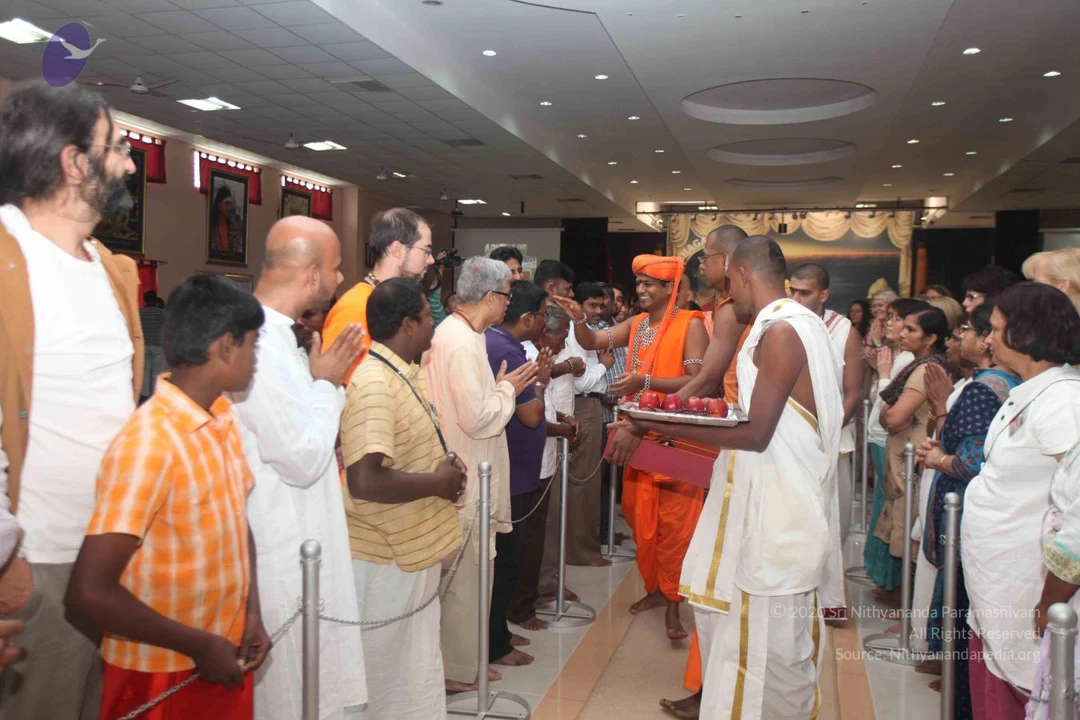
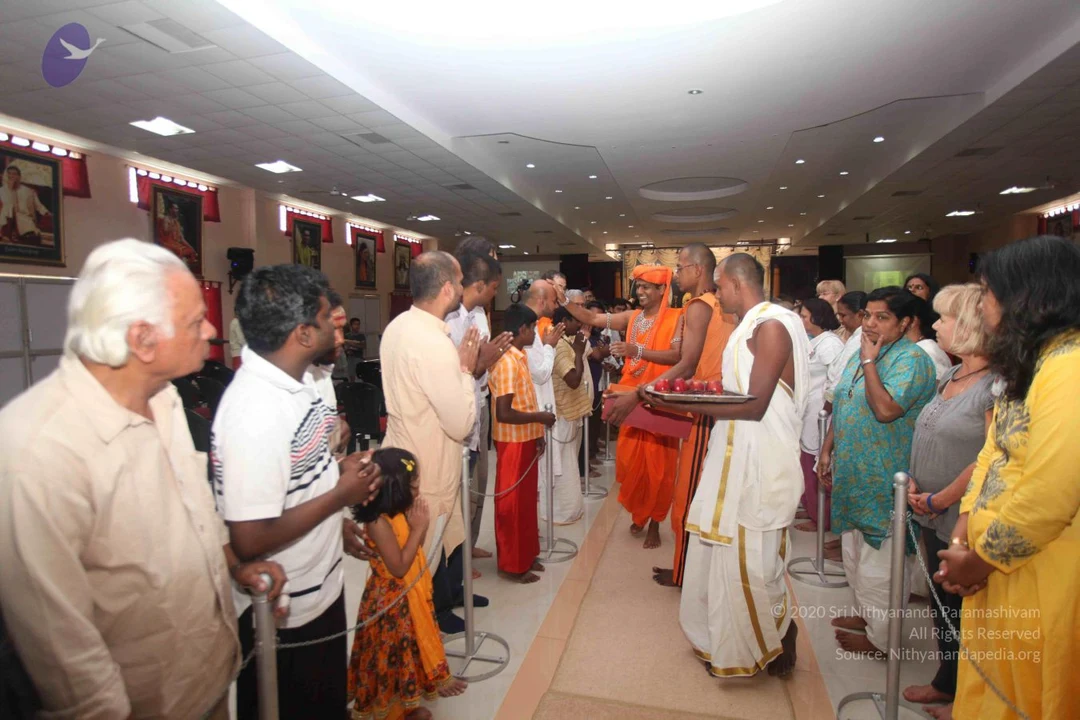
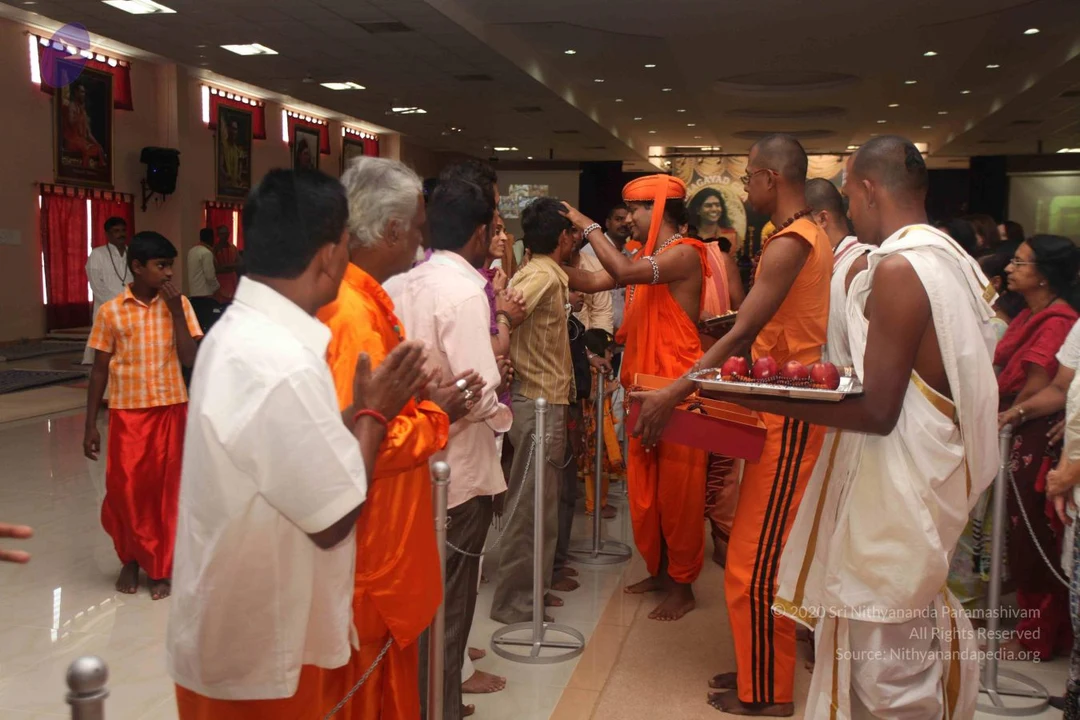
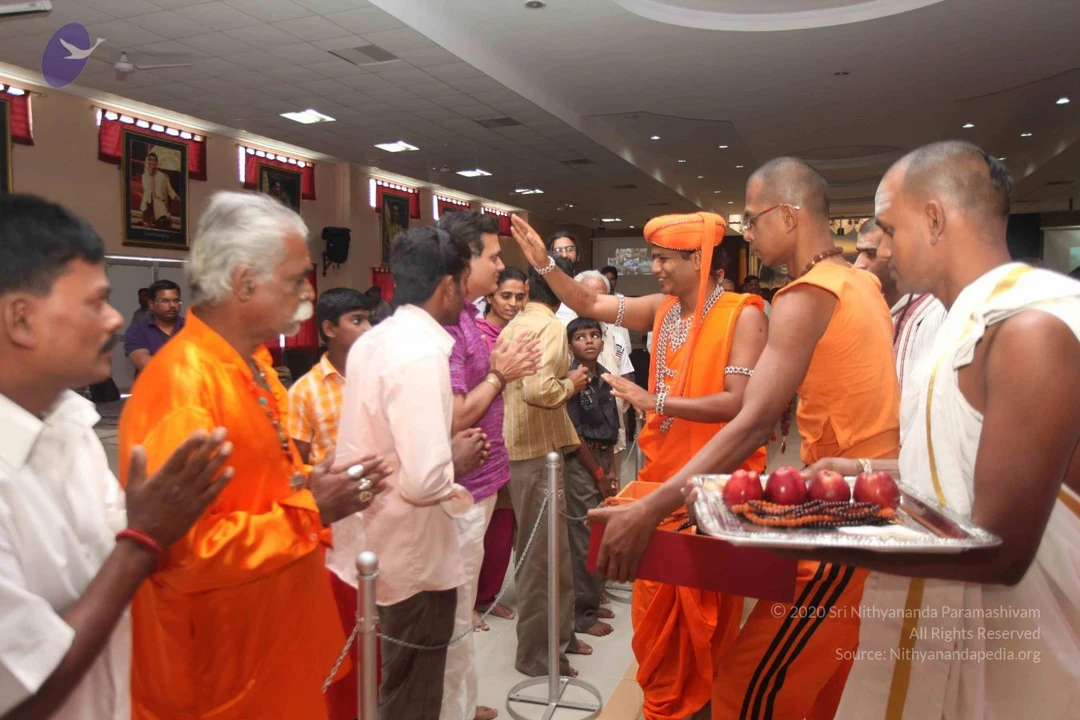
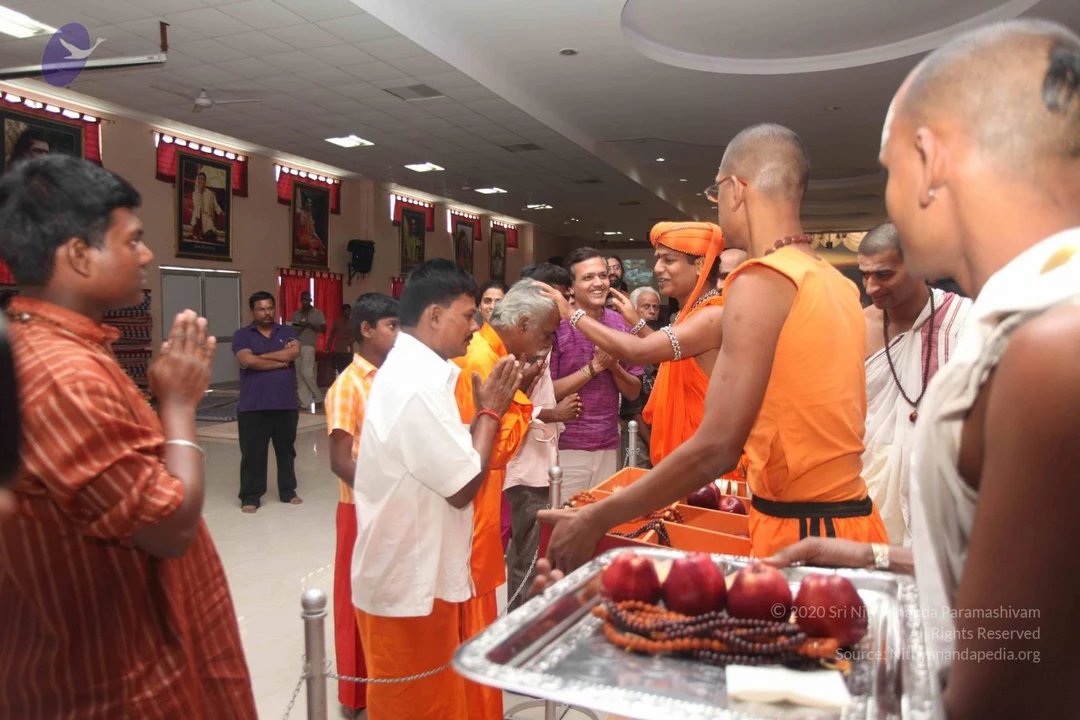
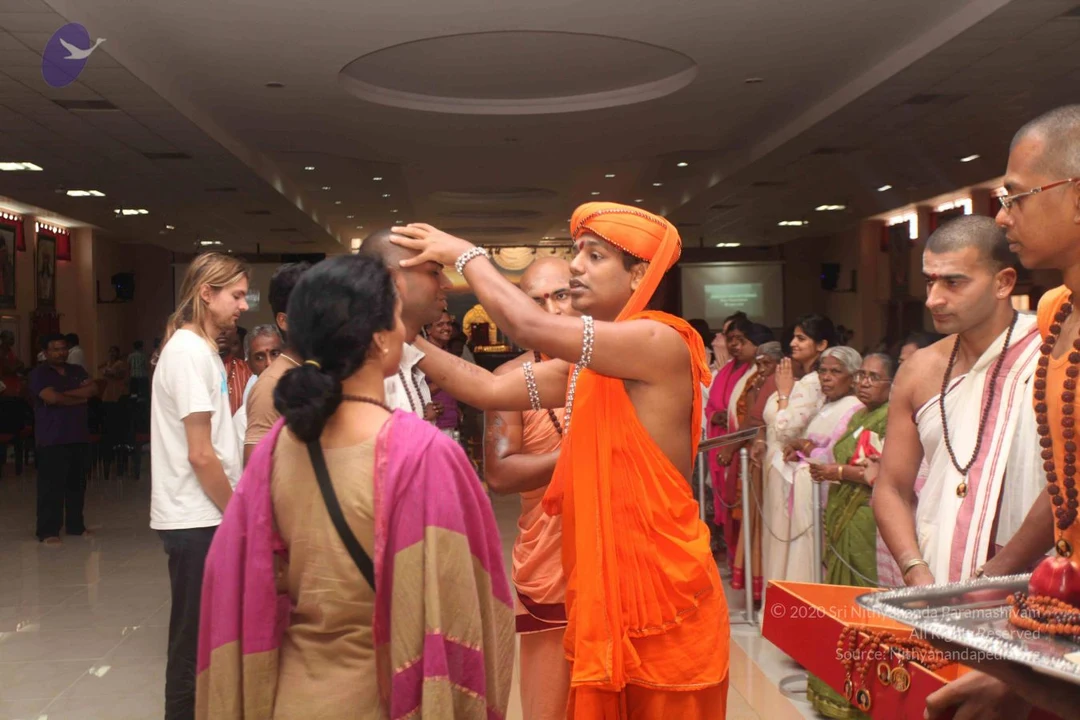
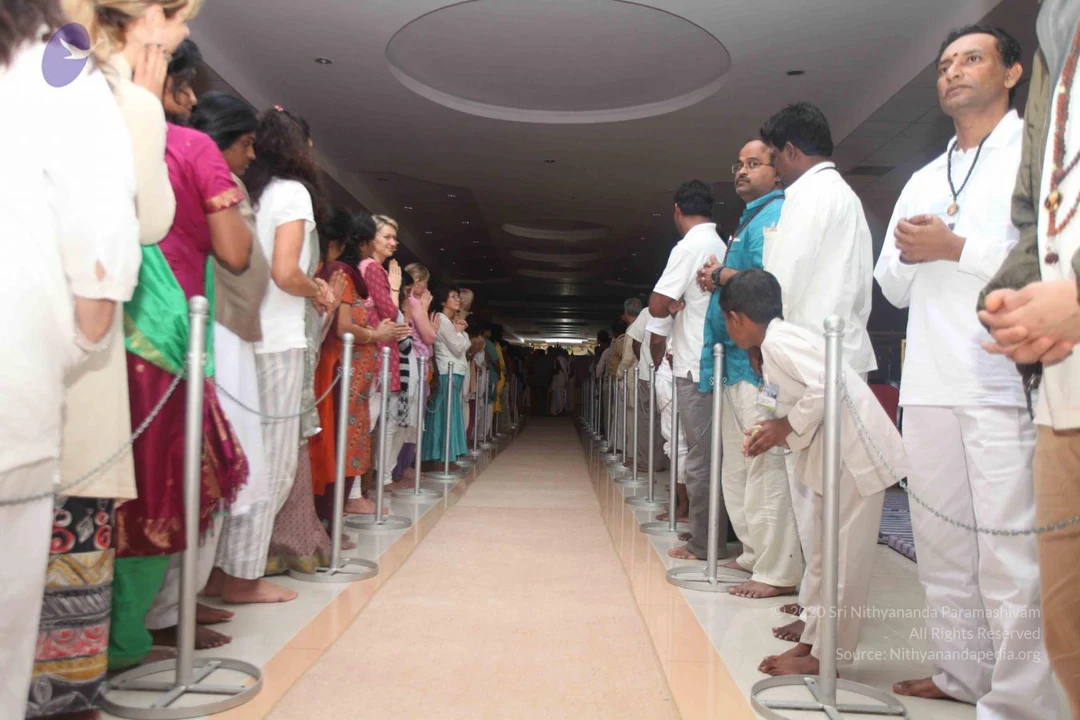
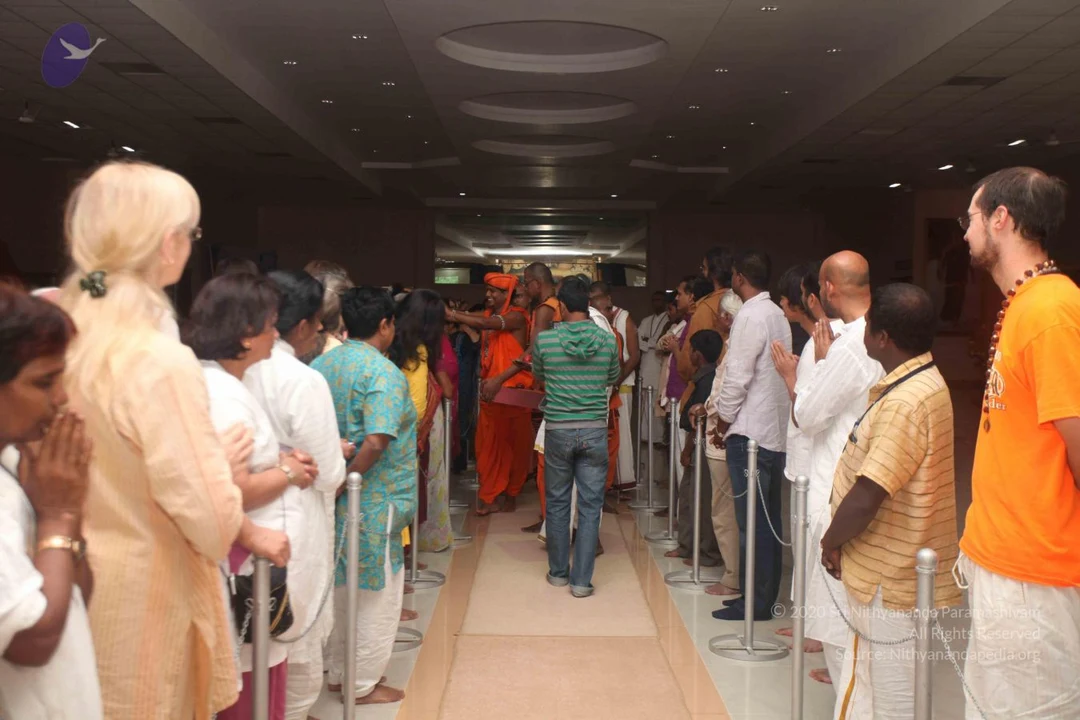
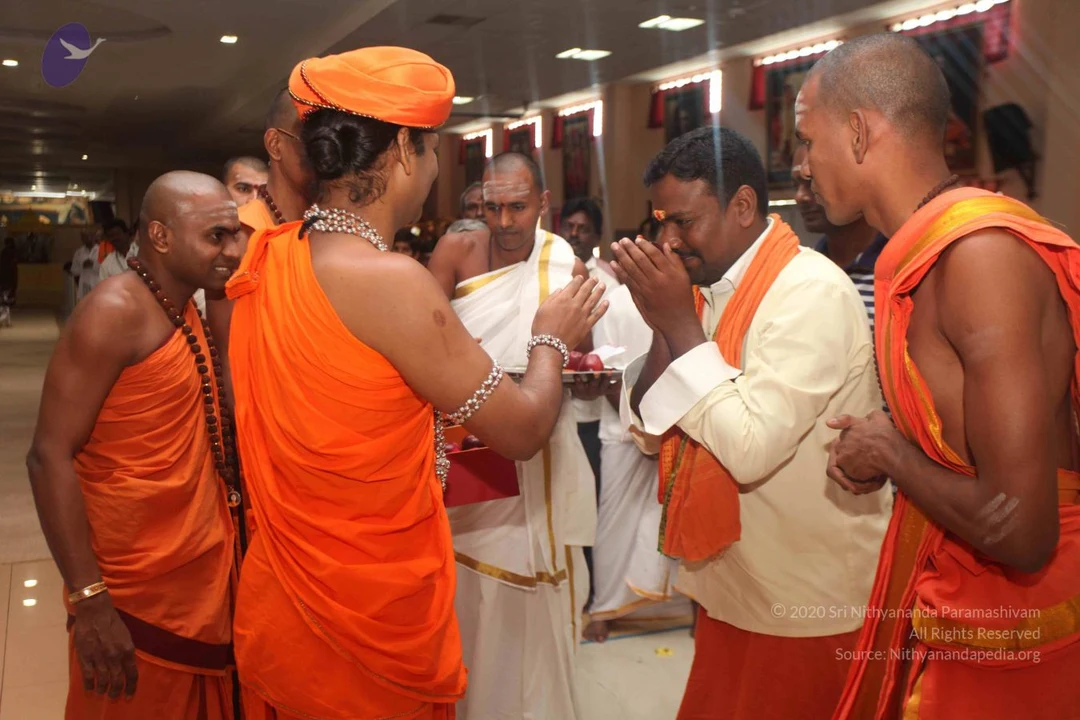
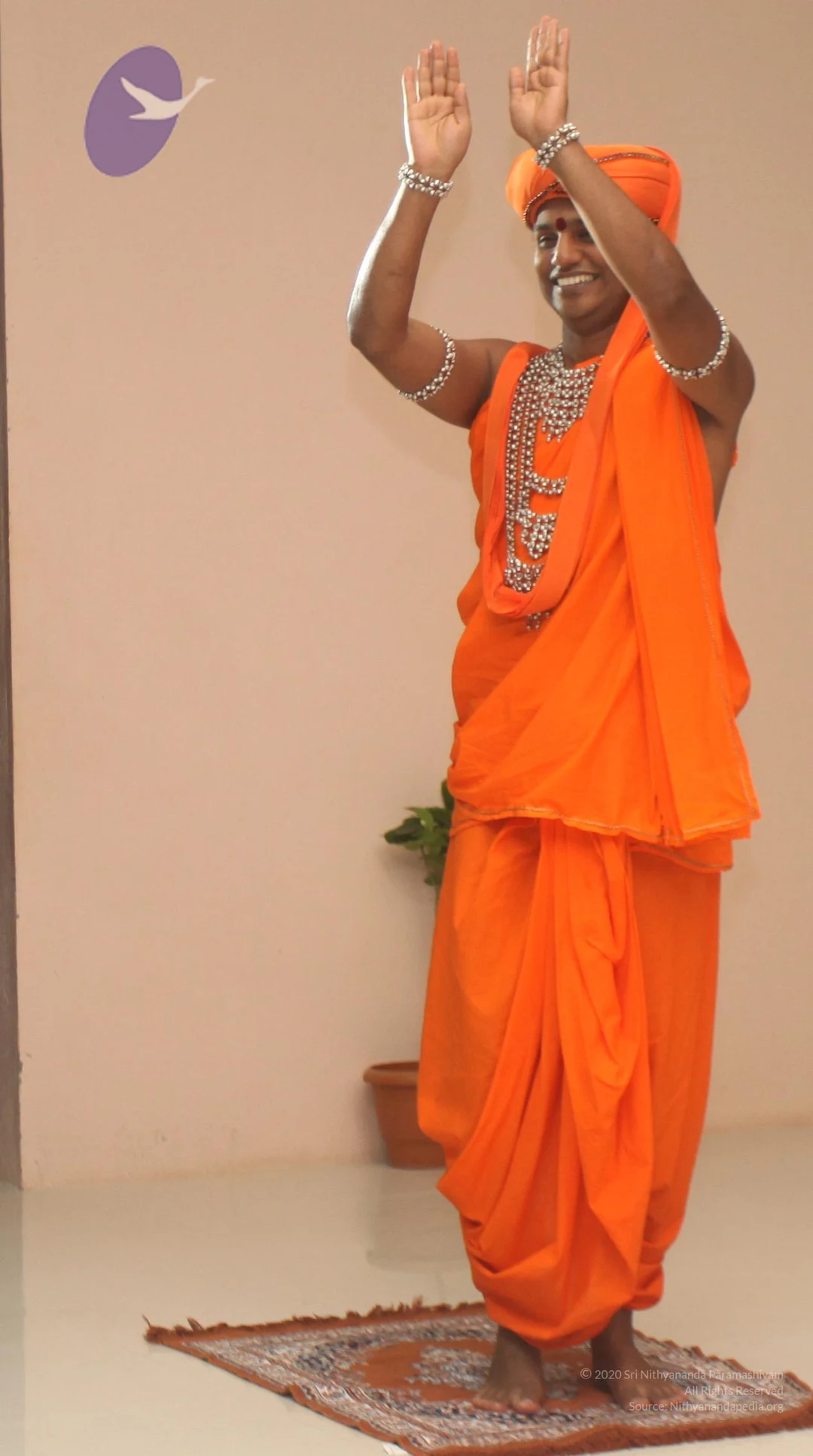
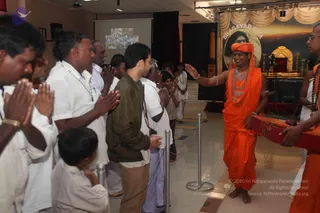
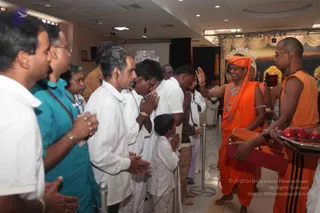
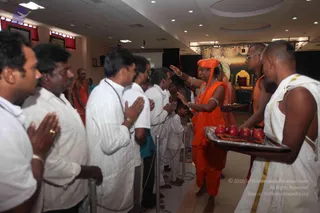
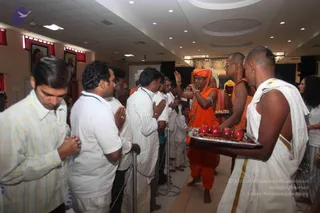
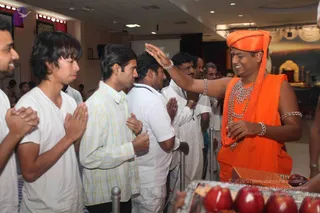
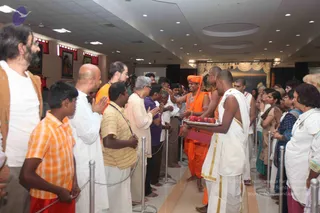
A photograph in an indoor hall with a Bhagavad Gita banner and gold-framed backdrop. A man in orange robes, a saffron turban, and layered silver and beaded necklaces stands on the right, raising one hand in blessing while smiling. He faces a line of devotees on the left who stand with palms pressed together in anjali. Several are in white shirts and dhotis wearing rudraksha malas, and one man in an olive jacket and khaki trousers also joins his palms. A young boy in white stands in the foreground. A helper in orange holds a red tray on the right. Steel stanchions and a rope barrier separate the line from the path, and a projector screen hangs on the back wall.Indoor hall with a row of devotees in white and teal shirts standing with palms pressed together in anjali mudra, a child in white among them. On the right, a man in a saffron-orange robe with an orange head wrap, layered beaded necklaces and an orange shawl raises one hand in blessing toward the line, while a monk in orange holds a tray of red fruit and a wooden box. A banner reading BHAGAVAD GITA hangs behind, with a projector screen and ceiling fans overhead.A photograph inside an ashram hall where a line of devotees in white dhotis and white shirts stand with palms pressed together. A figure in saffron-orange robes and an orange turban, wearing multiple beaded necklaces and bracelets, raises a hand in blessing toward the line. Nearby, a robed attendant in white with gold-bordered cloth holds a silver tray of red apples with a garland. Behind them, a backdrop with gold drapery and a golden shrine-like peetha is visible, and orange-robed monastics stand at the edges. Ceiling lights and a stage backdrop frame the scene.Indoor photo in a bright hall with recessed ceiling lights and framed portraits on the left wall. A man in an orange saffron robe with an orange head wrap, rudraksha-style beaded necklaces and bare feet raises his right hand in blessing while walking down a central aisle. Beside him, a shaved-headed attendant in saffron holds a brass thali with a flower garland. In the foreground a bare-chested priest in a white dhoti with a gold border carries a silver tray of red fruits or apples and a rudraksha mala. Along the left, devotees in white and light shirts stand in a row with hands pressed together in namaste, some with eyes closed, behind a metal stanchion barrier. A white-clad woman stands at far right.A photograph of a darshan line in an indoor hall. A man in an orange-saffron dhoti-style garment and matching orange turban, wearing layered silver-beaded necklaces and silver bangles, extends his right hand in blessing over the head of a devotee. Several devotees in white shirts and kurtas stand with palms pressed together in namaste along a metal queue barrier, and a tray of red apples sits in the foreground. A probable Swamiji candidate is present, identified by the orange turban, saffron garment and ornate silver ornaments, shown in the act of blessing devotees. Background shows a warm-lit altar with golden decor.A photograph of a reception line in a bright hall with recessed ceiling lights and a stage backdrop. A man in an orange saffron robe with an orange turban and a beaded necklace stands at the centre, extending his hand over a silver tray of red fruit held by a bare-chested young man in white dhoti and shawl. Around them, devotees stand with palms pressed together, including a man in white kurta, a bald man, a boy in an orange checked shirt, and women in saris and salwar. Framed portraits hang on the wall behind. The orange-robed figure is a person by appearance cues, shown in a ceremonial greeting with the tray.
VIP-Meeting
17 photosSource gallery
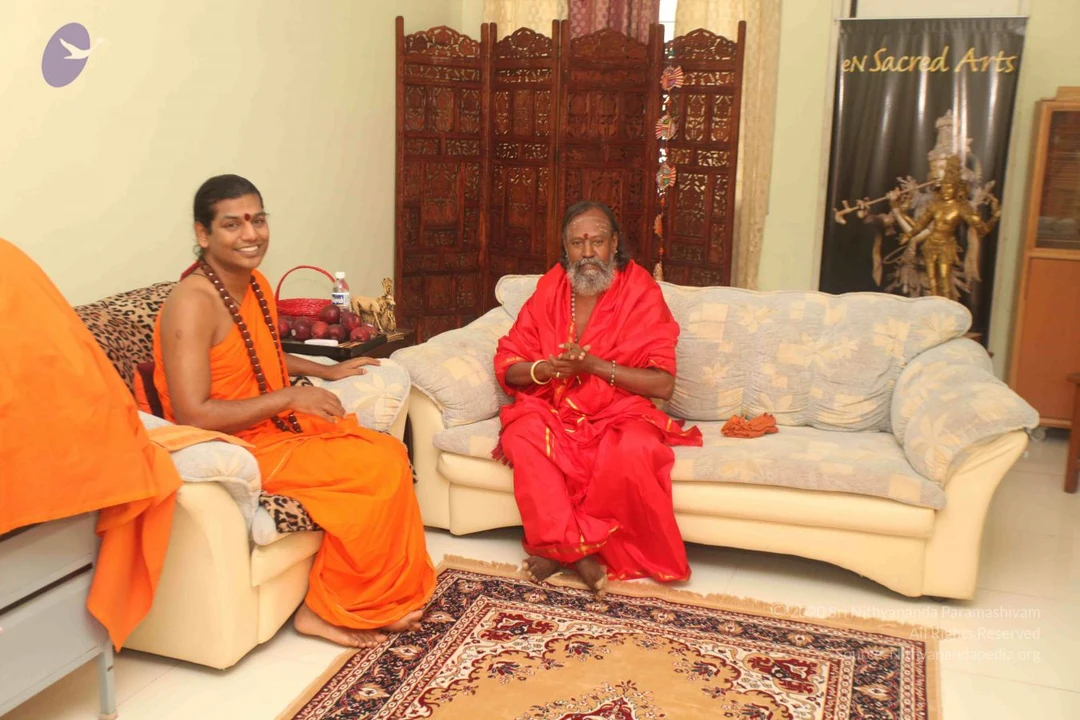
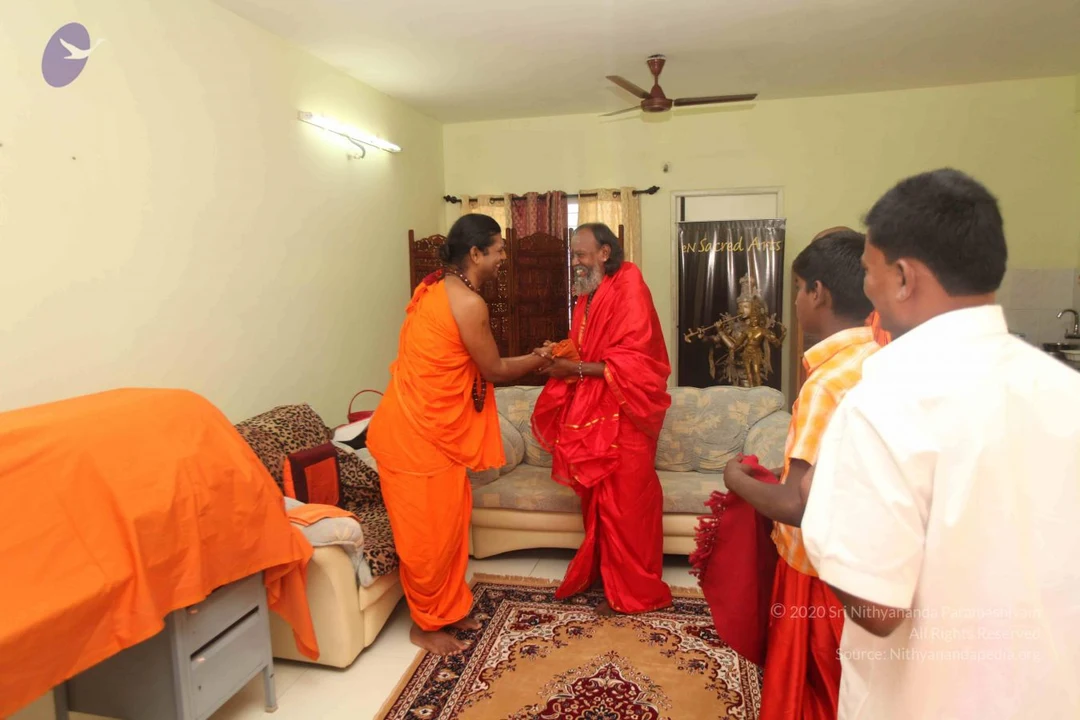
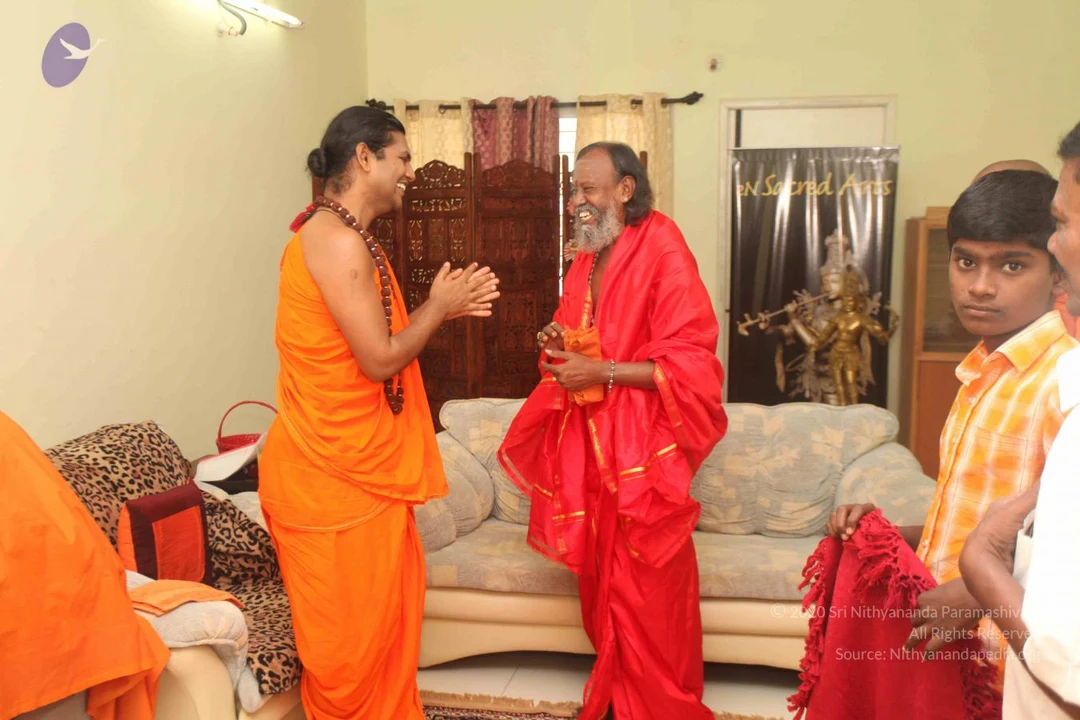
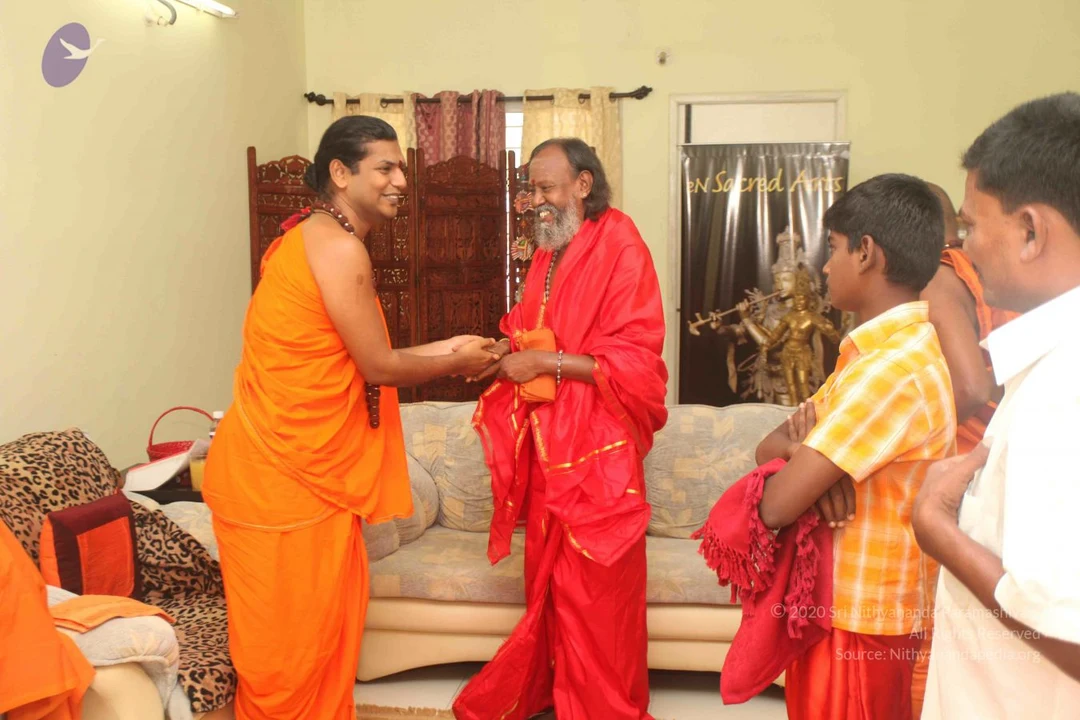
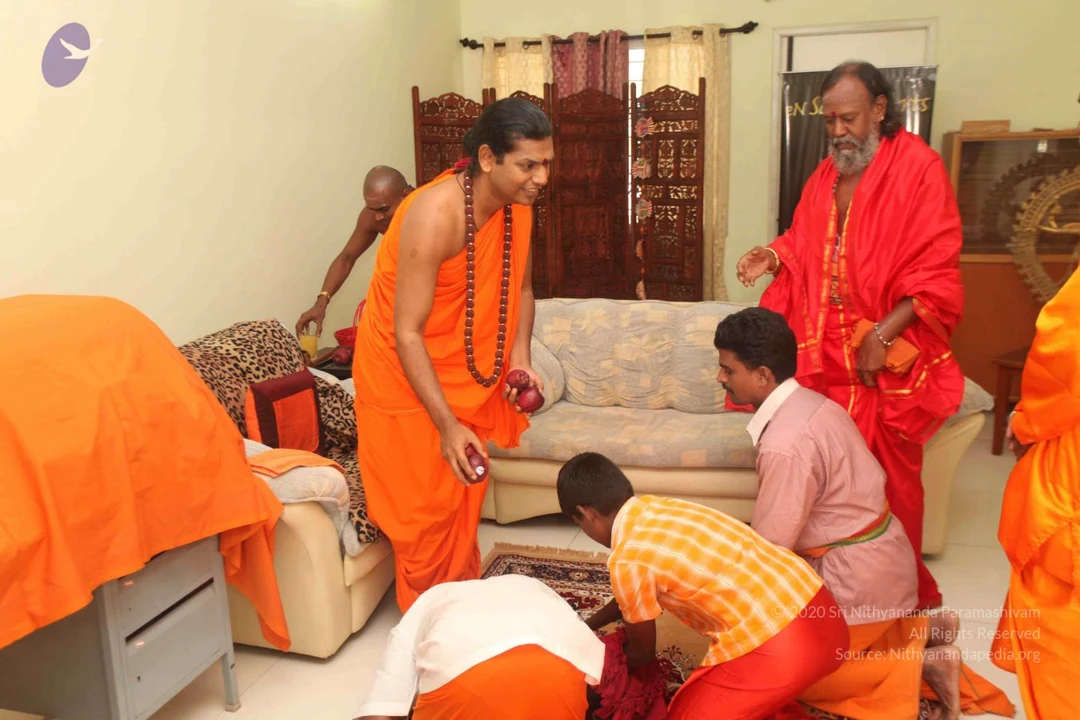
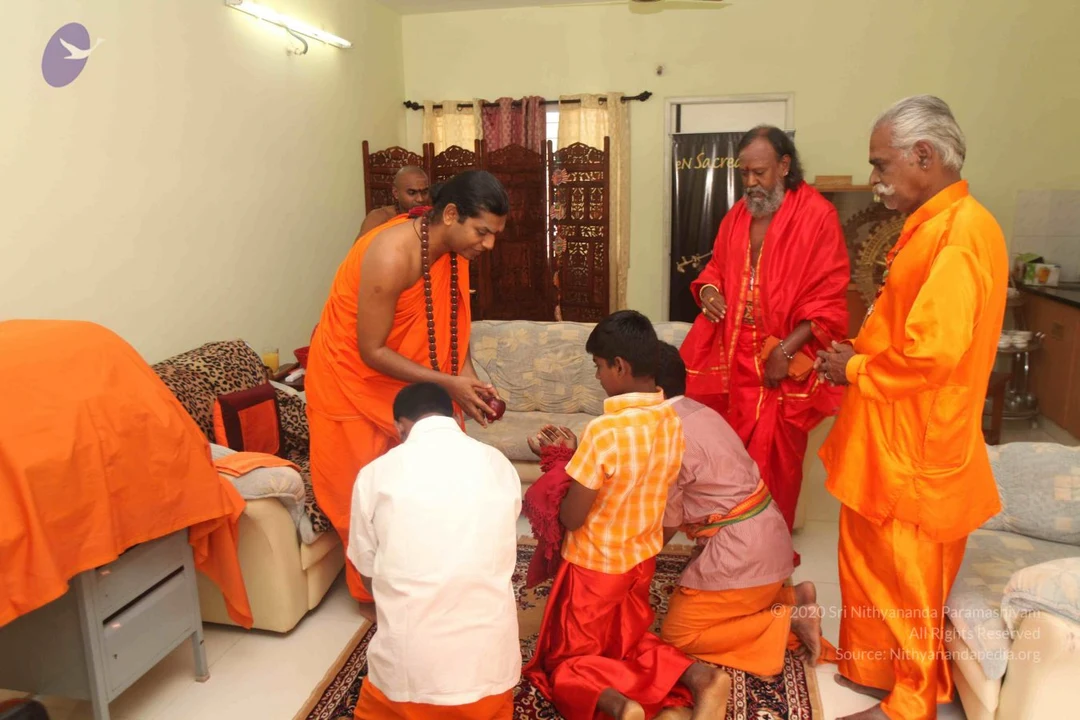
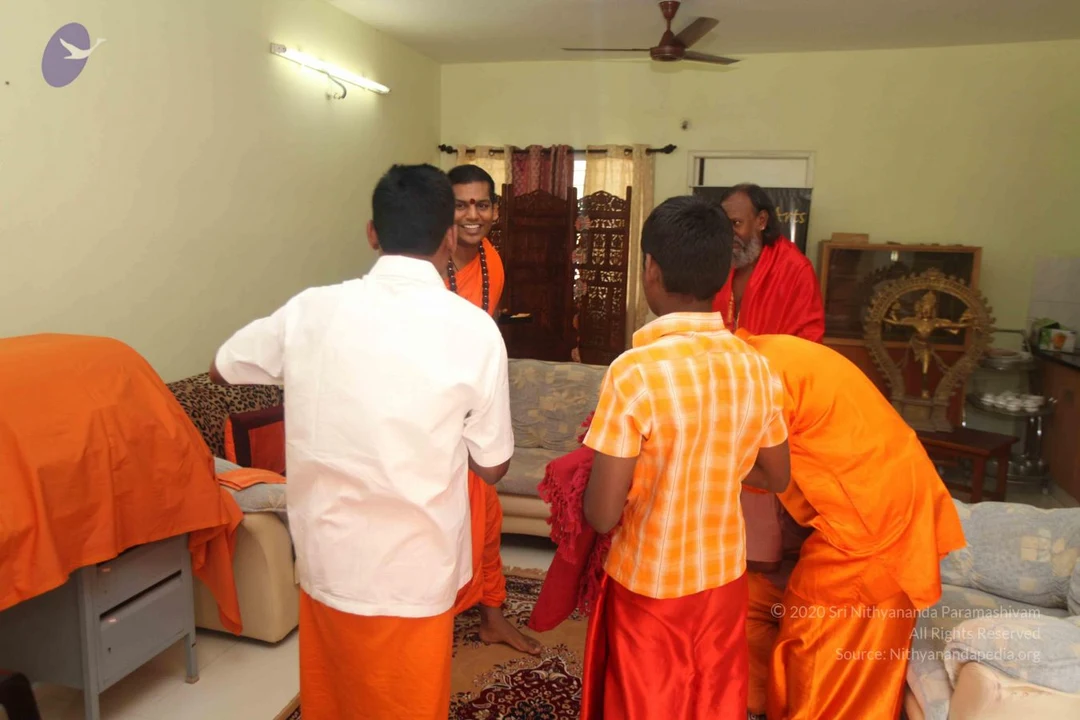
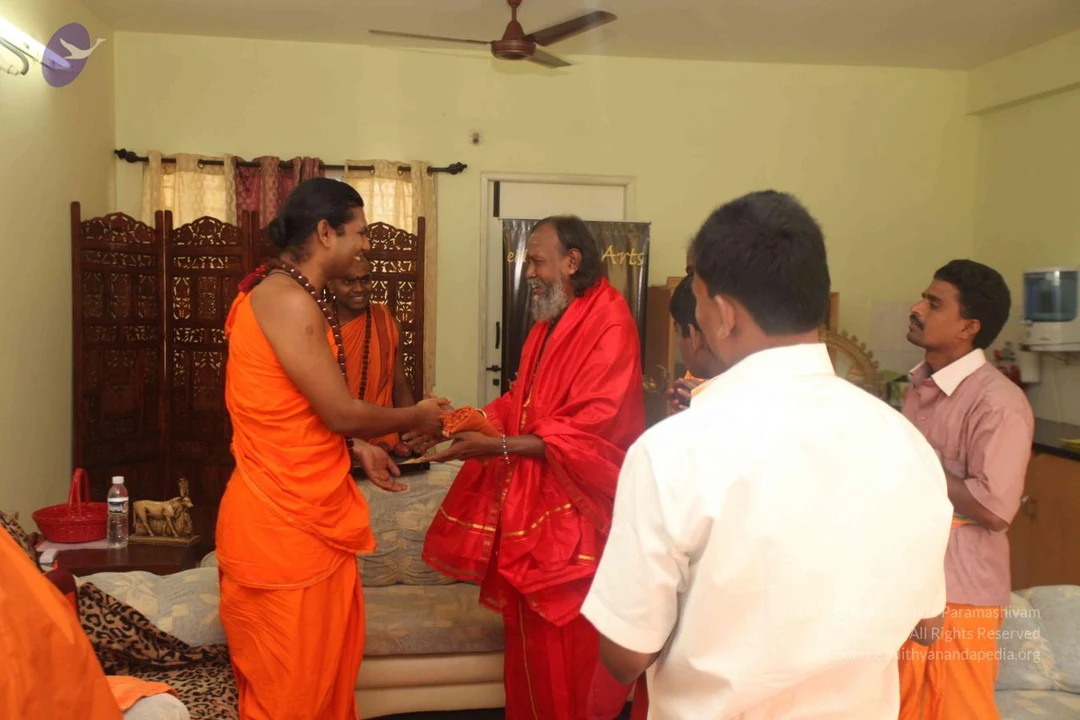
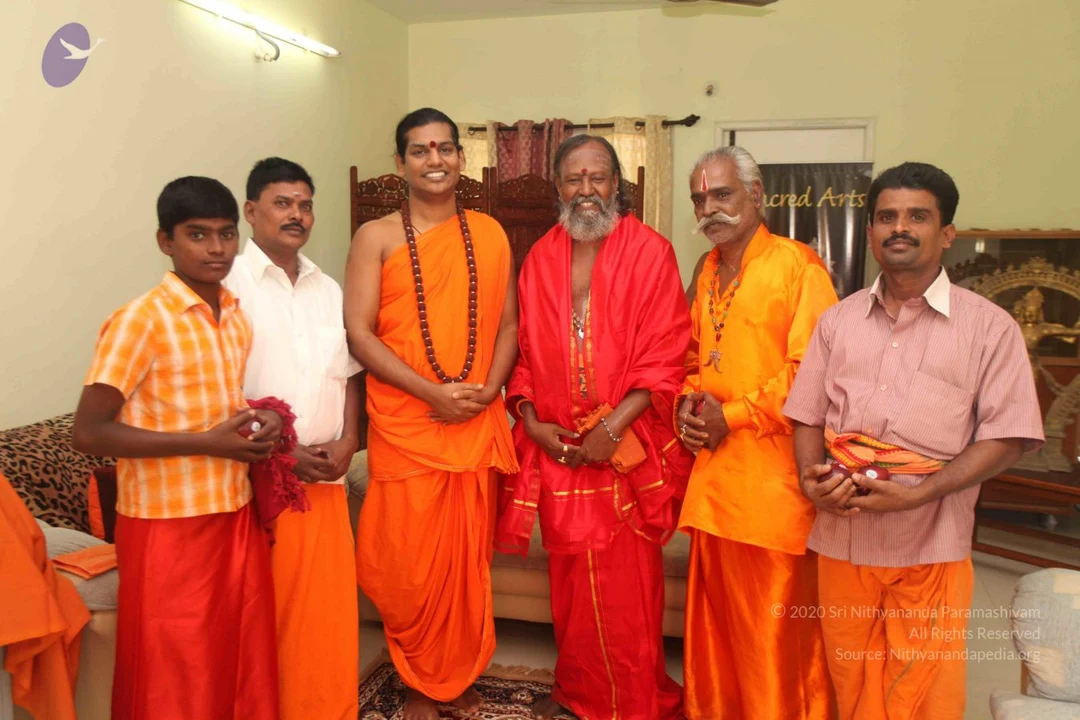
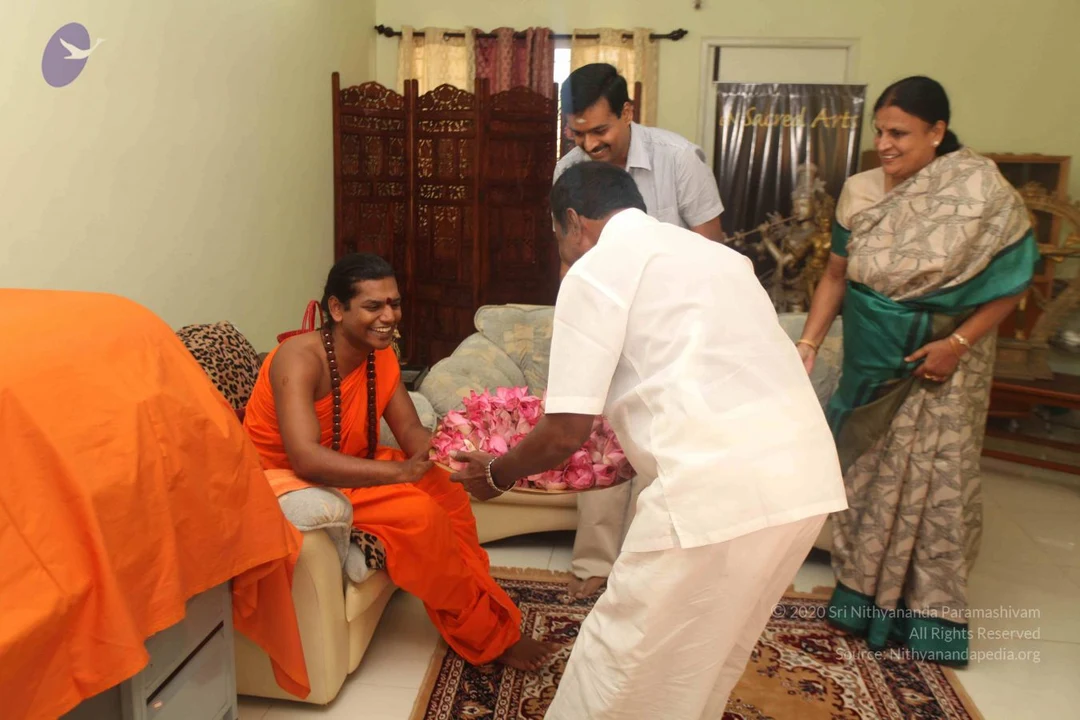
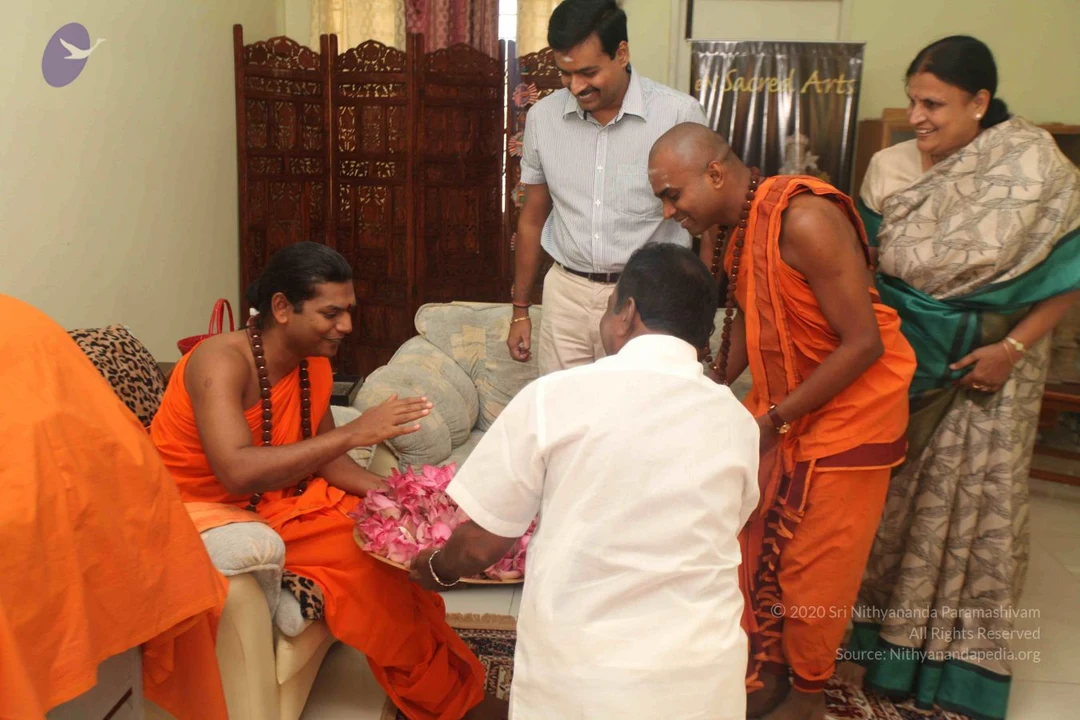
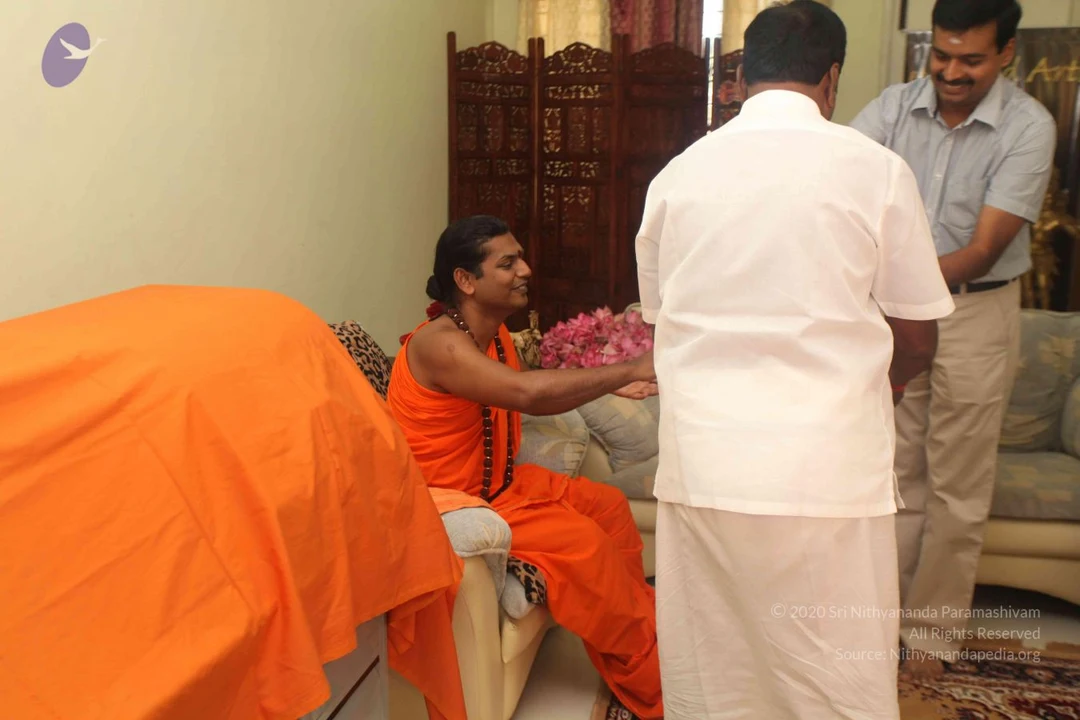
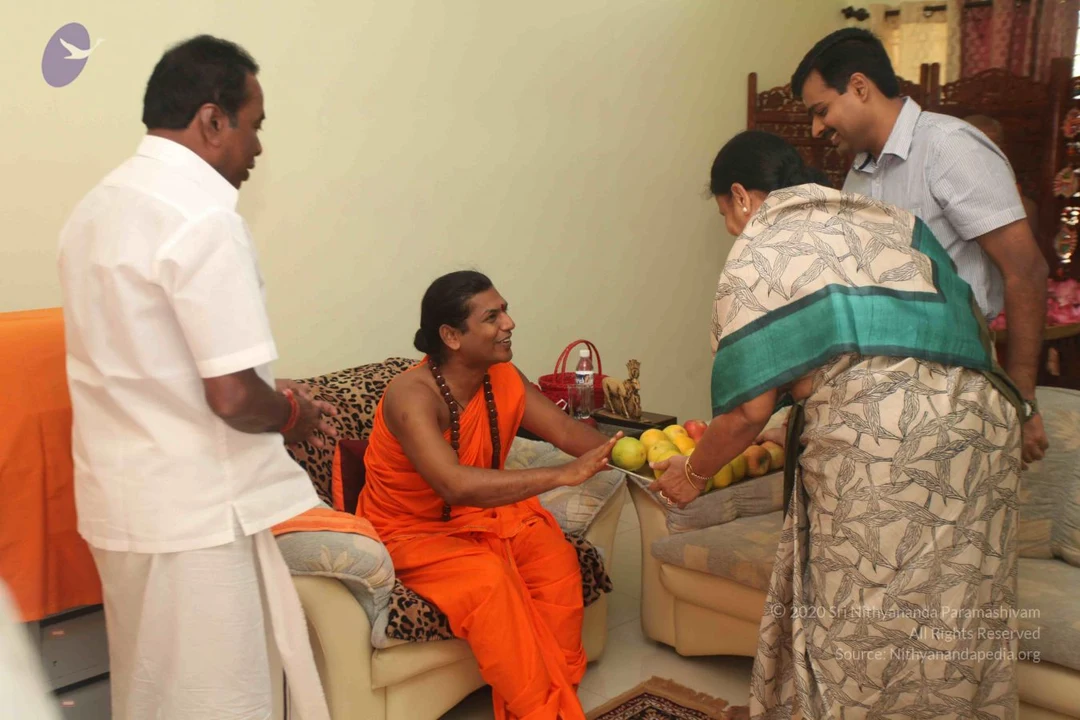
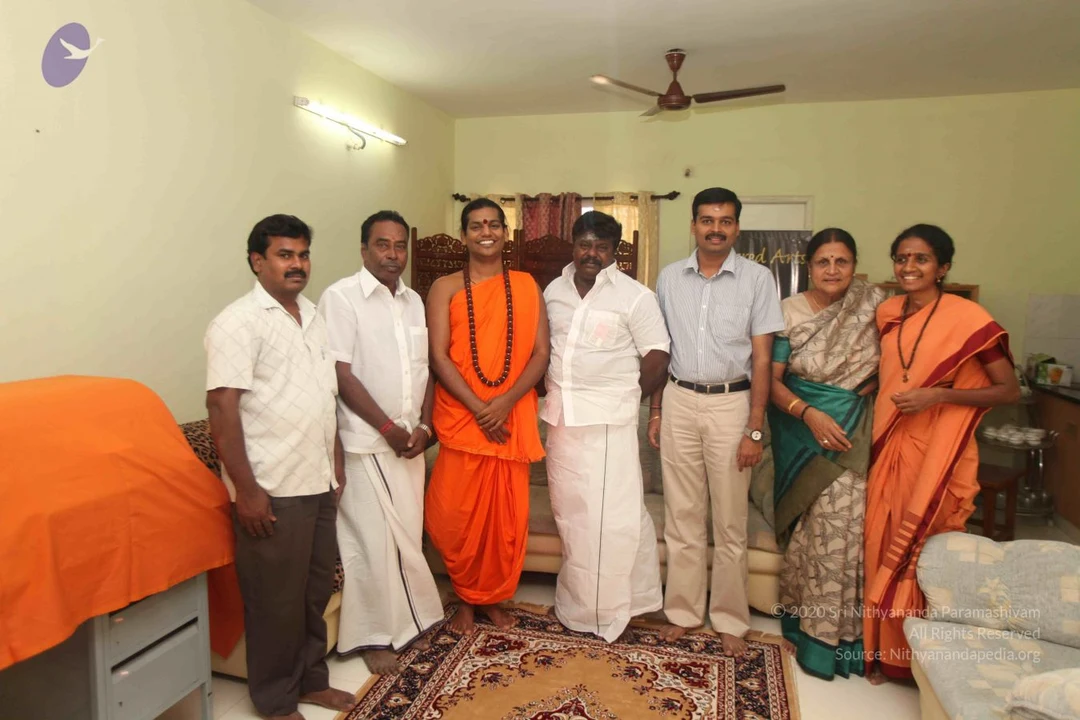
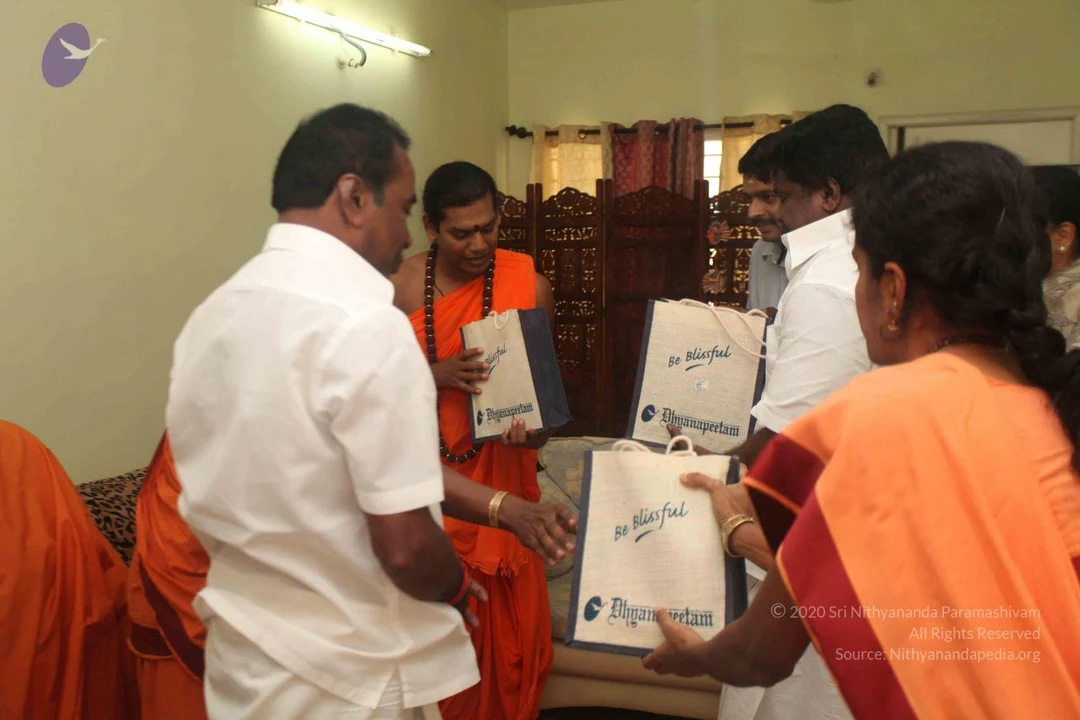
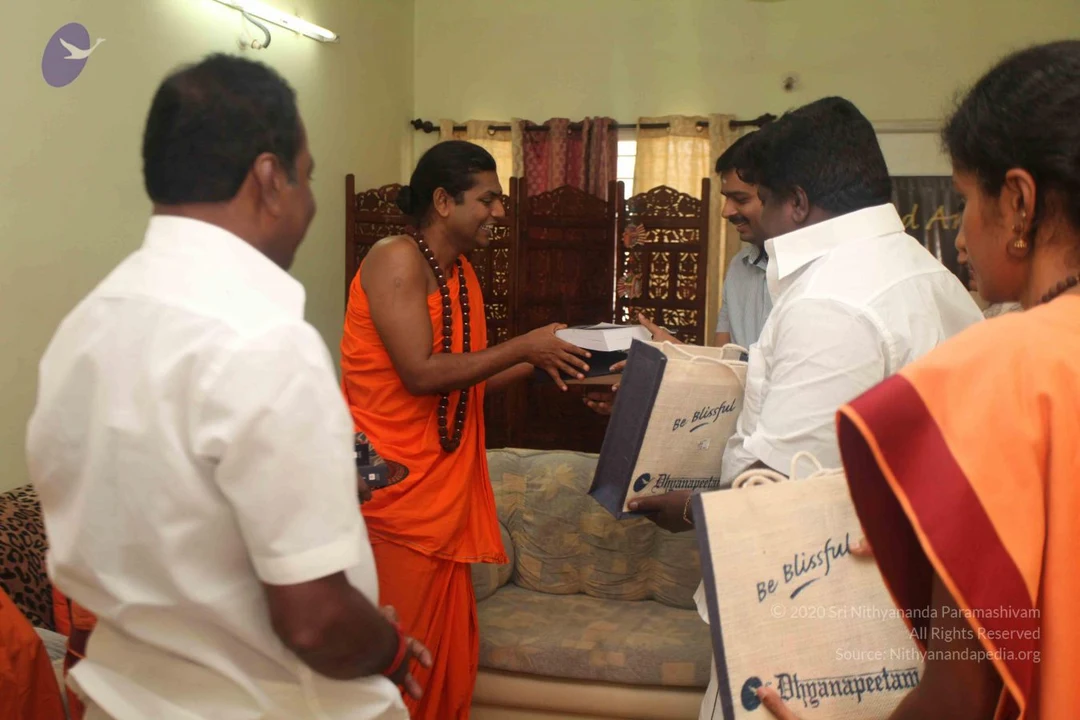
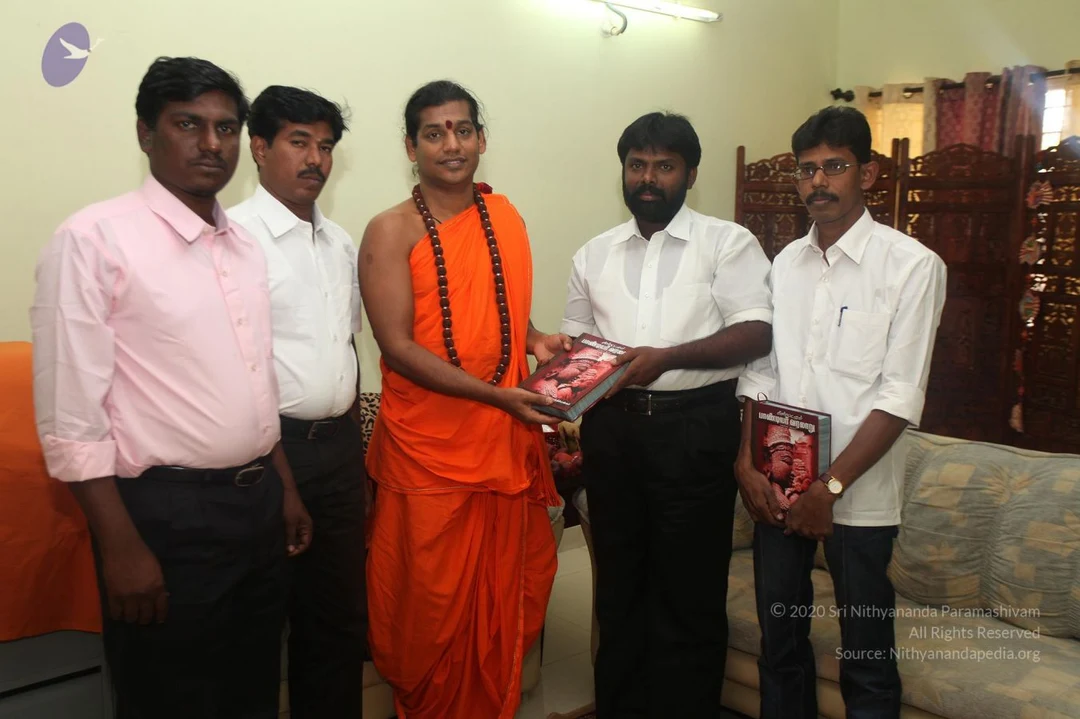
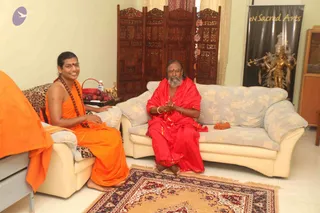
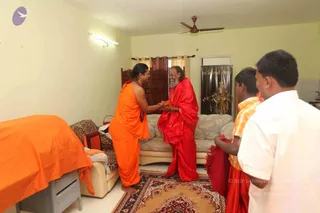
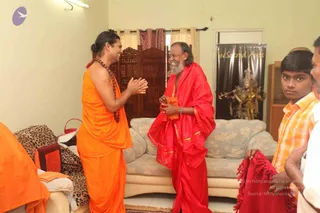
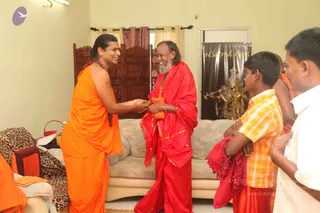
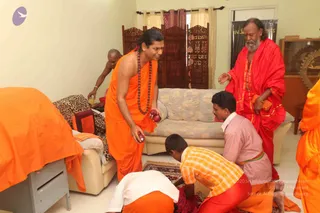
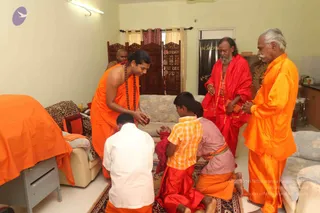
A photograph of two men seated on cream sofas in a living room with a patterned red-and-gold rug, carved wooden room divider and a black banner reading "eN Sacred Arts" with a golden deity statue. The man on the left wears an orange saffron-coloured robe with a wrap, rudraksha beads and a red bindi, and smiles toward the camera. The man on the right has a long white beard, wears a red robe and a red shawl, and sits with hands folded. A small basket of fruit sits on a side table. Both appear to be seated for a visit. Two people are visible, plus a partial orange-clad figure at the left edge.A photograph of a living room with cream walls, a ceiling fan and a patterned red rug. A man with long dark hair and a shaved-face beard, dressed in a saffron-orange robe, stands at left clasping hands with a bearded older man in a red robe and red shawl, who smiles. A young man in an orange-and-yellow striped top and a man in a white shirt stand at right, one holding a red cloth. Behind them is a brass deity murti on a dark sign reading 'Sacred Arts'. An orange cloth covers a bed at left and a leopard-print sofa is visible.A photograph of an indoor living room with cream walls, a beige sofa and a leopard-print cushioned chair. A man with long swept-back hair and a rudraksha mala, wearing saffron-orange robes, stands with palms pressed together in greeting, smiling. Facing him, a bearded older man in red robes with gold borders smiles broadly and holds an orange cloth. A young boy in a yellow checked shirt and another man in white stand at right, and a red cloth is held near the right edge. Behind them is a black banner reading 'Sacred Arts' beside a golden deity figurine playing a flute, and a carved wooden screen. Four people are visible.A photograph taken indoors in a living room with pale green walls, beige sofas and a leopard-print cushion. On the left, a man with long swept-back hair, an orange robe and a red-and-white sash greets an older bearded man in a red robe with gold trim, the two clasping hands and smiling. The bearded man wears a rudraksha mala and holds an orange cloth bundle. To the right, a boy in a yellow-and-orange checked shirt holds a red shawl, and a man in white stands at the edge. Behind them is a dark banner with gold lettering and a golden statue of a deity playing a flute. The left figure shows distinctive long hair and orange robes, which fits the page's note about Swamiji, so the appearance is a probable match.A living room with cream walls, a beige sofa, a leopard-print armchair draped in orange cloth, and carved wooden screens. A tall man in saffron-orange robes and a rudraksha mala stands smiling, holding two red fruits or balls, with a bare-chested attendant behind him. On the right, a bearded man in red robes and a shawl stands with ornamented gold accents. Three men kneel on a patterned rug near a red cloth: one in a yellow-and-orange checked shirt, one in pink, and one in white with orange cloth.Indoor photo in a living room with cream walls, carved wooden room divider and sofas draped in orange cloth. A man in an orange robe with a rudraksha mala stands at left, holding a red object over a small plate while a young boy in a yellow checked shirt kneels with hands folded on a patterned rug. A kneeling man in a white shirt bows in front, and an older man in a red robe with a grey beard stands center with hands joined. A white-haired older man in orange satin stands at right. Another orange-robed figure stands in the background. The setting suggests a home puja or padapuja.