Skip to content
Saturday

29 October 2011

Live Your Highest Possibility

Dated photos
633
Source pages
1
Media
6
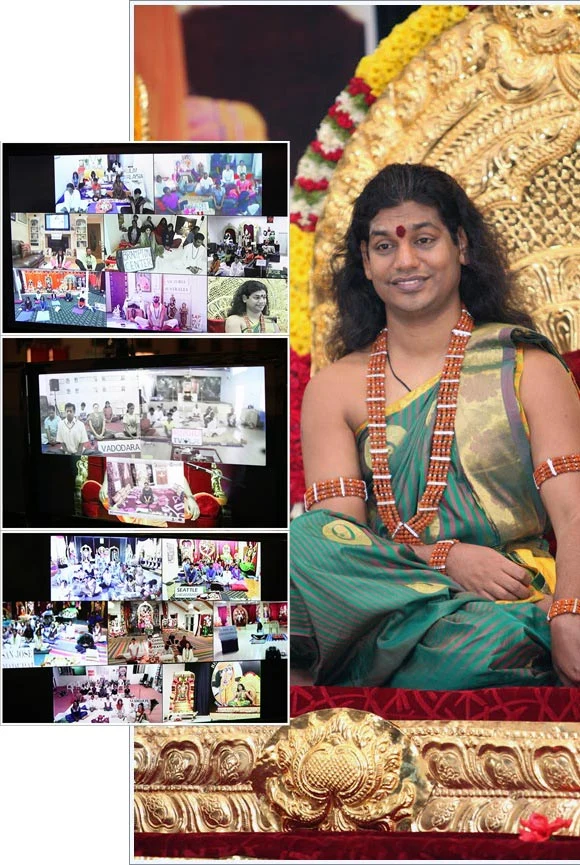
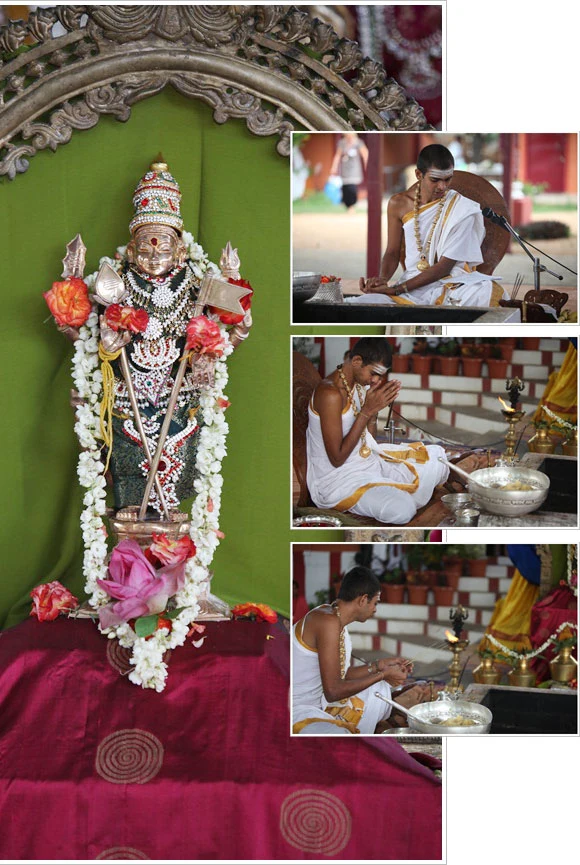
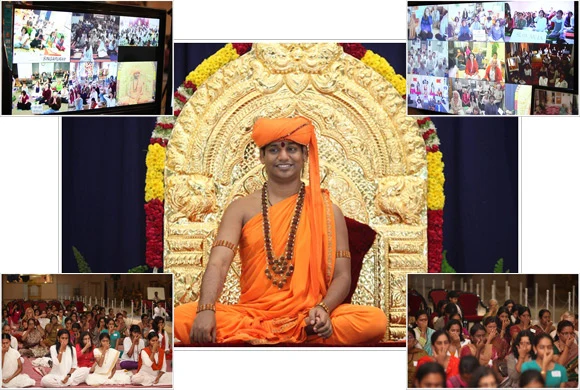
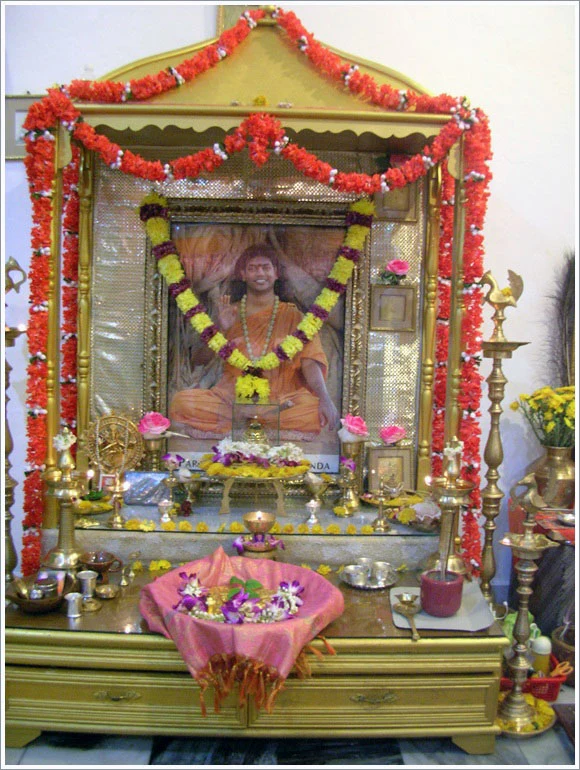
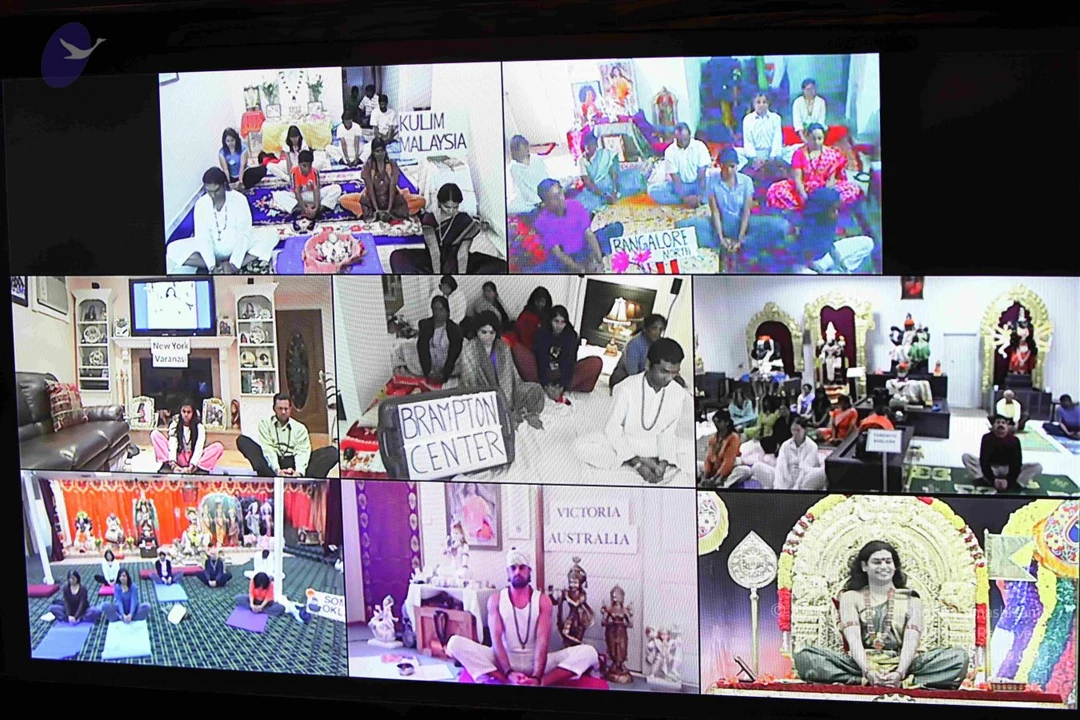
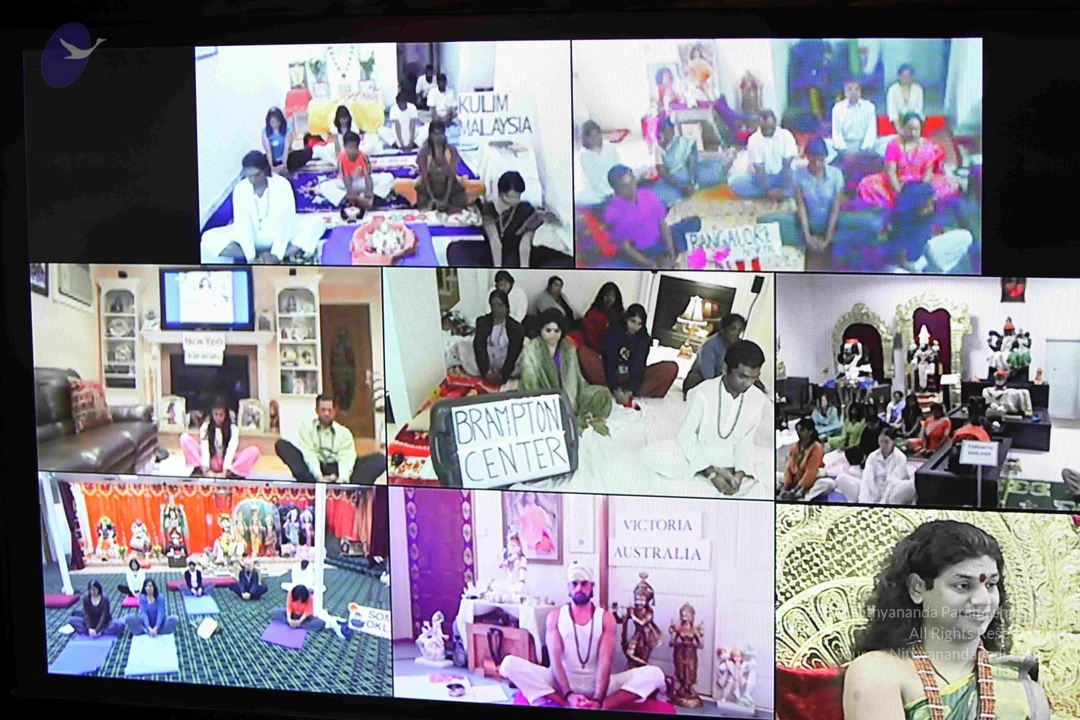
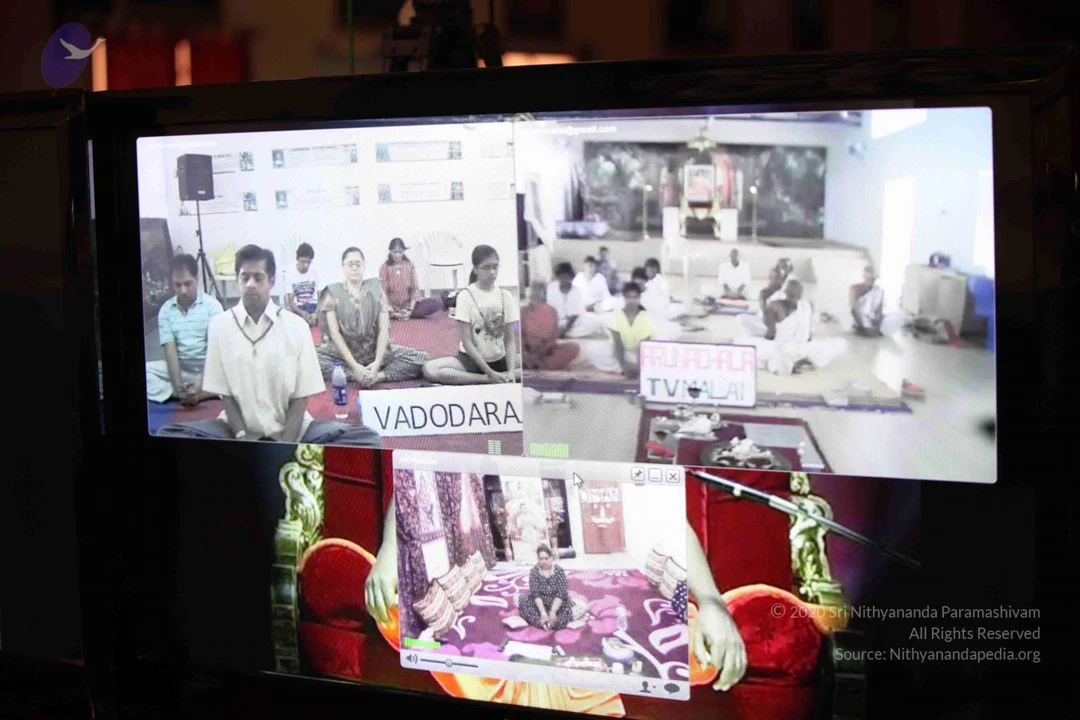
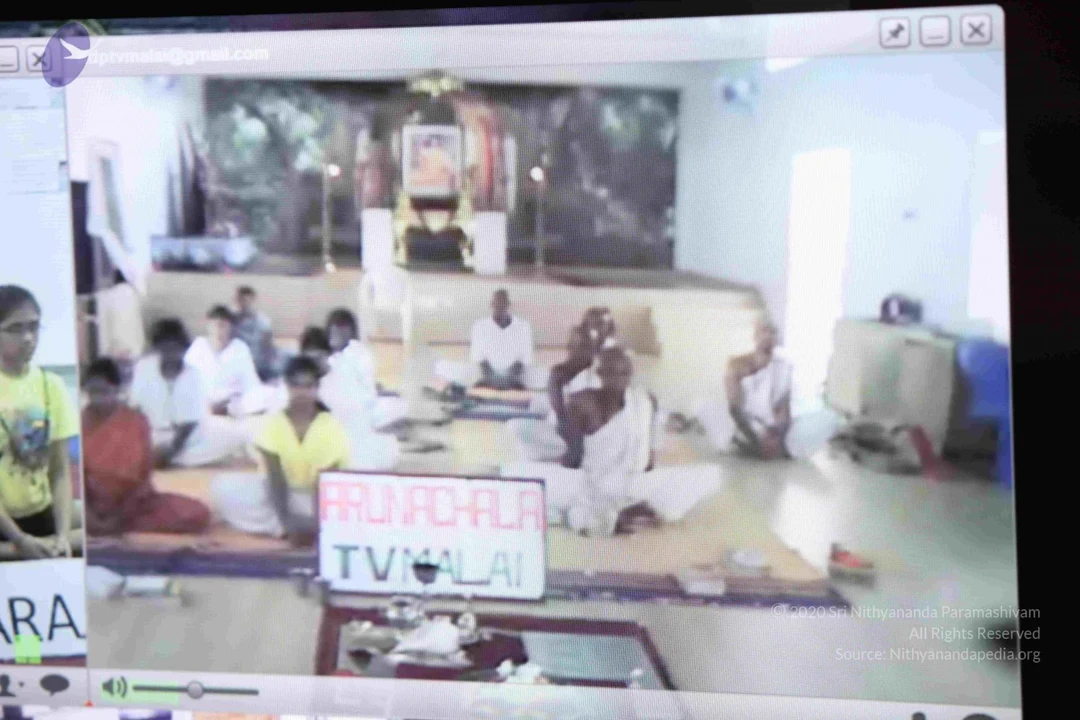
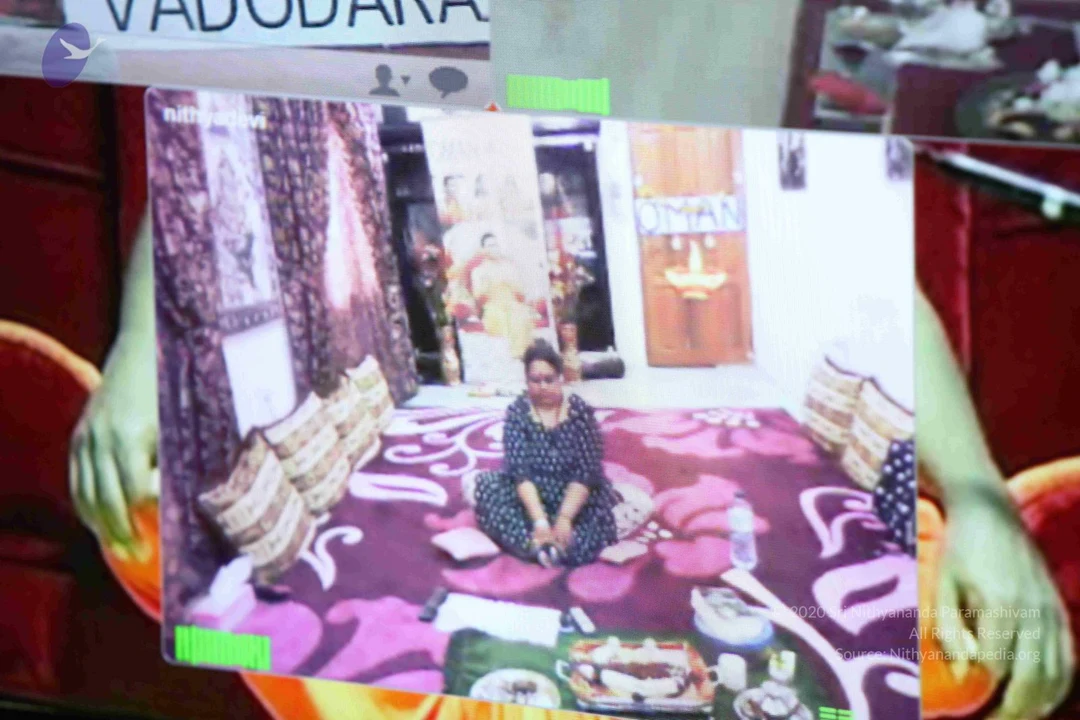
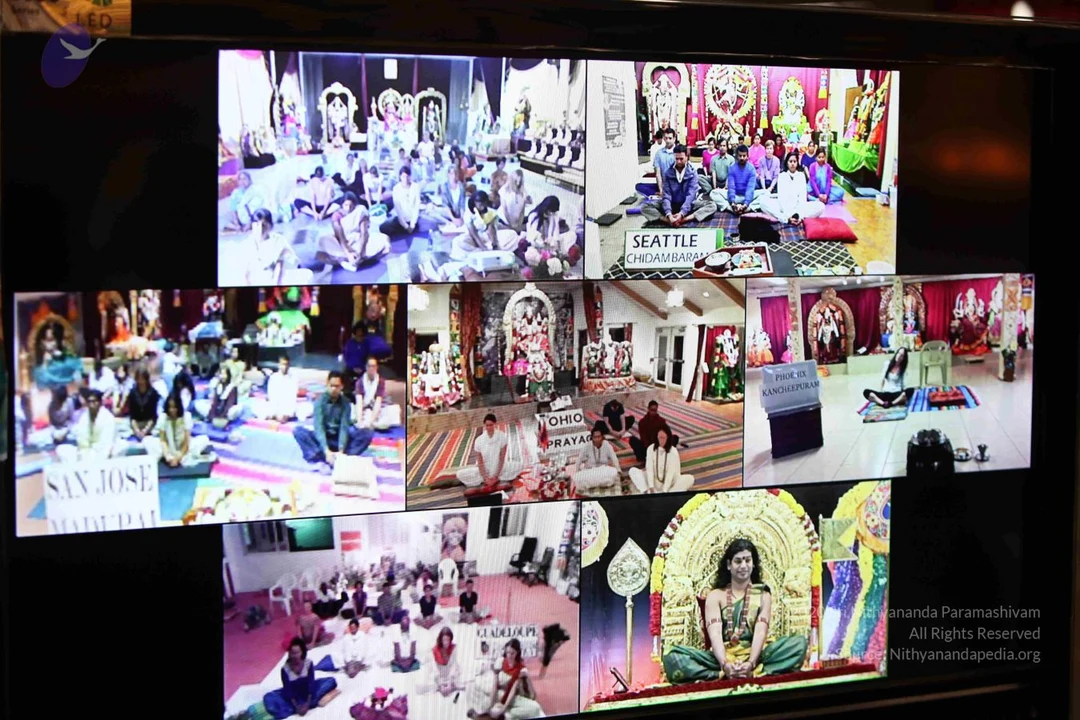
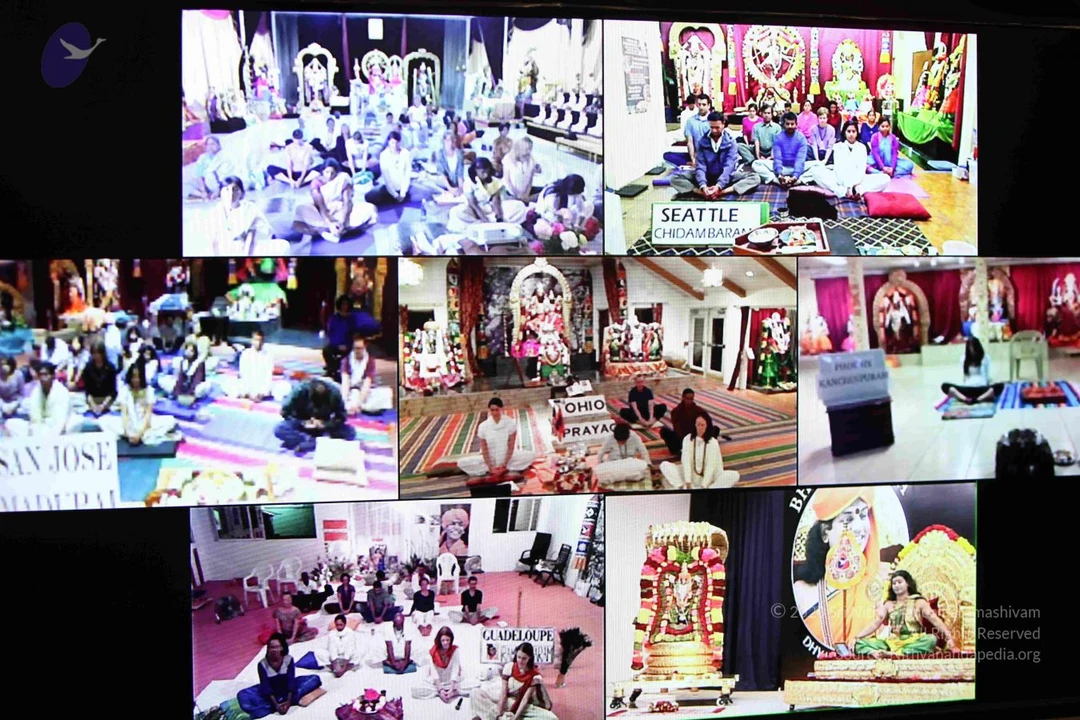
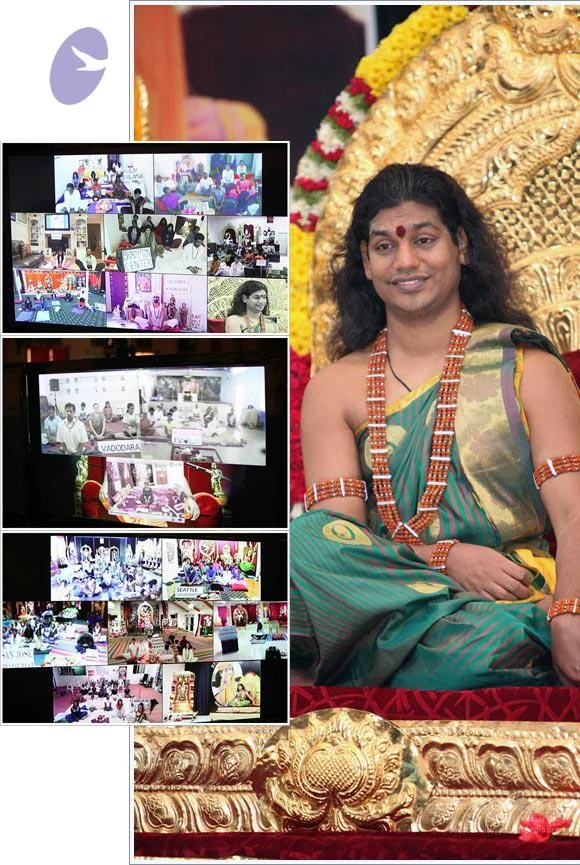
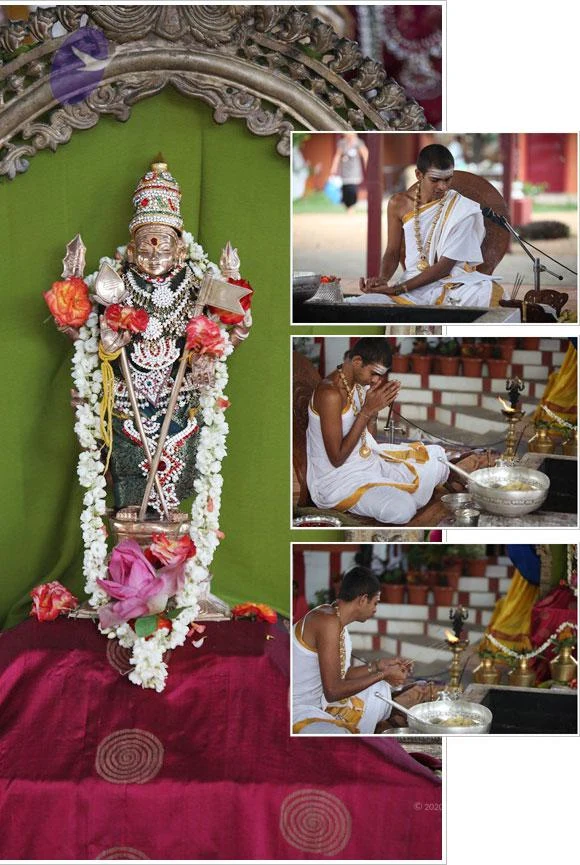
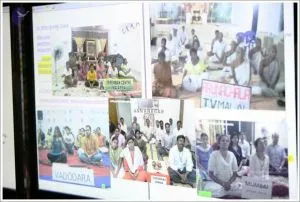
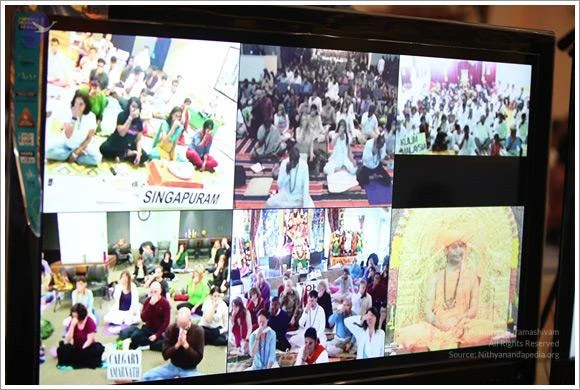
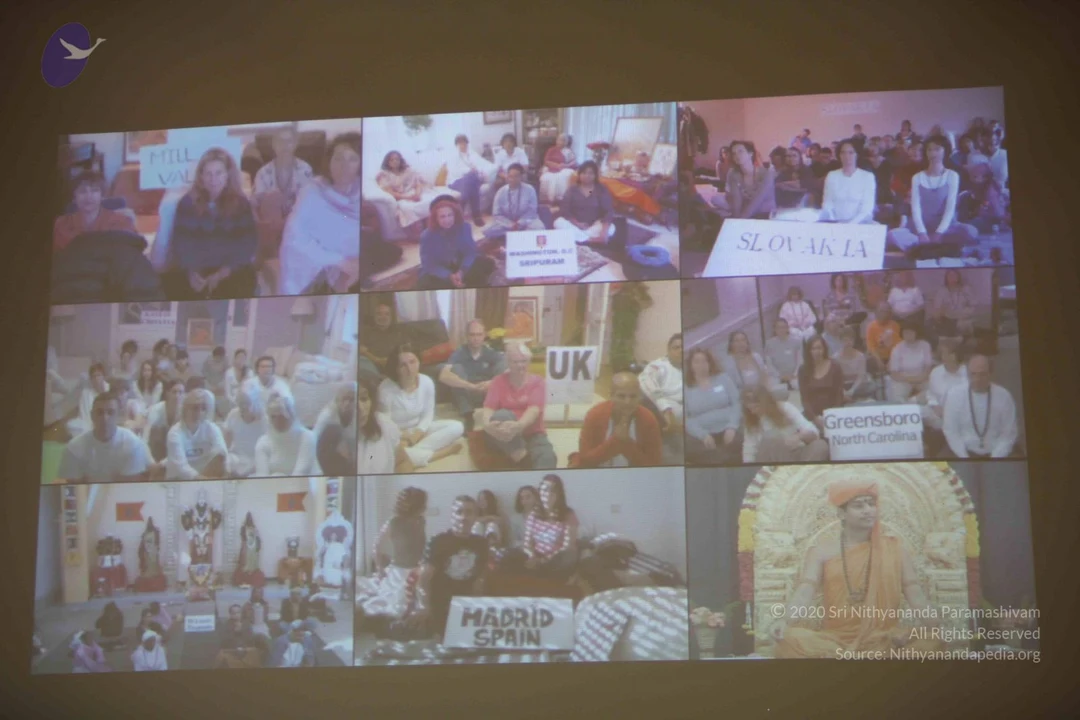
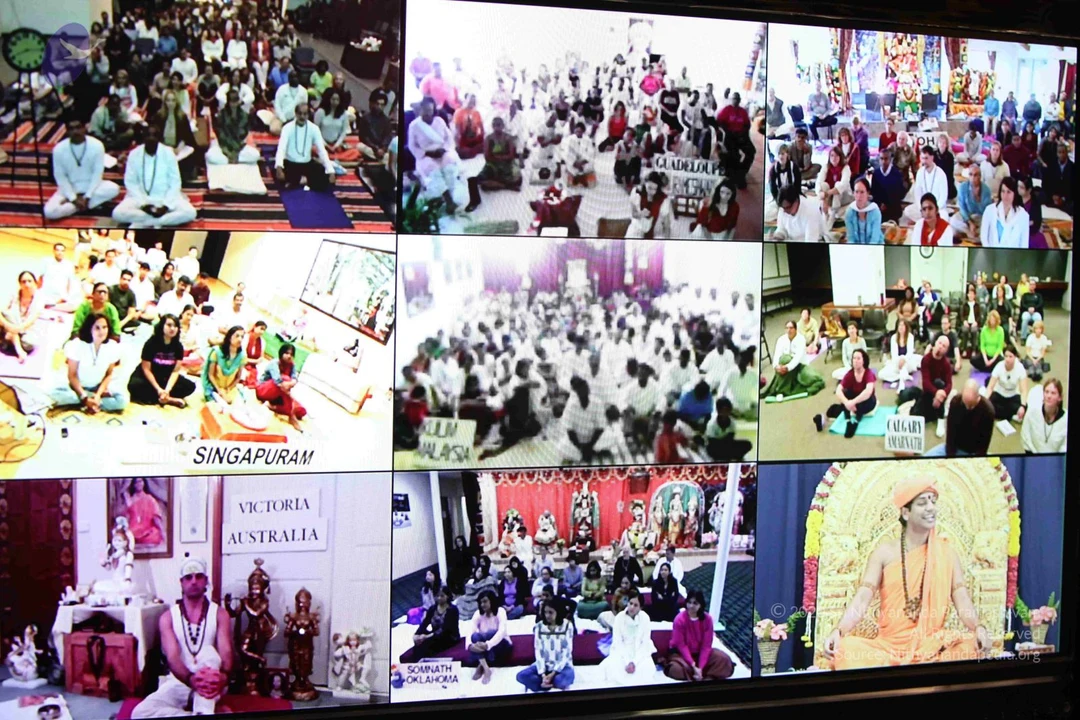
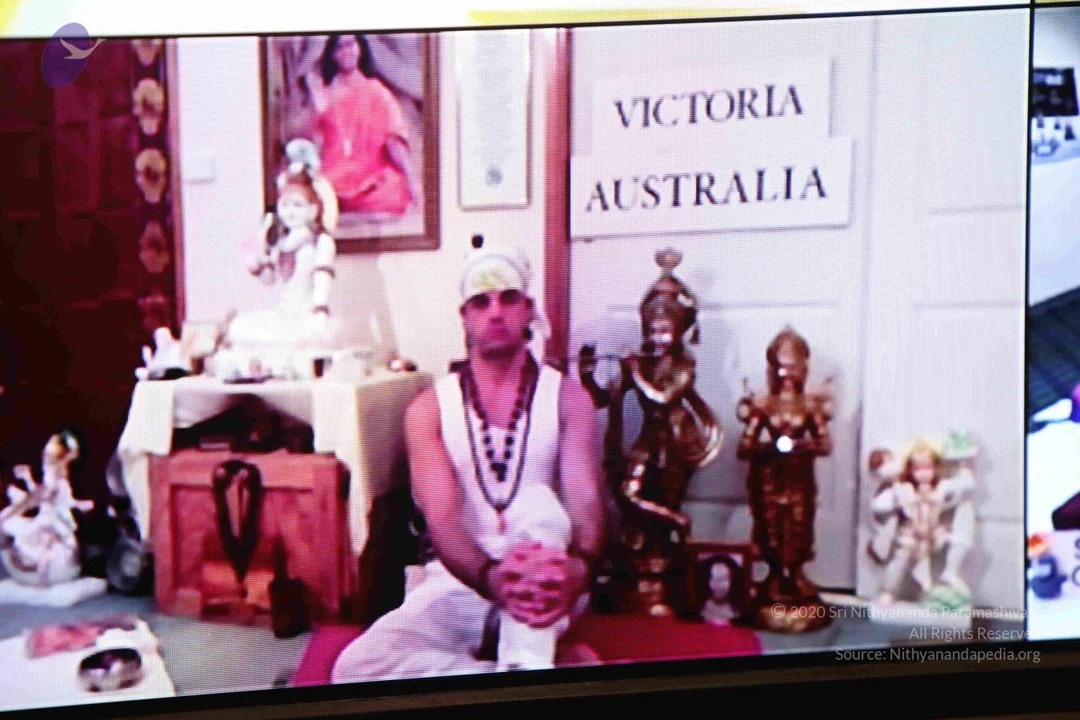
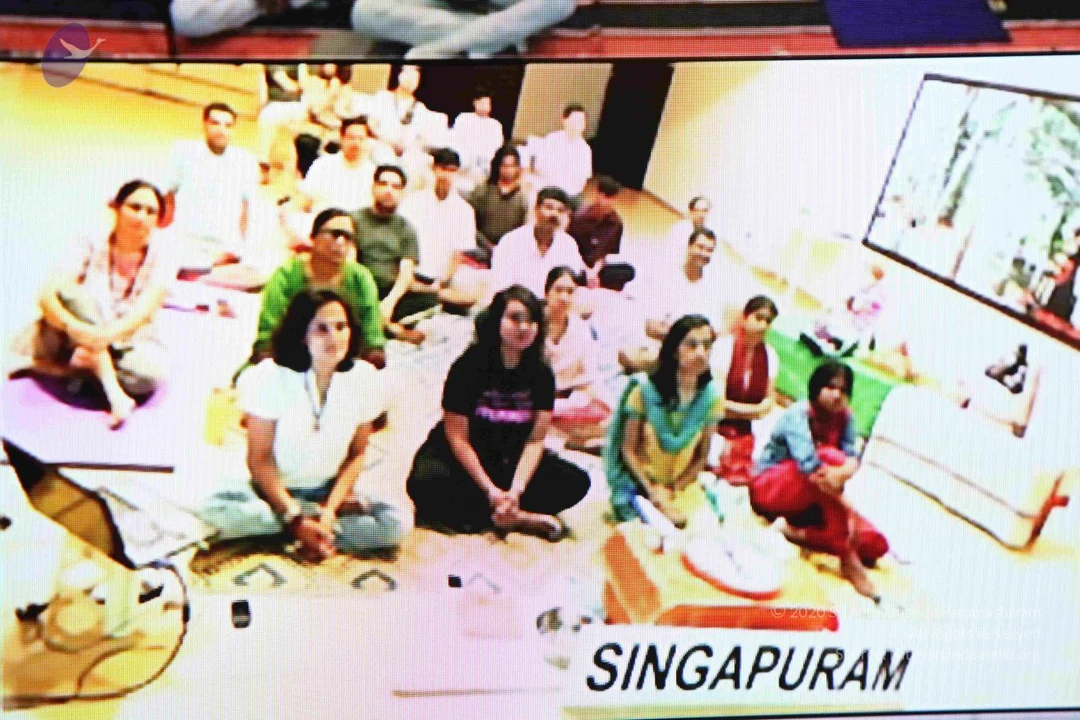
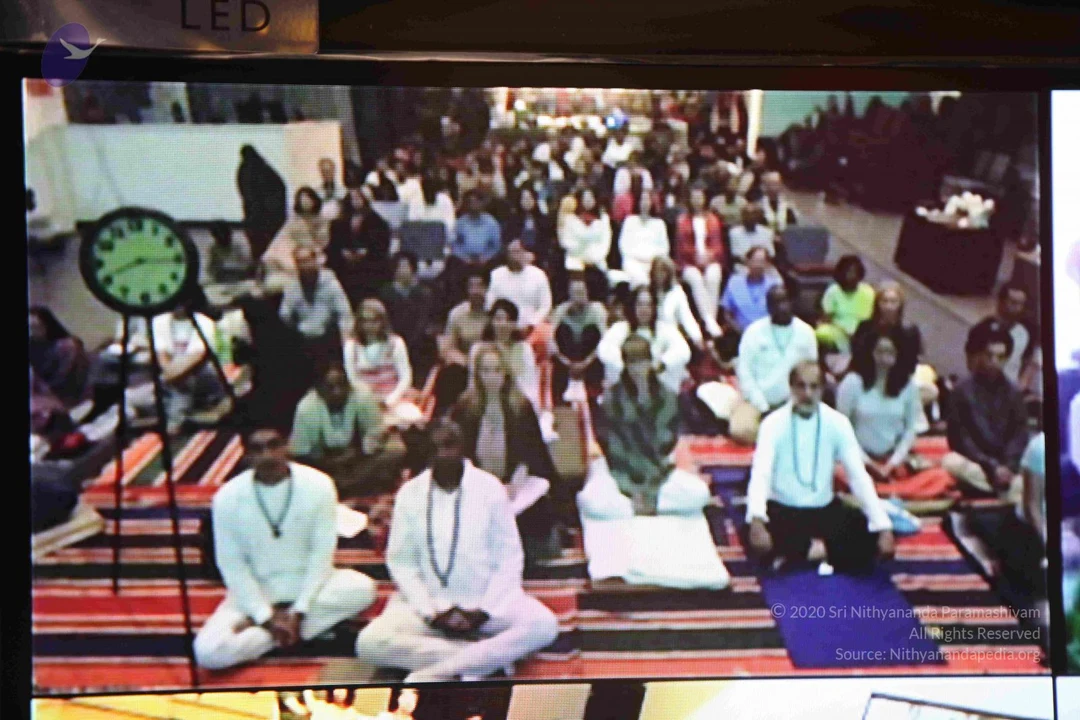
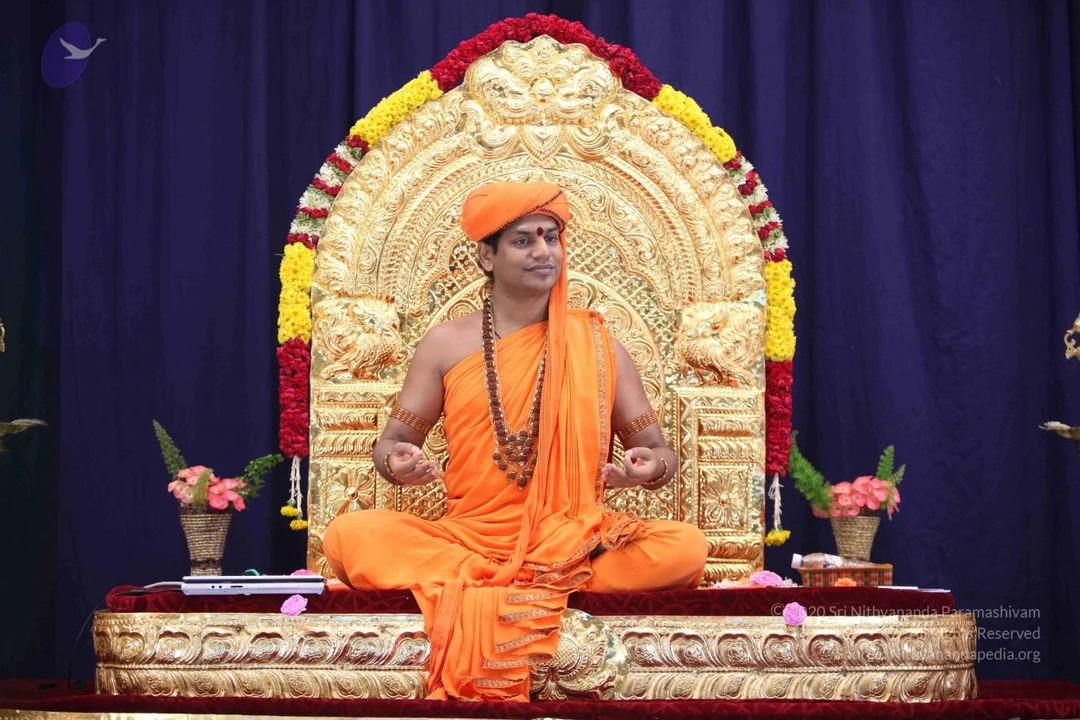
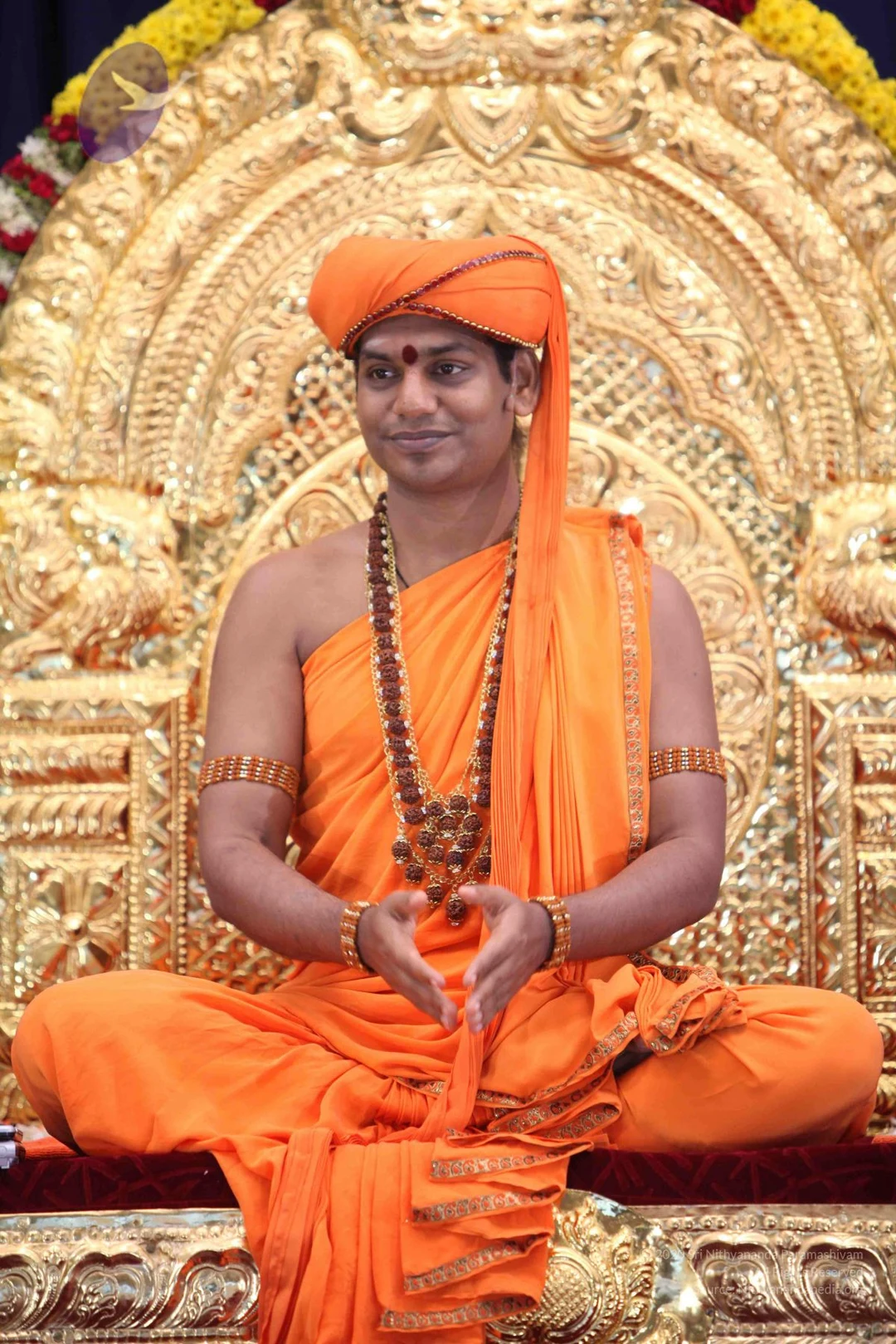
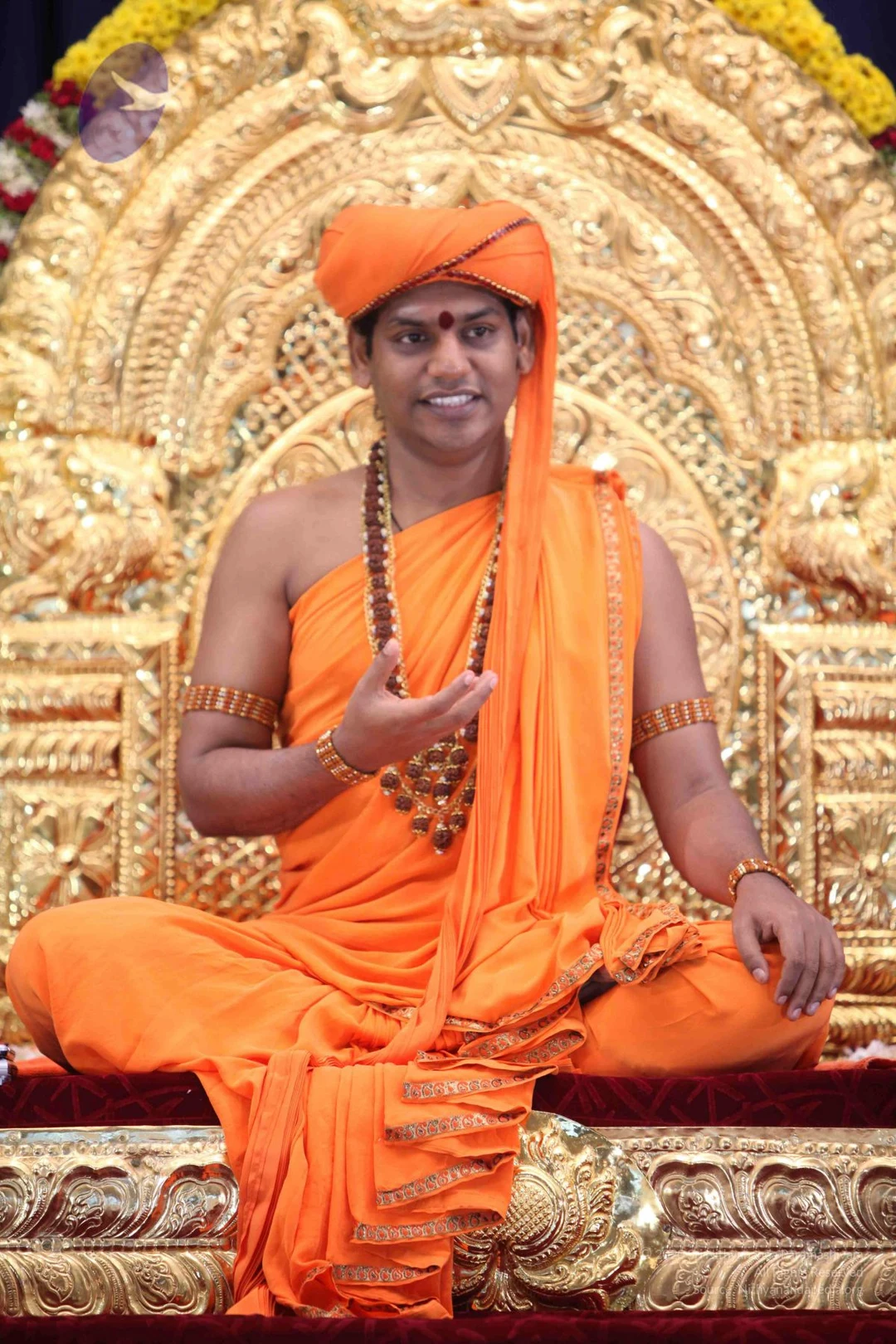
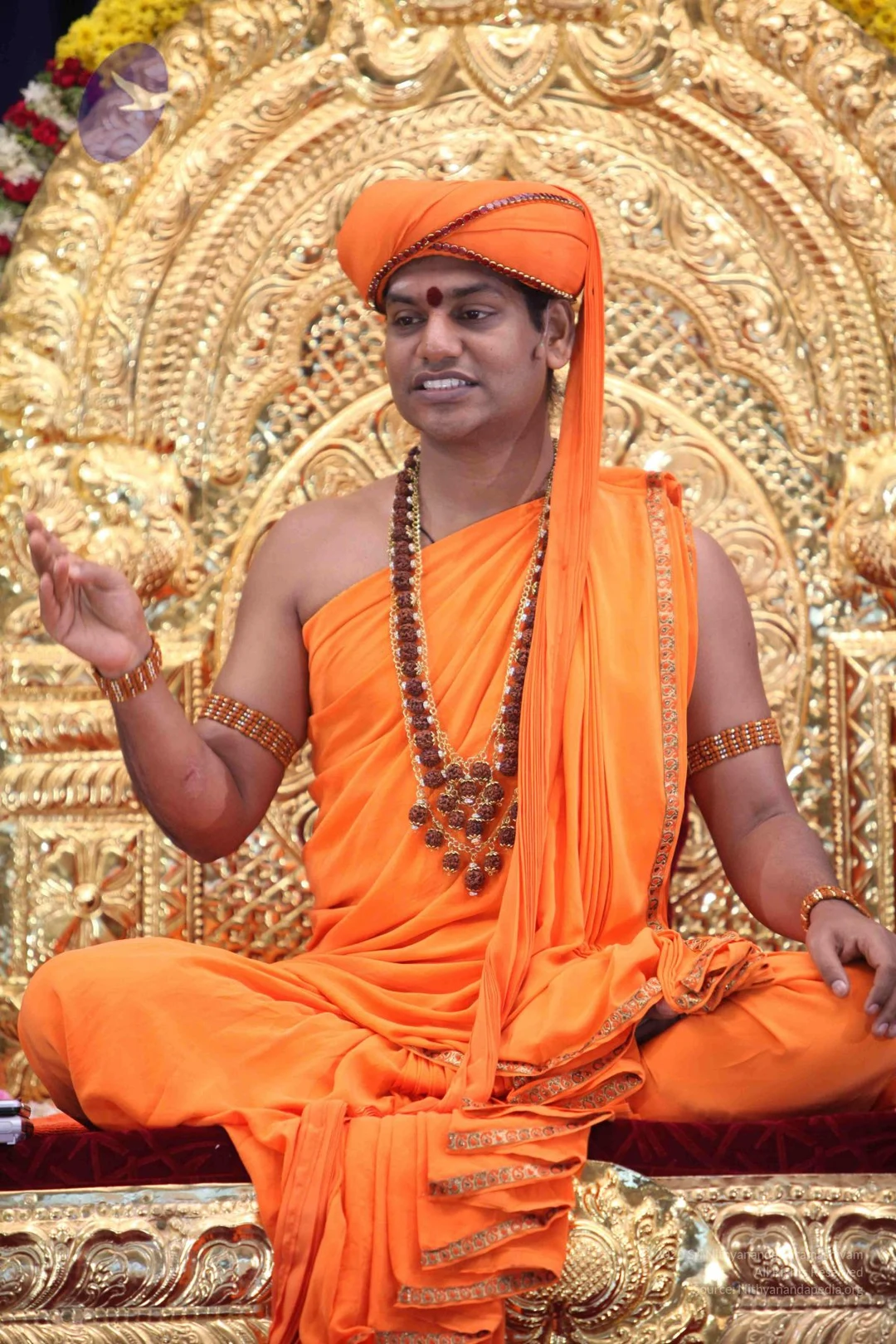
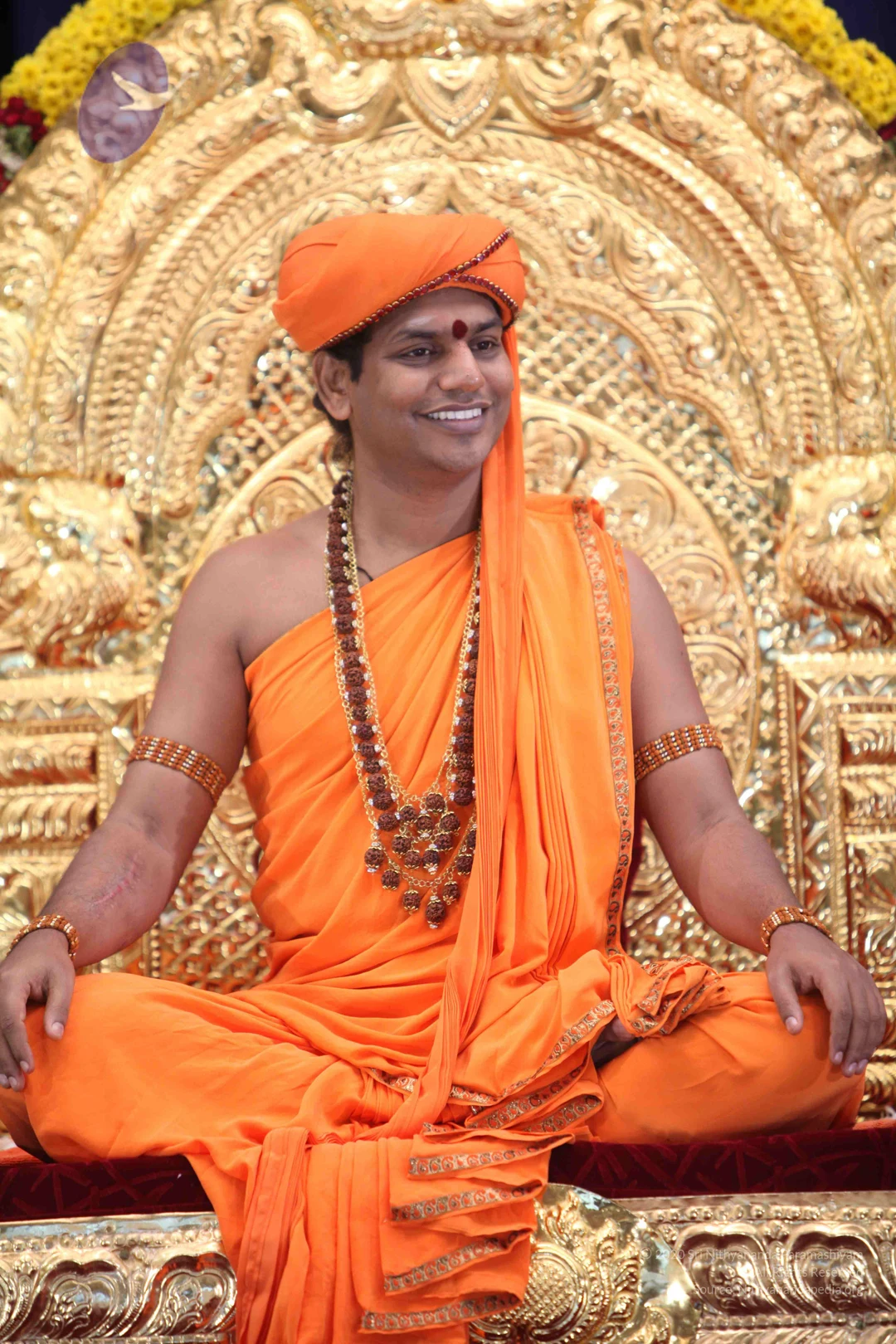
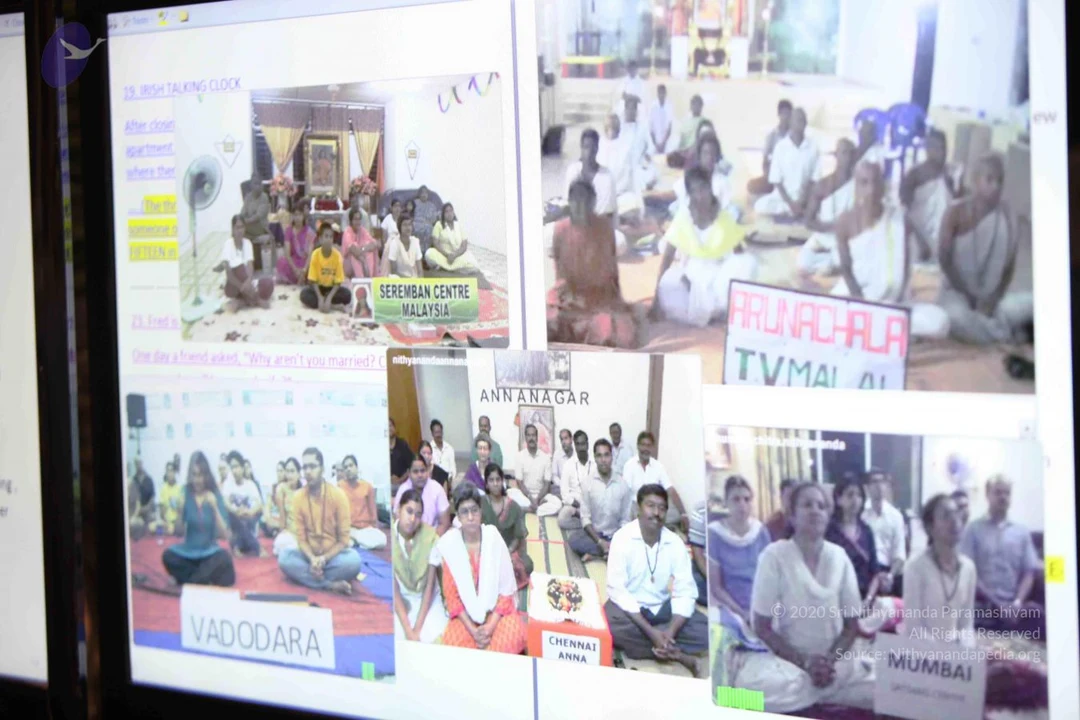
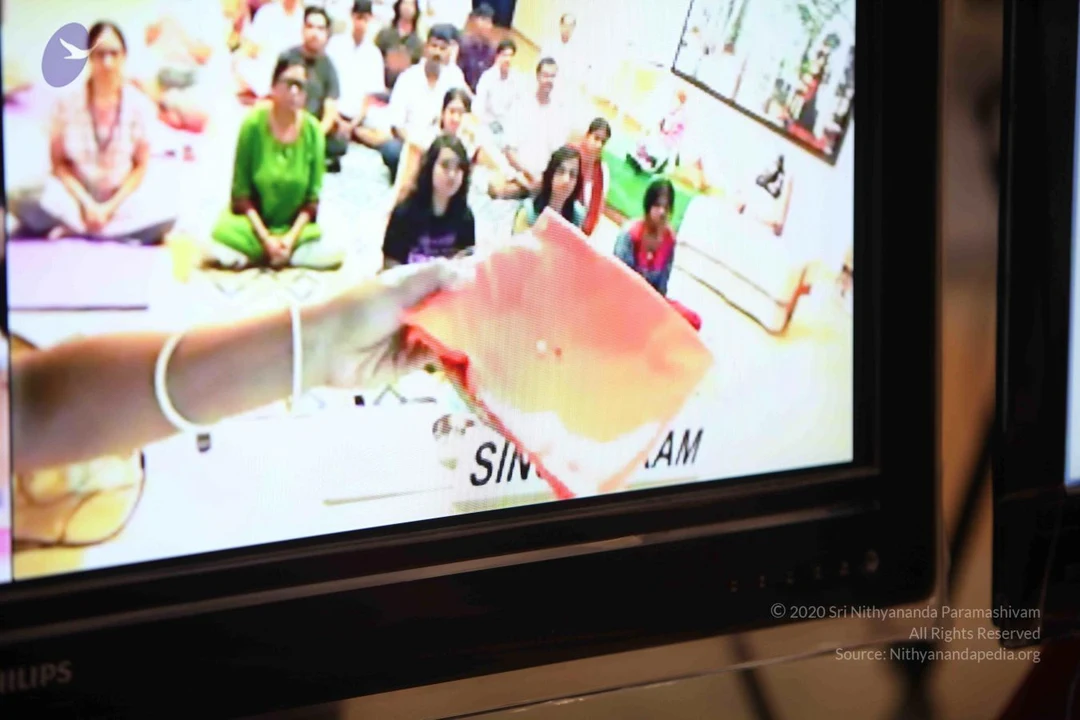
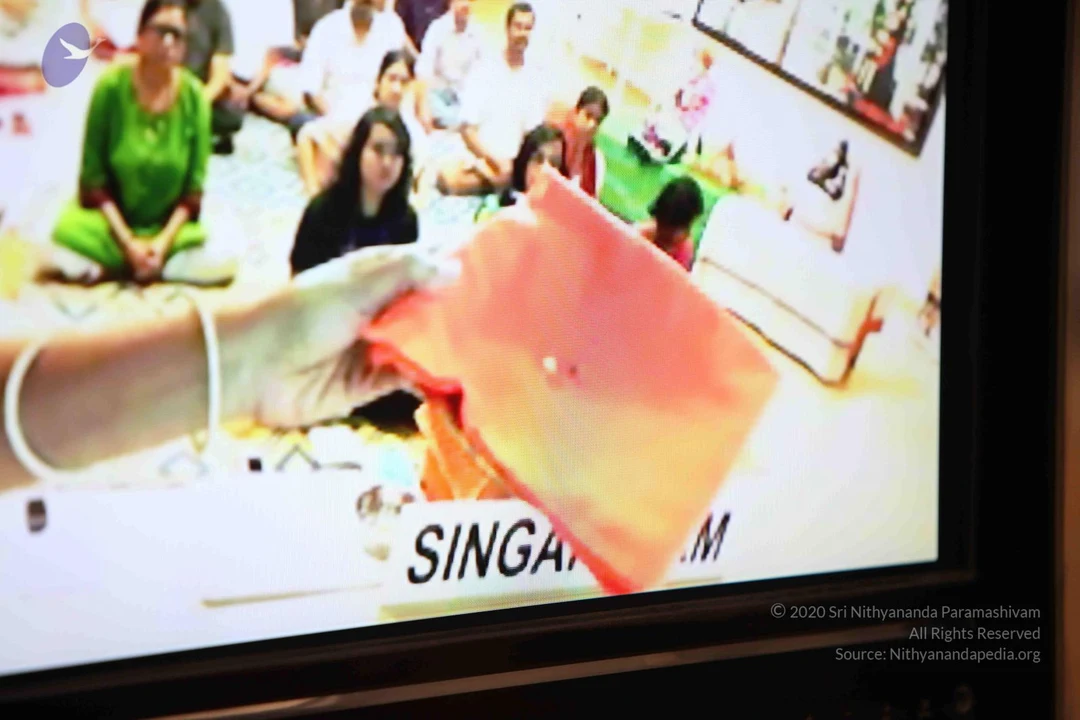
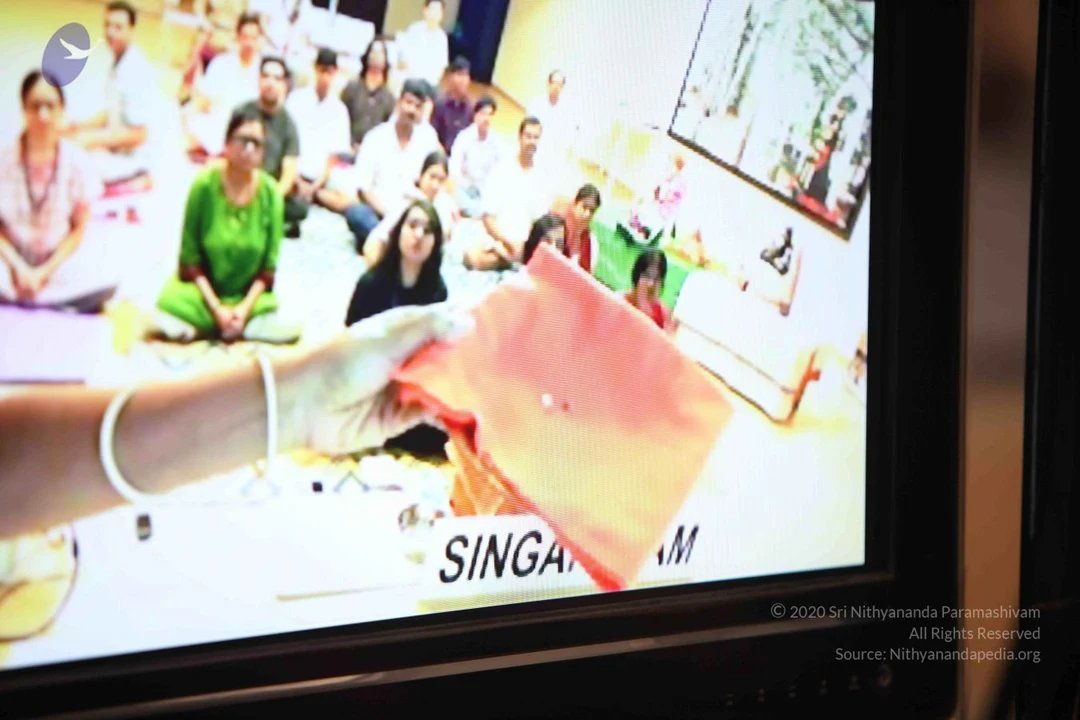
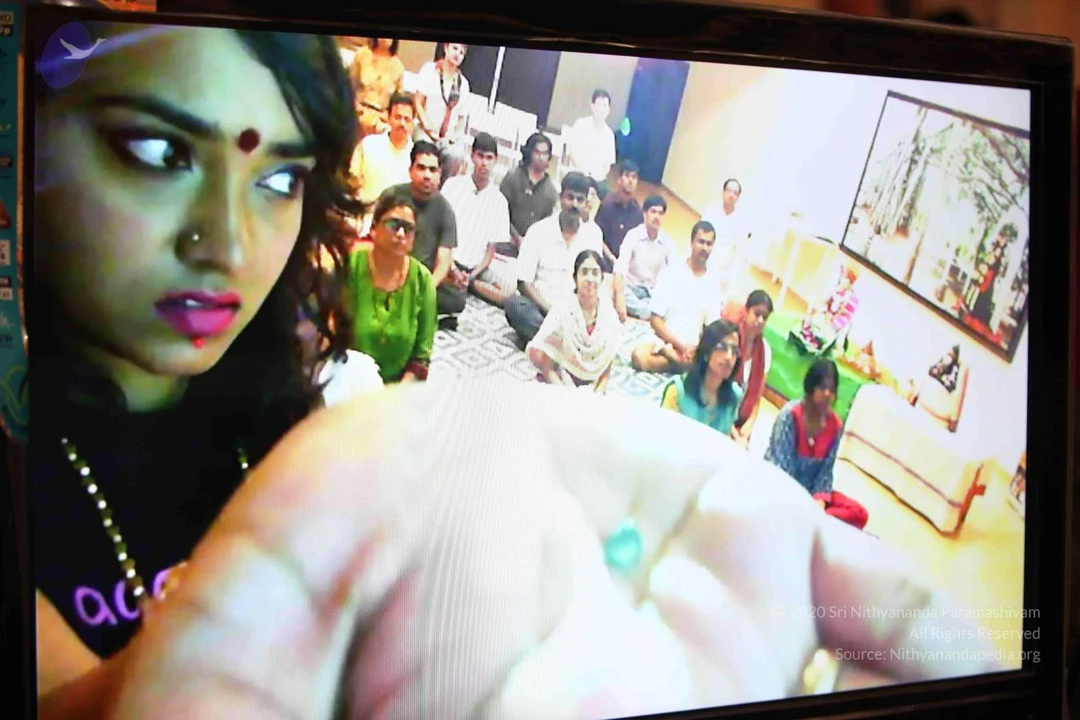
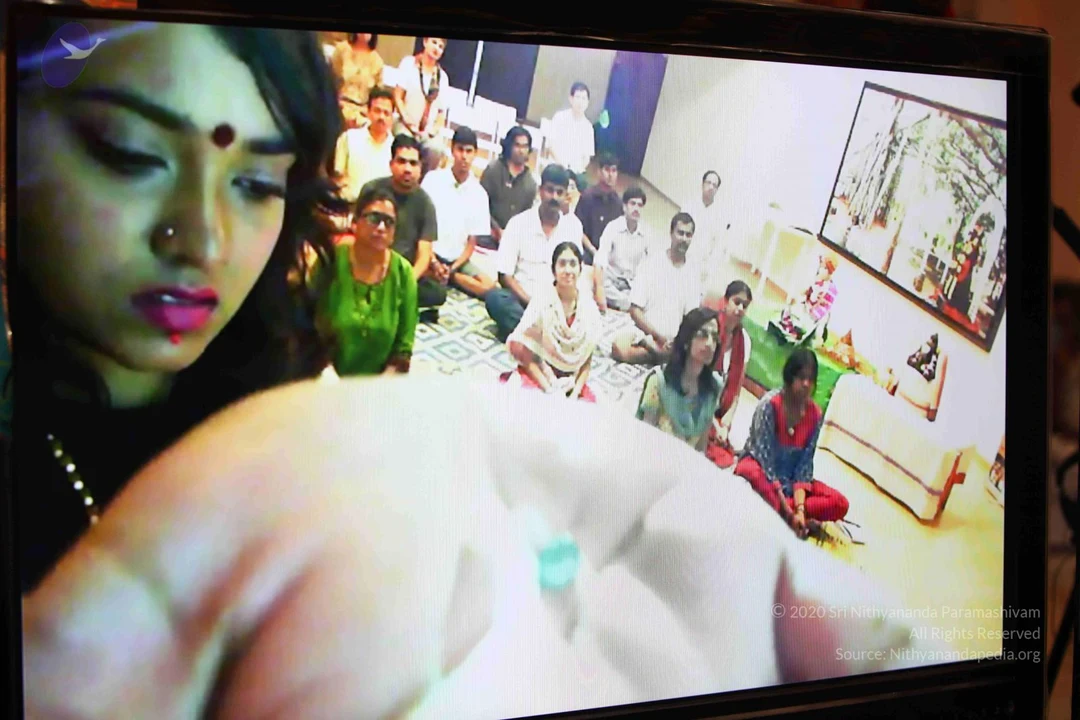
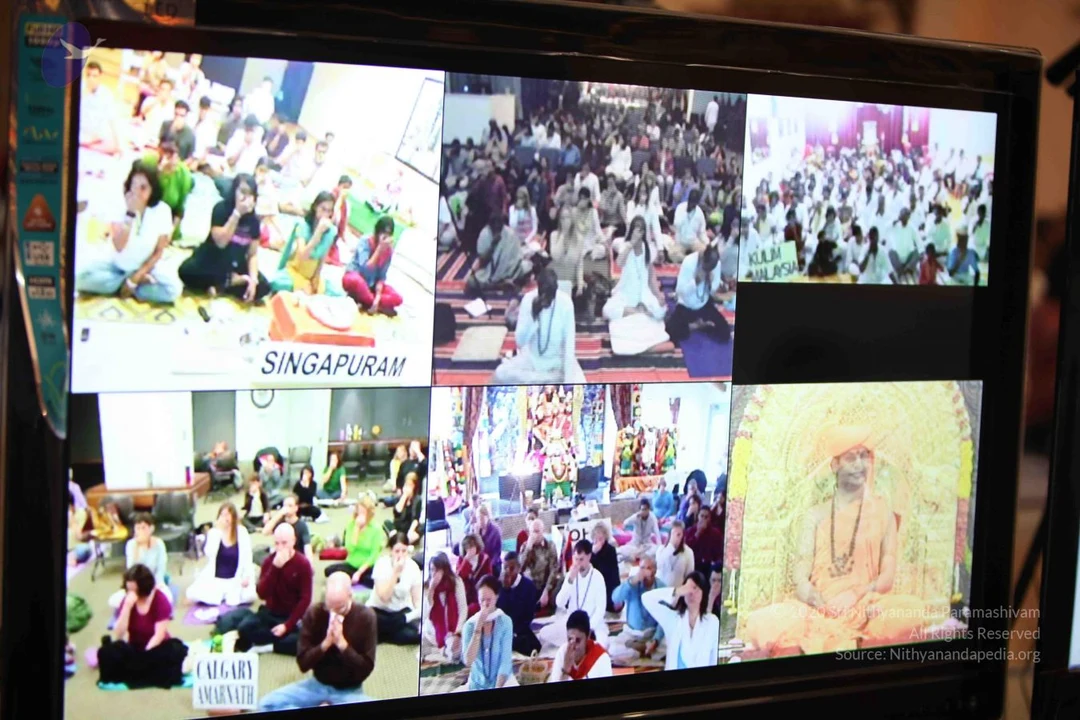
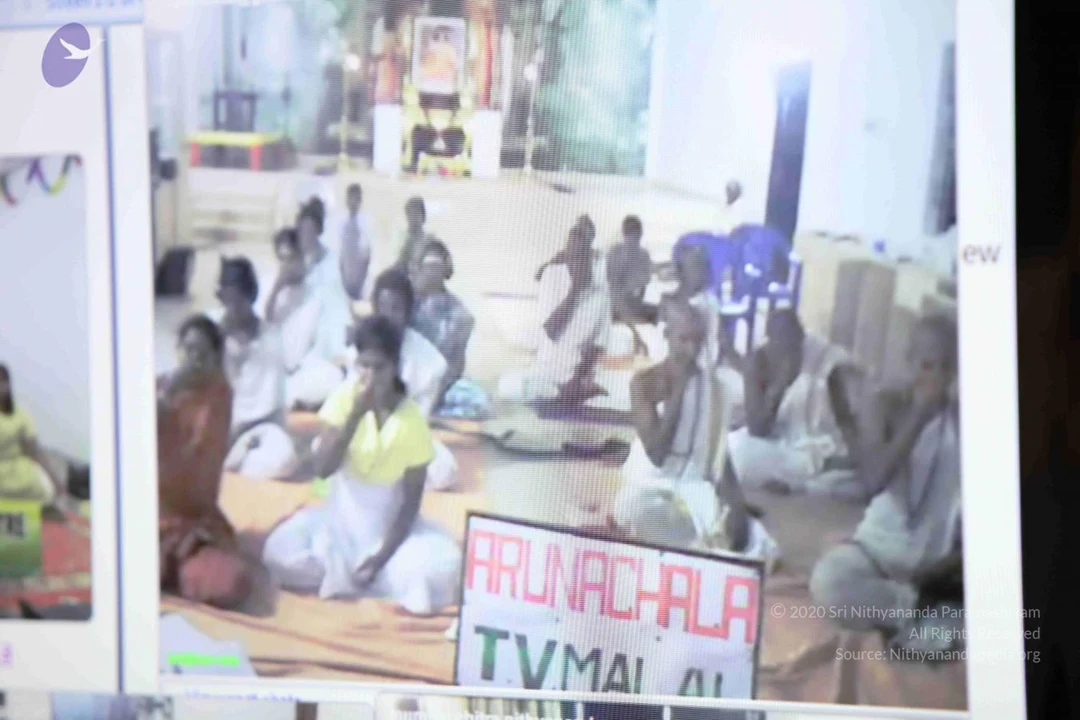
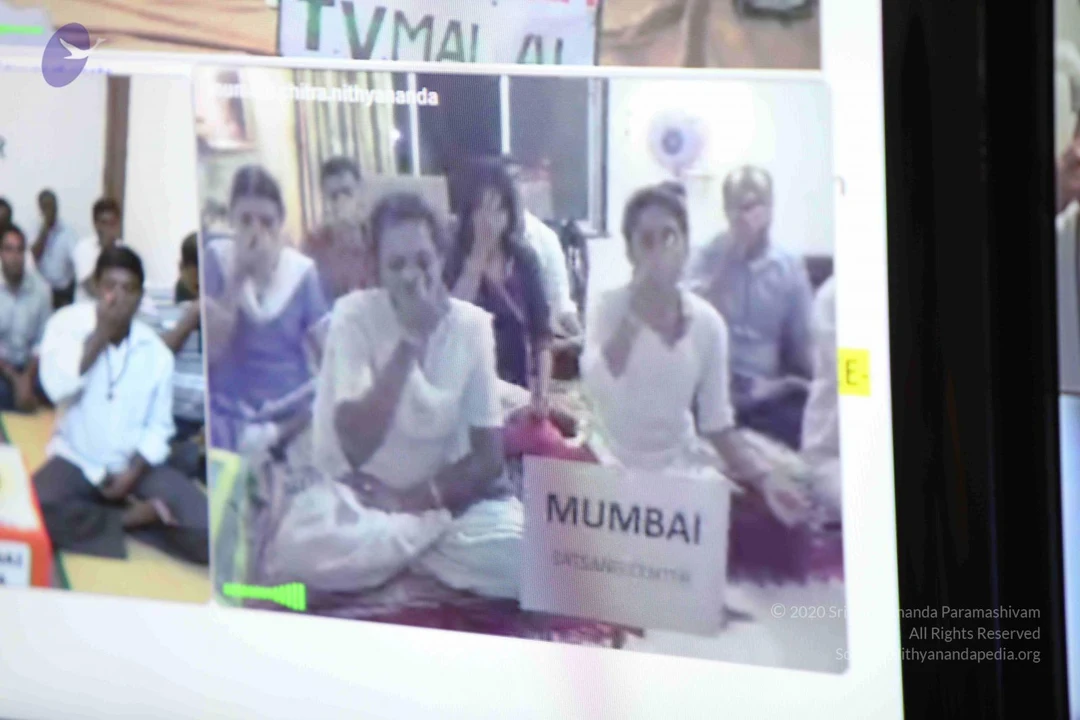
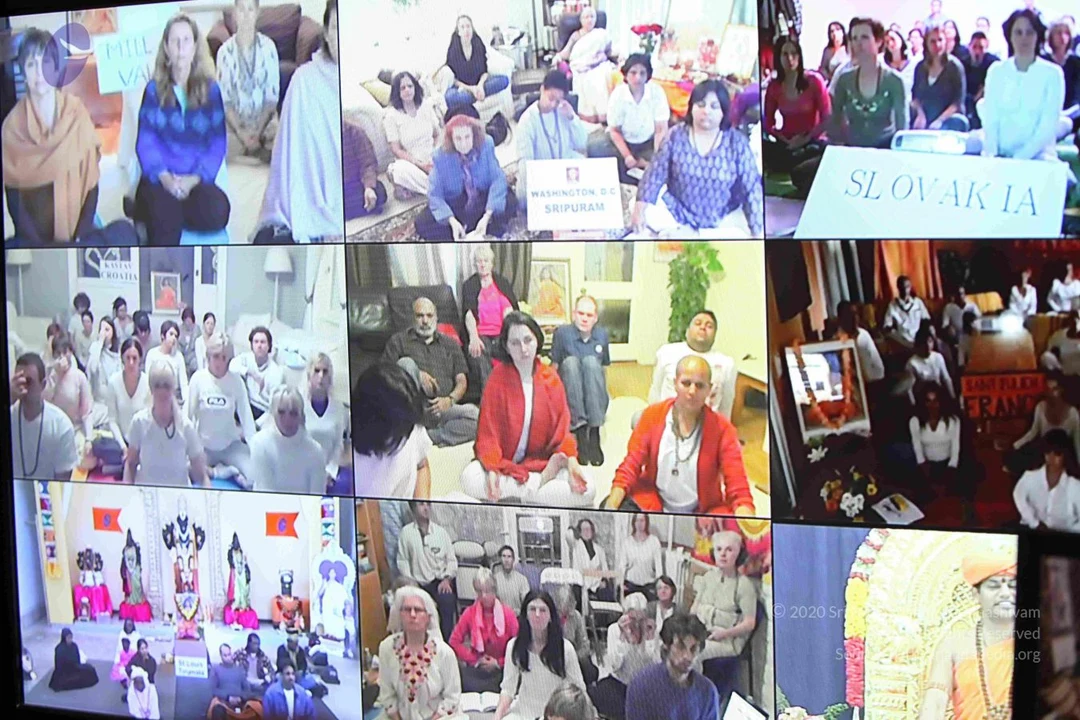
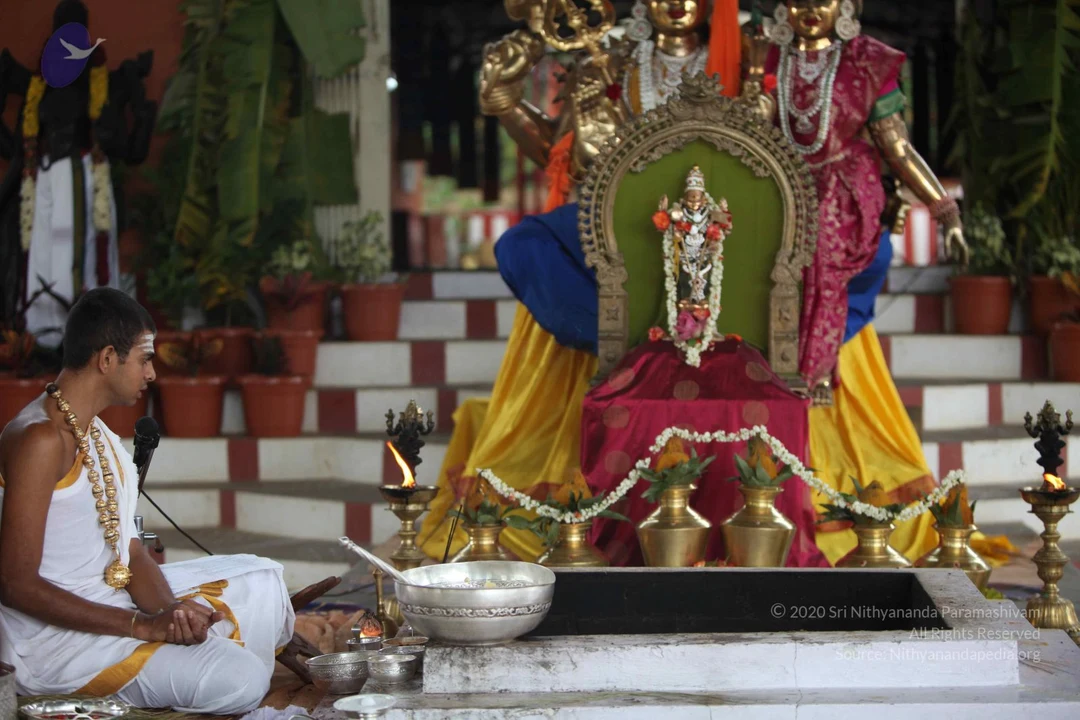
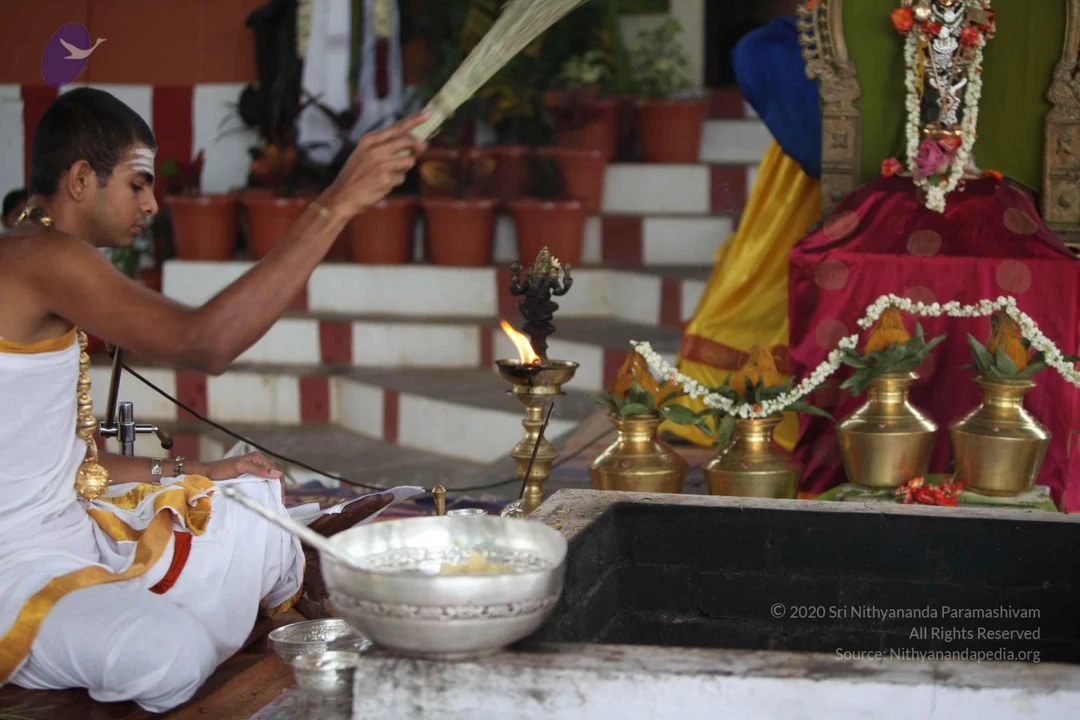
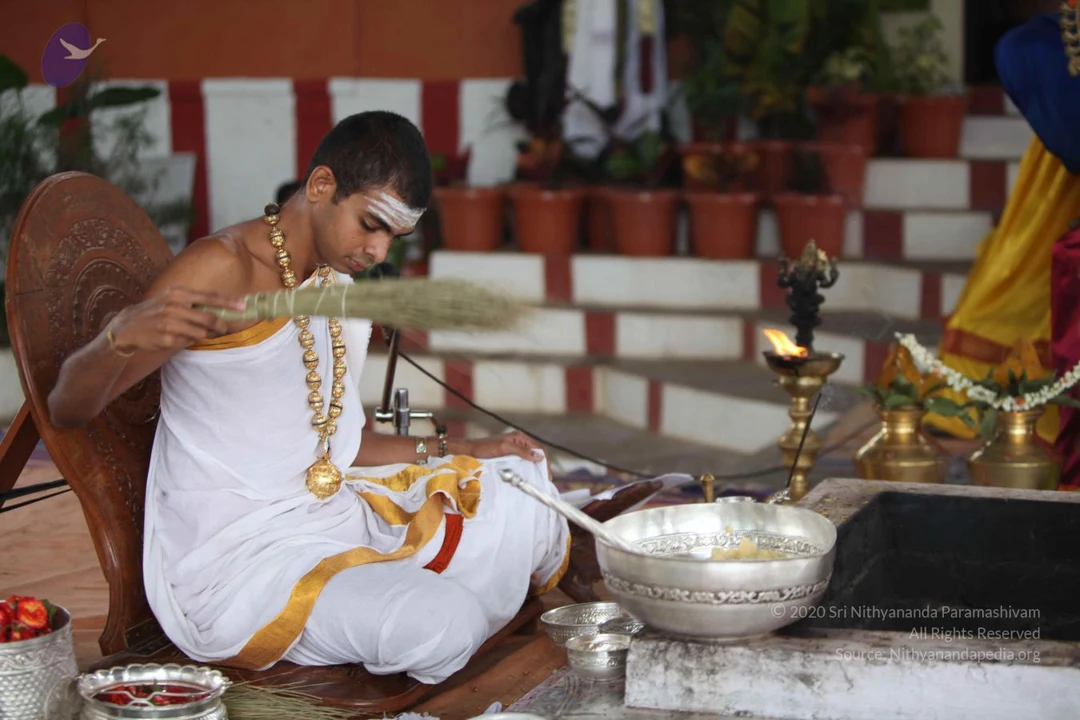
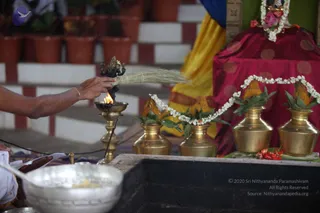
A multi-panel collage of video-call and event screens showing devotees and ashram gatherings. Top panels show seated people in front of a pink-and-gold backdrop and a room with a framed deity picture. Middle and lower panels show a man in orange robes seated on a decorated throne-like seat and several devotees in white and coloured clothes, some with kumkum on their foreheads. One panel shows a woman with long dark hair in a dark top at the lower right, and one shows a deity murti with a crimson cloth. Pictured activities appear to be satsang-style gatherings seen through screens; the people shown are on displays, not physically present.A photograph of a shaved-headed priest in white dhoti with a golden-yellow border, sitting cross-legged and waving a whisk of grass over a brass lamp with a lit flame. He wears a tilak on his forehead, gold bangles and a gold waist cord. Before him sits a silver bowl with a ladle. Behind the lamp stand three brass kalashas wrapped in flower garlands and mango leaves, and a deity murti adorned with orange and white flowers sits within an altar draped in a red cloth. A green wall and terracotta pots line the background.

October 29 2011

Original wiki page
Contents

Title:

Live Your Highest Possibility

Description

Bhagavad Gita (Song of God) is a timeless treatise on the essence of living enlightenment. The Gita was imparted by the enlightened Hindu incarnation Sri Krishna to the warrior-prince Arjuna over 5000 years ago. Amazingly, the spiritual wisdom and life solutions offered in the Gita are so universal and current that it is even today used as a personal transformation guide

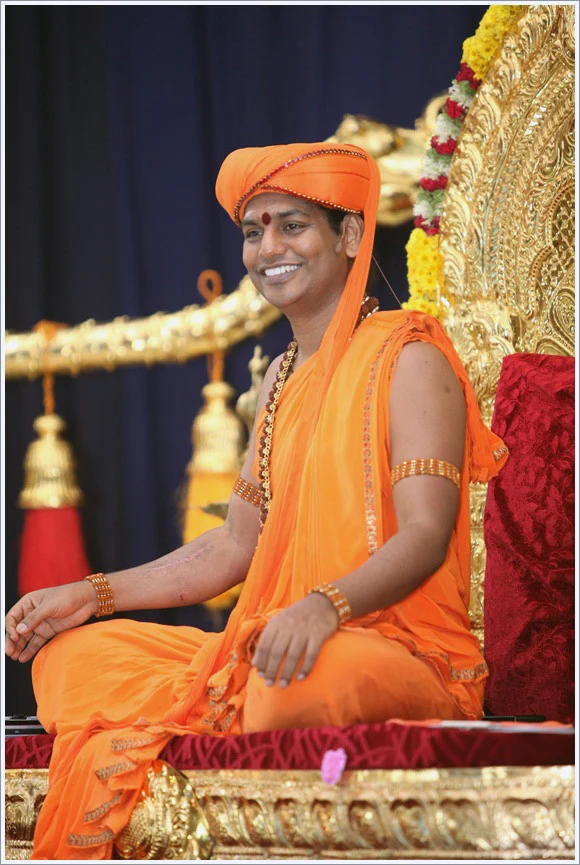
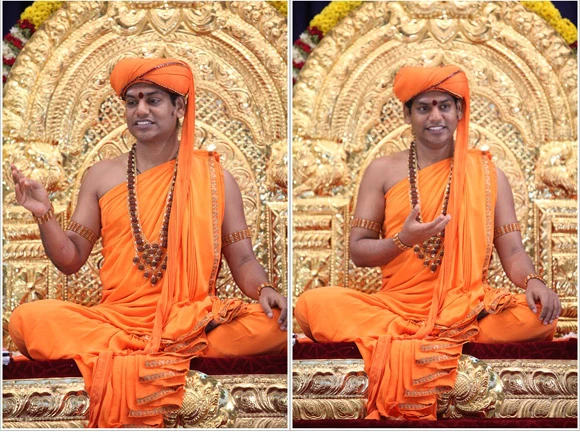
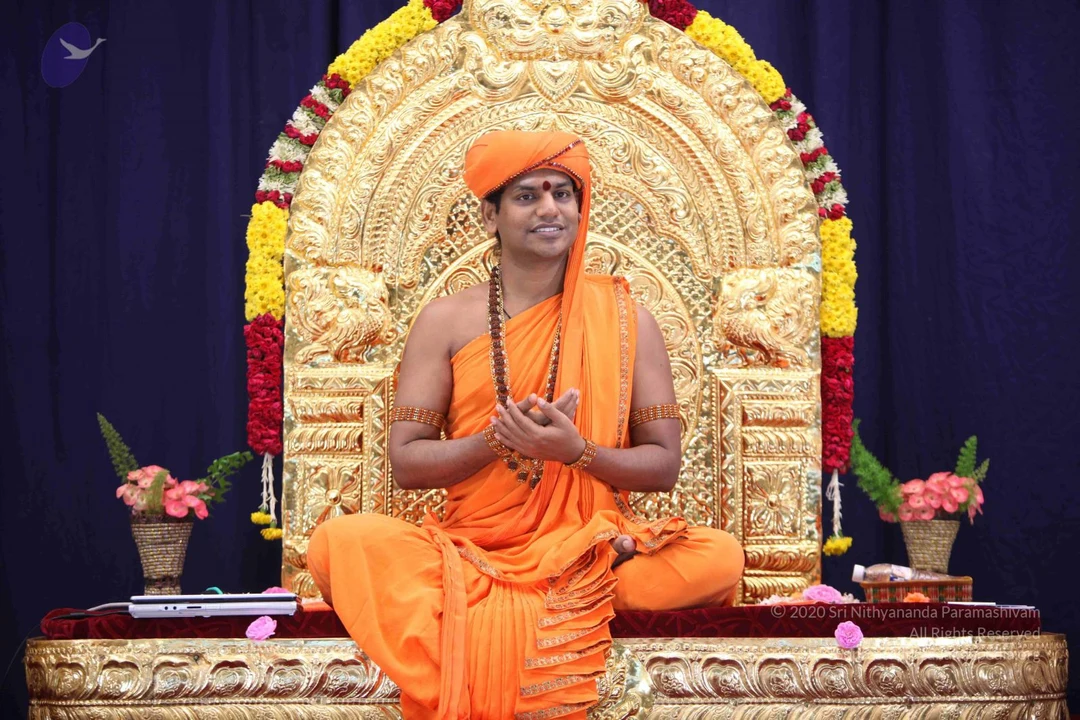
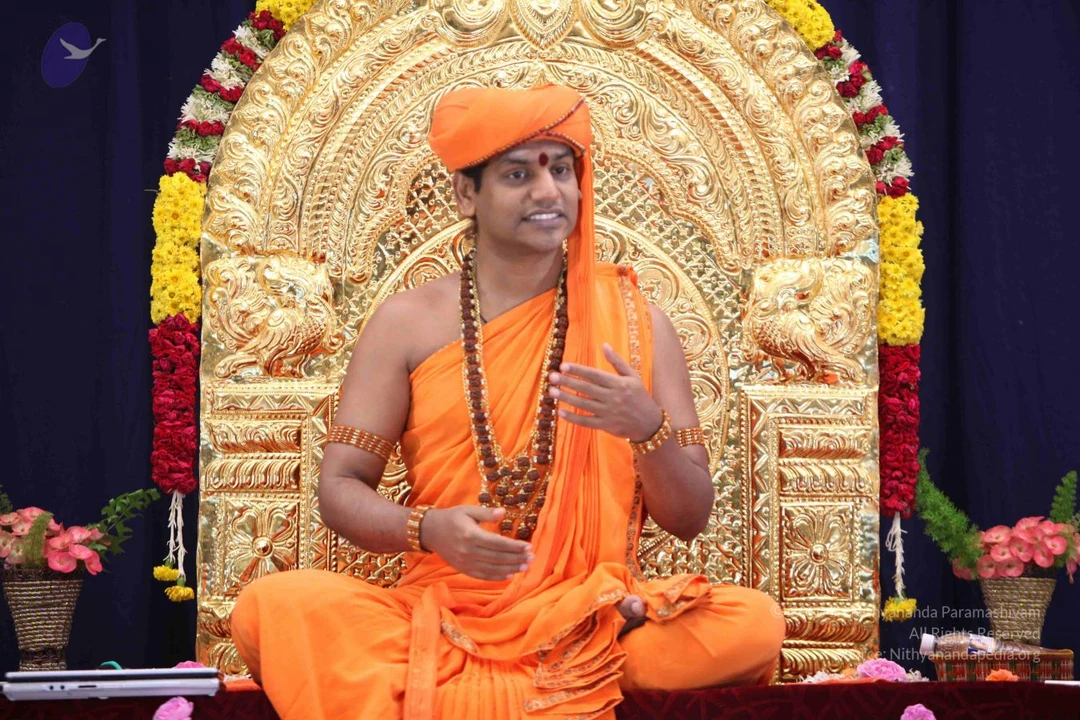
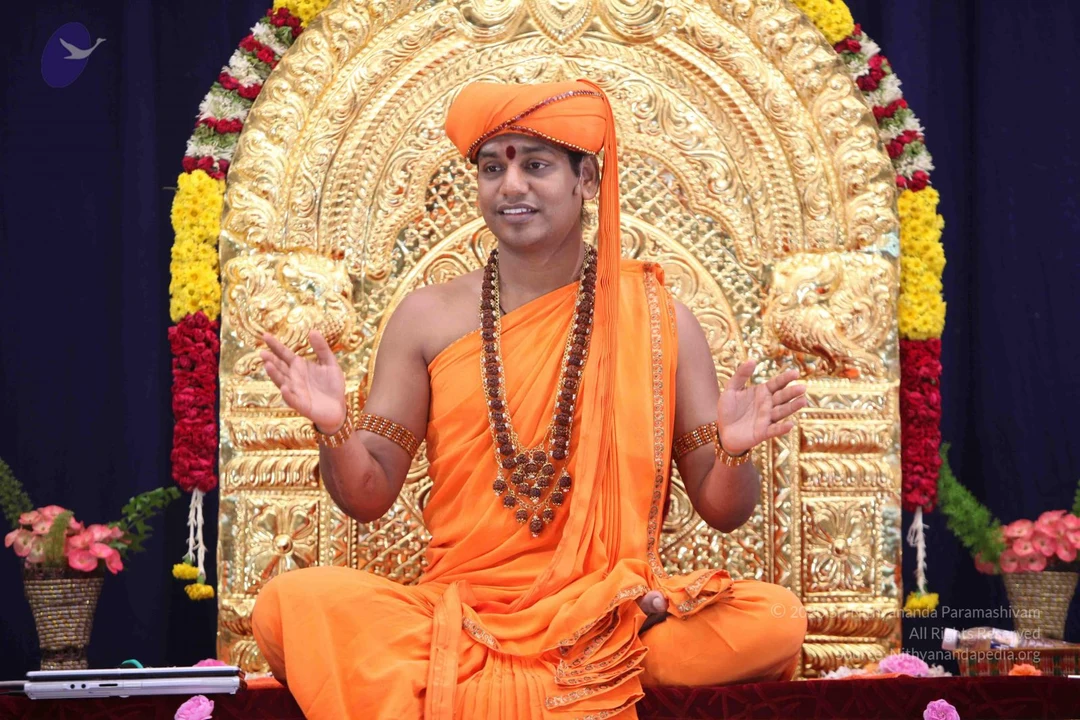
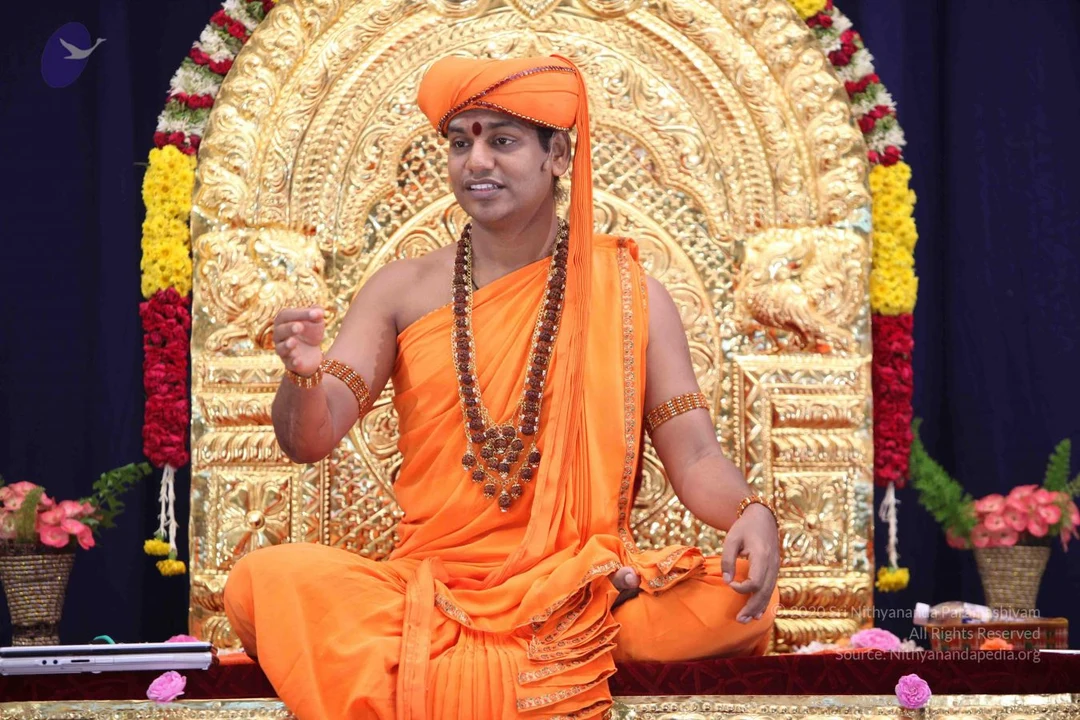
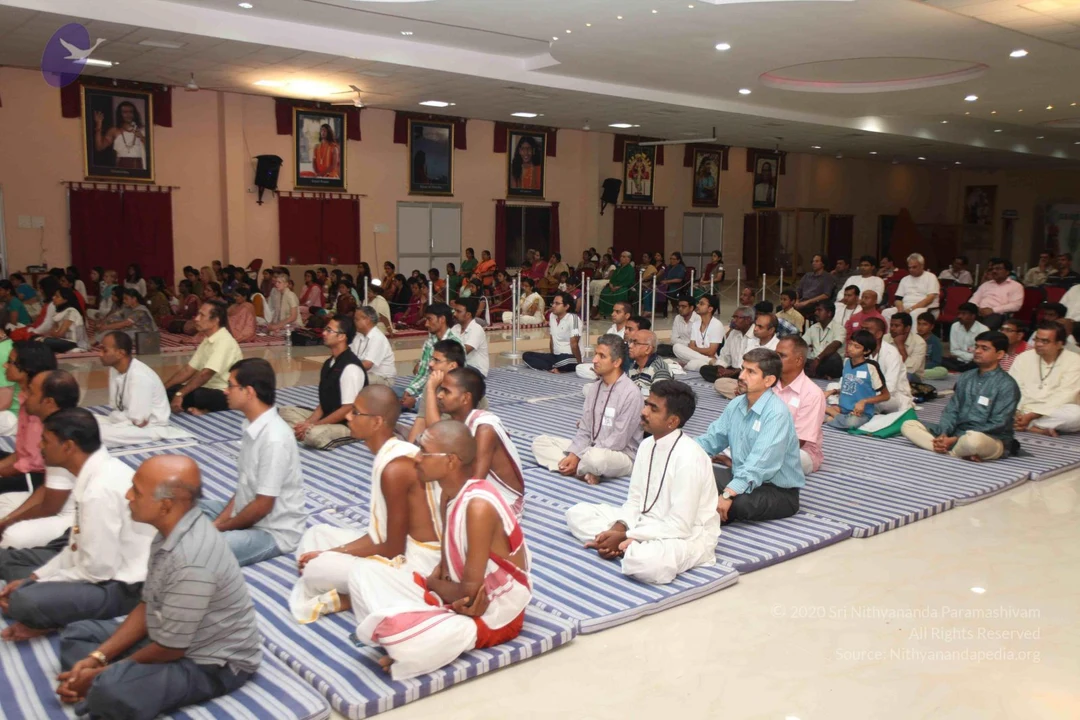
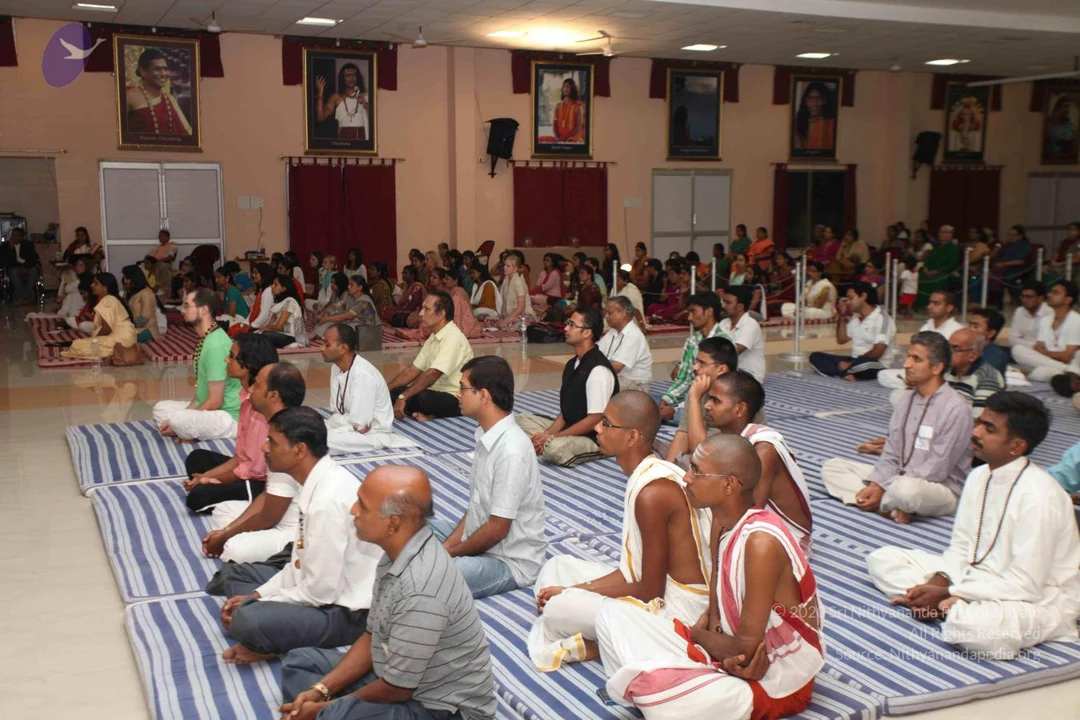
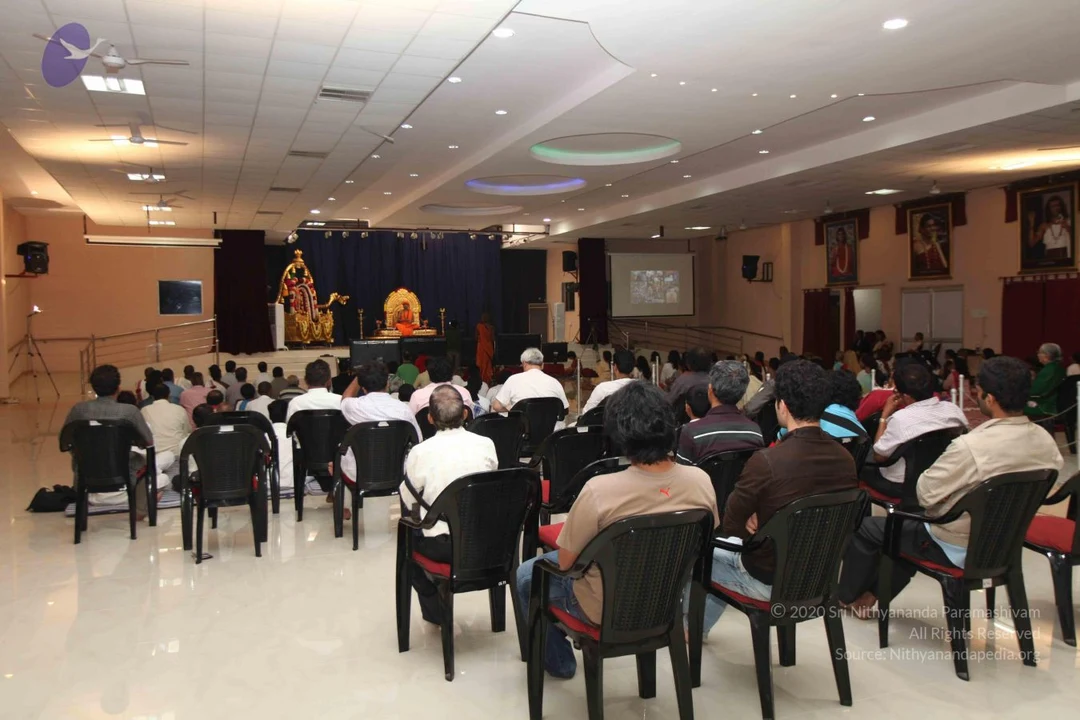
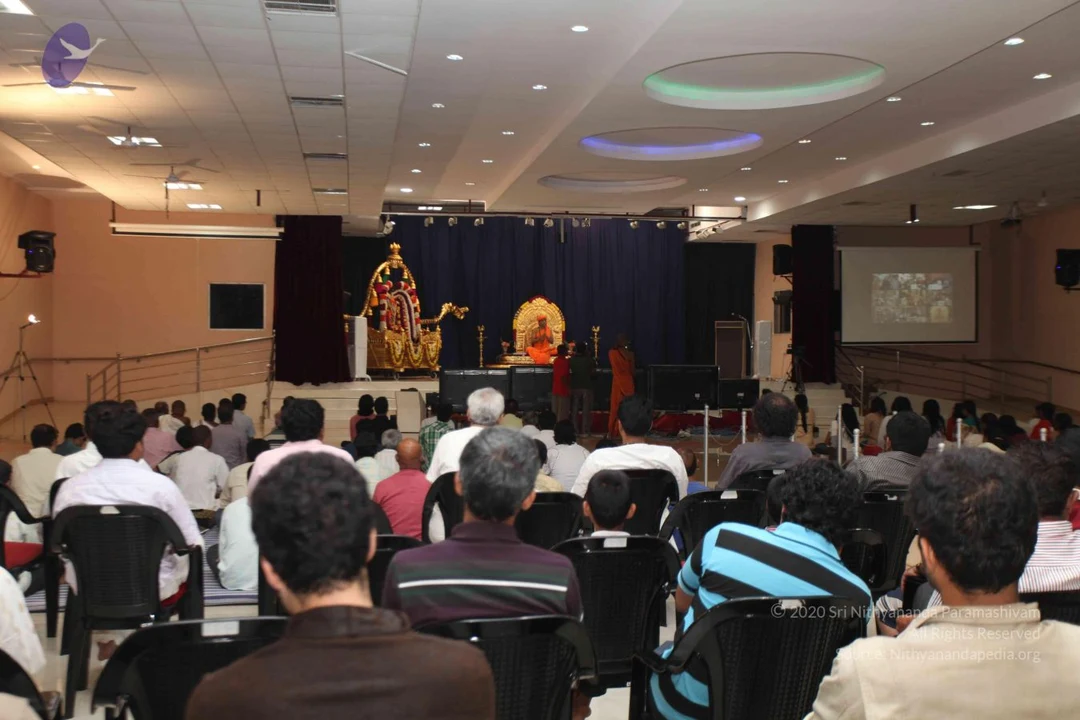
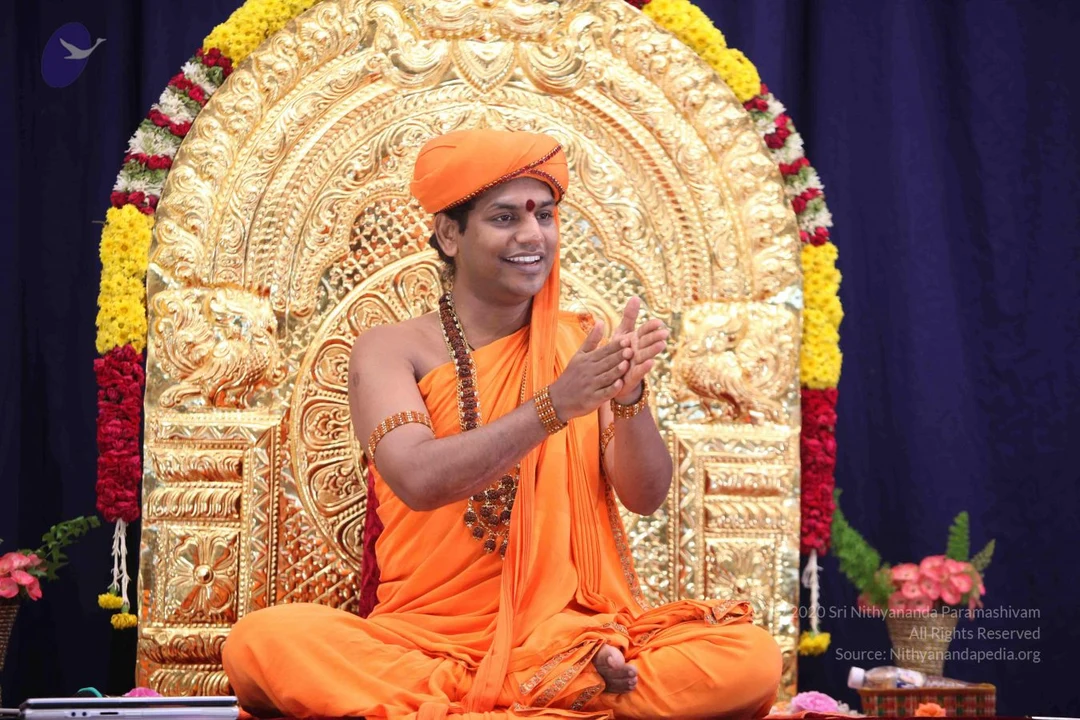
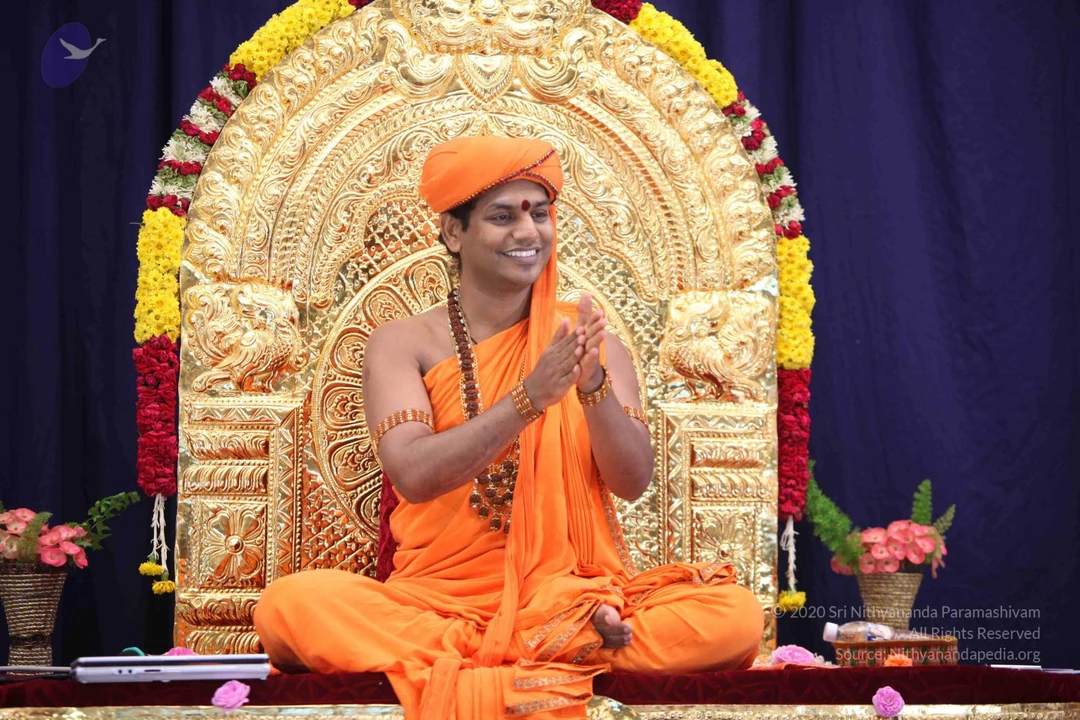
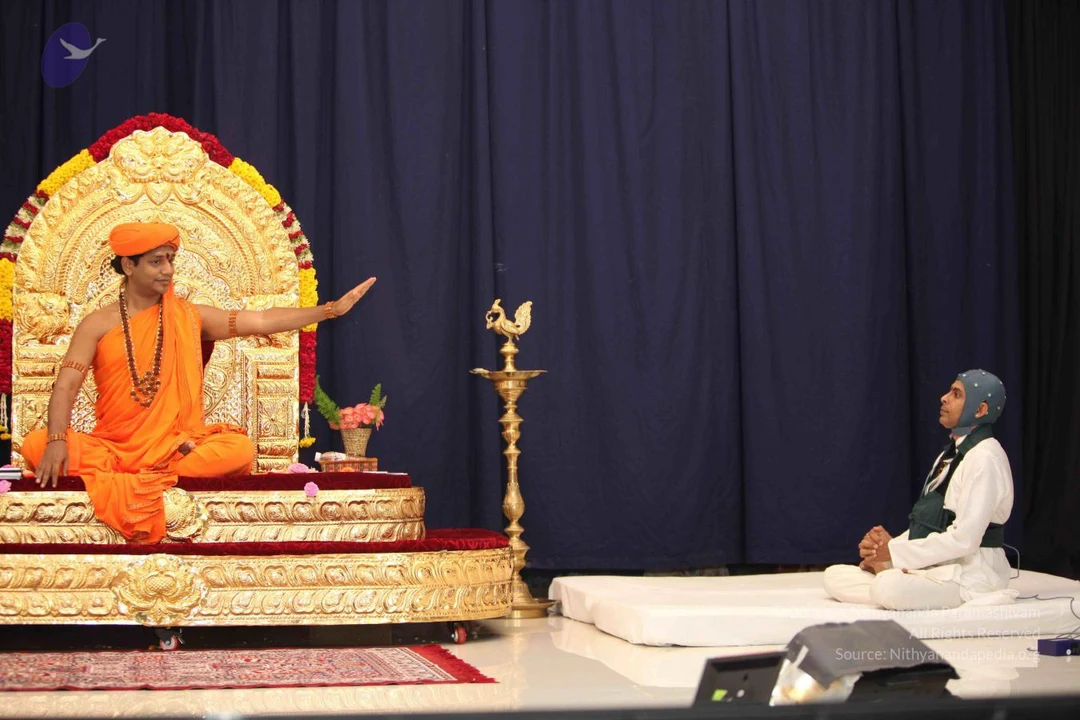
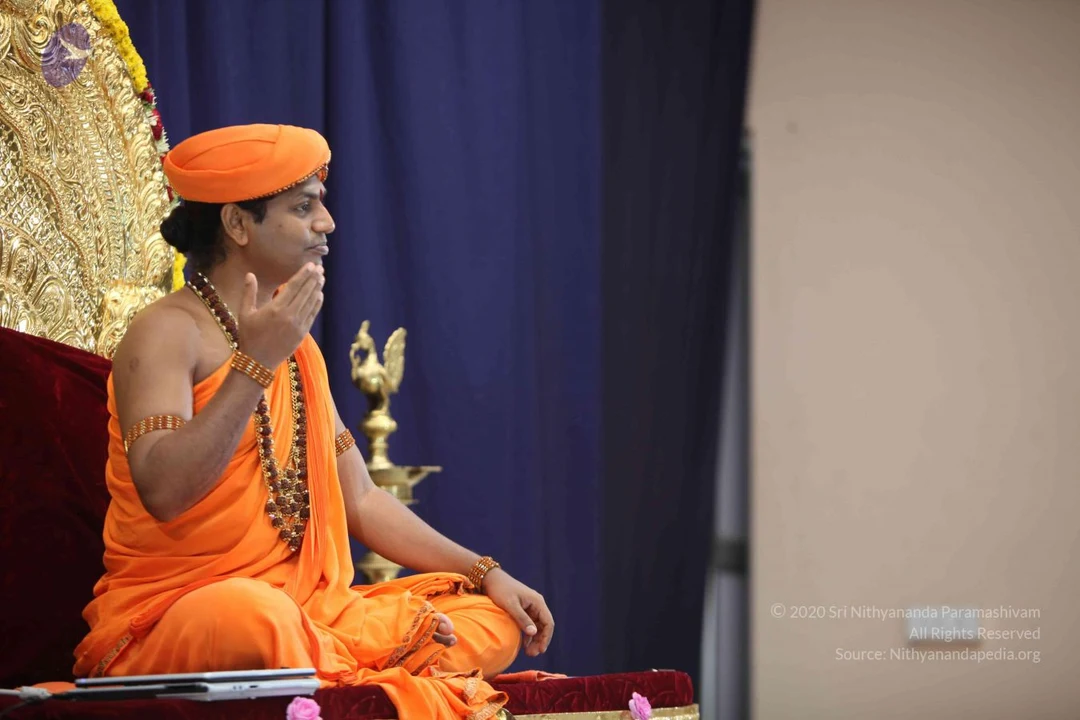
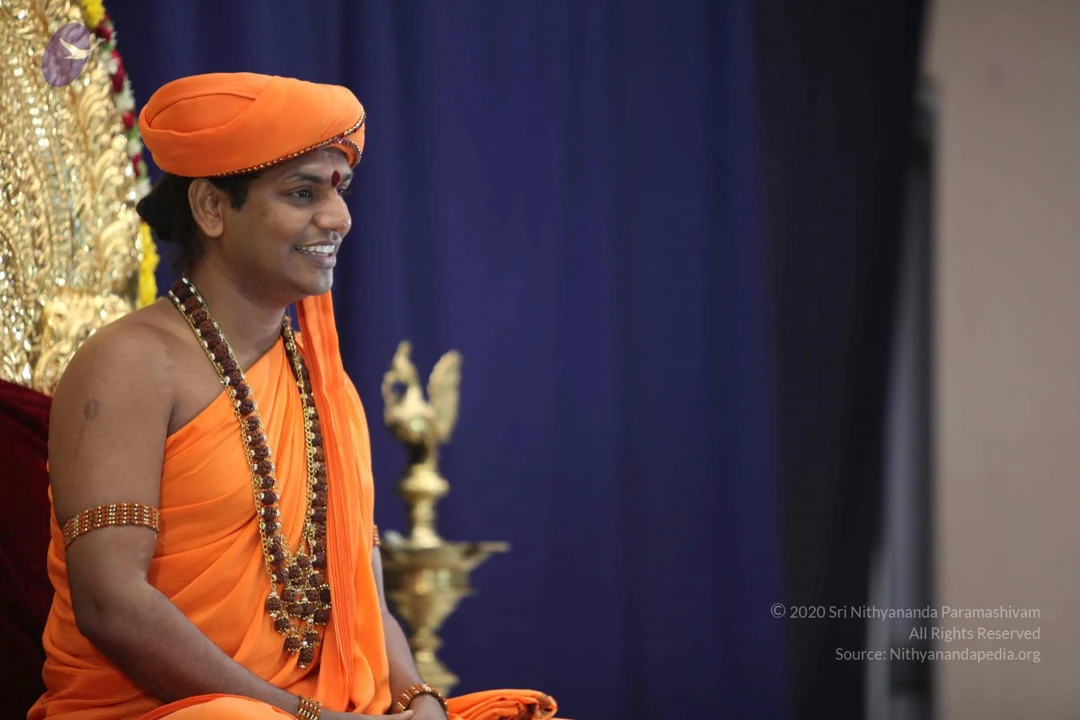
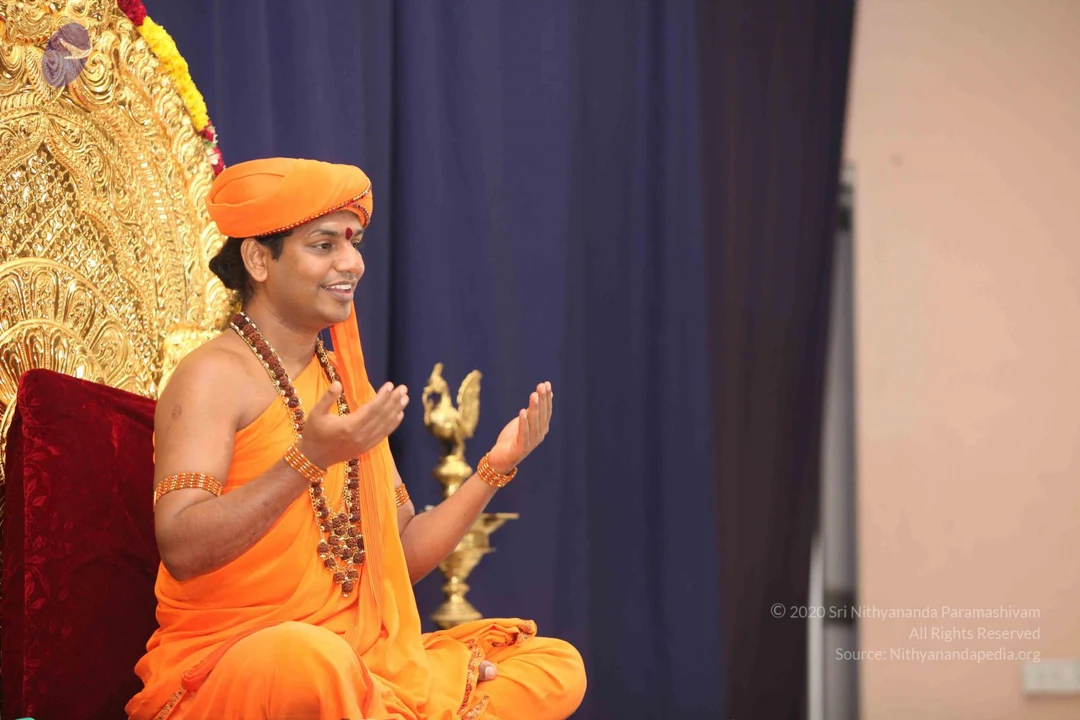
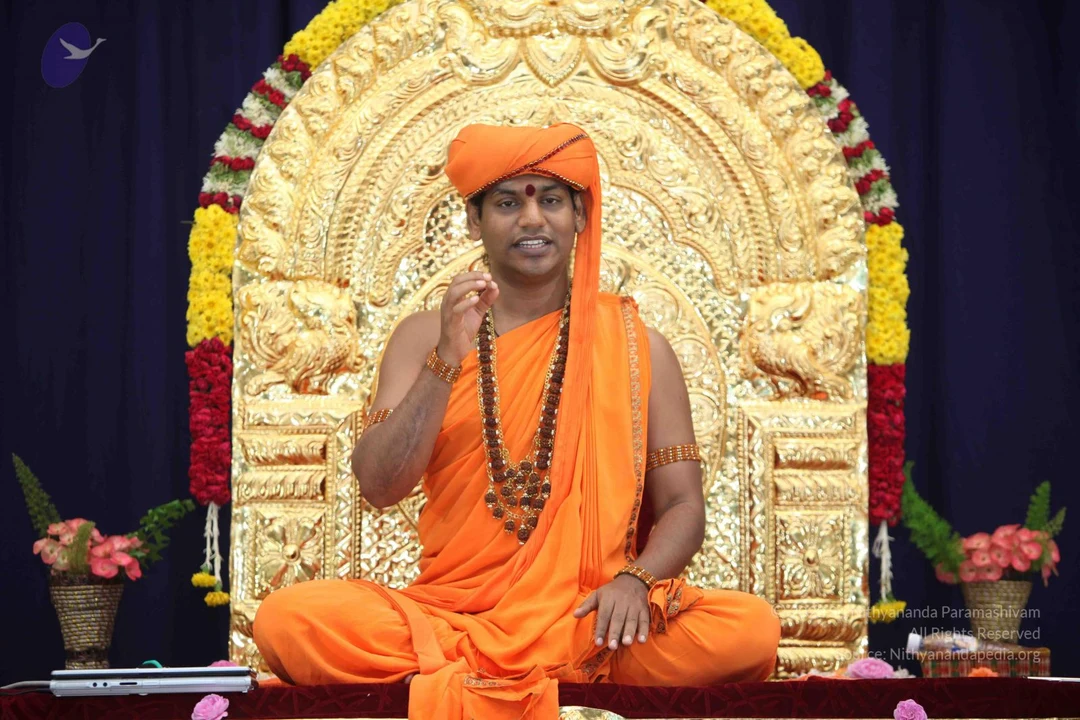
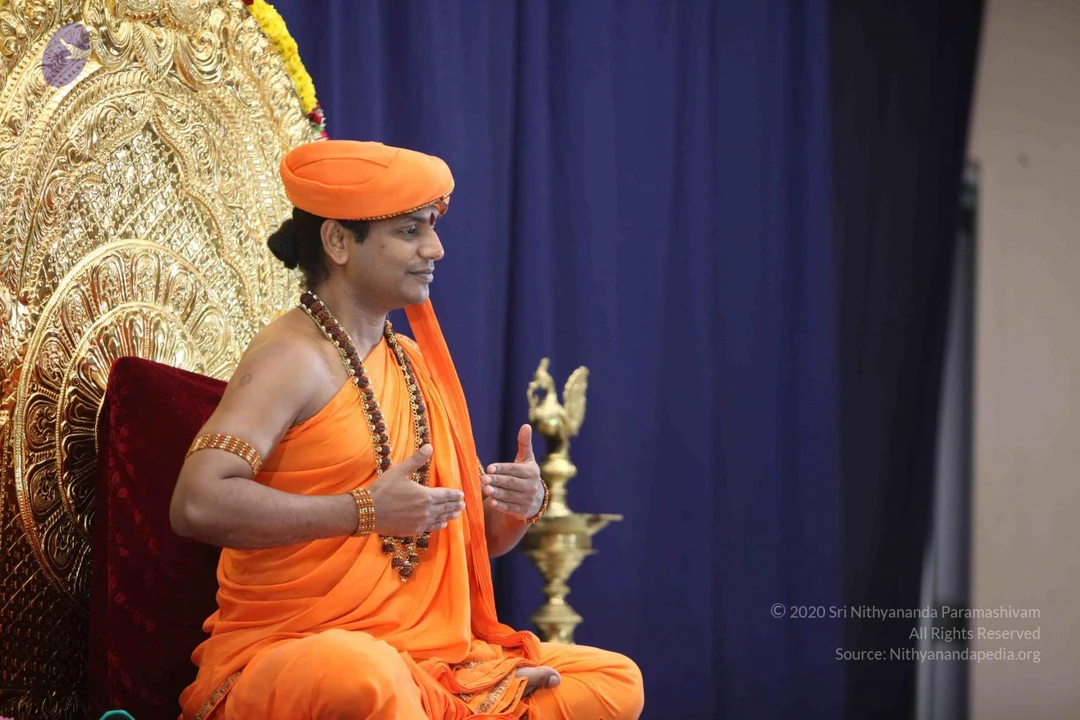
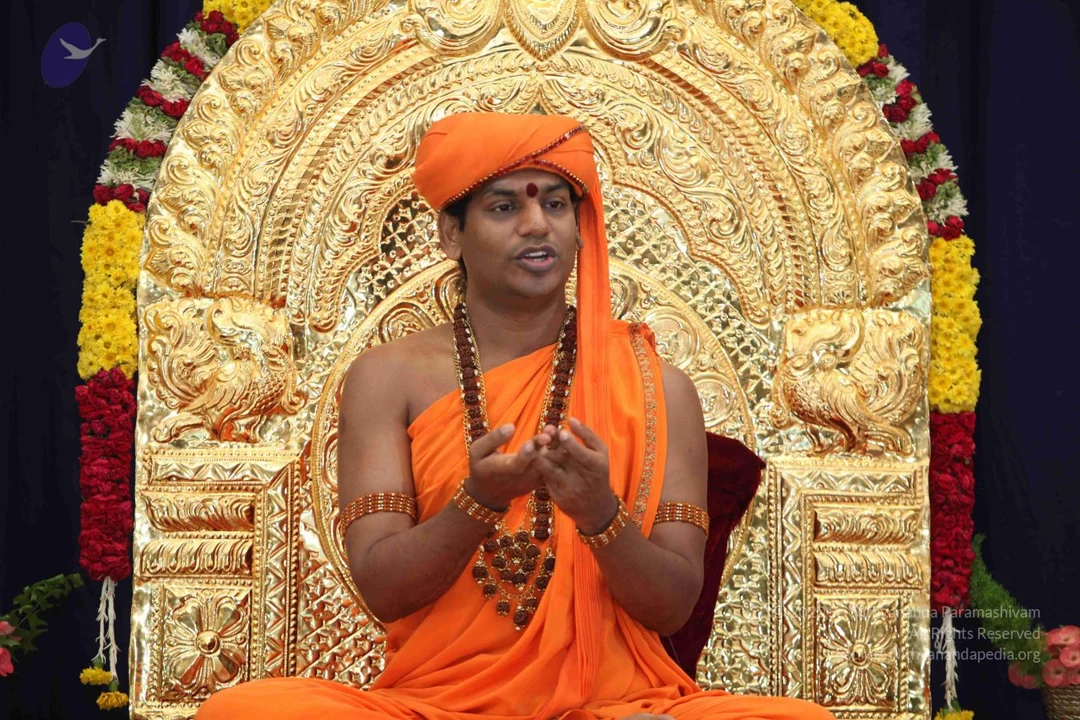
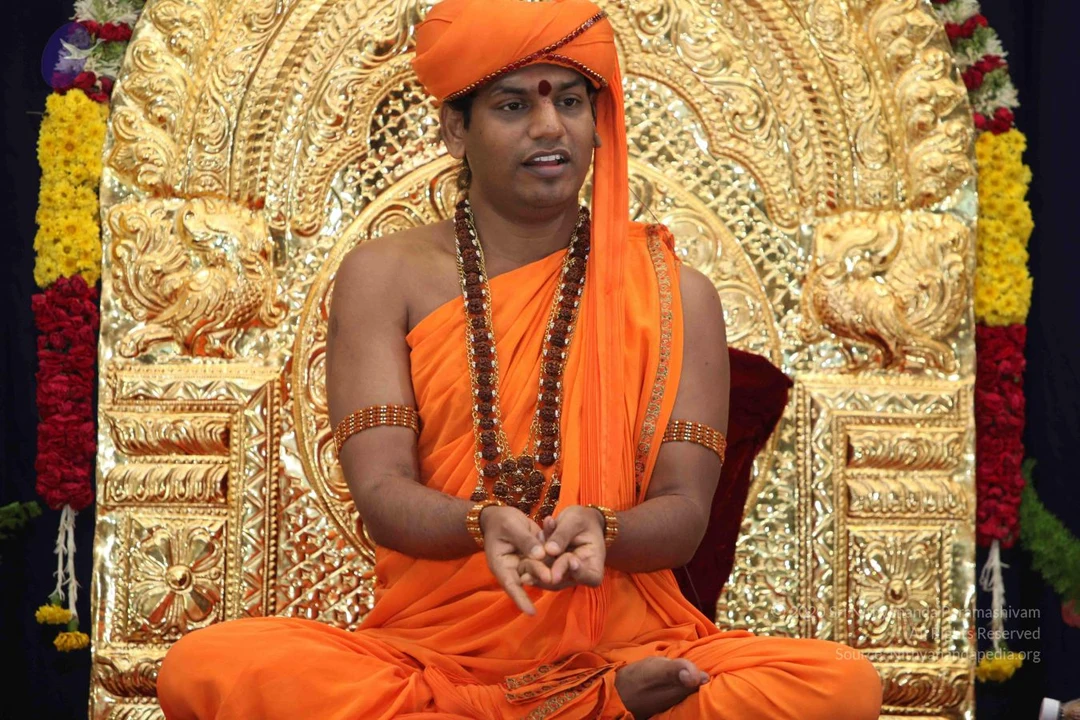
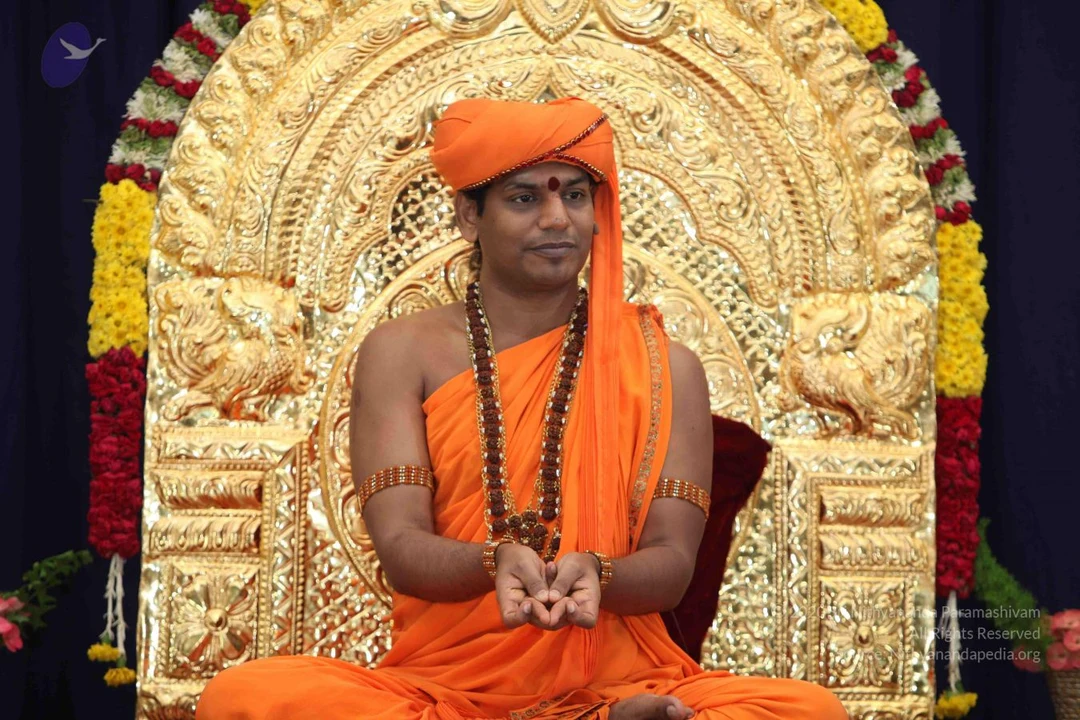
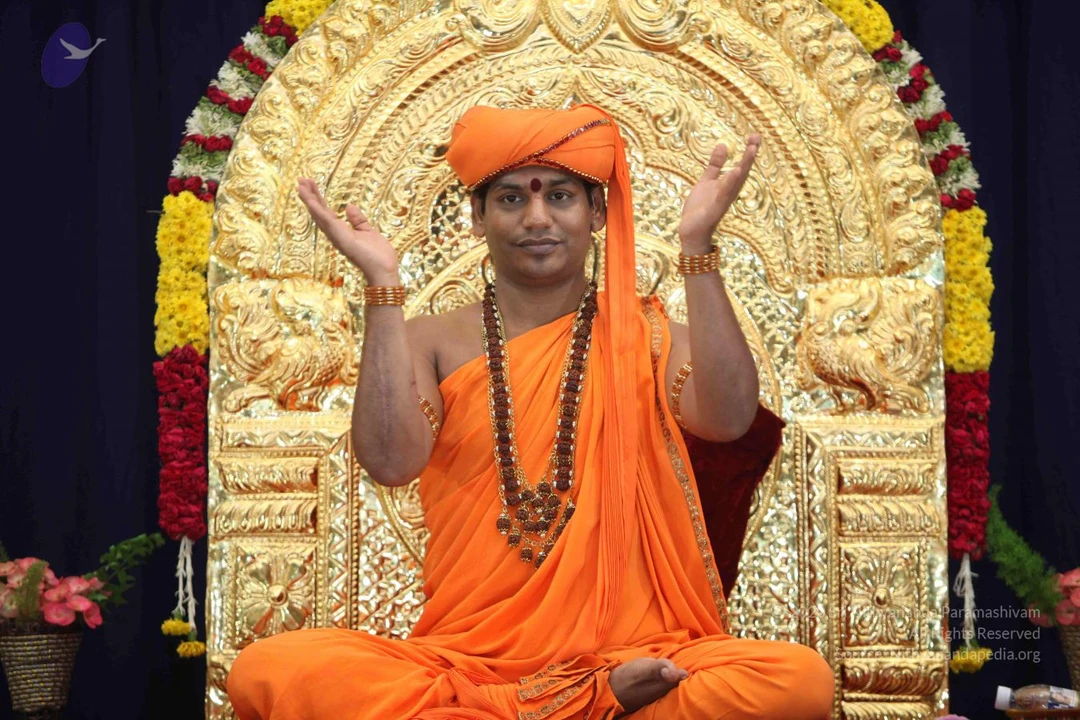
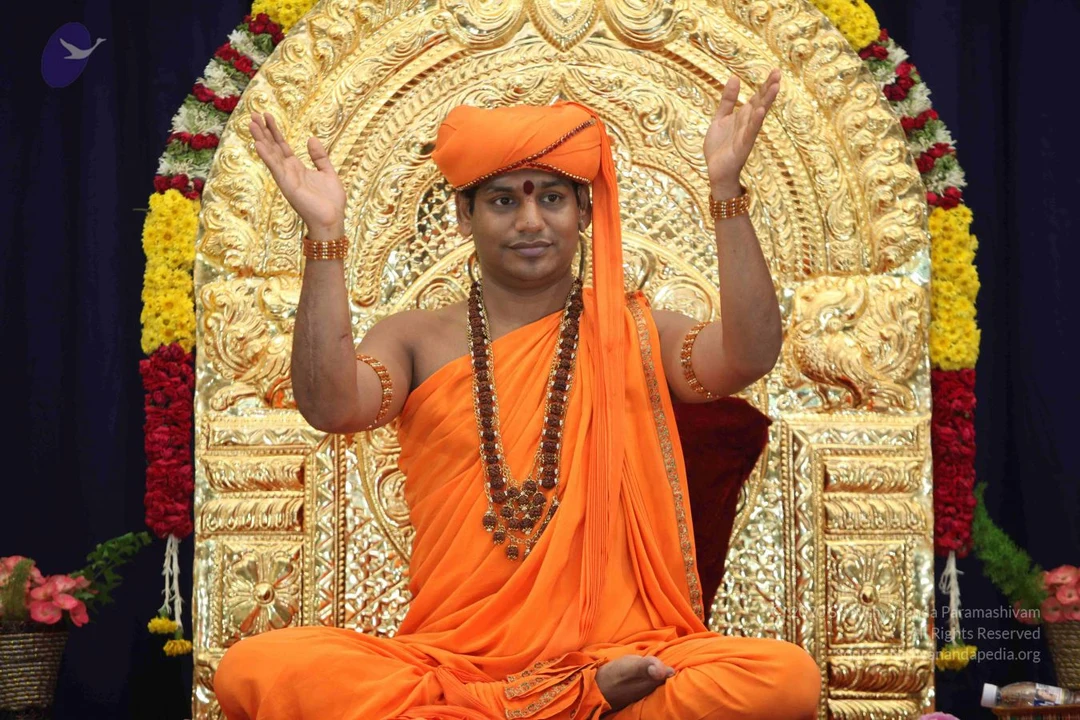
In today's talk on Bhagavad Gita, Chap 2, Verse 57, Paramahamsa Nithyananda explains the difference between definition and practical instruction. Definition describes the state we aim for, which spontaneously unfolds once we have transformed our consciousness. The practical instruction to achieve this clarity is to understand our inner identity. Human beings form the link between animal and God: we are evolving from the lower to the higher levels of experience. We can spotlight the higher moments in ourselves and nourish them to make them strong, while composting the lower vibrations of violence and greed. As we raise our spiritual frequency, wisdom and compassion naturally flower in our lives.

Link to Video:

VideoAudio

Link to Video:

VideoAudio

Description:

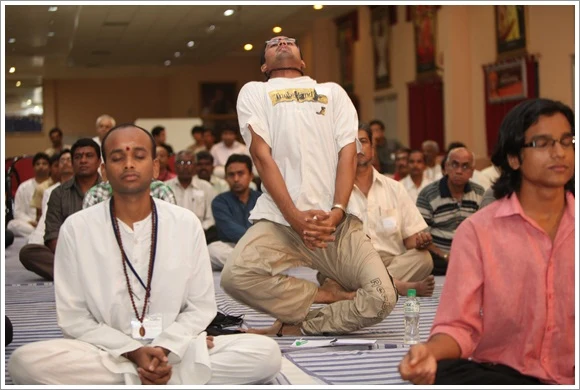
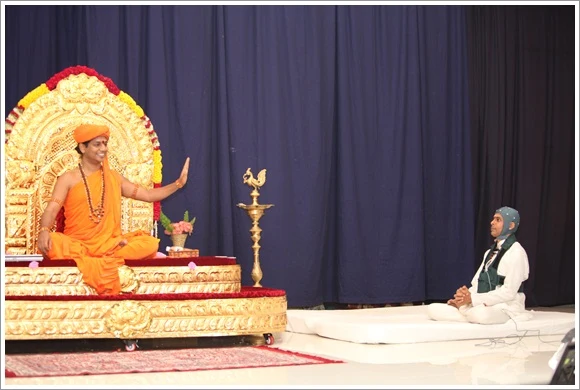
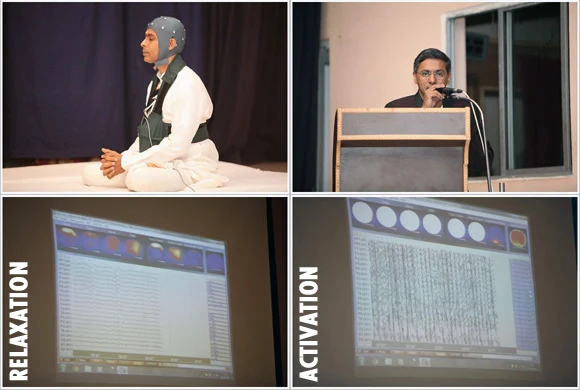
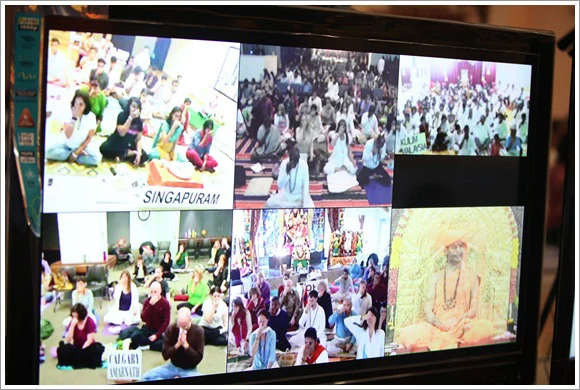
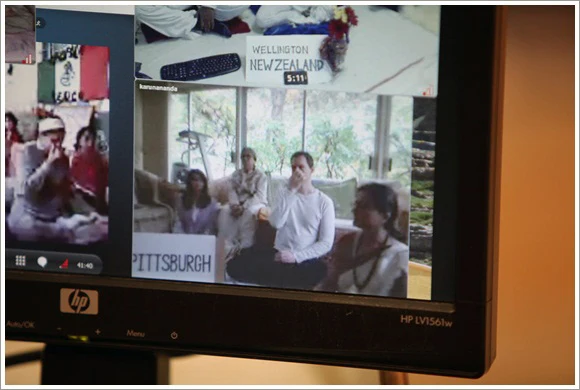
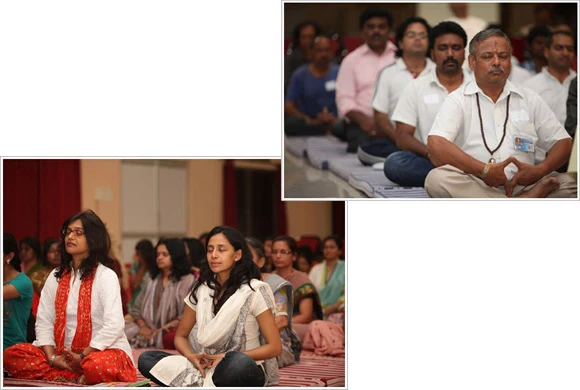
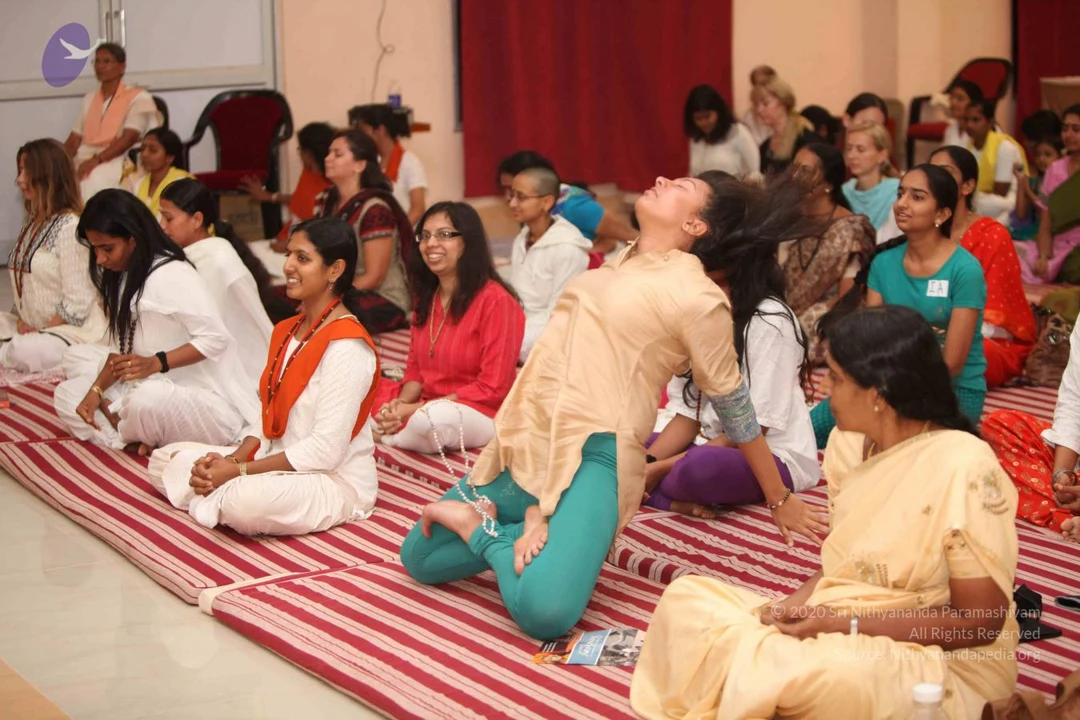
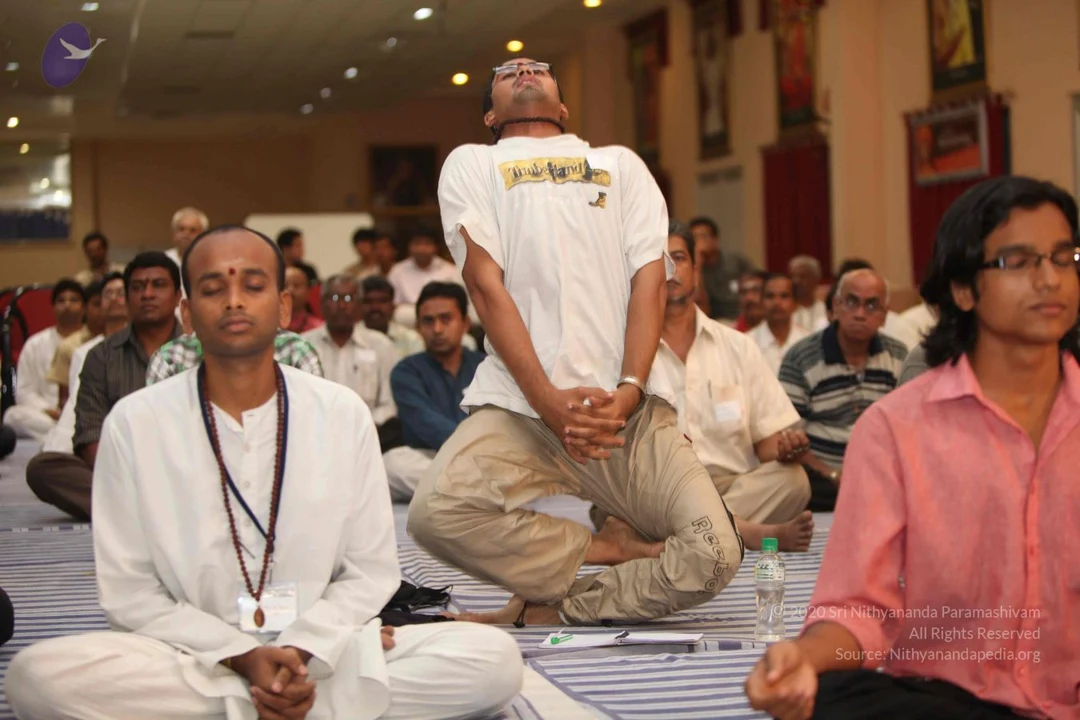
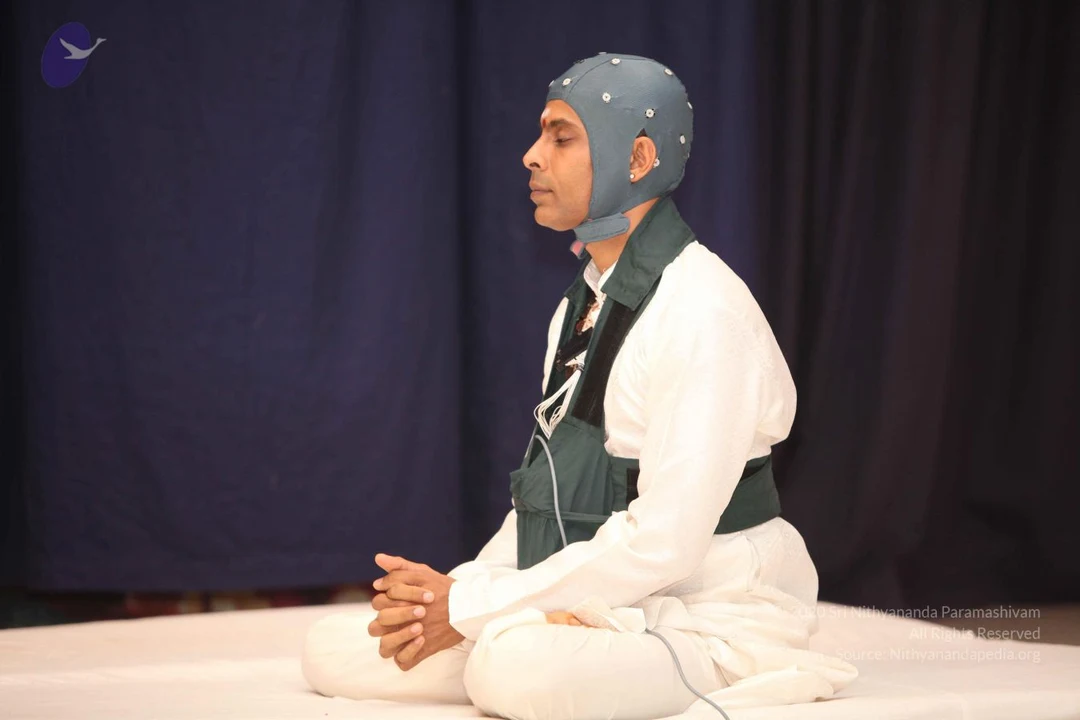
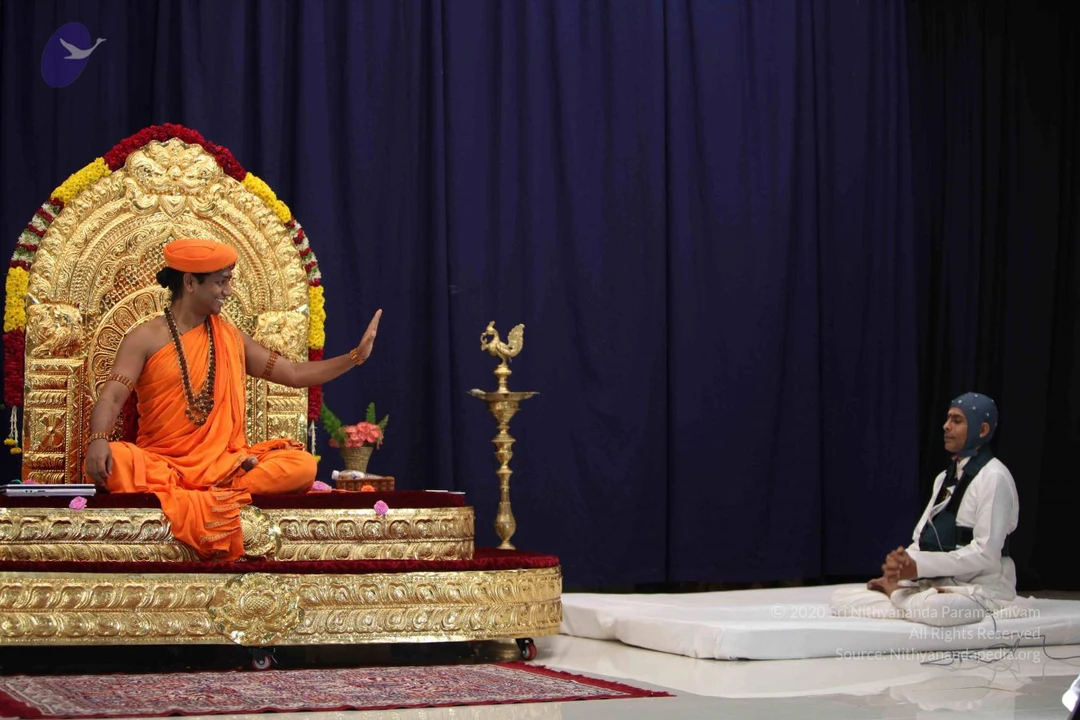
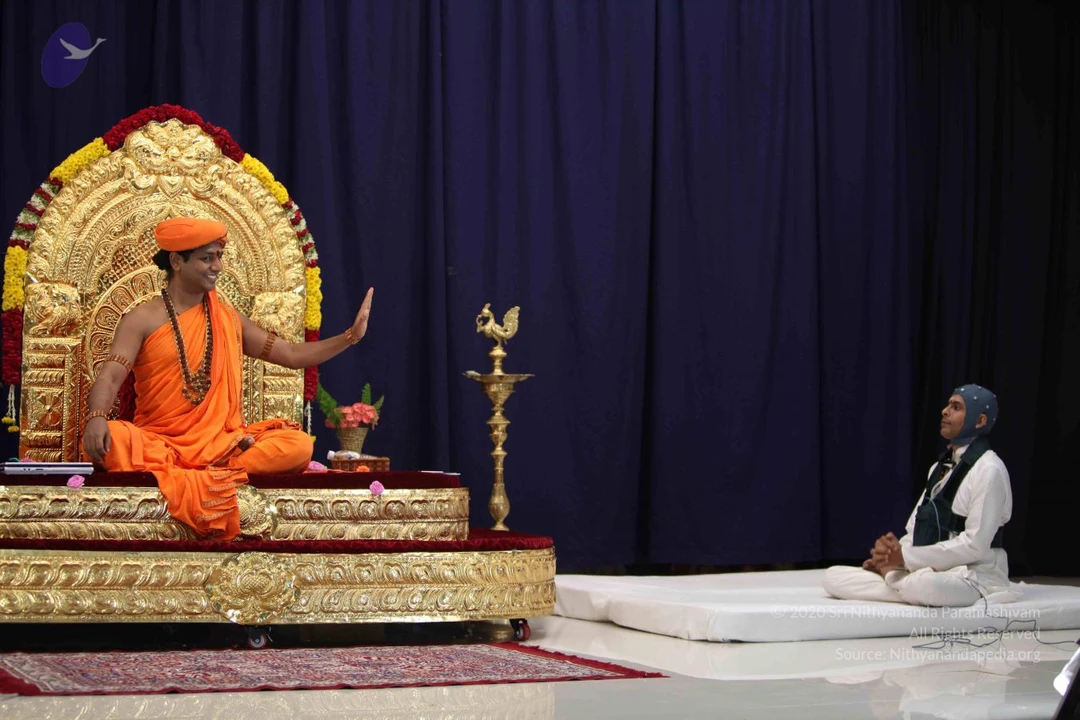
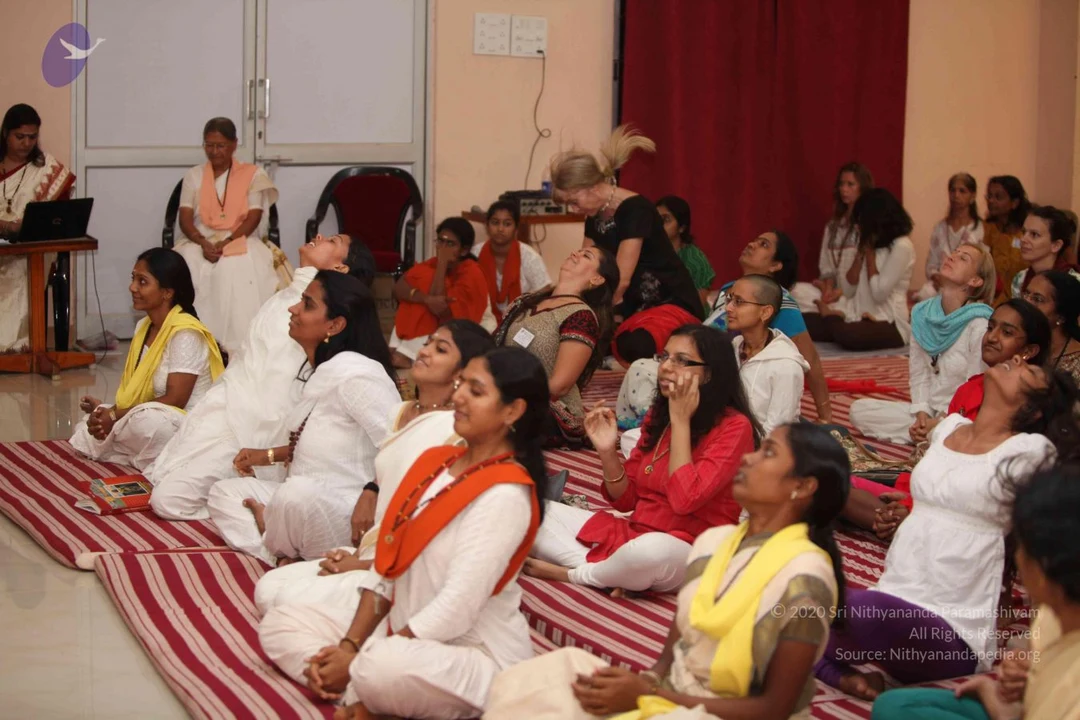
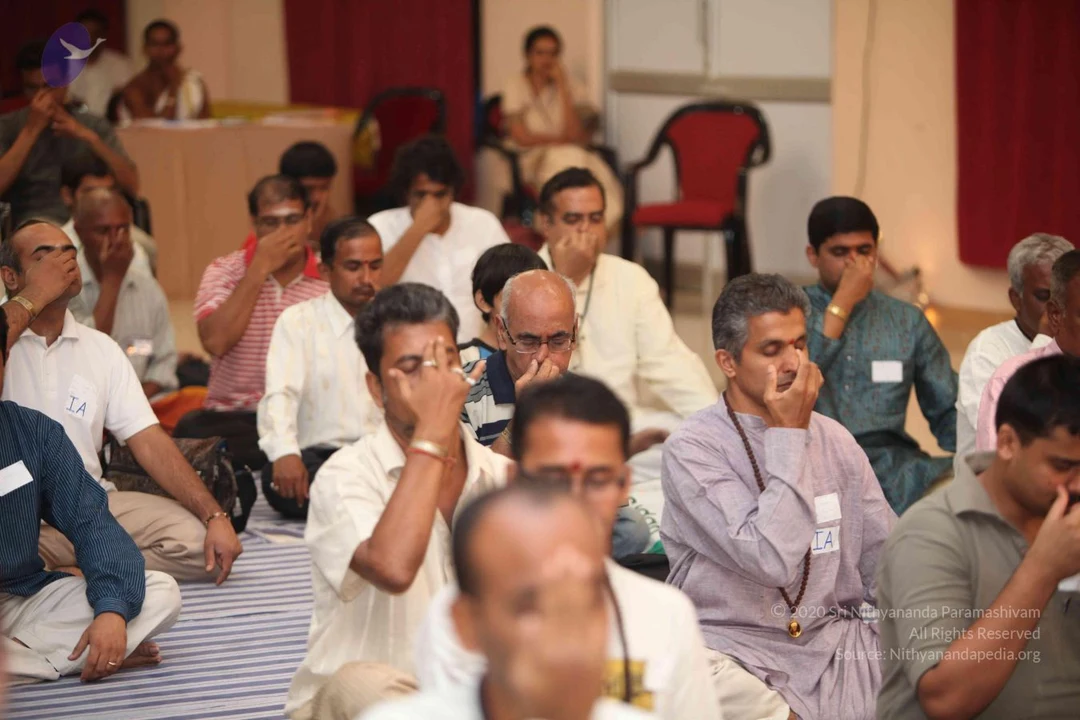
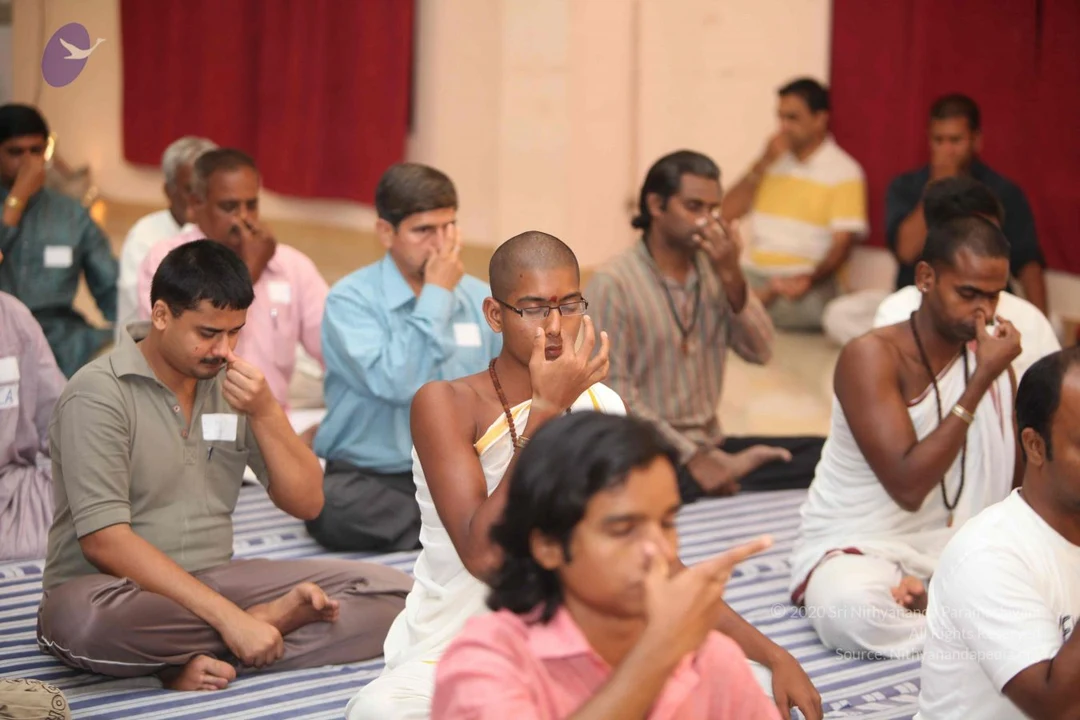
The earliest documented evidence of the knowledge of Kundalini Yoga is in the great India epic Ramayana. In that, the author, Maharishi Valmiki initiates two young boys, Luv and Kush in to Kundalini Awakening. He explains to the two children that the power of Kundalini can only be transmitted only from a Great Master and the receiver is bestowed with extra-ordinary powers. Kundalini"—one can't ignore its existence nor the influence and impact it is creating in human consciousness, even today. What is Kundalini and why is it given such an important place in the history of Human Consciousness? From the beginning of human life on planet earth, Indian Sages, Indian Rishis, Indian enlightened beings were constantly developing techniques, methods, processes to awaken the Kundalini of the individual and mass. We have the most refined Kundalini Awakening system available This energy is described in different ways in different yogic literatures, vedic literatures the awakening methods- thousands of methods are used by different Gurus, different masters, different saints, different sages, different incarnations.. The Yajur Veda, a primary sacred text of the Vedic civilization n, declares: 'Yatha pinde tatha brahmande, yatha brahmande tatha pinde As in the individual, so in the universe, as in the universe, so in the individual.' As a fragment of this universal hologram, every individual is a perfect microcosm, a flawless and adequate representation of the forces governing the cosmos. When Kundalini manifests at the universal level she is known as Paraa Kundalini, the supreme power of the cosmos. When she plays in the individual, she is the gracious mother, the life-force that nourishes the body , the energy that empowers his mind, and the conscious power that guides him to his ultimate spiritual fulfillment. The concept of God held in different religions. But our Vedic masters in Vedic Tradition even God is nothing but a method to awaken our Kundalini energy. In Vedic Tradition Kundalini is given higher place than the concept of God. Vivekananda says even praying to God is a technique to awaken your own Kundalini. Vedic Tradition puts even God as a stepping stone for individual Kundalini awakening. The Shiva Samhita declares: Suptaa guruprasaadena yatha jaagarti kundali Tathaa sarvaani padmaanibhidyante granthayo'pi cha (4.12) 'When the sleeping Kundalini is awakened by the Guru's grace. Then are all bondages pierced (broken)' Paramahamsa Nithyananda is one such rare being who lives and moves among us today. A young, charismatic enlightened master from India, Paramahamsa Nithyananda is also a siddha yogi, spiritual healer, orator, author and the founder of an international socio-spiritual organization with followers in 154 countries. He heads Madurai Aadheenam one of India's ancient and traditional mutt. He is the heir of a 5000-year-old lineage of enlightened yogis who live and train on the legendary mountain of Arunachala in southern India. Nithyananda is an adept in the mystical yogic sciences whose fulcrum is the awakening of the mighty Kundalini energy. In a landmark energy expression on our planet, Nithyananda has been awakening the Kundalini of hundreds of thousands of ordinary people, beyond the limitations of time and space, with just a glance, a touch or a wave of his hand. Time and space does not bind Kundalini Energy. Time and space serve Kundalini Energy. A person's Kundalini can be awakened wherever he may be sitting, whatever time it may be. Kundalini literally means 'the coiled one', meaning, infinite untapped potential of the universe. VERSE 82 OF YOGA KUNDALINI UPANISHAD SAYS "The Sakti named Kundalini, which is like a thread in the lotus and is resplendent, is biting with the upper end of its hood (namely, mouth) at the root of the lotus the Mulakanda." Kundalini can be awakened in different ways: Through intense yogic practices lasting a lifetime, or through deeksha -- the direct transmission of spiritual energy by an awakened being. Even as these extraordinary happenings are taking the scientific community by storm Nithyananda himself lives and moves as one among us teaching, healing, initiating and working tirelessly to preserve the mystical science of Kundalini, one of the innumerable spiritual treasures of the millennia-old Yoga-Vedanta traditions of India that might be humanity's only hope for liberation in the centuries to come.

Link to Video:

Link to Video:

Photos
Photos Of The Day:
Shashti-Alankar-Darshan-Deities

Temple

BG-Satsang

Nithya-Kriya

Kalpataru-Darshan

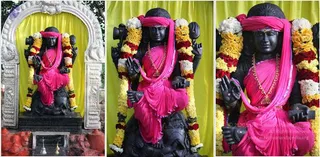
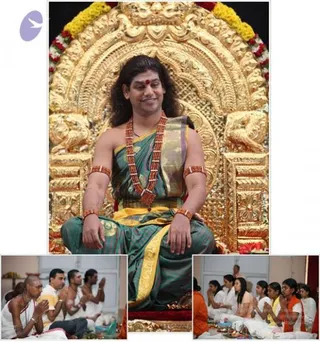
Kundalini-Awakening

Chatru-Samharam

Photos from this day
View all 633 photos
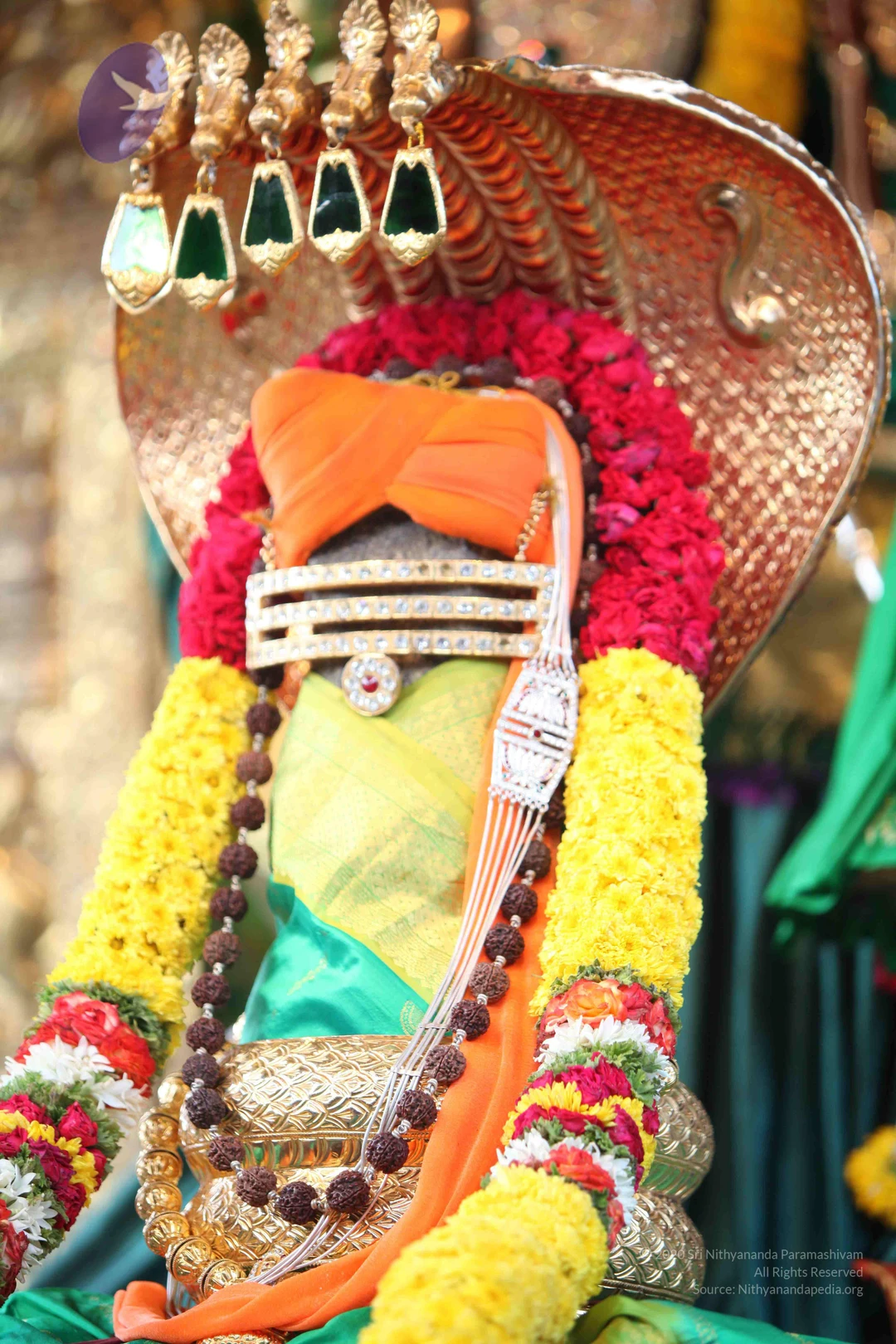
Shashti-Alankar-Darshan-Deities
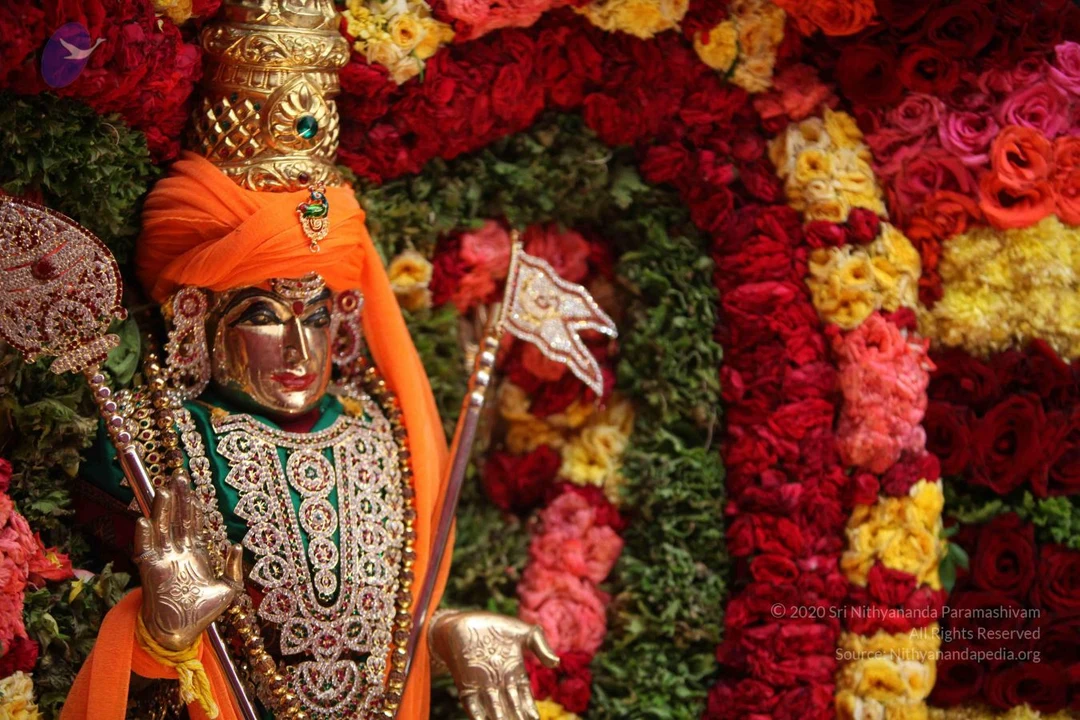
20 photosSource gallery
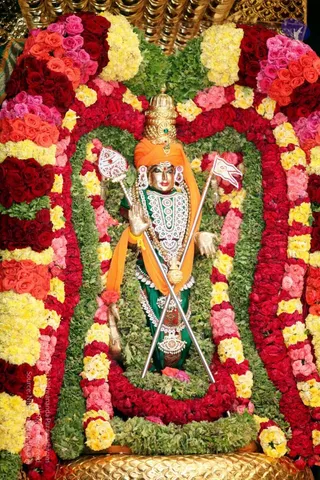
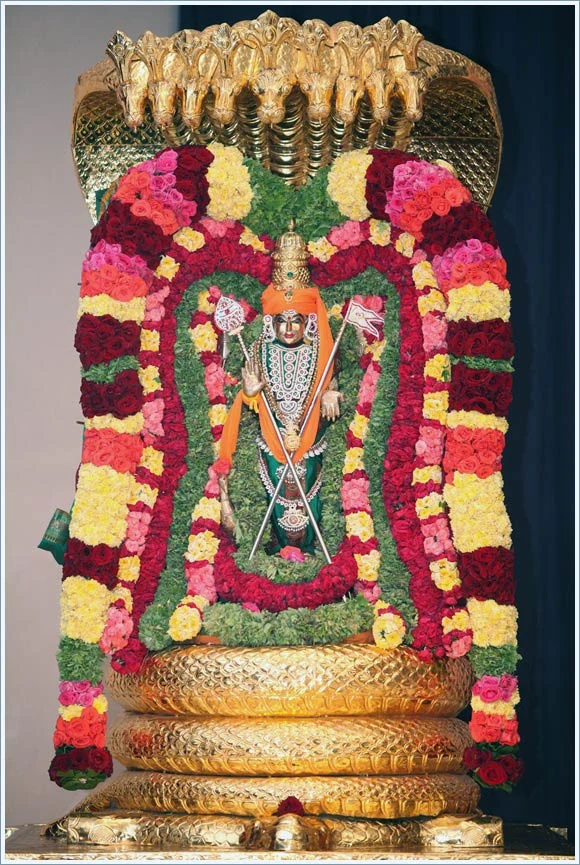
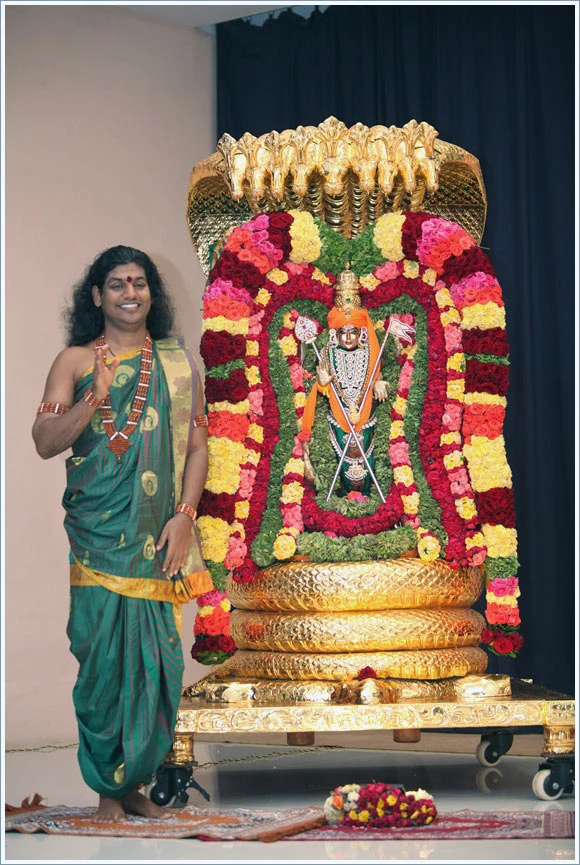
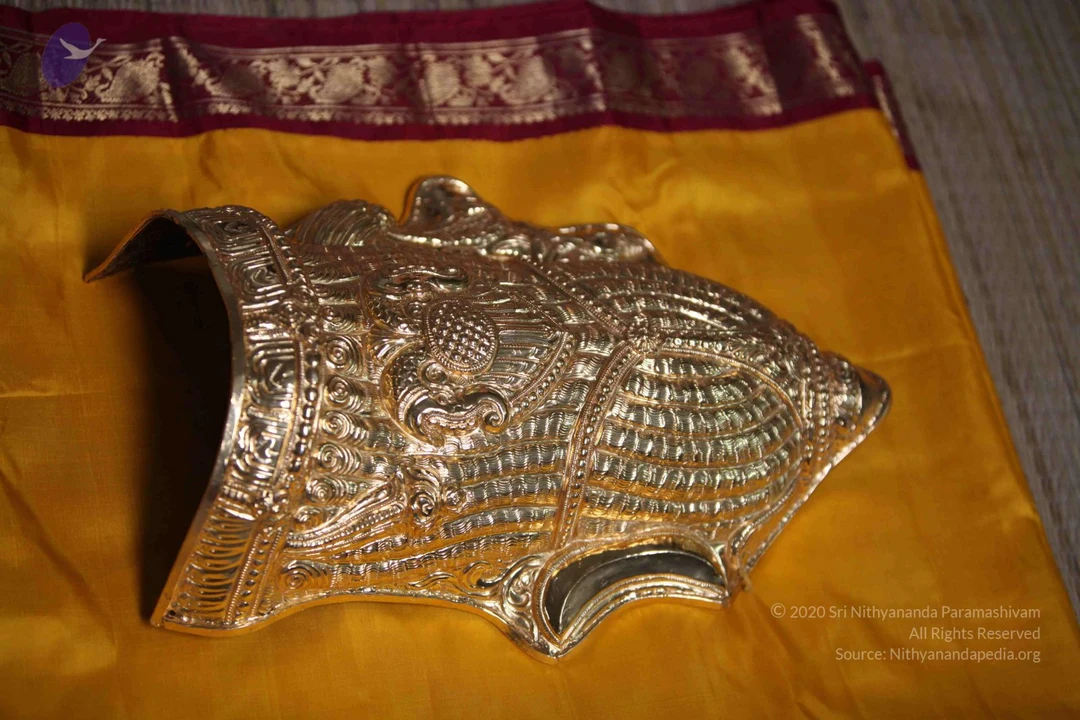
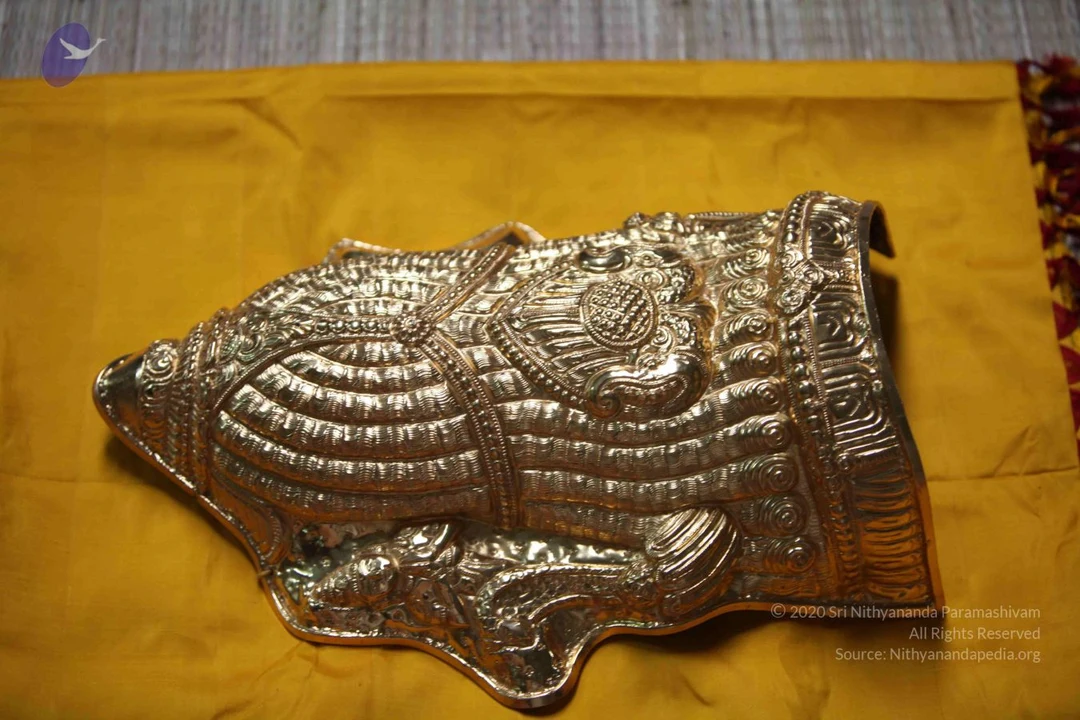
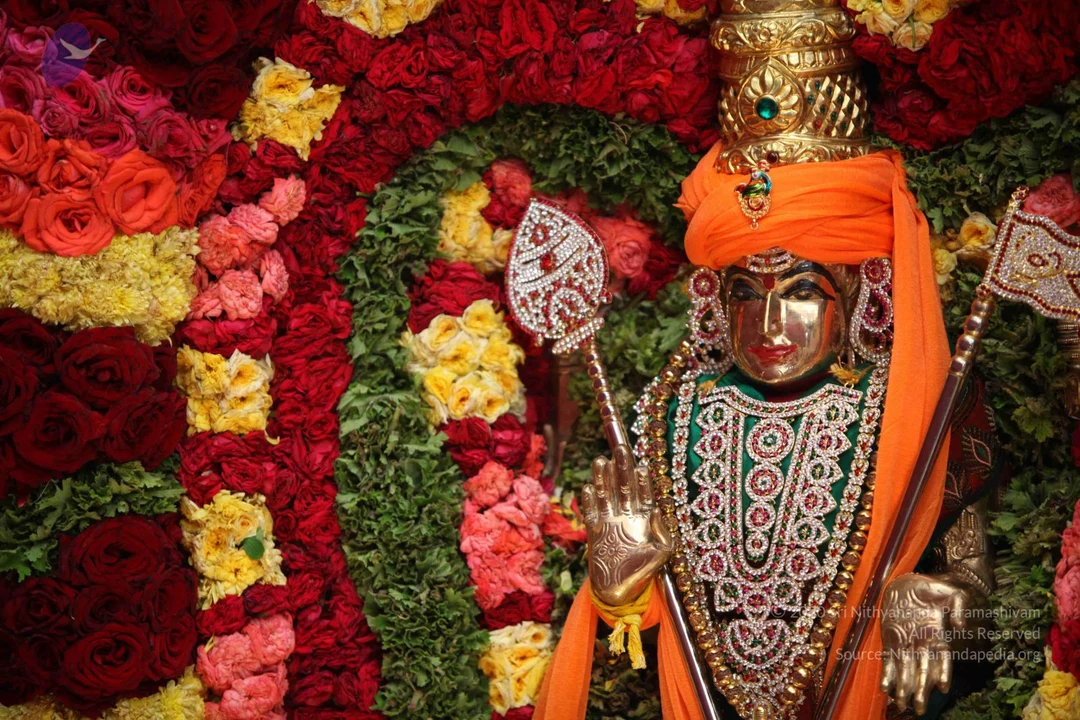
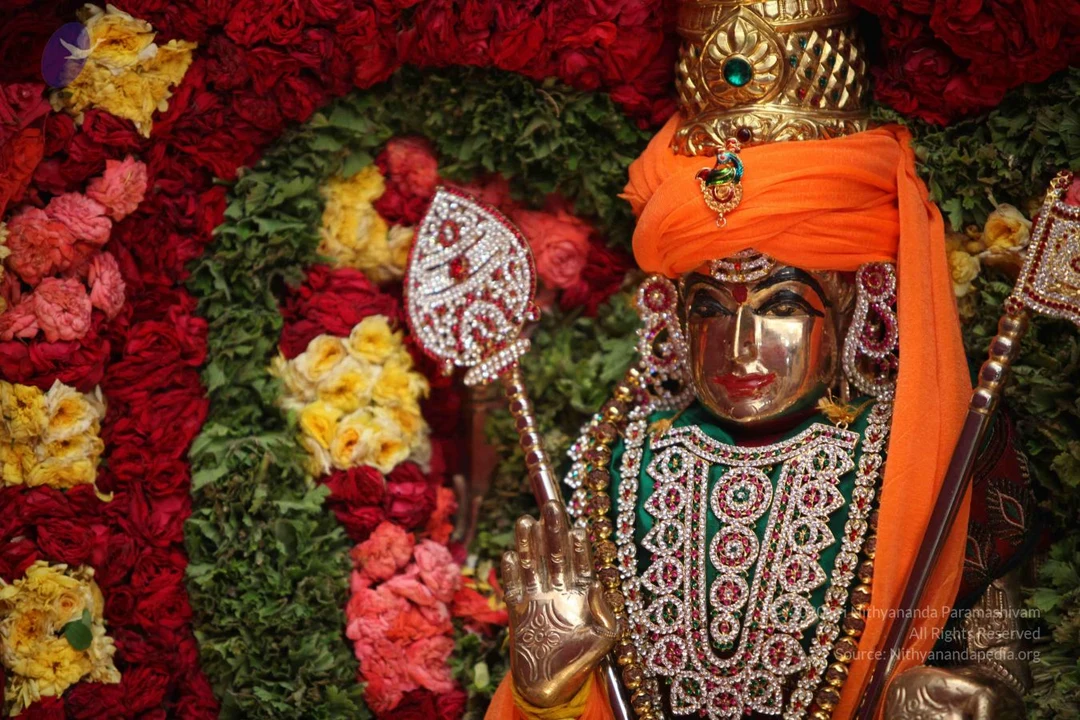
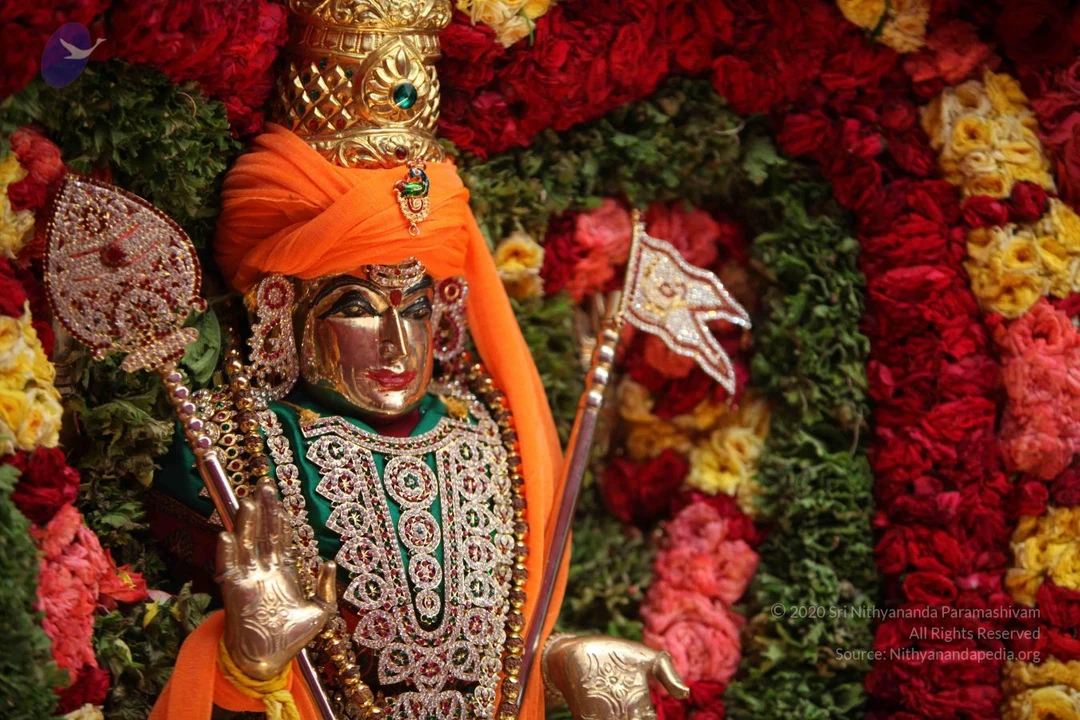
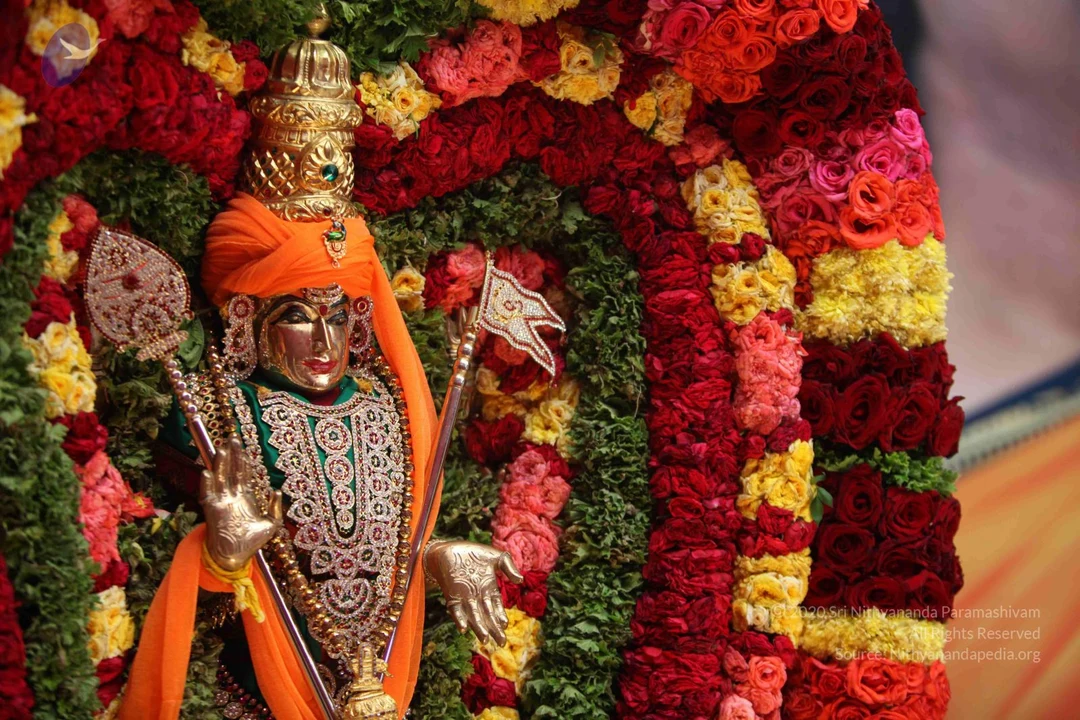
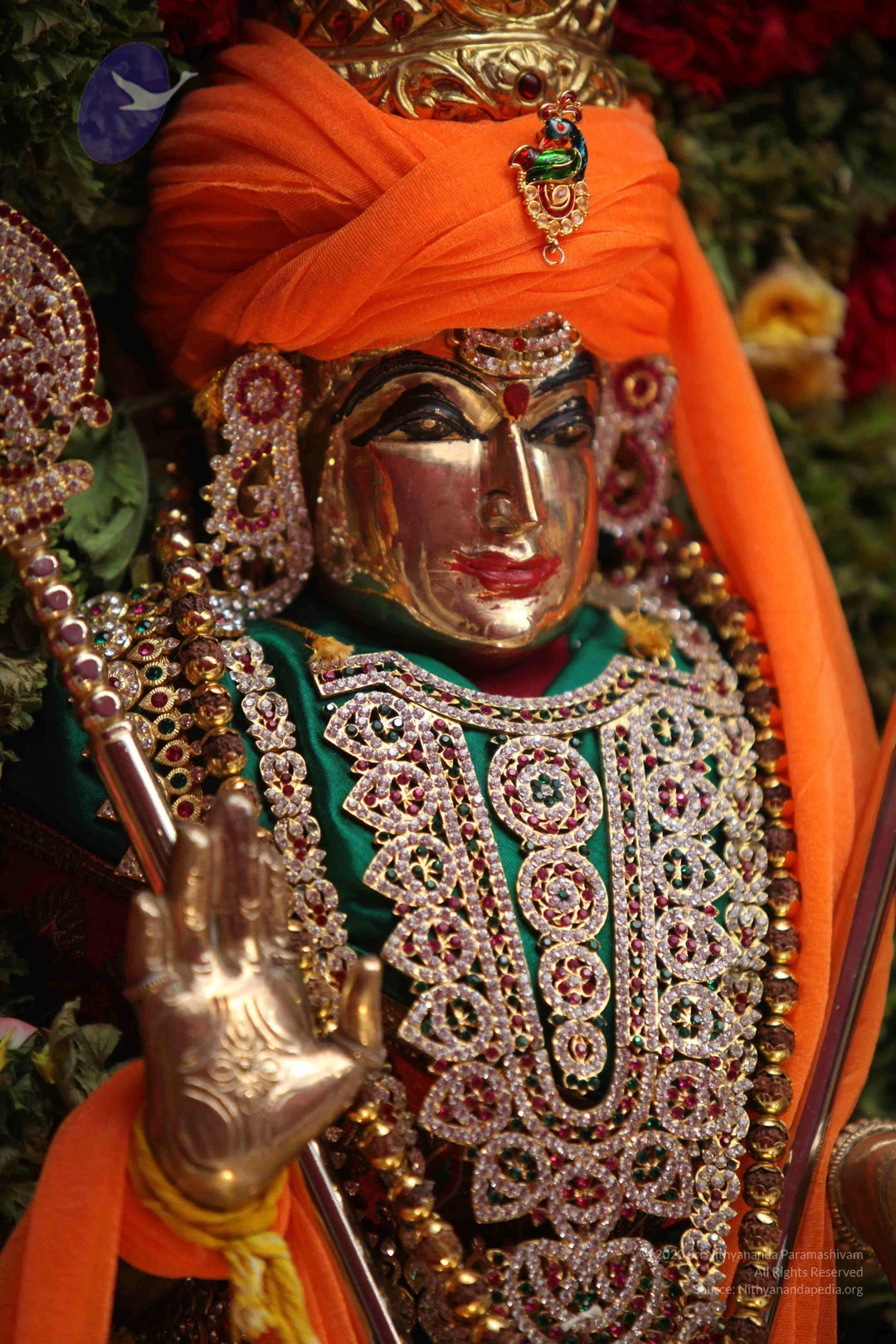
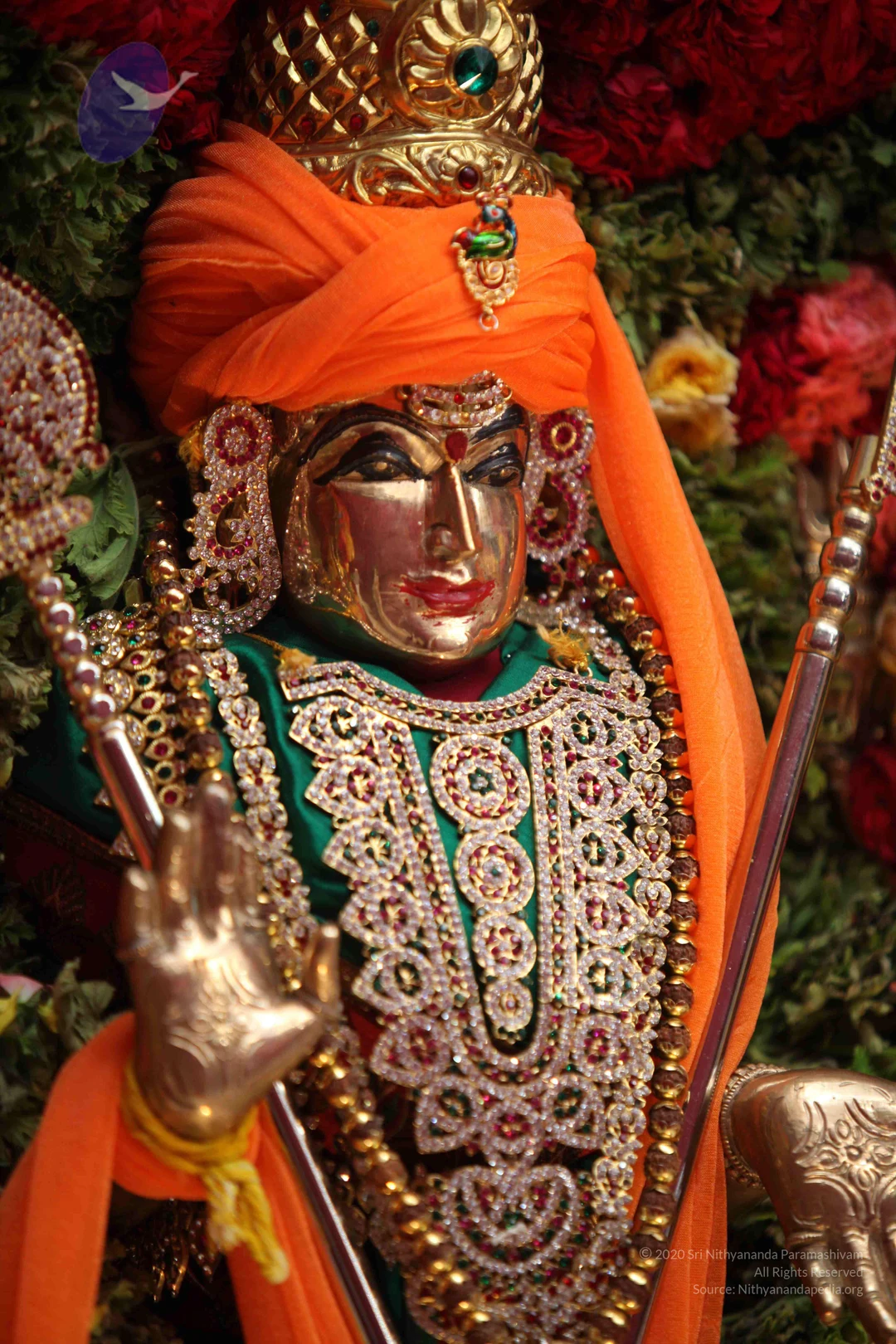
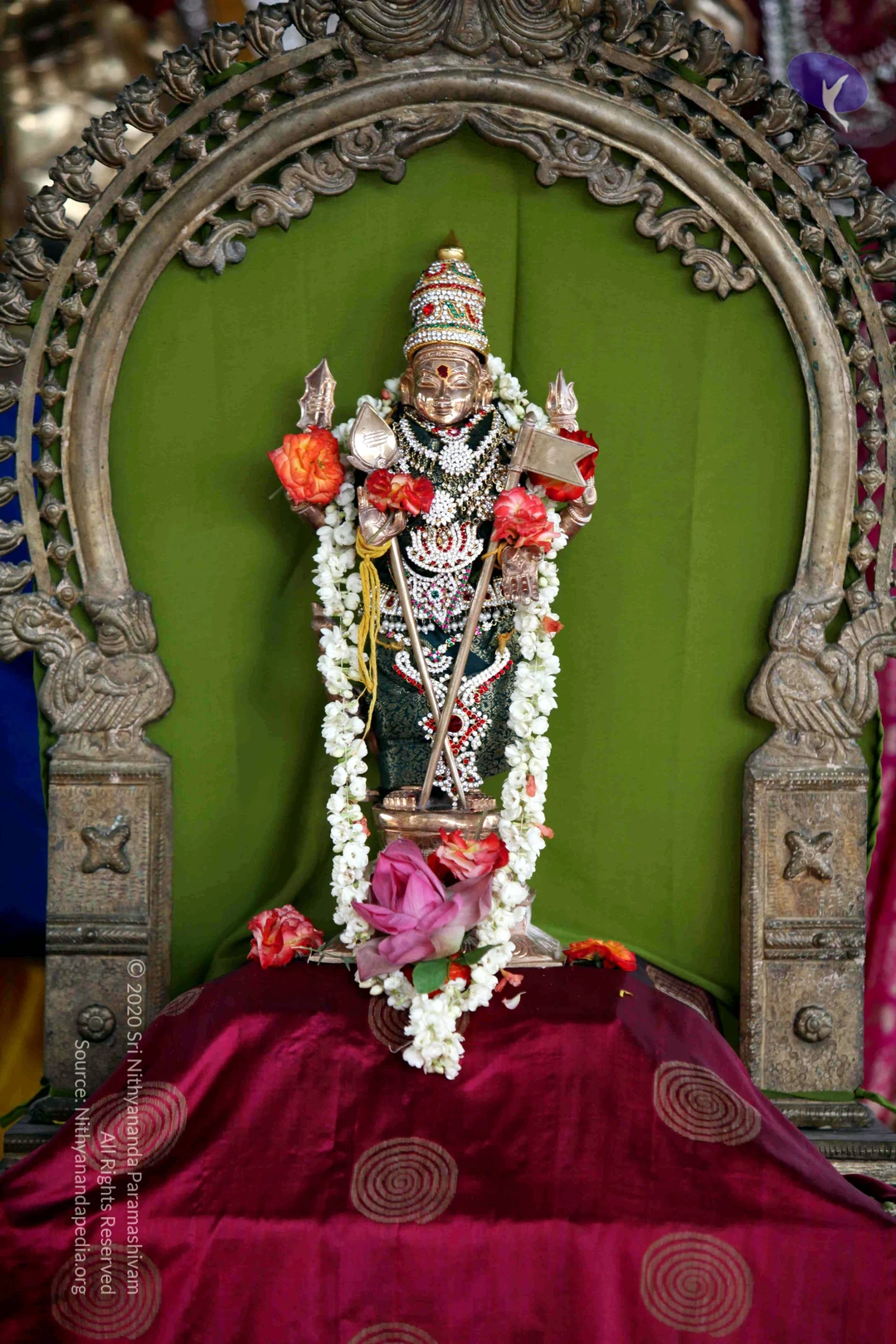
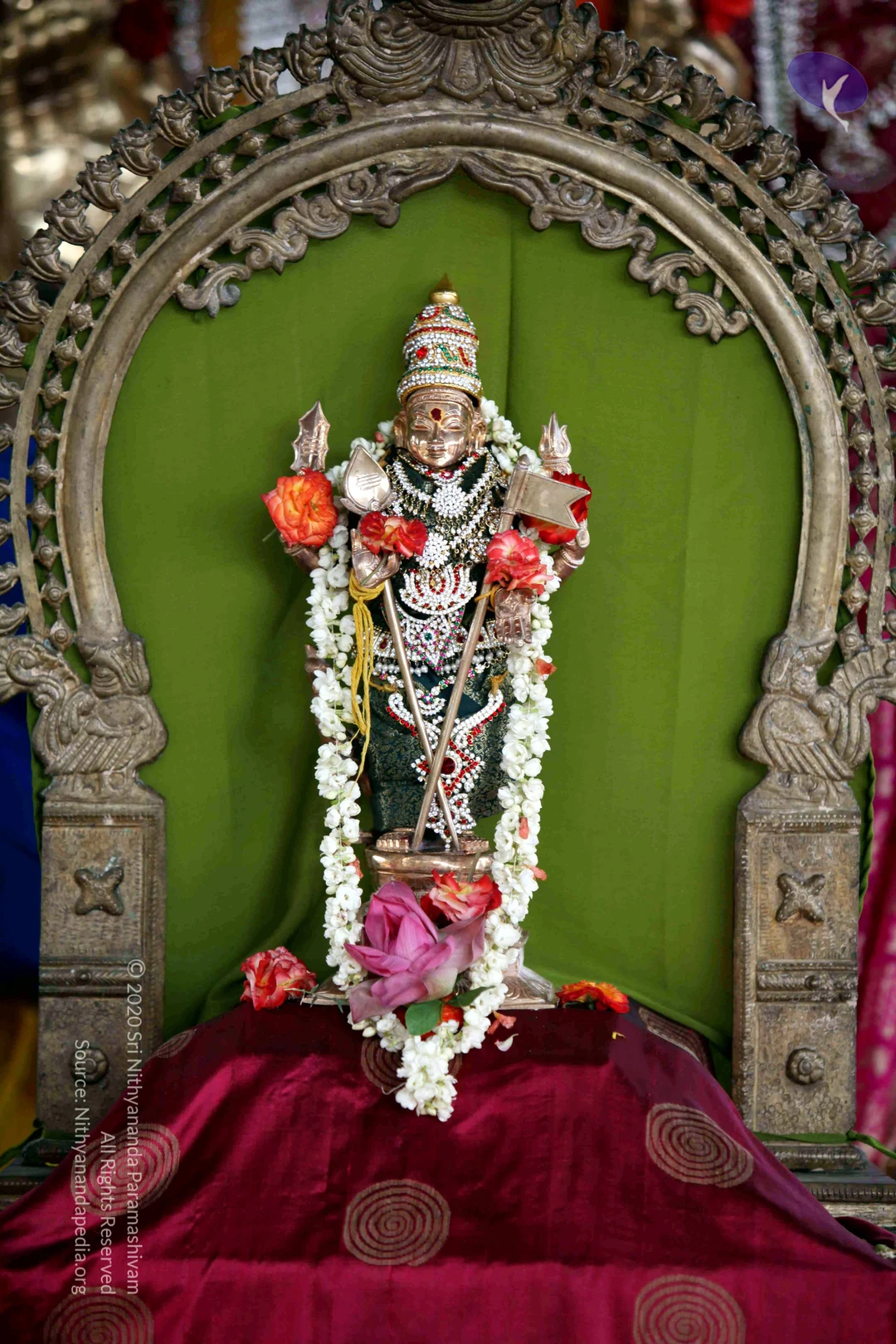
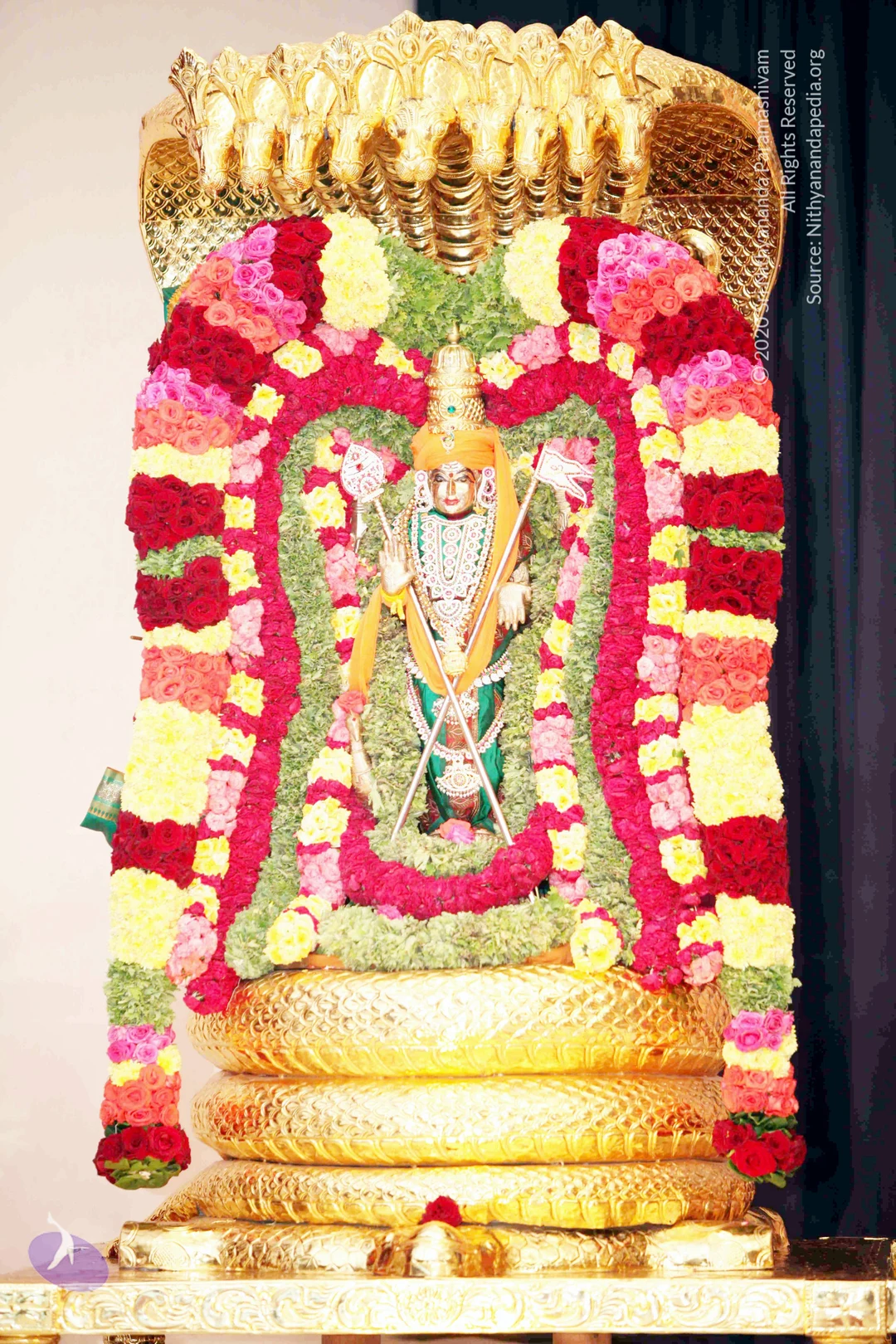
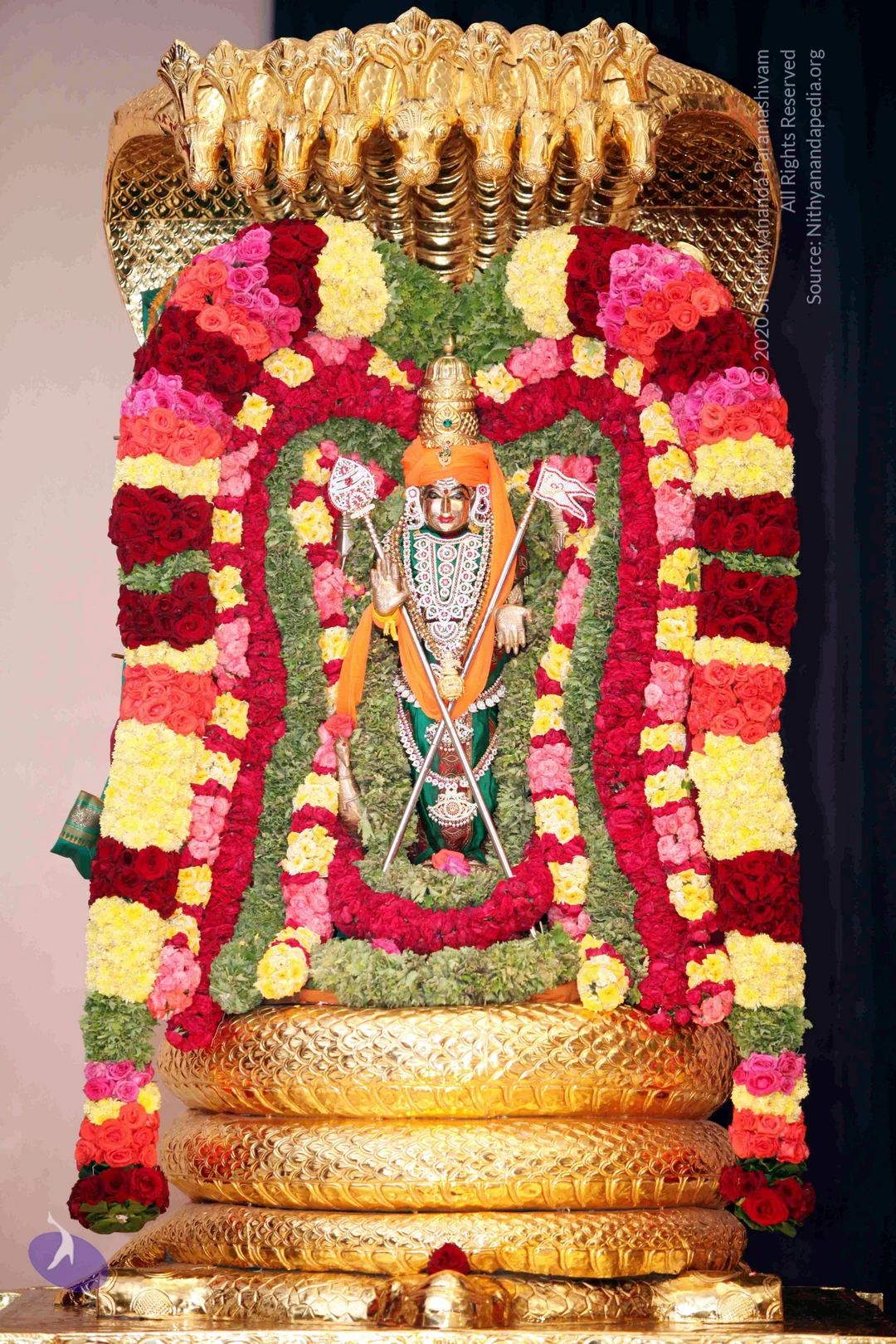
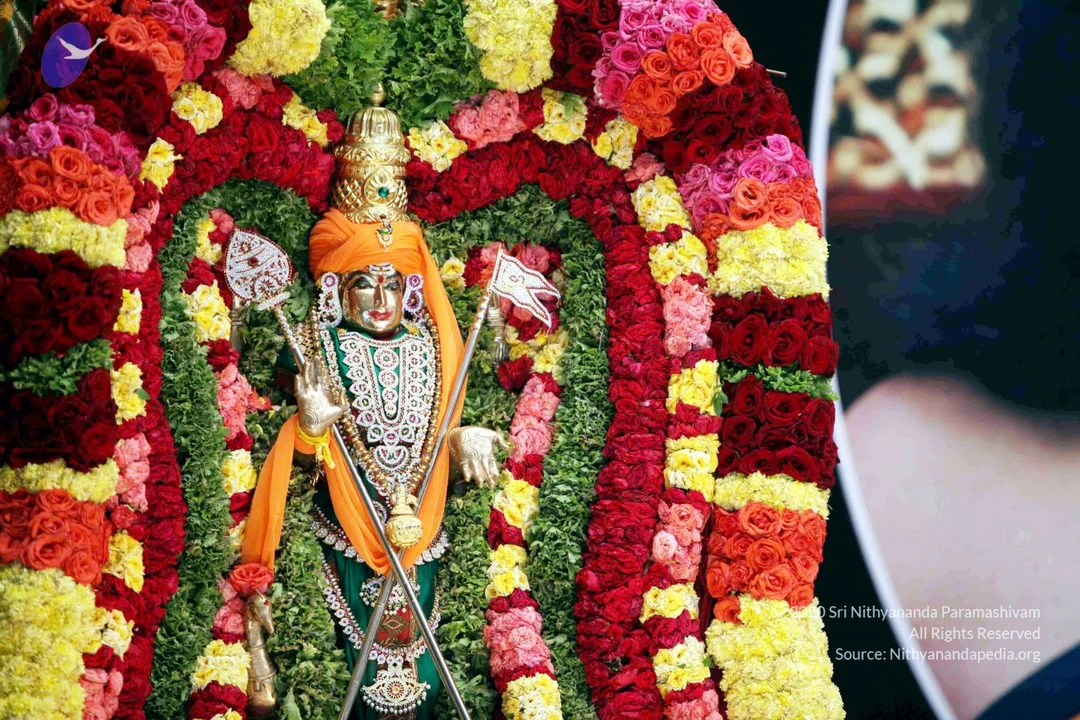
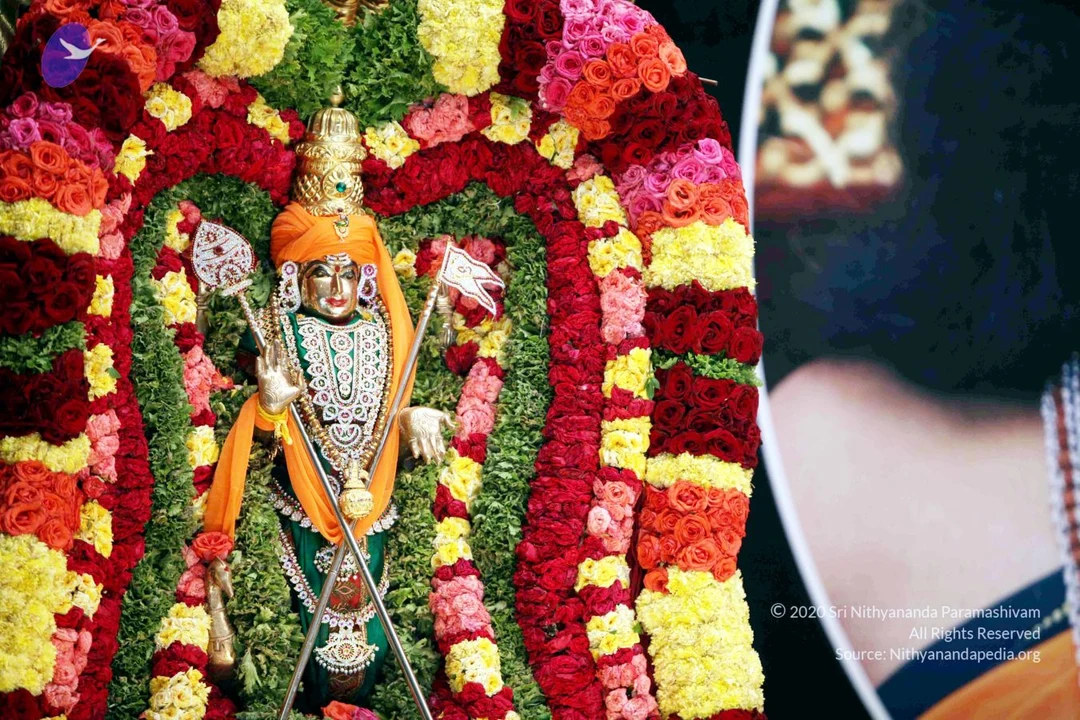
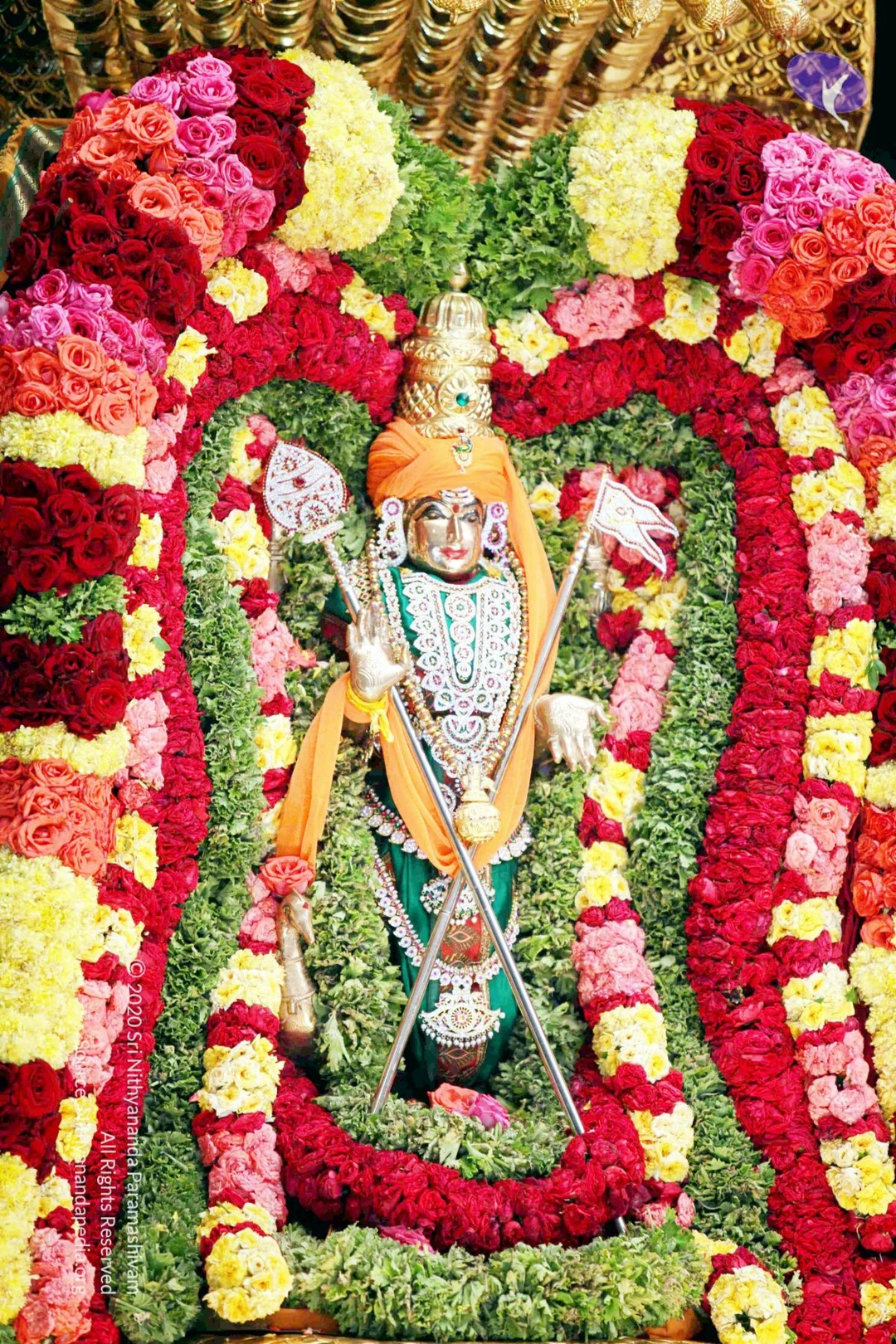
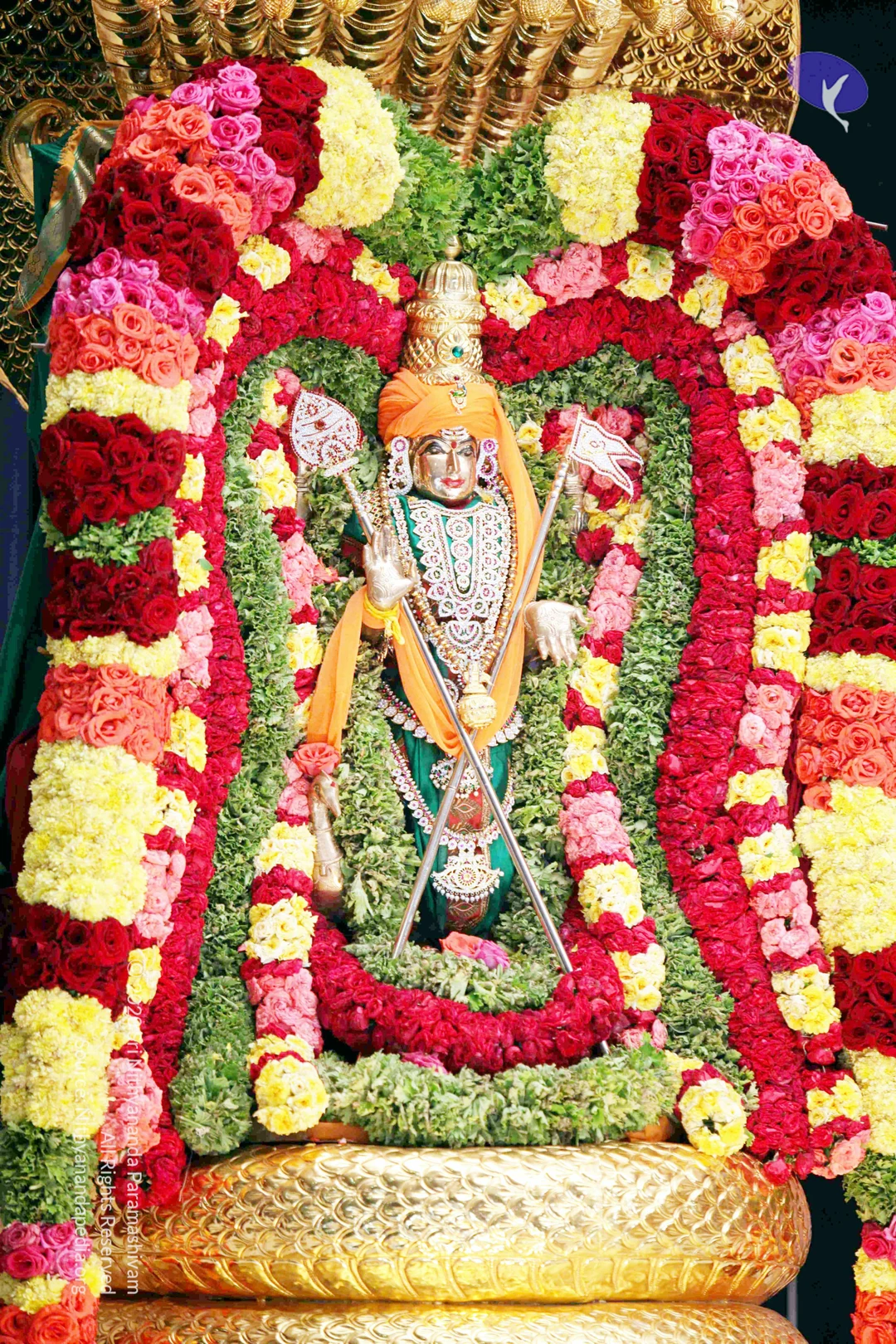
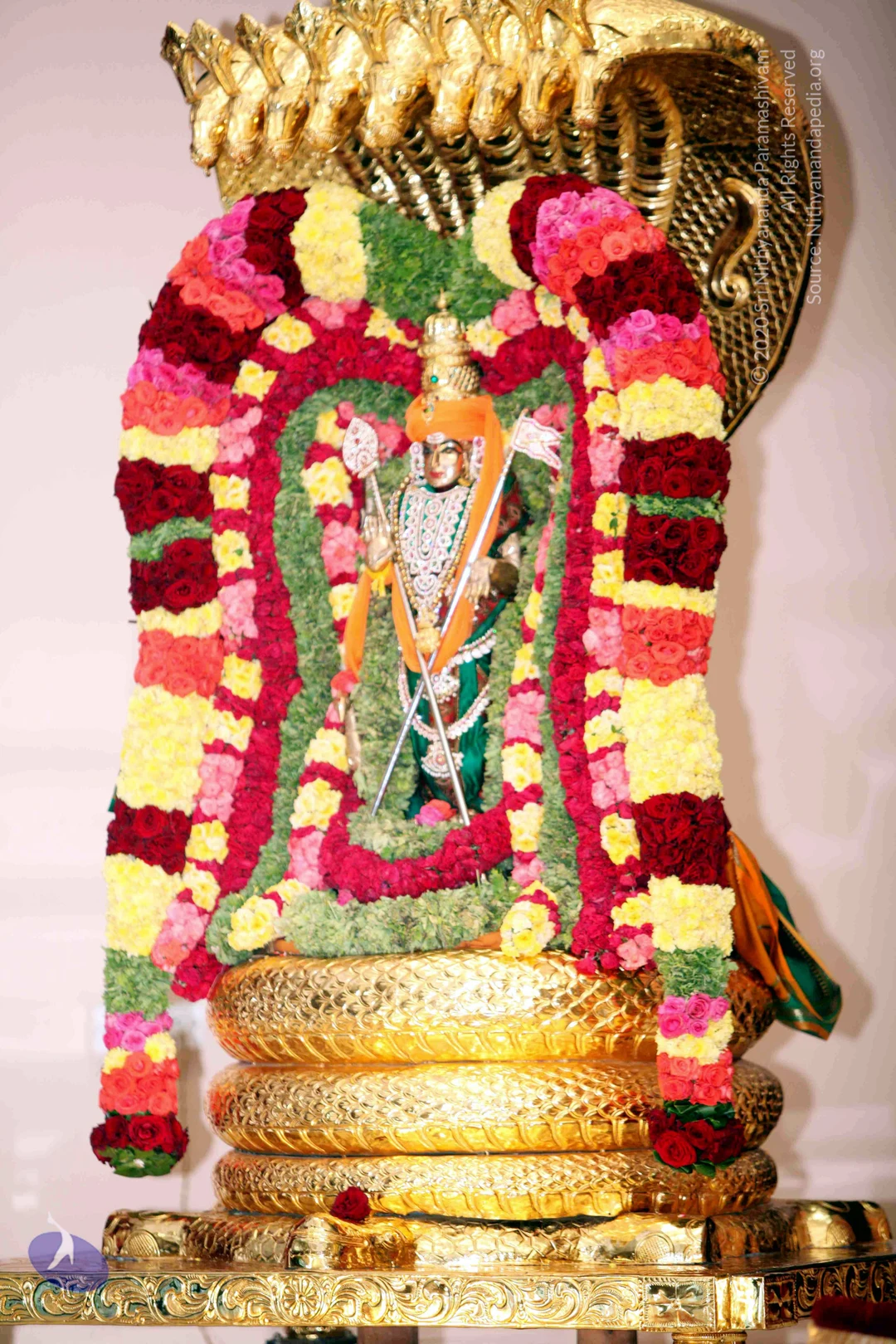
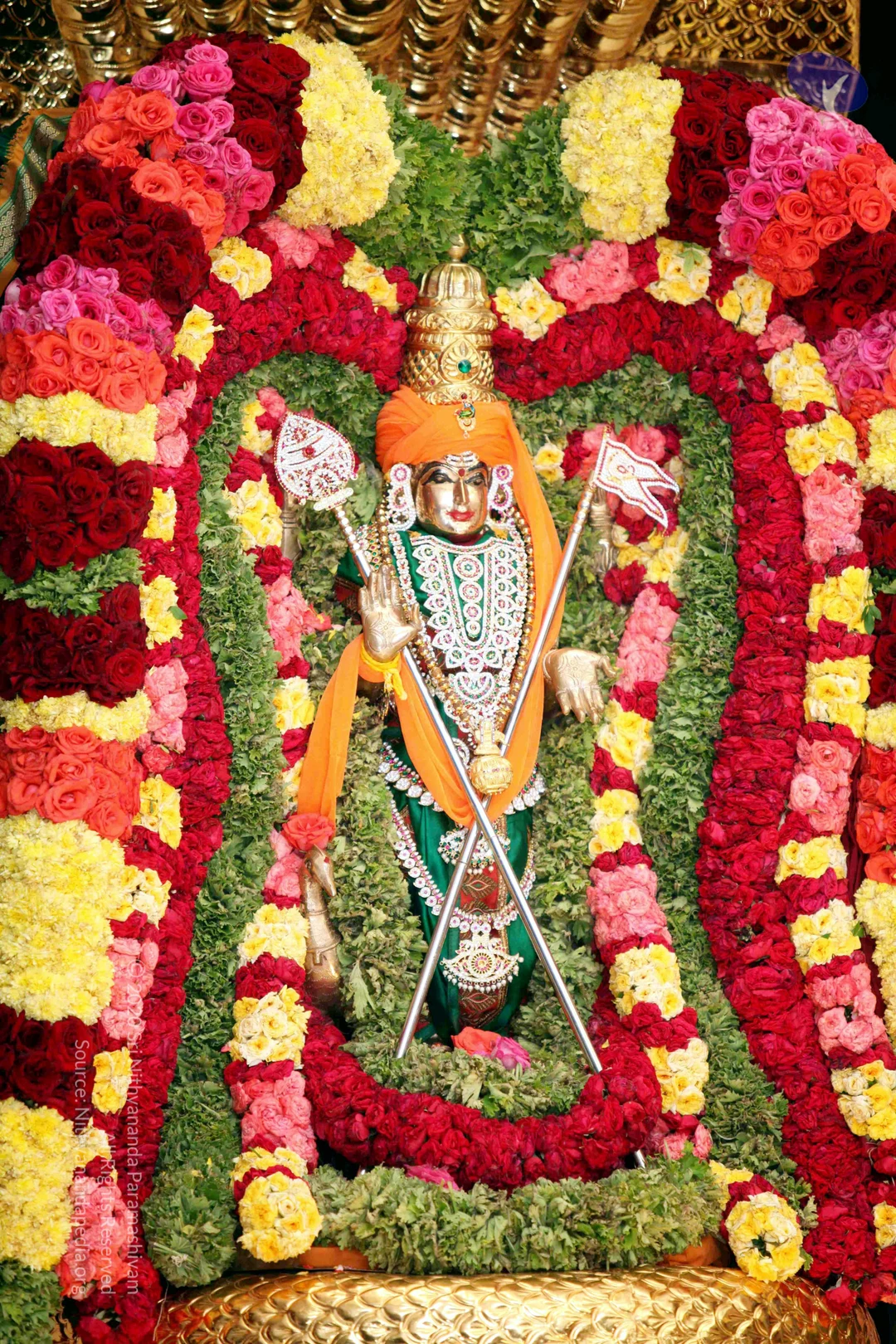
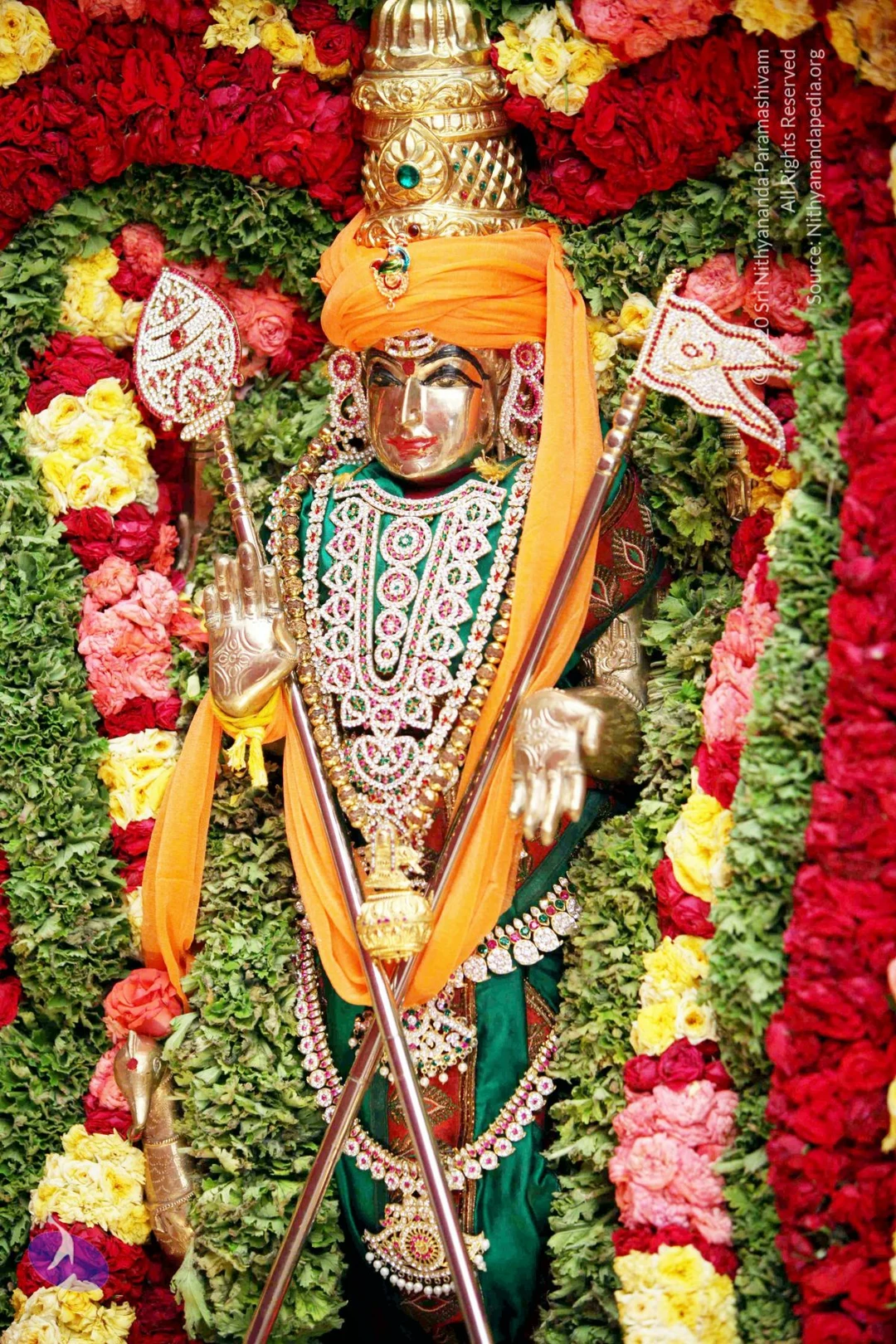
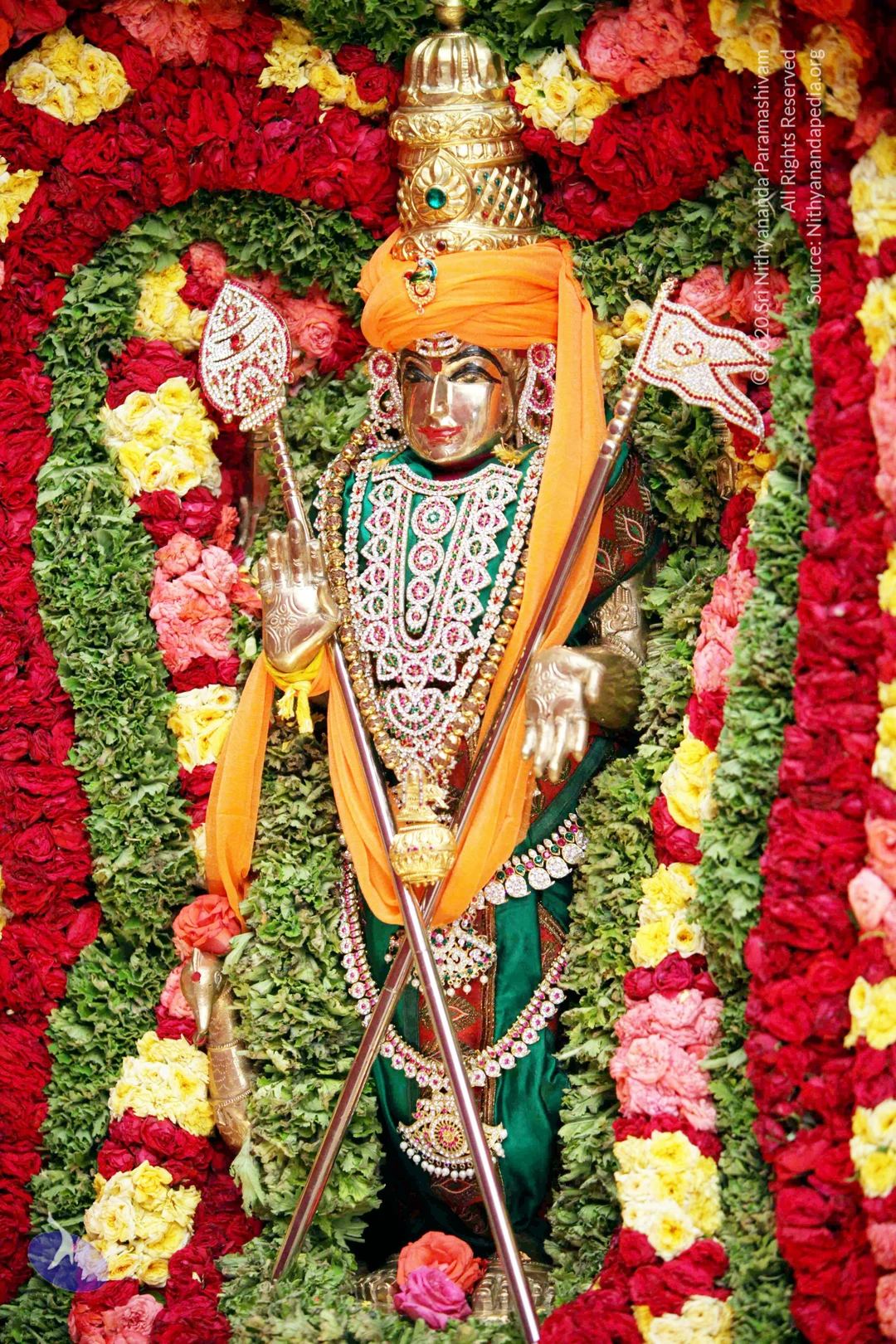
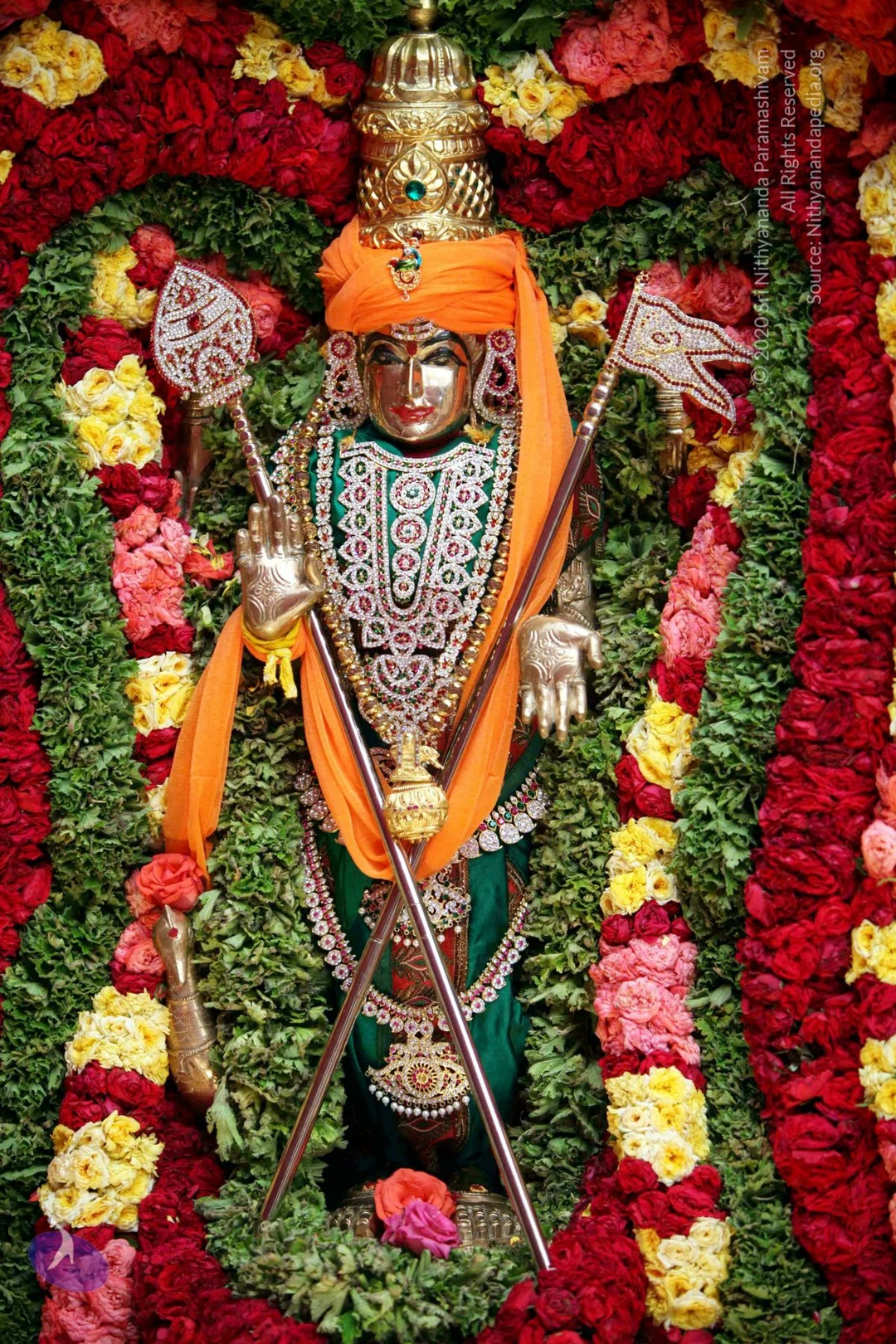
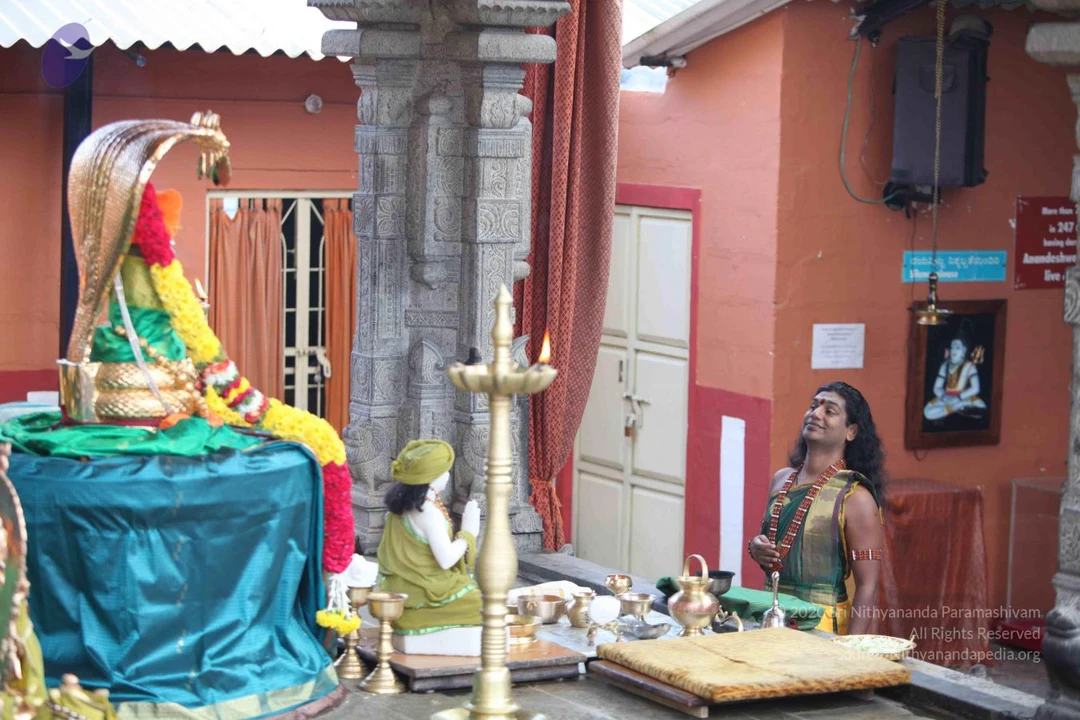
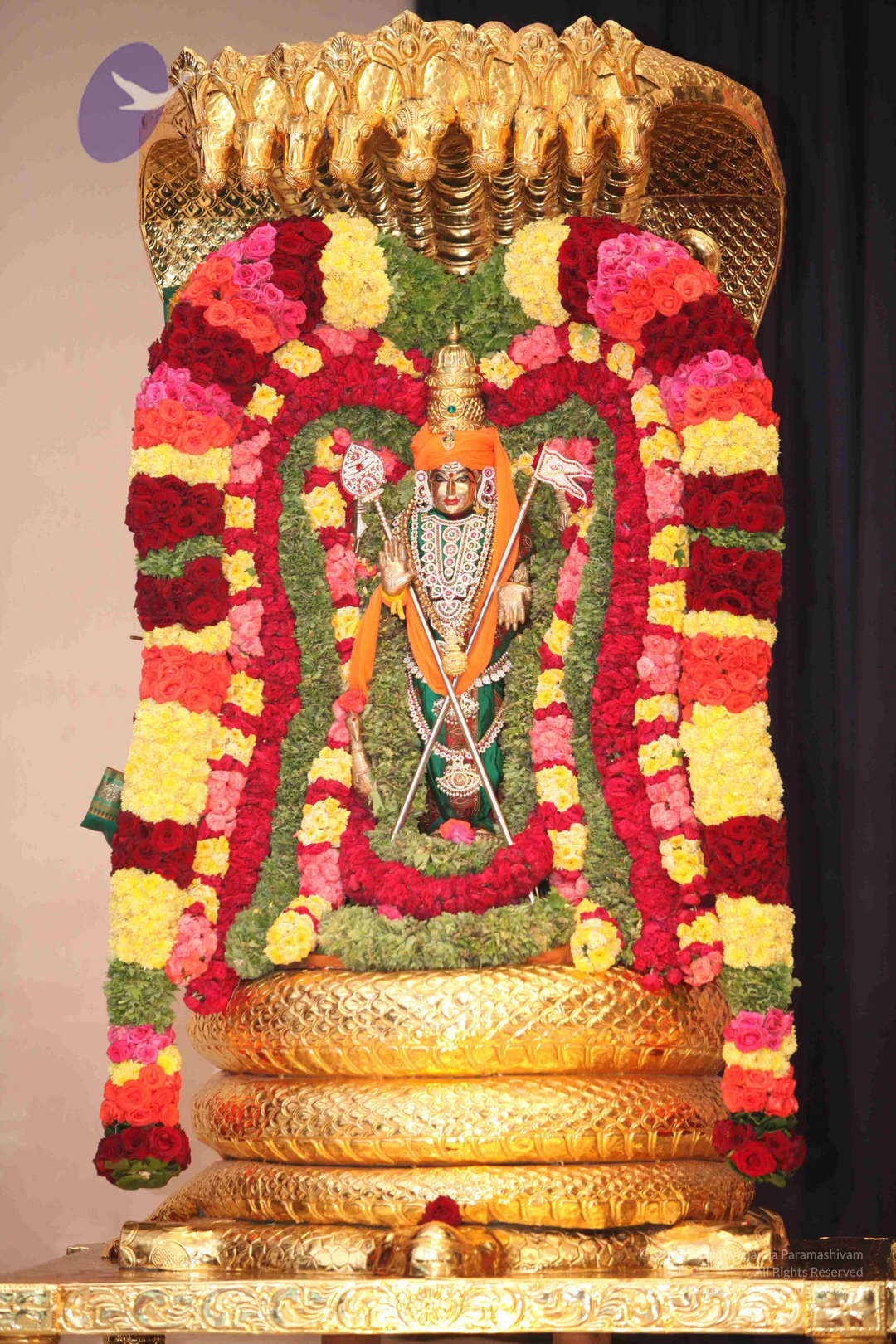
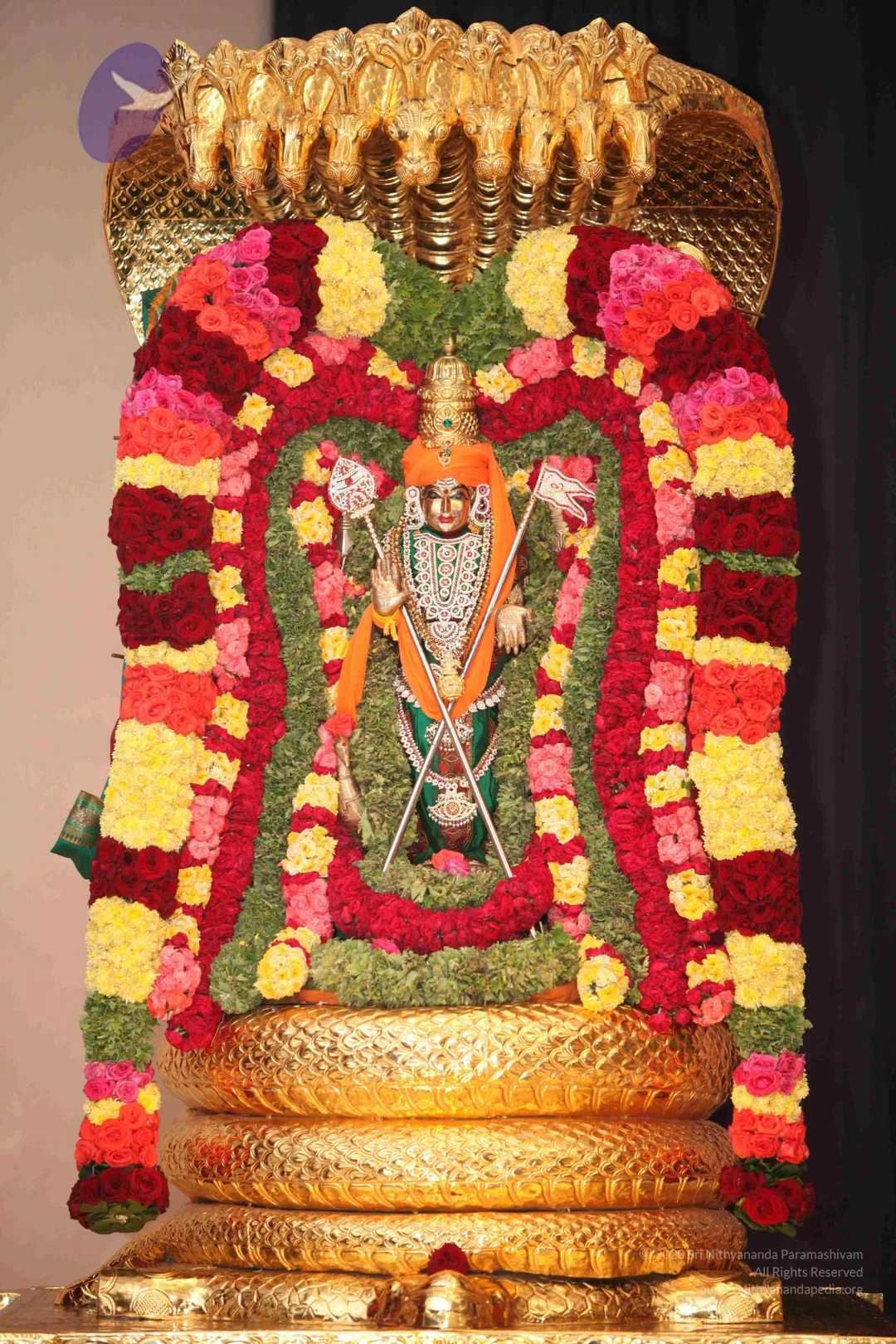
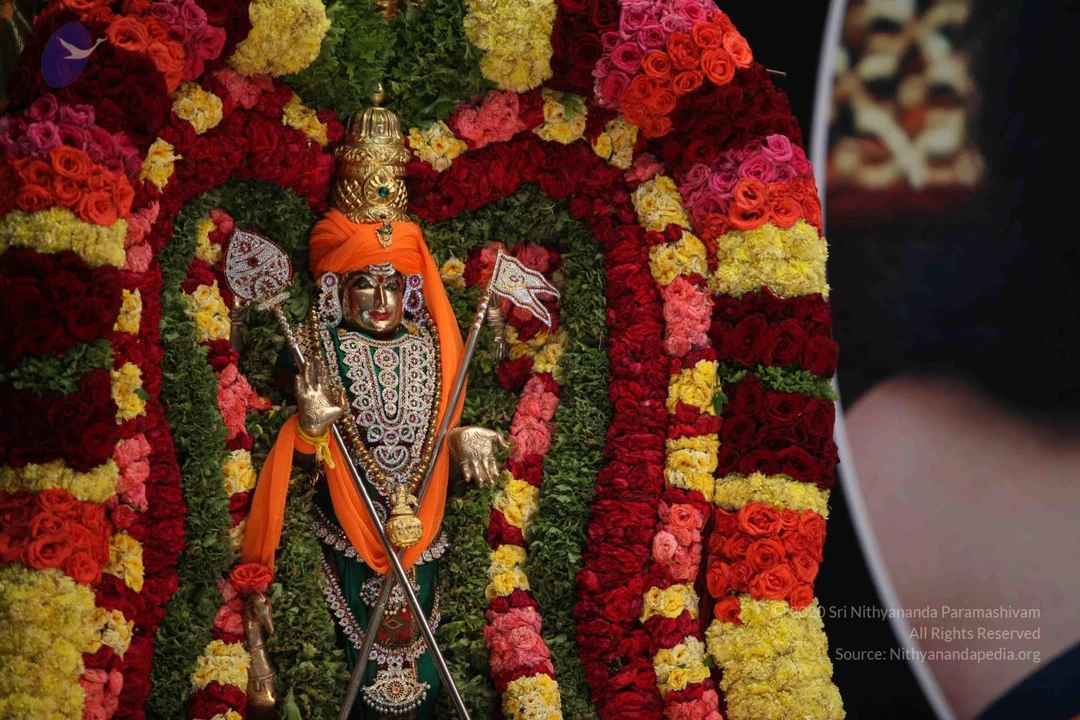
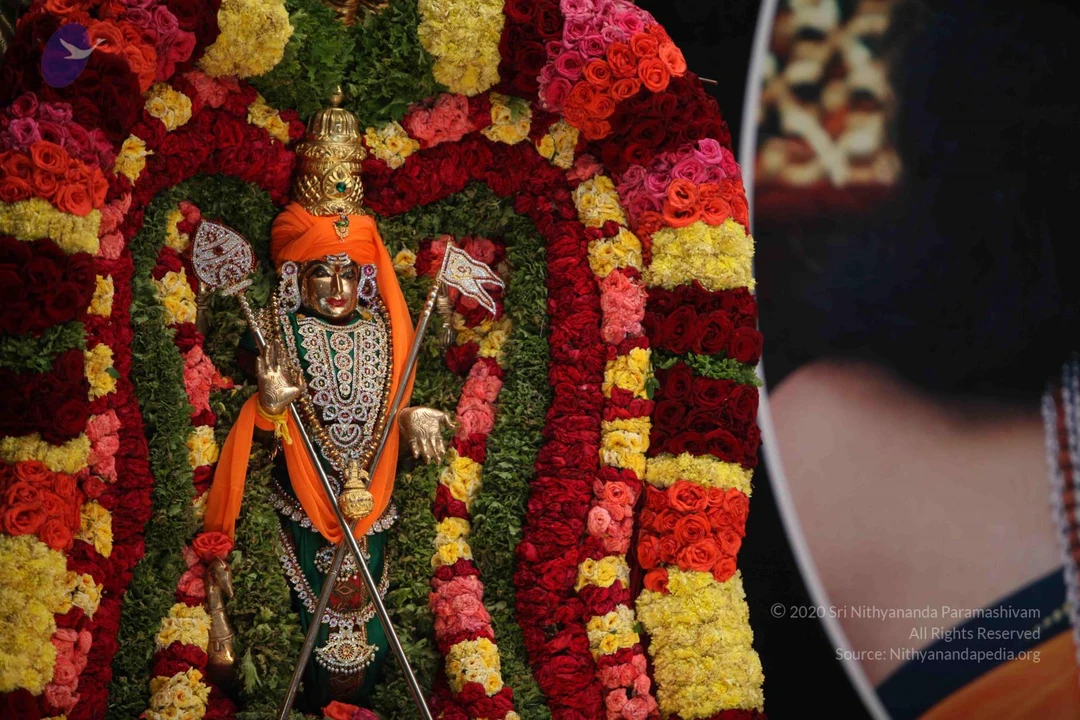
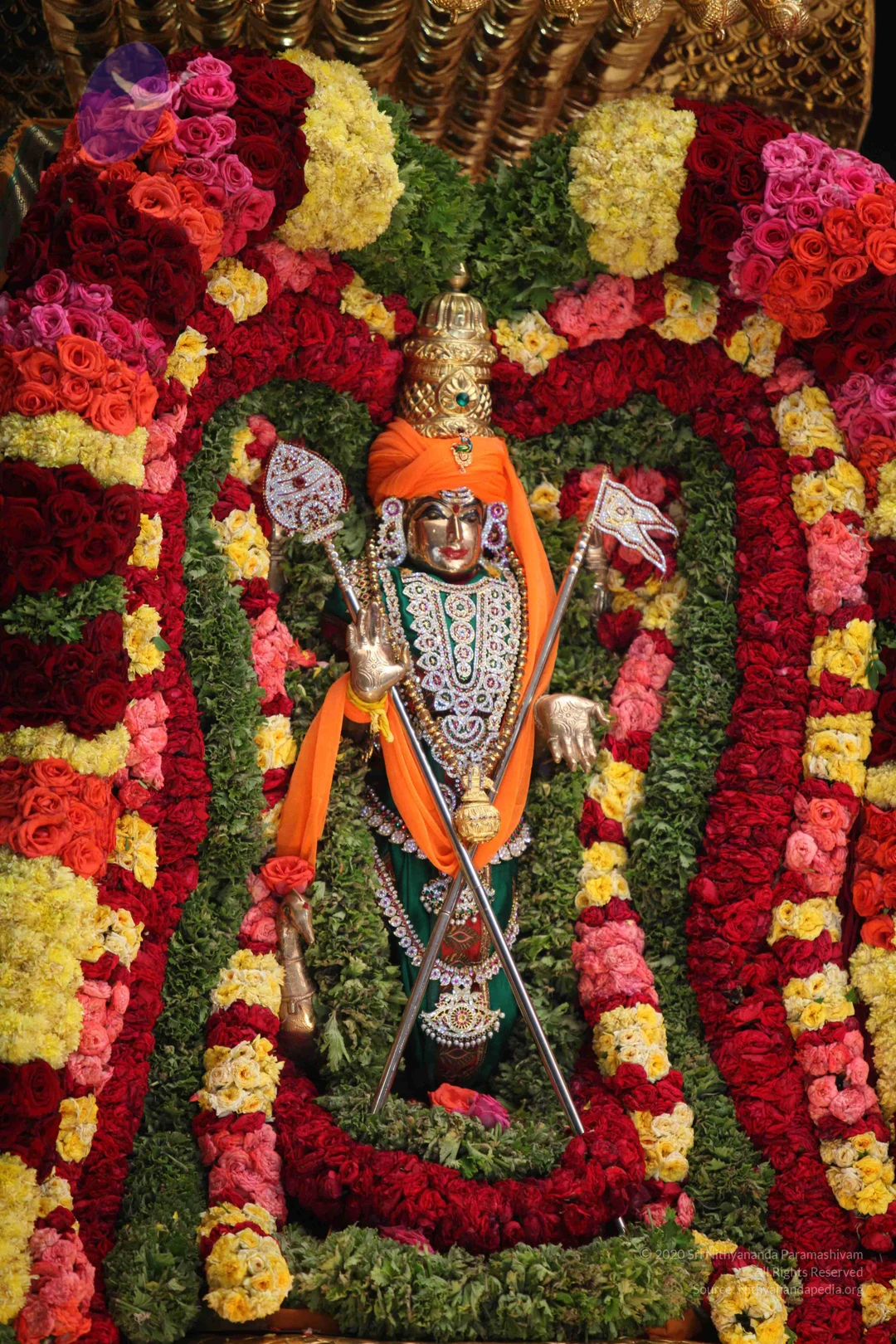
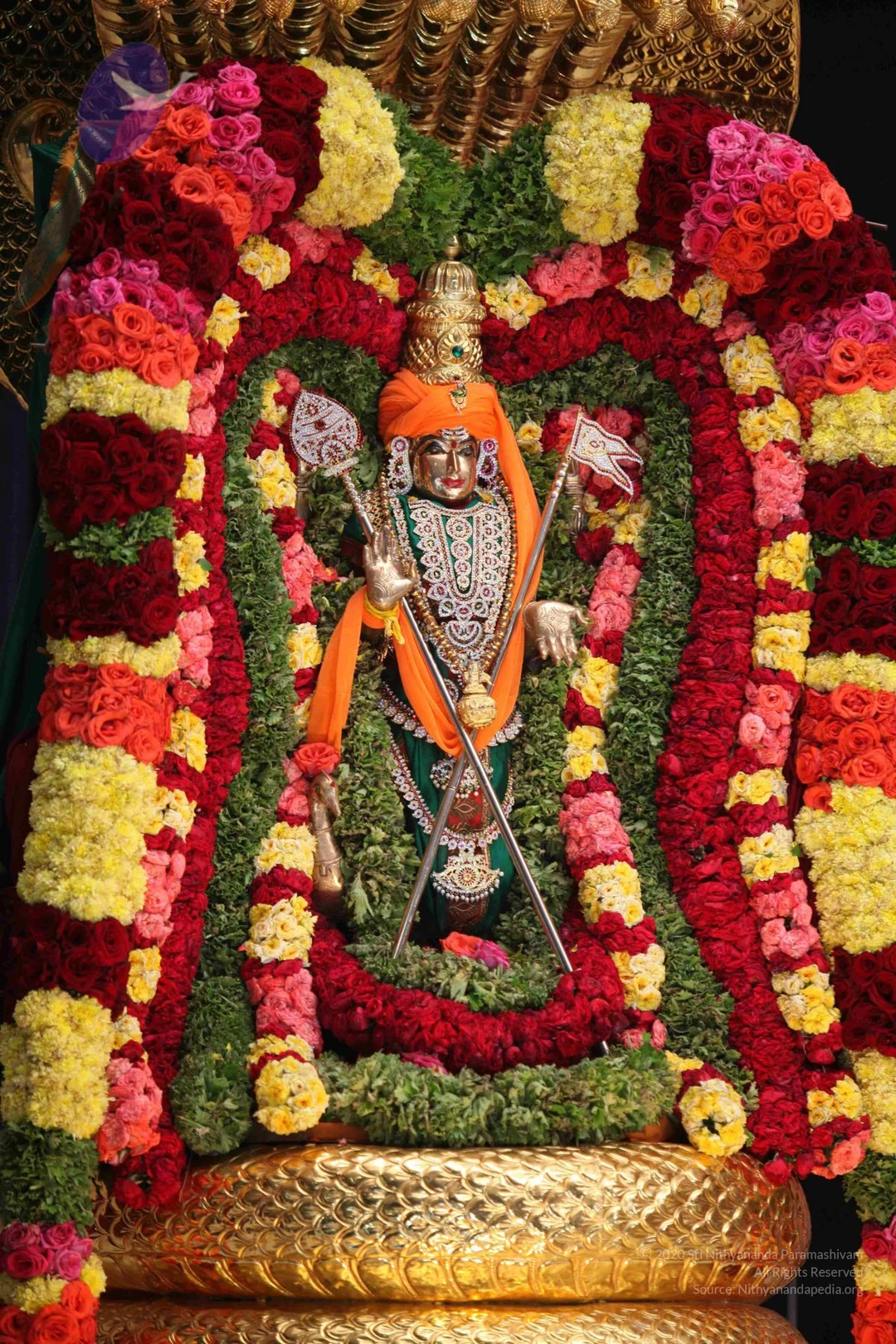
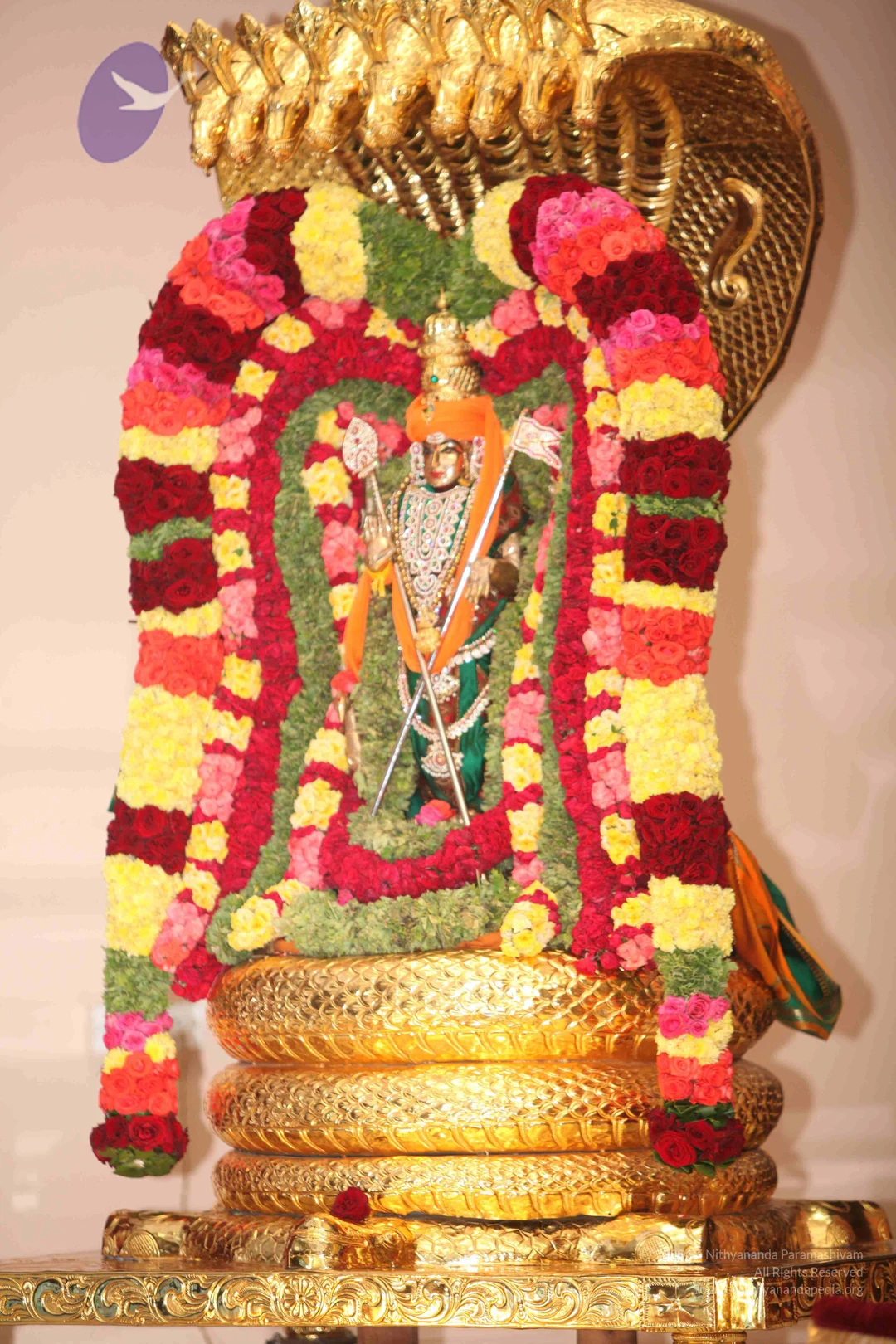
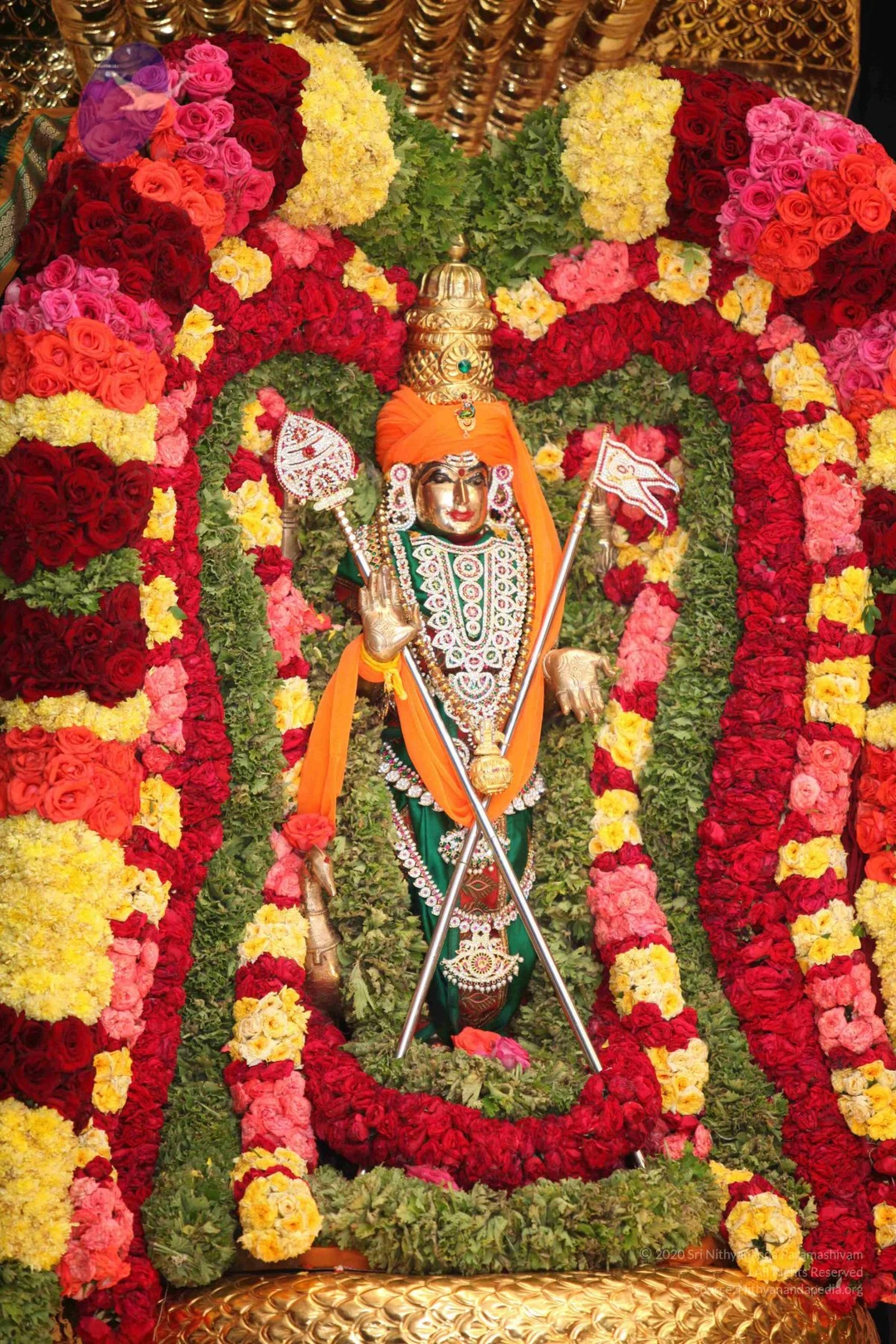
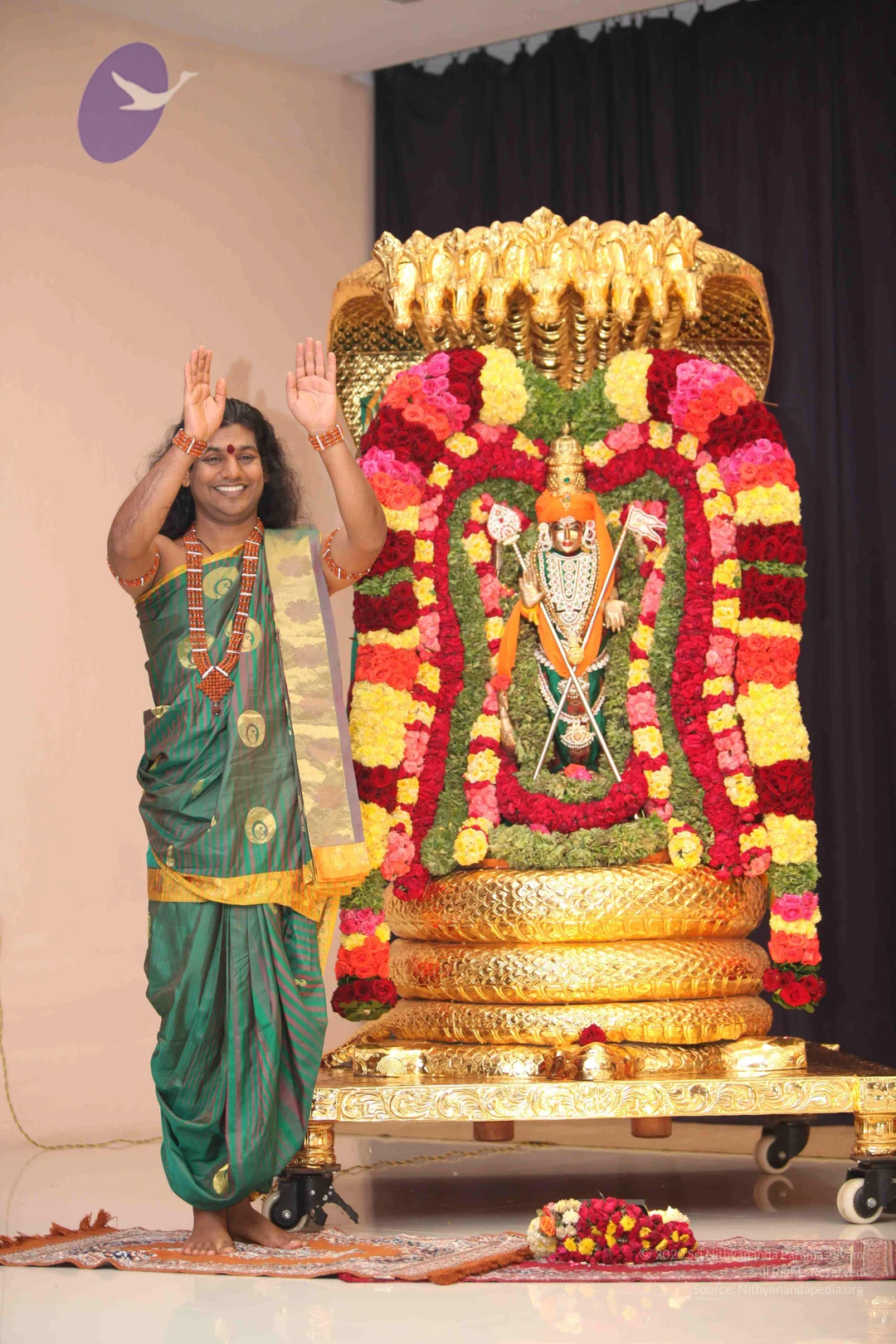
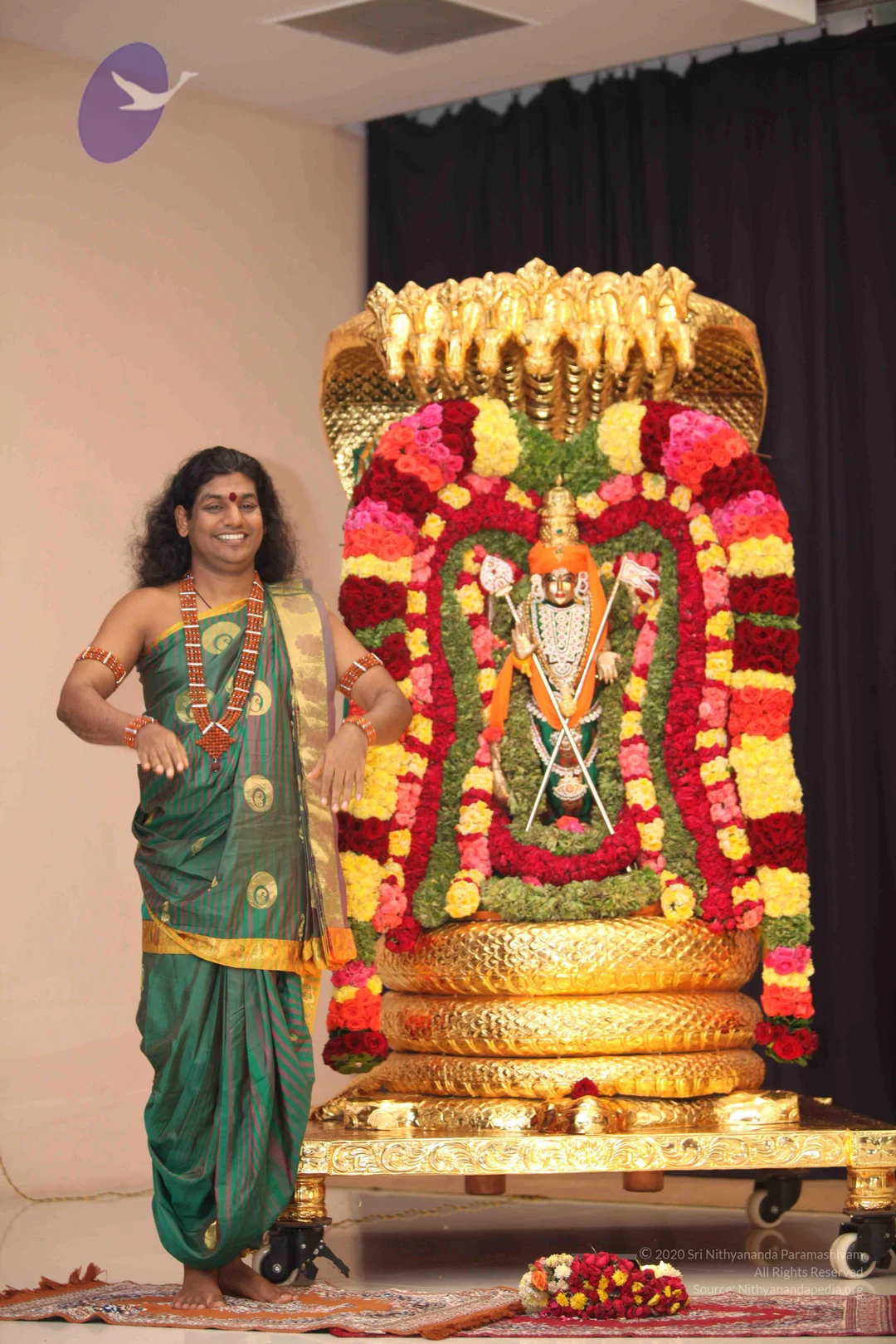
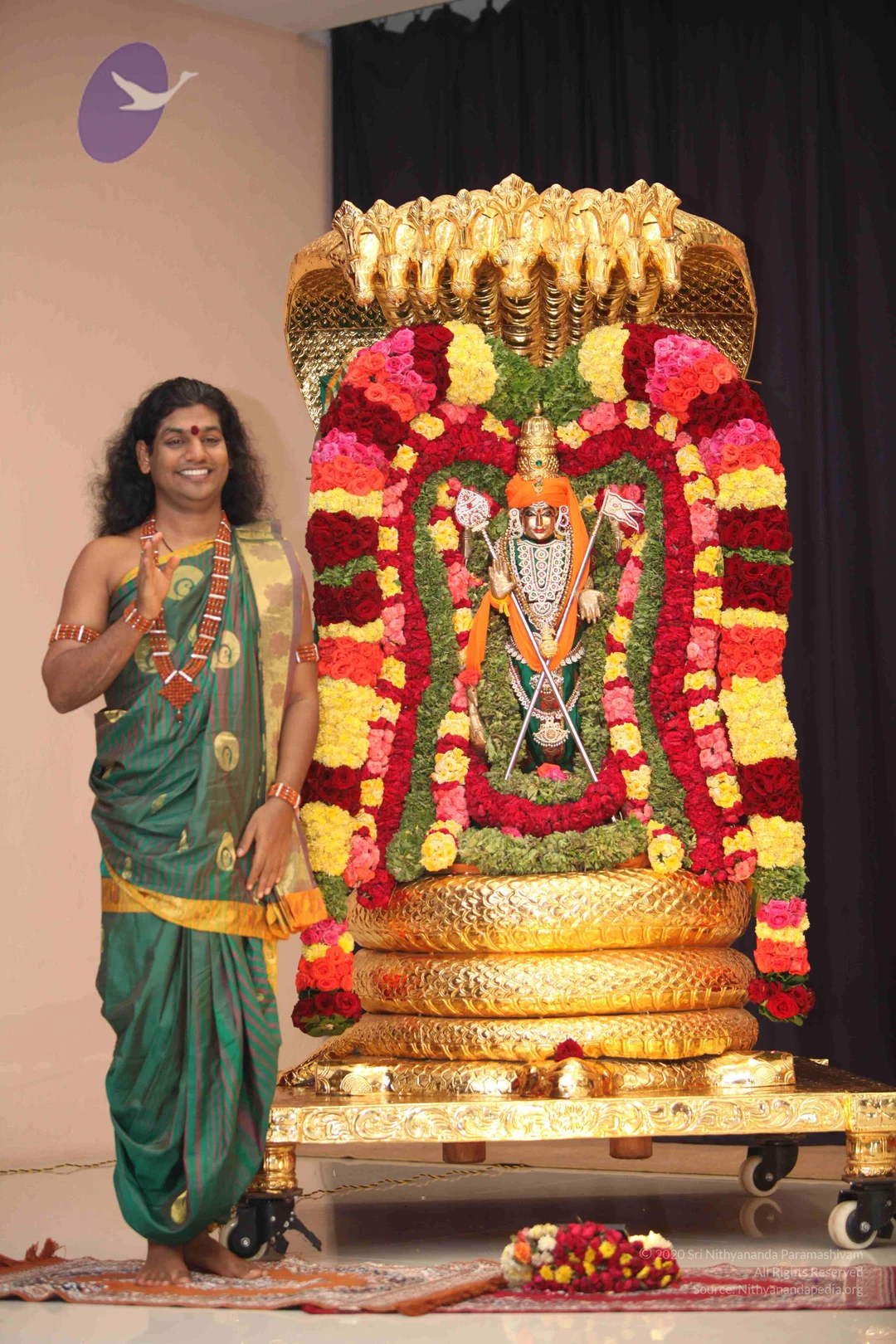
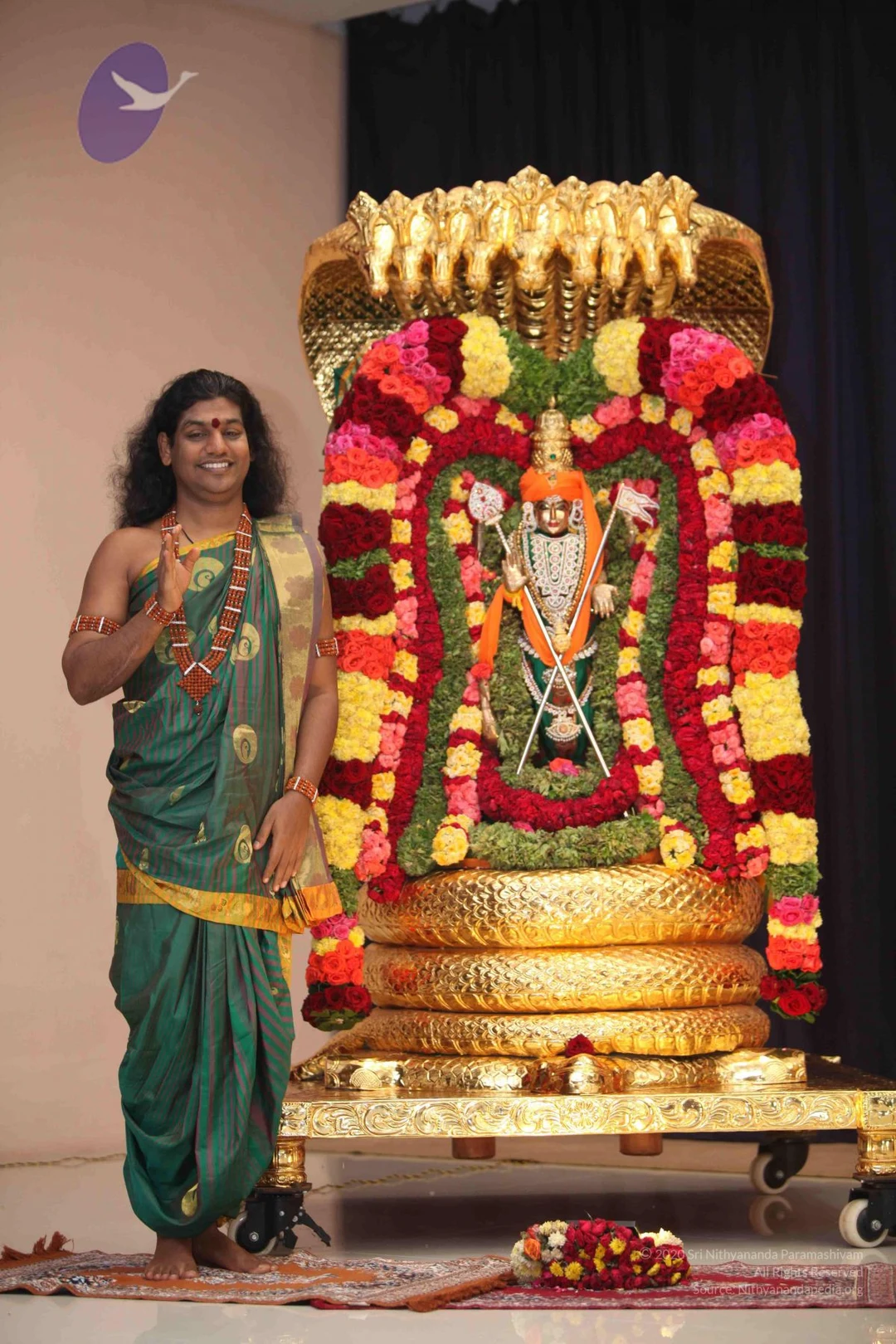
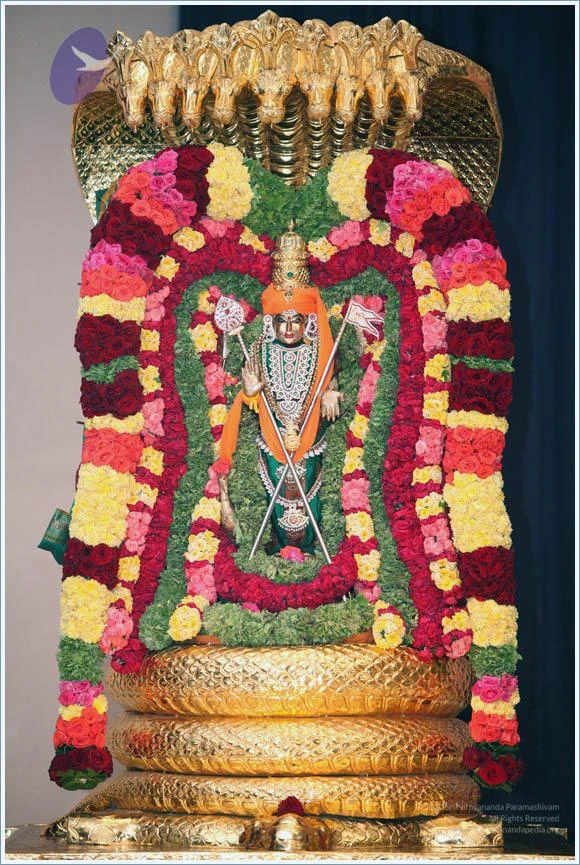
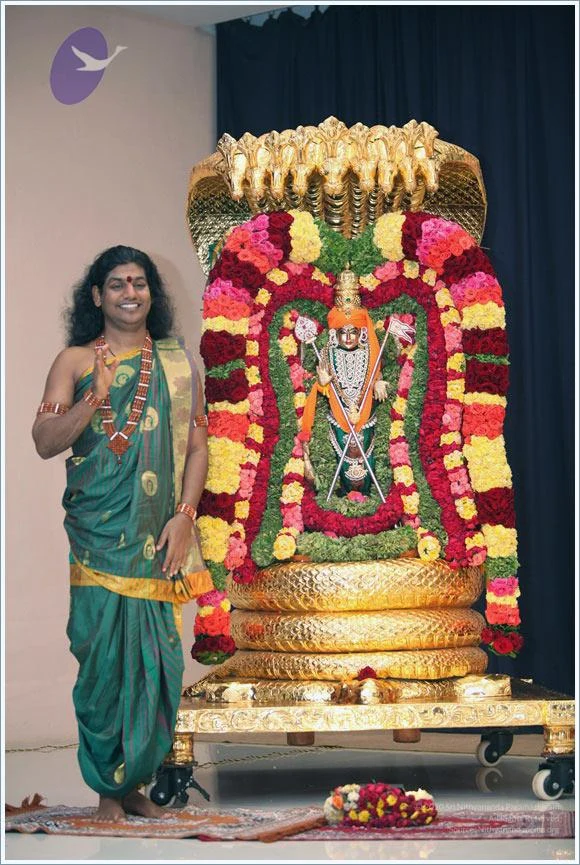
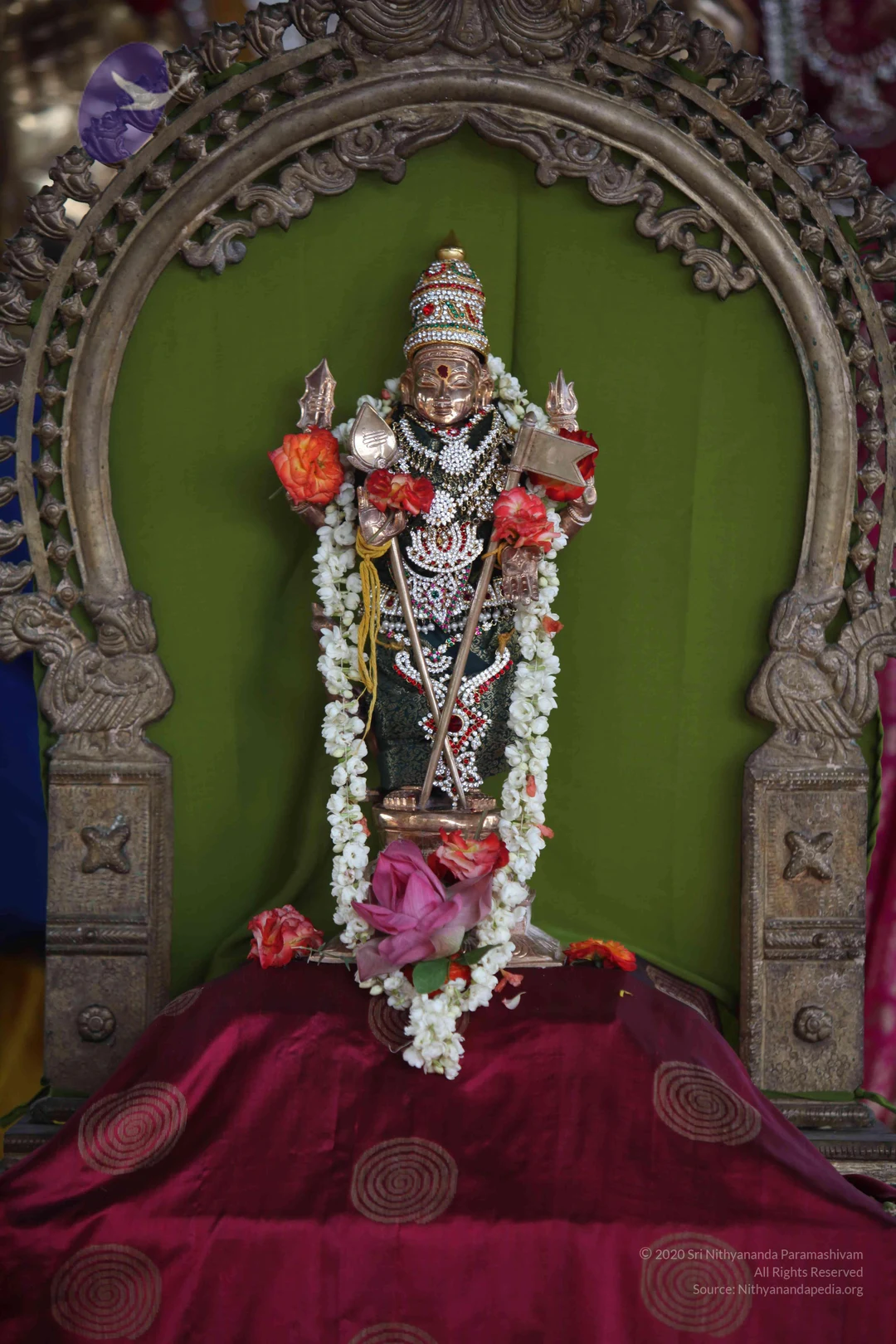
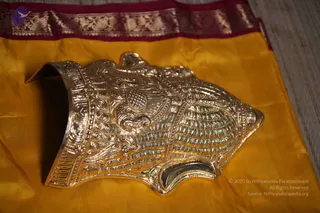
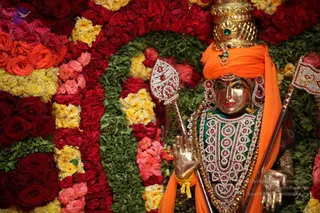
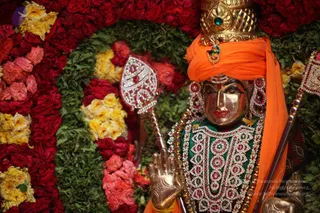
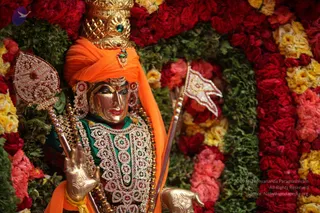
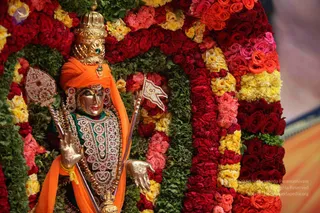
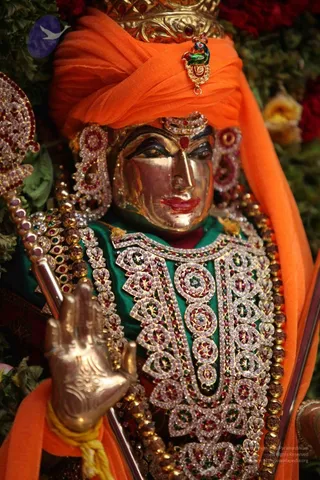
A photograph of an ornate gold-toned metal ceremonial object, a repoussé-decorated plate or mask shaped like a stylised animal face with ridged lines and scrollwork, resting on a bright mustard-yellow silk cloth with a maroon border woven with gold zari patterns. No people are visible.A golden deity murti stands in a flower-decorated shrine, wearing an orange turban topped with a gold crown set with green stones. The figure has an orange shawl draped over the shoulders, a green velvet garment covered in silver and red jewelled embellishment, and a heavy jewelled necklace. It holds silver ceremonial staffs with ornate finials in each hand. Behind it are dense arrangements of red roses, pink and yellow marigolds, and green leaves forming a garland backdrop. No physical people are visible.A gilded deity murti stands at the centre, its face gold-toned with red lips and a red tilak on the forehead. It wears an orange turban topped by a golden crown set with a green stone, a green velvet bodice heavily embellished with white and red stone-studded ornaments, and layered beaded necklaces. In its raised right hand it holds a silver-and-red jewelled staff, and a second jewelled staff rises at the right. Behind it are dense arrangements of red roses, yellow flowers and green leaves forming a floral backdrop. No physical people are visible.A gilded metal murti of a deity stands in a shrine surrounded by dense garlands of red roses, yellow and pink blossoms and green leaves. The figure wears a tall gold crown set with a green gem, an orange turban-like cloth draped over its shoulders, and a green garment covered in ornate silver and jewelled embroidery. It holds a trident-like staff with a jewelled head in one hand and a jewelled fan-shaped ornament in the other, and a small animal figure appears at its side. The statue is a deity murti, not a living person.A golden metal murti stands within an arch of red, pink, orange and yellow roses and green foliage. The figure wears an orange turban with an ornate gold crown, an orange shawl and a green garment covered by an embellished silver-white necklace. It holds a silver staff topped with a decorative finial in each hand, and the arch frames the statue closely.Close-up of a gilded deity murti wearing an orange turban with a jewelled crown and an enamelled peacock brooch. It has a golden face with red-painted lips, a red tilak on the forehead, and jewelled earrings. A green silk garment is covered by an ornate necklace of red and green stones and white stones with rudraksha beads. The raised golden hand holds a jewelled staff, and flowers appear in the background. No physical people are visible.

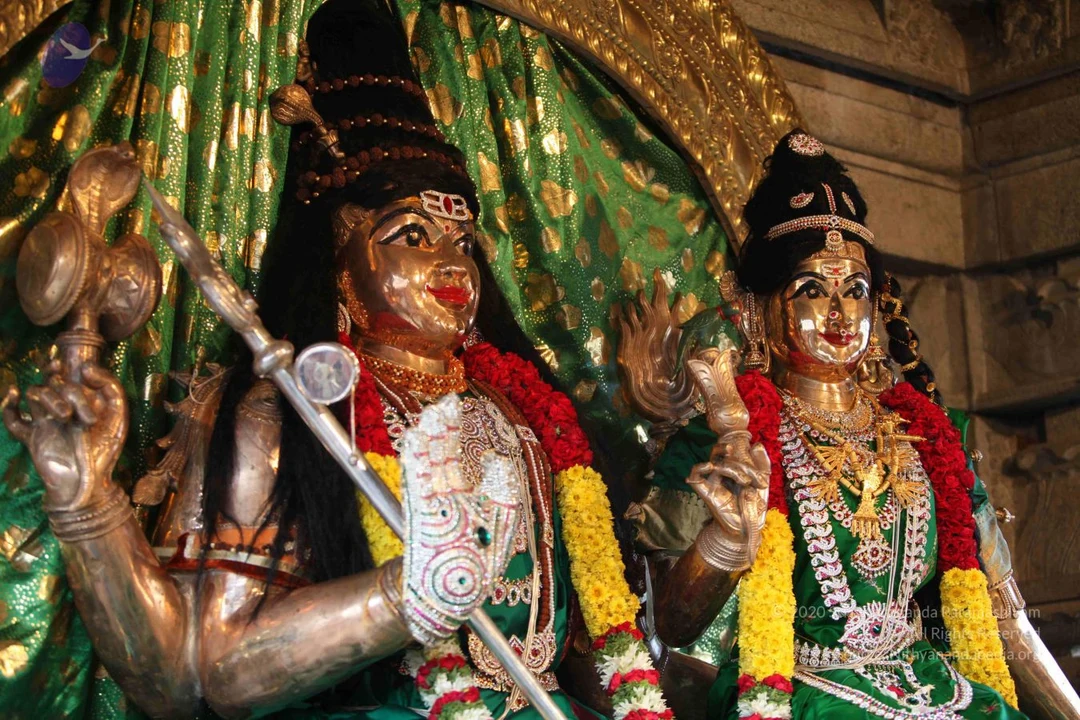
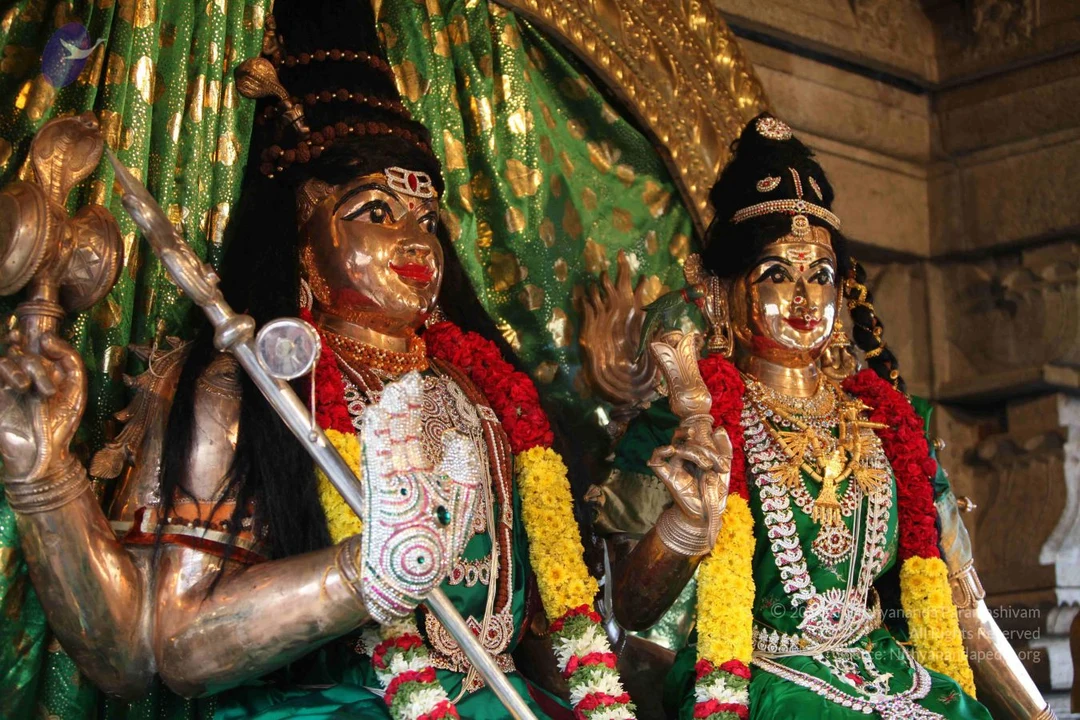
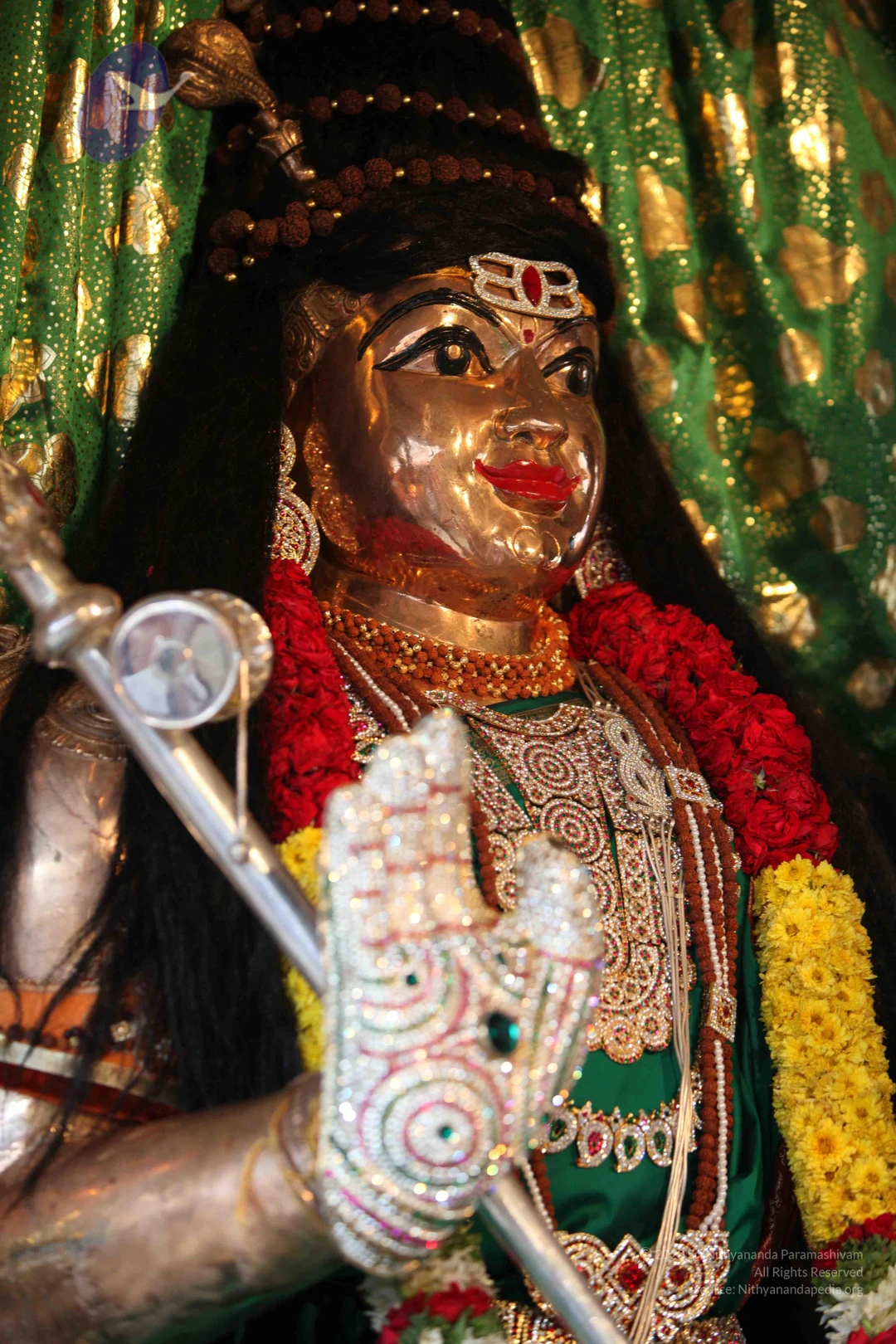
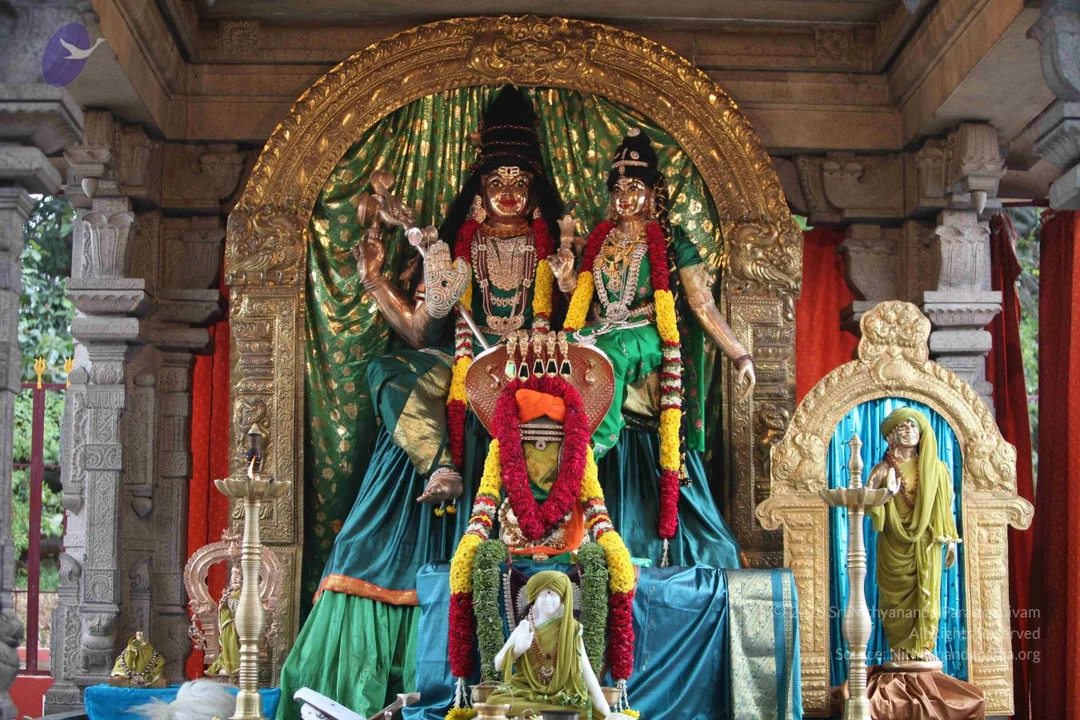
Temple

37 photosSource gallery
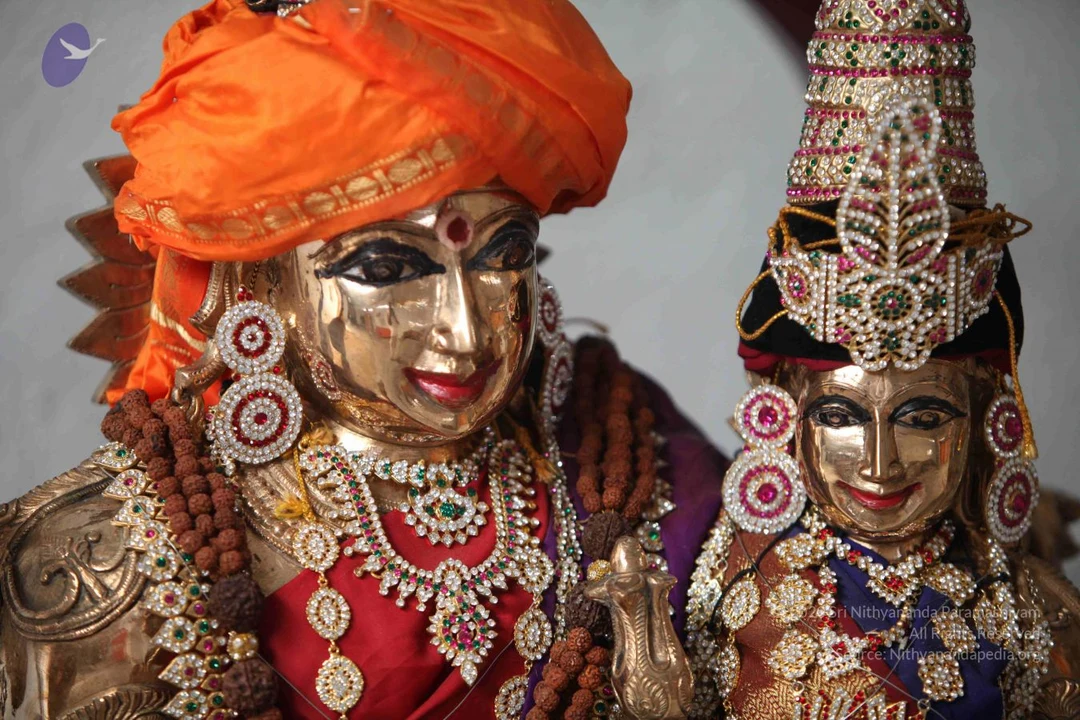
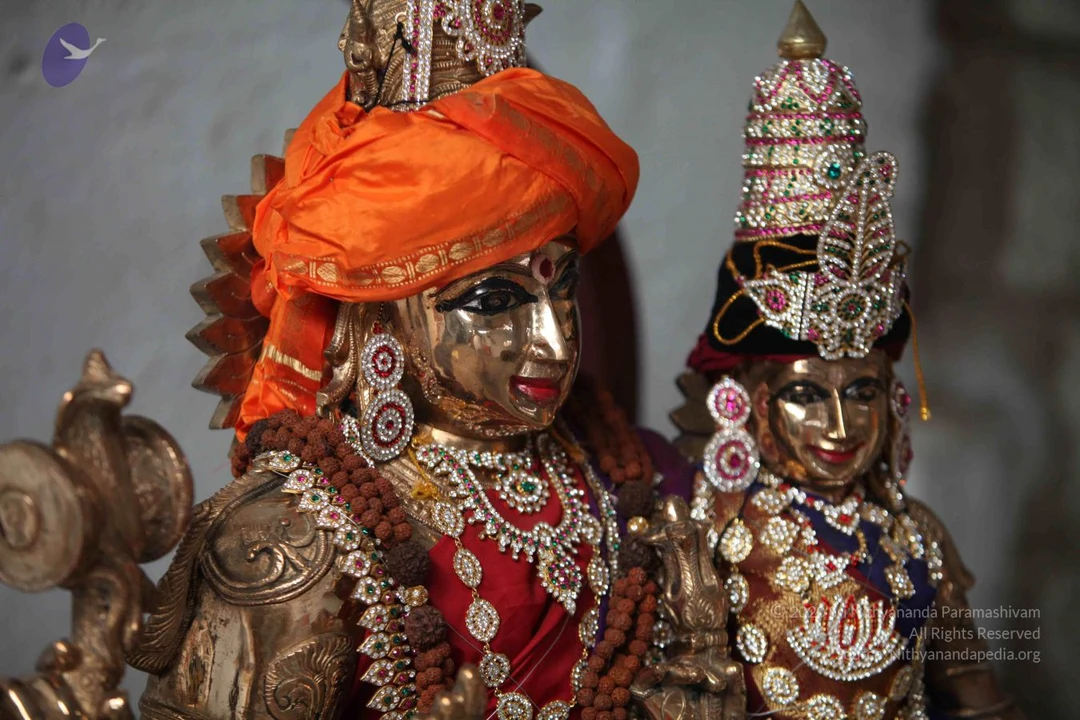
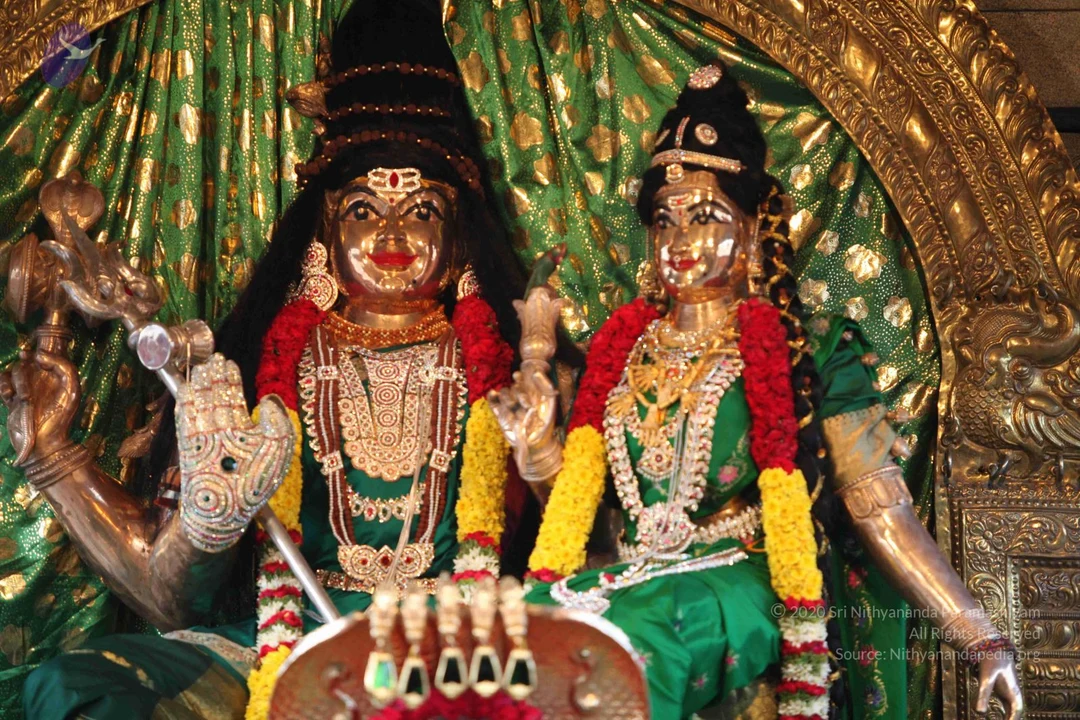
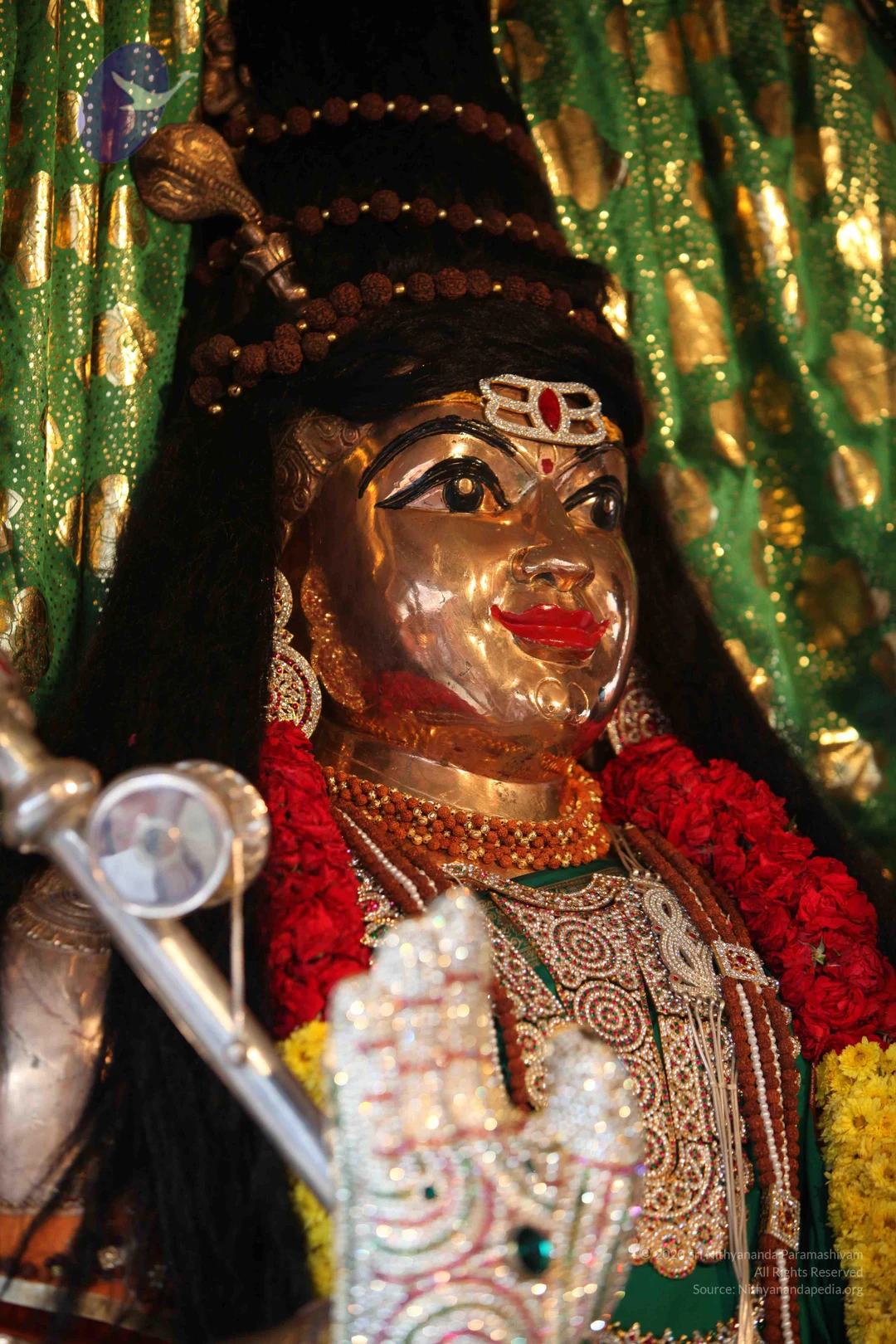
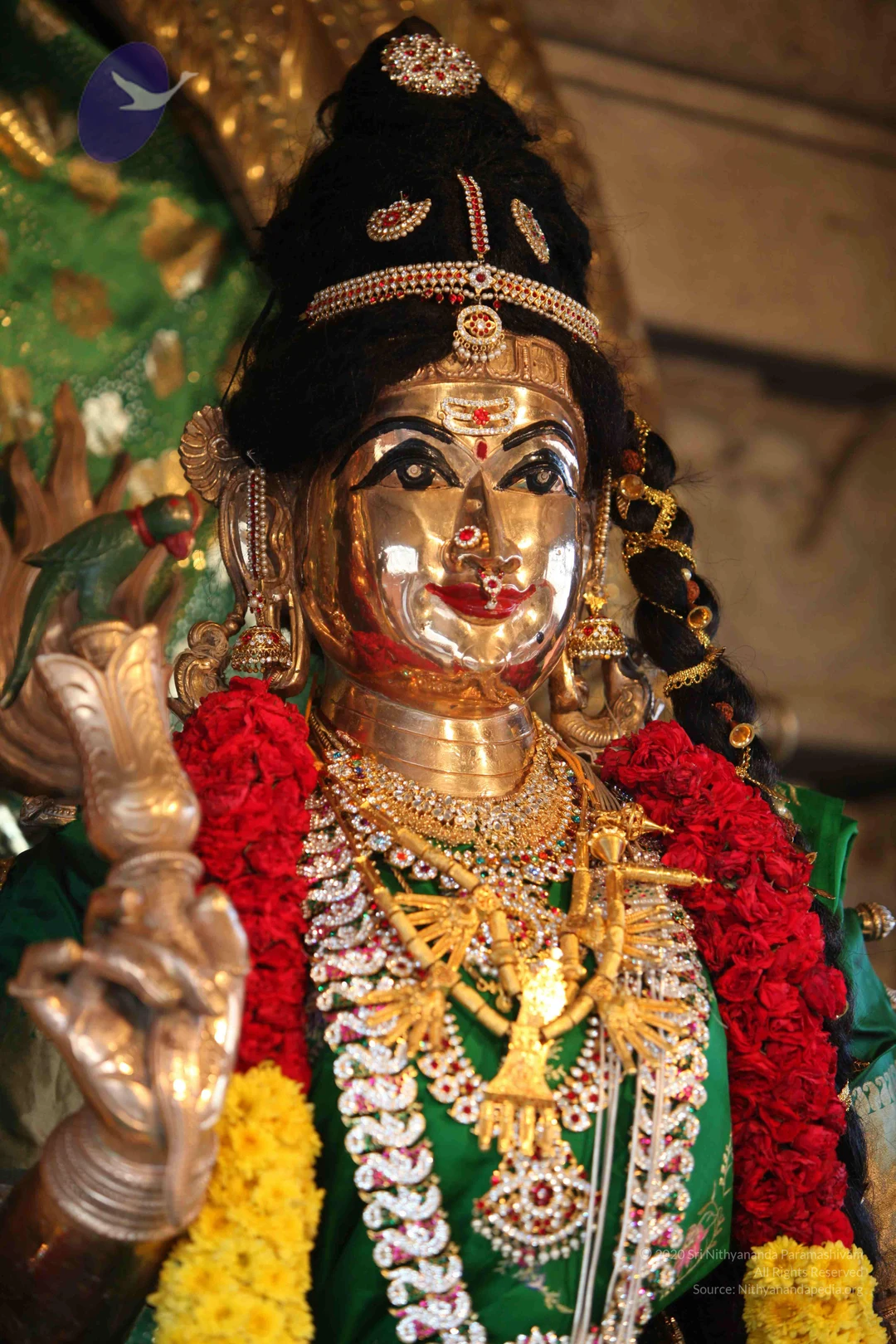
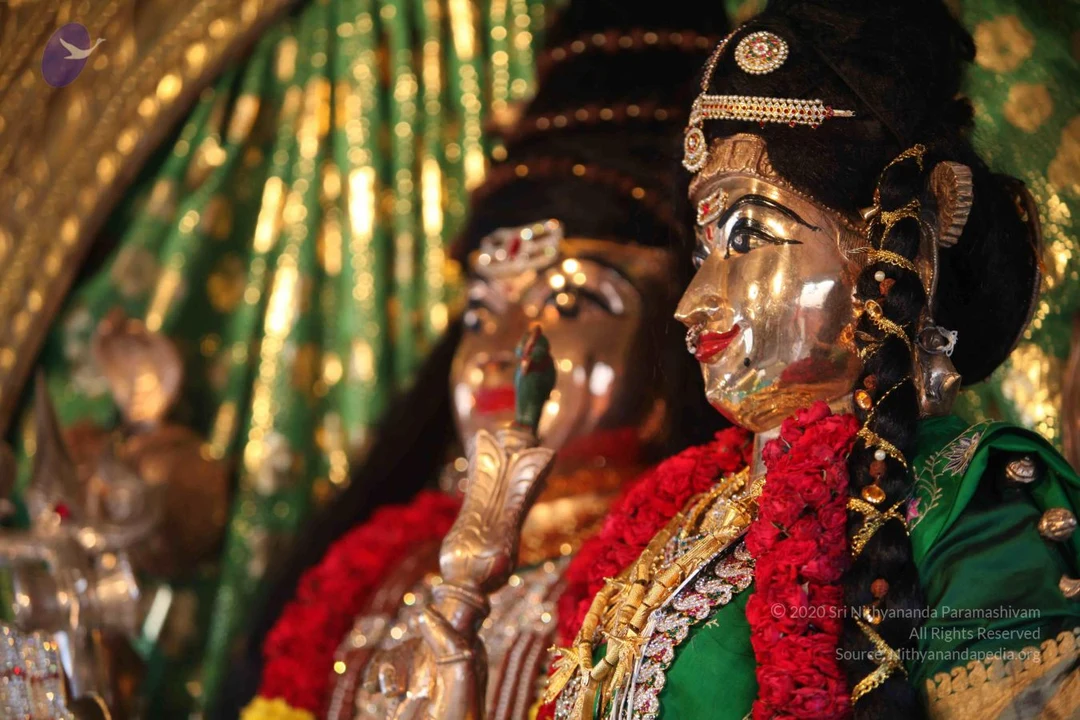
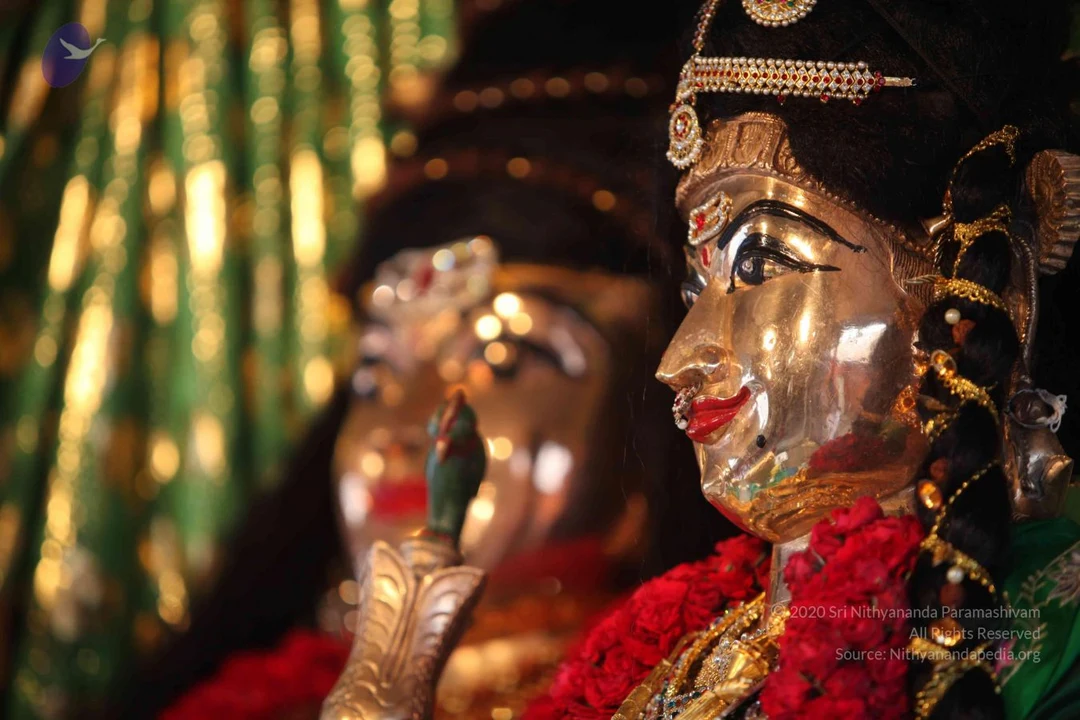
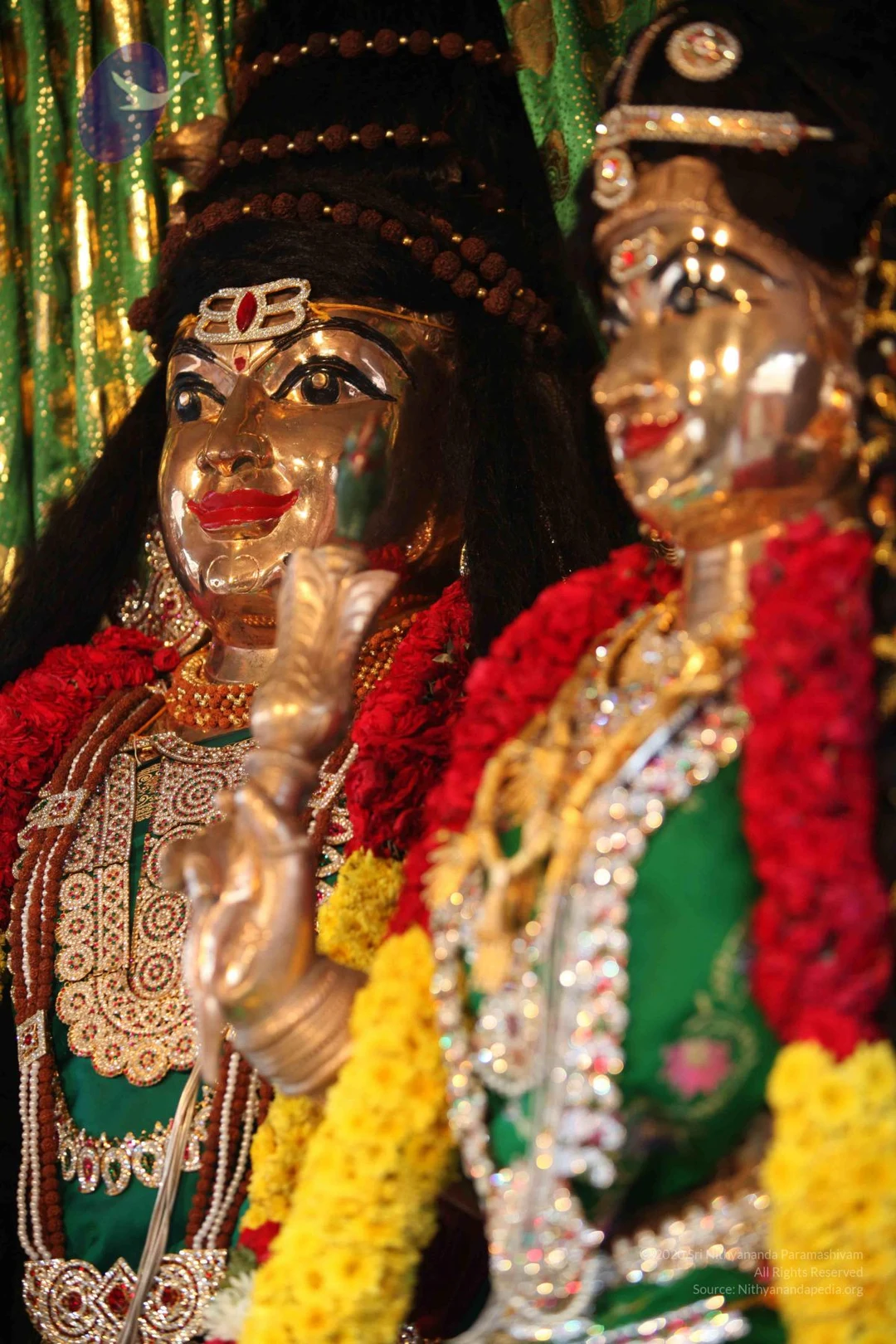
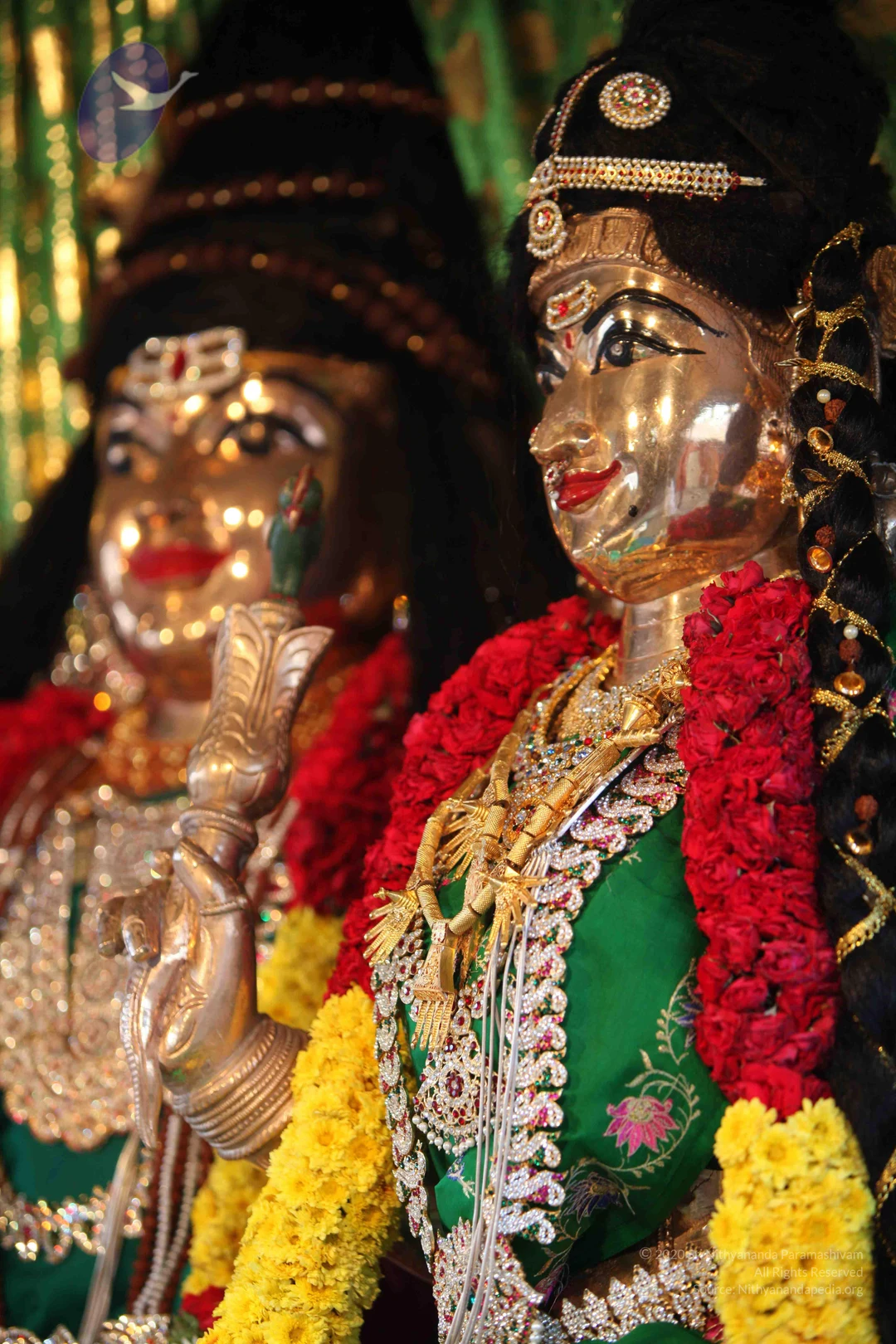
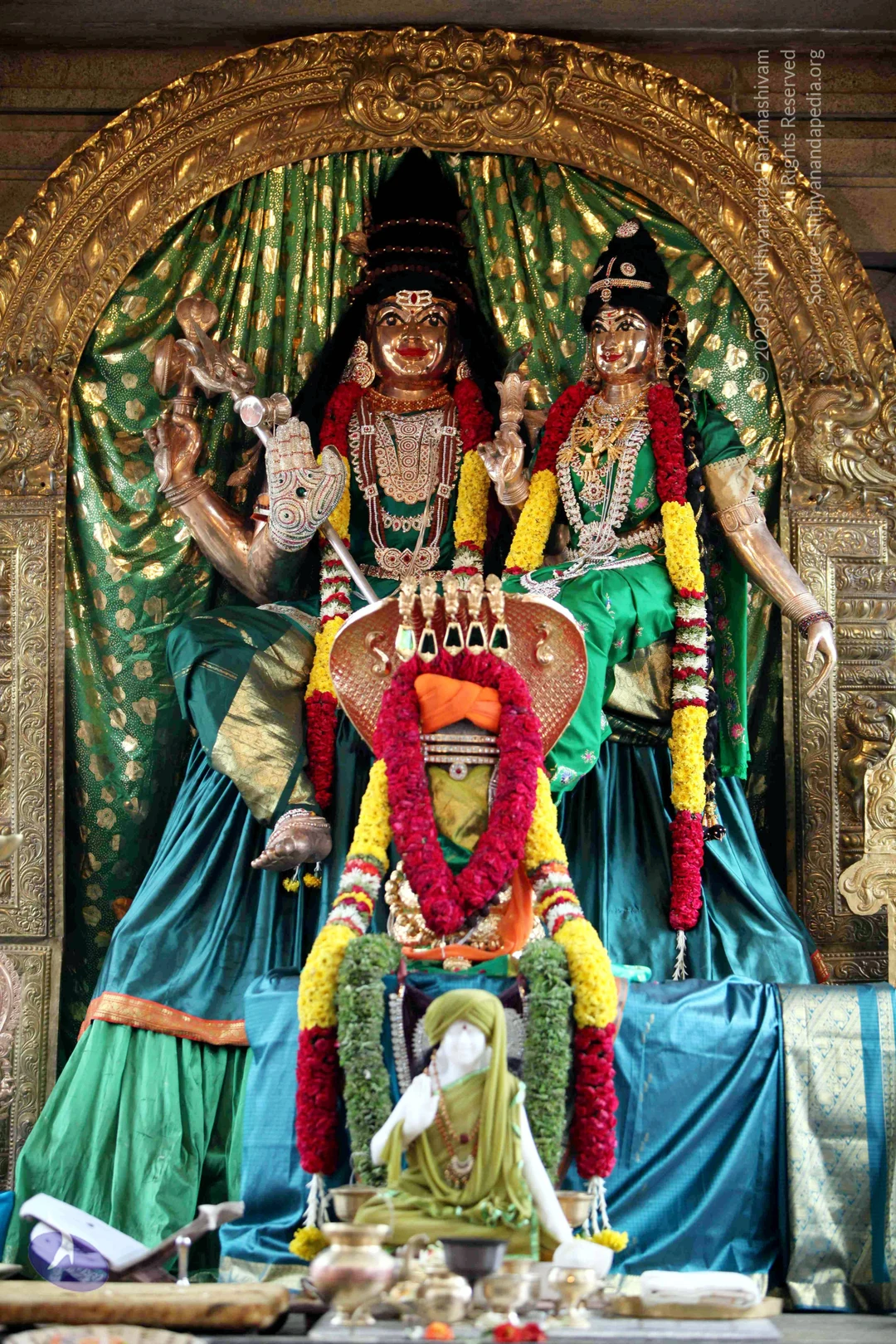
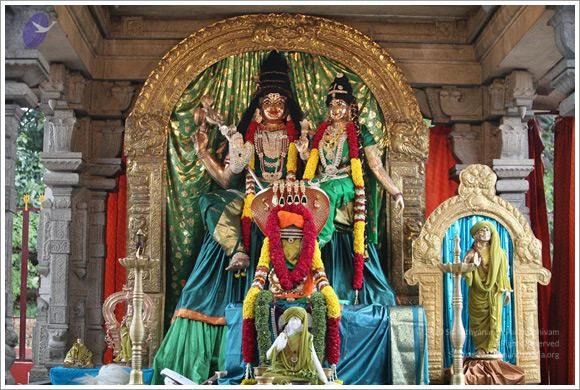
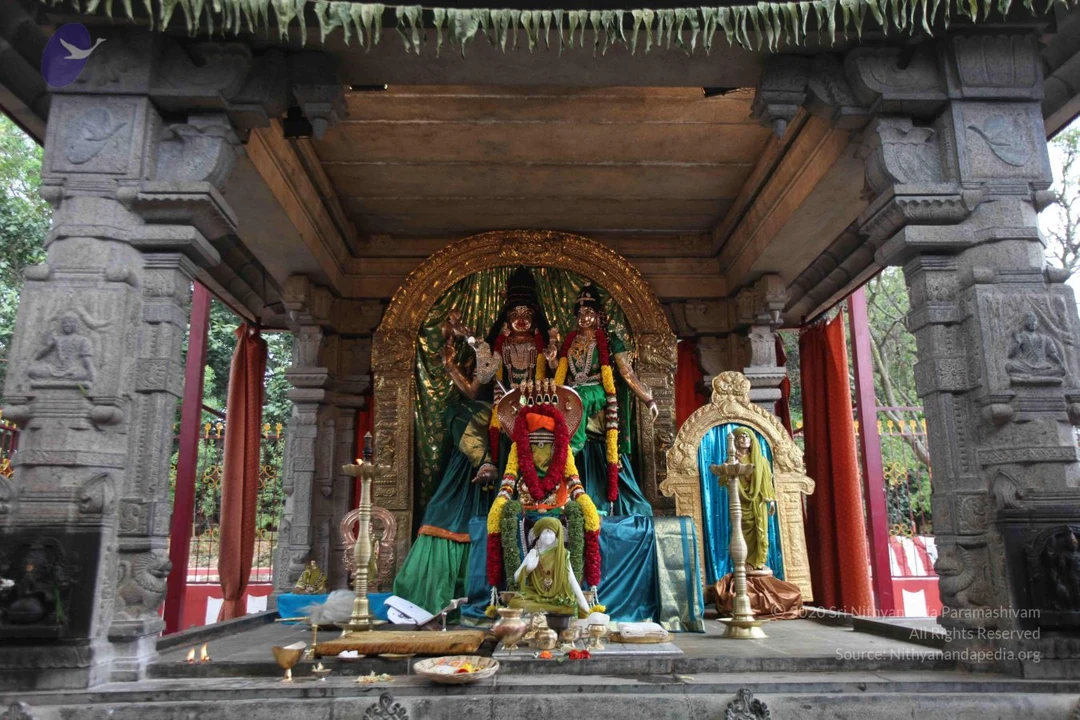
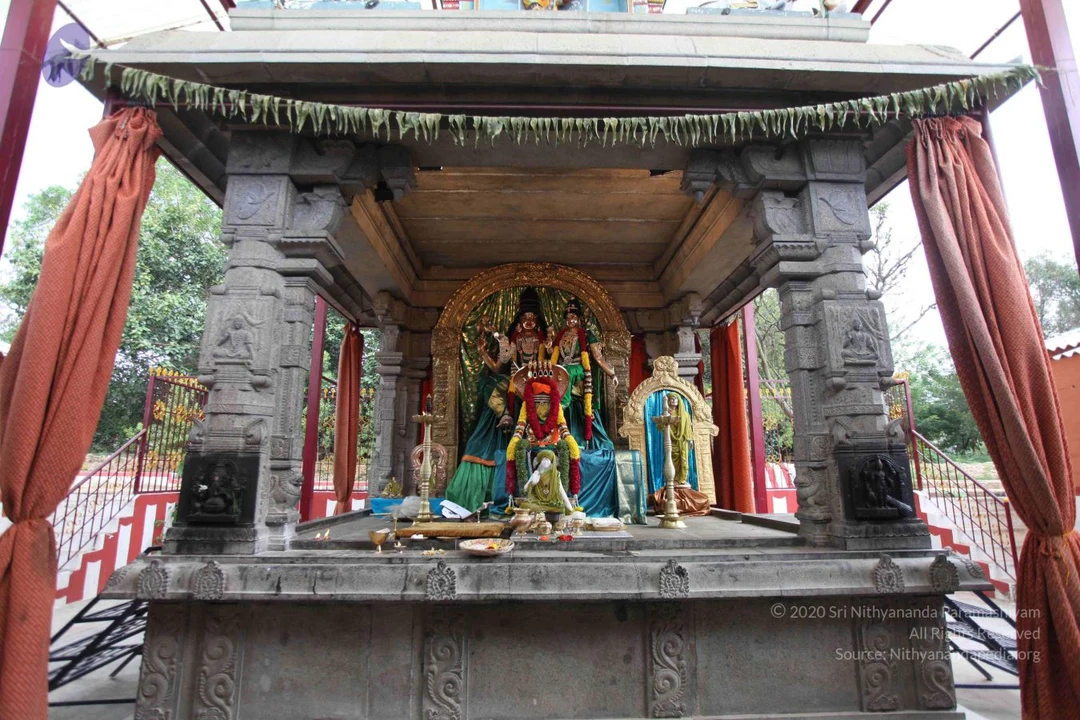
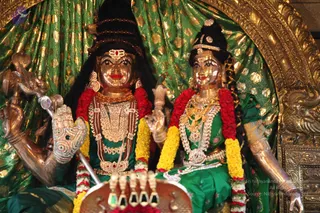
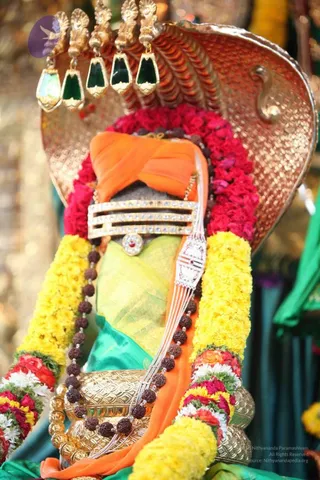
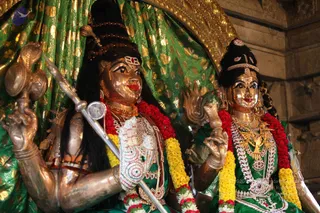
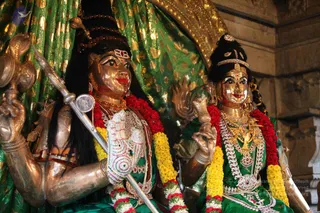
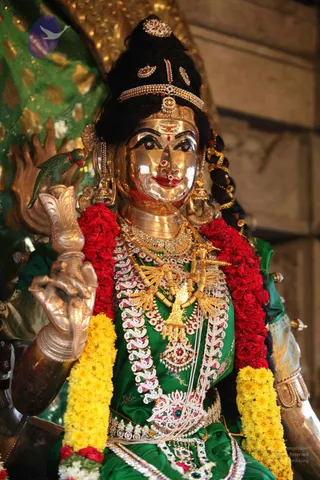
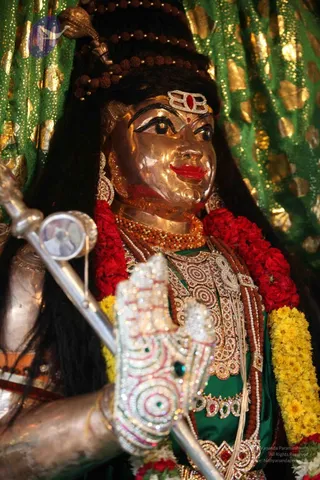
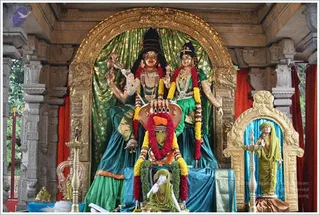
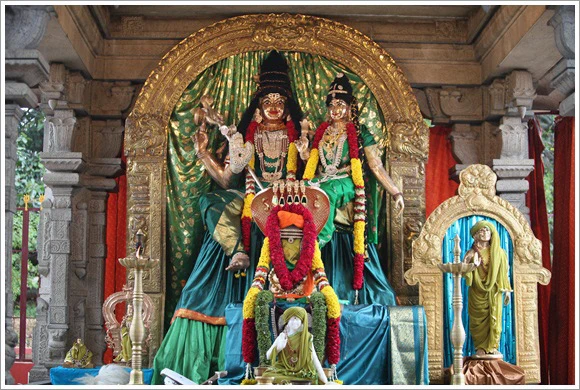
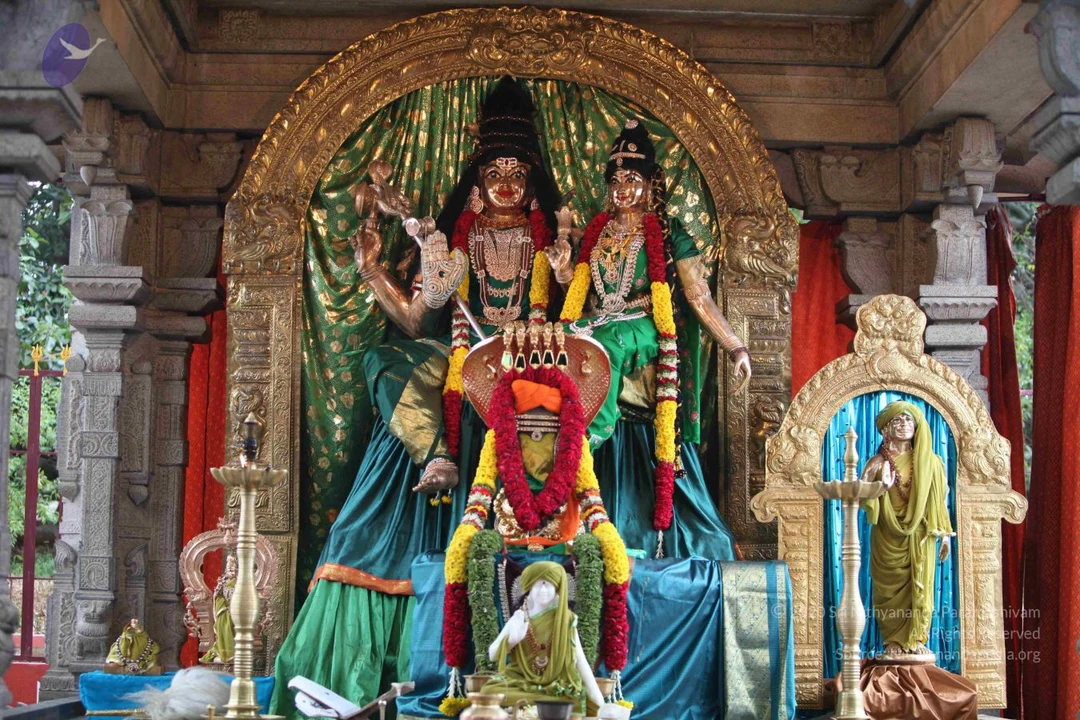
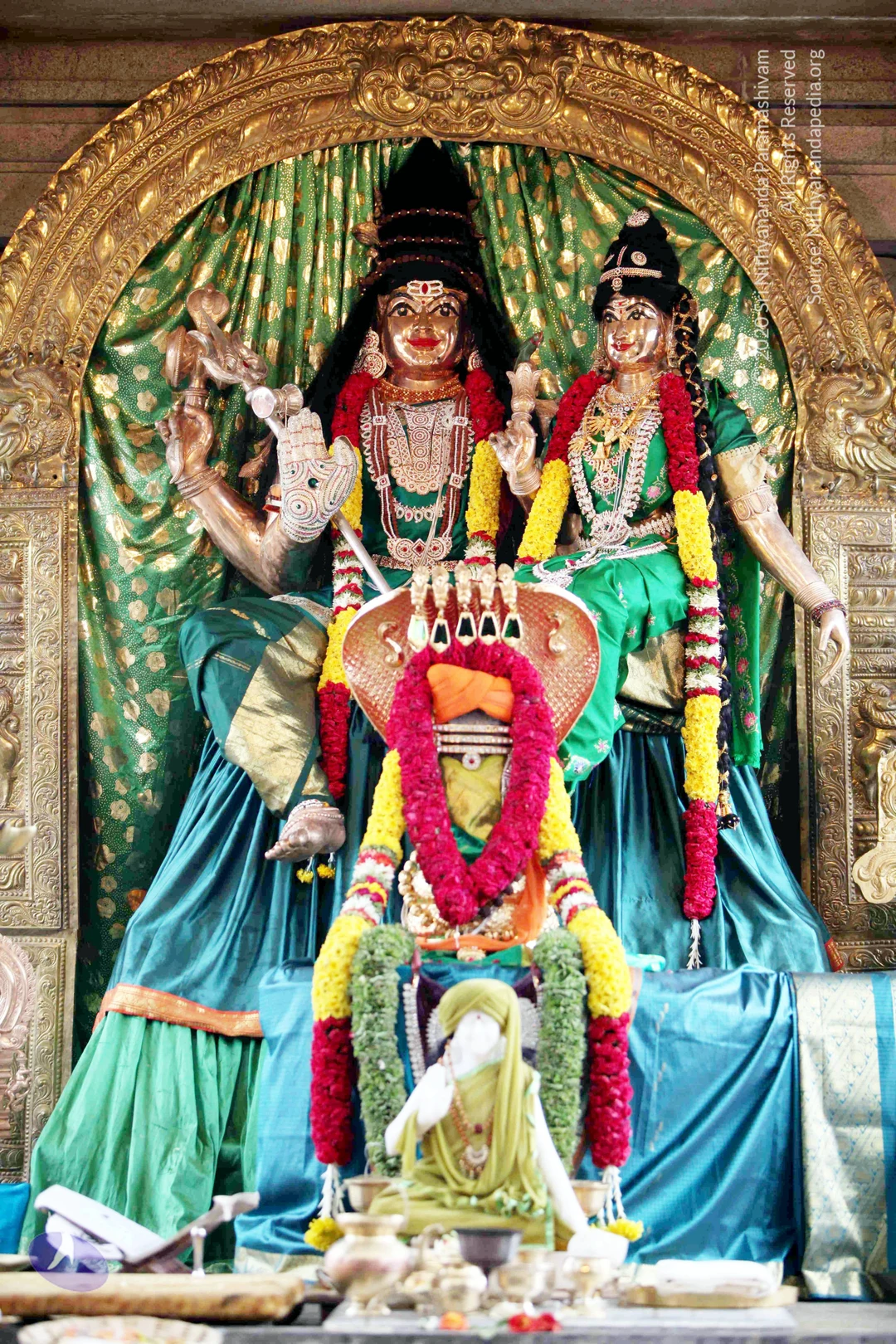
Two golden deity murtis seated side by side against a green sequined cloth backdrop with gold dot pattern and an ornate gilded arch. The figure on the left has a tall black crown-like hair piece, a red-and-white tilak on the forehead, rudraksha-style beads and a heavy gold necklace, holding a trident-like staff with a cobra-shaped top in one hand. The figure on the right wears a gold tiara, a green sari, layered pearl-and-gold necklaces and a red-and-yellow garland, holding a flower in one hand. Both are draped with red and yellow marigold garlands and a green-and-white cloth. Dark wooden plank of a platform sits in the foreground with a small offering of flowers.A decorated deity murti. It wears an orange cloth turban, a jeweled gold and diamond-studded crown band, and a green silk garment. Thick garlands of yellow marigolds and red roses drape its shoulders, with strands of rudraksha beads hanging down the front. A large copper-toned hooded cobra canopy with green gemstone-tipped ornaments rises behind the head. Gold vessels and the orange sash fill the lower frame. No people are visible in the scene.A photograph of two gilded metal deity murti, a Shiva-form figure on the left and a consort-form figure on the right, seated before a green shimmering cloth with gold motifs and a gold arched canopy. The left figure holds a trident and a small drum-like object, wears a tall matted-hair crown with rudraksha beads and a tilak. The right figure wears a crown, jewelled necklaces, a green sari and holds a lotus-stem or similar object. Both are decorated with red and yellow marigold garlands. The background shows carved stone pillars. Their faces are gold-coloured with red lips. No living people are visible.Two golden metal deity murtis stand side by side before a green sequined cloth backdrop with gold dot patterns. The figure on the left has long dark hair, a tall jata-style crown, a tripundra mark and a trident held in one hand, and wears a white and red beaded ornamental chest piece. The figure on the right wears a jeweled gold crown, a green silk garment, layered gold necklaces and a red and yellow garland, holding a lotus-like staff. Both are draped with red, yellow and white flower garlands. The setting is a temple shrine with carved stone walls.A close photograph of a gilded metal deity murti, a goddess figure with a polished golden face, red bindi and vertical tilak, dark hair piled high under a jewelled crown. The murti wears a green silk garment heavily adorned with layered gold and diamond-like necklaces, a red and white floral garland, and yellow chrysanthemum garlands. Its raised hand holds a golden staff topped with a small green parrot, and a golden flame-shaped backdrop rises behind it. No physical people are visible.A close photograph of a golden-faced deity murti with long dark hair piled in a tall crown wrapped in rudraksha malas, a red and gold forehead ornament, red lips and dark painted eyes. It wears a green silk garment, layered jewelled necklaces, a red and yellow flower garland, and holds a silver staff with a sparkling crystal-encrusted hand-shaped ornament in front. A green gold-spangled cloth backdrop surrounds it. No physical people are visible, and the figure is a statue, not a person.
BG-Satsang

130 photosSource gallery
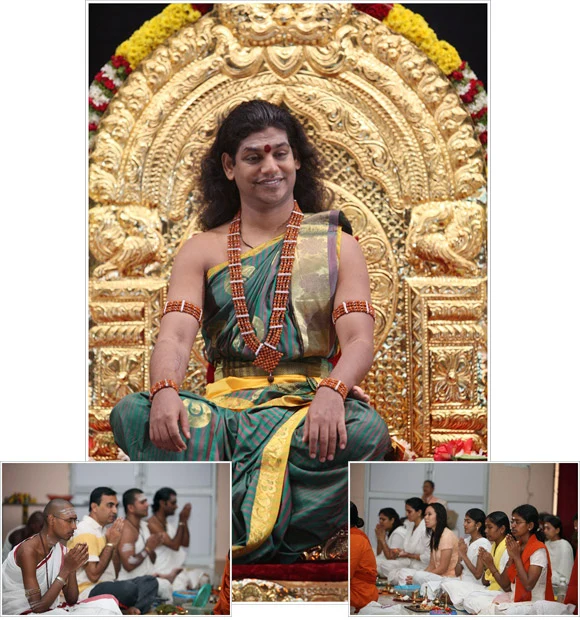
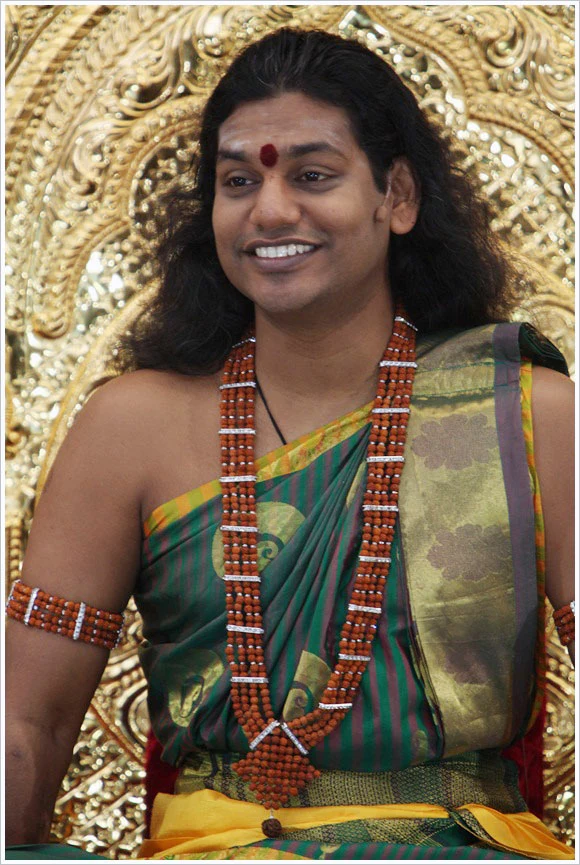
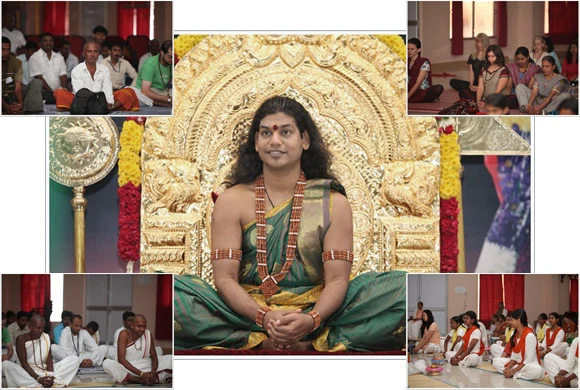
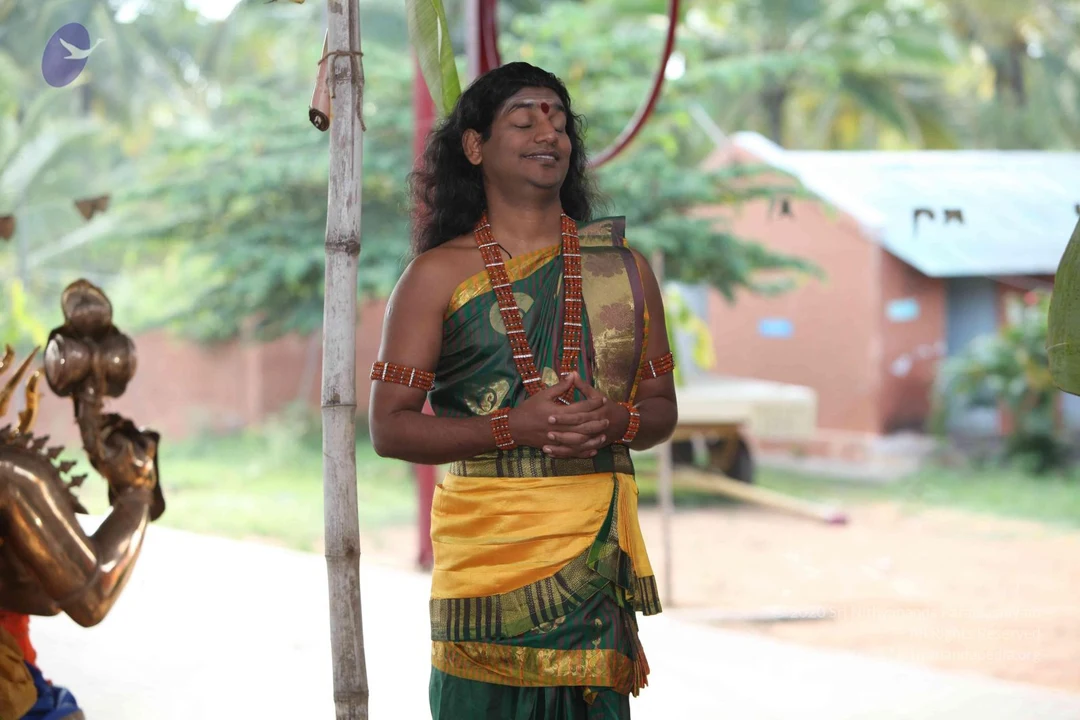
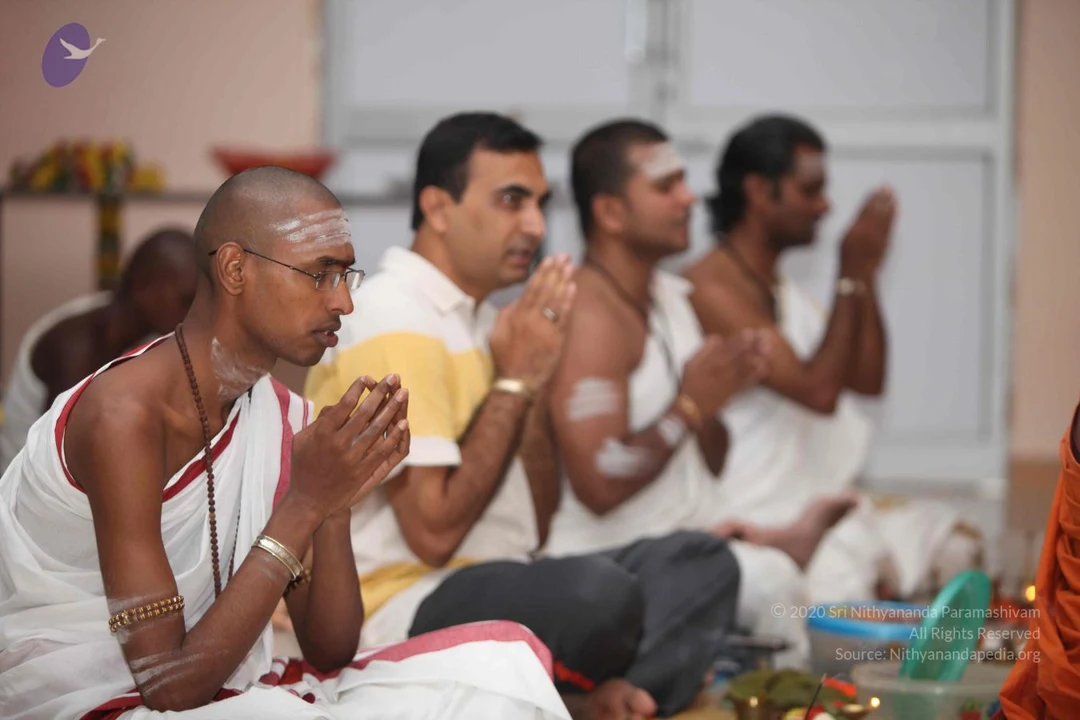
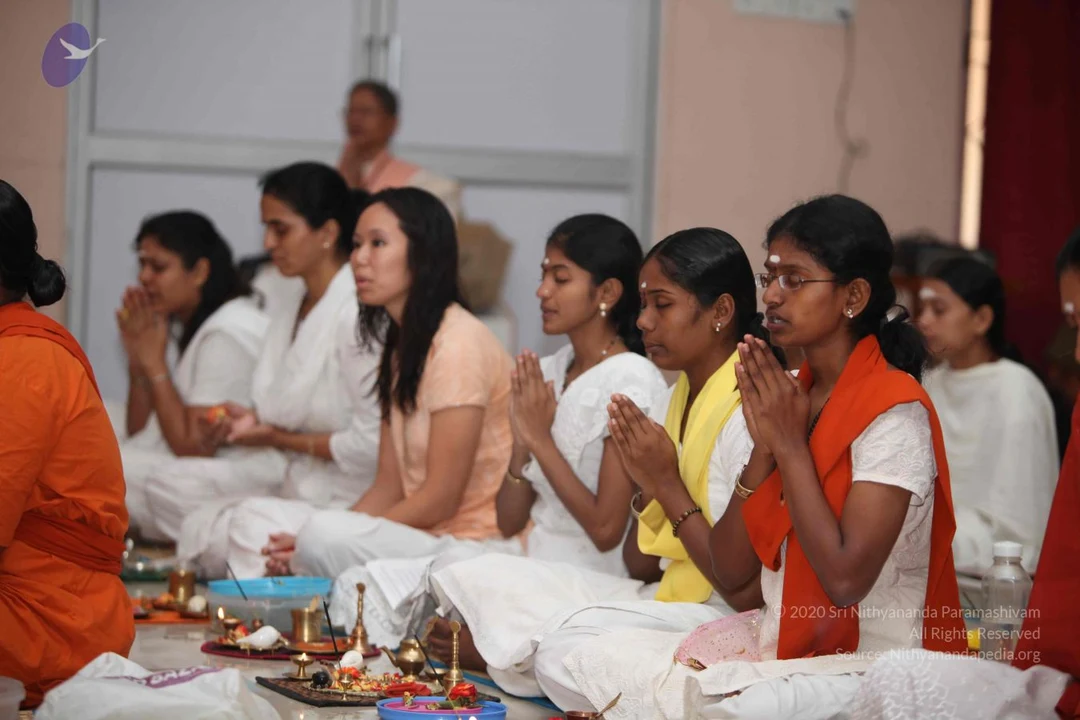
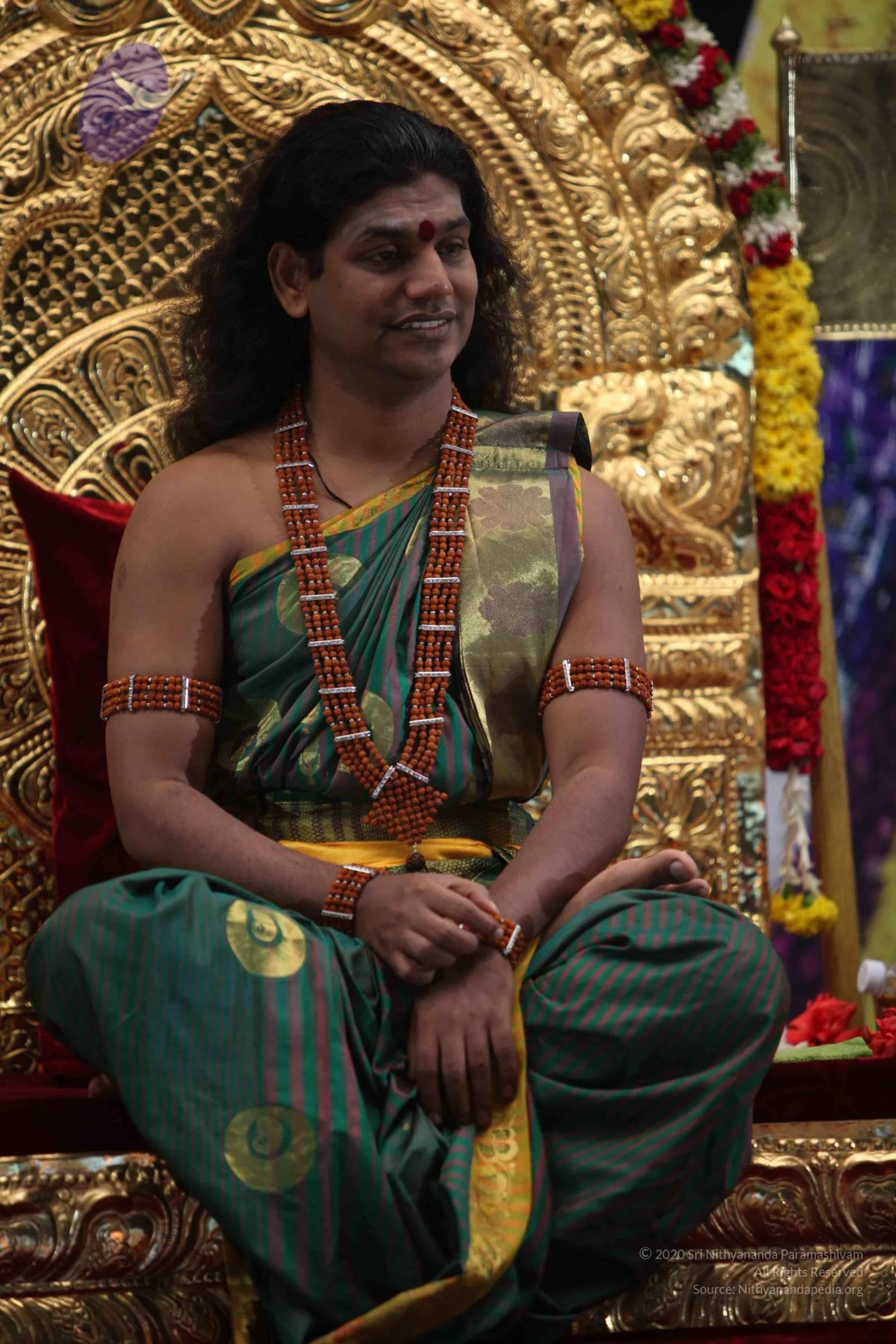
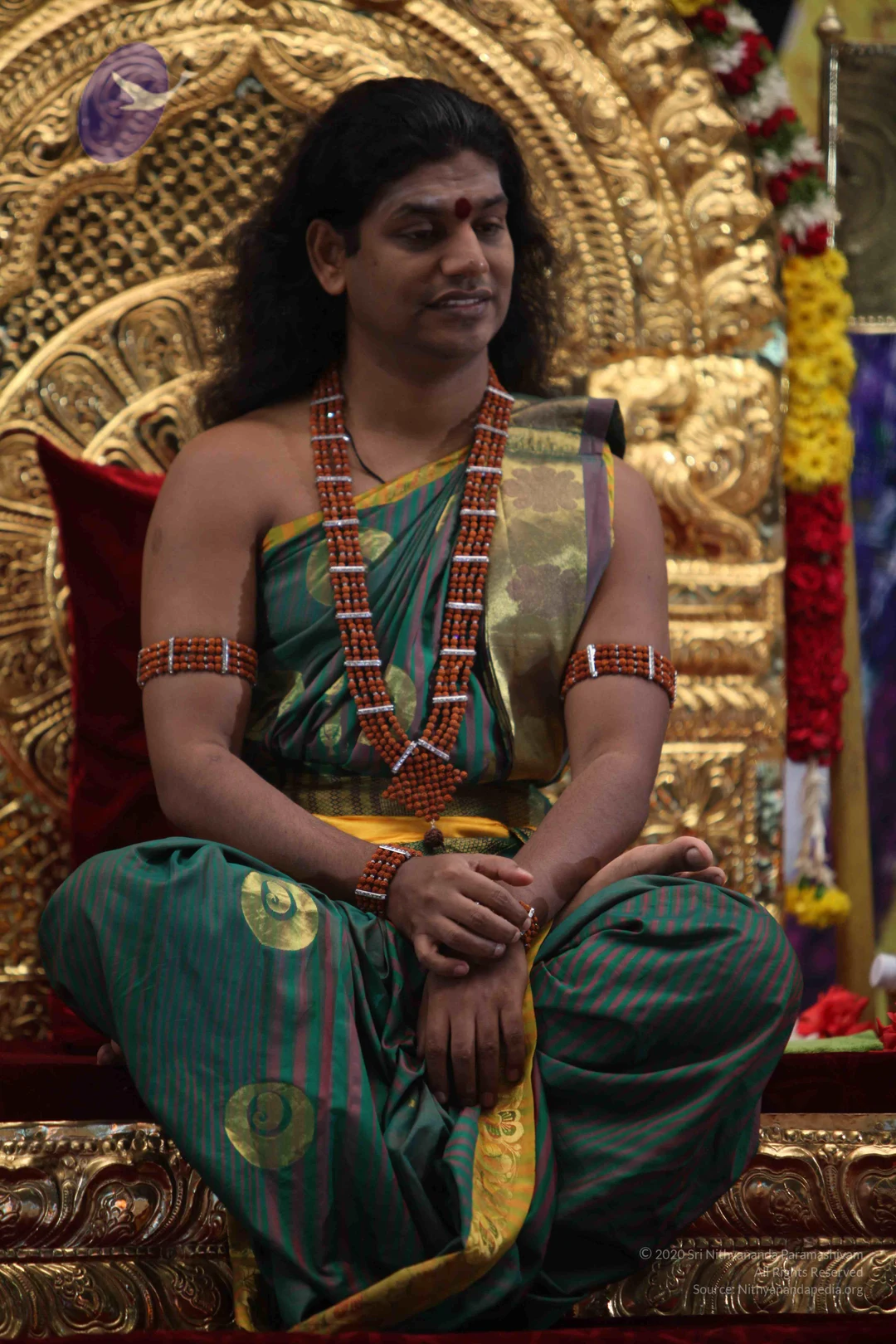
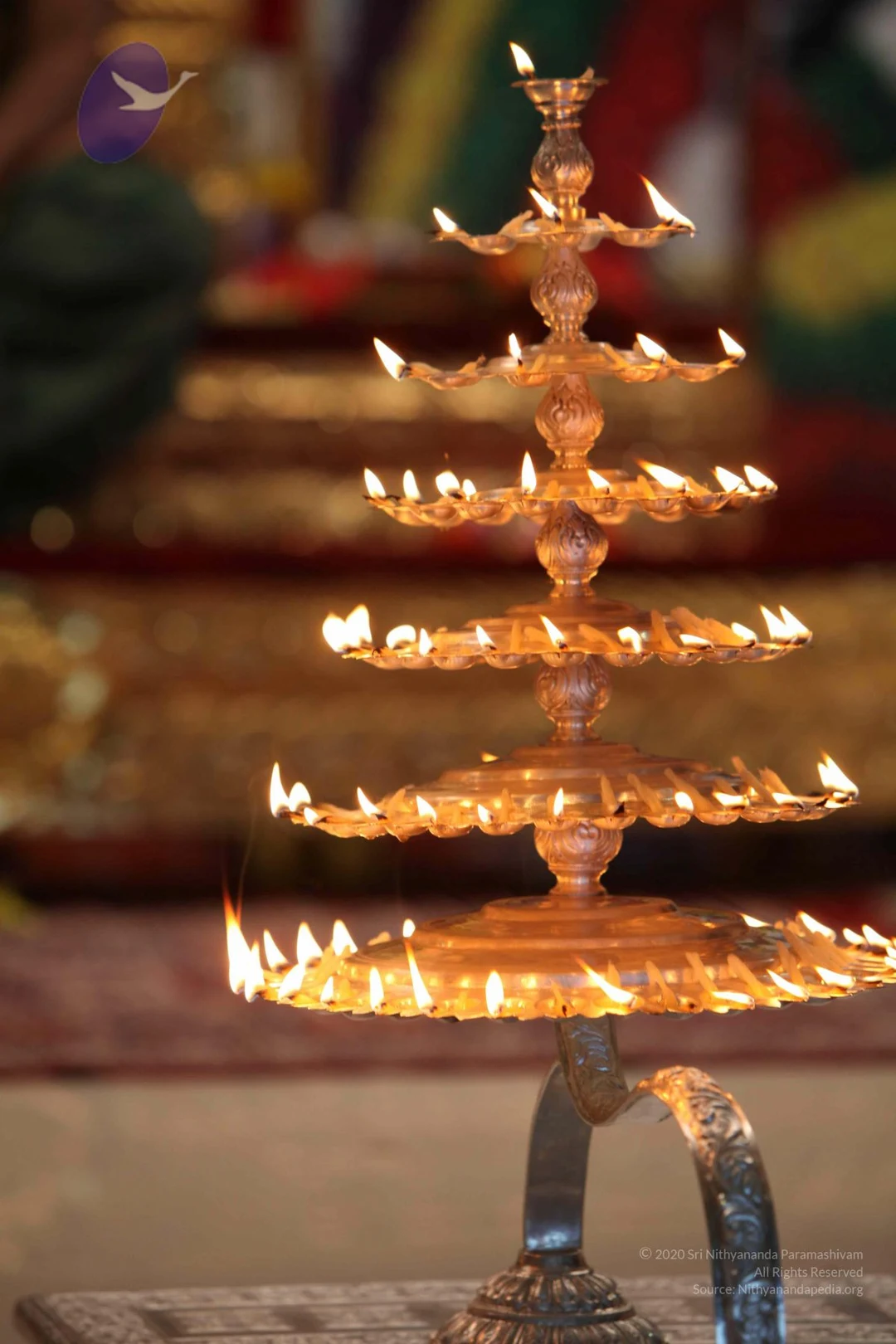
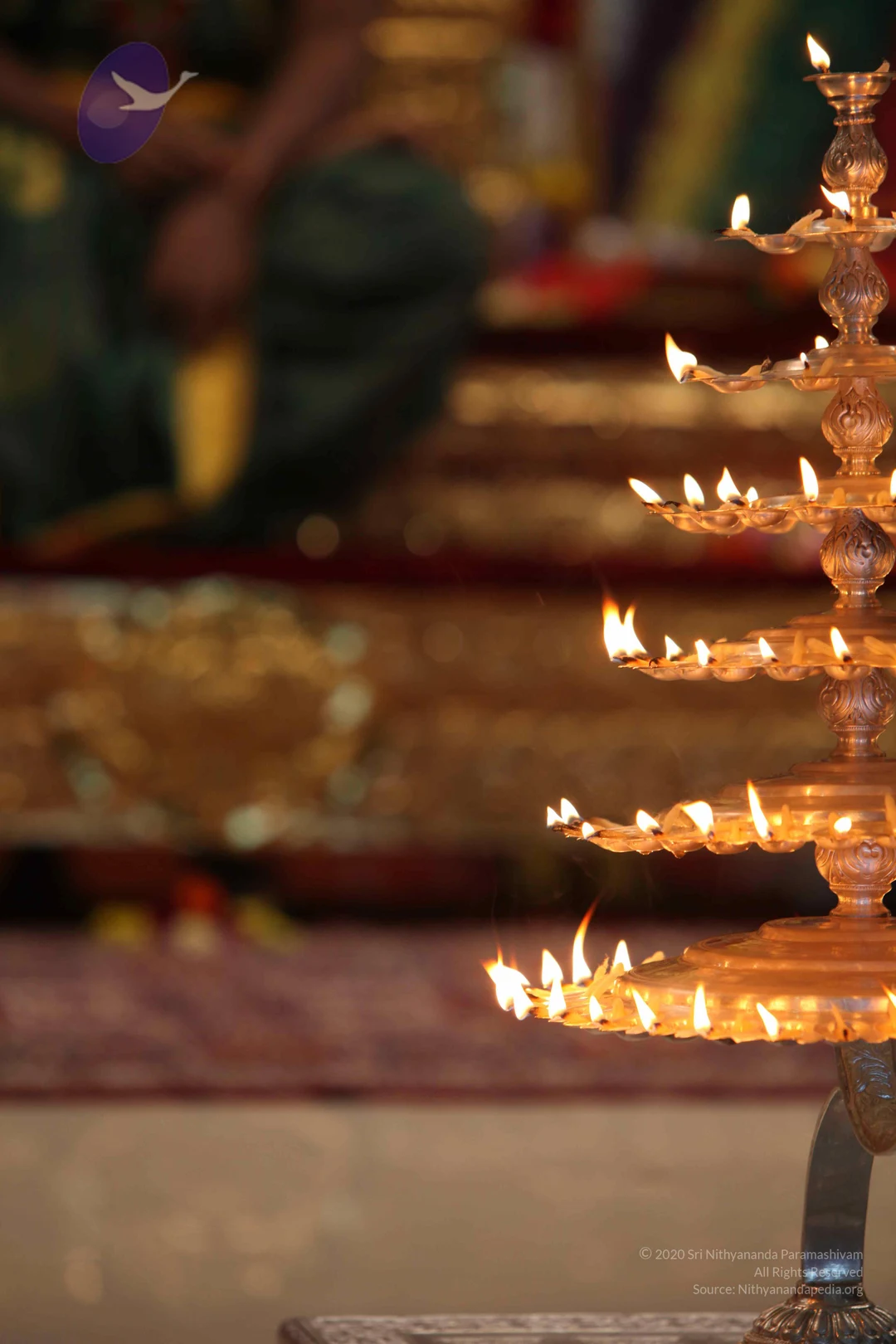
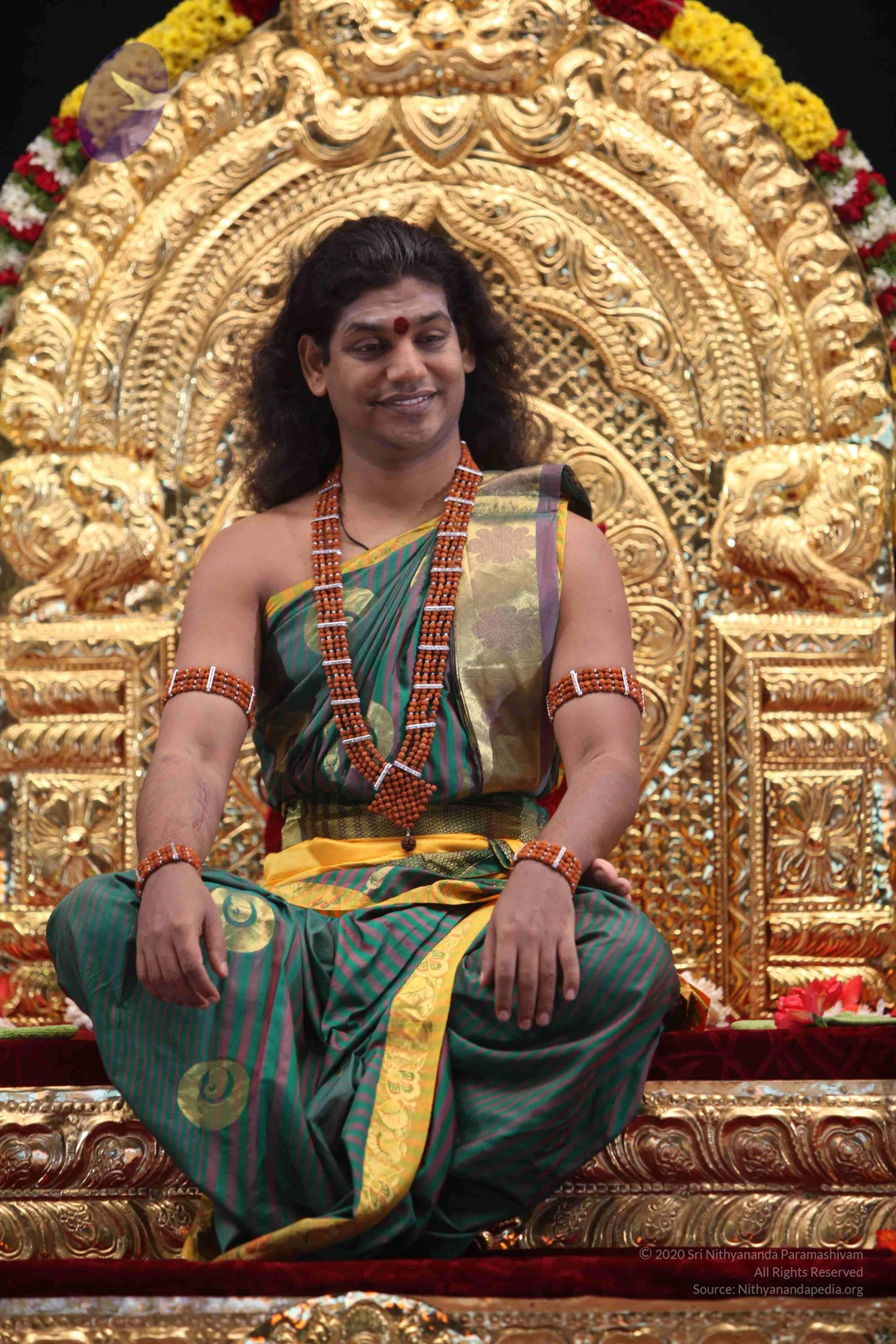
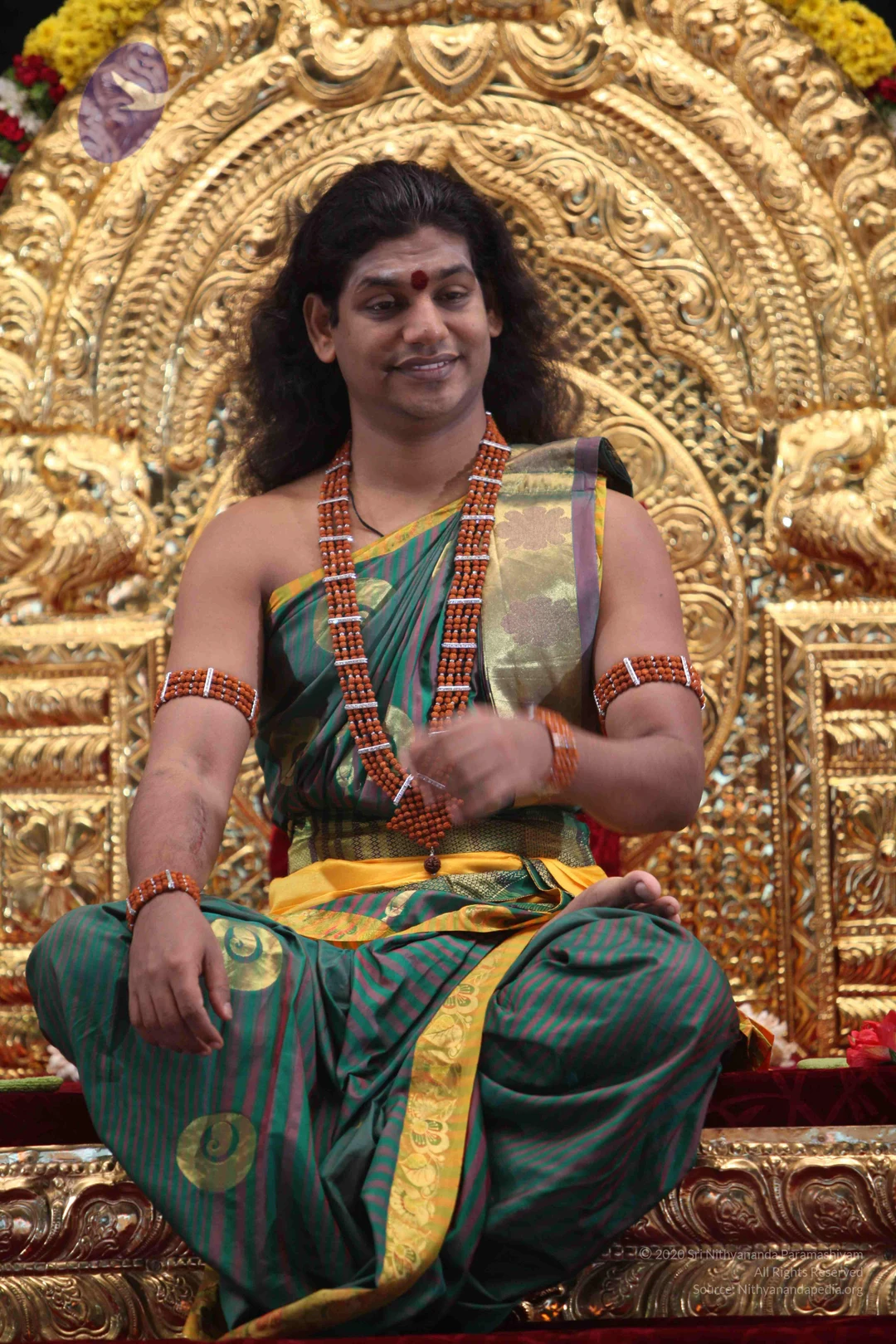
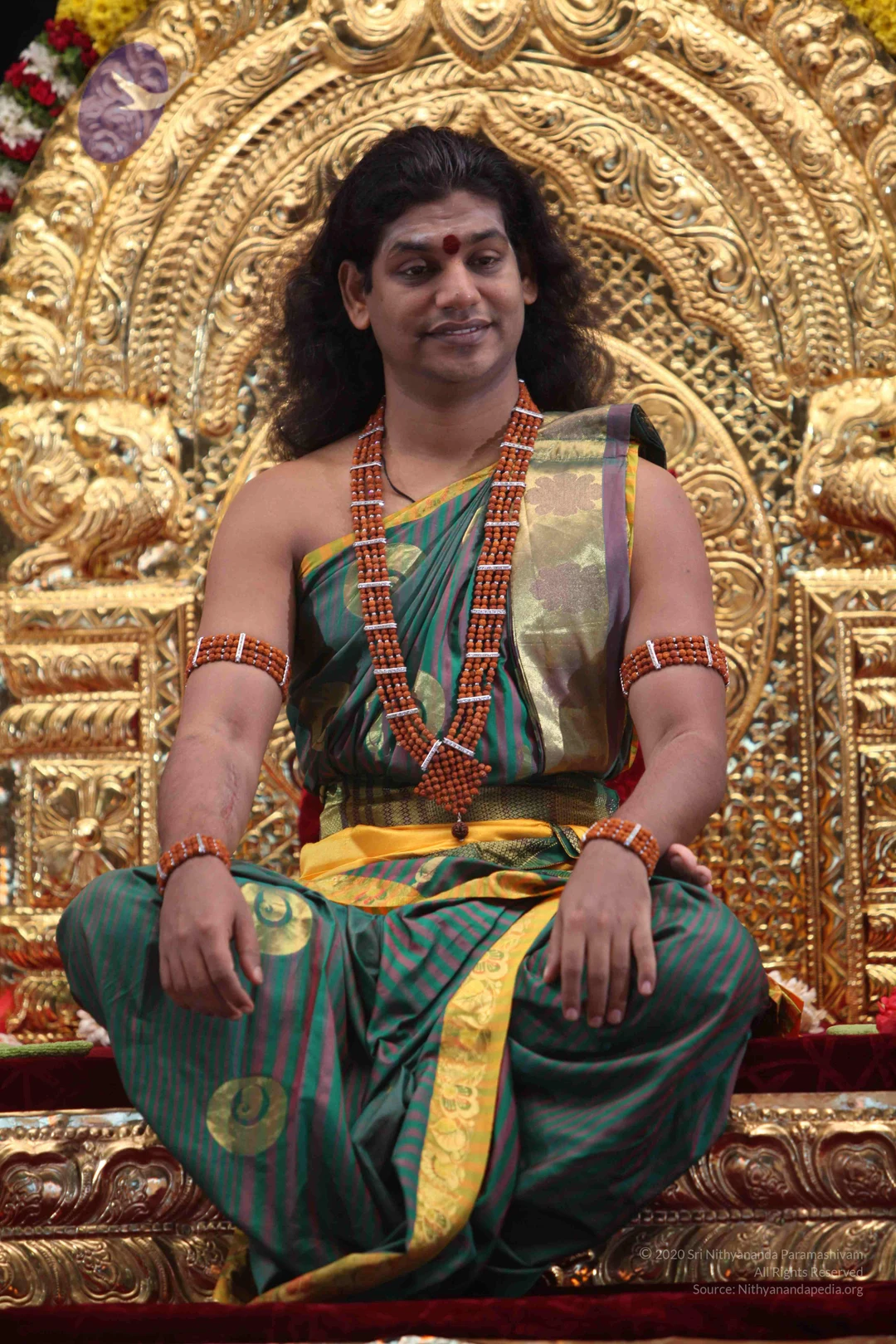
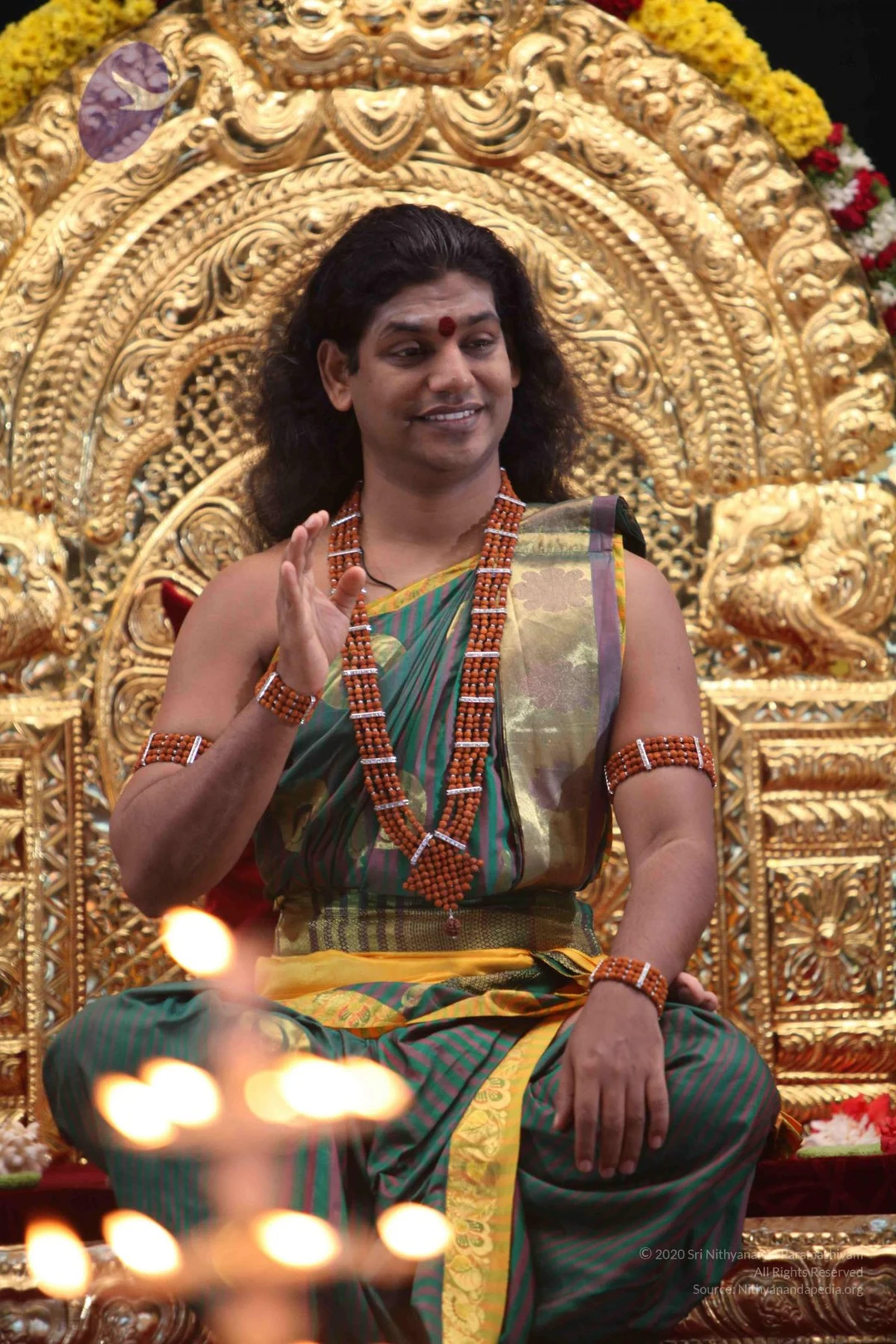
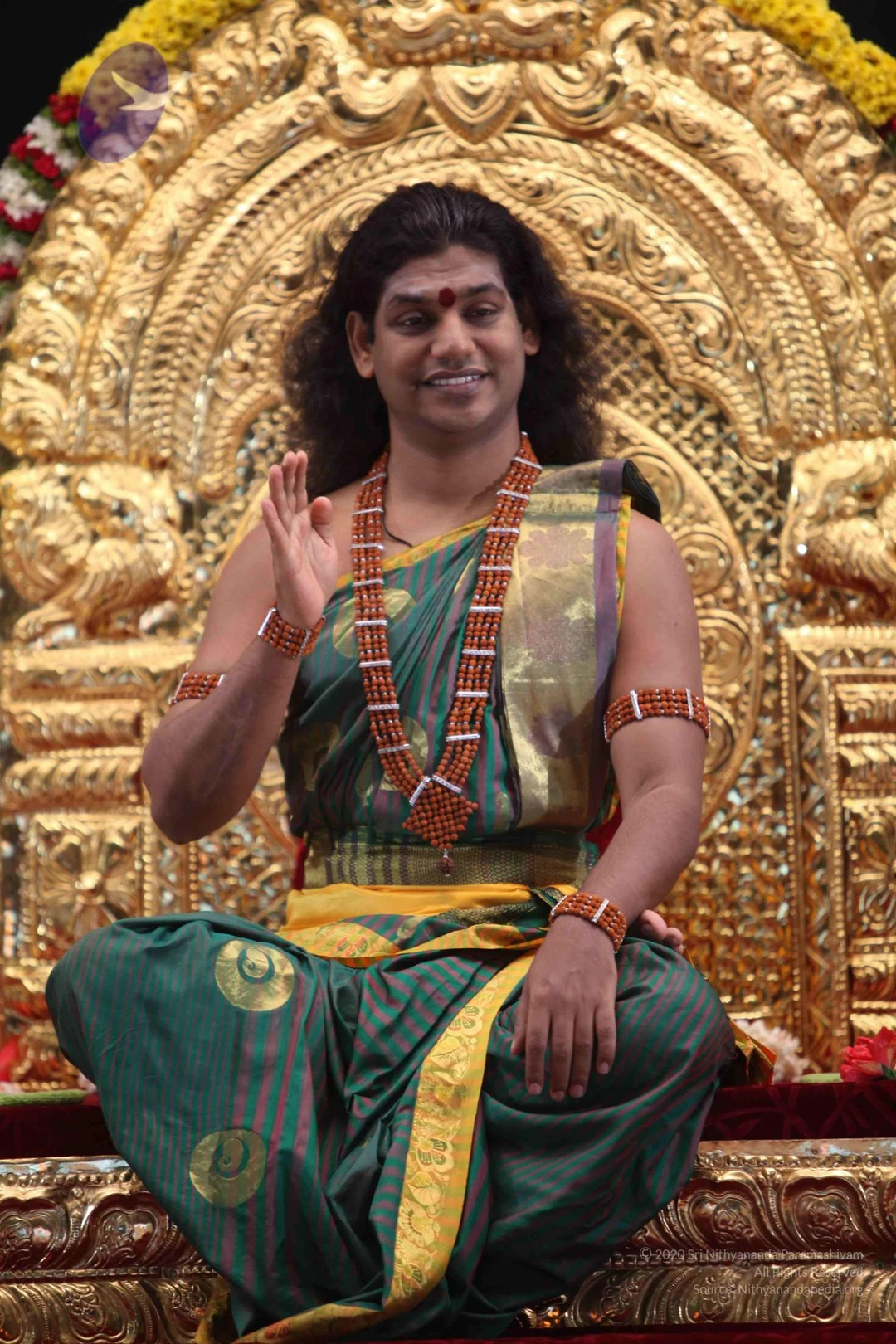
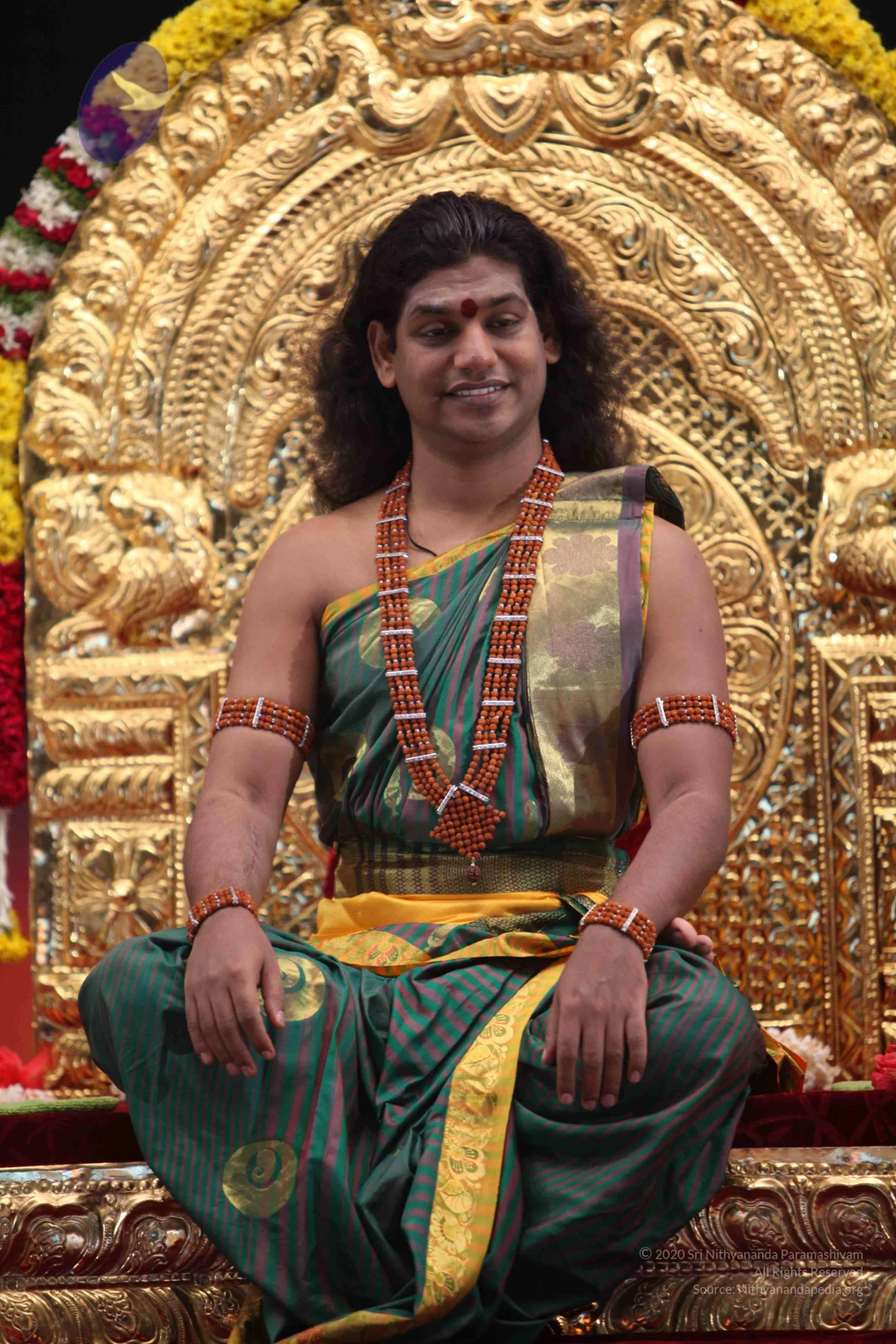
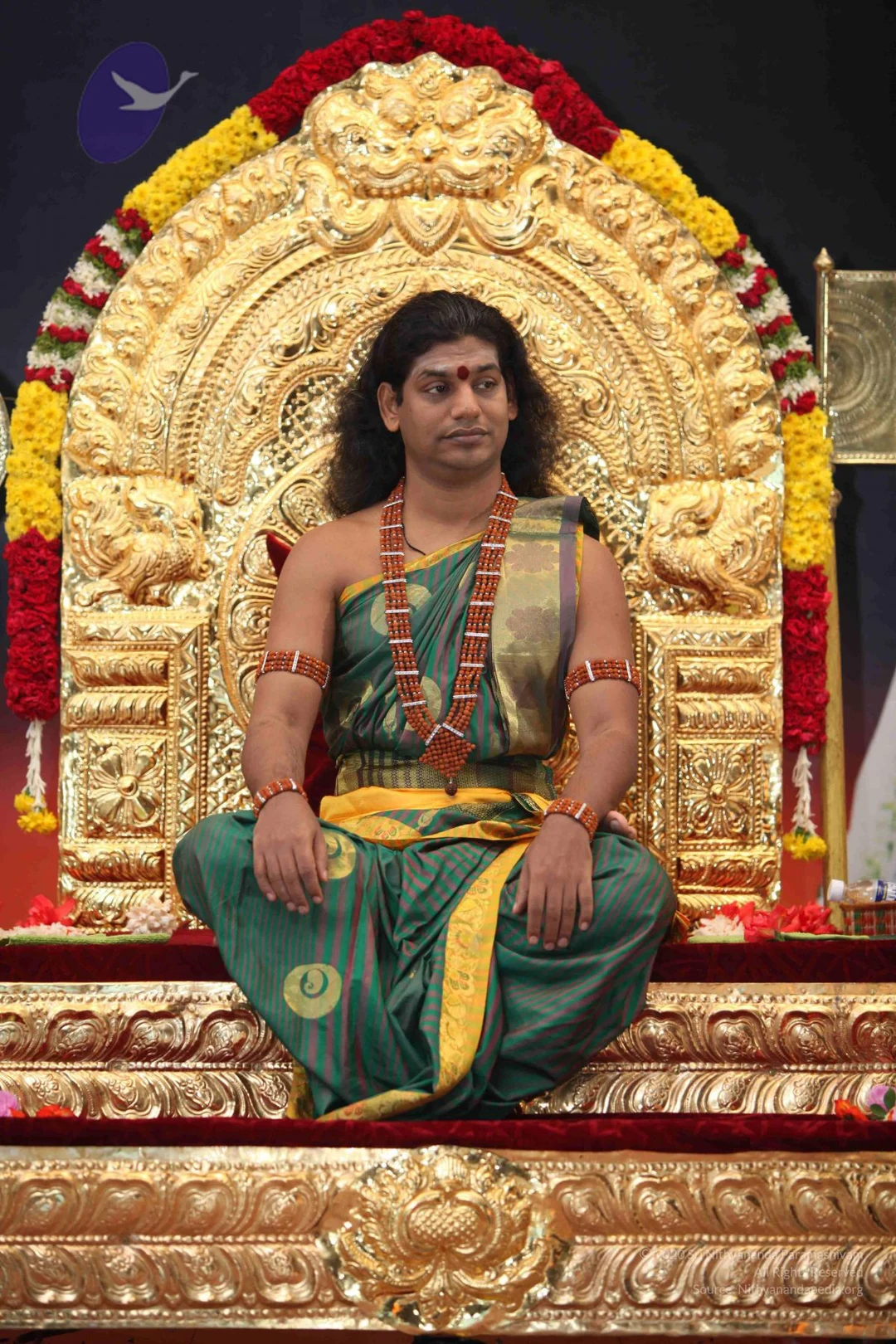
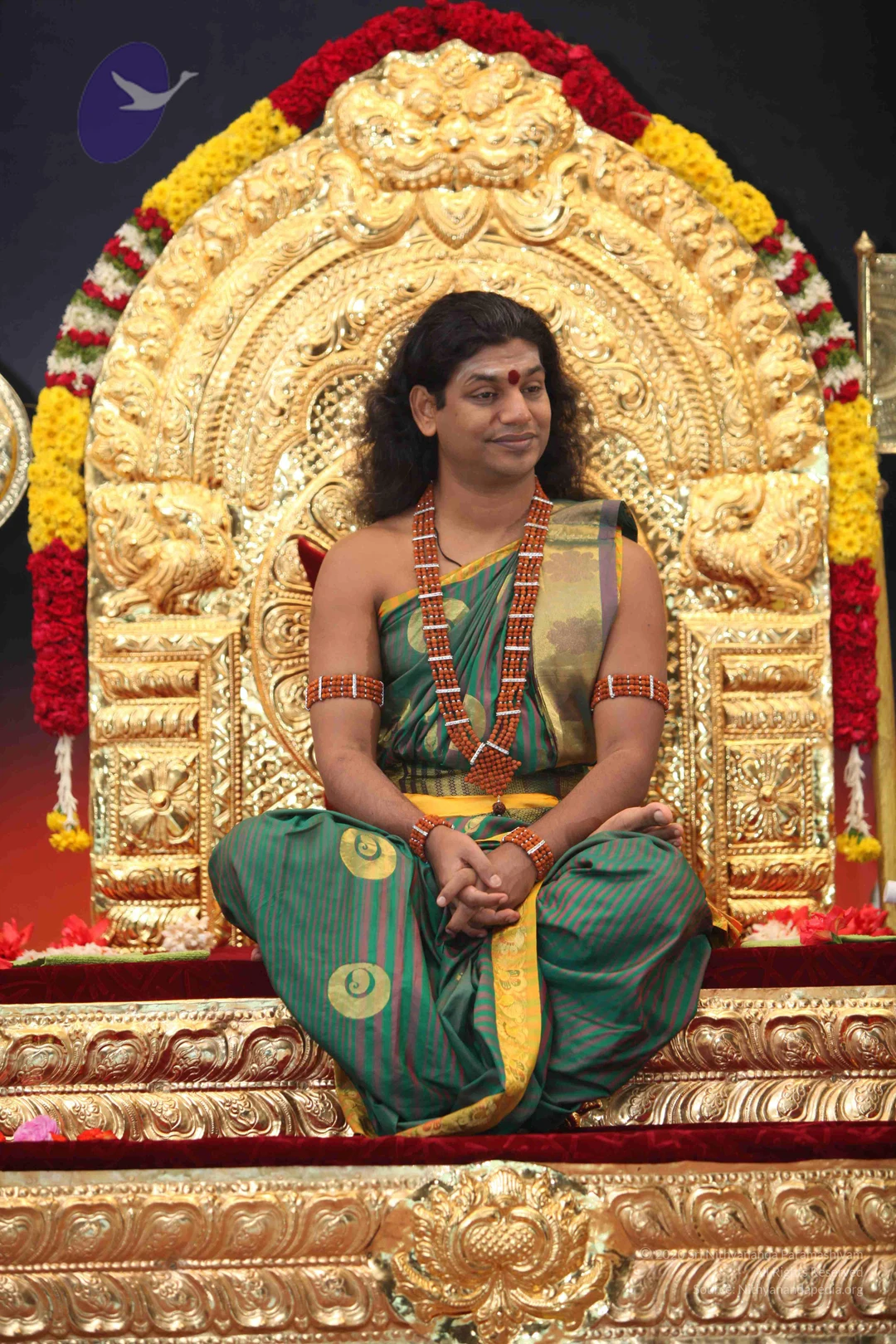
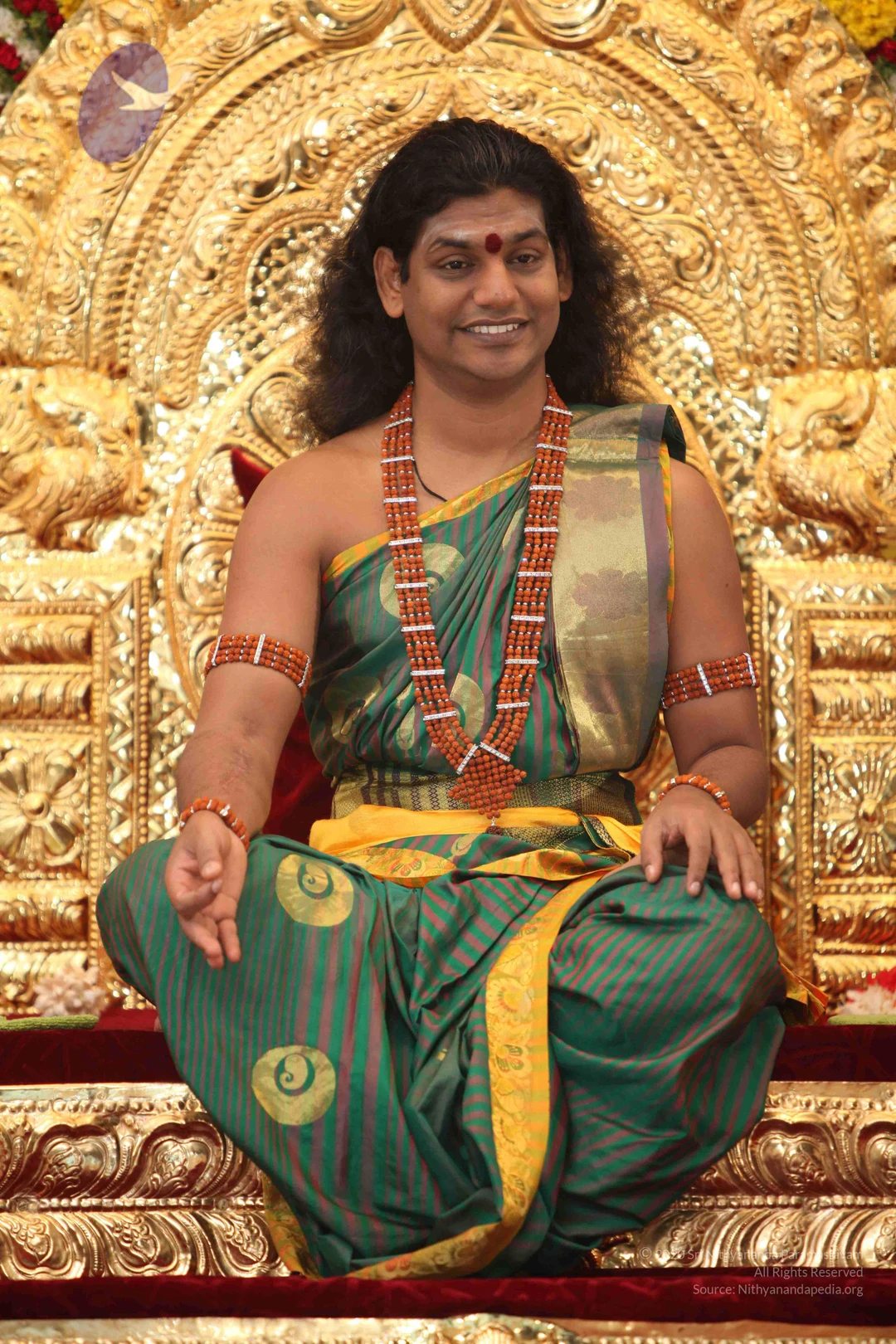
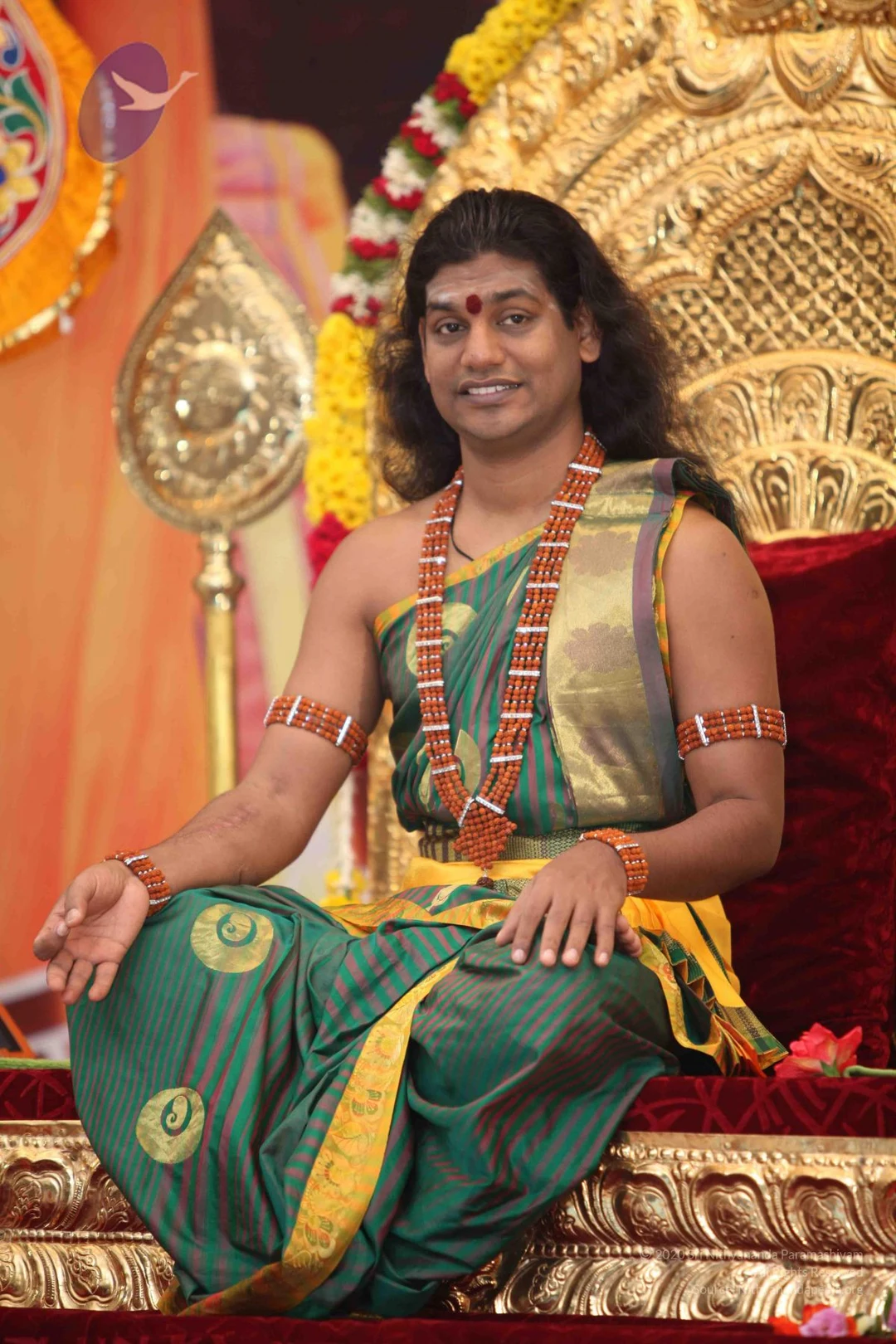
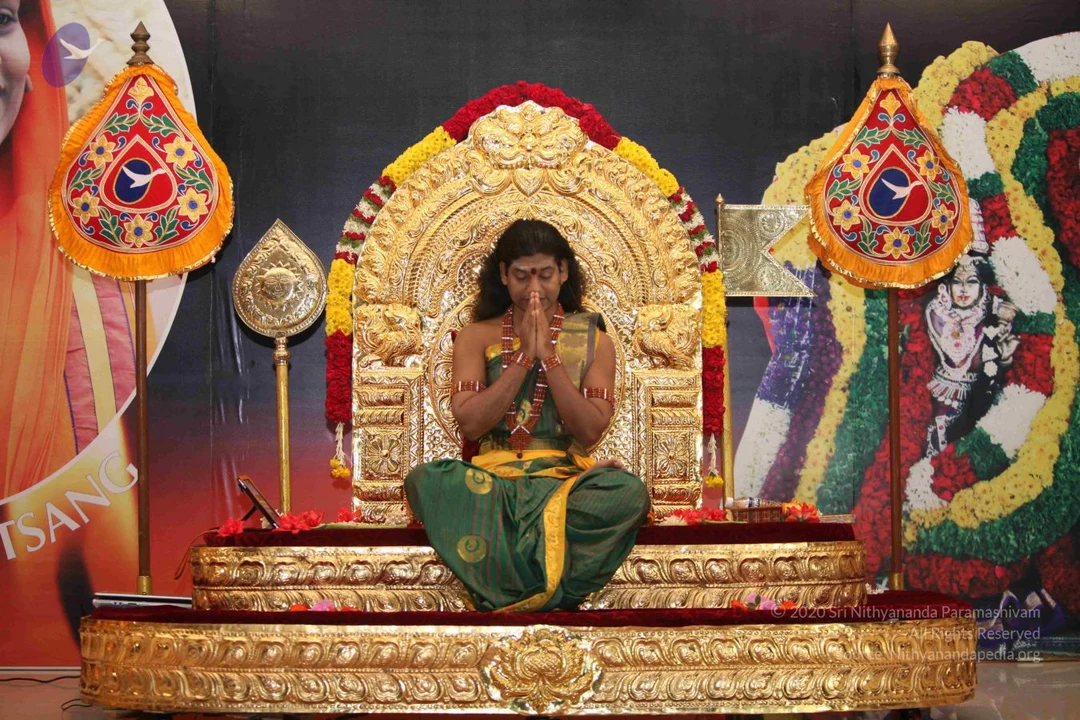
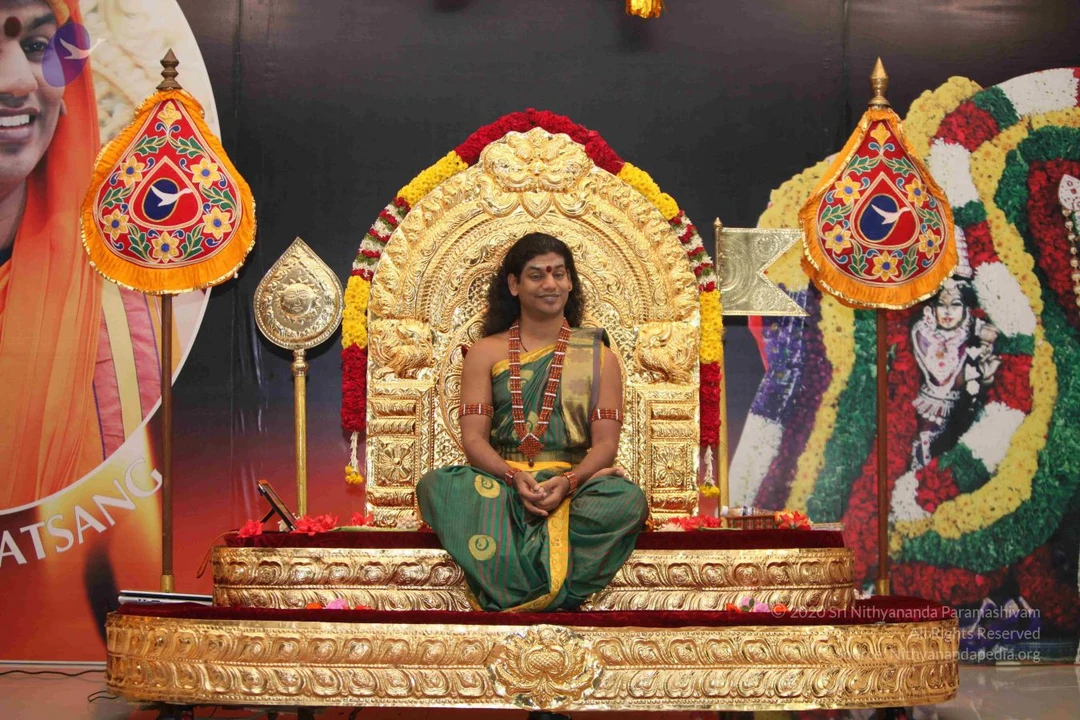
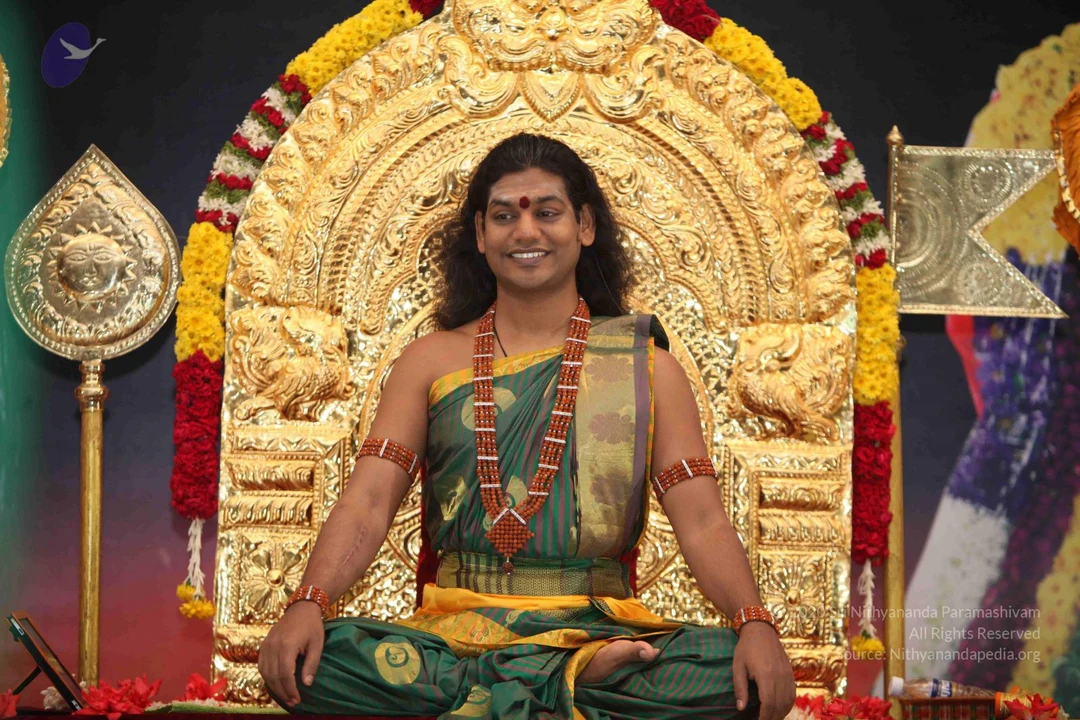
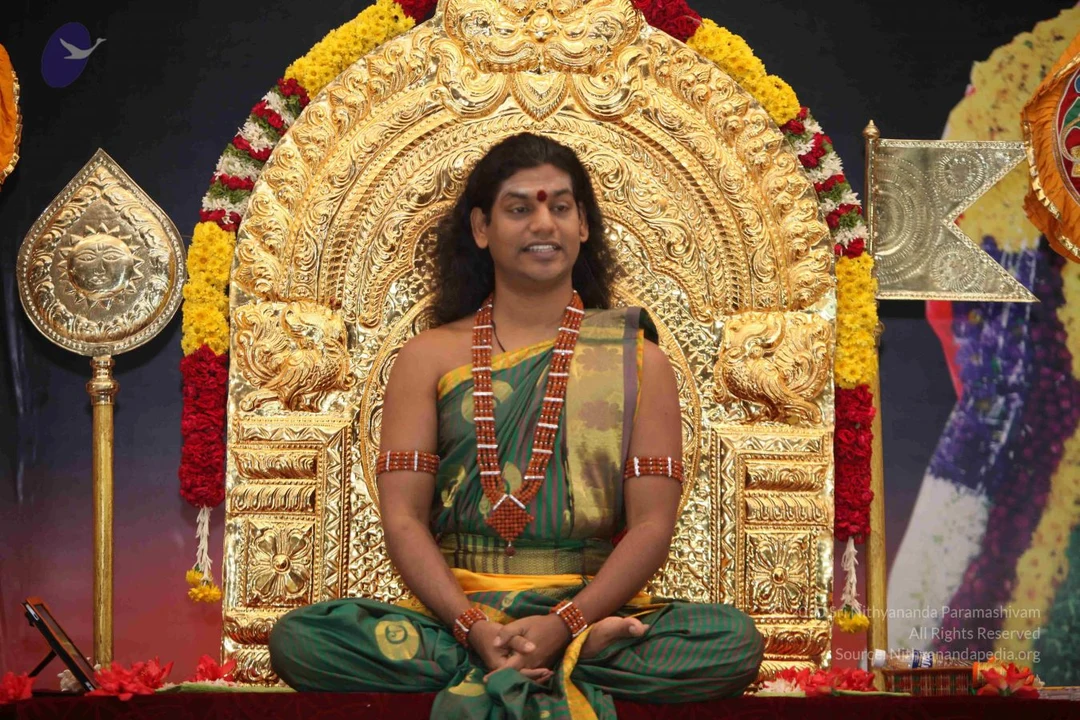
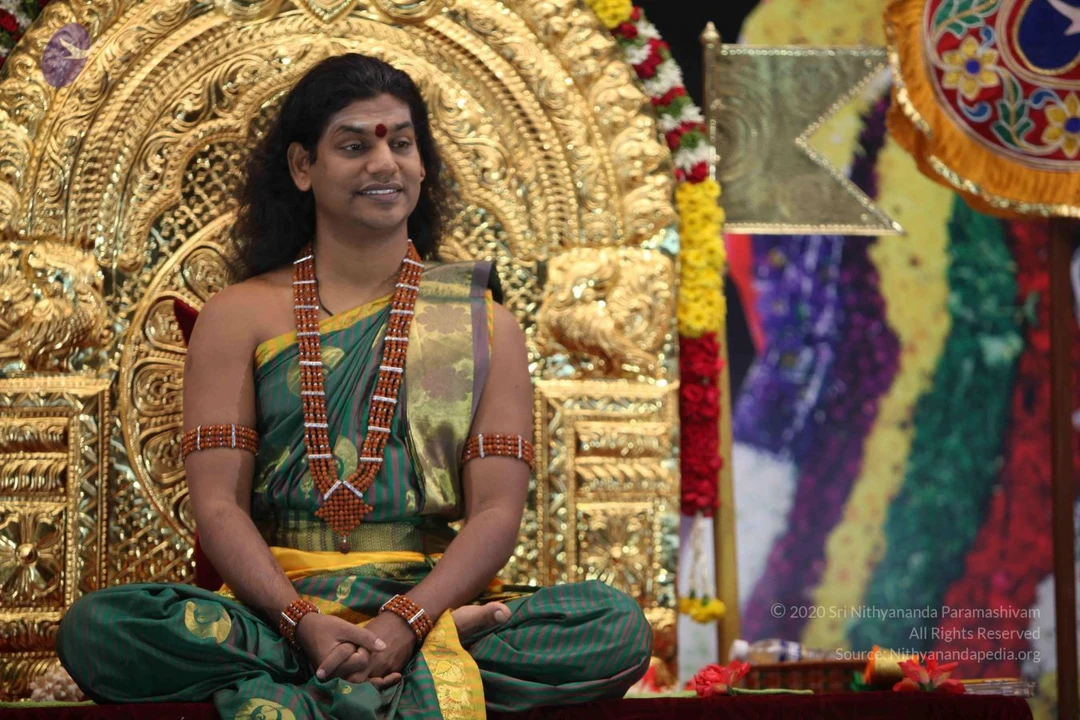
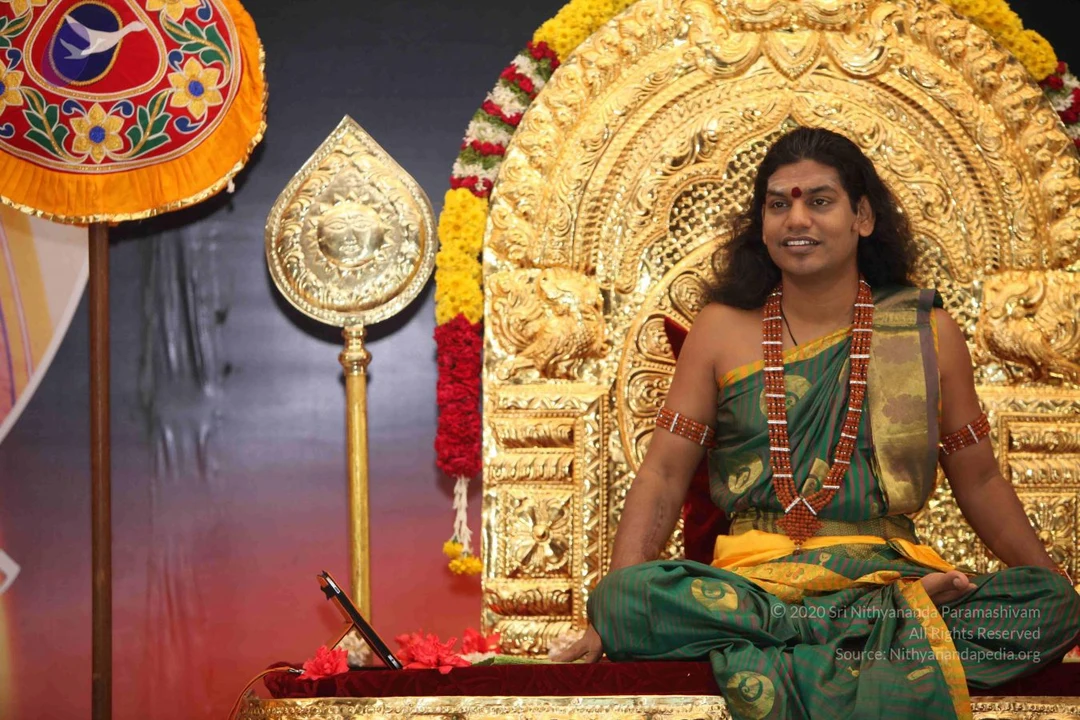
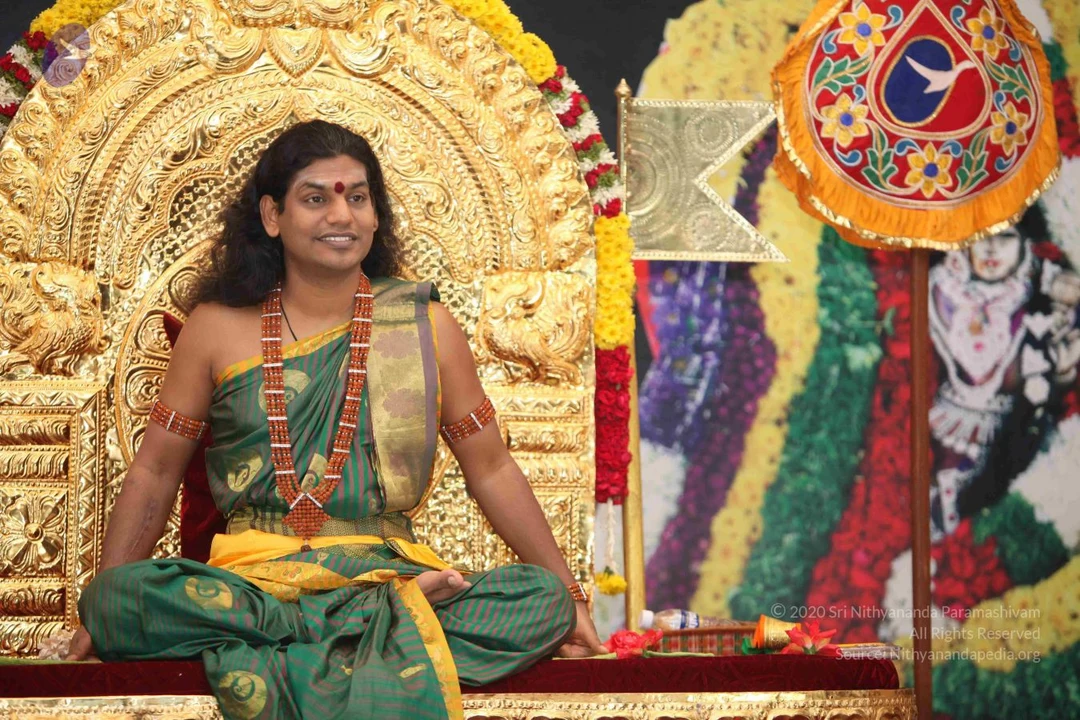
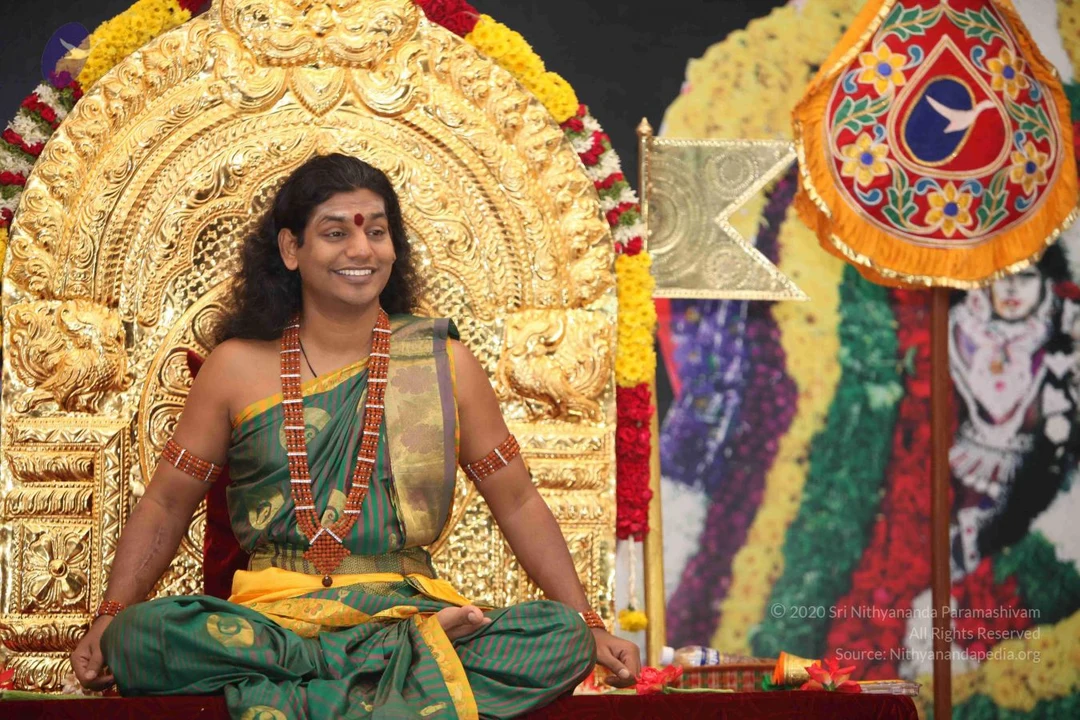
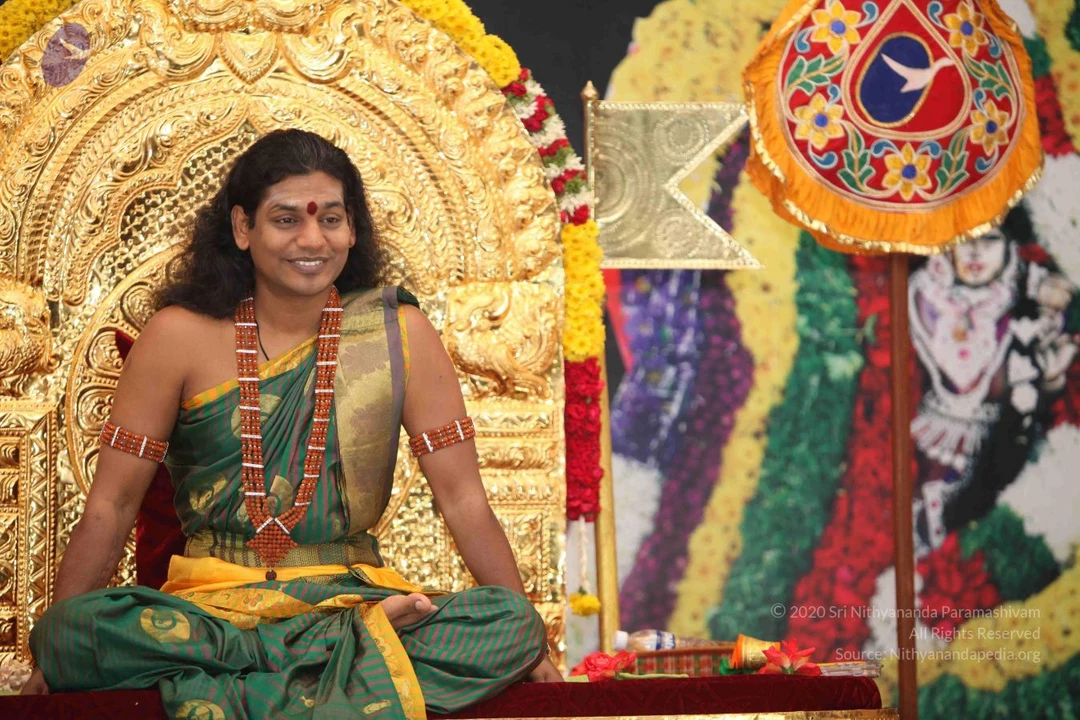
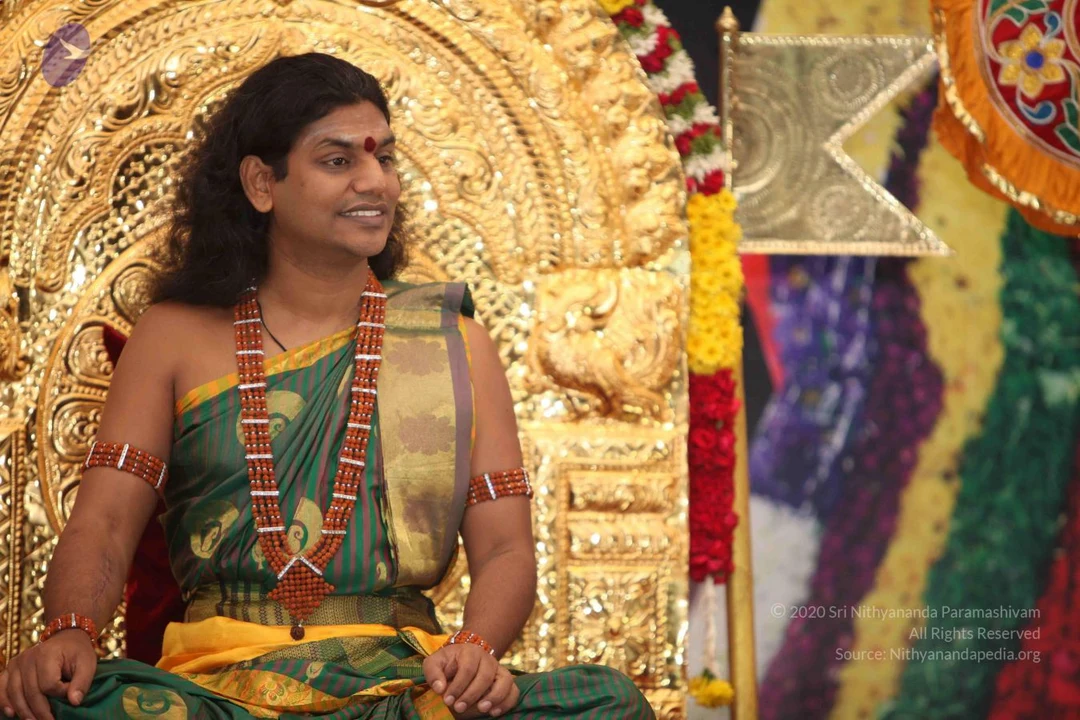
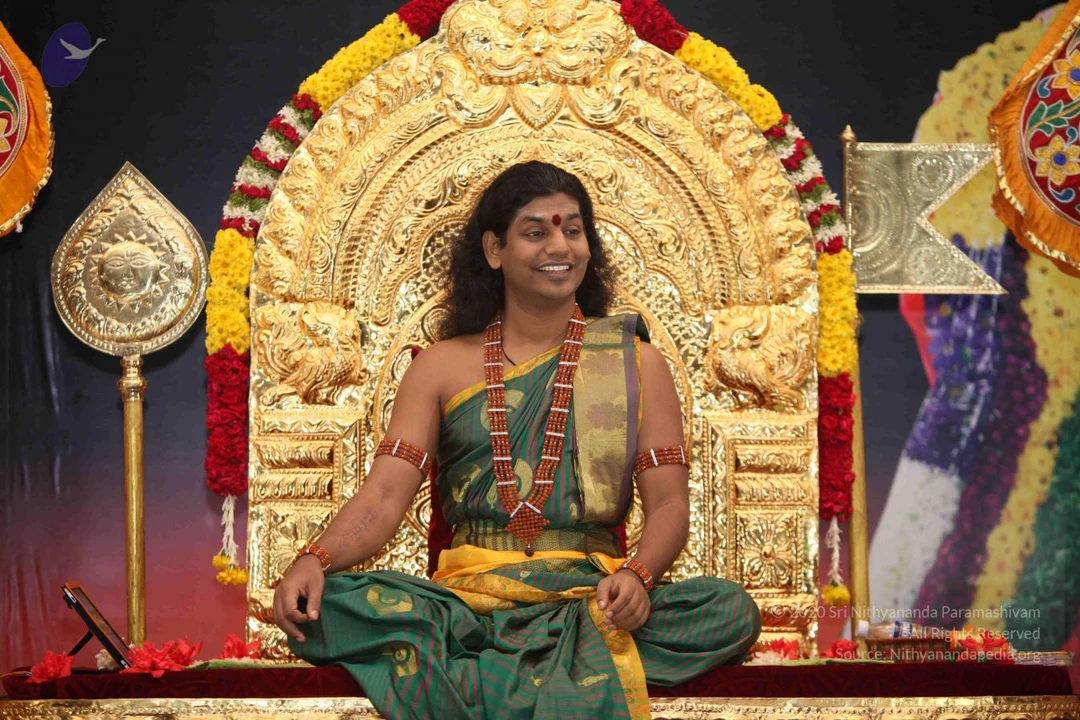
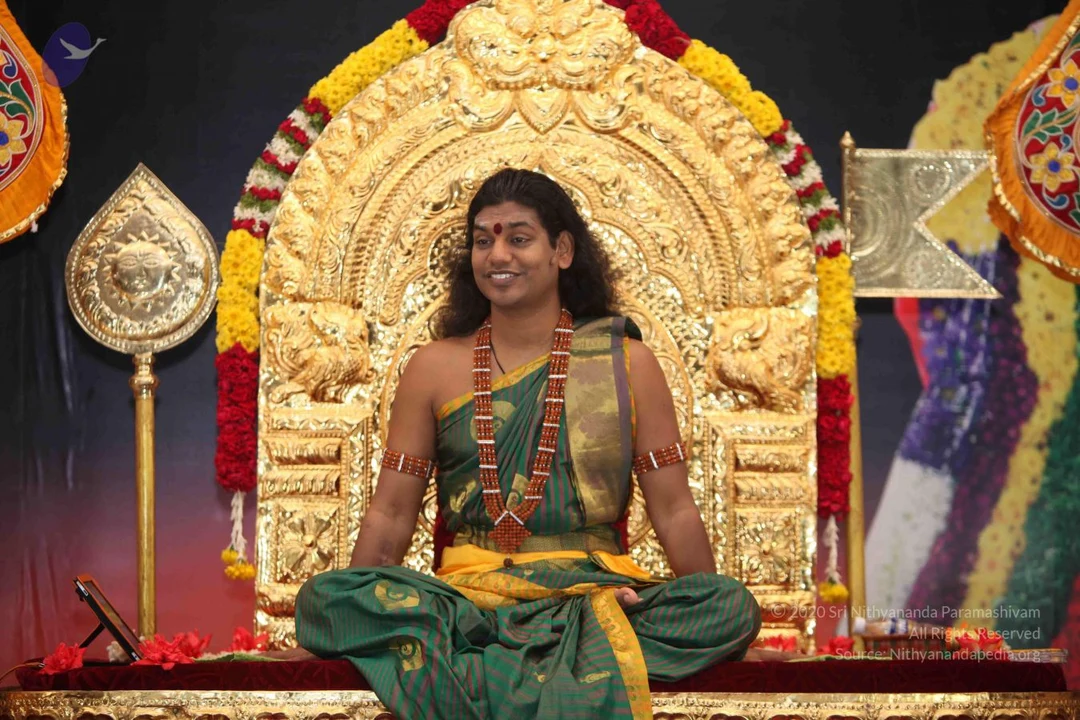
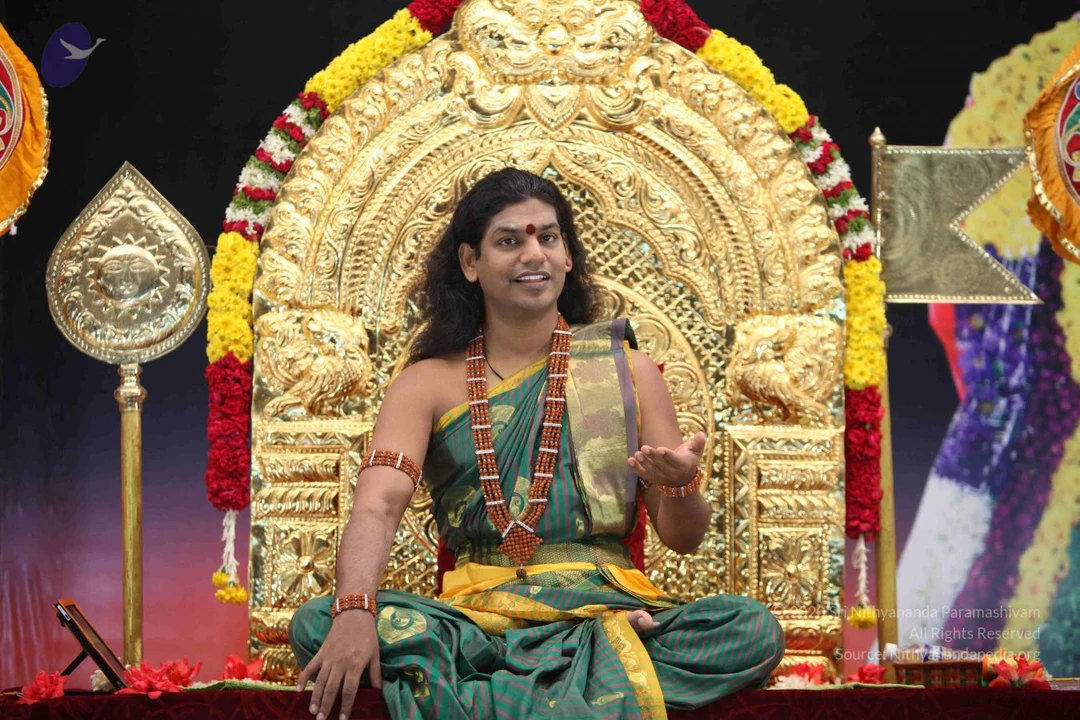
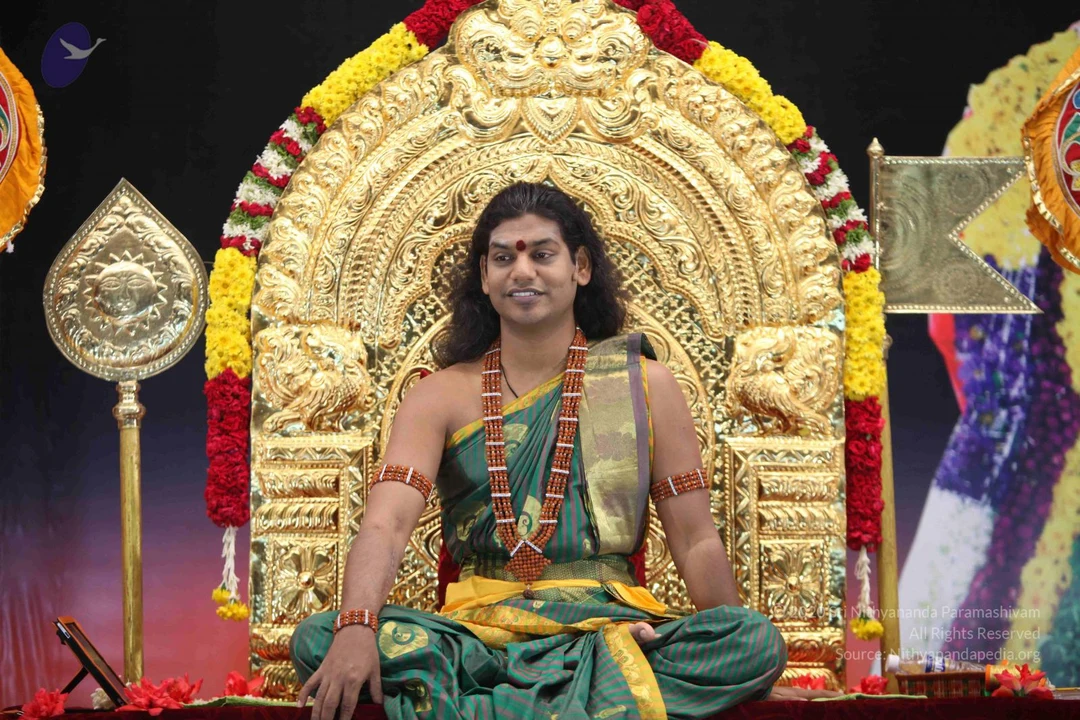
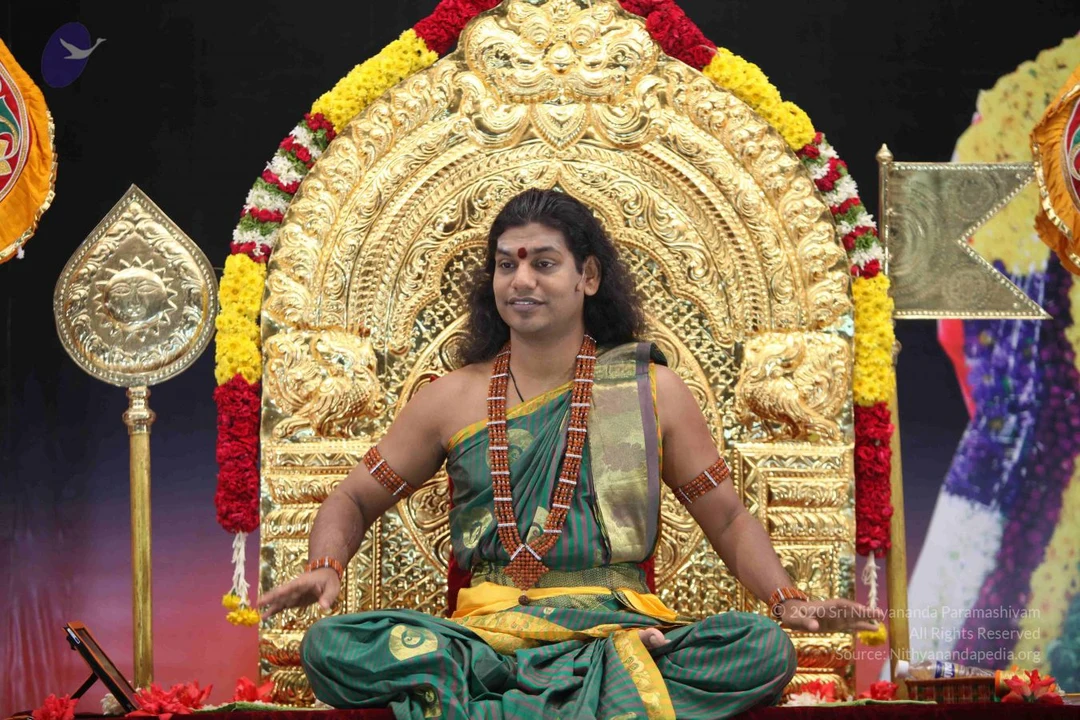
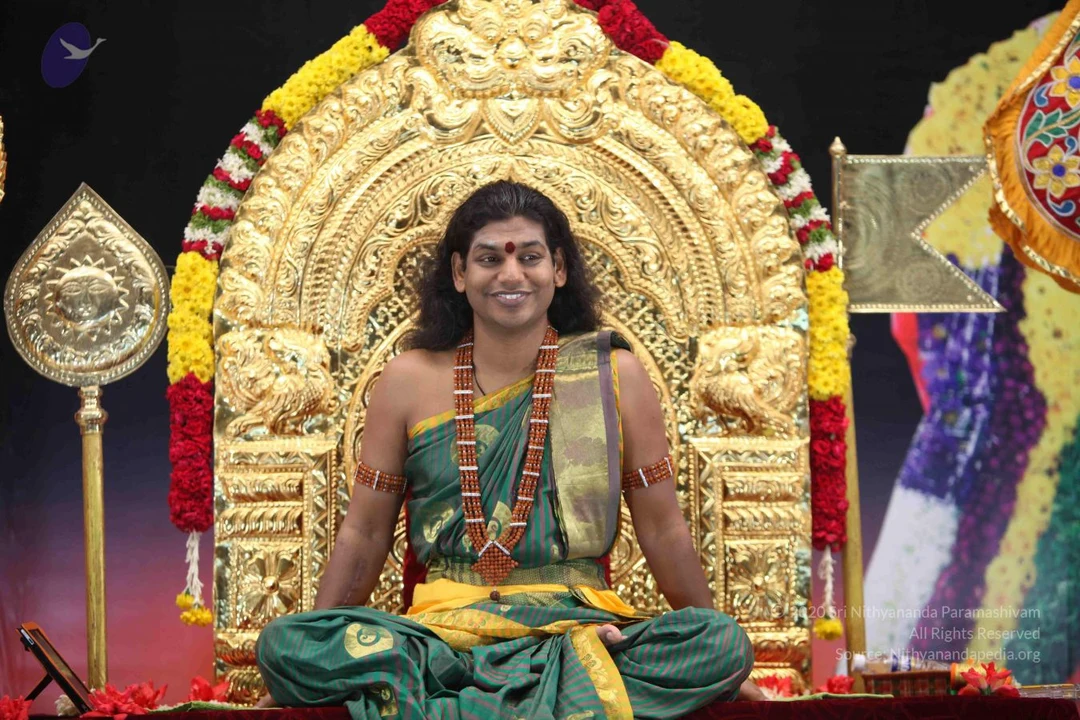
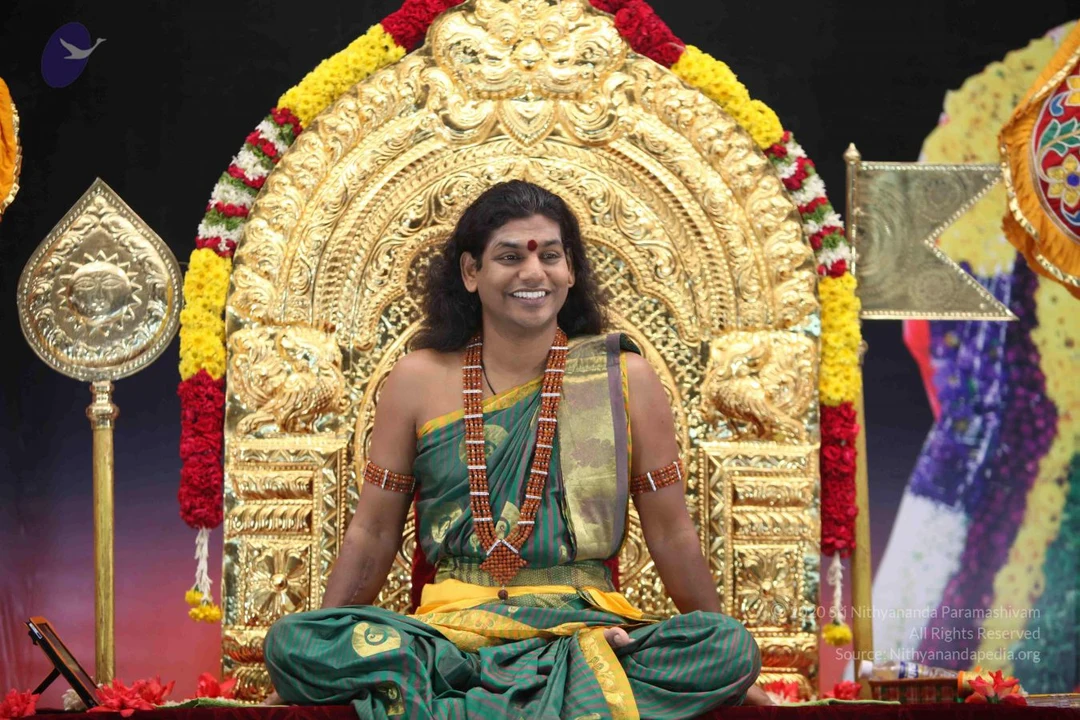
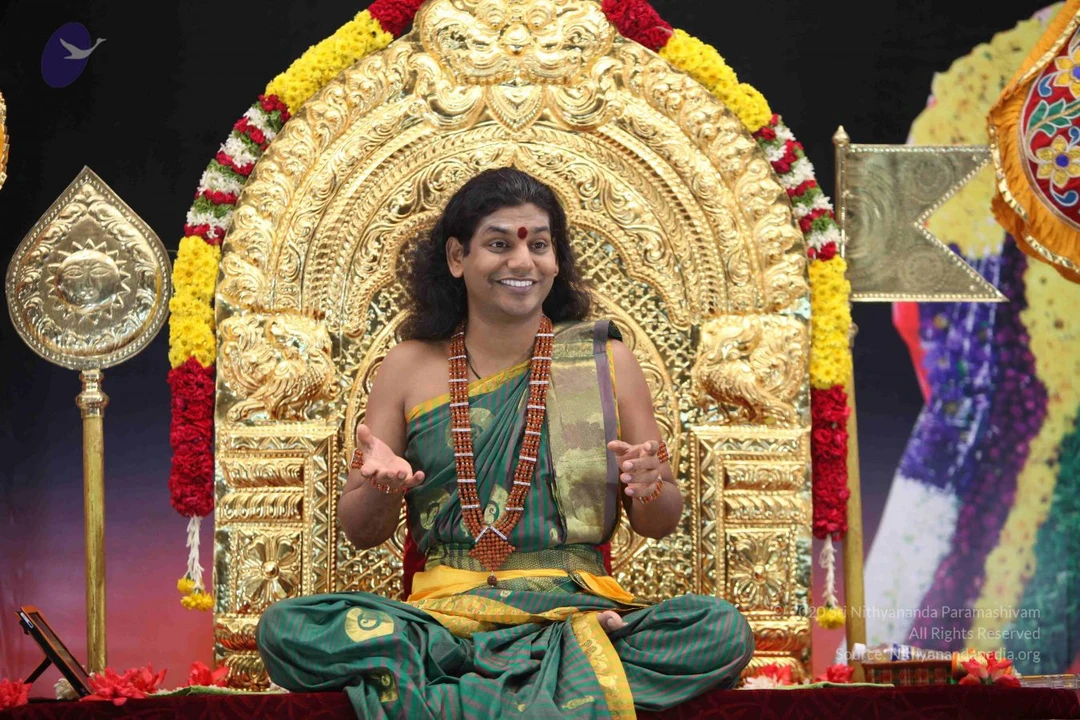
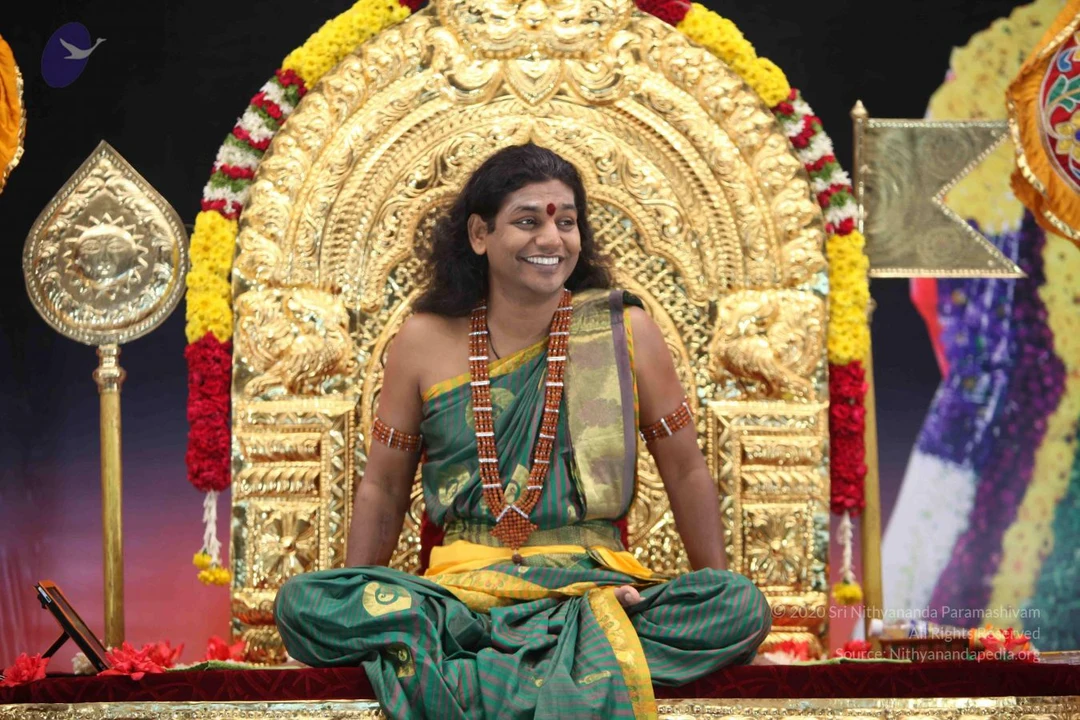
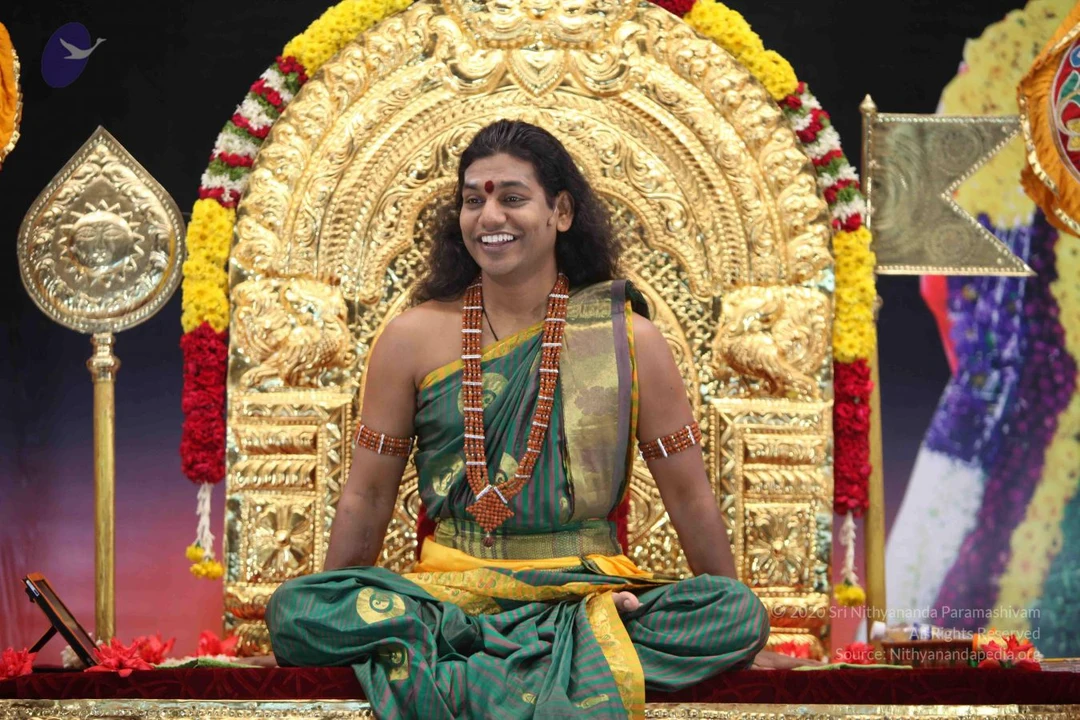
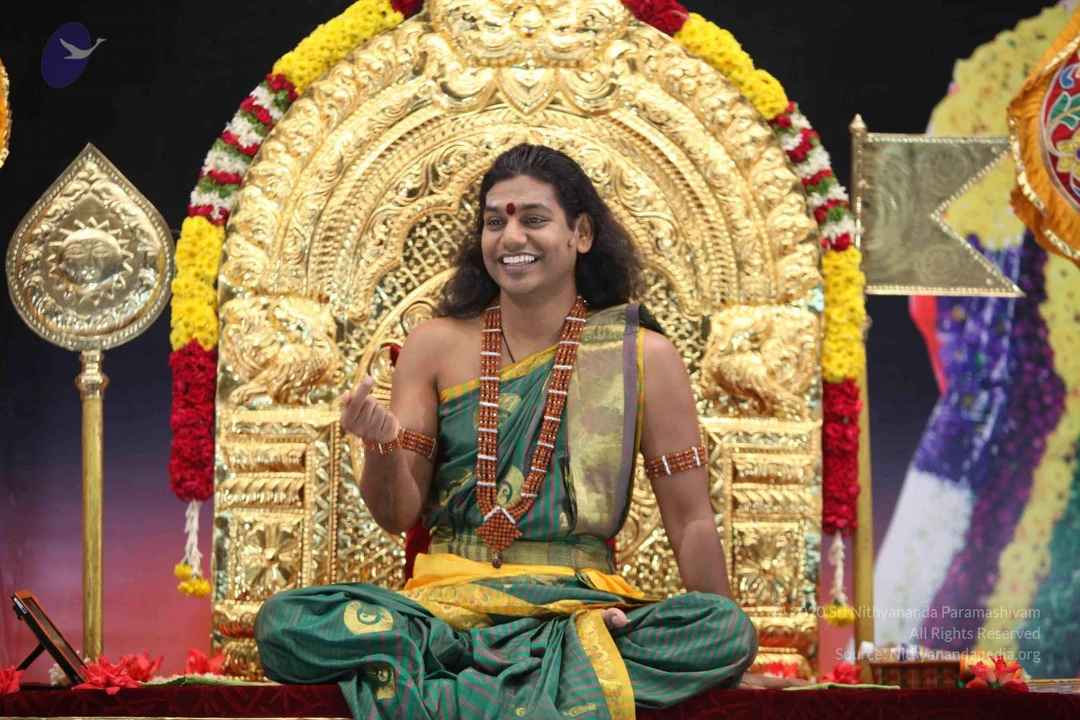
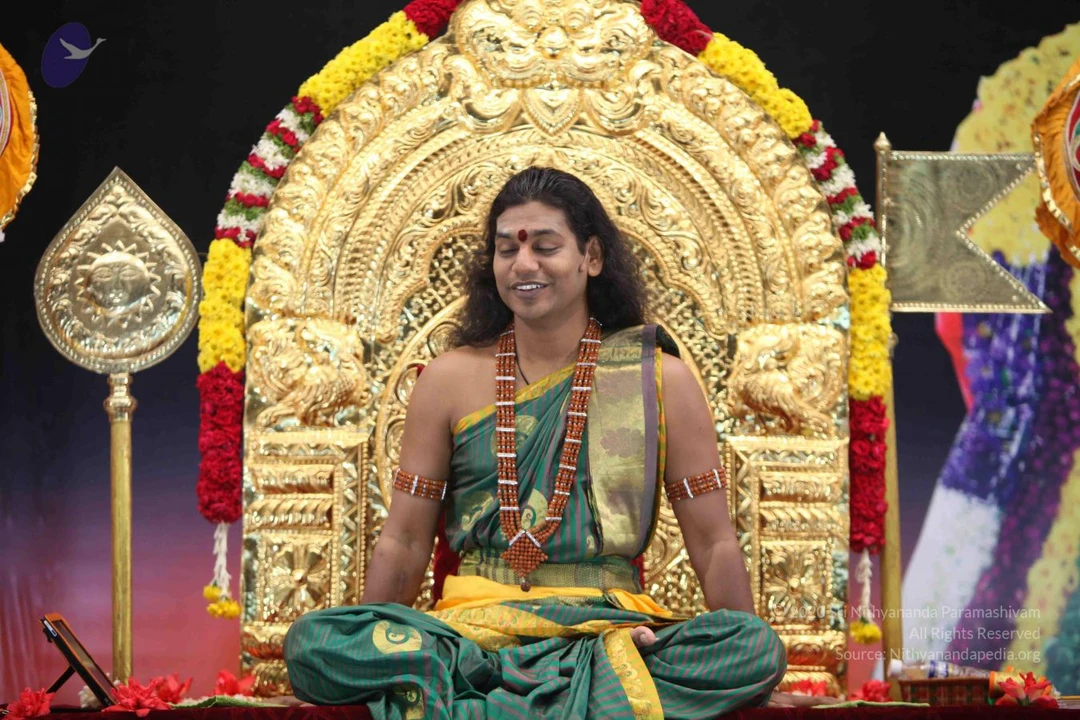
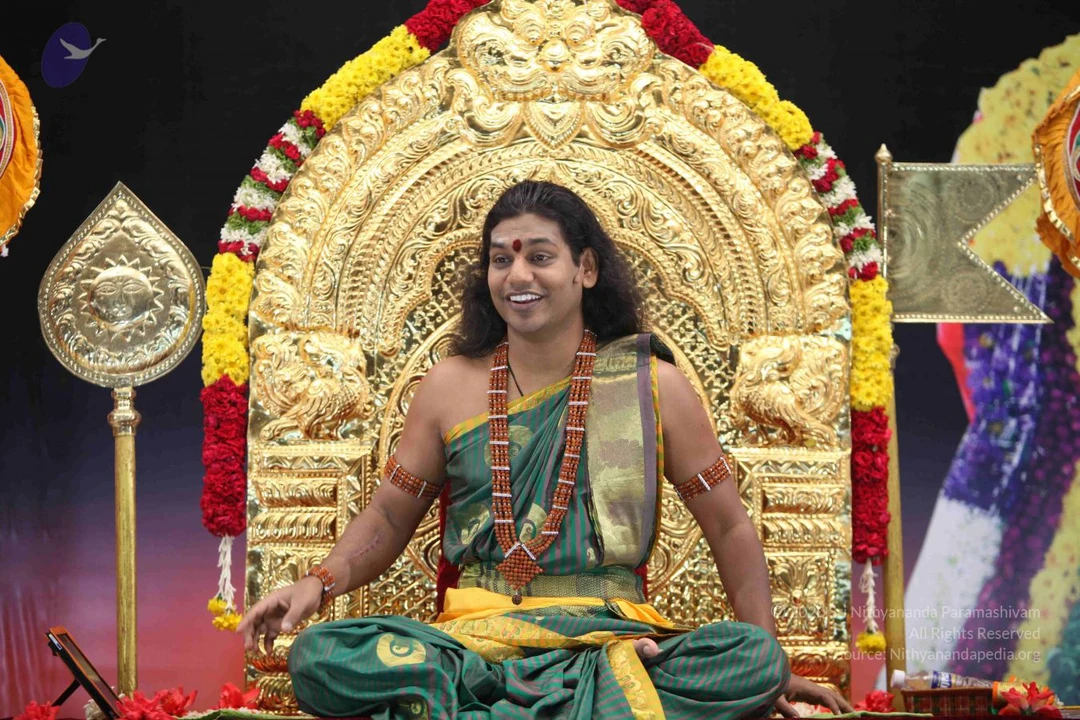
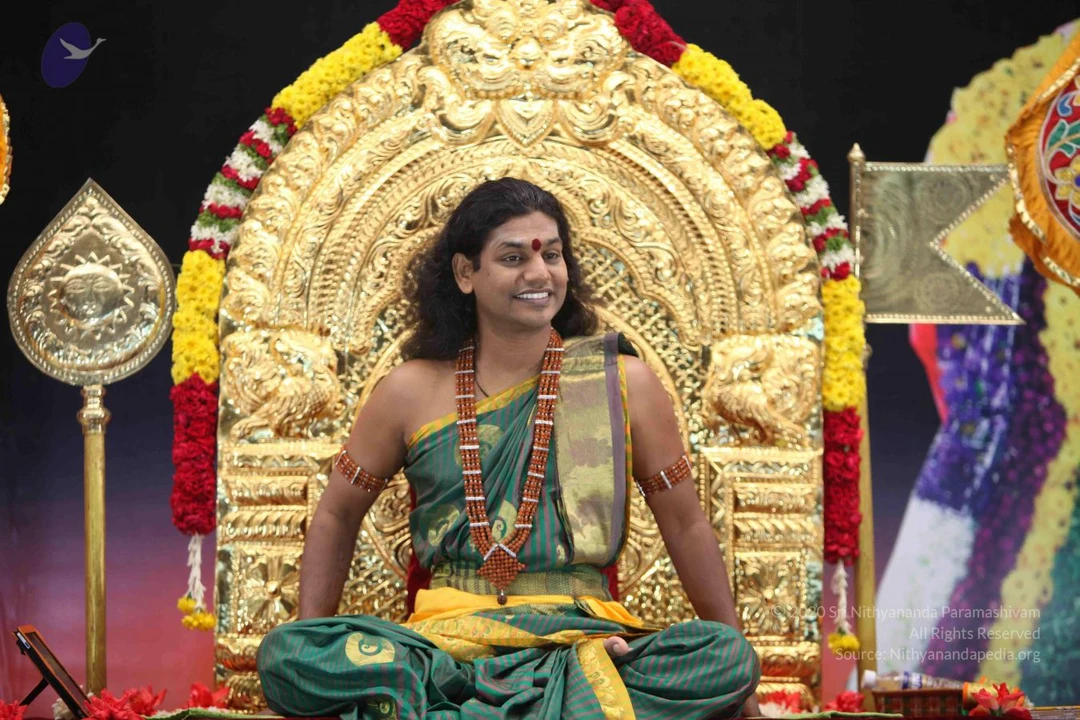
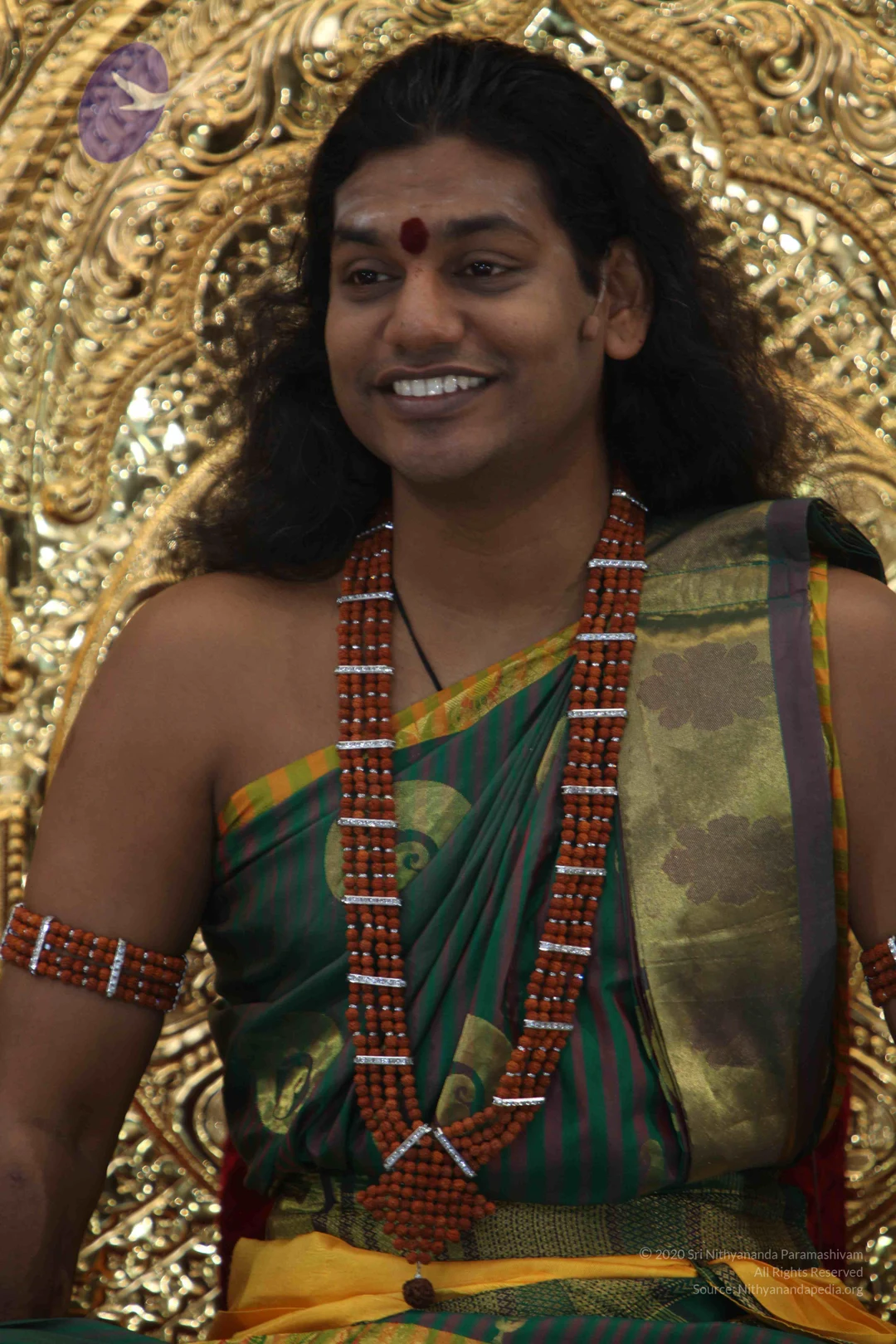
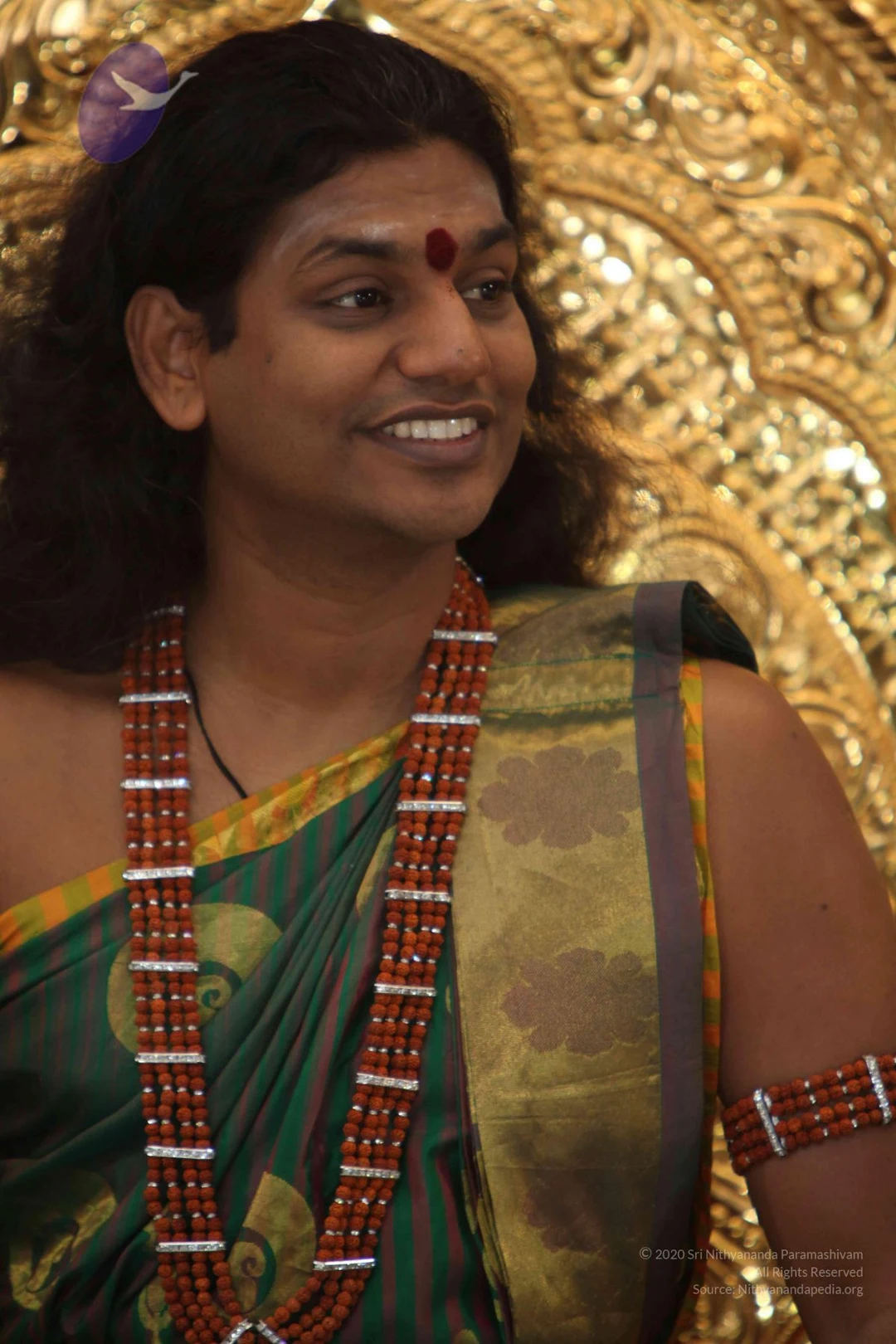
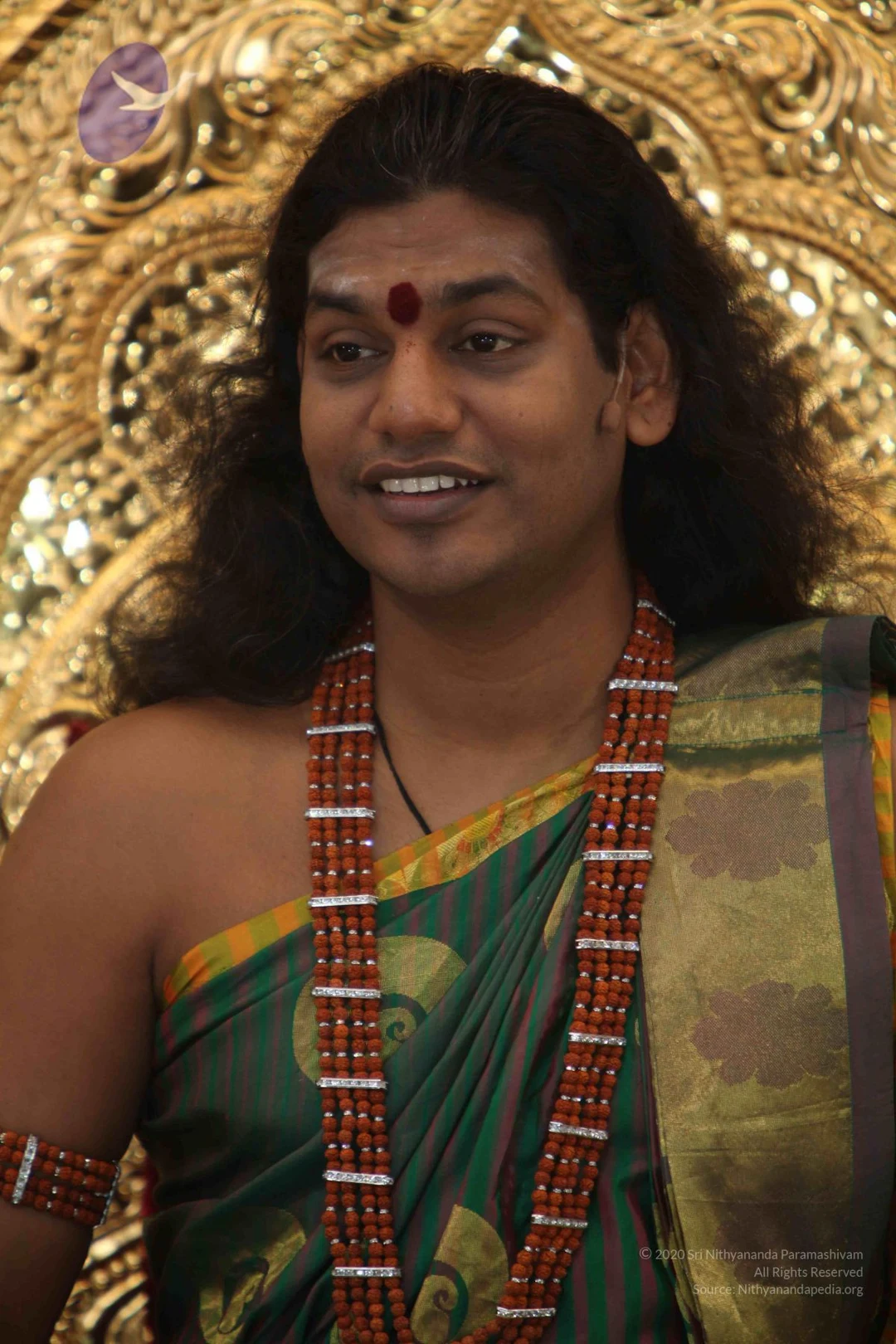
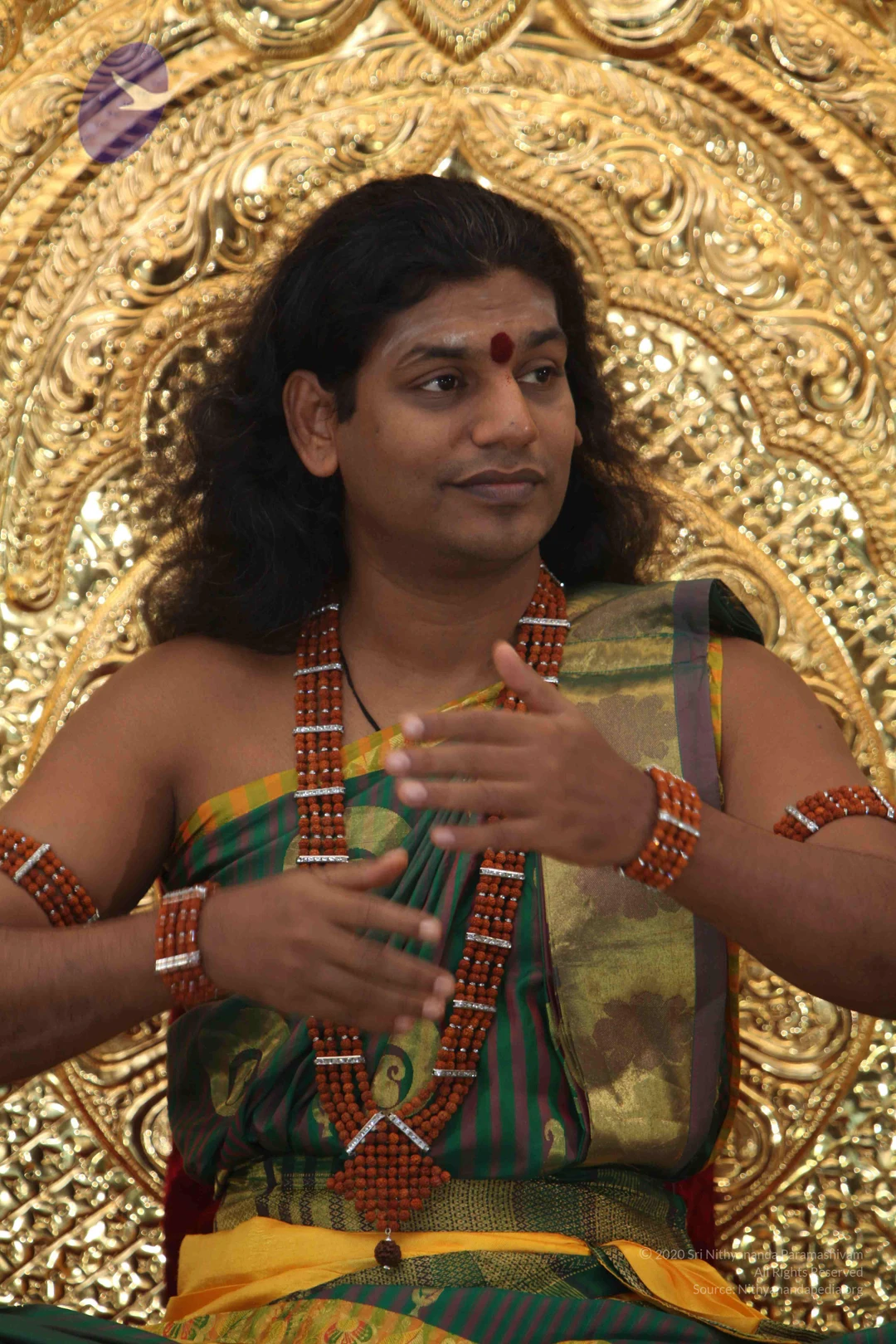
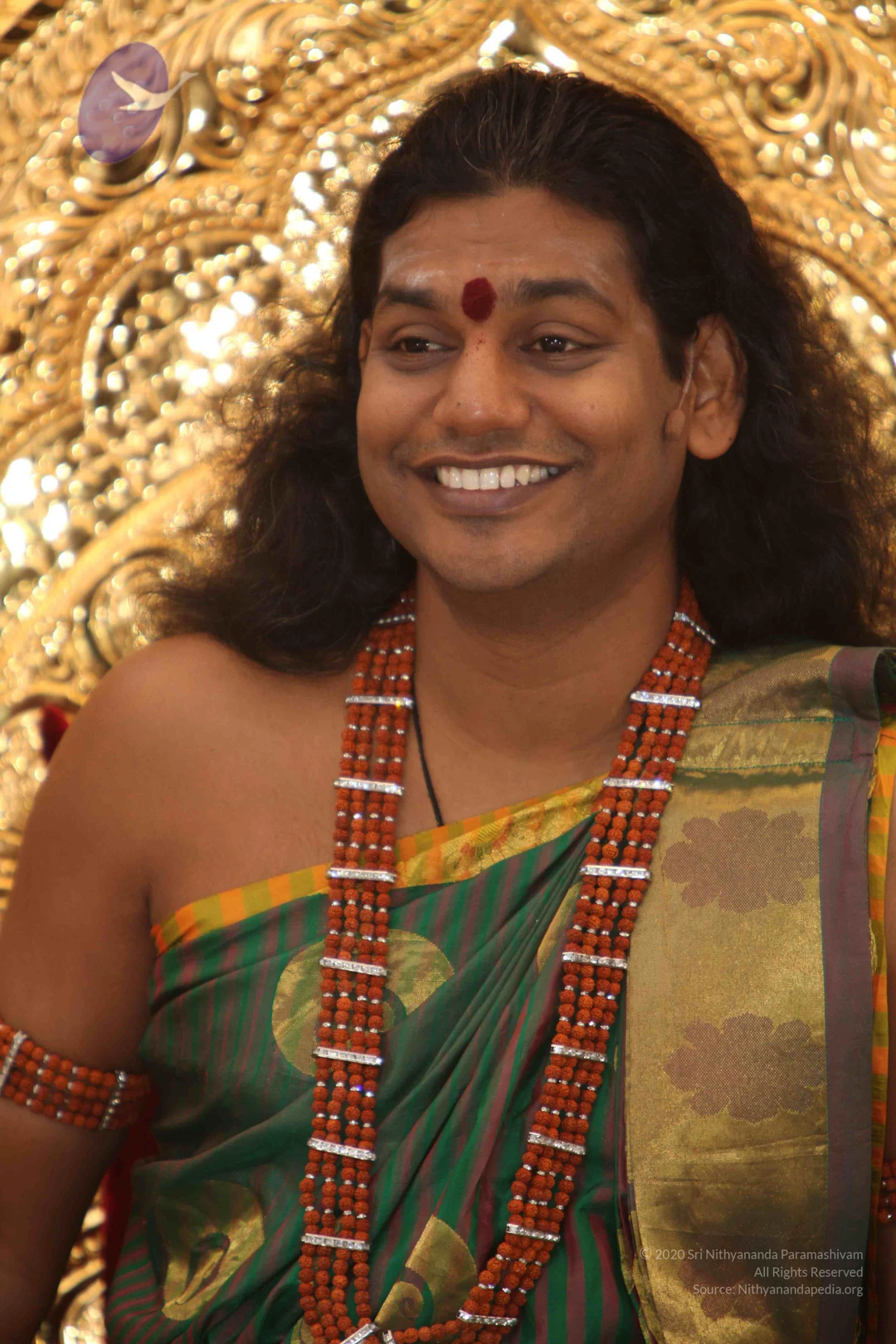
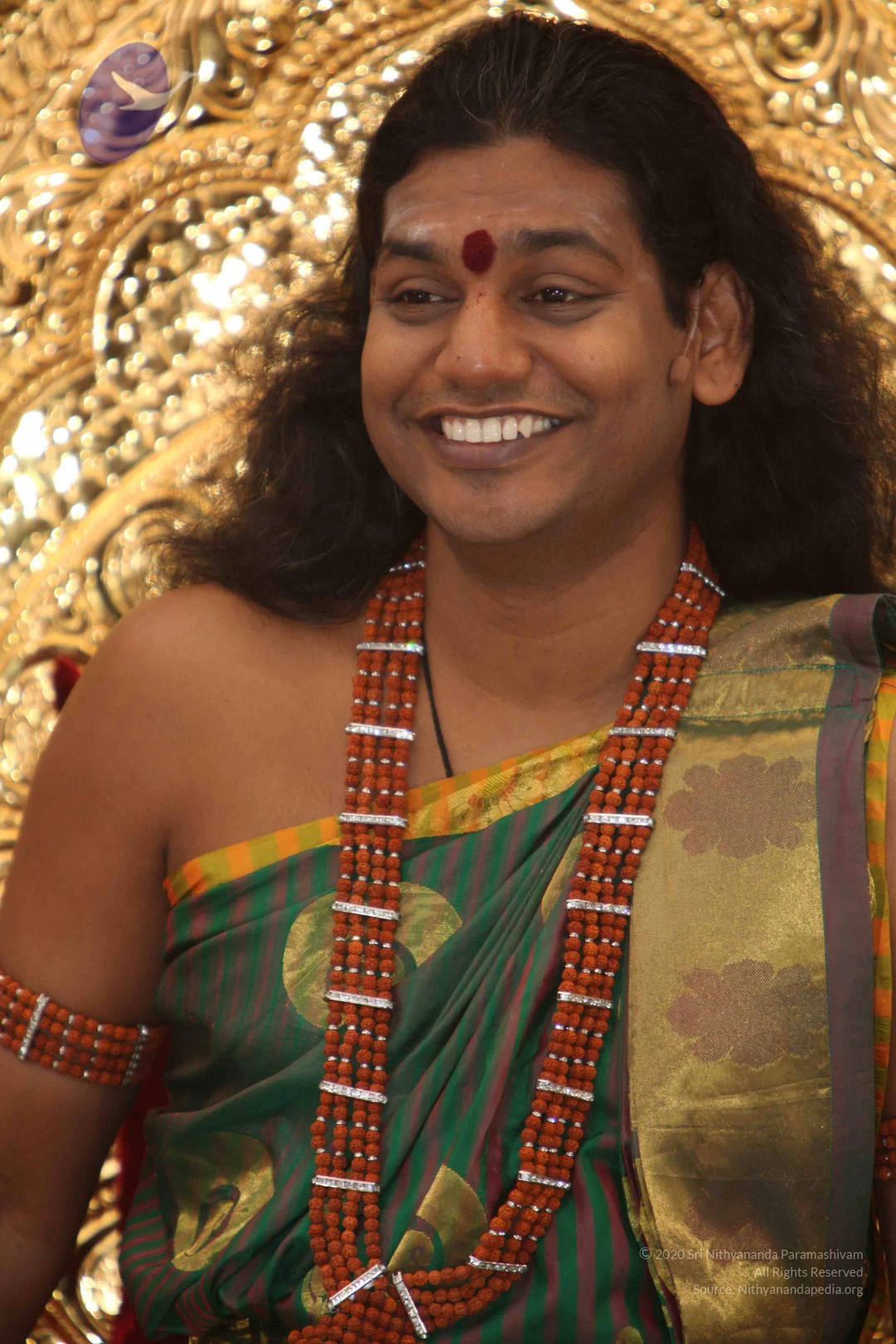
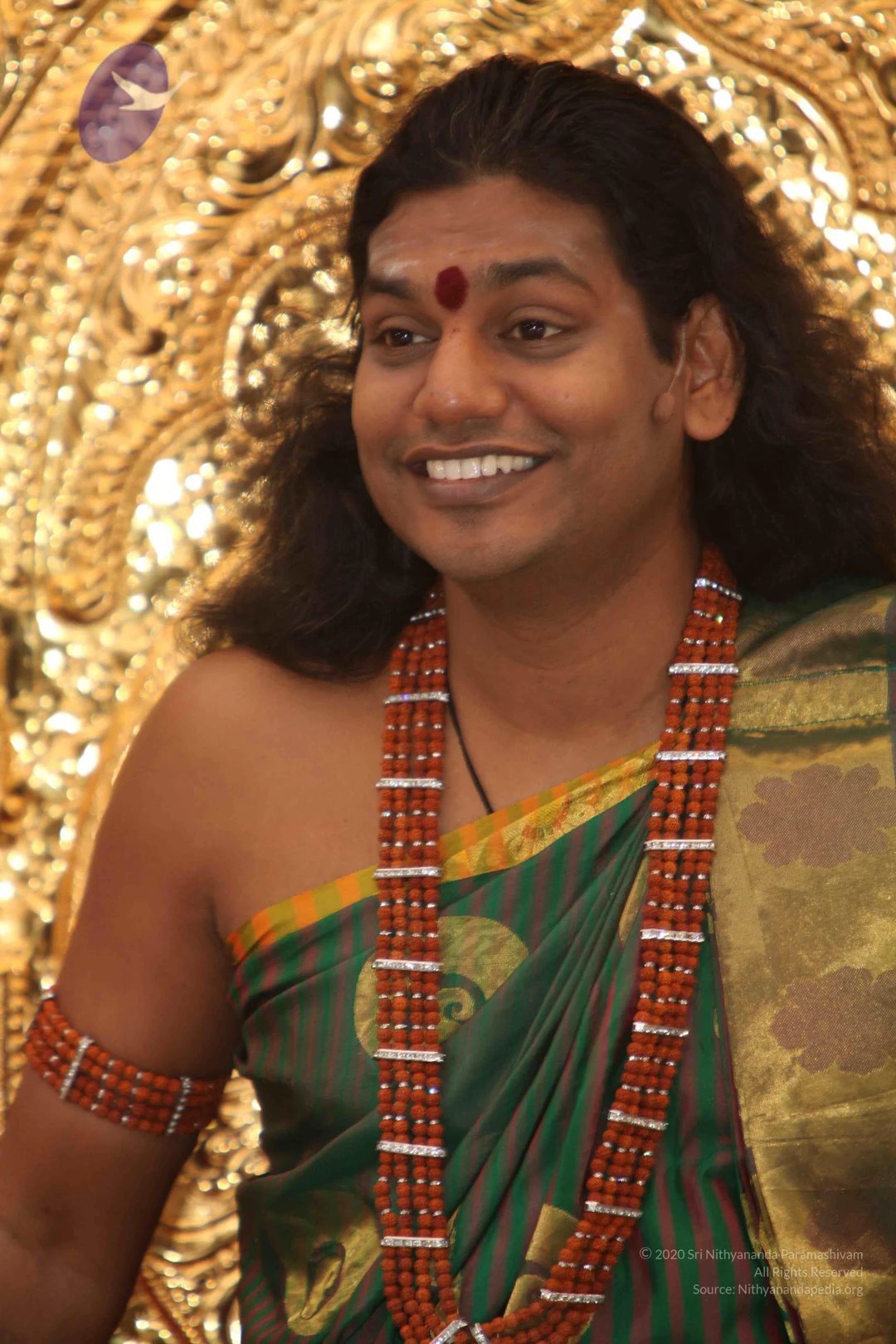
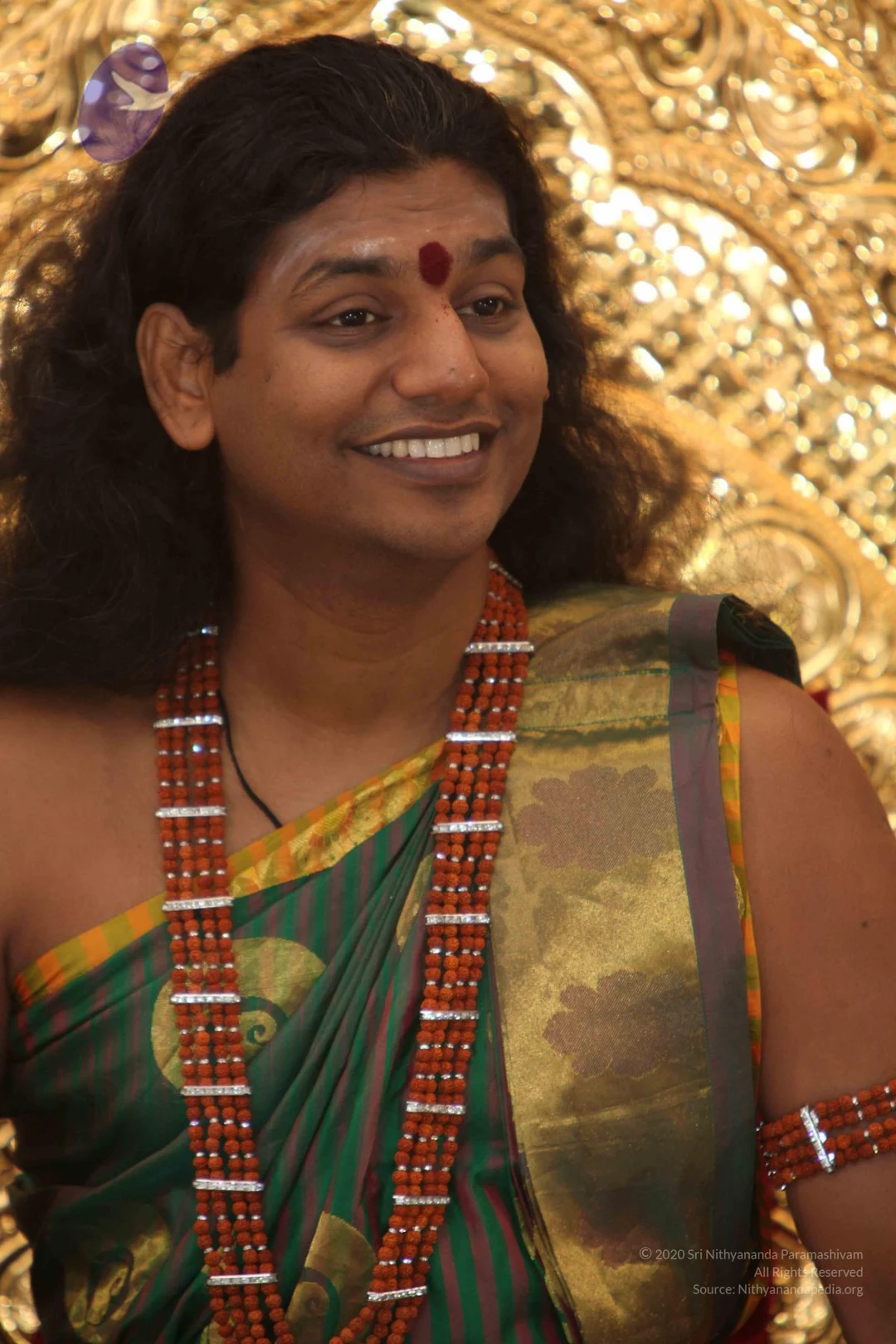
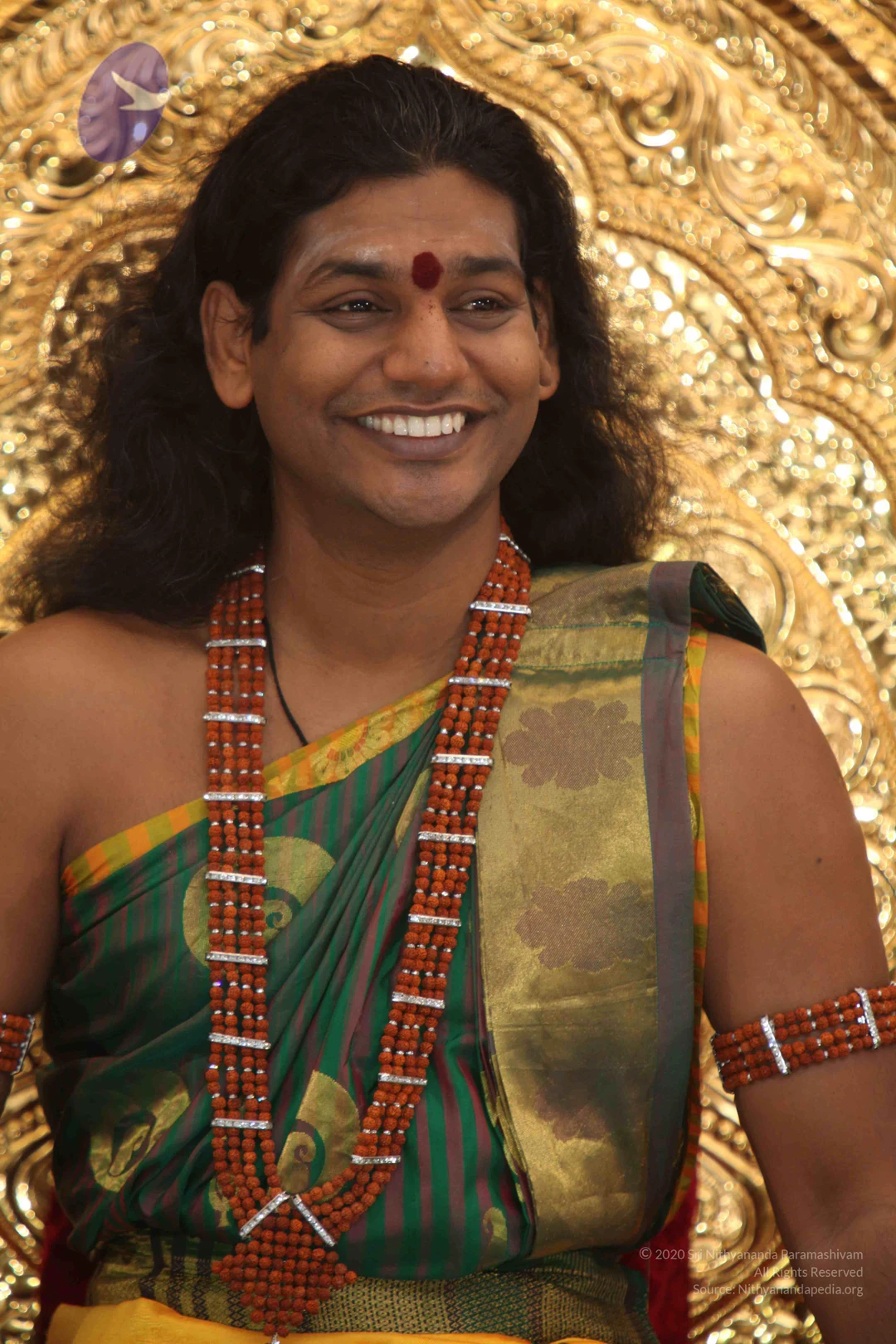
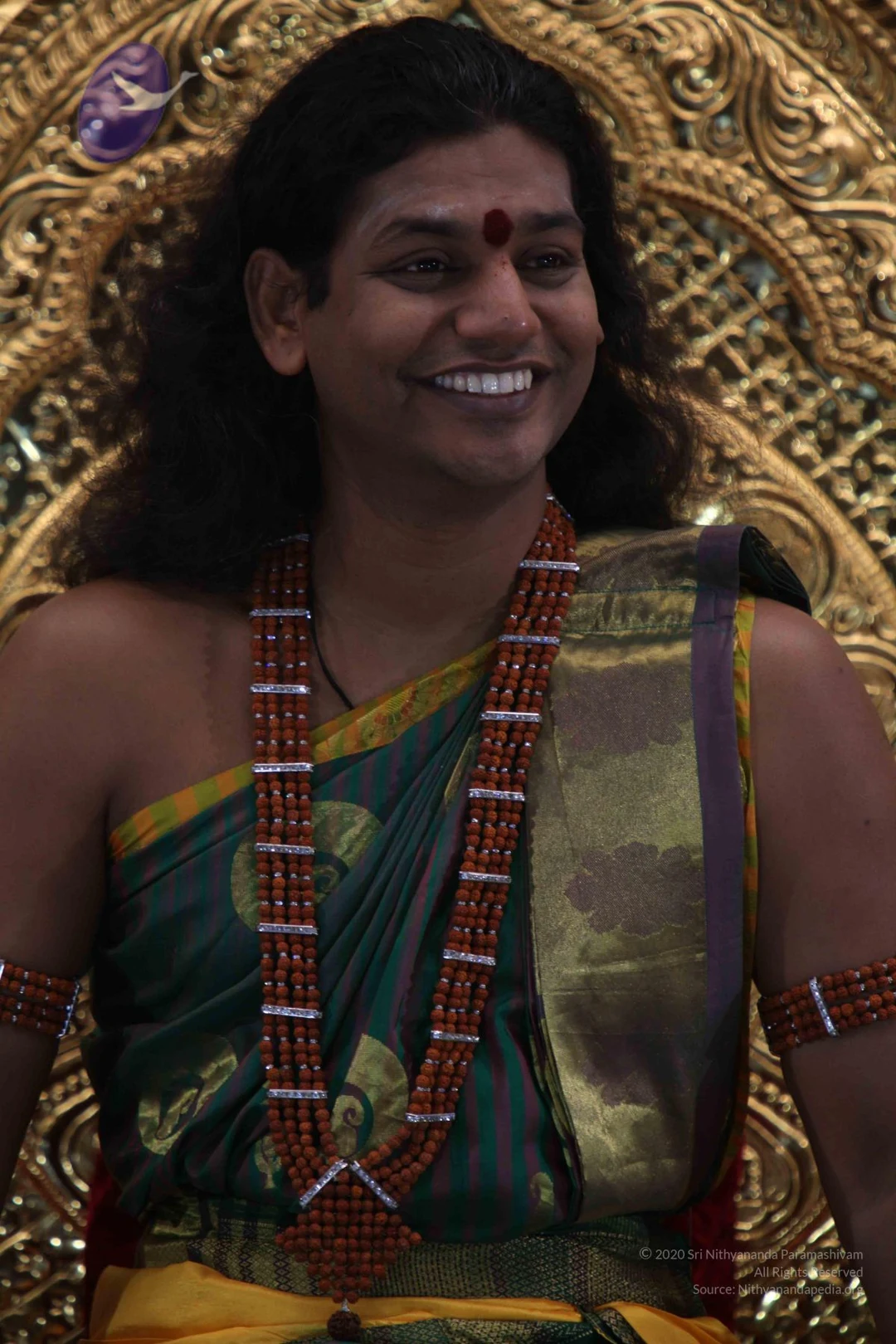
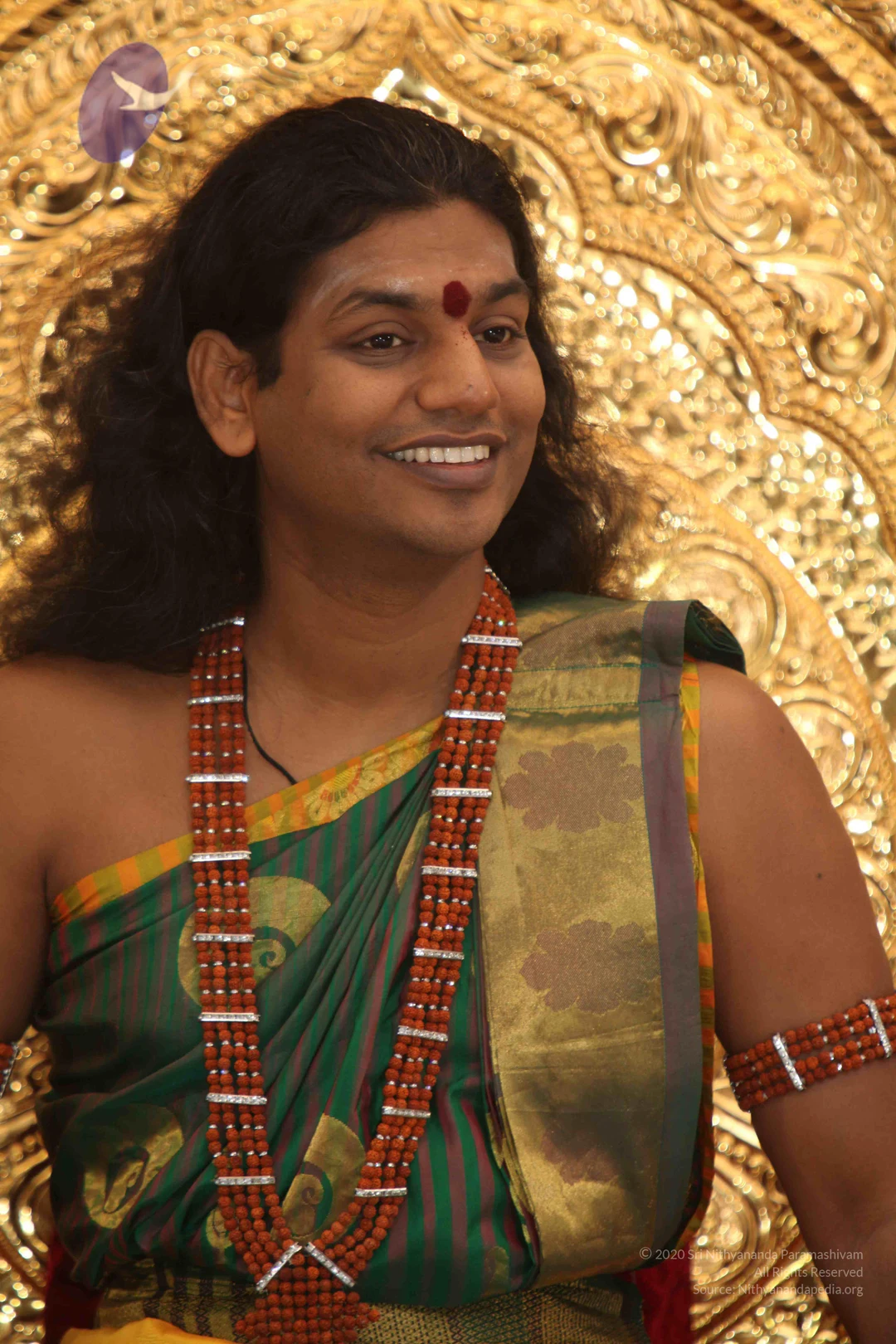
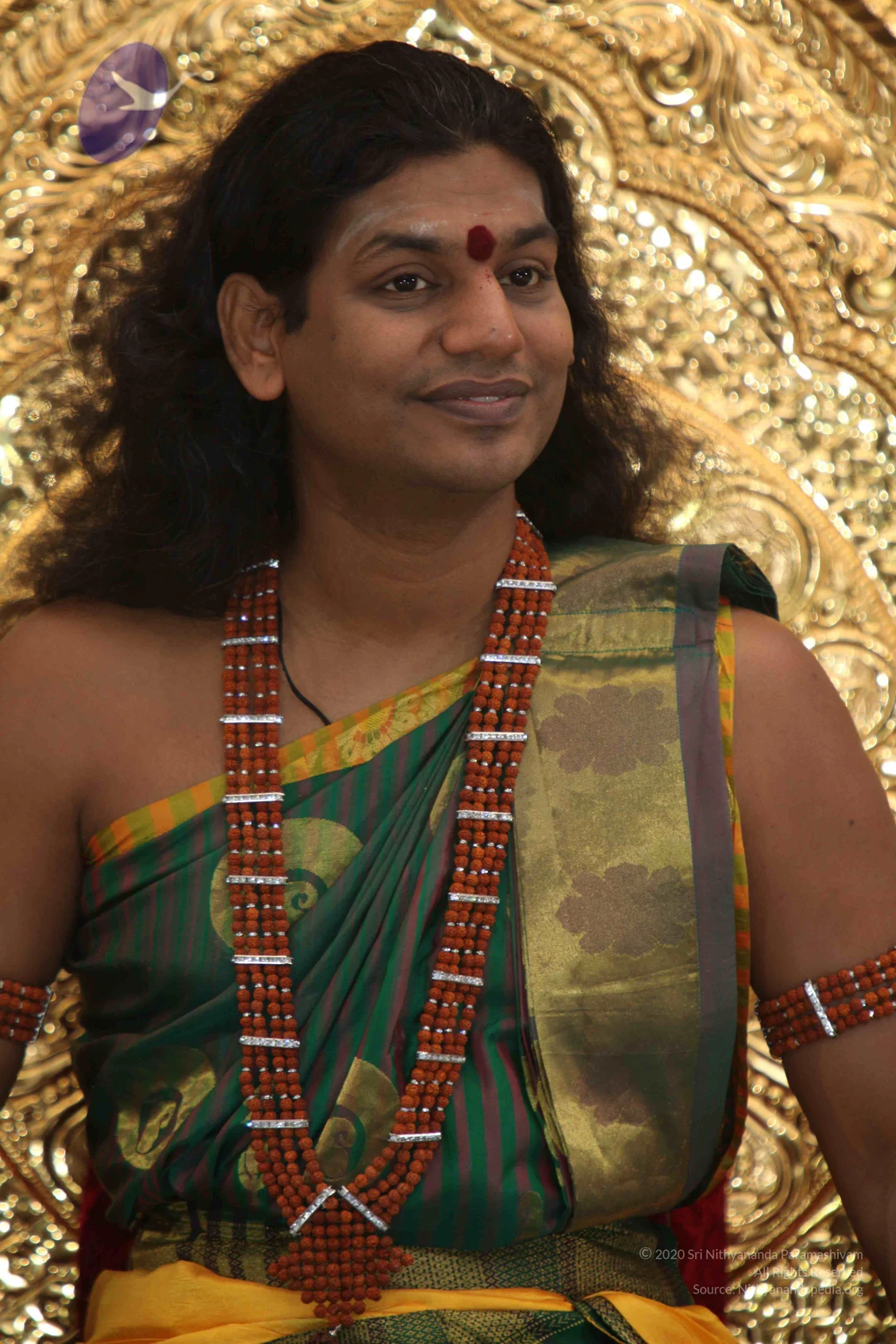
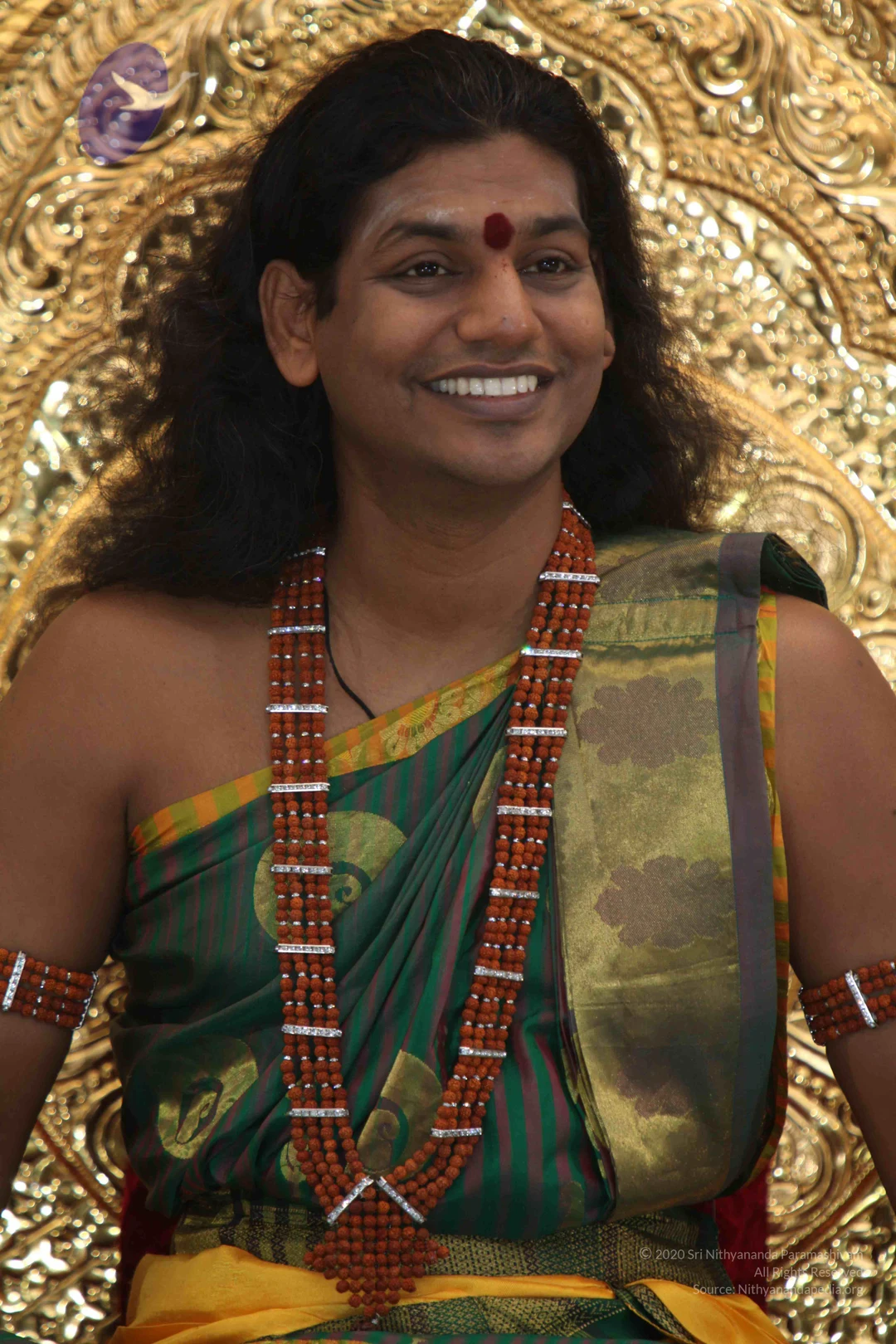
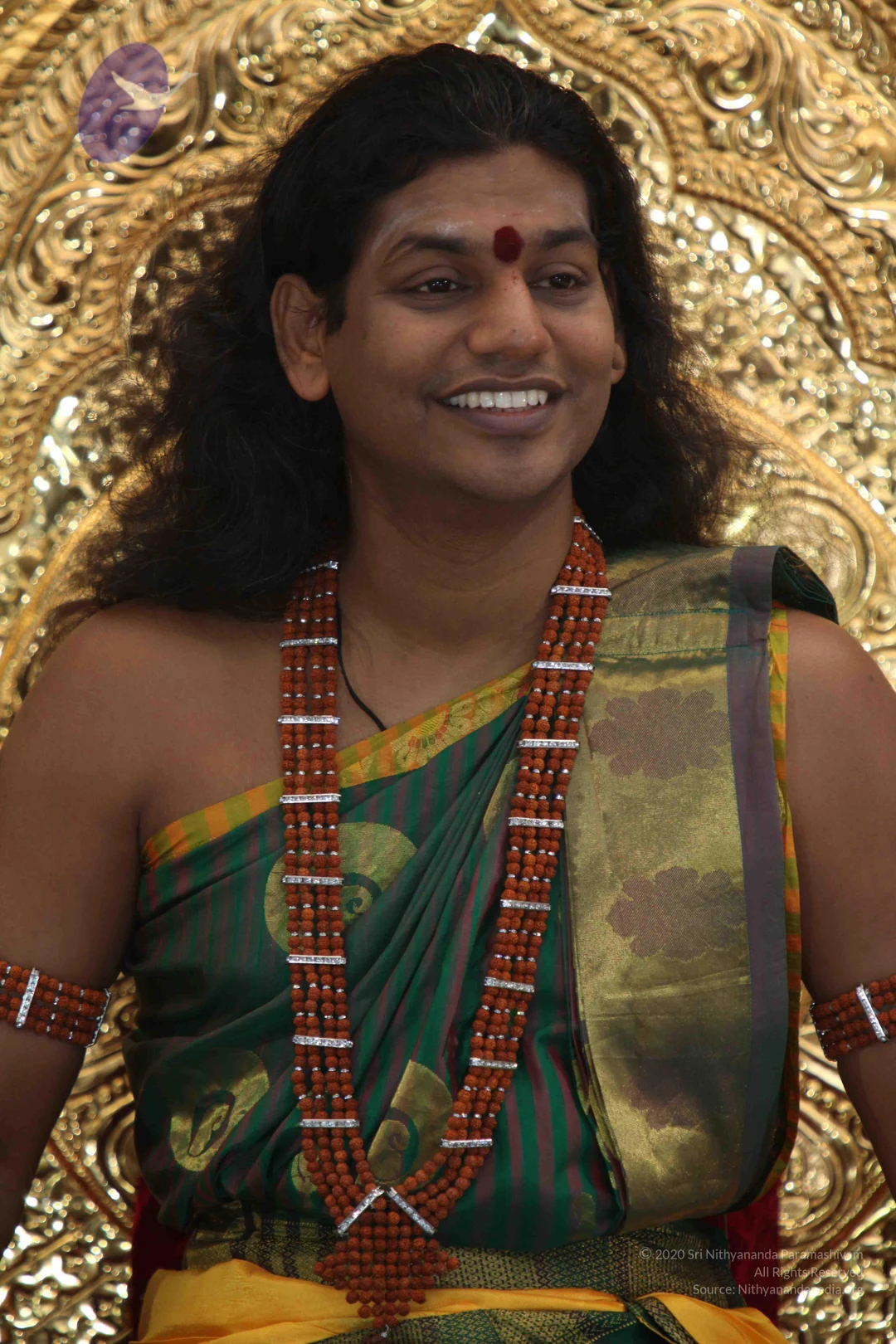
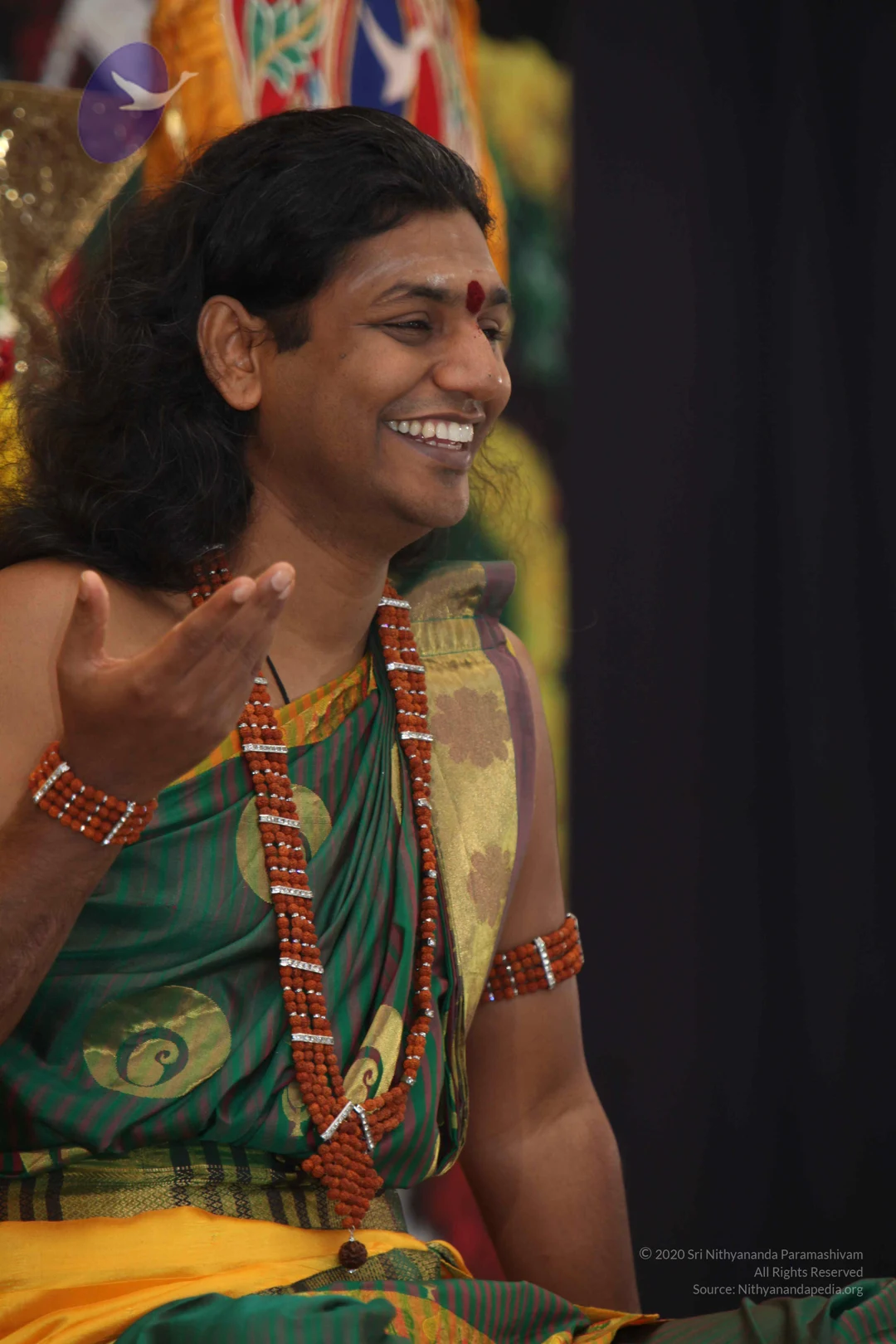
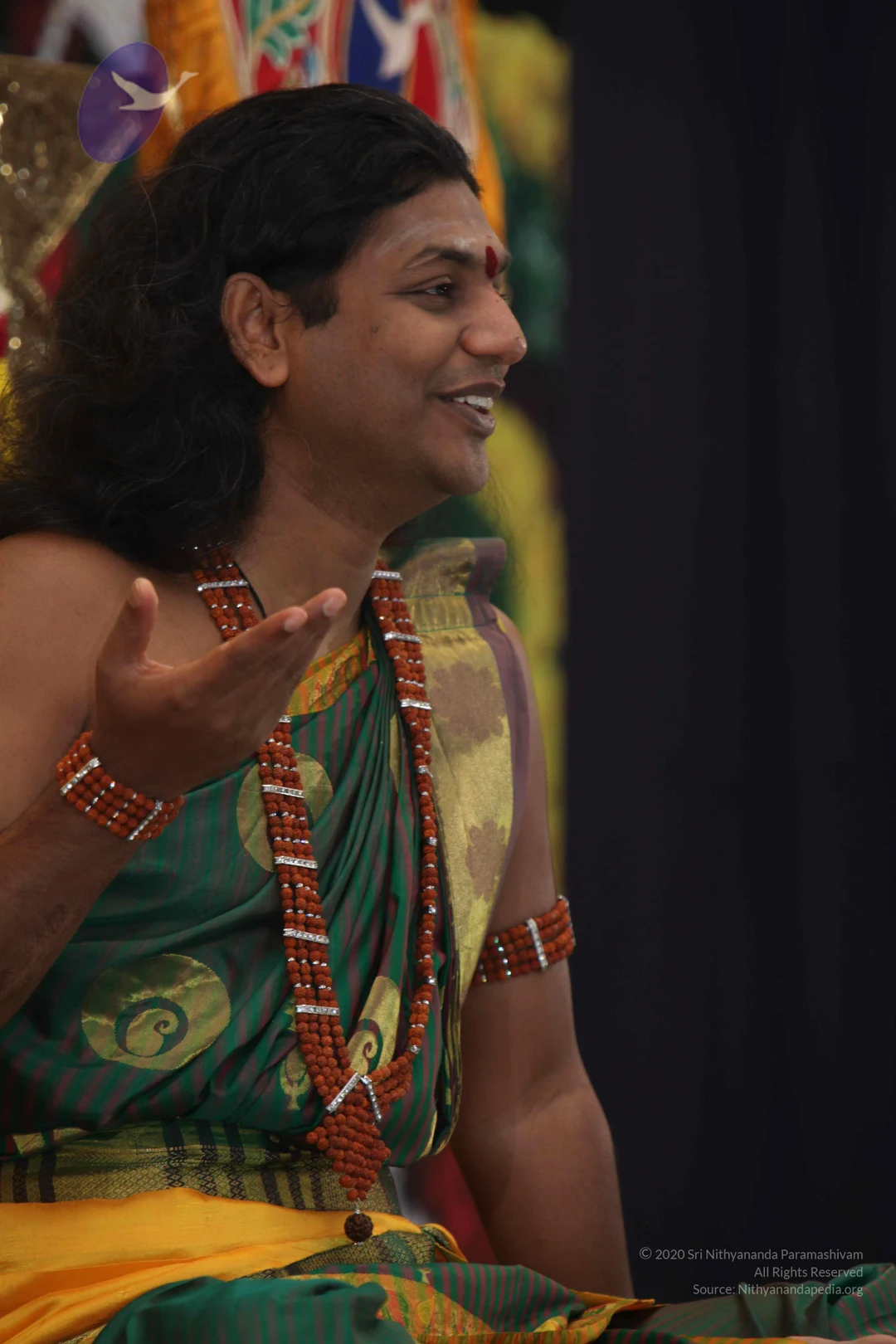
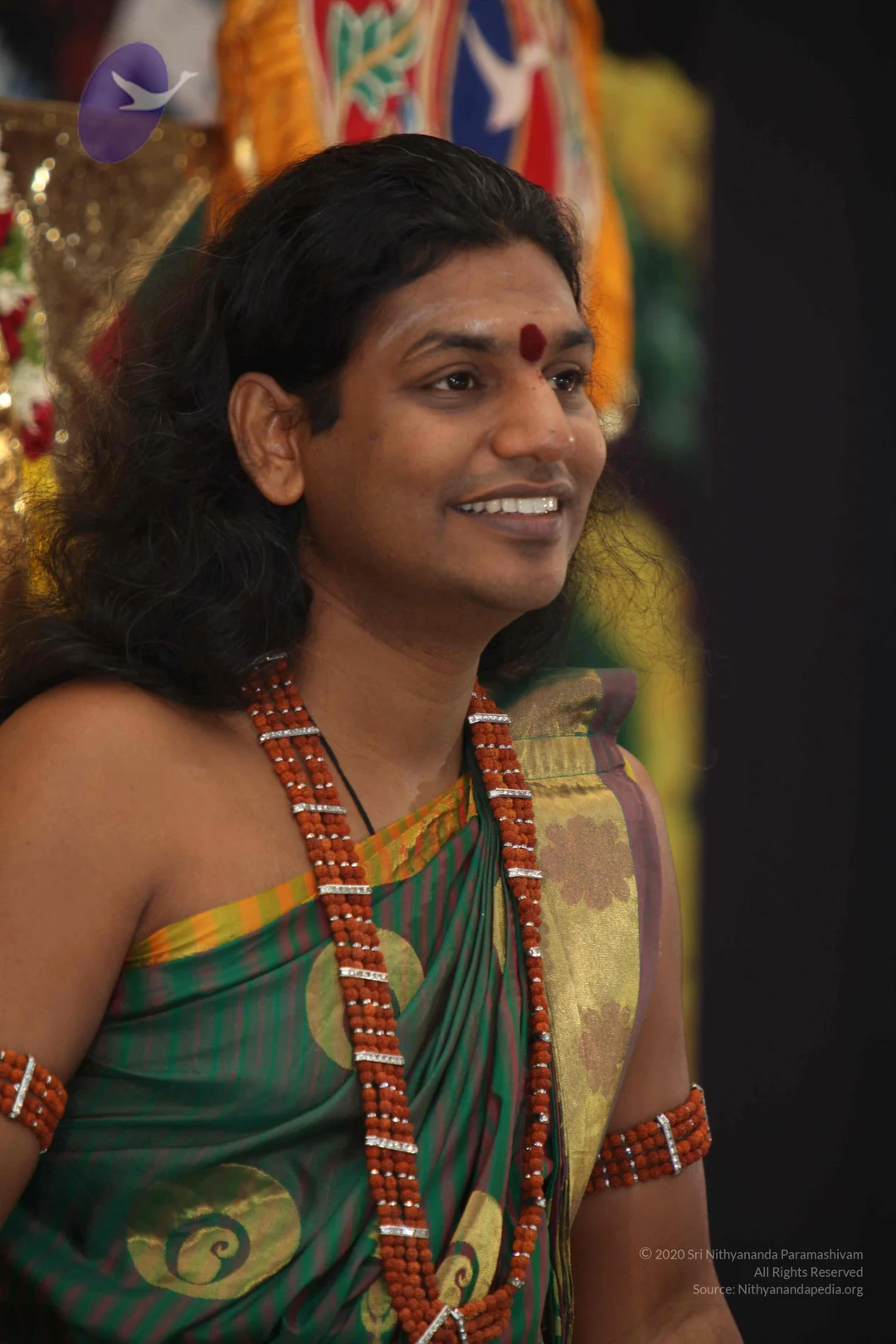
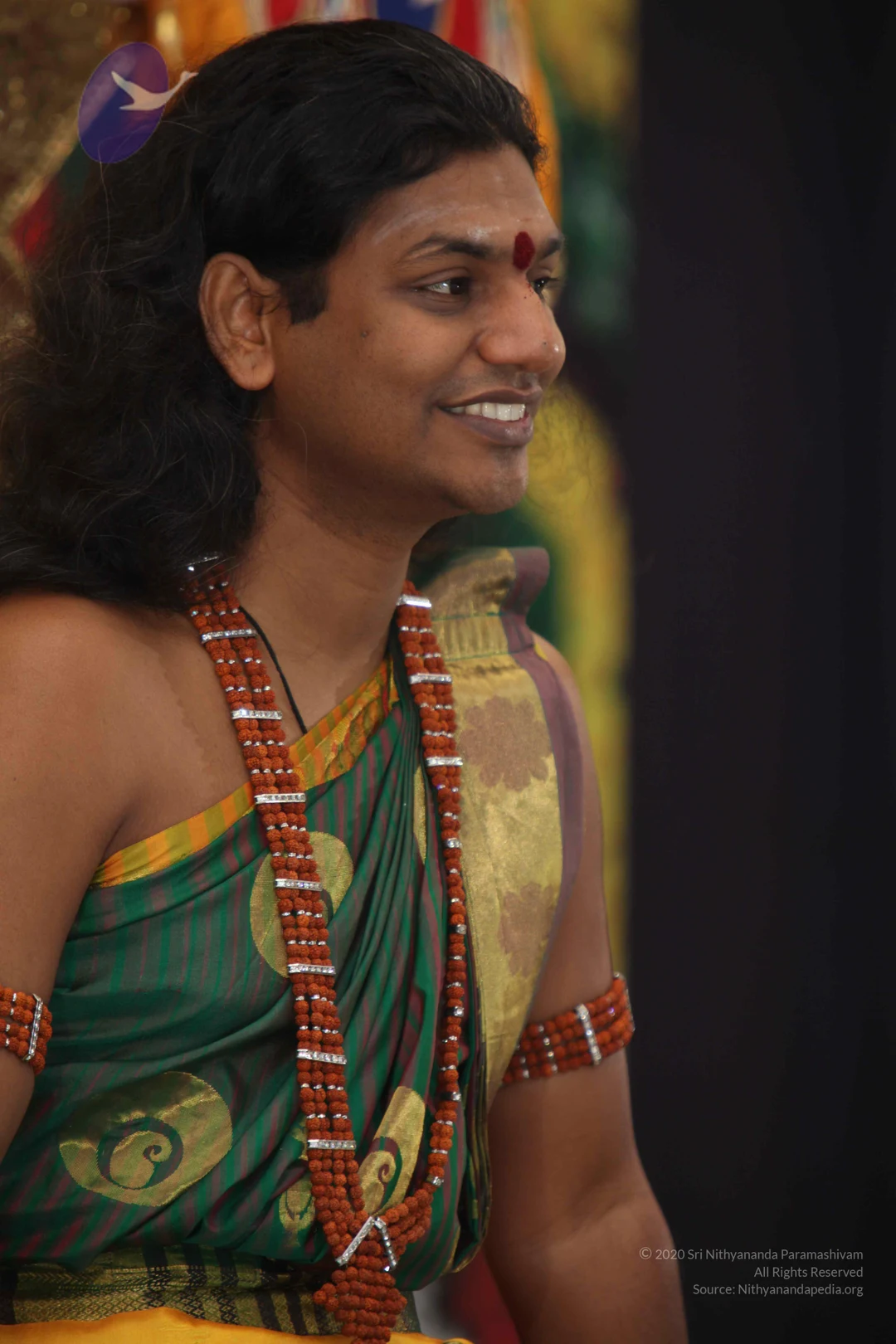
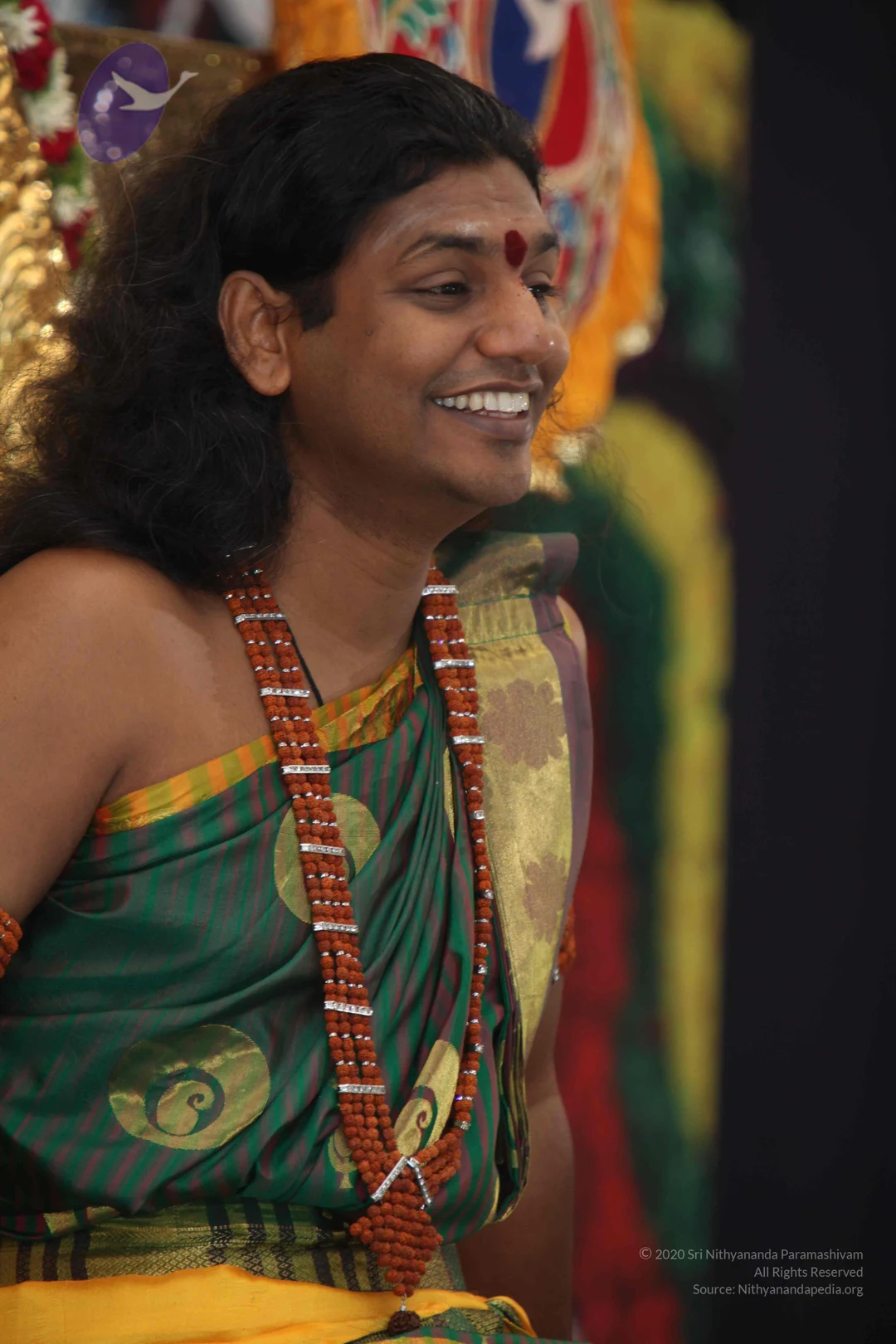
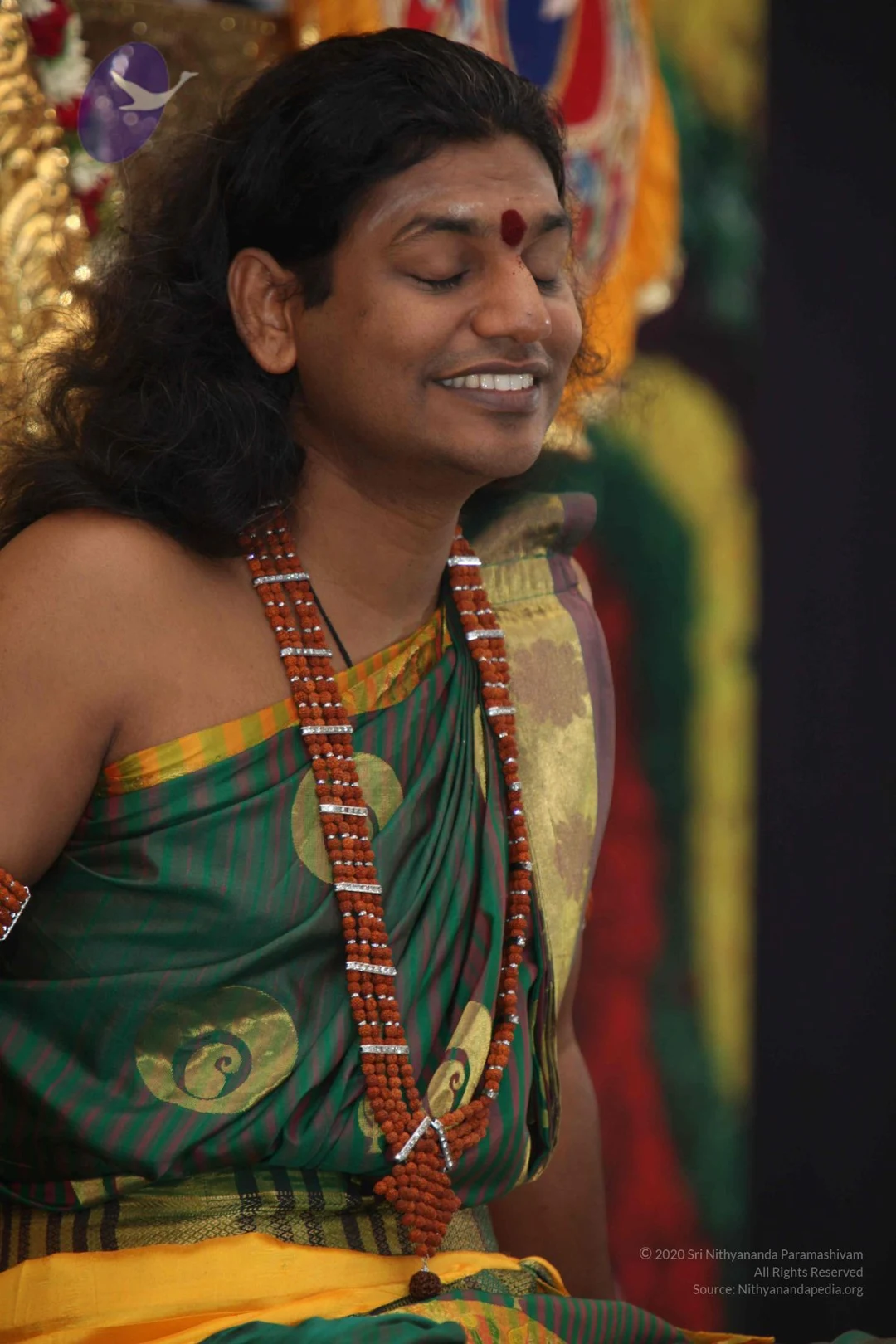
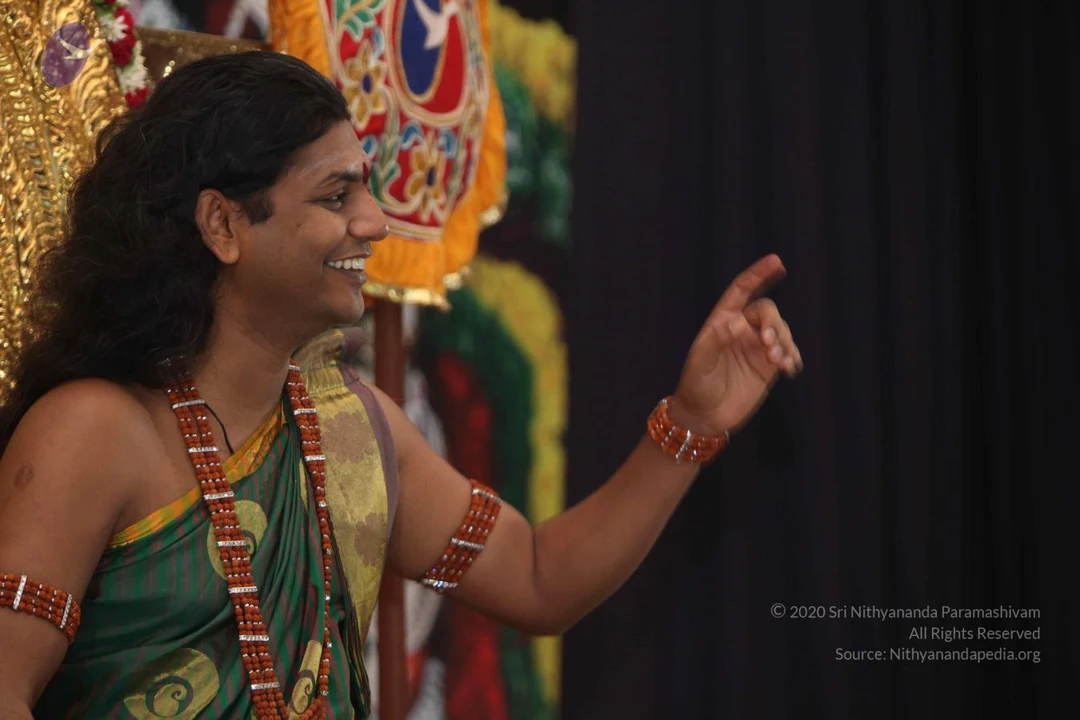
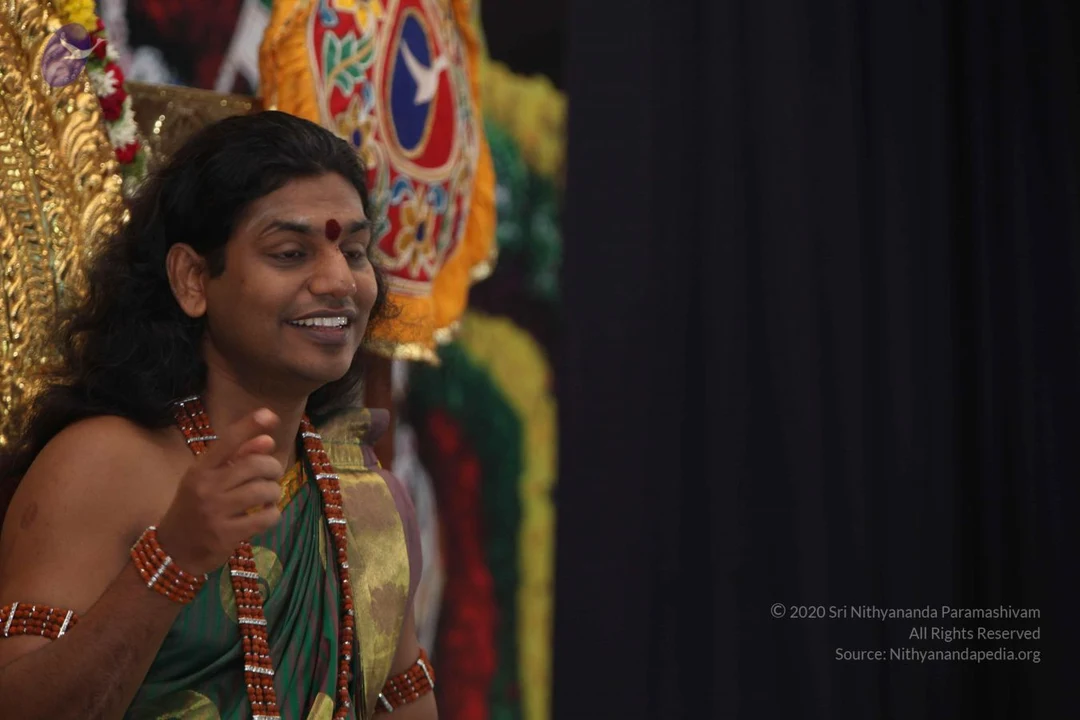
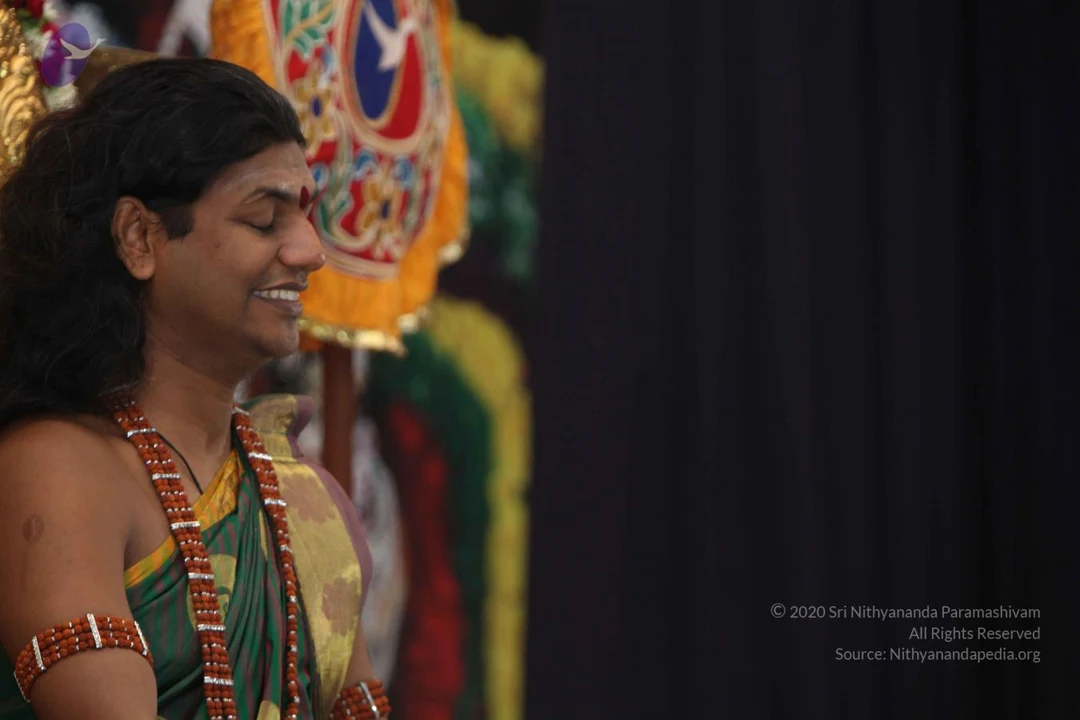
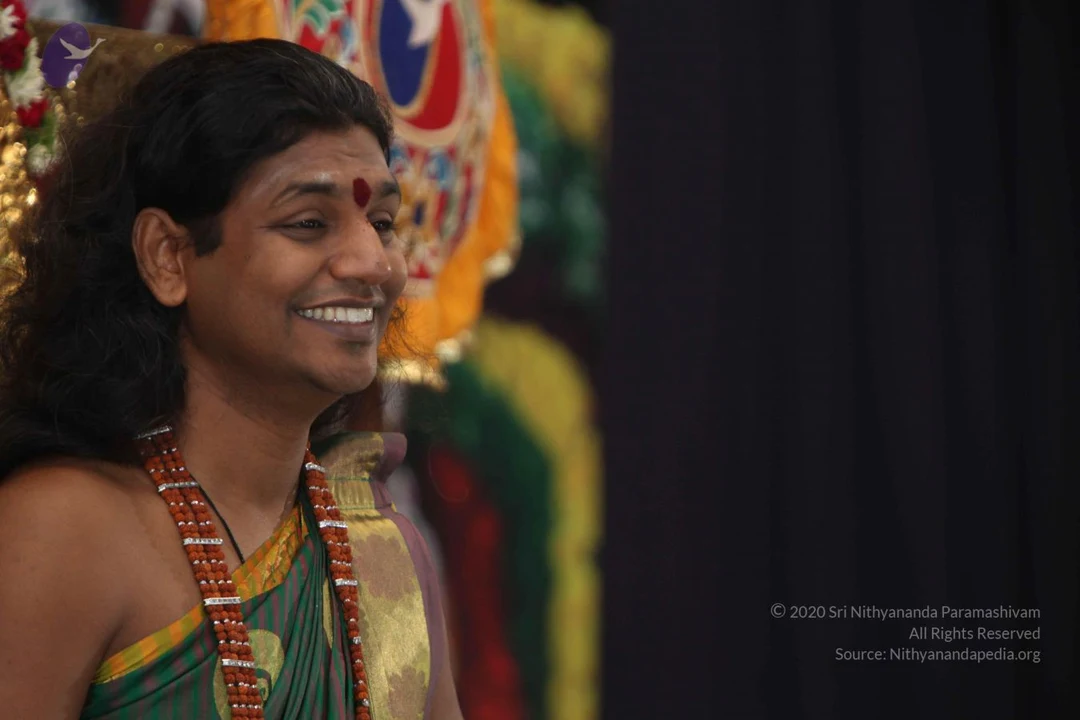
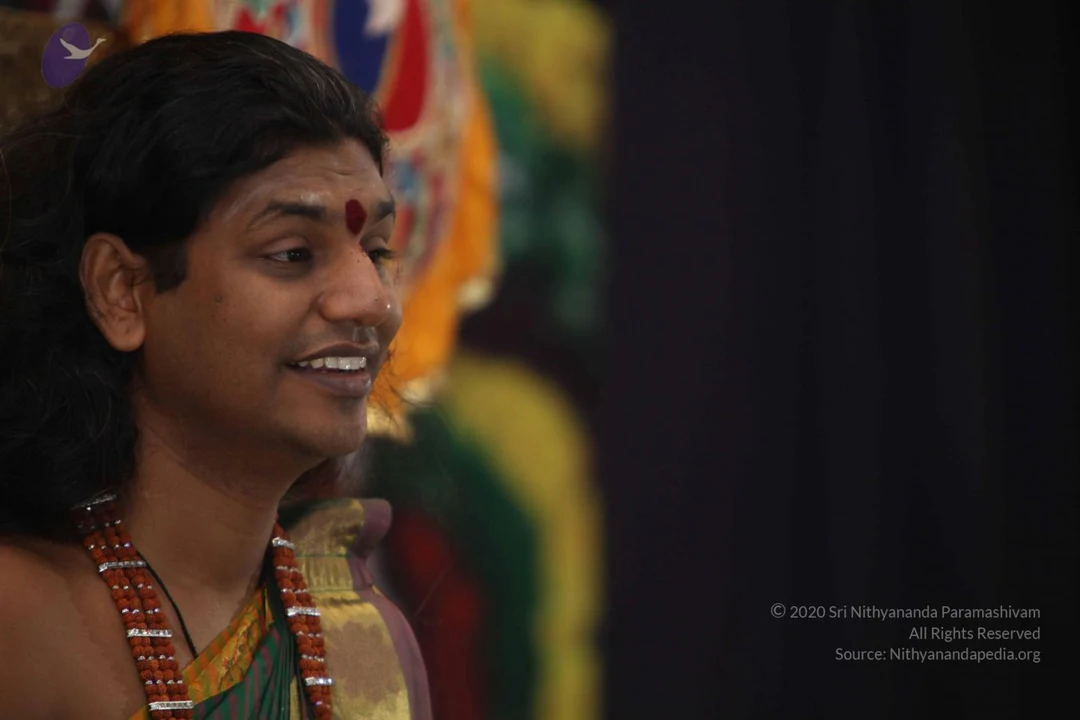
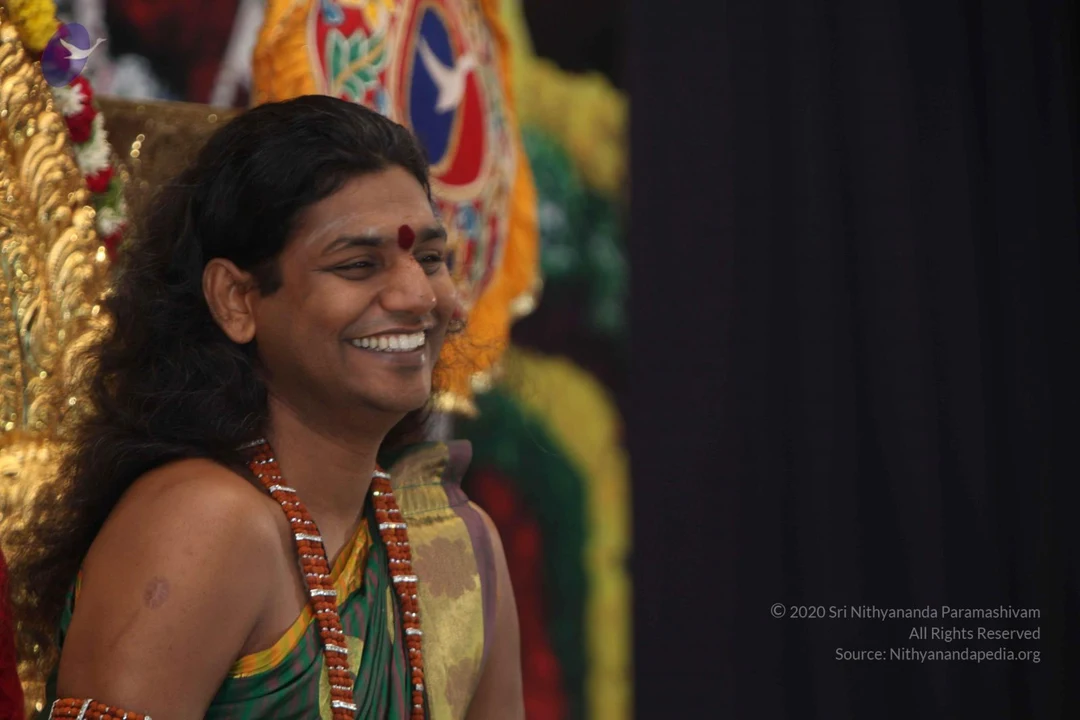
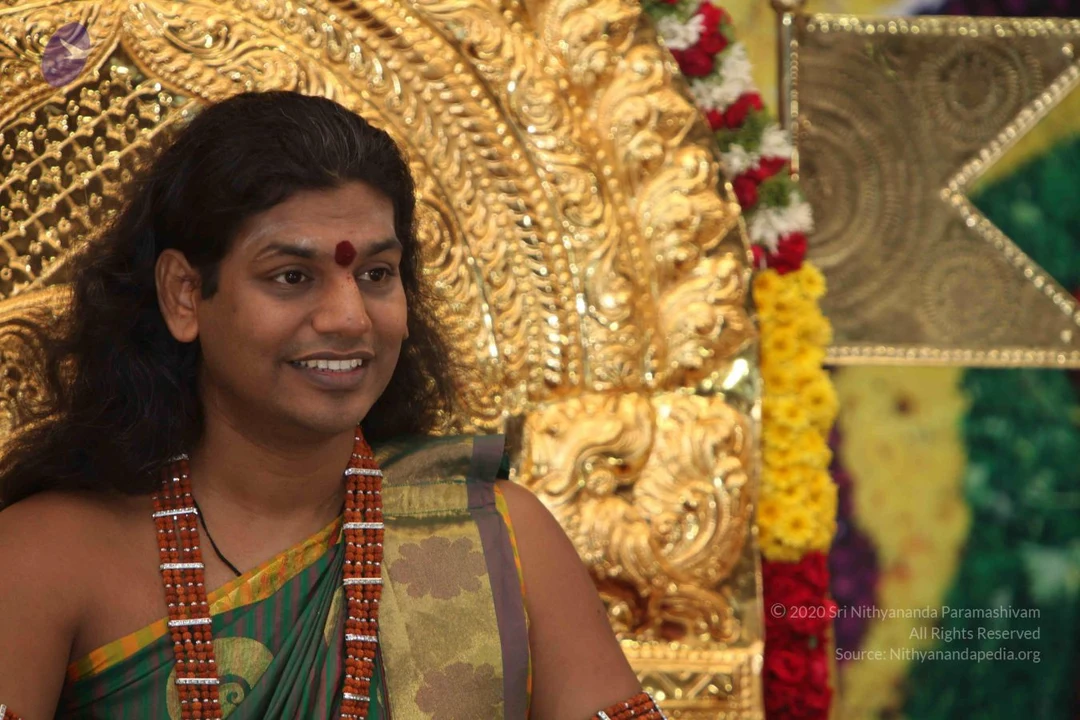
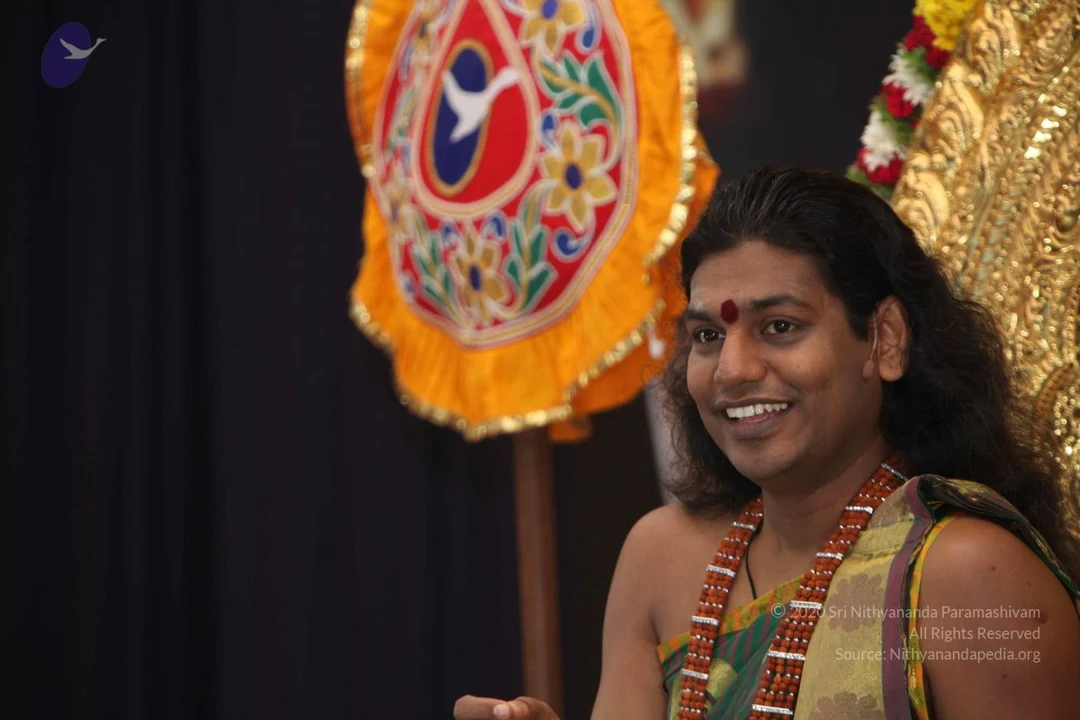
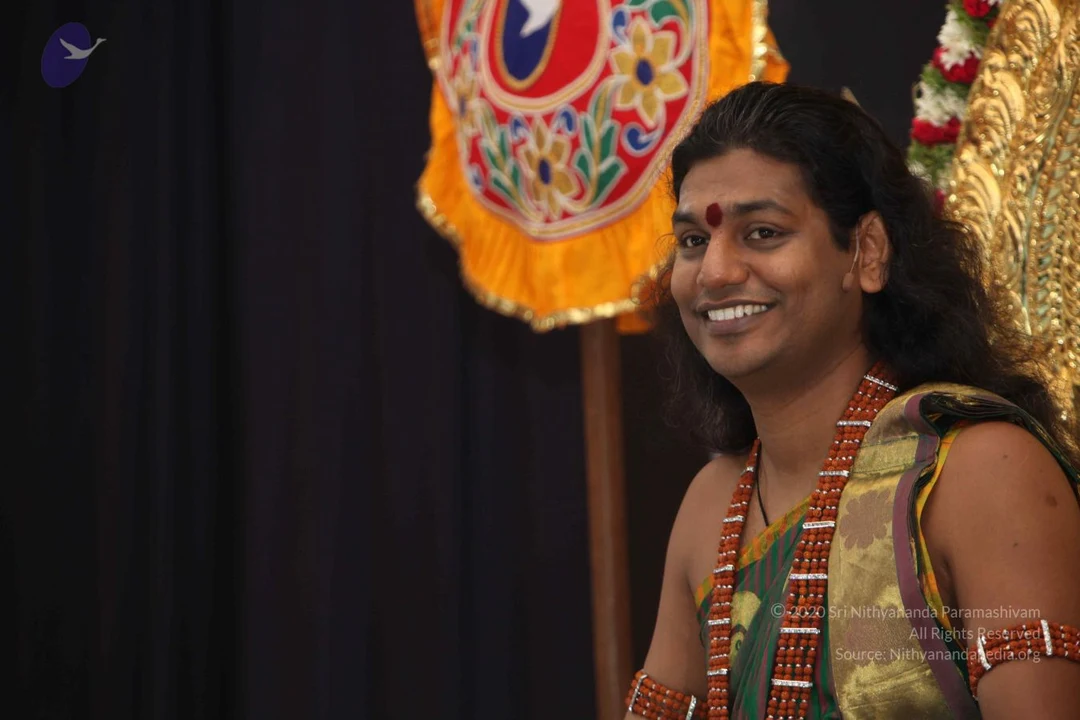
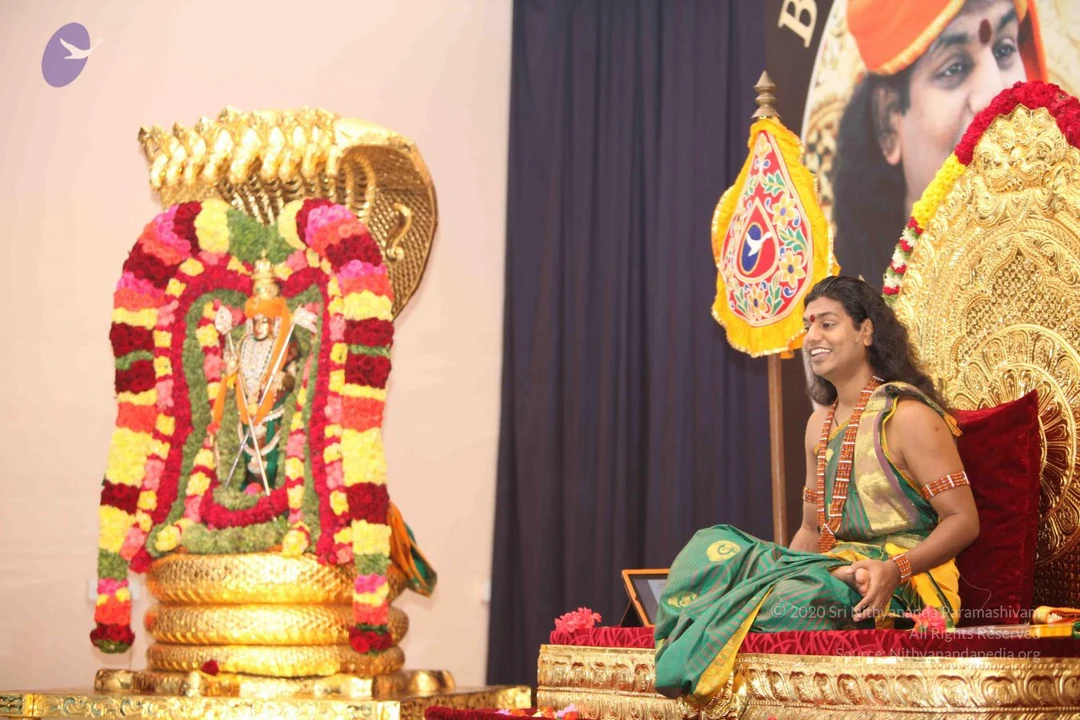
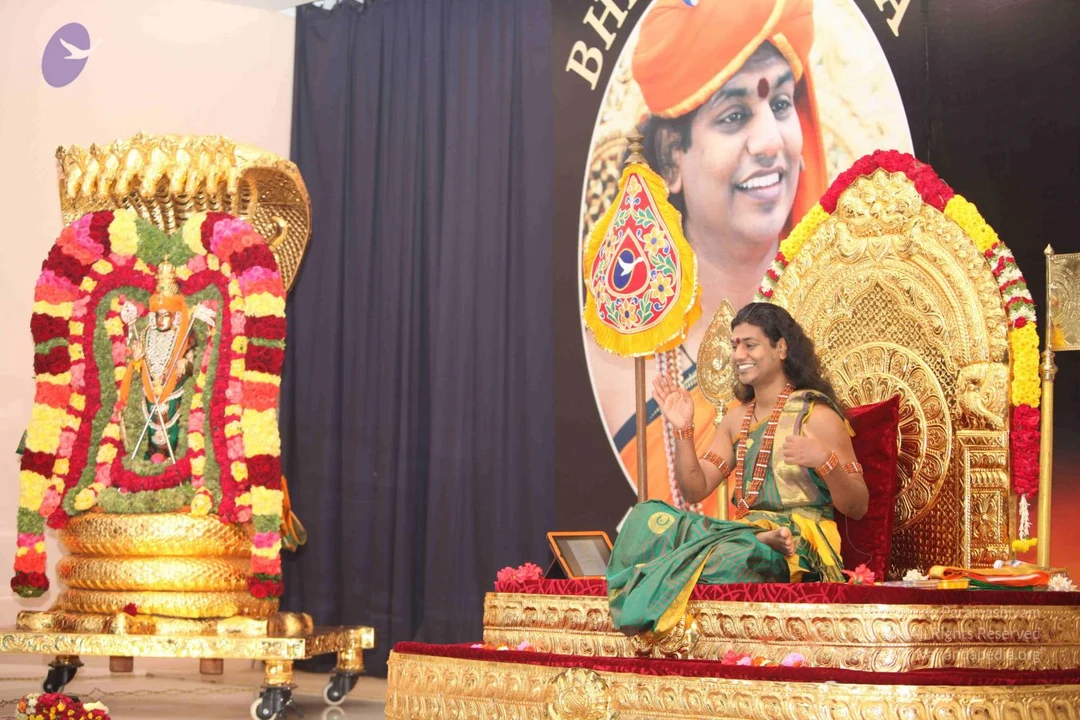
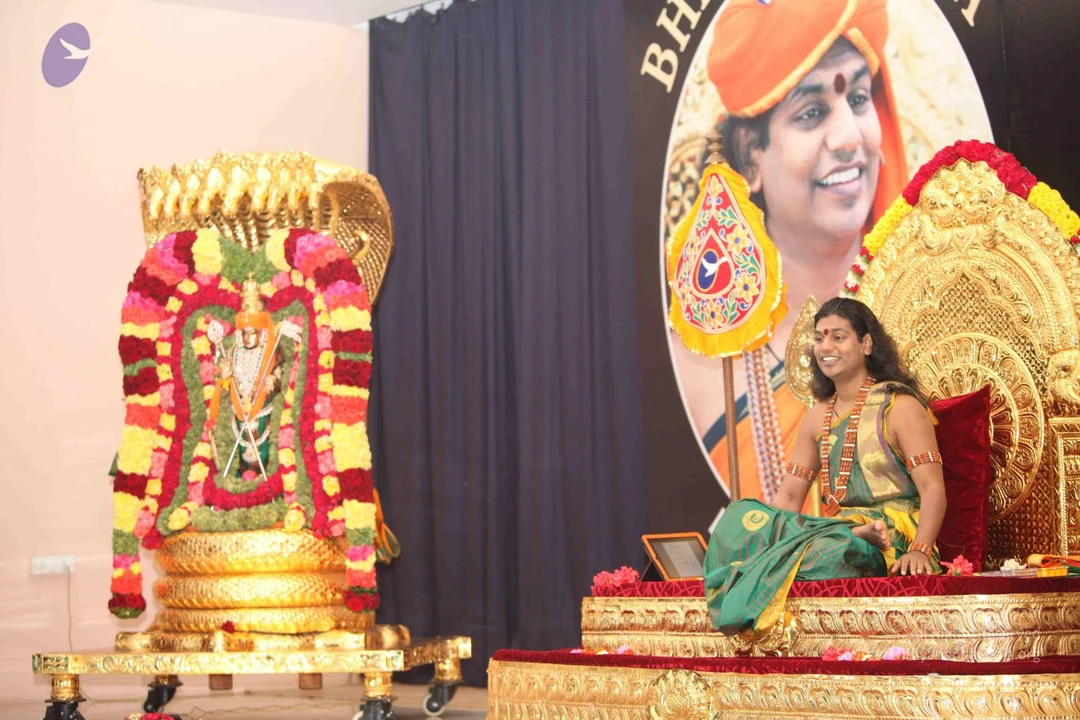
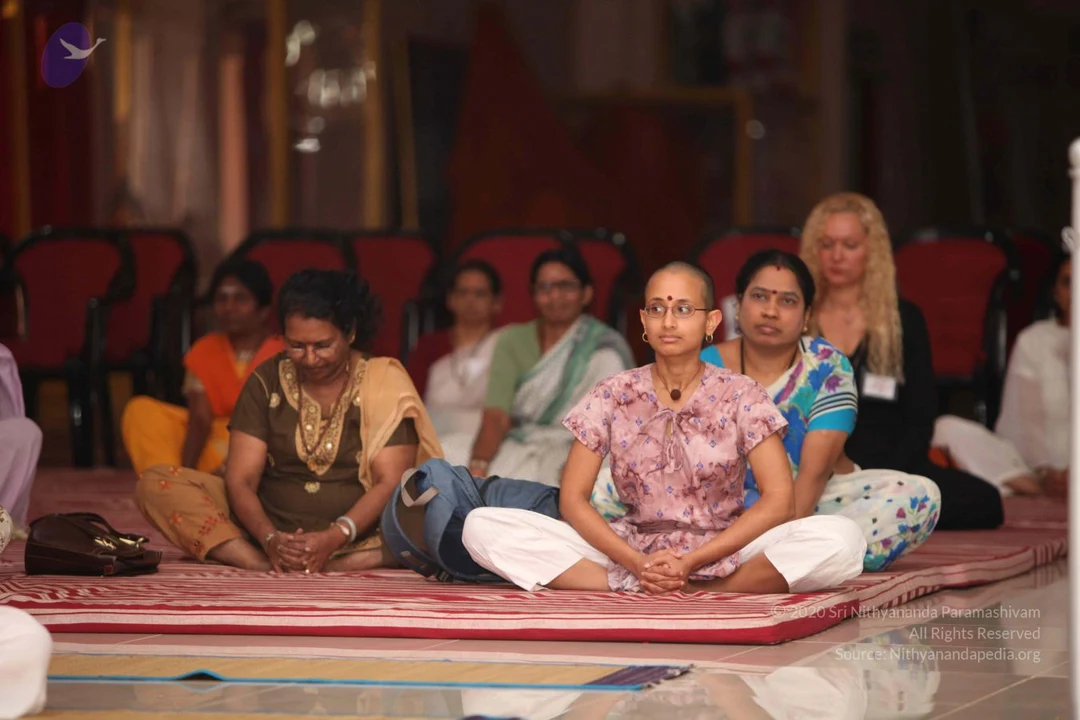
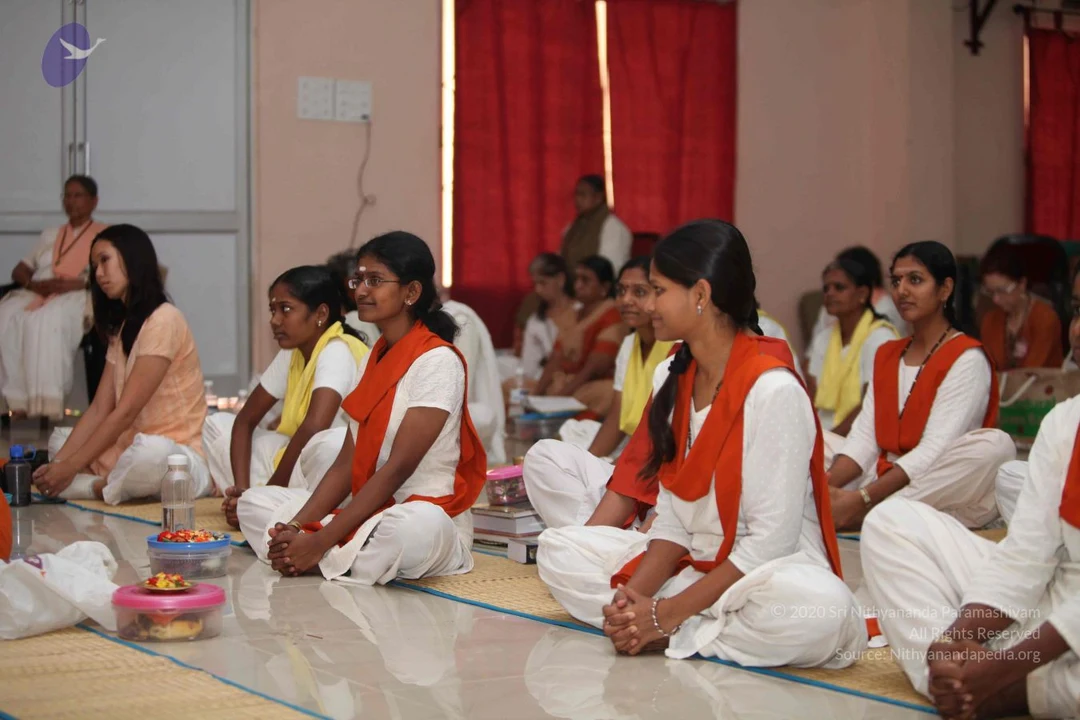
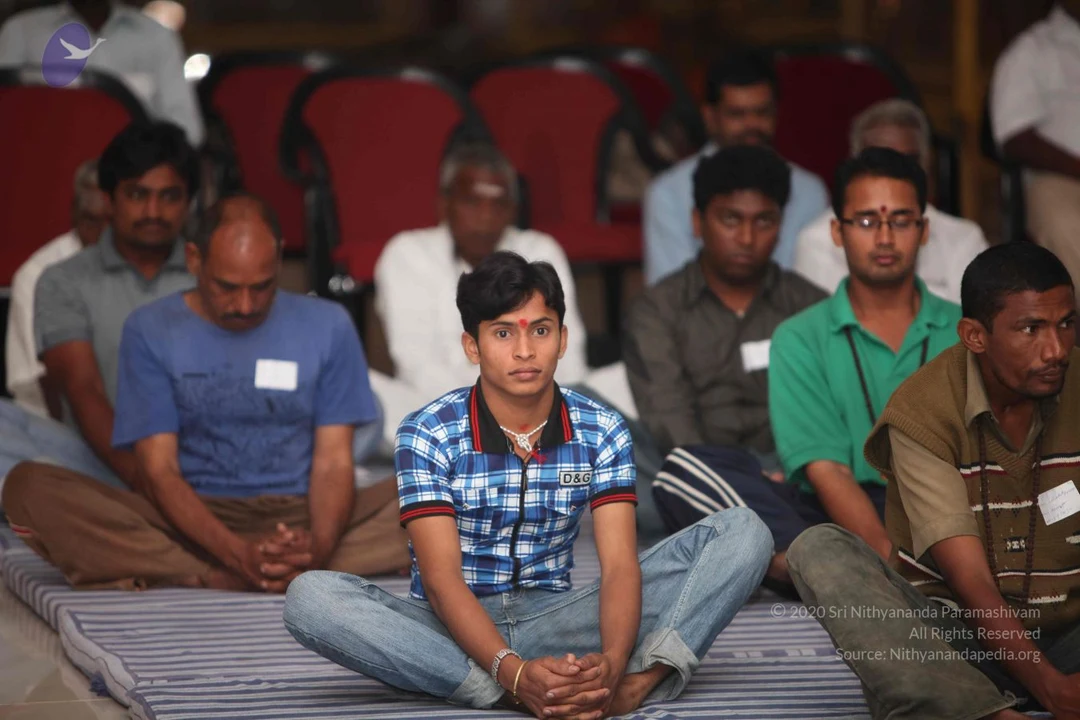
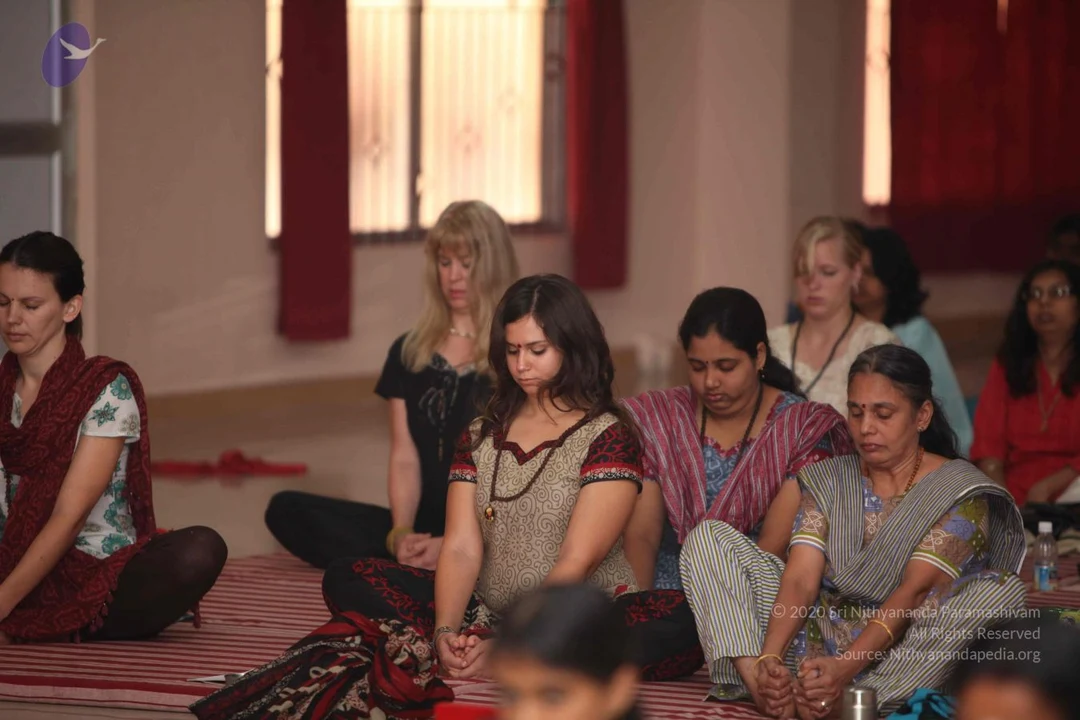
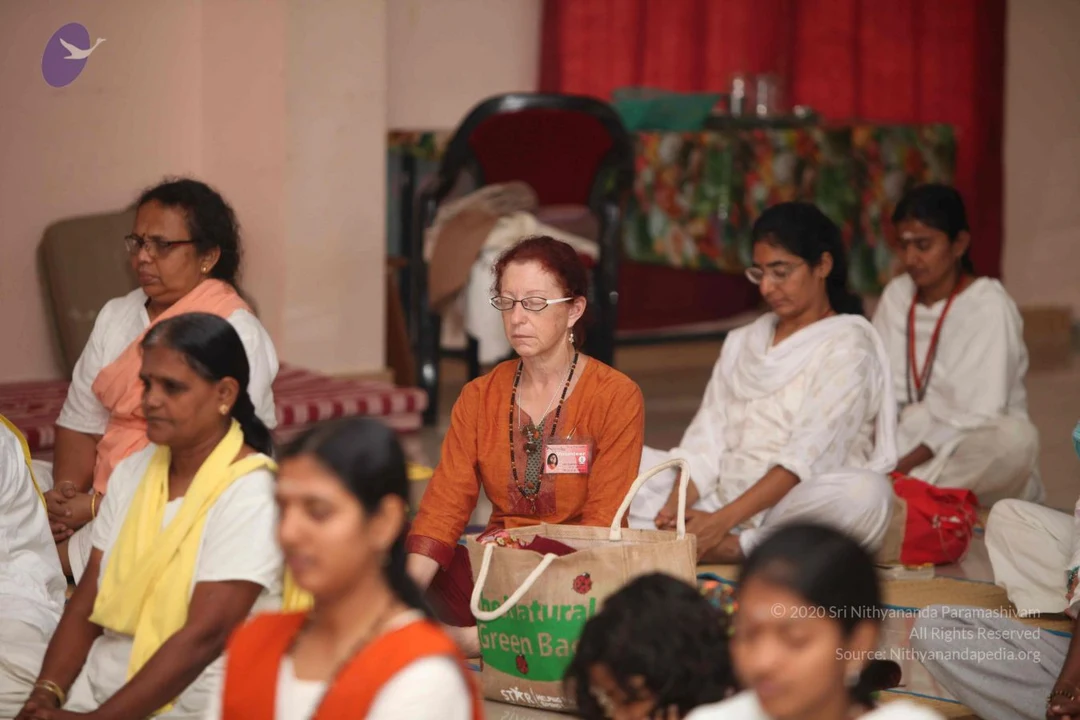
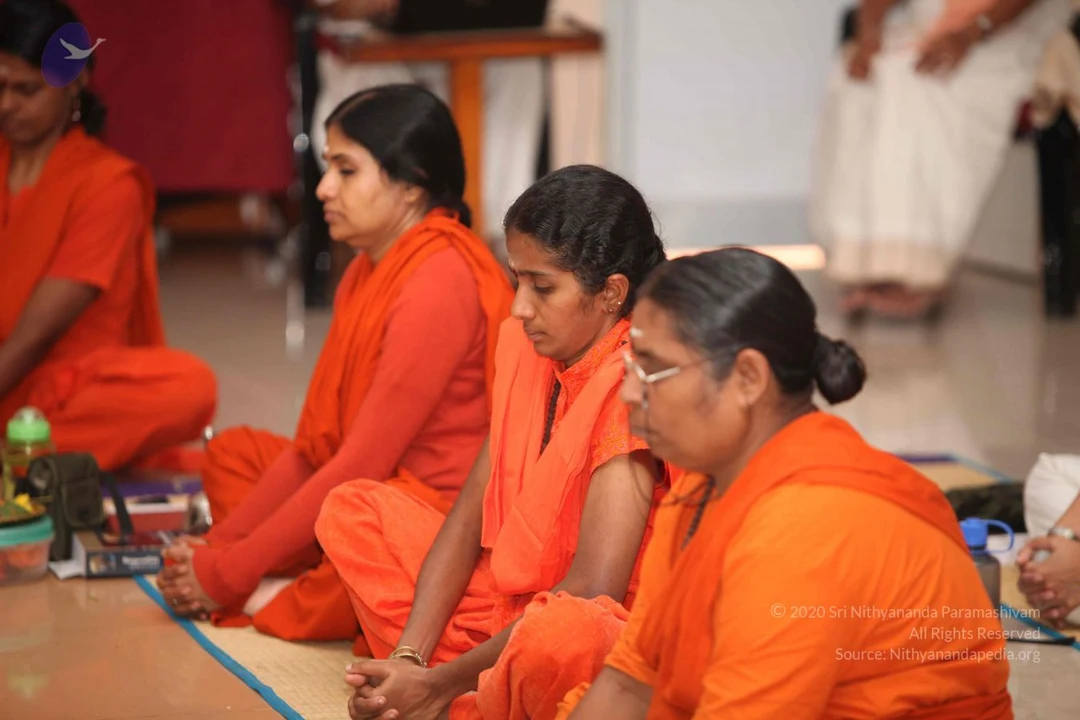
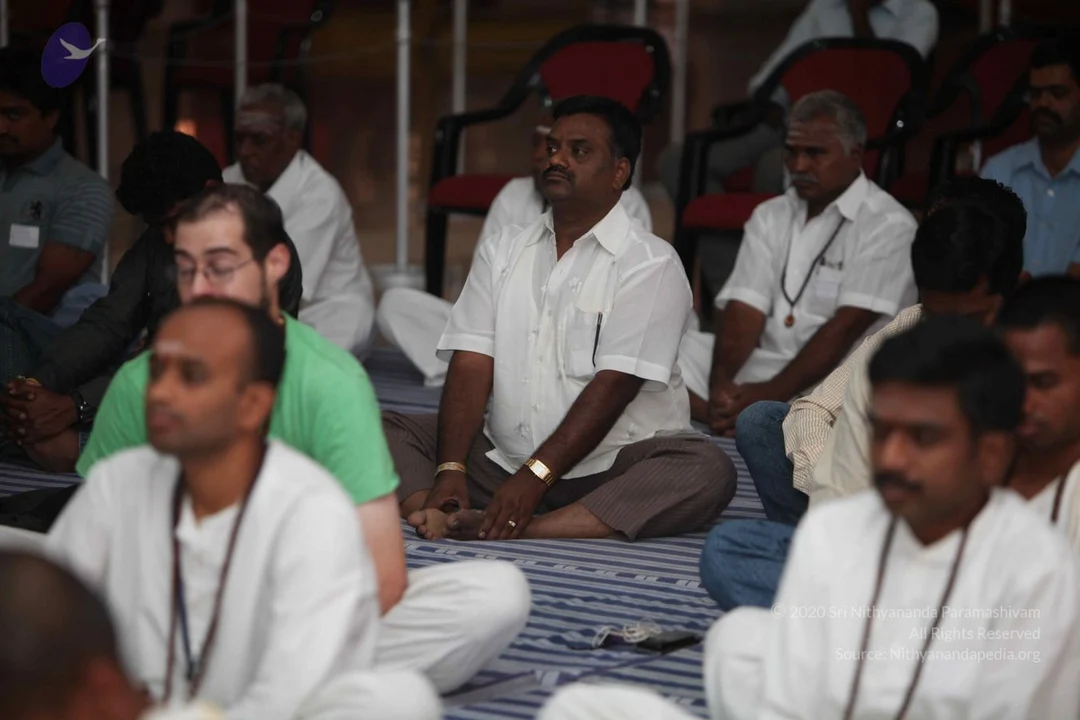
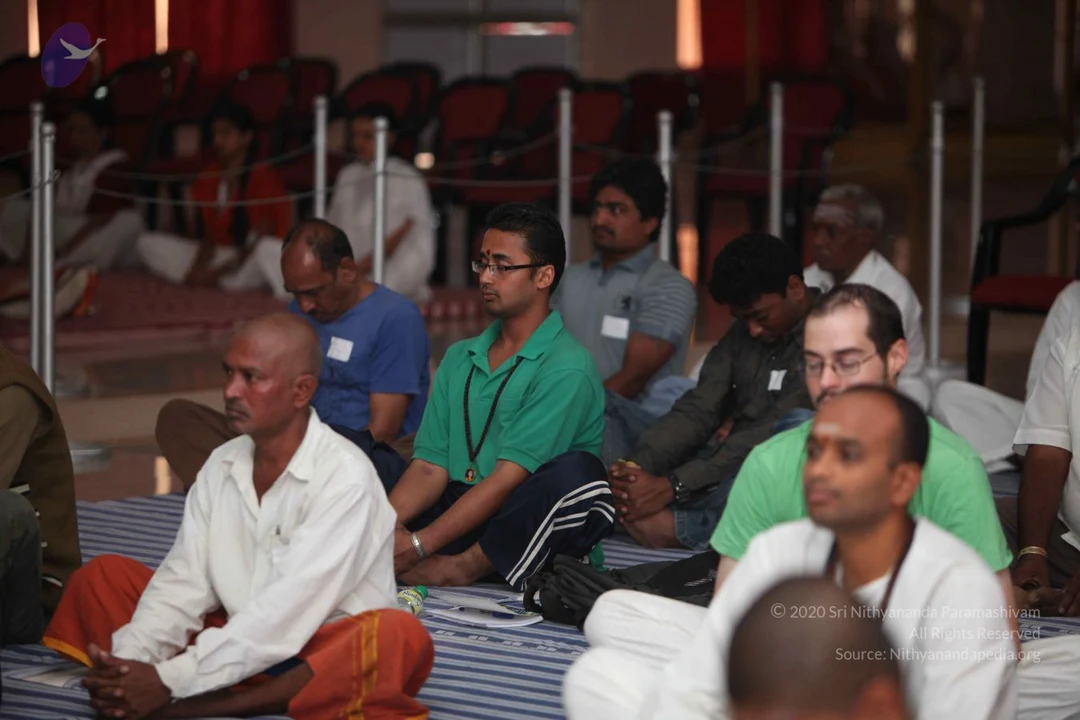
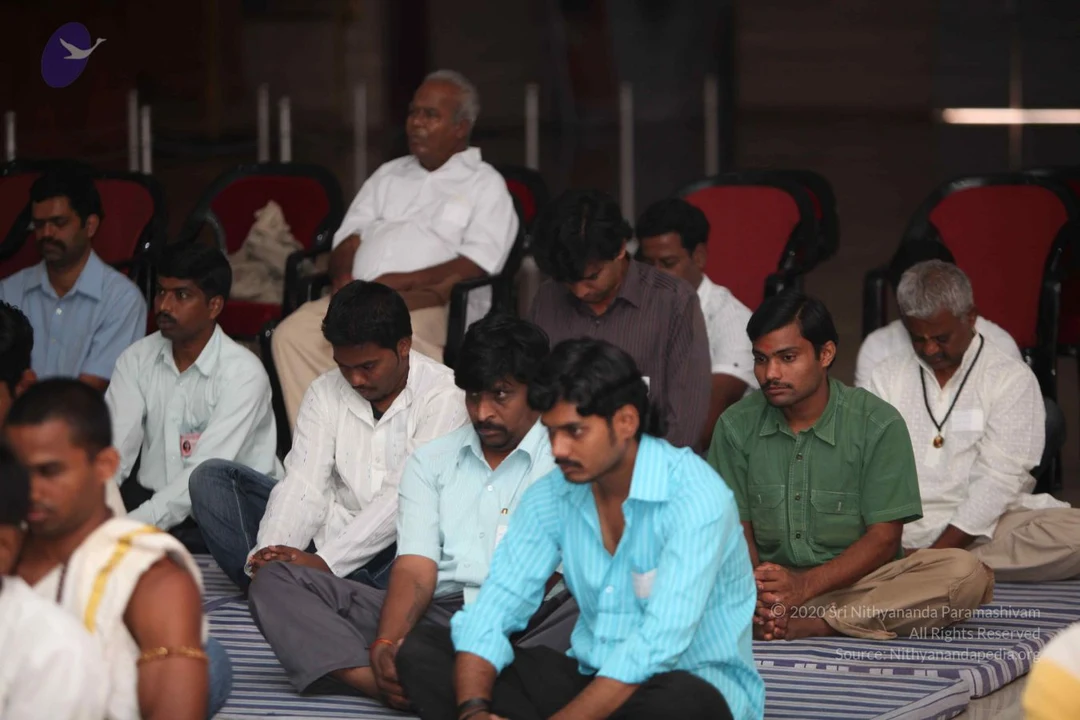
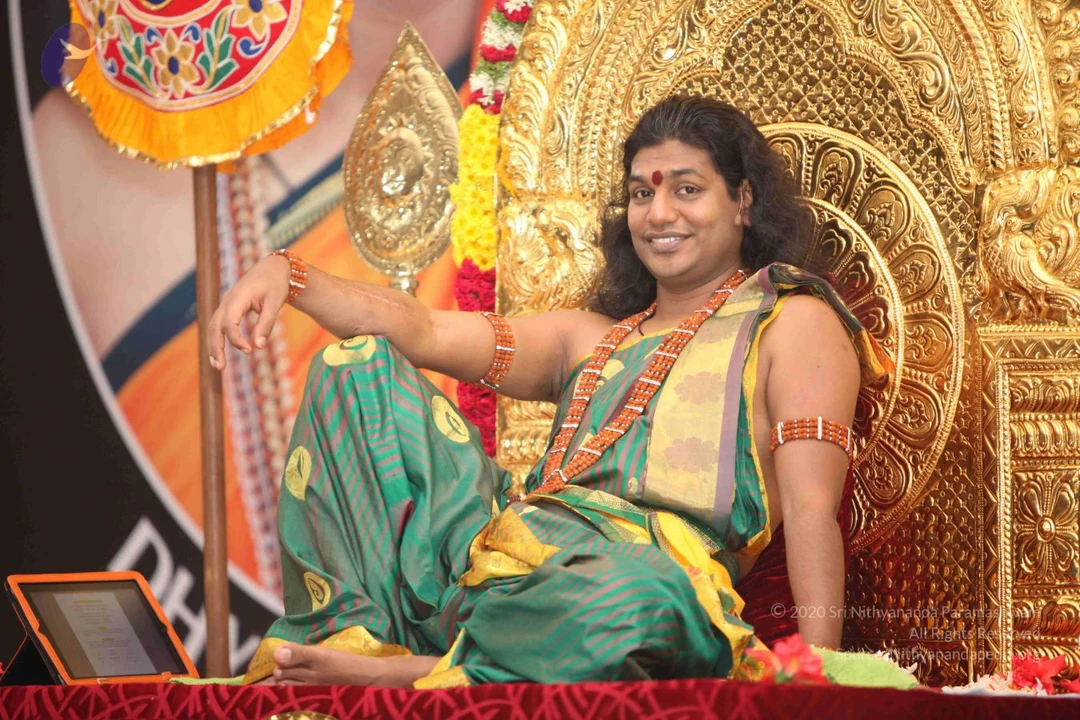
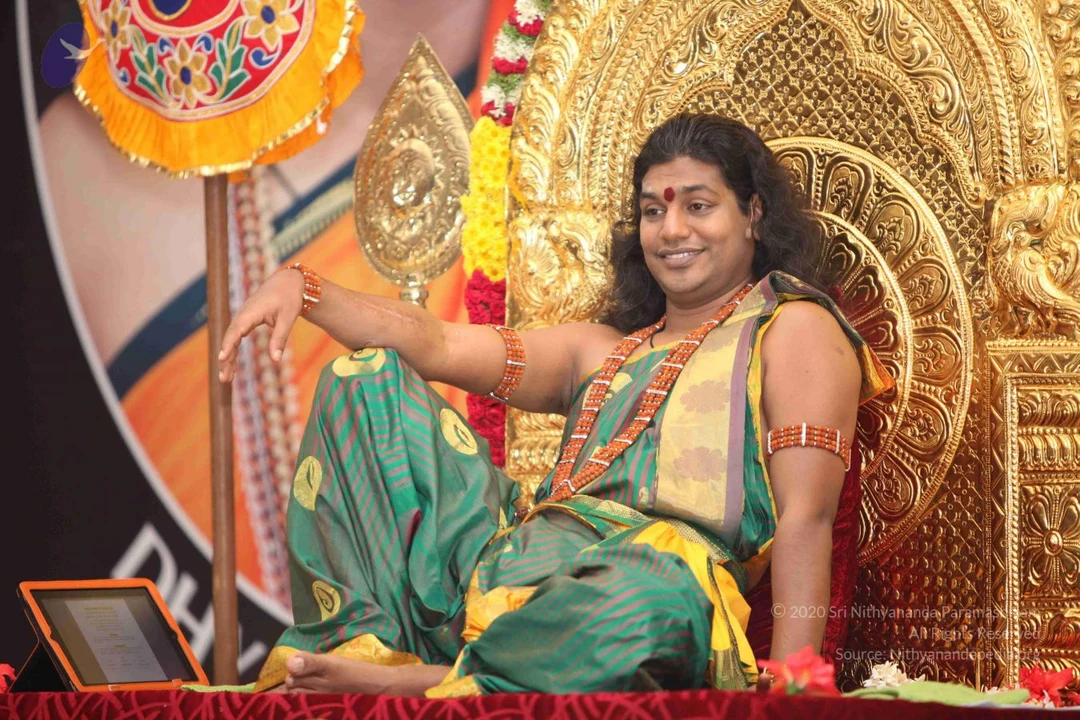
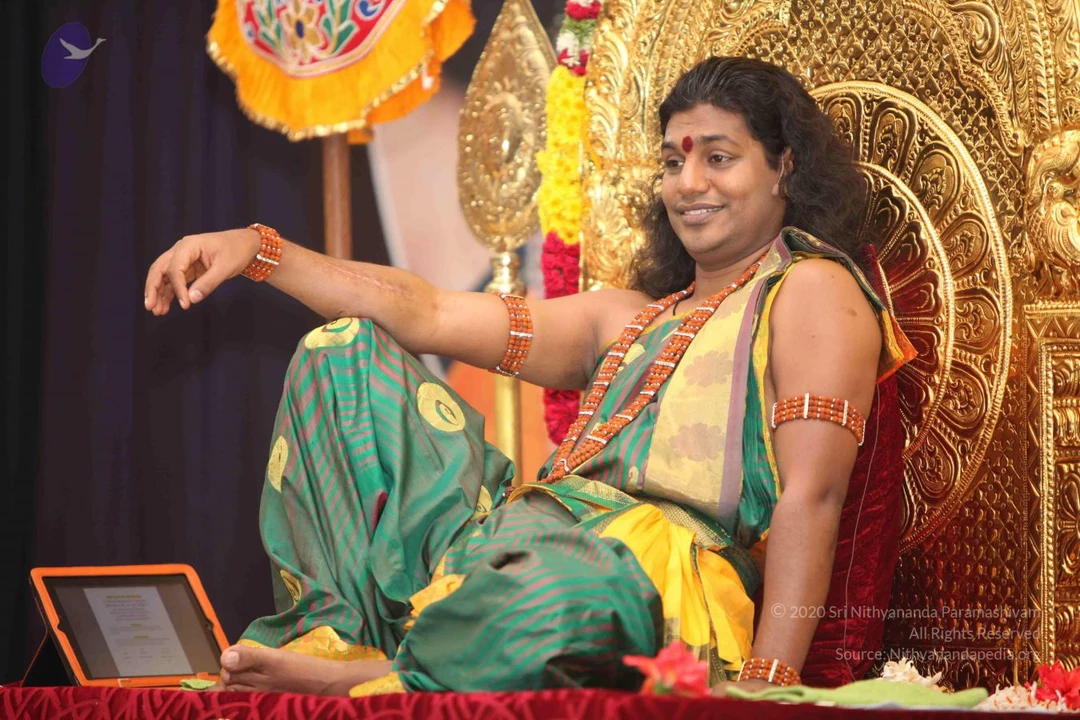
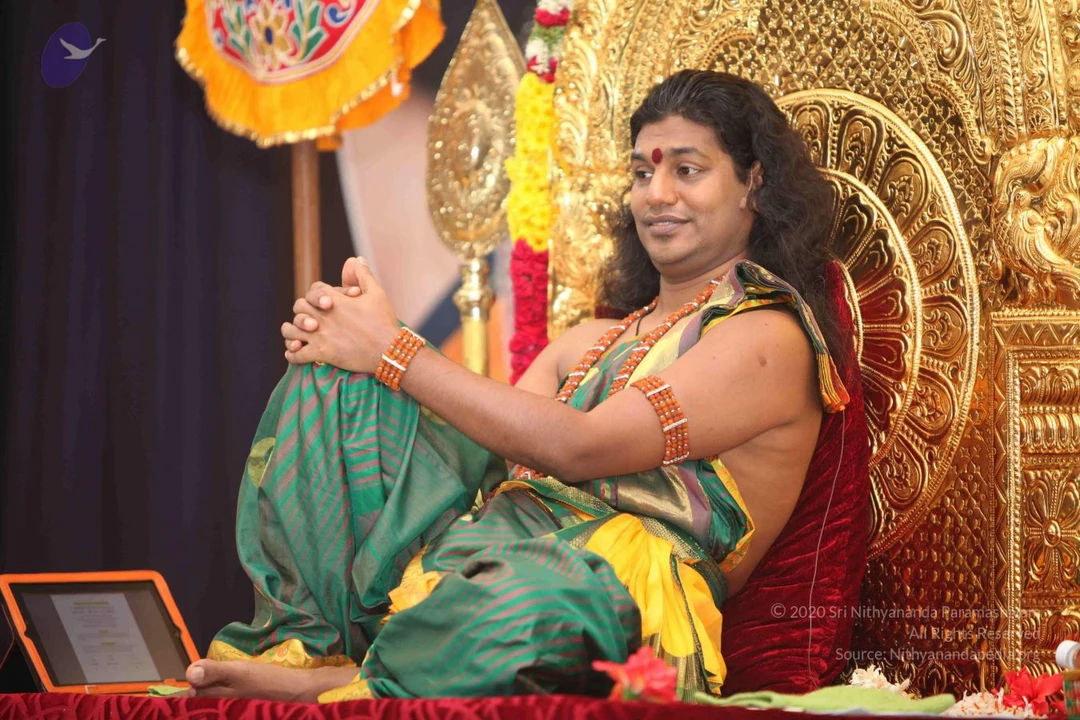
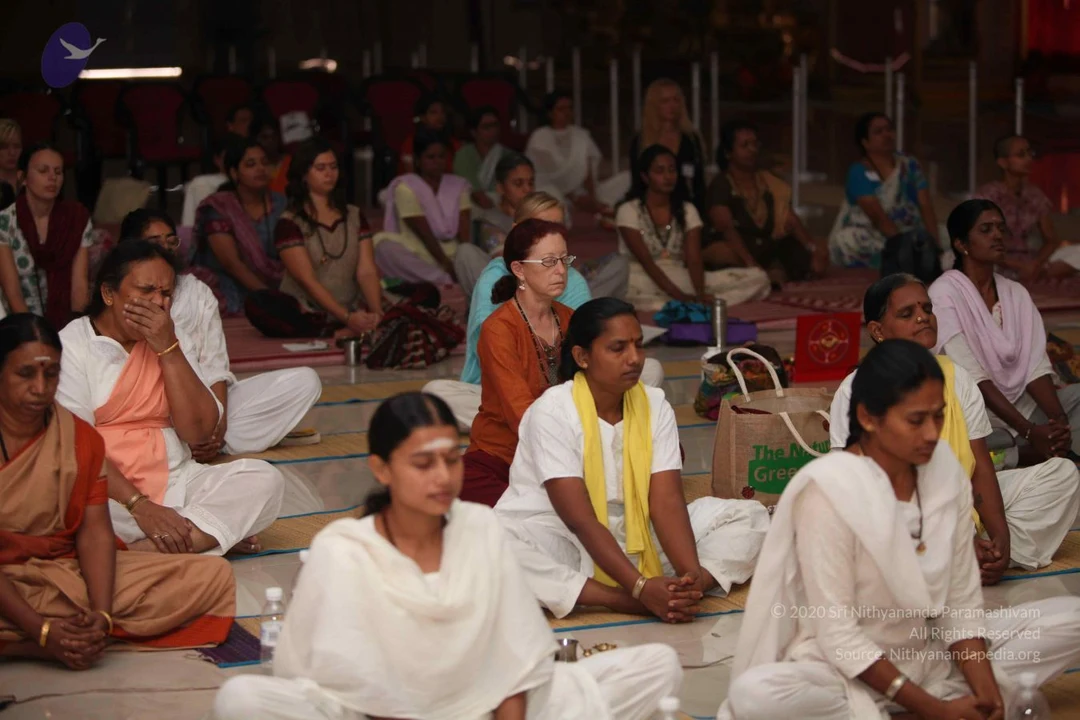
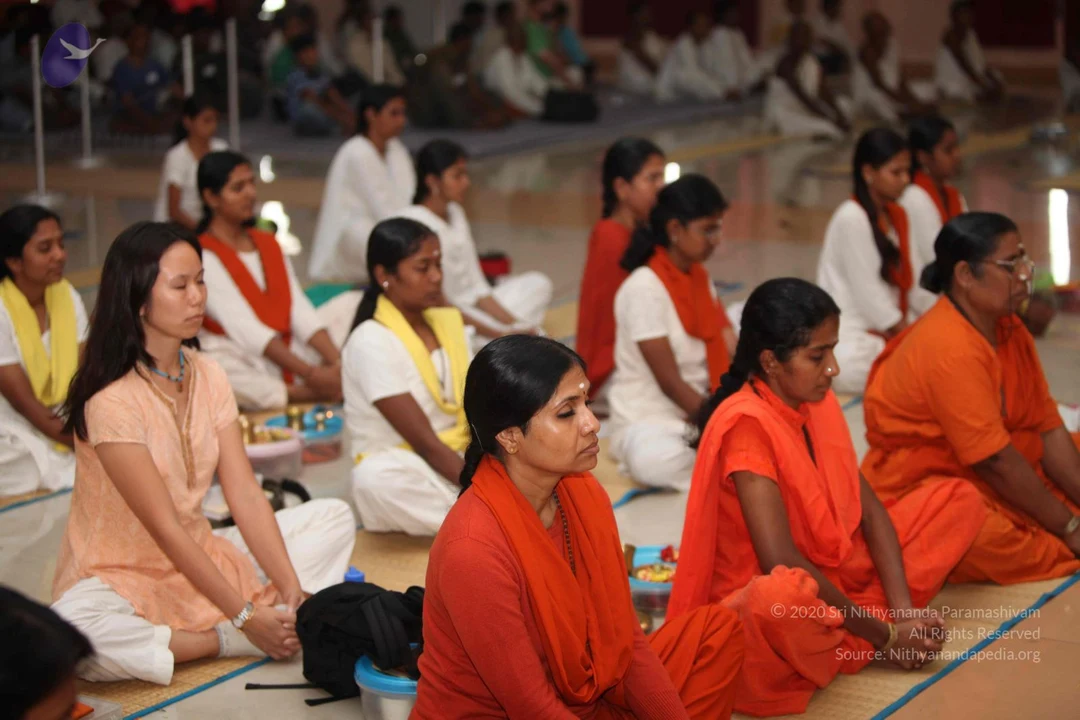
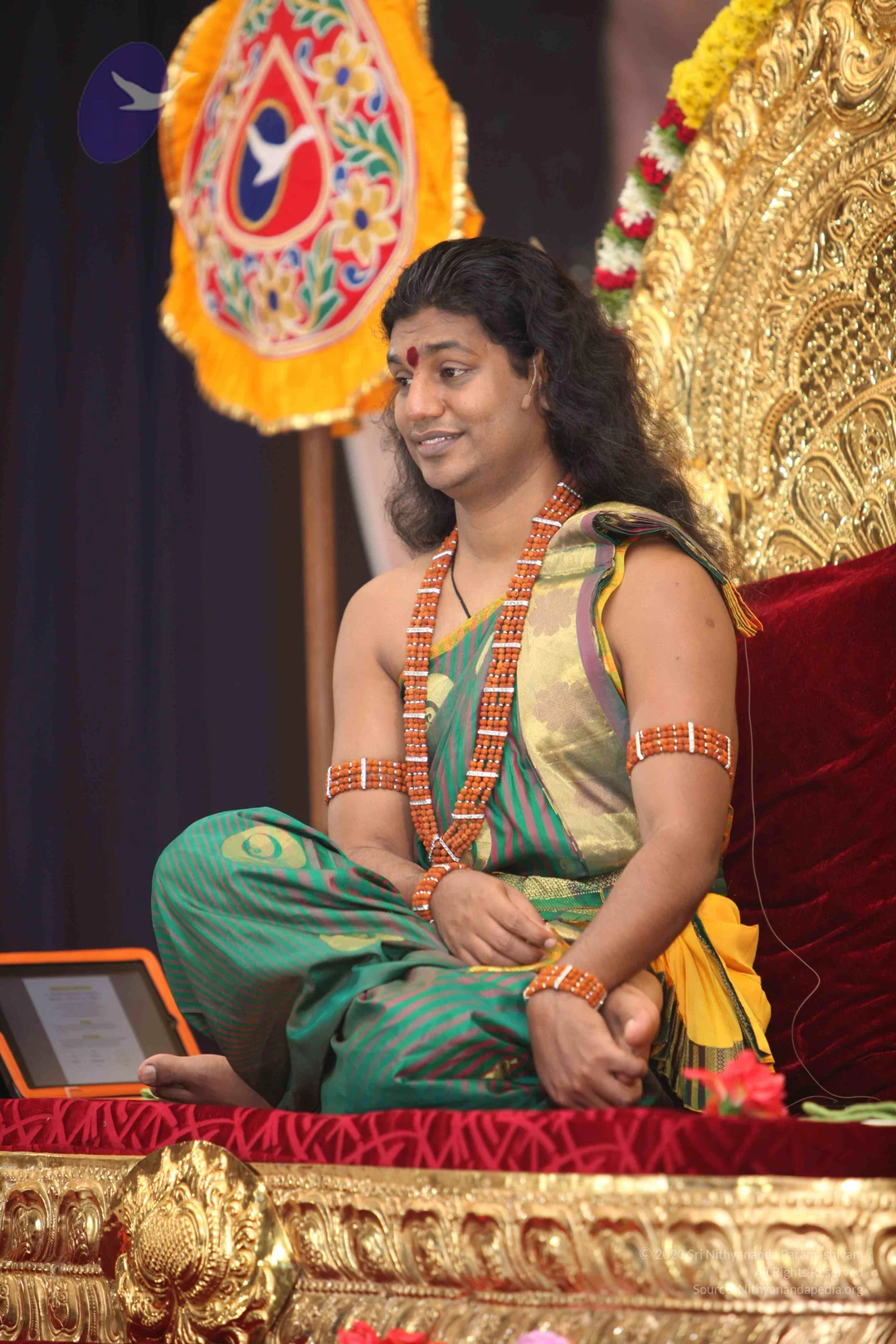
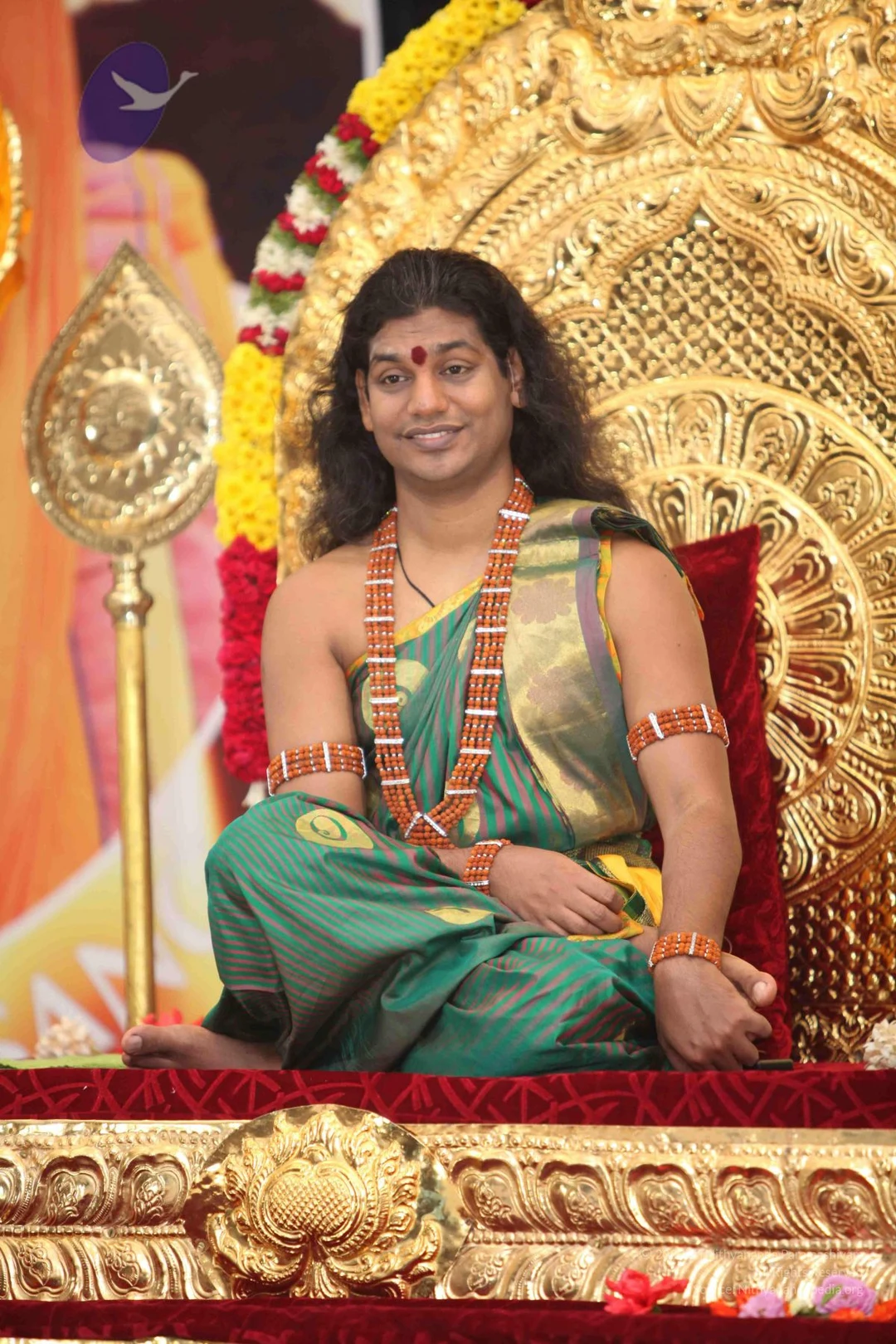
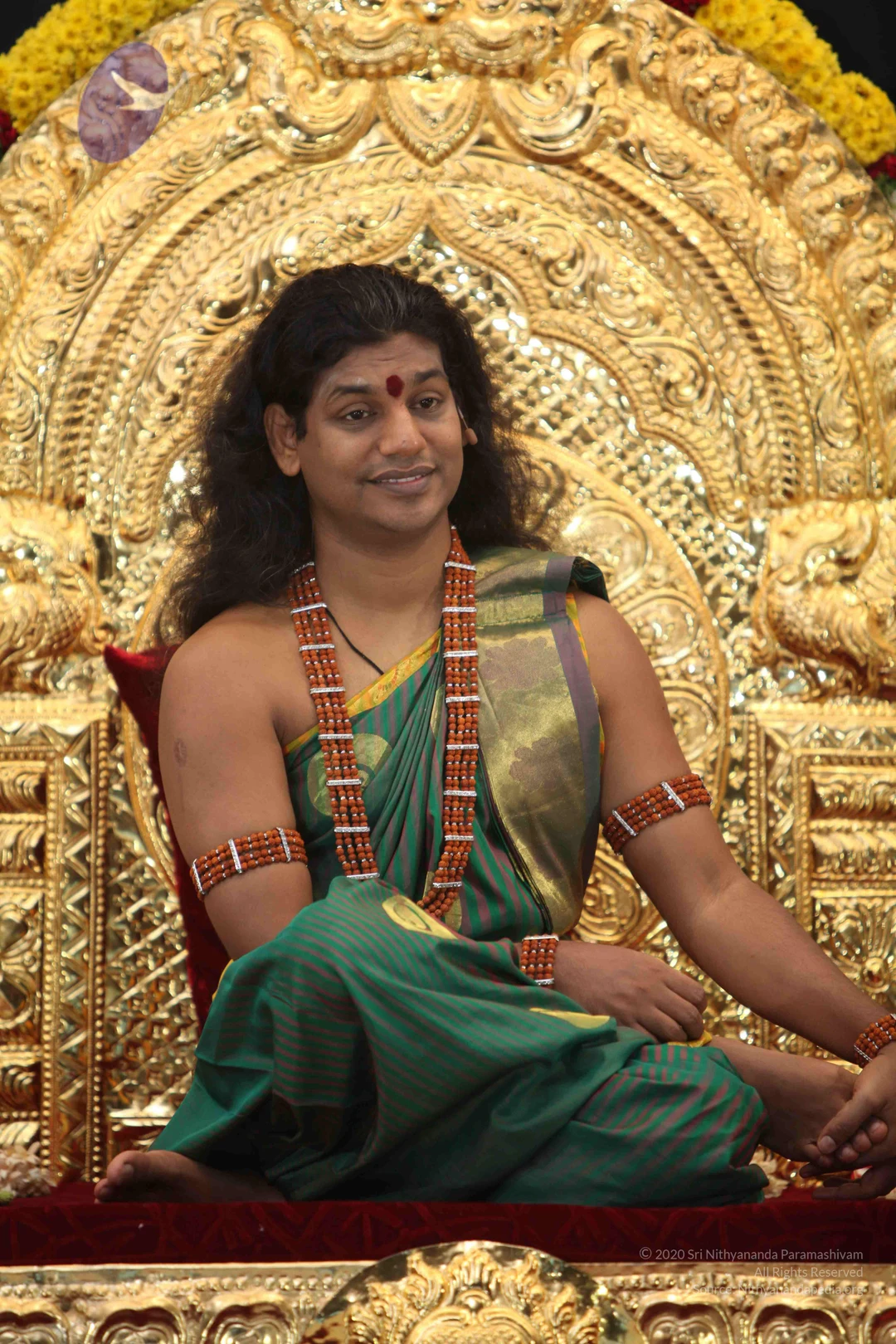
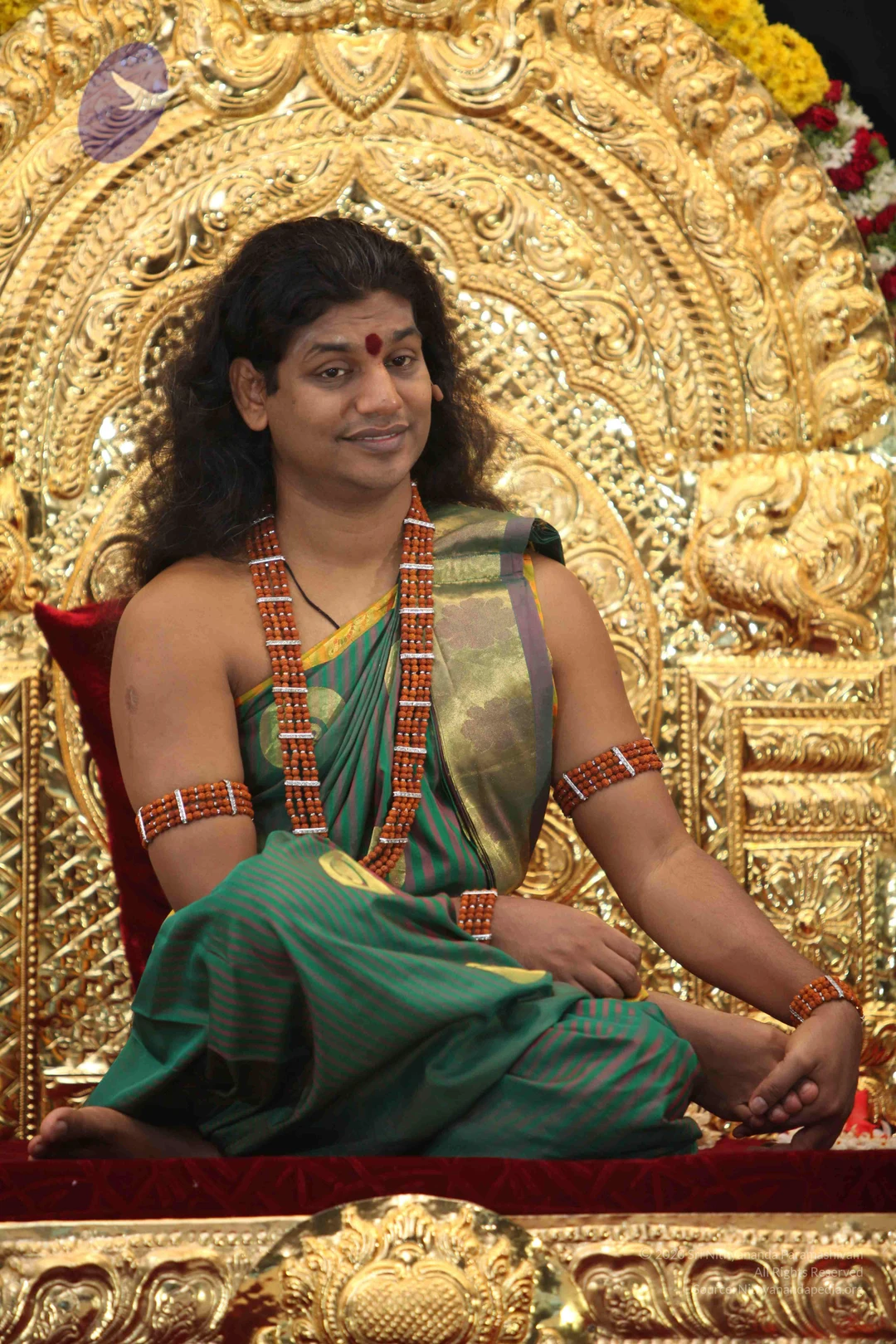
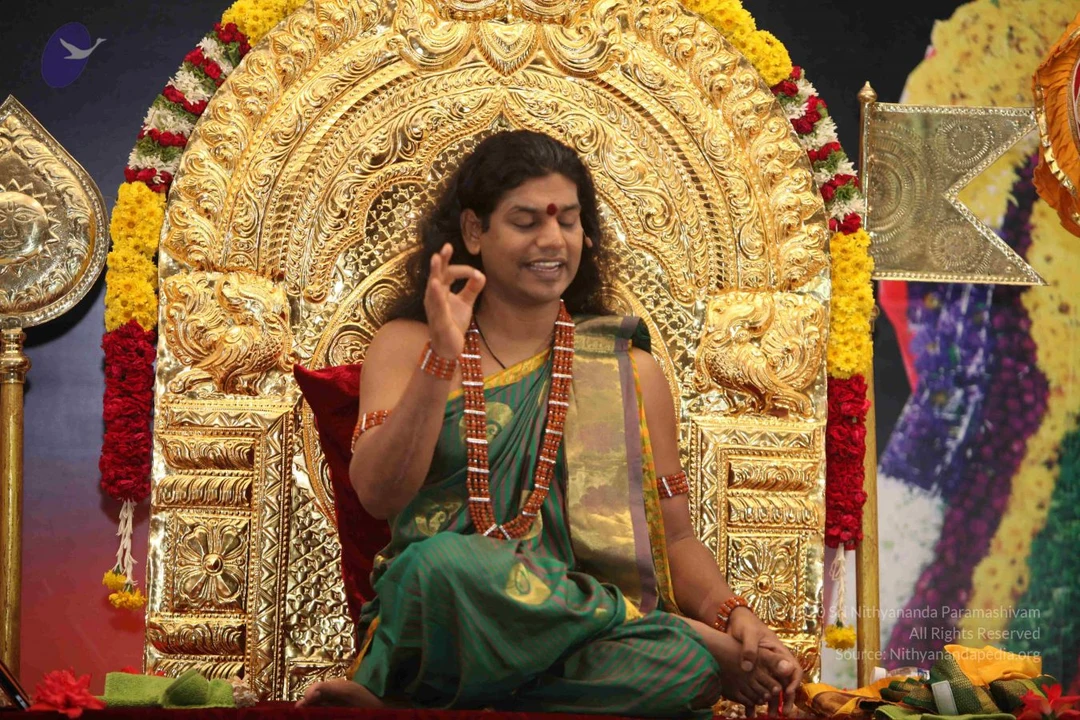
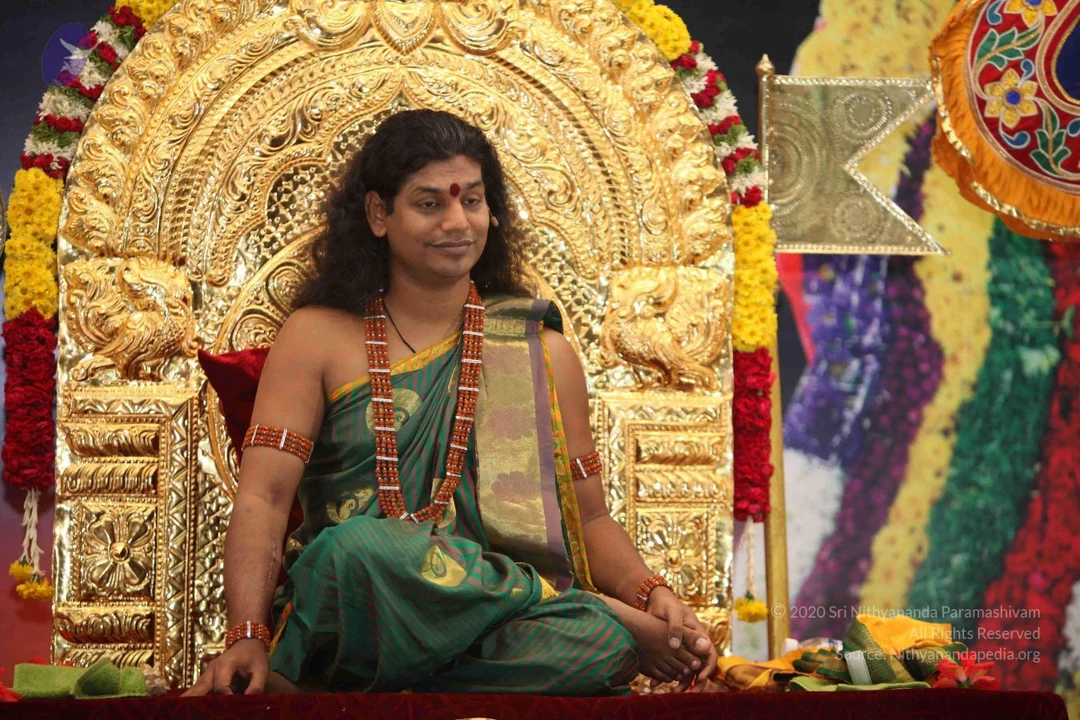
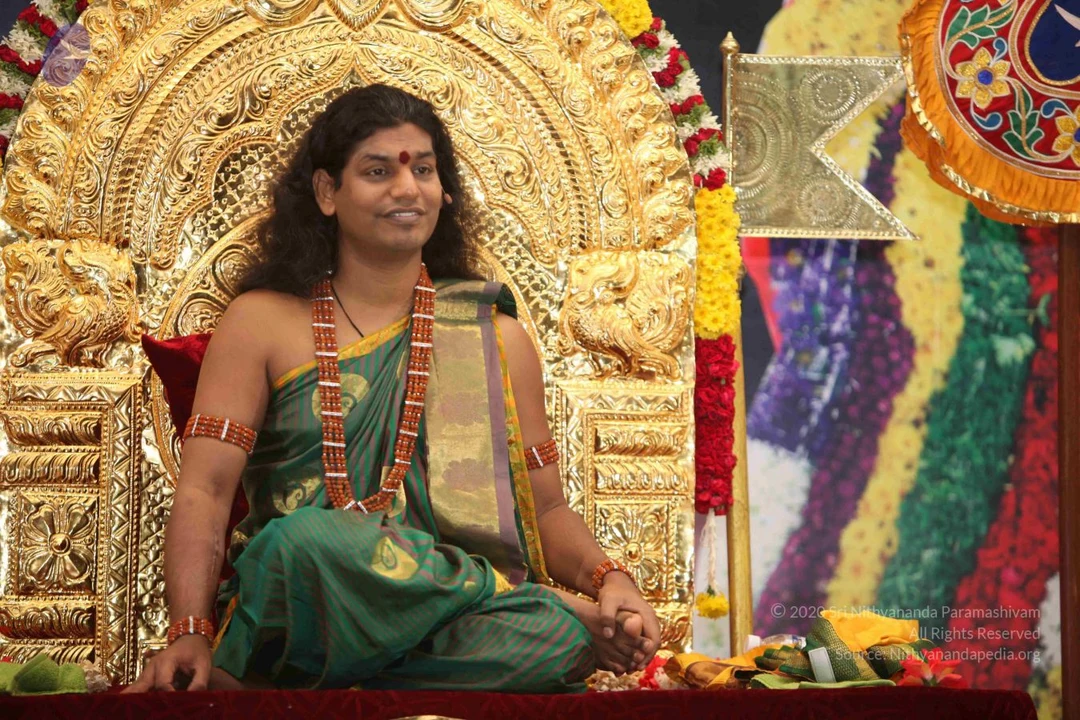
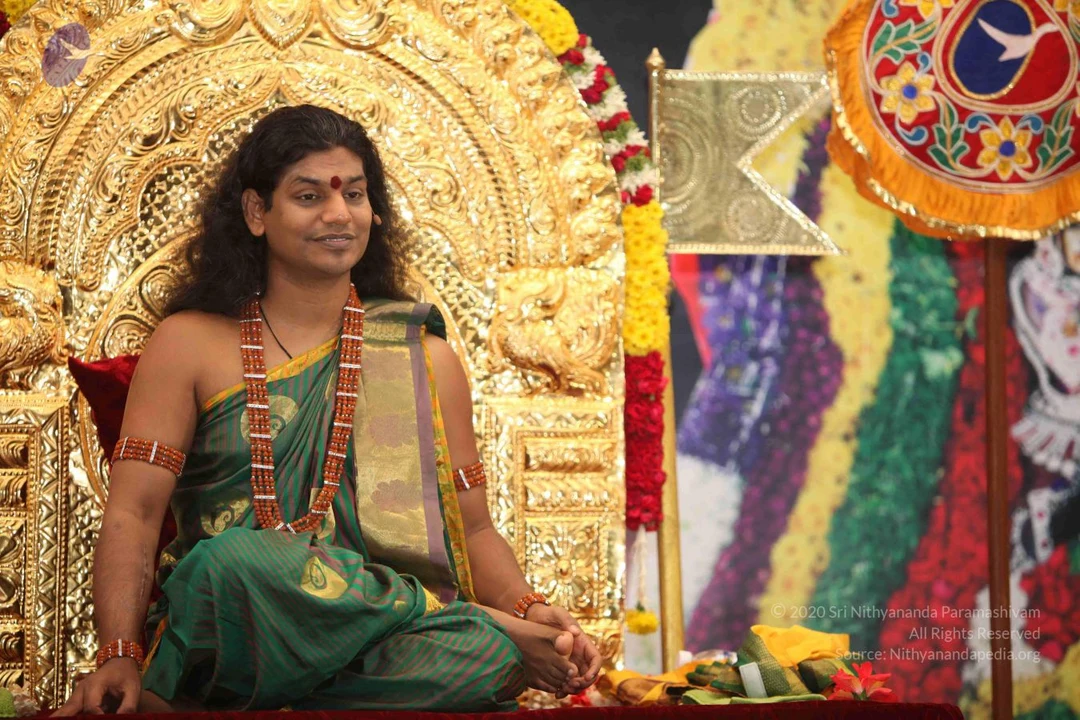
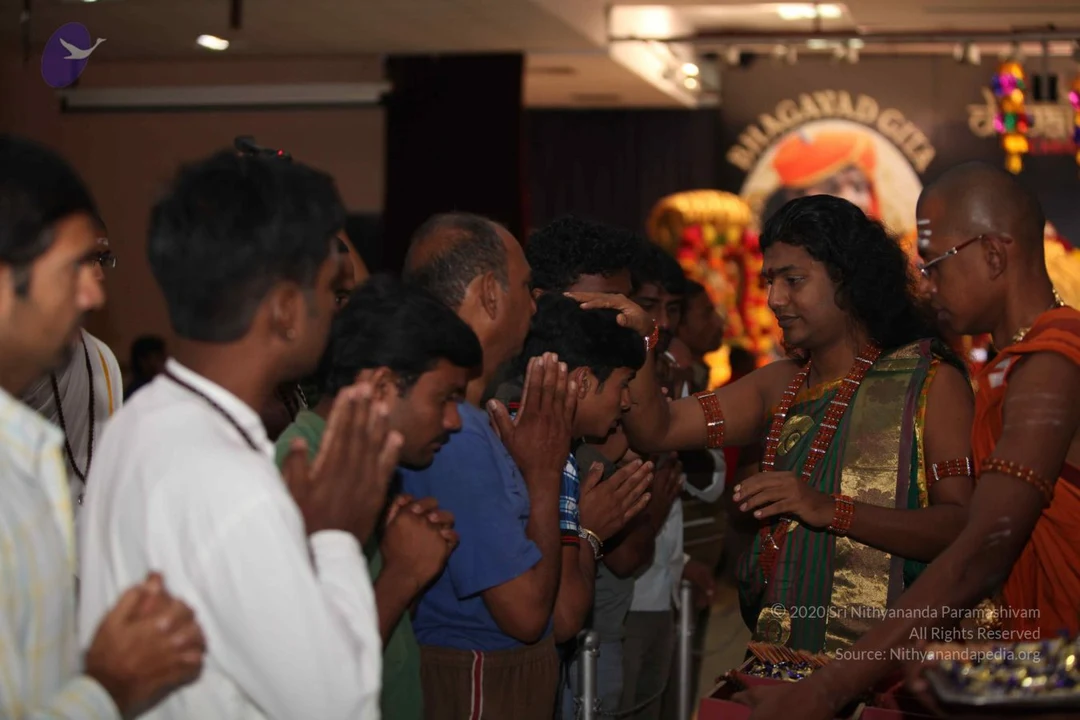
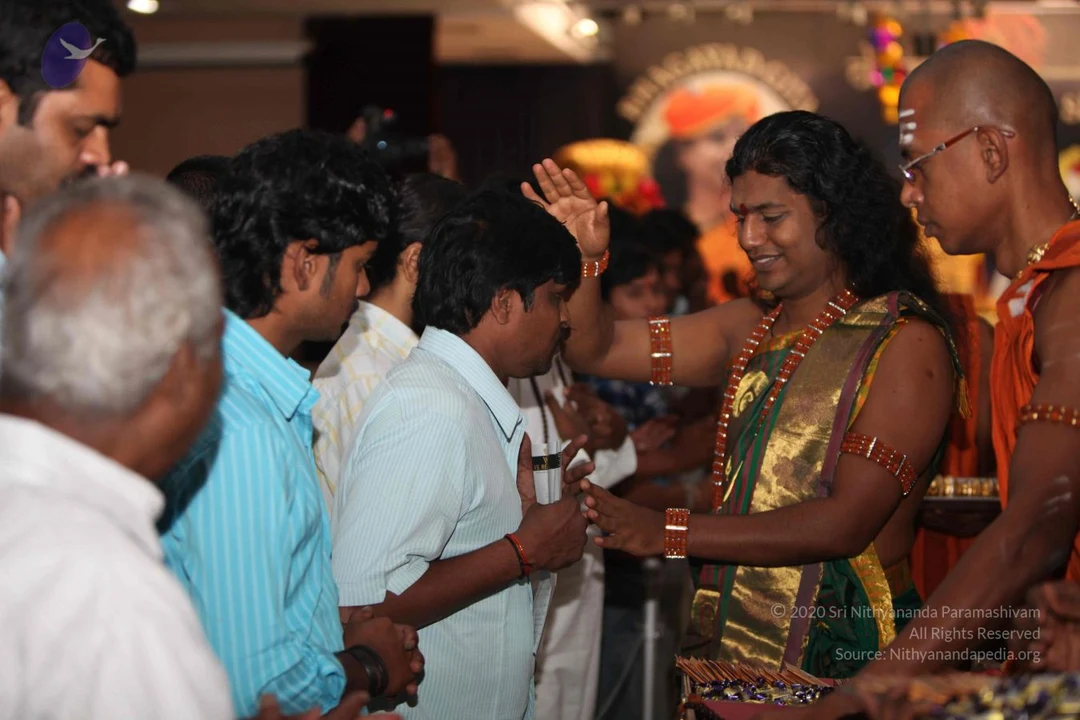
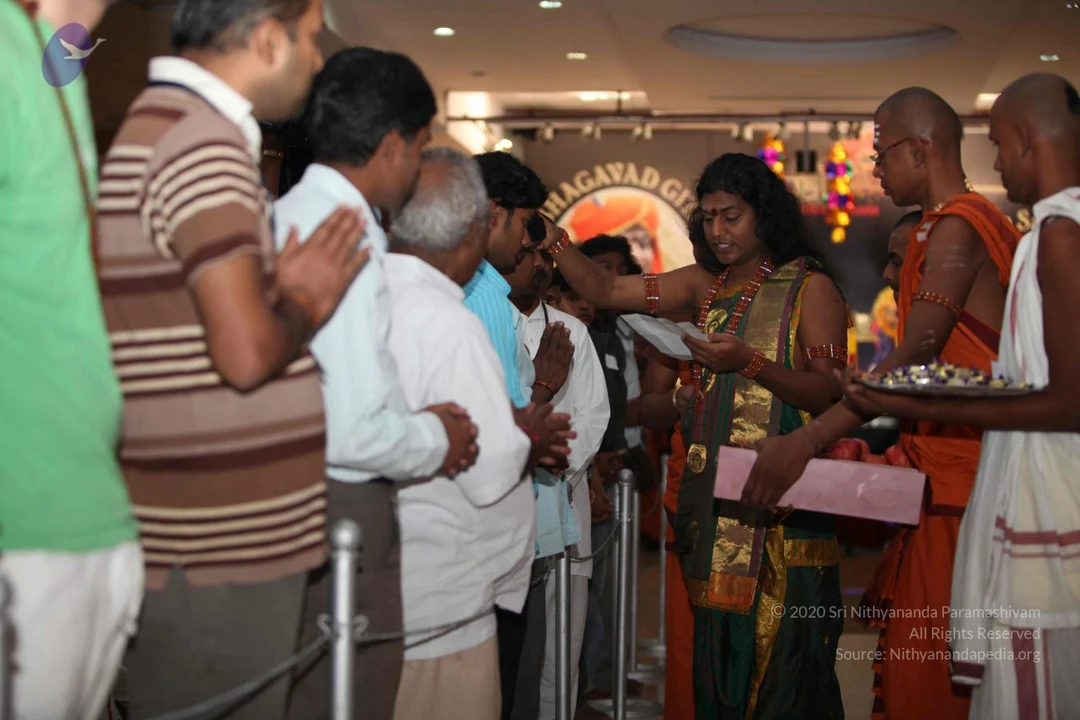
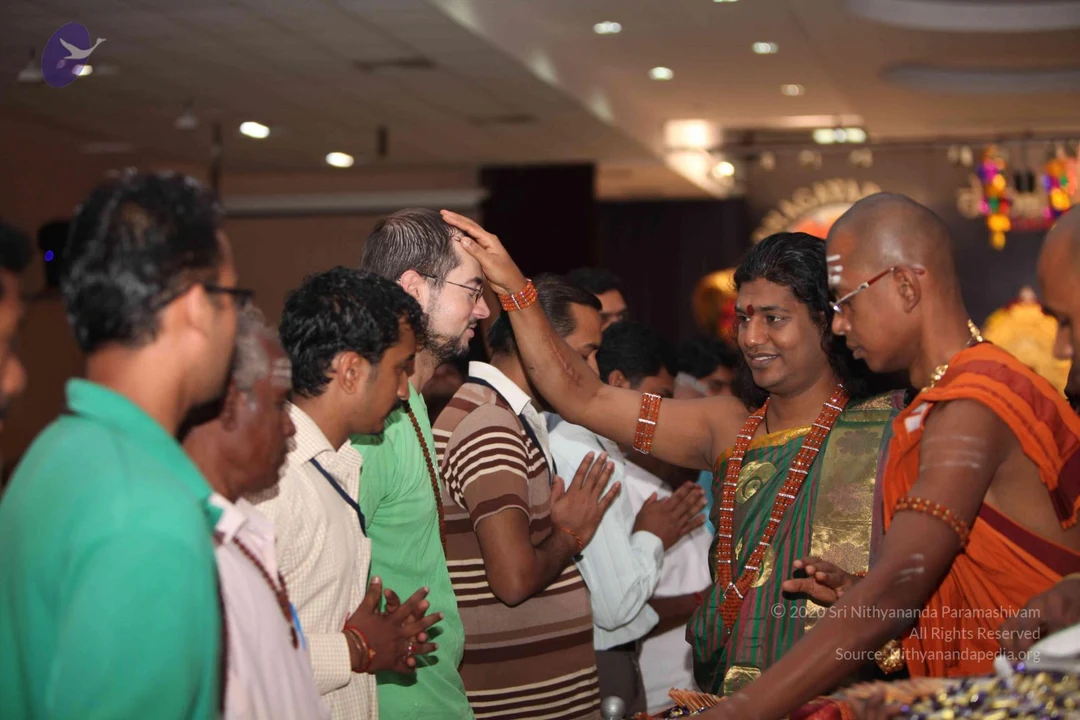
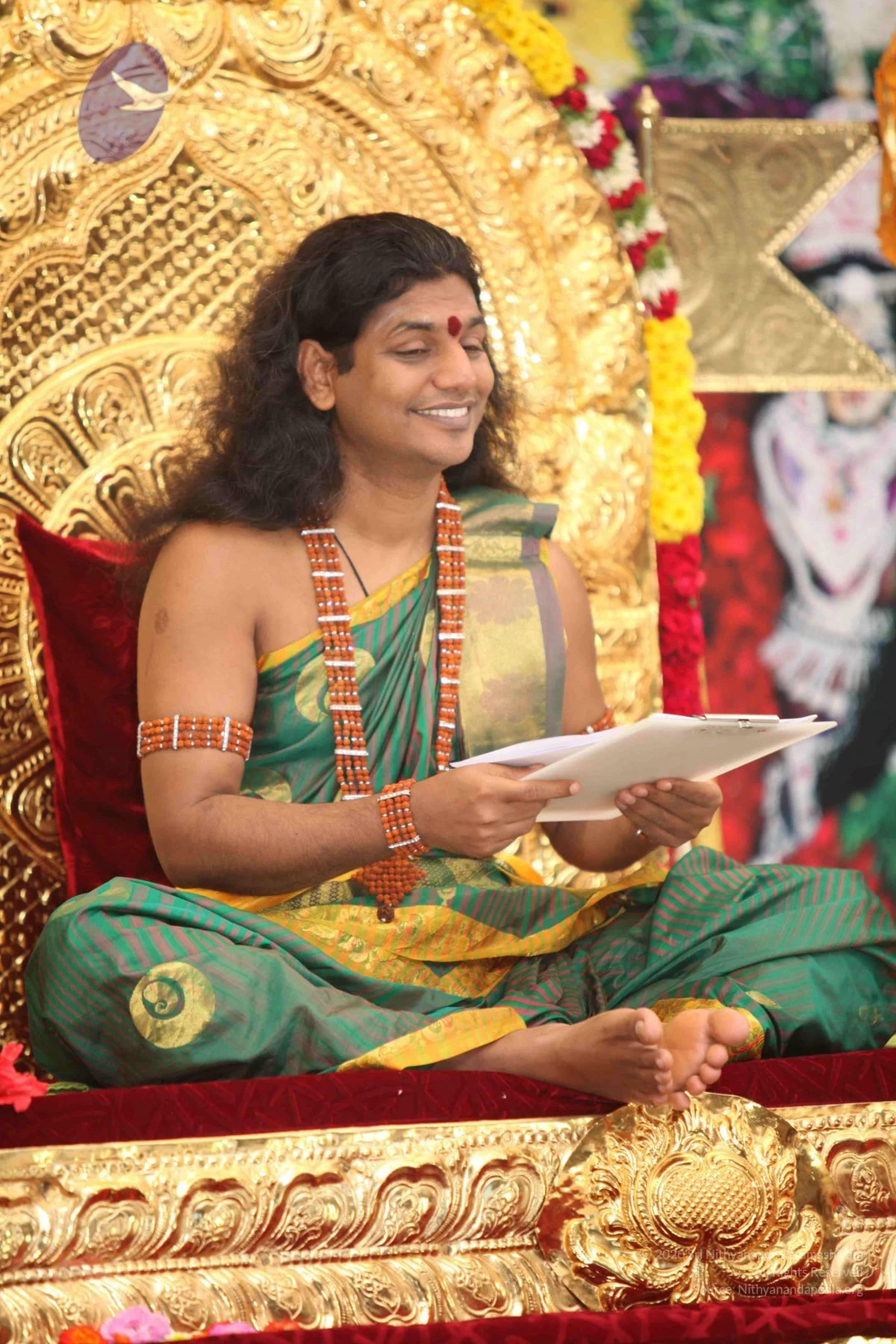
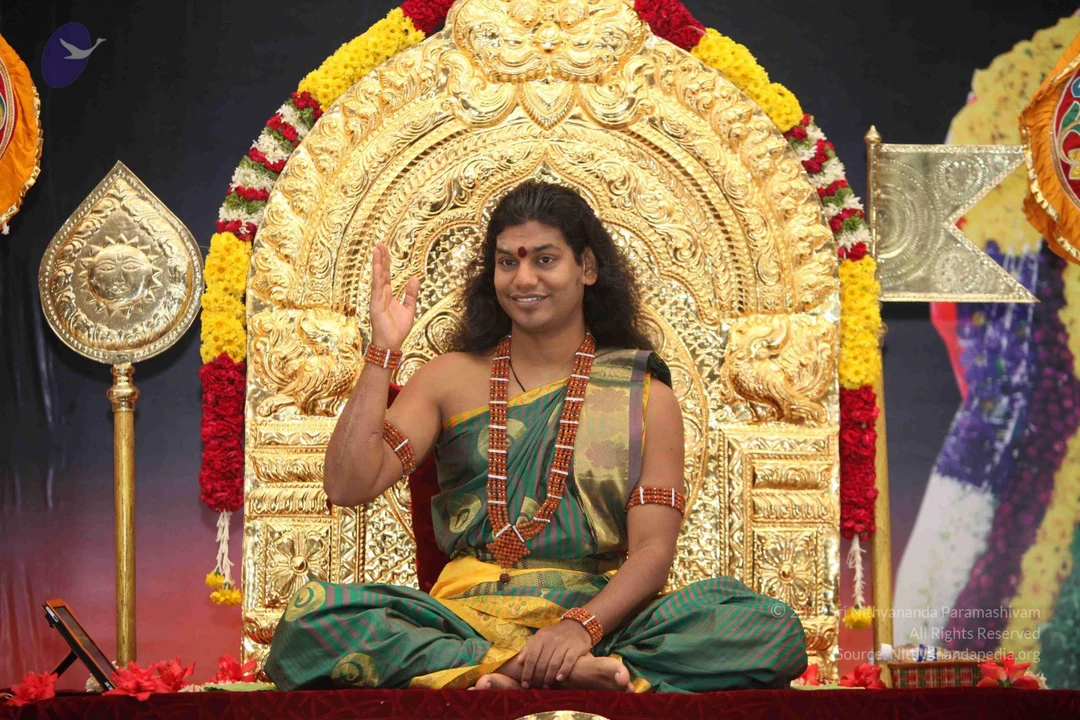
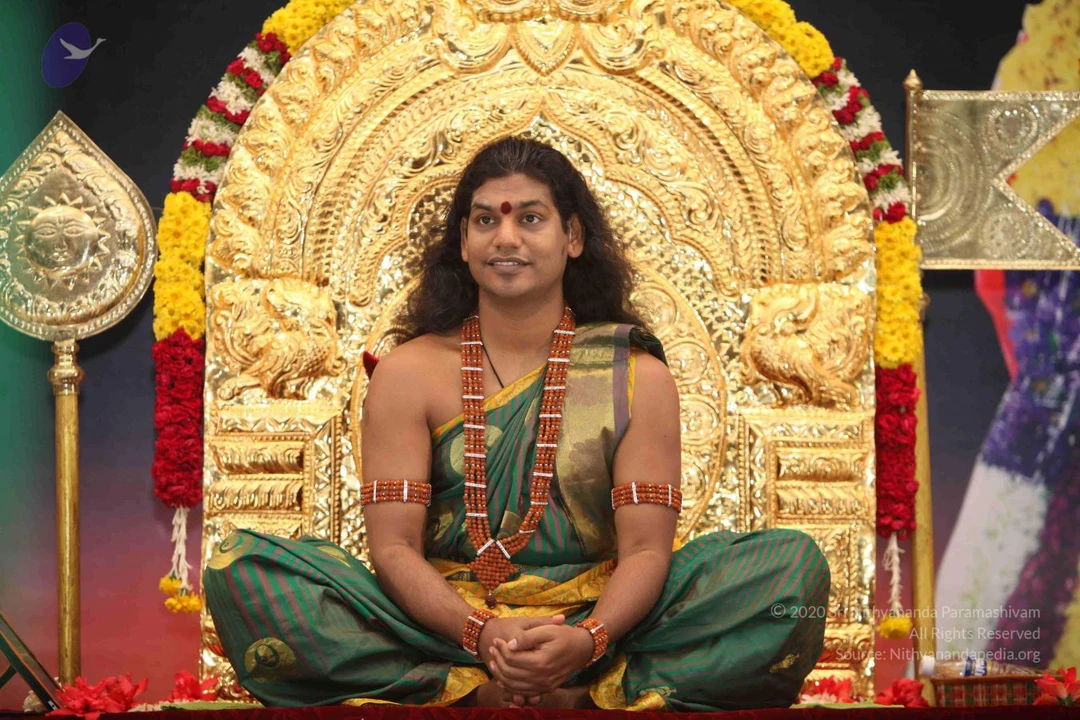
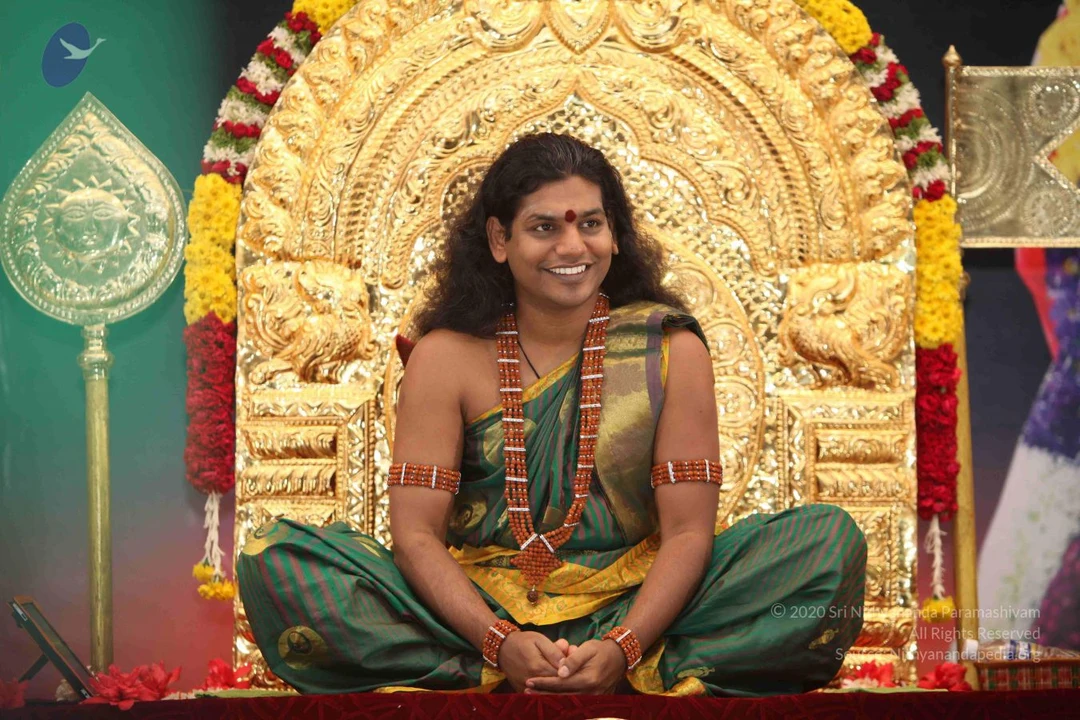
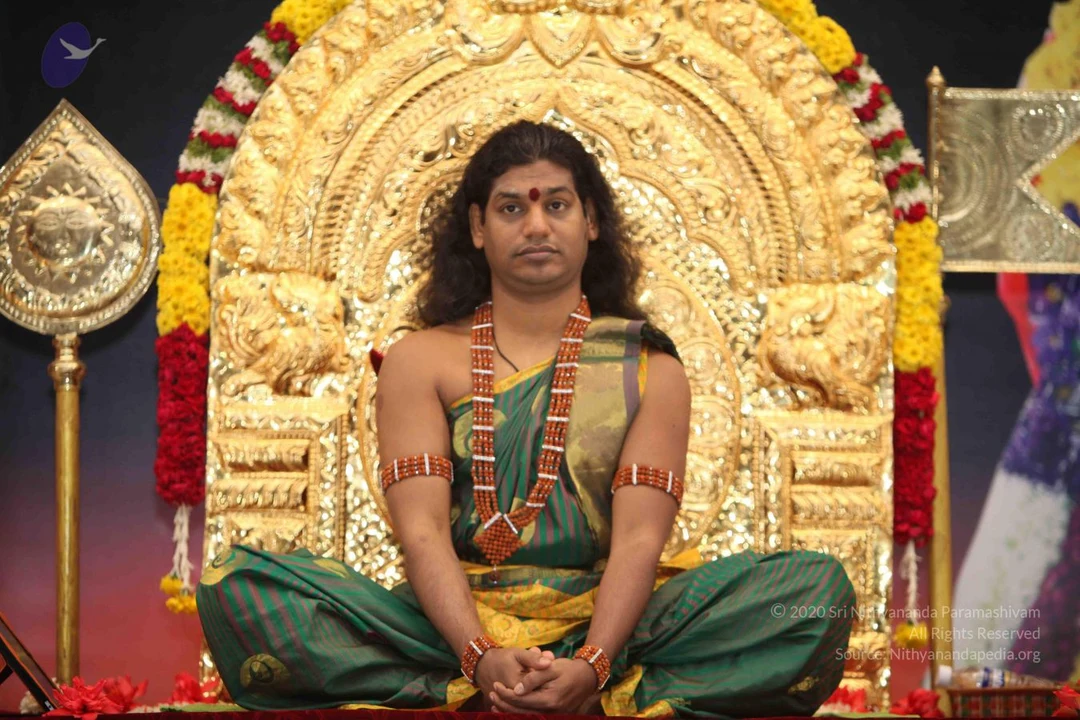
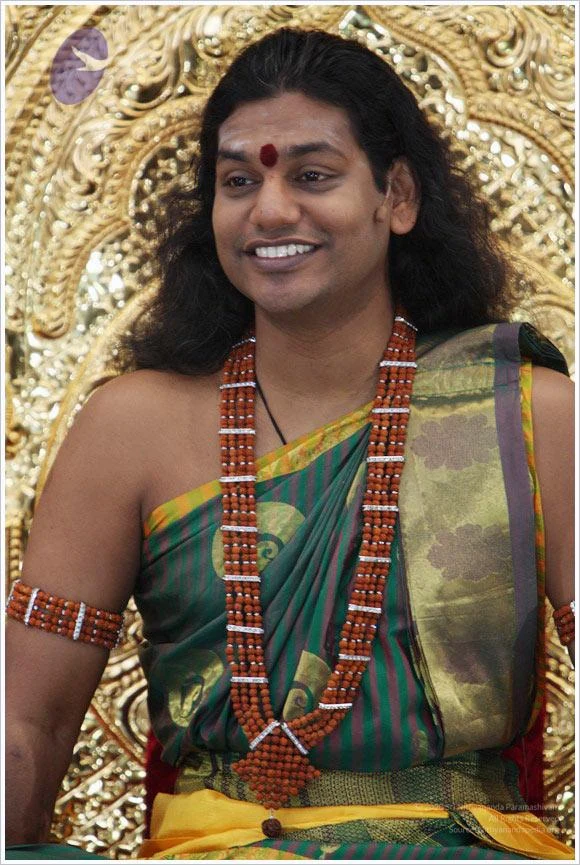
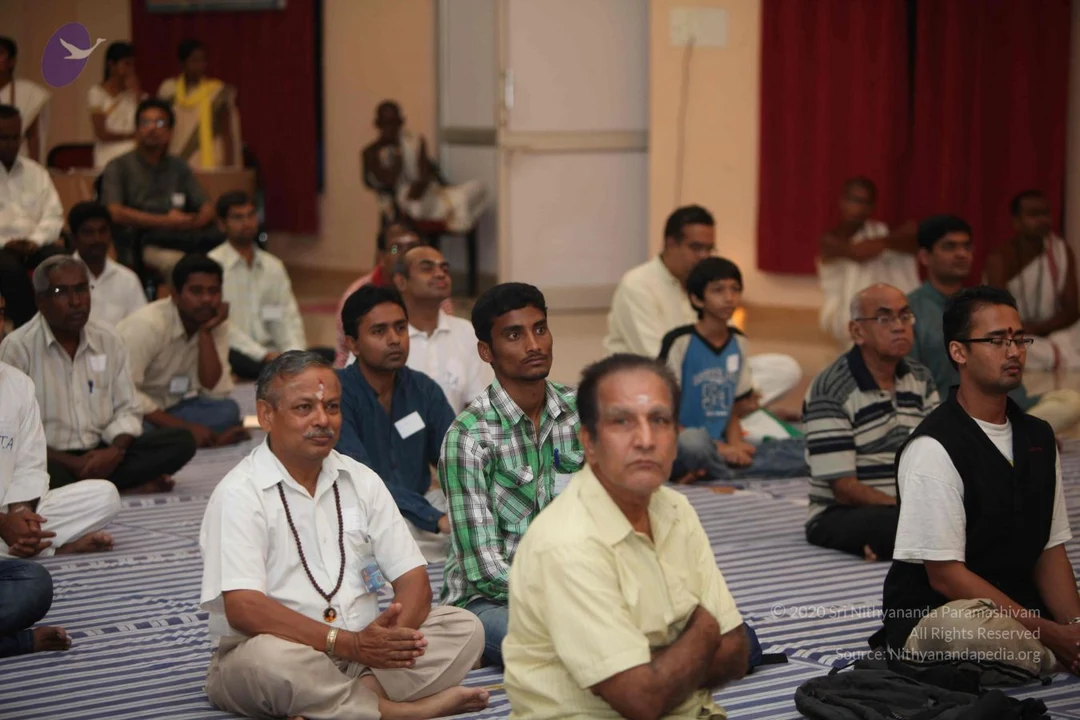
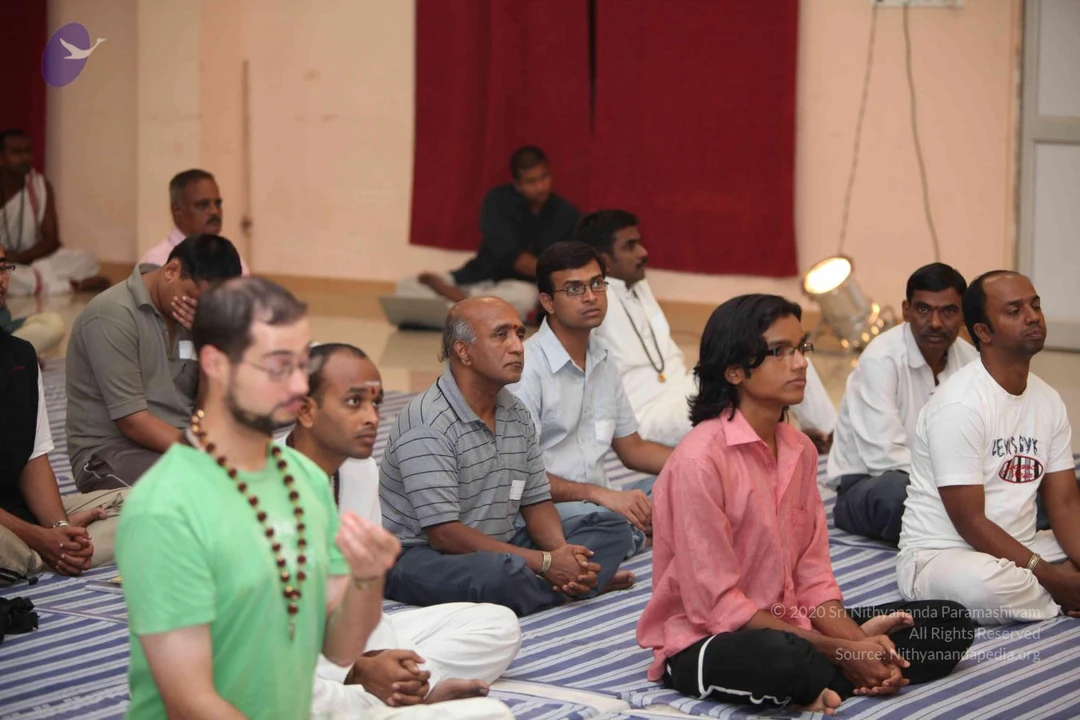
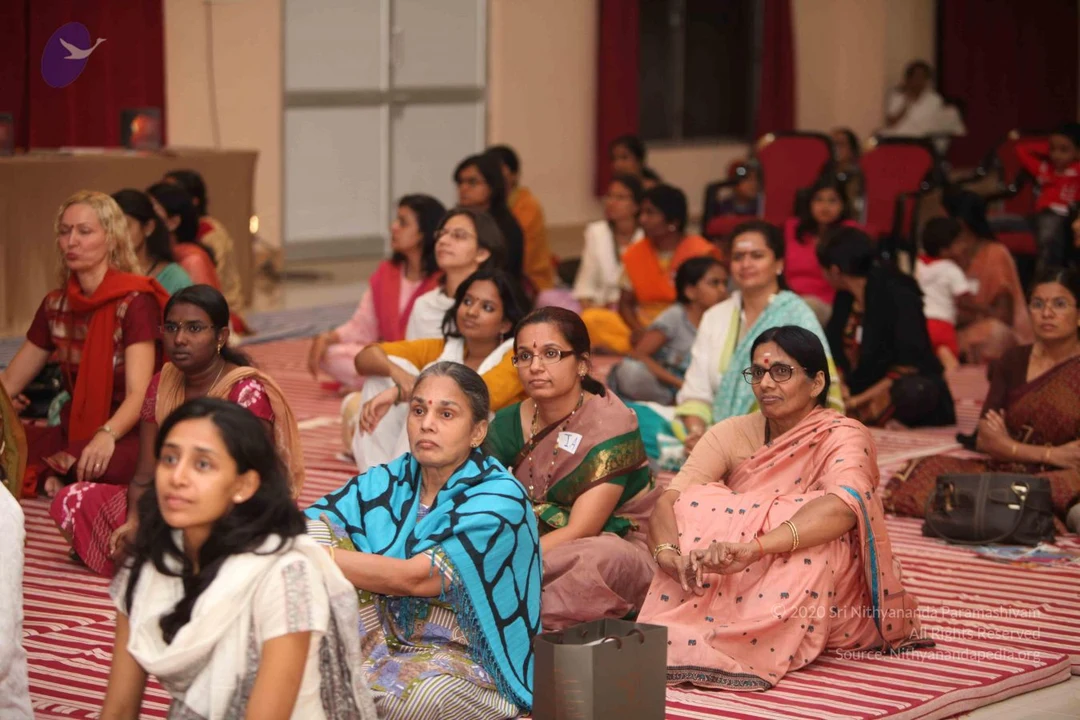
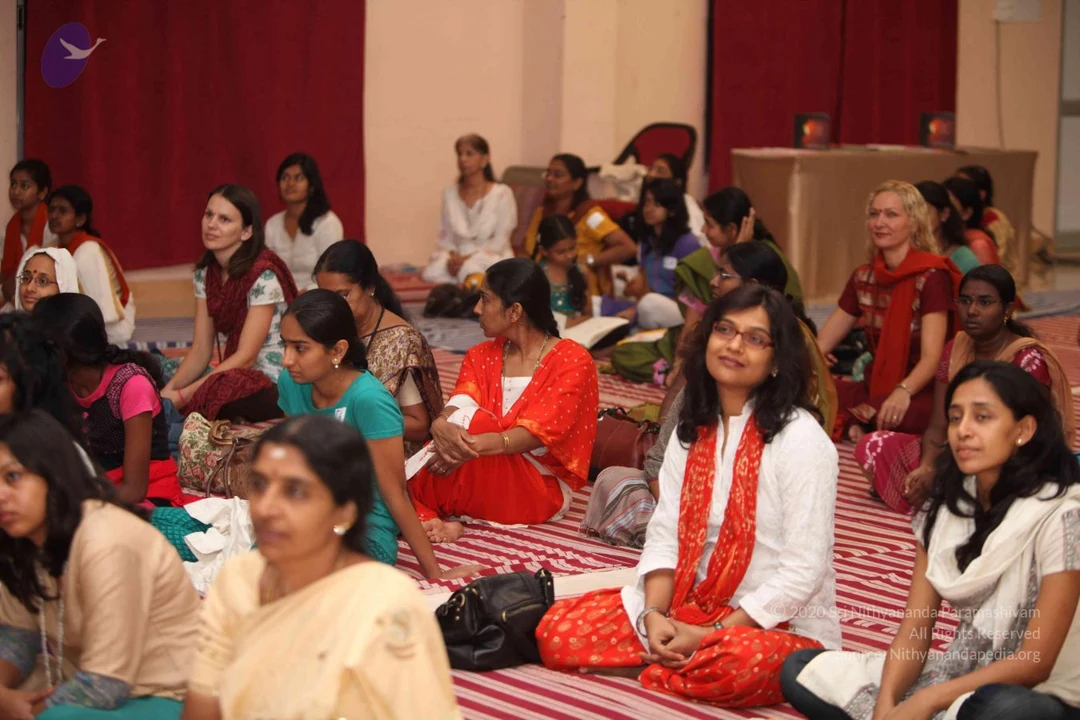
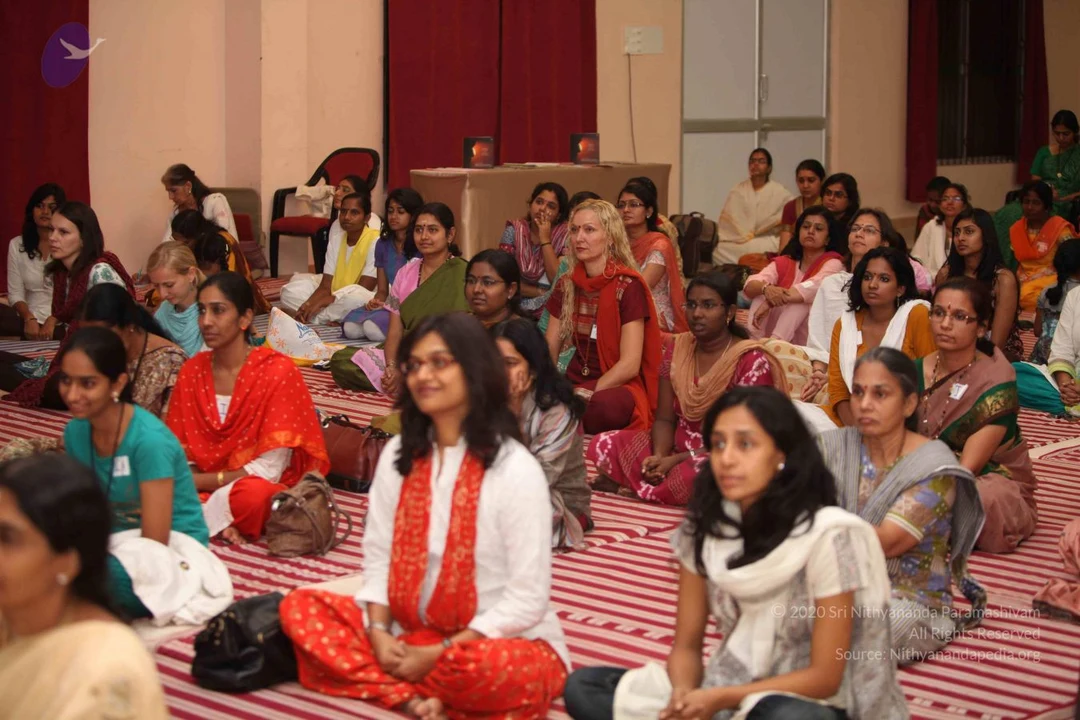
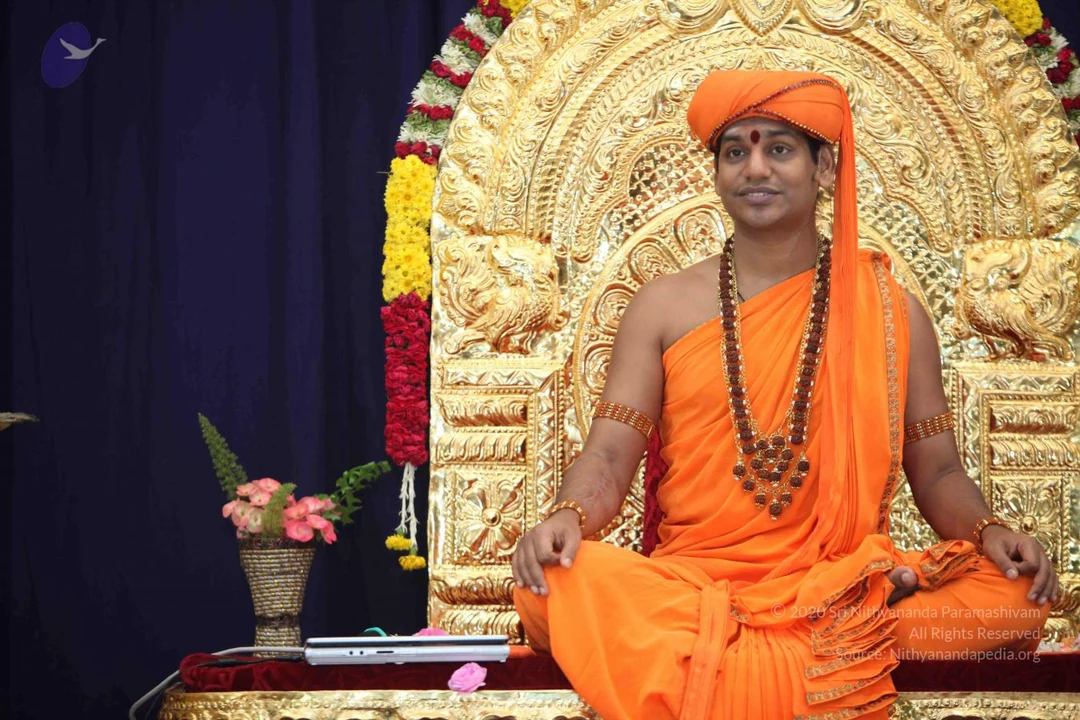
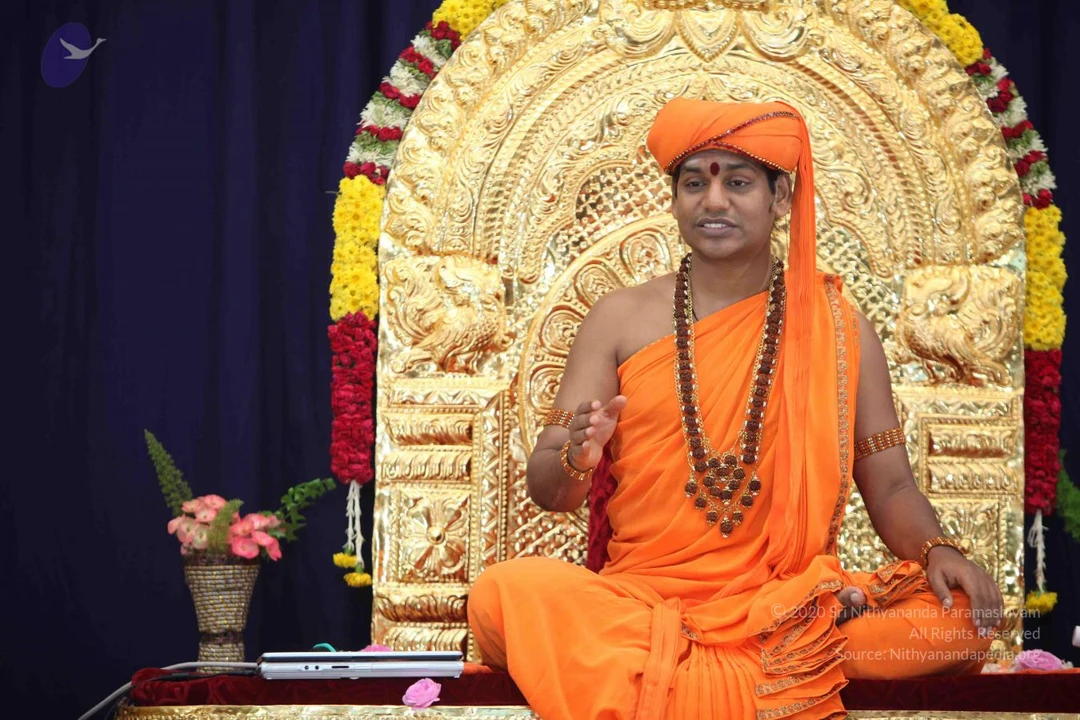
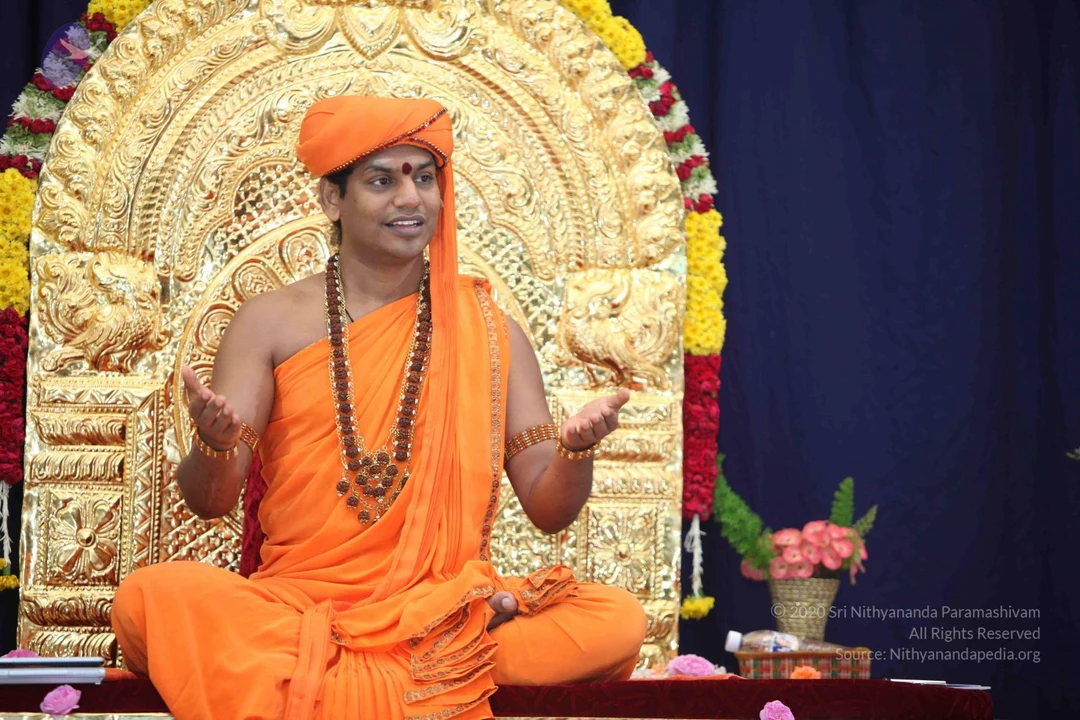
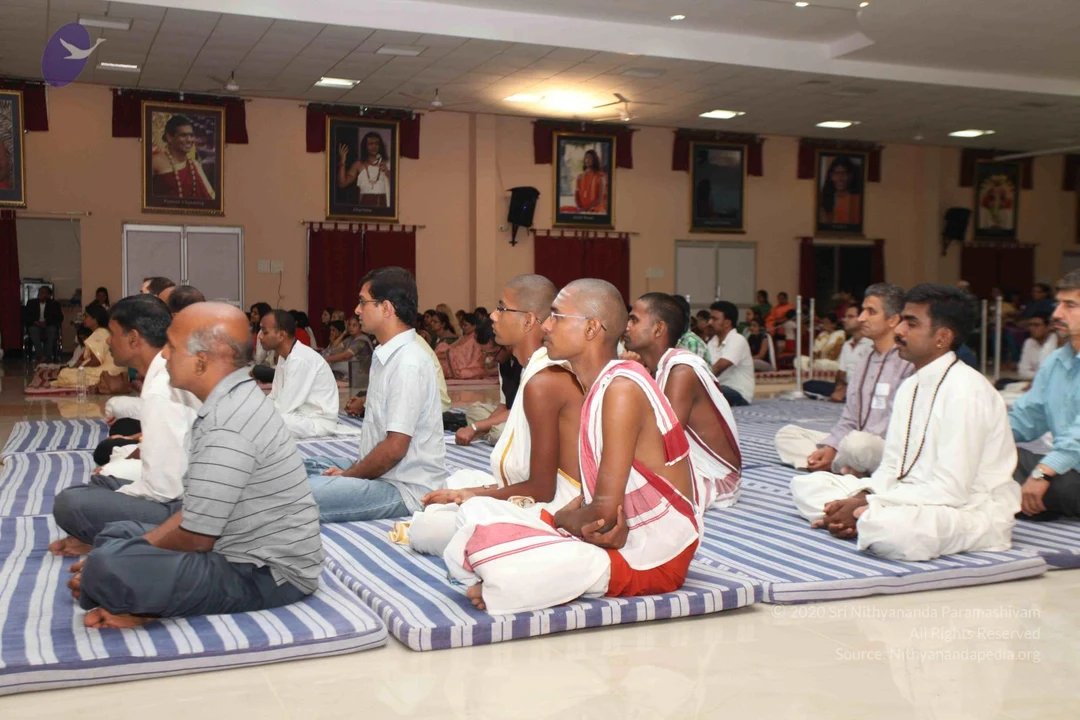
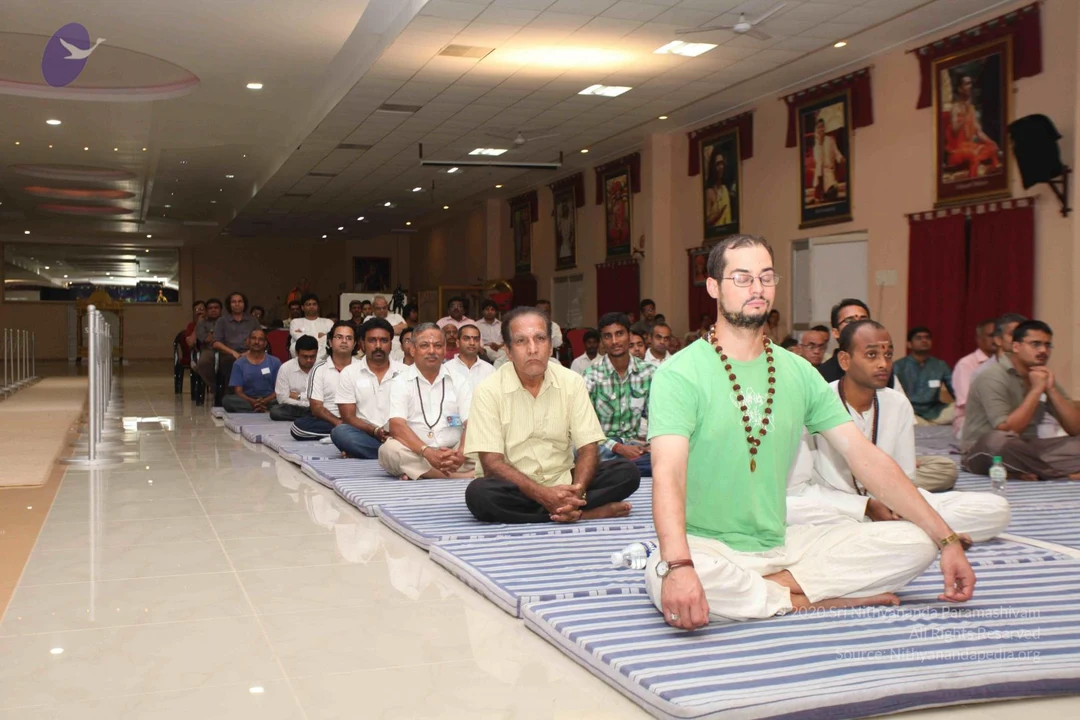
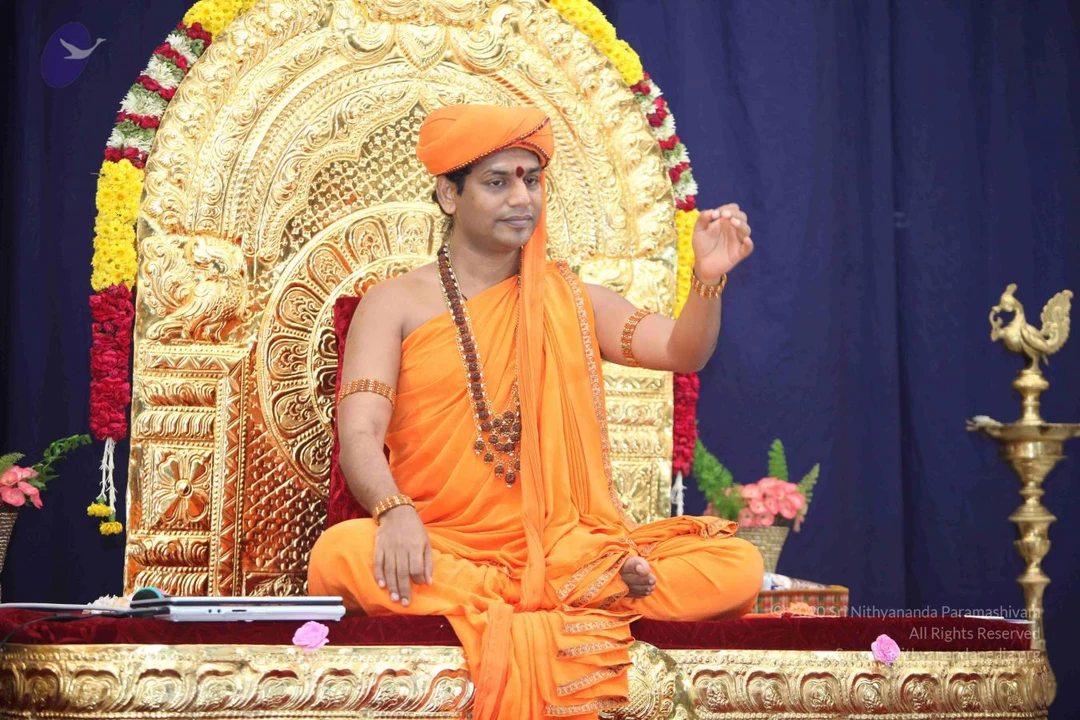
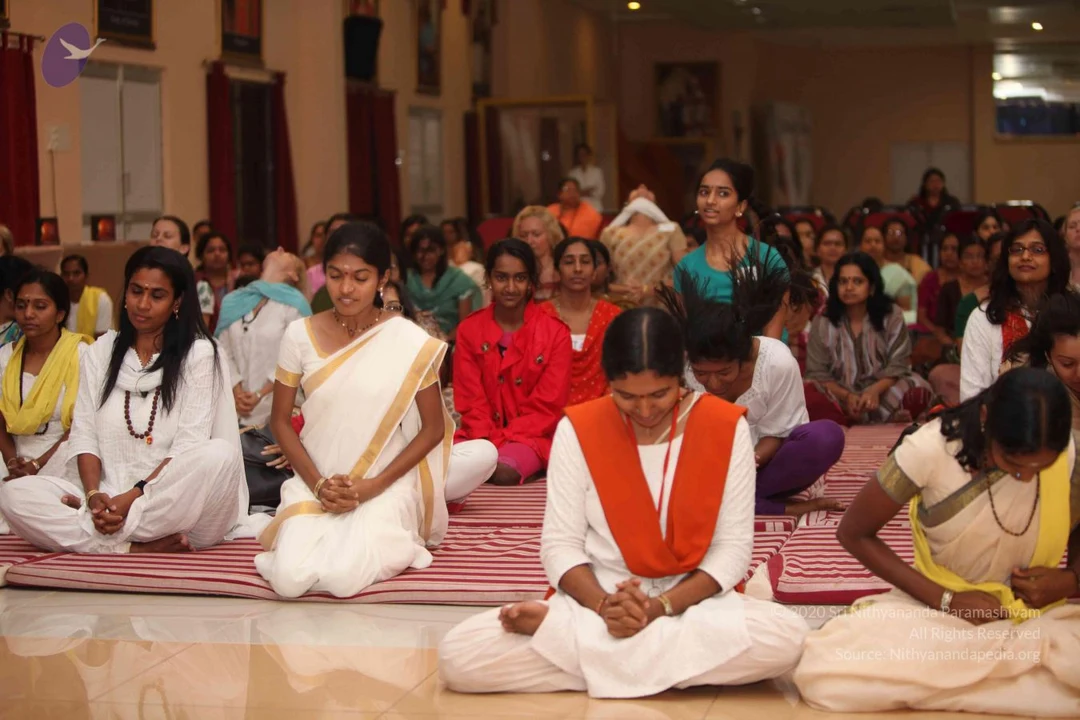
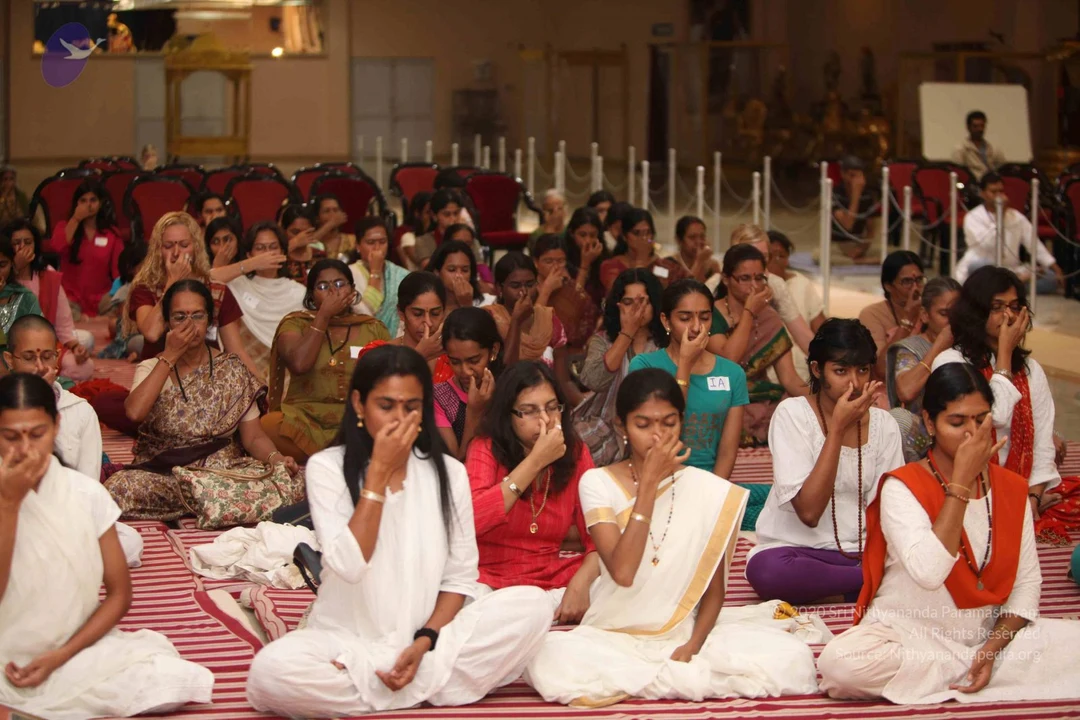
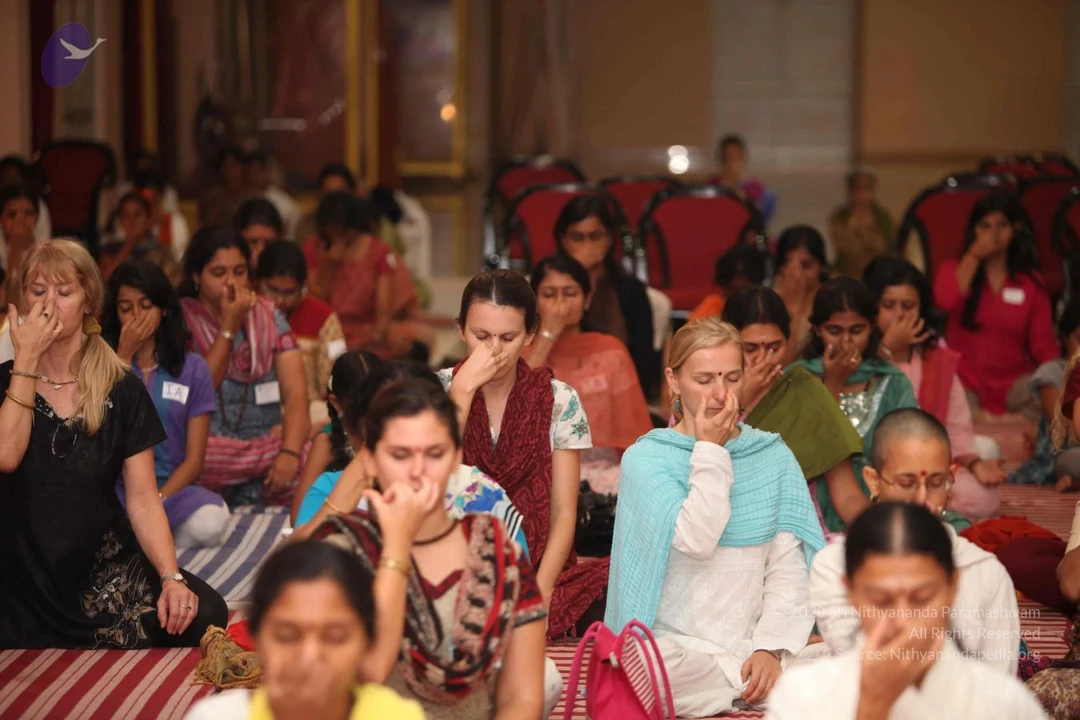
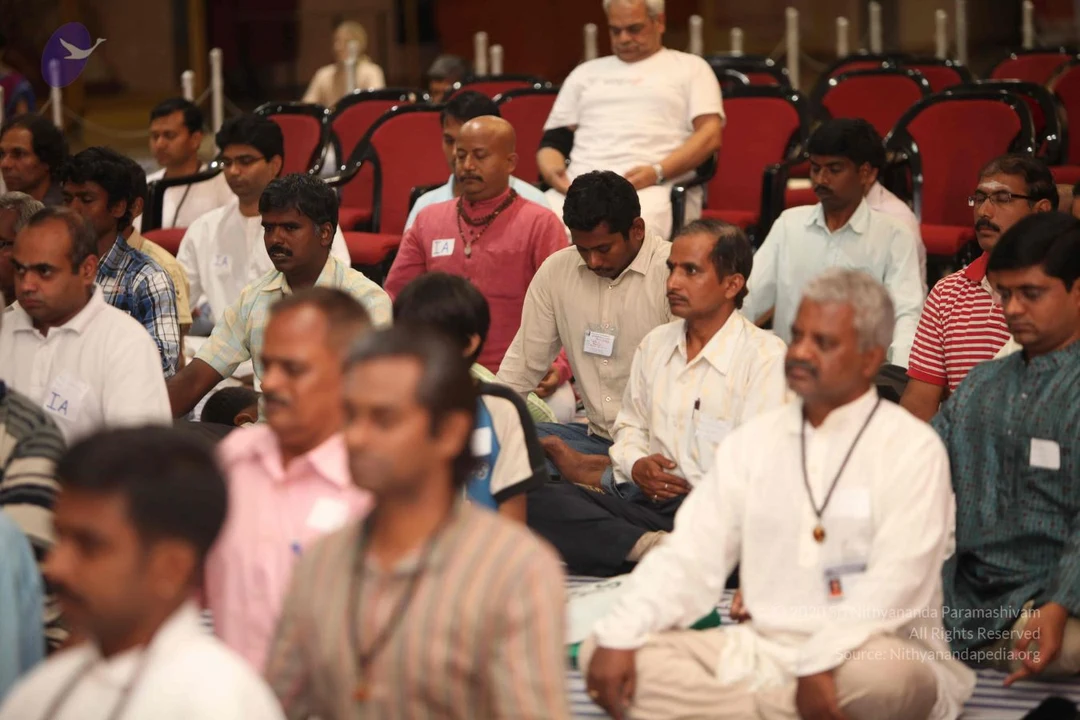
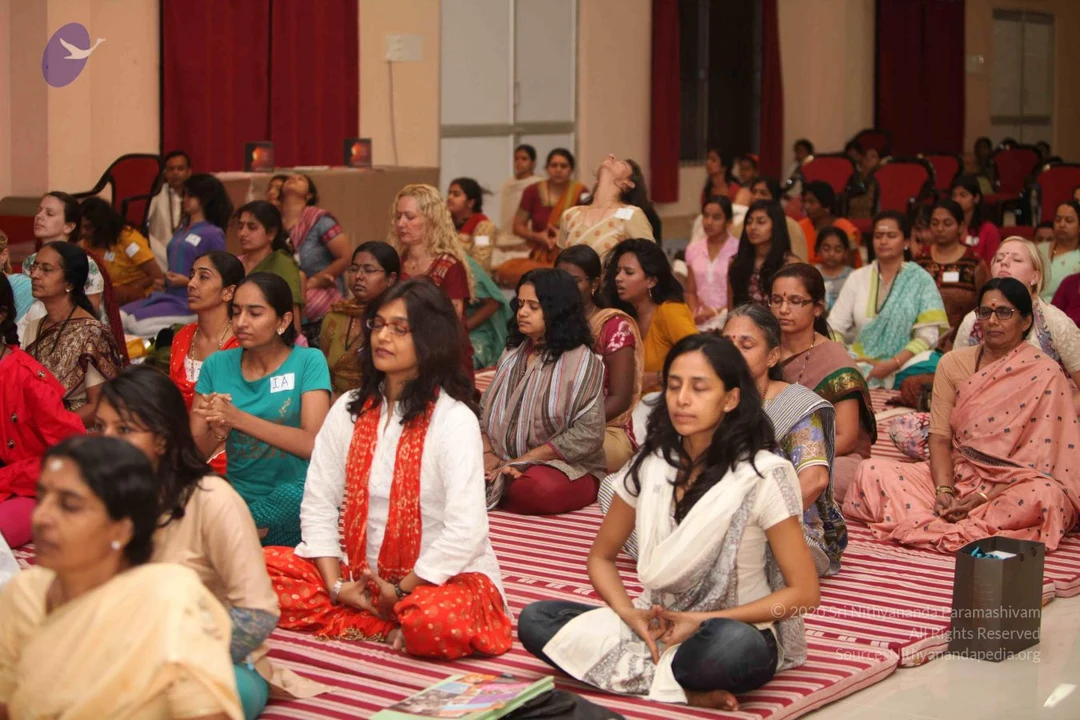
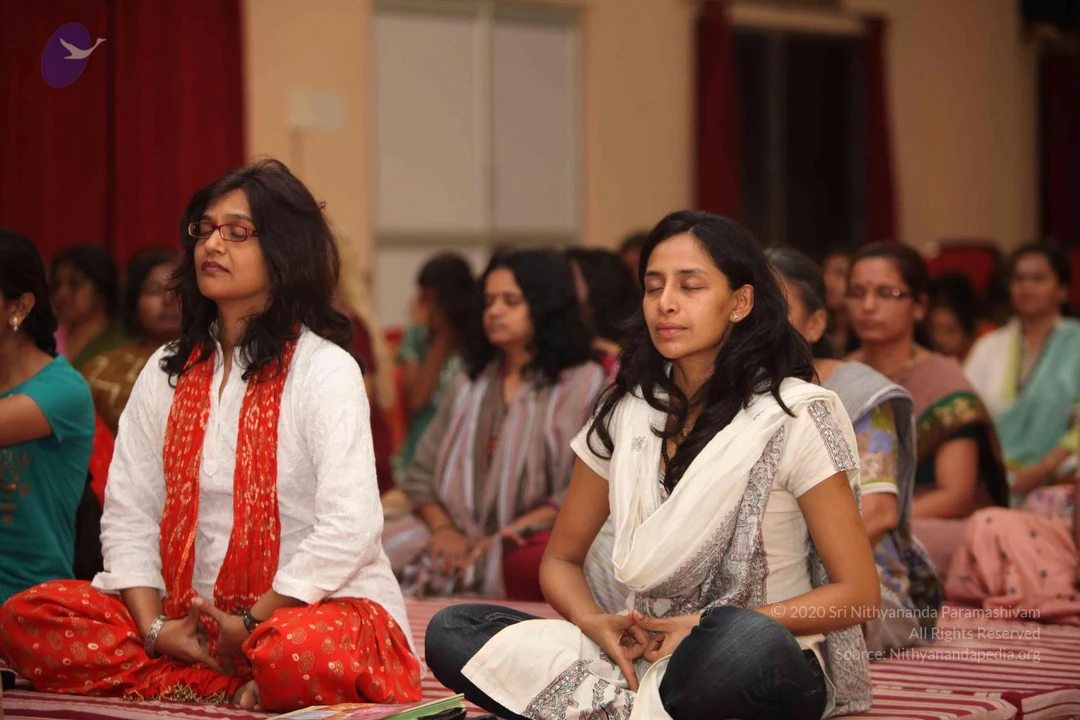
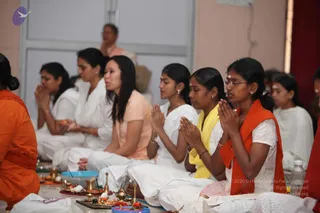
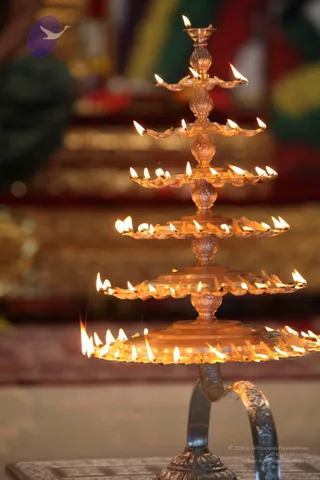
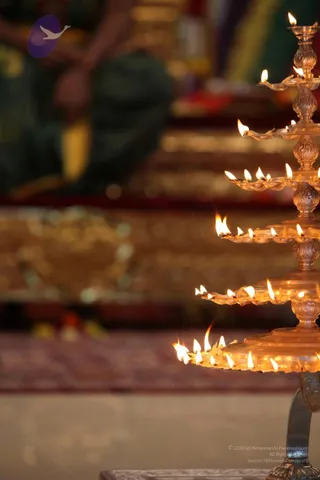
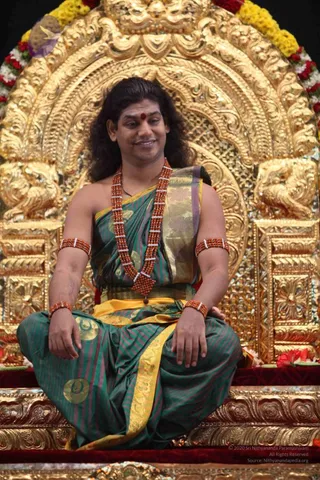
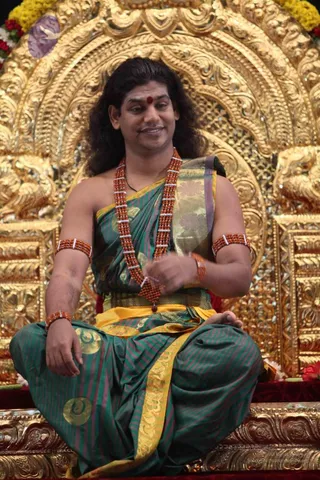
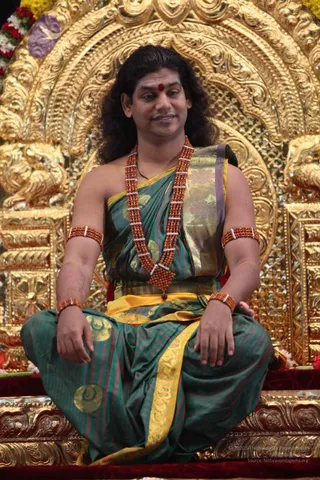
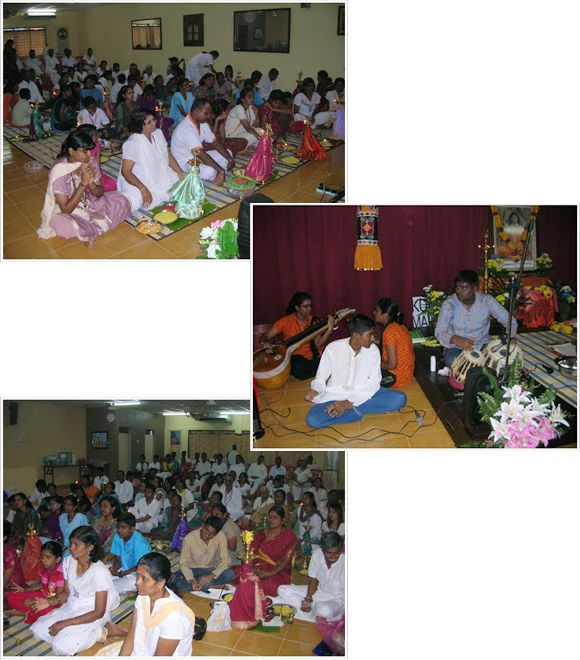
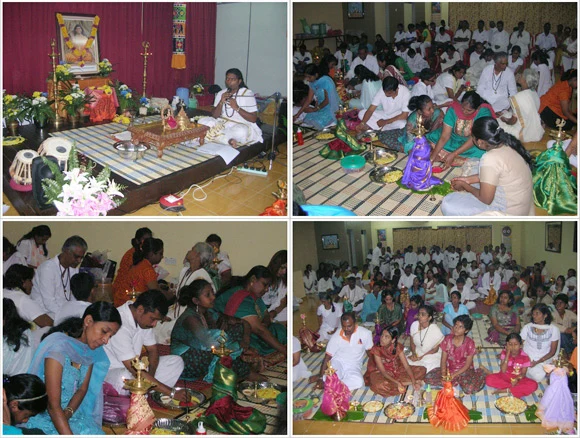
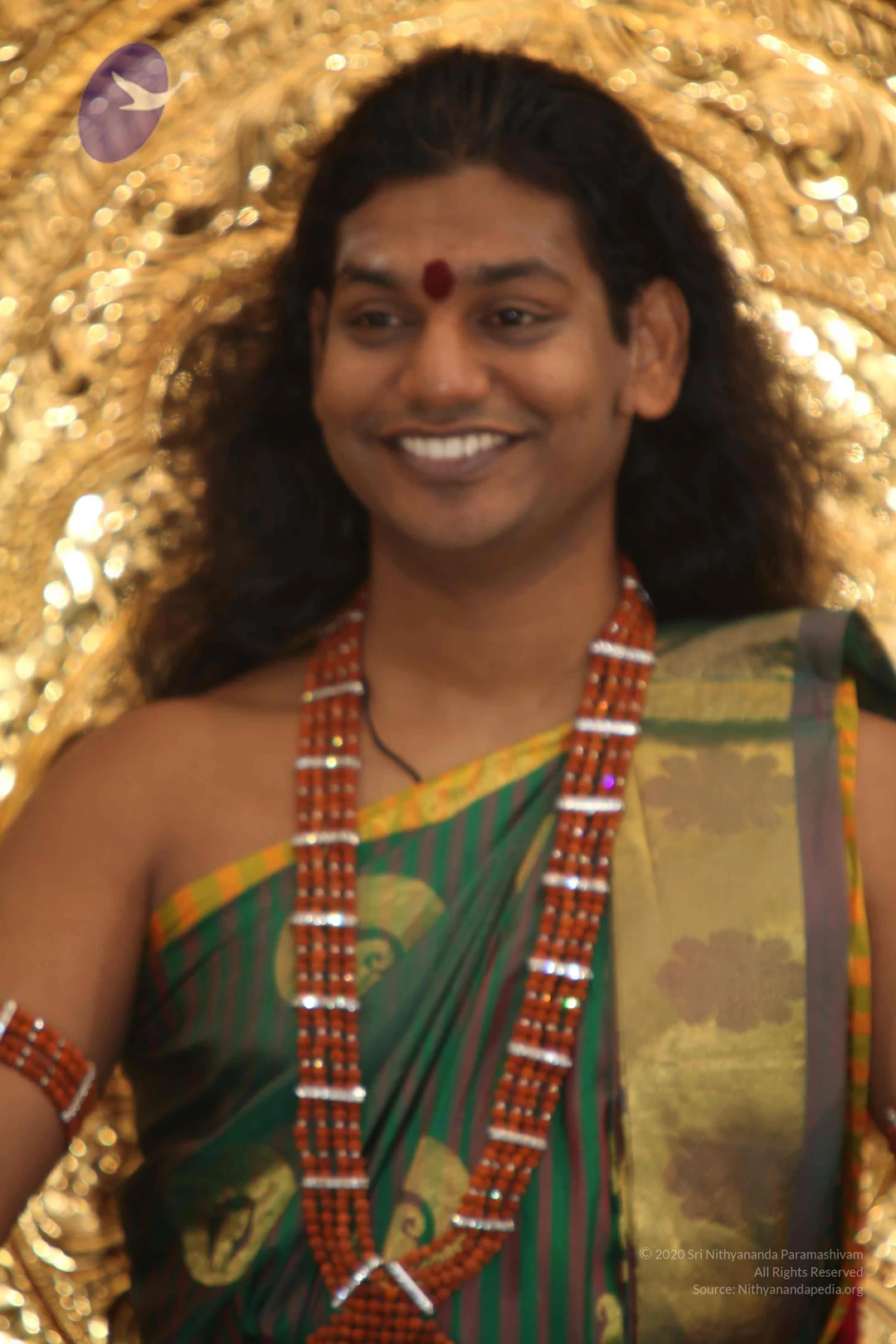
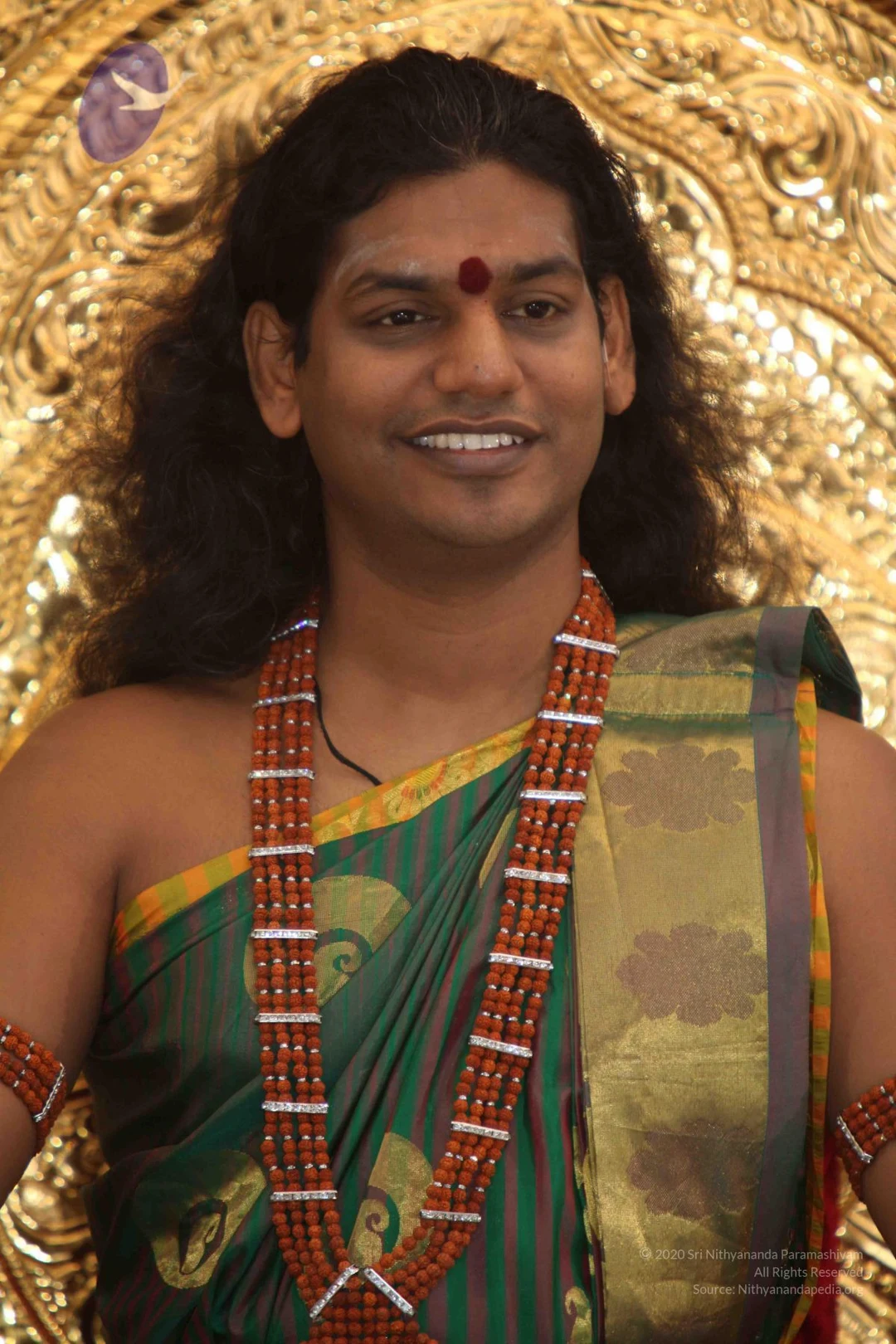
A photograph of a group of people seated on the floor in prayer with palms pressed together in anjali mudra. In the foreground a young woman in white with an orange shawl and glasses, and beside her a woman in a yellow shawl and white dress, face closed eyes; further left a woman in a peach top and a woman in white sit with hands folded. On the left edge a figure in orange robes is partly visible. Before them lie brass lamps, a small kalasha-type vessel, flowers and offering plates on a low tray. Pale pink walls and a white door frame form the background, and a seated person in pink stands out faintly further back. No figure can be confidently identified as a person.A tiered brass lamp stand, called a nilavilakku-style multi-tier lamp, holds many lit oil lamps on five or six circular tiers with ornate turned brass column sections. The lamp rests on a silver-toned footed base with curved ornamented legs. Blurred red, gold and green hangings and a warm interior fill the background. No people are visible.Close-up photograph of a tall tiered brass oil lamp with multiple rows of lit wicks along its shelves, flames glowing against a blurred background of golden ornamentation and a seated figure in green draped cloth. The lamp stands on an ornate base, with a purple bird logo in the upper left. No people are clearly visible in focus.A seated man sits cross-legged on a gilded throne with an ornate golden arched backdrop decorated with carved lions and marigold garlands at the top. He wears a green and purple striped silk garment with gold borders and a yellow waist sash, along with a long rudraksha mala with silver spacers, rudraksha armbands and bracelets. A red bindi marks his forehead and he has long swept-back dark hair. The appearance matches the Swamiji (probable) cues of long hair, rudraksha malas and ornate ceremonial clothing, seated on a throne.A man sits cross-legged on an ornate golden throne with intricately carved gold arches and floral motifs behind him, decorated with yellow and red flower garlands at the top. He wears a green and gold striped silk garment draped over one shoulder, with a yellow waist sash, and multiple strands of orange rudraksha beads with white spacers around his neck, plus matching rudraksha armlets and a wrist bead. A red bindi marks his forehead, and his long dark hair falls past his shoulders. He gestures with one hand while speaking and smiles. Appearance-based candidate: a person, seated on the throne in front of a golden backdrop.A seated man with long dark swept-back hair and a red bindi sits cross-legged on an ornate gilded throne with carved arched backrest. He wears a green and purple striped silk garment with gold-bordered yellow waist cloth, multiple strands of rudraksha mala with silver spacers across his chest, and matching rudraksha armbands and wrist bands. Probable Swamiji by appearance cues: long swept-back hair, rudraksha malas and ornate ceremonial clothing on a throne. Flowers and a purple emblem appear at the upper left of the throne backdrop.

Nithya-Kriya

18 photosSource gallery
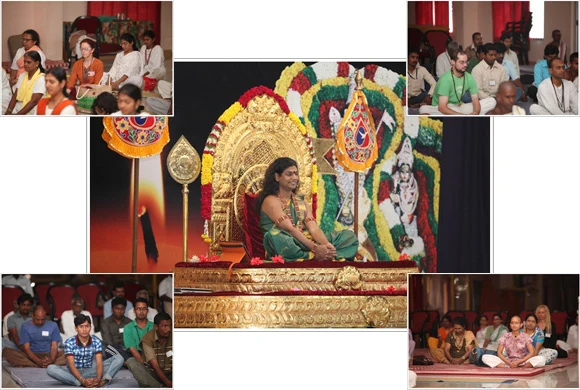
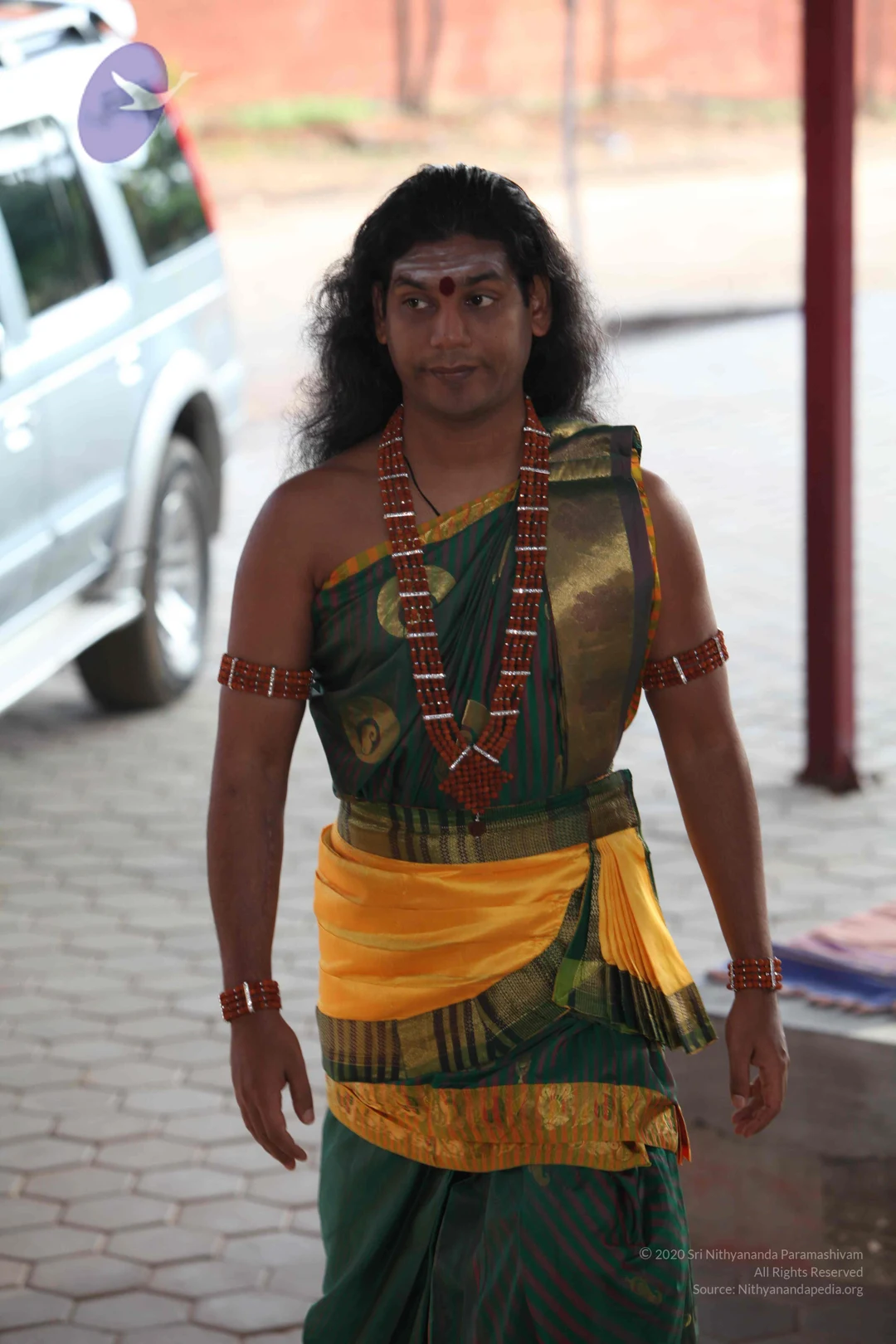
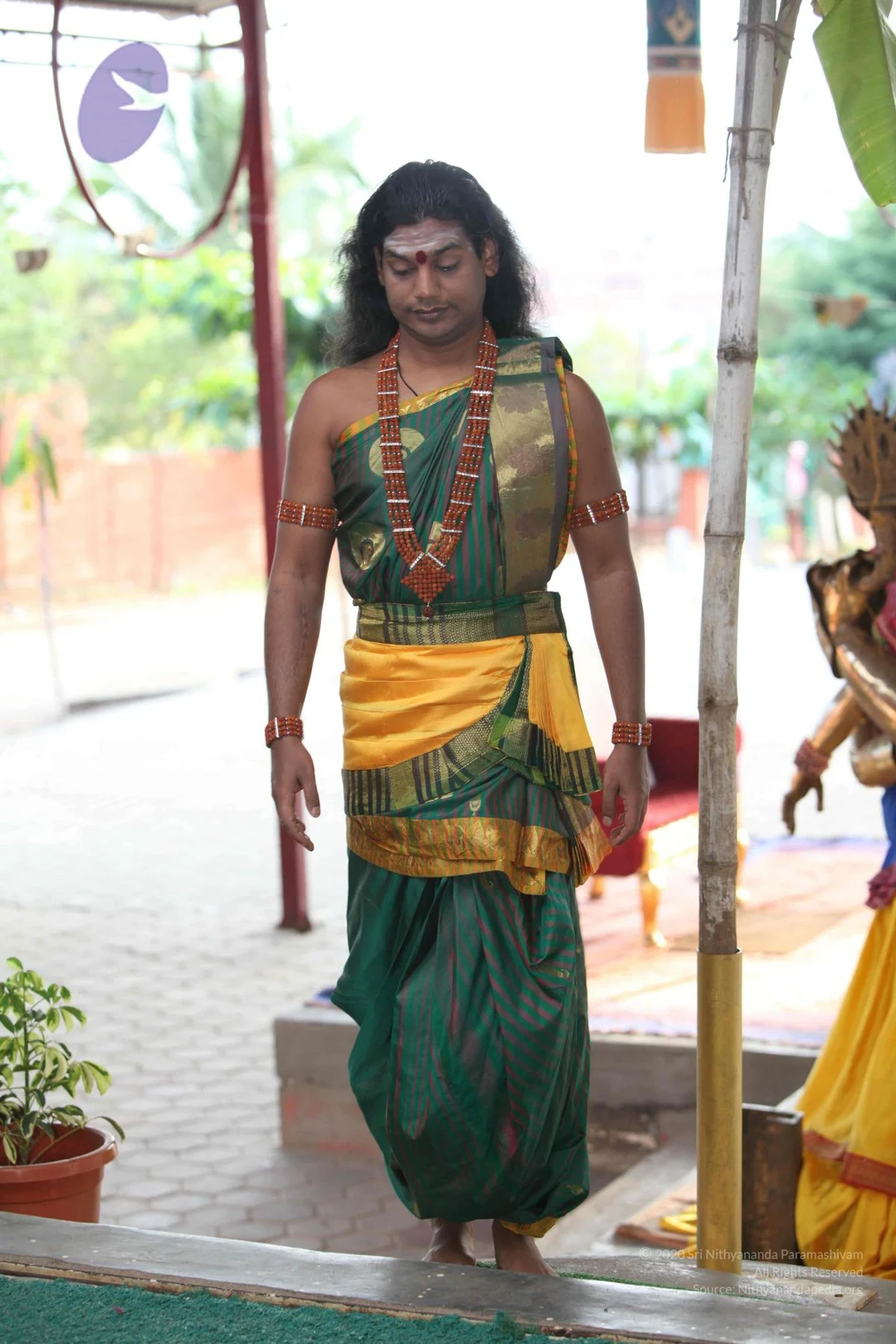
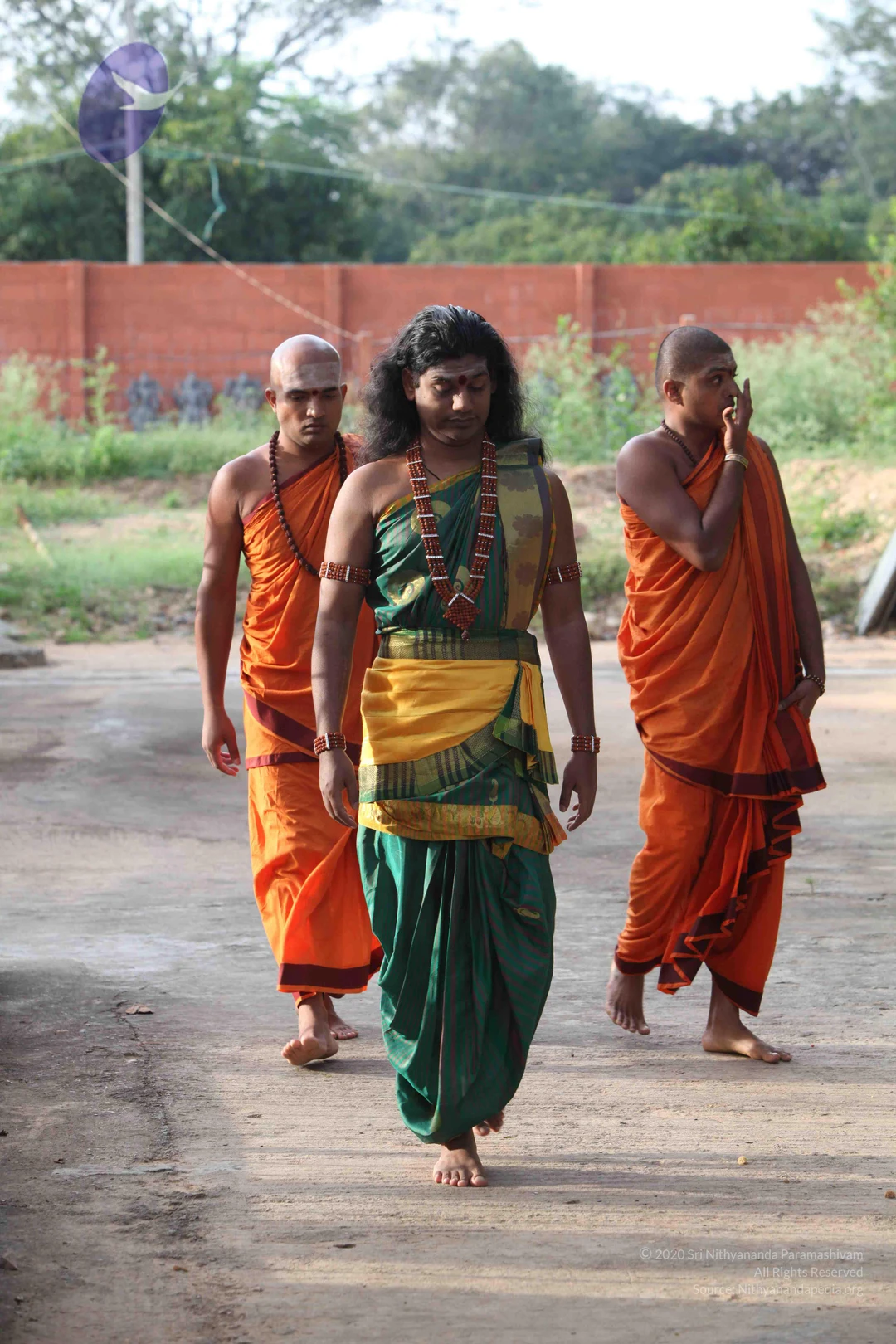
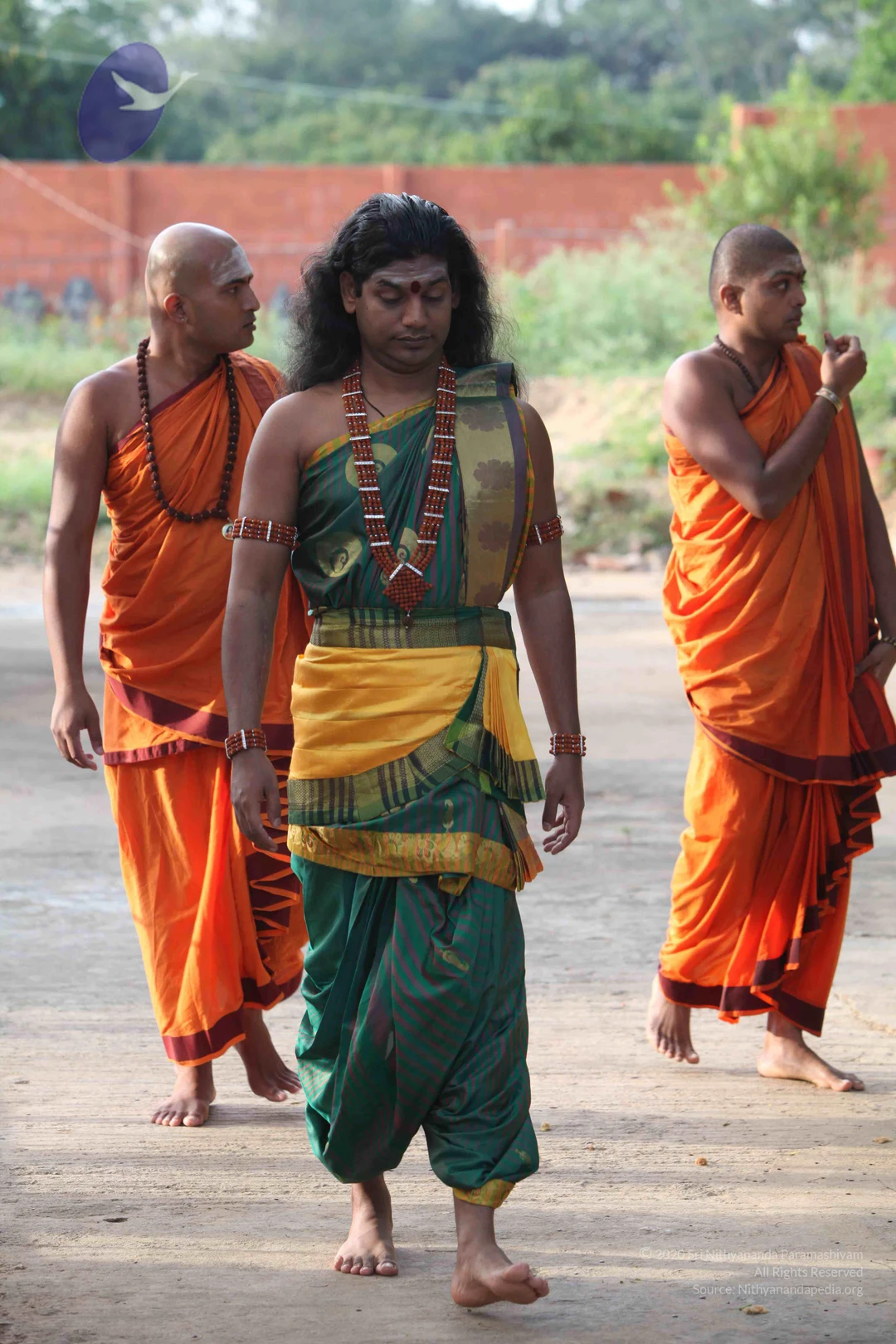
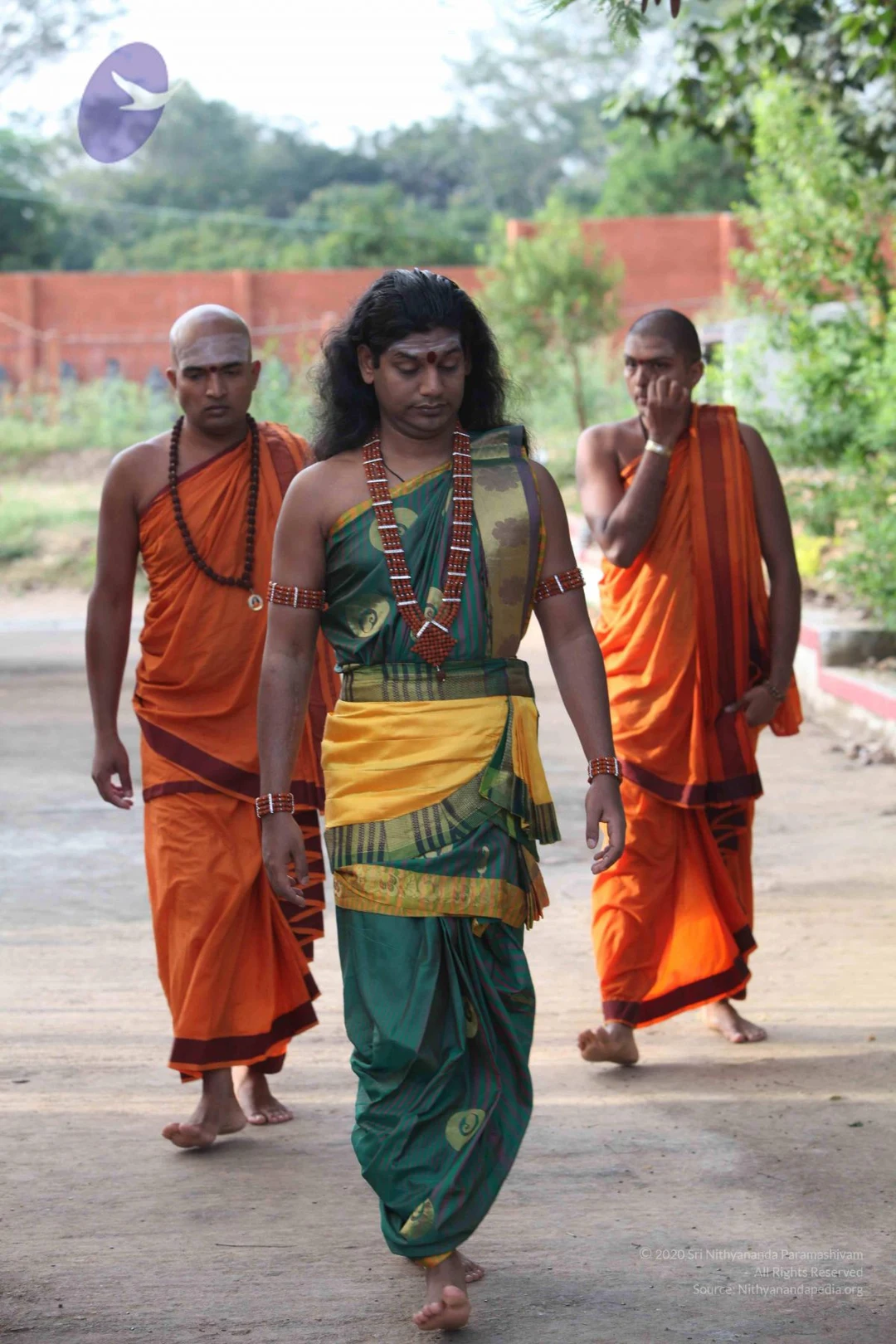
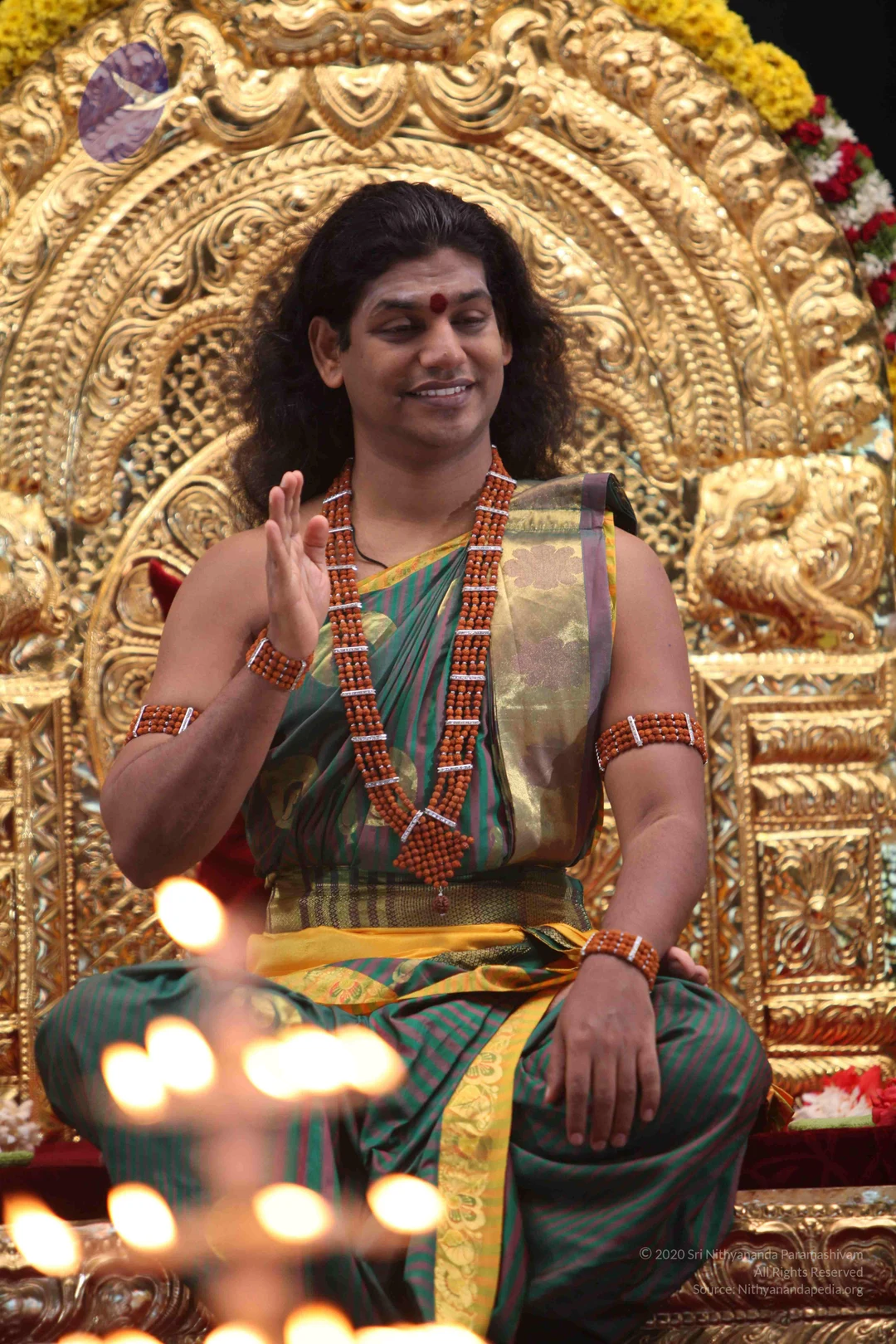
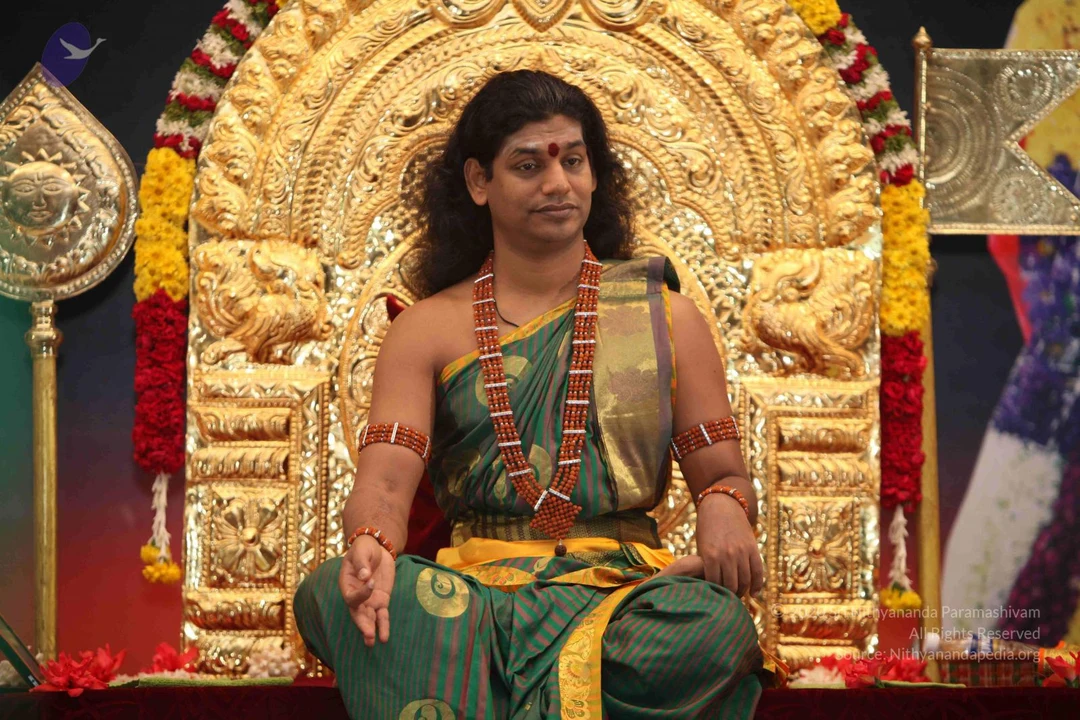
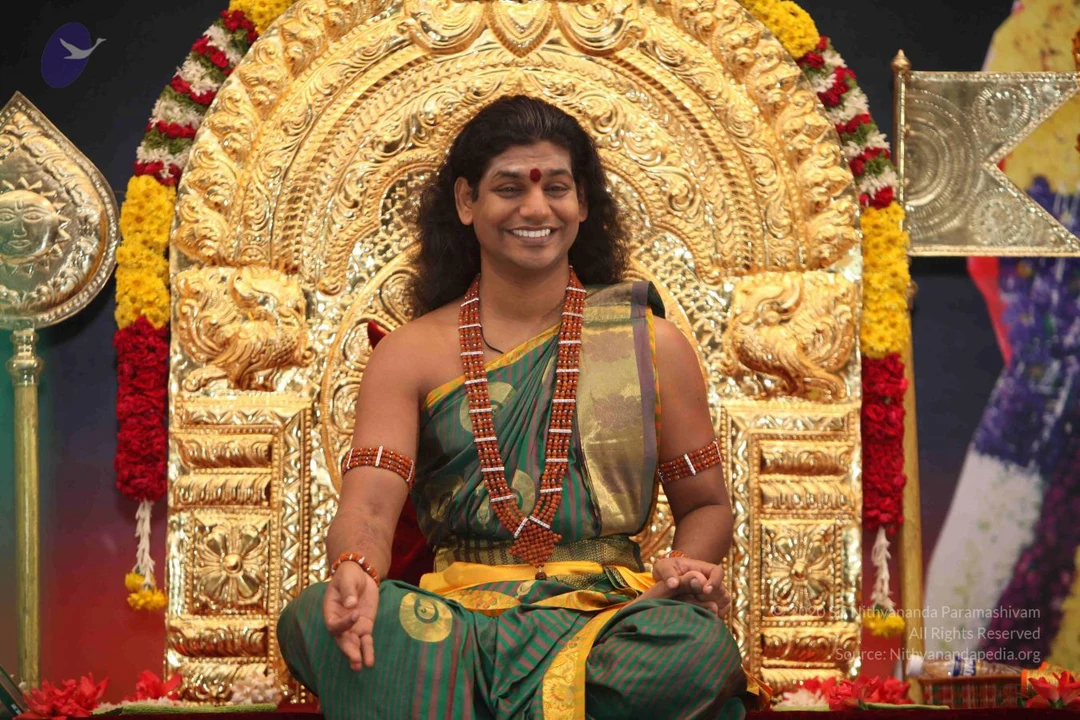
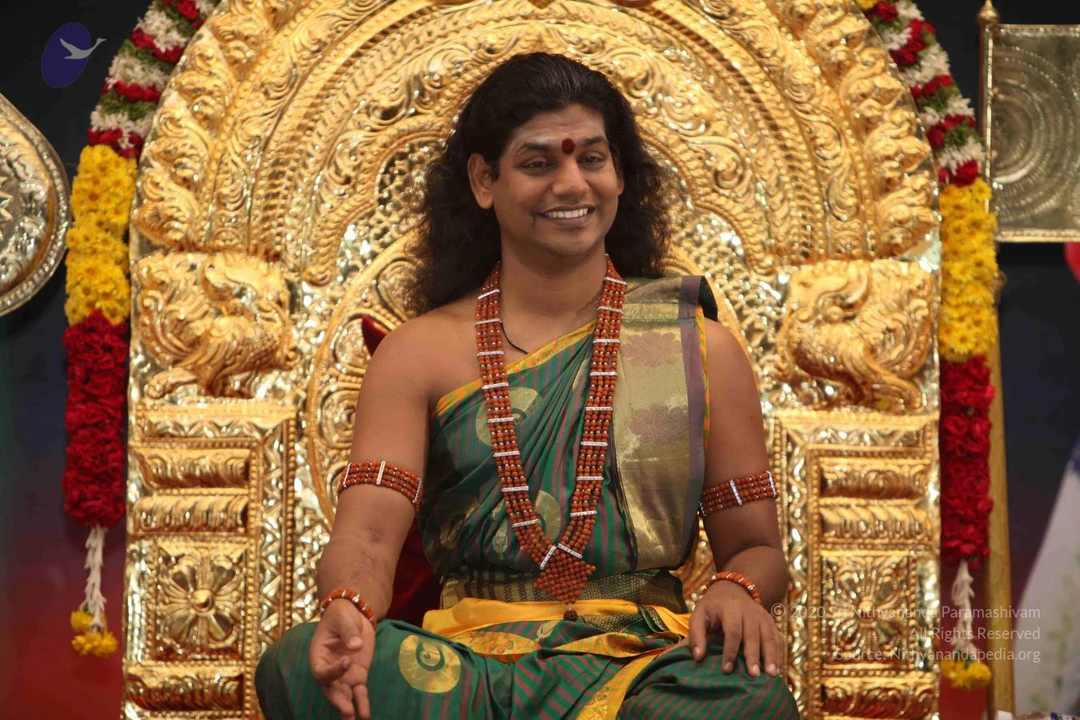
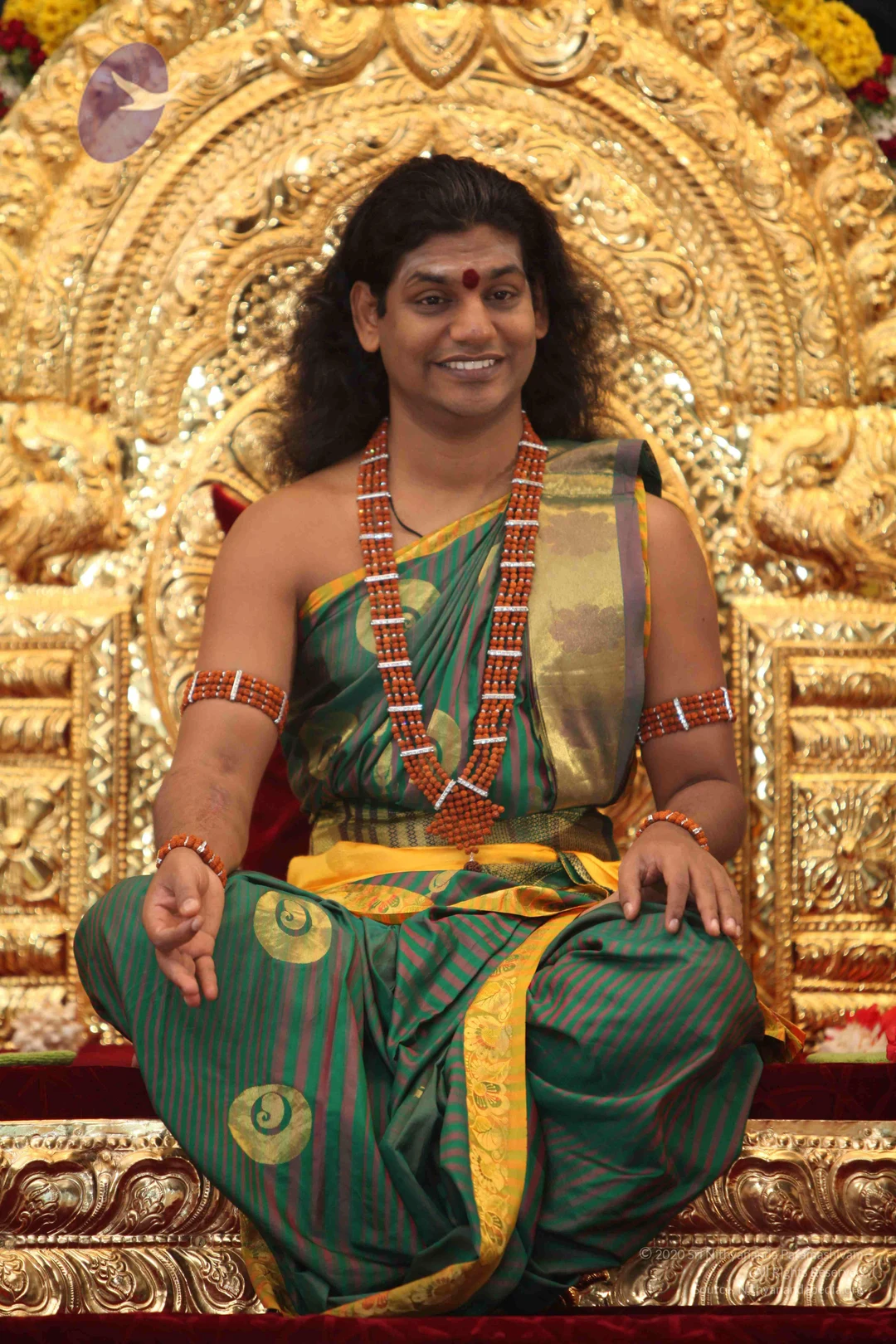
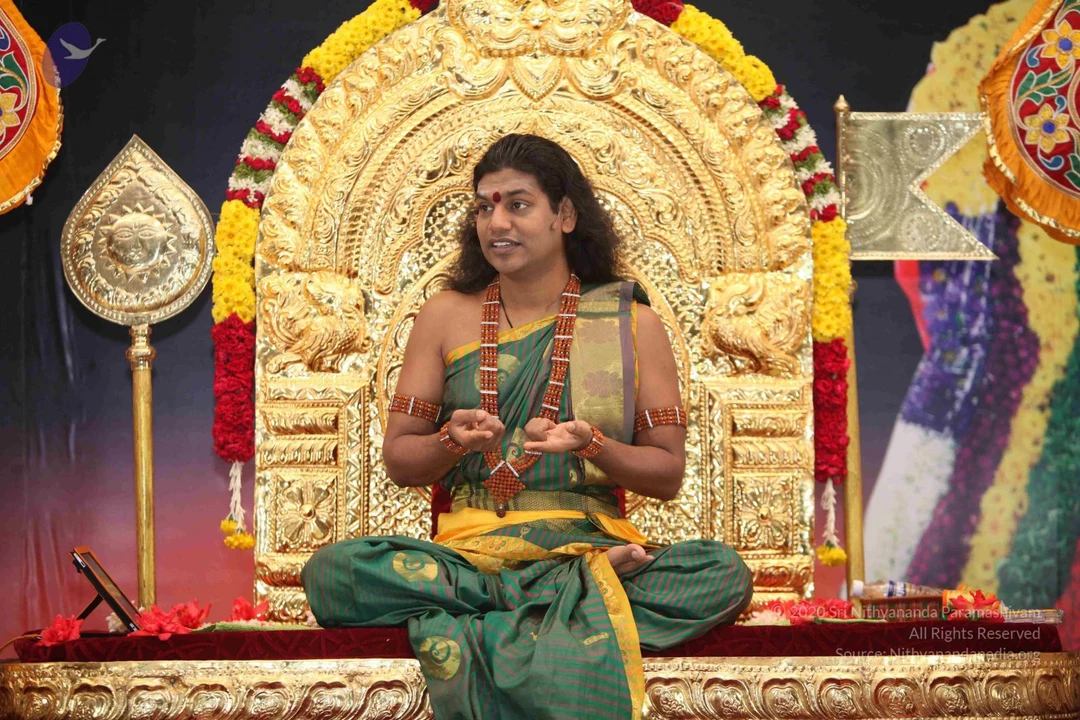
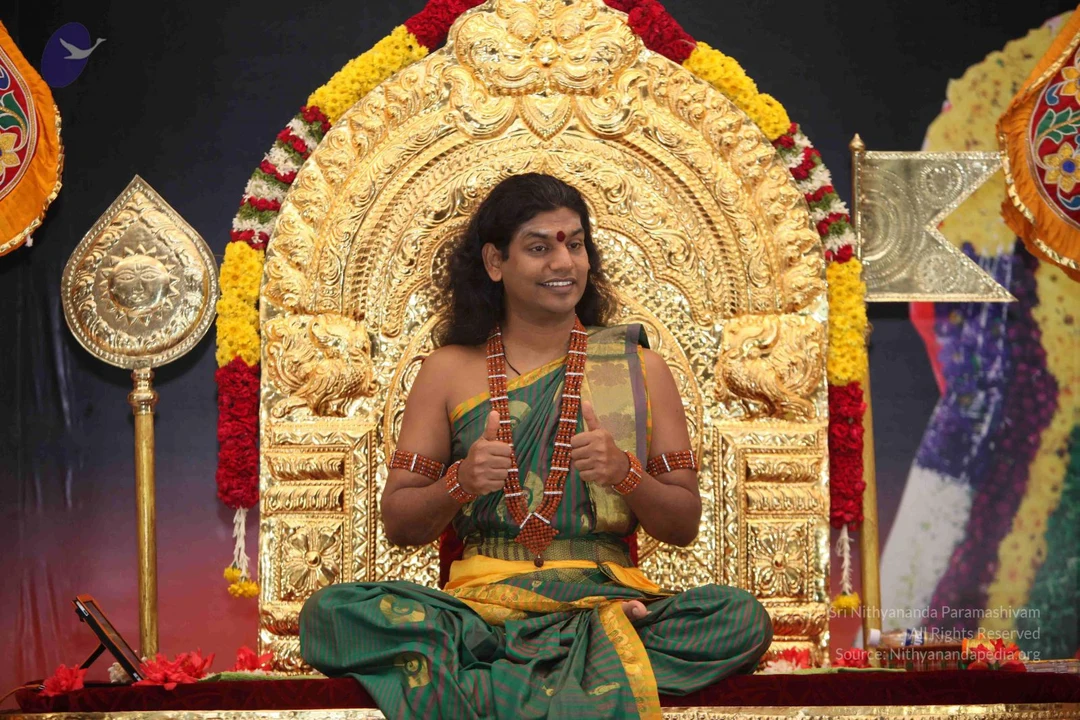
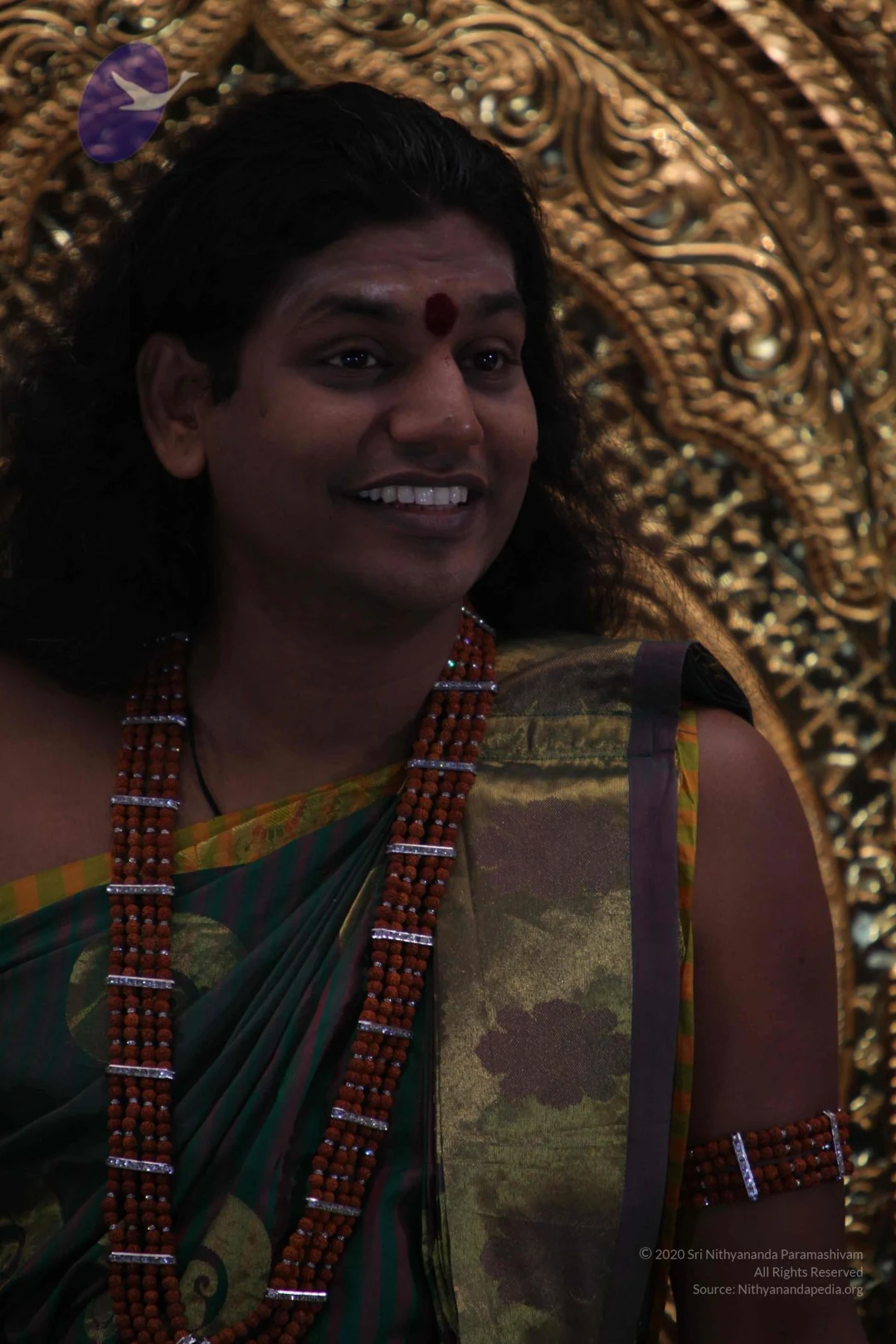
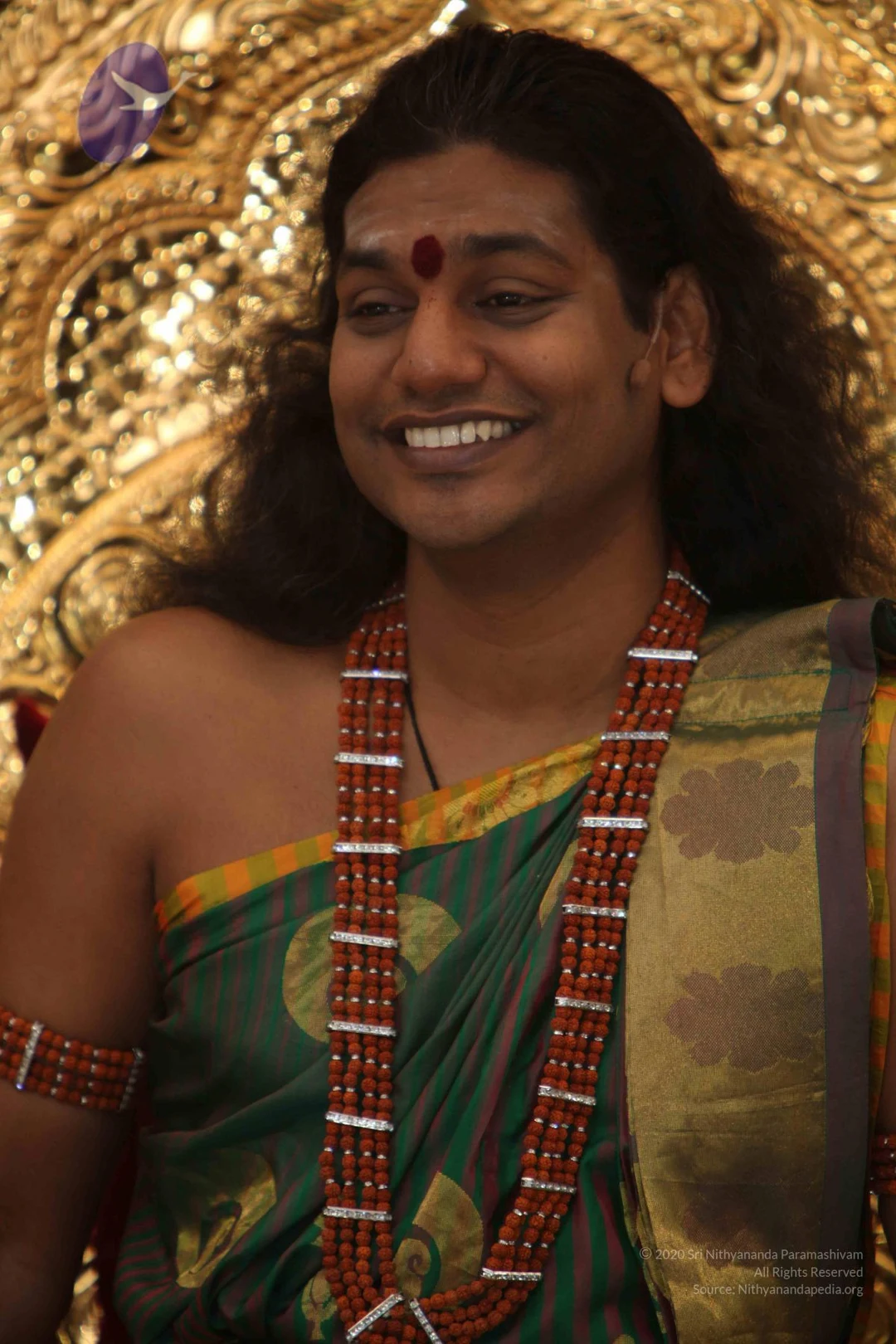
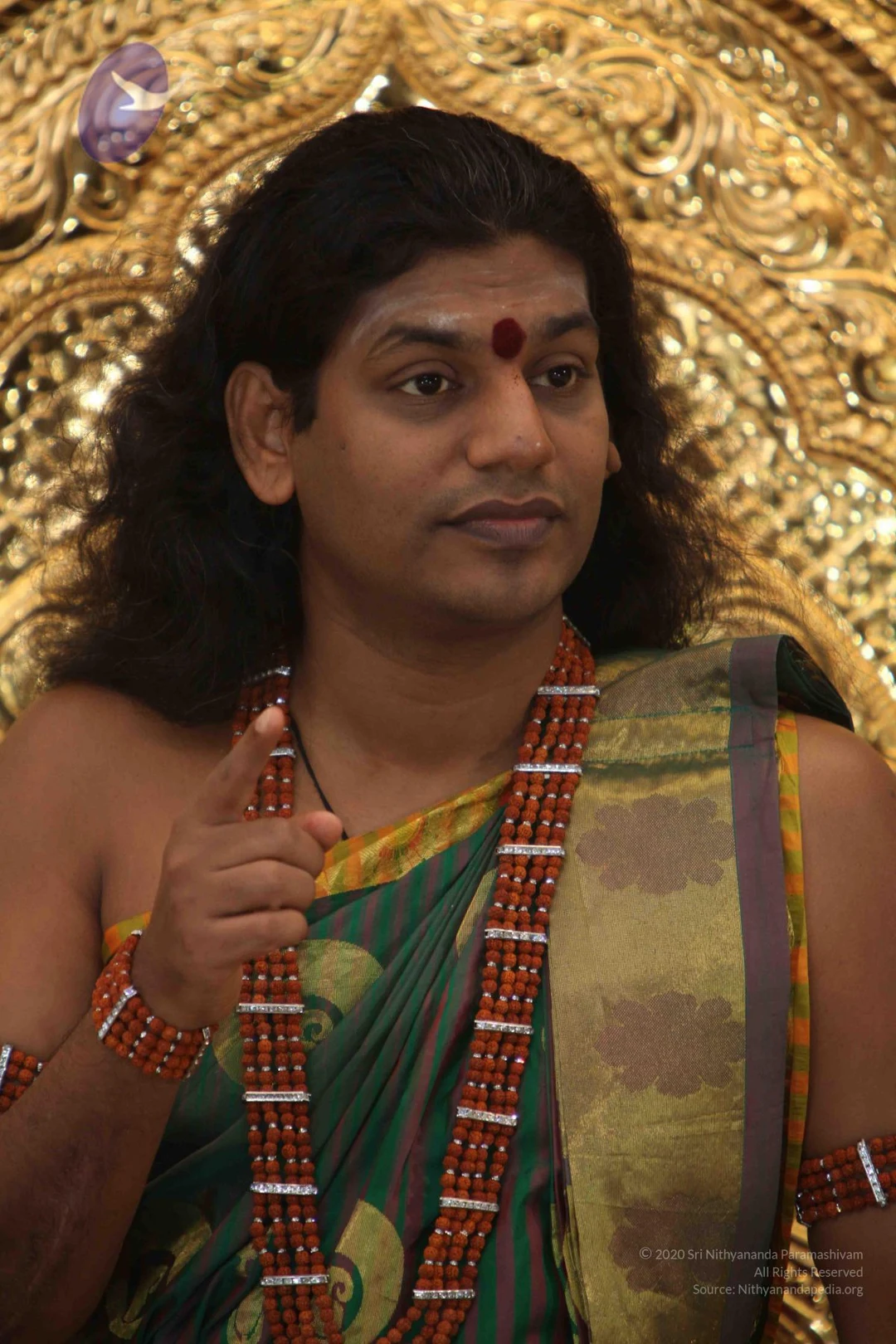
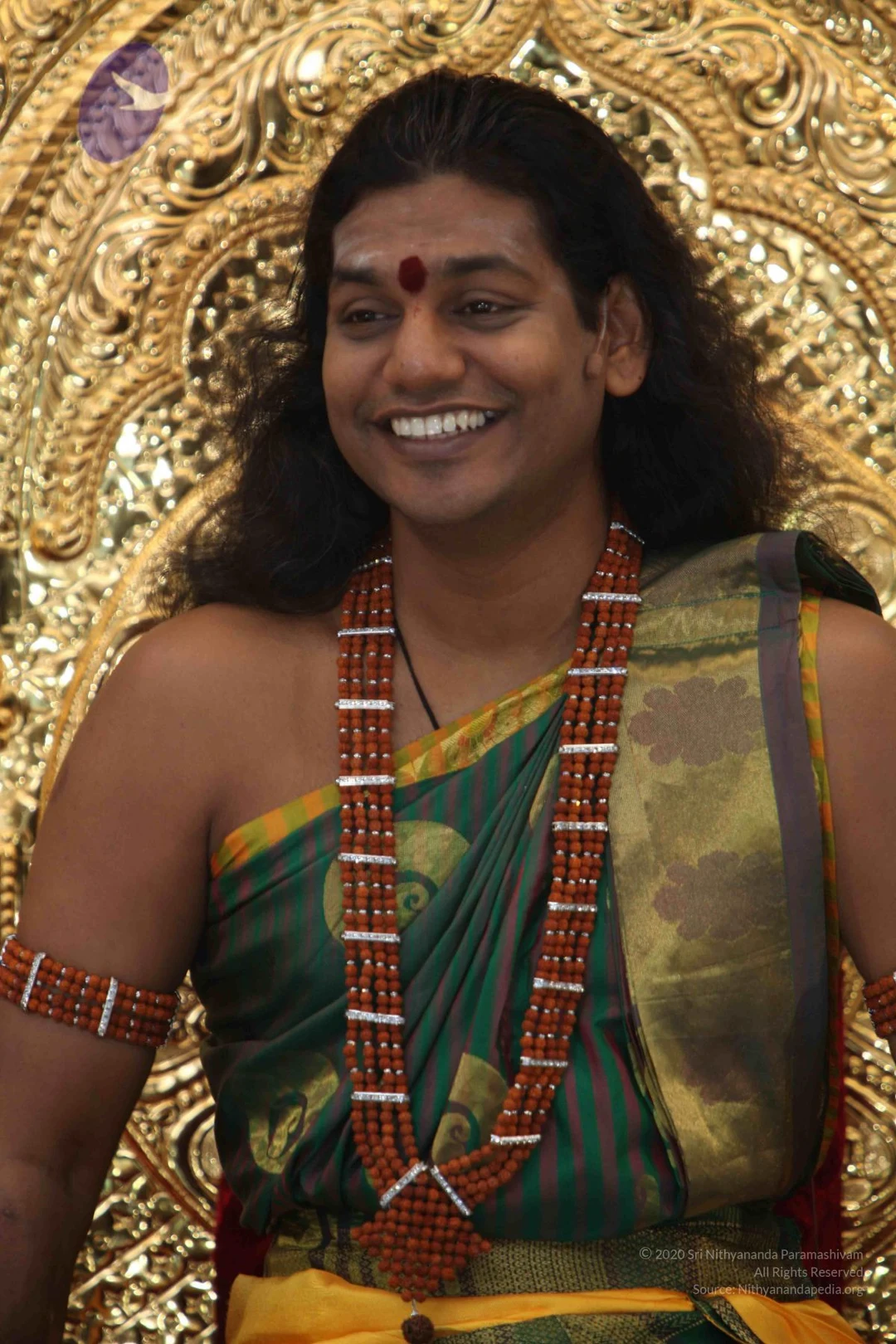
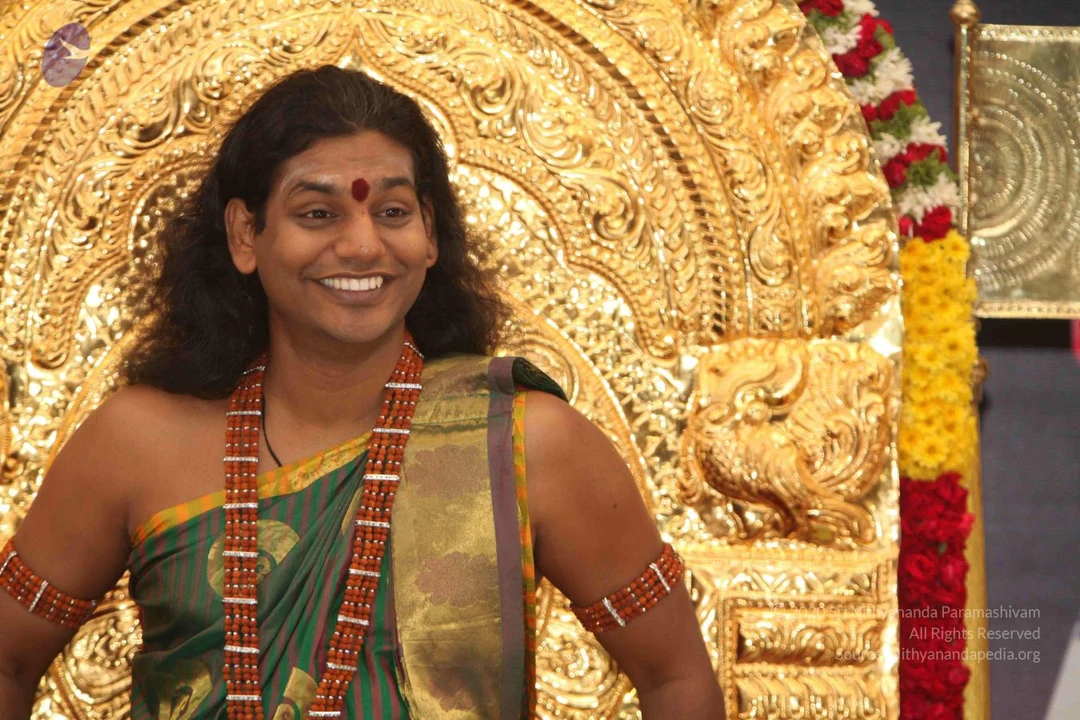
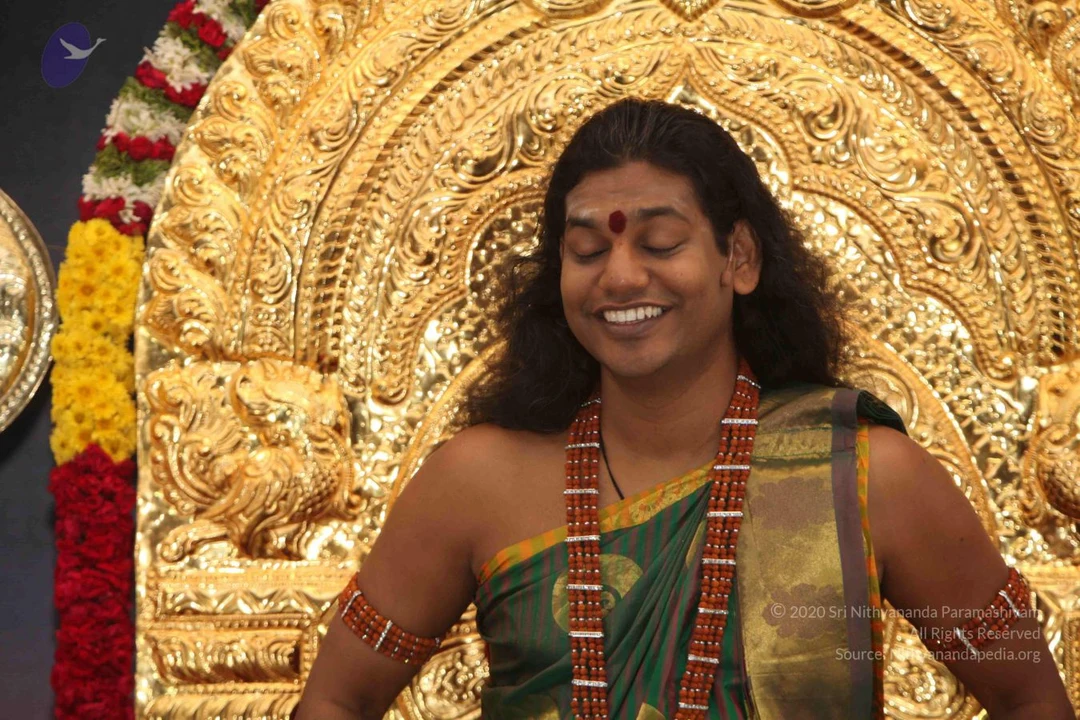
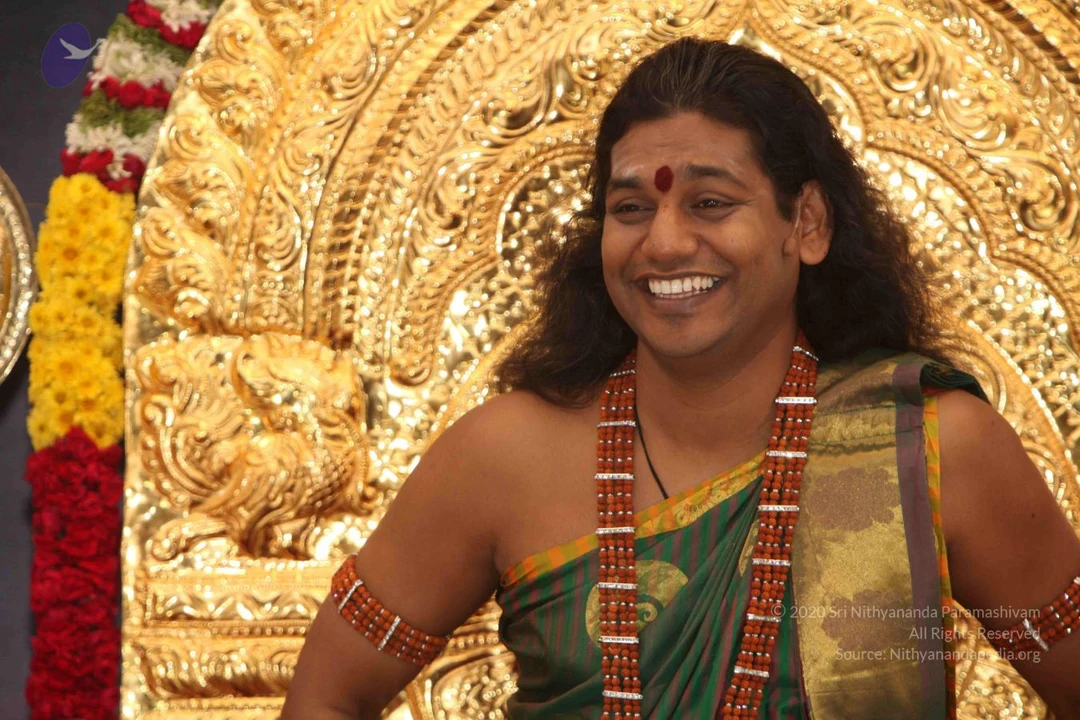
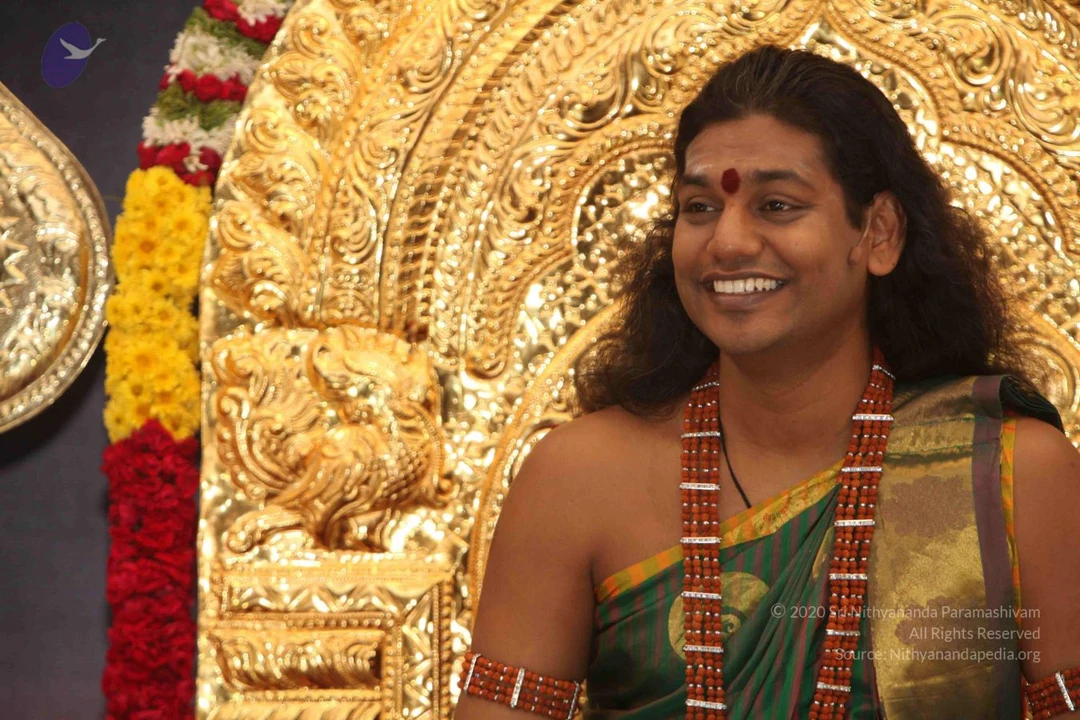
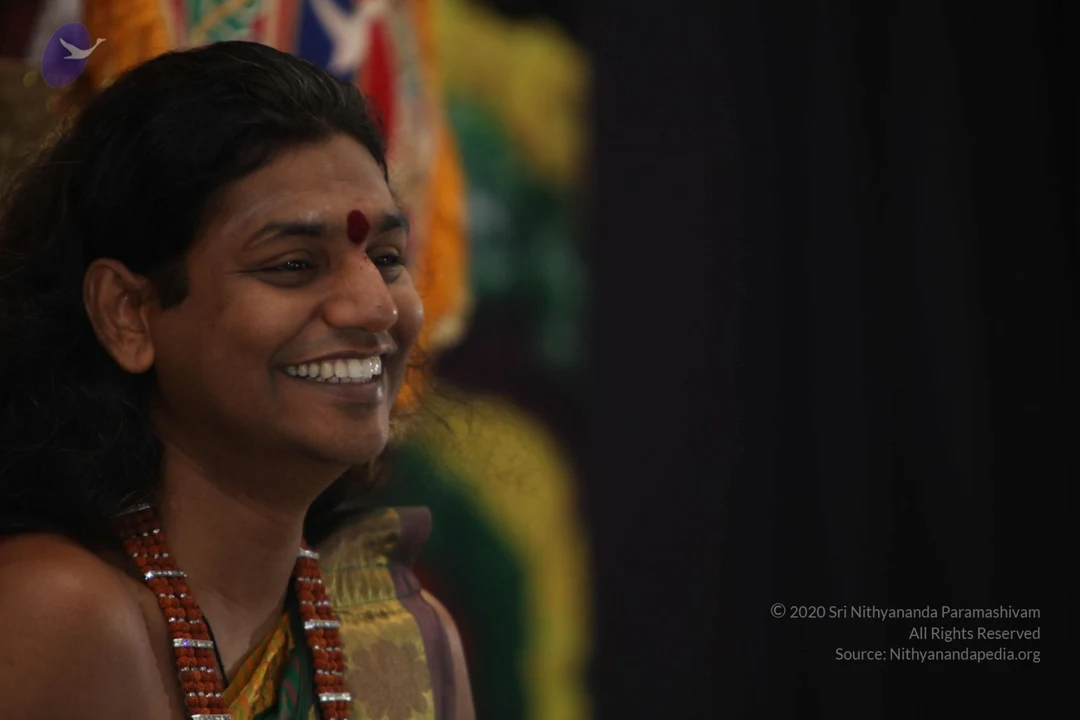
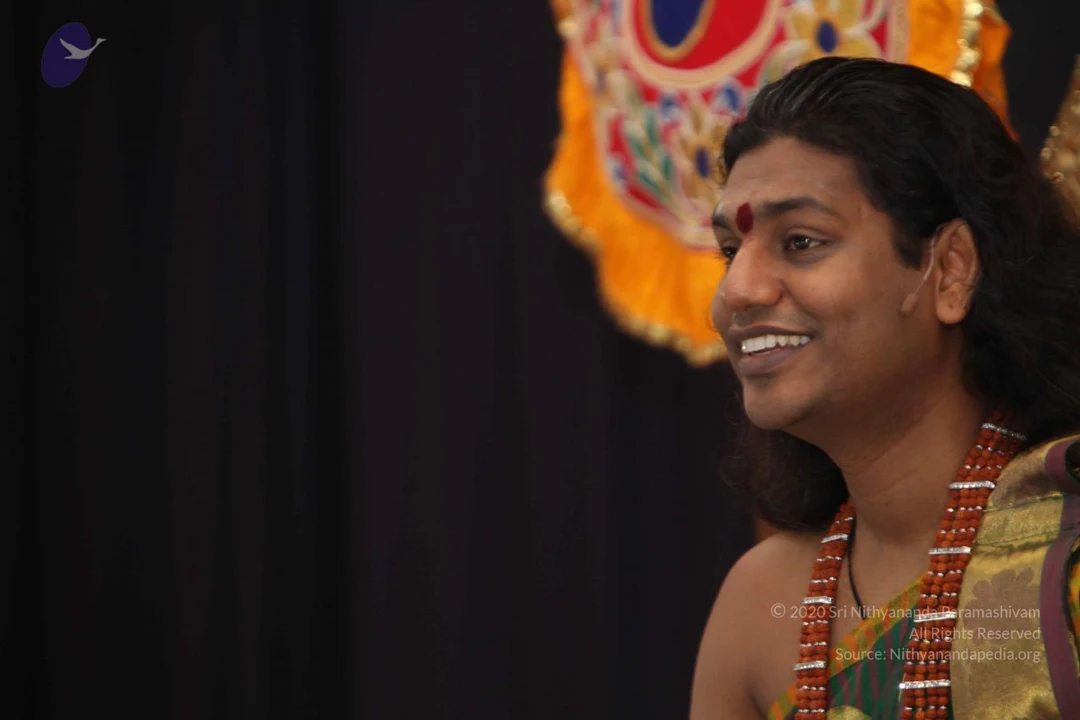
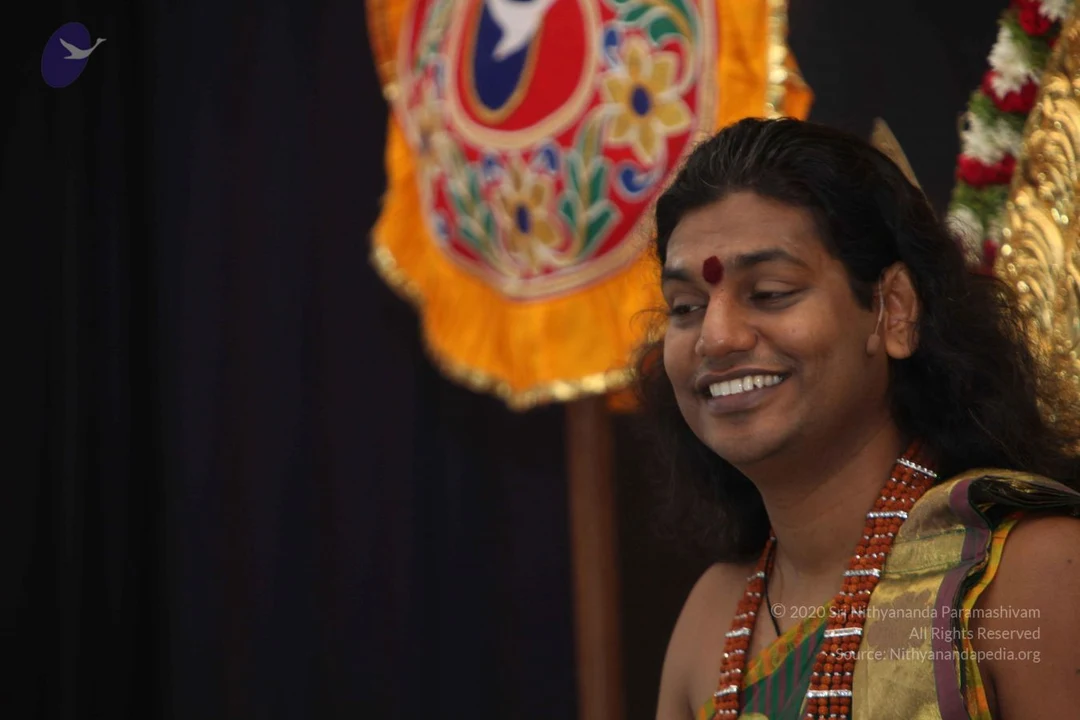
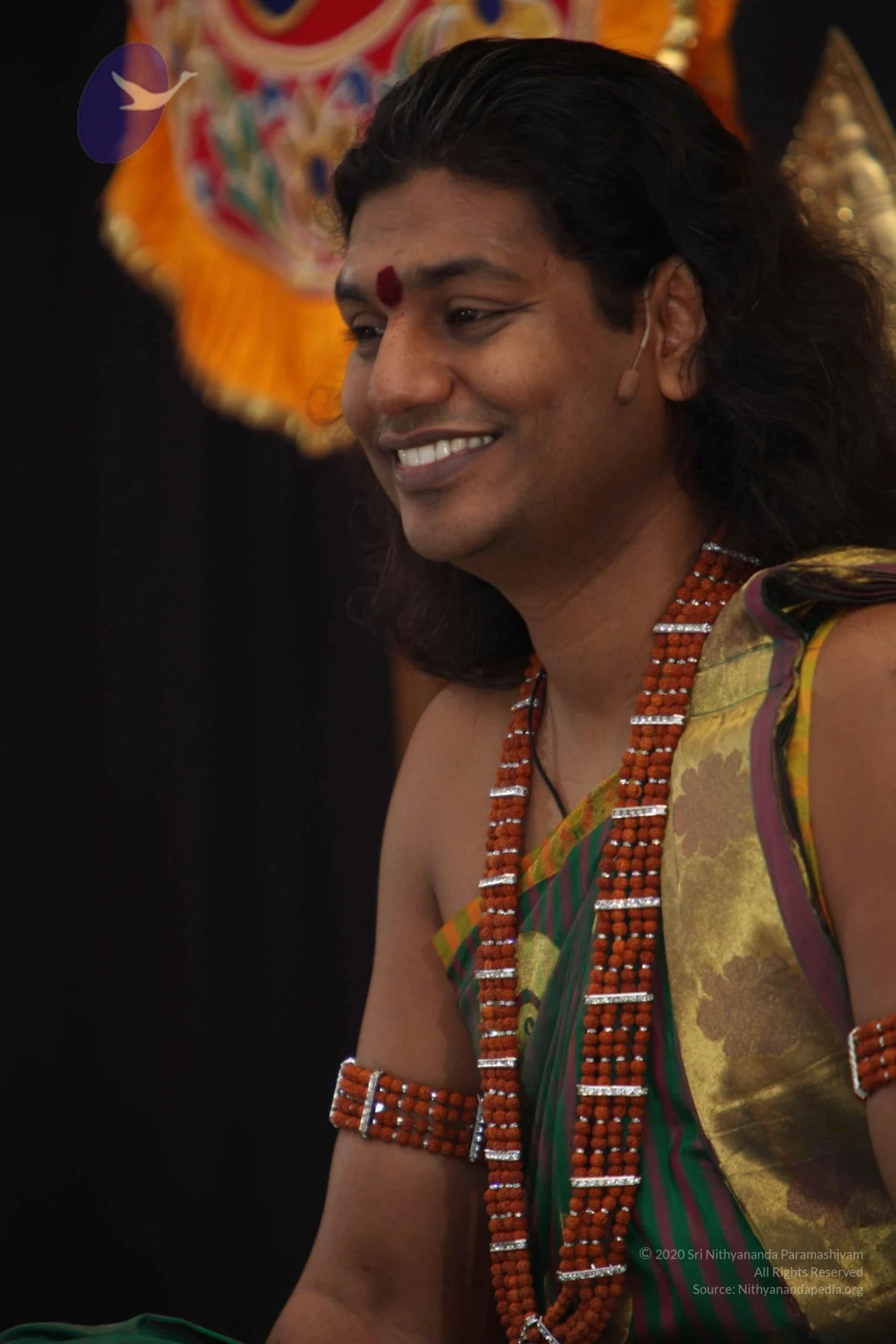
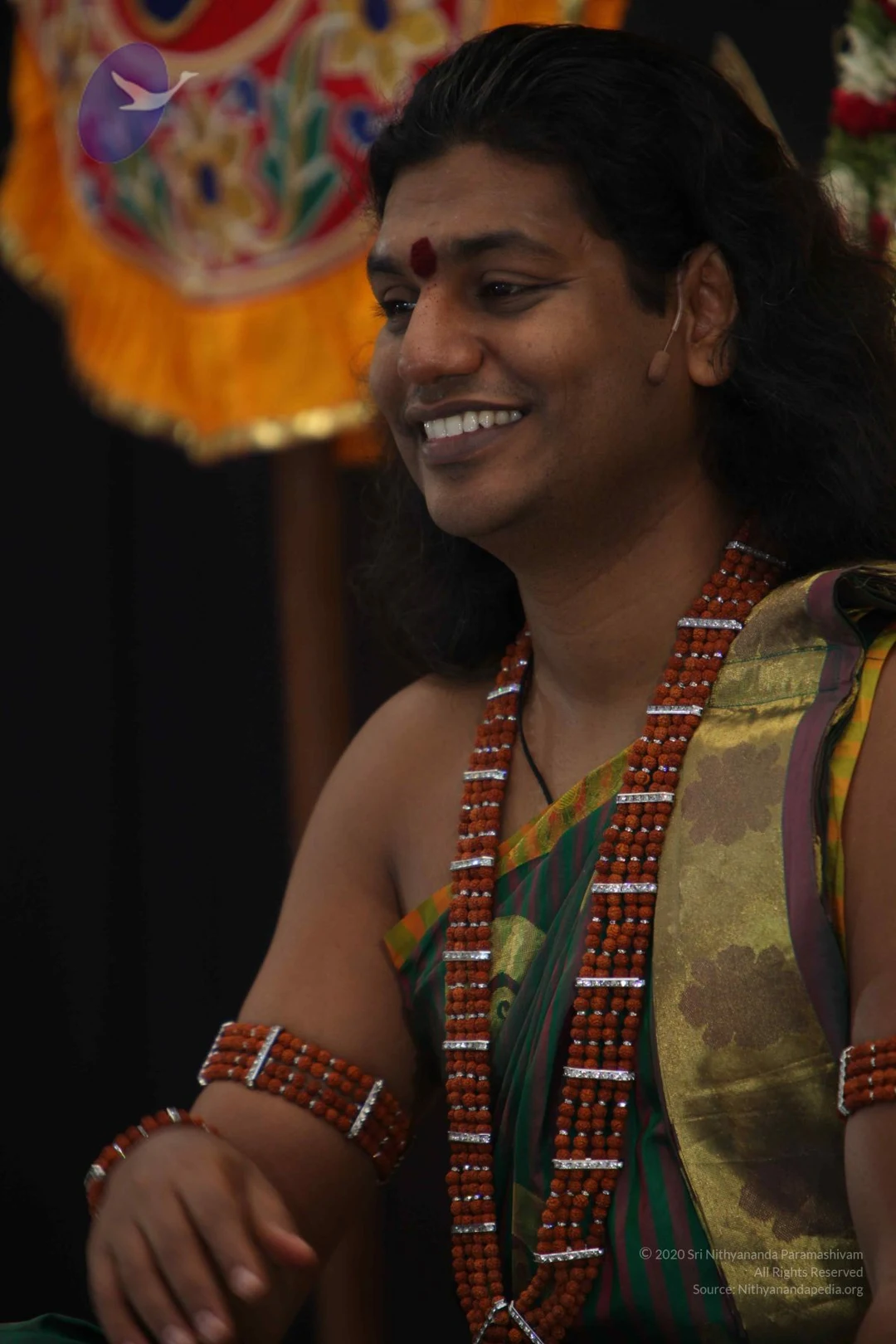
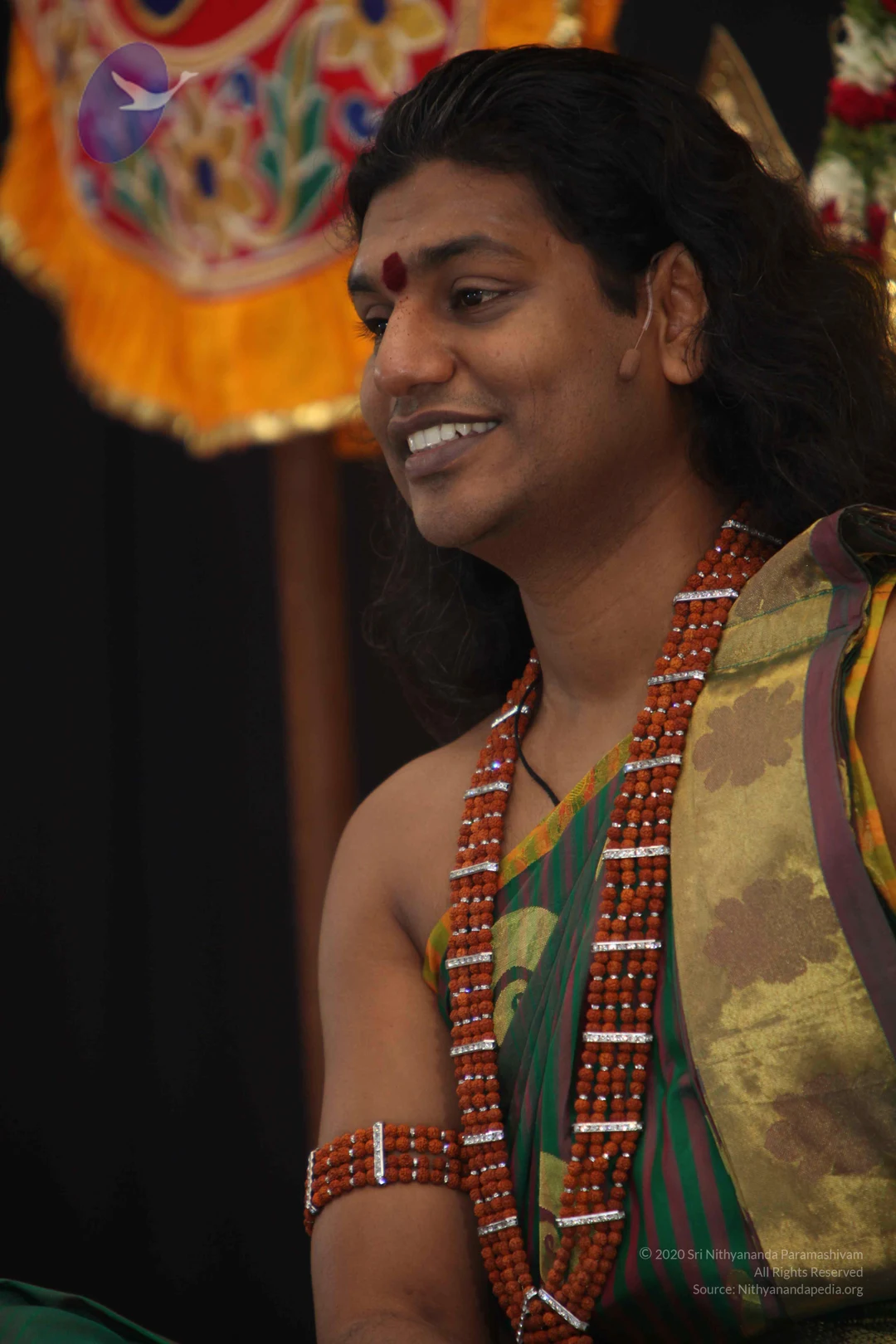
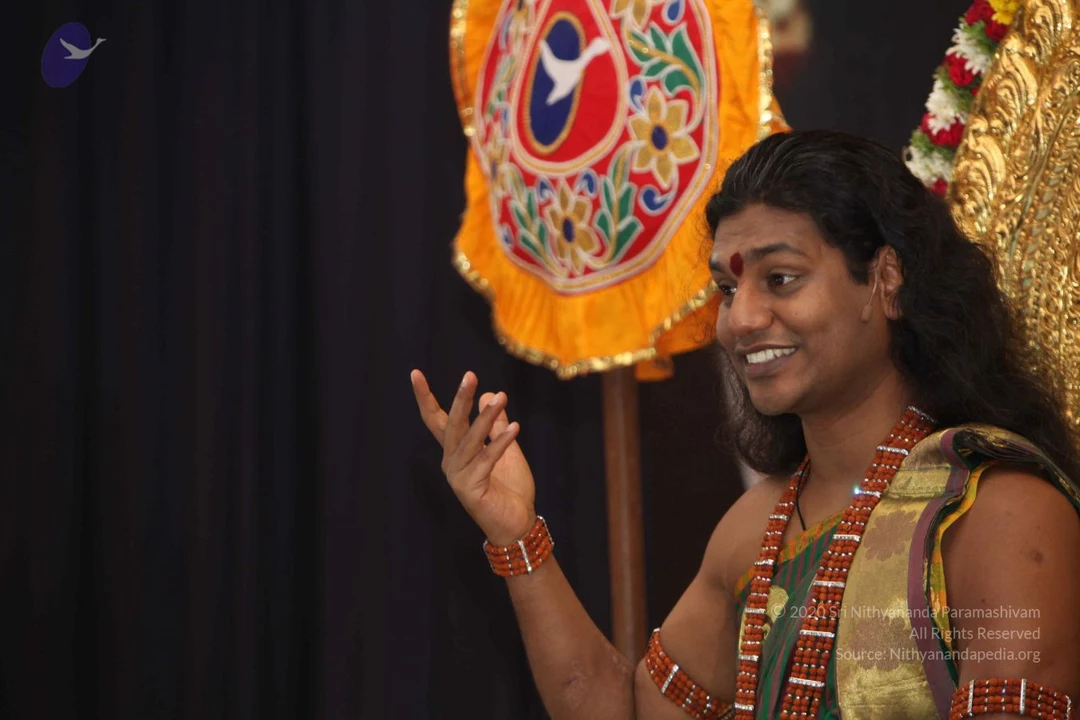
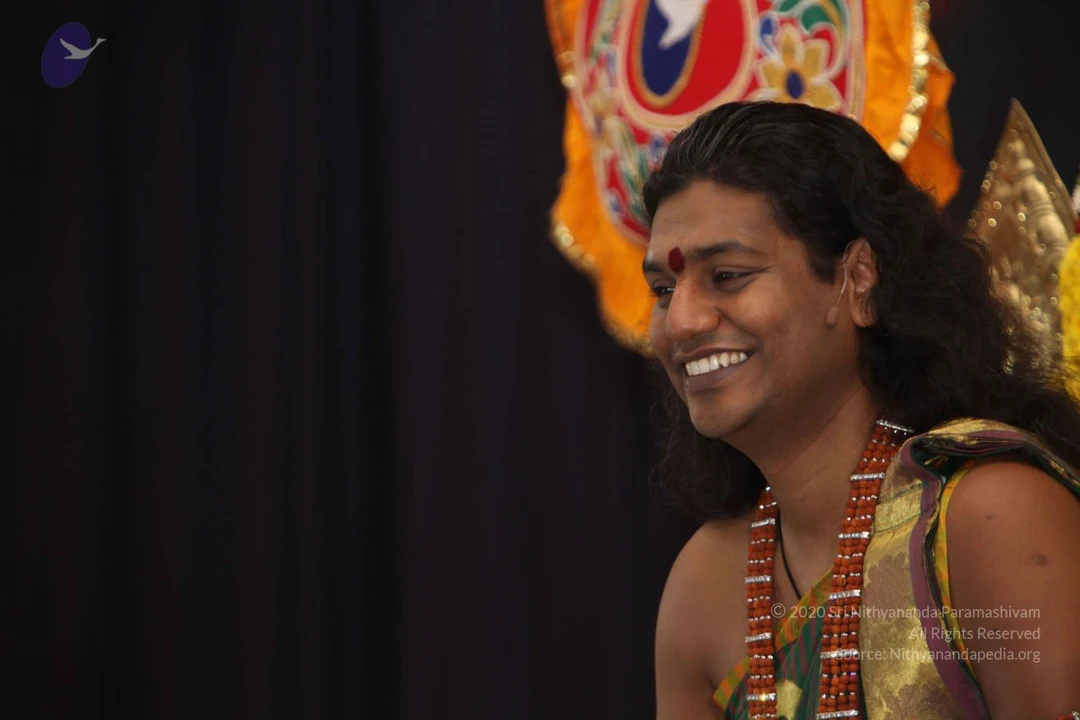
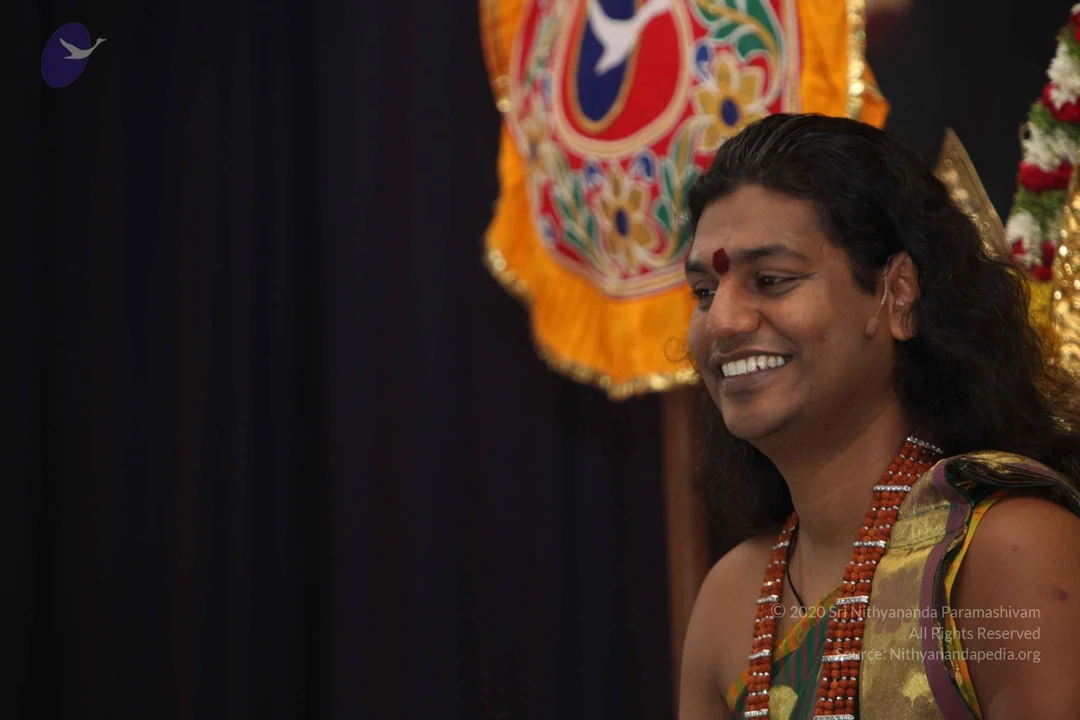
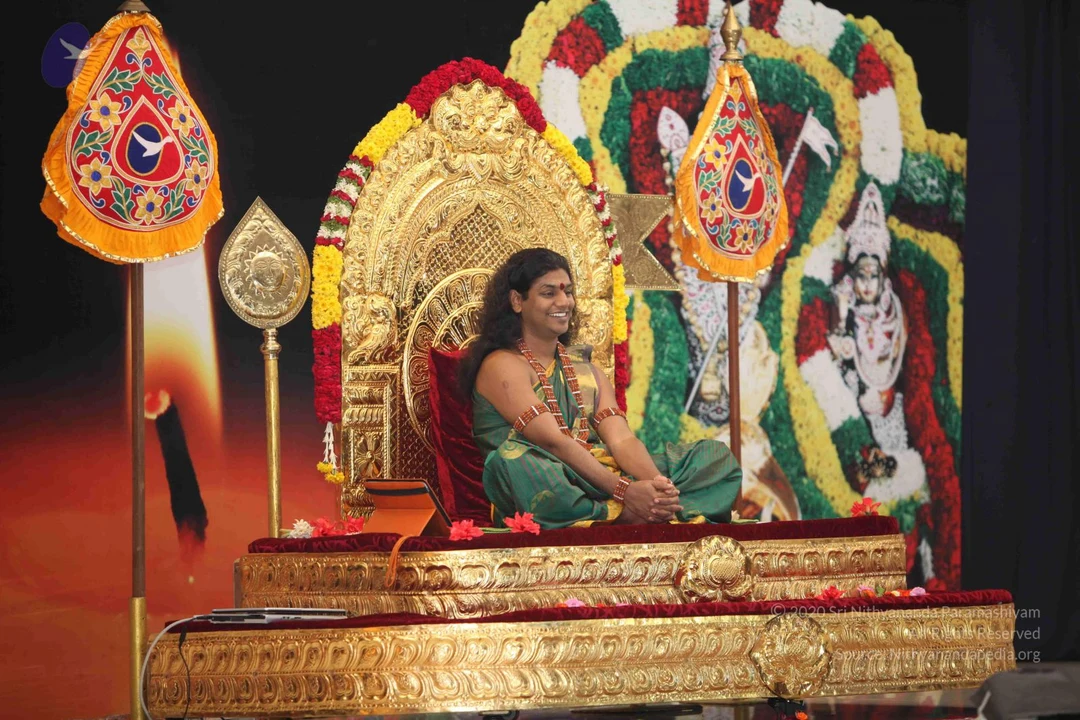
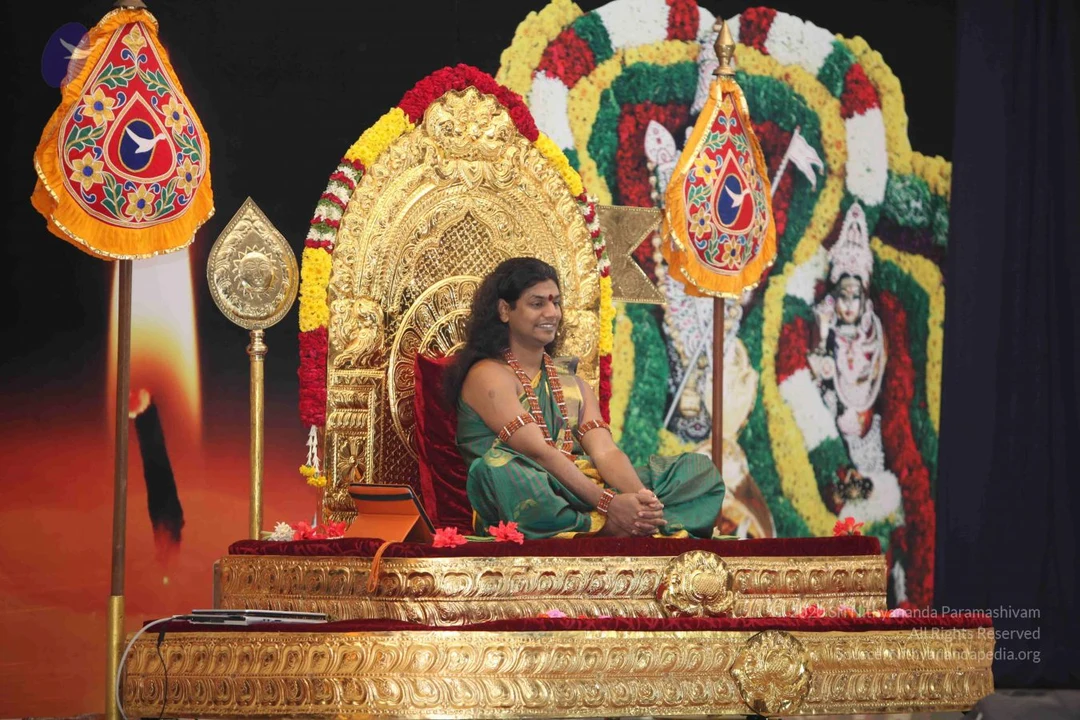
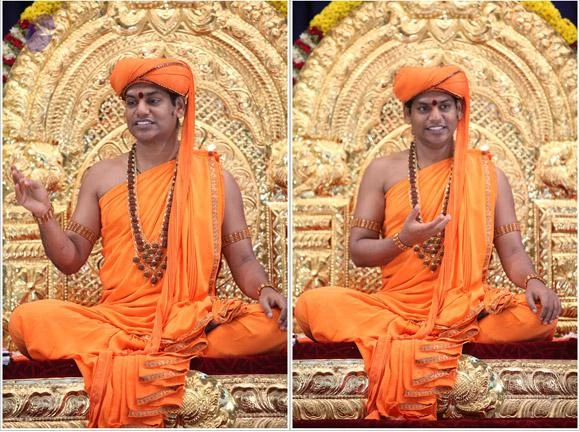
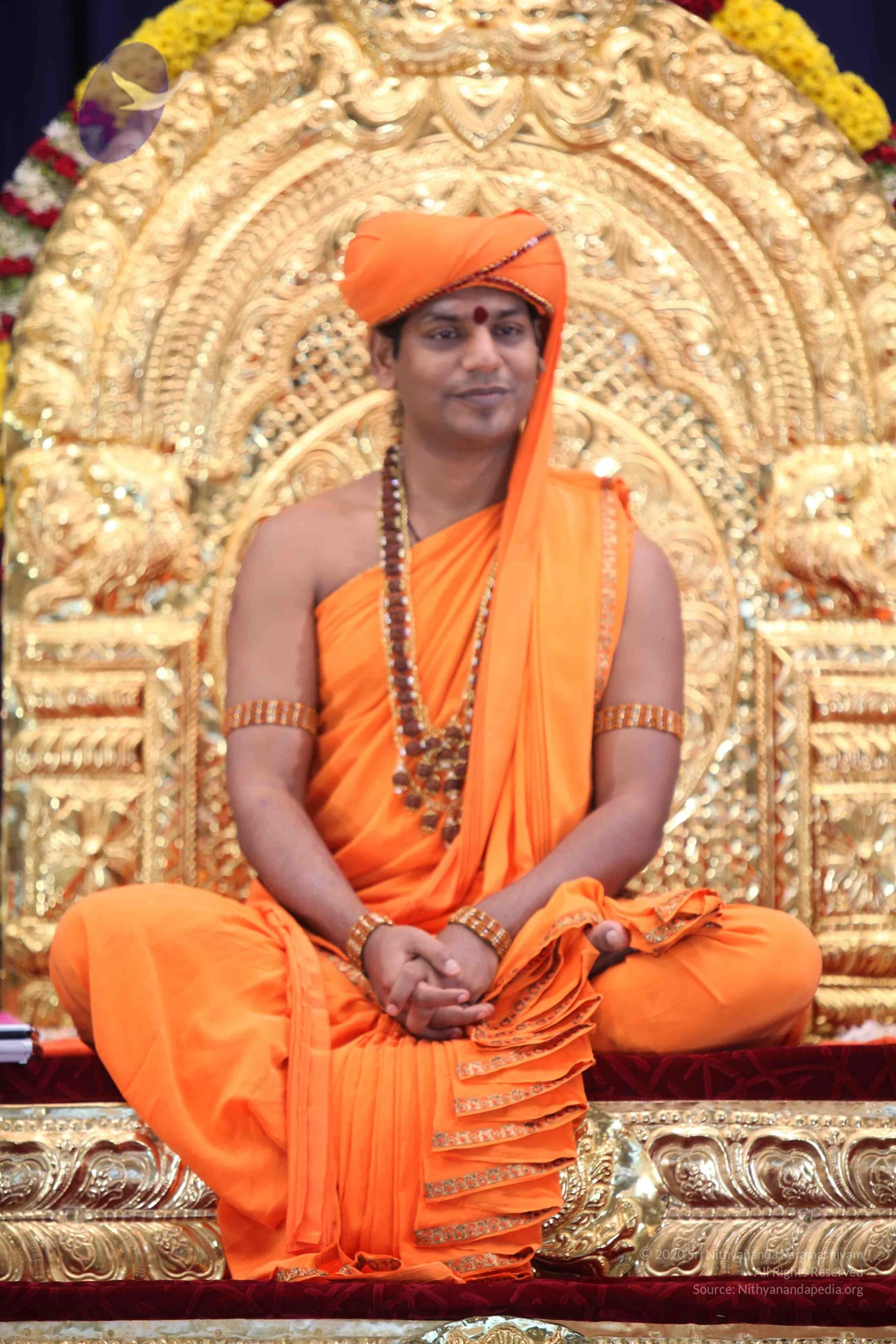
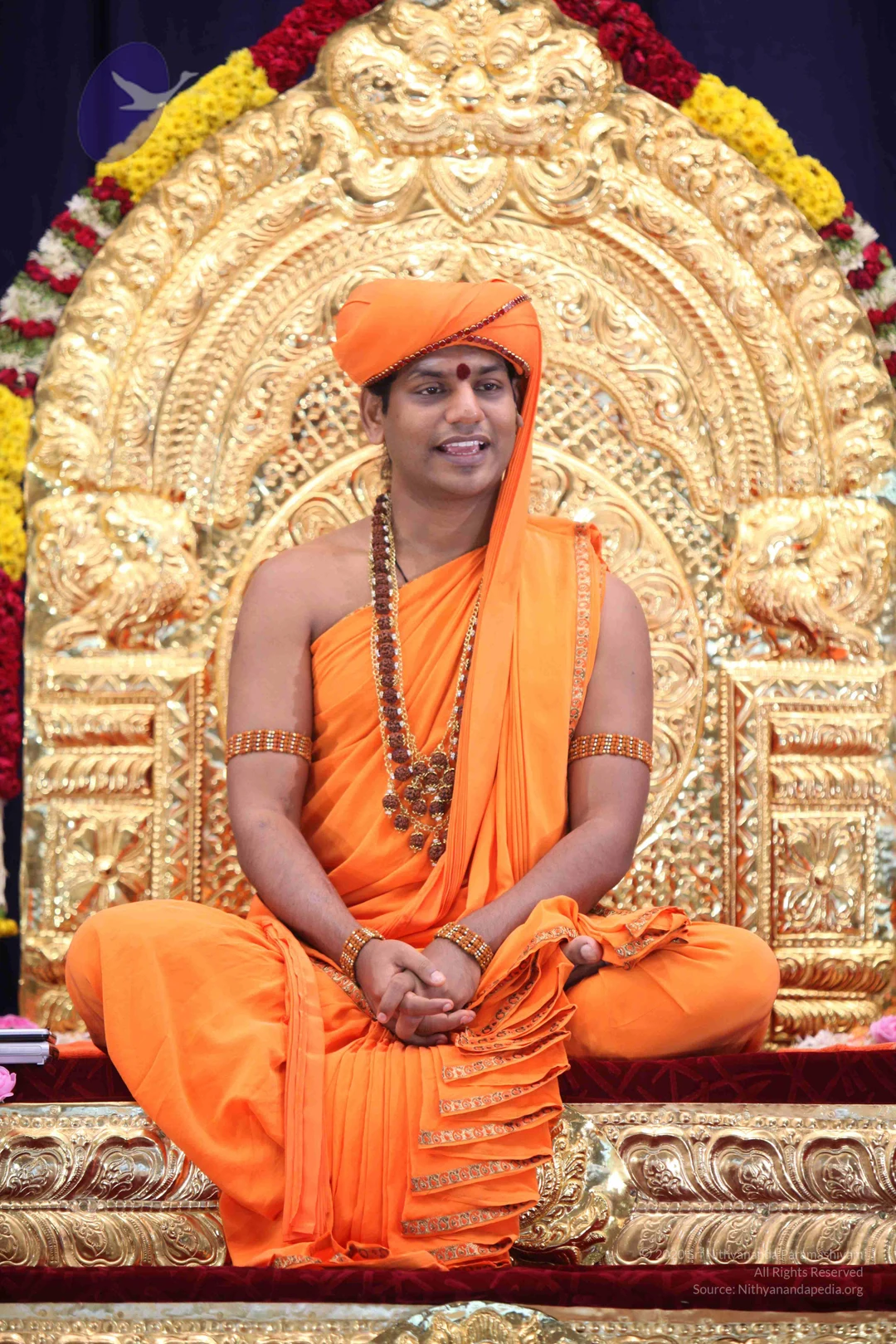
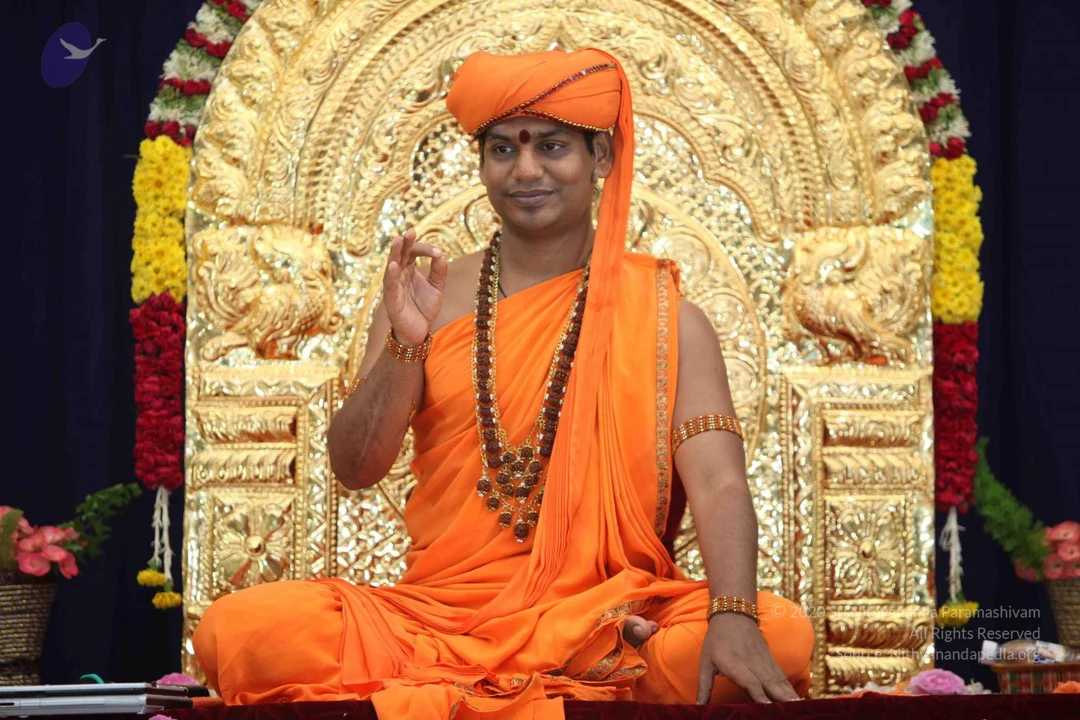
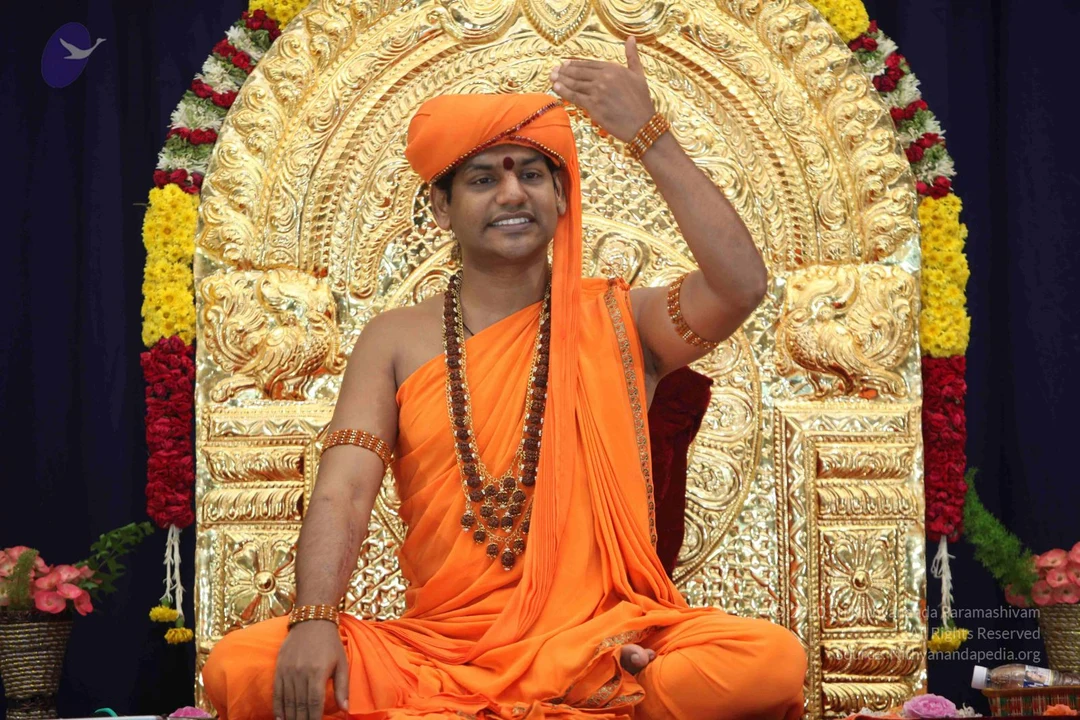
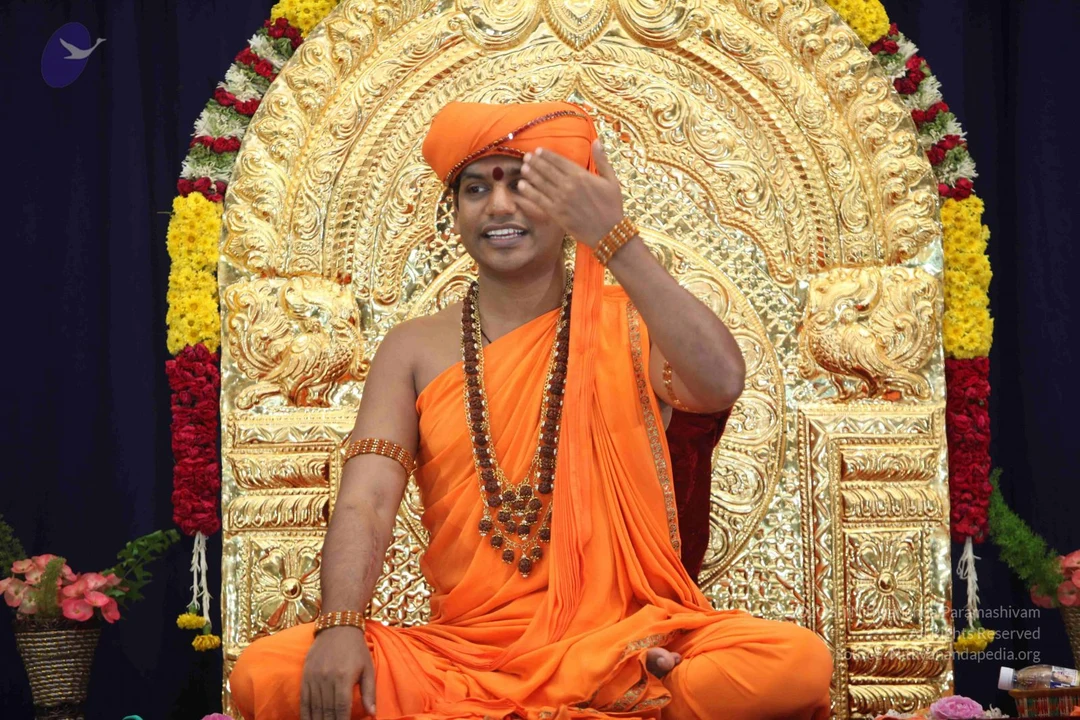
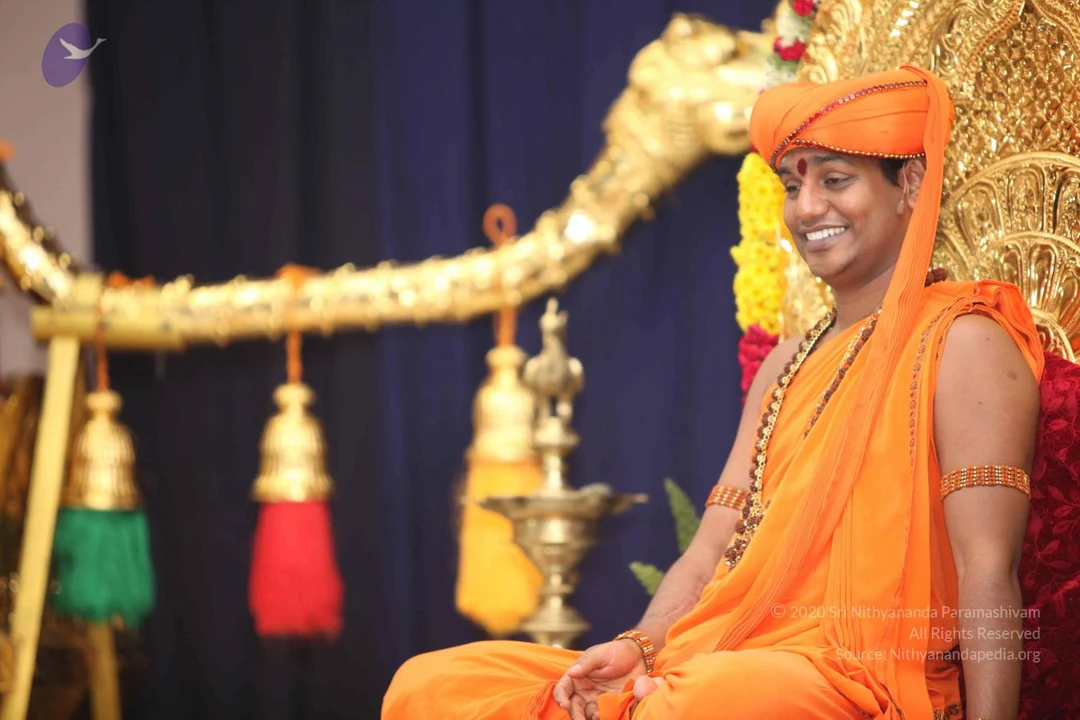
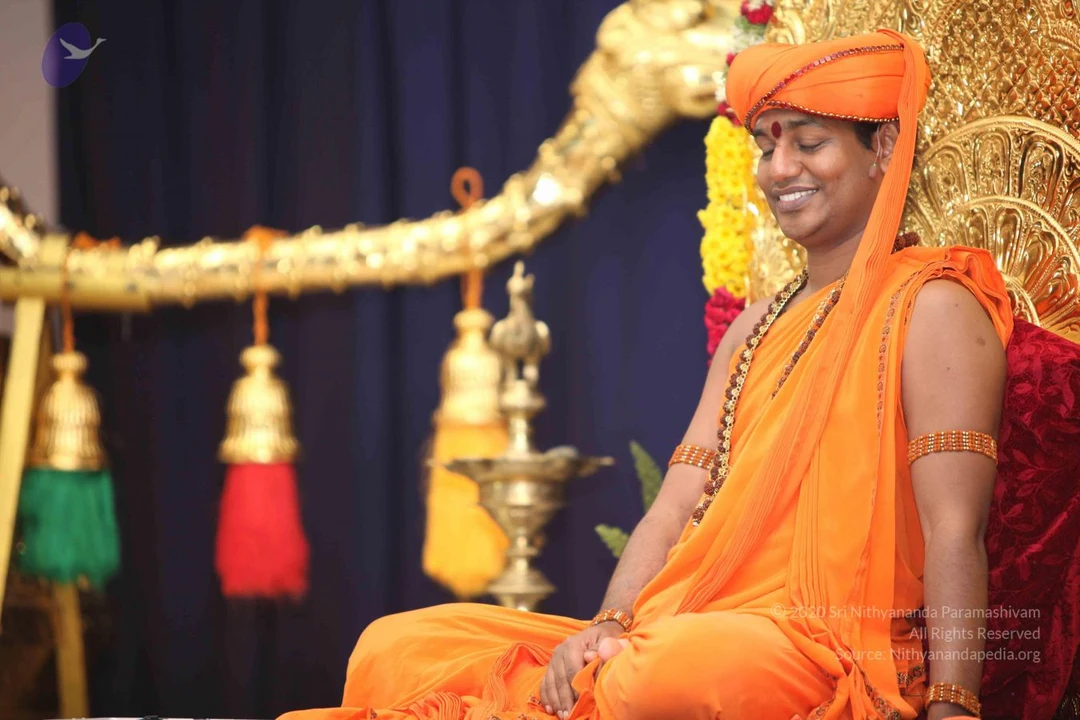
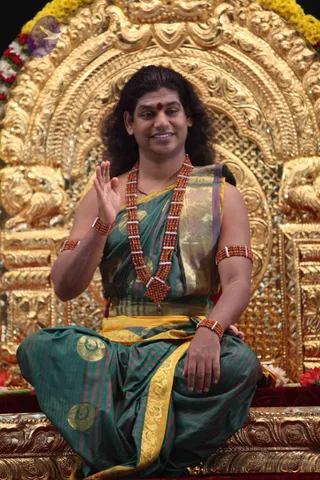
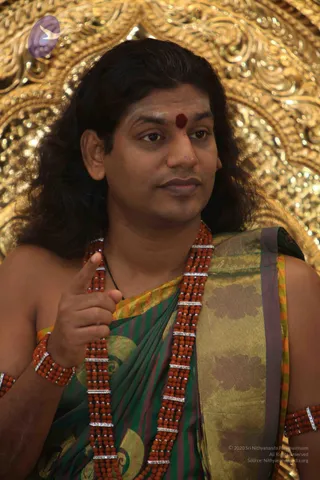
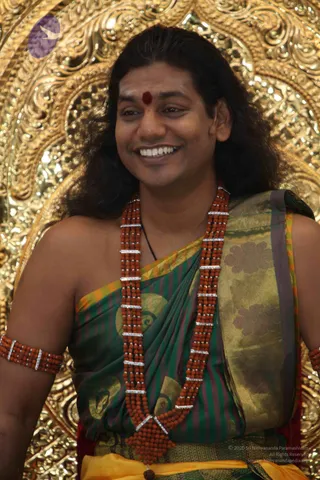
A seated man sits cross-legged on a gilded throne with an ornate golden arched backdrop decorated with carved lions and marigold garlands at the top. He wears a green and purple striped silk garment with gold borders and a yellow waist sash, along with a long rudraksha mala with silver spacers, rudraksha armbands and bracelets. A red bindi marks his forehead and he has long swept-back dark hair. The appearance matches the Swamiji (probable) cues of long hair, rudraksha malas and ornate ceremonial clothing, seated on a throne.A seated man with long dark swept-back hair and a red bindi sits cross-legged on an ornate gilded throne with carved arched backrest. He wears a green and purple striped silk garment with gold-bordered yellow waist cloth, multiple strands of rudraksha mala with silver spacers across his chest, and matching rudraksha armbands and wrist bands. Probable Swamiji by appearance cues: long swept-back hair, rudraksha malas and ornate ceremonial clothing on a throne. Flowers and a purple emblem appear at the upper left of the throne backdrop.A seated man with long, swept-back dark hair and a red bindi raises his right hand in a blessing gesture while smiling. He wears a green and purple striped silk garment with gold borders and a yellow waist sash, a multi-strand rudraksha mala with white spacers, and matching rudraksha bracelets and armlets. He sits on an ornate gold-carved throne with floral garlands at the top of the frame. Swamiji (probable): long hair, rudraksha malas and ornate ceremonial clothing, seated in a throne-like setting, shown in a photograph.A photograph of a seated man in a green and gold striped silk garment with a yellow border, sitting cross-legged on an ornate gold throne with carved arch and floral reliefs. He wears a long multi-strand rudraksha mala with white spacers, matching rudraksha armbands and wrist bands, and a red bindi on his forehead. His long dark hair falls past his shoulders, and he smiles with hands resting on his knees in a meditative pose. Yellow and red flowers are visible at the top of the frame. Swamiji (probable): a long-haired figure with rudraksha malas and ornate silk clothing seated on a throne, matching the page's note that Swamiji is at this event.A photo of a man with long dark hair and a red bindi on his forehead, seated before an ornate gilded golden backdrop. He wears a green and gold shawl draped over bare shoulders and multiple strands of rudraksha beads with silver spacers around his neck and arms. He raises one index finger in a teaching gesture.Close-up photo of a smiling man with long dark hair and a red bindi on his forehead, seated before an ornate gold repoussé backdrop. He wears a green and gold striped silk garment draped over one shoulder, multiple strands of orange rudraksha beads with silver spacers around his neck and rudraksha bracelets on his upper arm. A small earpiece is visible.

Kalpataru-Darshan

8 photosSource gallery
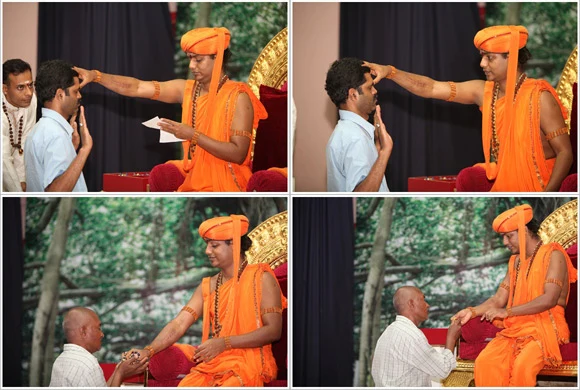
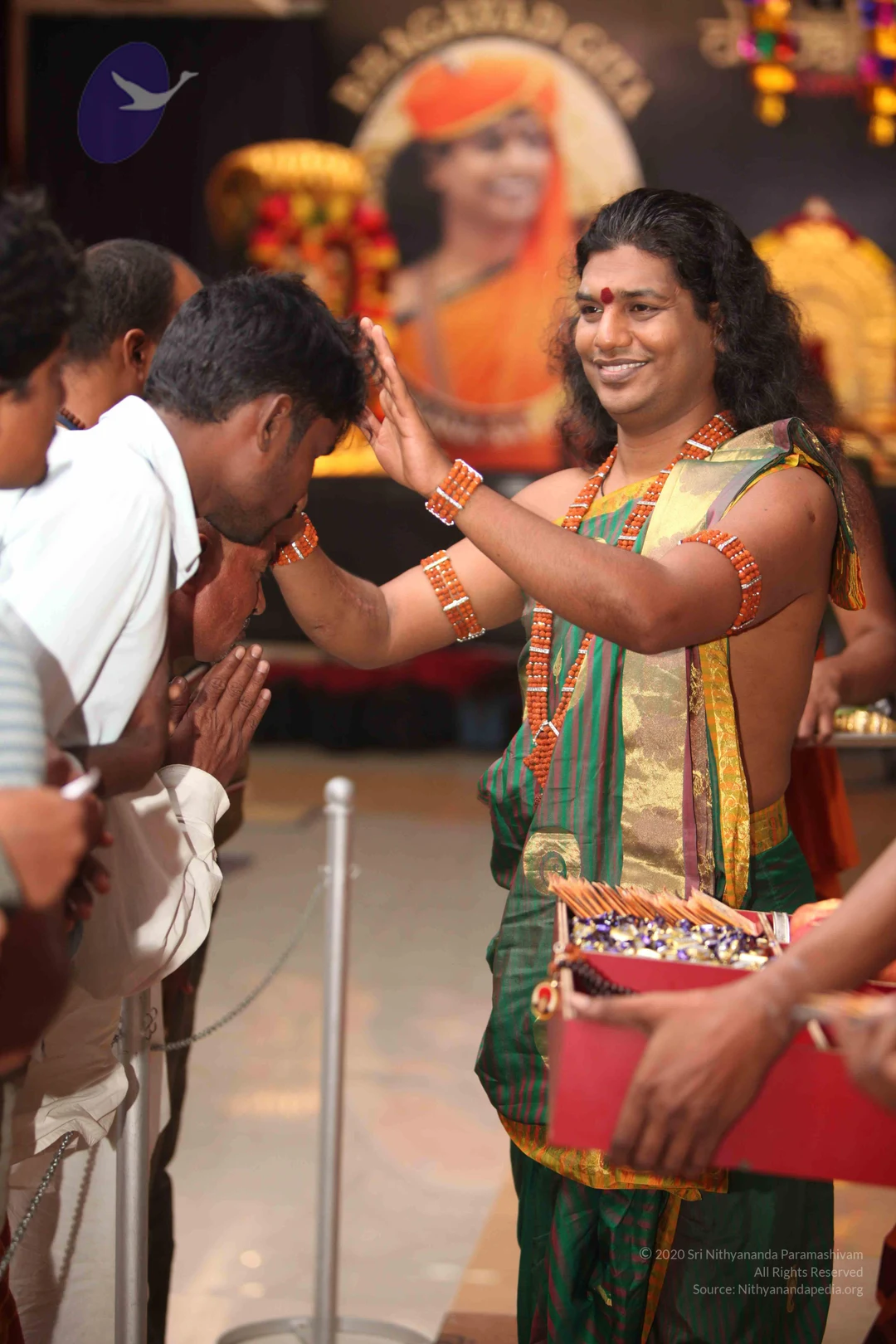
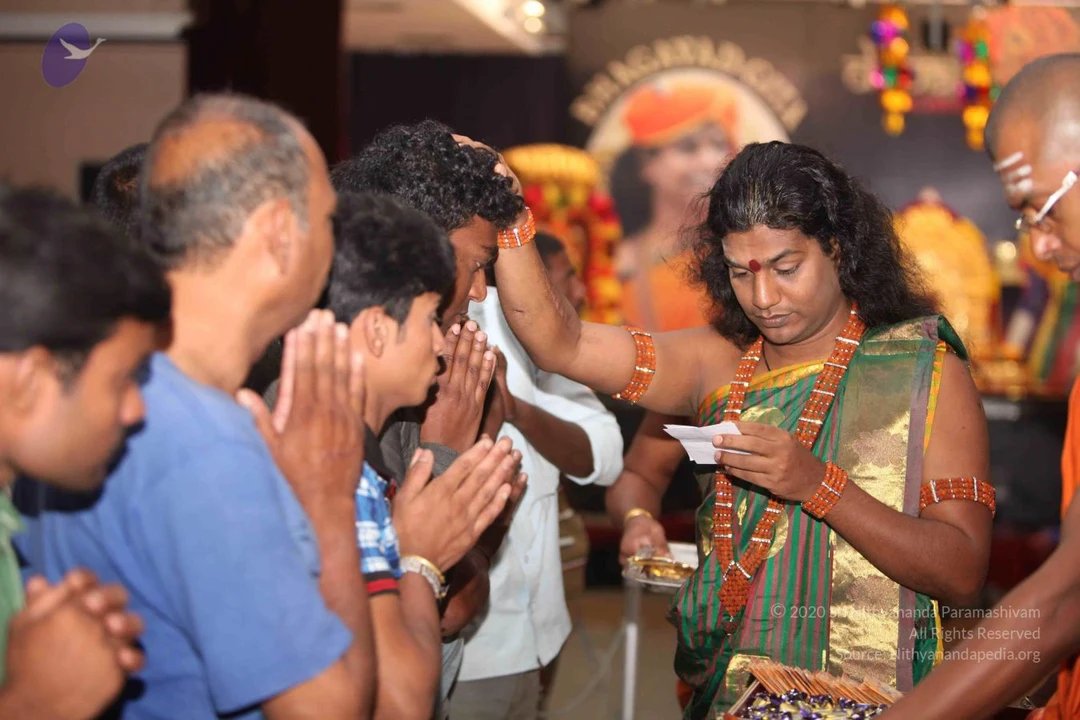
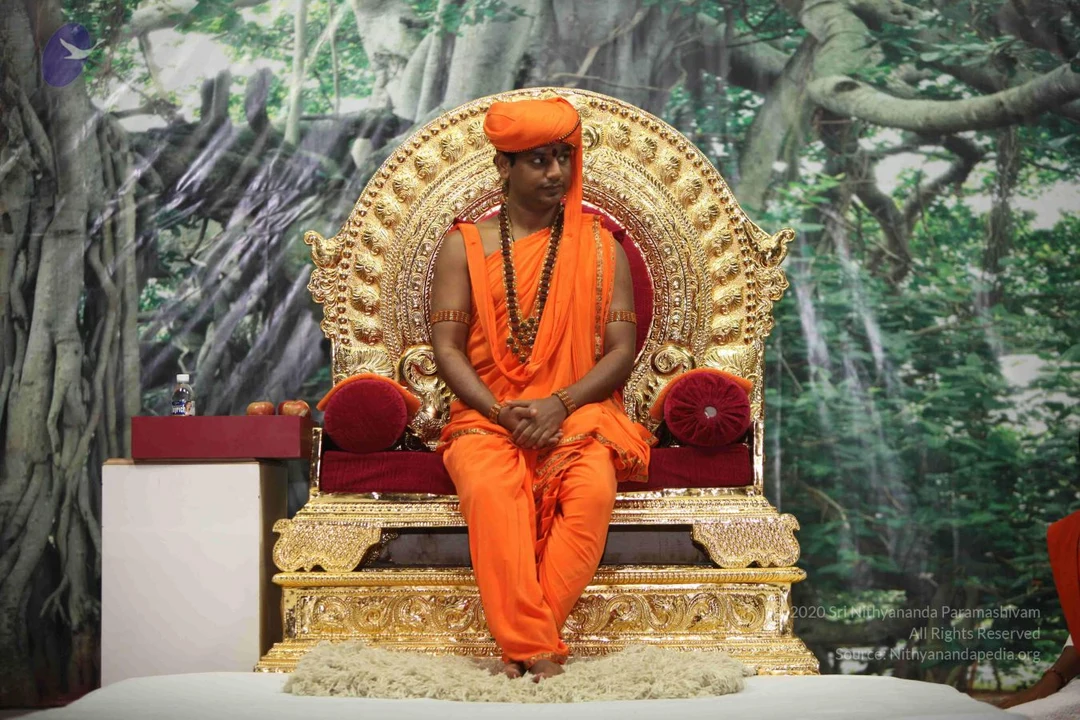
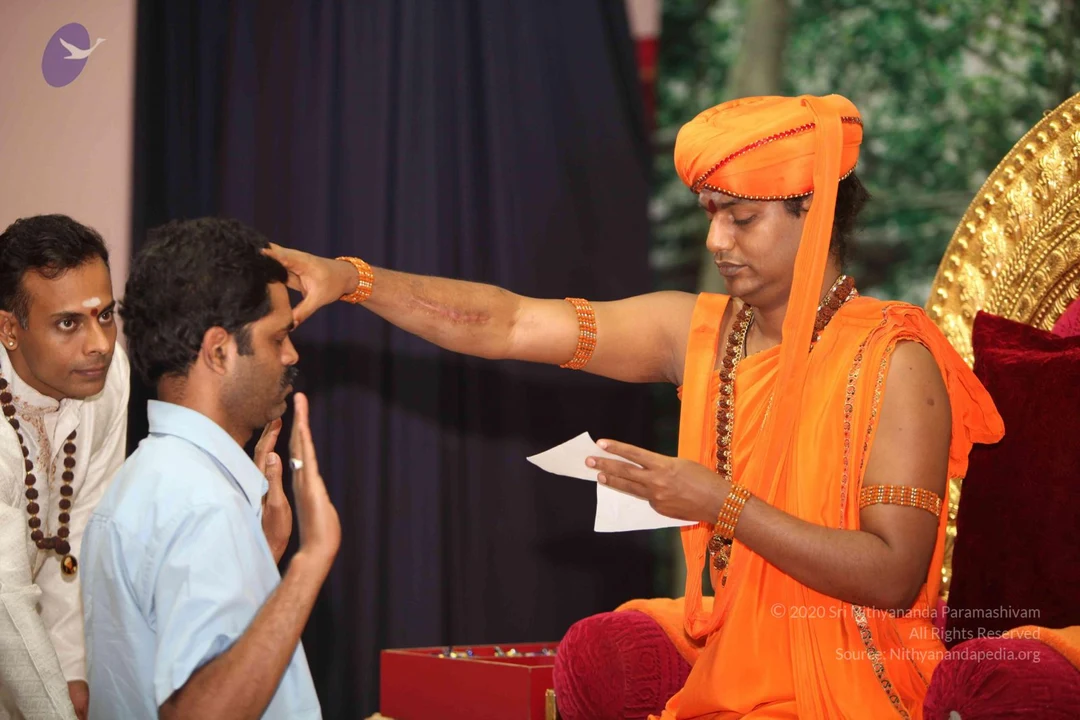
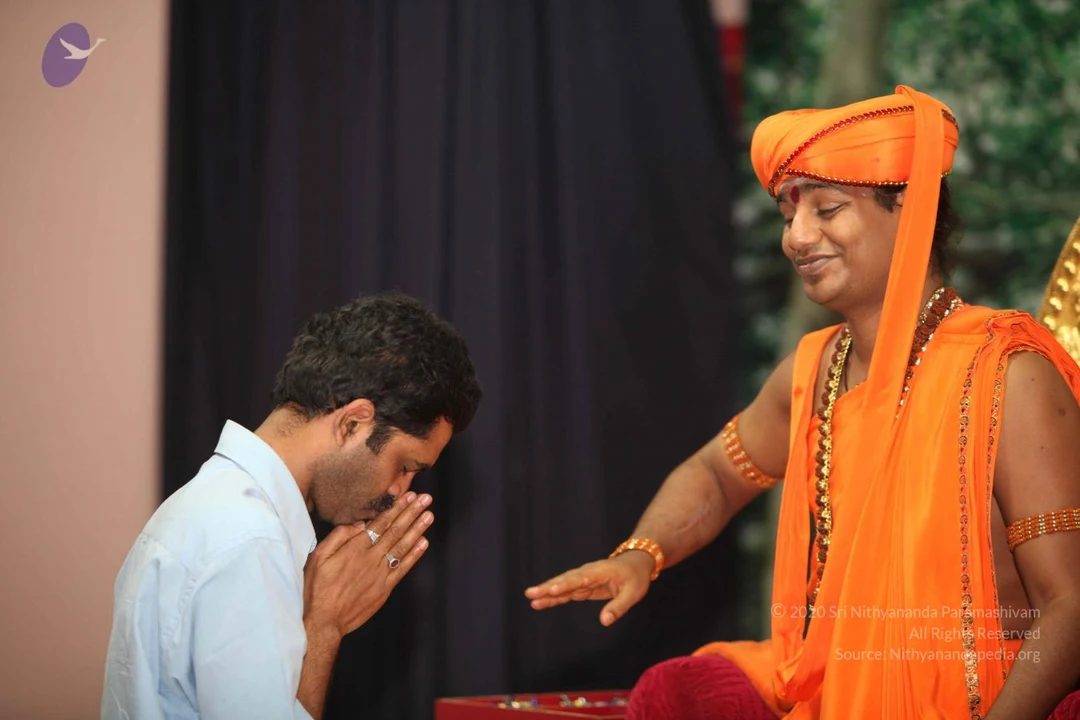
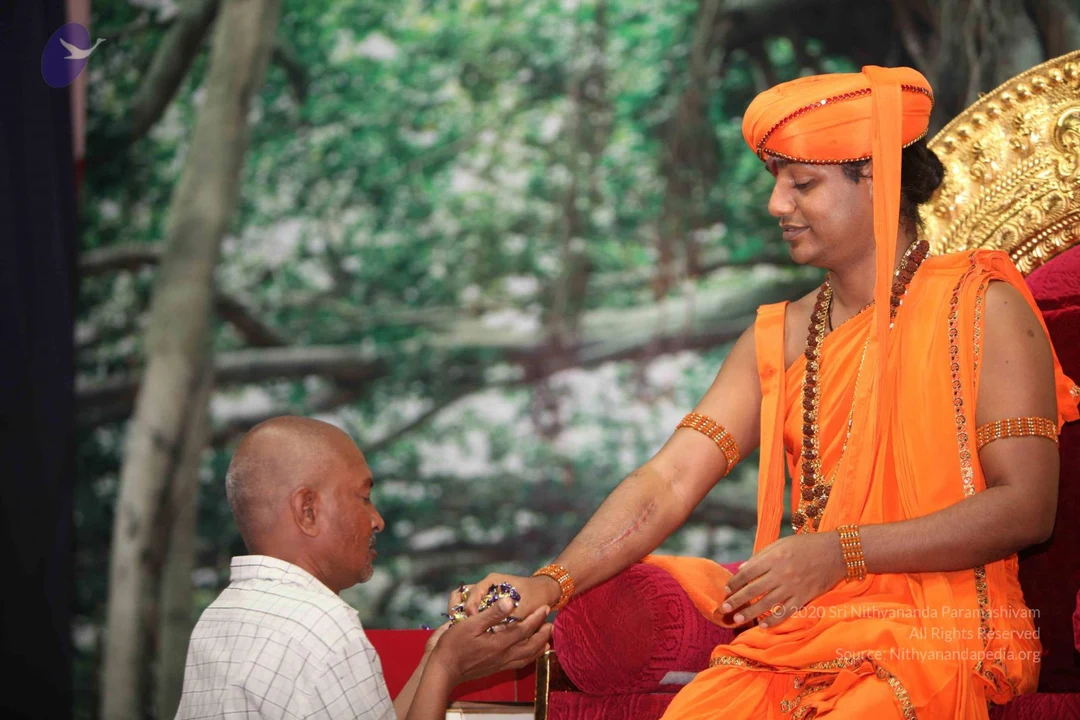
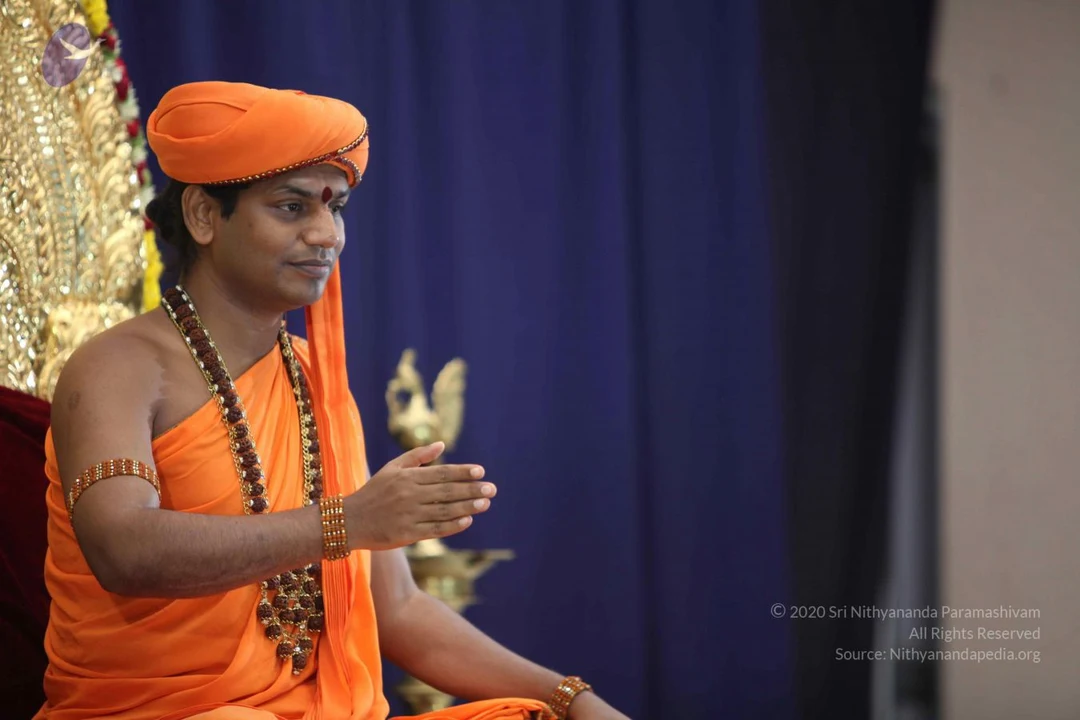
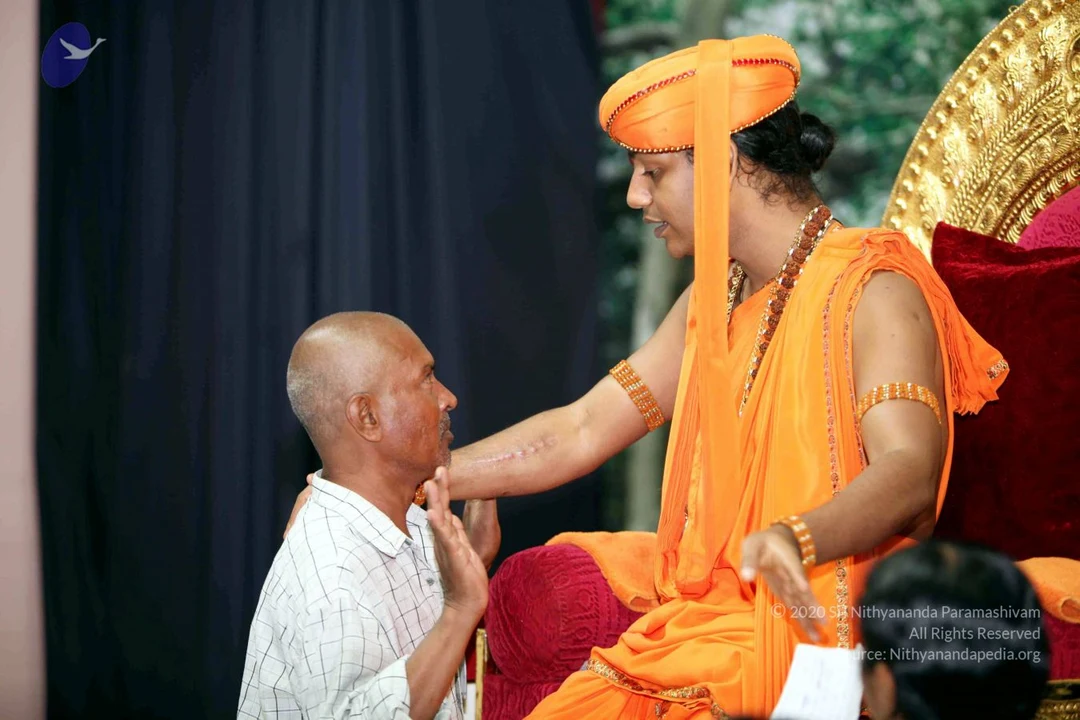
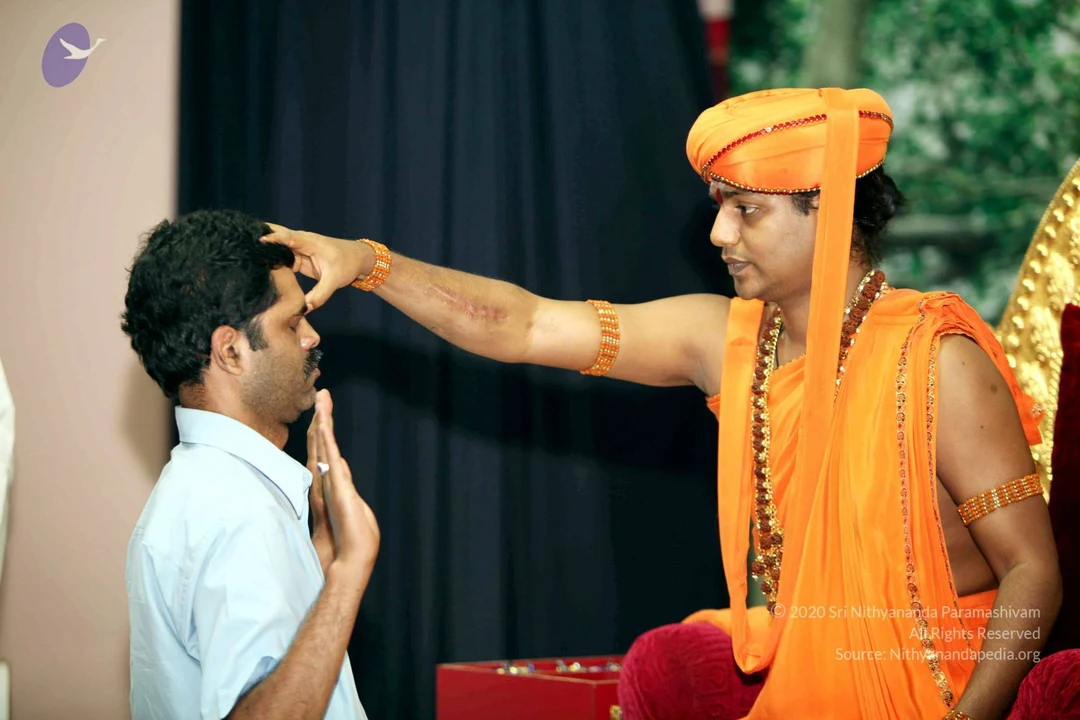
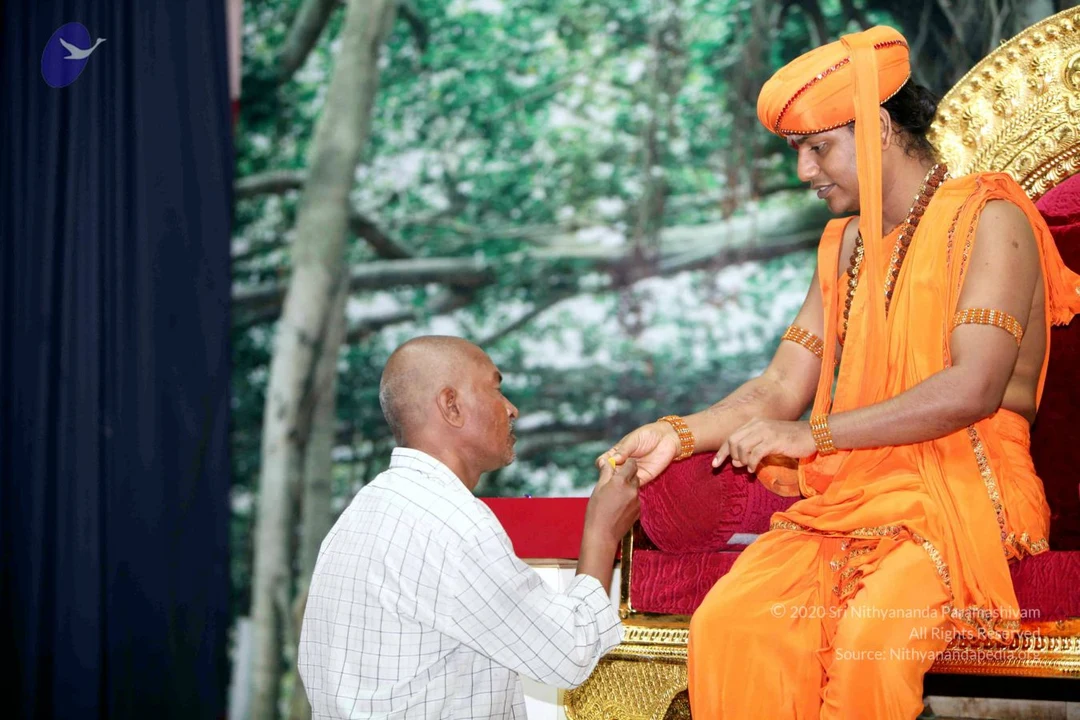
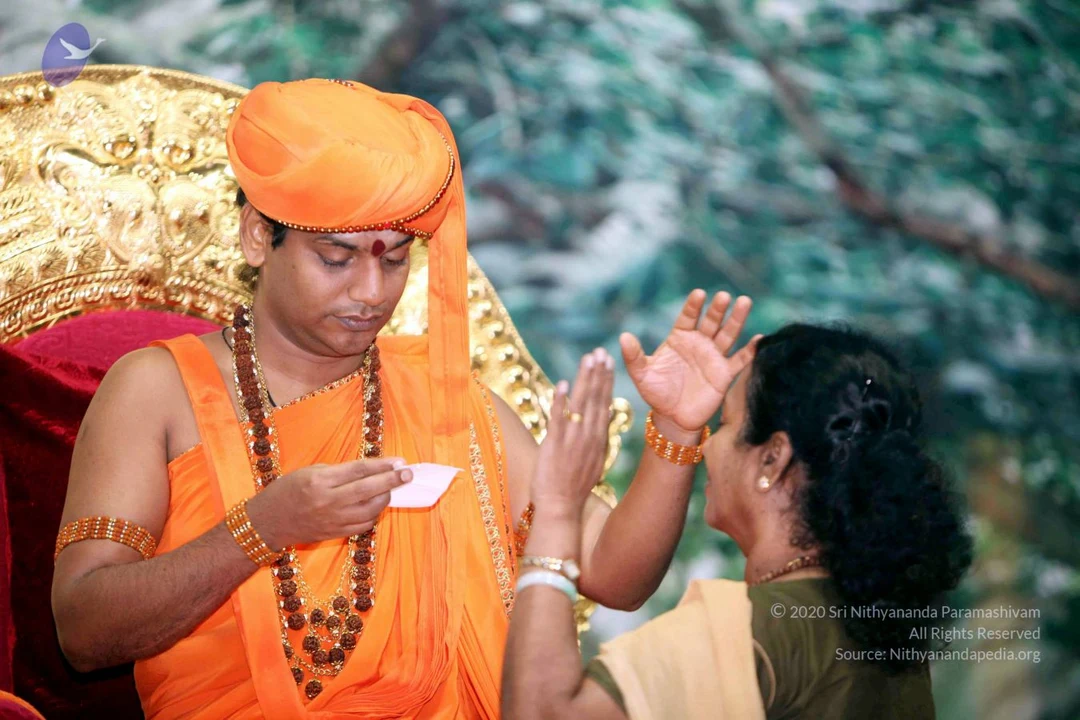
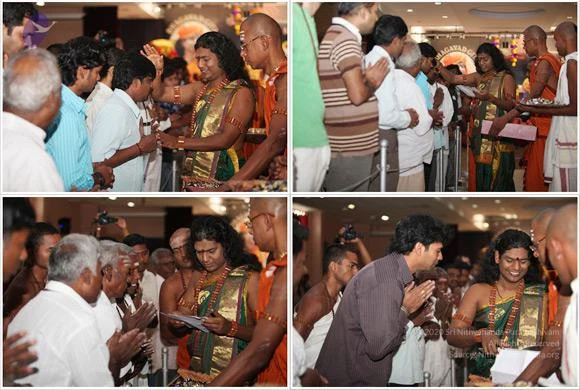
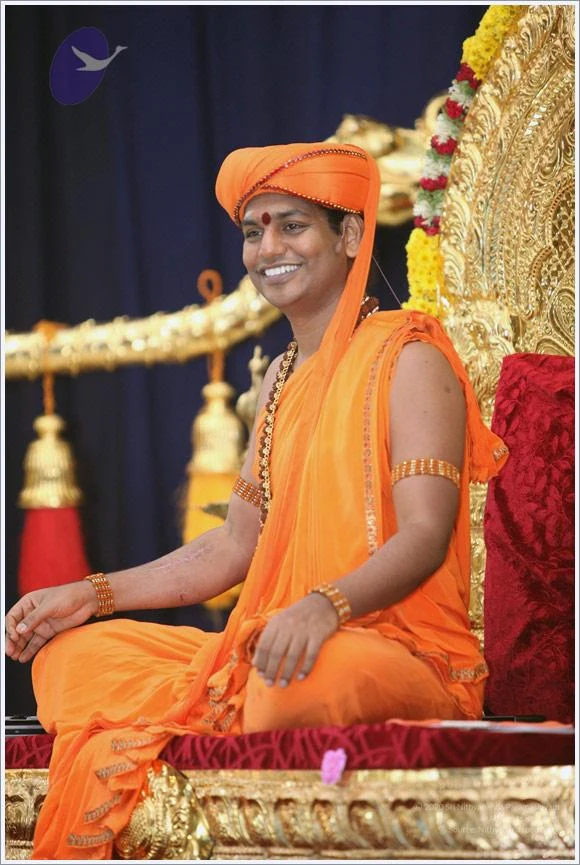
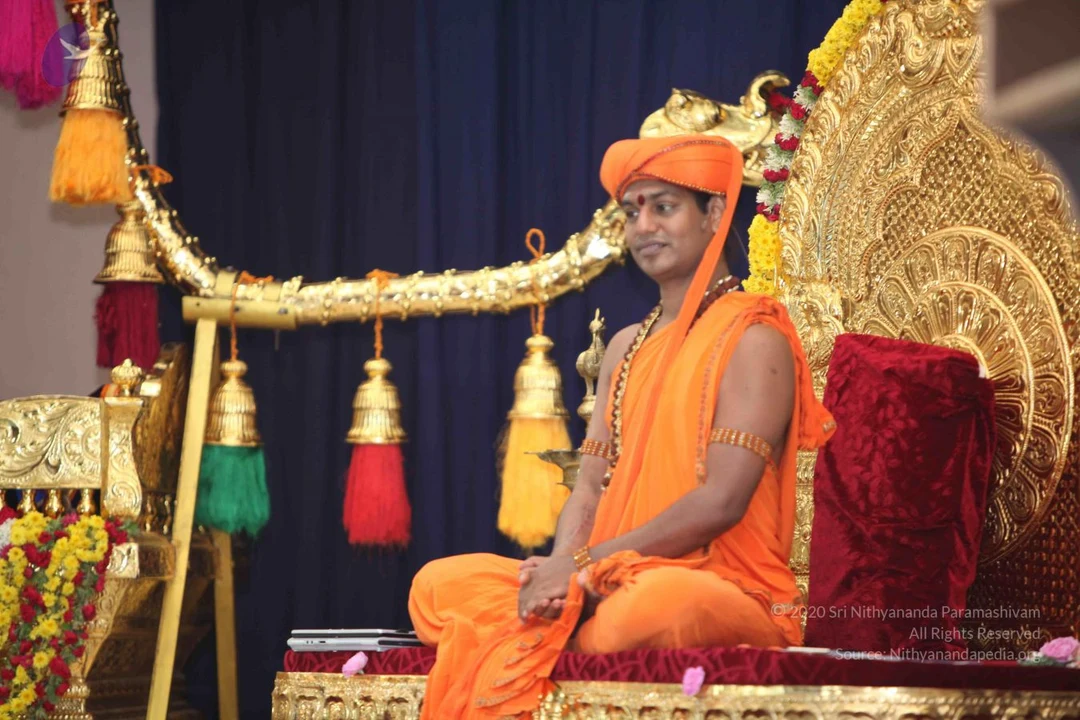
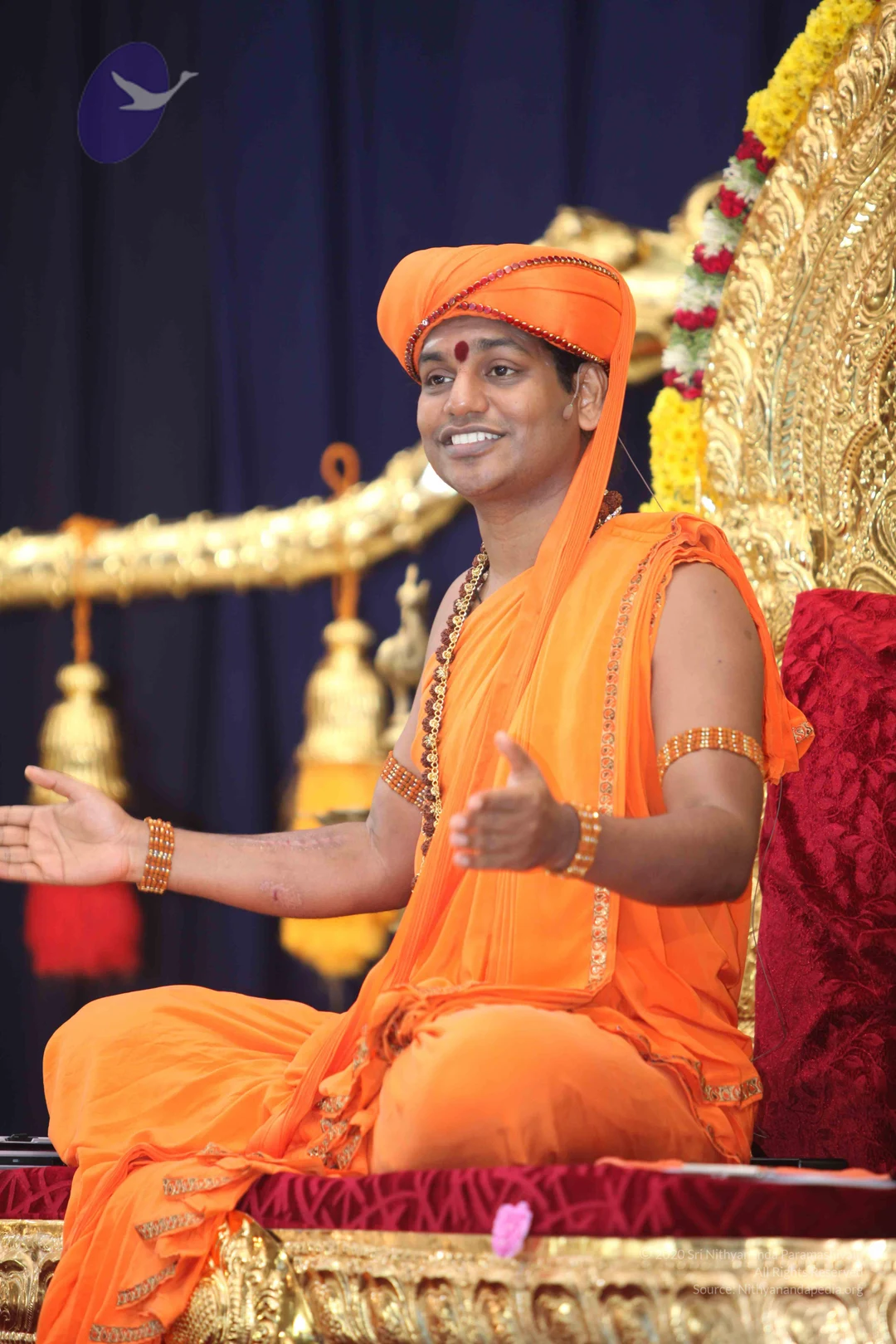
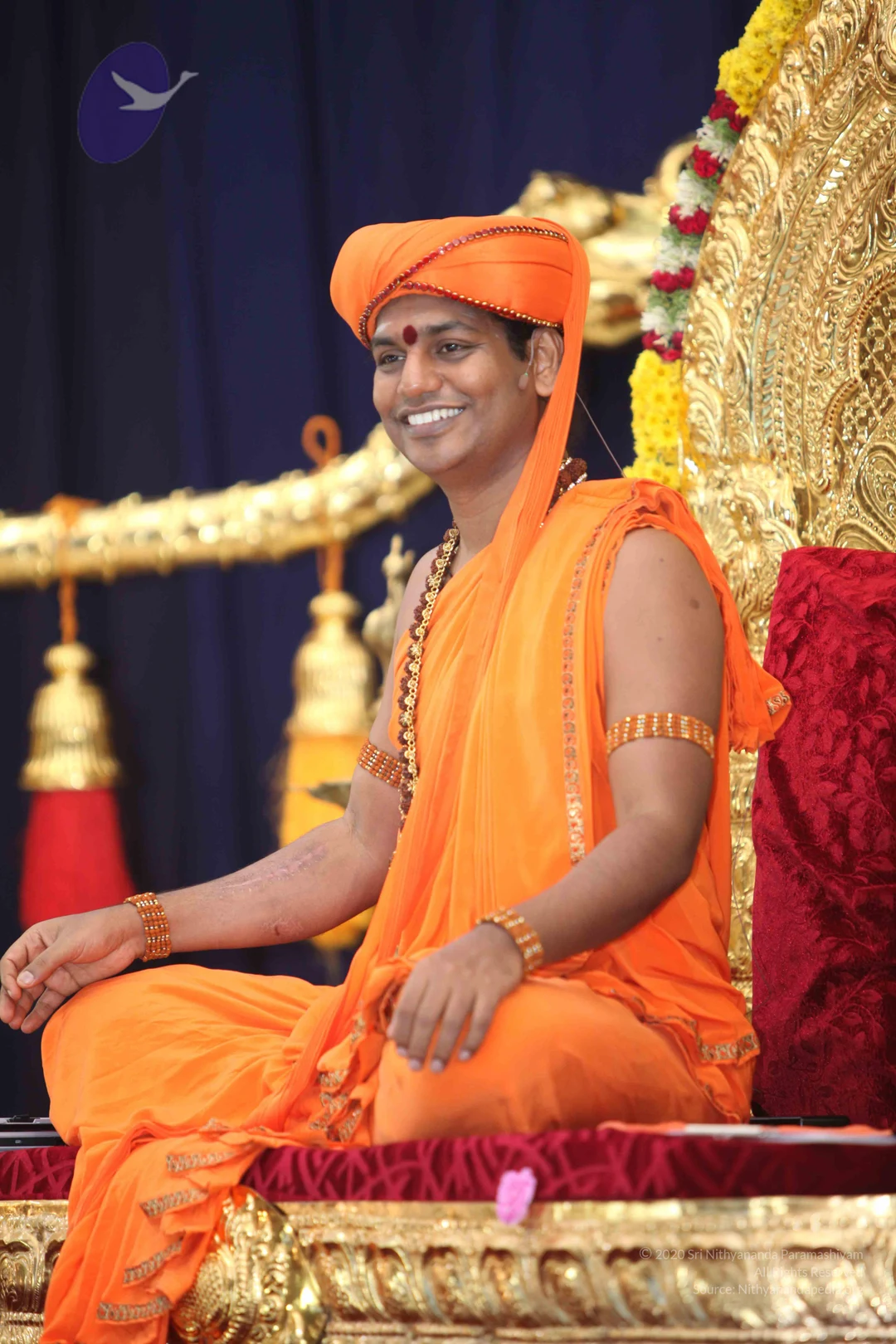
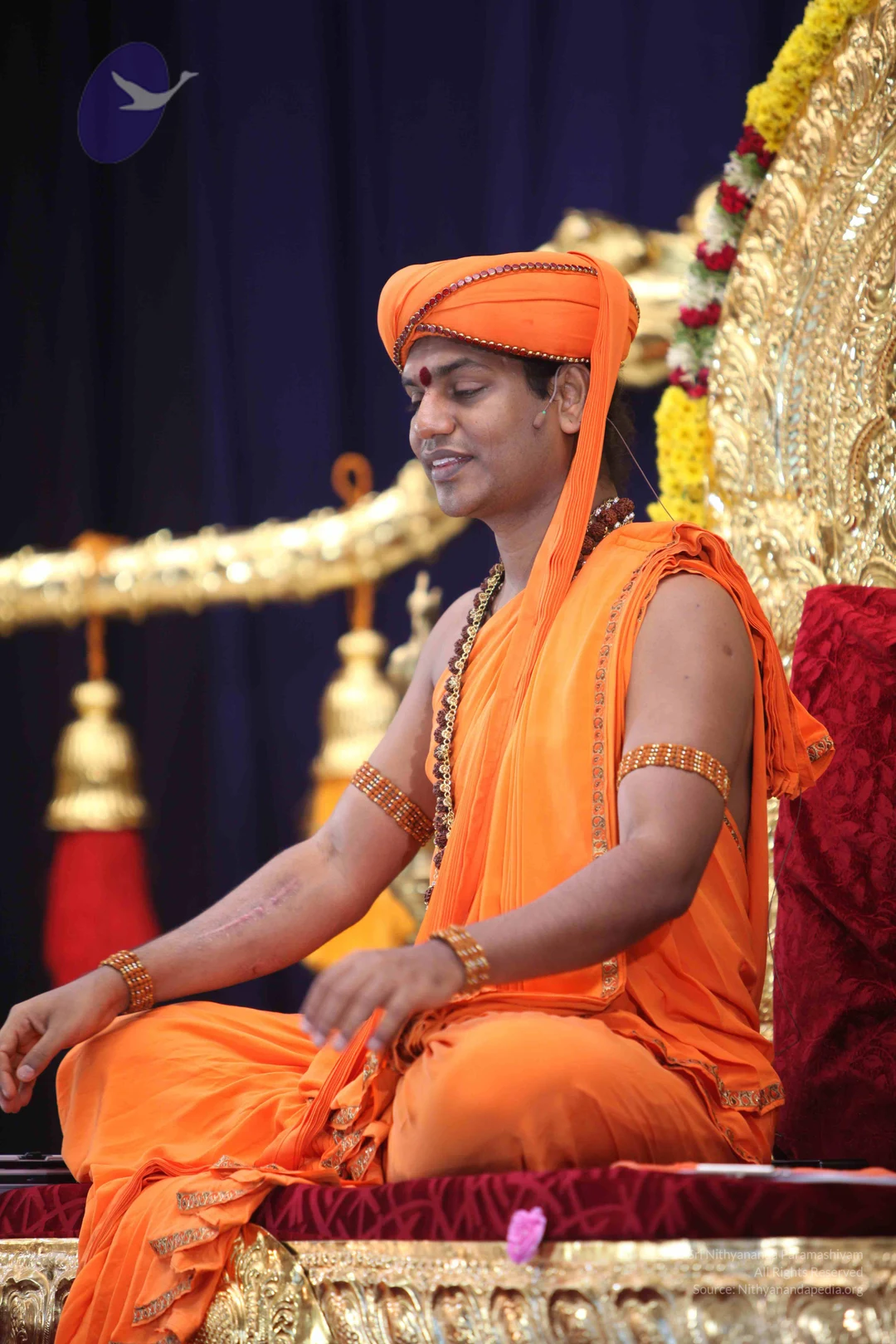
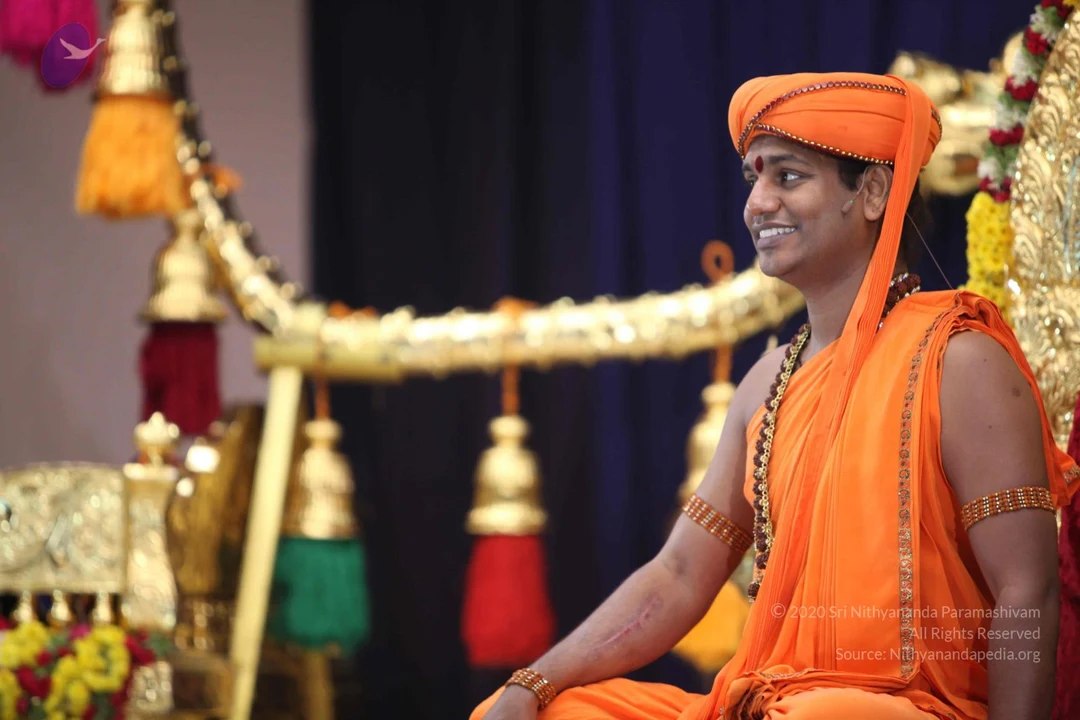
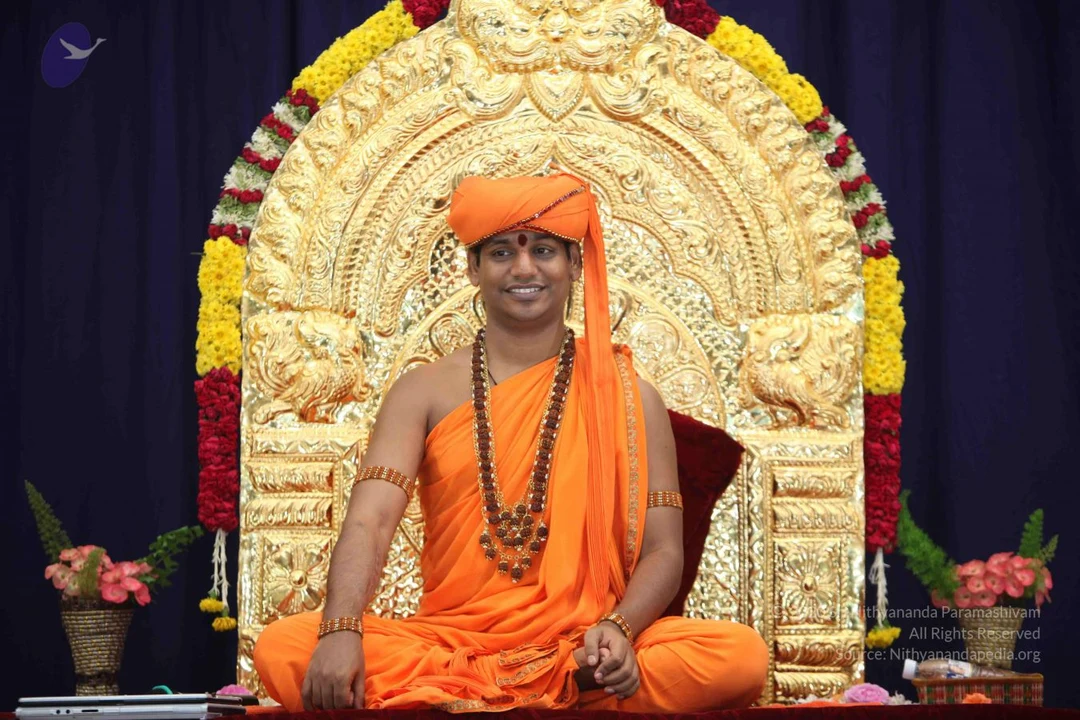
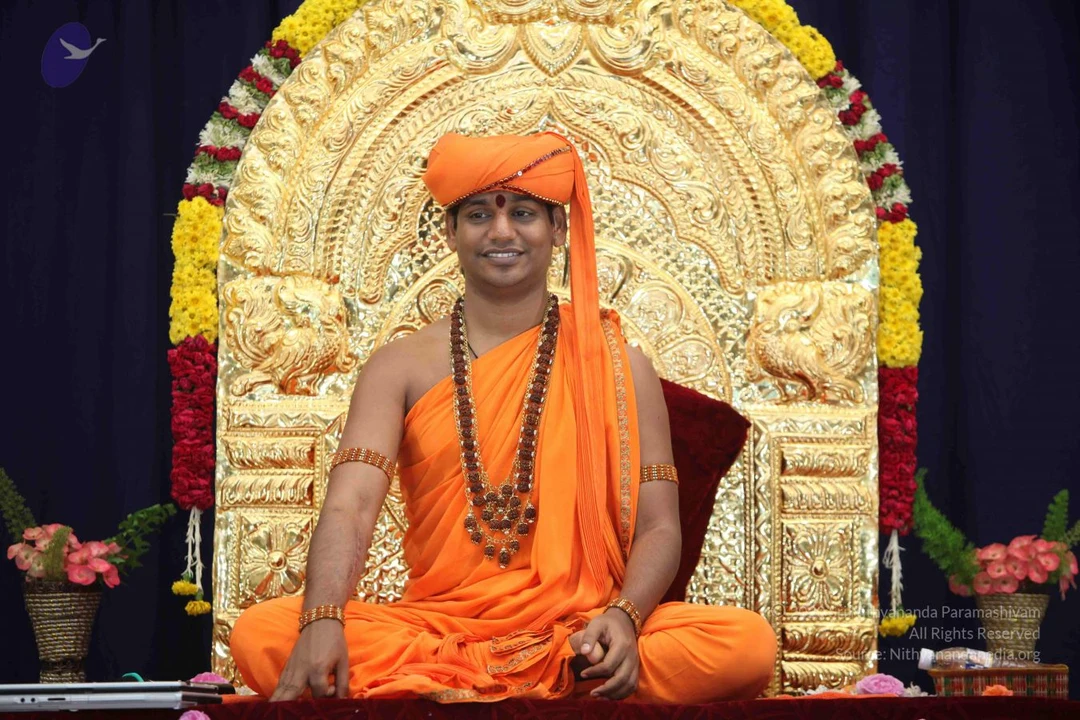
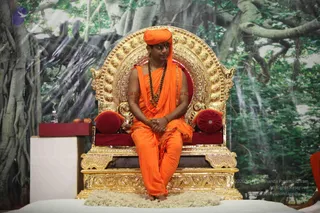
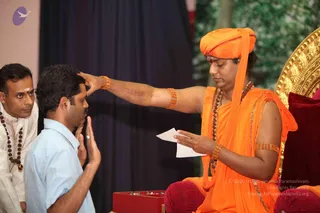
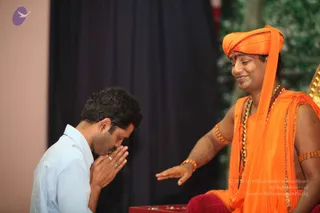
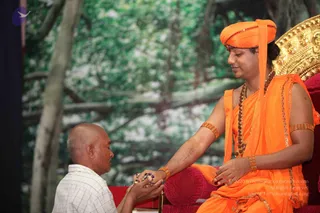
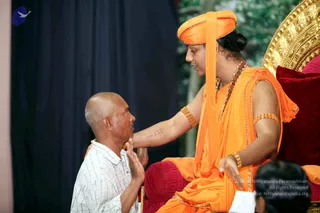
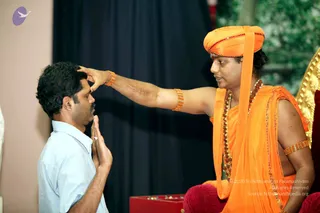
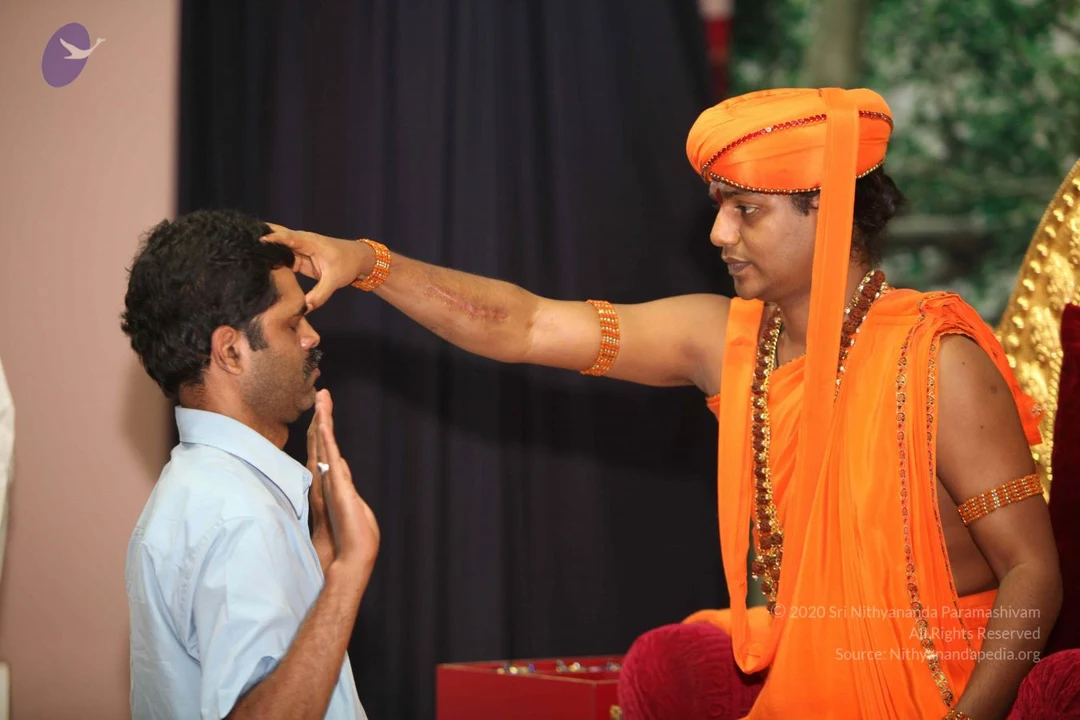
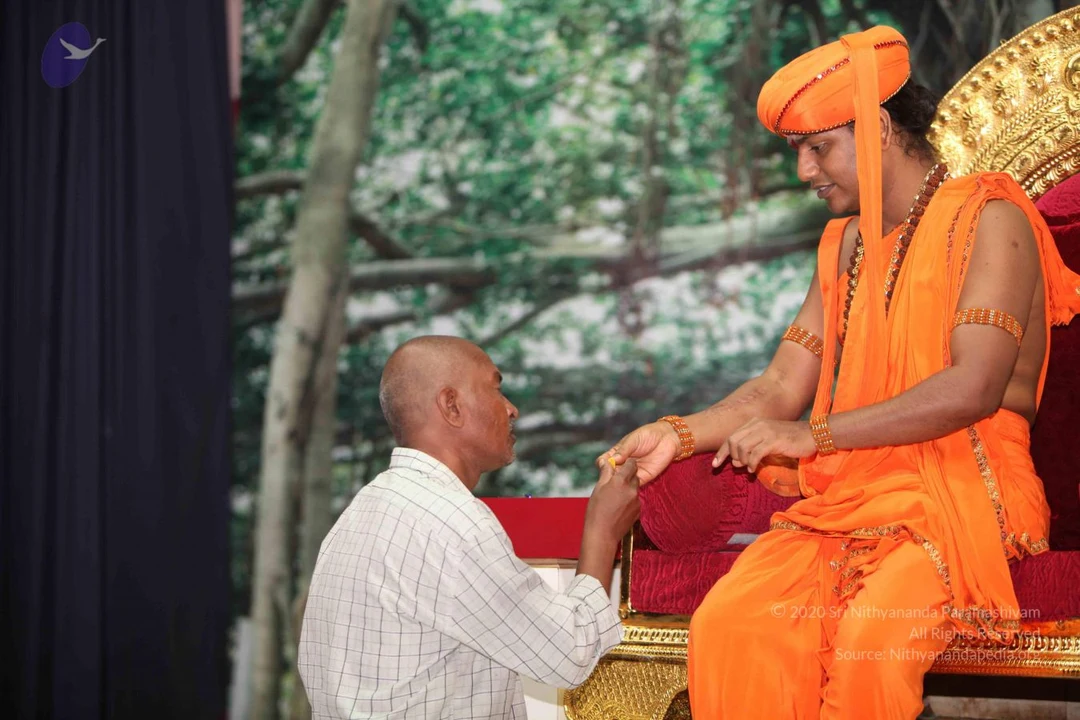
A seated man in orange saffron robes and an orange turban sits on an ornate gold throne with a carved arched back and red velvet cushions. He wears a rudraksha mala and gold bangles on his upper arms, hands folded in his lap, and bare feet resting on a white fur mat. A forest-tree backdrop with banyan-like roots stands behind the throne, with a small table holding a water bottle and fruit to the left. Appearance-based label: Swamiji (probable), seated on the throne with saffron clothing, a turban and rudraksha cues.A photograph of a seated figure in an orange turban and saffron robe with rudraksha mala beads and gold bangles, placing one hand on the forehead of a kneeling man in a light blue shirt who raises his other palm in a gesture of reception. The robed figure holds a folded white paper in his other hand. Beside them a man in white traditional clothes with a rudraksha mala and a tilak stands watching. A red box rests in front, and a gold-framed throne with red cushions and a green backdrop appear behind. The robed figure shows distinctive orange and rudraksha cues, so this is a person in person; the kneeling man is a devotee receiving blessing. Three people are visible.A photograph of a seated figure in orange robes and an orange turban, wearing a rudraksha-style beaded necklace and ornate gold-toned bangles, extending one hand palm-down toward a kneeling man in a light blue collared shirt who presses his palms together in front of his chest with head bowed. The orange-clad figure's eyes are closed and he smiles gently; a red cushioned seat and a small red box with objects sit at the lower edge. A black draped curtain and a green foliage backdrop frame the scene. Appearance-based cues including the orange turban, flowing orange robes and beaded ornaments give a probable Swamiji (probable) as the seated teacher blessing a devotee in a darshan-like moment.A seated figure in saffron-orange robes, wearing an orange turban, a rudraksha mala and ornate gold armbands, sits on a red cushioned throne with a gold-carved back in front of a painted forest backdrop. A kneeling man in a white checked shirt and rings bows forward and clasps the seated figure's extended forearm with both hands. The seated figure's face is turned downward toward the kneeling man. The scene resembles a blessing exchange in a satsang hall. The visible cues of saffron robes, turban and rudraksha mala are present, so the seated figure is described as a probable Swamiji (probable) receiving a devotee's gesture of reverence.A seated figure in saffron-orange robes and an orange turban sits on a red cushioned throne with an ornate gold backrest, touching the cheek of a bald older man kneeling before him. The seated figure wears a long rudraksha mala and gold ornaments on the arms, with a wrapped orange shawl draped across the body. The kneeling man wears a white checked shirt and holds his palm near the seated figure's arm. A dark blue curtain and green foliage form the backdrop, and a partial head of another person is visible at the lower right.

Kundalini-Awakening

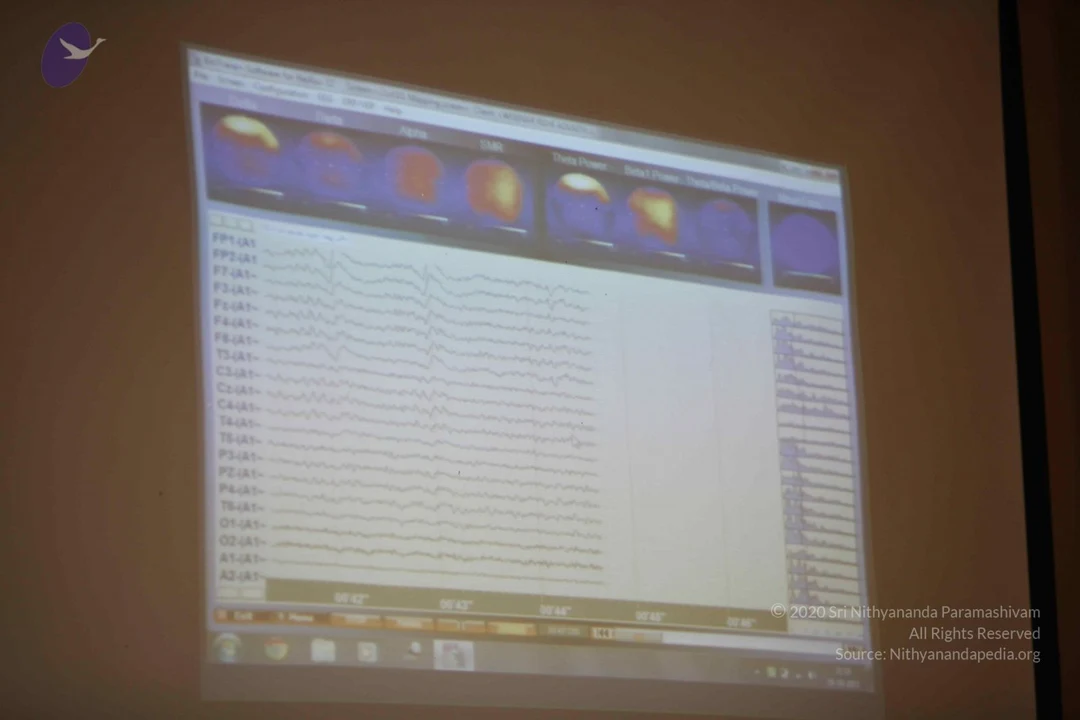
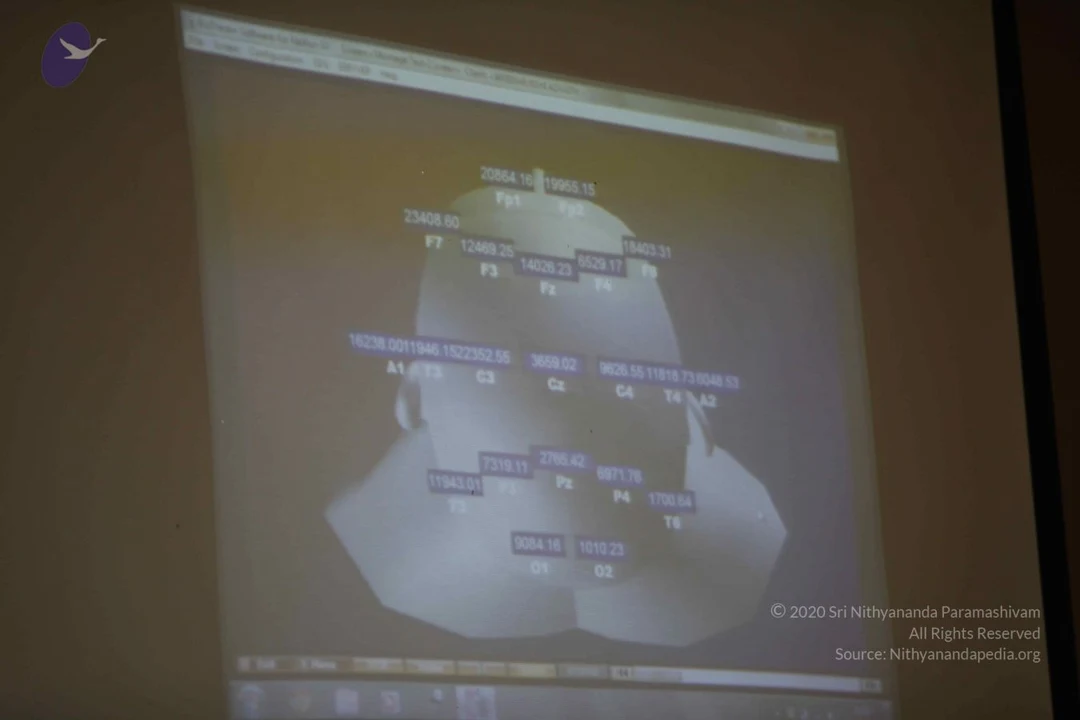
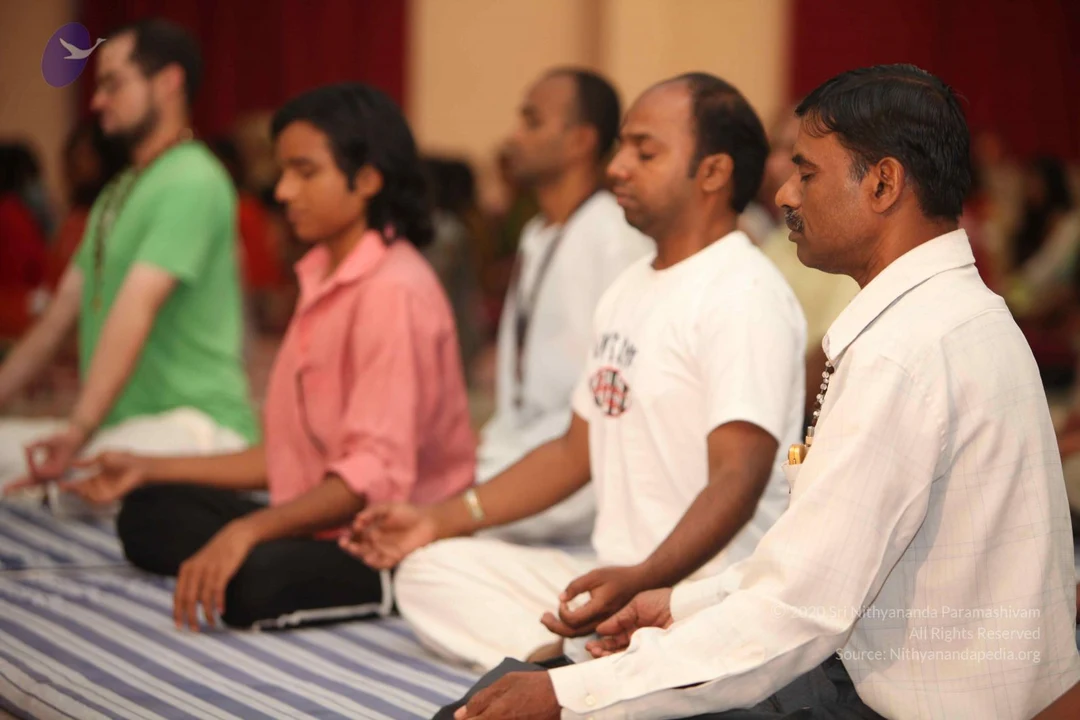
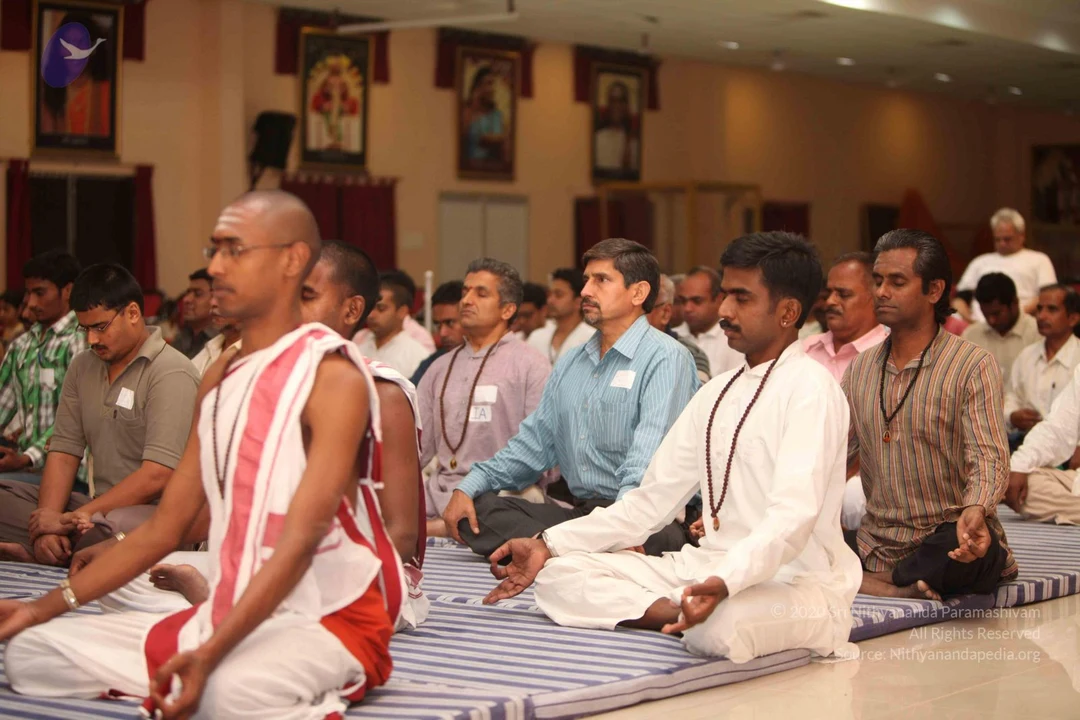
222 photosSource gallery
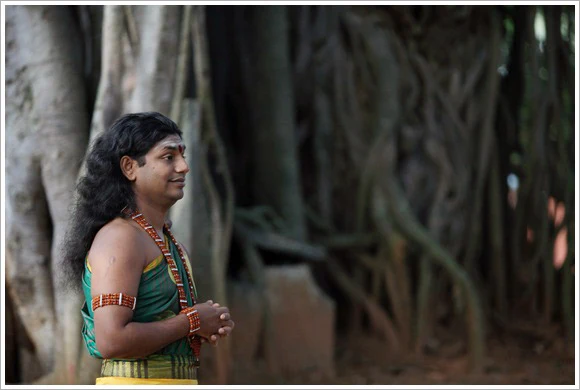
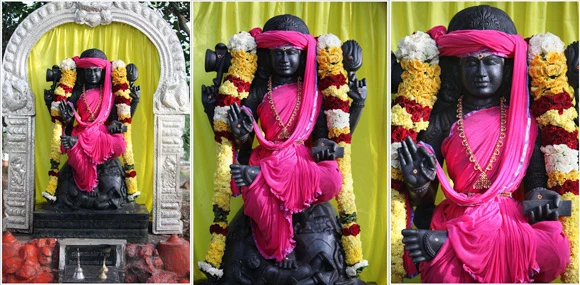
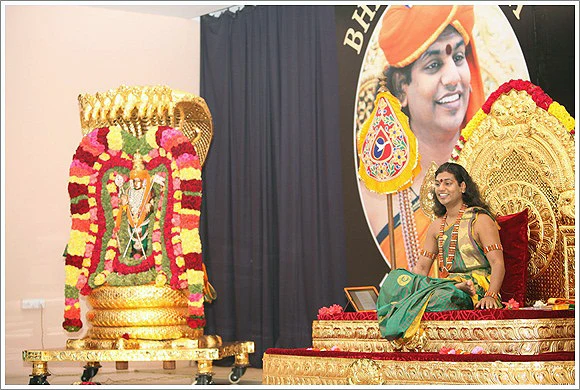
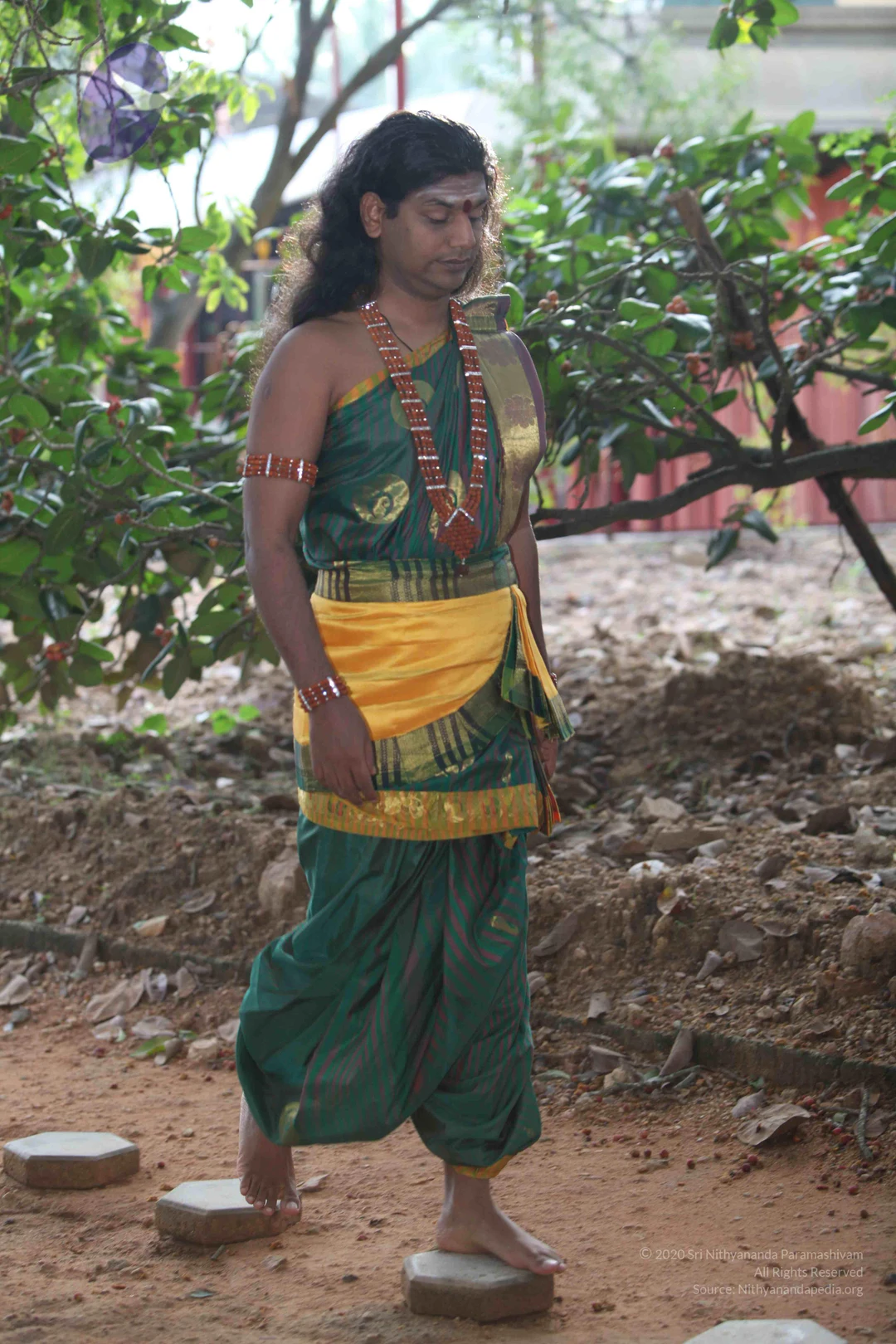
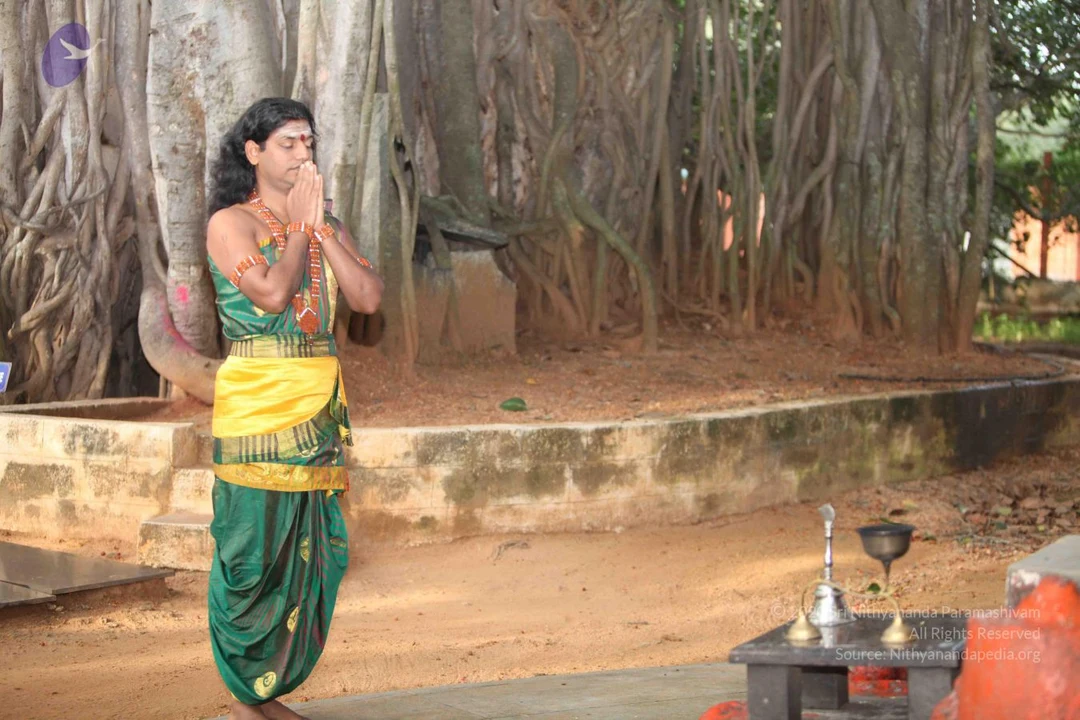
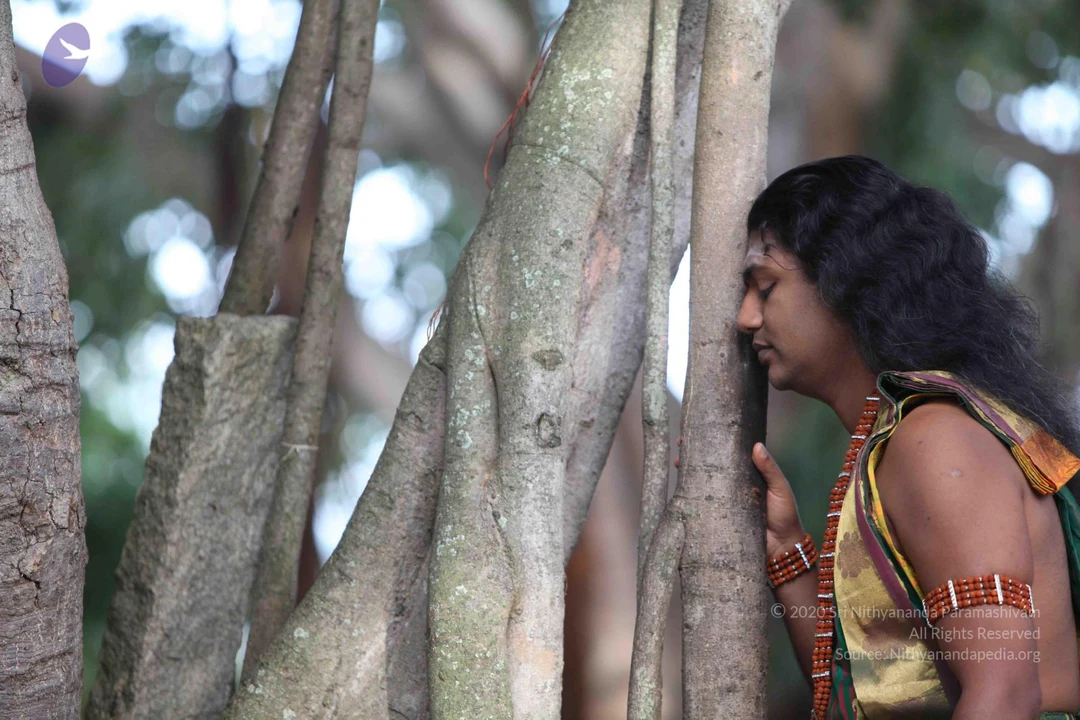
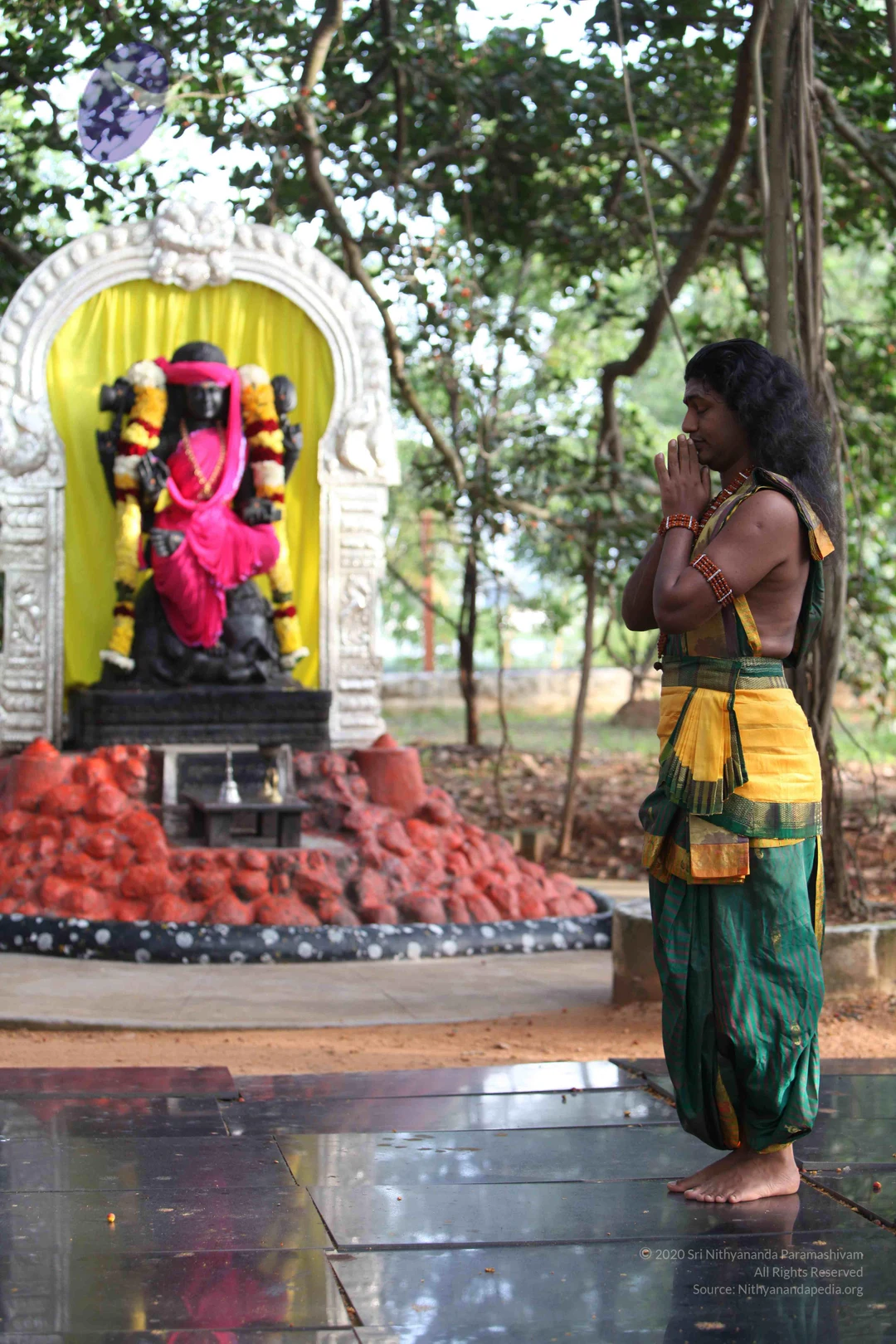
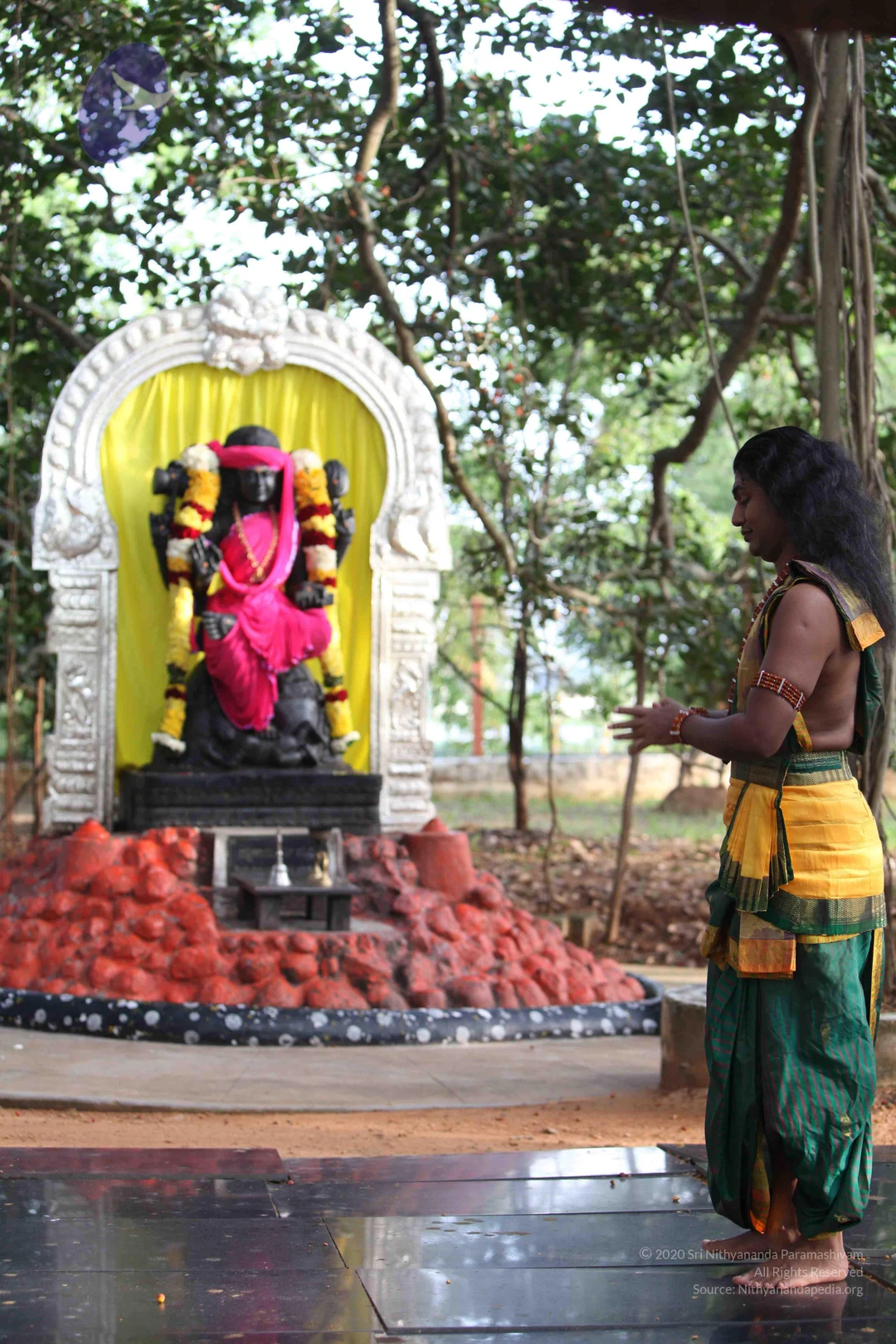
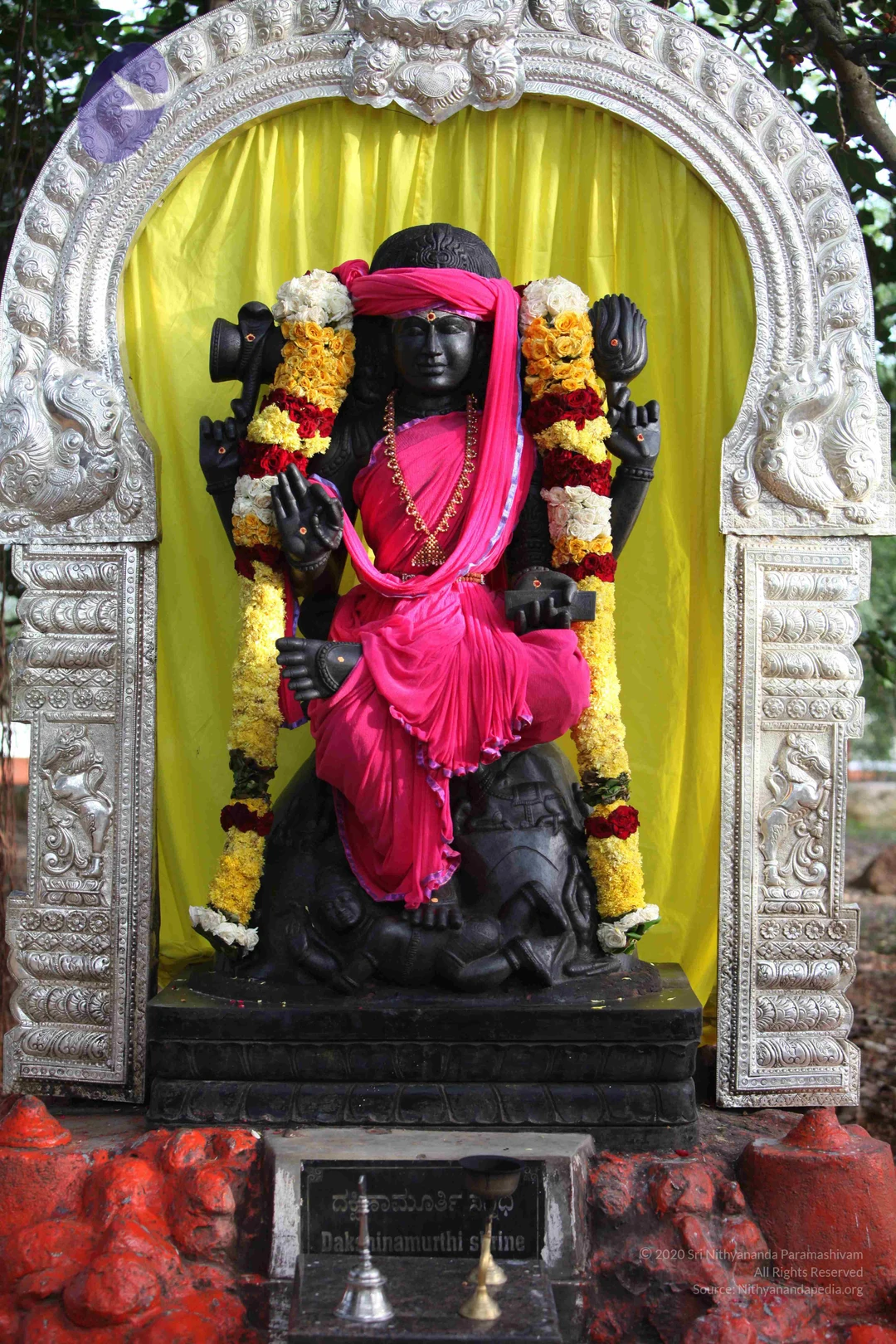
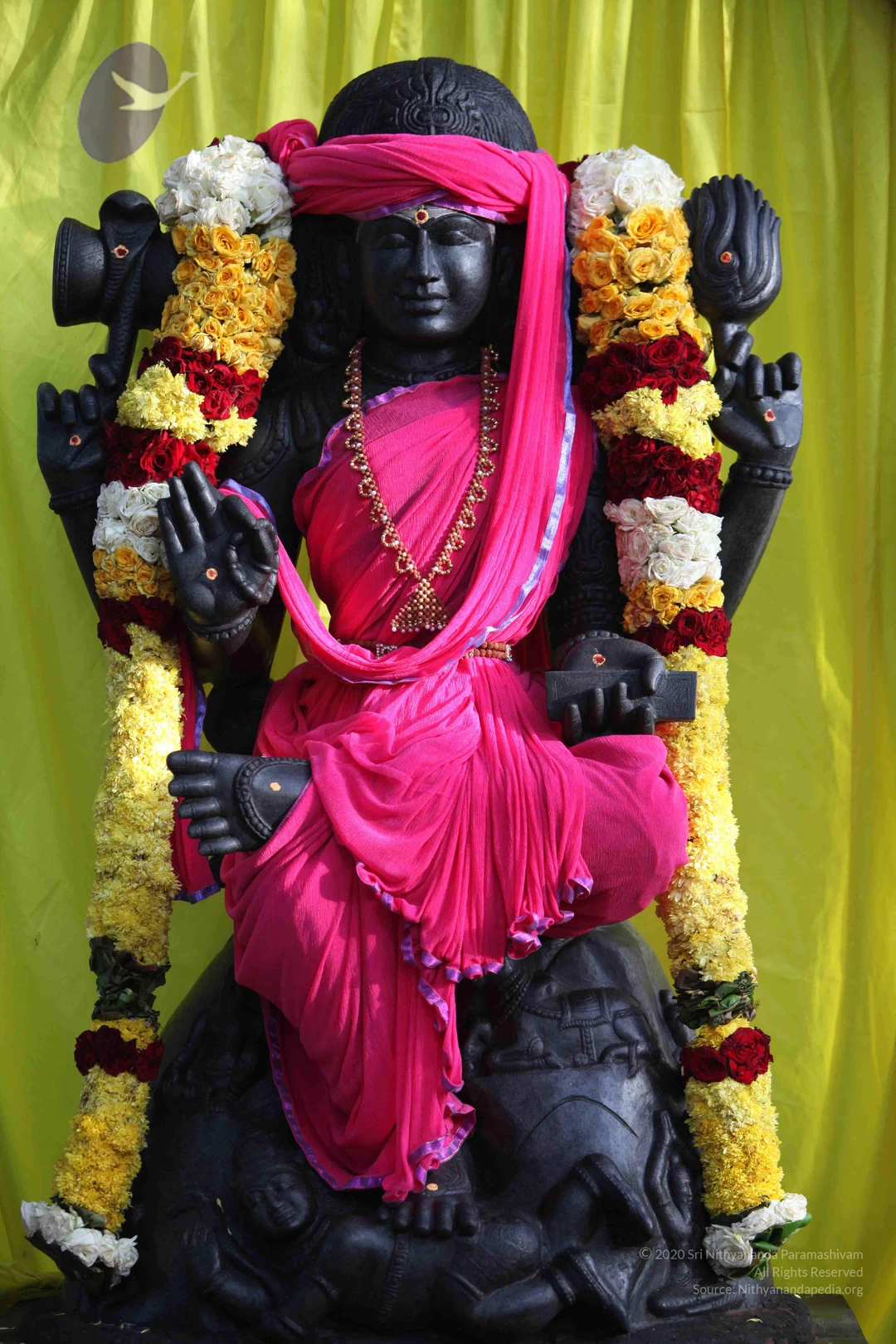
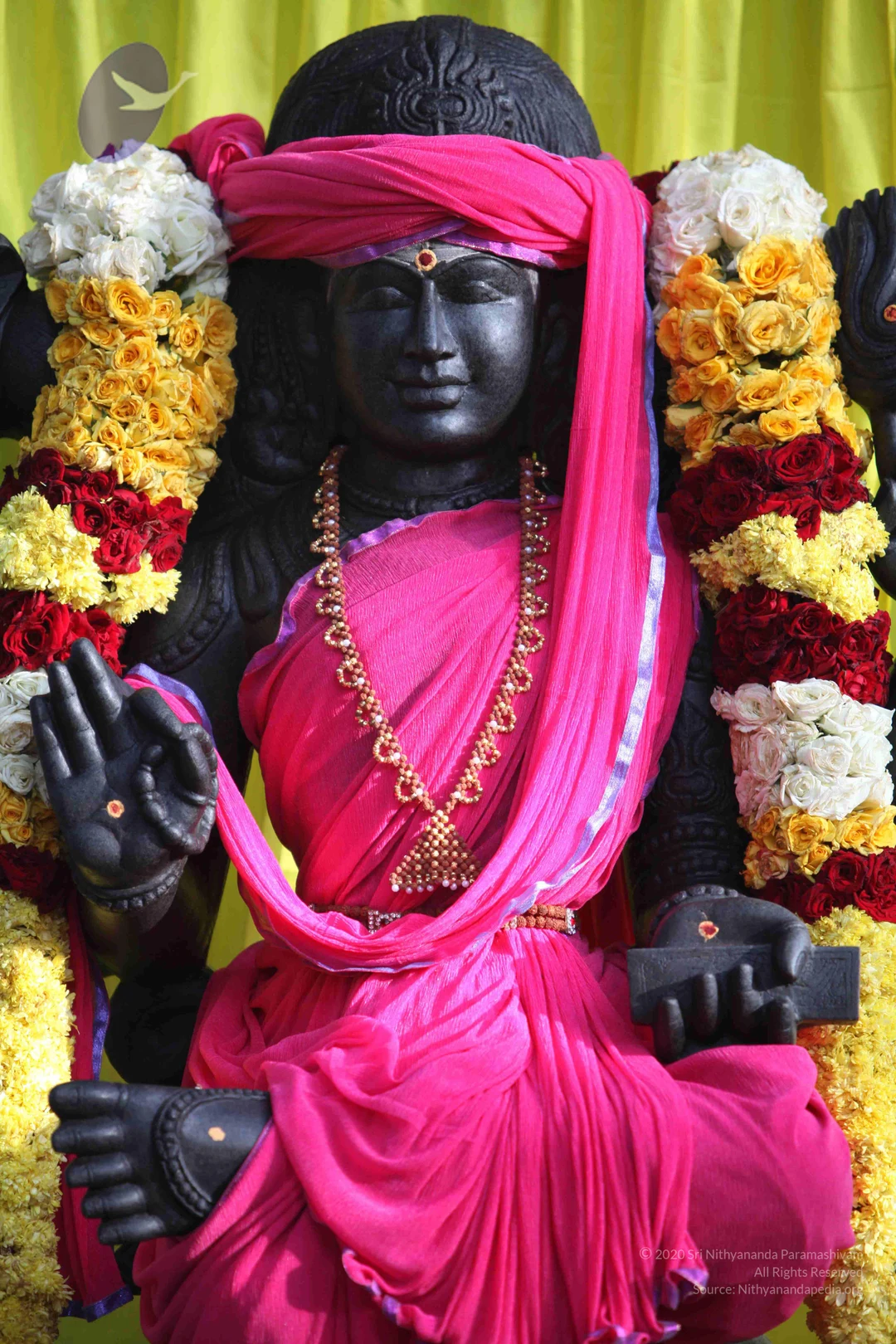
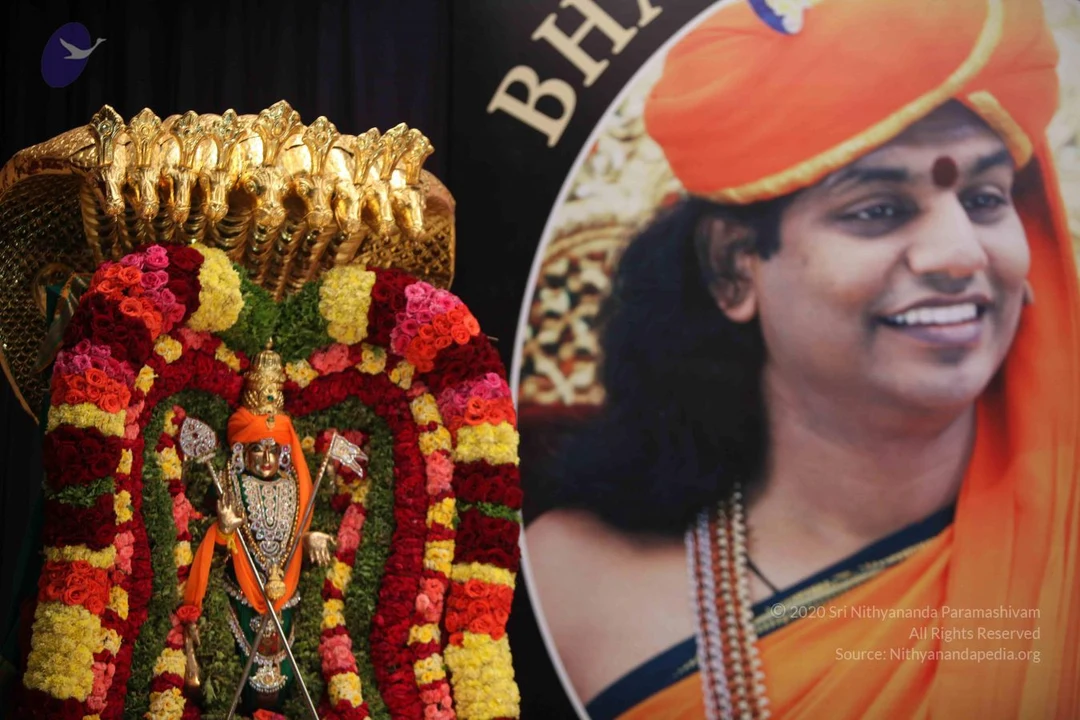
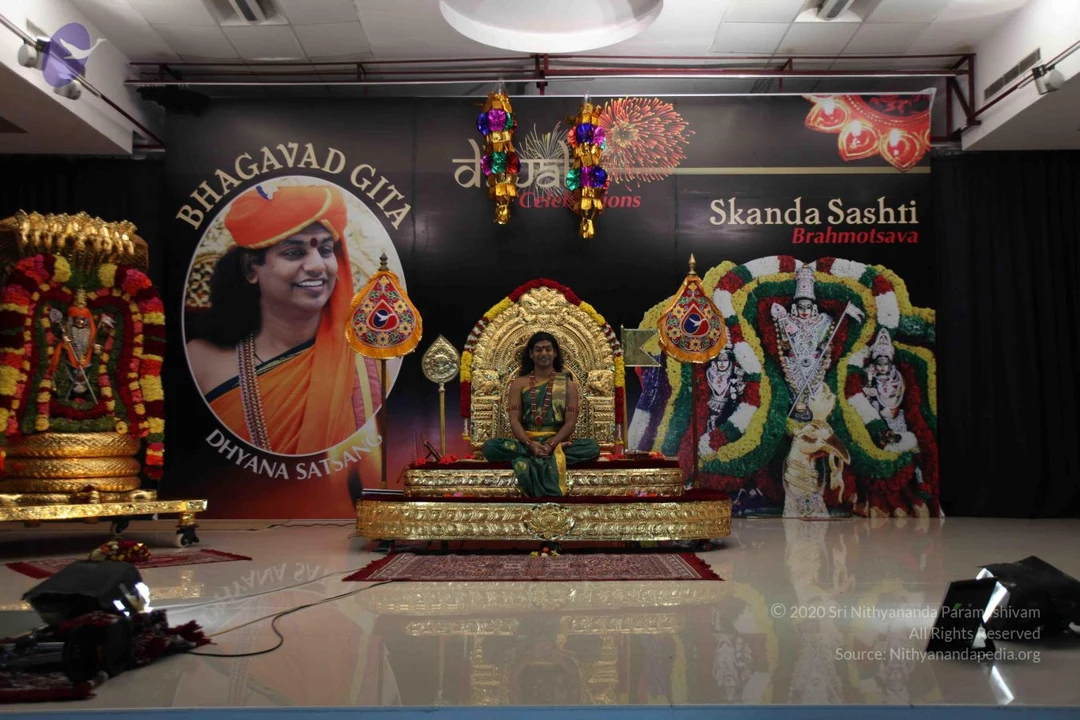
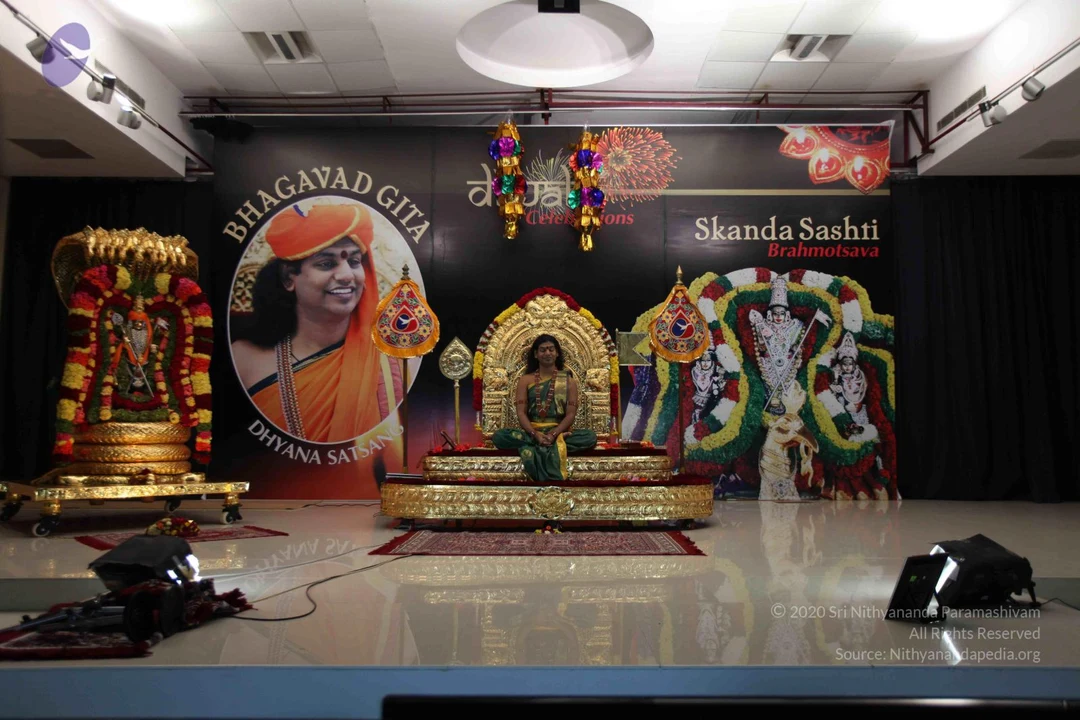
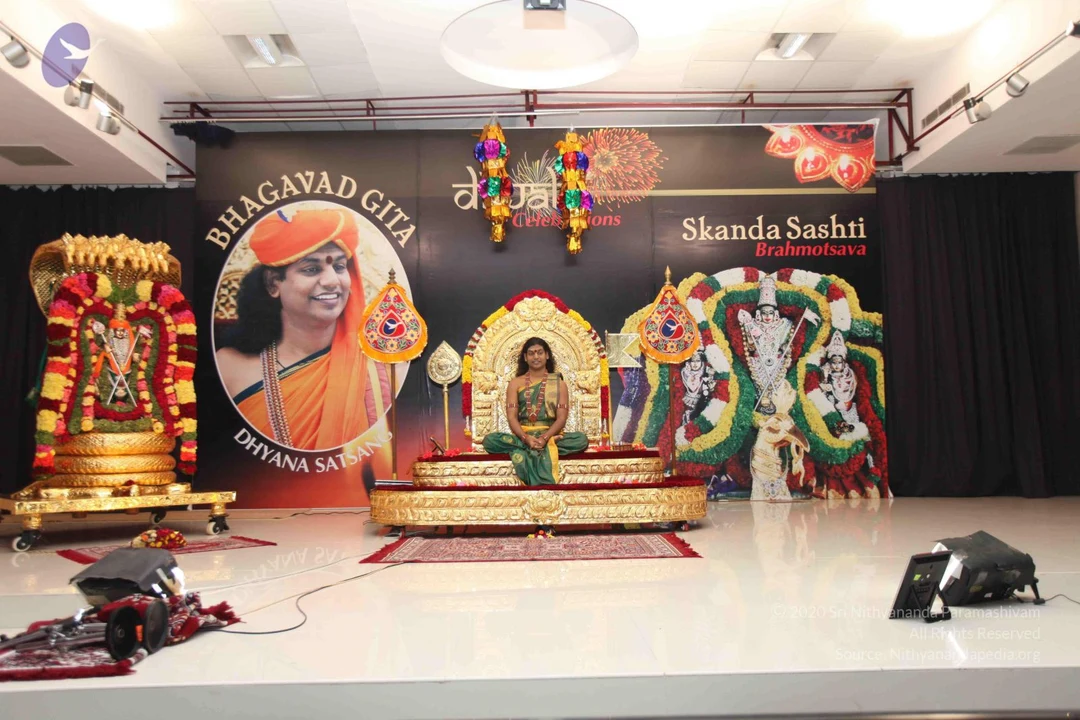
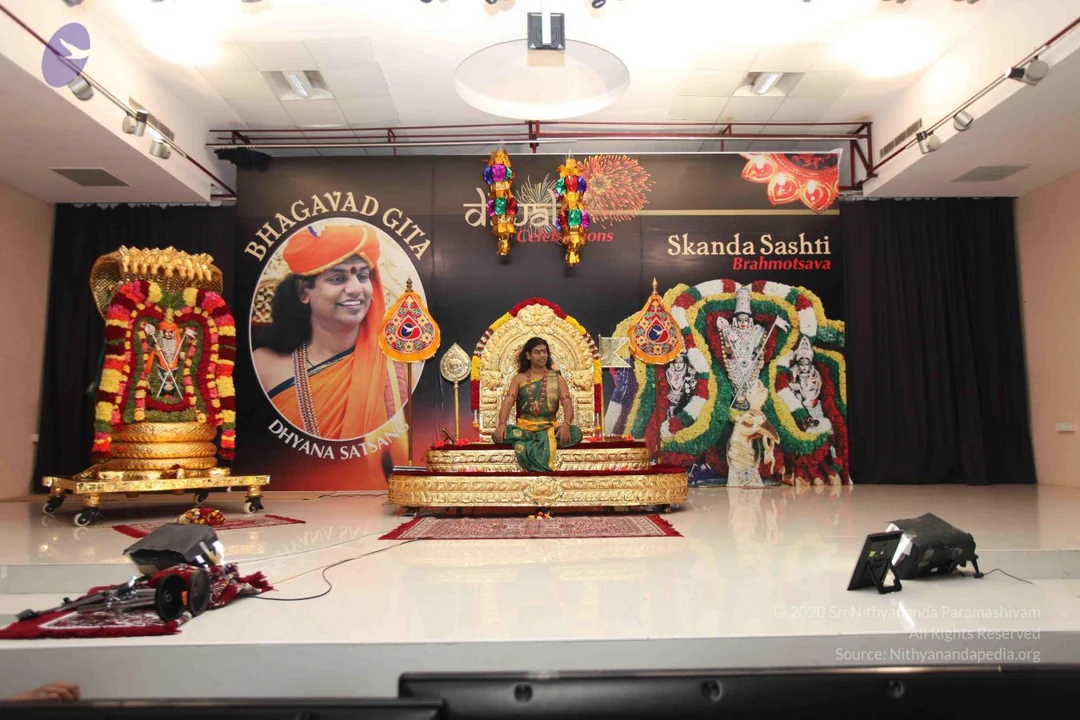
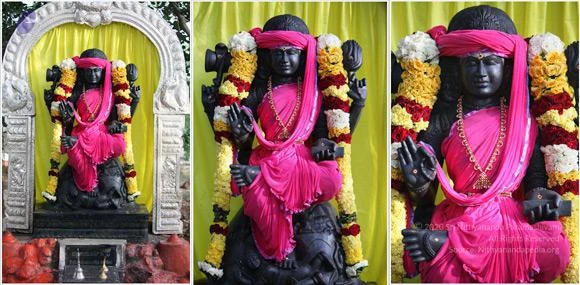
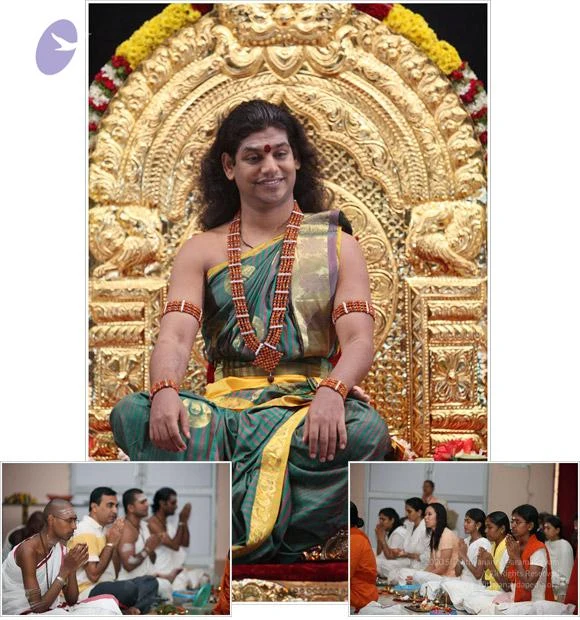
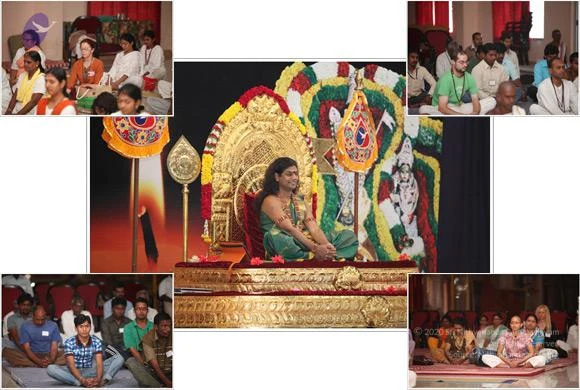
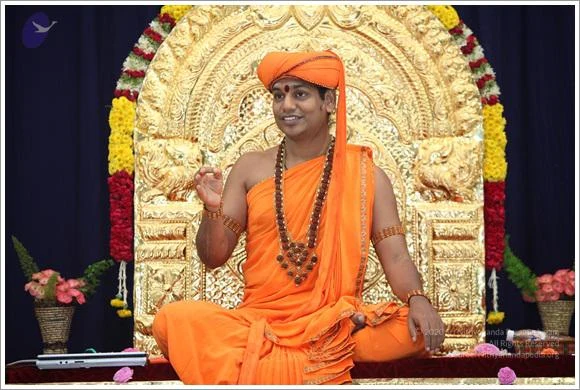
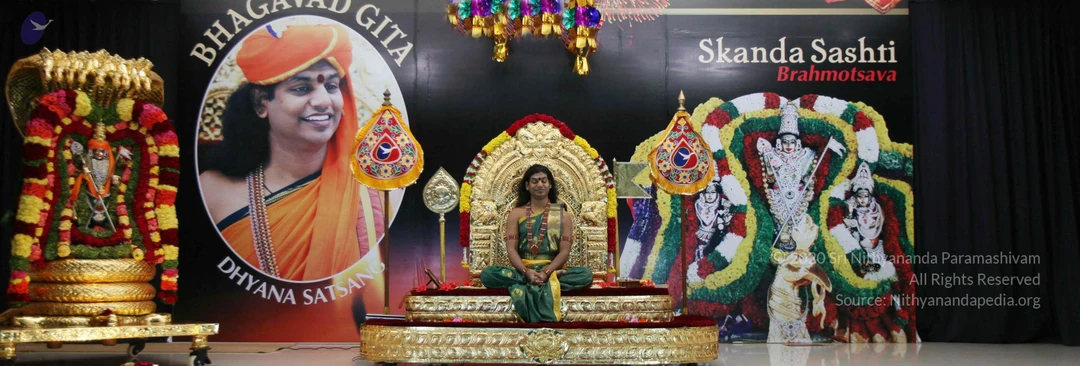
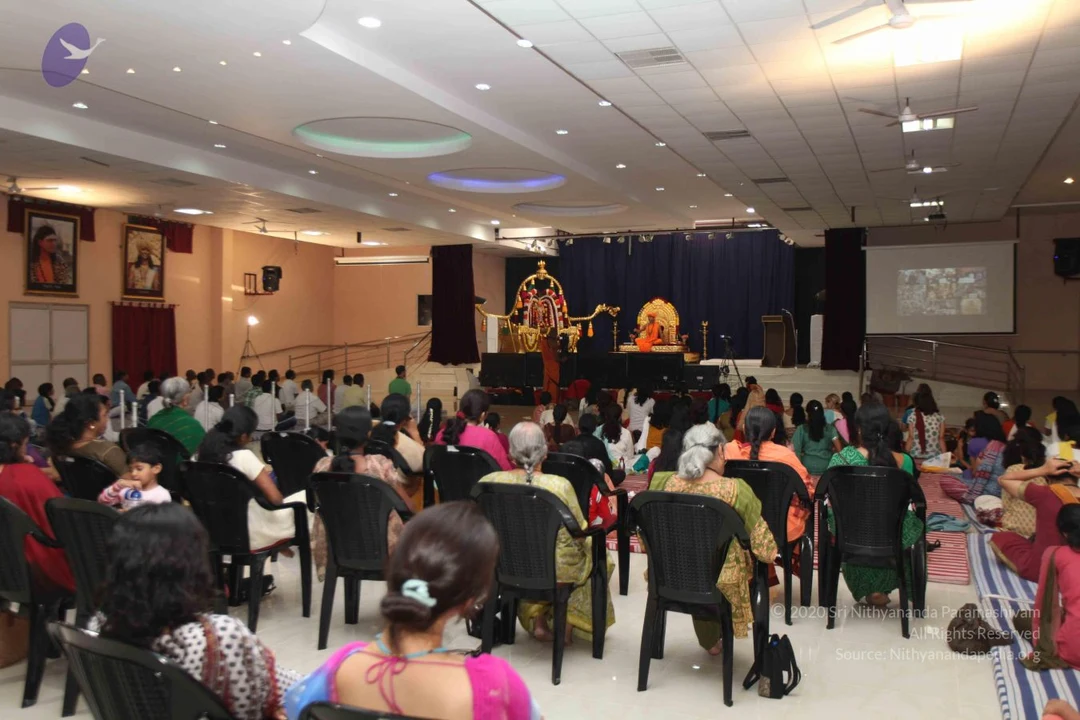
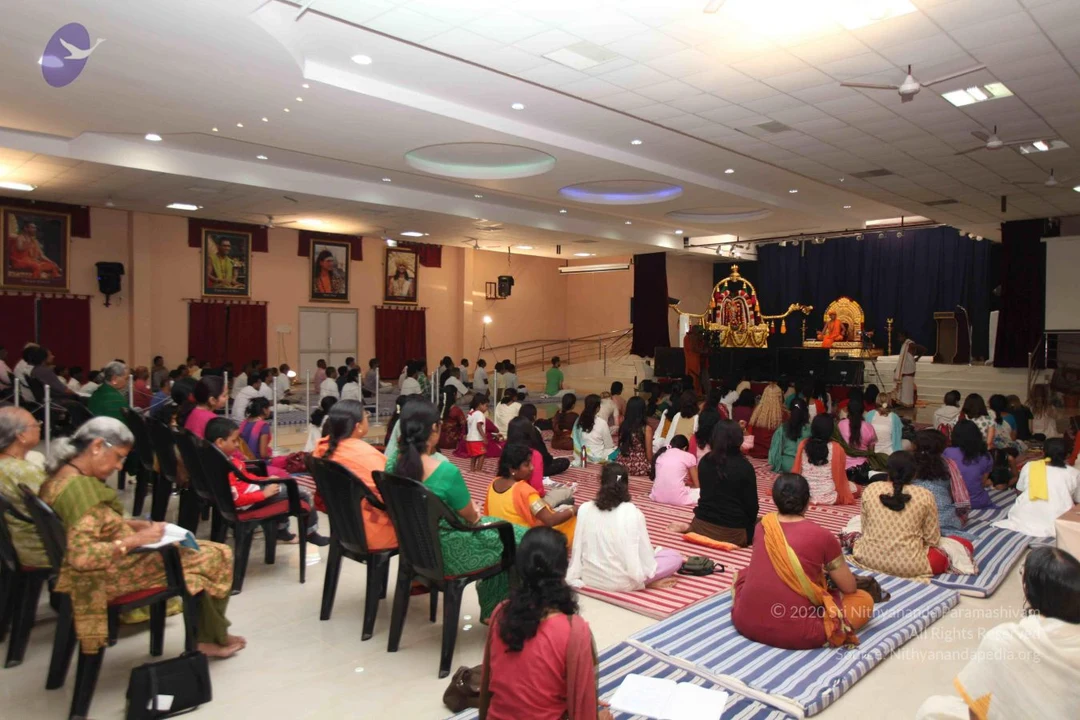
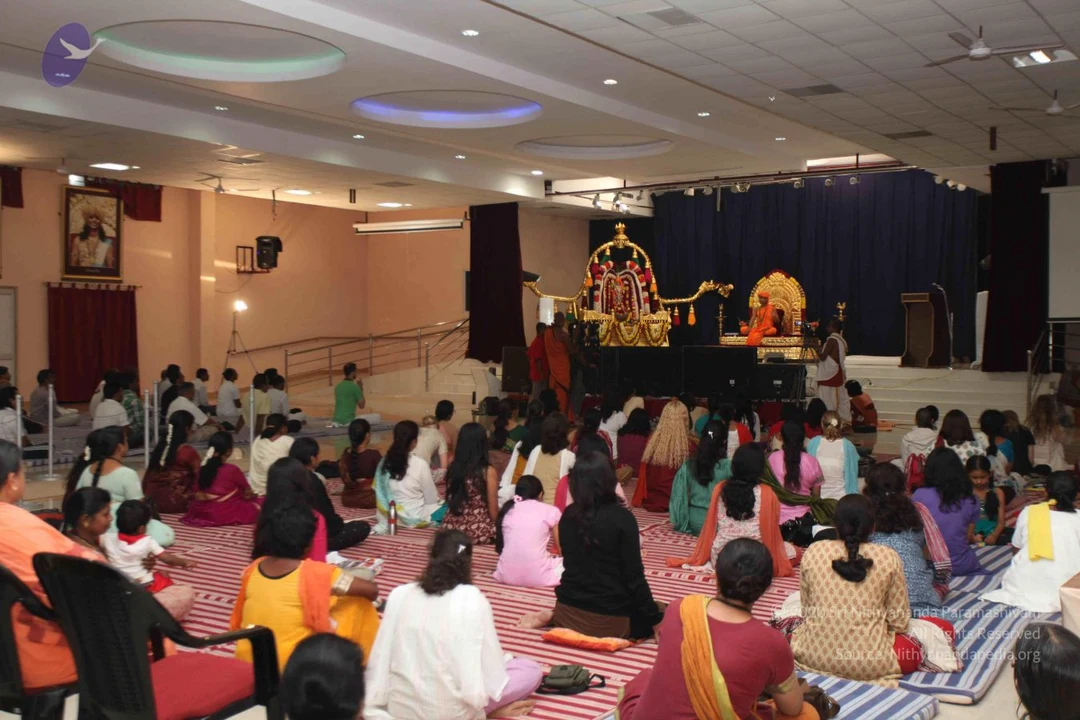
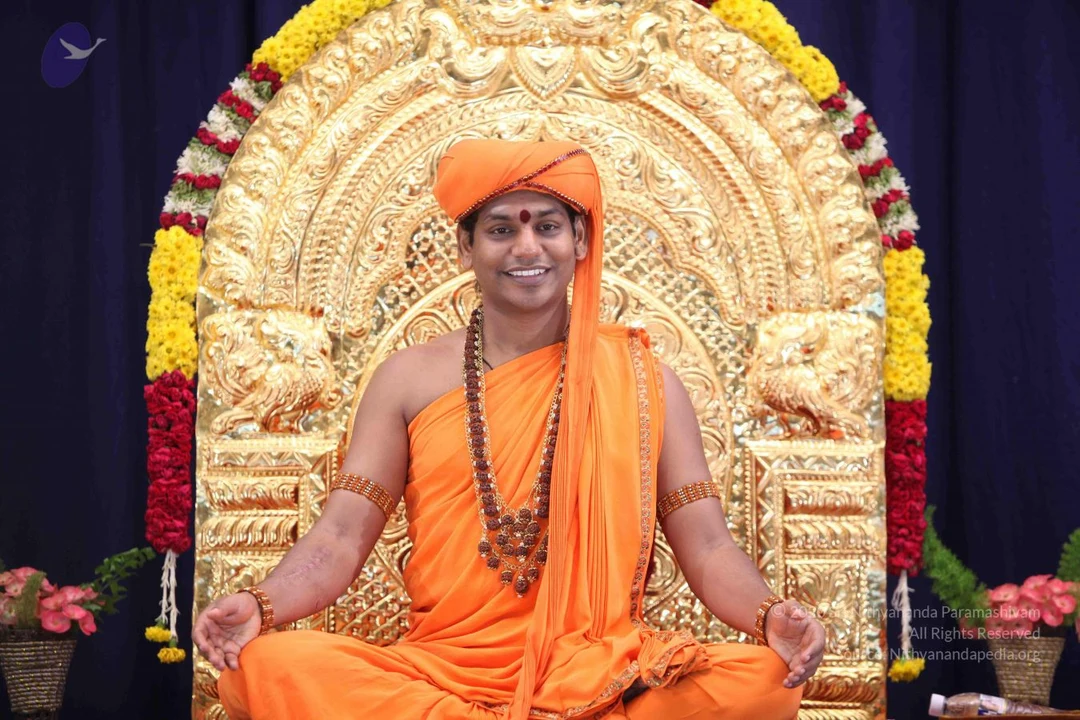
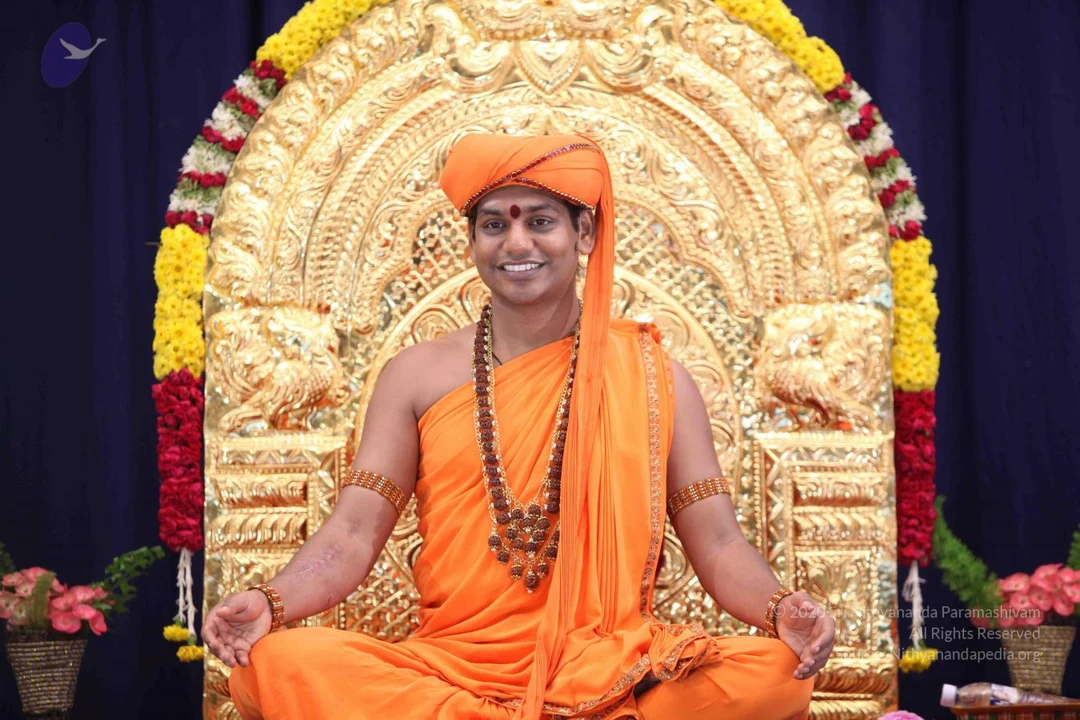
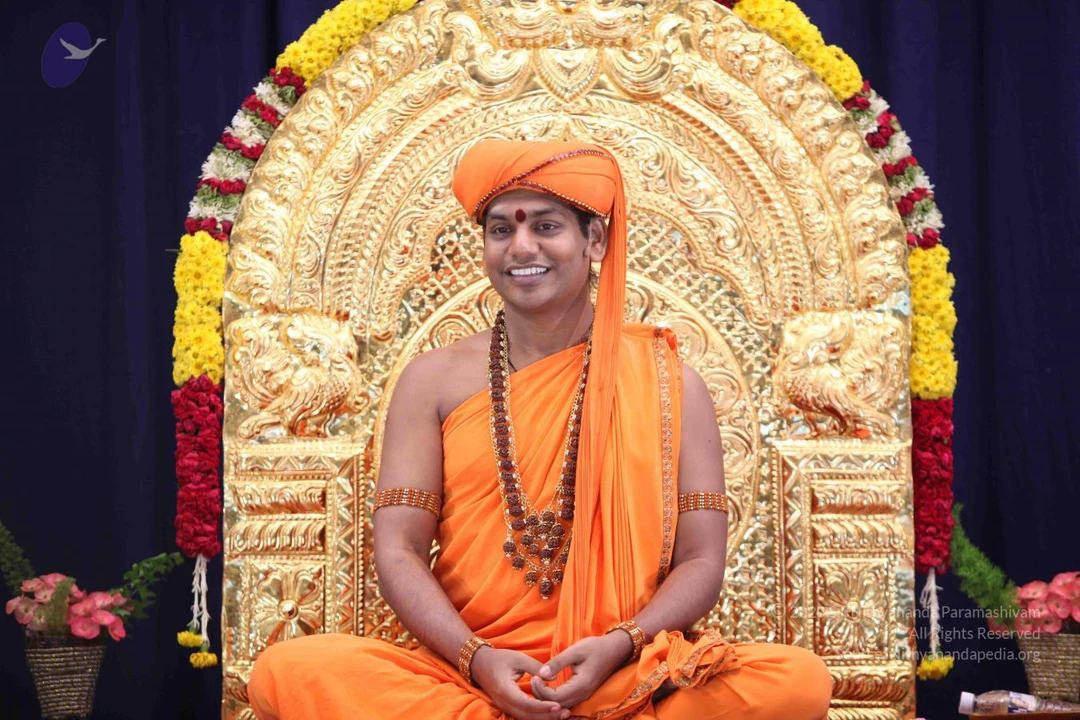
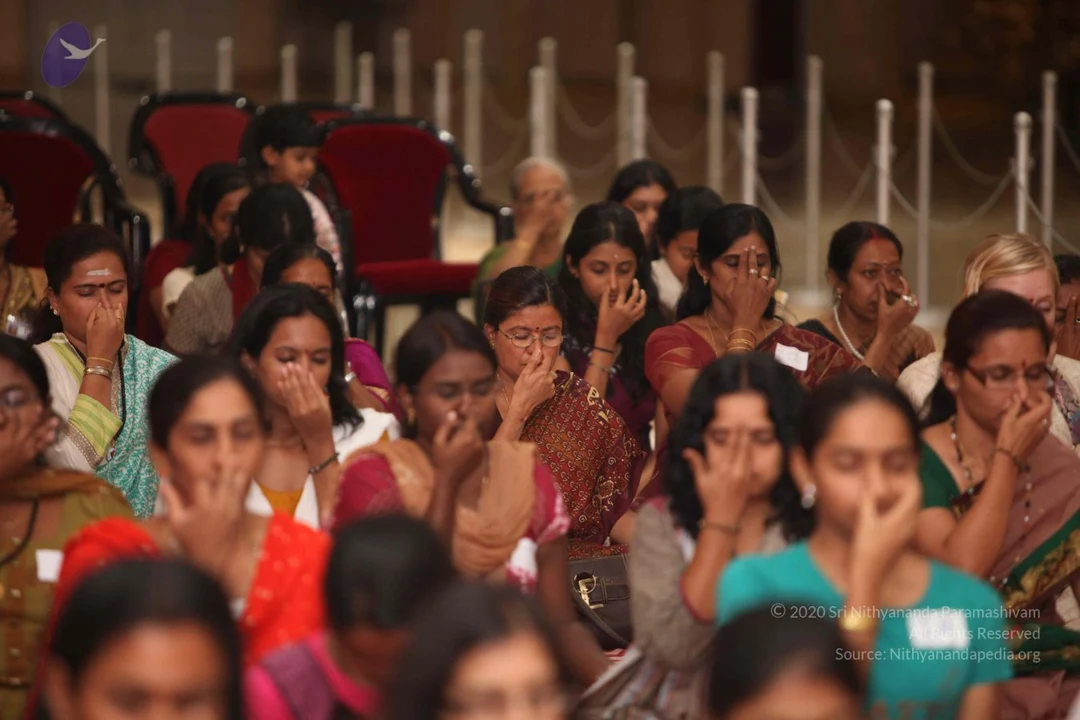
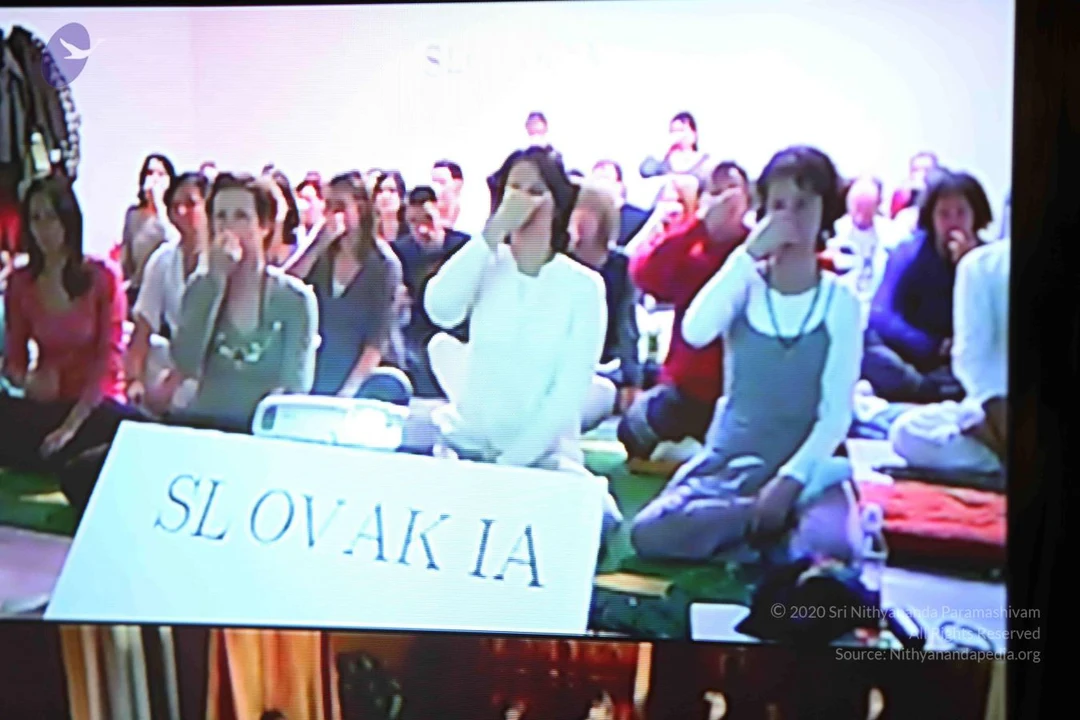
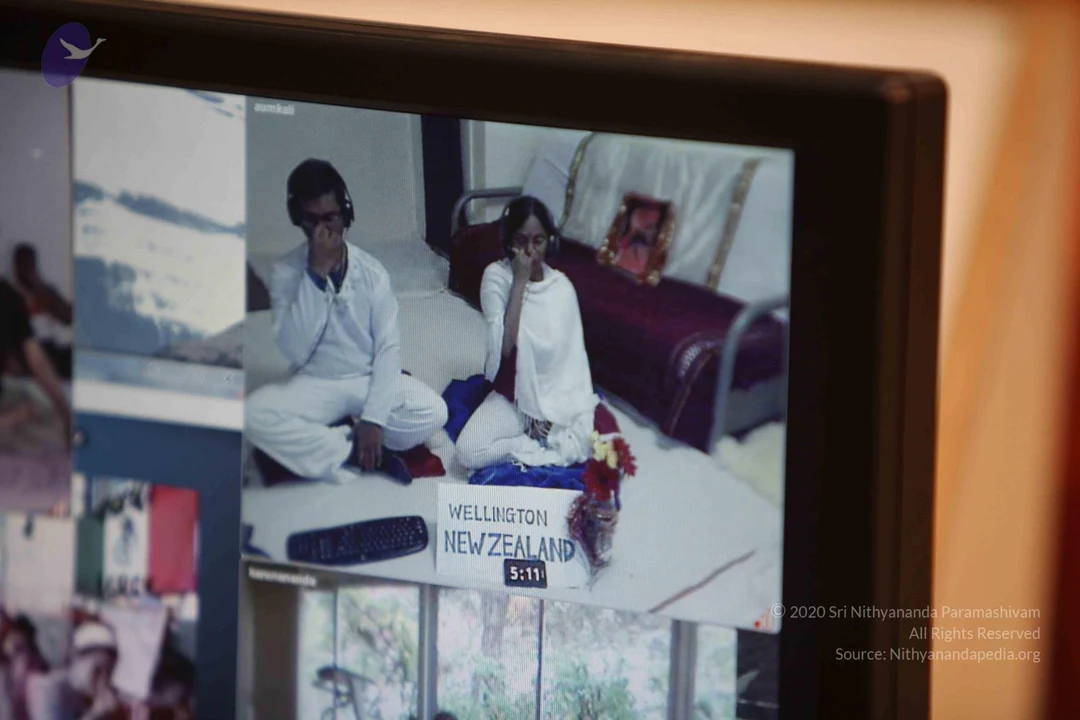
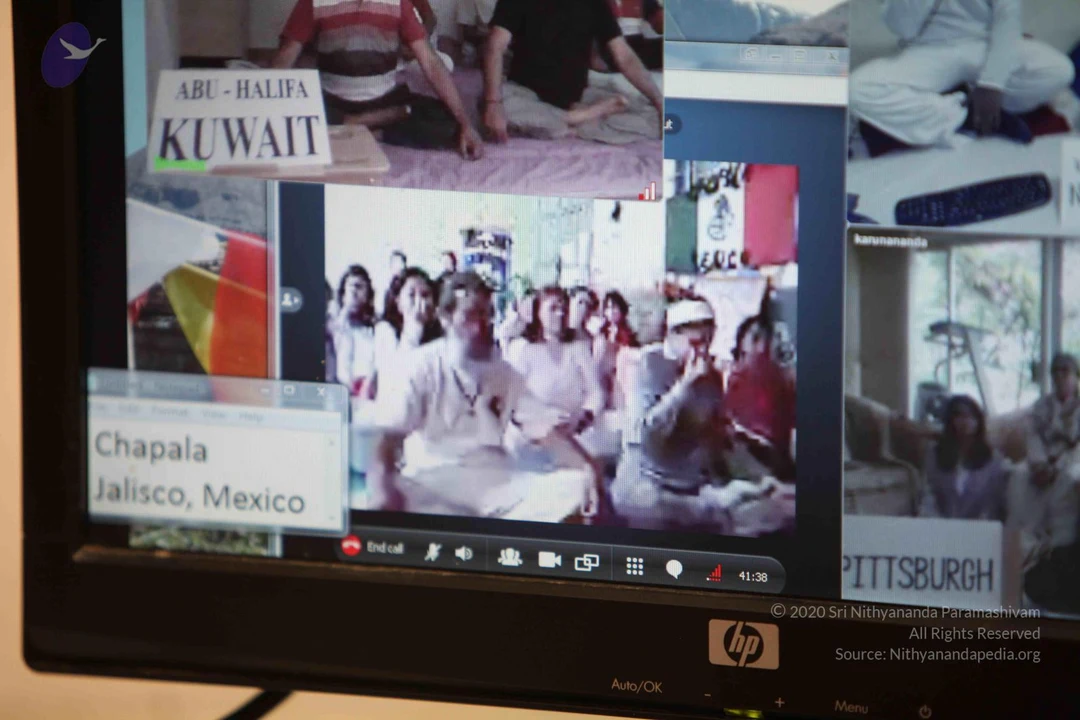
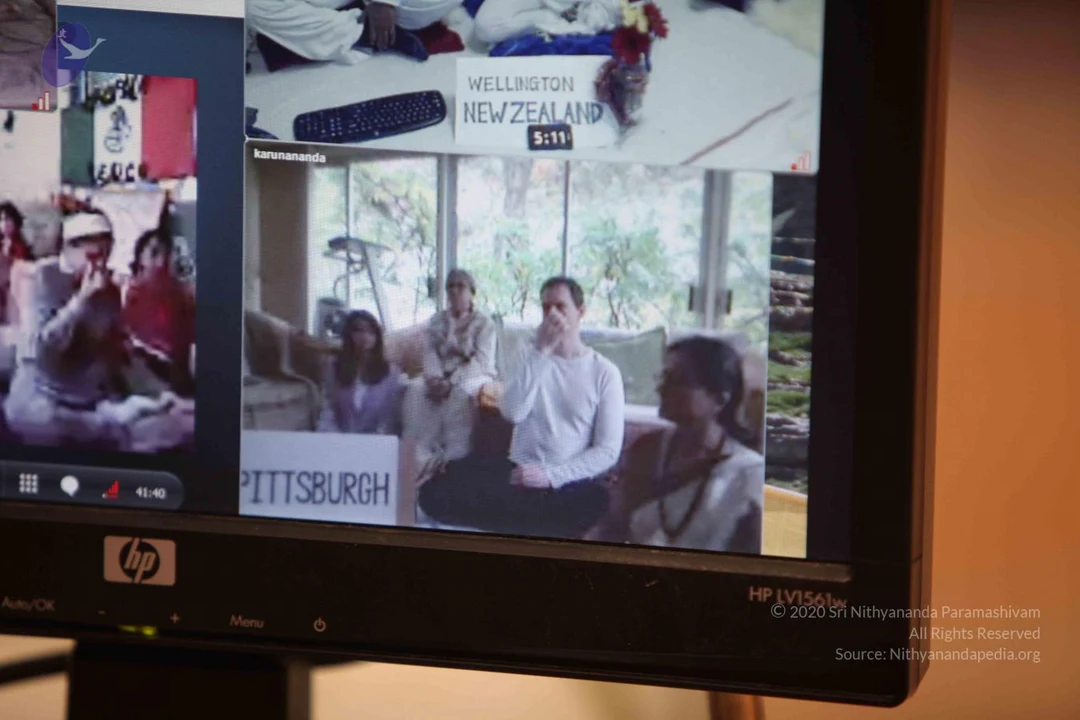
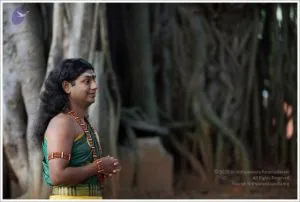
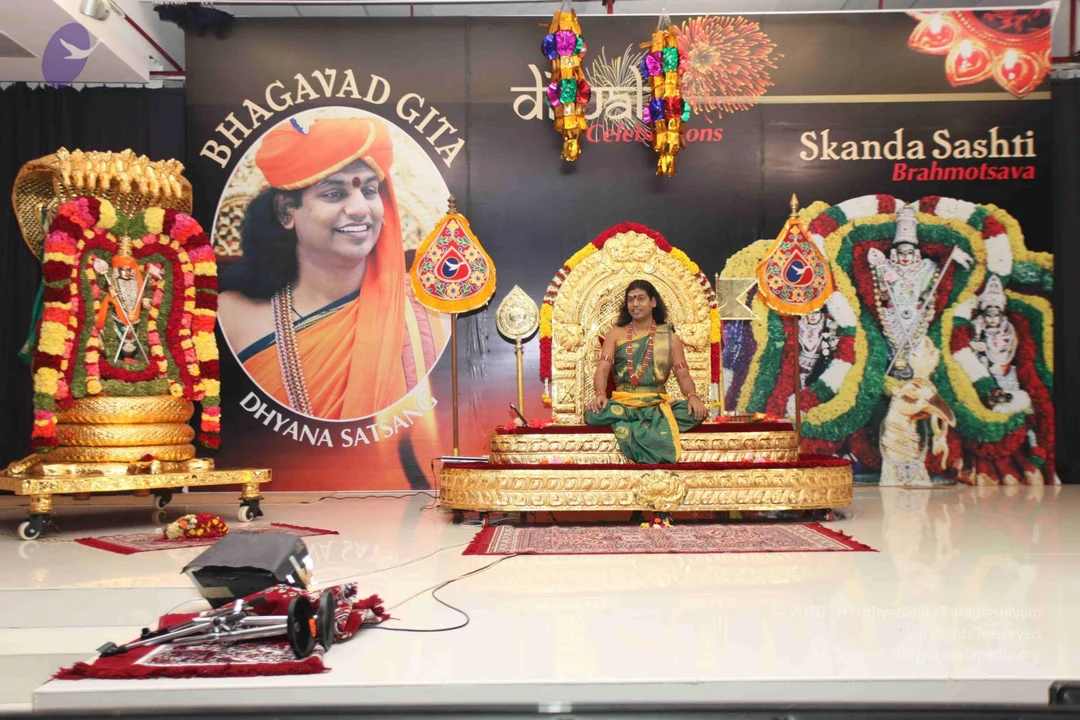
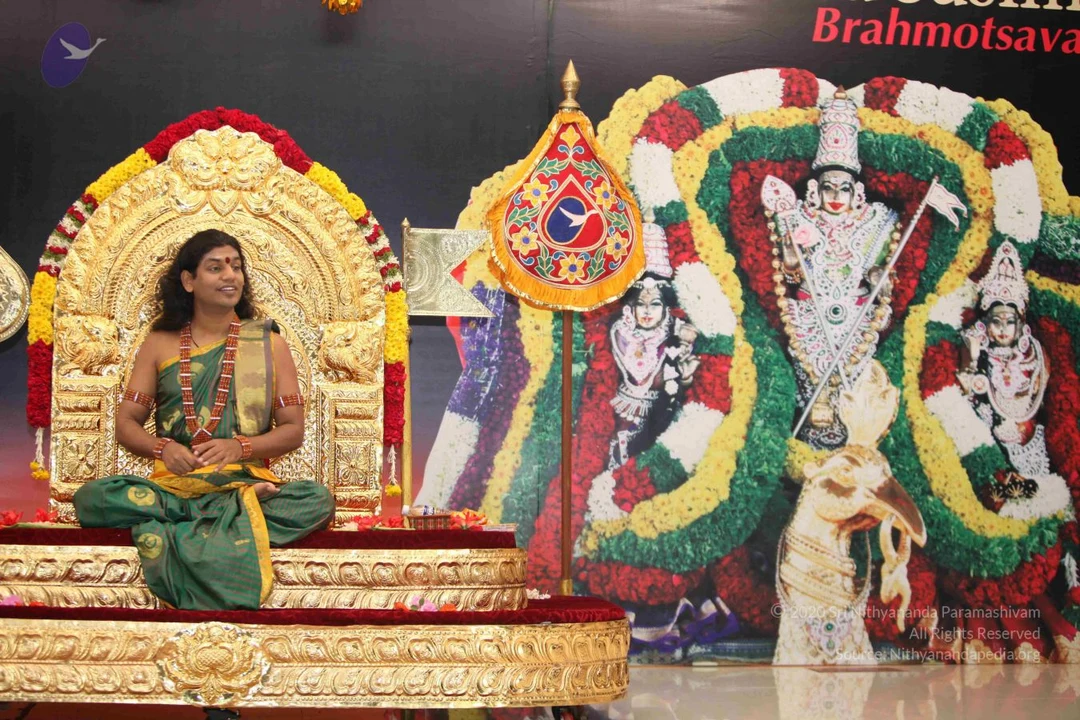
A small promotional graphic for a KAILASA talk titled Live Your Highest Possibility, with a photographic inset. A man with long swept-back hair and an orange-saffron robe sits cross-legged on a raised seat in front of a backdrop of a golden deity image and stone architecture. He is in a teaching posture, with hands held in front of him. Overlaid text reads in white, on a dark blue band at the bottom. The inset shows a temple hall with warm light. a person: the seated figure has long swept-back hair and saffron-orange robes typical of the presentation the page describes, but the image is too small to confirm identity.A temple shrine with two large painted deity murtis in green and teal garments, each wearing tall crowns and garlands of yellow and red flowers, one holding a sword-like implement. Below them sits a smaller figure draped in green and white, garlanded in red and yellow, with a seated devotee-like statue in yellow robes to the right. Gold-coloured arches frame the shrine, with brass oil lamps and a gold-trimmed niche with red curtains. The scene is a statue arrangement, with no physical people visible.A man with long dark hair stands before a large banyan tree with thick aerial roots, looking to the side with his hands together at his chest. He wears a green garment with a gold-toned band and a layered beaded necklace, and gold armlets on his upper arms. The setting is an outdoor grove with a clay pot near the base of the trunk. a person appears as the subject, shown in a devotional posture with ornate green-and-gold attire, rudraksha-style beaded necklace and swept-back hair.A three-panel collage of a black stone deity murti dressed in a hot pink cloth draped over its head and shoulders, with garlands of white, yellow and red flowers around its neck and arms. The left panel shows the murti within a white carved stone arch against a yellow backdrop, with red-painted figures and small brass lamps below. The middle and right panels are close views of the deity's face, gold necklace and raised hand. No physical people are visible; the figure is a statue.Collage of three photographs with a small purple bird logo at top left. The large upper image shows a long-haired man seated on an ornate gilded throne with lion-head armrests and a floral garland overhead, wearing a green and gold striped silk garment, red-beaded necklaces, bangles and a red forehead mark. Bottom left shows several men in white dhotis and shawls seated with palms pressed together in prayer. Bottom right shows women in white saris and orange-robed women seated before a brass plate of offerings in a devotional gathering. Panels are a graphic collage, with no physical people counted beyond those in the photographs shown.A wide banner for a Skanda Sashti celebration at a KAILASA event, with a large portrait on the left labelled "Bhagavan Nithyananda" showing a bearded man with long swept-back dark hair and an orange robe. The central stage holds a deity murti of Murugan (Skanda) seated on a decorated throne, flanked by colourful floral arrangements, tall kalasha-style decorations and an ornate canopy. The right side shows a gilded stage arch with garlands and a second decorated deity figure. Text along the top reads the event title. No physical people are visible in the scene.
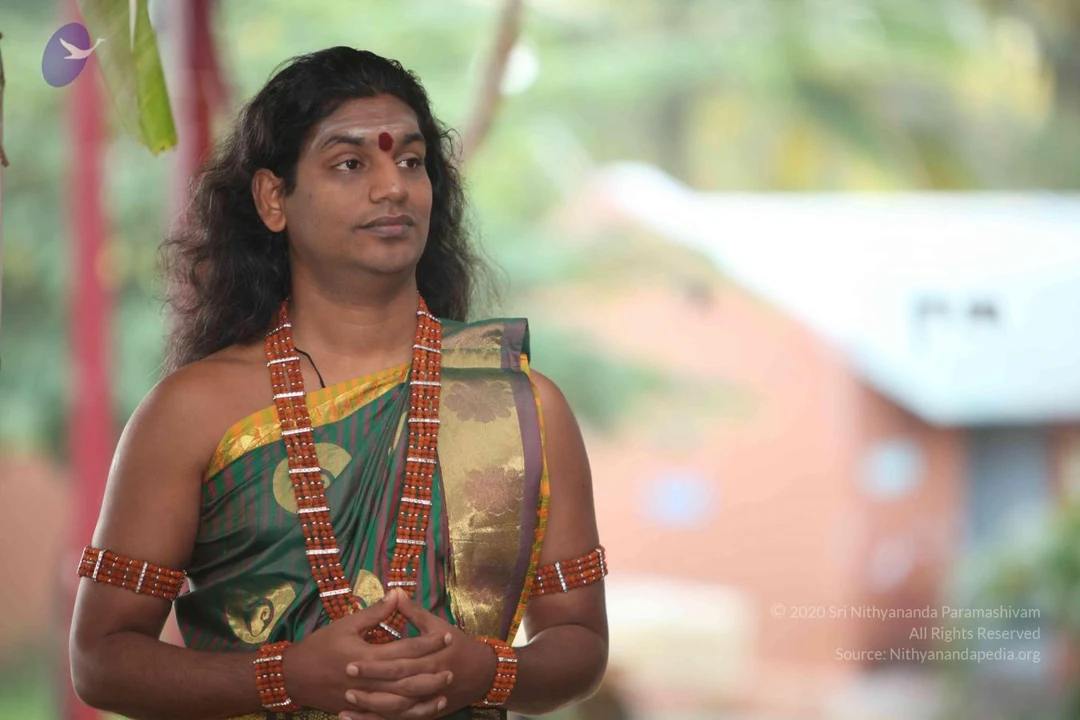
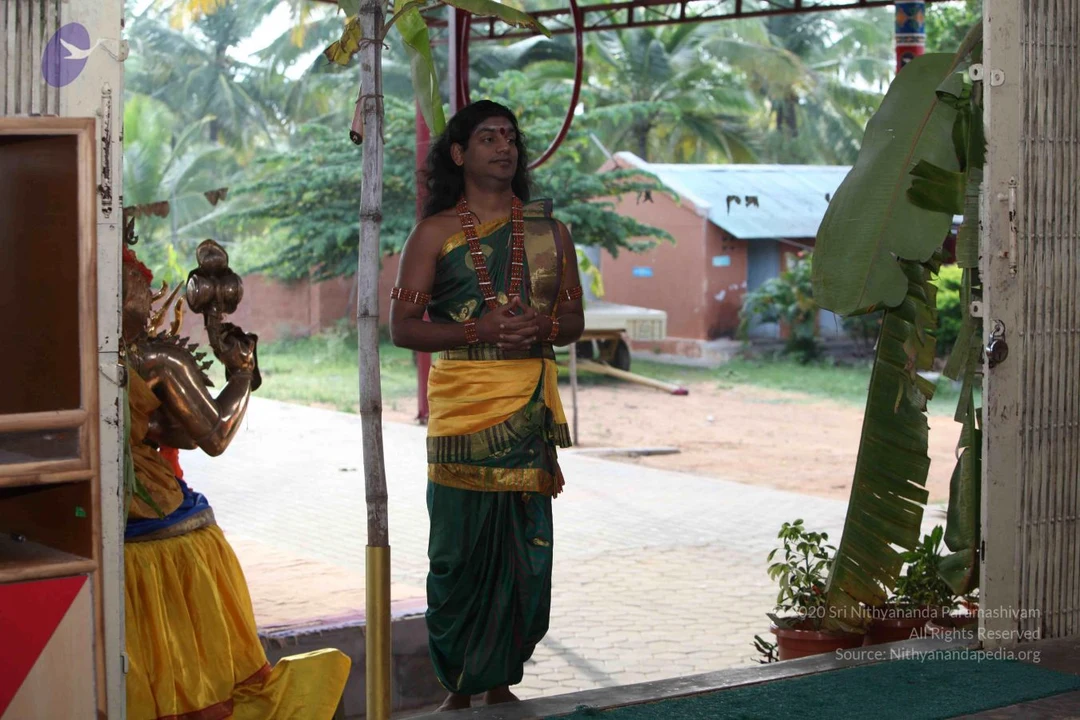
Chatru-Samharam

15 photosSource gallery
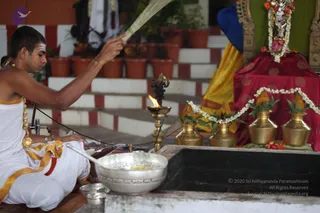
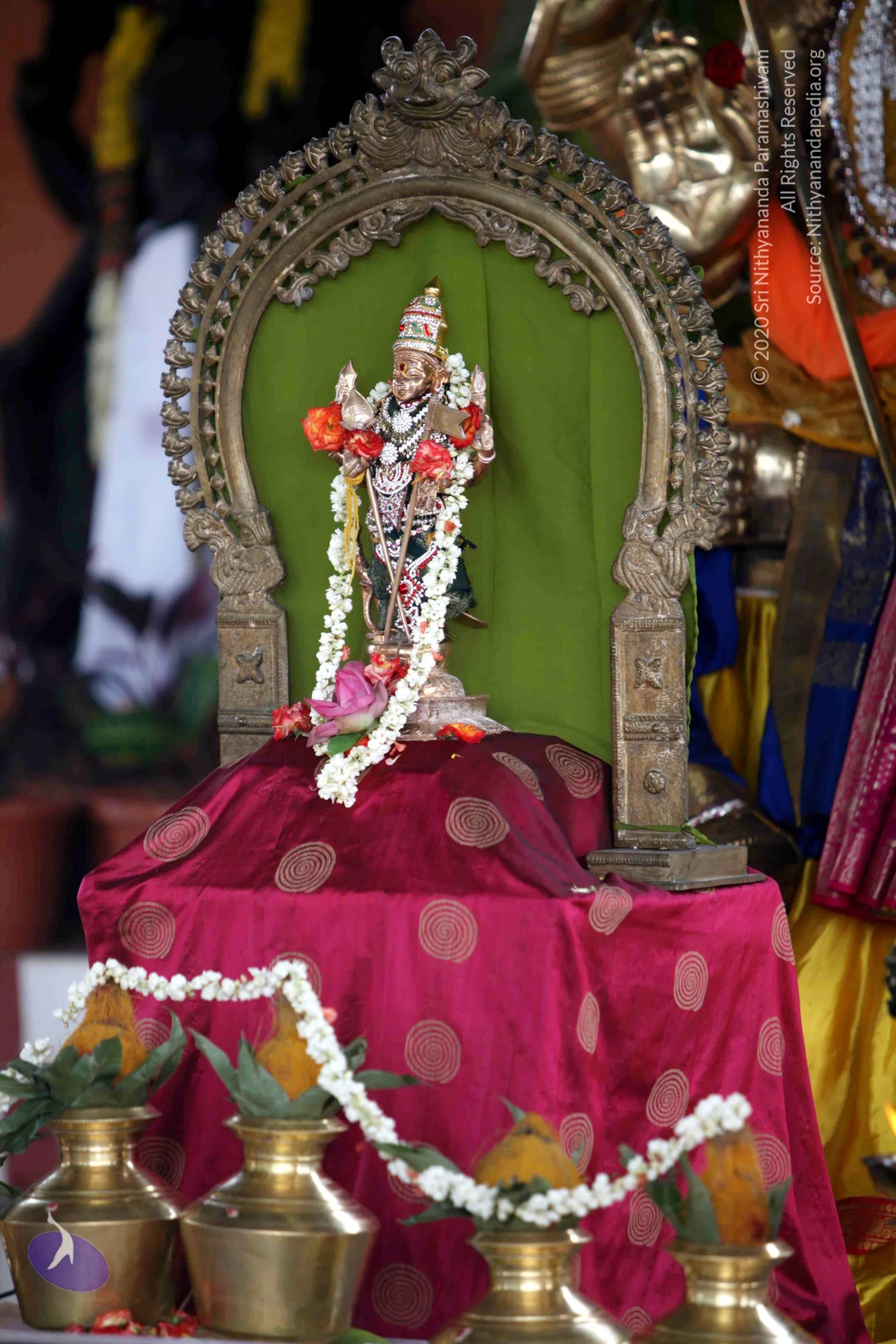
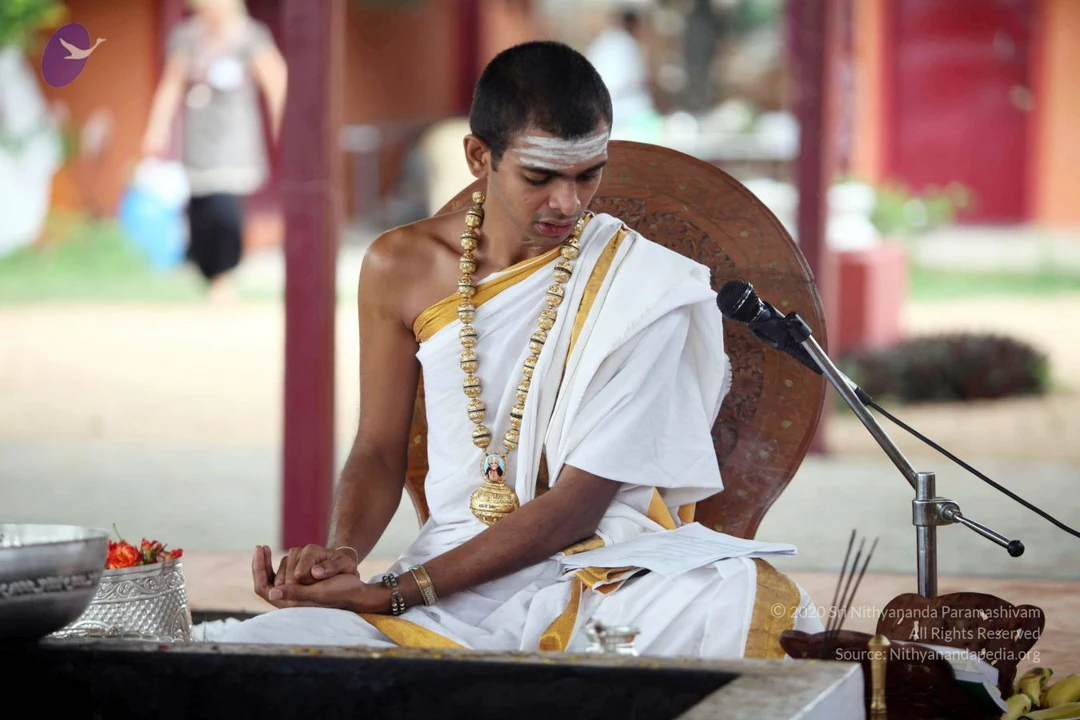
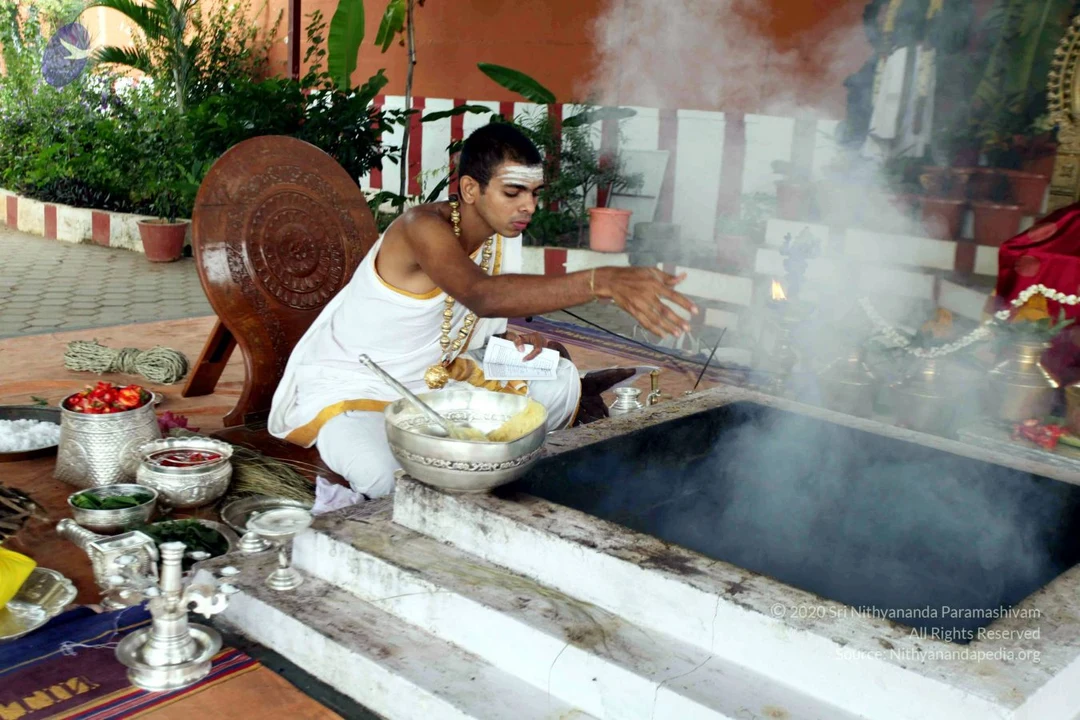
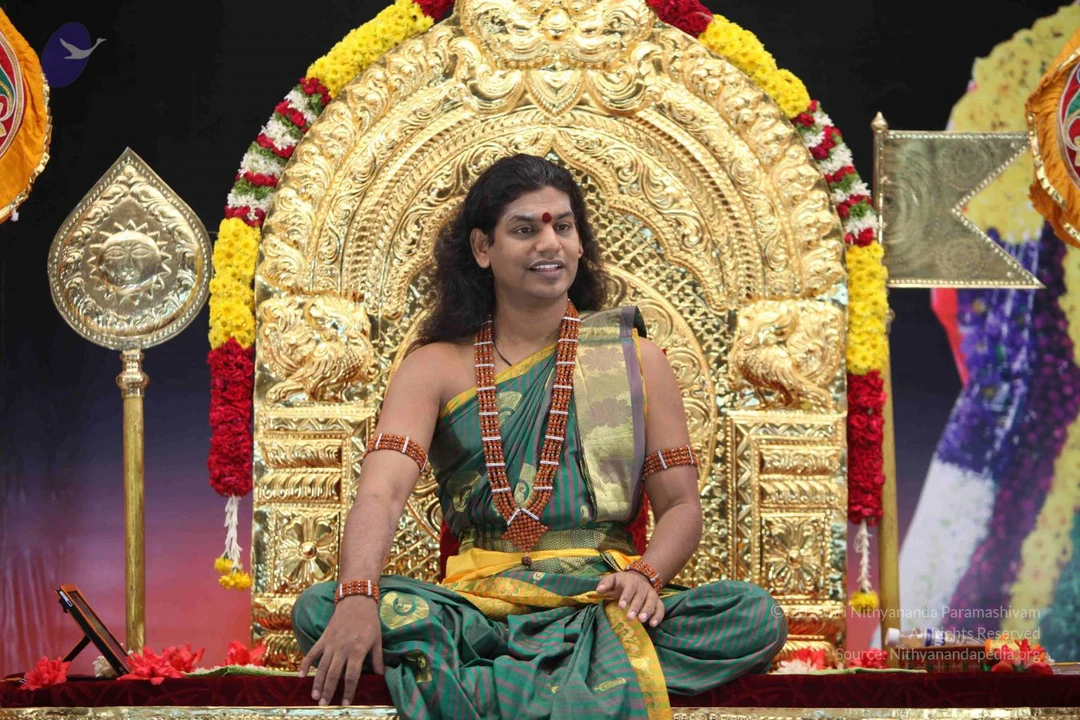
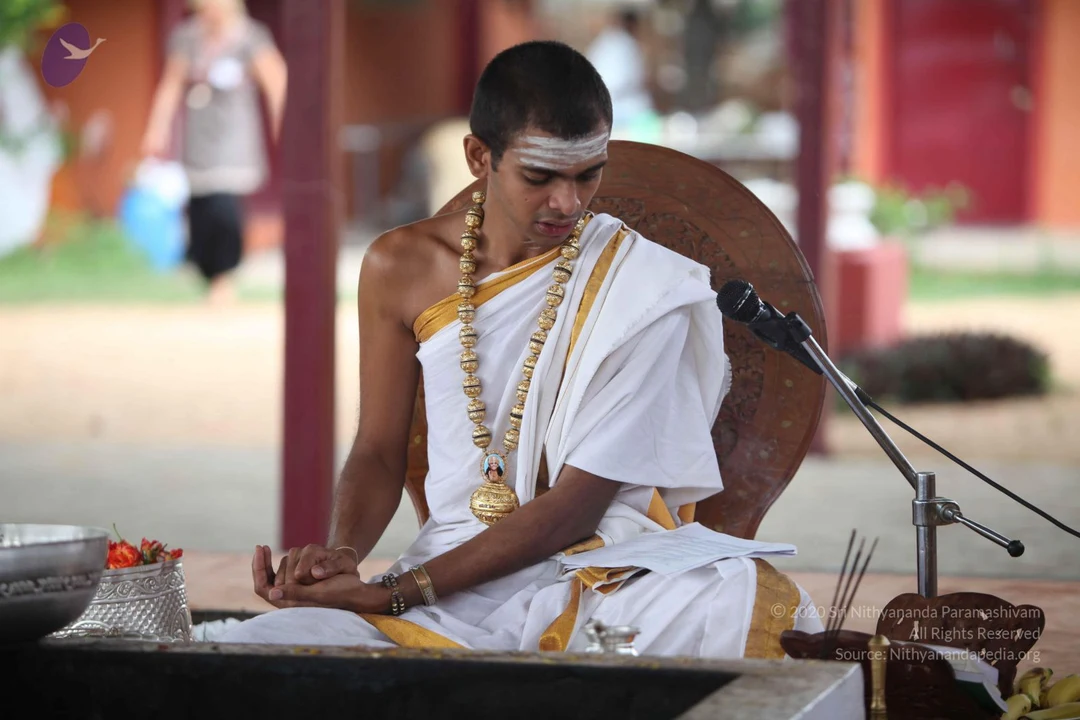
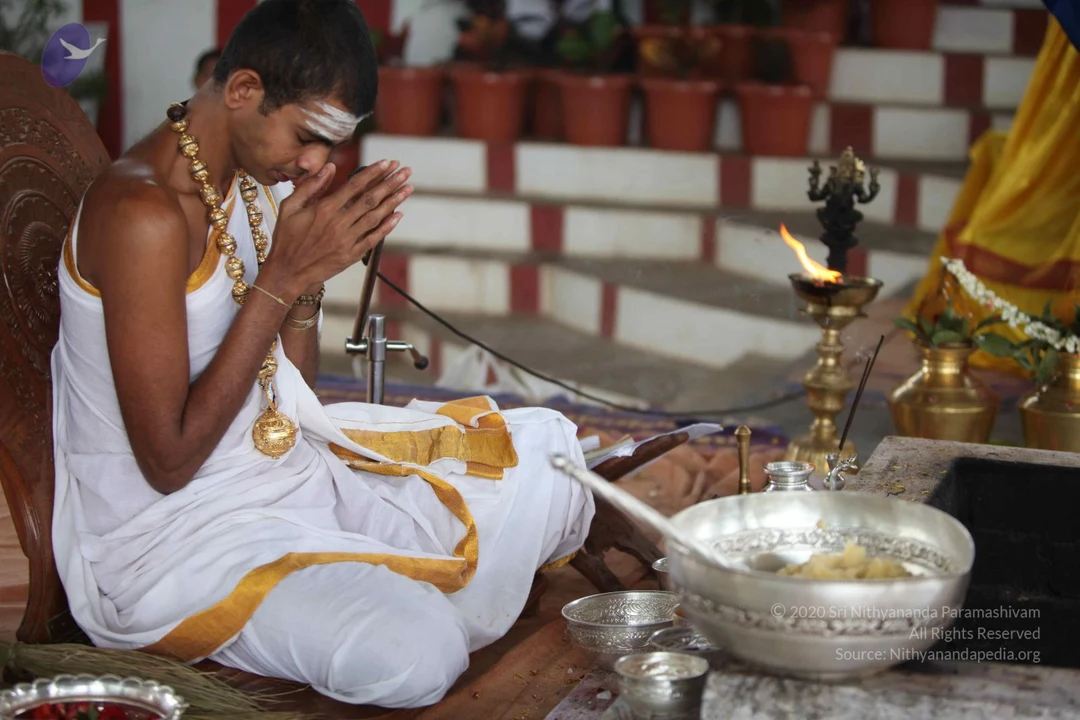
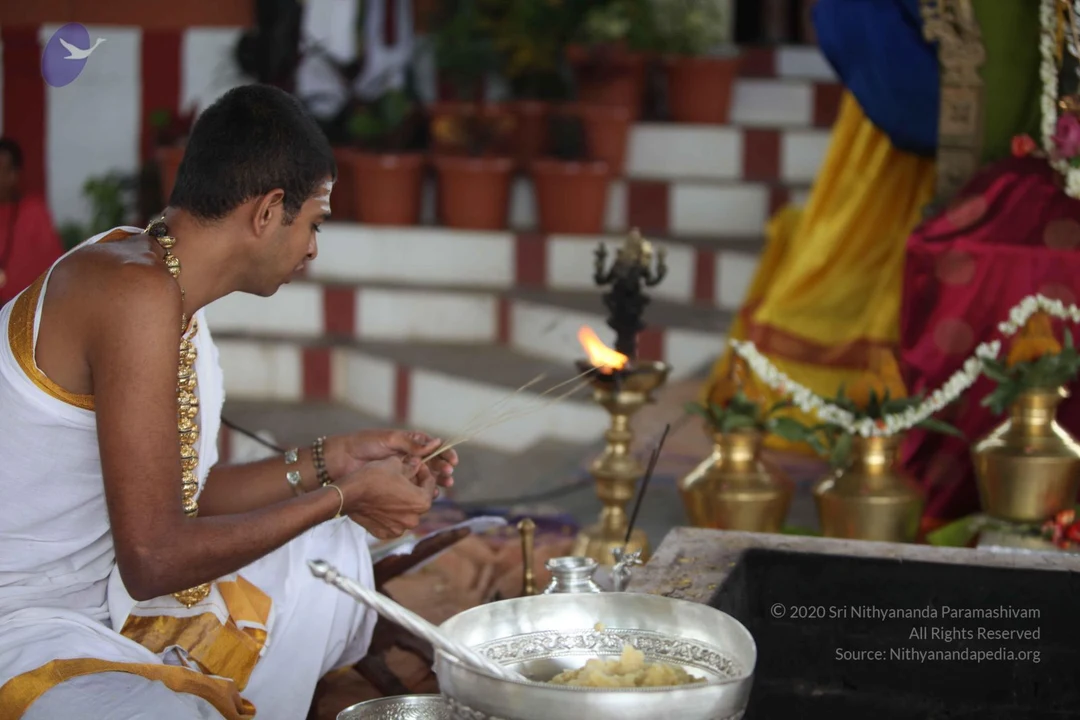
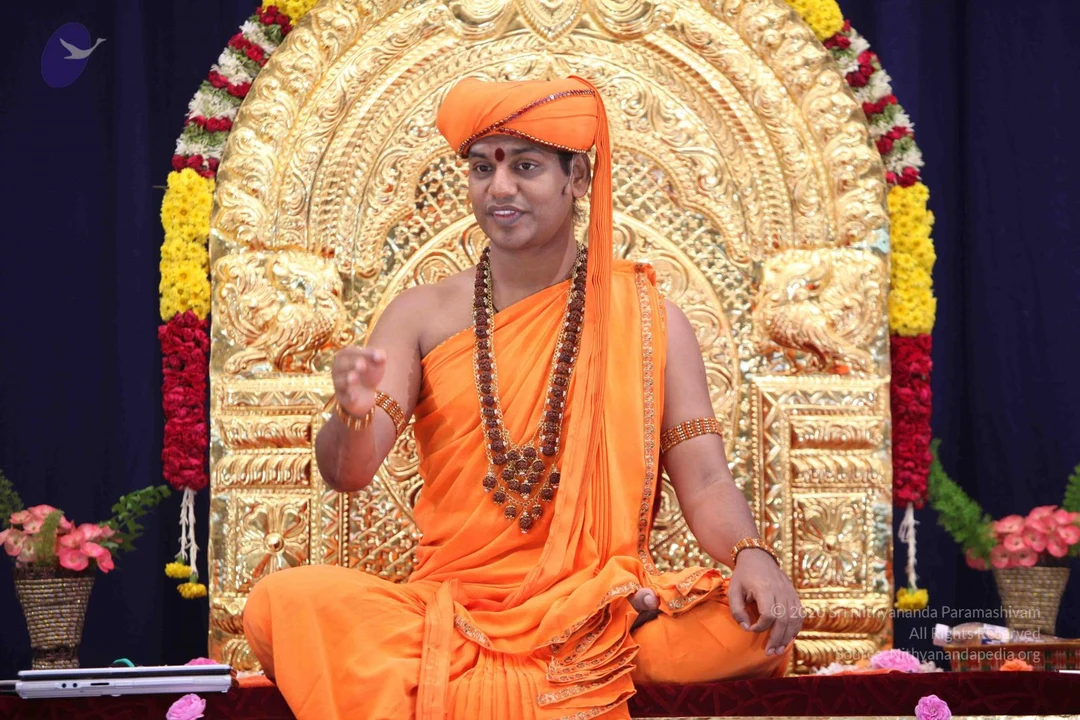
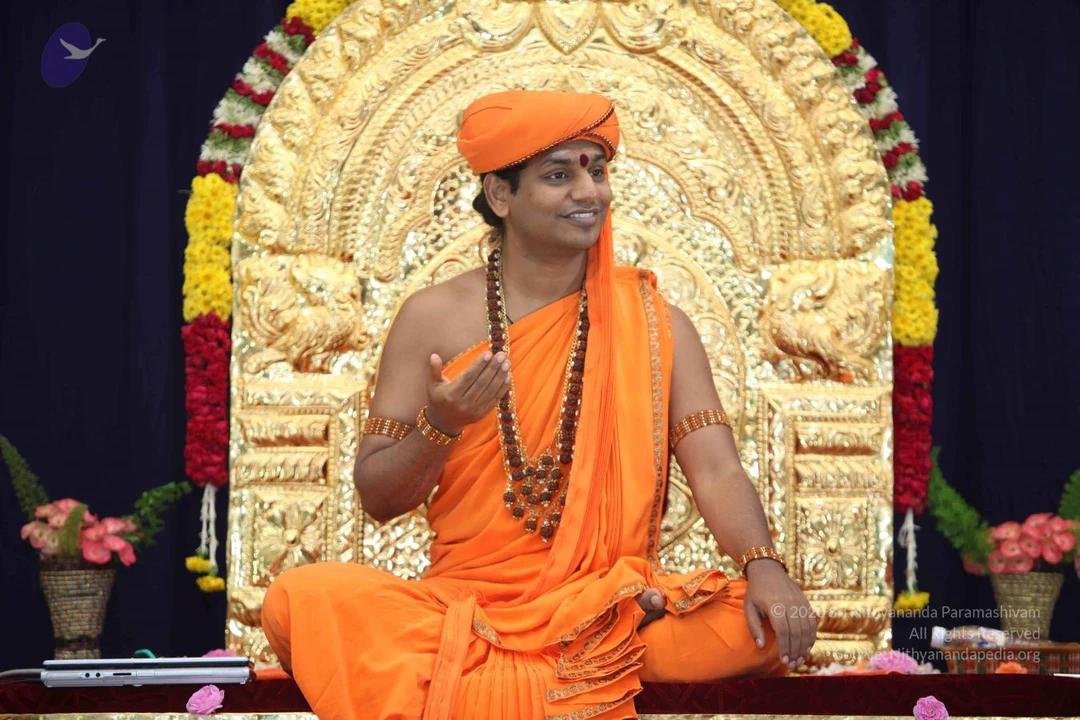
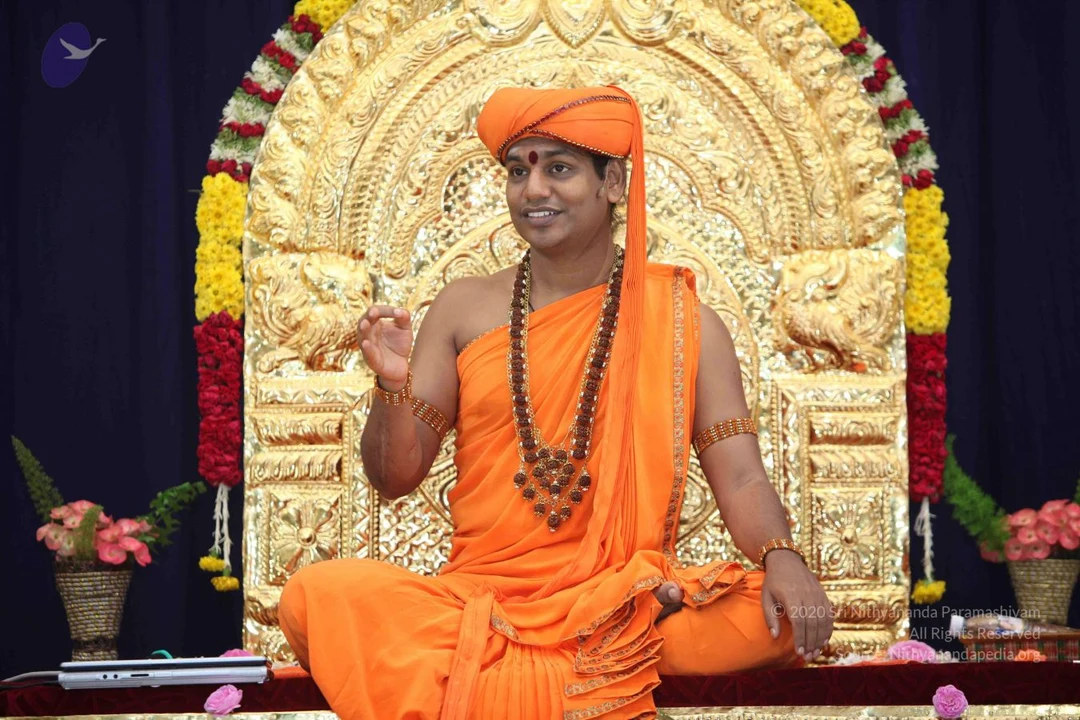
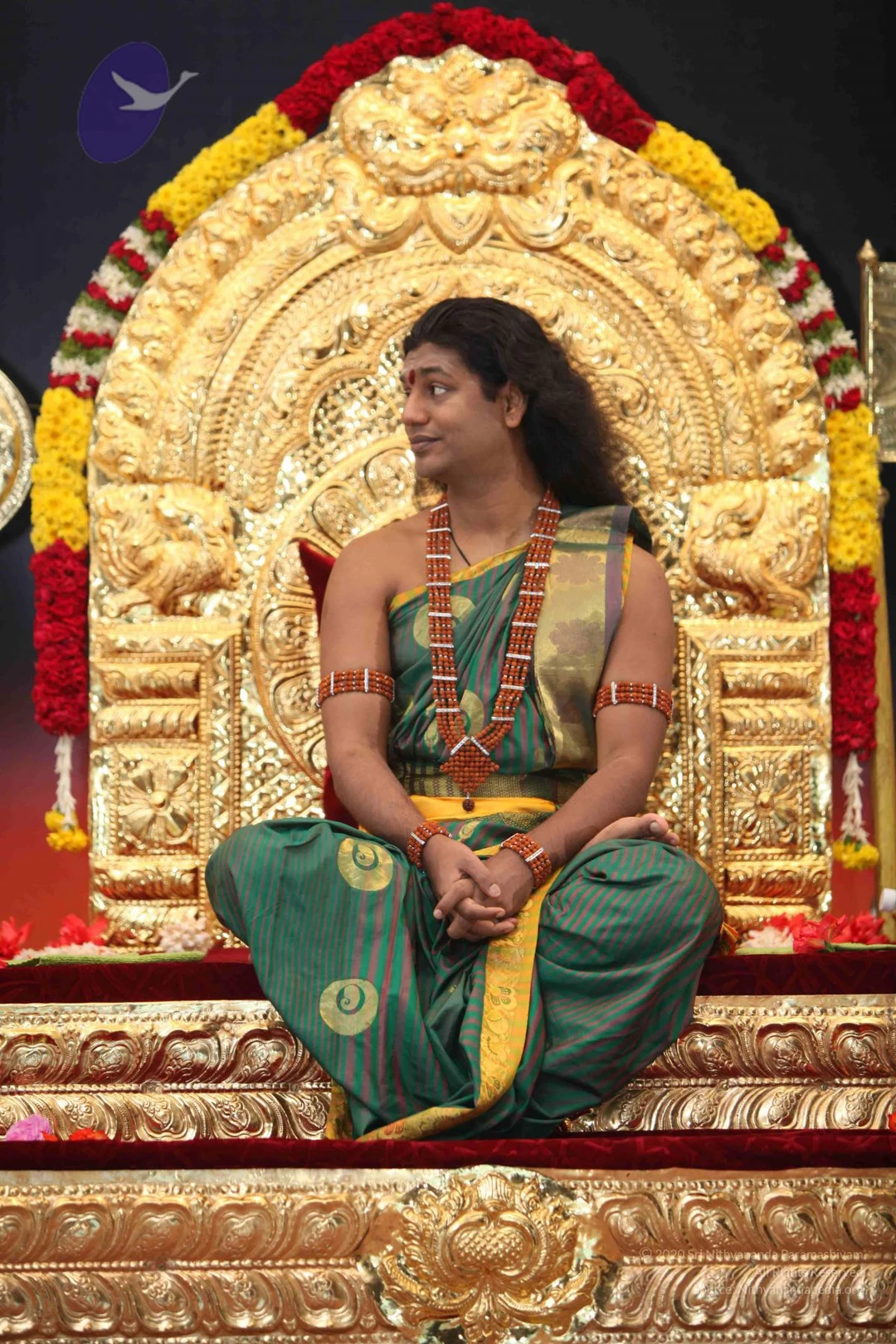
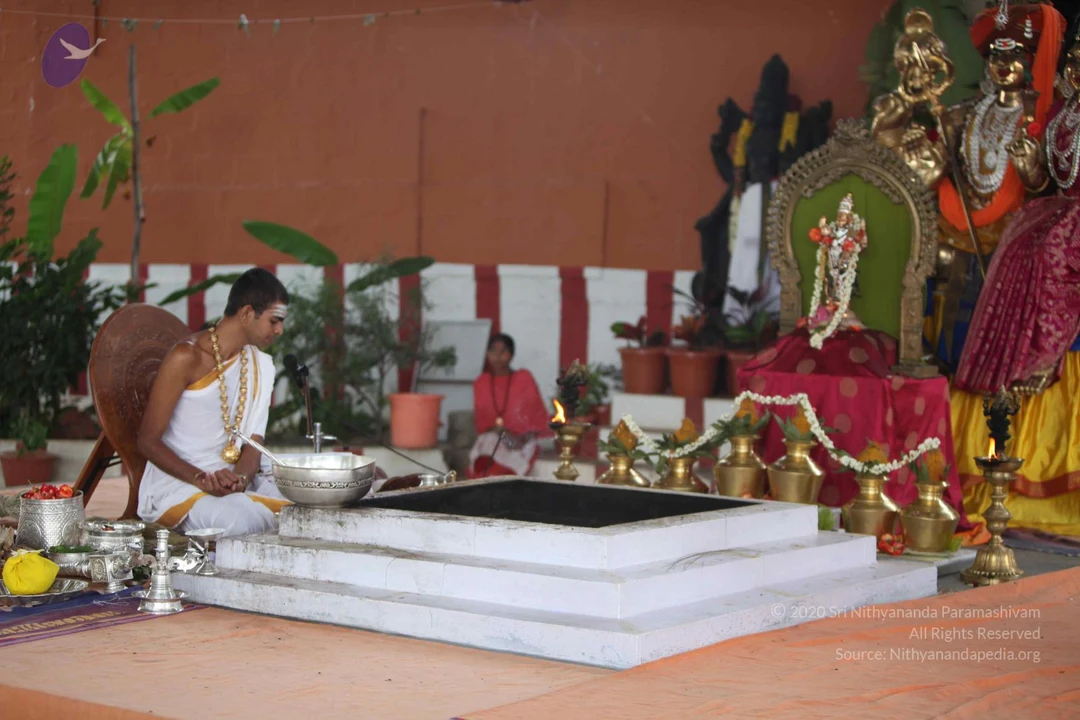
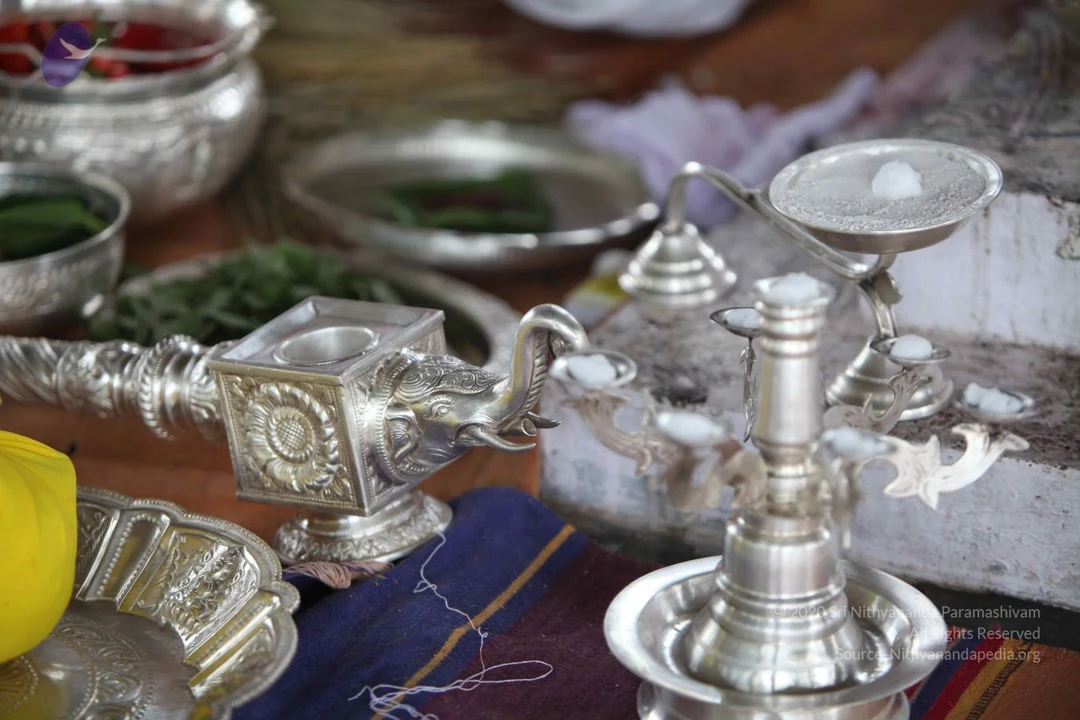
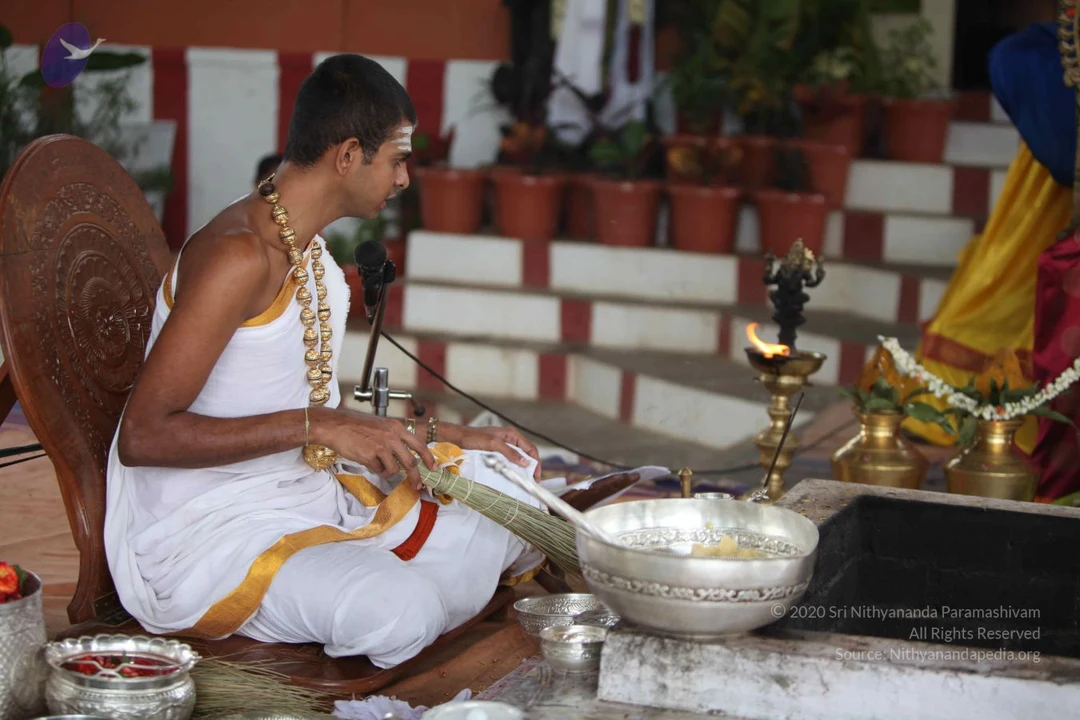
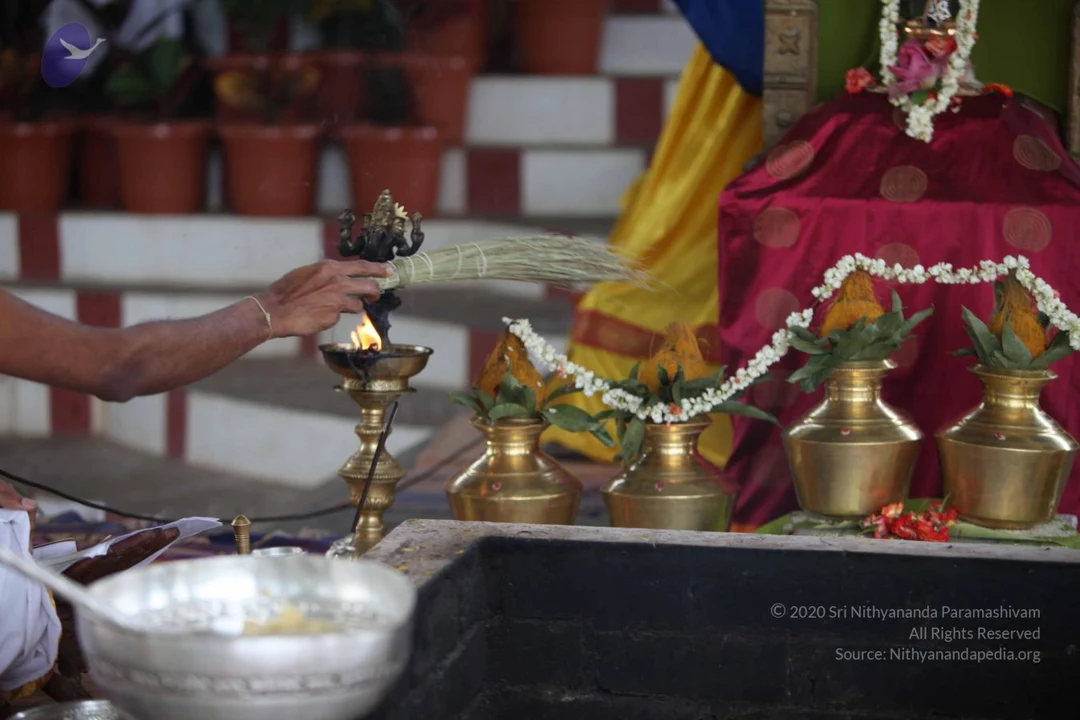
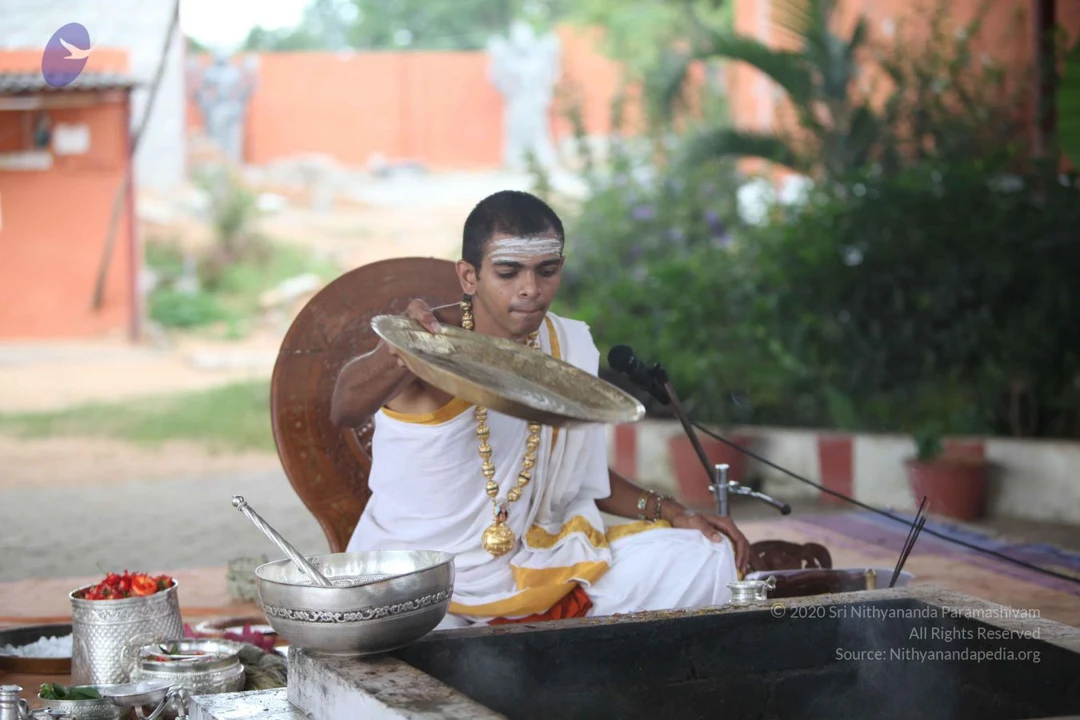
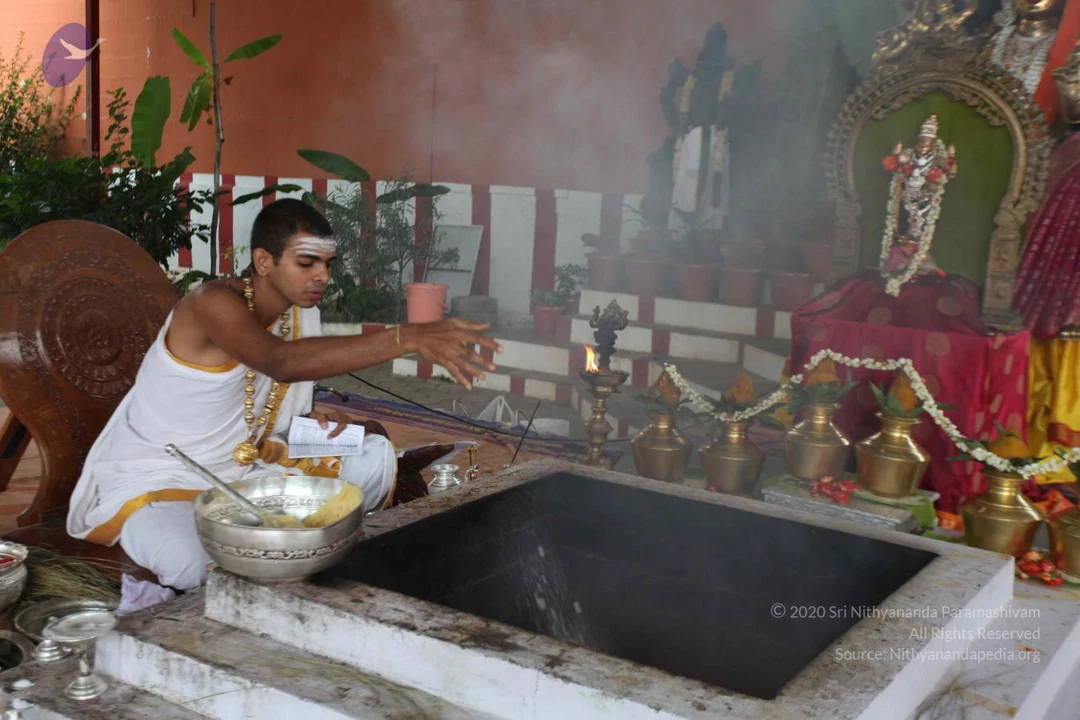
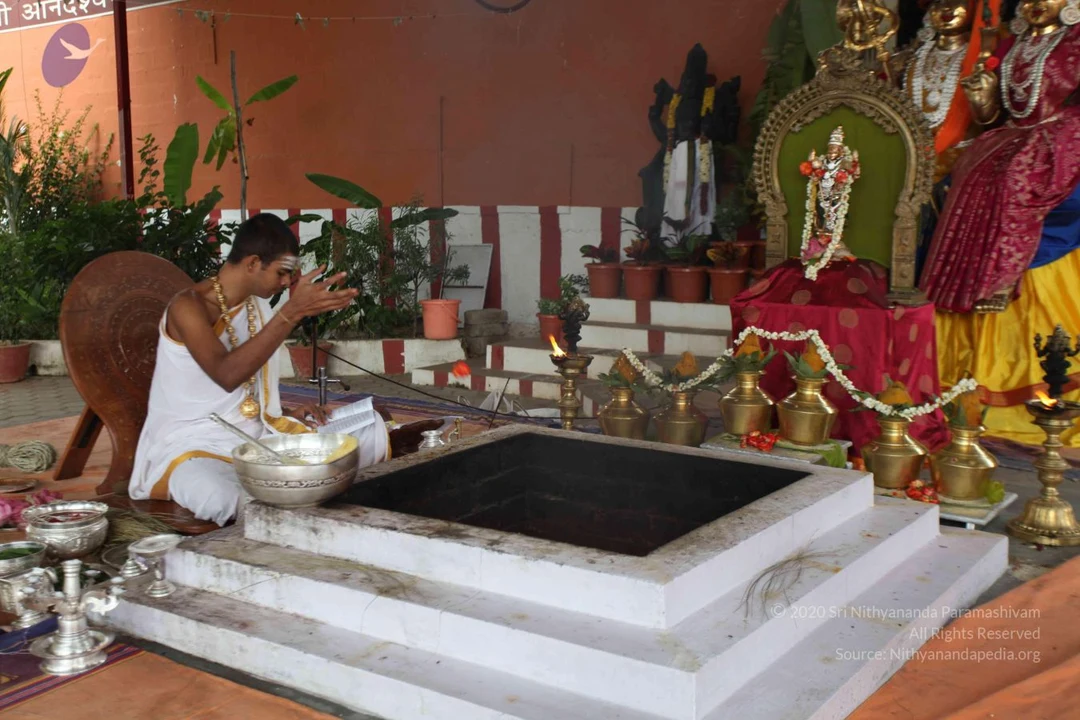
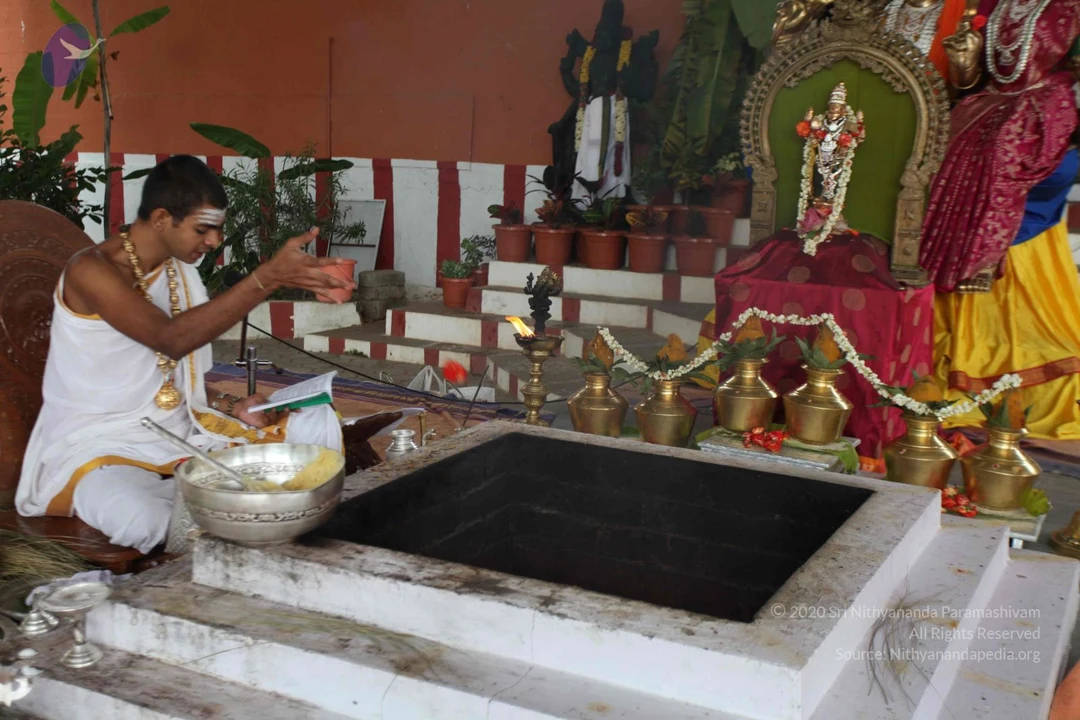
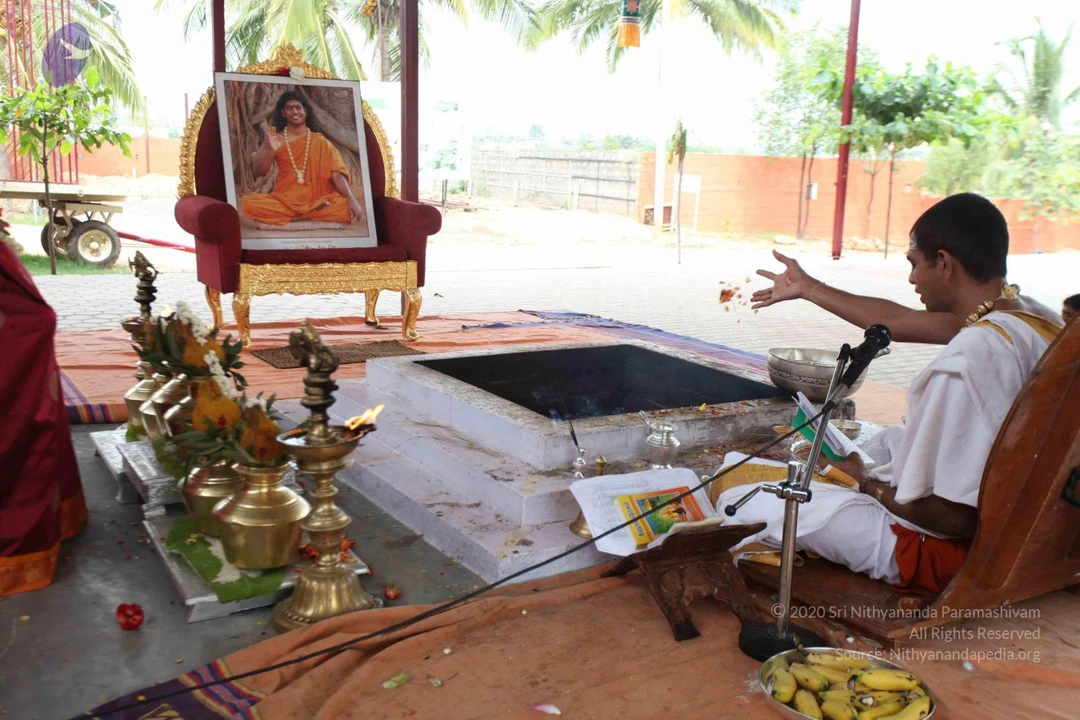
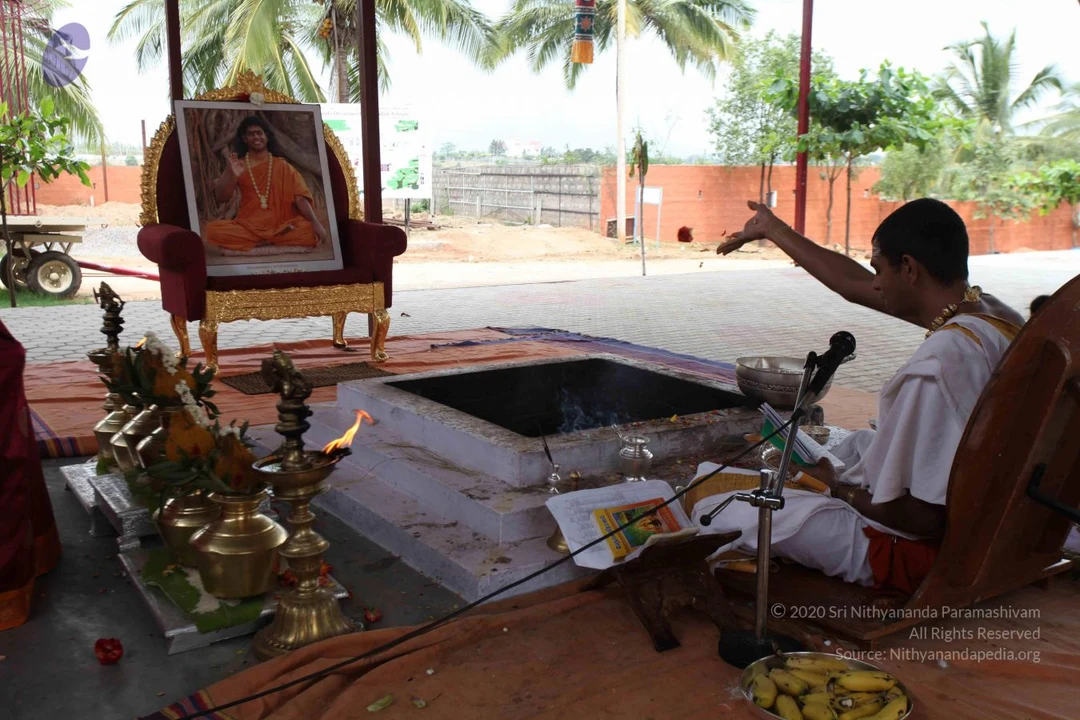
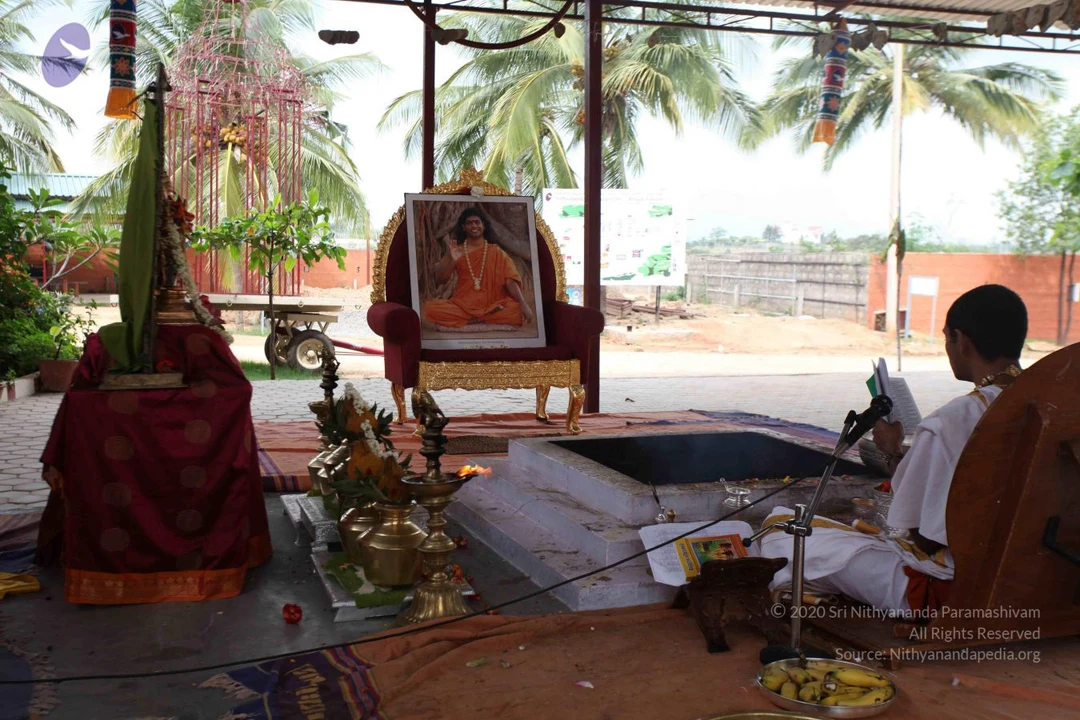
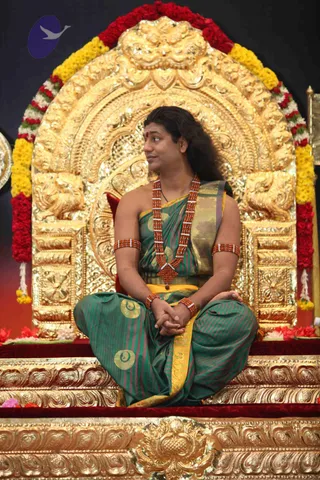
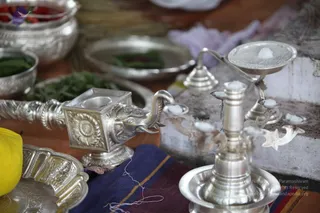
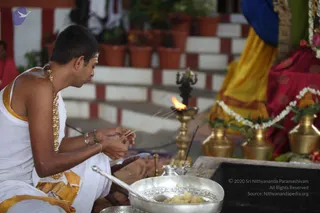
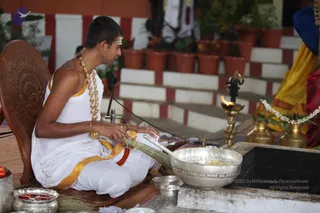
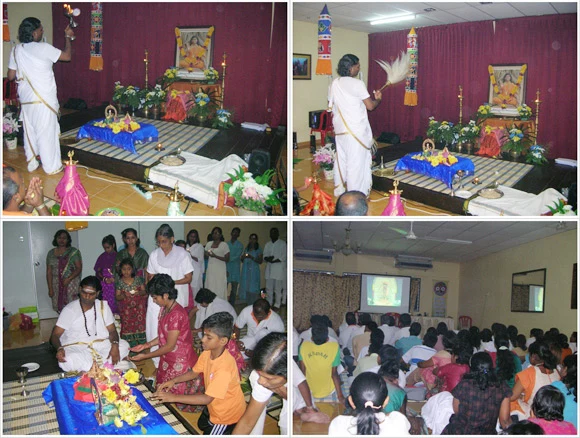
A seated man with long, swept-back dark hair sits cross-legged on an ornate gold throne with a carved arched back, framed by garlands of red, yellow and white flowers. He wears a green and gold striped silk garment with gold roundel motifs, a thick rudraksha mala with silver spacers across his chest, matching rudraksha armlets and wrist bands, and a red bindi. His hands rest folded in his lap as he looks to the side. Red and pink flowers lie on the lower steps of the throne. Probable Swamiji: long swept-back hair, rudraksha malas and armlets, and ornate silk clothing, seated on a throne in a ceremonial setting.A close photograph of silver ritual vessels on a table during a puja. In the foreground is an ornate silver lamp or vessel with an elephant-head spout and a square reservoir engraved with floral patterns. Behind it sit a silver oil lamp with a tall stem, a silver tray holding white camphor-like pieces, and several silver bowls holding green leaves and red flowers. A folded blue and orange cloth lies beneath the objects, and a yellow cloth edge appears at the left. No people are visible.A shaved-headed priest in white dhoti with a saffron-gold border sits cross-legged, holding incense sticks over a flame in a brass oil lamp on a stand. Gold ornaments and a gold chain are visible on his neck, and metal bangles and a beaded bracelet on his wrist. Before him stands a silver bowl with a silver ladle holding cooked grain or prasadam. Behind him brass kalashas and vessels sit beside a garland of white flowers, and a yellow and red cloth drapes a deity altar. Potted plants and a red-and-white striped wall form the background.A photograph of a shaved-headed priest in white dhoti and white upper cloth with a gold border, seated on a carved wooden chair and facing left. He wears a long gold-bead necklace and a gold bracelet, and holds a bundle of green grass and a small white ladle over a large polished silver bowl. A brass lamp with a lit oil flame stands at right beside a brass kalasha vessel, with white flower garlands nearby. Behind him are steps with terracotta pots and potted plants. A microphone stands at his side. A small bowl of red kumkum sits at lower left. A priest is performing a ritual.A photograph of a puja at a shrine. A person's bare arm reaches in from the left, holding a brass lamp stand with a lit oil flame and a bundle of grass. Behind them are four brass kalashas decorated with green leaves, mango leaves and white jasmine garlands, set before a deity murti dressed in red and draped with a white flower garland. A metal bowl of offerings sits in the foreground, and a red-and-yellow cloth hangs in the background. Potted plants and a striped wall appear at the top left. Only a hand and arm are visible, so no person can be identified.A photograph of a shaved-headed priest in white dhoti with a golden-yellow border, sitting cross-legged and waving a whisk of grass over a brass lamp with a lit flame. He wears a tilak on his forehead, gold bangles and a gold waist cord. Before him sits a silver bowl with a ladle. Behind the lamp stand three brass kalashas wrapped in flower garlands and mango leaves, and a deity murti adorned with orange and white flowers sits within an altar draped in a red cloth. A green wall and terracotta pots line the background.
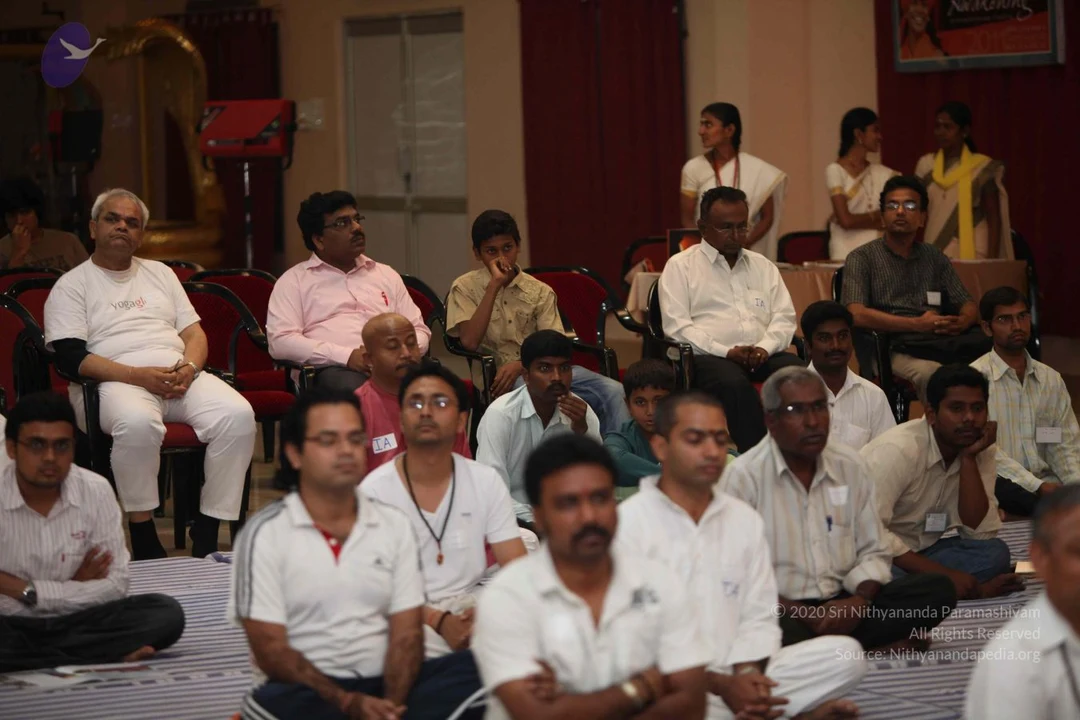
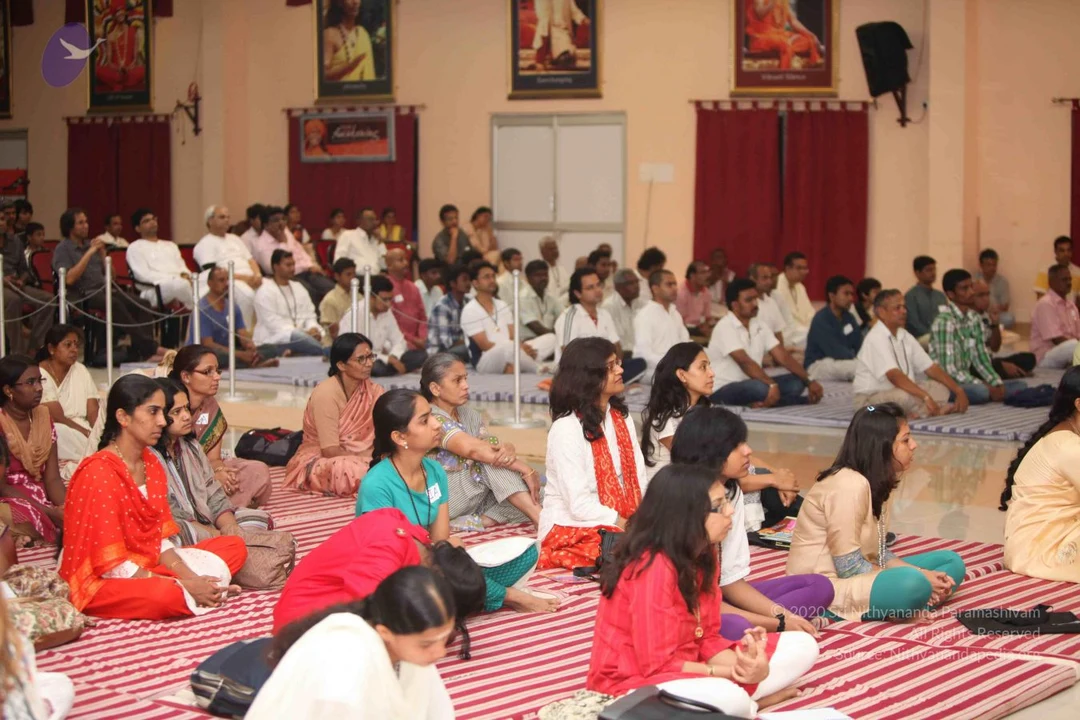
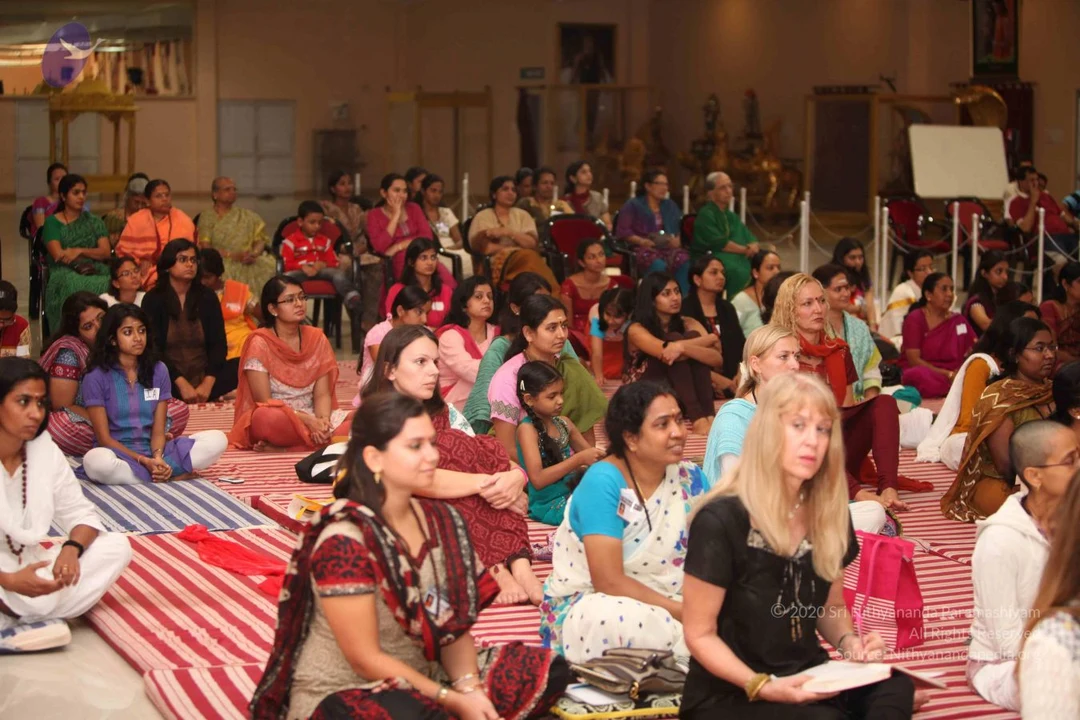
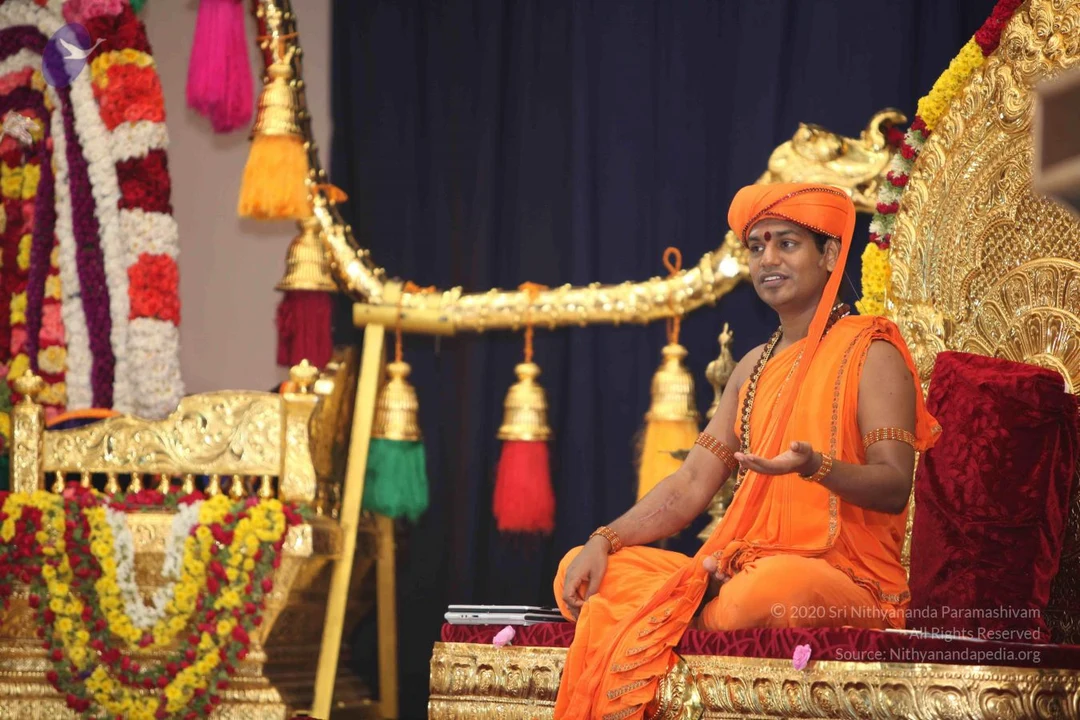
October 29 2011

219 photosView all
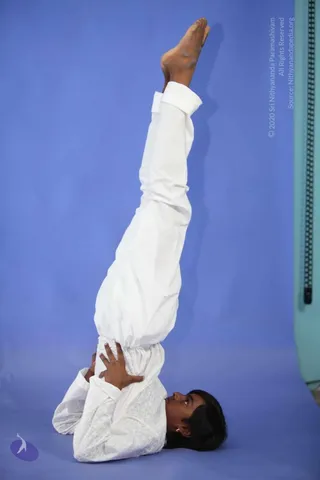
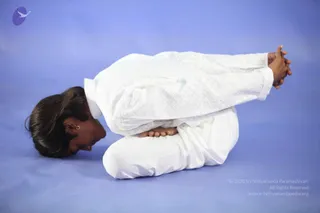
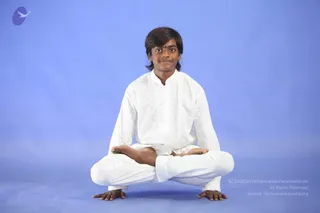
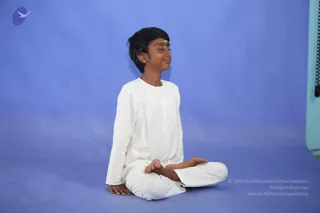
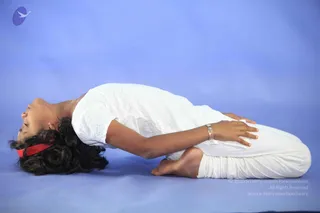
A young boy with short dark hair and a small white tilak on his forehead sits cross-legged on a blue backdrop in meditation pose, eyes closed, wearing a white long-sleeved kurta and white trousers. His hands rest on his knees in mudra, palms relaxed. The blue seamless background fills the frame, with a small purple bird logo in the top-left corner.A person in white clothes performs a headstand (sirsasana-style inversion) against a plain blue backdrop. The head rests on the floor with both hands supporting the lower back, and the legs rise straight up with bare feet pointing to the top of the frame. The white shirt and trousers have a subtle textured pattern, and a small gold earring is visible. A teal panel stands at the right edge. A small blue logo appears in the lower left. The person is a yoga practitioner, not identifiable as a person from the visible cues here.A person in white clothes performs a forward-folded yoga pose on a plain blue-violet backdrop, forehead near the floor and palms pressed together with arms extended forward. The person wears a white long-sleeved kurta-style top and white loose trousers, with a small gold earring visible. Hair is dark and swept back. The pose resembles a studio yoga asana photograph.A young boy sits in a squatting yoga pose on a plain blue studio backdrop, hands resting on the floor beside his feet. He wears a white long-sleeved kurta with a band collar and white trousers, a small red tilak on his forehead and small earrings. A small purple bird logo appears in the upper left corner.A young boy sits cross-legged in a meditation pose against a plain blue backdrop, eyes closed and face tilted slightly upward with a serene expression. He wears a white long-sleeved kurta and white pants, with a small tilak mark on his forehead and a stud earring. His hands rest on his knees and his bare feet are visible. A white panel edge sits at the right edge of the frame.A woman in a white short-sleeved top and white loose trousers kneels on a plain blue backdrop and arches backward into a yoga pose, head tilted back with eyes closed, one hand resting on her thigh and the other on her lower back. She wears a red headband, a silver bracelet and a small earring, and her dark curly hair falls toward the floor. This is a posed yoga demonstration photograph with no a person candidate visible.