Skip to content
Friday

28 October 2011

Step up to the Spectrum of Enlightenment

Dated photos
203
Source pages
1
Media
2
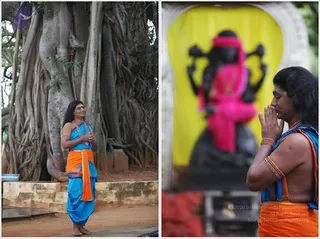
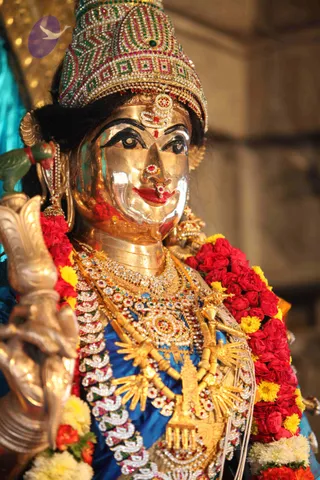
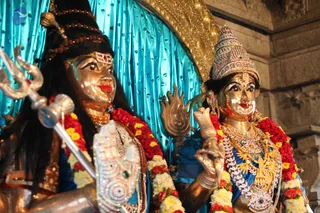
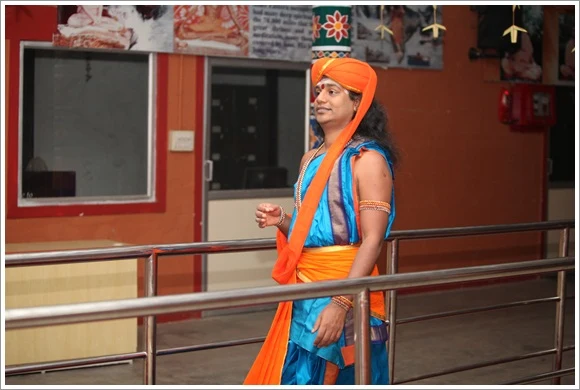
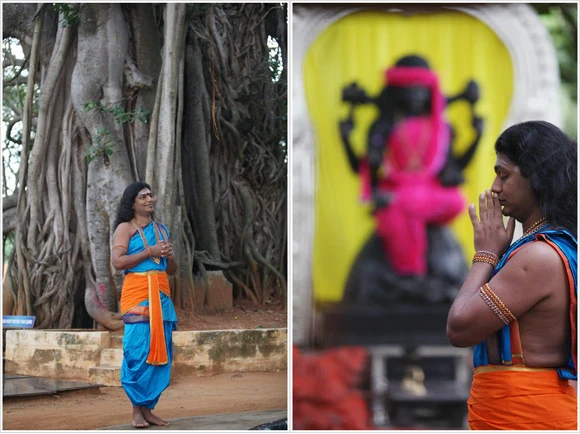
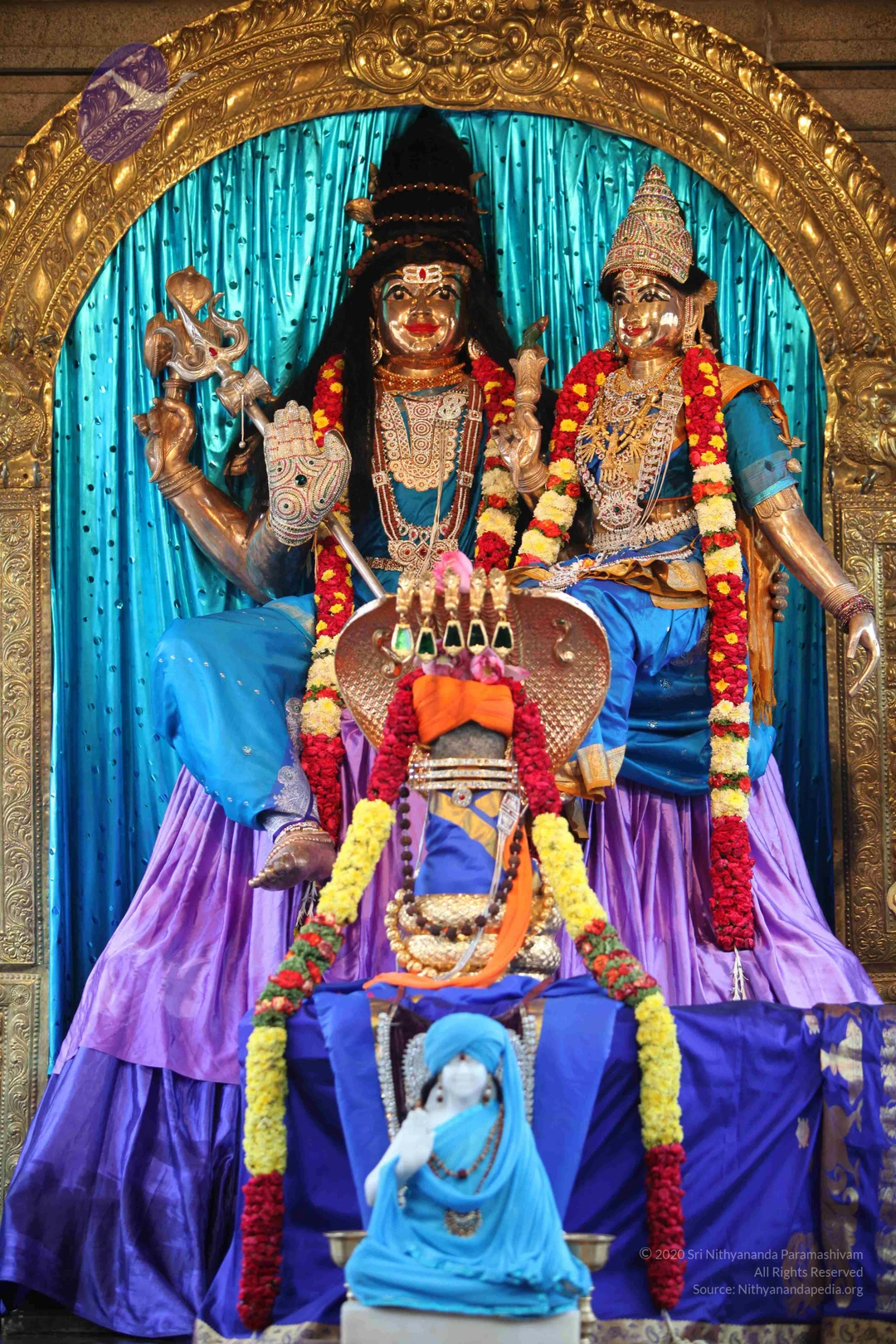
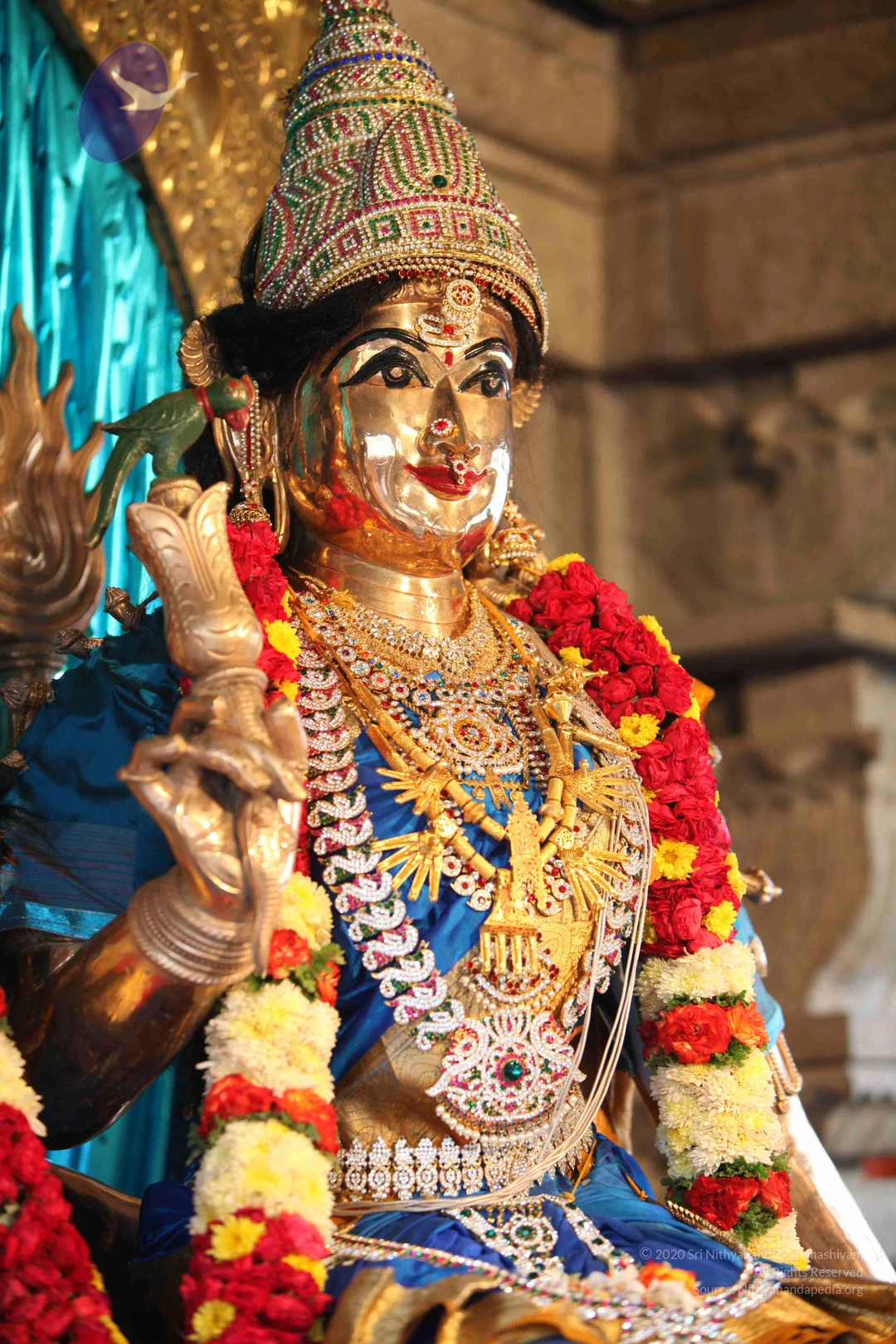
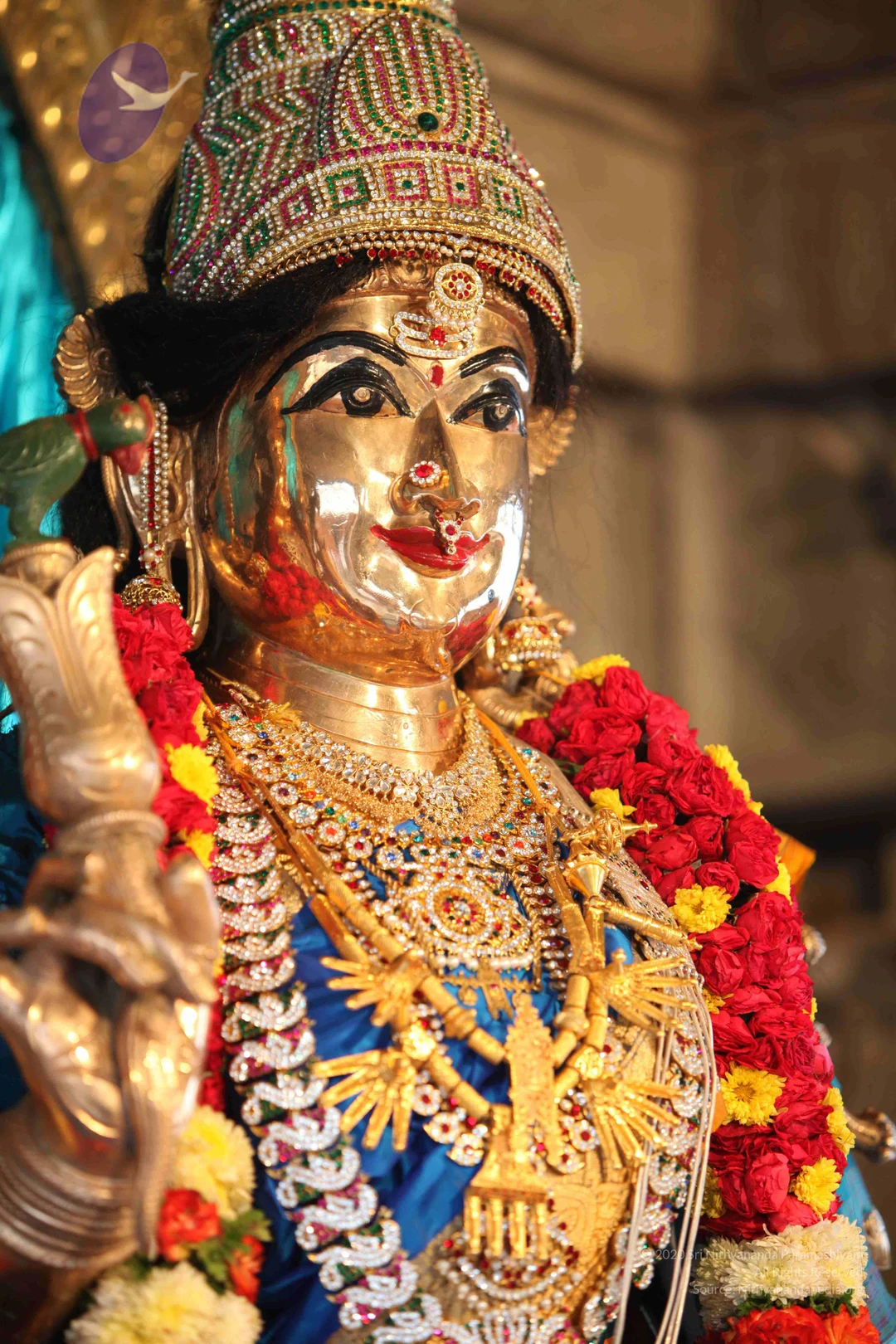
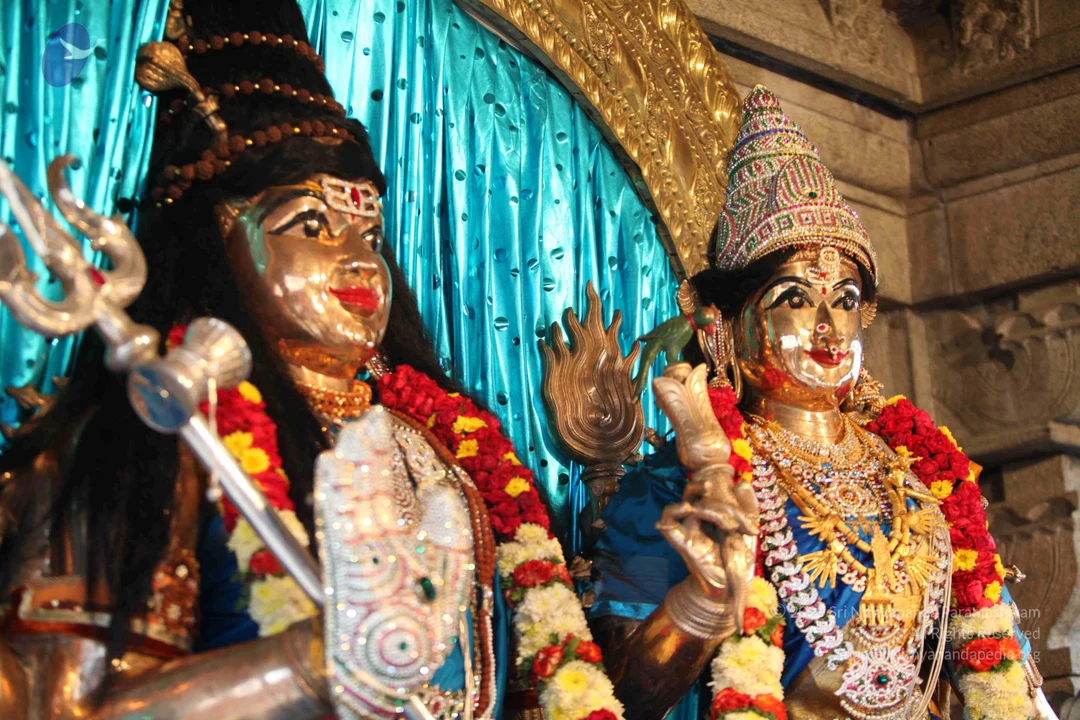
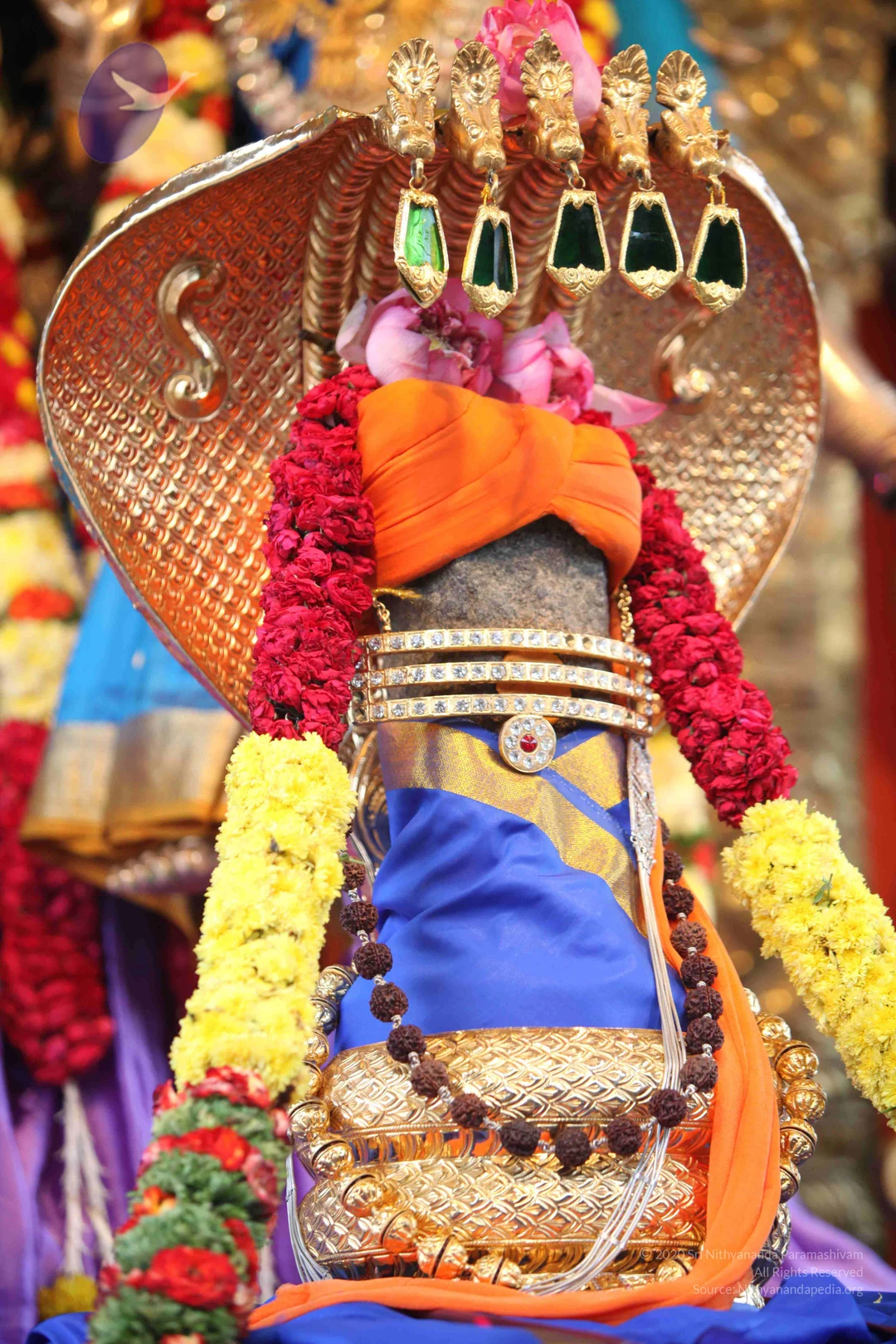
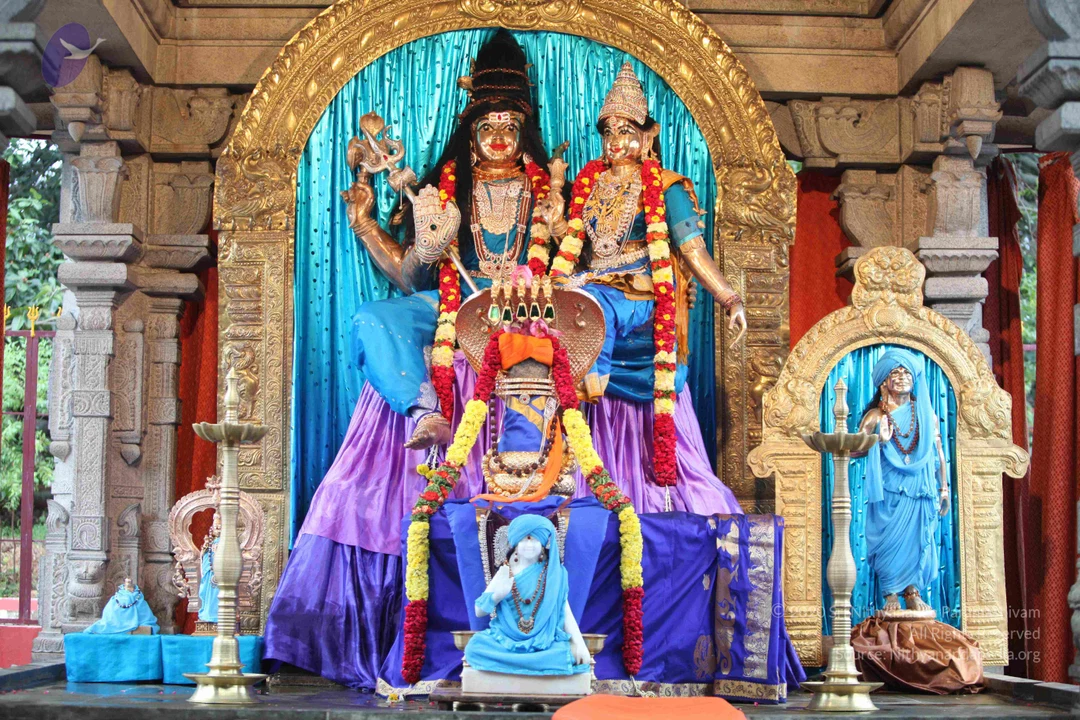
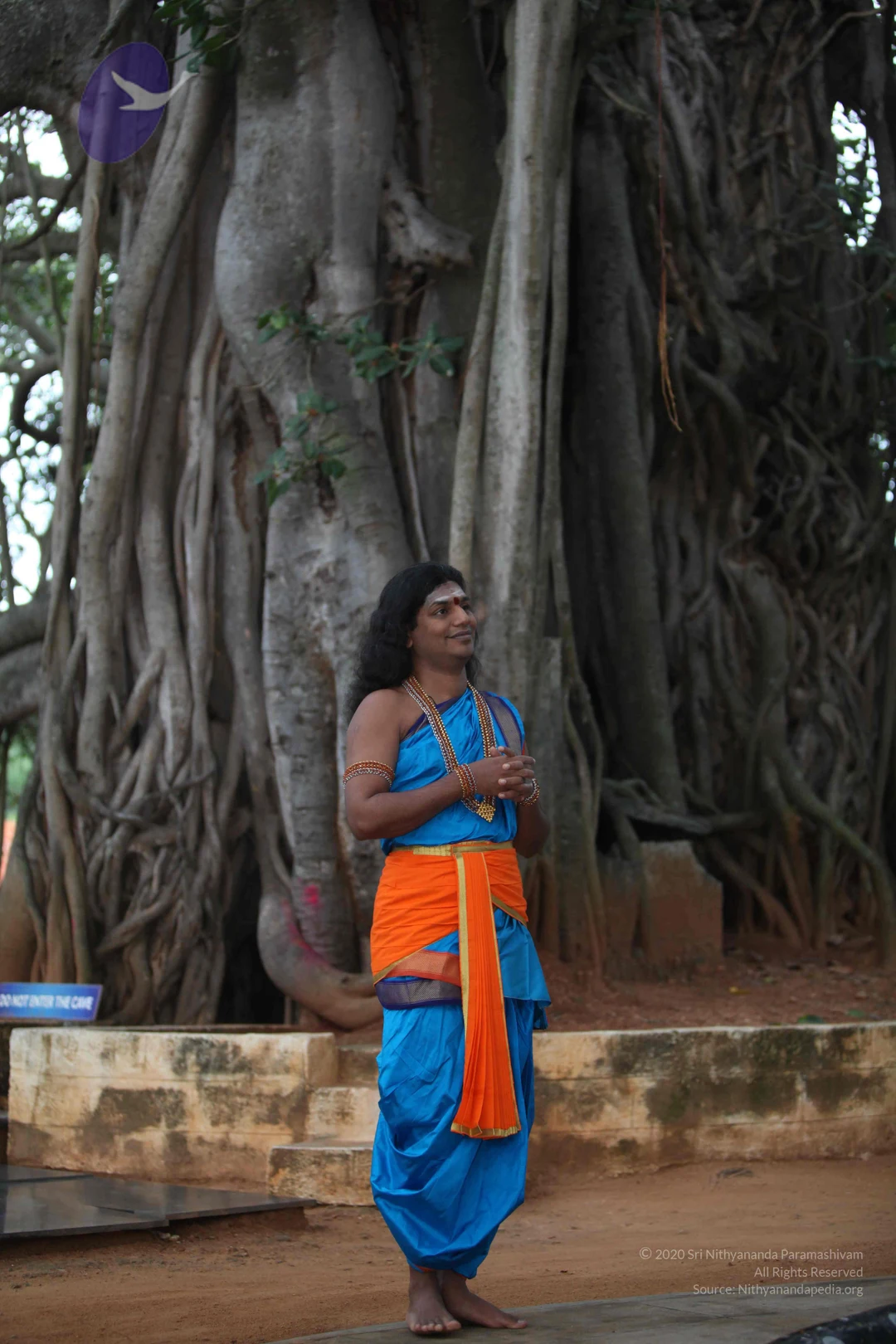
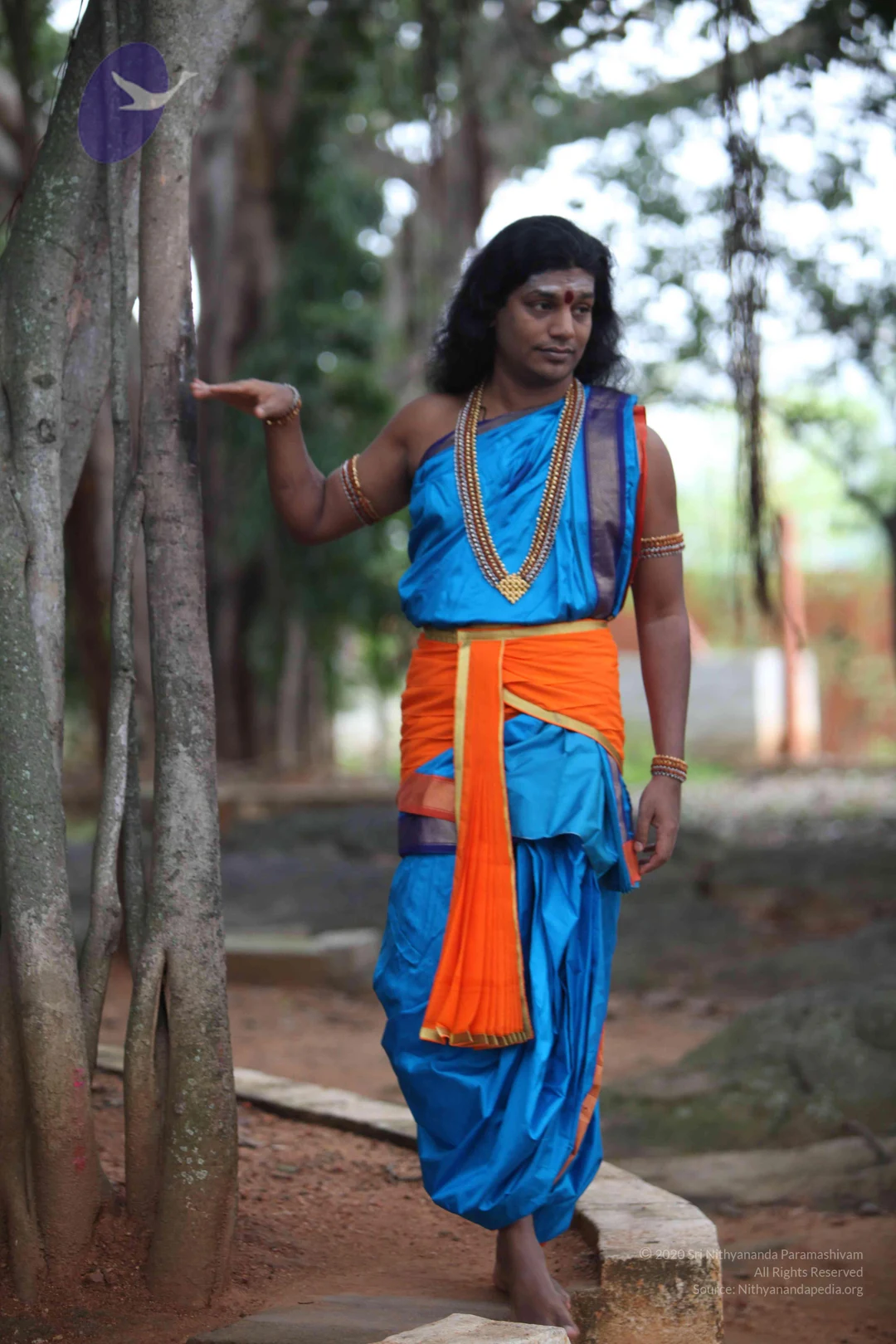
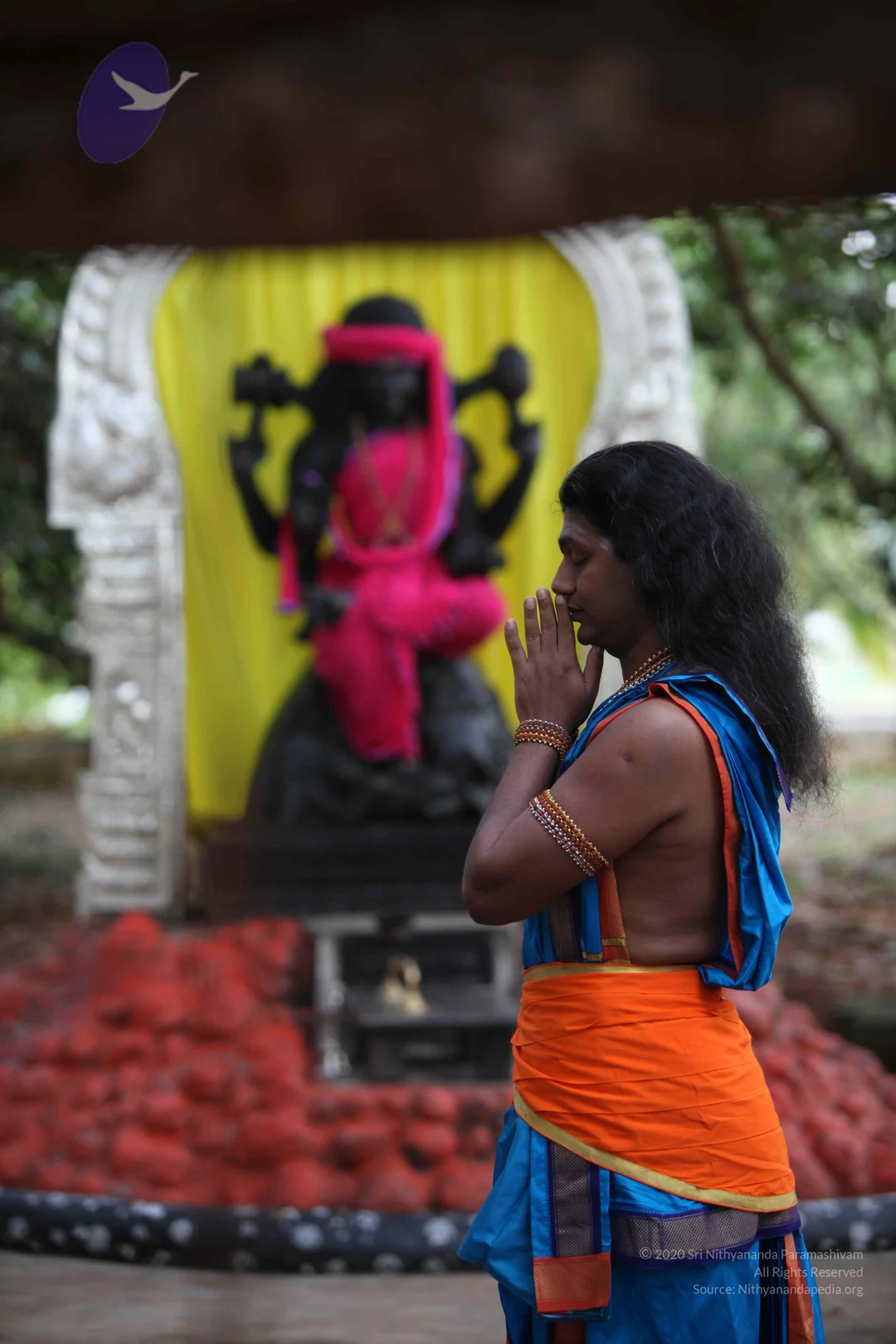
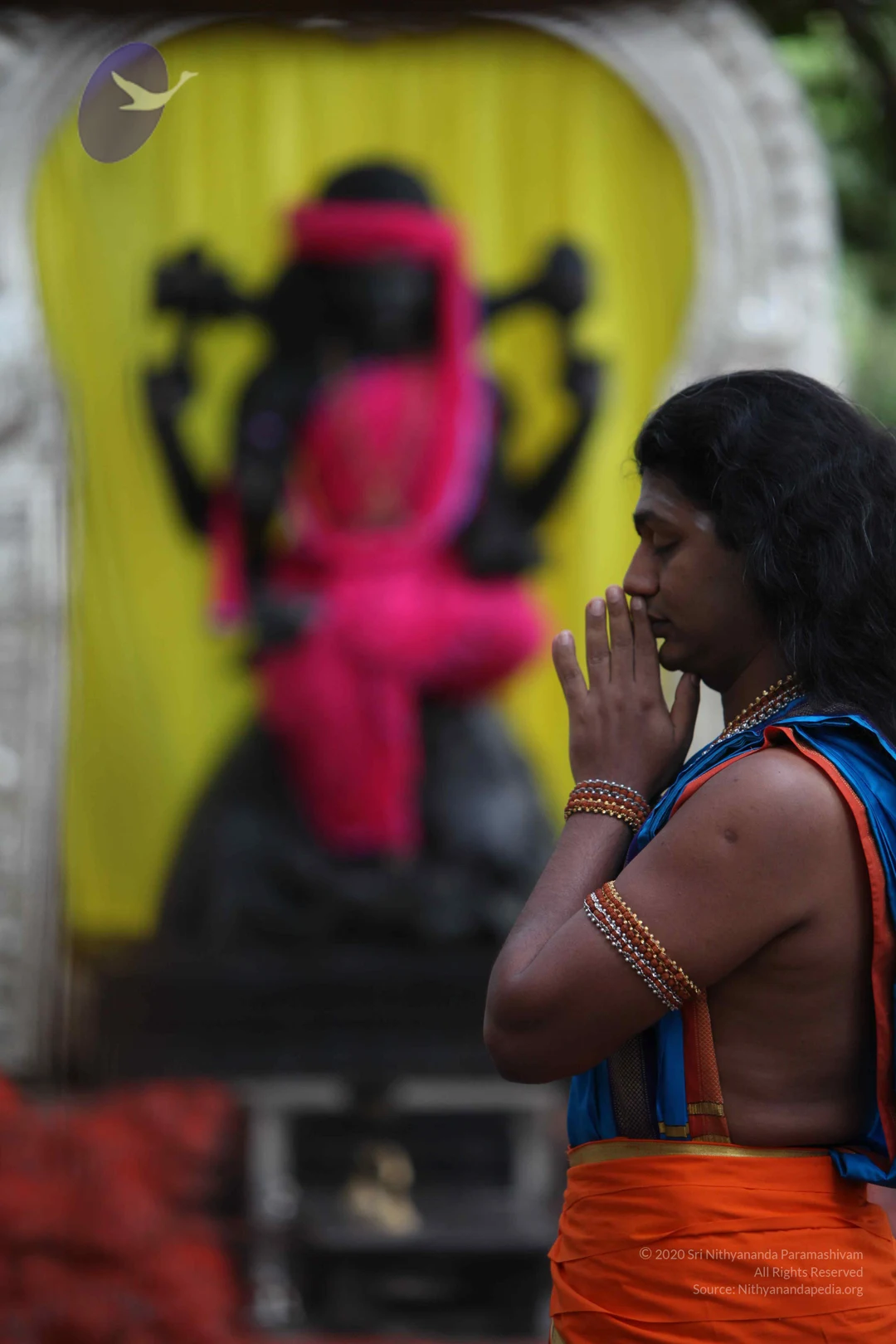
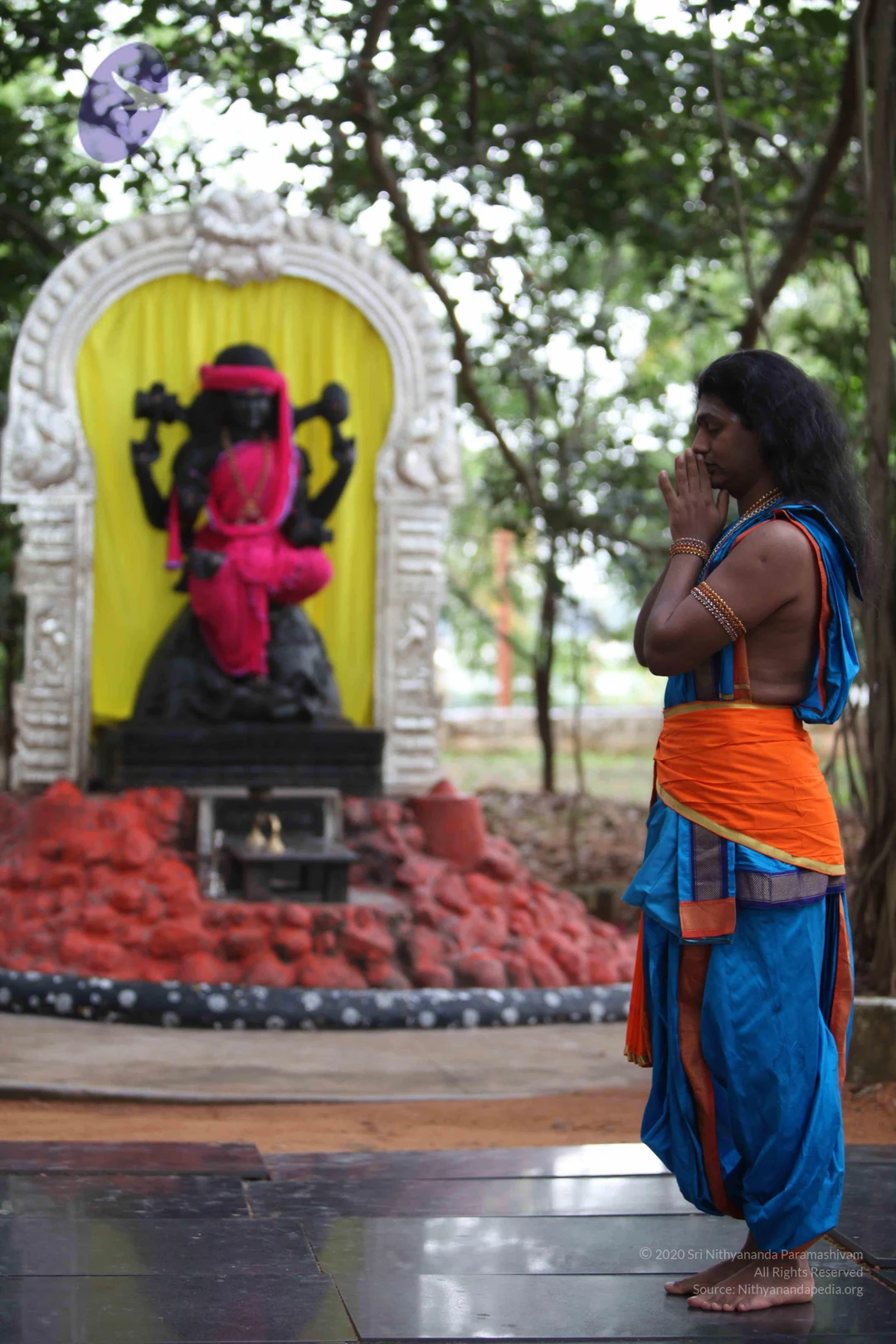
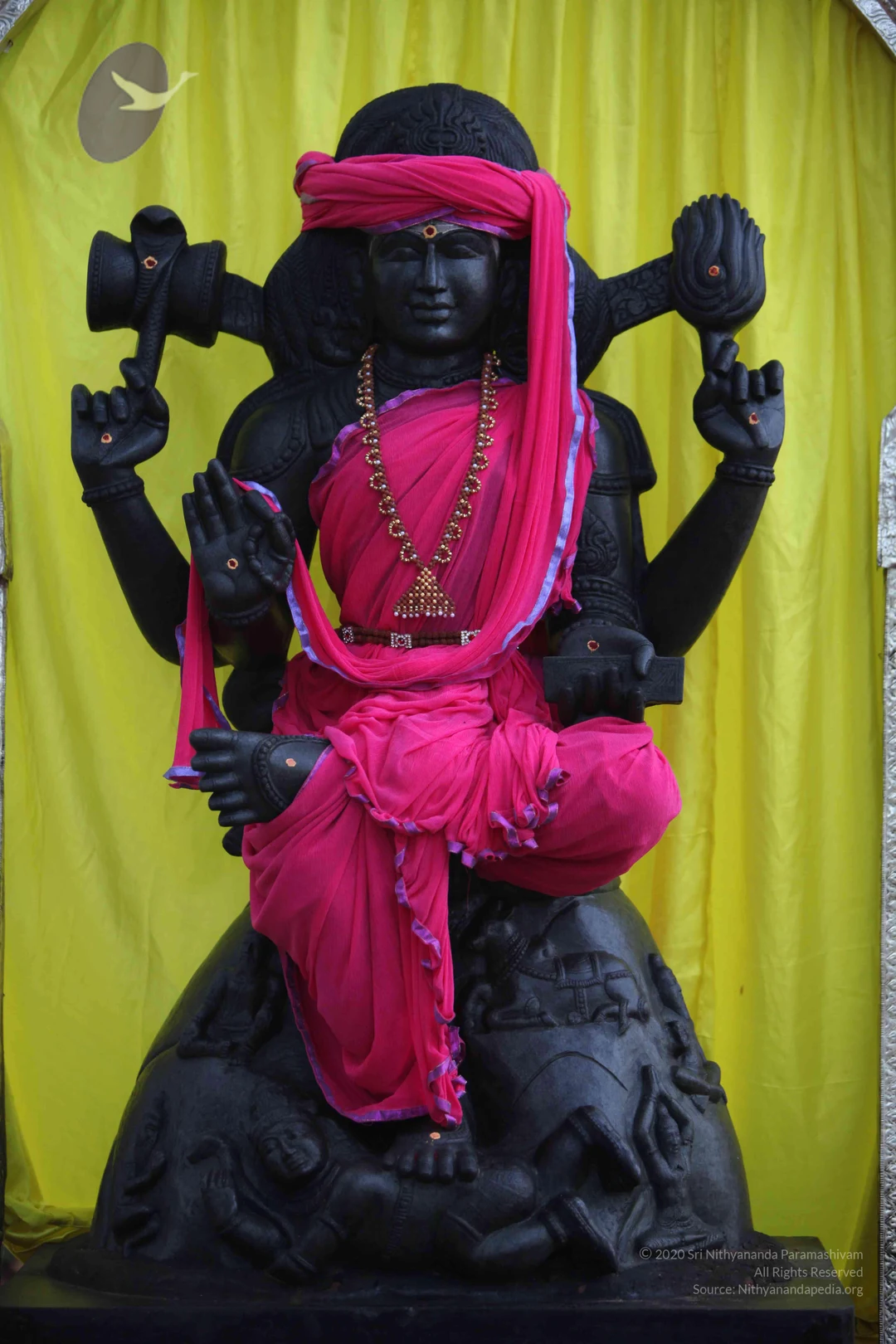
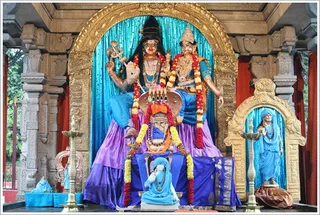
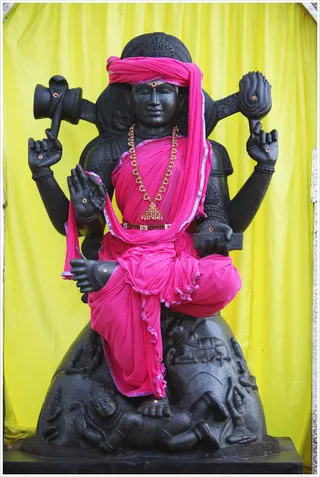
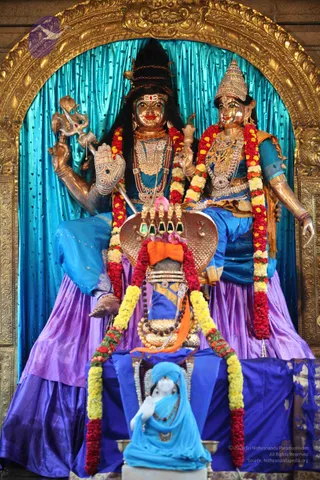
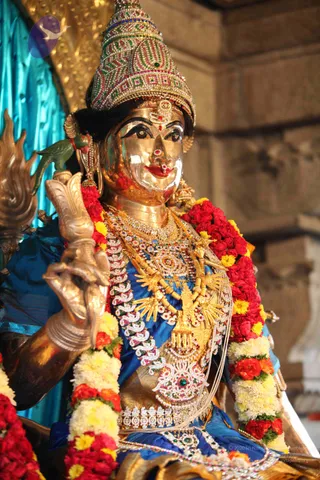
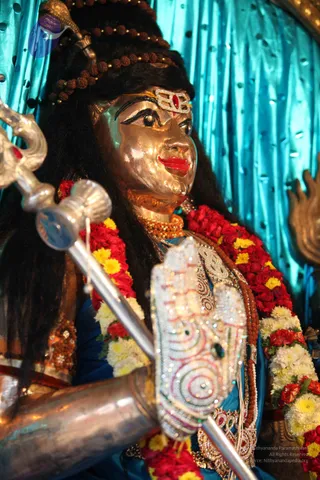
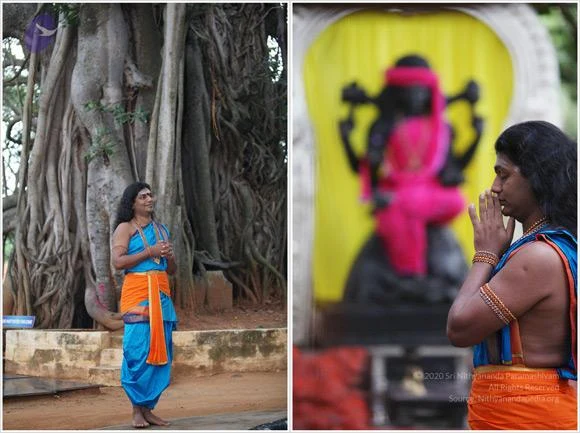
A two-panel collage of outdoor photographs. The left panel shows a barefoot man with long dark hair standing before a large banyan tree with dense aerial roots, wearing a blue upper cloth and blue dhoti with an orange sash, hands joined near his chest. The right panel shows a man seen from behind with long dark hair, bare-chested with an orange cloth around his waist and a blue shawl over his shoulder, hands folded in namaskar before a black stone deity murti with four arms draped in pink and set against a yellow backdrop, with red offerings in the foreground. Both panels are photographs of devotees in ritual posture.Close-up photograph of a gilded metal murti of a goddess, with a polished golden face, painted black eyebrows and eyes, red lips, and a nose ring. She wears an ornate jeweled crown set with red, green and white stones, a blue silk garment, layered gold and jeweled necklaces, and a long jeweled garland of red roses and yellow marigolds draped over her shoulders. A green and gold ornamental staff or weapon stands at the left edge of the frame, and the background is a blurred warm wall. No living people are visible.Two golden-faced deity murtis stand side by side against a turquoise draped backdrop with a gold arched frame. The figure on the left has long dark hair, a rudraksha mala, a trident and an ornate silver-and-jewelled chest piece. The figure on the right wears a patterned multicoloured crown, layered gold and jewelled necklaces, earrings and a red-and-blue garment, and holds a lotus-like object. Both are garlanded with red and yellow flower garlands. The murtis are statues, not people, and there is no visible a person depiction in this image.

October 28 2011

Original wiki page
Contents

Title:

Step up to the Spectrum of Enlightenment

Description

Bhagavad Gita (Song of God) is a timeless treatise on the essence of living enlightenment. The Gita was imparted by the enlightened Hindu incarnation Sri Krishna to the warrior-prince Arjuna over 5000 years ago. Amazingly, the spiritual wisdom and life solutions offered in the Gita are so universal and current that it is even today used as a personal transformation guide.

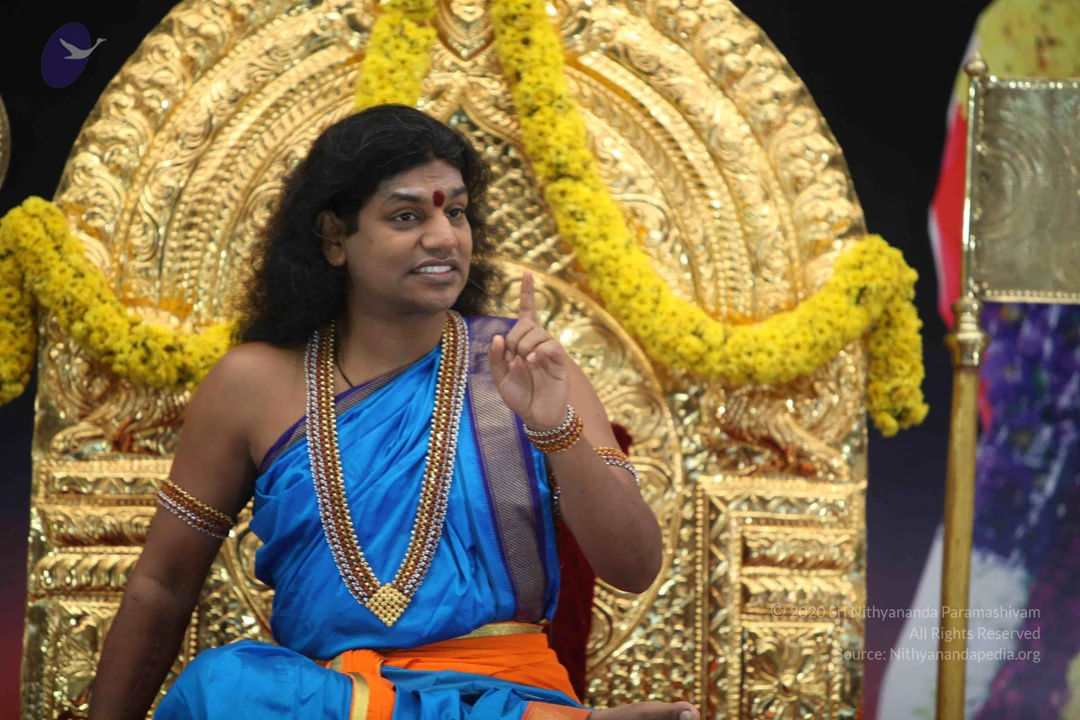
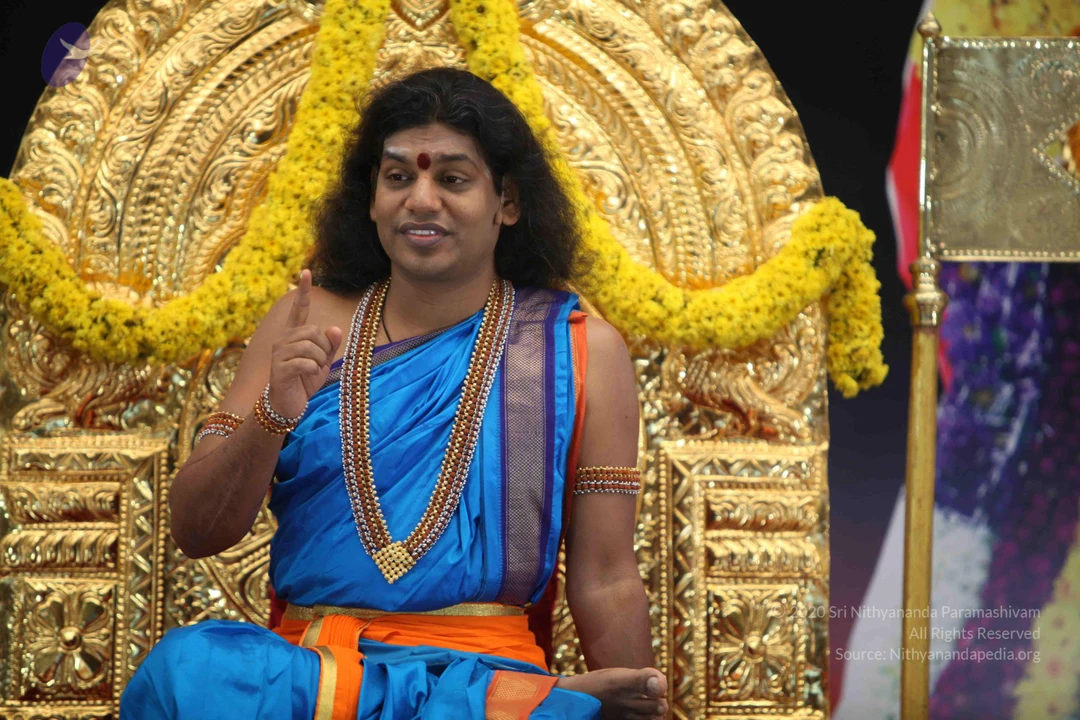
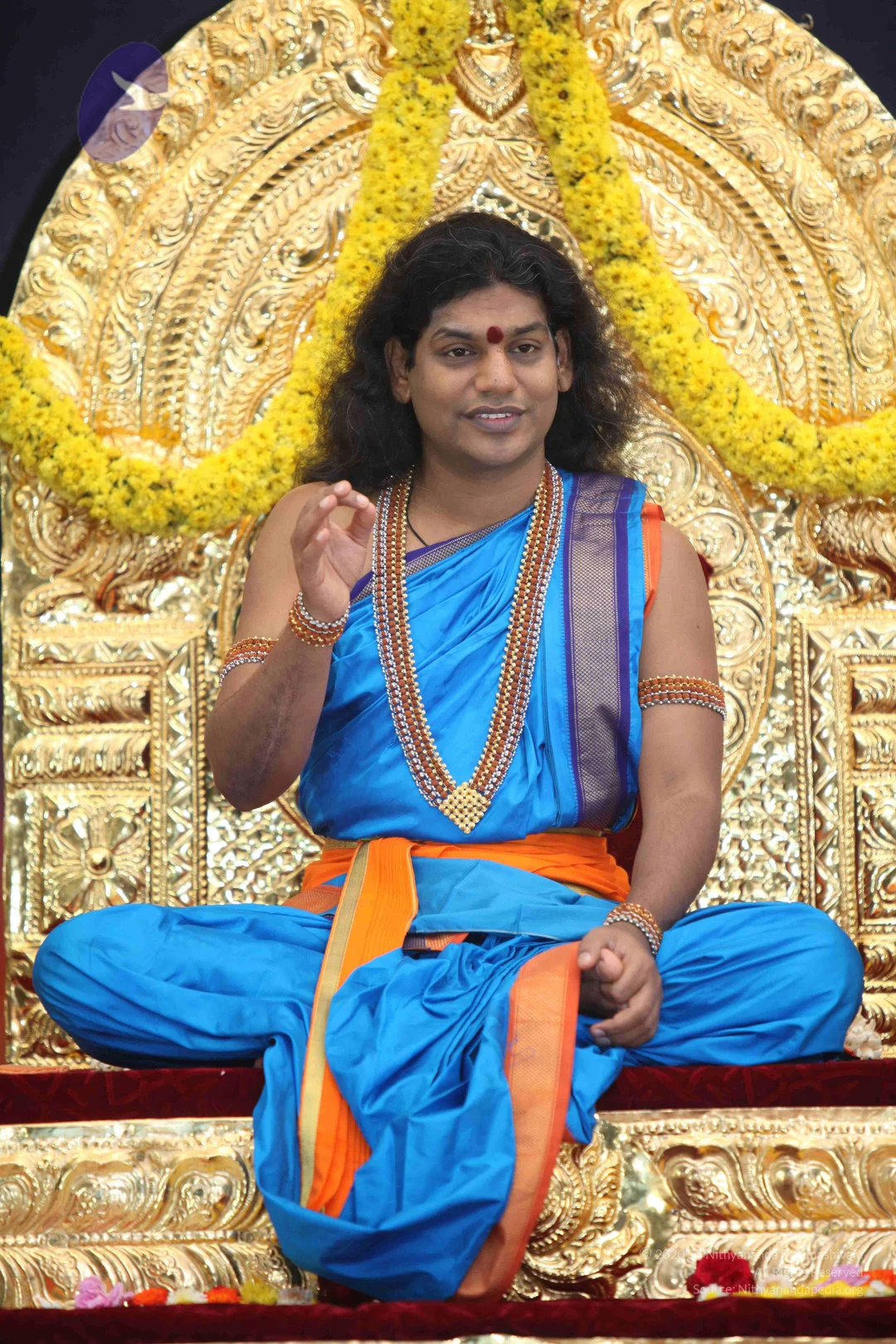
In this talk on Bhagavad Gita, Chap 2, Verse 56, Paramahamsa Nithyananda continues to share insights into Sri Krishna's wisdom. Verse 56 encourages us to free ourselves from passion and anger. However, Paramahamsa points out with understanding and compassion that there is no short road to this transformation. We cannot evolve beyond slavery to our emotions through direct struggle with them. To achieve spiritual balance we must engage our experiences by raising our consciousness to a higher level. We can use a technique or method learned from a master, or we can inspire ourselves by thinking, "How would my master behave in my situation?" This gives us an enlightened spectrum from which to act. Our actions will reflect the clarity of that spectrum.

Link to Video:

VideoAudio

Photos

Photos Of The Day:

01-ADIKAILASA-TEMPLE
02-BG-SATSANG

03-SARVA-DARSHAN

04-NITHYA-KRIYA

05-SASHTI-ALANKAR

Photos from this day

View all 203 photos

Photos

14 photosSource gallery
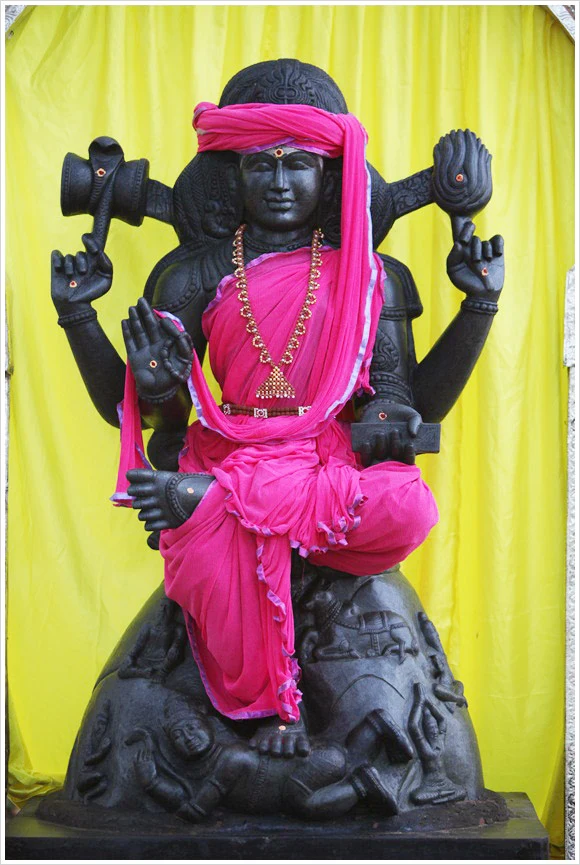
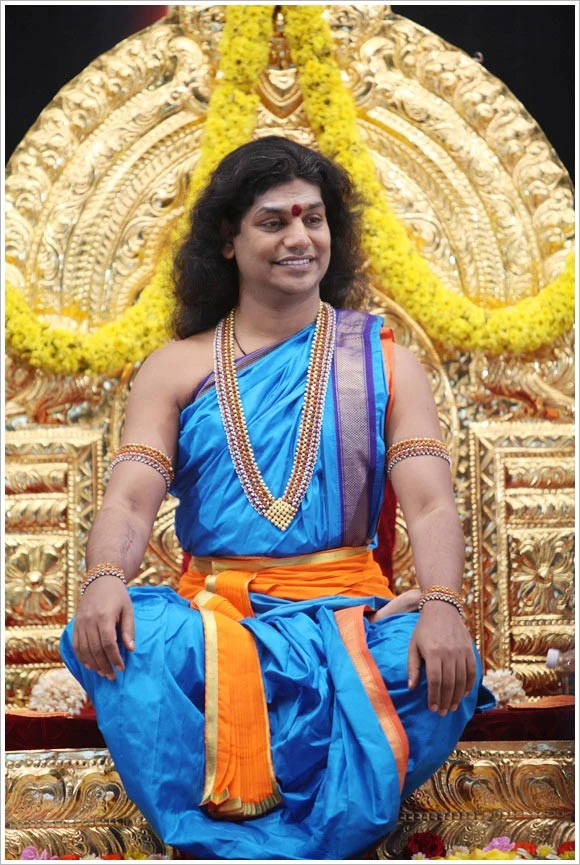
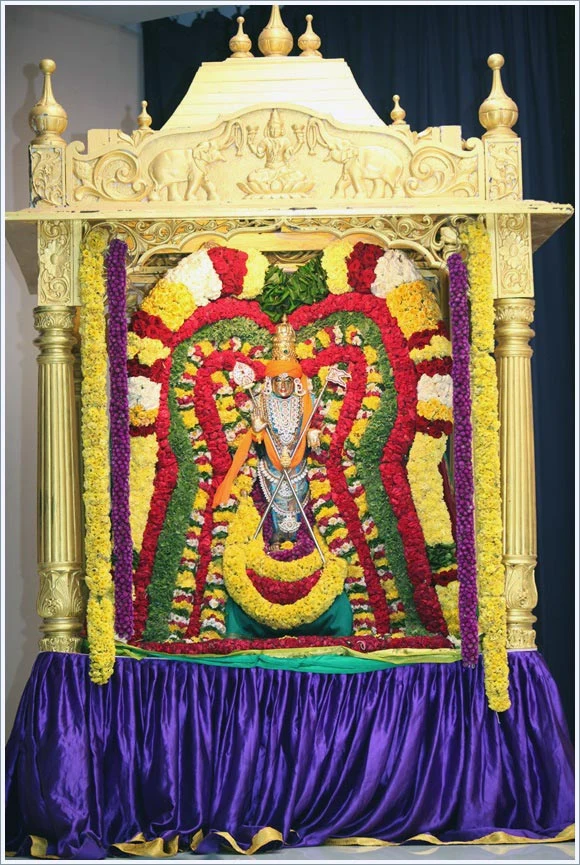
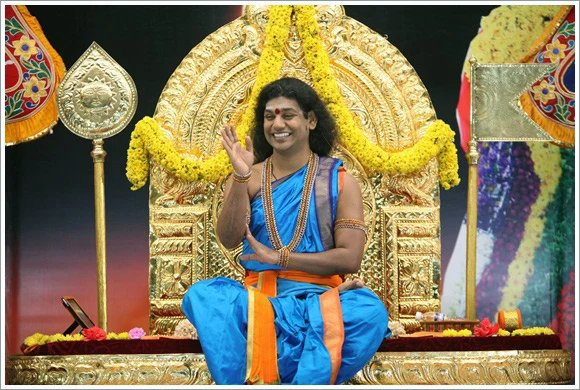
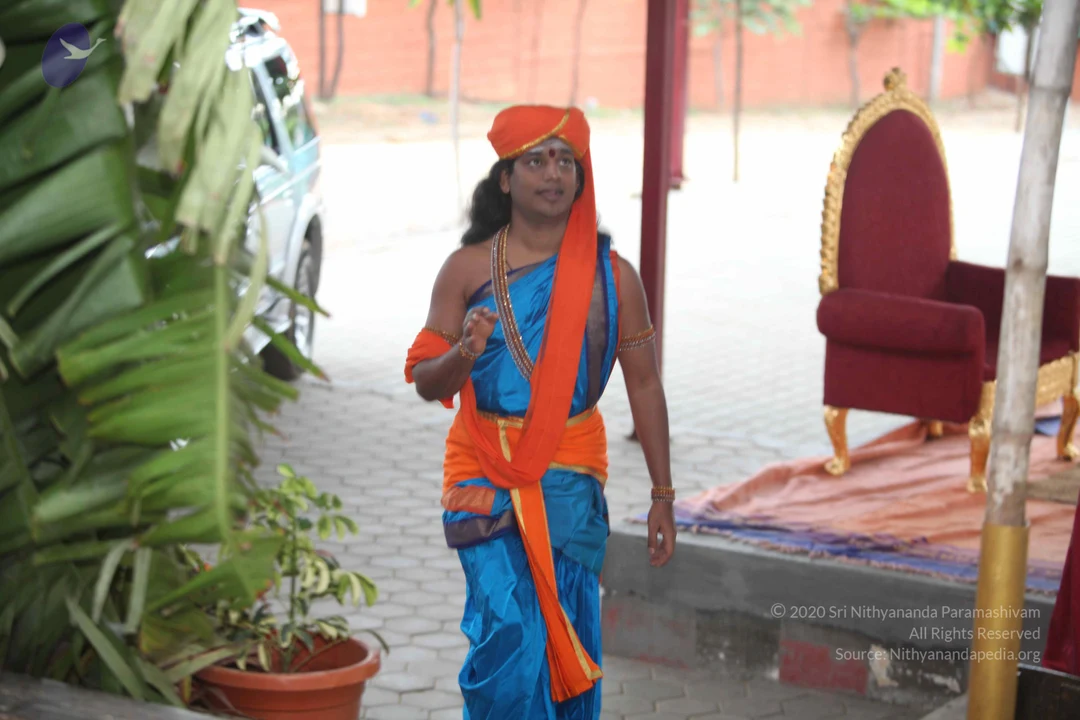
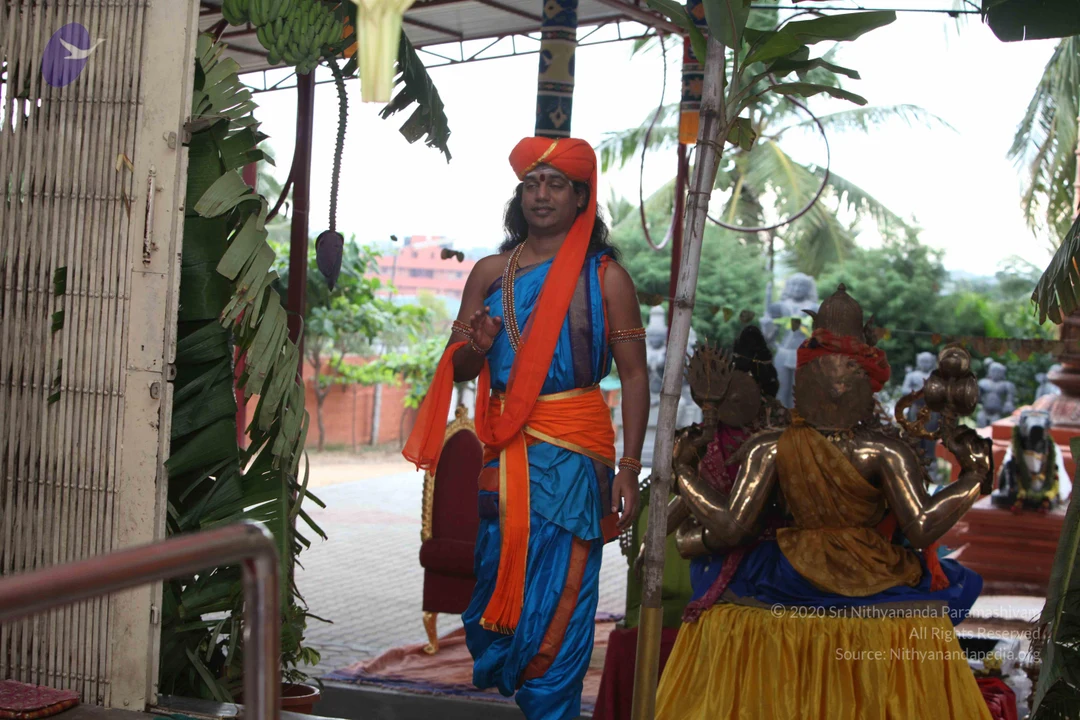
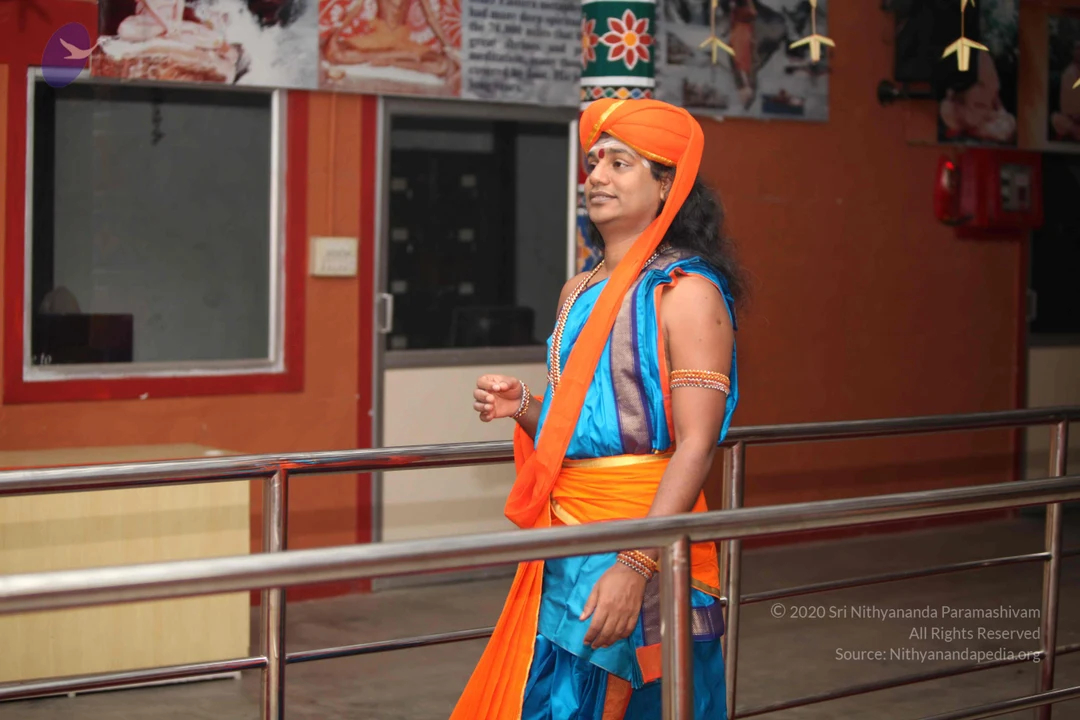
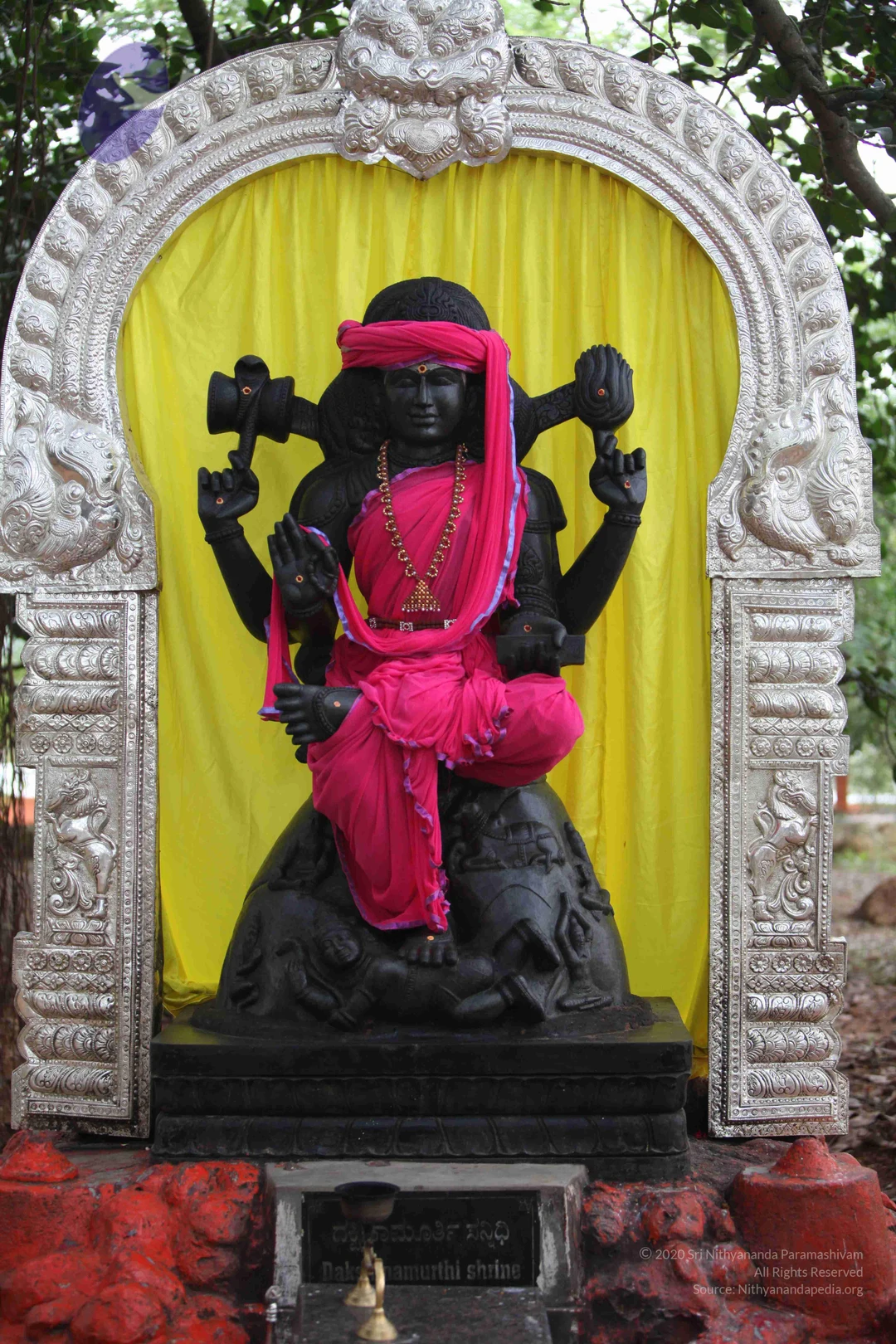
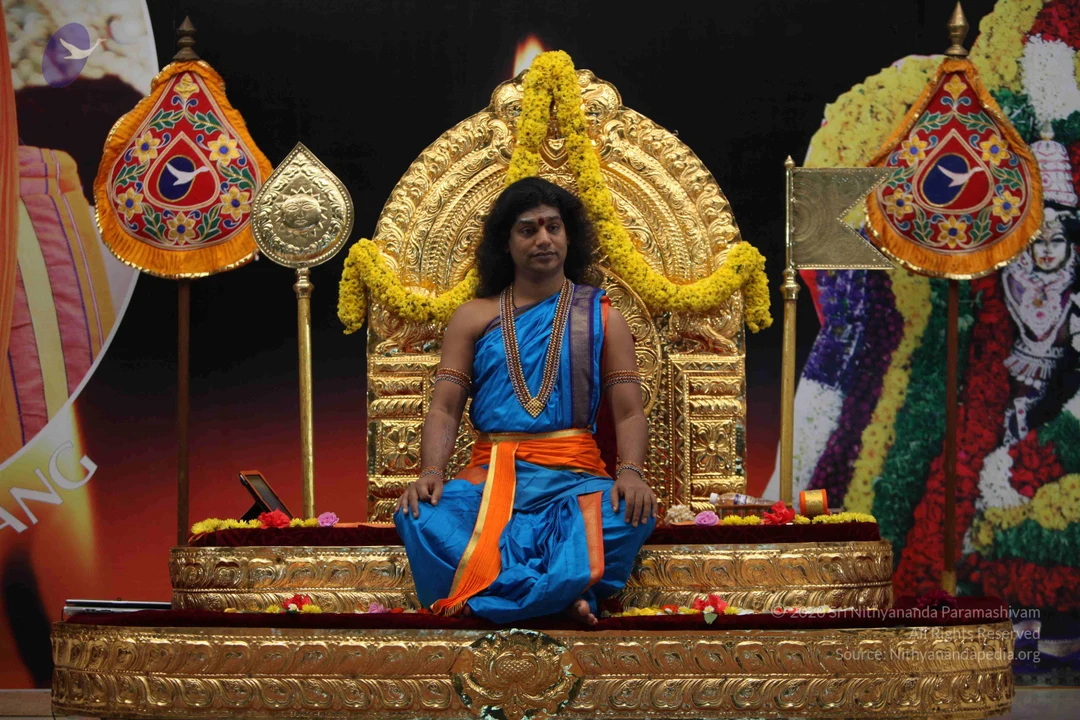
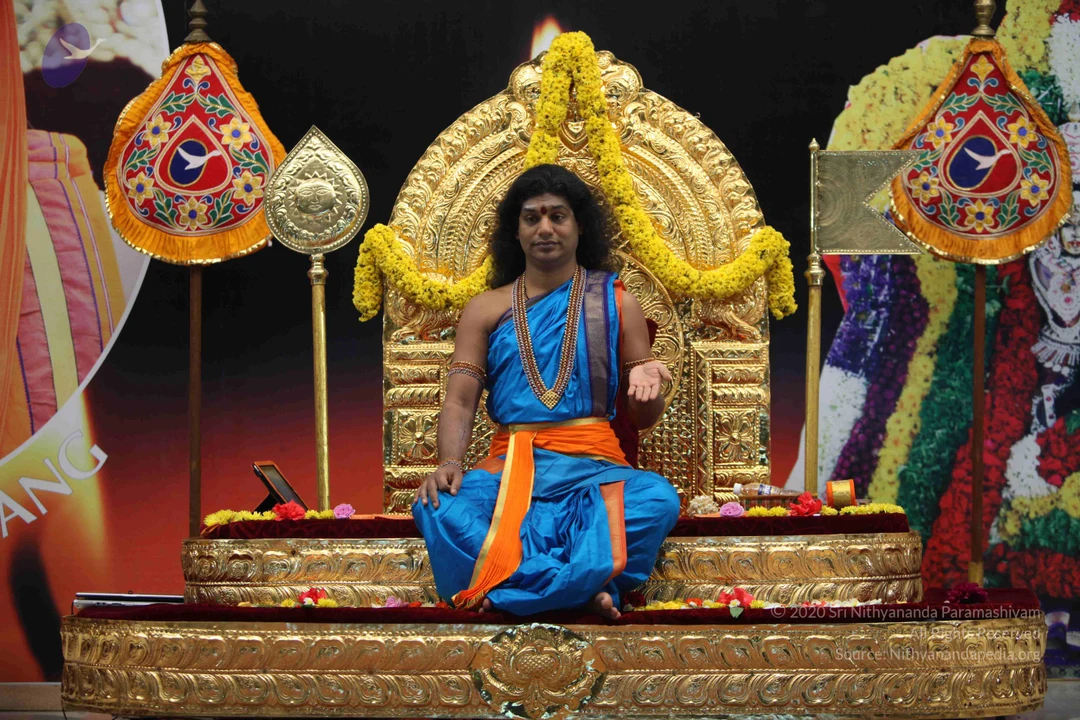
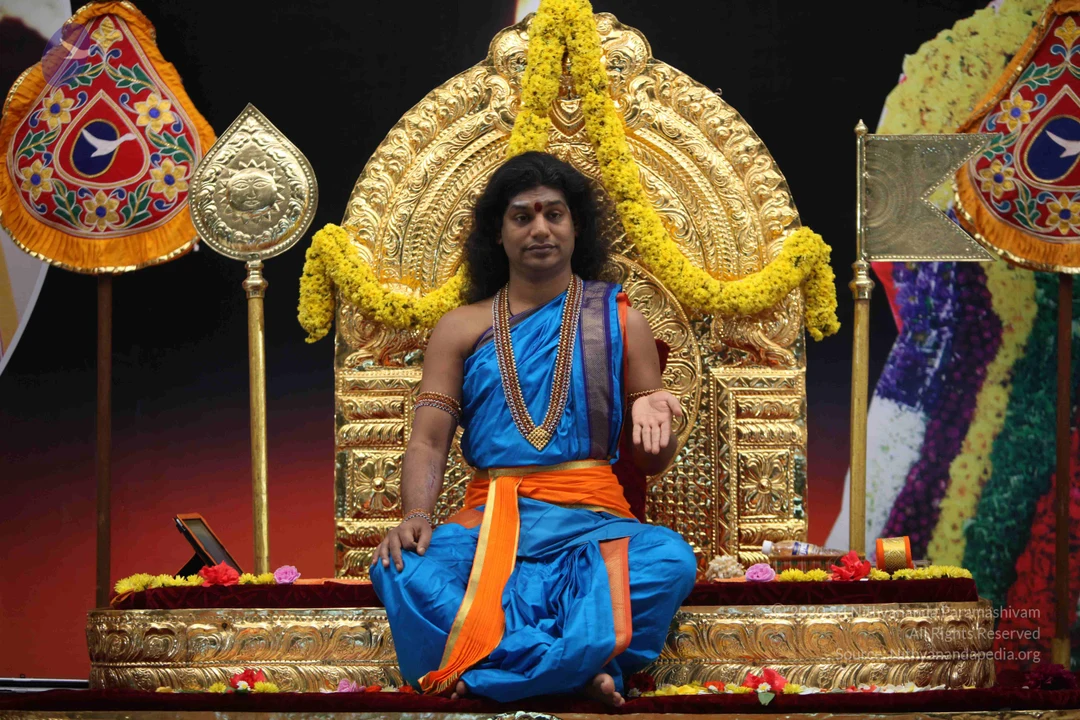
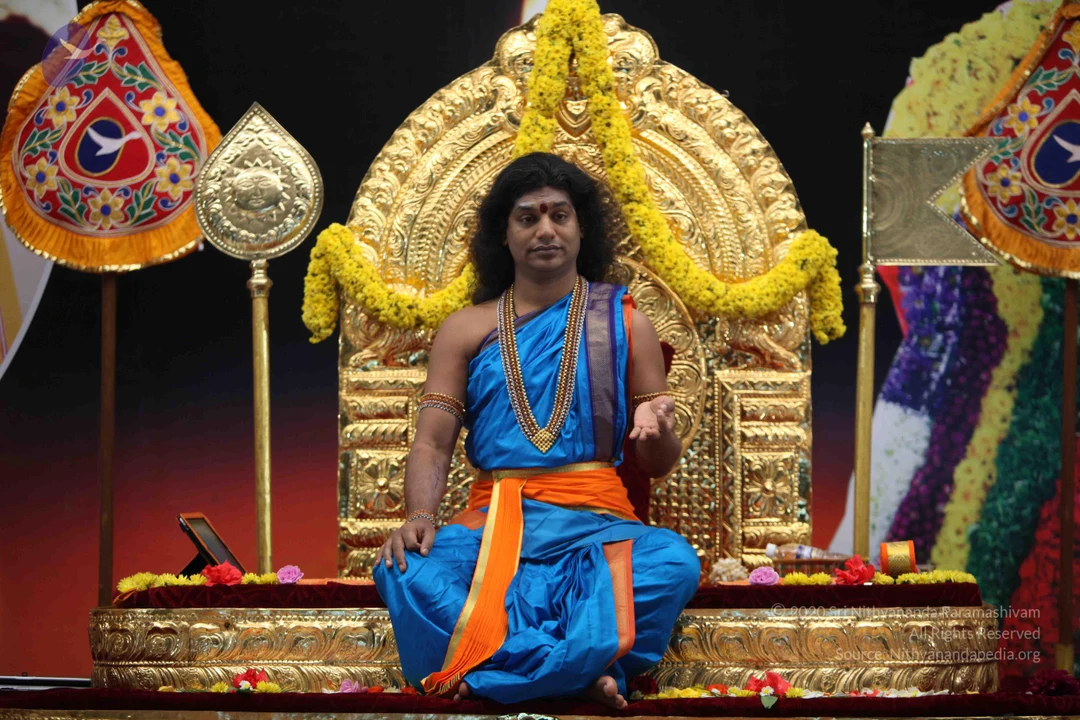
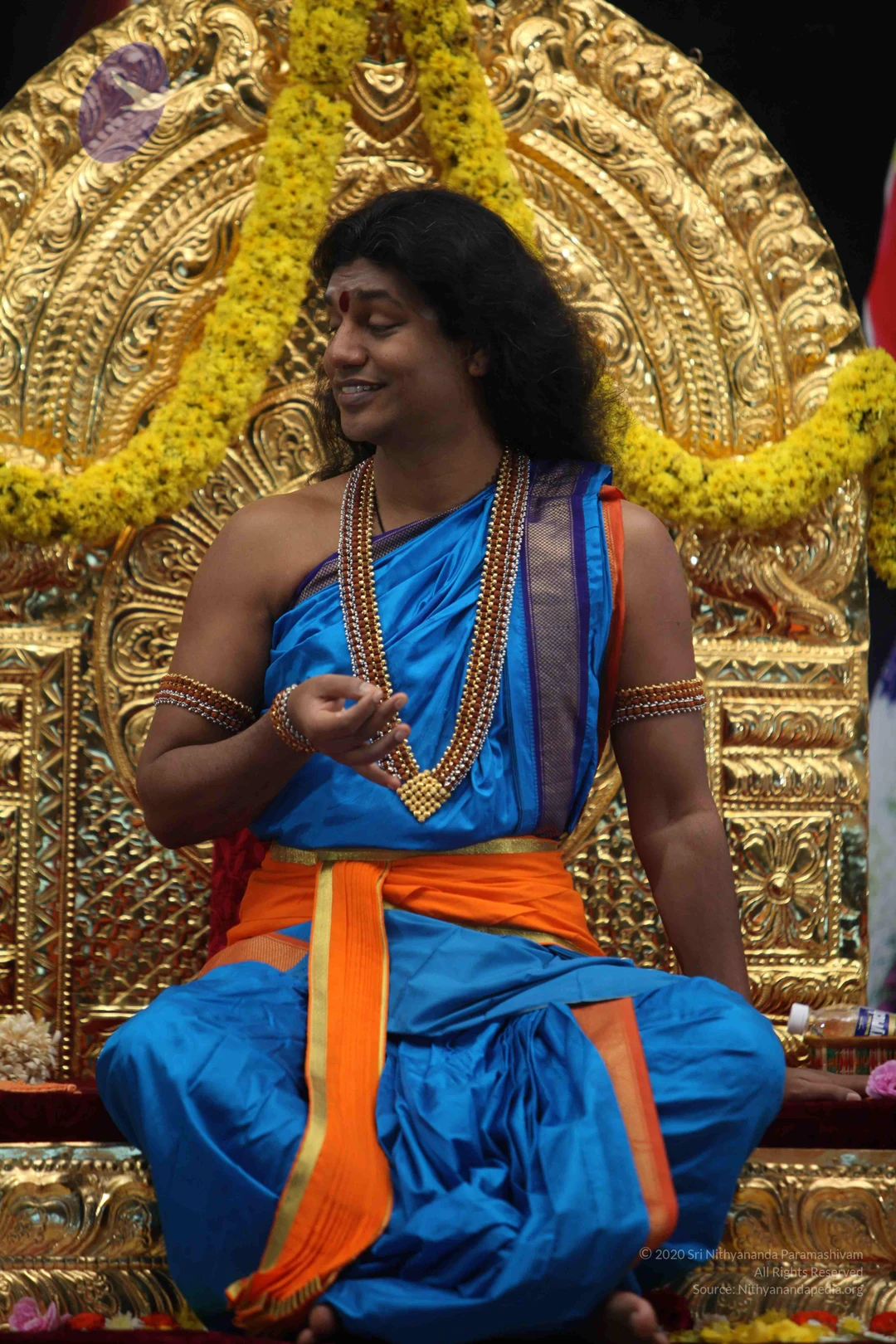
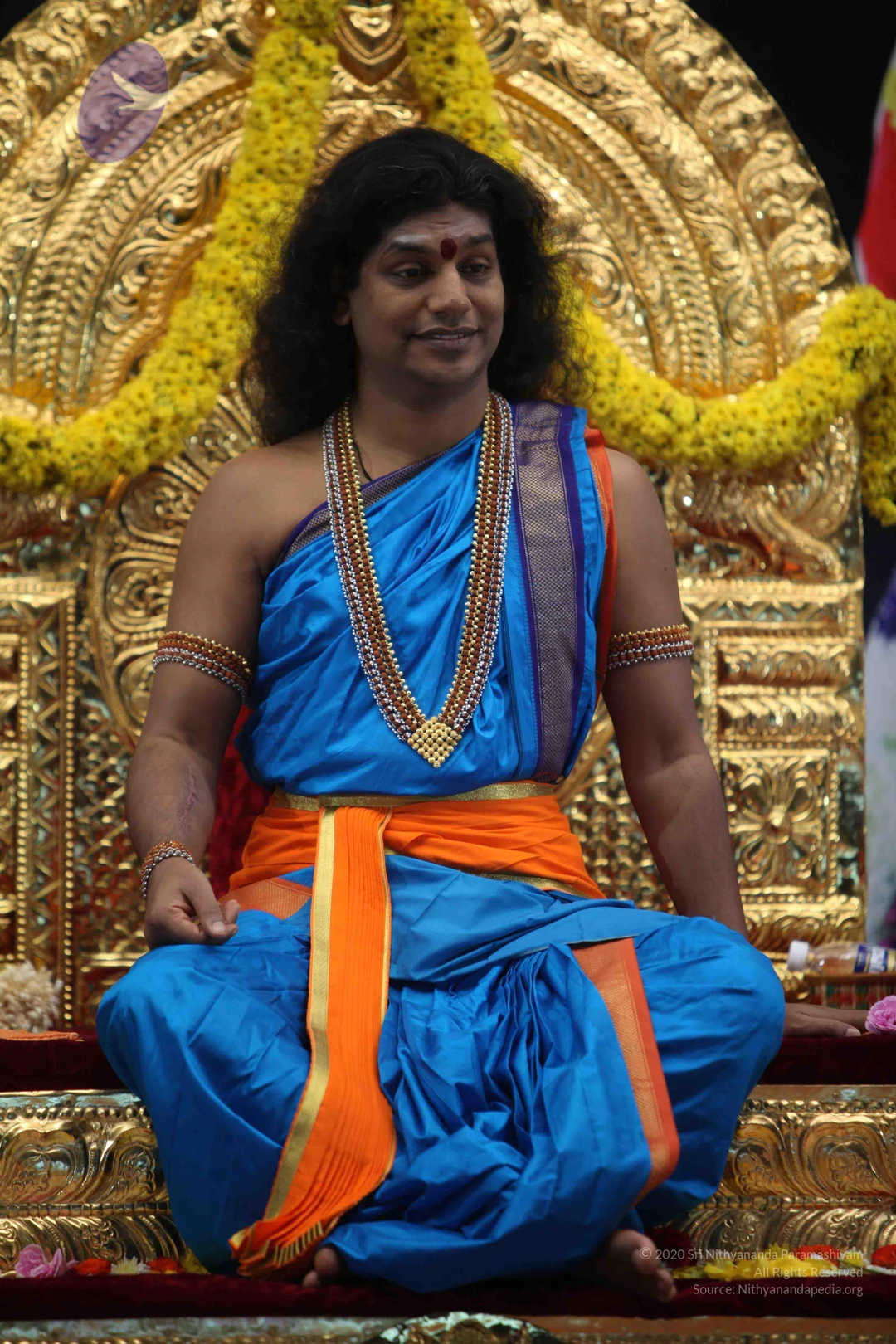
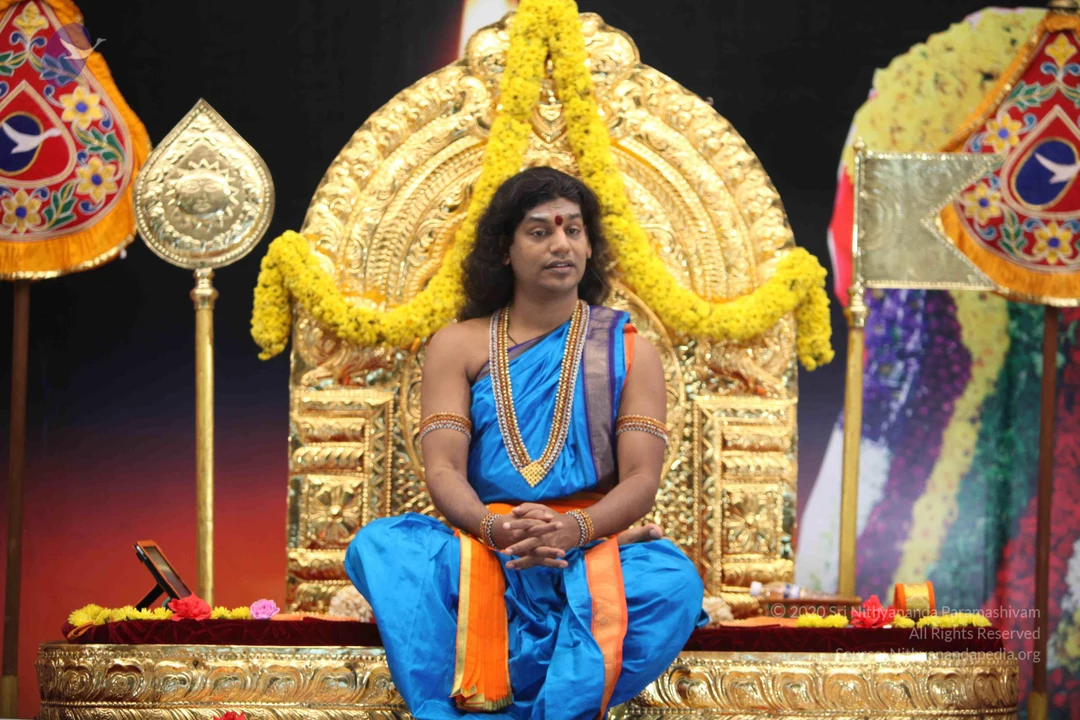
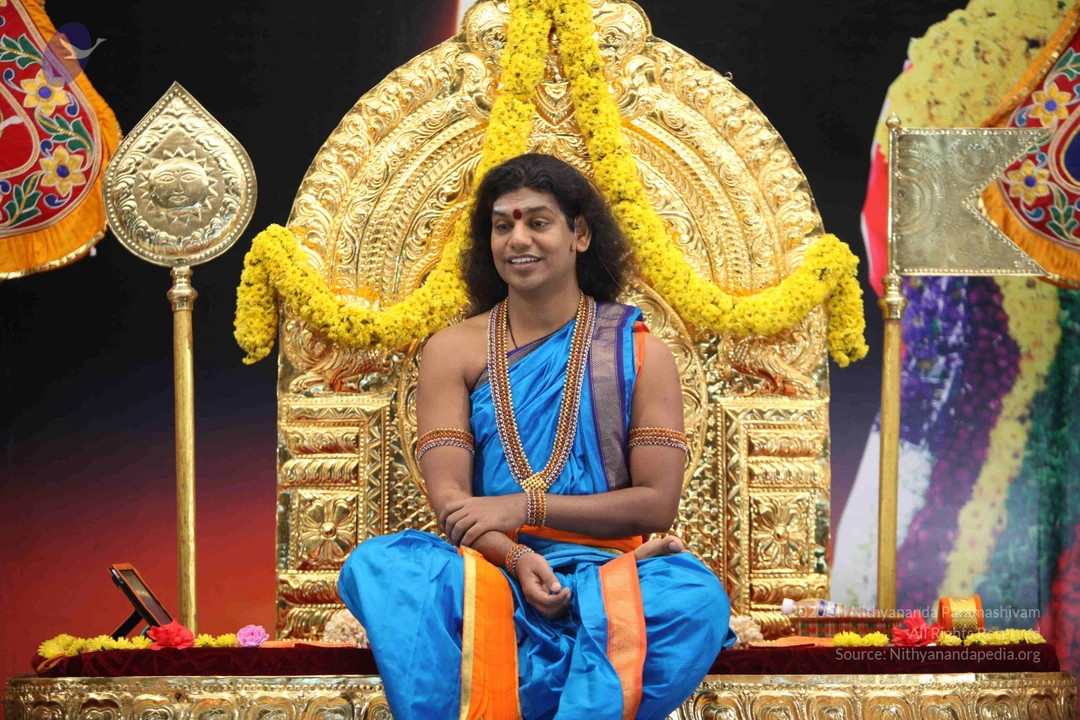
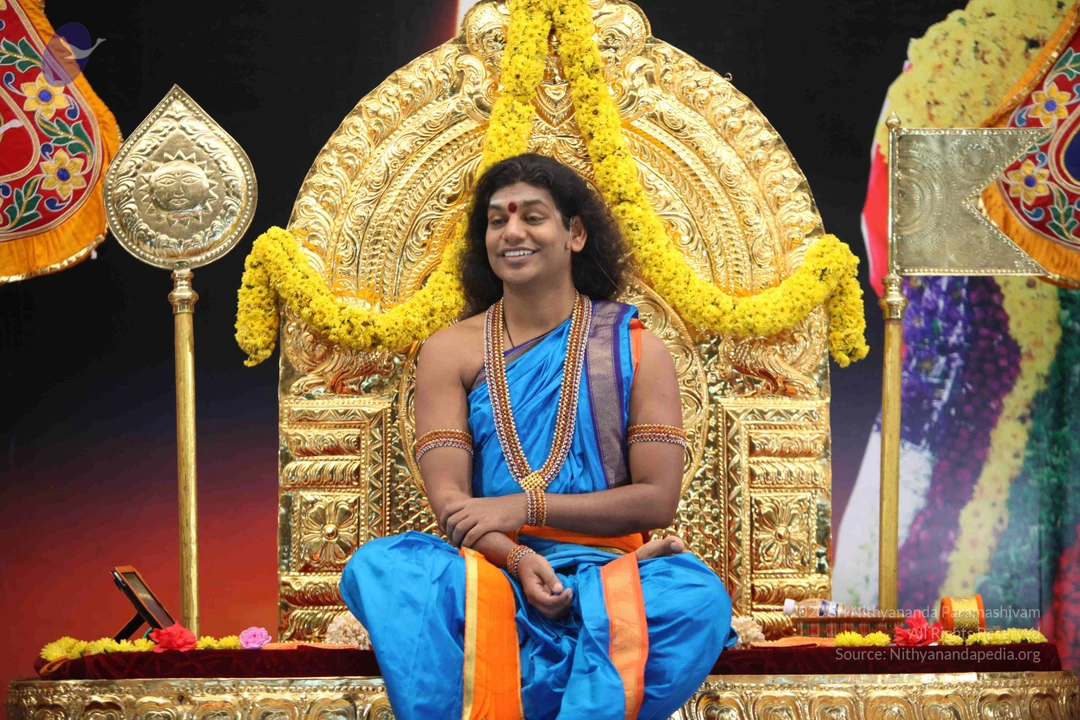
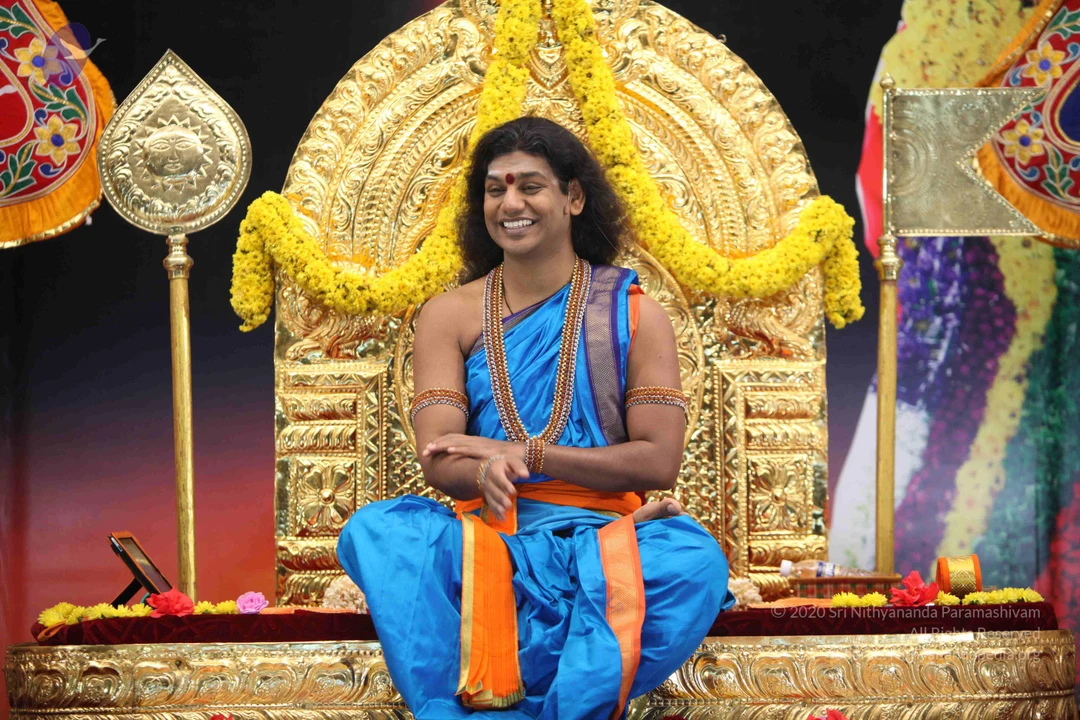
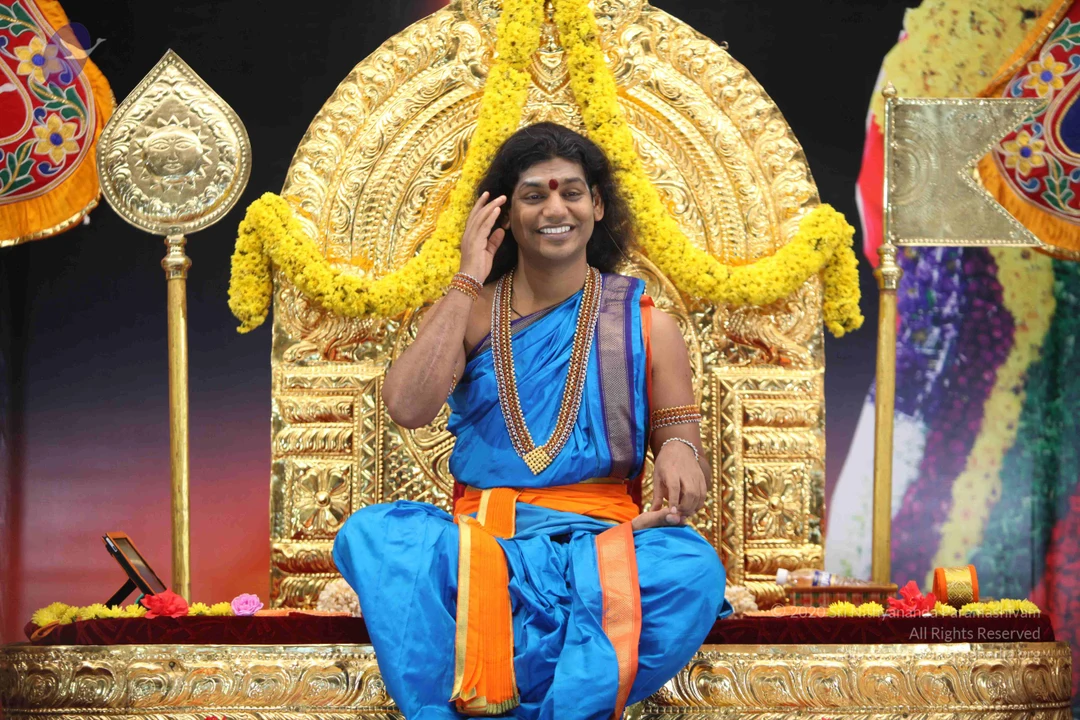
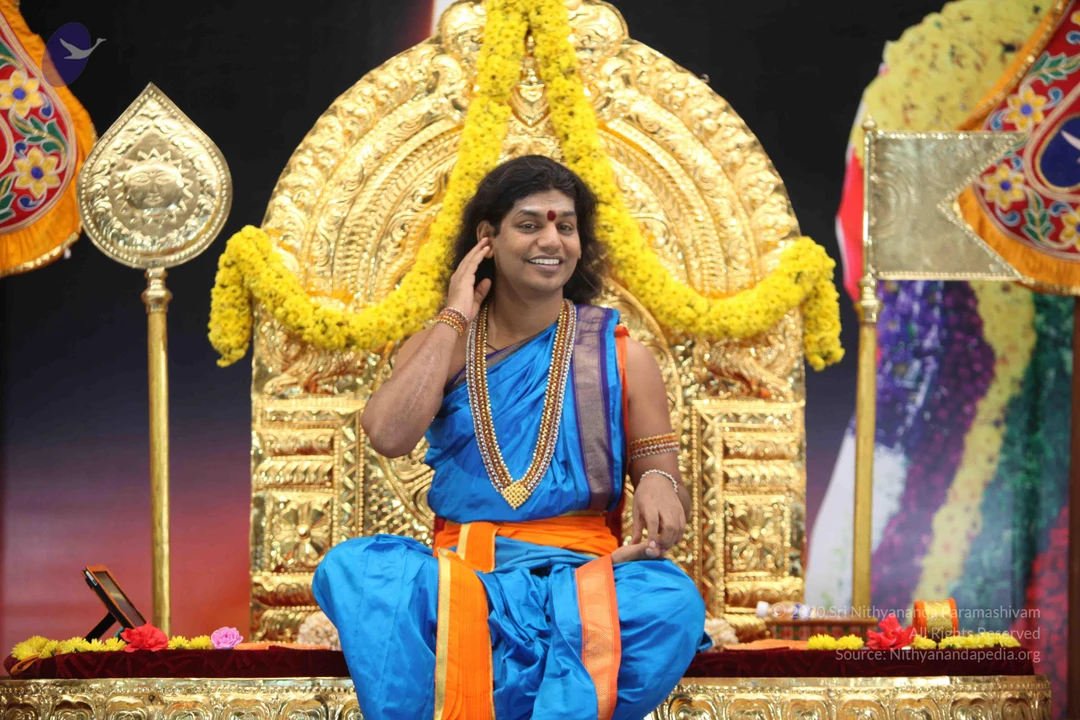
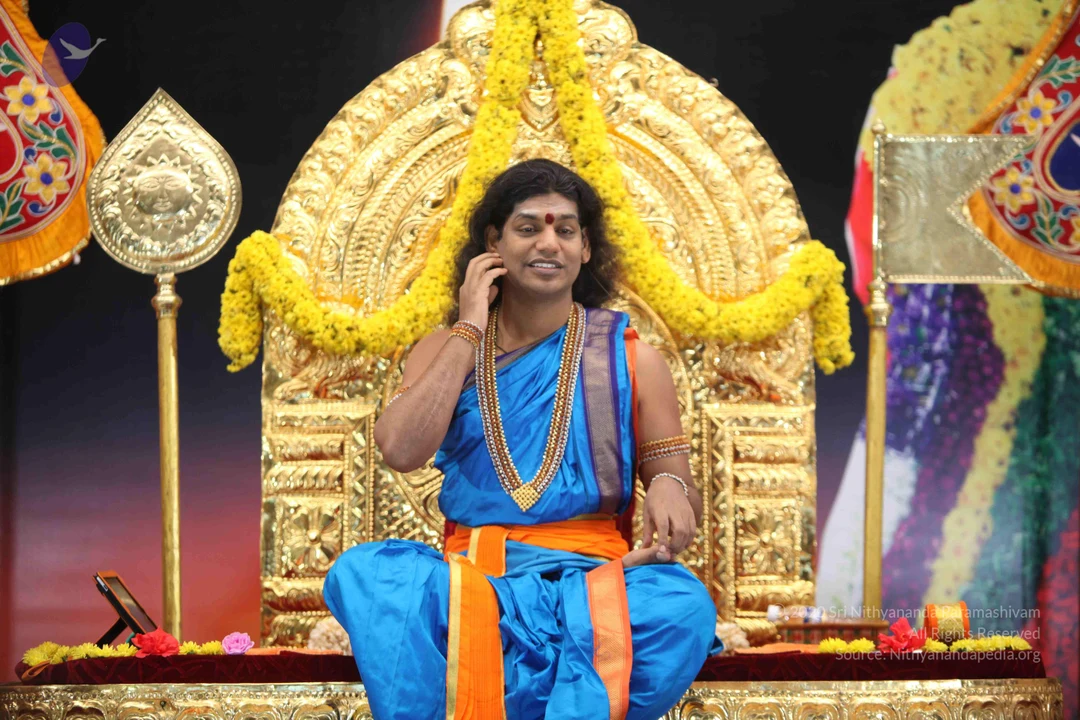
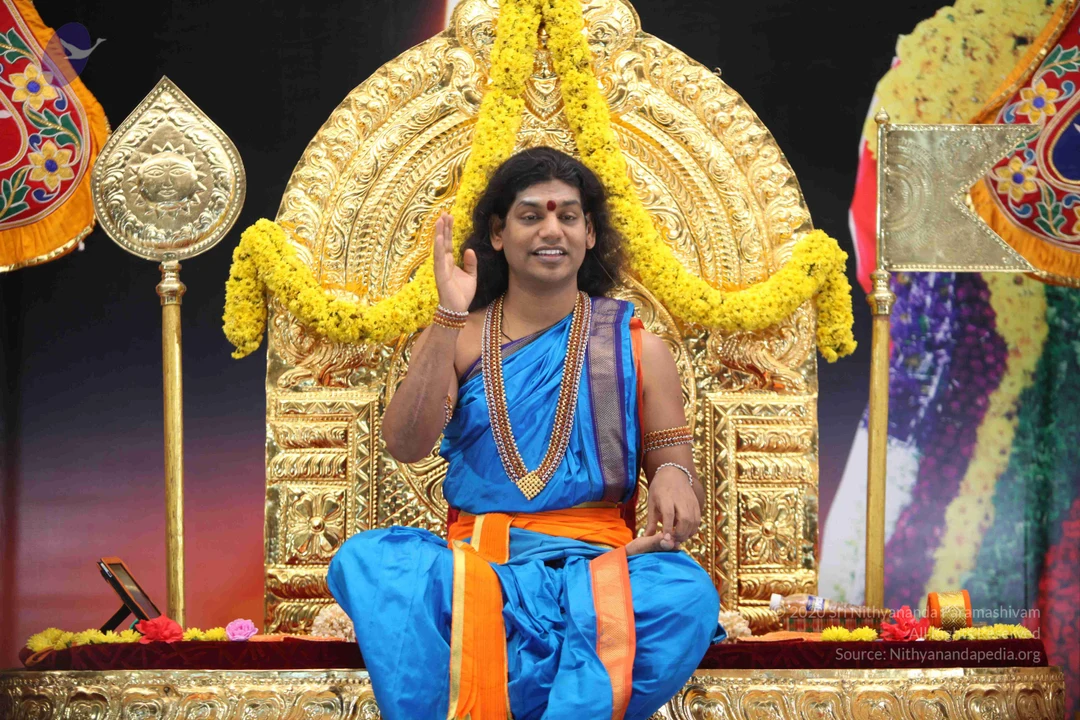
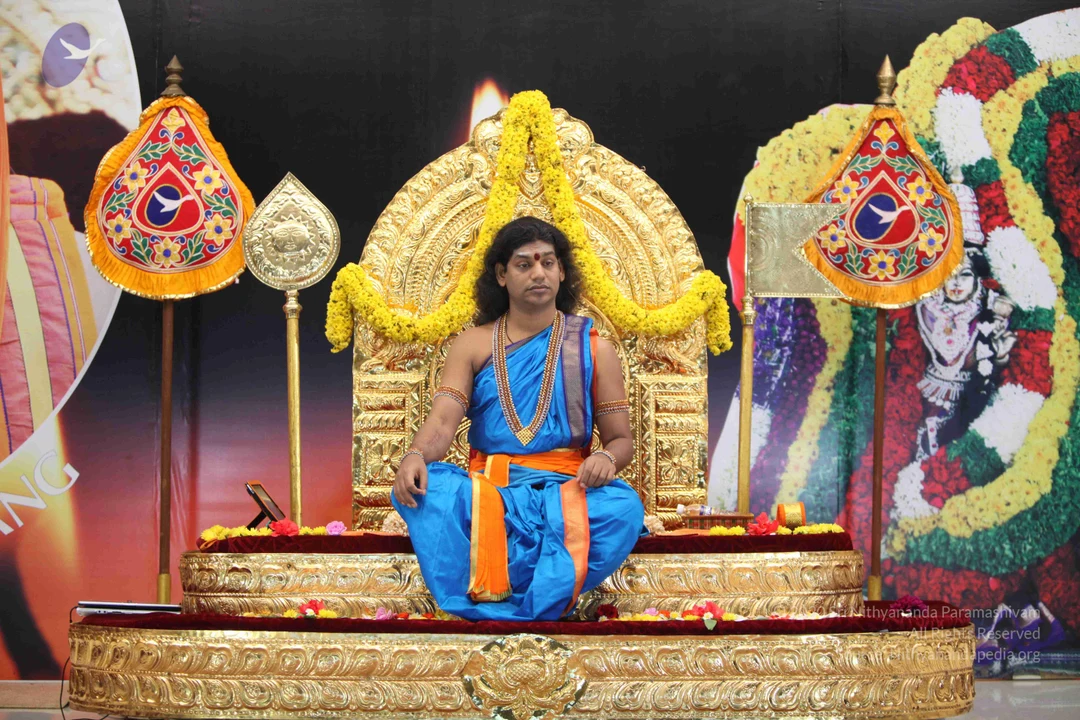
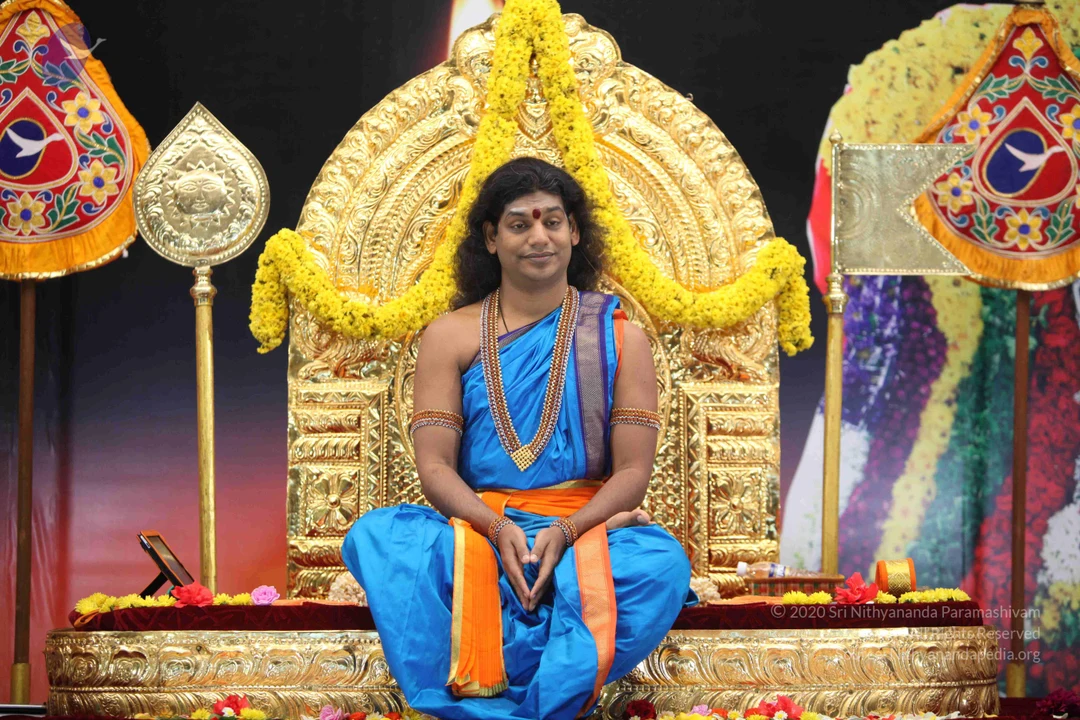
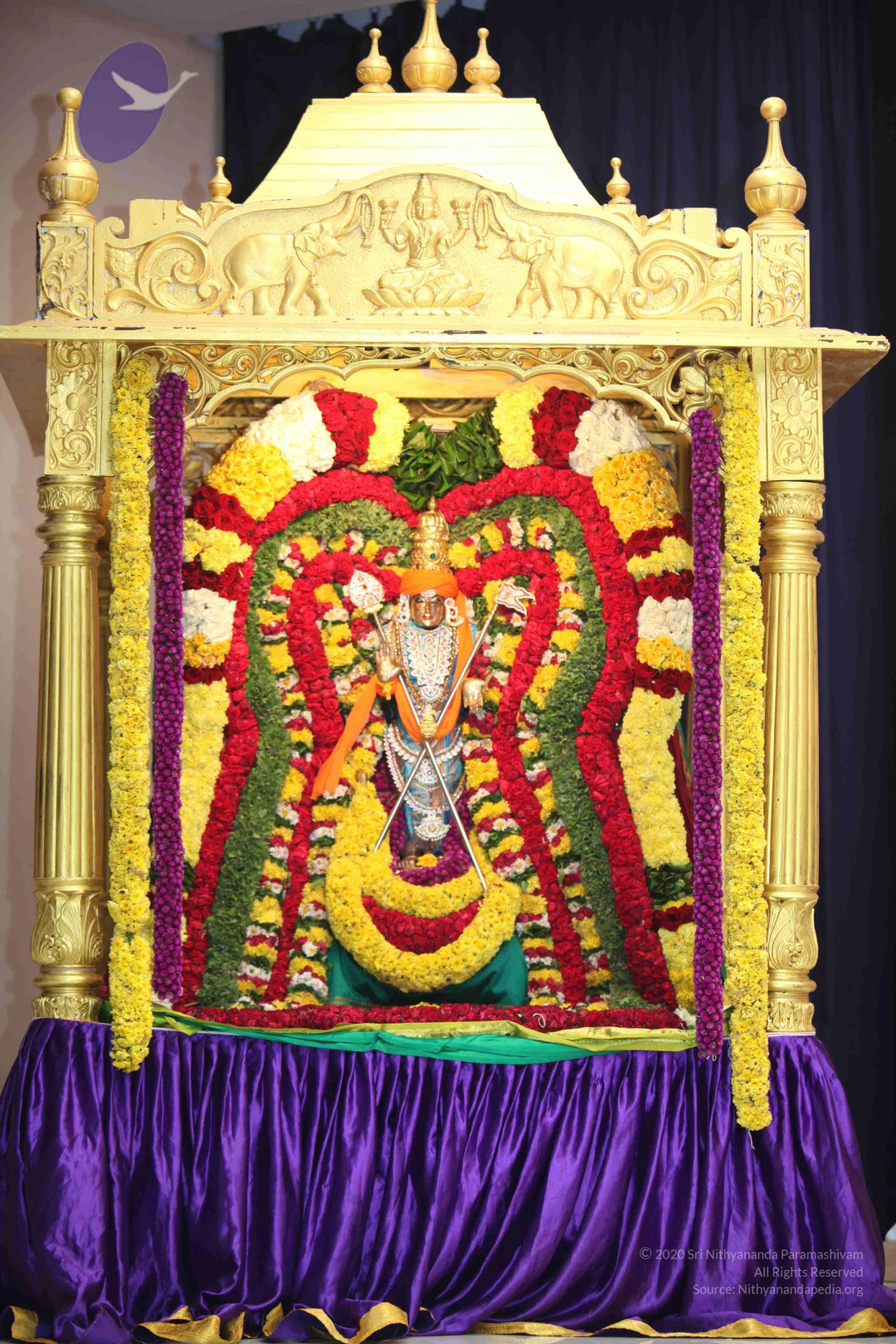
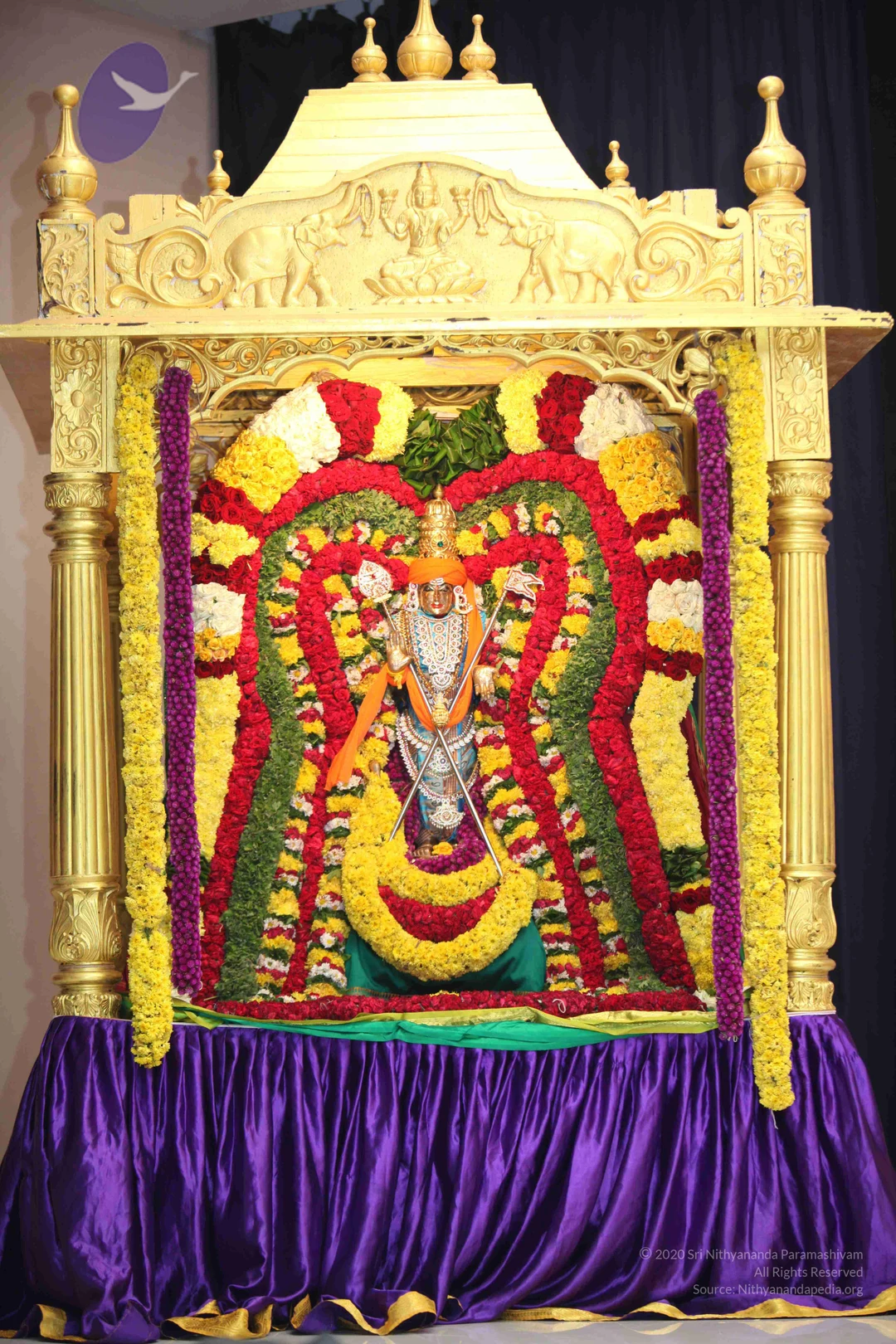
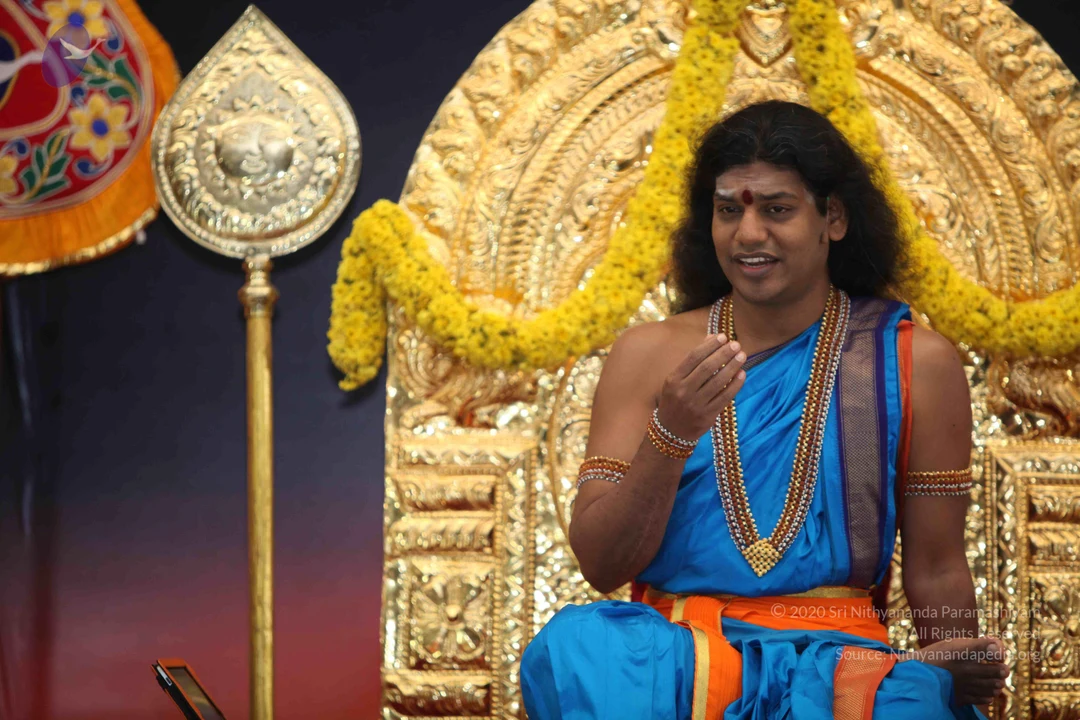
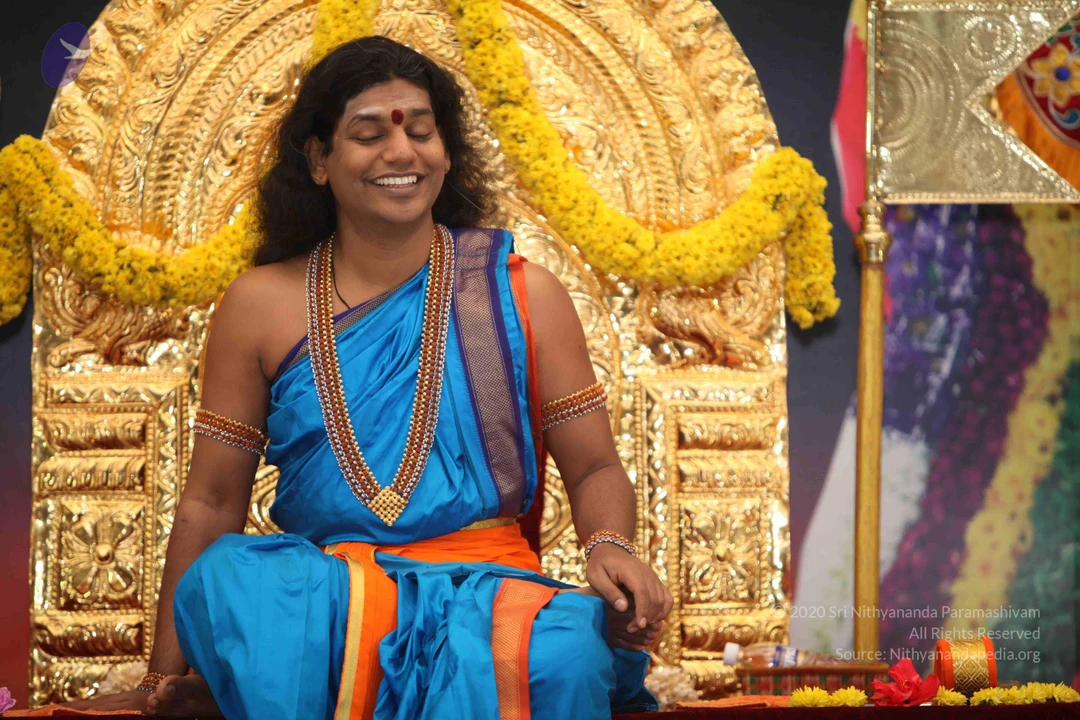
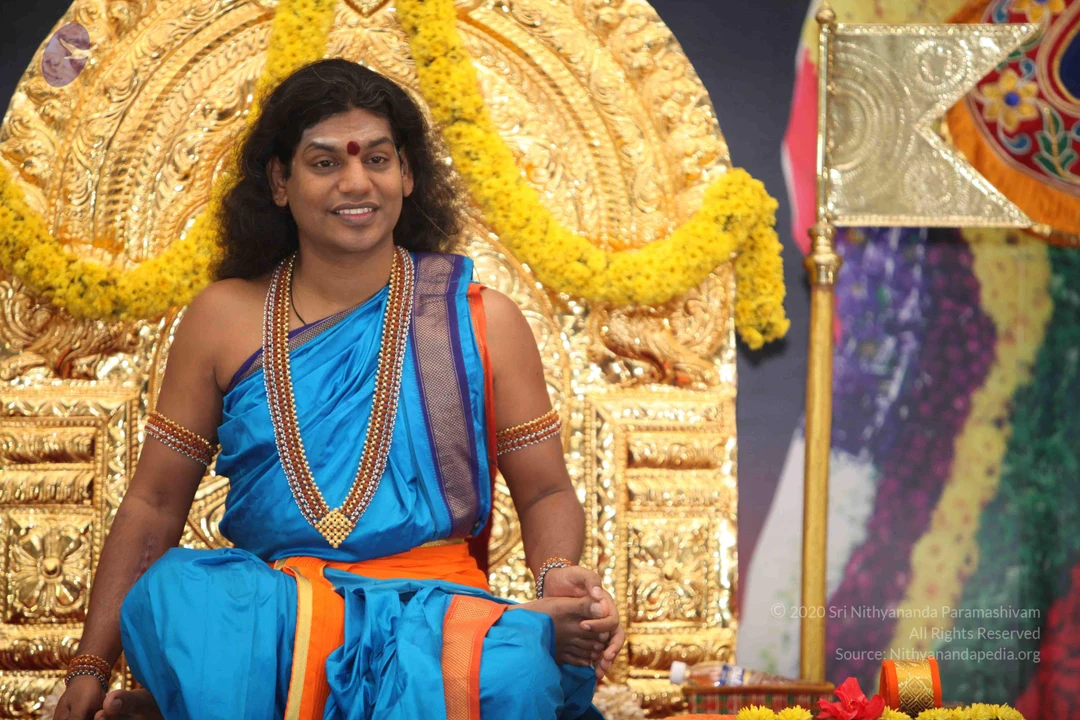
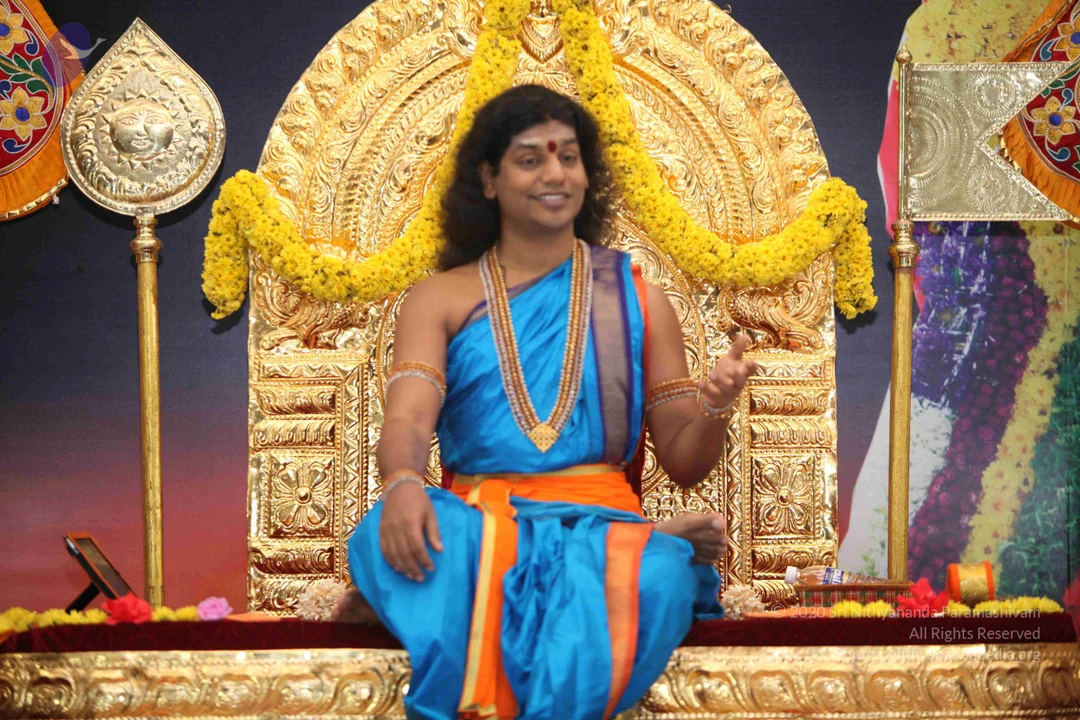
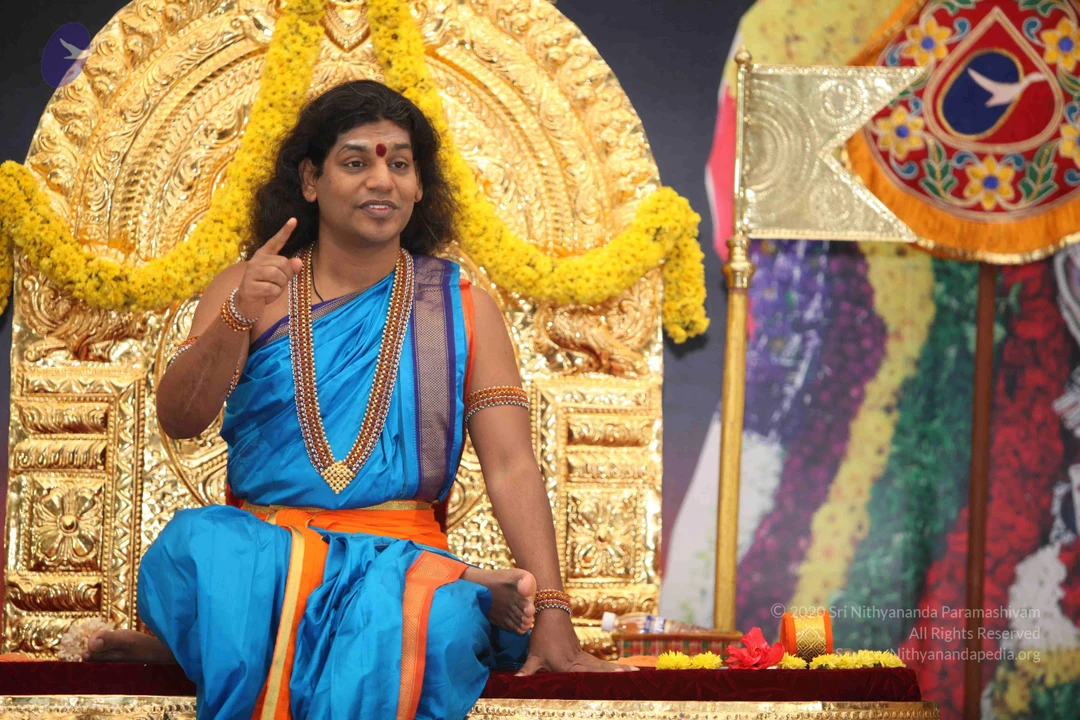
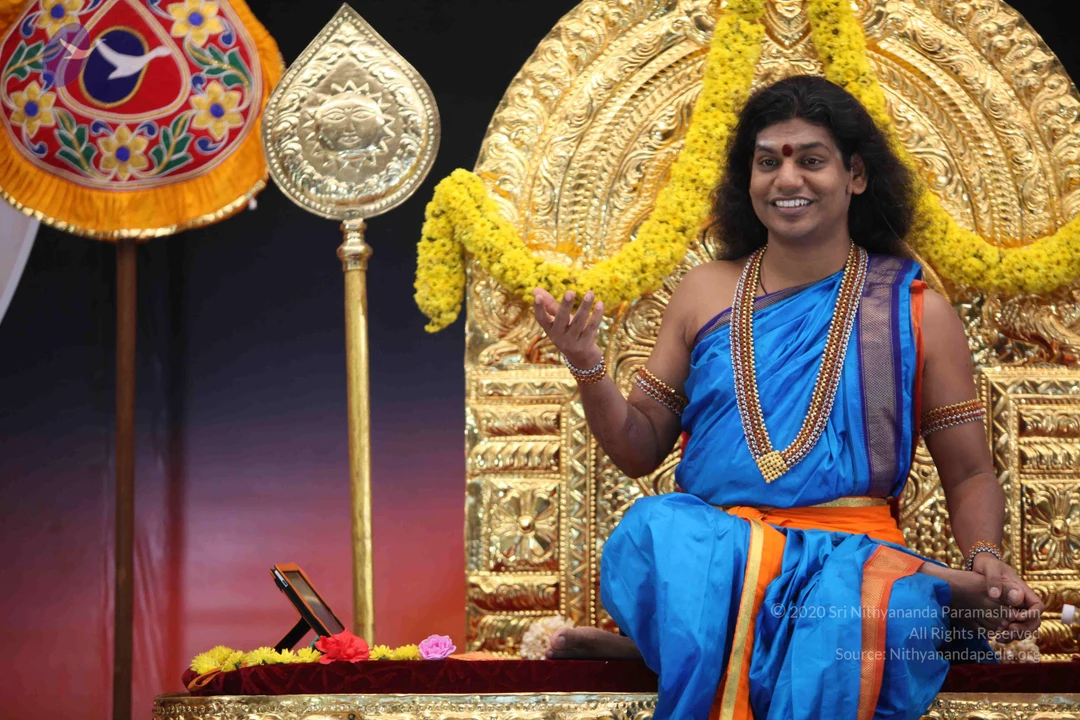
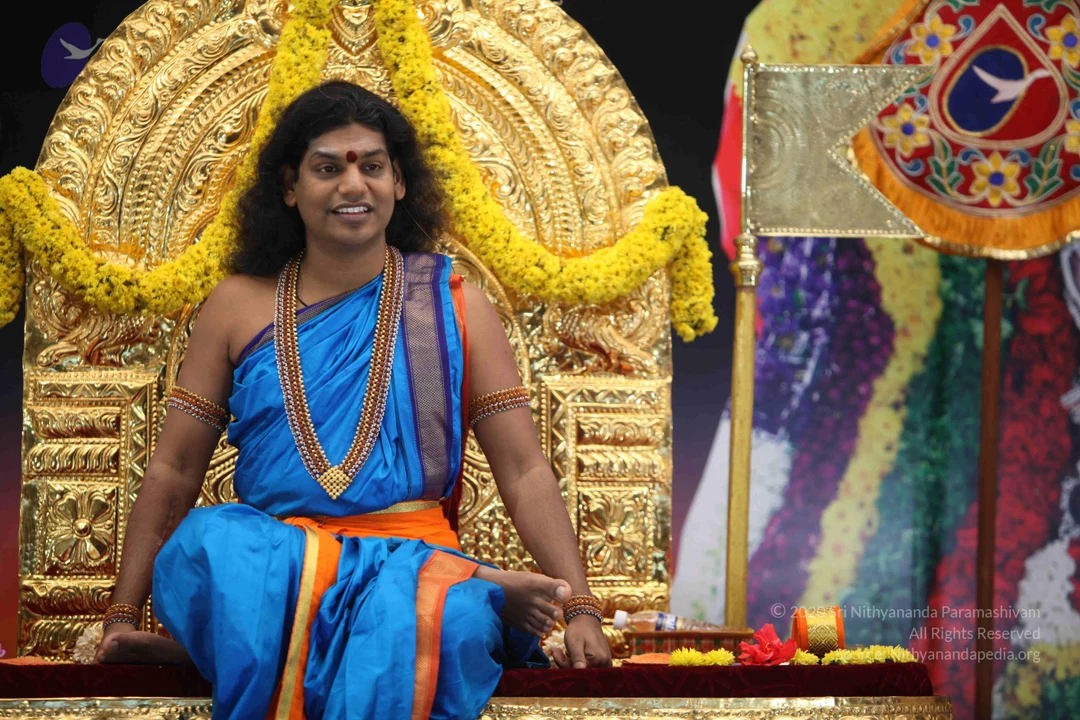
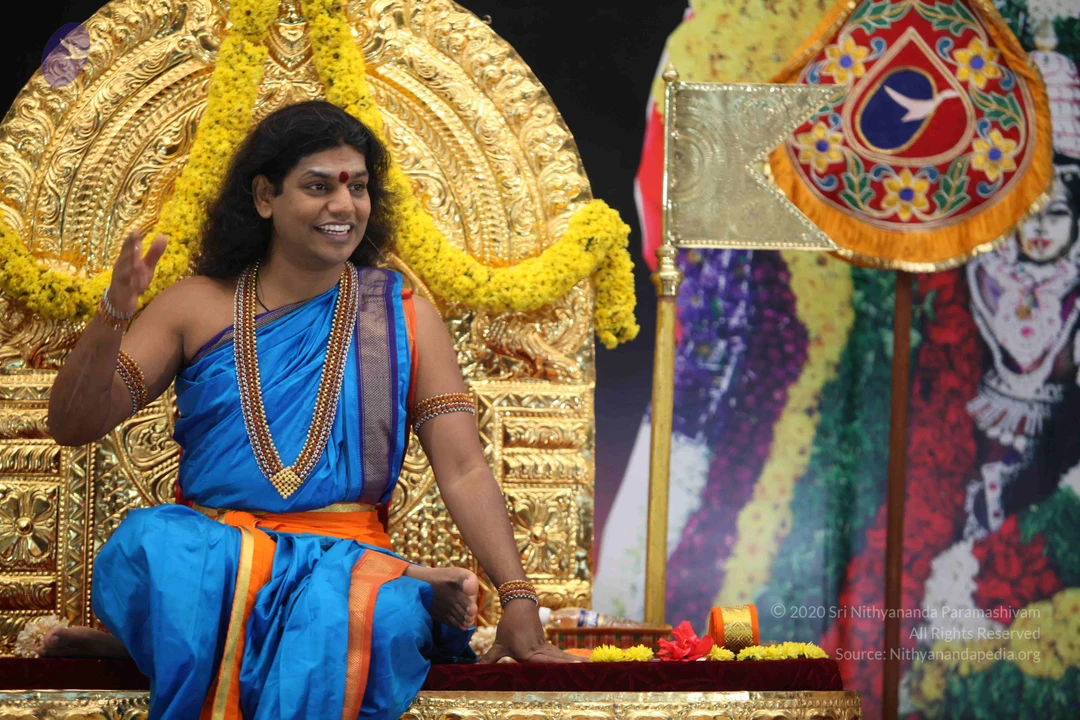
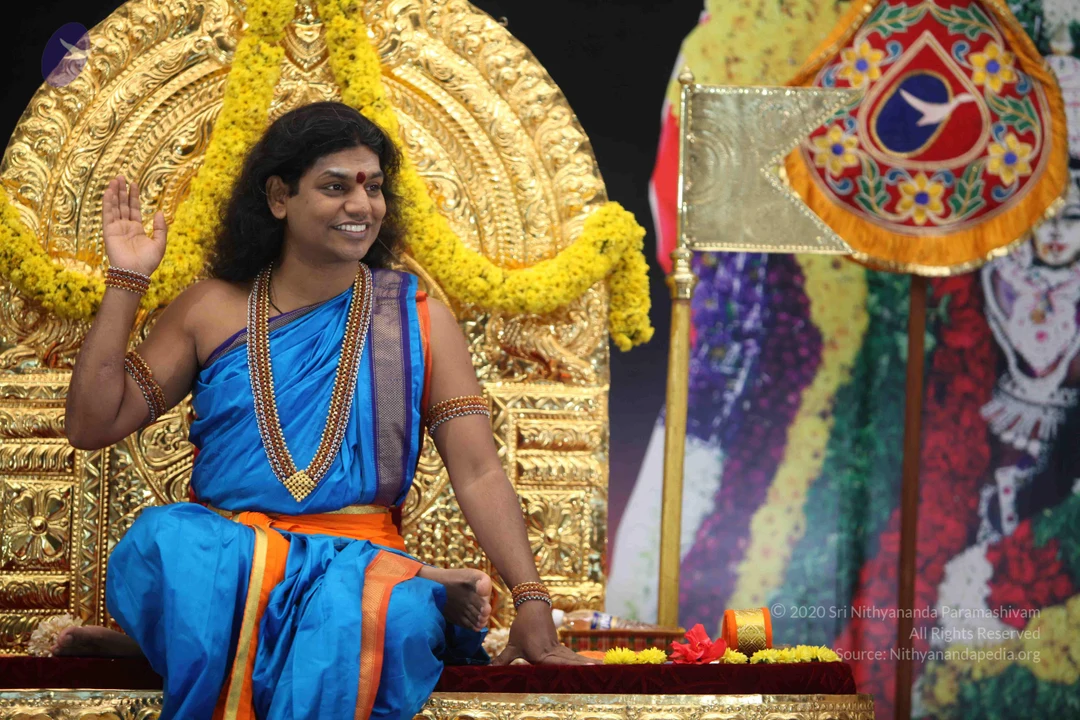
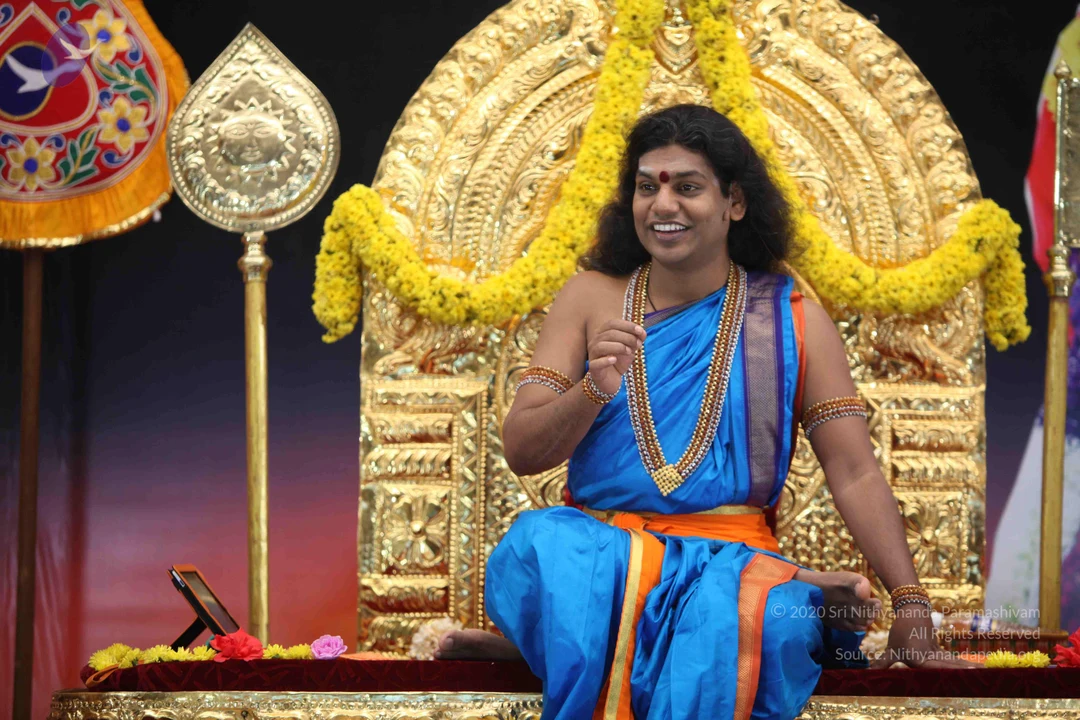
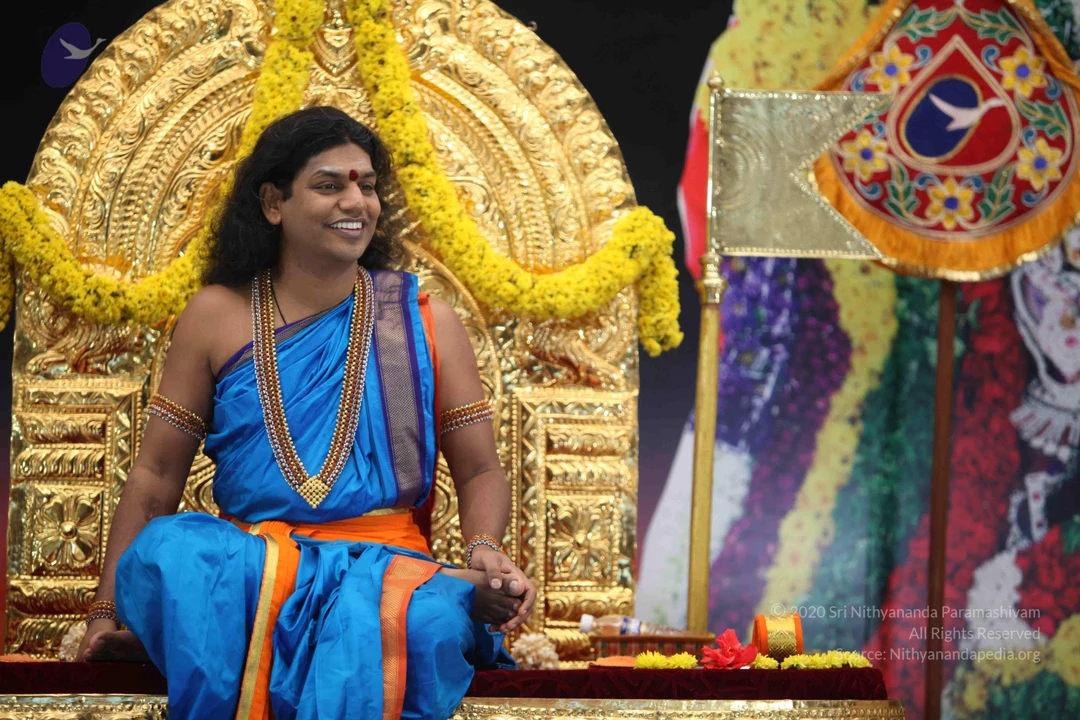
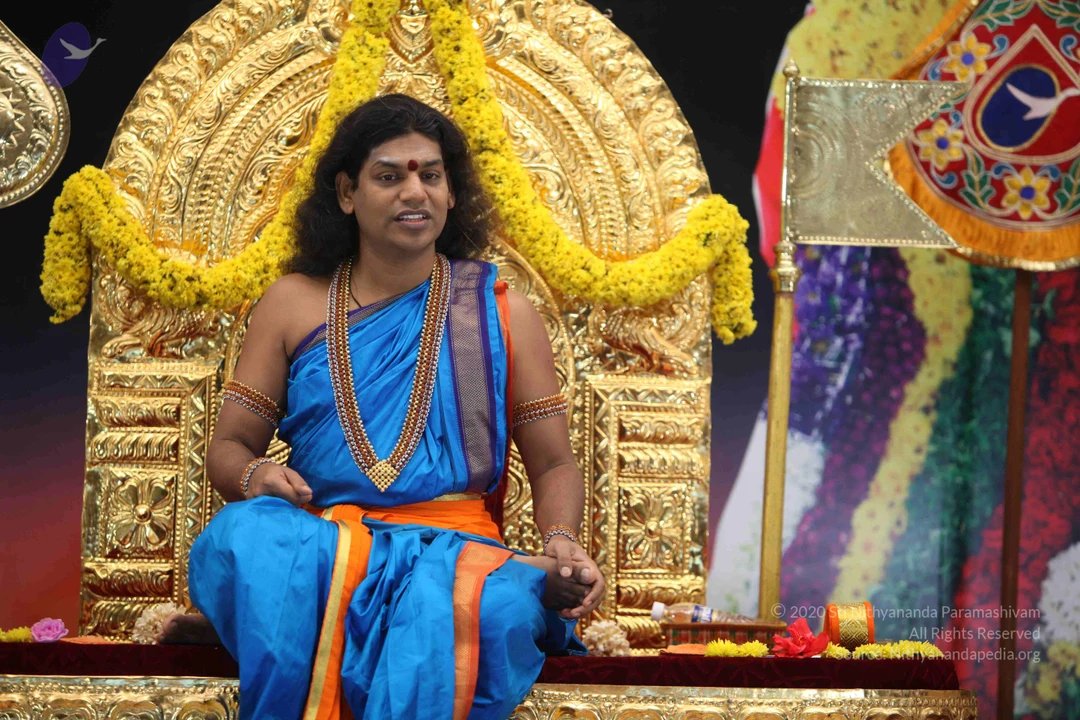
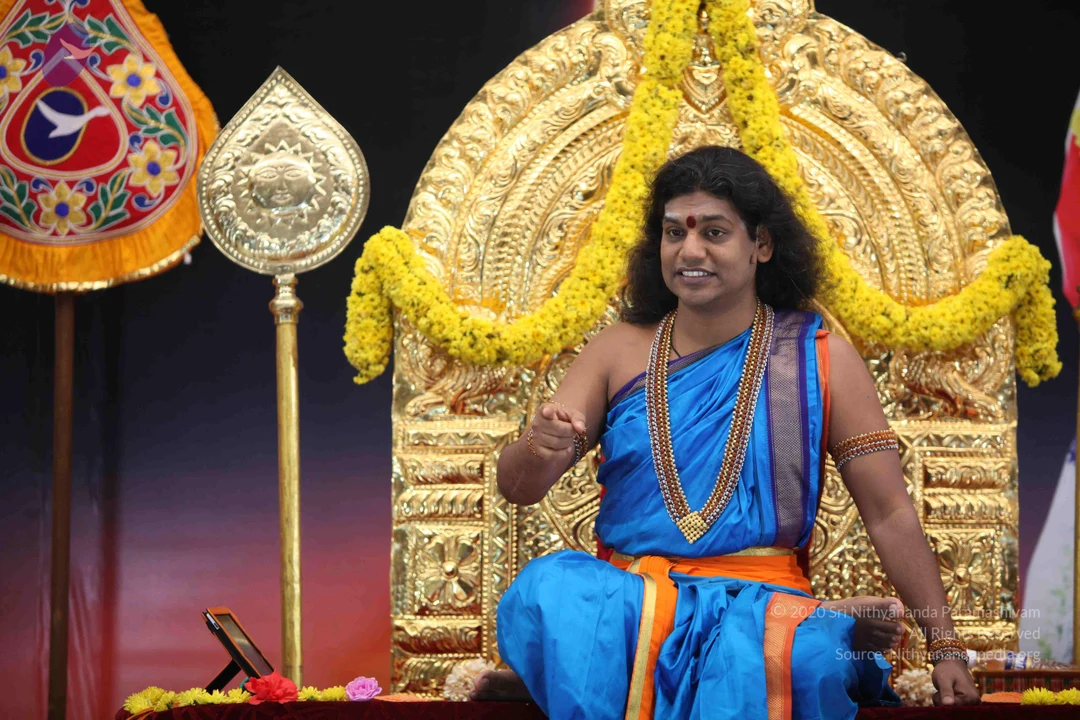
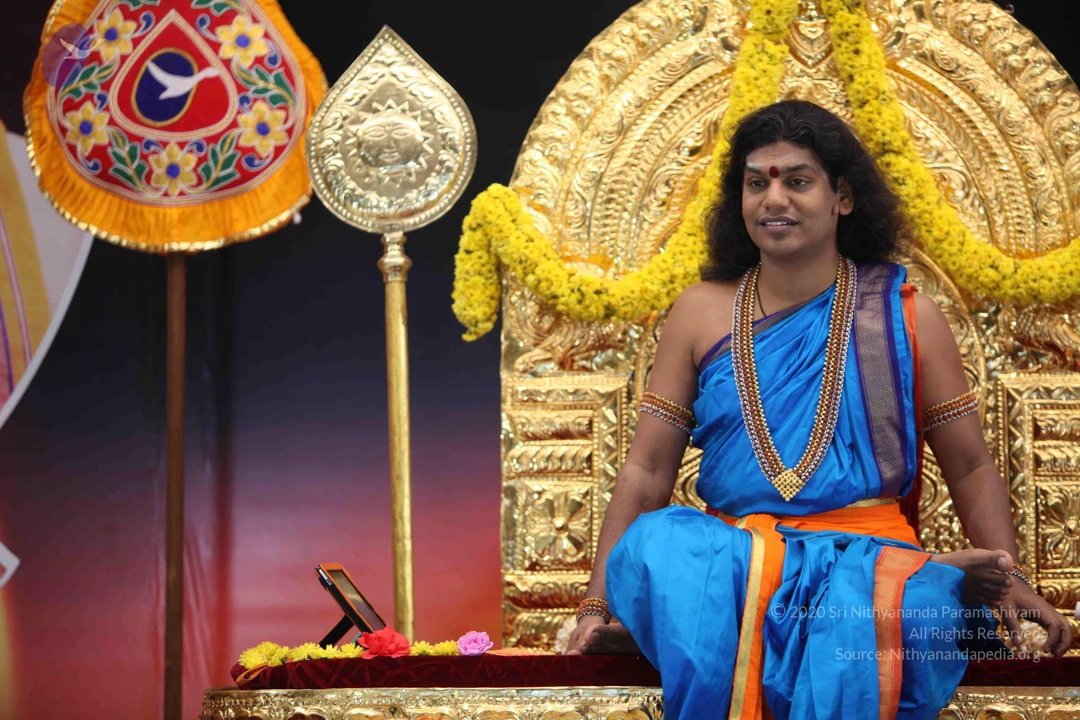
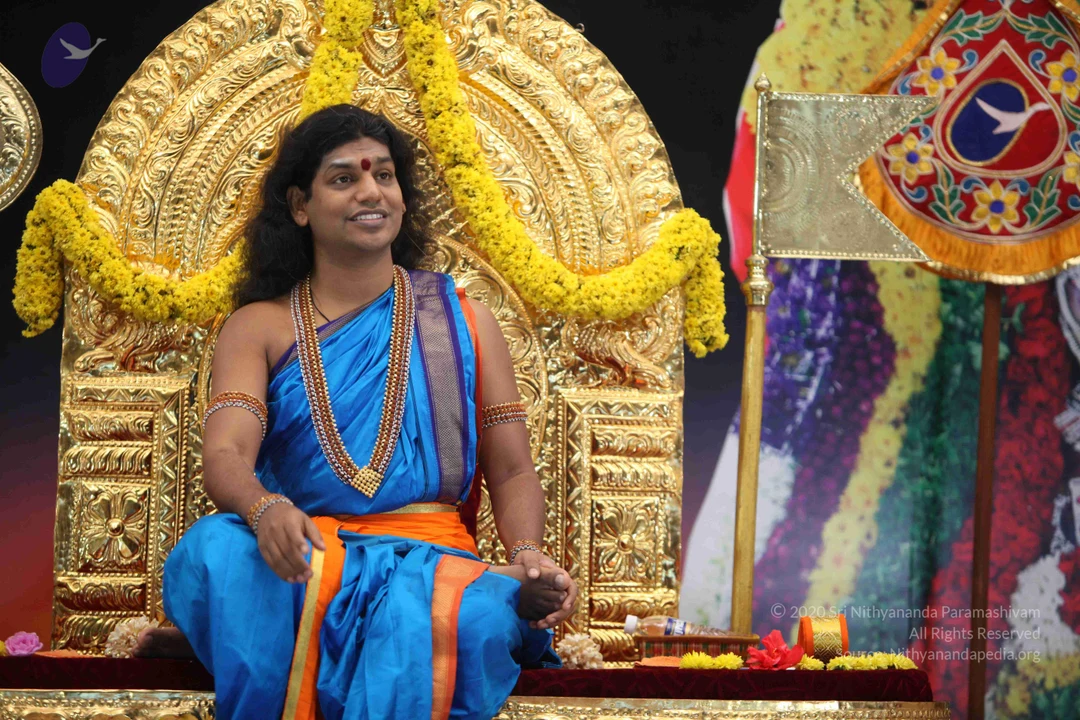
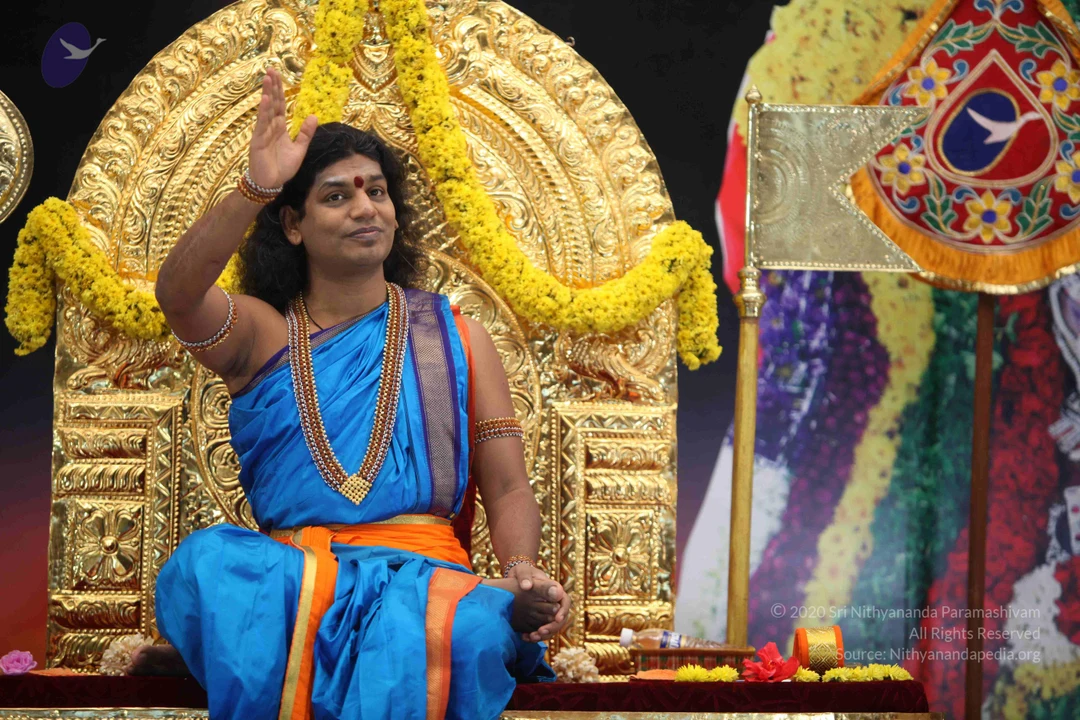
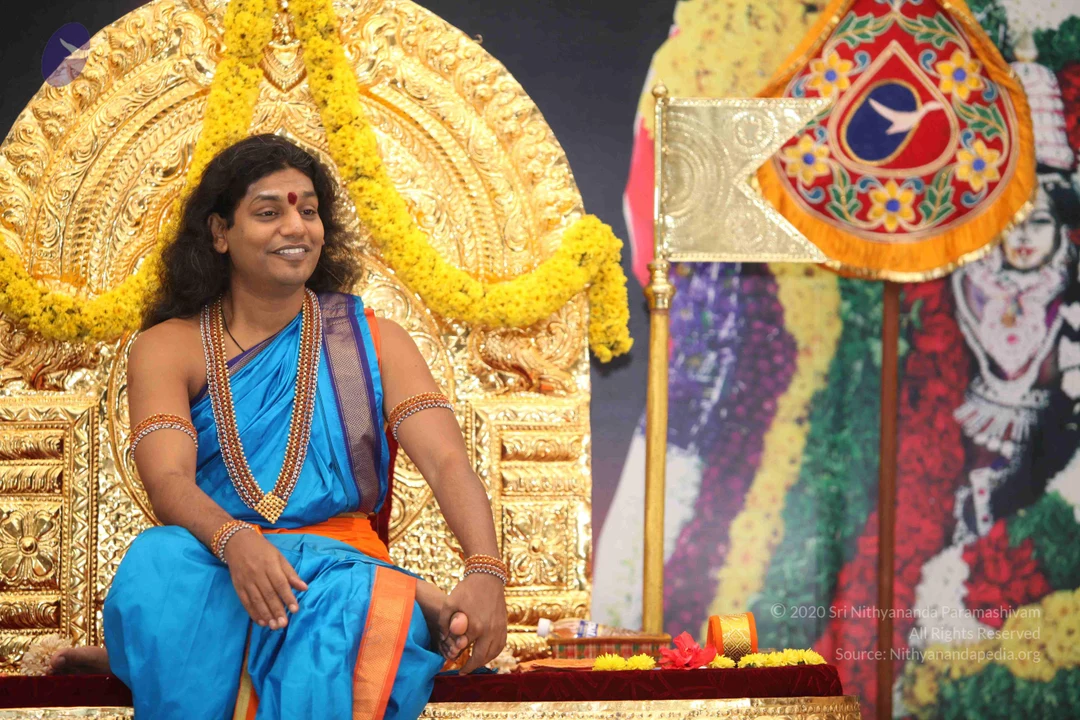
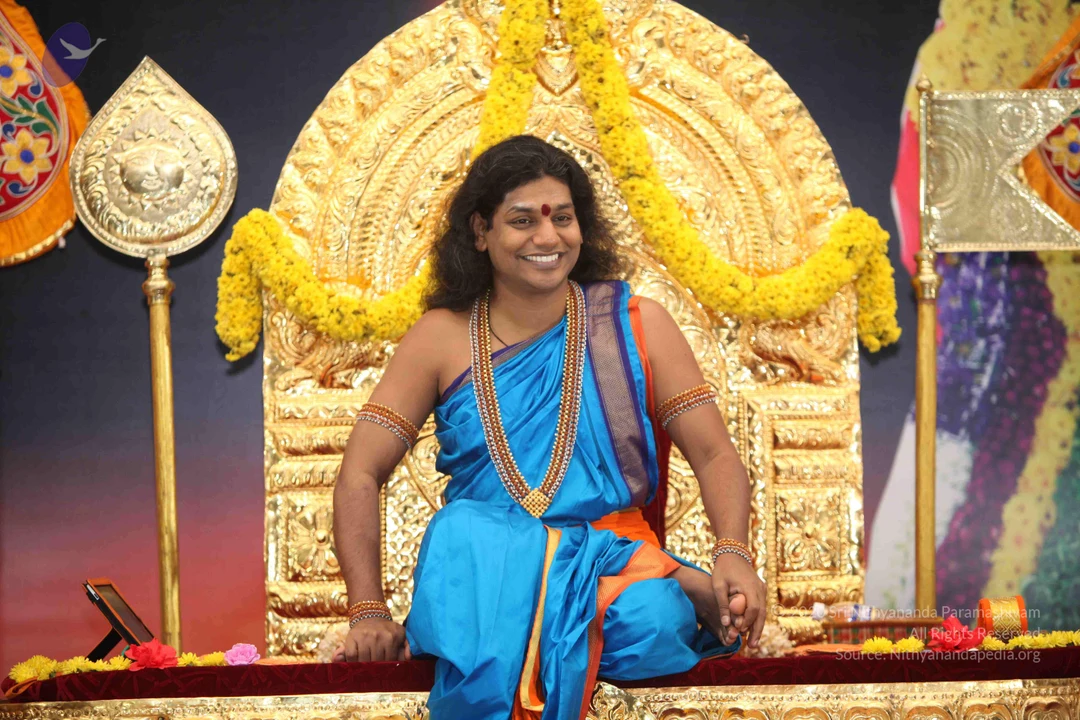
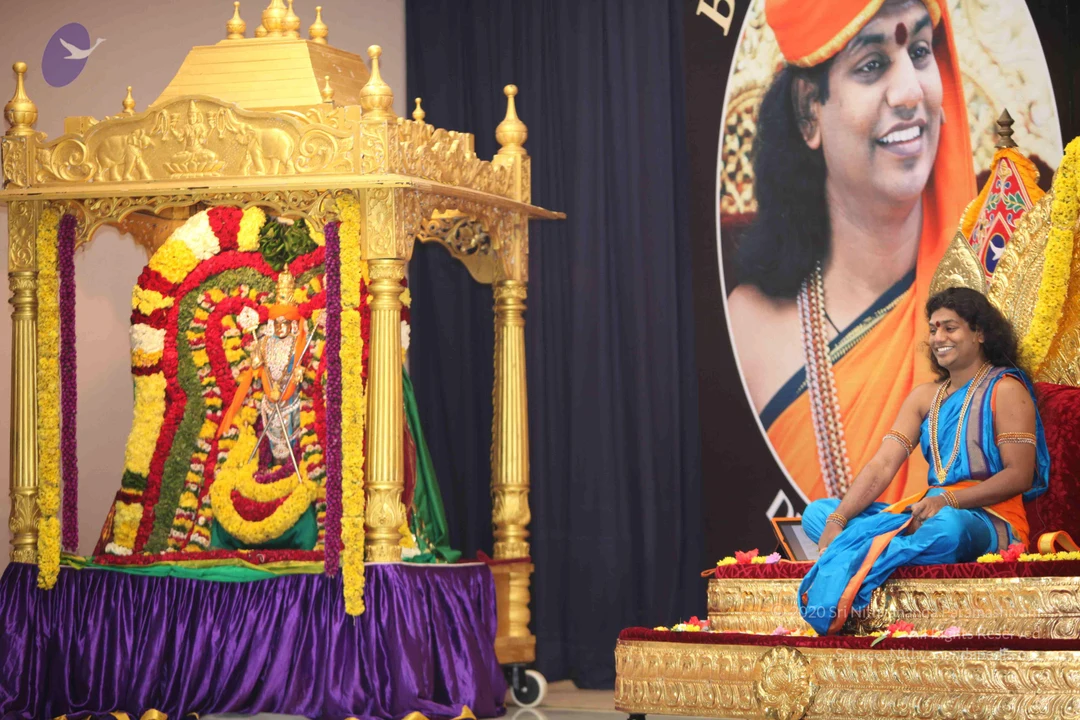
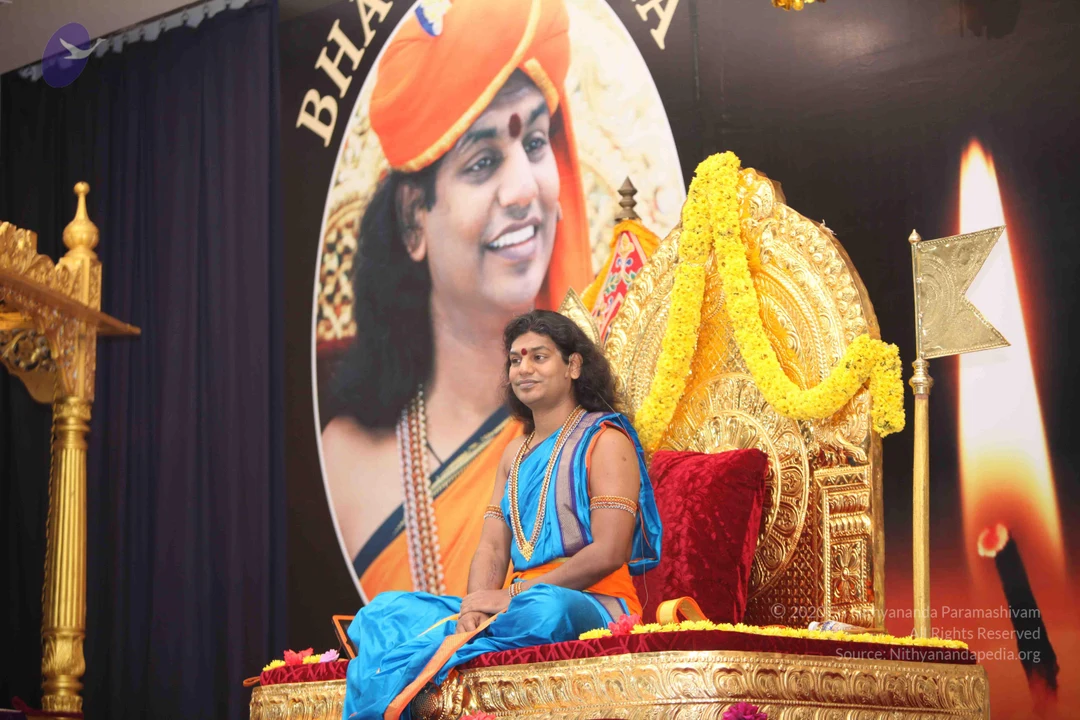
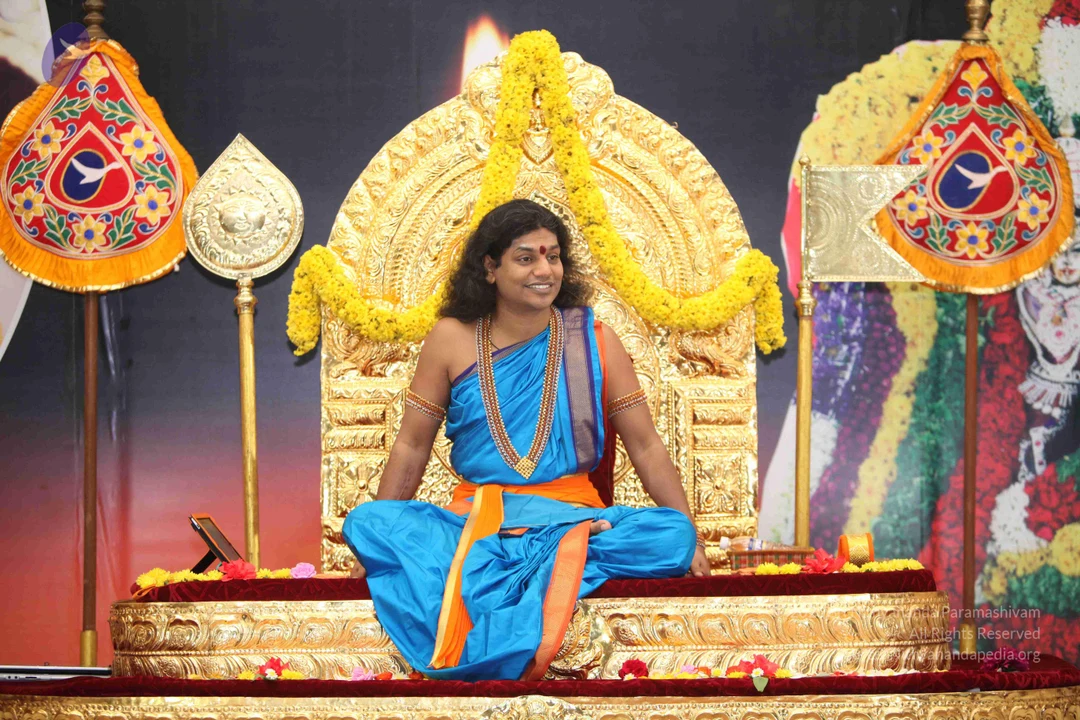
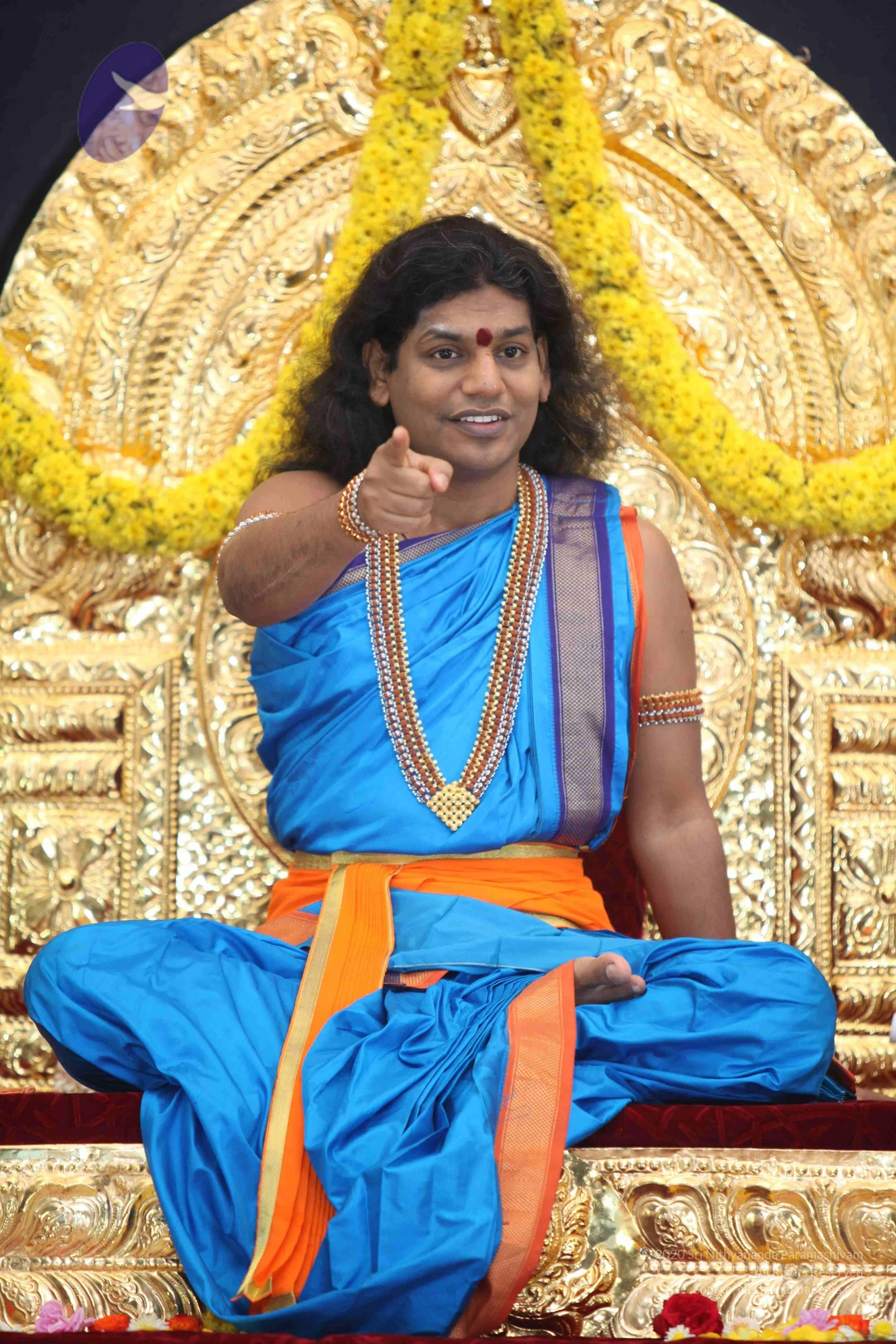
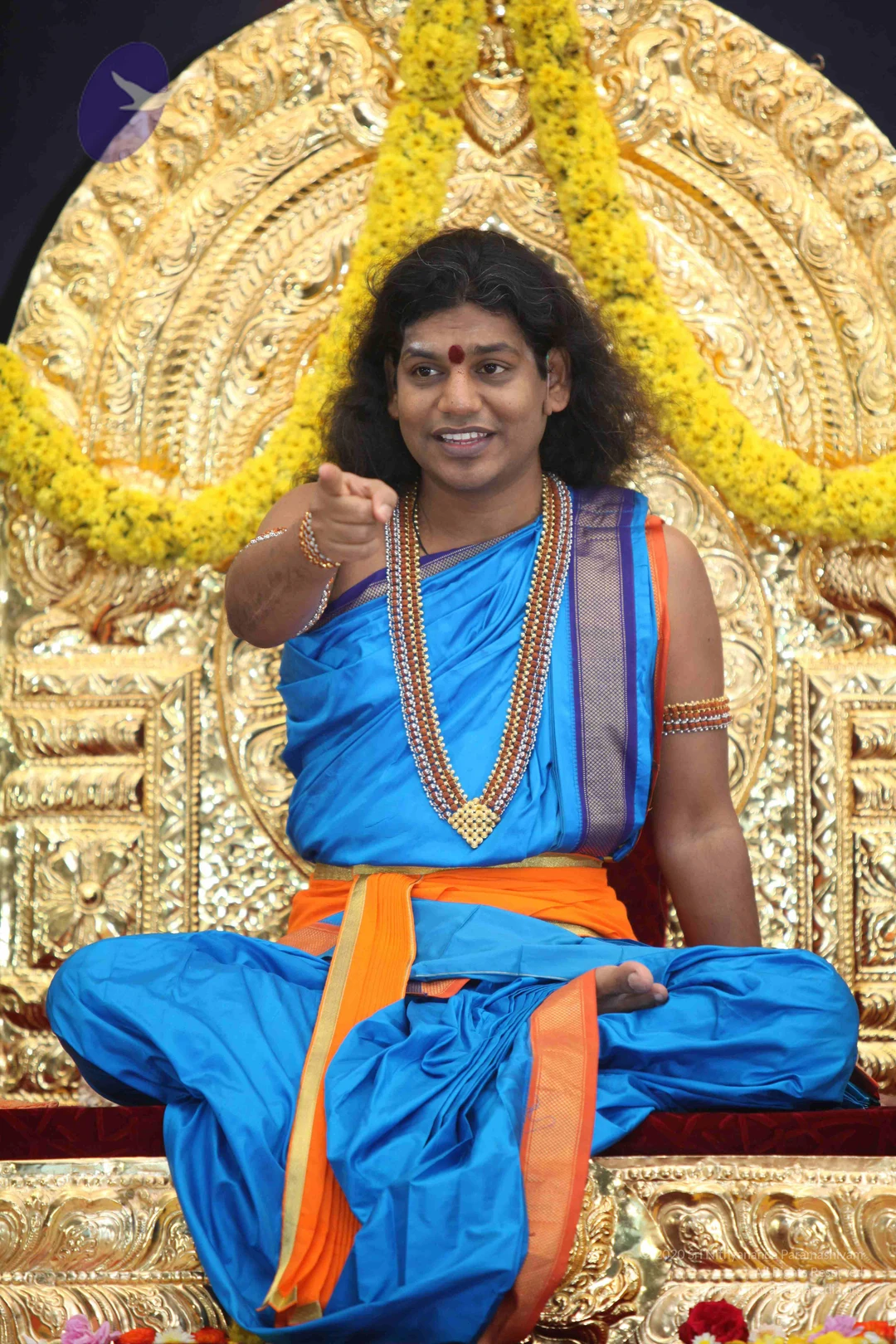
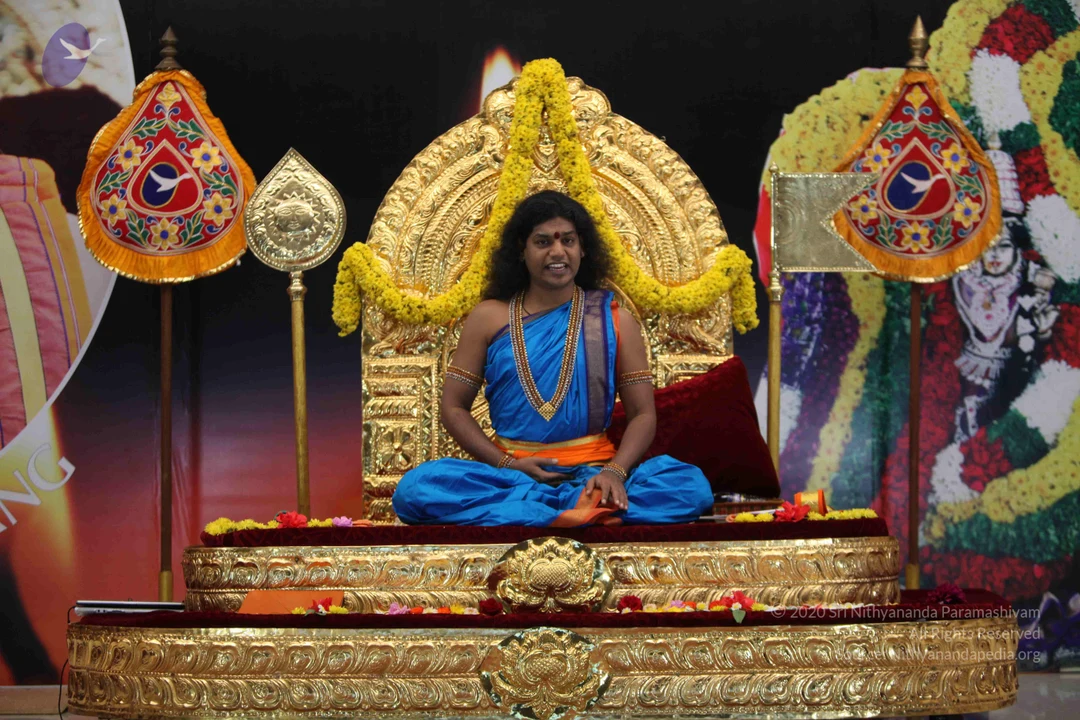
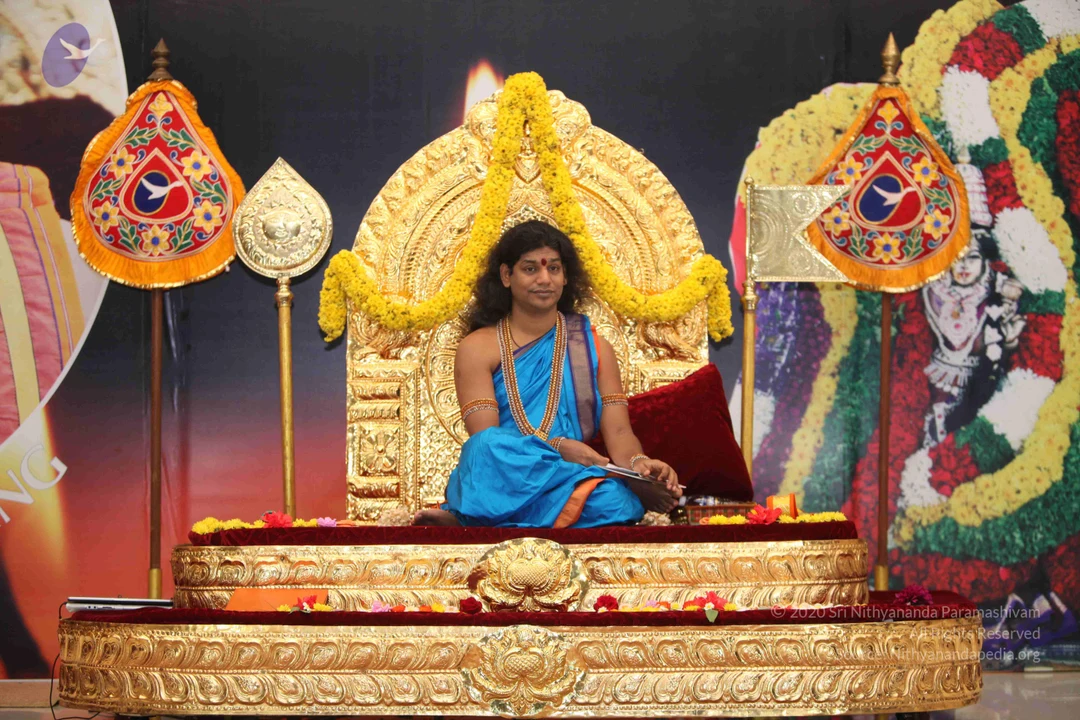
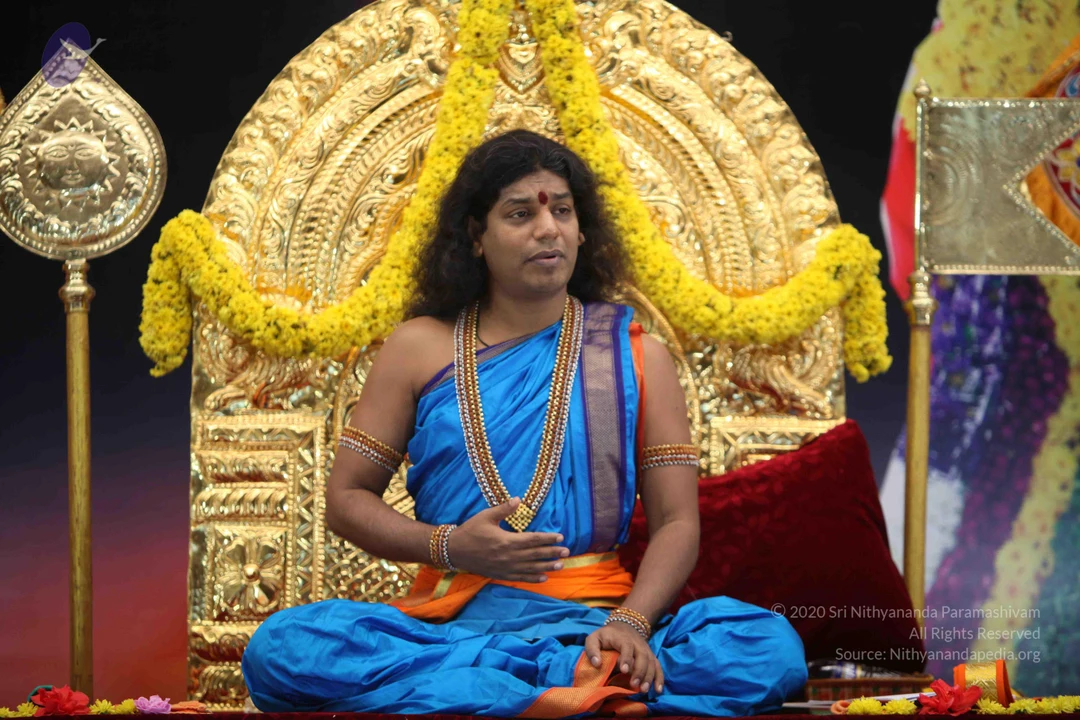
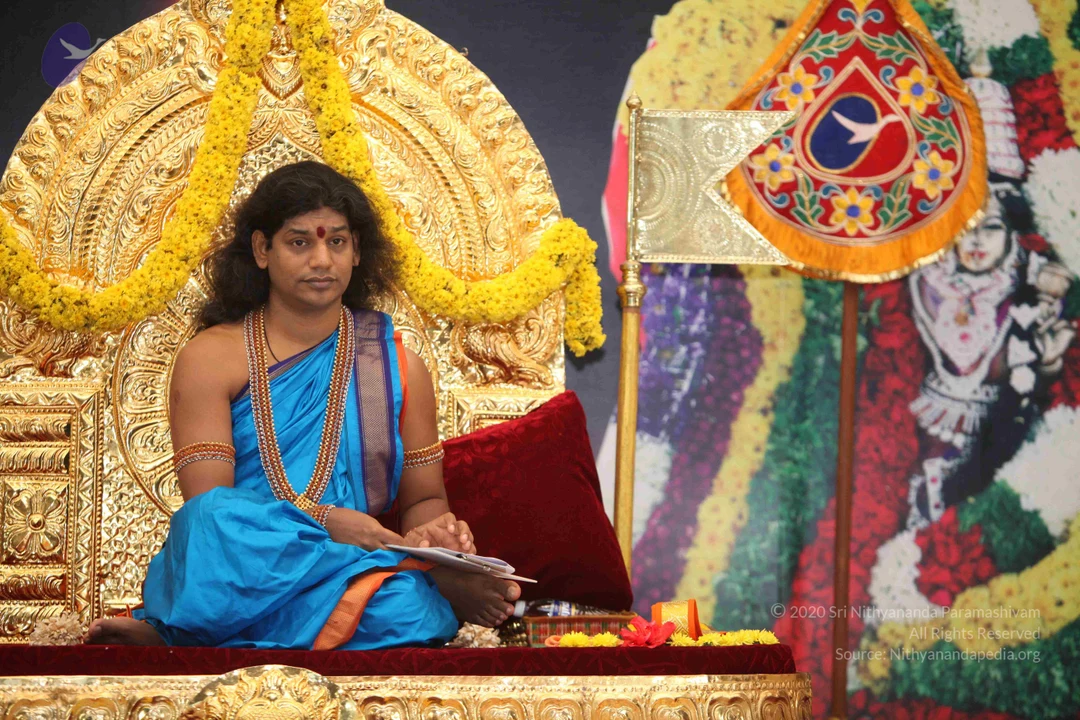
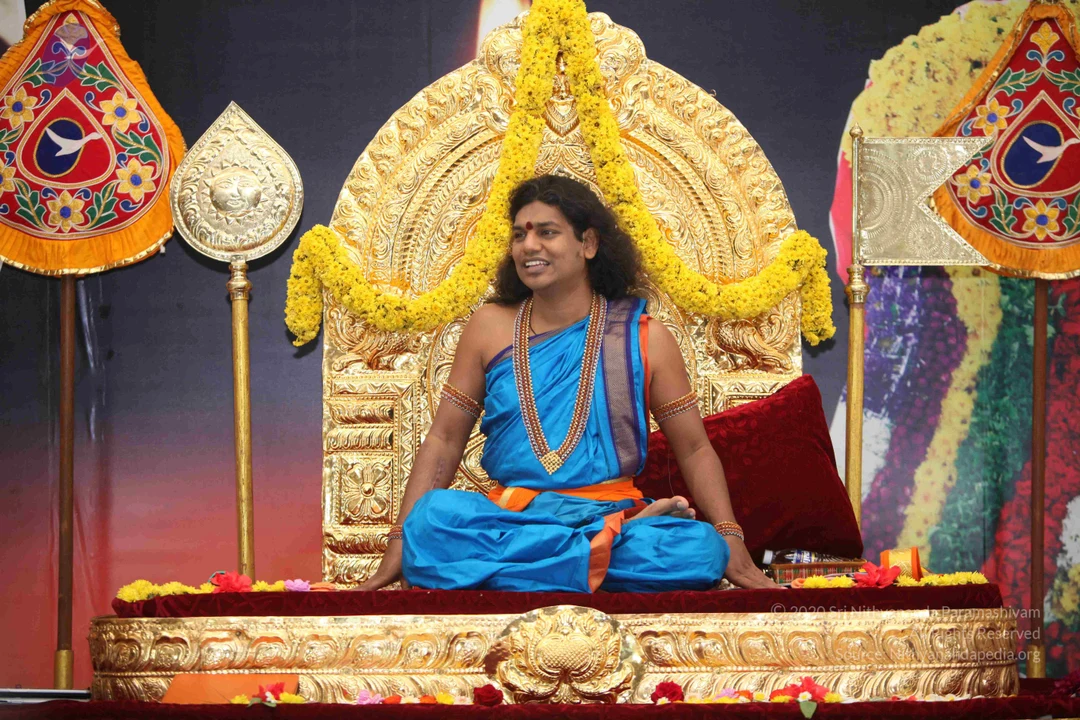
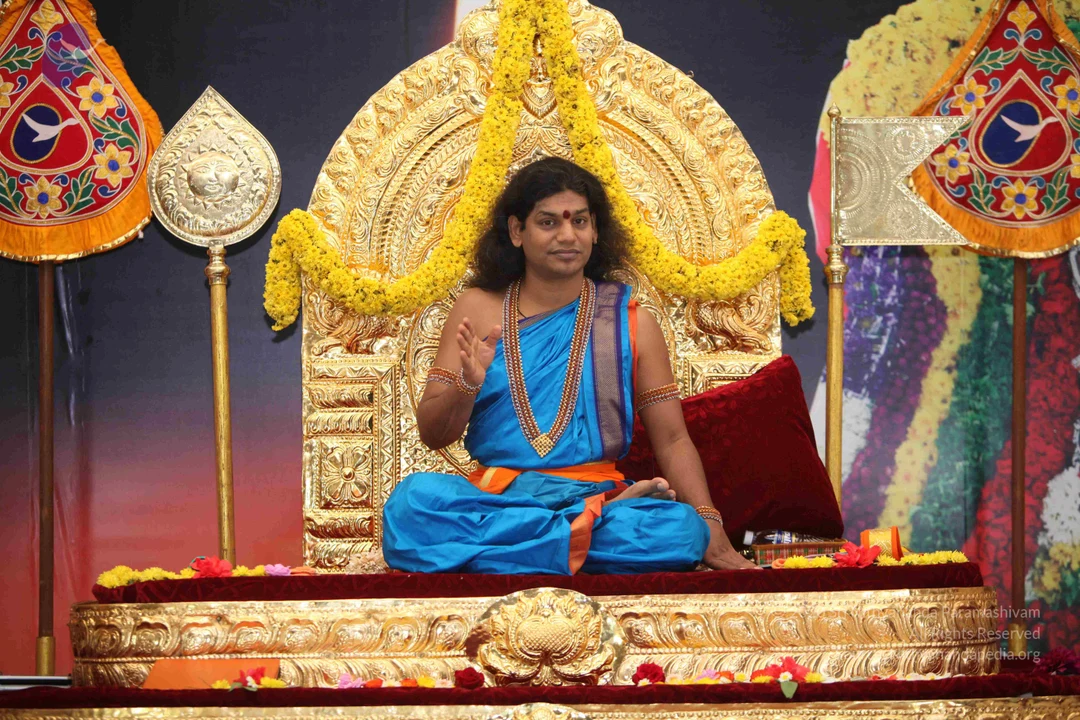
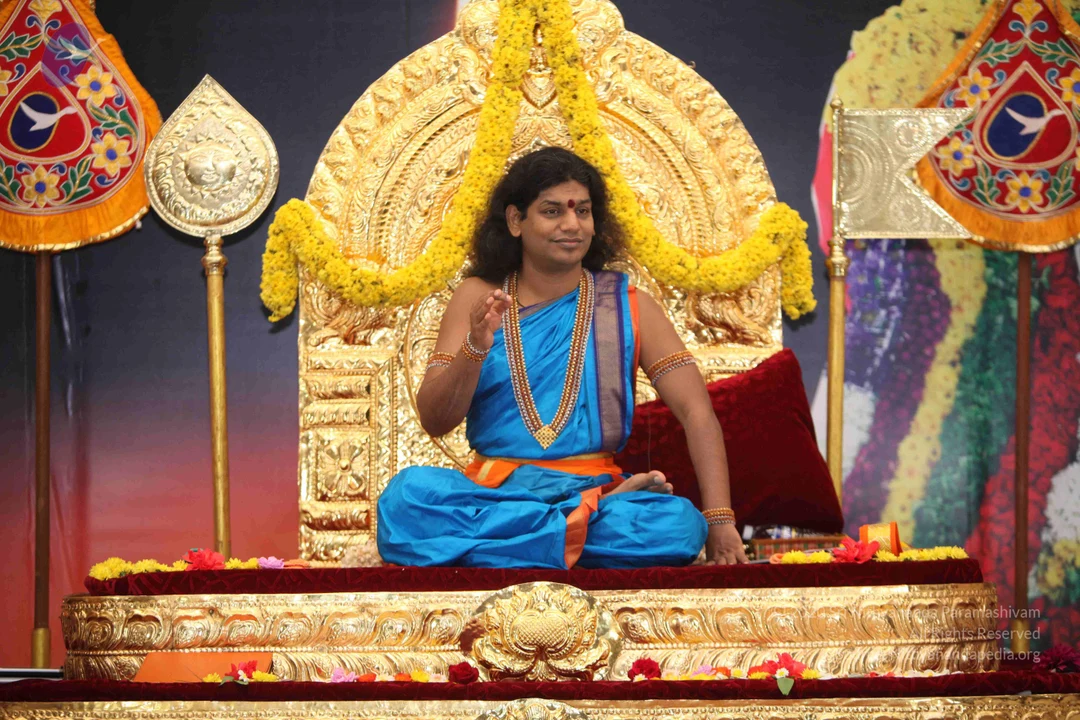
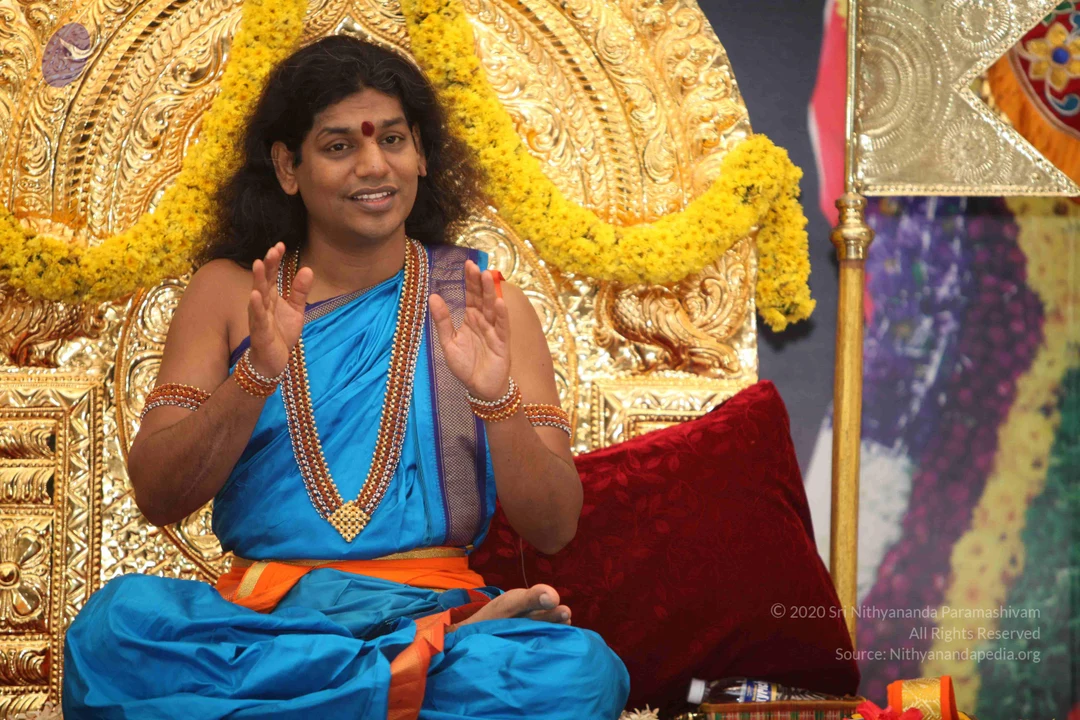
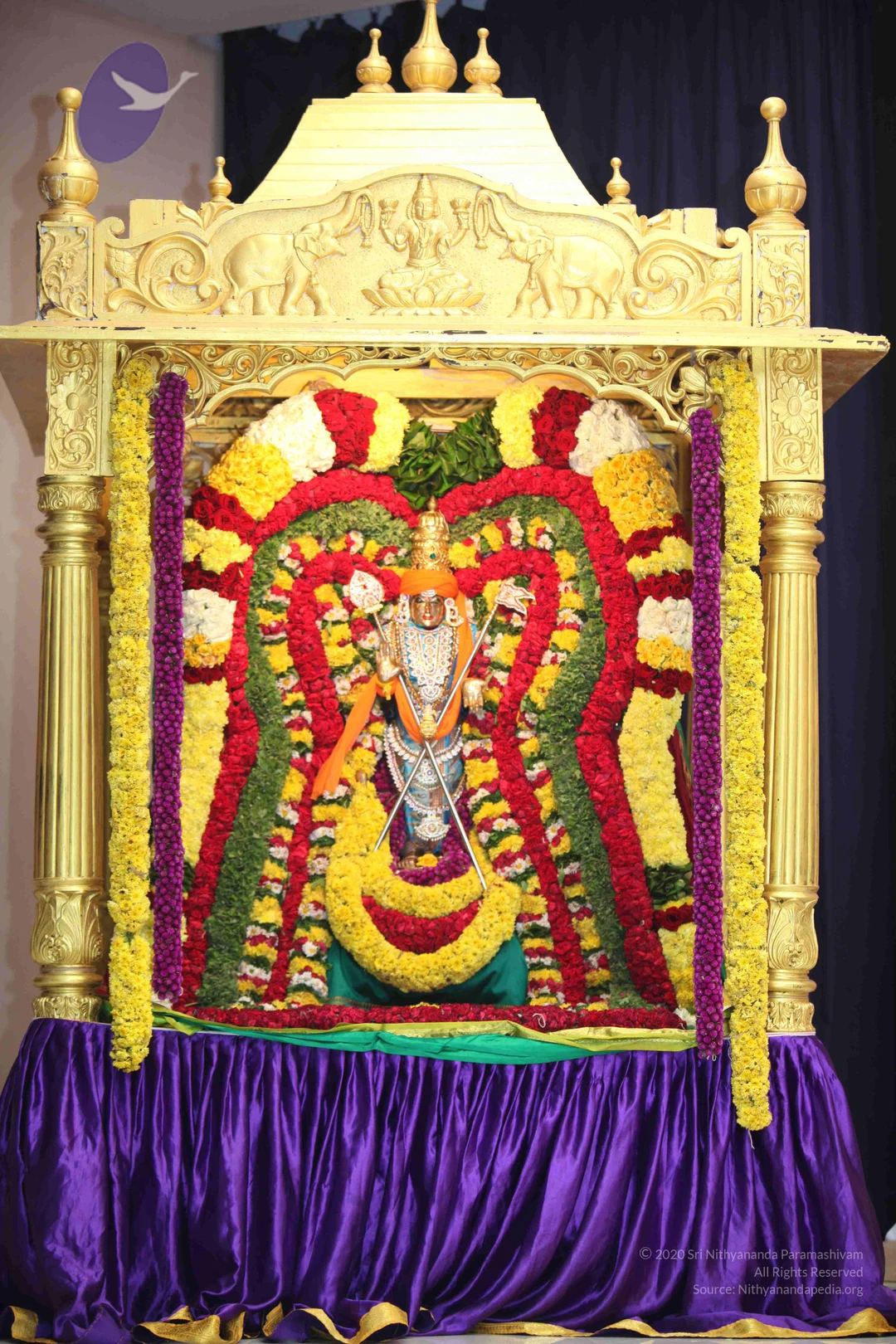
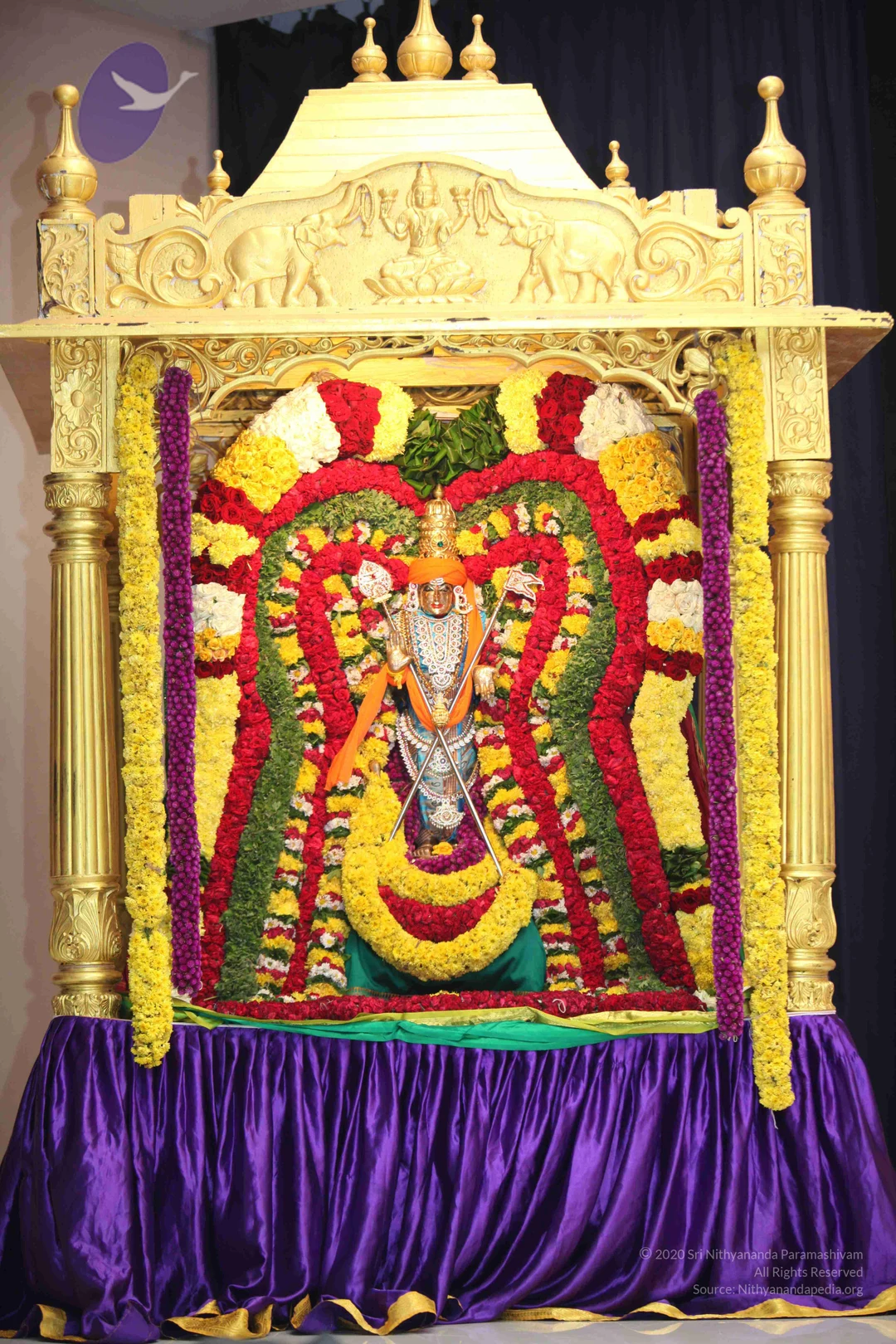
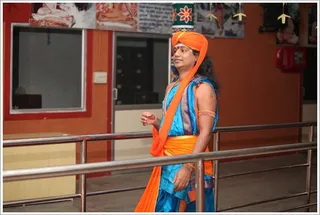
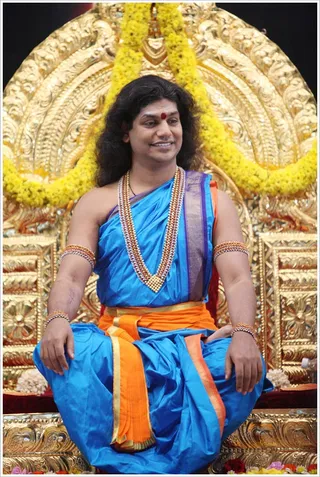
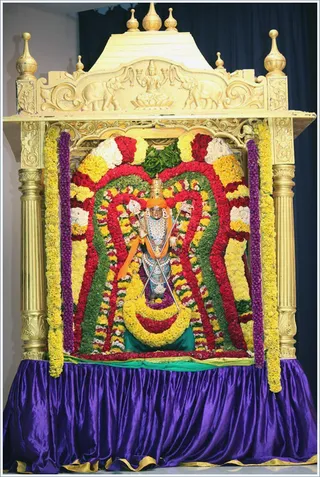
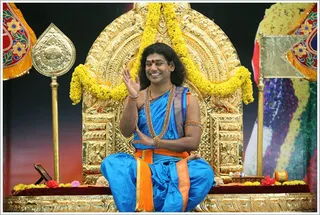
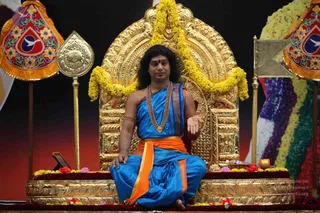
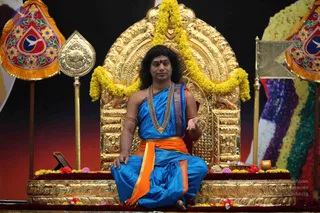
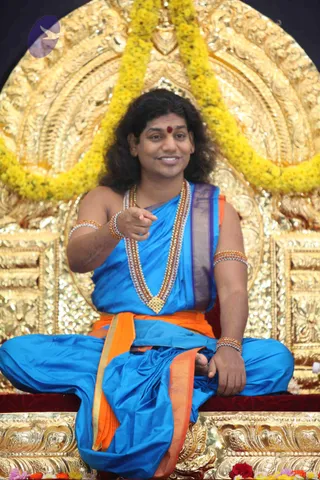
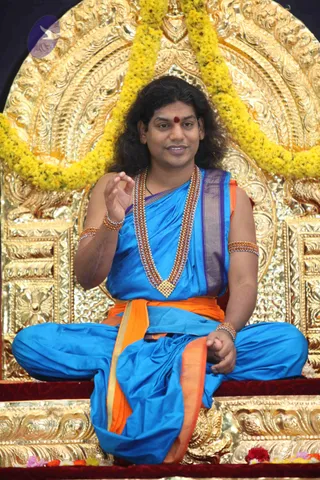
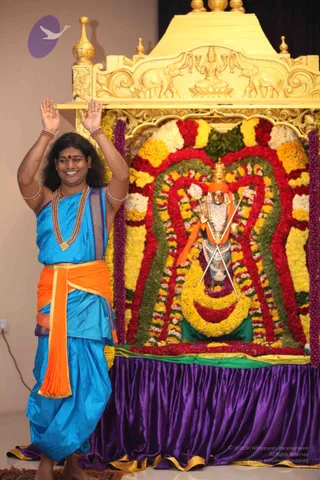
A photograph of a large decorated shrine containing a deity murti pair: a tall figure with a crown and trident-like staff, and a companion figure in a gold-and-red crown, both wearing red and white-trimmed garments and garlands of red and yellow flowers. Between them stands a Shivalinga-style form draped with garlands. Turquoise draped fabric forms the backdrop, and brass oil lamps stand on either side. A small blue-robed figure sits at the base beside a blue-draped altar, with a blue-garbed statue in an arched niche at right. No physical people are visible; the figures are statues and murtis.A photograph of a man standing on a walkway beside a metal railing in a hall with orange walls and framed pictures. He wears an orange turban and a blue sleeveless garment with an orange sash tied at the waist, orange cloth draped over his shoulder, beaded bracelets and a rudraksha-style mala. He has long dark hair and looks to the side while gesturing with one hand. Behind him are framed photographs, a red fire-safety box and a wall of lockers, with a window to the left.A black stone statue of a four-armed deity seated in a cross-legged pose on a rocky base, draped in a hot pink cloth wrapped around the head and body, with a gold necklace and pink belt. It holds a trident-like object and other ritual items in its hands. Behind it hangs a bright yellow cloth backdrop. Carvings of figures are visible on the base. No physical people are present.A seated man in blue silk garments with a violet-bordered shawl and orange-and-gold waist cloth sits on an ornate gilded throne (peetha) with carved golden panels. Yellow marigold garlands drape across the top of the throne. He wears a multi-strand gold bead necklace, gold bangles on both upper arms and wrists, and a red bindi on his forehead. He sits cross-legged, smiling, with hands resting on his knees. Pink and orange flowers lie at the base of the seat. Swamiji (probable): the long swept-back hair, ornate gold necklace and saffron-and-blue ceremonial dress match the page's indication of Swamiji present, though appearance alone is not conclusive.A deity murti of Lord Krishna stands in a golden ornate shrine framed by floral garlands in red, yellow, white and green, with purple satin draping the base. The murti wears white and blue garments and an orange sash, holding a flute and other ritual objects. Carved golden elephants and motifs decorate the canopy above. No people are visible in the scene; the setting suggests a satsang or temple-style decoration for a talk on the Bhagavad Gita.A man with long swept-back hair sits cross-legged on an ornate gilded throne decorated with yellow marigold garlands, smiling and raising one hand in a gesture of address. He wears a blue dhoti-style garment with an orange sash, multiple rudraksha malas and gold necklaces, and bangles. Behind him stand gold ceremonial staffs with pennant-shaped finials, tall floral arrangements in pink and yellow, and a colourful embroidered backdrop. A small ornate object and red flowers sit on the platform in front. The figure has distinctive long hair, saffron-orange sash and rudraksha malas, consistent with a probable Swamiji (probable) seated in a discourse setting.

01-ADIKAILASA-TEMPLE
36 photosSource gallery
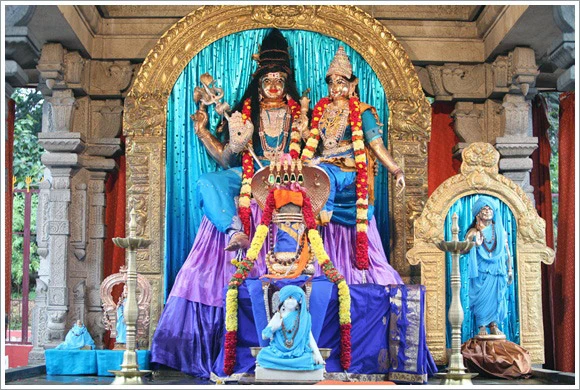
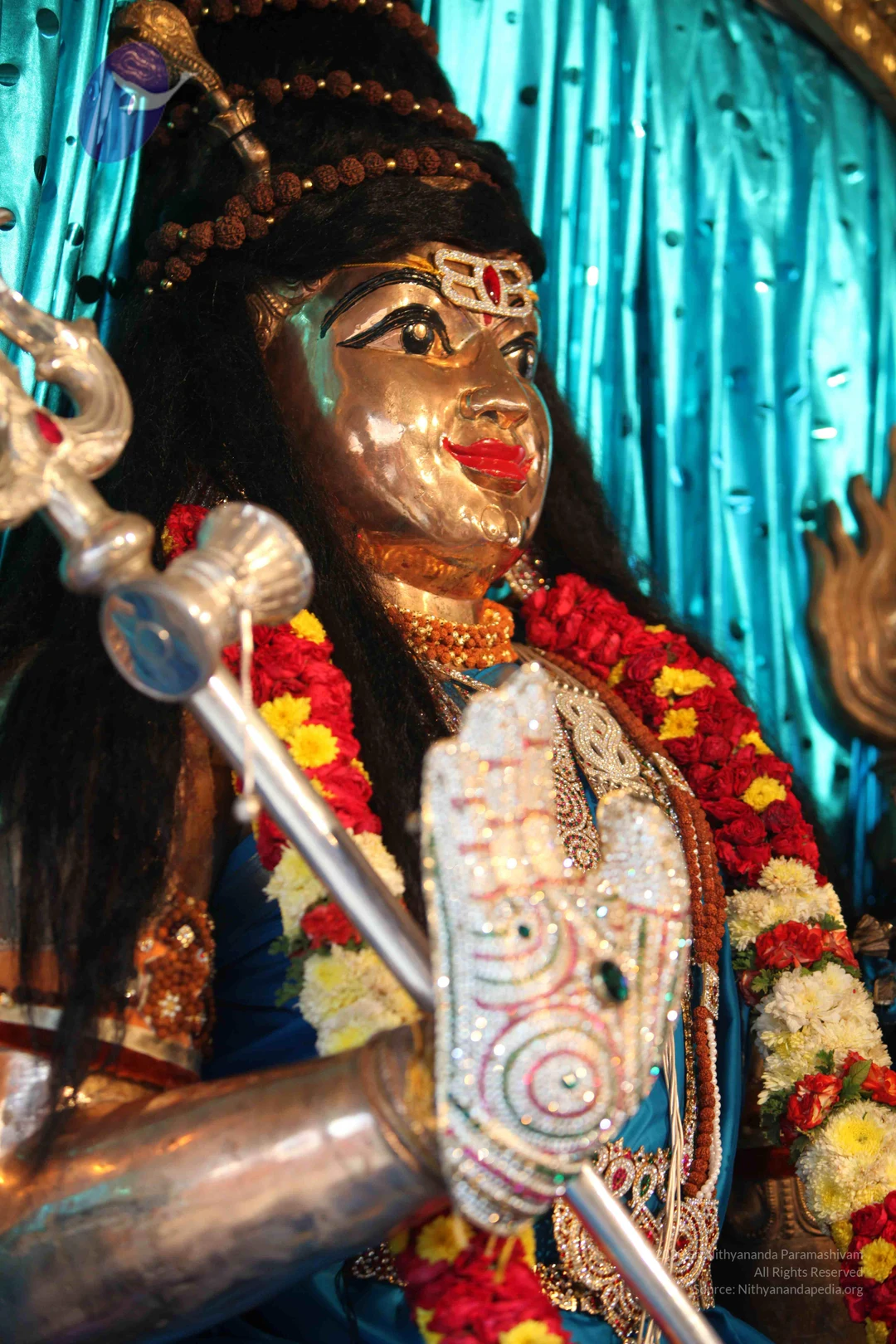
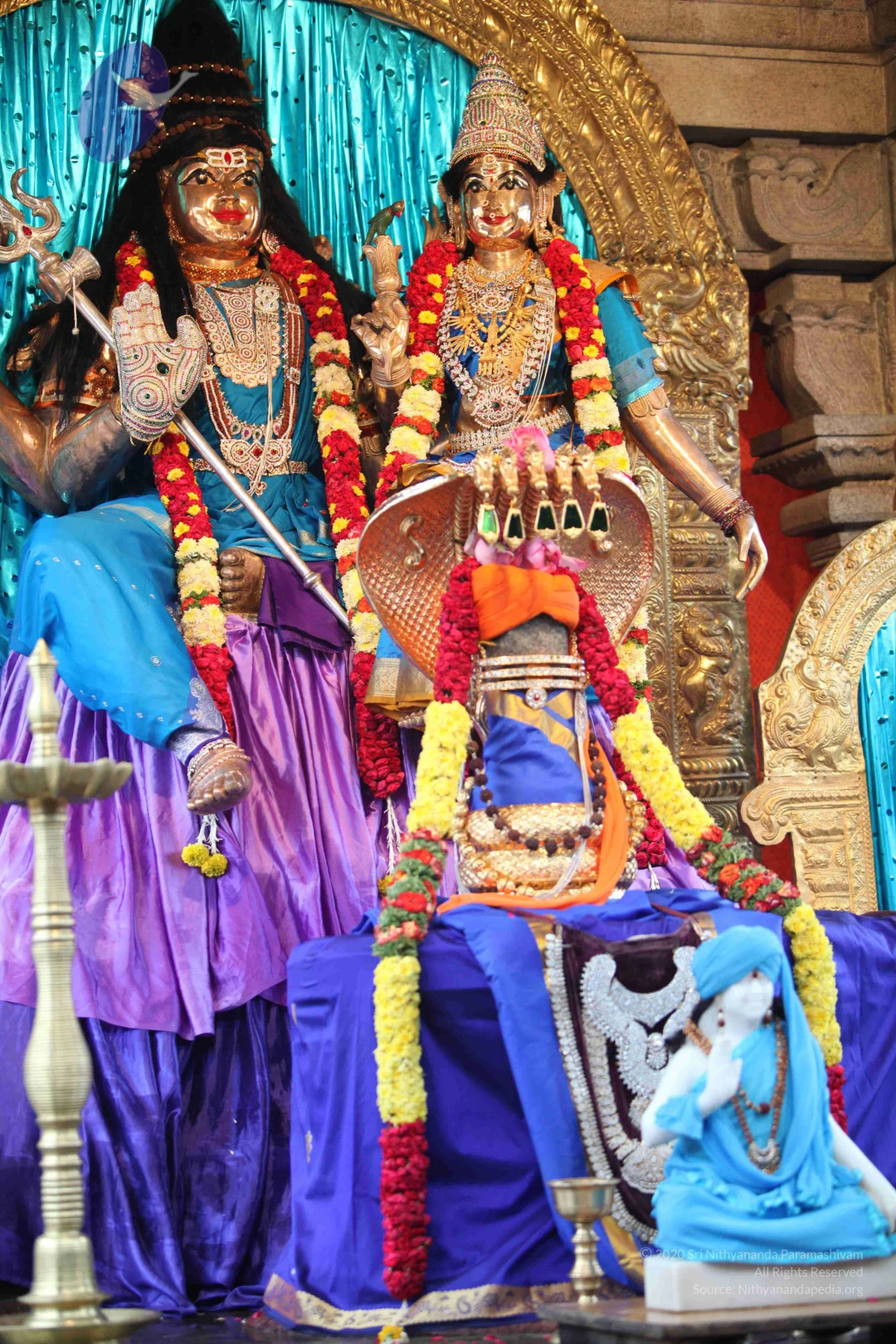
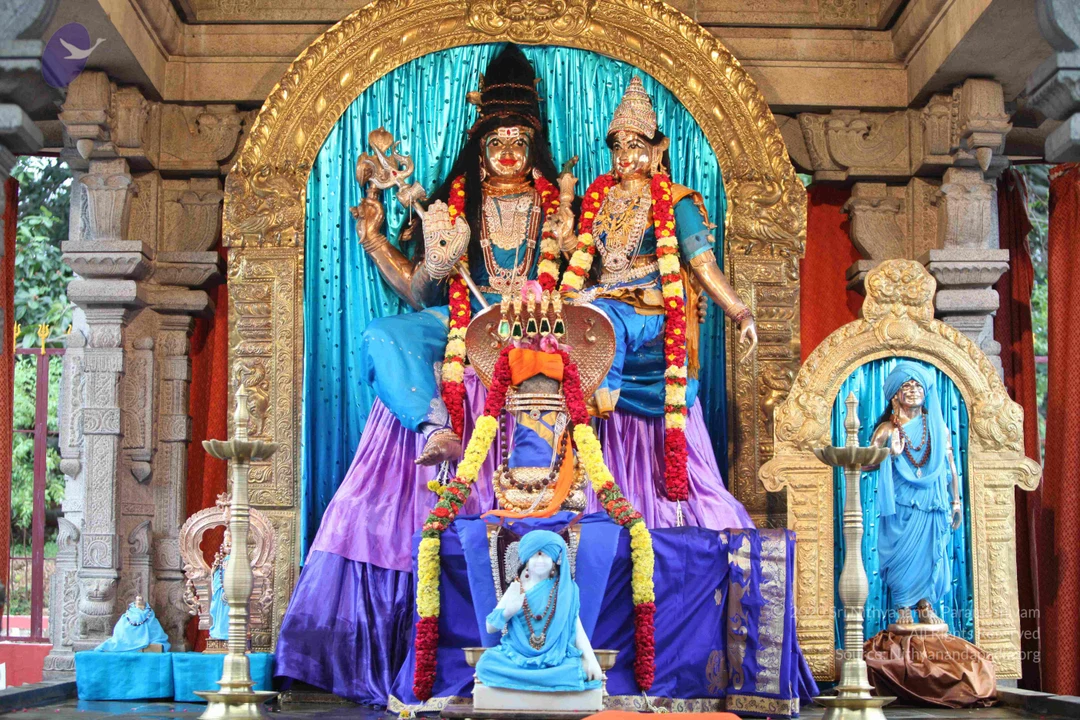
A two-panel collage of outdoor photographs. The left panel shows a barefoot man with long dark hair standing before a large banyan tree with dense aerial roots, wearing a blue upper cloth and blue dhoti with an orange sash, hands joined near his chest. The right panel shows a man seen from behind with long dark hair, bare-chested with an orange cloth around his waist and a blue shawl over his shoulder, hands folded in namaskar before a black stone deity murti with four arms draped in pink and set against a yellow backdrop, with red offerings in the foreground. Both panels are photographs of devotees in ritual posture.A photograph of a temple shrine dominated by two large gilded statues of a deity couple seated side by side against a teal draped backdrop framed by an ornate gold arch. The figure on the left has a tall matted topknot, holds a trident in one hand and wears a jewelled necklace and rudraksha-style beads, while the figure on the right wears a jewelled crown, gold ornaments and a blue garment. Both are decorated with red, yellow and orange marigold garlands. In front sits a shivalingam draped with an orange cloth and adorned with garlands and a metal hood. Below, a small white marble bust wrapped in a blue shawl with a blue turban and rudraksha mala is placed on a blue cloth. No people are visible.A golden metal deity murti of a goddess stands in a temple setting, adorned with a jewelled crown in green, pink and white stones, layered gold and gemstone necklaces, and a blue silk garment. Red and yellow flower garlands drape from the shoulders. She holds a gold ritual implement in her raised hand, and a green bird figure rests near her shoulder. Behind her are a teal cloth backdrop, a gold flame-like ornament, and carved stone walls. No physical people are visible.A close-up photograph of a golden metal deity murti, a Shiva-form statue with a serene face, red lips, black-lined eyes and a white and red forehead mark. Its long black hair is wrapped with rudraksha mala beads, and it wears a red, yellow and white marigold garland over a blue cloth. It holds a silver trident and a jewelled, sequinned hand-shaped ornament against a turquoise sequined backdrop. No living people are visible.Close-up photograph of a gilded metal murti of a goddess, with a polished golden face, painted black eyebrows and eyes, red lips, and a nose ring. She wears an ornate jeweled crown set with red, green and white stones, a blue silk garment, layered gold and jeweled necklaces, and a long jeweled garland of red roses and yellow marigolds draped over her shoulders. A green and gold ornamental staff or weapon stands at the left edge of the frame, and the background is a blurred warm wall. No living people are visible.Two golden-faced deity murtis stand side by side against a turquoise draped backdrop with a gold arched frame. The figure on the left has long dark hair, a rudraksha mala, a trident and an ornate silver-and-jewelled chest piece. The figure on the right wears a patterned multicoloured crown, layered gold and jewelled necklaces, earrings and a red-and-blue garment, and holds a lotus-like object. Both are garlanded with red and yellow flower garlands. The murtis are statues, not people, and there is no visible a person depiction in this image.

02-BG-SATSANG
118 photosSource gallery
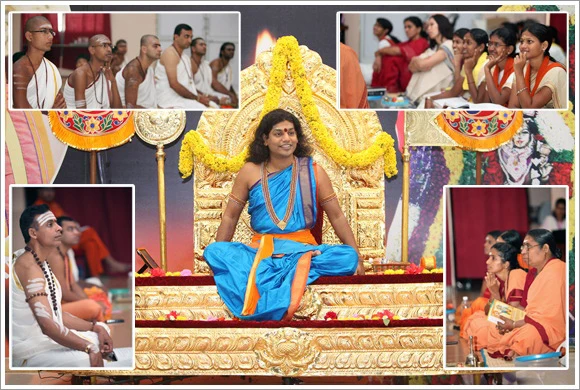
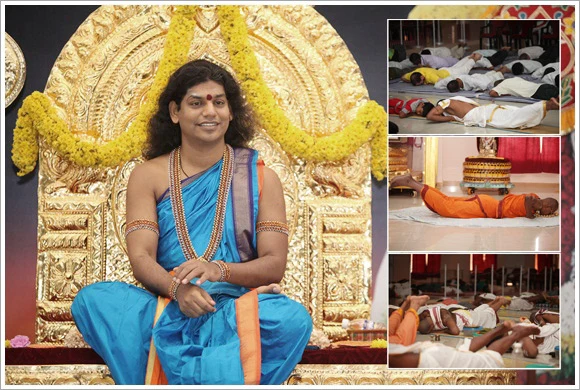
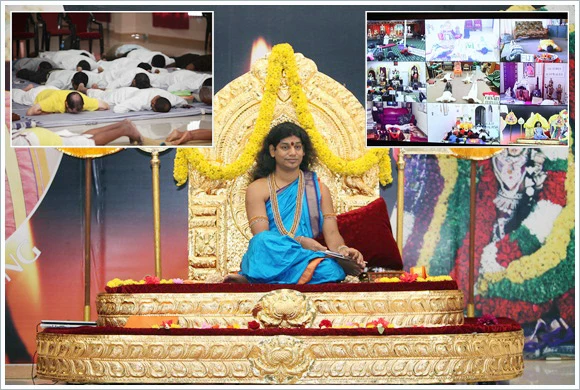
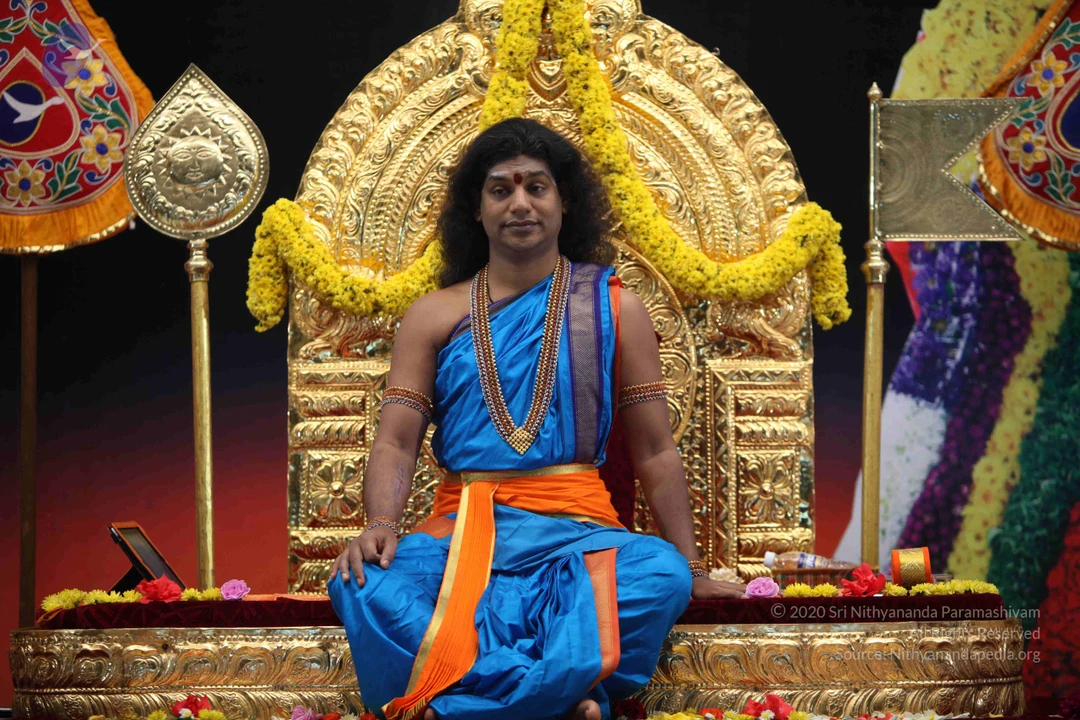
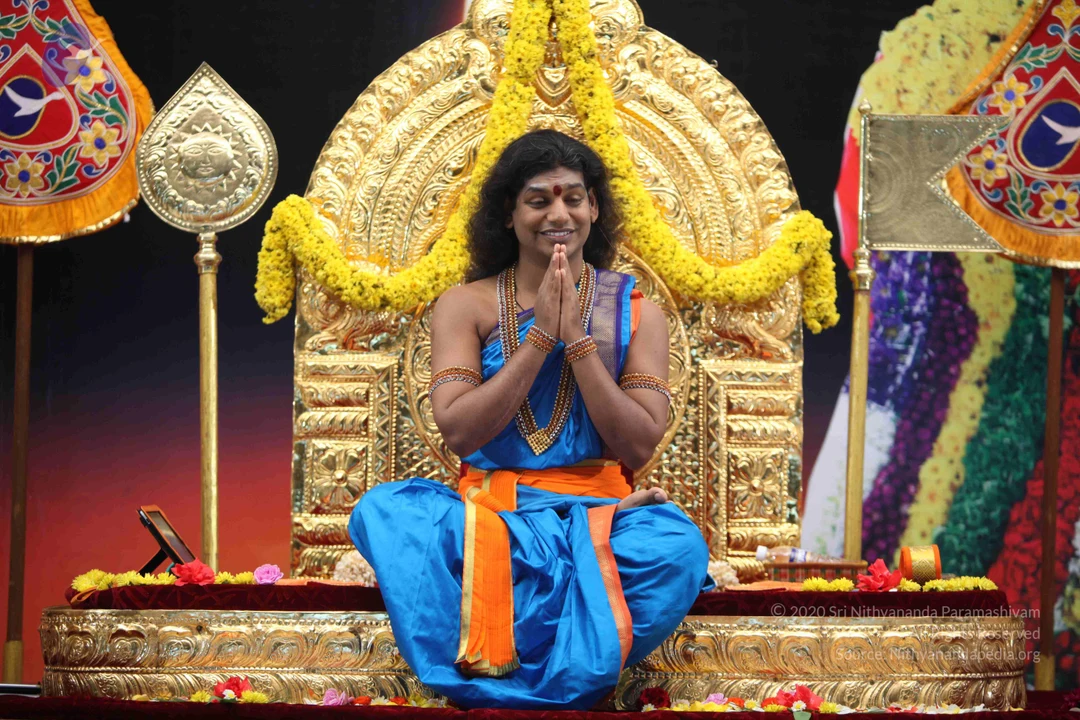
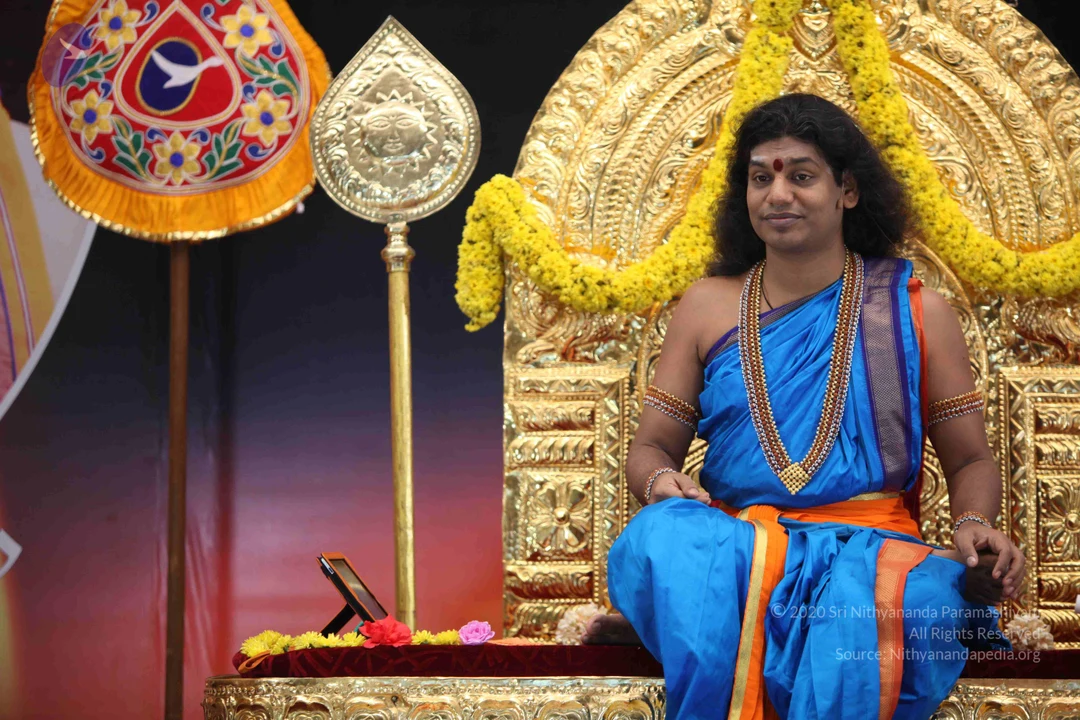
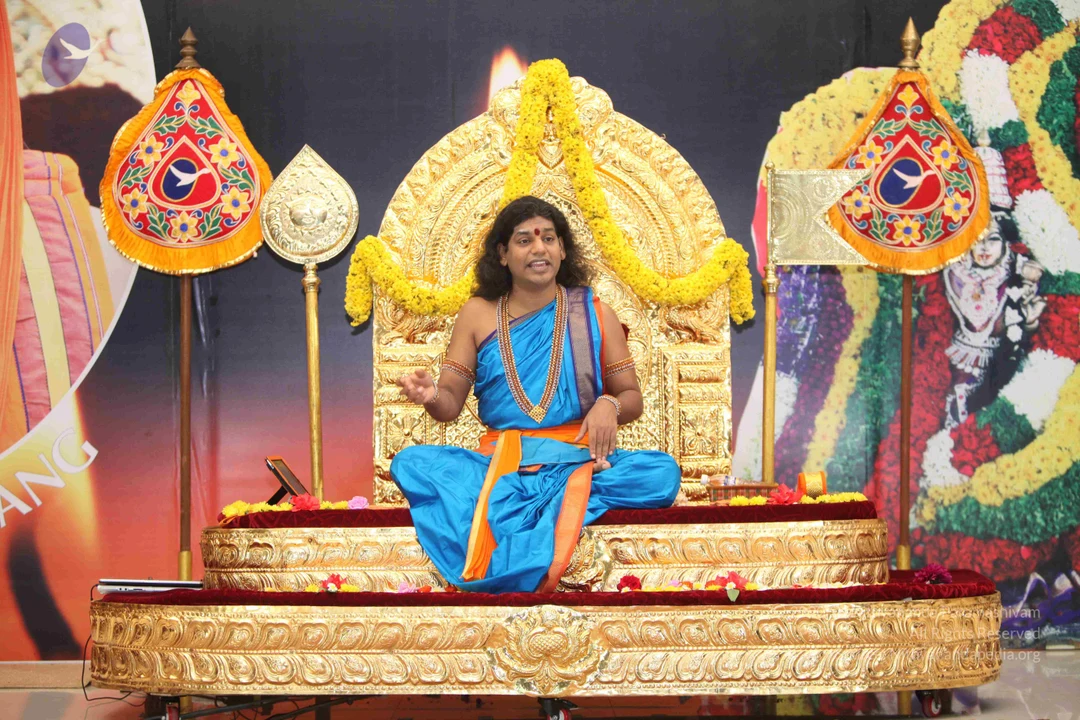
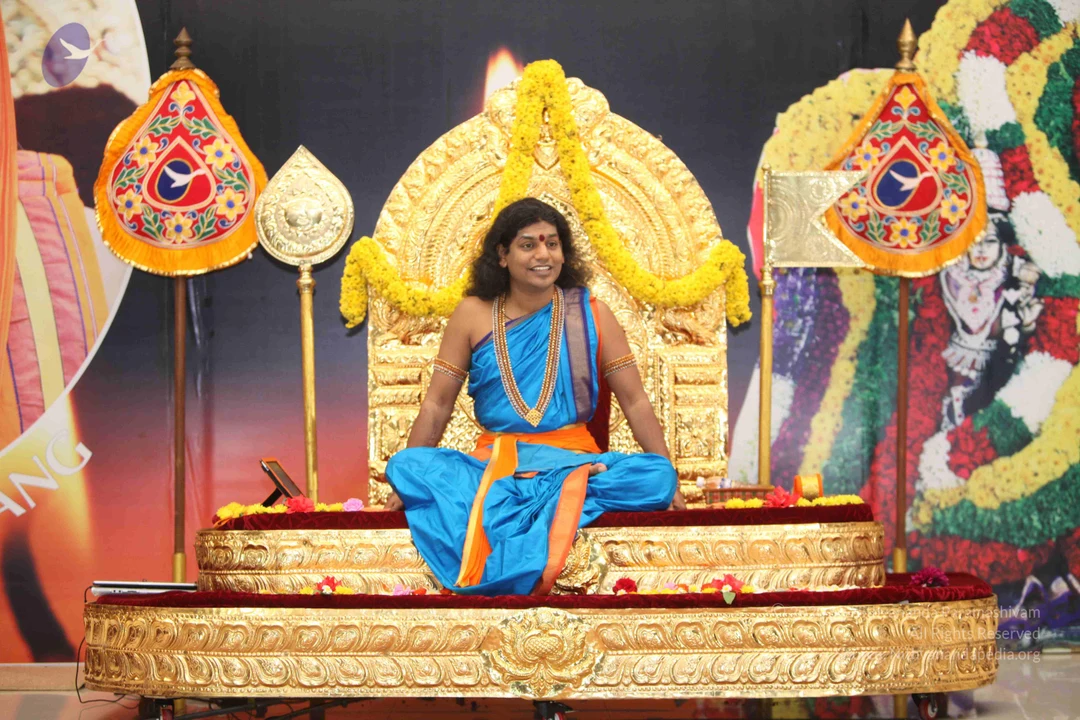
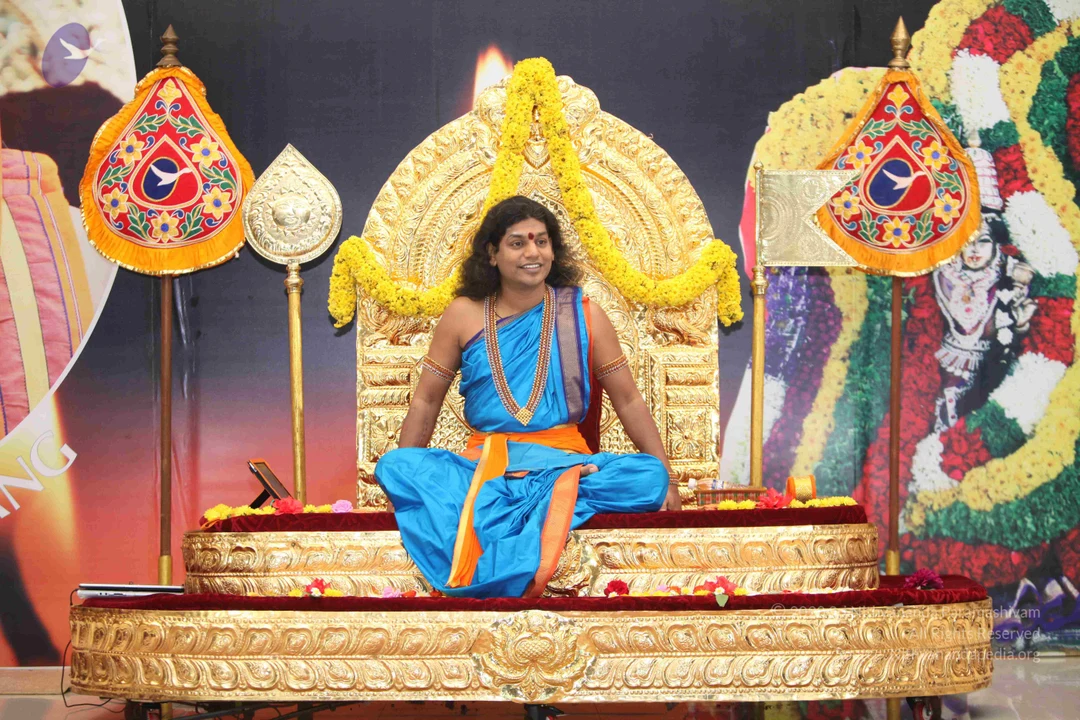
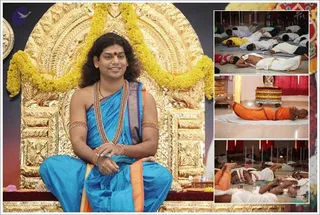
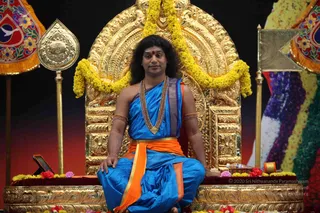
A collage graphic with a large main panel and three smaller stacked panels on the right. The main panel shows a man with long swept-back dark hair seated on an ornate gold throne decorated with yellow-orange flower garlands. He wears a bright blue shawl over a saffron-orange garment, a red bindi, and multiple rudraksha malas and ceremonial gold necklaces, with gold armbands. Smaller right-side panels show groups of devotees in white and yellow clothing lying prostrate on mats in a hall, and a man in an orange garment performing a full-length prostration beside a drum. The collage depicts satsang activity, with the pictured figures counted as depicted rather than physical people in this graphic.A seated man sits cross-legged on a gilded throne-platform (peetha) before a dark backdrop, with a golden arched throne behind him draped with a yellow marigold garland. He wears a blue dhoti-style garment, an orange-and-gold sash across his waist, a wrap over his shoulder, a beaded brown necklace and wrist beads. His long hair is swept back and he rests his hands on his knees. Flanking him are two ornate red and orange pennant standards with floral and peacock motifs, and a gold ceremonial fan-like standard. Flower offerings in red and yellow lie on the platform, and a small devotional figure appears at the right edge. Several people are not visible, and a printed caption on the image reads 'SATSANG'. The appearance is consistent with the page-described a person, but the face and presentation do not give enough cues to confirm, so identity is unsure.A seated figure sits cross-legged on a tiered golden throne (peetha) draped with a red cloth and strewn with yellow and red flowers. He has long dark hair, wears a royal blue dhoti-style garment with an orange and gold border, a multi-strand rudraksha-style mala with gold beads, and bangles, and raises one hand in a teaching gesture. Behind the throne is a golden arched backrest hung with a yellow flower garland, flanked by golden standards and orange-fringed banners with floral motifs and a bird emblem. On the right, a large deity murti is adorned with colourful flower garlands. Printed on the left banner is the partial word 'ANG' from a larger logo.A seated man in a blue silk robe with an orange-and-gold sash sits cross-legged on an ornate gilded throne with a carved arched back, draped with a yellow marigold garland. He wears a multi-strand rudraksha mala with a gold-toned pendant, bangles on both wrists, and a red bindi. His right hand rests on his knee, and his left hand is raised in a gesture. Gold ceremonial fans and staffs with ornamented finials flank the throne, and red and pink flowers are scattered on the platform in front of him. Red and orange embroidered banners with floral motifs and a bird emblem frame the scene. Swamiji (probable): long, swept-back hair, rudraksha mala and gold ceremonial ornaments, seated as the teacher on the throne.A man sits cross-legged on a raised gold peetha throne in front of an ornate gold throne back draped with yellow marigold garlands. He wears a royal blue silk dhoti and shawl with a purple border, an orange waist sash, layered rudraksha-style beaded necklaces, bangles, and a red-and-white tilak on his forehead. His right hand is raised in a gesture of teaching while he speaks. Flanking him are gold kalasha-style standards and ornate red-and-gold fringed banners, with fresh flower garlands in purple, yellow, pink and red arranged below. a person: the figure is seated on a throne with long swept-back hair, ceremonial gold necklaces and saffron-orange and blue clothing, consistent with a discourse setting.A man seated cross-legged on an ornate gold throne (peetha) with a tall arched golden backrest carved with floral and scroll motifs. He wears a royal blue dhoti and matching shawl with a gold border, an orange waist cloth, a rudraksha mala and ceremonial gold-bead necklace, and gold armlets. Long, swept-back dark hair, a red tilak on the forehead, and a yellow marigold garland drape over the throne. Gold-framed flag-like standards stand on each side; a red-and-orange floral banner sits at top left, and a large flower-decorated arrangement fills the right edge. Flower petals in pink, red and yellow lie on the throne's base beside a small device and a tray. The man has hands resting on his lap, and a small pink flower sits near his hand. The scene appears to be a satsang setting. Visible appearance cues include long swept-back hair, a rudraksha mala, ceremonial gold necklace and saffron-orange cloth, consistent with the a person candidate described on the page.

03-SARVA-DARSHAN
13 photosSource gallery
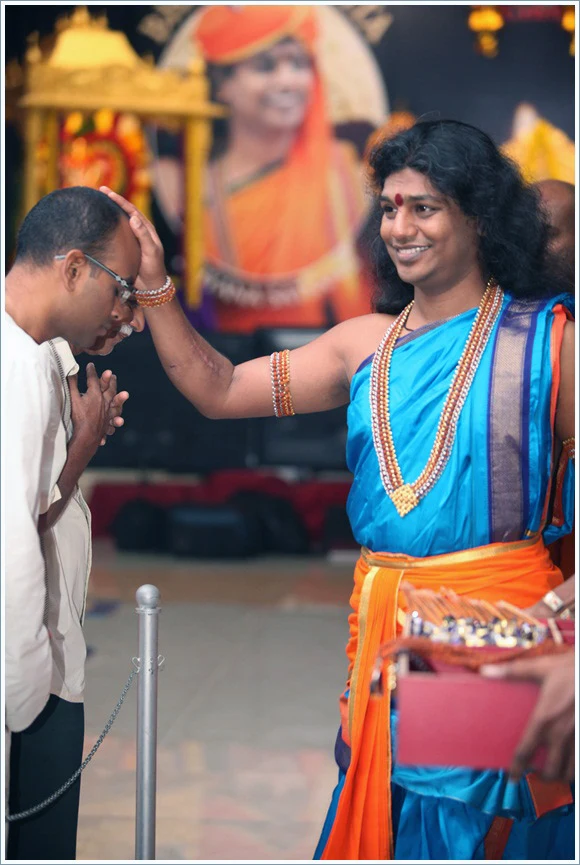
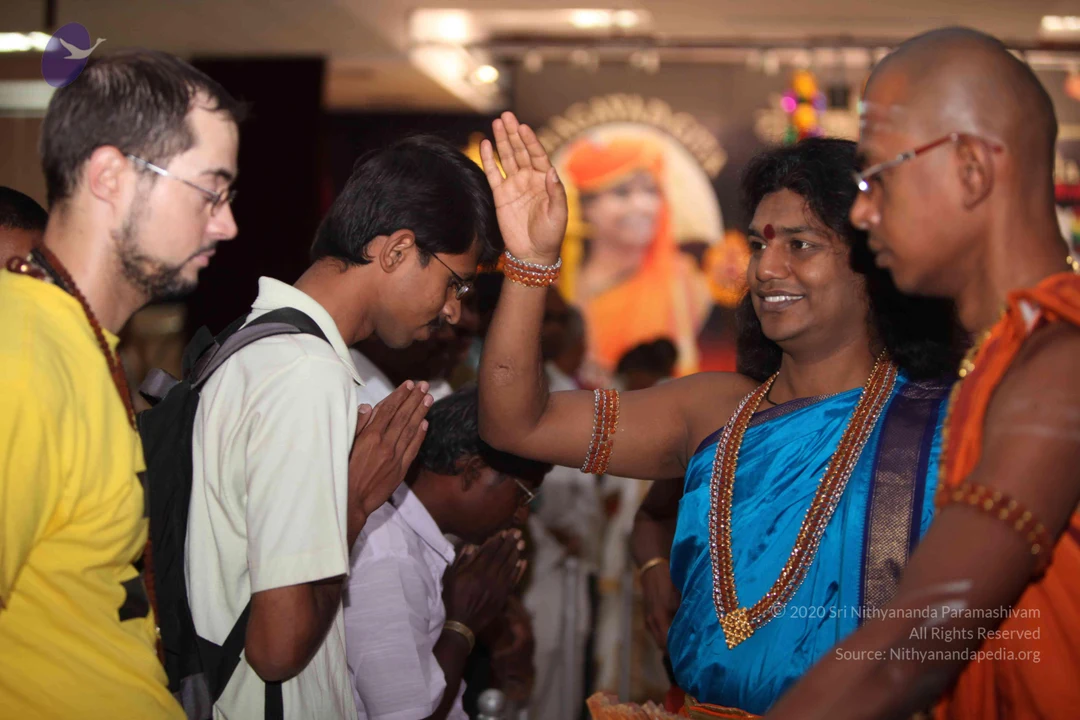
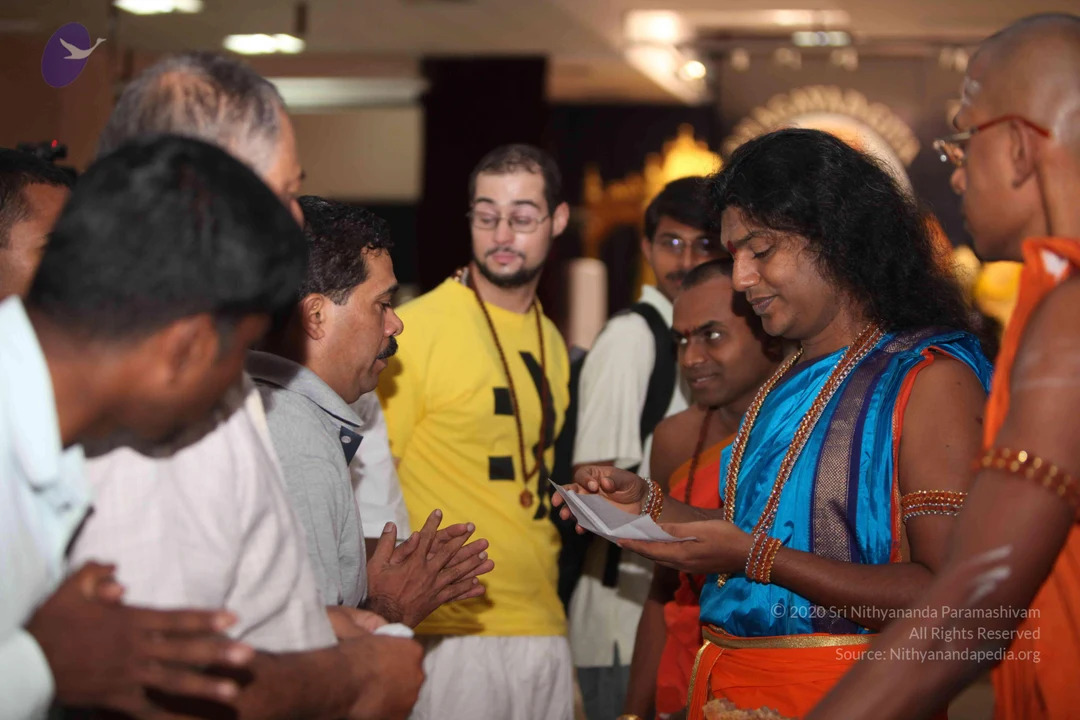
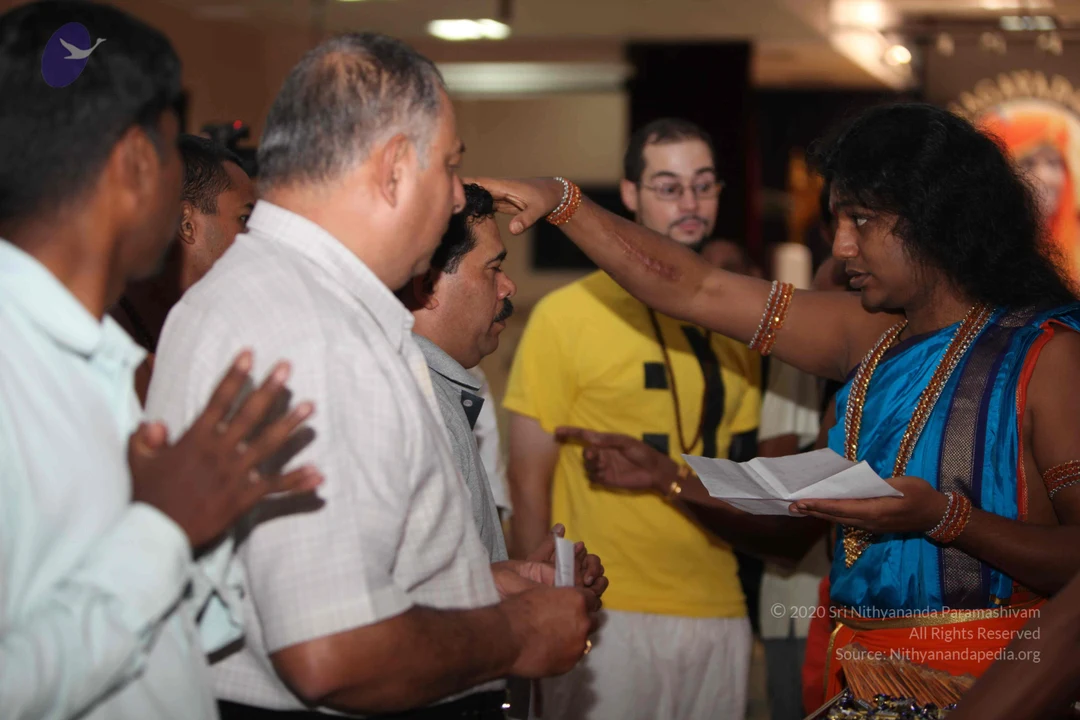
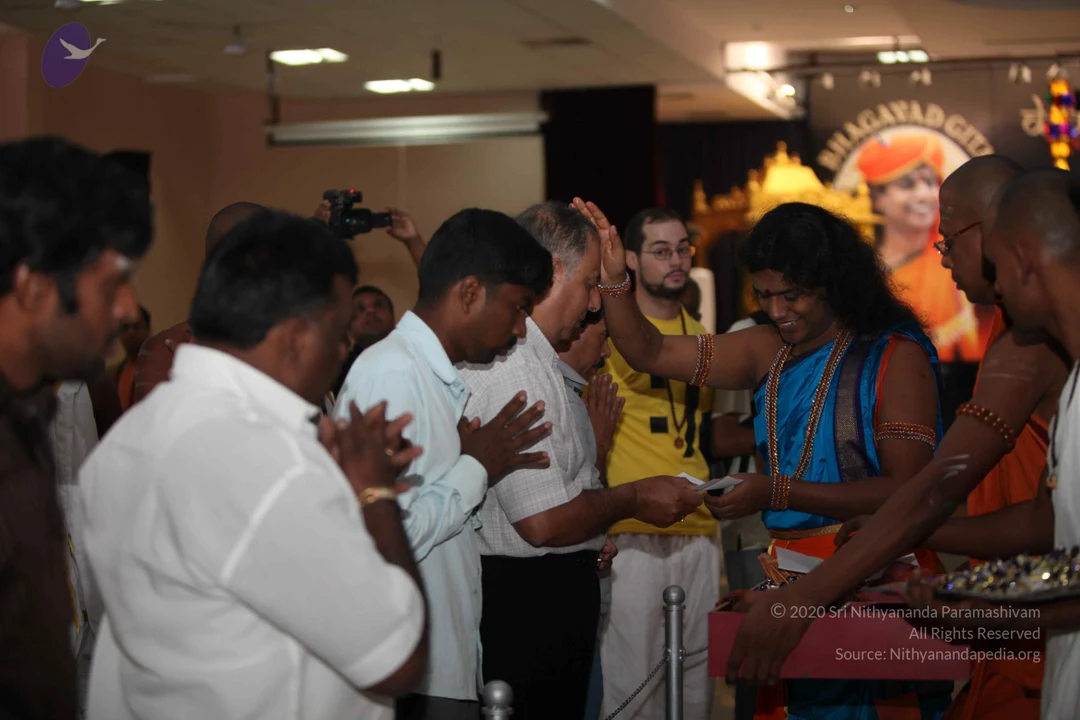
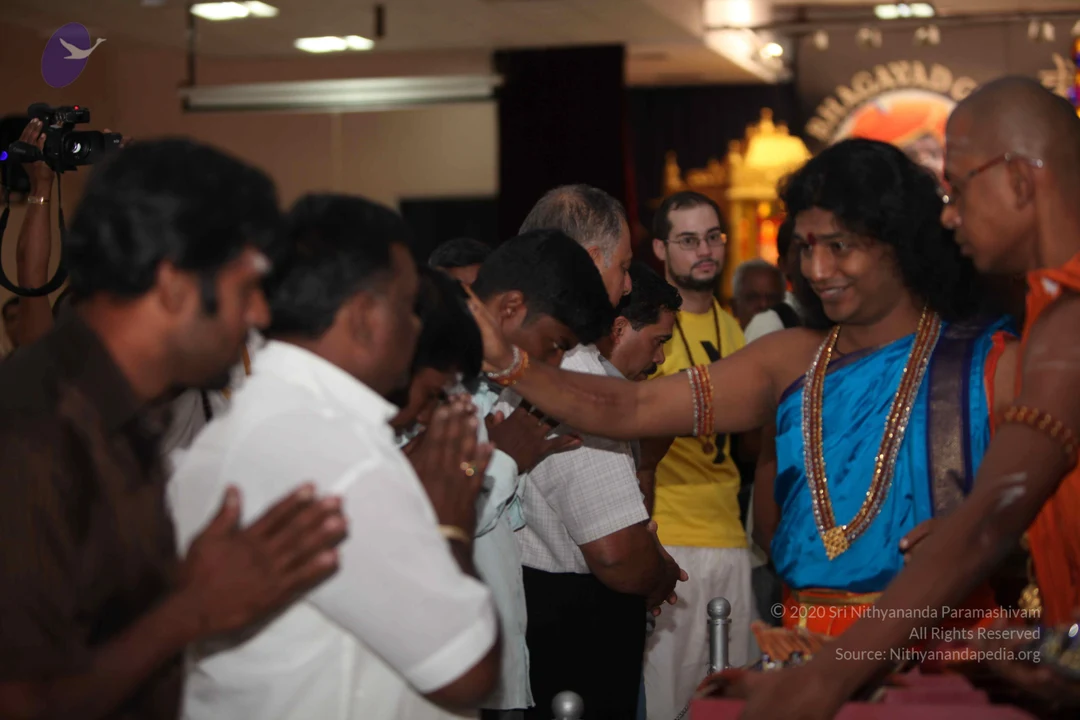
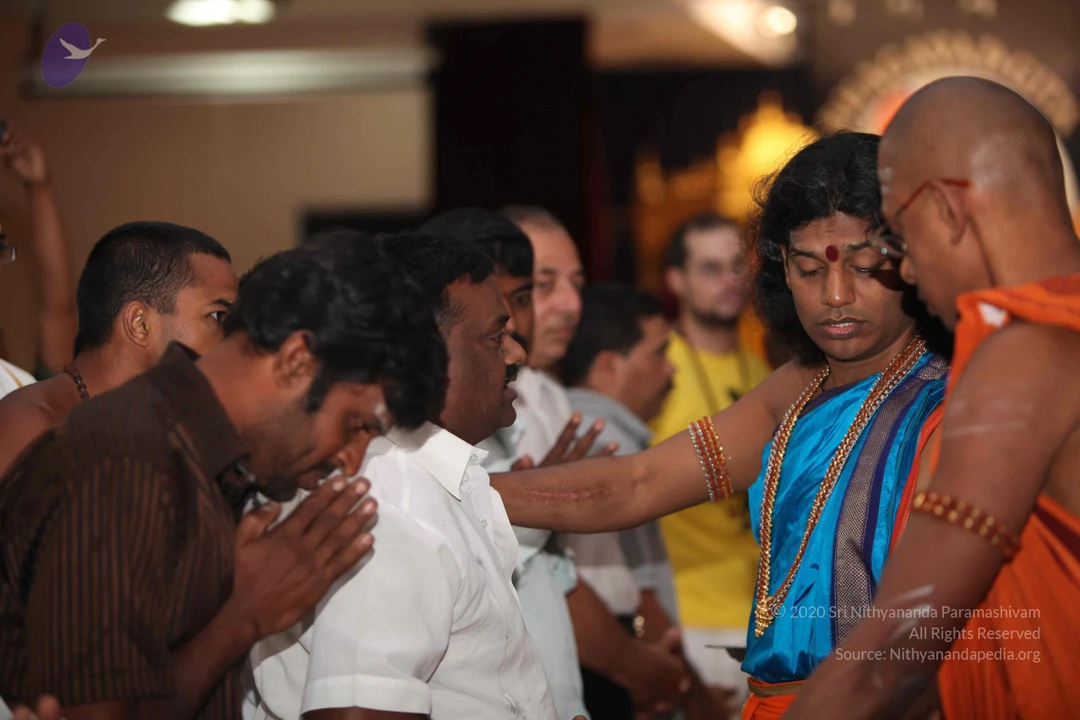
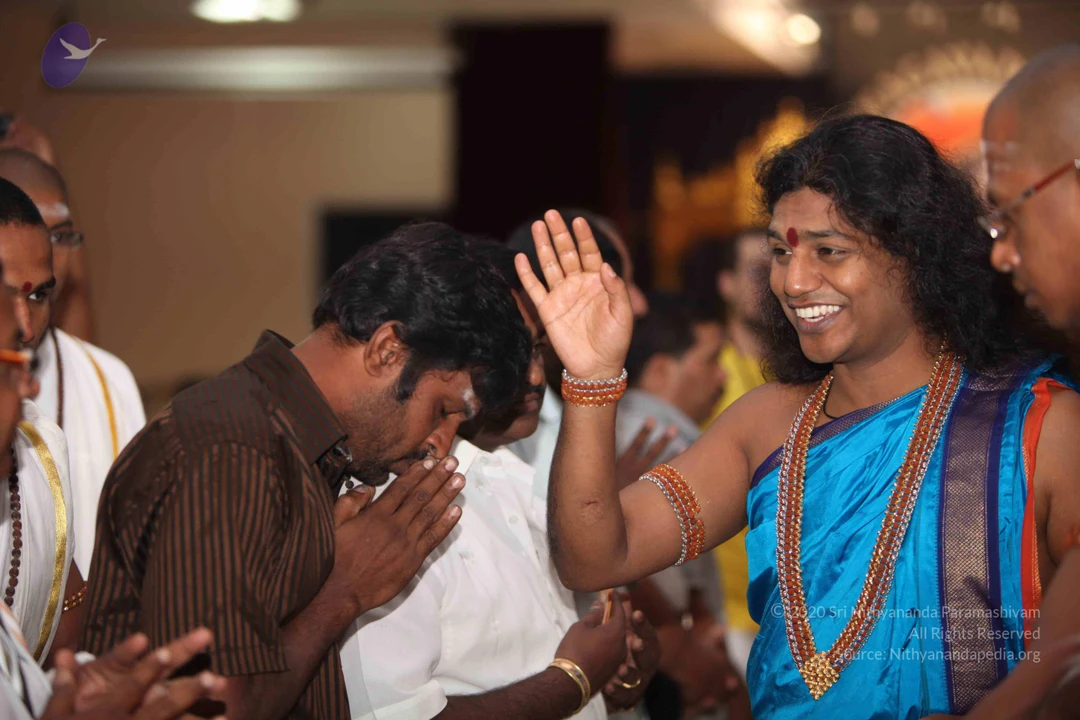
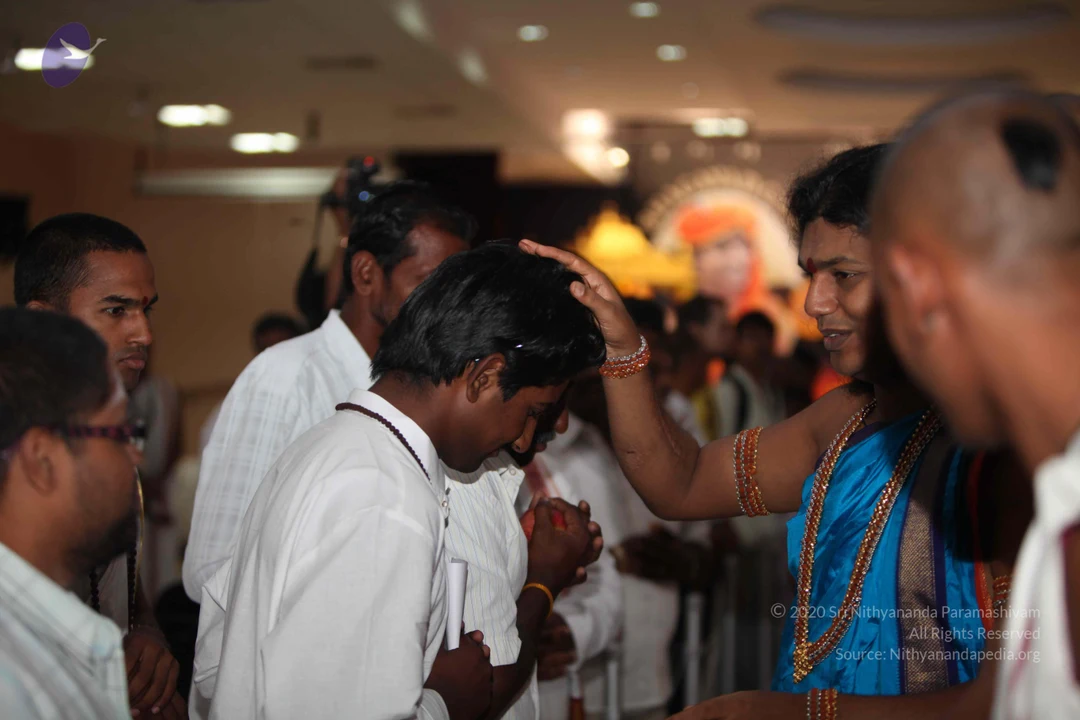
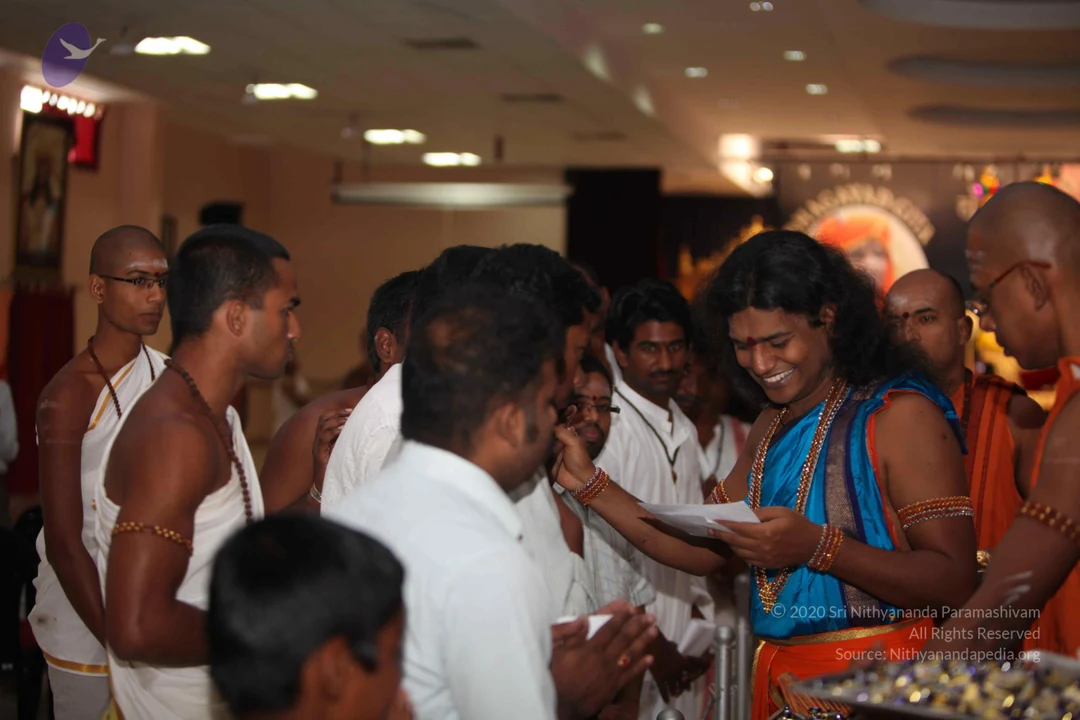
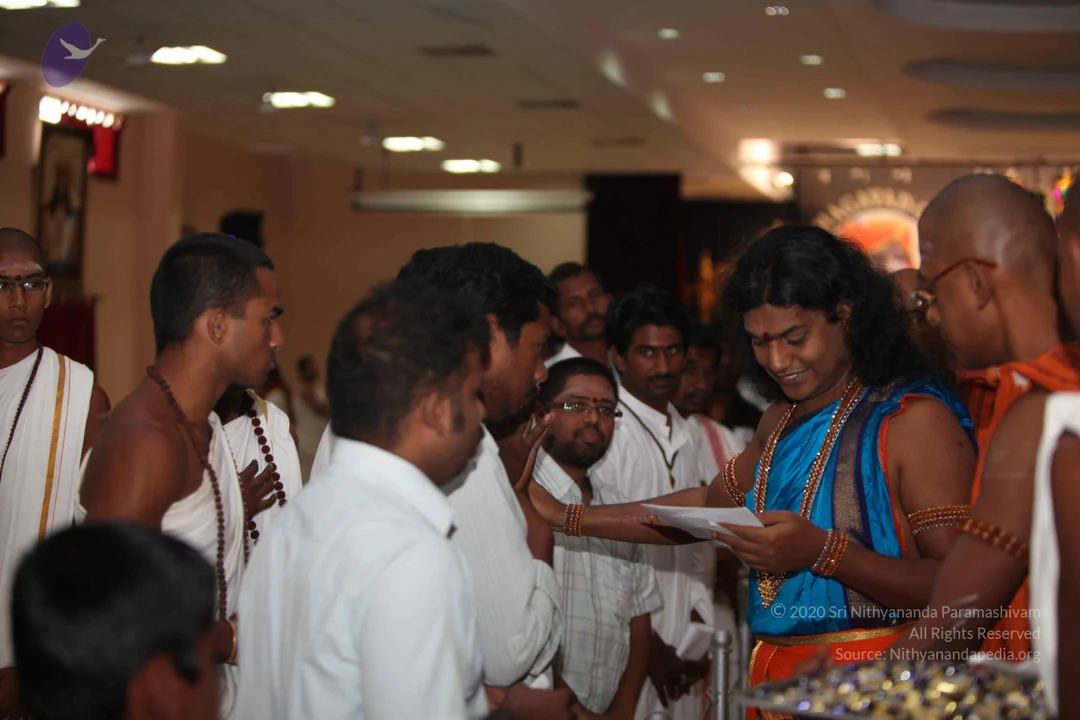
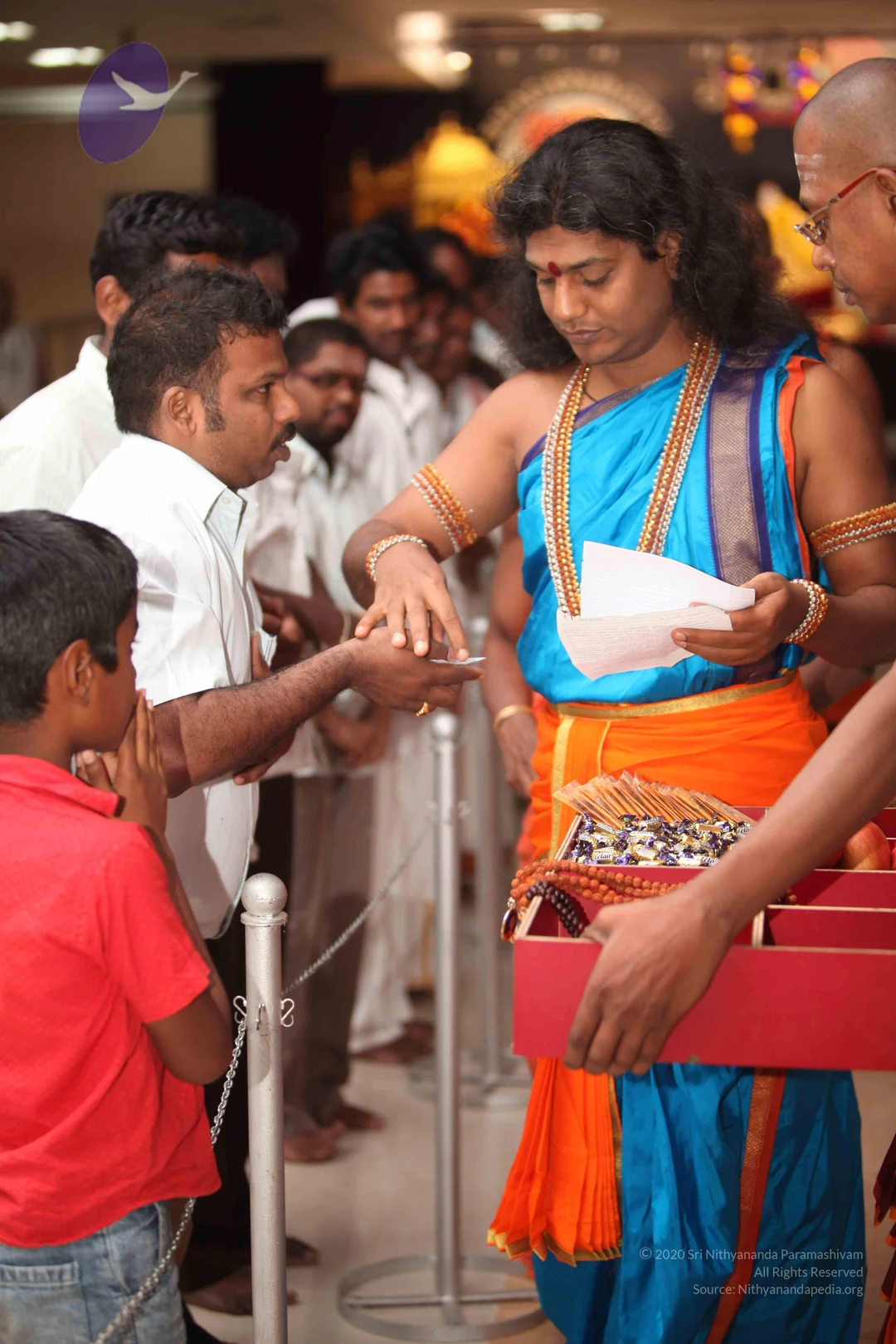
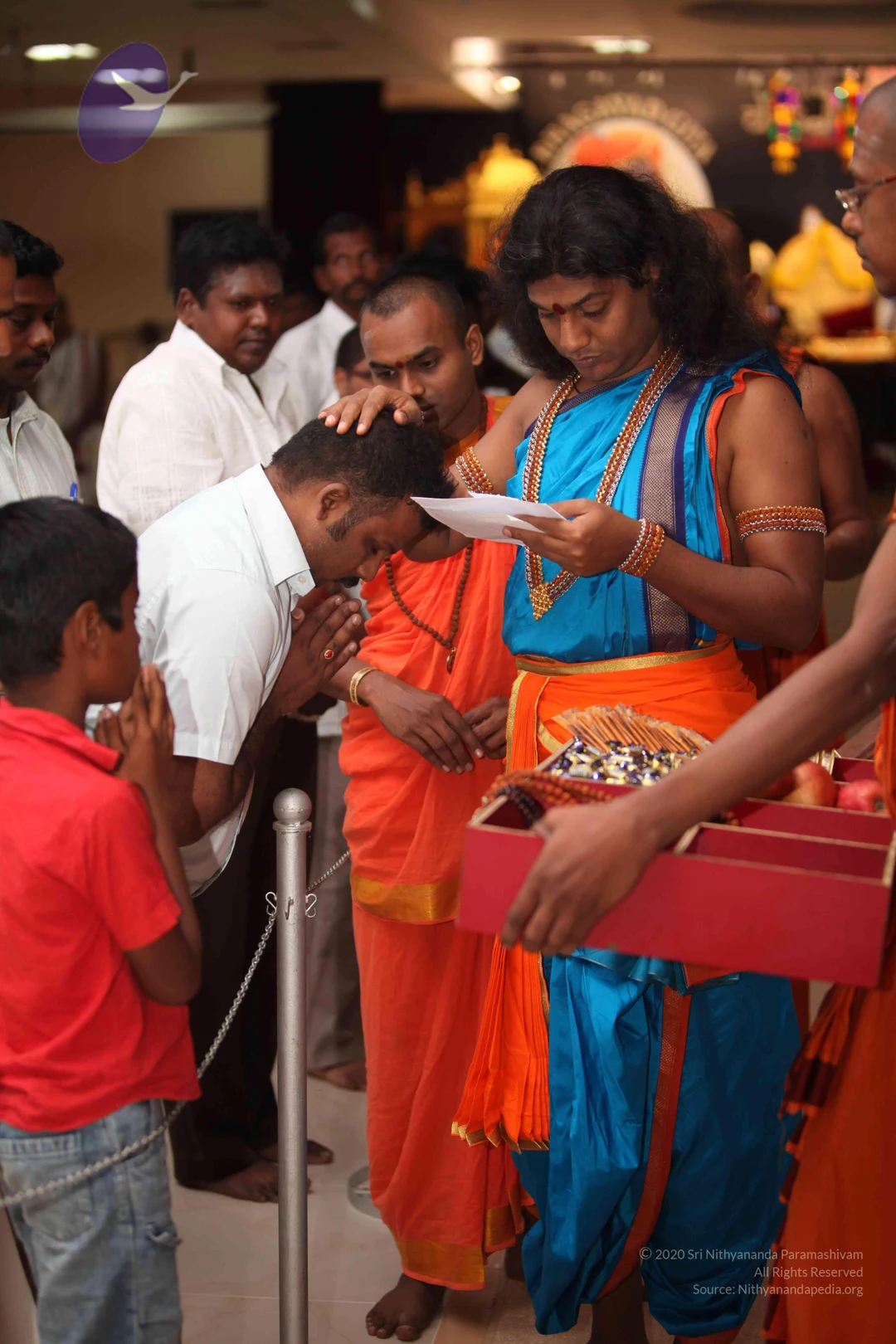
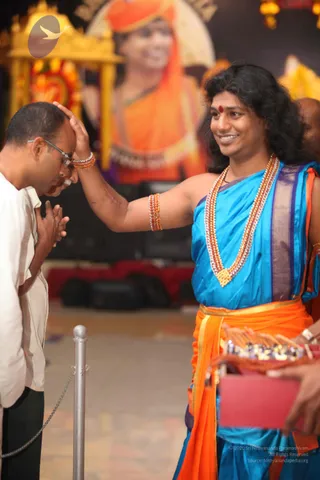
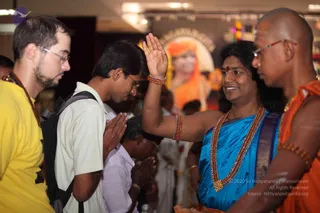
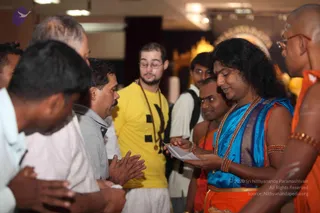
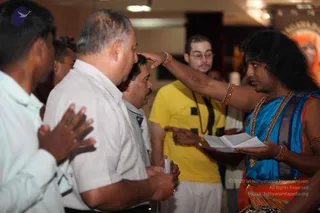
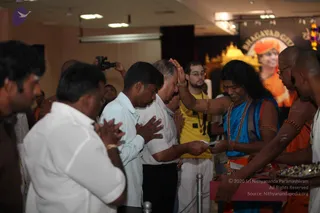
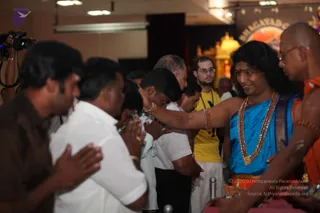
A photograph of a devotional blessing at an indoor event. A long-haired person with a red bindi, wearing a turquoise silk garment with purple and gold borders over an orange lower cloth, multi-strand beaded necklaces and beaded bangles, places a raised hand on the head of a man in white shirt and glasses who bows with palms pressed together. The person's proper right hand holds a tray of items wrapped in orange and red. Behind them a large banner shows a smiling figure in an orange turban and orange robes, with a golden palanquin-like structure at left. A metal stanchion and chain separate the area.Photograph of a busy indoor event where a long-haired figure in a blue silk sari-style garment with a blue-and-gold border and multi-strand orange-brown beaded necklace raises one palm in blessing while smiling. A red bindi marks the forehead and beaded bangles are worn on the wrists. Beside them a shaved-headed man in an orange-saffron robe and gold chain gestures in front. On the left, a man in a yellow t-shirt with a beaded necklace watches, and a young man in a white shirt with a backpack holds his palms together in namaste. Another devotee bows with hands joined in the background. A large orange-robed portrait banner of a saffron-clad figure with a crown-like headdress stands behind them.Indoor gathering in a hall with warm golden backdrop lights. In the right foreground, a person with long swept-back dark hair wears a blue and orange sari-style garment with orange-and-gold border, many beaded rudraksha-style malas and bangles, and holds a folded white paper that he is handing or reading. a person by appearance: long hair, layered beaded malas and a saffron-orange draped cloth. Around him, devotees with folded hands face him: a man in a grey polo shirt and a young man in a yellow t-shirt with a rudraksha mala stand nearby, plus a bald monk in orange robes on the far right and a man in white dhoti at left. Several people are partly visible at the edges.A photograph of a darshan-style gathering indoors. On the right, a person with long, dark, loose hair wears a blue silk garment with an orange and purple border, multiple strands of beaded necklaces and bangles, and holds a small folded paper while extending a hand to touch the forehead of a man in a light grey checked shirt. Nearby, a man in a yellow t-shirt with glasses and a bearded man in a grey shirt stand watching, and a man in a light blue shirt has his hand raised on the left. A printed image of a deity or saint in orange is partly visible at the upper right. The setting is a hall with soft lighting and a dark backdrop. Mostly a candidate is shown with appearance cues including long swept hair, beaded necklaces and a blue and orange garment, but the identity remains uncertain from appearance alone.A photograph of a darshan line in an indoor hall. A figure with long, swept-back dark hair, wearing a blue and orange garment, a rudraksha mala and gold necklaces, raises a hand in blessing over the head of a man in a white shirt who is pressing his palms together. Around him, devotees in white shirts, a yellow t-shirt and white dhotis wait with folded hands, and a cameraman in the background films the scene. Two shaven-headed men in orange robes stand at right holding a silver tray. Behind them a backdrop displays a large banner reading Bhagavad Gita with a portrait of a smiling figure in an orange turban and robe beside a golden temple-style motif. A metal stanchion barrier and a chain separate the line from the stage area.Indoor photo of devotees with hands folded in namaskar, bowing forward in a line at a satsang event. A long-haired man in a blue garment with layered beaded necklaces and a red tilak on his forehead reaches out and touches or blesses the bowed devotees. A bald man in an orange robe with white markings stands at the right edge. A cameraman with a video camera is at the far left, and a bearded man in a yellow shirt and white dhoti stands behind the line. A golden shrine-like structure and a banner reading Bhagavad Gita sit in the background.

04-NITHYA-KRIYA
15 photosSource gallery
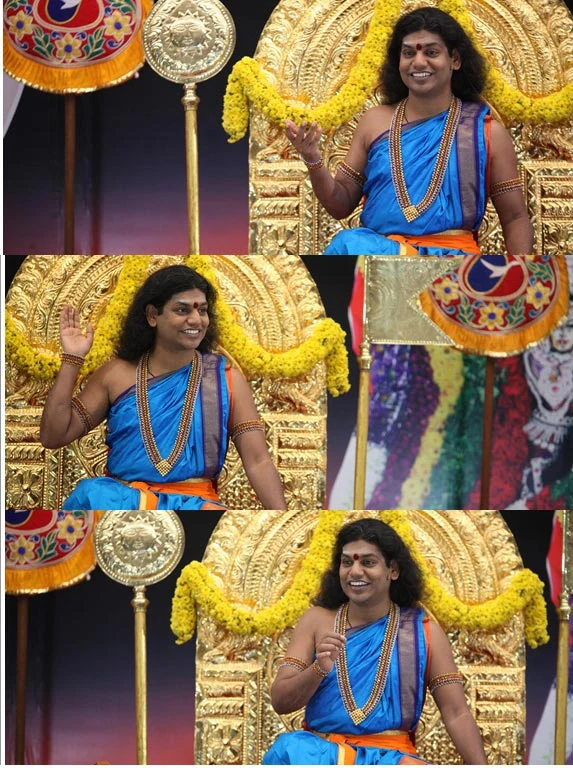
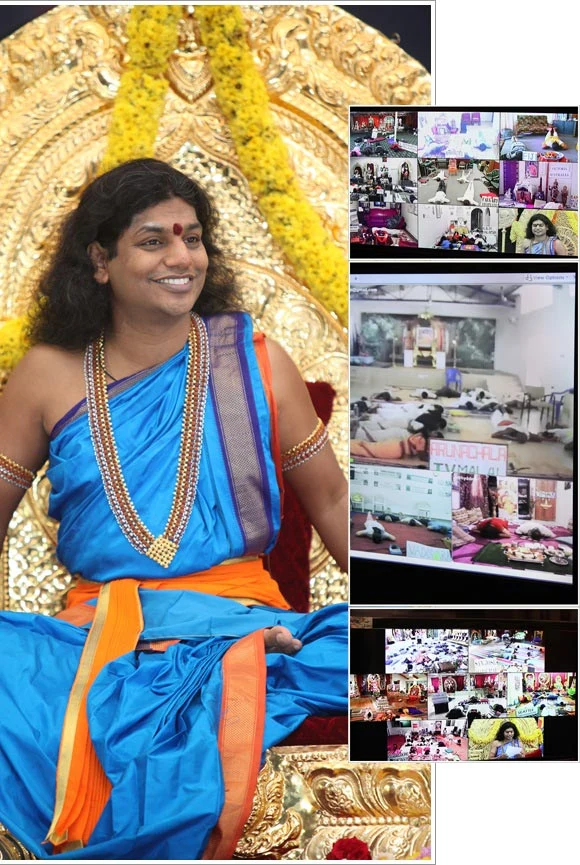
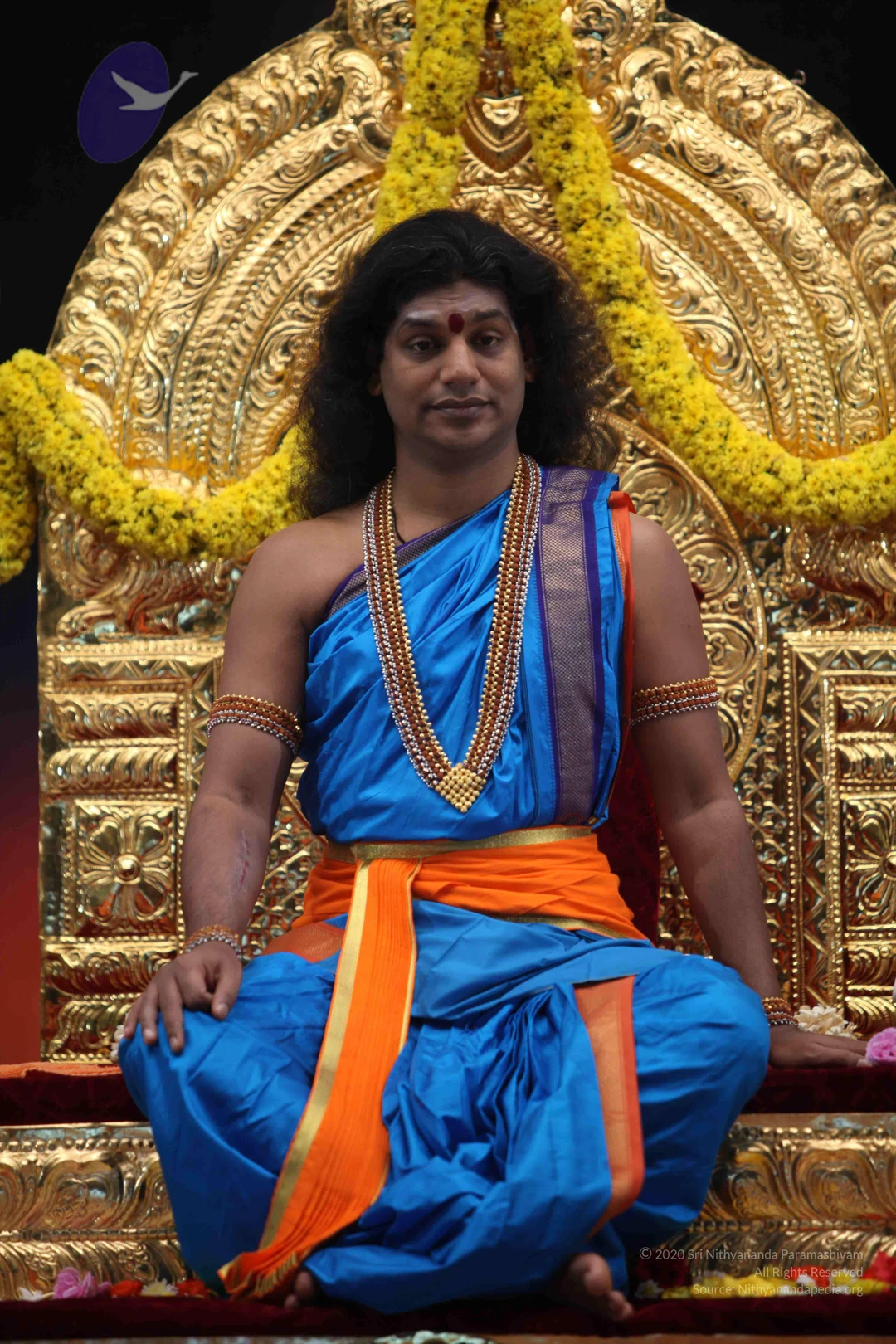
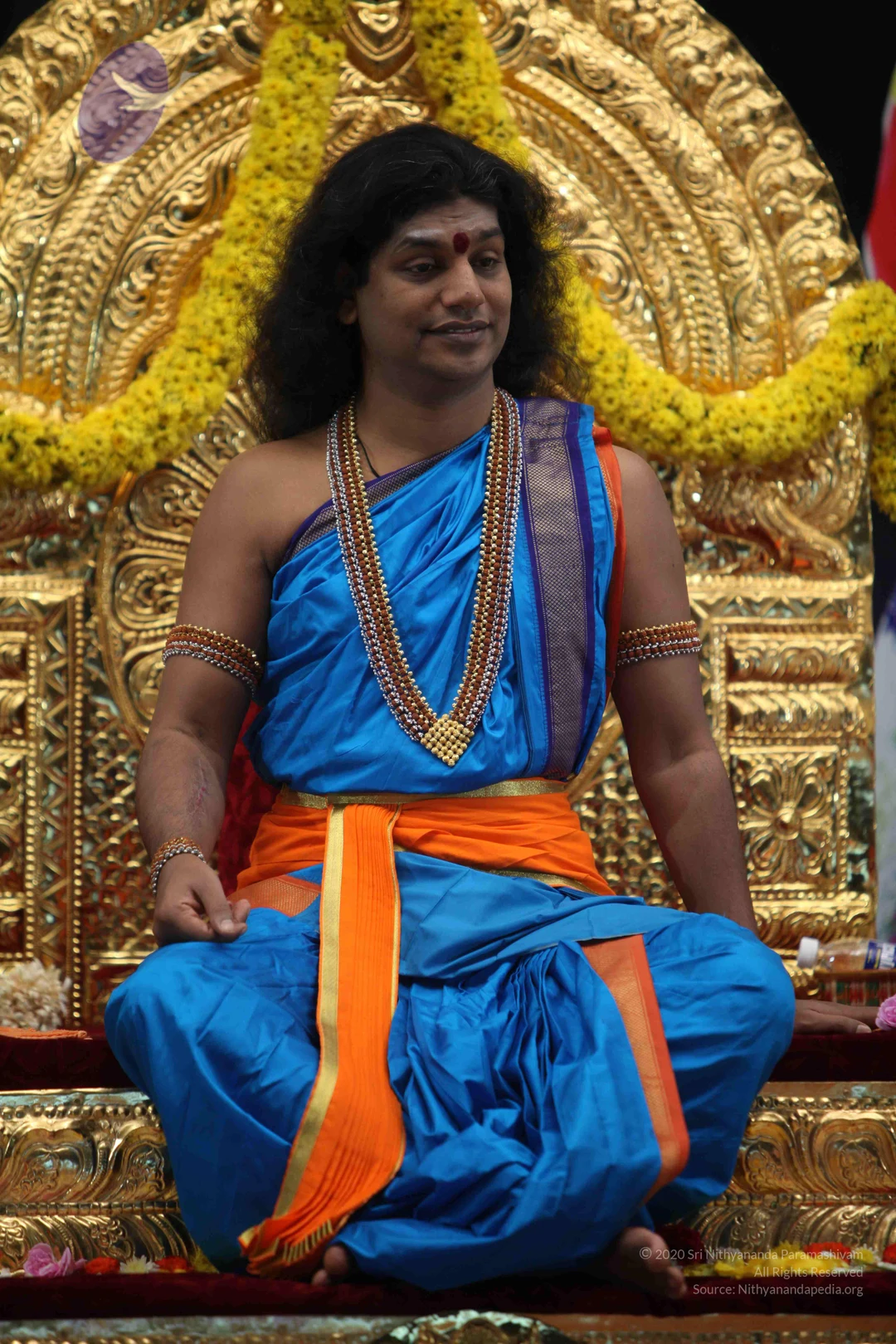
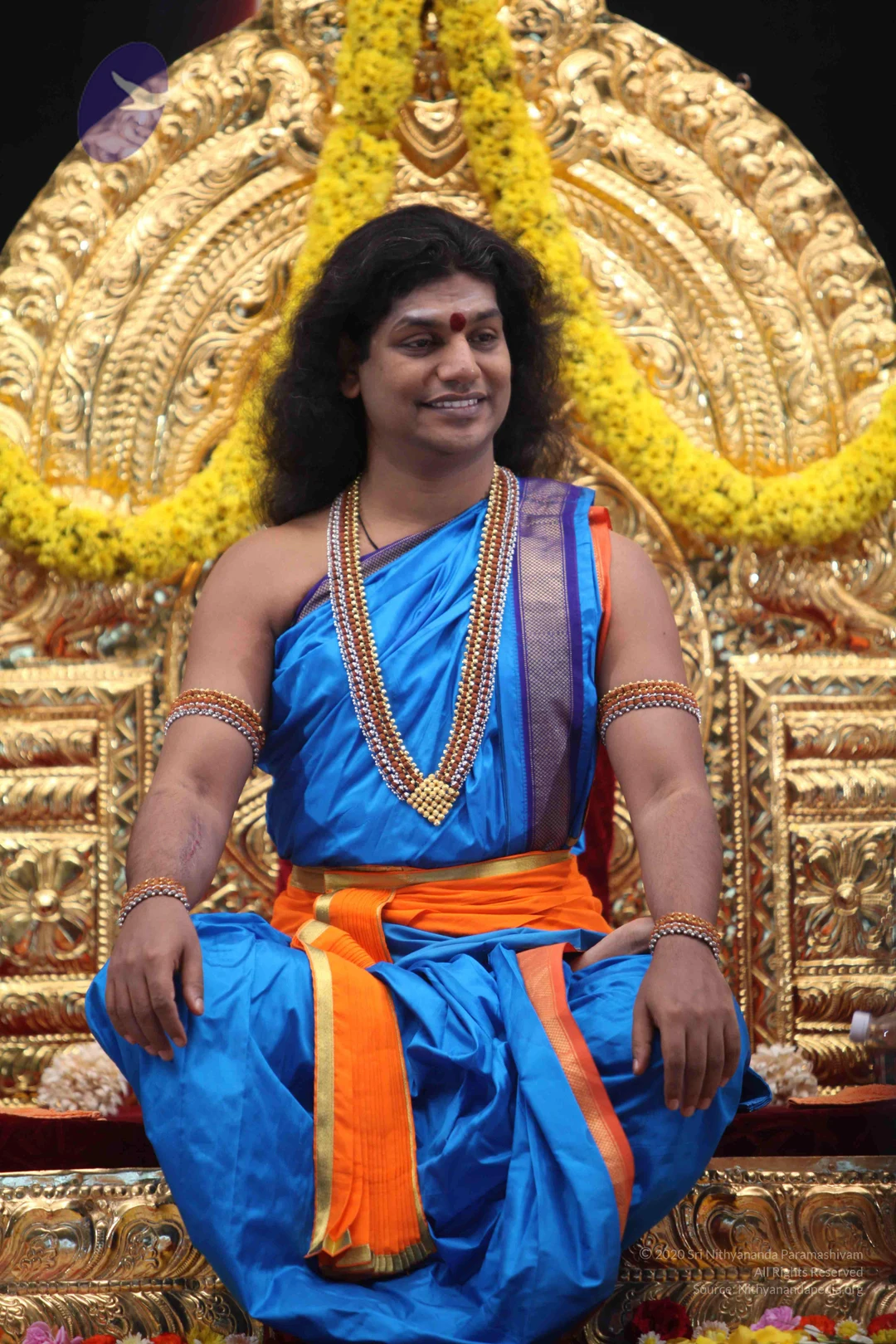
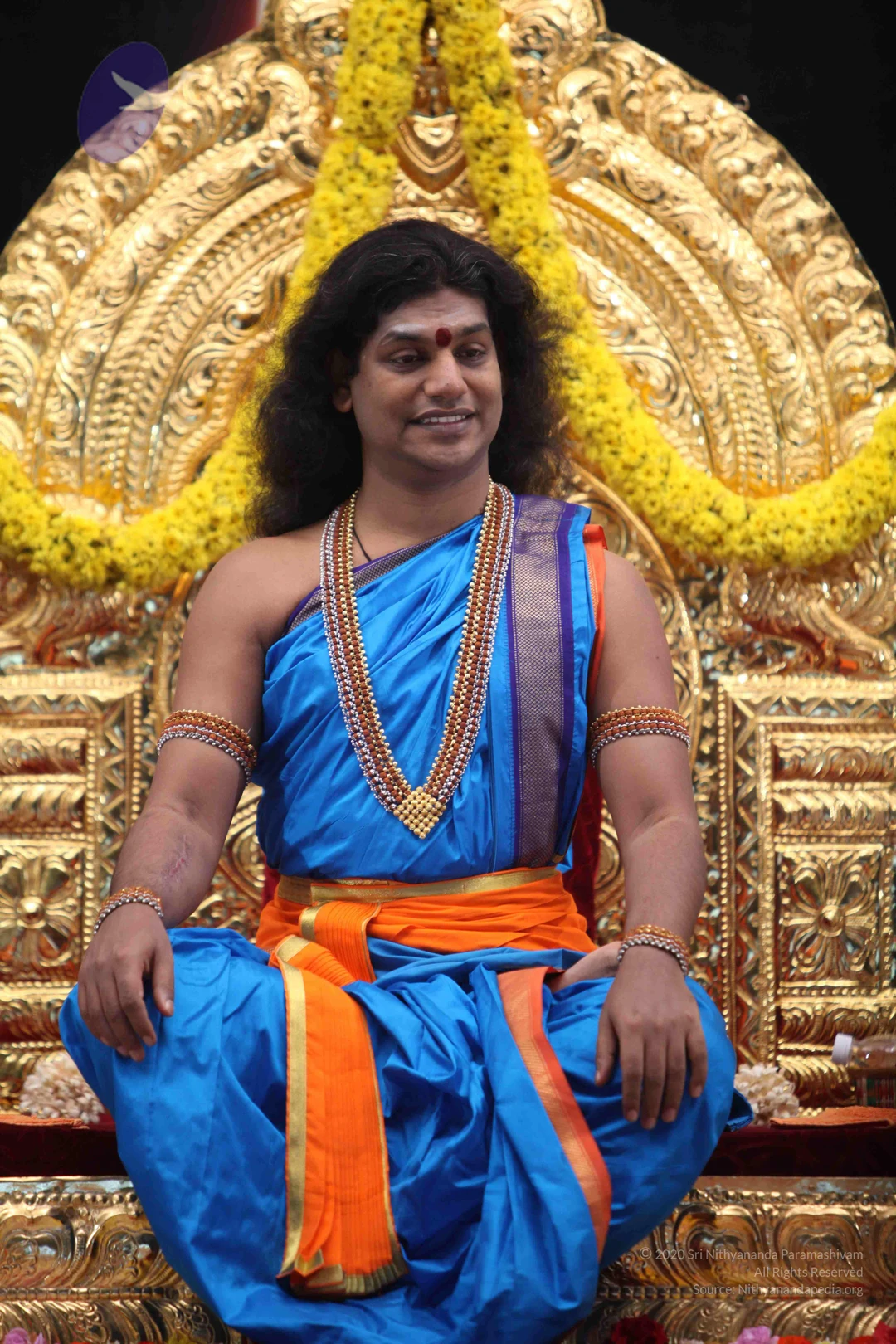
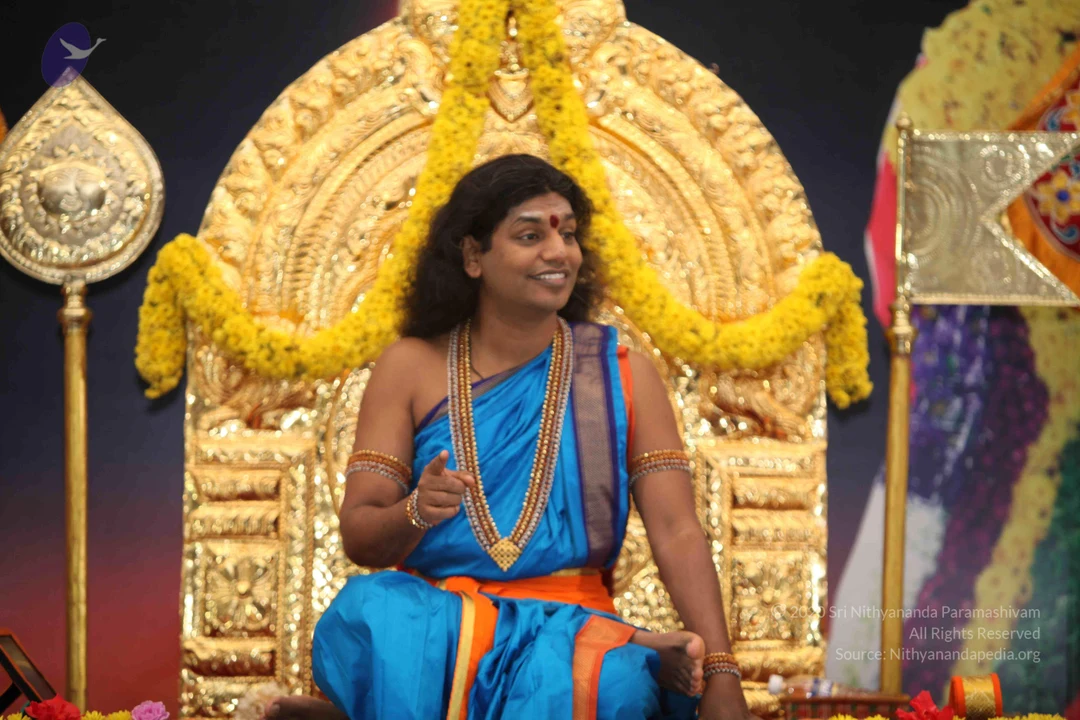
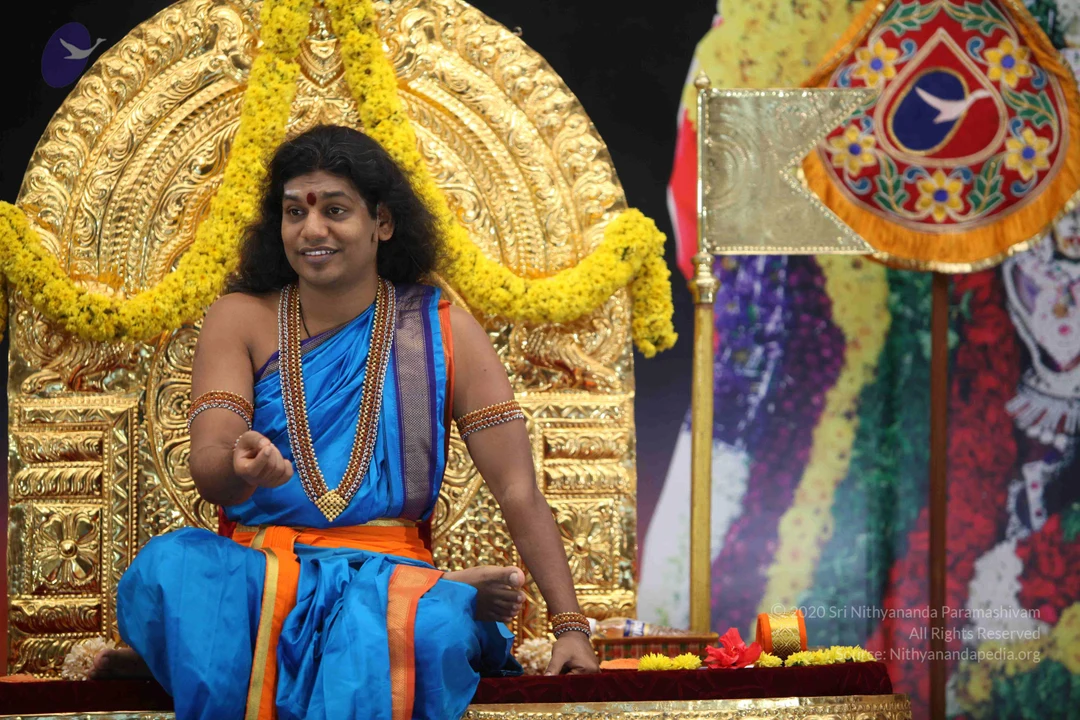
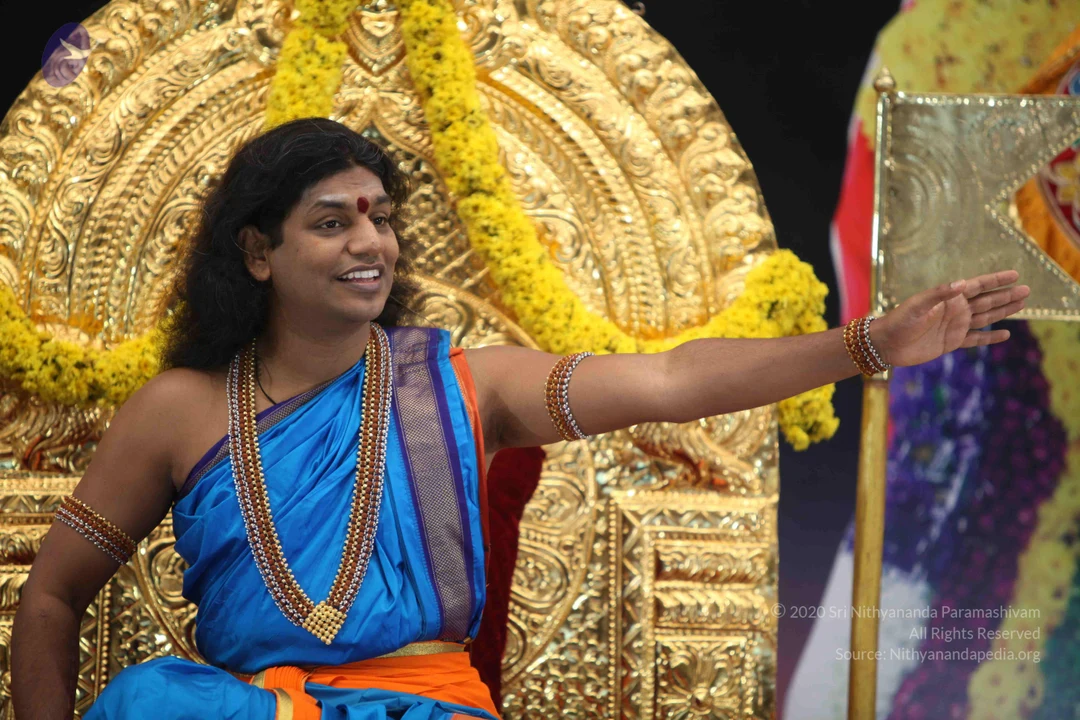
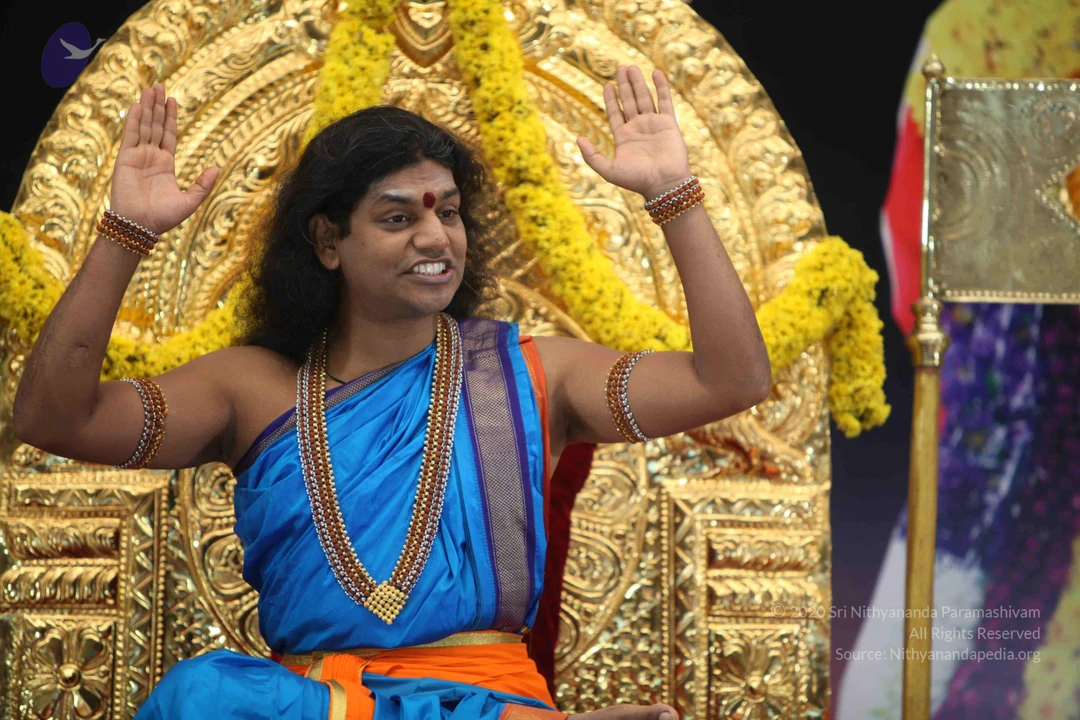
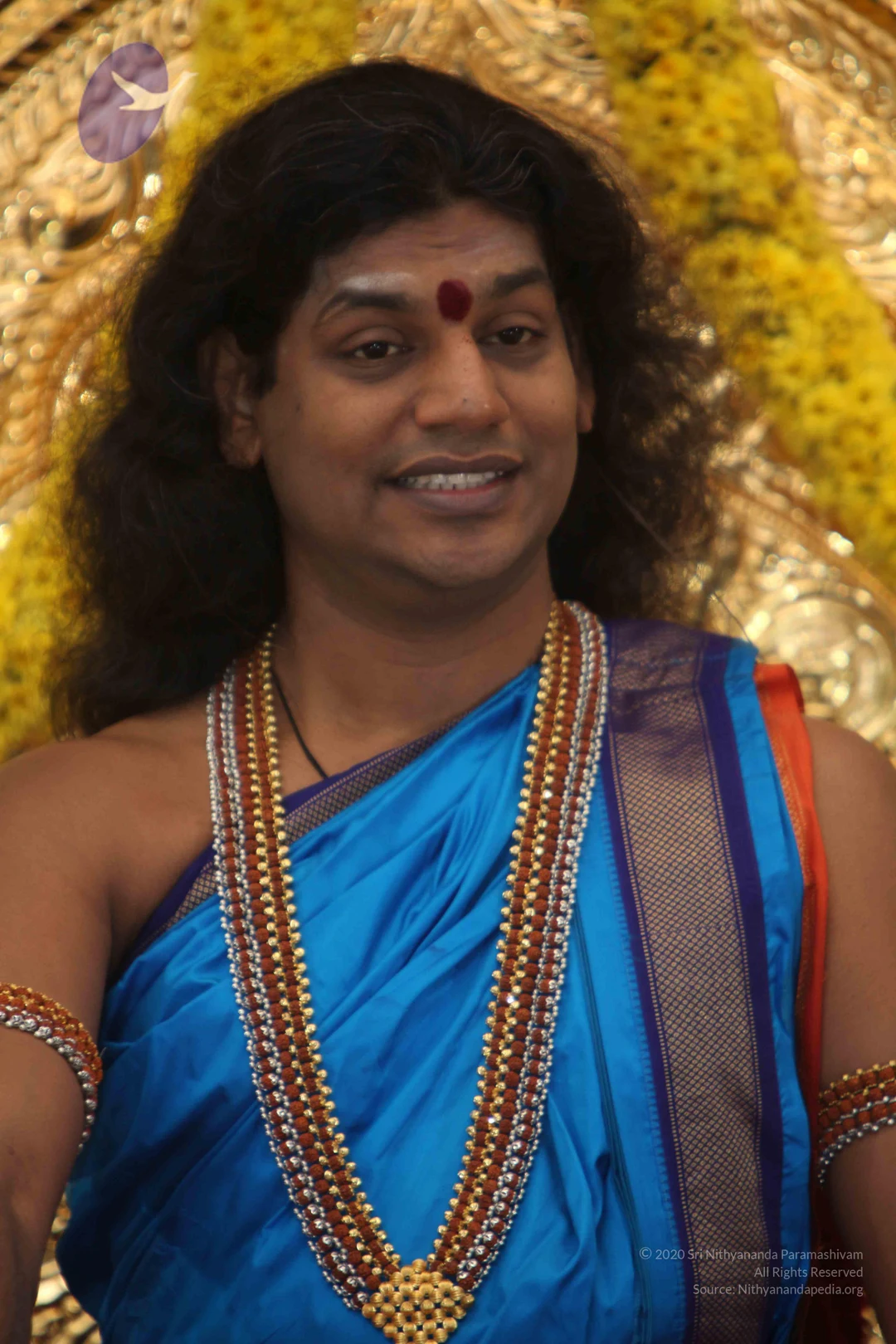
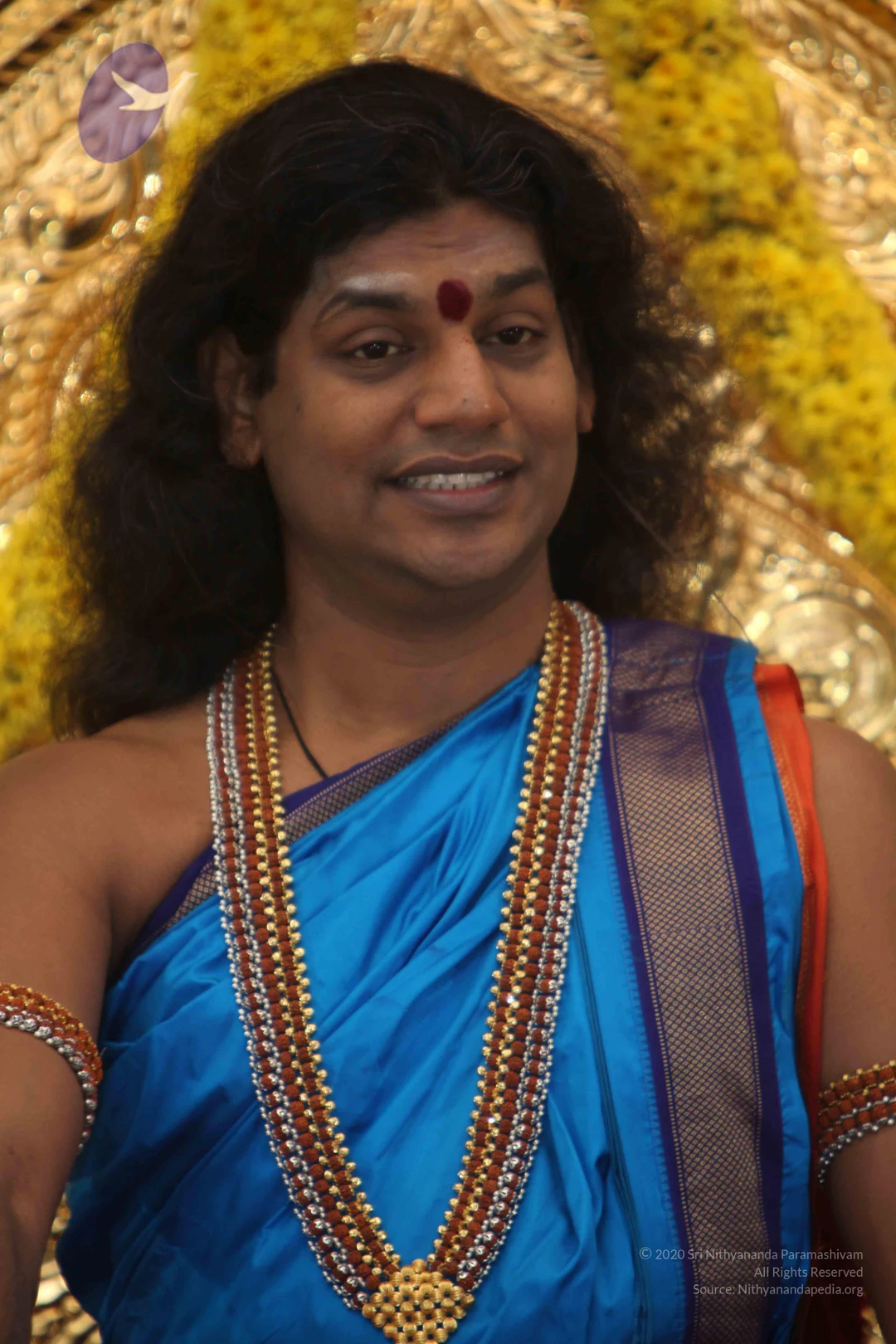
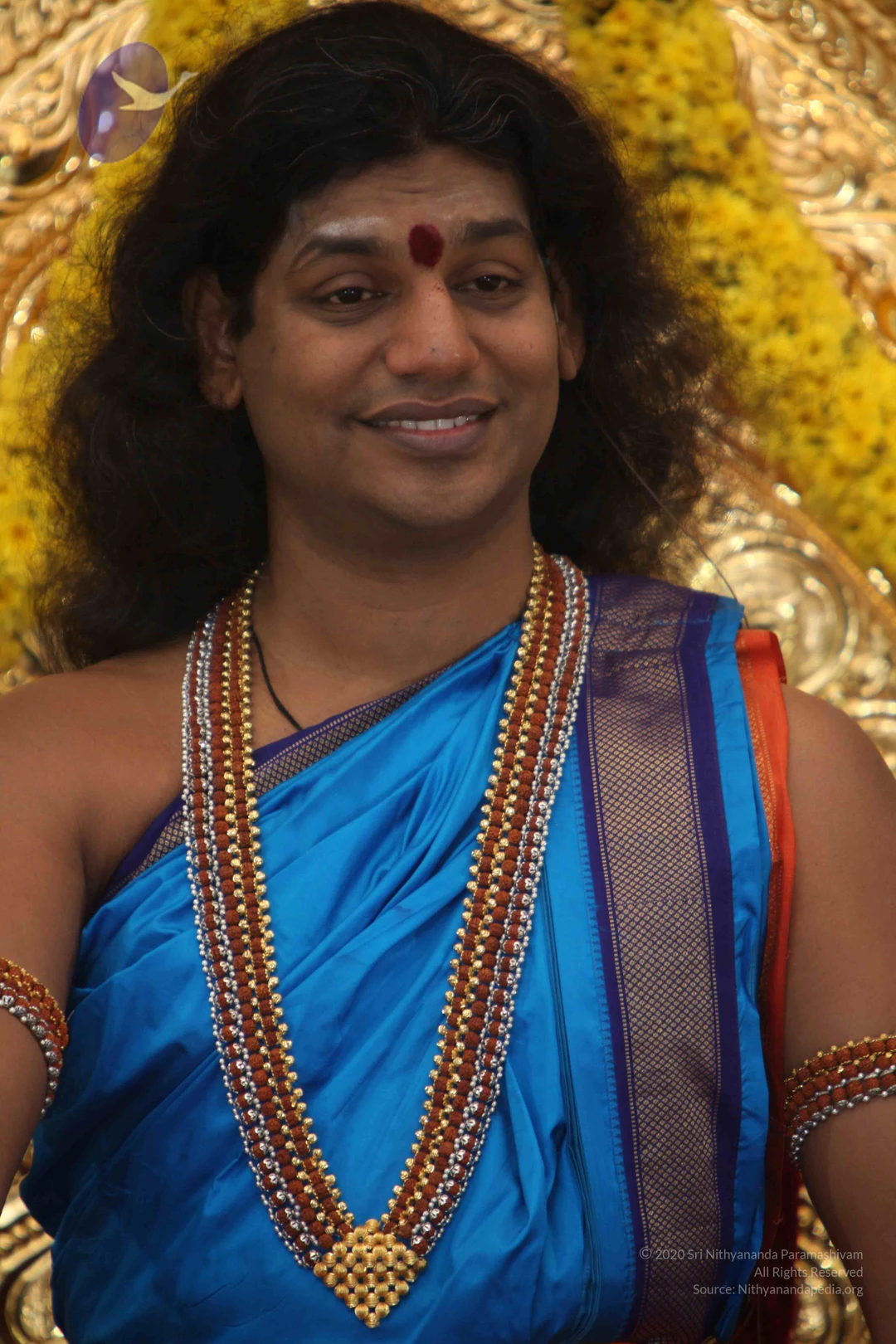
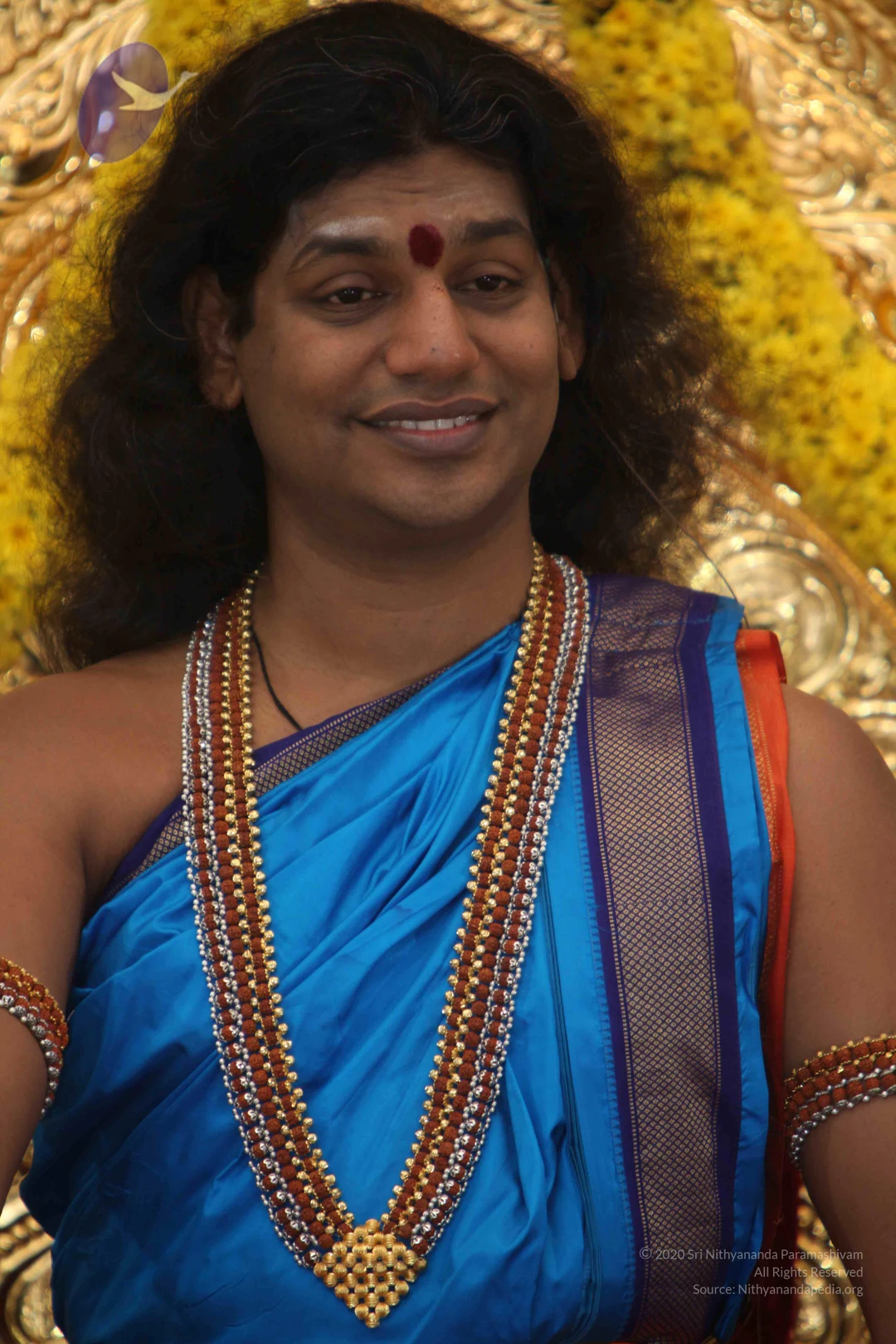
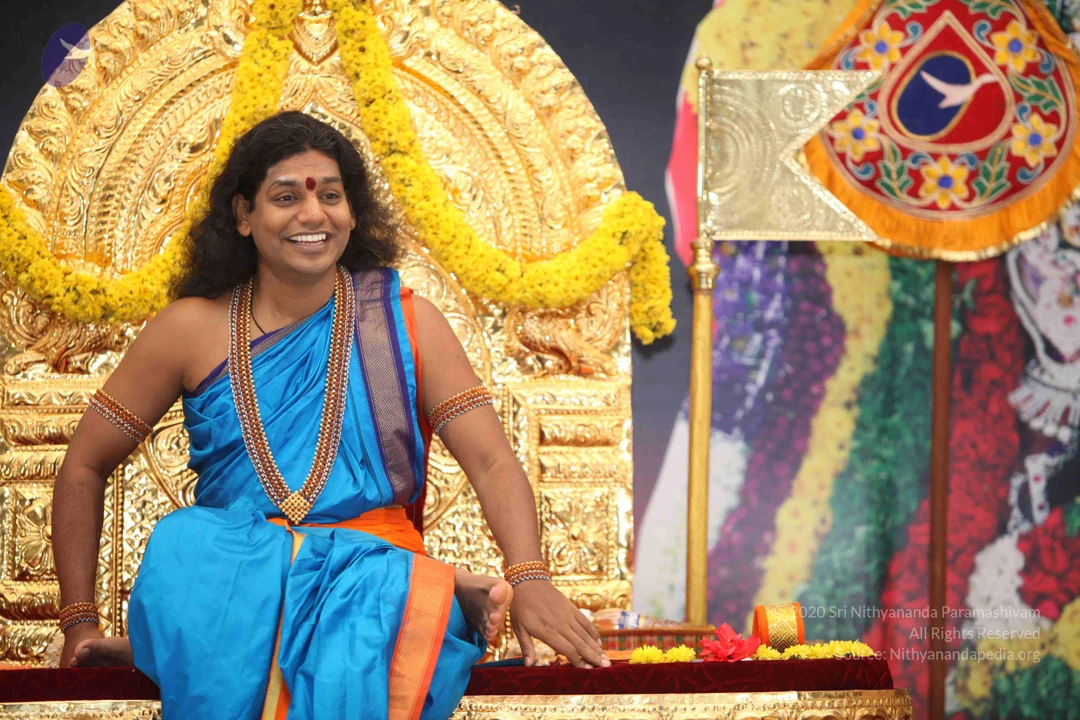
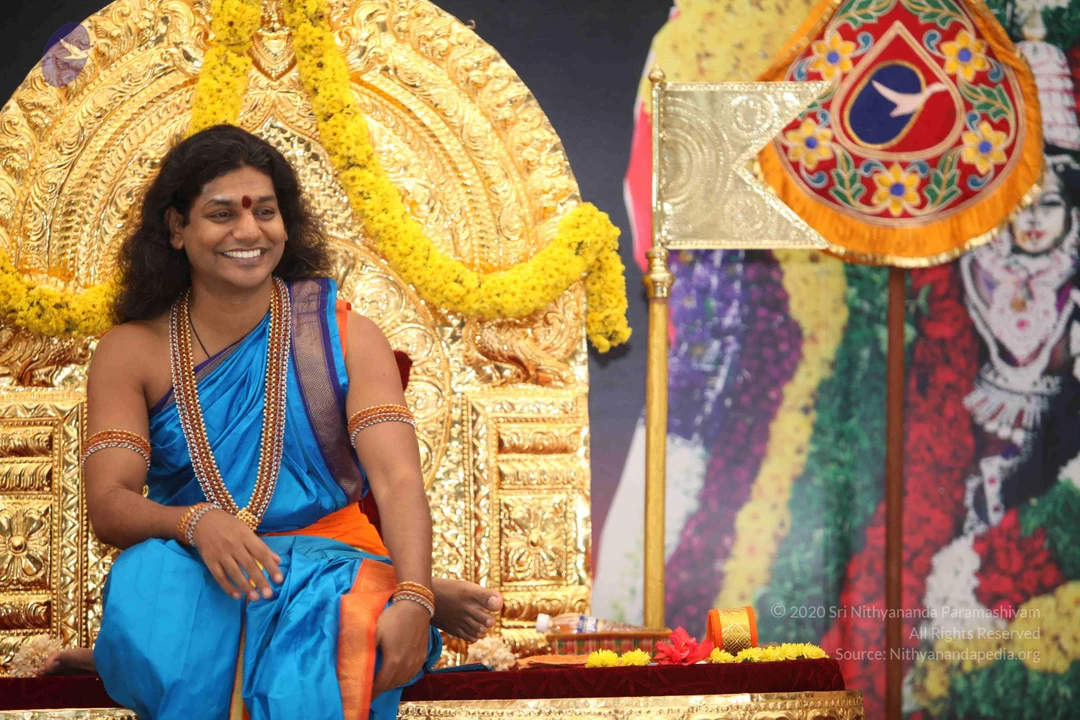
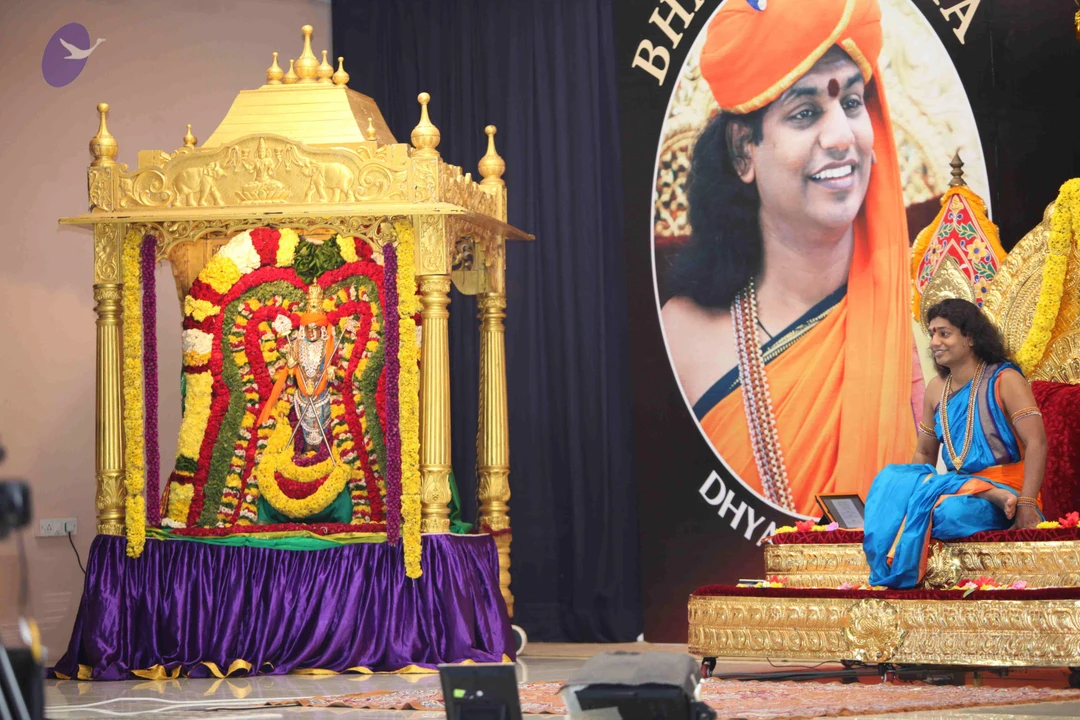
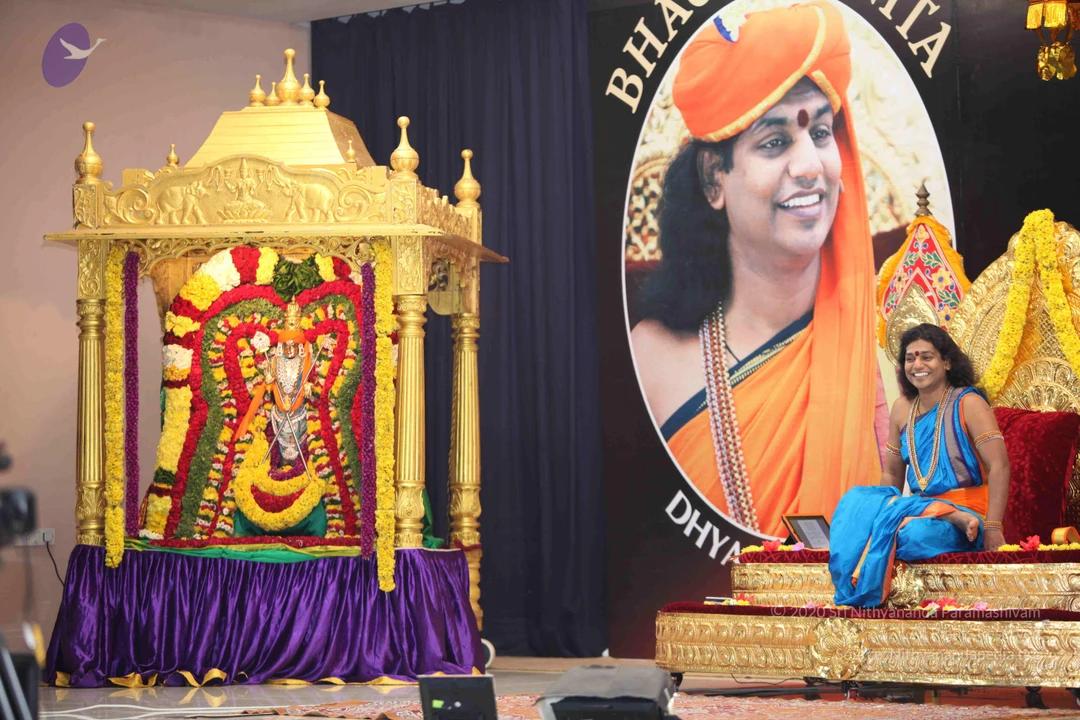
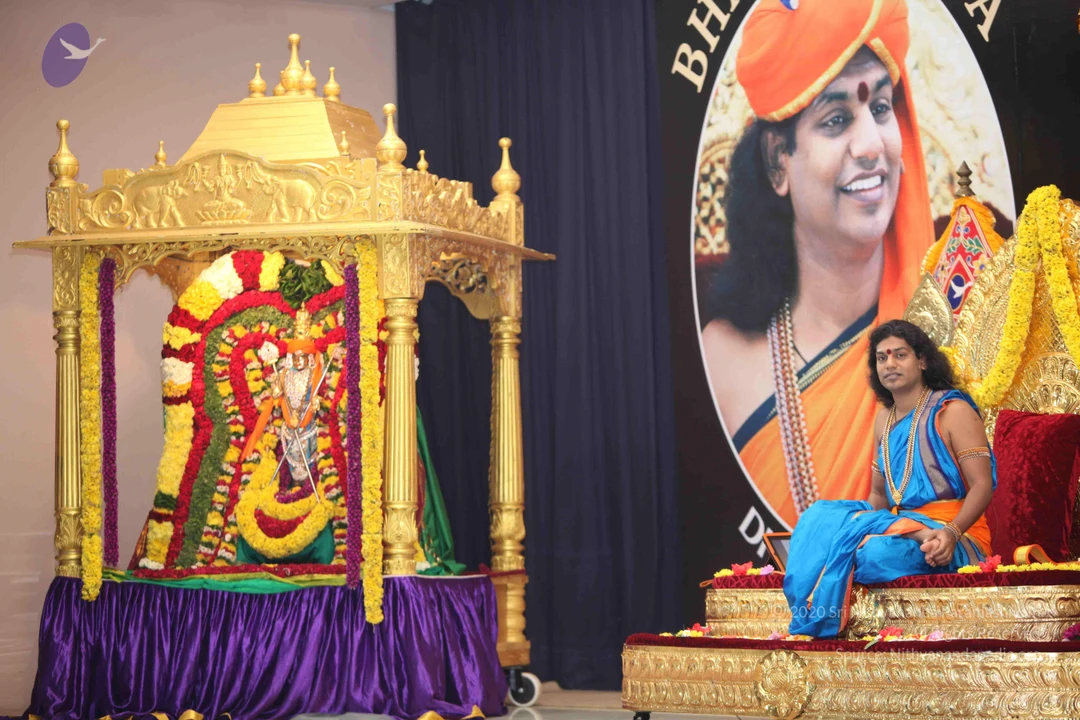
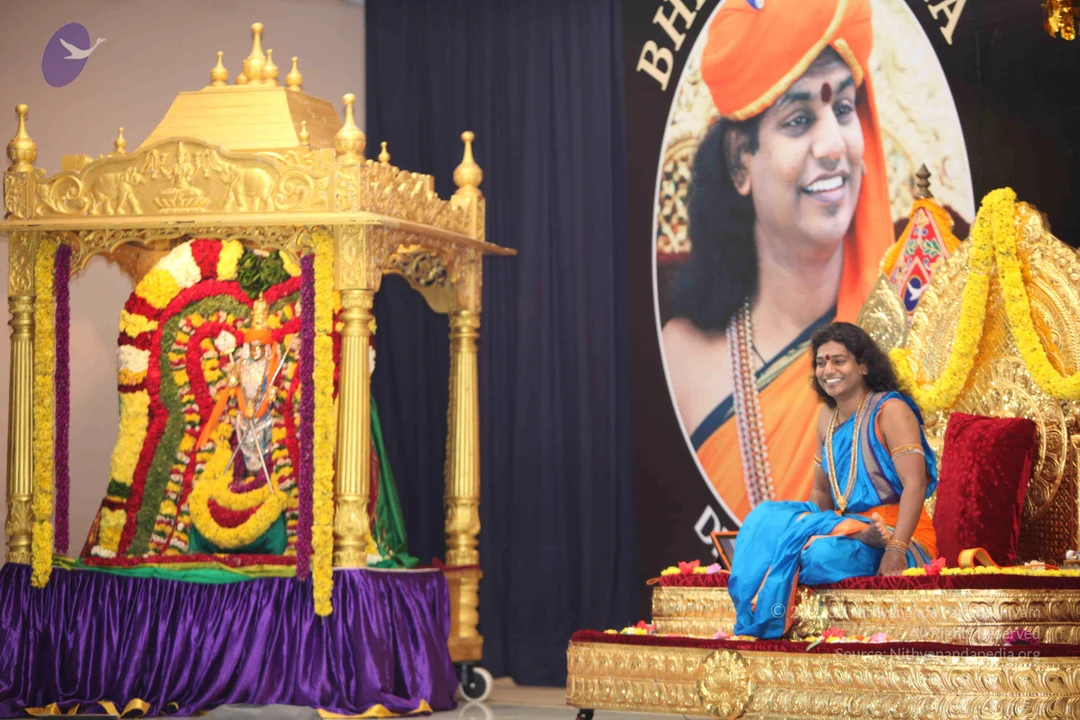
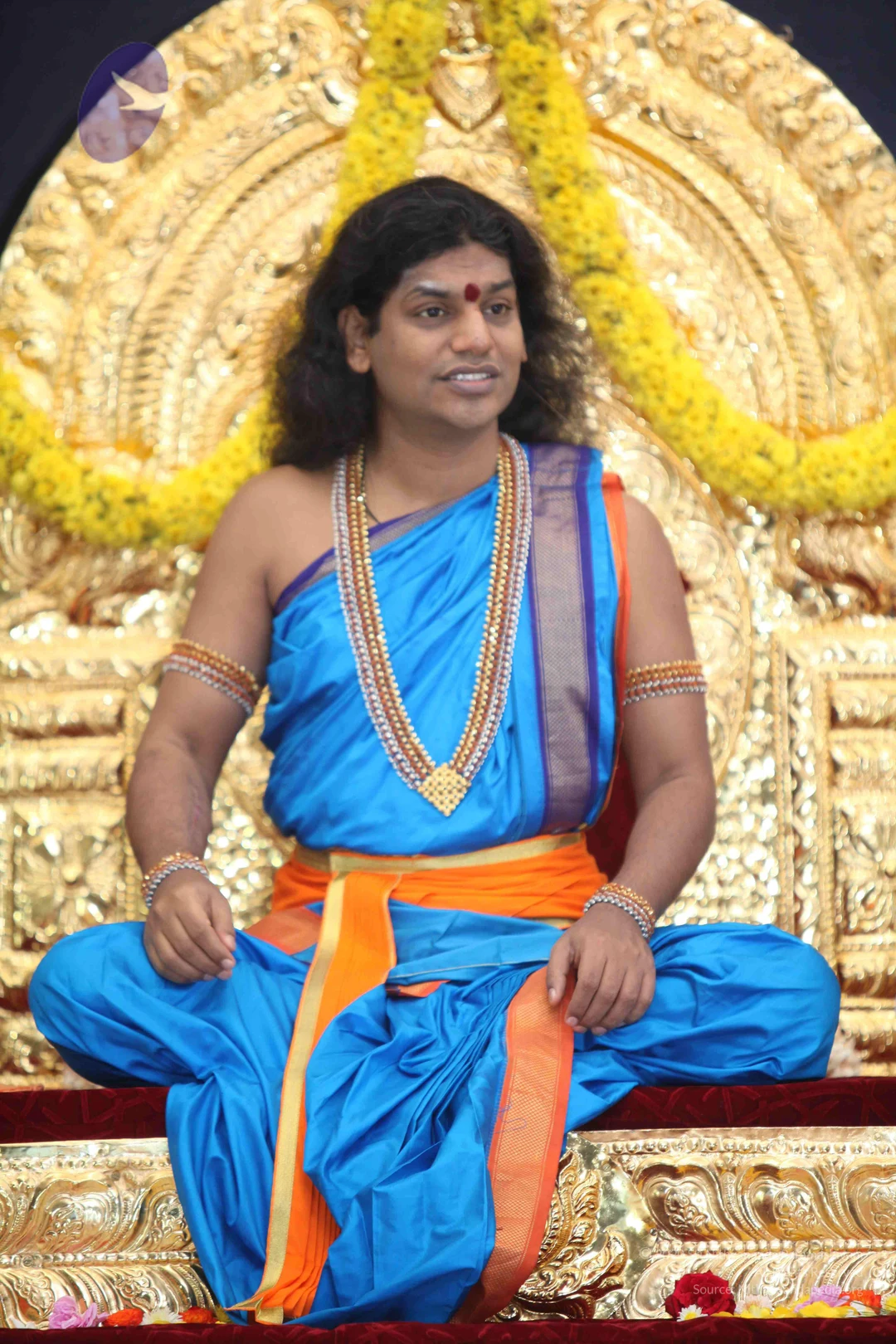
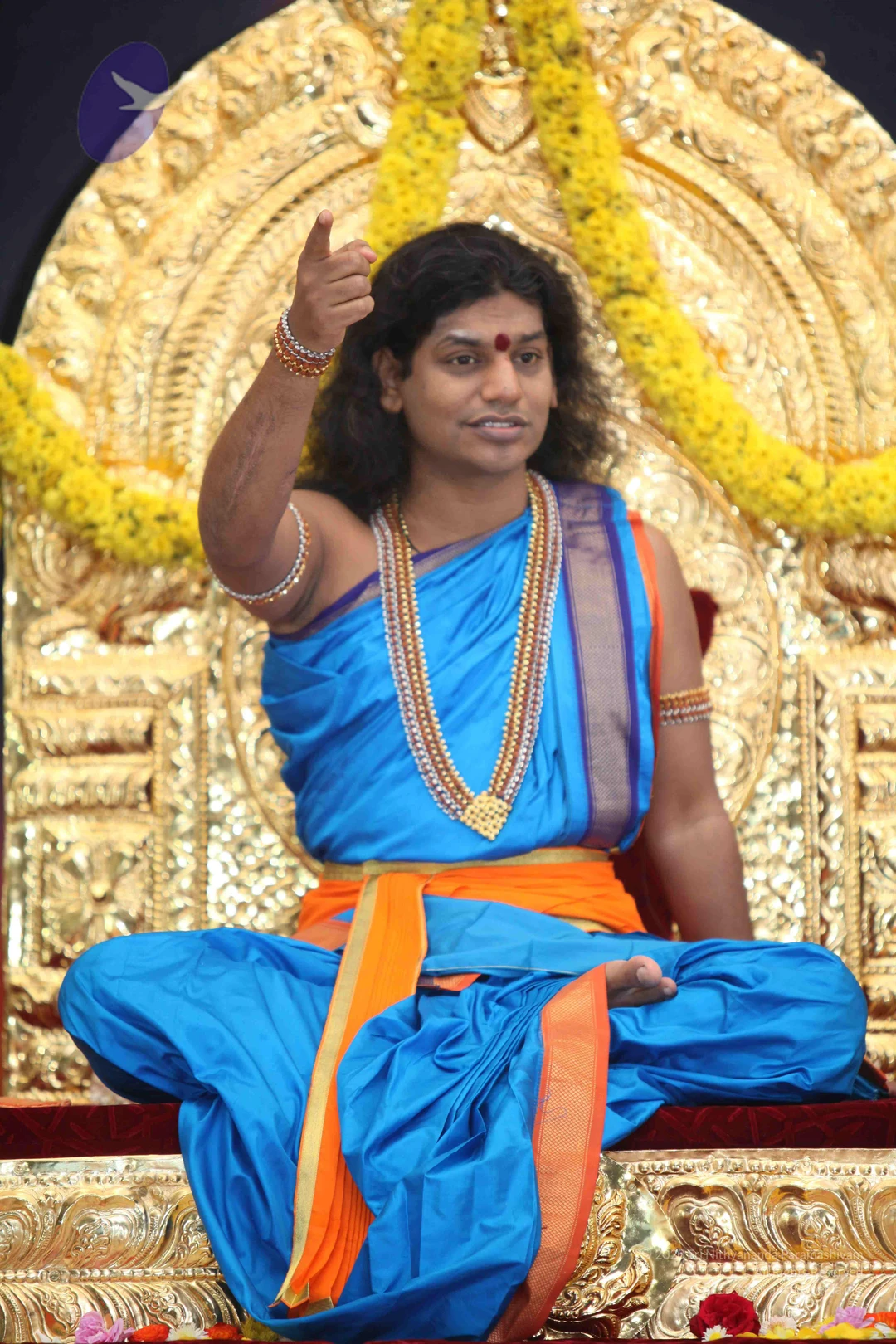
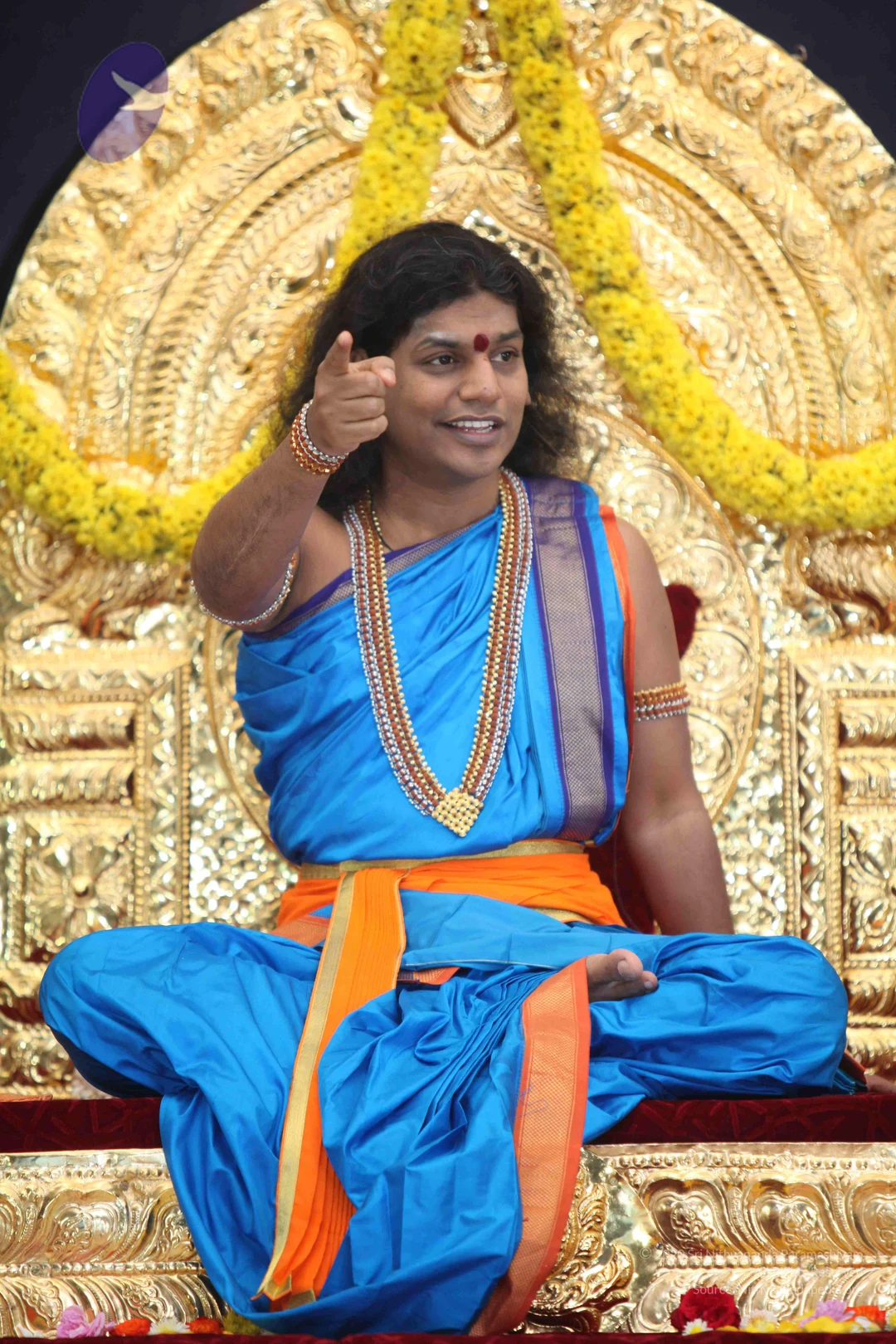
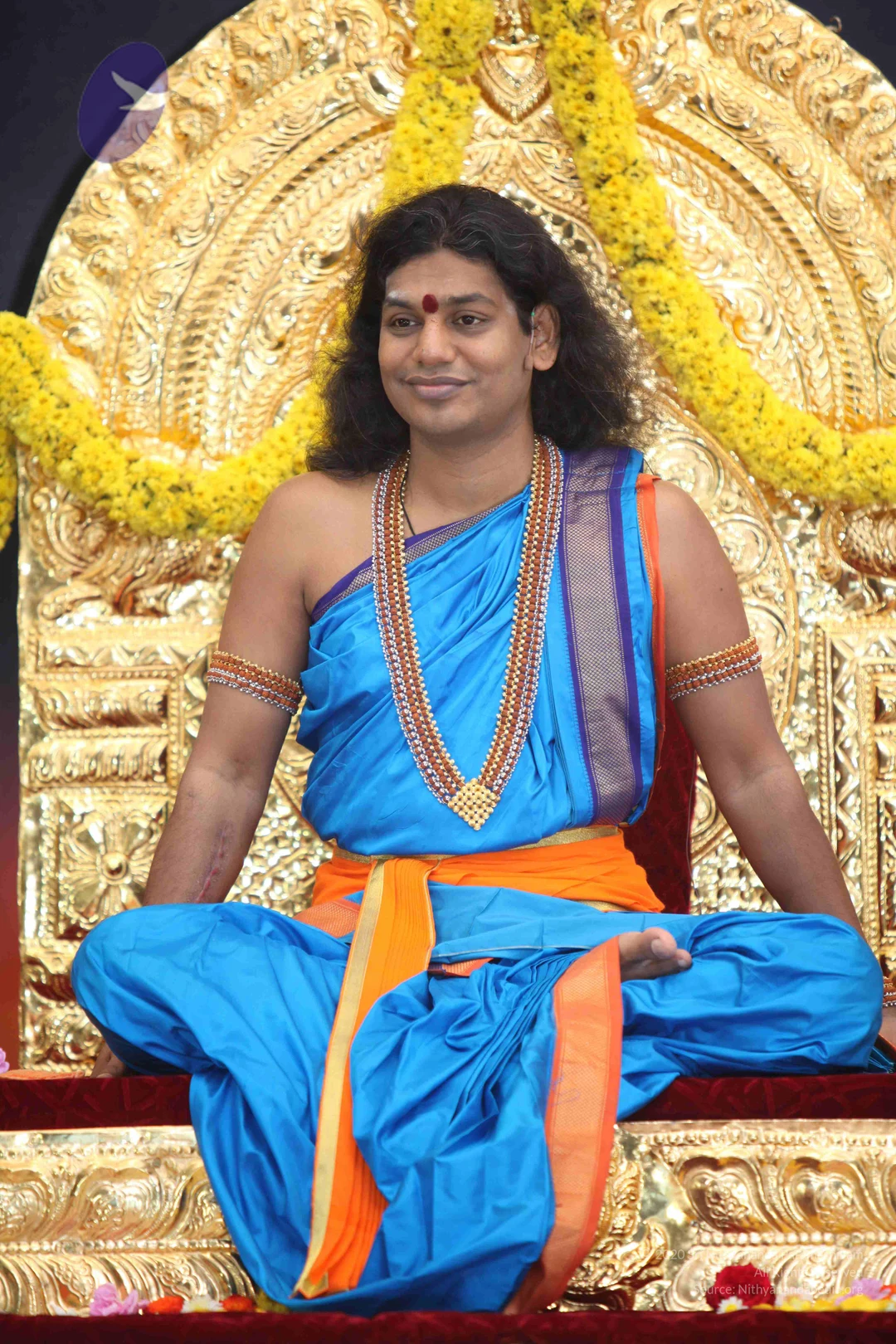
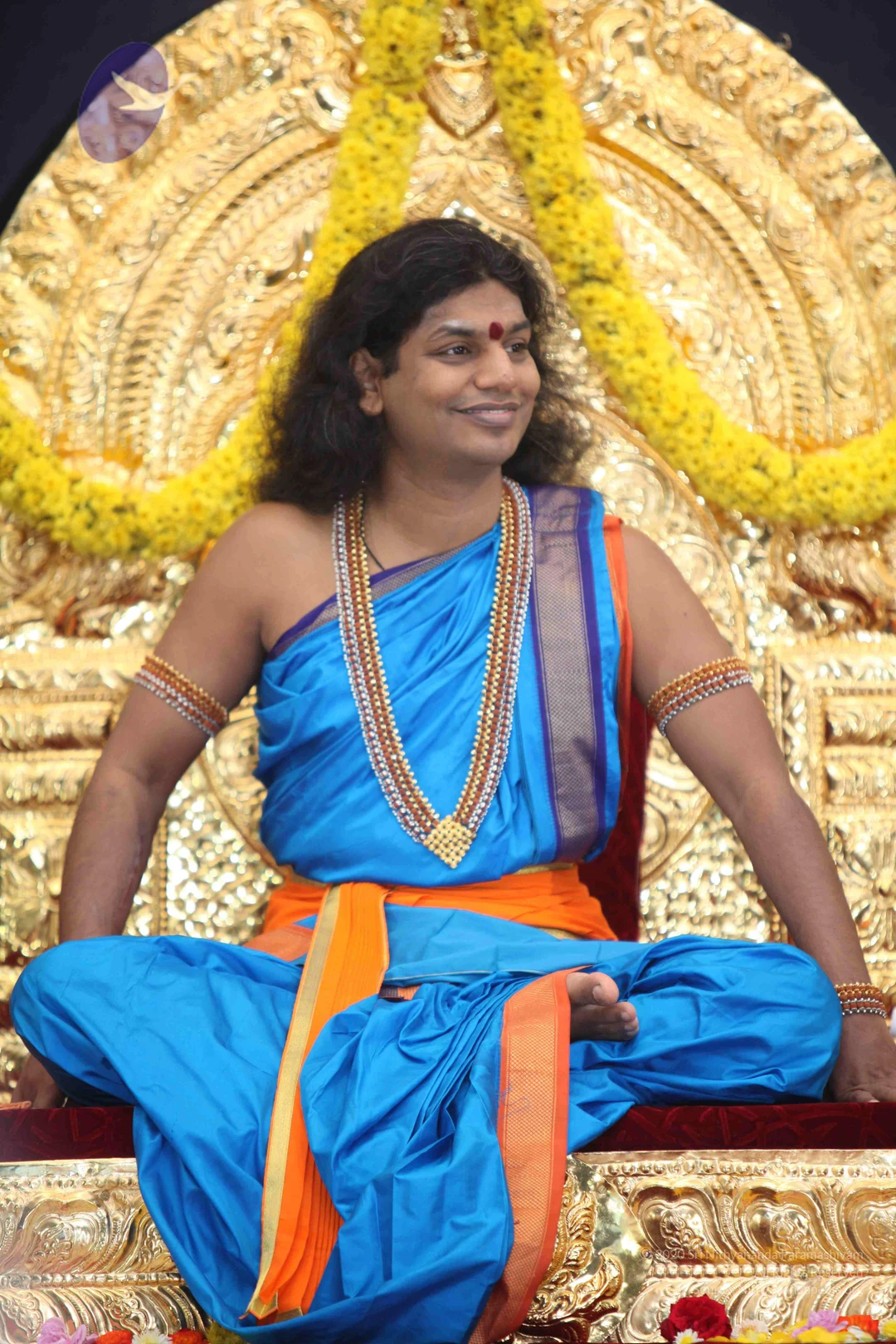
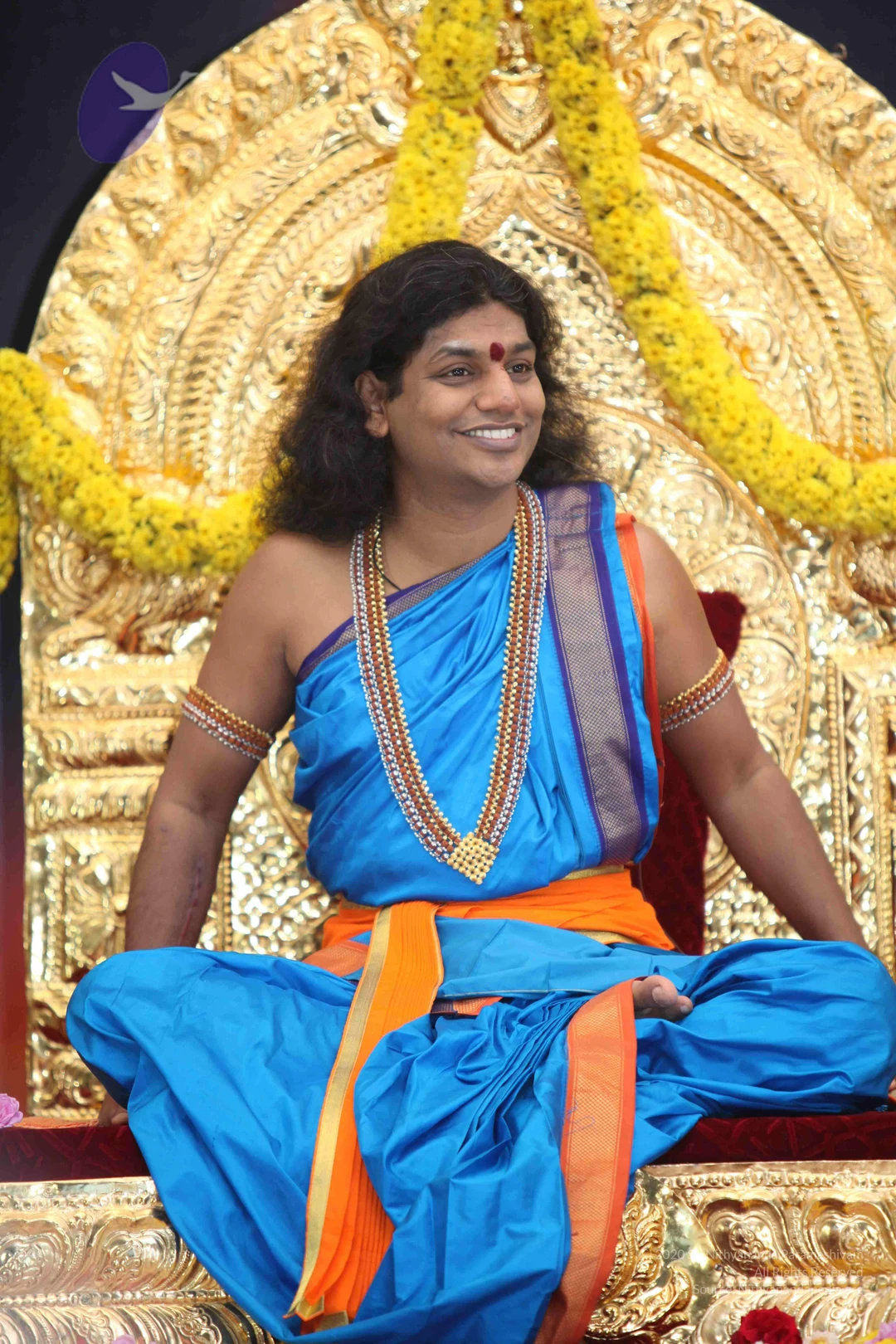
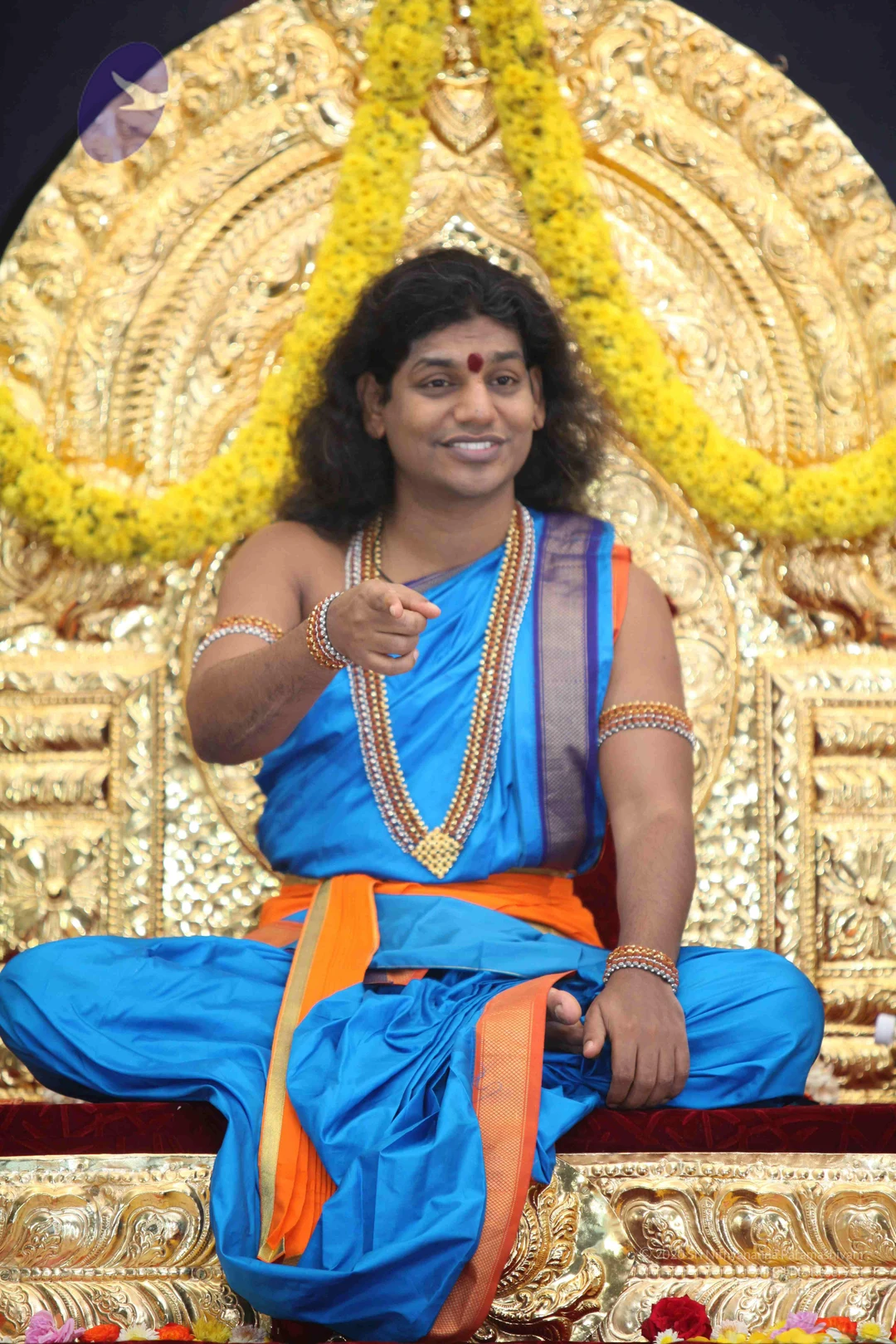
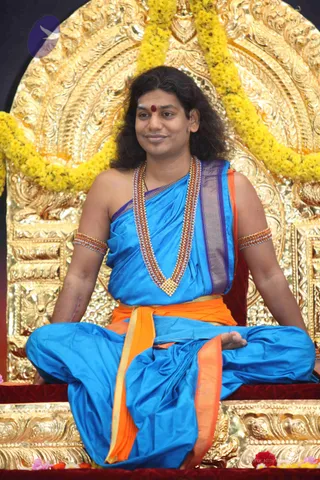
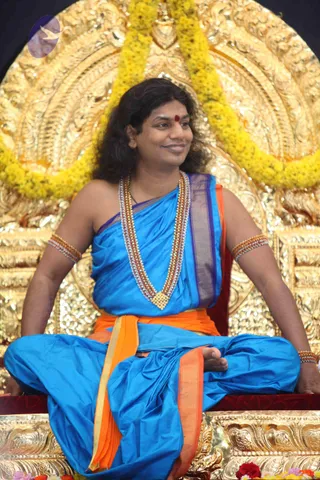
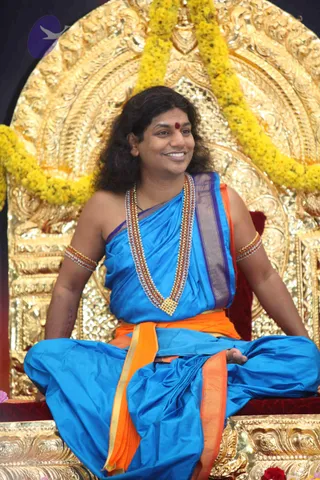
A seated man in blue and orange silk drapes sits cross-legged on a red-cushioned seat before an ornate gold-carved arched backdrop decorated with yellow marigold garlands. He has long dark wavy hair, a red bindi and a multi-strand rudraksha and gold bead necklace, with matching beaded armlets, and he smiles gently while looking to the side. Petals lie at the base of the seat. The photo is taken at a discourse setting.A man with long dark hair and a red bindi sits cross-legged on an ornate gilded throne backed by a heavily carved golden arch decorated with yellow marigold garlands. He wears a bright blue silk garment with a purple and gold border draped over one shoulder, an orange waist cloth, layered beaded necklaces with a gold pendant, and beaded armlets. He smiles and gazes to the side with one bare foot visible. Appearance-based label: Swamiji (probable), seated on a throne in a ceremonial setting, identified by long swept-back hair, ornate blue and orange robes, and layered beaded necklaces.A seated man in a blue silk garment with orange and purple borders sits cross-legged on a red-cushioned seat before an ornate gold arched backdrop. Yellow flower garlands hang across the backdrop. He wears a multi-strand beaded necklace, bead armbands, and a red bindi, and smiles. The figure appears to be a Swamiji (probable), with long swept-back hair, ceremonial gold necklaces and a saffron-and-blue ritual garment, presented as a teacher on a throne.A seated man sits cross-legged on an ornate gilded throne with a golden arched backdrop and yellow marigold garlands draped across it. He wears a blue silk garment with a purple border, an orange waist cloth, and multiple strands of gold and silver beaded necklaces; he also wears beaded gold and silver armlets and bracelets and a red bindi. He points his right index finger toward the viewer while smiling. Red and pink flowers lie at the base of the throne. Appearance-based label: a person, with long swept-back hair and ornate ceremonial jewellery seated on a throne, shown in person.A man sits cross-legged on an ornate gold throne with a carved, arched backrest, decorated with yellow flower garlands. He wears a blue silk dhoti with an orange border and an orange sash, a purple-banded blue shawl draped over one shoulder, multi-strand rudraksha and gold-bead necklaces, beaded armlets and bracelets, and a red bindi on his forehead. His long, curly dark hair falls past his shoulders and he gestures with one raised hand while speaking. Swamiji (probable): the long swept-back hair, ornate gold throne, layered beaded necklaces and blue-and-orange silk clothing match the cues for the teacher's presence, though the appearance is an inference. A small logo sits in the upper left corner and faint copyright text appears in the lower right.A seated man with long, dark, swept-back hair sits cross-legged in meditation on an ornate gold throne-like peetha decorated with flower garlands and red cushions. He wears a blue garment with an orange-yellow sash, a long beaded necklace, bangles and a red tilak on his forehead, with hands resting on his knees. Behind him stand gold-tipped ceremonial staffs and orange-and-red banners bearing a blue bird emblem, with a large deity murti draped in colourful garlands visible on the right. Flower petals and marigolds are scattered on the dais in front of him, with a dark backdrop. The arrangement suggests a formal satsang or discourse setting.

05-SASHTI-ALANKAR
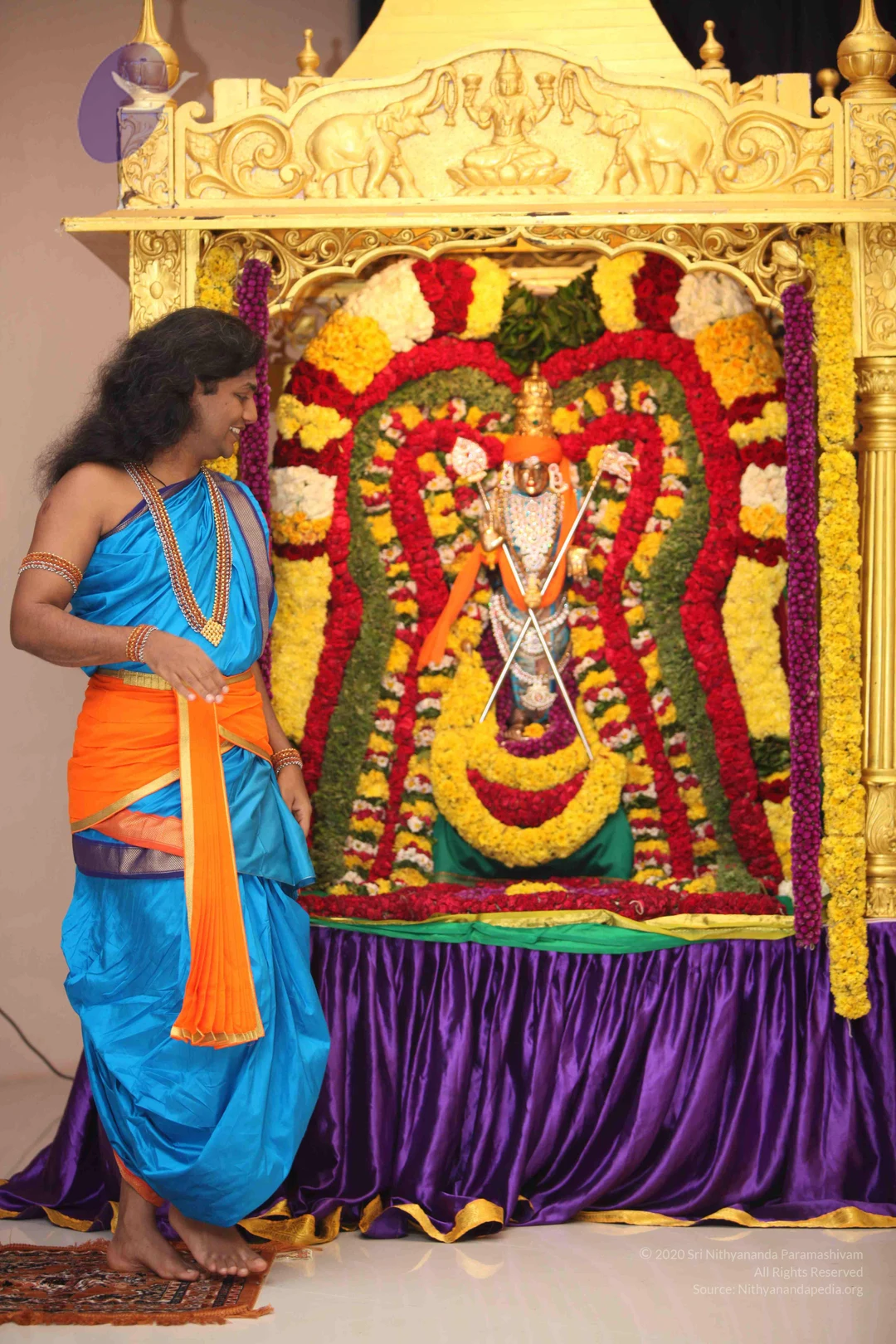
7 photosSource gallery
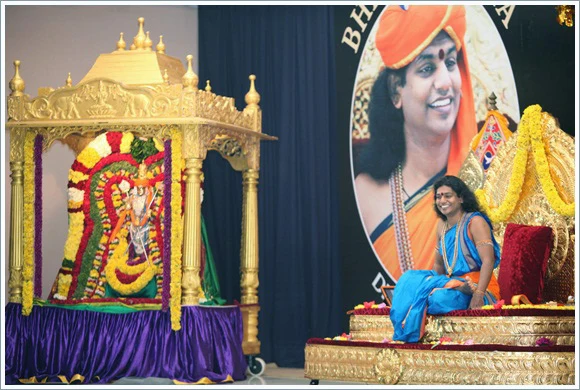
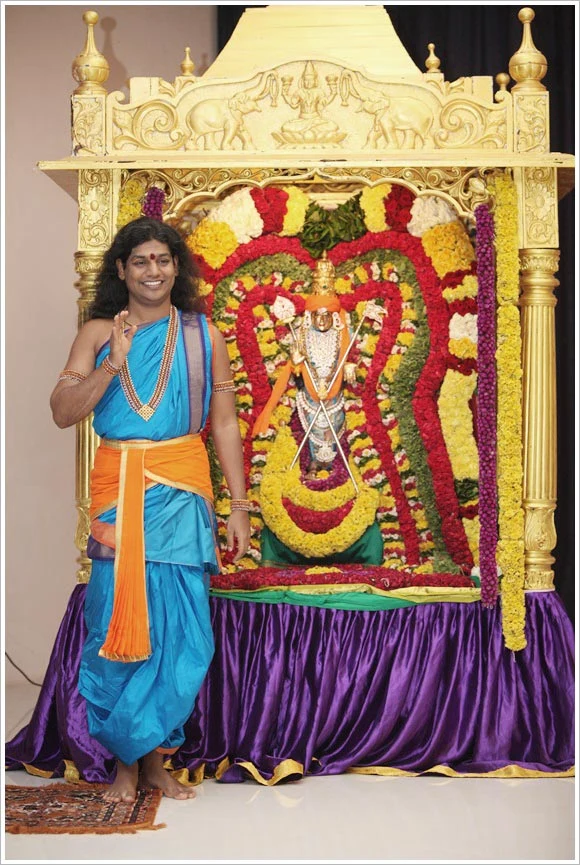
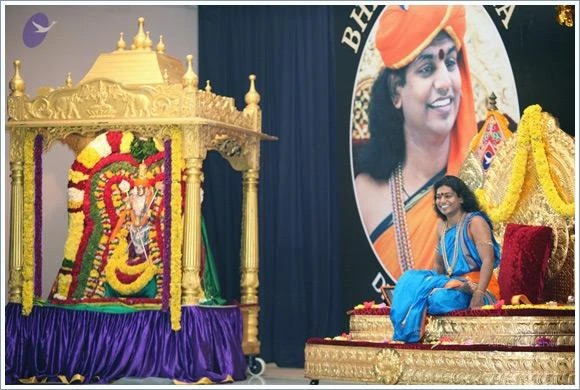
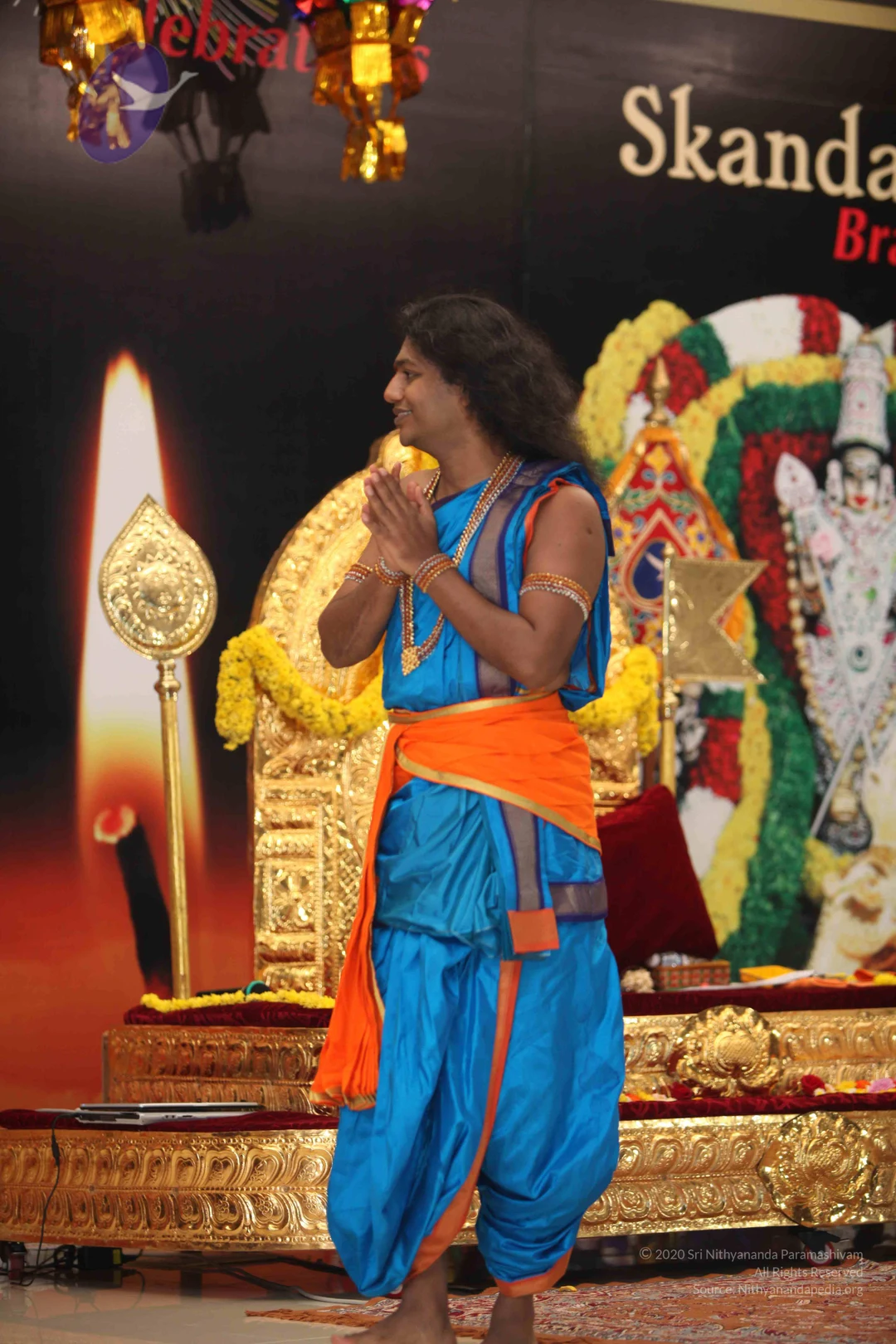
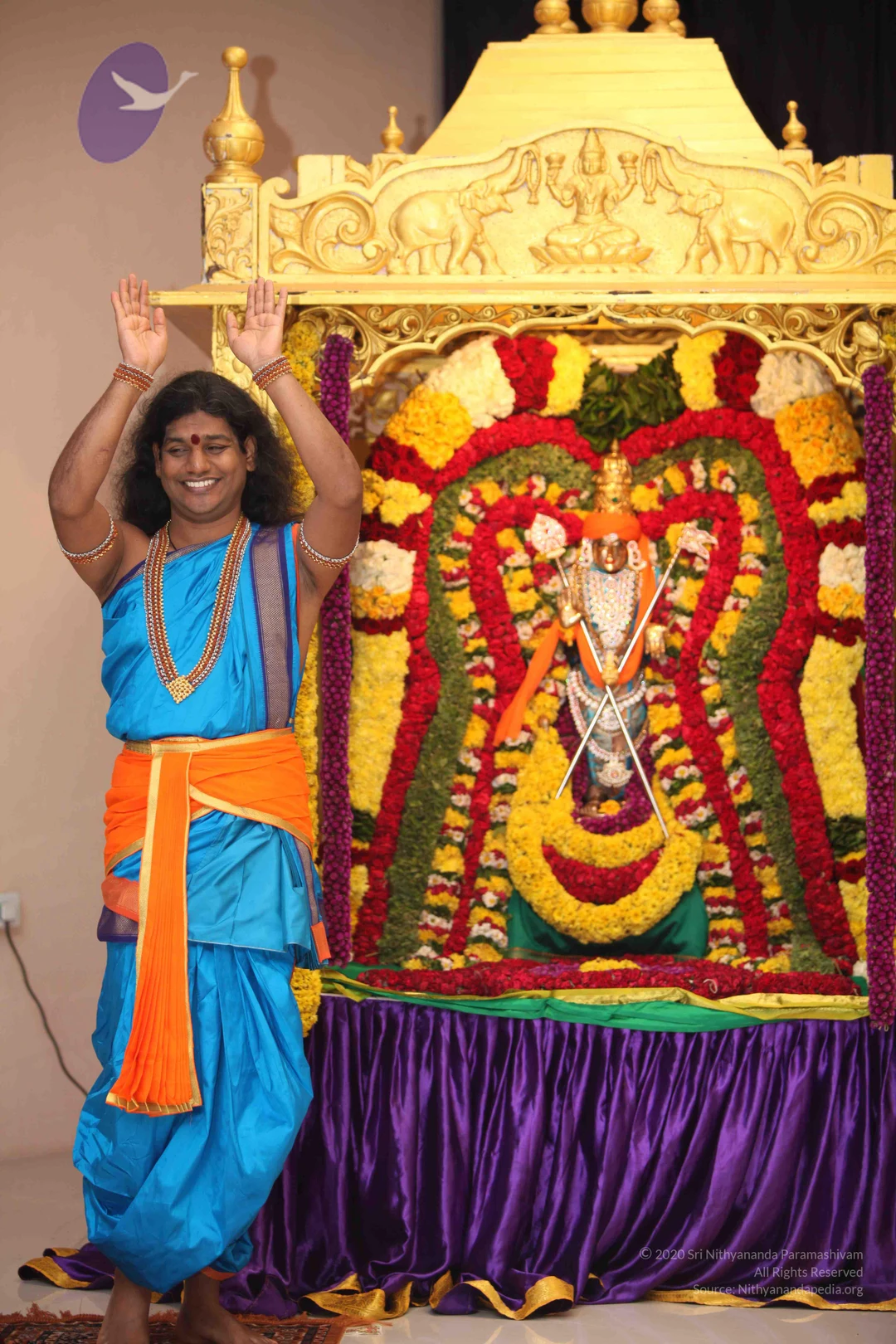
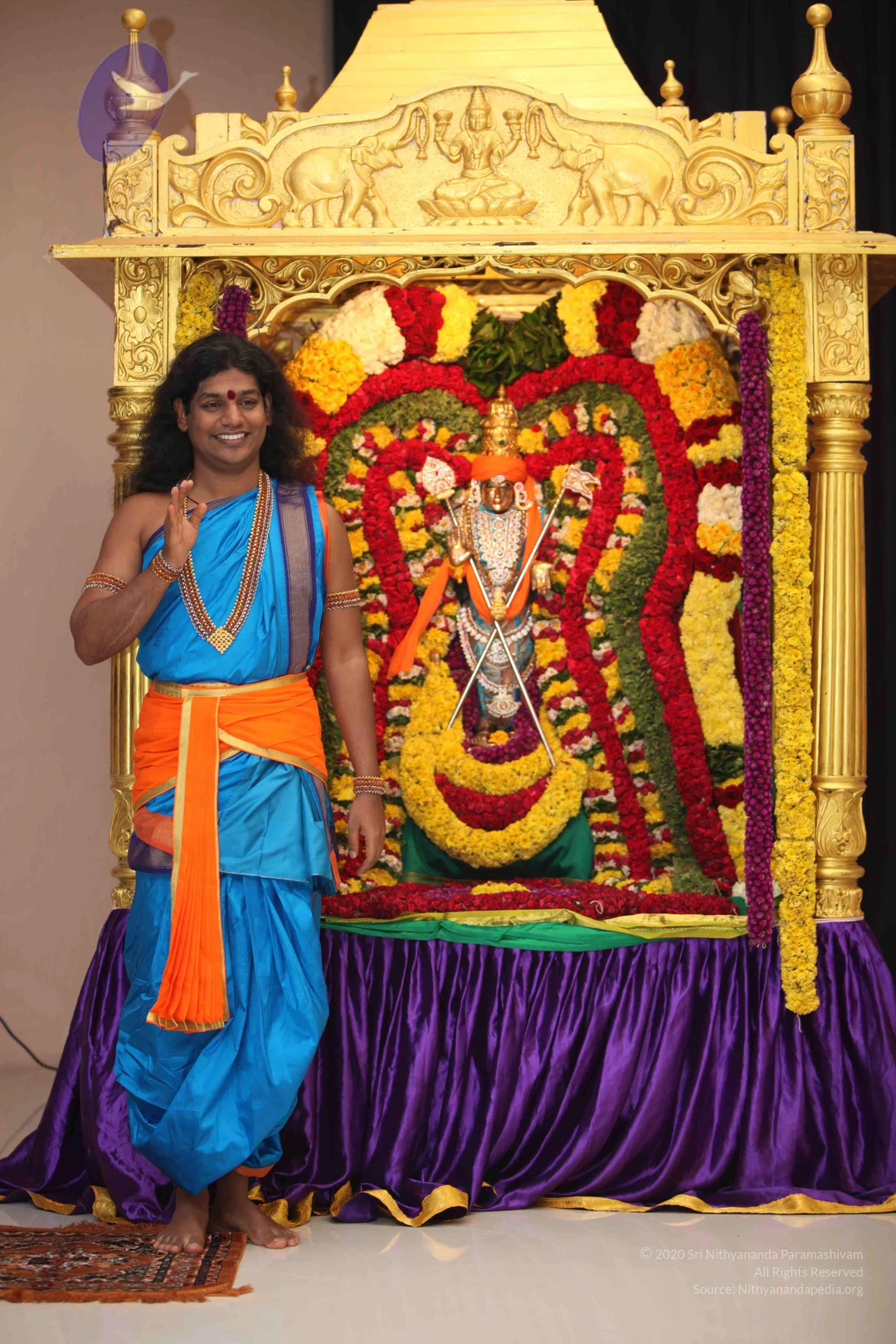
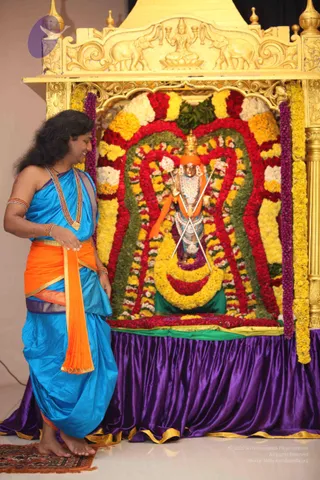
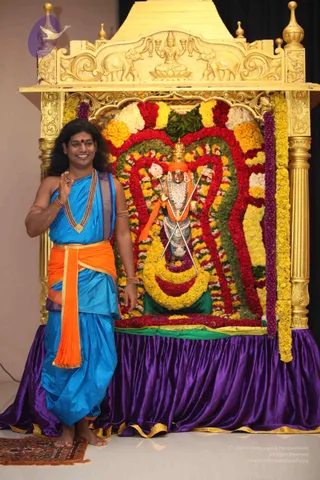
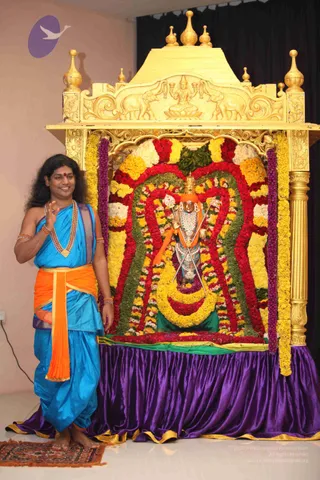
A woman in a blue sari with an orange border sits cross-legged on a gold, ornately carved throne draped with yellow and orange marigold garlands and a red cushion. To the left, a gold canopied palanquin frames a decorated deity murti of a standing figure, wrapped in red, green and white garlands and set on a purple cloth. Behind the throne a large portrait labelled "Paramahamsa Nithyananda" shows a smiling man in orange robes with a saffron turban, rudraksha mala and a red tilak. The setting is a stage with a dark blue curtain.A man with long, swept-back dark hair stands on a gold-decorated stage in front of a golden throne (peetha) draped with yellow marigold garlands, palms pressed together in namaste. He wears a bright blue silk dhoti and upper cloth with an orange sash, gold chains, a rudraksha-style necklace and gold armbands and bangles. Behind him is a large backdrop of a deity murti adorned with red, green and white floral garlands, a gold ceremonial staff with a leaf-shaped finial, and a glowing lamp image. Hanging golden lanterns hang from the top of the frame. A printed banner reads Skanda Brahma... and the backdrop has the word Celebrations partly visible.A smiling man with long dark hair and a red bindi stands barefoot on a carpet with both palms raised beside his head. He wears a turquoise-blue silk dhoti with an orange waist sash, a multi-strand rudraksha-style bead necklace and wrist and upper-arm bangles. Behind him is a gilded canopy palanquin with carved elephants and a seated goddess, and below it a deity murti dressed in white and orange, holding a flower and a staff, is surrounded by red, yellow and orange flower garlands on a purple satin draped platform.A standing man in a blue silk dhoti with an orange sash and a gold-toned zari border stands barefoot on a small patterned rug beside a golden shrine. He has long, dark, swept-back hair, several beaded necklaces, and copper-coloured bangles on his wrists and arm, and he looks toward the deity. The shrine is heavily decorated with garlands of marigolds, red roses and green leaves, and holds a metal deity murti with a crown, carrying a trident-like staff, adorned with white beads and an orange shawl. The shrine is trimmed with a purple satin skirt and gold carved elephant and lotus motifs. a person appearance cues: long swept-back hair, ornate gold-and-beaded necklaces and saffron-orange sash; identity is appearance-based only.A smiling man with long dark hair and a red bindi stands barefoot on a white stage at the left, raising one hand in a greeting. He wears a bright blue silk dhoti-style garment, an orange sash, a gold-toned chain and gold bangles. Beside him is a golden ornate palanquin-style shrine framed with carved elephants and a seated deity figure above. Inside stands a metal deity murti holding a spear and trident, draped in orange cloth and encircled by red, yellow and white marigold garlands, with a purple satin cloth and a small patterned rug at the foot. Swamiji (probable): the standing man has long swept-back hair, a red forehead mark, a gold chain and a blue and orange ceremonial dress; he is shown as a person in the scene, not as a depiction.A smiling figure with long dark hair, a red bindi and layered gold and bead necklaces stands at left in a bright blue silk garment with an orange sash, raising one hand in a blessing gesture. Beside him stands a decorated deity murti, a standing figure holding a trident and staff with an orange cloth draped over the shoulders, framed by dense garlands of red, yellow and white flowers and green leaves. The murti stands within an ornate golden canopy with carved elephants and a seated figure at the top. The stage is covered with a purple satin cloth edged in gold. A purple logo appears at upper left.