Skip to content
Saturday

22 October 2011

THE SUPREME PONTIFF OF HINDUISM HDH BHAGAVAN SRI NITHYANANDA PARAMASHIVAM

Dated photos
286
Source pages
1
Media
3
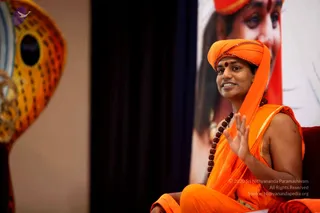
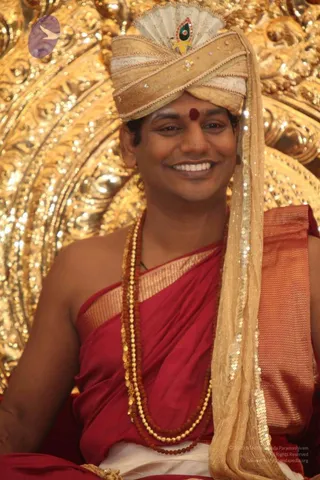
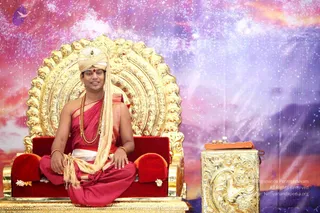
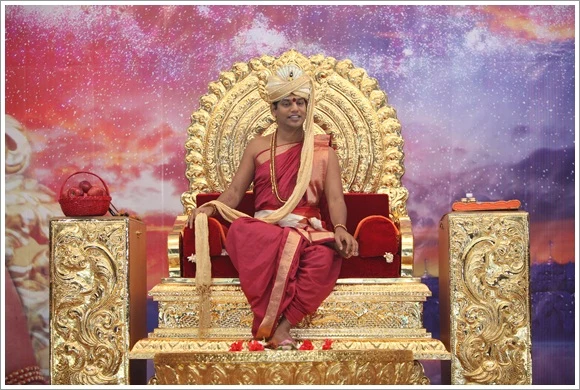
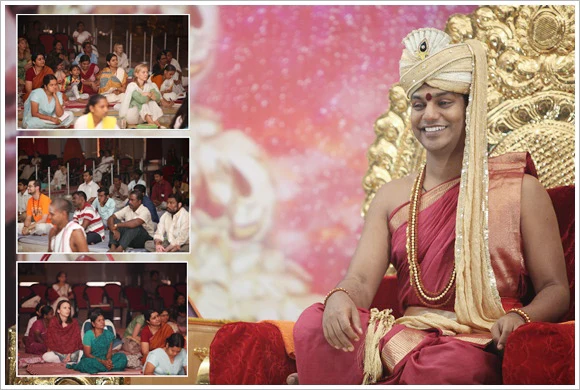
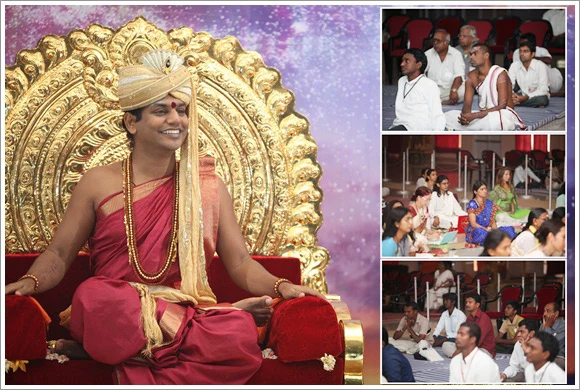
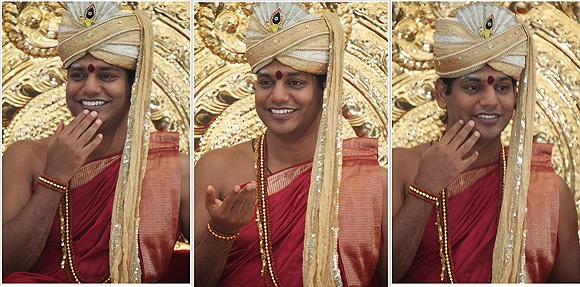
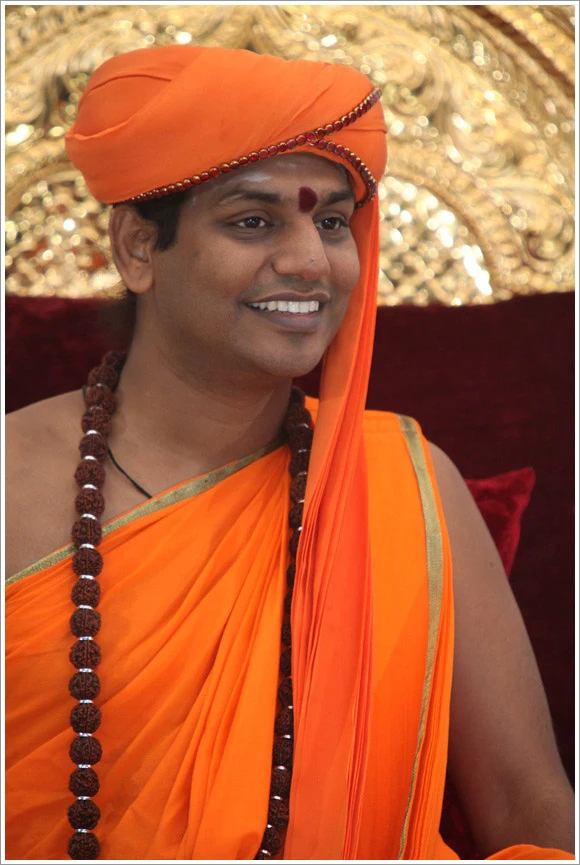
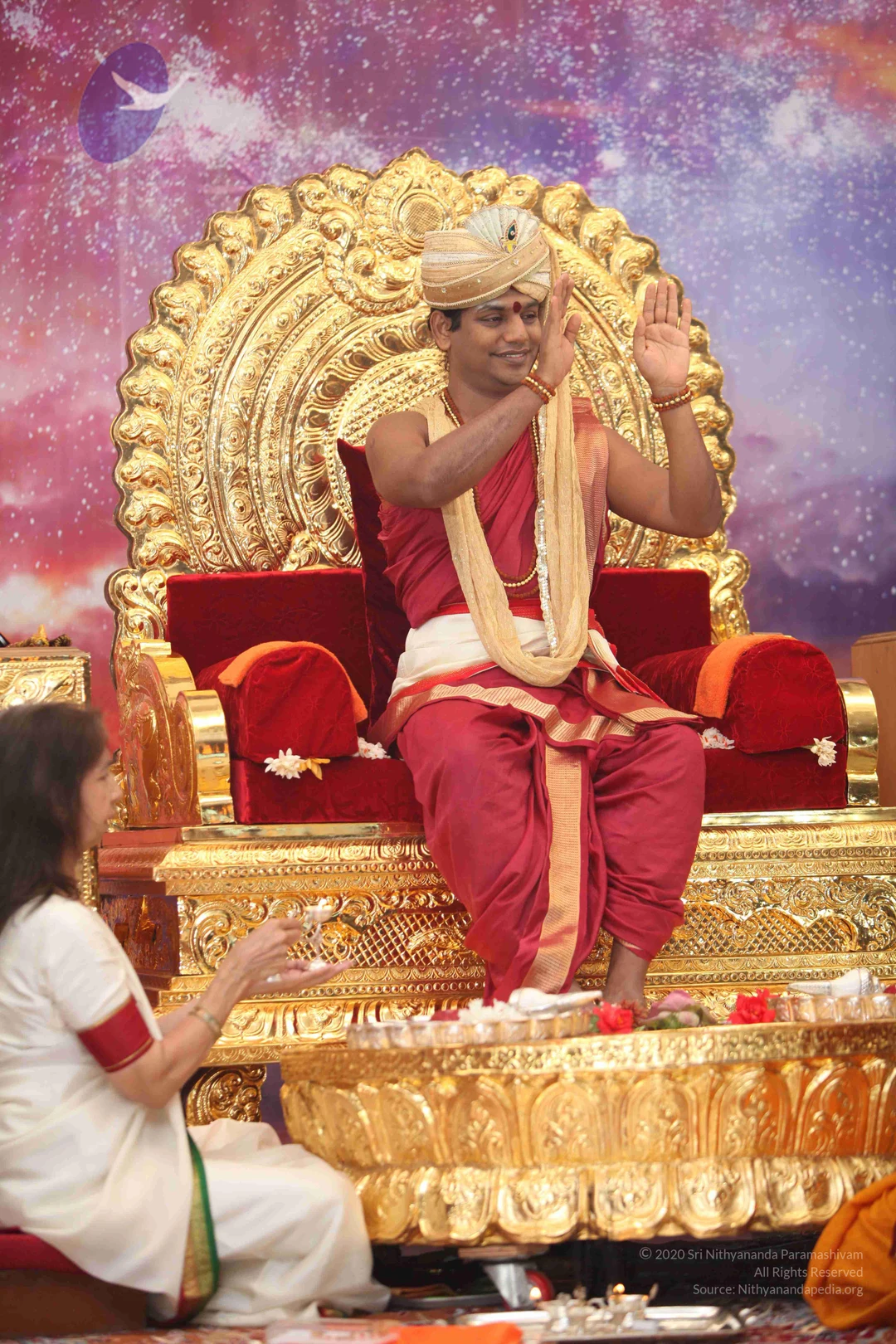
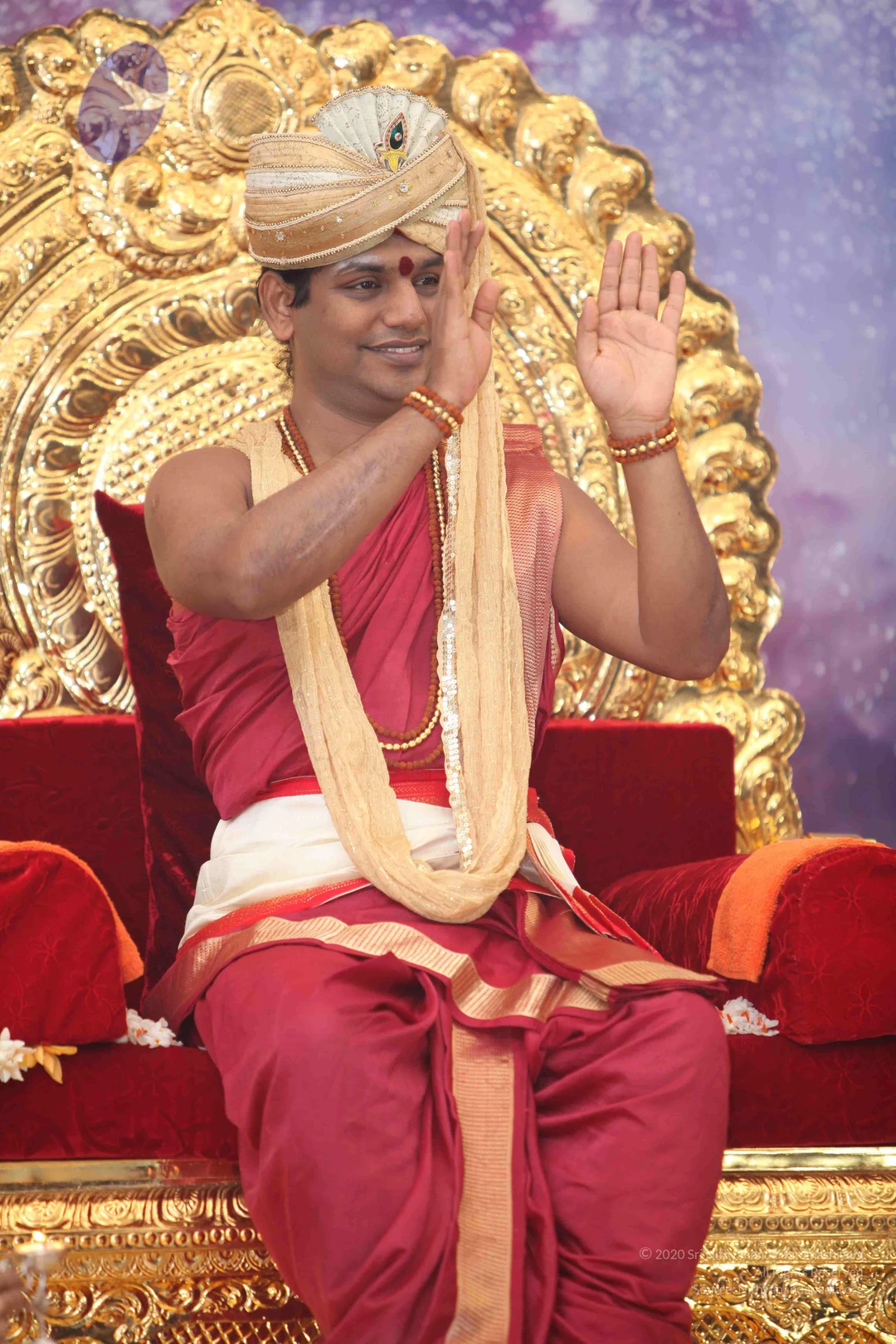
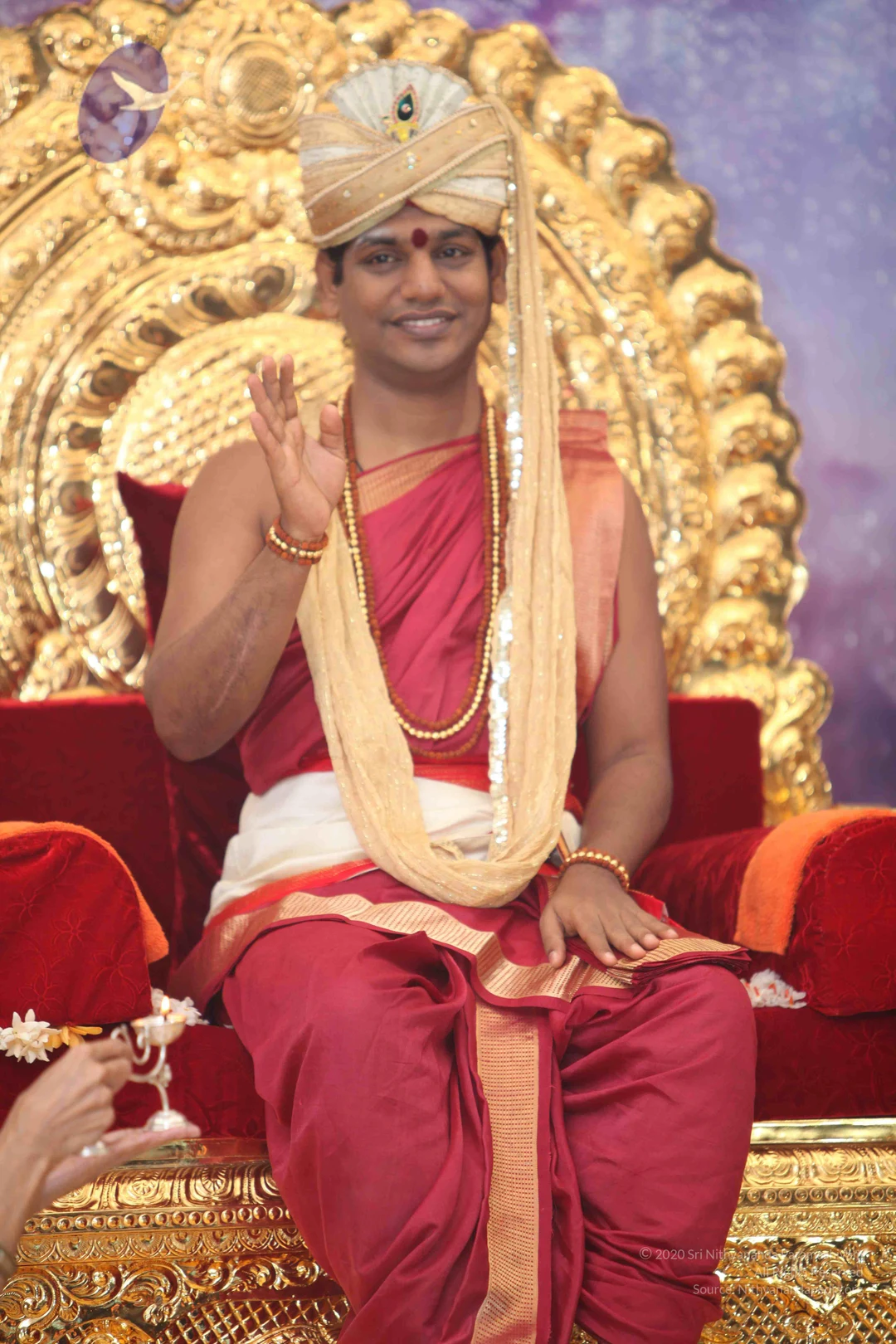
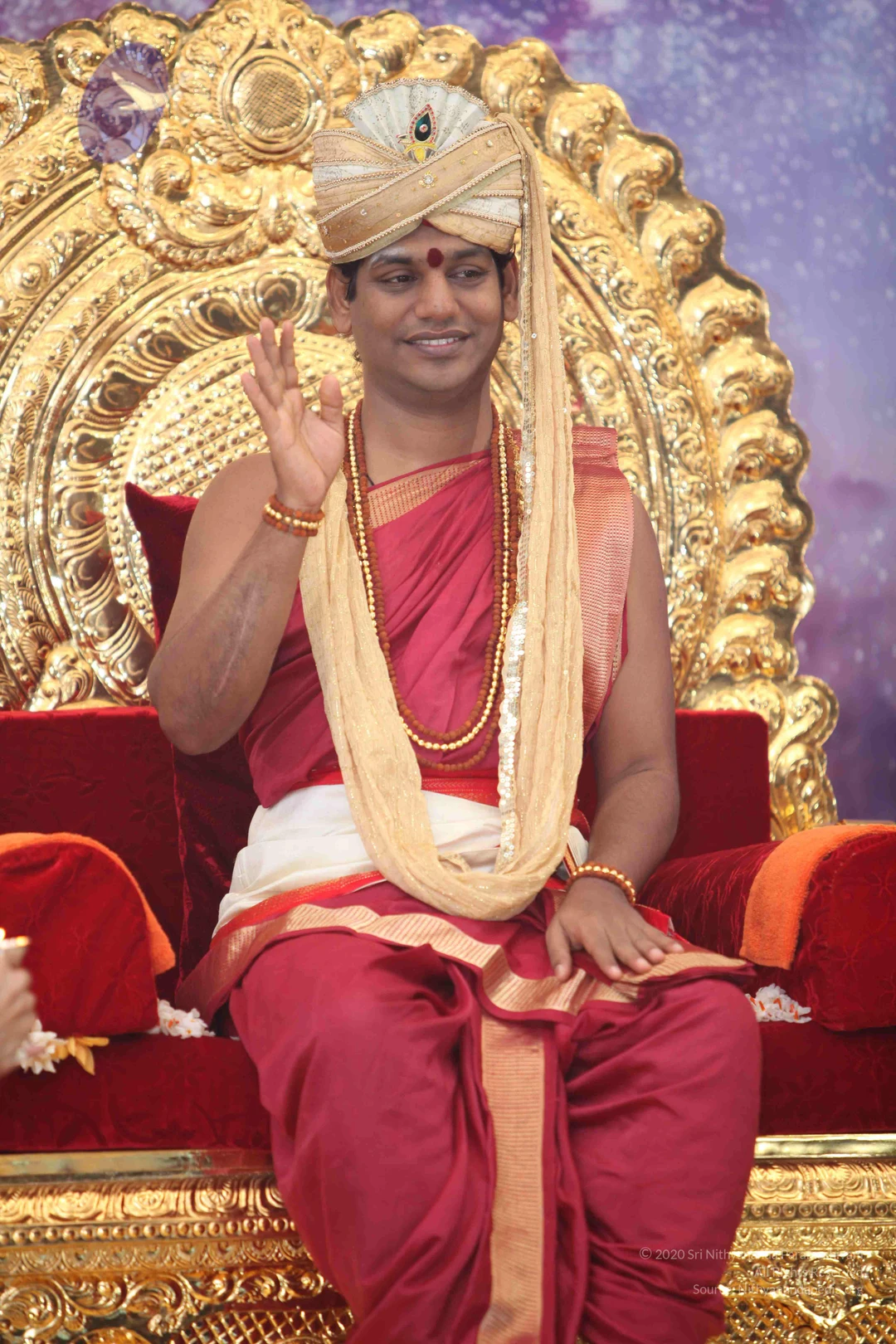
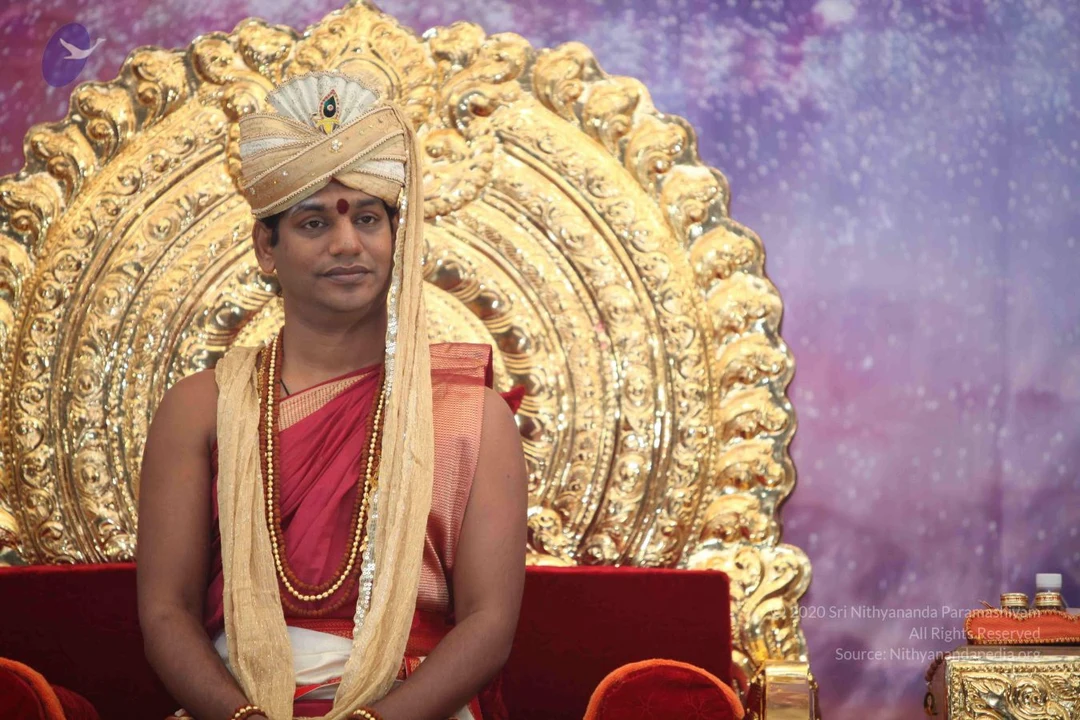
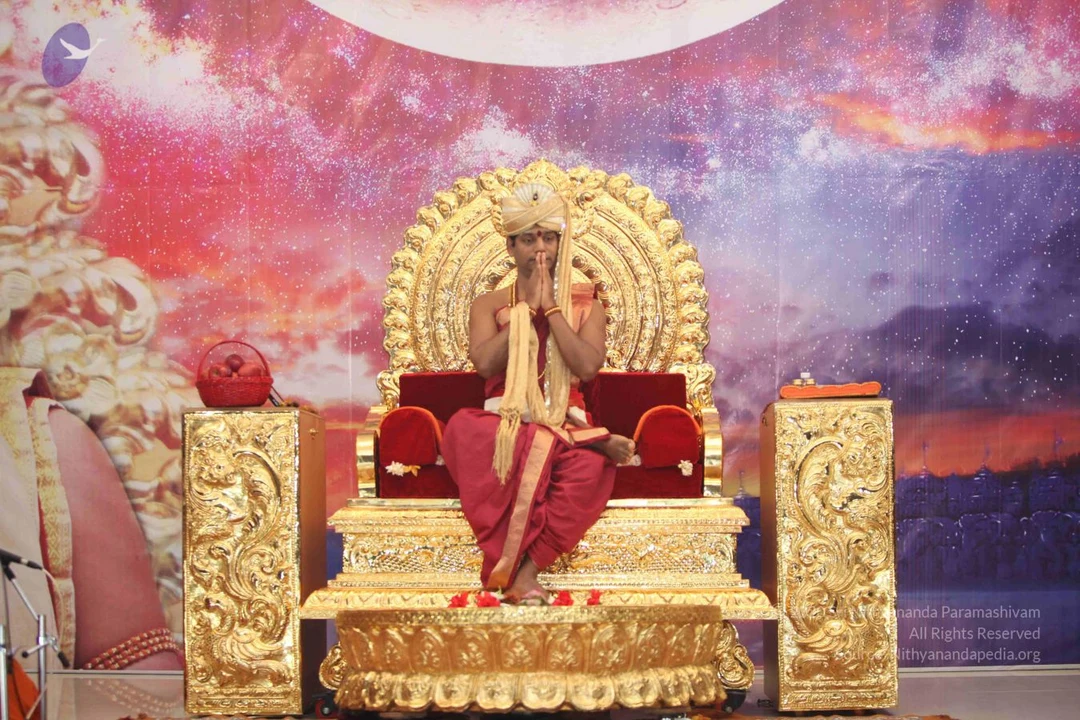
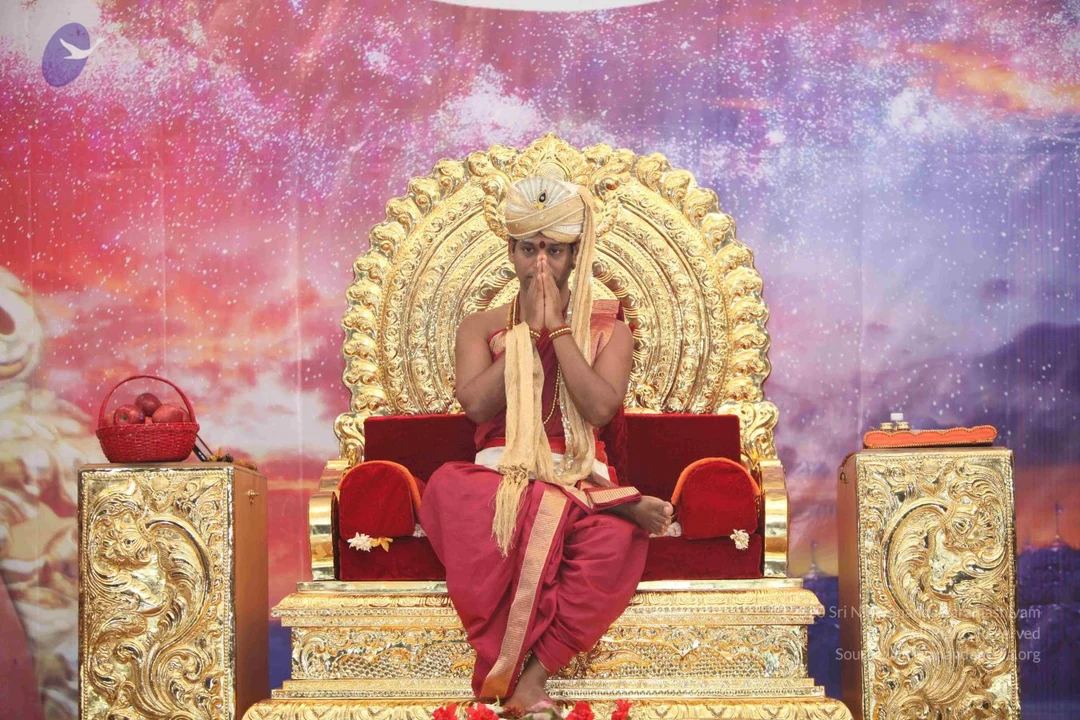
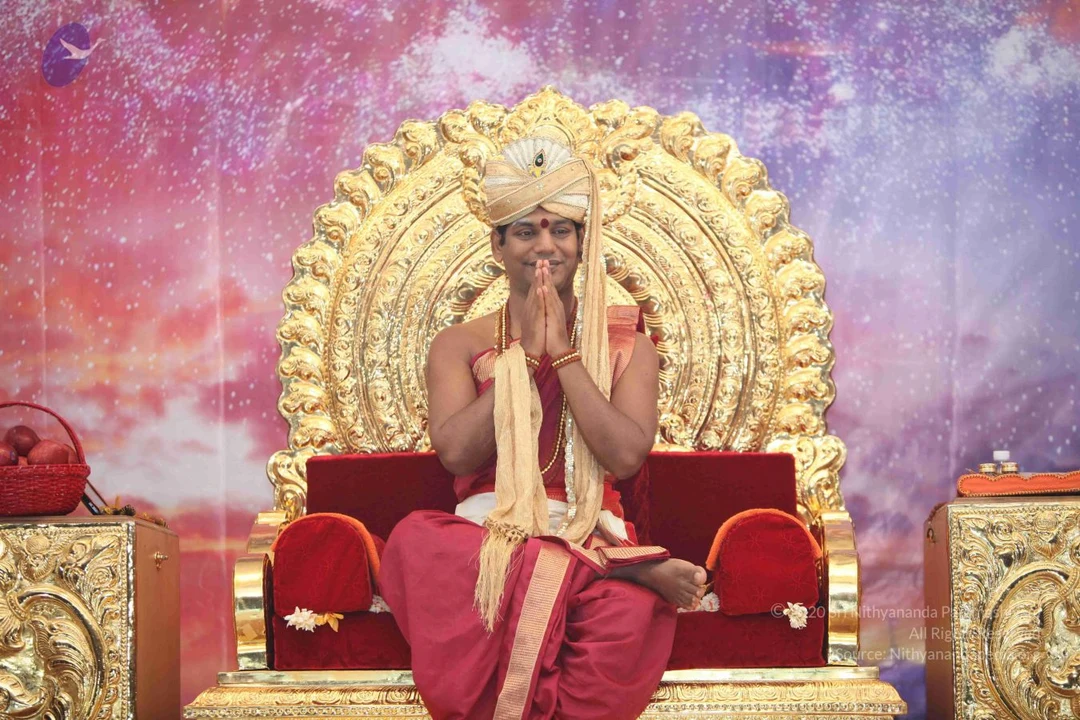
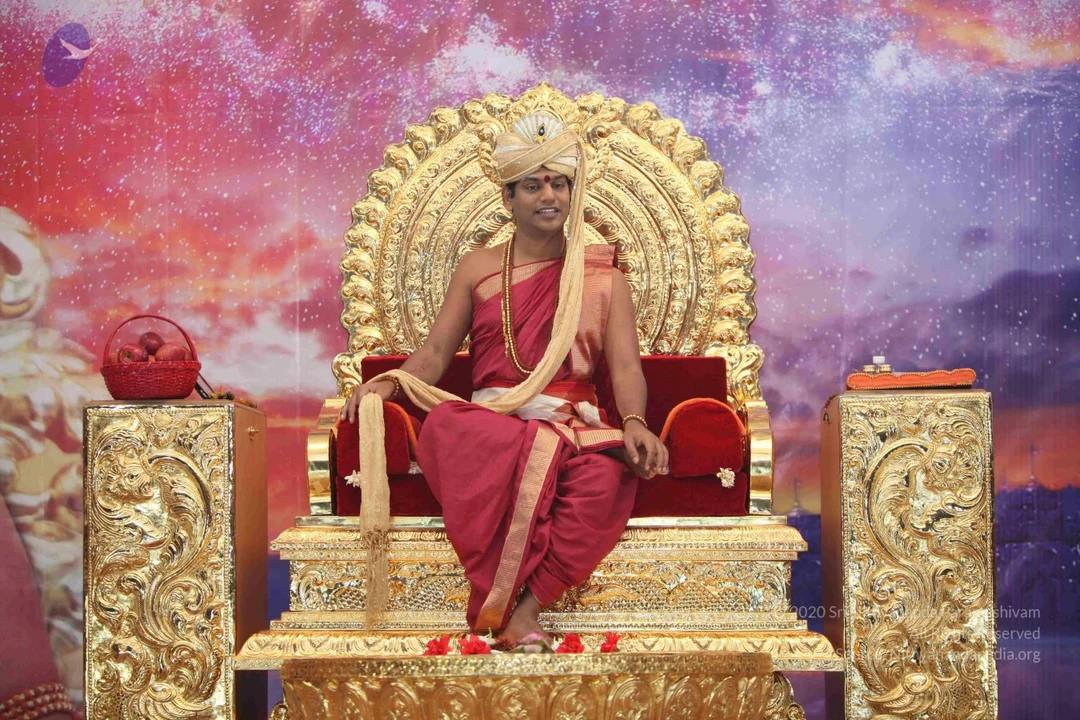
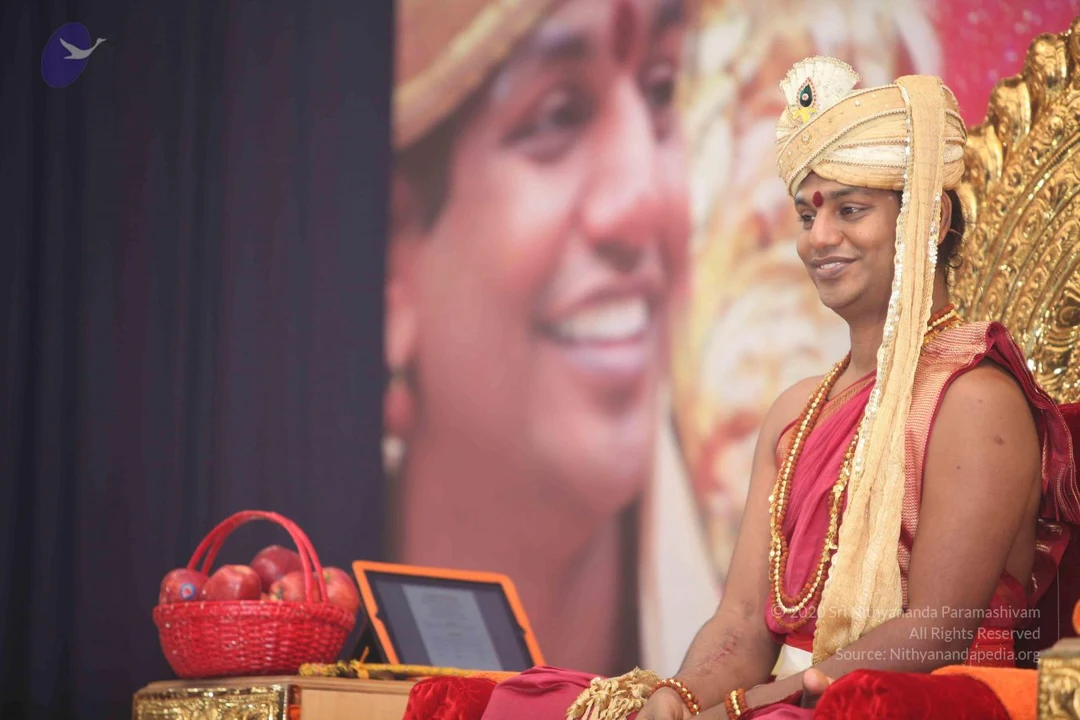
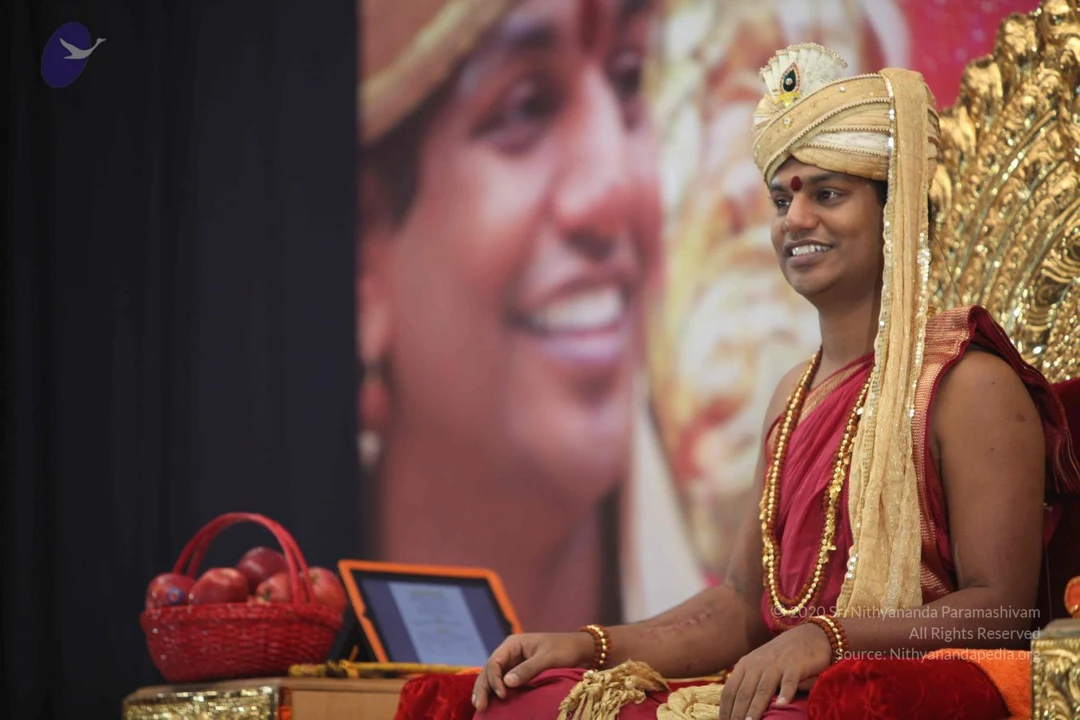
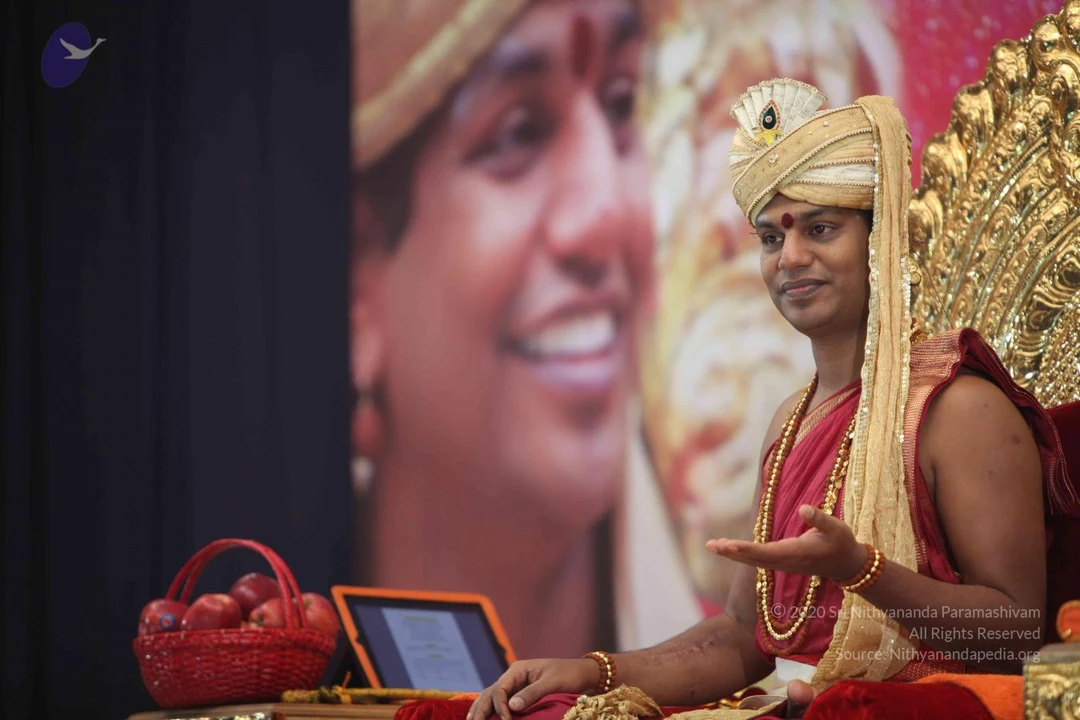
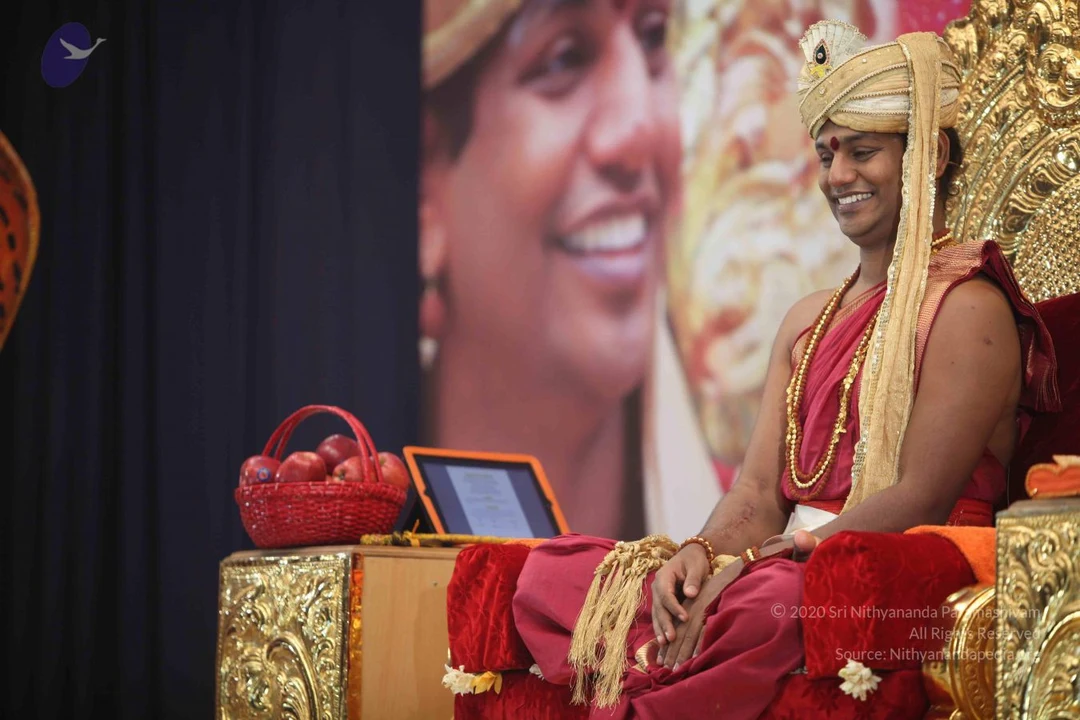
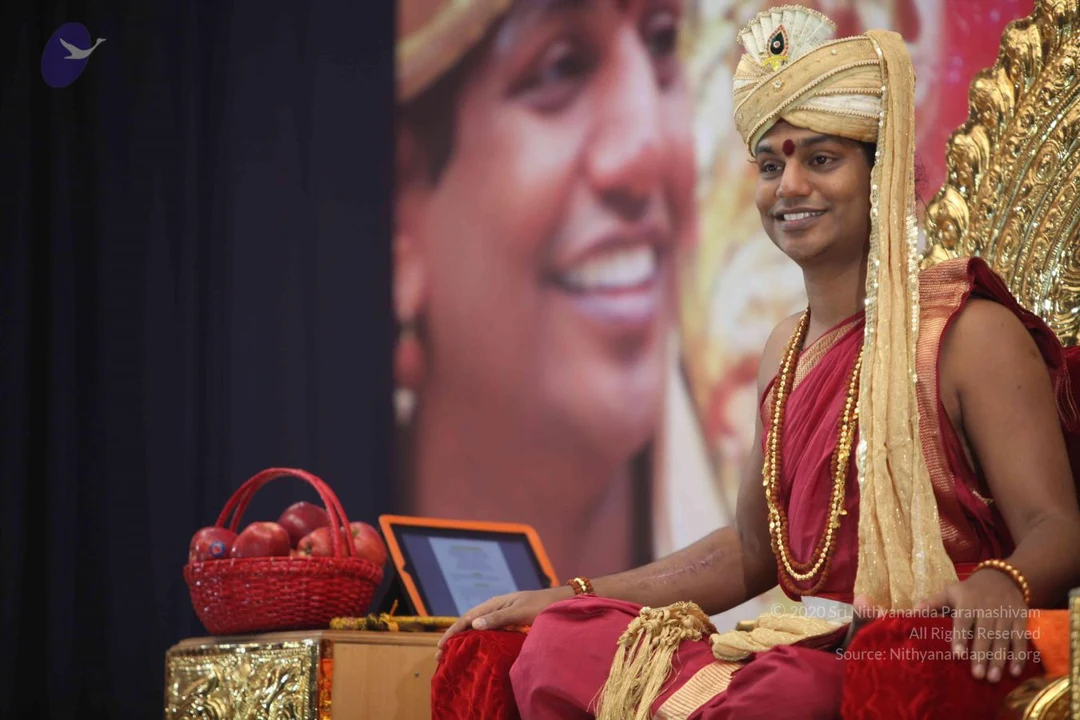
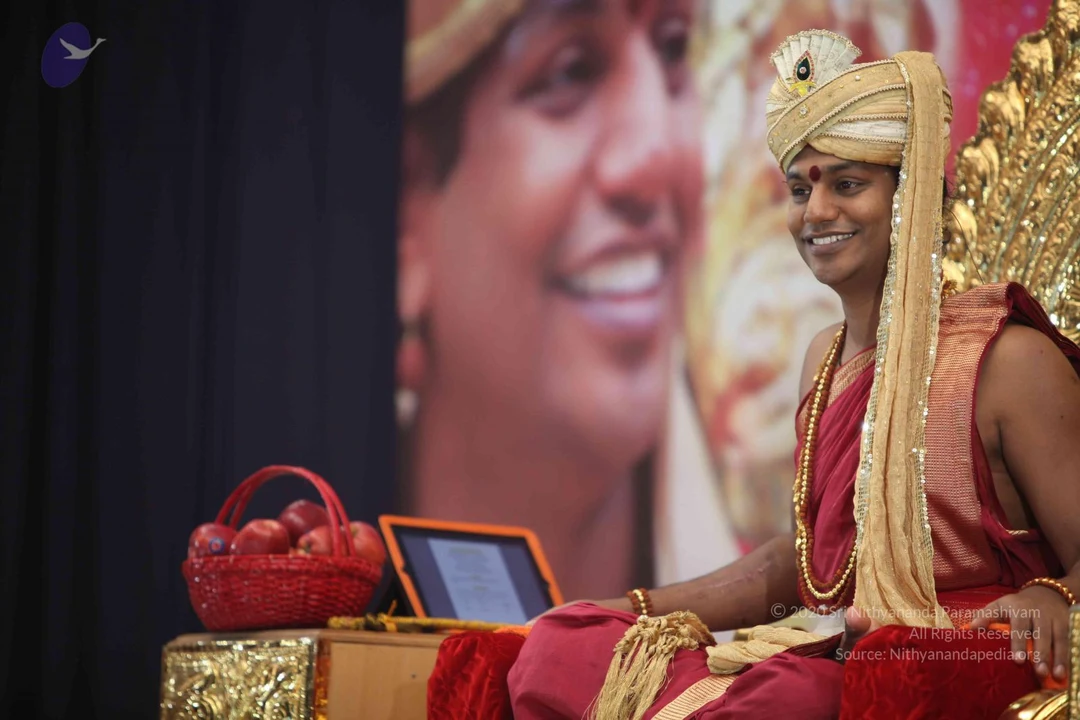
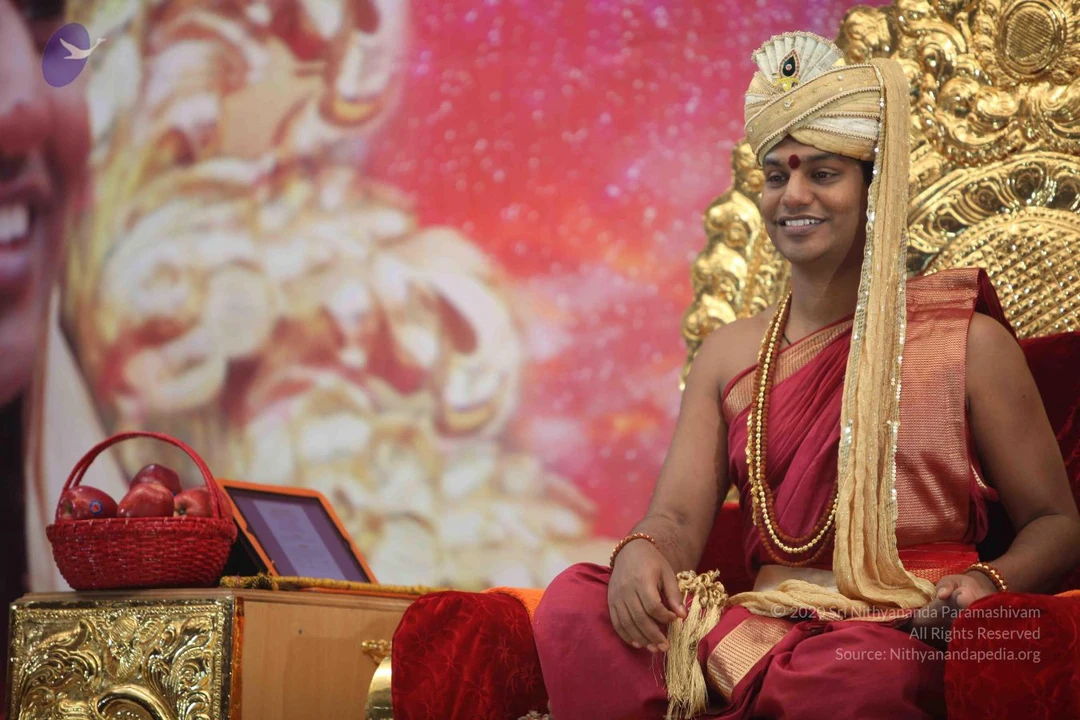
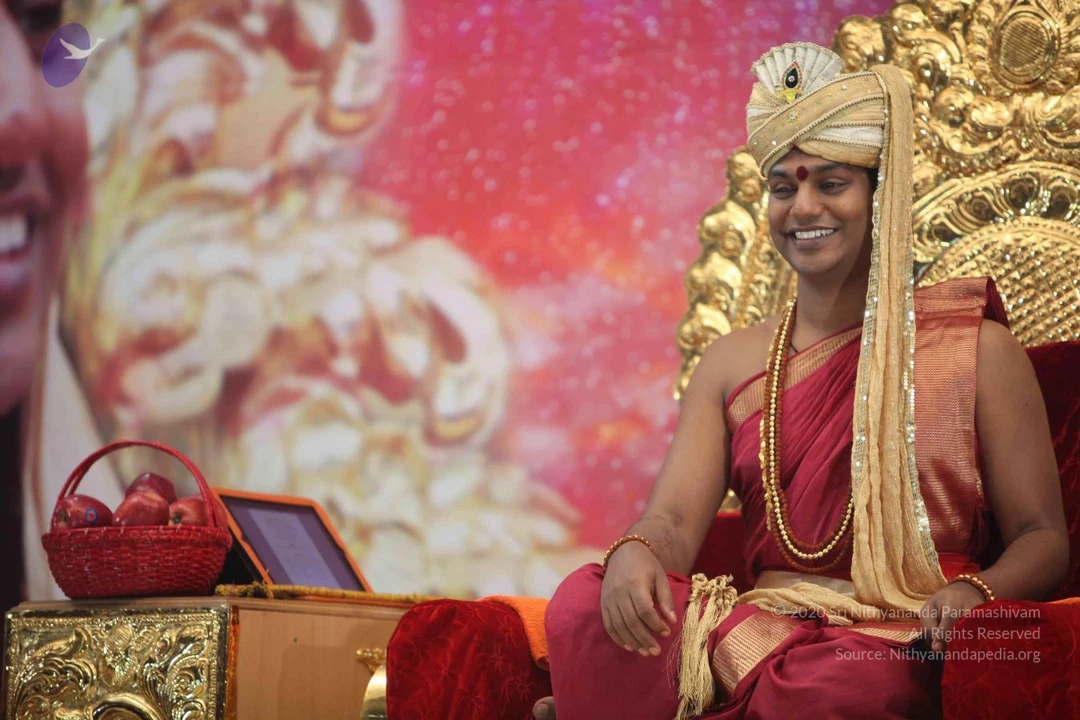
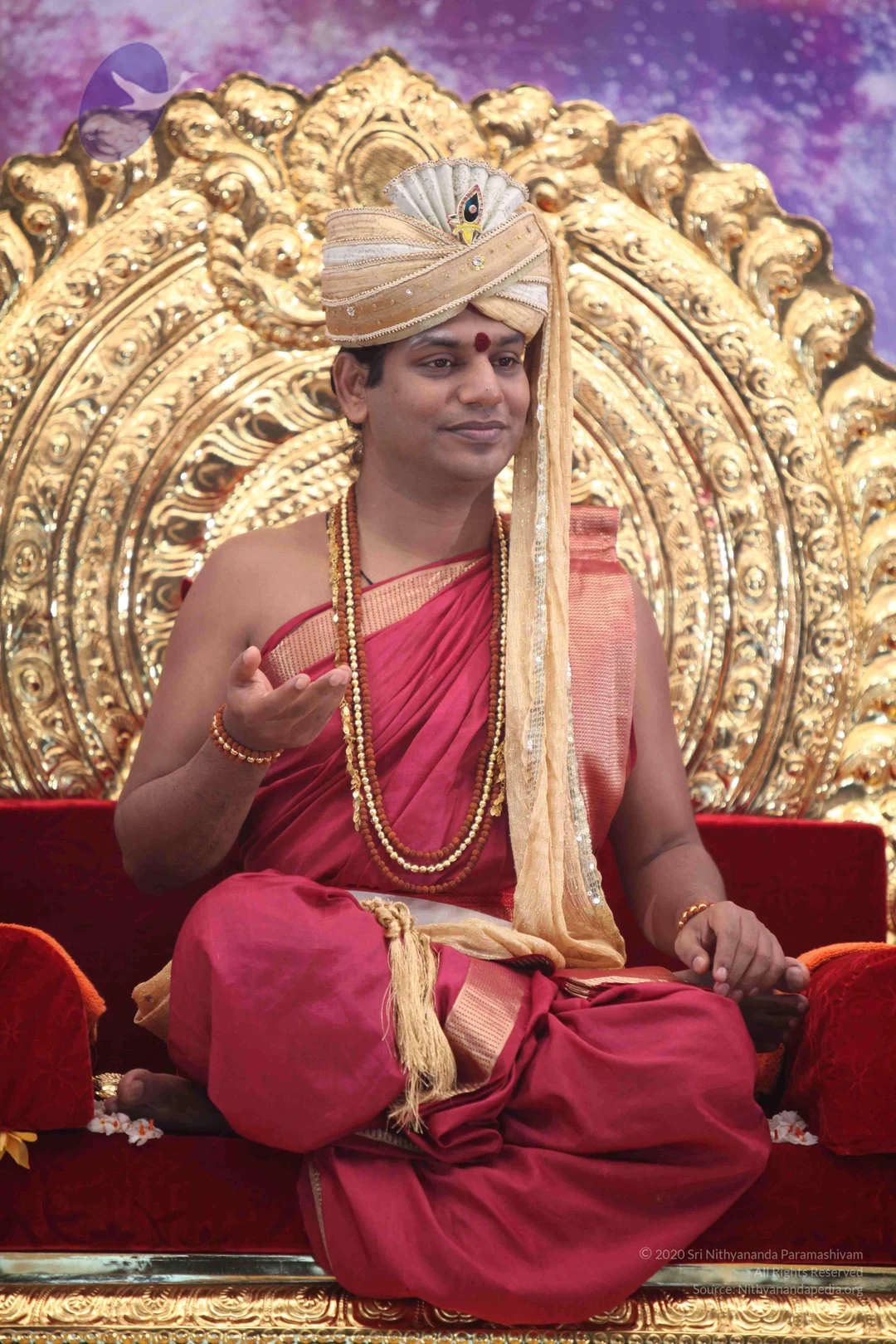
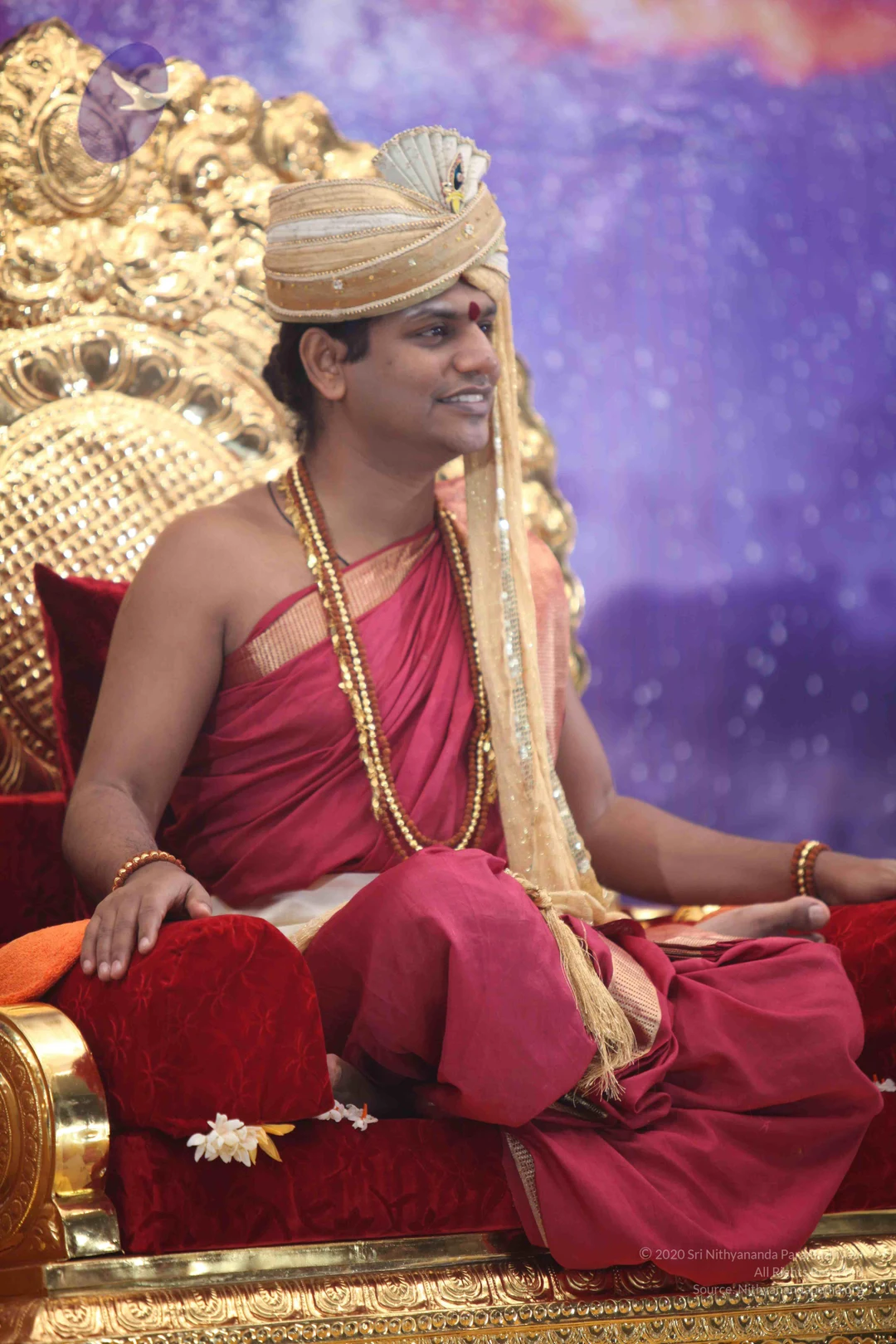
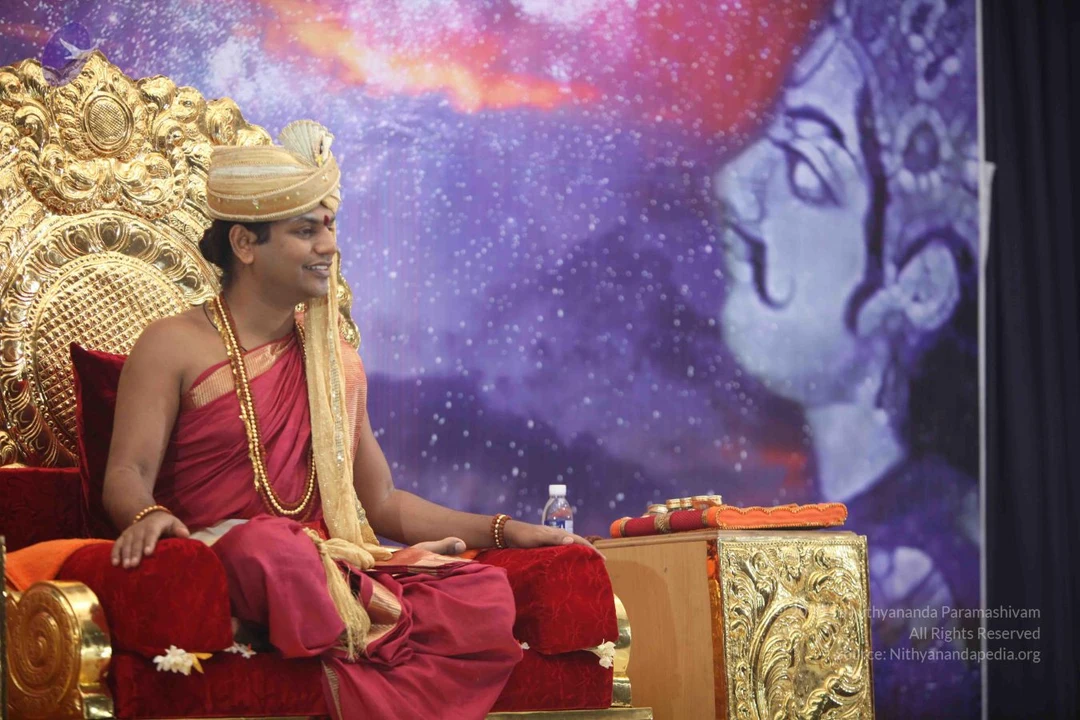
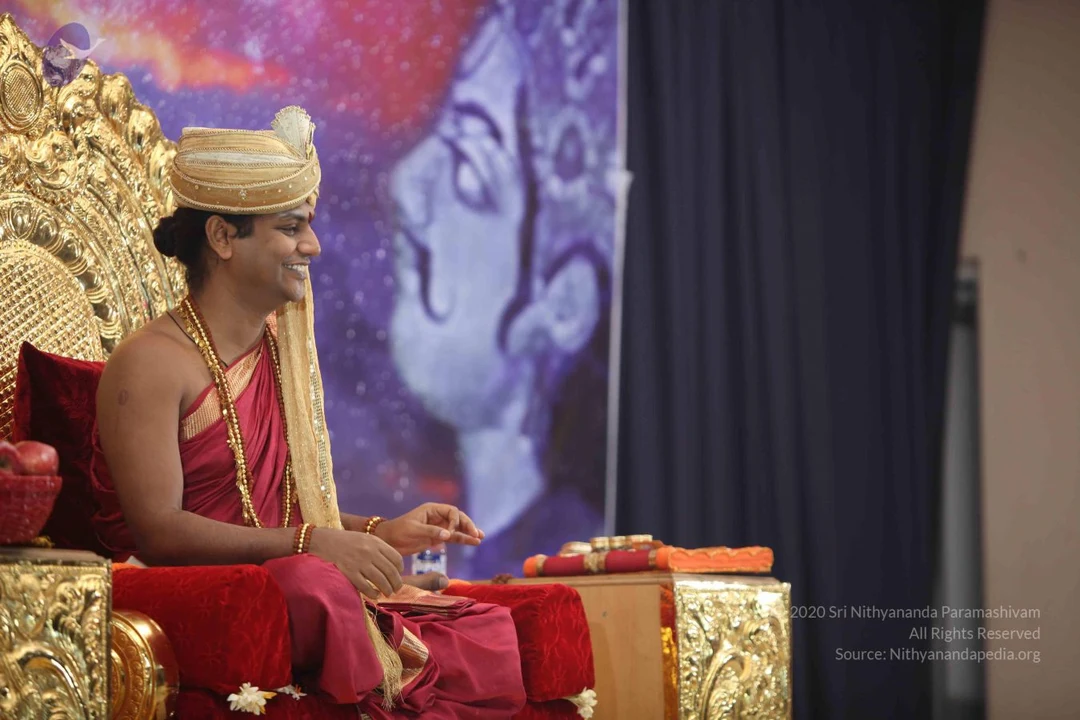
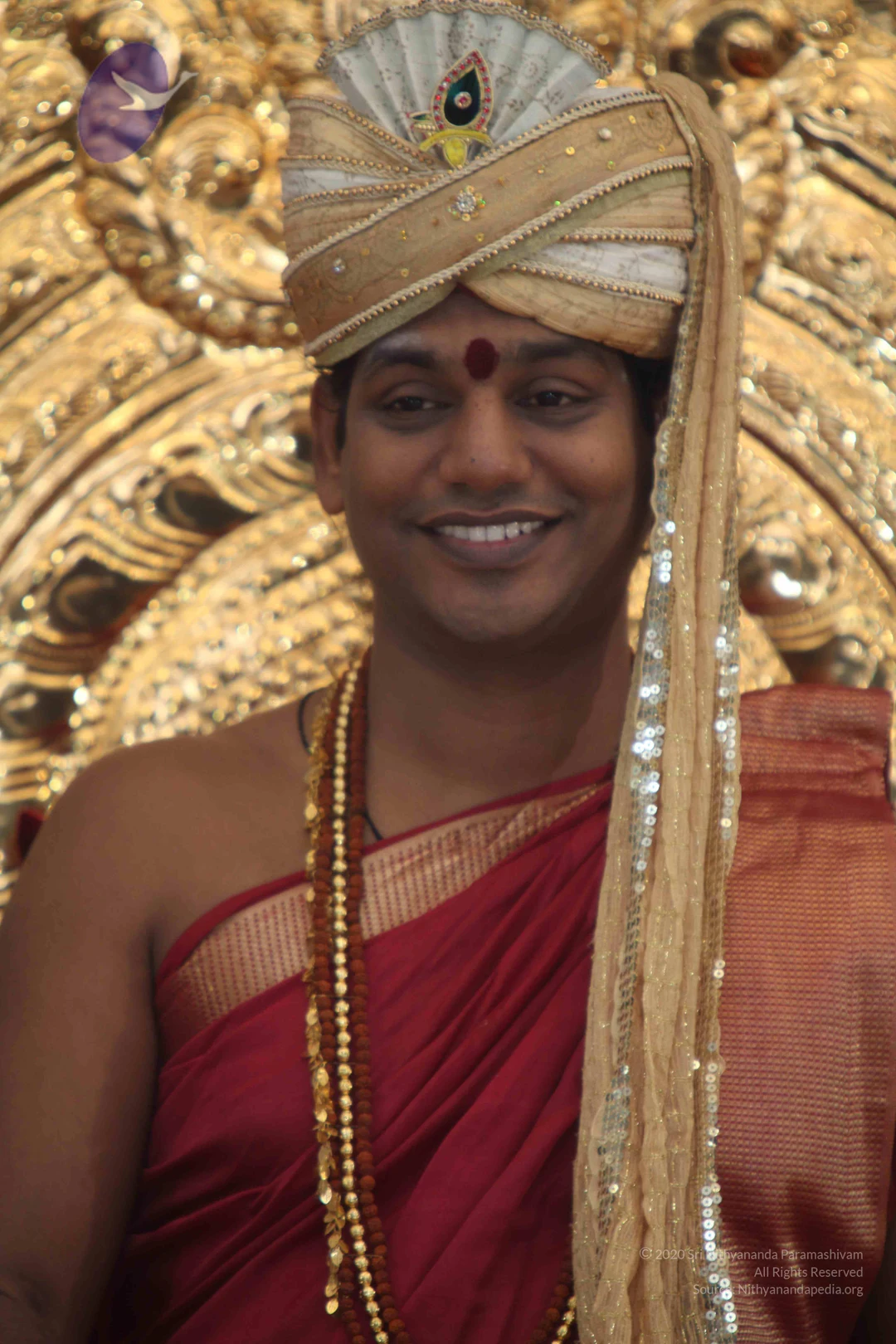
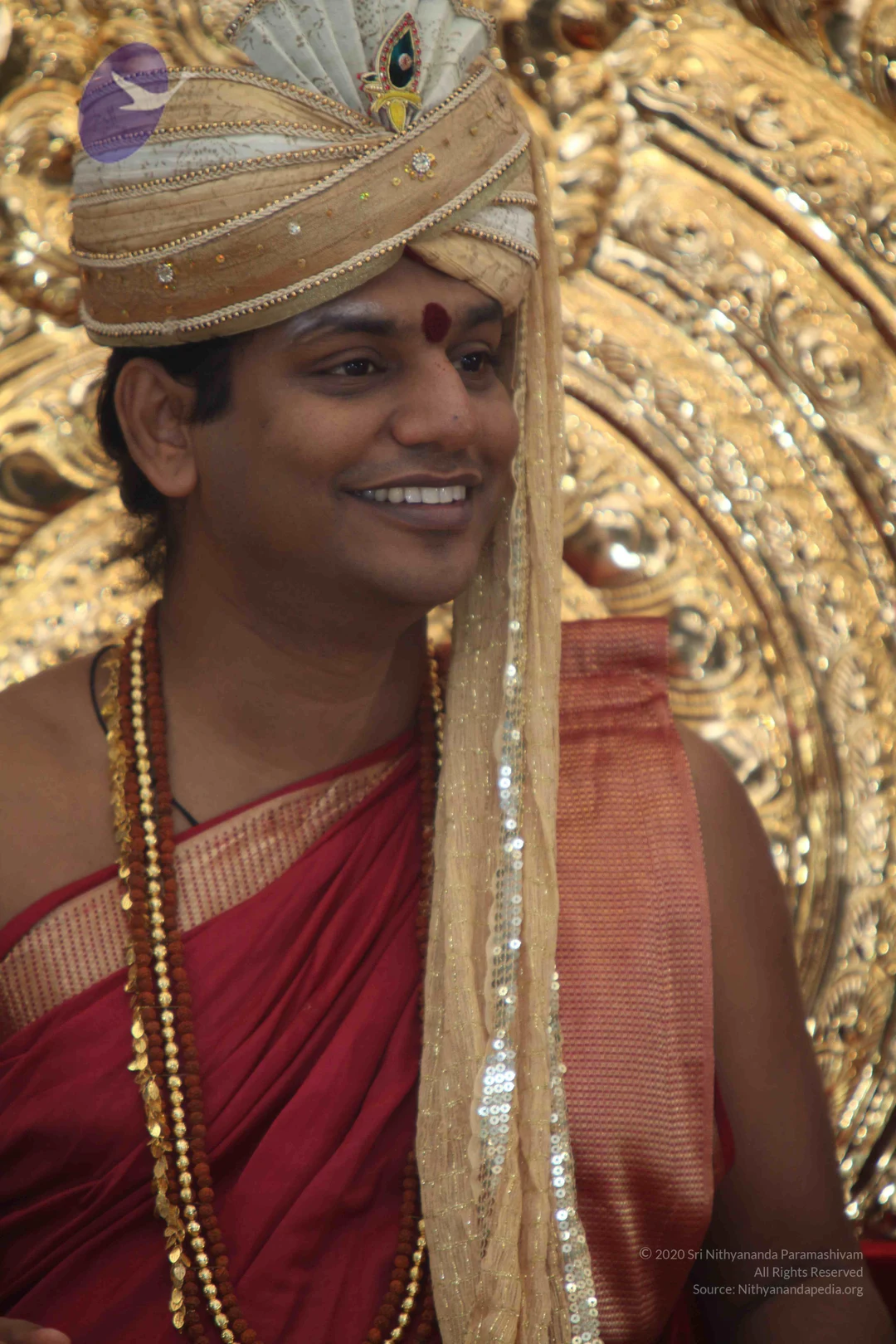
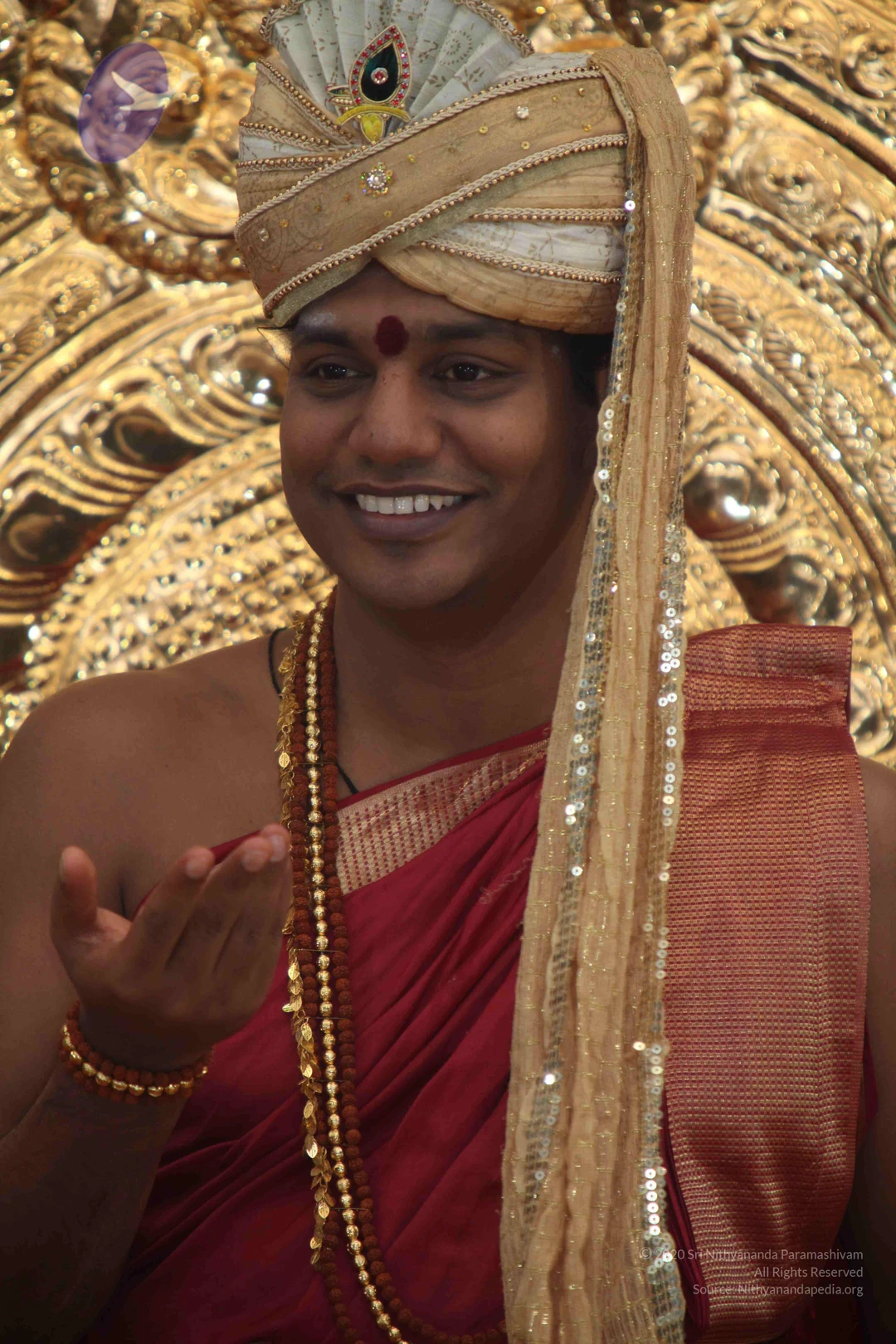
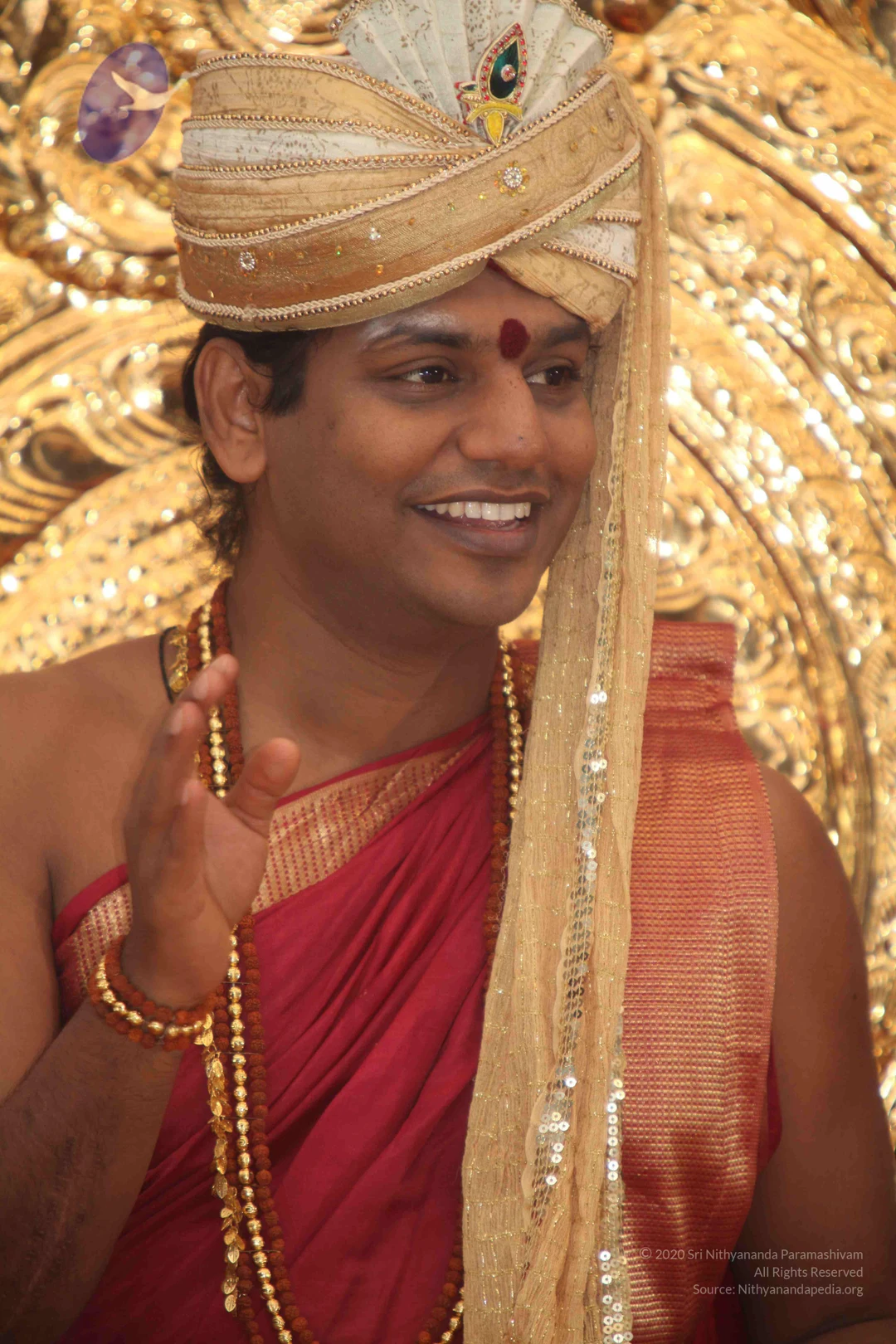
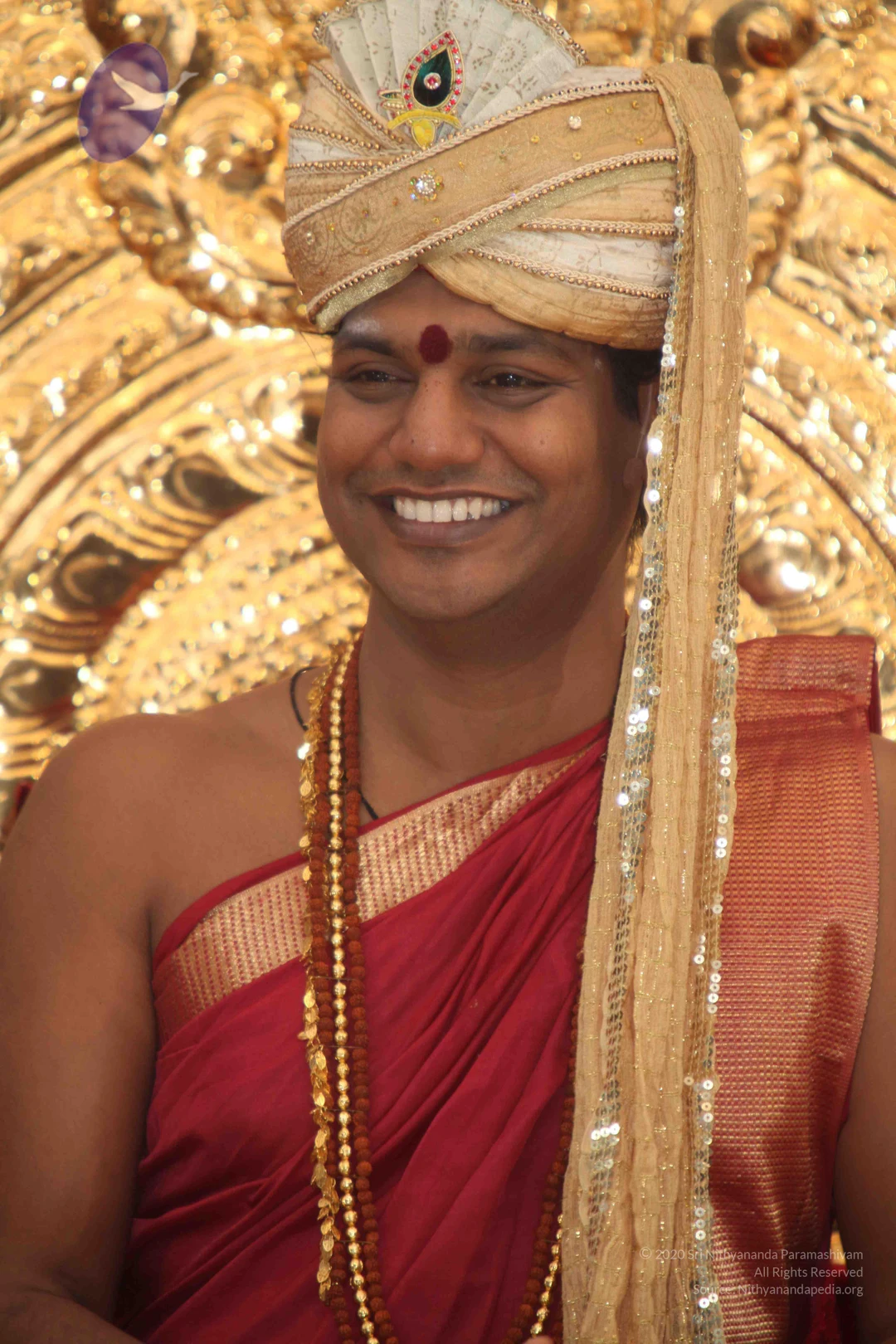
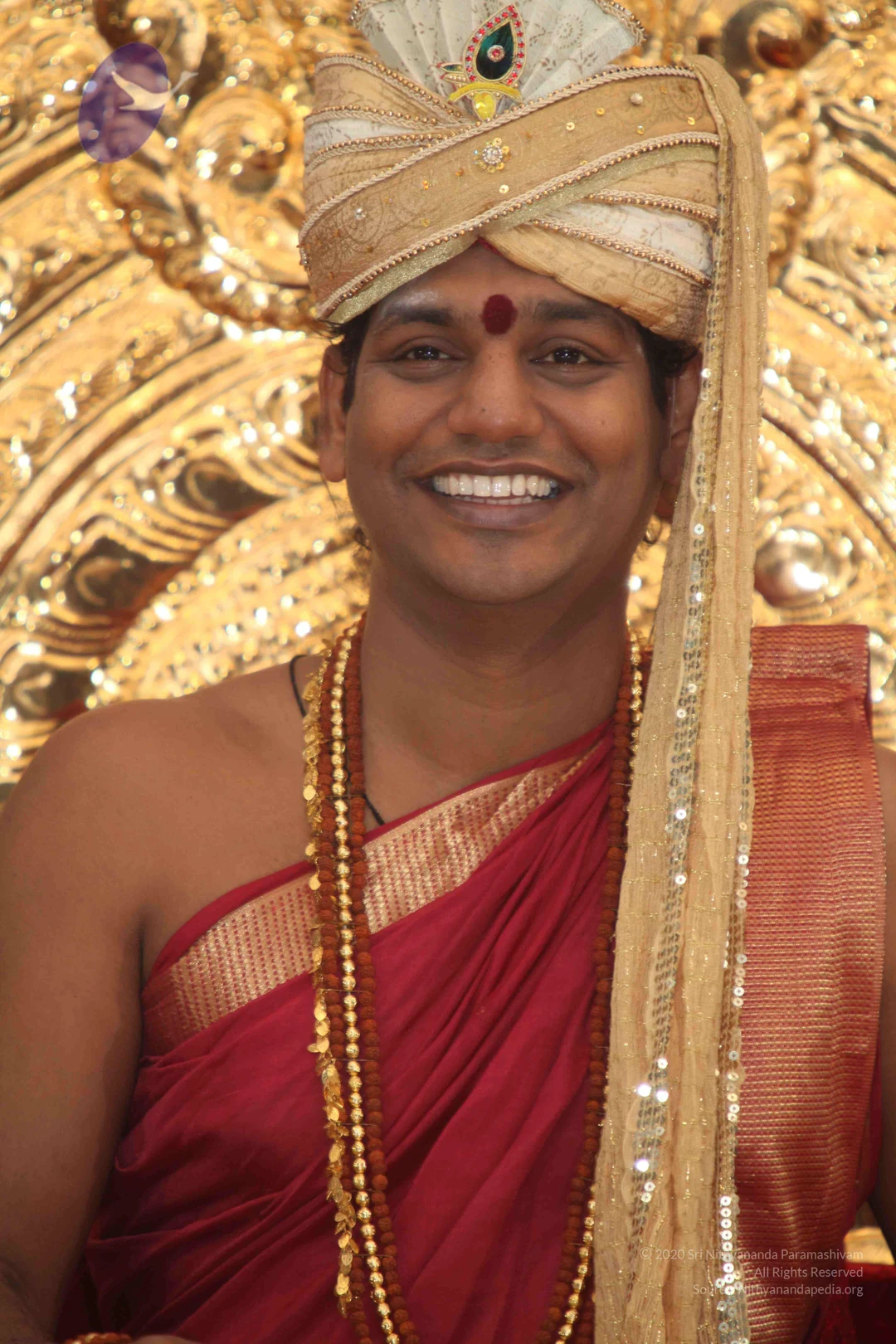
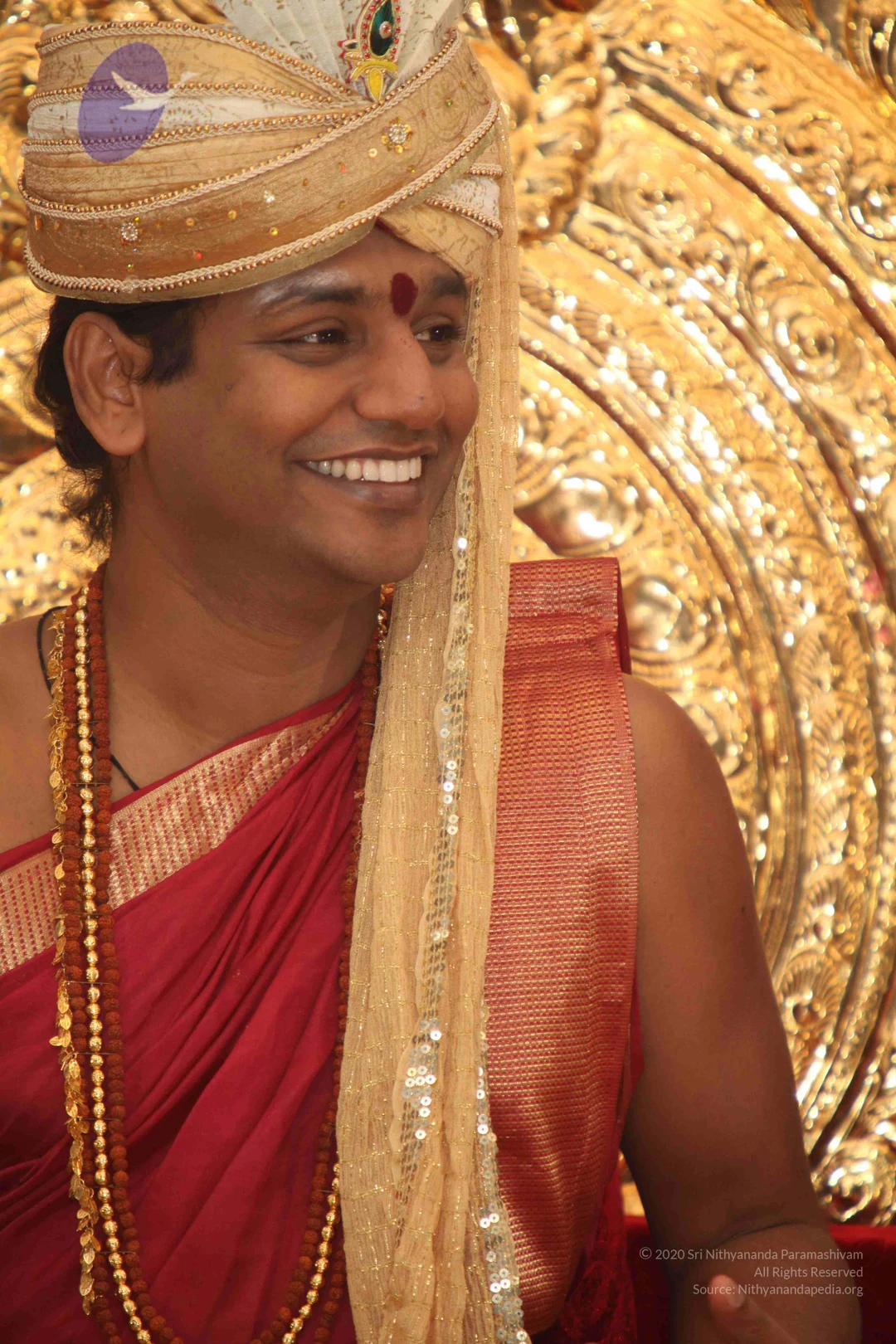
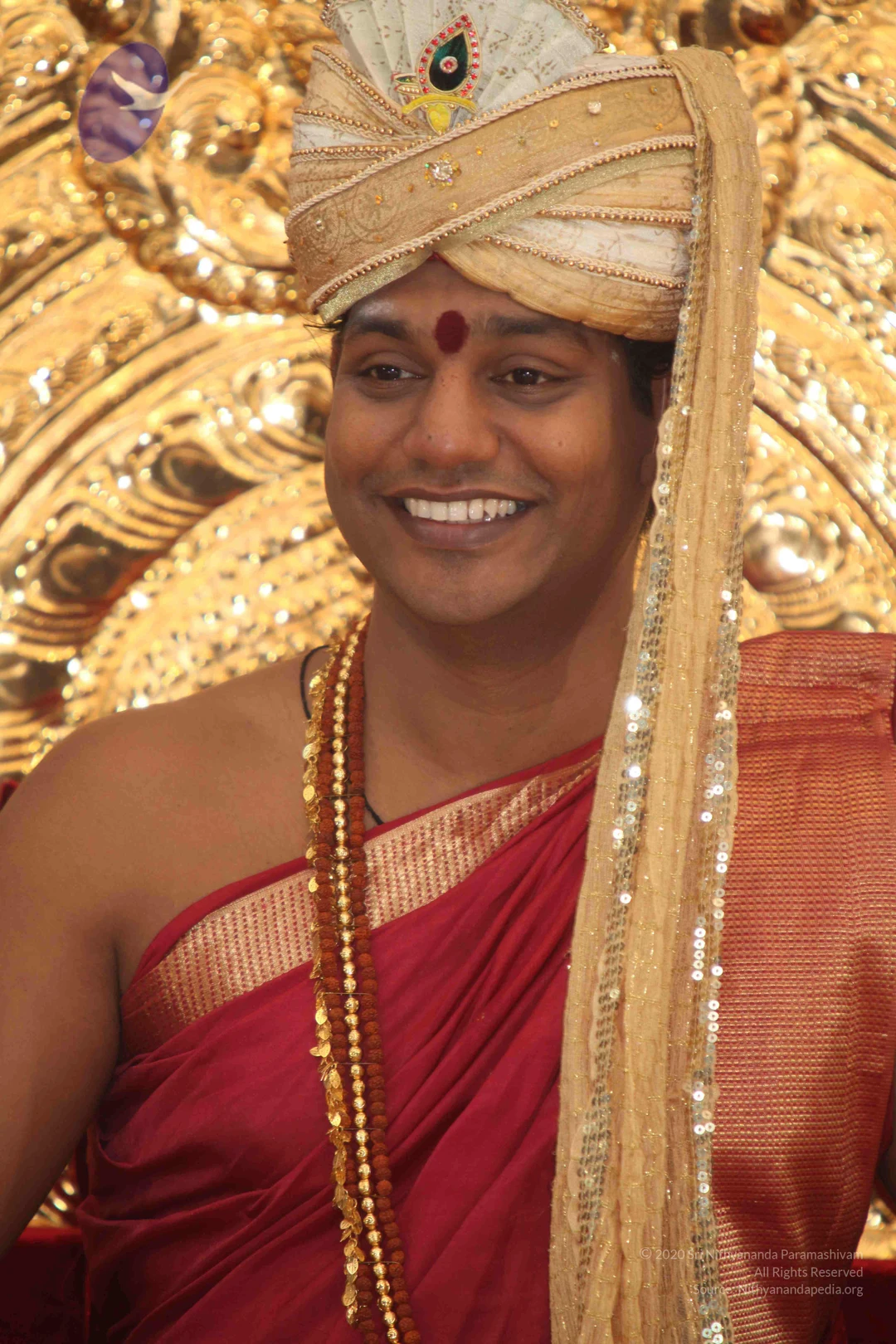
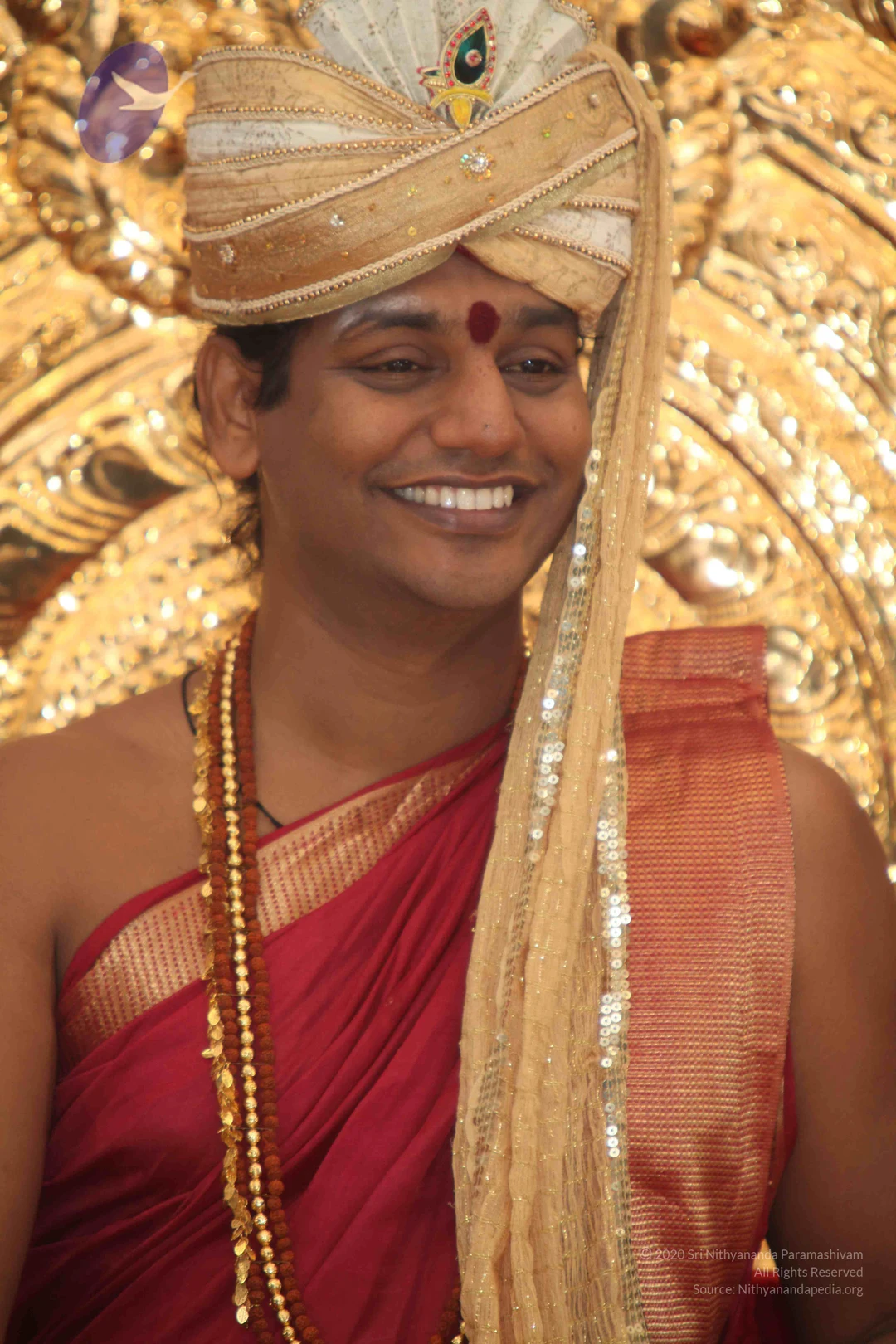
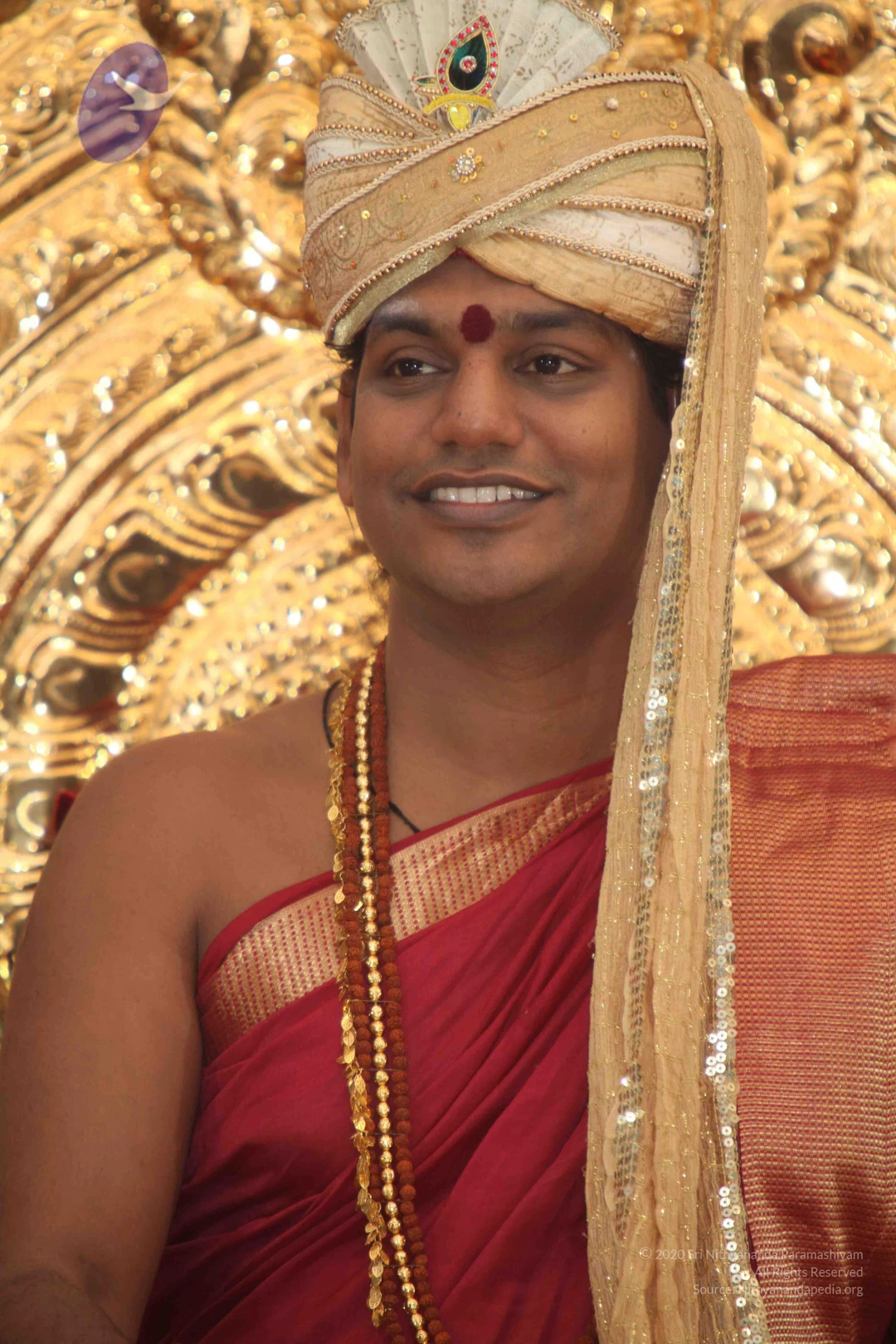
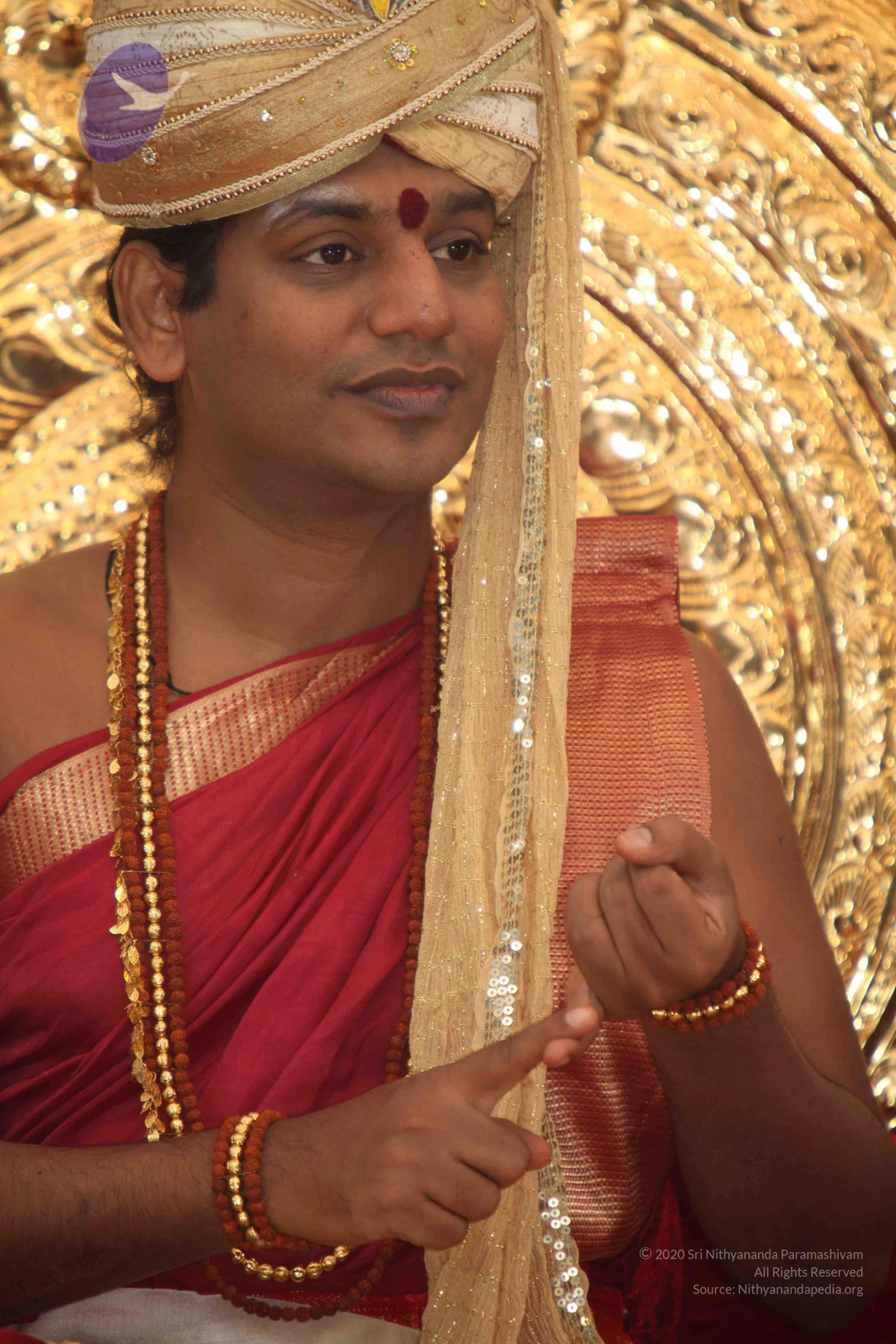
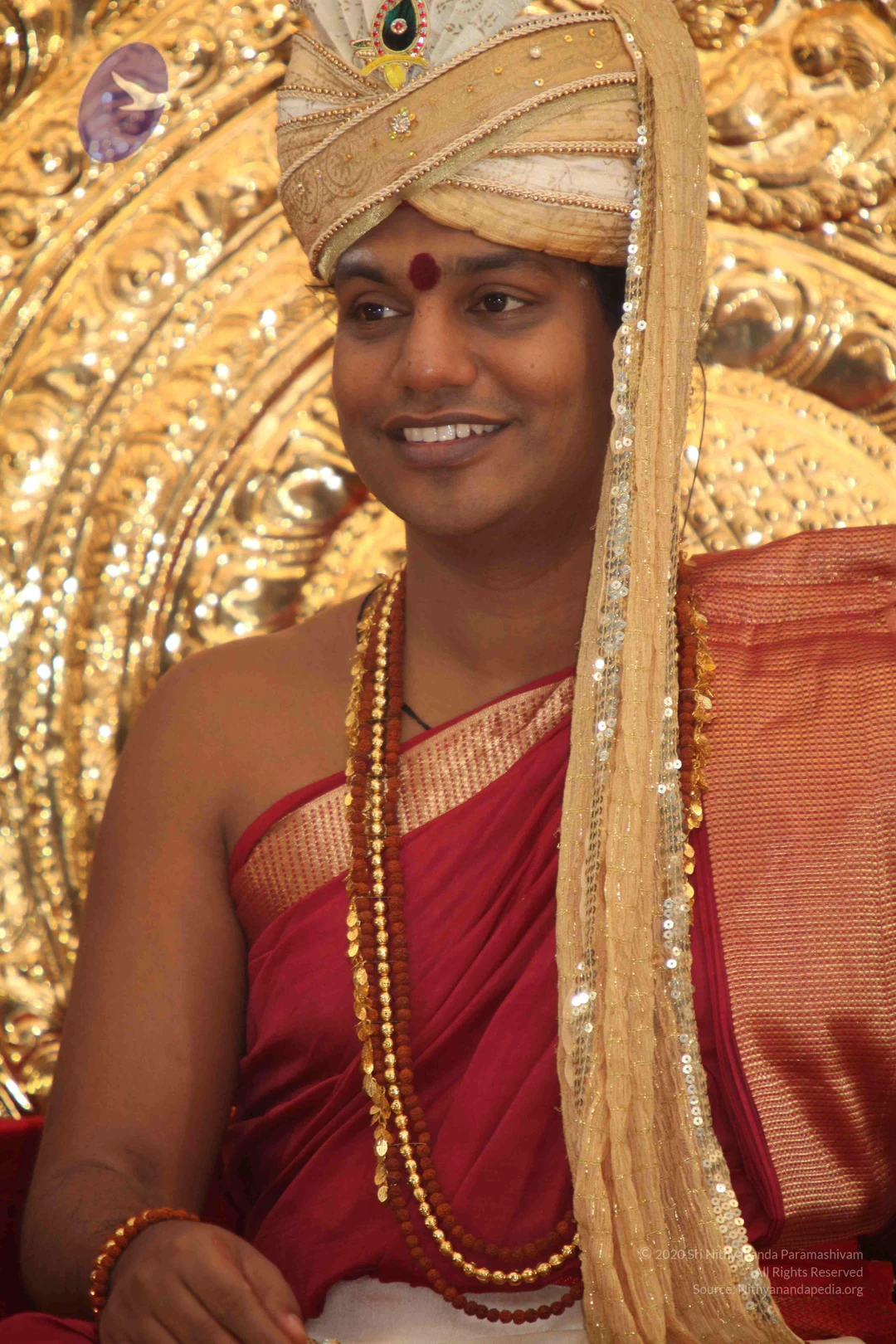
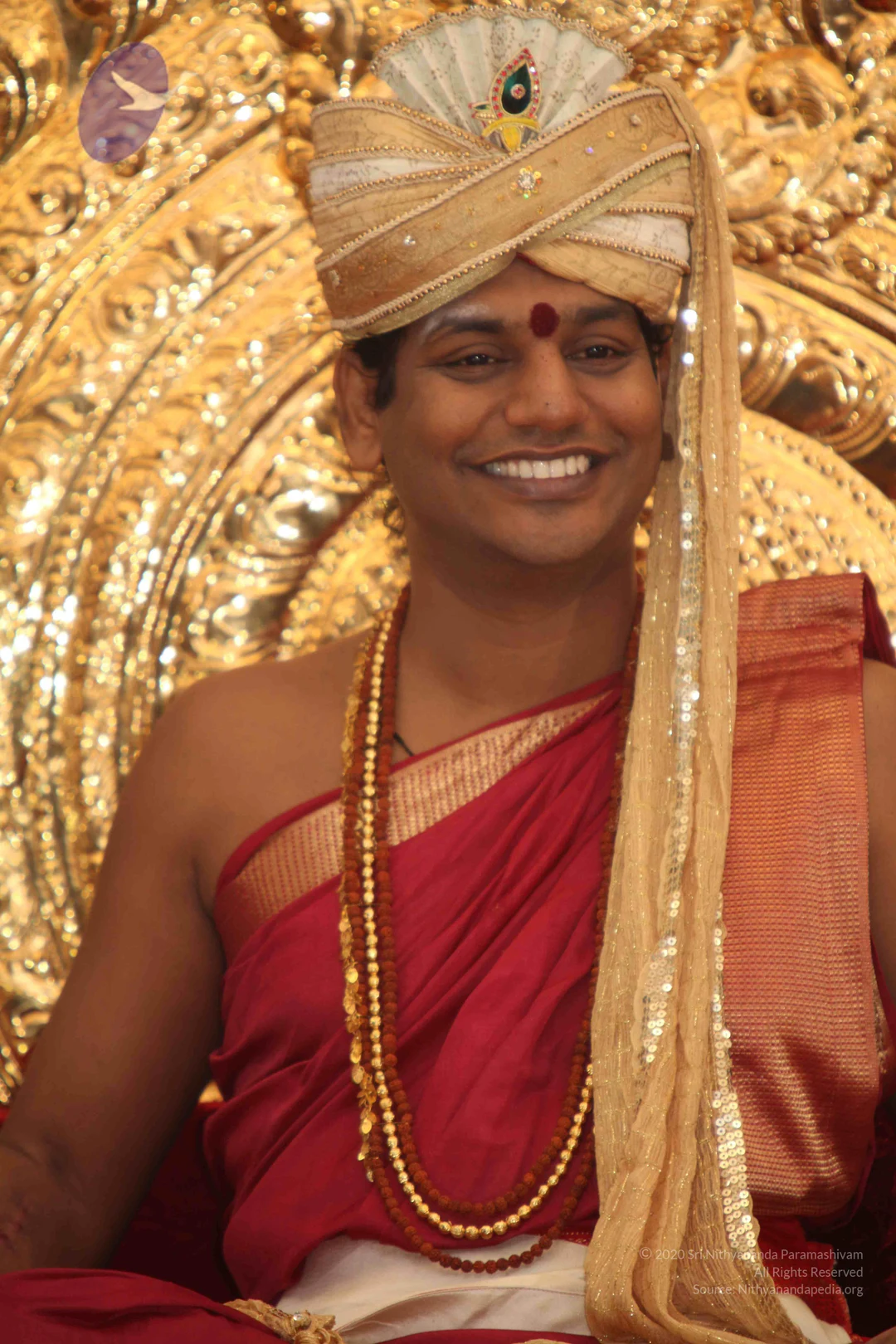
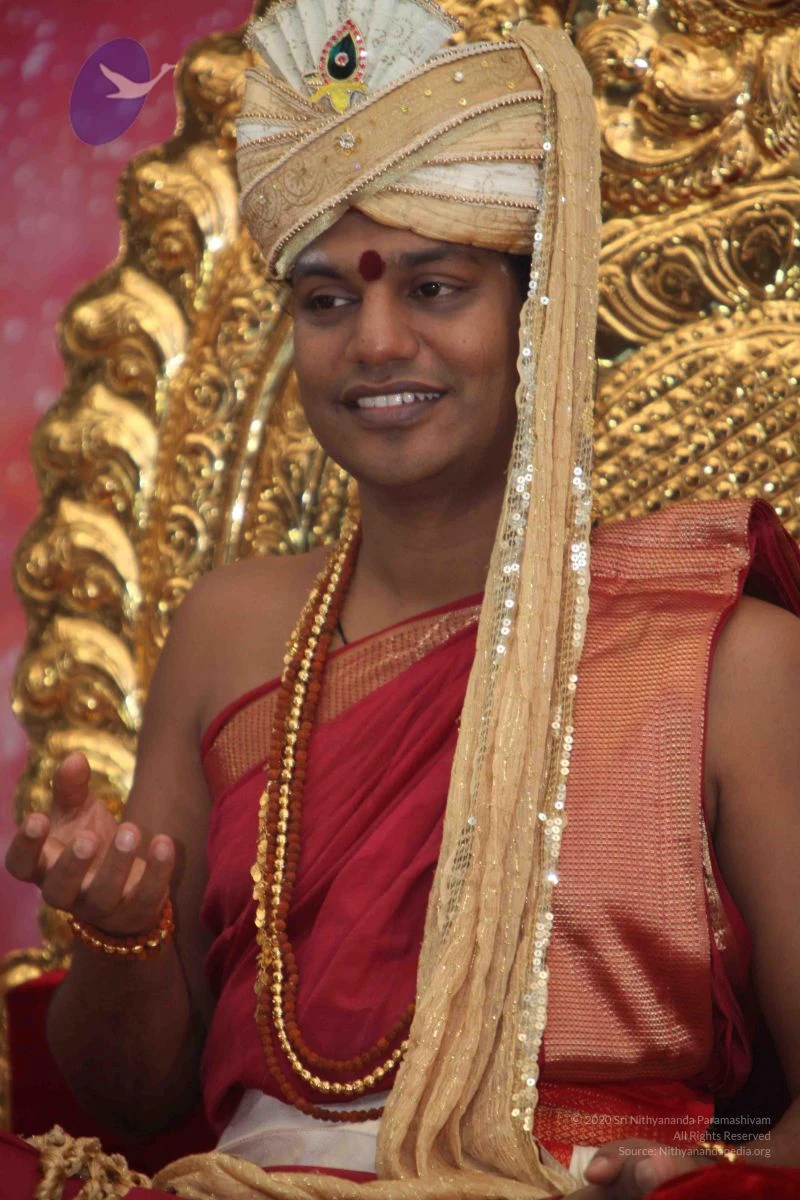
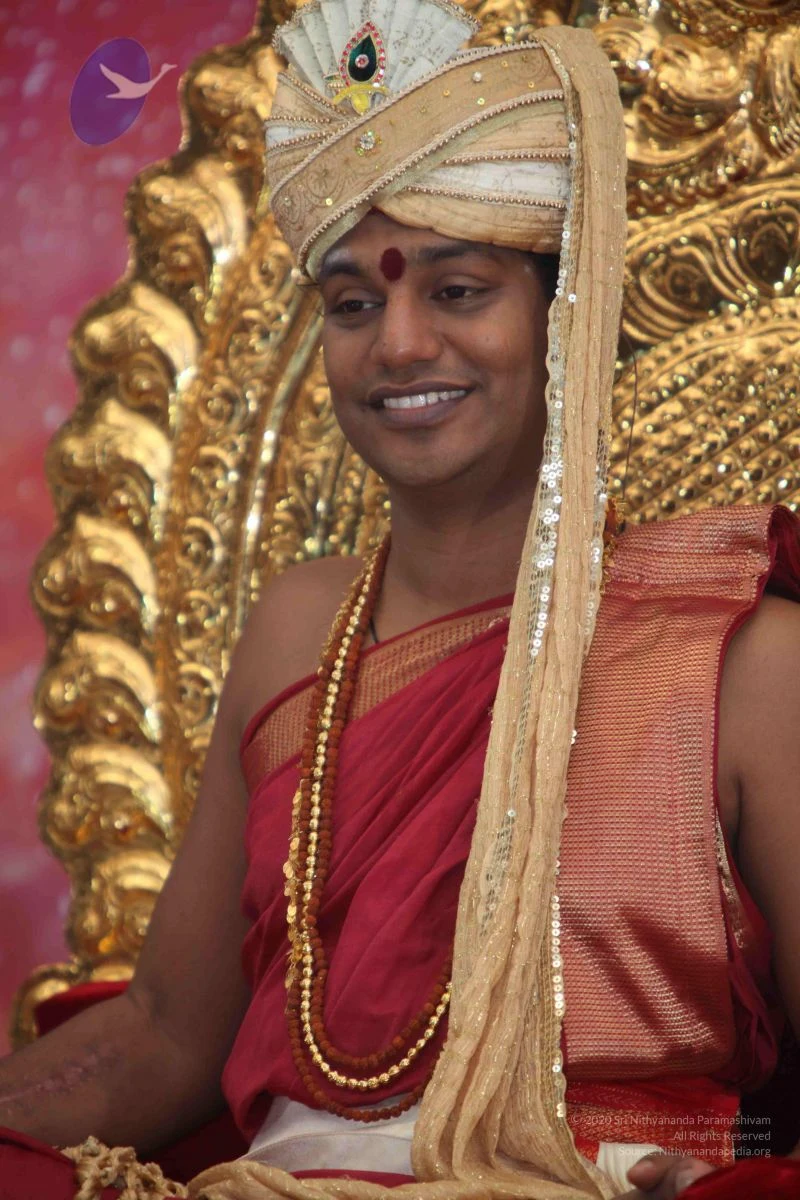
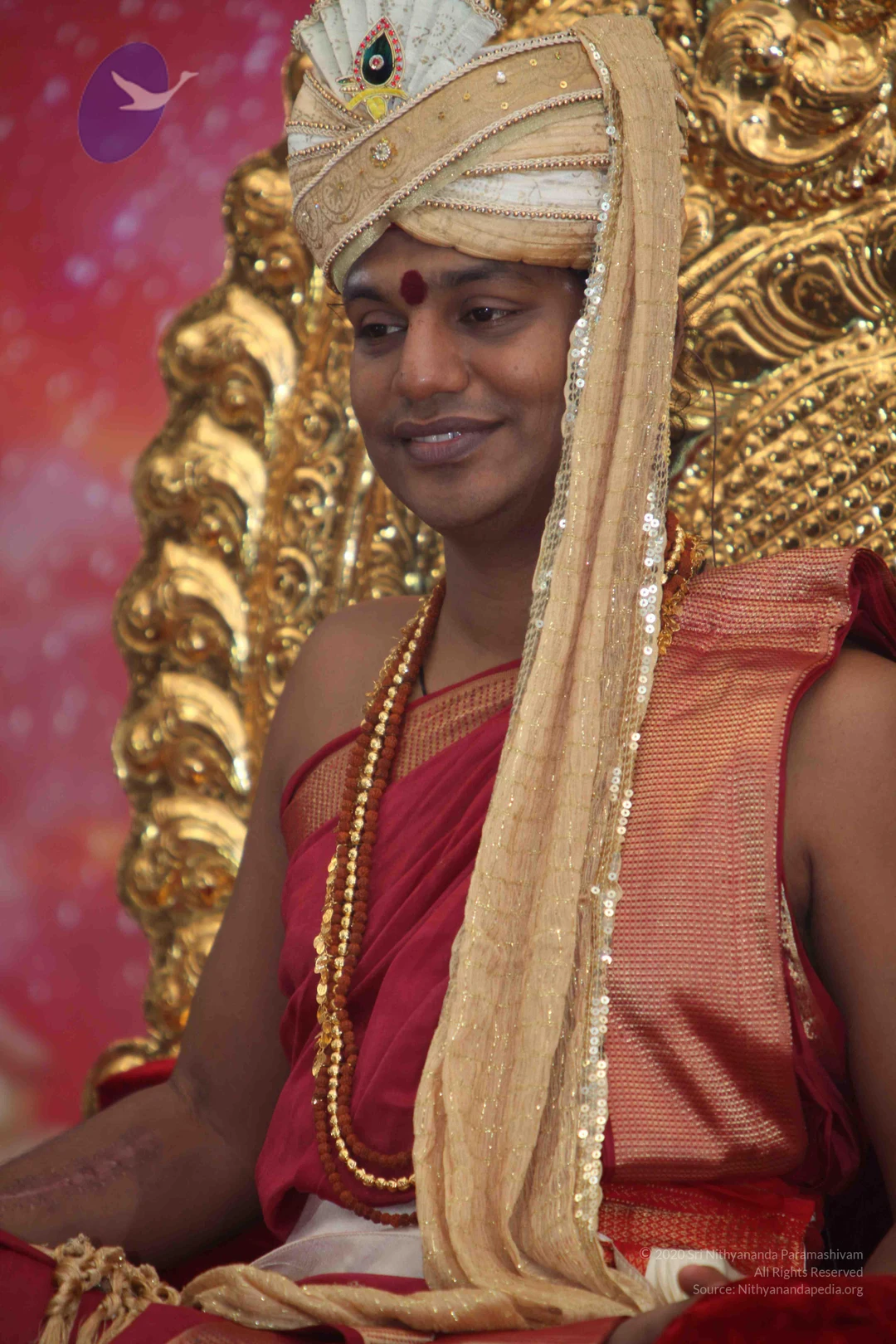
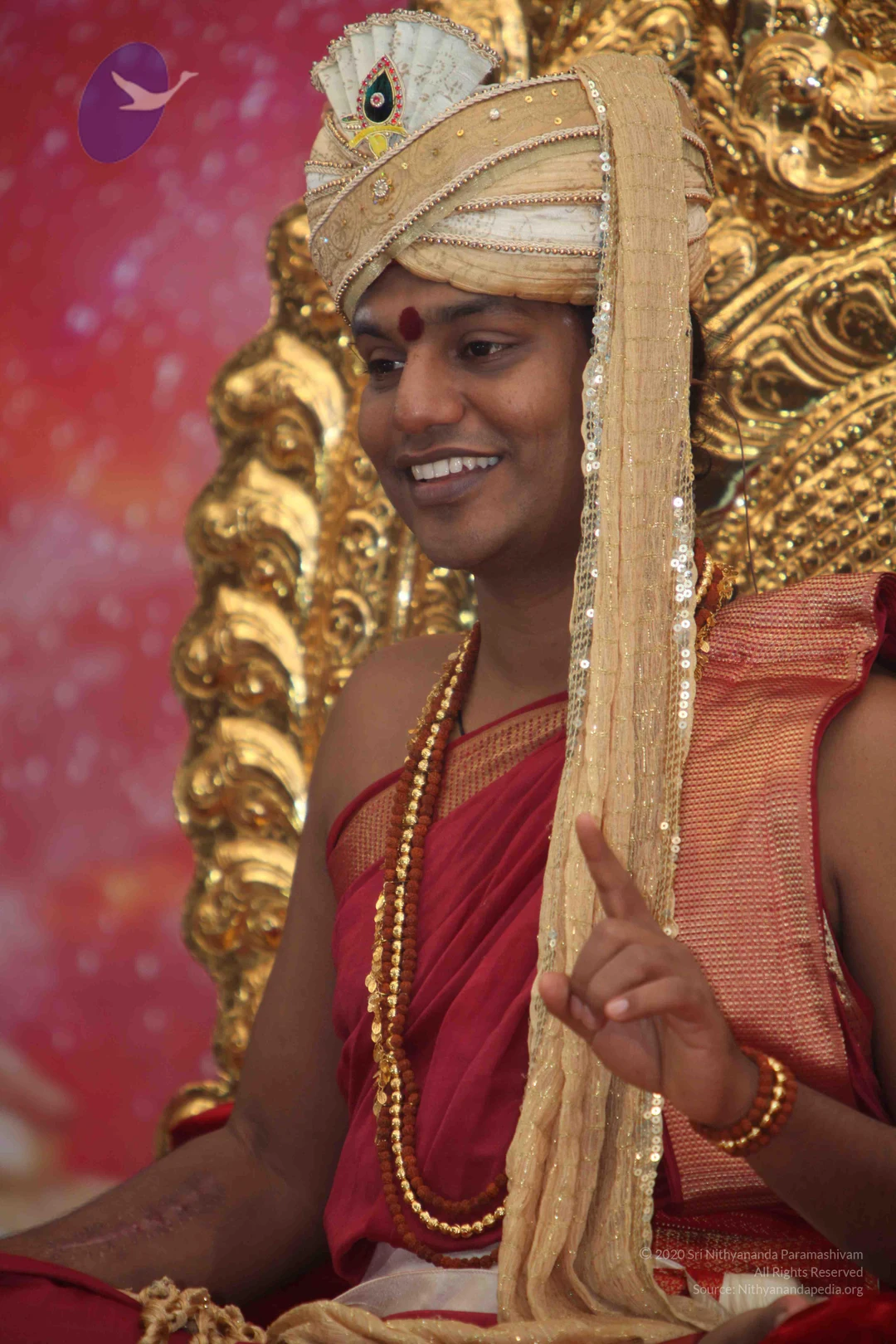
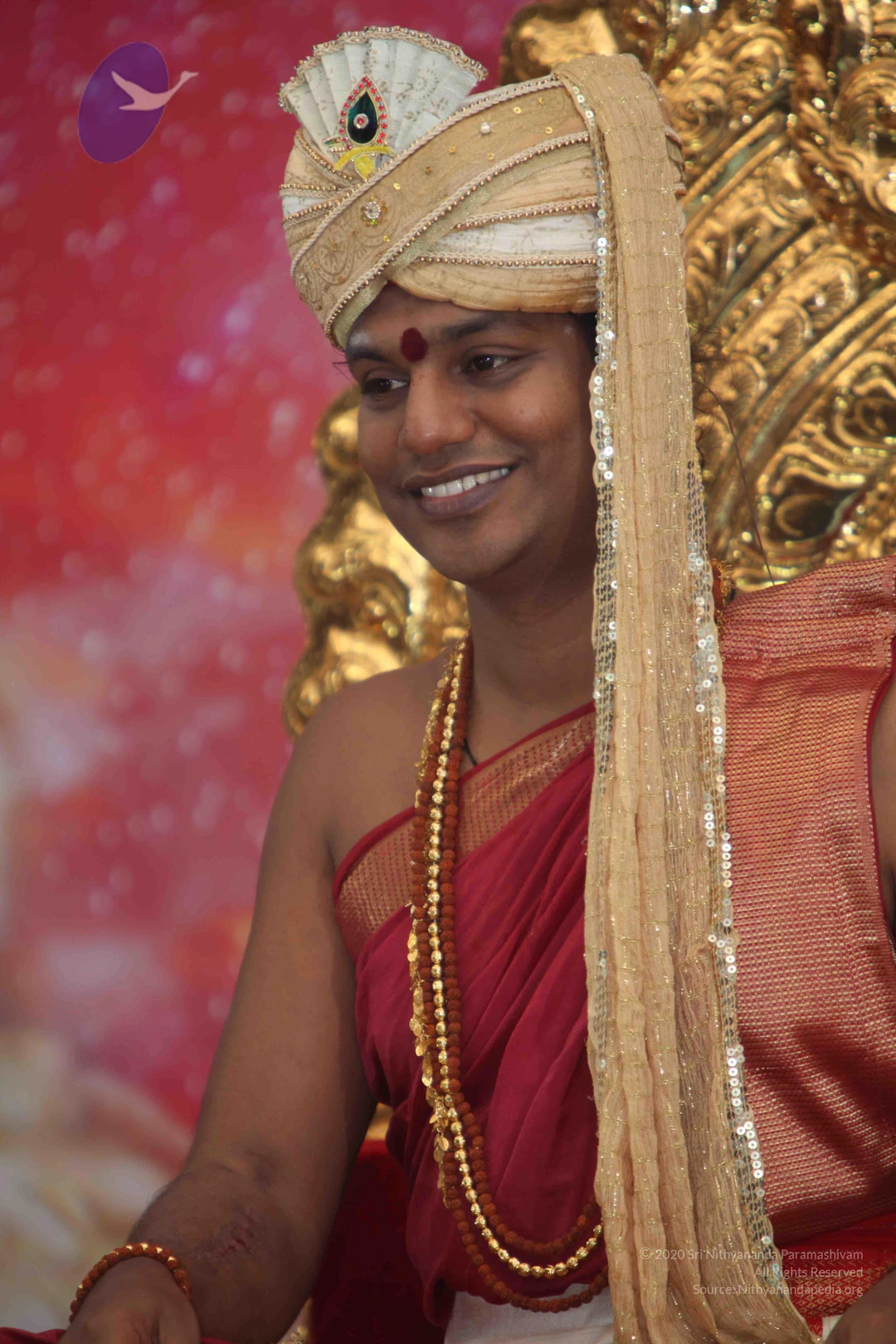
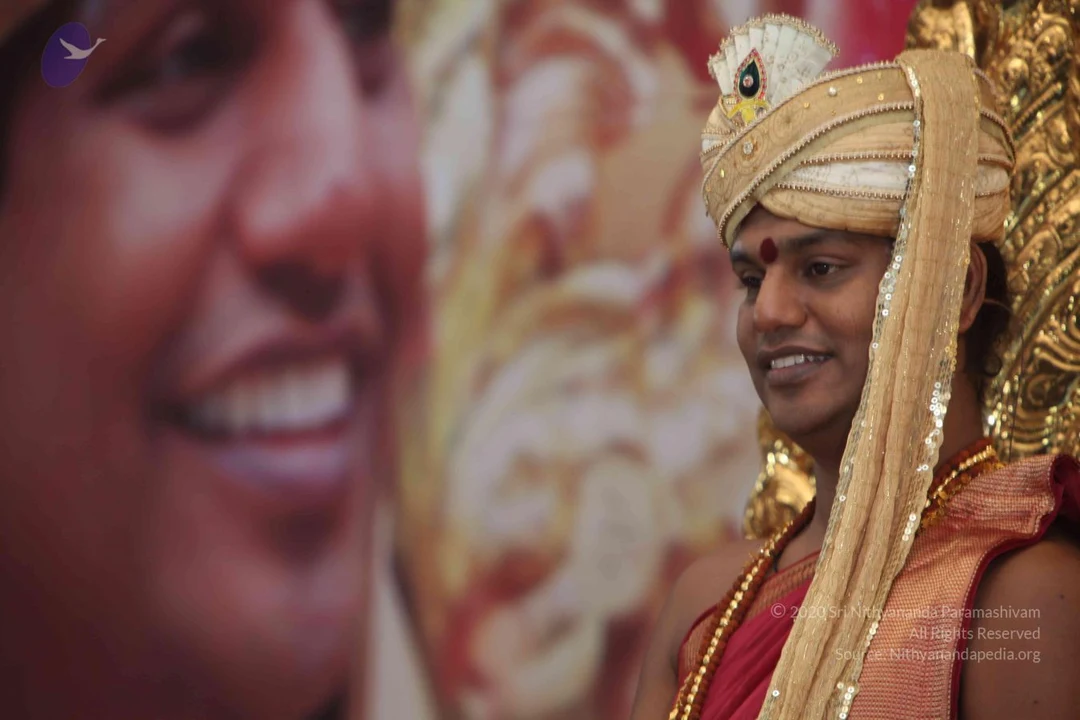
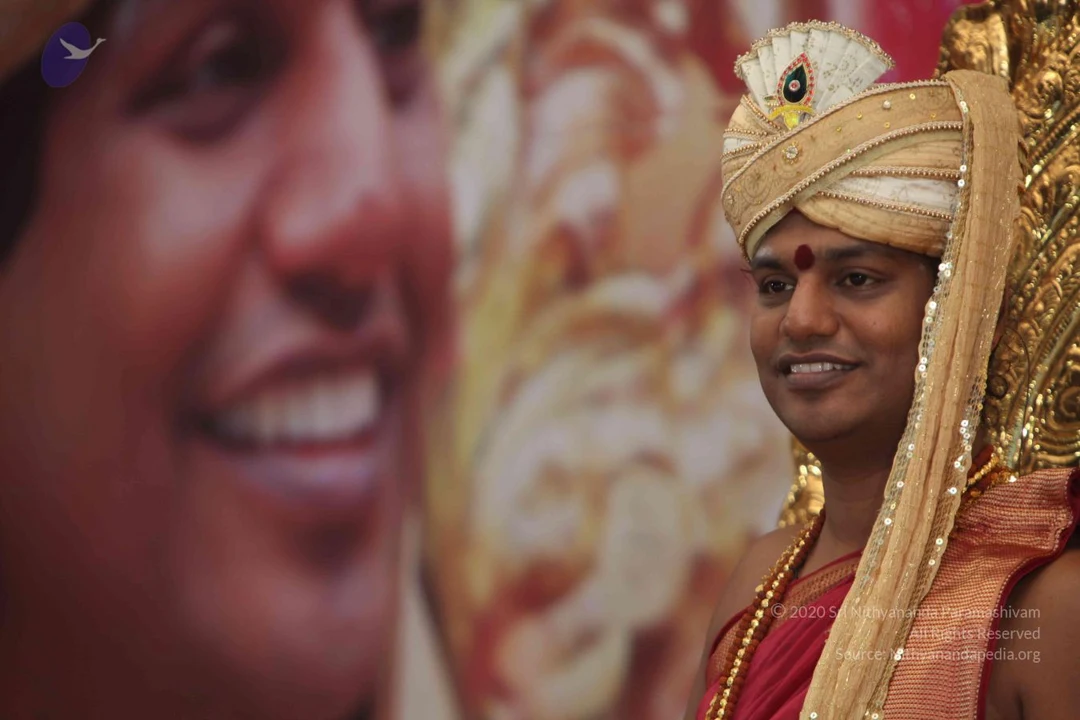
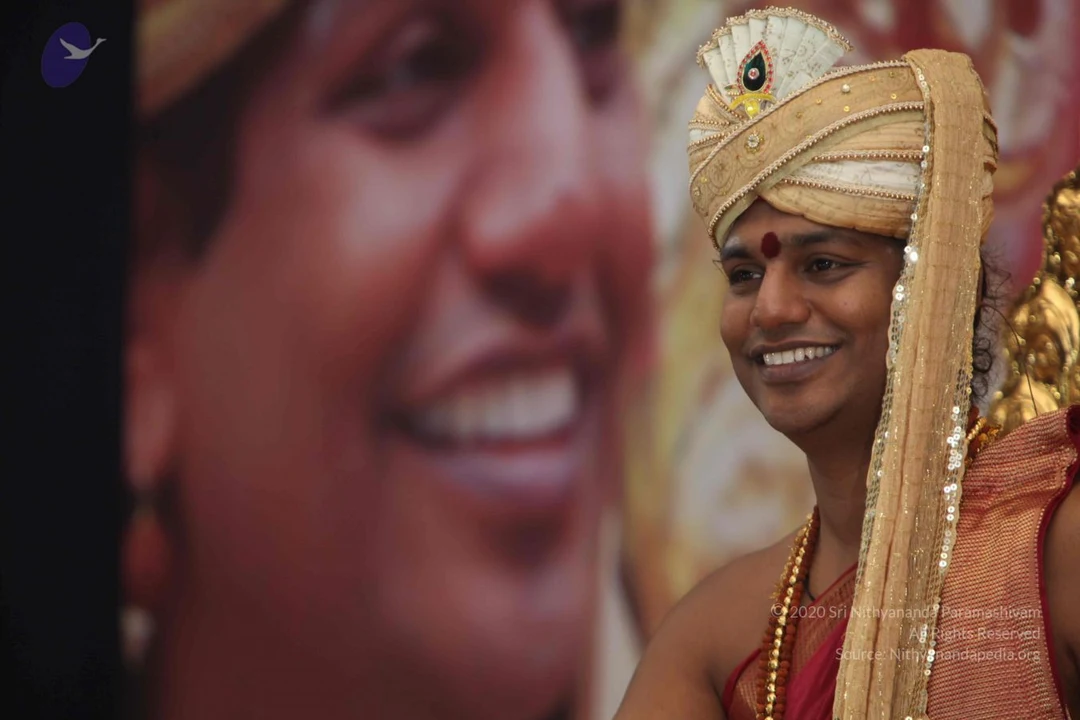
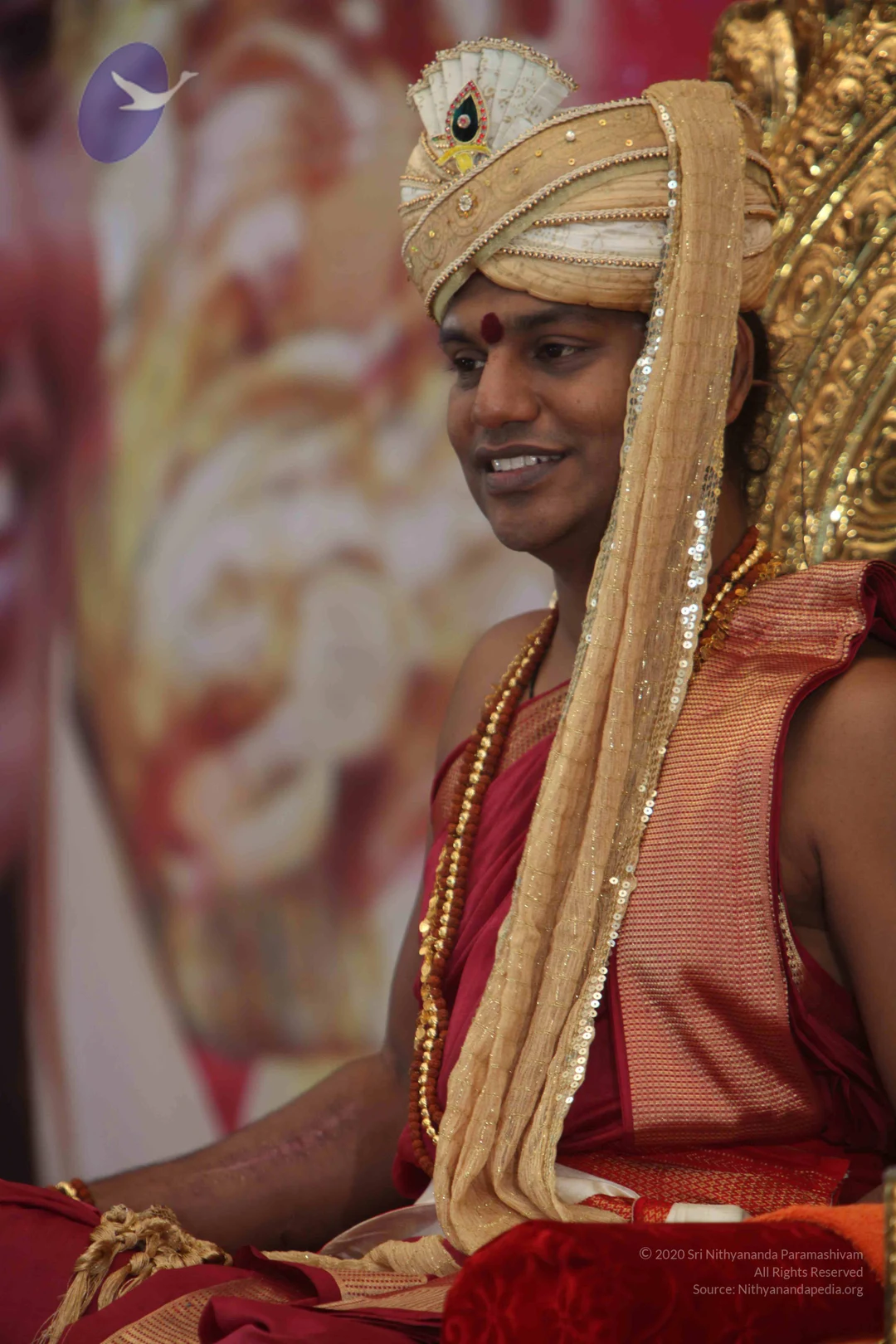
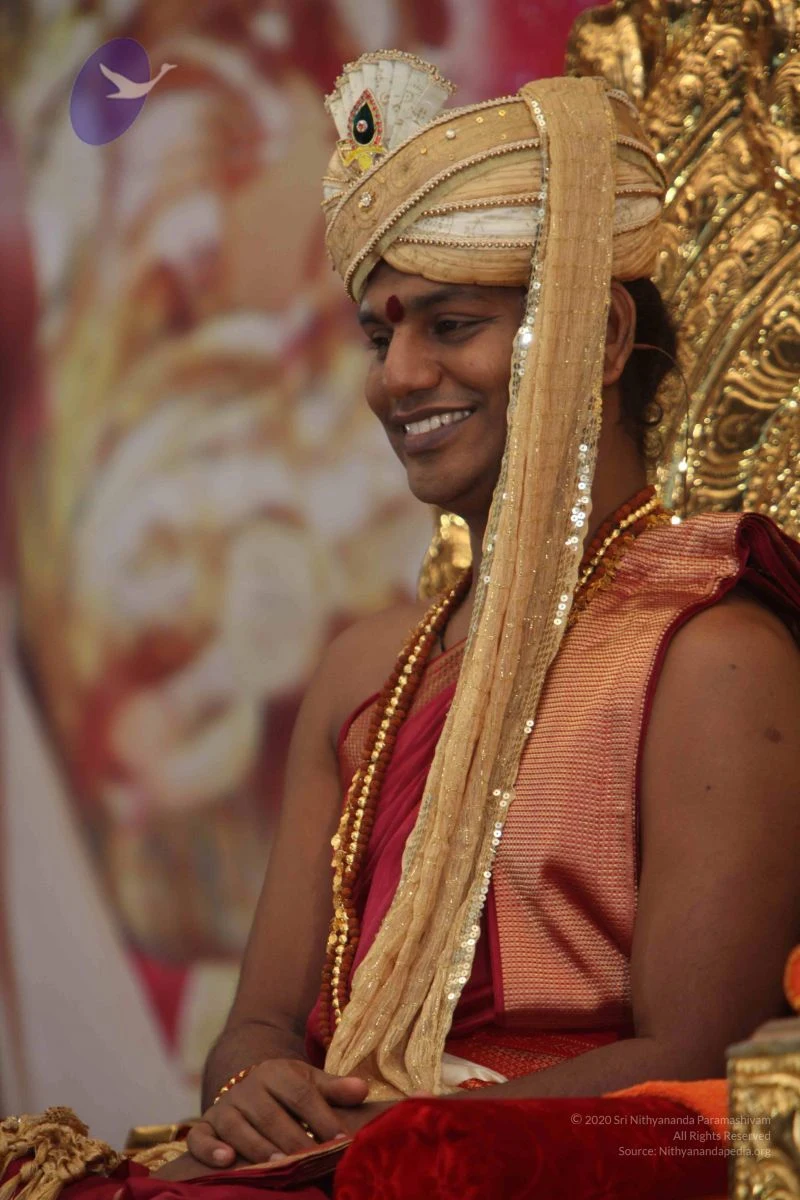
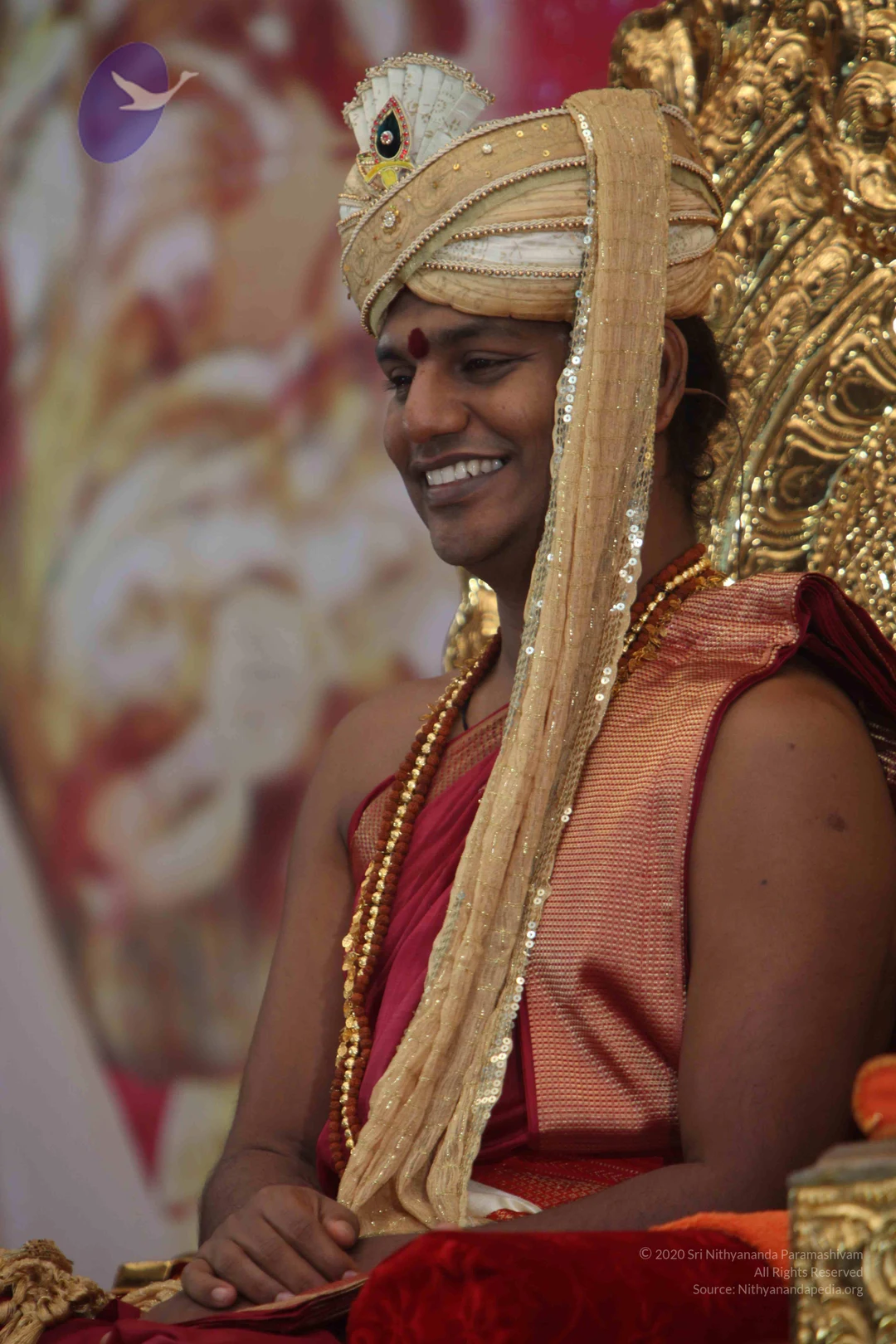
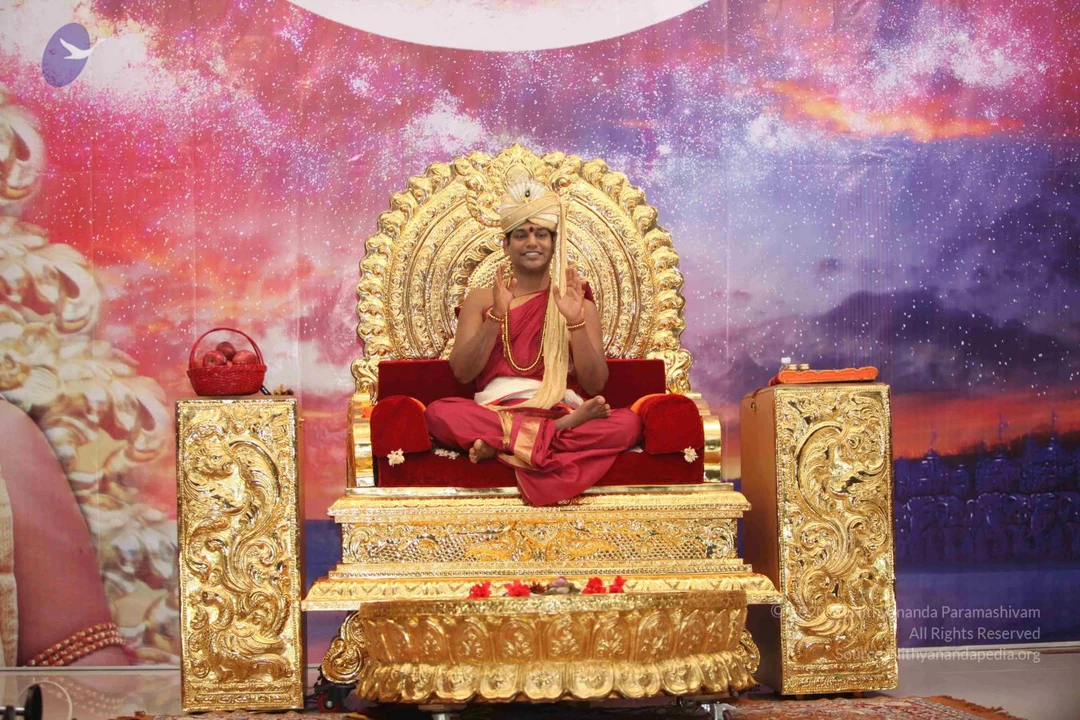
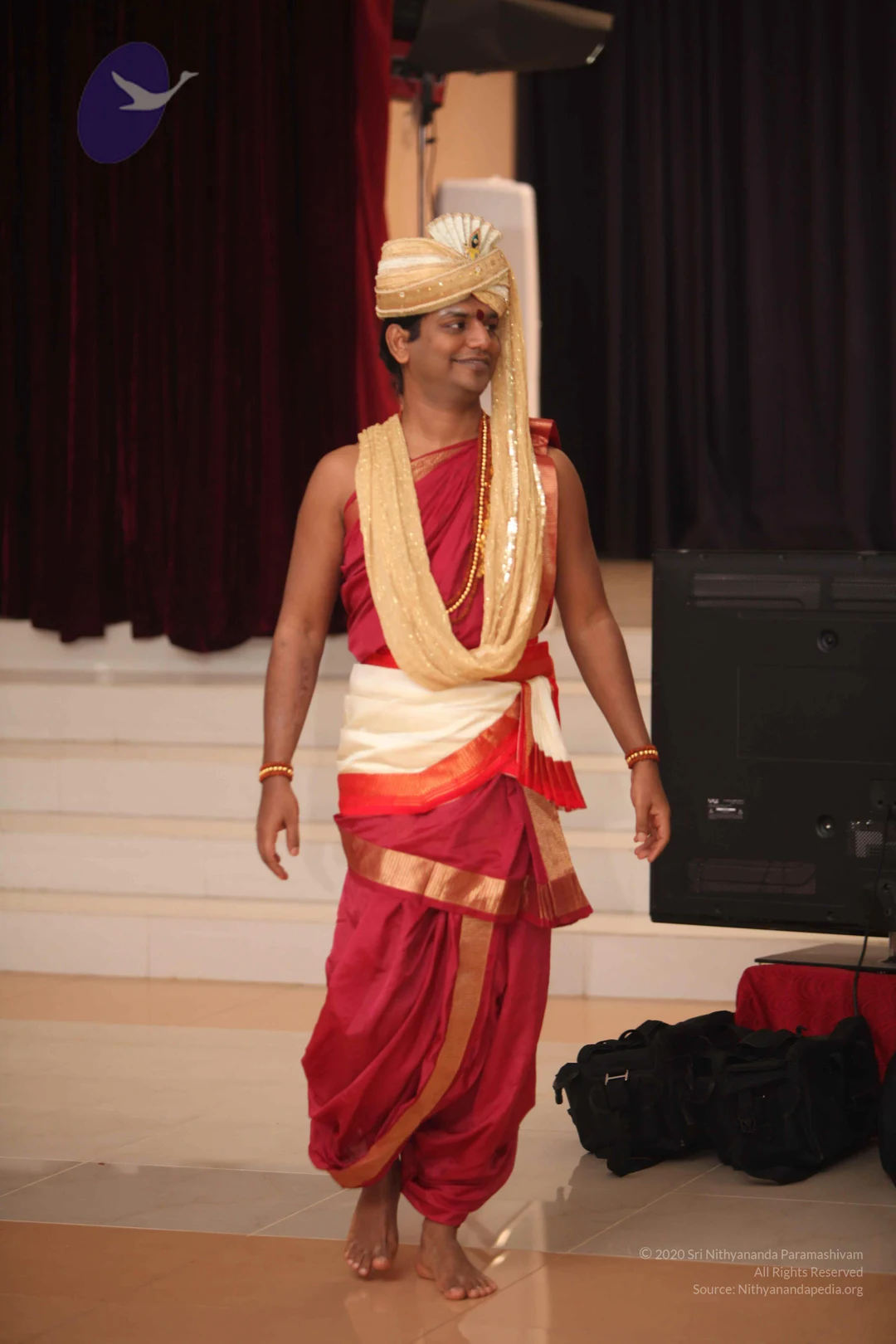
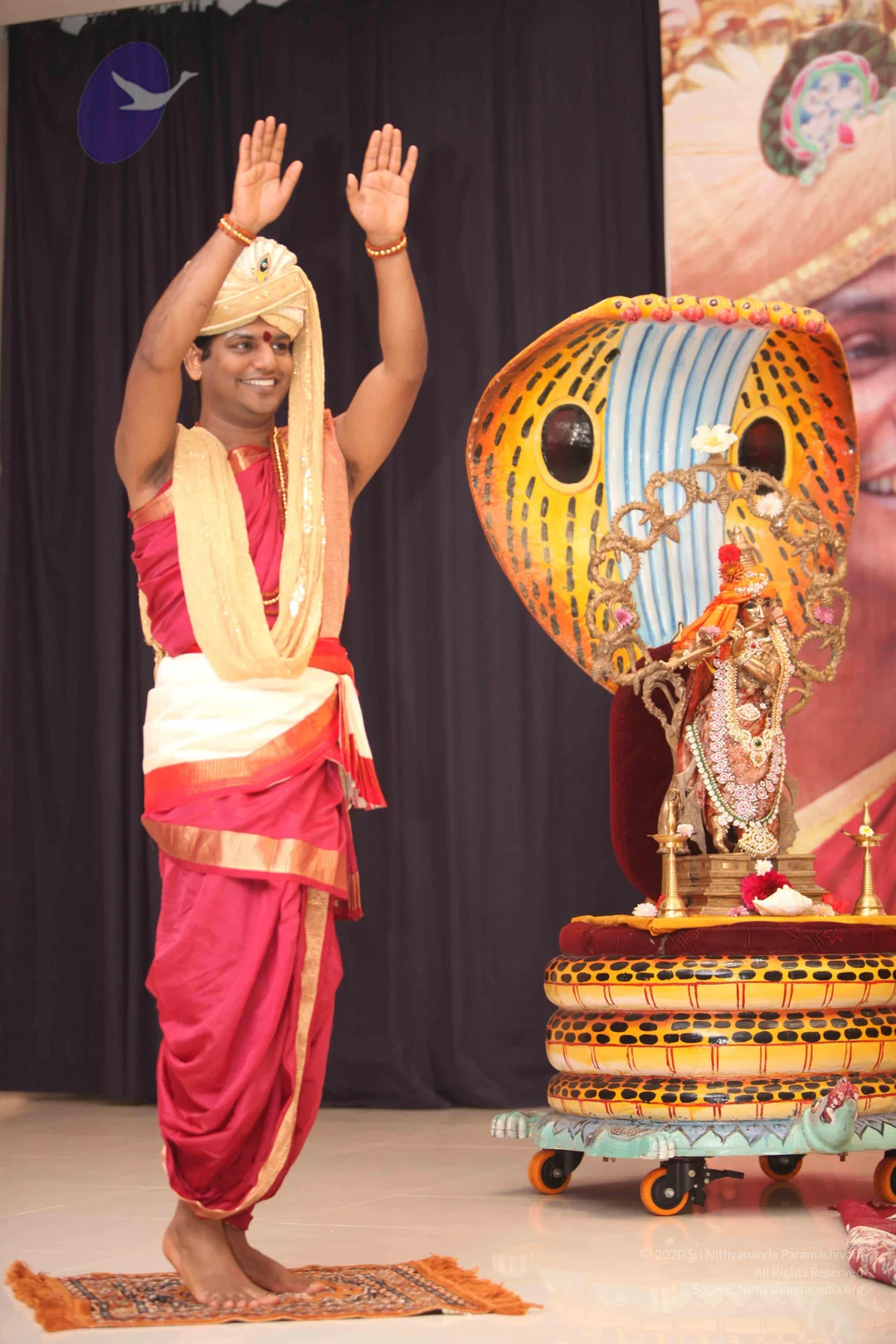
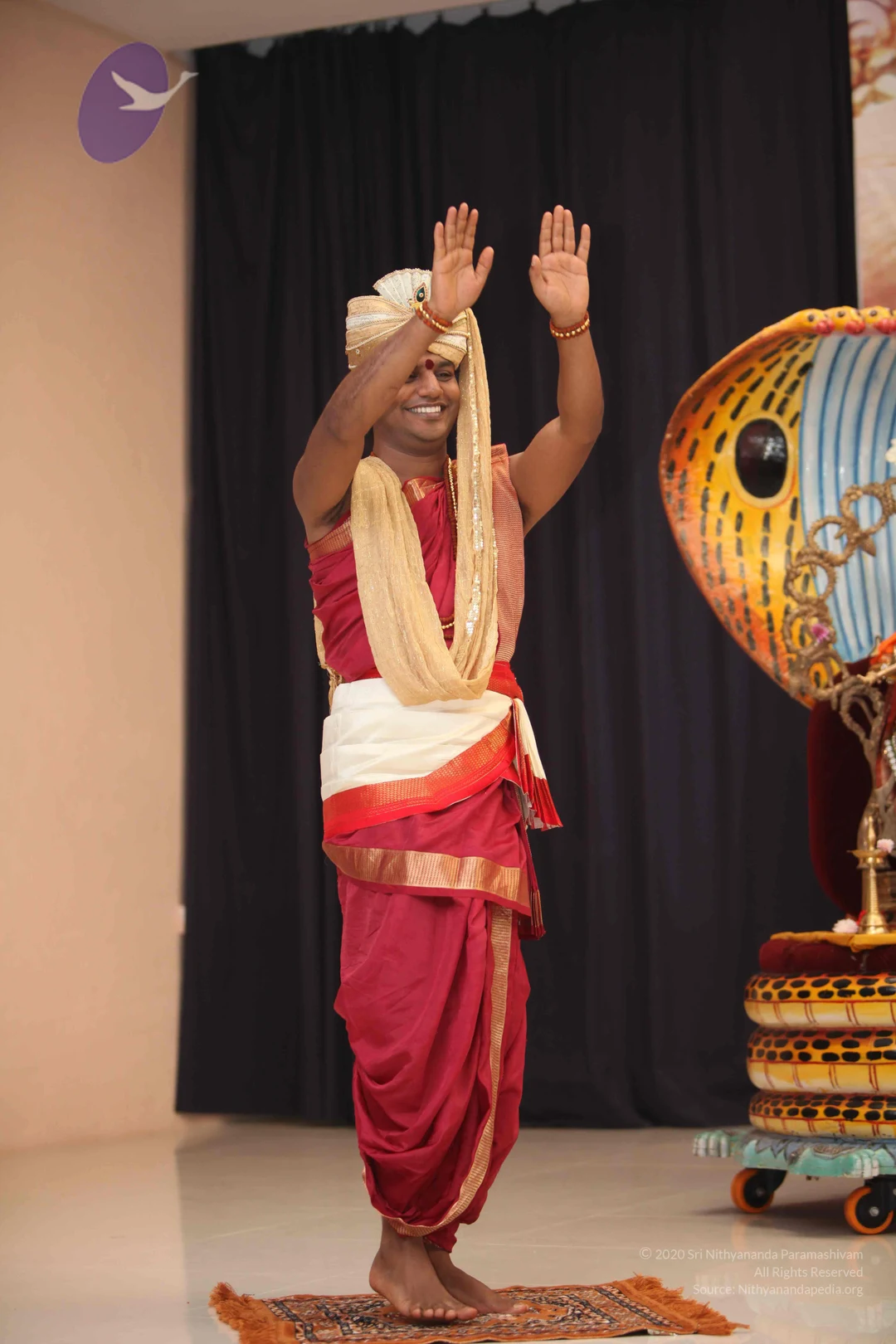
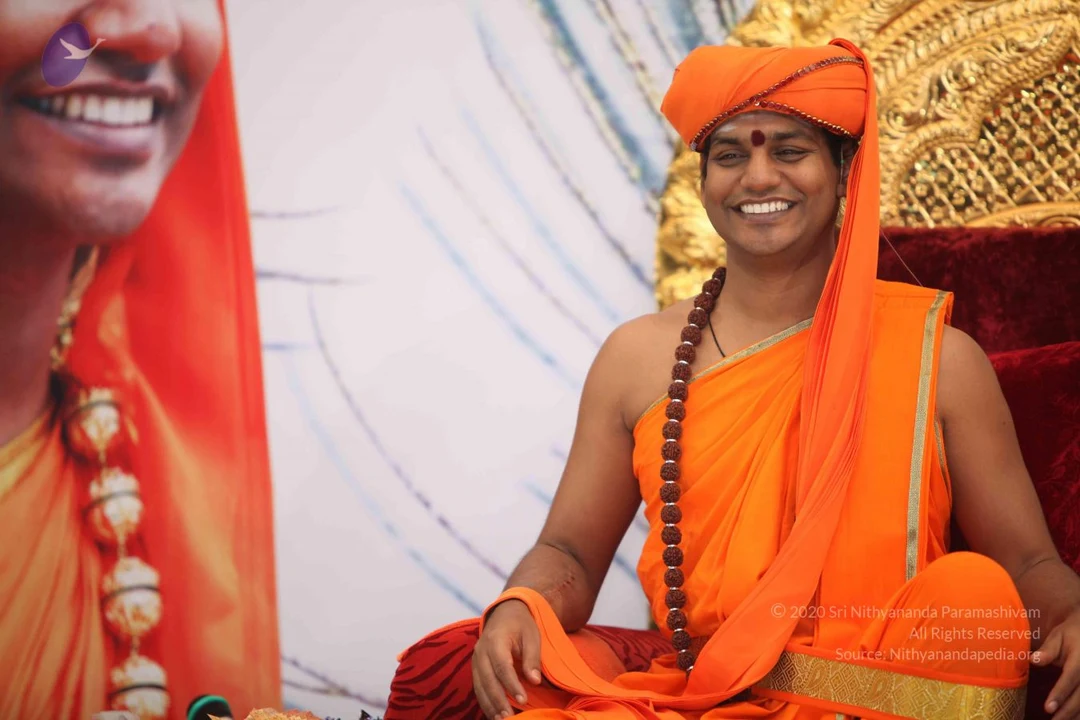
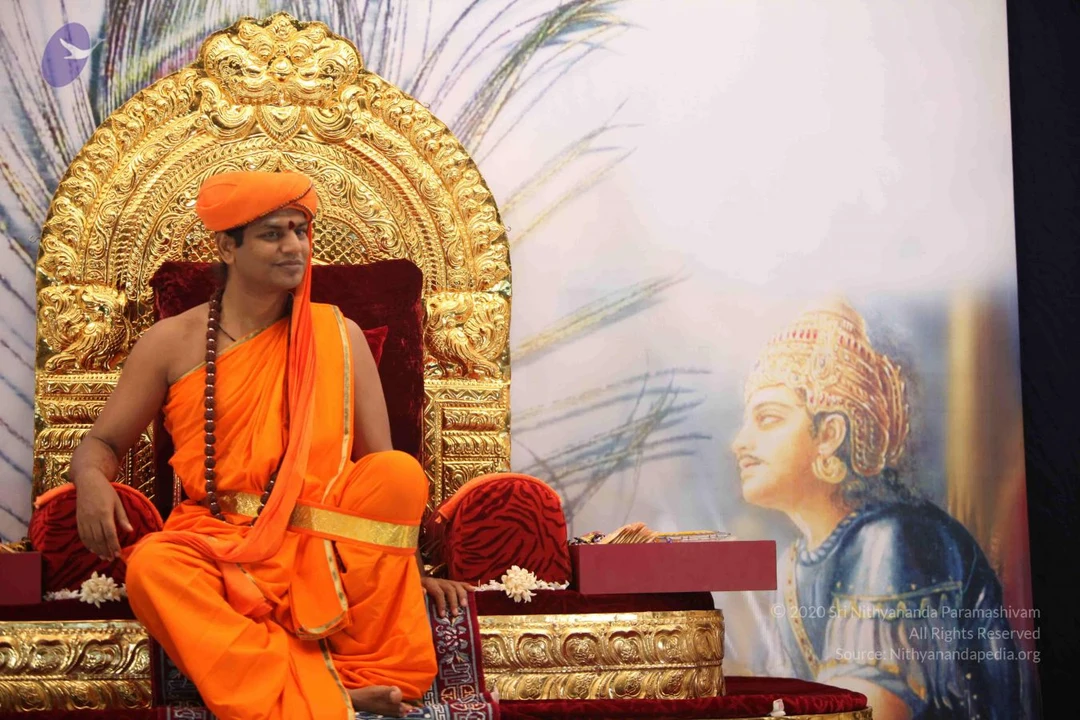
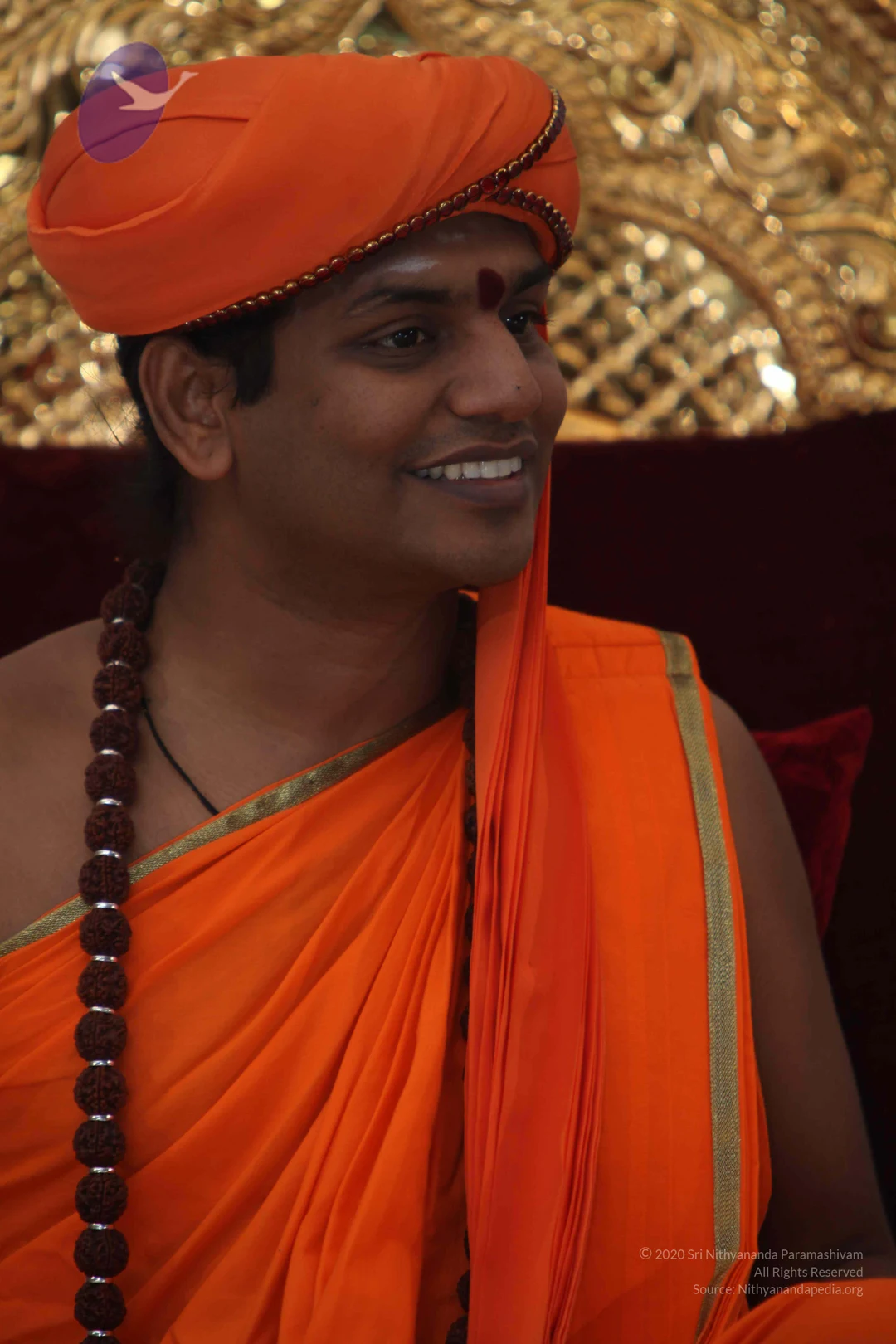
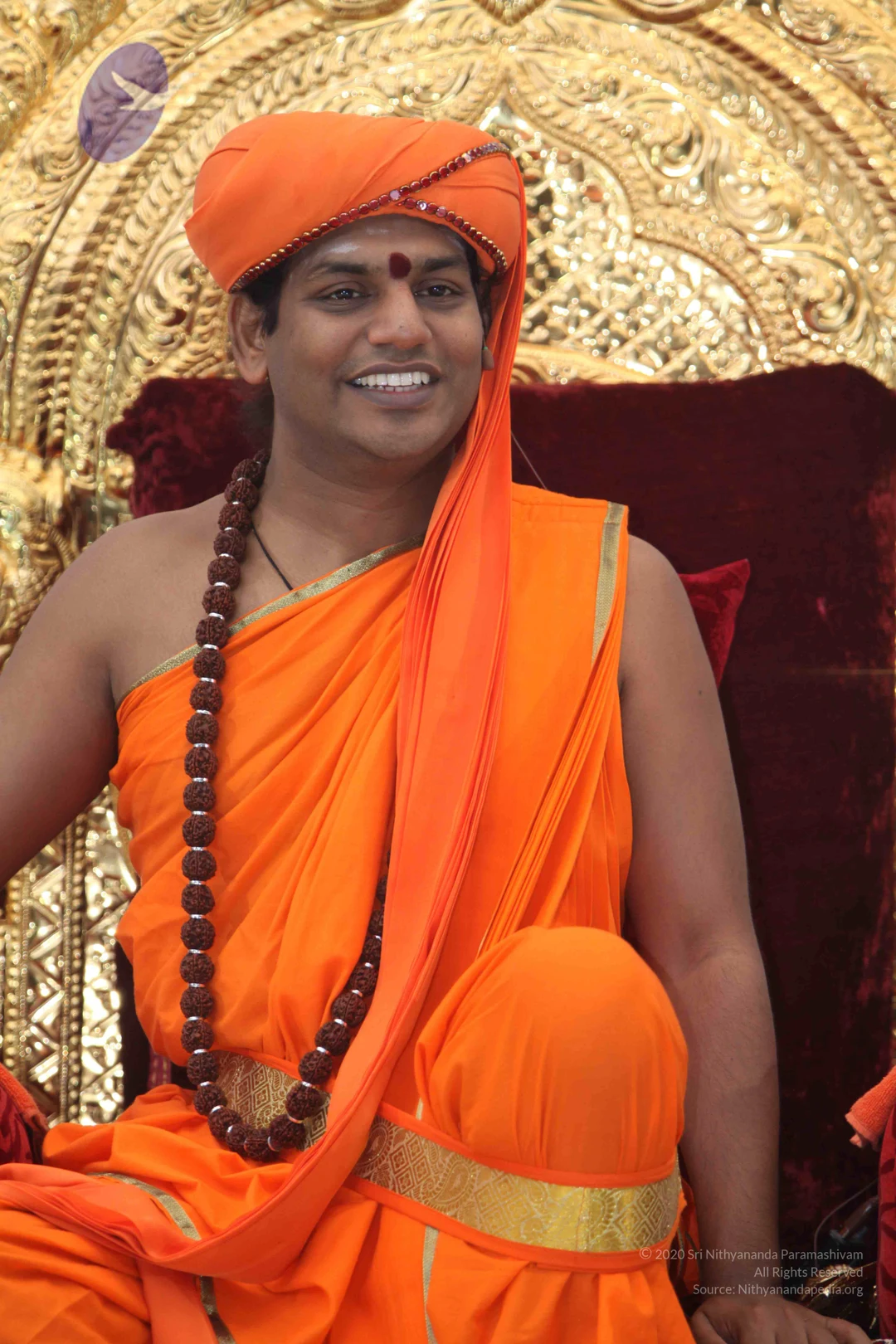
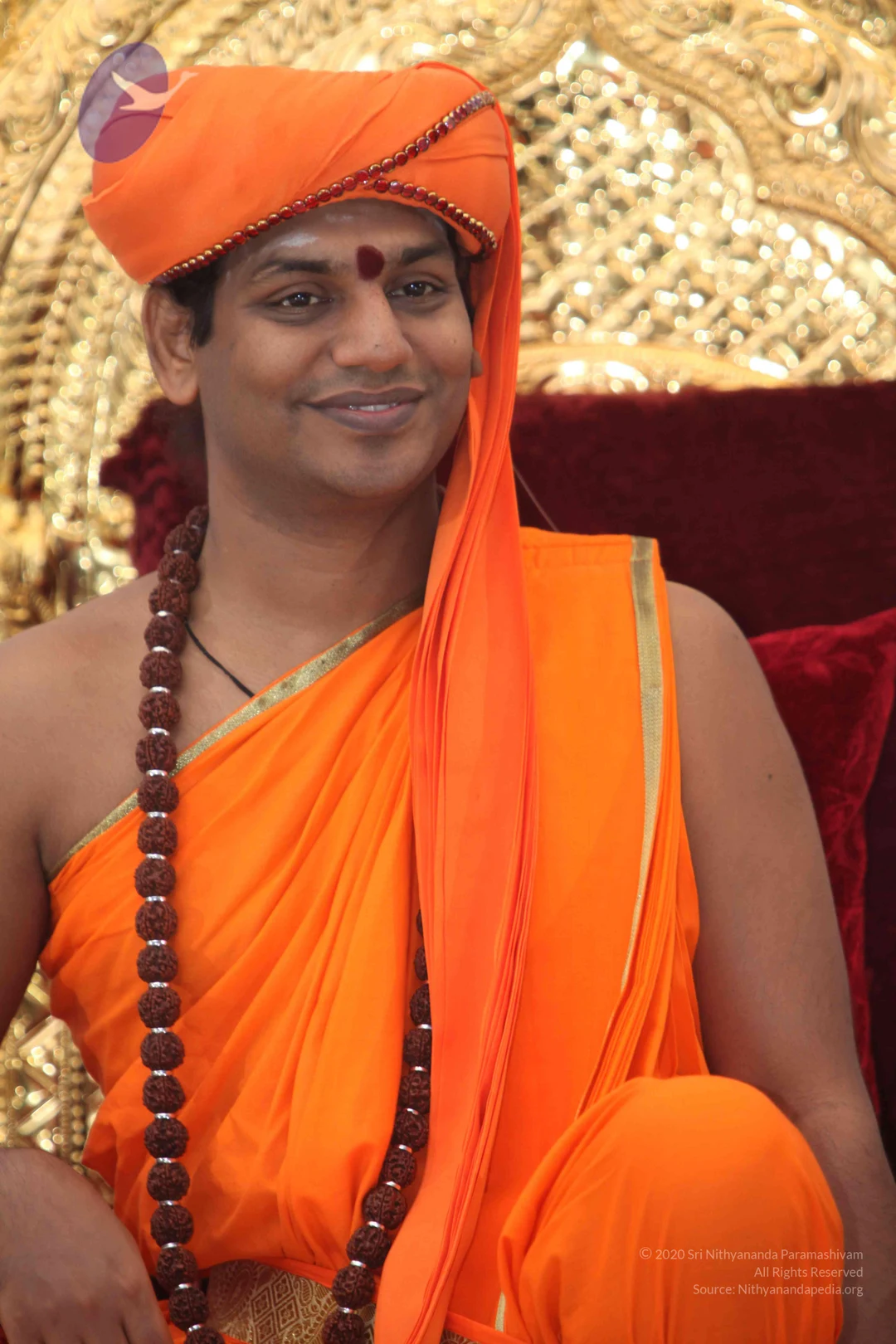
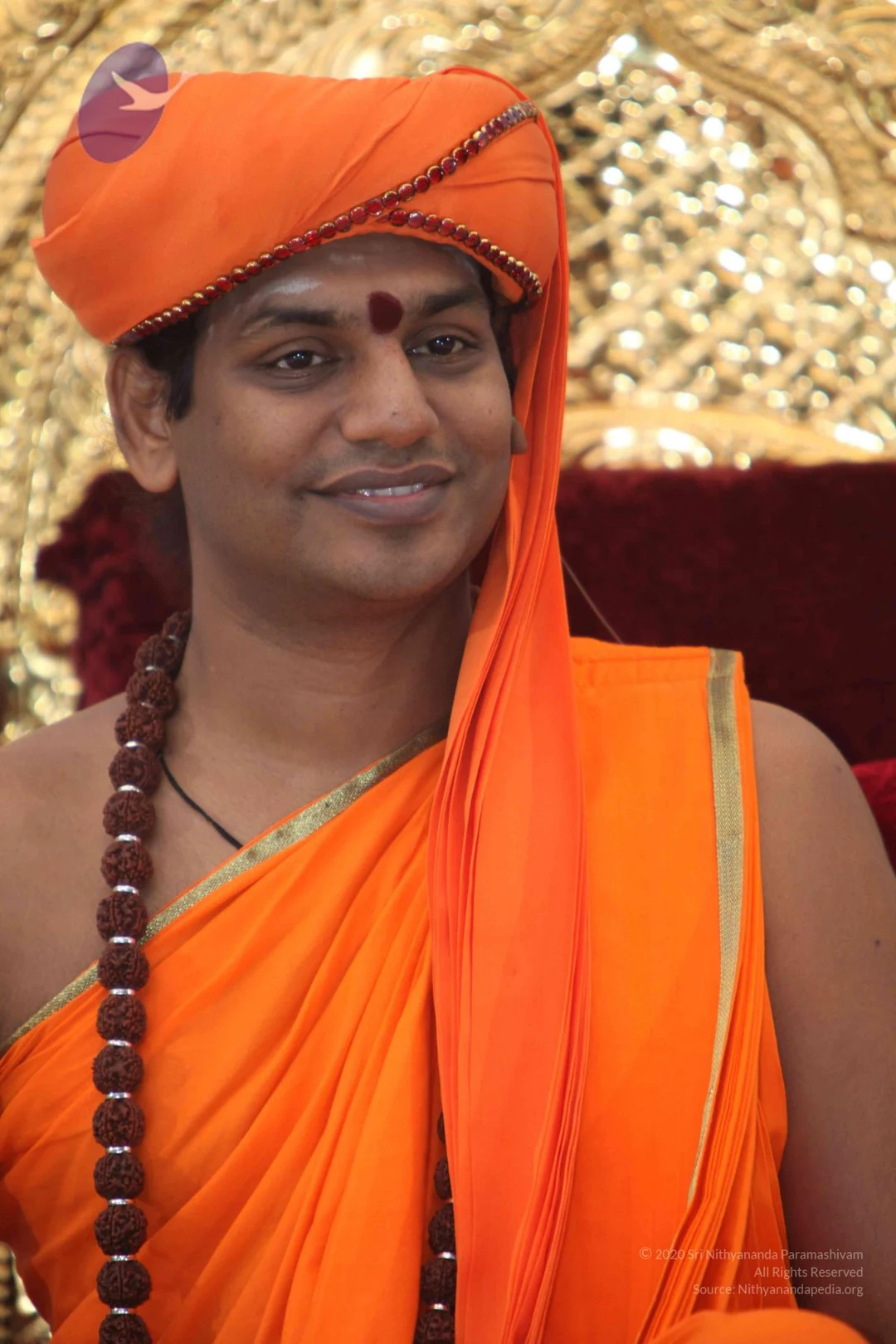
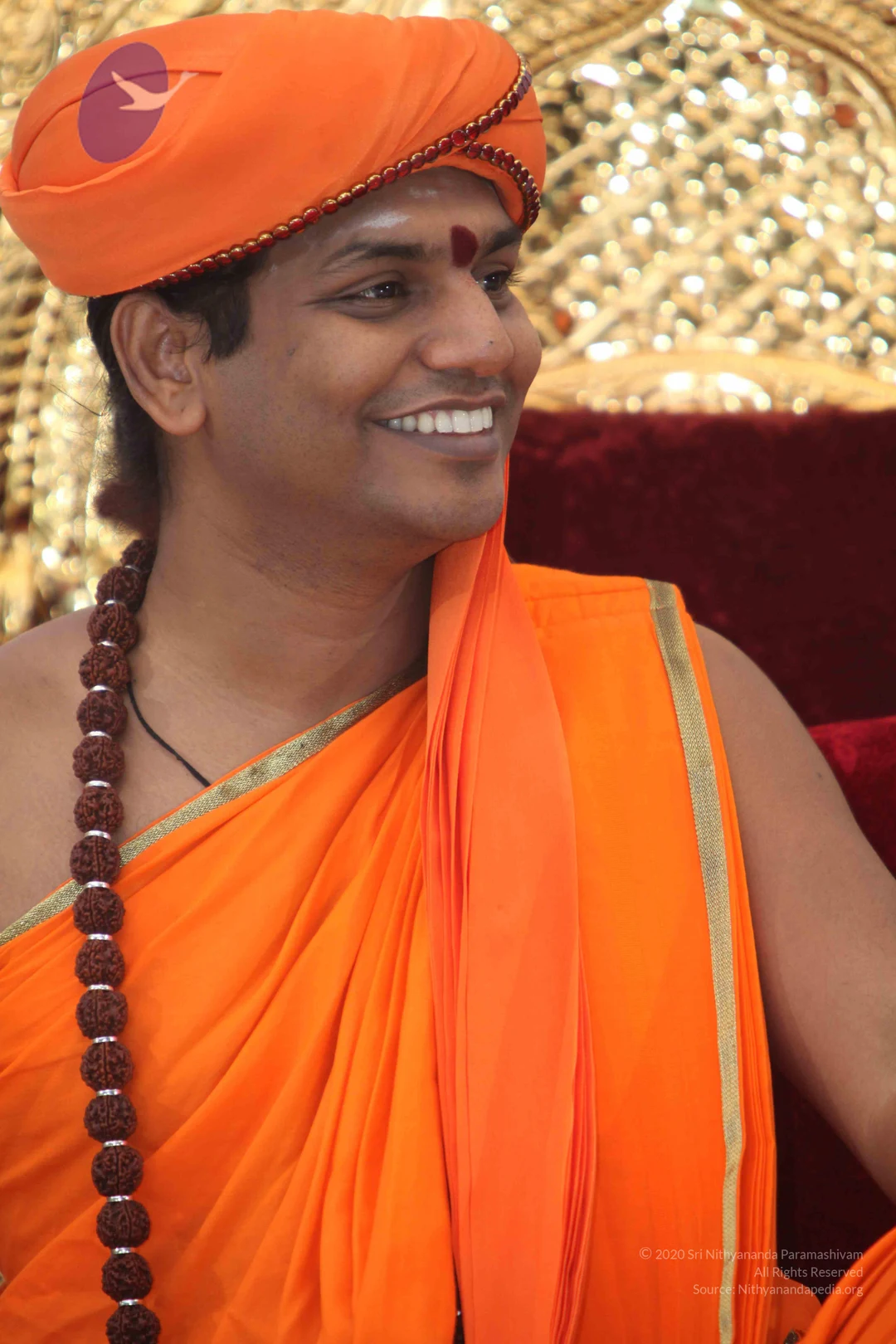
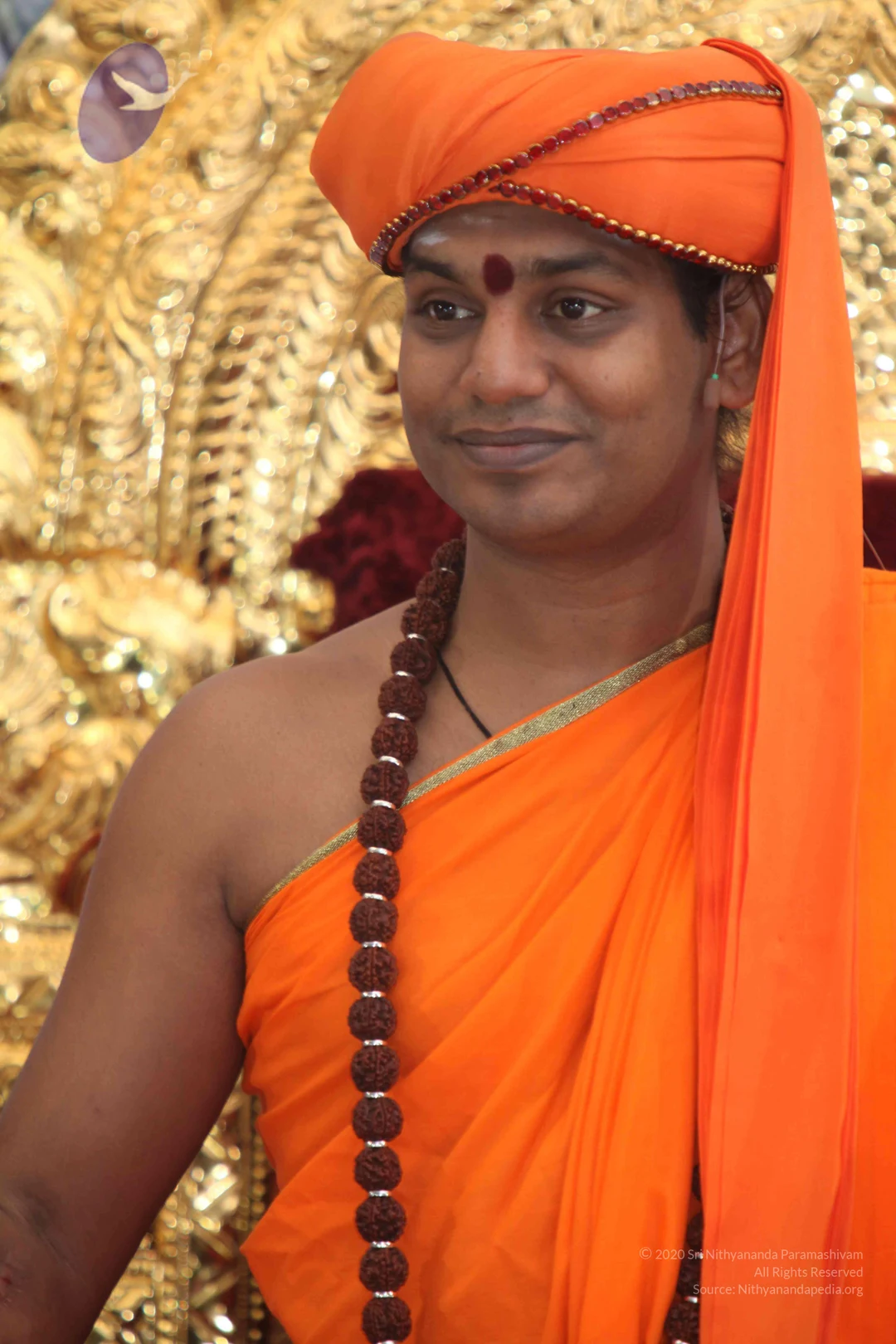
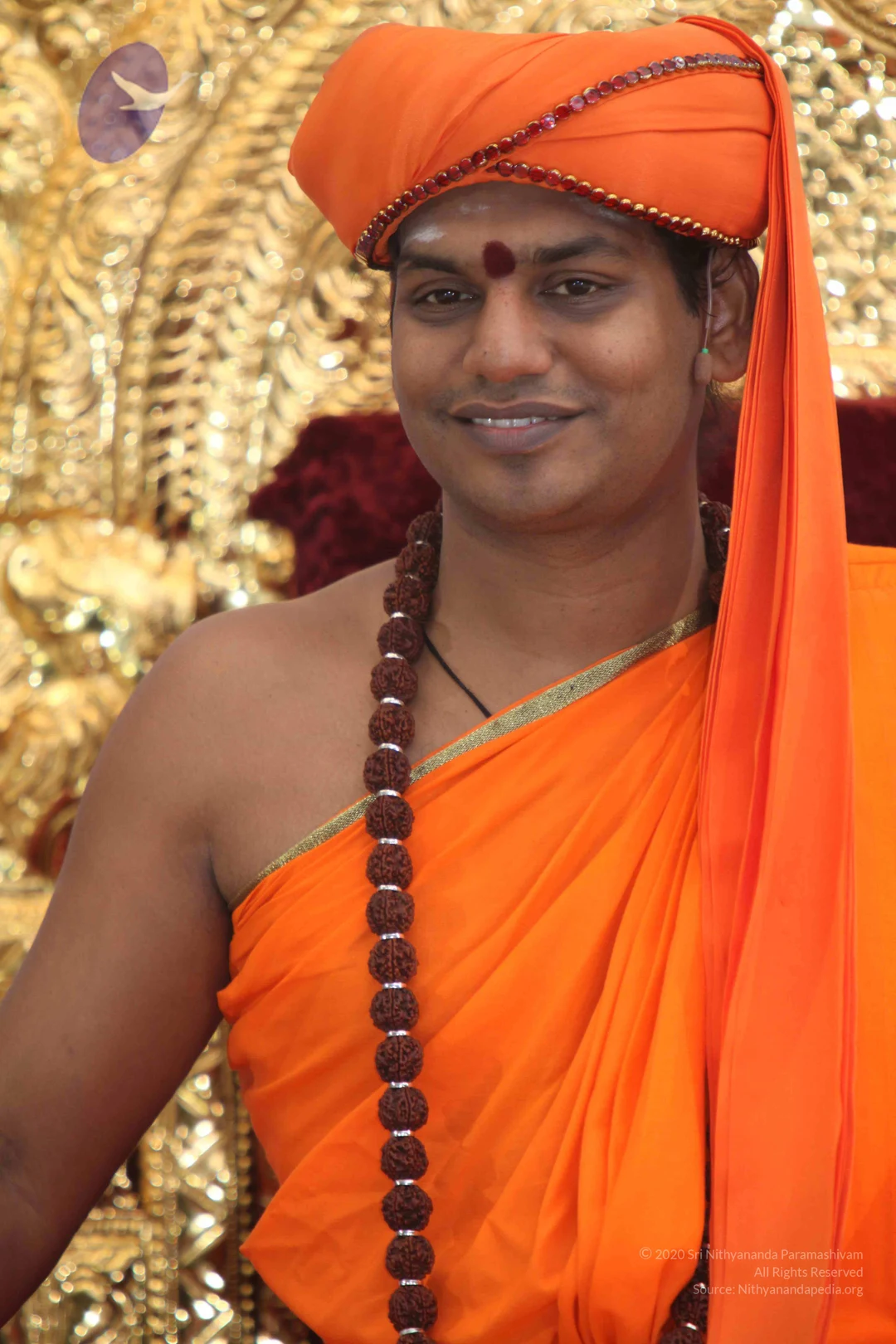
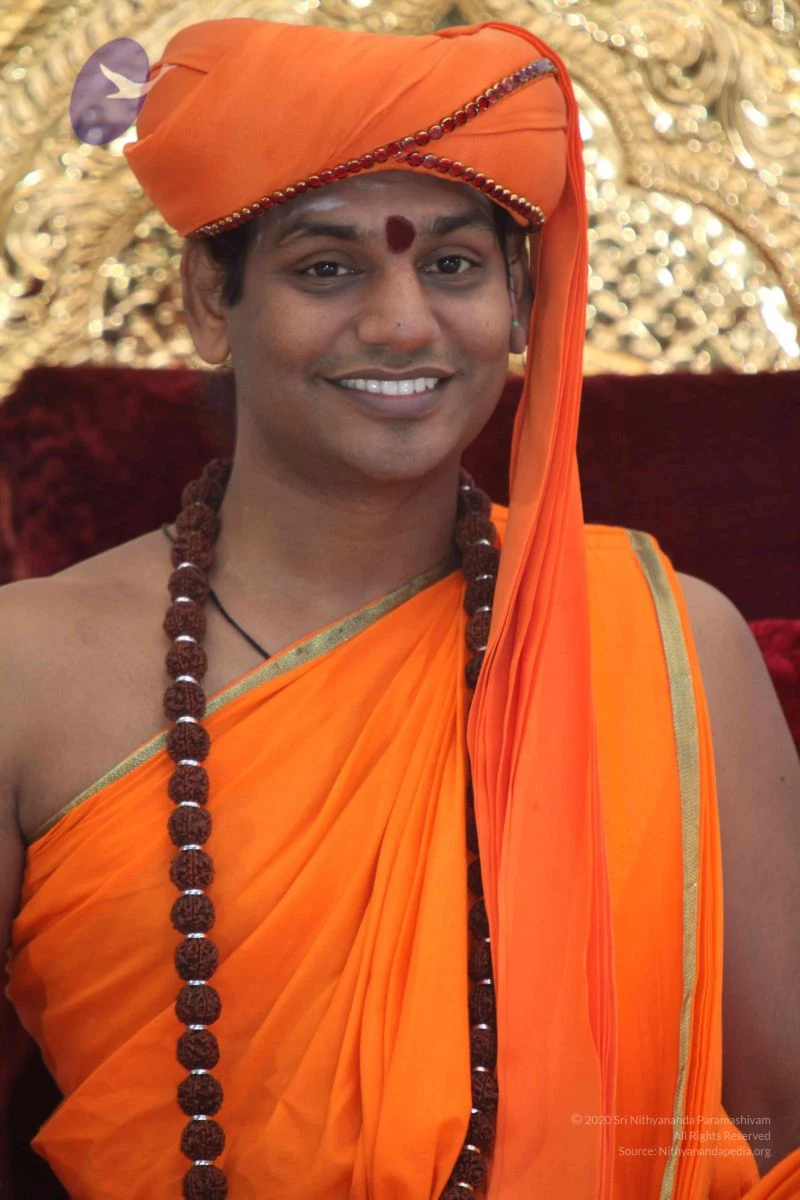
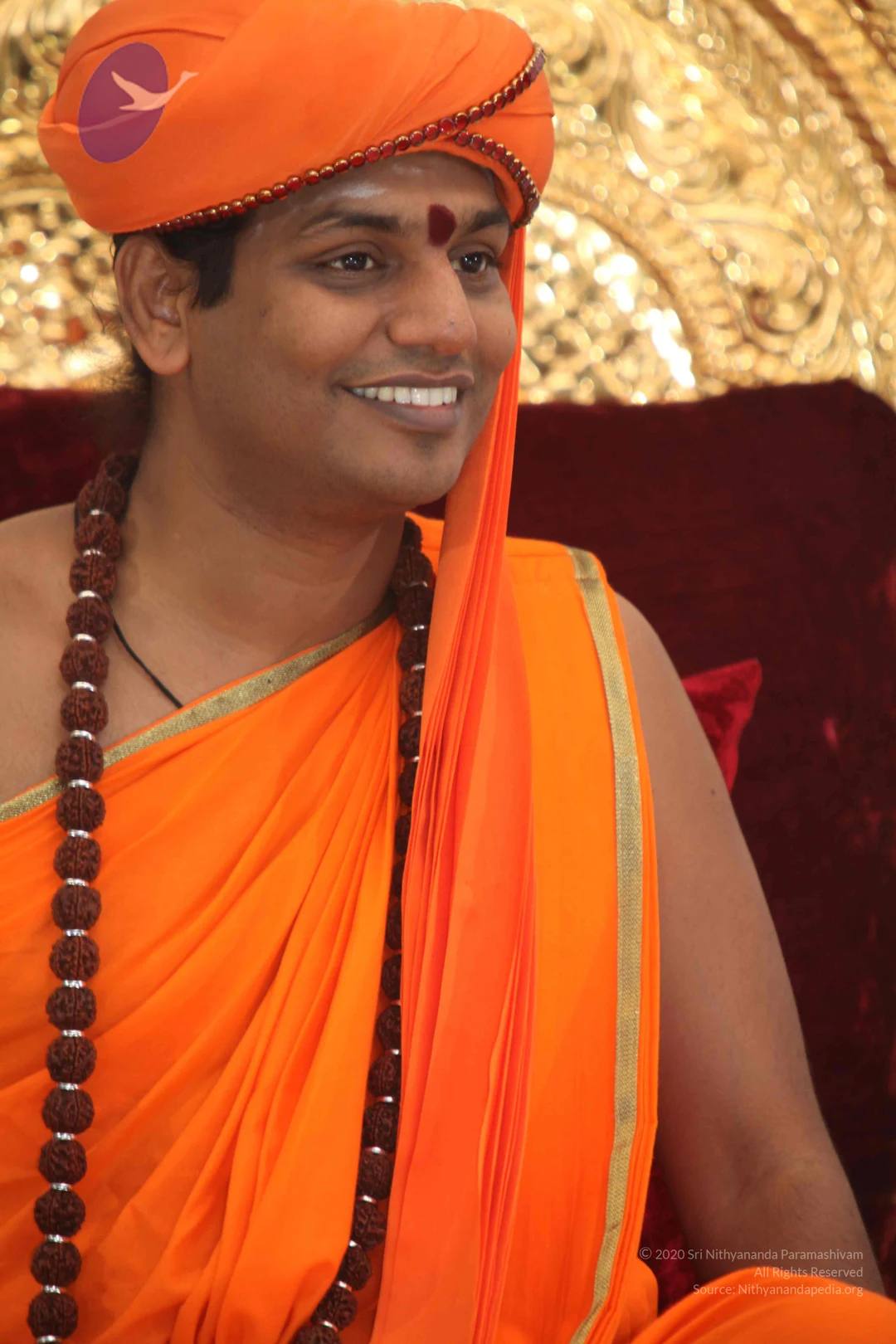
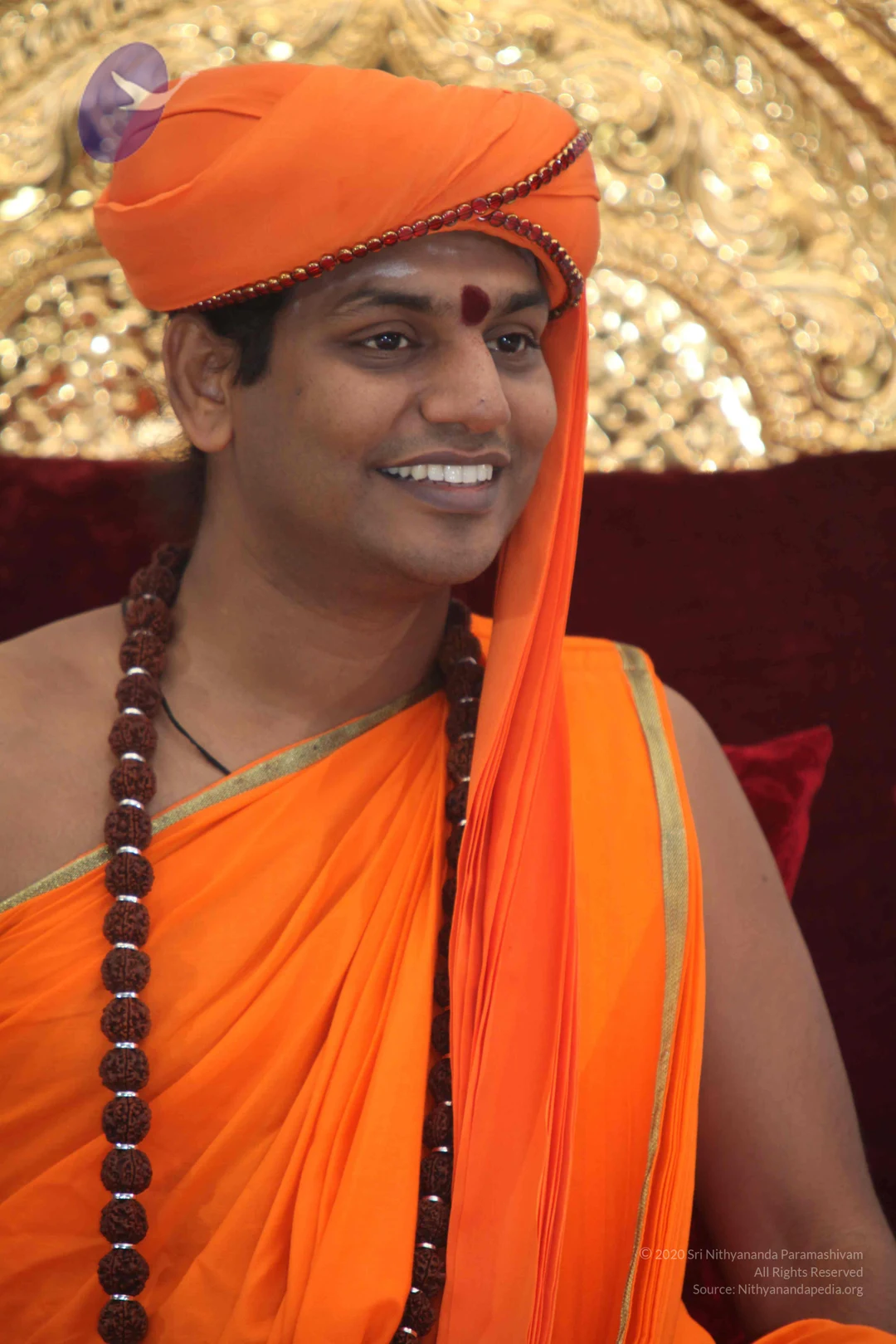
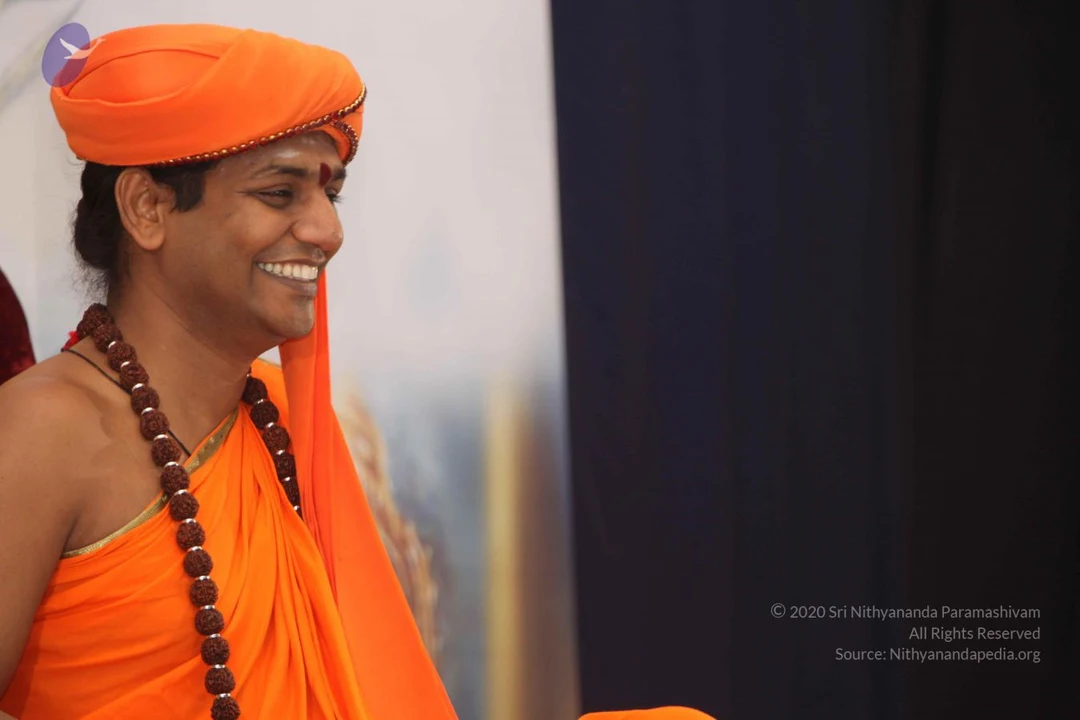
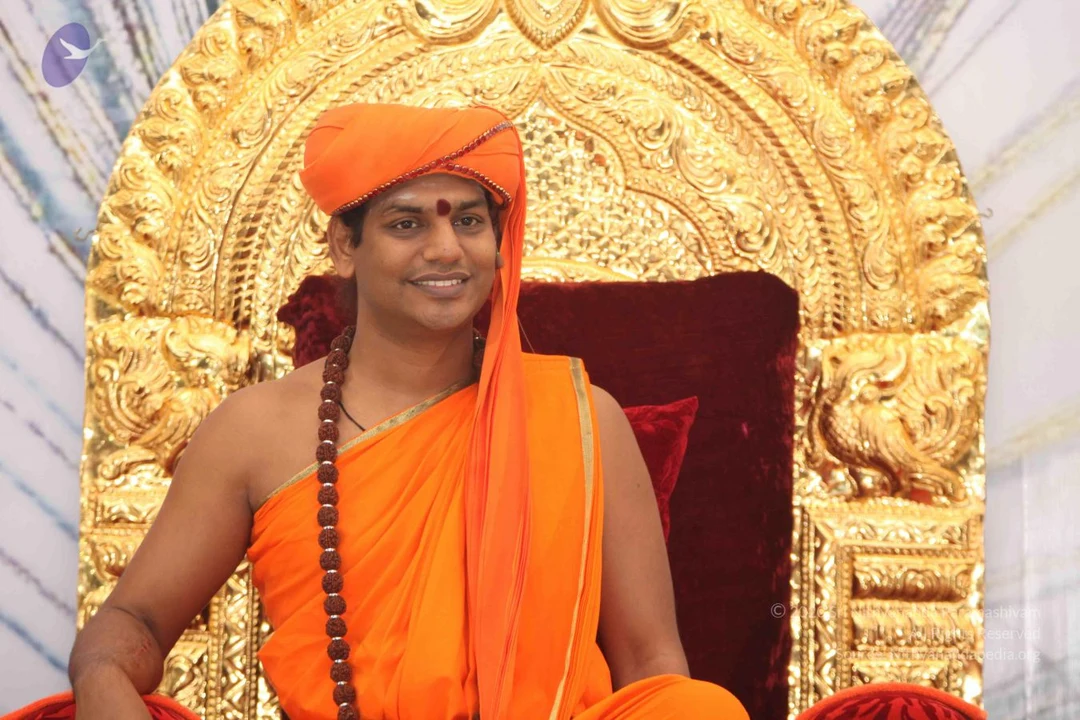
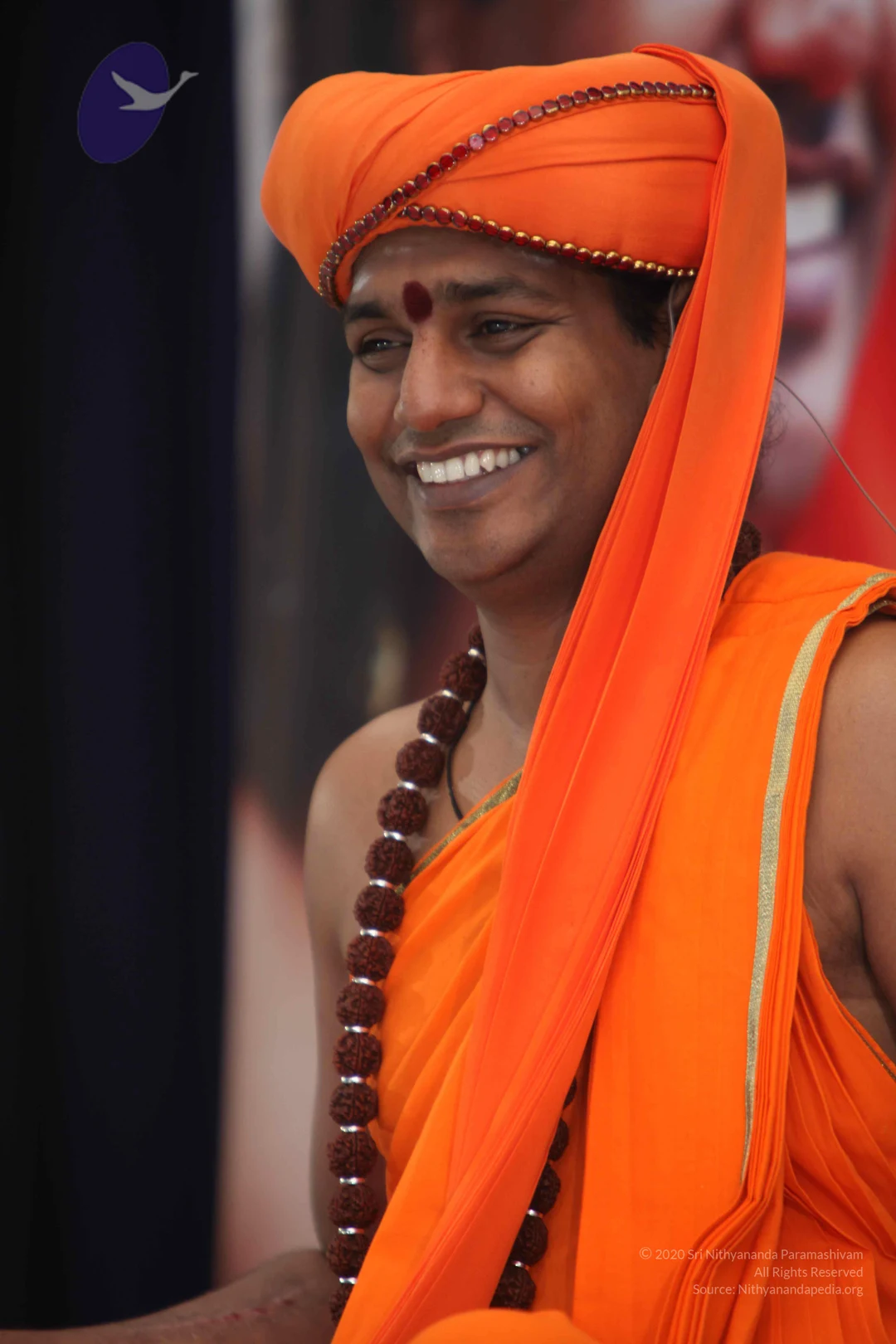
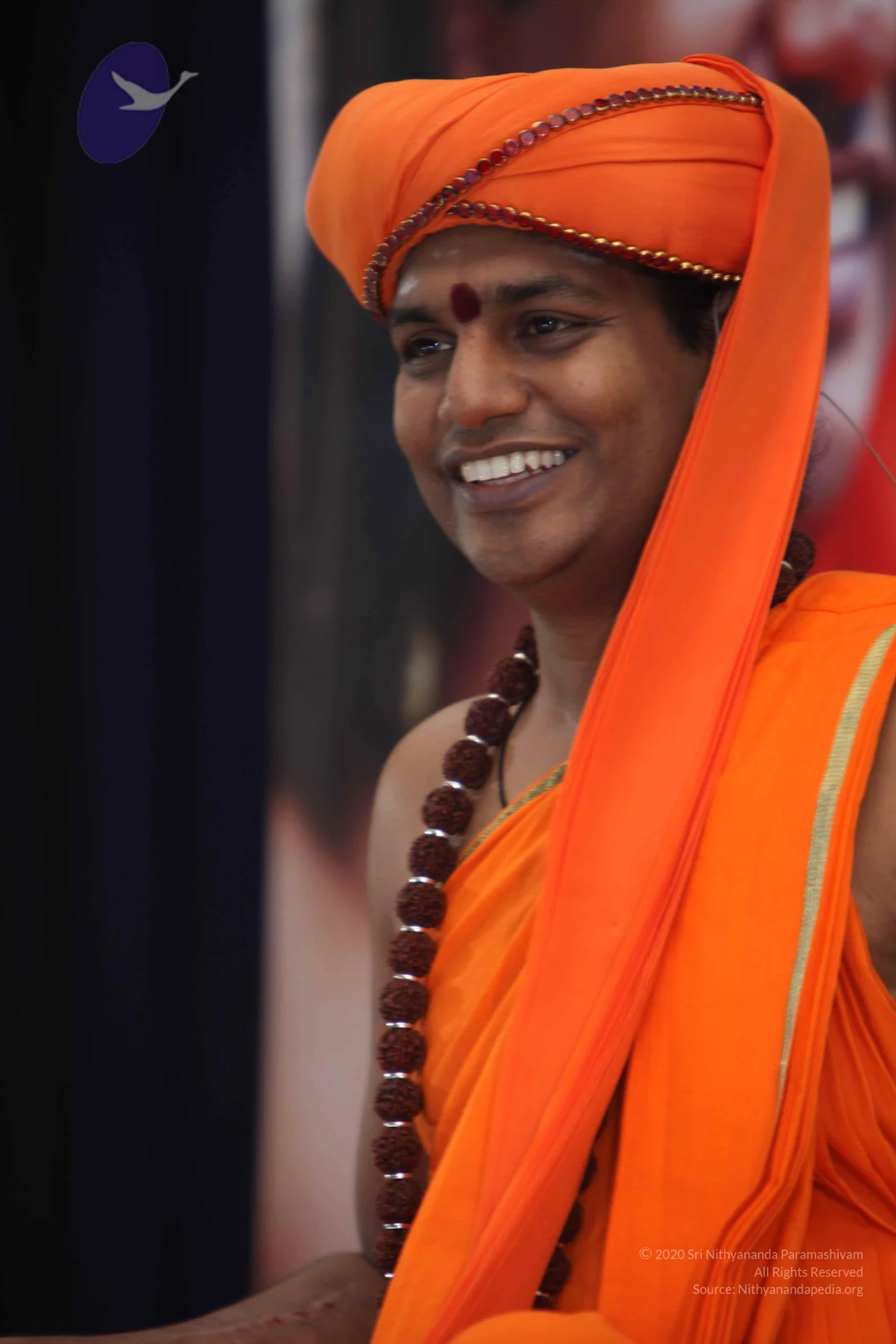
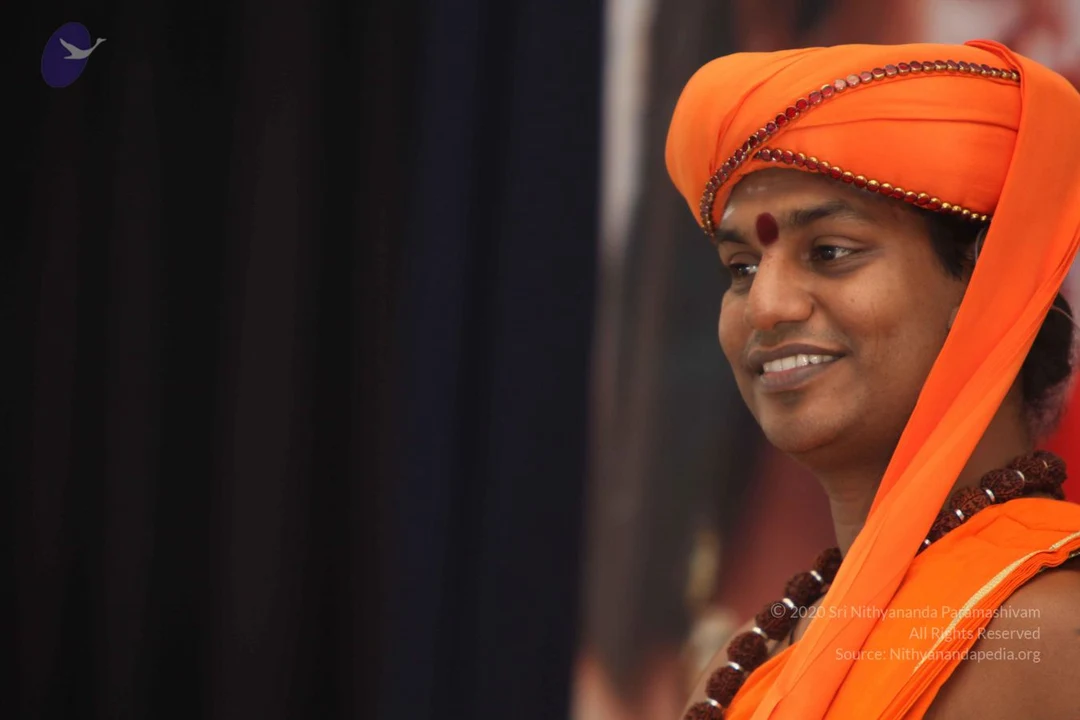
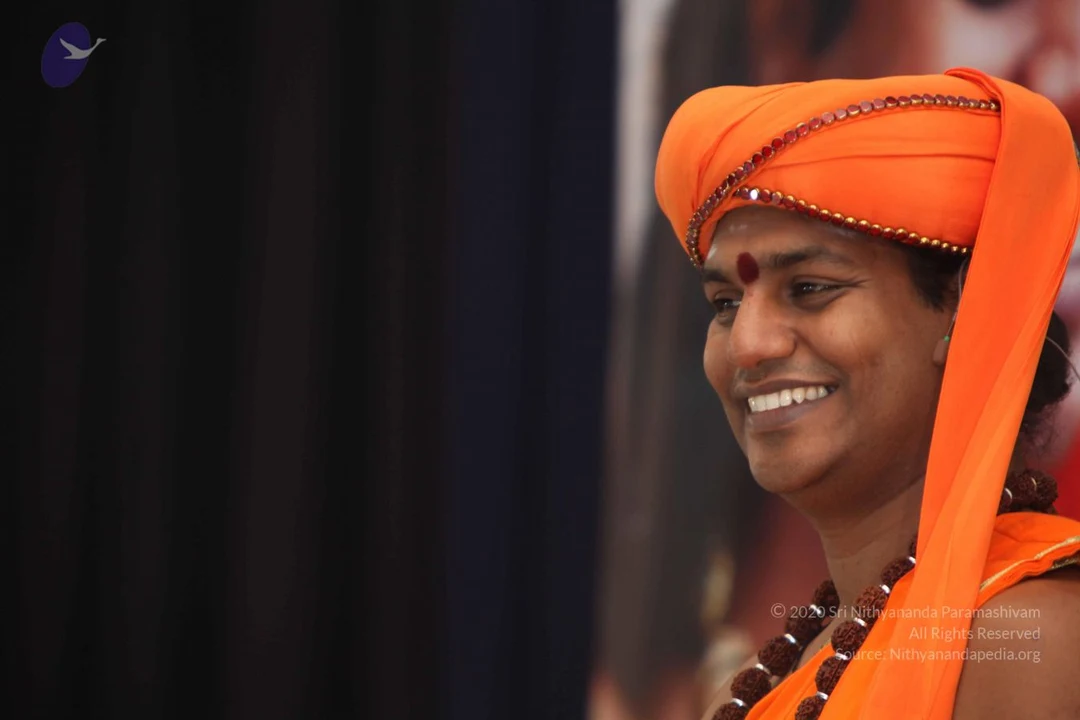
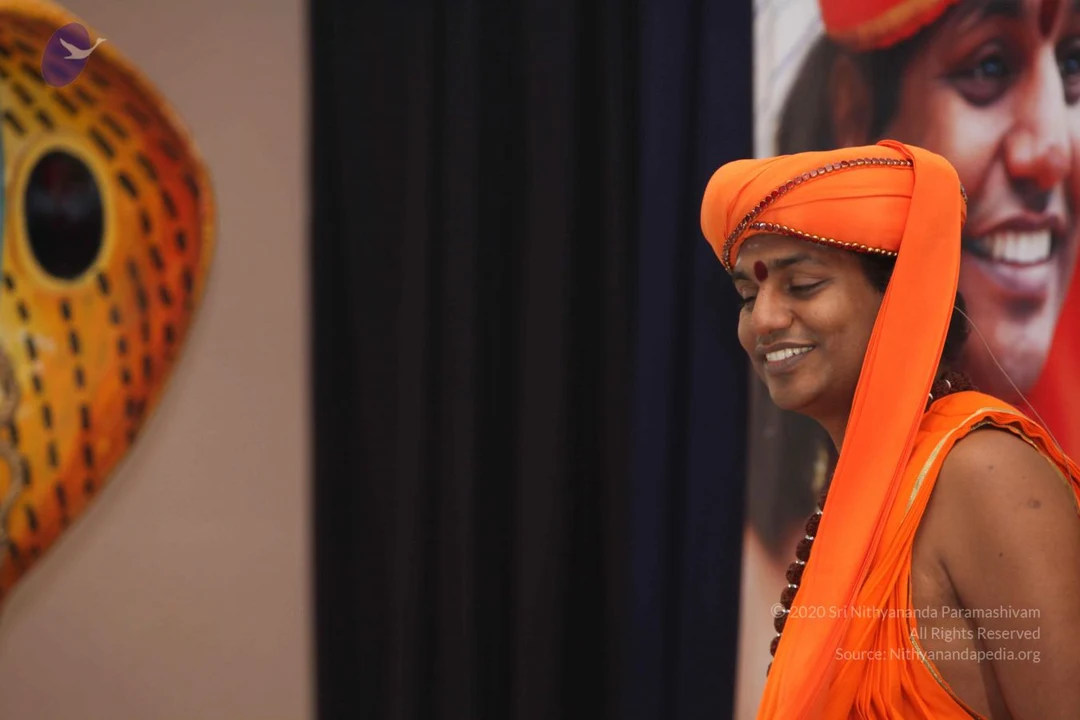
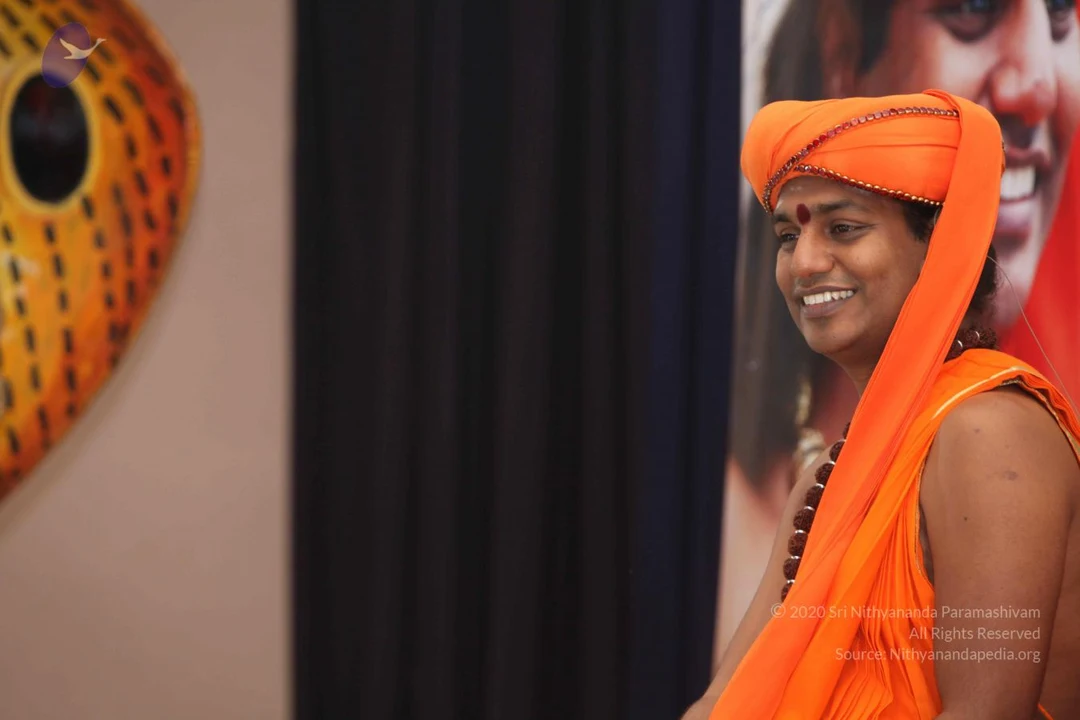
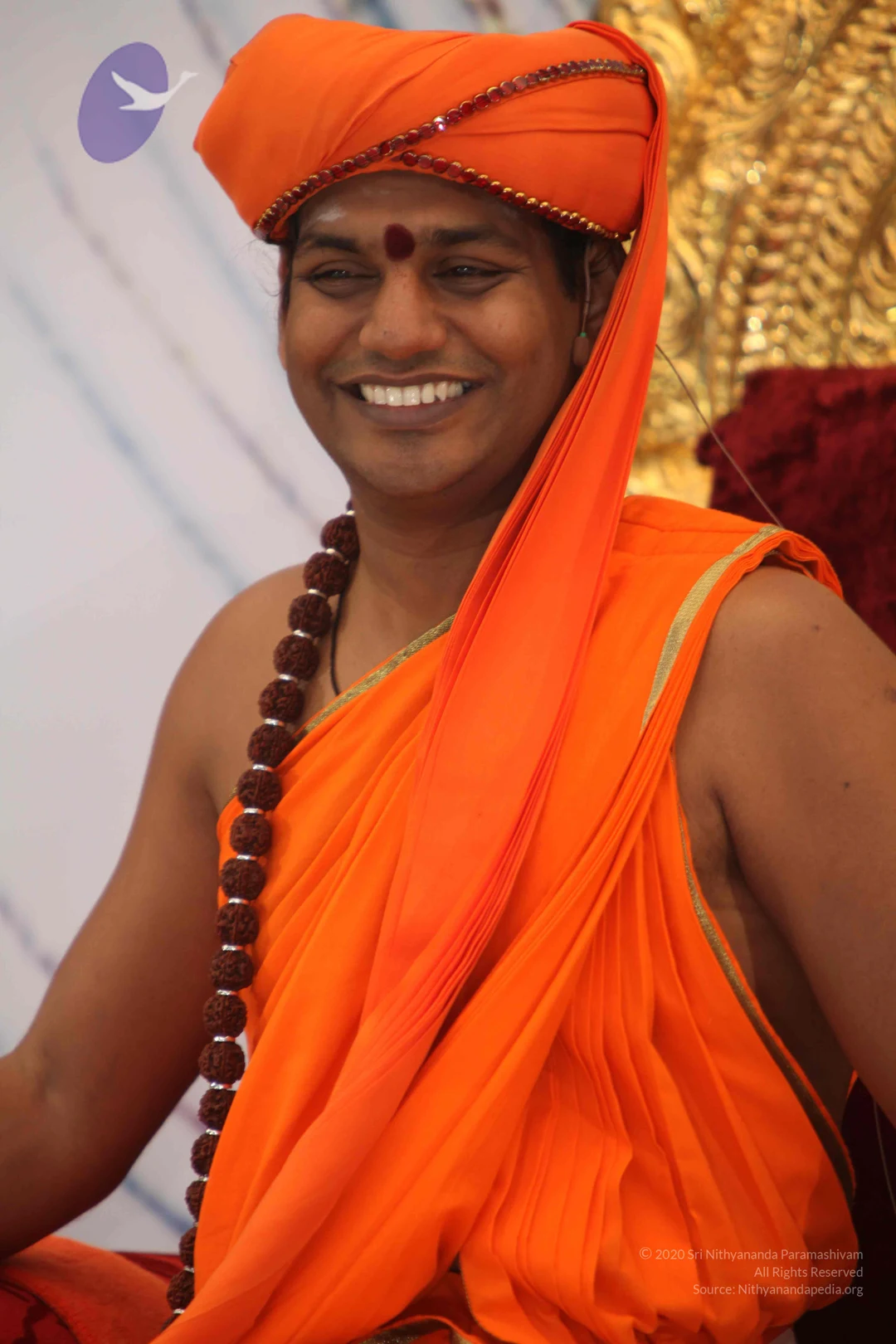
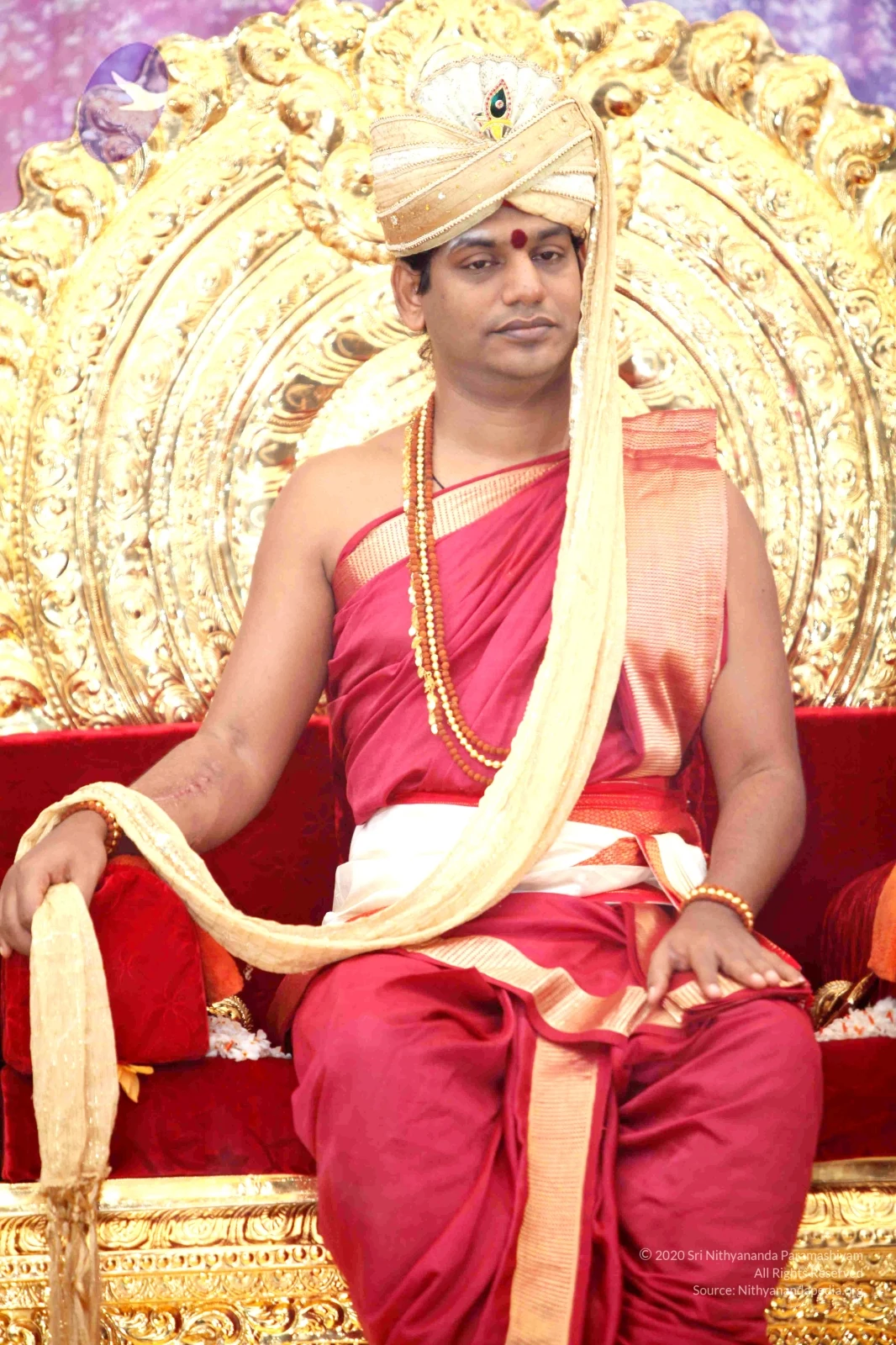
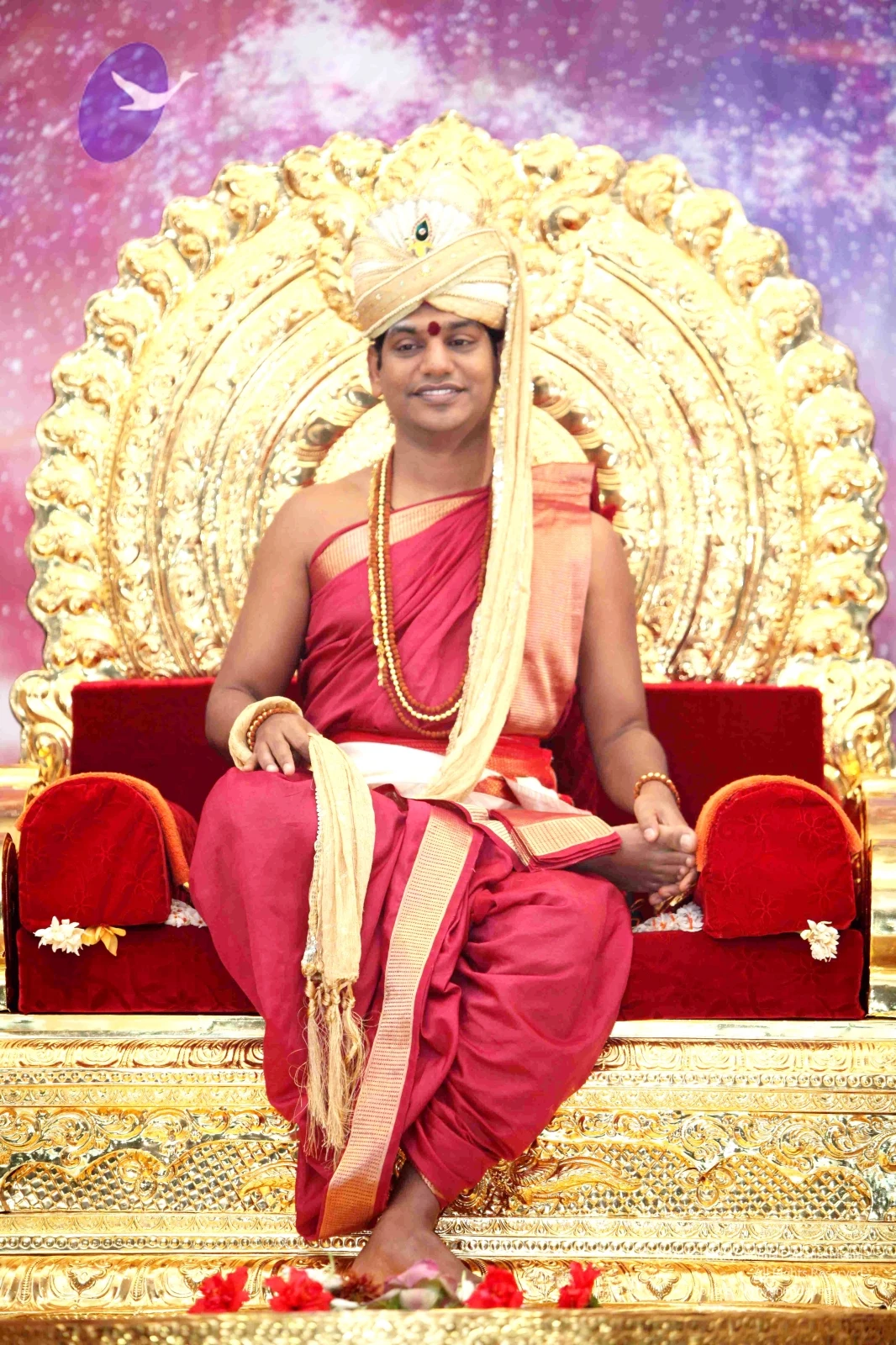
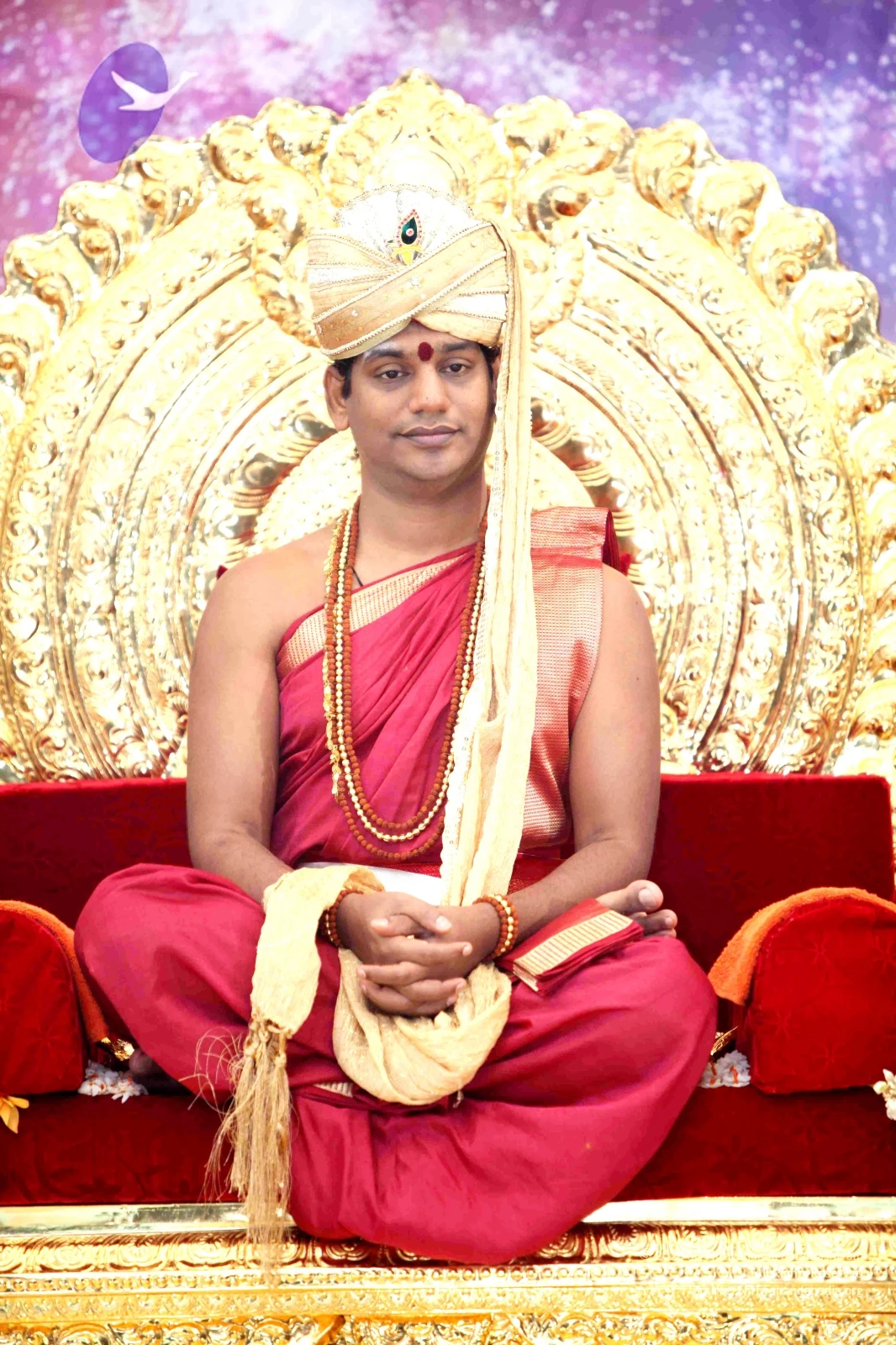
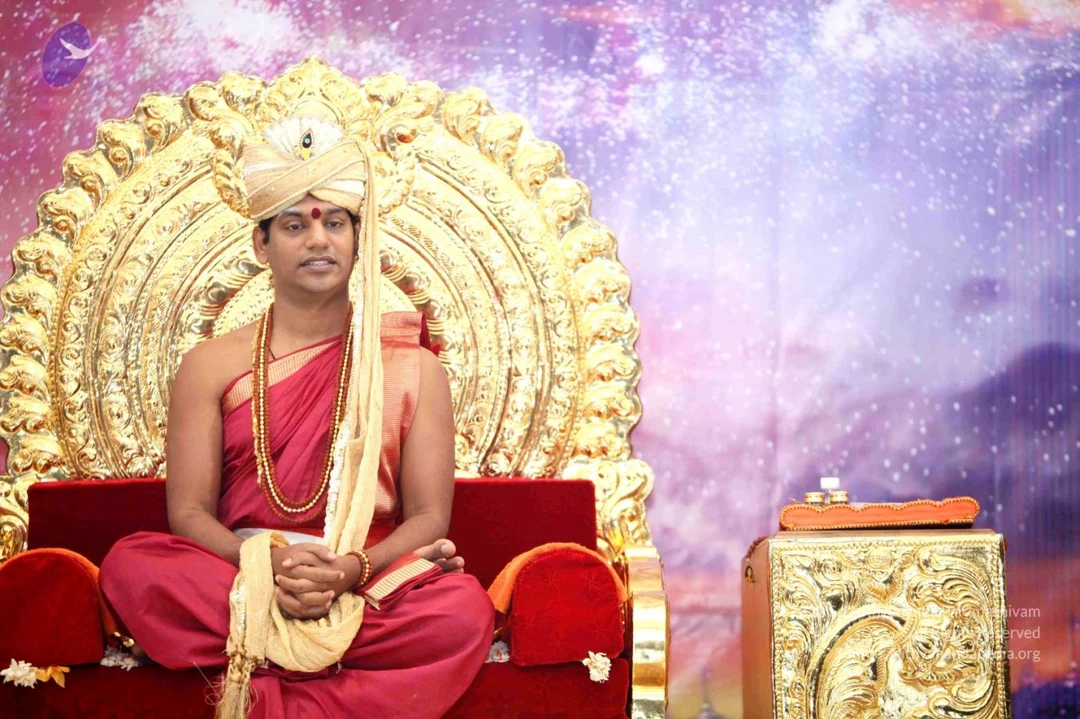
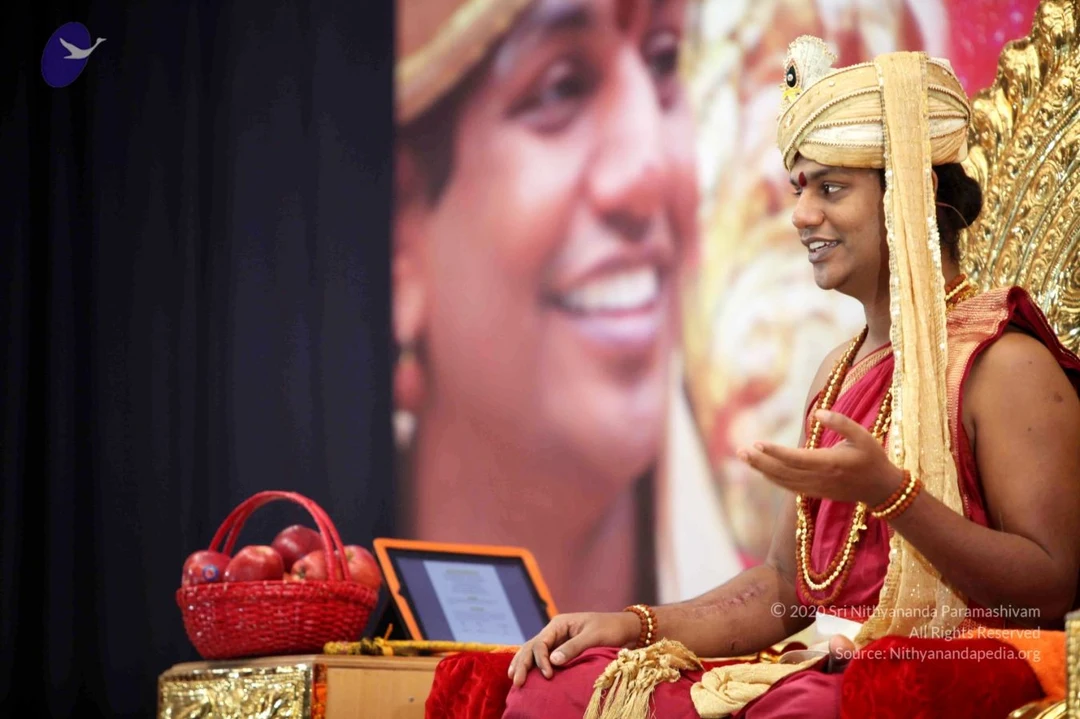
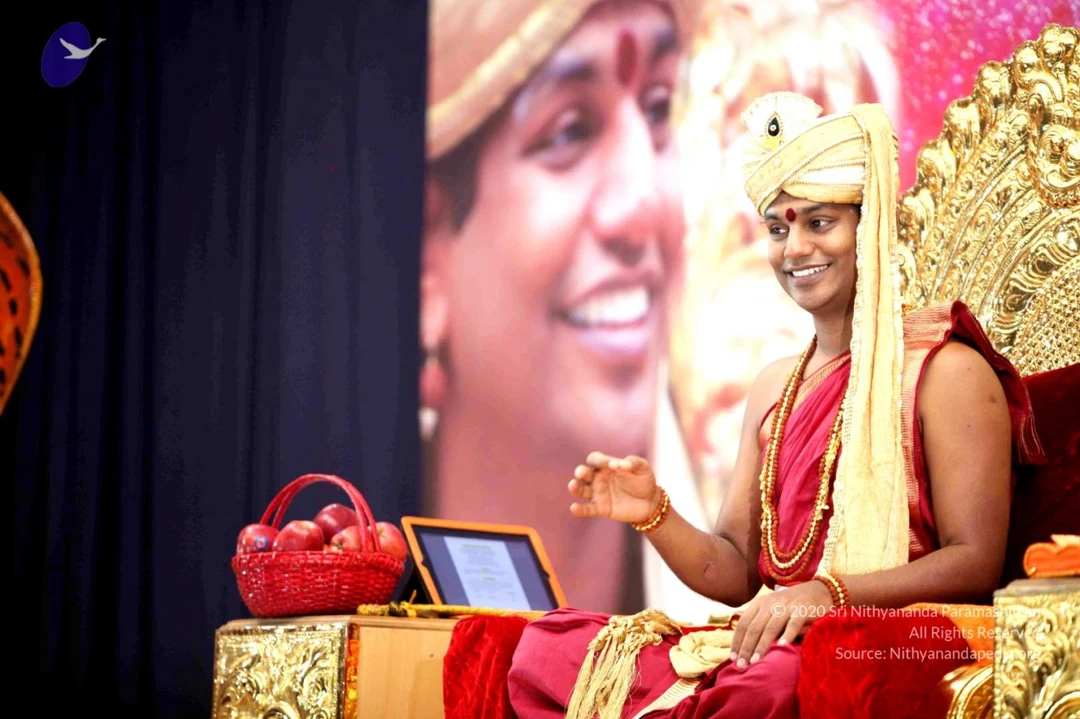
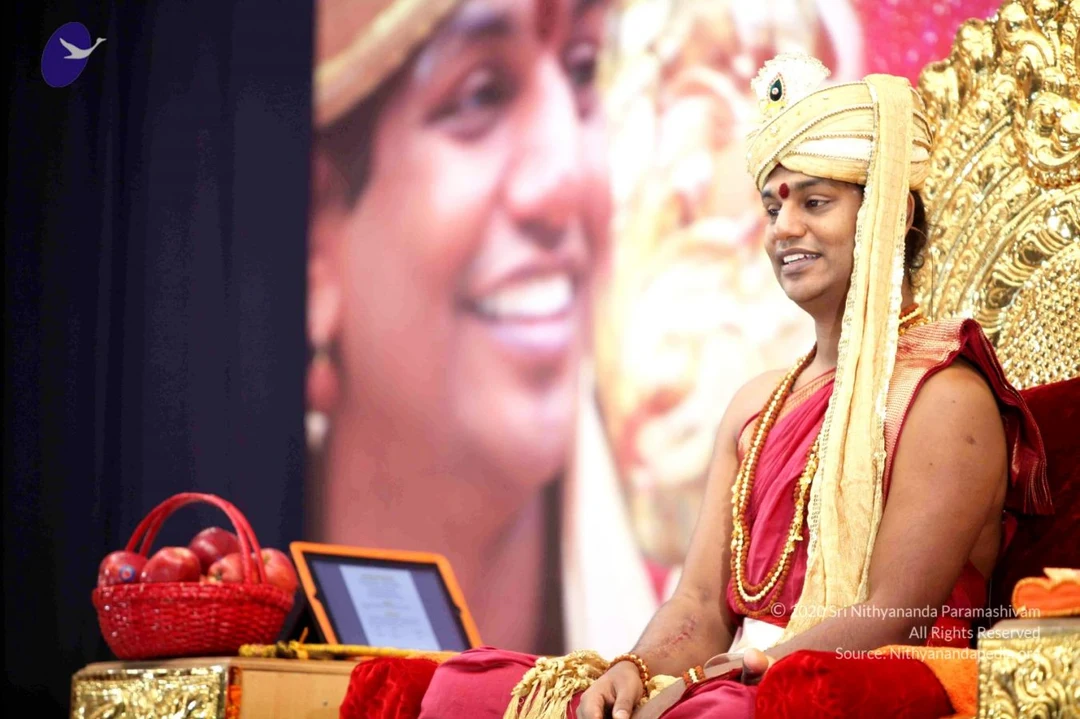
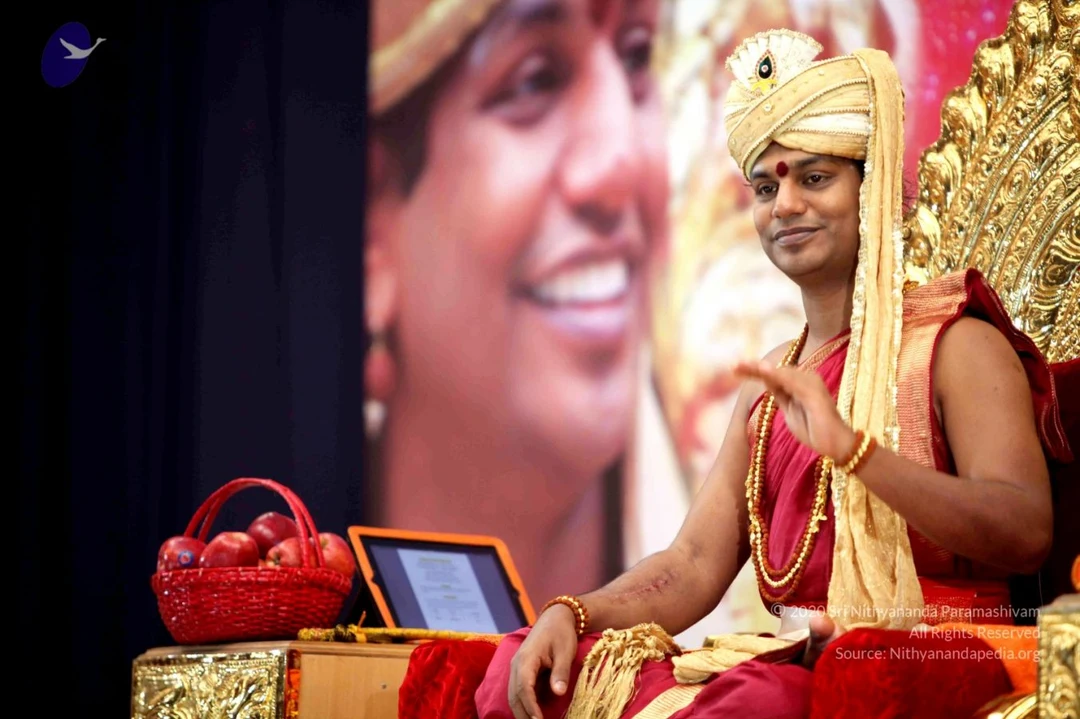
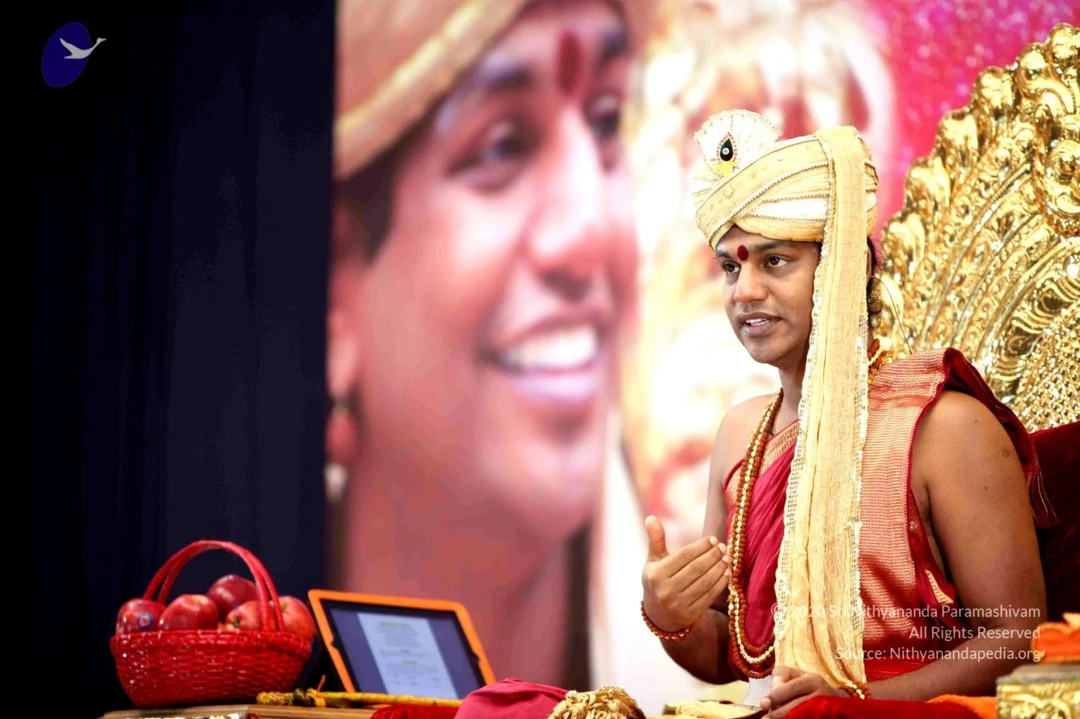
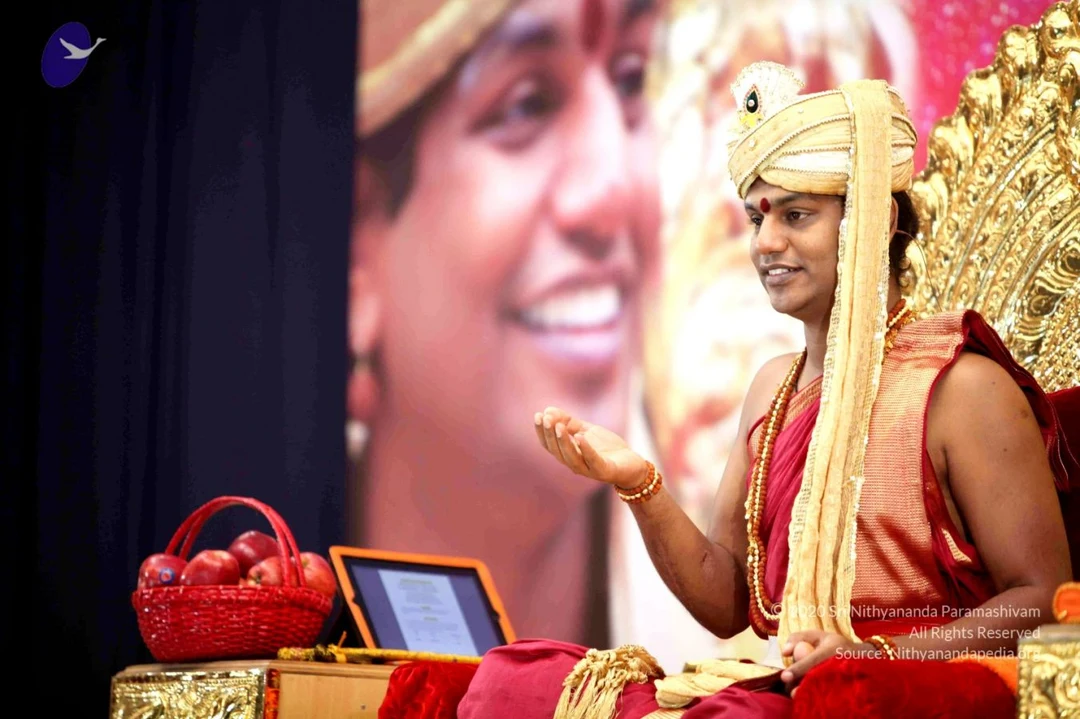
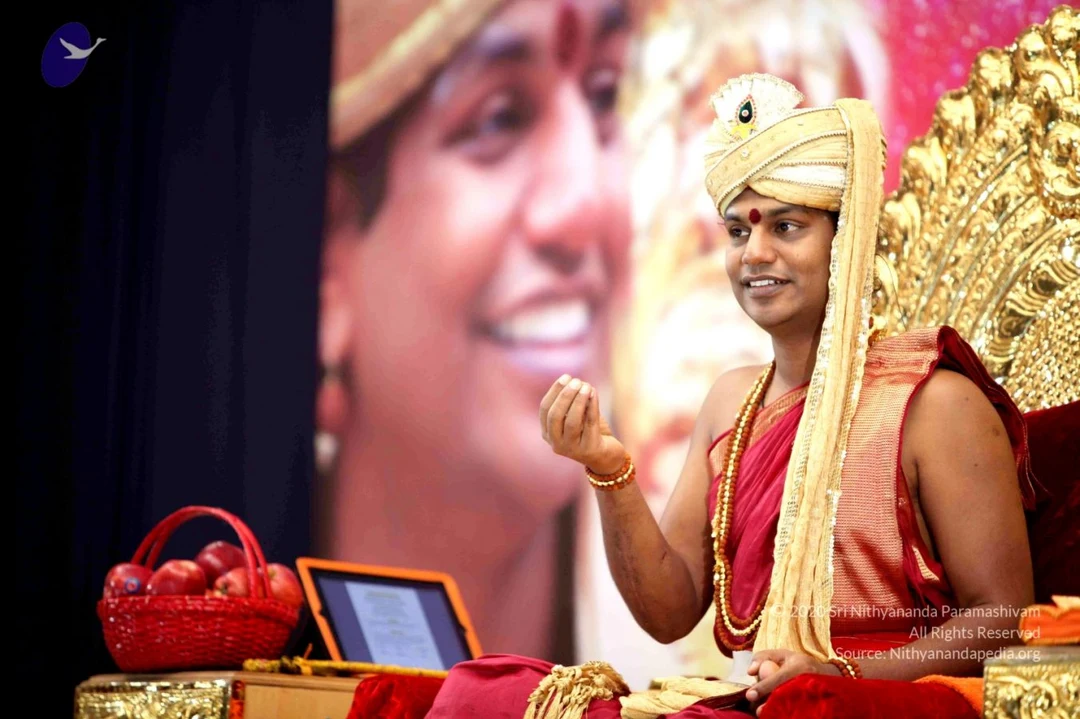
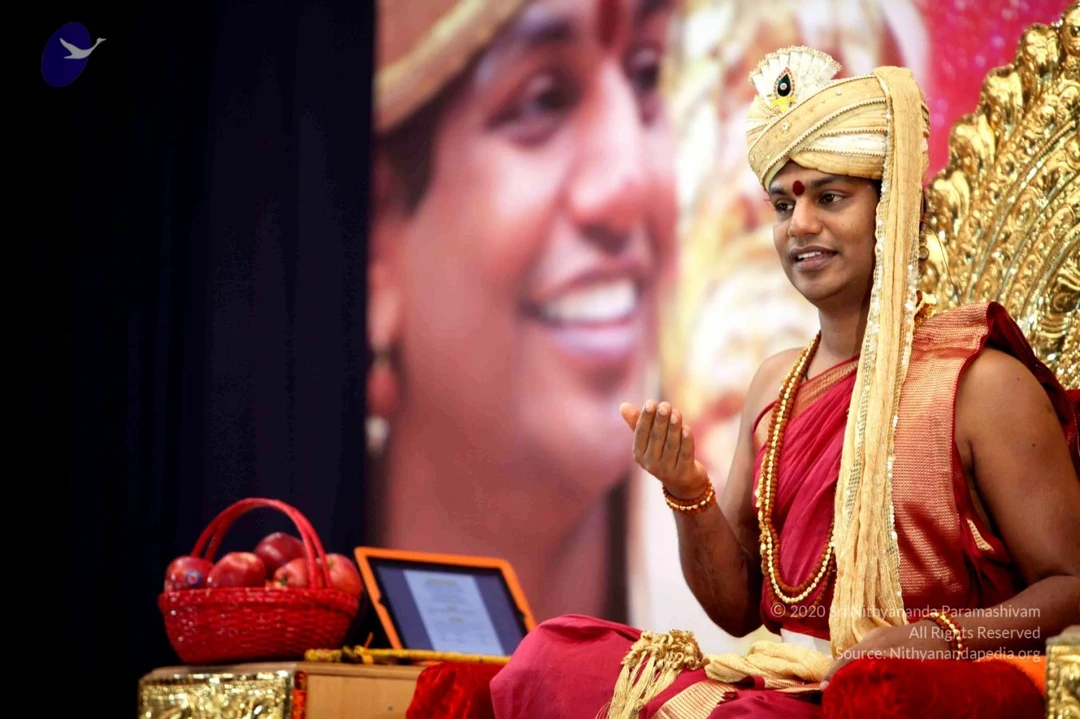
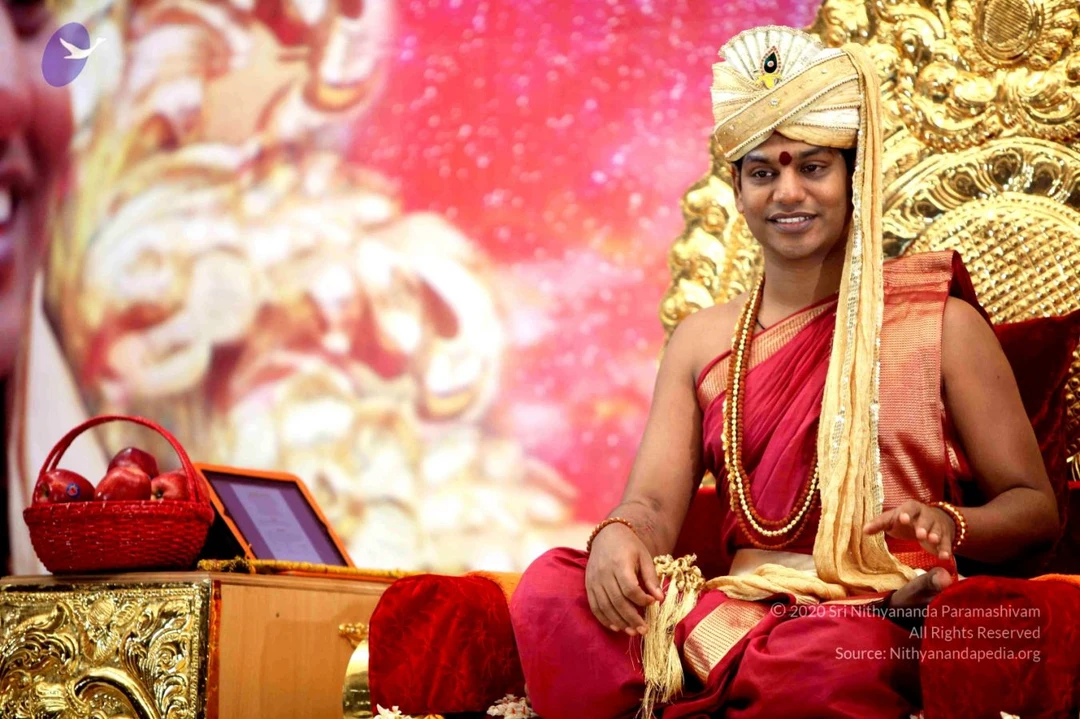
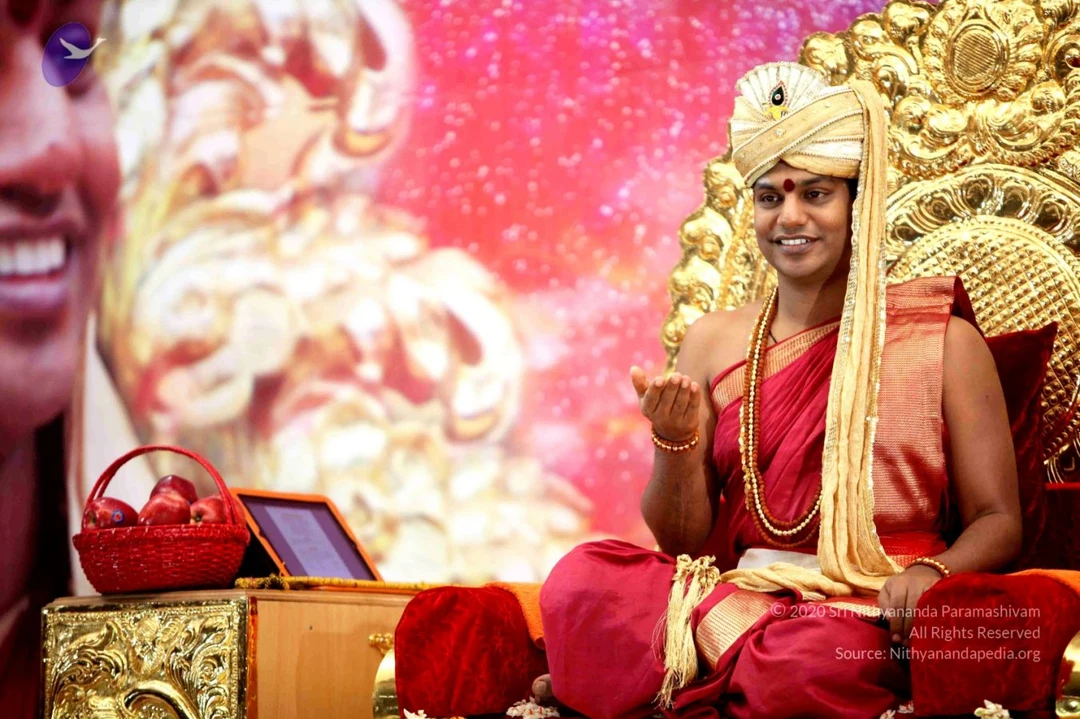
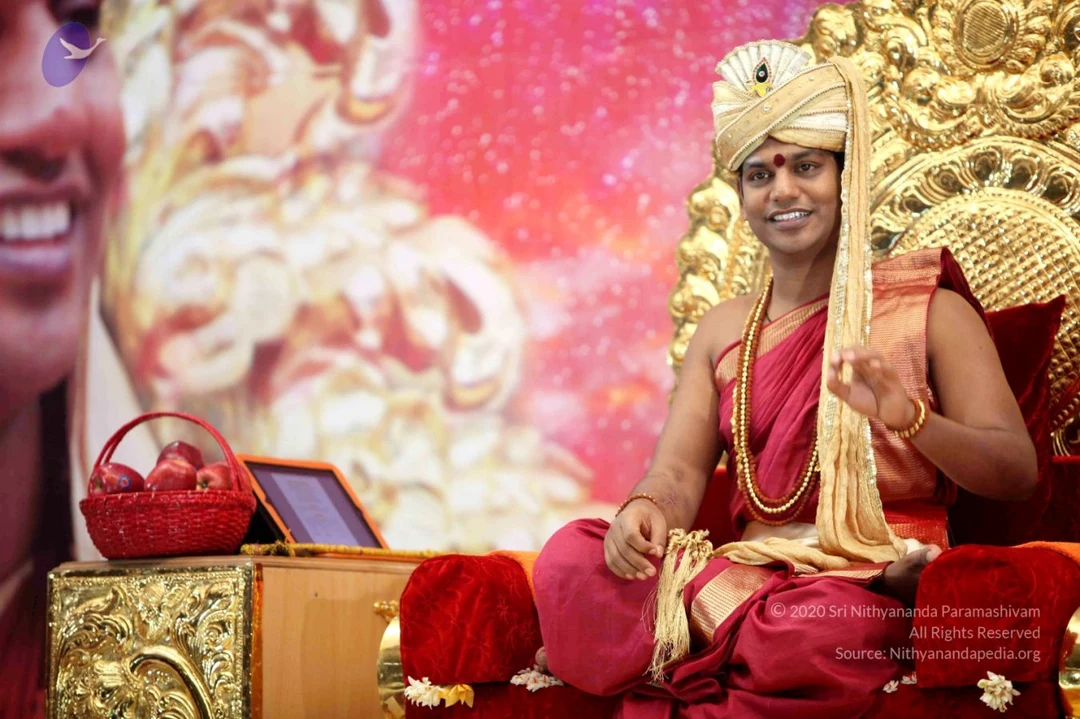
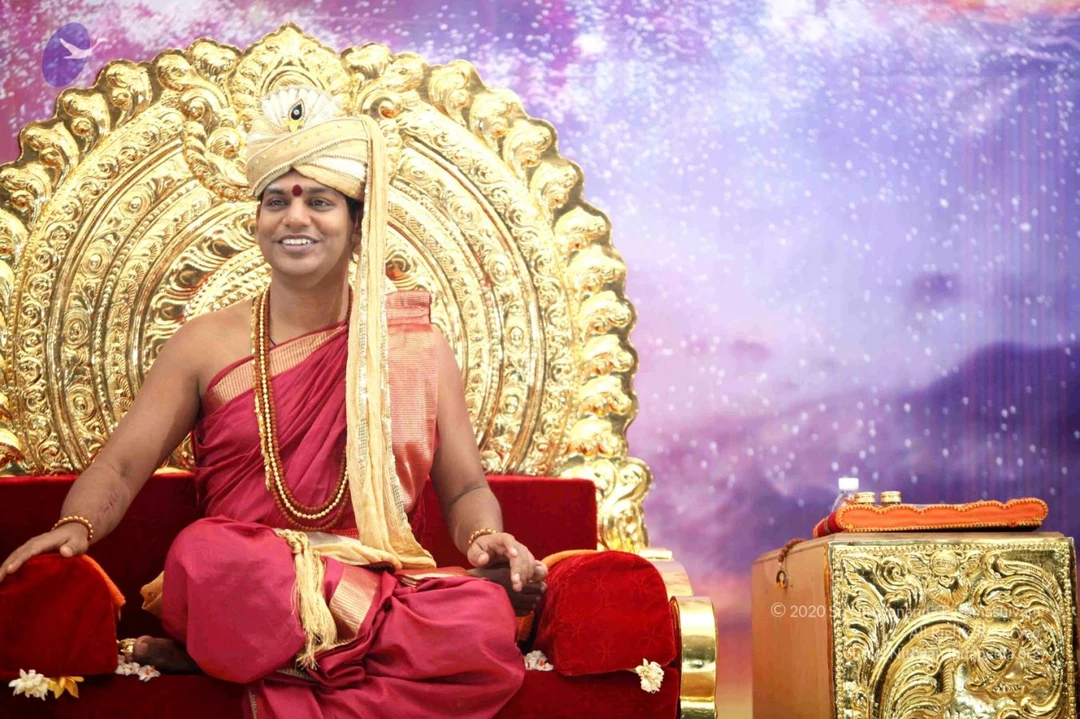
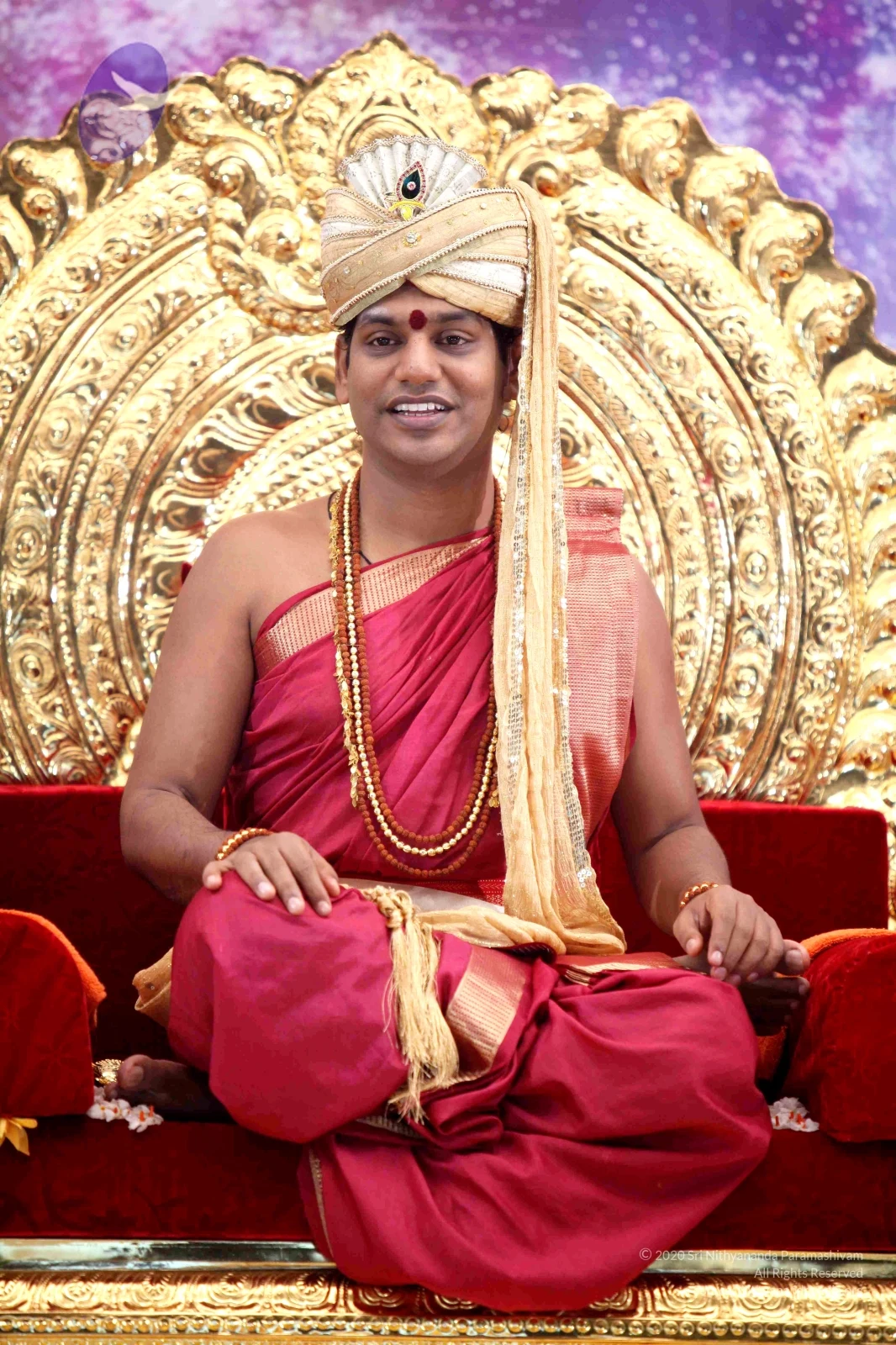
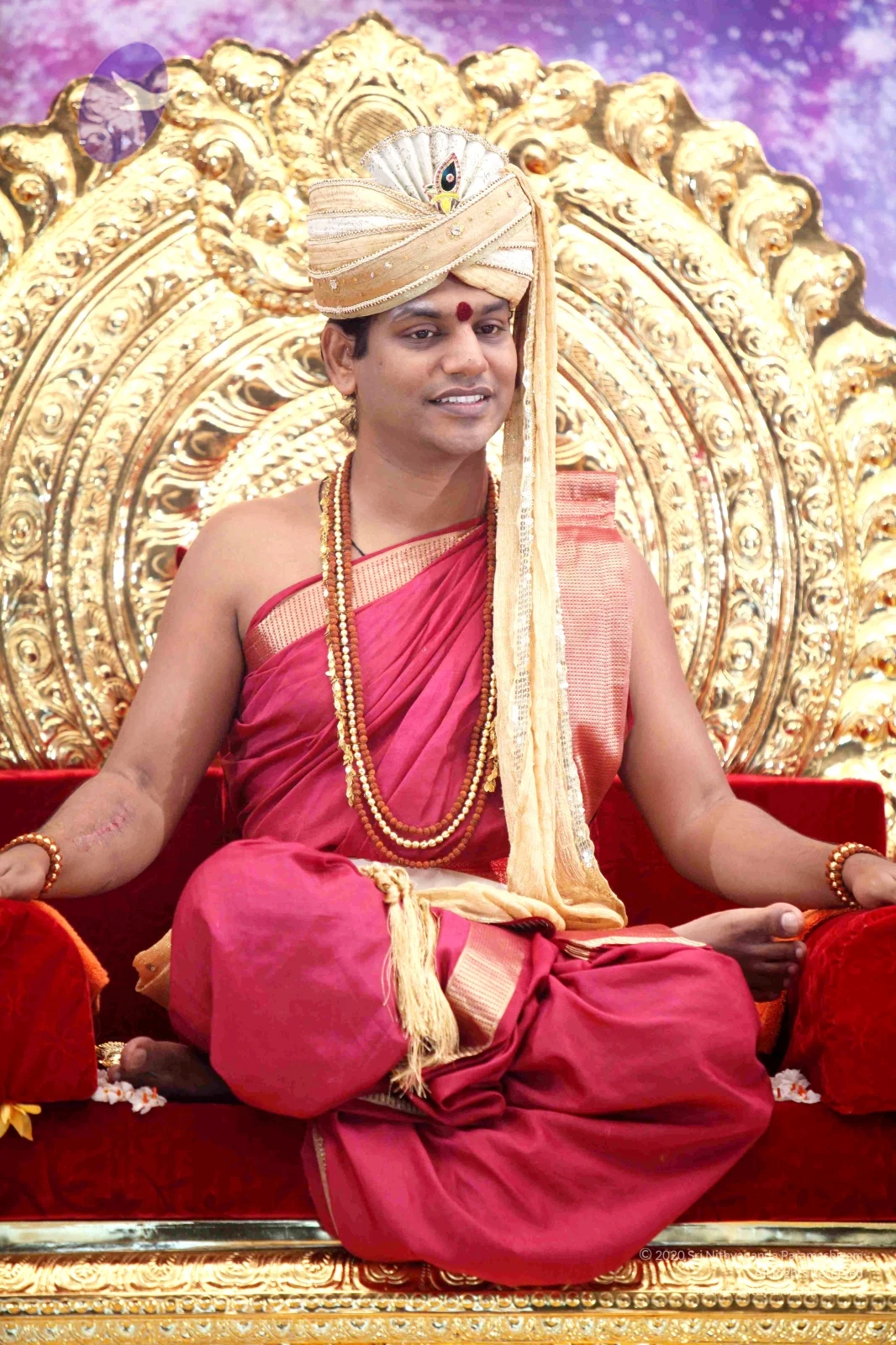
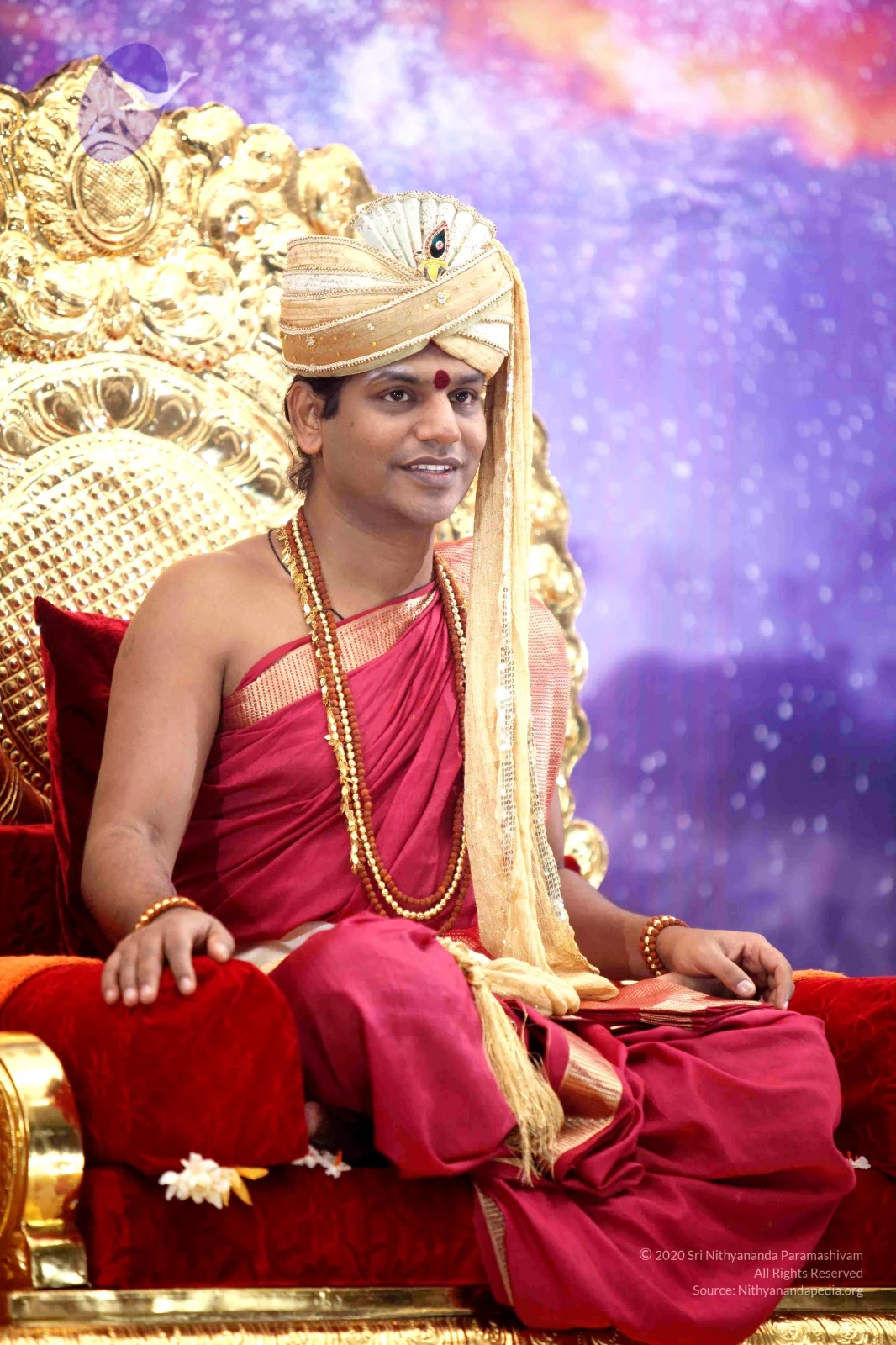
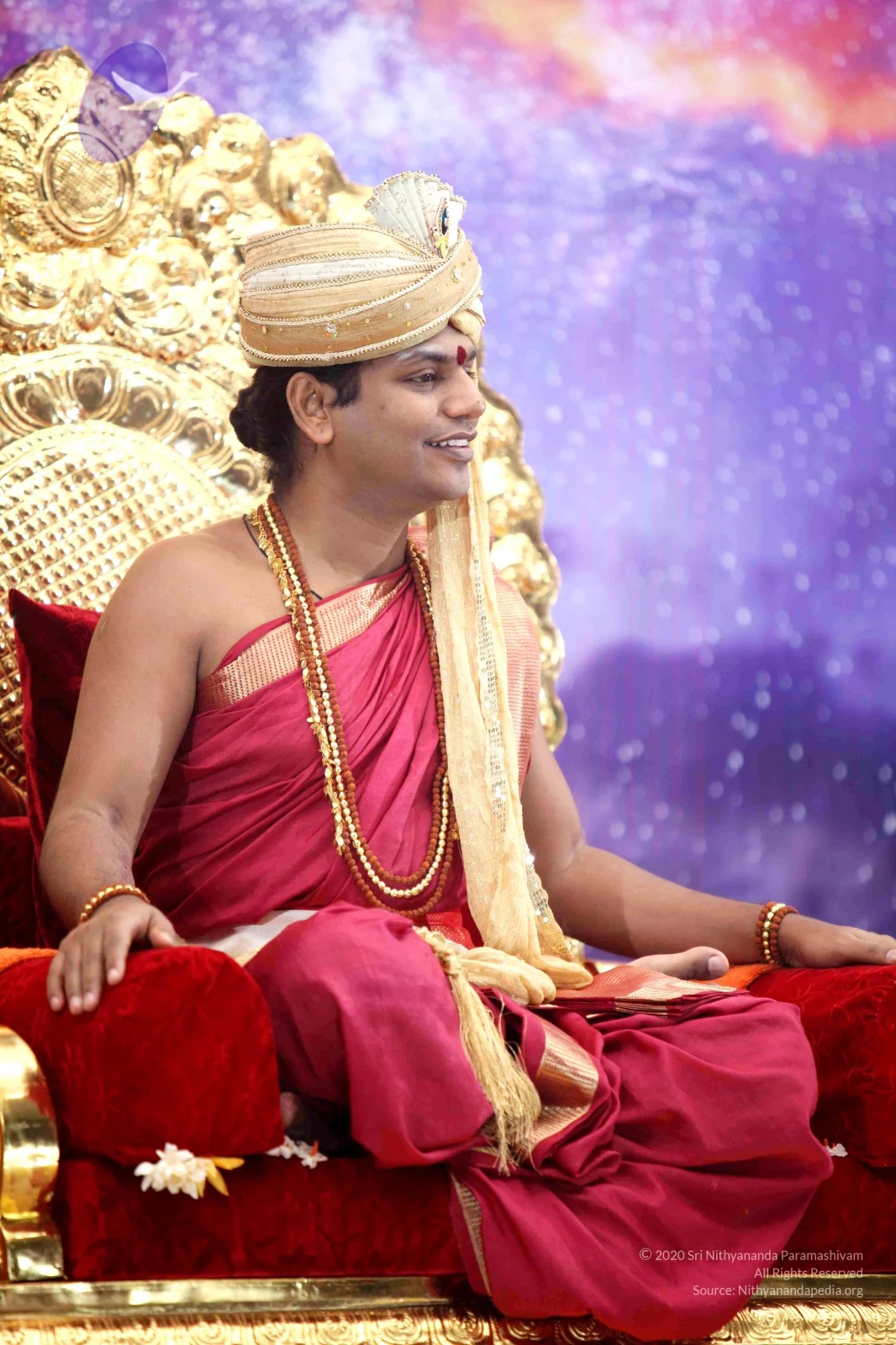
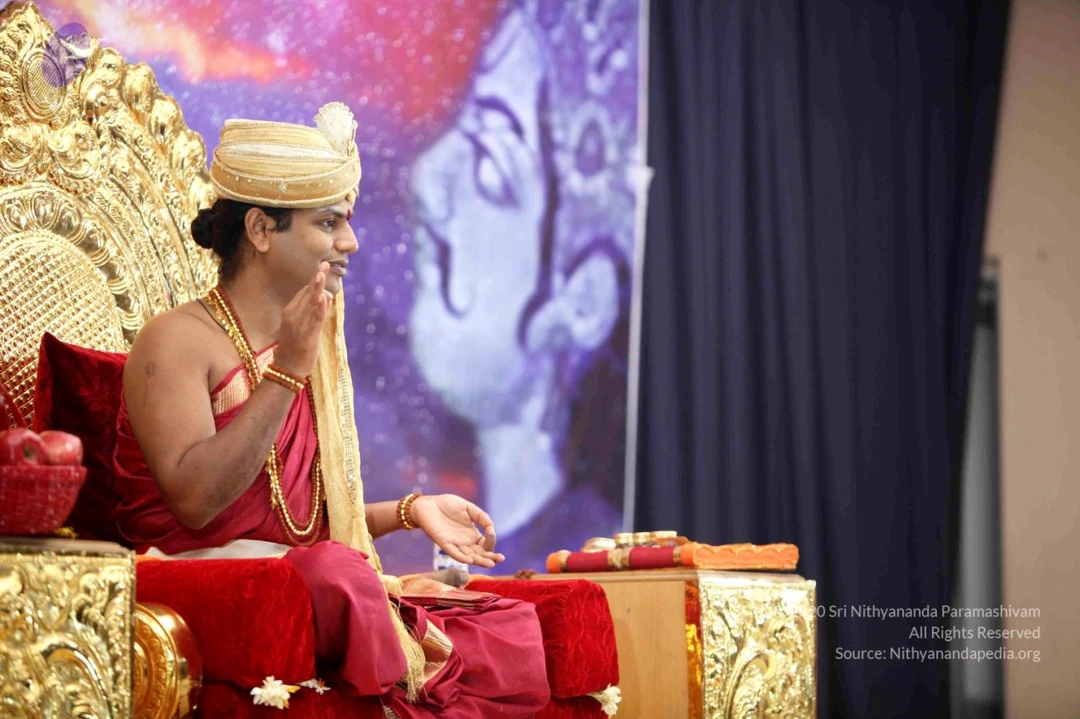
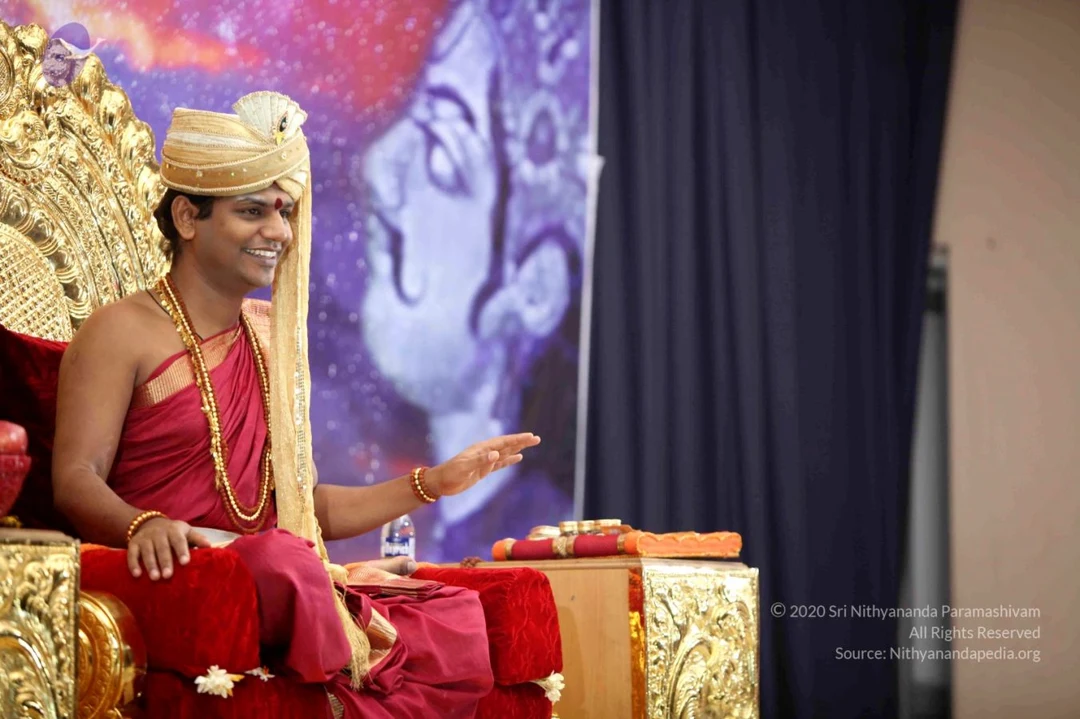
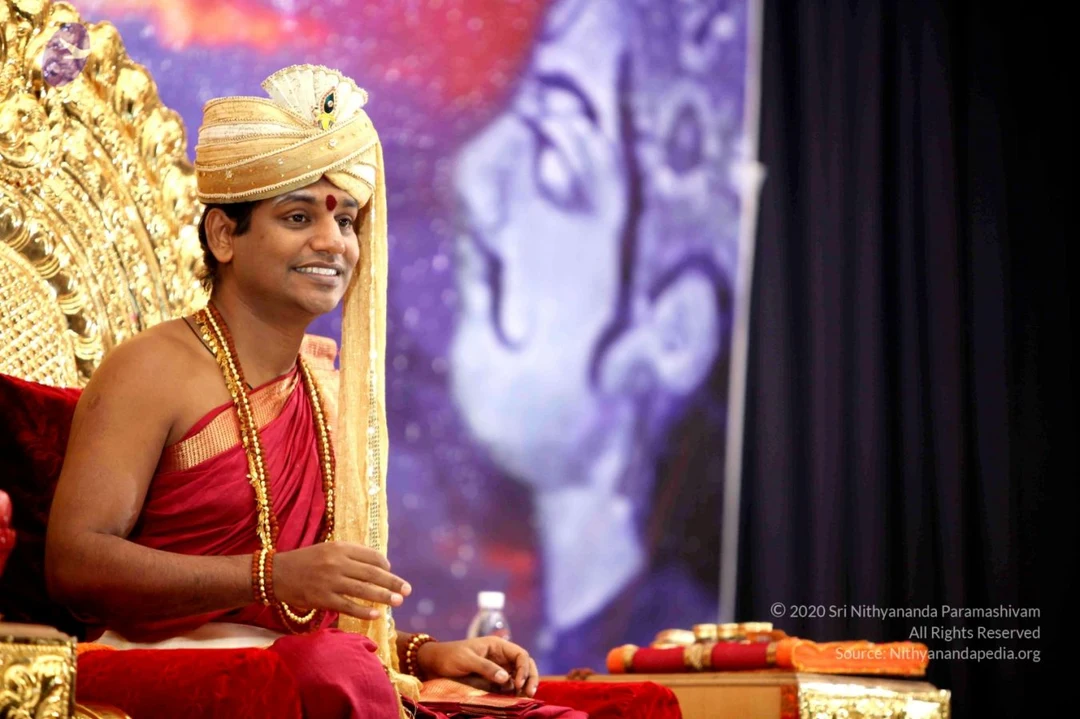
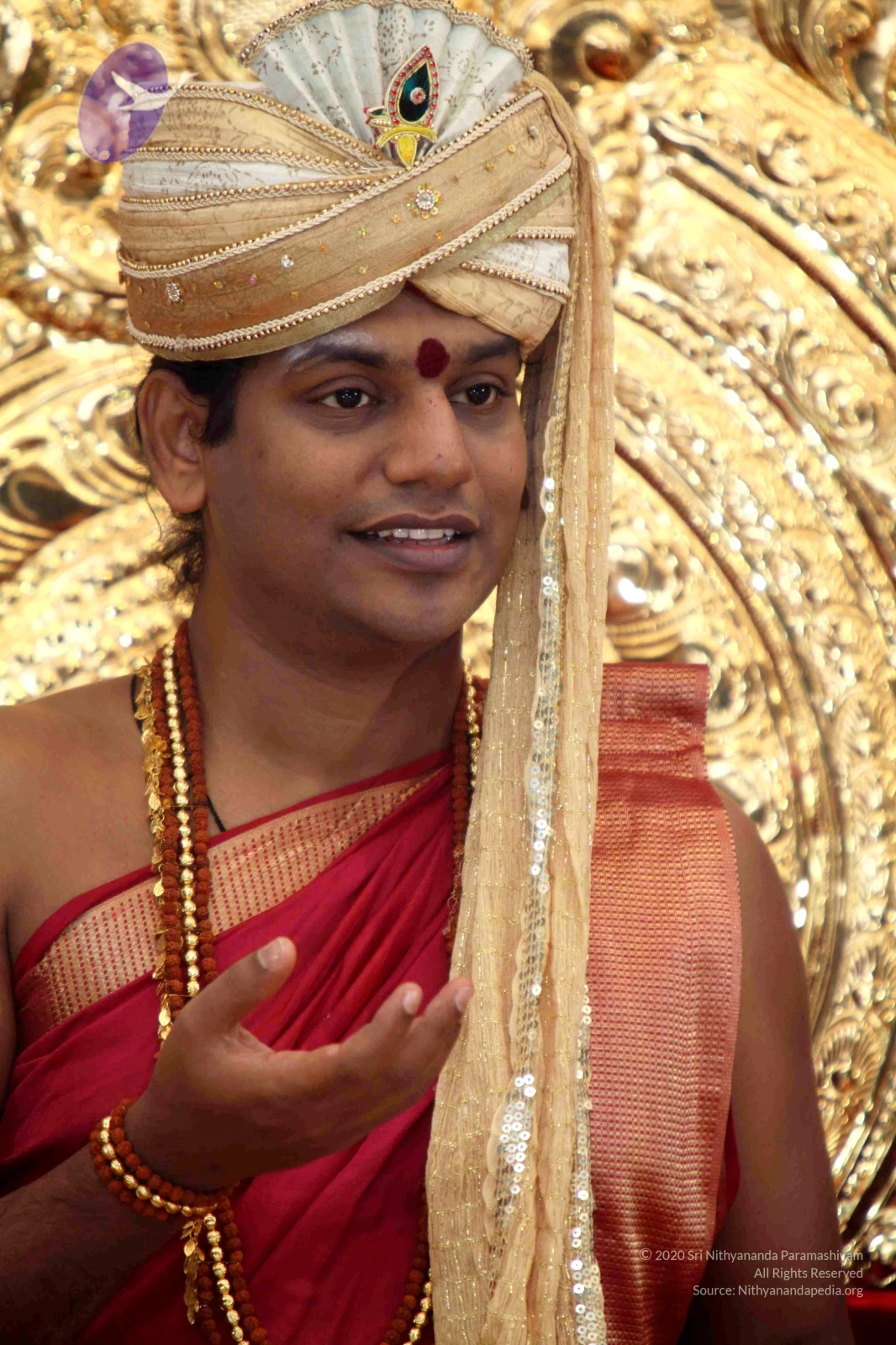
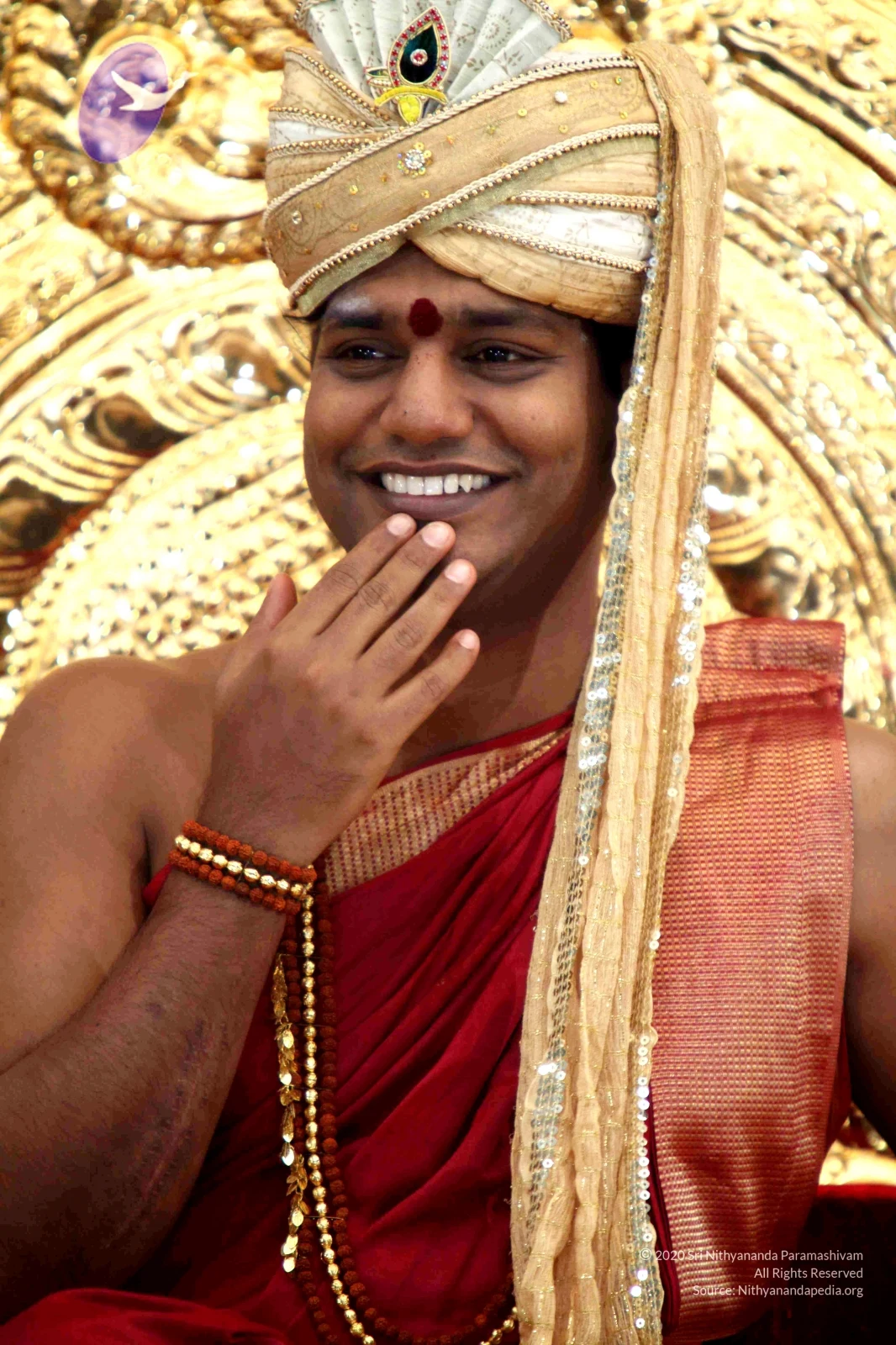
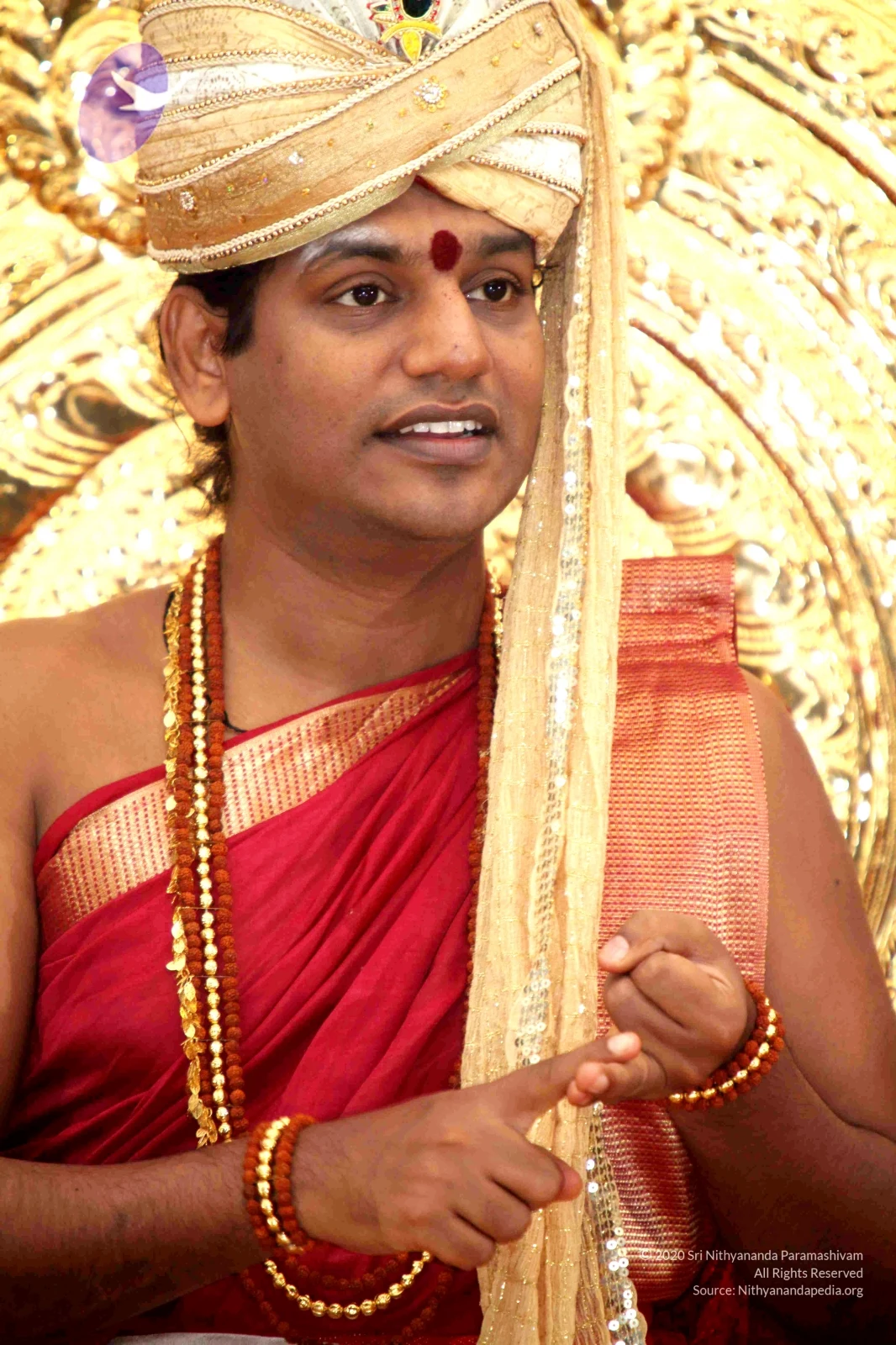
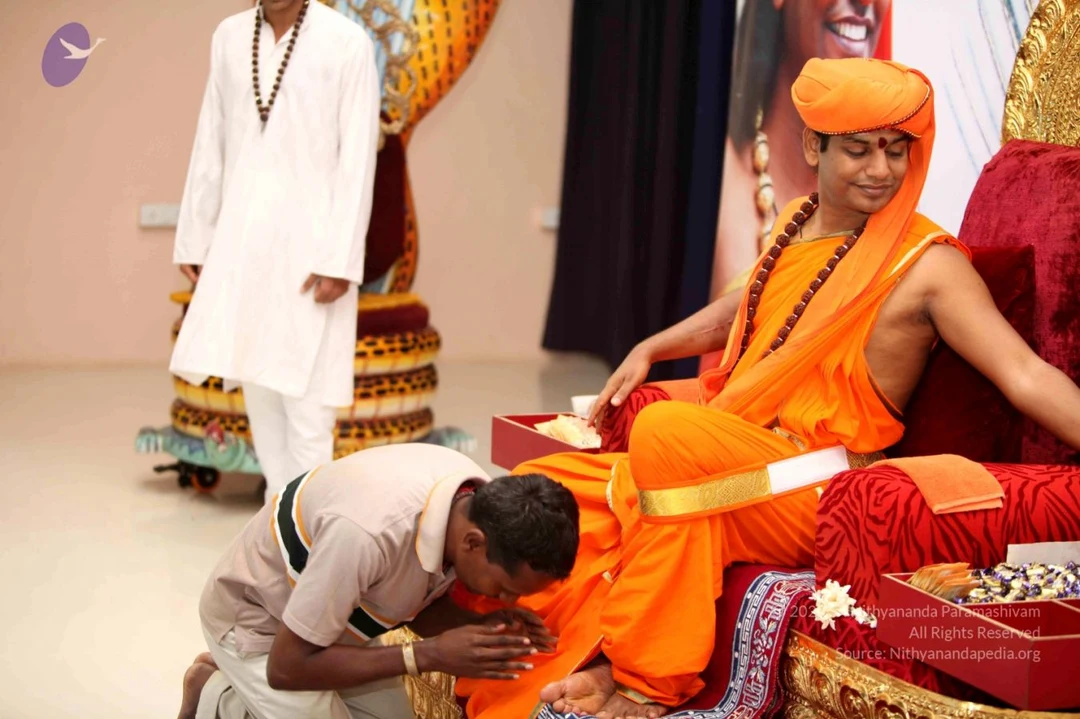
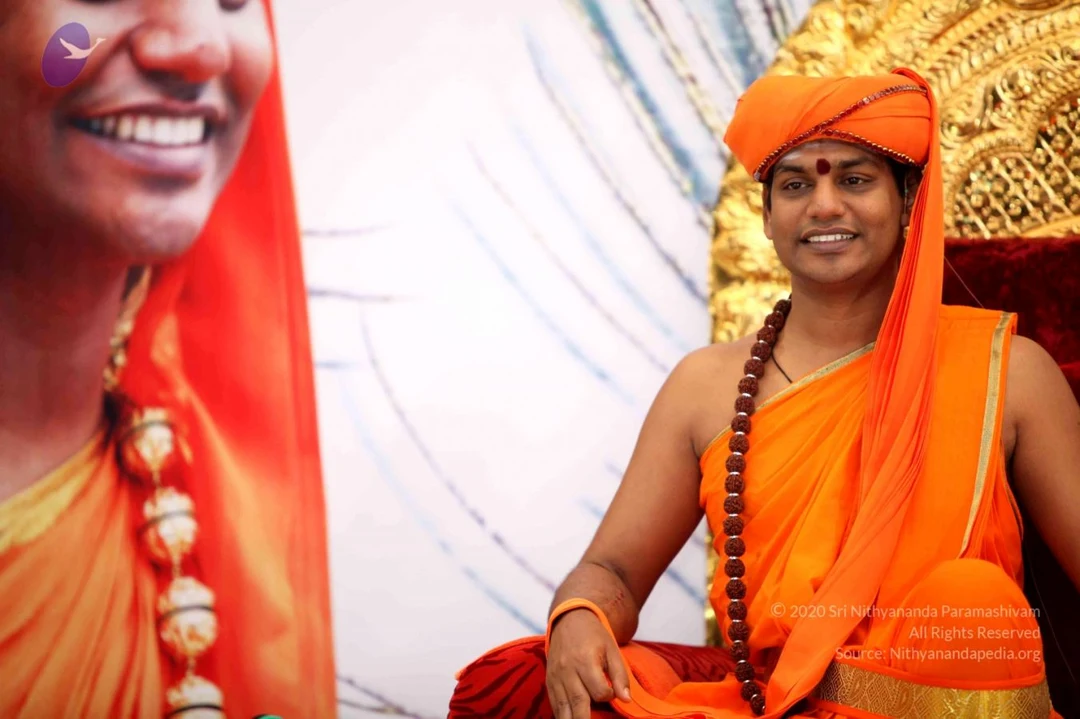
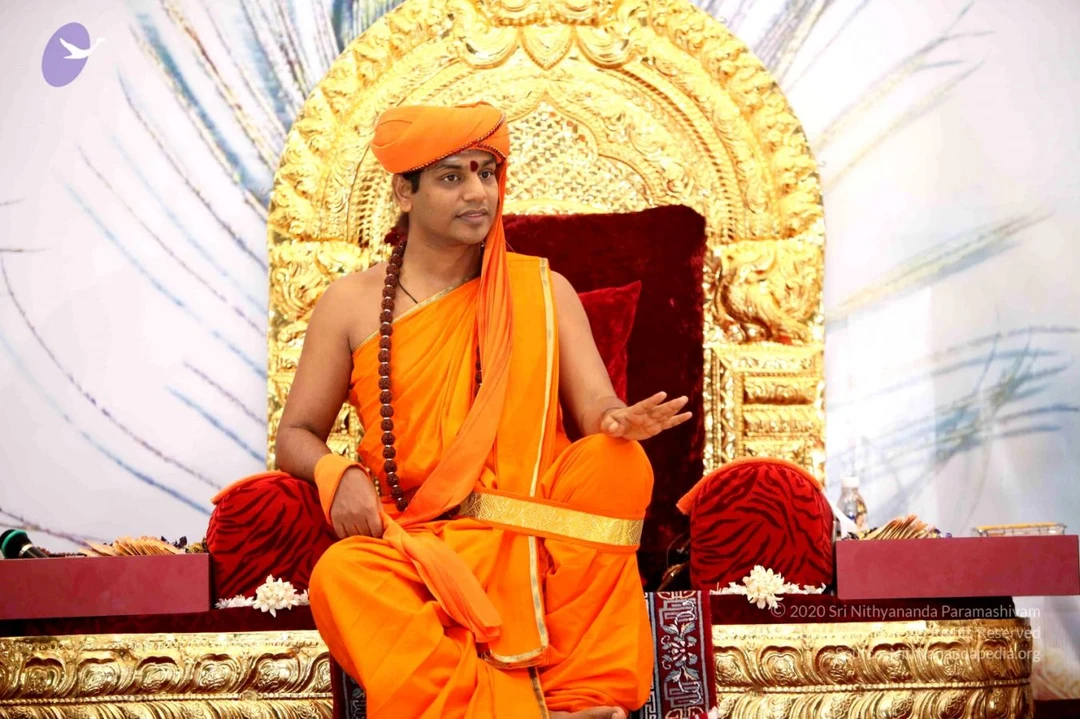
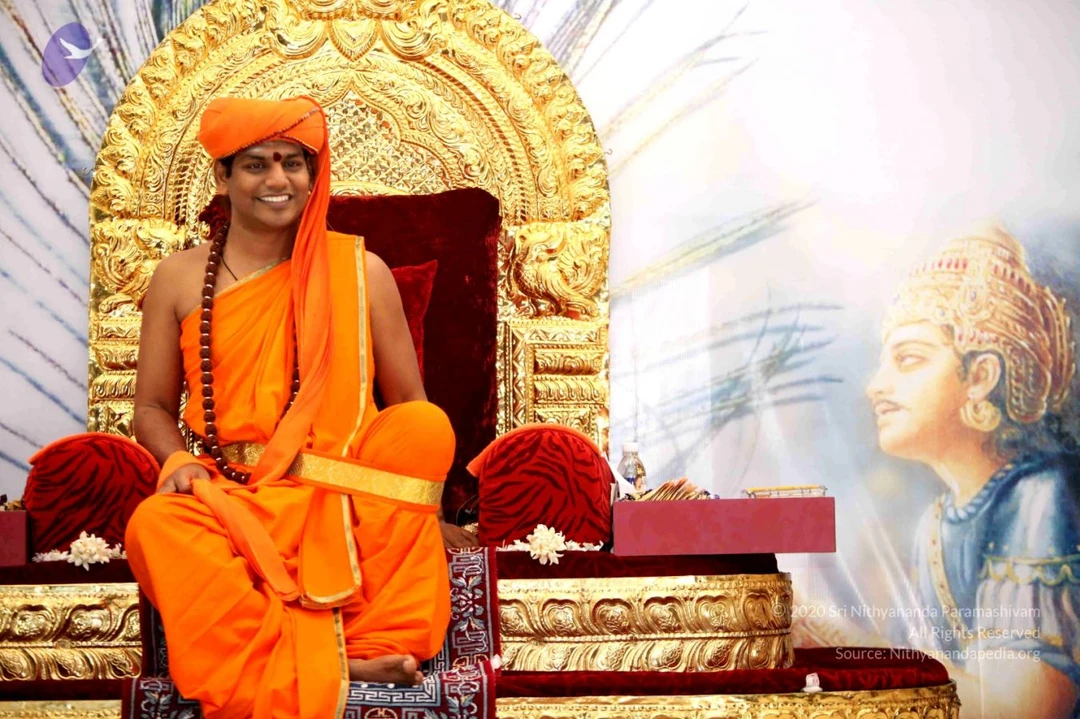
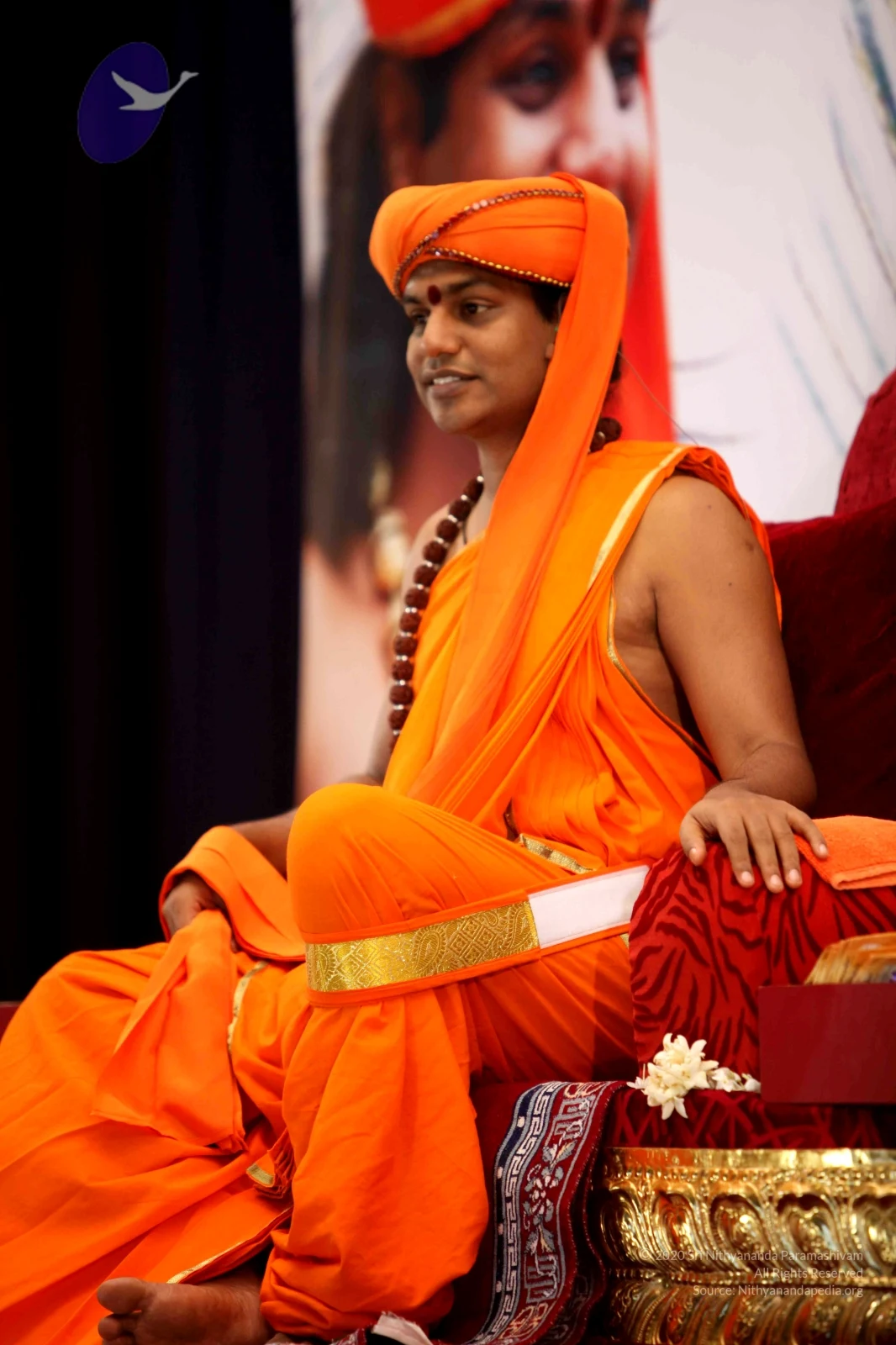
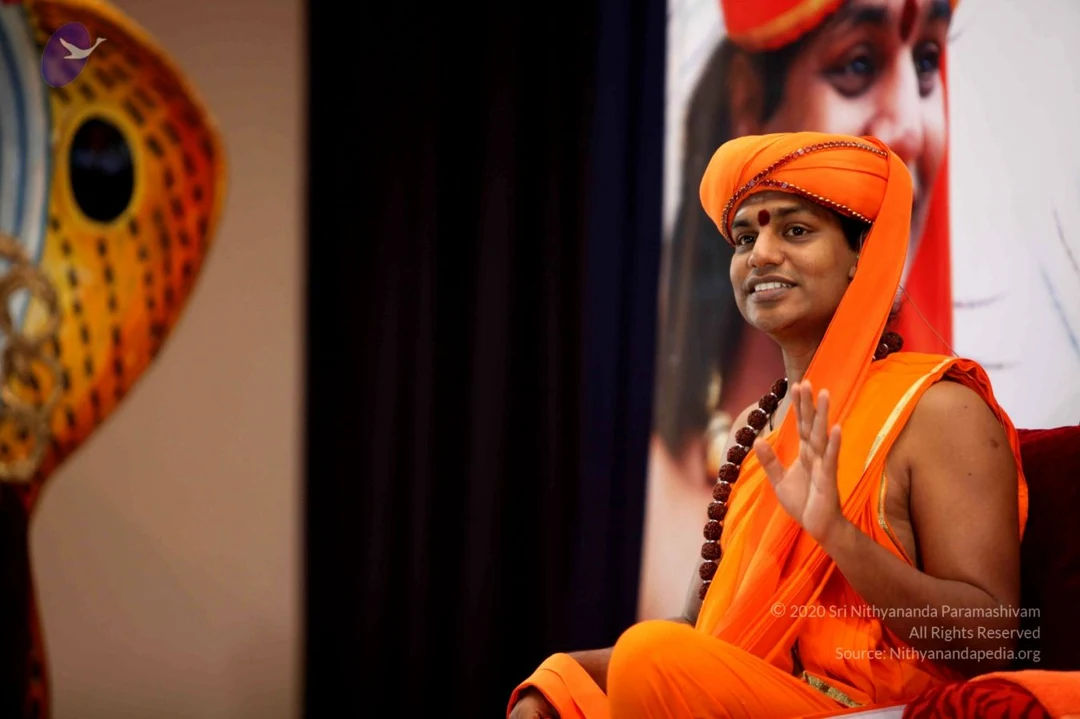
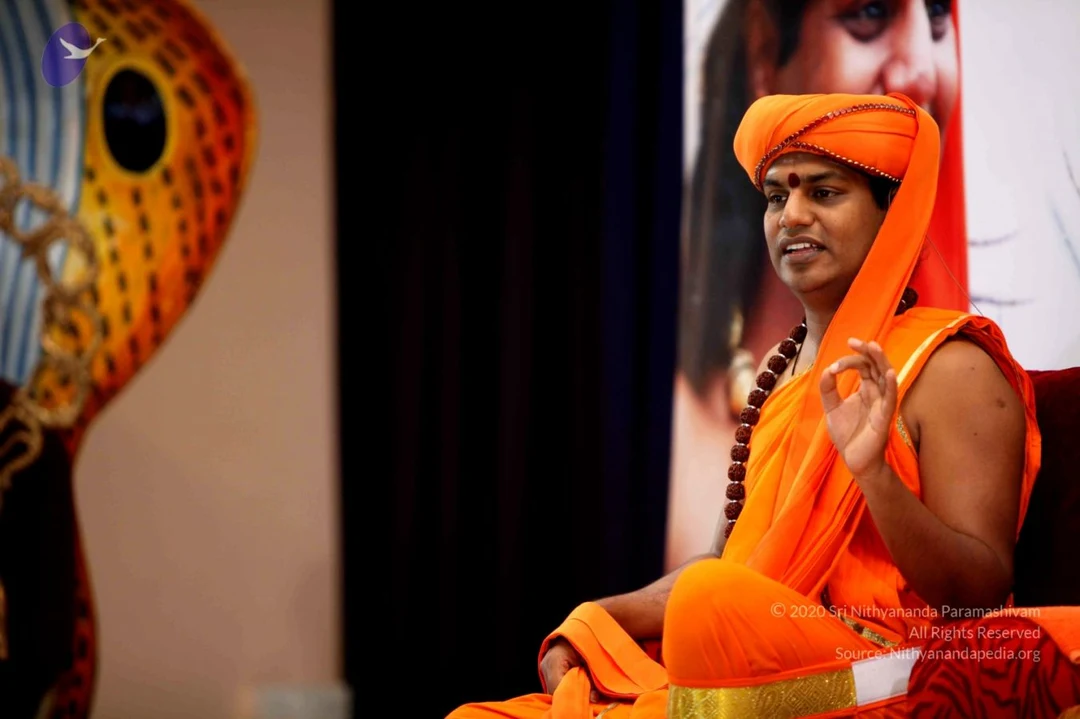
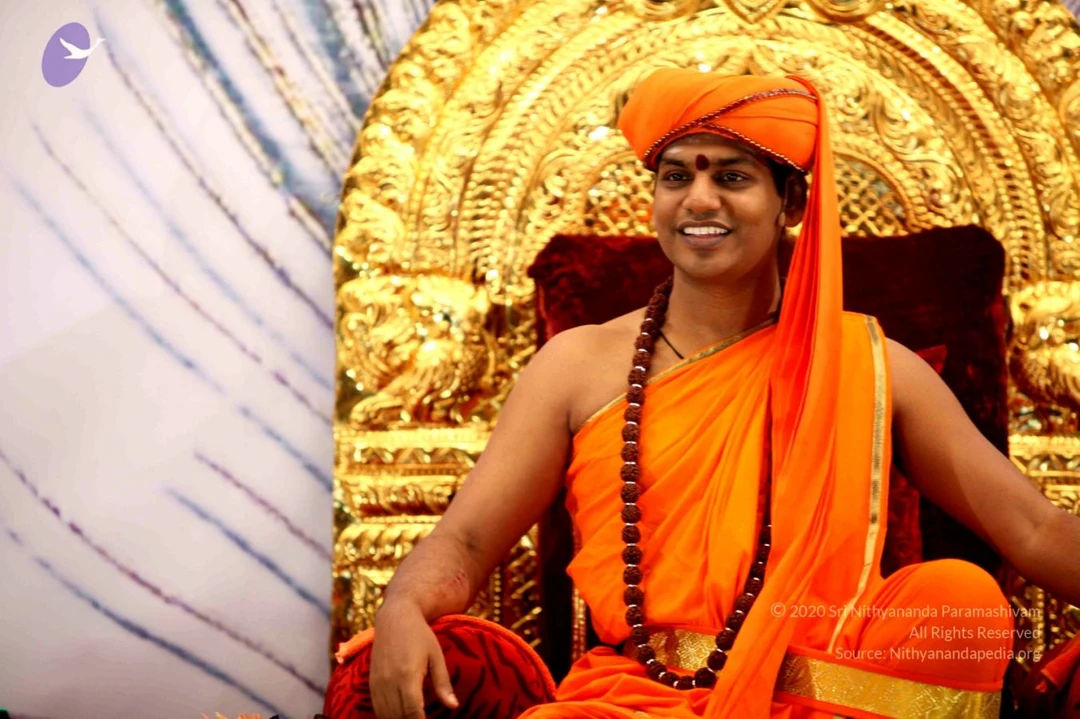
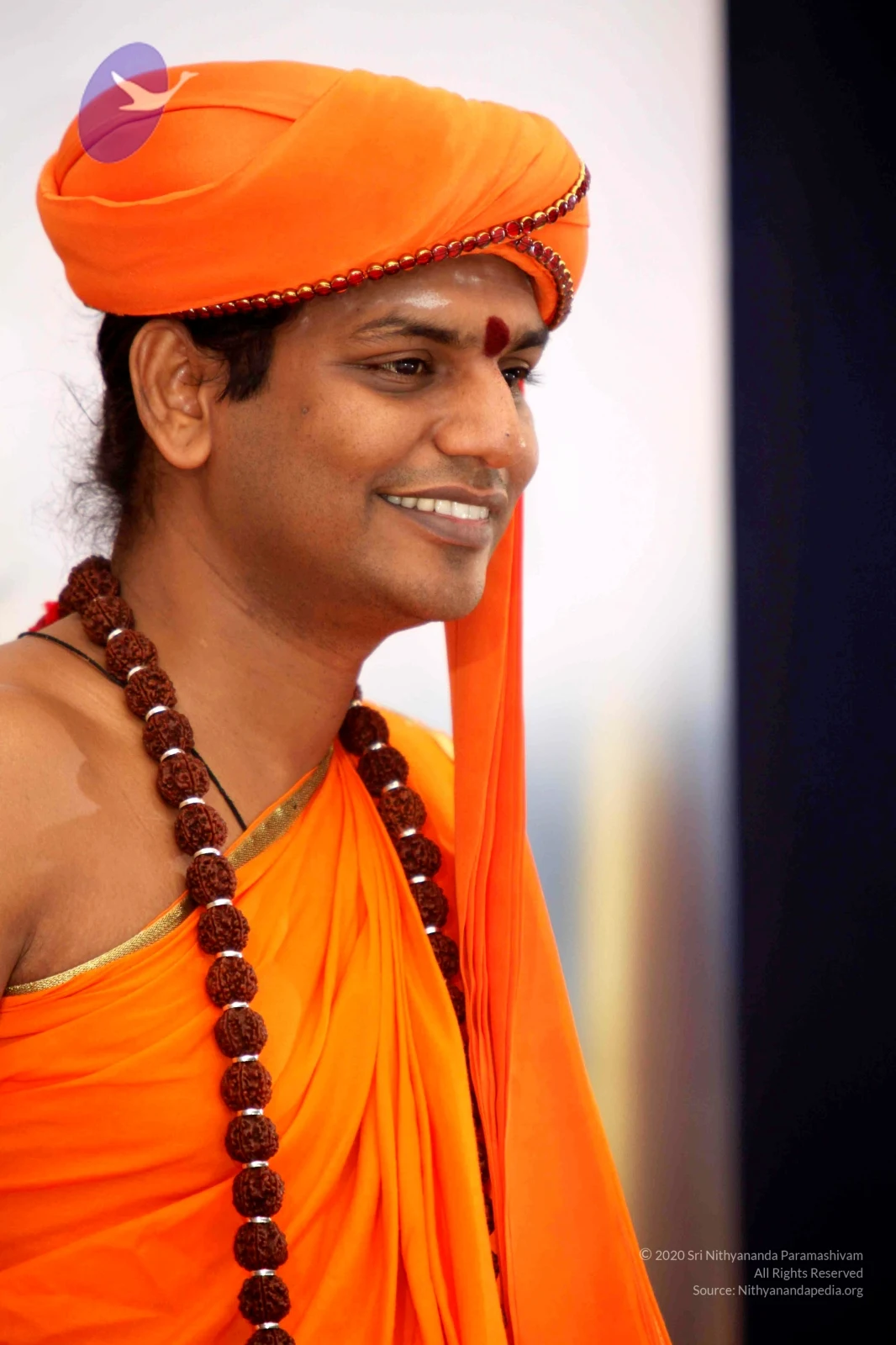
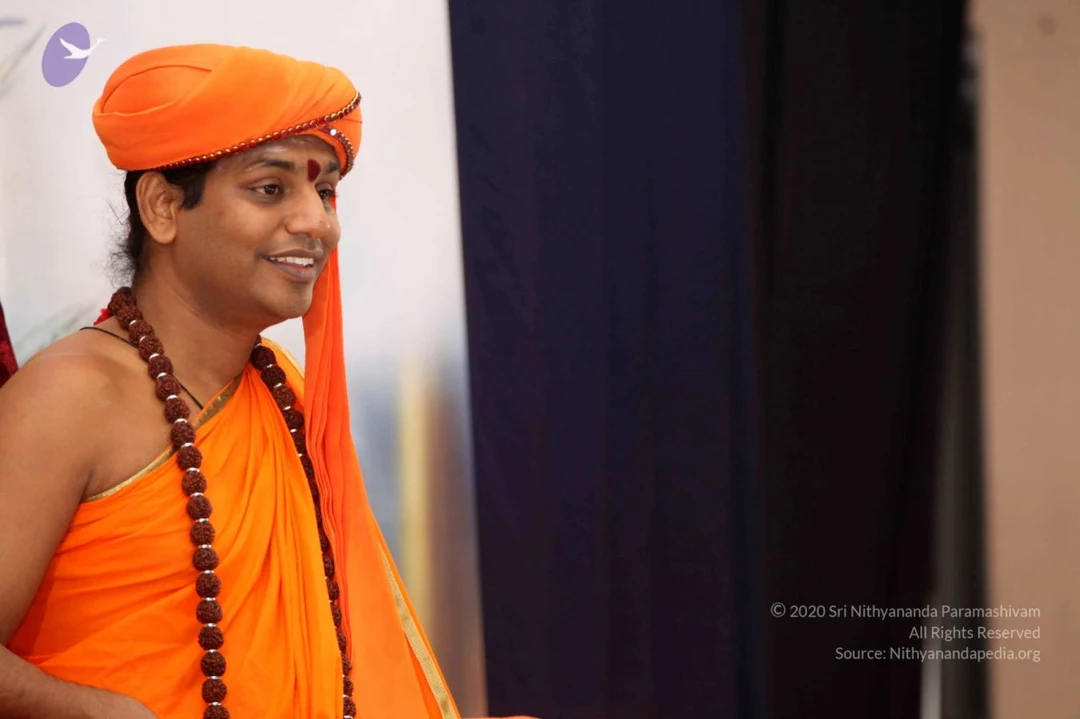
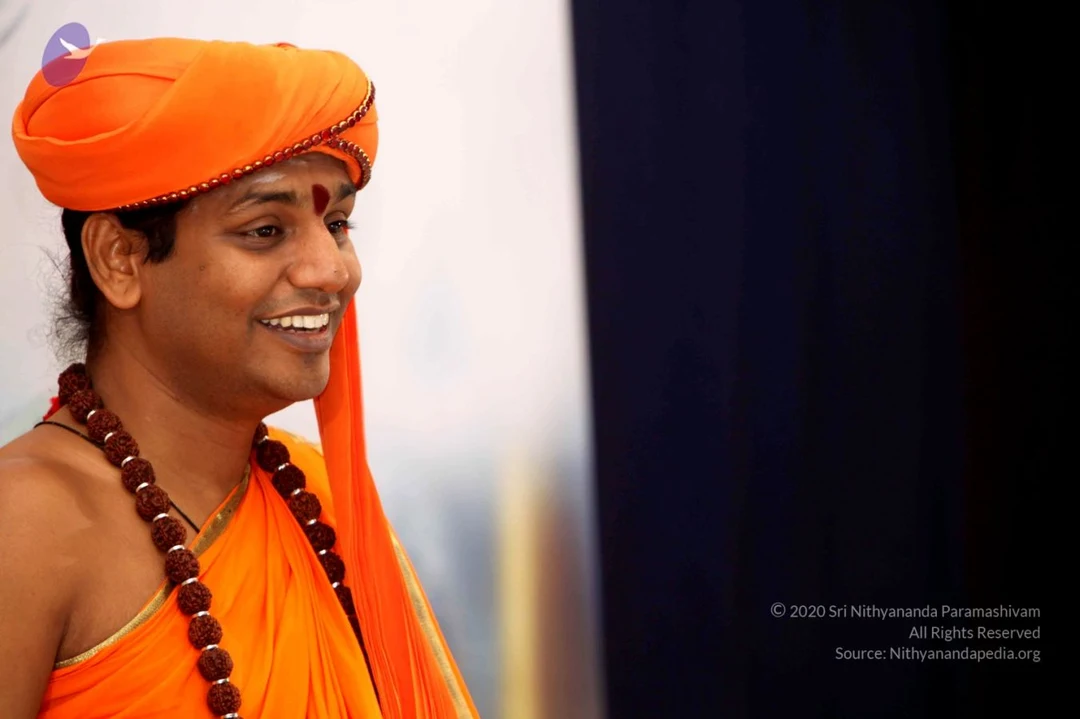
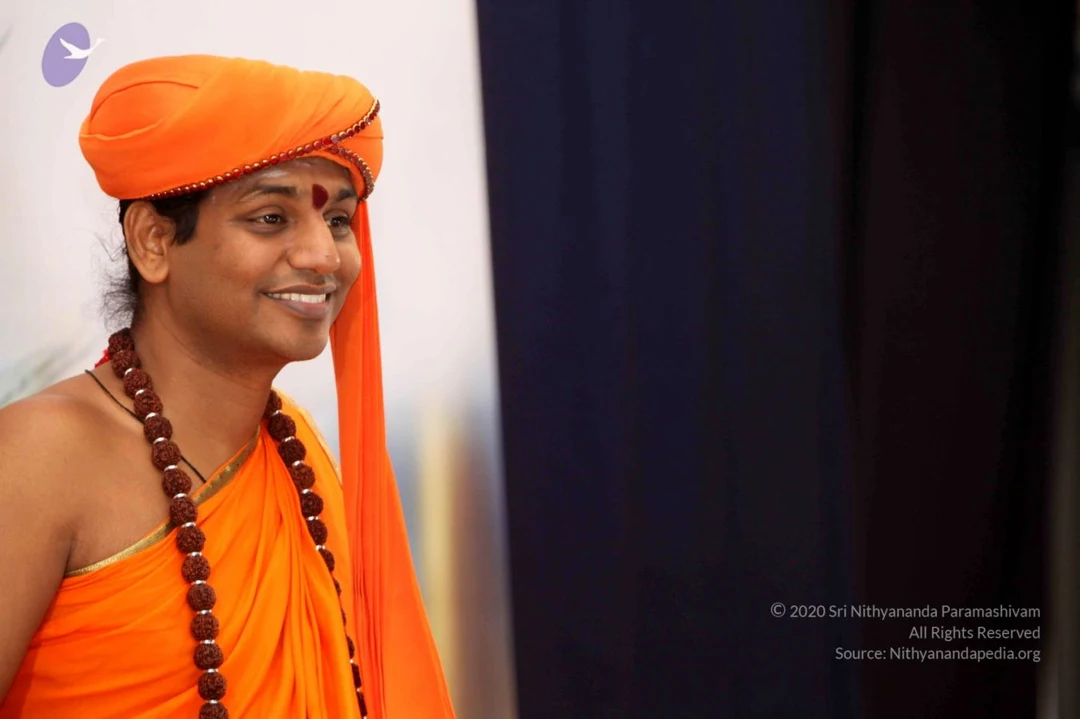
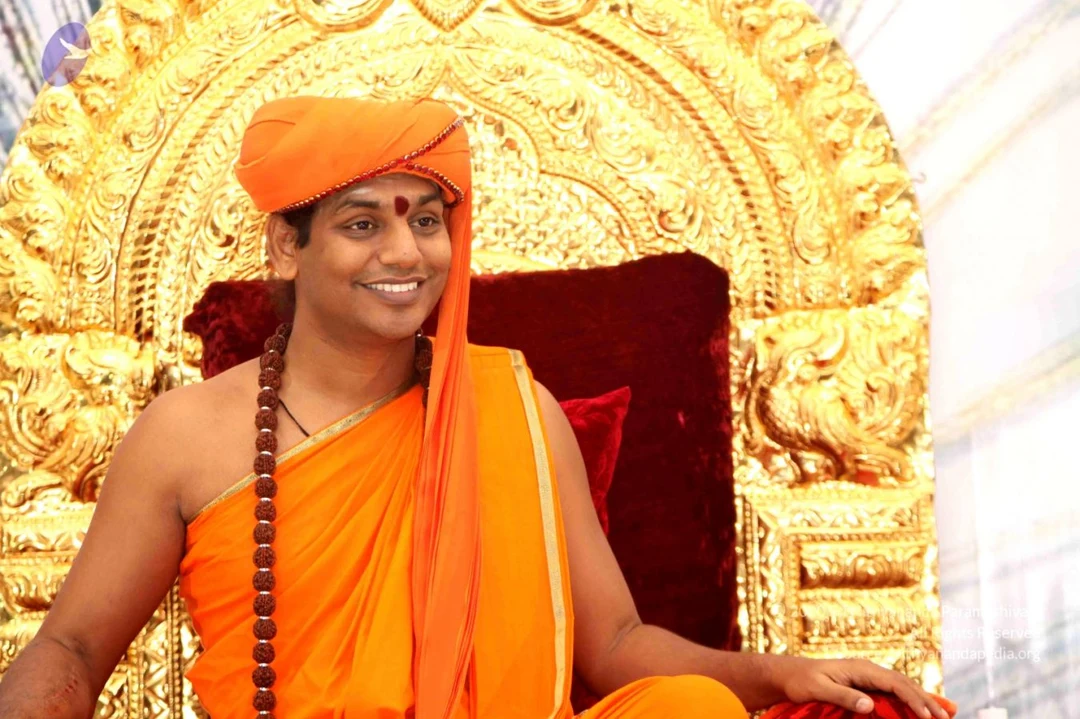
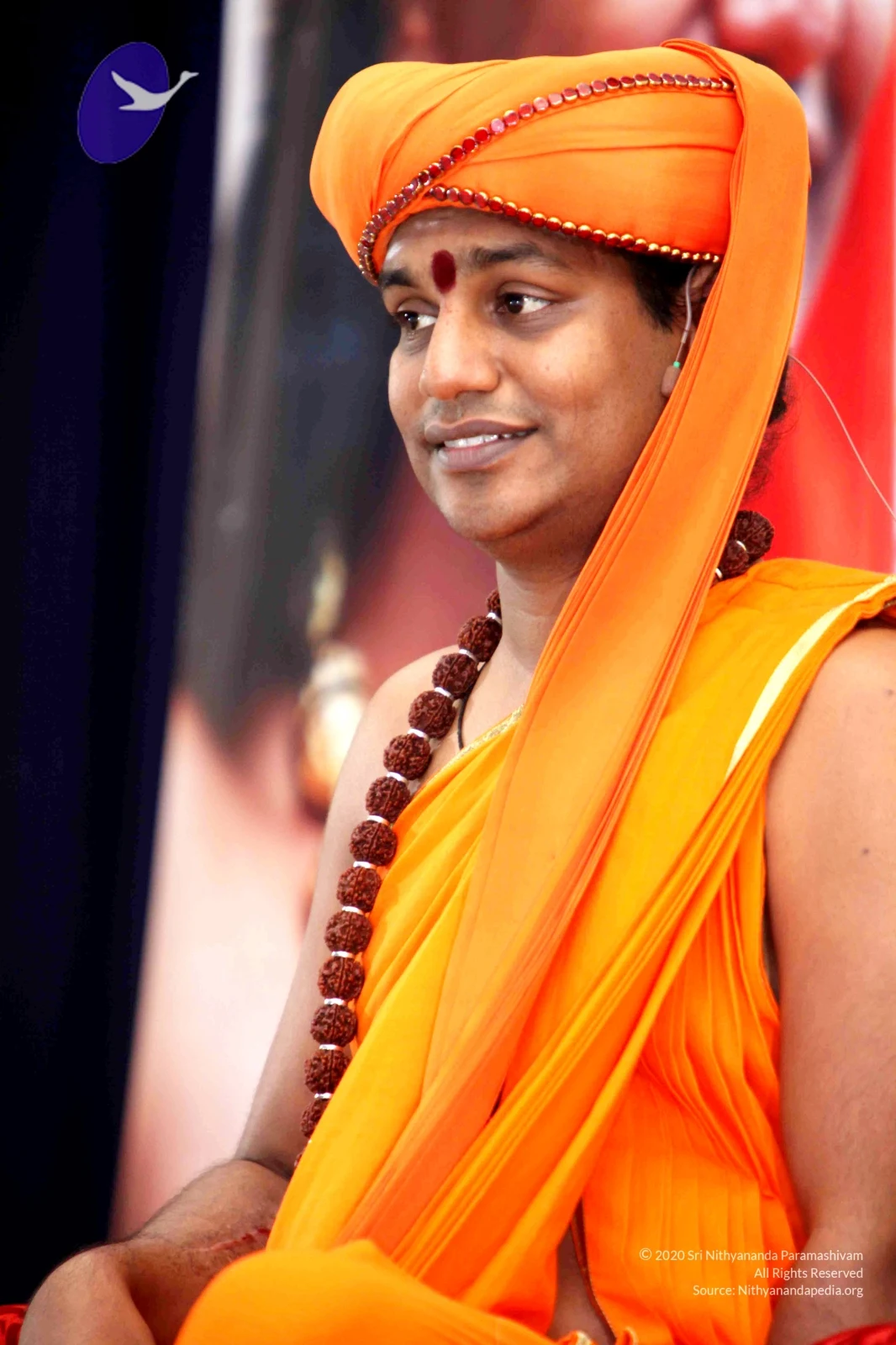
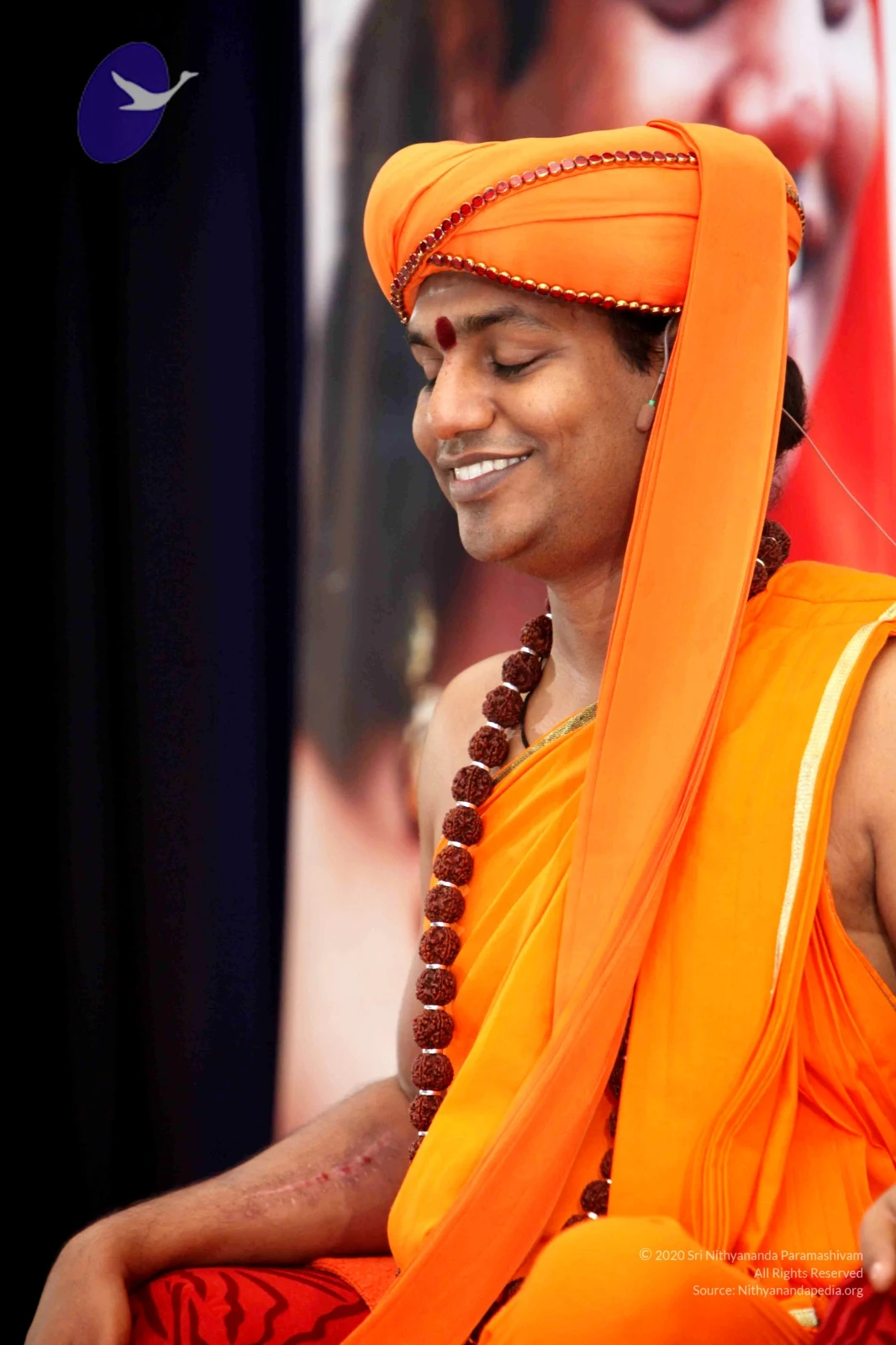
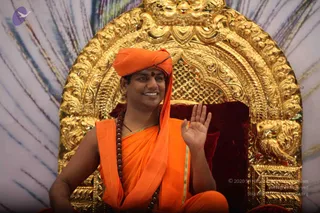
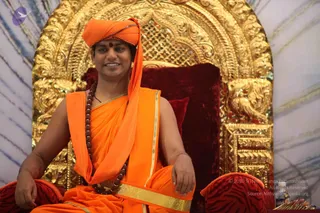
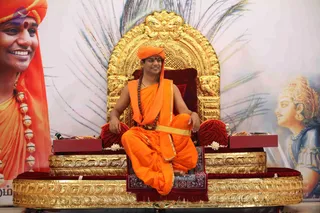
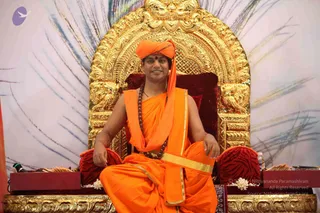
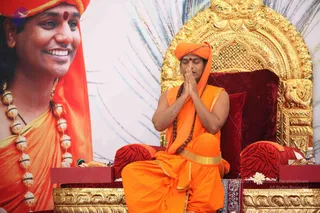
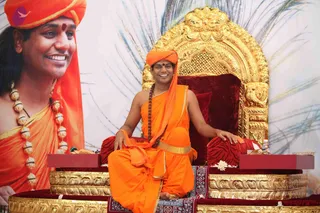
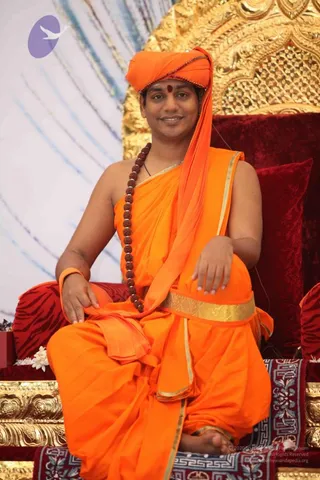
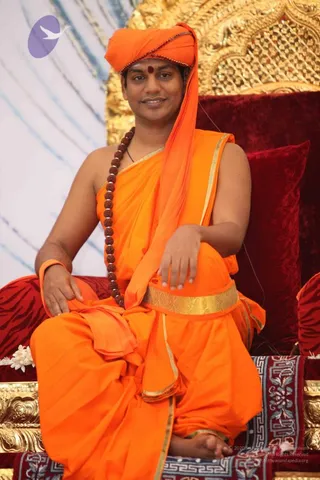
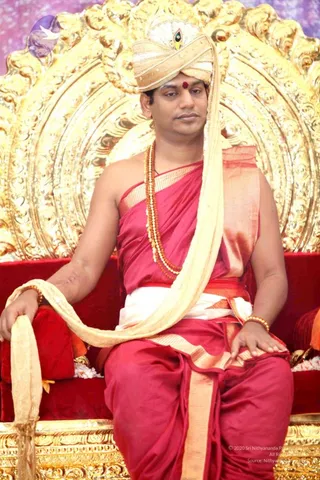
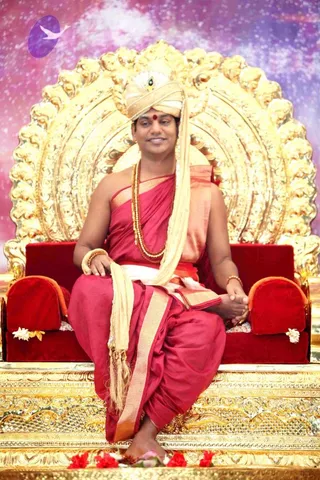
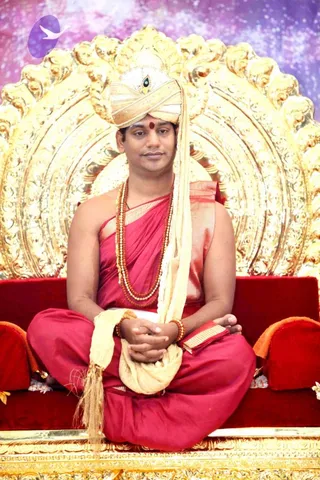
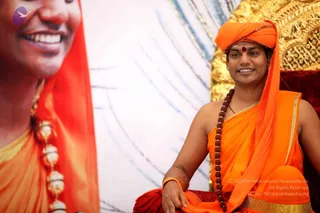
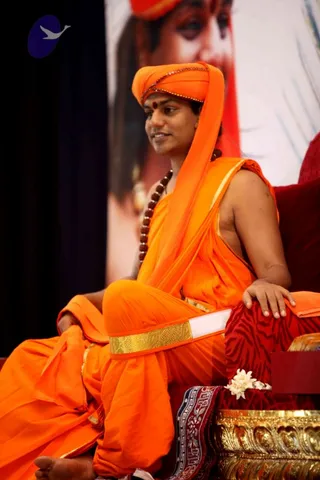
A seated figure in saffron-orange robes and an orange turban with a red bindi and rudraksha mala speaks to an unseen audience, one hand raised in gesture. A large portrait banner of a smiling person in orange headwear stands behind, and an ornate painted decorative panel with orange and yellow patterns sits at left against a dark curtain. Swamiji (probable): the seated speaker matches the page's claim with several cues, namely the orange turban, saffron robes and rudraksha mala, and is the speaker at a discourse.Close photograph of a smiling man seated before an ornate gold repoussé backdrop. He wears a cream and gold turban with a jewelled peacock-feather style ornament at the front, a red bindi on his forehead, and a red and gold-bordered shawl draped over a bare shoulder. Multiple strands of rudraksha beads and gold beads hang around his neck, and a long gold-bordered sash falls down beside him.A seated man in red and maroon sannyasi-style robes sits cross-legged on an ornate gold throne with a large carved golden halo-shaped backrest and red velvet cushions. He wears a cream turban with a feather ornament, a red bindi, multiple beaded rudraksha-style malas, and gold bangles on his wrists, with a cream shawl draped over one shoulder. A small carved gold side table with an orange cloth and a small brass item stands to the right. Behind him is a painted backdrop of pink, purple and orange clouds with sparkling light. White and orange flowers decorate the throne base.

October 22 2011

Original wiki page
Contents

Title:

THE SUPREME PONTIFF OF HINDUISM HDH BHAGAVAN SRI NITHYANANDA PARAMASHIVAM

Description

Bhagavad Gita (Song of God) is a timeless treatise on the essence of living enlightenment. The Gita was imparted by the enlightened Hindu incarnation Sri Krishna to the warrior-prince Arjuna over 5000 years ago. Amazingly, the spiritual wisdom and life solutions offered in the Gita are so universal and current that it is even today used as a personal transformation guide in universities and management schools worldwide.

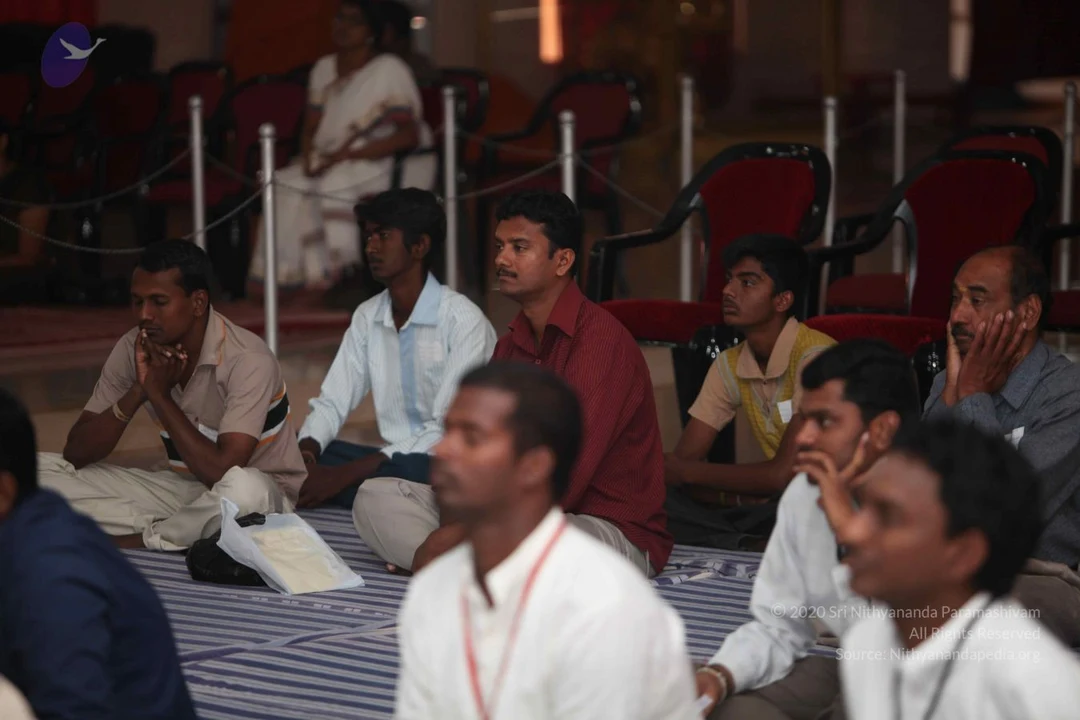
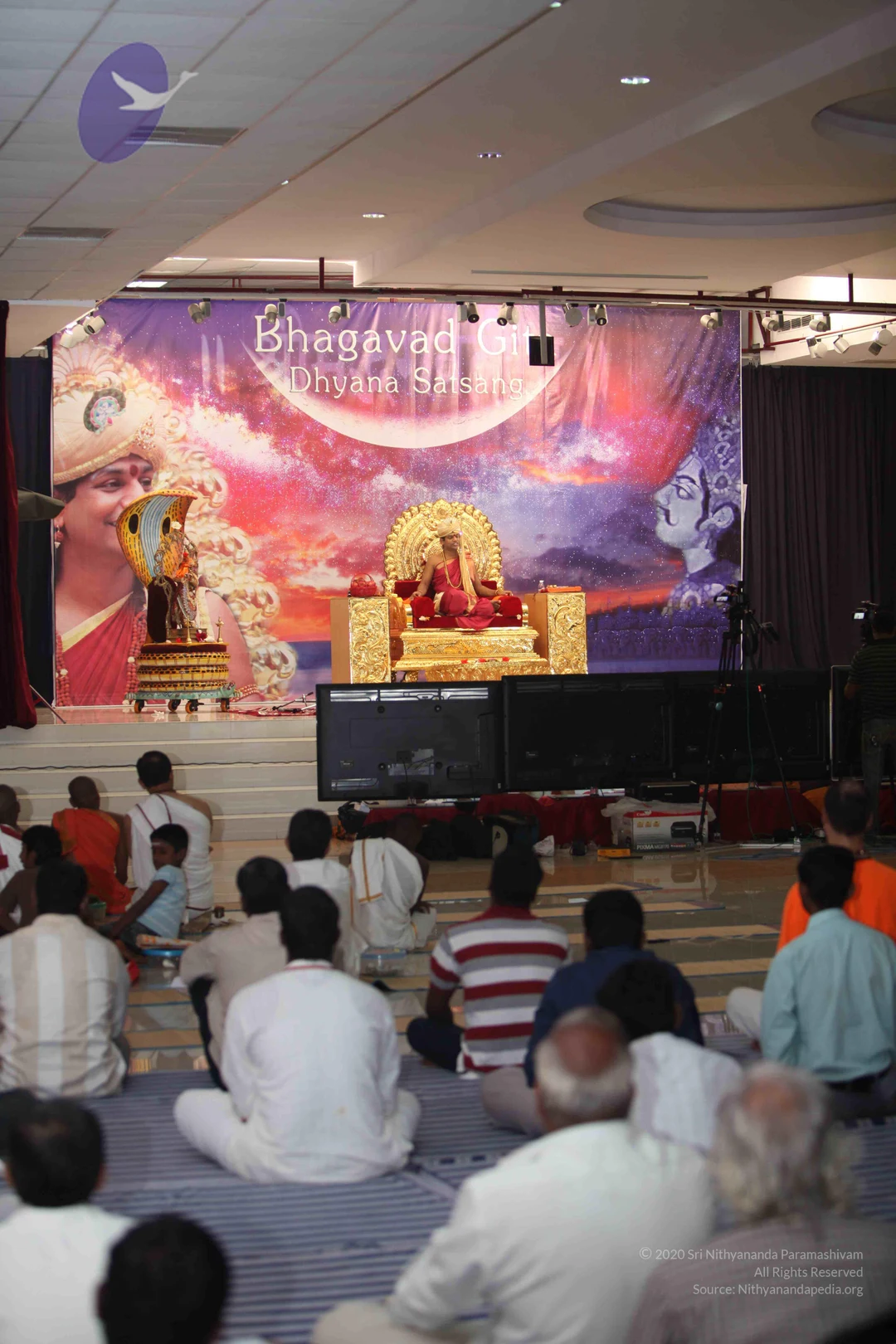
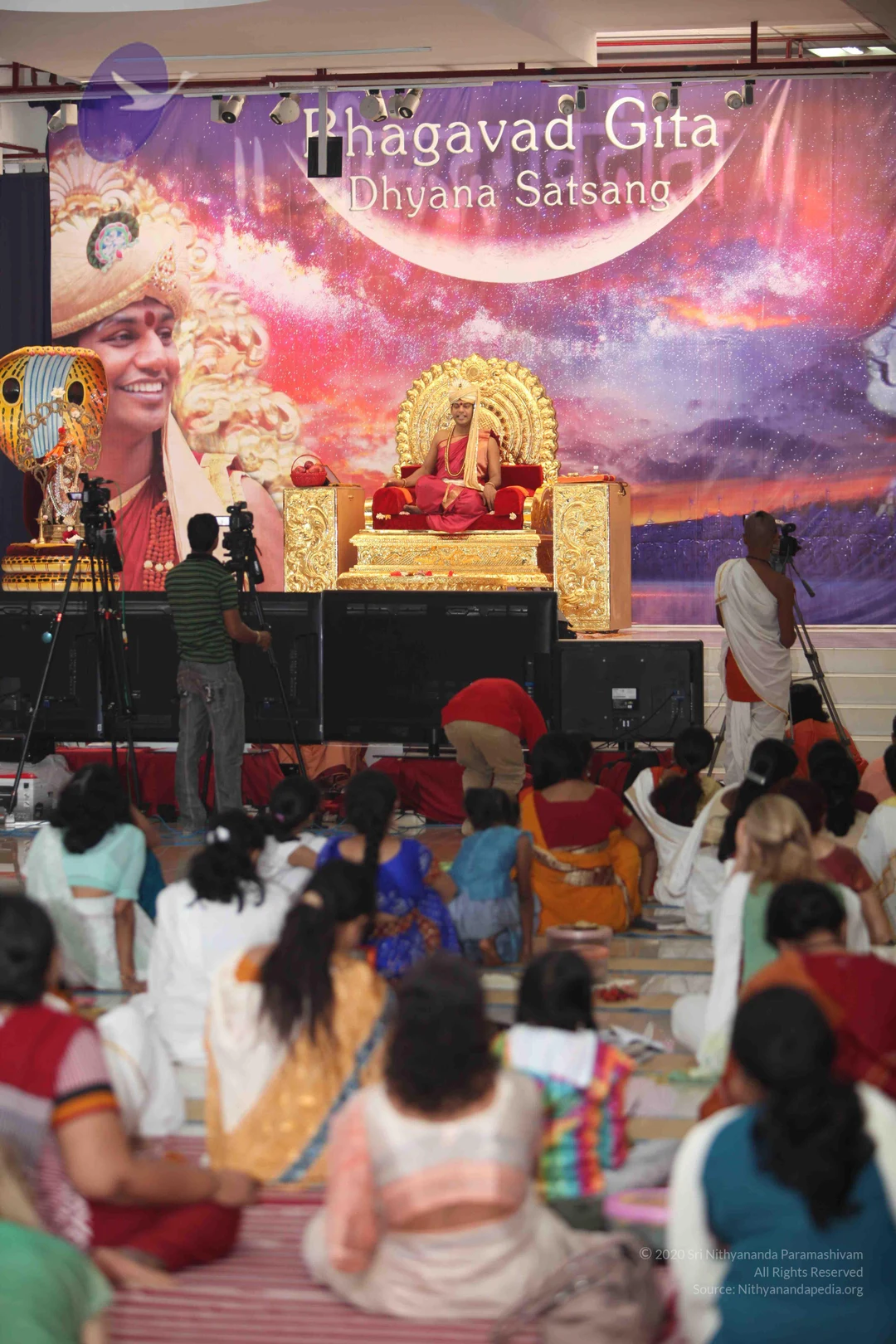
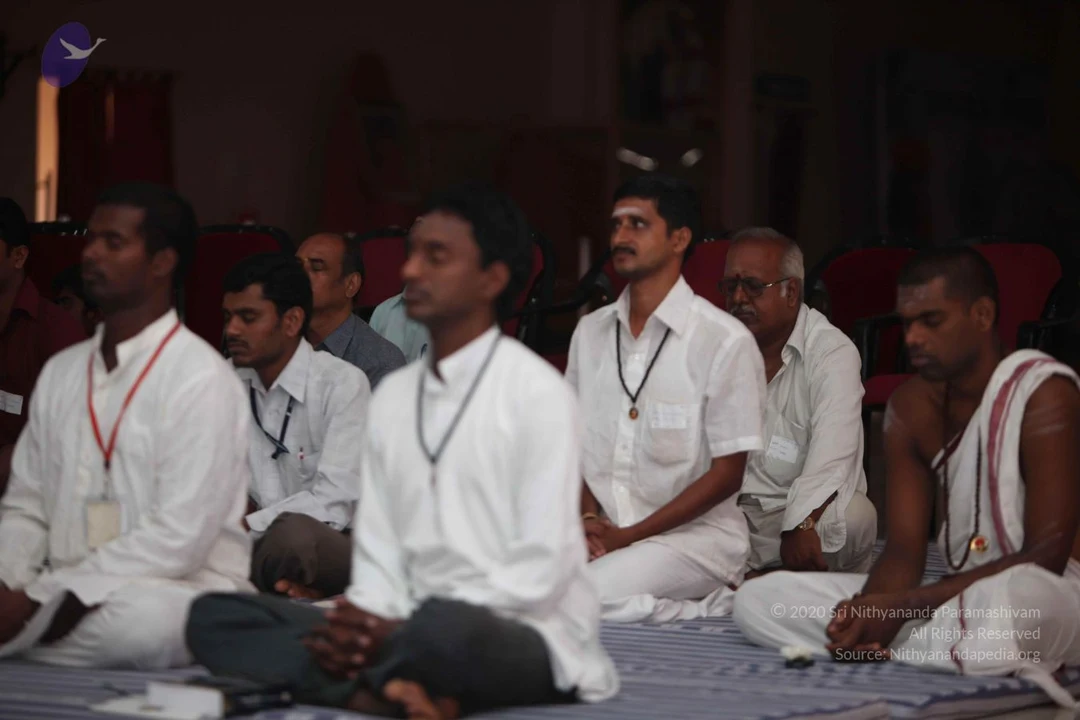
In today's talk on Bhagavad Gita, Chap 2, Verse 49, Paramahamsa Nithyananda speaks on the transformation of our motivations. When we motivate ourselves through greed and fear -- reward and punishment -- we create a spiritual experience of Hell. As we evolve to the next level, the level of sacrifice, we launch a social core of compassion that eventually shifts the world consciousness. The sacred secret of Verse 49 is "surrender yourself to wisdom". When we act from the clarity of understanding that our well-being does not depend on the results of our actions, we free ourselves from the prison of expectation and transcend our mortal perspective.

Link to Video:

VideoAudio

Photos

Sakshi Pramana:

Sharing from Program/Yatra

Photos Of The Day:

Temple
BGSatsang

KalpataruDarshan

BGSatsangTamil

SacredArts

Photos Of The Day:

Temple
Bhagavad-Gita

Kalpataru

Bhagavad-Gita-Tamil

Sacred-Arts

Special-Photo

Photos from this day

View all 286 photos

Photos

22 photosSource gallery
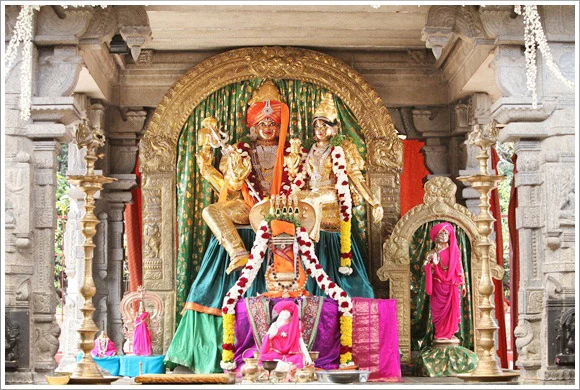
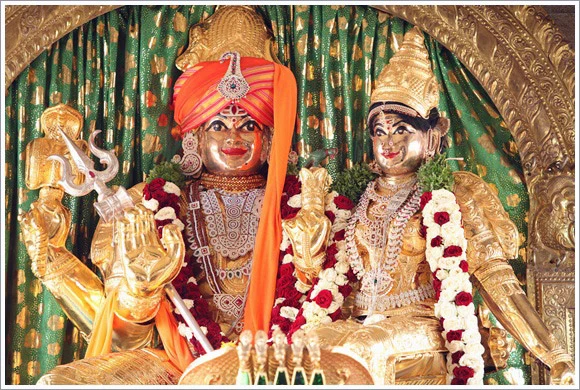
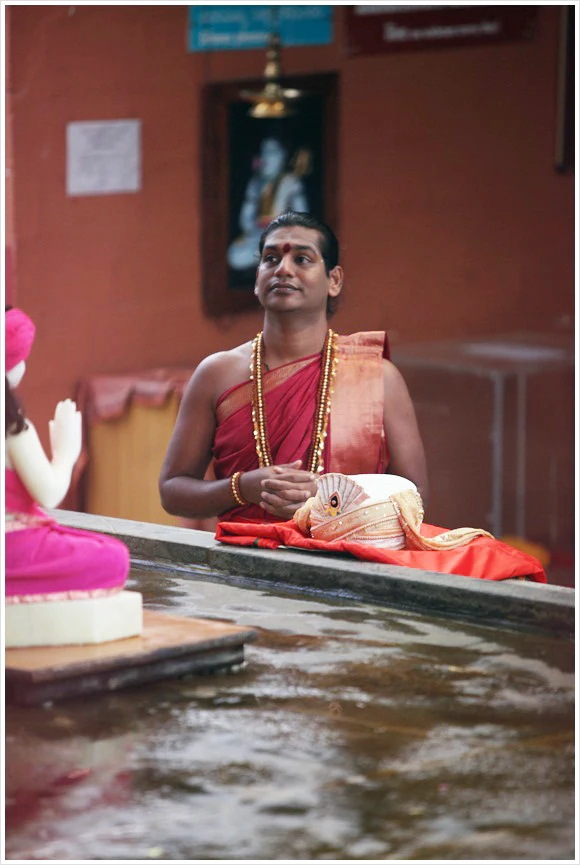
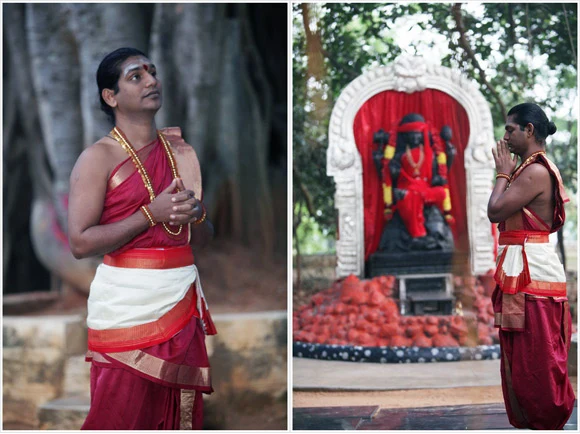
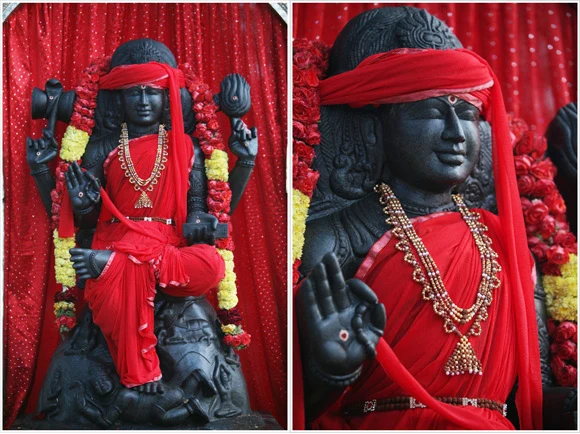
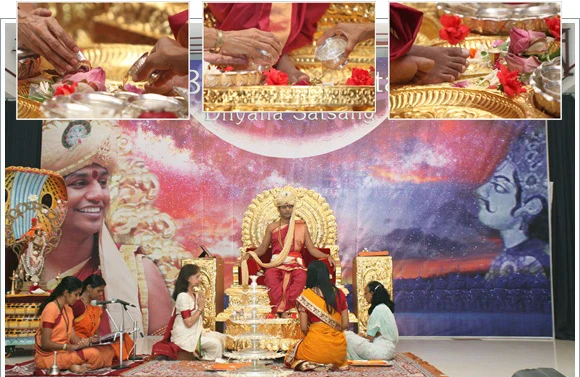
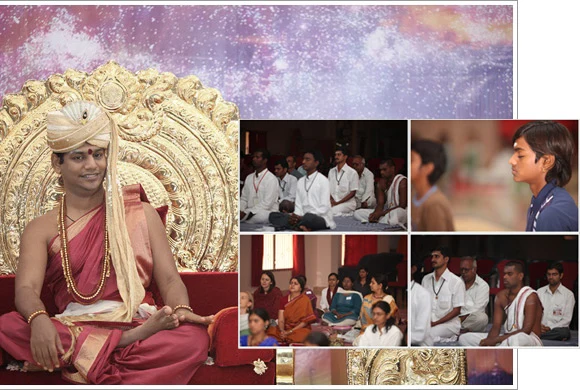
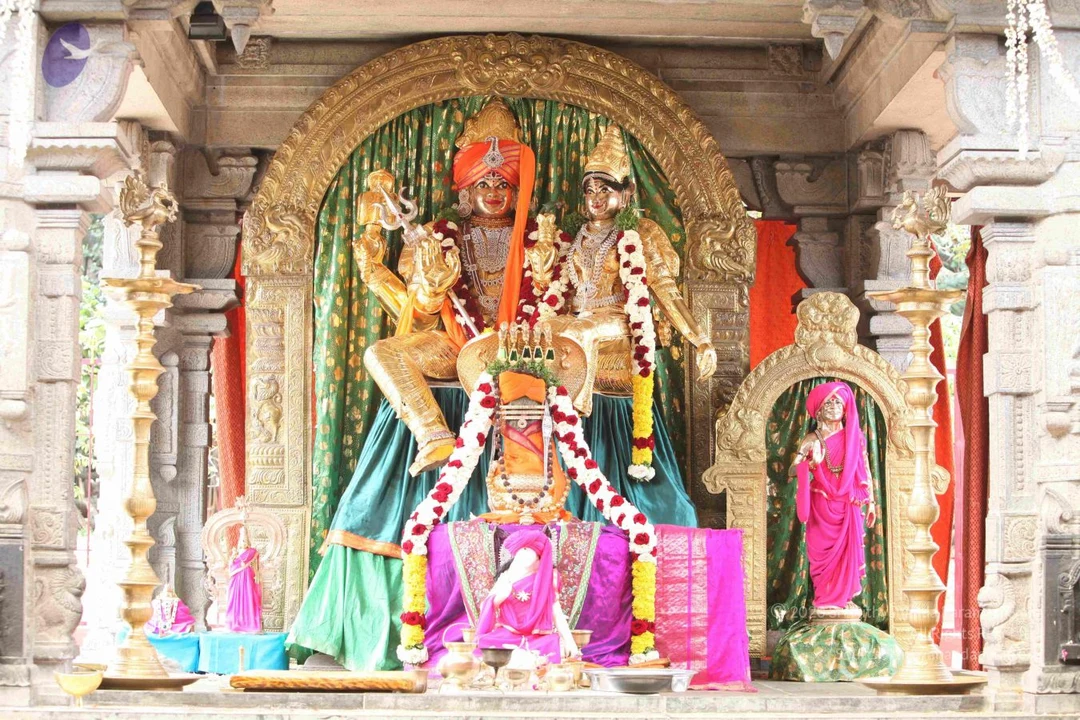
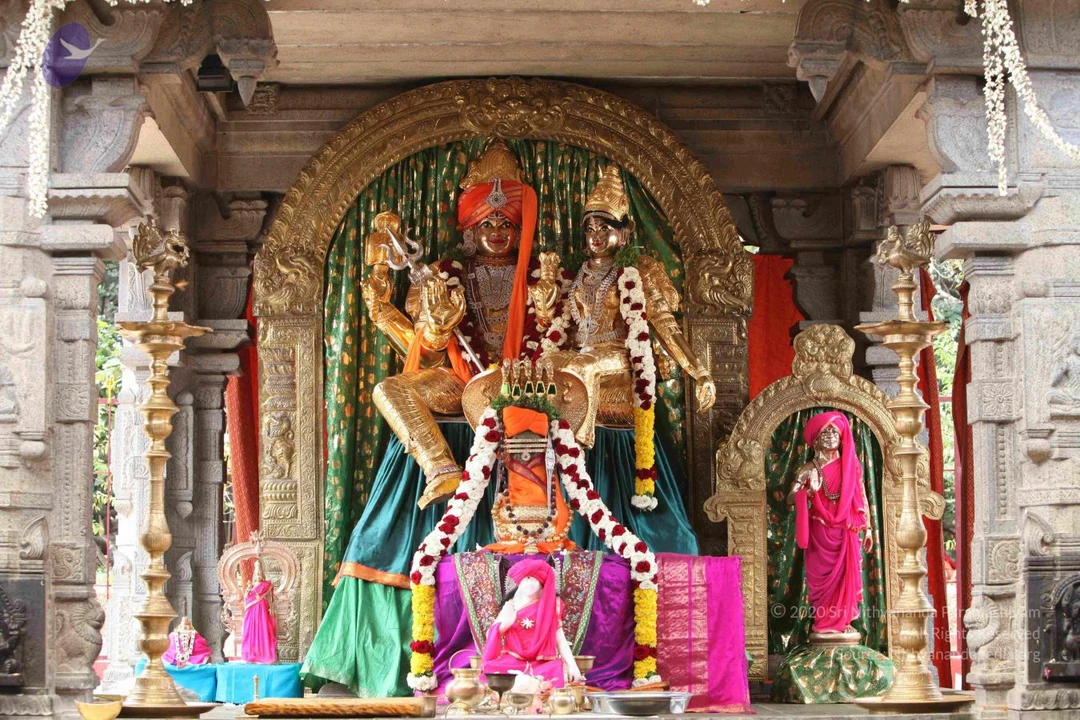
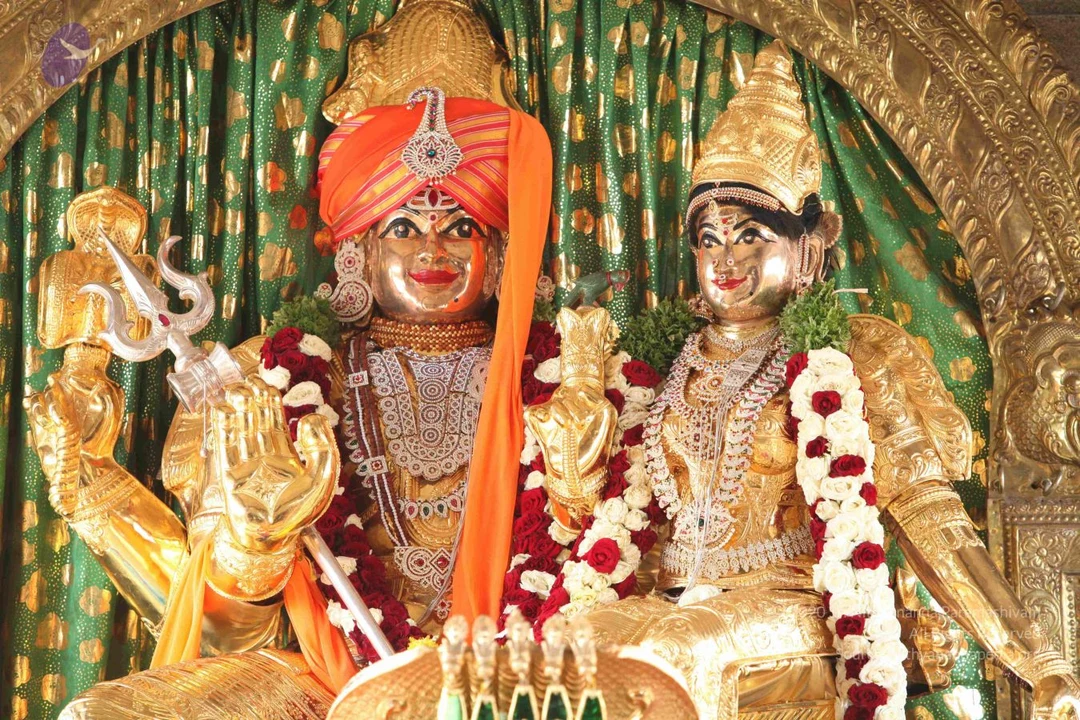
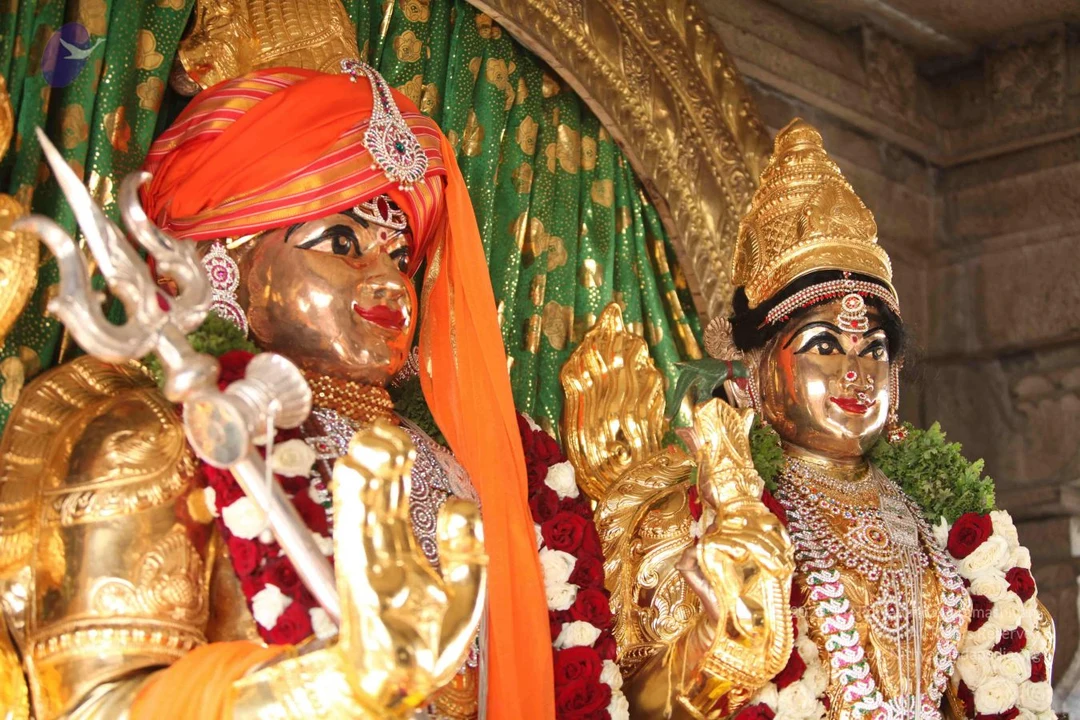
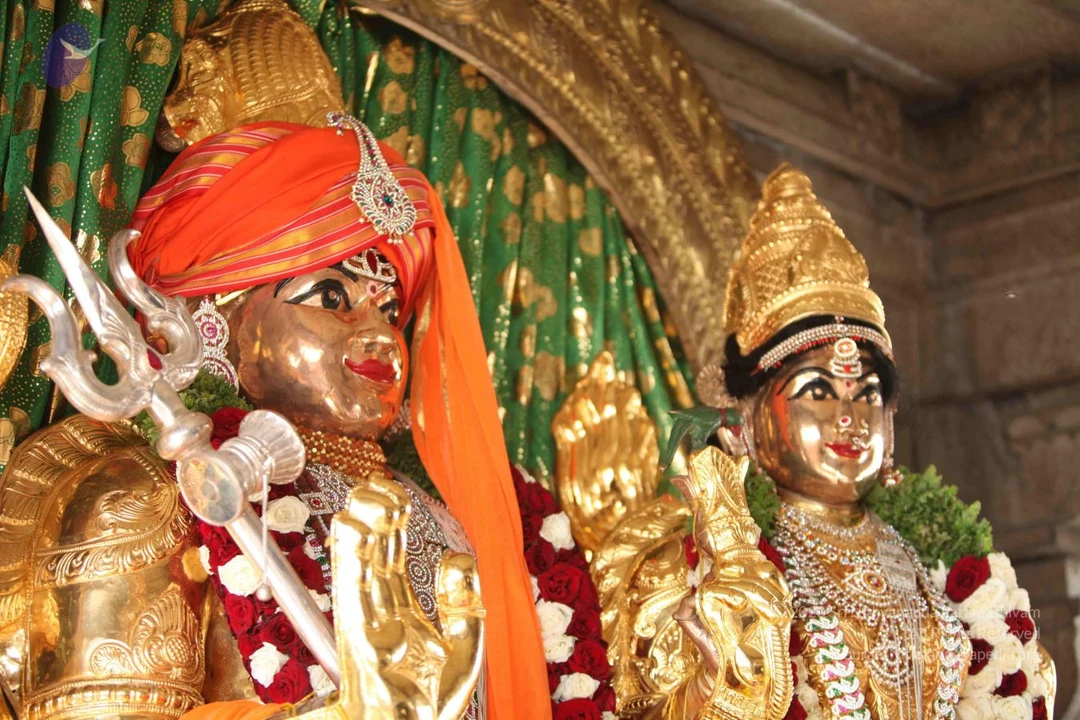
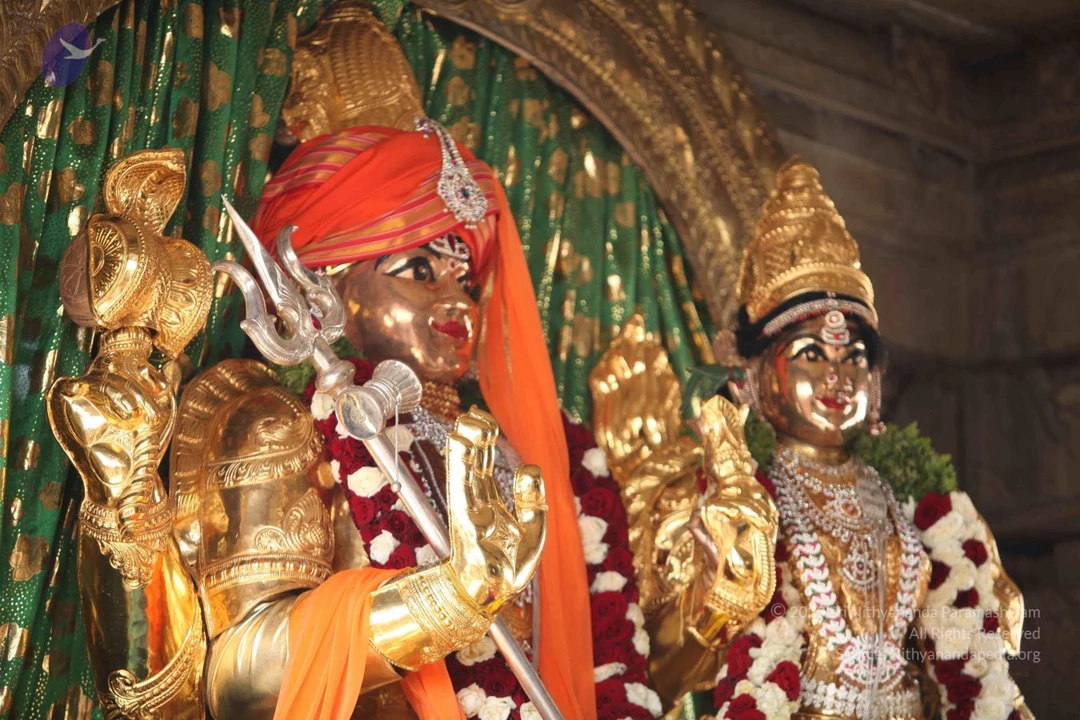
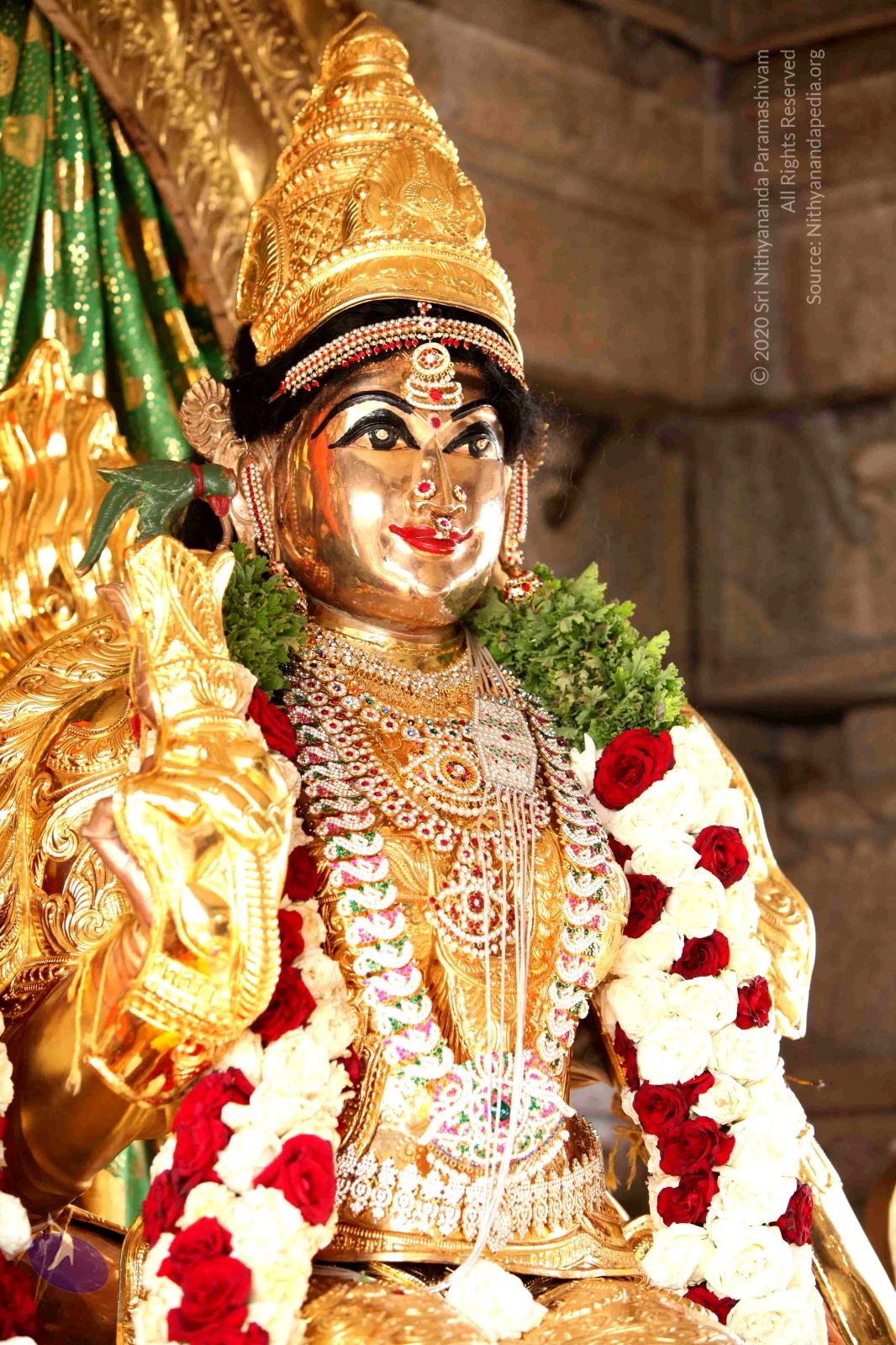
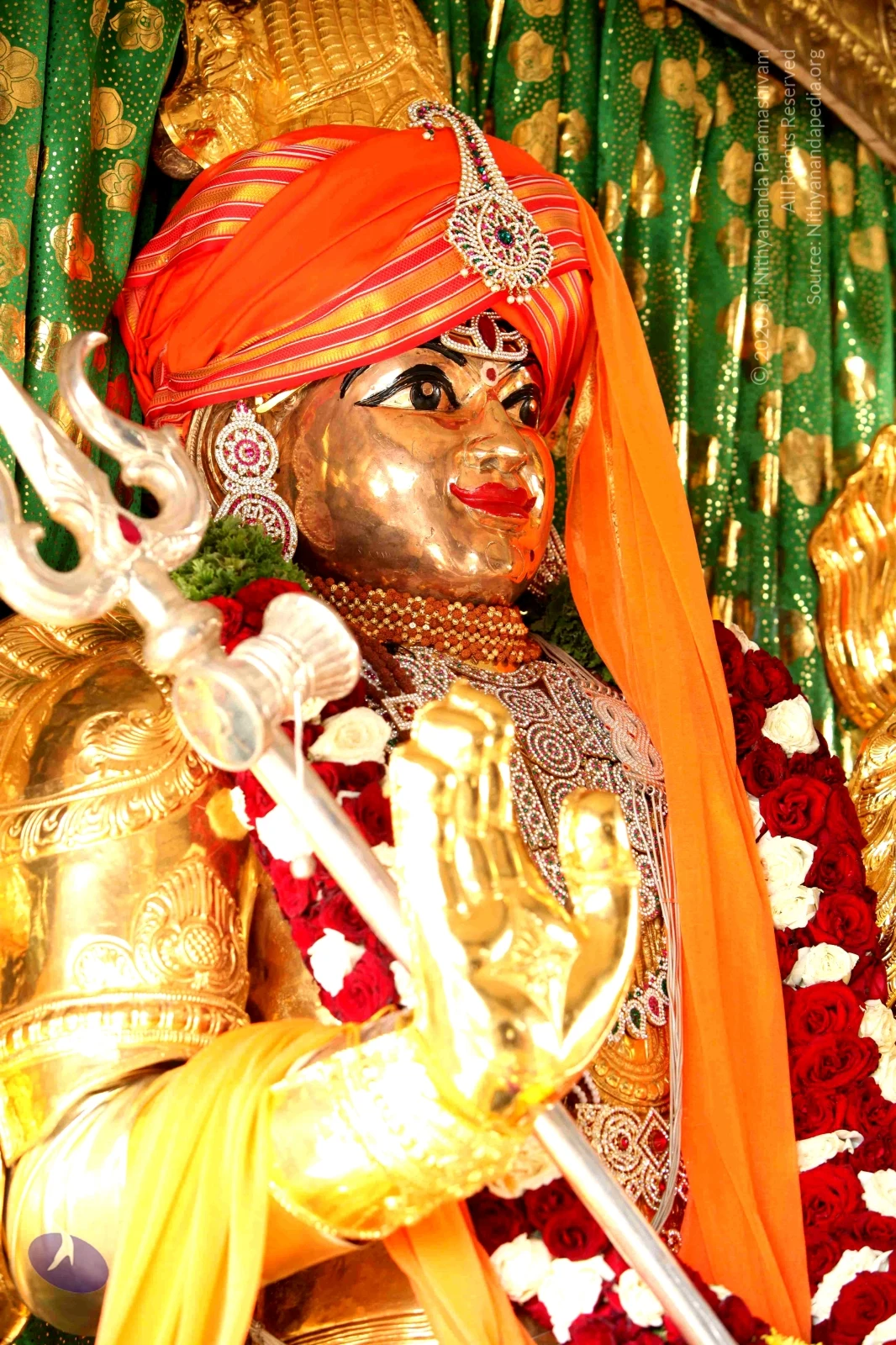
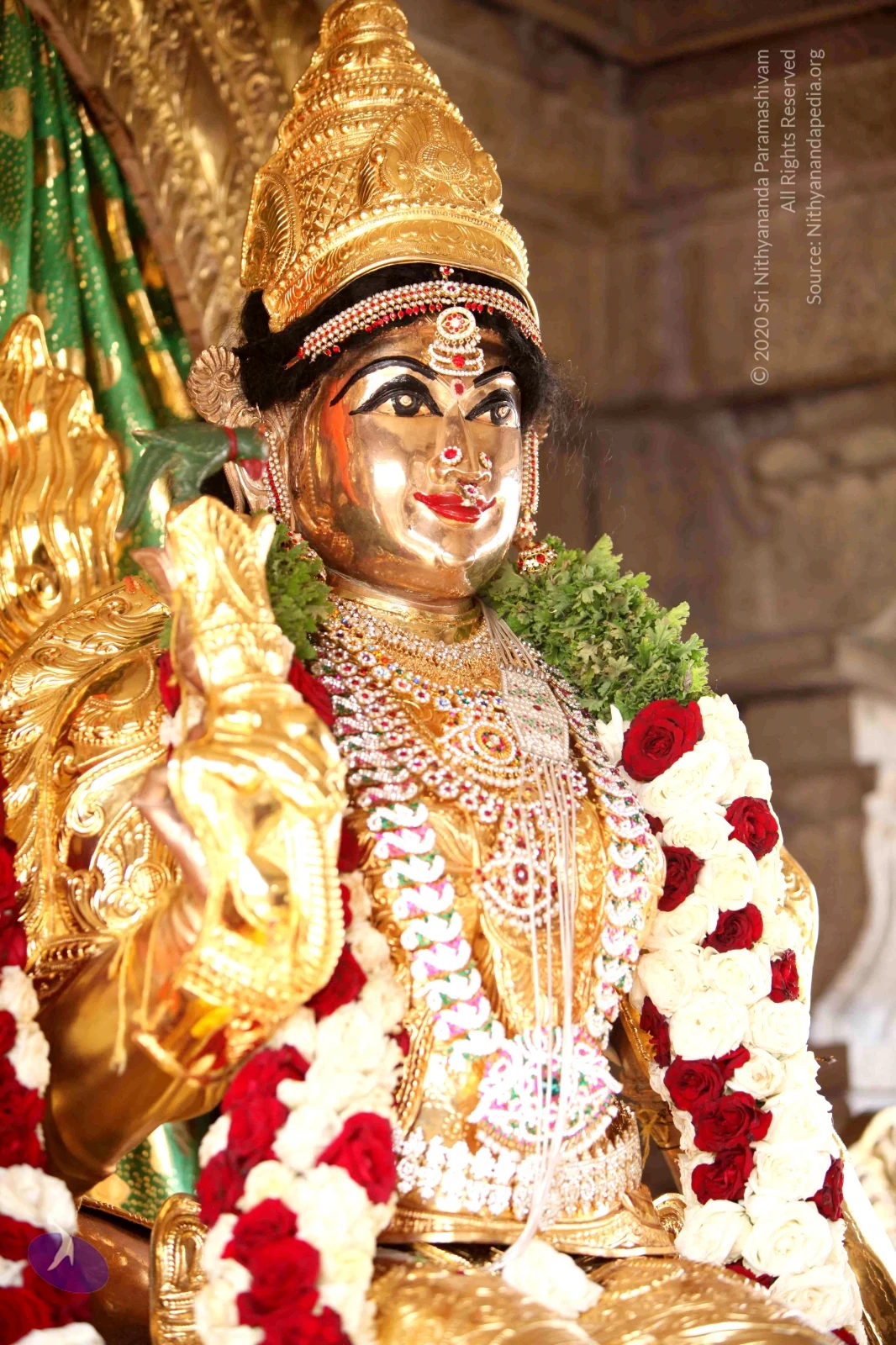
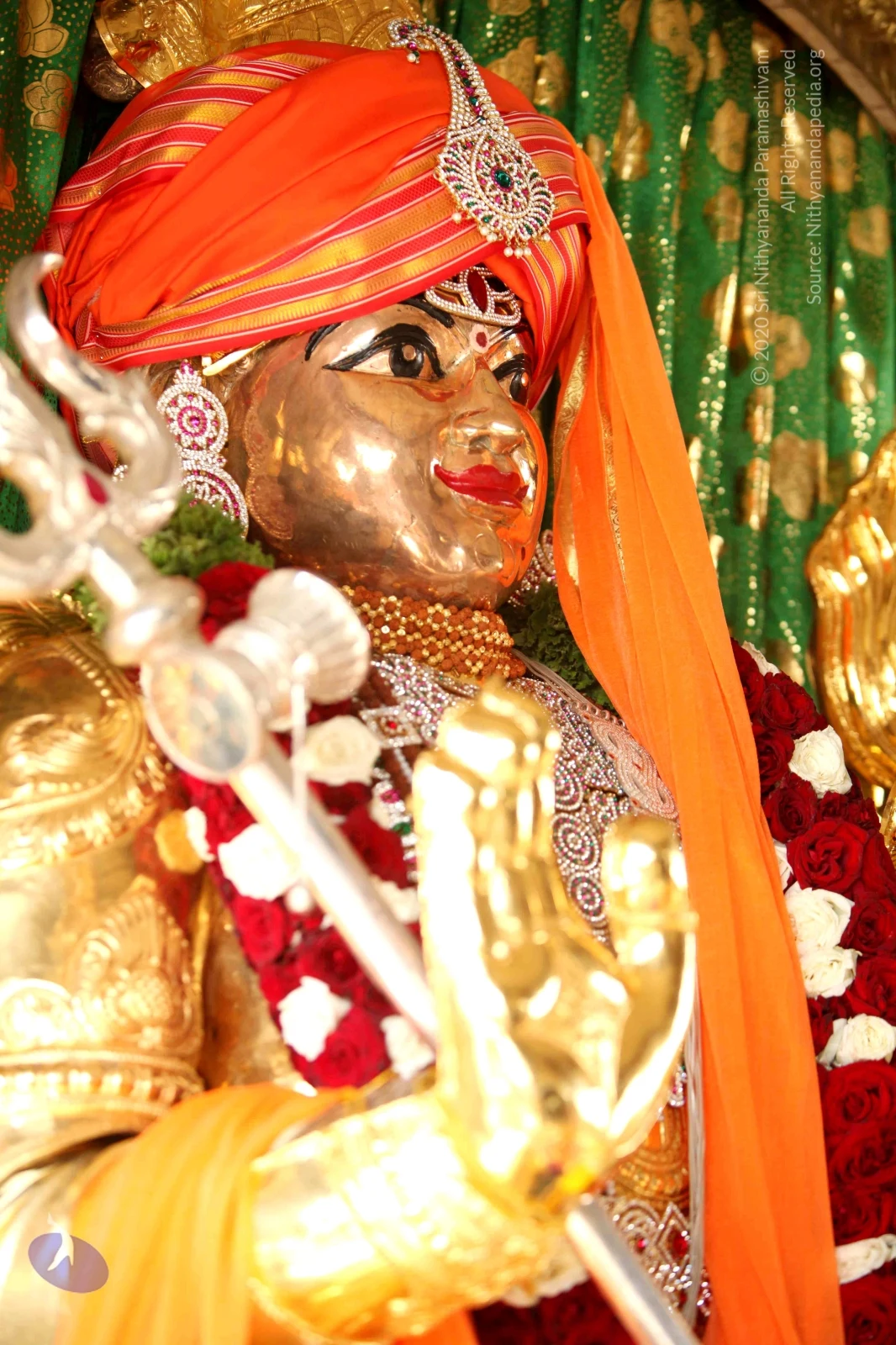
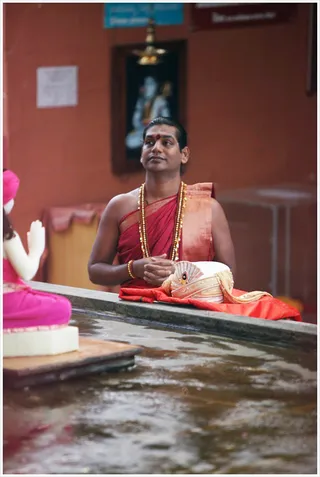
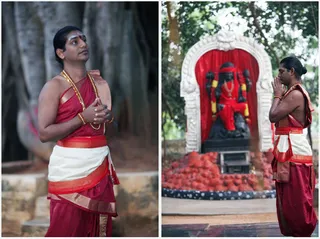
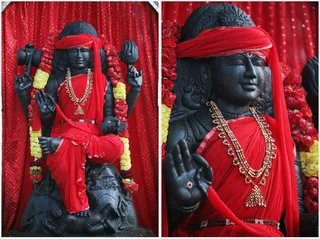
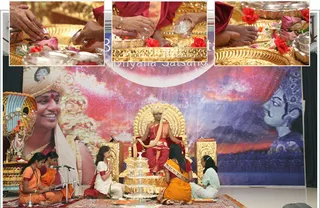
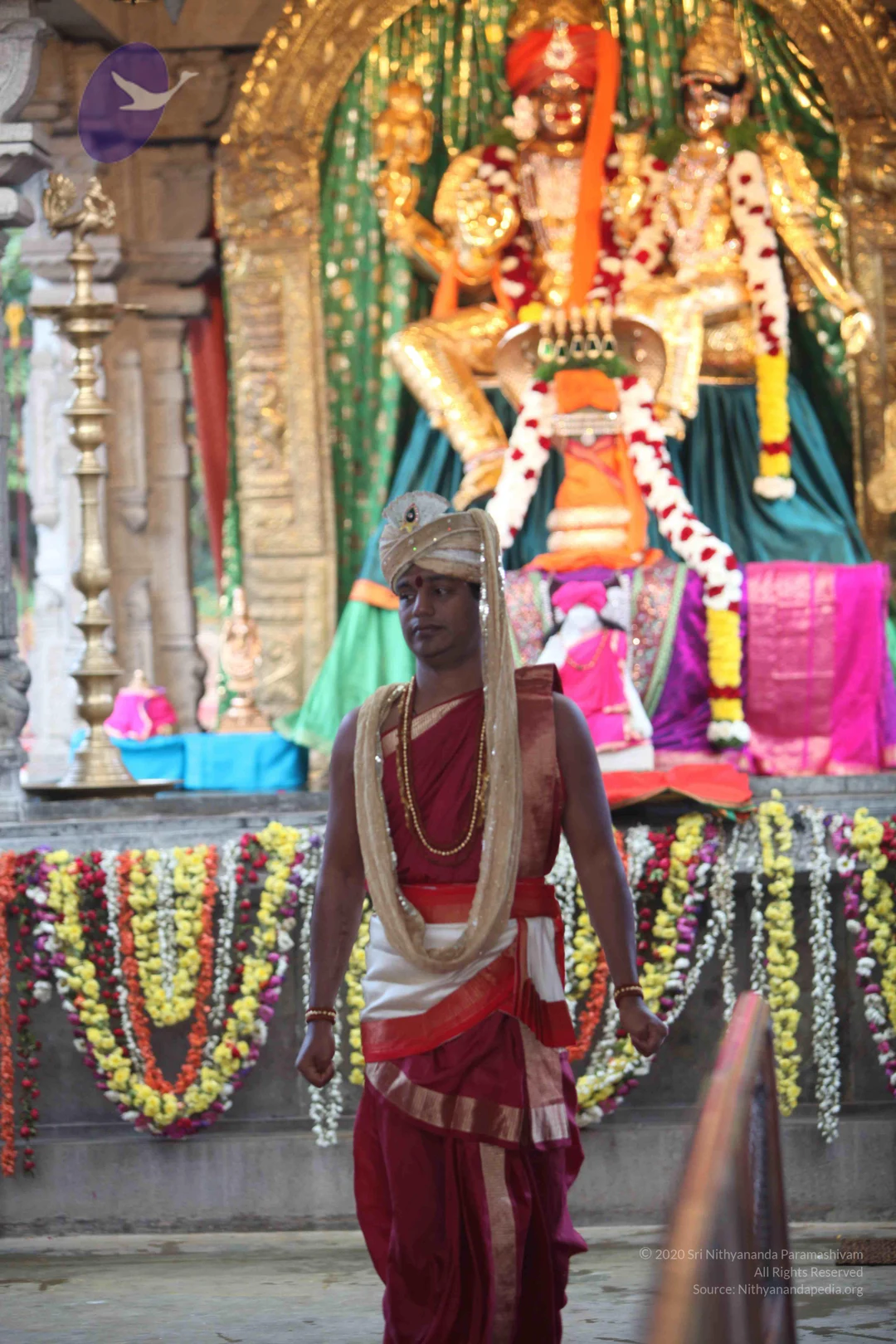
A temple shrine with carved stone pillars and a golden arched niche framed by green and red drapery. Two seated deity murti dominate the centre, one in a red and gold crown with a golden garland, the other holding a gold staff, dressed in green and orange garments. Between them sits a rudraksha-like garlanded object and a small offering with marigold garlands draped over the figures. Smaller pink-robed figures stand on both sides, with brass oil lamps in front and a floral garland hanging from the top. No living people are visible, and the figures are statues, so this is a depiction and no a person candidate is present.Two gilded deity murtis are seated side by side against a green and gold brocade backdrop with an arched gold frame. The figure on the left holds a trident and wears an orange turban, ornate jewelled necklaces and a long orange sash, with a large red and white flower garland draped over the body. The figure on the right wears a tall gold crown, layered necklaces and a red and white garland, with a second green foliage garland above. Both murtis have painted faces and are set on a gold throne with a gold lotus-style base. No living people are visible.A photograph of a shaved-headed man in a red ochre garment with a gold-bordered shawl draped over one shoulder, seated at the edge of a stone-rimmed water tank. He wears a long beaded necklace of wooden beads and gold bracelets, with a red bindi on his forehead, and his palms are pressed together in prayer while he gazes upward. Beside him on a red cloth lies a white and gold ceremonial object resembling a folded headpiece or cloth bundle. To the left, a pink-clad seated statue with raised palms sits on a white pedestal. Behind him, a red wall holds a framed deity picture and a small blue sign. The man's appearance does not clearly match the candidate description, so he is described by role as a devotee performing prayer.A two-panel collage of photographs. The left panel shows a man in a red dhoti-style garment with a white and gold-bordered cloth at the waist and a red shawl over the shoulder, hands pressed together in anjali mudra, gazing upward beside a large tree trunk. Strings of orange-yellow beads hang on his chest and a red tilak marks his forehead. The right panel shows the same man in profile, hands joined in prayer, standing before a black stone deity murti under a white arched niche with a red cloth backdrop, garlanded with yellow and red flowers, with a heap of red flowers in front. The figure is a single devotee in red and white ritual dress; no appearance-based candidate meets the threshold for a person.A two-panel collage of a black stone deity murti draped in red cloth with gold jewellery and yellow and red flower garlands. The left panel shows the full figure seated with raised arms holding objects, against a red sparkling backdrop. The right panel is a close-up of the face and chest, showing a red headband, layered gold necklaces and a raised hand with a red mark on the palm. No physical people are visible.A multi-panel collage of a satsang event. The main panel shows a seated figure on an ornate golden throne with a gold-and-red pedestal, wearing red and white robes, in front of a large backdrop of a painted night sky with a stylized blue deity face on the right and a large portrait of a smiling man in a white turban on the left. Below, a girl in white and several people in orange and saffron clothing sit on a carpet near microphones, and a woman in white sits at the right. Two inset panels above show hands pouring liquid and placing red flowers on a golden tray. Because this is a collage of photographs, it is graphic with no physical people counted in the layout as a whole; the scene itself includes about six visible people.

Temple

21 photosSource gallery
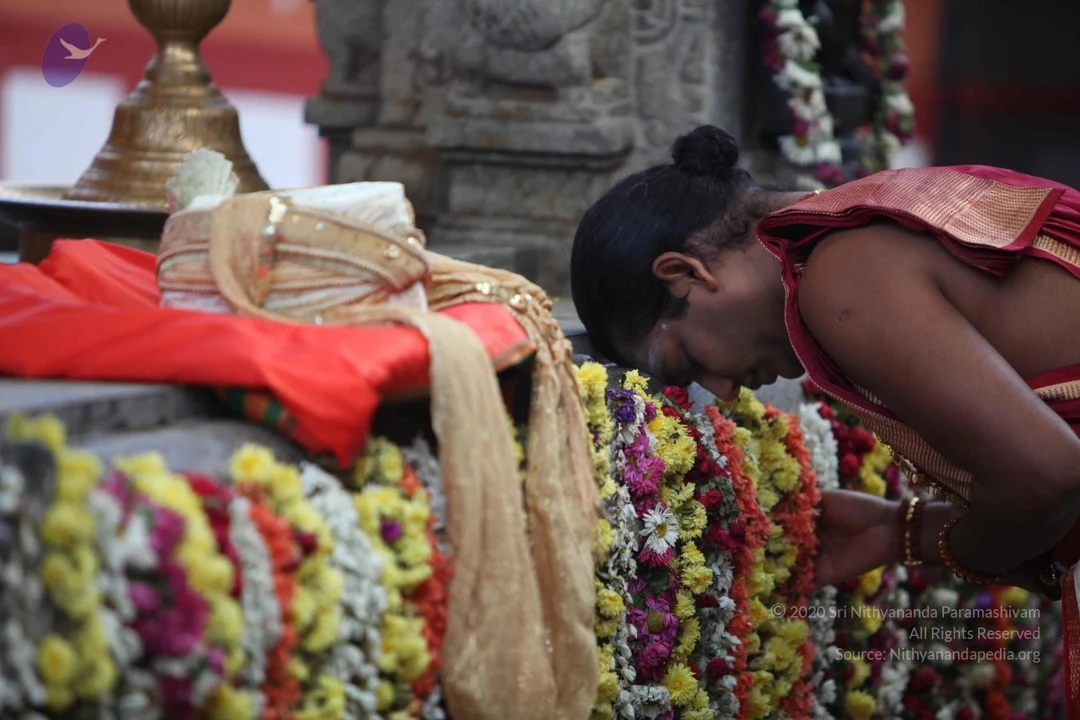
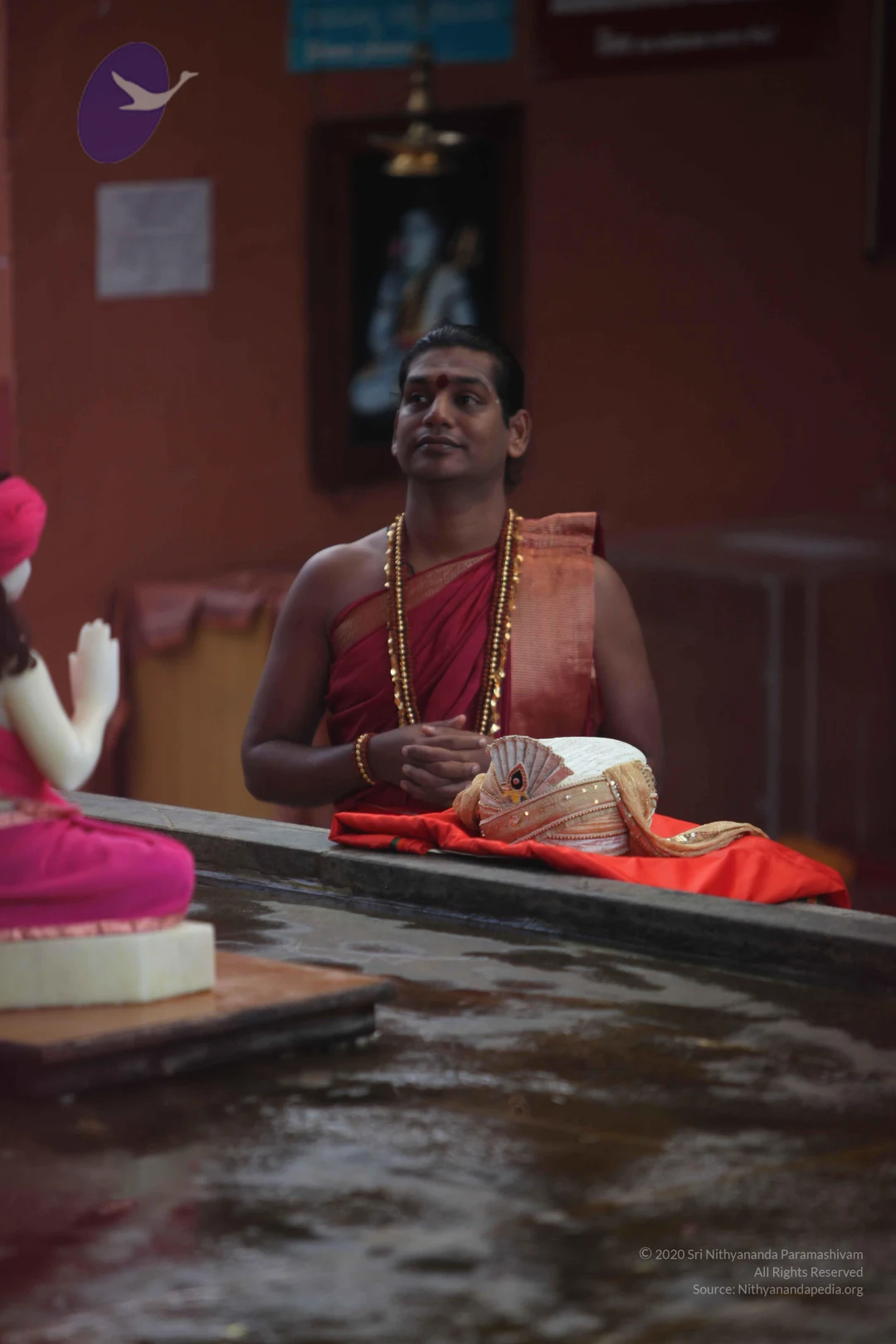
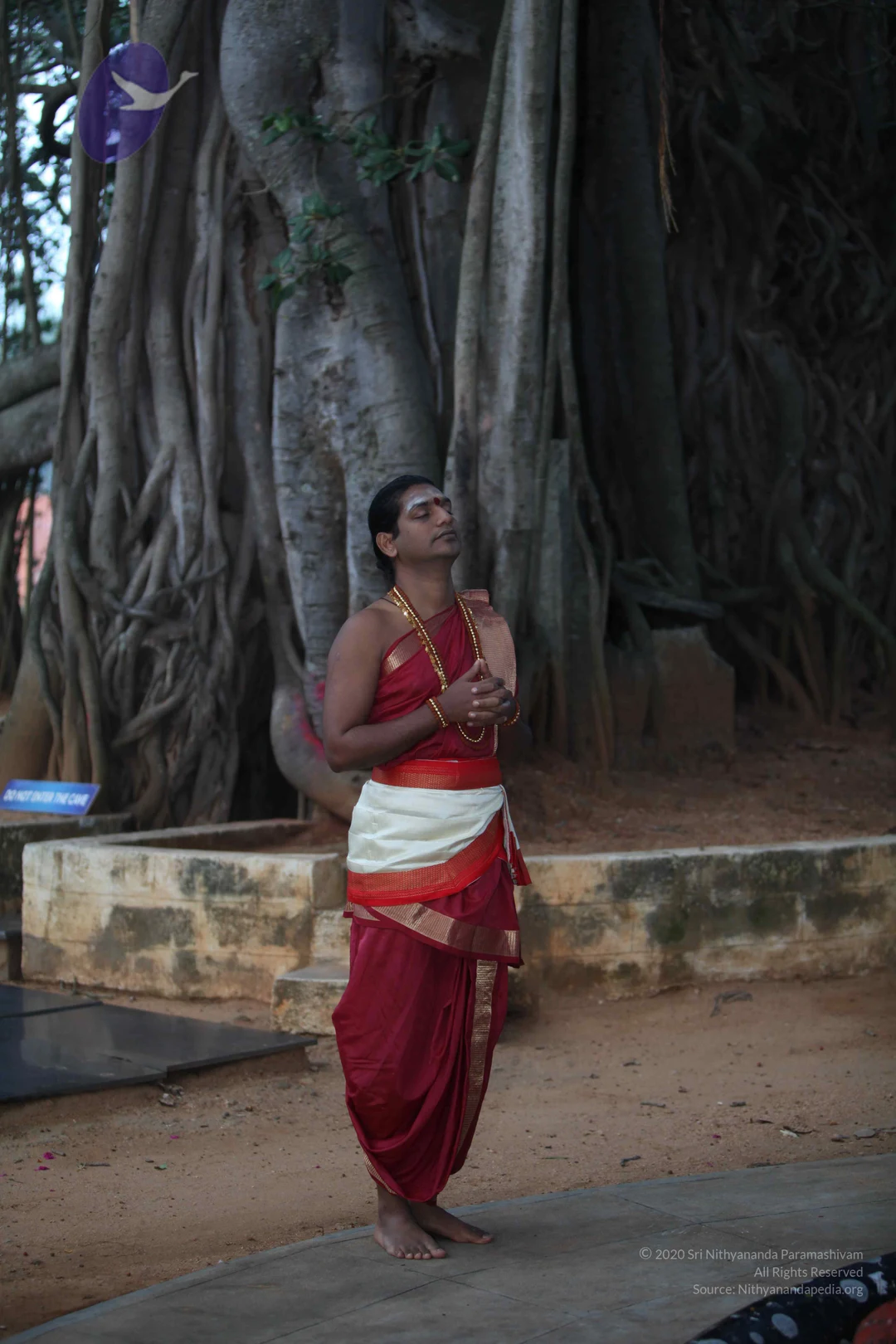
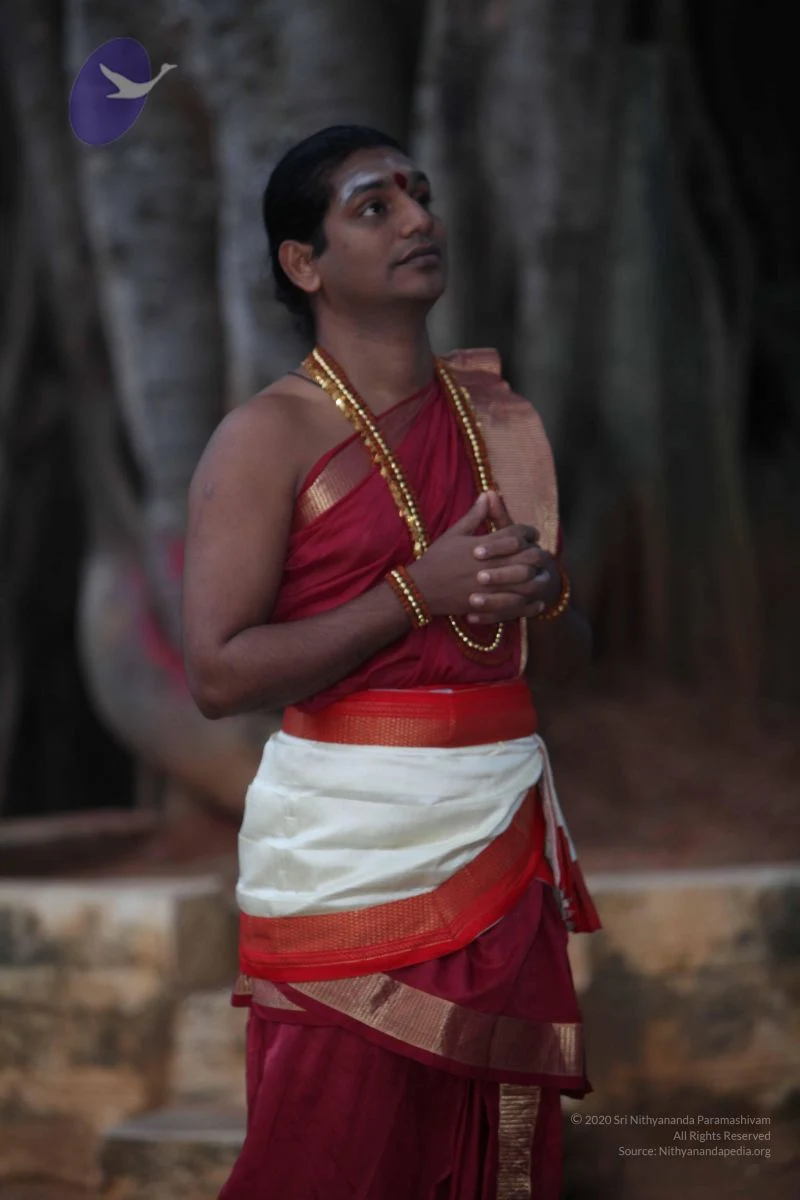
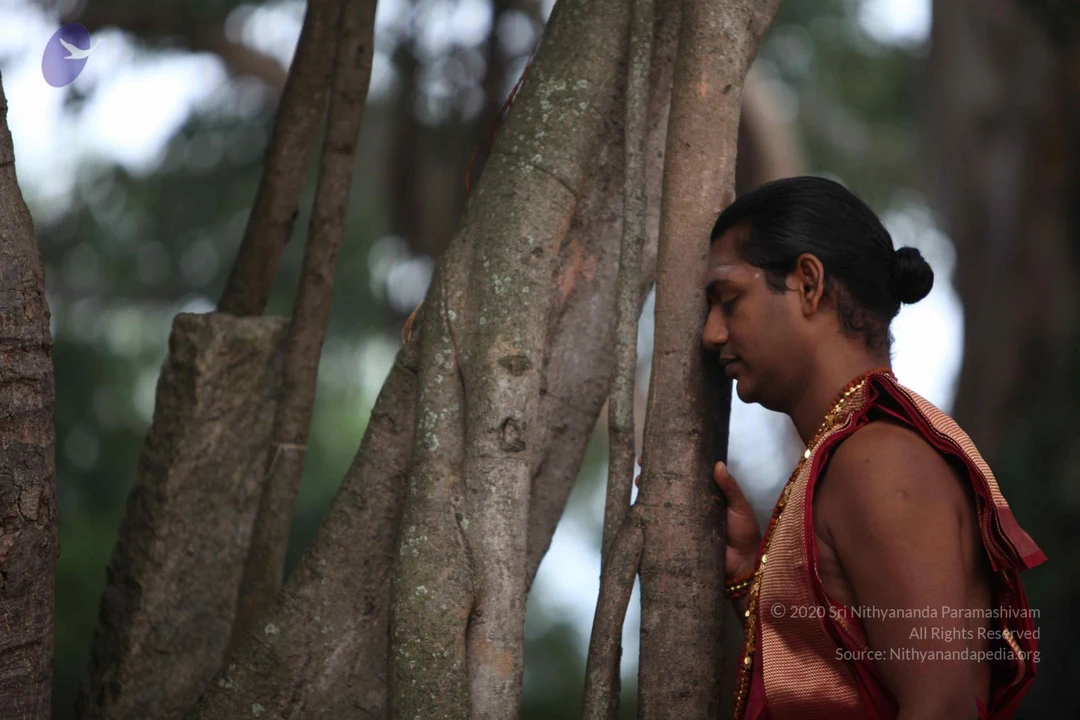
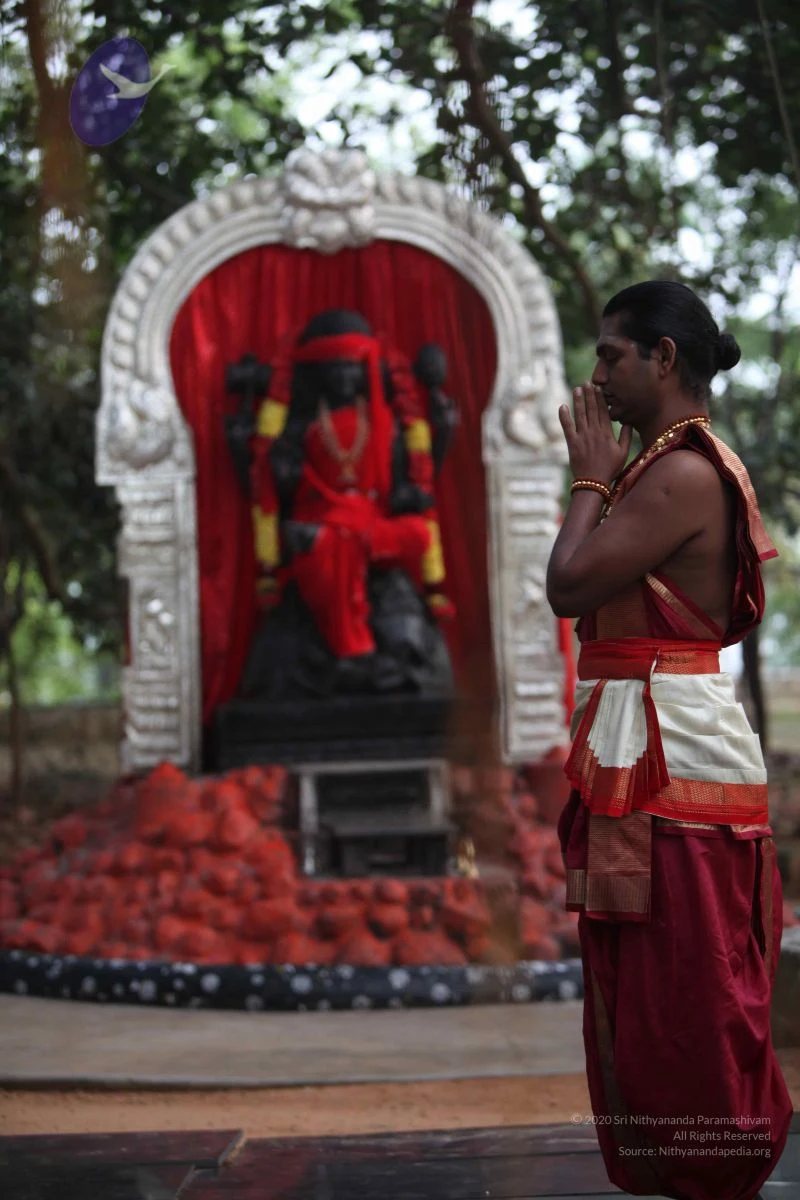
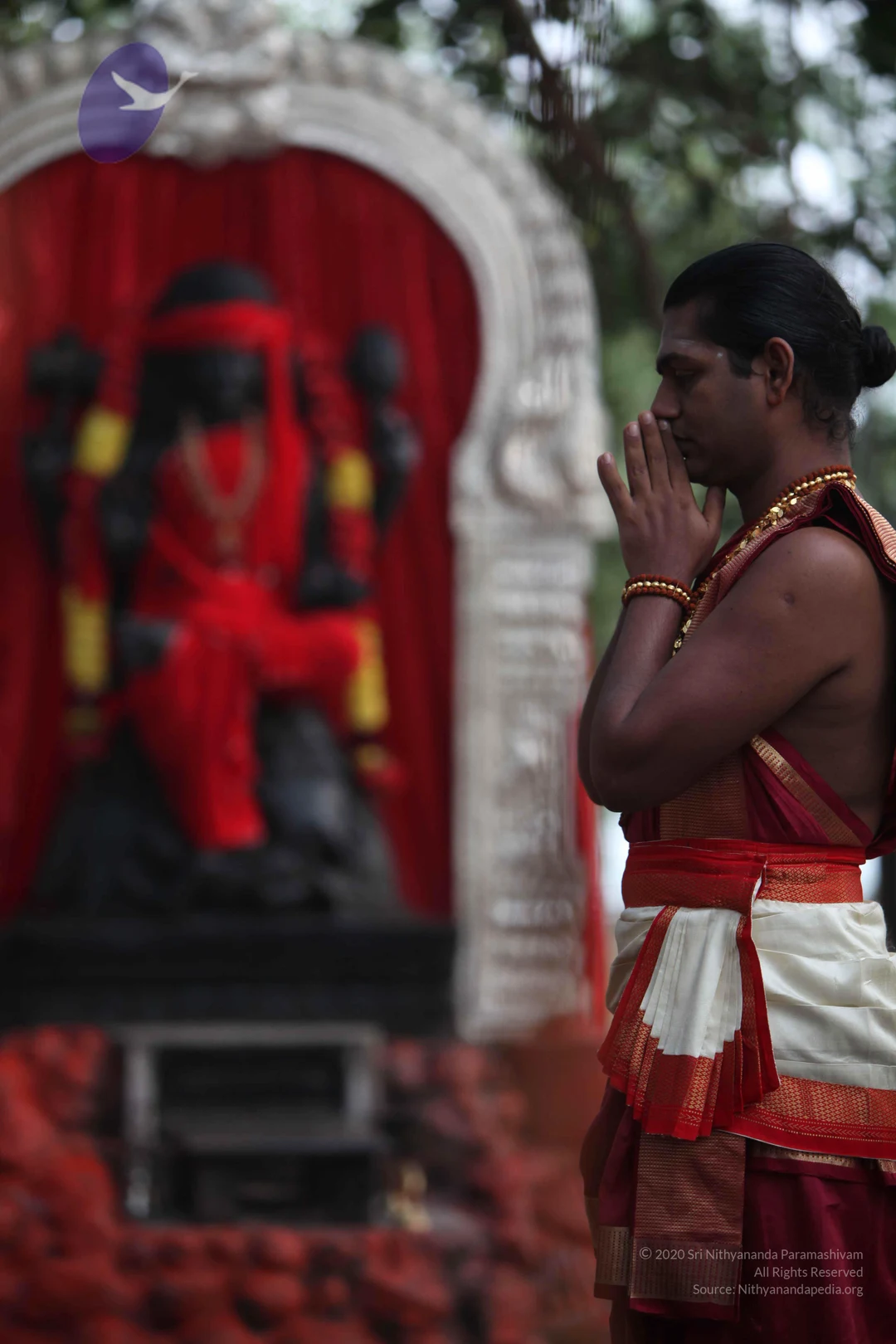
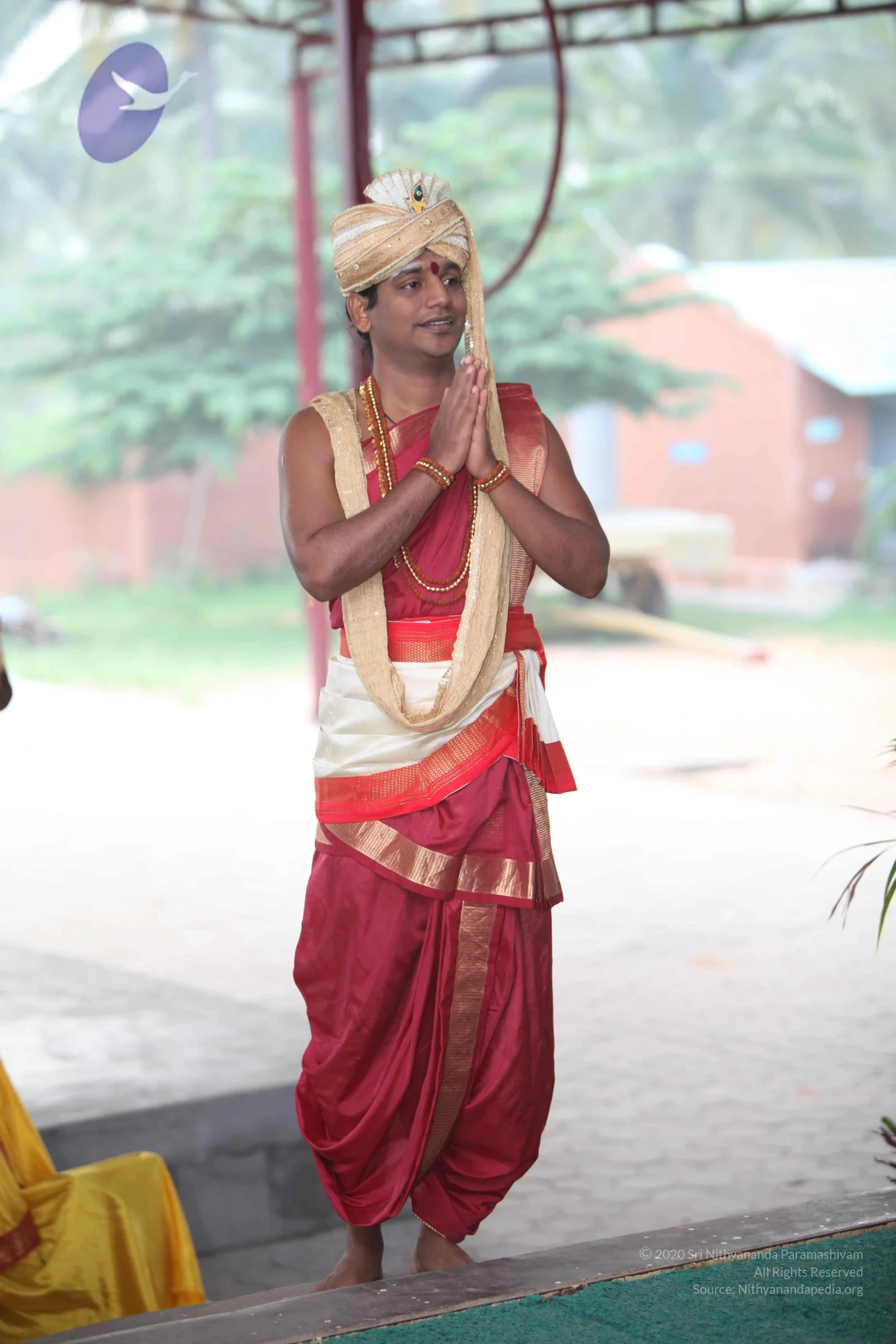
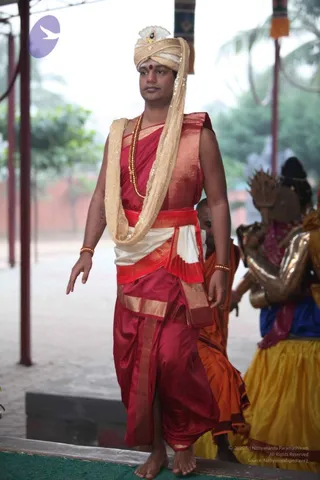
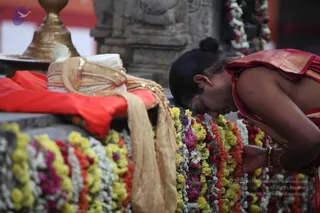
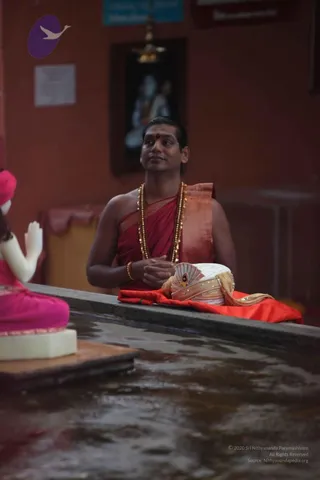
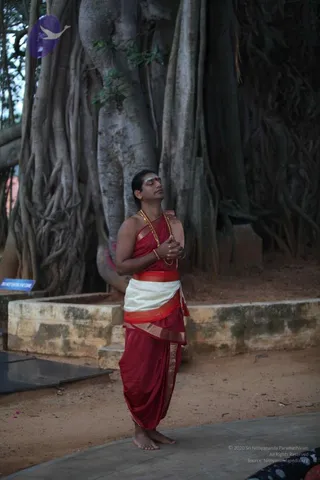
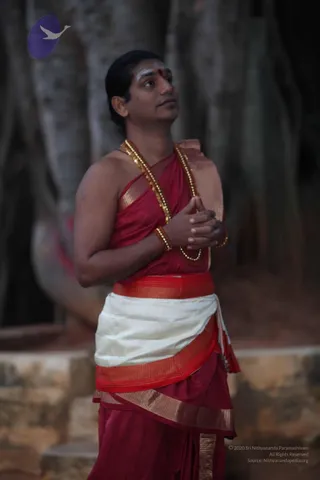
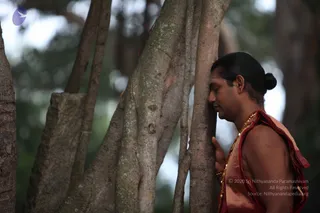
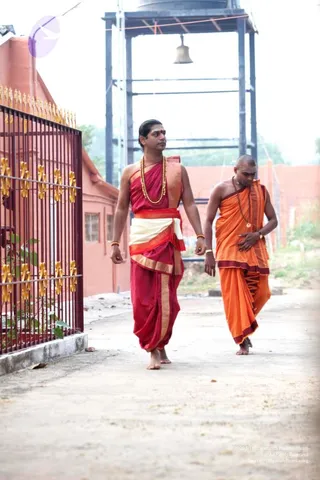
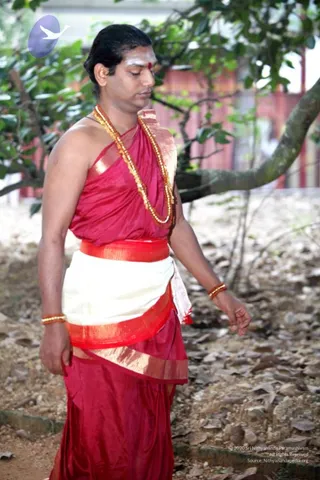
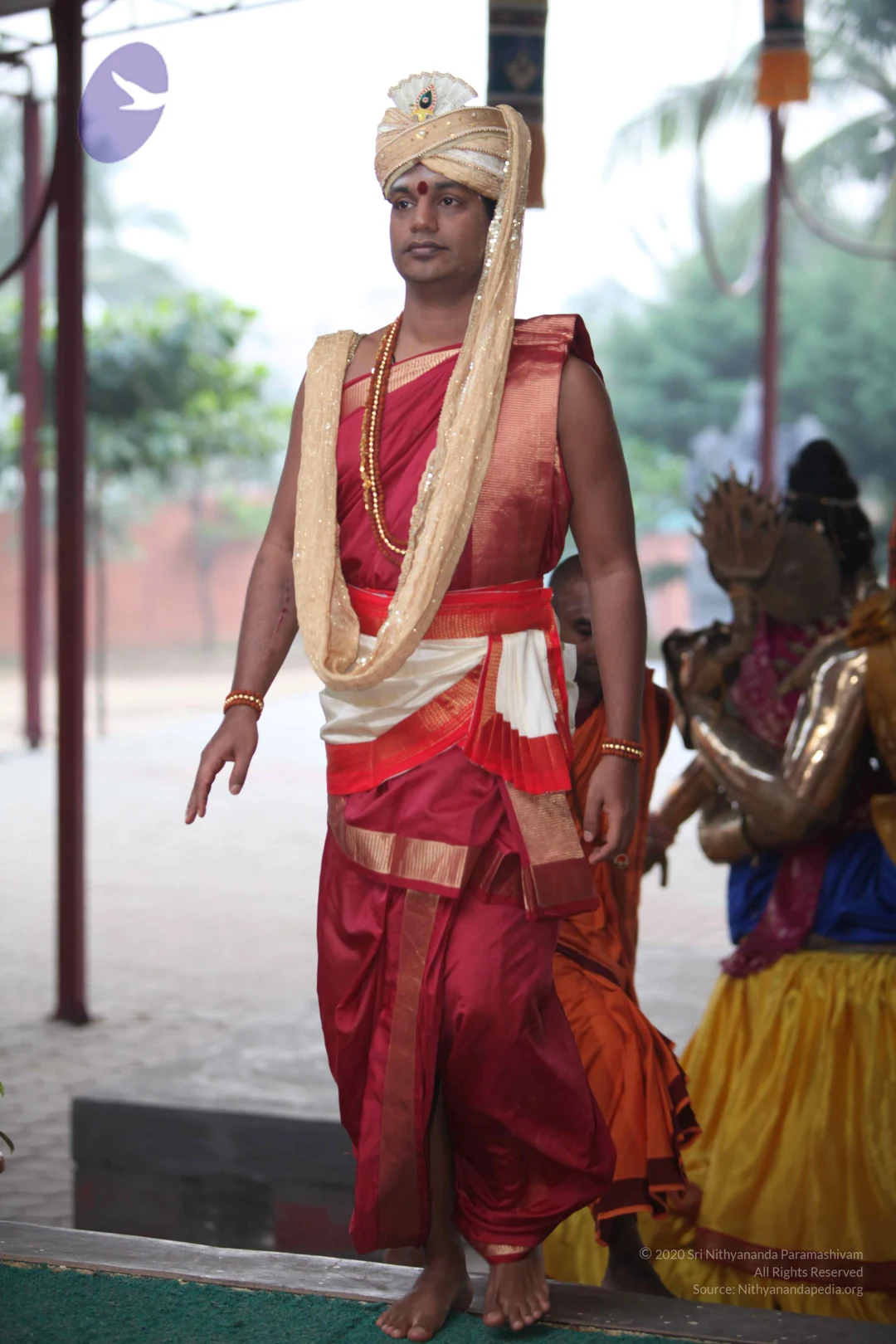
A man in a cream and gold turban with a peacock-feather ornament and a red bindi walks barefoot along a covered outdoor walkway. He wears a deep red silk dhoti with gold borders, a red and white waist sash, a sleeveless red garment and a sheer gold-bordered cream shawl draped over one shoulder, with a rudraksha mala around his neck and red beaded bracelets on his wrists. Behind him, a monk in saffron-orange robes walks, and at right stand figures in yellow and blue garments beside a golden deity murti. Red pillars and trees frame the open courtyard.A photograph of a devotee bowing forward with their forehead pressed against a long row of flower garlands in yellow, white, pink, purple and orange marigolds and jasmine. The devotee wears a red sleeveless blouse with gold-bordered trim and a bun of dark hair, with gold bangles on the wrist. Beside them rests a folded gold-and-cream shawl with gold embellishments on a red cloth, and a brass vessel sits at the top left. The background shows carved grey stone with more garlands. The image is a photo of a single person, with no visible face recognition or identification.A photograph of a man seated cross-legged at the edge of a stone-rimmed water tank, hands pressed together in namaste, gazing upward. He wears a red-maroon dhoti with a gold-bordered shawl, a long gold bead necklace, gold bangle, and a red tilak on his forehead. Beside him on a red cloth lies a white and gold ceremonial turban decorated with a peacock-feather motif. To the left, a white statue with pink garments sits in a seated pose with raised hands. Behind is a red wall with a framed deity image and a hanging brass lamp.A man stands barefoot on a paved stone platform in front of a massive banyan tree with dangling aerial roots, eyes closed and face tilted upward with palms pressed together at the chest in a devotional namaskar. He wears a deep red silk garment with gold-bordered wrap and a white cloth tucked at the waist, a red-and-gold sash, and a gold-and-red bead mala around his neck, with a red bindi and white forehead markings. A low stone border surrounds the tree base, and a small blue sign reading 'DO NOT ENTER THE CAVE' is visible at left.A standing man with short dark hair and a red bindi on a white-and-ash forehead mark holds his palms together at chest level while gazing upward. He wears a deep red silk upper cloth with gold border over bare shoulders, a white dhoti with a red-and-gold waistband, and layered gold-bead necklaces and bangles. Behind him are large dark tree trunks and a stone platform edge. The figure's appearance does not clearly establish an identity, so no identification is made from appearance. A small purple bird logo appears in the upper left corner.A photograph of a man in profile leaning his forehead and cheek against the trunk of a large banyan-type tree with several aerial roots, eyes closed in a quiet, devotional posture. He has his dark hair tied in a bun at the back of his head and a vertical tilak mark on his forehead. He wears a red and gold-bordered shawl draped over bare shoulders and a gold beaded necklace, with his hand resting on the bark. The background is soft green foliage.

BGSatsang
87 photosSource gallery
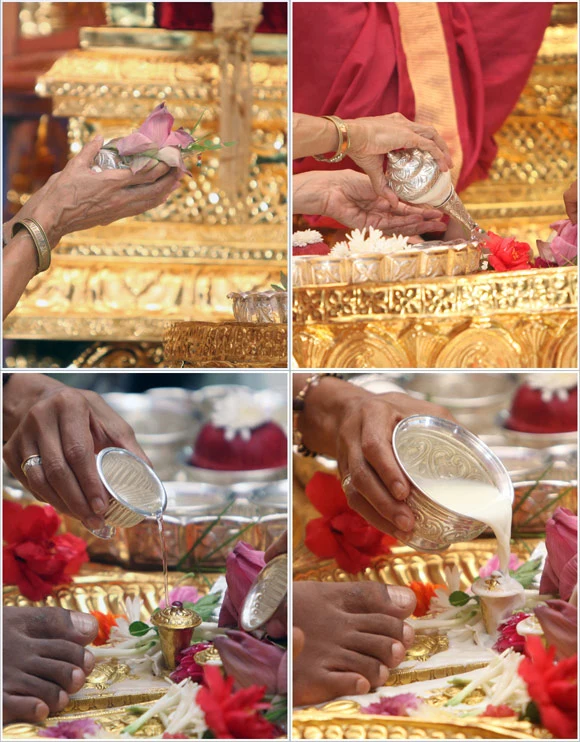
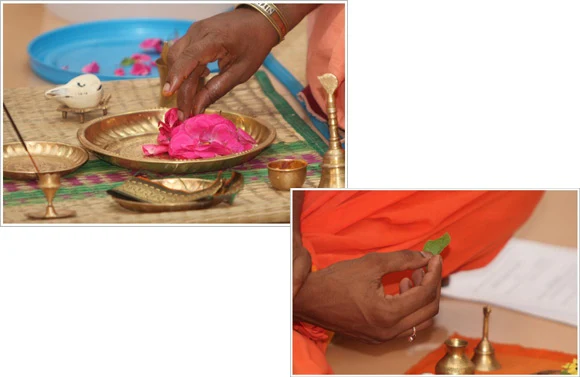
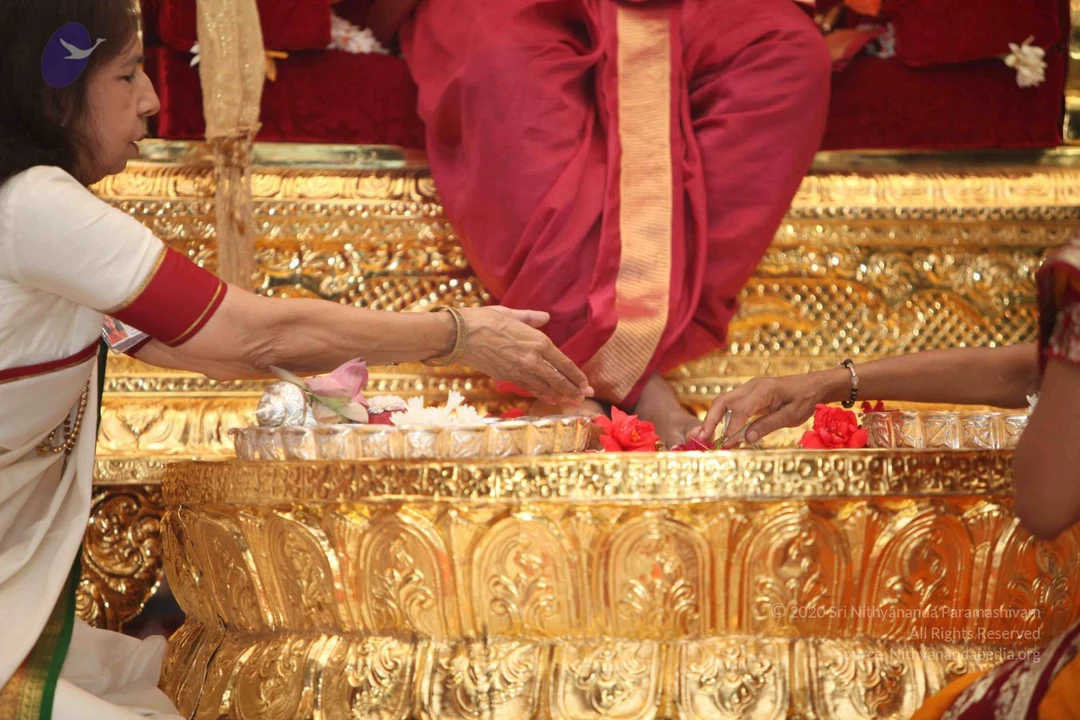
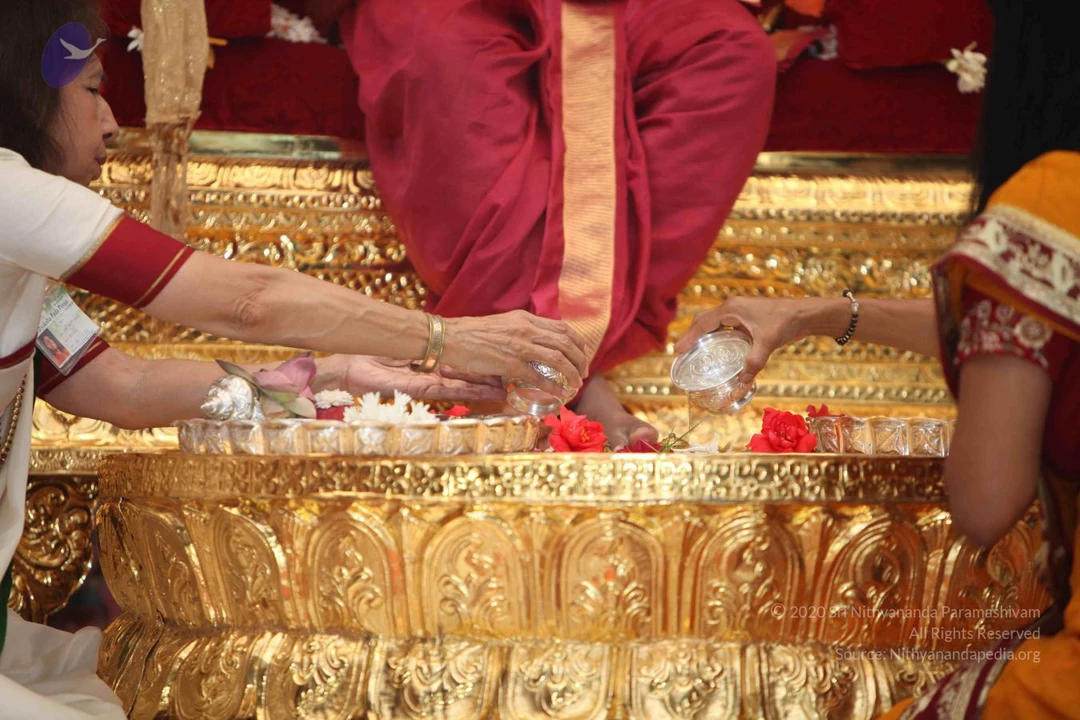
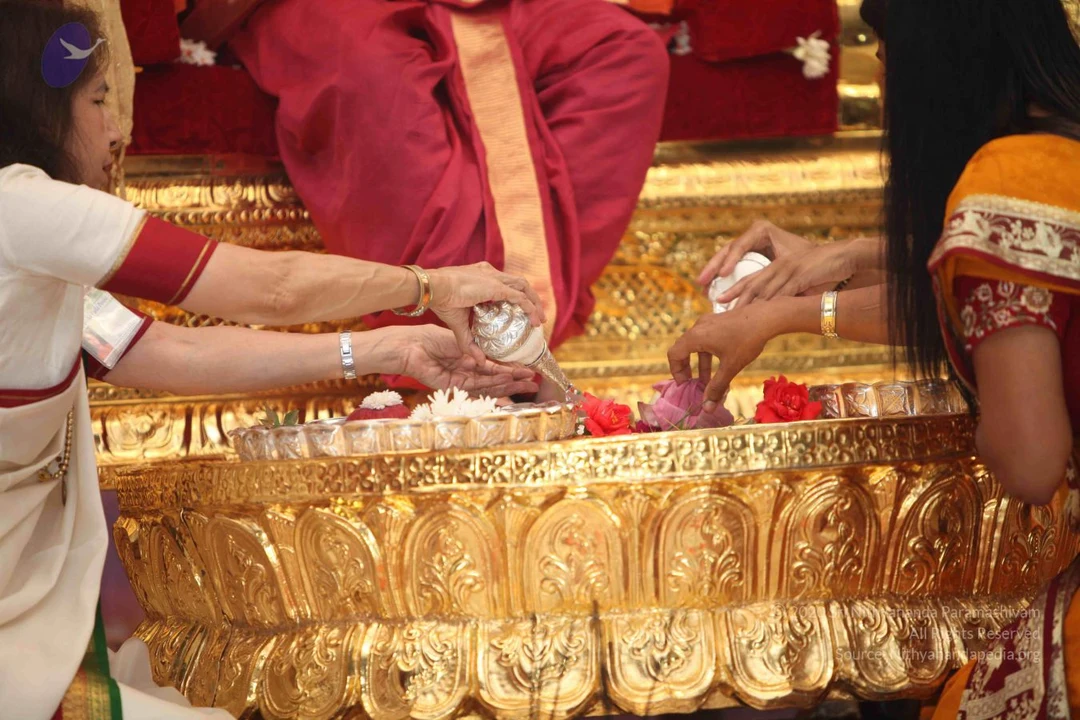
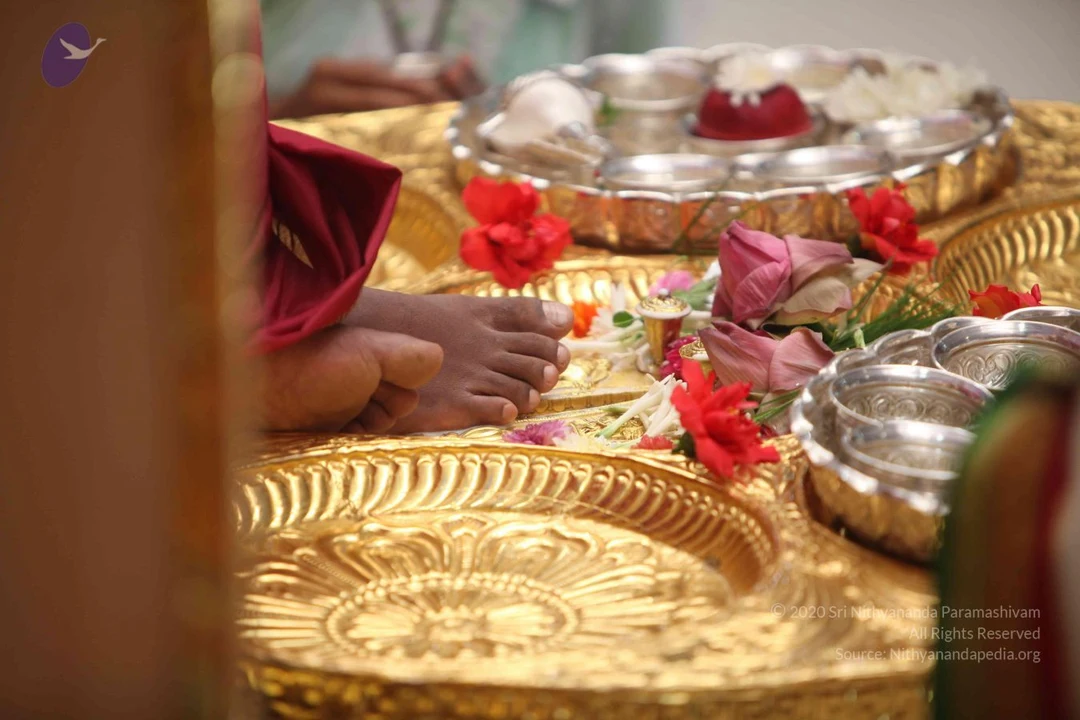
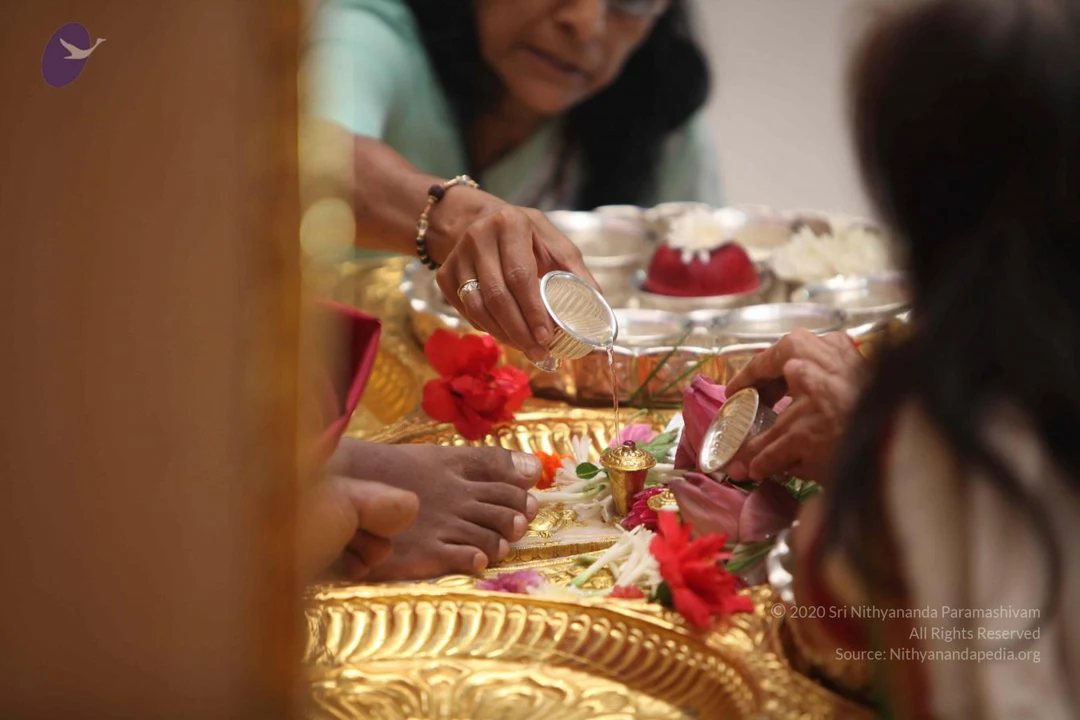
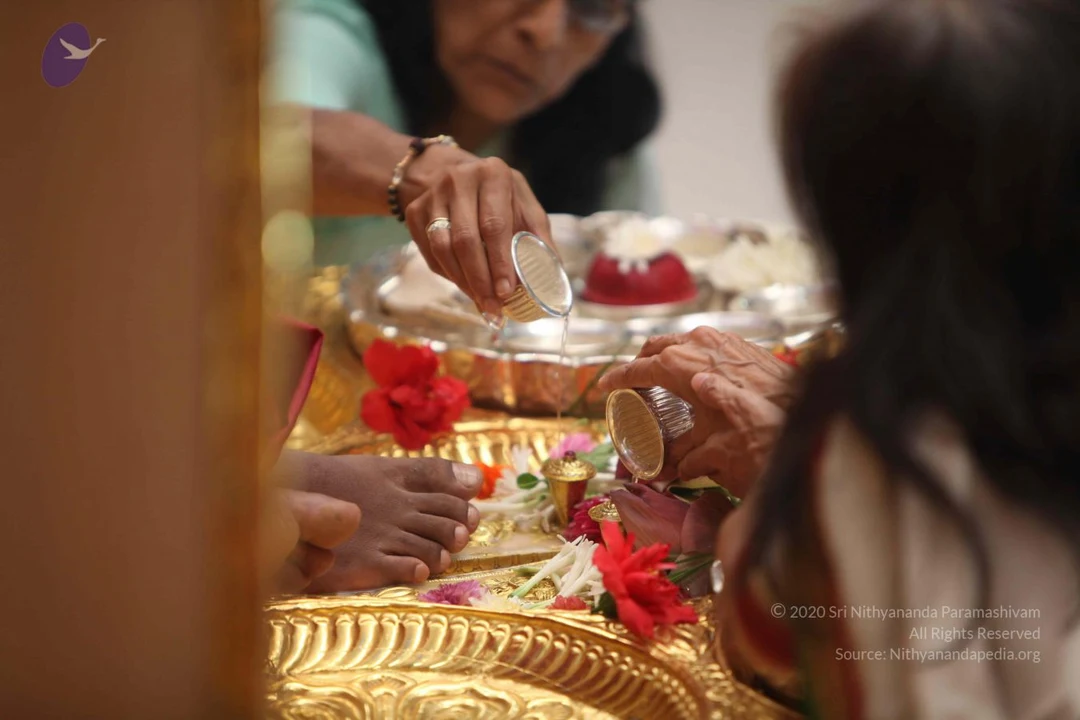
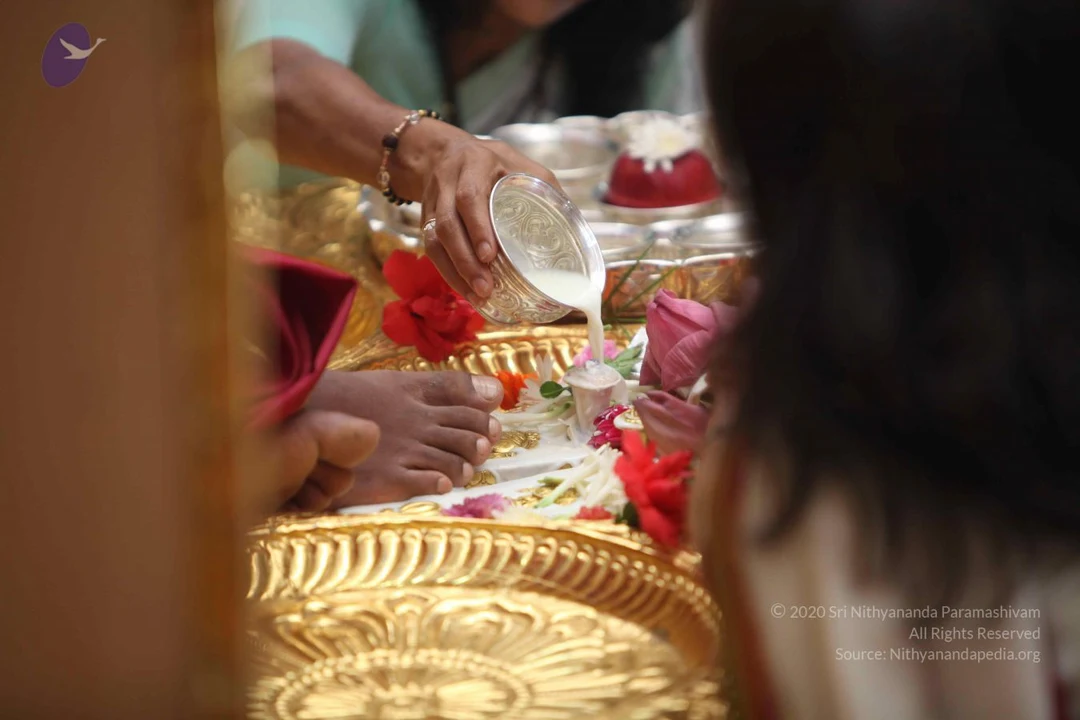
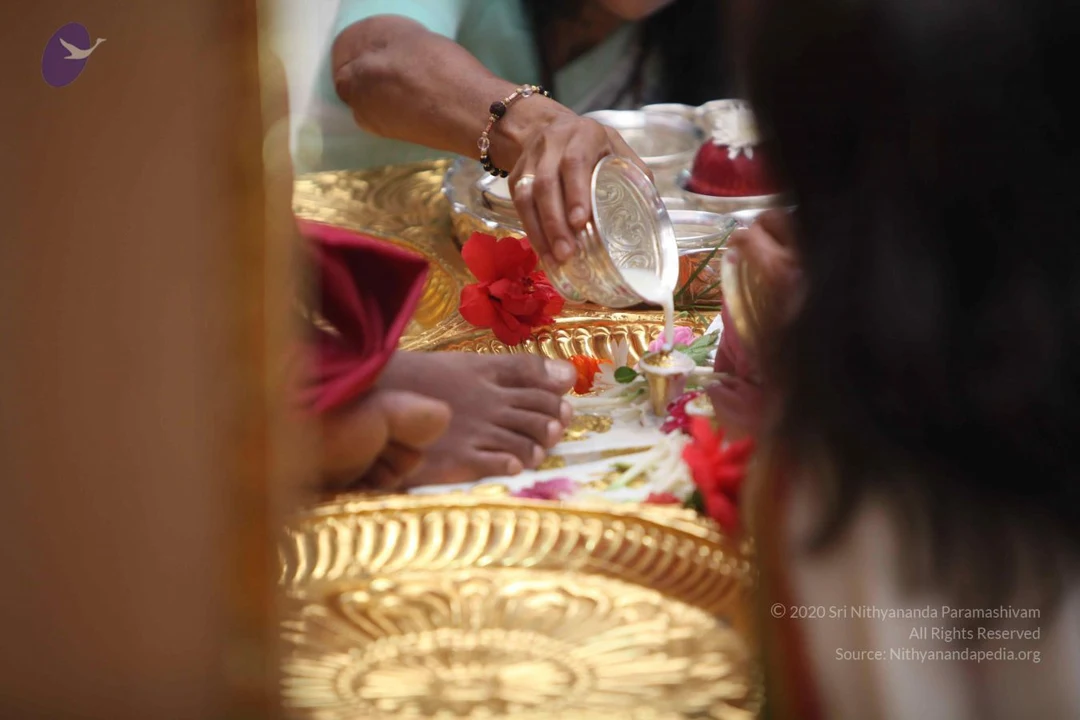
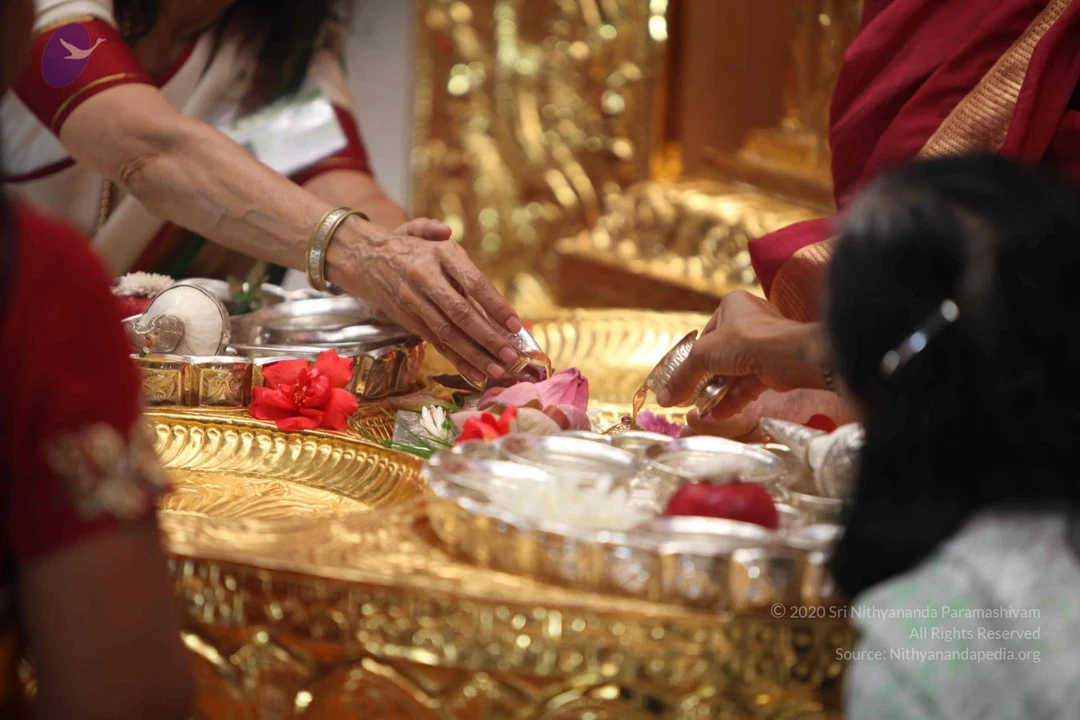
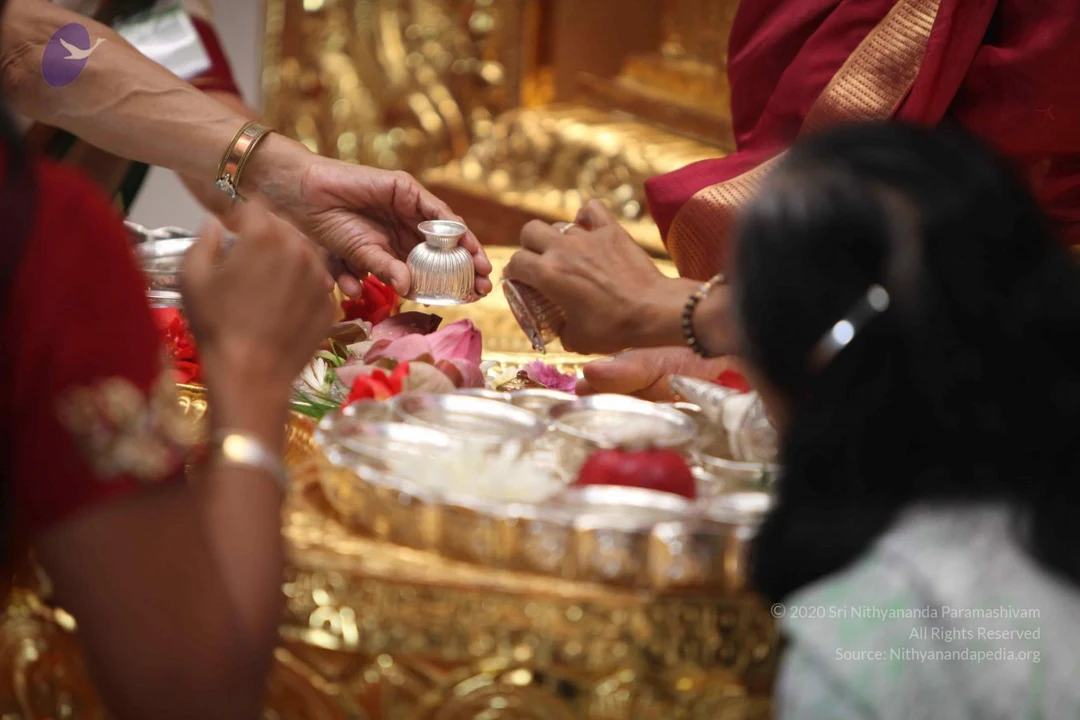
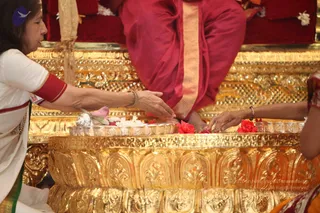
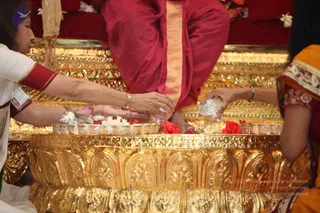
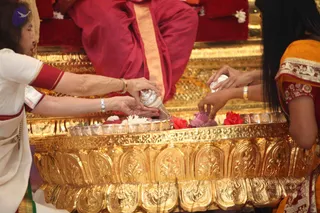
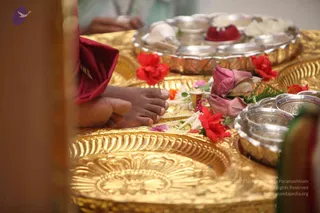
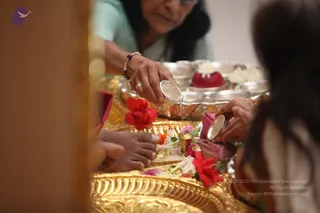
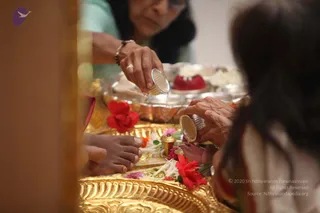
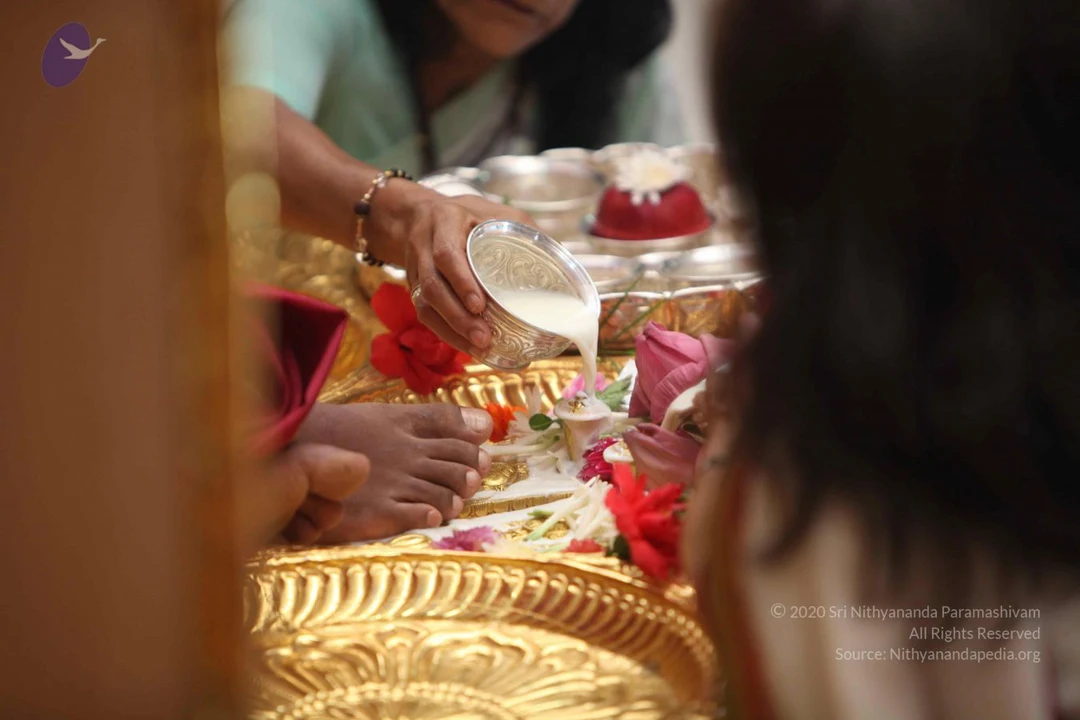
Close view of a padapuja ritual before a golden throne. A seated figure wearing a red-maroon dhoti with a gold border has bare feet resting on a gold-plated tray. A woman in white with a red blouse and green border kneels at left, reaching toward the feet with her hand. Another person's hand, wearing a bracelet, reaches in from the right. Red roses, white flowers and a silver vessel sit on the gold tray, with small silver bowls of offerings. The throne is covered in ornate gold relief and red cushions are visible above.Close view of a padapuja-style offering at a gilded golden throne base, with red trim and red-maroon silk drapery of a seated figure above. A woman in a white sari with red border, wearing a name badge lanyard and gold bangles, pours water over the hands of the seated figure from a silver bowl while another woman in a red and gold embroidered blouse holds a small silver vessel. Red roses, white flower petals and silver bowls sit on the golden ledge. Only the hands, lap and lower body of the seated figure are visible; no face is shown, so identity cannot be determined from the image. Ritual setting with flowers and silver vessels.Two women perform an offering at a golden ceremonial vessel decorated with embossed floral motifs. The woman on the left wears a white sari with a red border and gold bangles, pouring liquid from a silver vessel into a silver tray holding red and pink flowers and white petals. The woman on the right, in an orange and red embroidered outfit with gold bangles, reaches toward the tray. Behind them a seated figure in red robes sits on a gold-decorated dais with red cushions and white flowers, though only the lower body is visible and no face can be seen.Close-up photograph of a ritual scene: bare feet in red-maroon cloth rest on a gold-embossed tray, with a visible figure seated beside them. Around the feet are red hibiscus flowers, pink lotus blossoms, white flower petals, and small silver bowls and a silver pot filled with offerings on golden ritual plates. The setting appears to be a puja or padapuja, with the feet of the honoured person as the focal point.Close photograph of a padapuja, a foot-worship ritual. A woman in a pale green sari with a beaded bracelet and a ring pours water from a small silver vessel over a pair of bare feet resting on a gold-coloured tray. Red and pink flowers, white jasmine-style blossoms and a red sweet in a silver bowl surround the tray. Another person's hand holds a silver spoon at the lower right, and a partially visible figure with dark hair sits at the right edge. Only the feet, hands and hair of the people are visible. The water flowing from the vessel and the offerings sit on the golden plate.Close photo of a padapuja ritual on a gold tray. A woman in a teal top and glasses pours water from a small silver cup over the bare feet of a person seated at the left edge, while an older person's wrinkled hand holds another silver cup beside them. The gold tray holds red and pink flowers, white petals, and a red sweet on a silver plate. The foreground shows a dark-haired person in white and red with blurred features. Visible people are the pourer, the cup holder, the foot-washed person and the foreground person; no a person figure is visible.

KalpataruDarshan

4 photosSource gallery
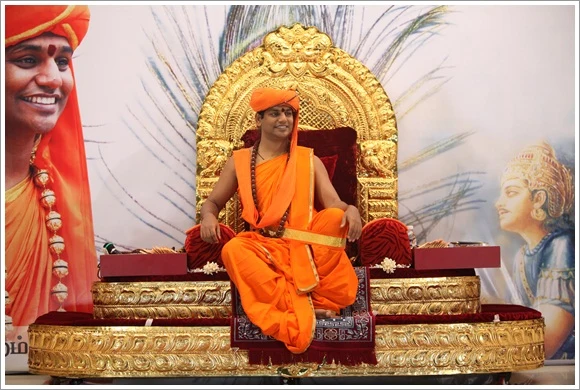
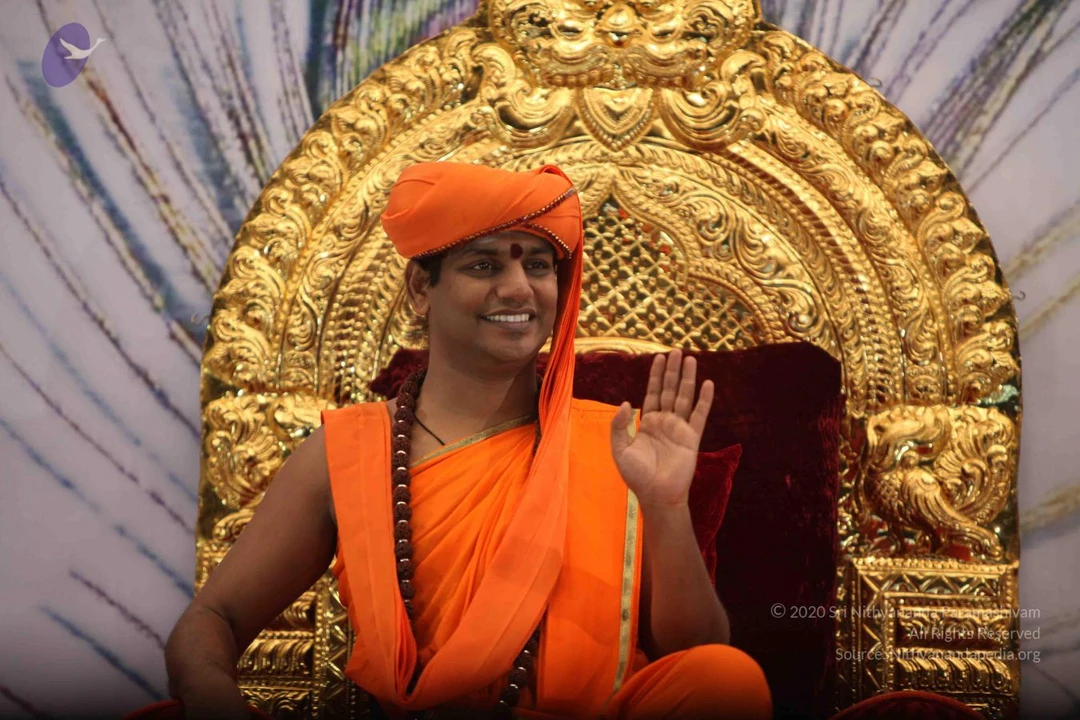
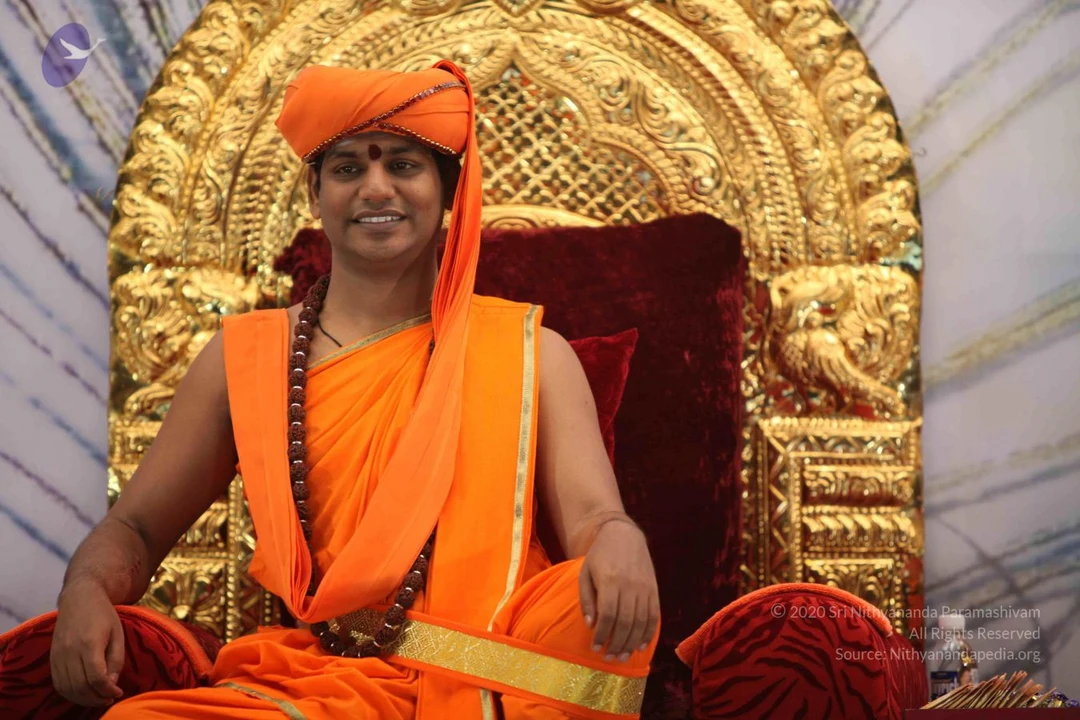
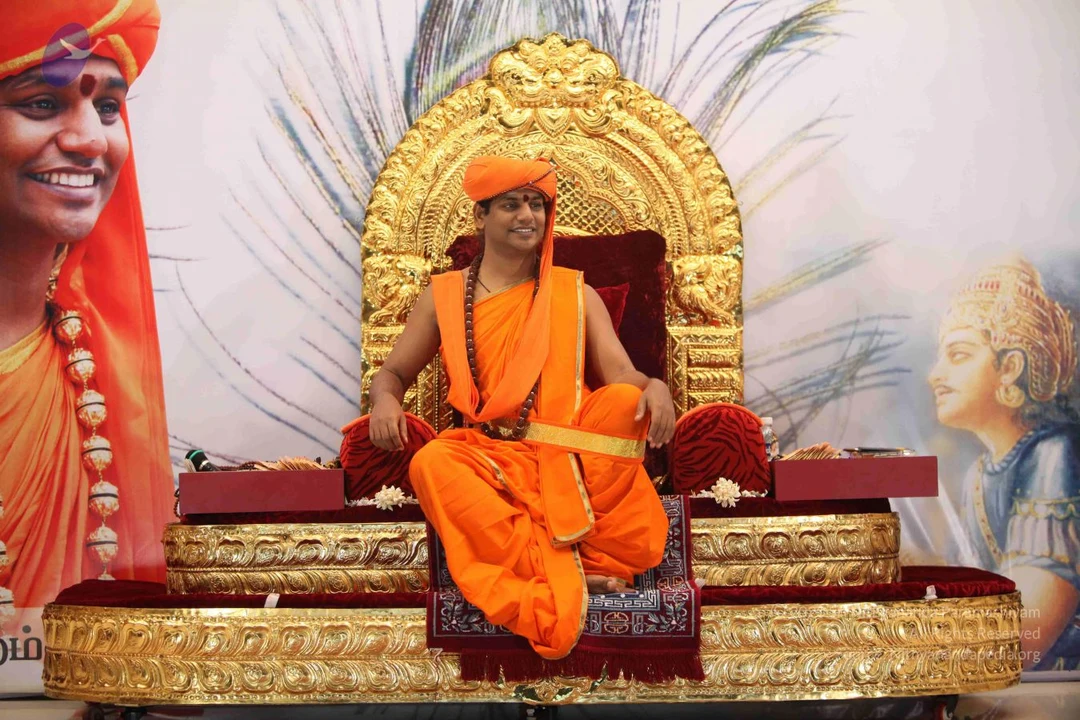
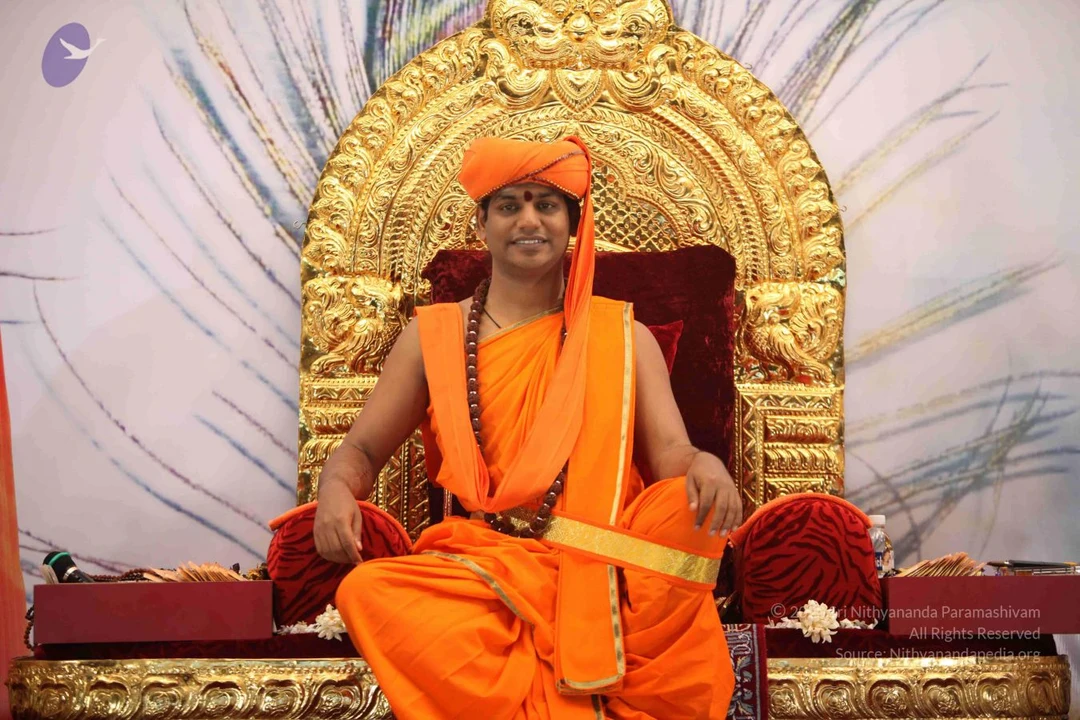
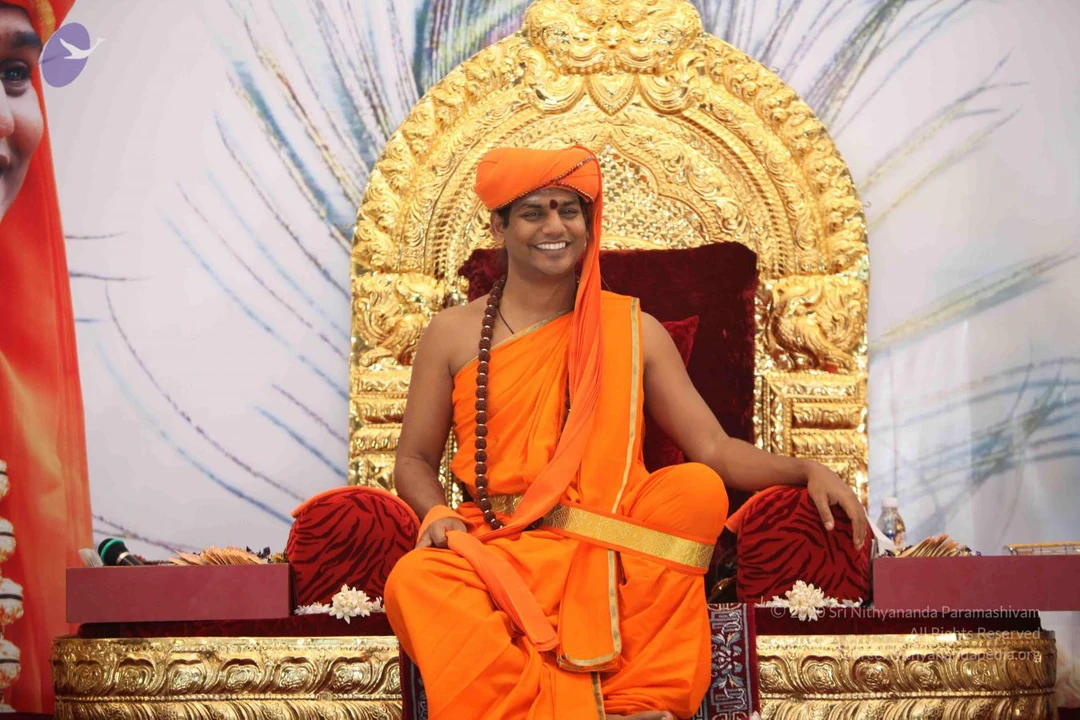
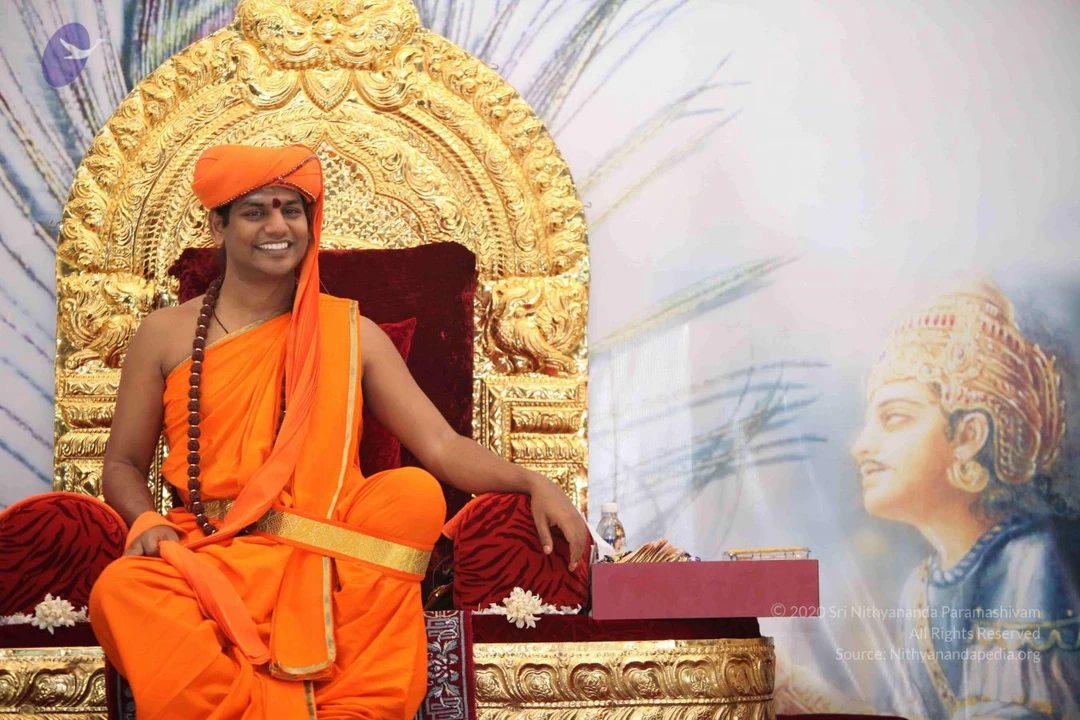
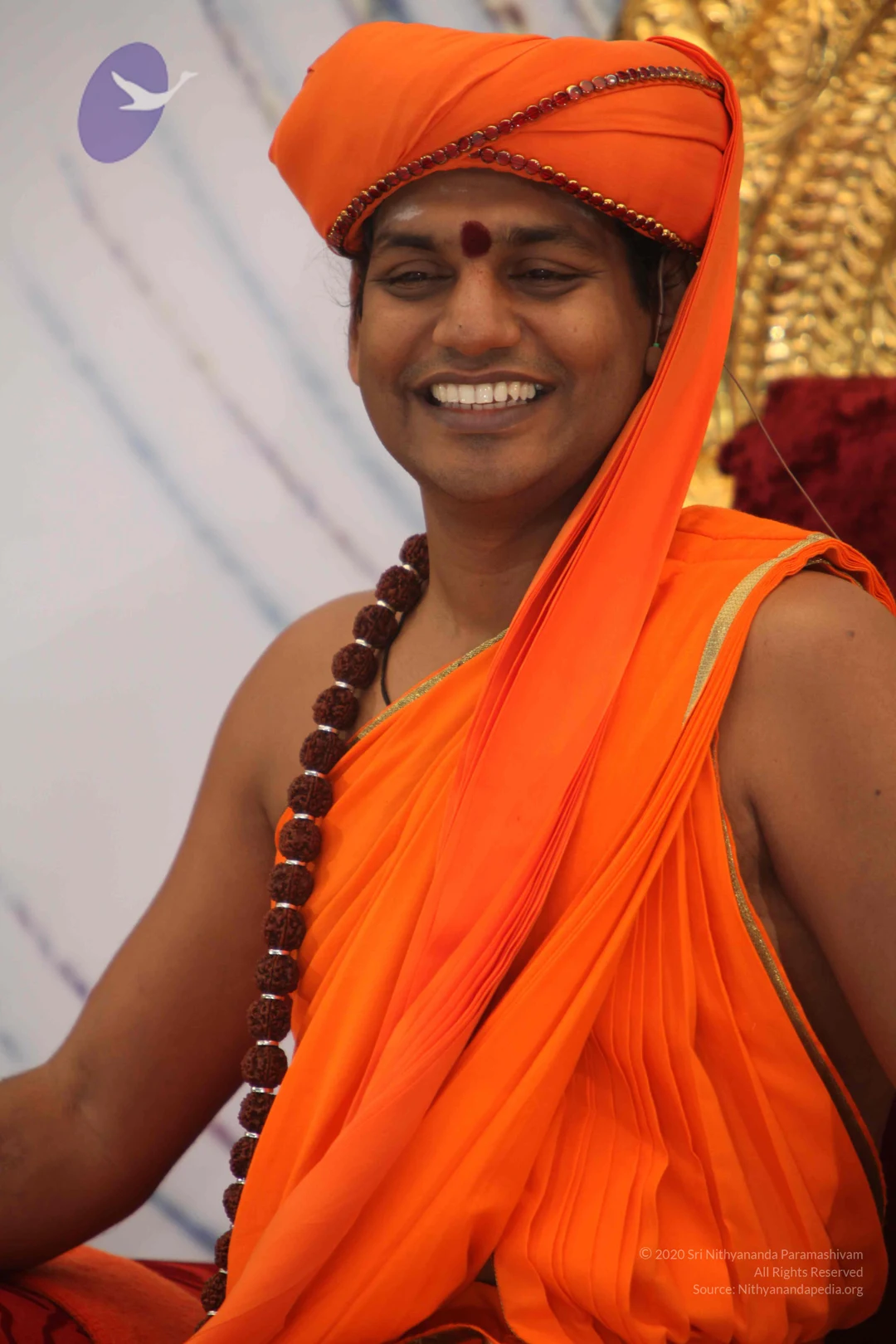
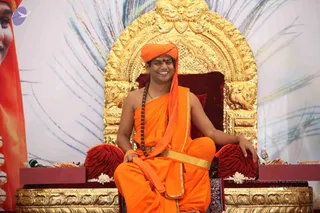
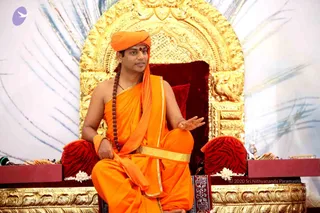
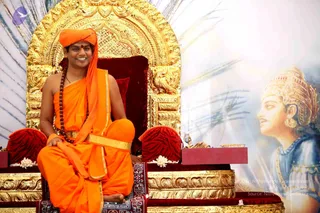
A photograph of a smiling man seated before an ornate gold-carved throne with a red velvet cushion, against a backdrop of fanned pastel stripes. He wears an orange turban with a red tilak on his forehead, an orange shawl draped over orange robes, and a long rudraksha mala. His right hand is raised in a waving or blessing gesture. Only one person is present.A seated man in saffron-orange robes and a matching orange turban with a red tilak on his forehead sits in front of an ornate gold throne with carved floral and animal motifs and a deep red velvet cushion. He wears a long rudraksha mala around his neck and a gold-edged orange shawl draped over one shoulder, and he is smiling. A tiger-striped red cushion rests on the armrest in the foreground, with a small table and offerings at the lower right edge.A photograph of a man seated cross-legged on an ornate gilded throne with a red velvet cushion, dressed in saffron-orange robes with a matching saffron turban and a rudraksha mala around his neck. The throne is set before a light backdrop with peacock-feather motifs. On the left, a large printed banner shows a smiling man in saffron with a long rudraksha and gold-bead mala, and on the right a painted figure in blue with a gold crown looks on. Gold-trimmed red cushions flank the throne and a red-and-blue carpet covers the seat base. Swamiji (probable): the seated man in saffron with a saffron turban, rudraksha mala and ornate gold-decorated throne, consistent with the page's attribution to Swamiji at this event.A photograph of one man seated cross-legged on an ornate gilded throne with carved lion-like figures and a red velvet back cushion. He wears an orange turban, an orange shawl draped over his shoulders, an orange garment and a gold-edged waist sash, with a rudraksha mala around his neck and a red tilak on his forehead. He smiles toward the camera, with his hands resting on red tiger-striped armrests. Flower petals and a small water bottle sit near the throne base, and a patterned backdrop of colourful feather-like strokes stands behind him. Appearance-based candidate: Swamiji (probable), seated in the central throne position with orange robes, turban, rudraksha mala and gold ornamentation.

BGSatsangTamil

40 photosSource gallery
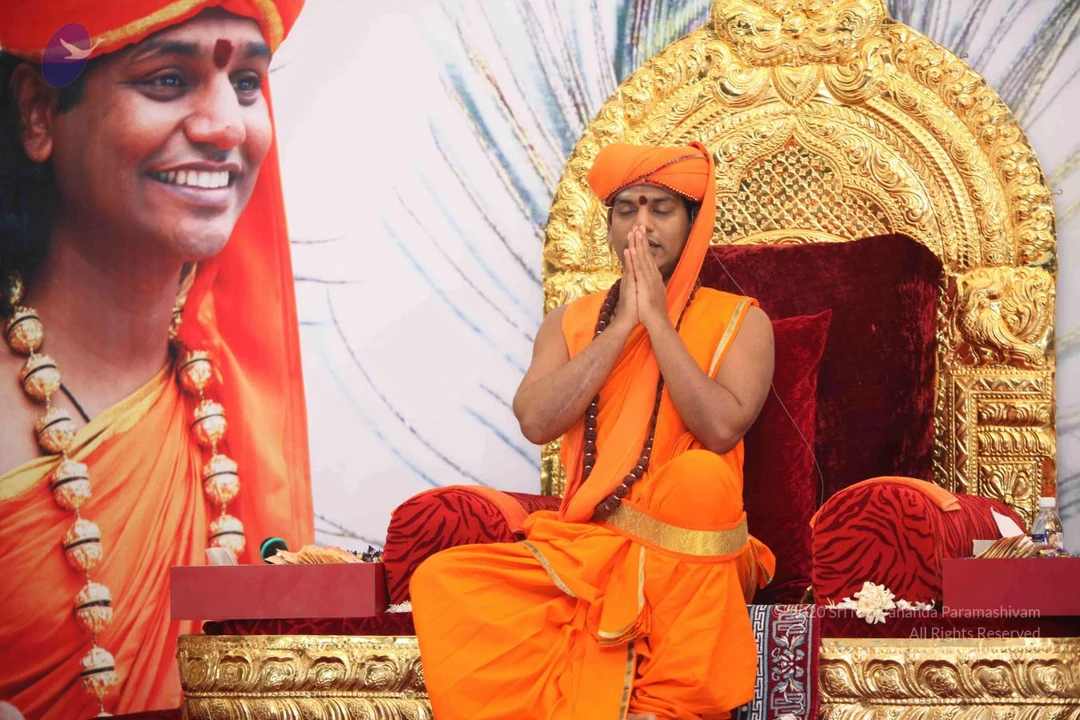
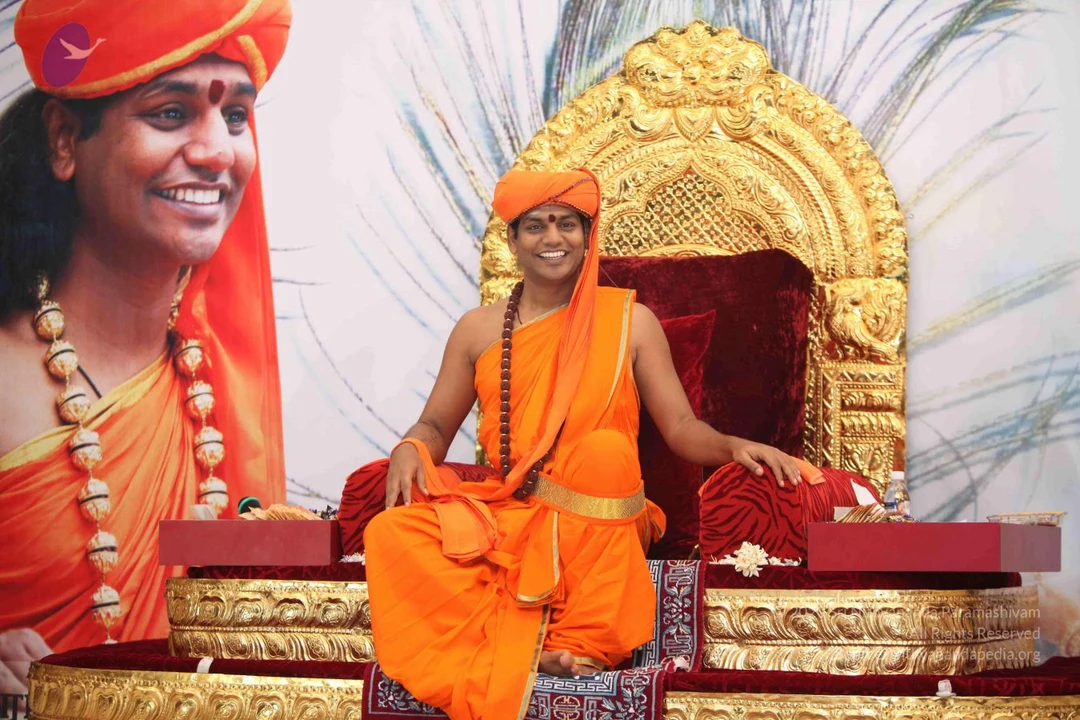
A seated man in saffron-orange robes and an orange head wrap sits with palms pressed together in namaste on an ornate gold throne with red cushions and red tiger-striped side seats. He wears a rudraksha mala and a gold-toned waist sash, with a red bindi on his forehead. Beside him on the left, a large printed portrait shows a smiling man in orange garments with ceremonial gold-toned beaded necklaces. A bottle of water and white flower decorations sit on the side tables. The backdrop is white with a pale feather-like pattern. The a person label is based on the seated figure's orange robes, rudraksha mala, and orange head wrap, and the throne setting; the portrait is a depiction.A smiling man in saffron-orange robes and an orange turban sits cross-legged on an ornate golden throne with red velvet cushions, a rudraksha mala draped over his chest and a gold-colored sash at his waist. A large printed portrait behind him shows a smiling man in orange with a long gold ceremonial necklace, captioned as a printed portrait. Two small red-topped side tables flank the throne with flowers and a water bottle. The figure is seated in a ceremonial stage setting. Swamiji (probable) seated on the throne, identified by orange robes, orange turban, rudraksha mala and gold-trimmed throne.A seated man in saffron-orange robes and an orange turban with a red bindi smiles broadly while seated on a red velvet throne with gold carved trim. He wears a long rudraksha mala across his bare chest and a saffron shawl draped over one shoulder. Beside him on the left, a large printed portrait shows a smiling face in orange clothing with a white and gold necklace. Behind him hangs a white backdrop with blue and grey curved lines. A microphone is visible at lower left.A seated man in orange monastic attire sits on a red velvet throne with ornate gold carved armrests and a gilded back panel. He wears an orange turban with a red bead band and a red tilak on his forehead, an orange drape over his shoulder with gold border, a gold-bordered orange waistcloth, and a long rudraksha mala with silver spacers hanging across his chest. His hands rest on his knee and a red cushion is behind him. A white flower garland lies on the throne at lower left. A soft lavender-and-white backdrop with a purple logo stands behind him.A seated man in orange saffron robes and an orange turban sits on a red velvet throne with ornate gold carved armrests and backrest. He wears a long rudraksha mala with large brown beads across his chest, a gold-bordered orange cloth draped over one shoulder, and a gold-patterned waist sash. A red bindi marks his forehead, and his bare feet rest on a patterned rug. A white flower garland lies beside him on the throne, and a purple bird logo appears in the upper left corner.A smiling man sits cross-legged on an ornate golden throne with red velvet cushions and tiger-striped armrests, dressed in saffron-orange robes with a matching orange turban and a long orange shawl draped over one shoulder. He wears a long rudraksha mala and a red bindi on his forehead, and rests one hand on the armrest. A large gilded arch with carved peacock-like motifs rises behind him, flanked by a backdrop of white and blue feather patterns and a red-robed figure on a banner at left. Floral garlands and white flowers decorate the throne platform and a table with a water bottle sits to the right. The setting suggests a satsang or discourse stage.
SacredArts

40 photosSource gallery
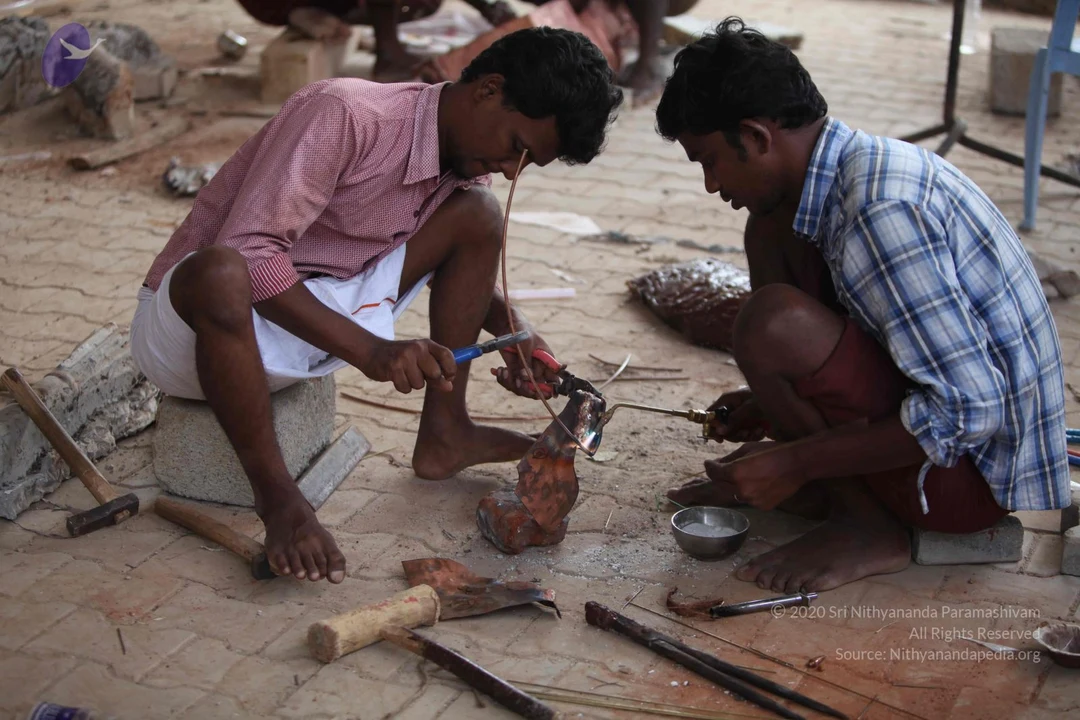
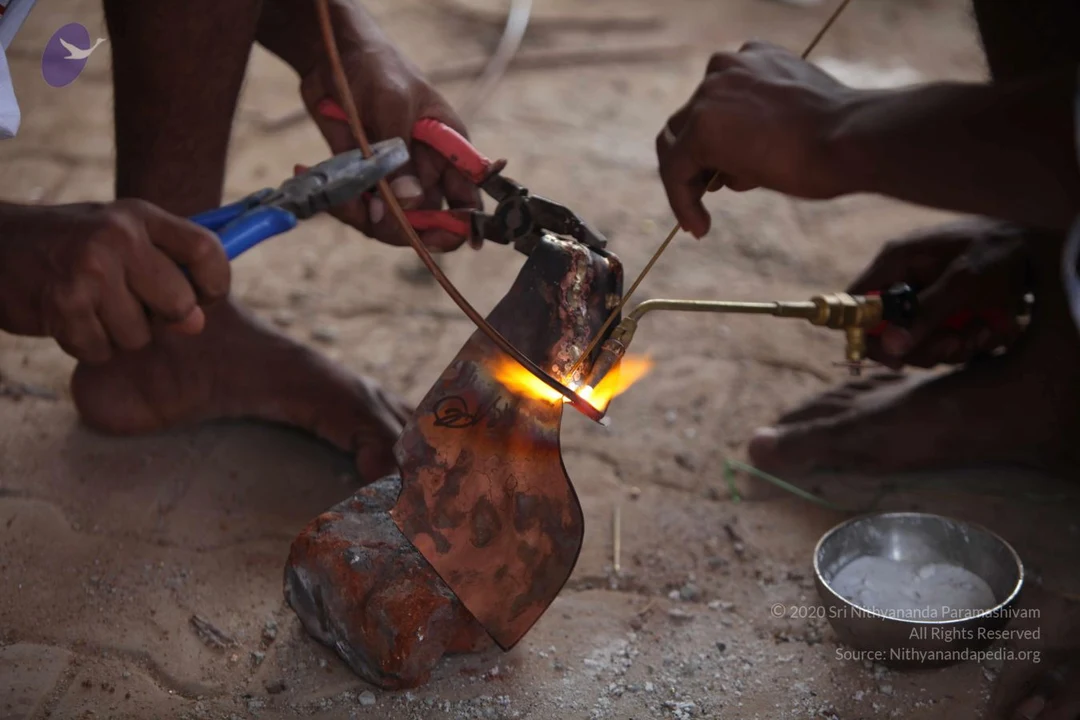
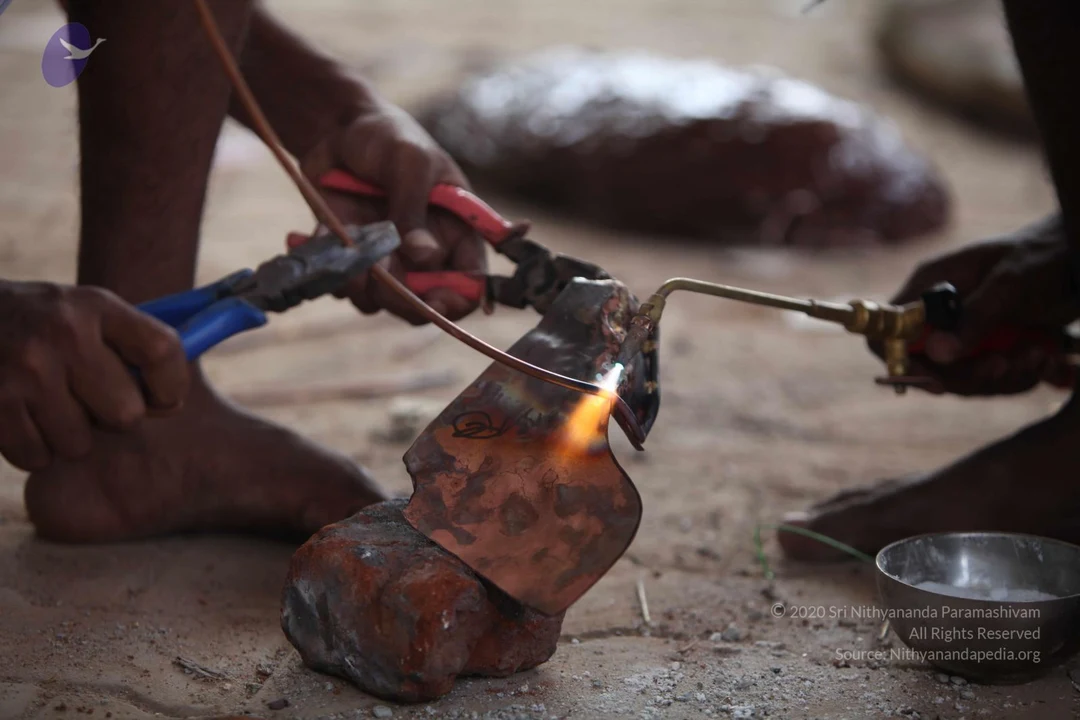
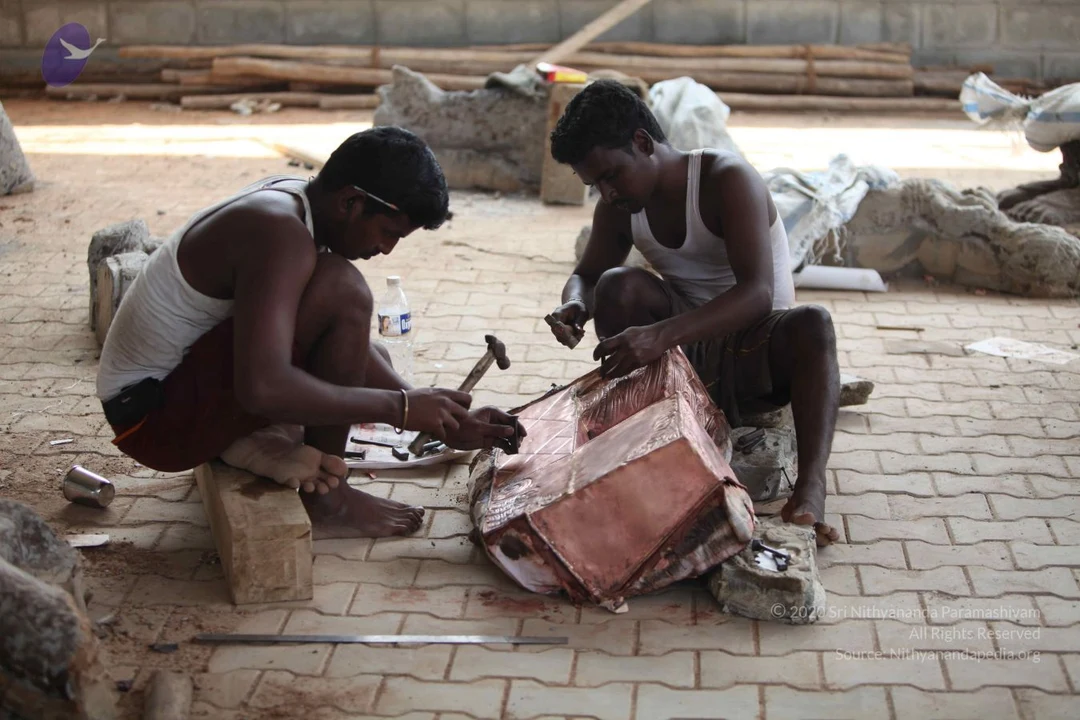
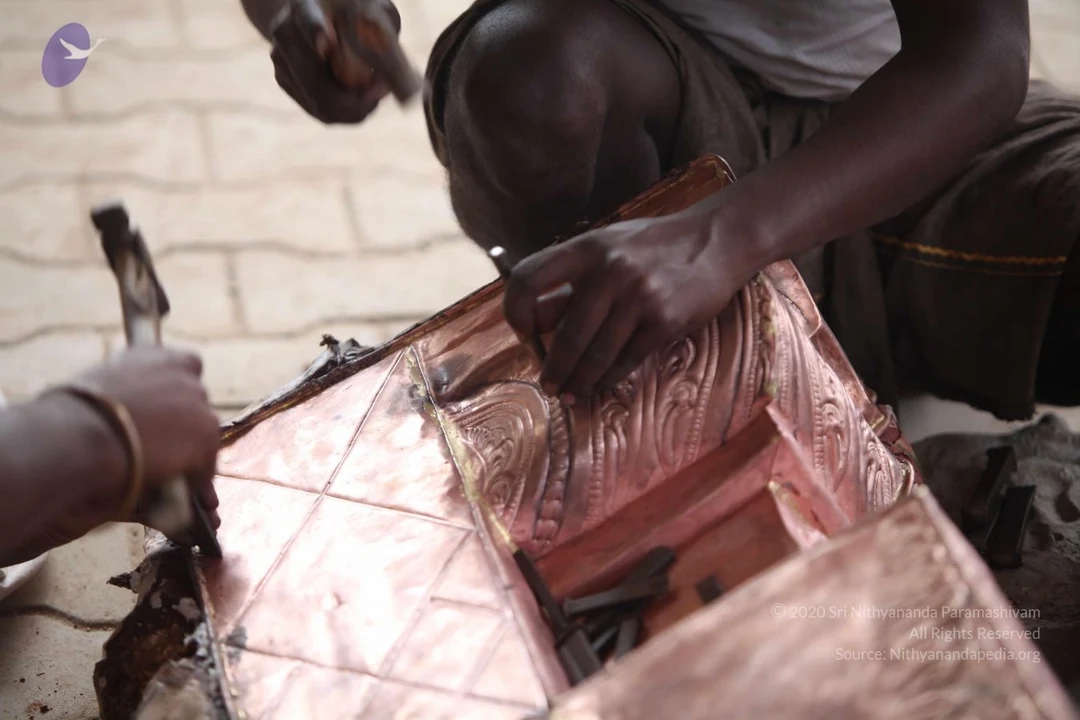
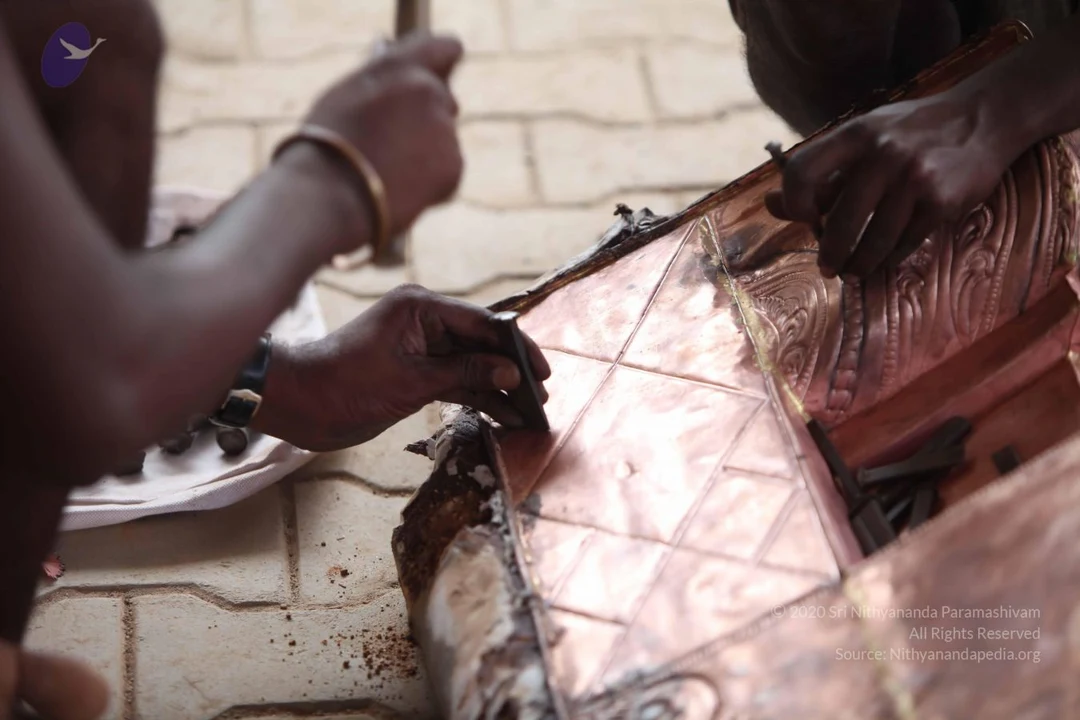
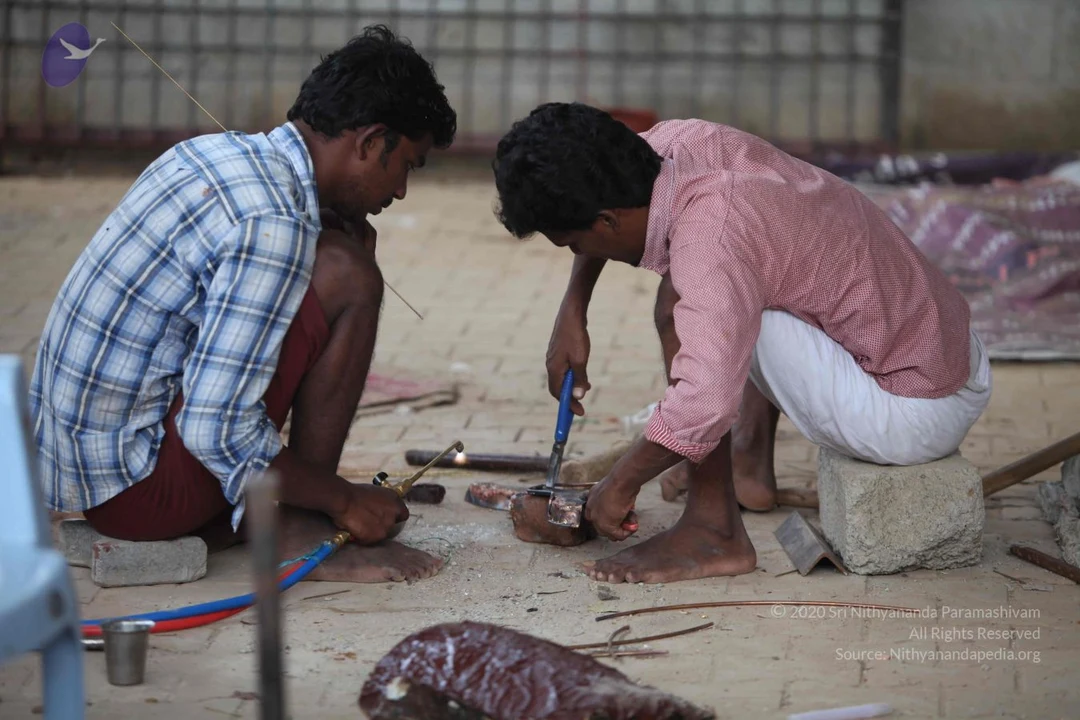
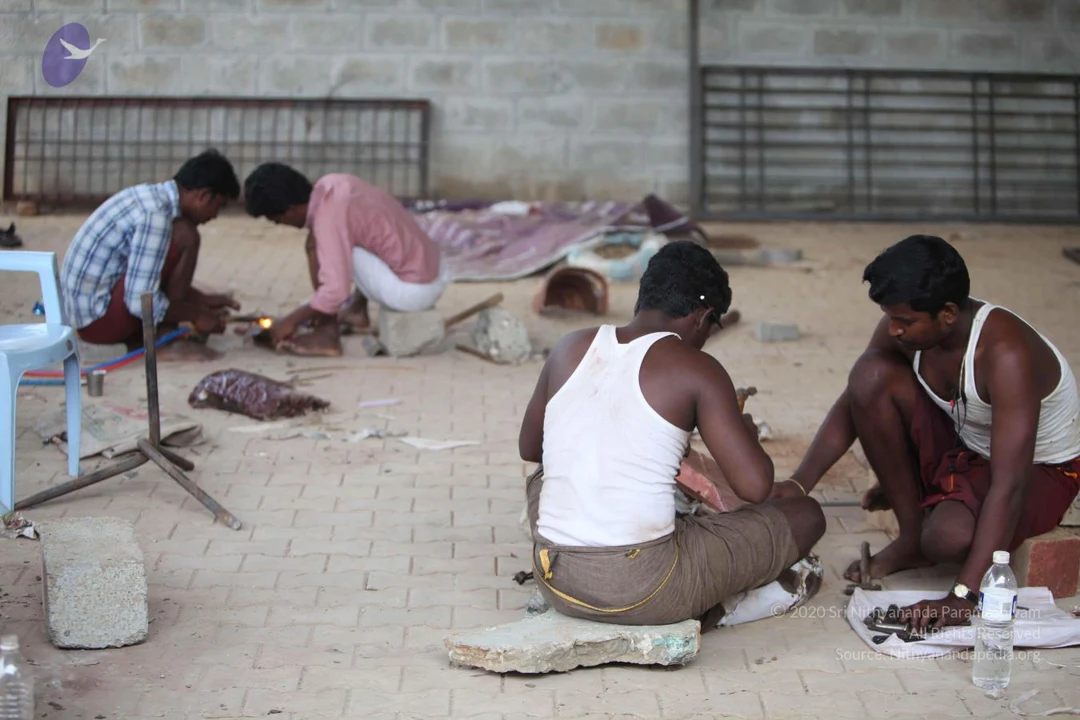
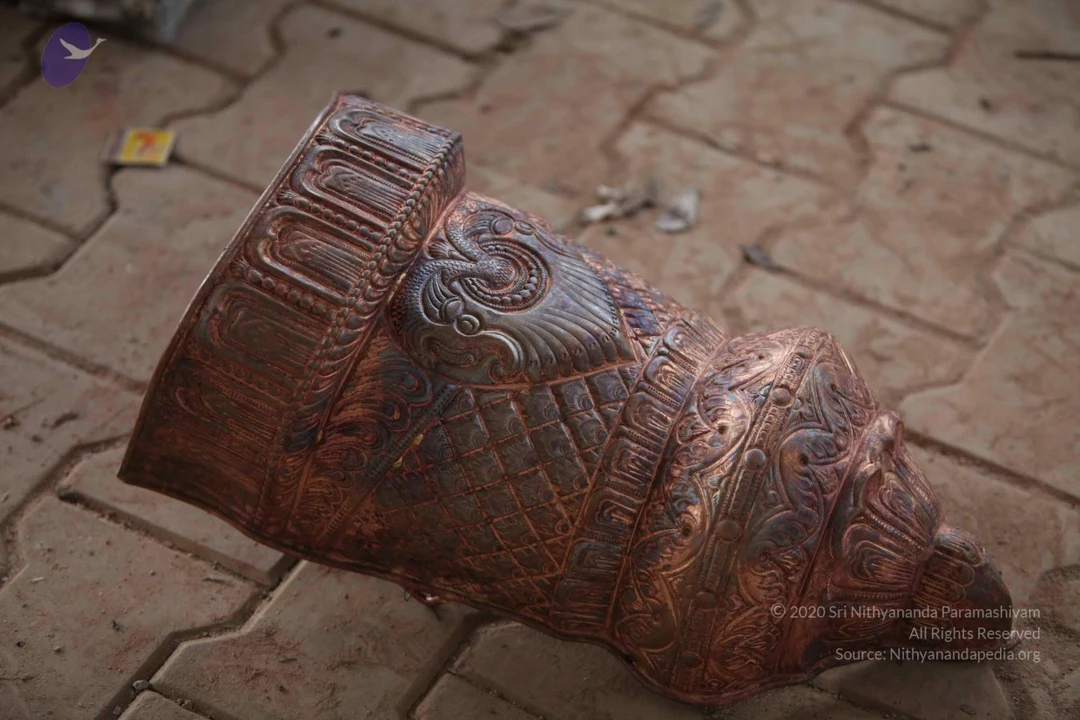
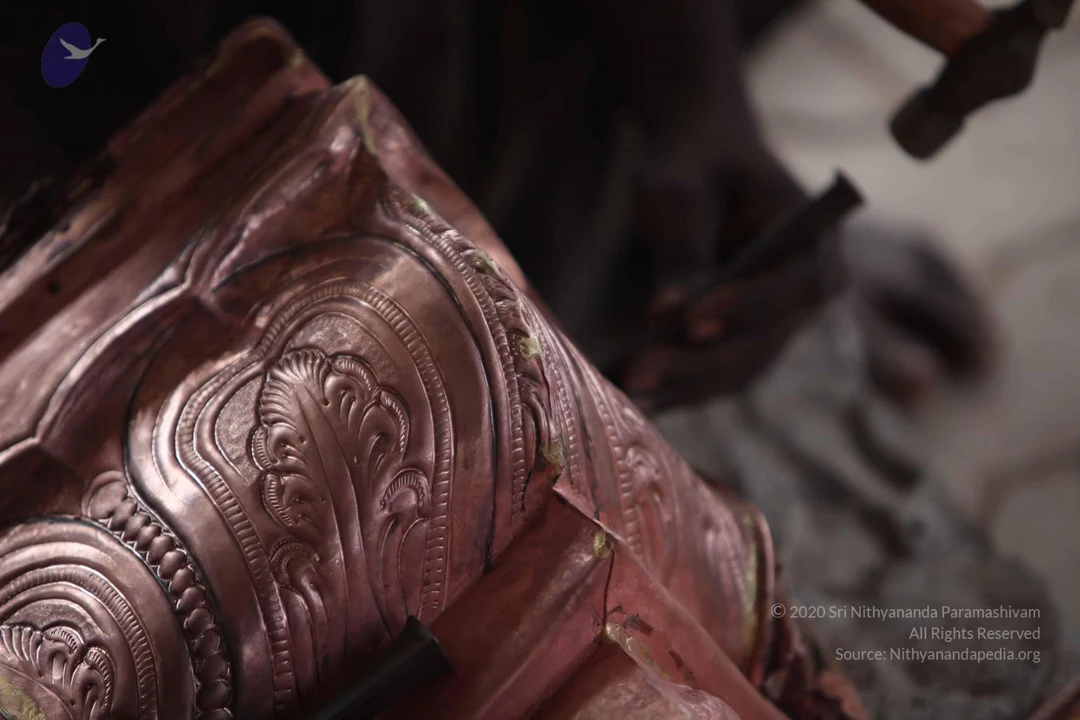
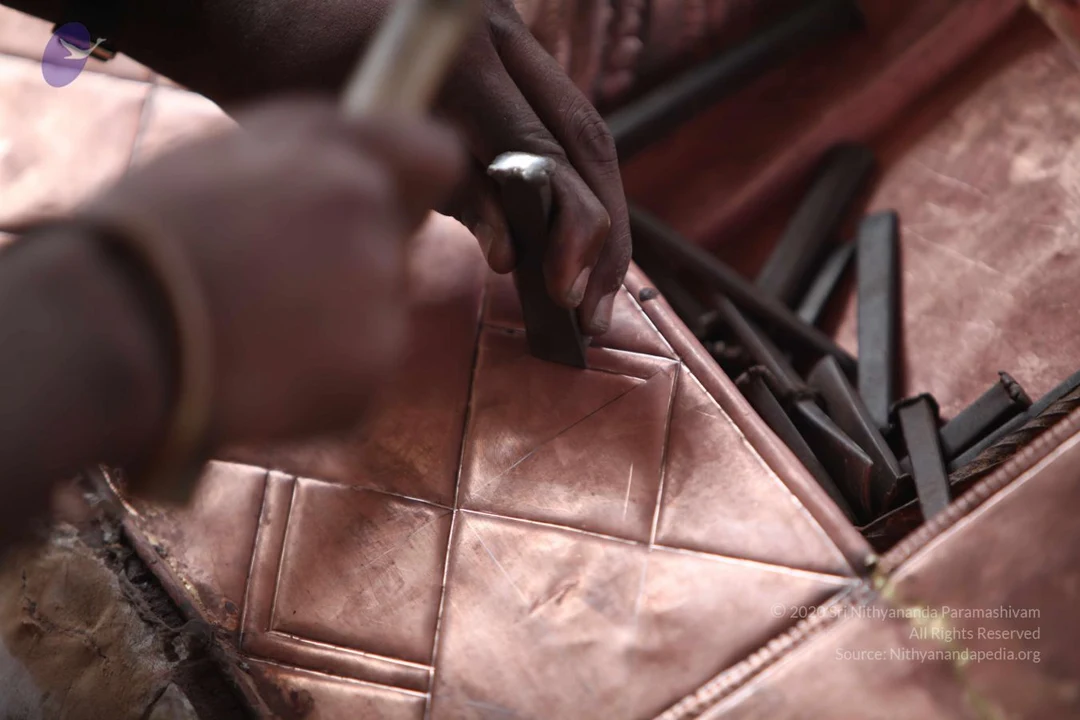
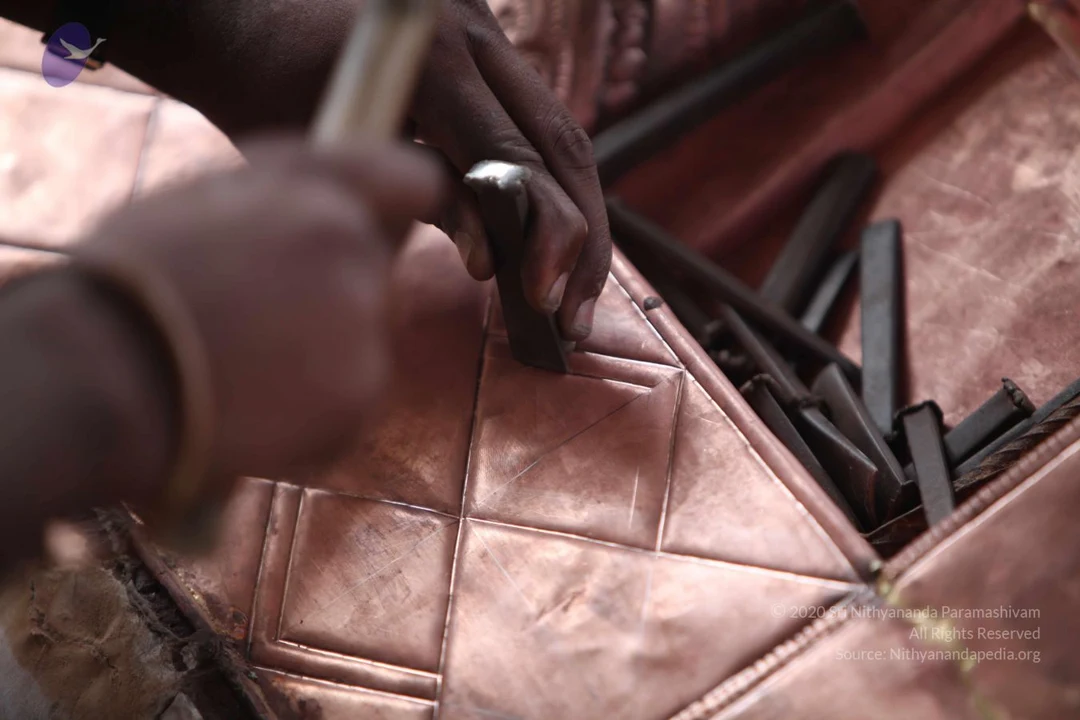
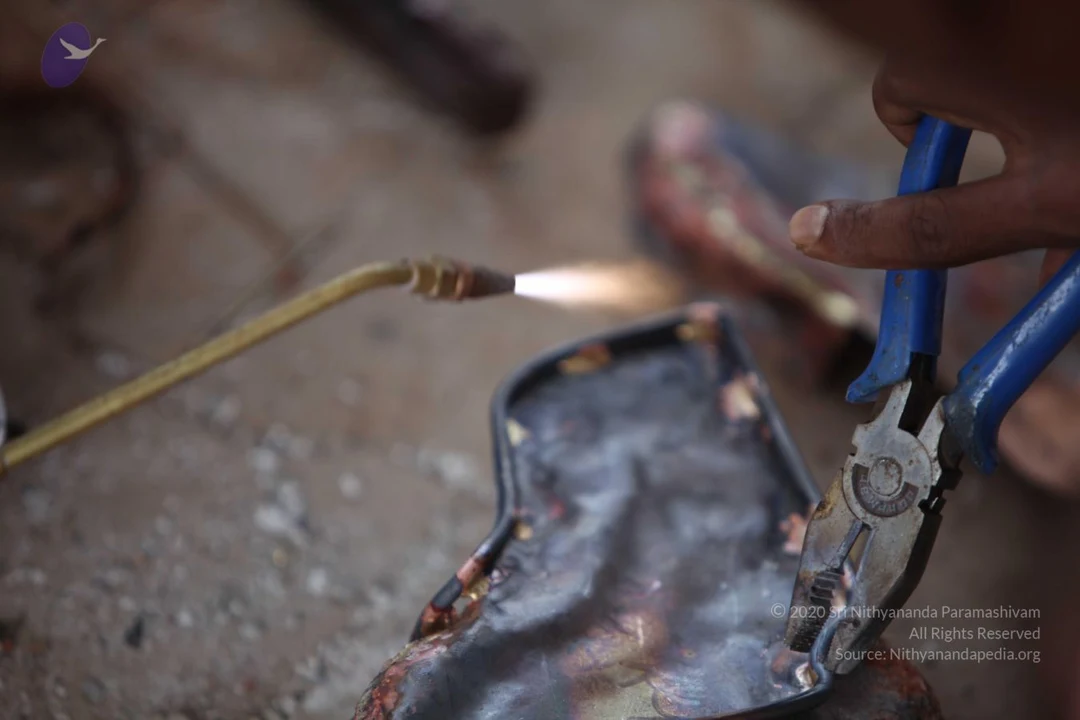
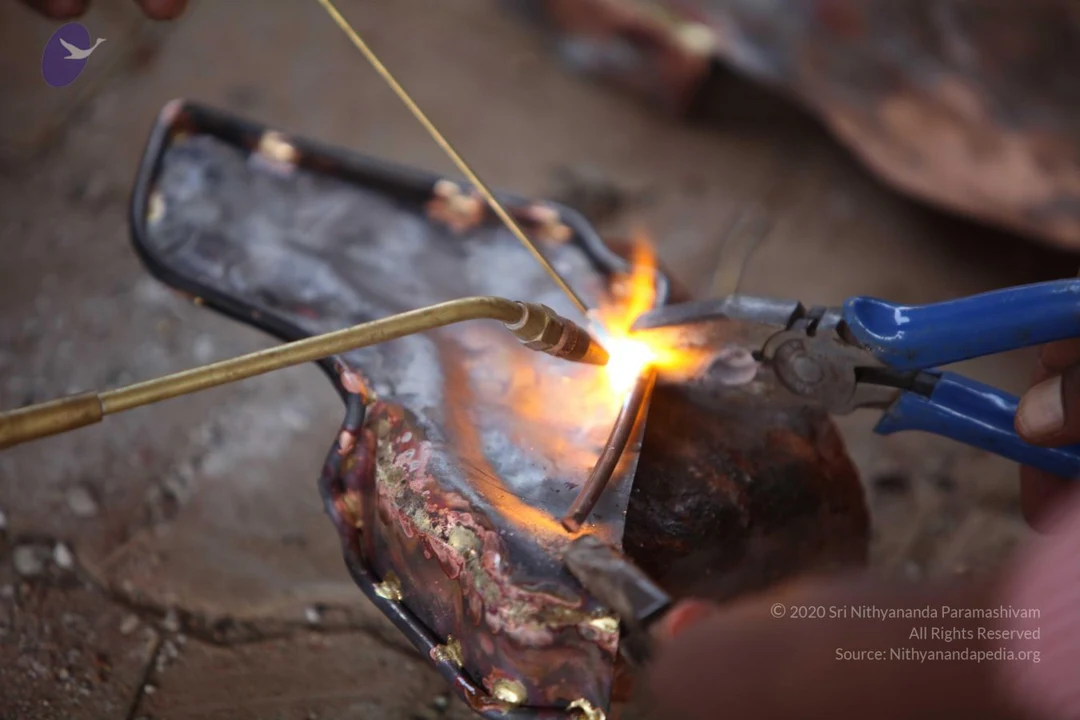
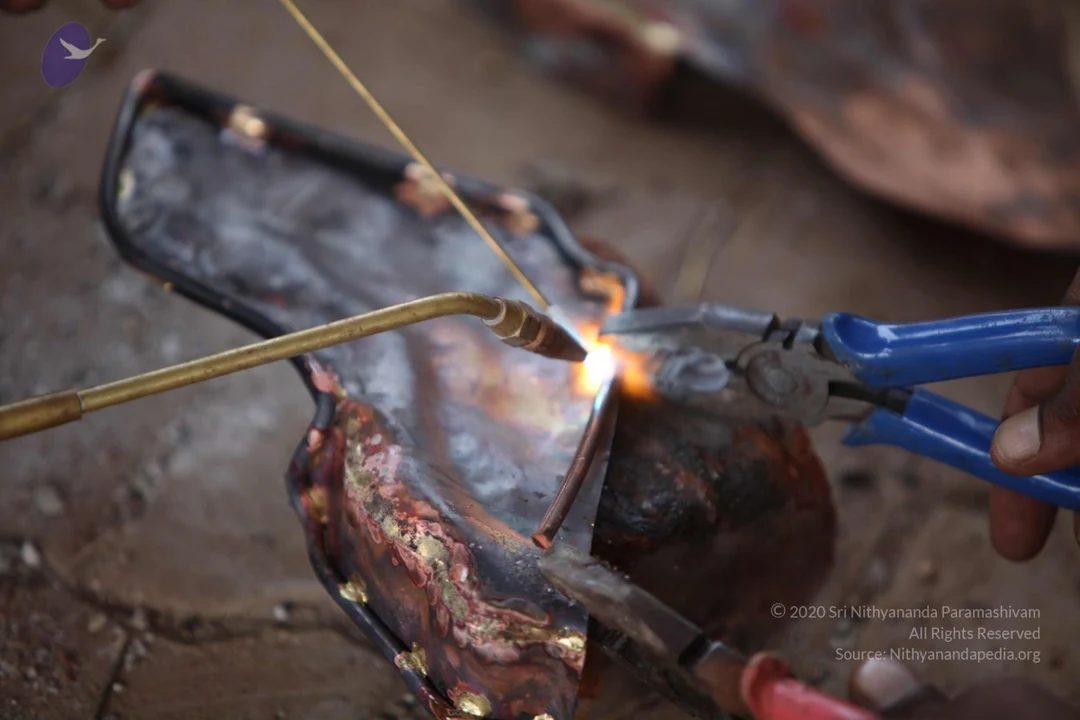
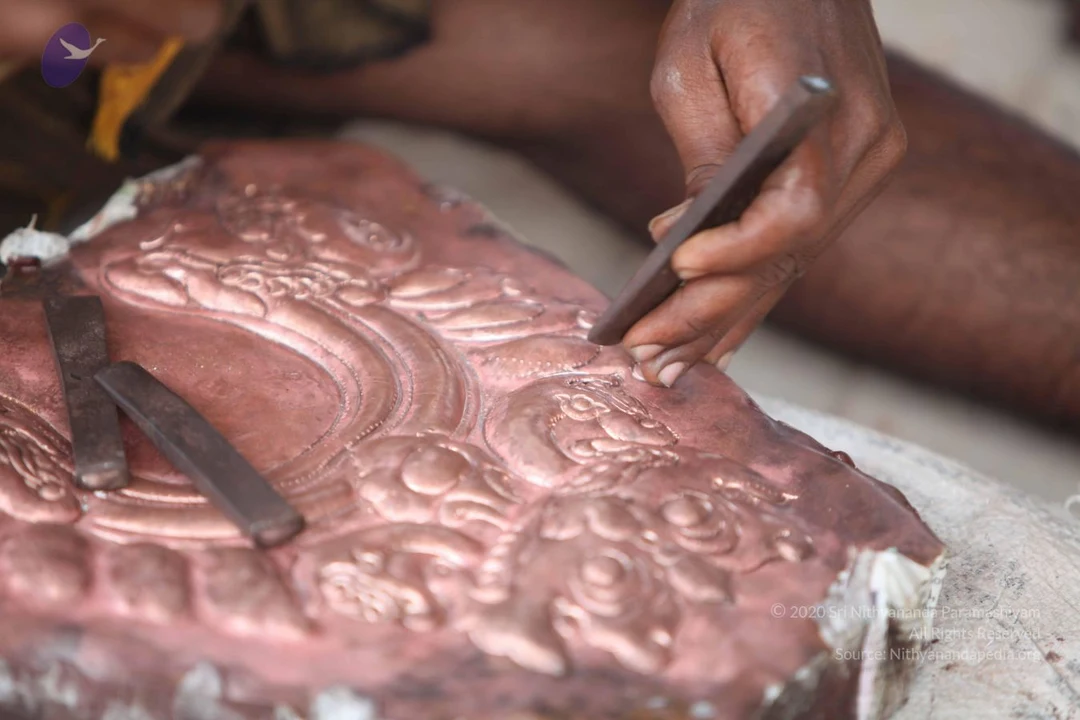
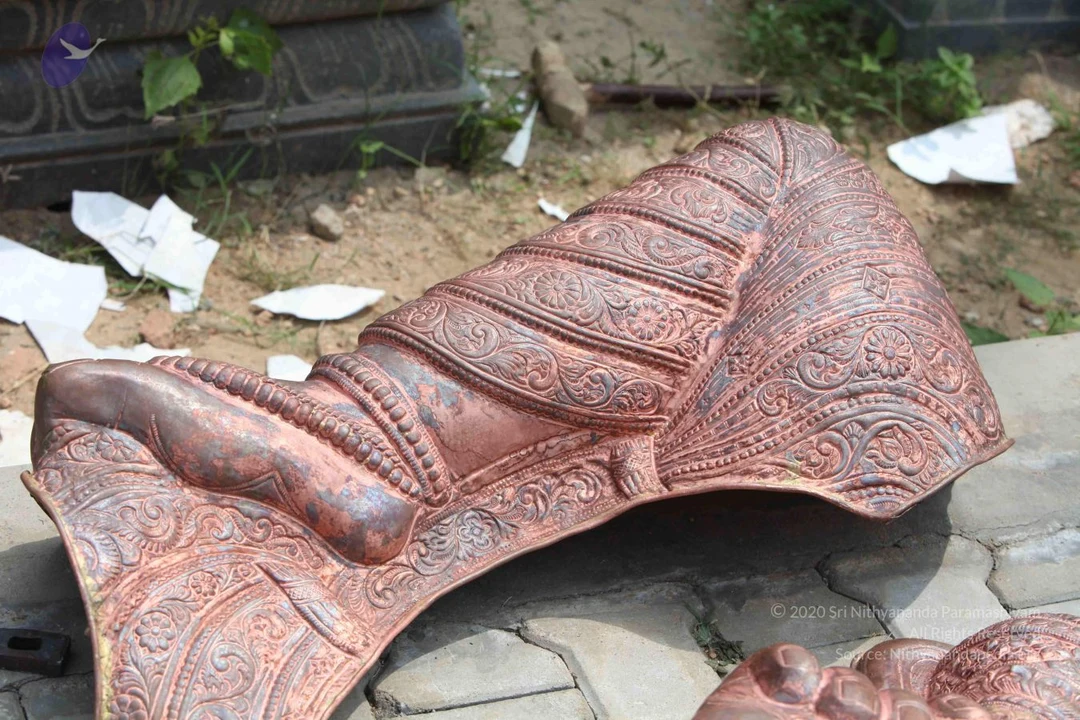
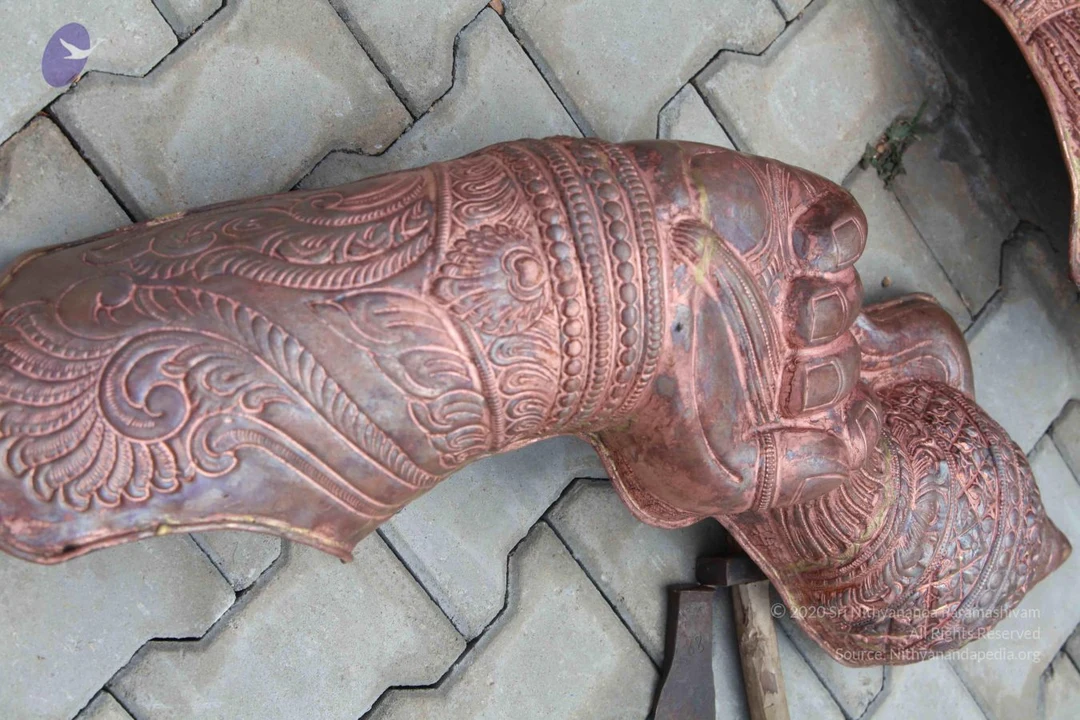
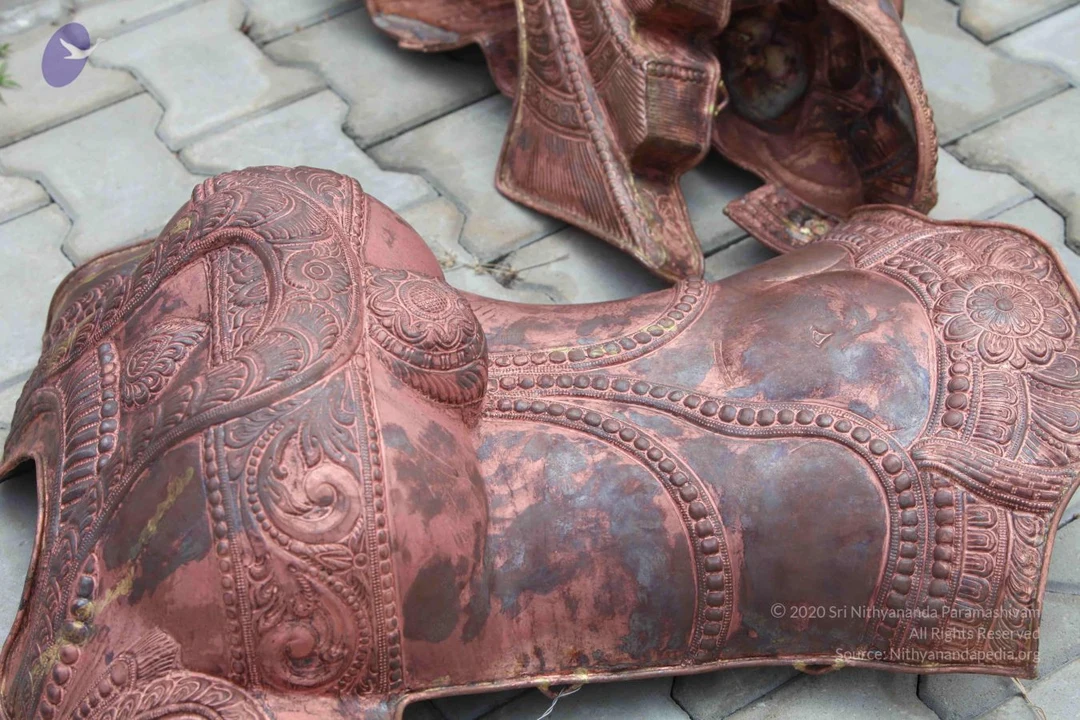
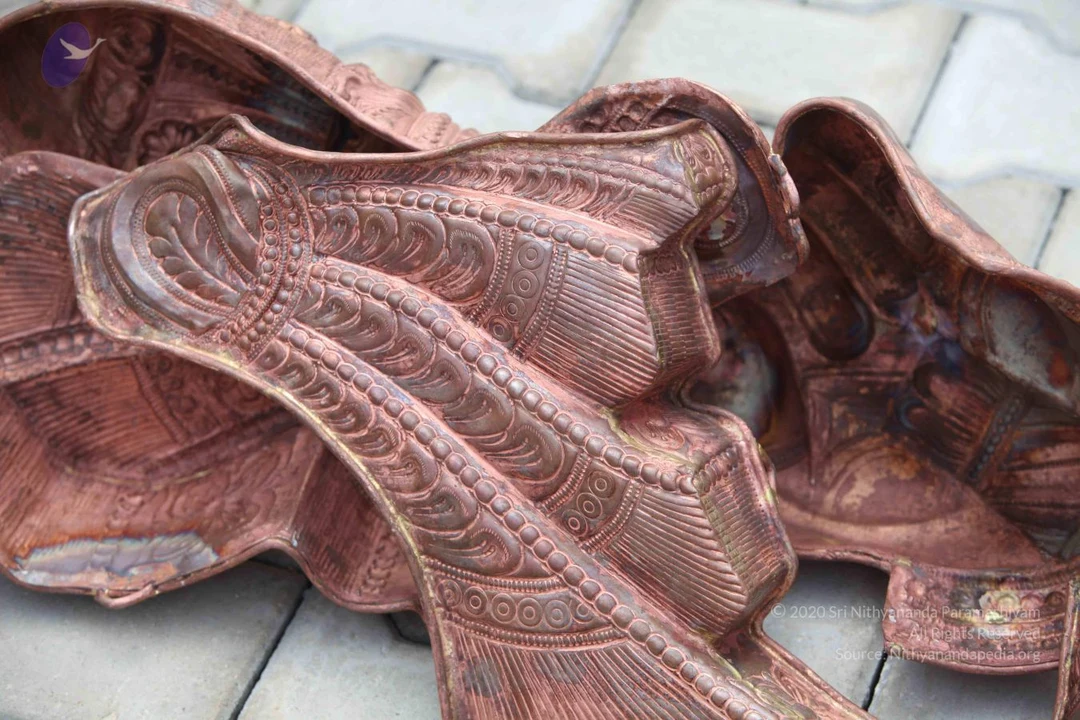
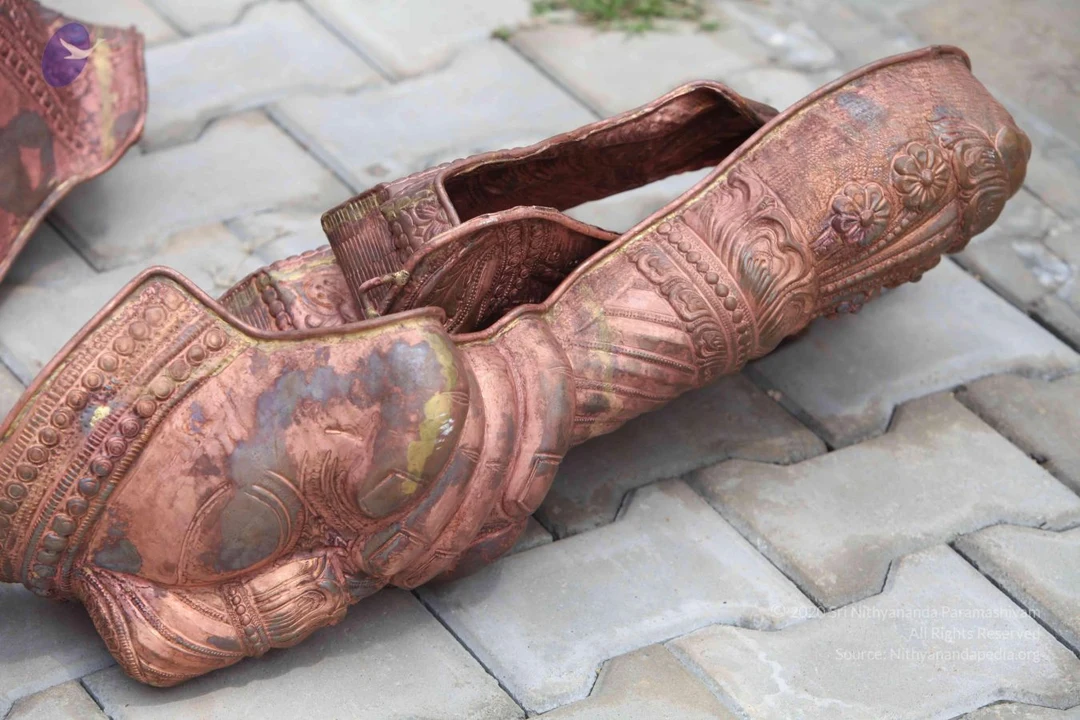
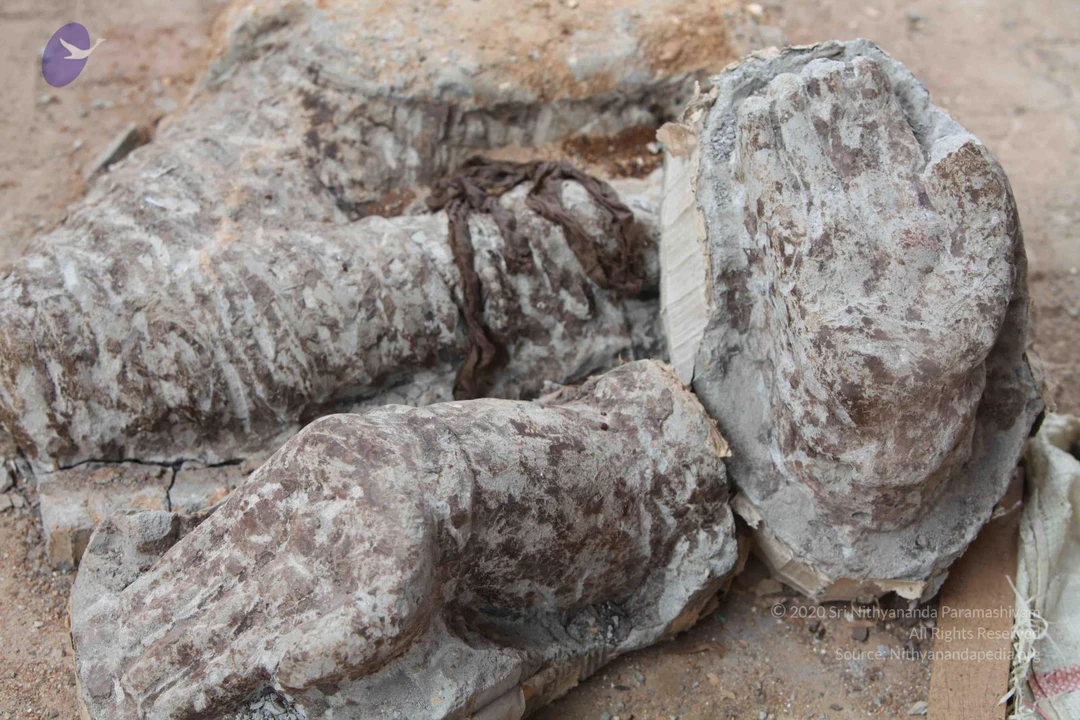
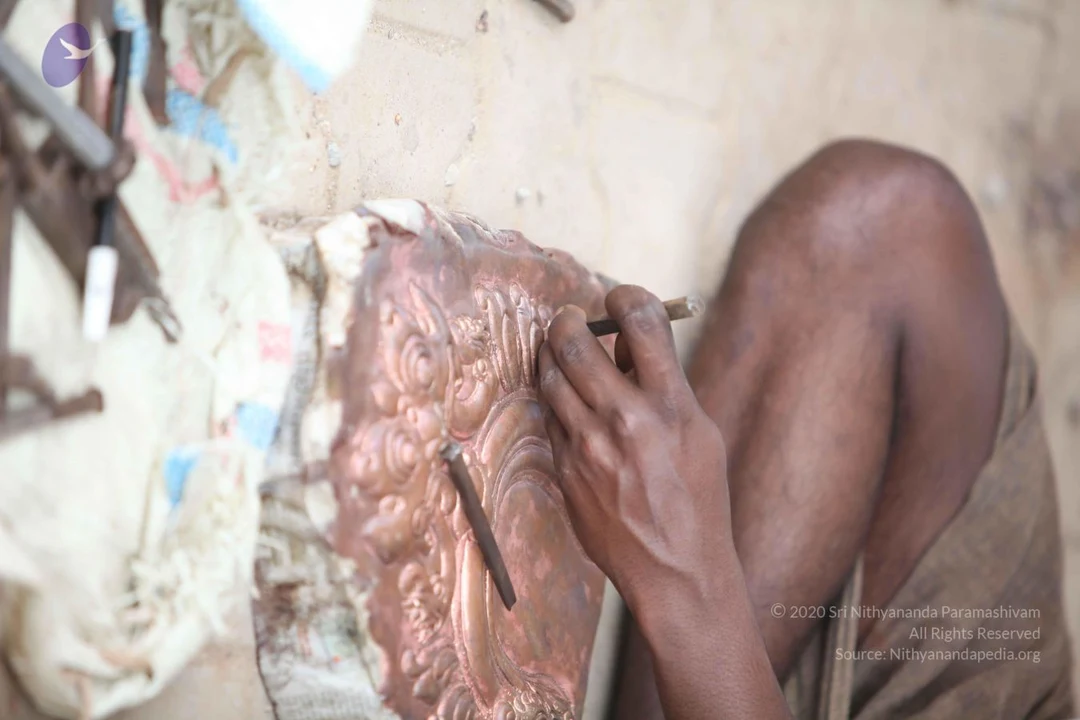
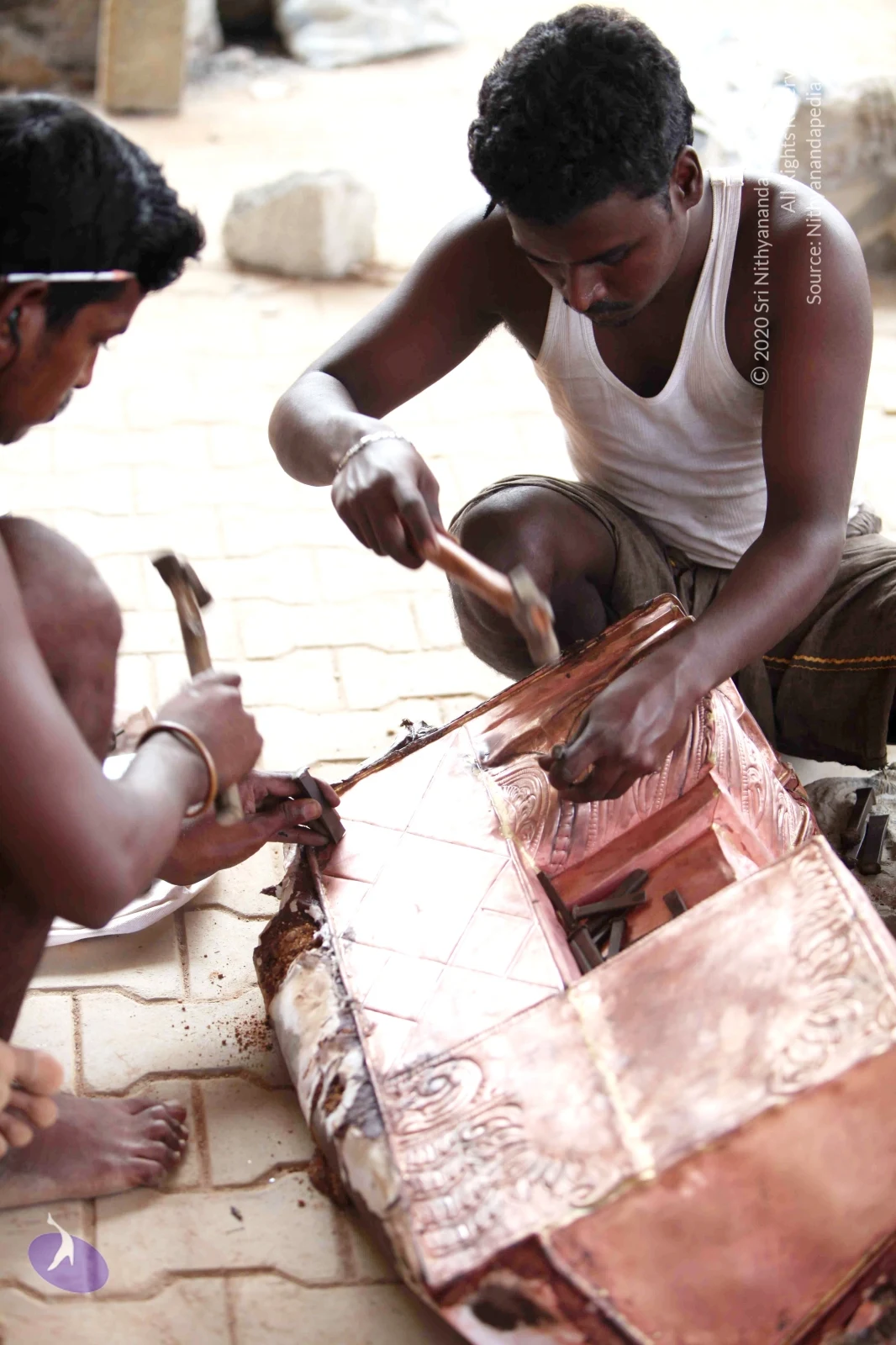
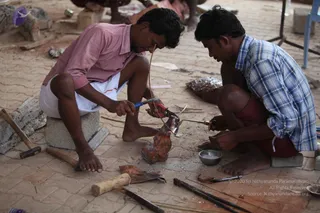
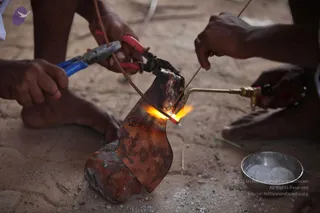
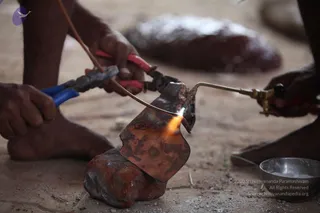
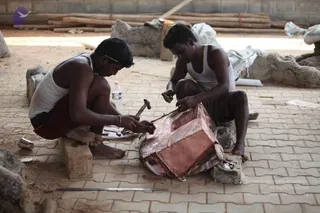
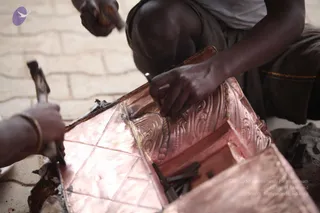
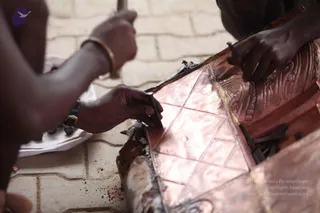
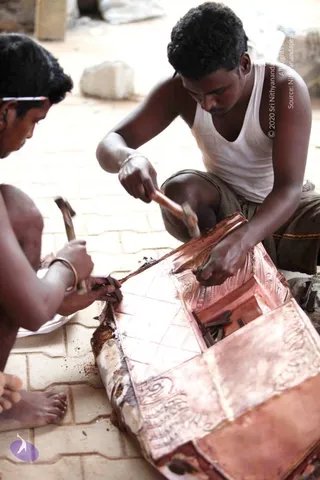
A photograph of two young men working on a paved courtyard floor, crouched and sitting on concrete blocks. The man on the left wears a red checked shirt and white dhoti and uses a blowtorch with a long copper-coloured pipe on a reddish-brown metal piece, possibly a casting mould or statue part. The man on the right, in a blue plaid shirt and maroon lungi, holds the torch nozzle and watches the work. Scattered on the ground are hammers, metal tools, a small metal bowl, wooden mallets and rods. The scene looks like metalwork or casting, with no clear ritual activity visible.Close-up photo of two craftsmen working on a copper sheet on the sandy ground. One man, seen from the knees down with bare feet, holds the copper piece steady with blue and red pliers, while the other man's hand directs a brass gas torch whose flame heats the copper. The copper is blackened and discoloured from heat, and a small metal bowl of white powder sits at the lower right. No deity, a person candidate or ritual setting is visible.Close photograph of two craftsmen working on the ground soldering a copper sheet with a brass torch. A bare foot rests on the left, pliers with blue handles hold a copper wire, and a red-handled torch flame heats a copper piece resting on a brick. A metal bowl sits on the right, with a blurred stone or fabric in the background. No a person candidate is visible; only the hands and feet of workers appear.Two young men work on the floor of an open, dusty workshop with a paved brick surface and stacked timber and stone blocks behind them. The man on the left, wearing a white vest and a rust-coloured lungi, crouches on a wooden block and hammers at a copper-coloured box-shaped object. The man on the right, in a white vest and dark lungi, sits beside it, bent over the metal and working with a tool. A plastic water bottle and scattered metal pieces lie nearby. The scene looks like craftsmanship in progress, with no ritual, discourse, or a person visible.Close photograph of two craftsmen working on a copper-sheathed box or casket on a tiled floor. One man in the foreground, wearing a dark lungi-style garment and a bangle, holds a metal hammer or chisel and works on the copper surface, which is embossed with floral and scrollwork patterns. A second hand at upper left holds a tool and strikes the metal. Several small metal tools lie on the floor beside the piece. The copper has a warm pinkish sheen. No ritual, deity or a person appearance is visible in the frame.Close-up photograph of two craftsmen's hands working on a sheet of polished copper with hand tools. One worker on the left wears a thin gold bangle and holds a small tool against the copper; a second worker on the right works on an embossed, ornamented copper panel with a chisel-like tool. Light brown brick paving is visible behind, with scattered metal filings on the ground. No identifiable a person figure or ceremonial setting is visible; the scene shows metalwork, a craft process.

Temple

10 photosSource gallery
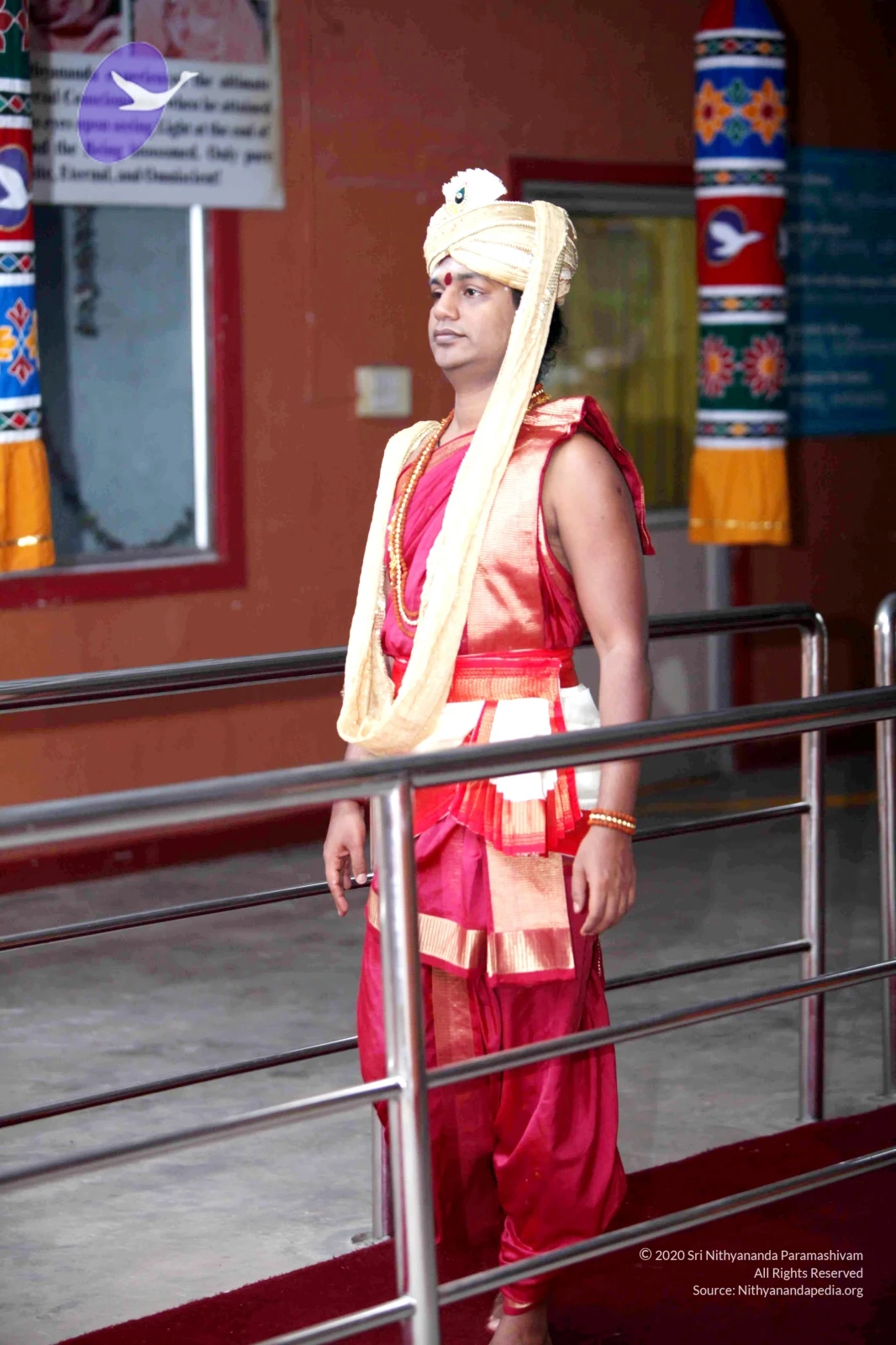
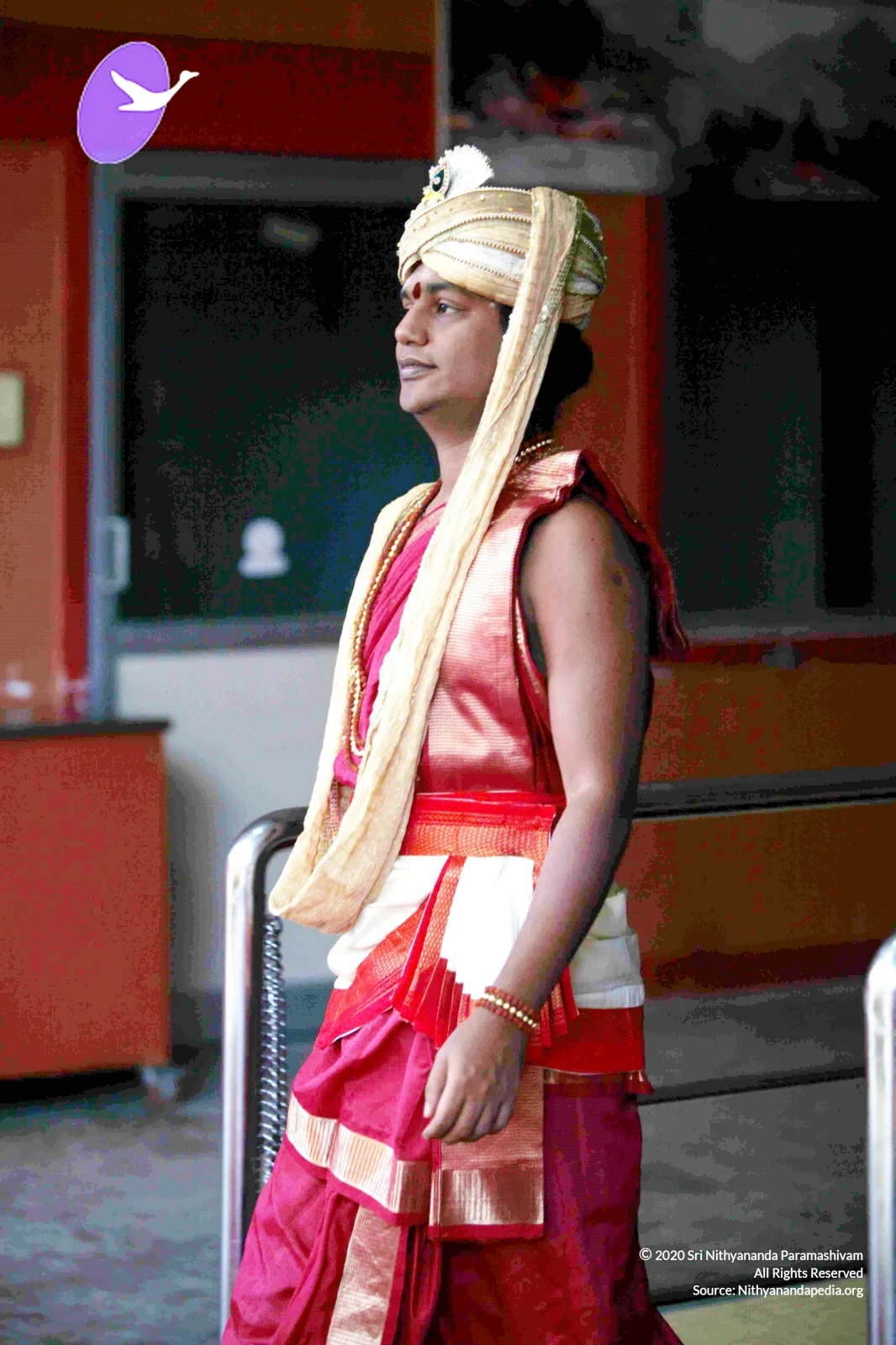
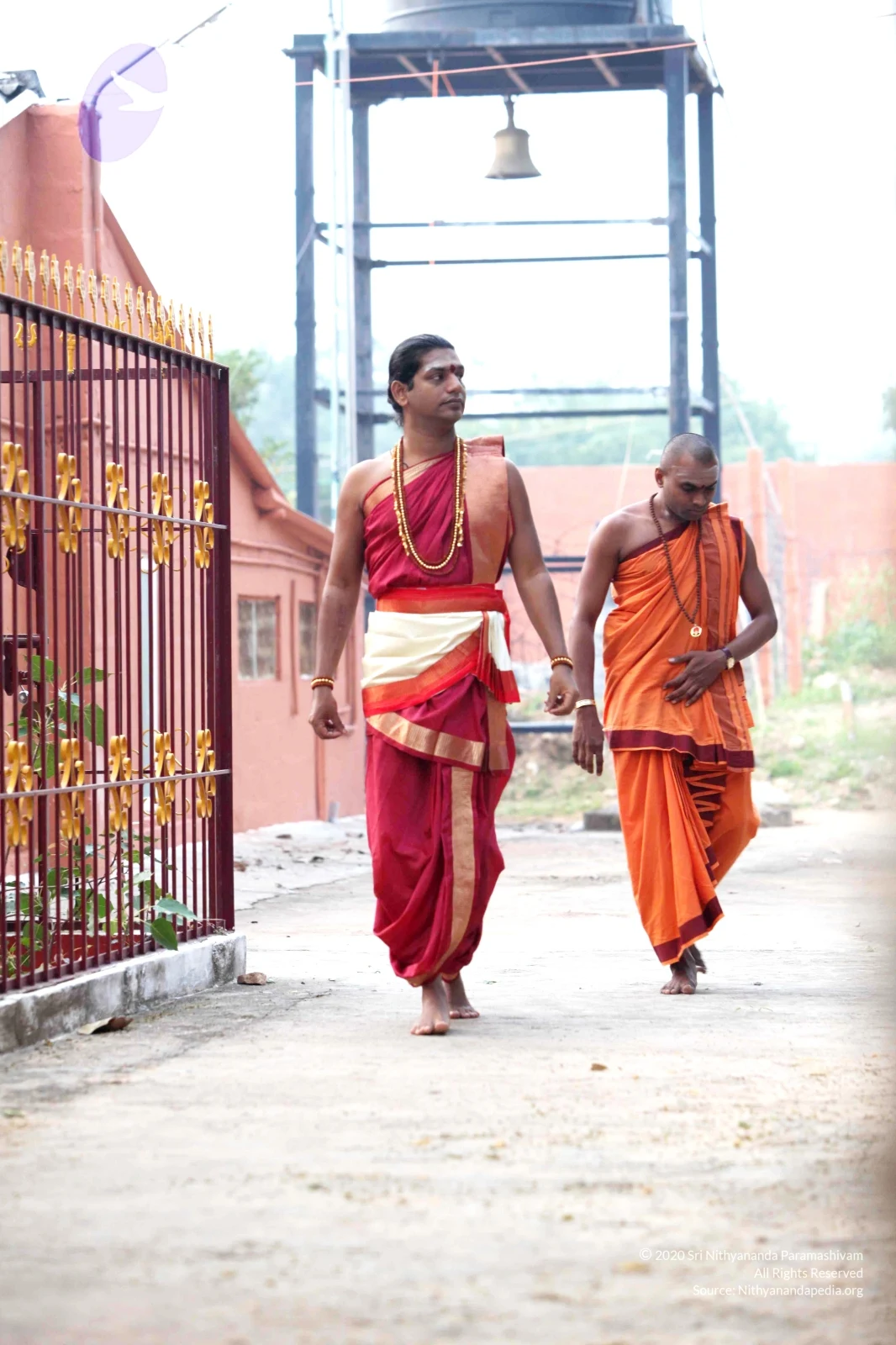
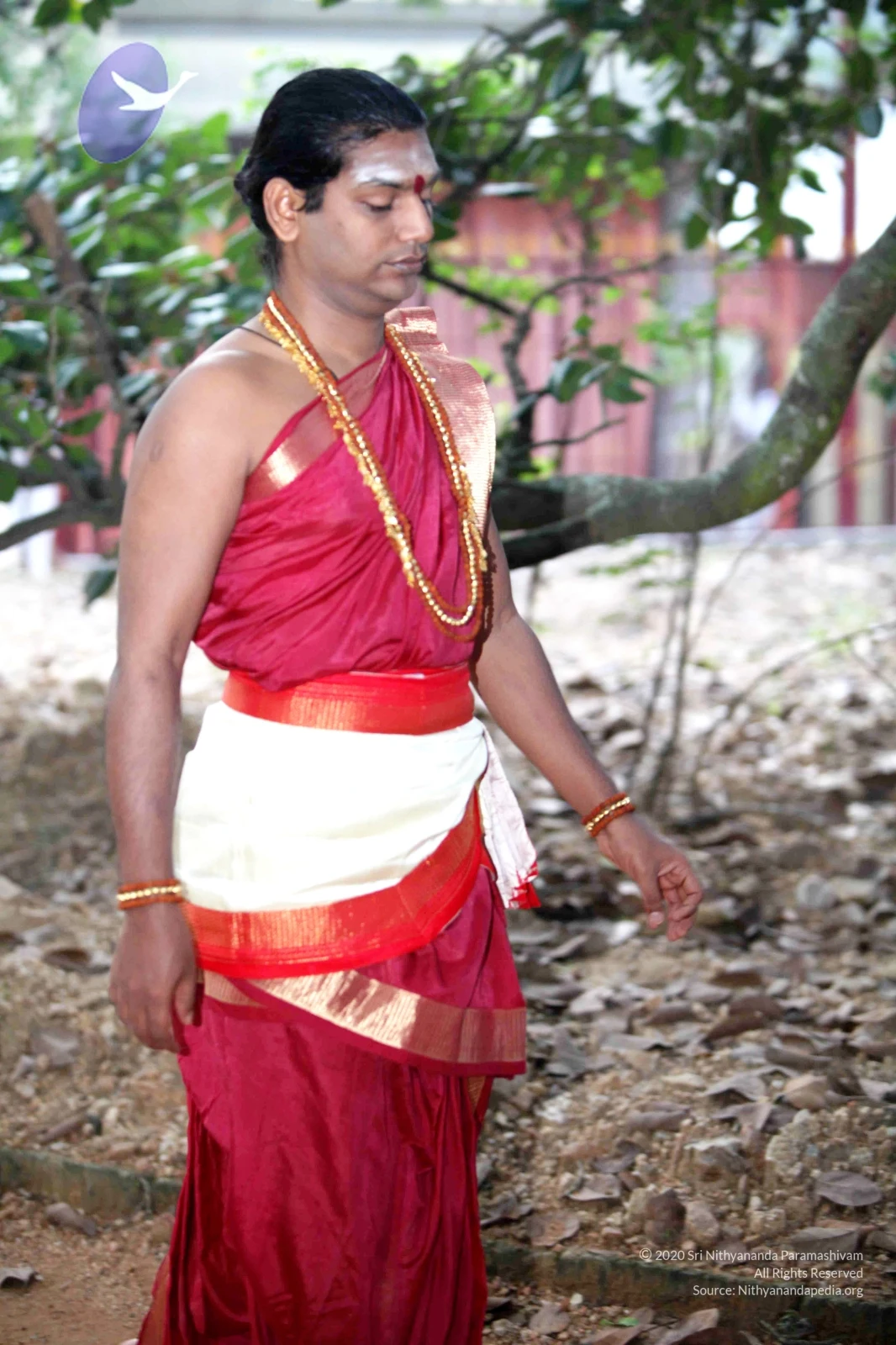
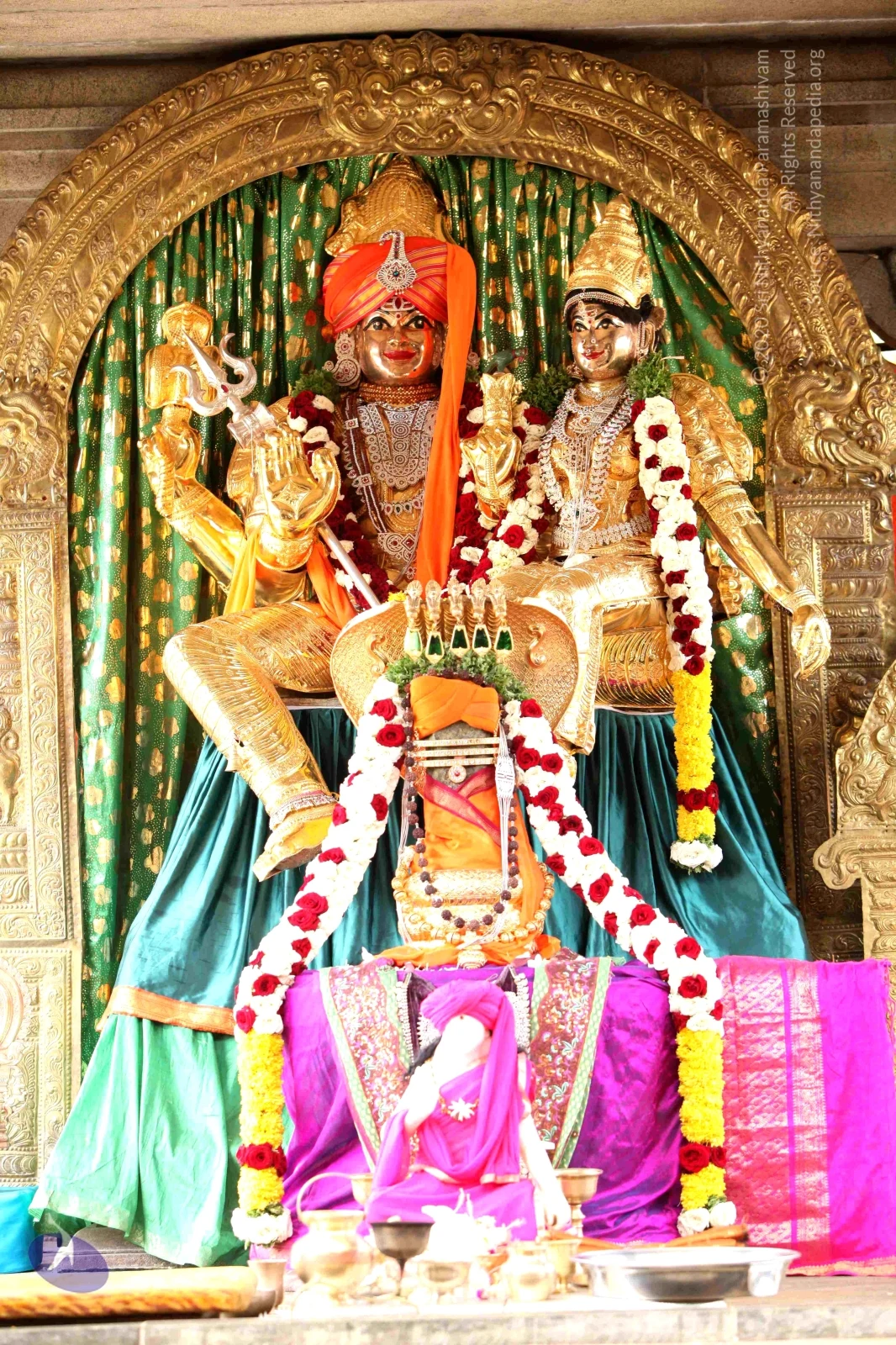
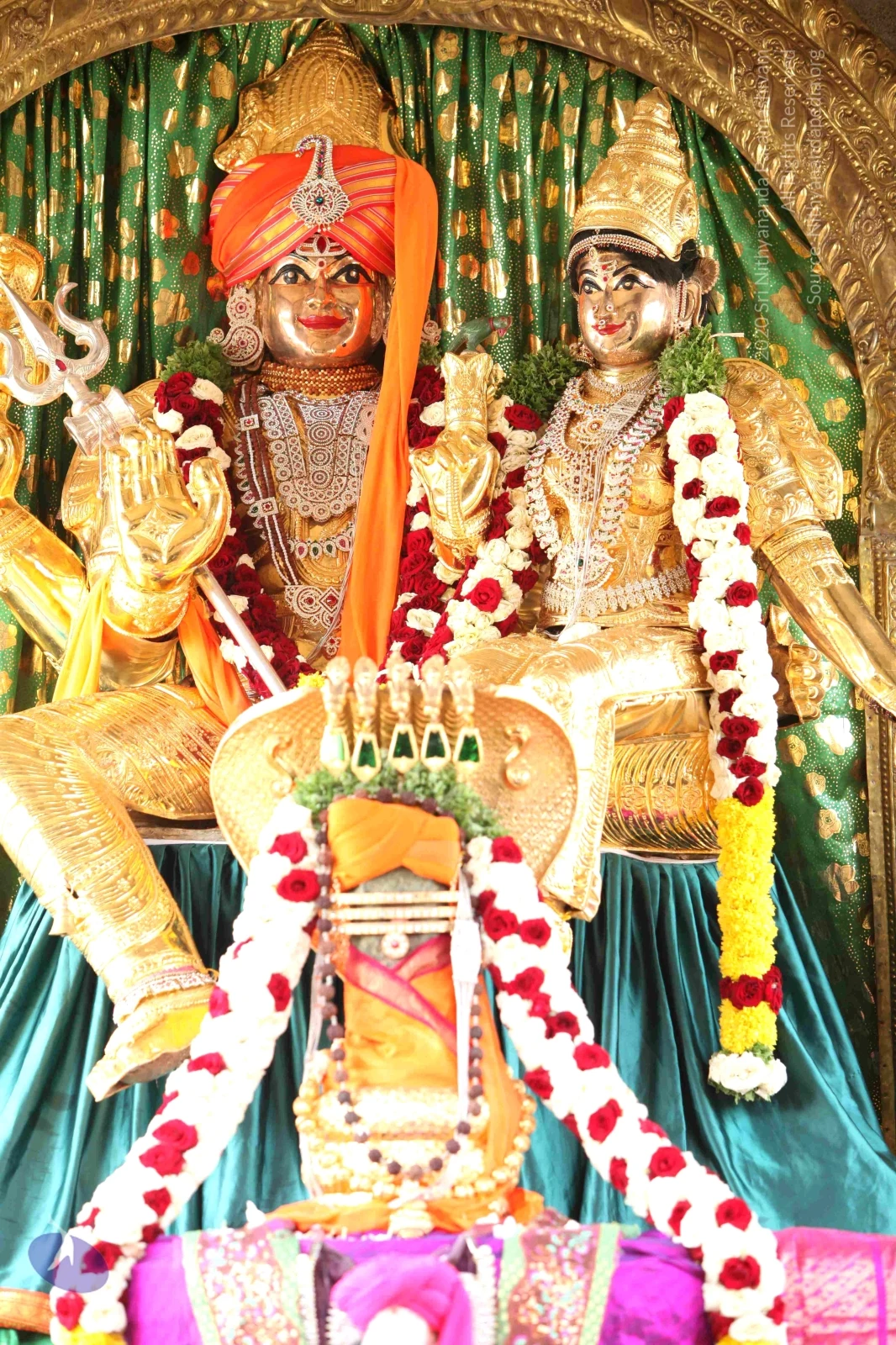
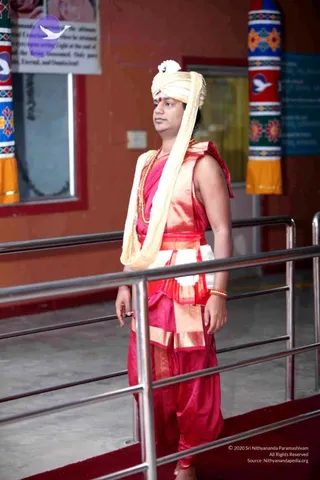
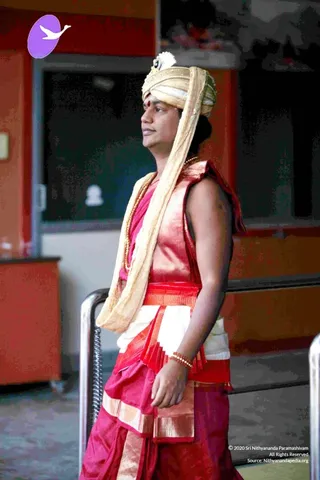
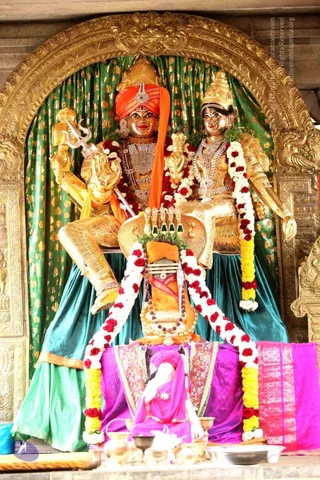
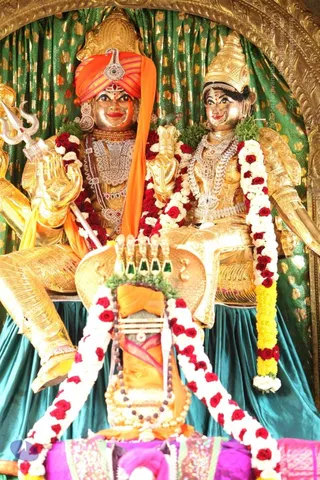
A man in profile stands on a red carpet behind a steel railing inside a building with terracotta walls. He wears a cream and gold turban with a white plume, a red bindi, and a long cream shawl draped over one shoulder. His bare-shouldered outfit is a deep red silk with gold-banded borders, a red sash and white waistcloth, and he wears a gold-beaded necklace and matching bracelets. Behind him, a tall decorative pillar with red, blue and orange floral patterns and a white dove emblem stands beside a wall poster. The page describes a talk on the Bhagavad Gita, but the image itself does not show a talk, and the man's identity is not established from appearance alone.A man in profile walks indoors past a metal railing, wearing a cream and gold turban with a white plume and a small jewel at the front, a cream shawl draped over one shoulder and down his back, and a red sleeveless upper garment with gold zari edging. He wears a red dhoti-style lower garment with white and gold borders, a gold bead necklace, a gold bangle on his wrist, and a red bindi on his forehead. He is bare-armed on one side. Behind him are red-toned walls and a dark window. The turban and layered red-and-gold attire suggest a ceremonial procession or formal occasion. The figure's appearance does not clearly match the page's claim, so the identity is not established.Two barefoot men walk along a concrete path past a red gate with golden finials and a red-brick wall, beneath a metal water tank frame with a hanging brass bell. The man on the left wears a deep red dhoti with a cream and gold border, a red shawl draped over one shoulder, a cream sash, and a long gold bead necklace, with a red tilak on his forehead and gold bangles. The man on the right wears orange robes with a maroon border, a rudraksha mala with a pendant, and a wristwatch, his head shaved. Four people are not present; two physical people are visible. The left figure has long swept-back hair and gold ornaments, a person candidate by appearance, though his face is not clearly identifiable from this angle.A man in a red and gold-bordered silk garment walks outdoors on a dry leafy path beside a tree. He wears a white and red waist cloth with gold border, a red upper wrap, a long gold-beaded necklace, gold bangles, and a white vertical line with a red dot on his forehead. His eyes are lowered and his hands hang at his sides. Behind him a red wall and foliage are visible. The lower corner has a copyright credit line and a bird logo. The appearance-based candidate cues are limited to ordinary ritual dress, so identity is uncertain.A golden murti pair seated on a raised golden throne-like seat inside an ornate gilded arch, backed by a green gold-dotted cloth. The left figure wears an orange turban, carries a trident, and has rudraksha-style adornments; the right figure wears a tall gold crown and a silver-and-gold necklace. Both are garlanded with red roses, white flowers and yellow marigolds. Below them a tall lingam with an orange cloth and rudraksha mala is decorated with garlands, and a pink-draped figure sits in front with brass pots, lamps and a plate of offerings. These are deity murtis, not living people; the page's excerpt references a Bhagavad Gita talk, which is not visibly shown.A photograph of a gilded murti of Shiva and Parvati seated side by side on a golden throne against a green gold-spotted backdrop. The male figure wears an orange turban and holds a trident, the female figure wears a gold crown and jewelled necklaces, and both are garlanded with red roses, white flowers and yellow marigolds. In front, a Shivalingam draped in orange cloth and decorated with rudraksha beads and flower garlands sits before a purple-and-gold cloth. No living people are visible.

Bhagavad-Gita

33 photosSource gallery
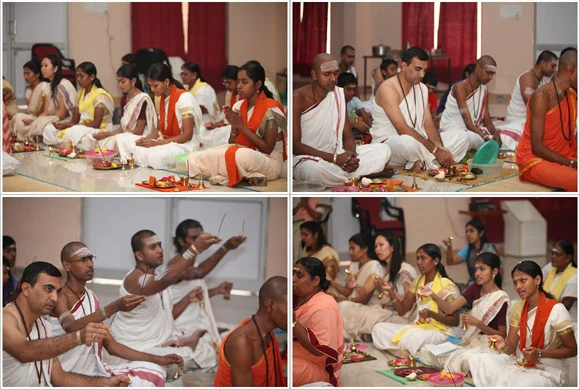
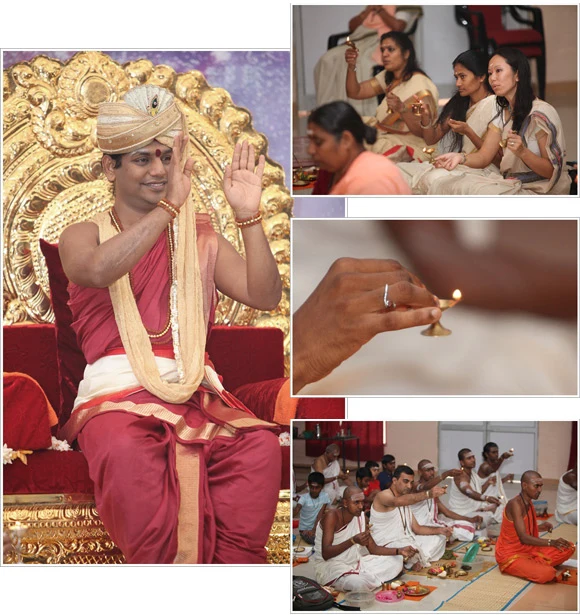
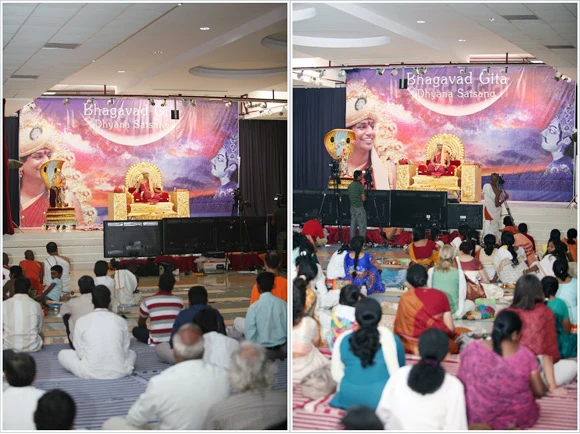
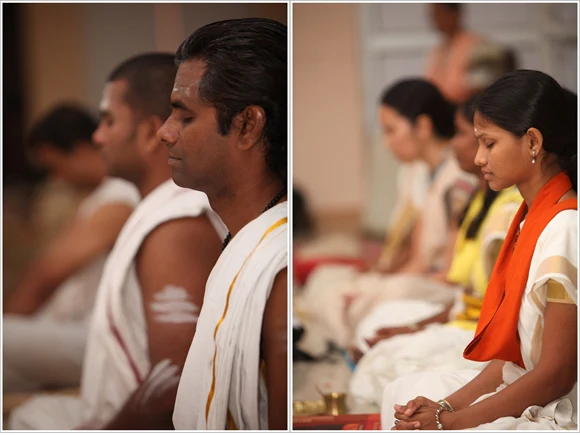
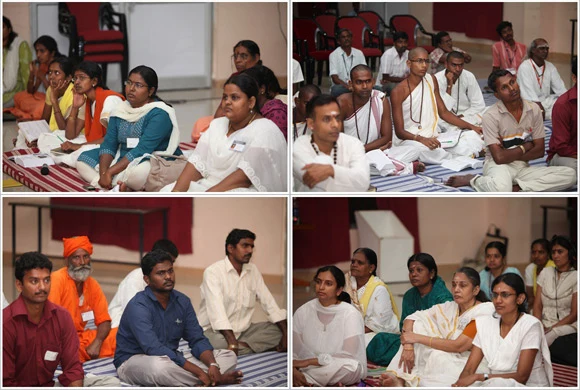
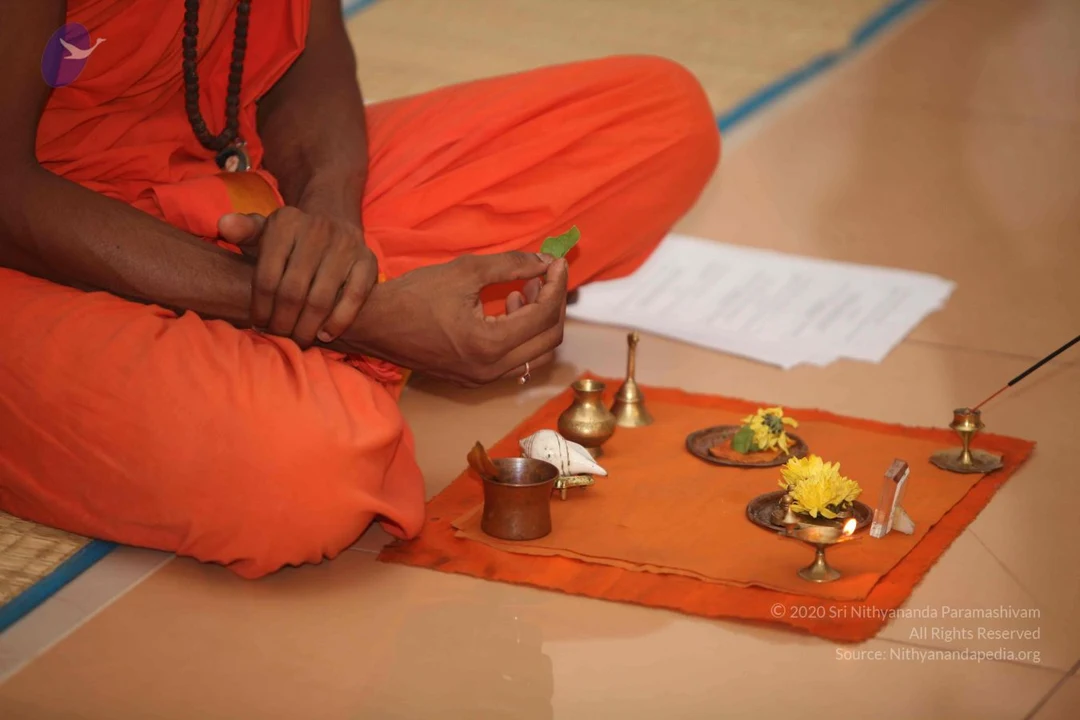
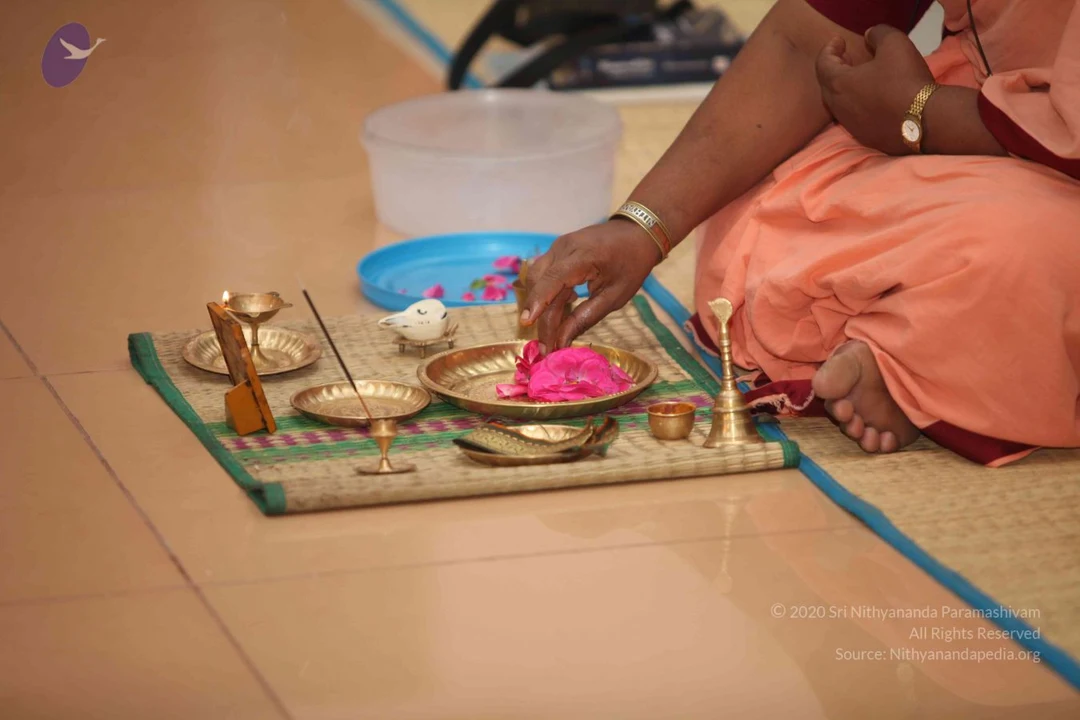
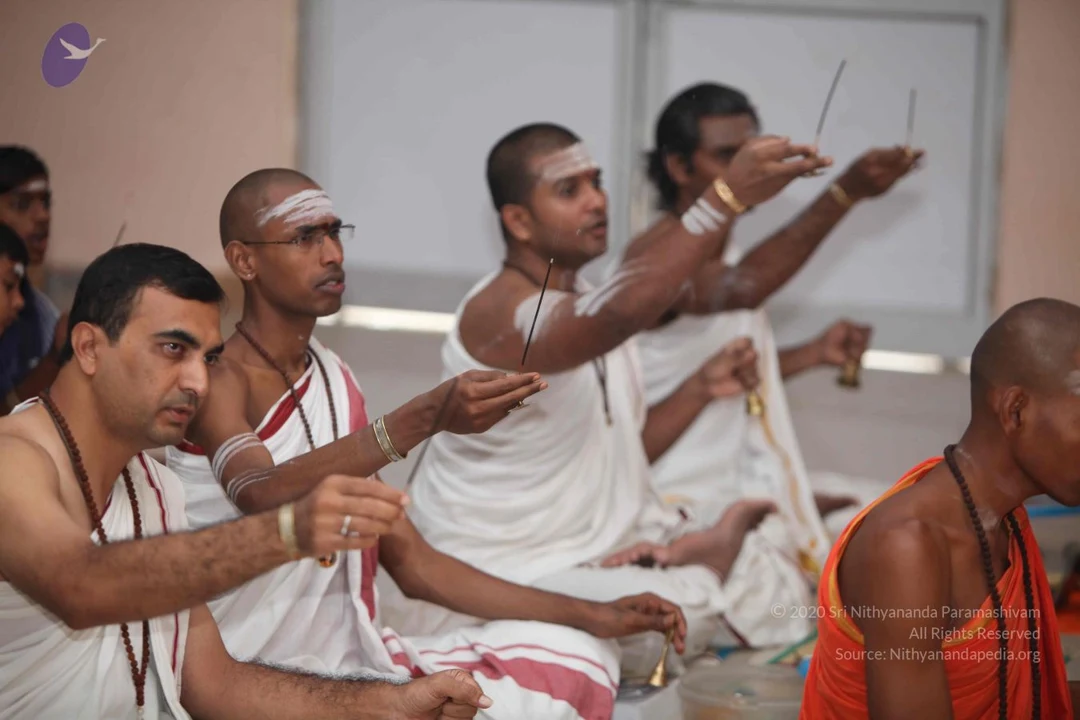
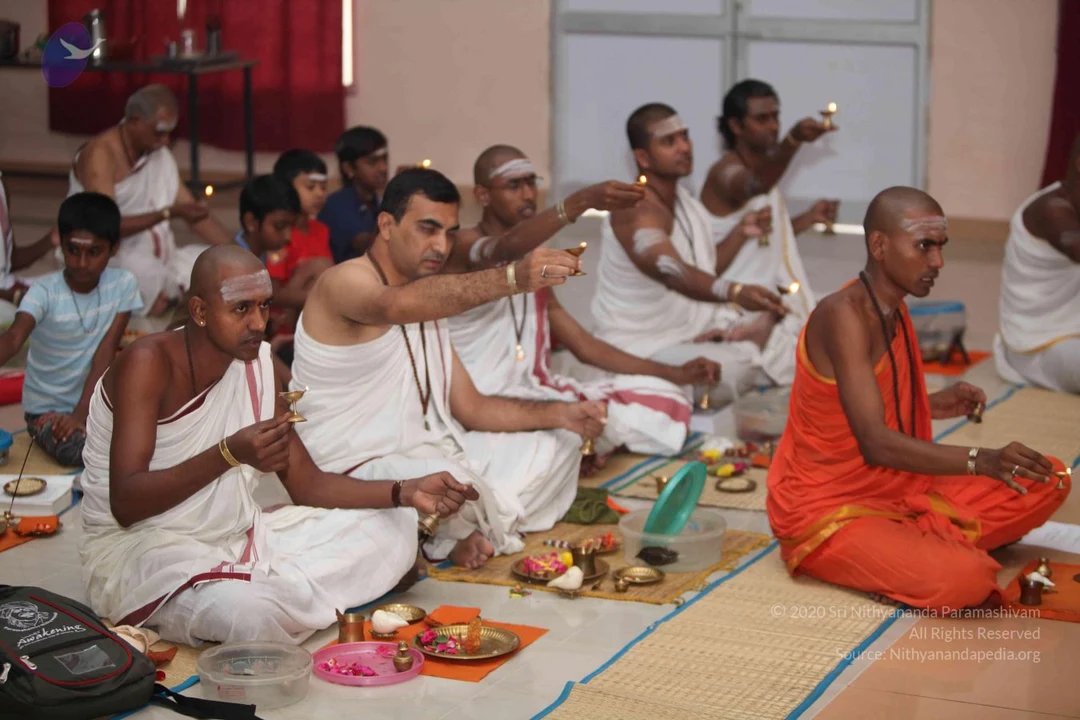
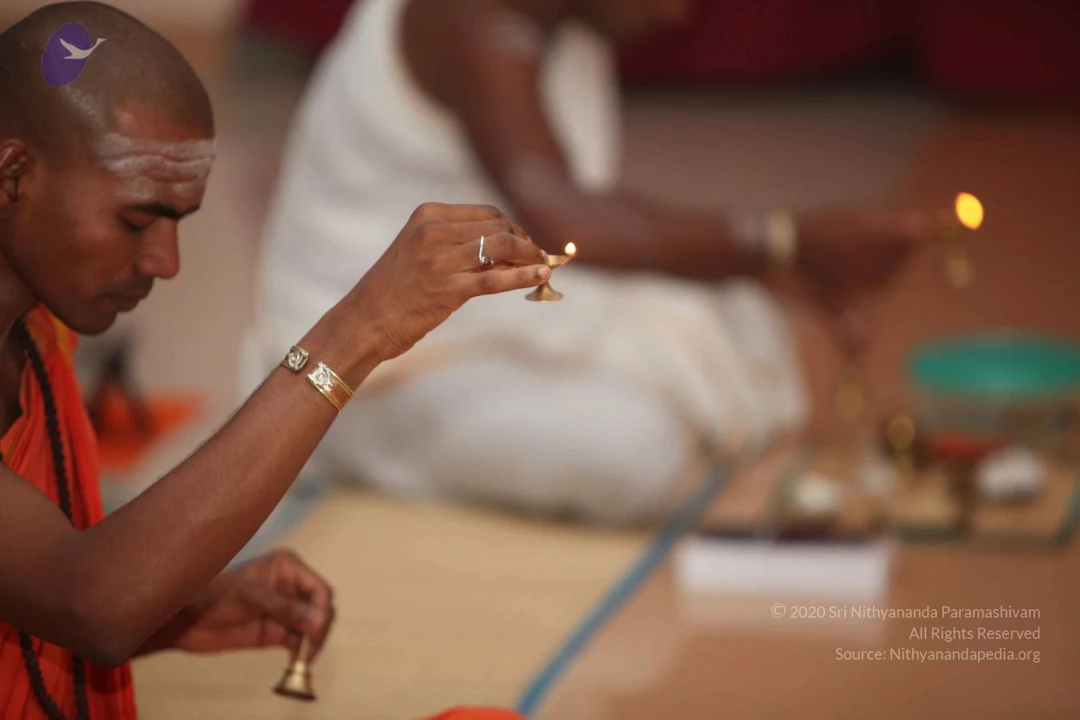
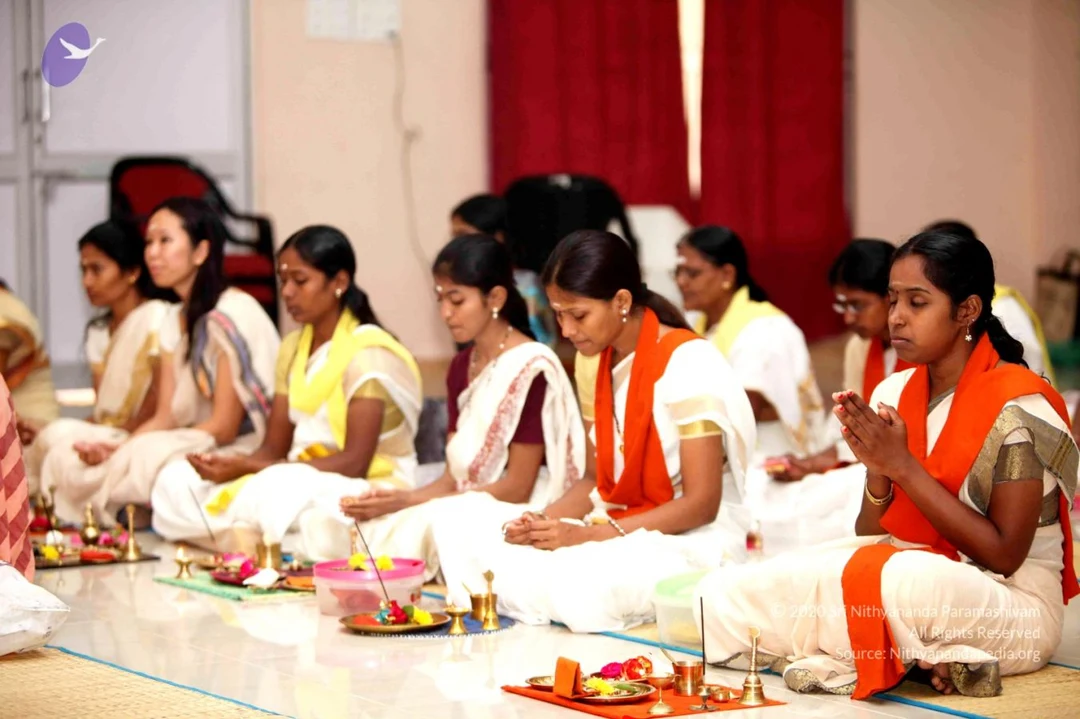
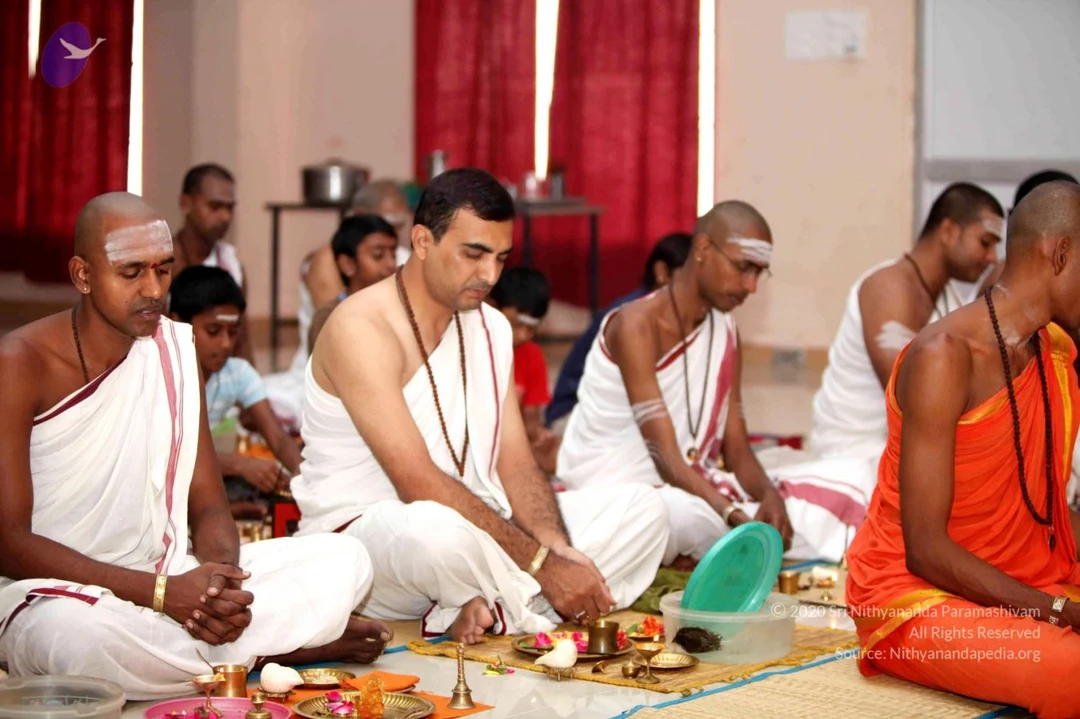
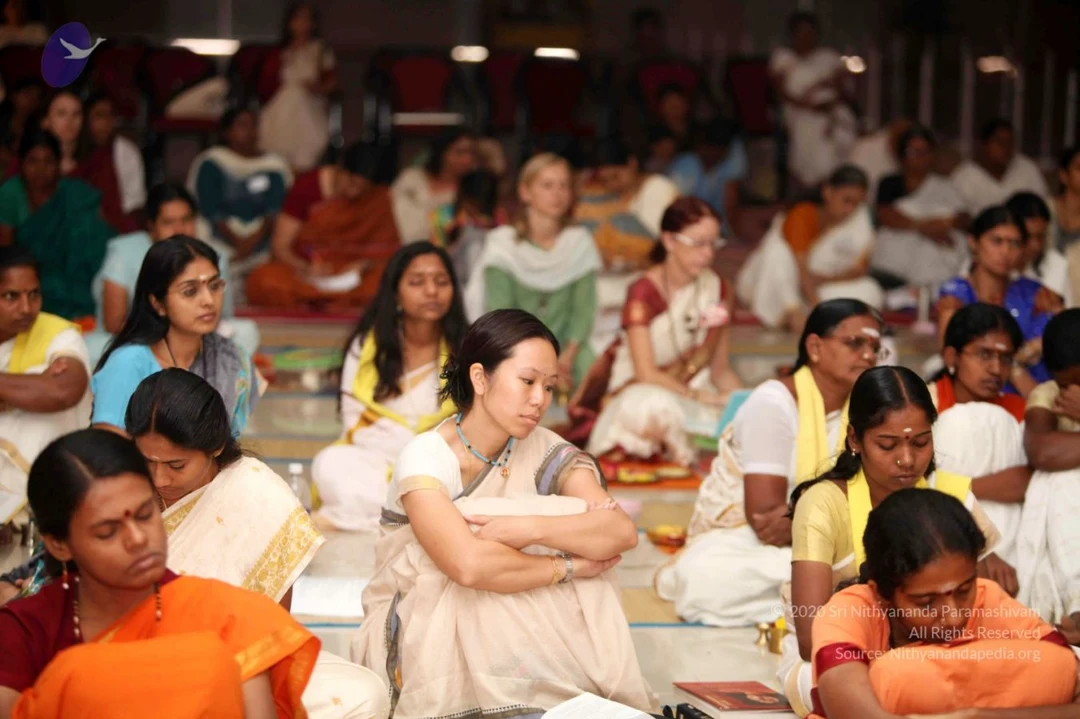
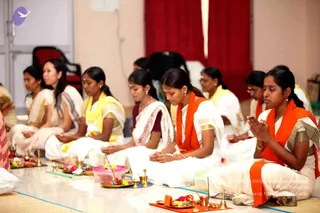
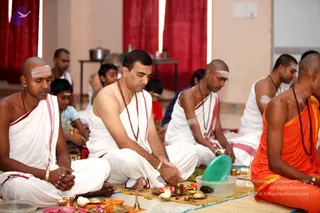
A photograph of a group of women seated cross-legged on a white floor in a hall with red curtains, several with hands in anjali mudra. Many wear white saris with yellow or orange shawls, and one woman in front wears an orange shawl and gold bangles. Brass oil lamps, a kalasha-style vessel, flower offerings, a small tray of fruit and petals, and a plate of food sit before them.A seated group of men in a hall with red curtains performs a puja on a mat. Several men wear white dhotis with red borders and bare upper bodies, with white tilak marks on their foreheads and arms, and rudraksha malas. One man at the far right wears an orange-saffron cloth draped over his shoulder. In front of them sit brass lamps, a small brass bell, kalasha-like vessels, flowers, a conch shell and a green plastic lid on a mat. Children sit among the adults in the background.A man seated on an ornate gold throne with a carved, scrolled backrest and a red velvet cushioned seat. He wears a cream and gold turban with a peacock-feather motif and a red bindi, a red silk garment with gold border worn over one shoulder, a white waist cloth, a long cream shawl draped over his arm, and multiple strands of beaded red and gold malas with matching bracelets. Flower petals lie on the seat beside him. The pose is composed and formal. Appearance-based candidate for a person: long cues include a ceremonial turban, saffron-red ornate silk, rudraksha-style malas and a golden throne, but the page claim cannot be confirmed from the face, so this is marked unsure.A seated man in a cream turban with a green stone and red bindi, wearing a red and gold-bordered silk dhoti and wrap, a rudraksha mala and beaded bracelets, sits on an ornate gold throne with red velvet armrests and cushions. White and orange flowers rest on the armrests and red flowers lie at the base of the golden dais. A purple and pink starry backdrop and a small purple bird logo appear in the upper left.A seated man in crimson and gold ceremonial dress sits cross-legged on a red velvet throne cushioned by orange bolsters, in front of an ornate gilded backrest with a purple starry backdrop. He wears a cream and gold turban with a jewelled ornament, a red bindi, a multi-strand rudraksha mala with gold beads, a red silk shawl edged in gold, and a cream wrap draped over his lap, with his hands clasped and wrists banded with beads. Small white flower offerings lie on the throne base and a bird logo appears in the upper left corner.A seated man in a golden ornate throne with a large gilded arched backrest sits in lotus-style posture on a red cushioned seat. He wears a cream turban with a jewel brooch, a red and gold-bordered dhoti-style garment with a cream shawl draped over one shoulder, a long rudraksha mala and a red bindi, and his hands rest folded in his lap. A gilded side table with an orange-trimmed cushion stands to his right, white flowers lie at the base of the throne, and a pink and purple starry backdrop fills the background. Swamiji (probable) appears here with saffron-red robes, a turban and rudraksha mala seated on the throne.

Kalpataru

8 photosSource gallery
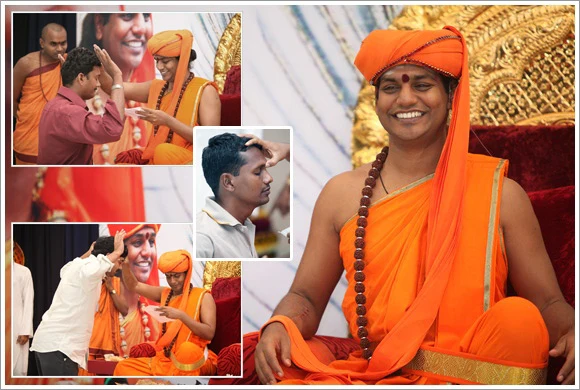
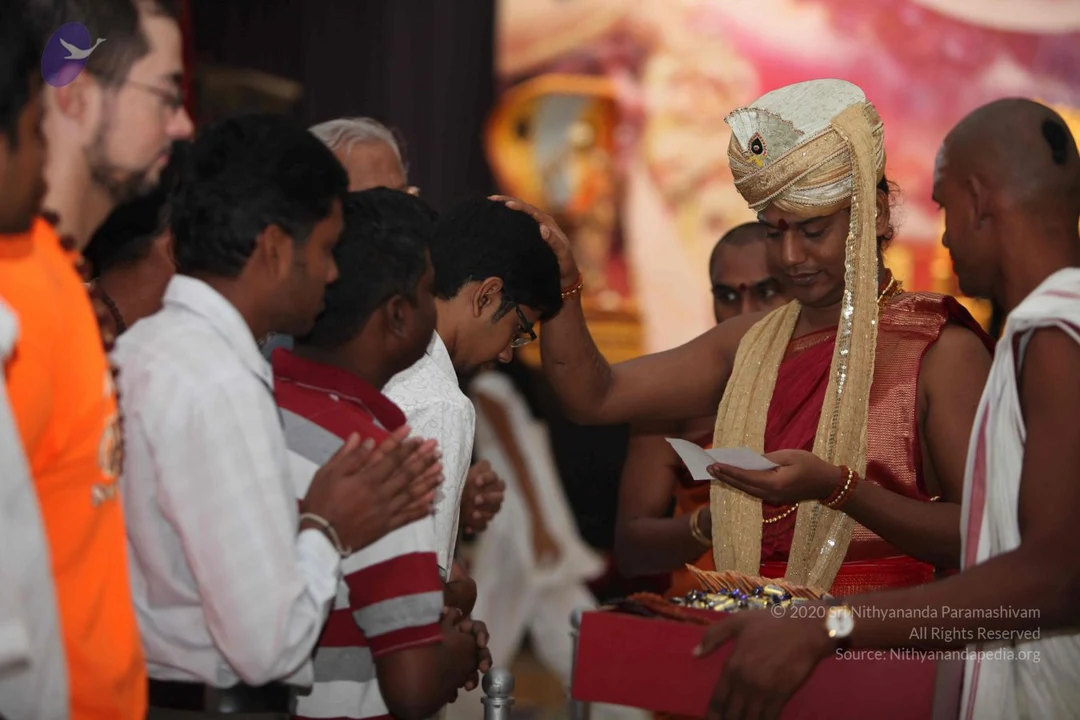
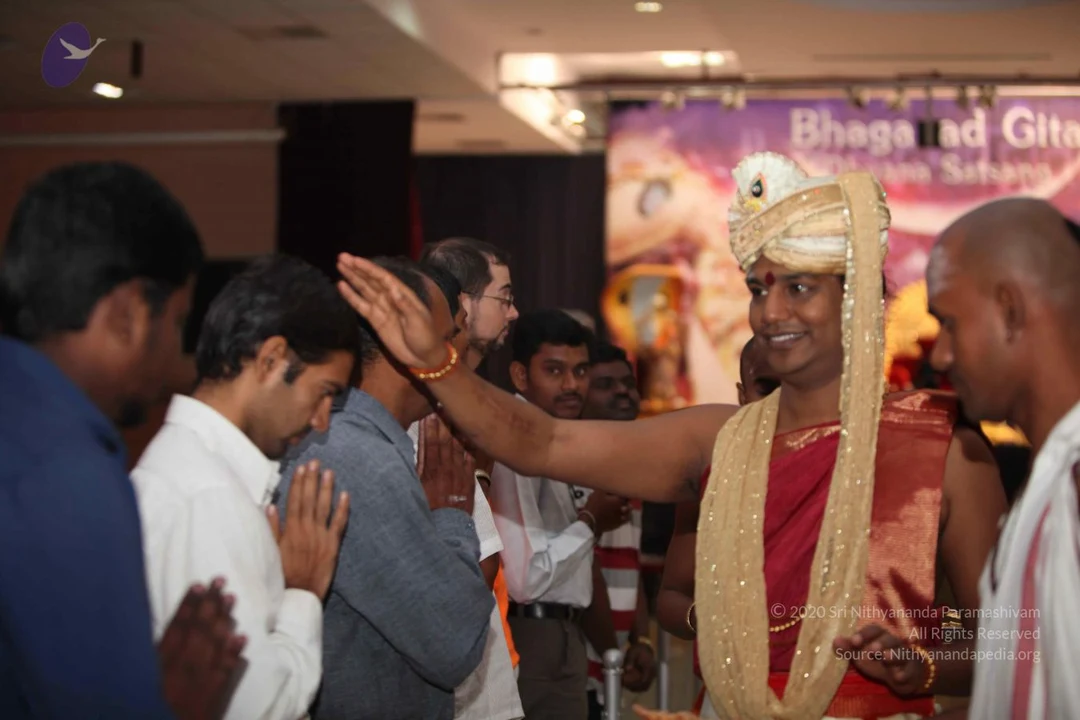
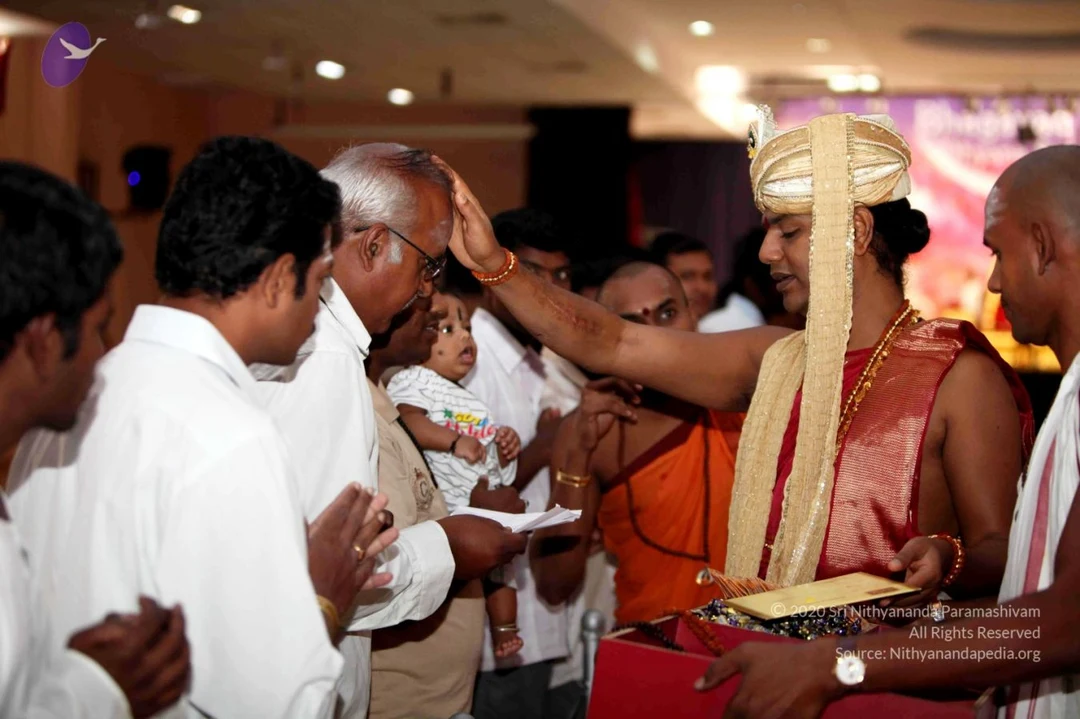
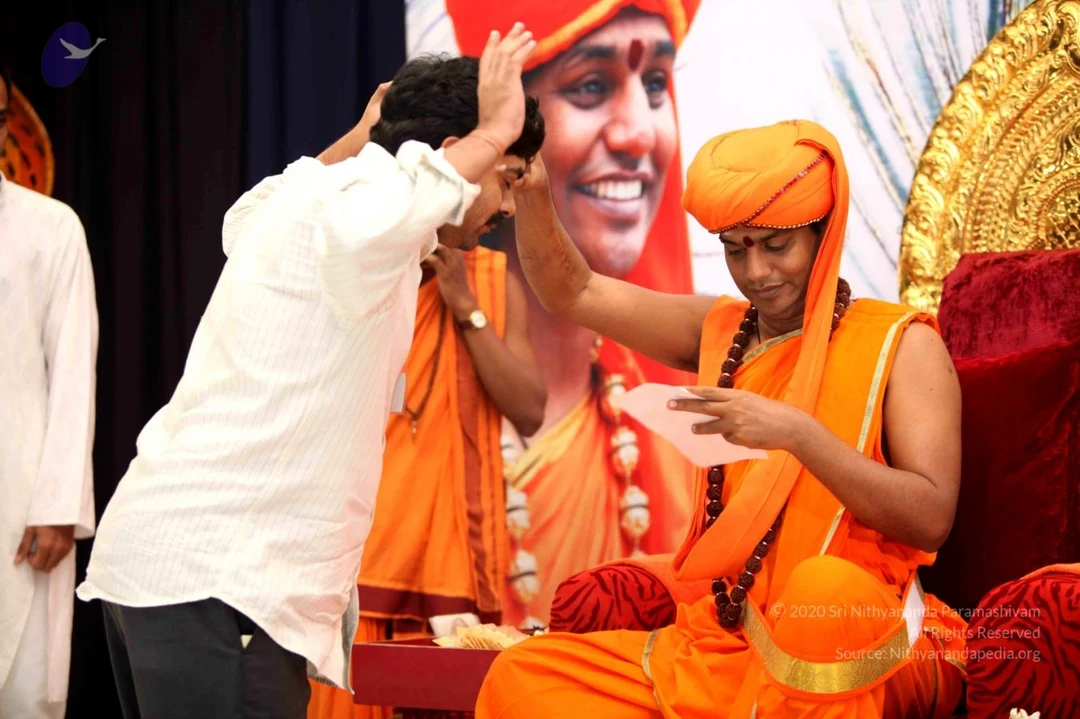
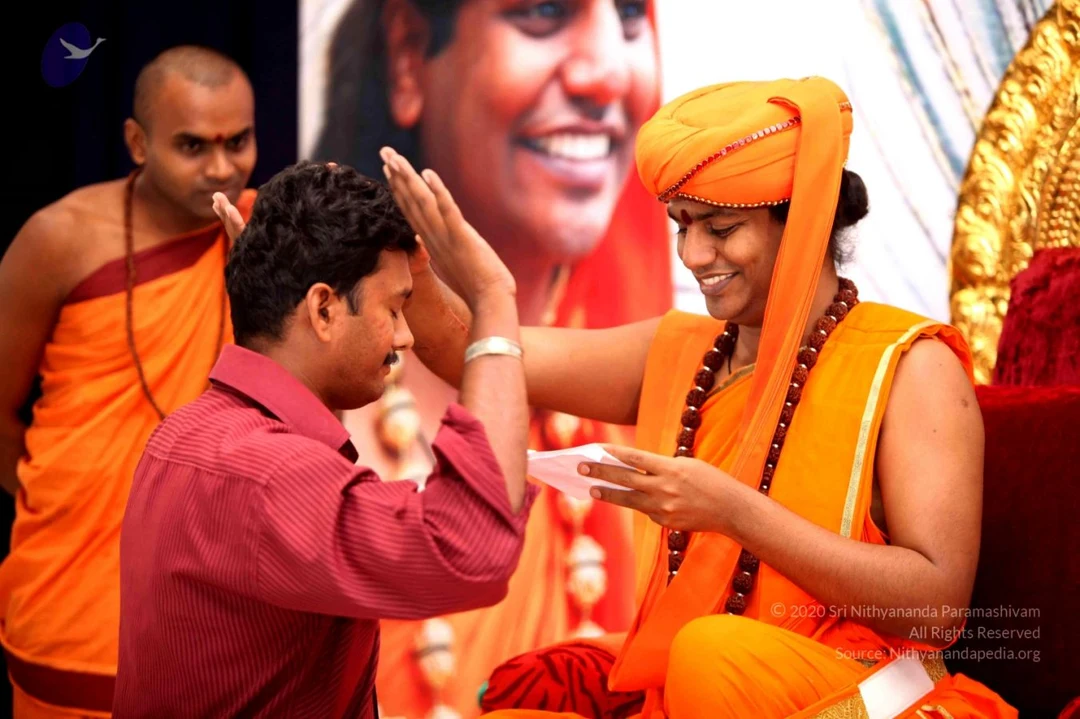
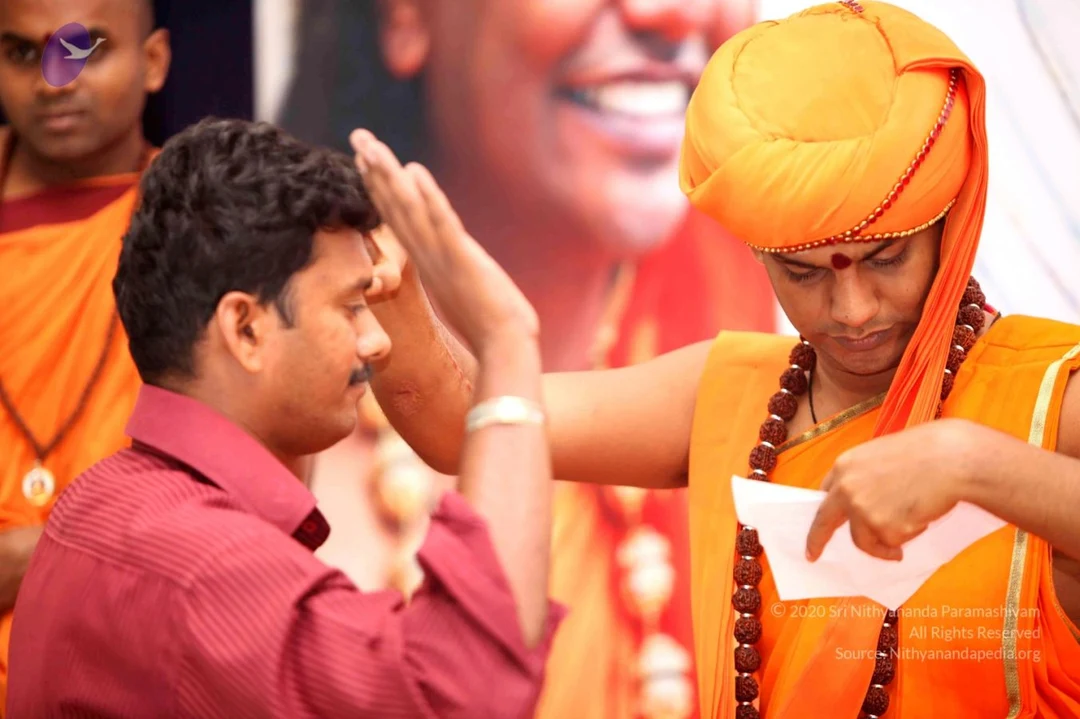
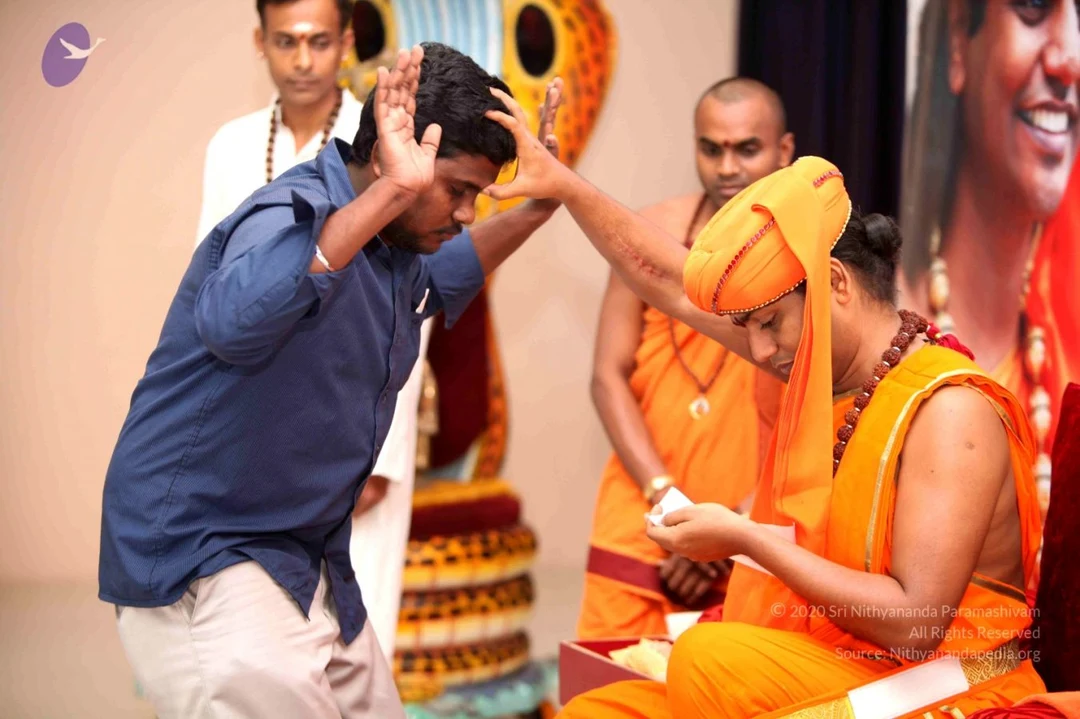
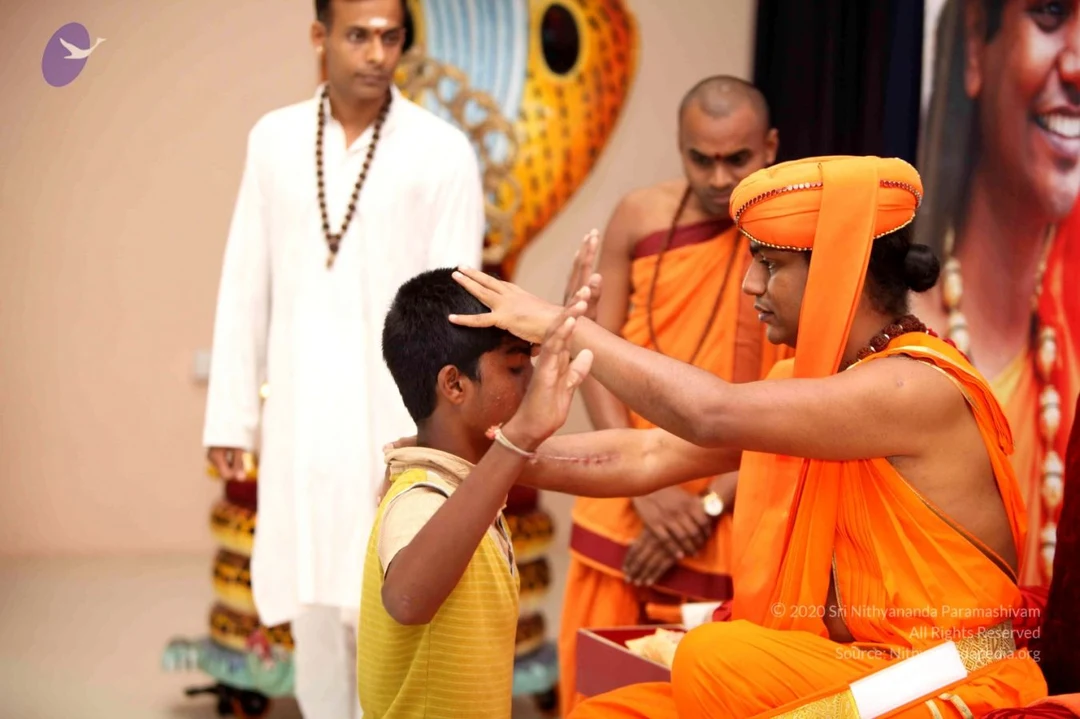
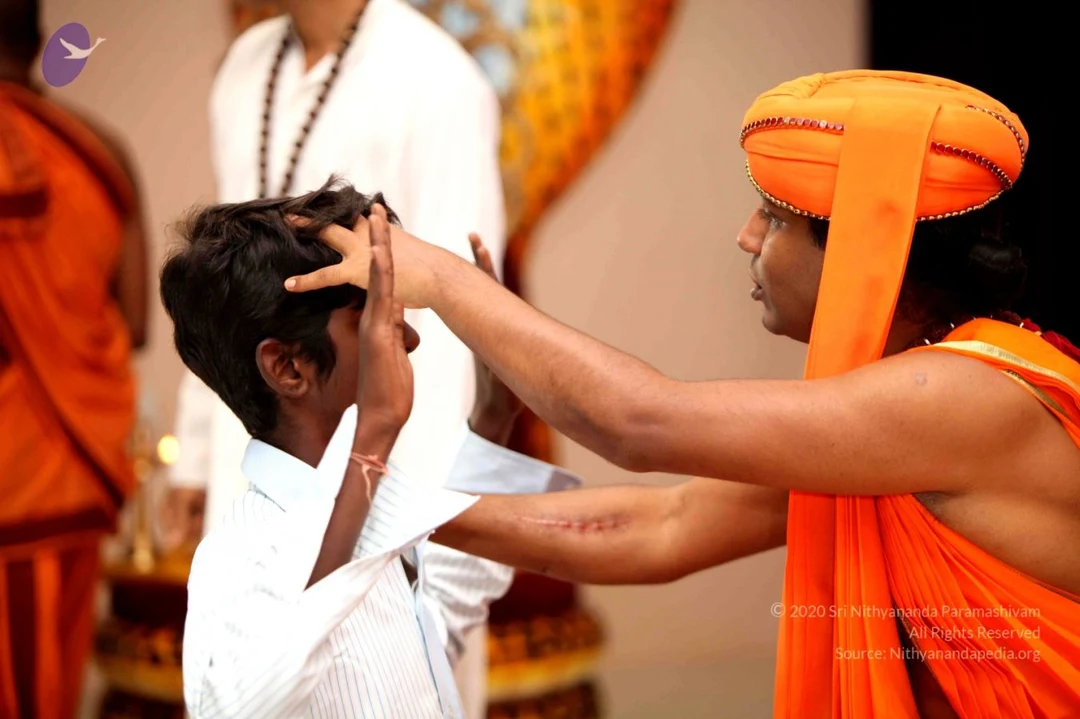
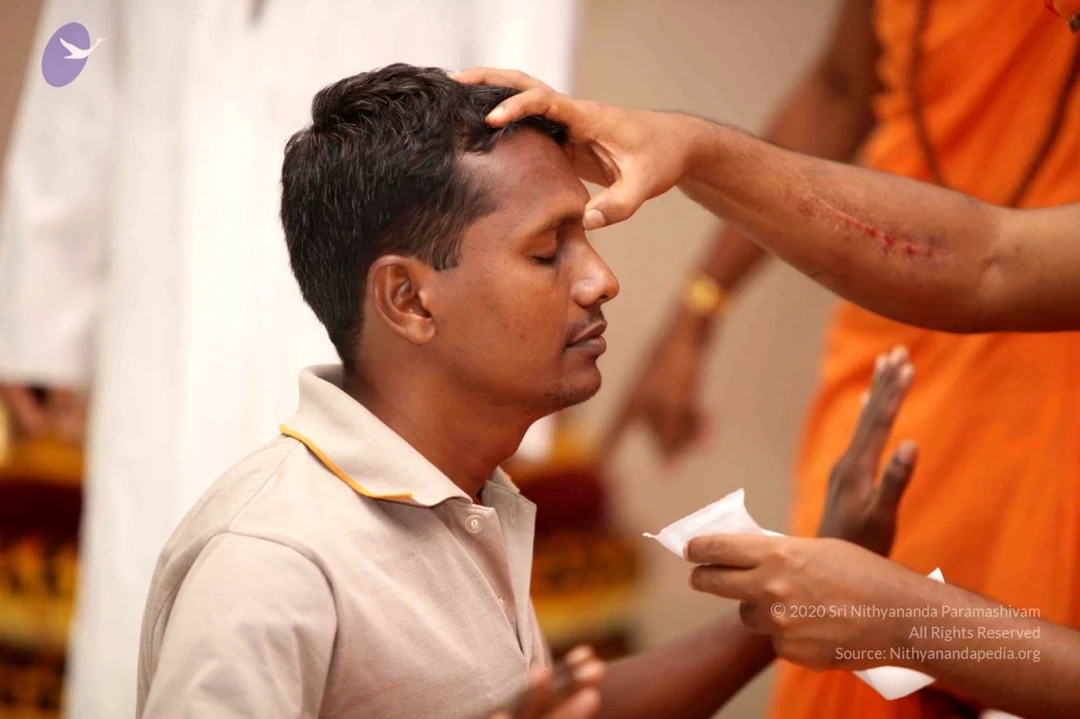
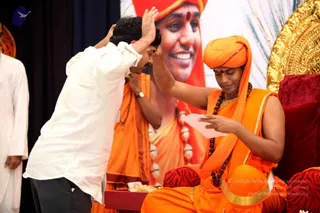
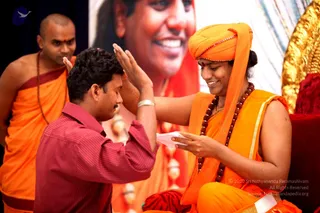
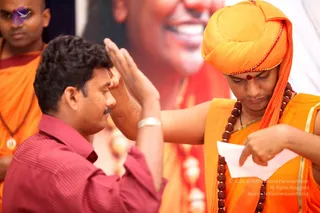
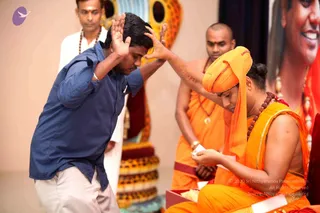
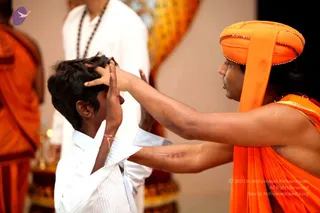
A seated man in orange robes and an orange turban, with a red tilak on his forehead and rudraksha mala beads around his neck, holds a white card while a man in a white shirt and dark trousers bows forward and touches the seated man's head in blessing. A large backdrop behind shows a smiling portrait of a man in red and orange robes, and an ornate gold chair appears at right. A second man in orange stands behind the blessing scene, and a figure in white stands at far left. Five people are visible in total, including the portrait and seated figures as physical people counted here only for the three standing or seated men.A seated figure in saffron-orange robes, wearing an orange turban and a long rudraksha mala, smiles while holding a small white envelope and blessing a kneeling man in a red-and-maroon striped shirt, who bows with his hands raised toward the figure's head. Behind them, a second man in saffron robes with a rudraksha mala stands at left, and a large banner shows a smiling face. A gilded throne with red cushions appears at right. The figure with the turban and rudraksha cues is a probable Swamiji (probable) seated in a blessing role, and the photo shows a darshan-style blessing on stage.A photograph of a ceremonial moment in front of a large backdrop showing a smiling man in orange and red. A saffron-robed figure wearing a tall orange turban with a red dot on the forehead and multiple rudraksha mala necklaces stands at right, looking down at a folded white paper in his hands. A man in a maroon collared shirt and a silver wristwatch, seen from the side with his face partly turned, raises his palm toward his forehead in a gesture of blessing or reception. A second saffron-robed man stands behind at left, and a pendant-wearing orange-clad attendant is partly visible at the edge. Two people are clearly visible in the foreground with additional attendants behind.A photograph of a seated figure in saffron-orange robes and an orange turban, wearing a rudraksha mala, sitting on a red cushioned seat. A man in a blue shirt and light trousers raises both hands to the head of the seated figure as if receiving a blessing. Behind them, two men in orange and white ritual attire stand, and a large colourful painted deity sculpture with a crown and a portrait of a smiling man are visible in the background. The seated figure is a probable Swamiji by appearance, showing a saffron turban, rudraksha mala and orange robes, while the blessing is given to the man in blue.A photograph of a seated figure in saffron-orange robes and an orange turban blessing a young boy in a yellow top by placing both palms on the boy's head. The figure wears a red-beaded rudraksha mala and sits on a low platform beside a red-lidded box. Behind them, a standing man in a white kurta with a rudraksha mala watches, and a second saffron-robed monk with a shaved head stands at right. A large printed portrait of a smiling man in orange with a gold-beaded necklace fills the background wall, alongside a colourful yellow and red painted panel.A photograph of a saffron-robed figure in an orange turban with red-beaded trim and an orange shawl placing both hands on the head of a young man in a white collared shirt, who kneels with his palms pressed together. A second man in white with a rudraksha mala stands behind them, and orange-robed people and a brass lamp appear at the left edge. Warm background draperies complete the scene.

Bhagavad-Gita-Tamil

14 photosSource gallery
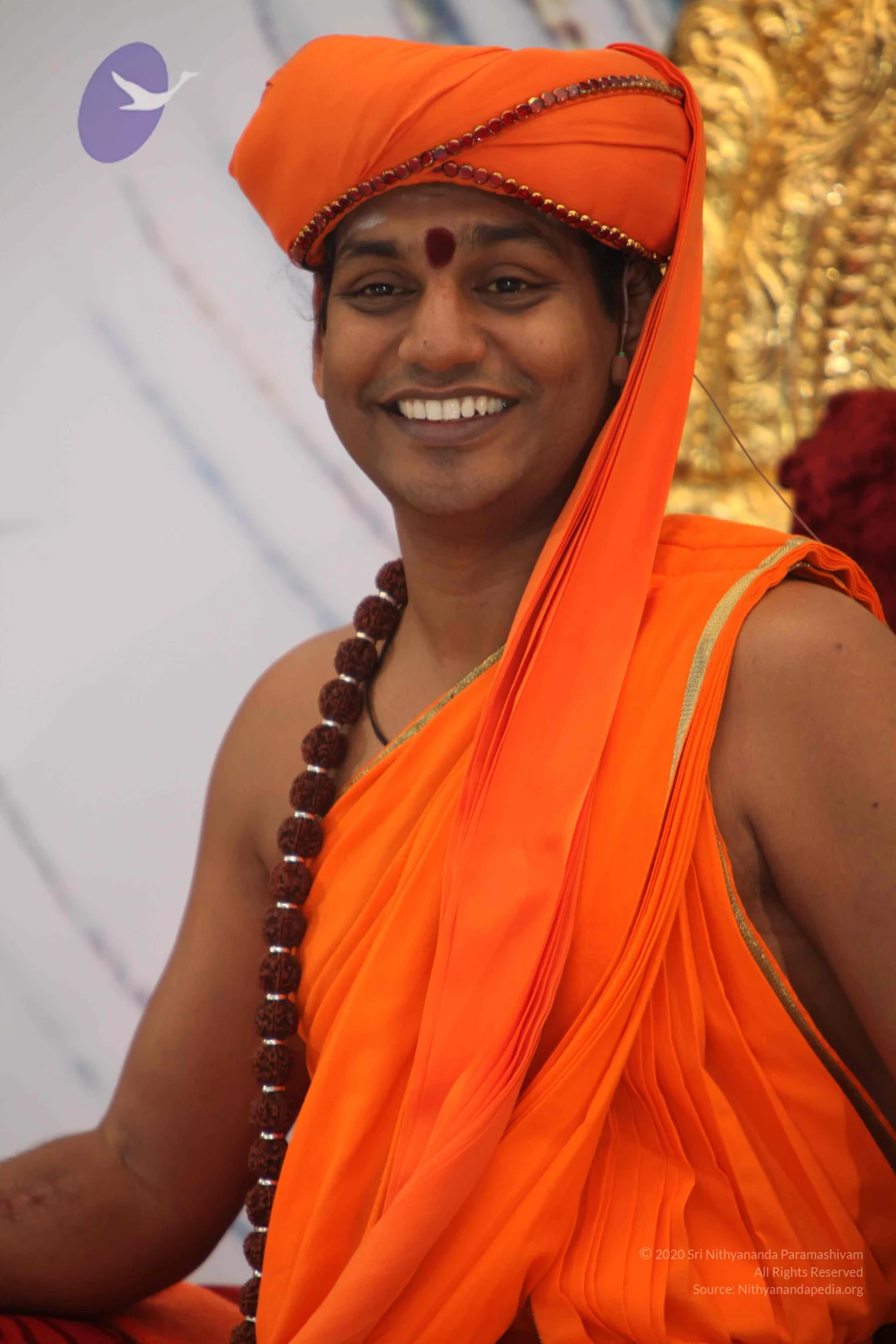
A seated man in orange saffron robes and an orange turban with a red tilak on his forehead smiles while sitting on a red cushioned seat in front of a gold ornate throne. He wears a long rudraksha mala across his chest and a gold-edged orange shawl draped over his shoulder, with a bangle on his wrist. Beside him, a large printed portrait shows a smiling man in orange cloth with a garland of white flowers. The setting appears to be a stage backdrop with a white panel. Swamiji (probable): the seated man wears orange turban and saffron robes with rudraksha mala and ornate gold-edged shawl, seated on a throne-like seat as a presiding teacher.A seated man in saffron-orange robes sits on an ornate gold throne with a dark red velvet back cushion and red tiger-striped armrest cushions. He wears an orange turban with a red bindi, a shawl draped over one shoulder, a gold-edged orange waist sash and a long rudraksha mala. His right hand is raised in an explanatory gesture while he speaks. Flower garlands decorate the throne base, with a glass of water and a microphone nearby against a white backdrop with blue-grey arcs. a person is the person on the throne, matching the page's satsang on Bhagavad Gita 2.49, though the image itself shows a single speaker in an orange-robed, turbaned teaching posture.A smiling man in saffron-orange robes and an orange head wrap sits cross-legged on an ornate gold-carved throne with red velvet cushions. A rudraksha mala hangs around his neck and a gold-embroidered belt is at his waist. Red and white flower garlands decorate the throne base. Behind him a painted backdrop shows a figure in a crown and blue garment looking toward him. The throne and robes suggest a discourse setting; the seated figure is an in-person a person by appearance cues of saffron robes, rudraksha mala and a ceremonial throne.A seated man in an orange saffron turban and orange draped robe with a gold-bordered sash sits on a red-upholstered throne-like seat beside a gold-edged pedestal. He wears a rudraksha mala and a red bindi, and his right hand rests on the red cushion. A white flower lies on the red and blue textile at the lower right. Behind him a large printed portrait shows a face framed by red fabric. The appearance of the seated man is consistent with the probable Swamiji, given the orange turban, rudraksha mala and ceremonial saffron robes, so the identity is marked probable on appearance cues only.A seated figure in saffron-orange robes and an orange turban with a red bindi and rudraksha mala speaks to an unseen audience, one hand raised in gesture. A large portrait banner of a smiling person in orange headwear stands behind, and an ornate painted decorative panel with orange and yellow patterns sits at left against a dark curtain. Swamiji (probable): the seated speaker matches the page's claim with several cues, namely the orange turban, saffron robes and rudraksha mala, and is the speaker at a discourse.A seated man in saffron-orange robes and an orange turban, with a rudraksha mala around his neck and a red bindi on his forehead, gestures with his right hand while speaking. He sits on a dark cushioned chair in front of a tall banner showing a large portrait, and a decorative orange and yellow panel stands to the left. a person in an in-person discourse setting; the background portrait is a depiction, not a physical person.
Sacred-Arts

4 photosSource gallery
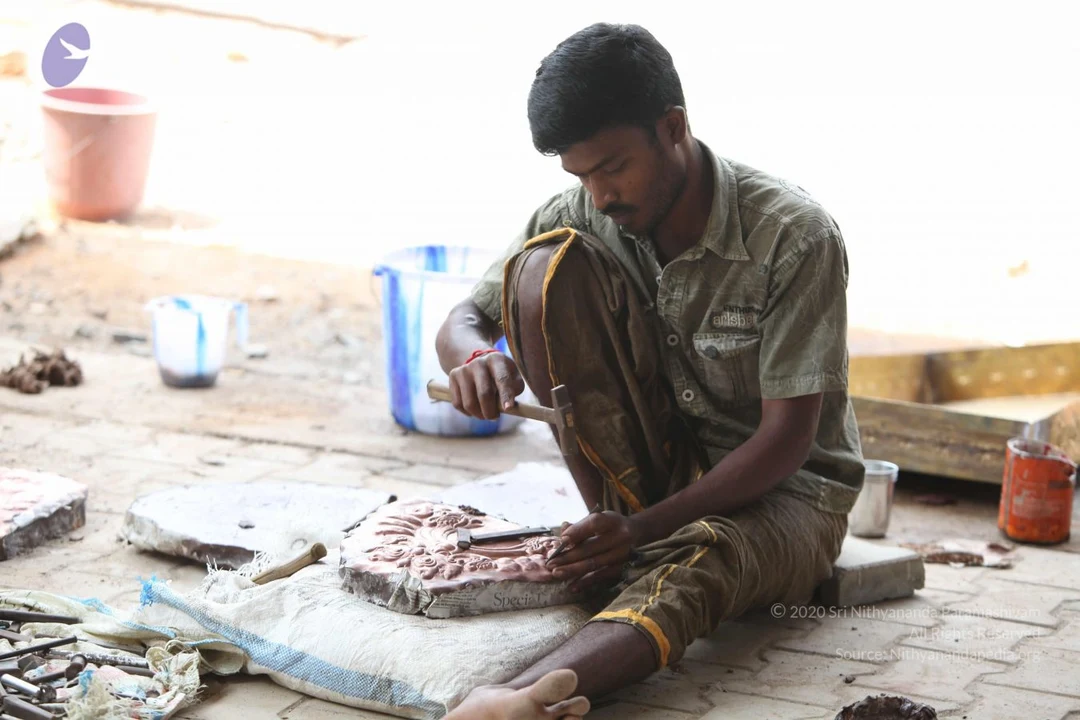
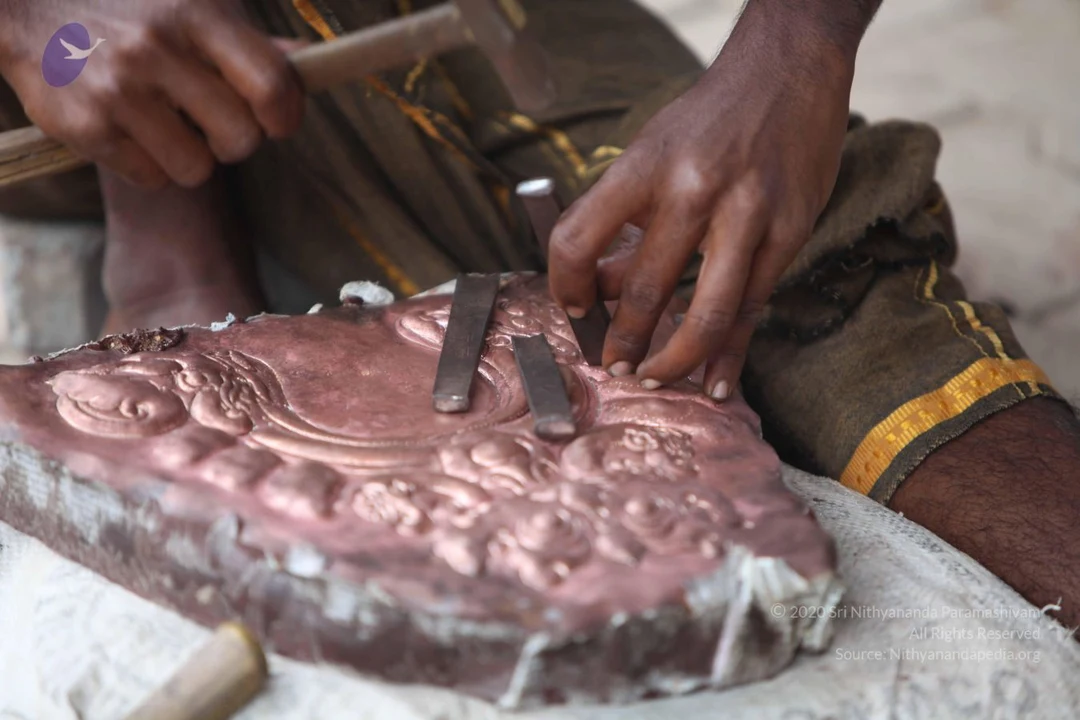
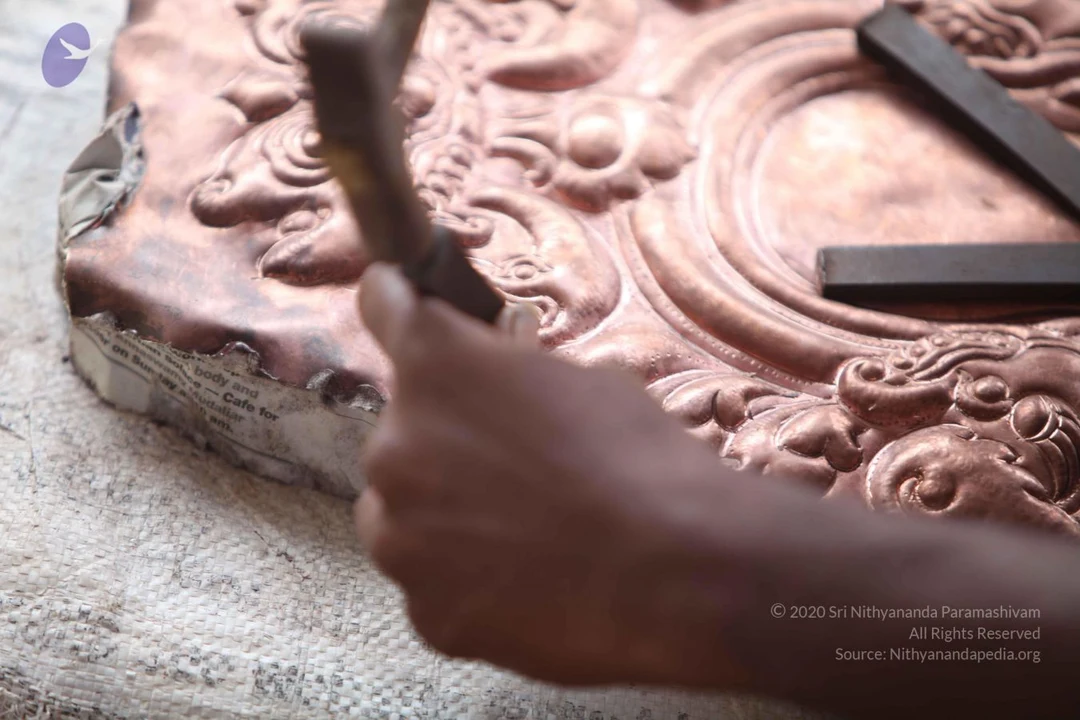
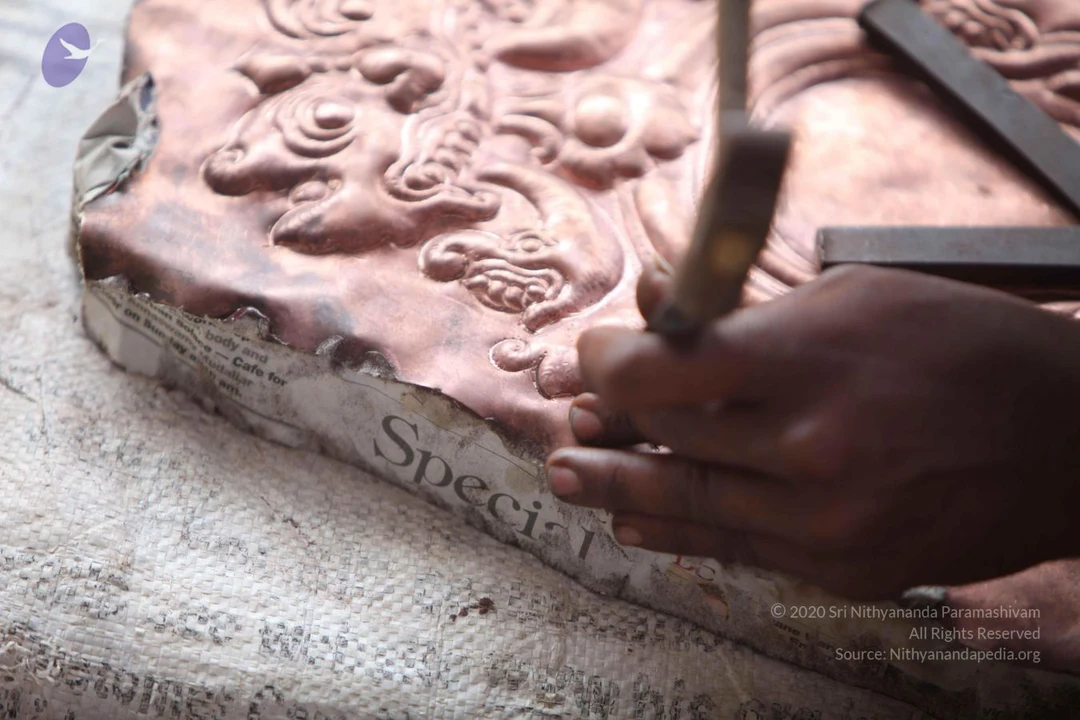
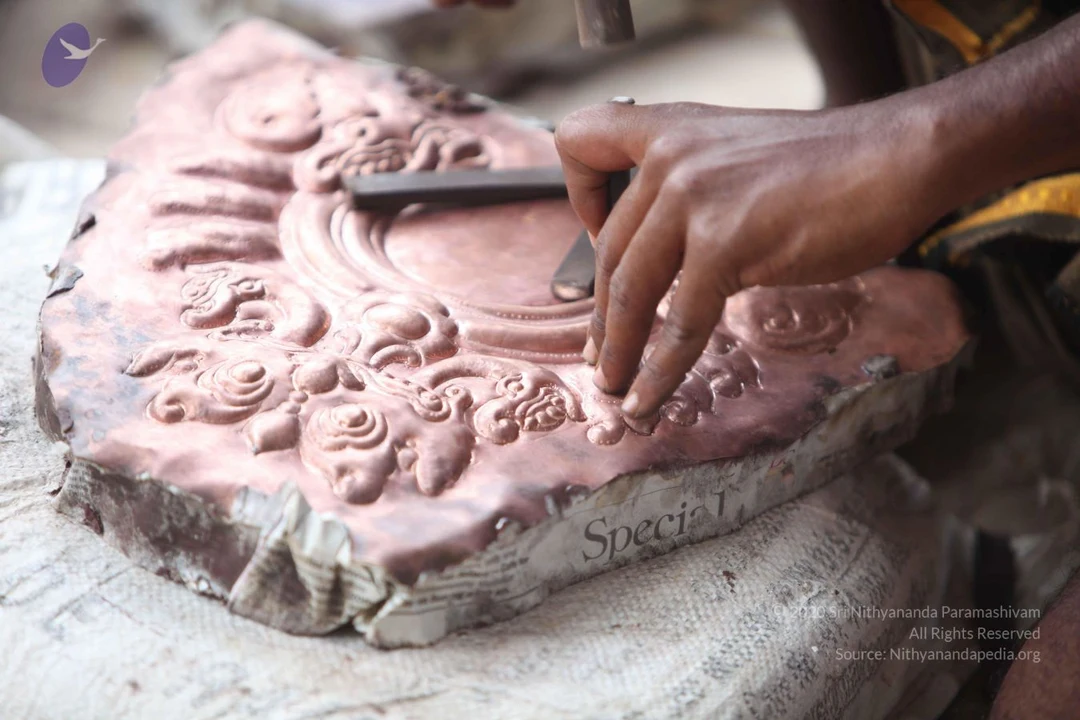
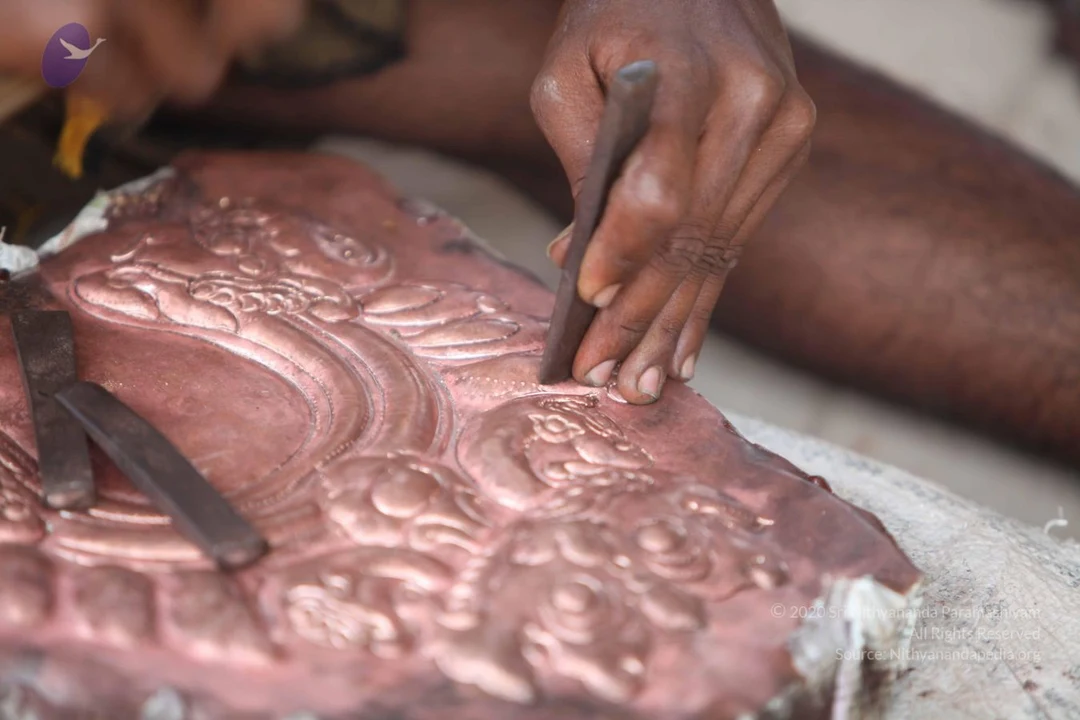
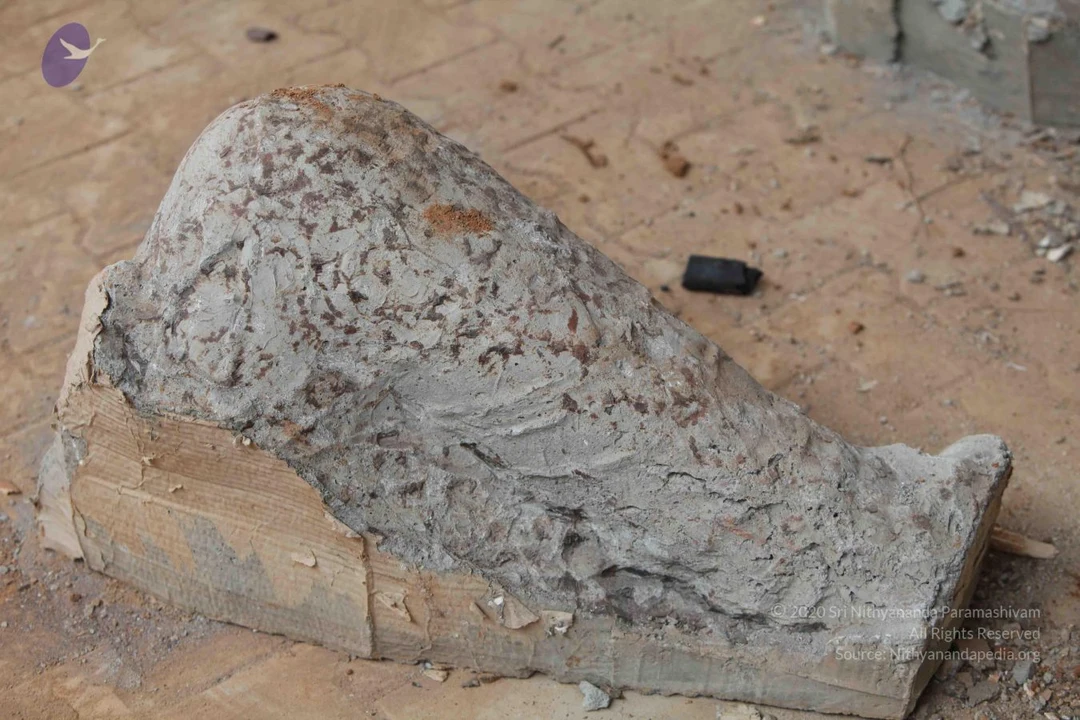
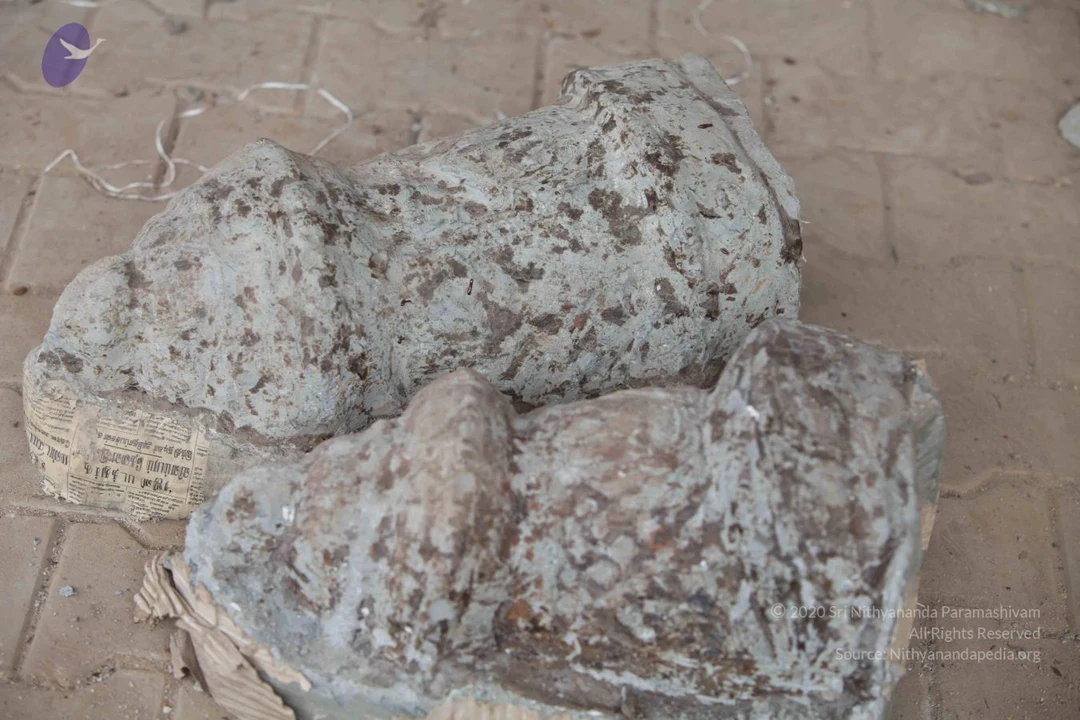
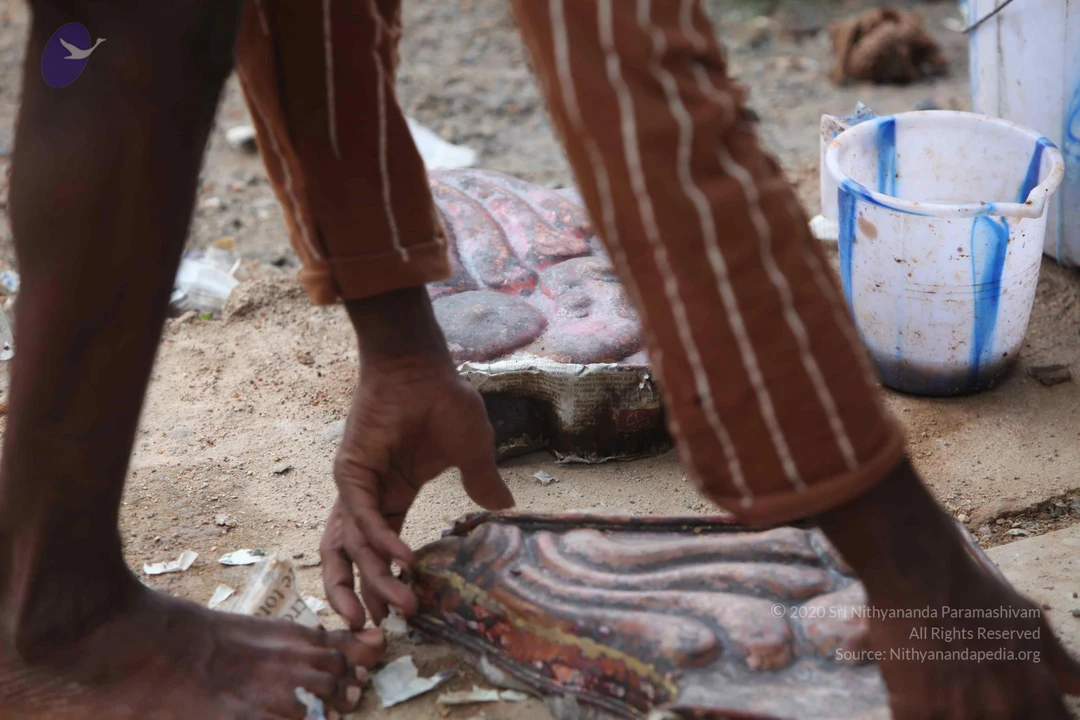
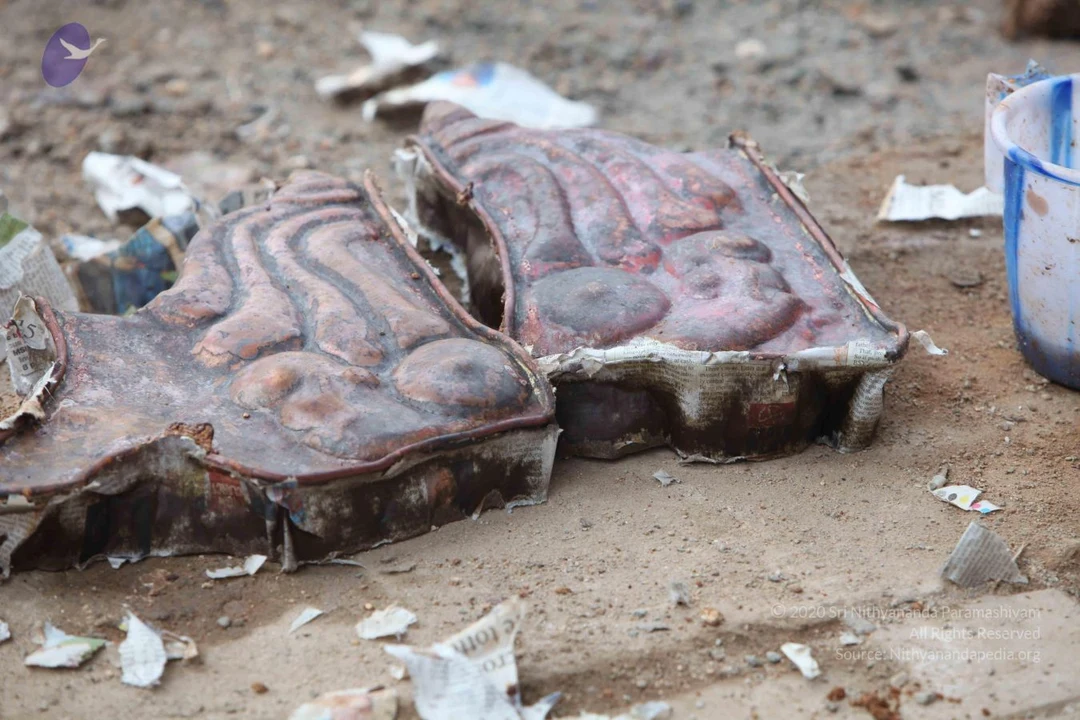
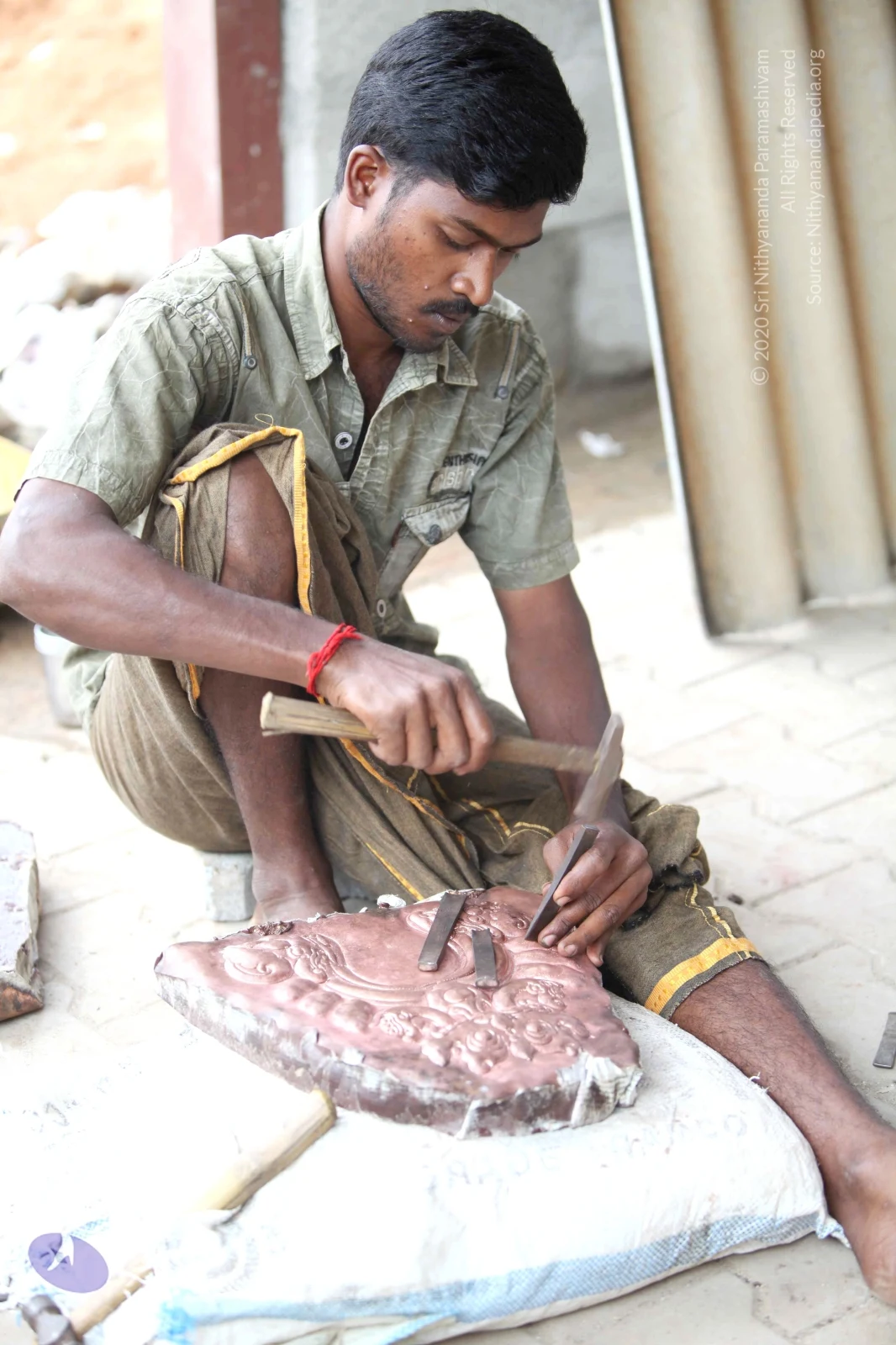
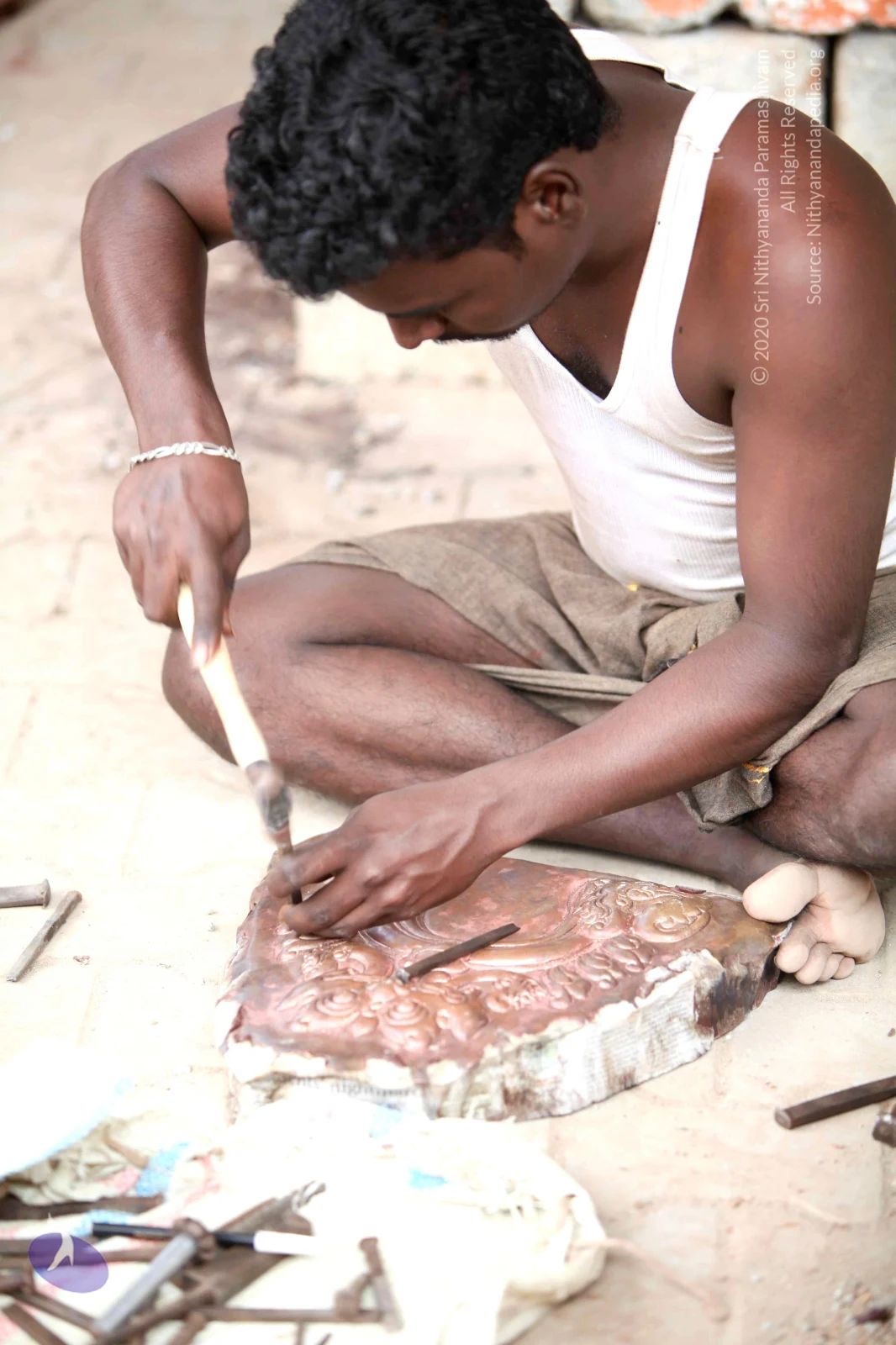
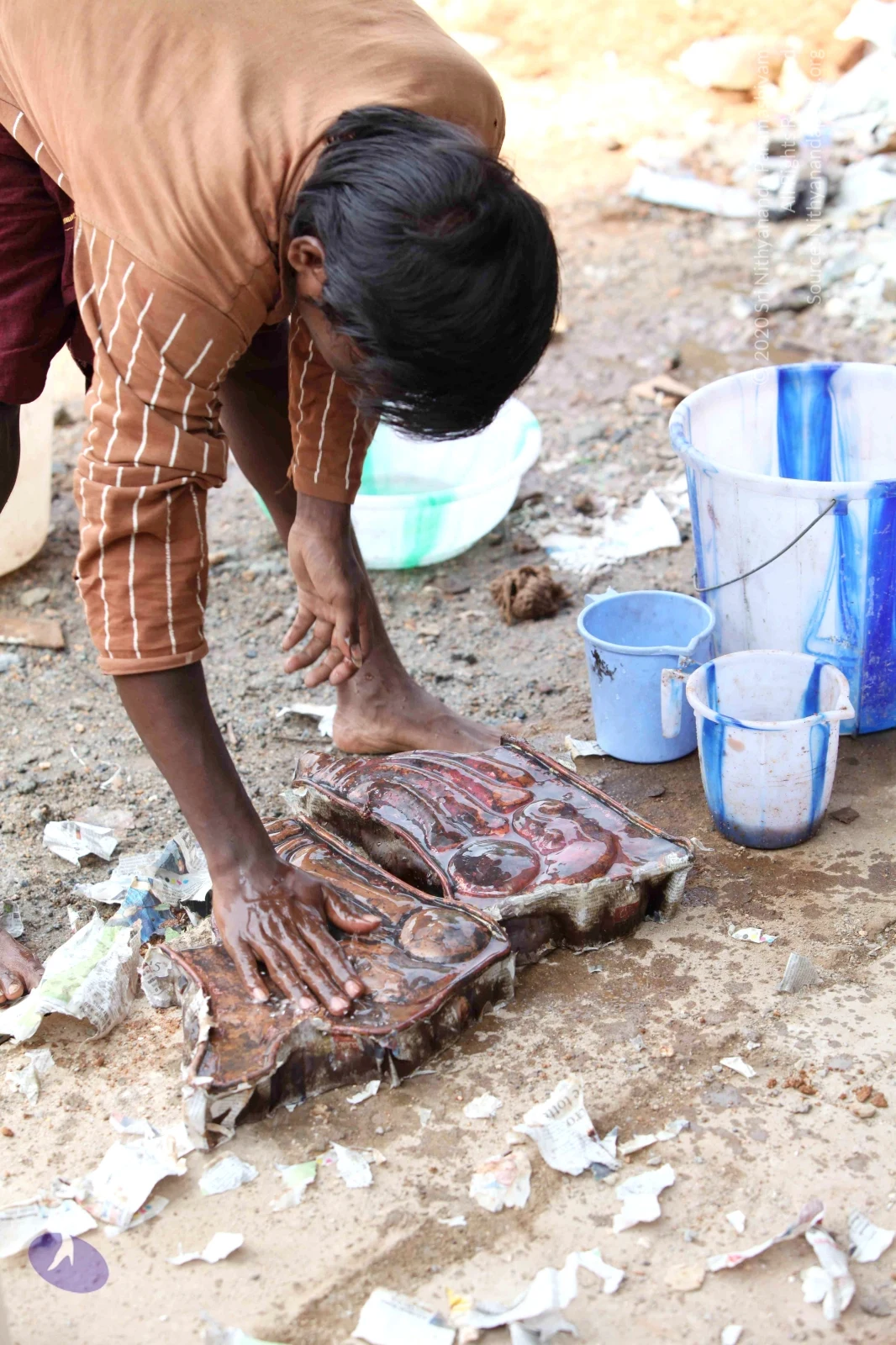
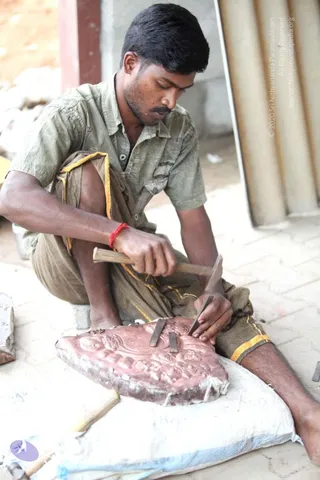
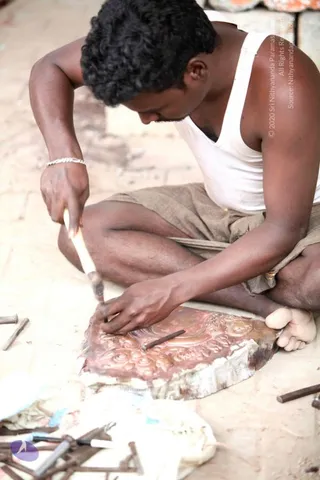
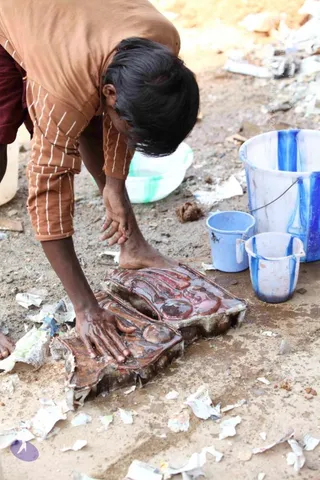
Two men sit on a tiled floor in a workshop, hammering a large embossed copper sheet with ornate scroll patterns. The man on the right wears a white sleeveless vest and brown dhoti-style shorts and holds a wooden-handled hammer; the man on the left, partly cropped, wears a white cloth and holds a hammer and punch. Scattered tools and chalk-like marks lie around the copper piece, with pale stone blocks in the background.A young man in a pale green short-sleeved shirt and a brown dhoti with yellow borders sits cross-legged on a tiled floor, carving a reddish metal relief plate. He holds a wooden-handled hammer in one hand and a chisel against the plate with the other, working on repoussé floral and scroll designs. A red thread is tied on his wrist, and a white sack lies under the plate. No a person is visible.A man in a white sleeveless vest and tan dhoti sits cross-legged on a sandy floor, hammering a repoussé design into a copper sheet with a chisel and mallet. The embossed copper plate shows swirling floral and scroll motifs. Scattered metal tools and a cloth lie on the ground in the foreground. No a person candidate is visible; the scene shows a craftsperson at work.A young man in a brown short-sleeved shirt with thin white vertical stripes and maroon shorts bends over a dirt ground, pressing his hand into a wet, reddish-brown clay or plaster mould on the ground. Scattered crumpled newspaper pieces litter the earth, and blue and white plastic buckets and a basin sit nearby. No identifiable a person depiction is visible.

Special-Photo

3 photosSource gallery
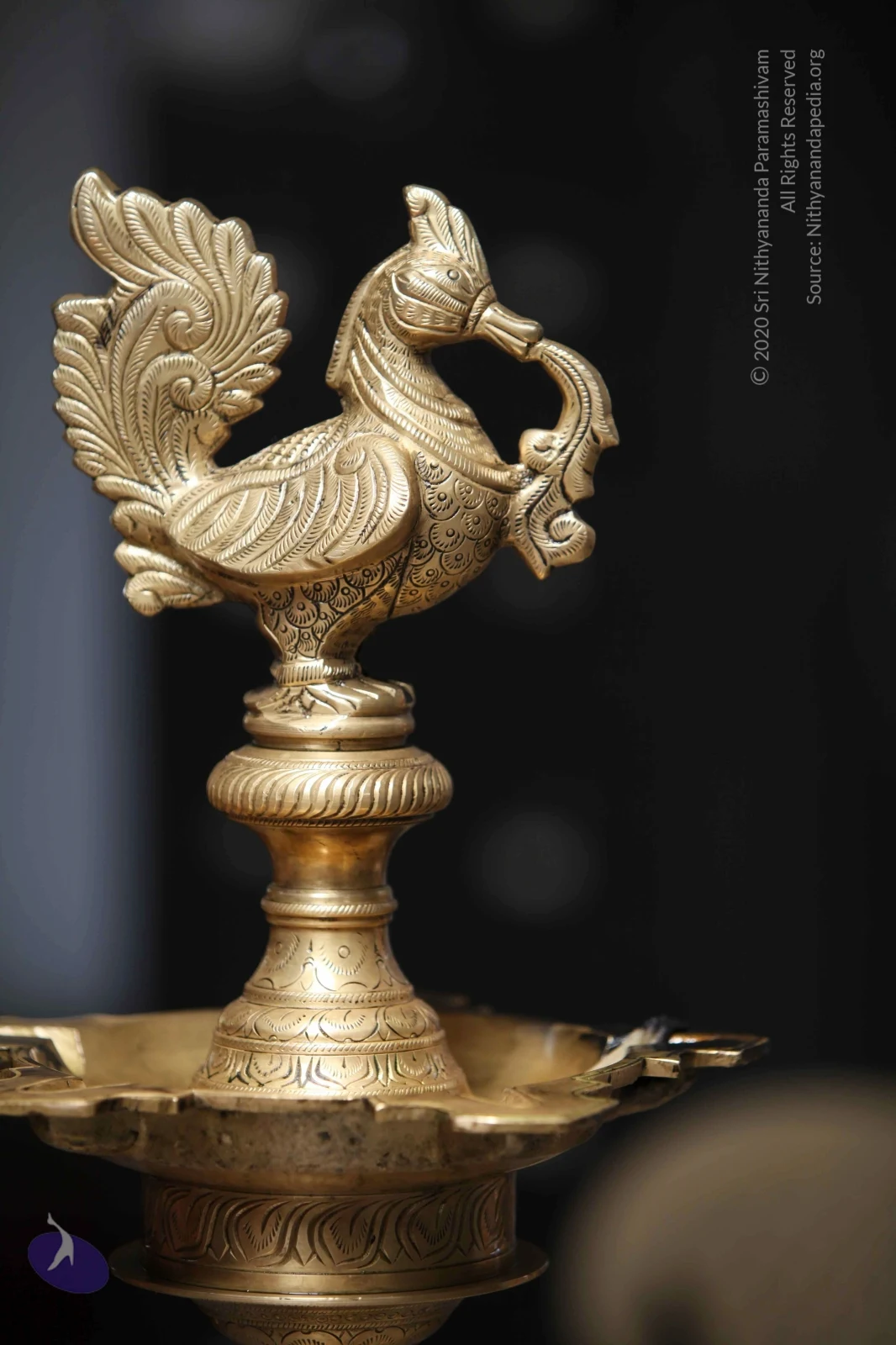
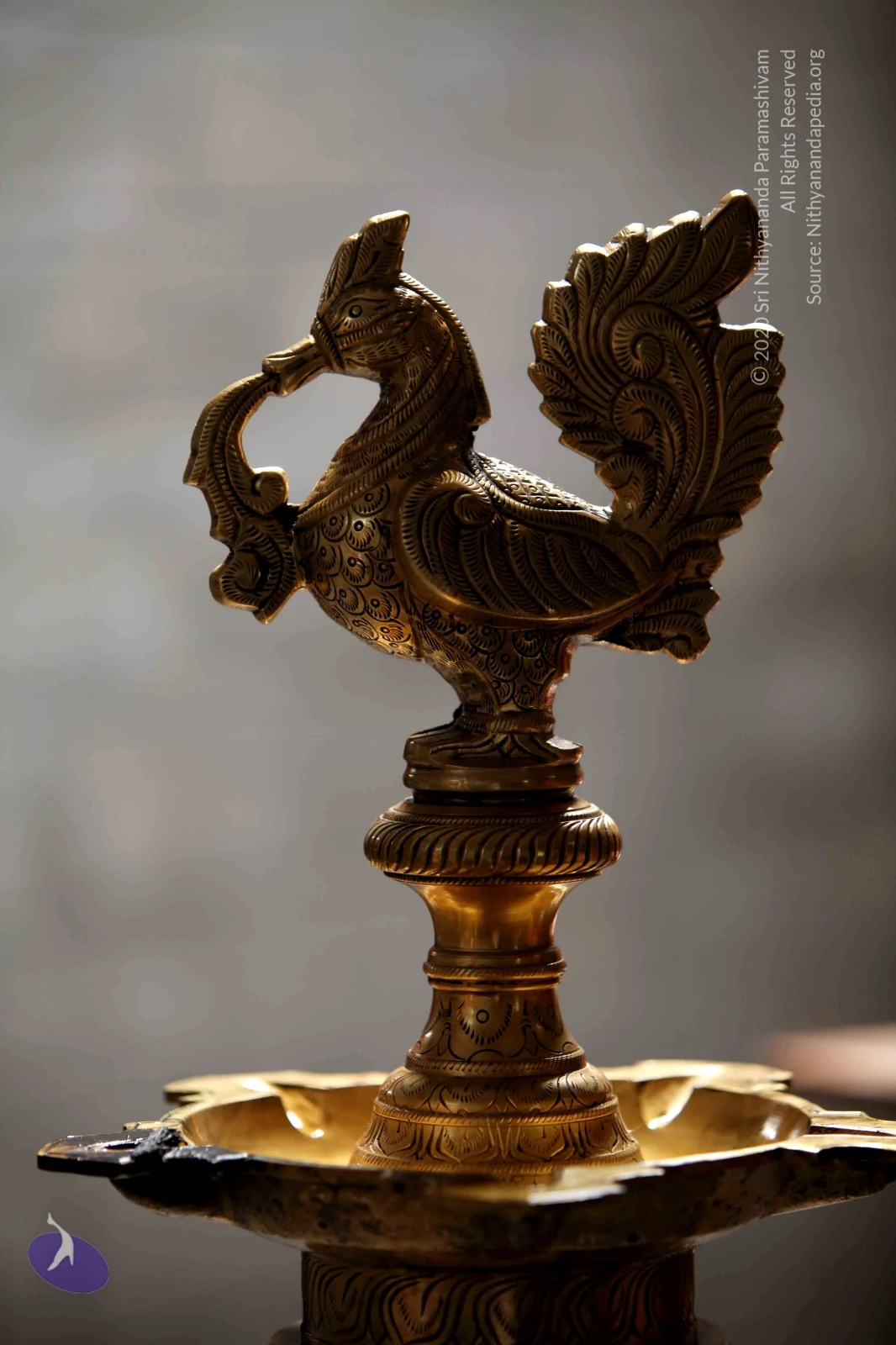
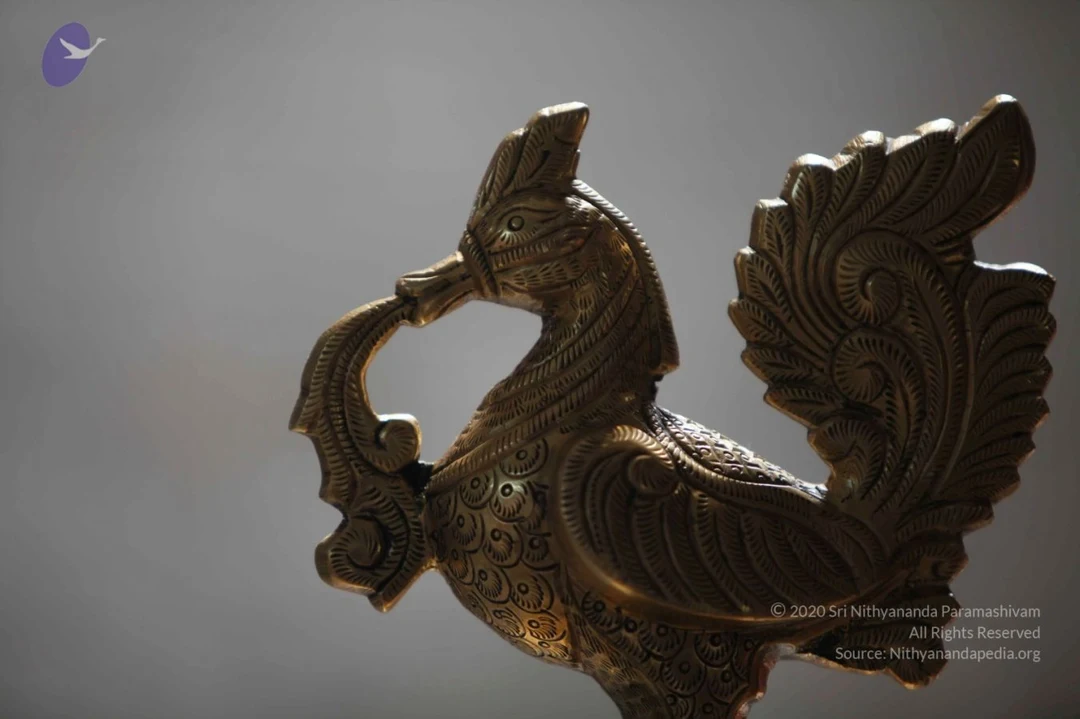
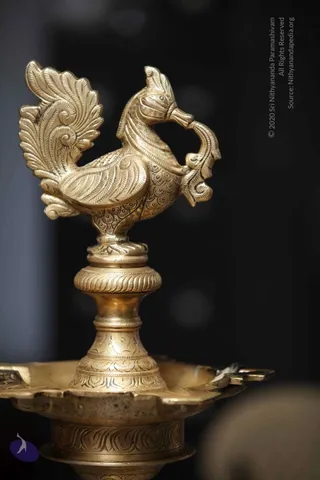
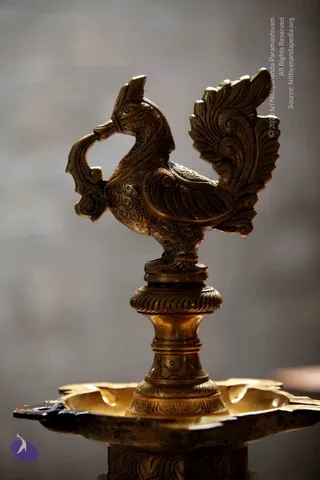
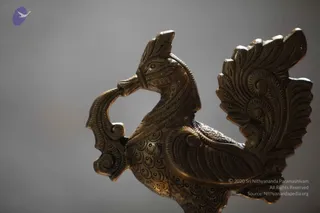
Close-up photograph of an ornate brass oil lamp (deepam) with a peacock-shaped stem and tail feathers, engraved with leaf and scale patterns, set on a shallow lobed bowl against a dark background. Faint blurred shapes appear at the right edge.Close-up photograph of a polished brass oil lamp (vilakku) with an ornately engraved peacock-shaped finial, its wings fanned and tail feathers detailed with scrollwork. The peacock stands on a turned, ringed stem above a lobed, flared lamp dish. Soft grey blurred background. No people visible in the frame.Close-up photograph of an ornate brass lamp shaped as a mythical bird. Fine incised feather and scale patterns cover the body and wings, catching warm highlights against a plain grey backdrop. No people are visible.