Skip to content
Sunday

16 October 2011

Clarity+Action=Transformation

Dated photos
104
Source pages
1
Media
2
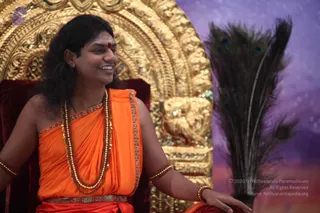
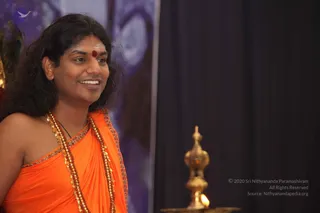
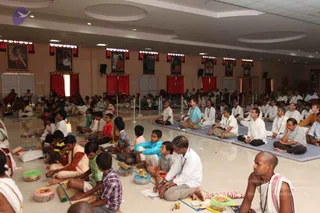
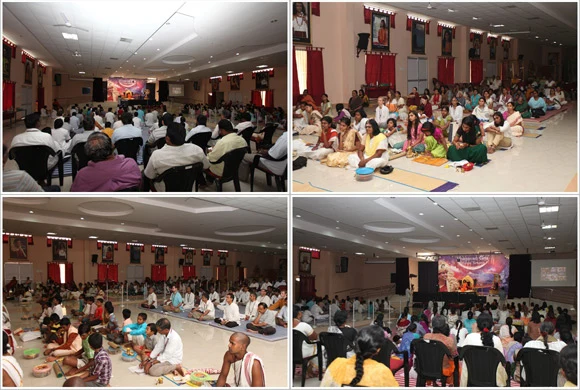
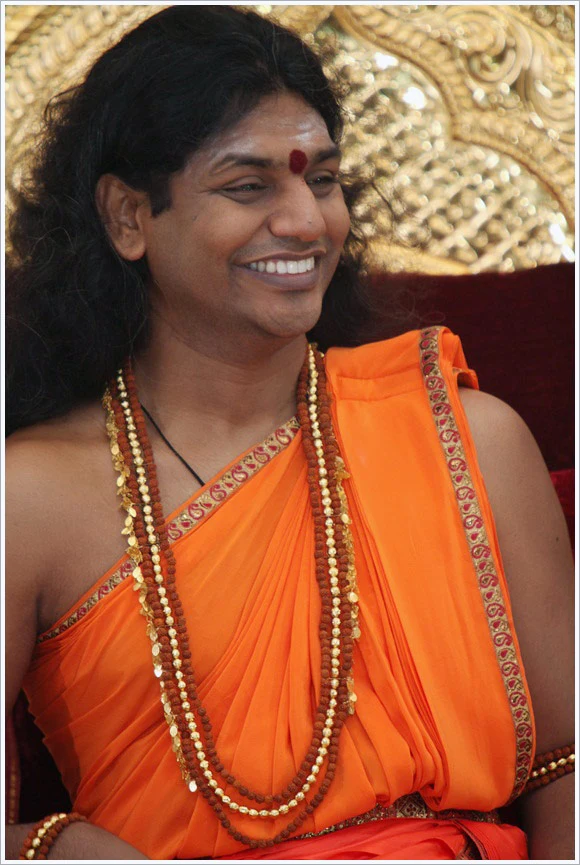
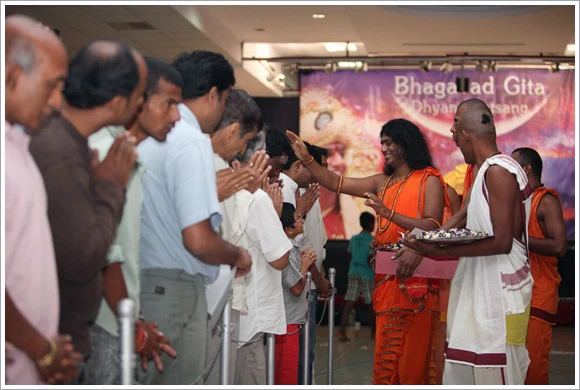
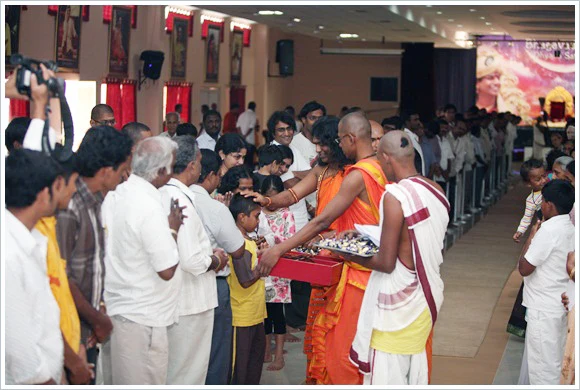
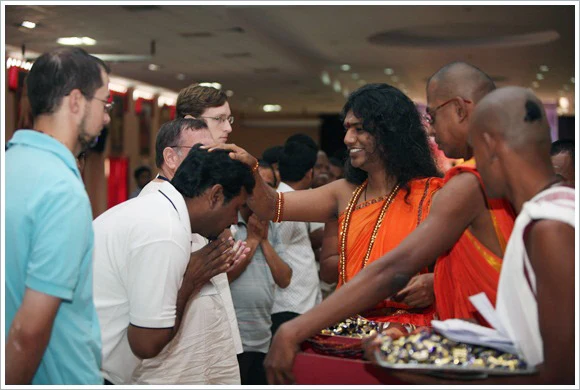
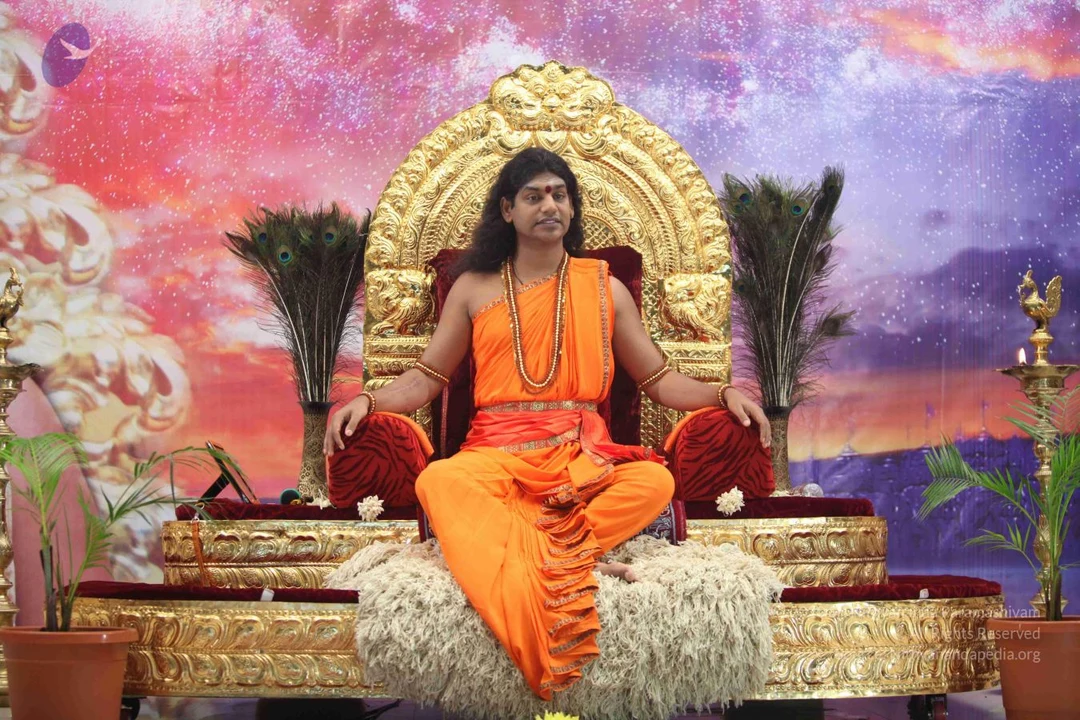
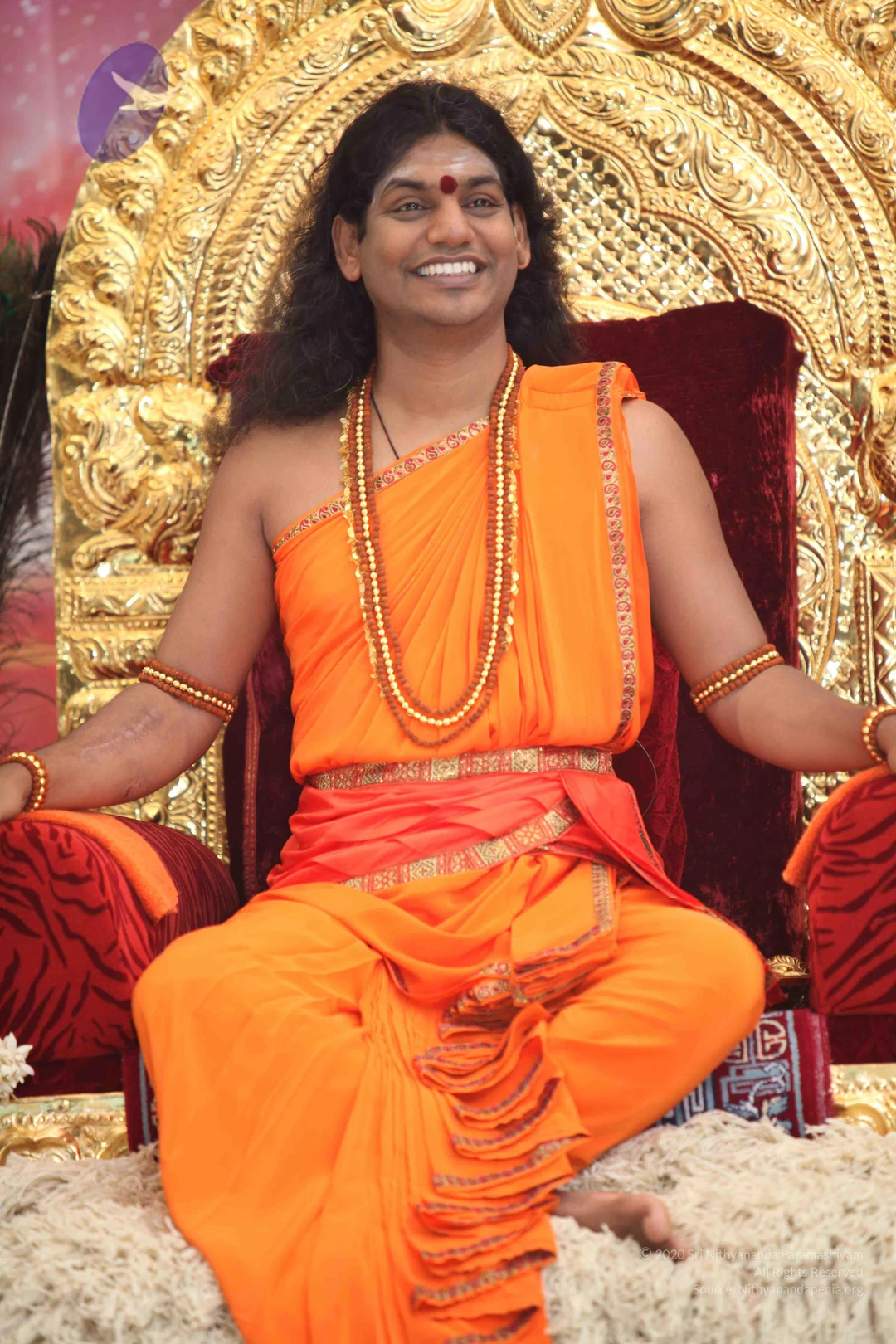
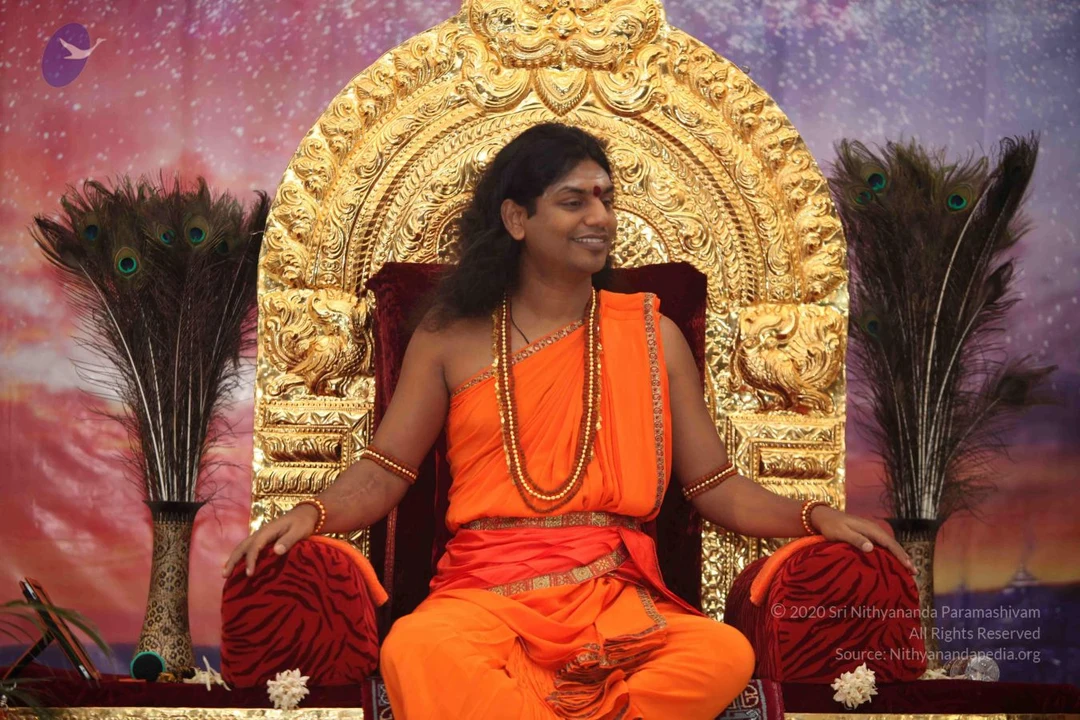
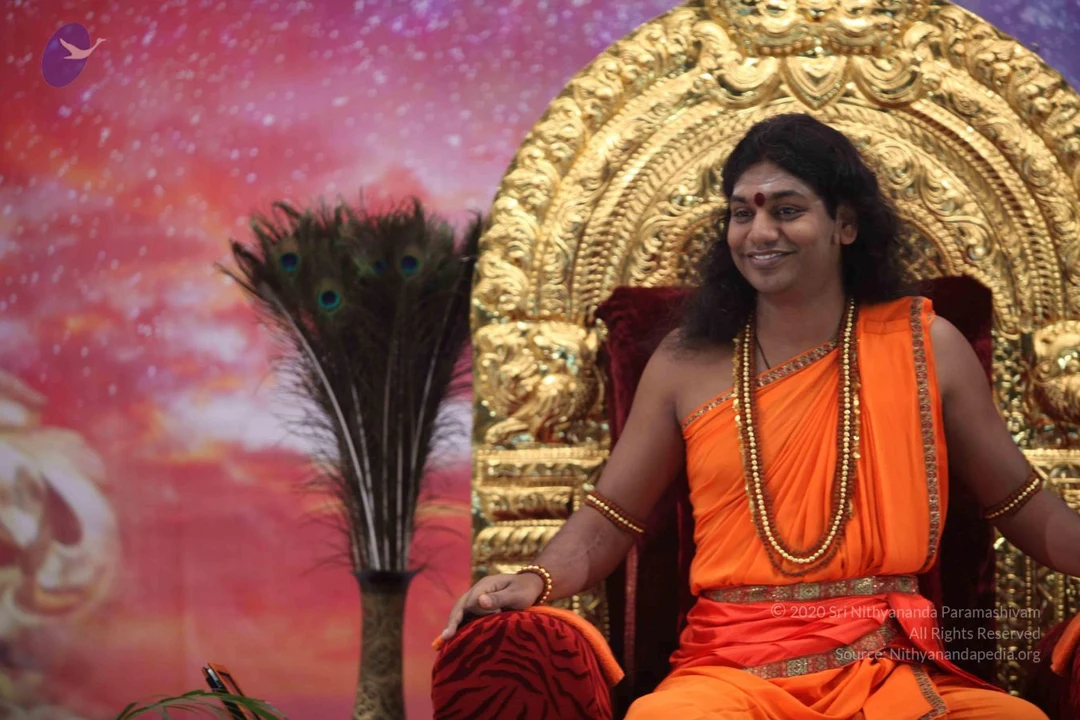
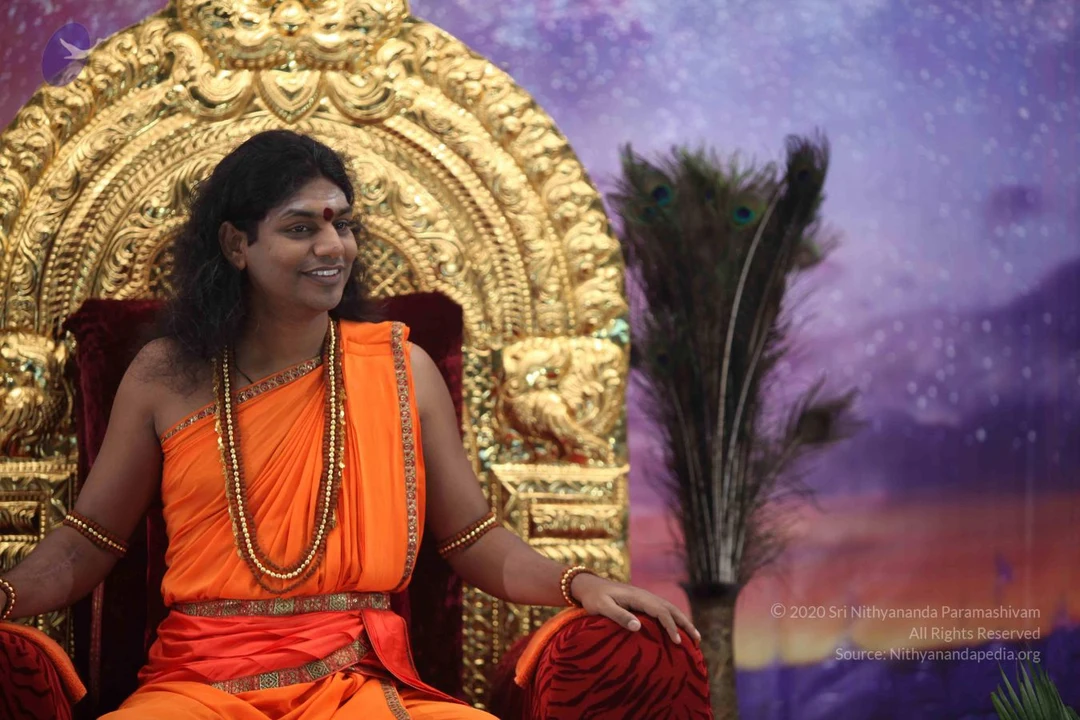
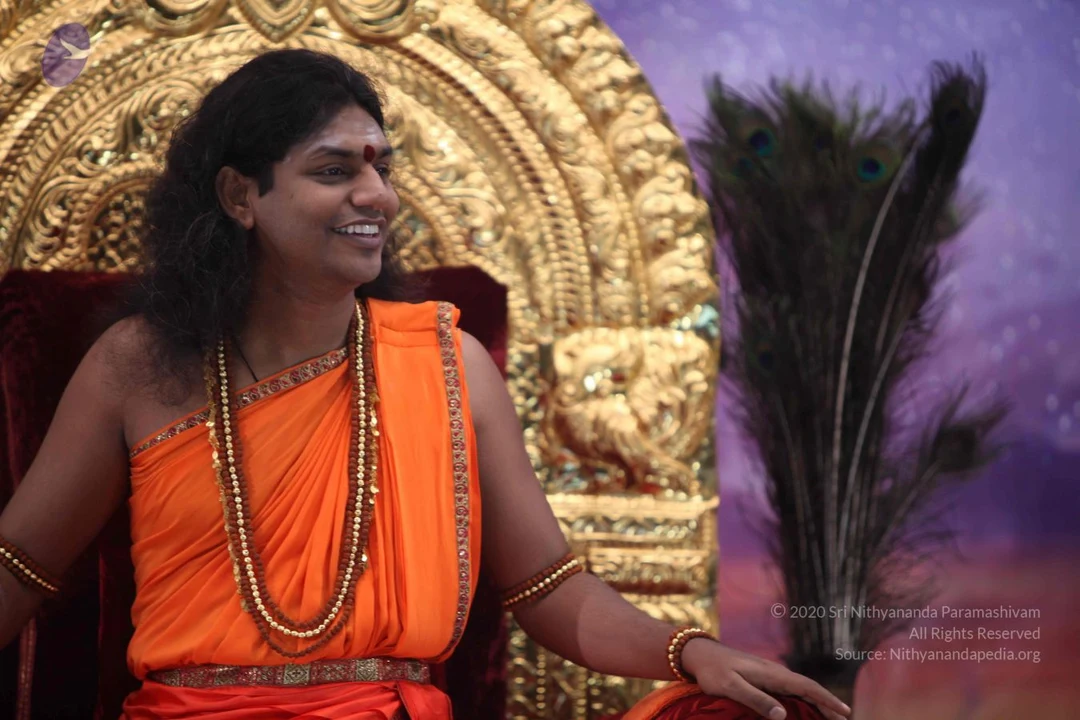
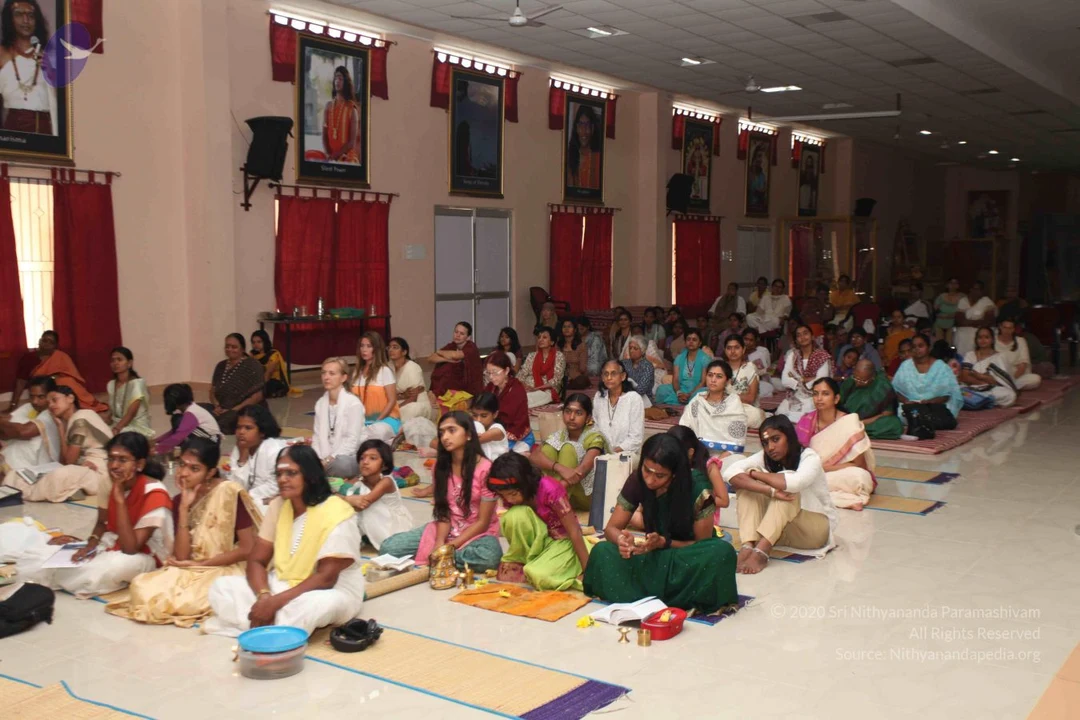
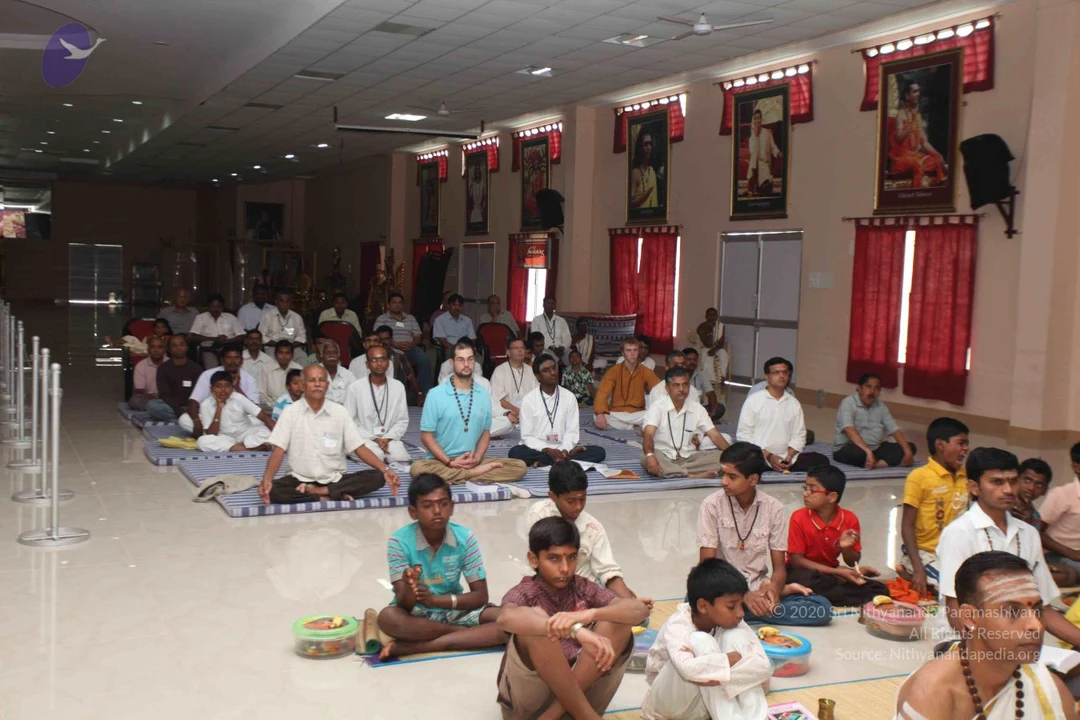
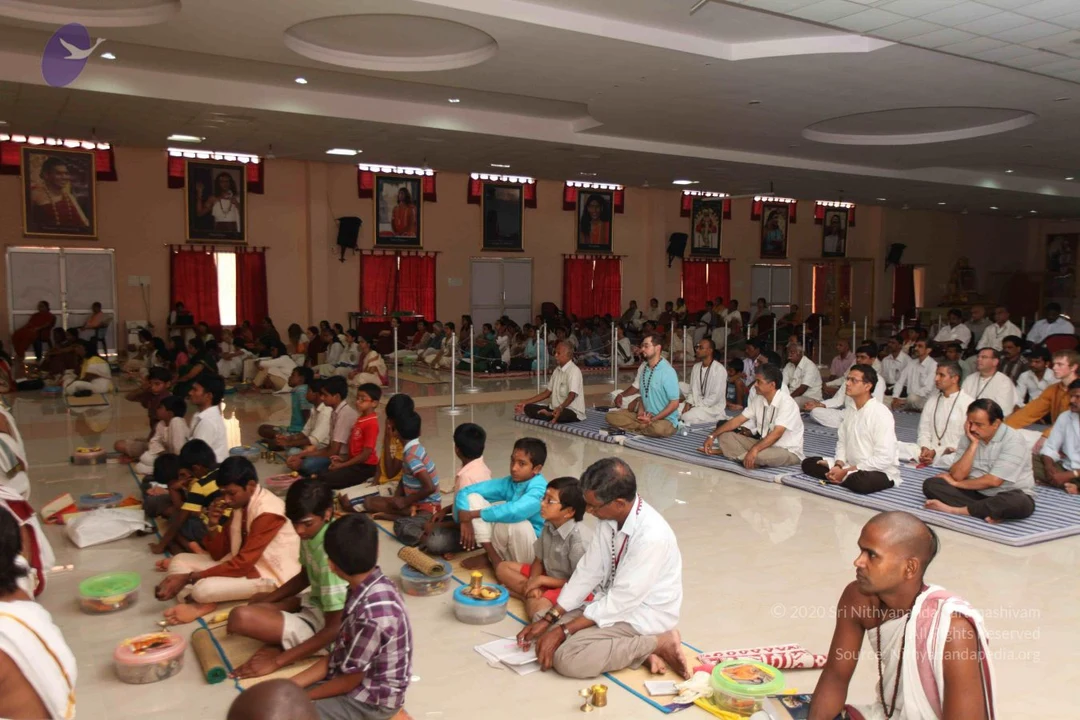
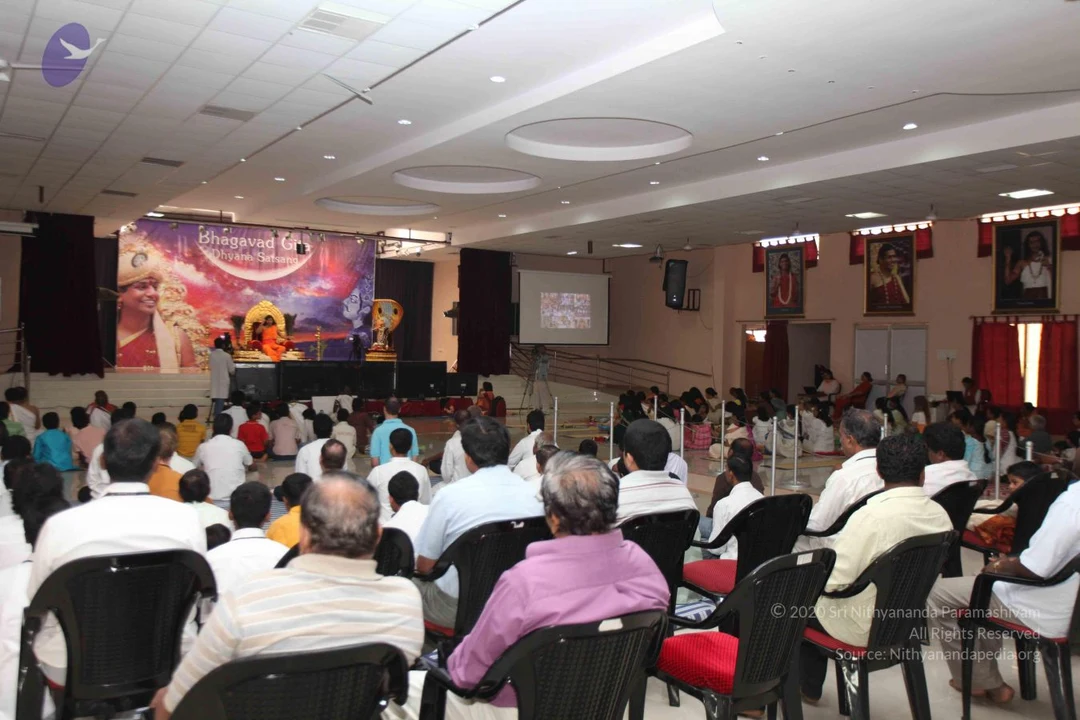
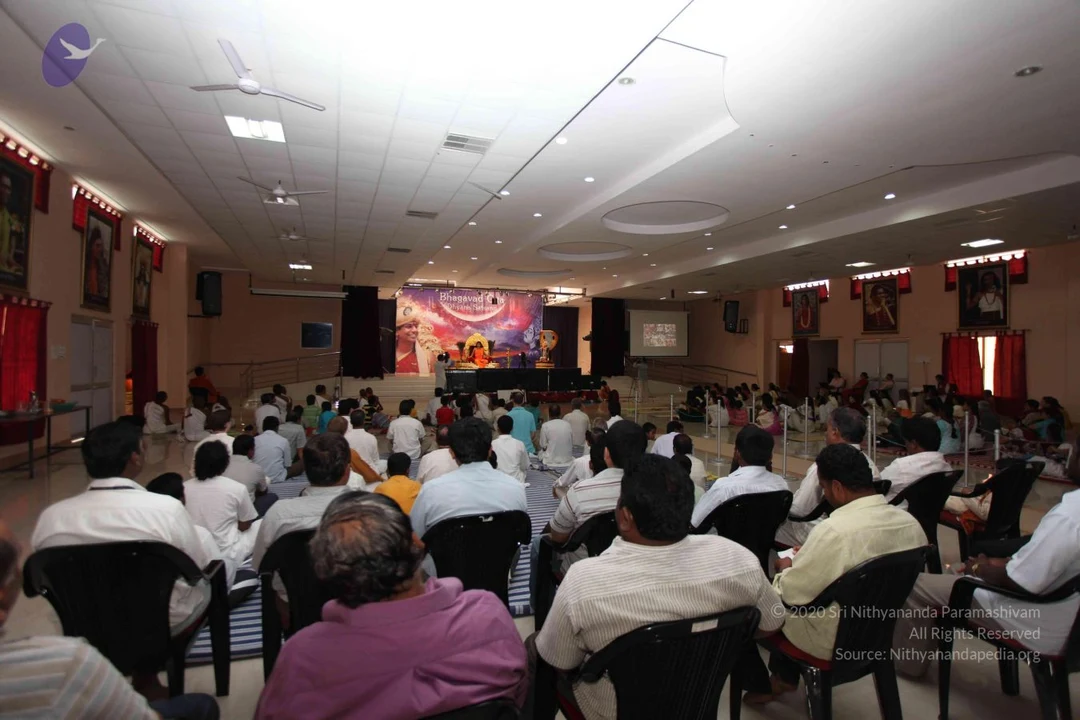
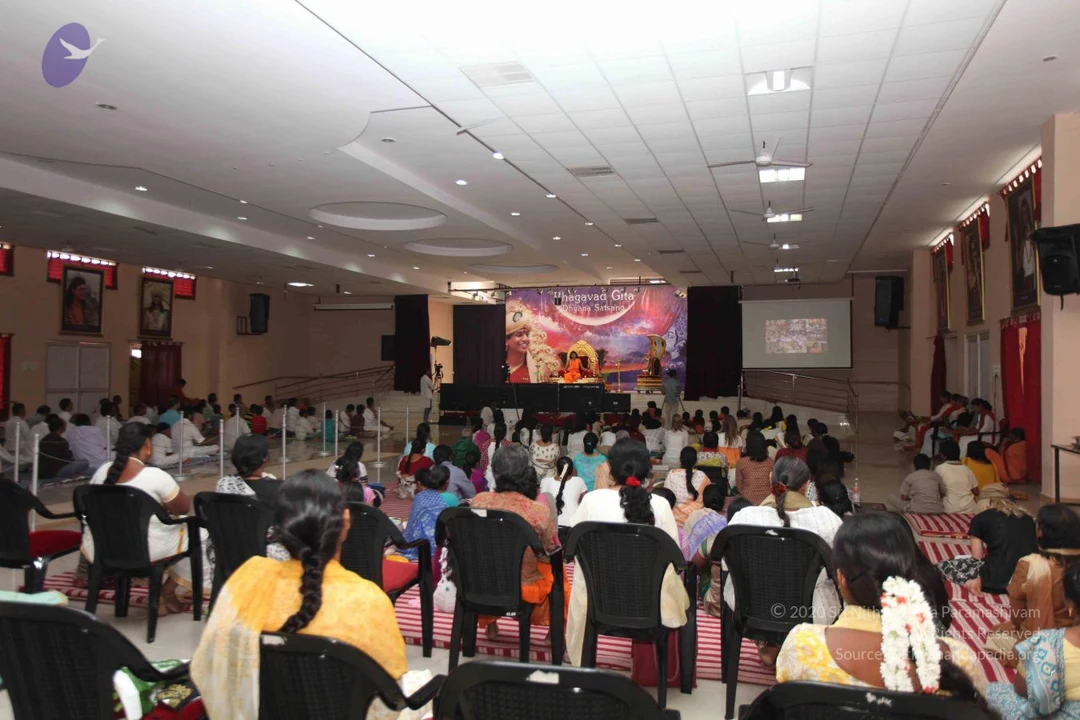
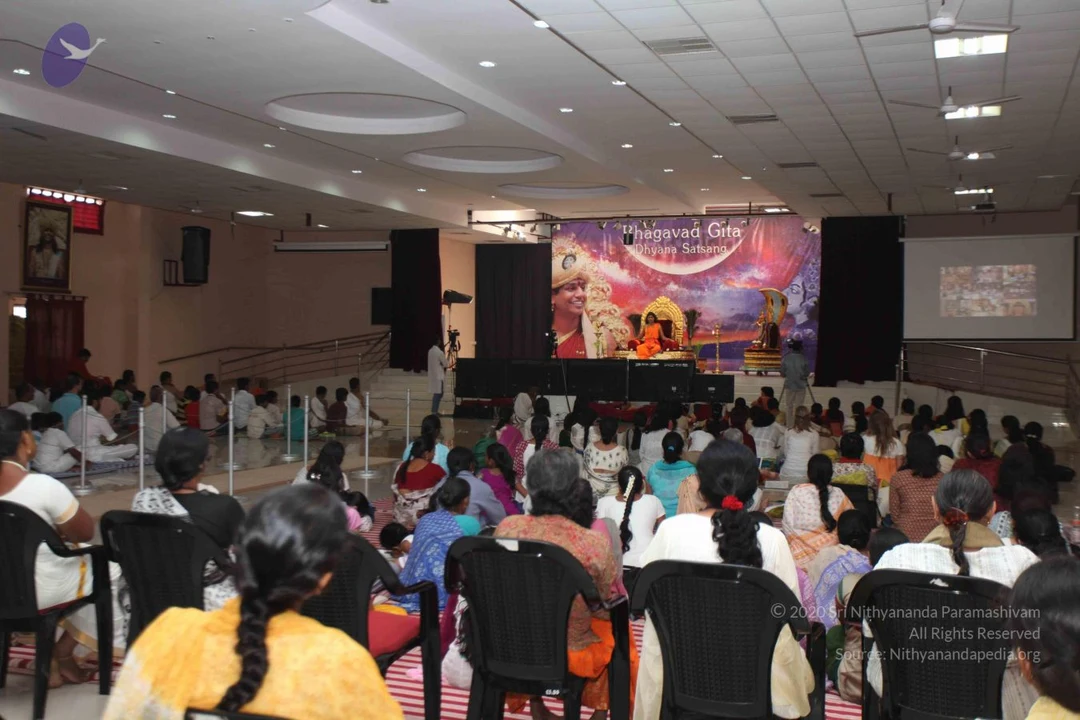
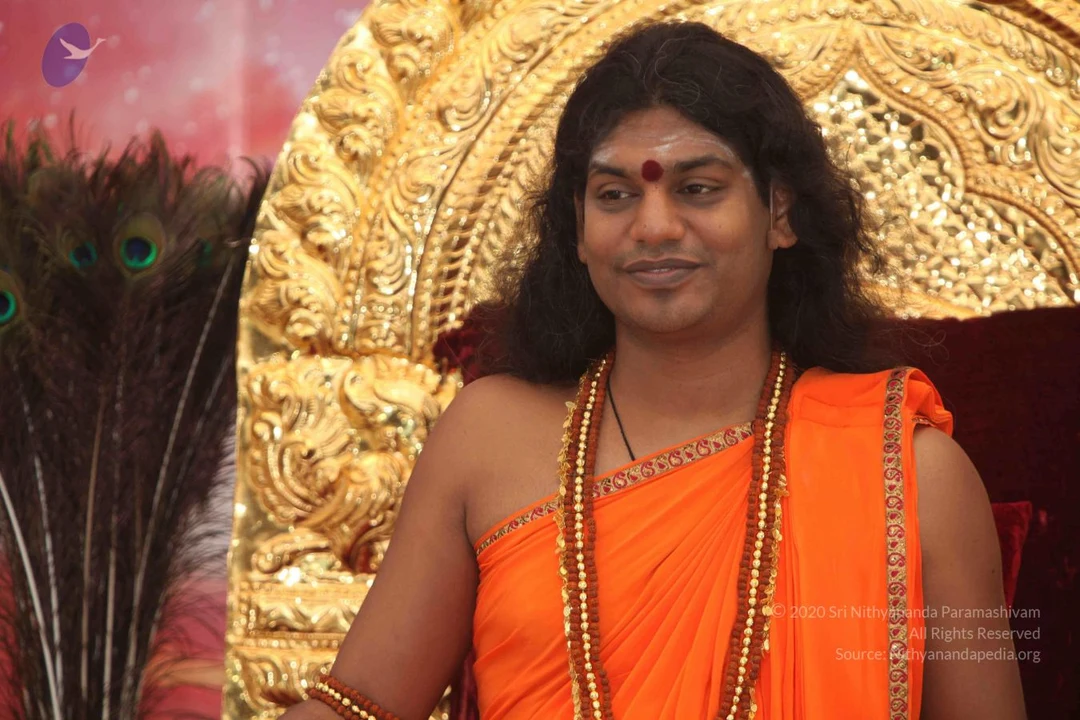
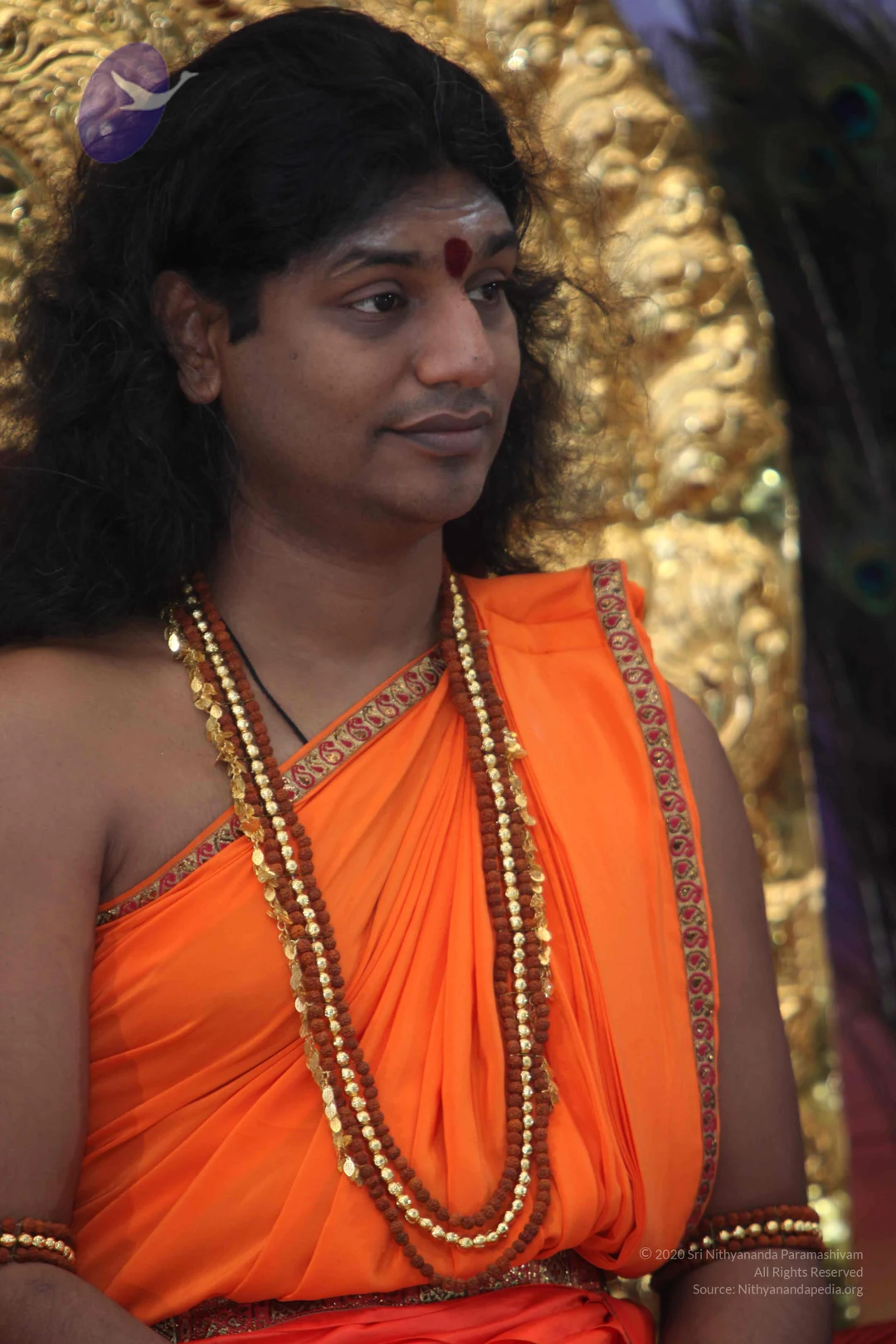
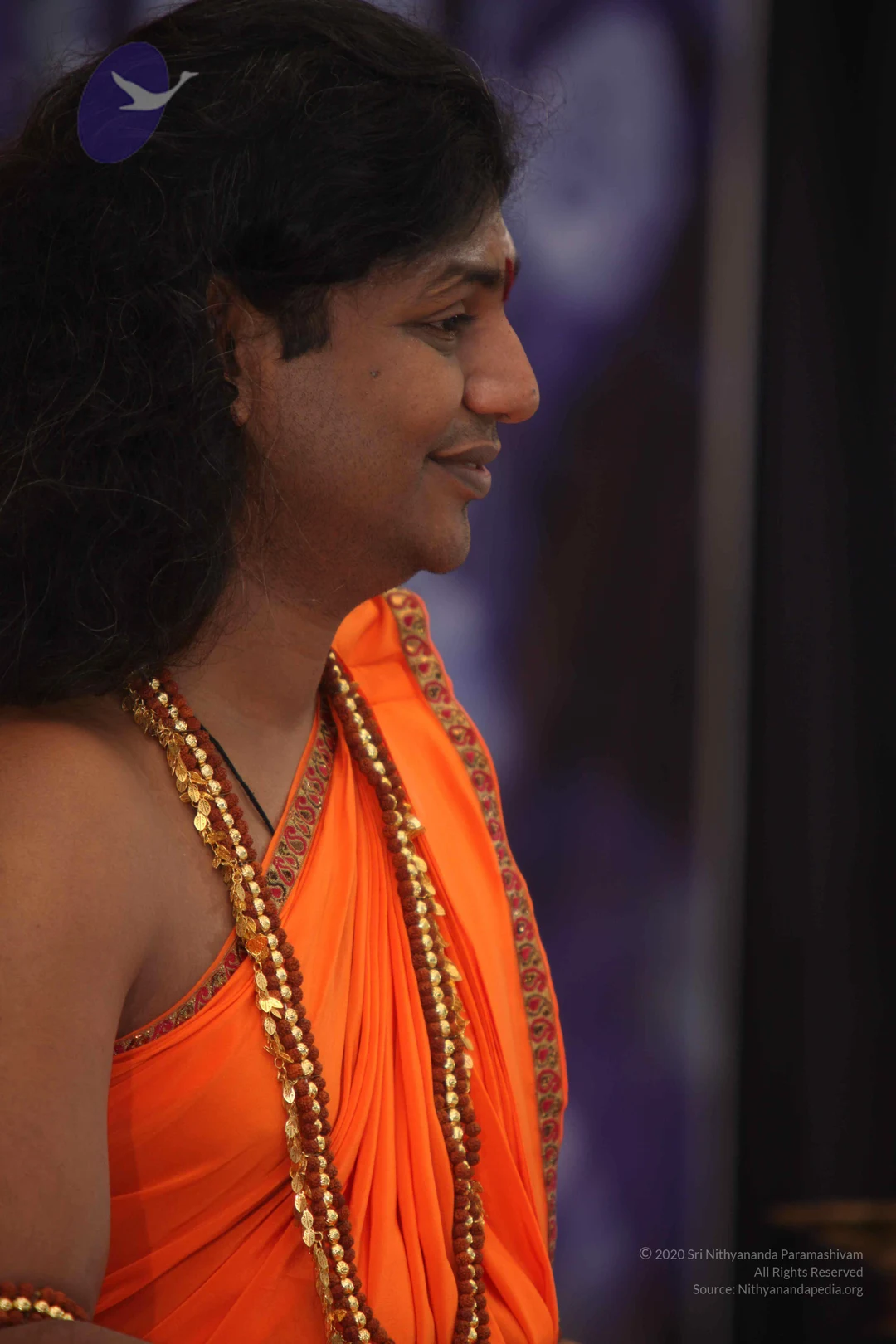
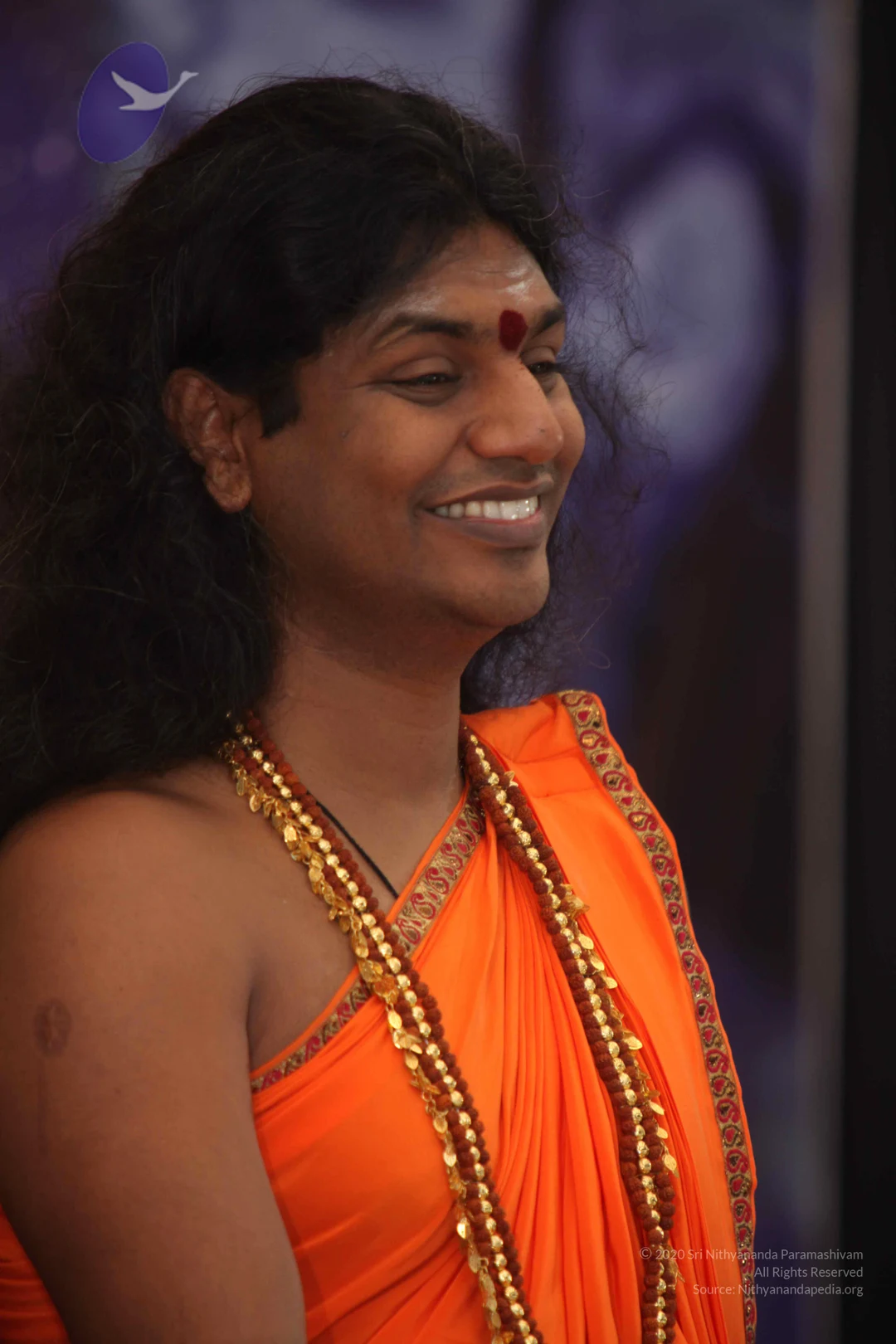
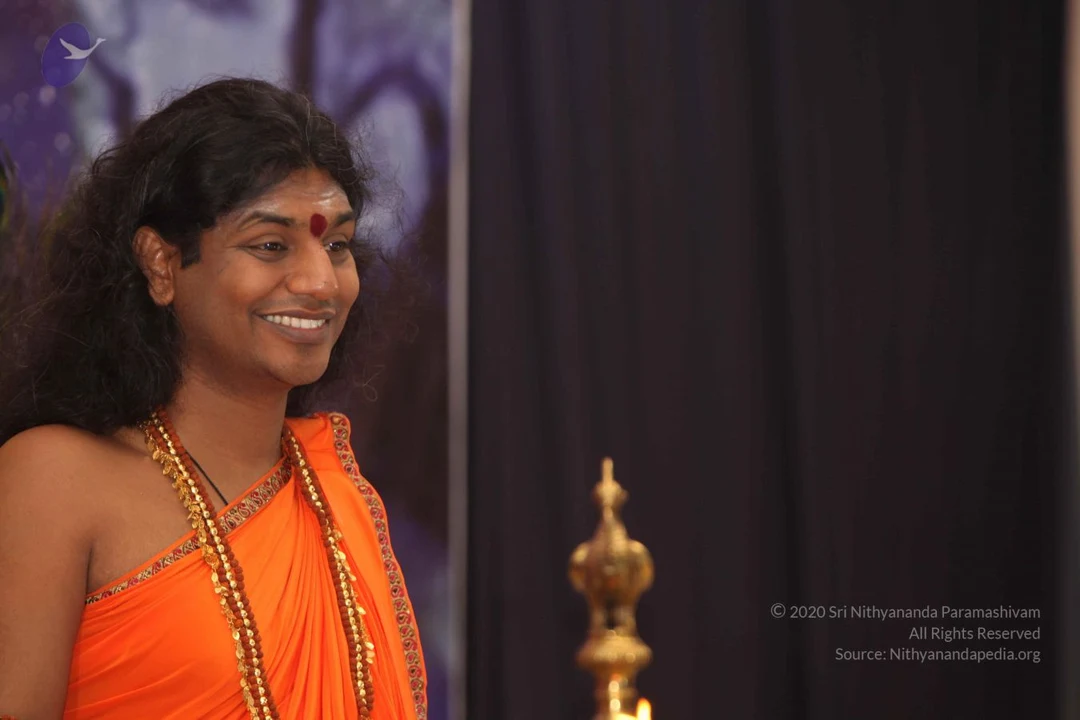
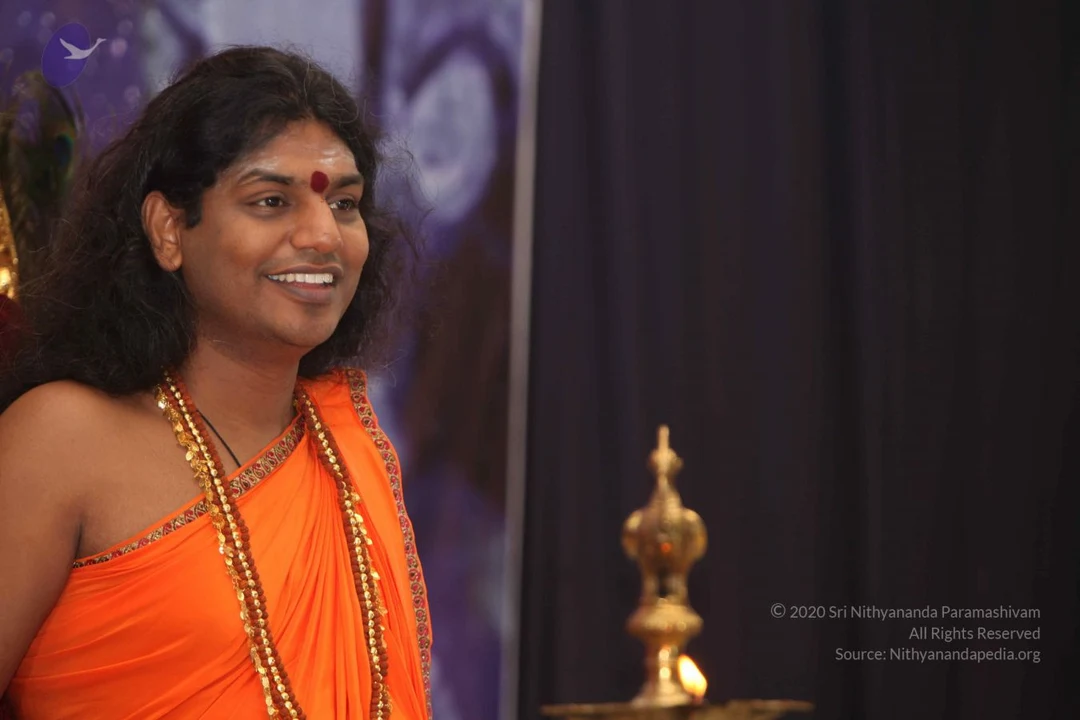
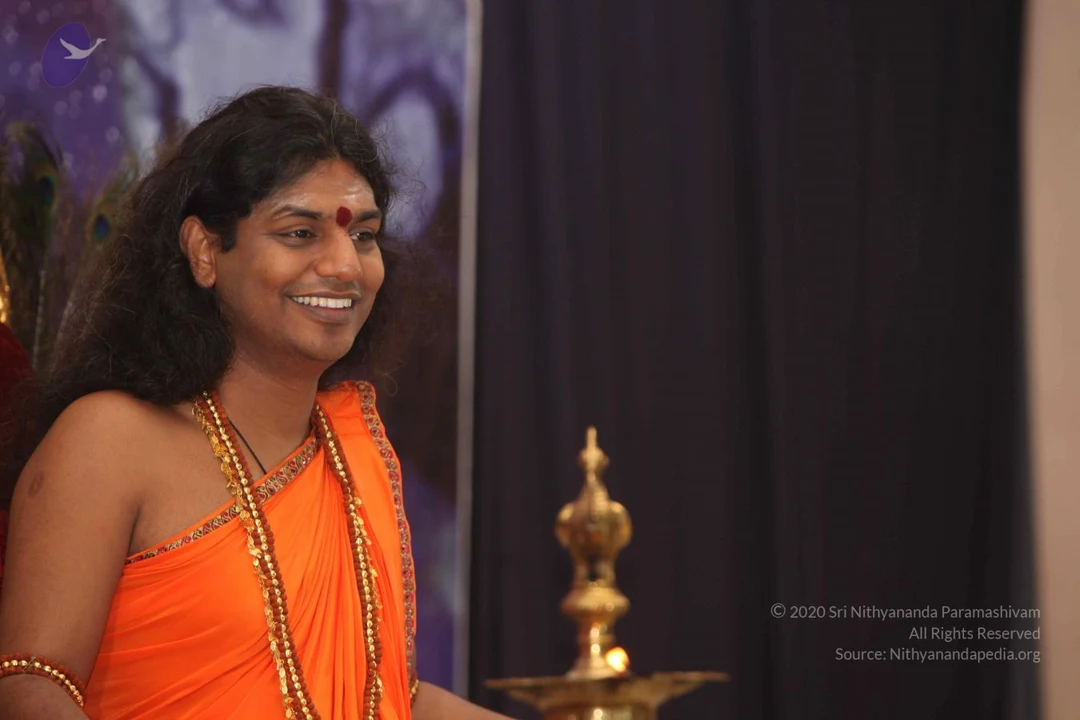
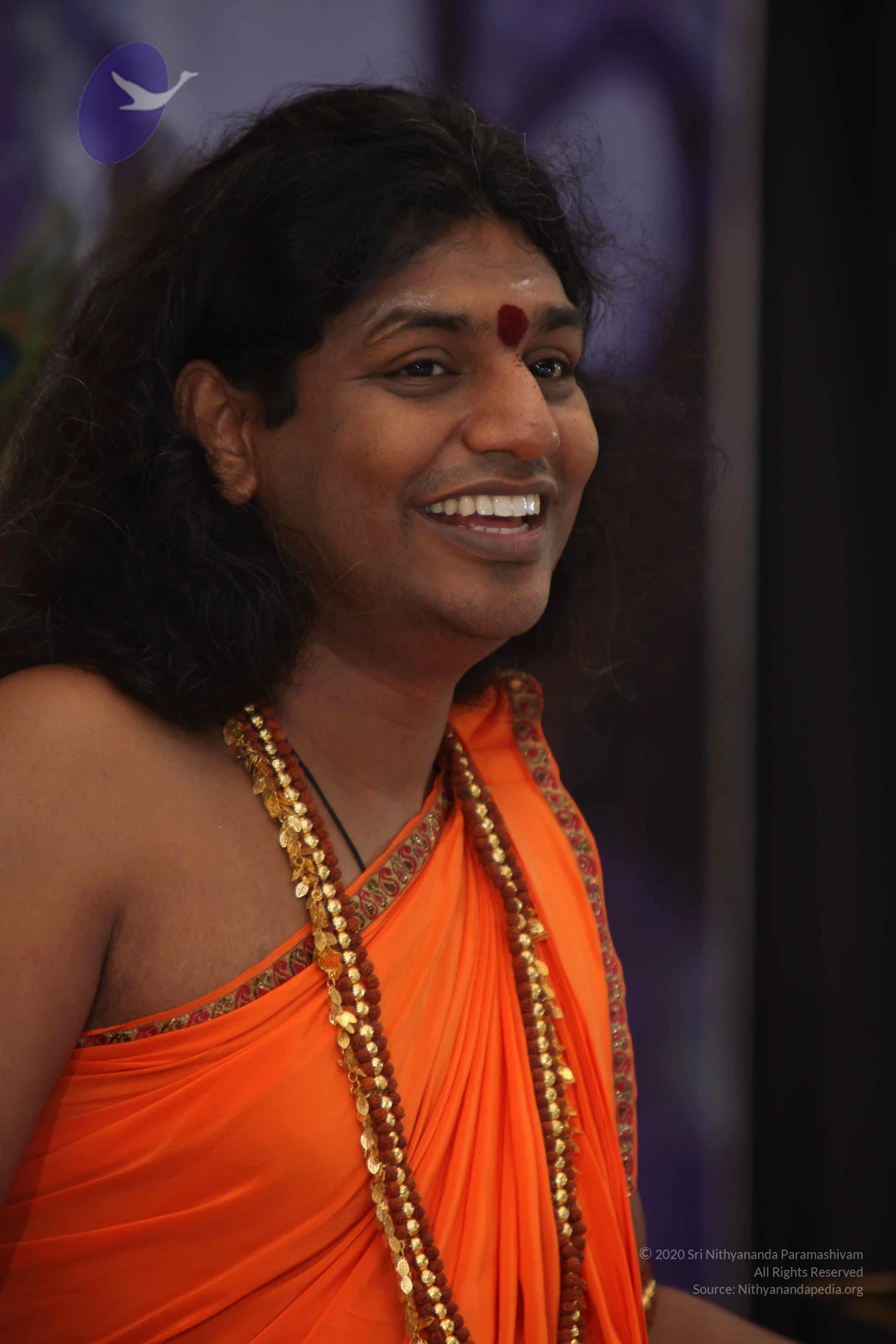
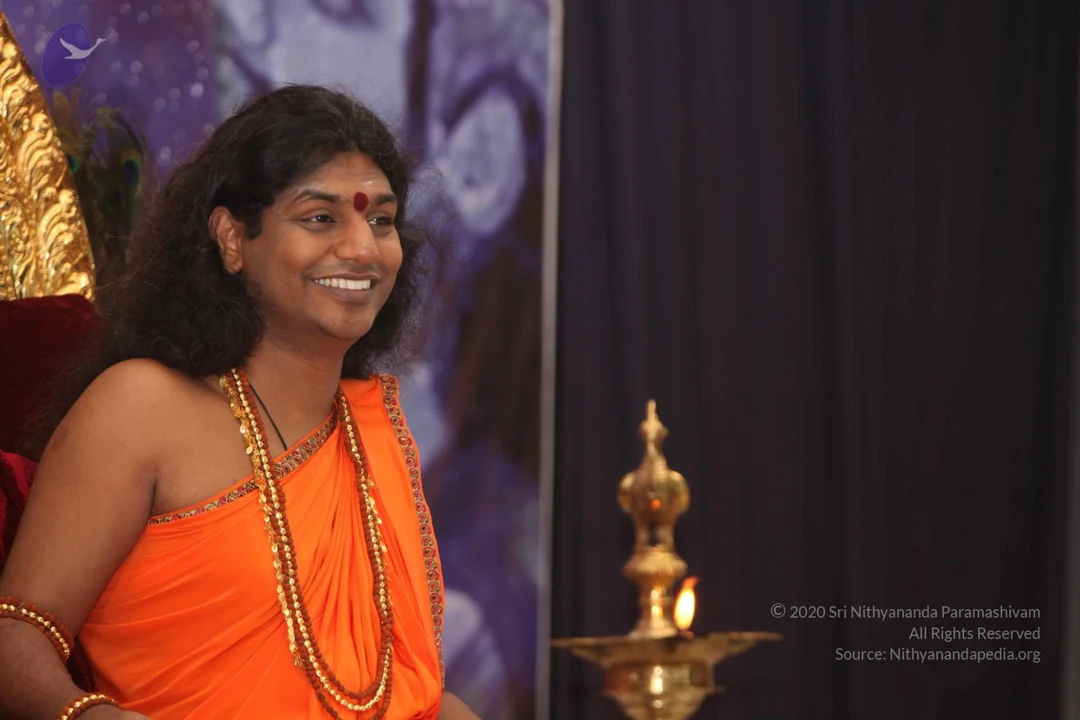
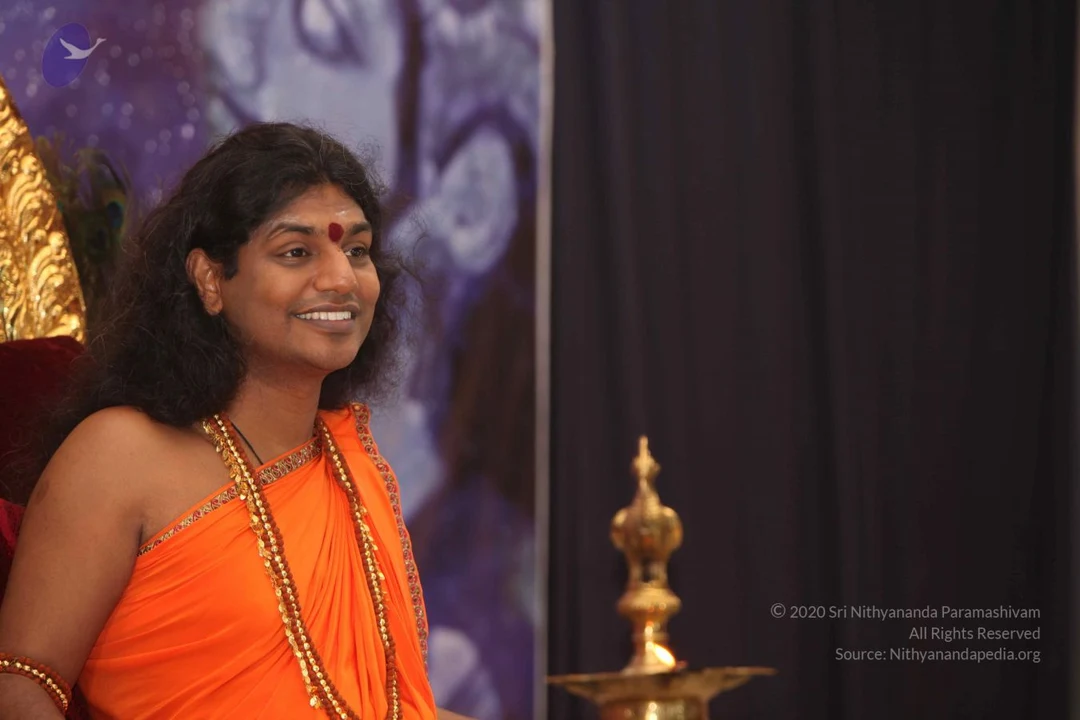
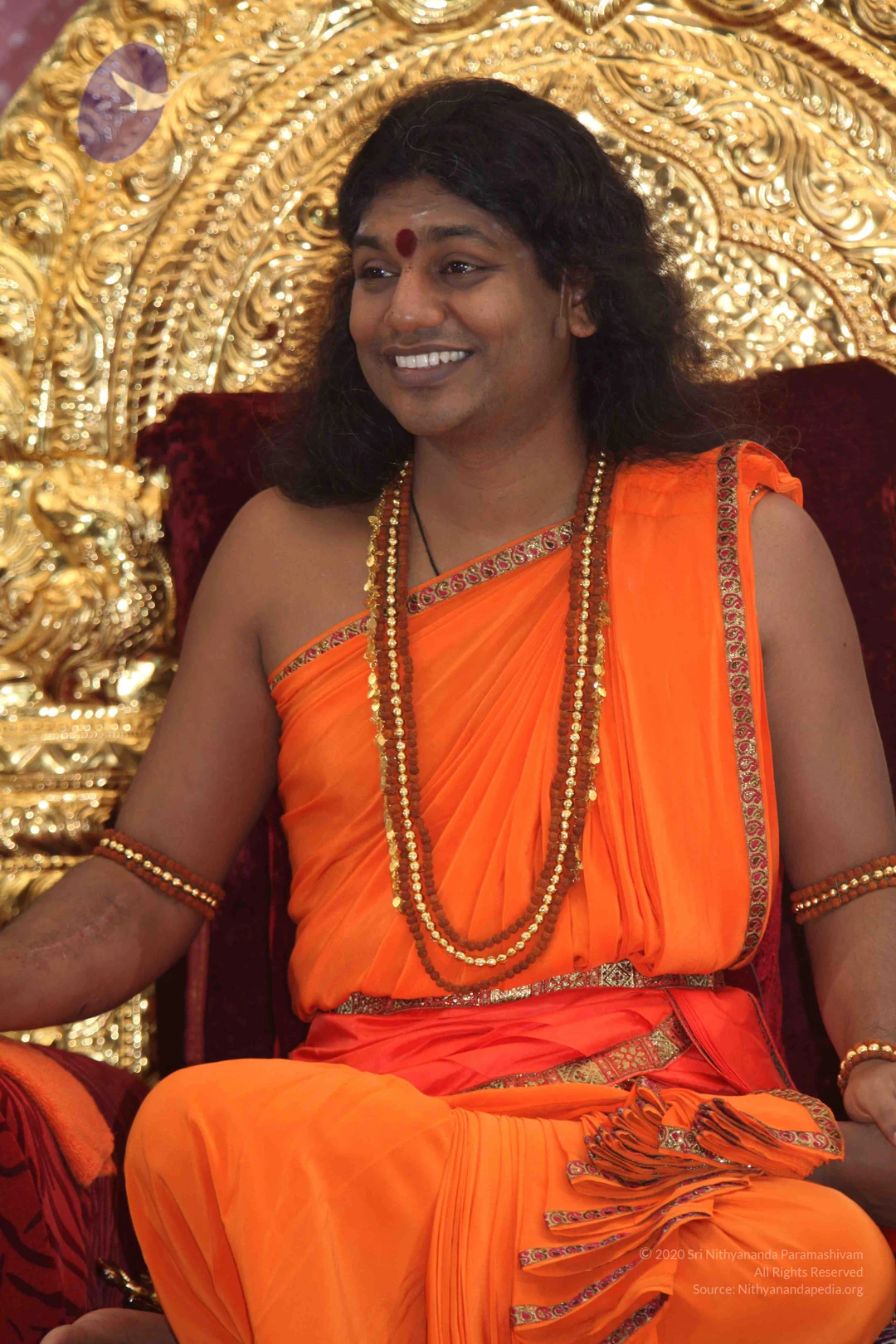
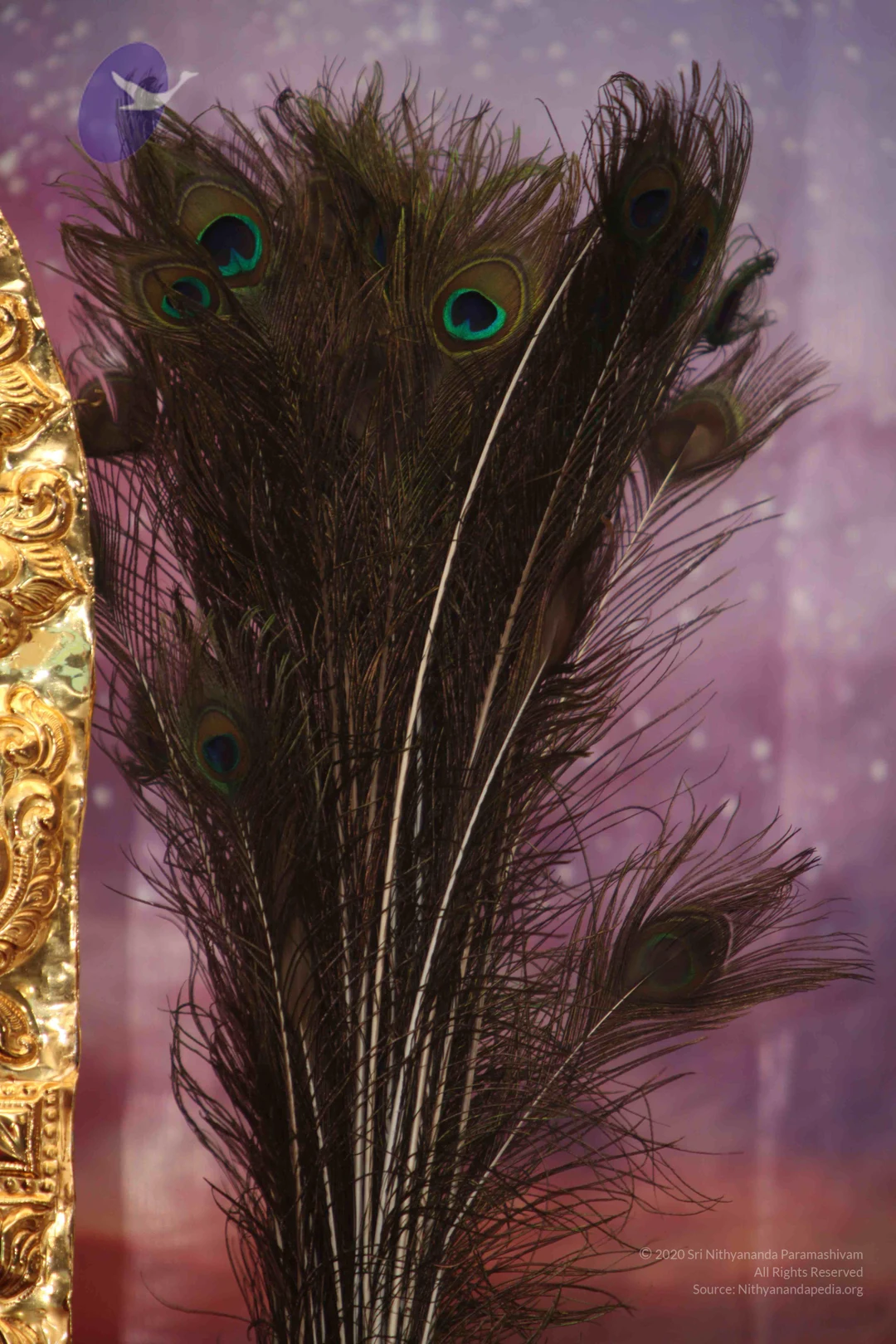
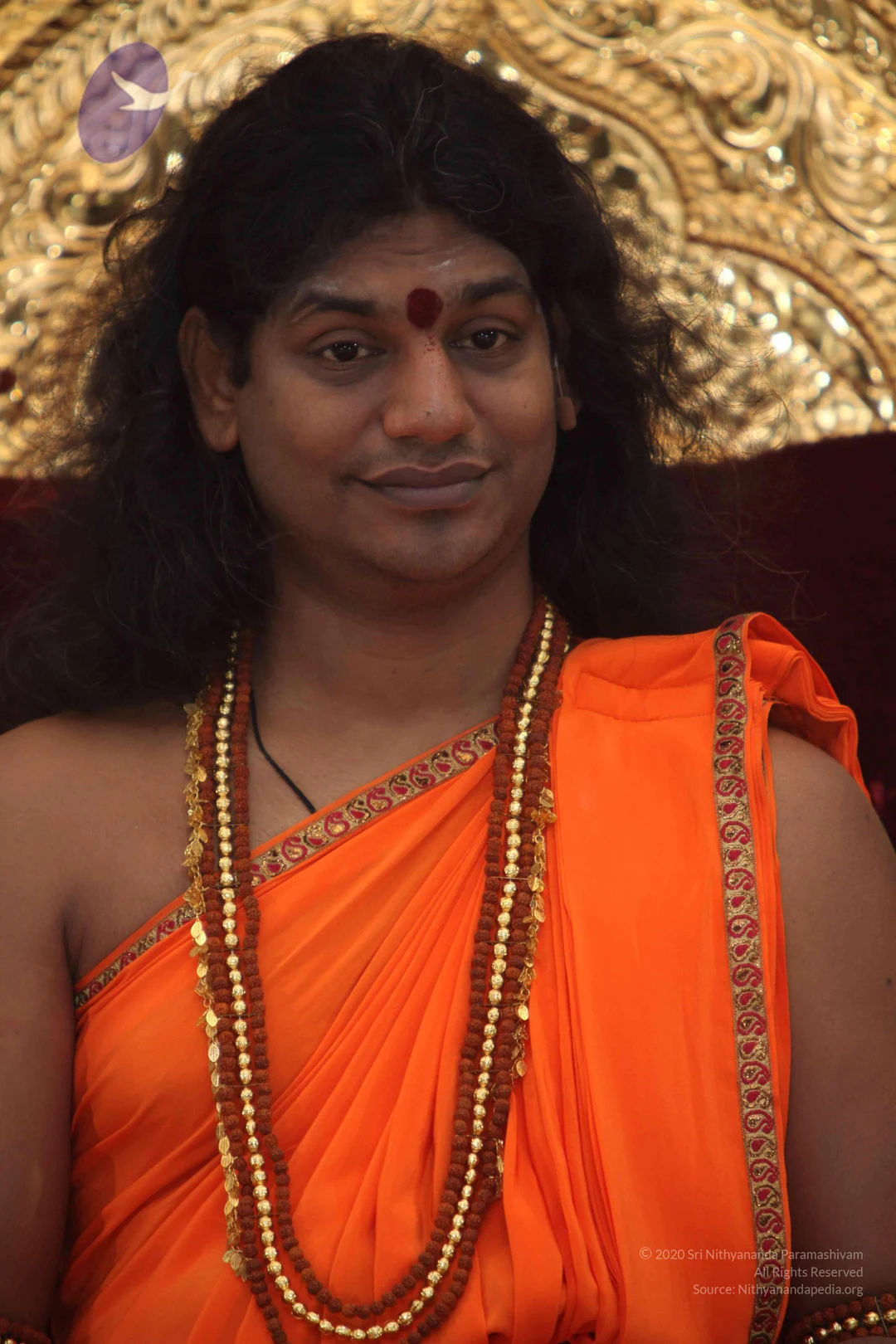
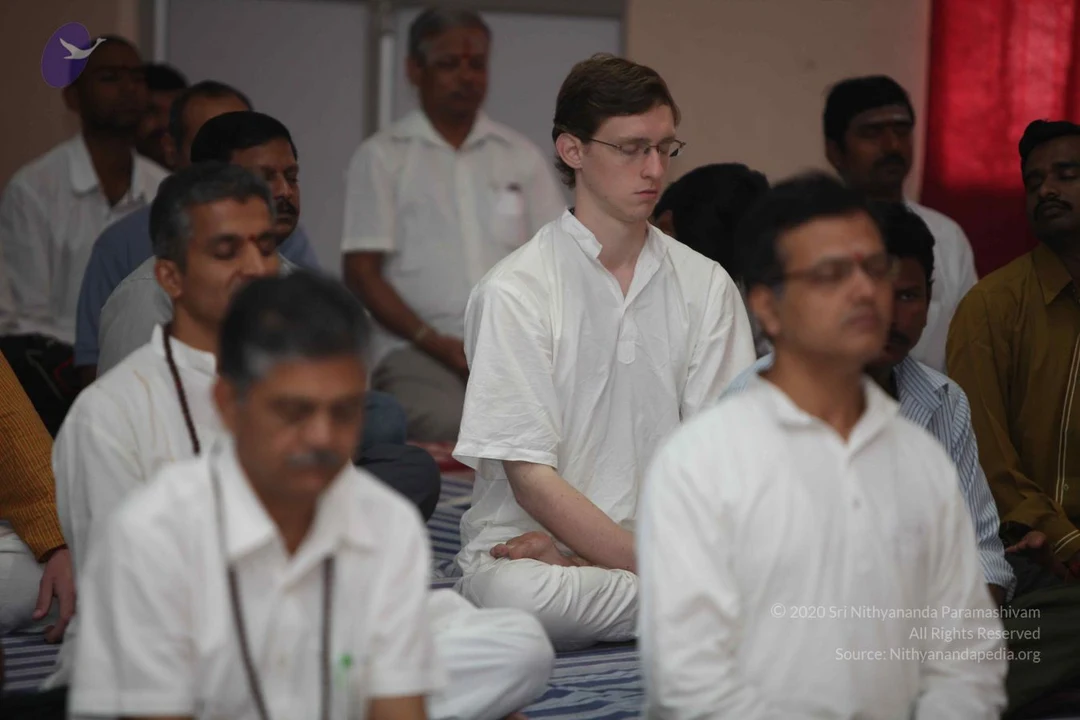
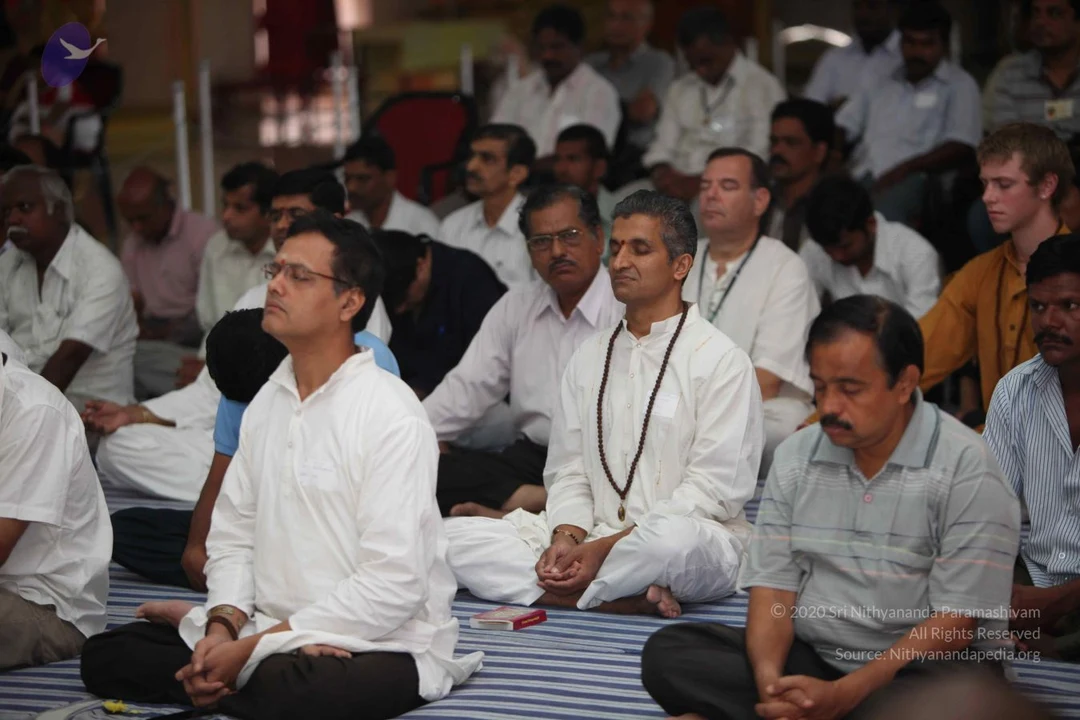
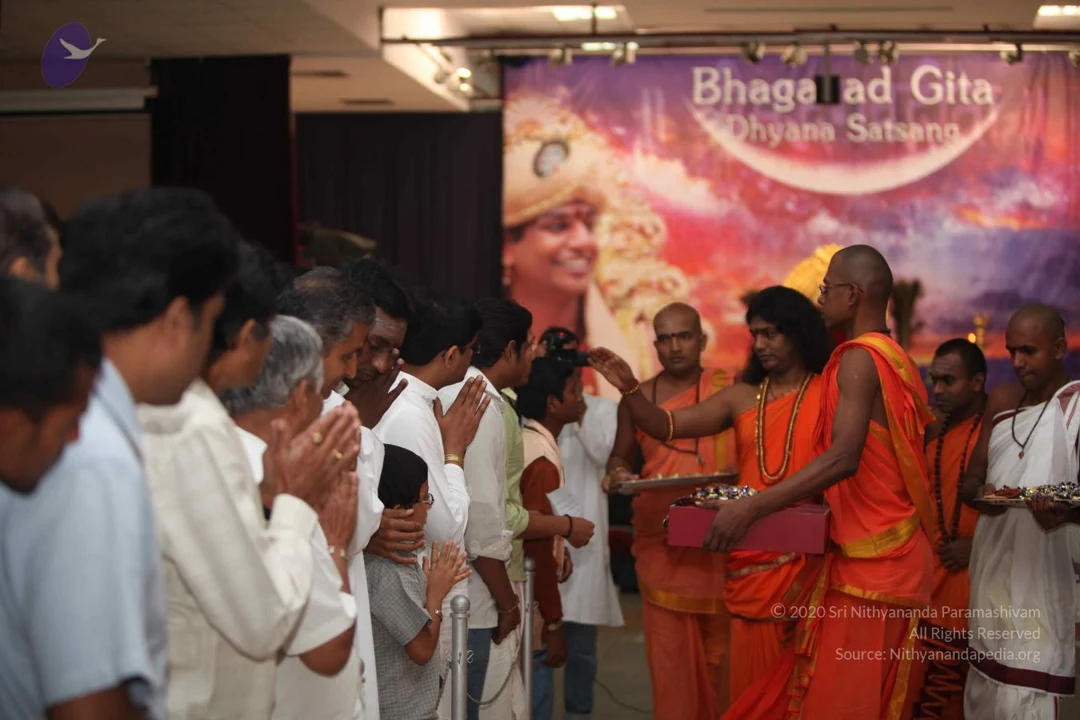
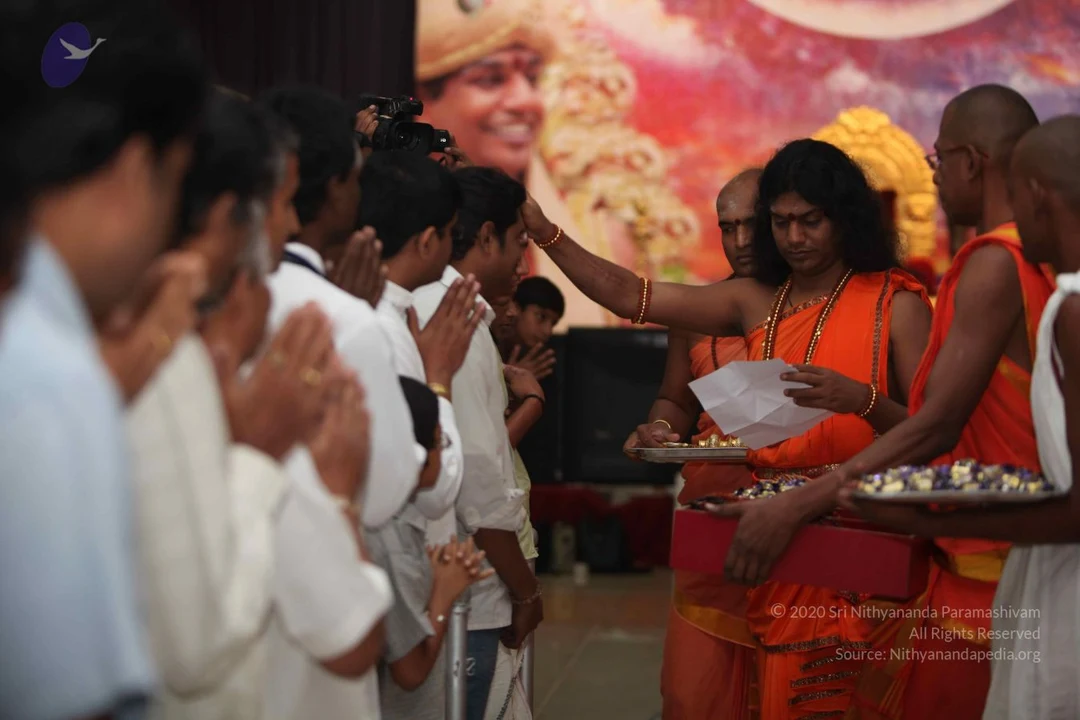
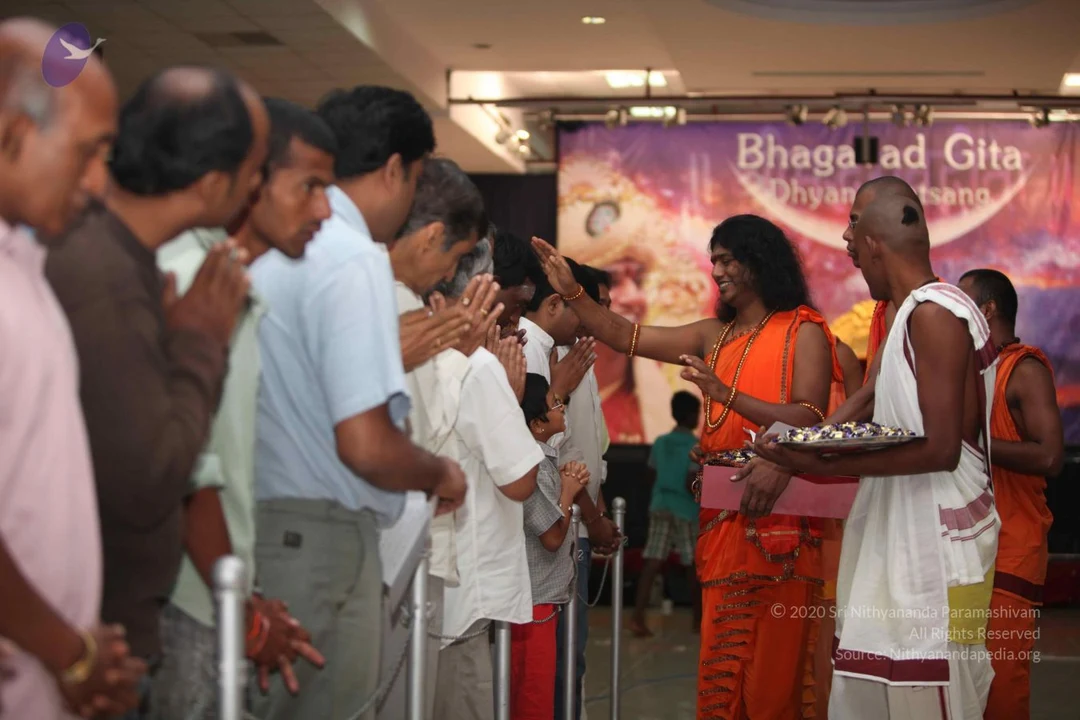
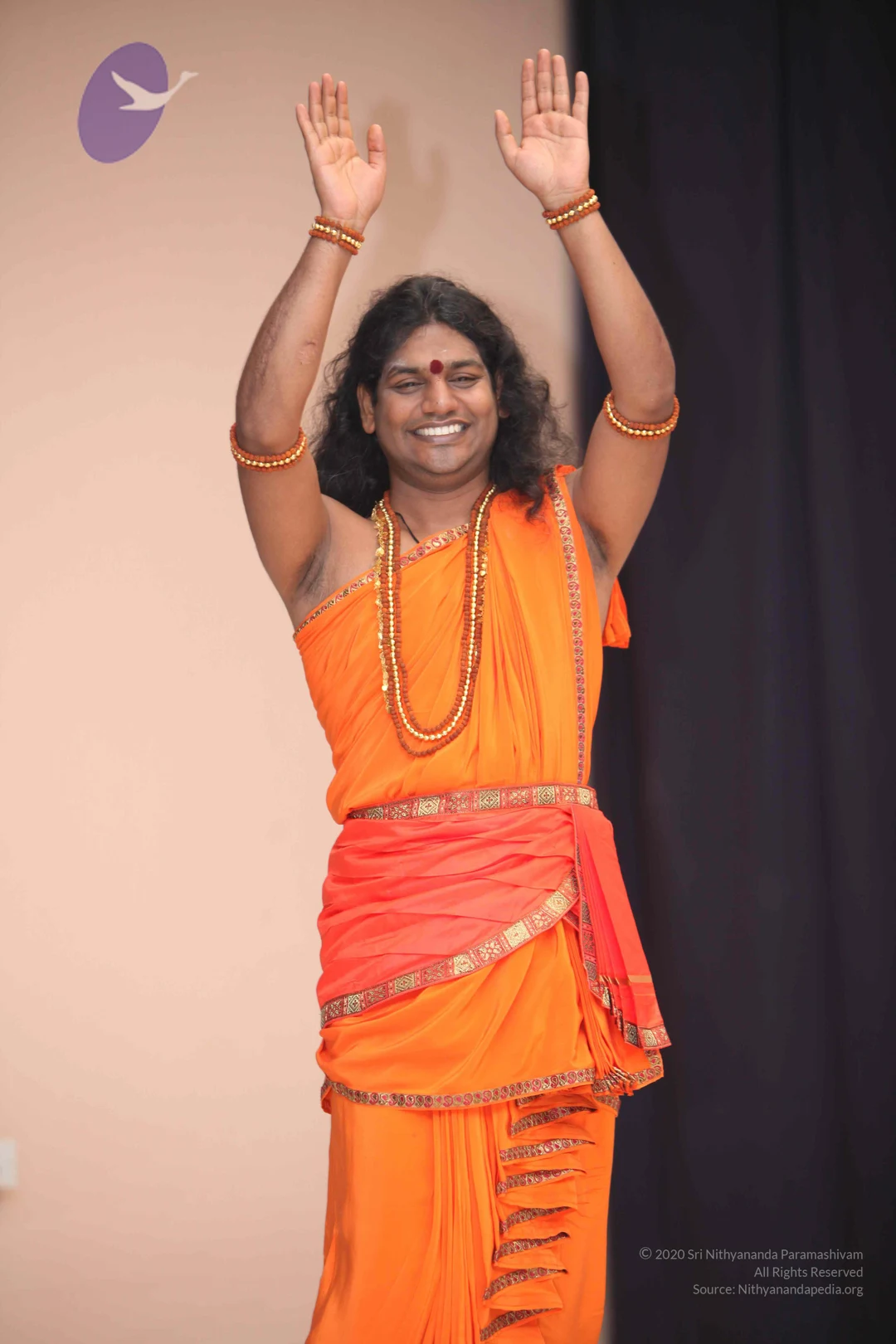
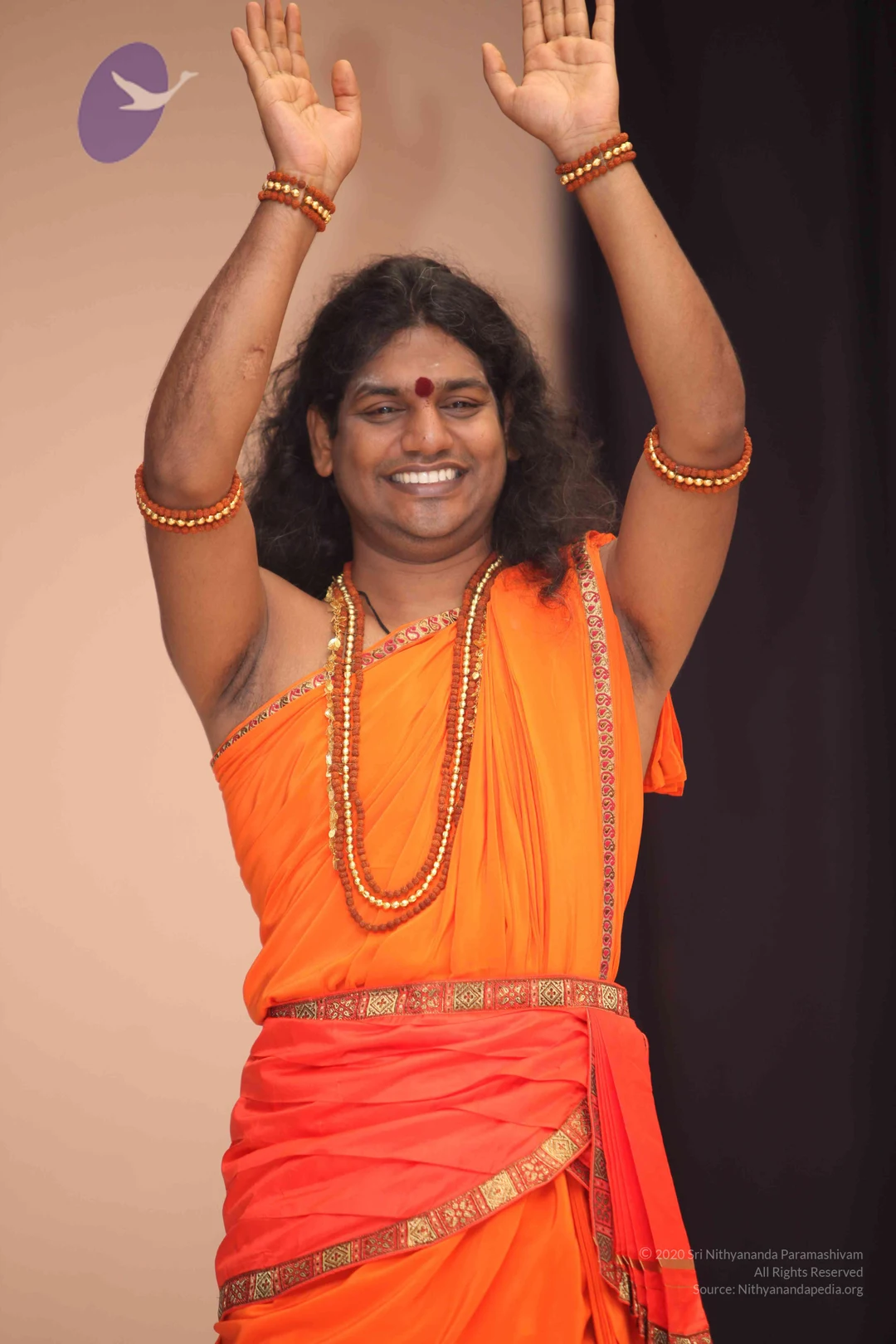
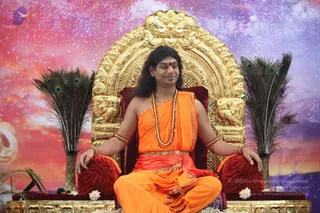
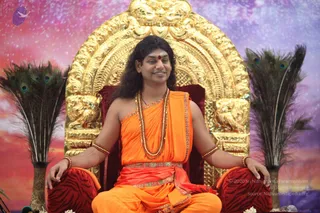
A smiling man with long, swept-back dark hair sits on a red-cushioned throne framed by an ornate gold carved arch with a gold lion relief. He wears an orange saffron shawl with a gold-embroidered border, a long multi-strand gold and bead necklace, rudraksha-style beads, and a red bindi on his forehead. A peacock feather fan stands to the right against a purple backdrop, and he rests one hand on a red cushion. Swamiji (probable): the long swept-back hair, orange ornate shawl, ceremonial necklaces and throne seating are the qualifying cues for the presiding figure.A smiling man with long, dark, swept-back hair and a red bindi on his forehead stands in profile at left, wearing an orange saffron drape edged with ornate gold-and-red border, layered with long gold-and-rudraksha style beaded necklaces. Beside him at right, a polished brass oil lamp with a lit flame sits in front of a dark curtain, and a purple backdrop with a peacock-feather motif appears behind him.A large hall with a polished floor where a seated congregation sits in rows during a satsang or discourse. Men in white dhotis and shirts and boys in colourful shirts sit on blue-striped mats, and several small steel tiffin-style containers and brass vessels are placed in front of them. Framed portraits hang on the back wall between red curtains and white pillars with lights above. Near the front right, a shaved-headed man in white with a white shawl sits on the floor. Many more seated devotees fill the background.

October 16 2011

Original wiki page
Contents

Title:

Clarity+Action=Transformation

Link to Video:

VideoAudio

Transcript:

Bhagavad Gita

Clarity + Action = Transformation

DATE: Day 49: Oct 16th 2011

One of the worst foolish engram humanity is got caught is the engram of acquiring and preserving. See it’s like a there are 100 ants, they just go around and collect, collect, collect heaps of sugar, suddenly they die. What is the use of now the main bags of sugar or the heaps of sugar they collected and put in their bank? There is a huge bag of sugar, gunny bag sugar. All these ants go and pick up one by one and they bring it to their house, their bank balance, they may be having their own locker also and put all of them, lock it. In this very process itself the poor fellow dies, some of them may not have even eaten enough. No, no, no, no no, I have to preserve for rainy days. By not eating and preserving for rainy days finally this fellow himself may not be there for a rainy day. By the time it rains, he has gone.

One of the worst habit humanity is suffering, got caught is with acquiring and preserving. Anyhow this trobhava, trobhava means the covering the knowledge of people…. that after death all the memory is lost, is mainly used to relieve people from this habit of acquiring and preserving. See for example if you have the memory, last time where you took birth, where were you. It’s a big trouble. Then you will go back and ask for your bank balance and you will start acquiring more and more and preserving so that when you come back, you can come and take it up. It would have become a, such a big mess.

People asked me once, Swamiji God creates I understand, he preserves, protects I understand, he destroys so that new beings can come I understand, why is he putting us in Maya? Why is he making us forget? Understand if you are not forgetting what will happen? Dangerous! If you are not forgetting it is dangerous. Because you forget about your last janma in this janma, about this janma in the next janma, you accumulate and preserve less. Otherwise this 4-5 terrorist fellows would have caught the whole world, acquired the whole world and preserved it in their name. Only they will come back, come back, come back and sit on it. Now at least because of the forgetting, after death the wealth is going to different hands. It is moving around. It is circulating. It is currency.

Otherwise you can’t understand. niryoga-ksema atmavan . Even while you acquire and preserve, be liberated with this one truth, ‘Acquiring and preserving is the most foolish act humanity is doing’. Acquire and preserve it in your bank balance and be very clear one day suddenly you will die like that ant. Just see, there is a huge gunny bag of rice or sugar, eternal supply, all these ants having their own small, small house and collecting, collecting, collecting and keeping all in their house. They may even do trading among them self, you give 2 piece sugar; I will give 2 piece rice. Your whole wall street is nothing but this 2 piece sugar and 2 piece rice.

Suddenly some rain or shine all the ants disappear, die, over! Or you just walk on it all of them disappear, die. Their bank collapses, their Wall Street collapses. They may be visualizing that some of you walking with the shoes on their city and creating big, big movies. How we creates movies. The dinosaur movies, what you call Jurassic Park. They also may visualize the human beings with big shoes will just crush our whole city. How their whole game is insignificant for you, understand same way only your whole game is insignificant for your higher self. But one thing, ants them self cannot look higher than what they are doing but human beings have a capacity to look higher than what they are doing. Ants themselves can’t realize their whole Wall Street game is a foolish game but human beings are hard wired to realize your whole Wall Street game is a foolish game. That is the one specialty human beings have. That is why I am saying while you are having human body don’t miss this knowledge.

Knowing, acquisition and preservation; acquiring and preserving, is the ultimate foolishness. I wanted all our disciples to work on this. Enter this sacred secret in your book of heart. Acquiring and preserving, how it is foolish! Analyze, analyze think, think. See how the society is trying its best to make acquiring and preserving as meaningful by not giving the medical care to all. See why, why do you think medical care is not given for all in the western way of living. You are made to understand, ‘ehhh now itself acquire and preserve so that in the old age when you are sick you will be given a medical care’. Depriving the basic necessities is the way humanity was exploited to believe the acquiring and preserving is an important habit. Visionaries who created the concept of acquiring and preserving as a sacred, as an important act, as a necessity for the human beings by depriving many of the basic needs to human beings are conspirators of humanity not visionaries of humanity.

In Indian medicinal system whether you are sick or not the village doctor is always paid. He gets his share the moment harvesting is done. If you are sick, your harvesting will be less, he will get paid less so he will ensure the whole village is healthy by the right preventive methods, diet, lifestyle and giving the right medicine which will not bring side affect; in the beginning of the disease itself. I feel at least in the future India should return to its original glory and all the basic needs should not be used as a blackmailing point for human beings to believe, acquiring and preserving is a big thing in the life. It should be done as a joyful creative expansion, not as a basic blackmailing threat. I do not know whether I will be able to make it or see this is as a reality or not but I will dare to dream. I will dare to dream, at one day society will have a system where acquiring and preserving is not forced upon you and you are not blackmailed to believe that is a basic important thing necessary for life.

It is one of the great illusion; if it is done as a expression of joy and creativity, I am not against it. But when it is done with a blackmailing ‘unless you do it, you will not have food, you will not have shelter, you will not have medical care; you will not have support in the old age’. These are all blackmailing; I tell you, capitalism should not becoming blackmailing. We will come up with non blackmailing capitalism. I dare dream non blackmailing capitalism as the future India, future Bharat.

Sit with this one sacred secret. All acquiring and preserving is based on your insecurity and dependence. Understand it is a collective foolishness with which you are suffering. These are all collective mental epidemics with which humanity is suffering. Even if you are acquiring and preserving, be out of this mental epidemic by awareness and un-clutching. Sit straight, contemplate on this one truth. Acquiring and preserving is one of the most foolish thing, collective unconscious epidemic; collective mental disorder. Even if you are forced to acquire and preserve in your life because of society, let you be at least consciously be un-clutched from it.

Photos:
Photos Of The Day:

Temple
BGSatsang
ASPKalpataru

Photos from this day

View all 104 photos

Photos:

13 photosSource gallery
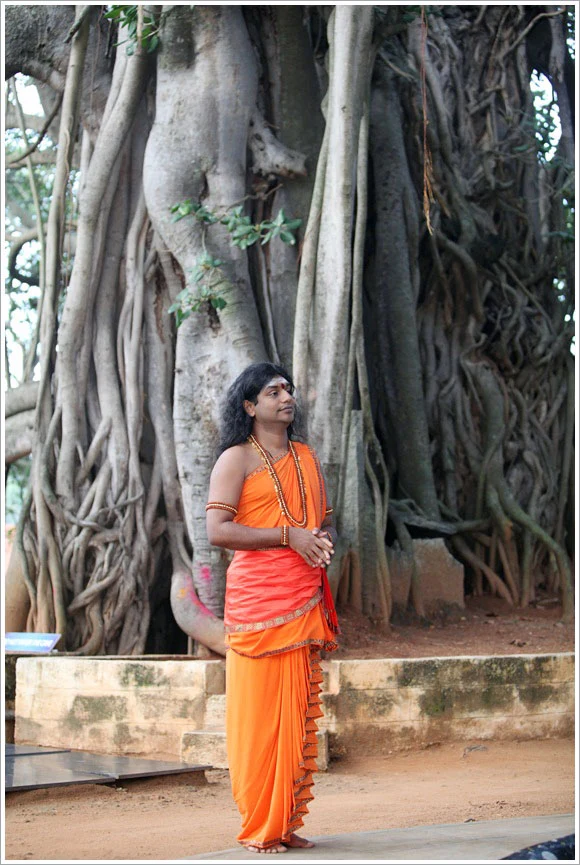
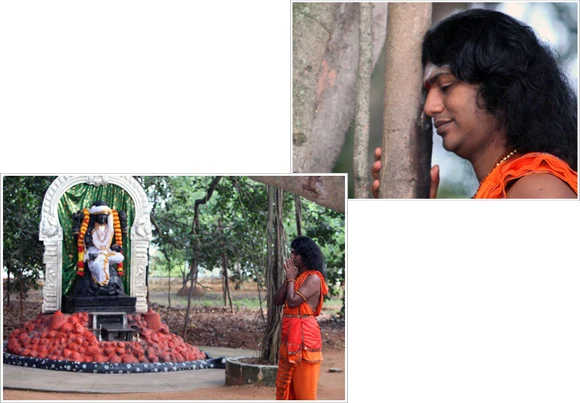
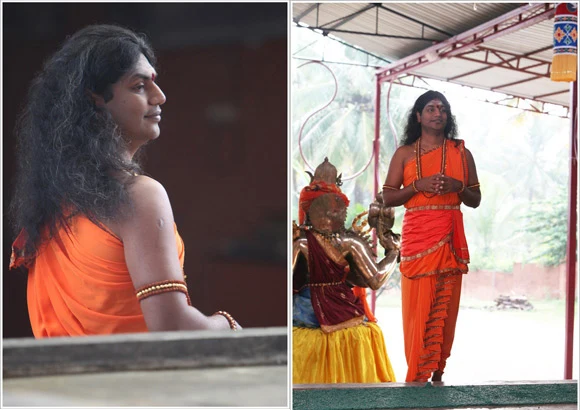
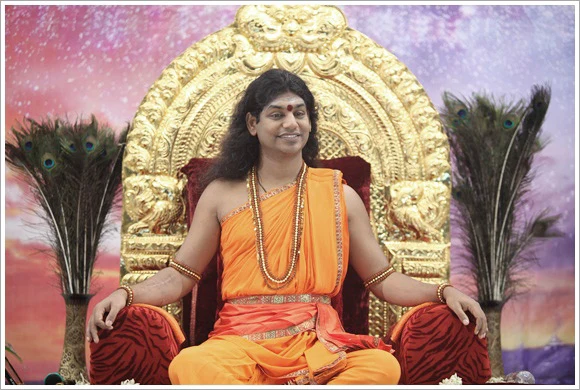
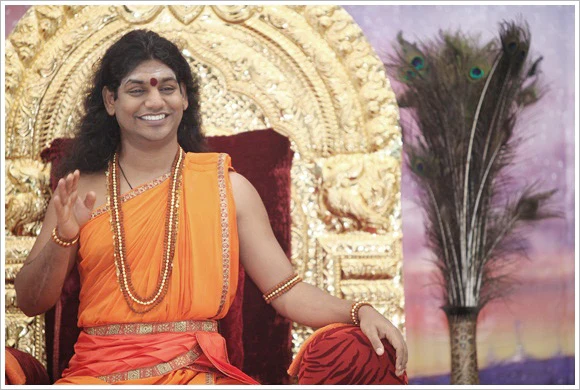
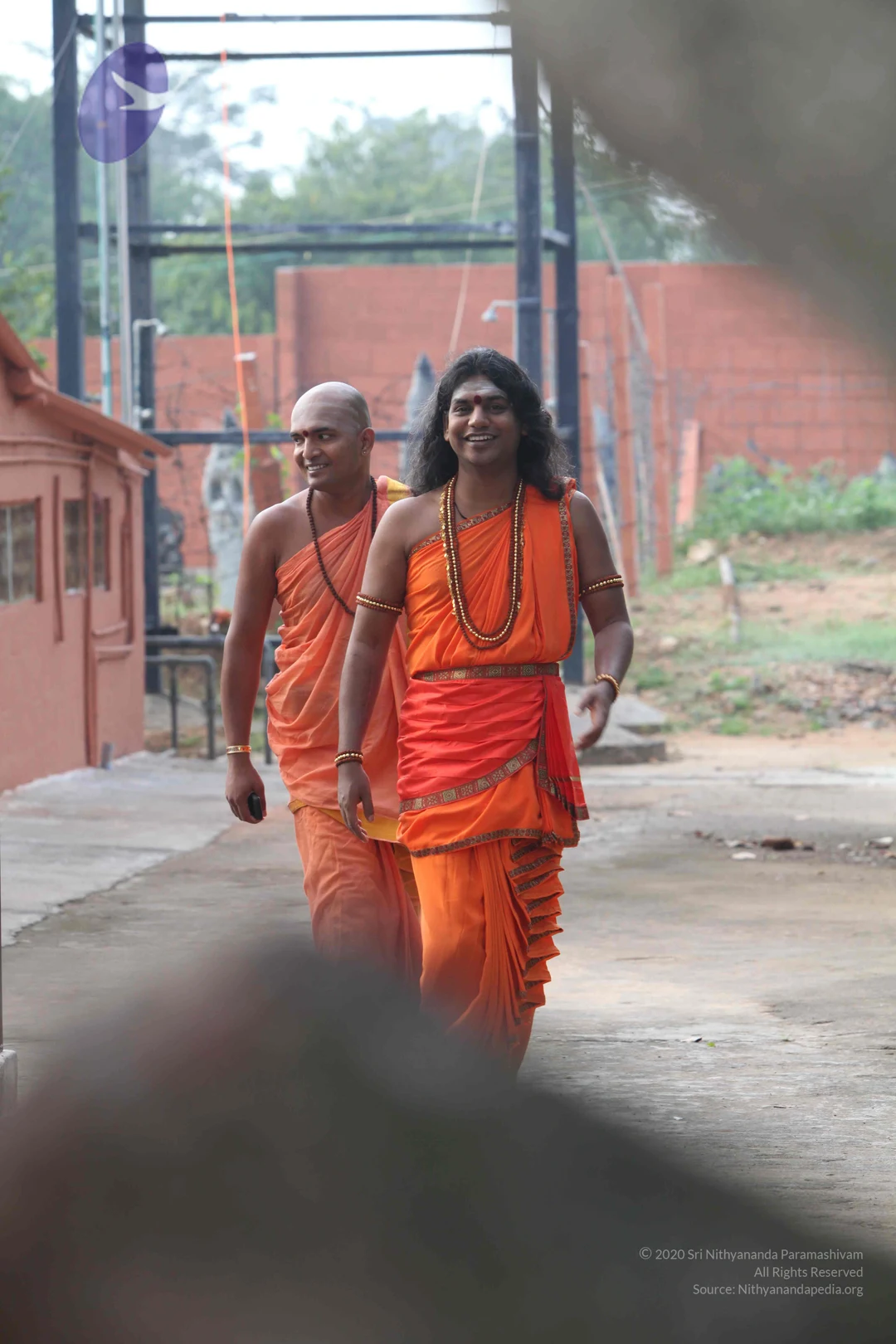
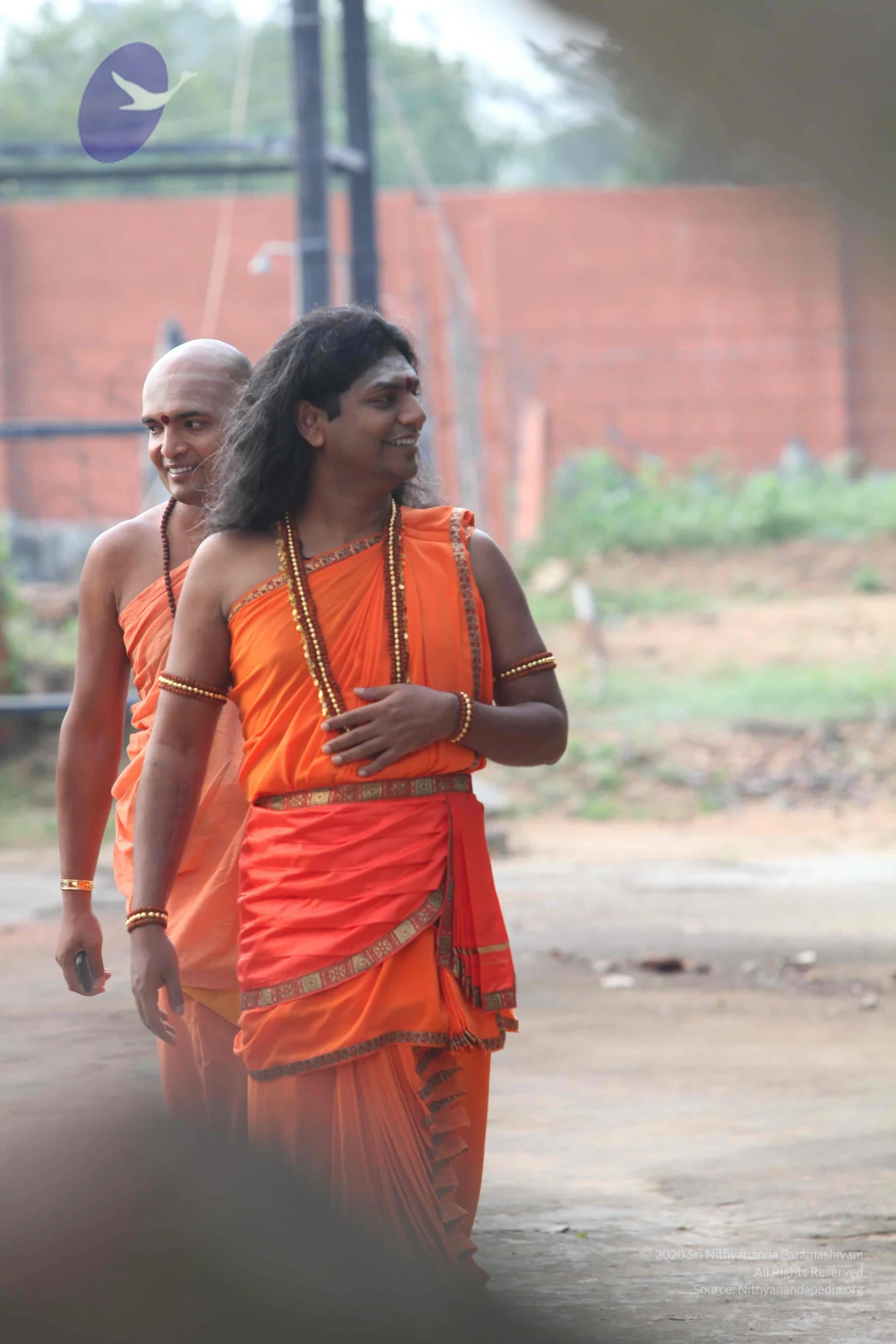
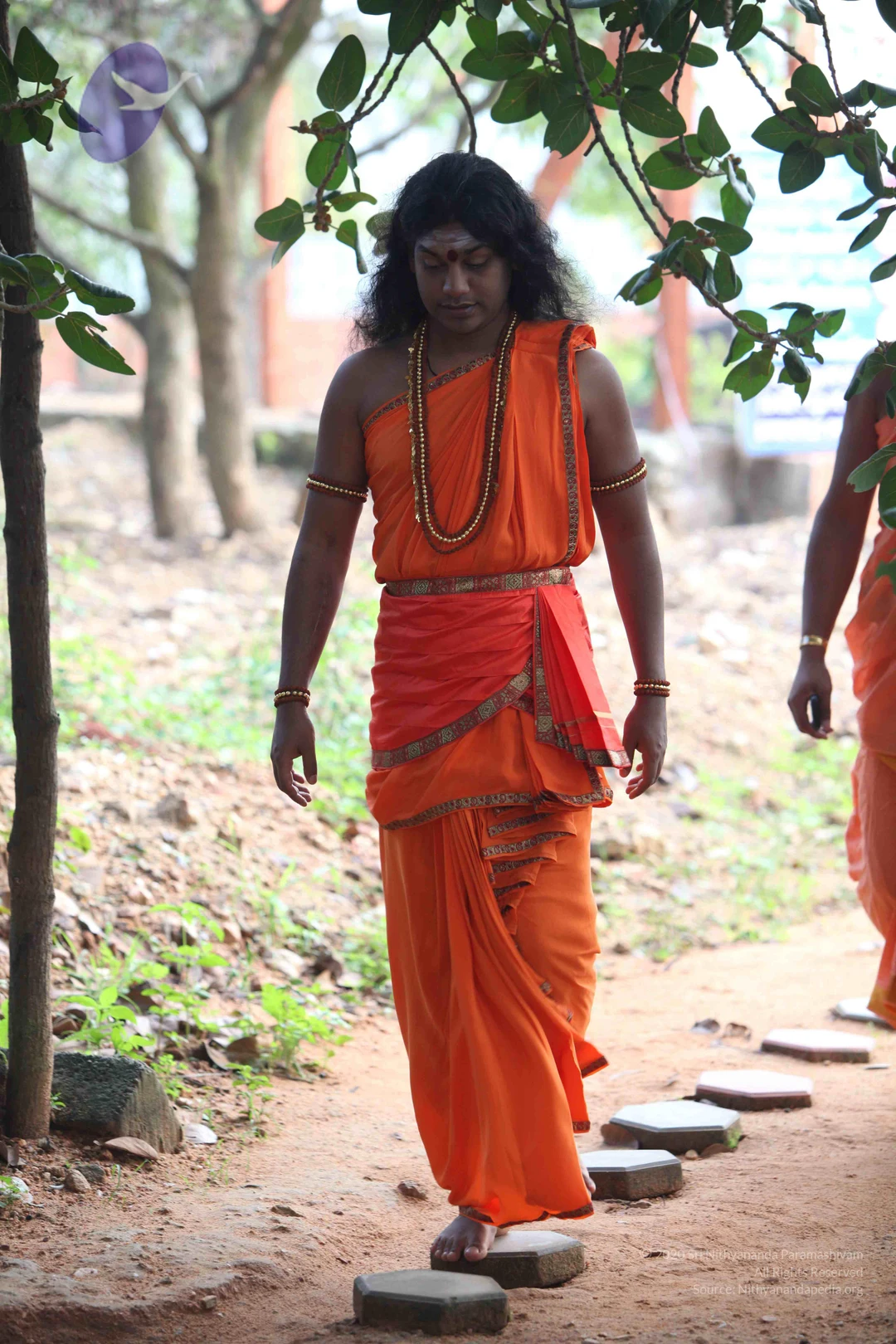
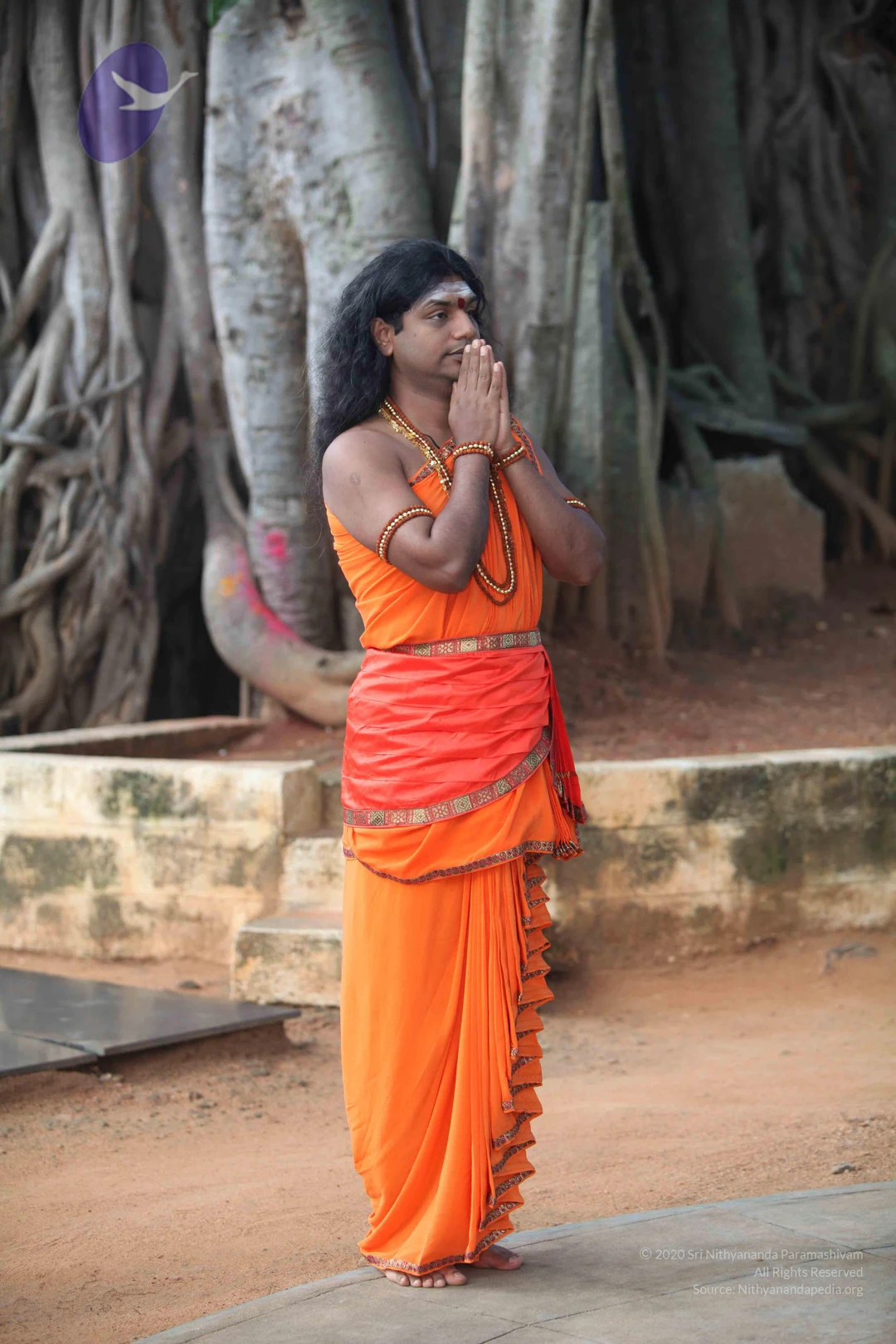
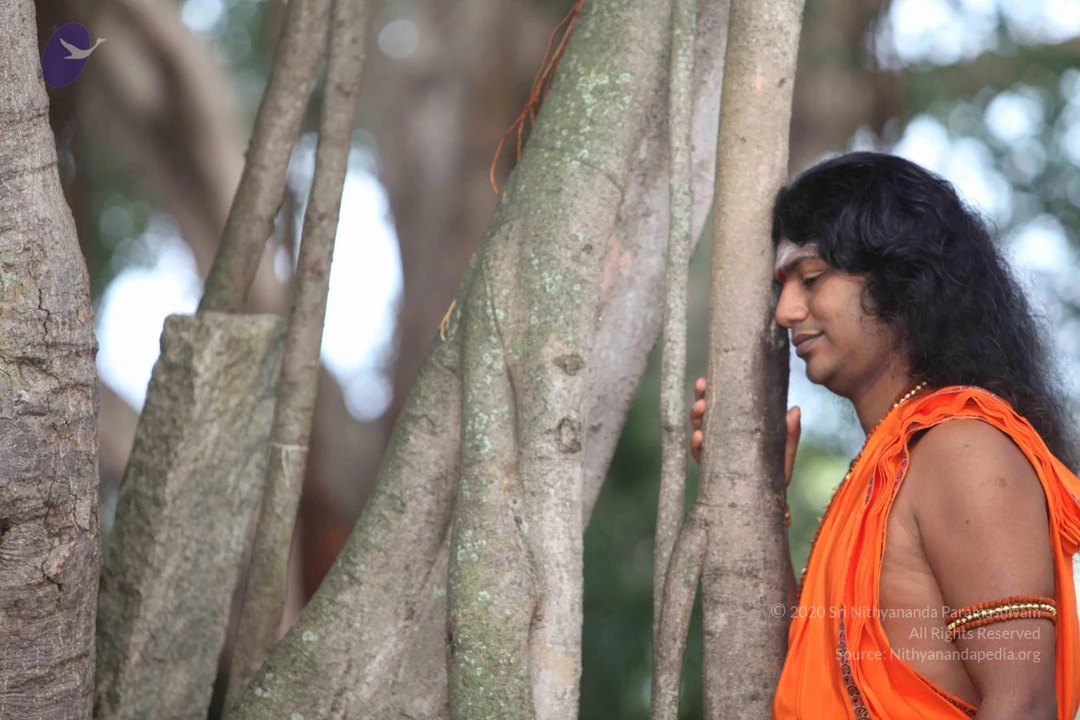
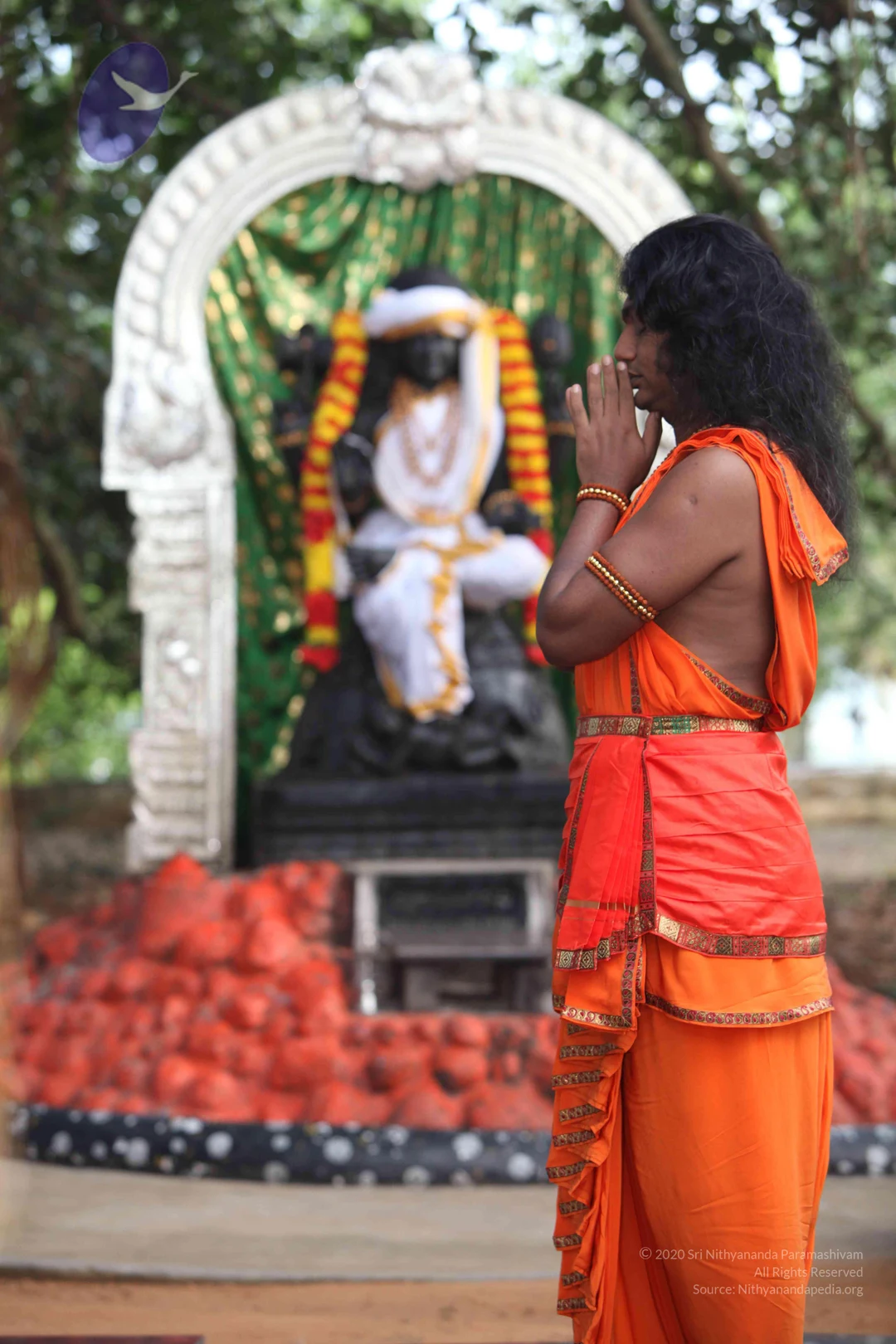
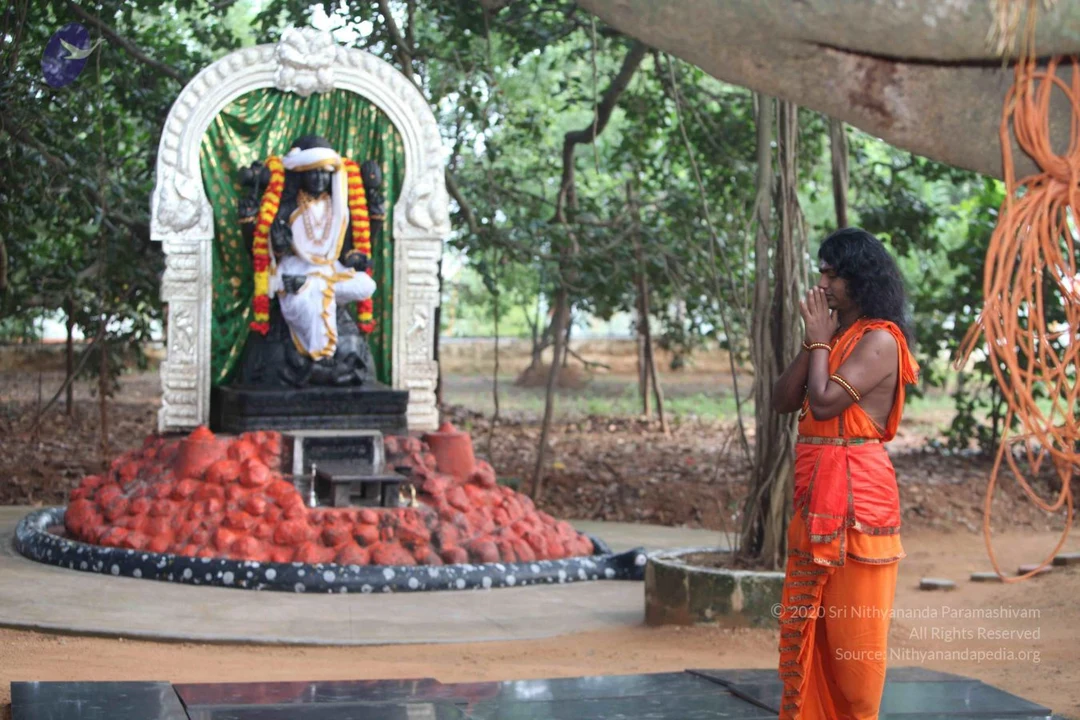
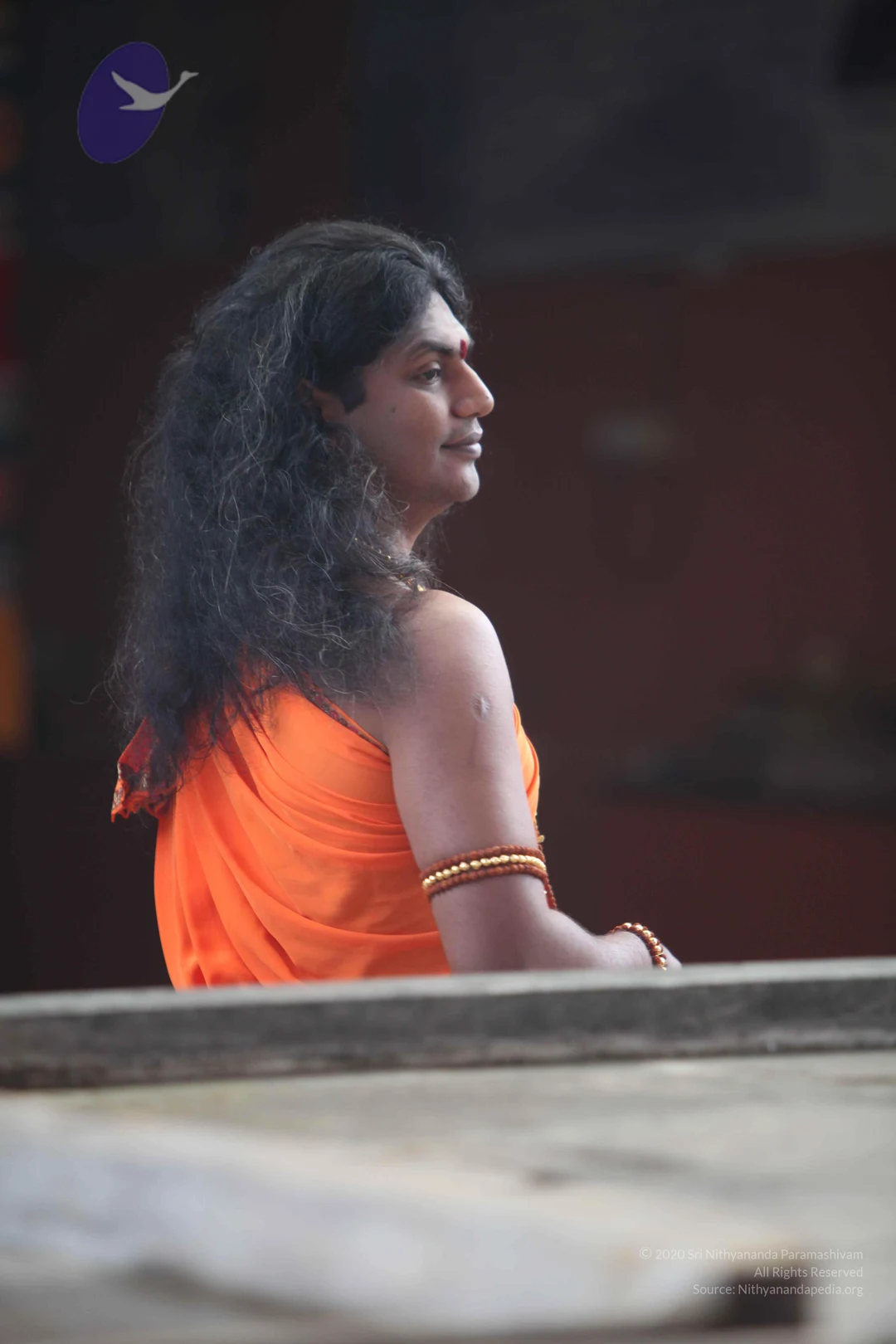
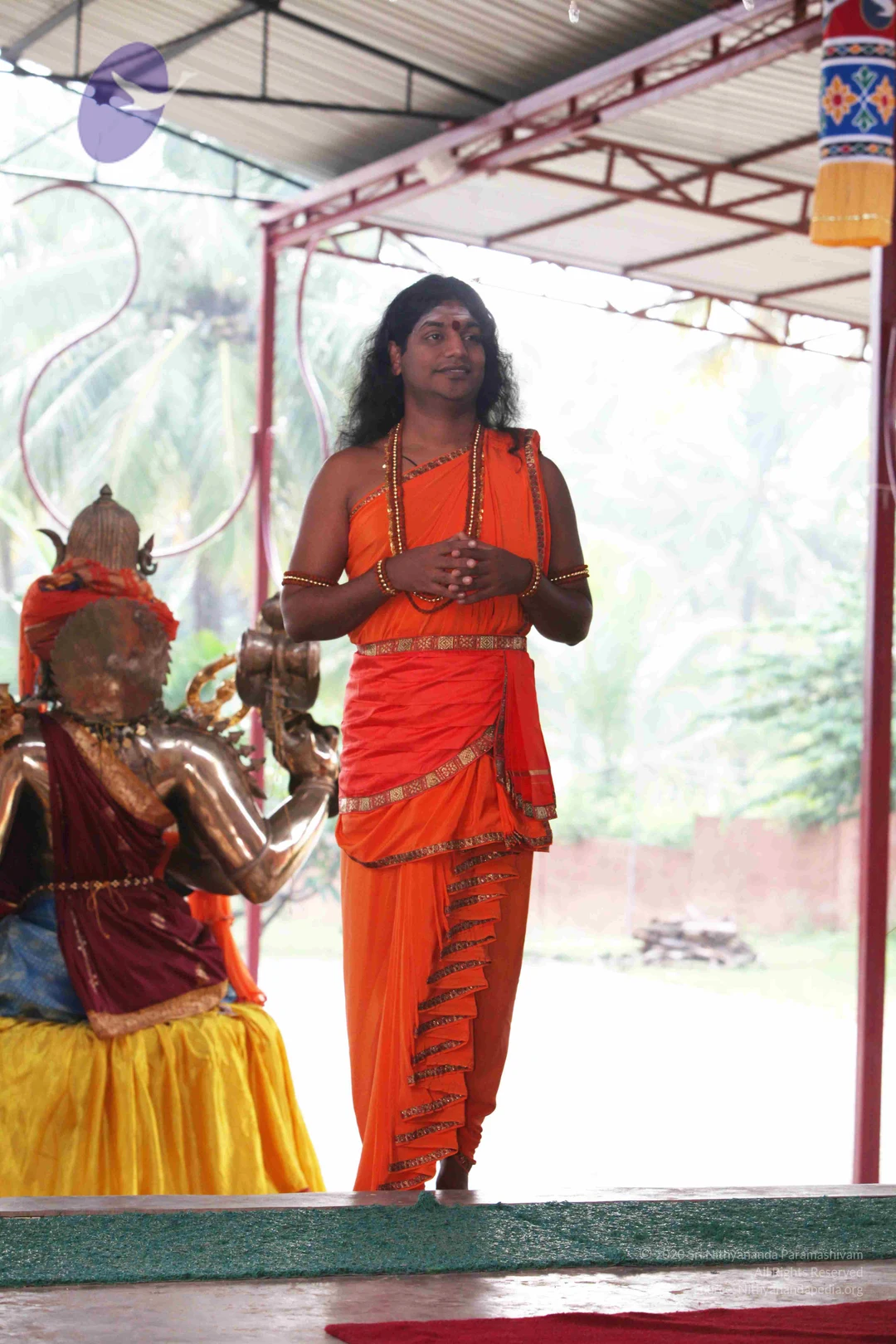
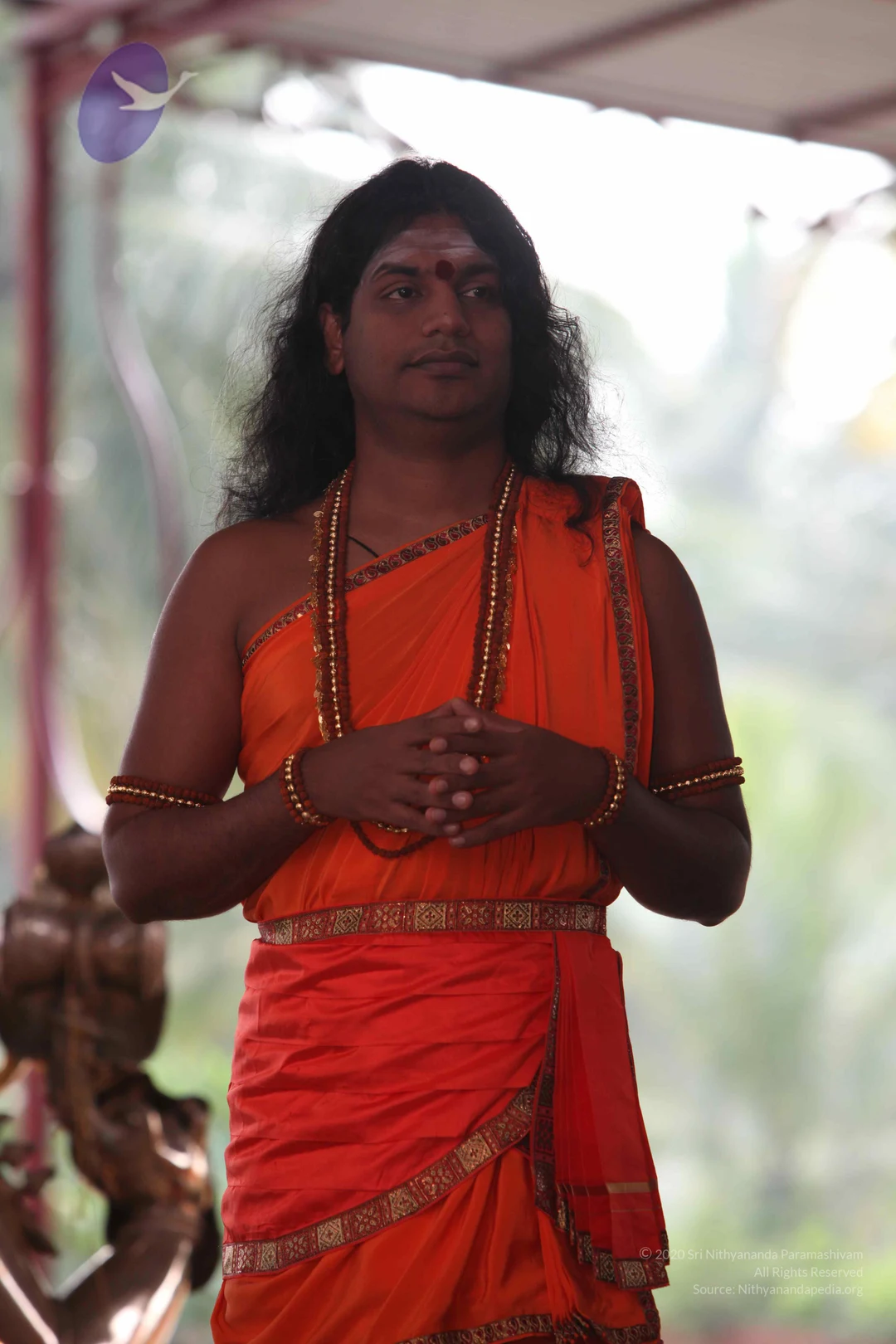
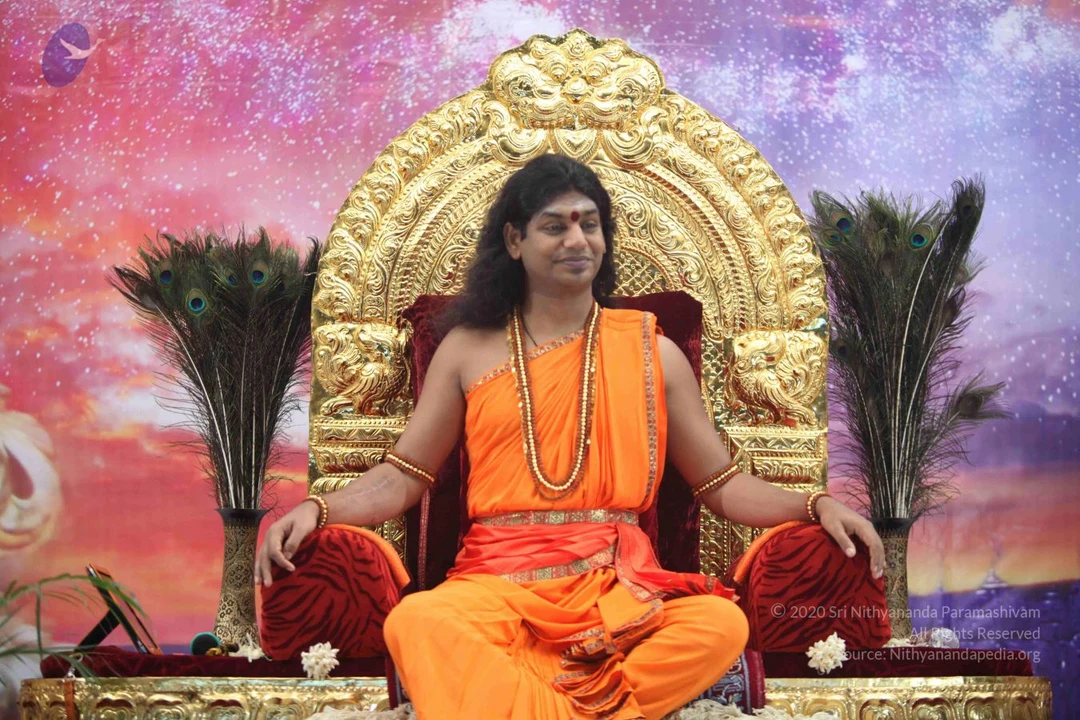
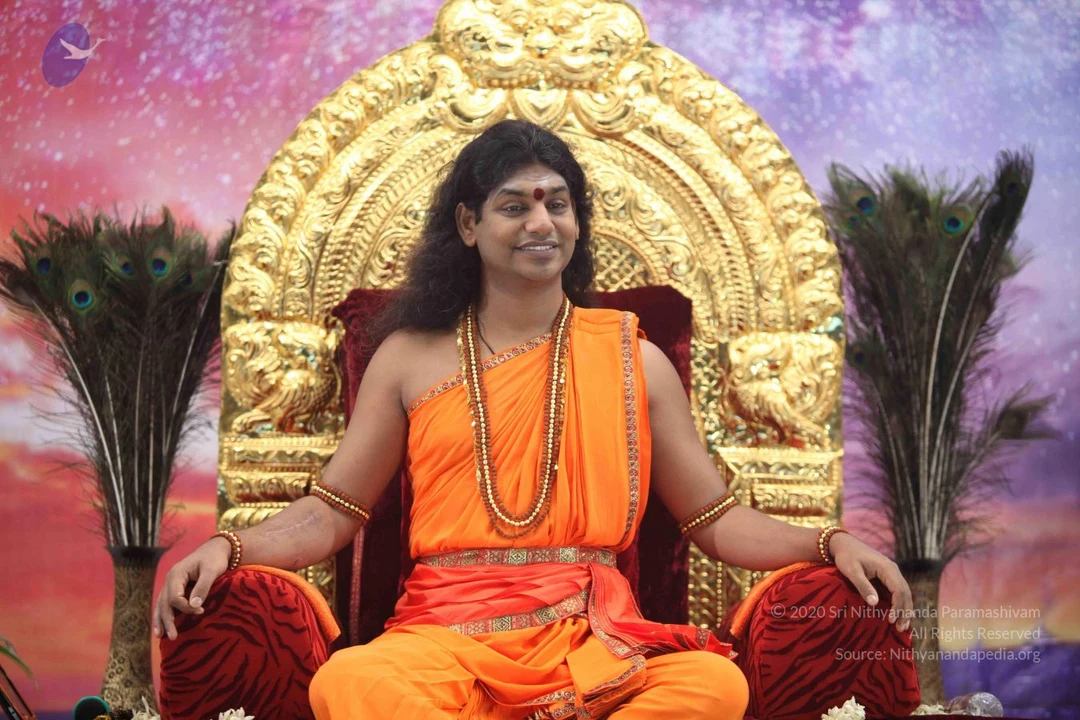
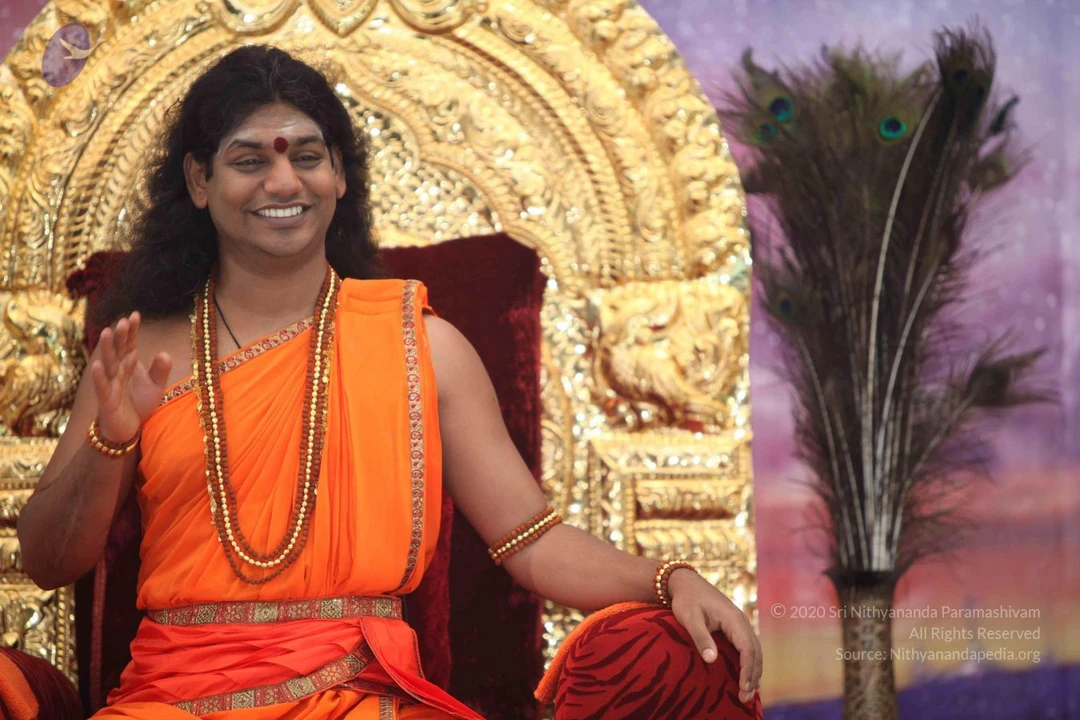
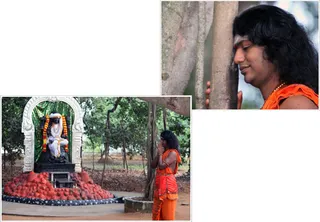
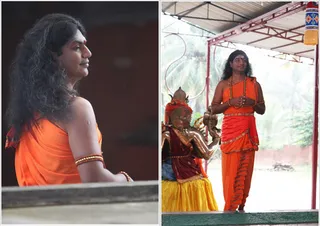
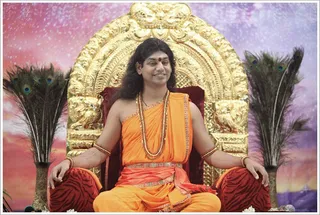
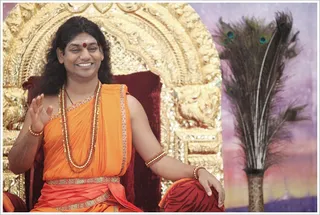
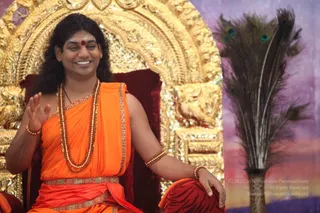
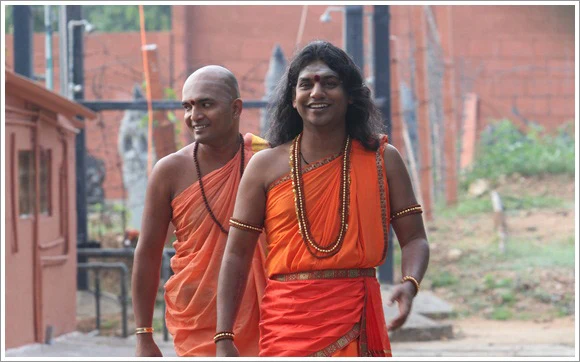
Outdoor photograph of two men in saffron-orange sannyasi robes walking side by side along a path between red brick walls and a metal fence. The man on the right has long, swept-back dark hair, a red bindi, a thick wooden bead mala and several gold-coloured ornamental necklaces and bangles, and he is smiling broadly. The man on the left is shaved-headed and wears a saffron wrap over one shoulder and a bead mala, also smiling. Behind them stand a stone sculpture and a small structure with a tiled roof. The scene looks like an ashram compound.A standing man in saffron-orange robes stands barefoot on a dirt ground before a massive banyan tree with many aerial roots and thick trunks. He wears a long swept-back dark hair, a red tilak mark on his forehead, multiple rudraksha beaded malas around his neck, orange bangles on his upper arms, and a draped orange shawl over one shoulder, with his hands folded in front of him and his gaze directed to the side. Low concrete steps and a dark mat lie at the base of the tree.A two-panel collage of outdoor photographs. The left panel shows a white stone statue of a seated deity under an arched white frame with green fabric backdrop, draped with orange marigold garlands and set on a mound of red-orange flowers, with a bare-chested person in orange clothing standing with palms joined in prayer beside it under trees. The right panel is a close-up of a person in orange robes and a rudraksha mala, eyes closed, leaning against a tree trunk with a hand pressed to the bark. The collage shows no printed text; the visible people are photographed in the scene, and the pictured activity is worship at a shrine.A two-panel collage of photographs. The left panel shows a long-haired figure in profile wearing an orange-saffron shawl draped over the shoulder and gold bangles on the wrist, seated at a stone ledge. The right panel shows a long-haired figure in orange-saffron robes and a rudraksha mala standing with hands folded in front of a temple-style setting with a golden deity murti and a kalasha-like decoration, with a red-roofed shelter and greenery behind. The collage shows no other physical people.A photograph of a seated man in saffron-orange robes on an ornate golden throne with lion-carved armrests and a gold arched backrest. He wears long dark hair, a wrap draped over one shoulder, a long rudraksha mala and gold necklaces, plus gold bangles. He sits with hands resting on red-and-black tiger-striped cushions, smiling. Peacock feather fans stand on either side and a pastel sunset-style backdrop fills the background. Swamiji (probable), seated on the throne, with the cues of long hair, saffron clothing, rudraksha mala and gold ornaments.A smiling man with long dark hair and a red bindi sits on an ornate gold throne with carved golden details. He wears an orange saffron wrap, a gold-trimmed orange garment, and multiple rudraksha-style bead malas around his neck, with gold bangles on his wrists. His right hand is raised in a gesture while his left rests on his lap. Beside him stands a tall vase of peacock feathers against a soft pink and lavender backdrop.

Temple

21 photosSource gallery
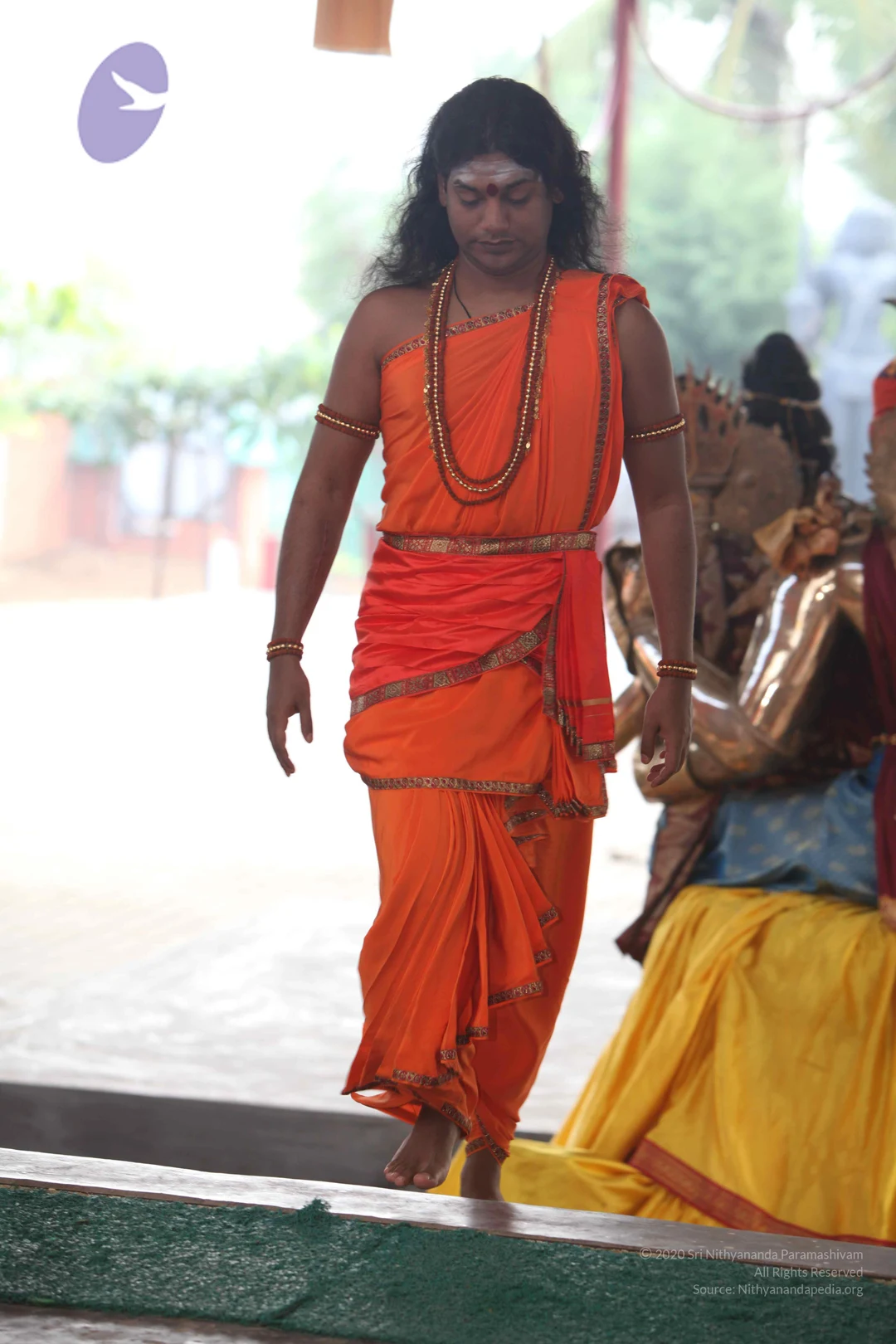
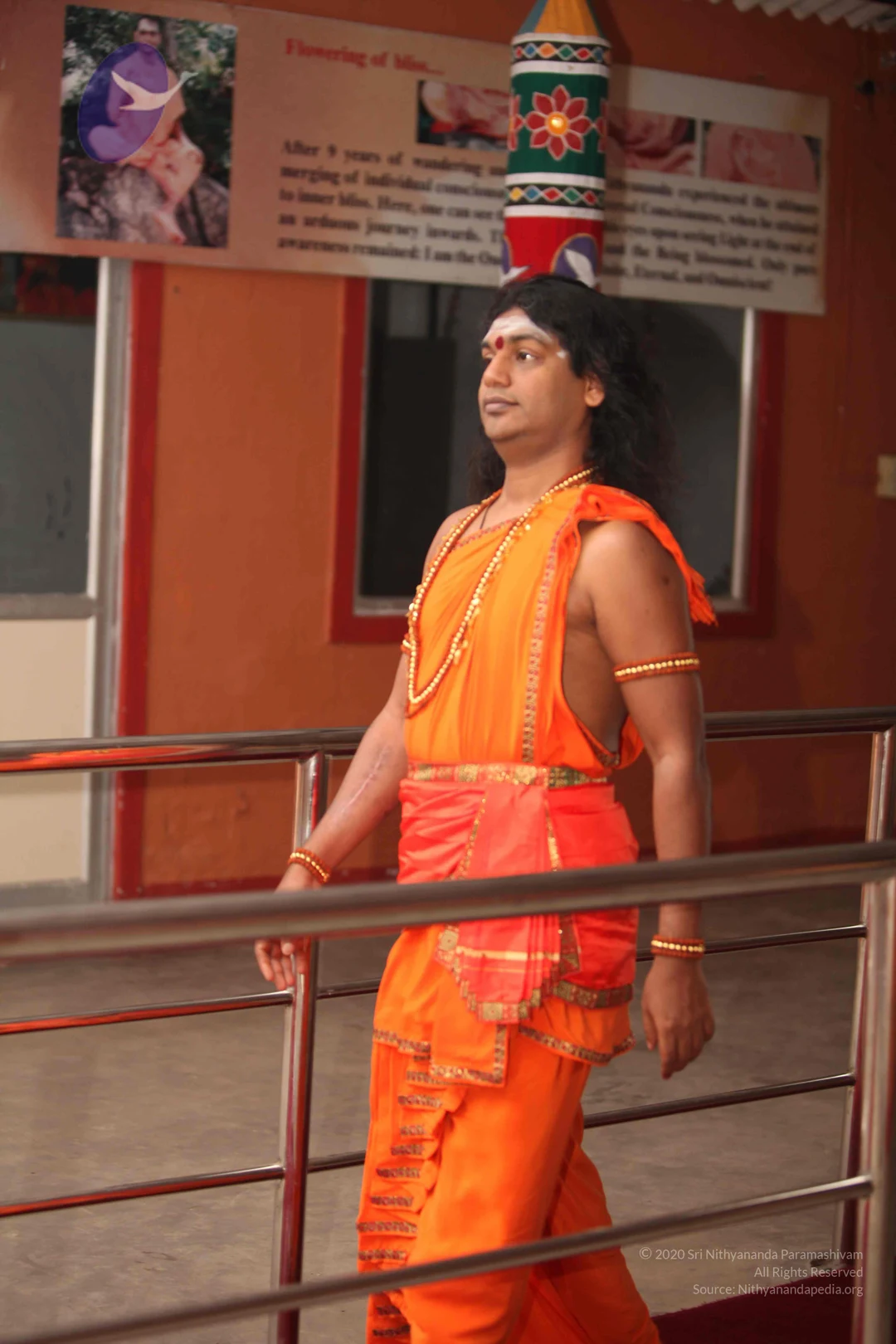
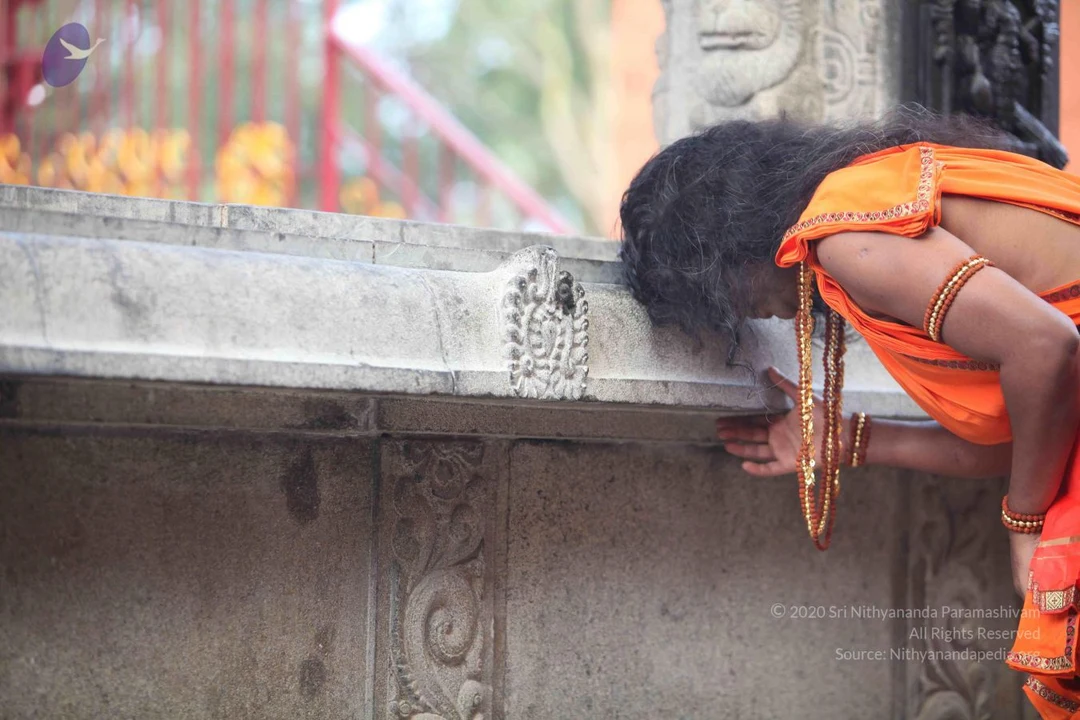
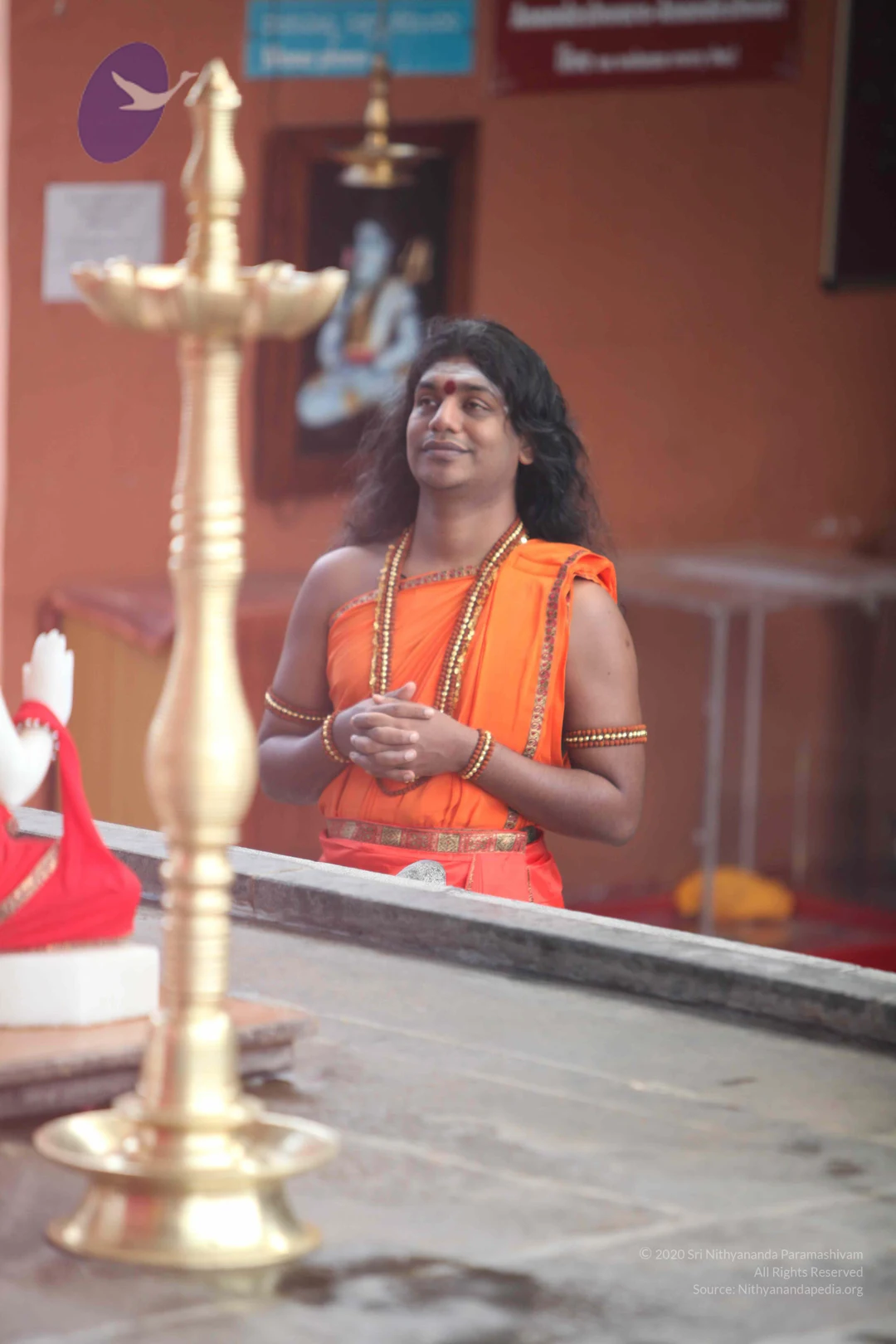
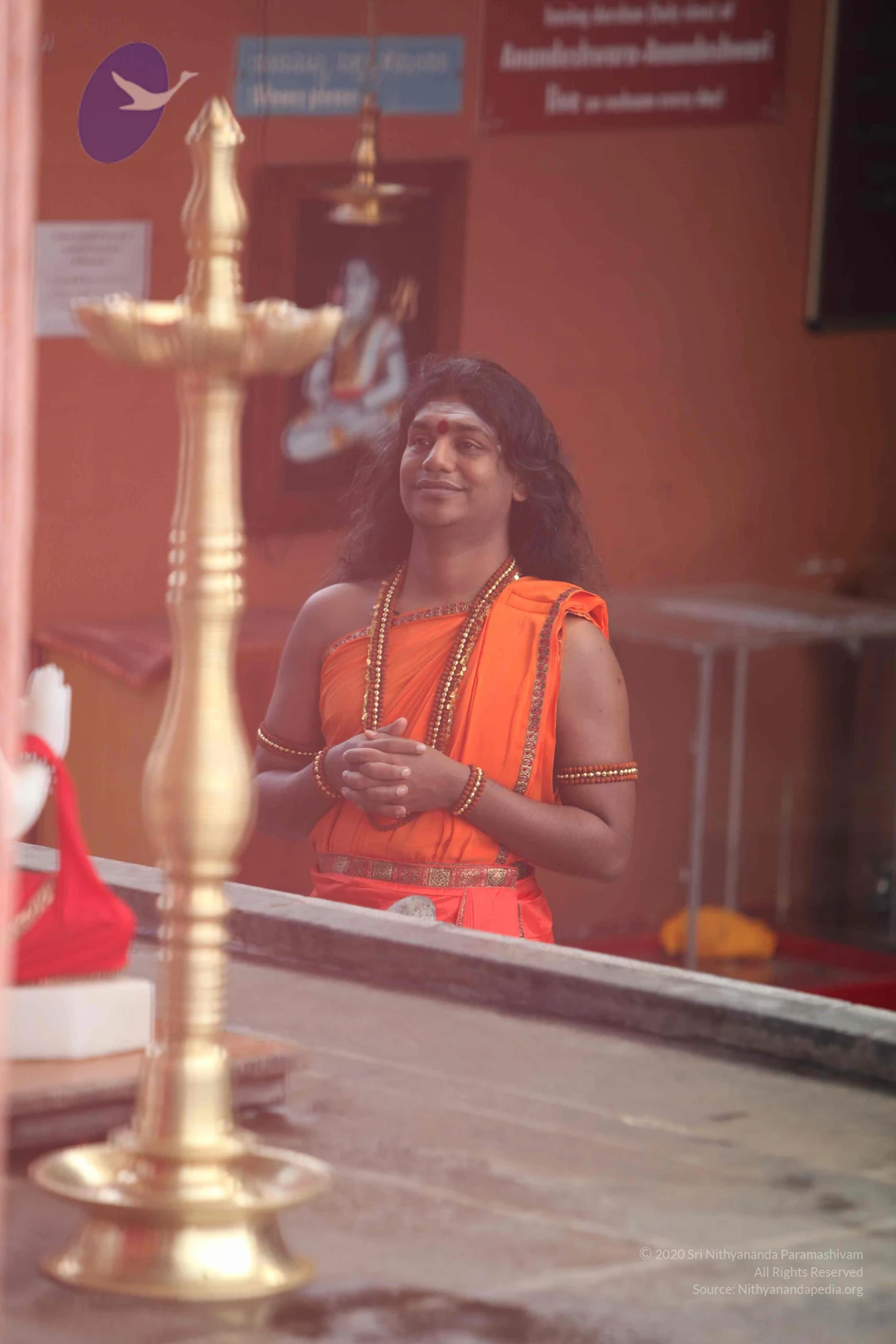
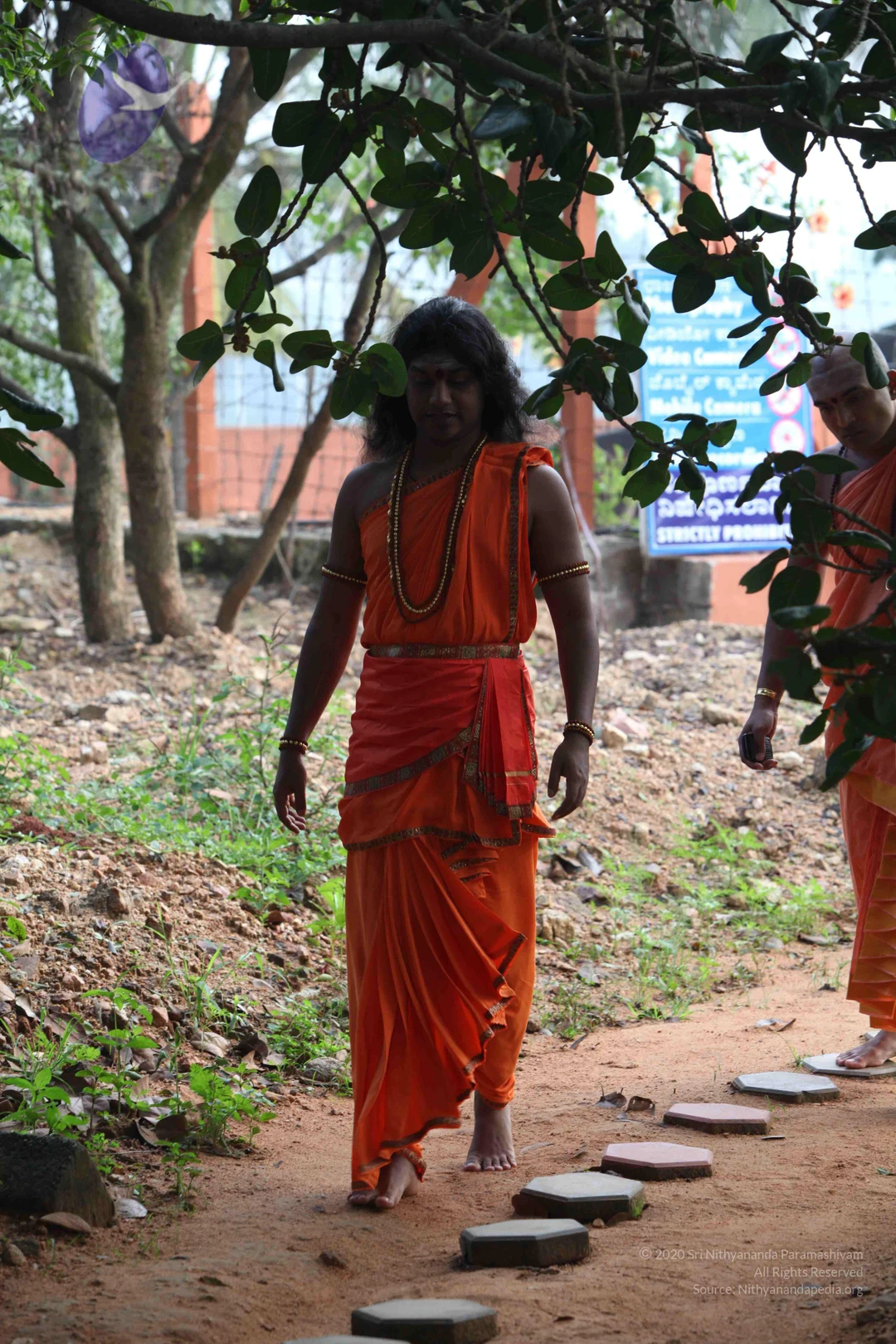
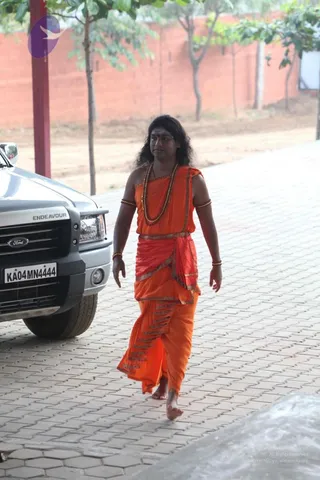
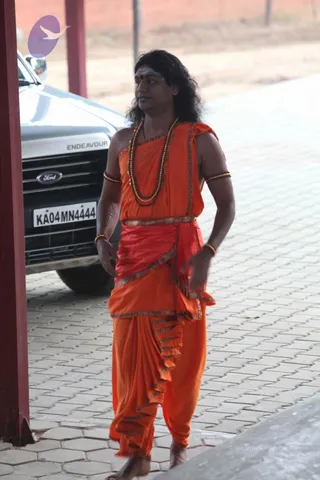
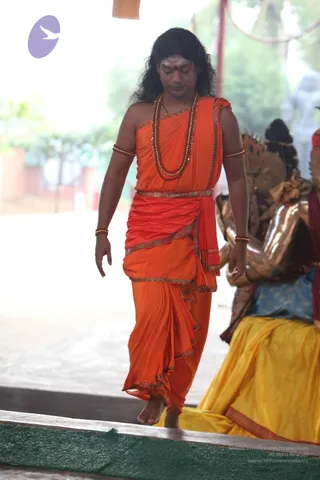
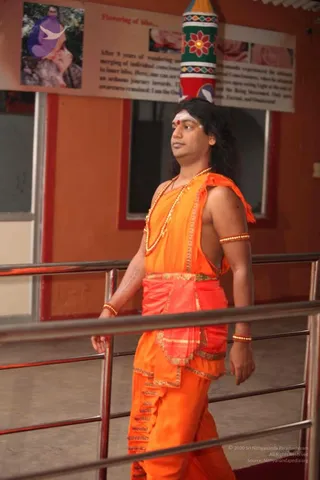
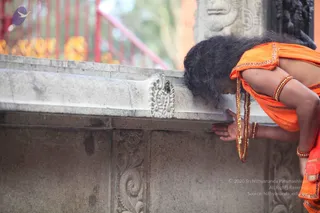
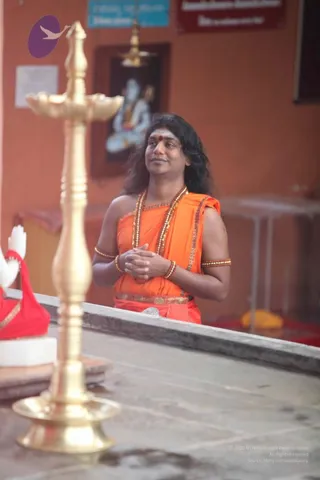
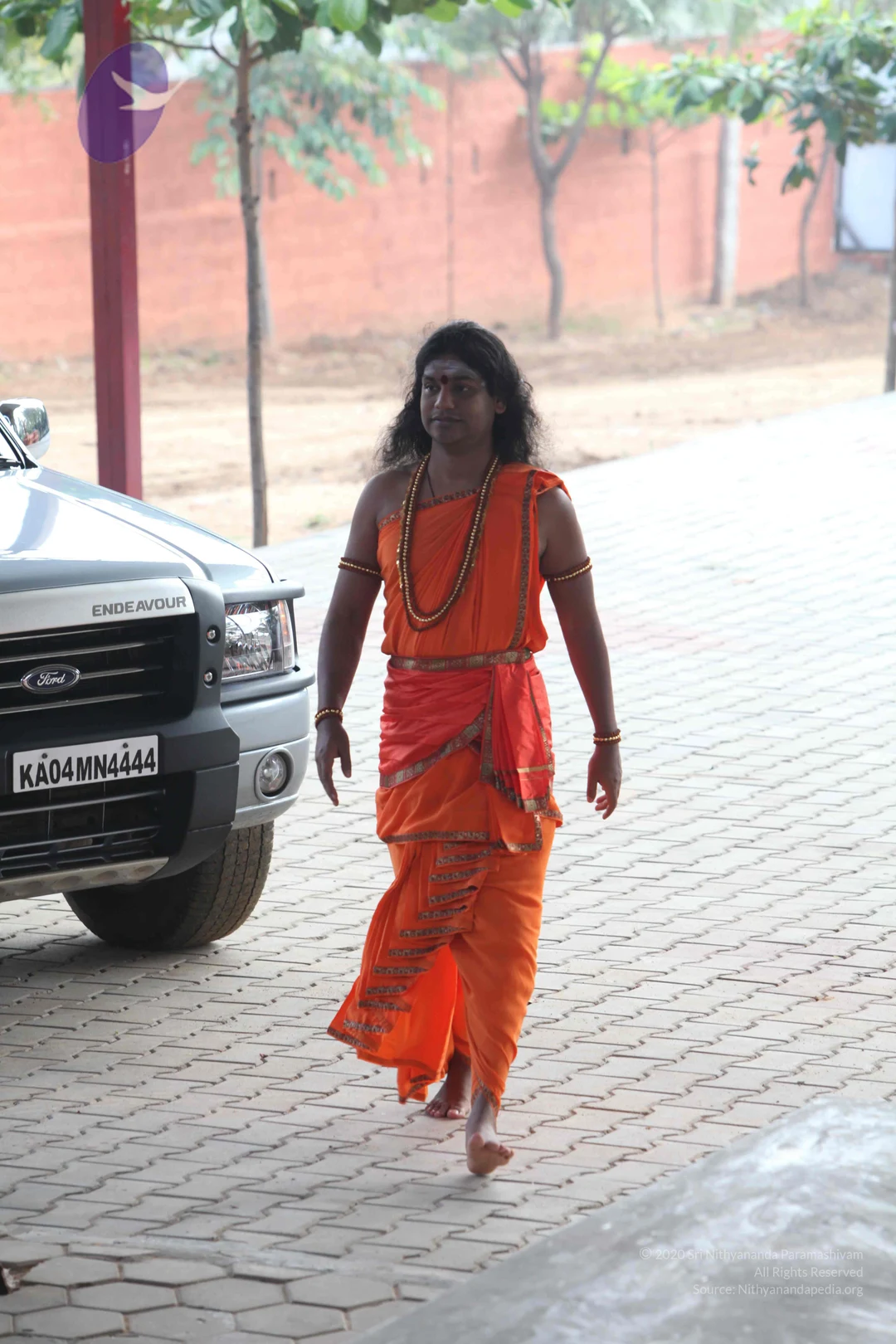
A barefoot man with long, swept-back dark hair walks across a paved courtyard beside a silver Ford Endeavour SUV. He wears an orange saffron wrap draped over one shoulder with a gold-bordered orange sash at the waist, a long rudraksha-style bead mala around his neck, beaded gold-toned bands on his upper arms and wrists, and a red bindi on his forehead. Behind him are a red-brown brick wall, trees and a covered walkway. A single person is visible.A man with long, wavy dark hair and a red tilak on his forehead walks barefoot along a paved pathway under a covered walkway with red pillars. He wears a flowing saffron-orange draped garment with gold-bordered edges, a red-orange waist sash, gold armbands, gold bangles and a long double strand of wooden beads or rudraksha-style malas around his neck. A silver Ford Endeavour with registration KA04MN4444 is parked behind him. a person: the figure shows long swept hair, saffron clothing and ornate malas, consistent with the page's reference to a person.A barefoot man with long dark hair walks along a stone ledge in an open pavilion. He wears a saffron-orange draped garment with gold-bordered trim, a belt, a beaded necklace of red and gold beads, and bangles on his arms. A white tilak and red dot mark his forehead. Behind him, a gilded deity murti and a figure in yellow robes are seated; a white statue stands in the background. Swamiji (probable), walking in a temple procession, is shown with saffron clothing, long hair and a rudraksha-style mala.A man in flowing saffron-orange robes and a matching orange sash walks beside a metal railing inside a room with orange walls. He wears gold-beaded necklaces, gold armbands and bangles, and a white and red forehead marking. His long dark hair is swept back, and a tall painted wooden finial with red flower motifs stands on the wall above him. Behind him, a panel titled 'Flowering of bliss' with photographs and text is mounted on the wall. The figure appears to be Swamiji (probable), identified by long swept-back hair, saffron clothing and rudraksha-style gold beaded necklaces, standing as a visitor in an exhibition setting.A photograph of a person in an orange-saffron garment bending forward over a grey stone ledge carved with decorative stonework, head lowered close to the stone and one hand resting on the ledge. The figure wears a saffron cloth edged with gold trim, gold bangles on the wrist, and a long gold chain with red beads hanging at the chest. Long dark hair falls forward. A carved stone face and foliage motifs are visible above and below, with red railings and orange flowers blurred in the background.A photograph of a man with long, swept-back dark hair standing with hands pressed together in namaste at a granite ledge beside a tall brass oil lamp (nilavilakku). He wears an orange saffron dhoti and shawl with gold trim, gold-beaded rudraksha-style necklaces, gold armlets and bangles, and a red bindi. Behind him is a framed picture of a seated deity, and a red-draped white figure stands at left. Swamiji (probable) based on long swept-back hair, saffron clothing and layered ceremonial gold necklaces, shown in devotional posture at a temple setting.

BGSatsang
61 photosSource gallery
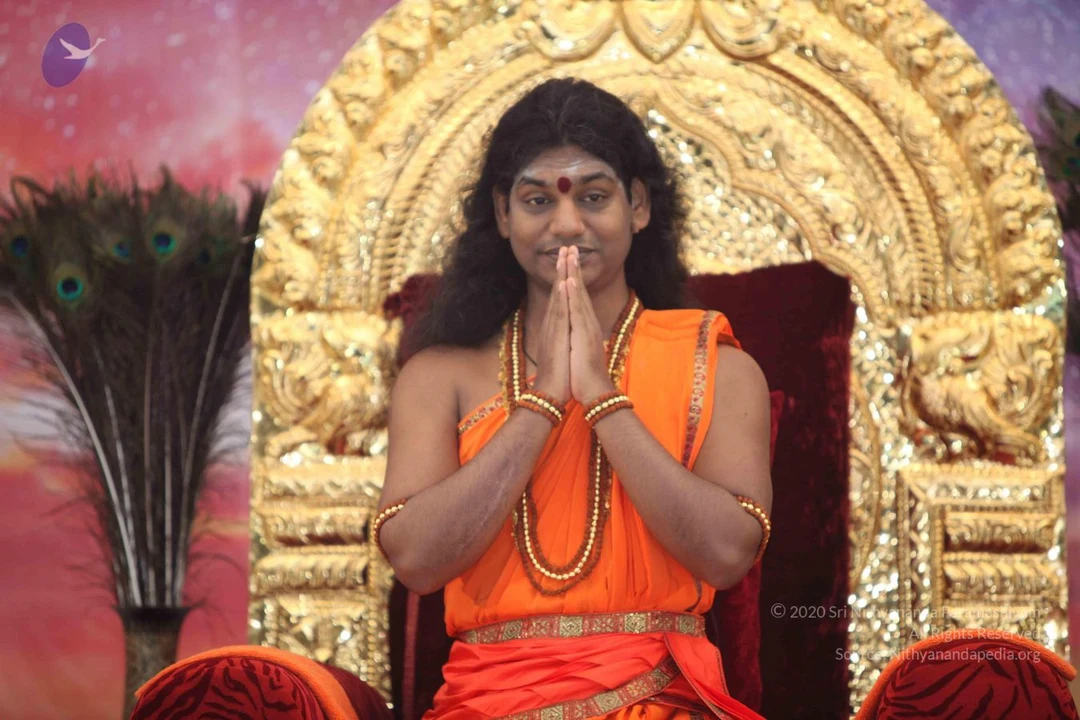
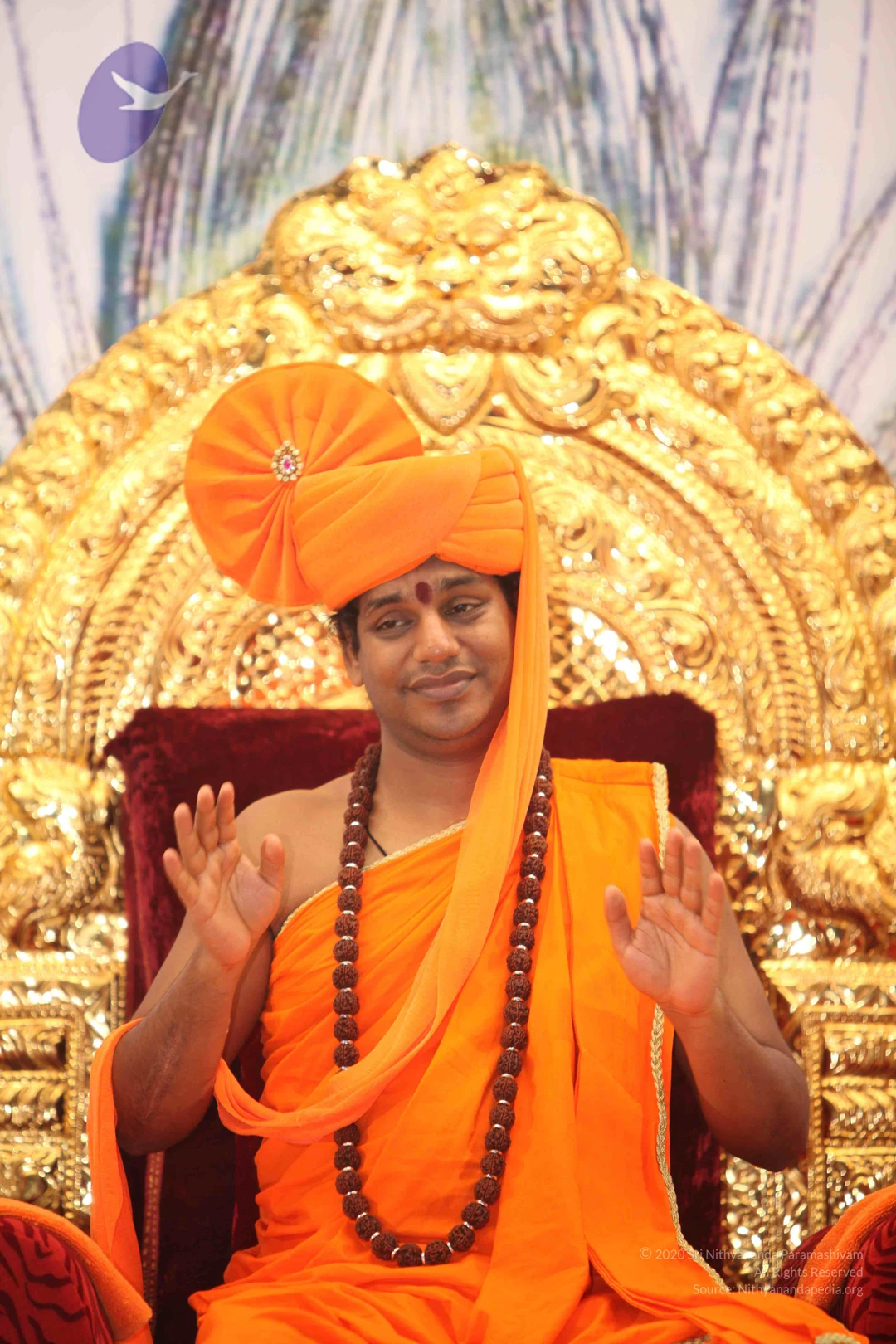
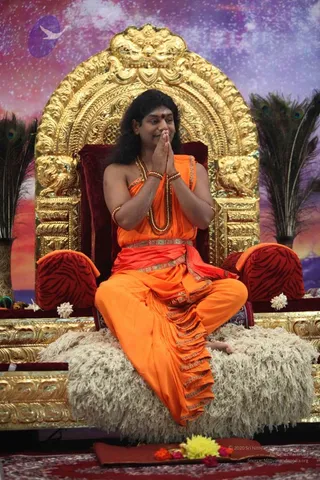
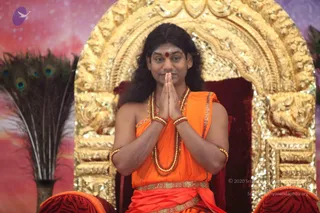
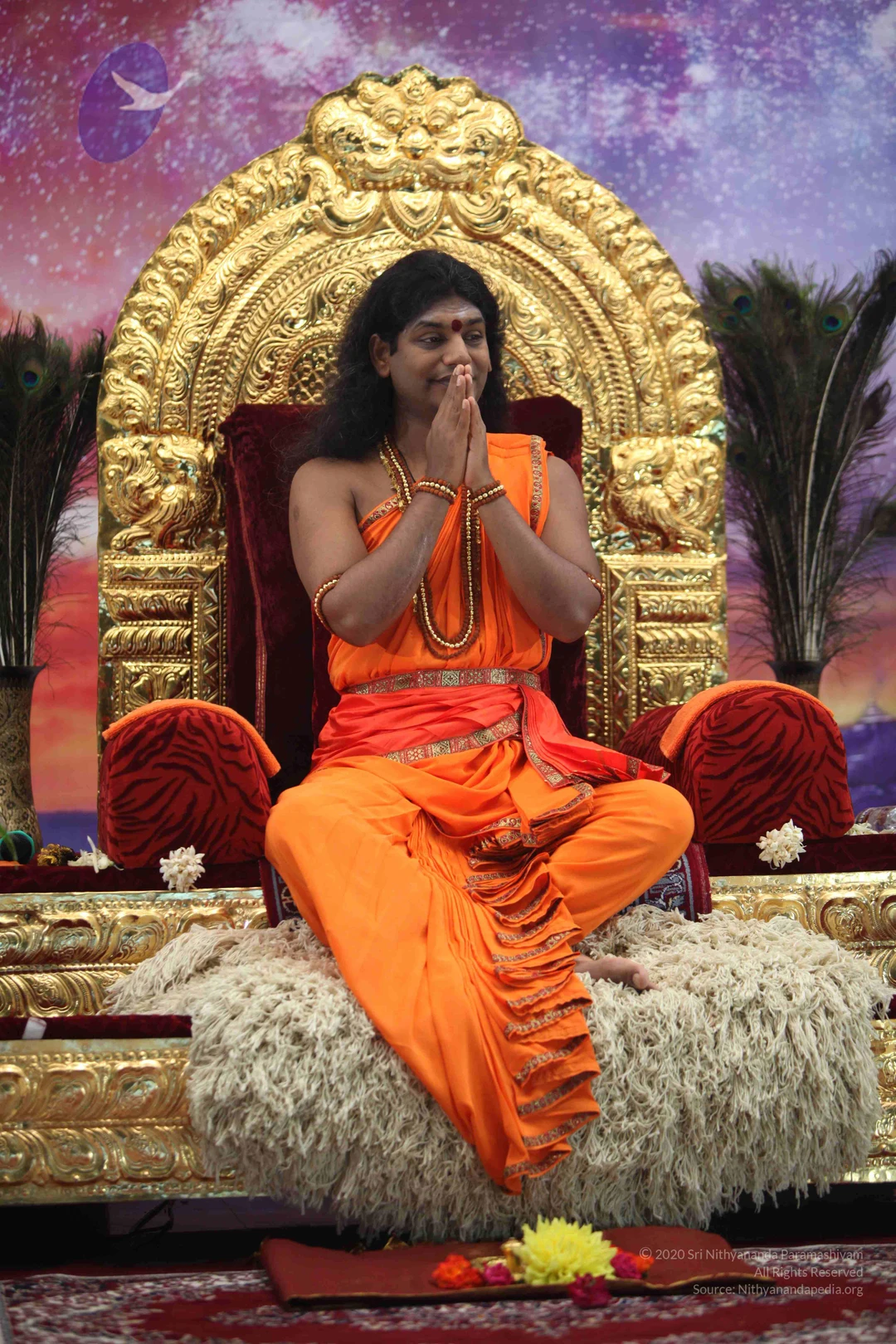
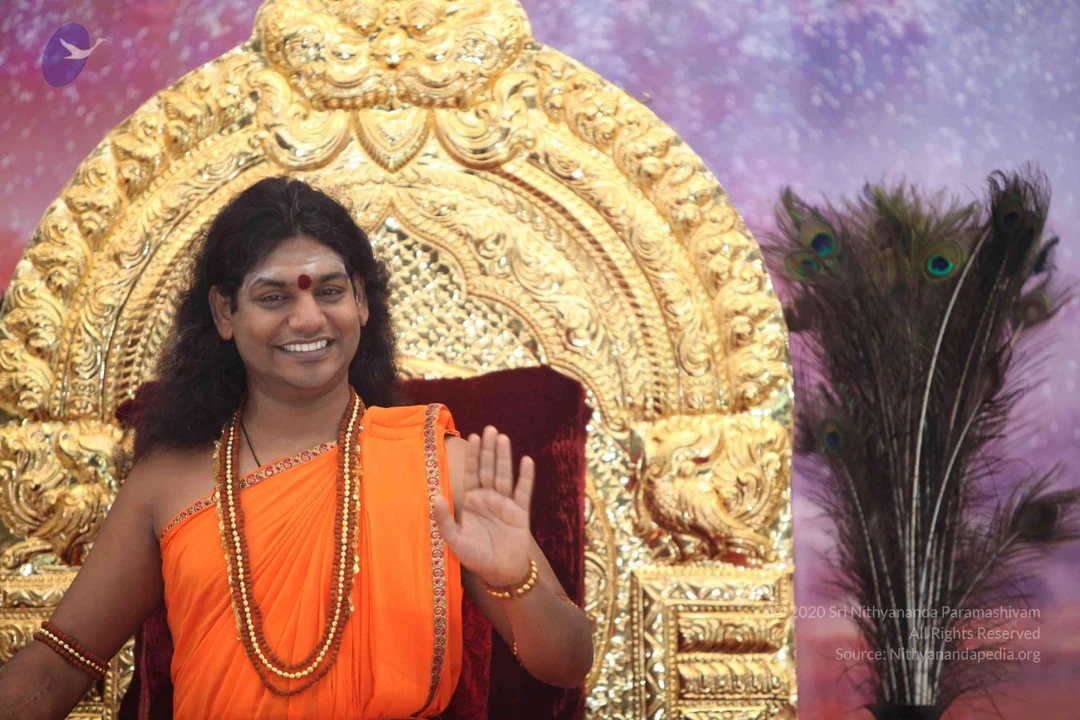
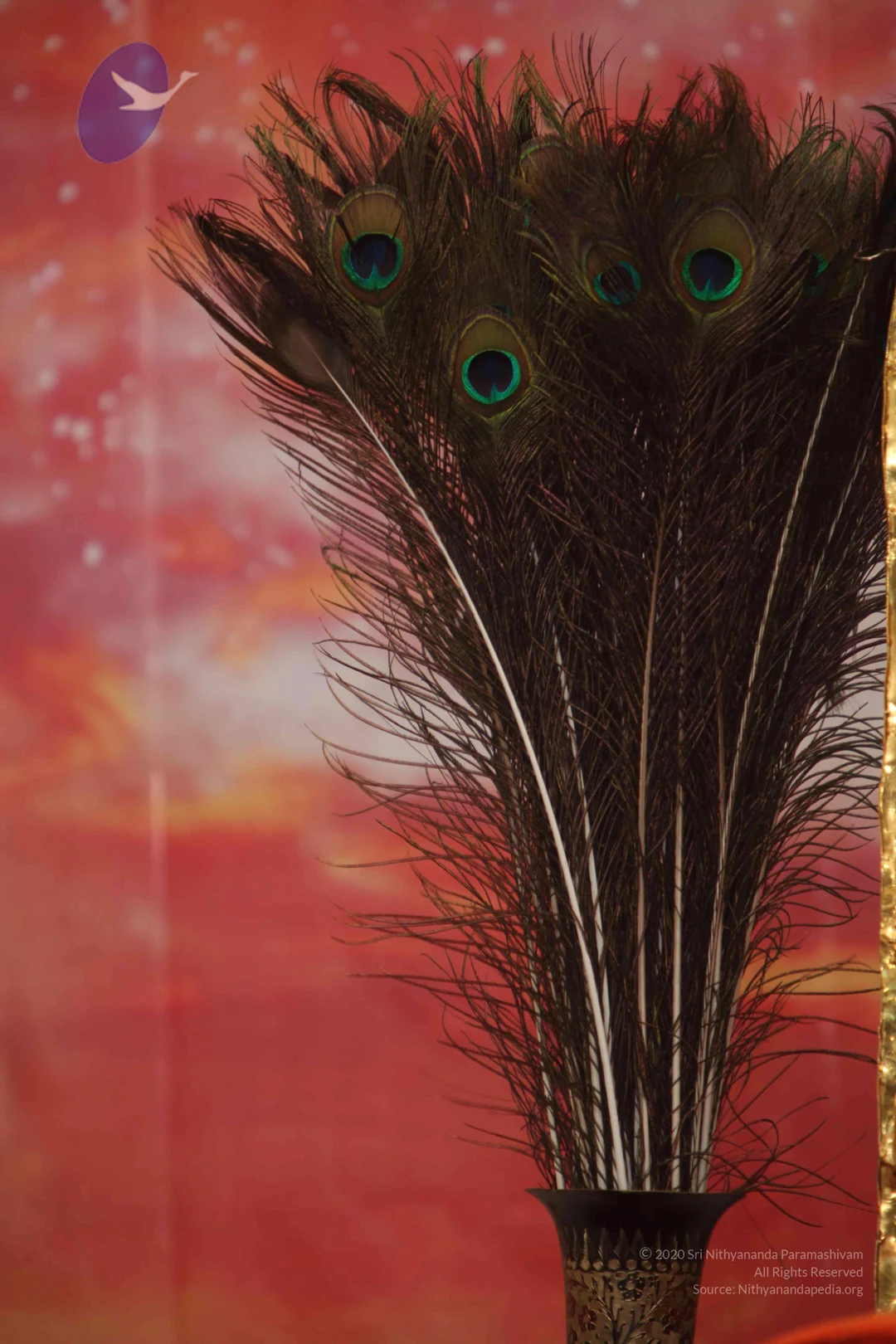
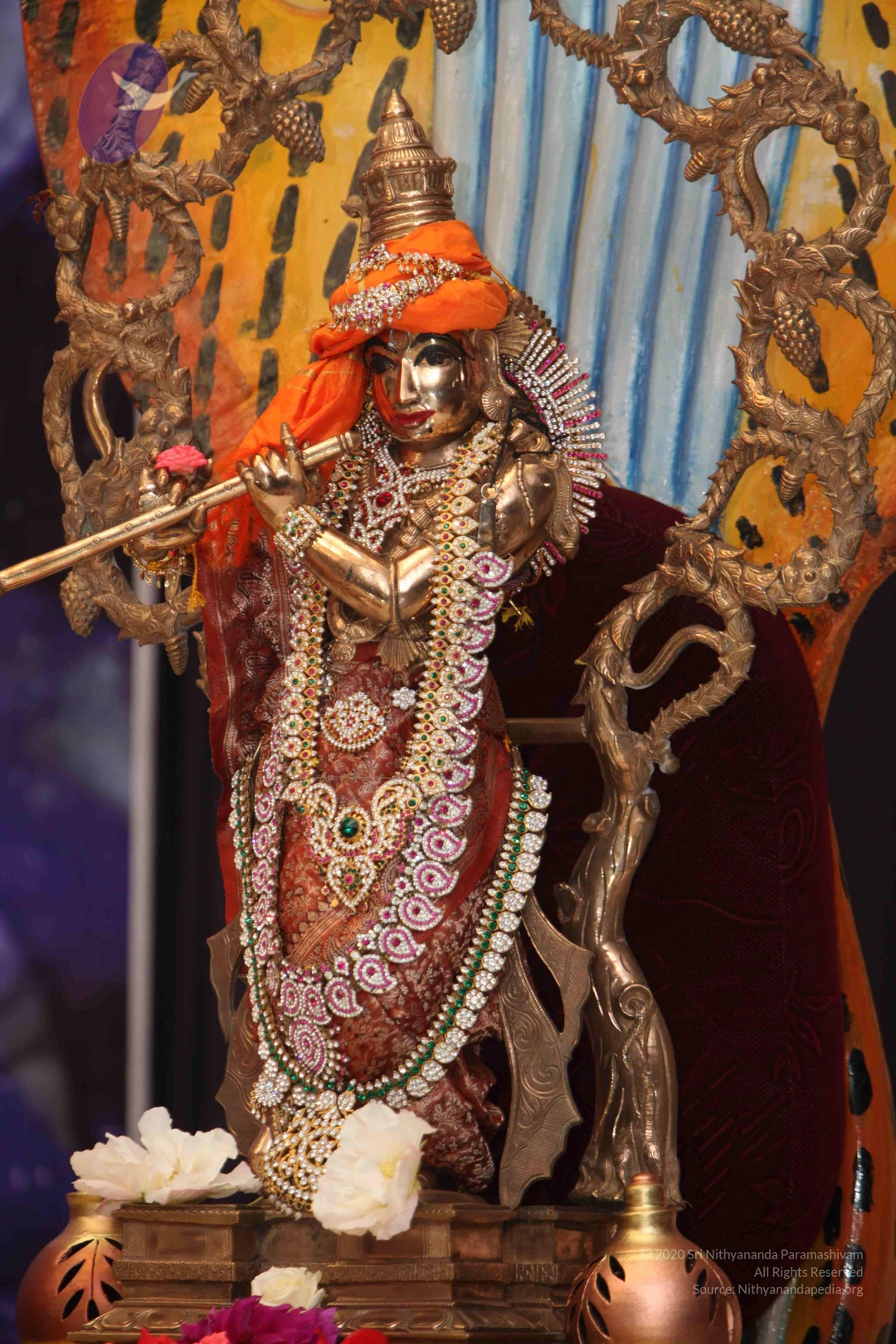
A seated man in orange-saffron robes sits cross-legged on a white shaggy cushion placed on an ornate gold throne with a red velvet back and tiger-striped red armrests. He wears a red bindi, a rudraksha mala and gold beaded necklaces, a gold-trimmed red sash and gold armlets, and holds his palms together in anjali namaskar. Peacock-feather fans stand behind the throne, backed by a pink and purple starry sky backdrop, with white flowers and a yellow and orange flower offering on the floor.A man with long dark hair sits cross-legged on an ornate gold throne with carved lion-head armrests and a red cushioned seat, set on a gold-embellished platform. He wears a saffron-orange robe with a red-and-gold waistband, a long beaded rudraksha-style mala, gold bangles and a red bindi. Peacock-feather fans stand on either side of the throne, with potted palms and a brass oil lamp at the right edge. The backdrop is a painted pink and purple sunset sky with clouds. a person is seated in a teaching posture, hands resting on the armrests.A man sits cross-legged on an ornate golden throne with carved lion heads and a tall arched back, against a pink and purple starry sky backdrop. He wears saffron-orange robes, a red-orange waist sash, a long rudraksha mala and ceremonial gold necklaces, with gold bangles on his wrists and a red bindi on his forehead. He has long, swept-back dark hair and rests his hands on red tiger-striped armrests. Peacock feather fans in brass vases stand on either side, with white flowers at the base of the dais. Swamiji (probable) is seated in this throne setting, with a long swept-back hair, saffron robes and rudraksha mala cues.A seated man in orange saffron robes sits on an ornate golden throne with lion carvings and a deep red cushion, smiling with hands resting on red-and-orange tiger-striped armrests. He wears long dark hair, a red bindi, a rudraksha-style bead mala and gold ceremonial necklaces with bangles on his wrists. Peacock feather arrangements flank the throne against a purple and orange cosmic backdrop with stars. A white flower sits at the lower edge. The appearance is consistent with Swamiji (probable), seated in a teacher's role on the throne, with long swept-back hair, saffron clothing and ceremonial gold necklaces as the qualifying cues.A seated man with long dark hair and a red bindi on his forehead presses his palms together in anjali mudra in greeting. He wears an orange saffron garment draped over one shoulder with a golden border, multiple strands of beads and rudraksha-style malas around his neck, and bangles on his wrists. He sits before an ornate gilded throne arch with carved lion and floral reliefs, with red velvet upholstery visible, and a bunch of peacock feathers stands in a vase to the left against a pink and red starry backdrop. Appearance-based label: a person, in person, seated on the throne.A smiling man with long dark hair and a red bindi sits on an ornate gold throne with carved lion and foliage motifs, a deep red cushion behind him. He wears saffron-orange robes with gold-embroidered borders, a long rudraksha mala with a gold-bead necklace, and beaded bracelets. His right hand is raised in a gesture while his left rests on a red tiger-striped cushion. To the right, a tall peacock-feather bouquet stands in a vase against a purple and blue backdrop.
ASPKalpataru
9 photosSource gallery
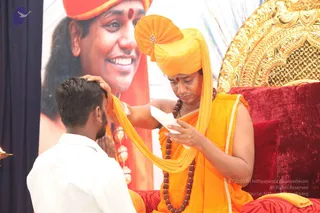
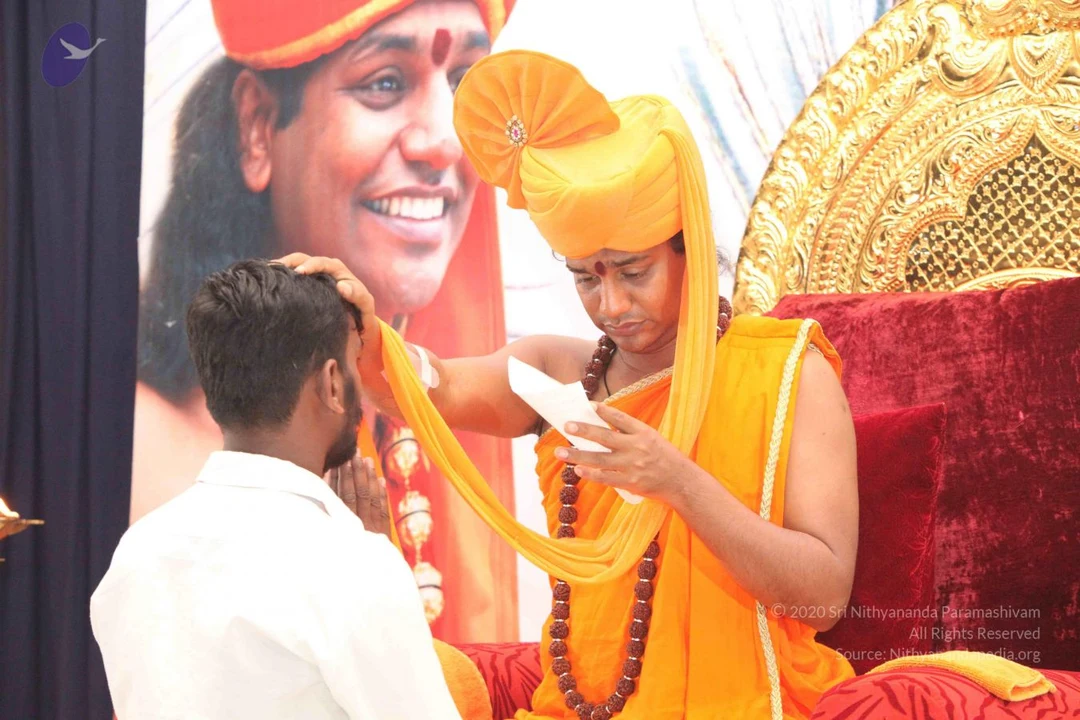
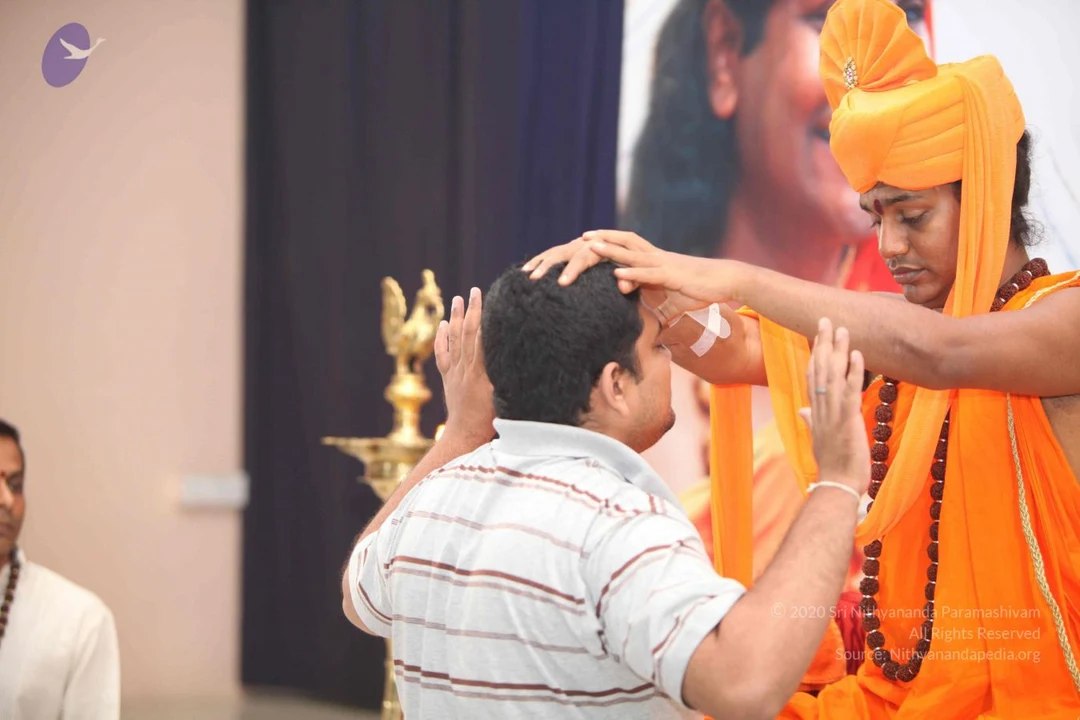
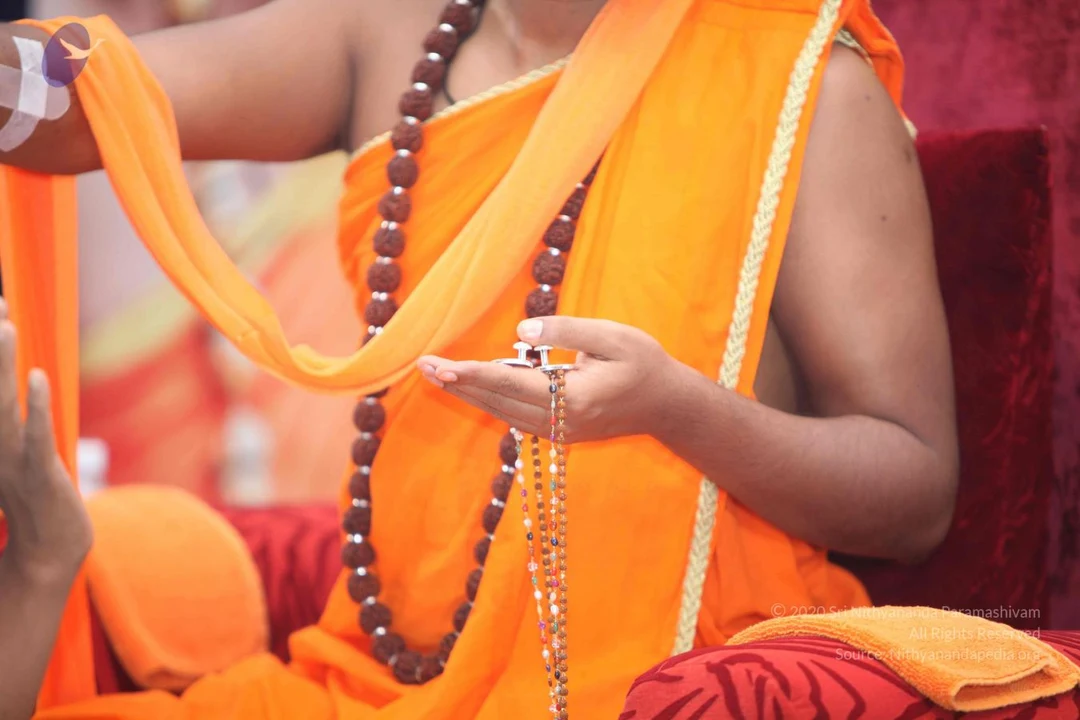
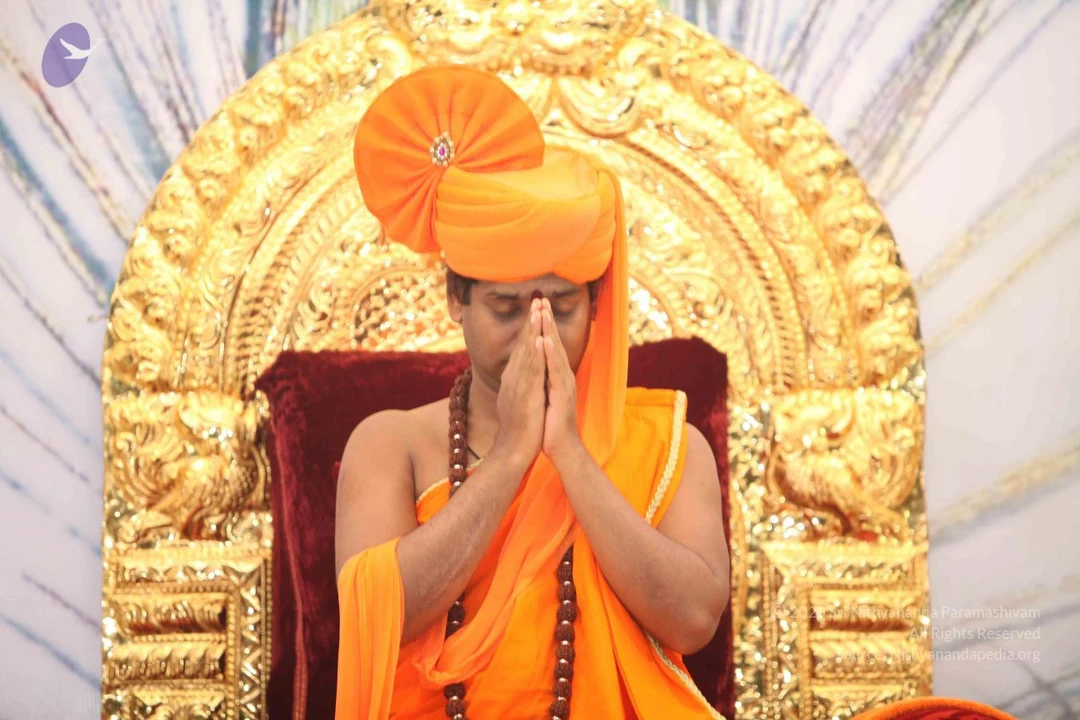
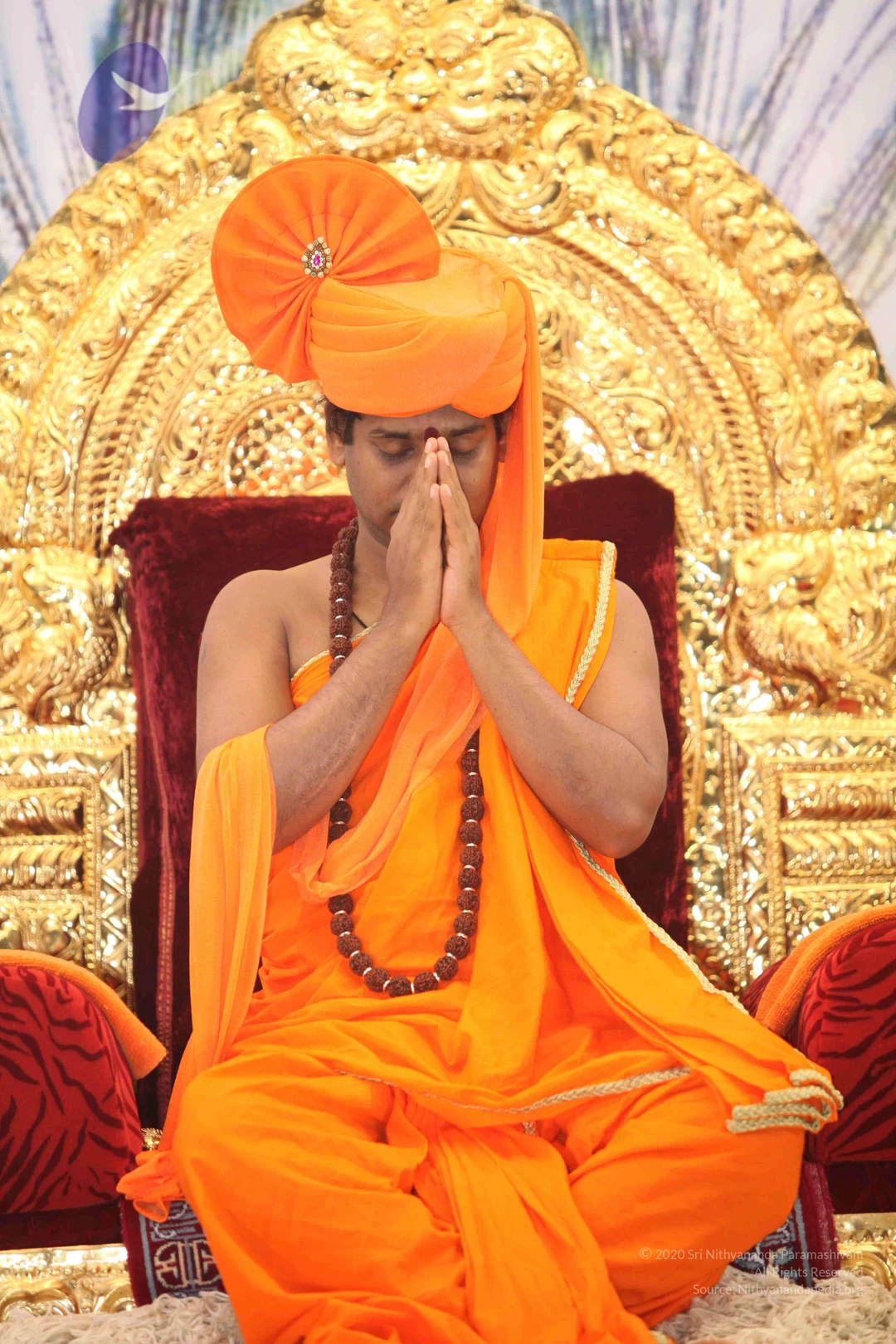
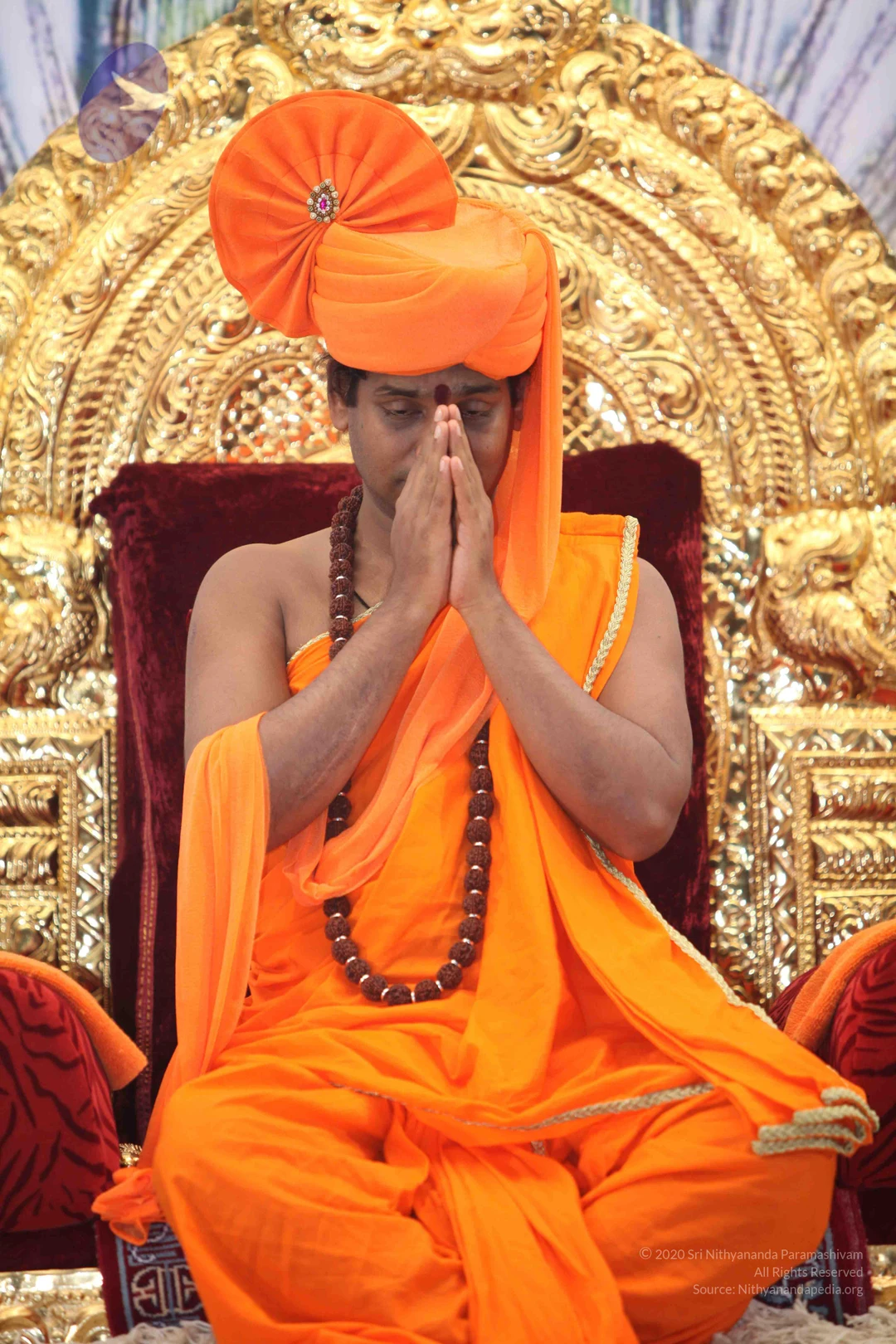
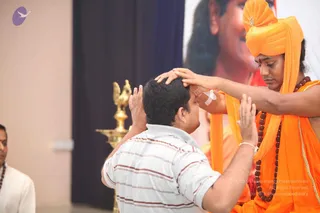
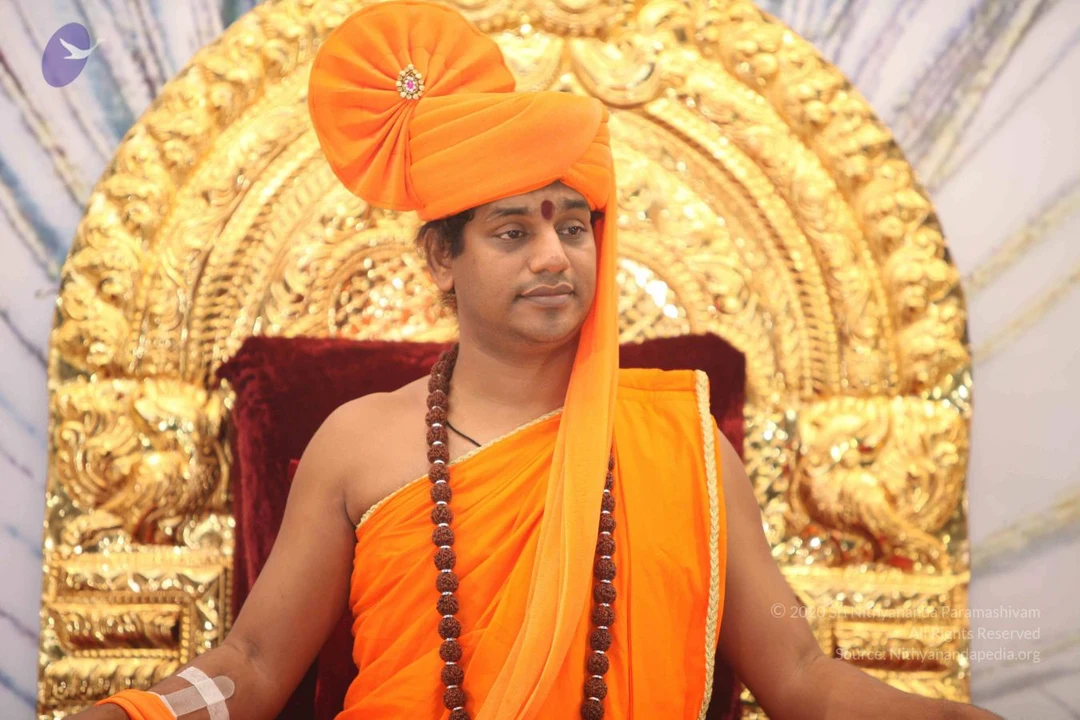
A man sits on an ornate gold throne with a deep red cushion, wearing an orange turban with a jewelled brooch and a red bindi, an orange shawl over the shoulders and bare chest, and a long rudraksha mala. A bandage shows on his left wrist. Behind him is a gilded arched backdrop with carved lions and floral detailing. The shawl and turban cues are distinctive, so the figure is a probable Swamiji seated in person on the throne.A seated figure in saffron-orange robes and an orange turban with a jewelled brooch, wearing long rudraksha mala beads, places a folded white cloth or prasad on the head of a kneeling man in white clothes with his hands in anjali mudra. The seated figure sits on a red velvet cushioned throne with ornate gold carving behind it. A large backdrop portrait behind shows a smiling man with a red turban and vibhuti on his forehead. Dark blue curtains are at the left edge.A photograph of an indoor blessing. A man in orange robes with an orange turban and a long rudraksha mala places both hands on the head of a seated man in a white and brown striped polo shirt, who holds his palms together in prayer. The orange-clad figure has a bandage on one wrist and a small red tilak on the forehead. A brass oil lamp stands at left beside a dark blue curtain, and a large portrait behind shows a smiling figure. A man in white clothing with a rudraksha mala sits at the far left edge. Swamiji (probable): the orange-robed figure in the turban and rudraksha mala is the most.Close photograph of a seated figure in saffron-orange robes with a cream border, wearing a long rudraksha mala with brown seeds and silver spacers, and a multicoloured beaded strand hanging from the hand. The figure holds the right hand open, palm up, with a silver ring, while the left arm lifts a loose orange cloth. A red velvet seat and orange cushion are visible behind, and a hand of another person appears at the left edge. a person is shown in appearance-based cues: saffron robes, rudraksha mala and ornate attire, though the face is not visible.A man seated on a red velvet cushion before an ornate gold throne arch with carved lion figures, his palms pressed together in namaste at chest level with eyes lowered. He wears a saffron-orange turban with a small jewelled brooch, an orange shawl draped over bare shoulders, and a brown rudraksha mala around his neck. Behind the arch is a pale blue and white backdrop with radiating lines.A seated man in saffron-orange robes and a matching orange turban with a small jewelled brooch sits before an ornate gold throne with carved lion-like finials and a deep red cushion. He has his palms pressed together in namaste and eyes closed, wearing a long rudraksha mala and a red tilak on his forehead. Behind him a radiating pale backdrop with pastel streaks. A partial orange cloth is visible at the lower right edge.