Skip to content
Monday

8 November 2010

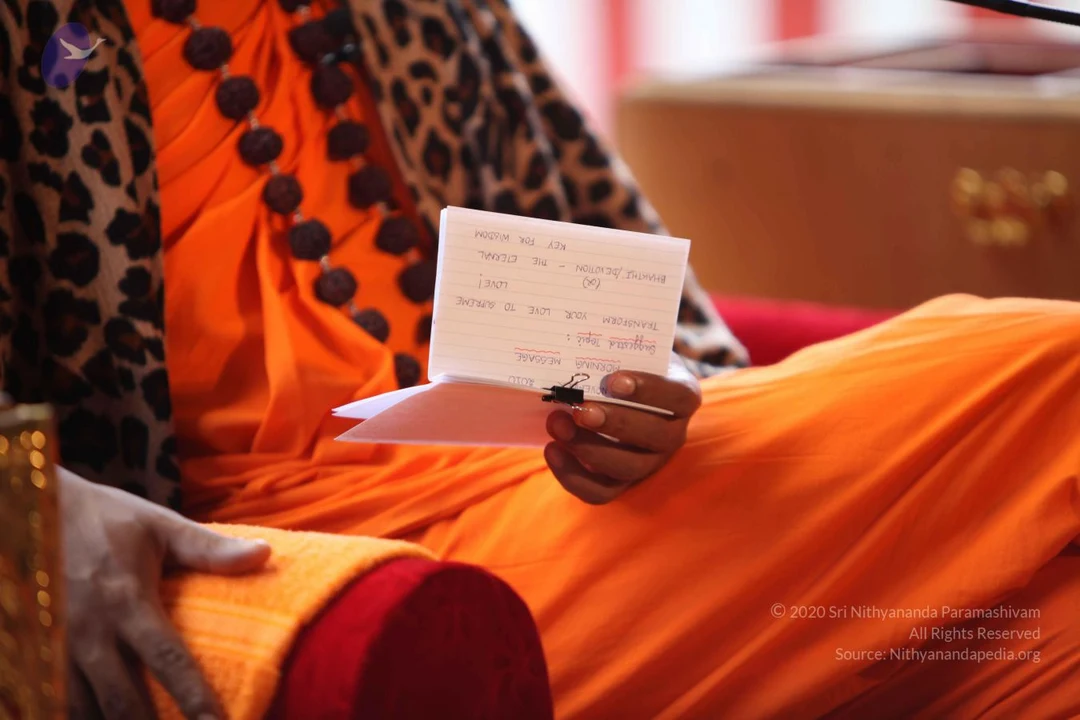
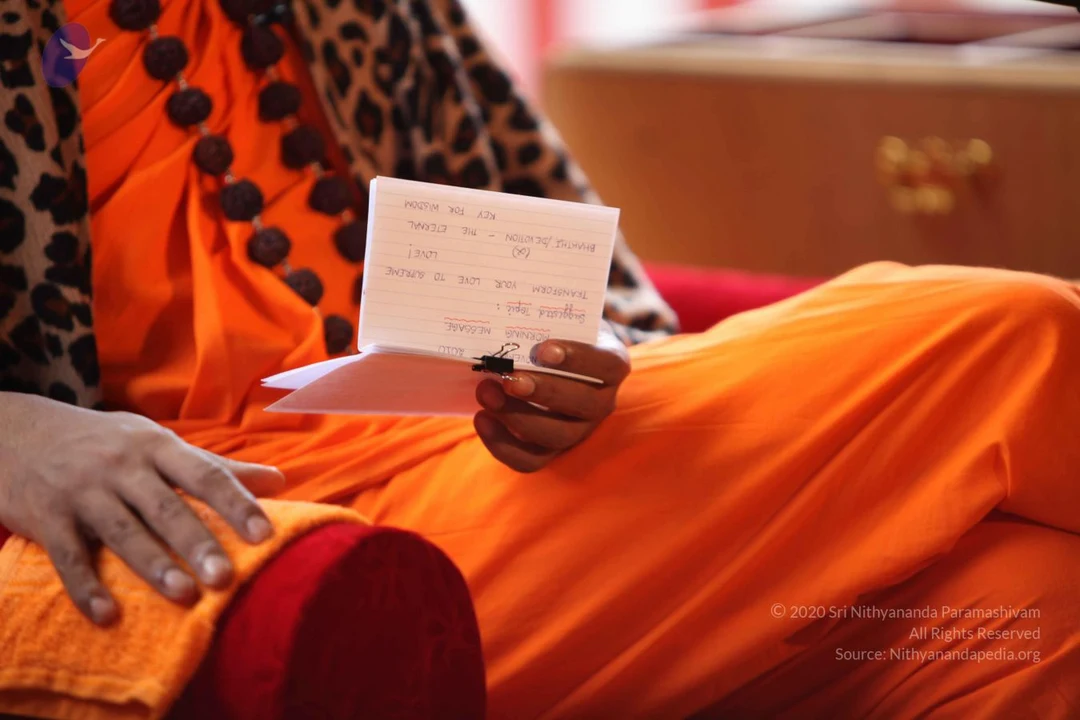
Bhakti - The Eternal key for Wisdom: Nithyananda Morning Satsang (08 Nov 2010) Message

Dated photos
403
Source pages
1
Media
3
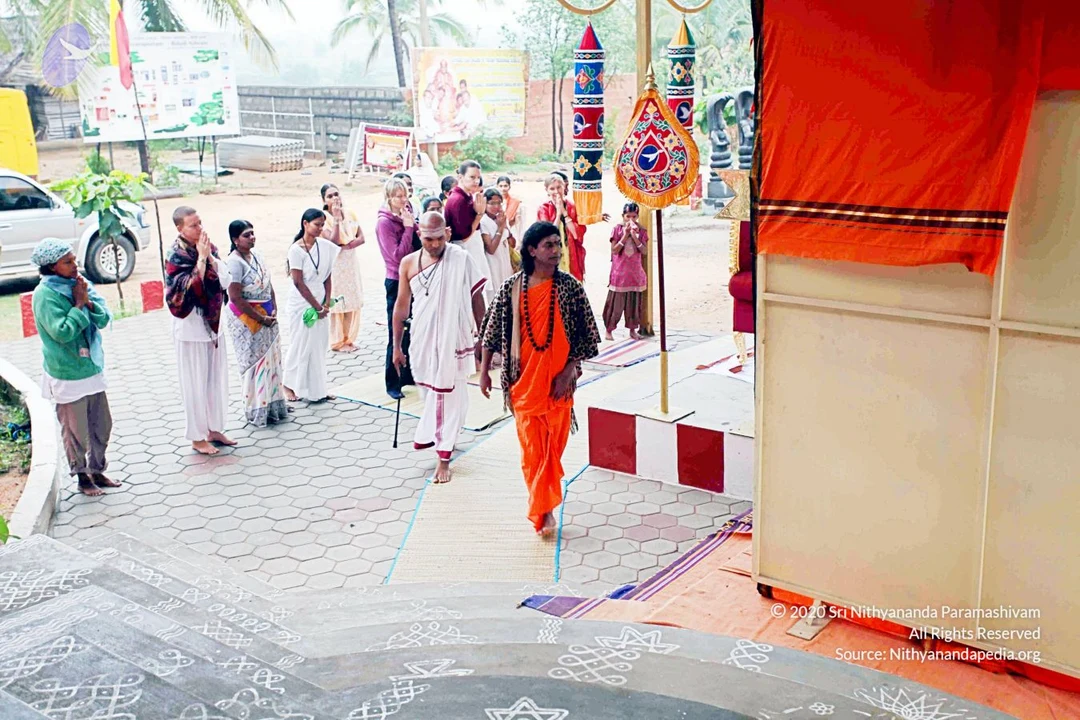
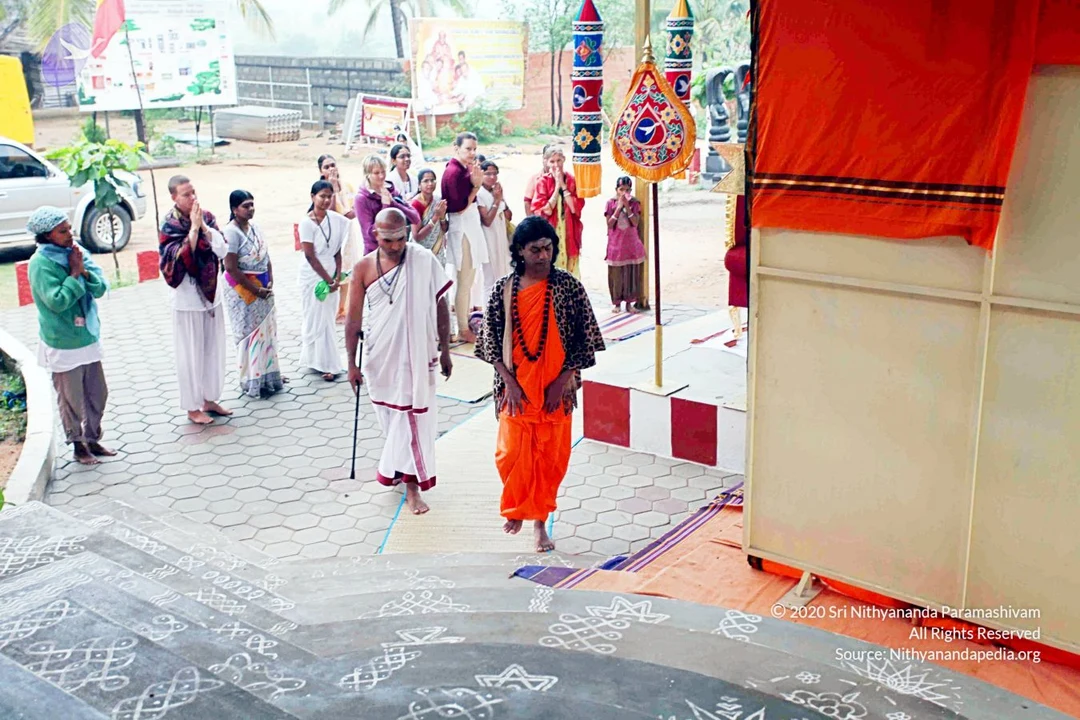
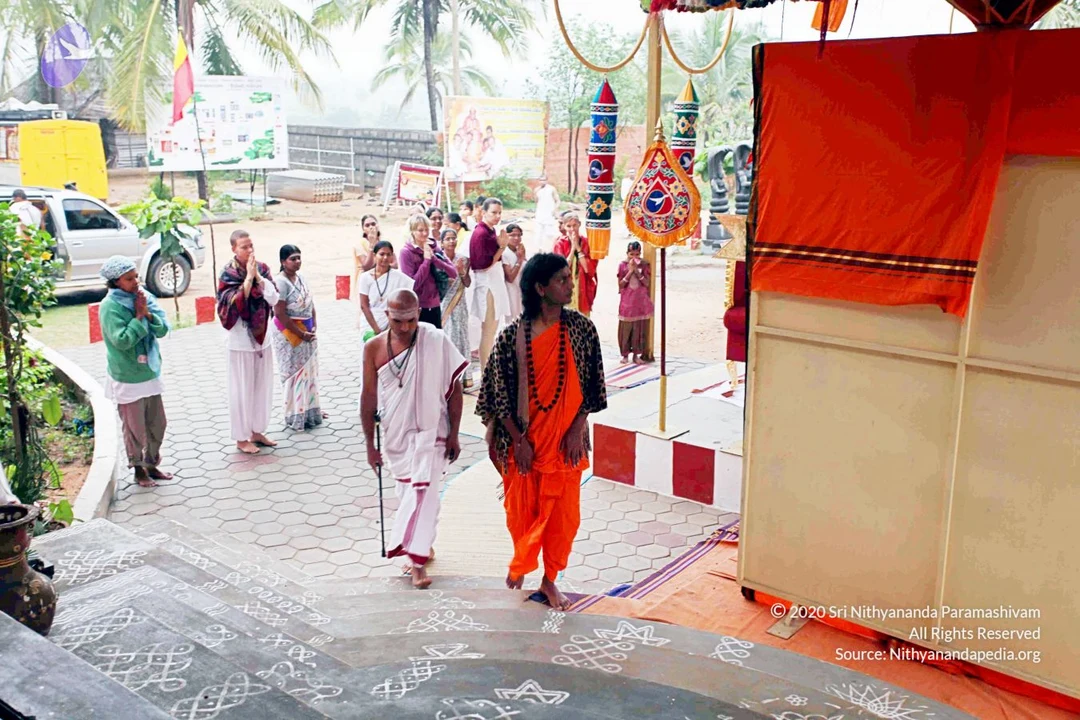
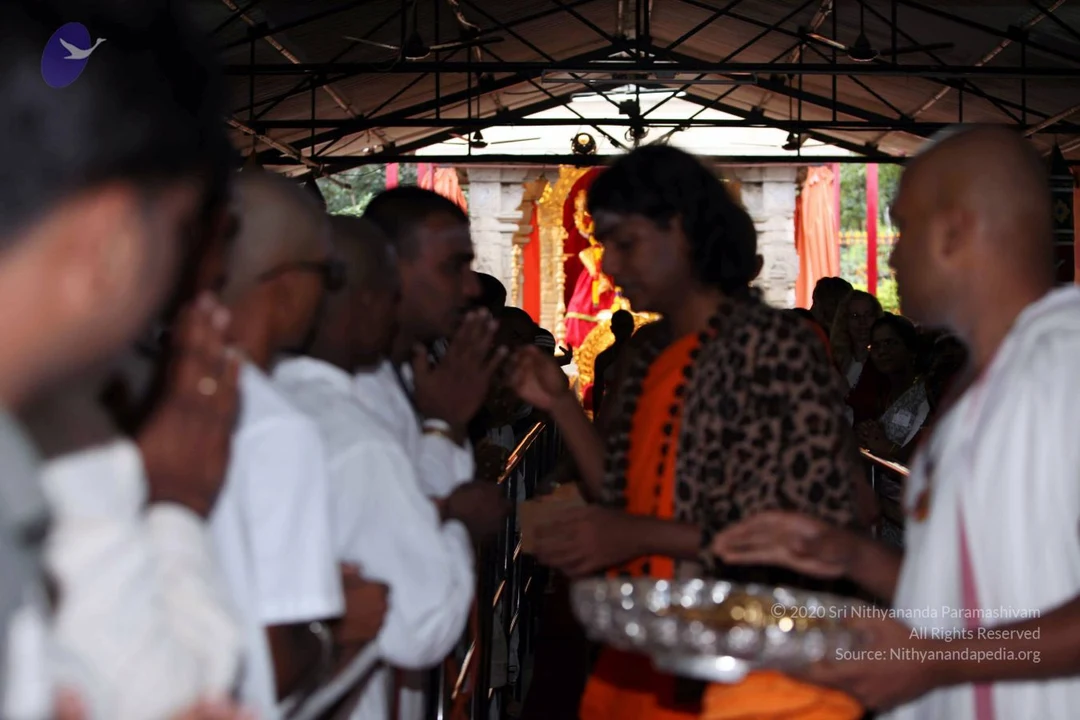
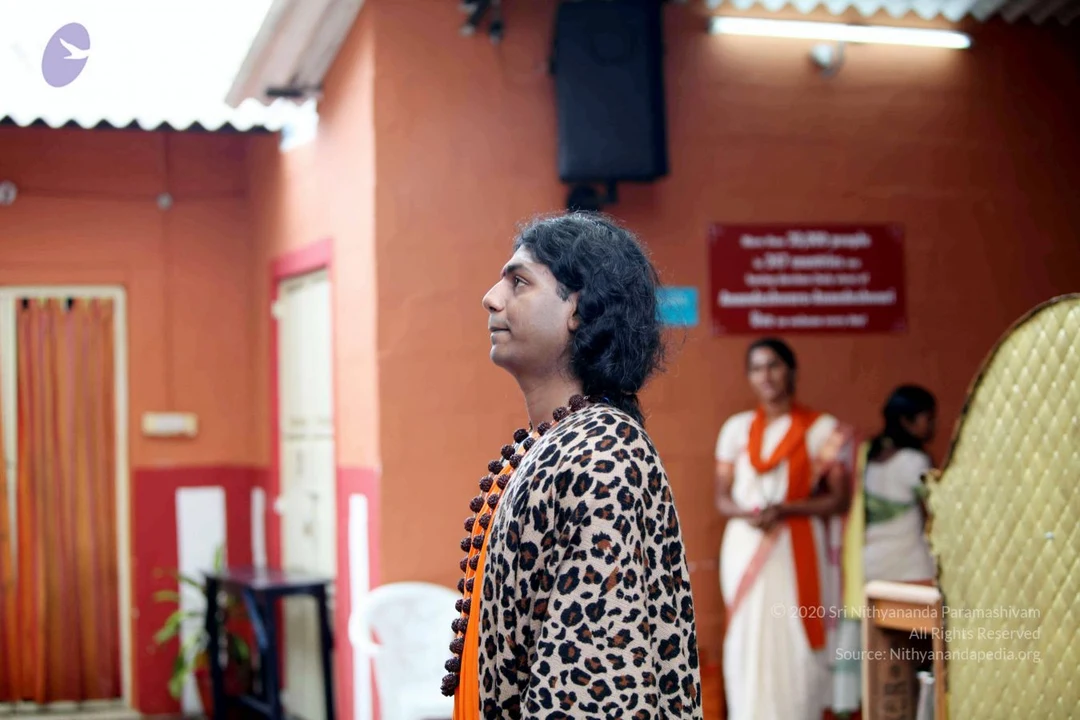
A close-up photograph of a young green plant stem with several broad, smooth-edged leaves. The leaves show visible central and lateral veins and a few small yellow spots. The background is softly blurred dark green foliage with round white bokeh highlights. No people are visible.Outdoor photo at an ashram entrance with a patterned stone-step threshold decorated with white kolam designs. A bald man in white dhoti and shawl with a walking stick walks toward the steps beside a figure in orange robes, a leopard-print shawl, and a red-and-orange rudraksha mala, with long dark hair. Ahead, a row of devotees in white and pastel clothing stand with palms pressed together in namaste. Behind them, orange and red fabric drapes and tall decorated poles with ornamental banners frame the entrance, and a white-and-green car is parked to the left. Two printed banners hang on the background wall. The figure in orange with the mala has an appearance-based probable identity as a person, based on long hair and the orange robe with rudraksha mala, but the shaved-headed man in white is a priest or devotee.A close outdoor photograph of a garden bed in soft focus, filled with orange-yellow cosmos-style flowers on tall thin stems above dense green leafy shrubs. A few small magenta blossoms appear among the greenery, and a pale dirt path runs along the upper left. No people are visible in the scene.

November 08 2010

Original wiki page
Contents

Title

Bhakti - The Eternal key for Wisdom: Nithyananda Morning Satsang (08 Nov 2010) Message

Narration

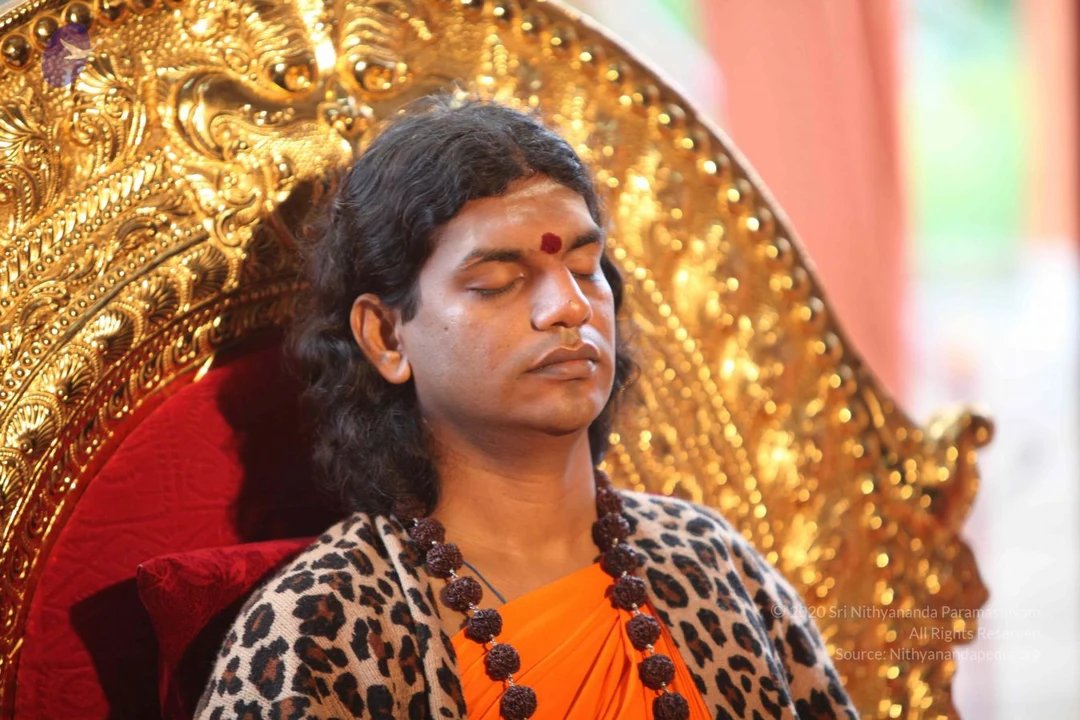
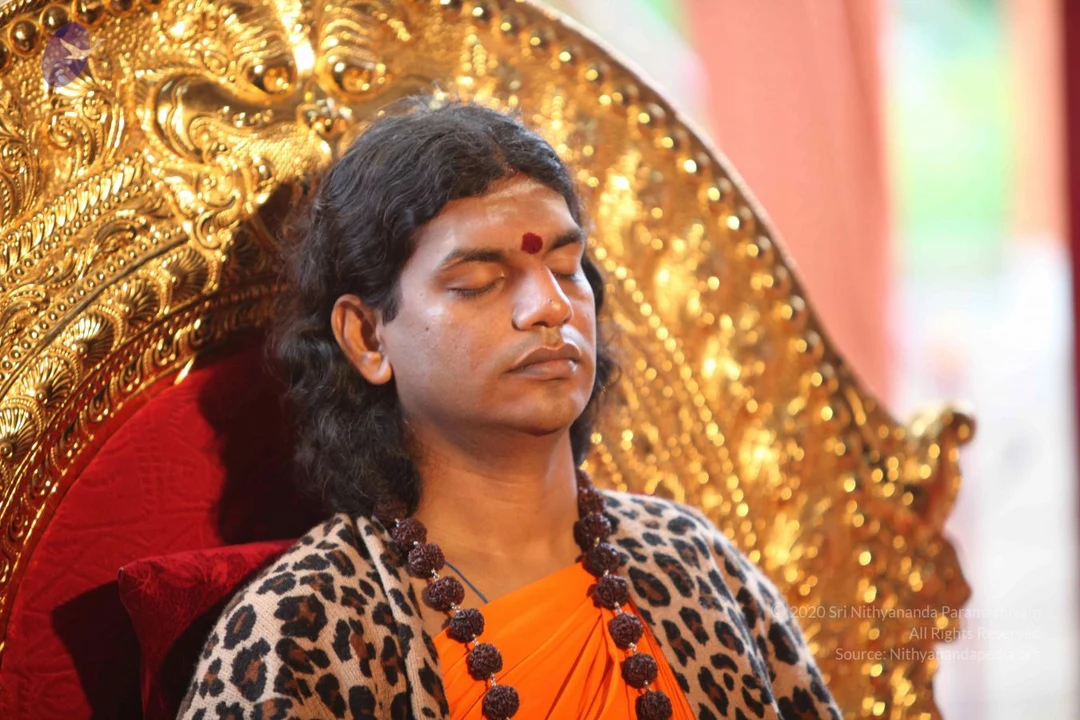
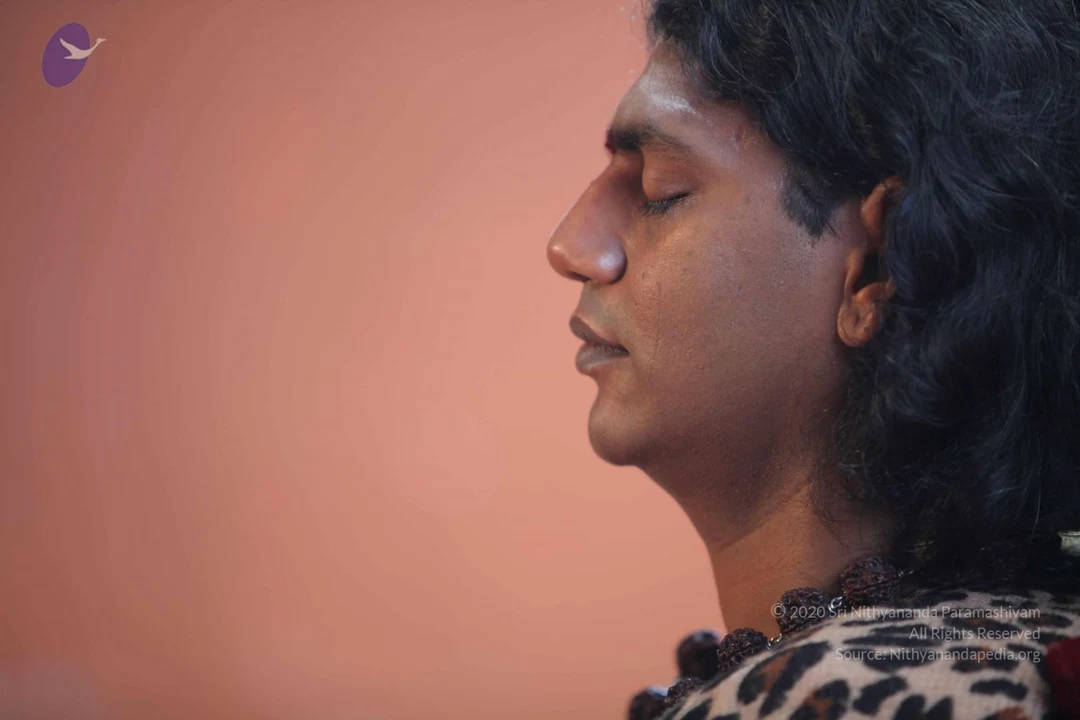
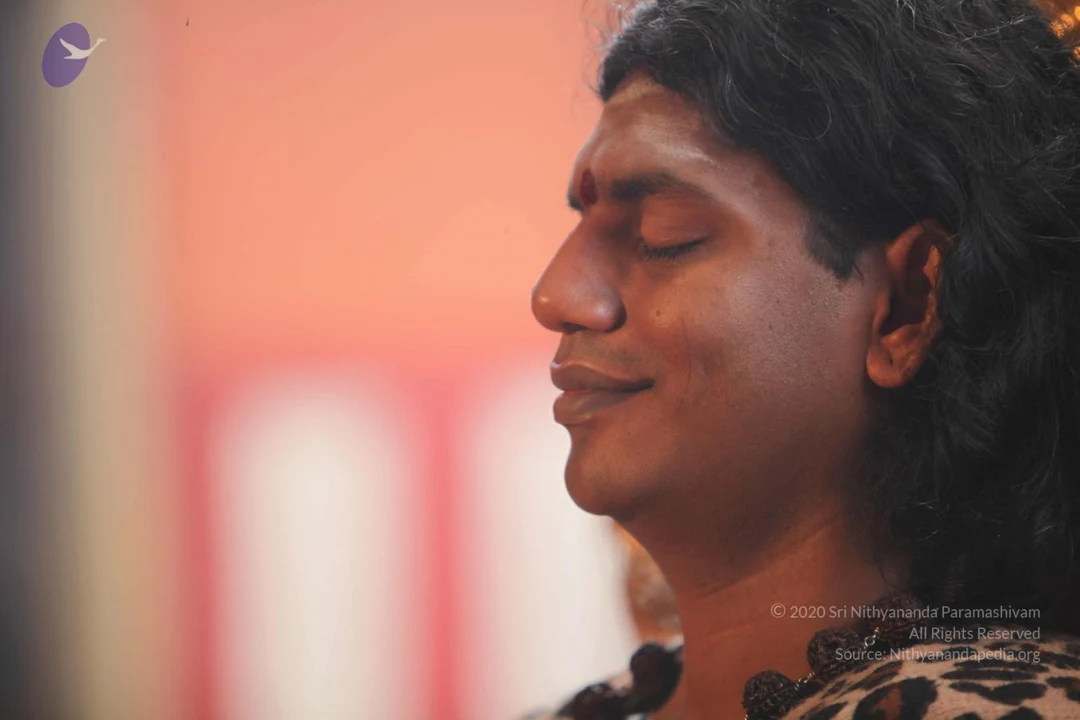
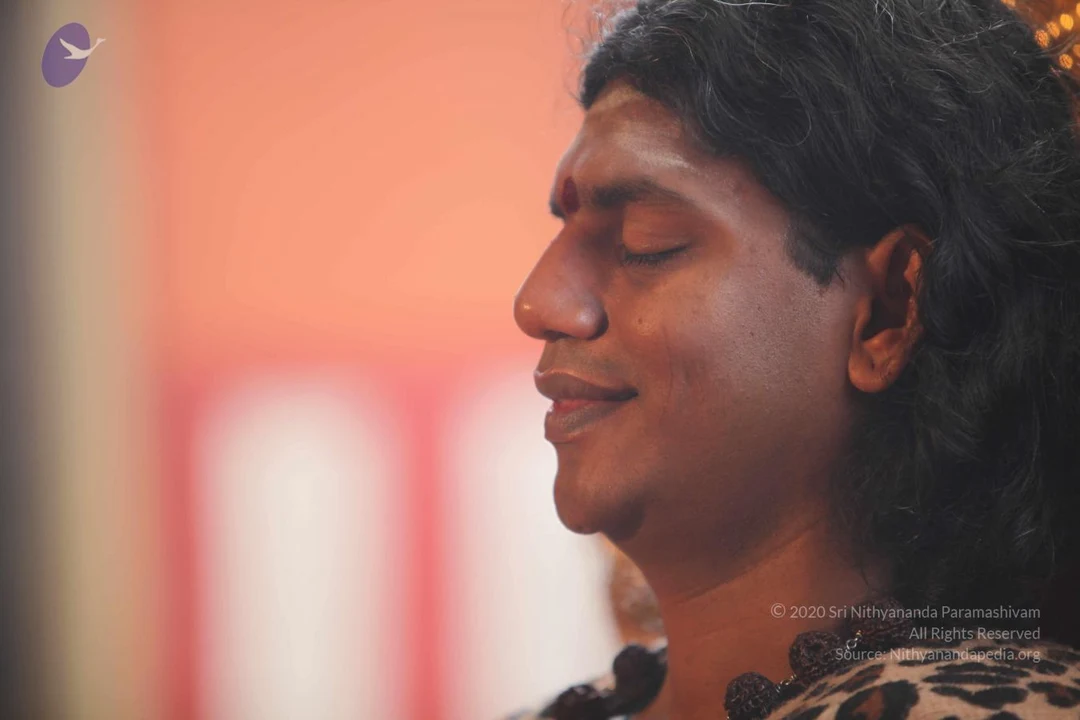
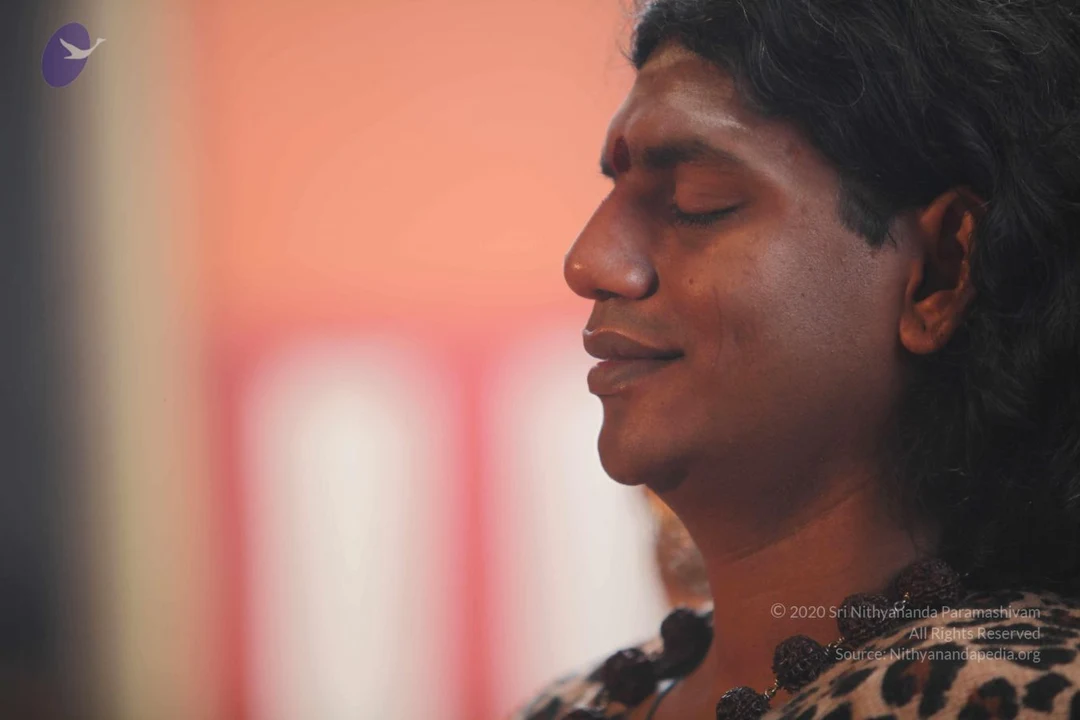
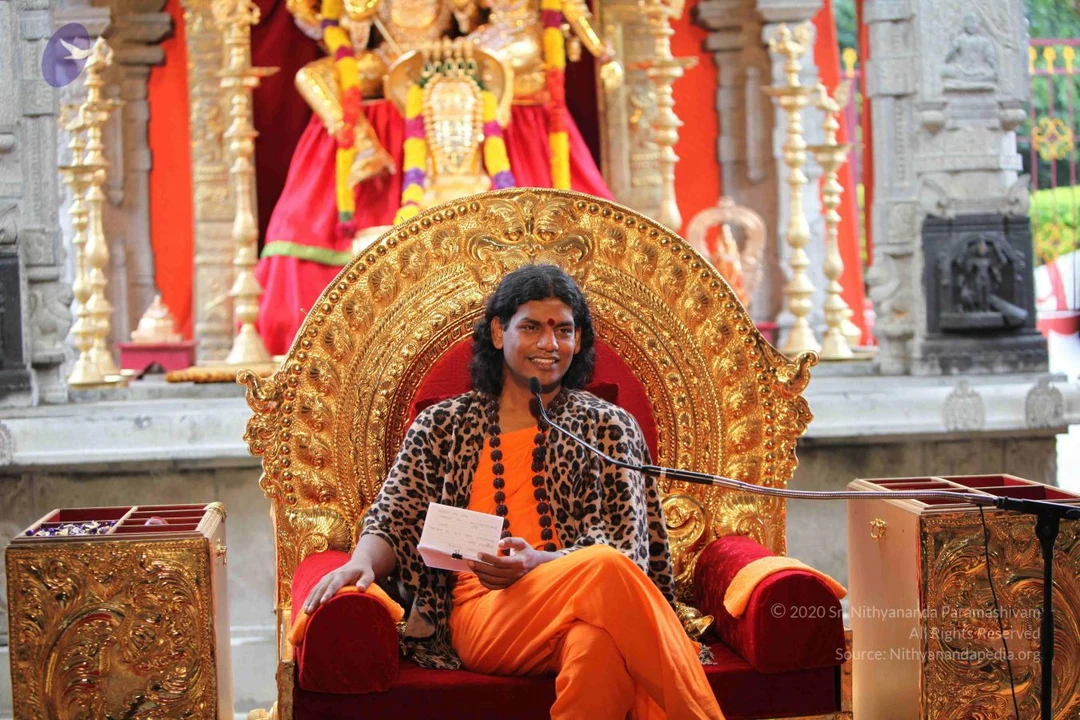
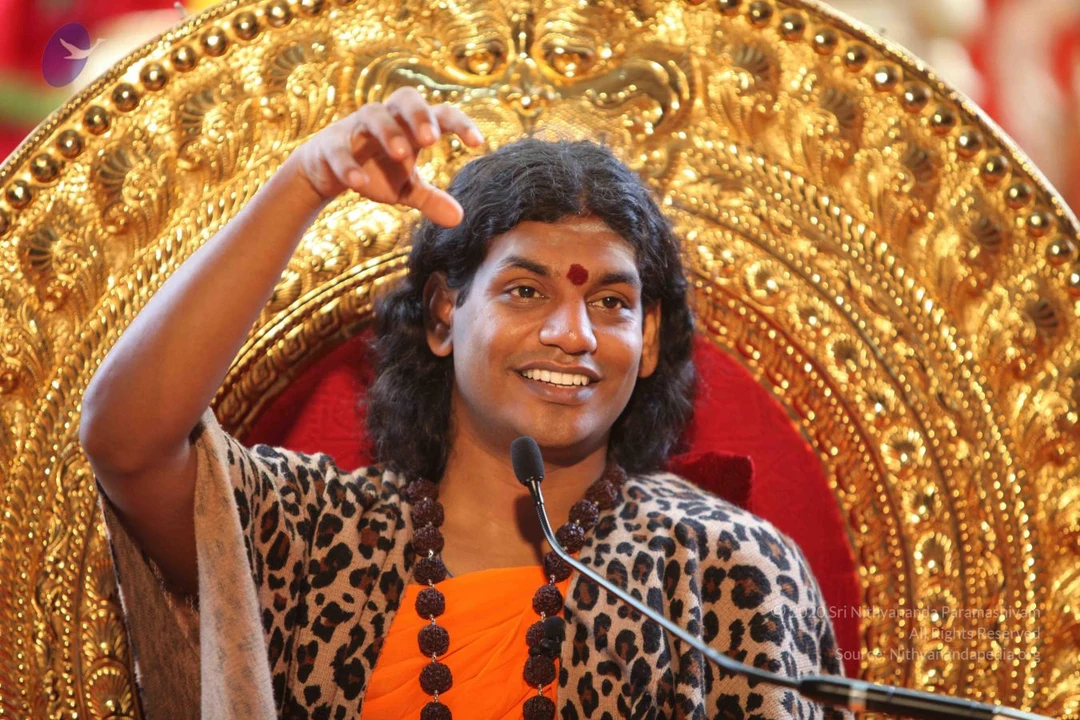
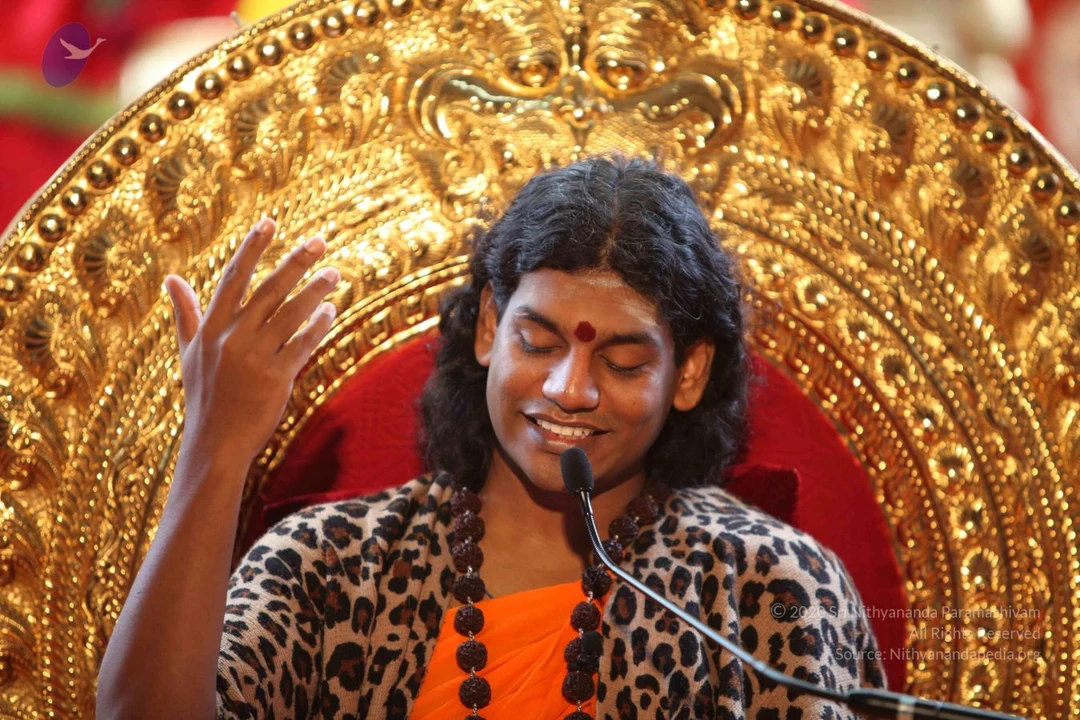
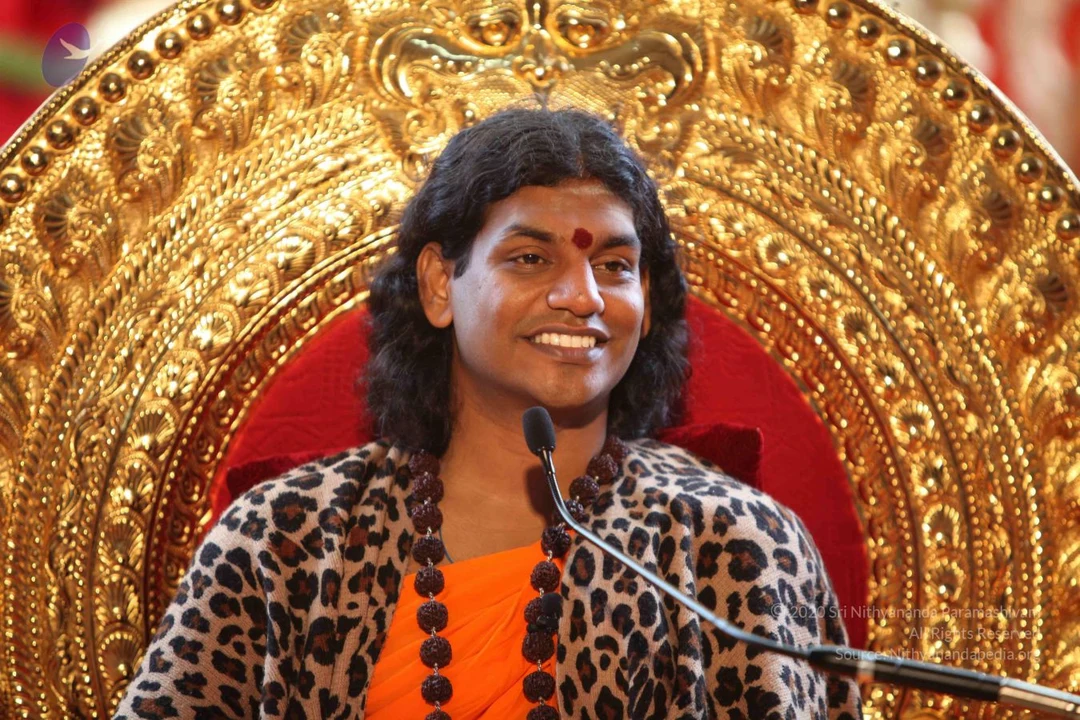
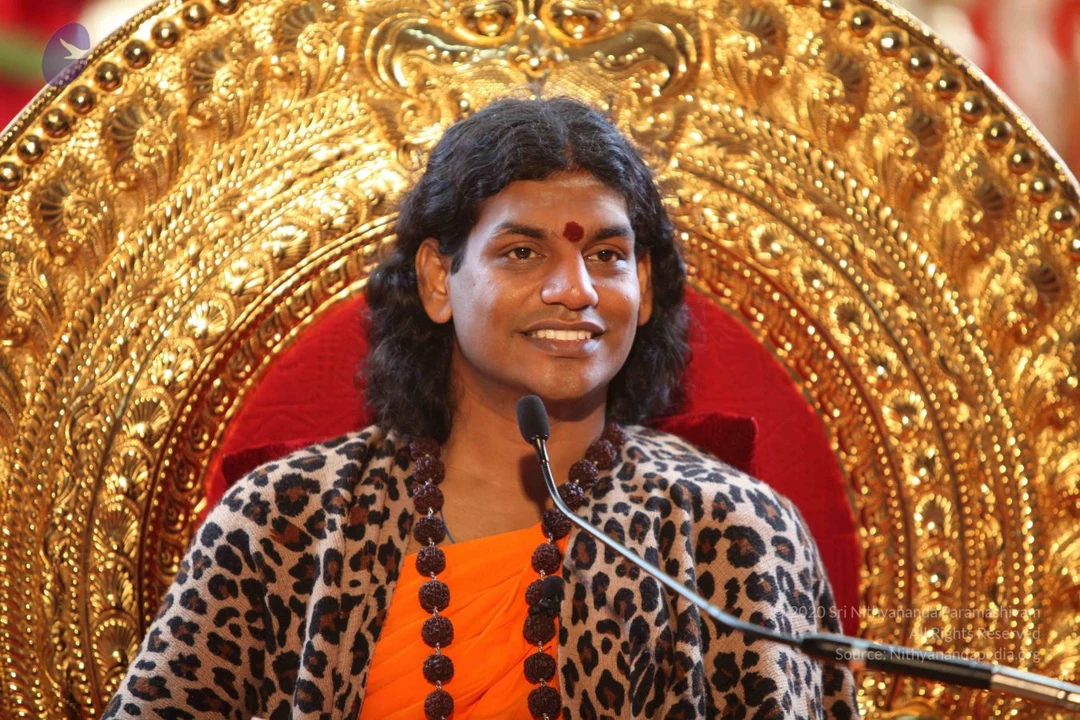
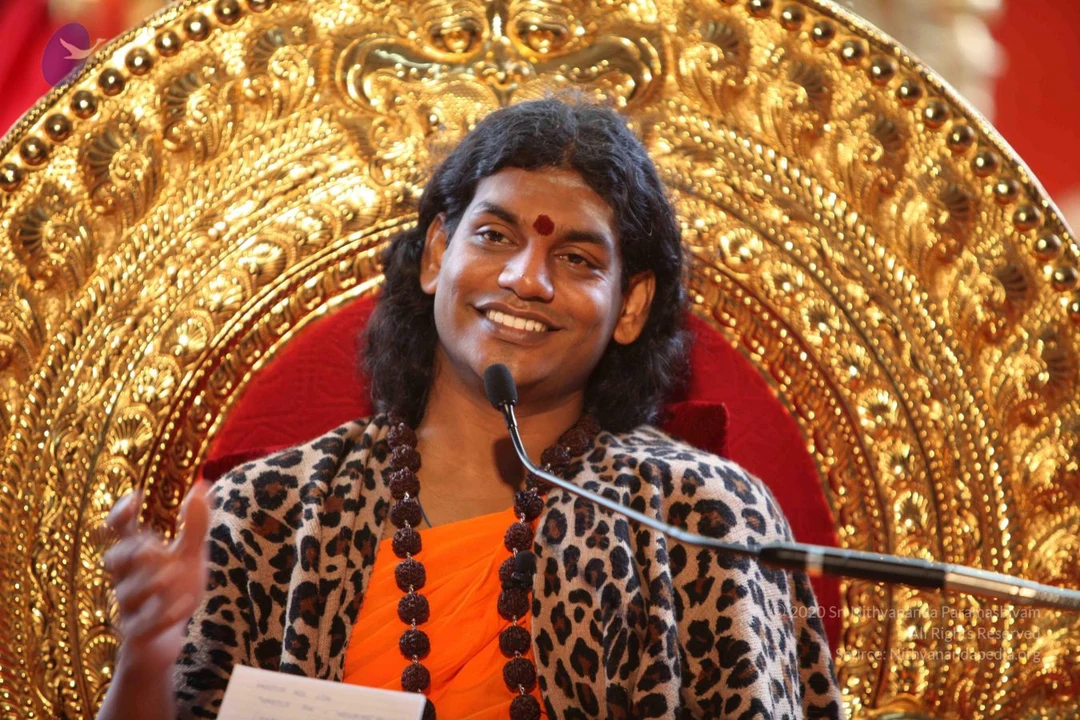
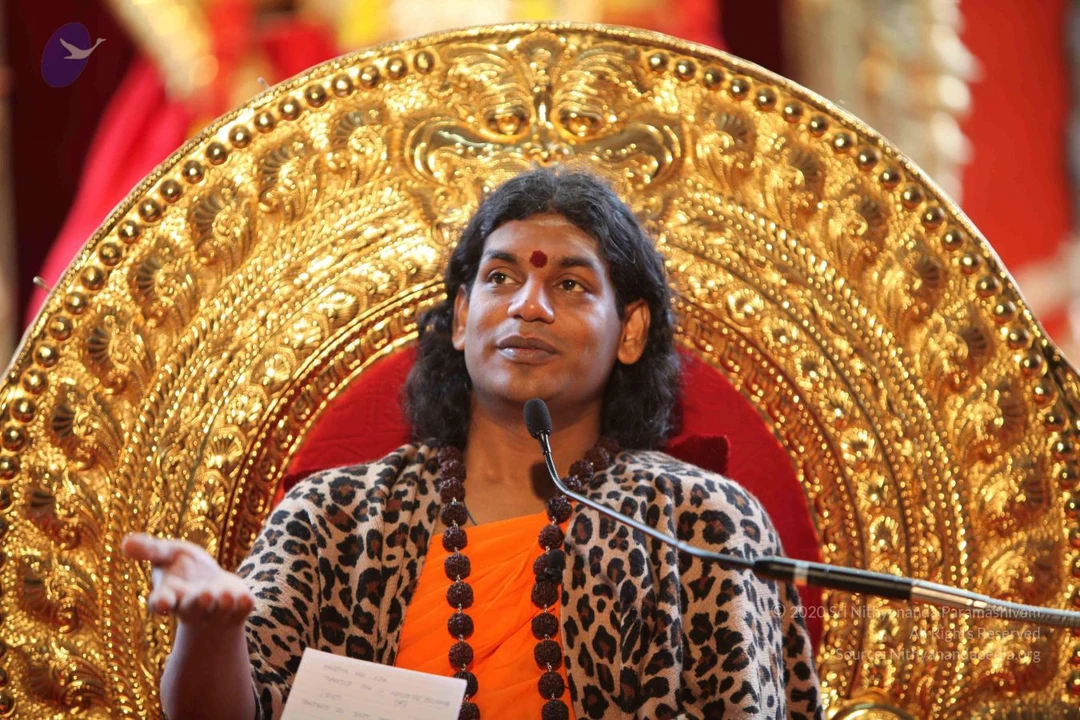
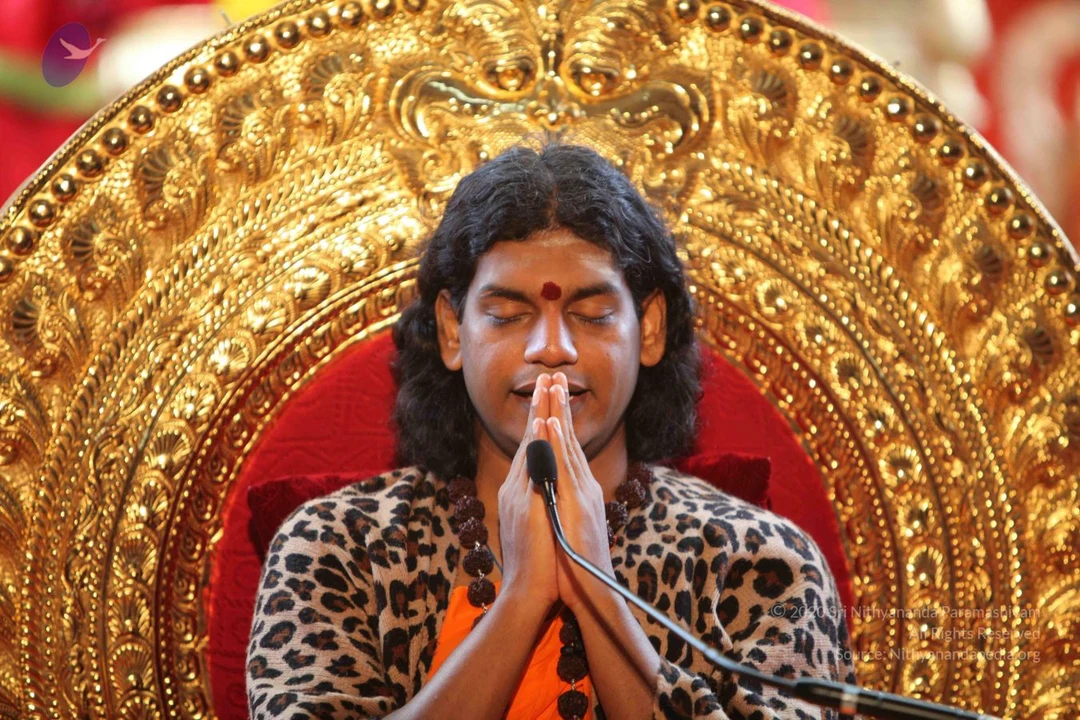
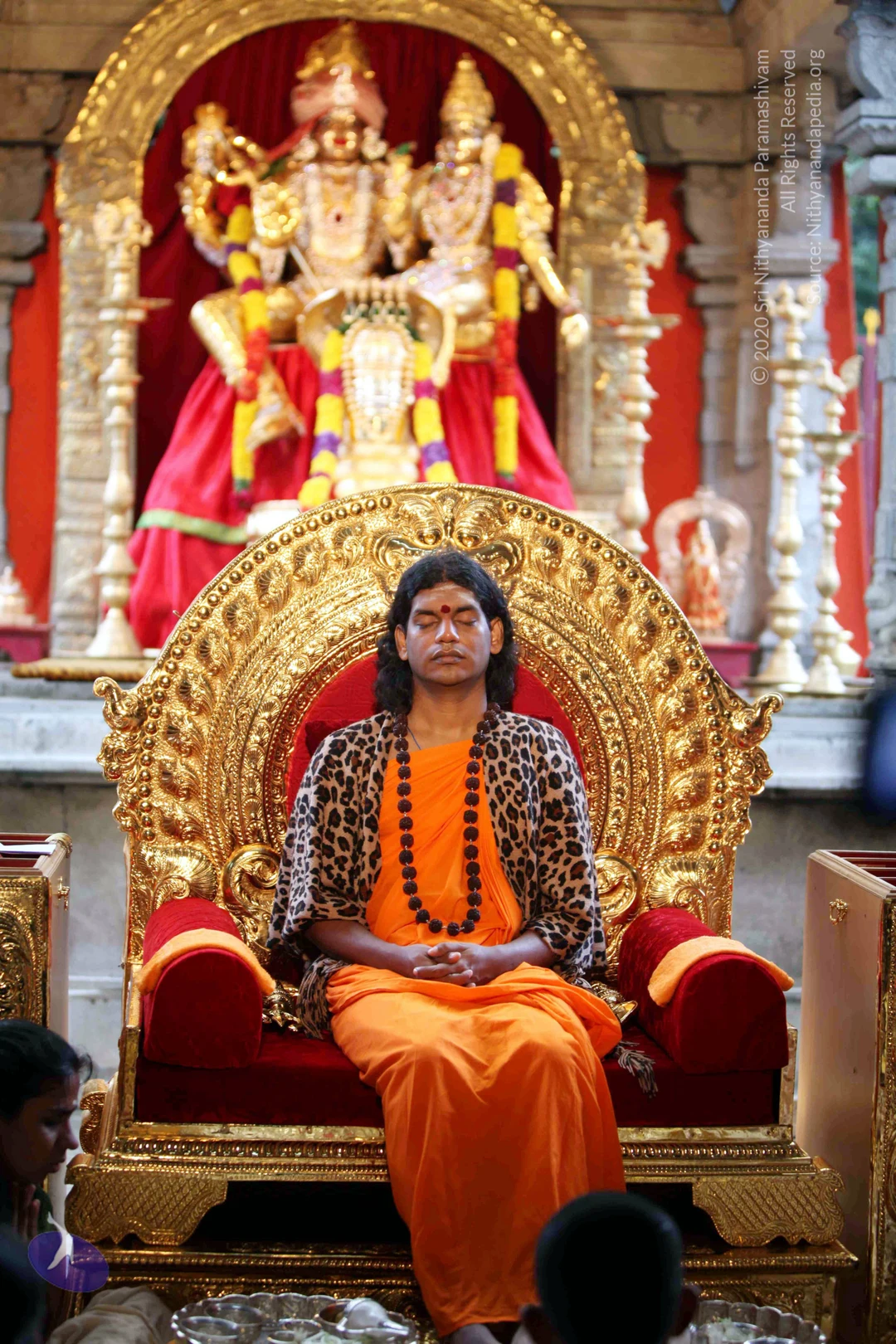
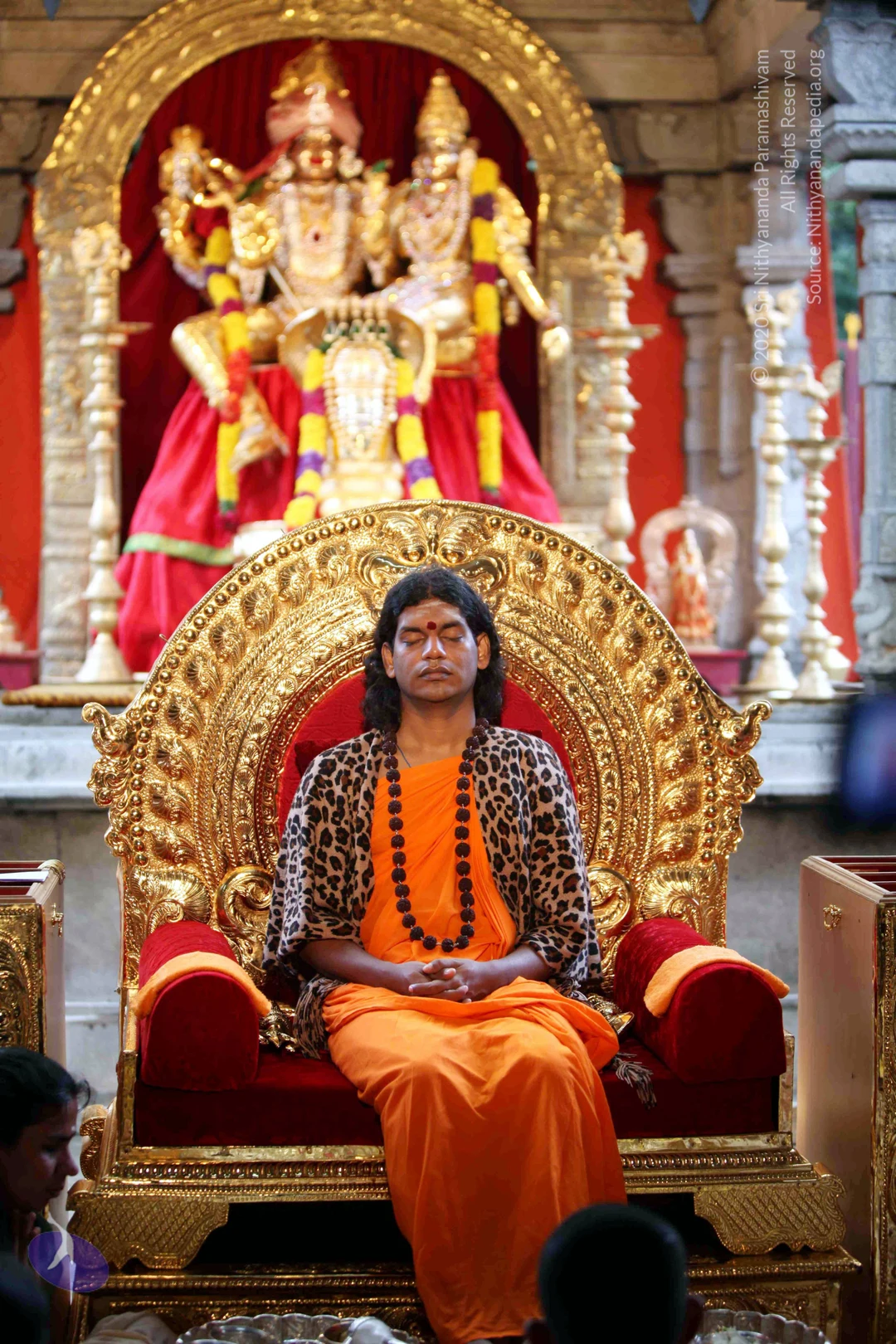
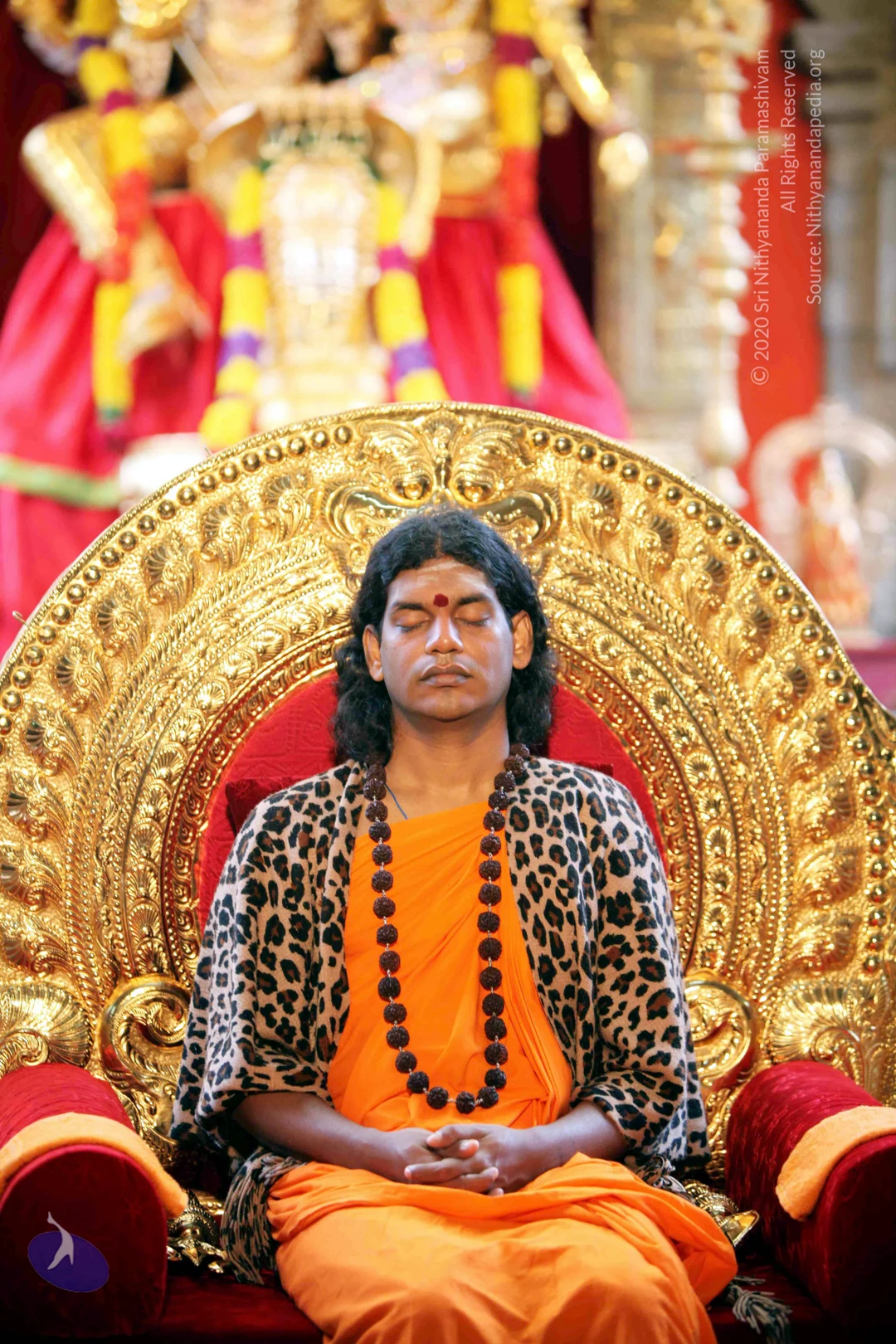
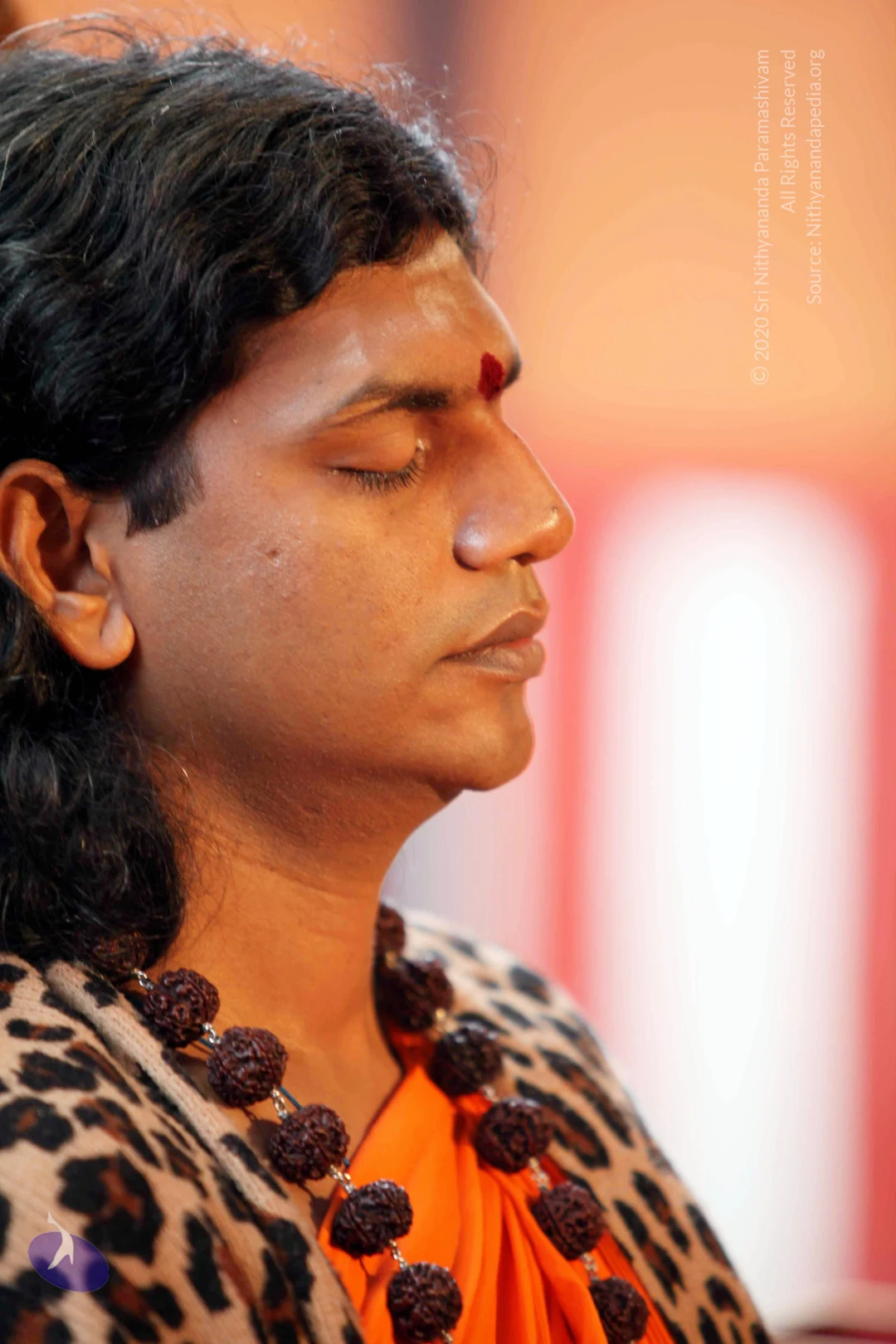
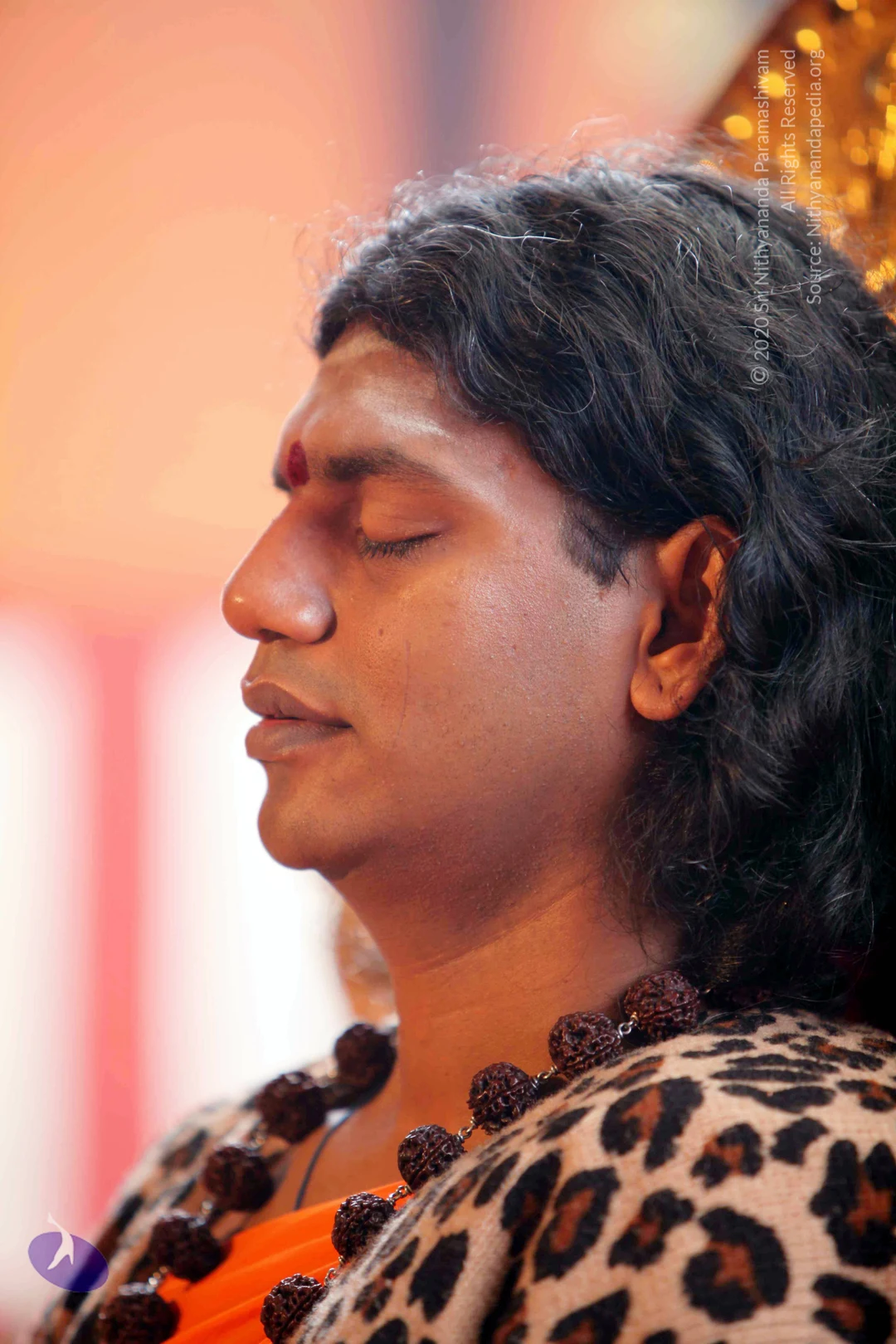
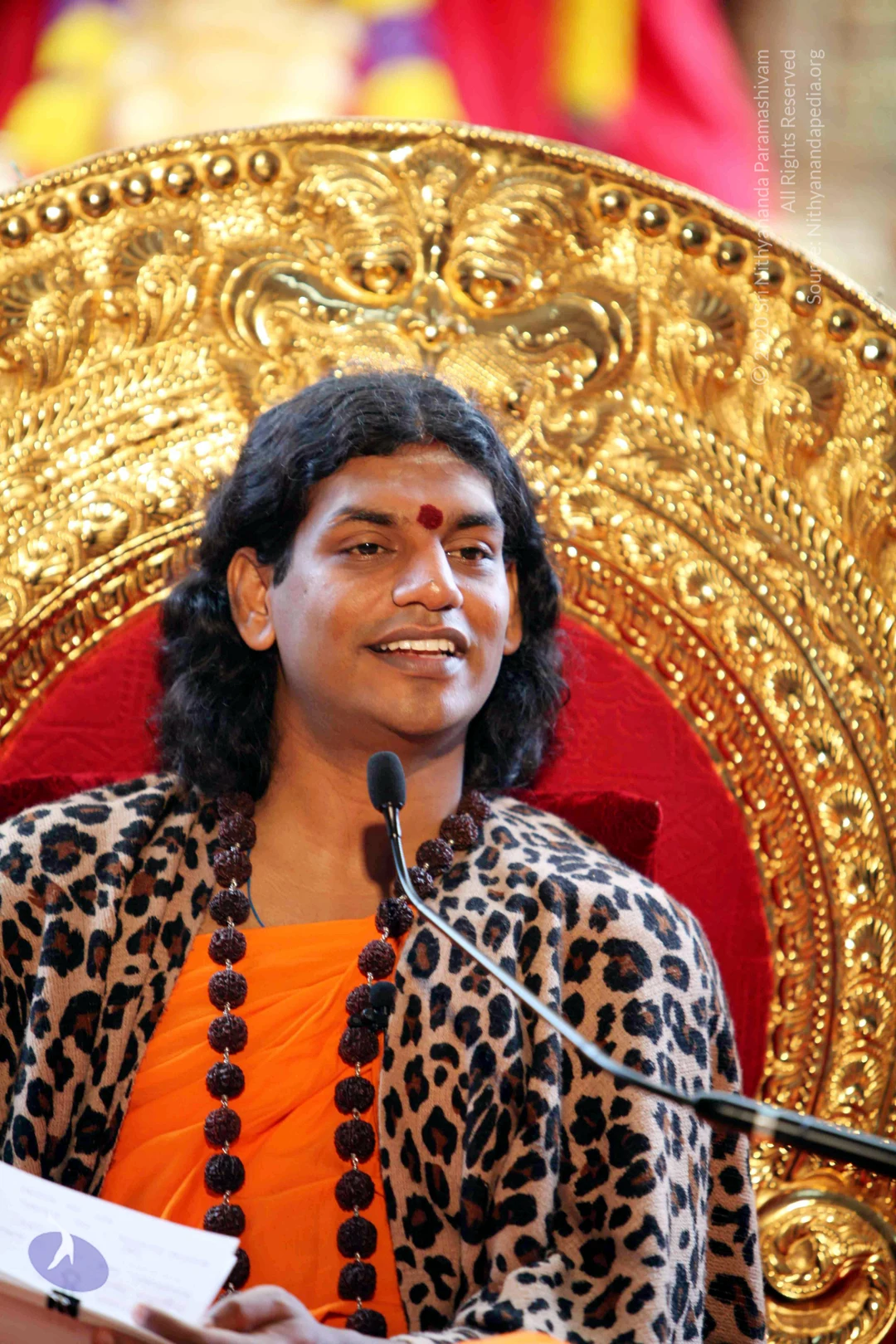
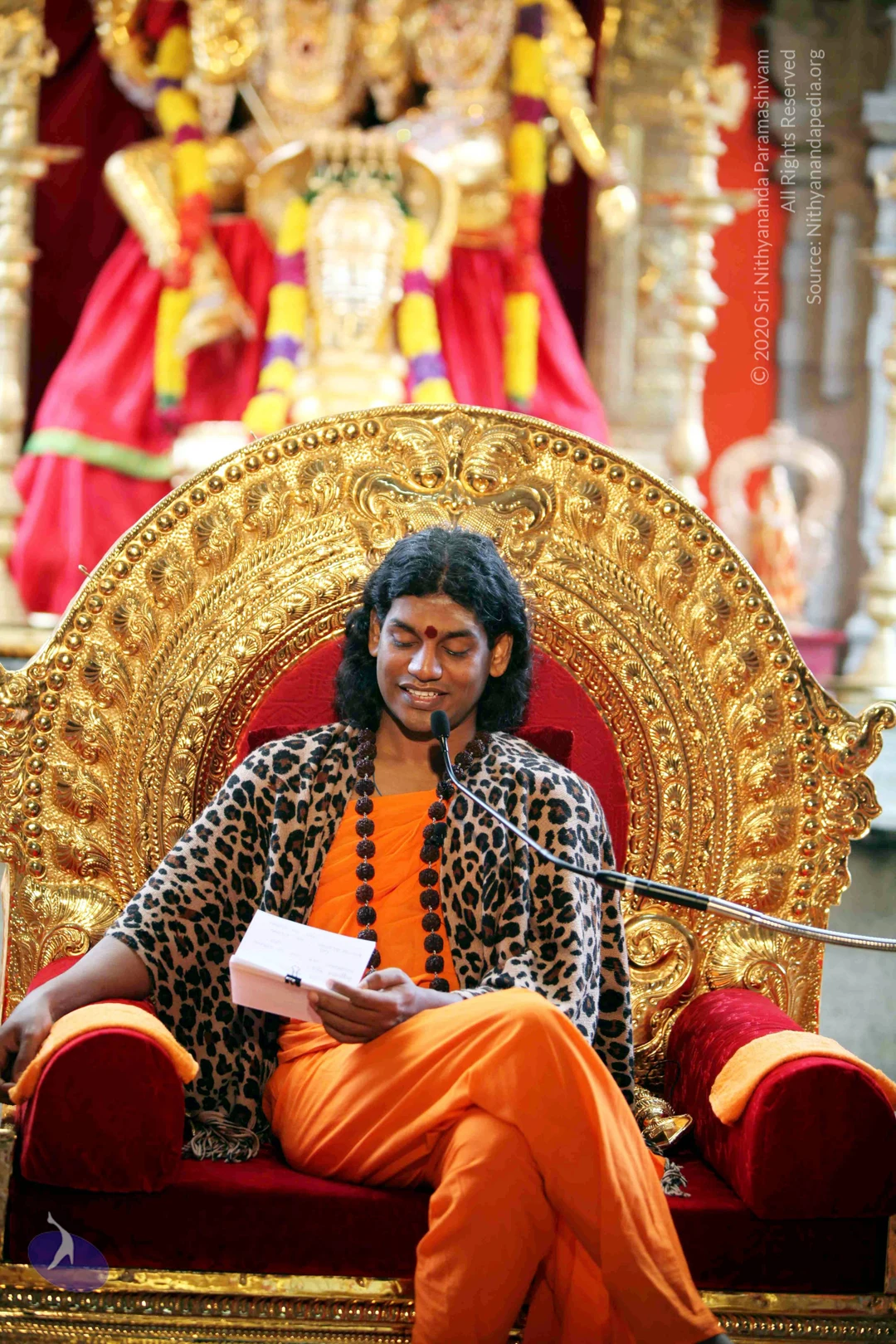
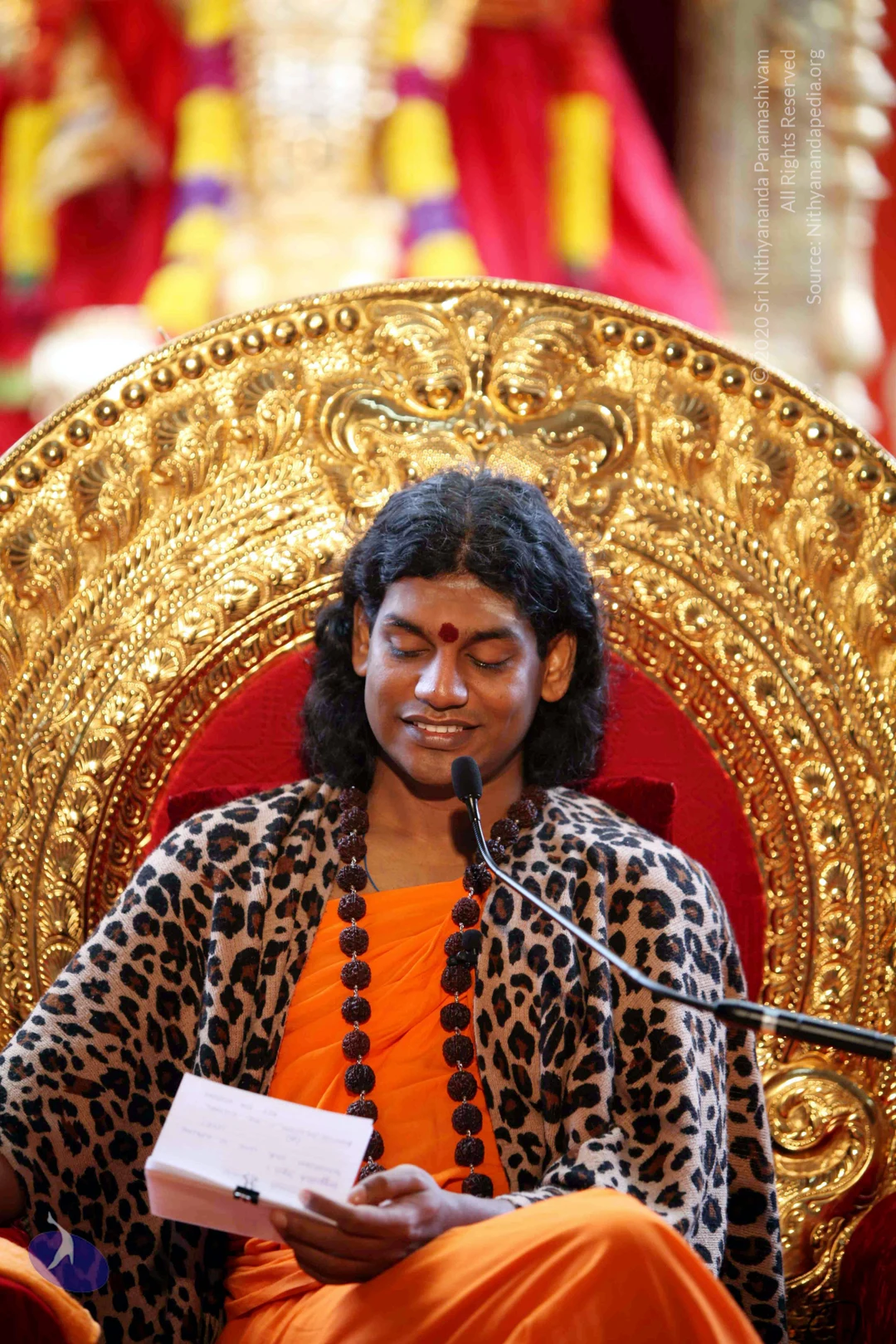
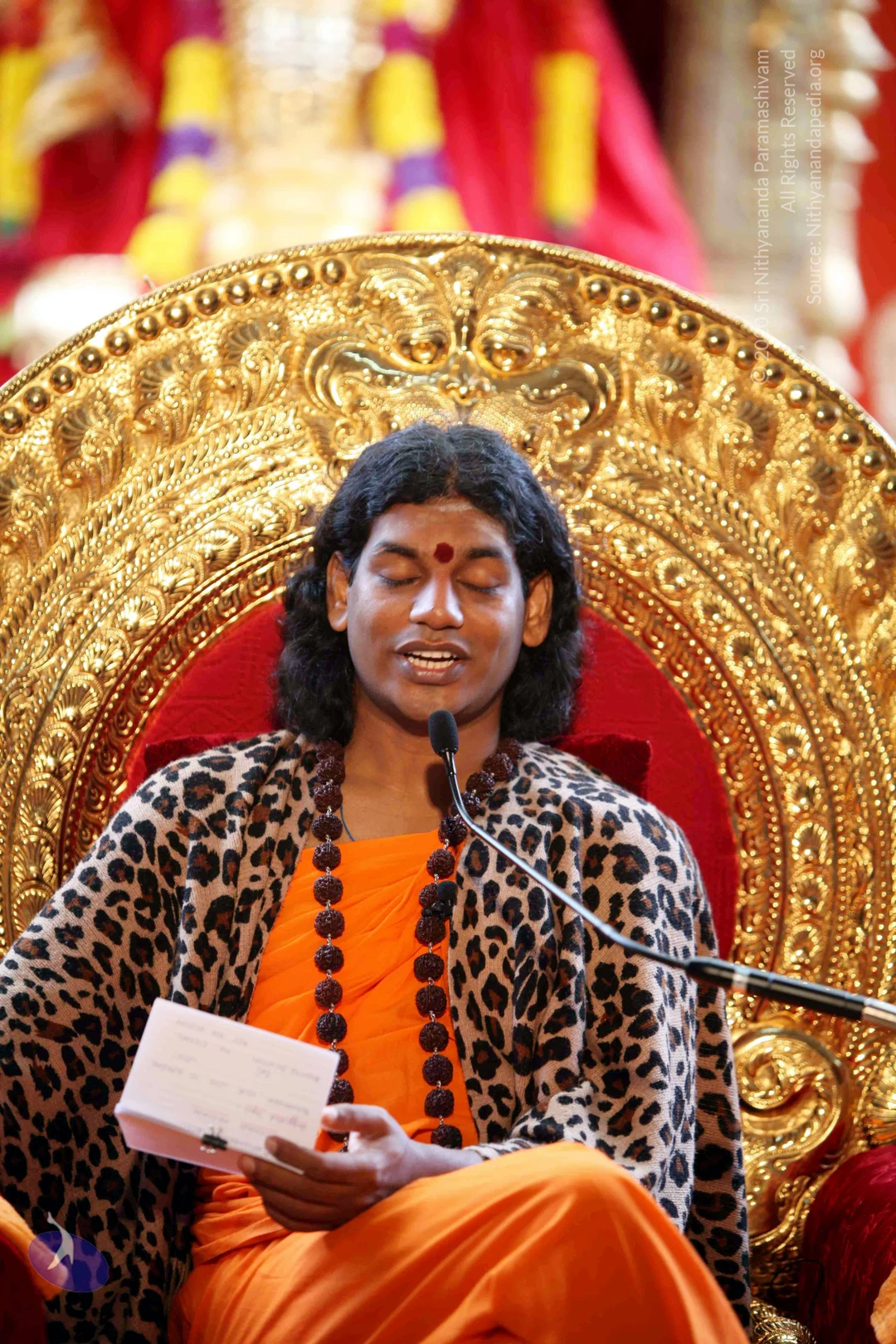
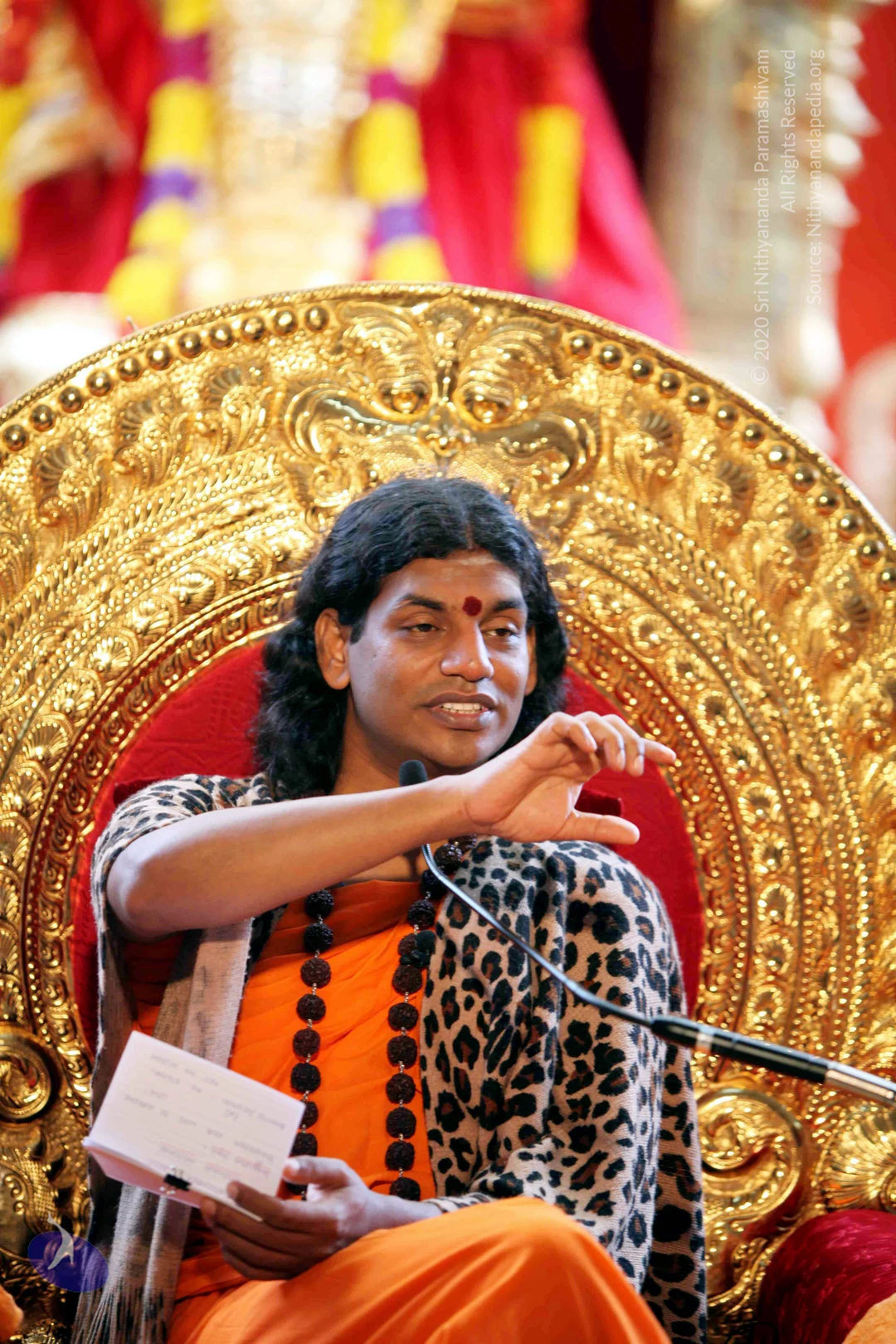
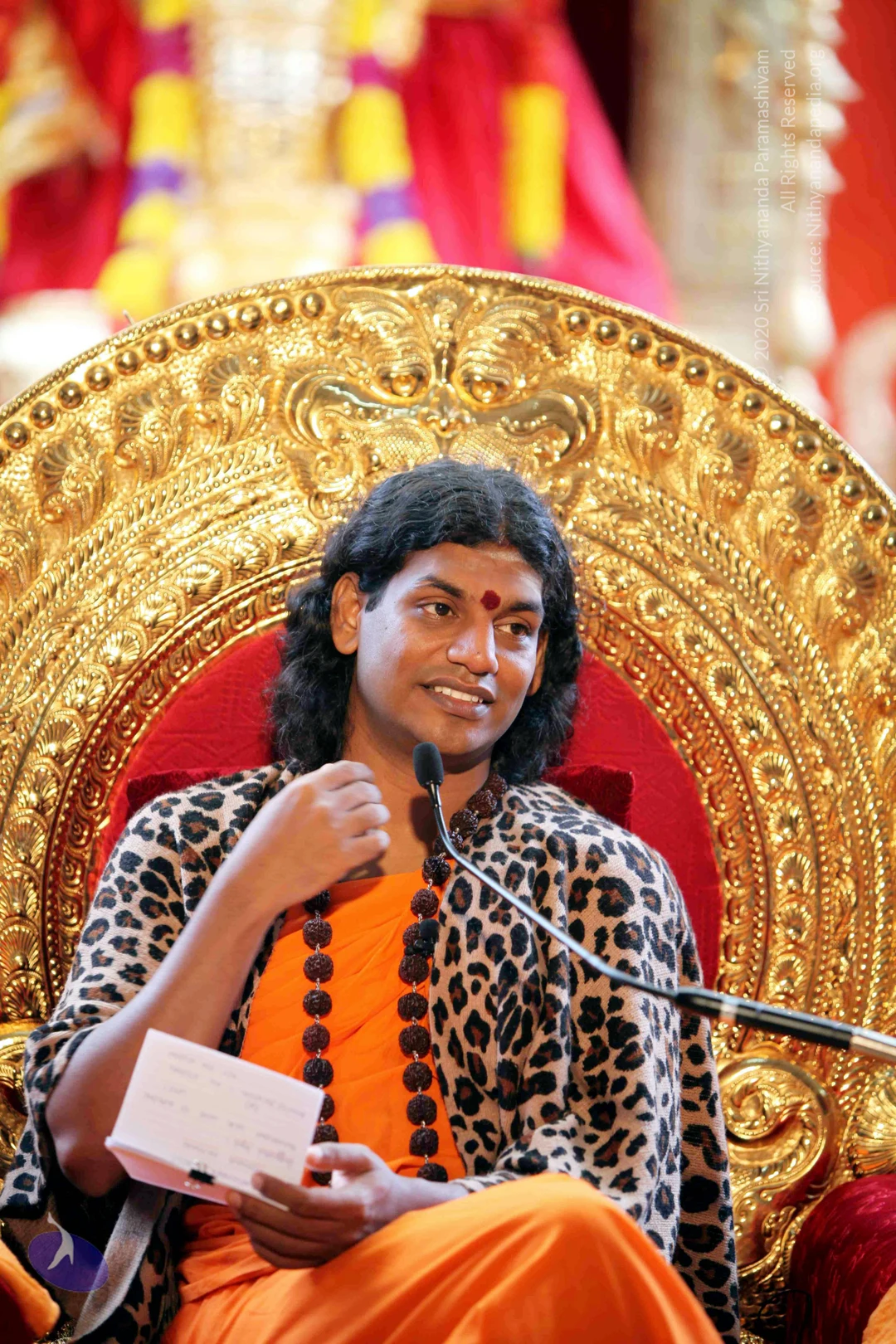
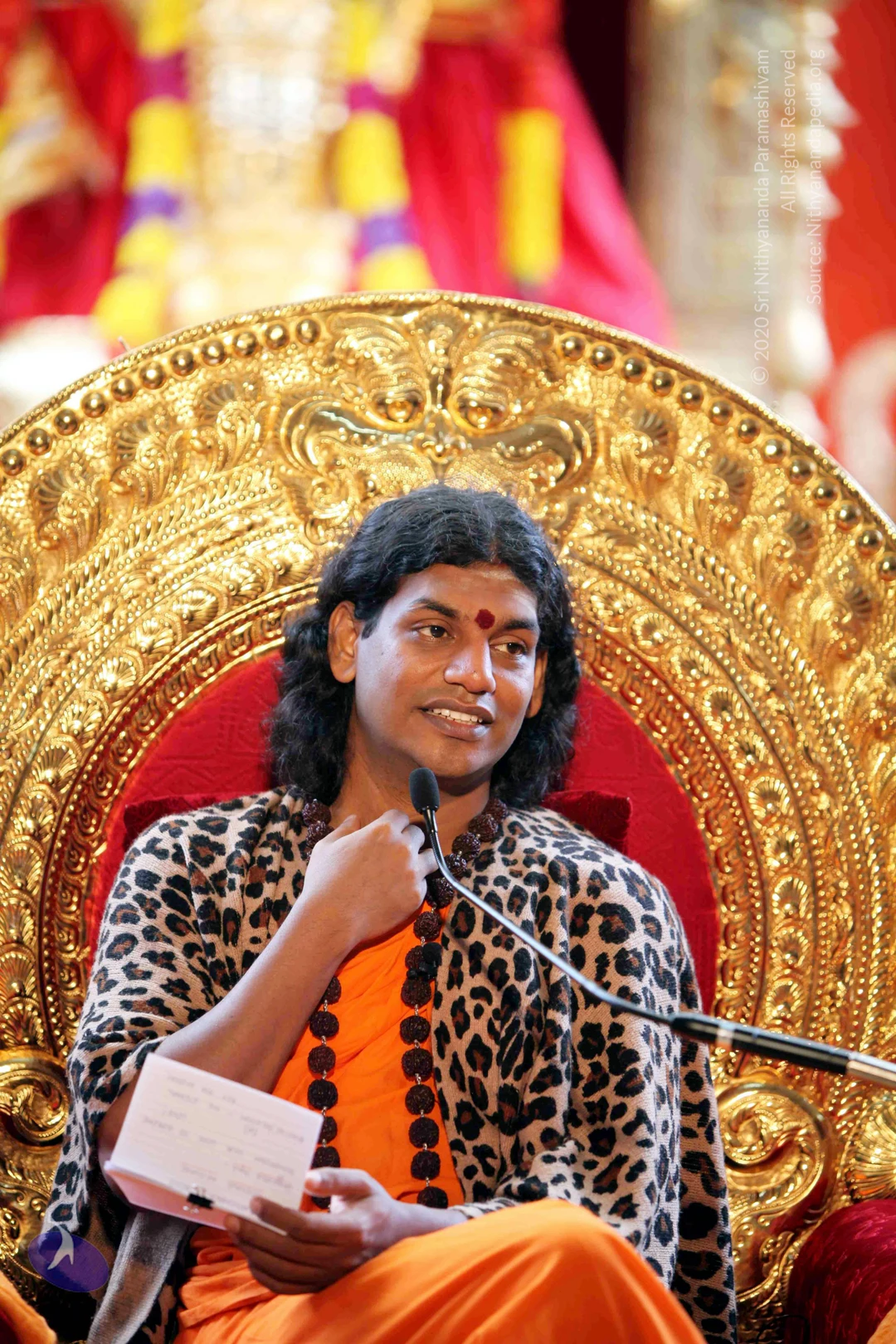
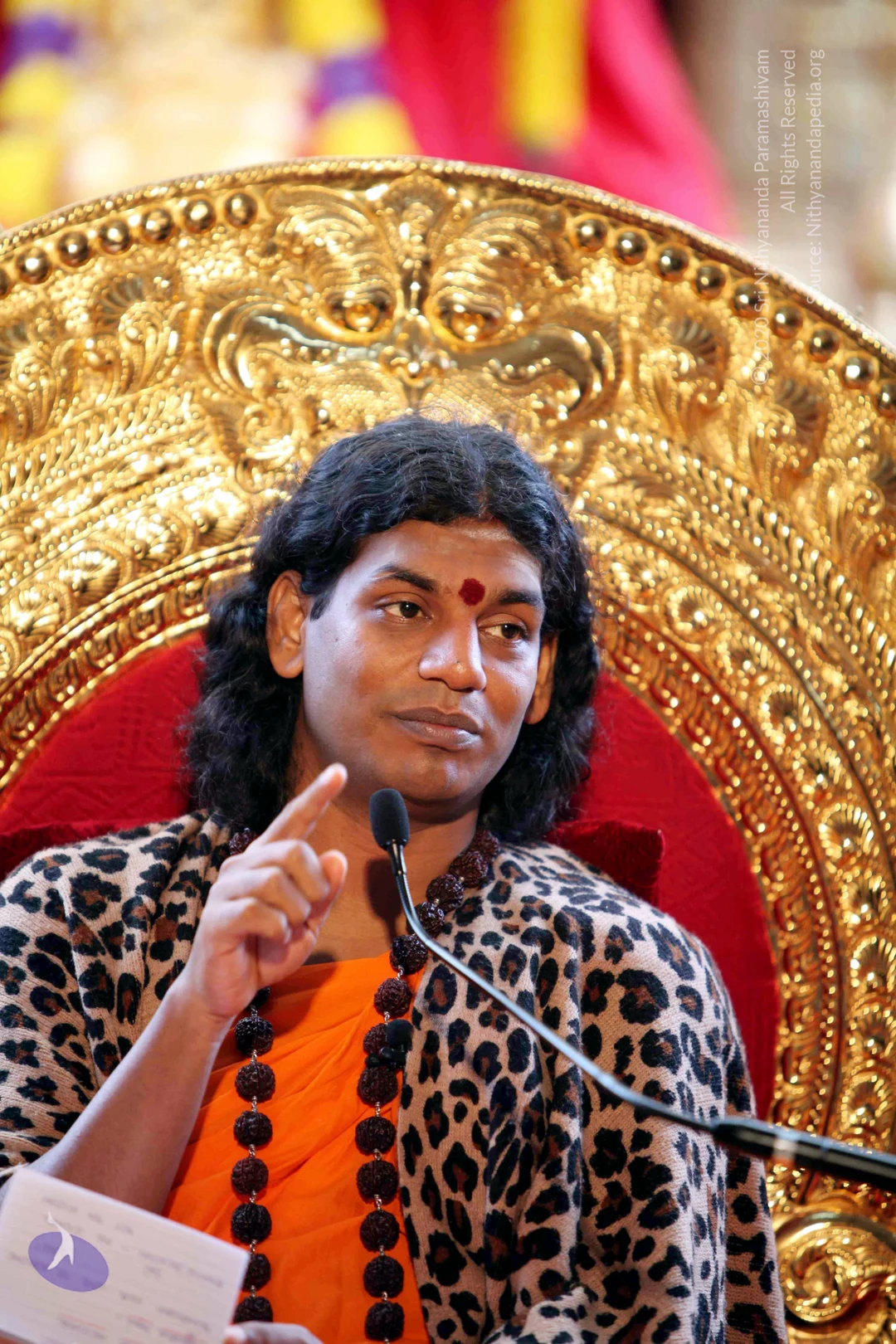
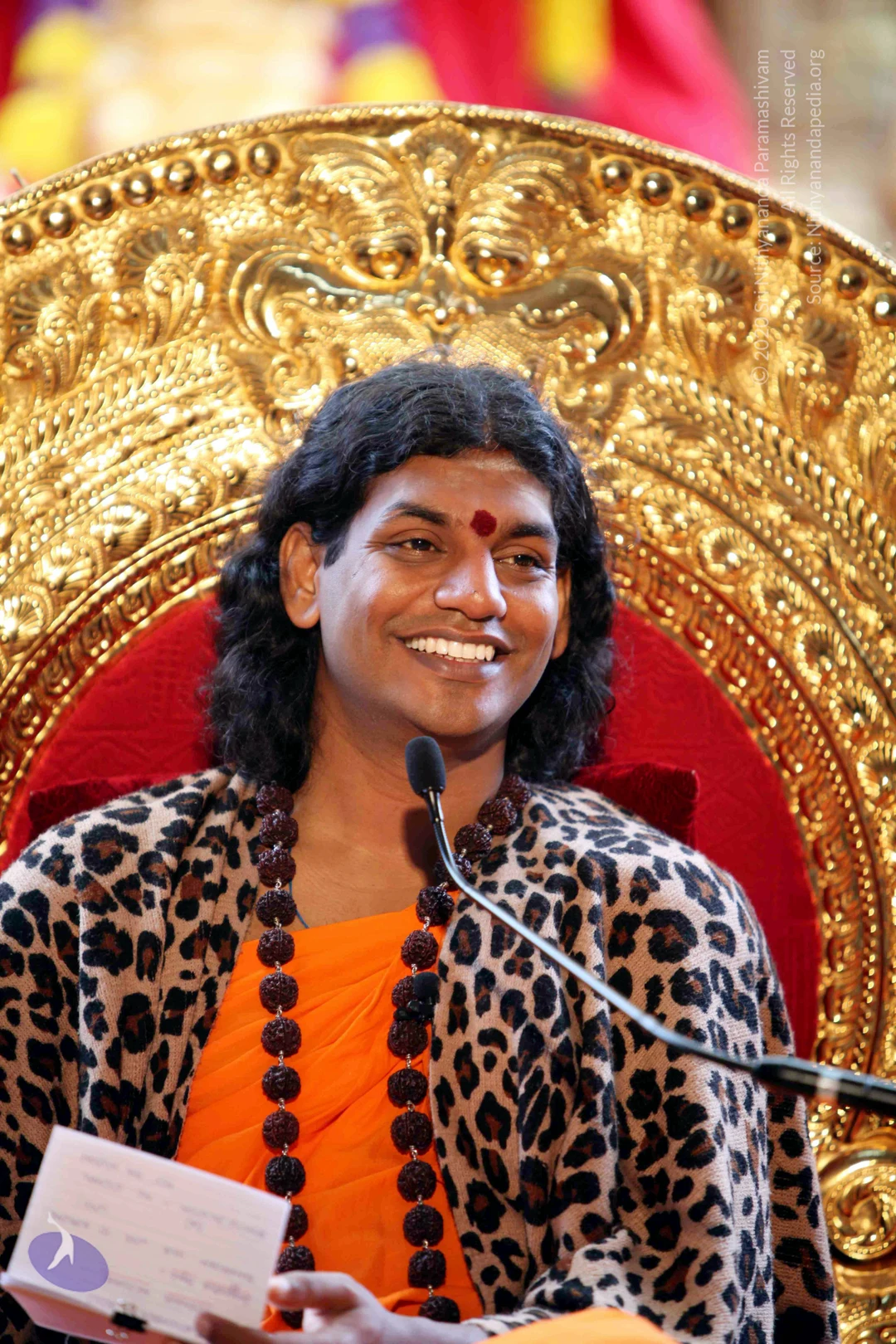
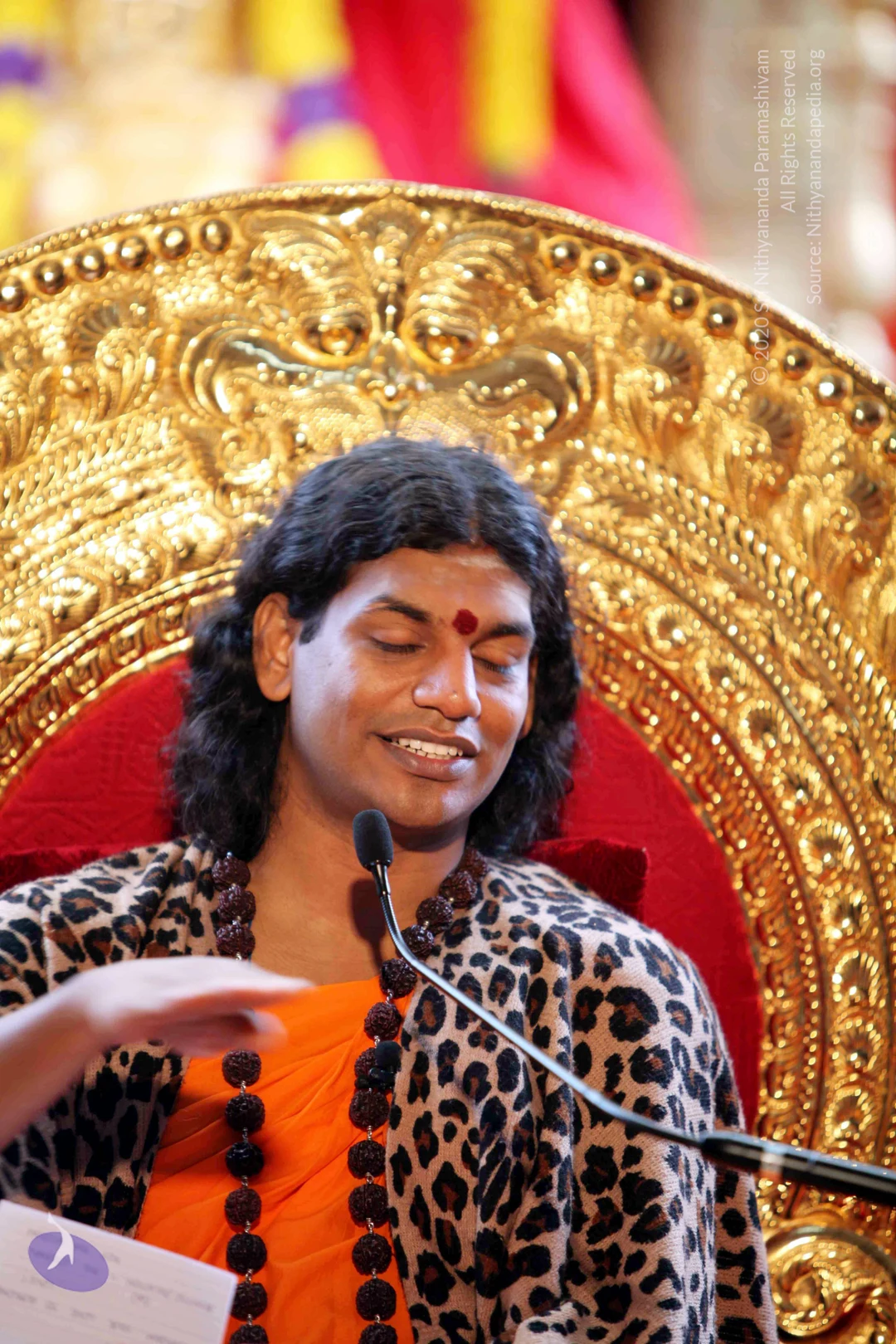
The Supreme Pontiff of Hinduism, Jagatguru Mahasannidhanam, His Divine Holiness, Bhagavan Nithyananda Paramashivam, expounded on the Cosmic Principles of Bhakti during the everyday live public talk - Nithyananda Satsang. In this talk entitled Bhakti - The Eternal key for Wisdom: Nithyananda Morning Satsang (08 Nov 2010) Message, His Divine Holiness (HDH) referenced the mystic poet, Kabir. After reading the poem, His Divine Holiness expounded that with Bhakti, the Ego simply disappears and is replaced by humbleness and deep patience. He directed us not to be around Him if we hold on to our suffering as suffering is based on arrogance as it reflects an absence of Bhakti and suffocates Him. His Divine Holiness advised delegates to first develop non-suffering, then we can be like the lover in Kabir’s poem who lends a helping hand to anyone who asks, without sacrifice, but with sharing.

Video

Bhakti - The Eternal key for Wisdom: Nithyananda Morning Satsang (08 Nov 2010) Message

VideoAudio

Transcript

Bhakti – The Eternal key for Wisdom

DATE: November 8th 2010

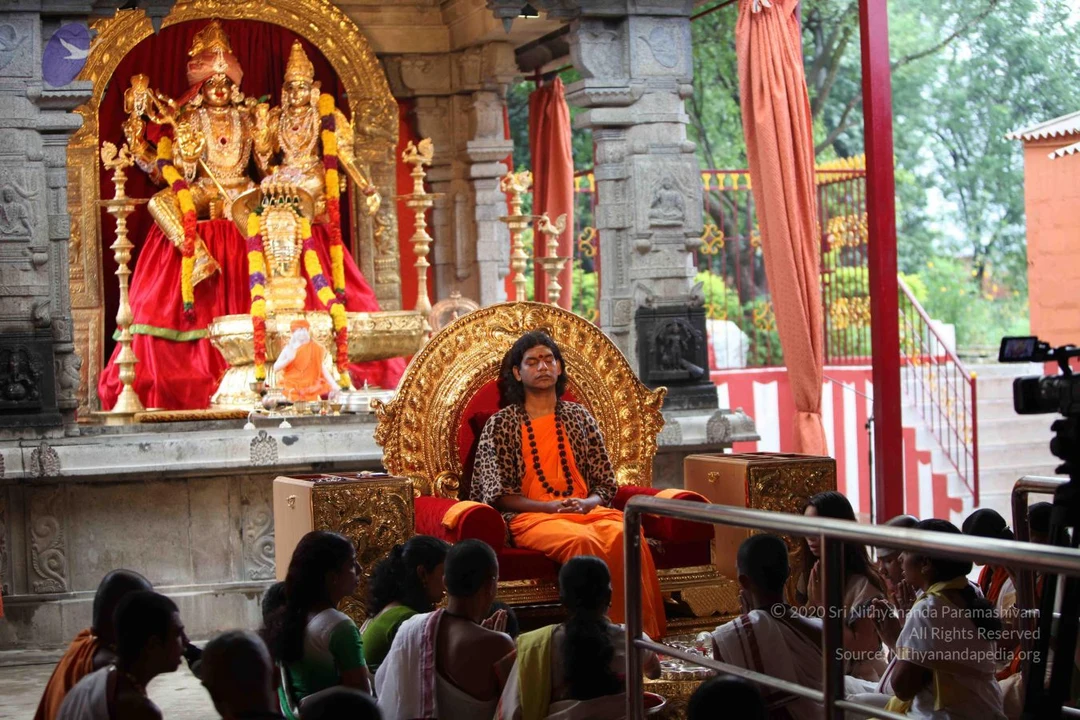
LOCATION: Nithyanandeshwara Paramashiva Temple, in front of the main sanctum, Bidadi Aadheenam

Sadashiva samarambam shankaraacharya madhyamaam Asmadaacharya paryanthaam vande Guru paramparaam.

Today's subject is ‘Bhakti - the eternal key for wisdom’. I can say wisdom - the eternal key for bhakti because the goal is bhakti not wisdom. Wisdom is for bhakti. I will give you some of the sacred sentiments from these great devotees like Kabir and define the experience of bhakti.

Very beautifully bhakti is described by Kabir. The bhakti winds in a delicate way. On this path, there is no asking and no not asking. The ego simply disappears the moment you touch him. The joy of looking for him is so immense that you just dive in and coast around like a fish in the water. If anyone needs a head, the lover leaps up to offer his. Yesterday one of our Ma rishi was asking, what’s a difference between the nonsuffering and vyakulata; yearning. Kabir gives an answer for this, that question.

See yesterday I was describing the base of bhakti is nonsuffering. She was asking how can we differentiate the nonsuffering and vyakulata; yearning. Please understand, in yearning, vyakulata, you will never have hatred towards the Master or God. In suffering you have demands and when that demands are not met you will have a deep hatred, pain. You can’t forgive him. Not only that even if he meets your demands you will feel, oh I am bound by him. I have to be independent of him. You will have hatred to him. I have seen people. If I don’t meet their need they have hatred for me. If I say it’s ok alright I will do what you want, even then, no I am independent of you. I don’t want you to do that. Again they have hatred.

Understand the difference between the non suffering and vyakulata. With vyakulata you will always melt you. With suffering you will try to melt the other person, try to change the other person. So nonsuffering is different, vyakulata is different. Please understand in vyakulata there will never be any hatred; yearning. There will never be any hatred. But in suffering, you will start hating the other person, the pain for. You will start abusing, blaming the other person. So understanding of the nonsuffering and vyakulata is very important.

Here Kabir very clearly says there is no asking and no not asking; no asking no not asking. In vyakulata you neither ask and it not that you never ask. With suffering, you ask and even if he fulfills, you are not fulfilled. And I have seen the arrogant people; they don’t even want to receive when I give. No, it is not necessary, because I begged you are giving, I don’t want to take that. Fools! With suffering, suffering is always based on arrogance and vyakulata is based on humbleness. Here the Kabir is describing vyakulata, no asking and no not asking; means you don’t ask and it is not mean, it does not mean you don’t accept when it is showered on you. It is such a deep humbleness and passiveness; deep patience.

You see with vyakulata you don’t feel he is human; equal to you. But with the suffering you start feeling he is equal to you. That is why always I tell people, if you are suffering you don’t have love for me. You bring me to your level. You try to bring me to your level. Your arrogance, you try to raise, you try to think you are equalent to me and you bring me to your level. With vyakulata you always know he is ultimate and you just only try to disappear into me, try to dissolve into the Master or God.

The bhakti path winds in a delicate way. On this path, there is no asking and no not asking. Kabir’s answer for difference between nonsuffering; Kabir is making you understand more clearly on nonsuffering and vyakulata. The ego simply disappears the moment you touch him. The joy of looking for him is so immense that you just dive in and coast around like a fish in the water. If anyone needs a head the lover leaps up to offer his. If, please understand Kabir is not saying if God needs a head or if Guru needs a head, lover leaps up to offer his. No. He says anyone needs a head because when you are in love with the Master when you are in love with the God, when you are in love, not just for him you are ready to sacrifice for anyone. You feel everything is worthy of sacrifice. The extreme love the extreme sacred sentiments.

Maybe with sacred sentiments more than hearing too much, you can just hear one sentiment and contemplate on it, work on it, meditate on it; so that you can imbibe it. So I am, I don’t want to give you too many sacred sentiments today. Just with this one sentiment; the bhakti path winds in a delicate way. On this path, there is no asking and no not asking. The ego simply disappears the moment you touch him. The joy of looking for him is so immense that you just dive in and coast around like a fish in the water. If anyone needs a head the lover leaps up to offer his. Understand here Kabir is not saying if God needs a head if Guru needs a head, the lover leaps up to offer his. No; he says anyone needs a head. So the key word for you to meditate on today is anyone needs a head; not God needs a head or Guru needs a head.

If God needs or Guru needs you know if you give you will get it immediately. You will get hundreds of head. You know he is going to care of you, because you have heard enough story; when God needs something if somebody gives, immediately he blesses and he gets that back. It’s like a I have heard a story, Shiva goes to somebody’s house and asked for his son, I want the flesh of your son to eat. Then that couple they kill the son and offer the flesh; cooked meat. Then immediately Shiva blesses and that son comes back to life. You know the story. So when God or Guru needs if you give, you know in background of your mind you will get it back. It’s a business.

But here Kabir says anyone needs; anyone needs. Means you are just in love, so fulfilled, the sacrifice does not look too big. Understand when the sacrifice does not look too big it is a real sacred sacrifice; sacrifice. See all sacrifice really happens or it becomes real sacred sacrifice when you don’t even know you are sacrificing. It’s like such a beautiful feeling. That’s what Kabir talks here. Anyone needs a head means you just feel what you need to have through your head you have it. And just for any reason any simple thing you can just sacrifice. It’s not a sacrifice it is just sharing; a casual expression of your flowing fulfillment. A casual expression of your fulfillment is what I call sacred sacrifice.

So understand first you need to develop yourself to the nonsuffering. If you are suffering be very clear you are suffocating me. I just want to escape from you or I want you to escape from me. So create nonsuffering base; that is a foundation. Then no asking and no not asking; that is a building no asking and no not asking. If it is showered, showered great; neither asking nor I don’t want, that arrogance; that’s a building. And the kalasha dome of the temple is, if anyone needs a head, the lover leaps up to offer his. The sacred sacrifice, a simple casual sharing of your fulfillment; the decision which happens out of your fulfillment, that is the kalasha of this building. In this building God lives, in this building divine lives, in this building master resides.

I can say ananda gandha chakra is this building. The foundation of nonsuffering and pillars of no asking and not asking, no asking and no not asking is the pillars of that building and sacred sacrifice is the kalasha of that temple. This is the temple where God or the Guru resides.

I bless you all to have that temple so that God or Guru, the ultimate resides in that temple. Let you all achieve and radiate enlightenment. Let you all achieve, live, experience, express, radiate, the eternal bliss, Nithyananda.

Thank you.

Title

eN Youth Nov 08, 2010 Fear

Video

eN Youth Nov 08, 2010 Fear

Photos Of The Day:

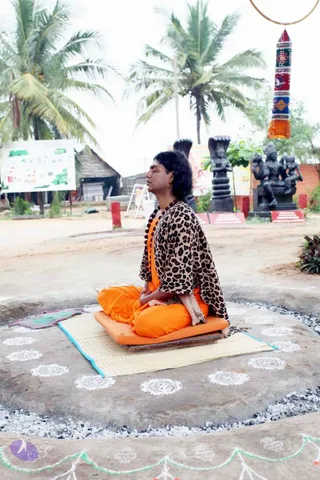
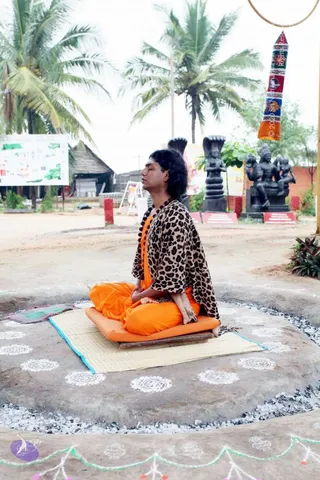
Panchatapas
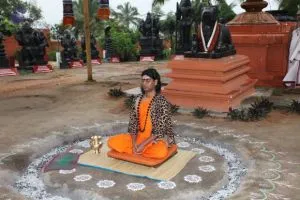
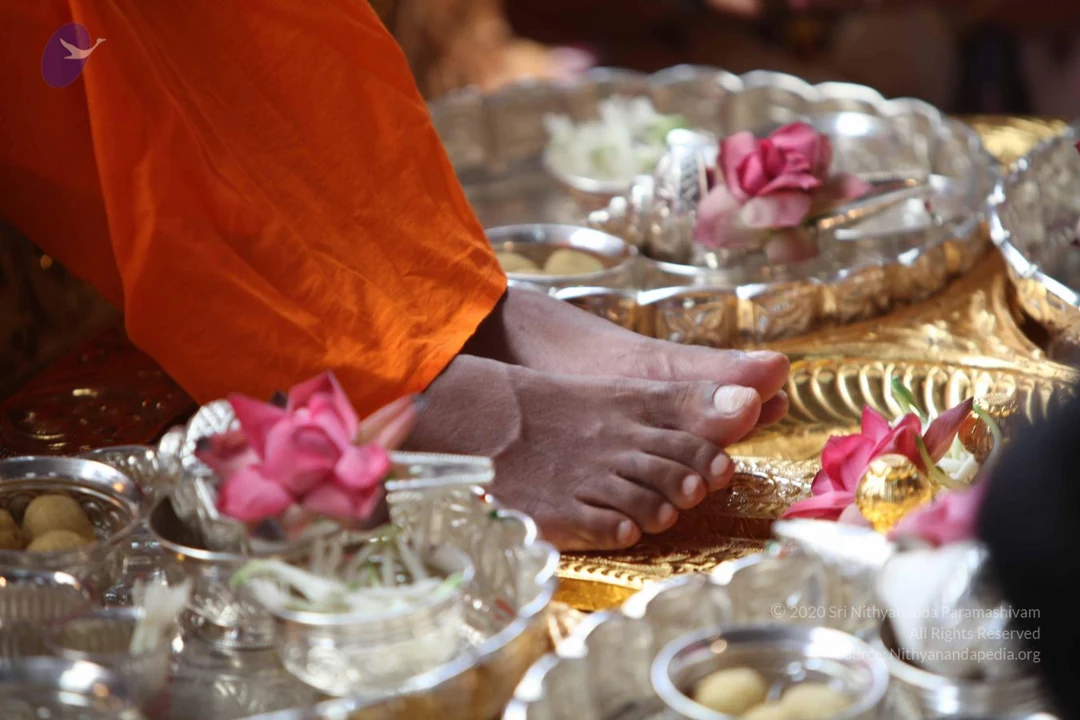
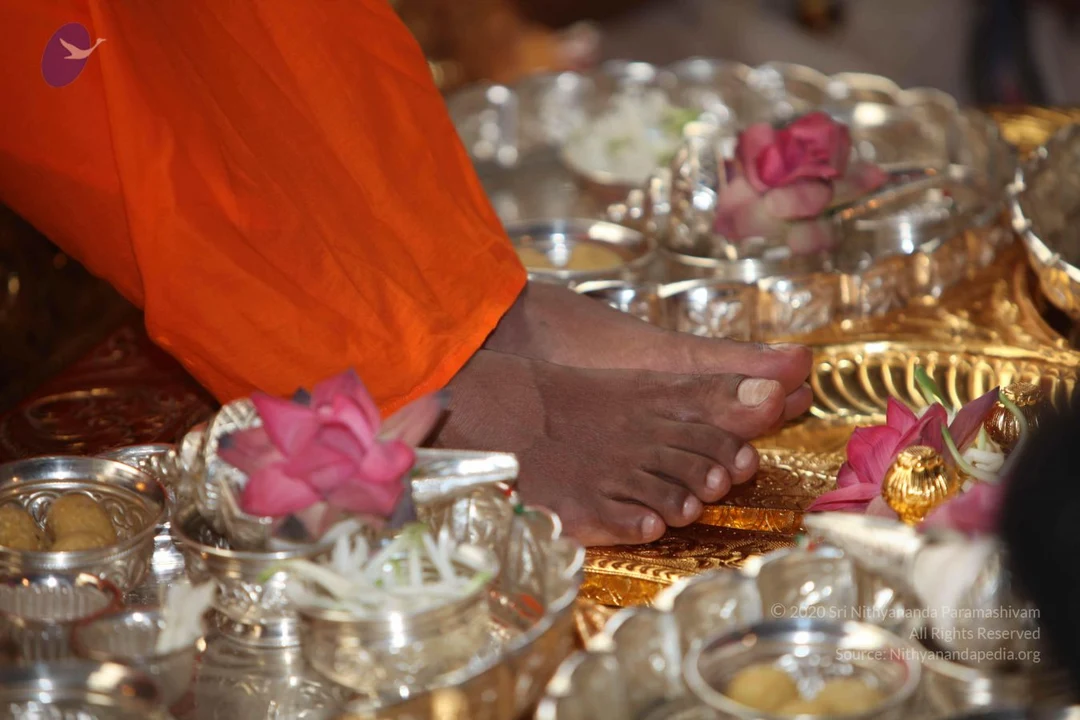
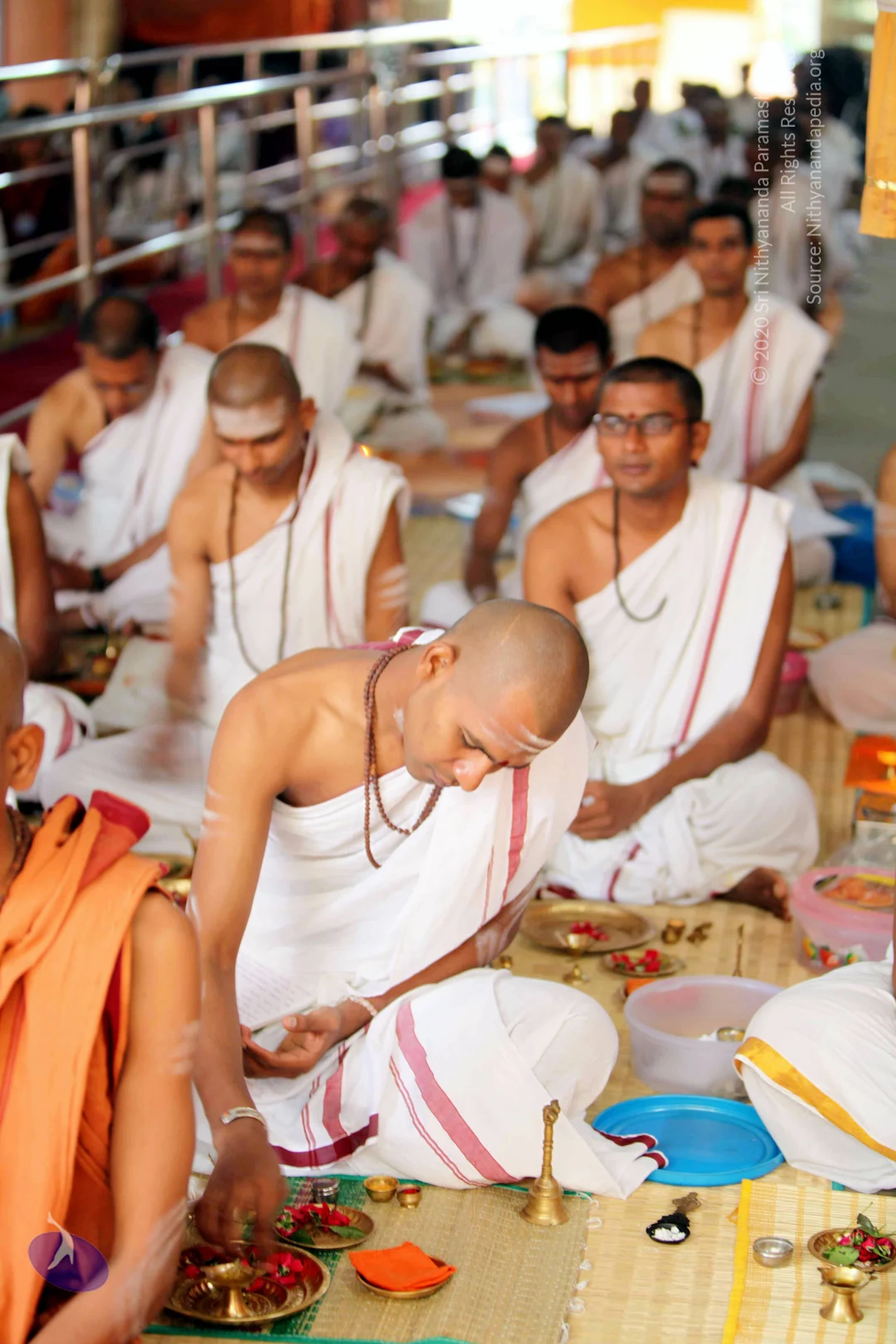
Paadapuja
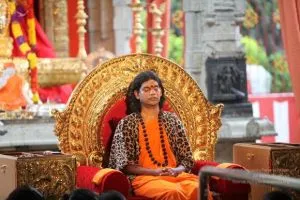
Photos Of The Day:

SWAMIJI-MEETING-BGS-SWAMIJI
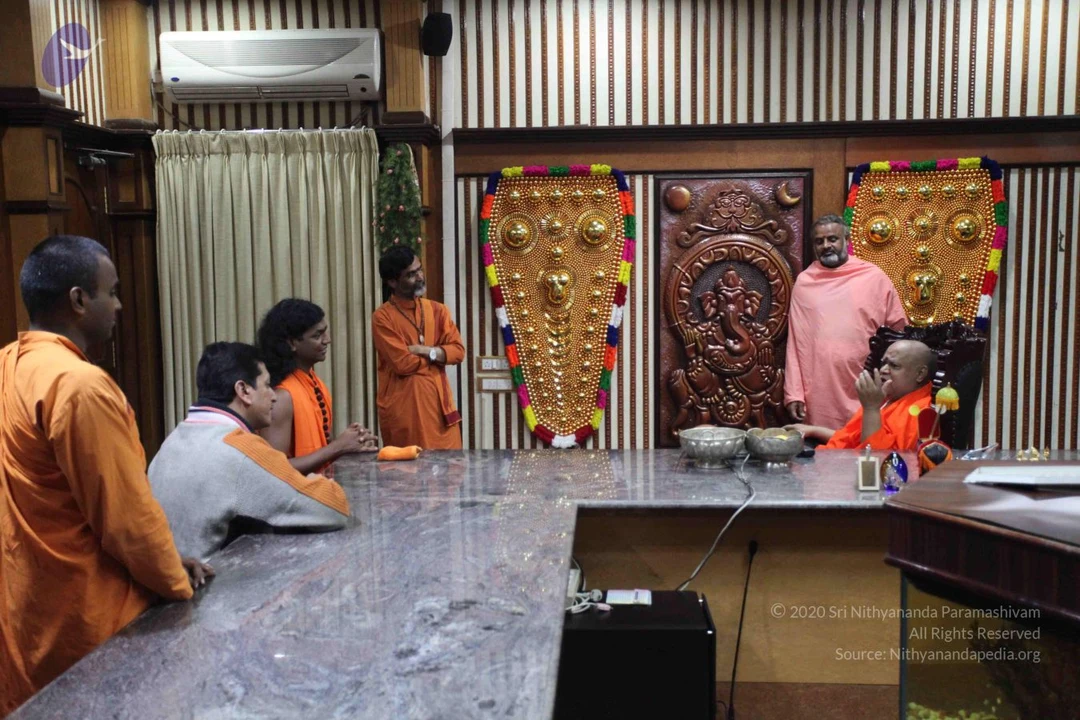
PANCHA-TAPAS

TEMPLE

TEMPLE-VISIT

PADA-PUJA

NITHYA-SATSANG

More Photographs from the day

Photos from this day

View all 403 photos

Paadapuja

6 photosSource gallery
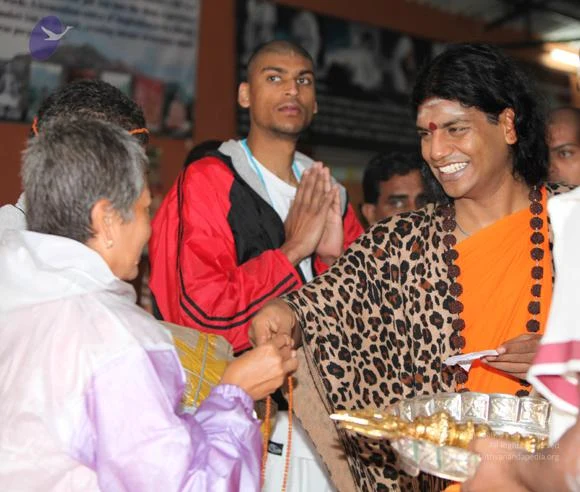
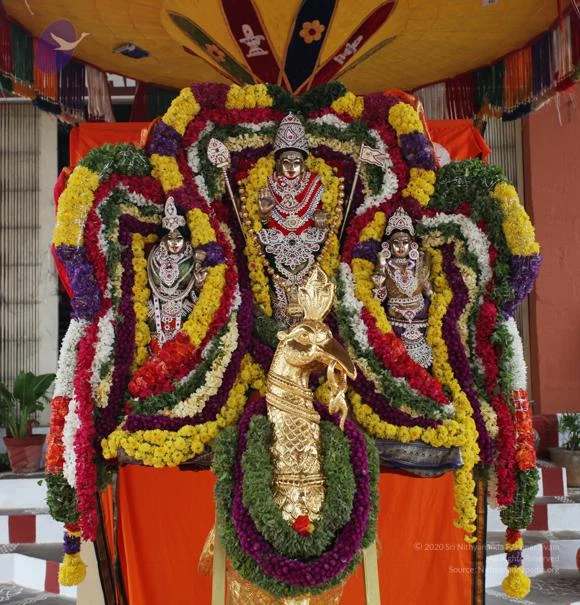
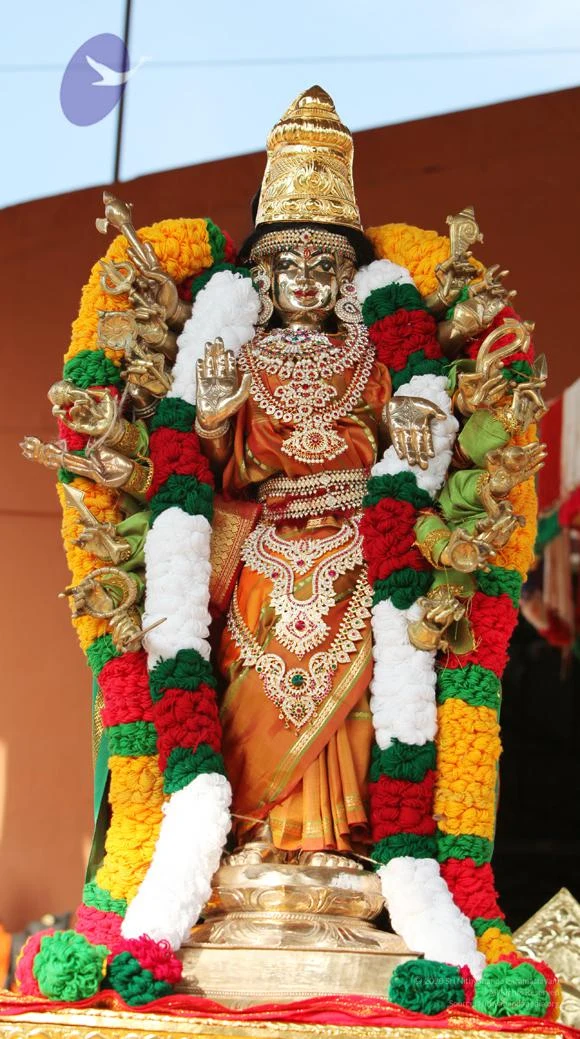
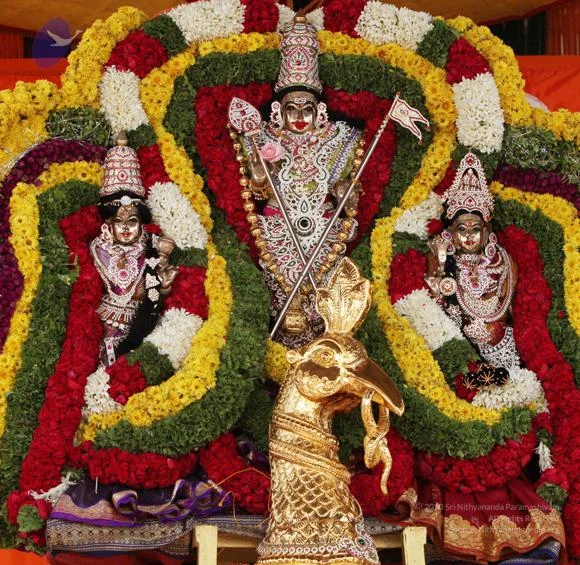
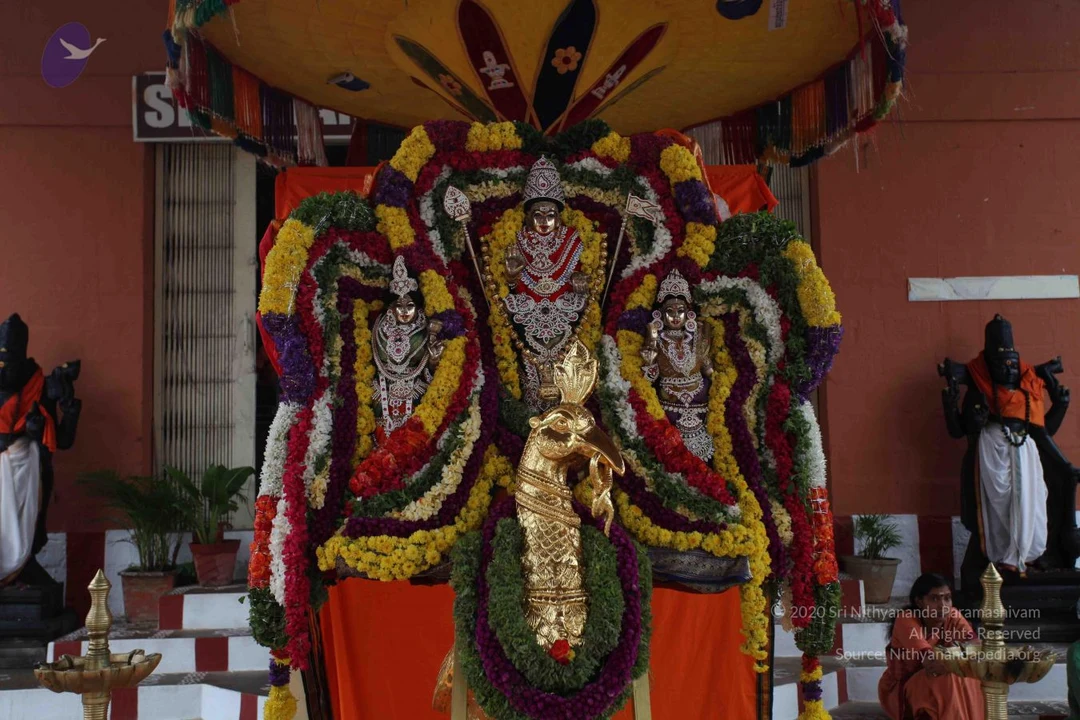
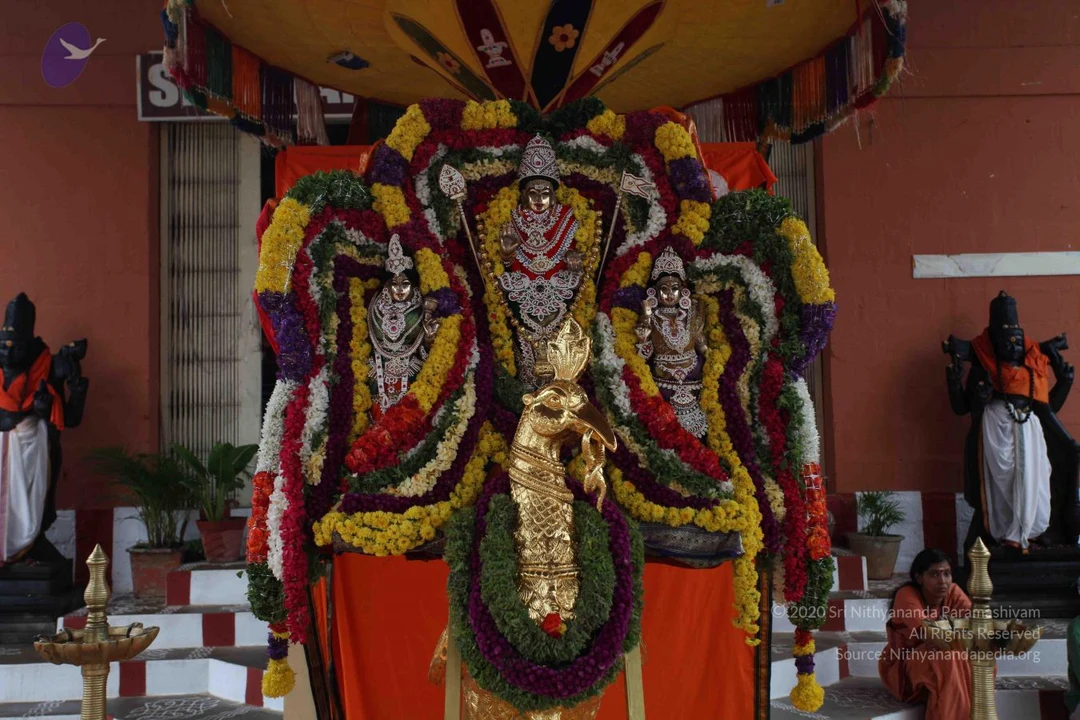
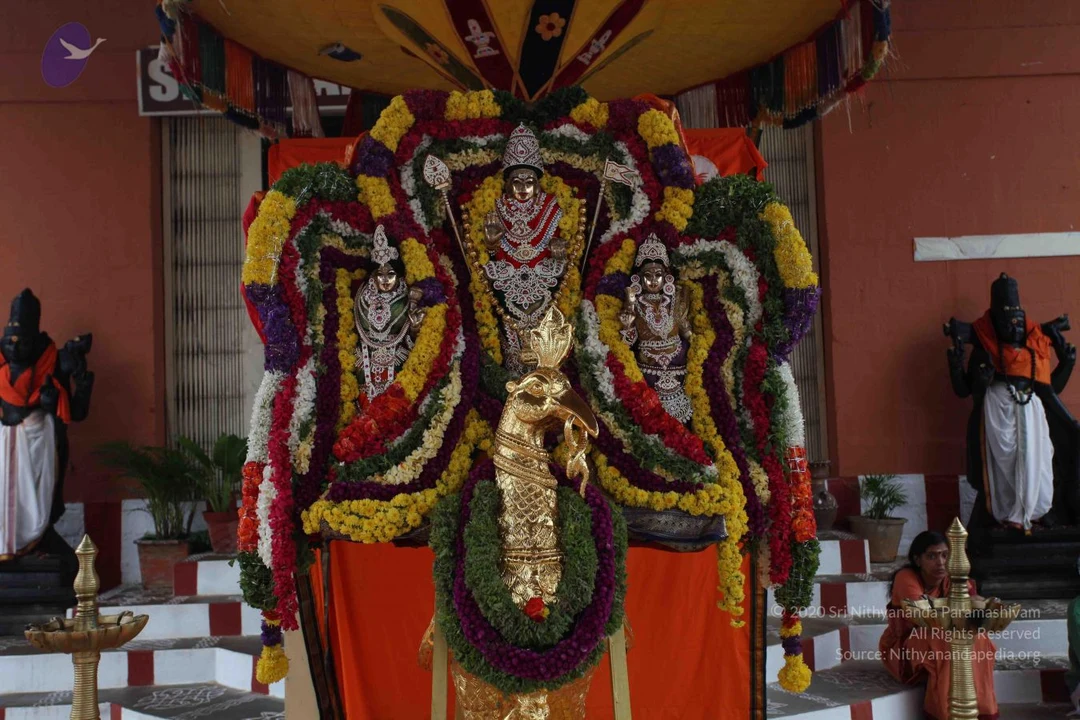
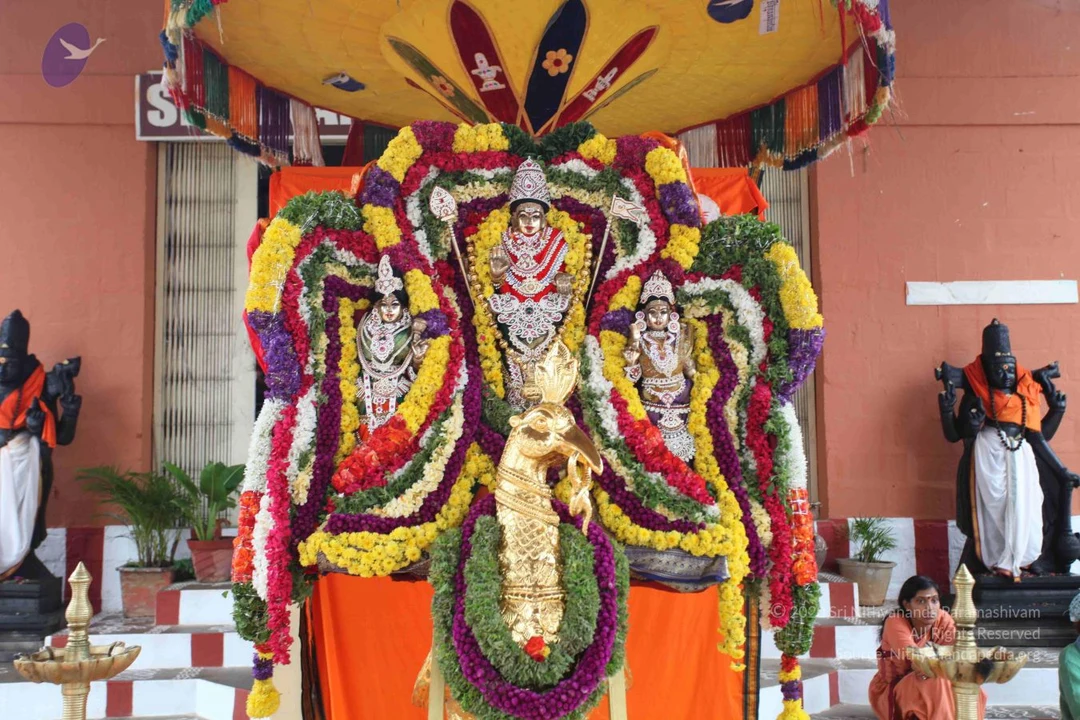
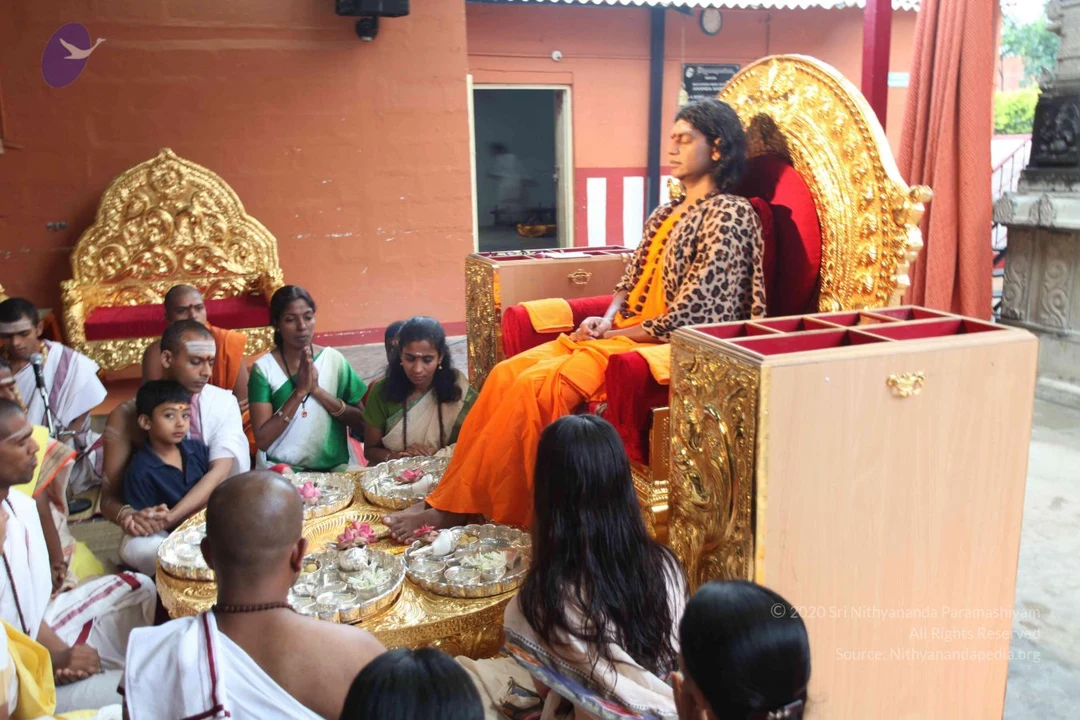
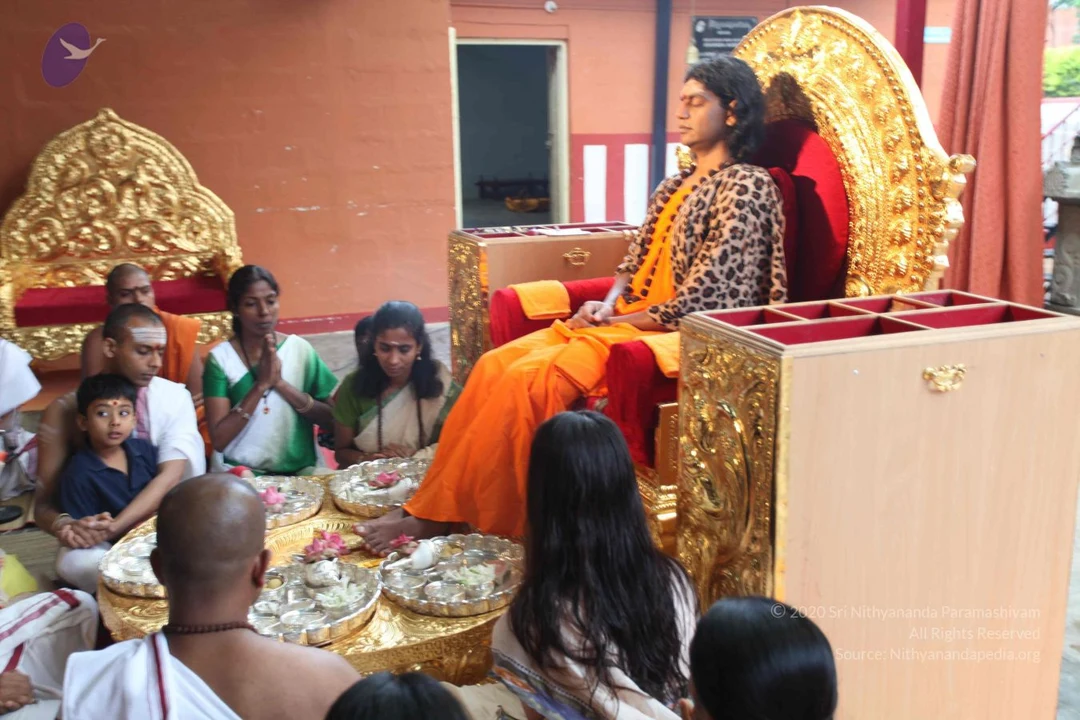
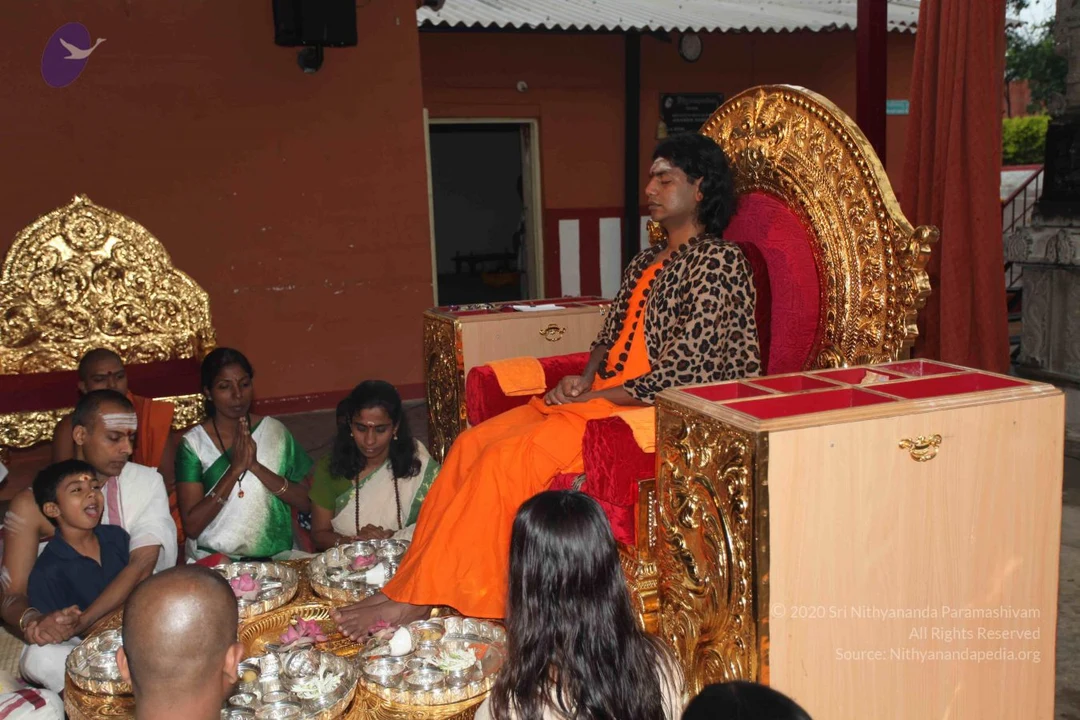
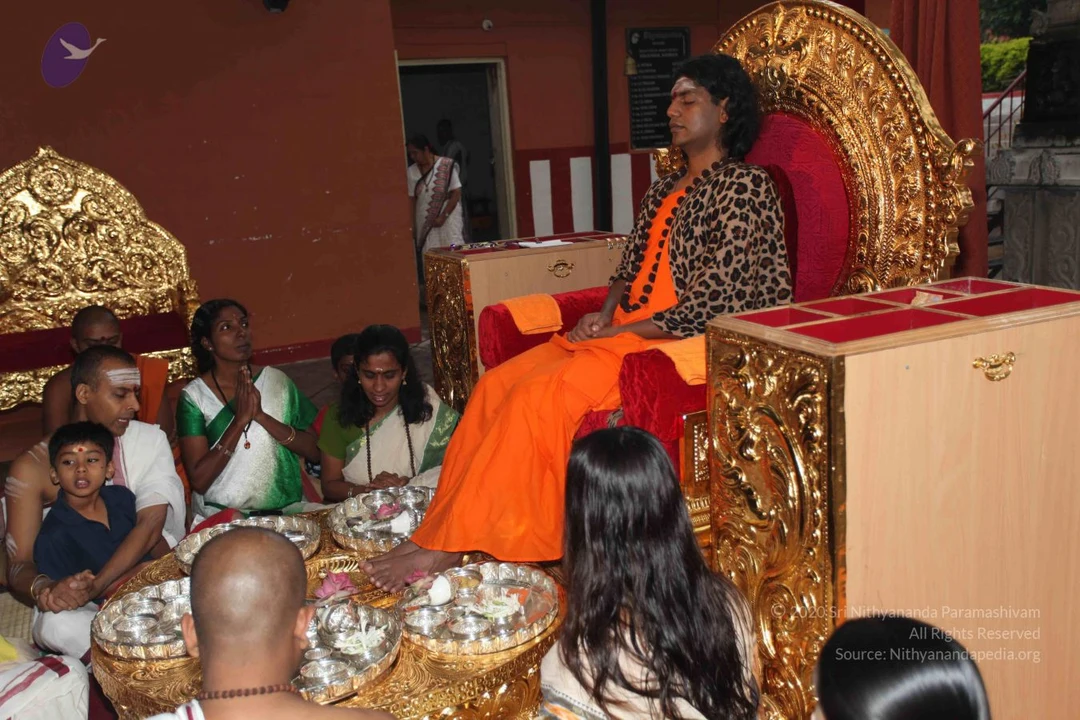
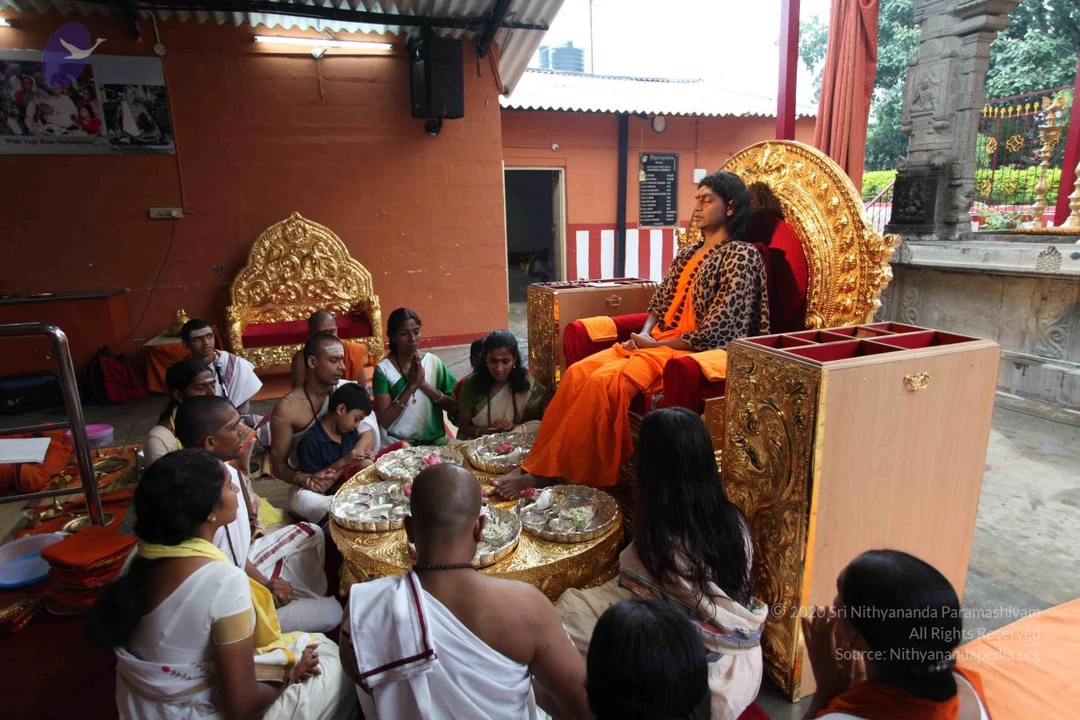
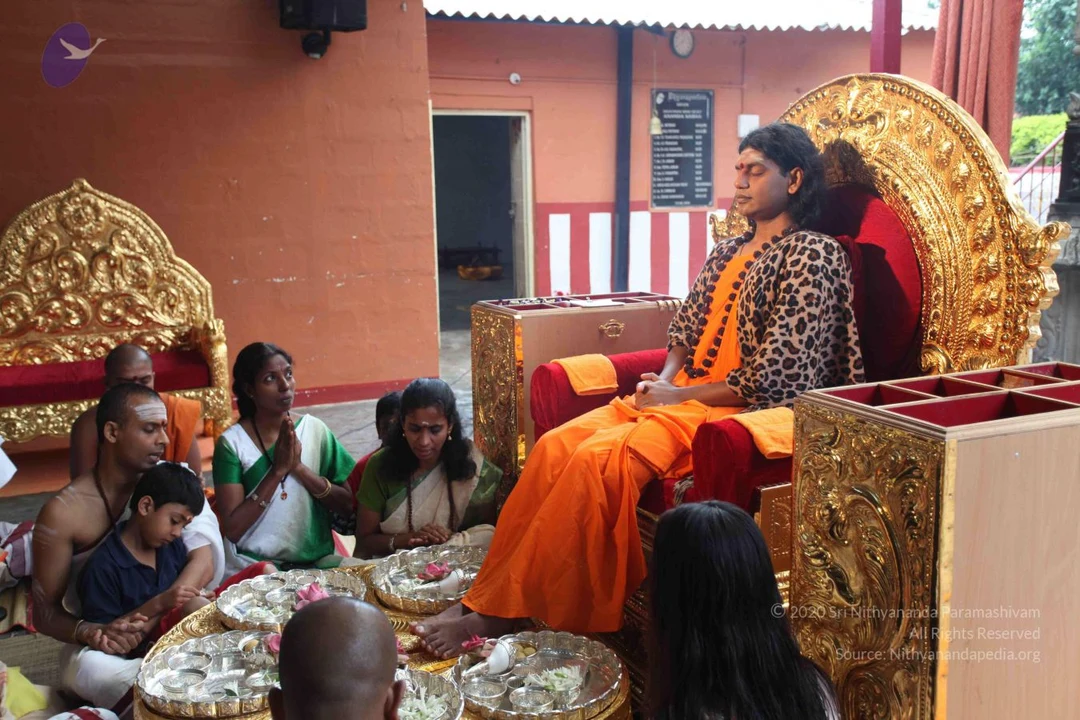
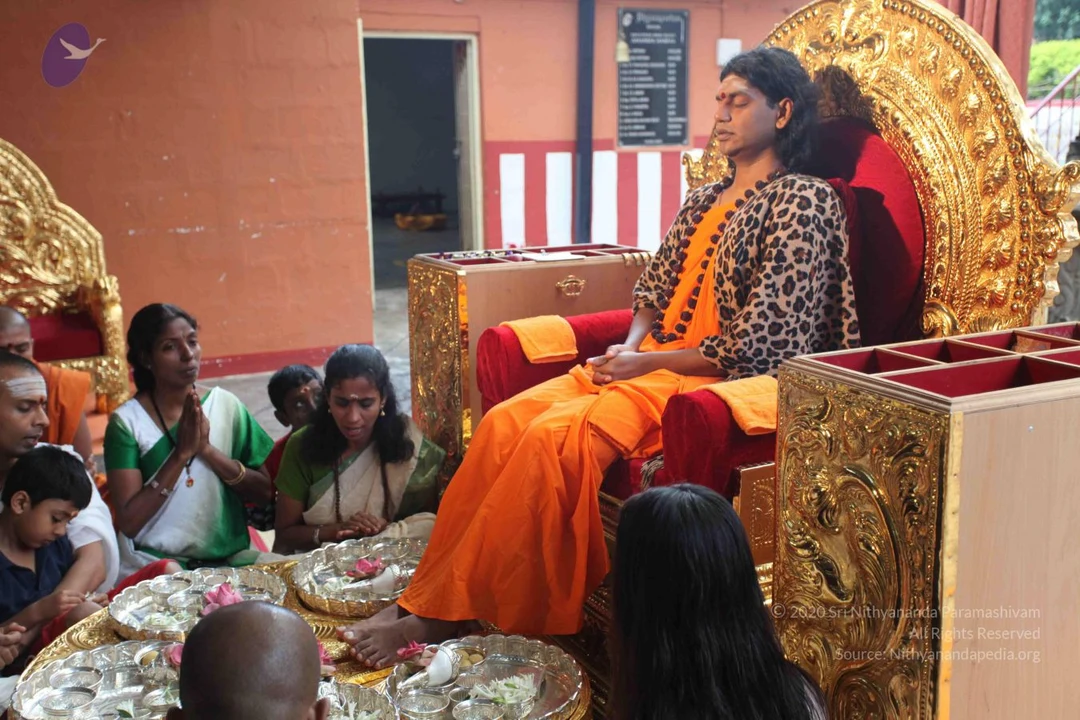
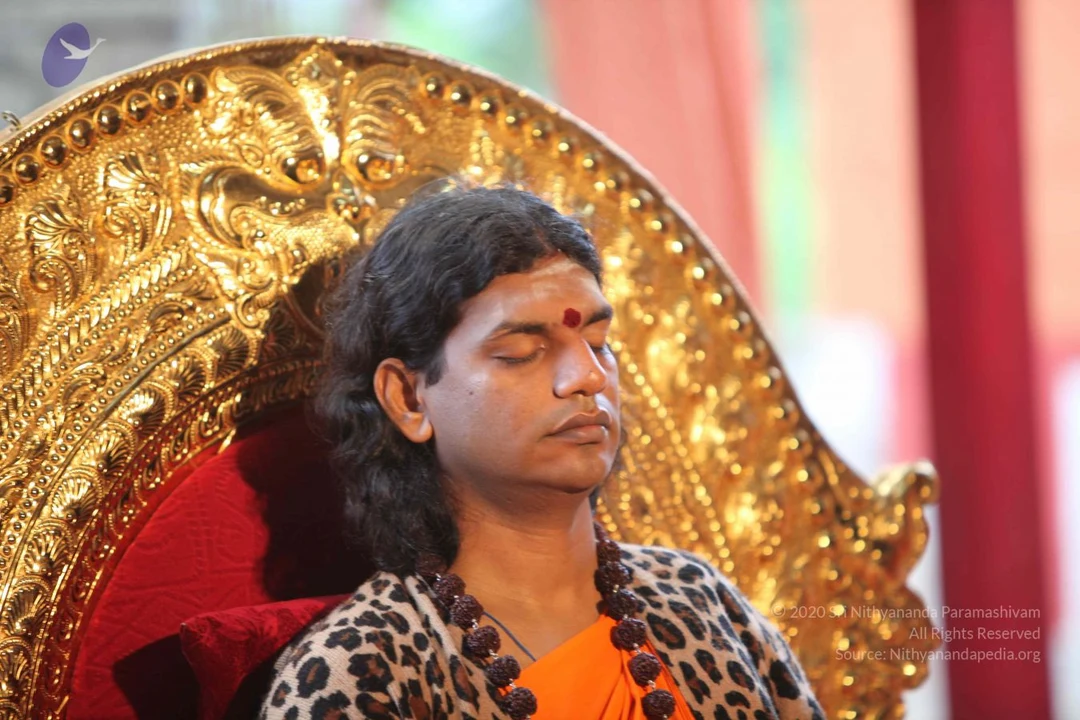
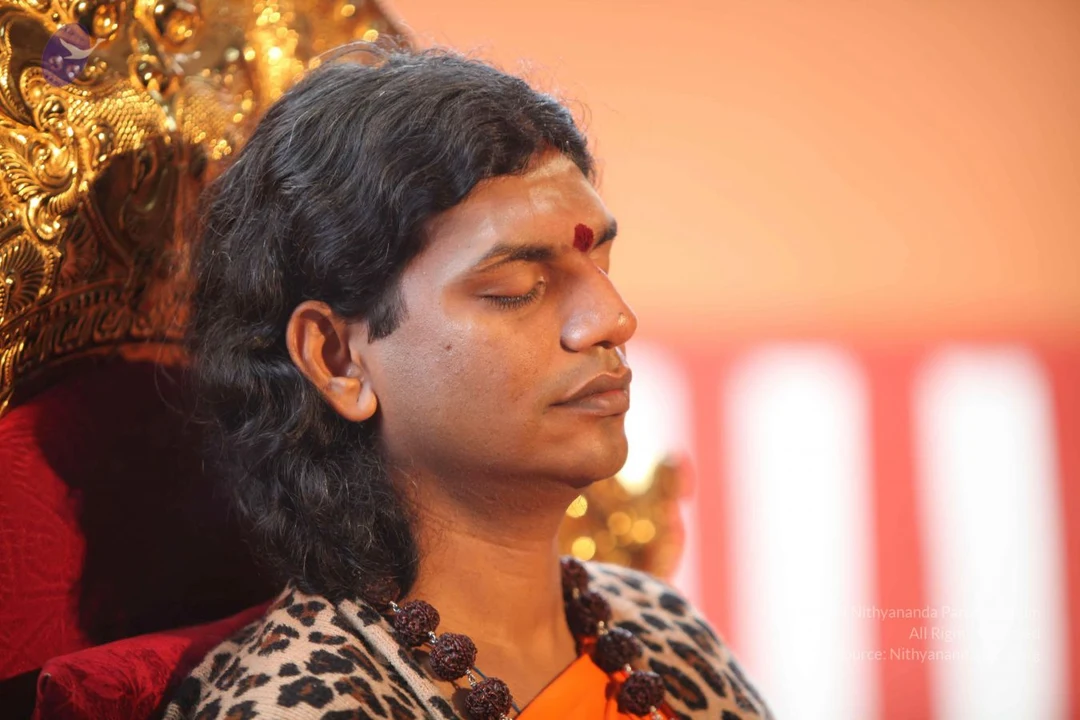
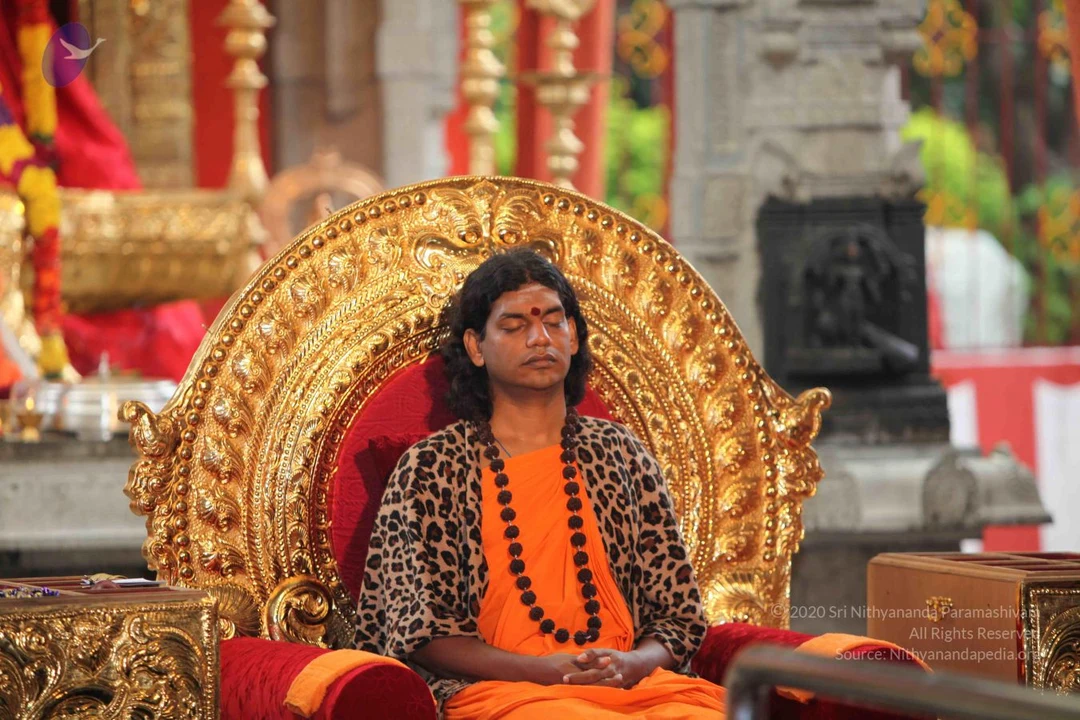
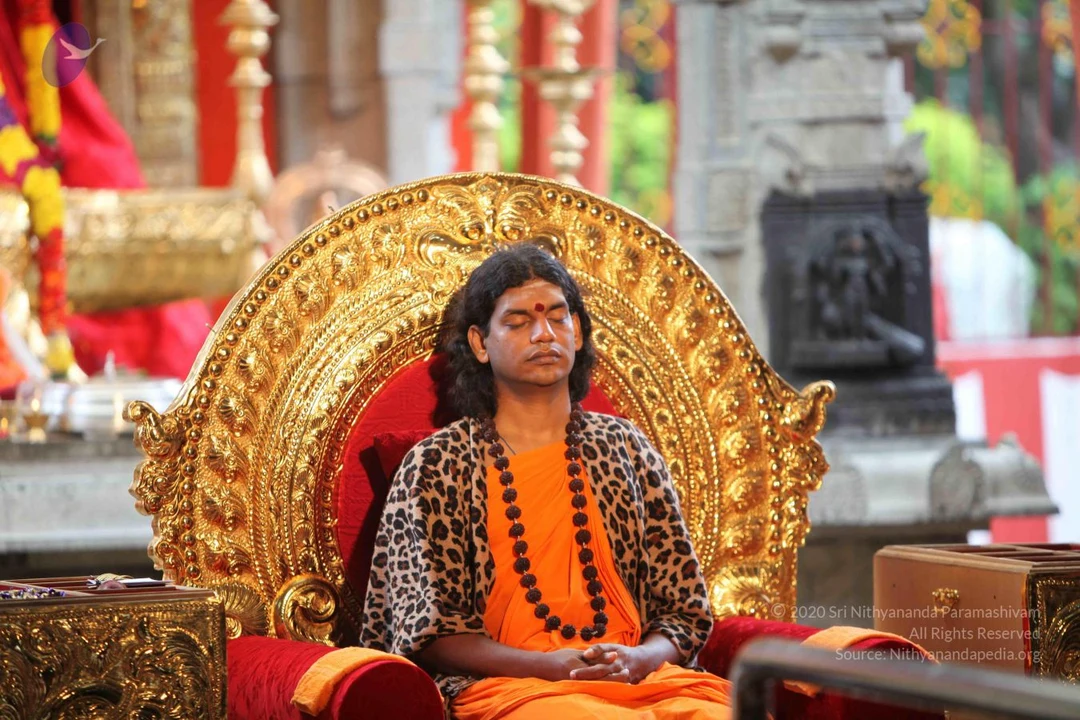
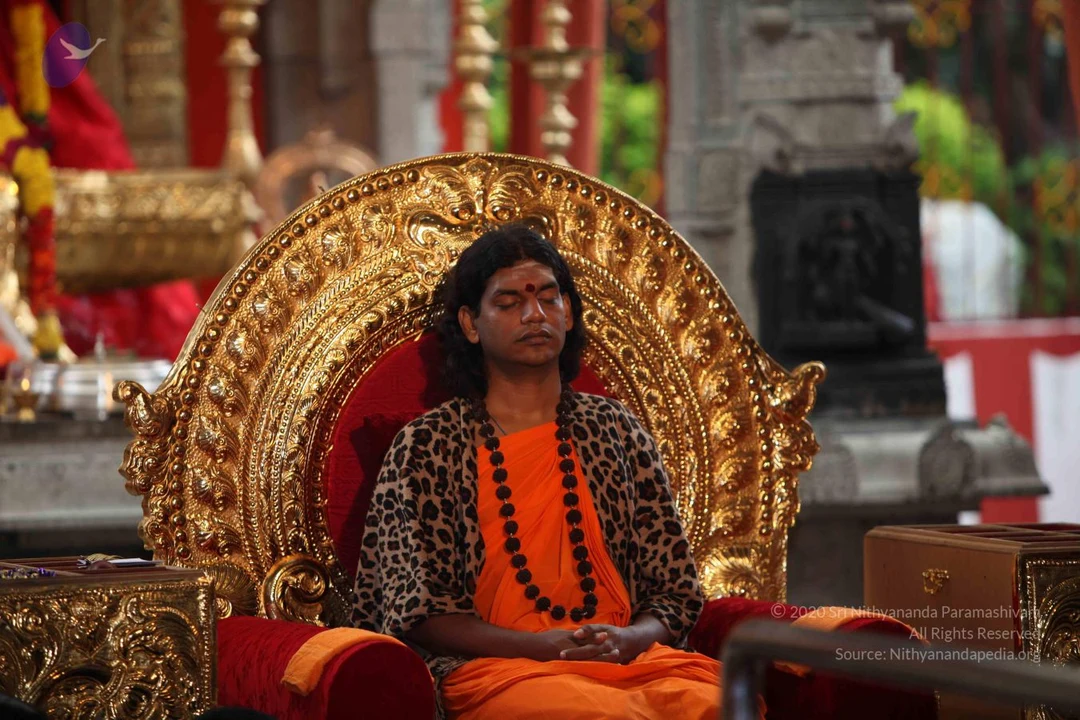
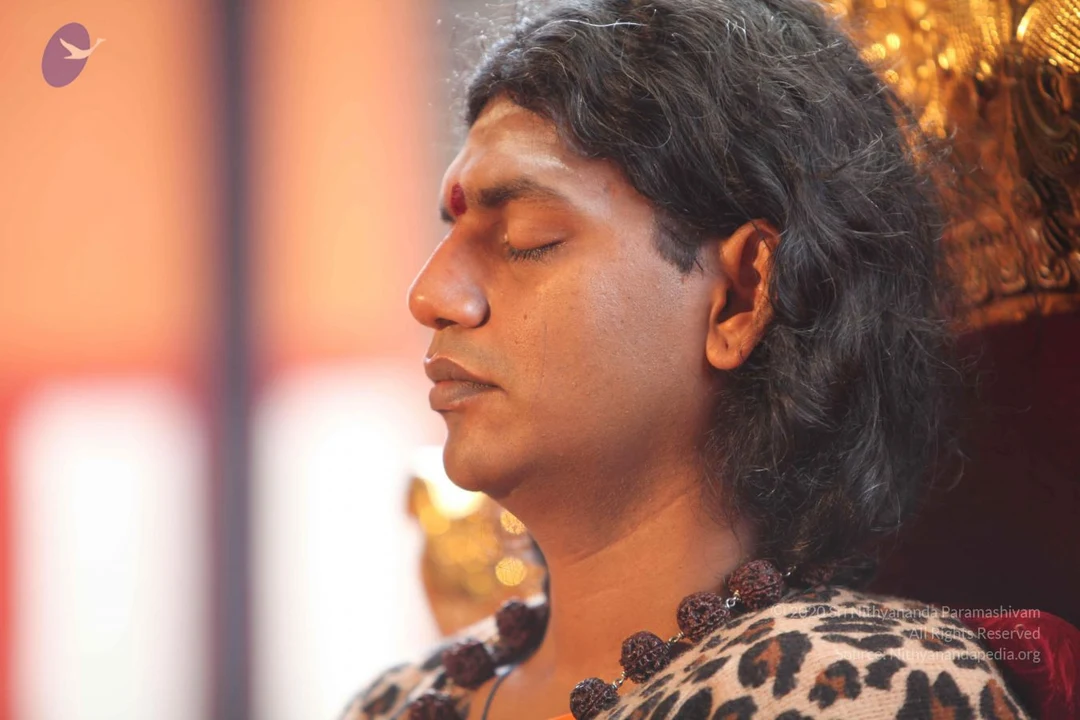
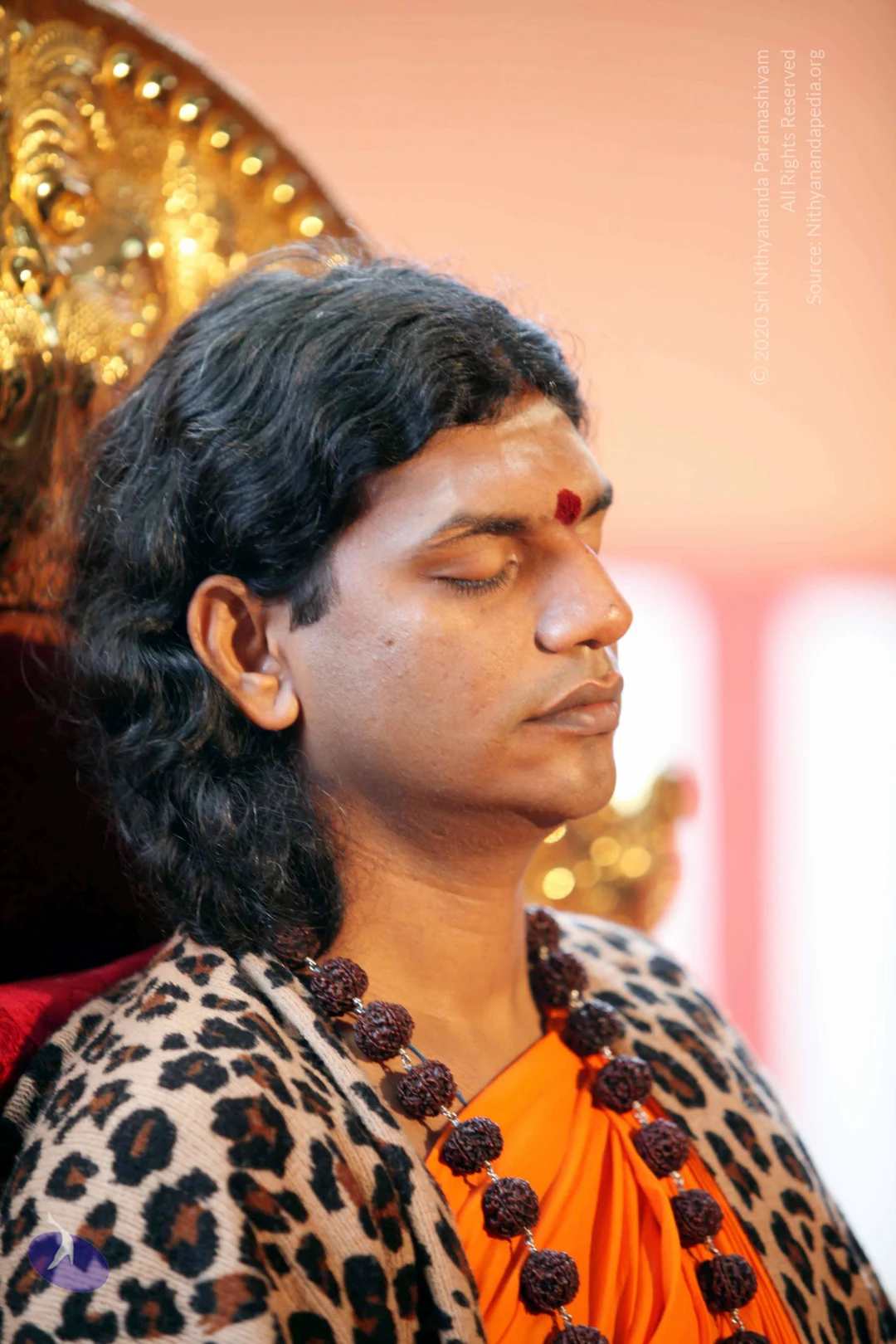
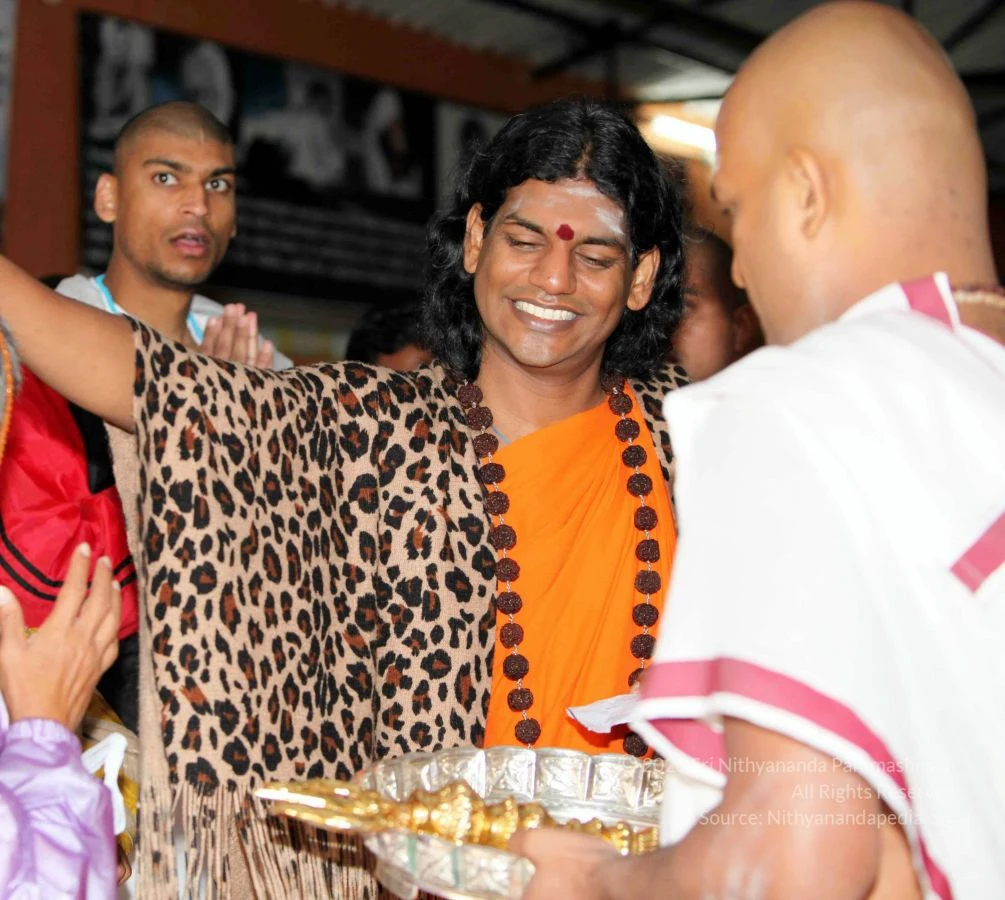
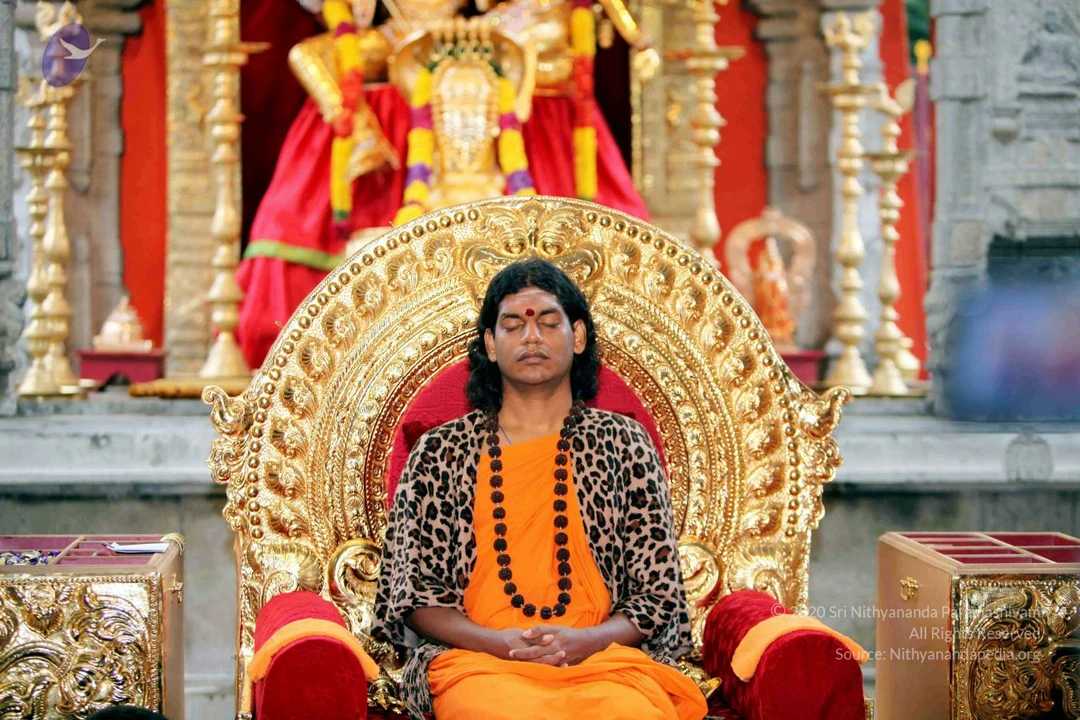
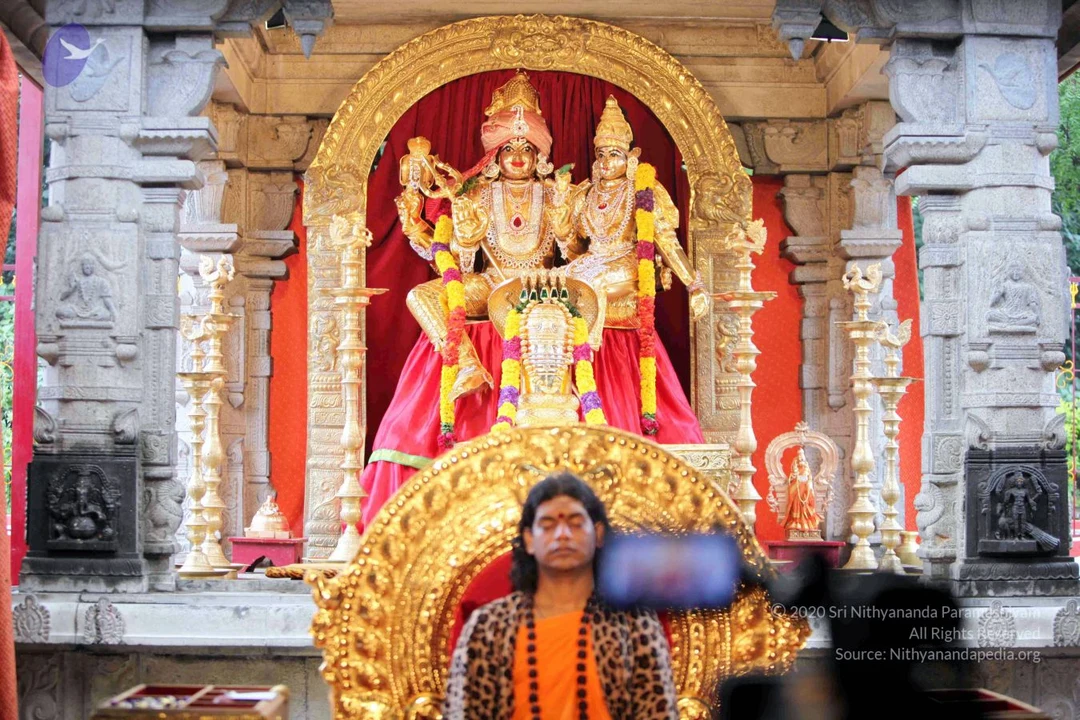
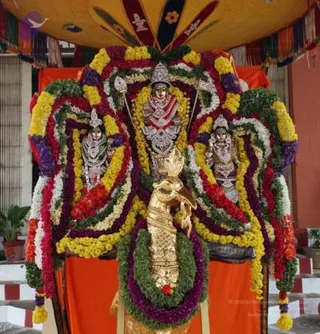
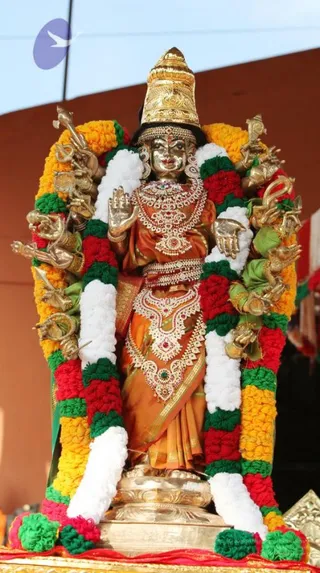
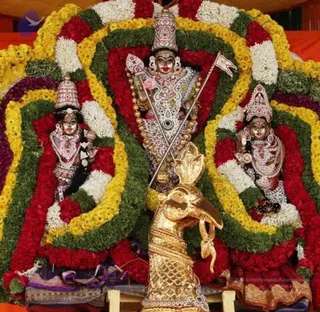
A photograph of a long-haired figure seated on an ornate gold-and-red throne with carved gilded armrests, eyes closed and hands folded in the lap, in a meditative posture. The figure wears a leopard-print top over an orange-saffron cloth, with a red-orange tilak on the forehead. Behind the throne stand a red-and-white striped wall and a black signboard listing text. Gilded wooden boxes flank the throne, one holding an orange cloth. The person's appearance is consistent with the a person candidate indicated by the page, with cues of long swept-back hair, saffron clothing and a throne, though the identity is not certain.A smiling man with long dark hair sits in front of an ornate gold throne with a large gold arched backrest. He wears a leopard-print shawl over an orange garment, with a red tilak on his forehead, and a microphone stands before him. No other people are visible.A photograph of a long-haired man in an orange robe draped with a leopard-print shawl, with a red bindi and dark rudraksha beads, smiling as he extends his hand to an older woman in a lavender top who is bending forward with folded hands. In the foreground a silver-and-gold tray is held in front of him. Behind them a young man in a red-and-black jacket stands with palms pressed together, and other people are visible in the background, with a wall of framed photographs. The man in orange shows some a person cues: long swept-back hair, saffron clothing and rudraksha beads, though the appearance is only partly clear.A decorated deity display with three silver-faced murtis standing before a golden hooded cobra-like arch covered in layered garlands of yellow marigolds, purple flowers, red blooms and green leaves. The central figure wears a crown and a red and gold embroidered garment, flanked by two smaller figures in silver ornaments. An orange cloth backdrop hangs behind, with a multicoloured canopy above and potted plants at the sides. No people are visible.A standing metal murti of a multi-armed goddess stands on a gold base, decorated with thick garlands of yellow marigolds, red roses and white flowers with green leaves. The figure wears an orange-red silk sari, layered gold and jewelled necklaces, a gold crown and gold earrings, and holds many arms with ritual objects. A red and gold cloth lies at its base. Behind it is a terracotta wall and a blue-and-white logo in the corner. No people are visible.A decorated deity murti of a standing goddess with a crown and trident-like staff, flanked by two smaller attendant figures in ornate silver-and-red costumes. The central figure is adorned with a silver-embellished garment, jewelled necklaces and a floral arrangement framing the whole display. Garlands of red roses, yellow marigolds and white flowers form a large arch behind the figures, with green leaves at the edges. In front, a golden peacock-like vahana with a serpent in its beak sits on a wooden stand, and purple and gold draped cloth covers the base. No people are visible; the figures are statues and the scene is a temple decoration.

SWAMIJI-MEETING-BGS-SWAMIJI
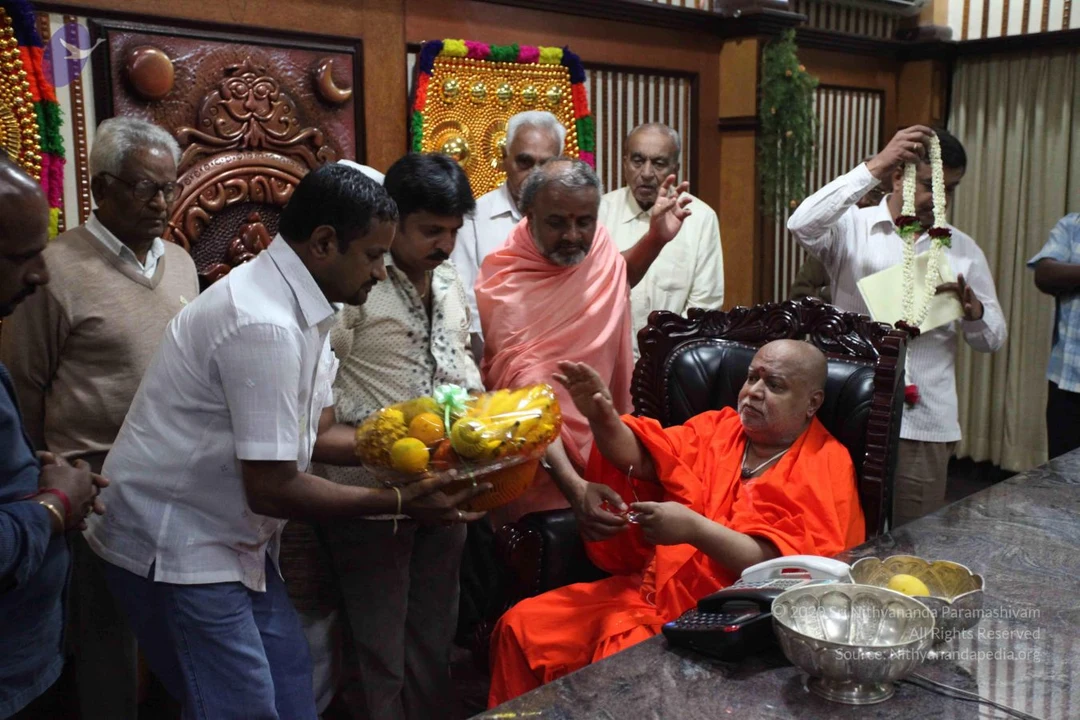
20 photosSource gallery
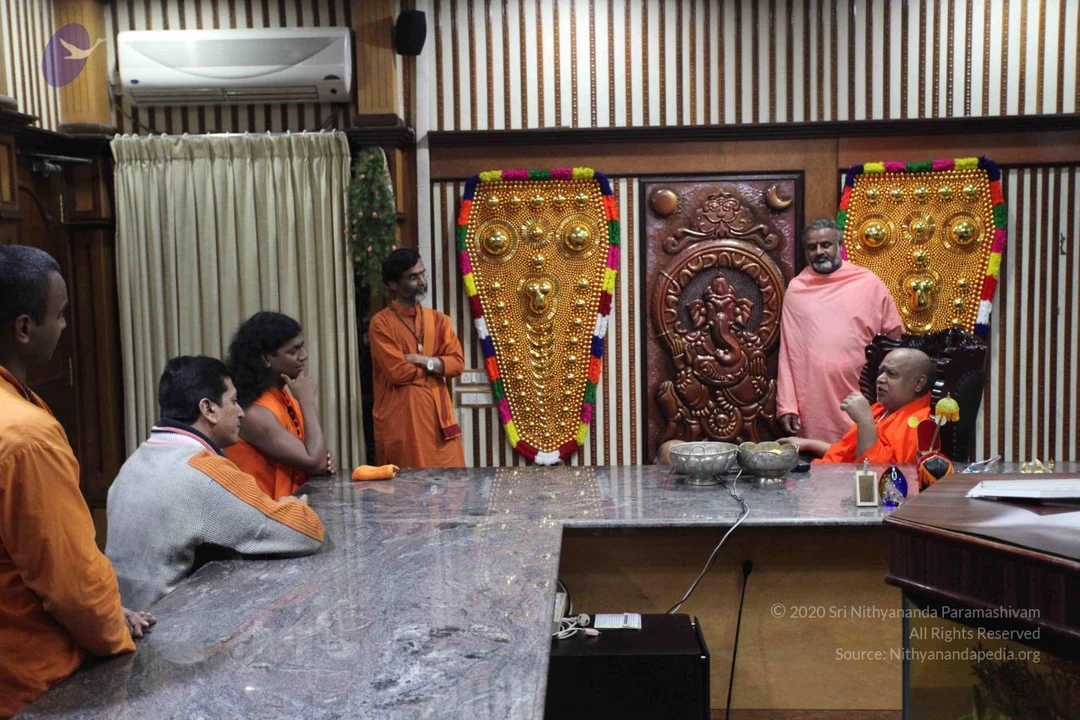
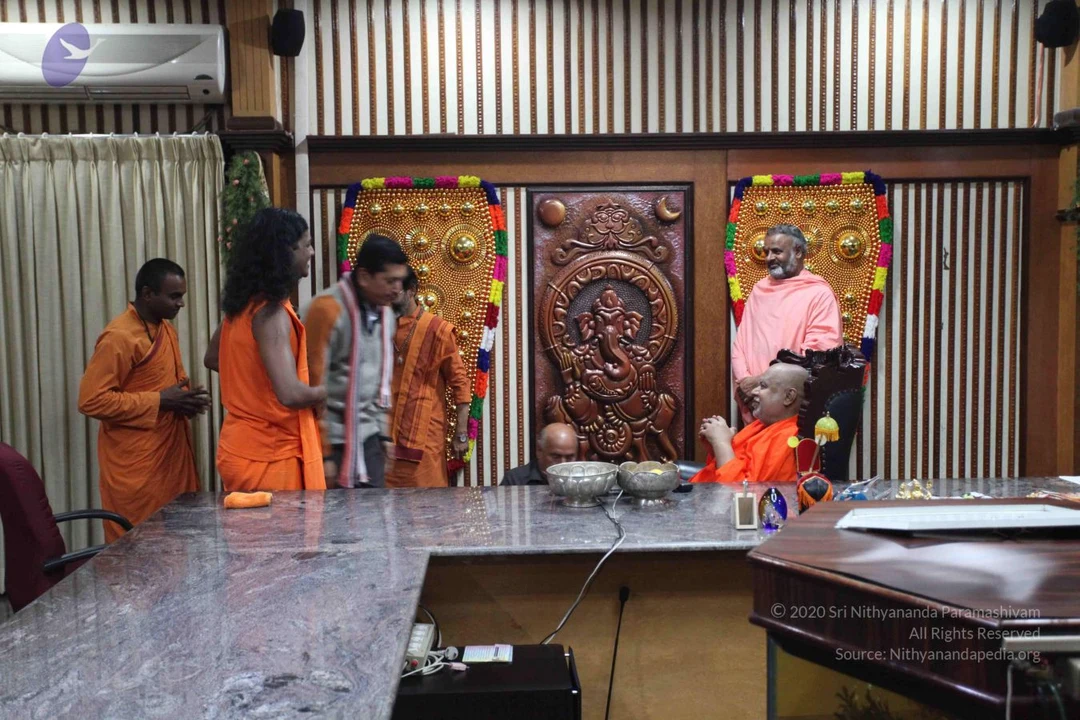
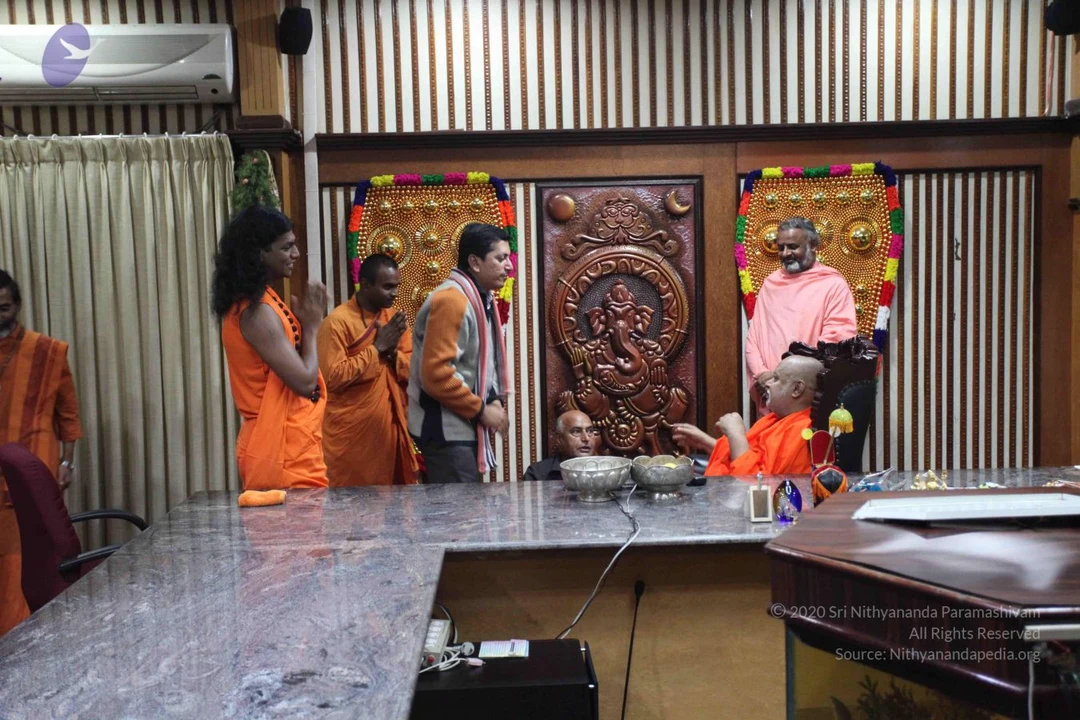
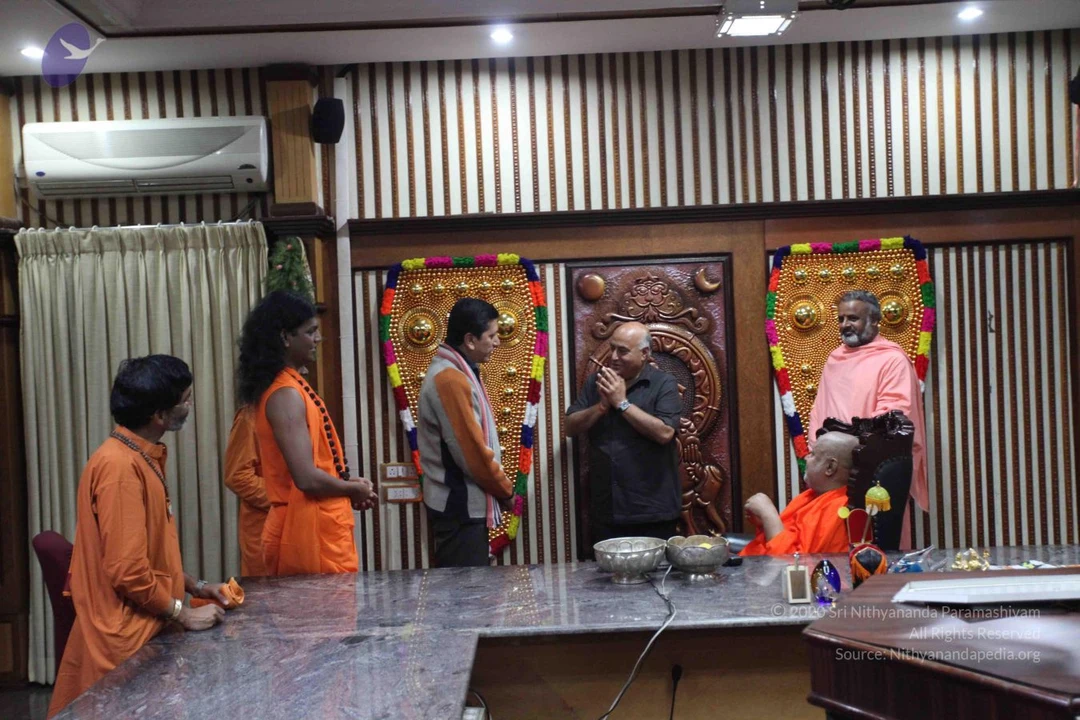
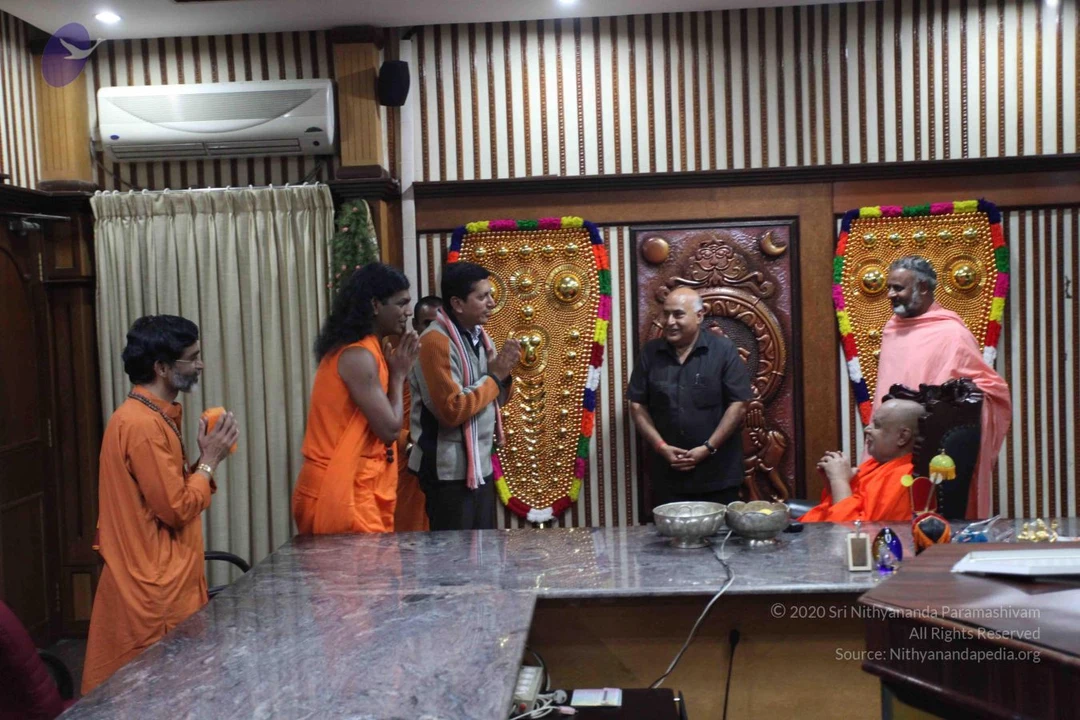
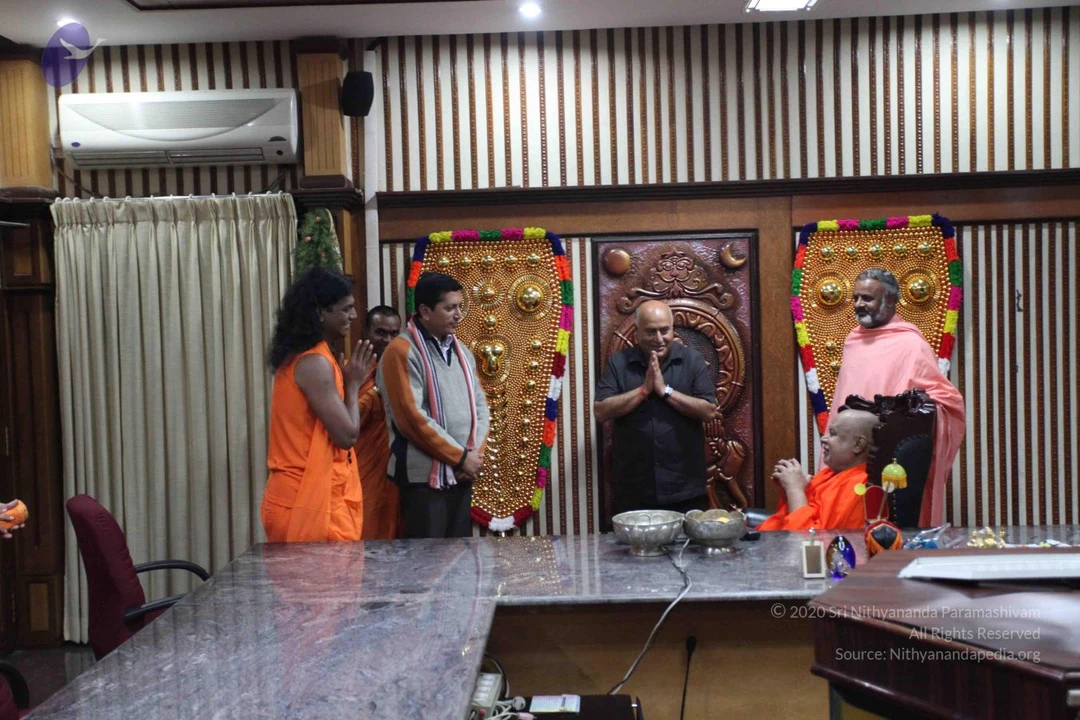
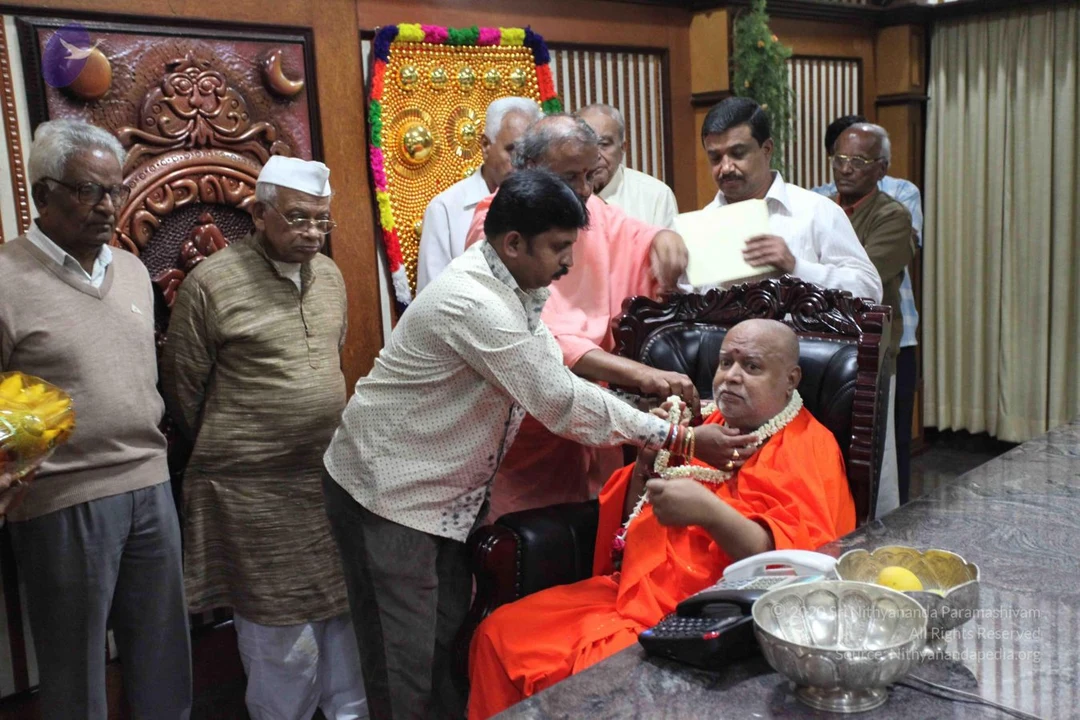
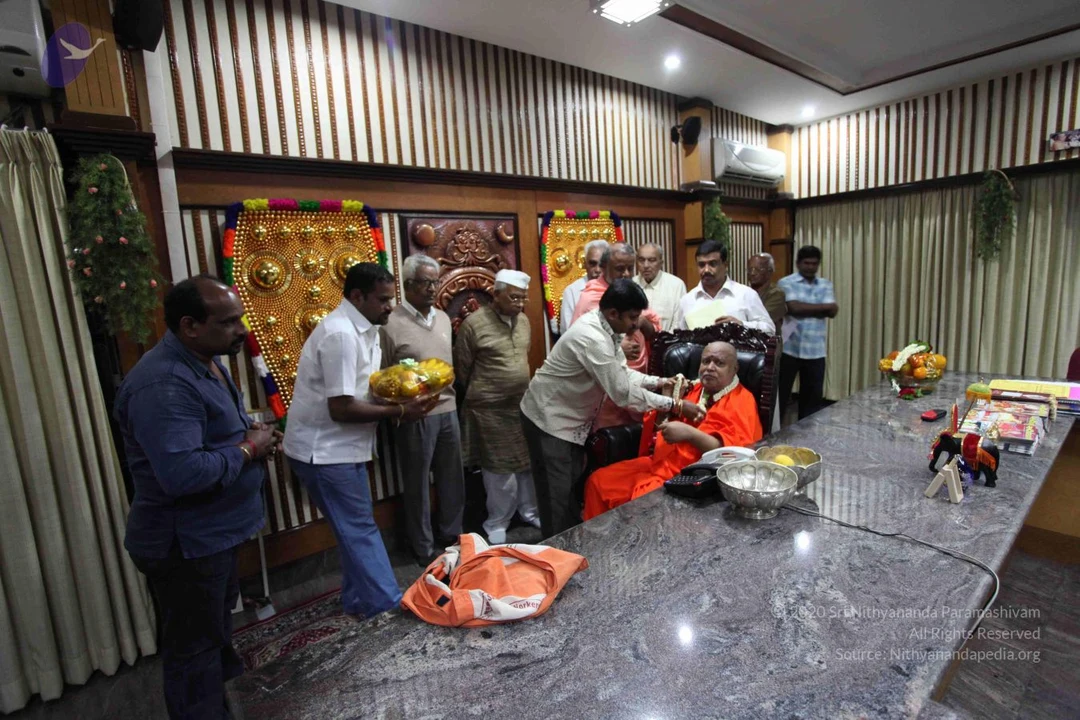
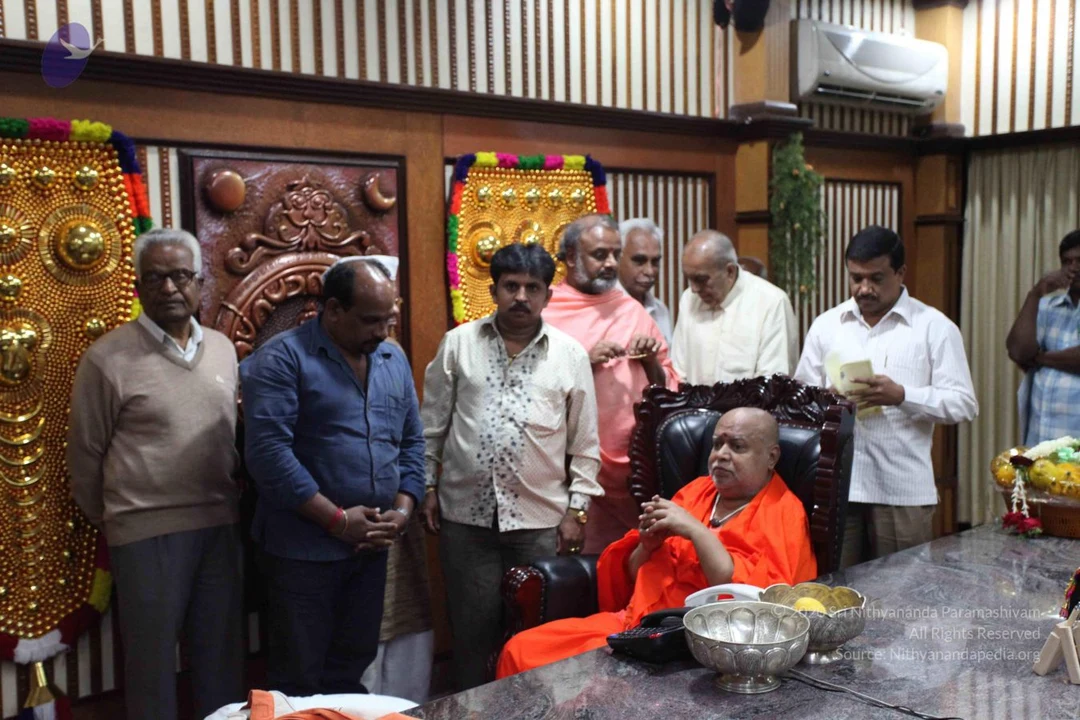
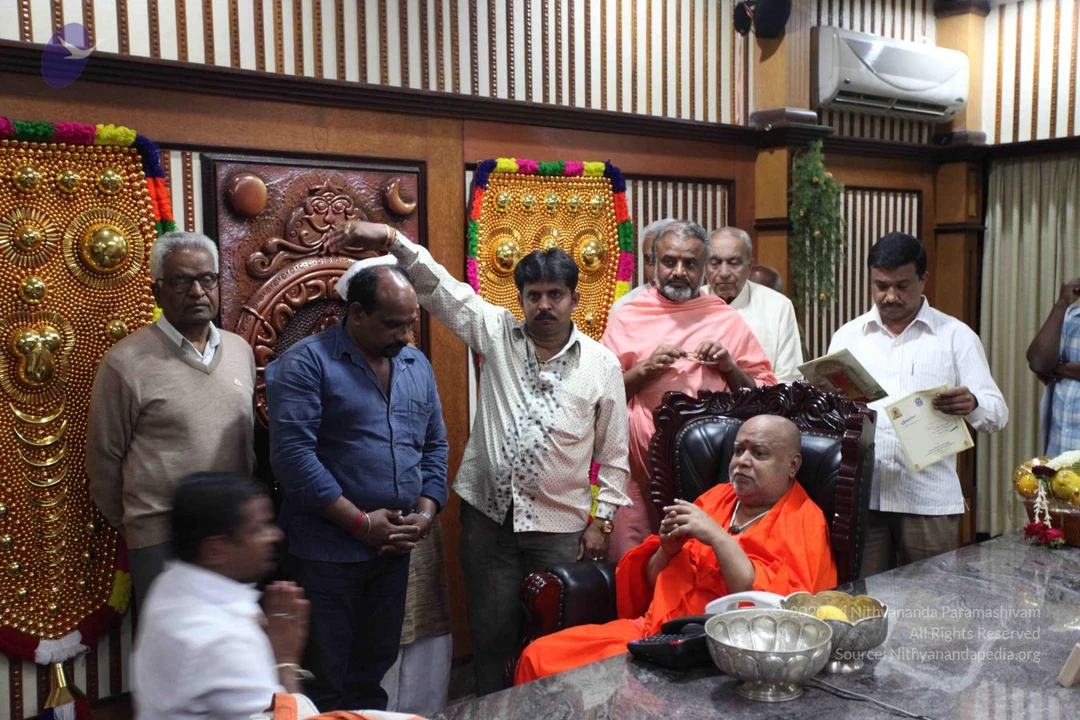
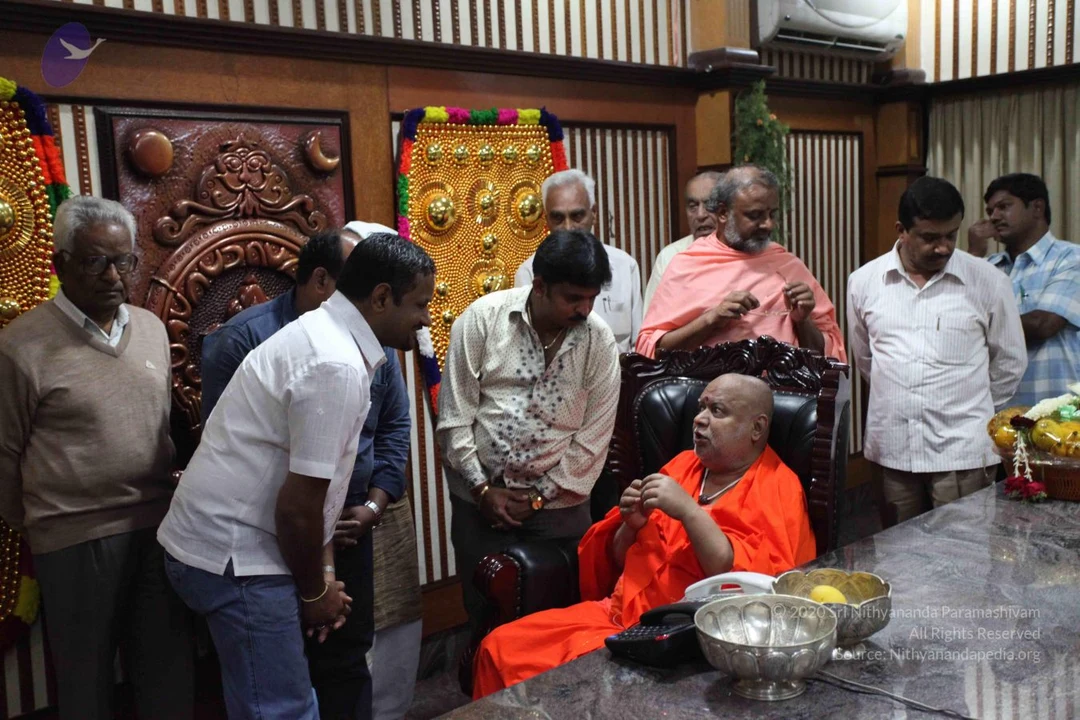
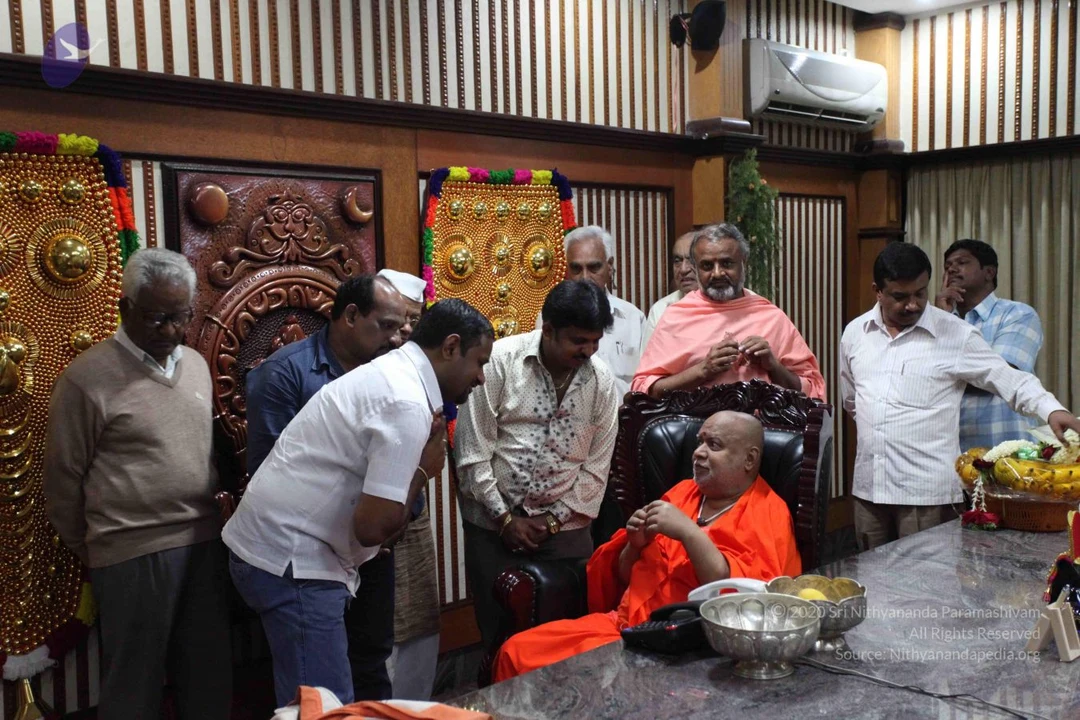
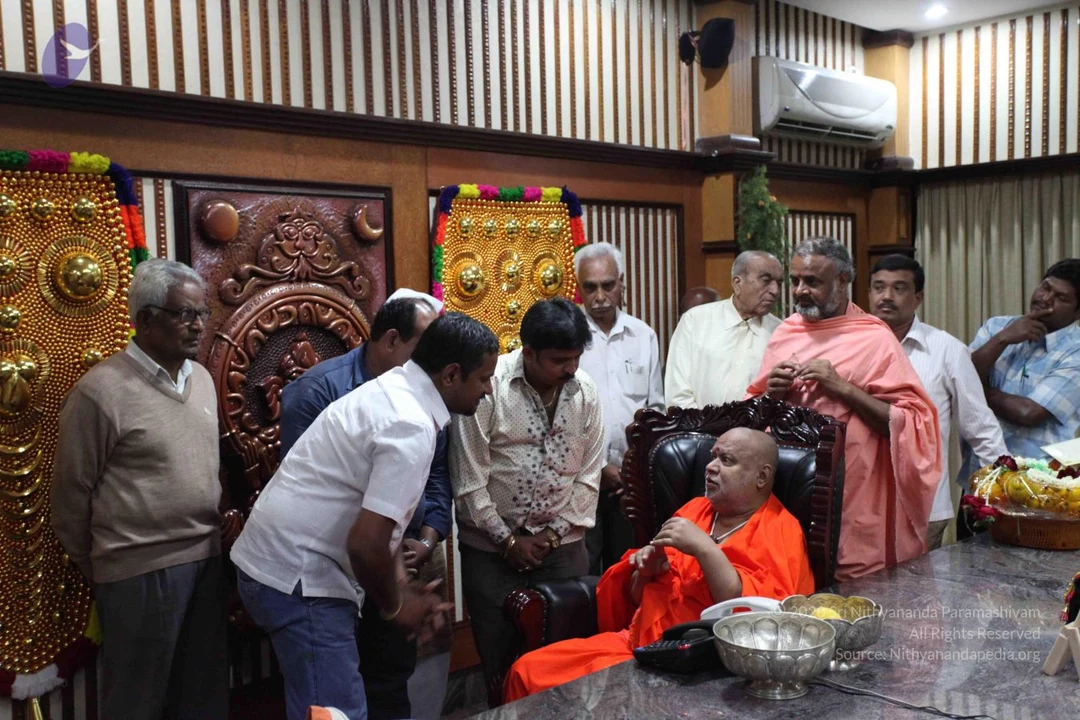
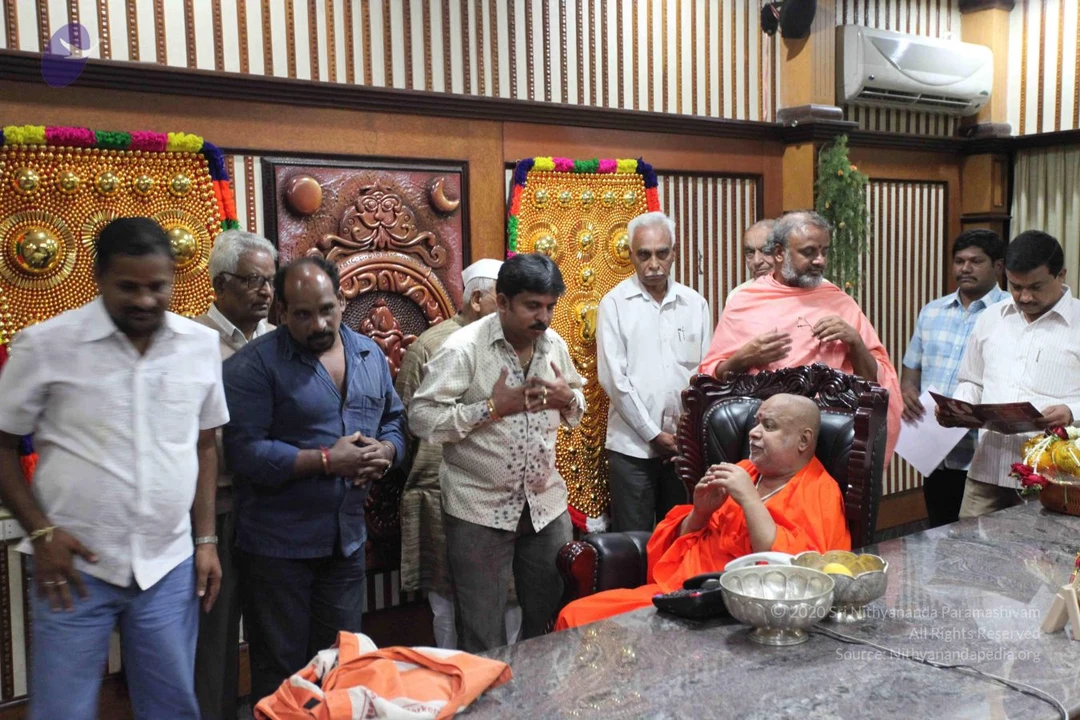
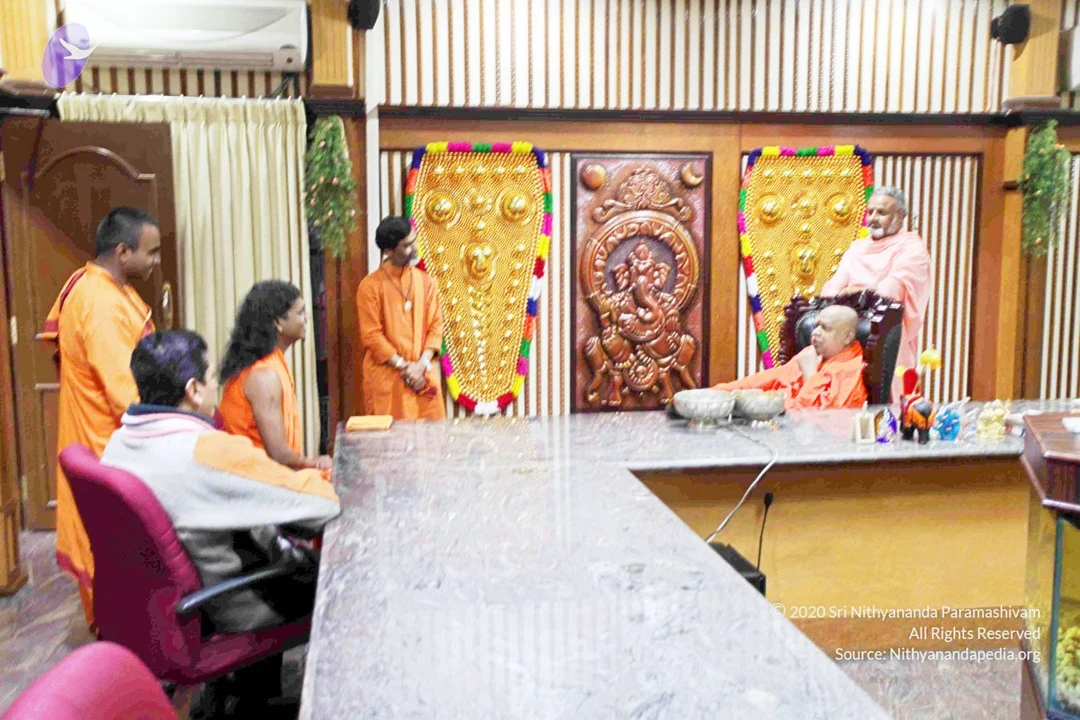
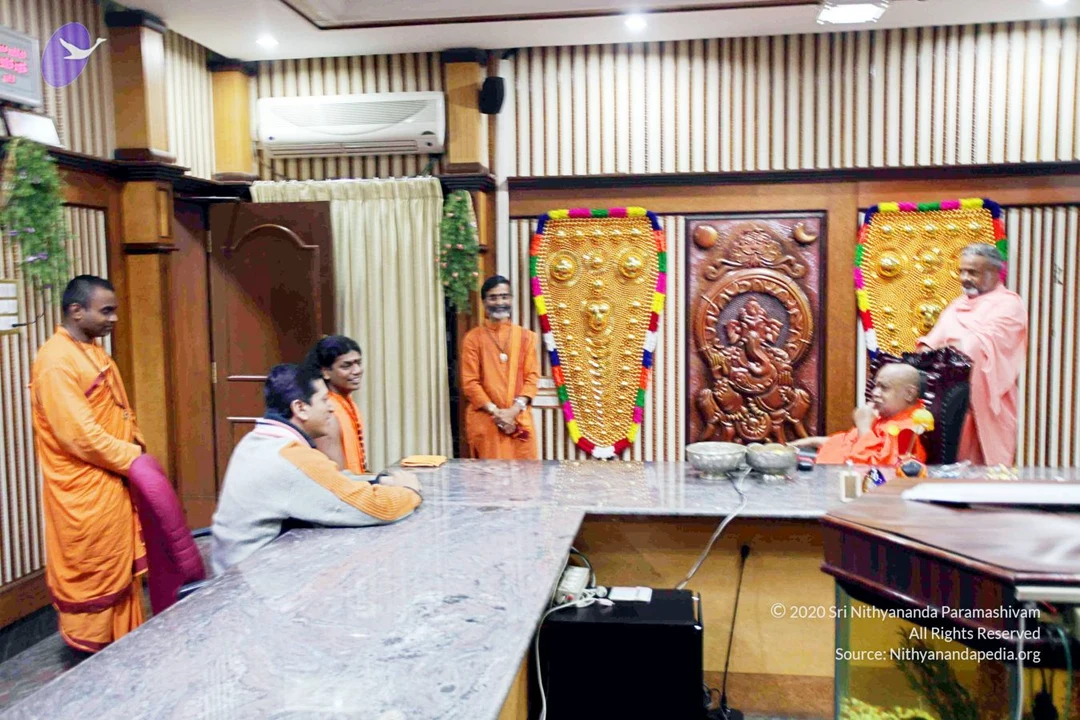
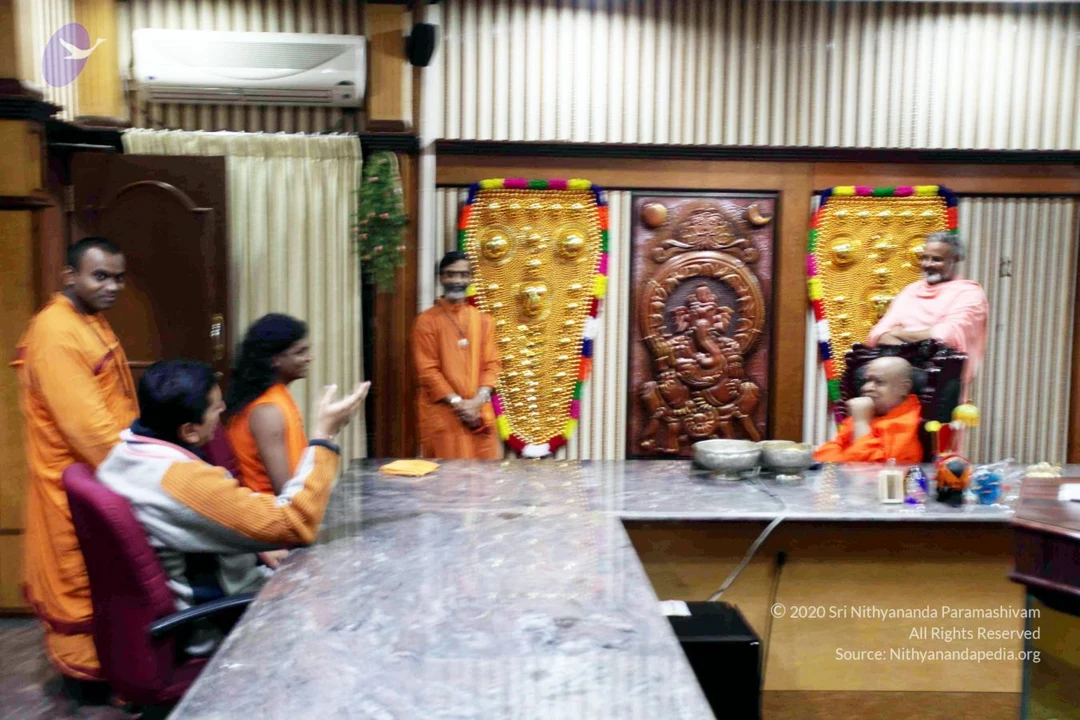
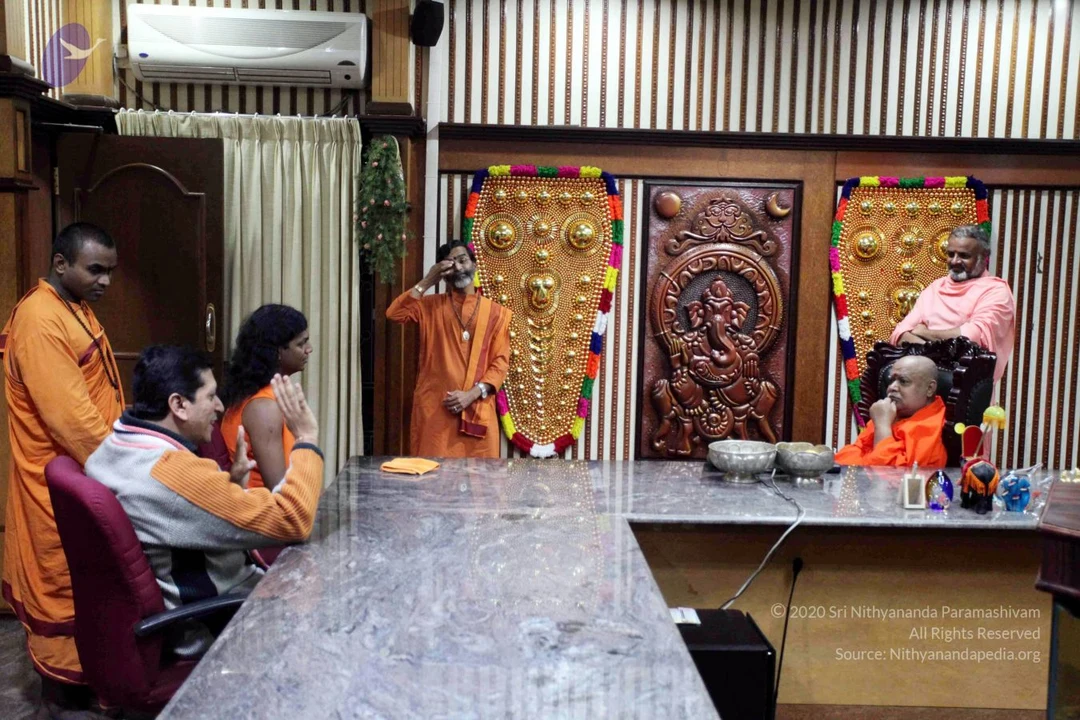
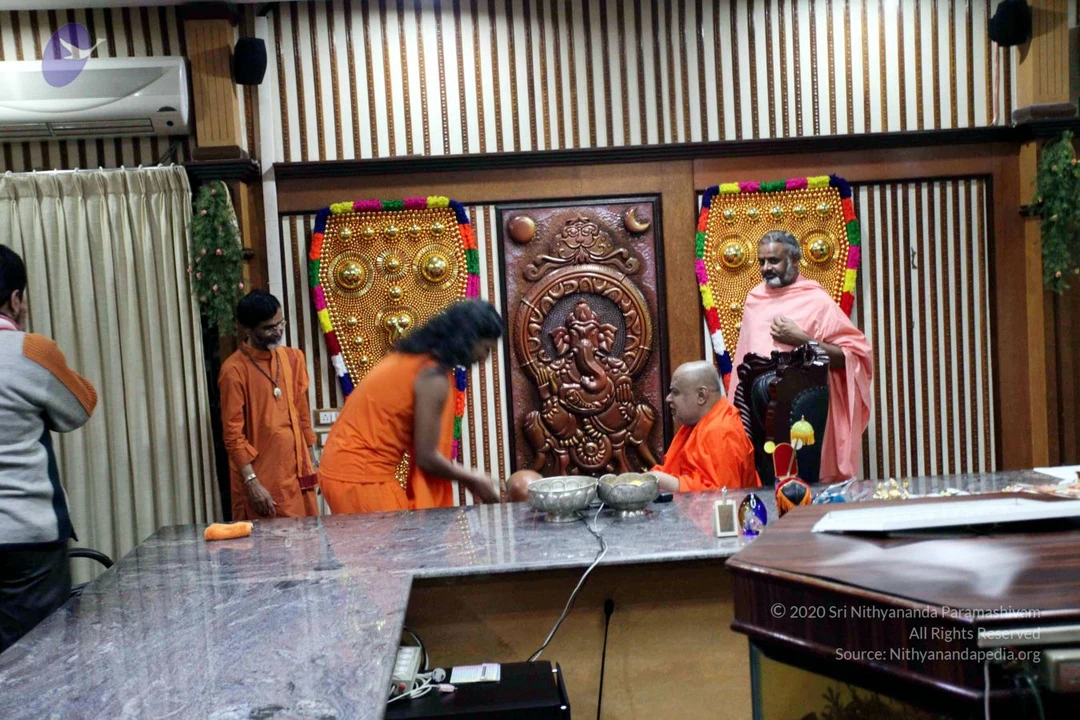
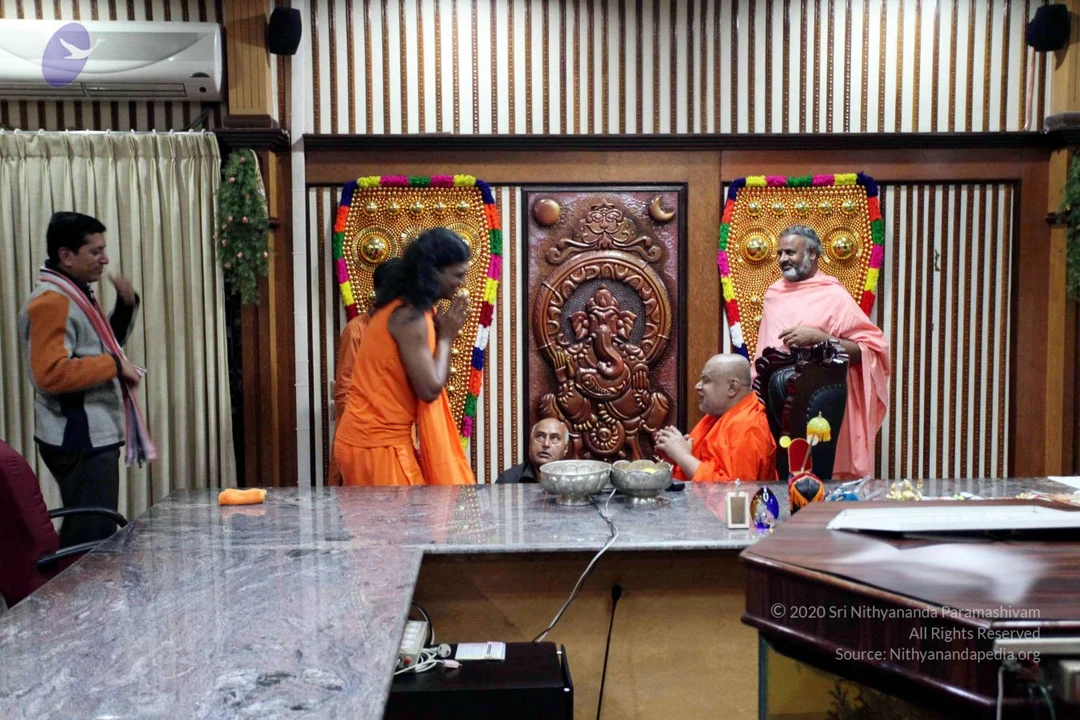
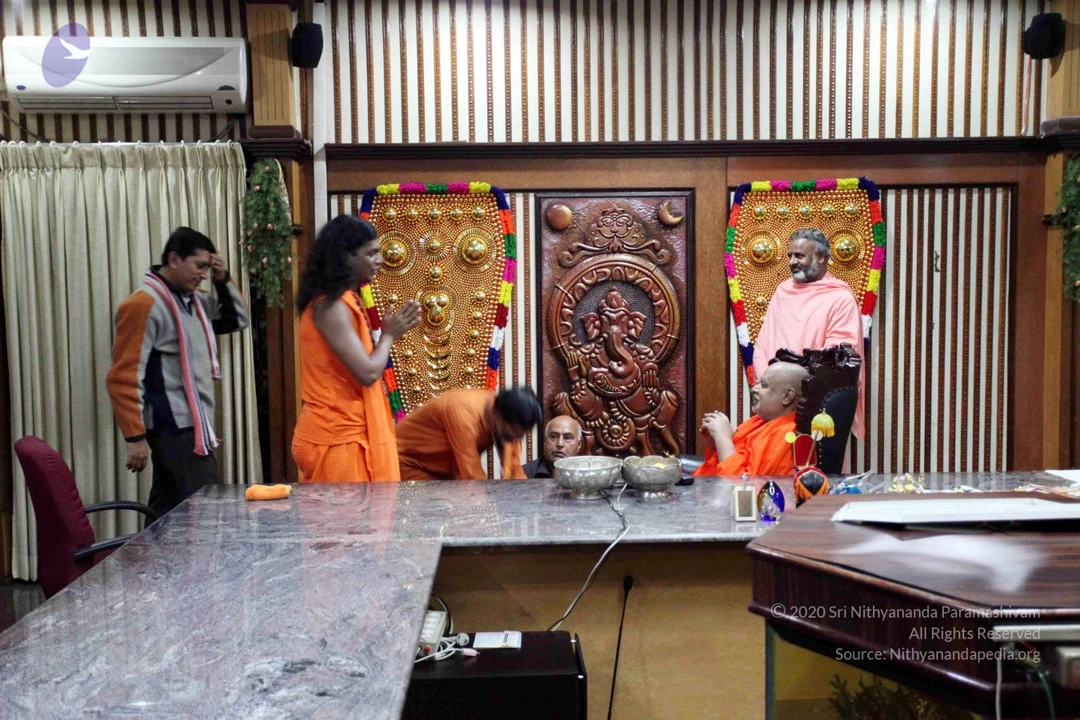
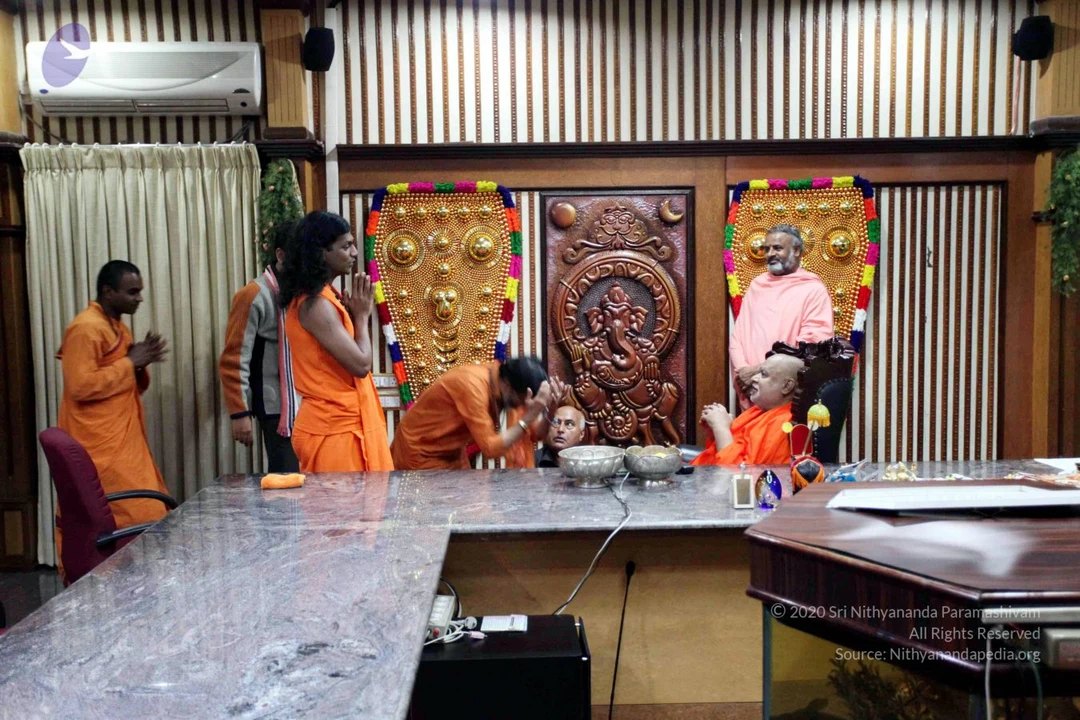
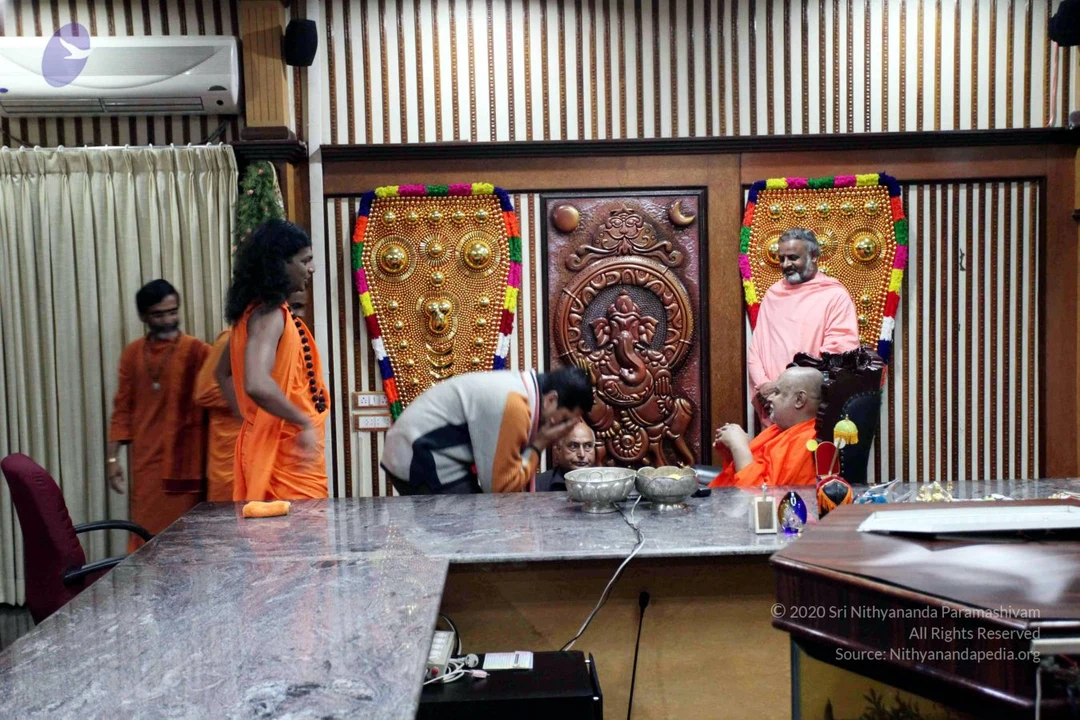
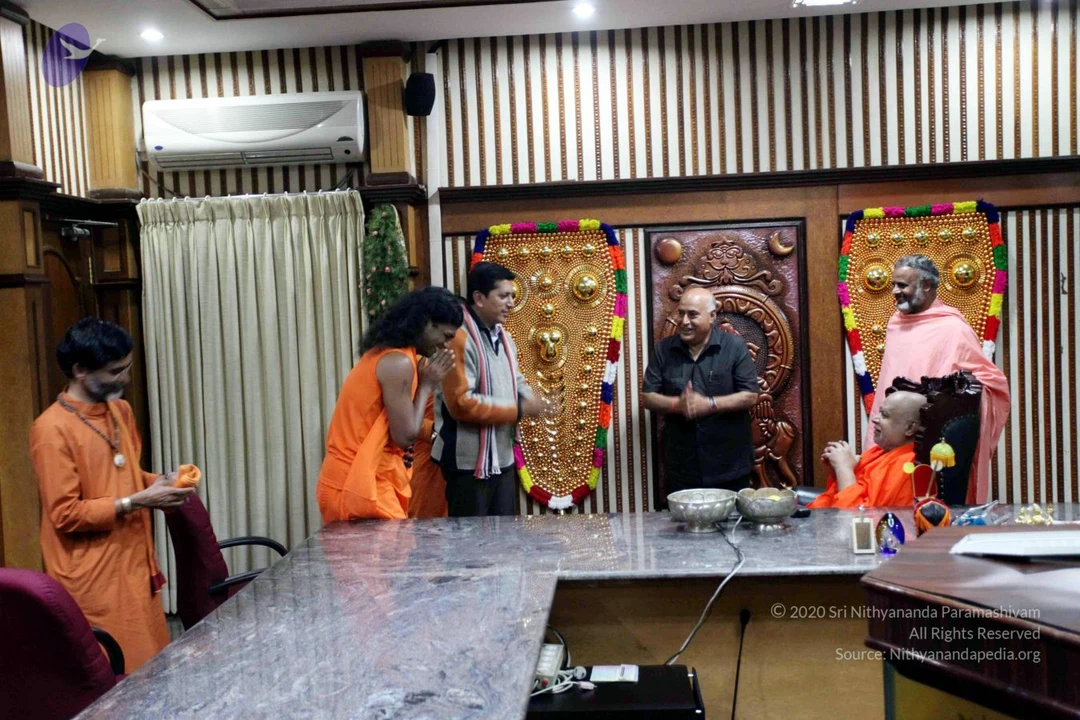
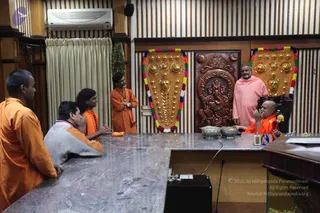
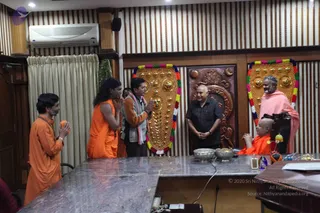
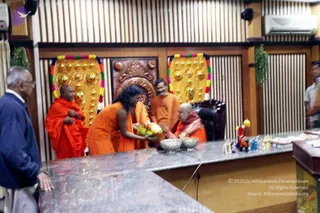
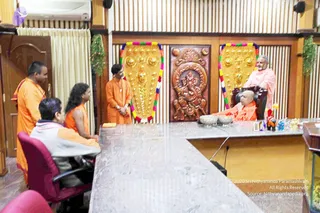
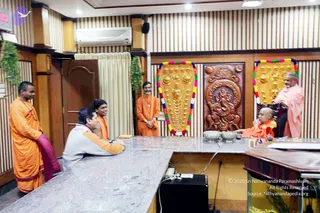
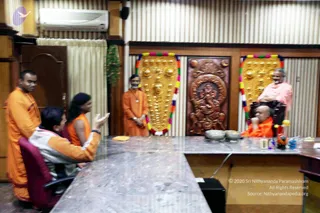
A photograph of an indoor room with wood-panelled walls and a granite-topped counter in the foreground. Behind the counter, a carved wooden panel depicts Ganesha with crescent moon motifs, flanked by two ornate gold-toned plaques with colourful garland borders. Five people are visible: a man in orange at far left, a man in grey shawl seated at the counter, a woman in orange seated with hands clasped, a man in orange standing with arms folded, a man in pink robe standing near the right plaque, and a bald man in orange seated at the right with a brass bowl and oil lamp before him, appearing to speak. a person is the bald man in orange seated in a carved chair with ornate orange clothing and a saffron shawl, presiding over the gathering as a satsang setting.A photograph of an indoor room with a granite-topped counter in the foreground. Five people stand or sit at the counter: a man on the far left in orange clothing, a man in a grey sweater with orange trim, a woman in orange with her hand at her chin, and a man in orange clothing standing behind them. On the right, a bald man in orange robes sits behind the counter, gesturing with one hand, while a taller man in a pink shawl stands beside him. Behind them are two large golden ornamental backdrops edged with colourful garlands, and a carved wooden Ganesha relief between them. Two metal bowls sit on the counter.Indoor room with a granite-topped counter in the foreground and a carved wooden panel showing Ganesha with a crescent moon, flanked by two ornate golden backrest-style chairs decorated with multicoloured floral garlands. A seated bald man in orange robes sits at right with hands folded, near a silver bowl and a wooden desk. Standing at left, several men in orange and saffron clothing talk; one wears a grey jacket with a striped shawl. On the upper right, a bearded man in a pink-saffron robe stands beside one of the decorated chairs. Pale striped wall panels and an air conditioner complete the setting.A photograph inside a wood-panelled room with a carved wooden Ganesha relief set between two gold-sequined garland-decorated panels. A bald man in orange robes sits at a dark wooden desk with a marble counter in front, holding a small object while a man in a pink robe stands at right smiling. To the left, a standing person in orange with long dark hair presses palms together, next to another man in orange with hands folded, and a man in a grey jacket with a saffron-and-white shawl stands beside them. Brass bowls sit on the marble counter. Another orange-robed man stands at far left.A photograph of an indoor room with striped wood-panelled walls, a wall-mounted air conditioner and a marble-topped counter in the foreground holding silver bowls. A bald man in an orange robe sits at the right, and a bearded man in a pink-orange robe stands beside a gold-embroidered decorative panel with a garland of multicoloured flowers. Several people in orange robes stand at left, and a man in a dark grey shirt and dark trousers presses his palms together in greeting toward the seated figure. A man in a grey vest with an orange-and-white shawl stands near the centre. A carved wooden panel with a crescent and sun motif hangs on the wall behind them. Visible physical people number about seven. The seated man's identity cannot be confirmed from appearance, so he is described by role only.A photograph of a room with striped wood-panelled walls and a wall air conditioner. Two large gold-embossed plaques hung with multicoloured flower garlands flank a carved wooden panel. A seated bald man in orange robes with a rudraksha mala rests his hands on his lap at the right, while a bearded man in an orange robe and white shawl stands beside him, appearing to bless or greet visitors. On the left, a man in orange kurta-style clothing with long hair and a long-haired figure in orange clothing stand with palms pressed together in greeting. A middle-aged man in a dark shirt and a man in a brown jacket with a striped scarf stand facing them. A silver bowl and a small brass lamp sit on a grey marble counter in front. a person appearance is unclear from this image.

PANCHA-TAPAS
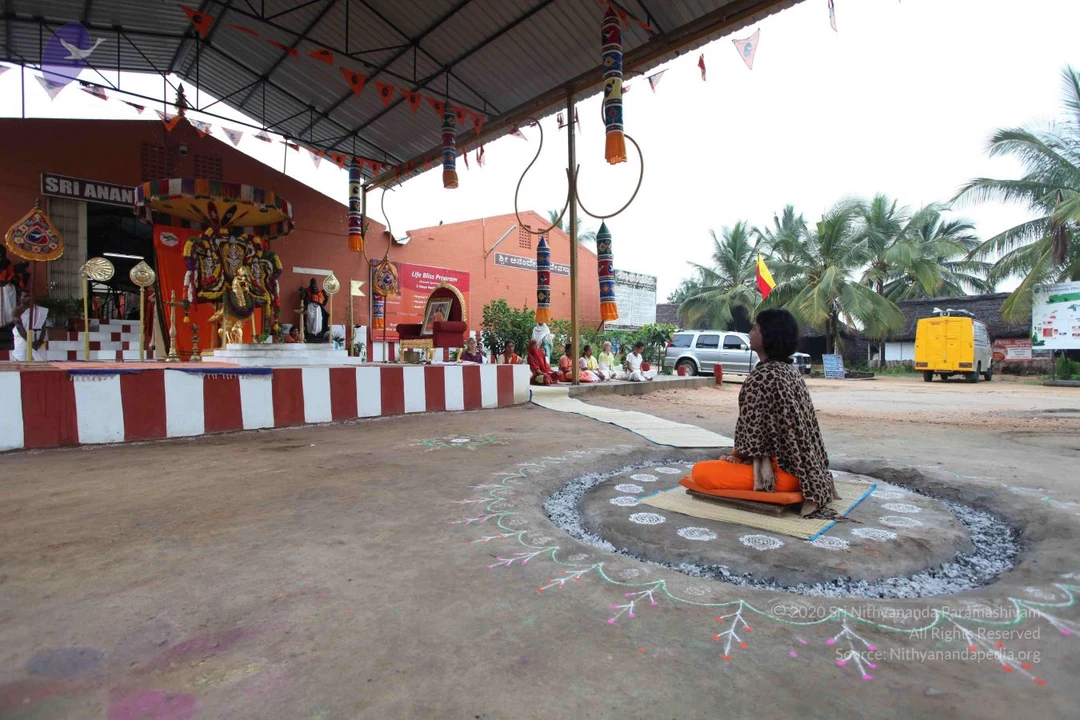
23 photosSource gallery
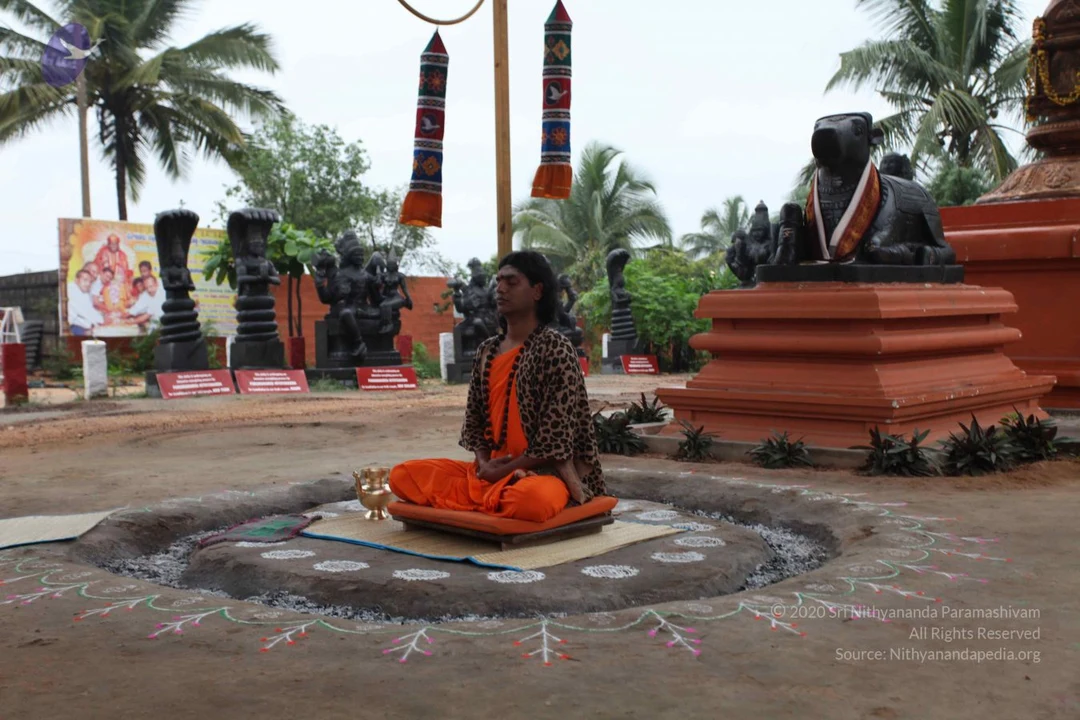
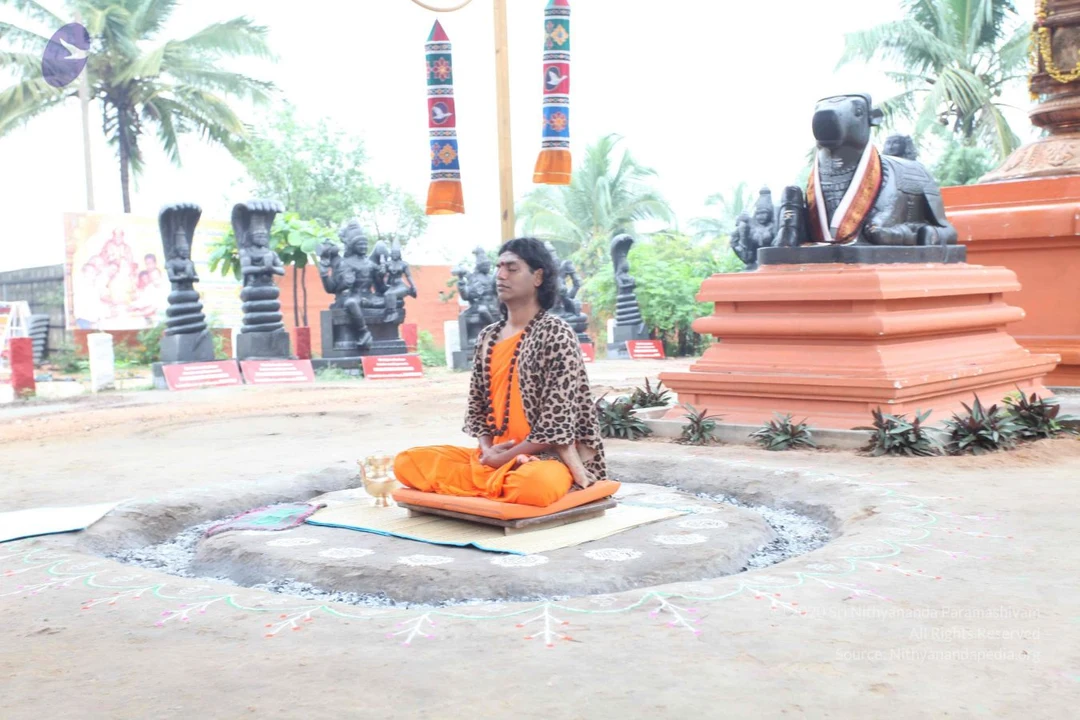
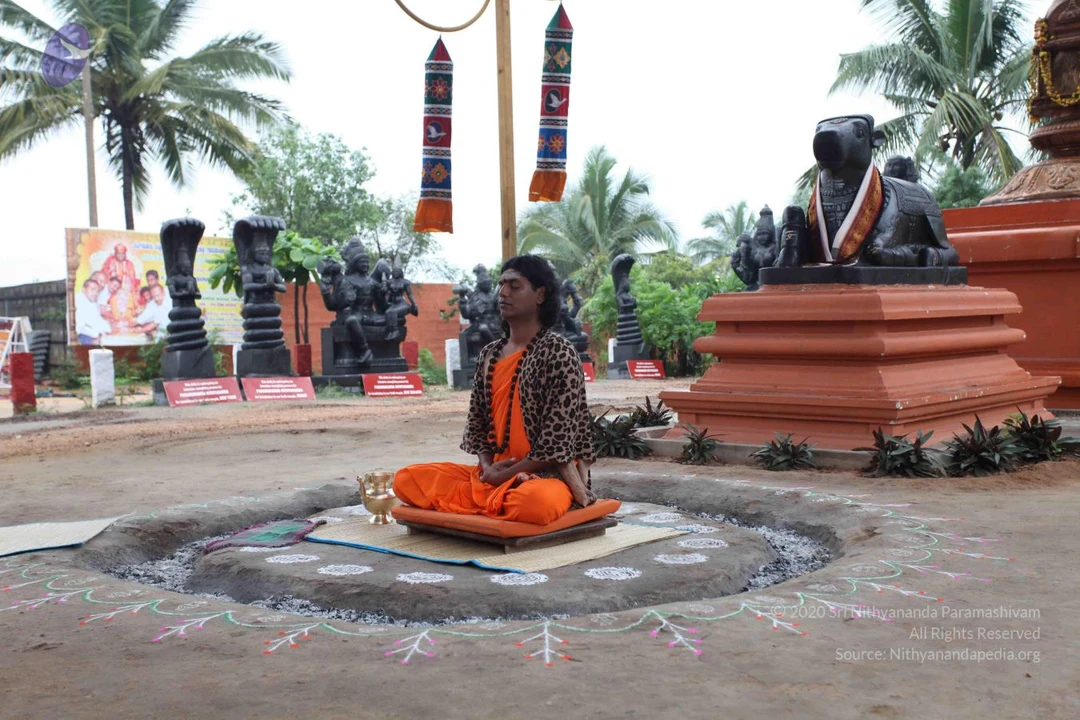
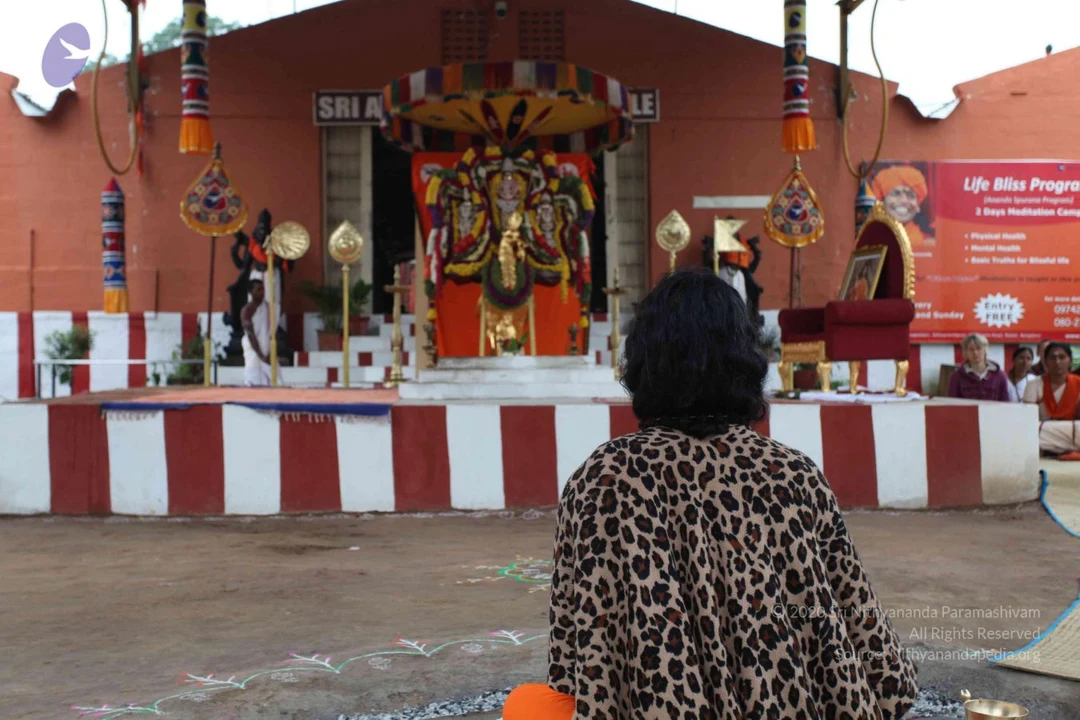
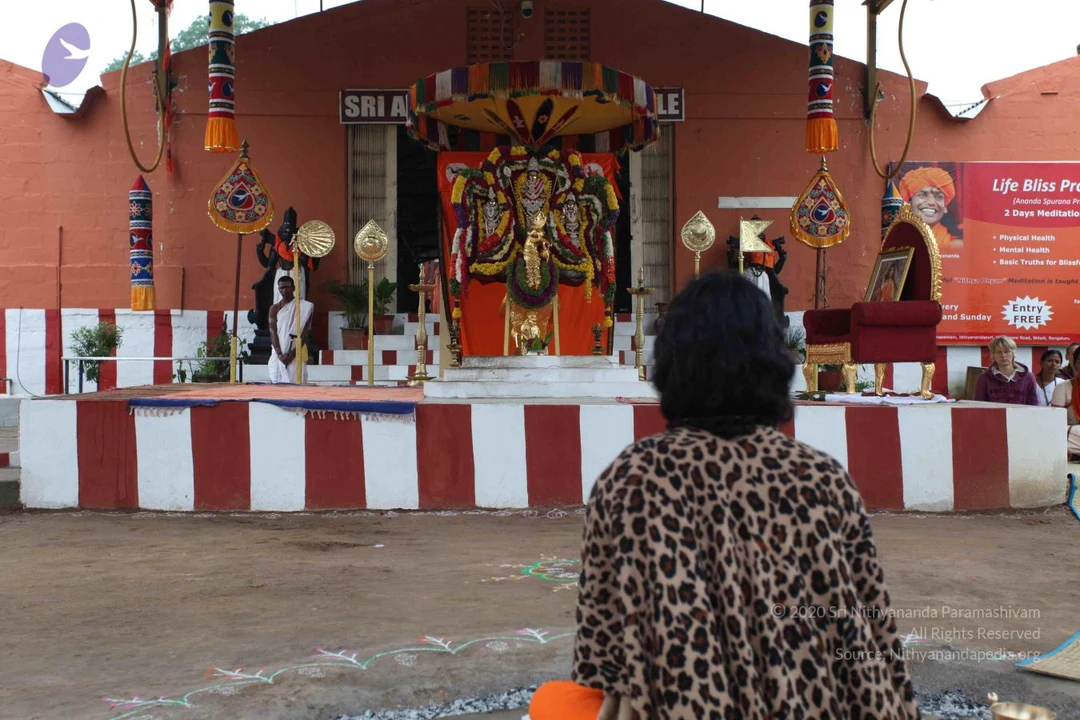
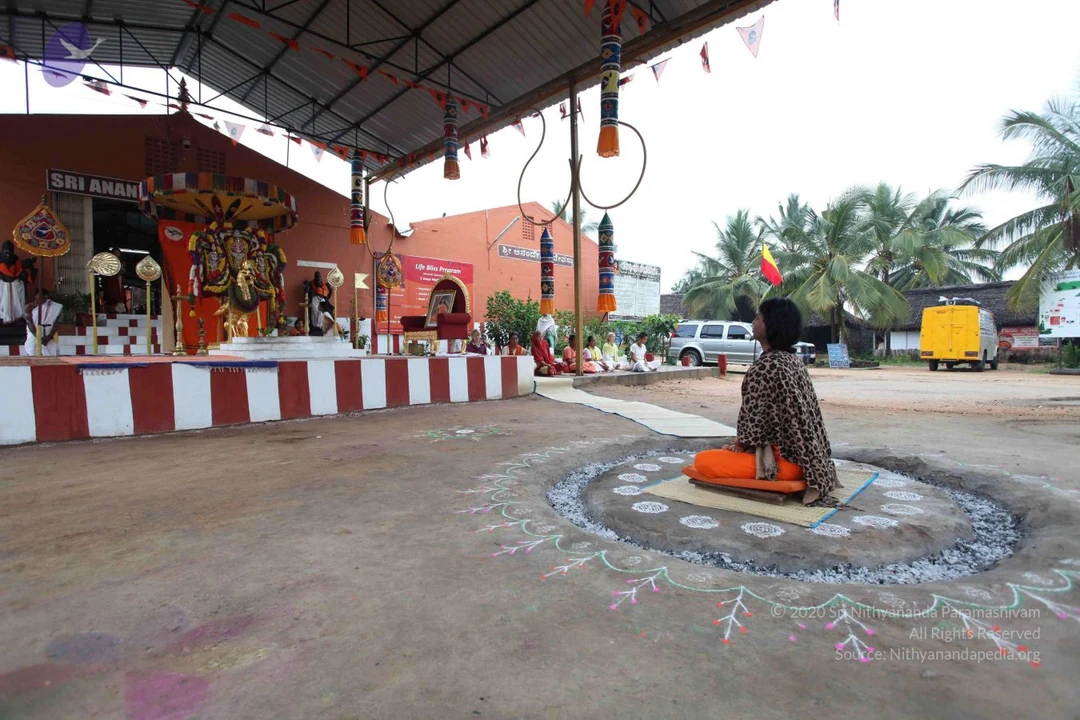
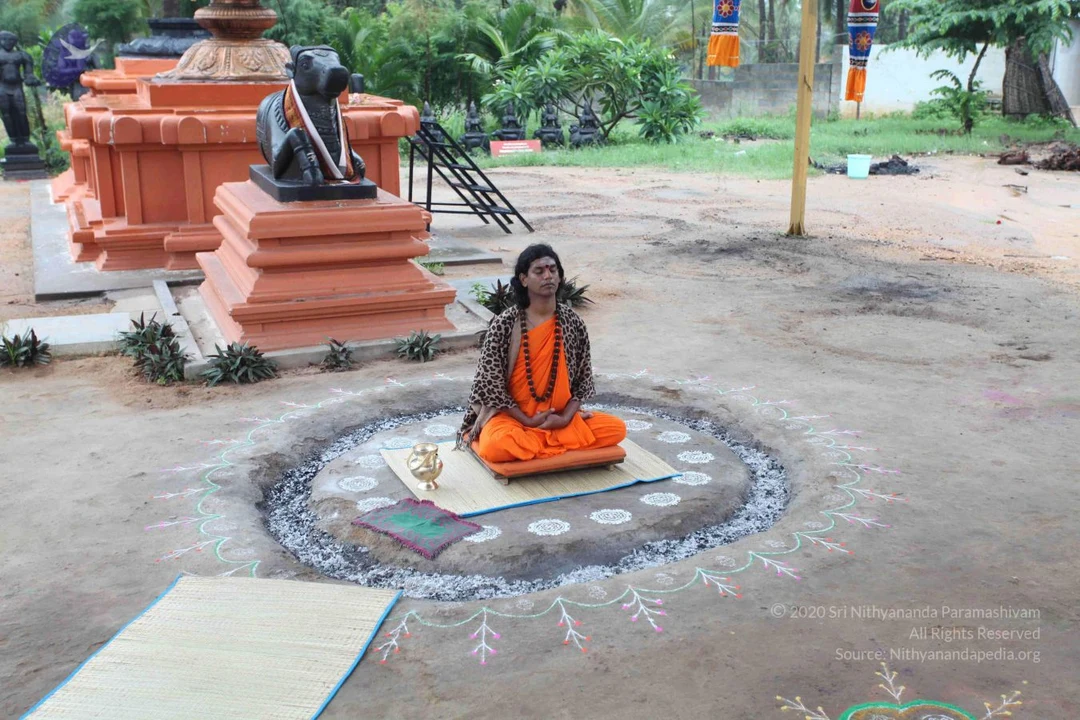
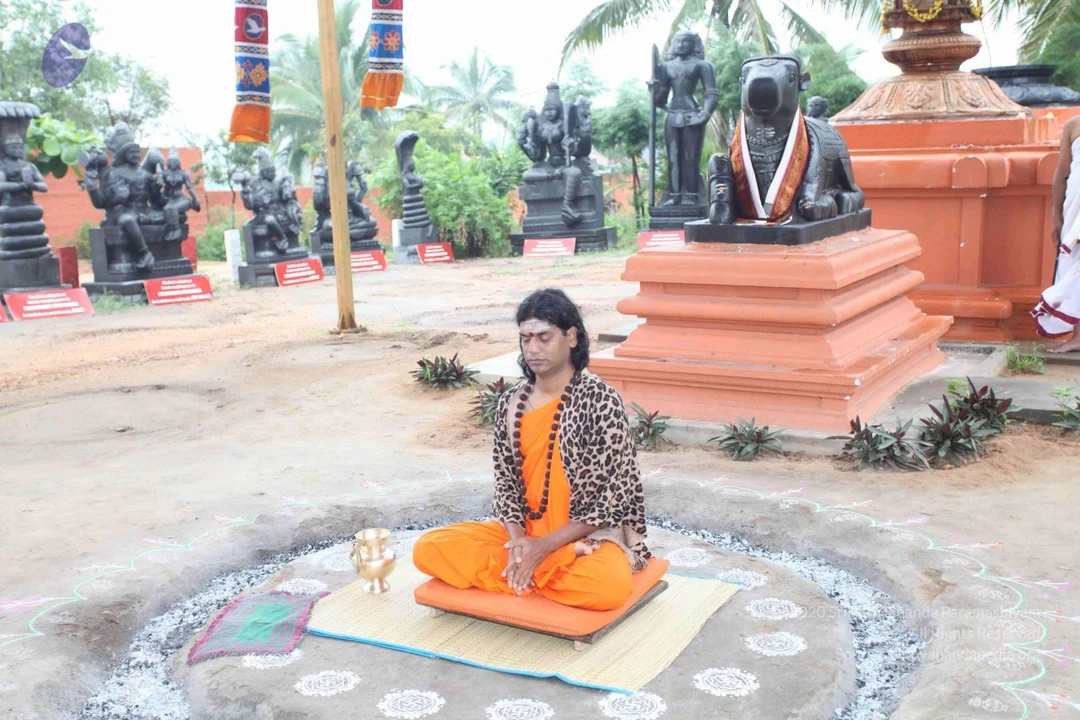
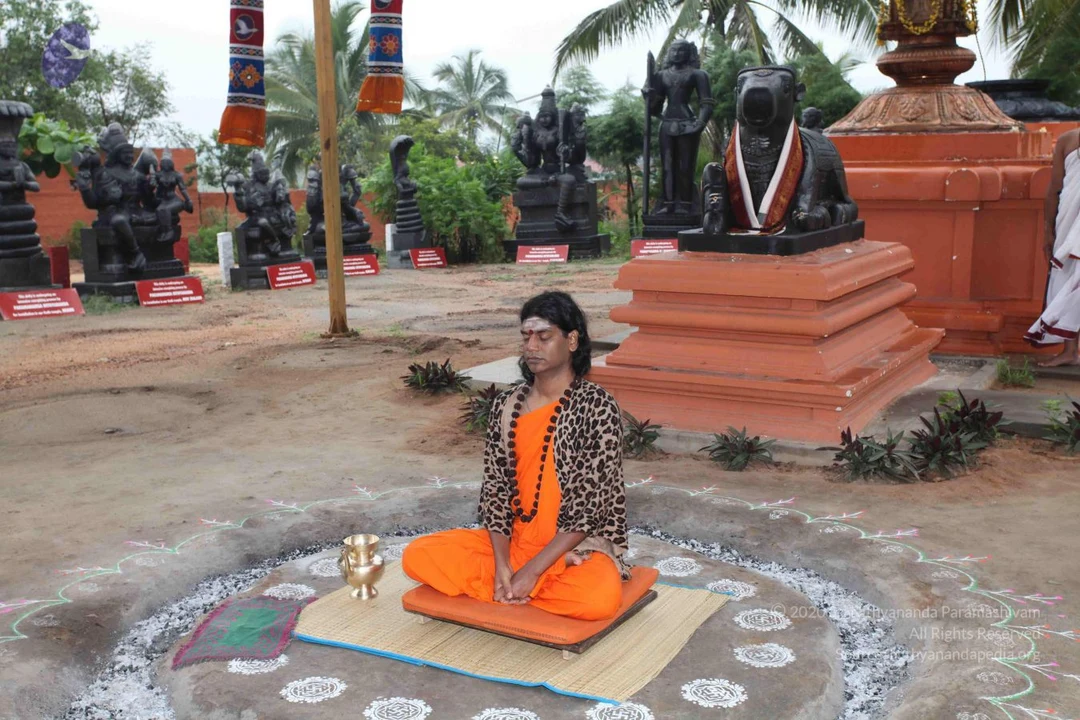
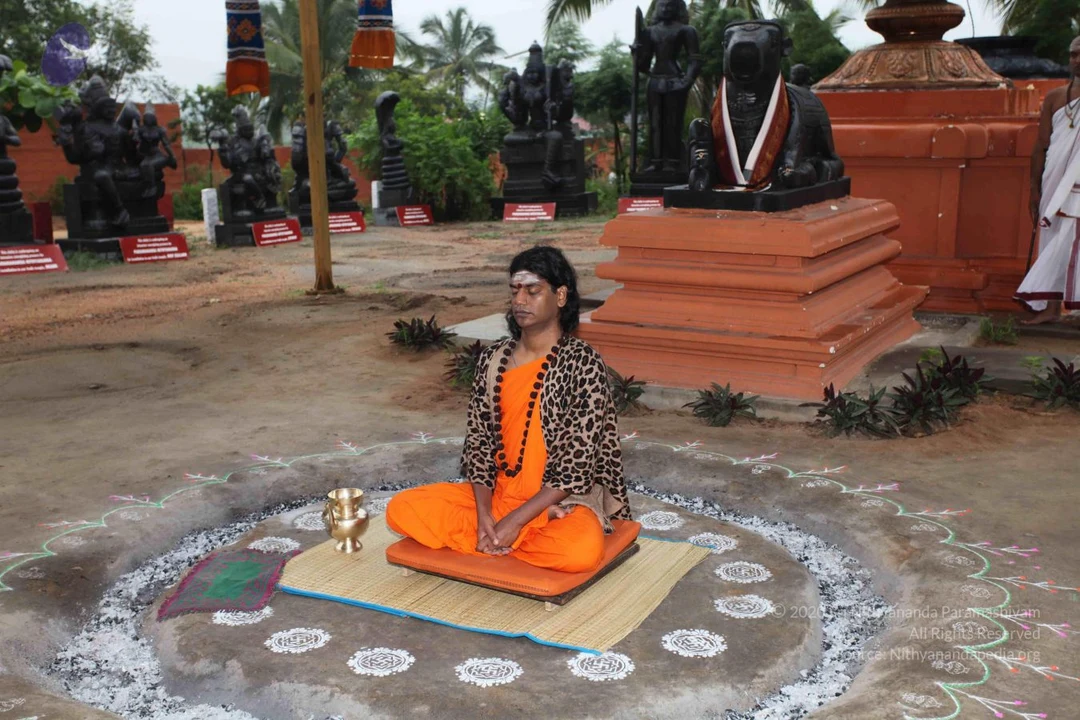
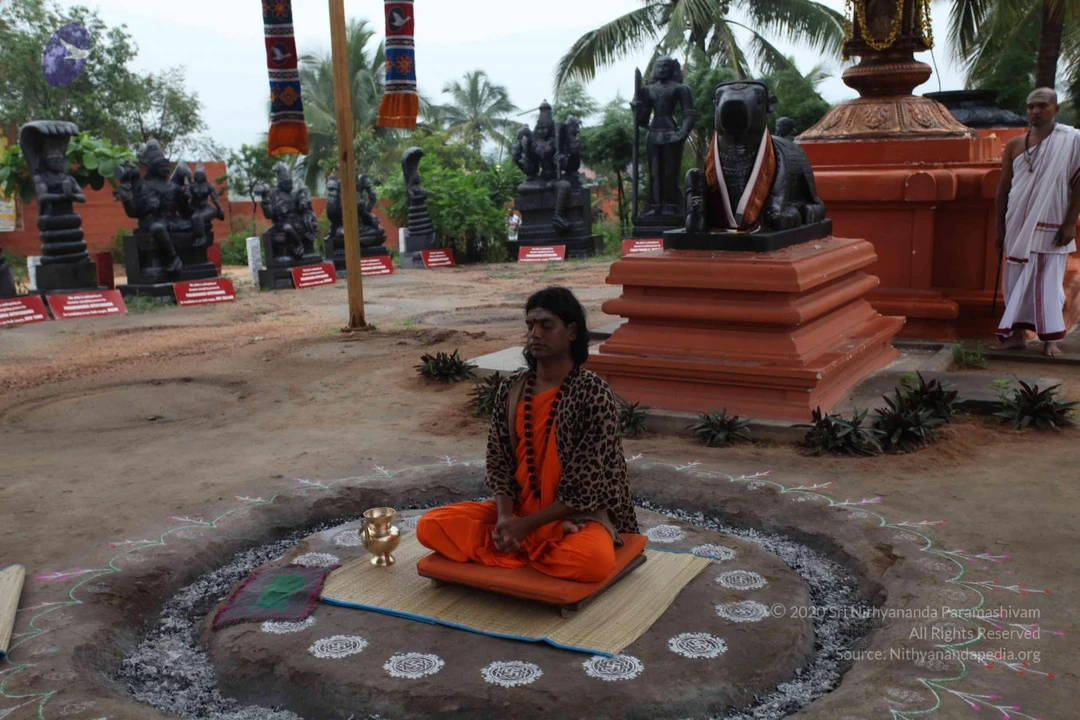
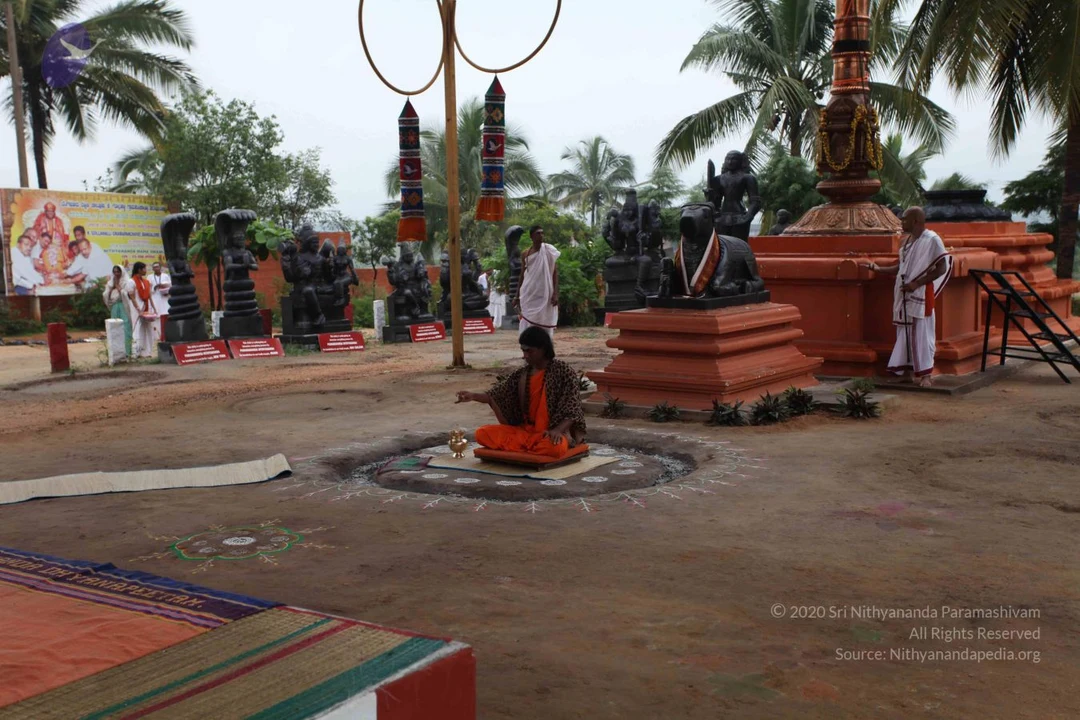
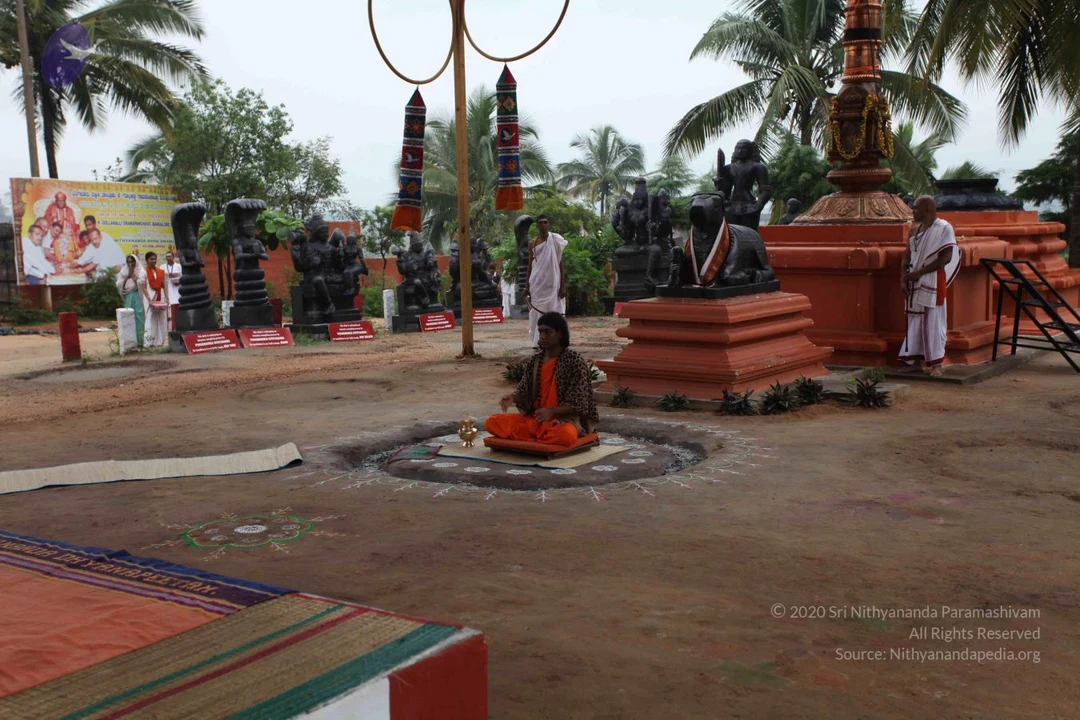
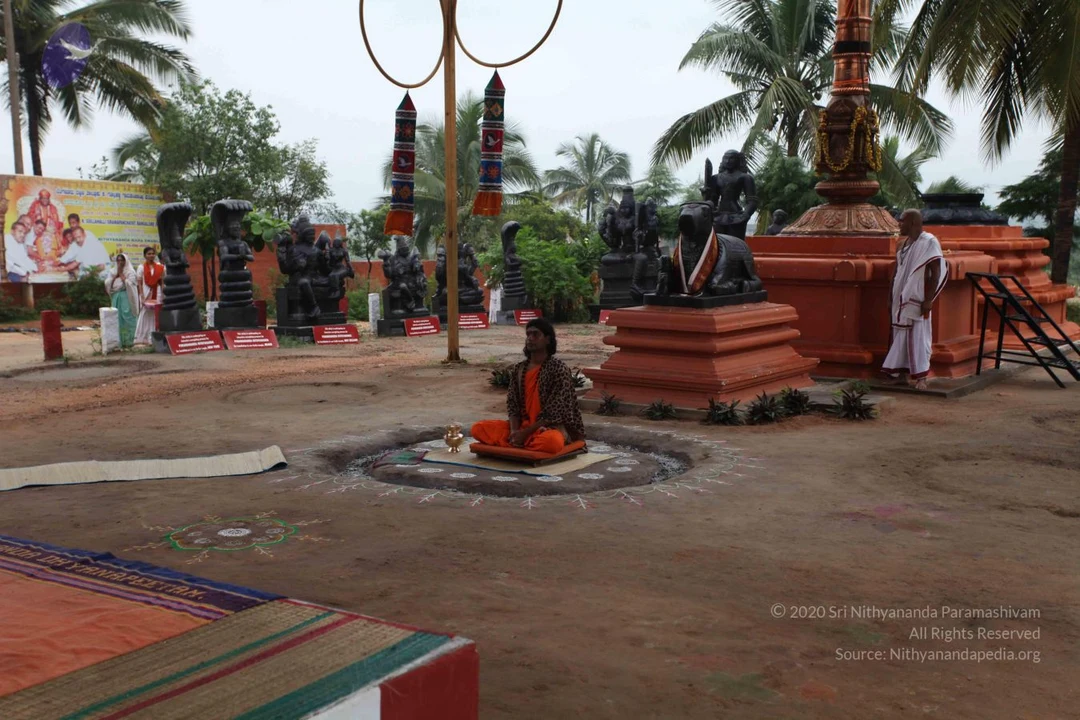
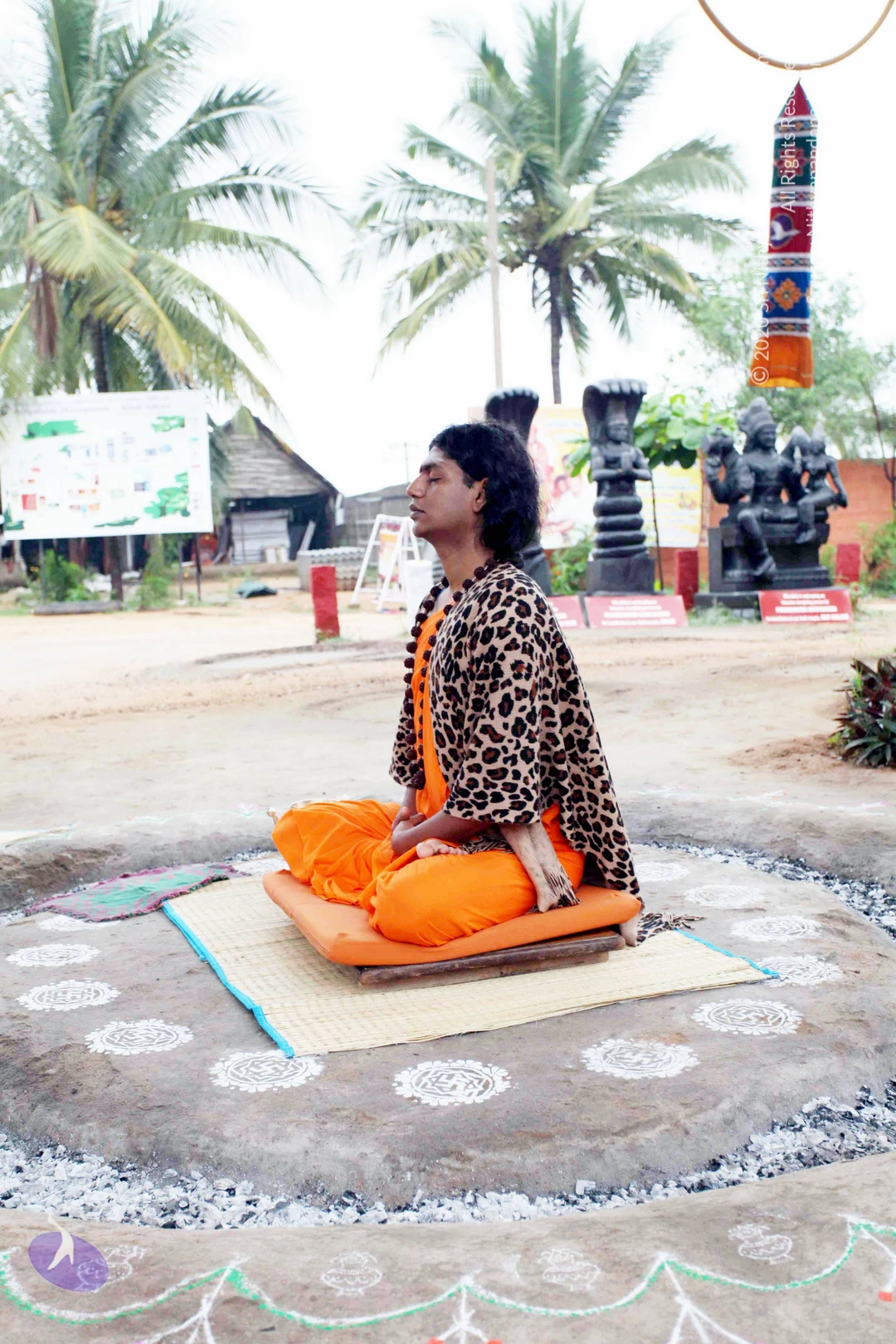
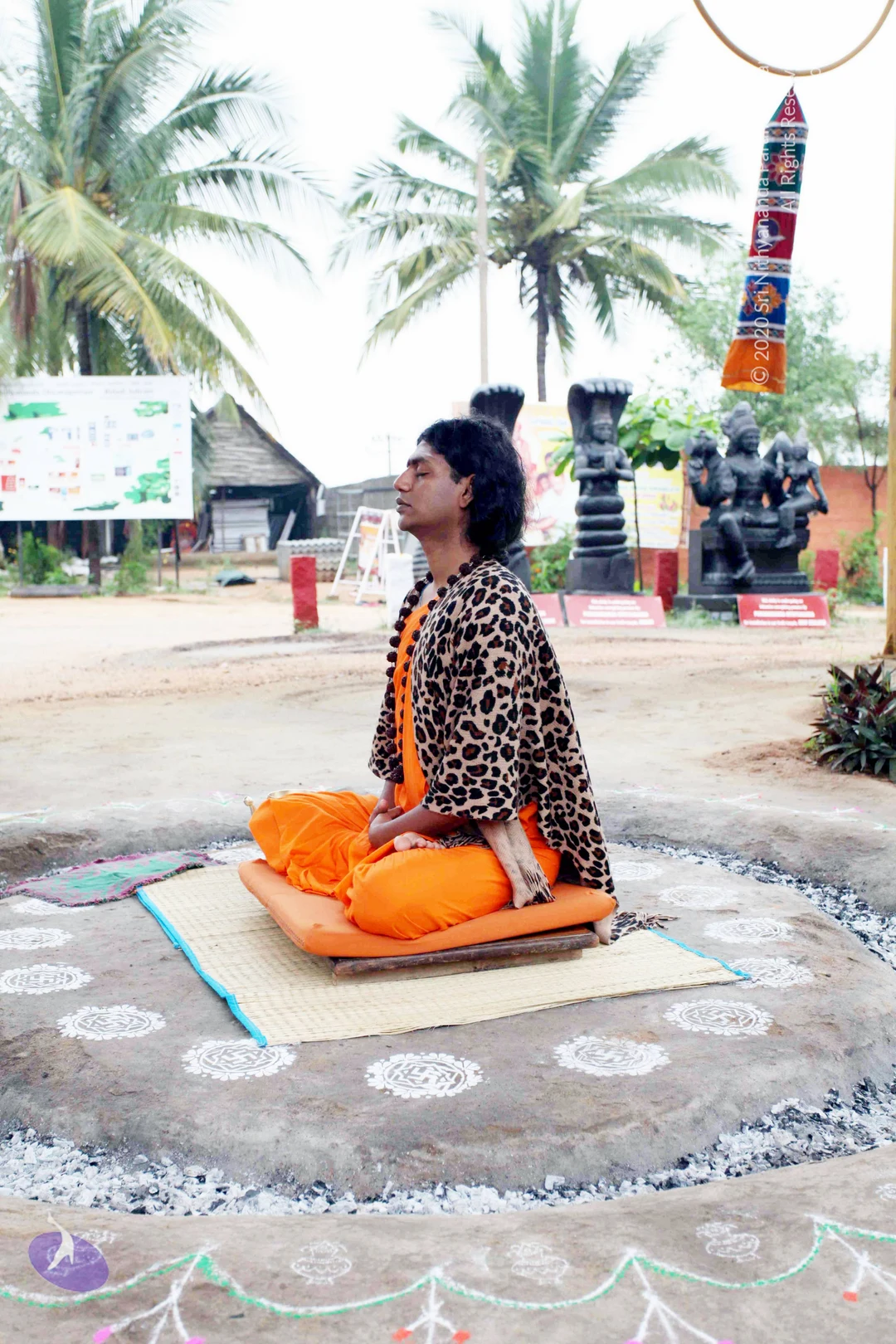
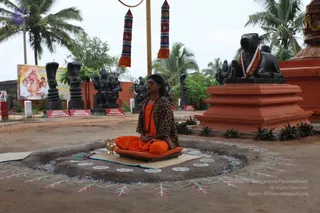
A seated man in saffron-orange robes and a leopard-print open jacket sits cross-legged in meditation on an orange cushion placed on a low wooden platform inside a circular earthen fire pit ringed with ash. Long dark hair falls past his shoulders and his hands rest in a mudra in his lap. A brass cup or kalasha sits beside him on the left. The pit is decorated with white dots and a colourful kolam floral pattern drawn on the ground. Behind him are black stone statues of deities and a black stone nandi-like bull figure draped with a red and gold garland on an orange pedestal. A painted banner with figures and red and gold text stands to the left, with palm trees and tall decorative flags behind. The outdoor courtyard is a meditation or satsang setting.A man with long dark hair sits cross-legged in meditation on a raised circular stone platform in an open outdoor courtyard. He wears an orange saffron robe and a leopard-print shawl draped over his shoulders, with his hands resting in a mudra on his lap. Beside him sits a small brass vessel. Behind him stand black stone statues of deities and serpent-hooded figures, plus a large black stone bull (Nandi) draped with a red and gold sash on an orange pedestal. Colourful striped cloth banners hang from a pole above, palm trees surround the courtyard, and the ground bears white and green kolam-style patterns. Lettering on a watermarked corner reads a name tied to the archive. The image is a photo of a single seated person in an outdoor meditation setting. Appearance-based identification of the seated figure is uncertain given the presentation cues, which include long hair and saffron clothing, but the page flags a person at this event.A seated man in an orange saffron robe, wearing a leopard-print shawl over his shoulders, sits cross-legged on an orange cushion on a mat in an open courtyard, hands folded in meditation. A brass kalasha-style pot stands beside him within a rangoli-decorated circular ring on the ground. Behind him are black stone deity murtis and a dark bull statue draped with a saffron-and-white sash on a red pedestal, with palm trees, hanging striped fabric banners, and a painted banner of a family group on the left. The scene suggests meditation or satsang in a temple grounds.A seated person with long dark hair, viewed from behind, wears a leopard-print shawl over an orange garment and sits on a red-and-white striped platform before a shrine. The shrine holds a decorated deity murti draped in garlands and an ornate multicoloured canopy, flanked by brass lamps and tall decorated poles. Beside the shrine stands an empty red velvet chair with gold trim, and a framed portrait sits on it. Behind, a red banner reads Life Bliss Program with meditation camp details. Several people sit at the right edge in white and orange clothing. Colourful rangoli floral patterns decorate the ground in front, with a small brass vessel visible at the lower right.A photograph of an outdoor temple-style stage with red and white striped plinth steps, a deity murti draped in garlands and a yellow canopy, a standing attendant in white dhoti at left, and a red cushioned seat with gold trim at right. In the foreground a person with dark hair in a leopard-print shawl sits facing the stage, with a rangoli design on the ground. A large banner at right reads Life Bliss Program with 2 Days Meditation. Several people sit at the right edge. The person in the foreground wears a leopard-print wrap and is seated, and the seated figure's identity cannot be confirmed from appearance.Outdoor courtyard under a corrugated roof decorated with strings of triangular pennants and colourful tassels. In the foreground, a person with shaved head sits cross-legged on an orange-cloth seat within a circular rangoli-bordered platform of white stones, wearing an orange garment under a leopard-print shawl, facing a shrine. At the left, a deity murti stands on a raised dais with a brightly decorated backdrop and brass lamps. A seated row of about a dozen devotees in white and red clothes sits in front of the shrine. A small yellow van and a silver SUV are parked nearby beside palm trees. A red banner and a shrine signboard with a Sri Ananda inscription are visible.

TEMPLE
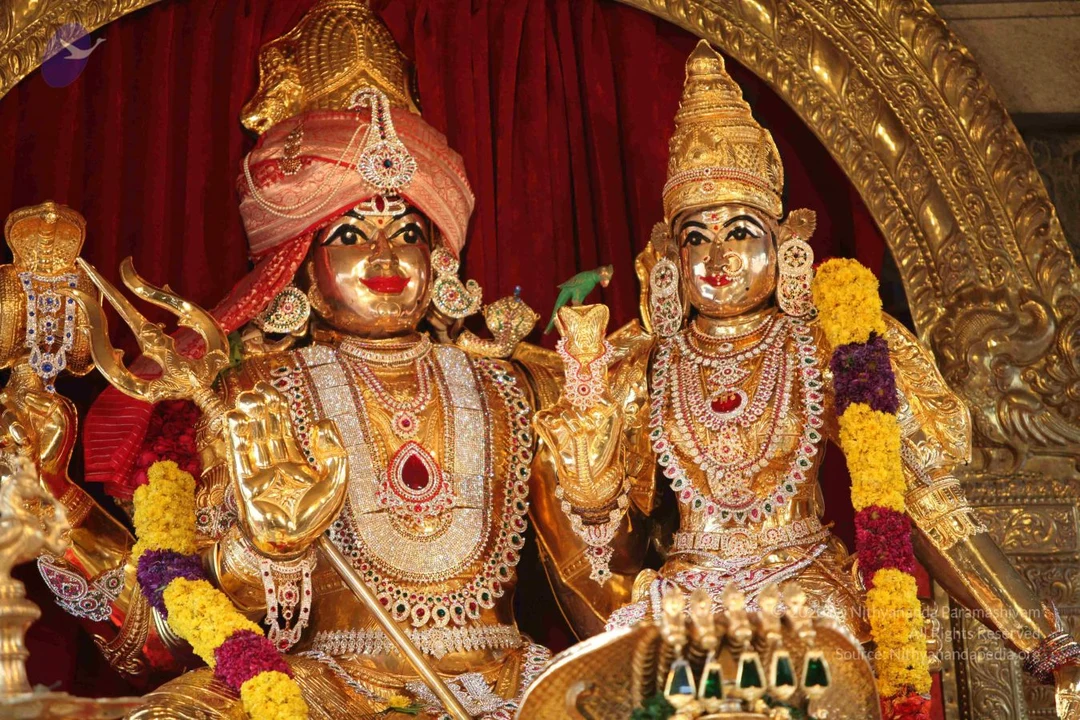
28 photosSource gallery
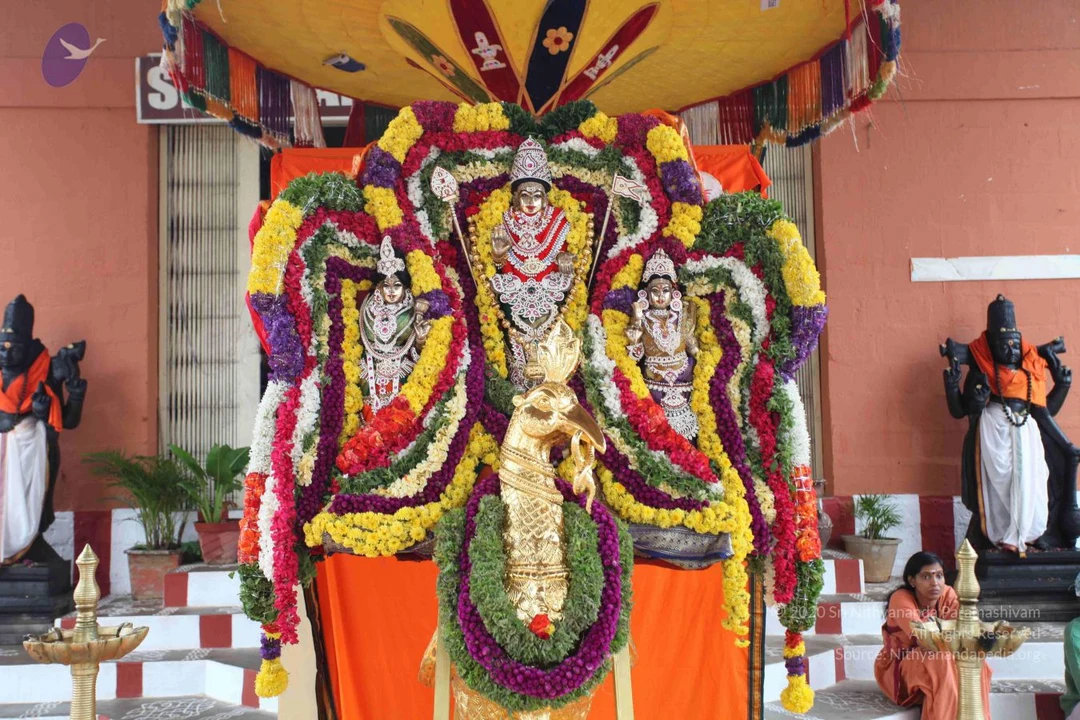
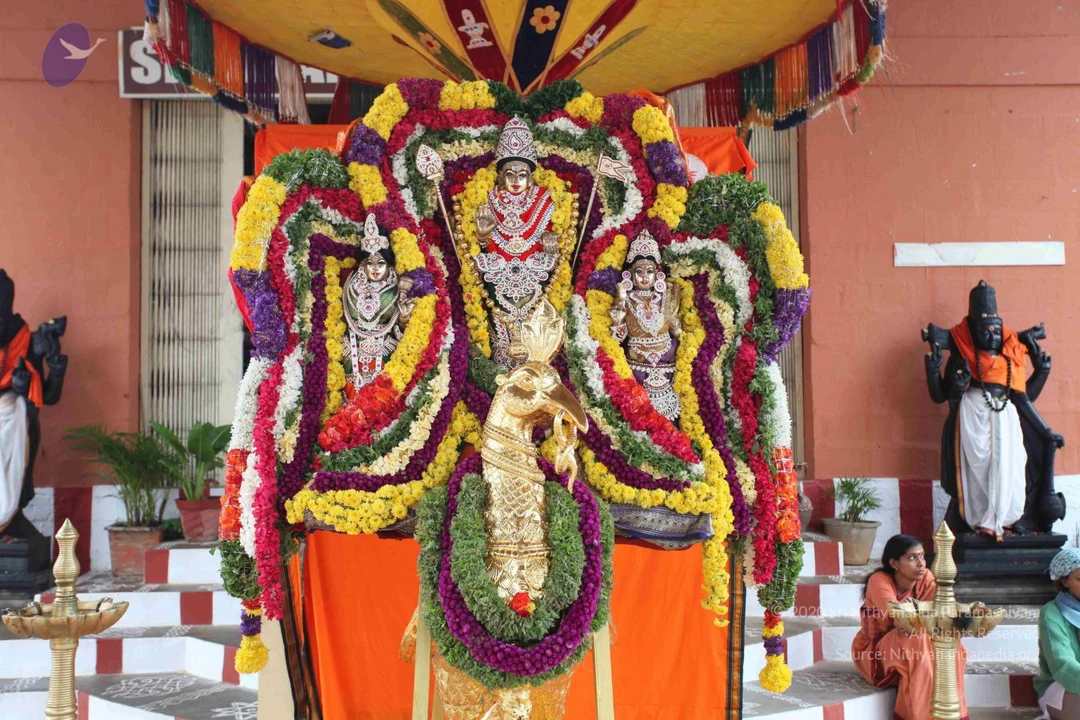
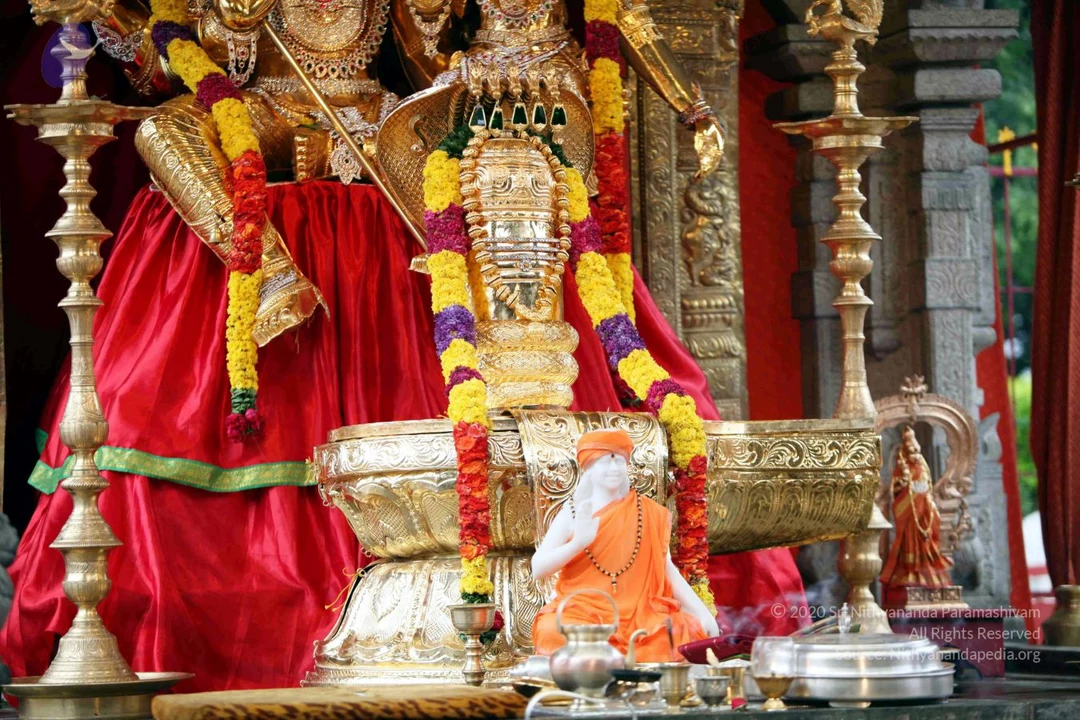
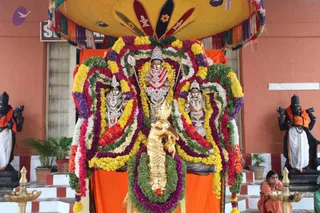
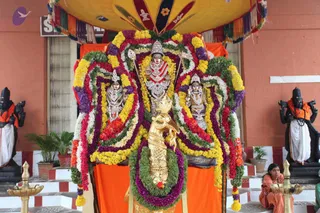
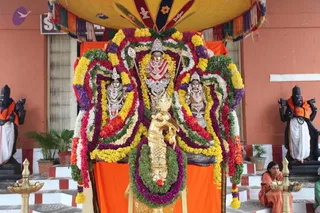
A photograph of a temple shrine decorated with dense garlands of yellow marigolds, purple, red and white flowers and green leaves. Three silver-clad deity murtis stand in the centre, the middle one in red and white with a crown and holding ceremonial staffs. A golden peacock-like vahana sits in front of the garlanded arch, with a yellow umbrella canopy above. Two dark stone dvarapala guardian statues in orange and white garments flank the shrine on the right and left. A woman in orange sari sits at lower right beside a brass oil lamp. The setting is a temple hall with red walls.A photograph of a decorated deity murti set on an orange-draped altar, flanked by two black stone dvarapala guardian statues in orange and white garments. The central figure, standing with a crown and raised staff, is framed by garlands of yellow, purple, red and white flowers arranged in a large arch. Two smaller female figures stand on either side, and a golden makara-like animal figure sits at the base. A brass oil lamp stands at left, and a woman in an orange sari sits at lower right near the steps.A photograph of a deity murti group at a temple shrine, decorated with dense garlands of yellow marigolds, purple flowers, red and white blooms and green leaves. Three figures stand on a gilded base: a central figure wearing a crown with a silver necklace and holding a staff-like implement, flanked by two smaller figures in silver ornaments. In front is a golden fish-shaped or makara-like motif. A brass oil lamp sits at left and a seated woman in orange sari sits at right, with two dark statues in white dhotis and orange upper cloths on the sides. An orange cloth covers the base and a striped step frames the floor.A temple shrine decorated with dense garlands of yellow, red, purple and white flowers arranged in a large fan shape beneath a yellow canopy with painted panels. Three deity murtis stand in the centre: a crowned central figure with a trident-like staff and ornate red and white adornments, flanked by two smaller figures in silver-toned jewellery. In front is a golden swan-like vahana form draped in green and purple garlands. Two dark stone guardian statues in orange and white dhoti stand at the sides, a brass oil lamp rests on each side of the platform, and a seated woman in orange clothing sits at the lower right. No living person is clearly in the foreground beyond her; the scene is a puja decoration.A decorated deity murti set on a raised orange-draped altar, framed by a large arch of marigold and garland strands in yellow, purple, green and white. A central standing figure wears a crown and red and white ornamental garments, flanked by two smaller figures, with a golden bull (Nandi) in front. Two dark stone guardian statues in orange and white dhotis stand on either side, and a woman in orange clothing kneels at the lower right near a brass oil lamp.A temple shrine decorated with dense garlands of yellow, red, purple and white flowers and green leaves, arranged in a broad arch behind a central deity murti. The central murti wears a crown and red and white adornments and holds a trident-like staff; two flanking figures wear ornate silver-toned jewellery. In front sits a golden animal figure draped in green leaf garlands, and an orange cloth covers the platform. A decorated yellow canopy hangs above. Black stone guardian figures in white dhotis flank the shrine. At the lower right, a seated person in orange robes sits beside the steps, with a brass oil lamp at left.

TEMPLE-VISIT
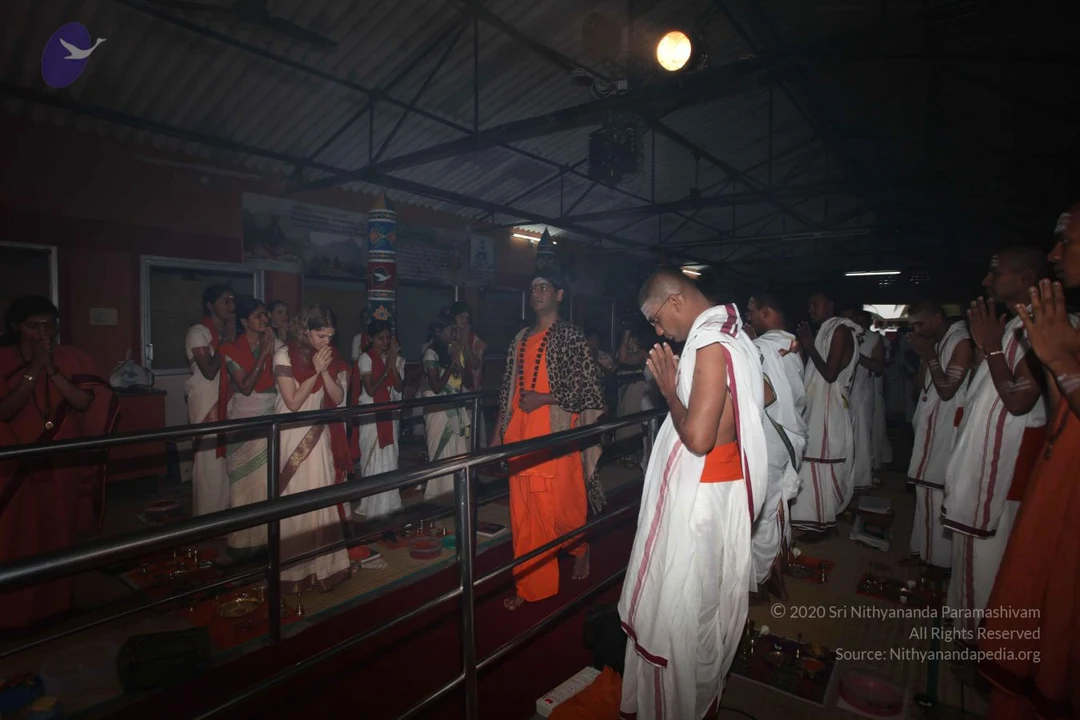
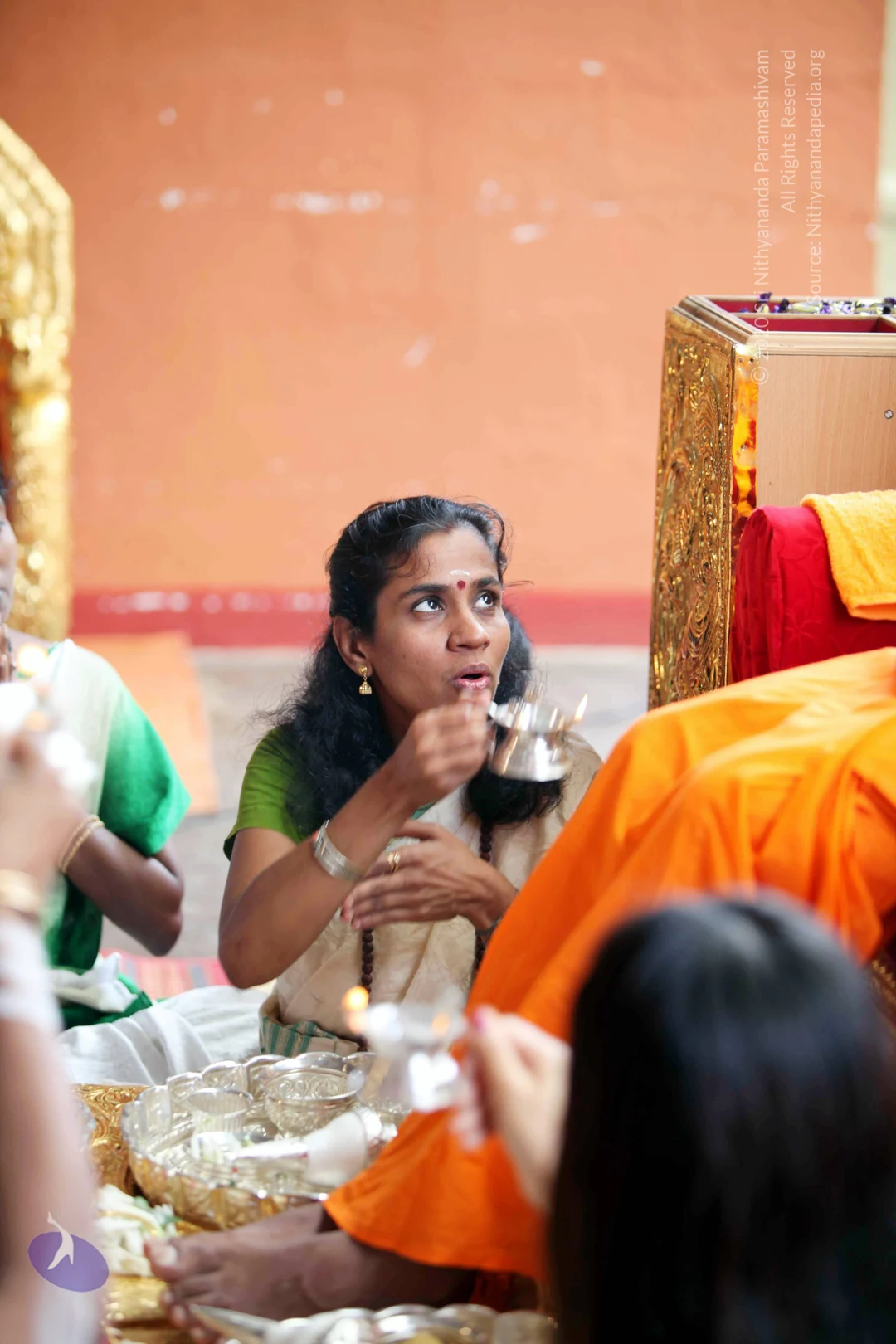
25 photosSource gallery
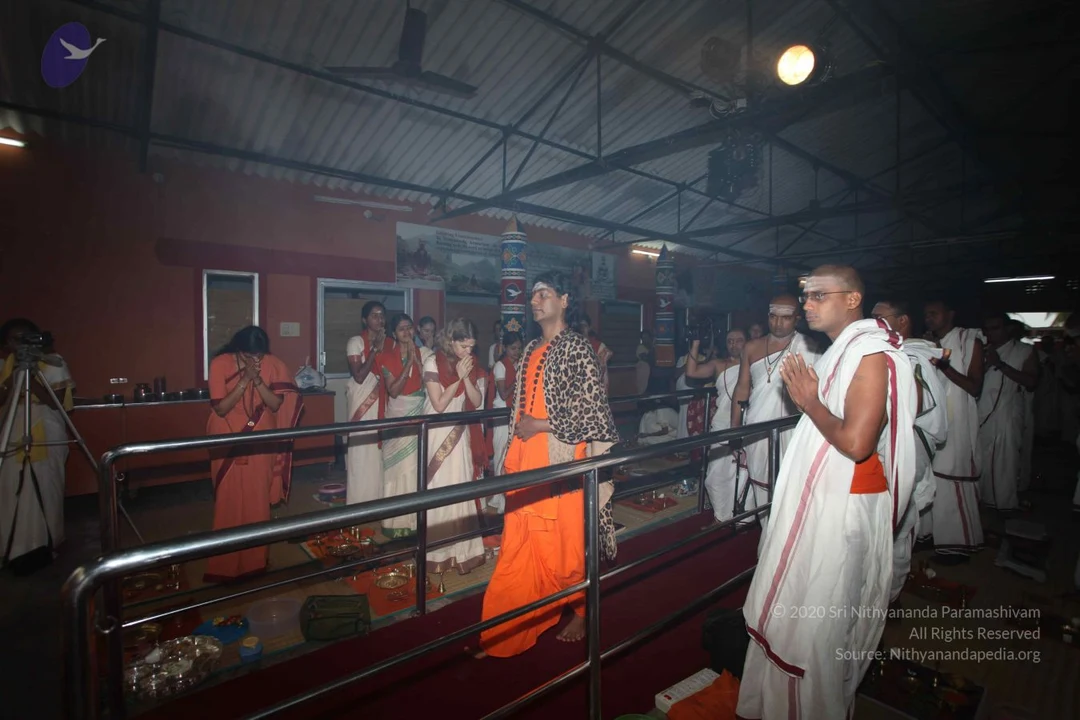
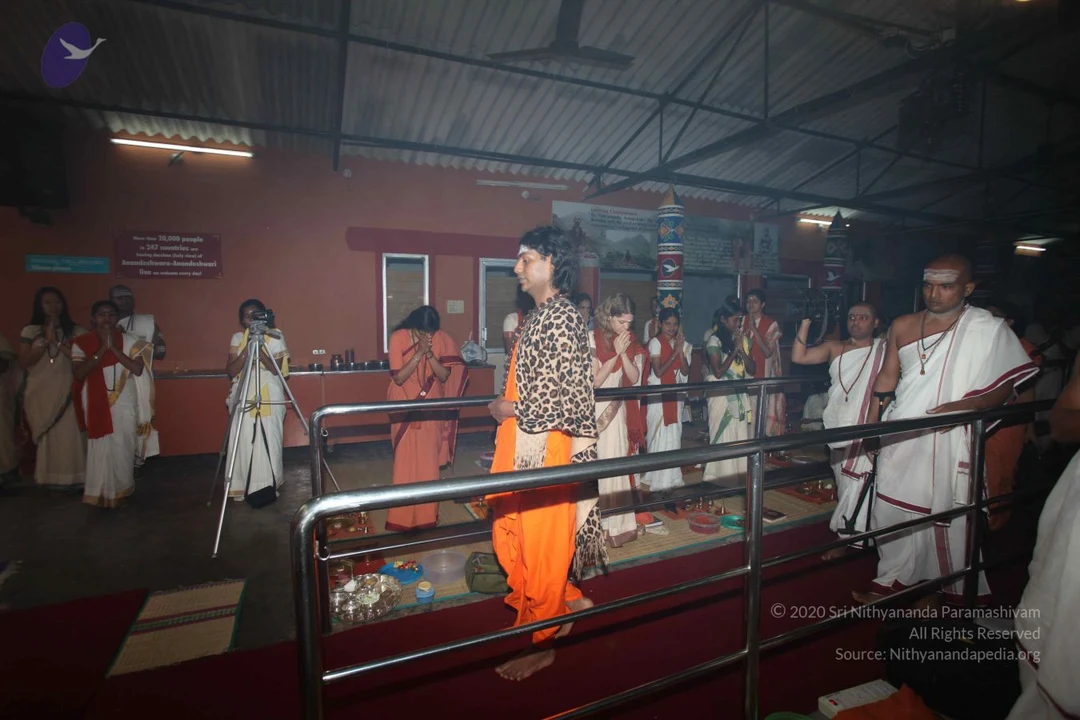
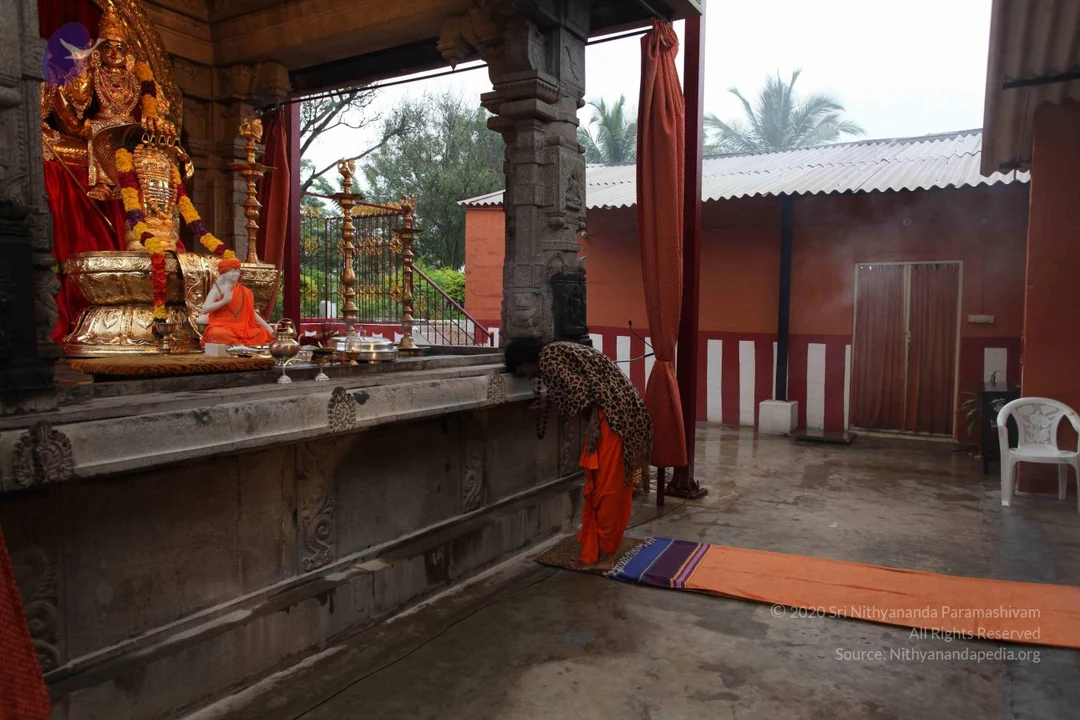
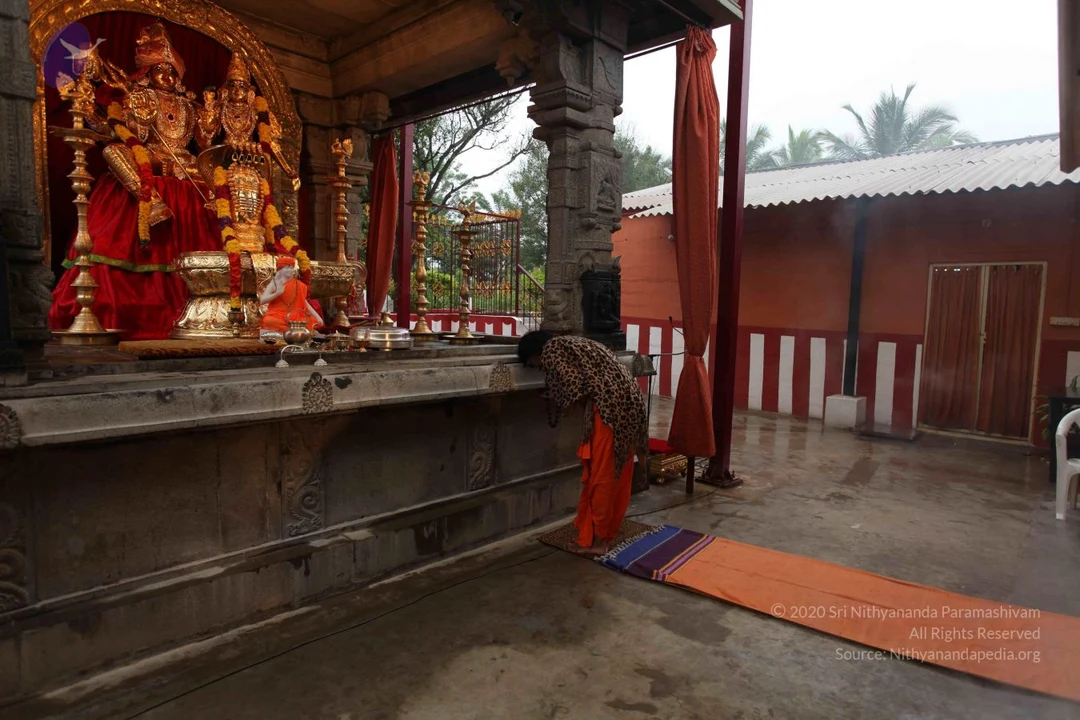
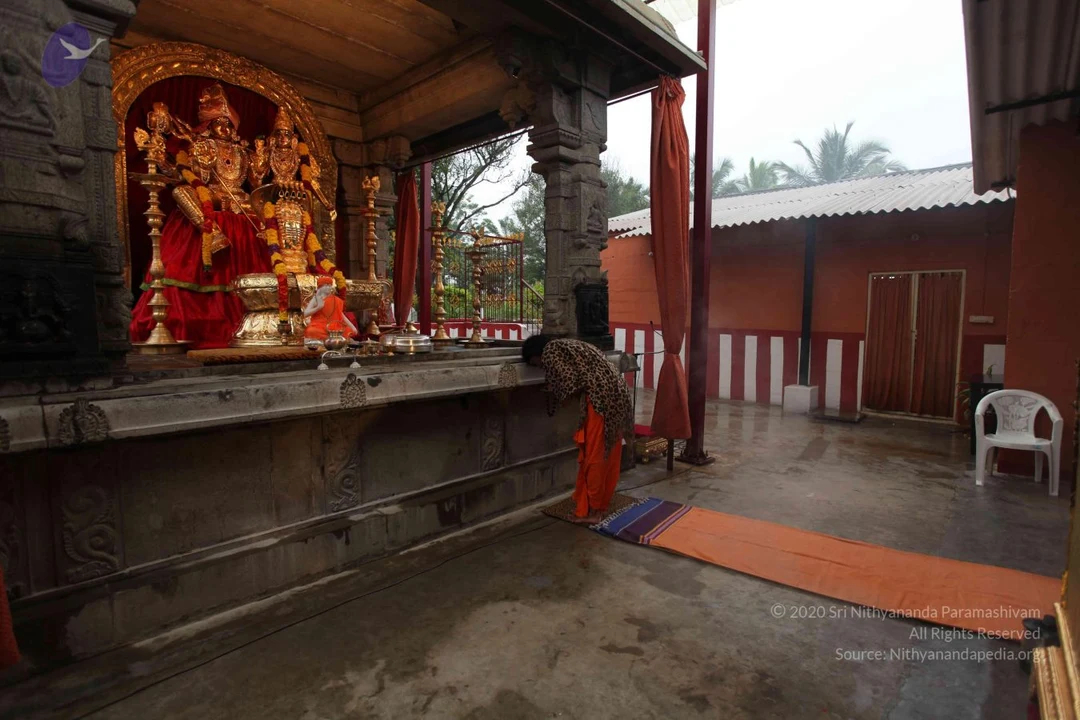
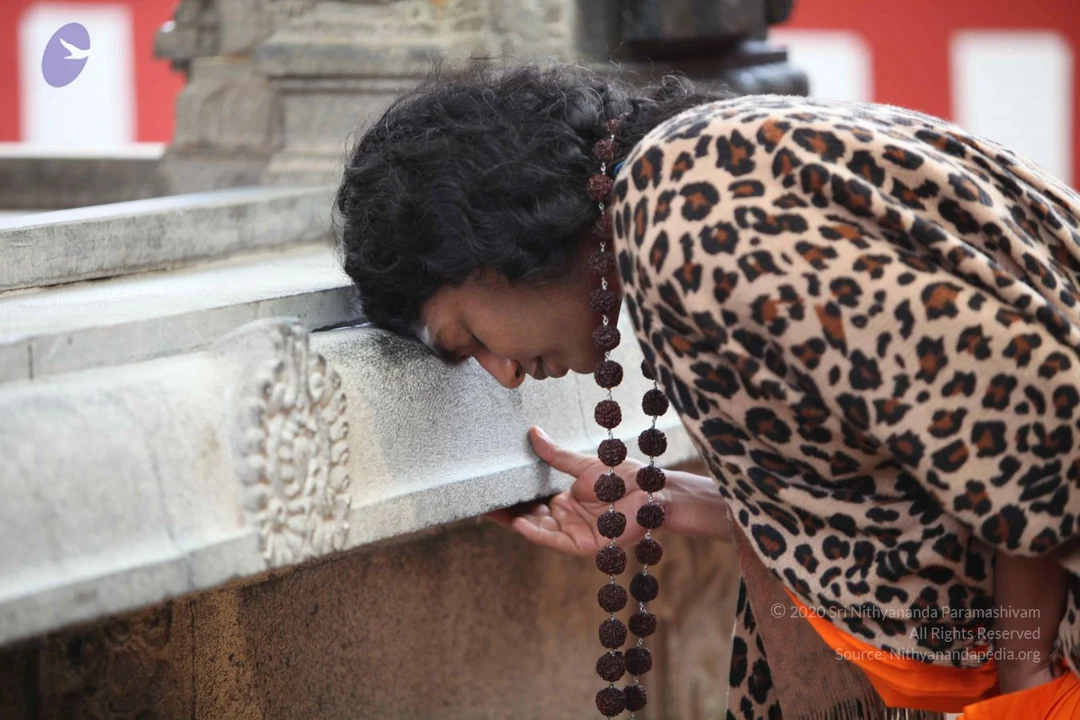
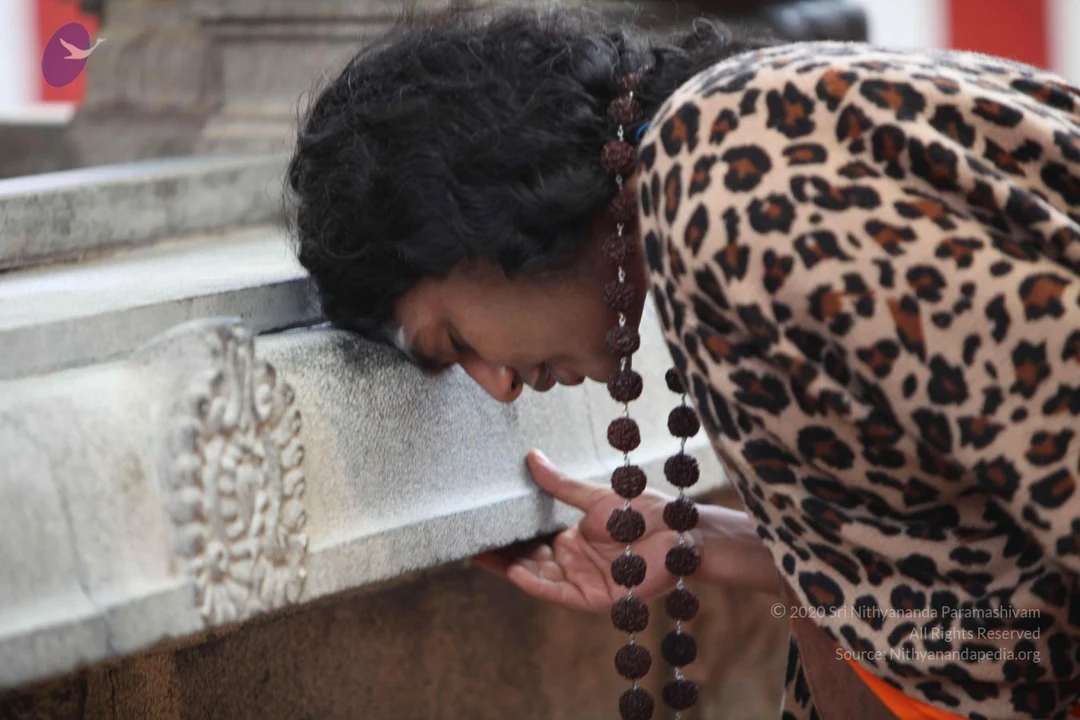
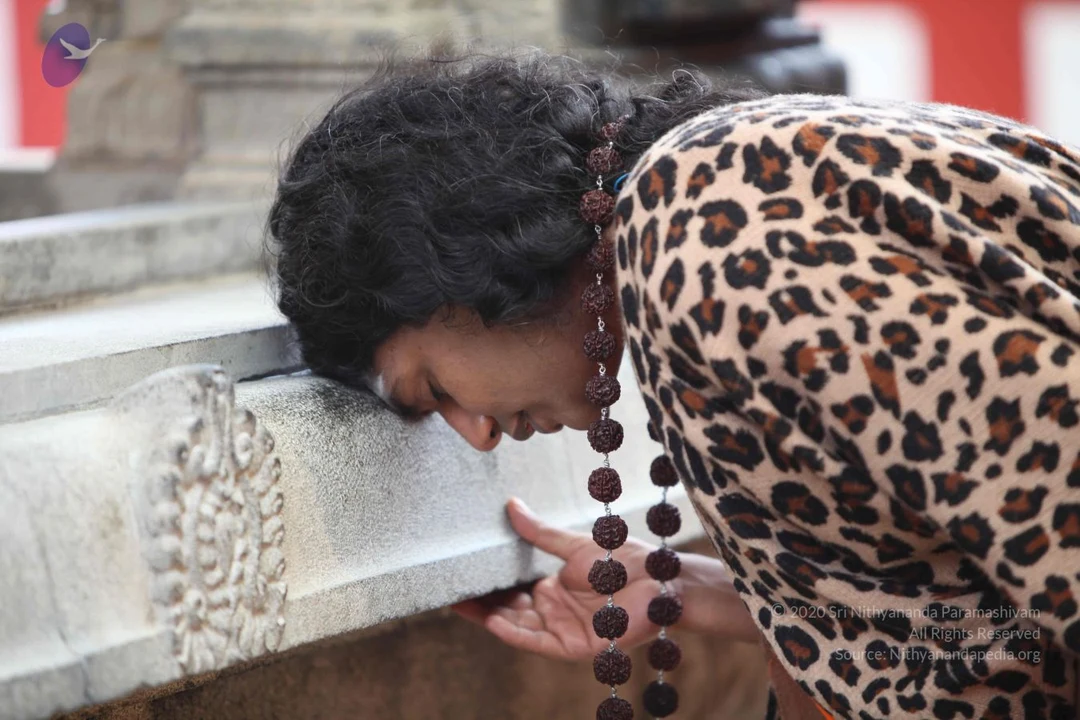
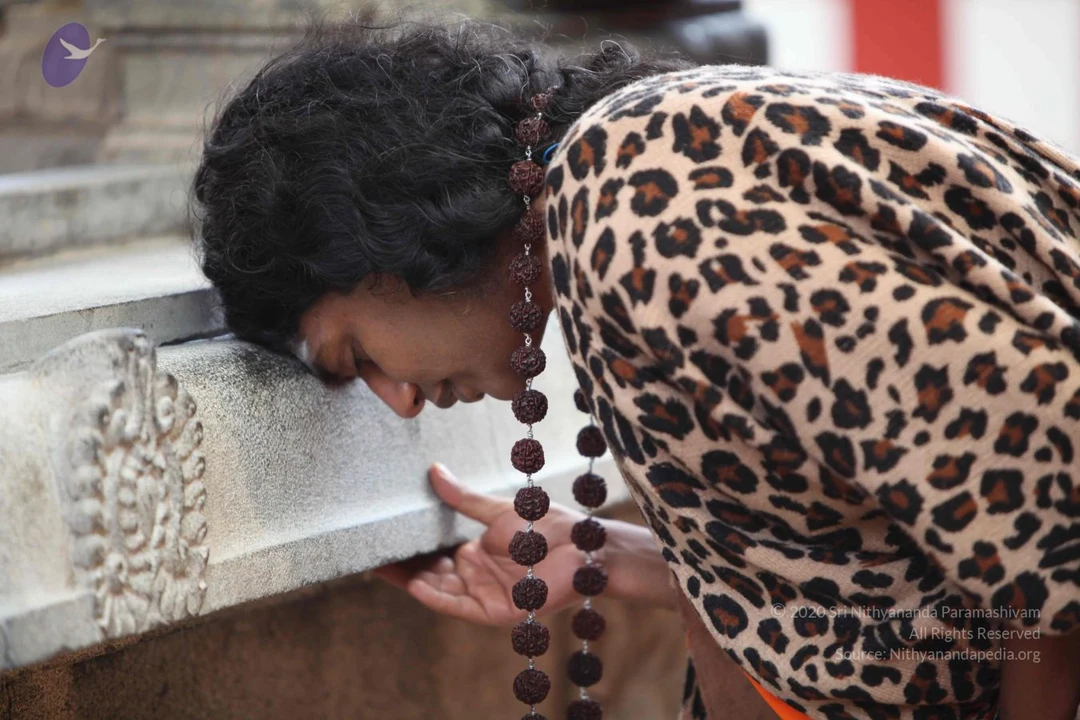
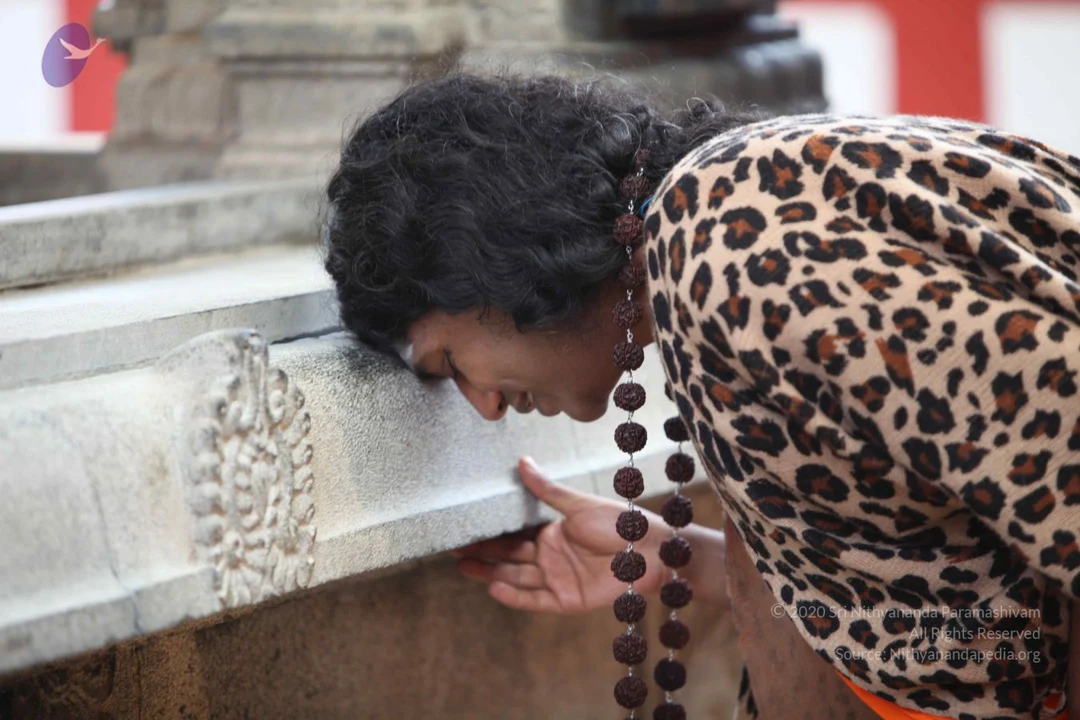
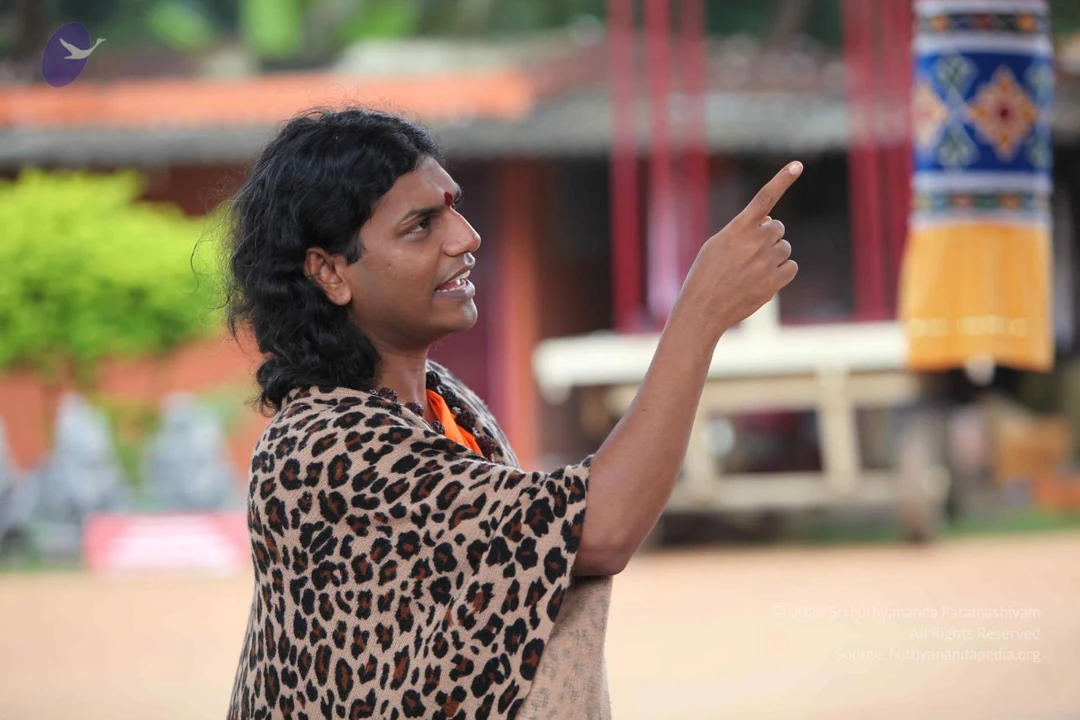
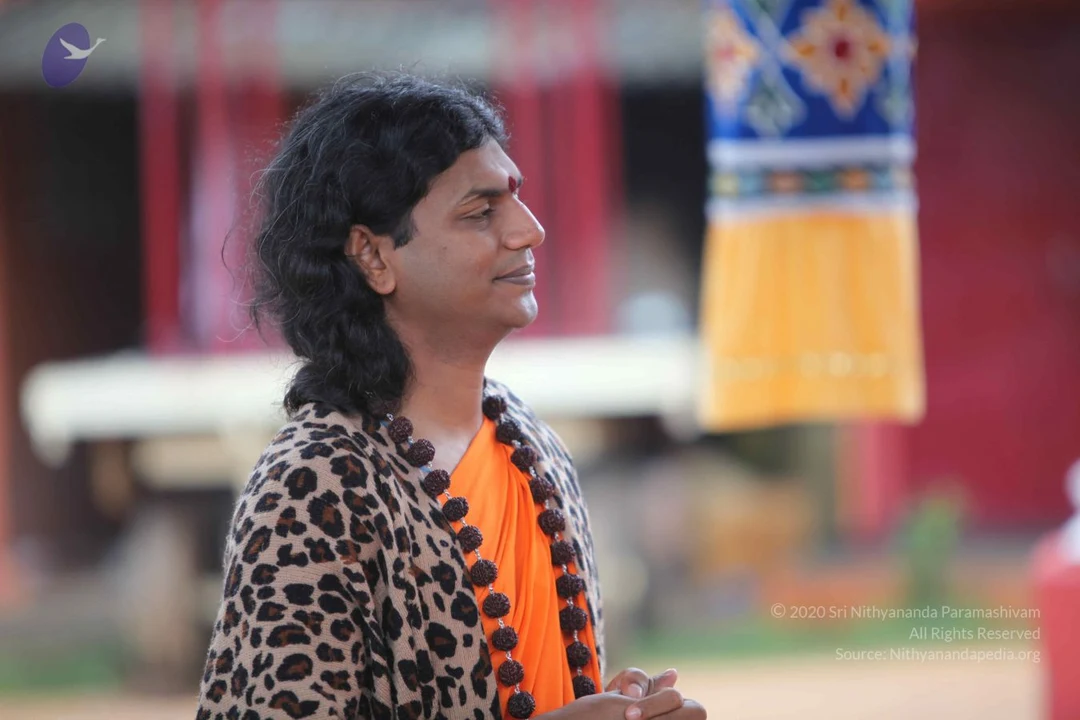
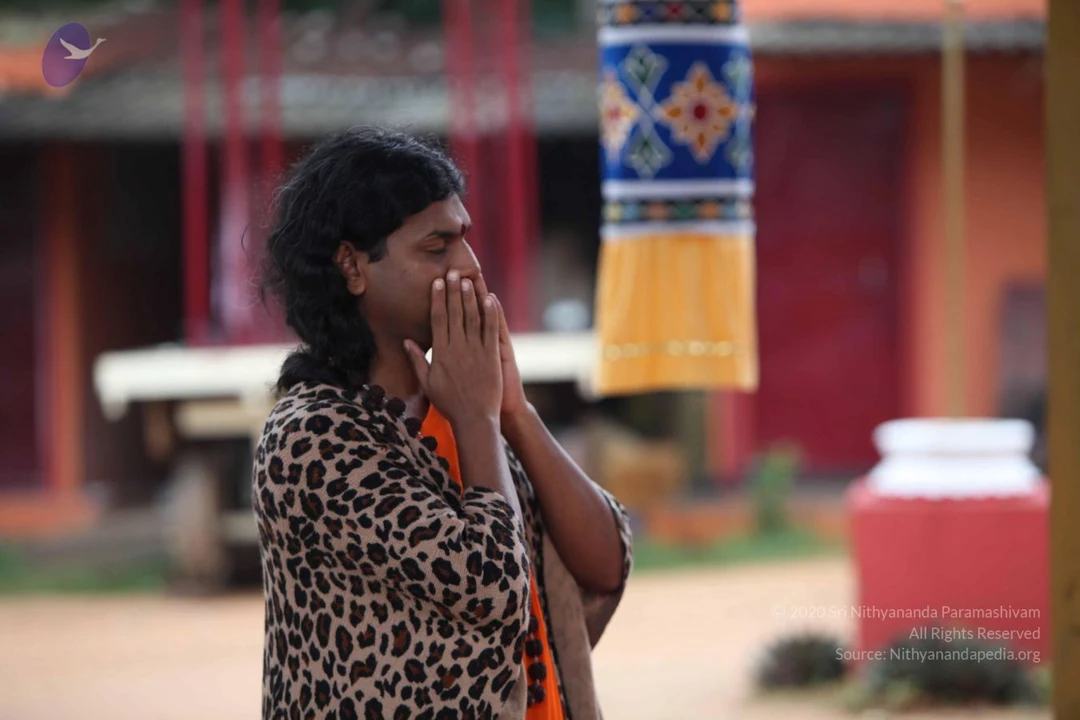
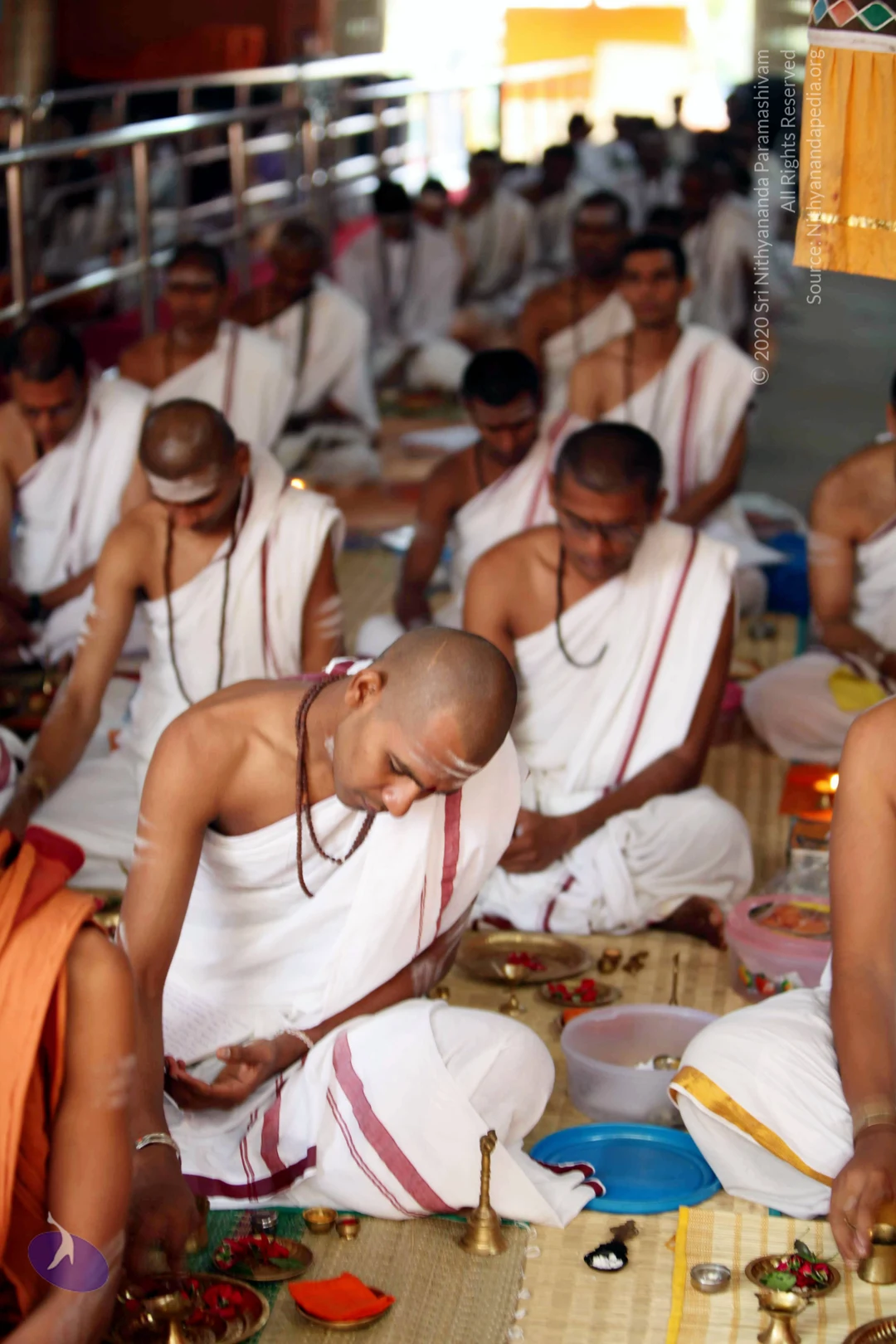
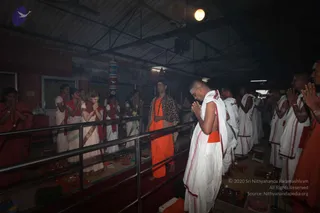
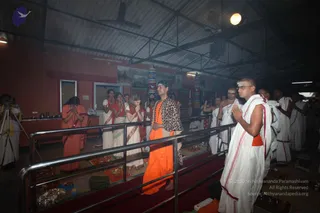
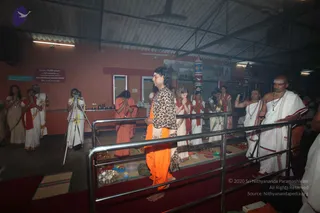
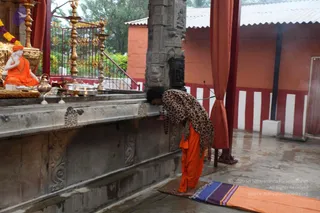
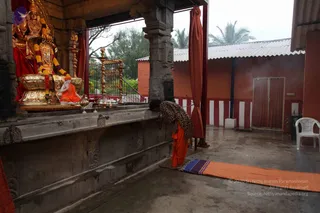
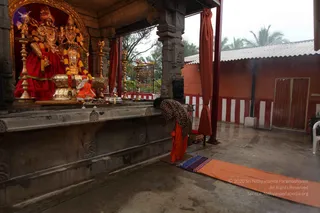
A dim hall with a corrugated metal roof and a hanging light, where a line of people stands with palms pressed together in anjali. In the foreground a shaved-headed man in white dhoti and shawl with red borders, bare-chested beneath, stands with hands joined in prayer; behind him a figure in saffron/orange cloth and a leopard-print shawl stands with hands folded, wearing a tall headpiece. To the left, women in white saris with red borders and red shawls, and a woman in red, also hold hands folded. Brass lamps and offering trays sit on low mats along the floor. Metal railings run across the left side. A printed banner or poster is visible on the far wall. Appearance-based identity of the figure in saffron is uncertain, so he is described by role.A smoky indoor hall with a corrugated metal roof and a red wall, where a group stands in devotional posture with palms pressed together. In the centre, a man wears saffron-orange dhoti and a leopard-print shawl, with long dark hair and bare feet, standing before a steel railing above a red-carpeted platform with brass puja plates. Around him, women in orange and red saris and men in white dhotis with red-bordered shawls stand with folded hands. A camera on a tripod is at the left edge. Brass and steel vessels lie on a low table, and a banner hangs on the back wall.Photograph inside a red-walled hall with a corrugated metal roof, showing a standing satsang-style gathering. In the centre, a barefoot figure in an orange-saffron dhoti and a leopard-print shawl walks along a metal railing, with a glass-topped display case below holding brass dishes and small offerings. Around them, devotees with palms pressed together stand in white and cream traditional clothes, some wearing red shawls, and a woman in an orange sari bows her head. On the right, two men in white dhotis with red borders and rudraksha-style necklaces stand near the rail, one with a shaved head and white forehead markings. A camera on a tripod is at left and a man in white operates it. A dark banner and framed picture are on the wall behind, with a printed notice reading a service-count sign.A person in orange dhoti and a leopard-print shawl bows deeply at a grey stone shrine platform carved with floral motifs. Brass lamps, a kalasha-style brass vessel and a small bowl sit on the ledge, and a white statue of a seated figure in orange robes, with an orange headpiece and rudraksha mala, stands at left beside a flower garland. Red curtains hang at right and a striped red-and-white wall frames the courtyard, which is wet underfoot. A striped orange cloth lies on the floor.A person in orange robes with a leopard-print shawl bows low to the ground in a temple courtyard, placing their forehead near a stone platform. On the left, a golden deity murti in red cloth is garlanded with marigold and orange flowers, with a small figure in orange and white seated before it, brass oil lamps and kalasha-style vessels on the platform. A saffron cloth and striped runner lie on the floor, a red curtain hangs in the centre, and a white plastic chair sits at the right beside a rain-wet red-and-white building under a corrugated roof.A photograph of a shrine area at an outdoor temple-style pavilion with a granite plinth. On the left, golden-clad deity murti sit on a raised throne, one in red garments and crown with garlands of orange and yellow flowers, with brass oil lamps and kalasha-like vessels arranged in front. In the centre a figure in orange robes and a leopard-print shawl bends forward in prostration, hands near the ground, on an orange cloth runner. Red-and-white striped walls, a corrugated roof and palm trees are visible behind. One person is present.

PADA-PUJA
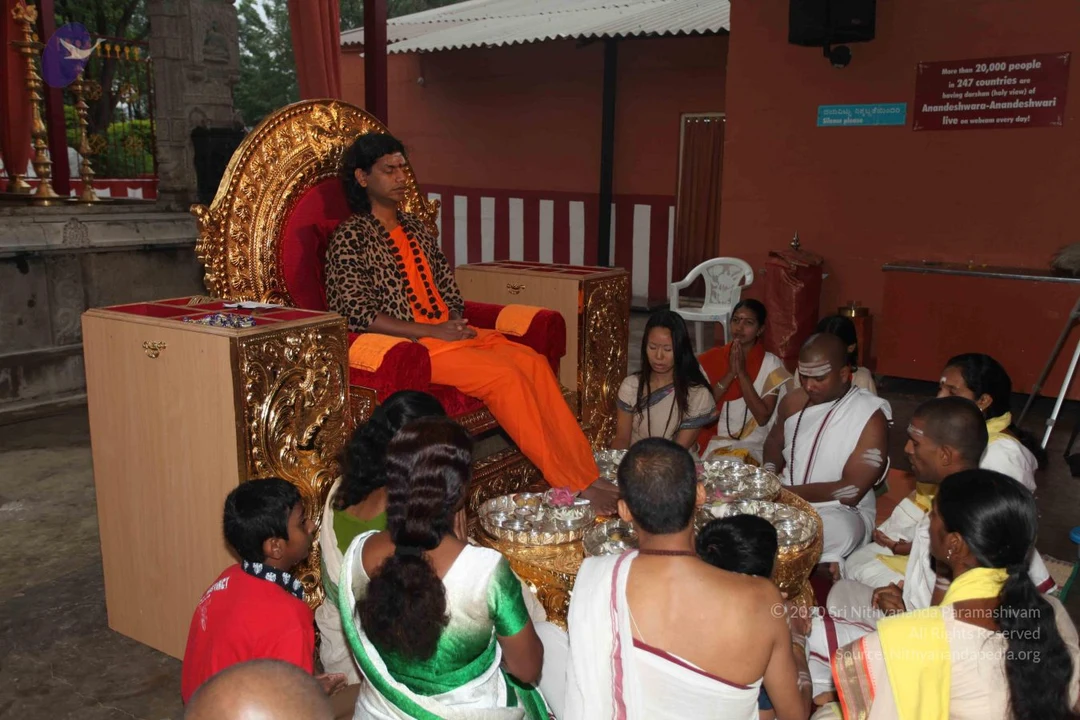
129 photosSource gallery
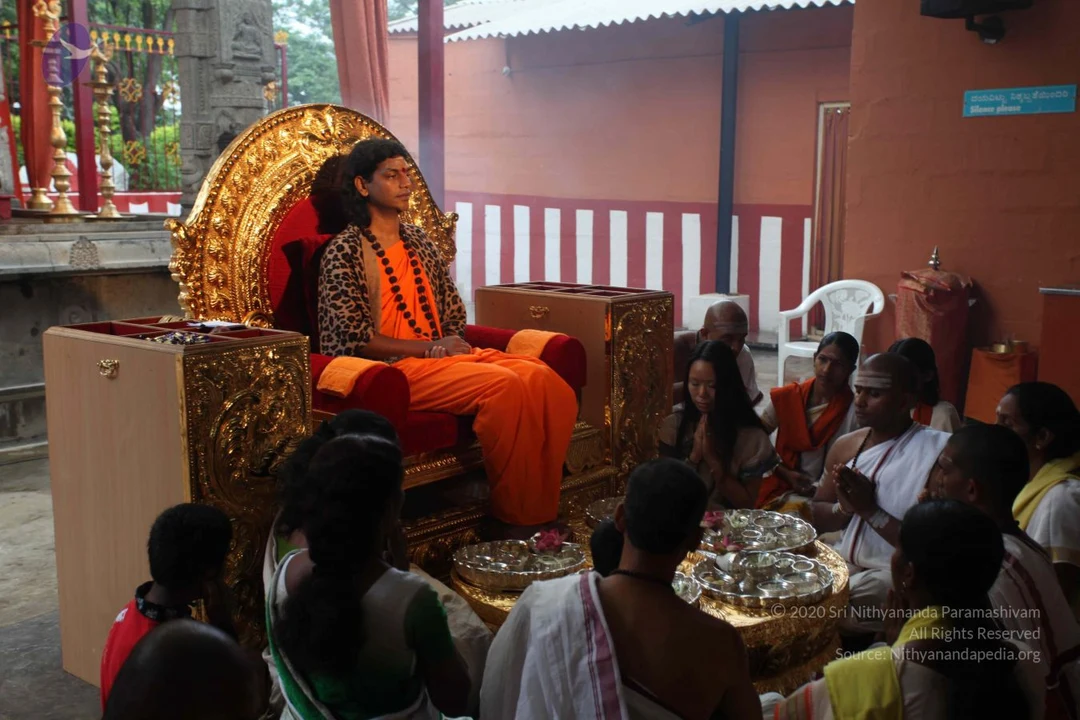
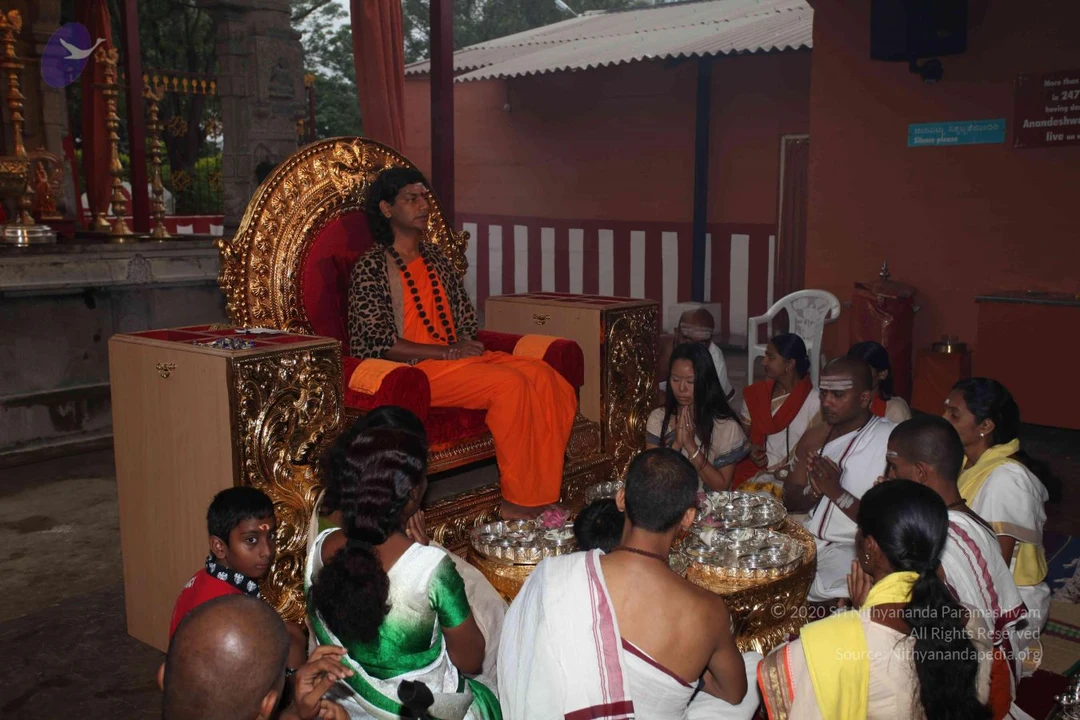
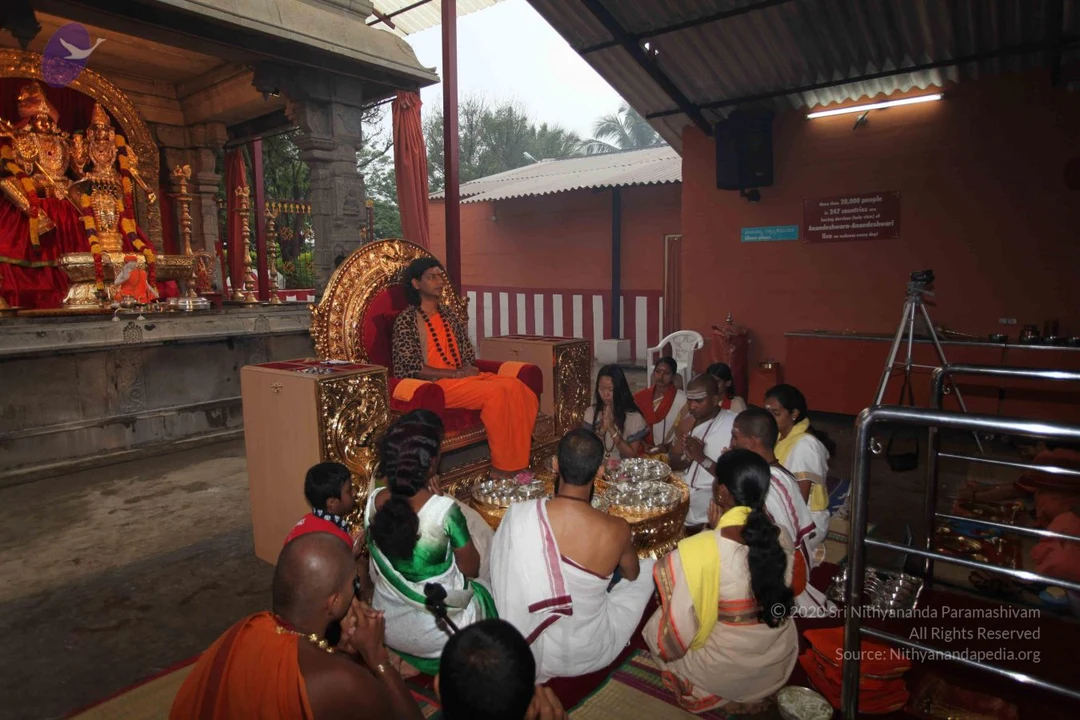
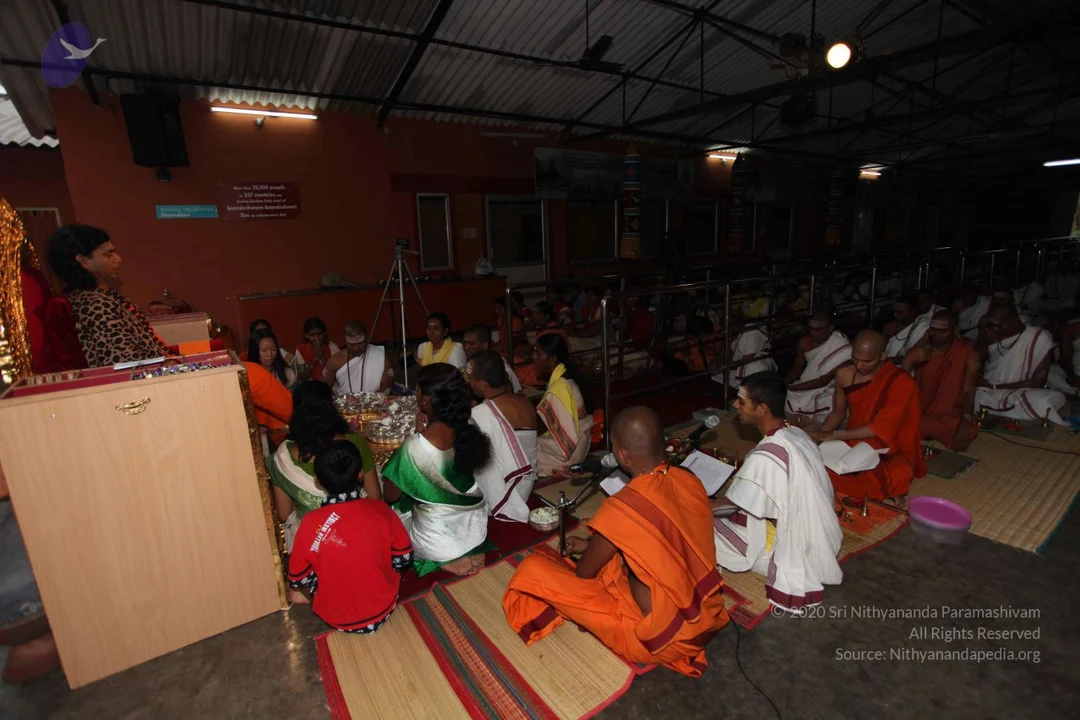
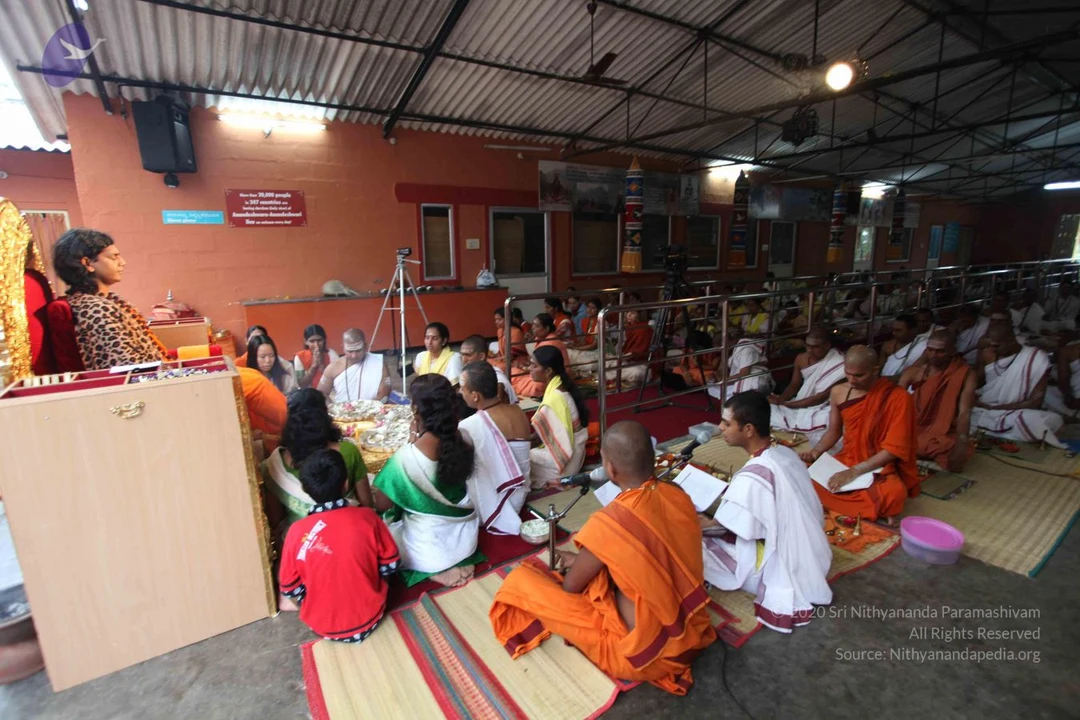
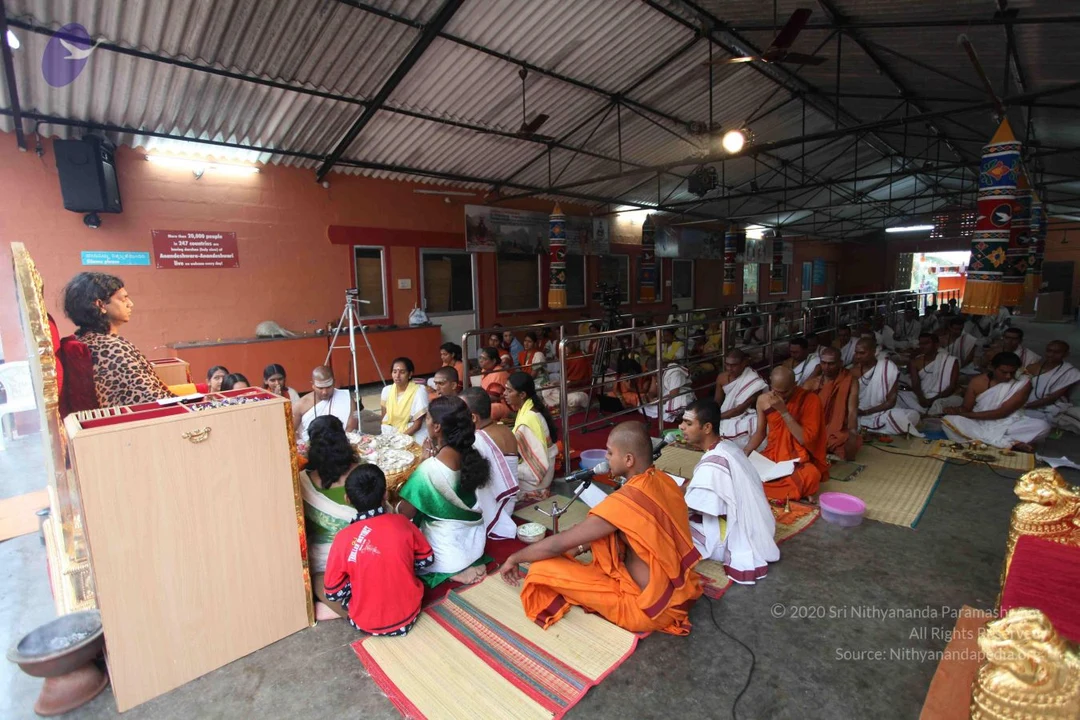
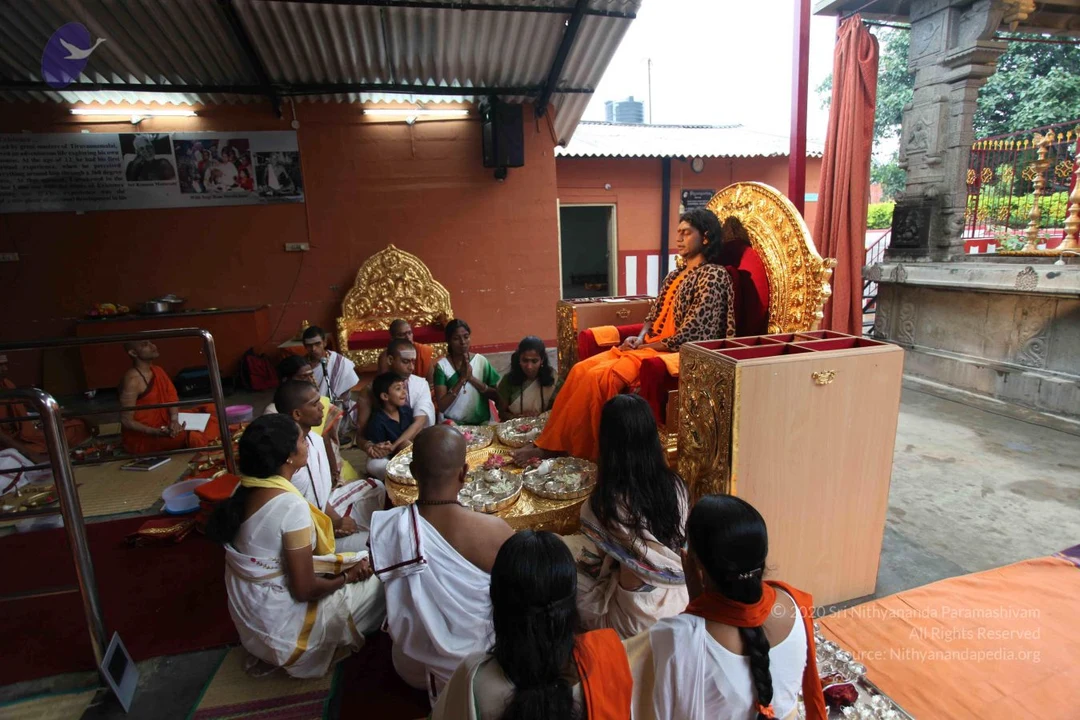
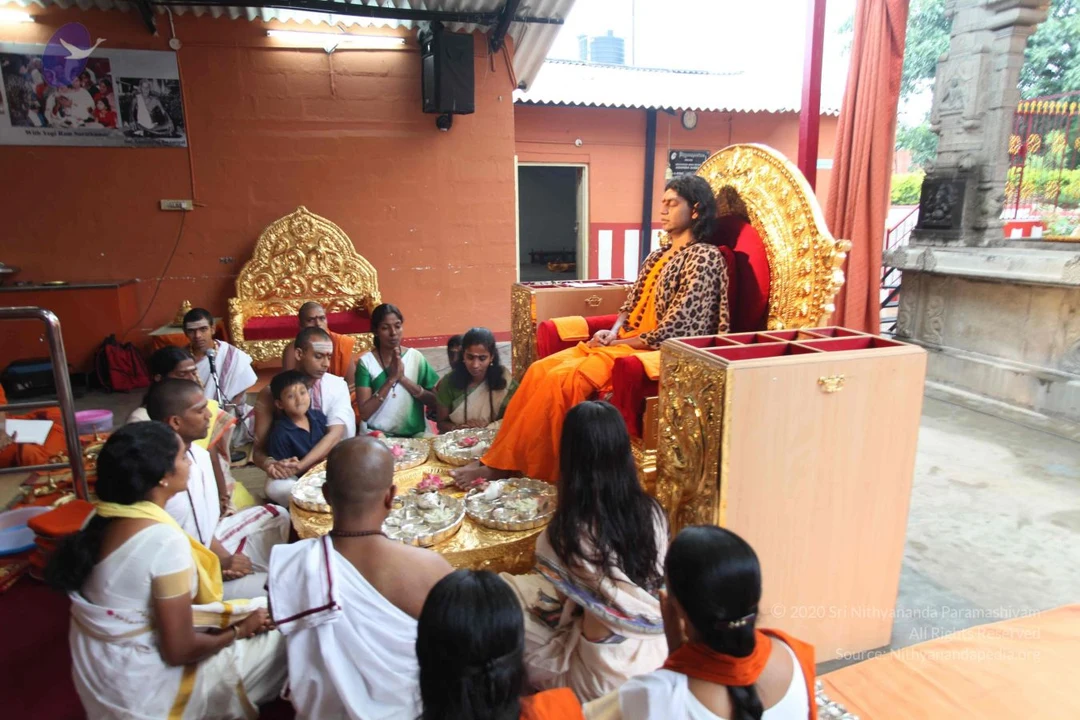
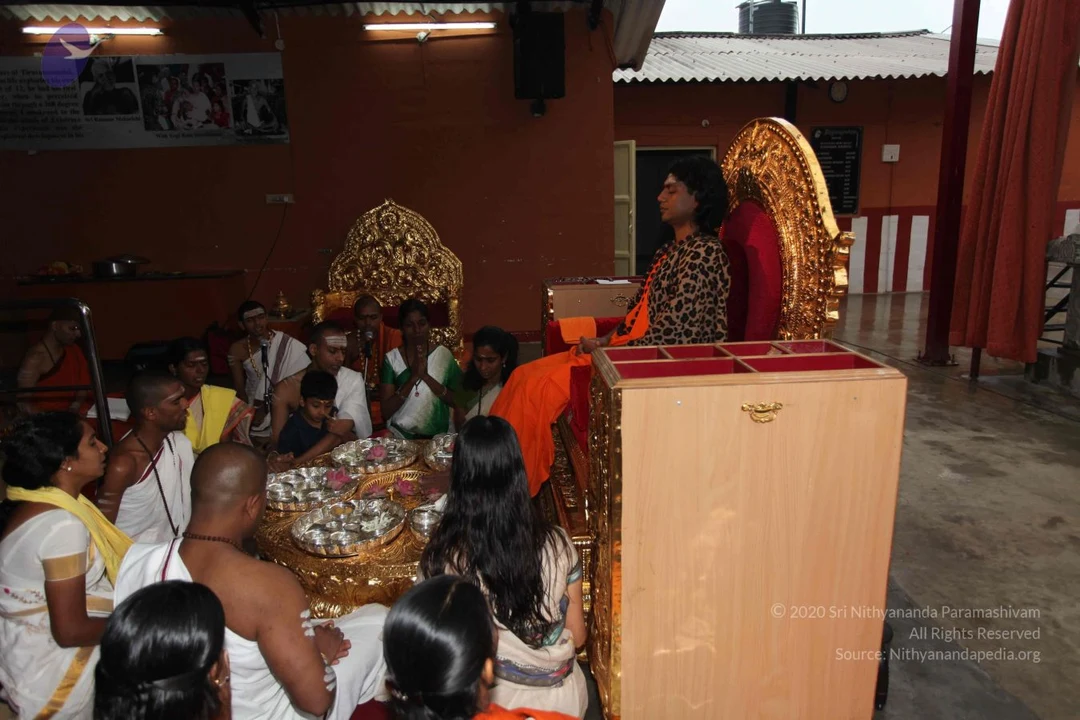
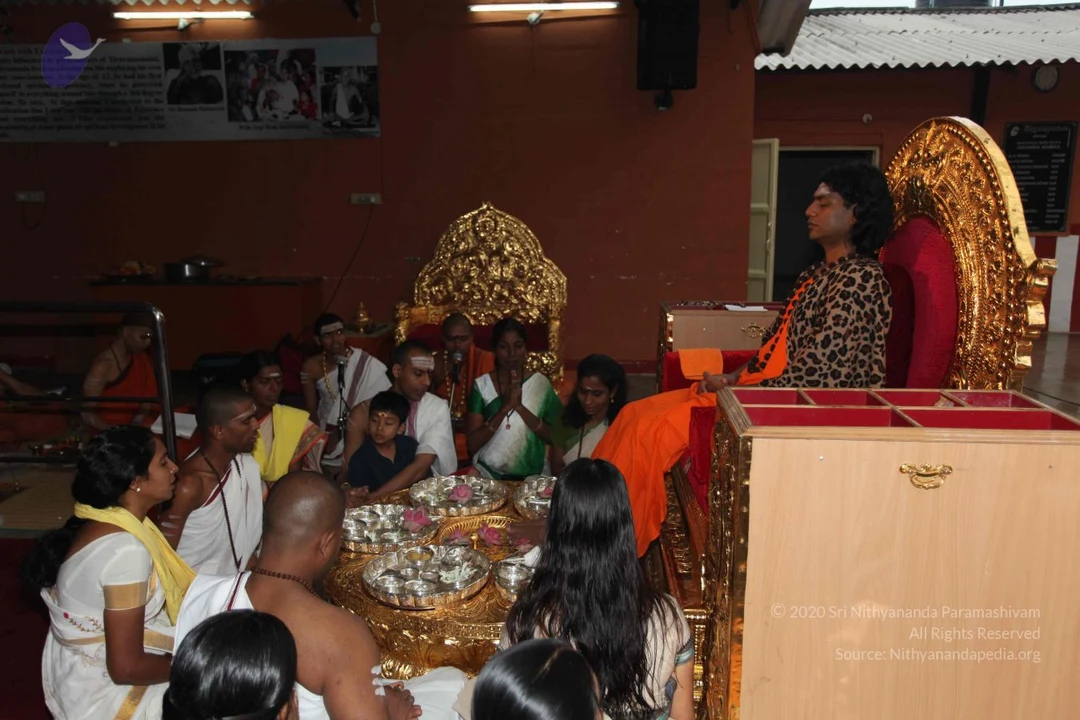
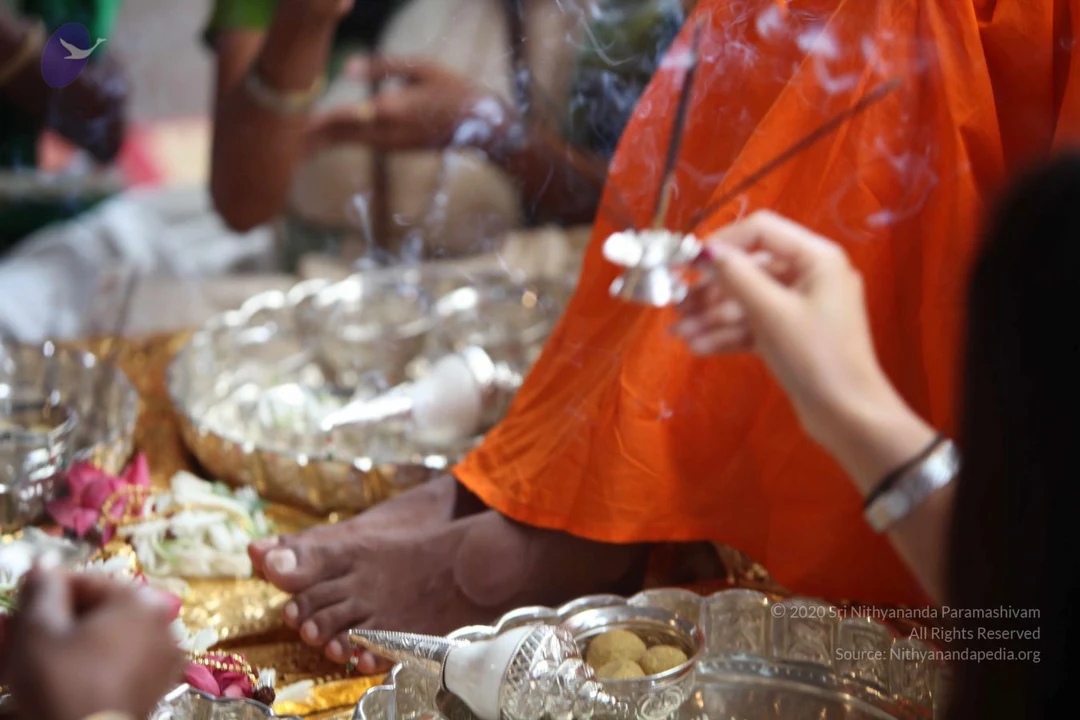
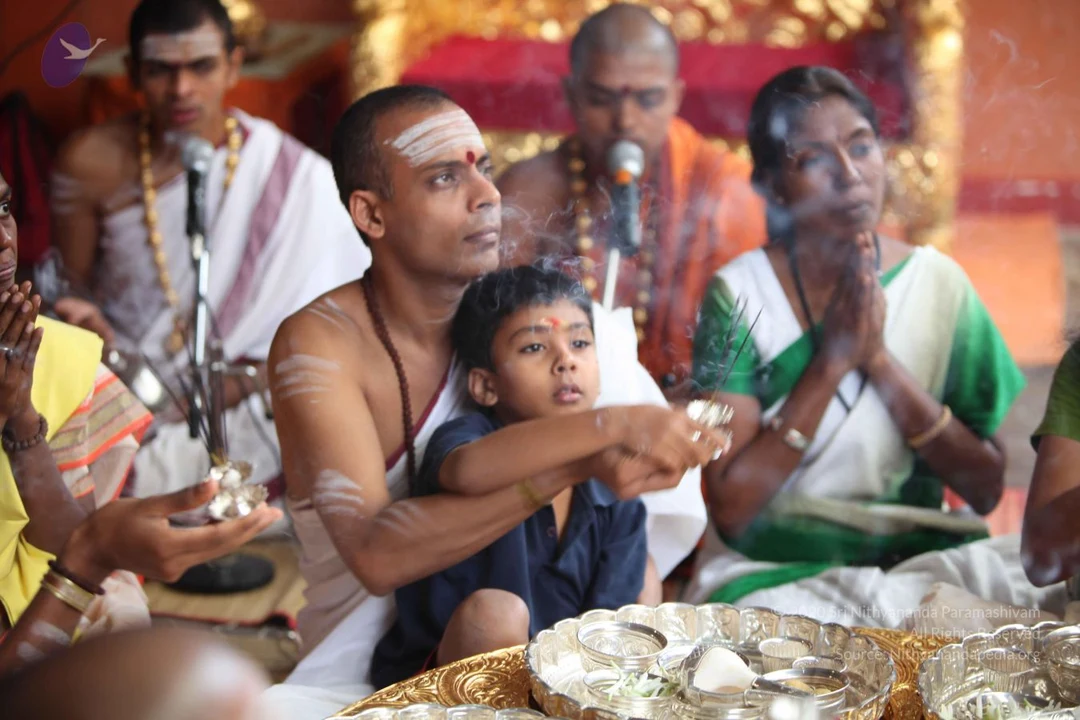
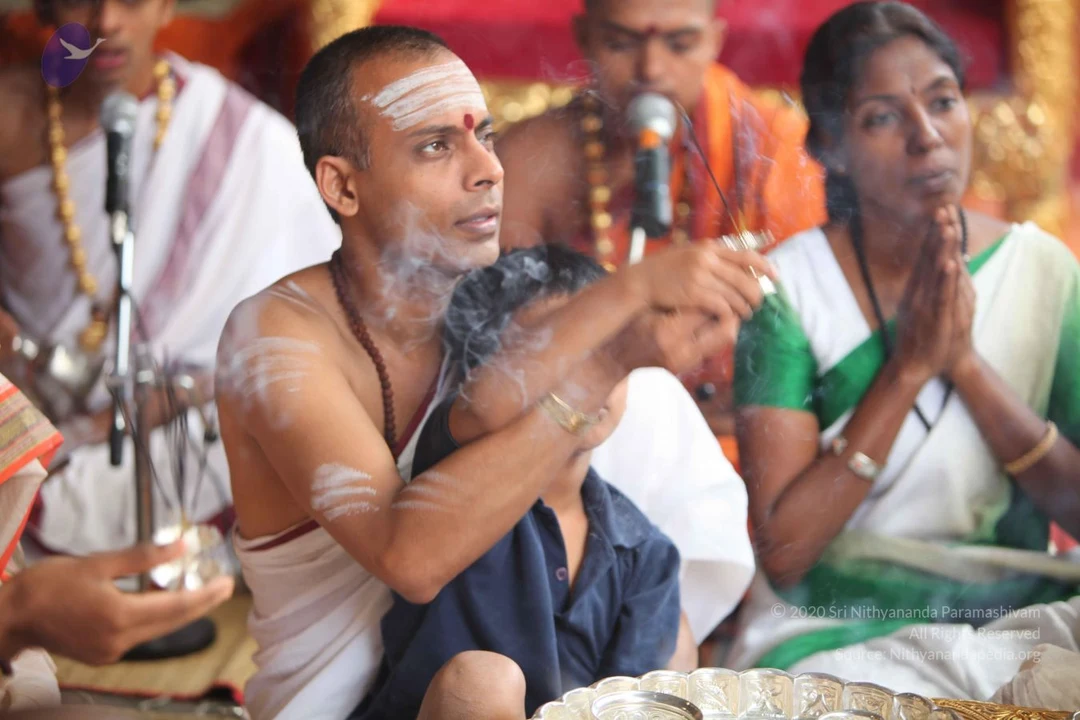
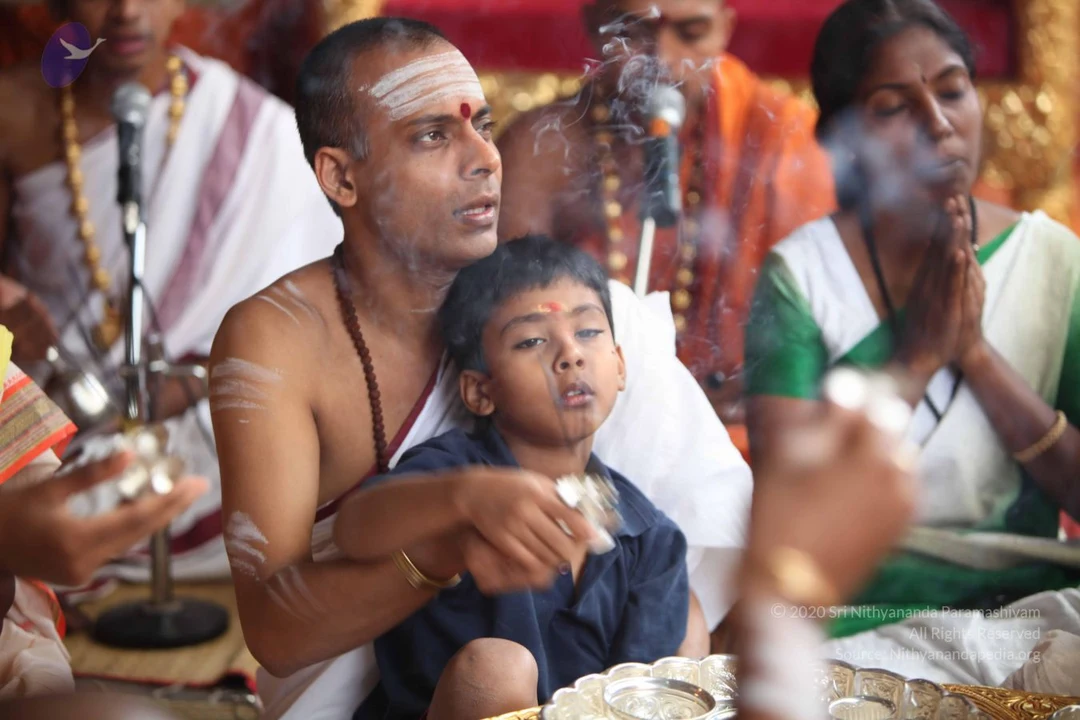
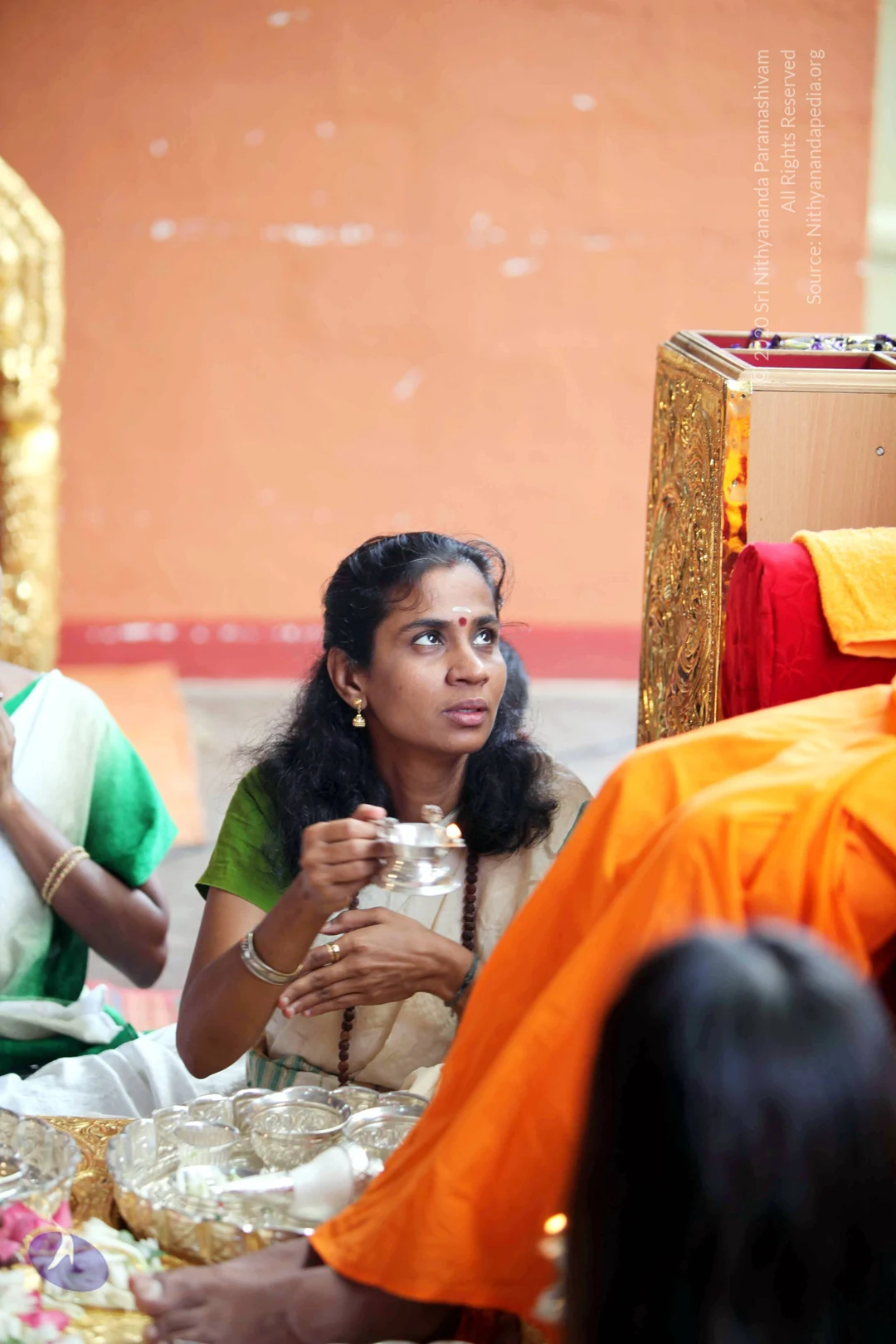
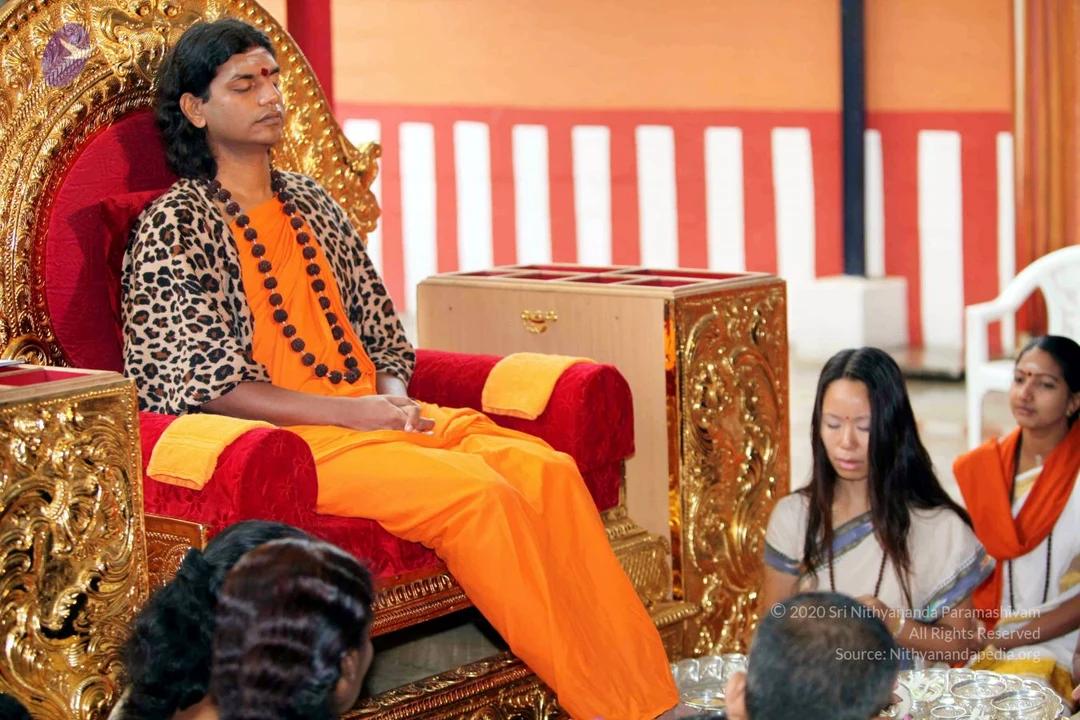
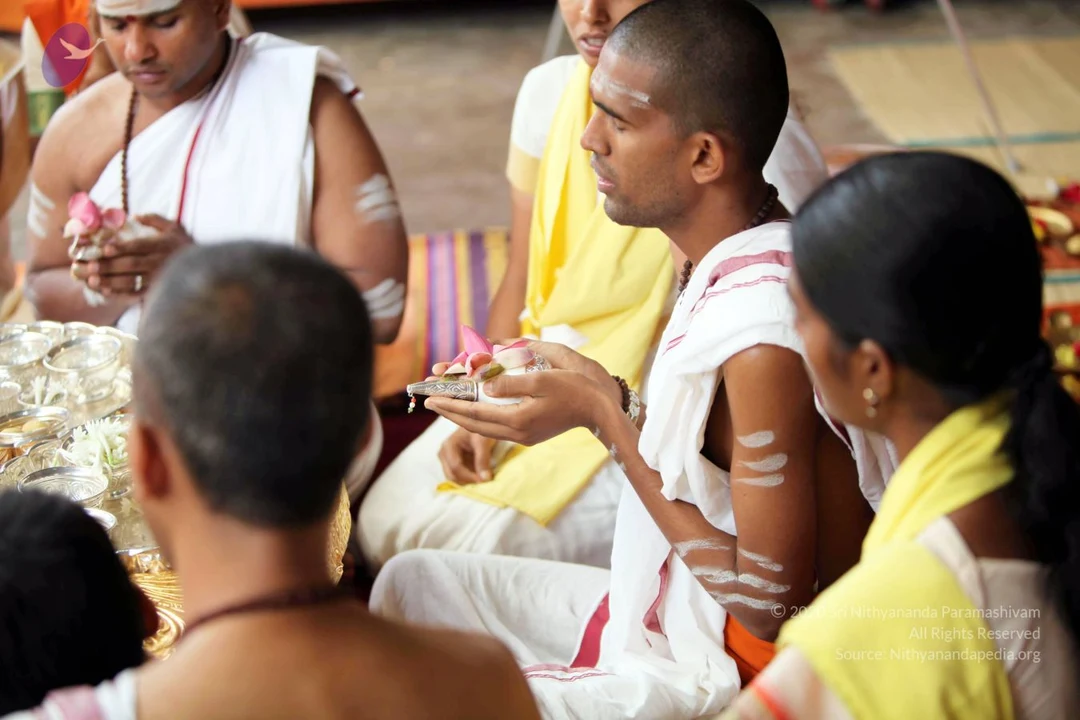
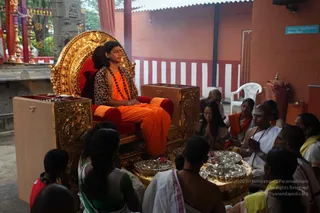
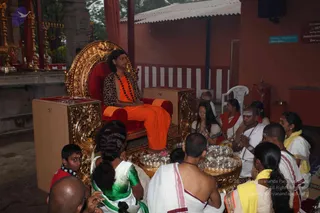
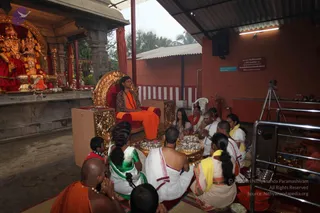
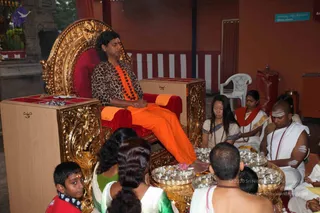
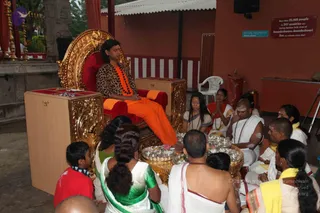
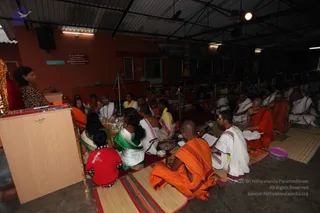
A photograph of a satsang at an ashram hall with terracotta-red walls and white stripes. A man with long dark hair, orange saffron robes, a rudraksha mala and a leopard-print shawl sits in meditation on an ornate gold-and-red throne (peetha). Before him, devotees sit on the floor with palms pressed together in namaskar. Brass trays of offerings with flowers and lamps rest on a gold stand in the foreground. Other devotees in white dhotis, sarees and saffron wraps sit nearby.A seated man in an ornate gold-and-red throne with long dark hair wears an orange dhoti, a leopard-print shawl and a rudraksha mala, with hands in anjali. Around him devotees in white and yellow sit on the floor with brass plates of offerings and flowers. A shaved-headed priest in white dhoti and sacred thread kneels in the foreground. An orange-walled hall with white-striped panels, a plastic chair and a signboard reading Anandeshwar frames the scene.A photograph inside a temple shrine hall where a seated figure on an ornate gold-and-red throne wears an orange dhoti, an orange shawl and a rudraksha-style orange garland, with long swept-back hair and a leopard-print jacket. Beside the throne, a white-clad devotee sits with folded hands. Around the seated figure, devotees in white dhotis, white and green saris, and yellow-and-white garments sit on mats, some holding brass trays of offerings. A shaved-headed man in orange robes sits at lower left. Behind, gold-decorated deity murtis of a goddess and a god stand in a red-curtained shrine with garlands, and a sign on the orange wall reads in English and Tamil about feeding 20,000 people. Corrugated roof and palm trees appear outside.A seated man with long dark swept-back hair sits on an ornate golden throne with red cushions, wearing a leopard-print shawl over an orange saffron garment and a red tilak on his forehead. Around him, devotees in white and green sit on the floor; a shaved-headed priest in white dhoti with white body markings and rudraksha beads presents brass and silver plates of offerings on a low gilded table. A boy in red and a woman in a green sari sit in the foreground. Red-and-white striped partition and a golden canopy frame the hall, with a white plastic chair and a Kannada sign on the wall.A seated man on an ornate gilded throne with red cushions, wearing a leopard-print shawl over an orange robe and long dark hair swept back, sits with hands resting in his lap while devotees gather around him. A carved gilded stand holds silver offering trays and a small pink flower arrangement. Around him, a young woman in a white sari with a red border sits with hands folded, a woman in green and white sits in front, a shaved-headed priest in white dhoti and shawl with white ash markings on his forehead and arms sits to the right, and other devotees in white and yellow sit on the floor. A small boy in a red shirt and white garland sits at left. Behind them are red-and-white striped drapes, a wall sign reading 'More than 20,000 people in 147 countries are having darshan (holy view) of Anandeshwara-Anandeshwari live on webcam every day!', and a small Kannada-language sign reading 'Silver please'.A indoor satsang hall with a corrugated metal roof and orange-red walls. On the left, a woman in a leopard-print top stands near a wooden lectern beside gold-fringed drapery. Seated on mats on the floor, many people face her: women in green, yellow and white saris, and men in white dhotis with red borders. Several monks in saffron-orange robes sit near the front right, one with a shaved head and another with a shaved head in orange. A tripod-mounted camera and a microphone stand are set before the seated devotees, and a small child in a red shirt sits in the foreground. Brass and steel vessels sit on the mats near the front. A wall sign and framed pictures are visible behind the seated group.
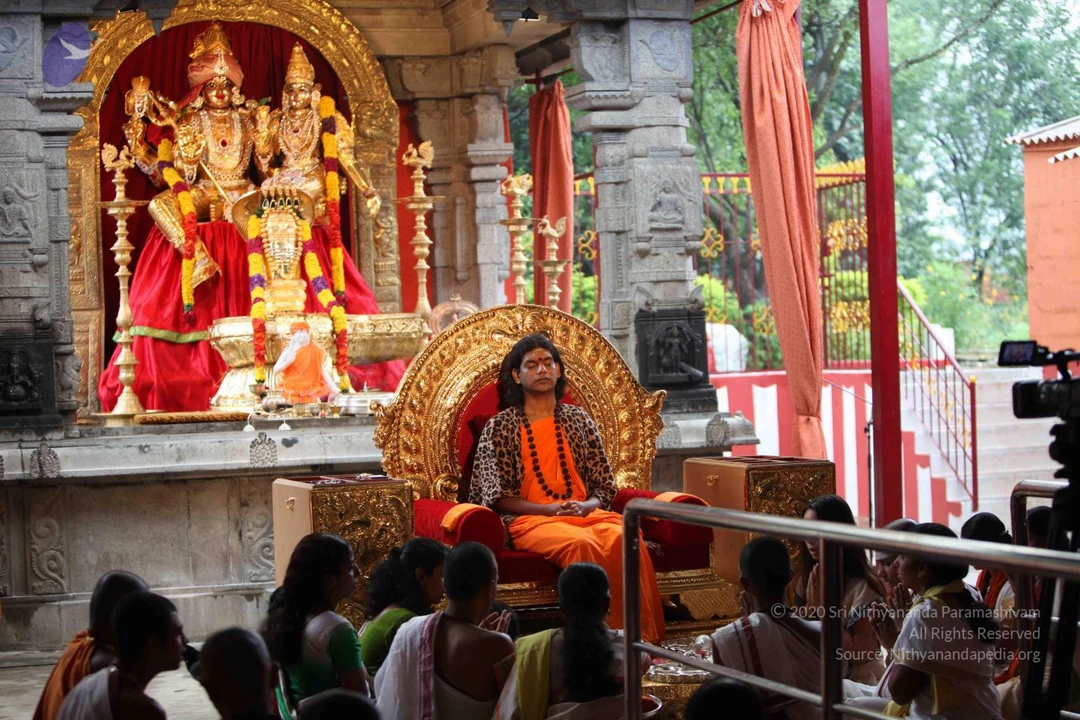
NITHYA-SATSANG
64 photosSource gallery
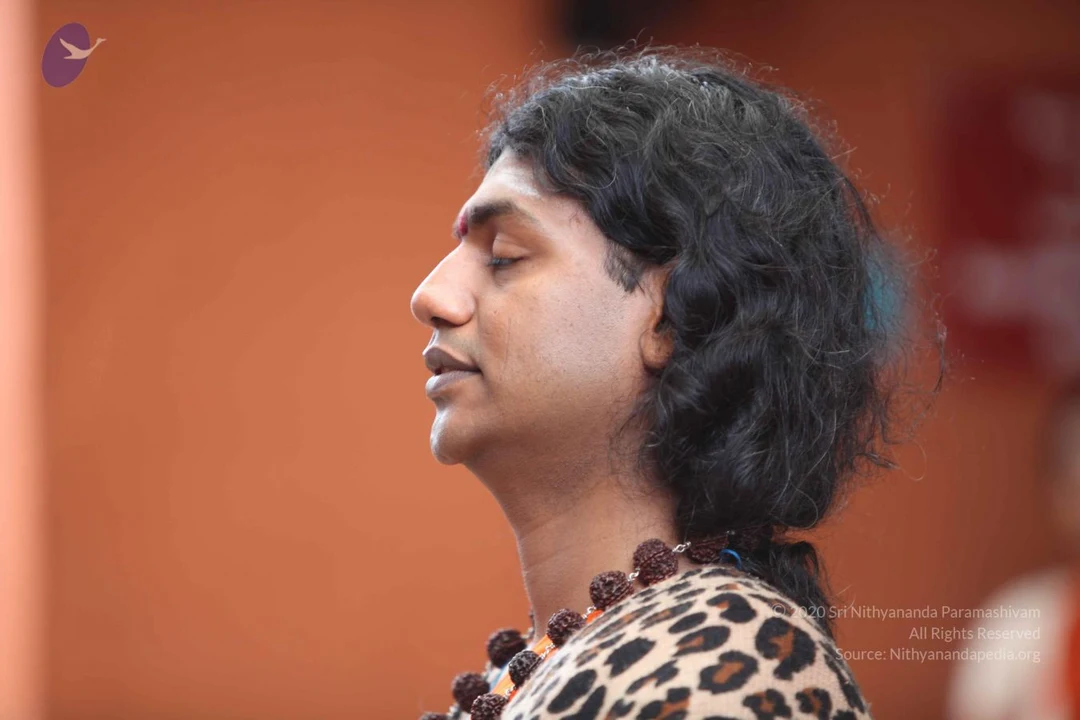
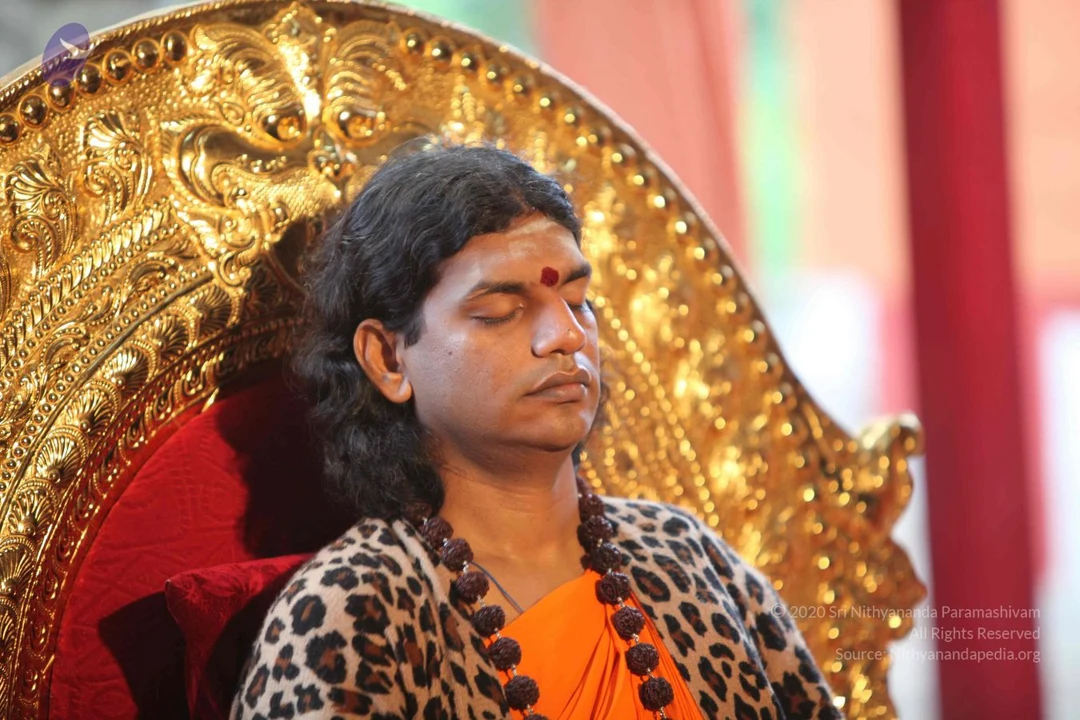
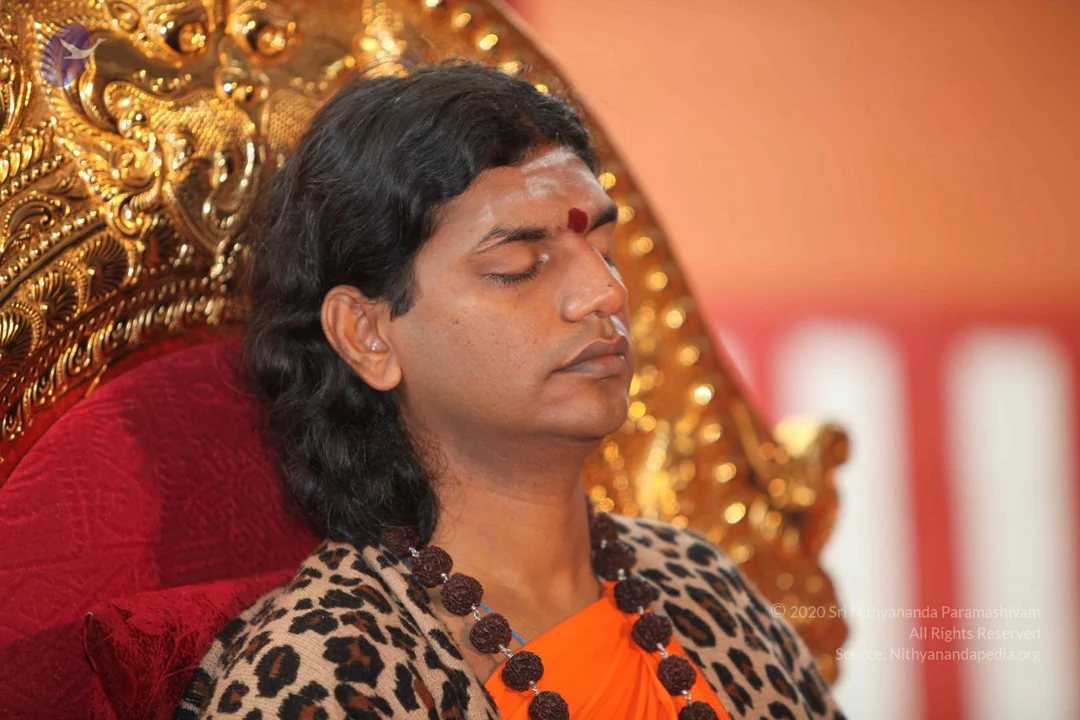
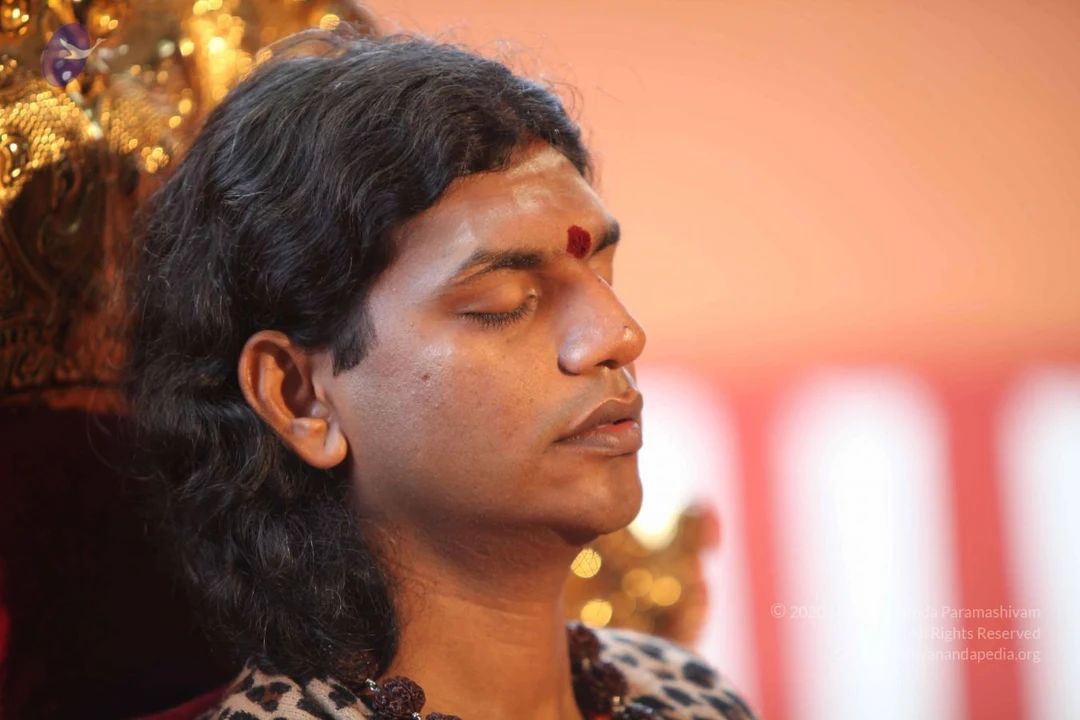
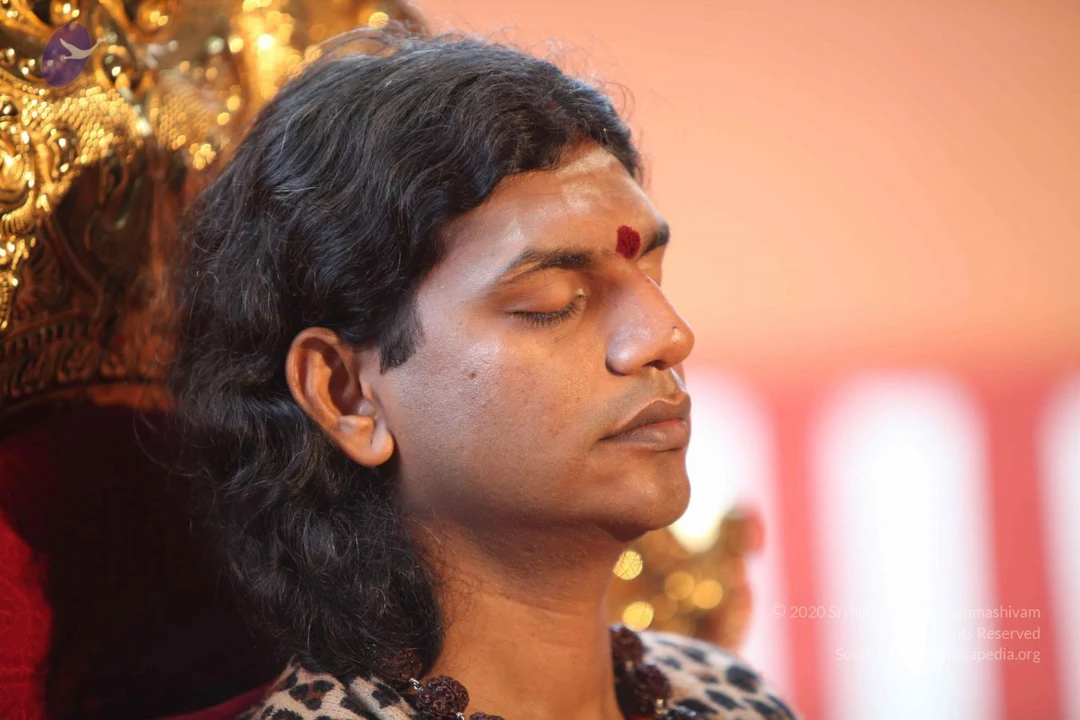
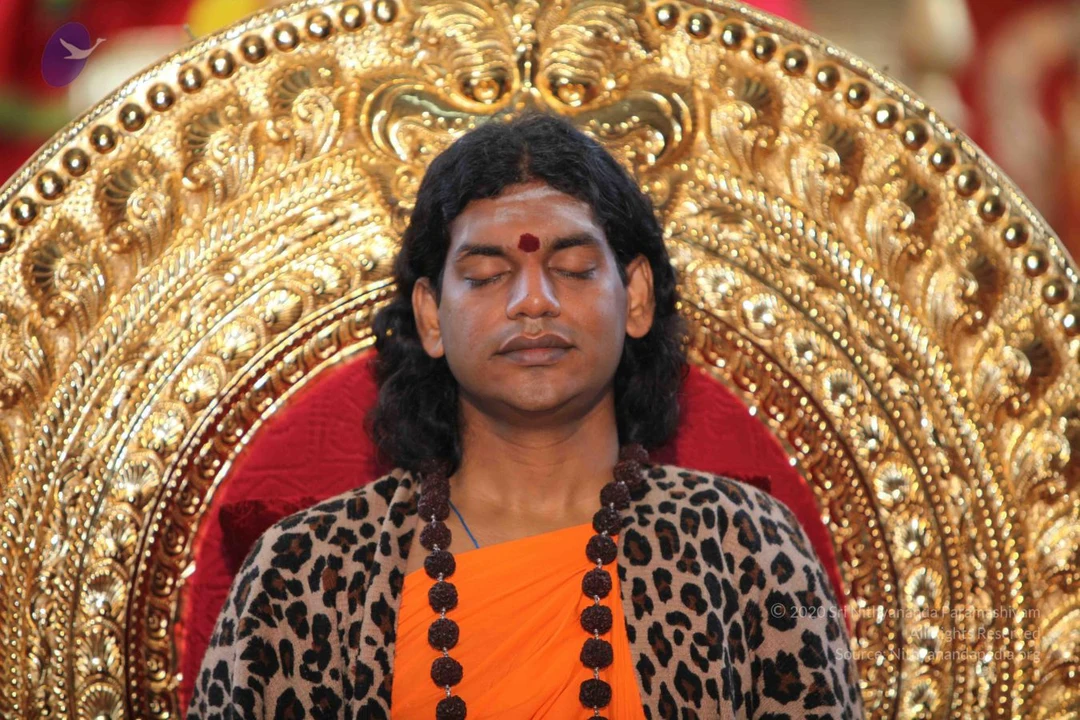
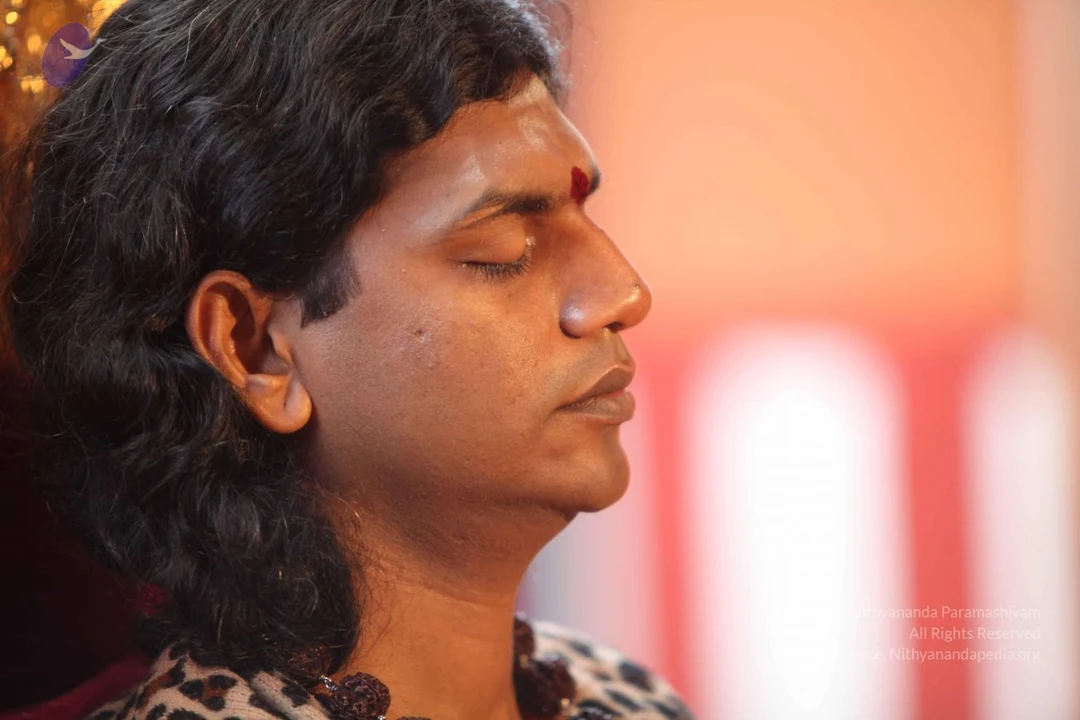
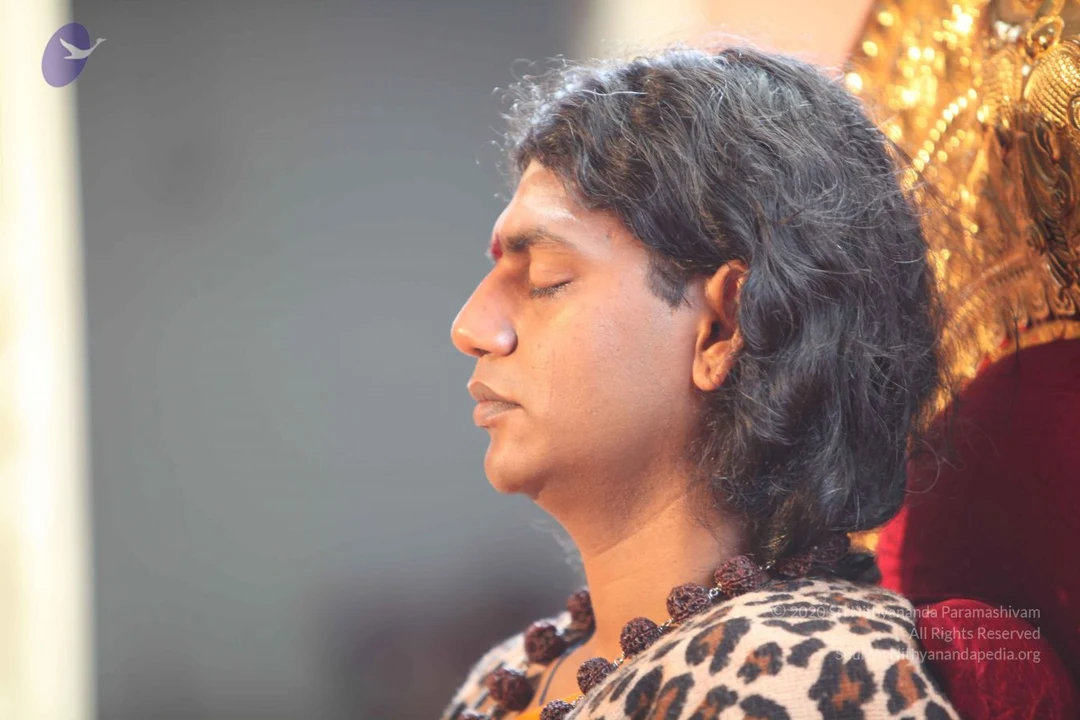
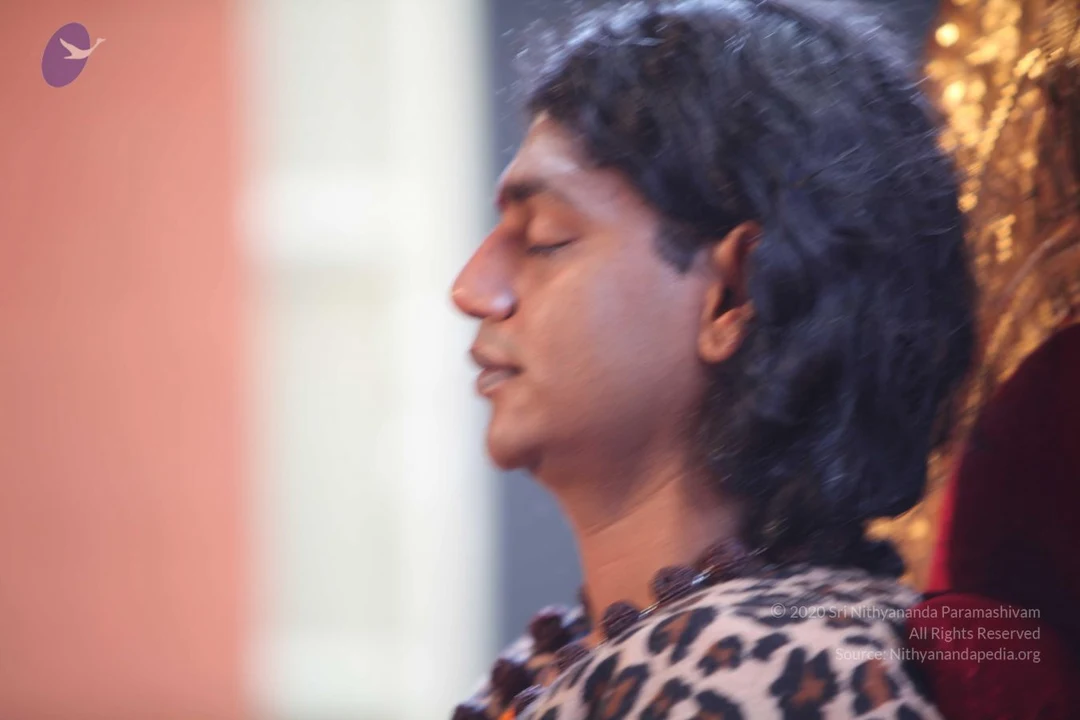
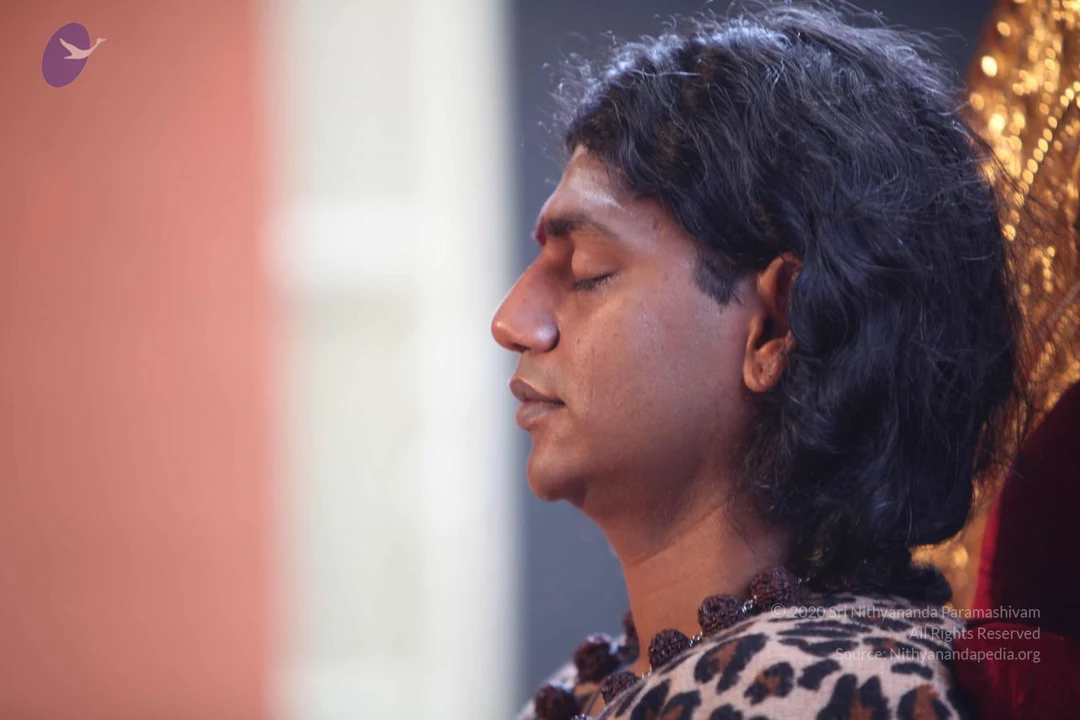
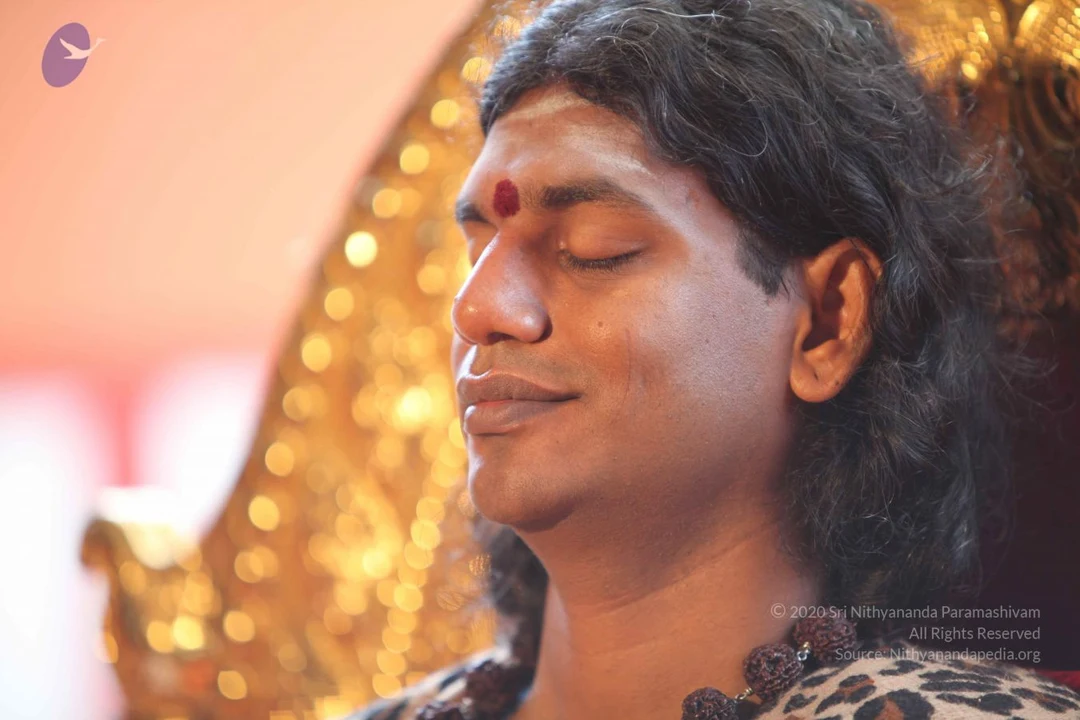
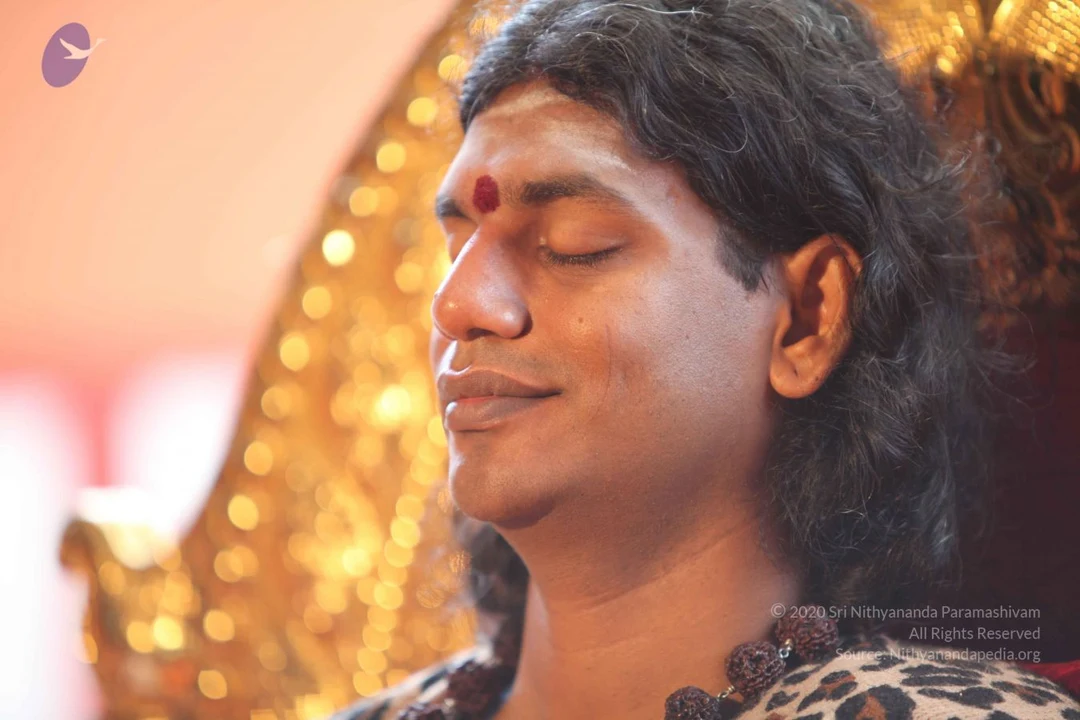
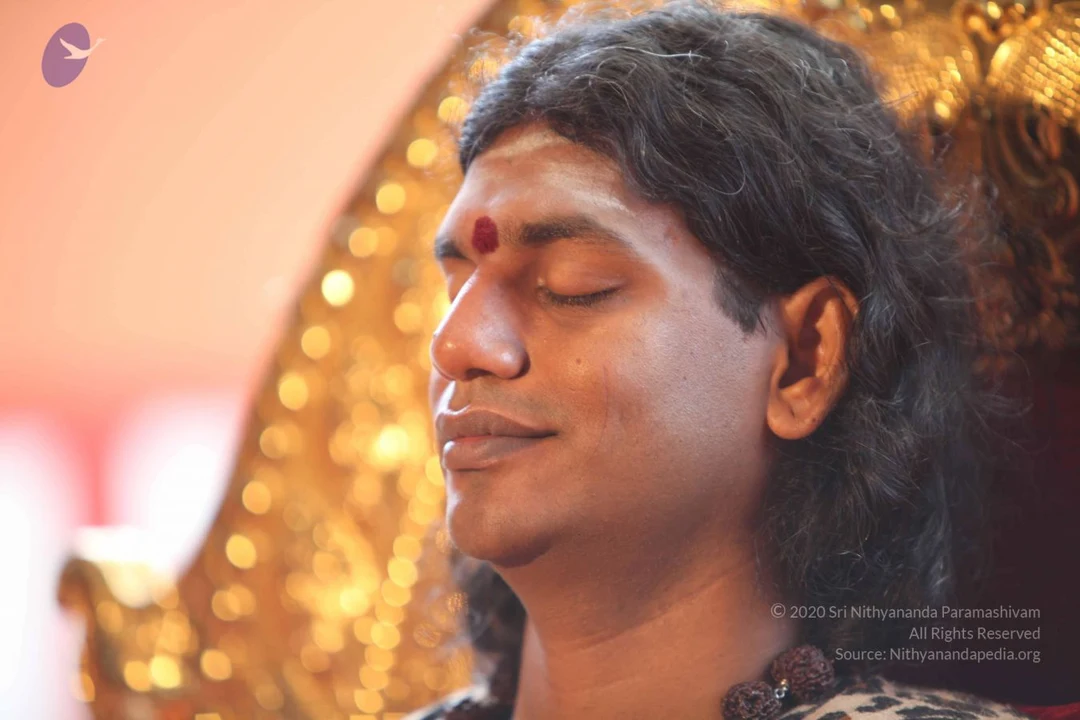
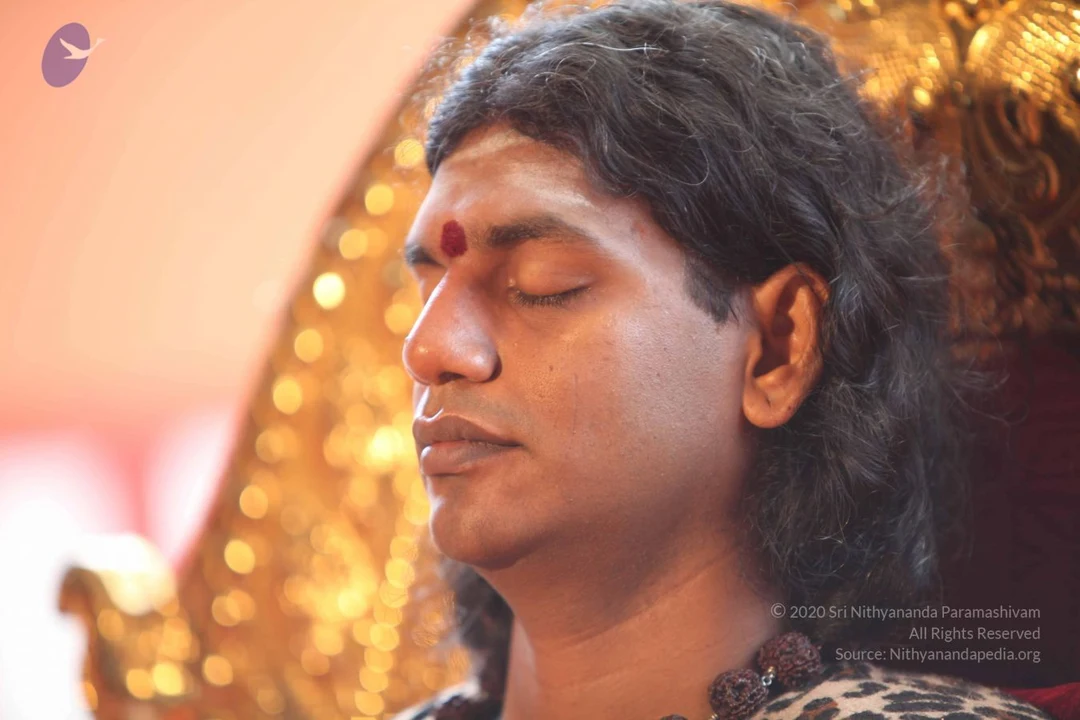
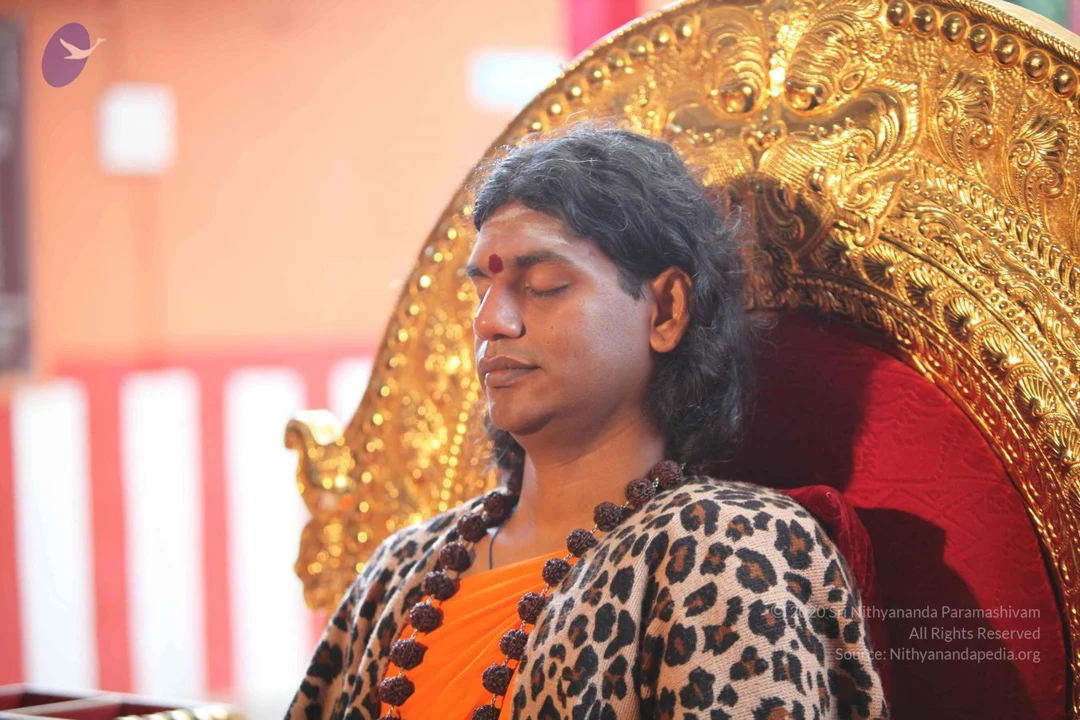
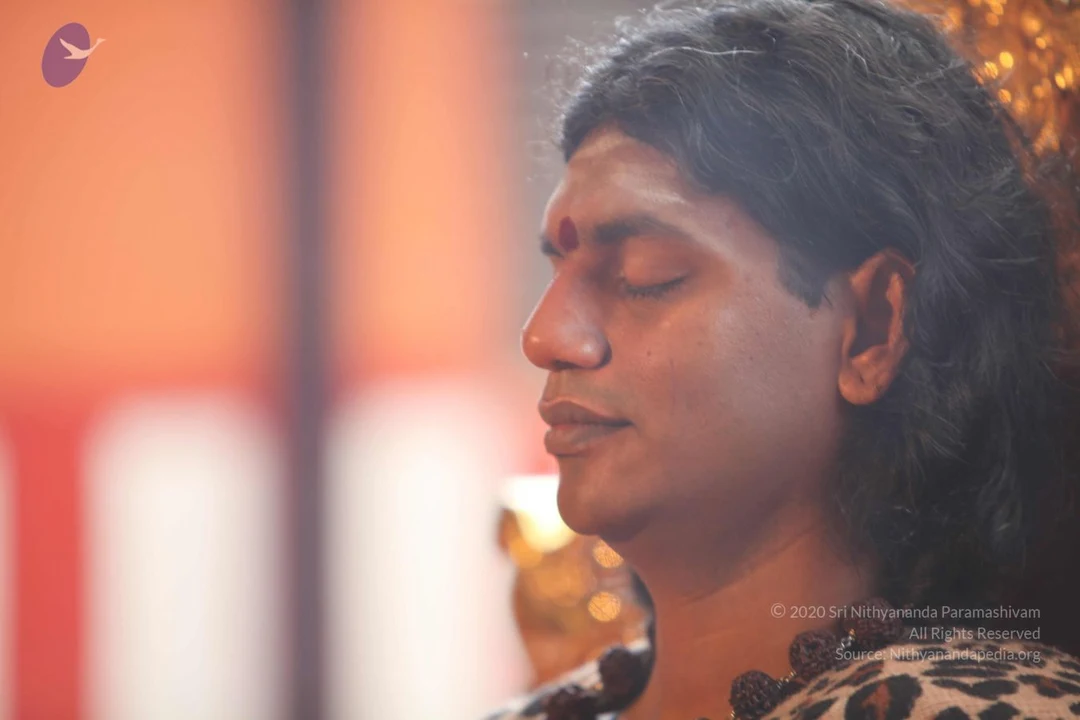
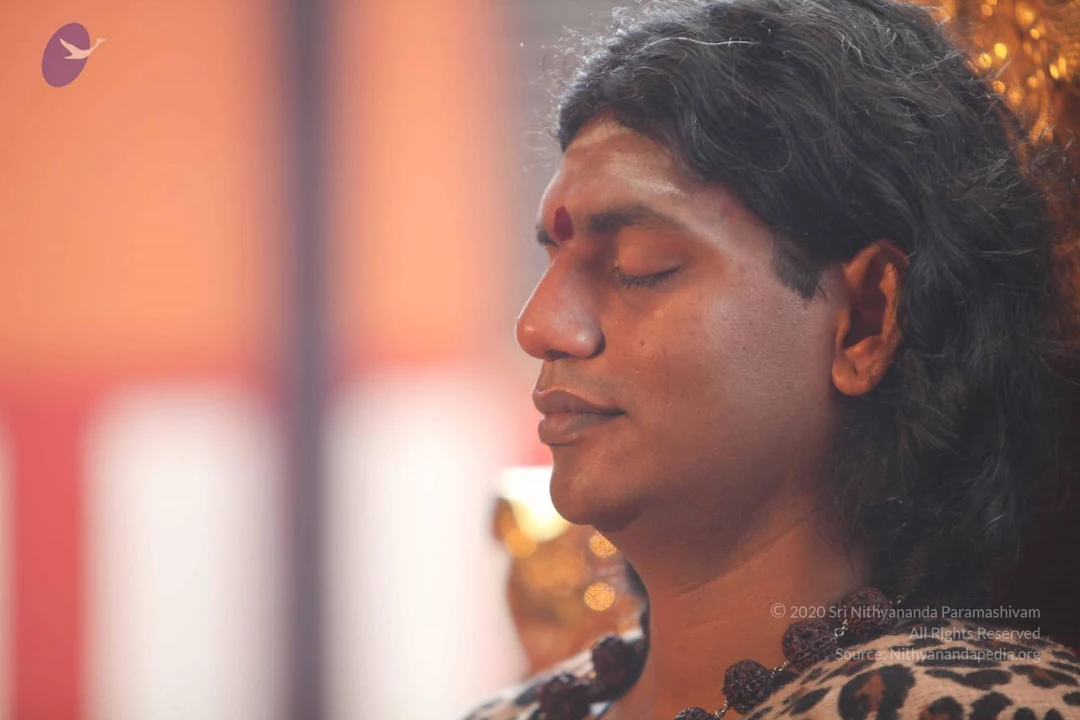
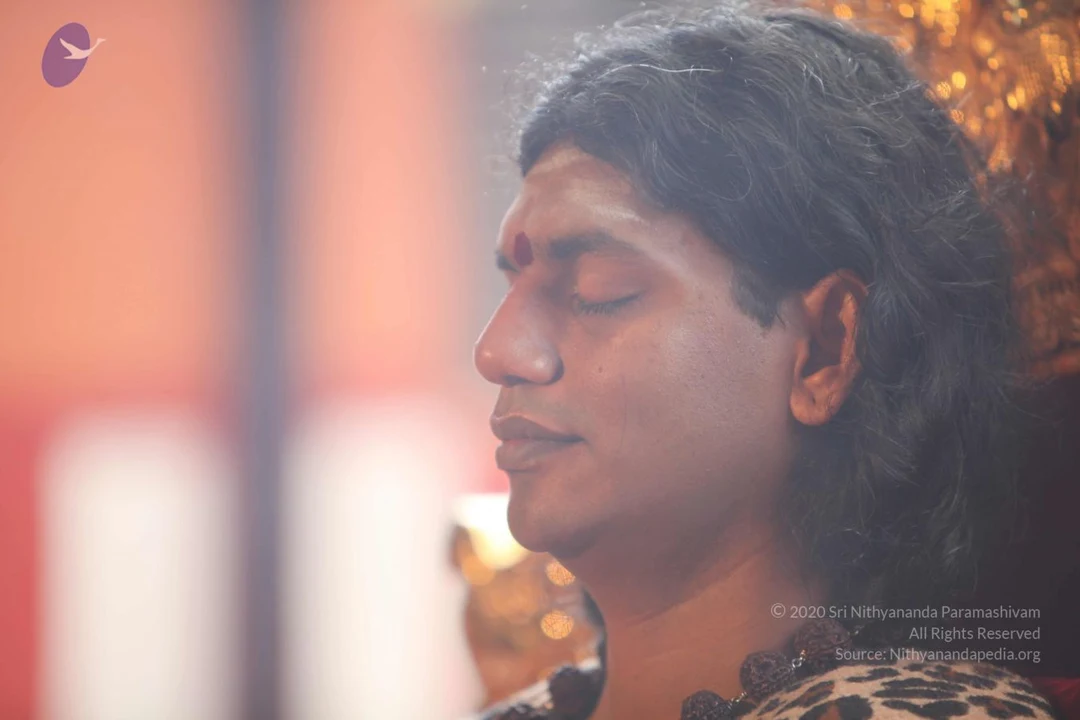
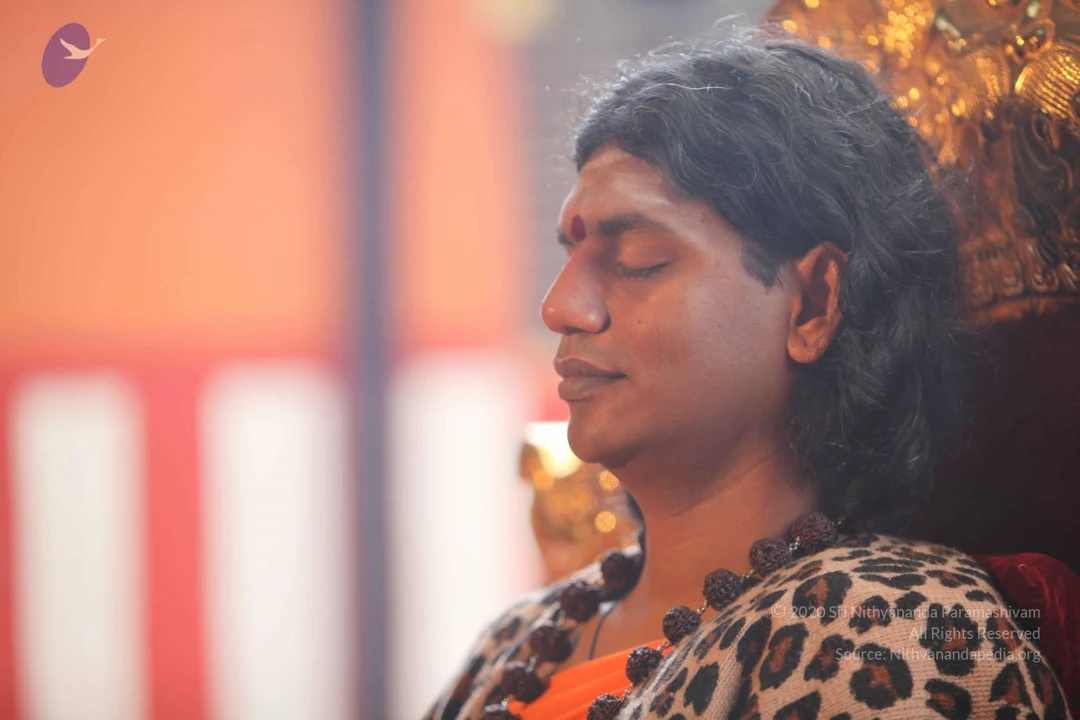
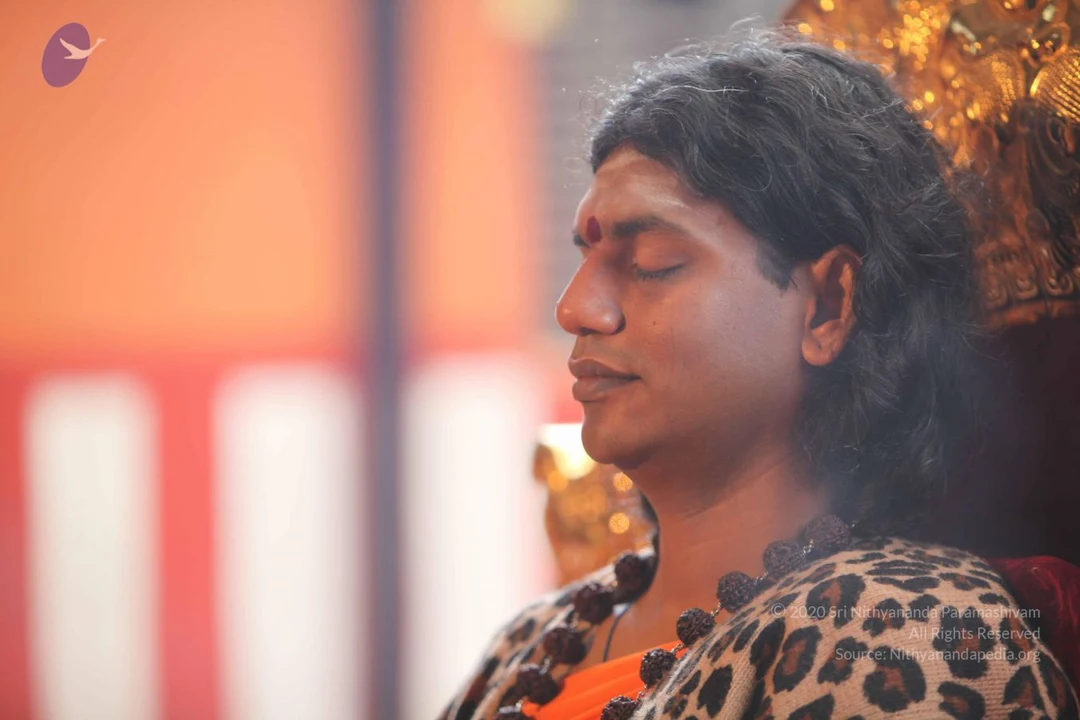
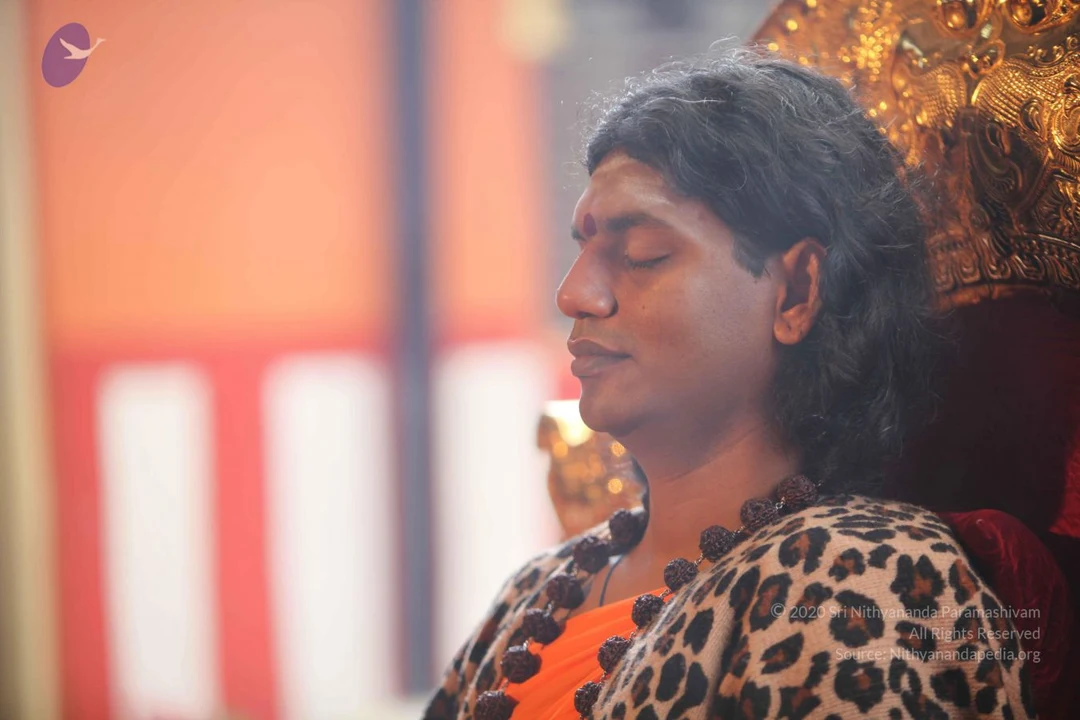
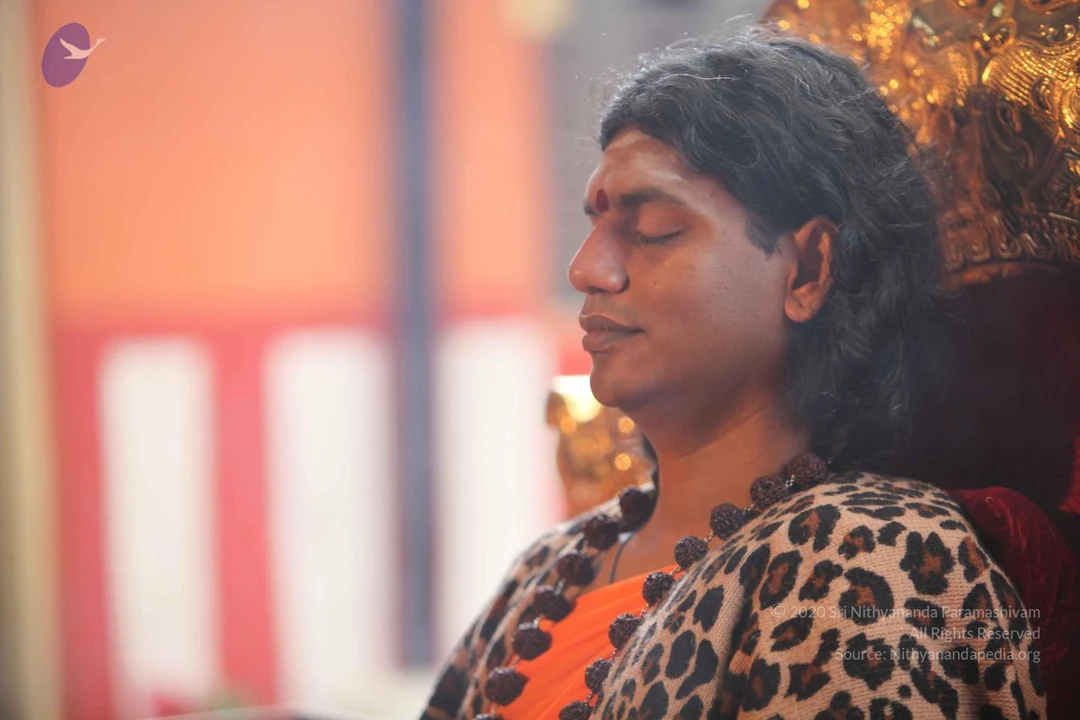
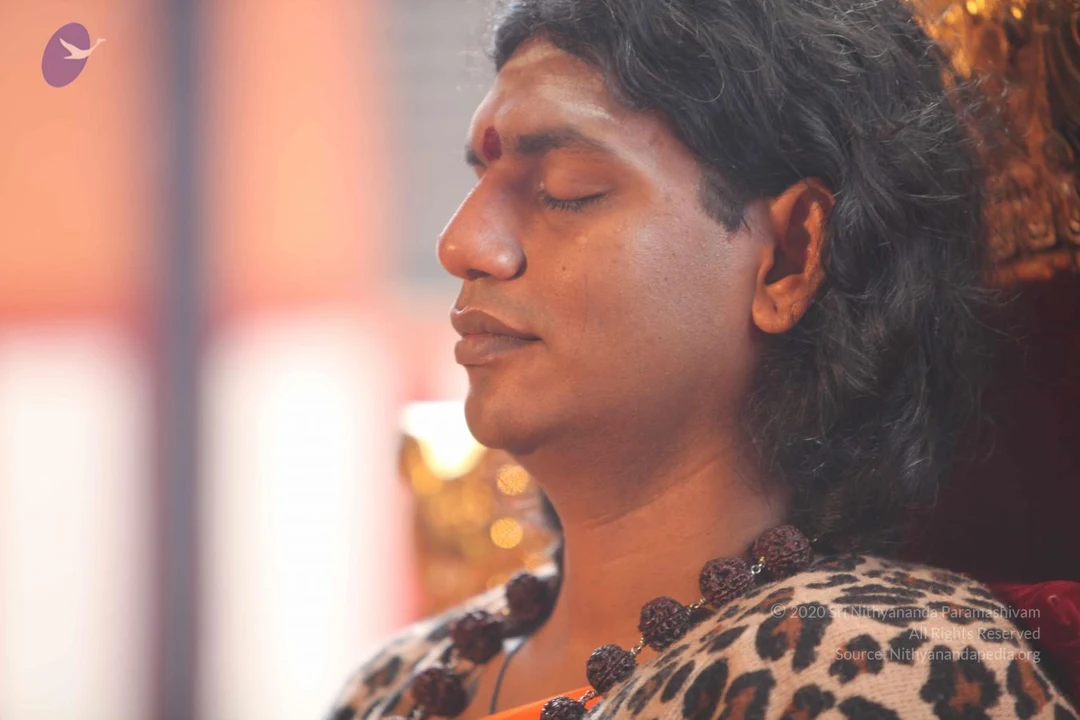
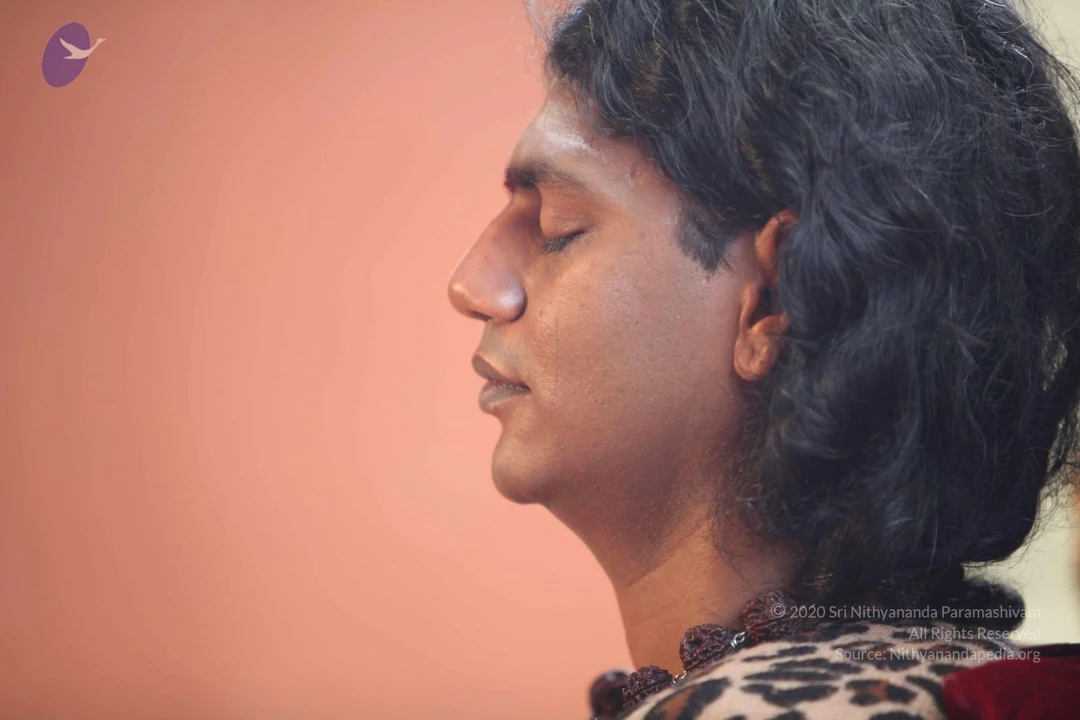
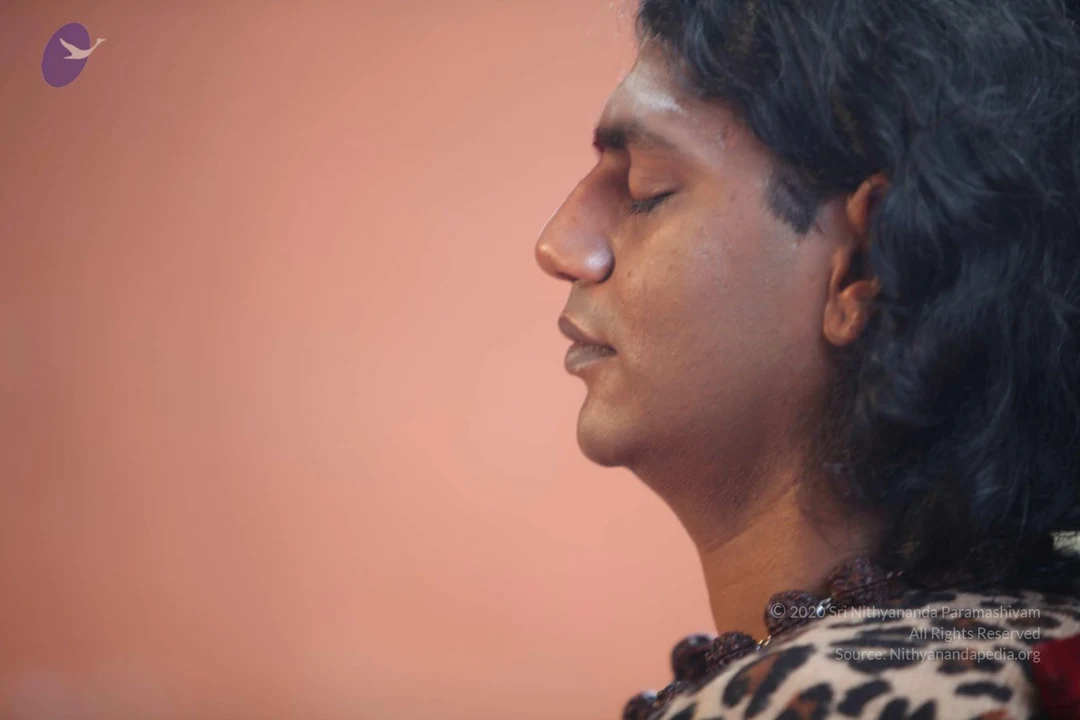
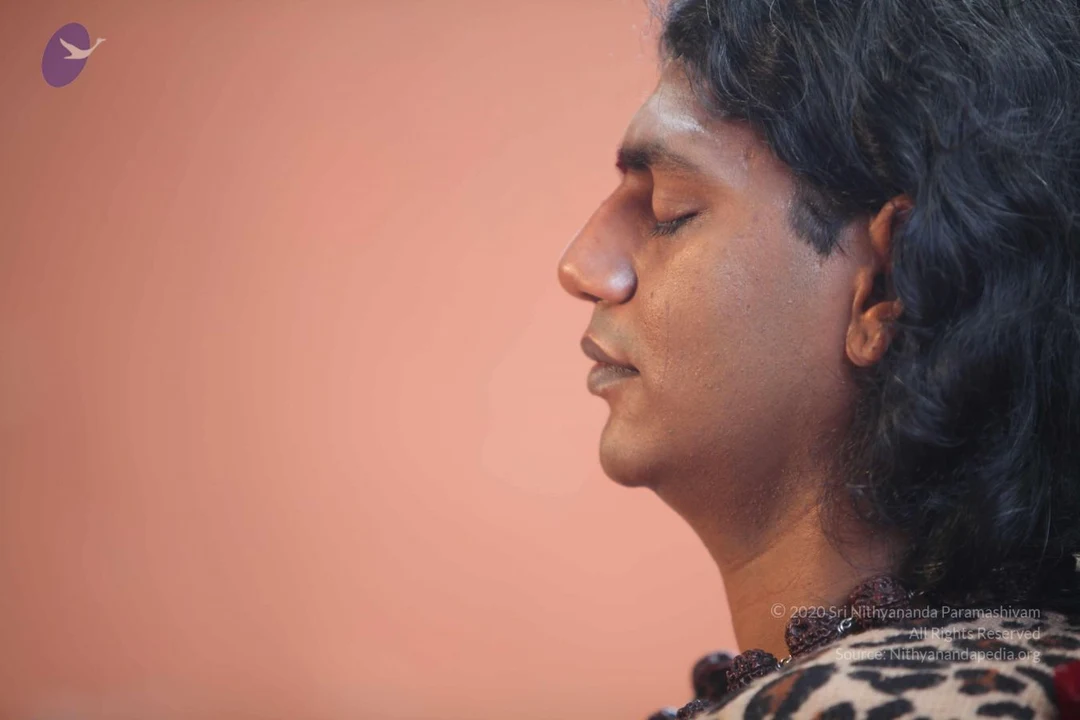
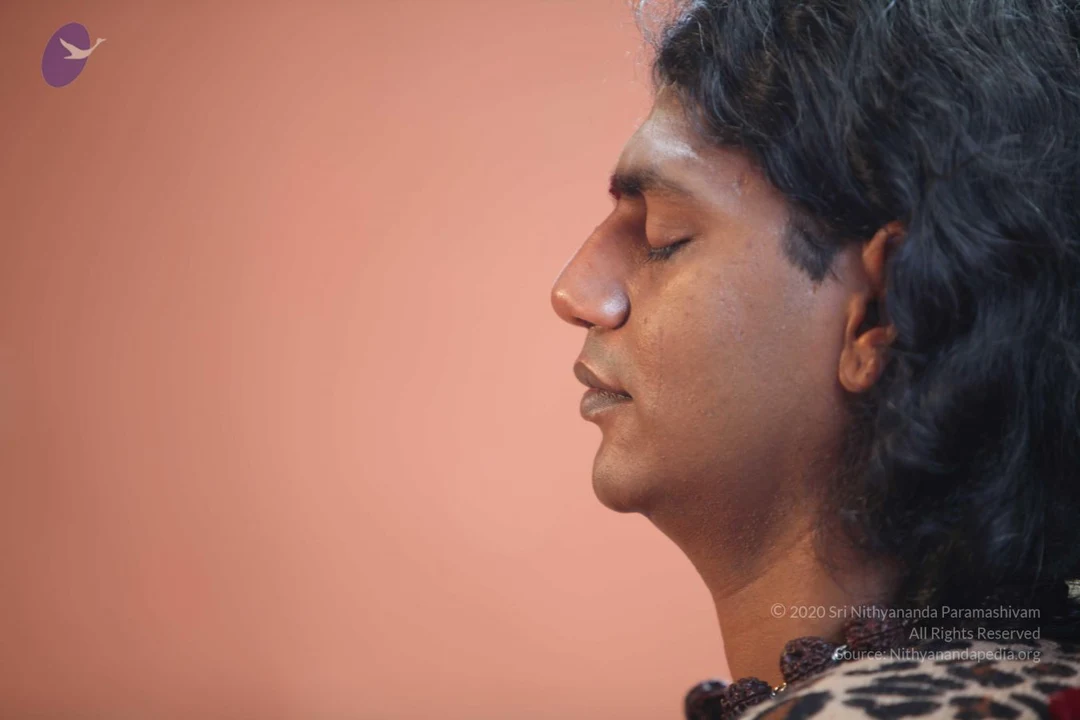
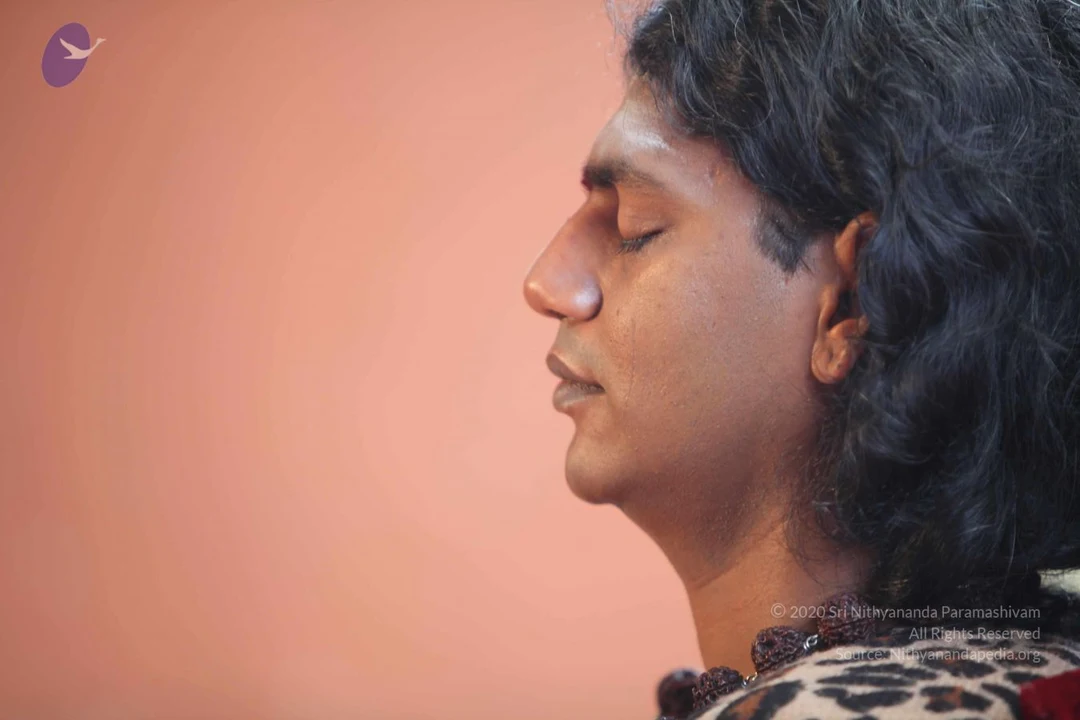
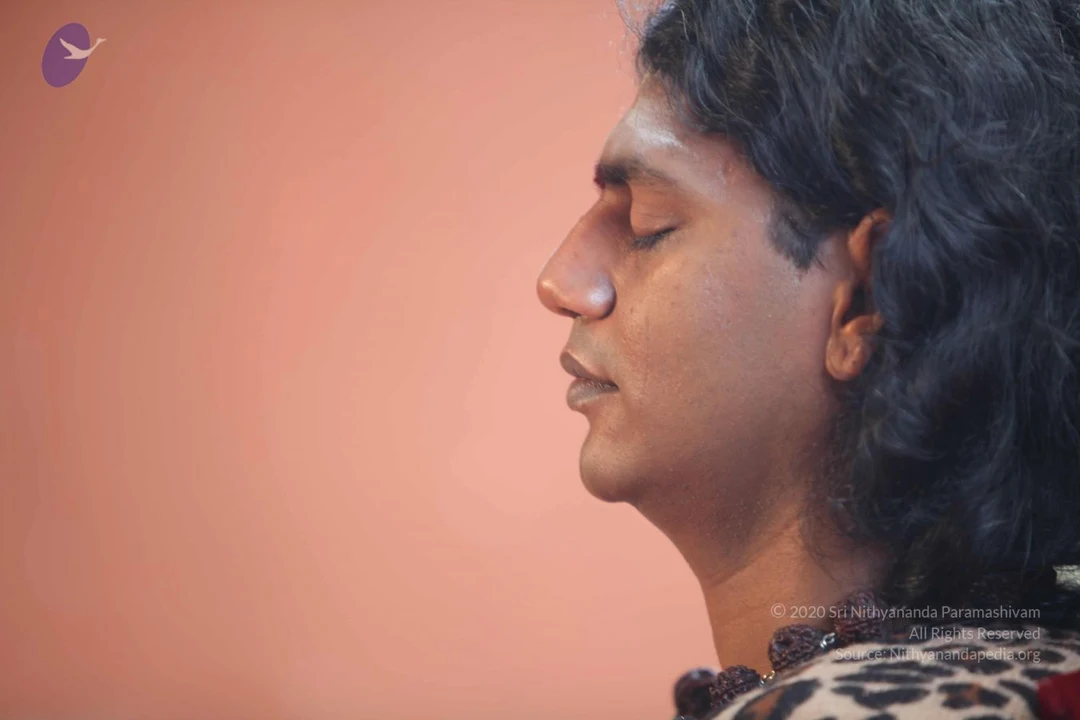
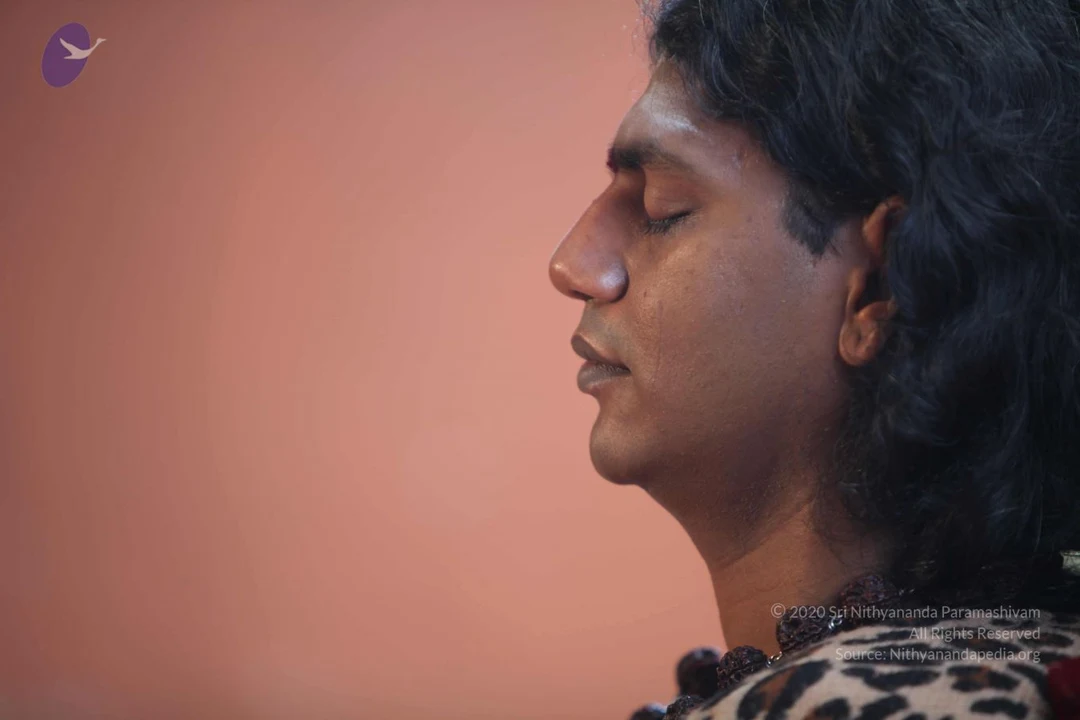
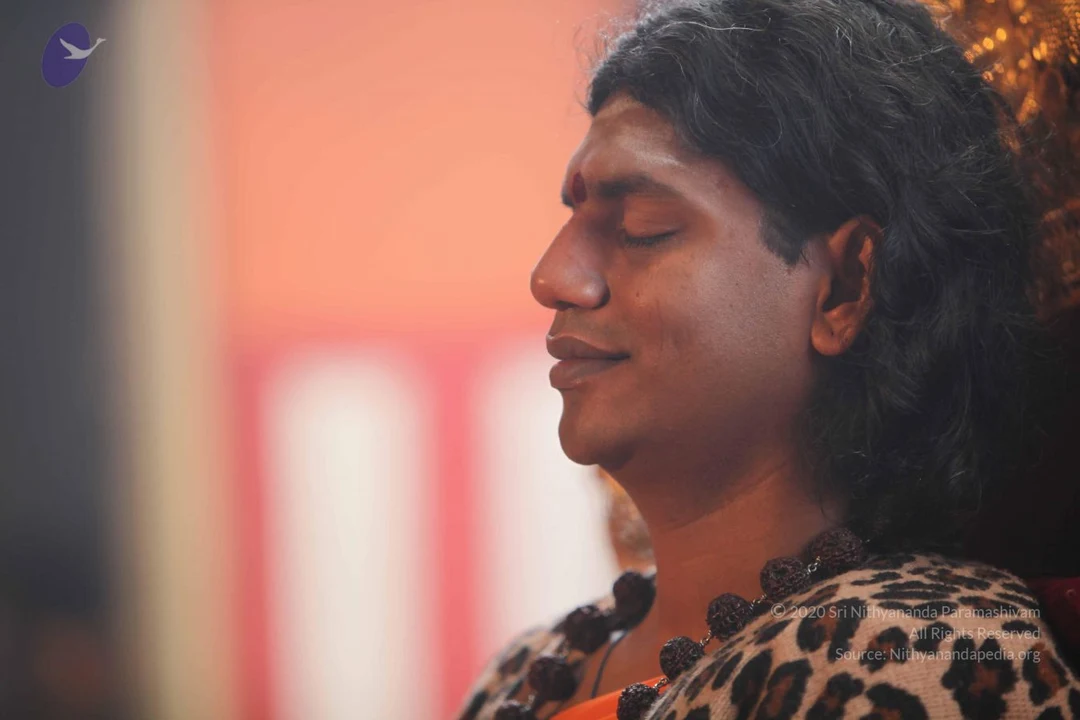
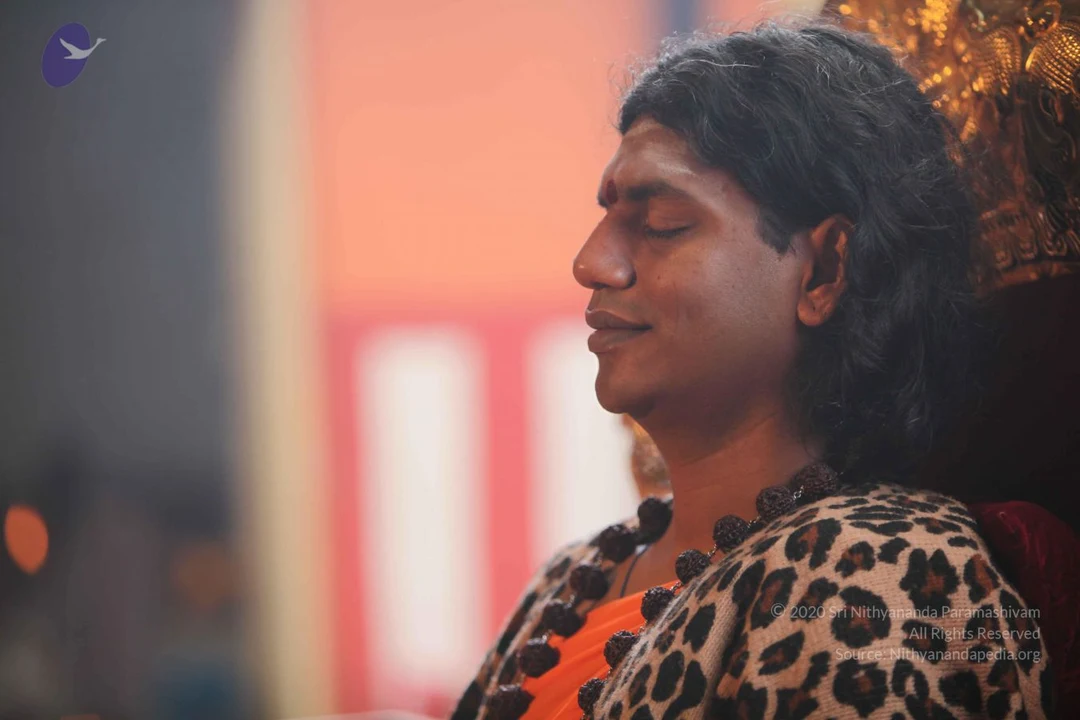
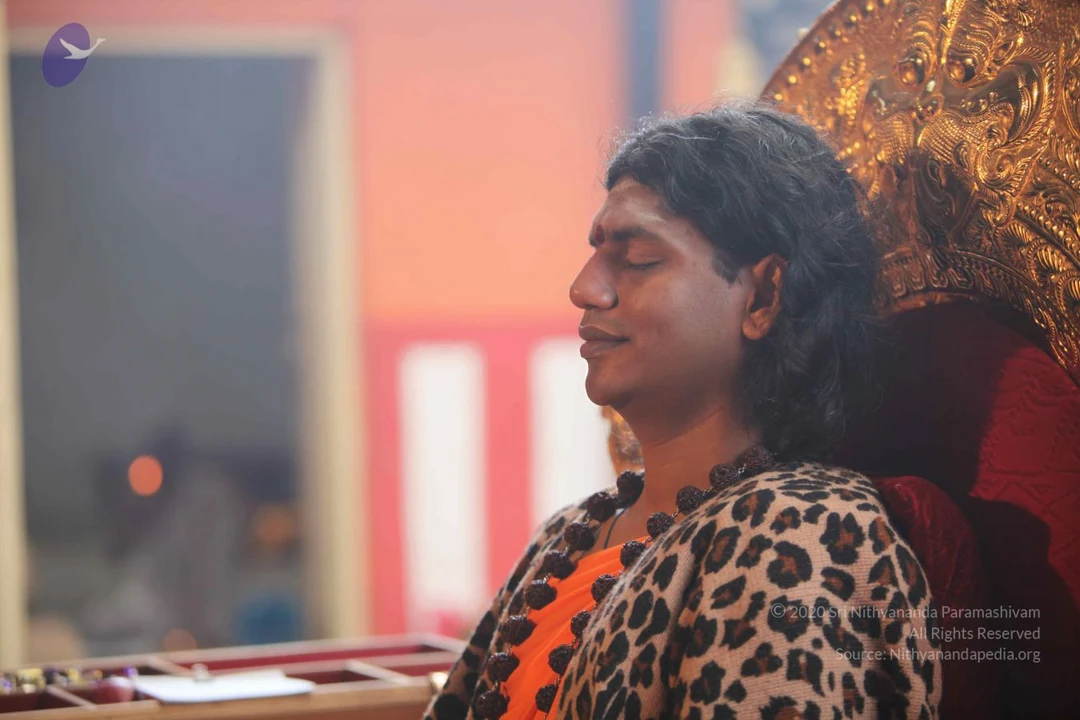
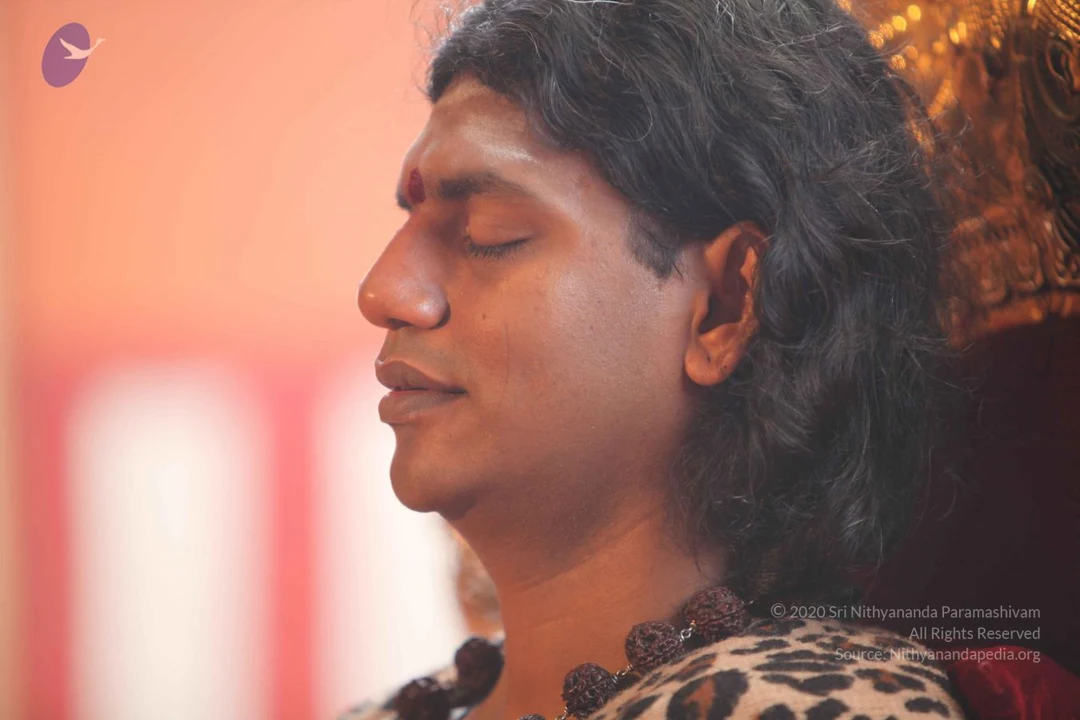
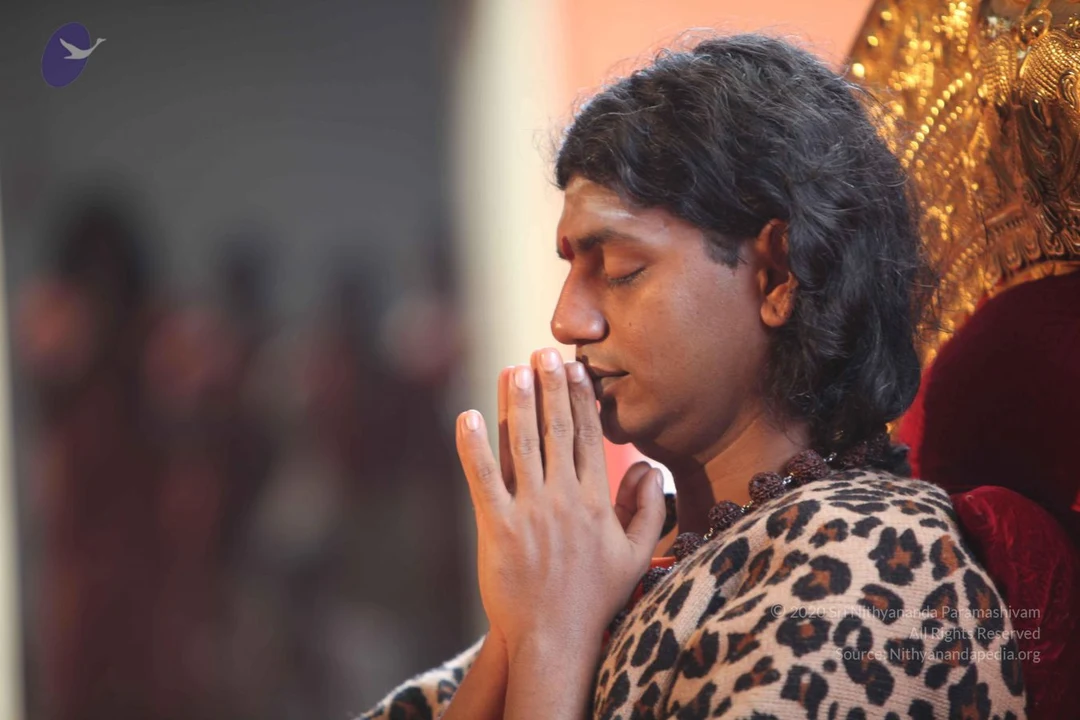
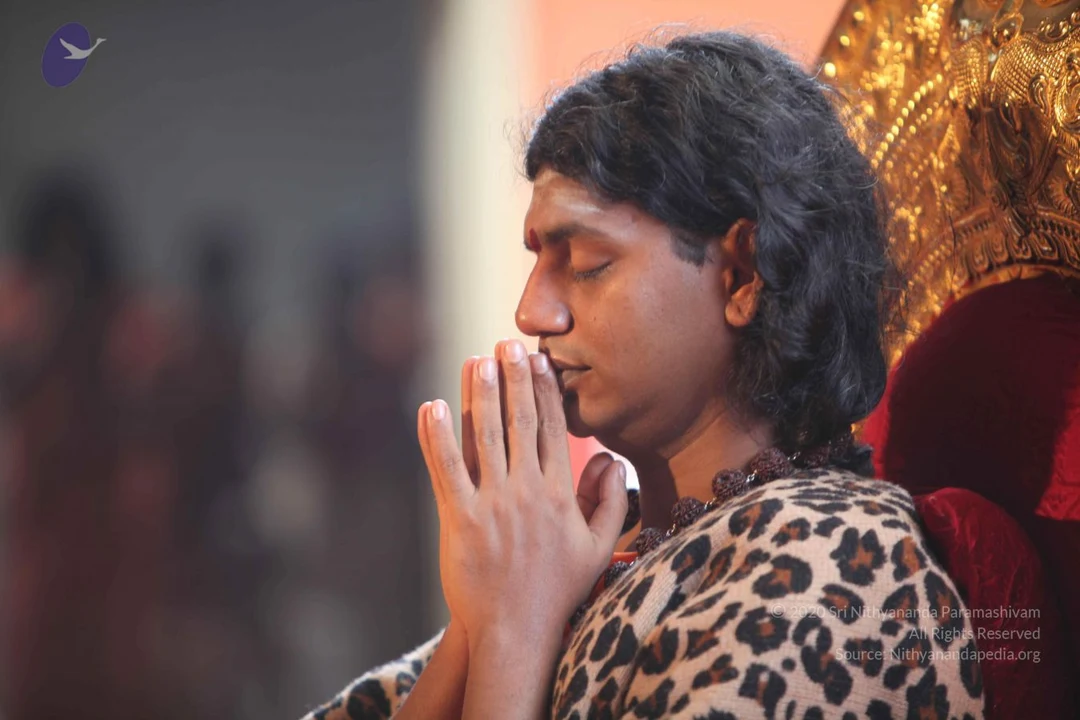
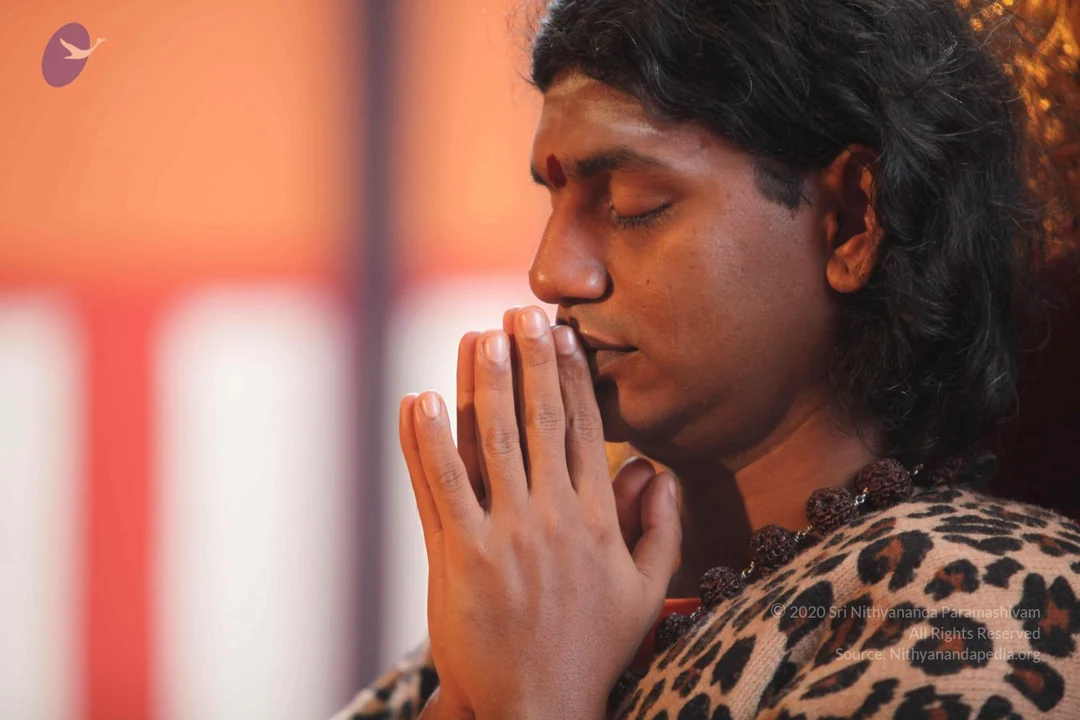
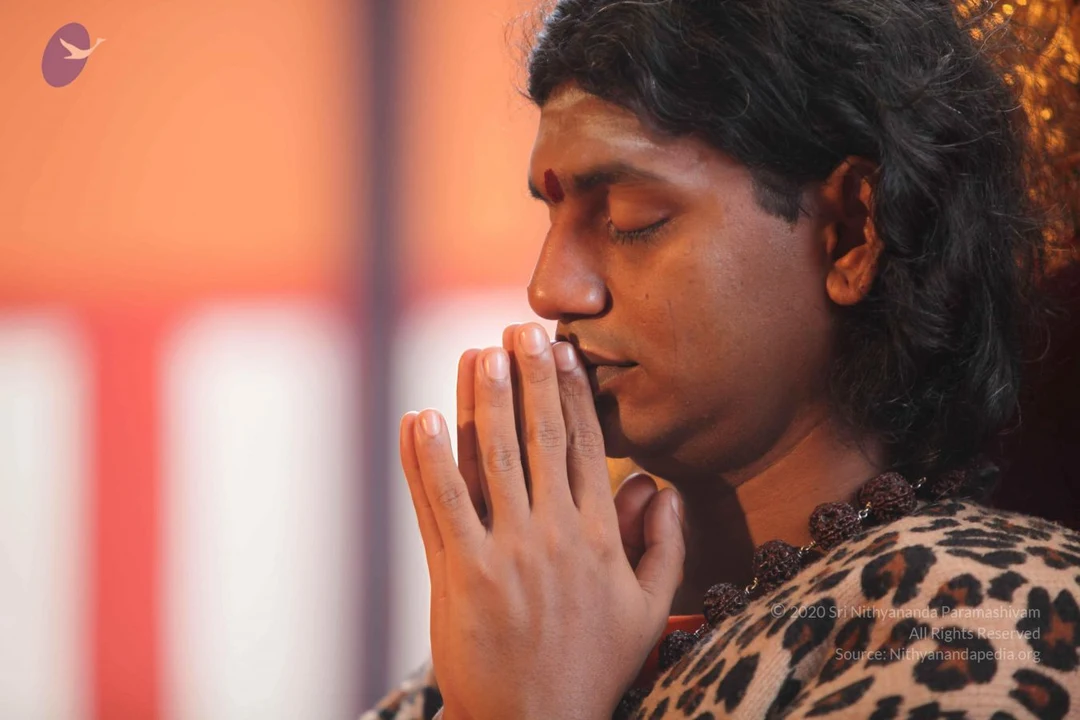
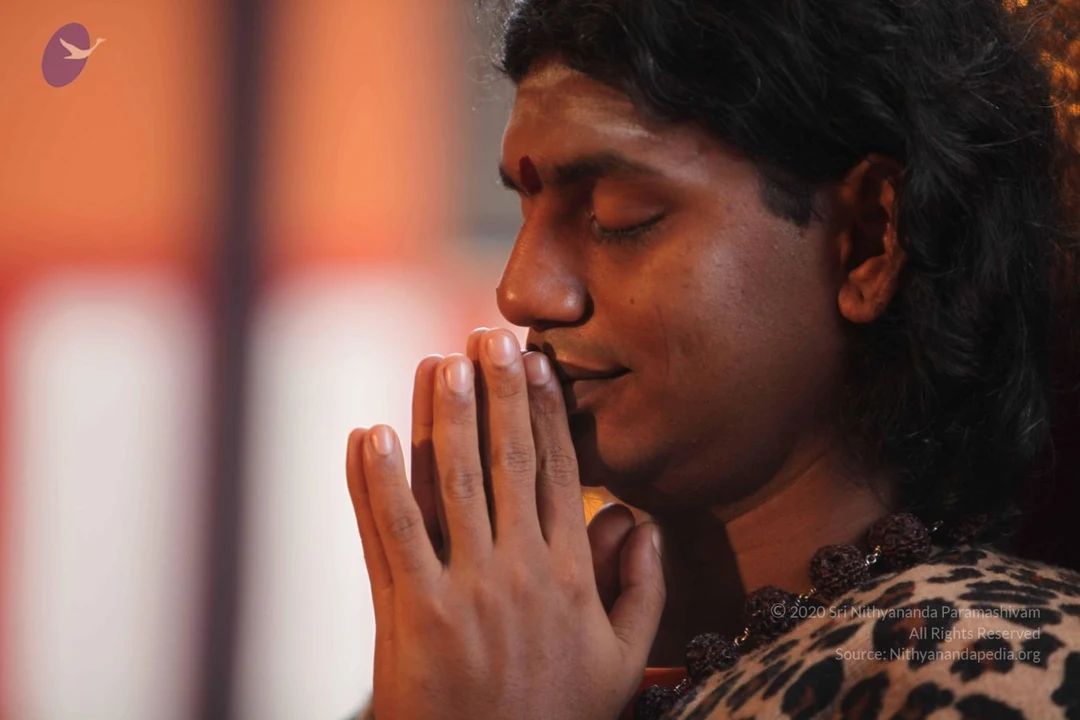
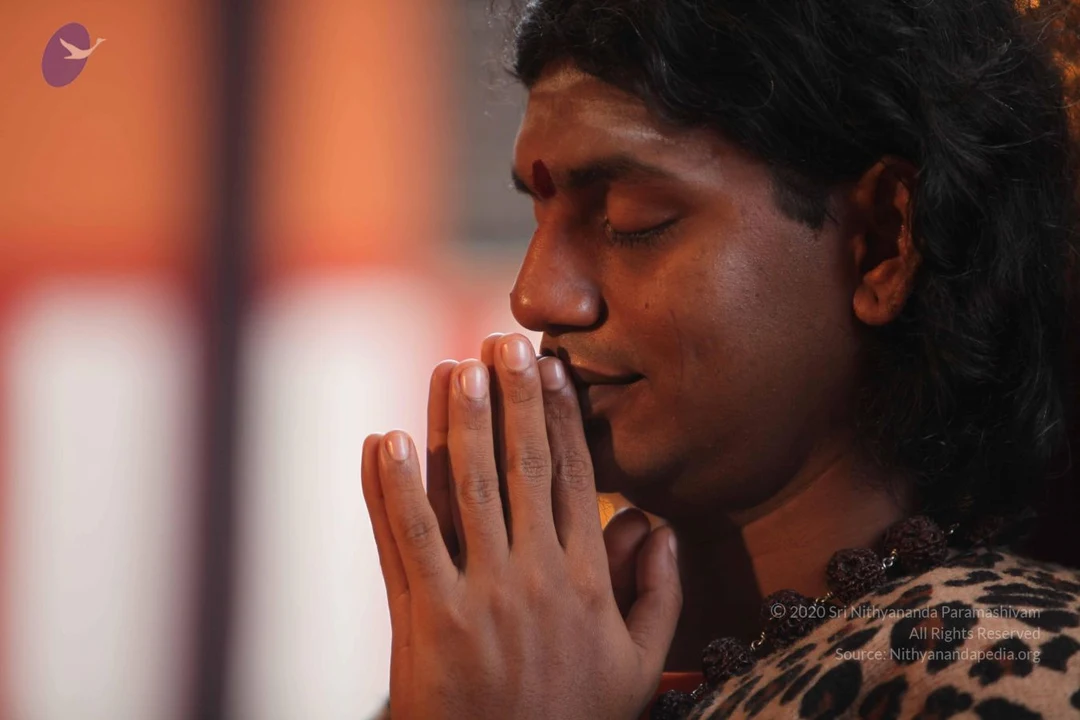
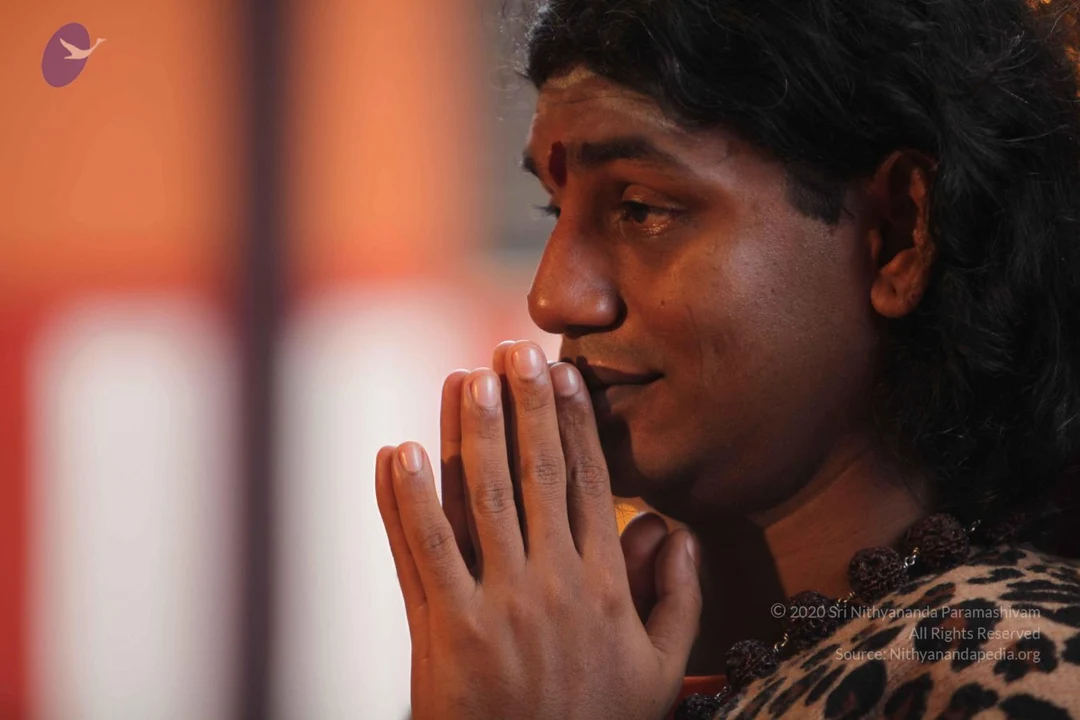
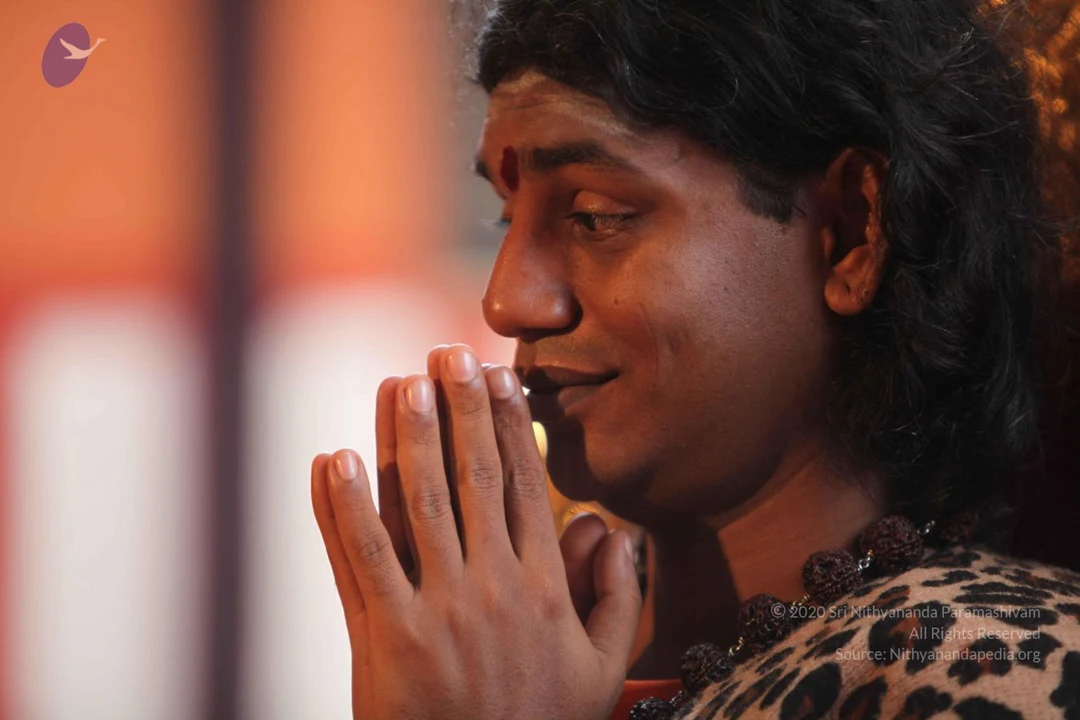
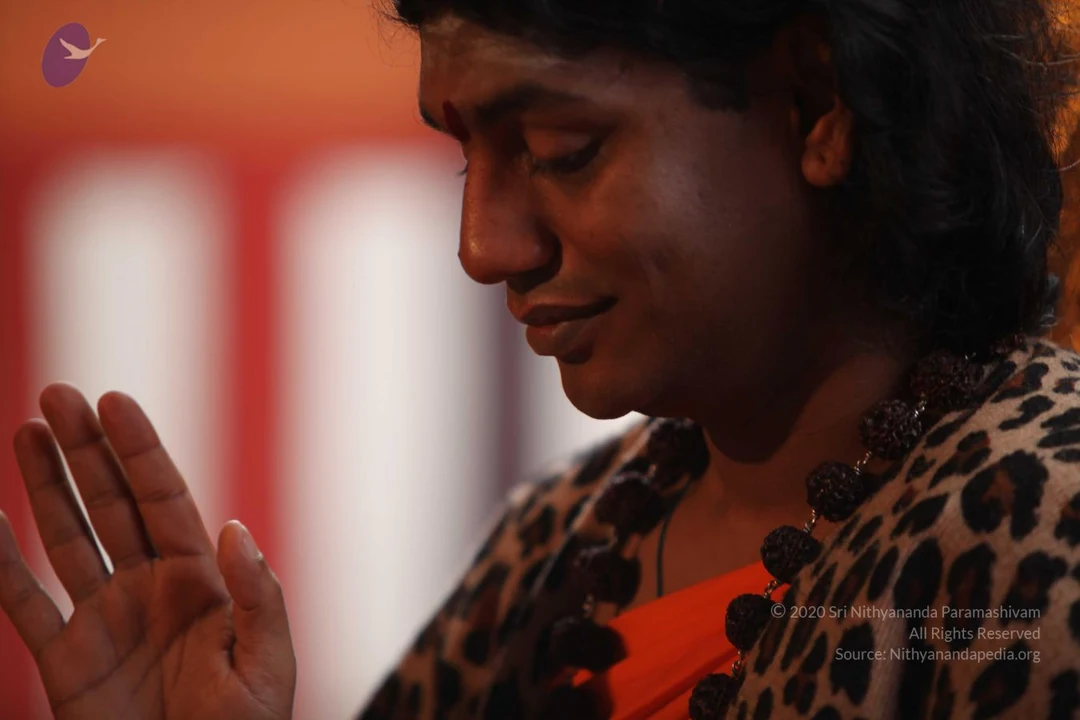
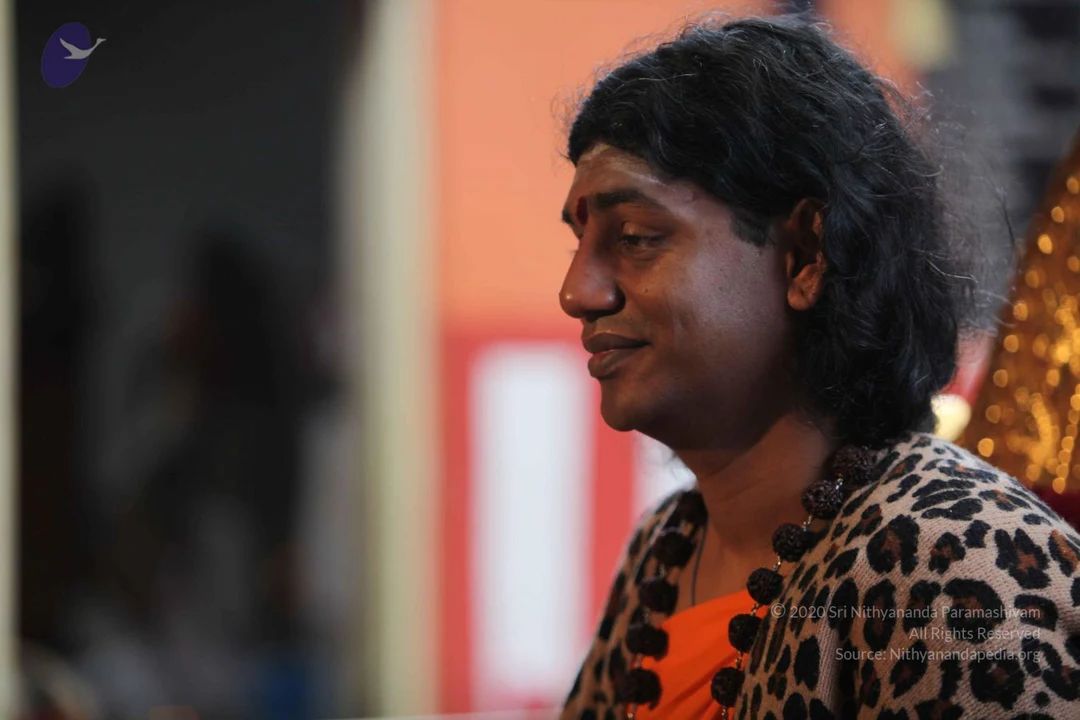
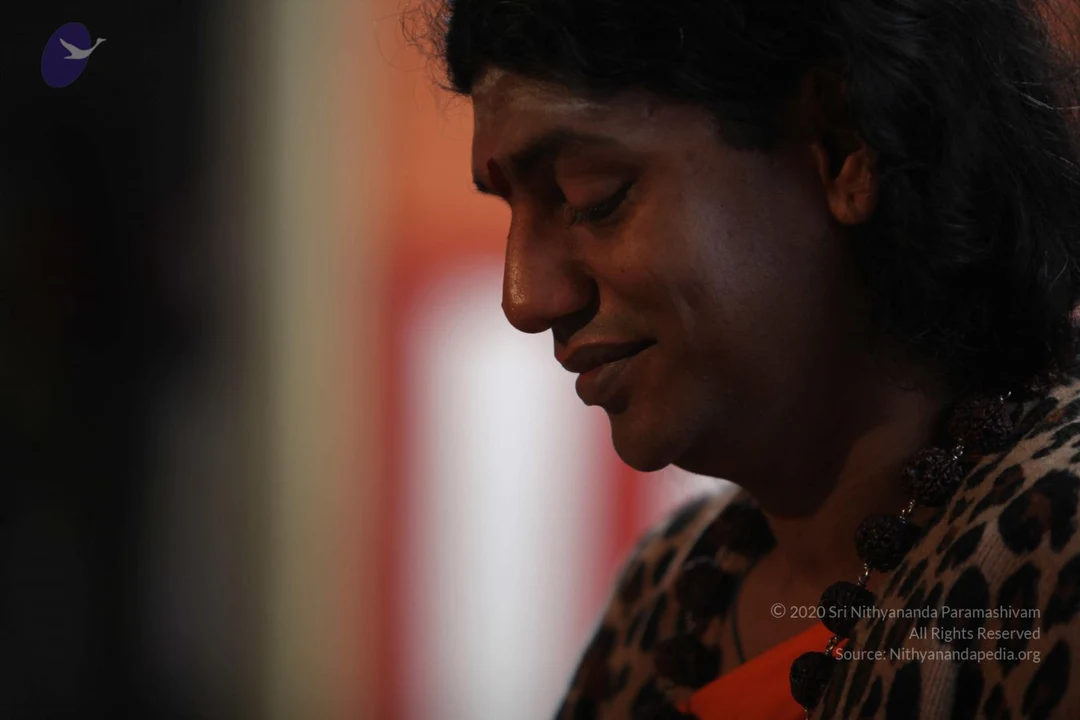
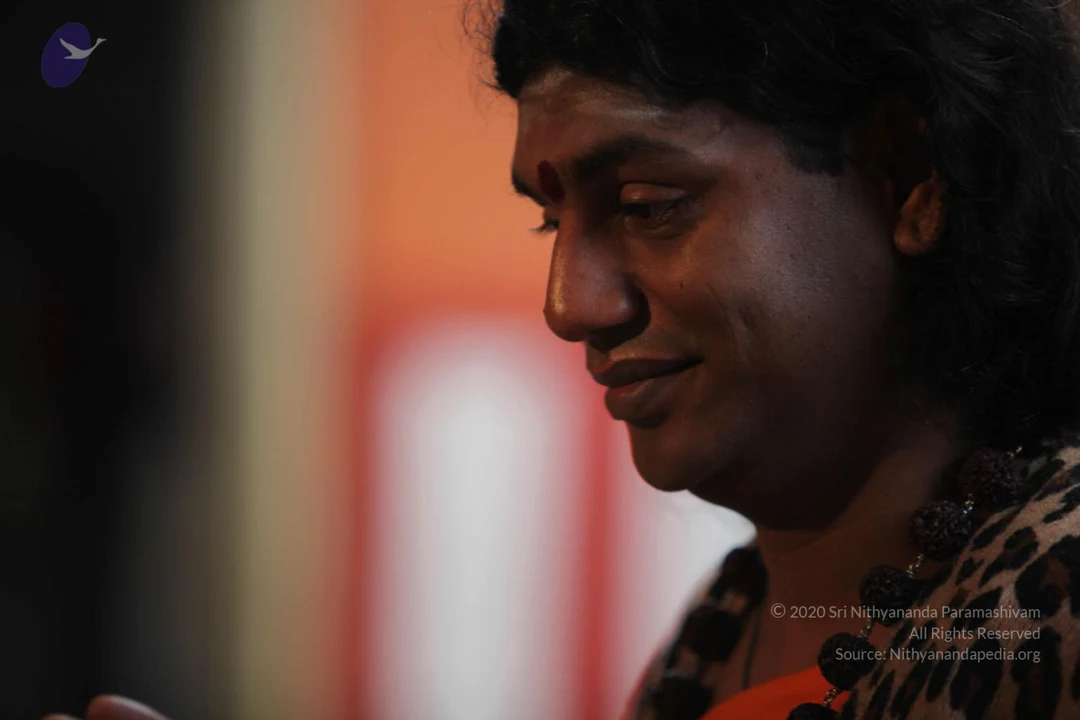
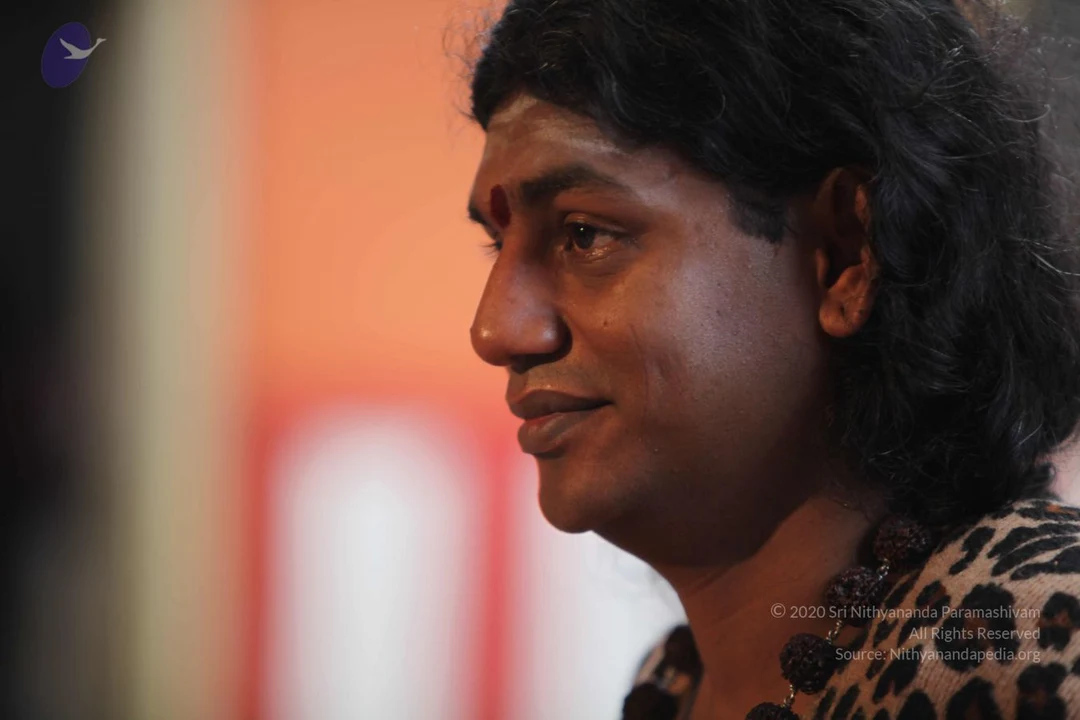
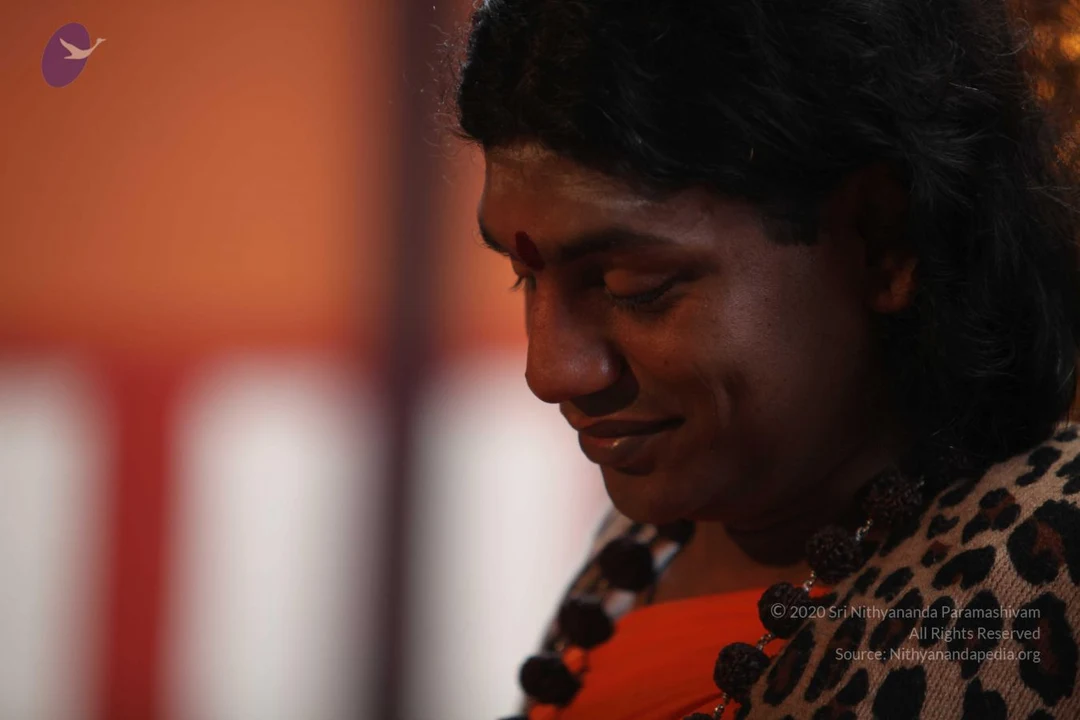
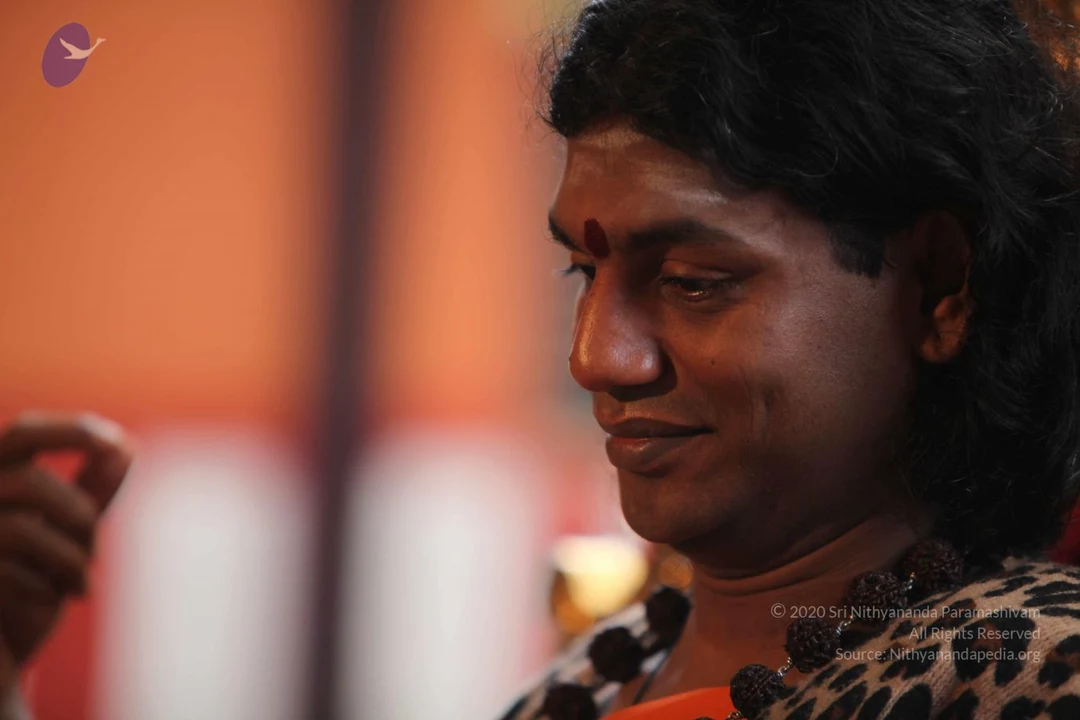
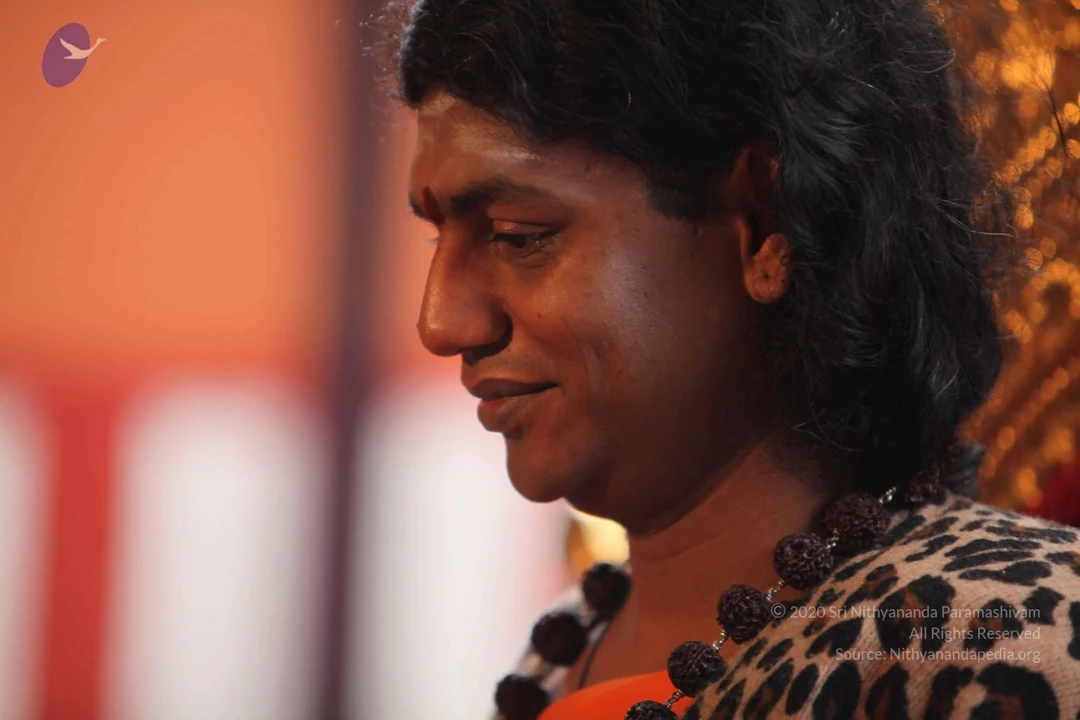
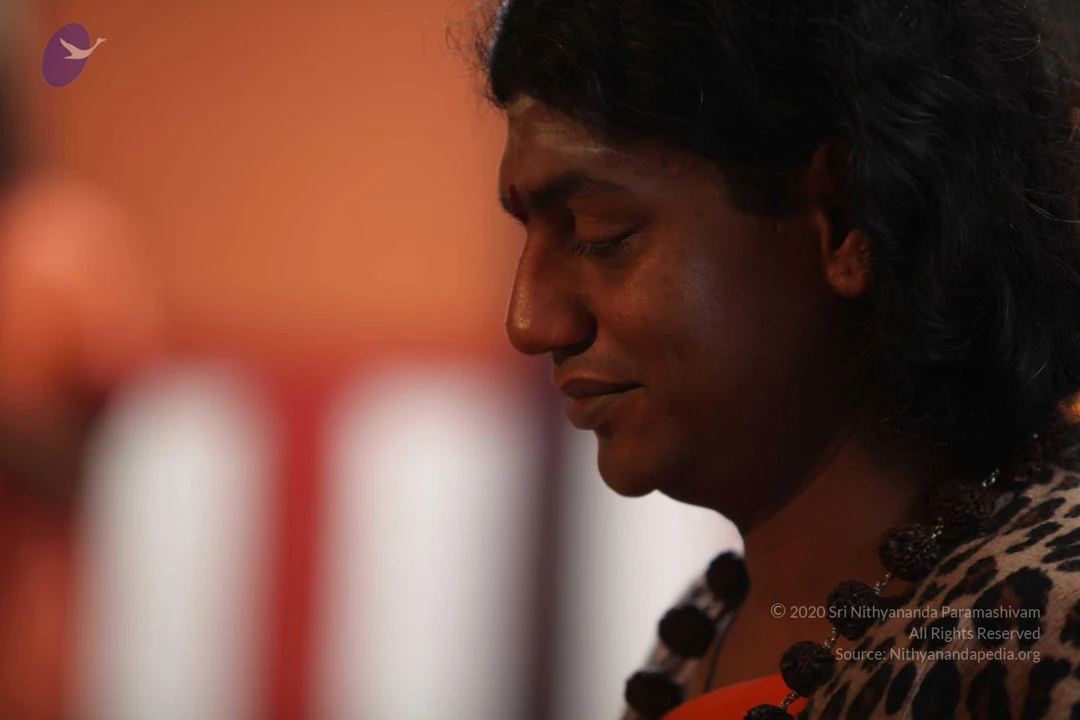
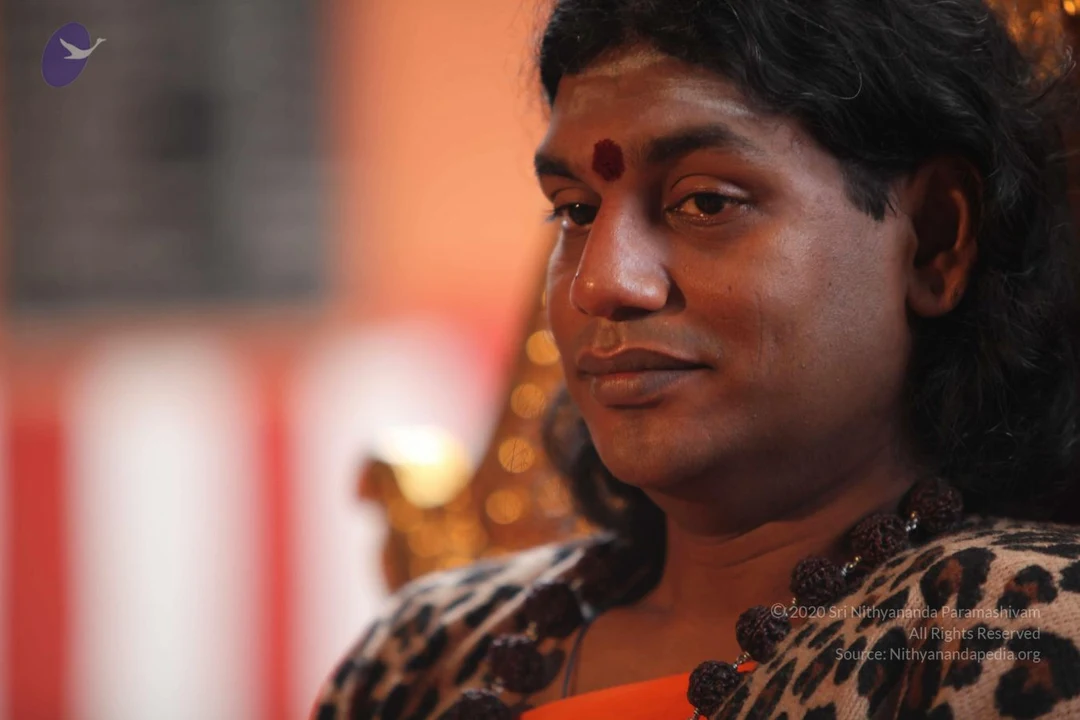
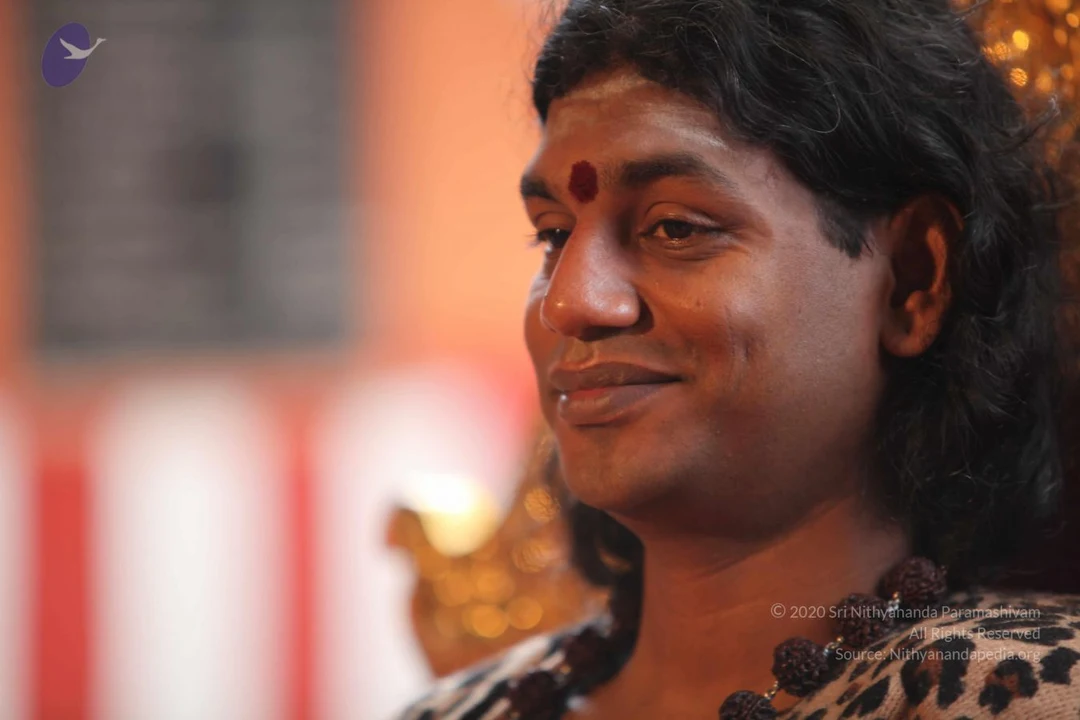
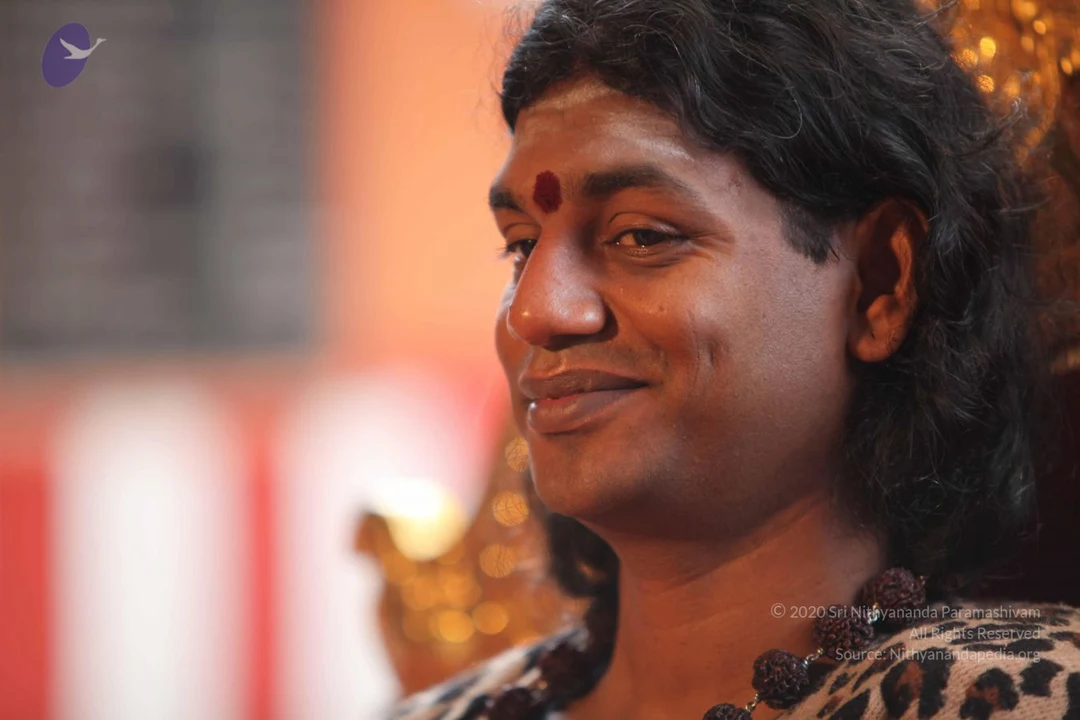
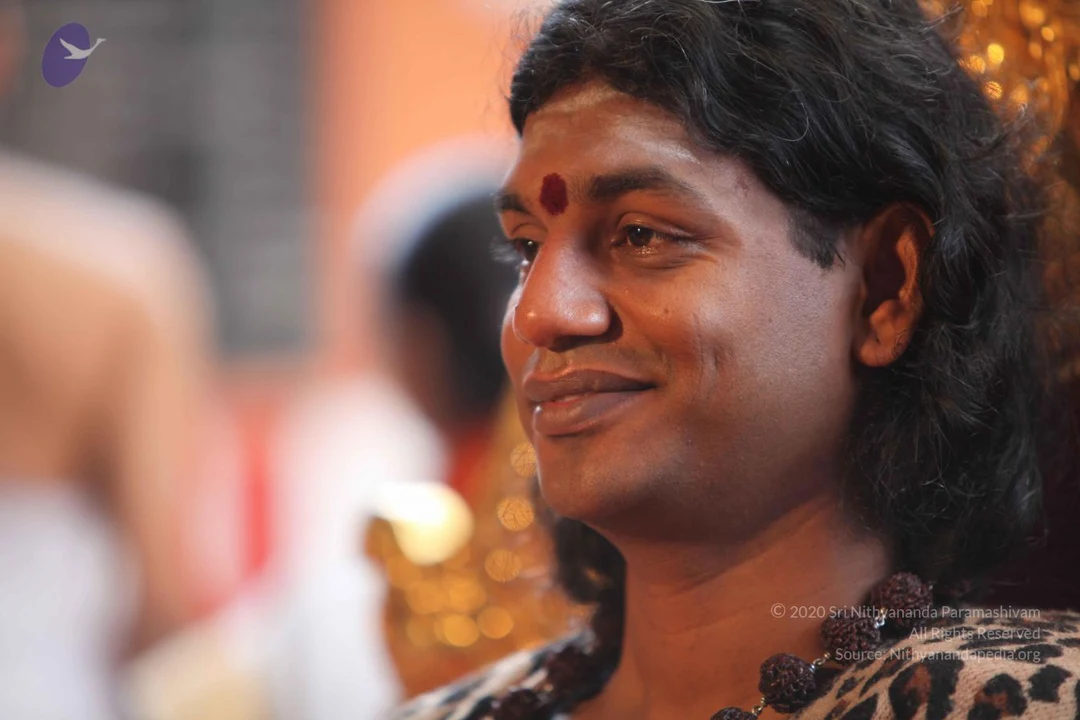
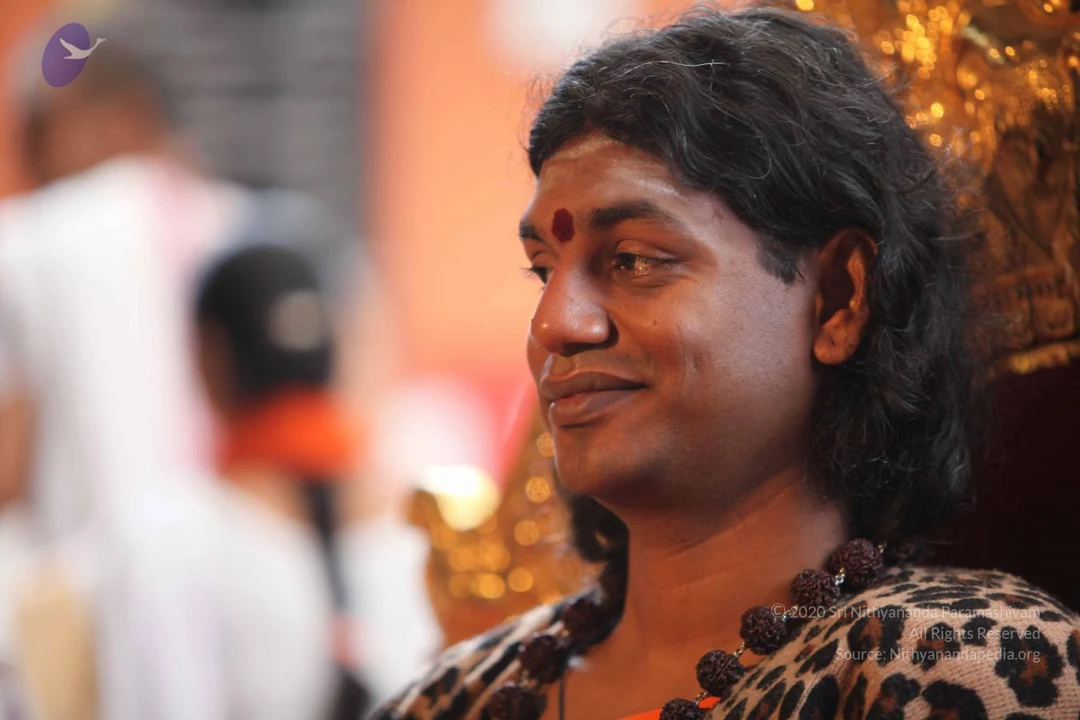
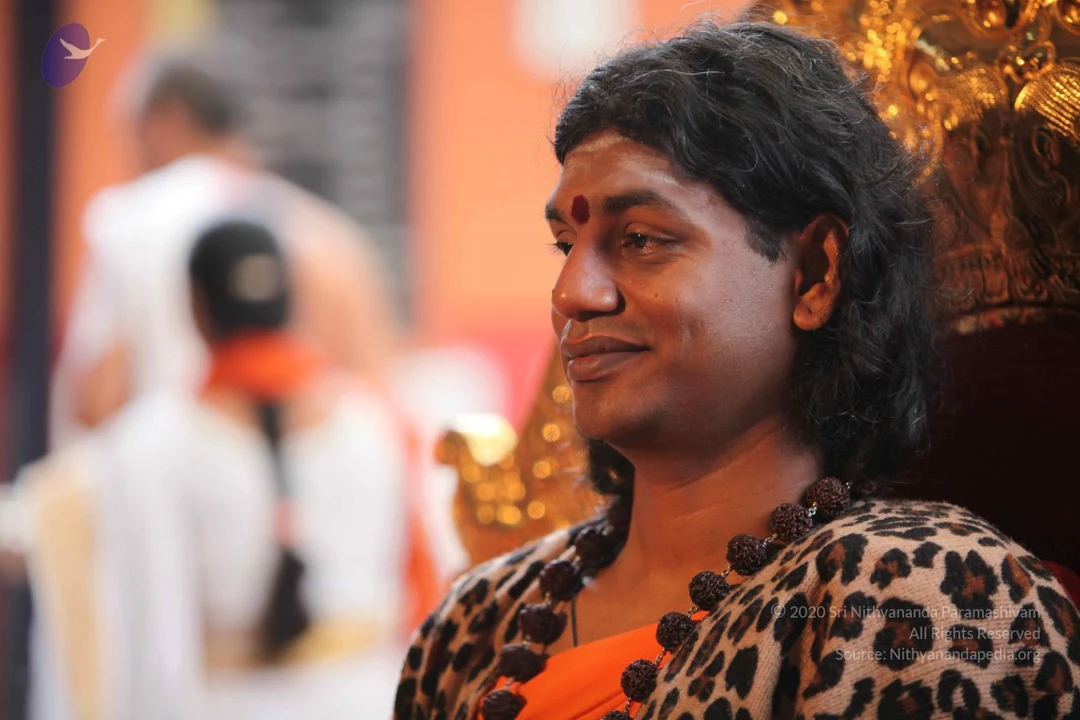
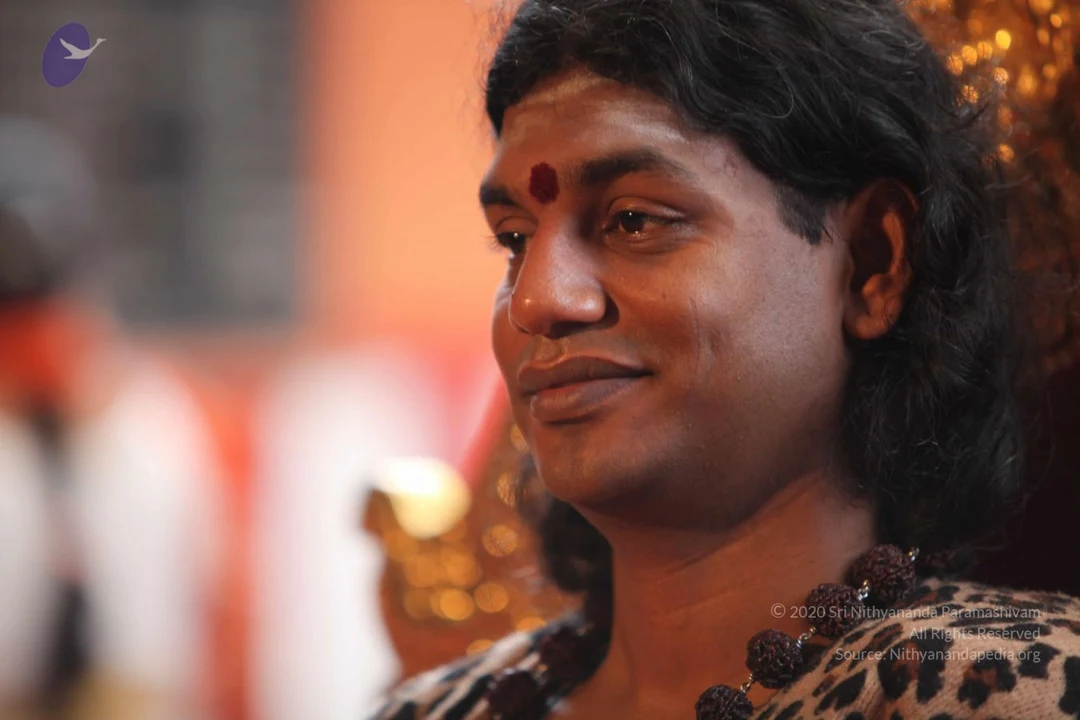
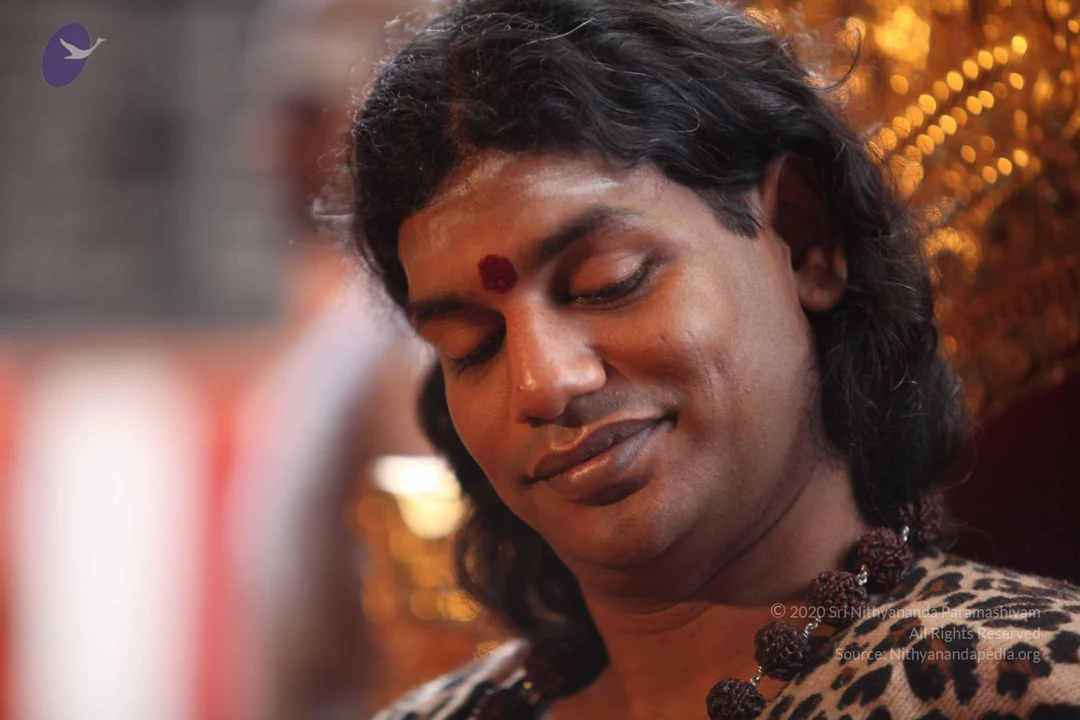
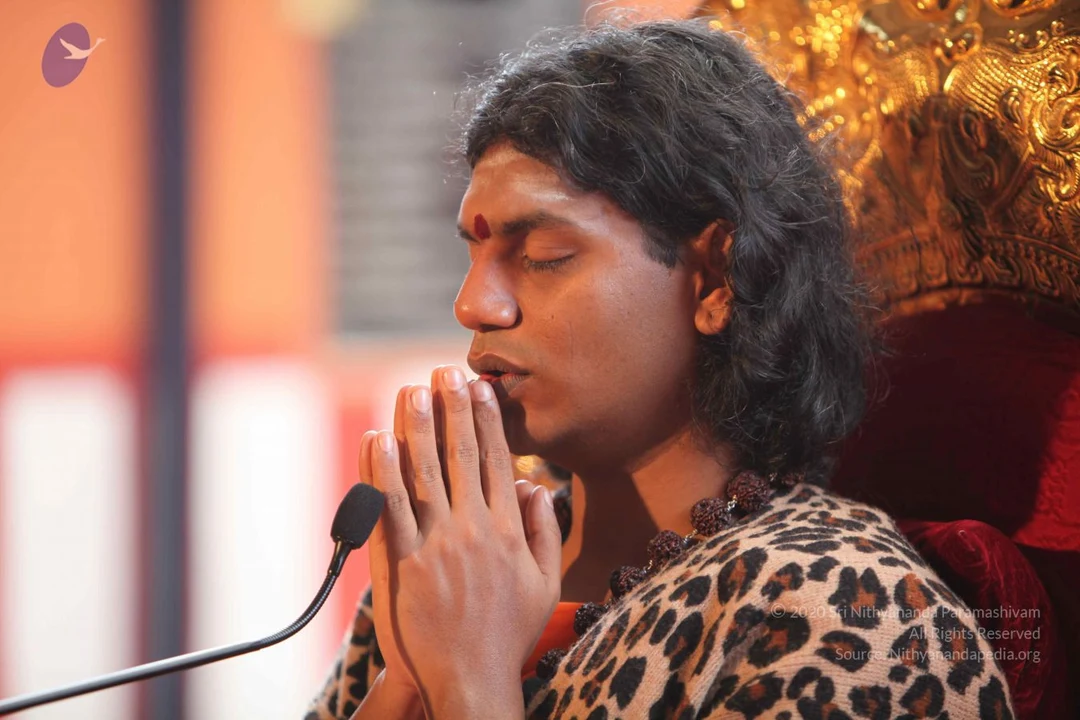
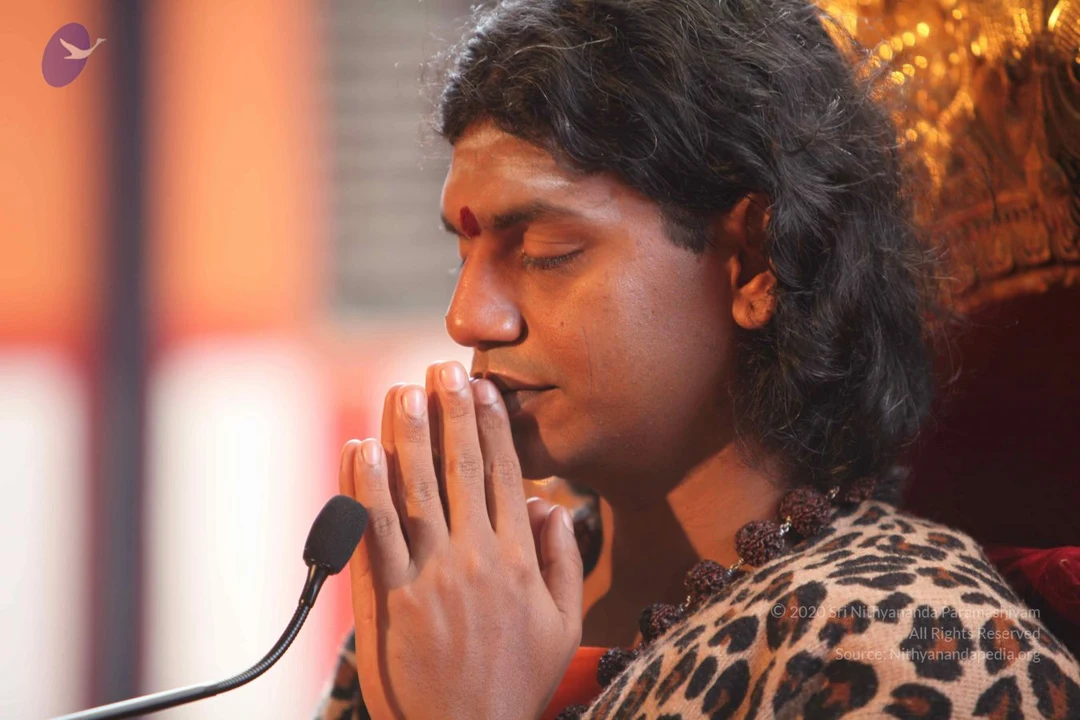
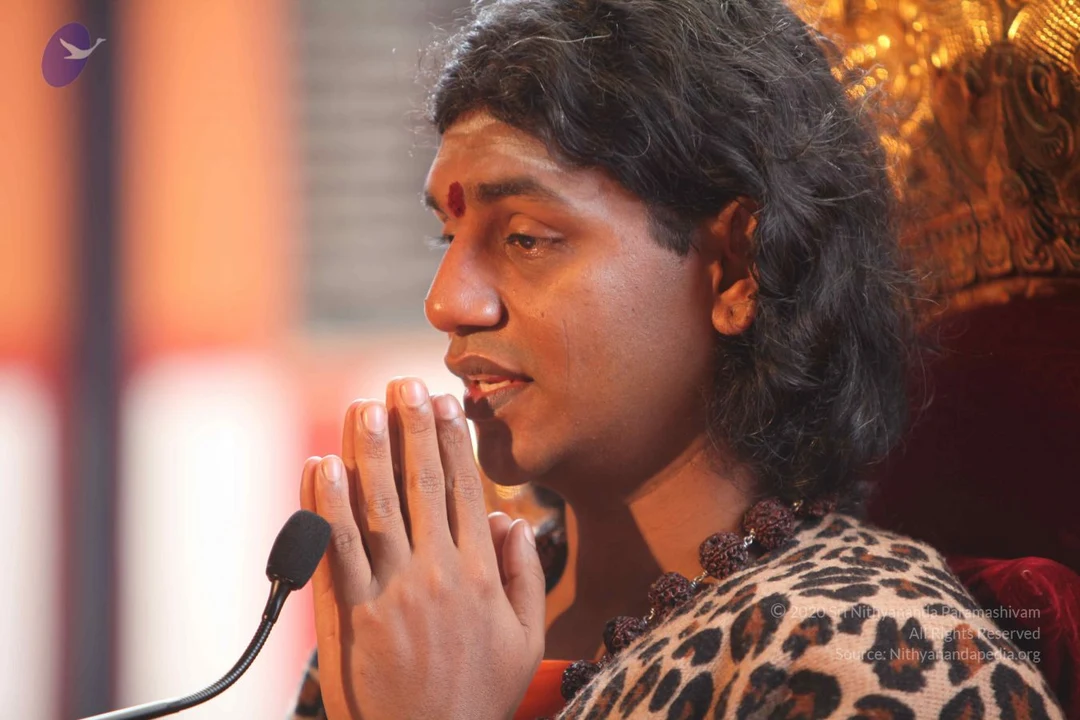
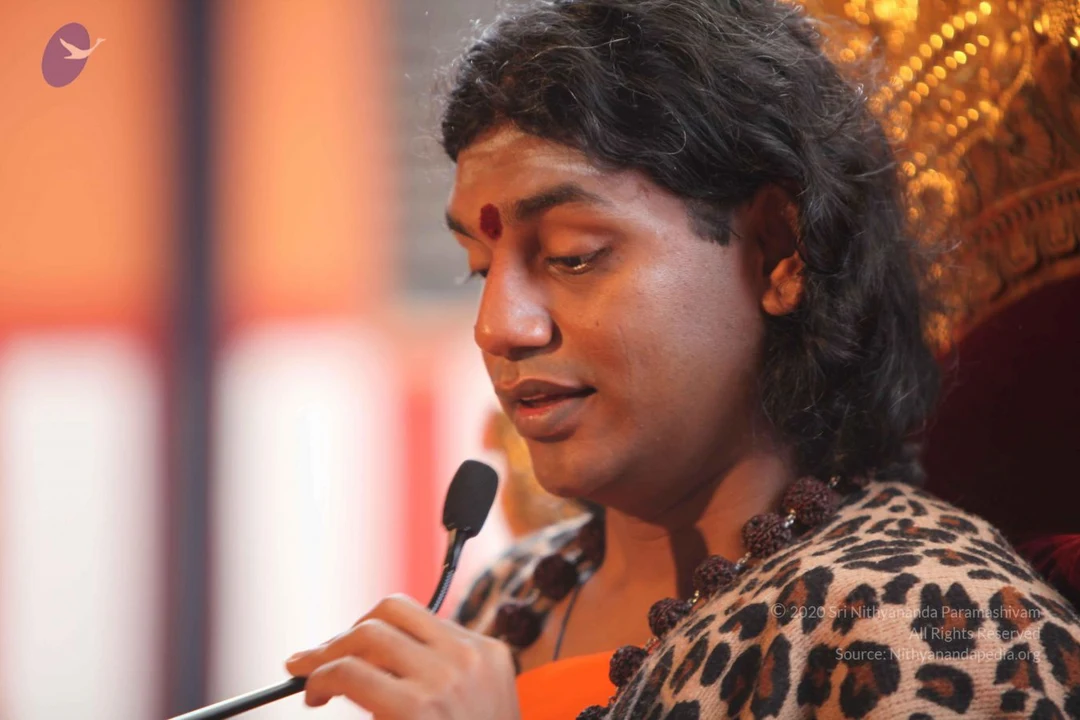
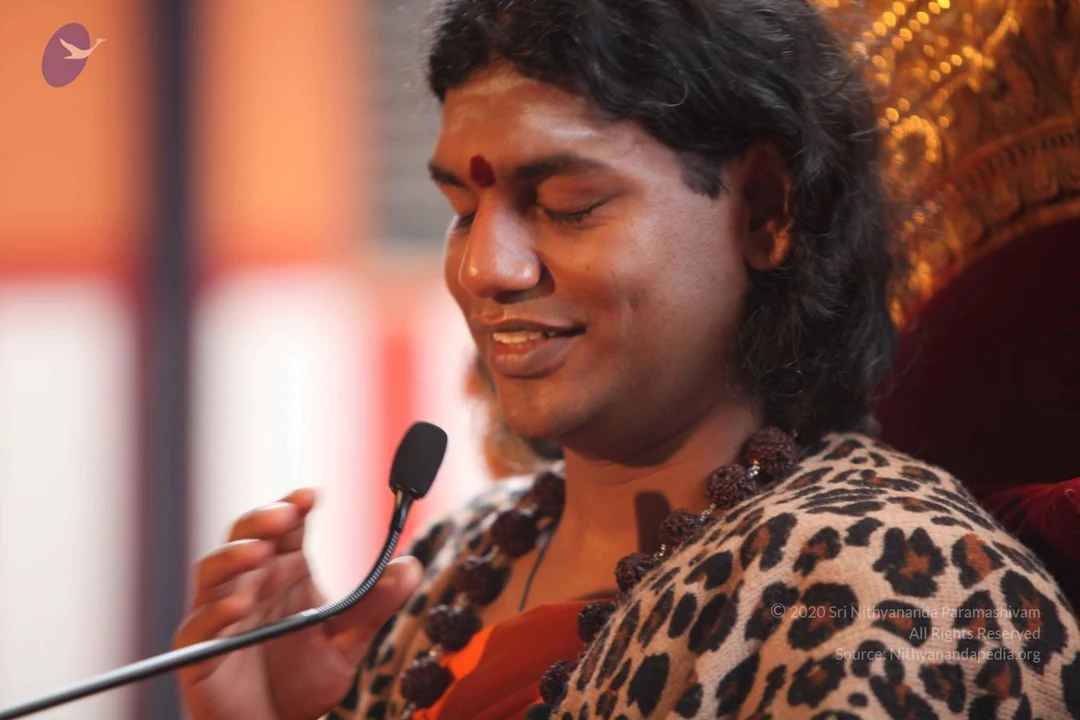
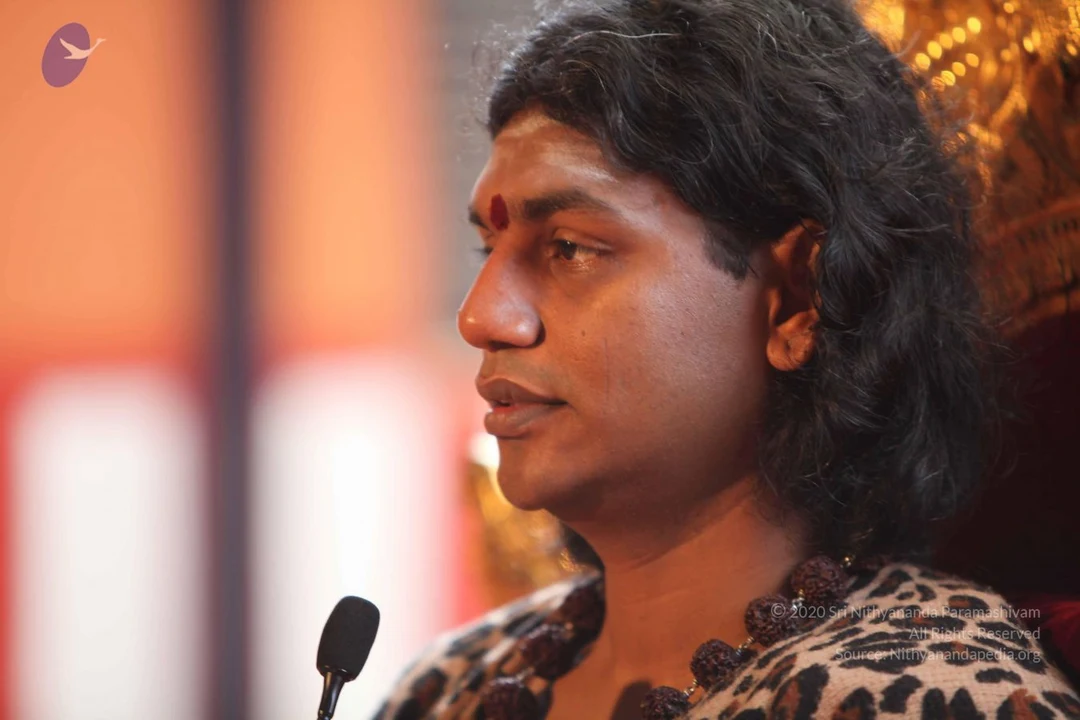
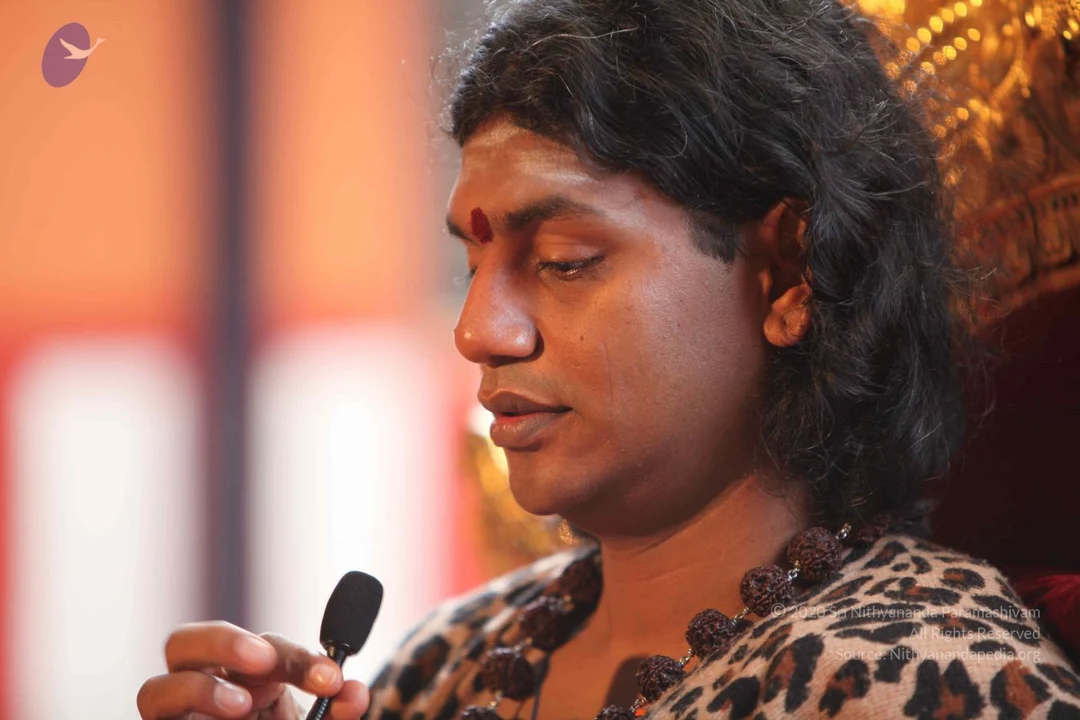
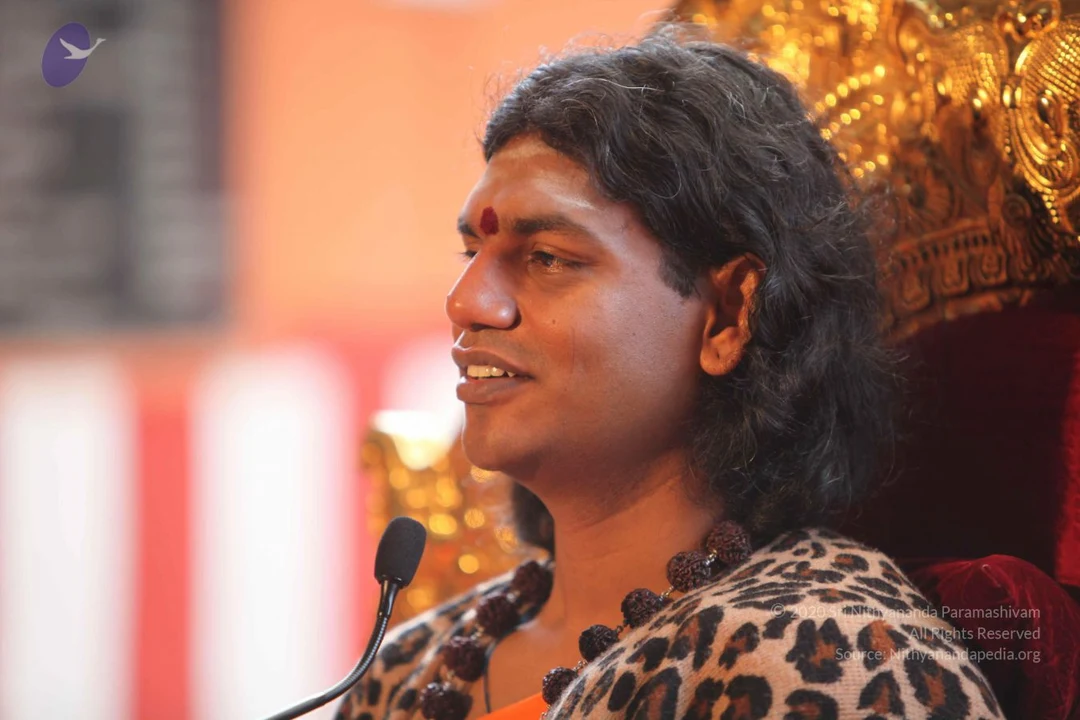
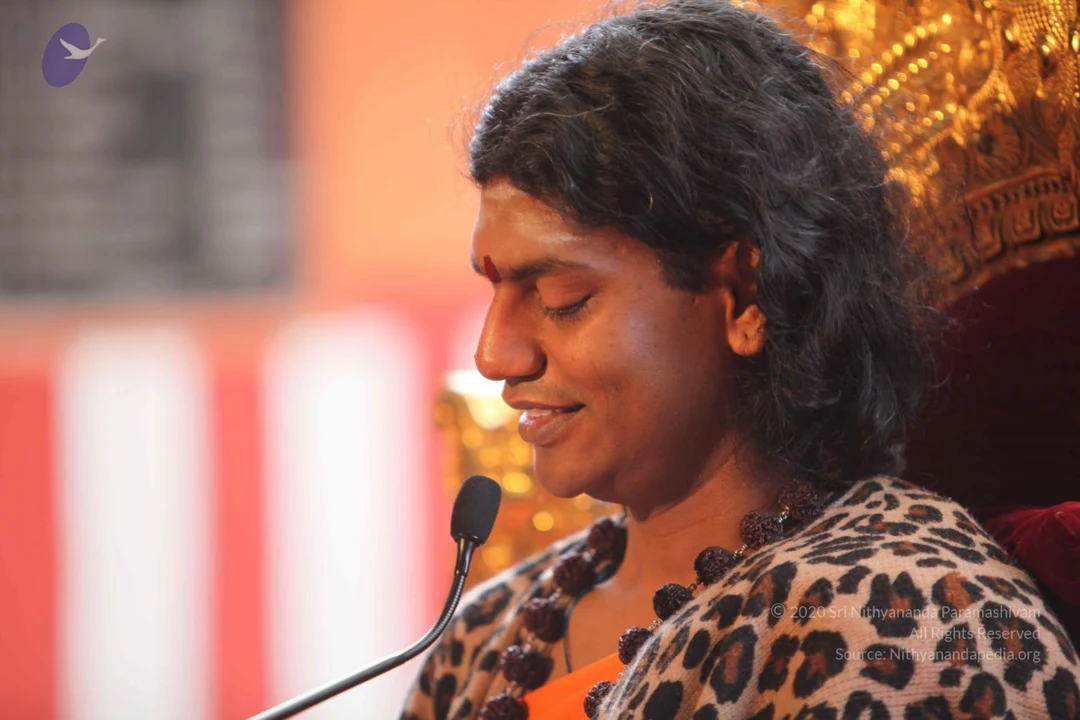
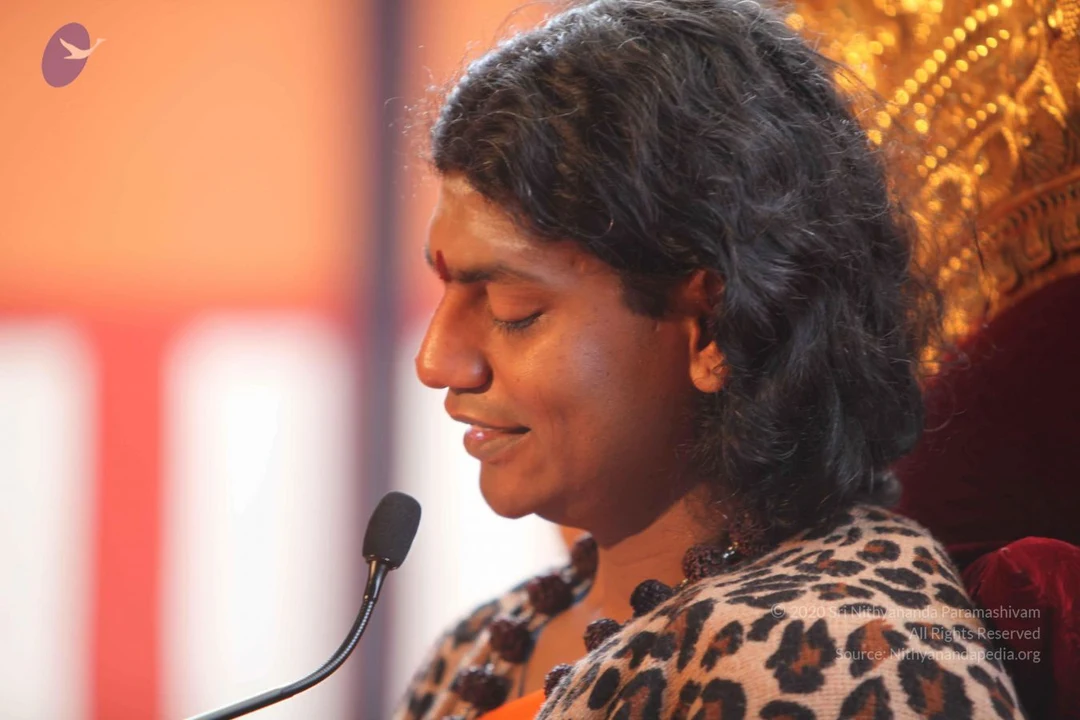
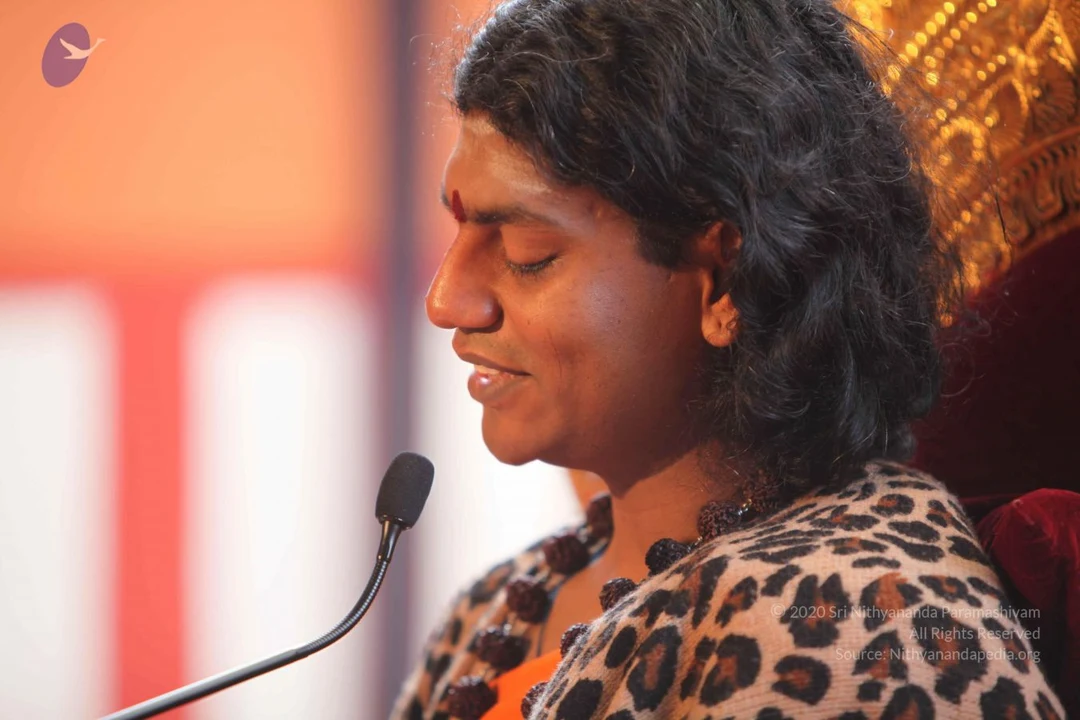
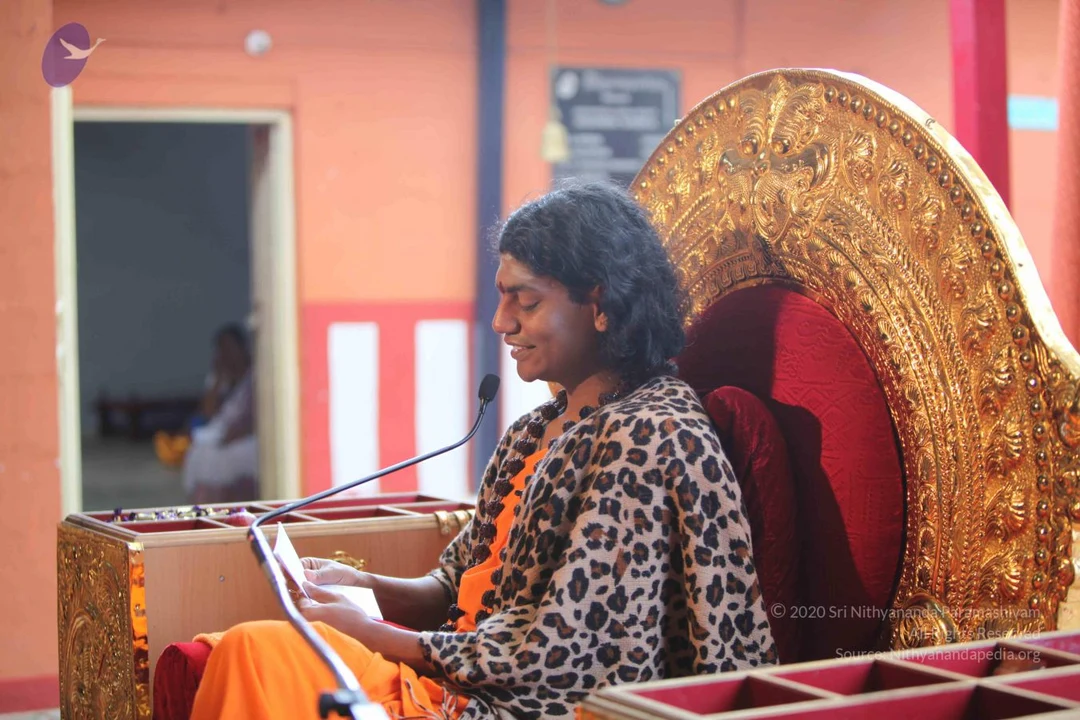
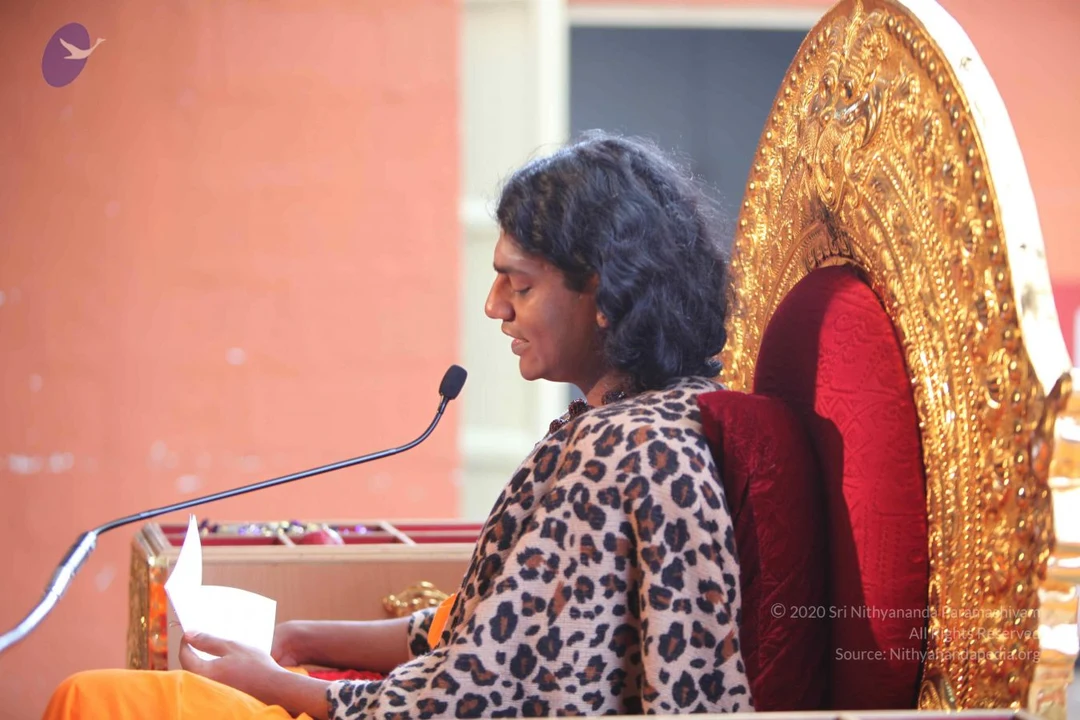
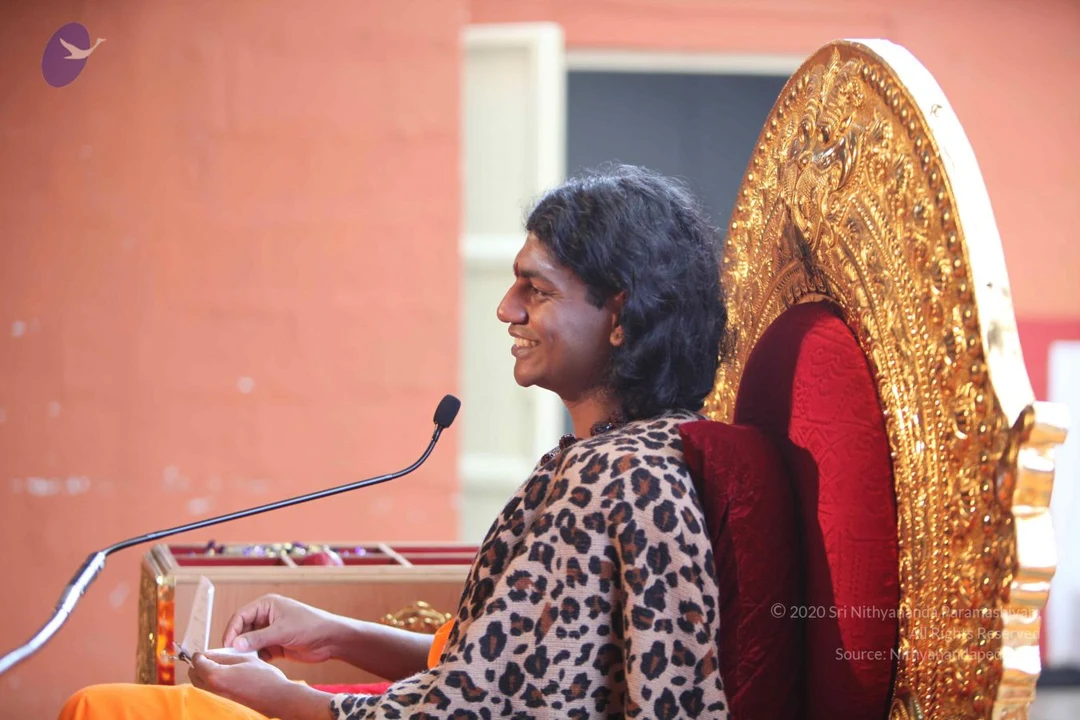
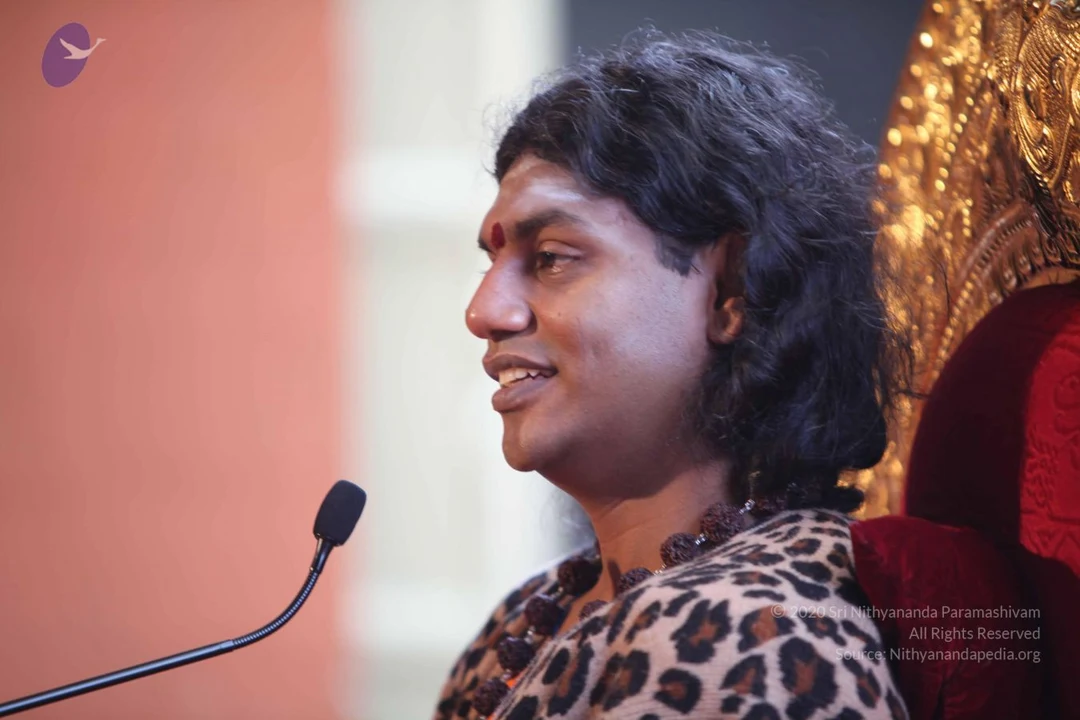
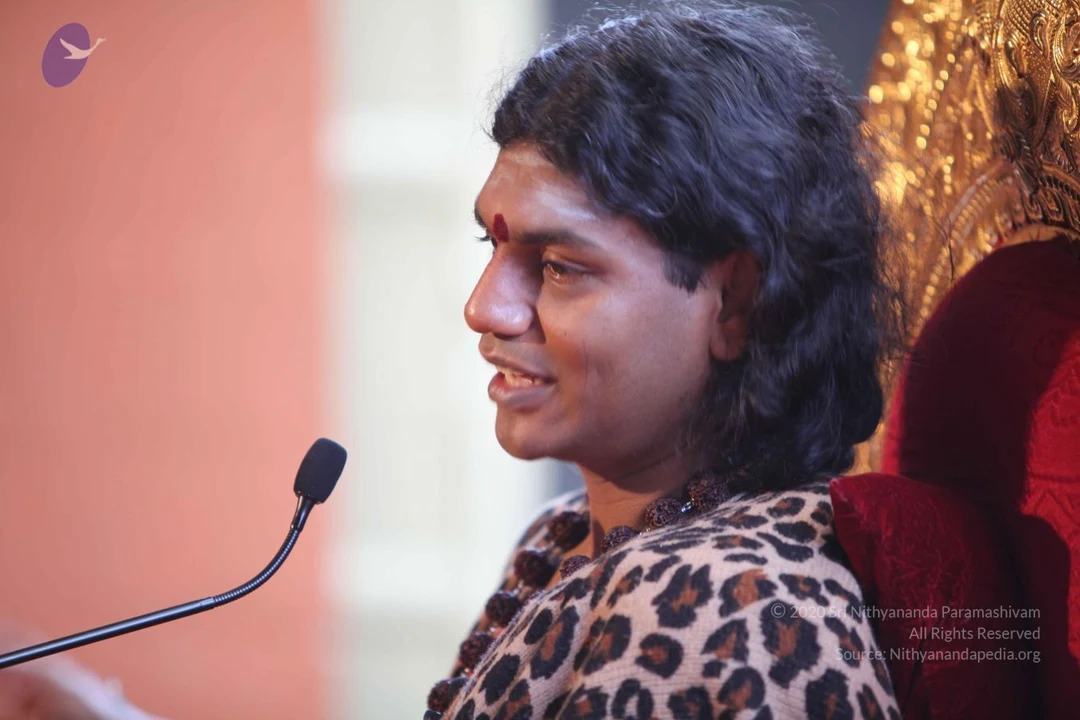
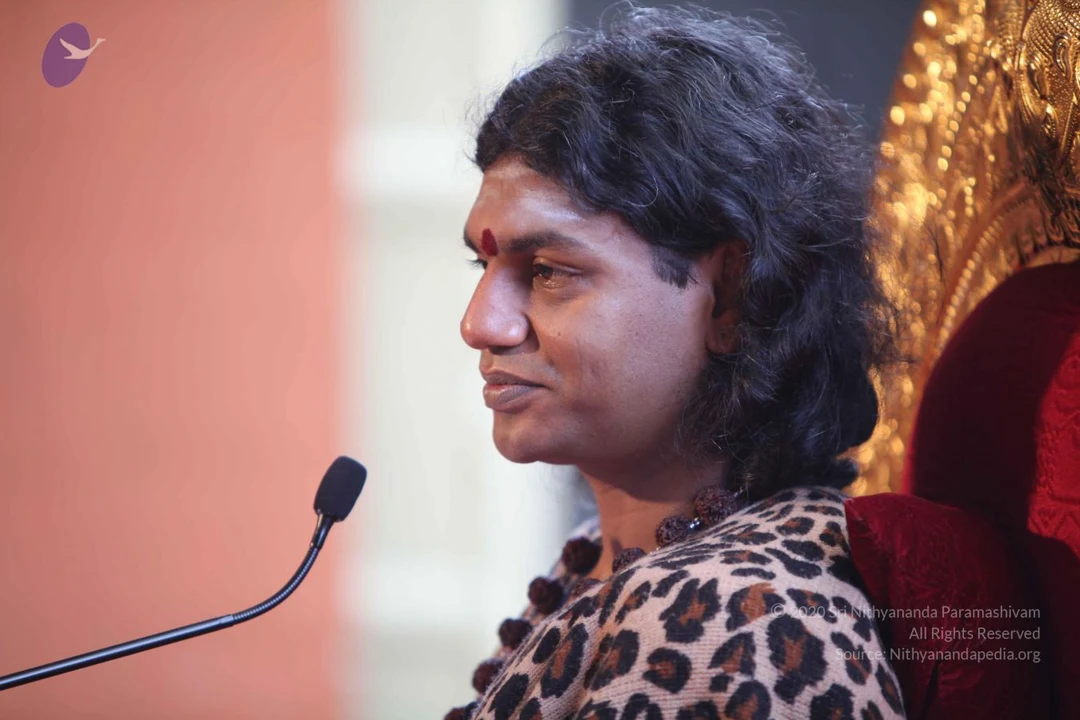
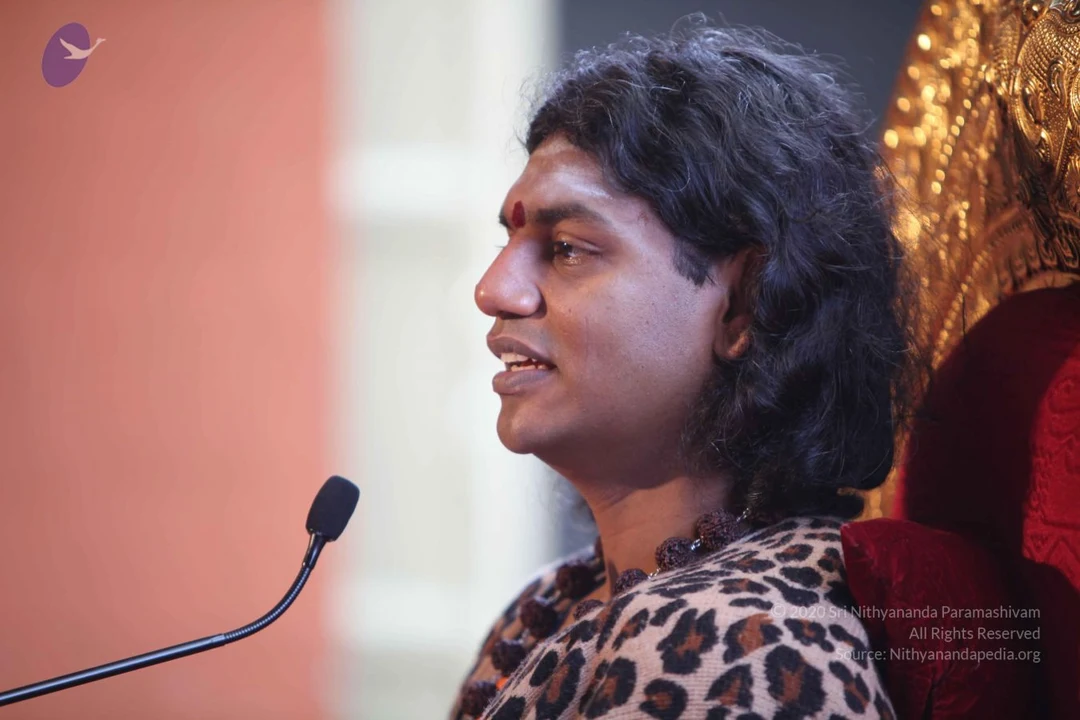
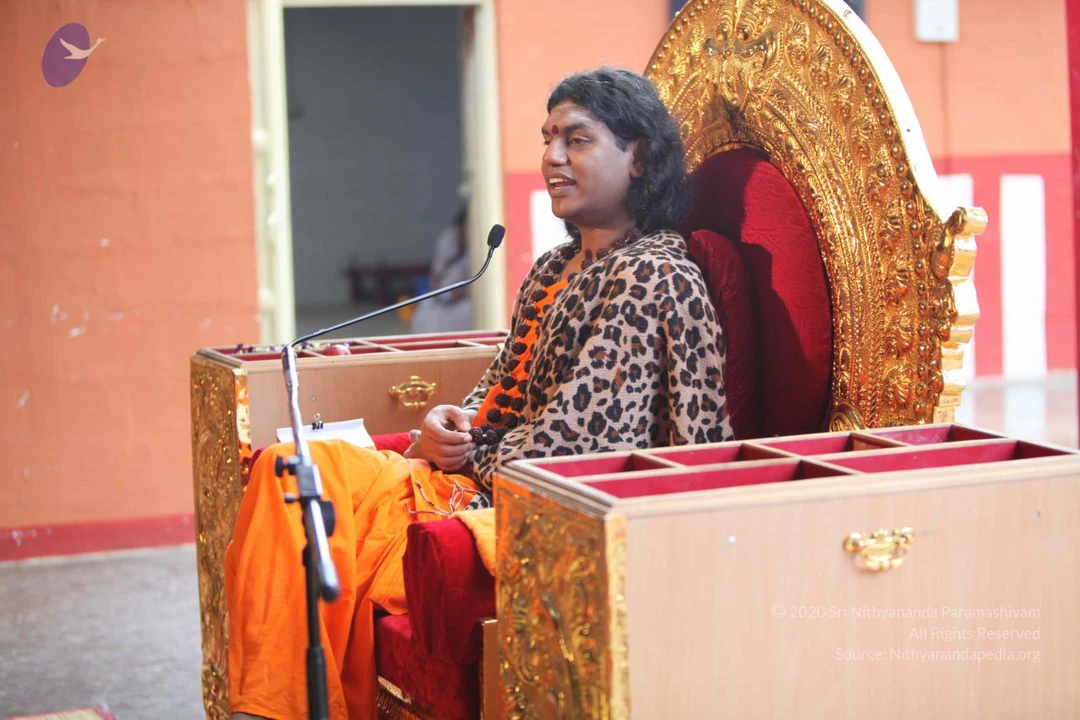
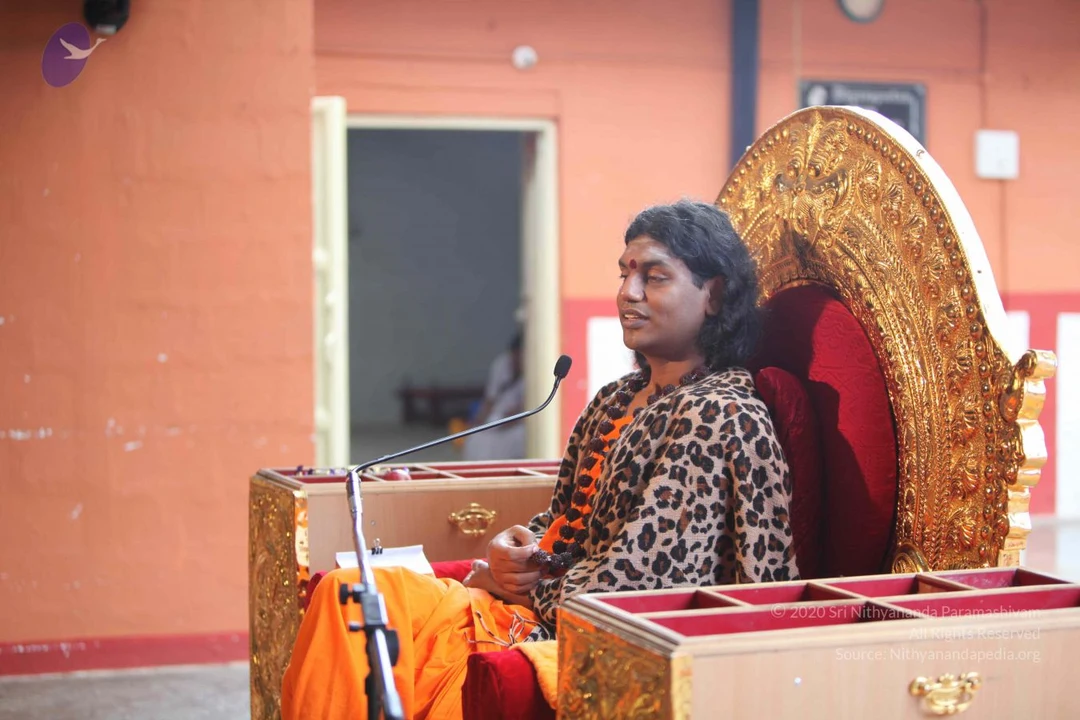
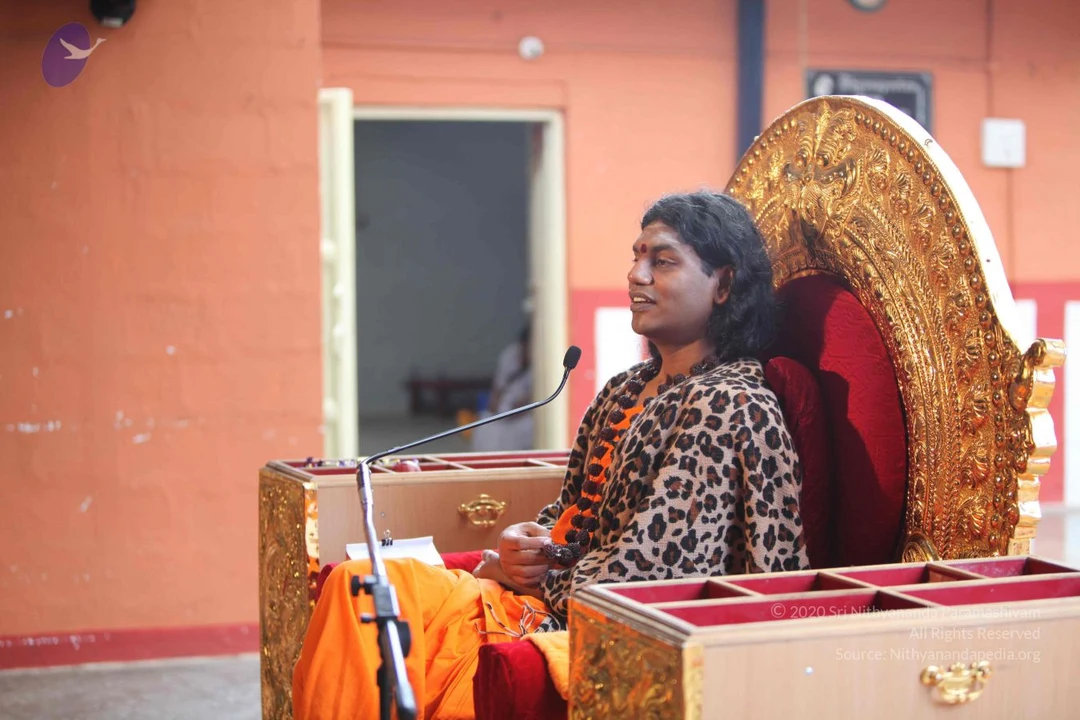
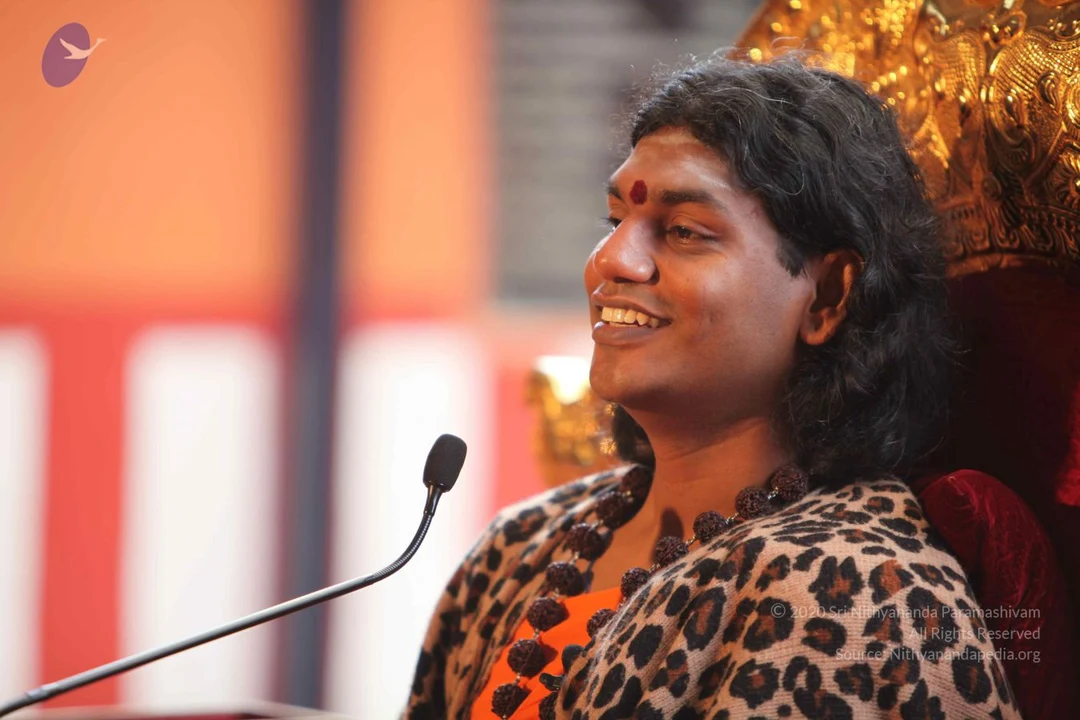
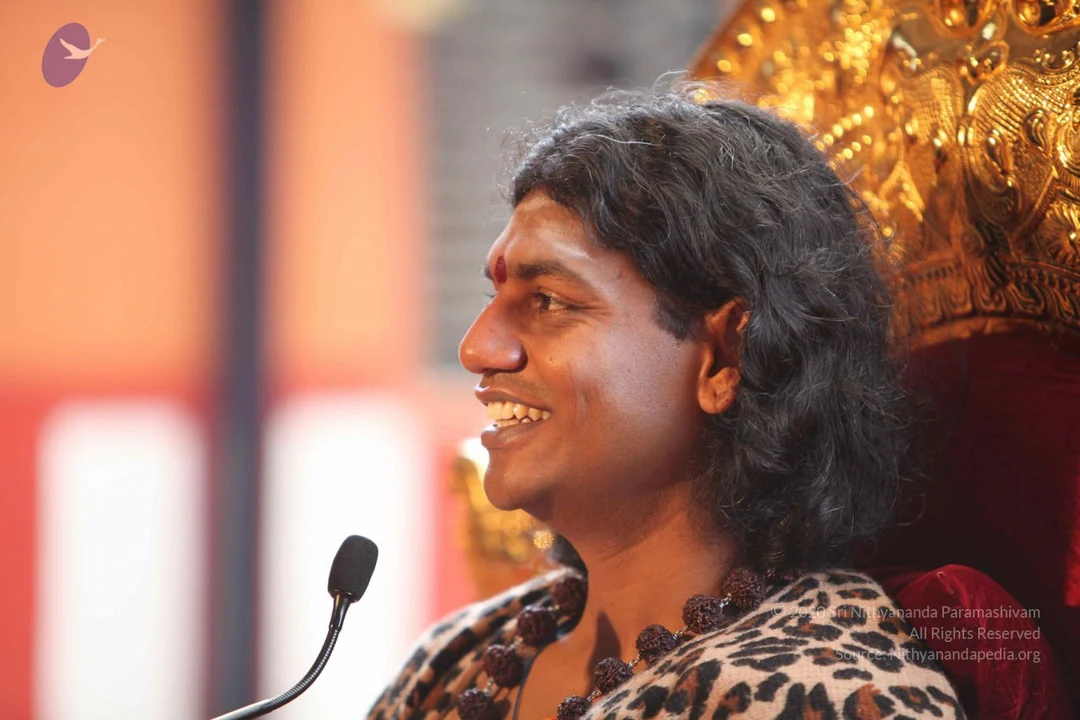
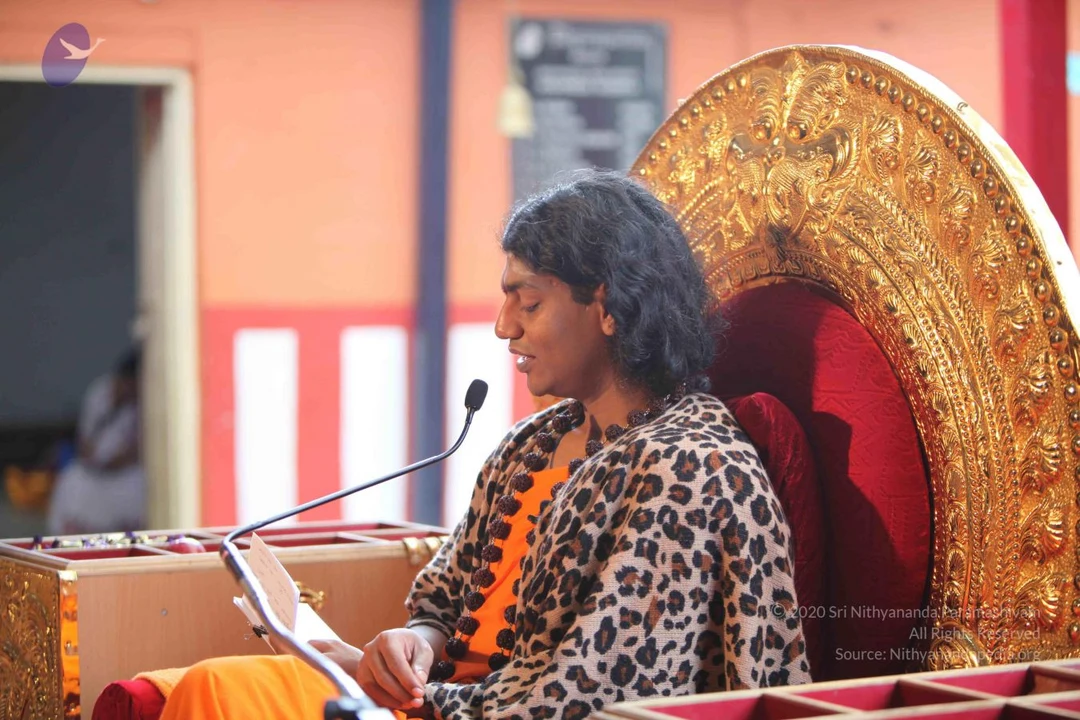
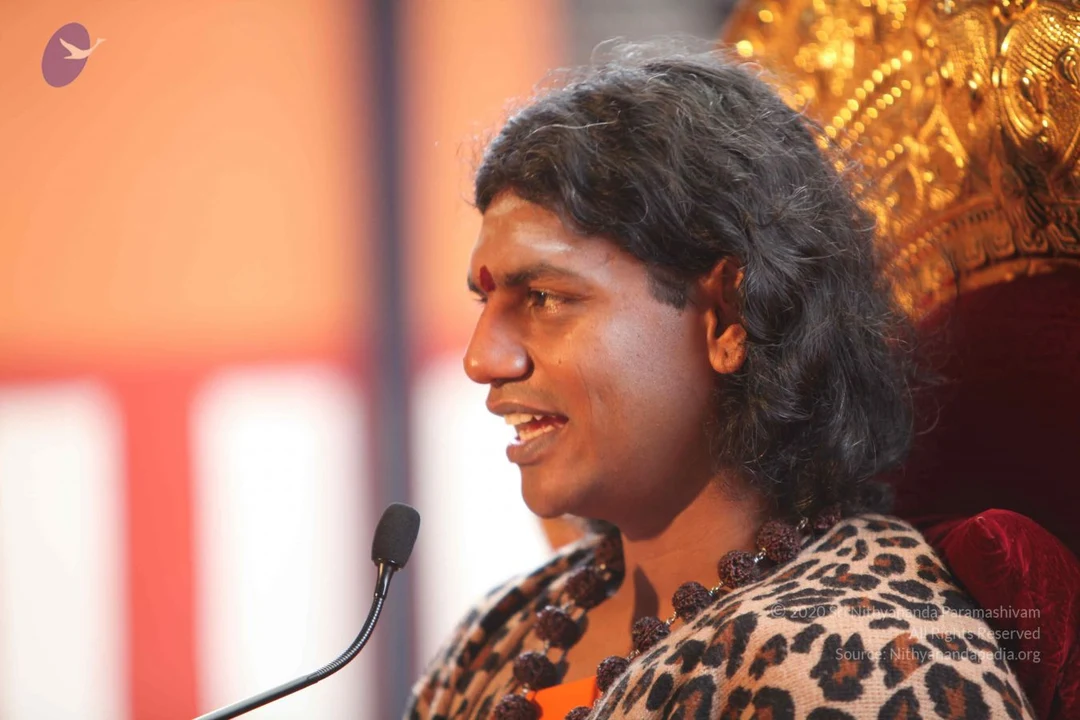
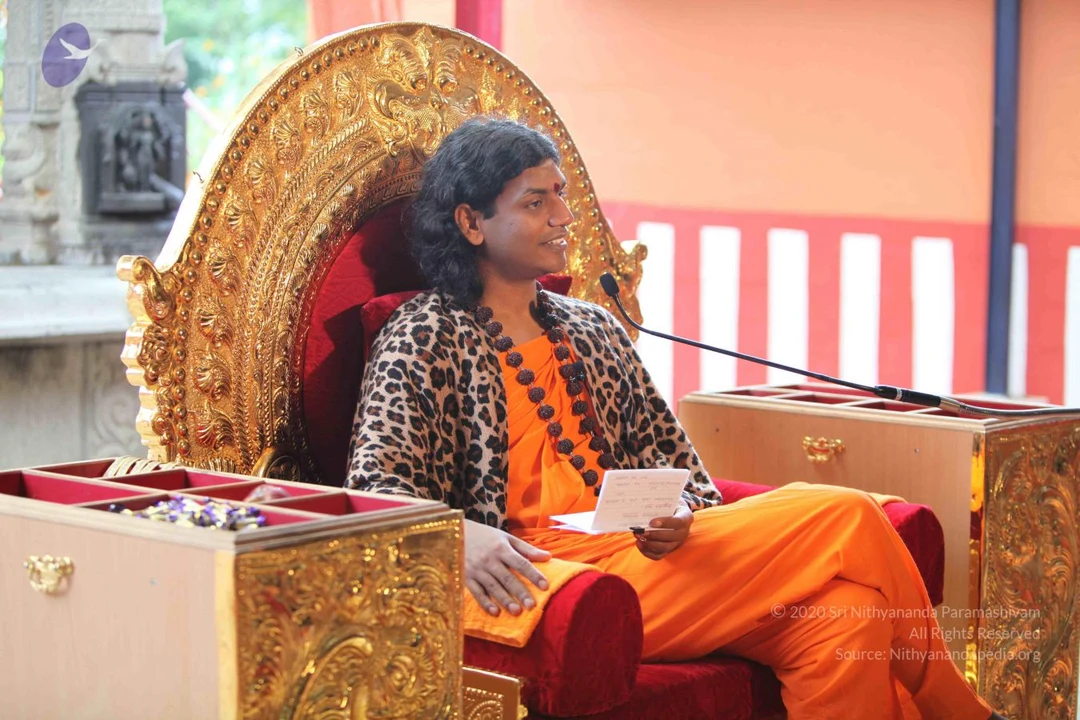
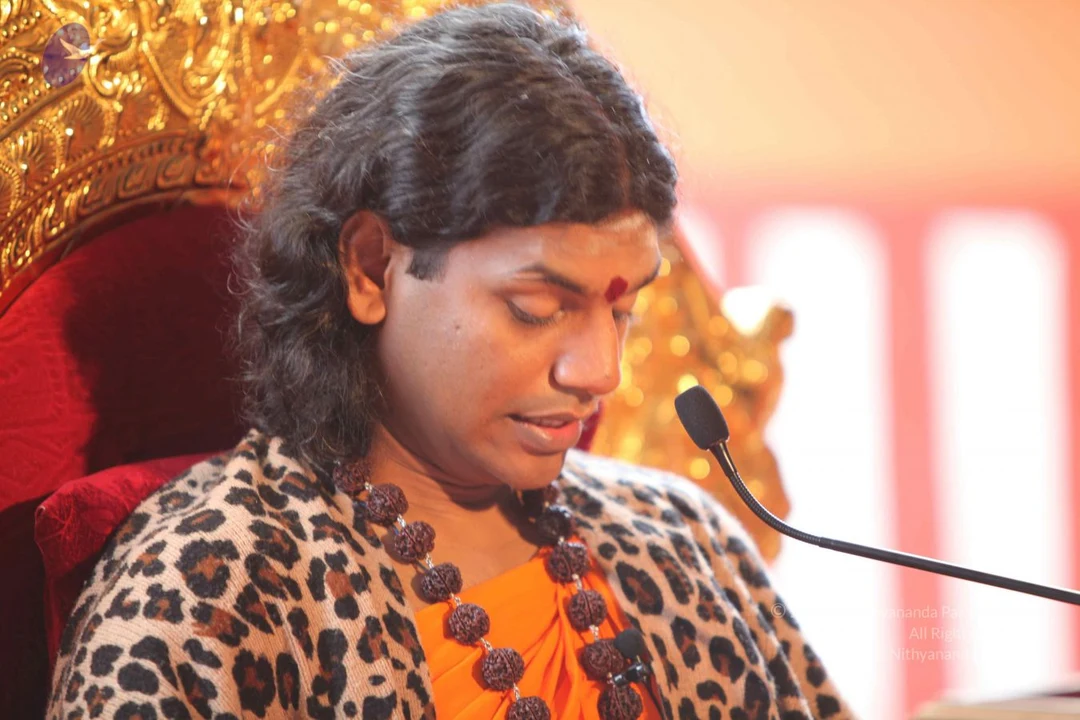
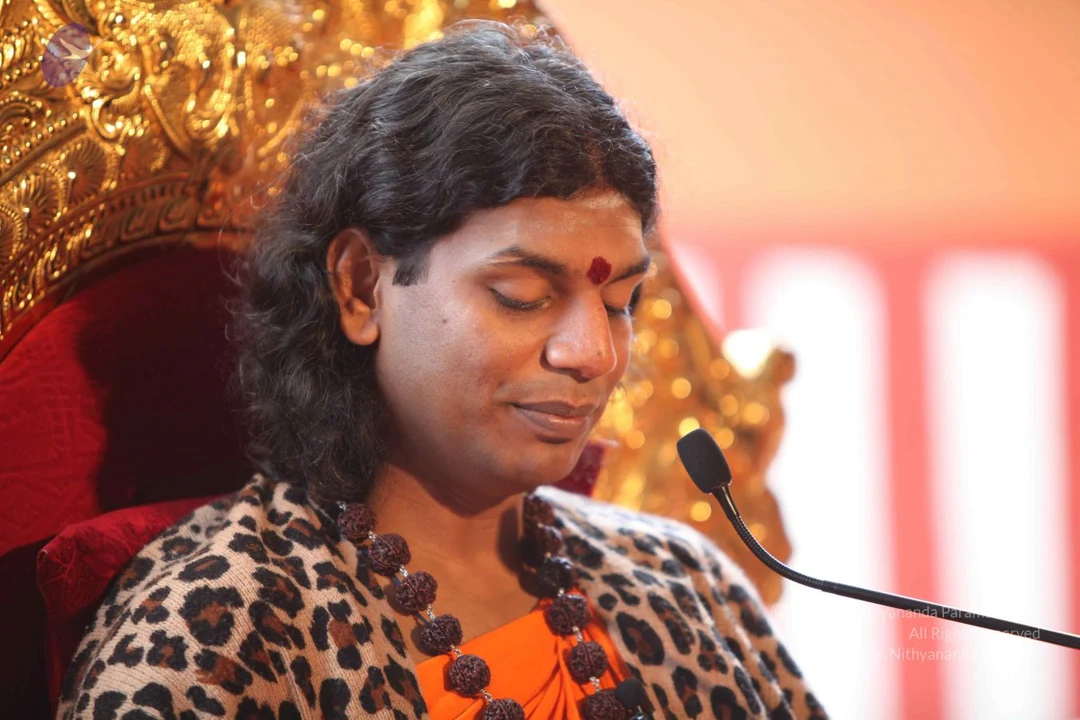
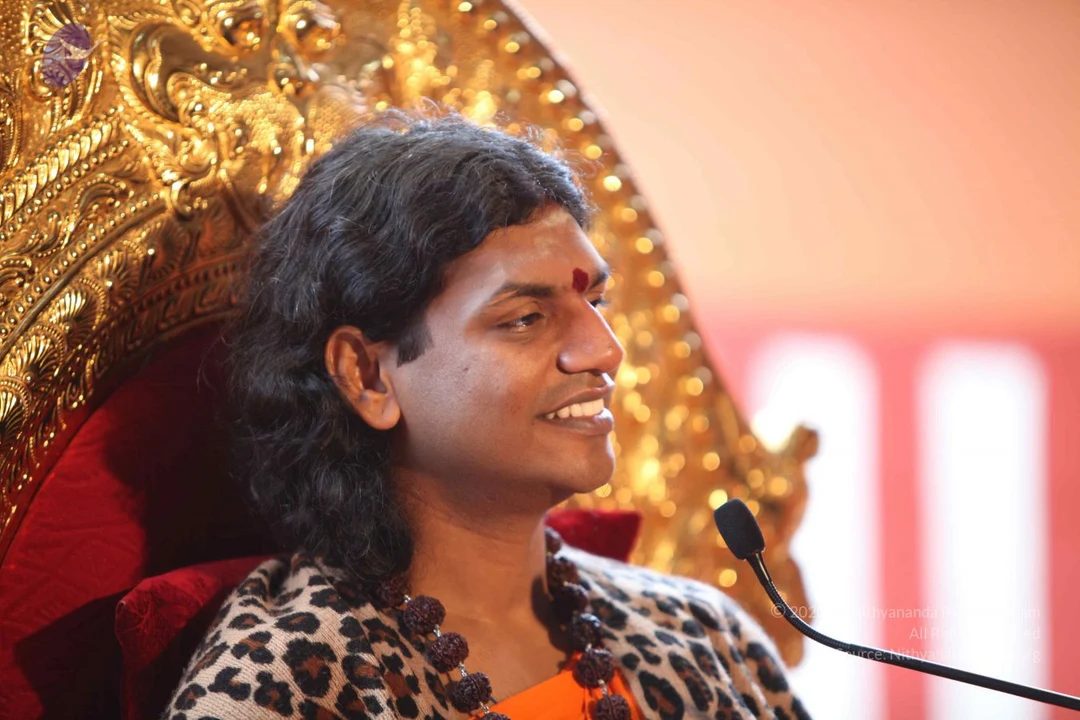
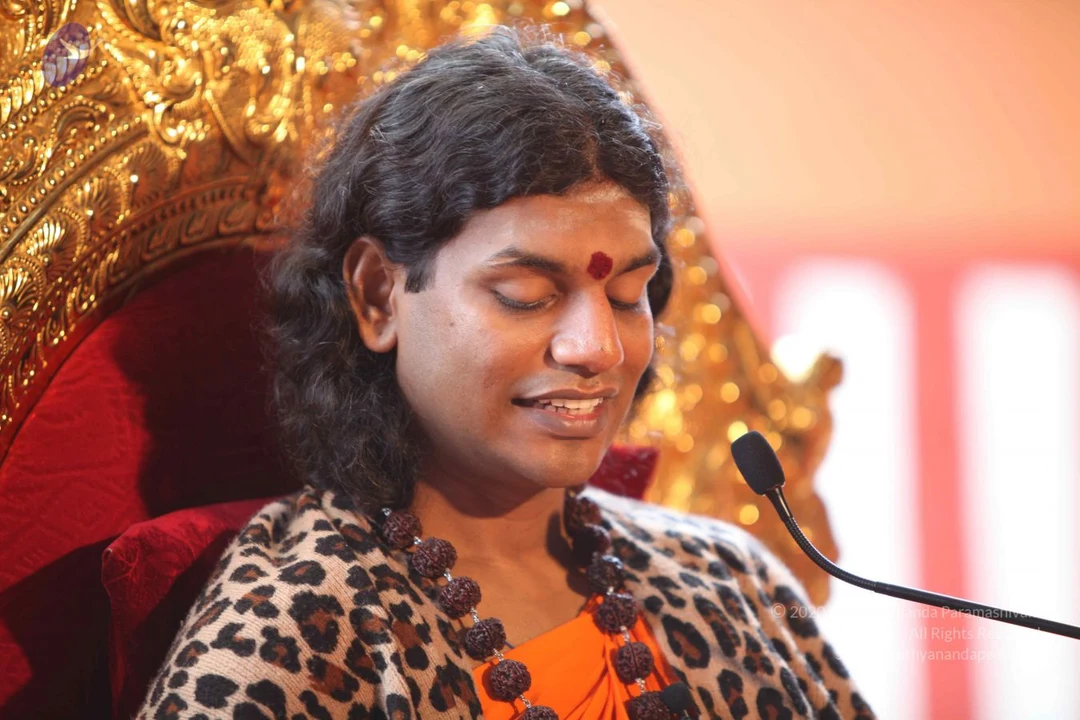
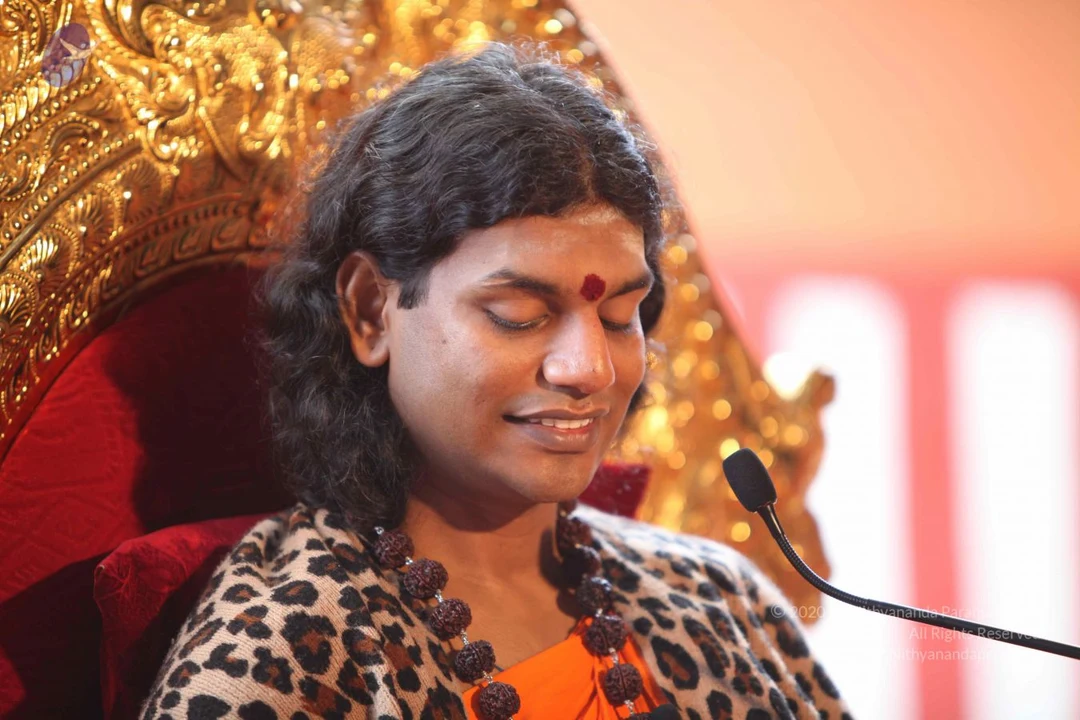
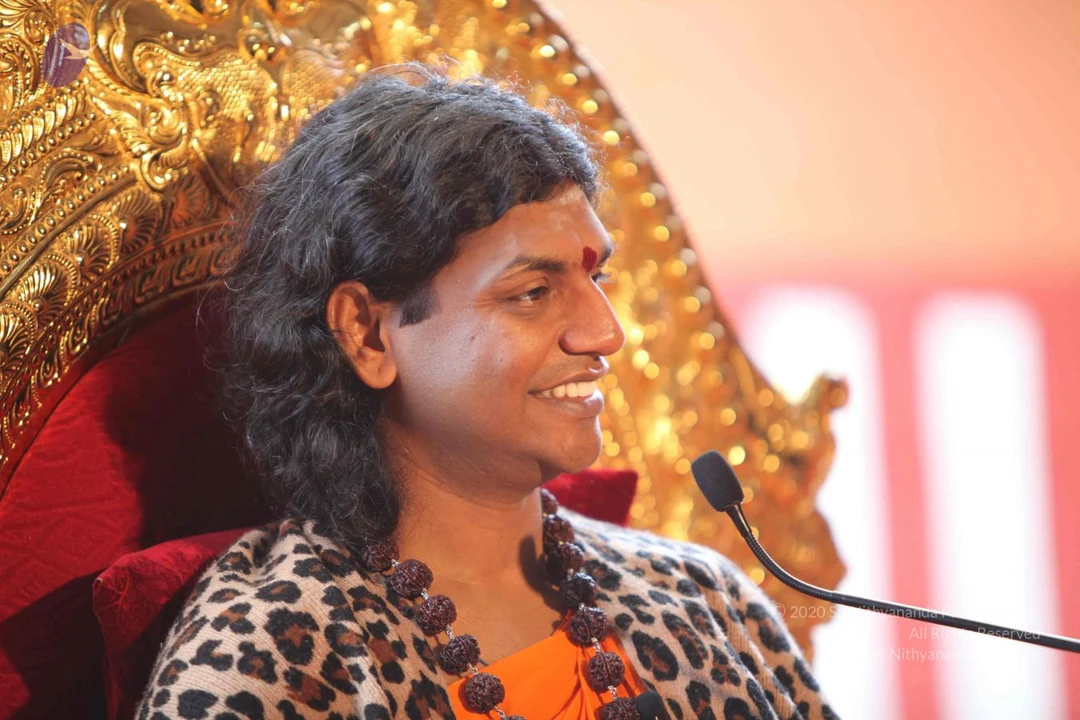
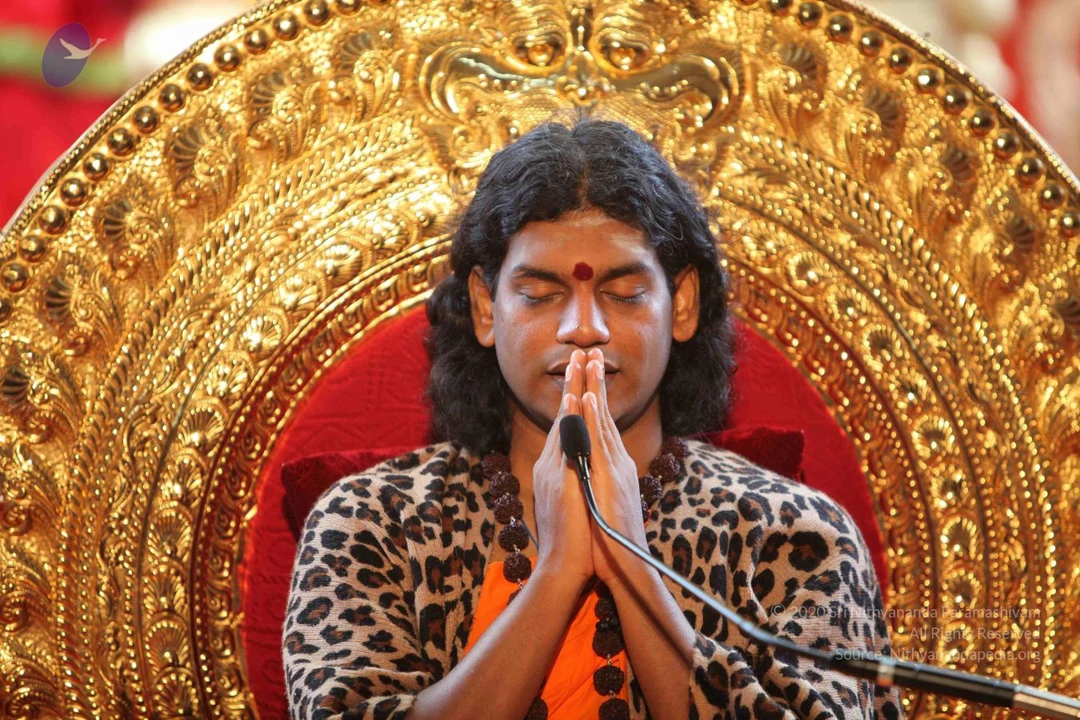
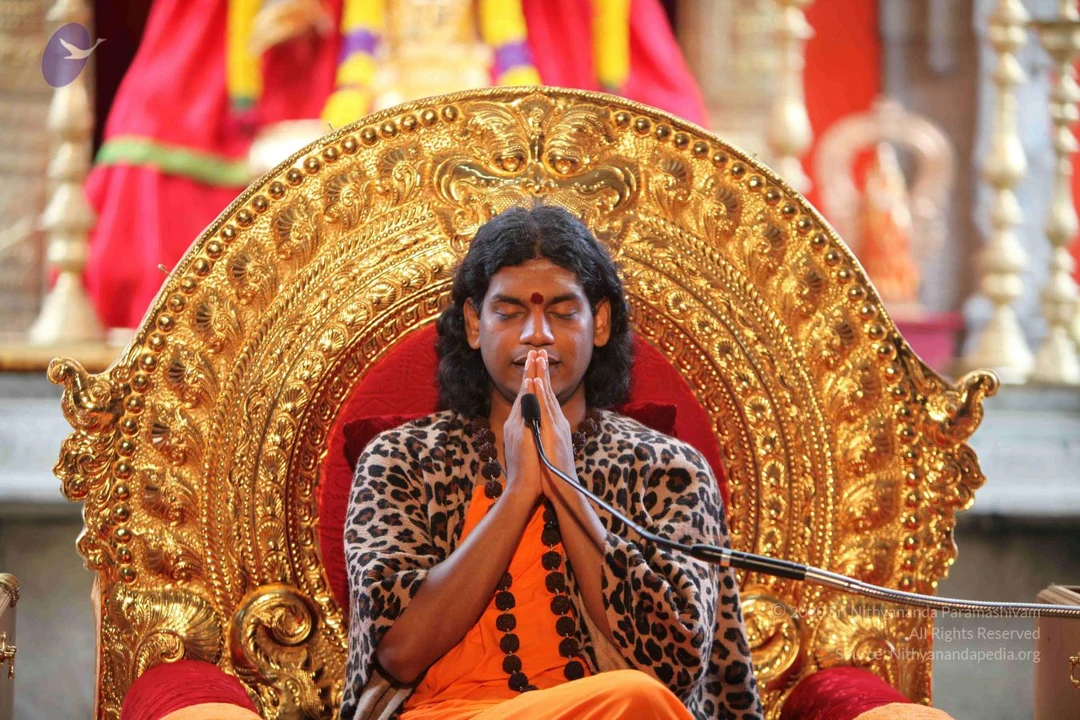
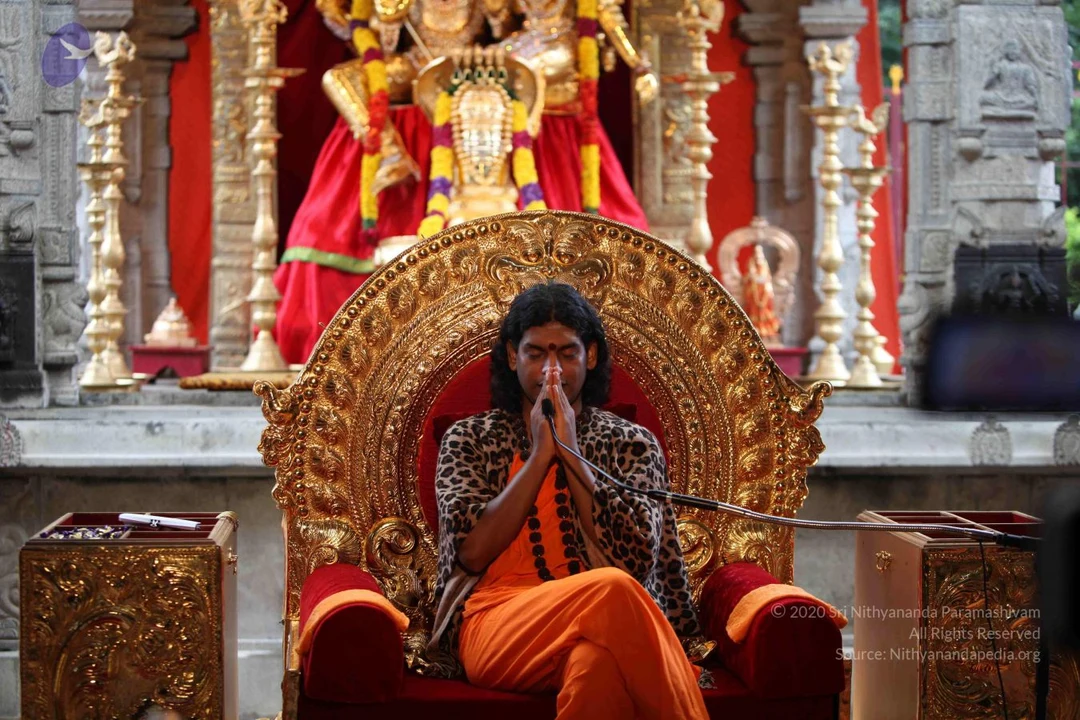
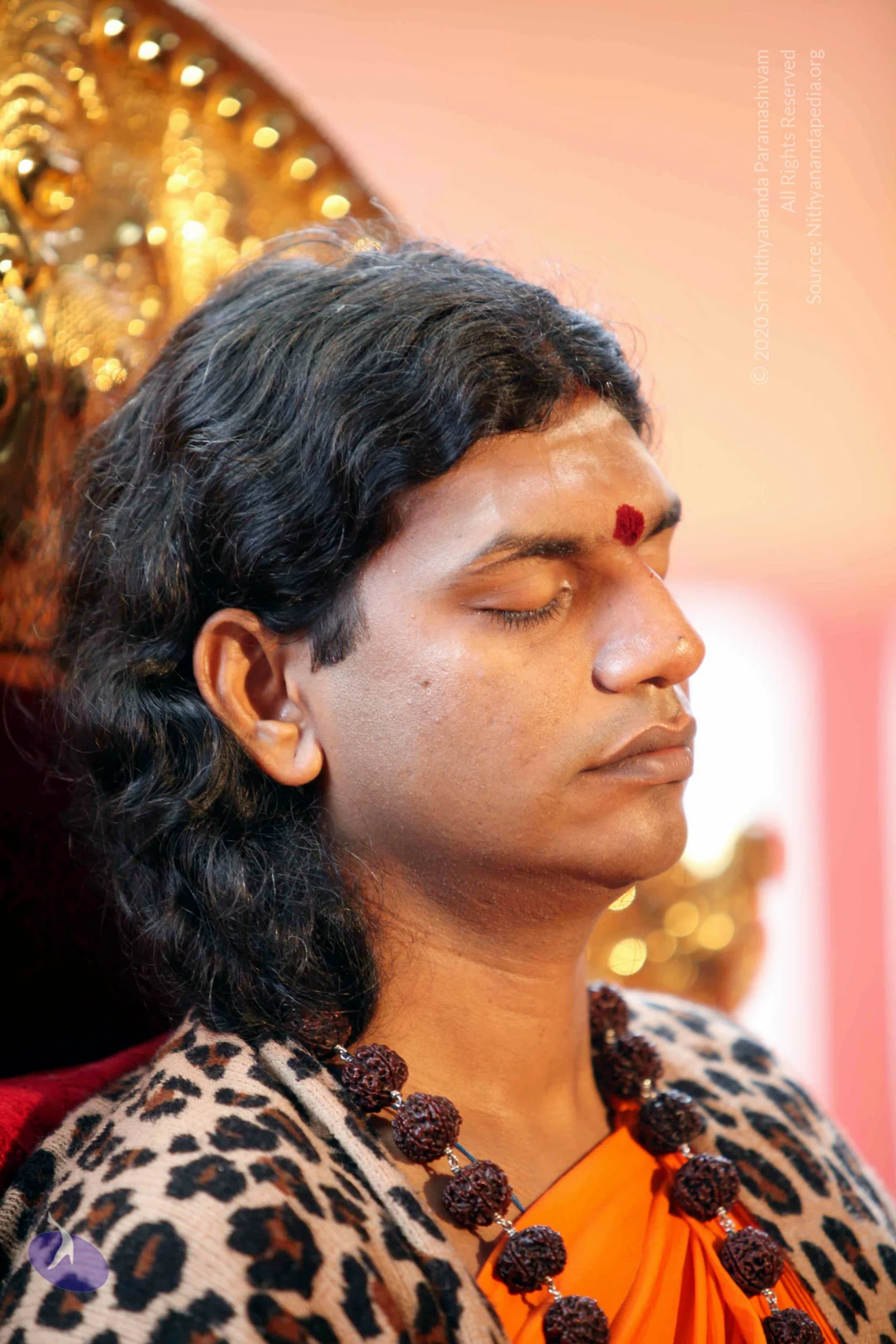
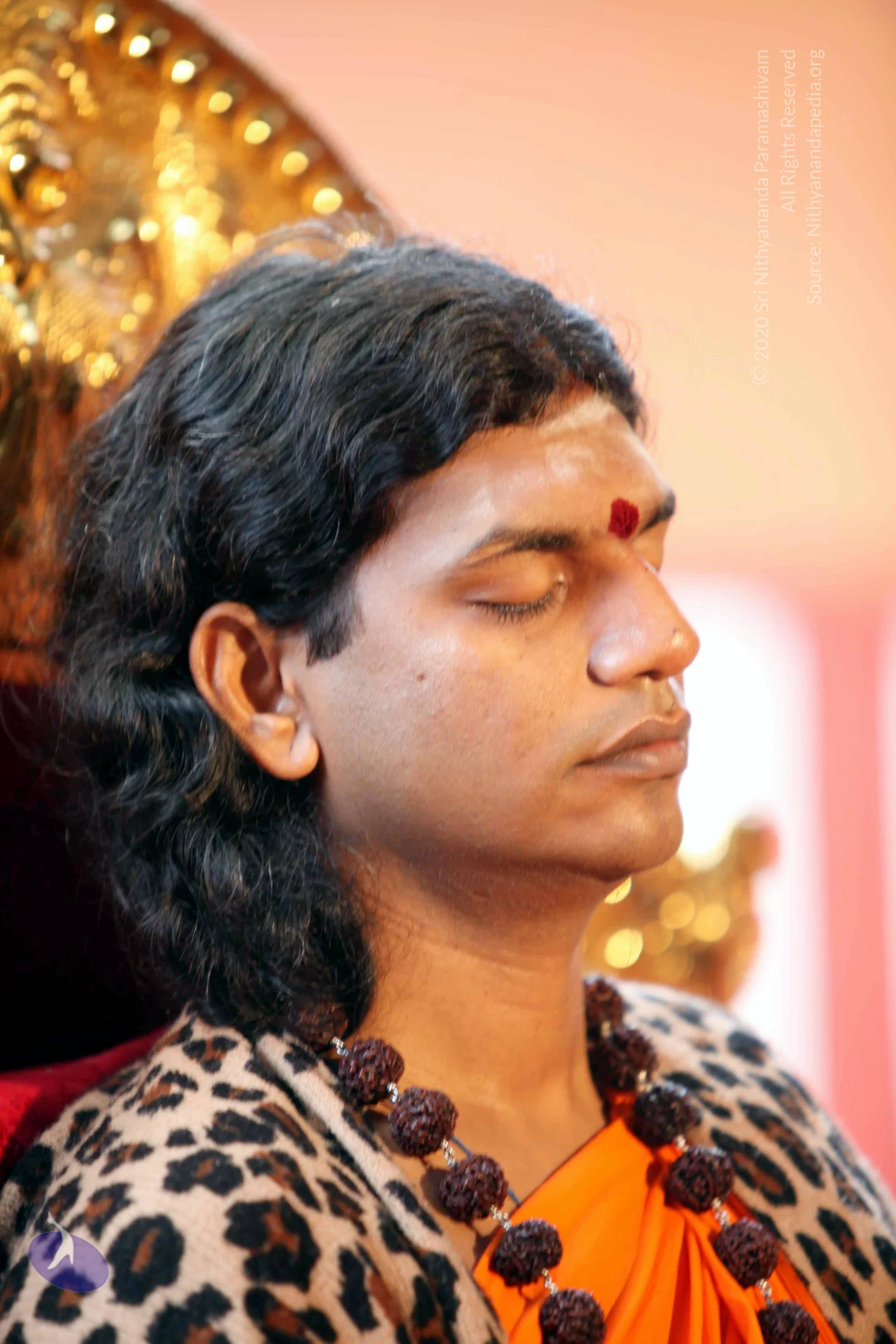
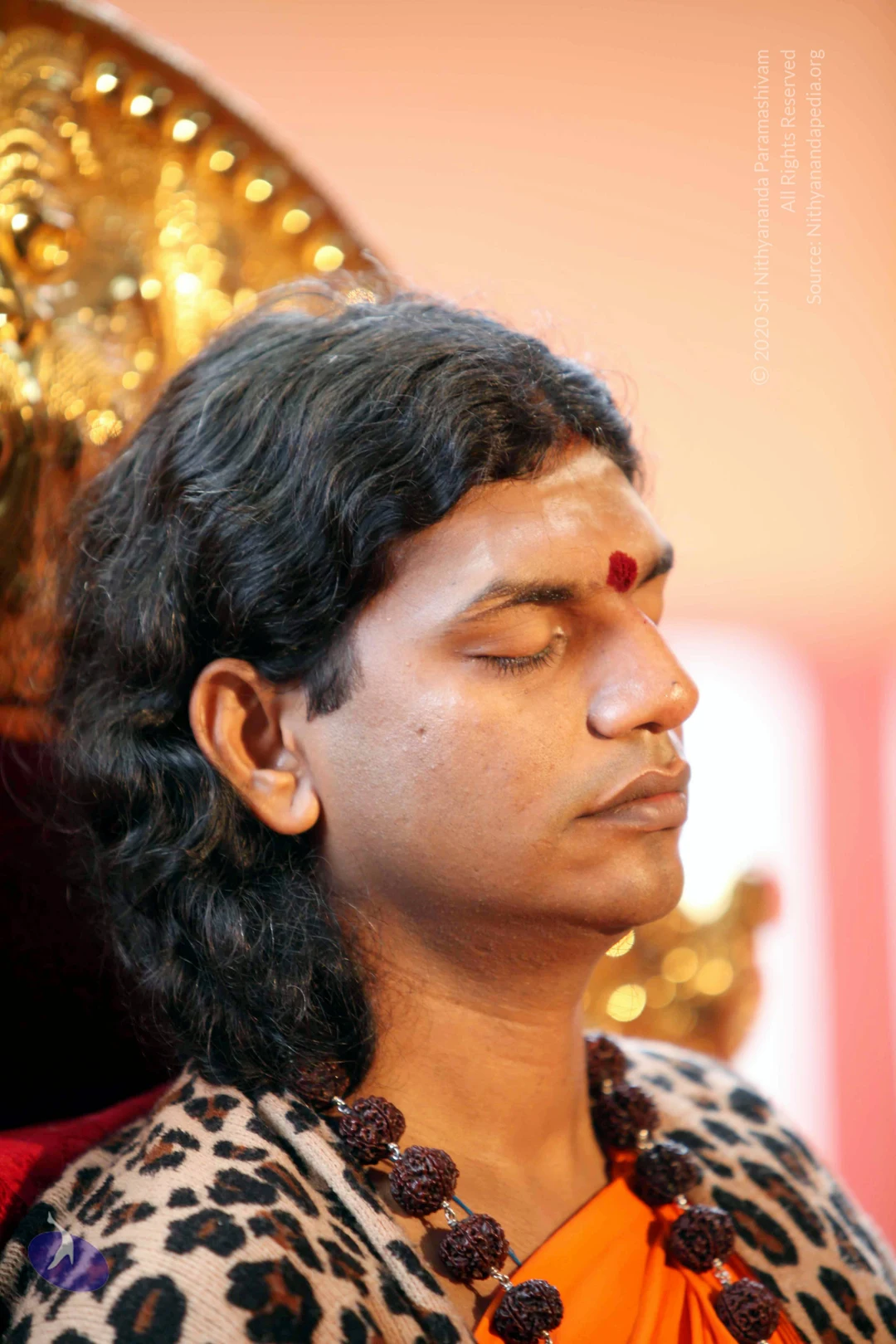
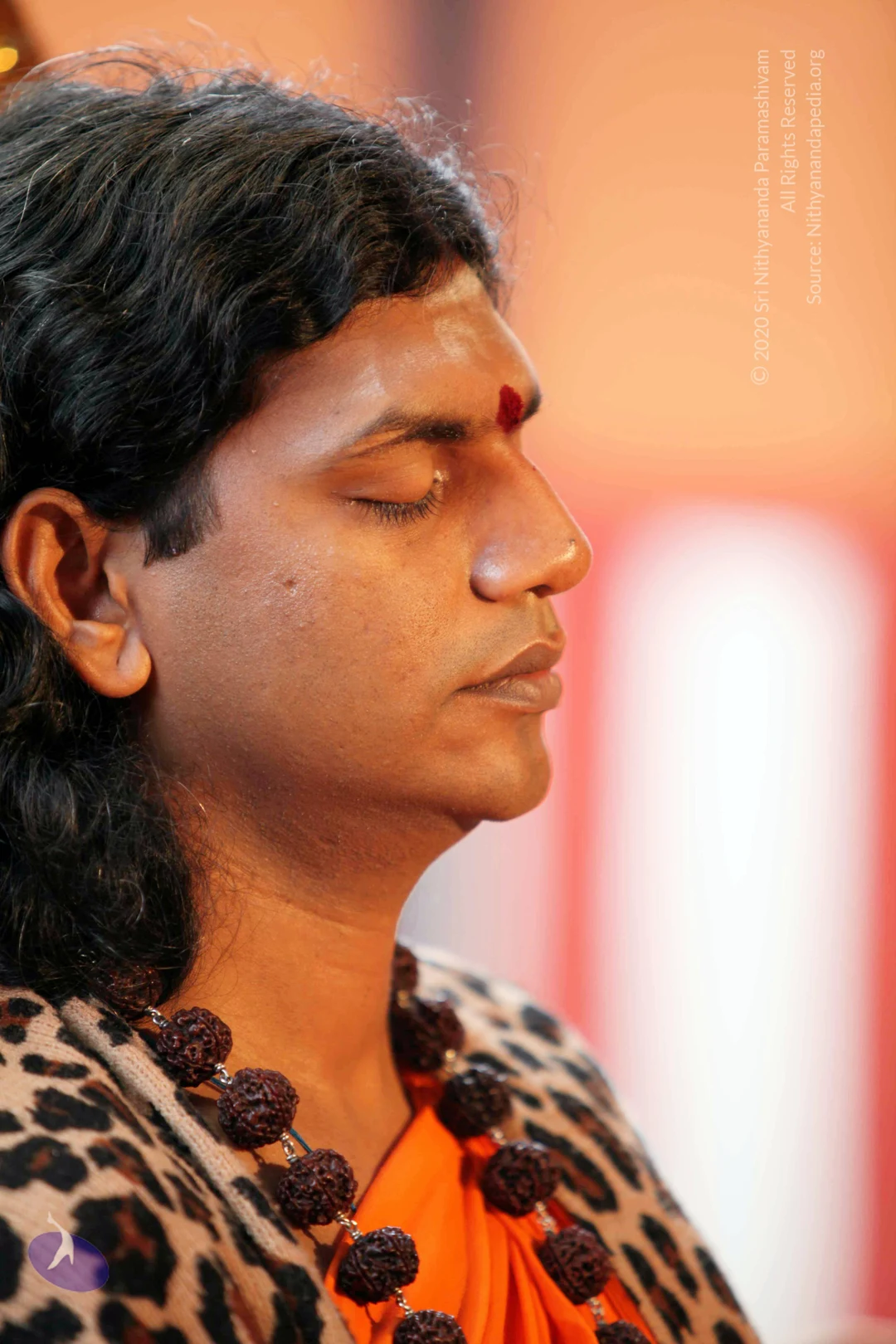
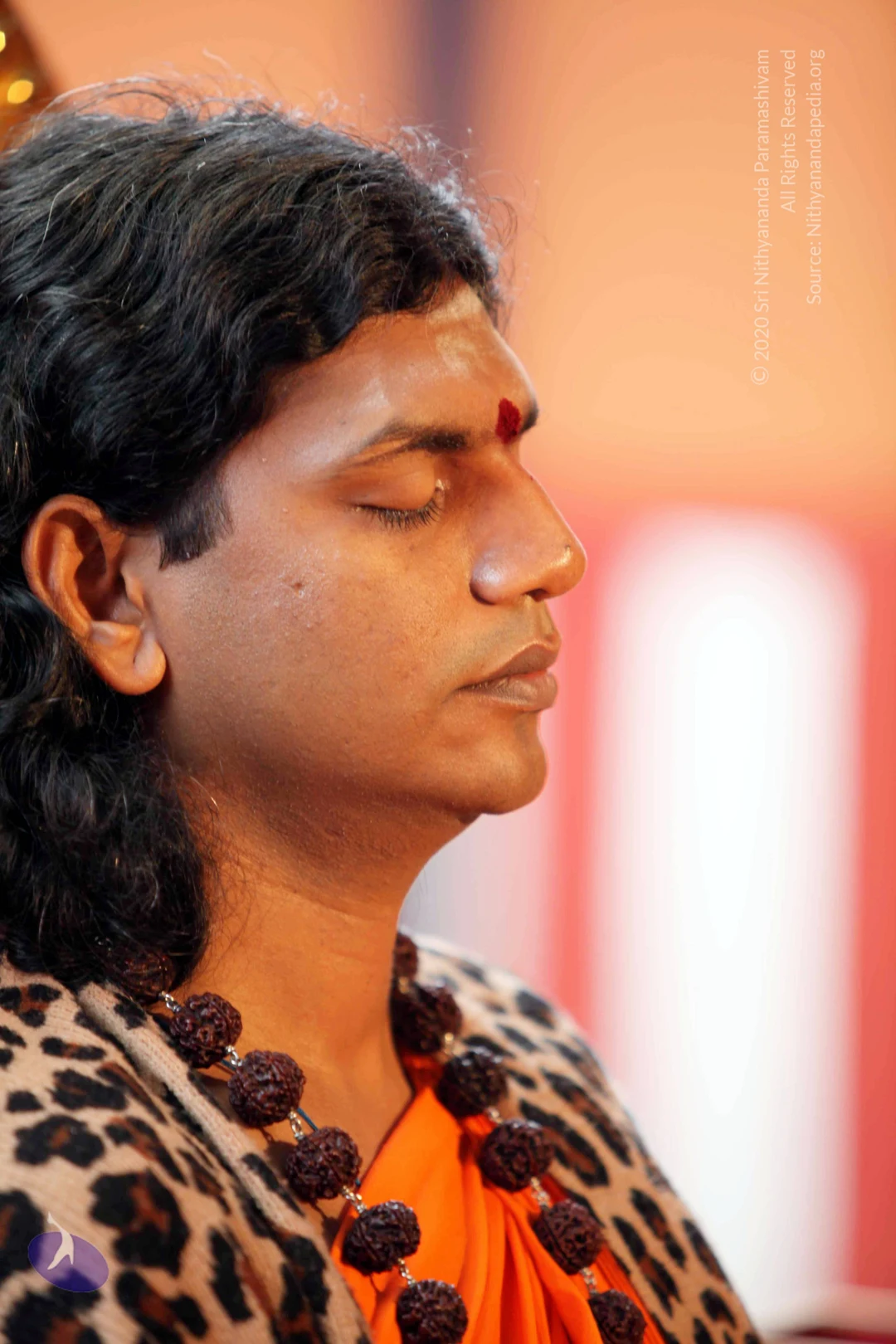
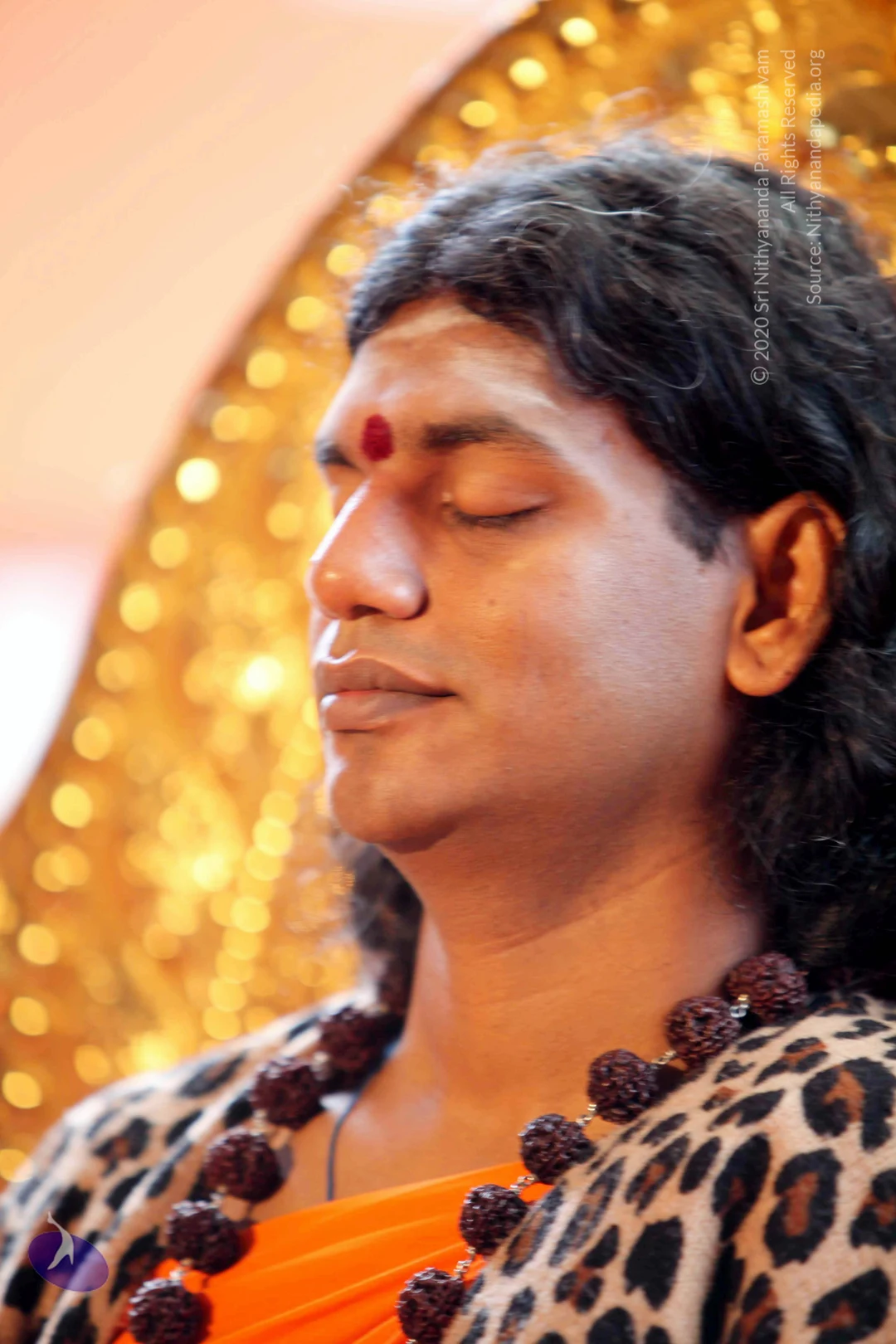
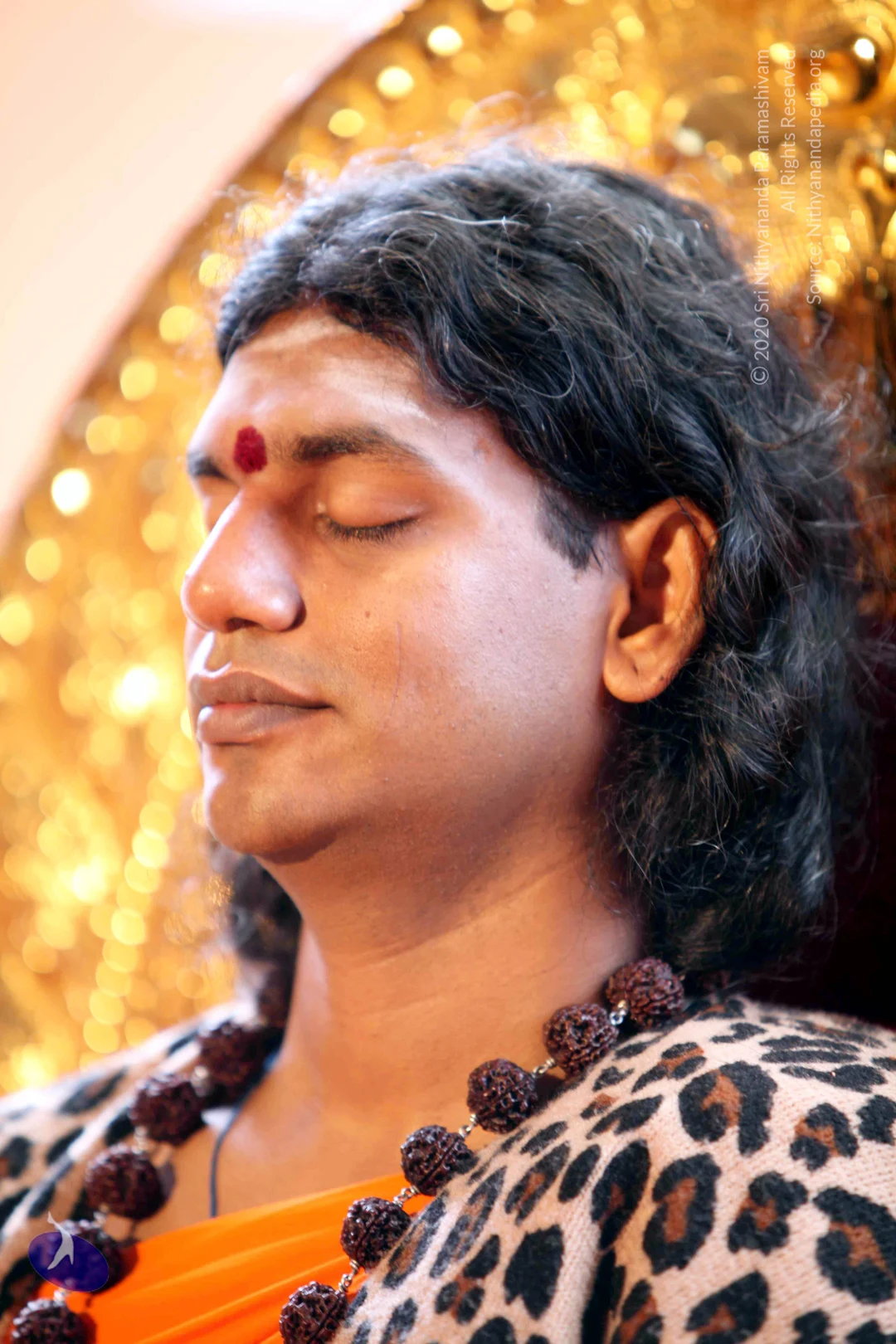
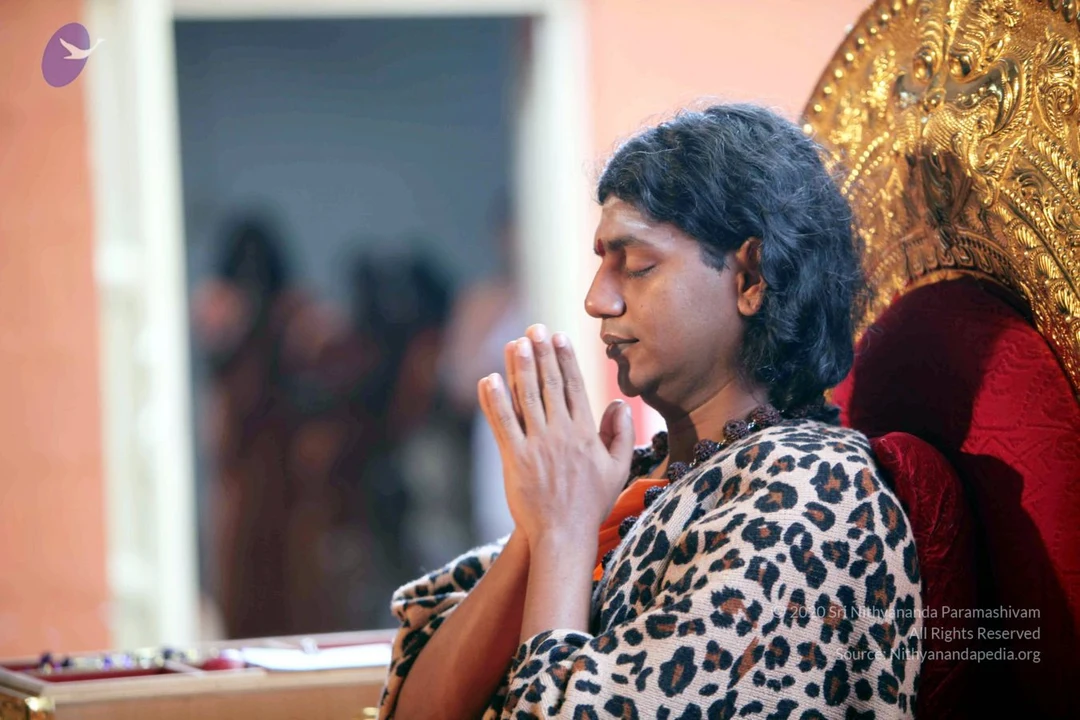
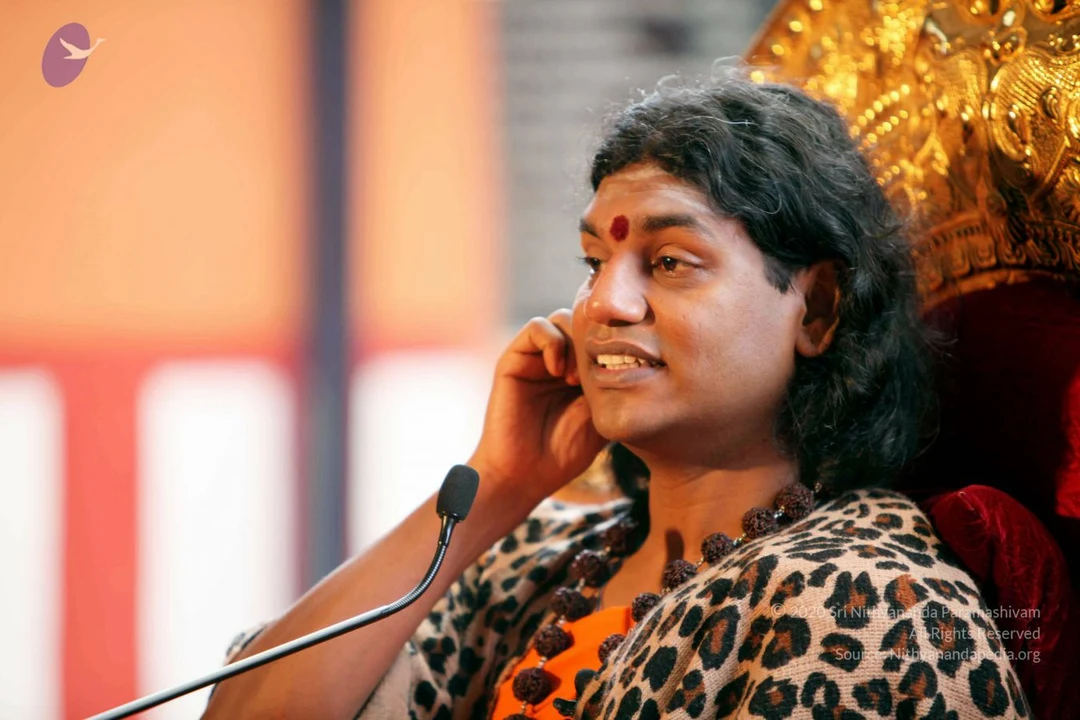
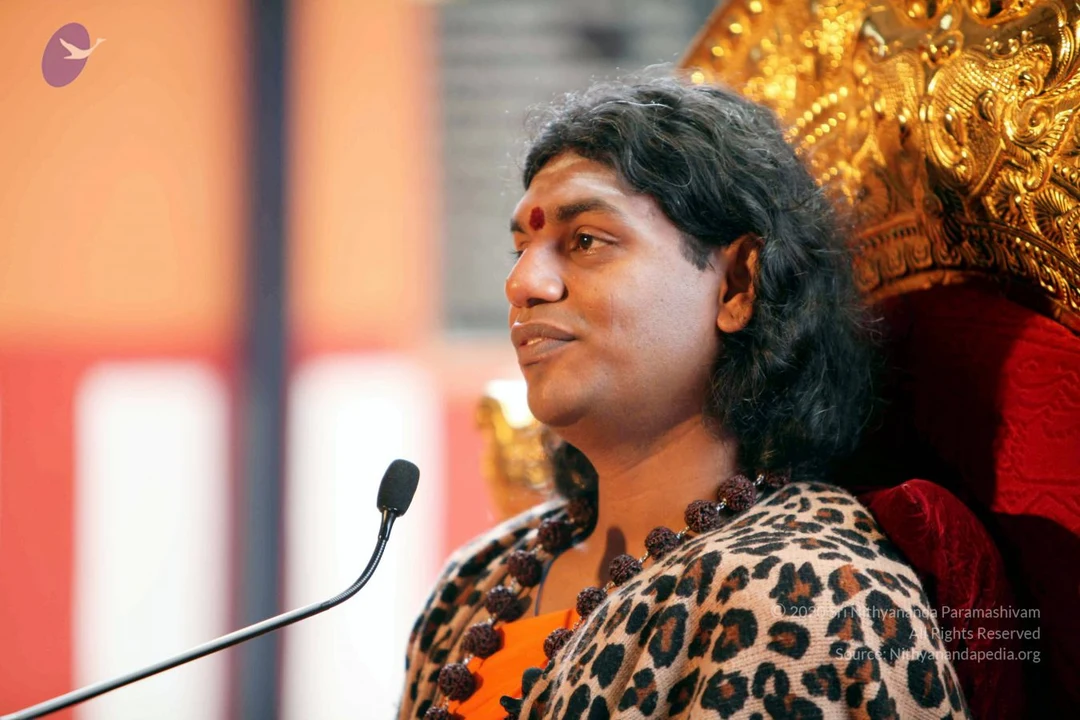
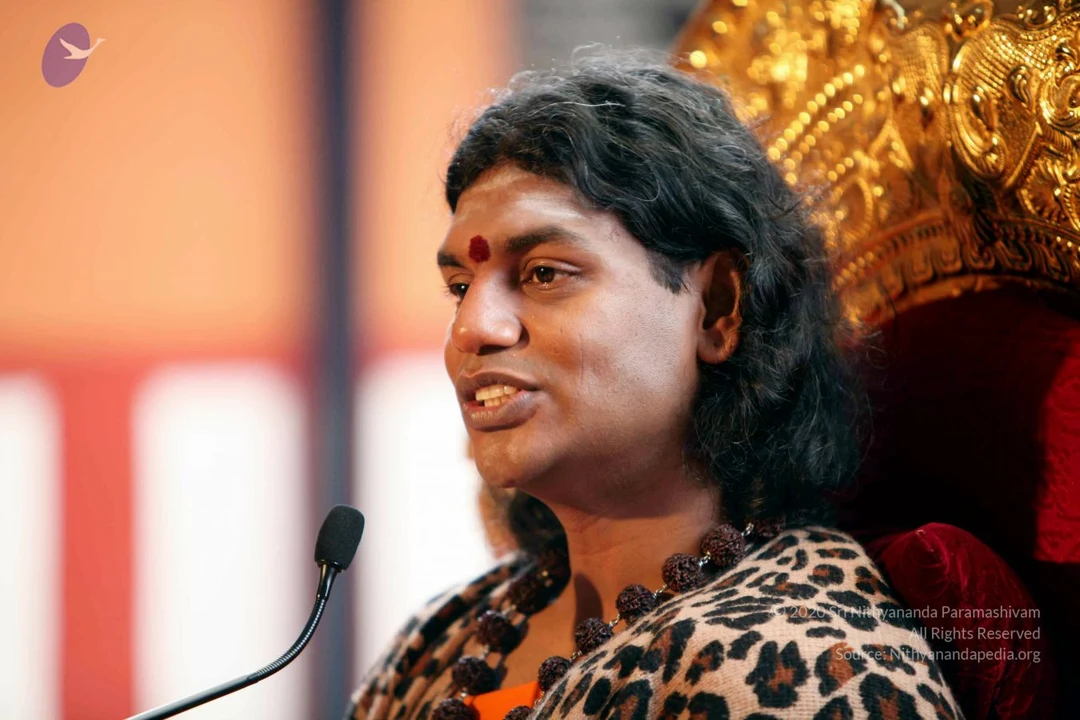
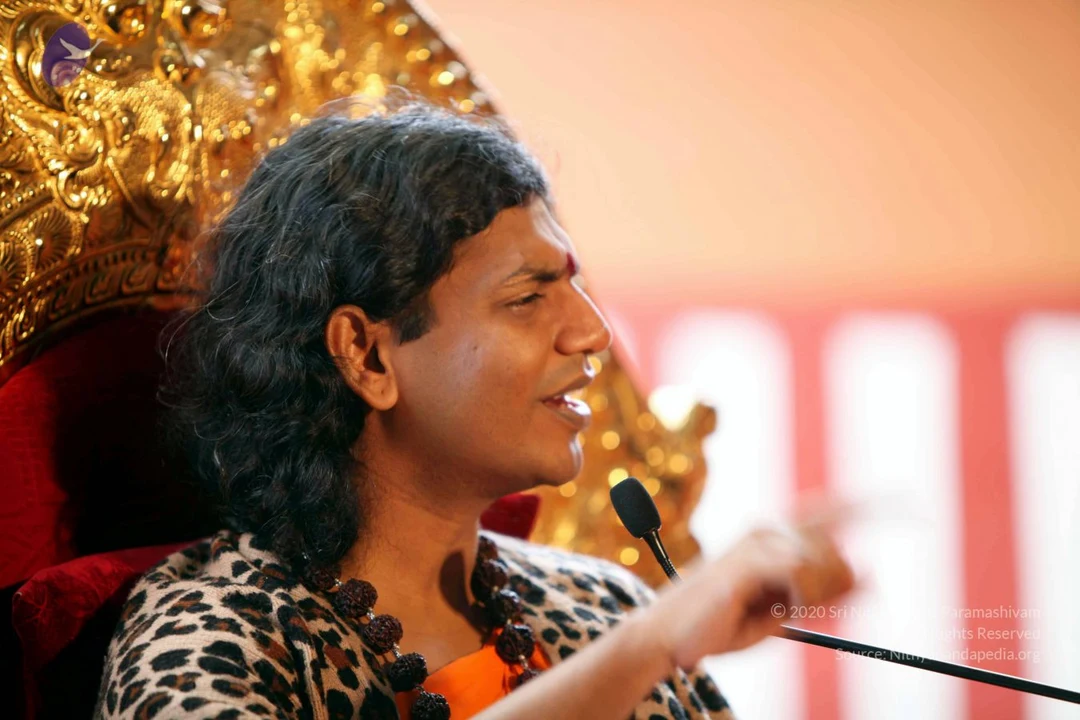
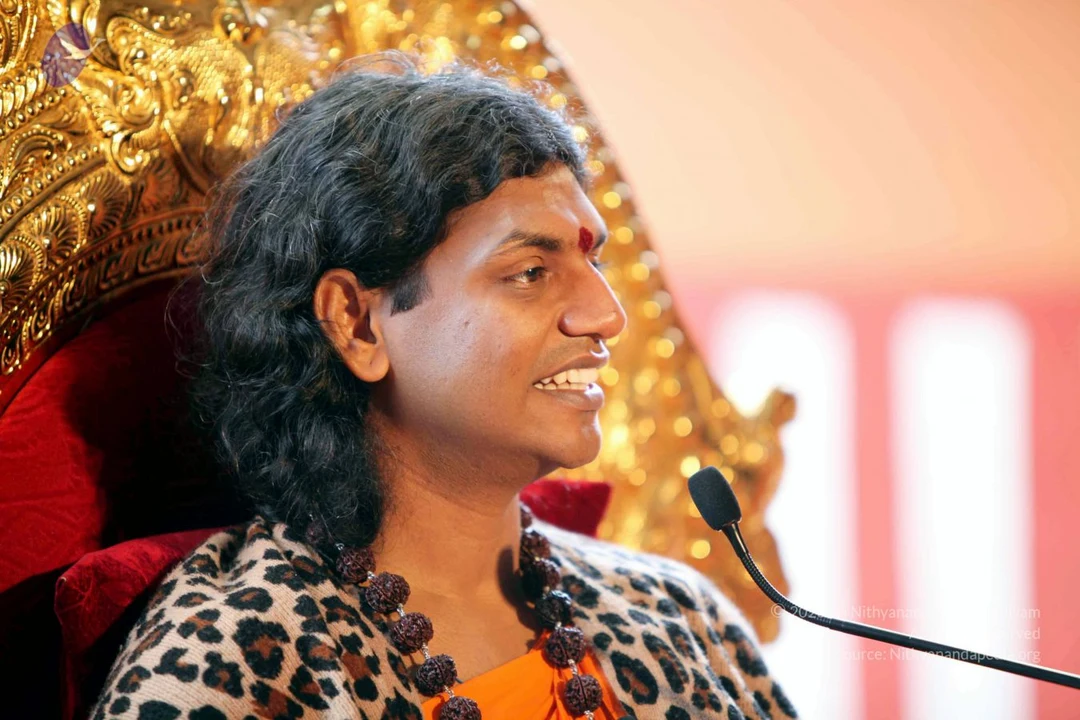
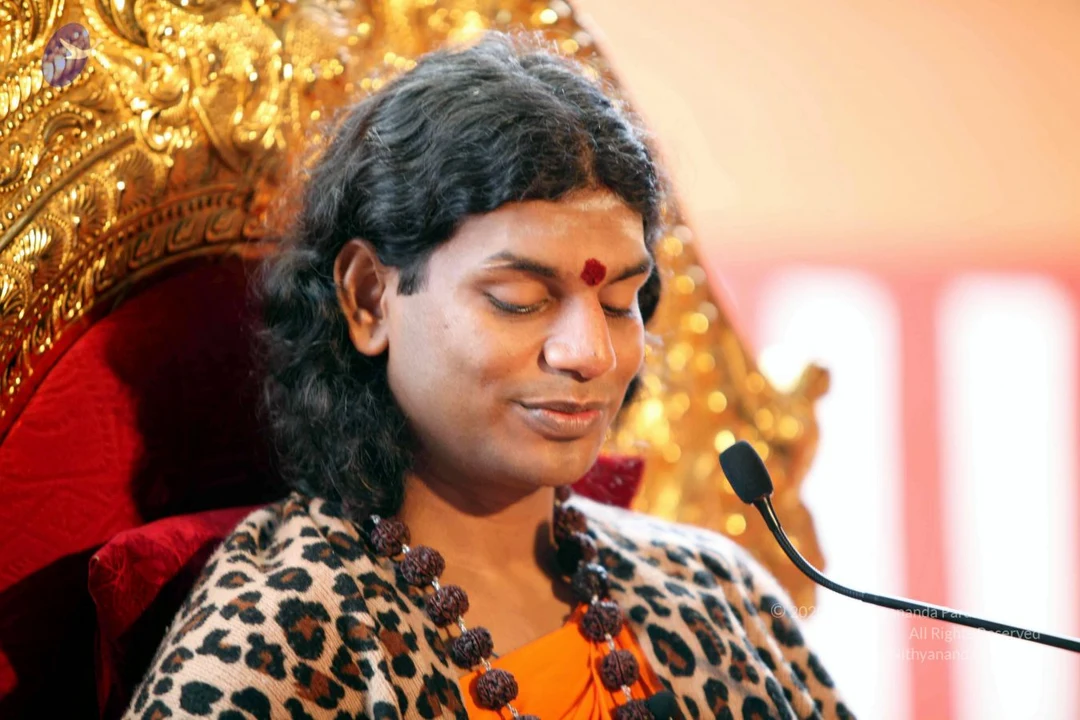
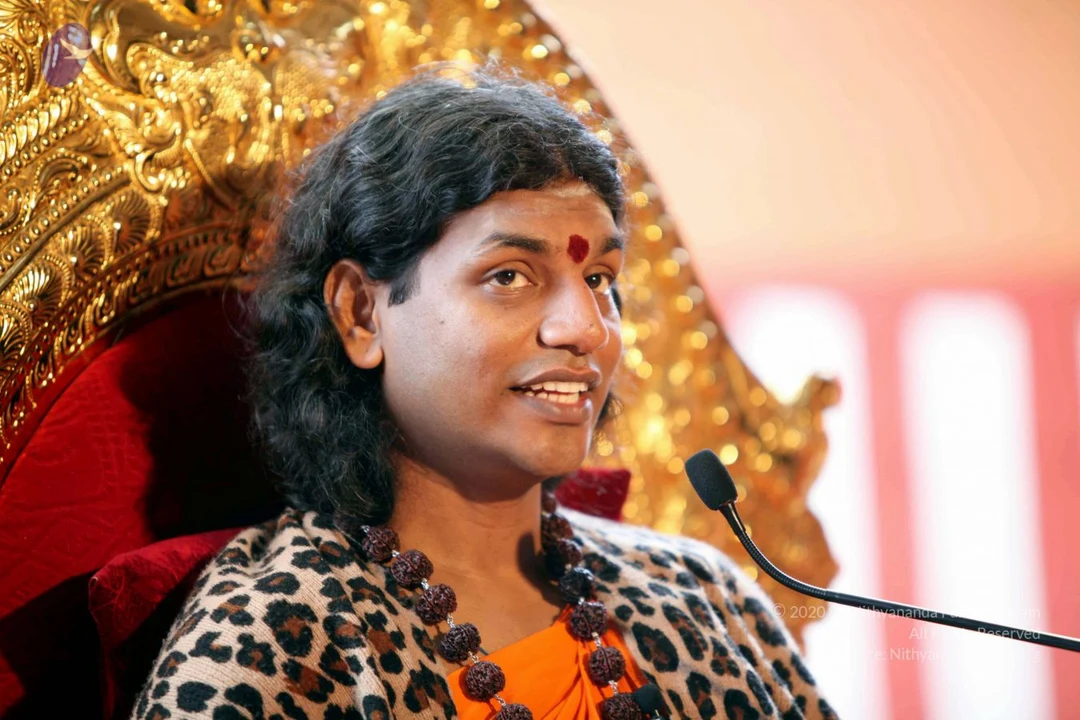
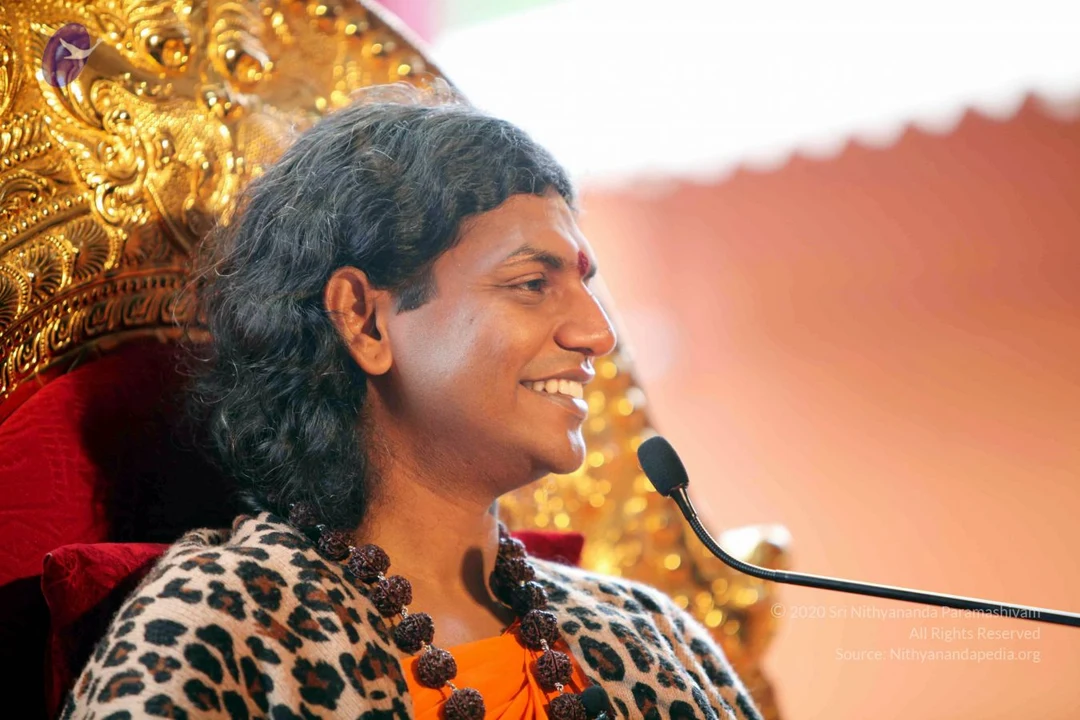
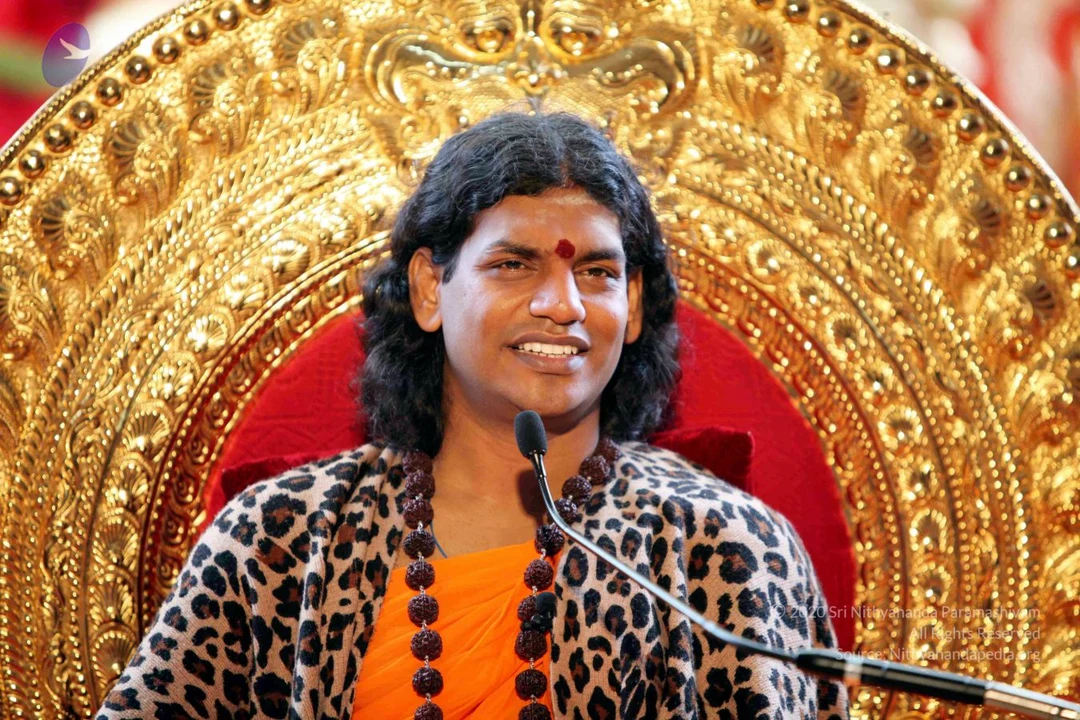
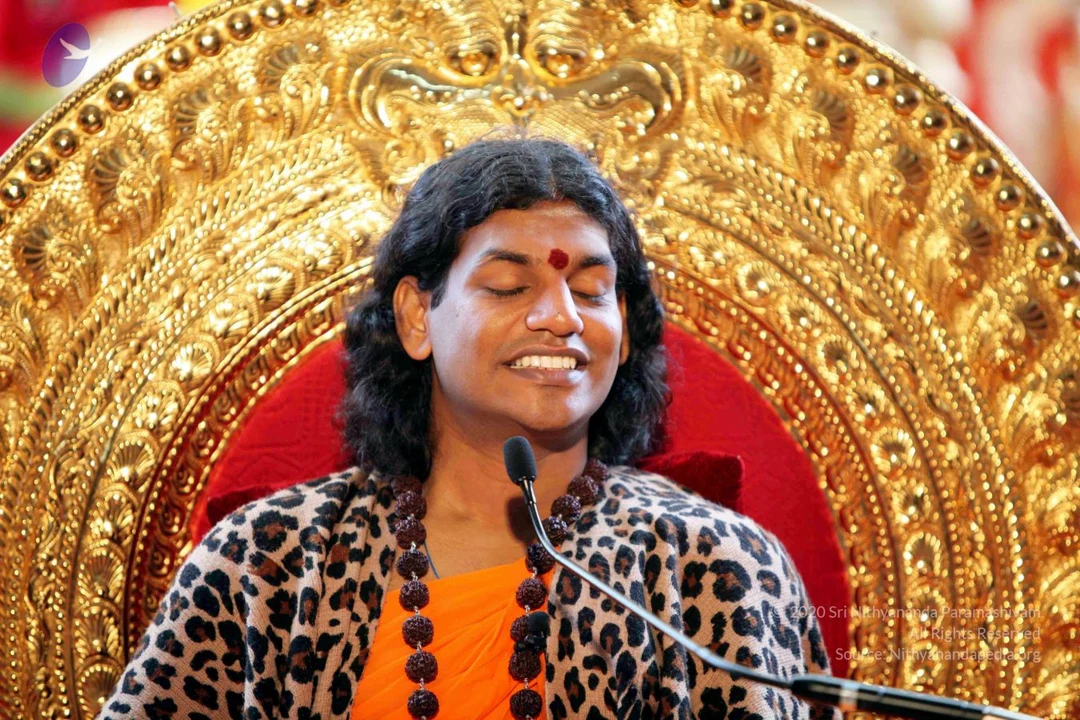
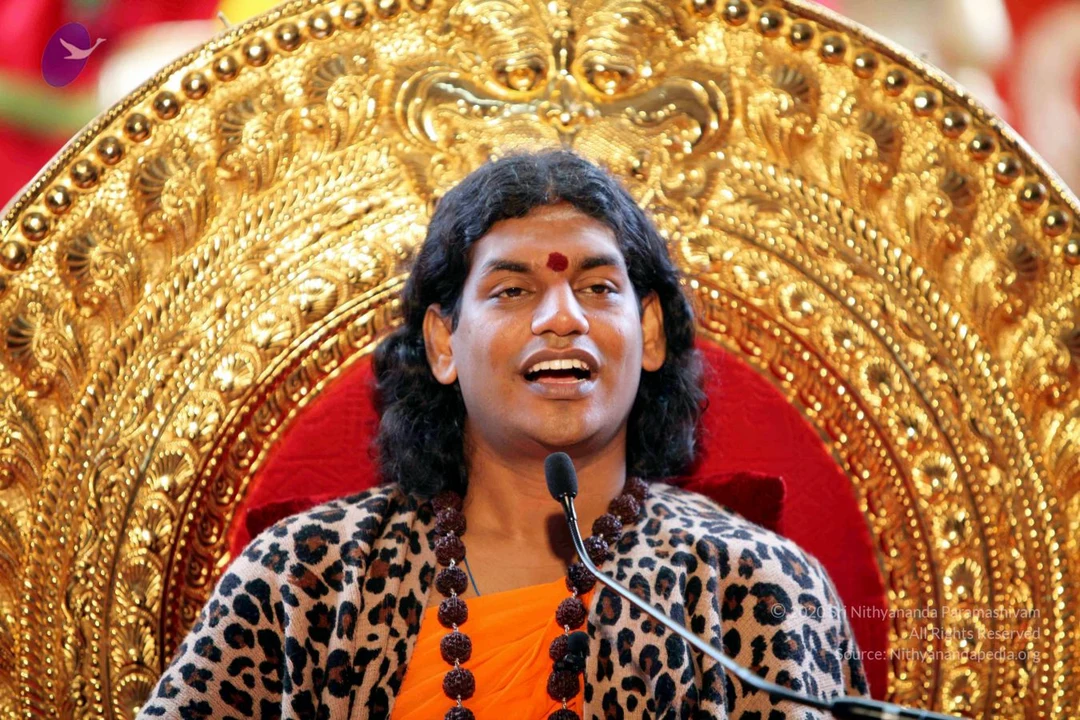
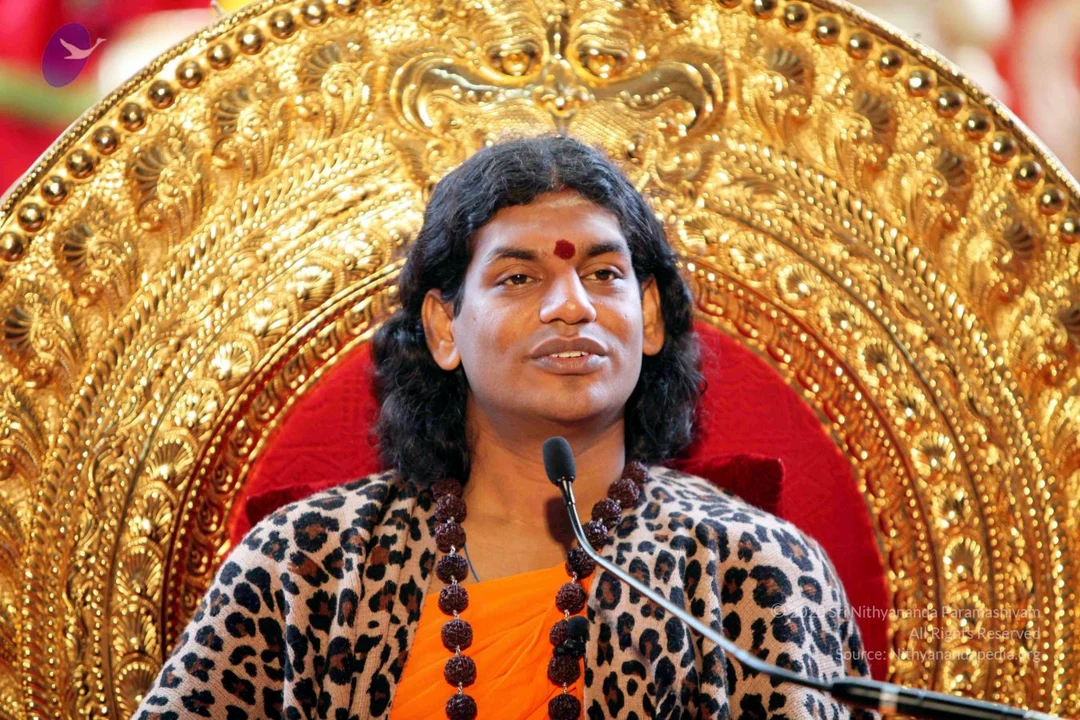
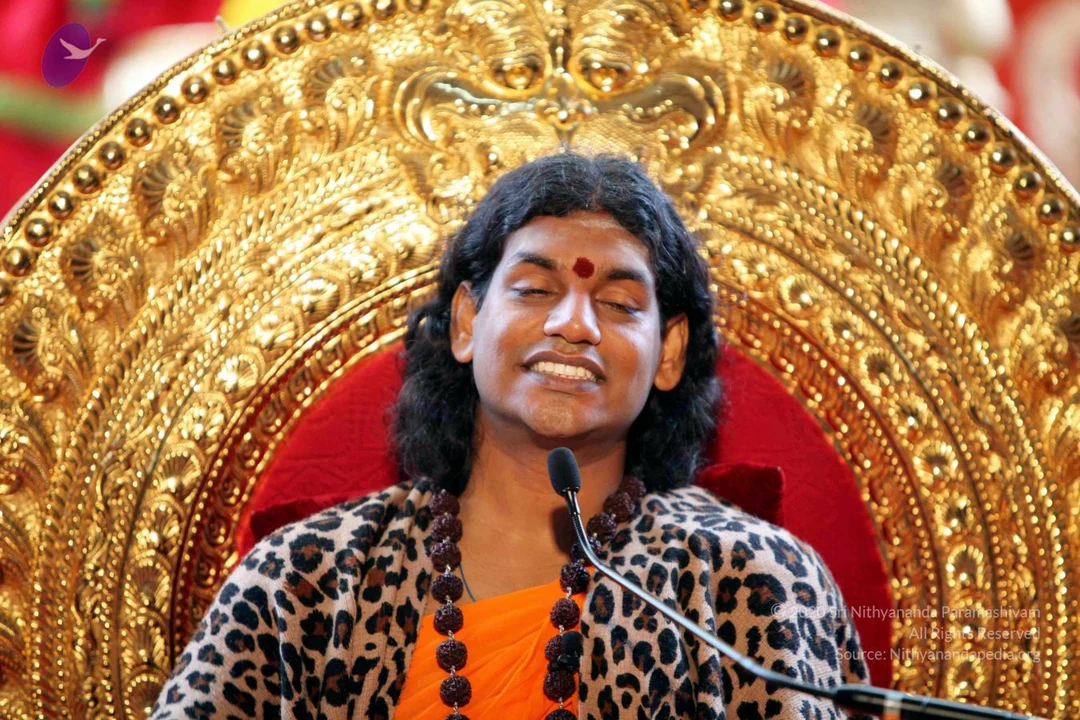
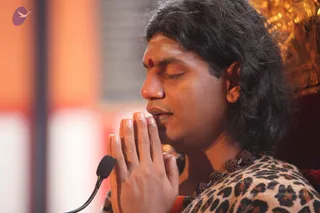
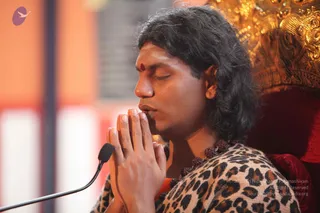
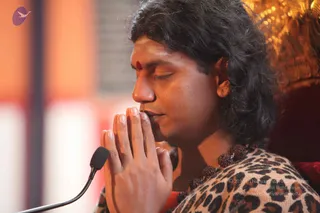
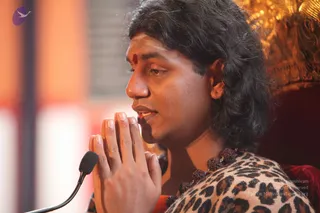
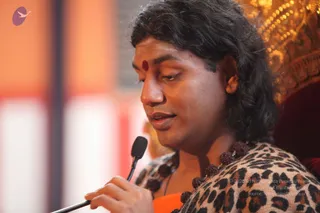
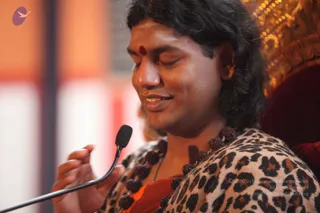
A close photograph of a man with long swept-back dark hair and eyes closed, palms pressed together in anjali mudra before a microphone on a stand. He wears a red tilak on his forehead, a rudraksha mala necklace, and a leopard-print shawl over his shoulders. The background shows warm orange walls and a blurred golden ornate carved backdrop.A man with long, swept-back dark hair sits with eyes closed and palms pressed together in namaste before a microphone on a stand. He wears a red bindi on his forehead, a leopard-print shawl over saffron clothing, and a dark rudraksha mala around his neck. Behind him is an ornate gold throne with a red upholstered cushion and an orange-and-white backdrop. The setting suggests a satsang or public talk; the visible appearance matches the Swamiji (probable) cues of long hair, saffron clothing, rudraksha mala and a shawl, seated as a speaker in person.Close-up photograph of a man with shoulder-length dark wavy hair and a red bindi on his forehead, eyes closed, palms pressed together in anjali mudra before a small microphone on a stand. He wears a leopard-print shawl and a dark beaded rudraksha-style mala at his neck. The background is warm orange and gold with an ornate golden carved frame at upper right. The page describes a morning satsang discourse on bhakti. Appearance-based a person cues: long swept-back hair, a rudraksha mala and a shawl, but identity is uncertain from appearance alone.Close photograph of a man with shoulder-length dark wavy hair and a red kumkum dot on his forehead, speaking into a small black microphone while holding his palms pressed together in namaskar. He wears a leopard-print shawl over the shoulders and a dark rudraksha mala at the neck. Behind him, an ornate gold and red throne-like seat and warm orange backdrop are visible. Only one physical person is visible. Identity is not established from appearance.Close photo of a man with long dark swept-back hair and a red bindi on his forehead, speaking into a black microphone held in his right hand while looking down. He wears a leopard-print shawl over orange clothing and a rudraksha mala around his neck. Behind him is an ornate gold and red chair with a golden carved backdrop, and the background shows orange and white panels. Swamiji (probable): the long swept-back hair, saffron clothing, rudraksha mala and ornate throne are consistent with the page's claim, so this is a discourse speaker at a satsang.Close photograph of a smiling man with eyes closed, wearing a red bindi and long dark hair, seated before a gold-ornate throne-like chair. He wears a leopard-print shawl over an orange garment and a rudraksha mala necklace. He holds his hand near a gooseneck microphone, appearing to speak during a satsang discourse. Background shows orange and white panels.

More Photographs from the day
108 photosSource gallery
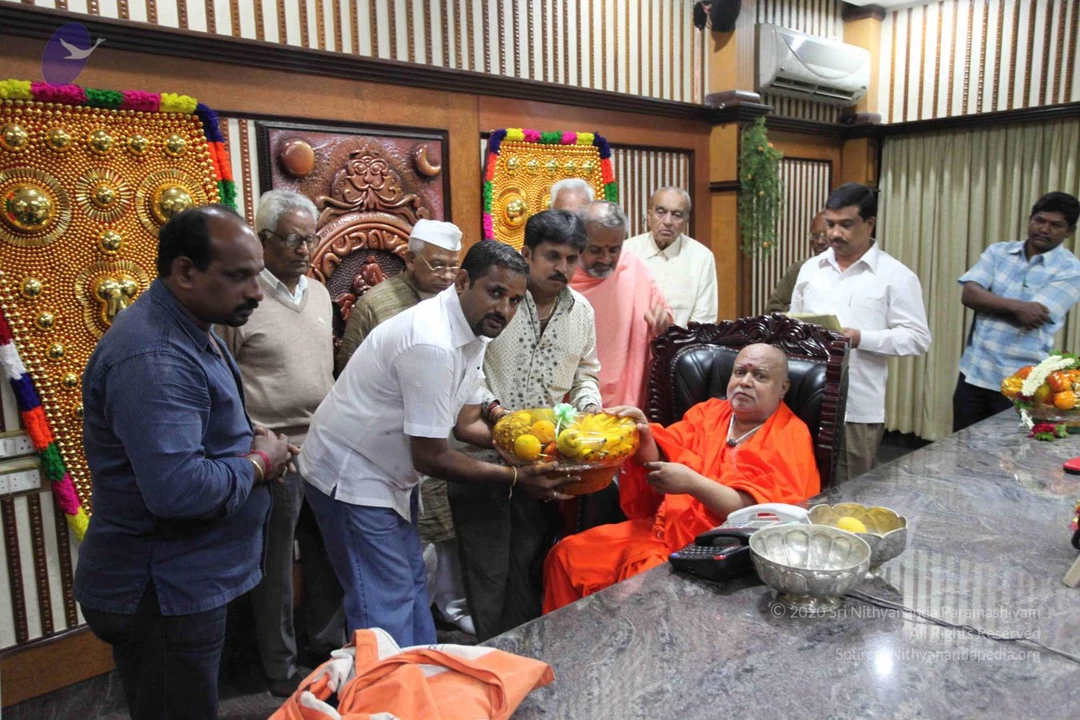
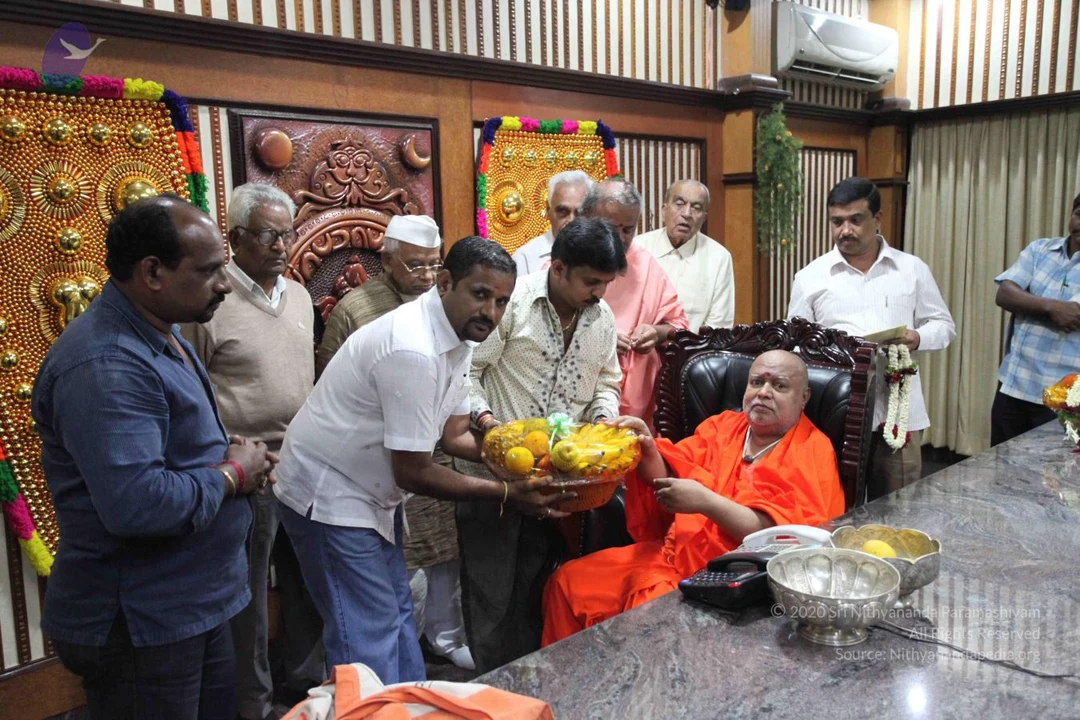
A photograph inside an ornate wooden-panelled hall. Two gold-coloured embossed panels with coloured garlands flank a carved copper-toned deity medallion on the back wall. A bald man in orange robes sits in a dark leather chair, wearing a maroon-and-gold shawl, while a woman in orange garments offers a fruit-filled basket toward him. Behind them, a man in orange robes stands, and another orange-robed figure stands at left. A man in a navy sweater stands at far left by a grey marble counter holding silver bowls and a small decorative elephant figurine. A man in grey shirt stands at the right edge.Indoor room with a granite-topped counter in the foreground, with two decorative golden panels garlanded with multicoloured flowers flanking a carved wooden Ganesha relief. A seated figure in saffron-orange clothing sits at the right, in front of a dark carved chair, with a pale pink-robed figure standing behind the chair. On the left, a man in orange clothing stands beside a seated person in a grey-and-orange shawl at a magenta chair, and another standing figure in orange robes stands in the middle near the golden panel. Brass bowls and small items sit on the counter.A photograph of an indoor room with striped wood-panelled walls, a wall air conditioner and a granite-topped counter in the foreground. Behind the counter, a seated figure with a shaved head wears an orange garment and sits in a dark wooden chair before a carved copper relief of Ganesha riding a mouse, flanked by two gold-coloured ornamental panels decorated with multicoloured garlands. A standing man in a pink-saffron robe stands at the right beside the chair. On the left, a man in orange robes stands near the door, with another orange-clad man beside him and a third standing in the centre, while a man in a grey and orange top leans on the counter. Two metal bowls sit on the counter.A photograph of an indoor room with a marble-topped table in the foreground. Behind it, a seated bald man in orange robes sits in a dark wooden chair beside a standing man in pink robes on the right. Two gold-toned ceremonial panels with coloured bead-and-tassel borders flank a carved wooden relief of Ganesha. On the left, two people in orange robes stand near the door, and a seated man in a grey and orange jacket gestures toward the table, where two silver bowls and small items sit. A wall air-conditioner is visible at upper left. Five people are visible.A man with long, dark, swept-back hair sits cross-legged in meditation on an orange cushion placed on a woven straw mat, within a circular concrete platform decorated with white painted mandala motifs and grey gravel border. He wears an orange robe with a leopard-print shawl over his shoulders and a dark rudraksha mala around his neck, eyes closed, hands resting in his lap. Behind him stand dark stone deity murtis, coconut palms, and a striped multicolour cloth hanging from a ring above. A large map board and red-trimmed plinths are in the background. a person by appearance cues: long swept hair, saffron-orange robe and rudraksha mala, though the identity is uncertain.A man with long dark hair sits cross-legged with eyes closed on an orange cushion over a woven mat, in an open outdoor courtyard with palm trees. He wears saffron-orange robes, a leopard-print shawl and a dark rudraksha-style bead mala around his neck. He appears to be in meditation. Behind him stand black stone deity murti statues on red-based plinths, and a striped cloth banner hangs from a ring at the top right. A white-dotted kolam pattern with grey stones surrounds the seat. A large information board stands to the left. a person appears as the seated meditator, based on saffron robes, long swept hair and rudraksha beads.