Skip to content
Thursday

14 October 2010

Dated photos
202
Source pages
1
Media
2
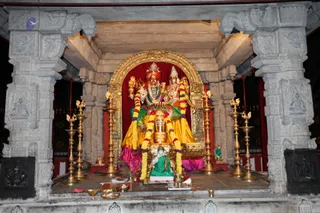
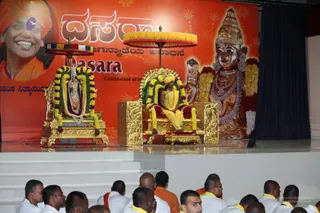
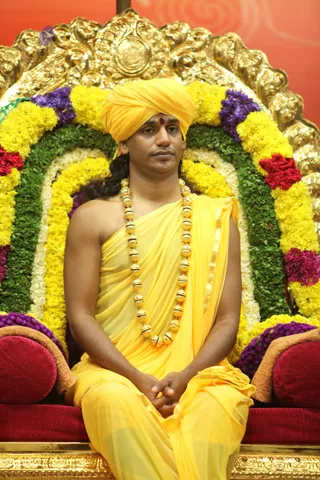
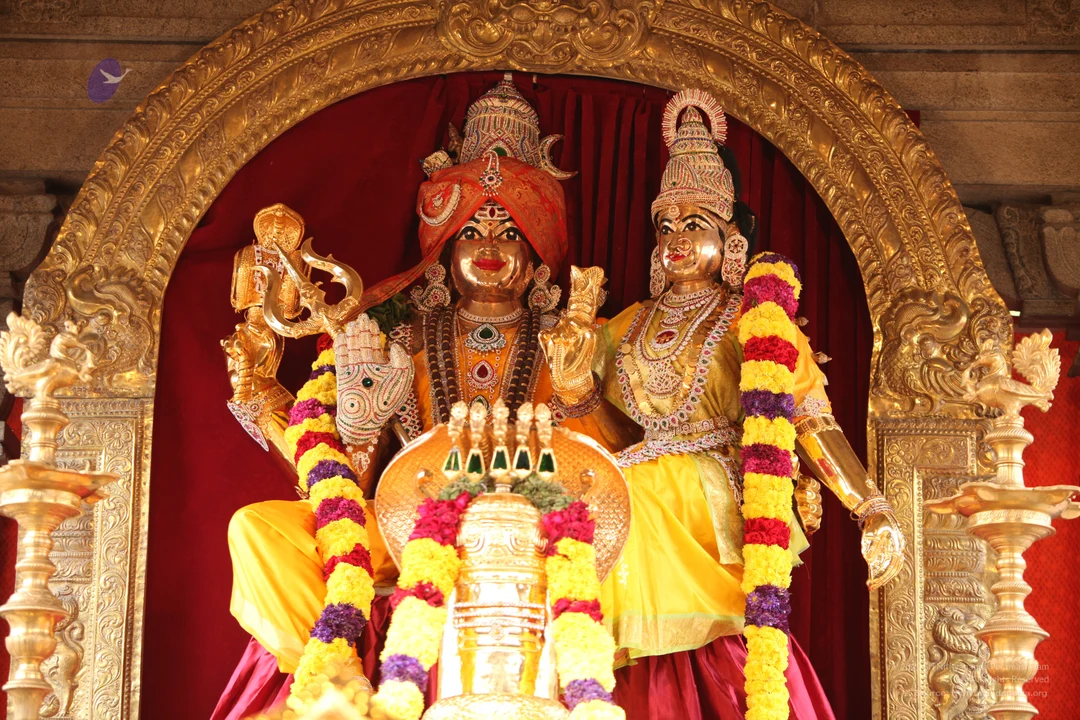
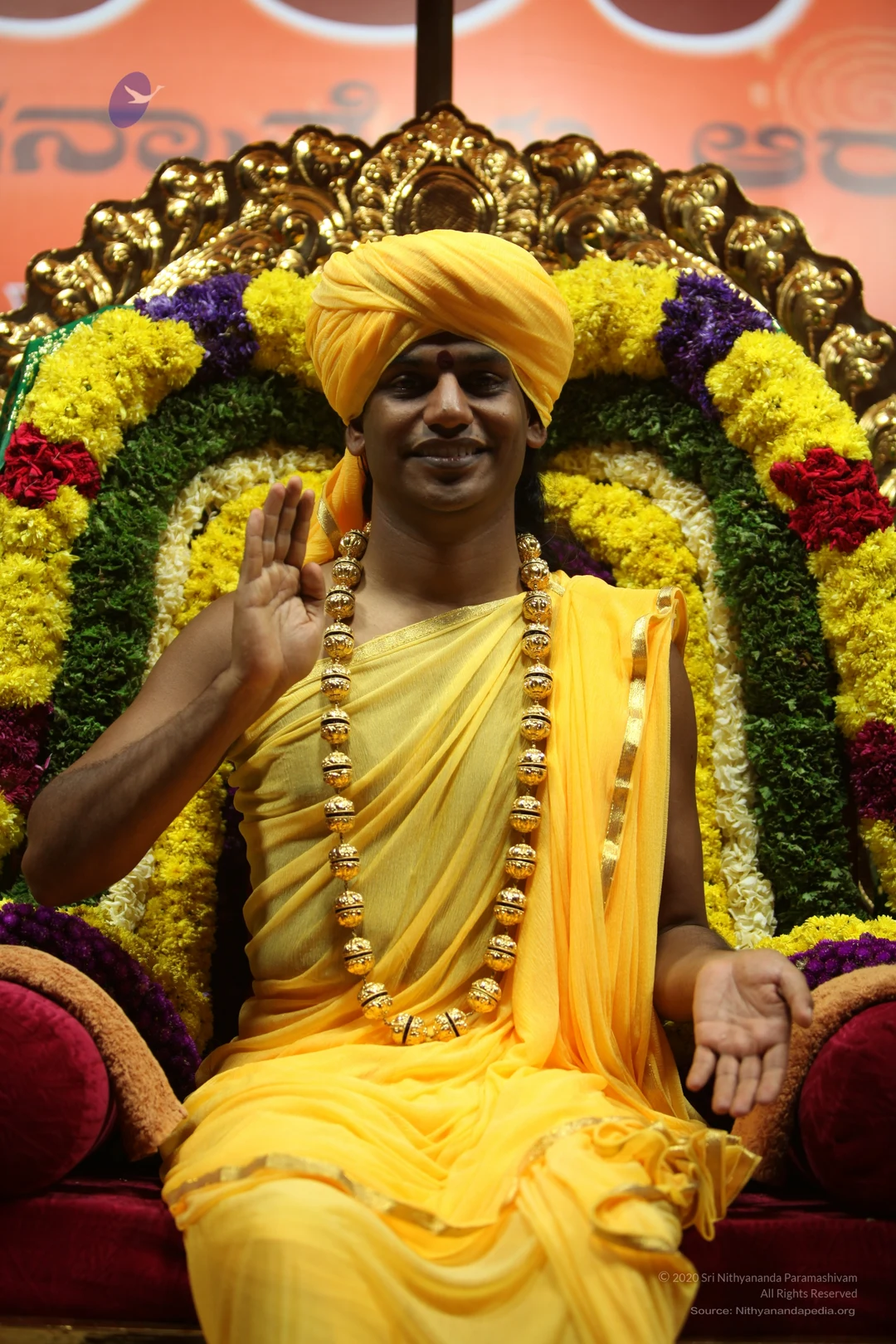
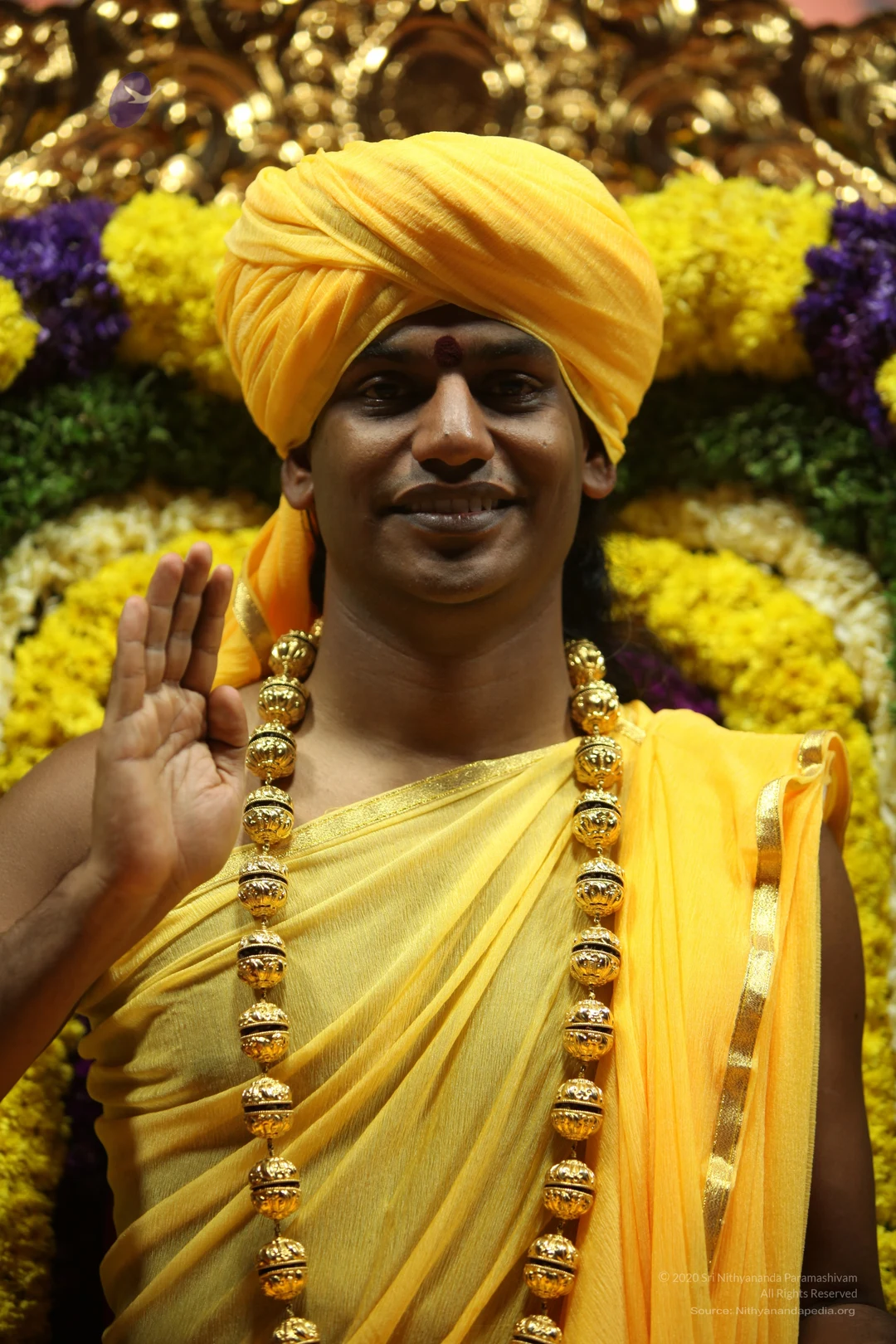
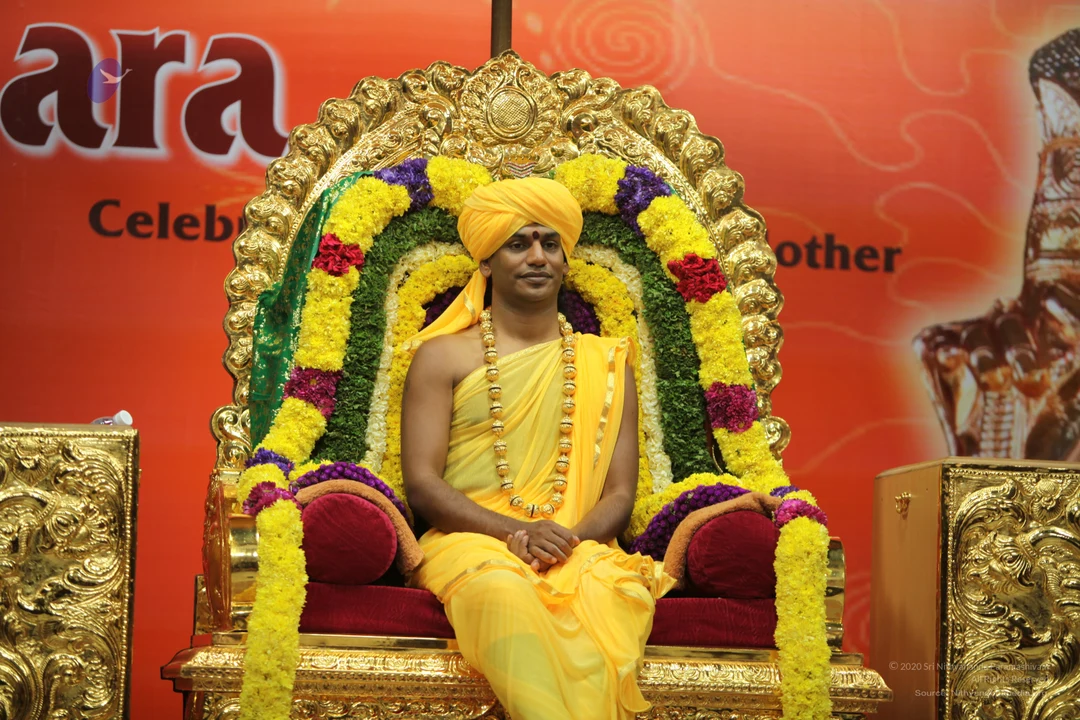
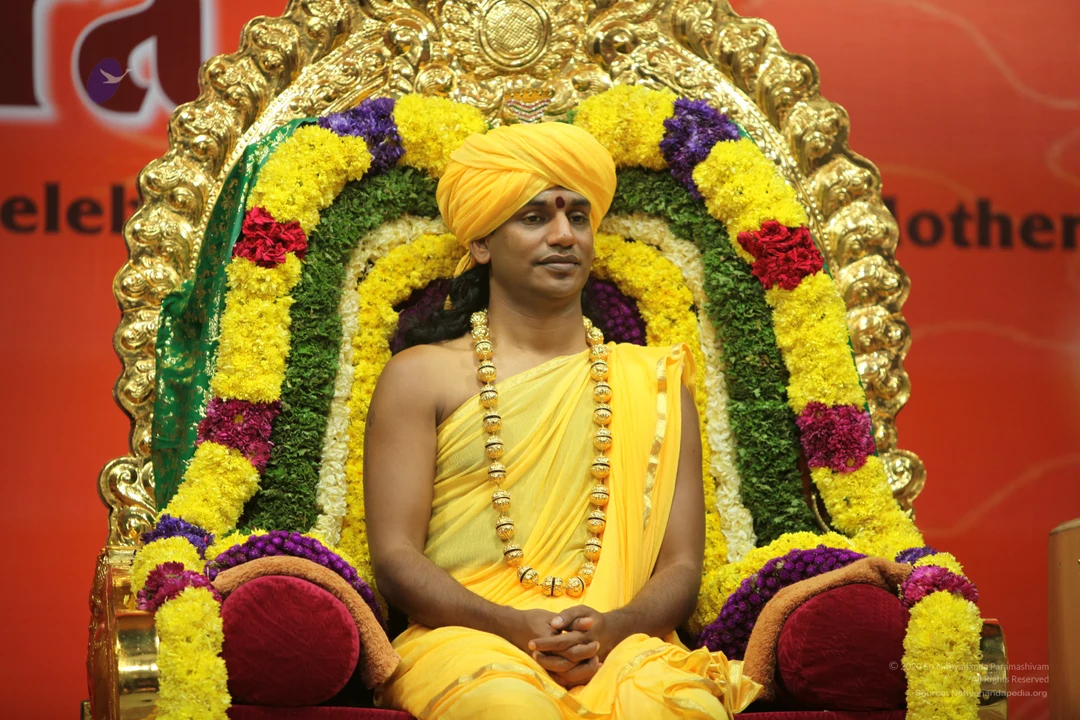
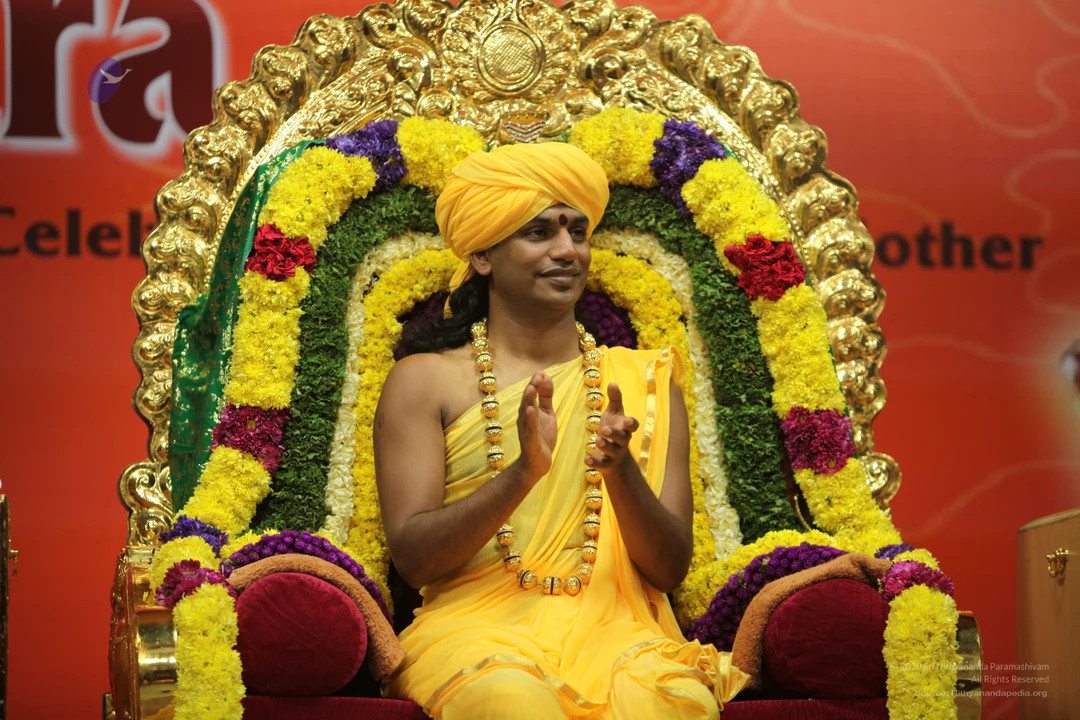
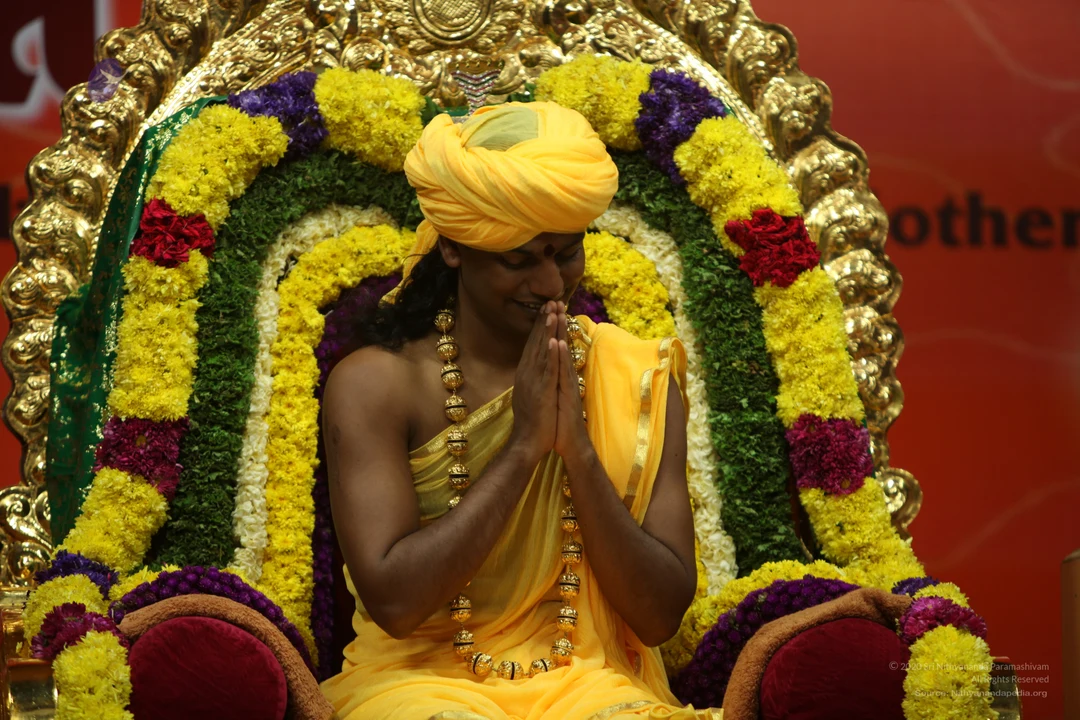
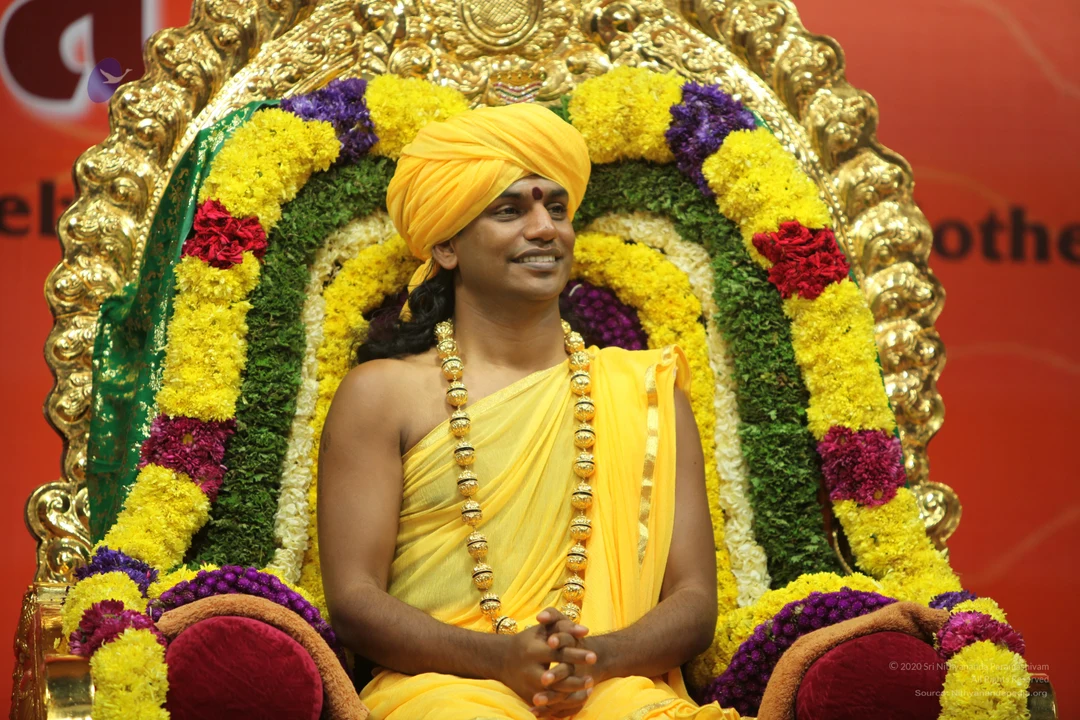
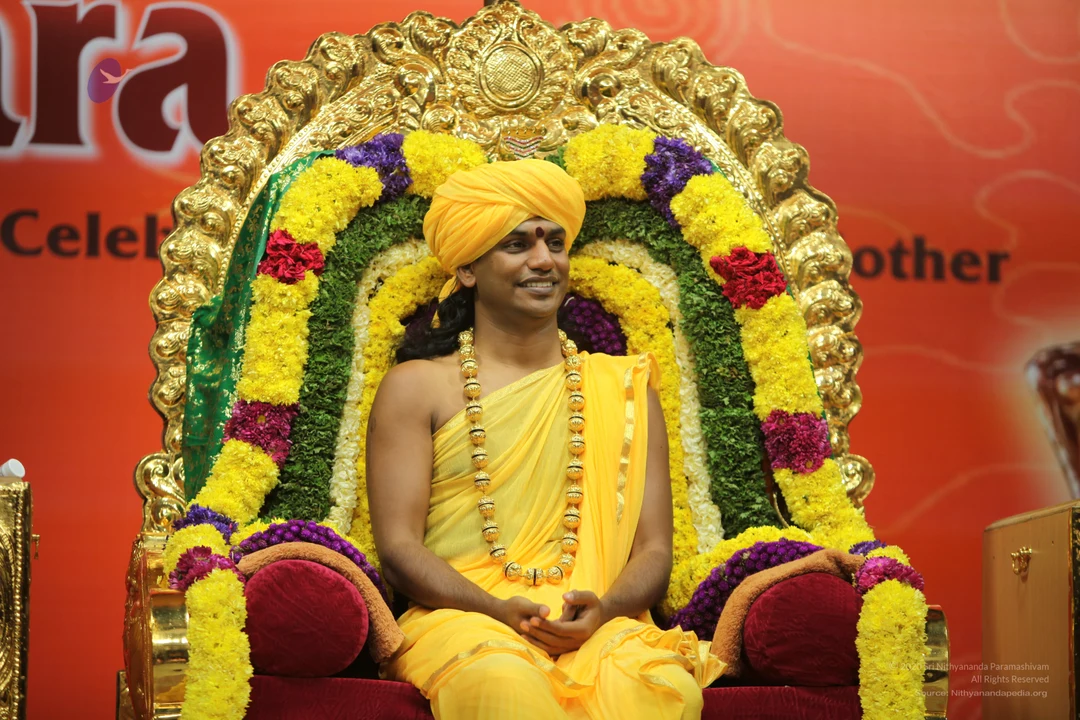
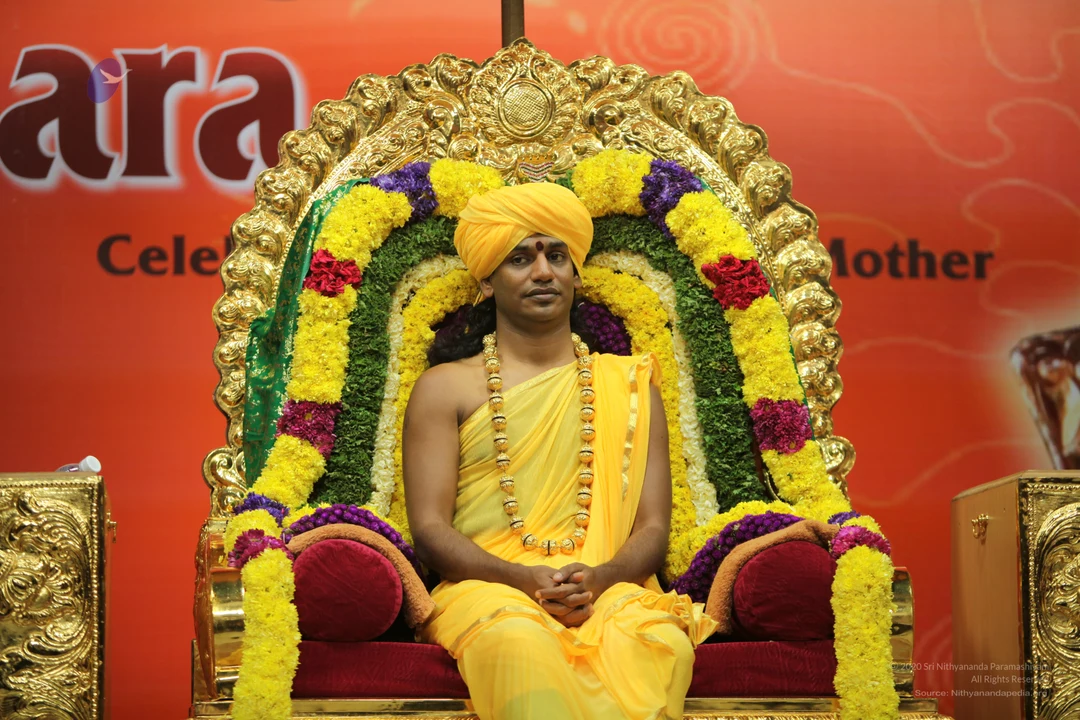
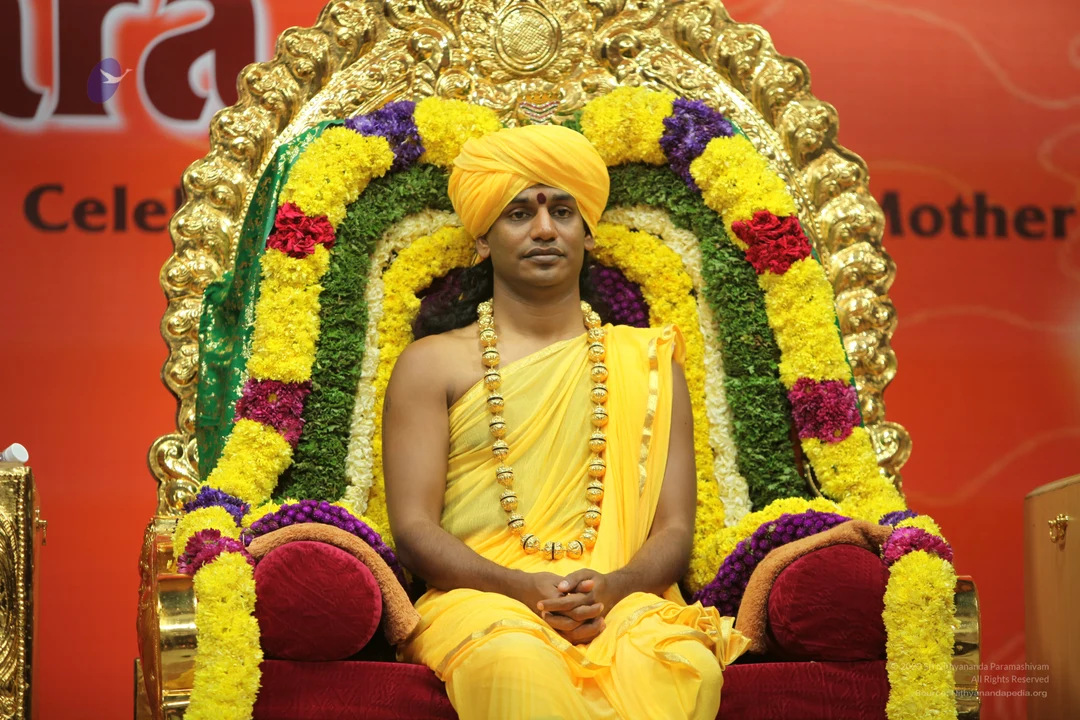
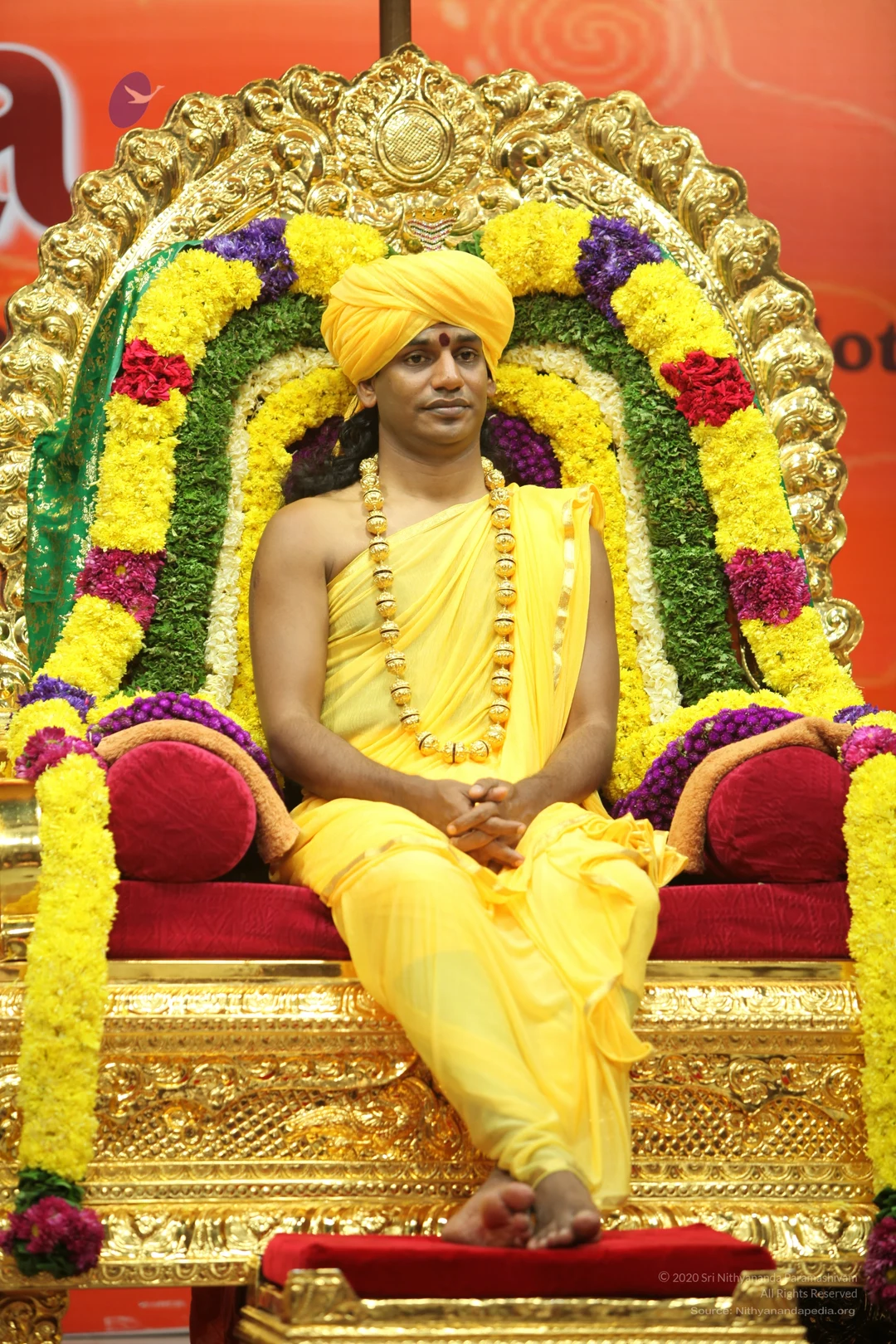
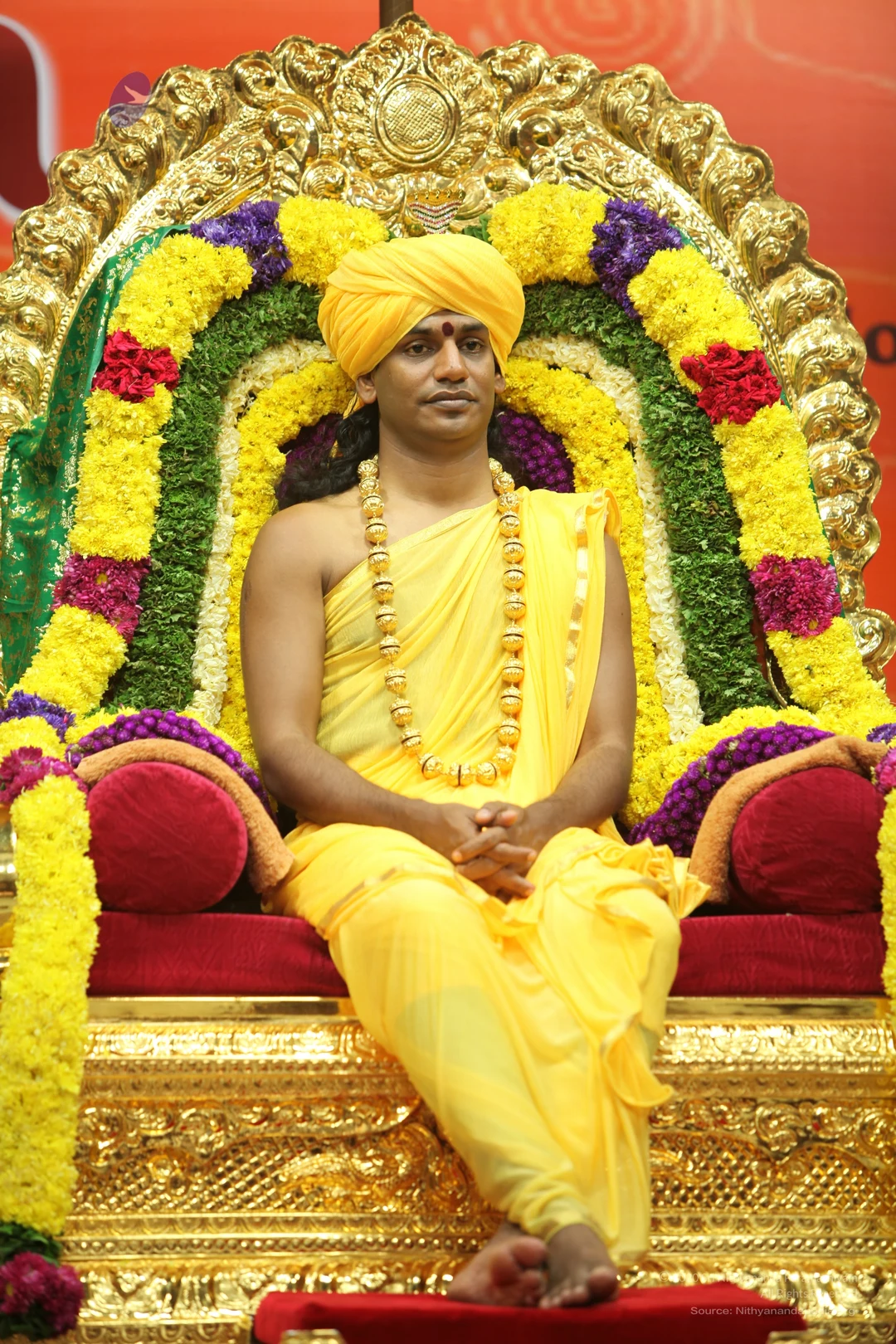
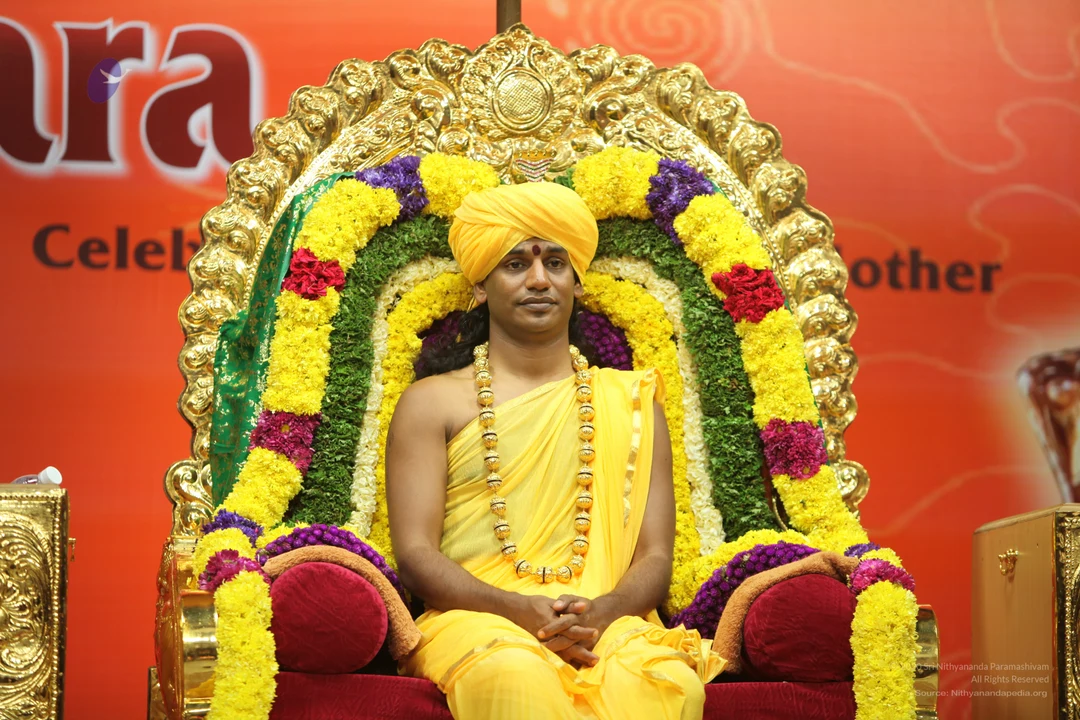
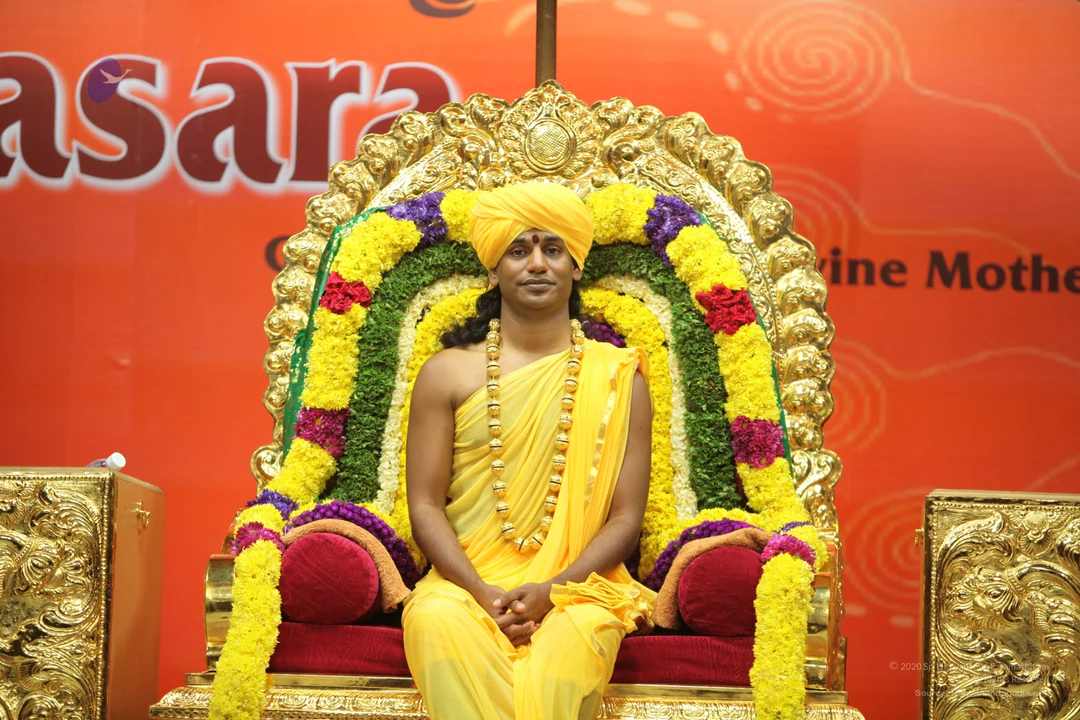
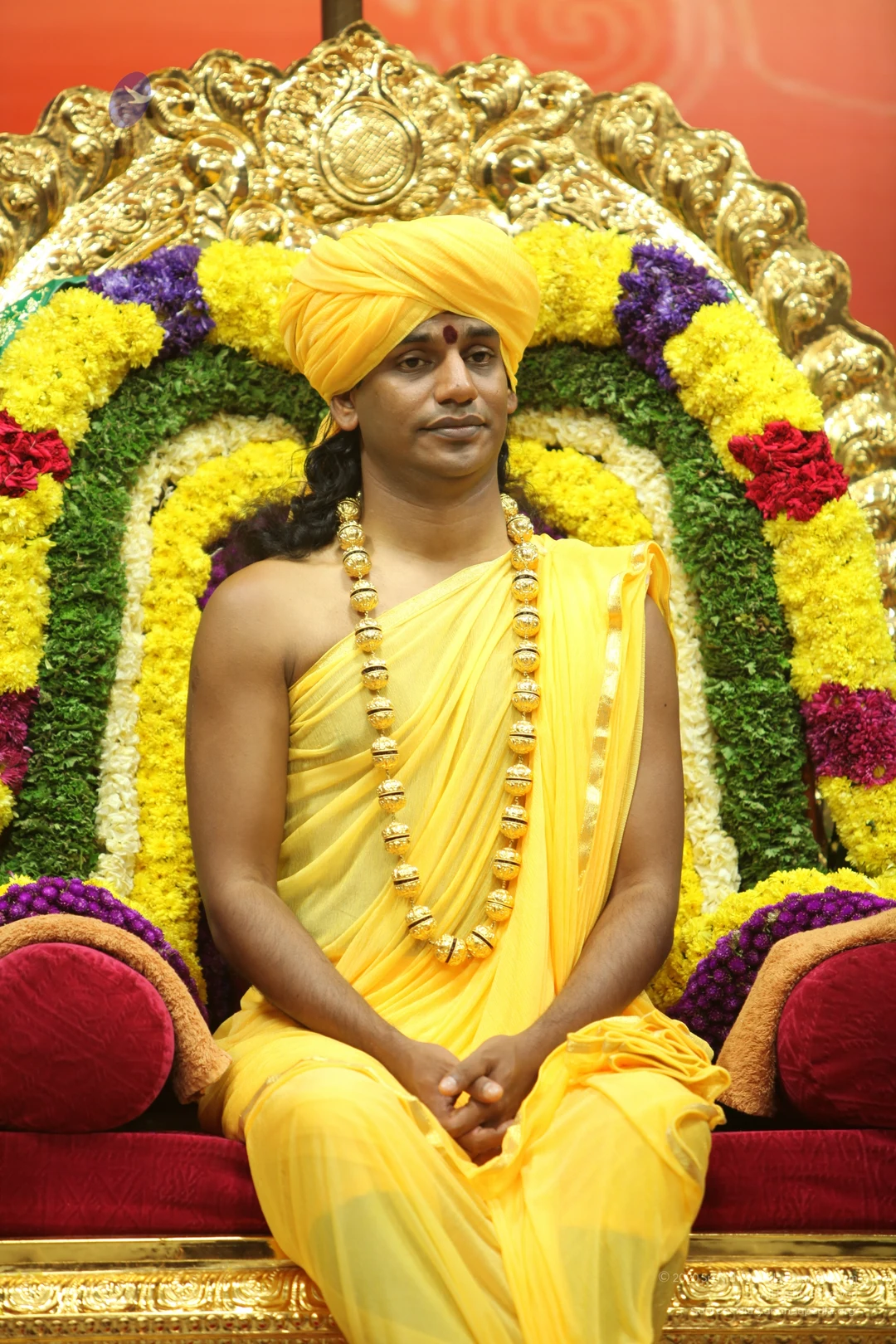
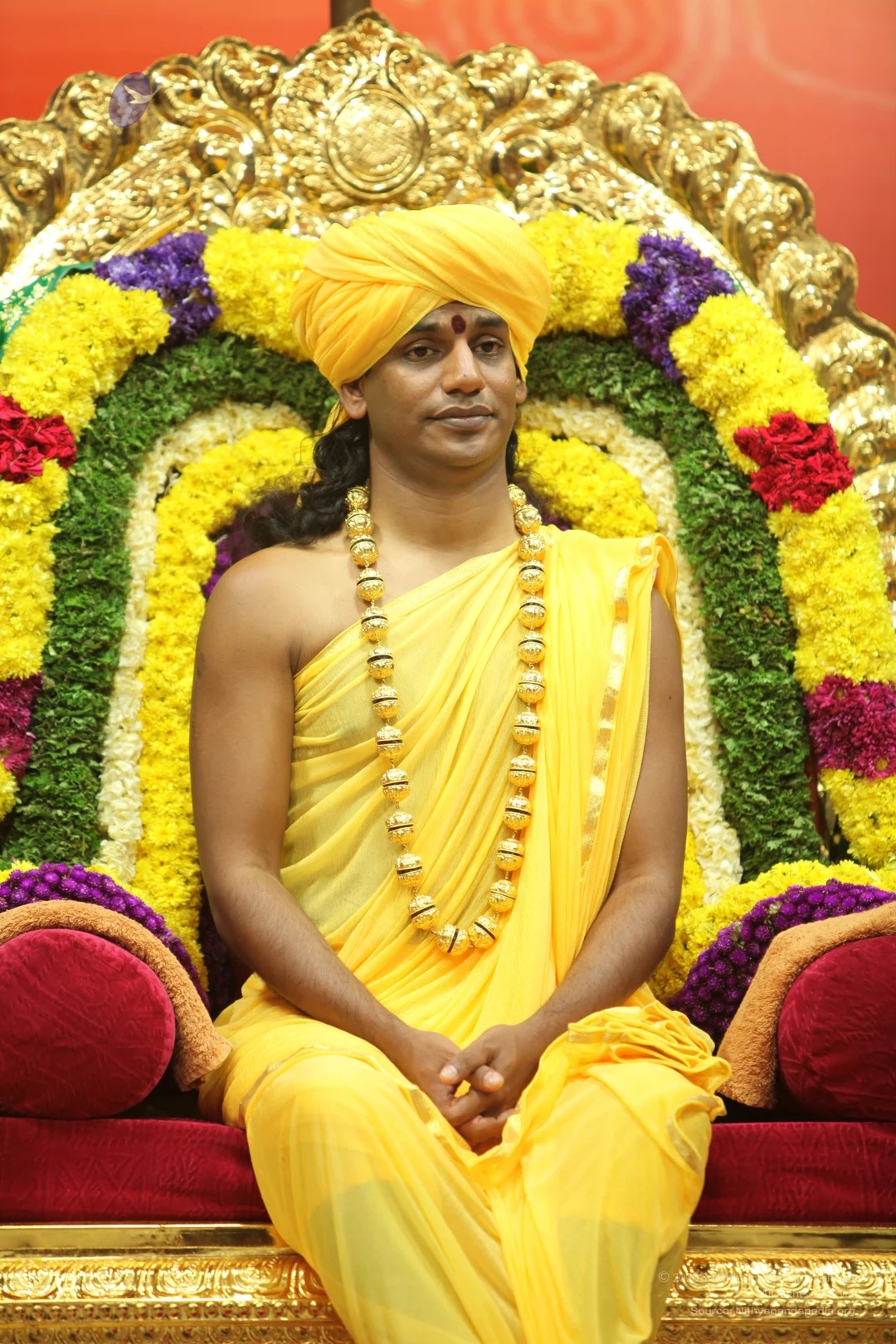
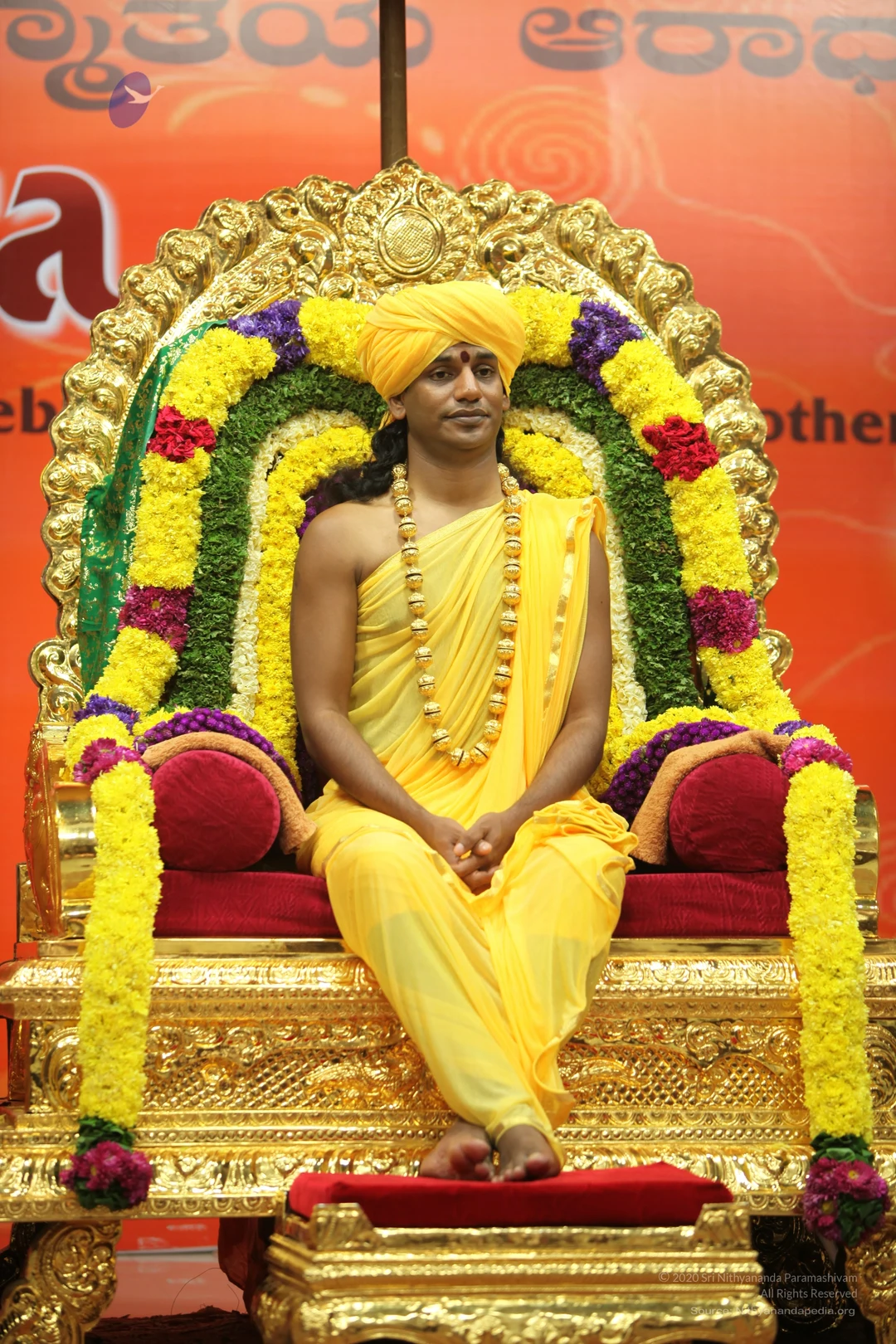
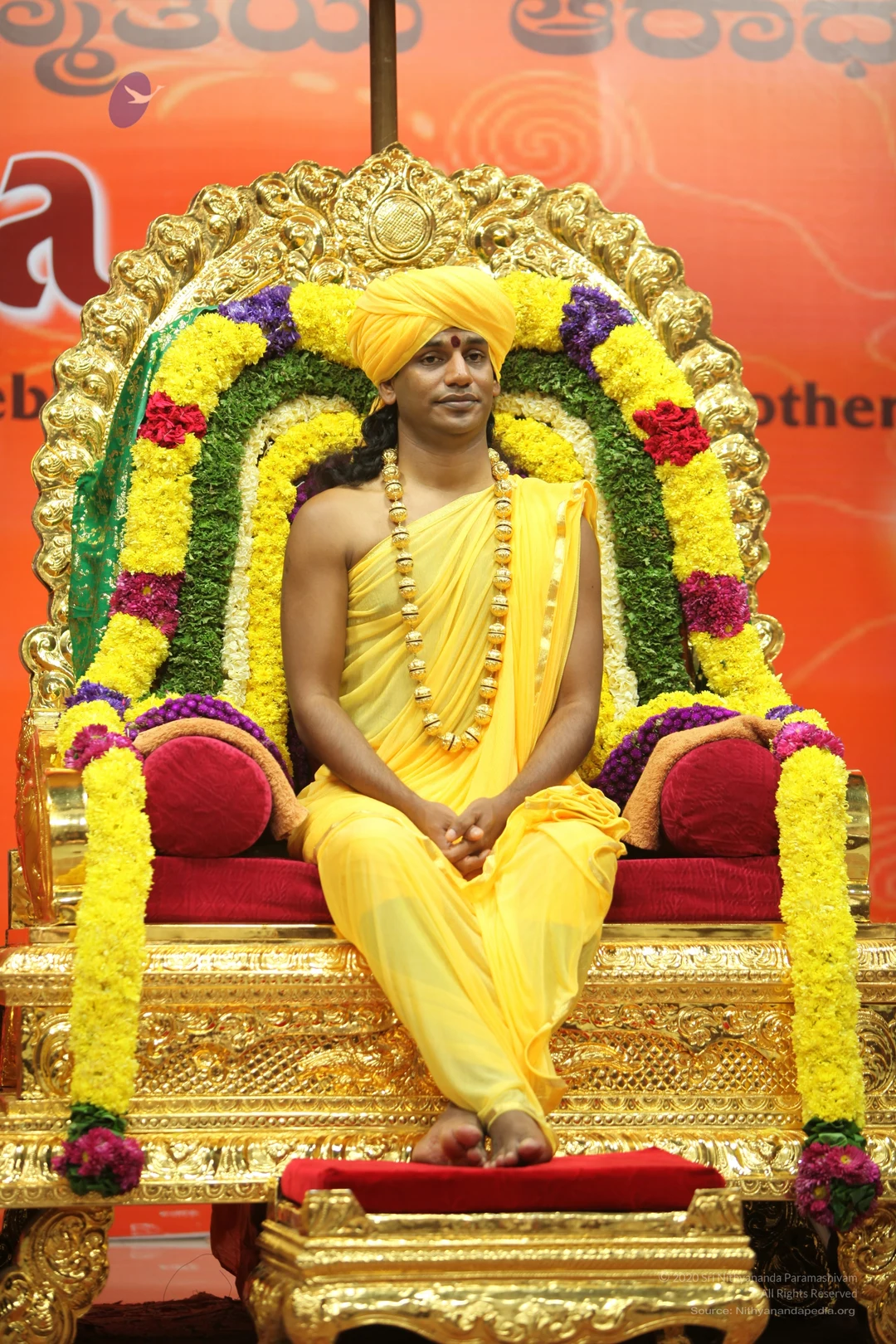
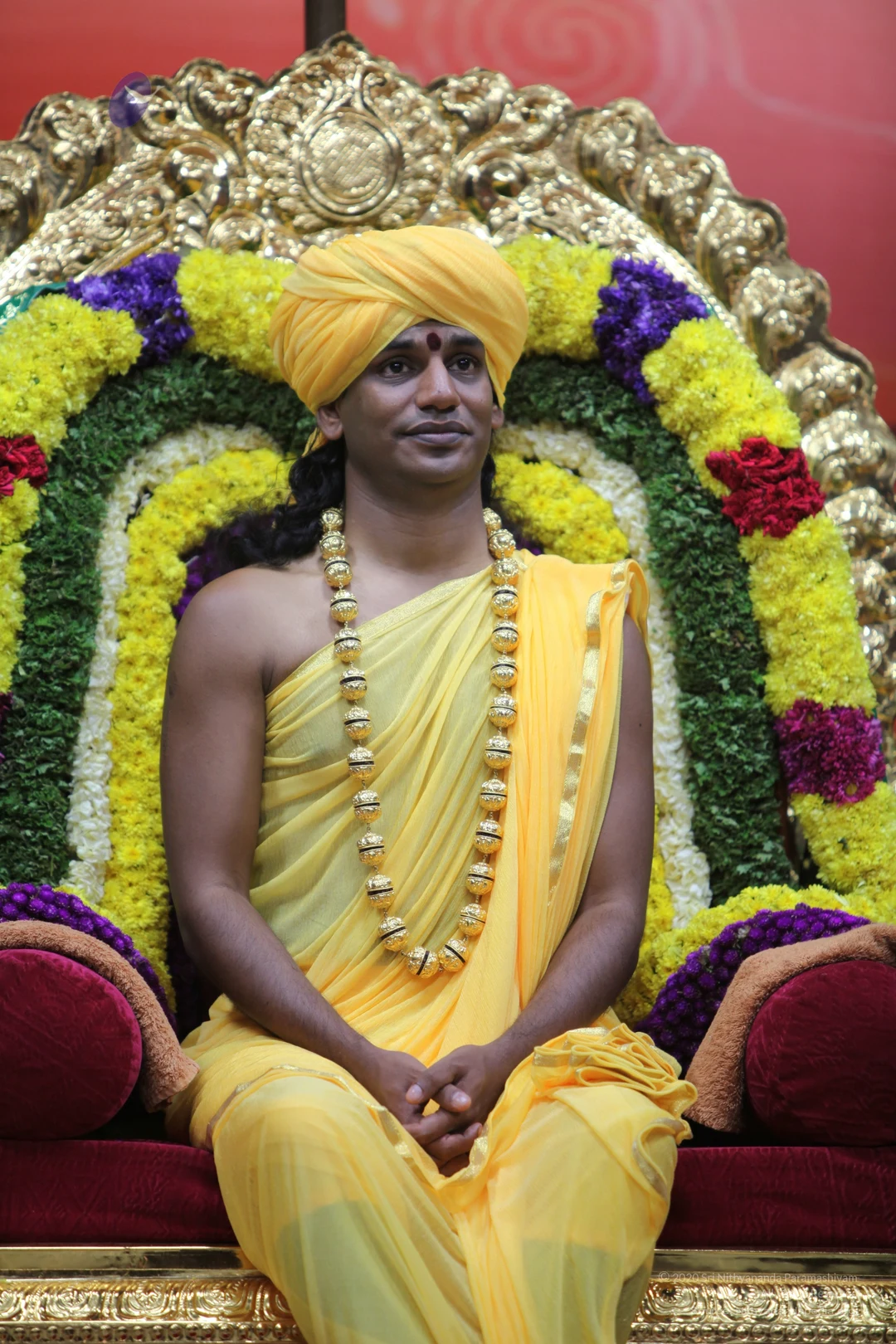
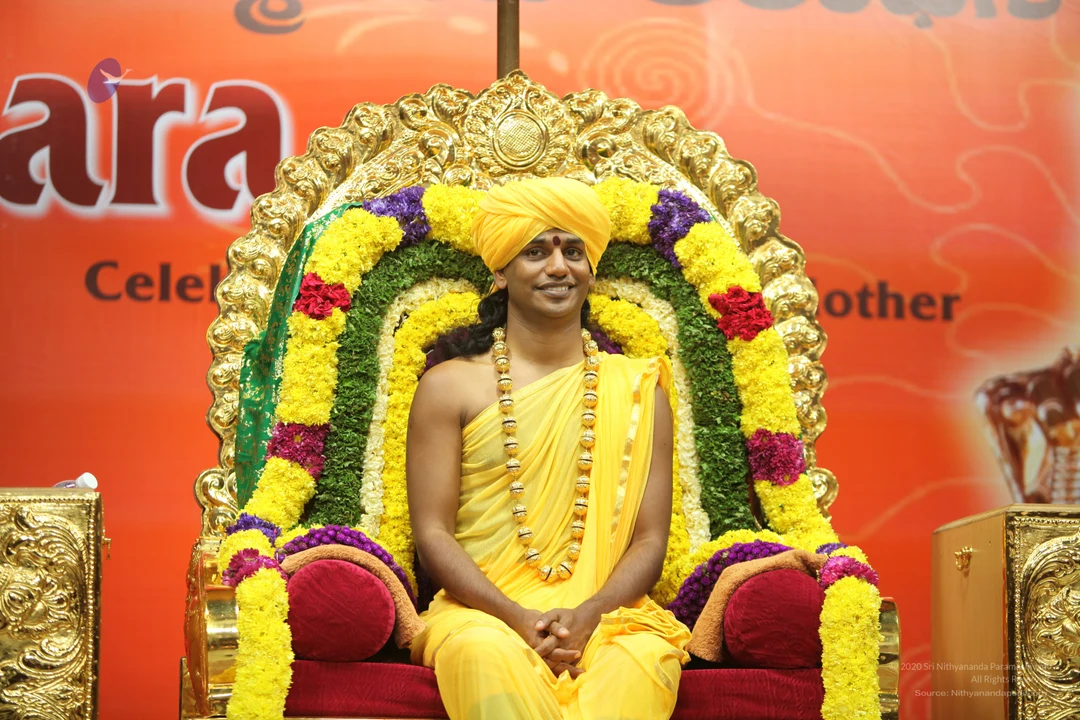
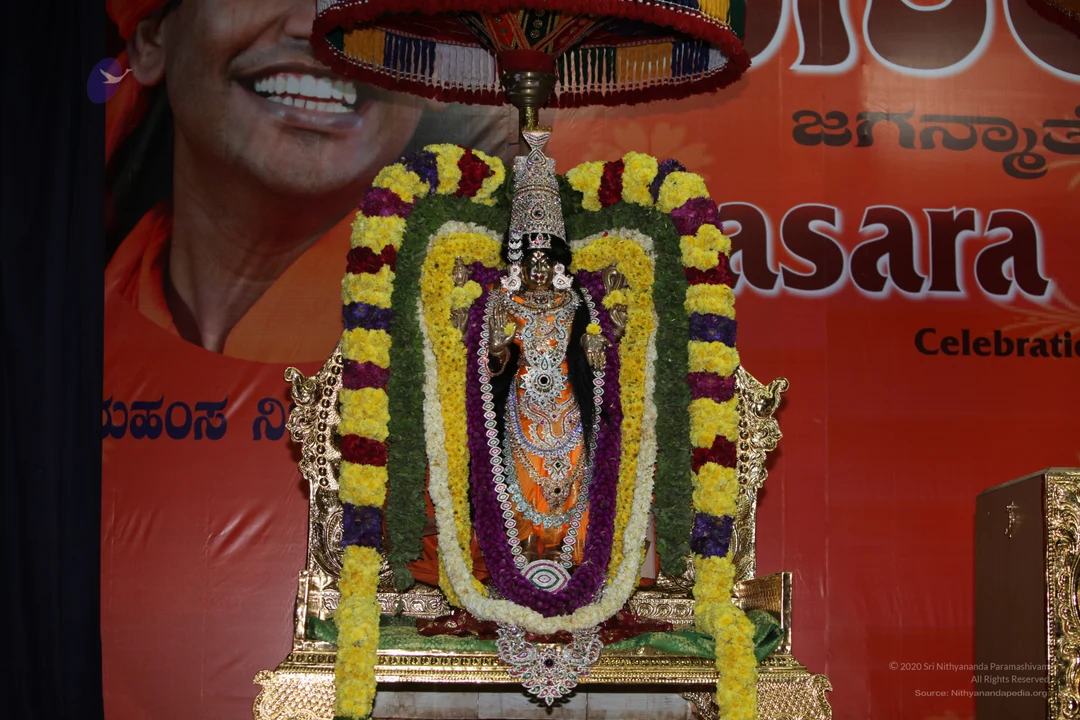
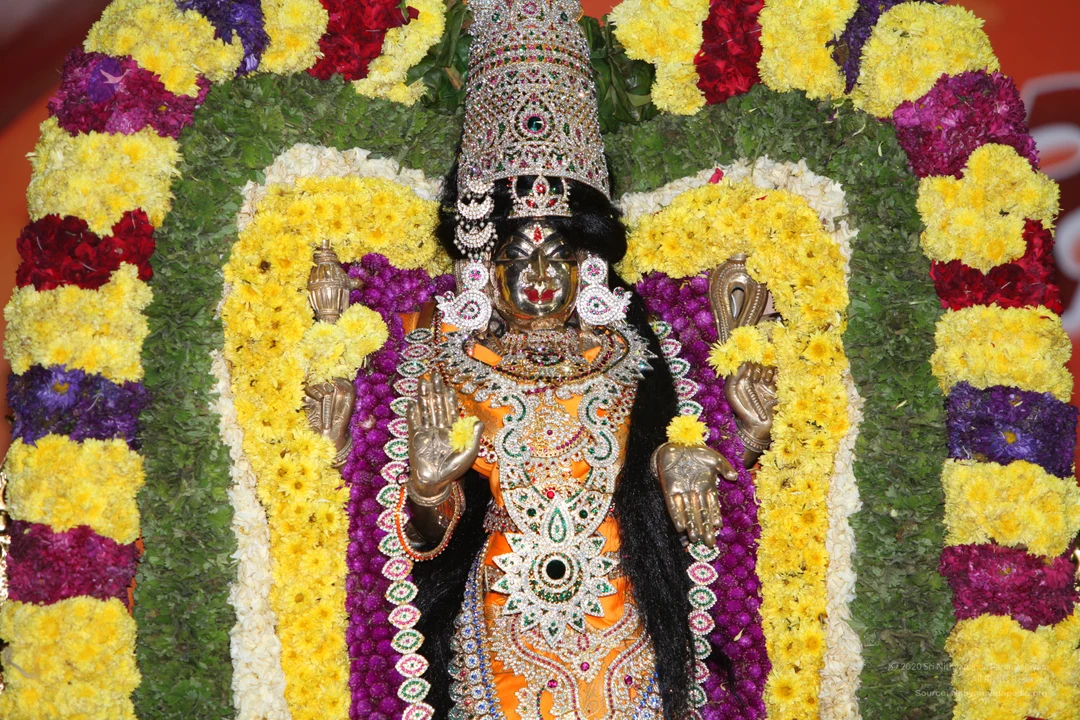
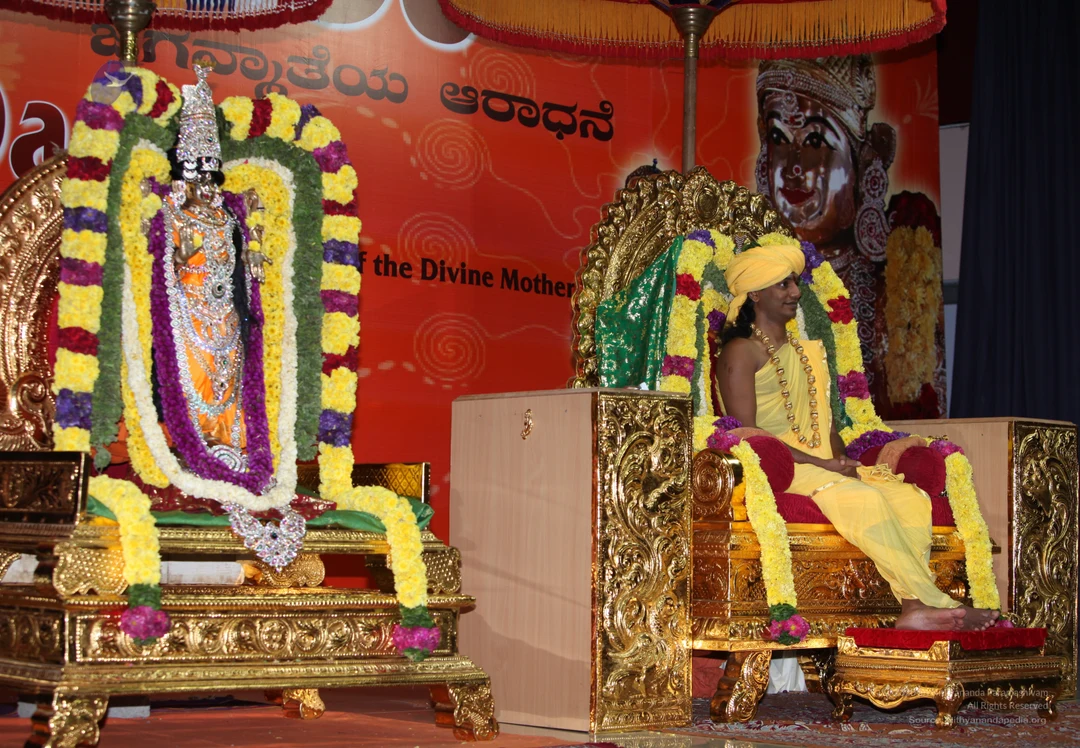
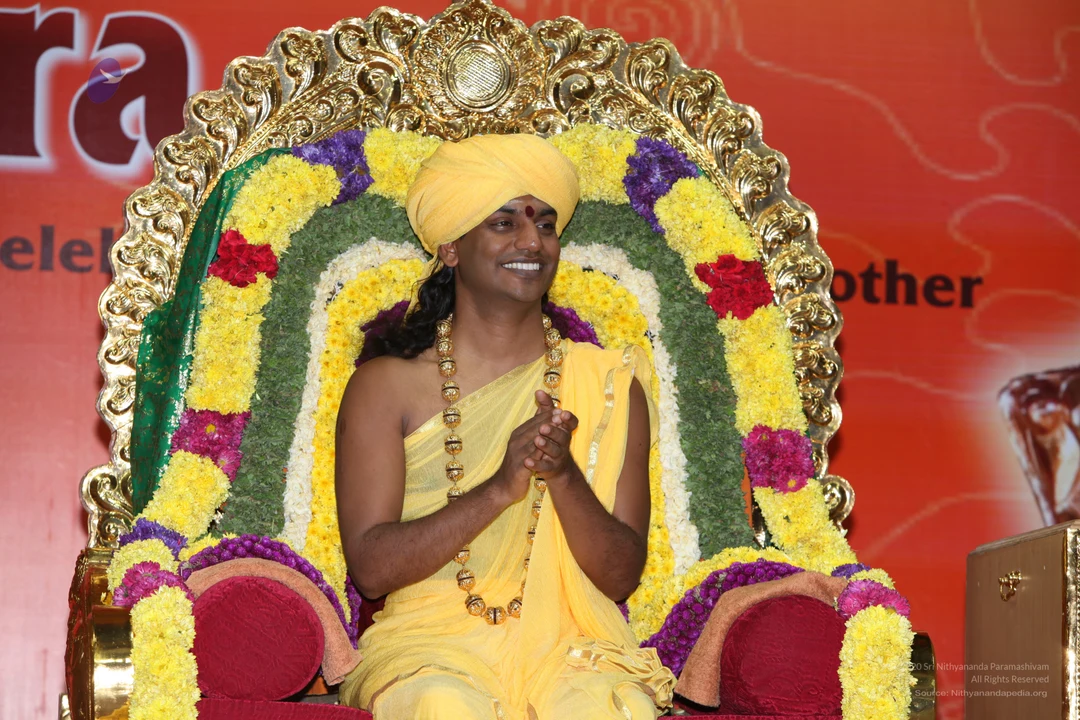
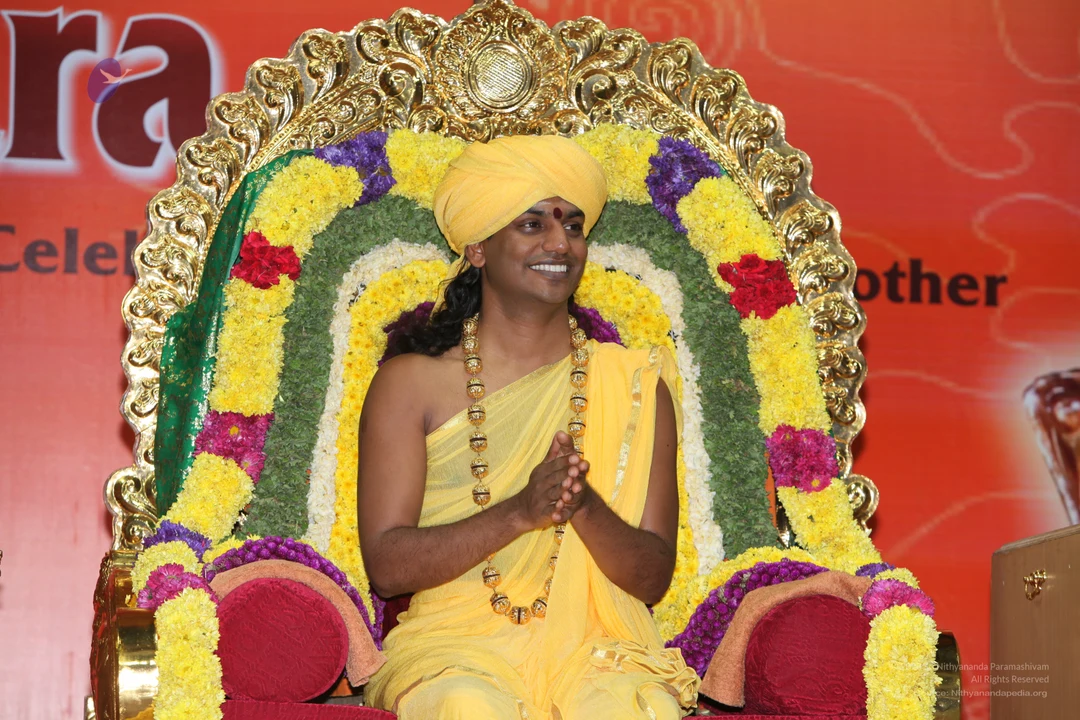
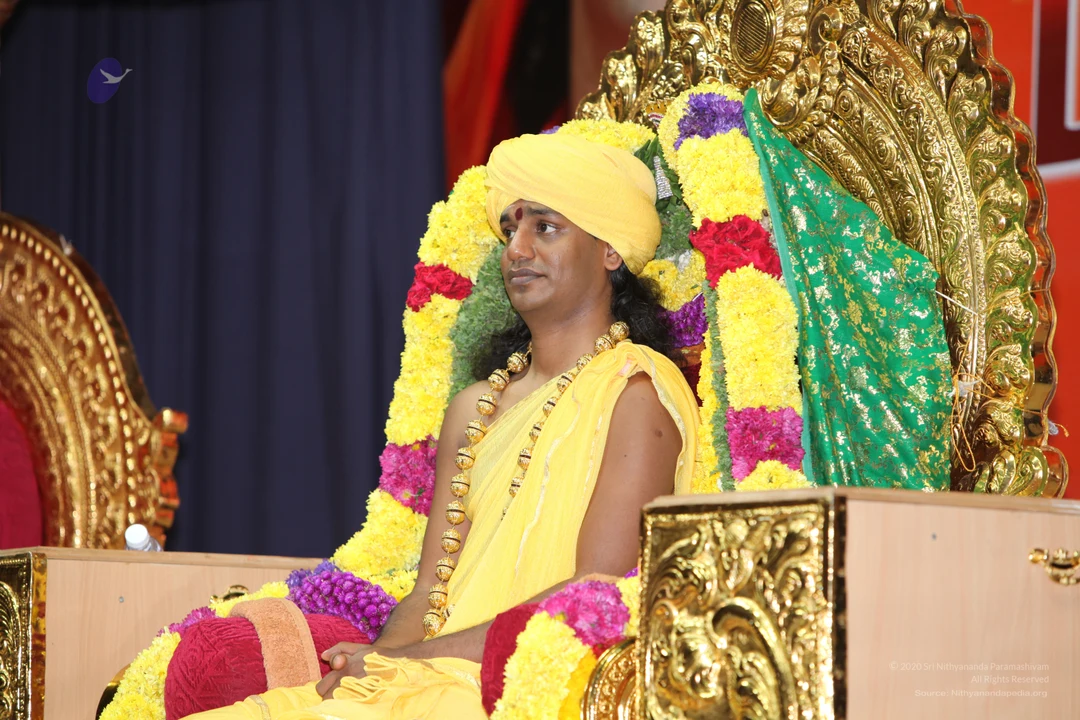
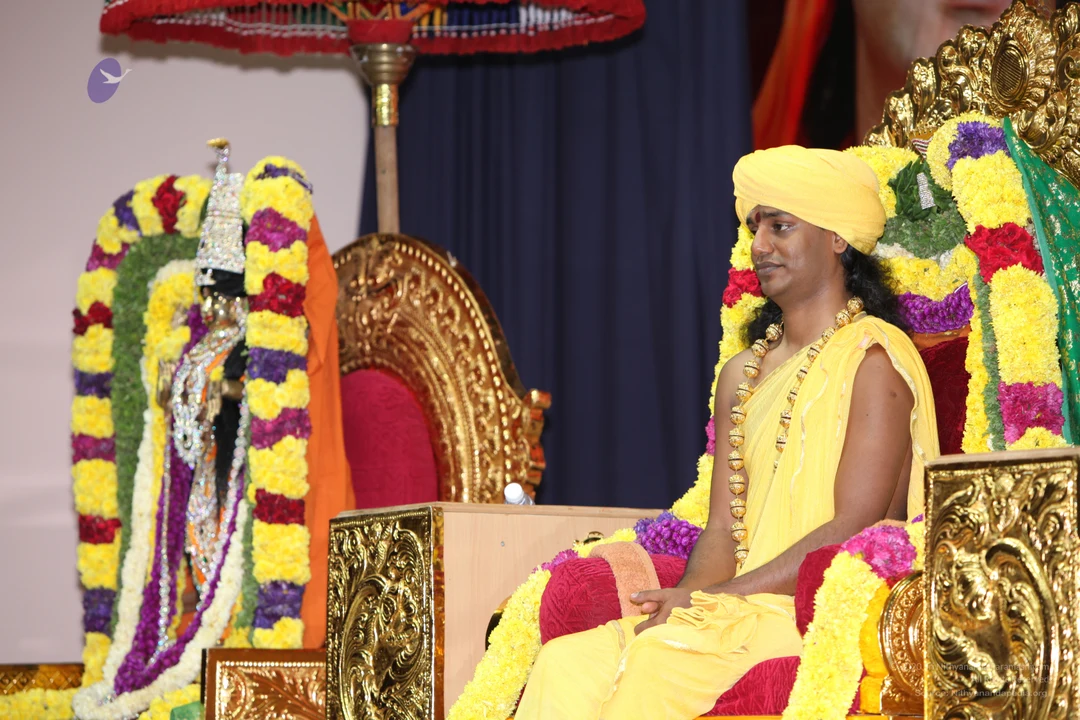
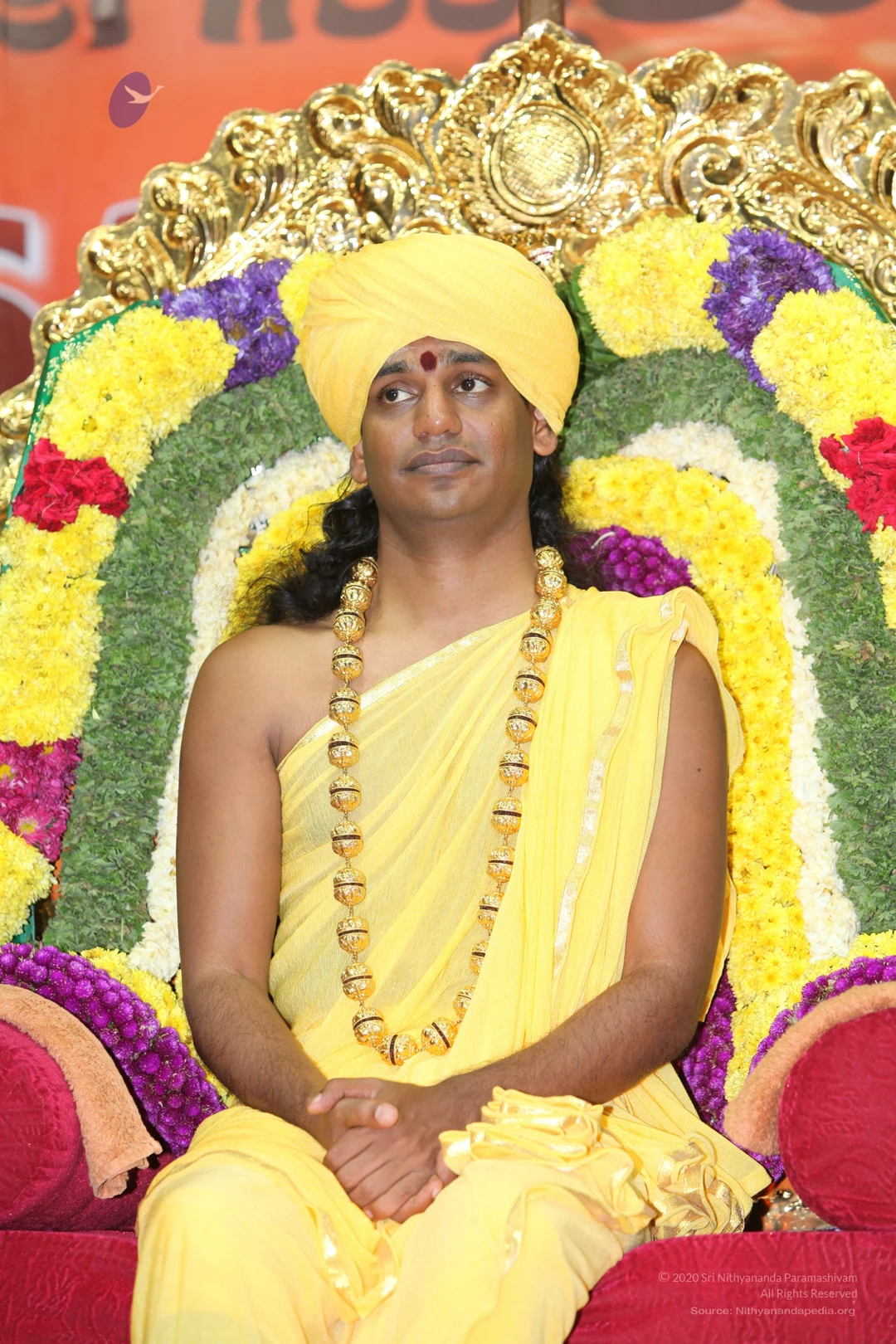
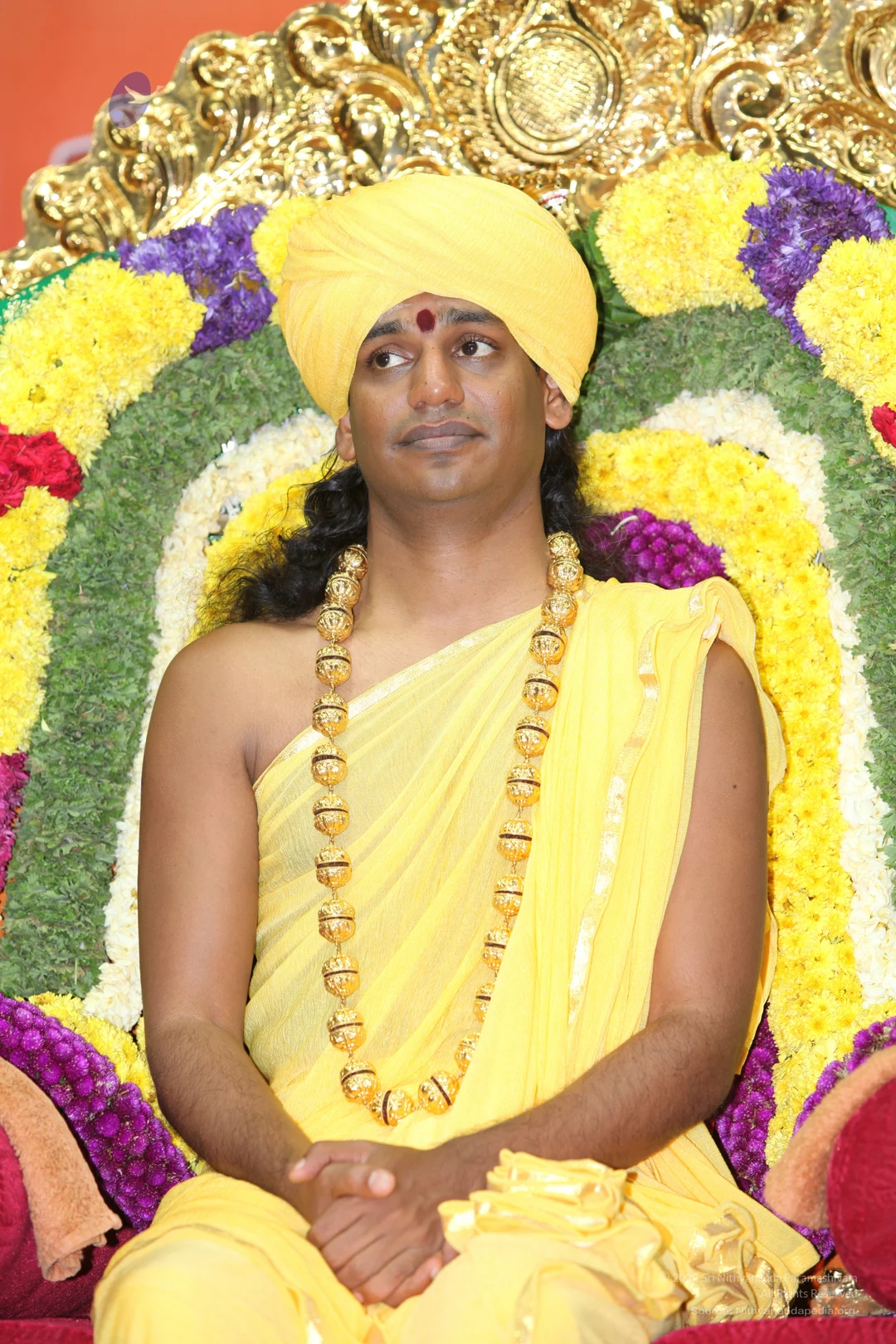
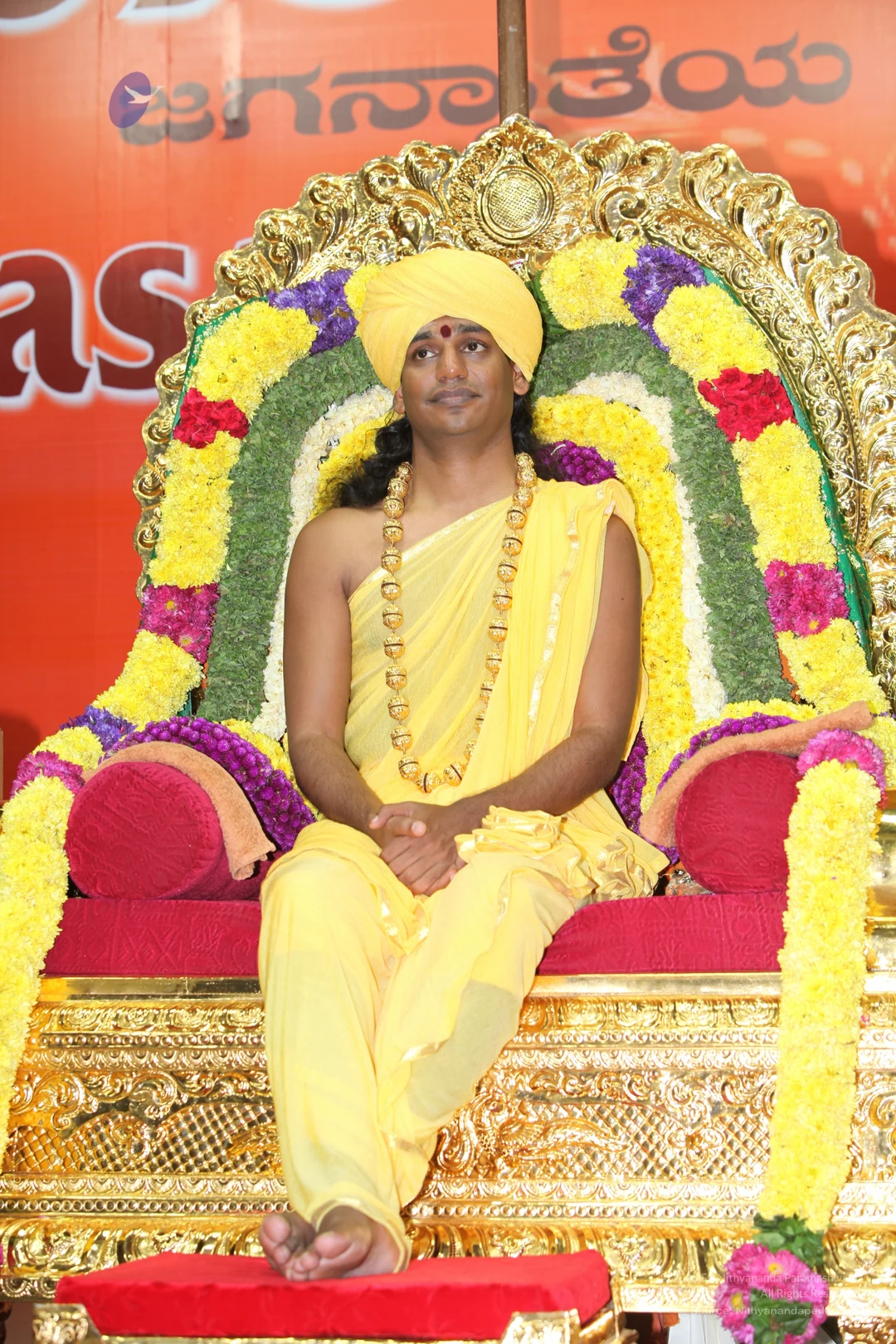
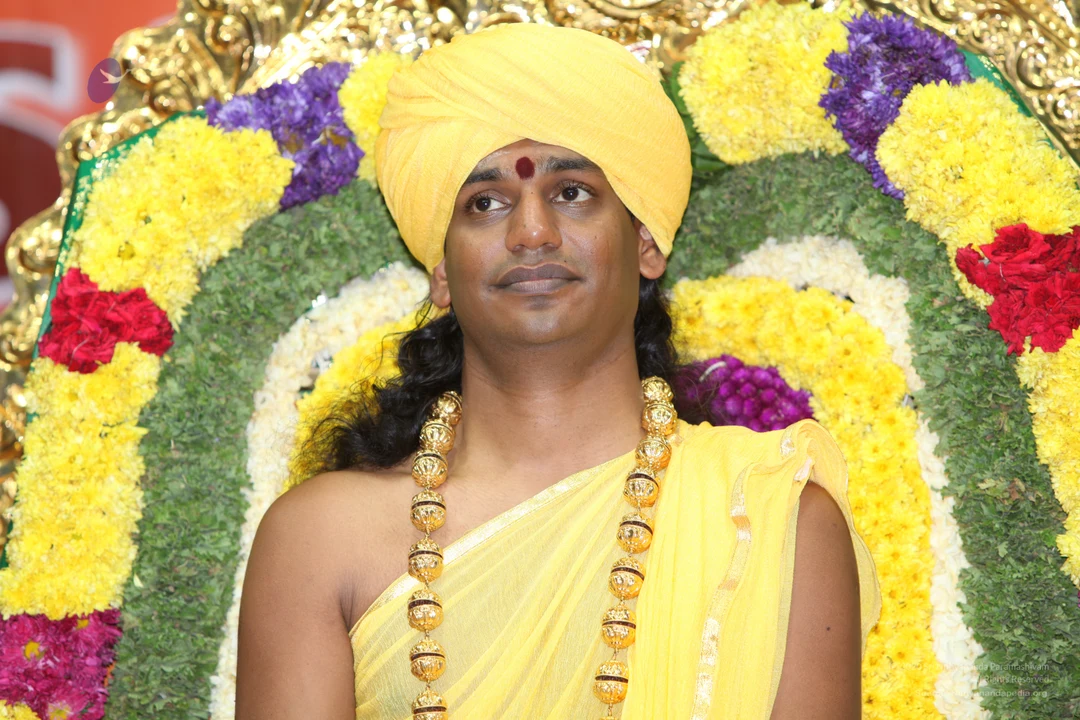
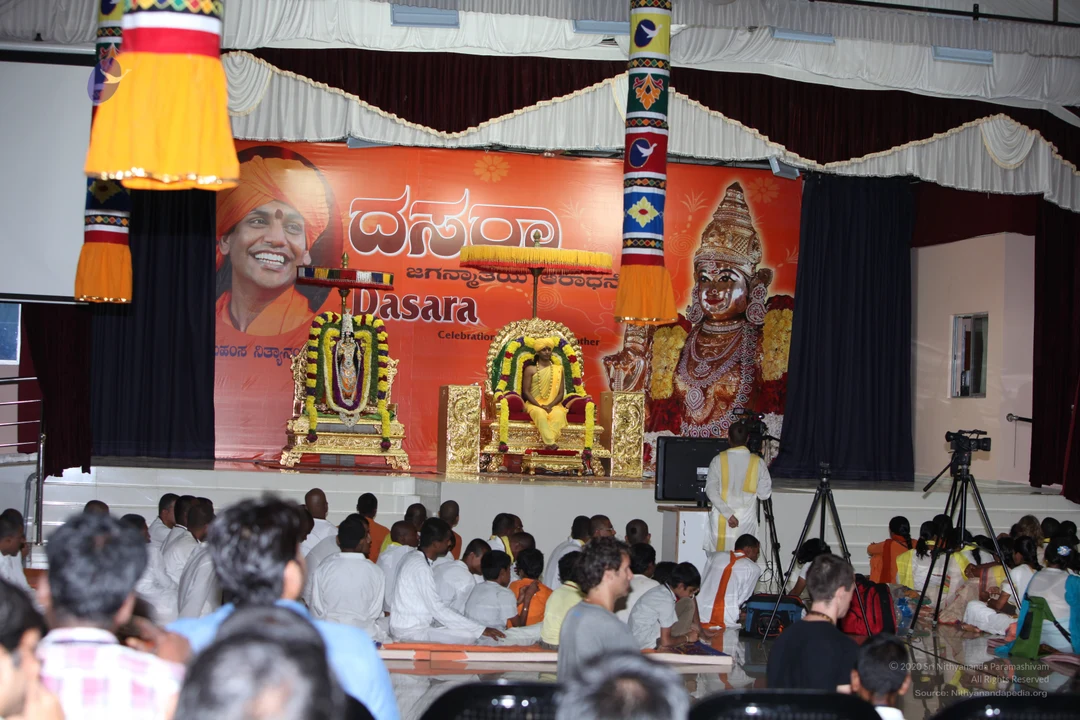
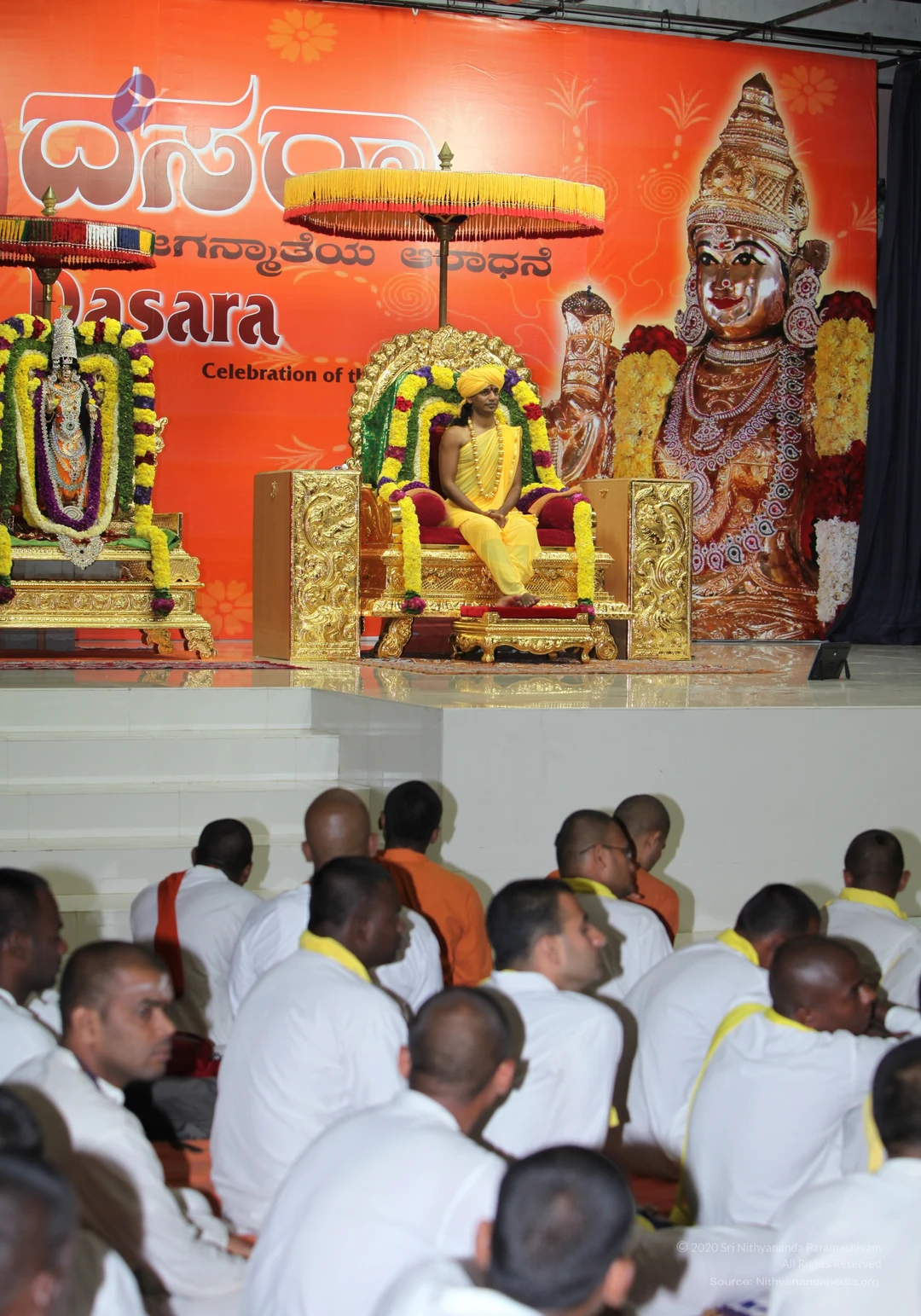
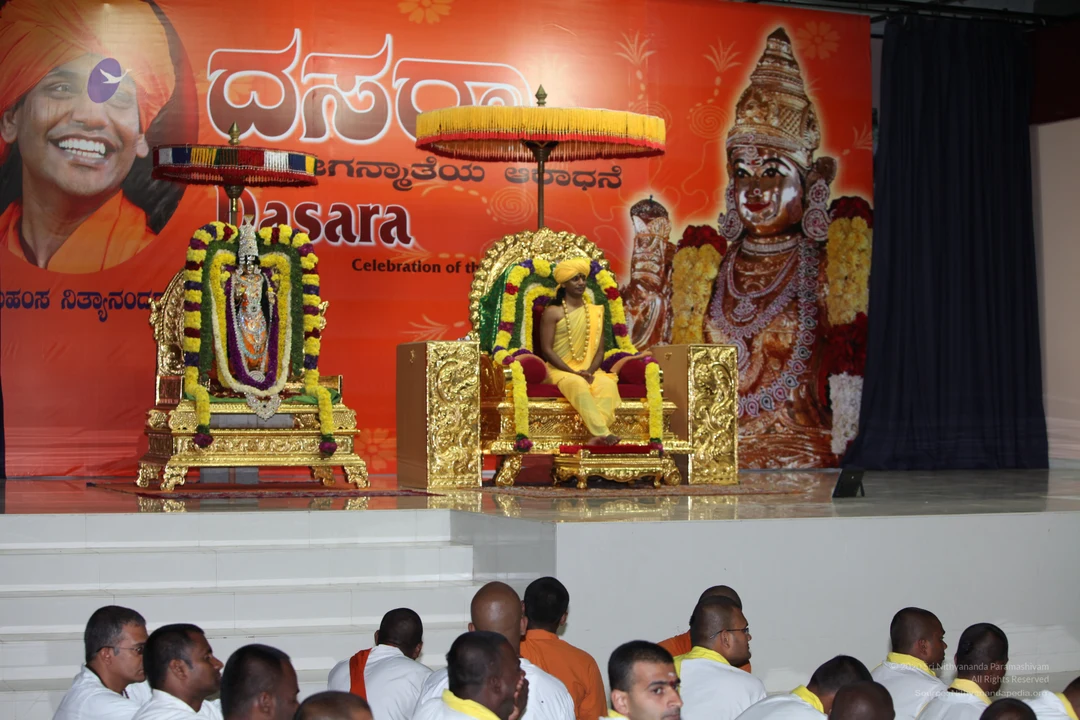
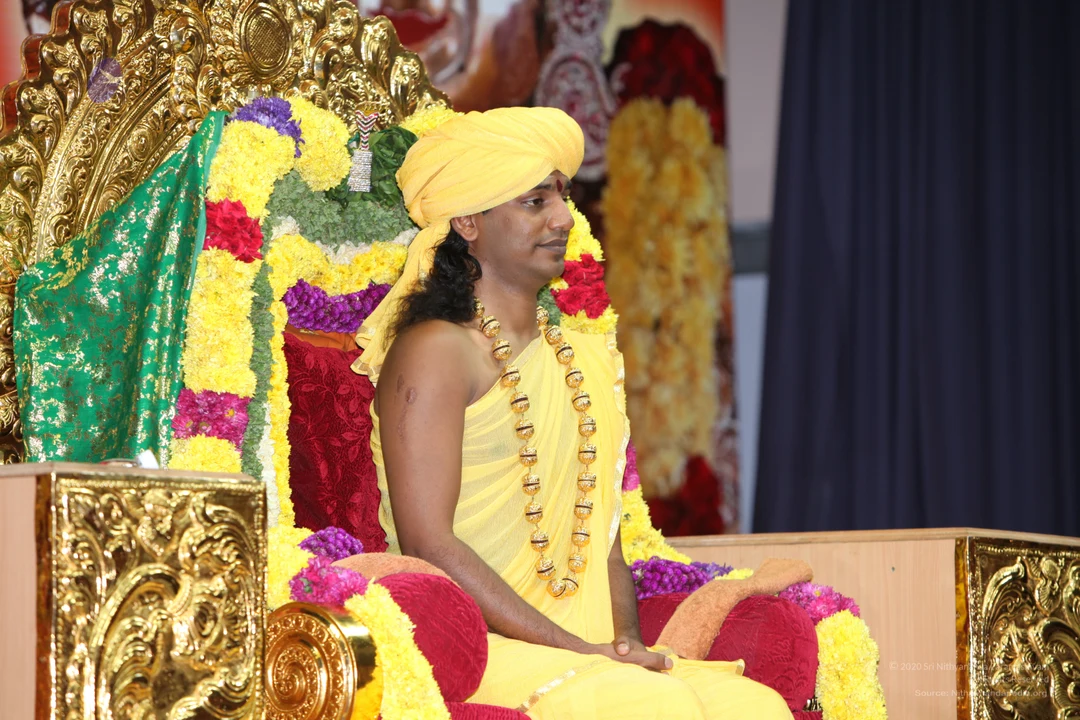
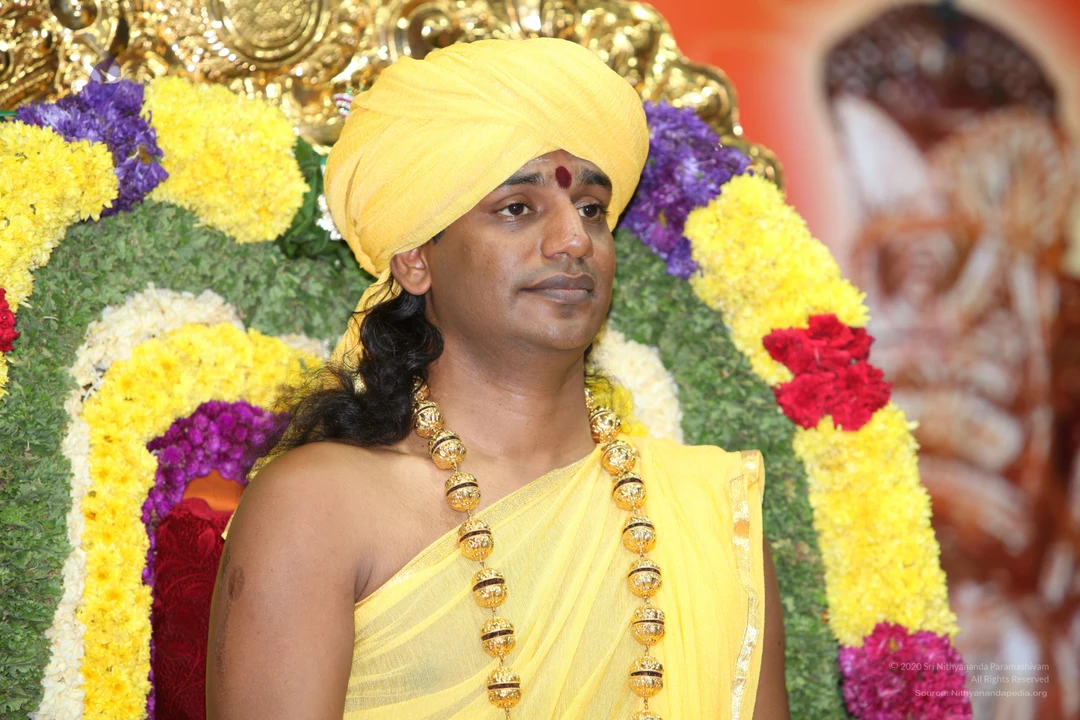
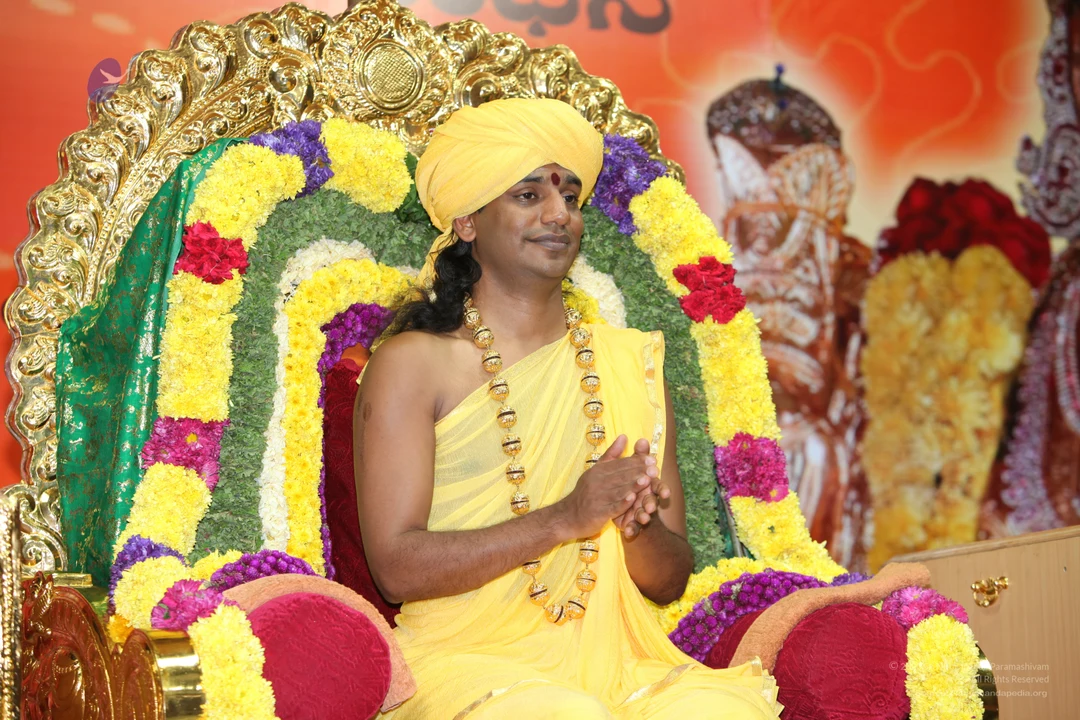
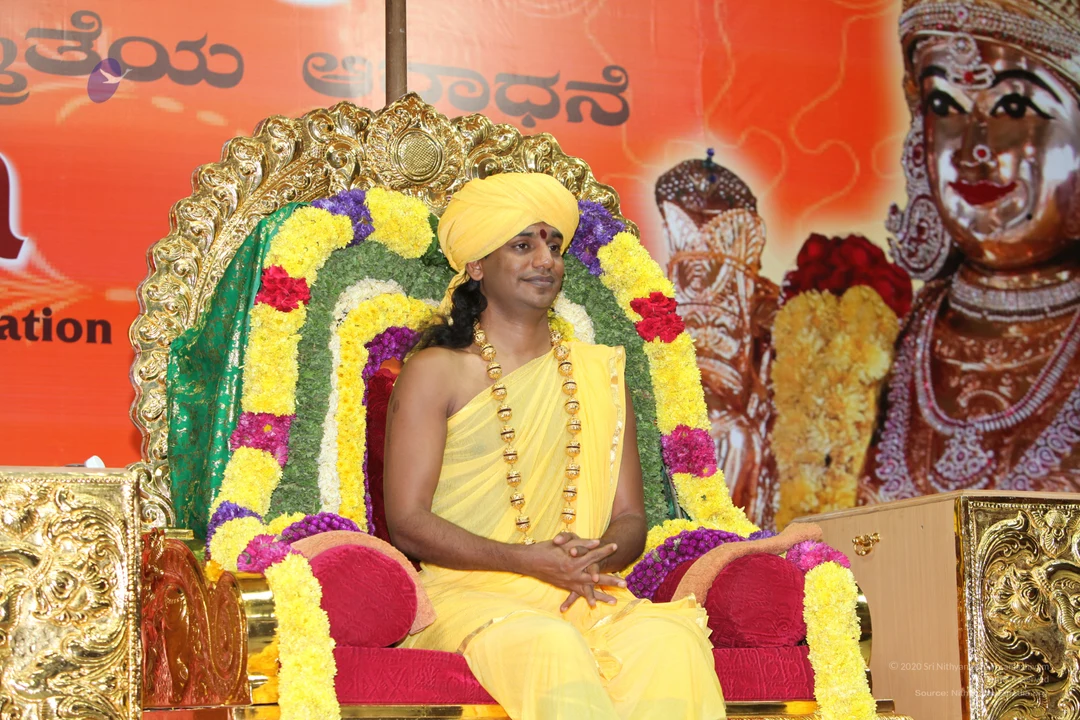
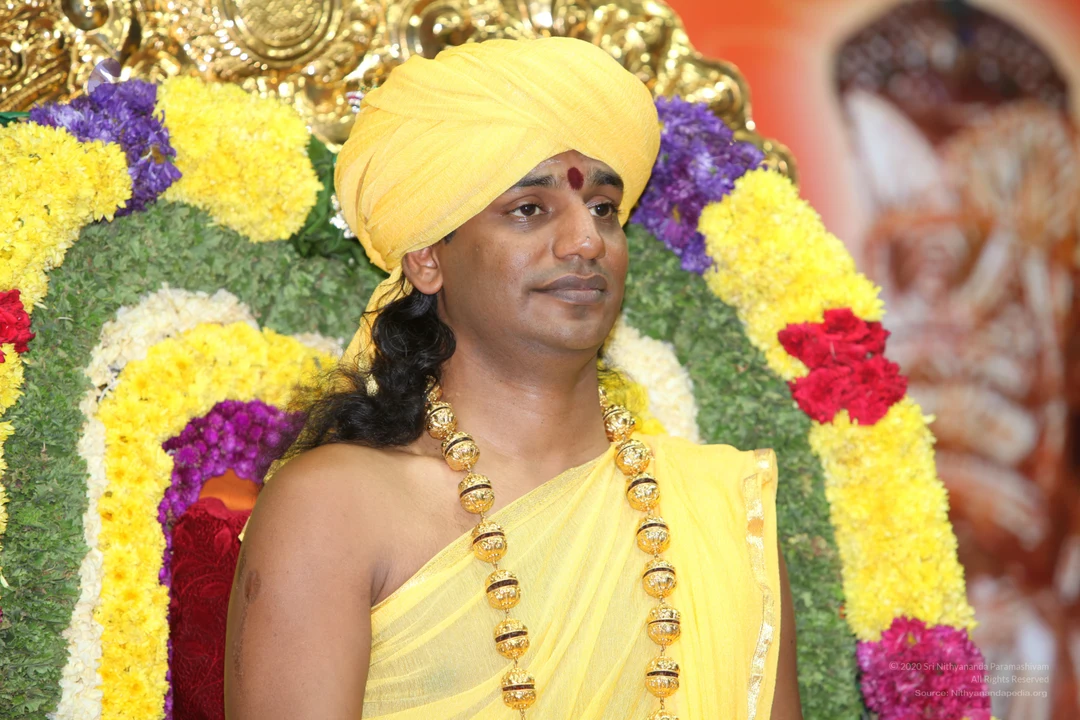
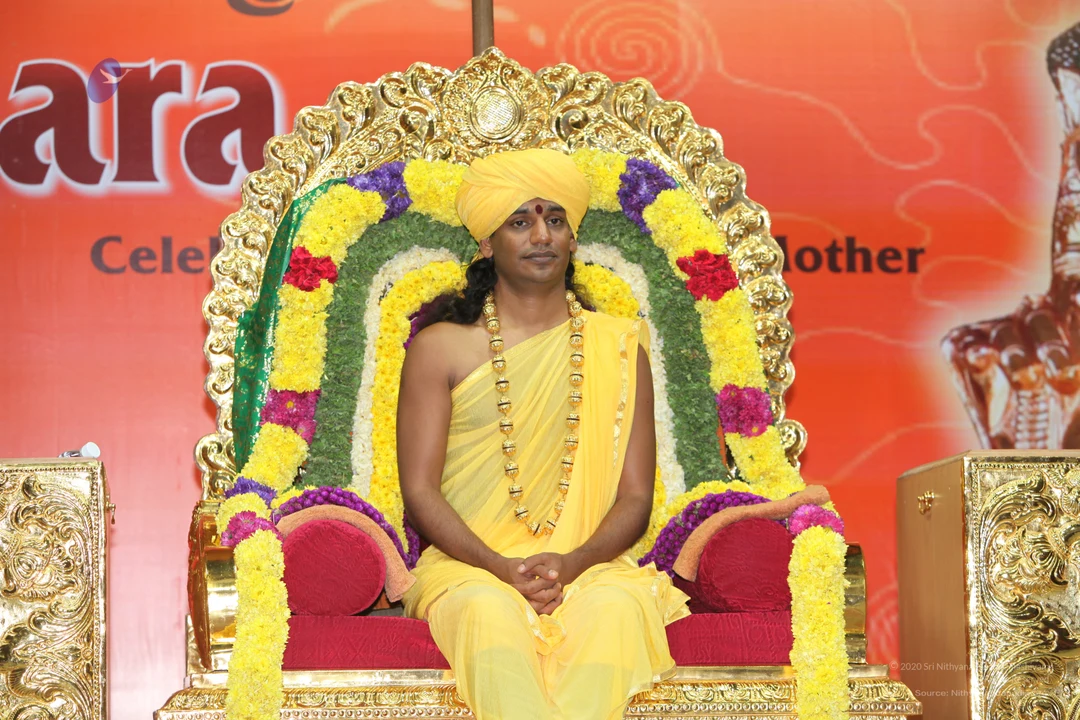
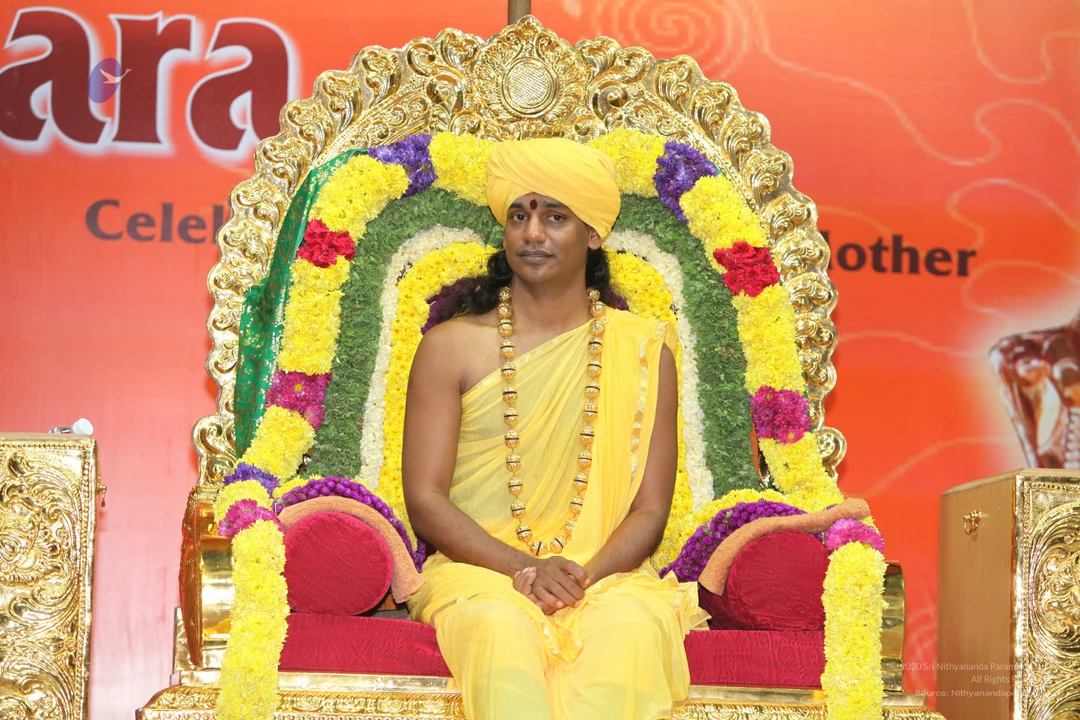
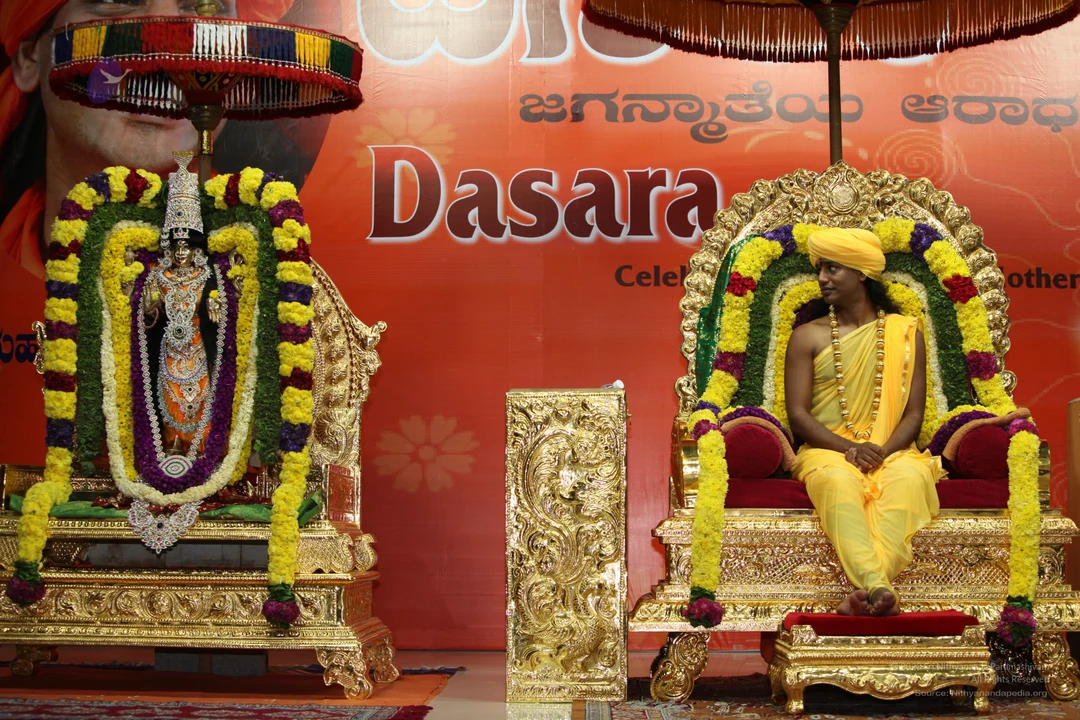
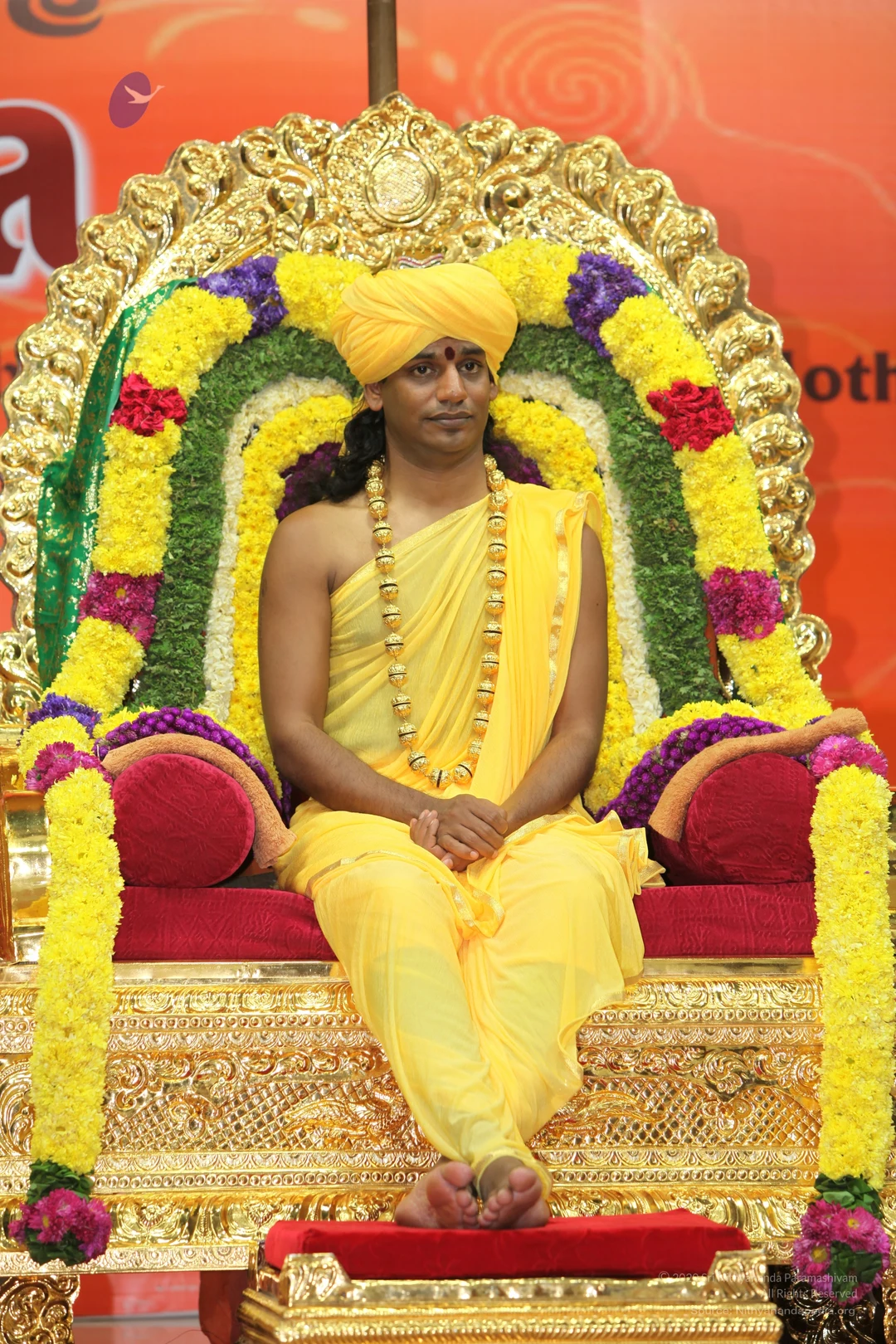
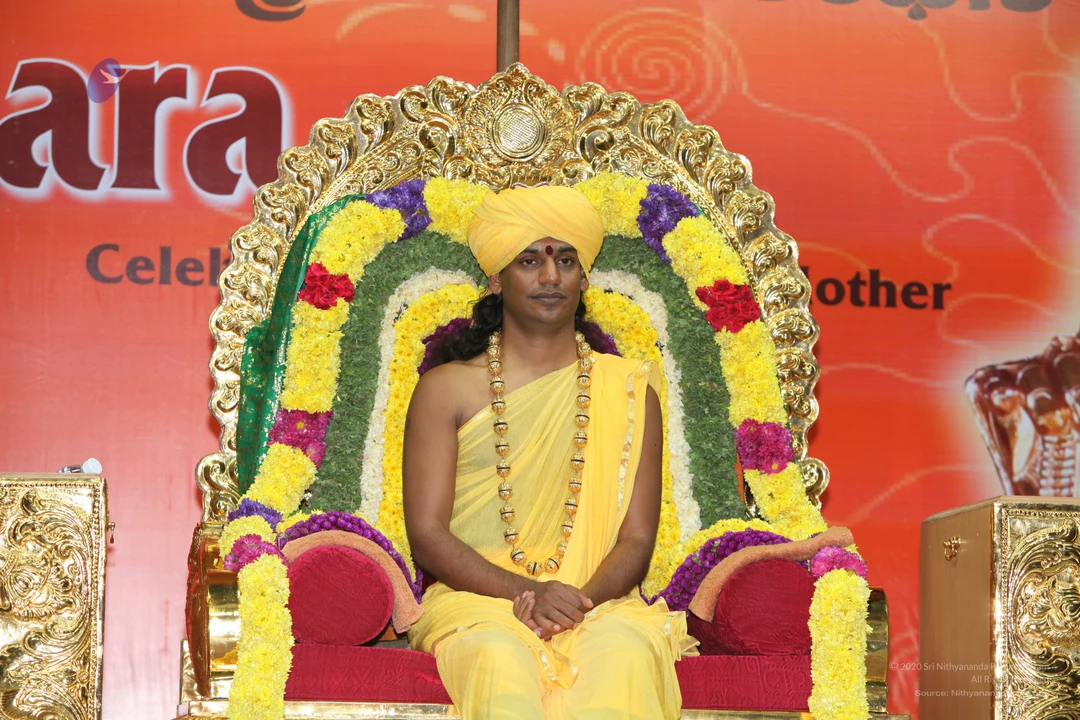
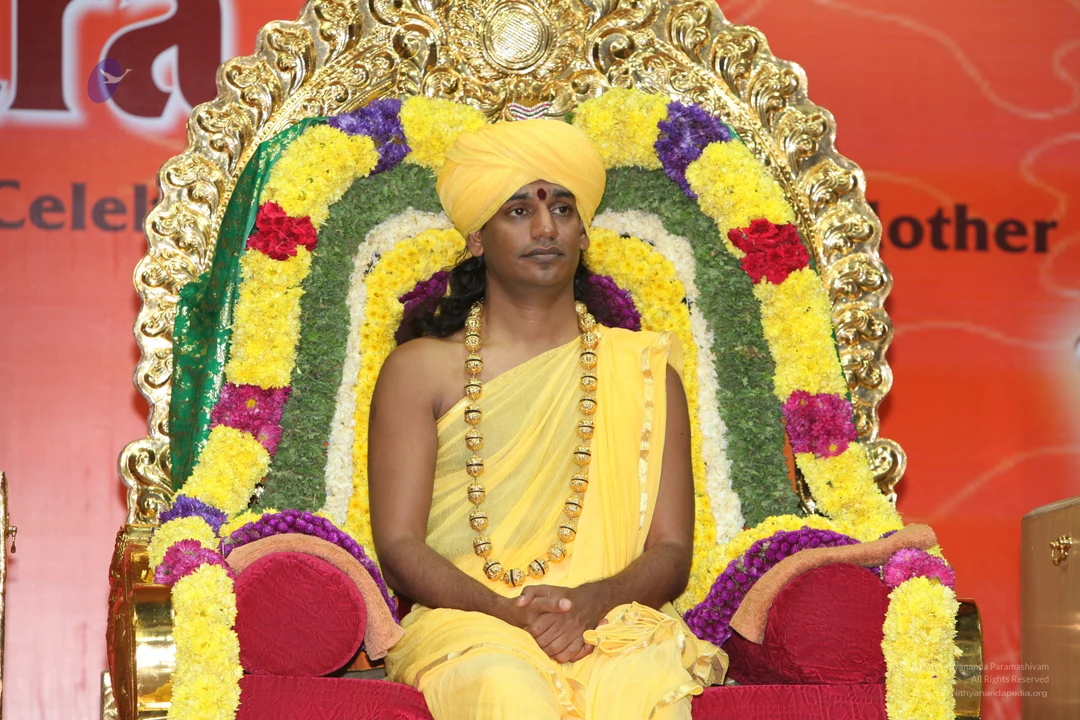
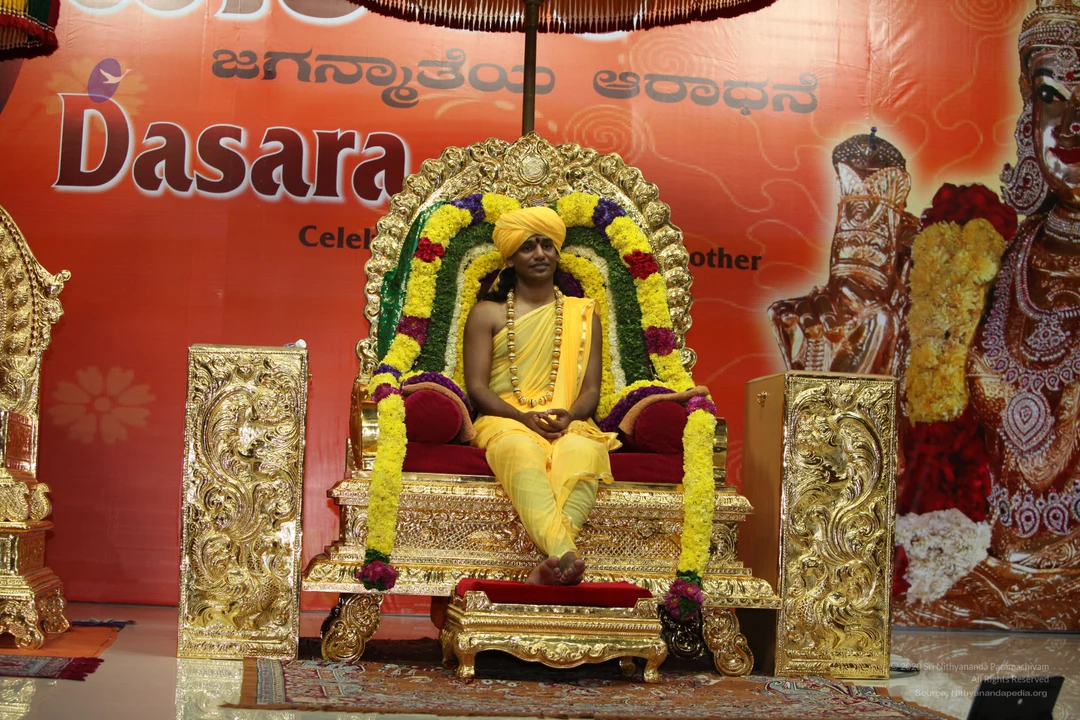
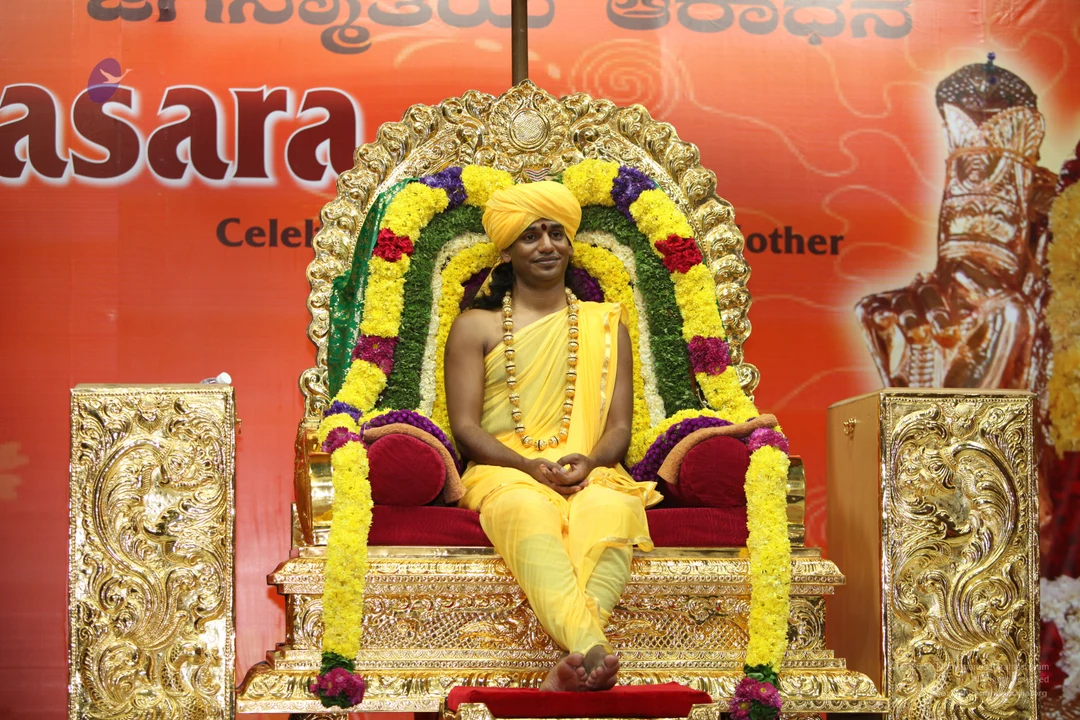
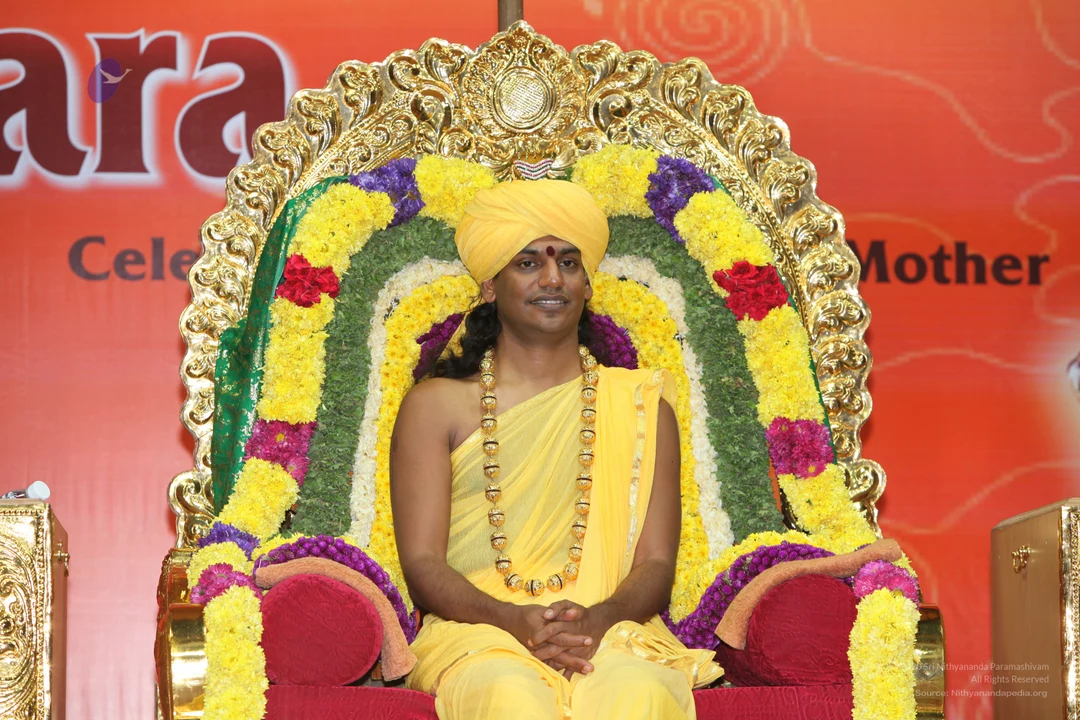
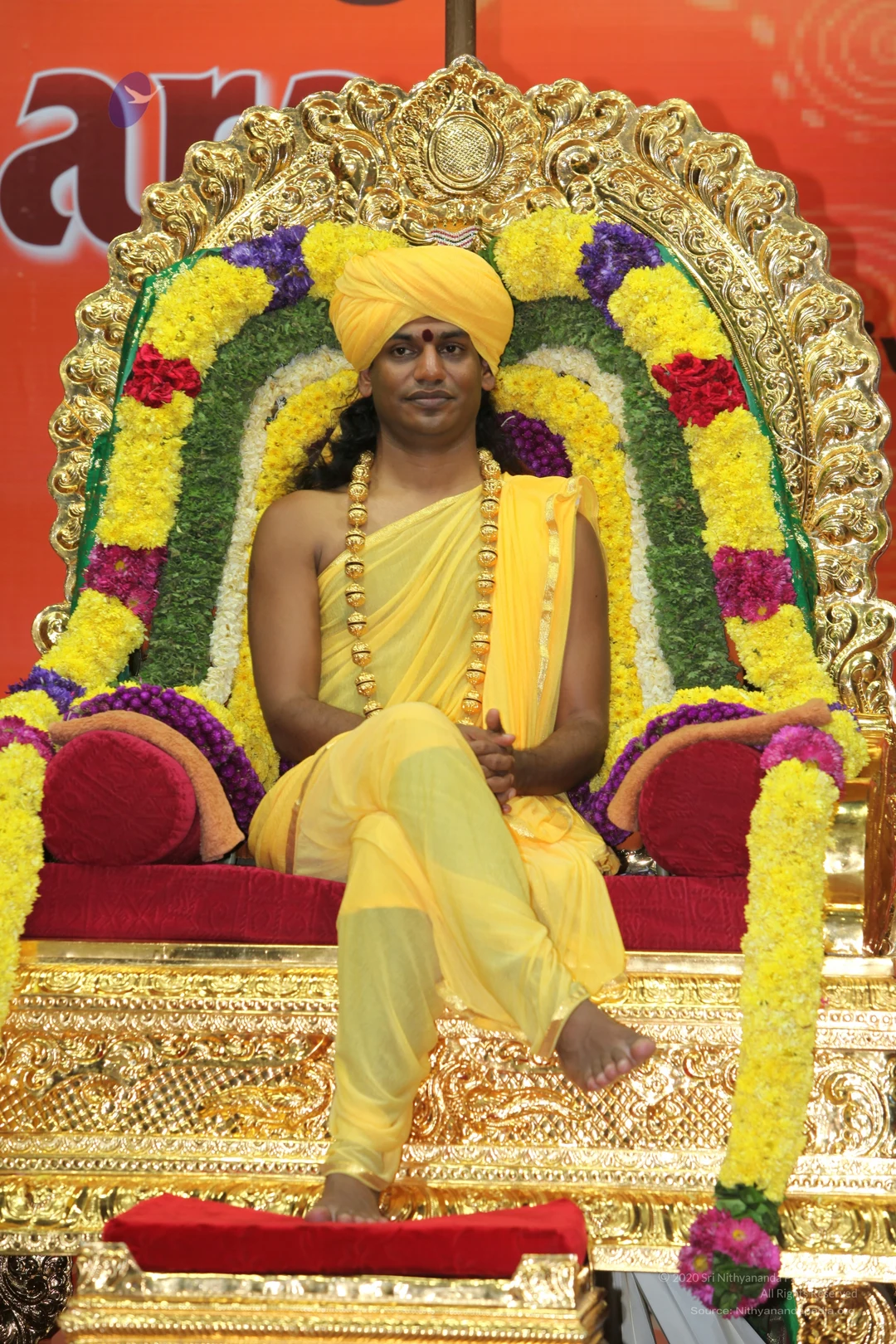
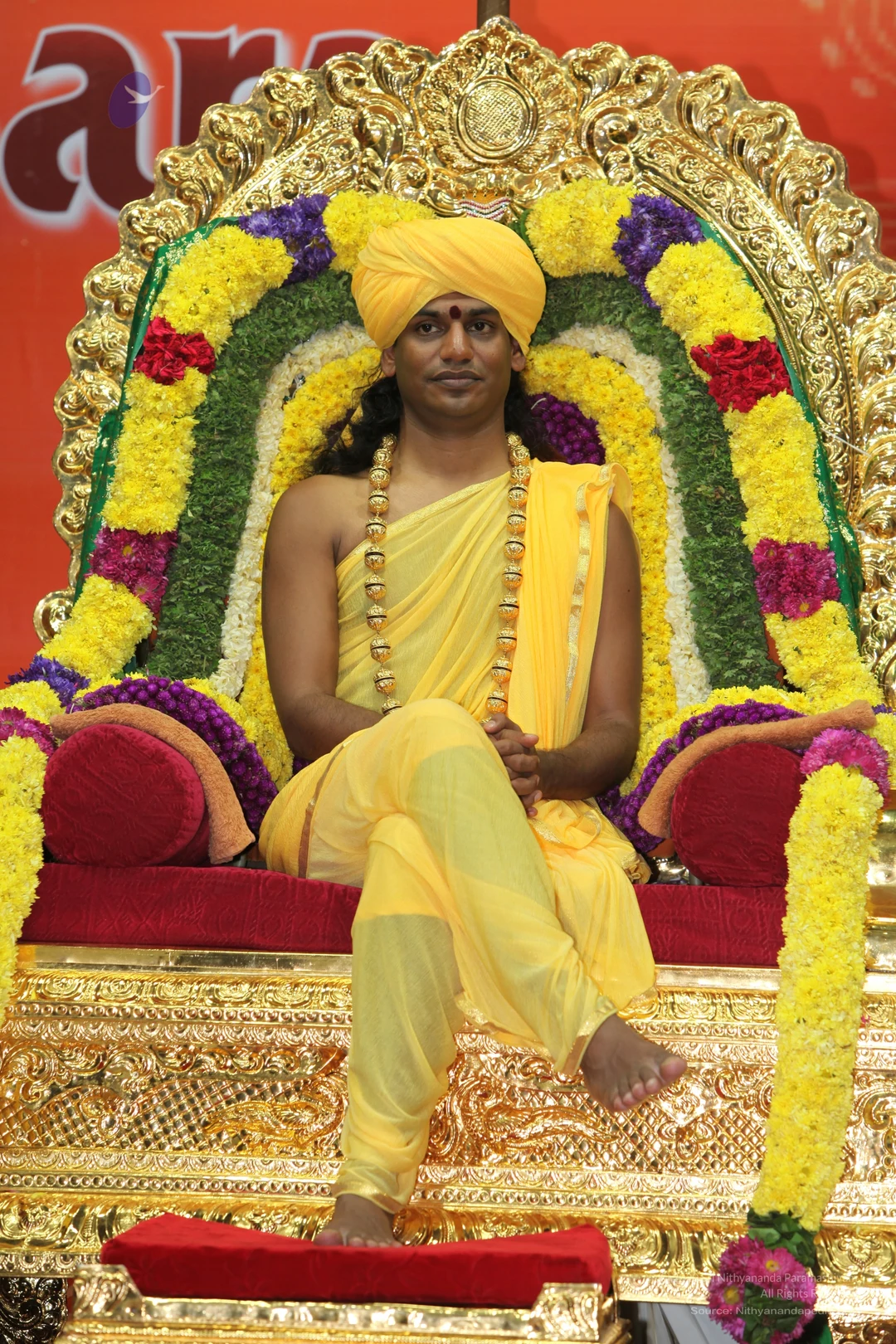
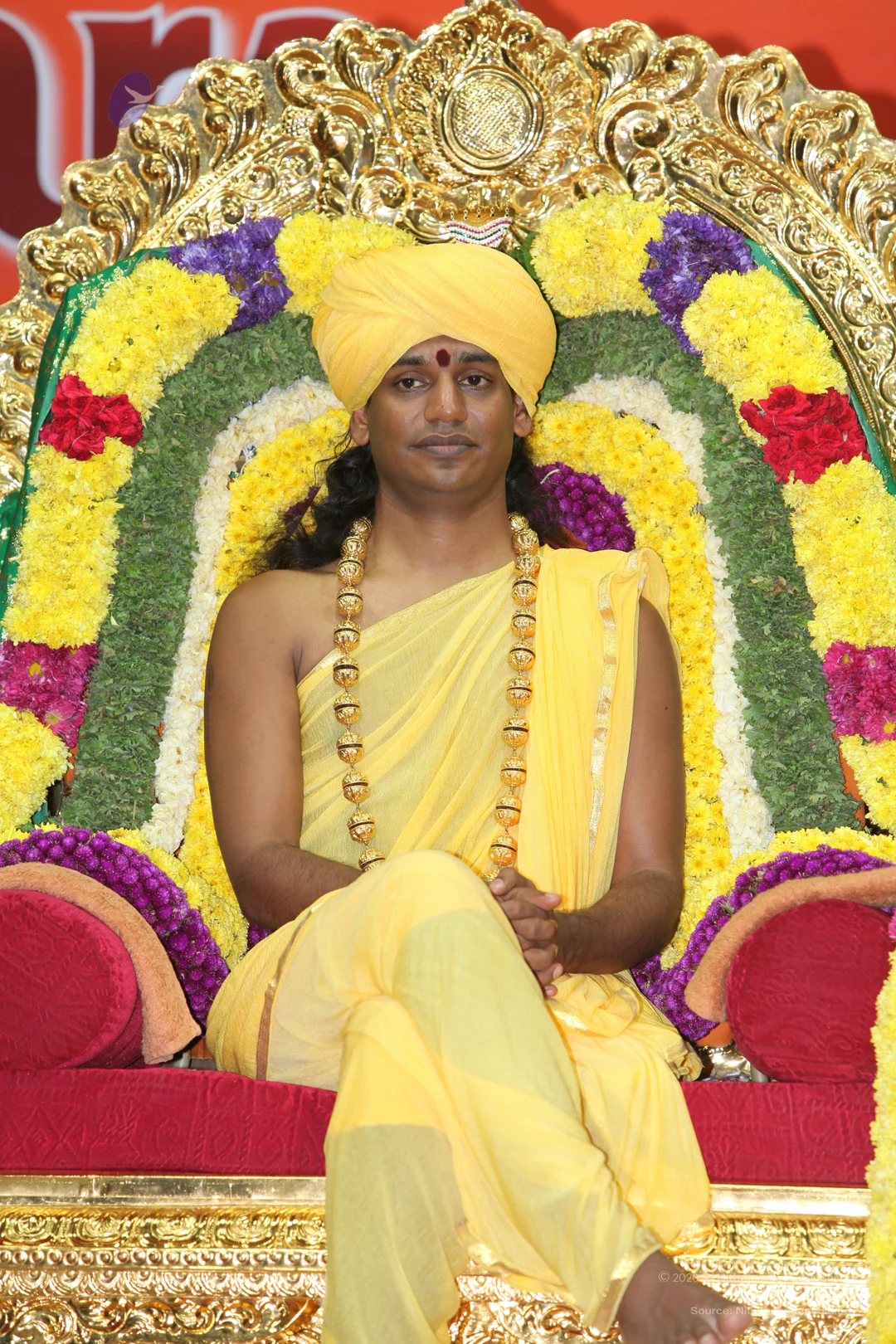
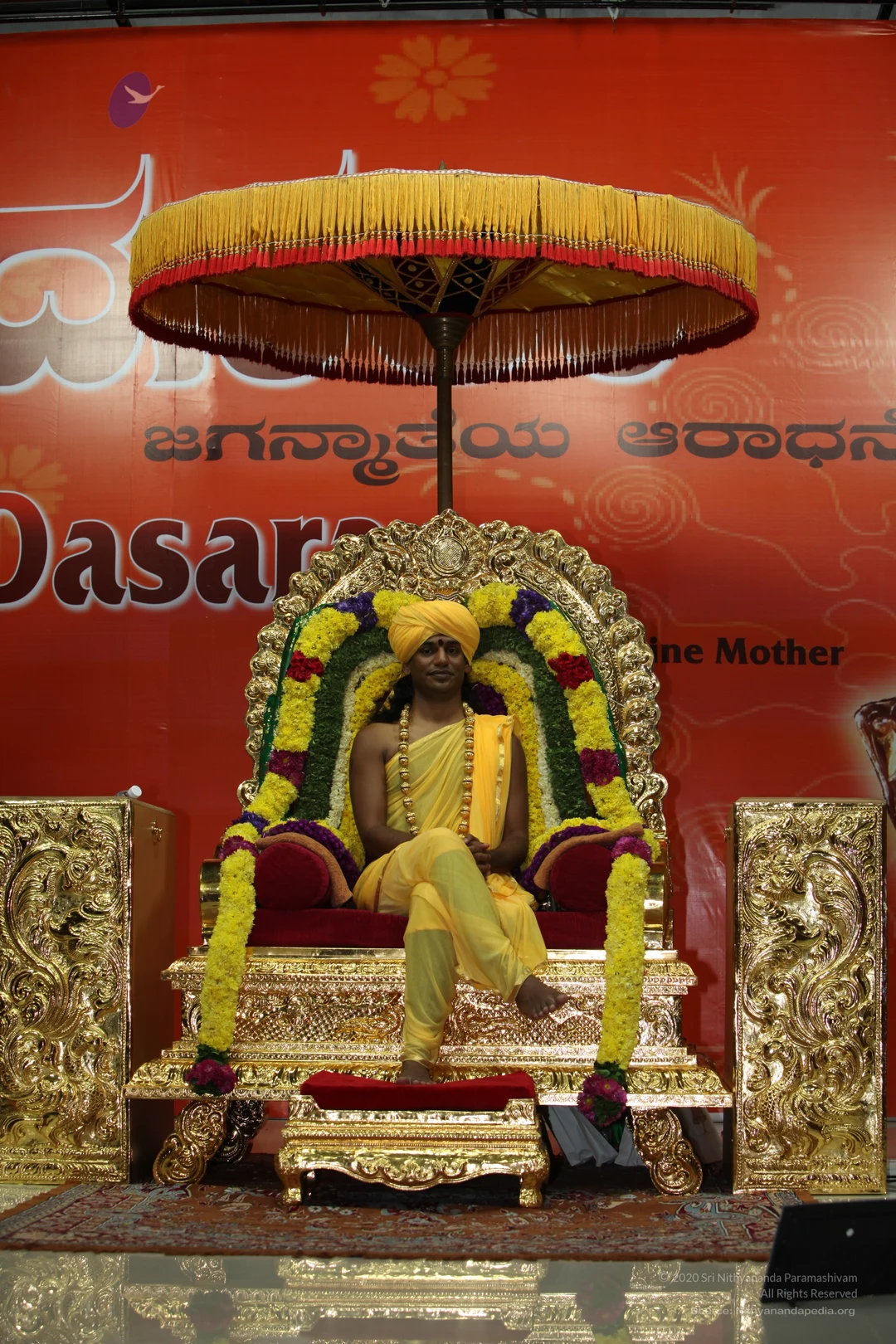
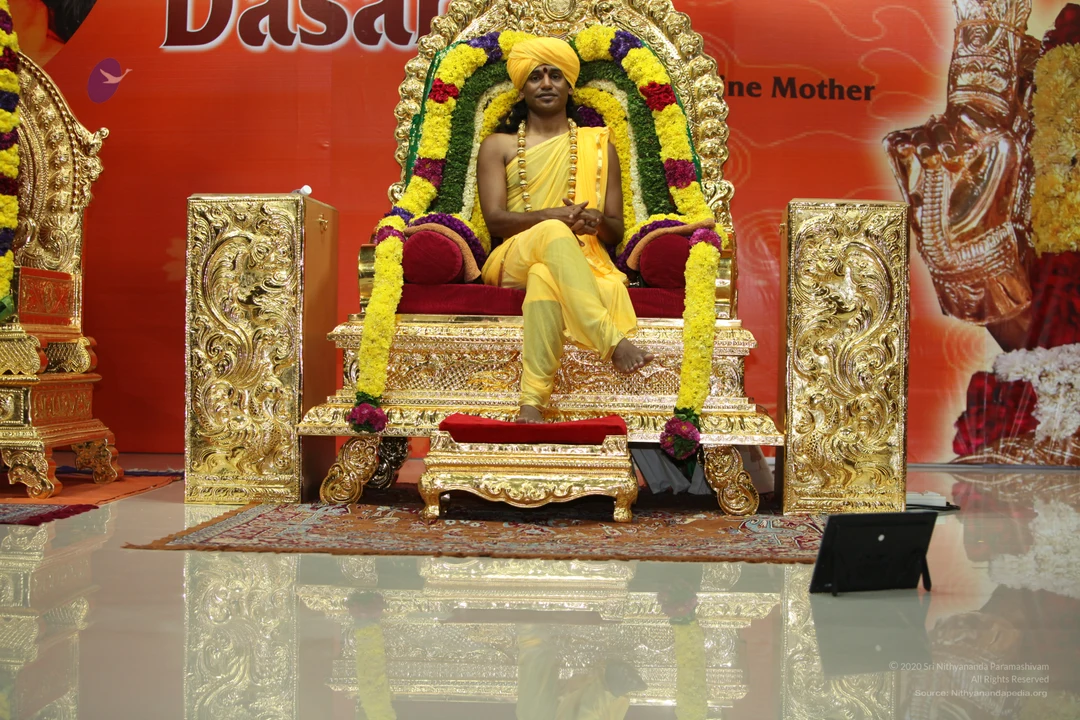
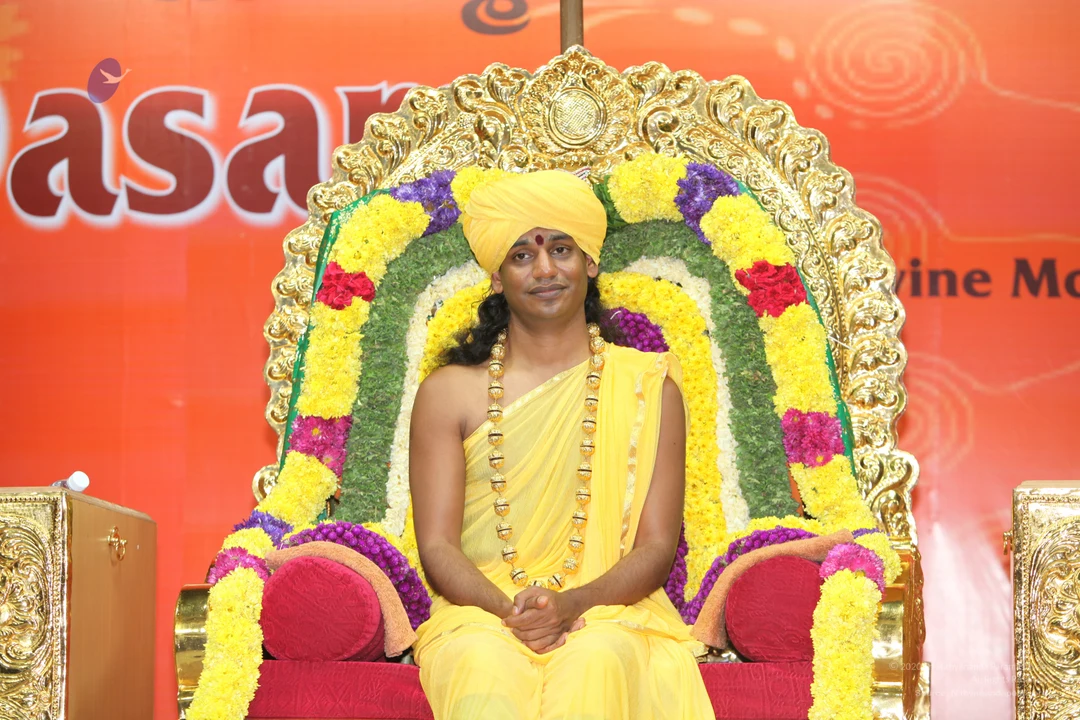
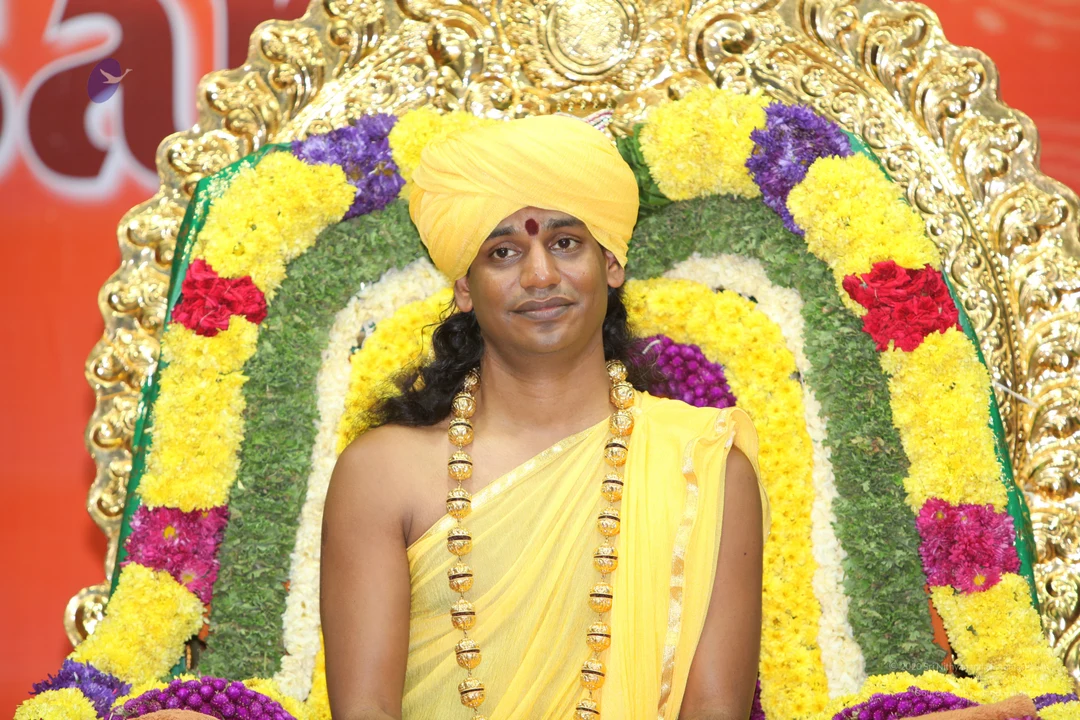
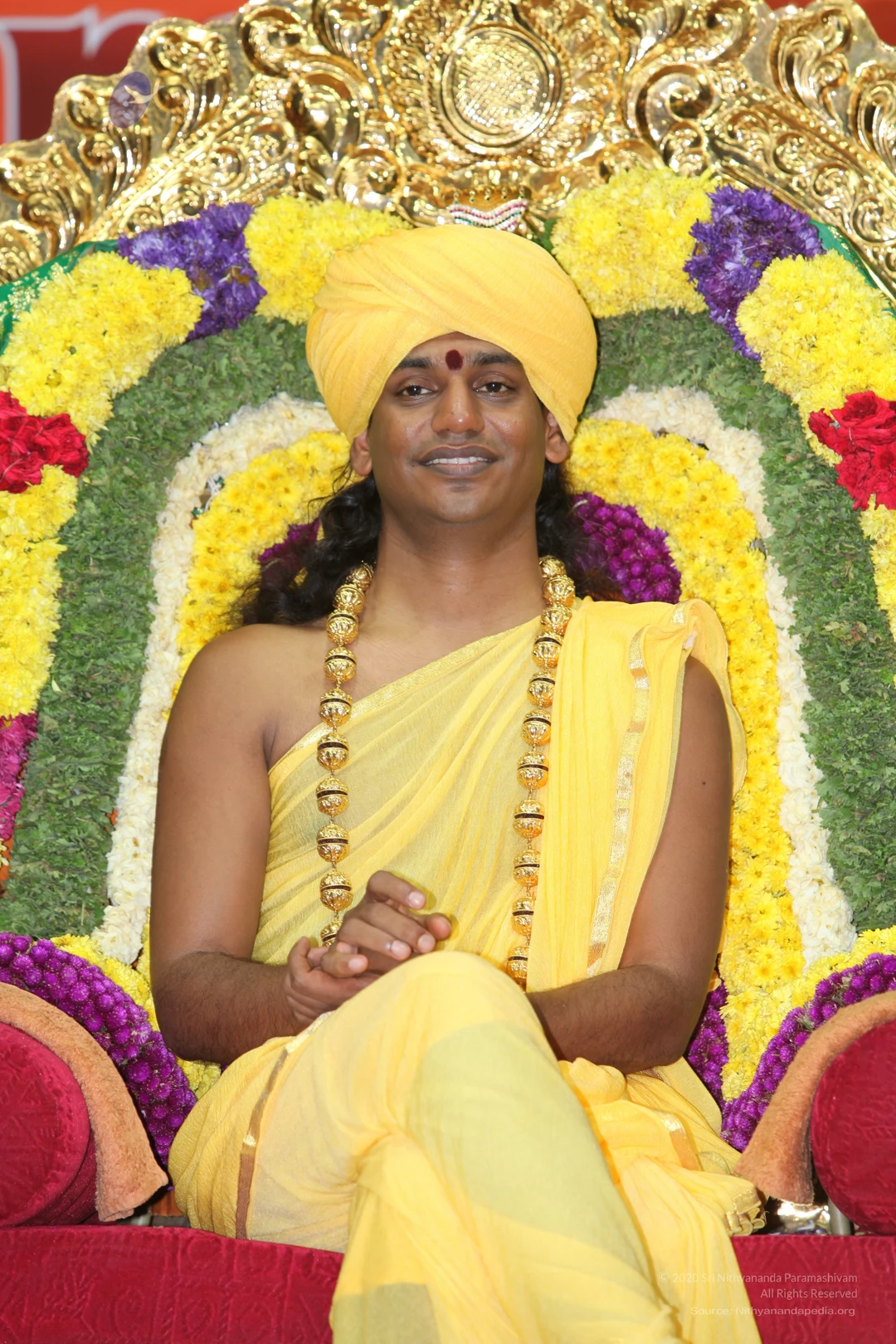
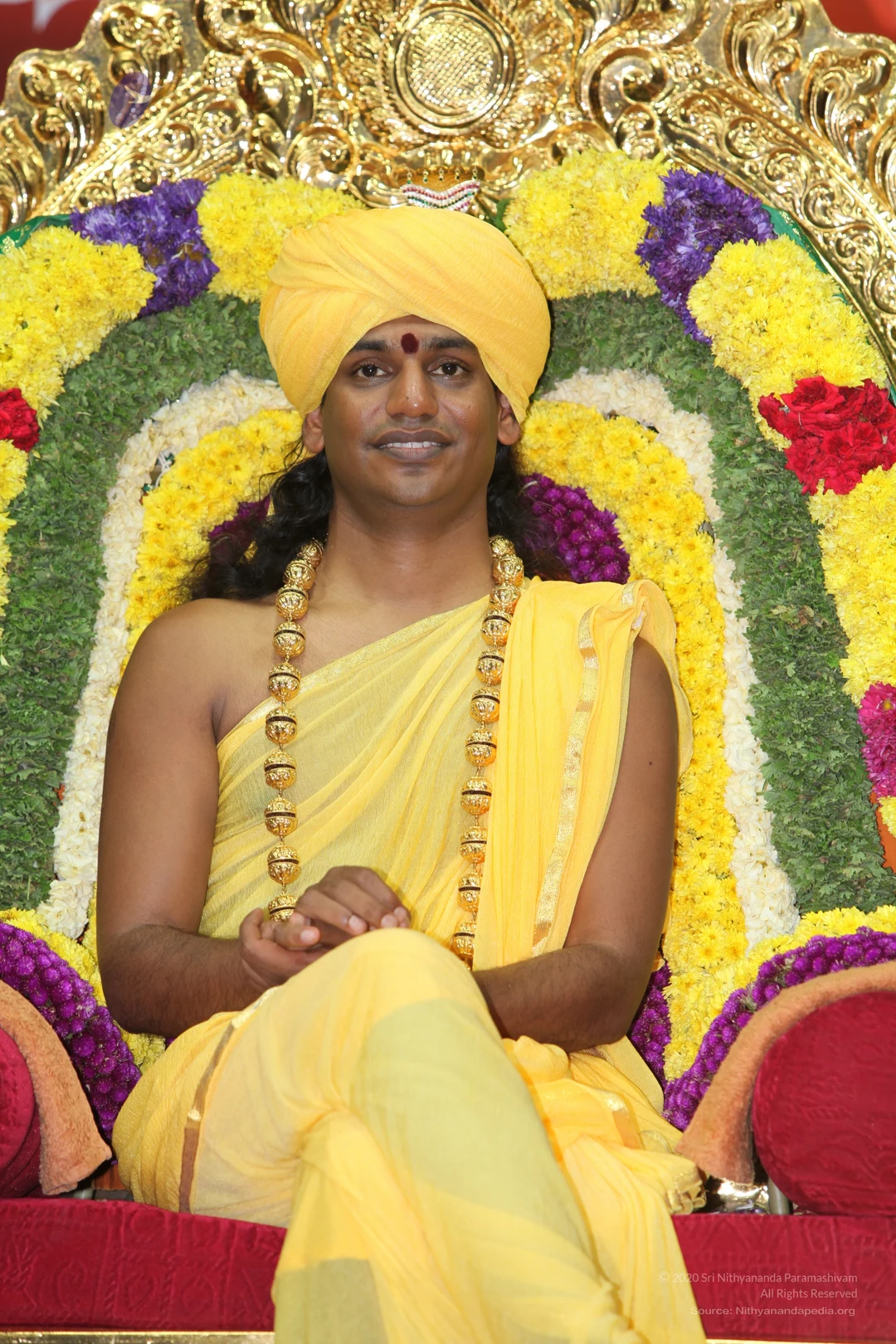
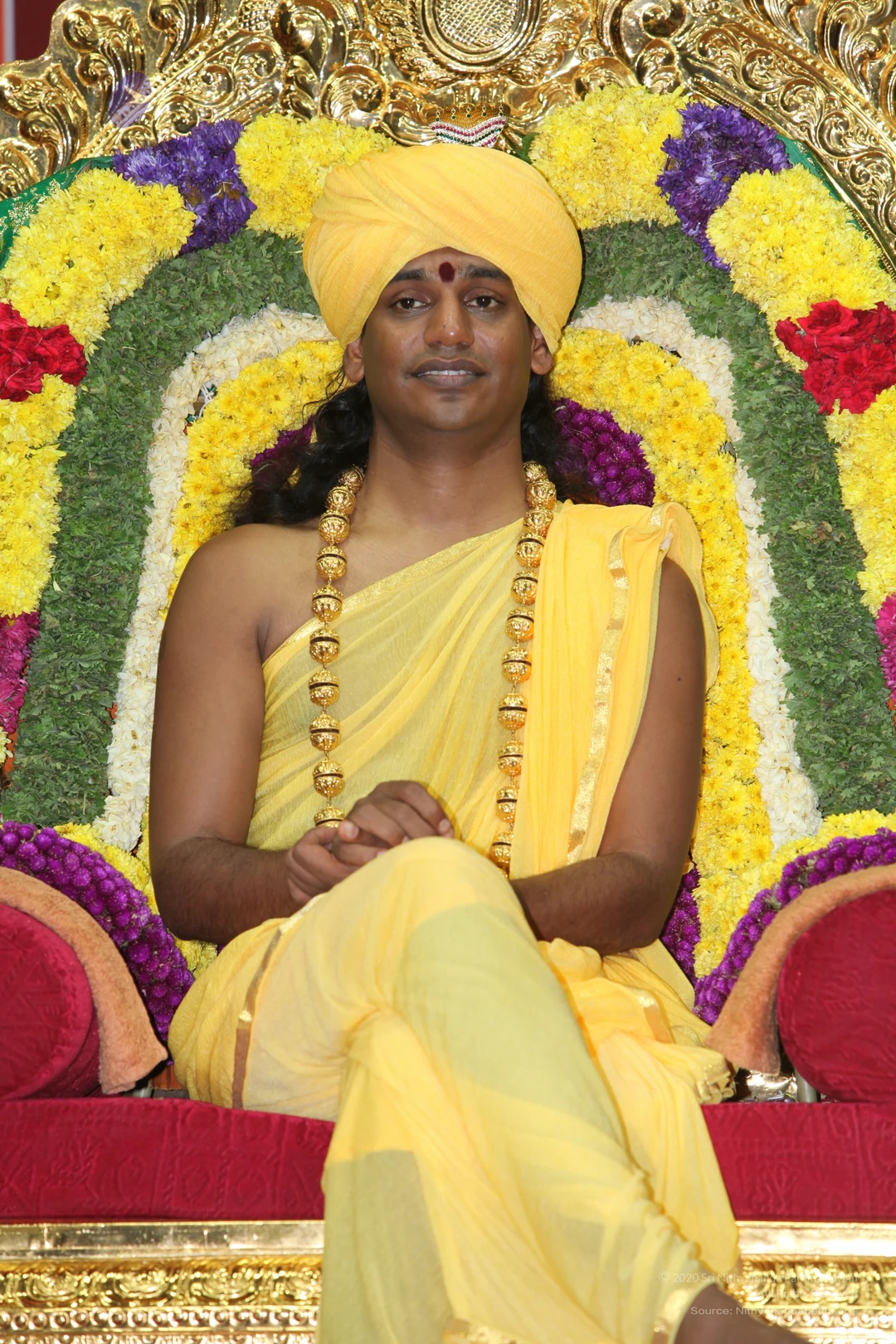
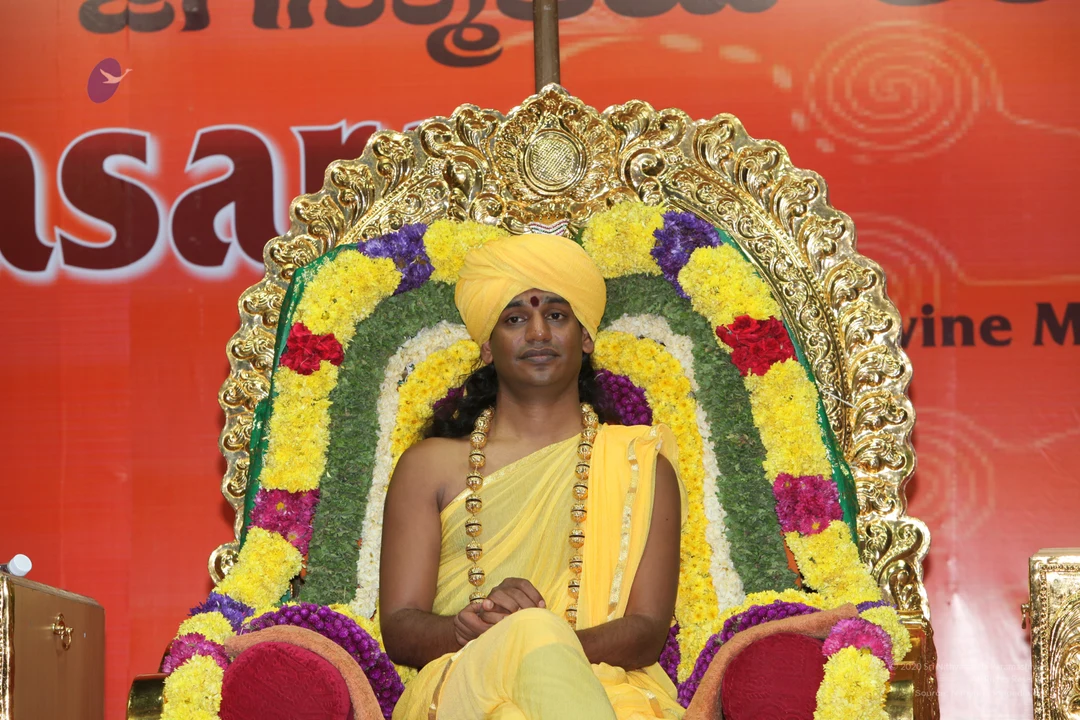
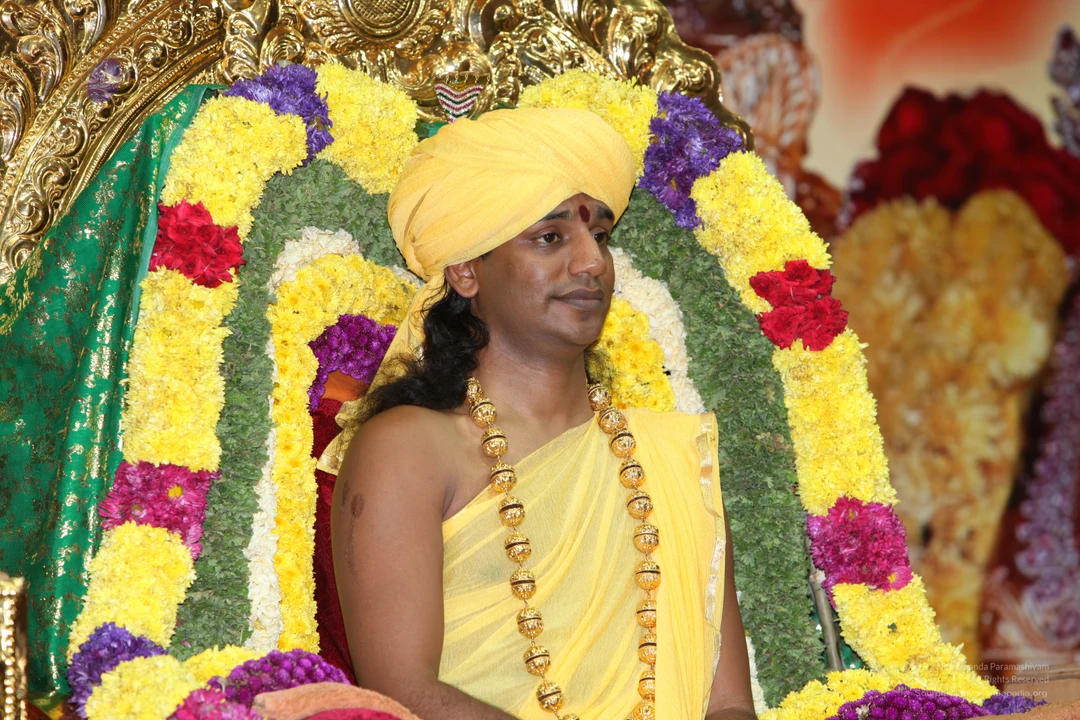
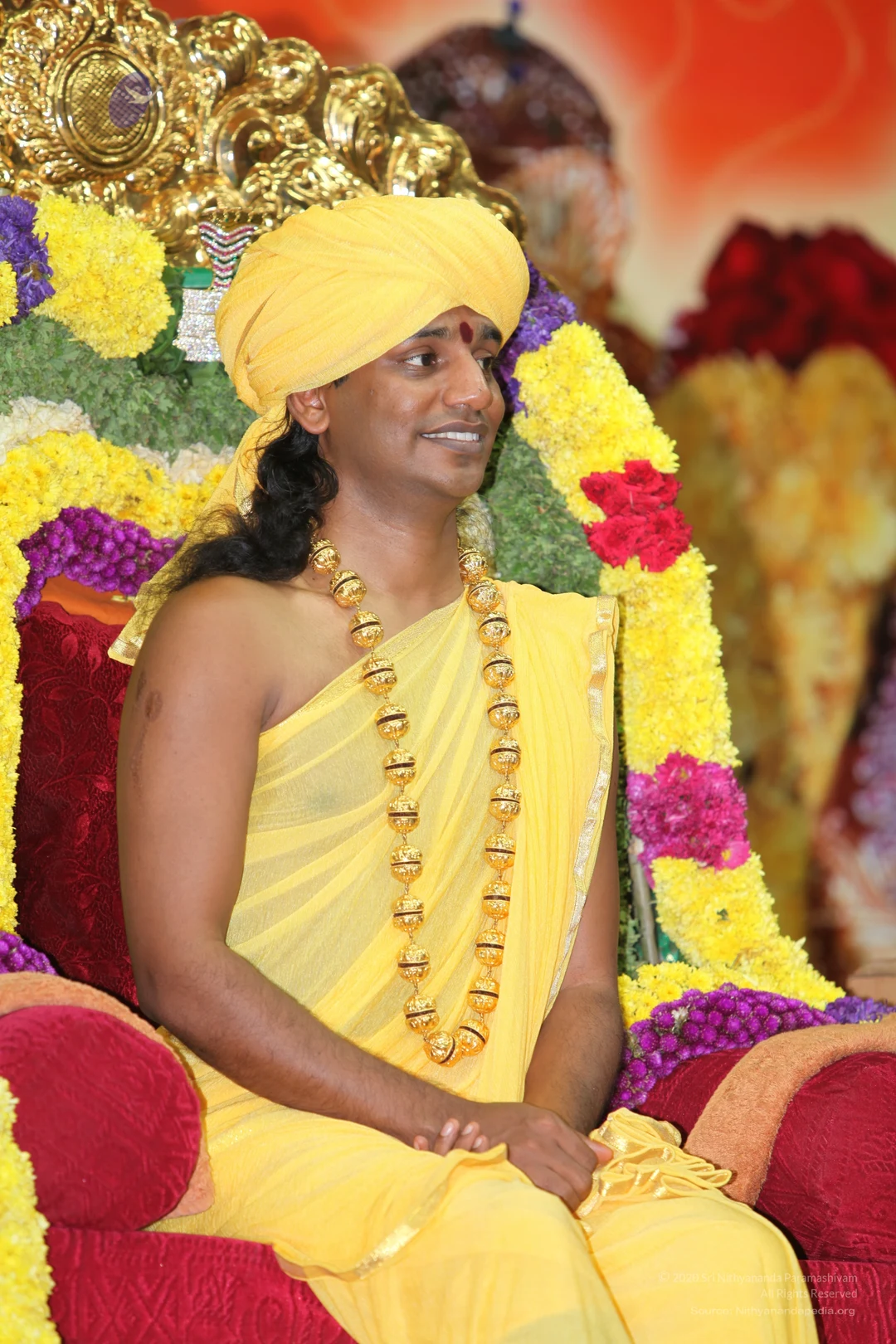
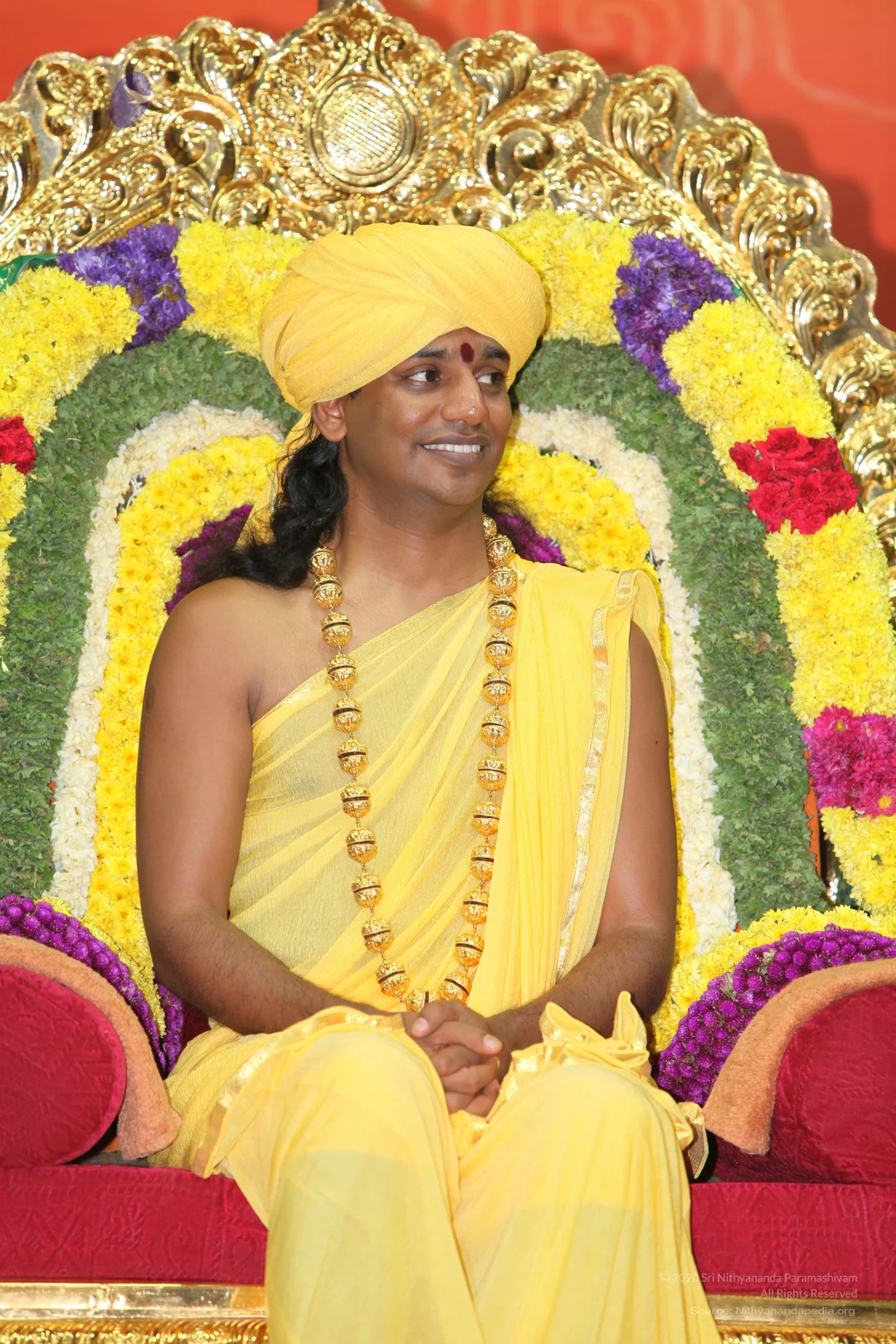
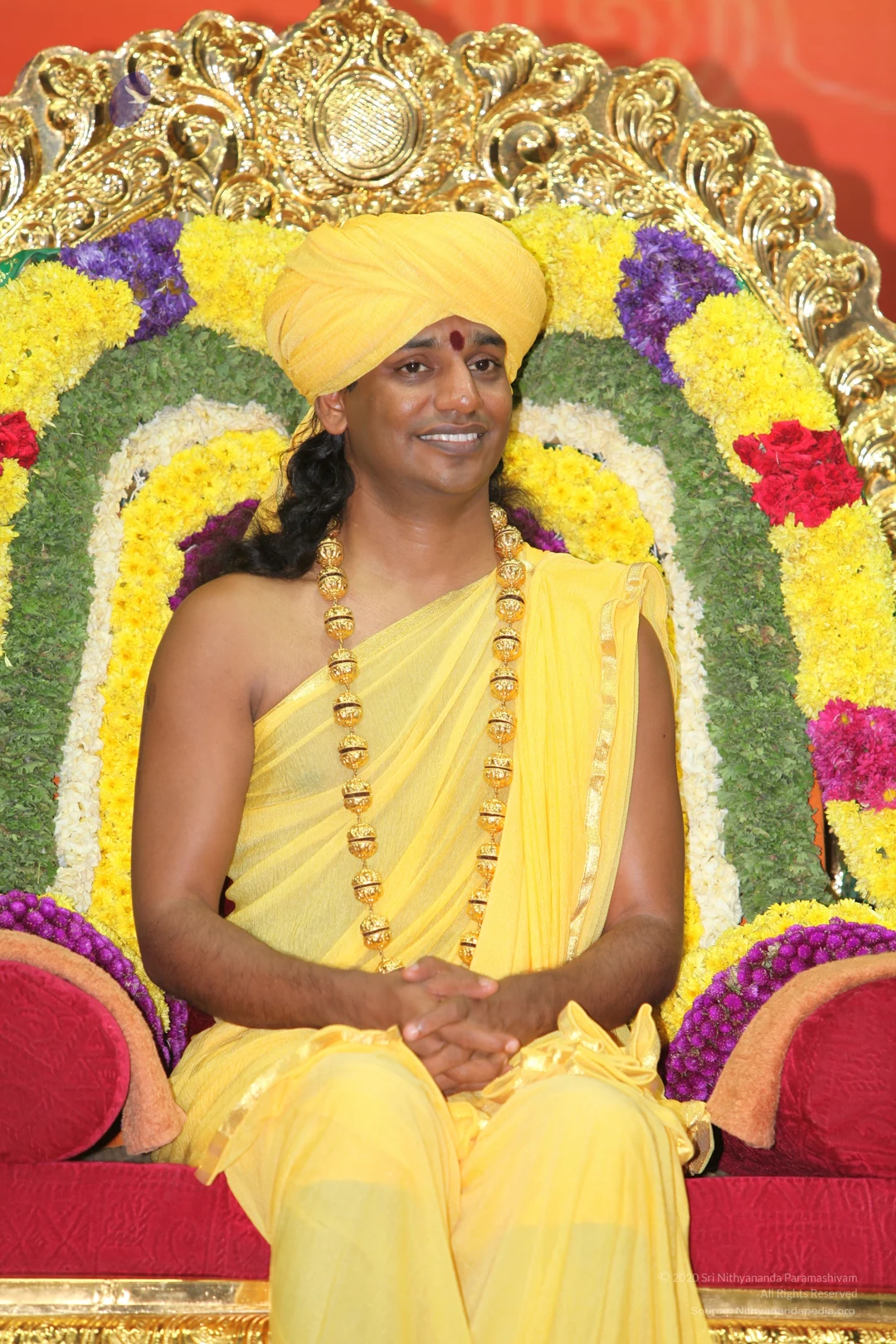
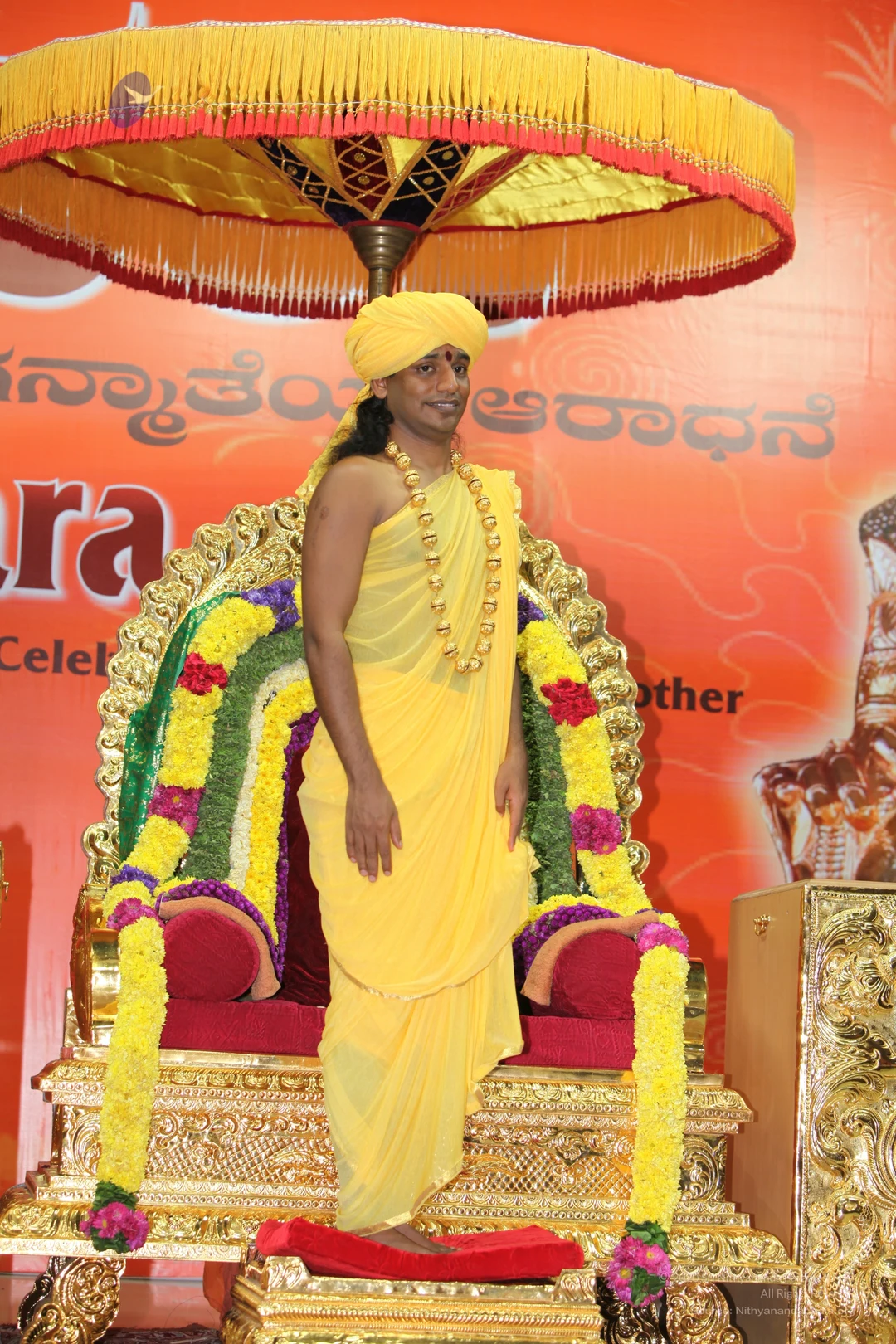
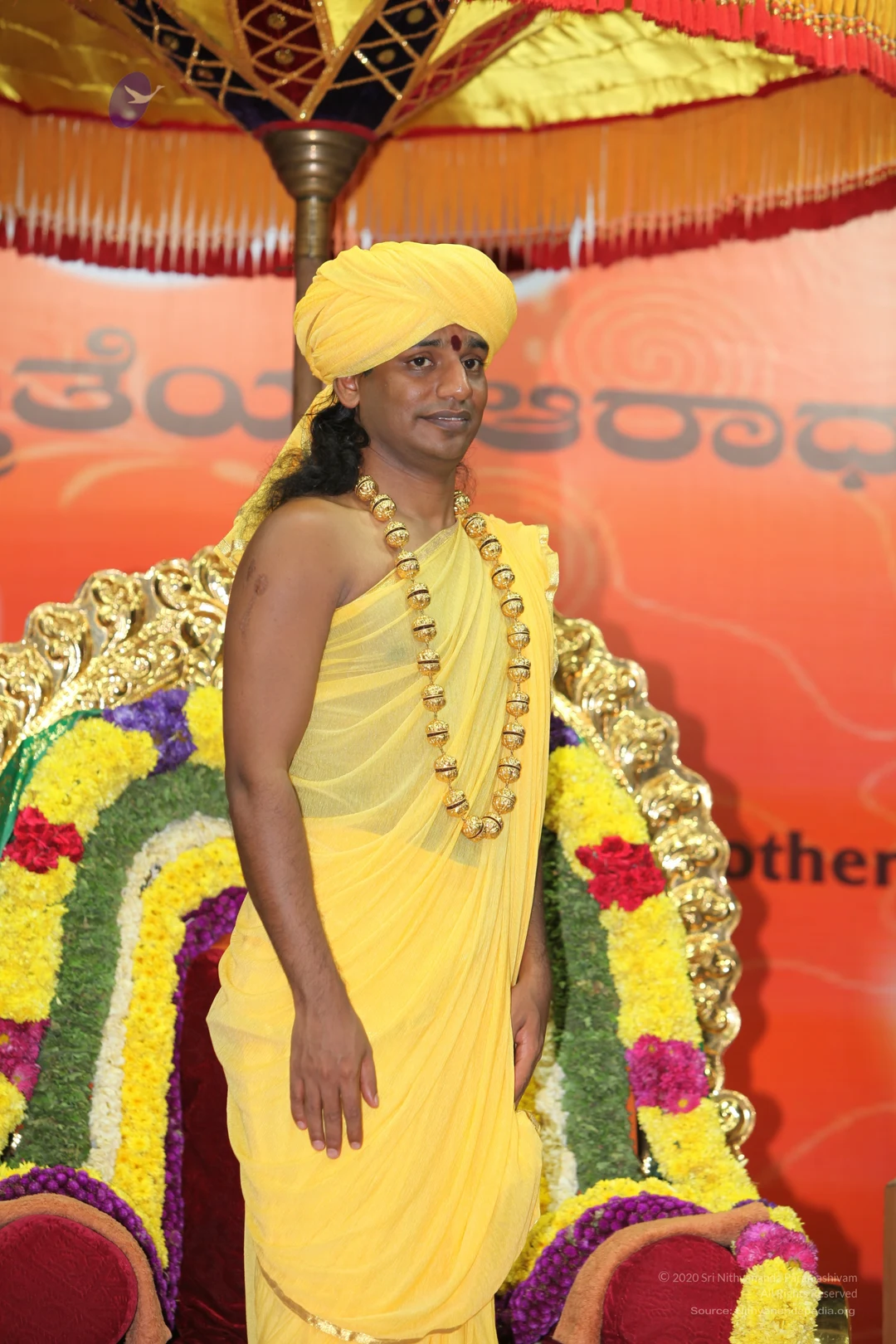
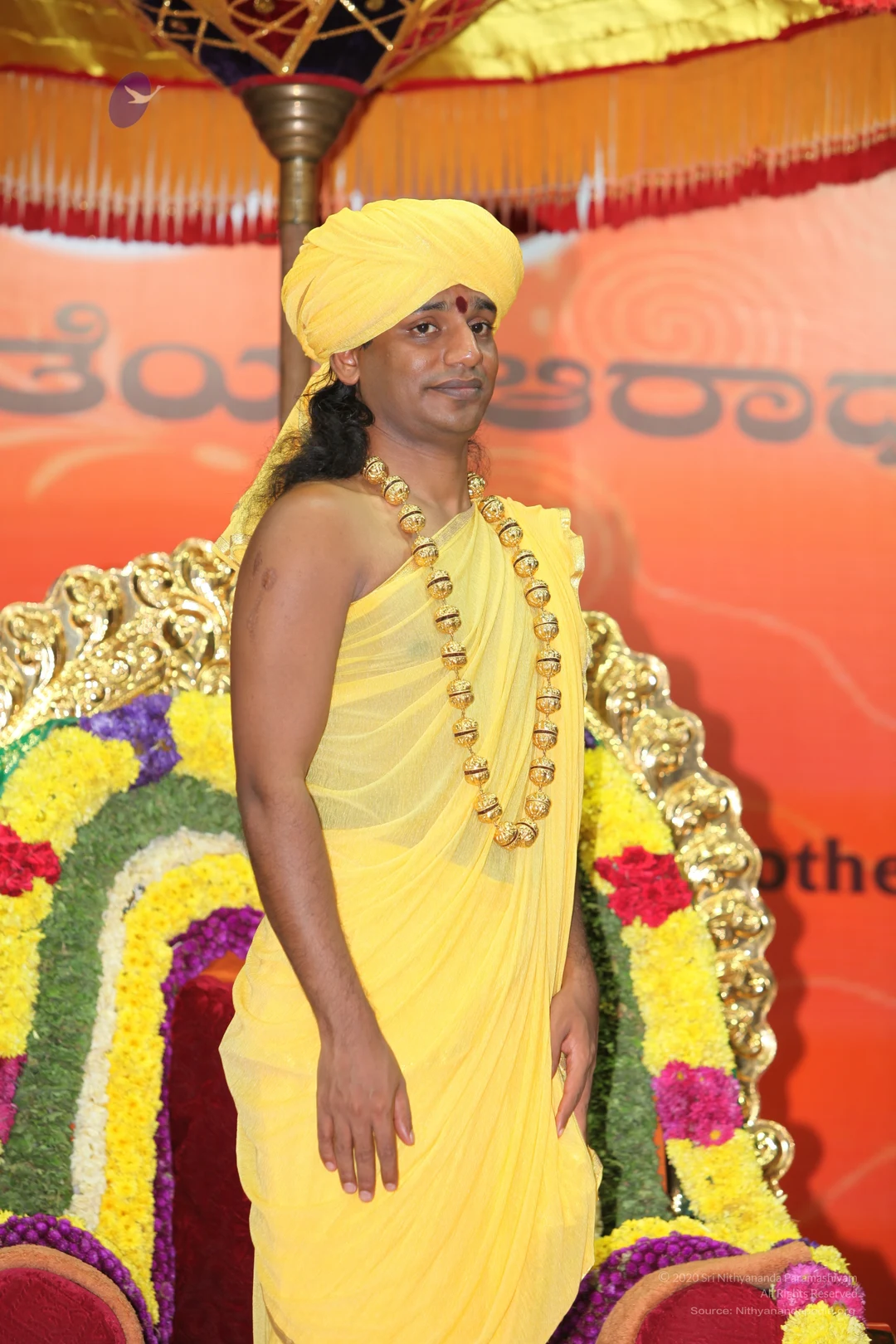
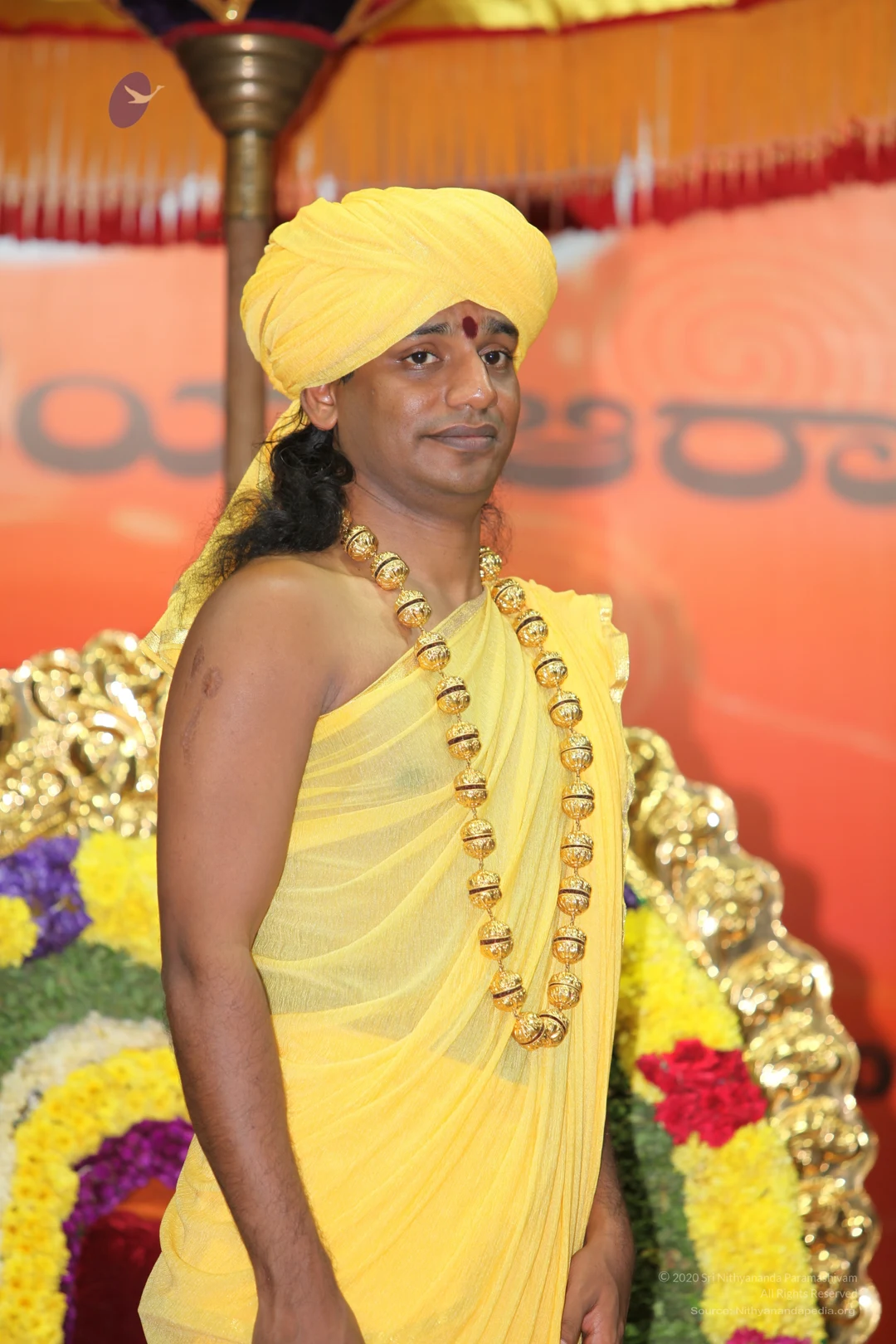
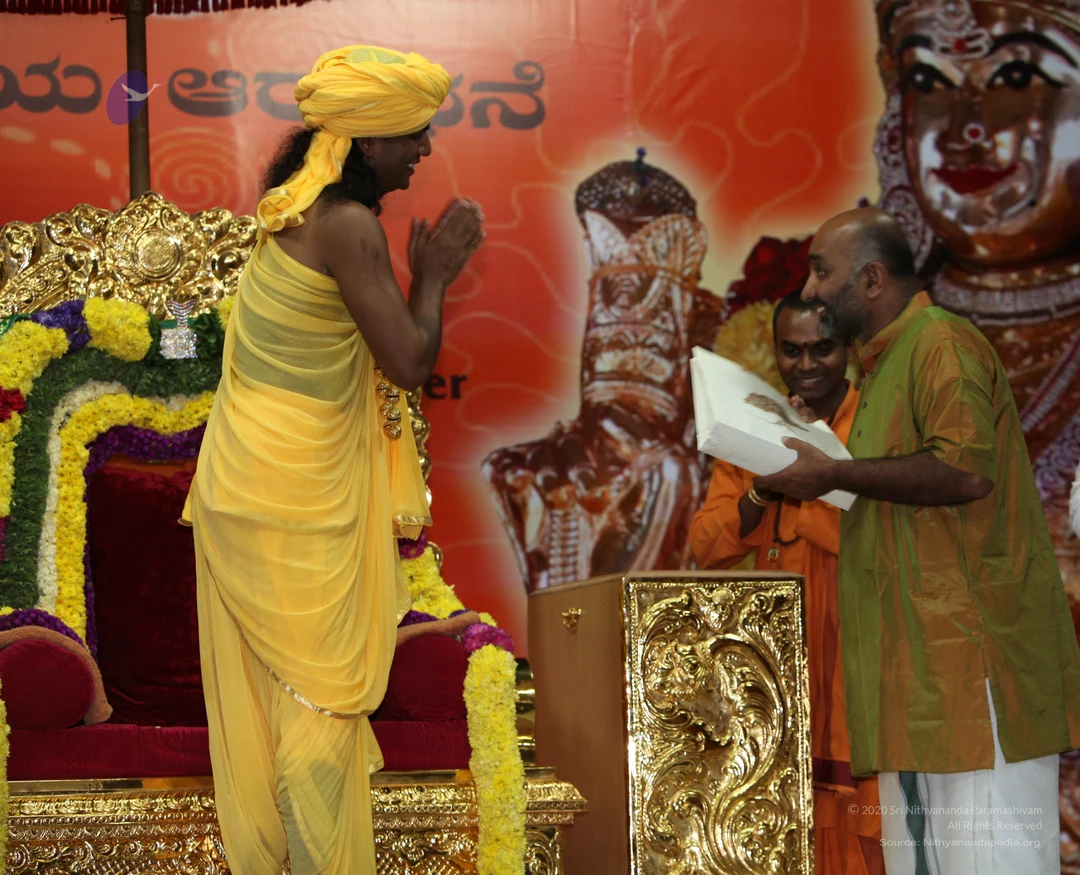
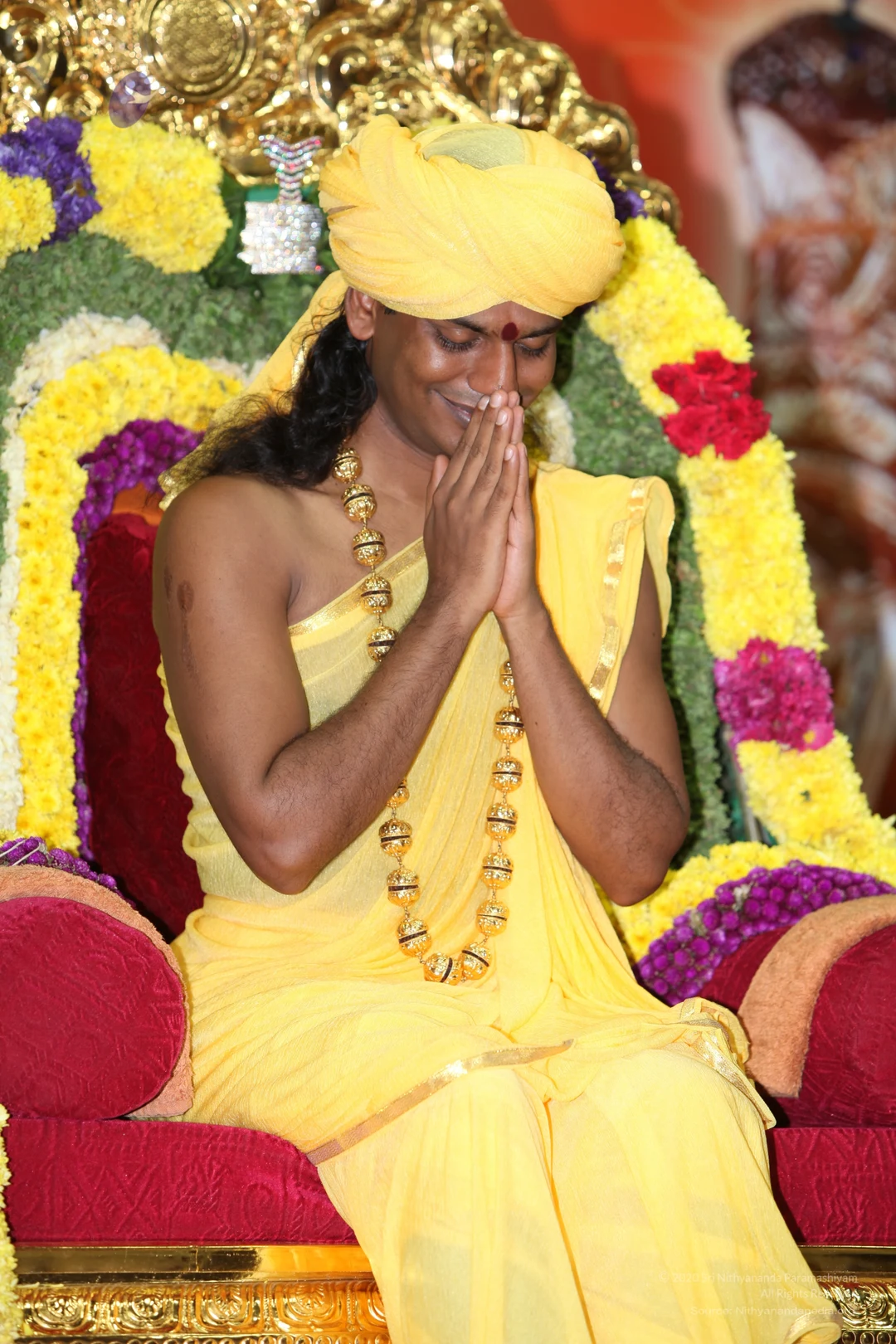
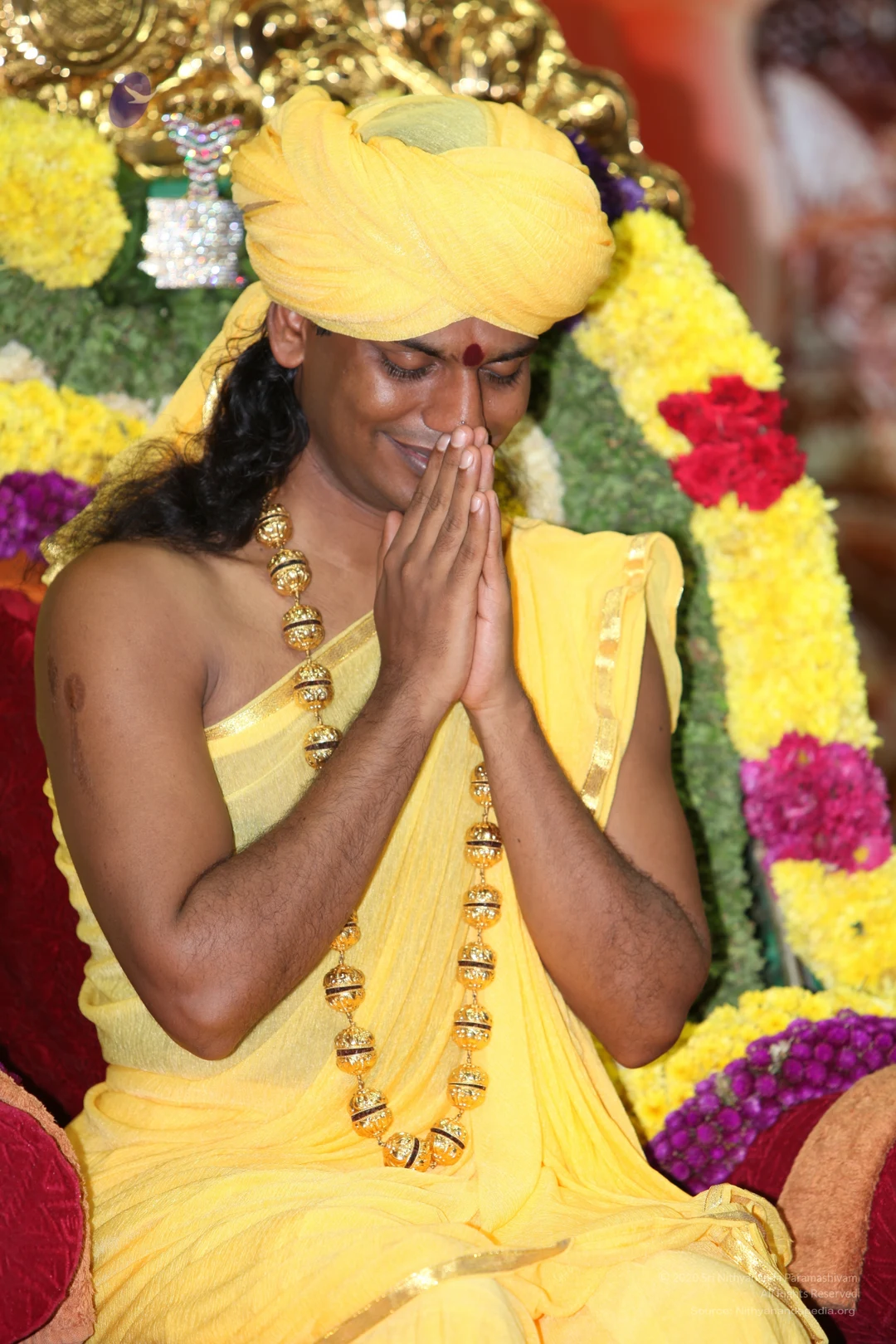
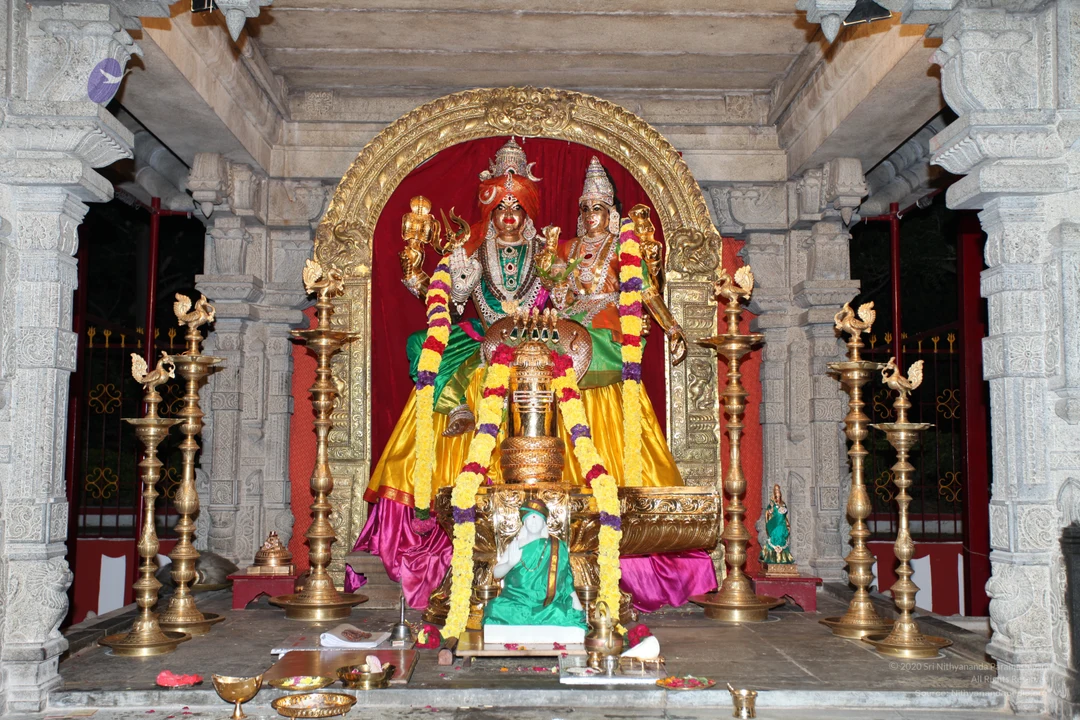
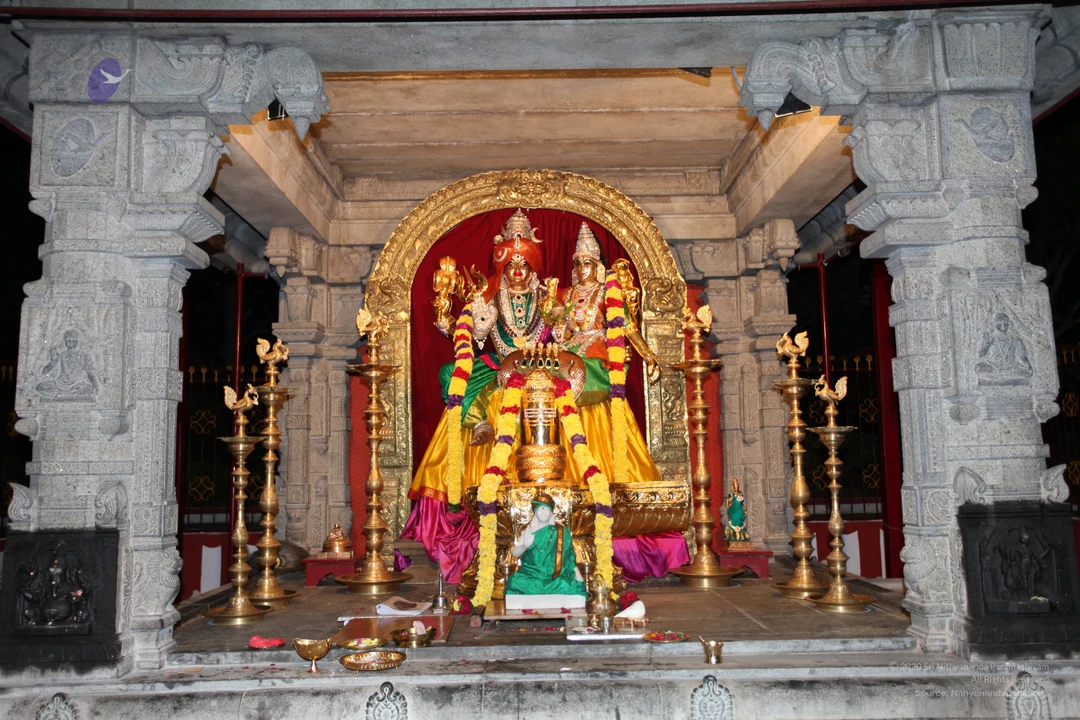
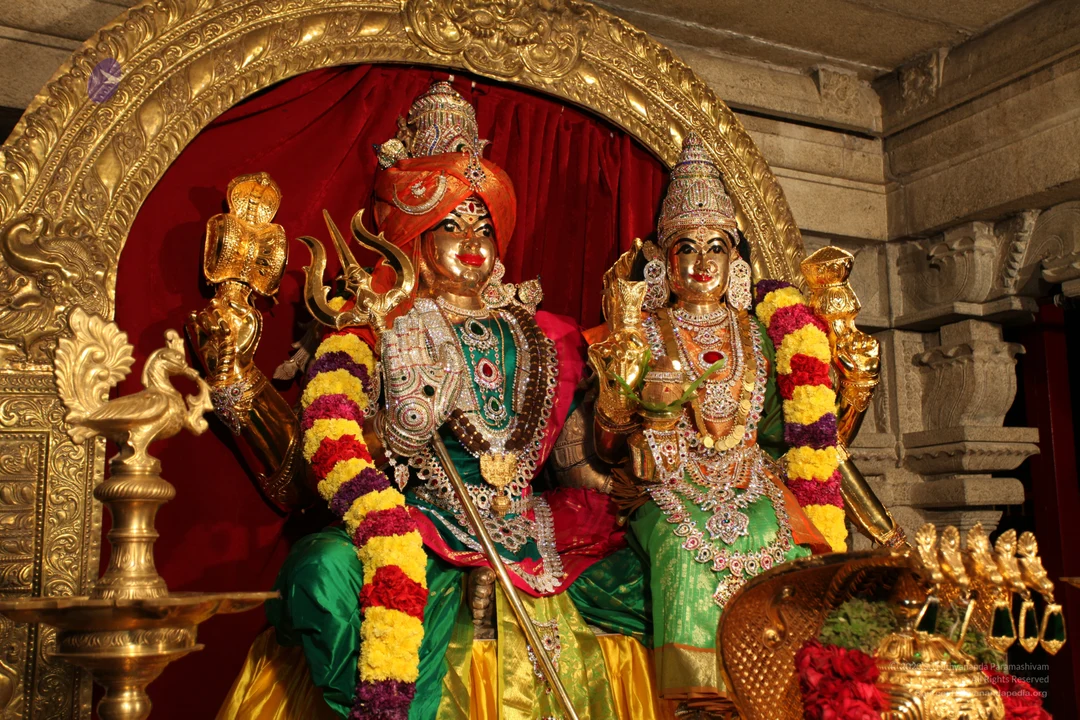
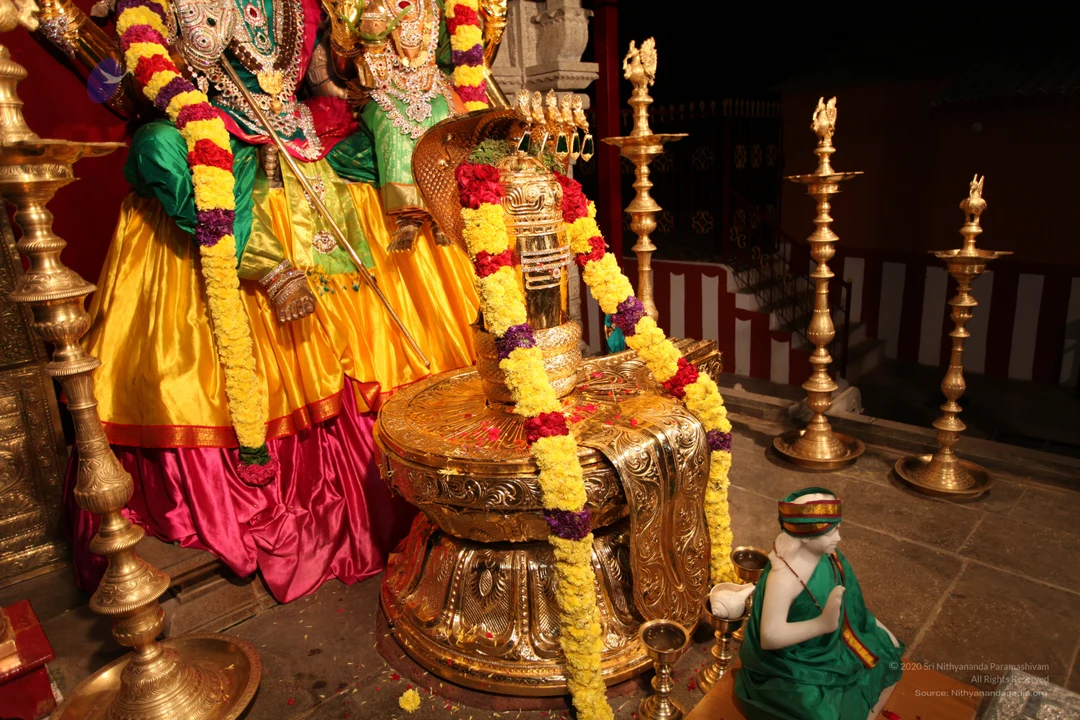
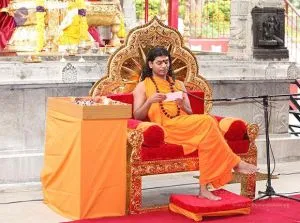
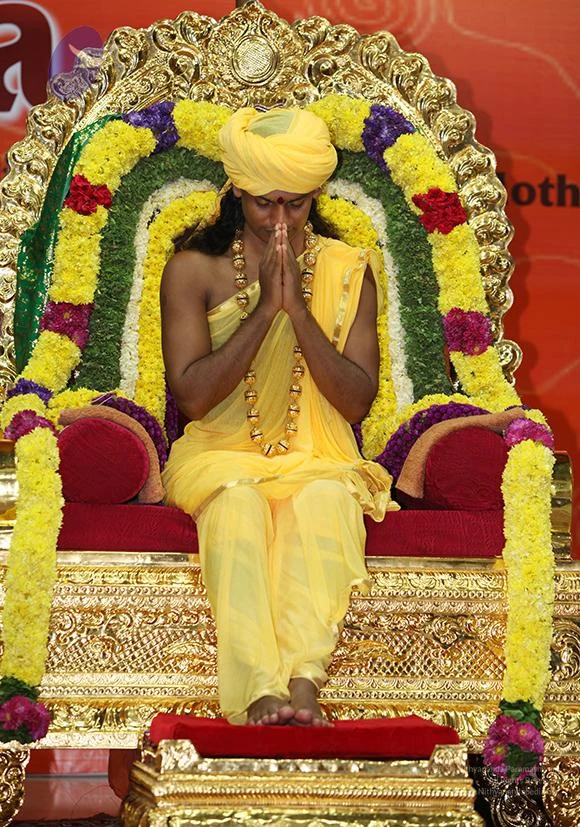
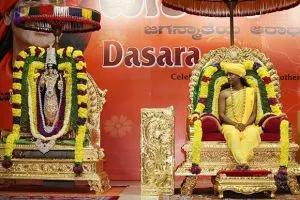
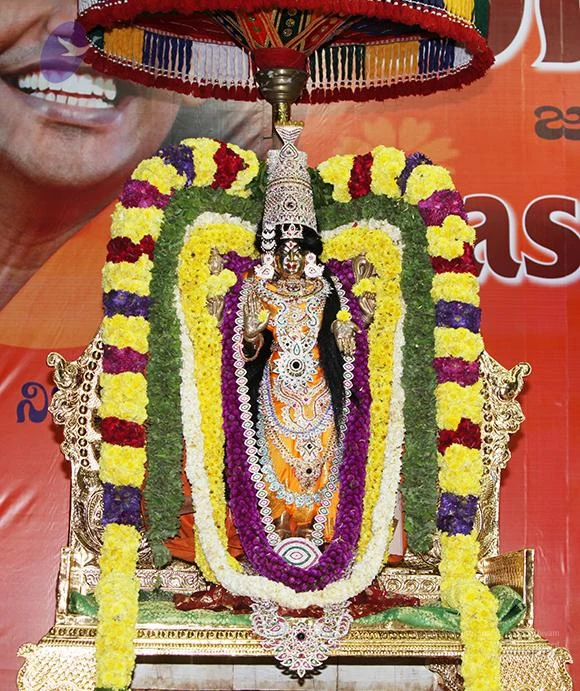
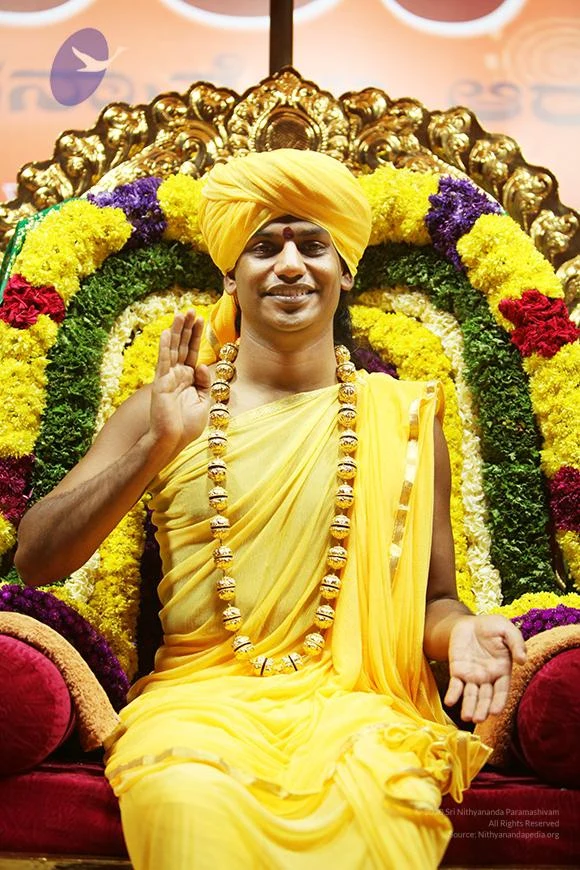
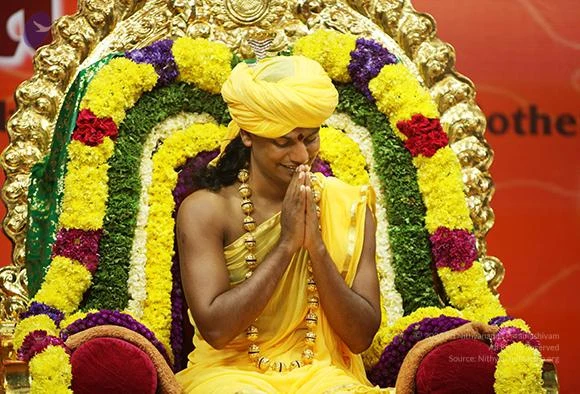
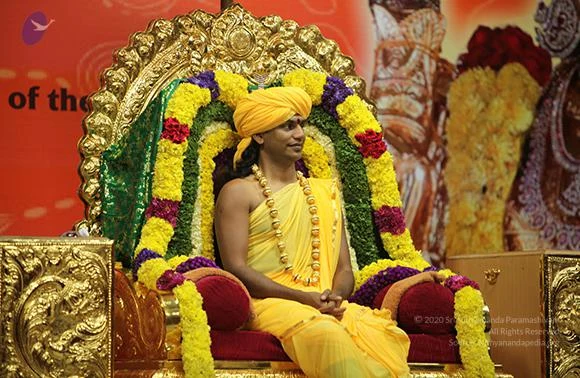
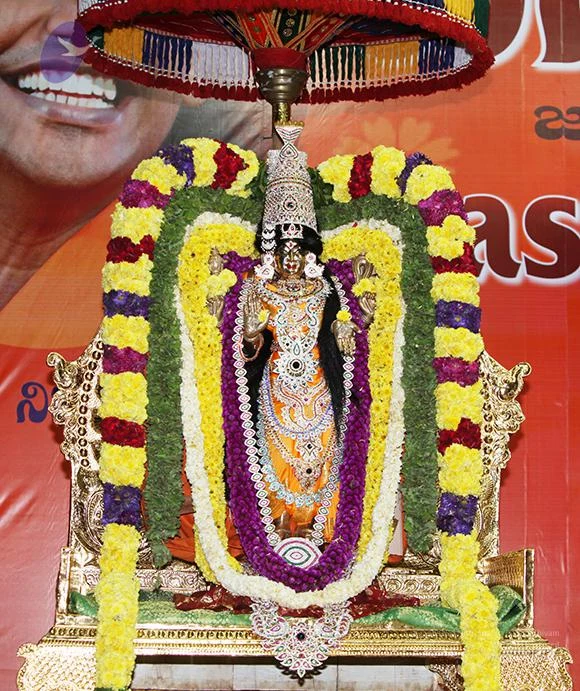
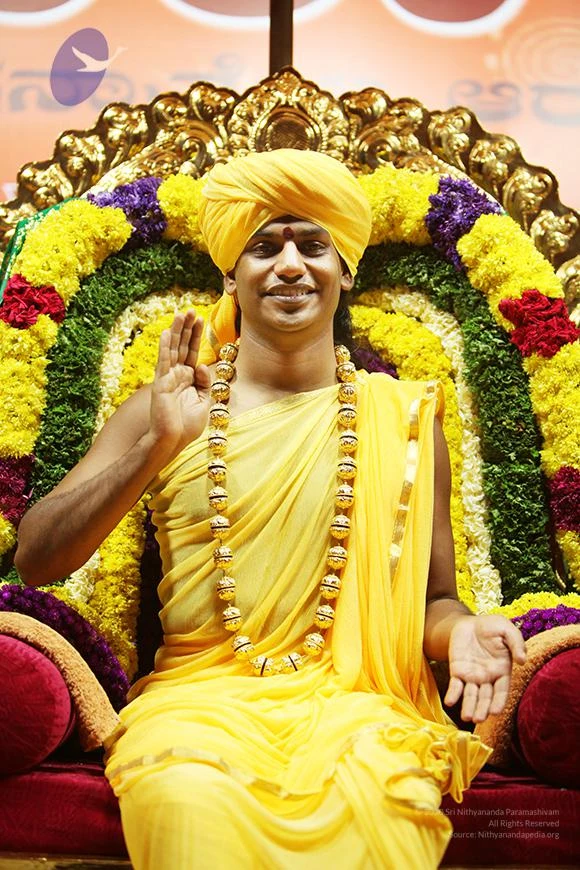
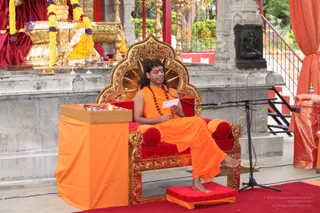
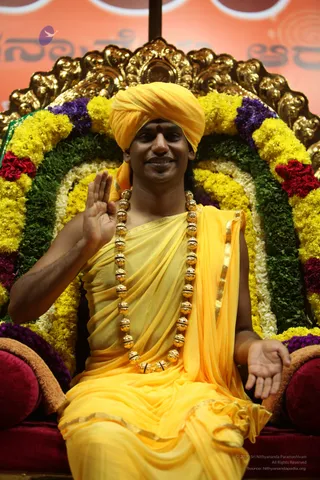
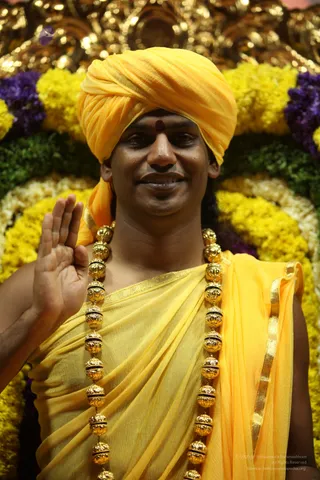
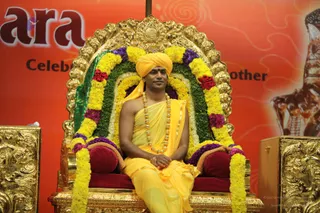
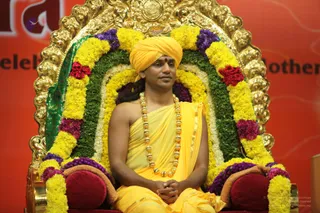
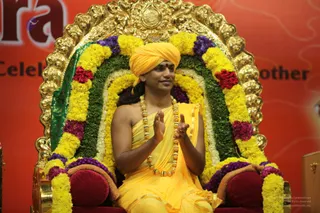
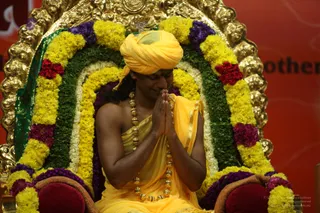
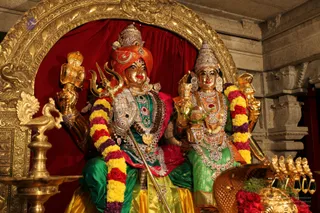
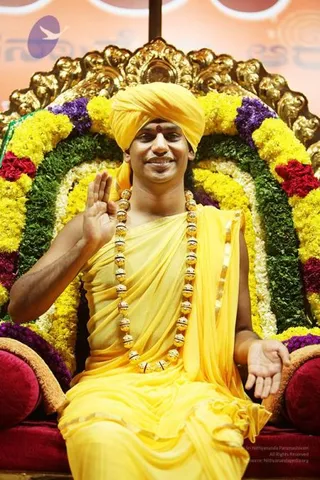
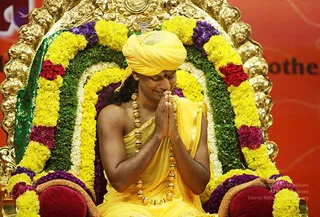
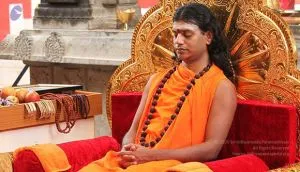
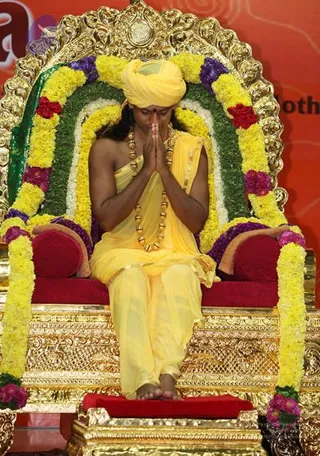
A photograph of a shrine inside a granite temple pavilion with carved stone pillars. At the centre stand two deity murtis, a male form with a red crown and a female form with a tall gold crown, both in gold and yellow garments with green and pink drapes, decorated with garlands of marigolds and purple flowers. A gold shivalinga-style object sits on a gold pedestal in front of them. Tall brass lamps with oil lamps and brass plates with offerings, including flowers and kumkum, line the platform. The statues are deity murtis, not living people, and no physical people are visible.A stage event with an orange banner behind it. On the left, a large portrait printed on the banner shows a smiling man in an orange turban with a purple forehead mark, labelled in part as a Paramahamsa Nithyananda caption. On the right, a painted or printed image of a goddess with a crown, red and gold jewellery and marigold garlands. Centre stage, a decorated murti of a deity sits on a gold throne draped with yellow and red marigold garlands and a small umbrella. Beside it, a seated figure in a yellow robe, yellow turban and gold necklace sits on a gold-and-red throne with a matching umbrella and garlands; the robe is yellow with a gold necklace, consistent with a person appearance cue. Rows of seated devotees in white kurtas and yellow shawls face the stage, some in orange, with men's heads visible from behind.A man seated on a red cushioned throne in front of a gilded arch decorated with yellow and purple marigold garlands and green leaves. He wears a saffron-yellow turban with a red tilak on the forehead, a yellow draped garment over one shoulder, and a long multi-strand gold bead necklace. His hands rest folded in his lap. The flower-garlanded throne is in a setting with a red wall behind it. Swamiji (probable) cues: a saffron turban and ornate gold necklace with a throne presentation.

October 14 2010

Original wiki page
Contents

Title

Healing Wisdom of Vedas

Narration

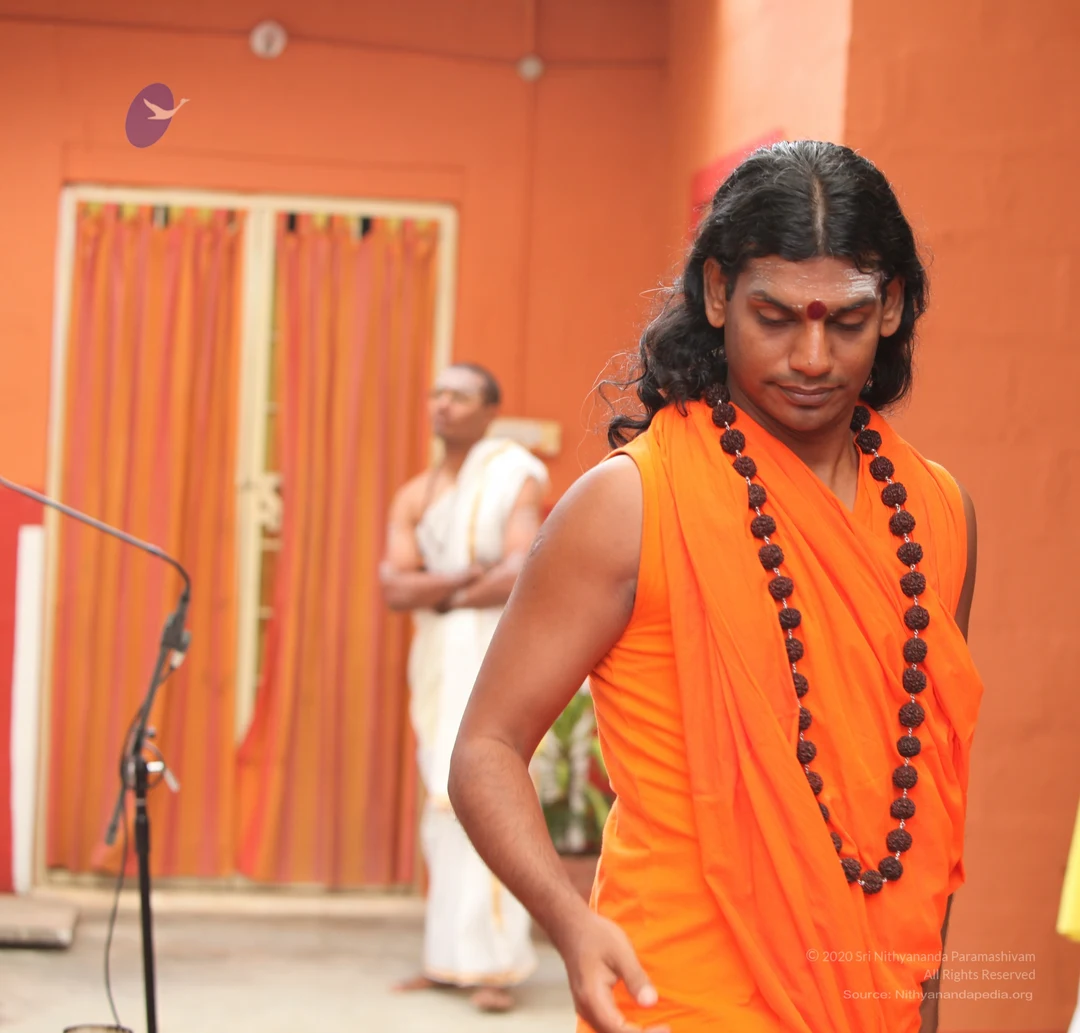
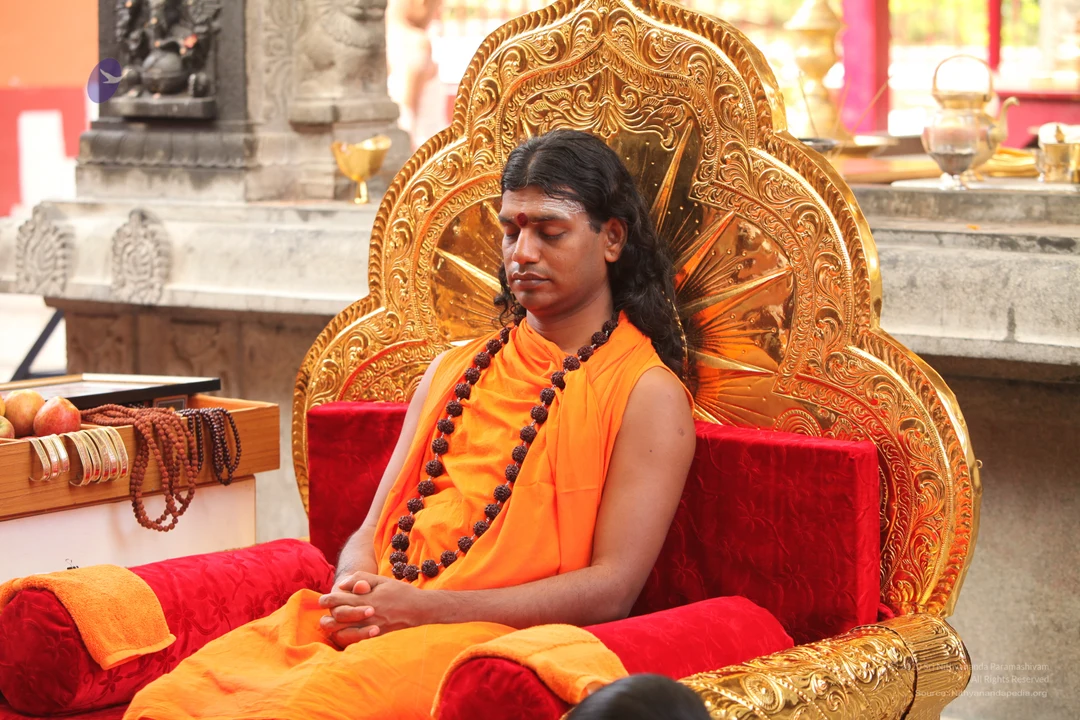
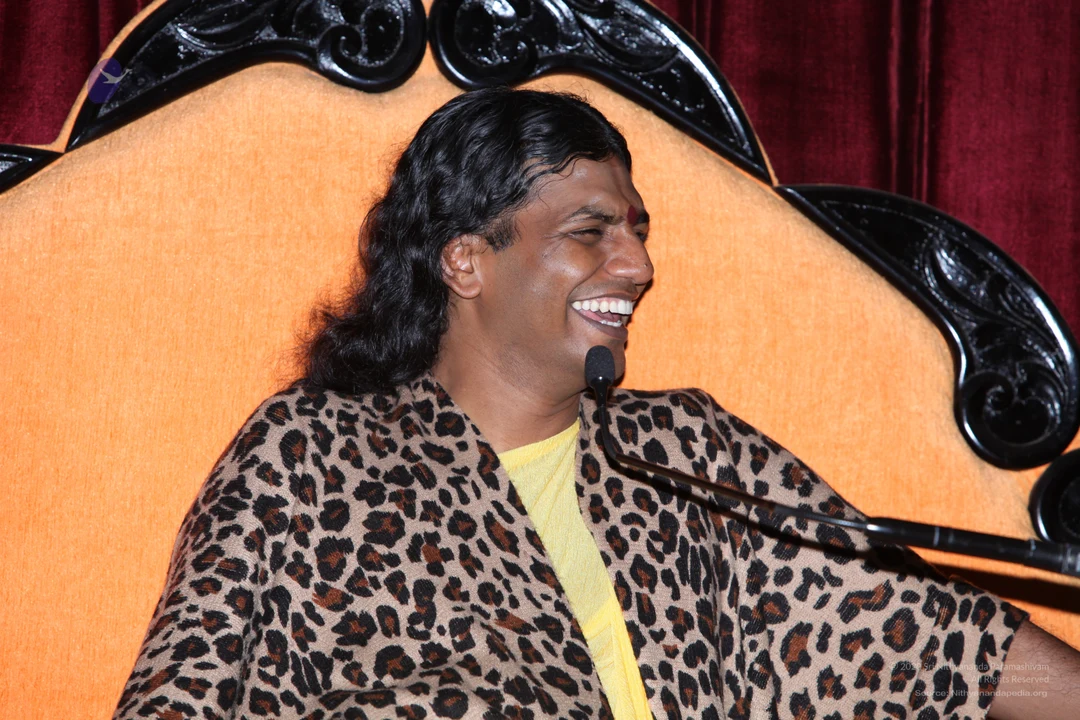
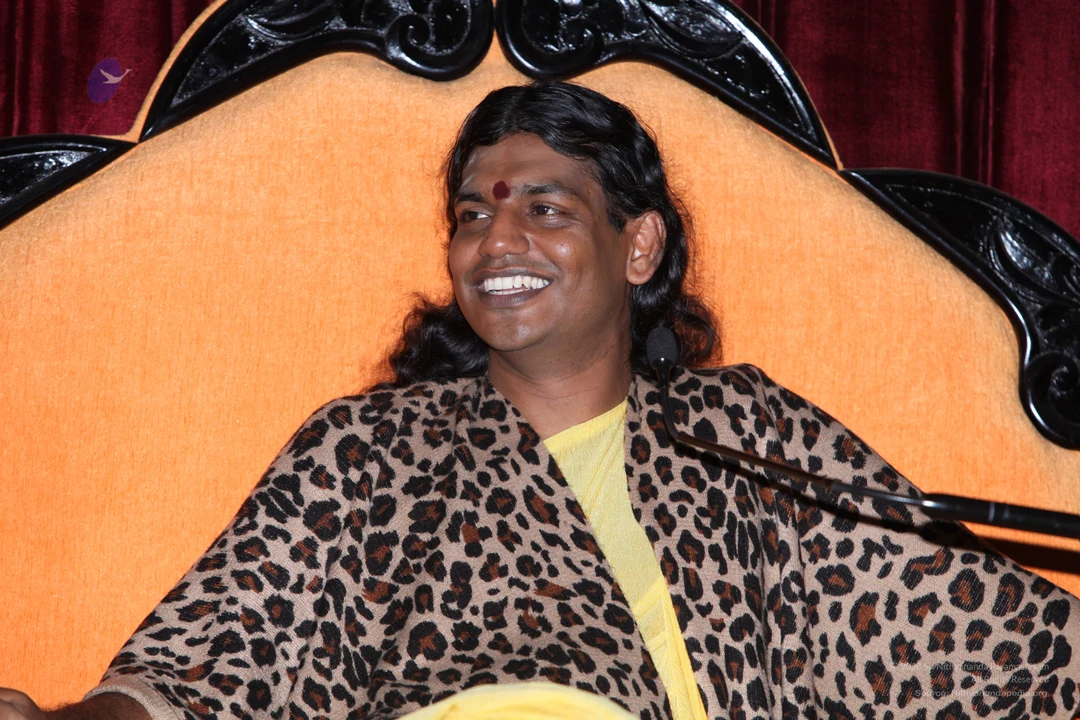
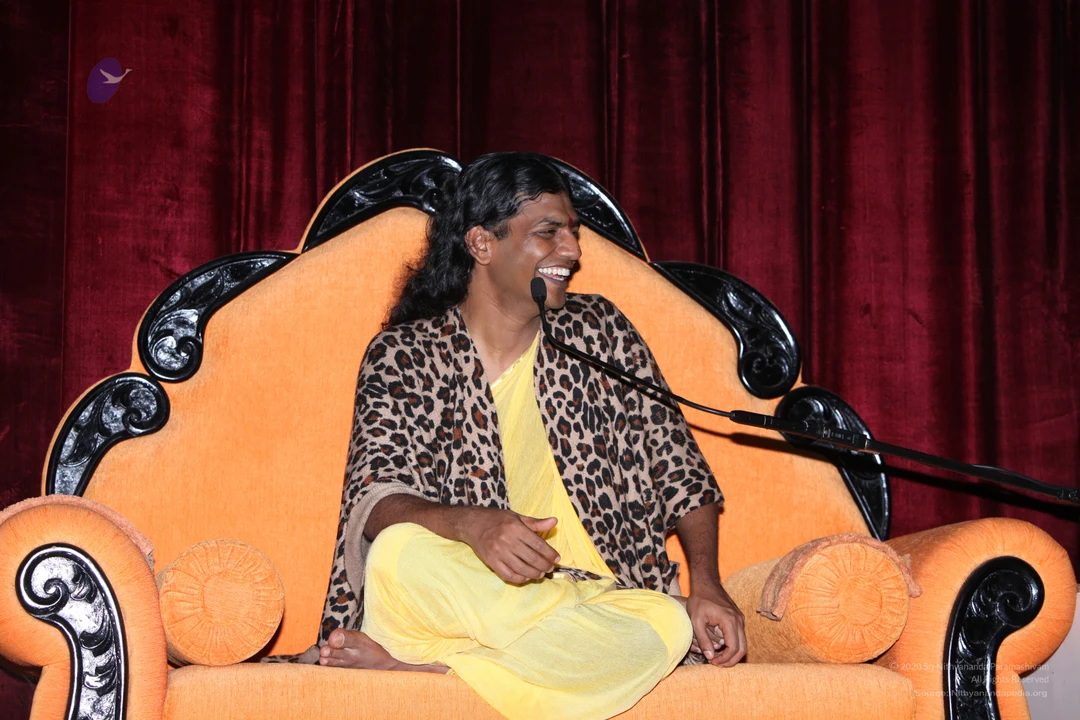
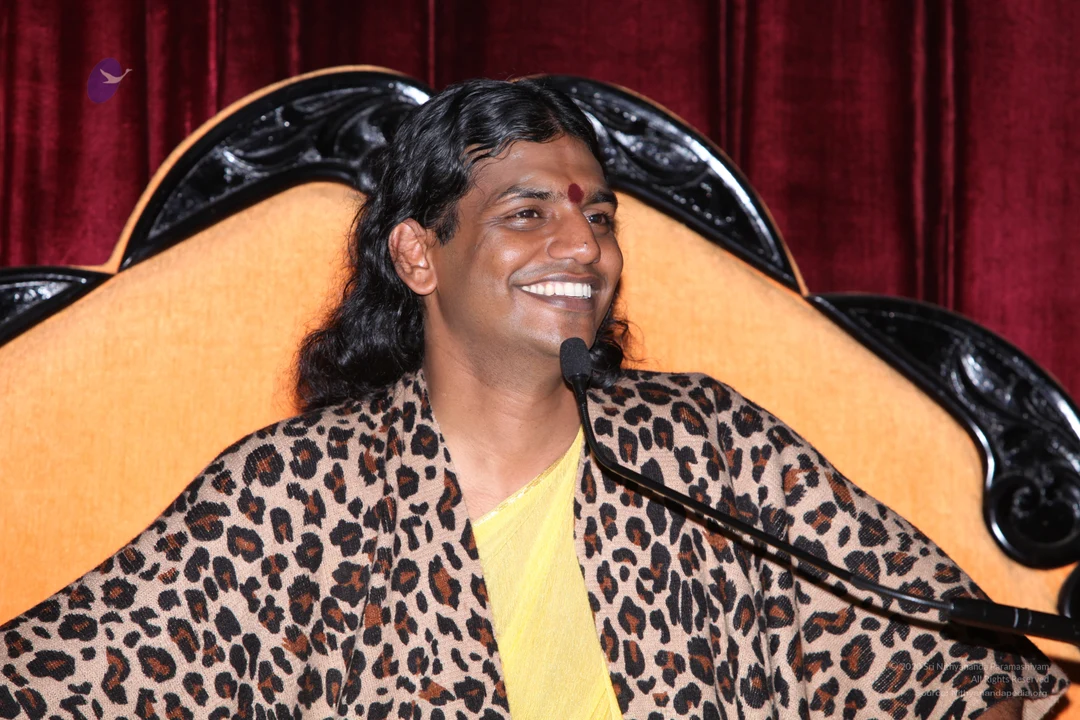
The Supreme Pontiff of Hinduism, Jagatguru Mahasannidhanam, His Divine Holiness, Bhagavan Nithyananda Paramashivam, expounded on the Cosmic Principles of Vedic Literature during the everyday live public talk - Nithyananda Satsang. In this talk entitled Healing Wisdom of Vedas, The Supreme Pontiff of Hinduism shared a few things about the extraordinary researches and discoveries done by the disciples of Maharishi Mahesh Yogi on Vedic literature and how the Vedic literature corresponds to special aspects of physiology. He also gave His insight on Nada Brahma which is the sound that is the source of everything, by sharing experiences He had with His Guru, Raghupathi Yogi. His Divine Holiness instructed that first you need to do is to play with silence, then automatically the whole science of playing with sound will be revealed to you.

Video and Audio

VideoAudio

Transcript

(0:17)

|| Sadāshiva samārambhām Shankarācāryā madhyamām | Asmat ācārya paryantām Vande Guru Paramparām ||

(0:38)

I welcome you all with My love and respects. Today’s subject, ‘Healing Wisdom of Vedas’. I wanted to share few things about, the extraordinary researches and discoveries done by the disciples of Maharishi Mahesh Yogi on Vedic literature and how the Vedic literature corresponds to special aspects of human physiology. Beautifully they proved, forty branches of Vedic literature, in structure and function, matches the human physiology; like various organs, organ systems and nervous systems. And not only that, they have gone deep into...I will first express some of their discoveries, then I will give you the deeper insights.

(2:02)

By a Professor Tony Nader - very beautifully in his research he says that, human body is a replica of Vedas and the vyakarana in Vedic literature is hypothalamus of the brain and nyaya is thalamus of brain. And another one very important research is, they have done research on the cancer cells to determine the influence of Sama Veda and rock music on it. All the cancer cells influenced by Sama Veda started decreasing in growth and the rock music increased the growth of cancer cells. It’s very surprising research - they have proved it. And they have done some more studies on how, the fever is healed by Vishnu Sahasranama; Diuresis, the urination problems - Mutra Mochana; Diabetes - Rudrashtaka, for anti-aging - Gayatri Mantra was used.

(3:24)

Now I’ll try to give My insight on the ‘Nāda Brahma’. It’s a sound which is source of everything. So when the sound vibrations are altered, the whole Consciousness is altered. The reflection of Consciousness in your body, mind and brain is altered. When the reflection of your consciousness on the body, mind and brain is altered, the physiology of the body, mind and brain gets altered.

(4:12)

Please understand. When I say physiology of a mind, I mean mind does have a physiology. It has a clear structure. I have seen Raghupati Yogi, My yoga Master playing with sounds. He will take a stone and create a sound, like as if that stone is hit by a hammer, that stone will become two pieces, it will become pieces. The same way, iron rope, he’ll take iron rope and create a sound through the tongue, as if it is hit by a powerful tool, weapon, cutter; it‘ll just break into pieces. And he’ll create a sound like throwing a stone, the bird from the tree will fall. And just he’ll close one nostril, through the other nostril he will blow the air in such a way, he can even alter the smell of the air. He’ll just inhale, blow the air in a very proportionate way, from the stomach he will generate certain smell and release it through the air.

(6:02)

I have seen, he used to make Siddha medicines also, for which he needs snake venom - snake poison. So he will just do some kind of a Pranayam, create a sound and release a particular smell through the nose; the snakes will automatically come near him, as if they are in the sexual orgasm. When the snakes get into the intercourse, two snakes - they will roll on the ground and they will move just by rolling. Only if you have seen, if you are from Indian village and seen you will understand what I am talking. They will not move like a normal way, they will be rolling on the ground and moving. They will completely be rolling and moving. I have seen the snakes getting into that kind of an orgasmic mood just by this smell. Just by the smell he releases, they will get into that mood and come towards him as if they are in that ecstasy and all he will do is he will have a small cup, the stone cup and he will take that snake and put the mouth and take the venom and release them. Just through sound, he will insert certain sound inside the body and create a smell from the body and release it through the nostrils.

(8:14)

Playing with sound...The power of sound, I tell you...Maybe if you learn to play with silence, then you will know the science of playing with sound. Learning to play with silence, will reveal the science of playing with sounds in your body and mind. Because there is no other separate technology, you cannot learn step by step one by one, how to play with different sounds. First you need to play with silence, then automatically the whole science of playing with sound will be revealed to you. Playing with silence is the technique to achieve the state of playing with the sound. Playing with silence means, getting into the deep silence through unclutching.

(10:12)

So play with silence by unclutching. You will experience, technology of playing with the sound. Let you all achieve and radiate enlightenment. Achieve and radiate the Eternal Bliss. Nithyananda. Thank you.

(10:40)

Photos

Panchatapas
Paadapooja

Morning-Satsang

Sarvadarshan

Dasara-Culturals

Ashramites-Meeting

Swamiji-With-His-Sacredarts-Team-In-Making-Vahanas

Nithyanandeshwara-Paramashiva-Golden-Temple

Banyan-Tree

Navaratri-Homa

Photos Of The Day:

thumbs

nithyananda-ashram

Photos from this day

View all 202 photos

Panchatapas
28 photosSource gallery
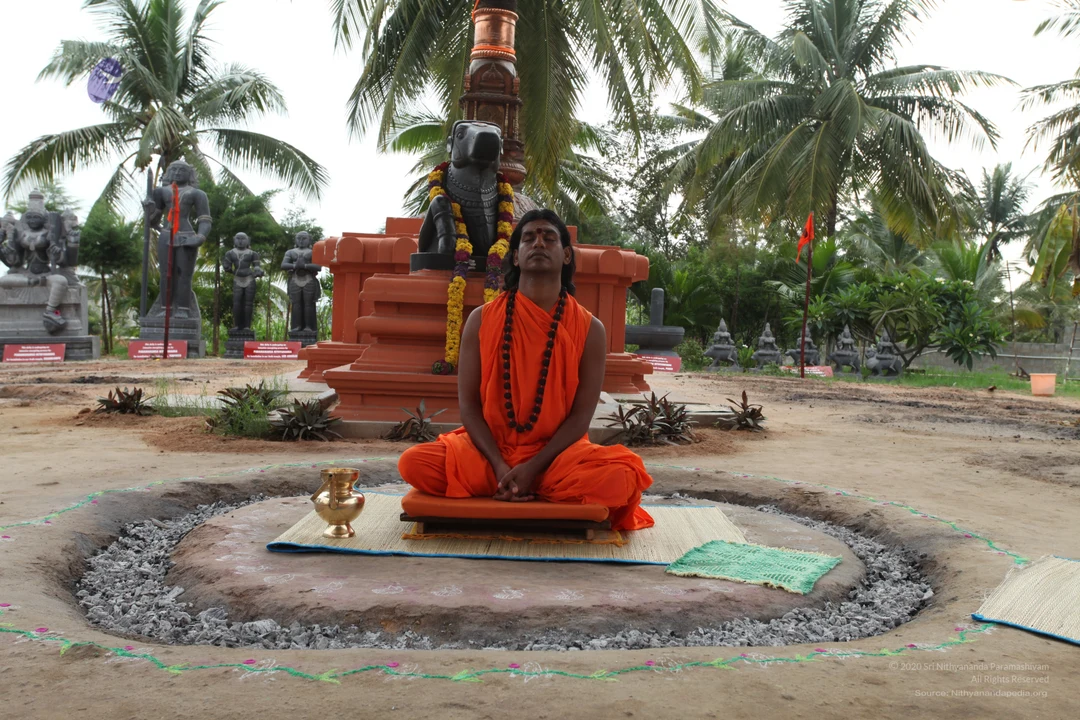
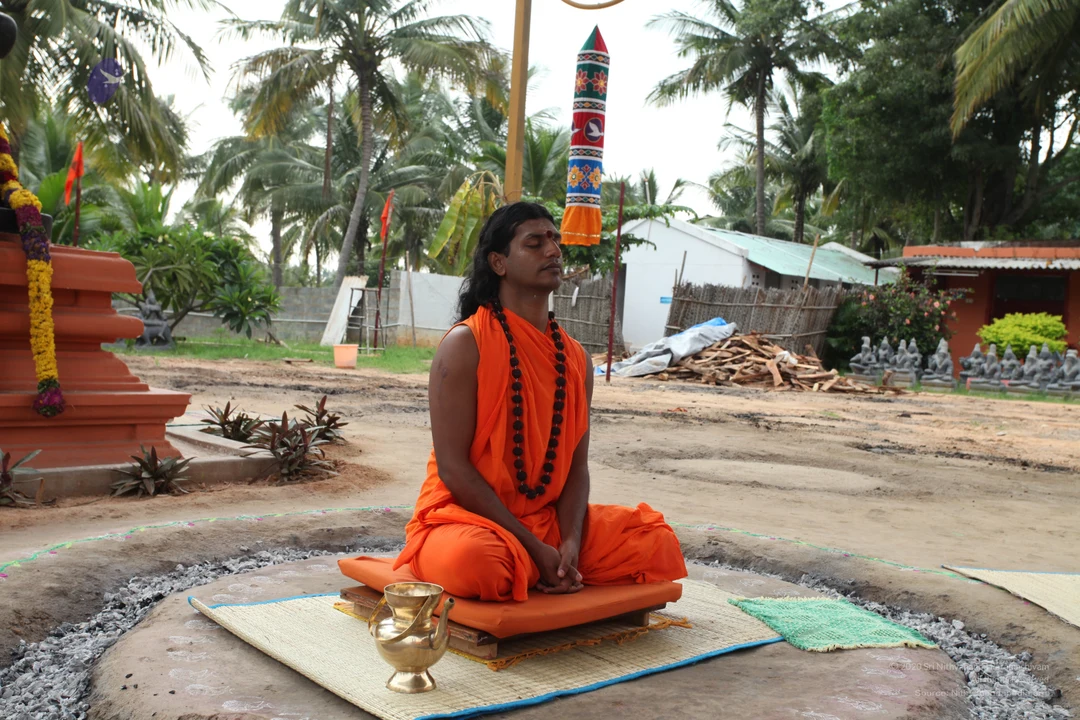
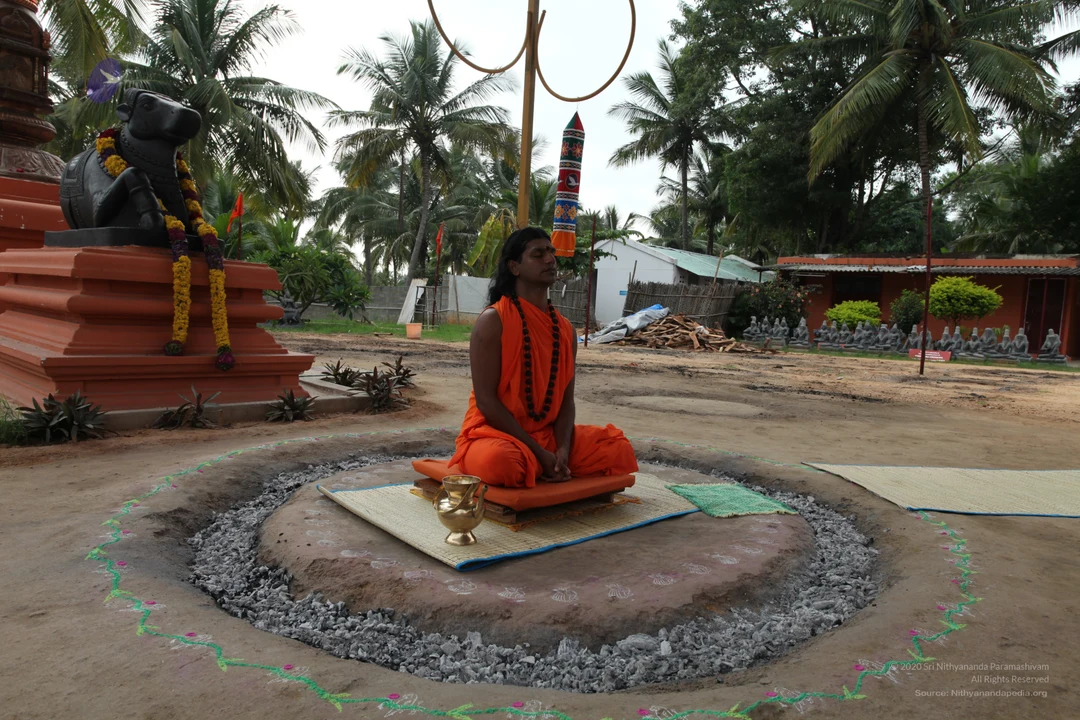
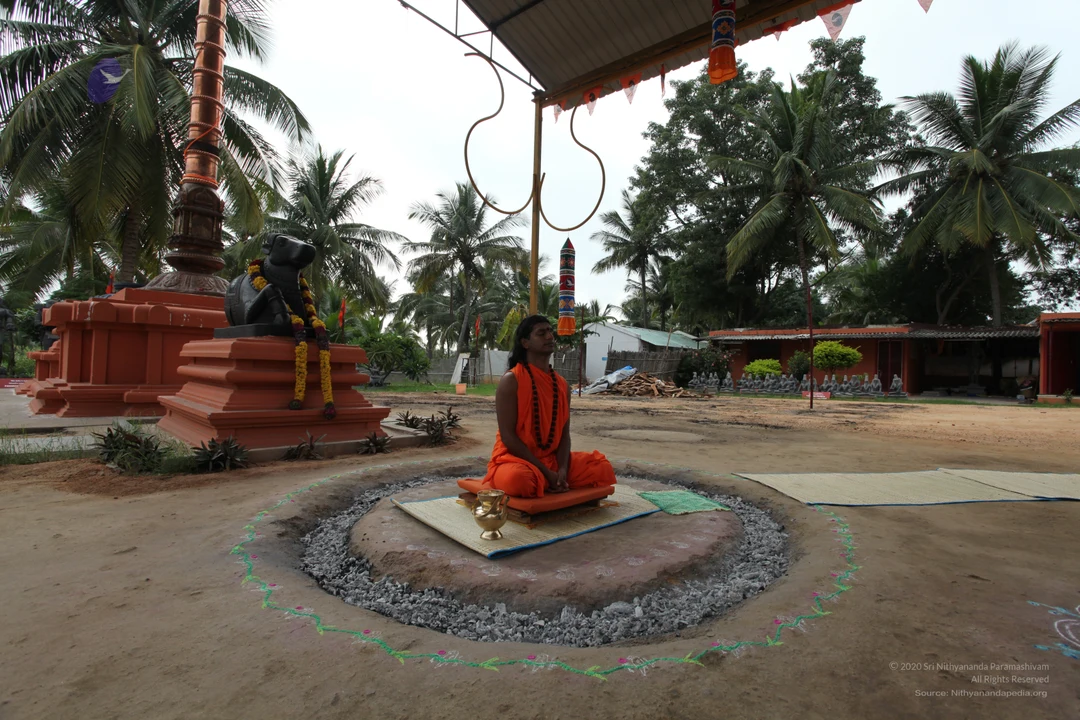
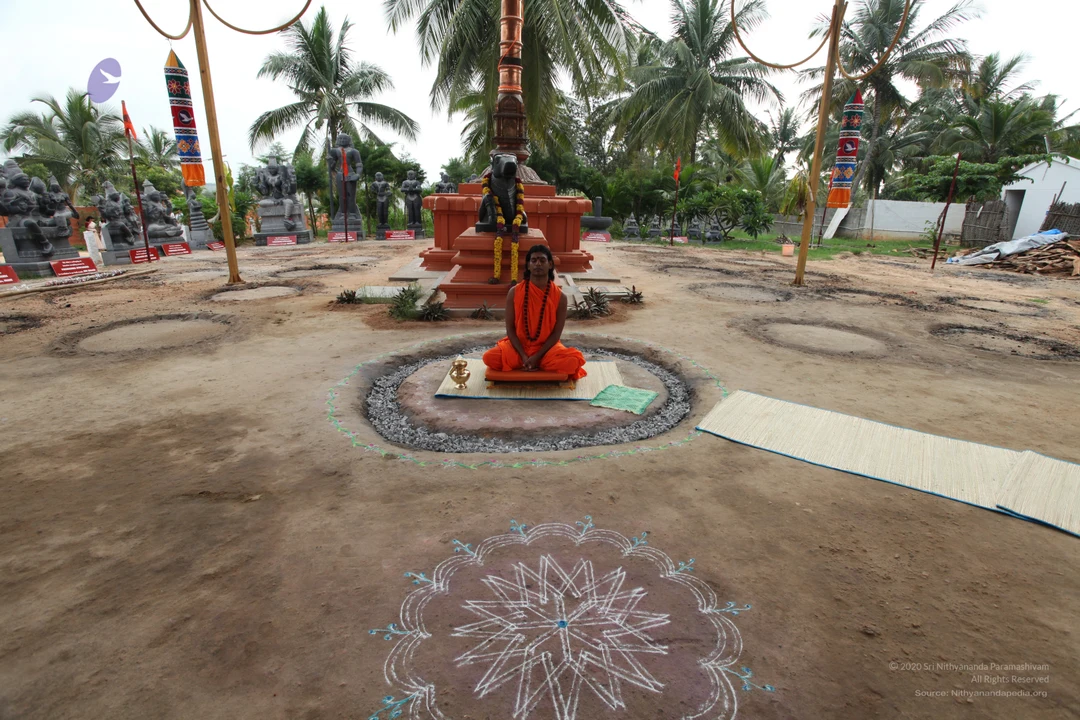
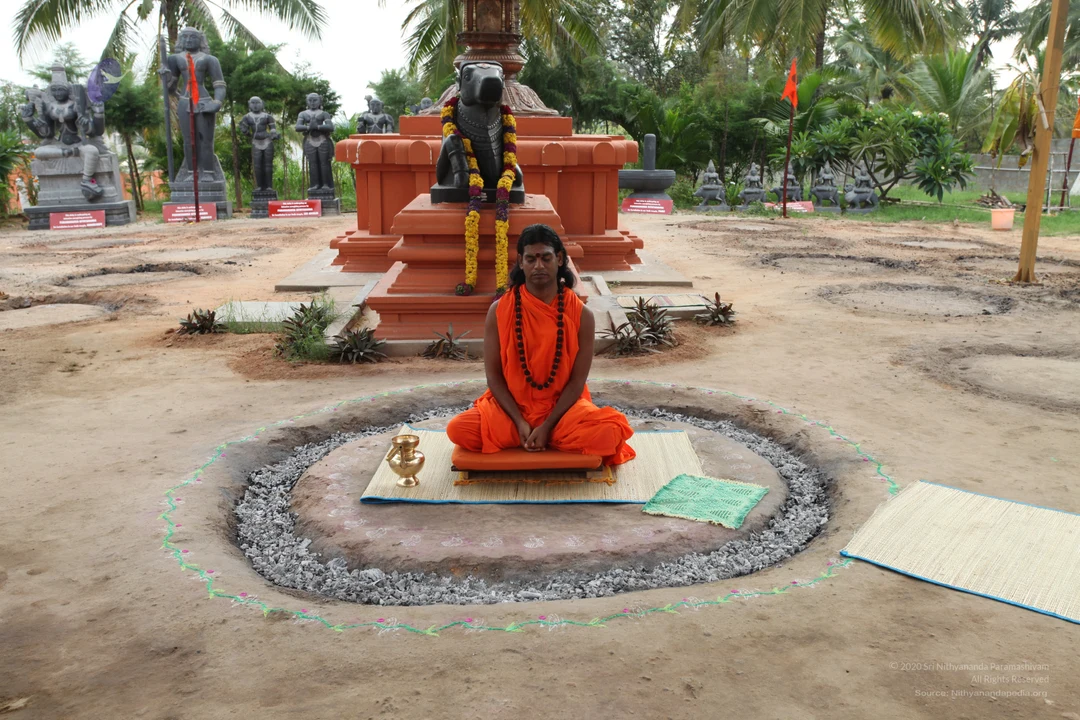
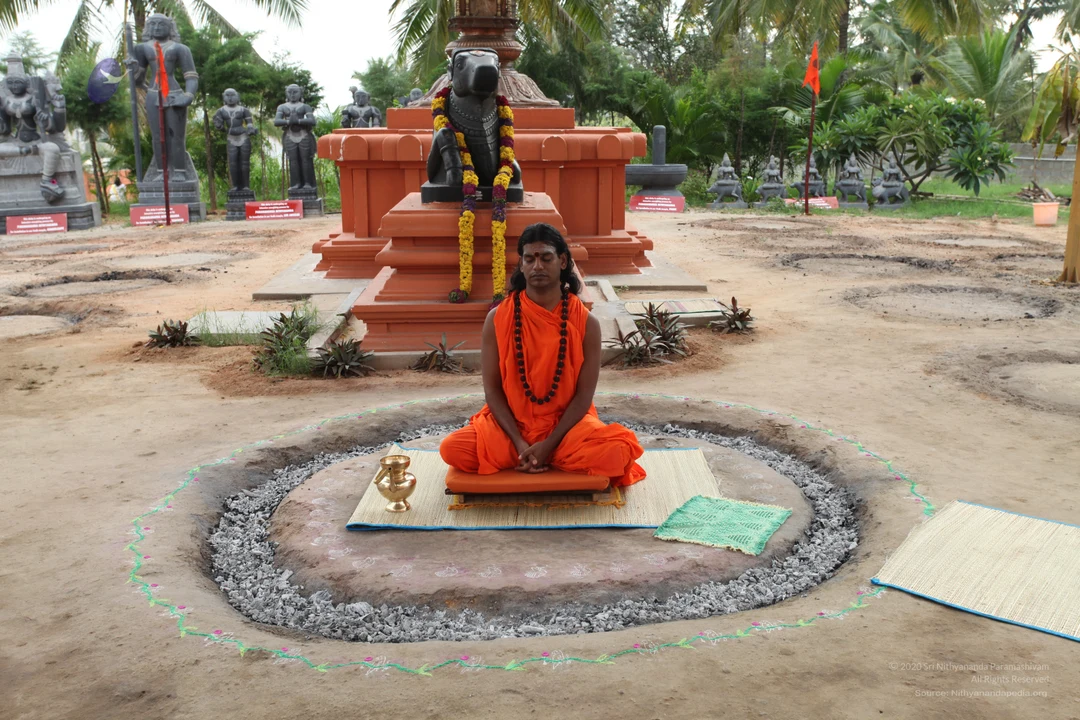
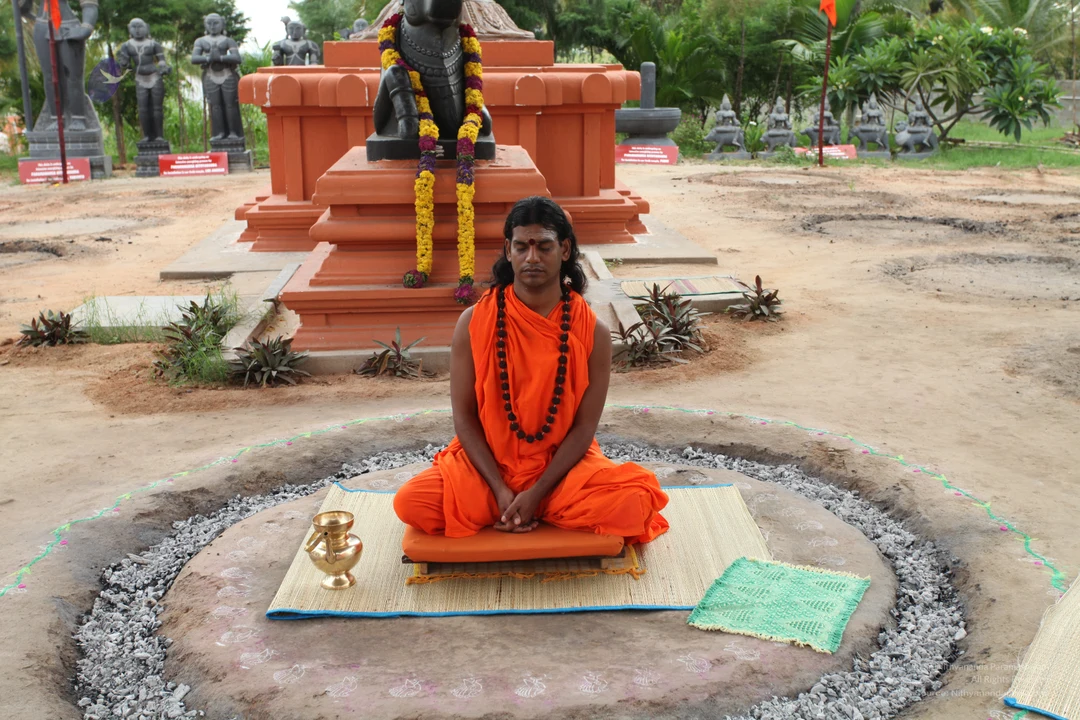
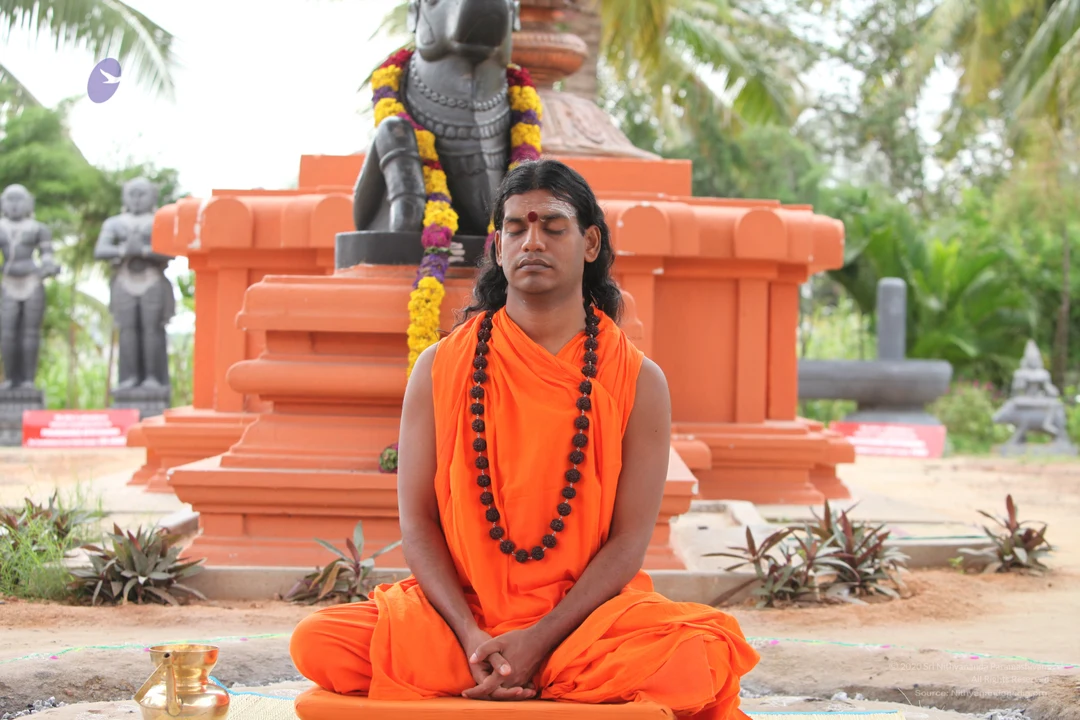
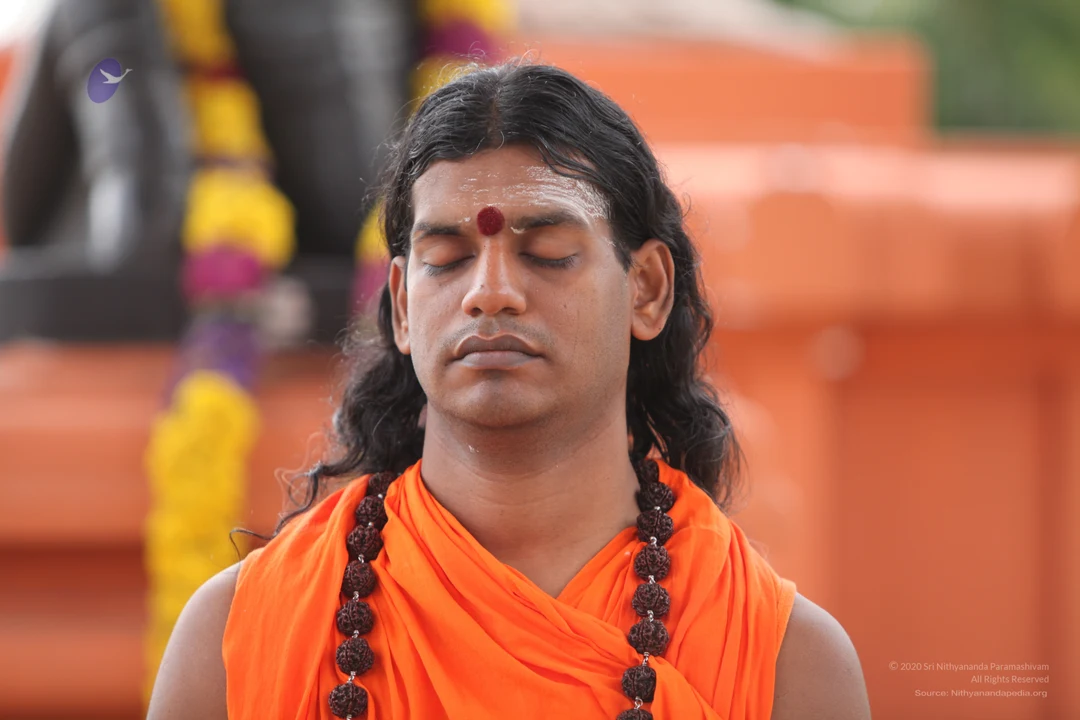
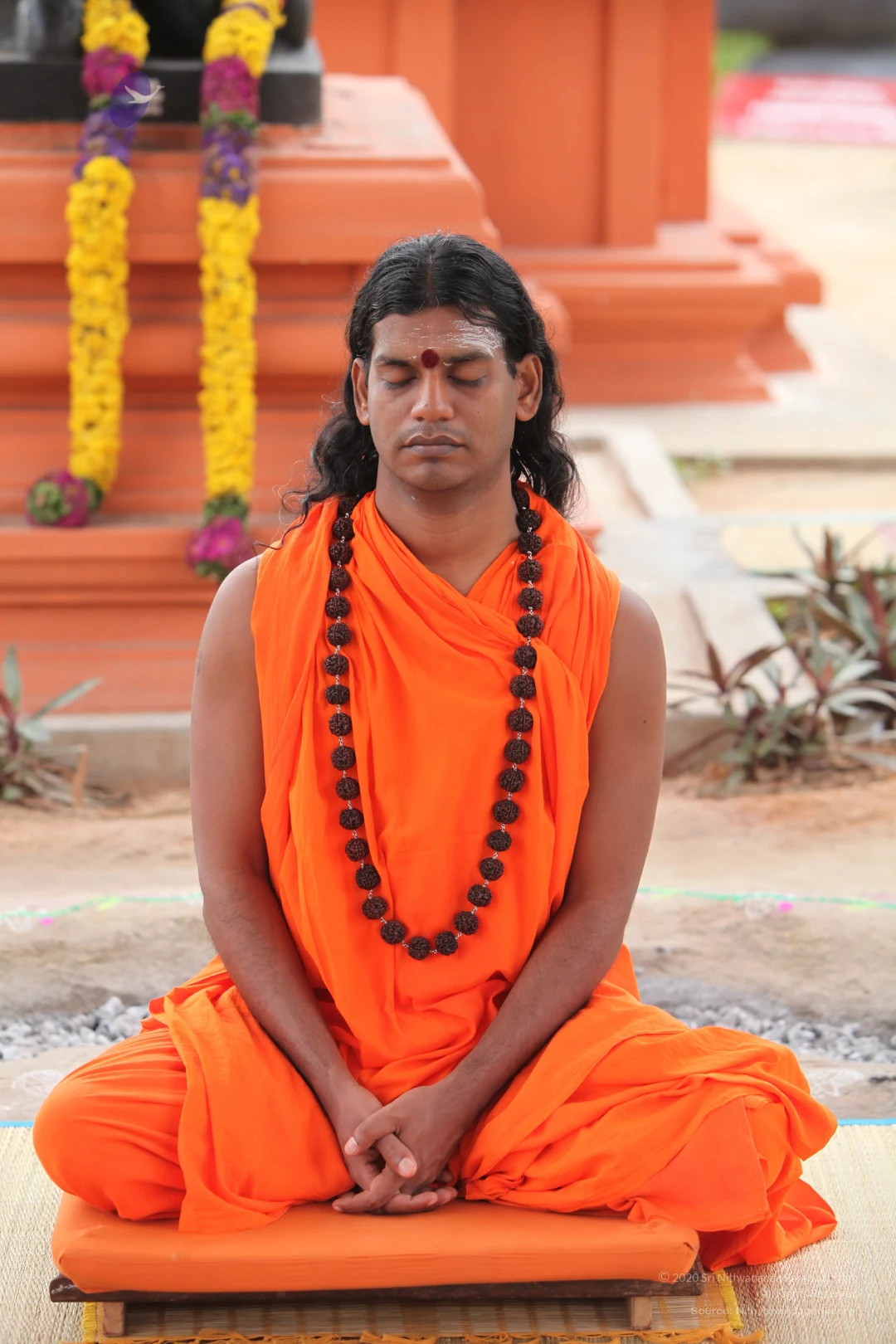
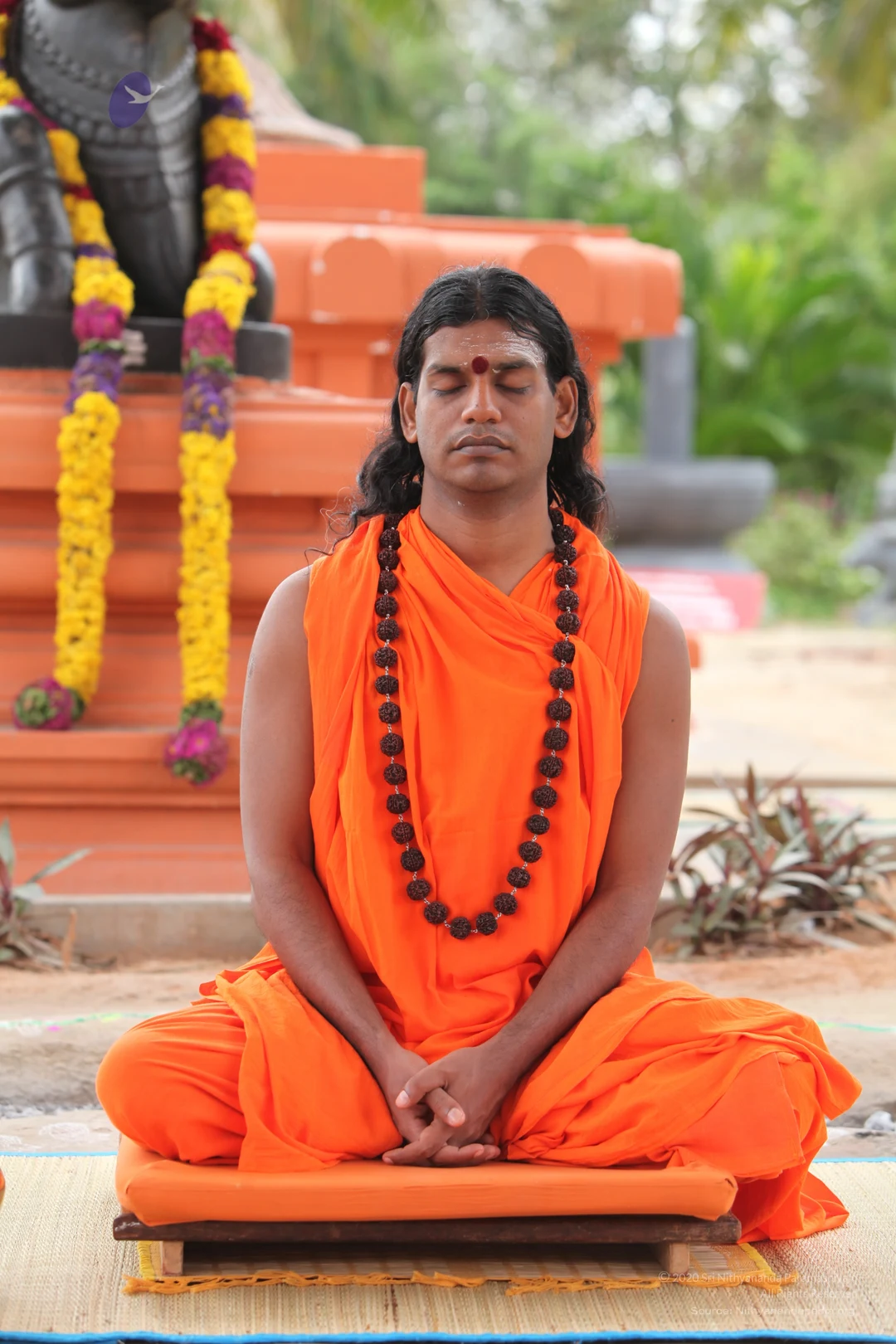
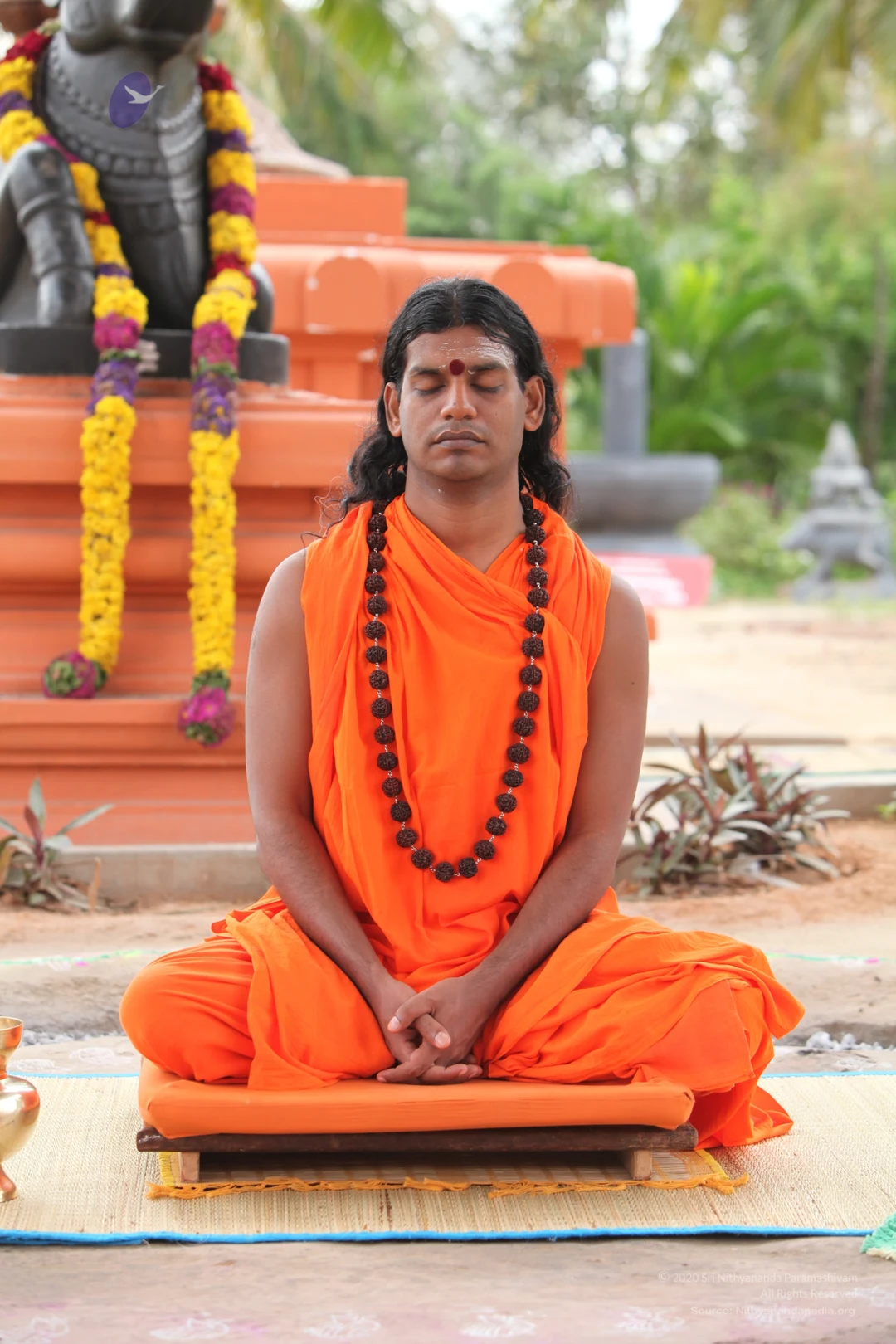
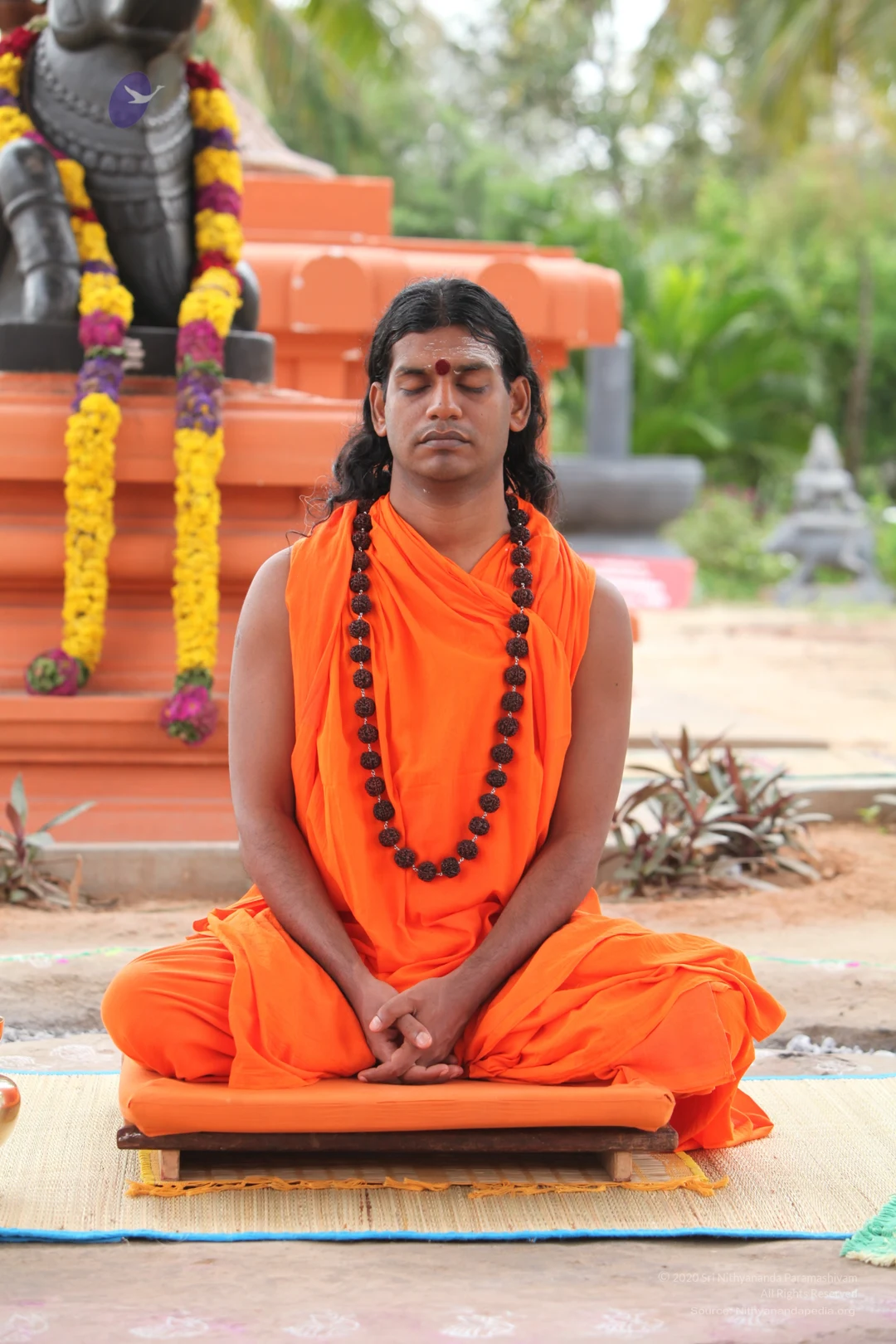
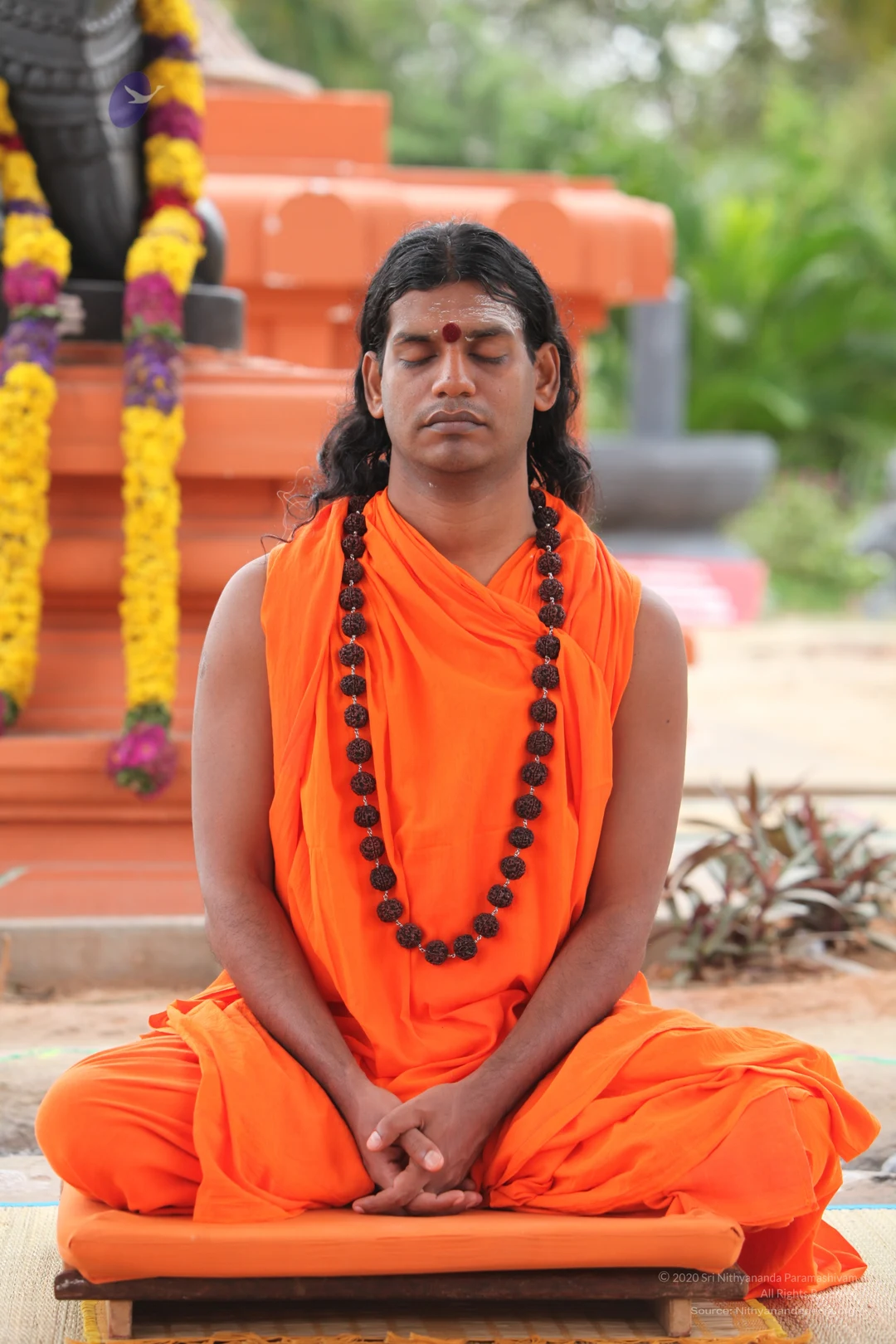
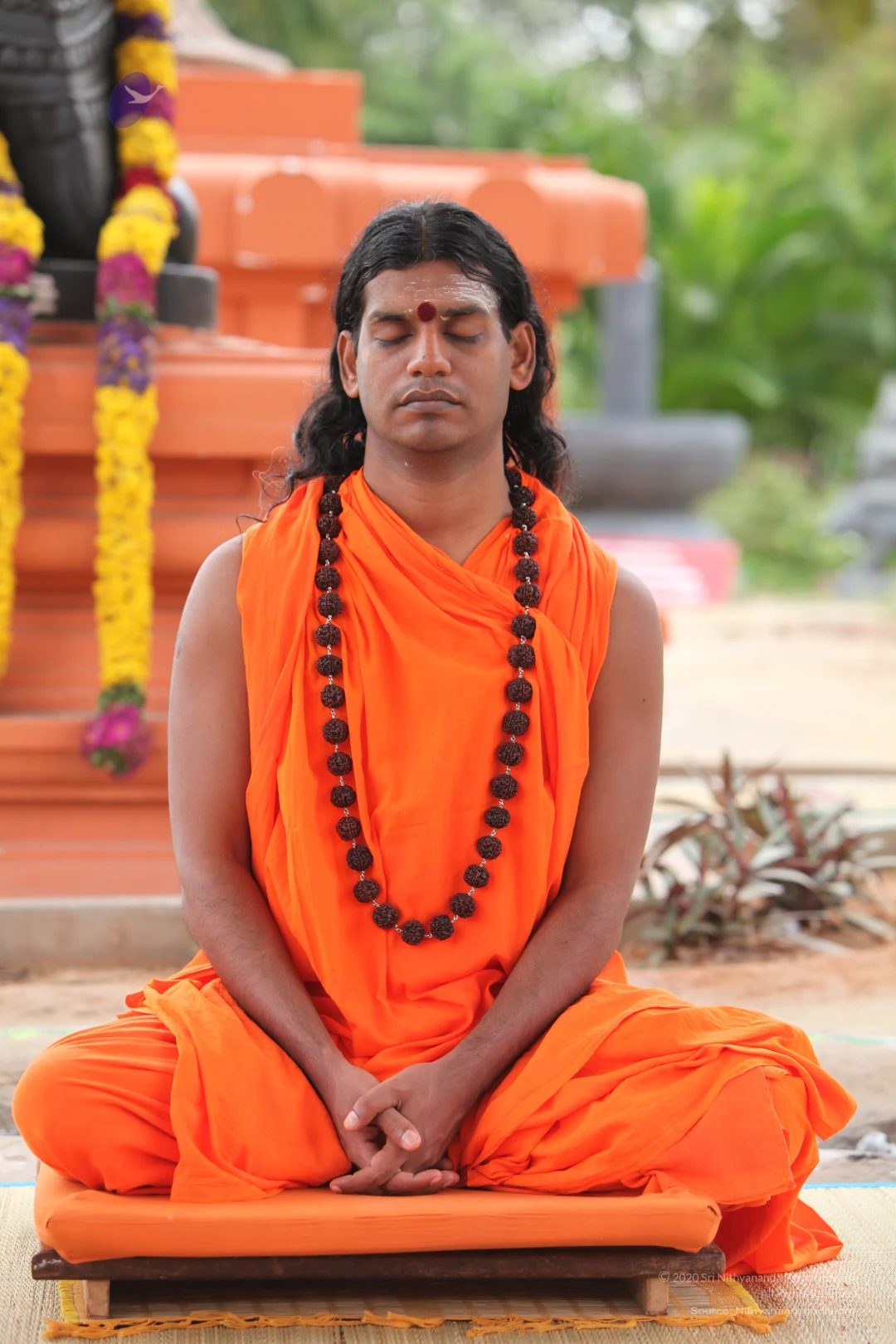
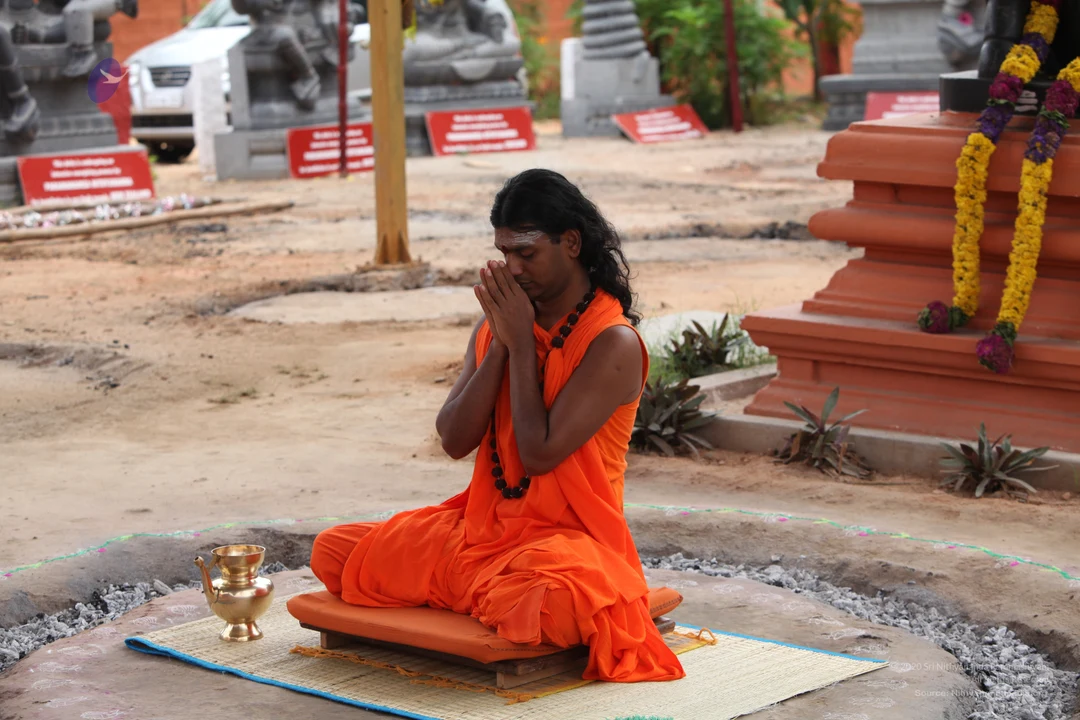
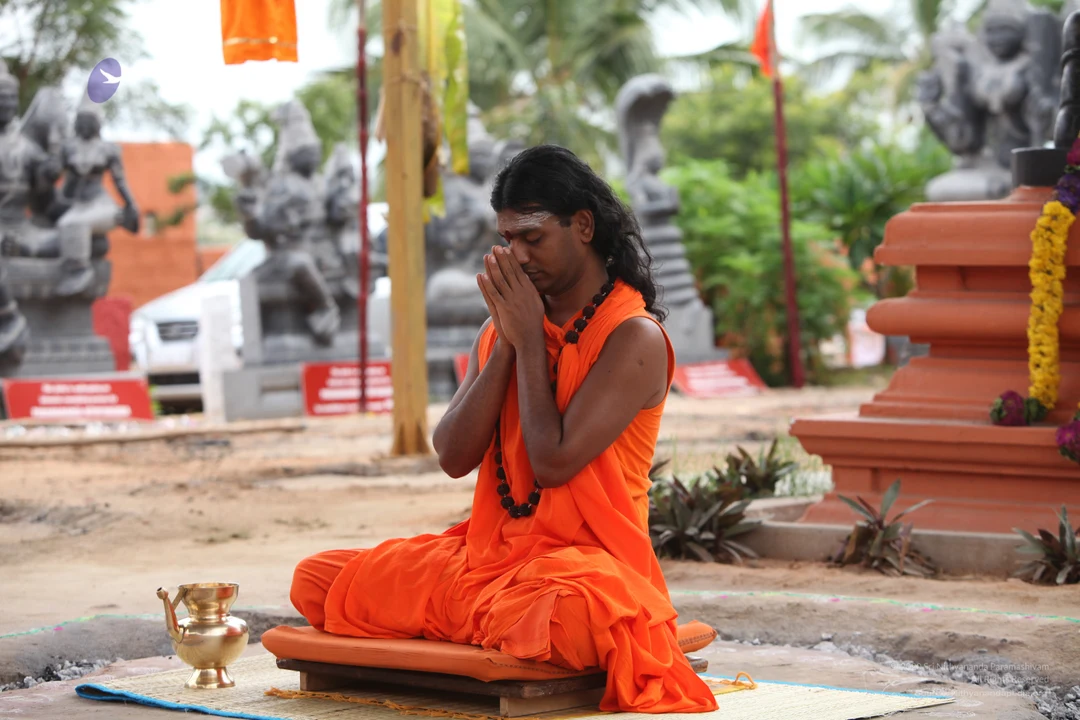
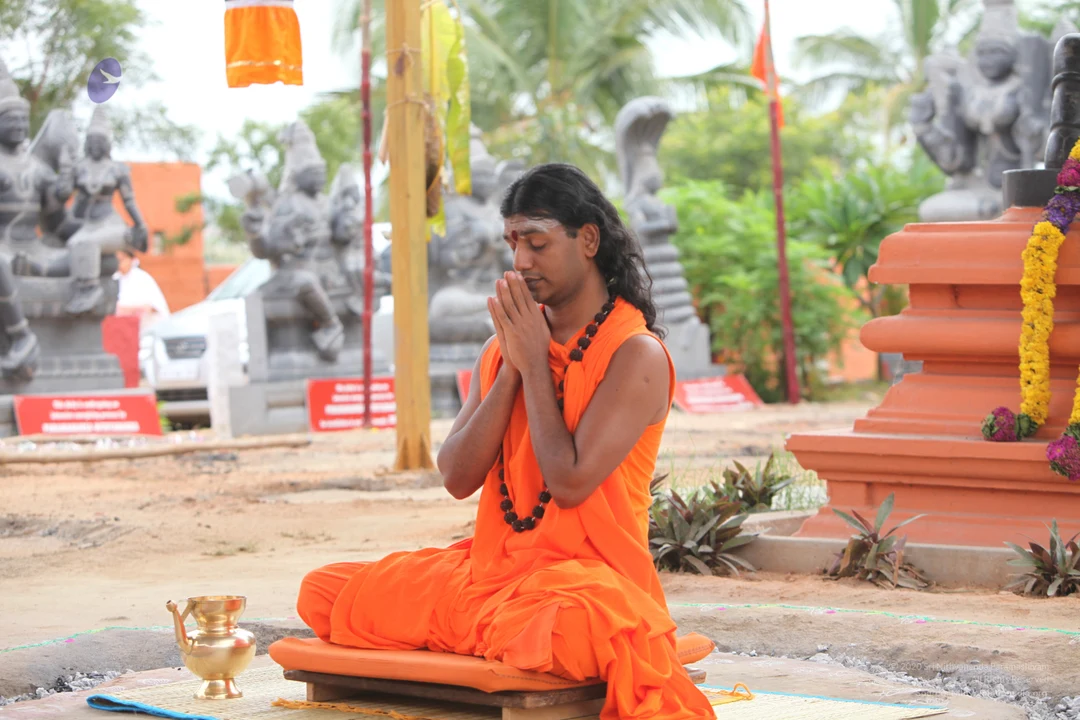
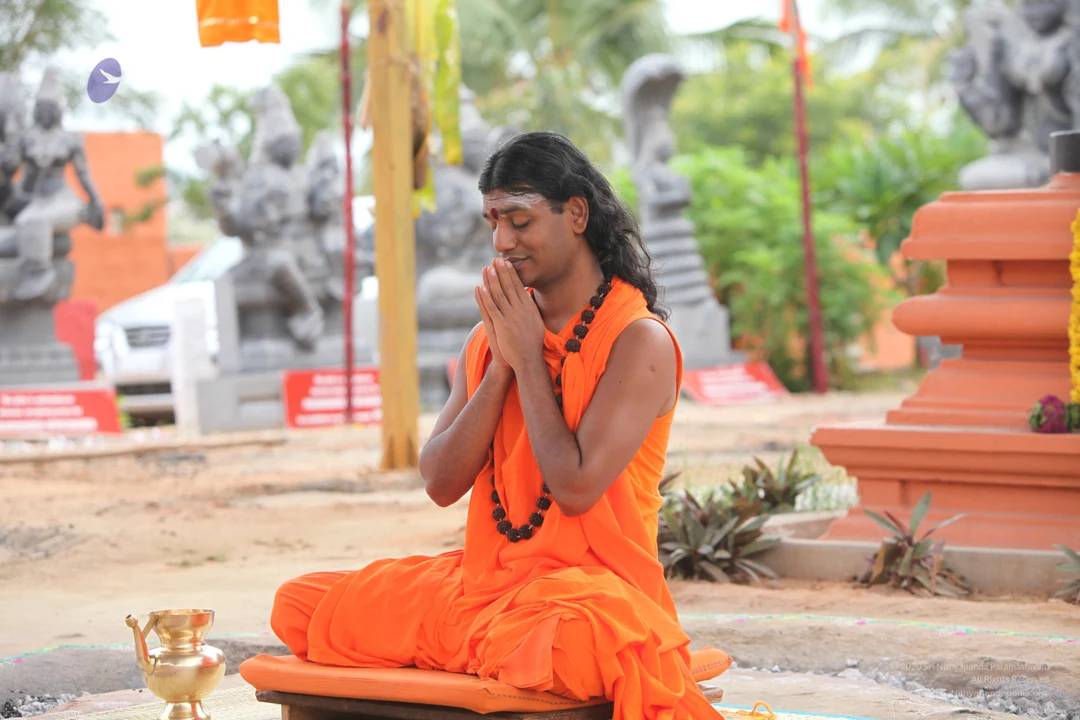
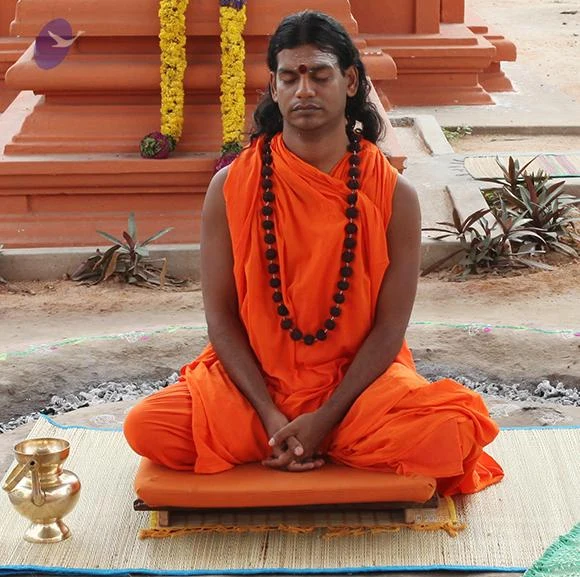
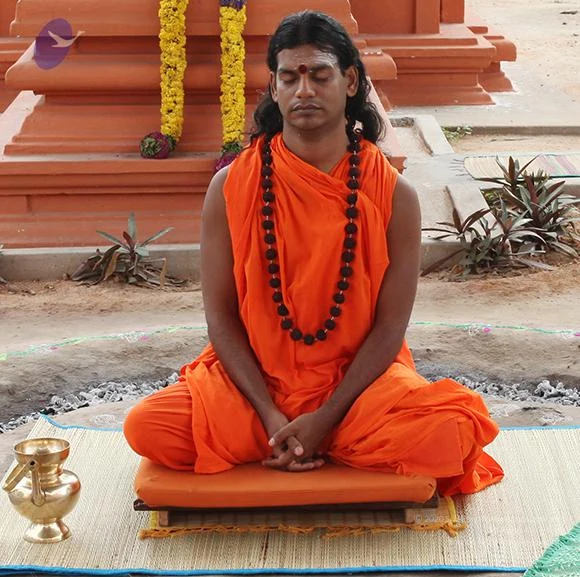
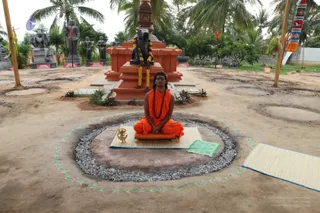
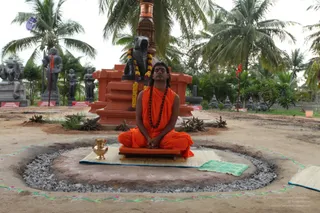
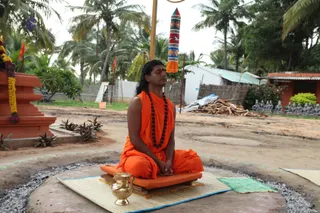
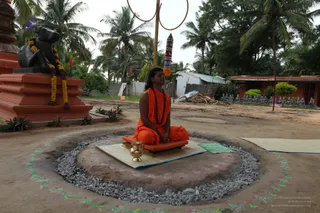
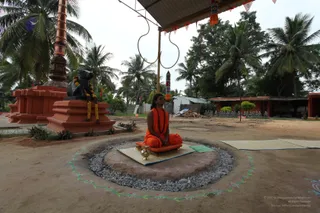
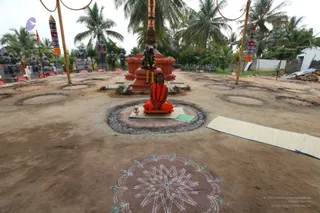
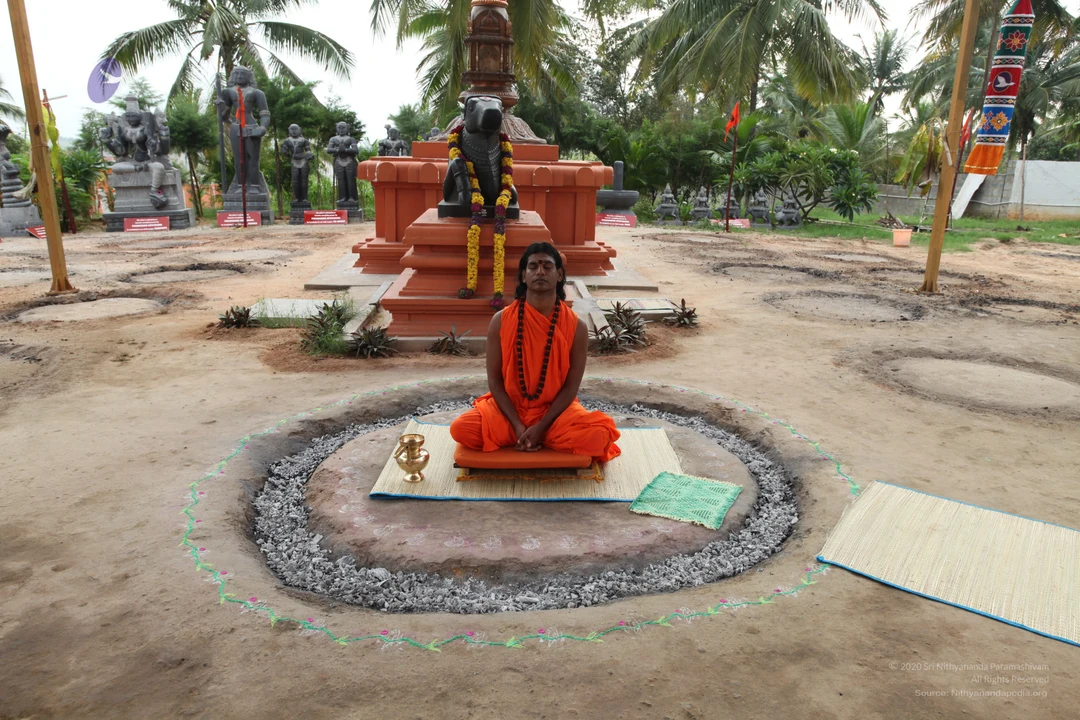
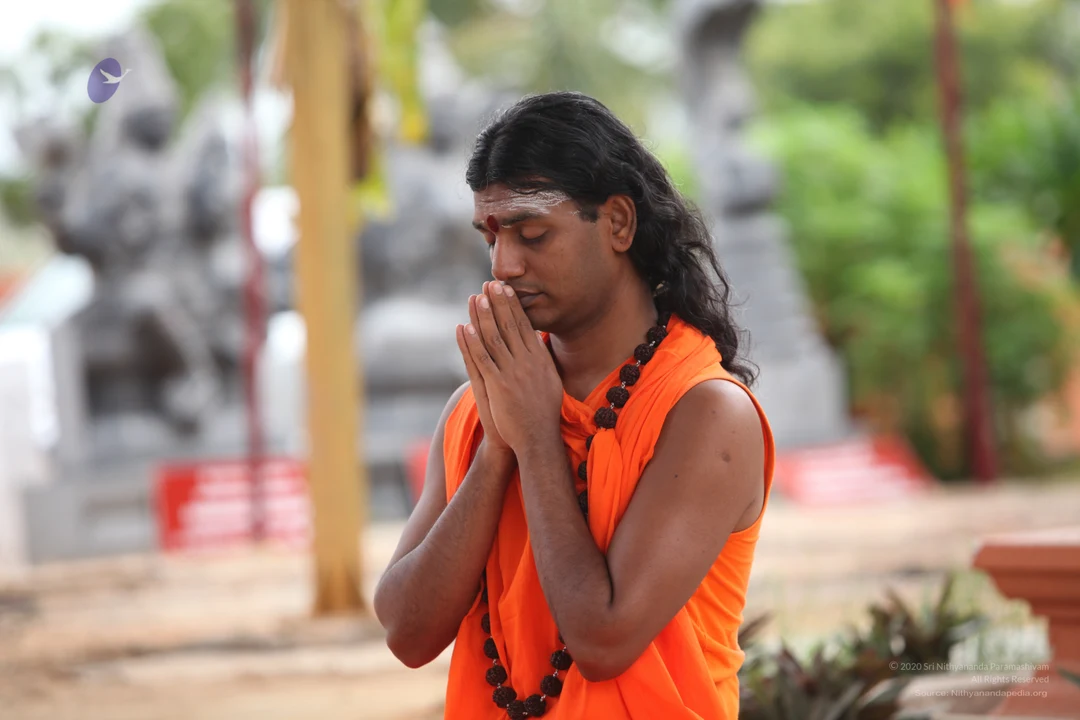
A seated person in orange saffron robes sits cross-legged on a orange-cushioned seat atop a woven straw mat, inside a circular bed of grey gravel bordered by a thin green-and-pink string line on bare sandy ground. Rudraksha beads hang around the neck, and a red tilak marks the forehead. A brass kalasha stands beside the seat. Behind, a tall red stepped platform holds a black stone Nandi bull draped with yellow and orange marigold garlands, with a black stone deity murti and a tall stone pillar in the background, surrounded by palm trees and dark stone sculptures of figures. Colourful flags and a striped banner hang on bamboo poles at the sides.A photo of a man seated in lotus posture with eyes closed and hands folded in his lap, meditating outdoors on a small raised orange-red platform. He wears an orange saffron robe, a long rudraksha mala around his neck, and a red tilak mark on his forehead. A brass kalasha sits to his left on a mat, and a circle of gravel surrounds the seat. Behind him a black Nandi bull statue wears garlands of yellow and orange flowers, and a tall red pillar rises beside it. Dark stone deity statues, including a figure holding a trident, stand along the left, with palm trees and red flags around the grounds.A photograph of a long-haired man in saffron-orange robes sitting cross-legged in meditation with eyes closed on an orange cushion placed on a woven mat, within a gravel-ringed open-air circle. He wears a dark rudraksha mala around his neck, and his hands rest together in his lap. Beside him sits a brass vessel. Behind him stand a tall painted ceremonial pole with a multicoloured cloth streamer, a saffron flag, a garlanded orange pedestal, and rows of small grey stone figures to the right. Palm trees and a small white building with a green roof frame the sunlit ashram grounds.A seated man in saffron-orange robes sits cross-legged with eyes closed in meditation on an orange cushion placed on a woven mat within a circular enclosure of grey gravel and a dark soil ring decorated with green and pink chalk-like dots. A brass pot or kalasha sits beside him on the mat. Behind him stands a black stone Nandi bull draped in marigold garlands on a red-orange plinth, with a tall wooden pole with a ring at the top and a striped cloth banner. Coconut palms, a red-roofed building and rows of small white statues line the open sandy courtyard. The man wears a rudraksha mala and his long dark hair is swept back. Swamiji (probable) appears as the seated meditator, based on the saffron robes, long swept-back hair and rudraksha mala.A seated figure in an orange saffron robe sits on a small orange cushion on a mat inside a circle of grey gravel bordered by green chalk-like lines in an open courtyard. A brass vessel stands before him. Behind him is a black stone Nandi bull statue garlanded with yellow flowers on an orange pedestal, beside a tall orange pillar and a trident-topped iron frame with hanging streamers. Coconut palms, a red-roofed building and rows of small stone figures frame the scene under an overcast sky. The figure has long dark hair, a rudraksha mala and a shawl, and appears to be meditating. Identity uncertain from appearance alone.A seated figure in orange robes and a red-orange shawl sits cross-legged on a mat at the centre of a circular gravel-ringed platform in an open outdoor courtyard. A small brass lamp sits before him on a light mat, with a white kolam-style floor design in the foreground and a woven mat unrolled to the right. Behind him stands a tall red-orange pillar topped with a golden finial and a red-orange base with a dark bull statue garlanded with orange and yellow flowers. Rows of dark grey stone statues of seated figures line the courtyard, with coconut palms, striped orange-and-green banners on poles and a white building at the right edge. Ritual-puja and meditation setting, with the seated figure's identity not established from appearance.

Paadapooja
28 photosSource gallery
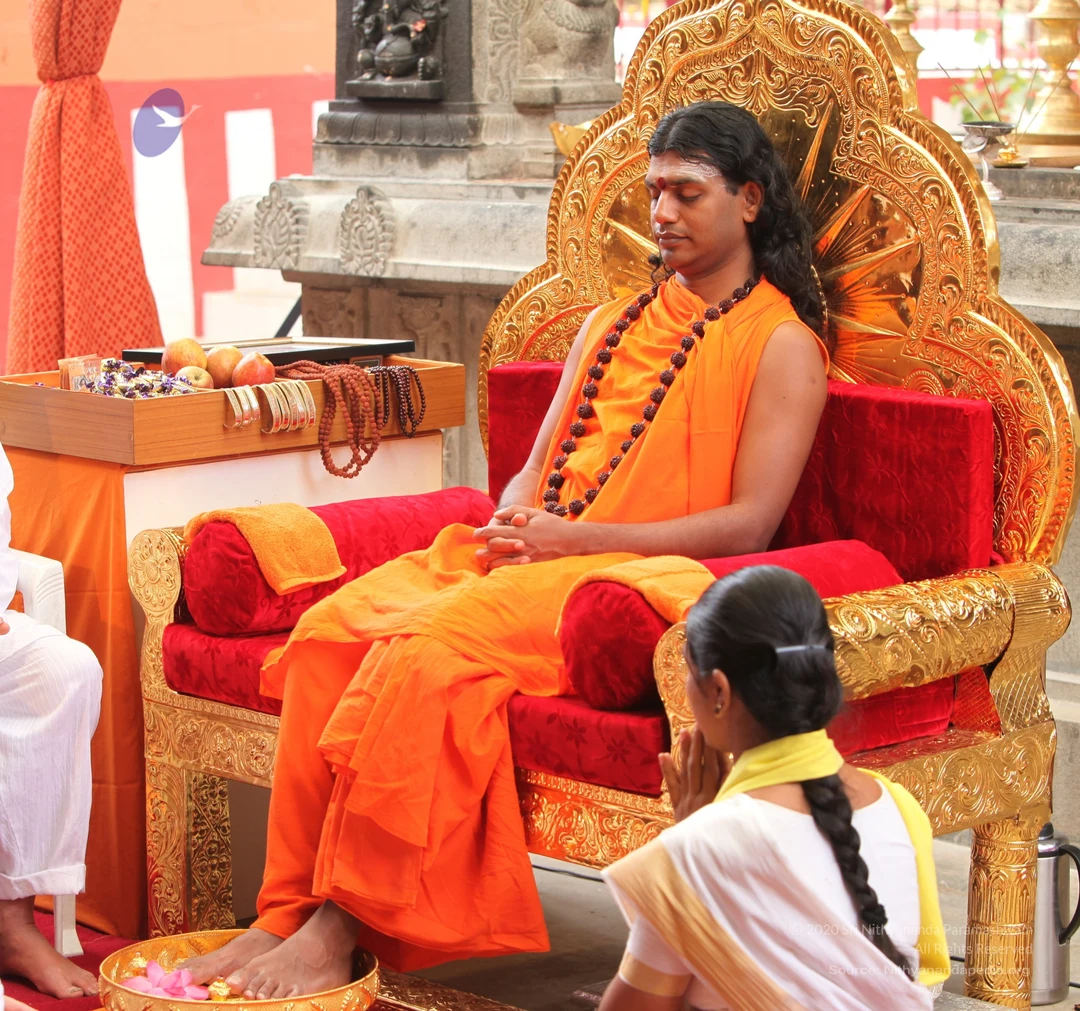
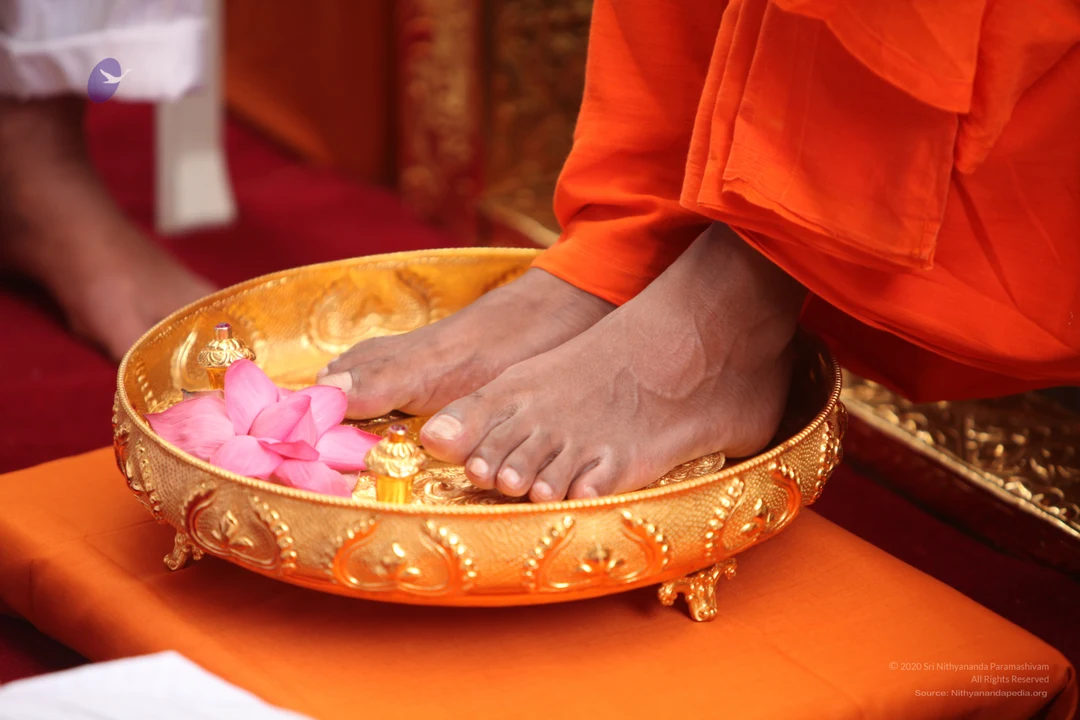
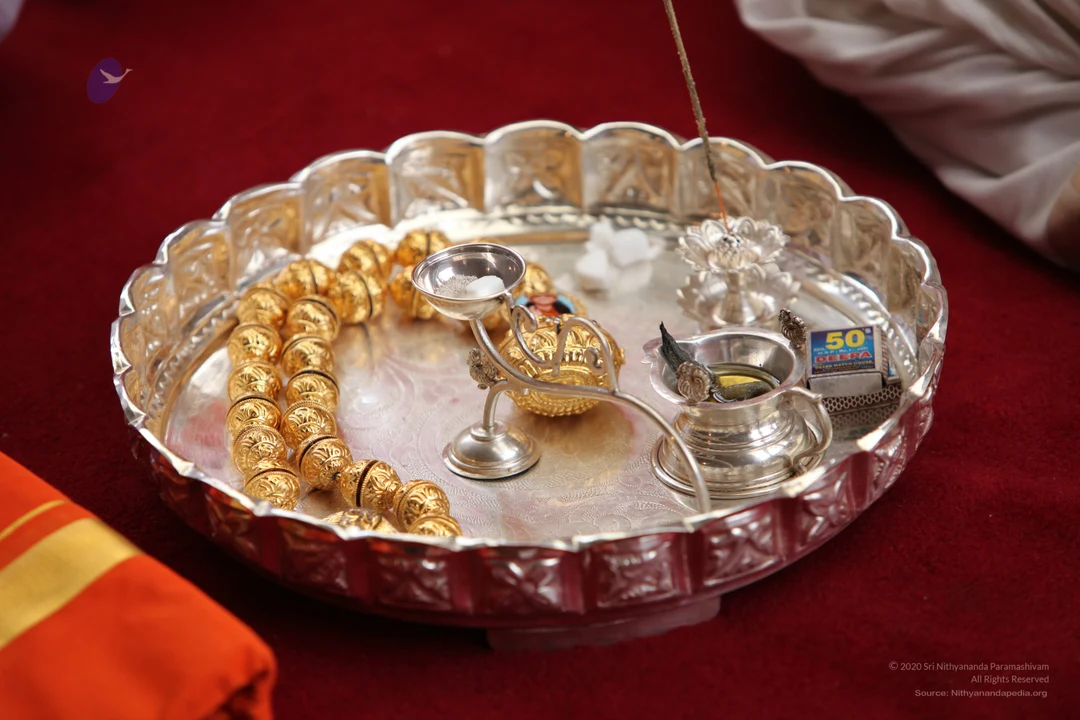
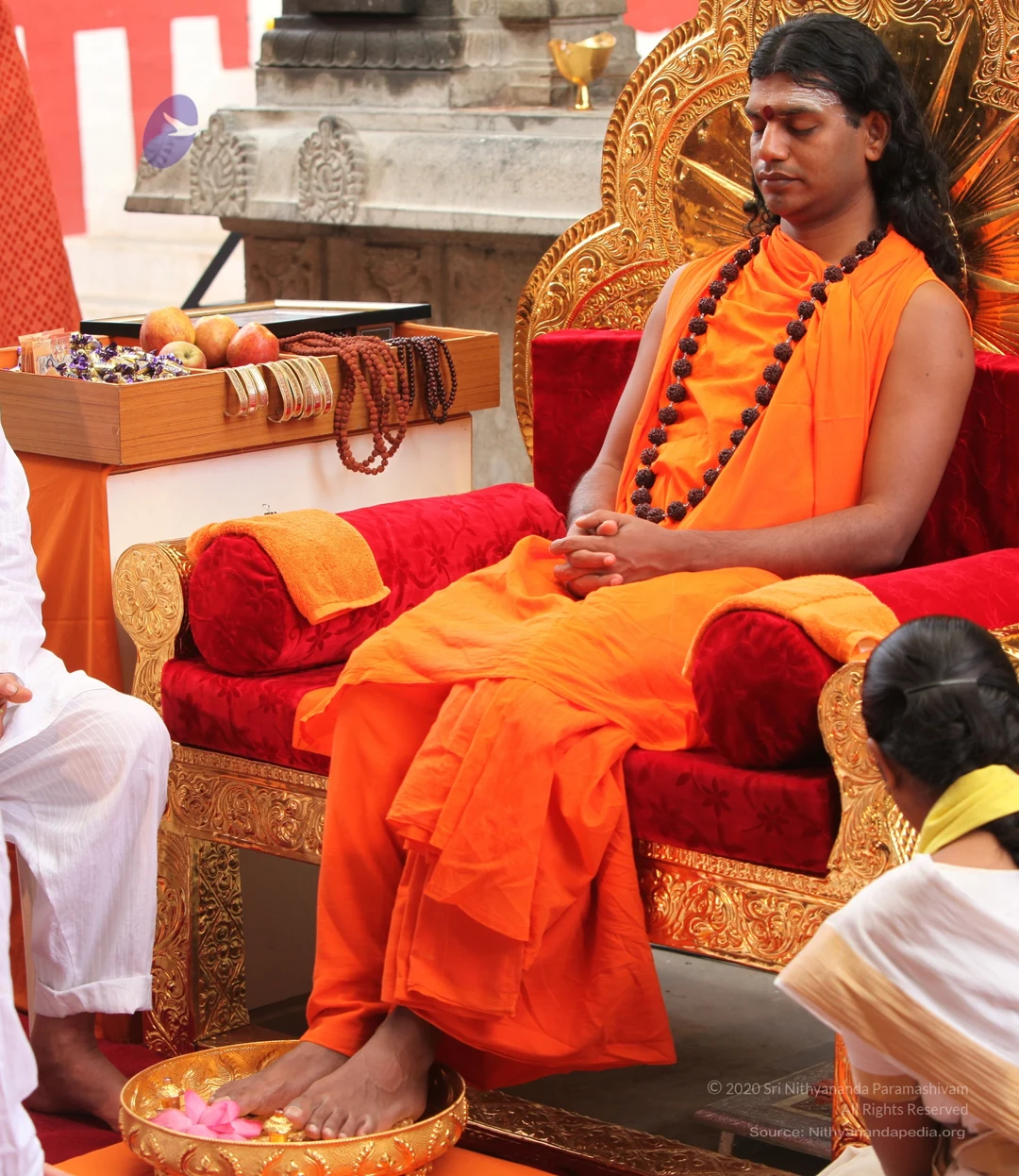
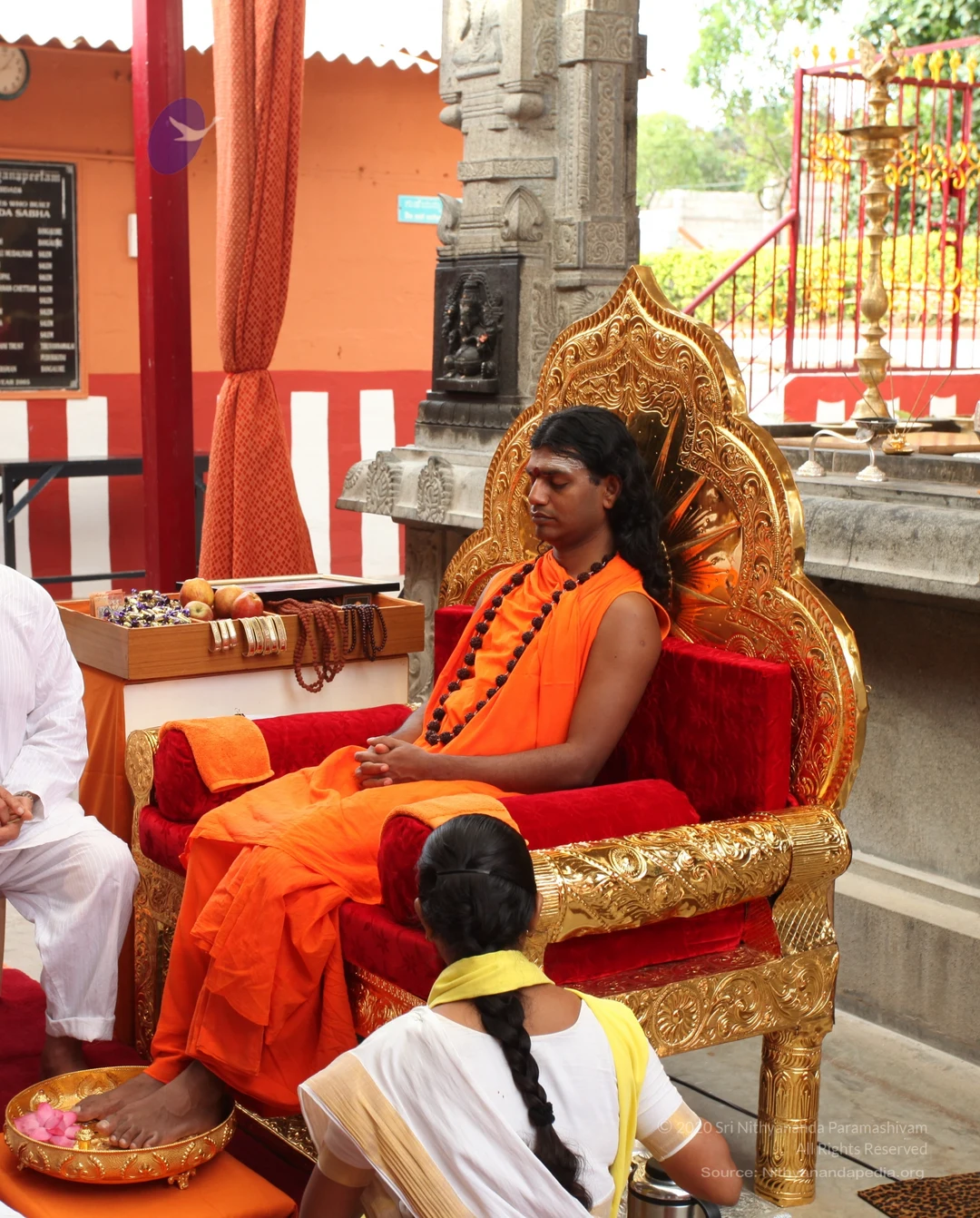
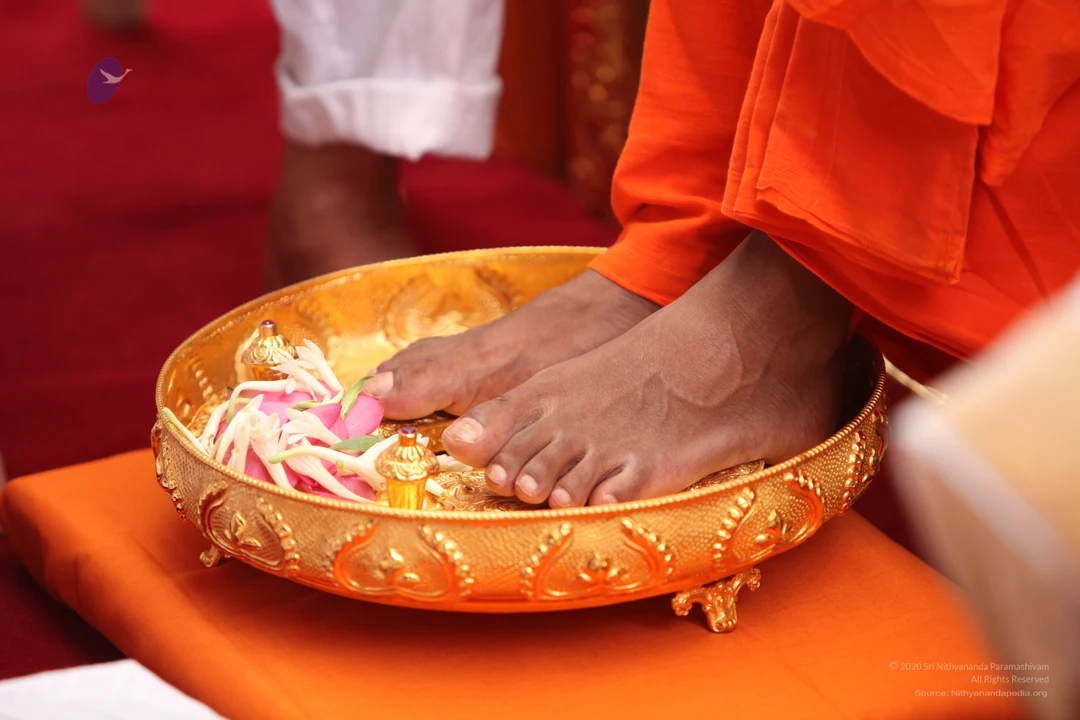
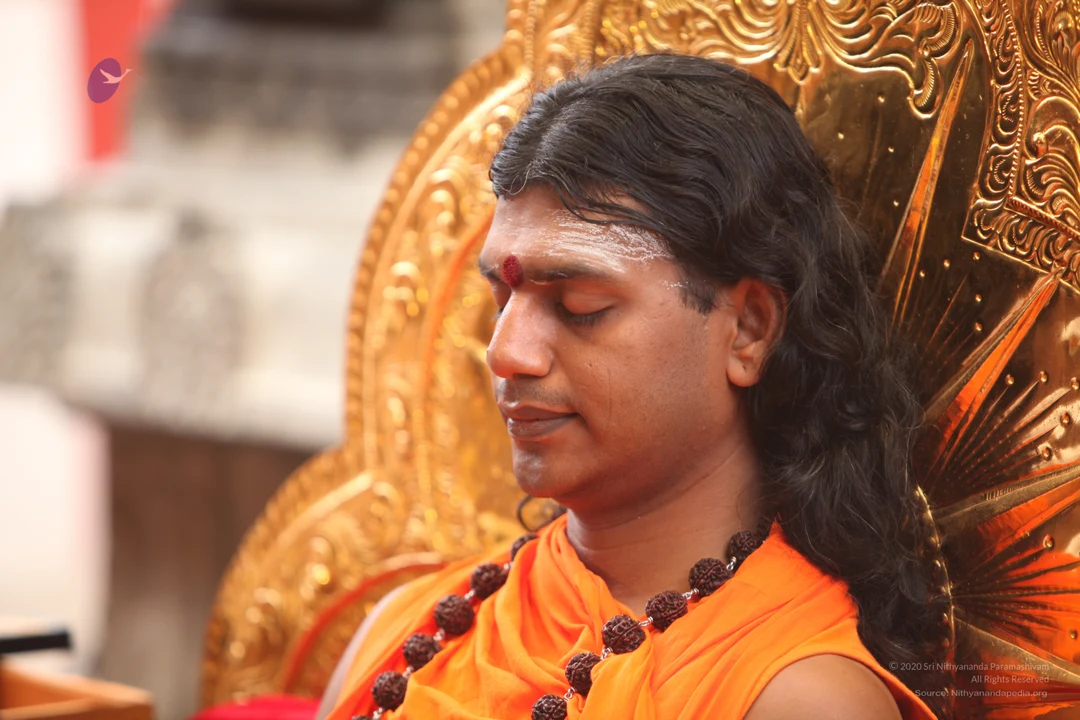
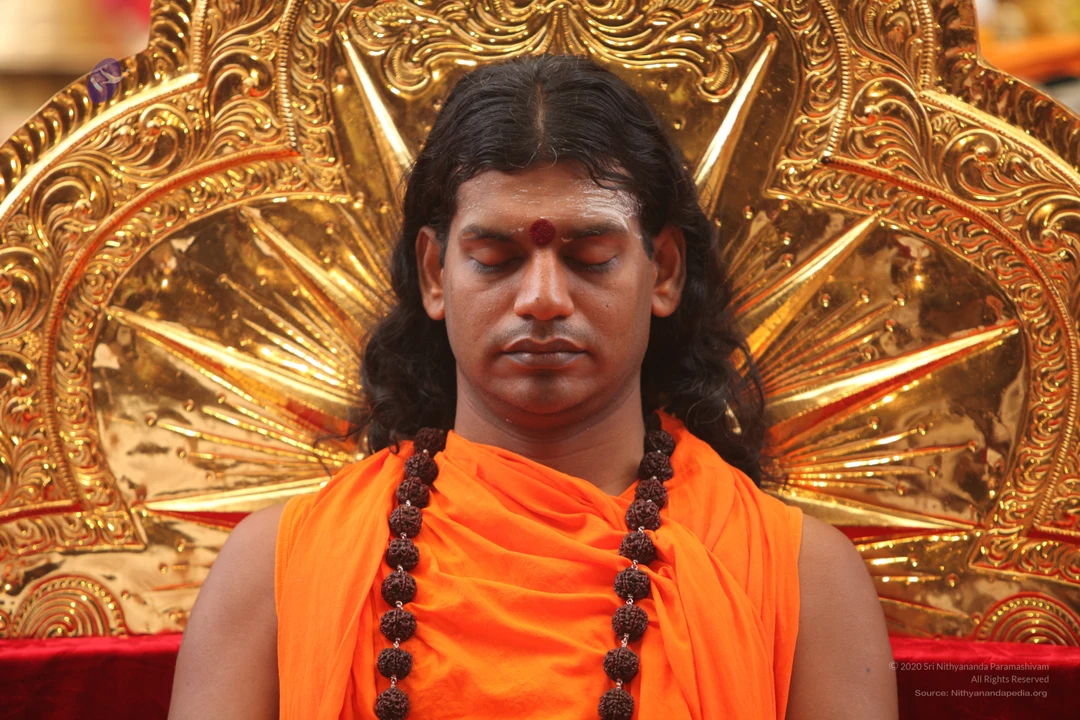
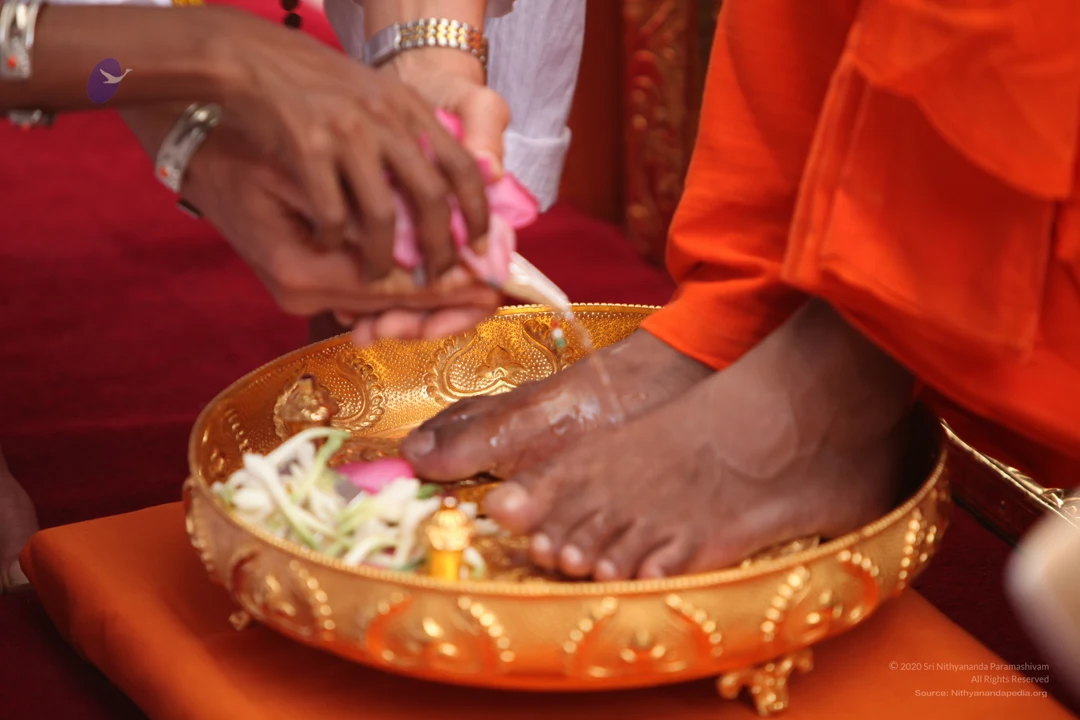
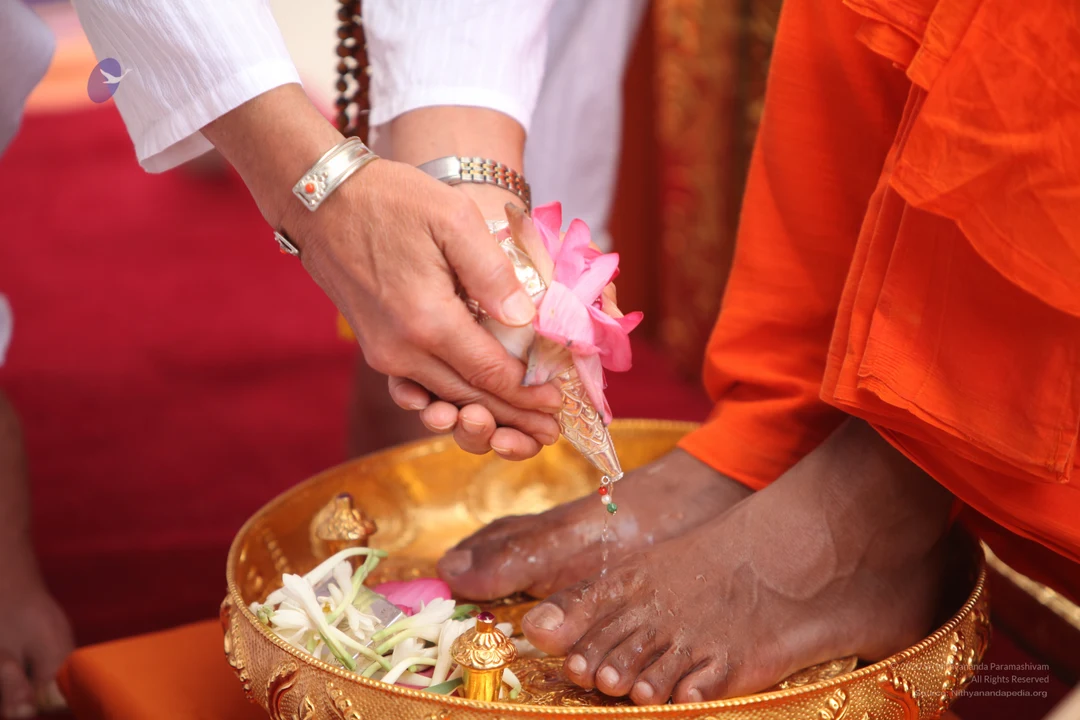
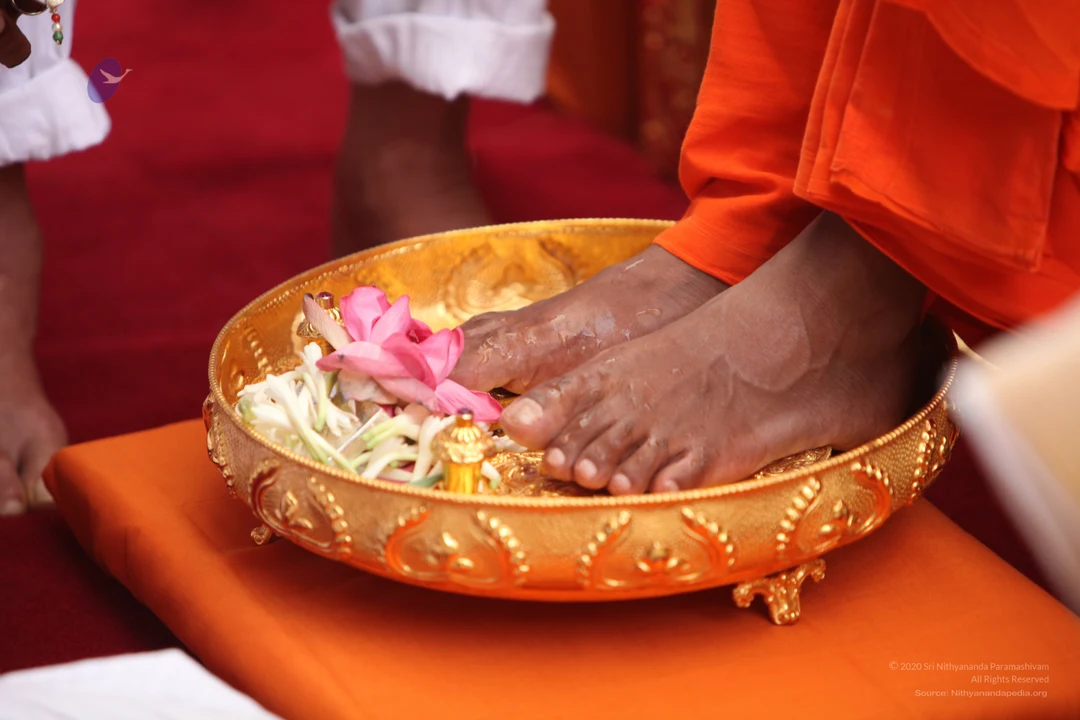
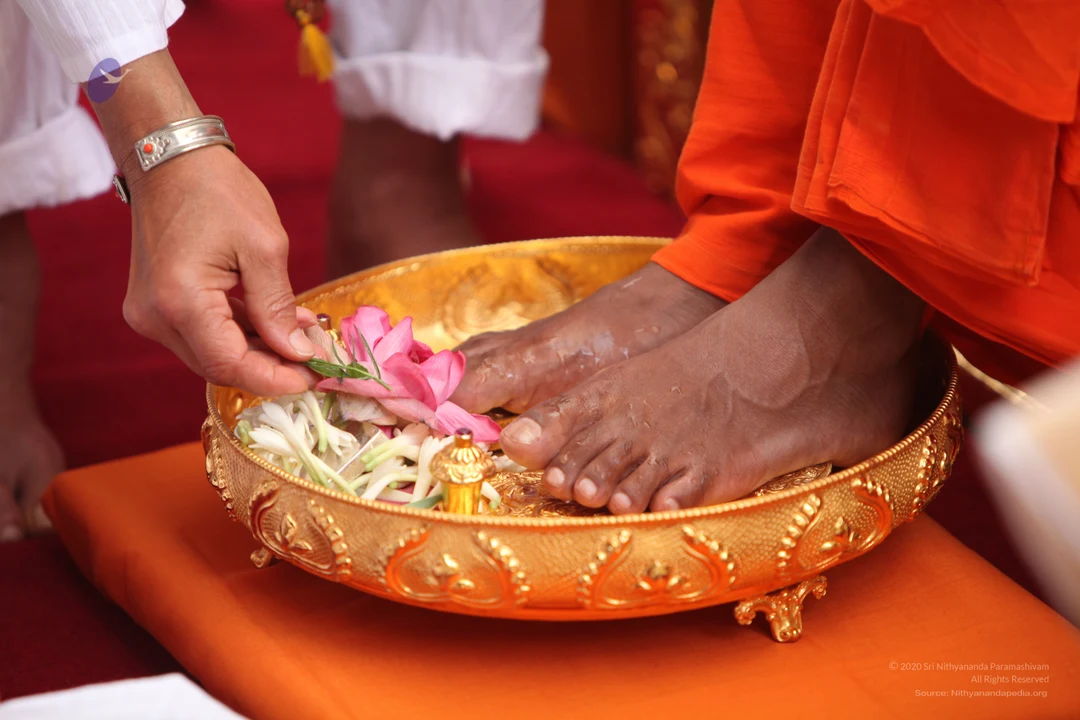
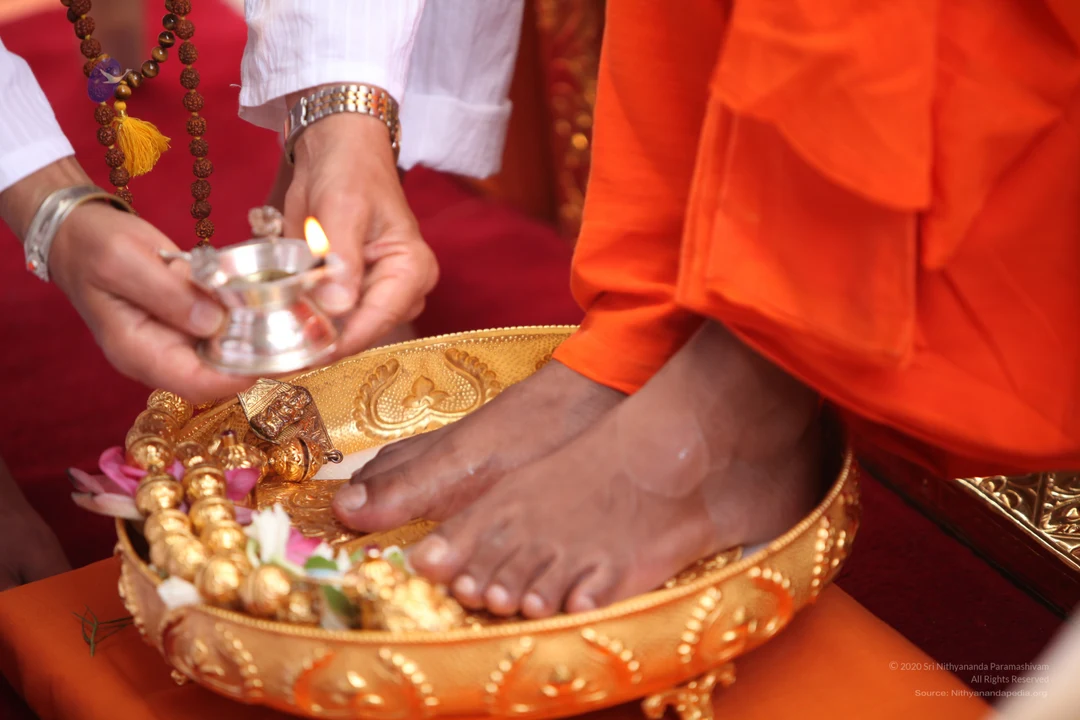
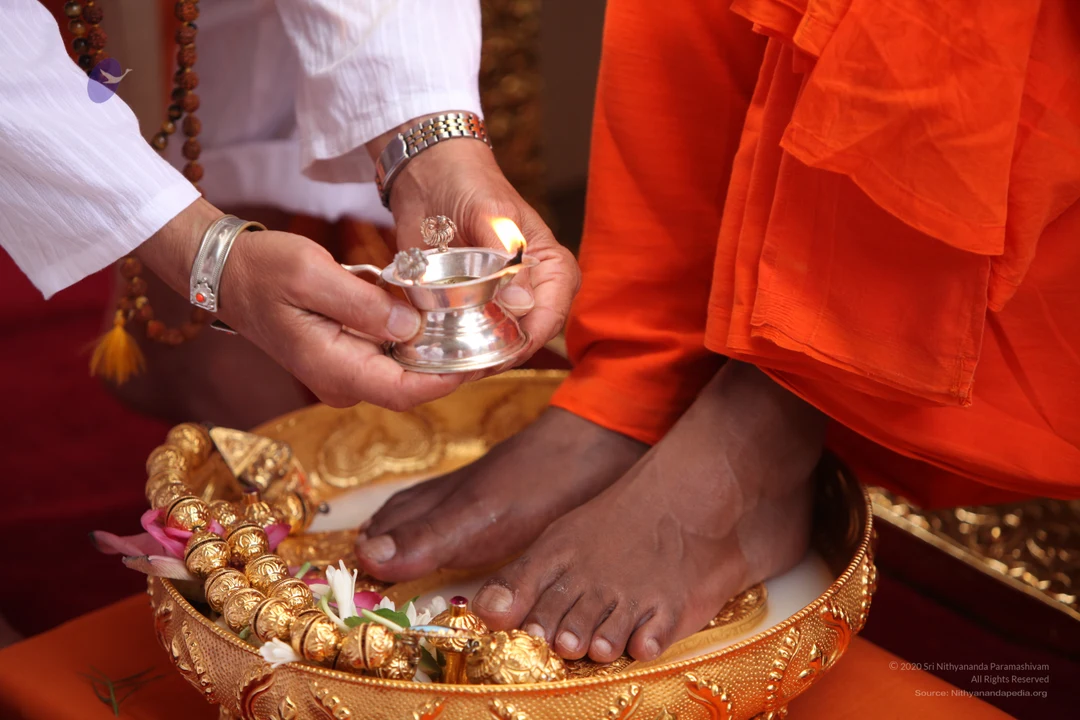
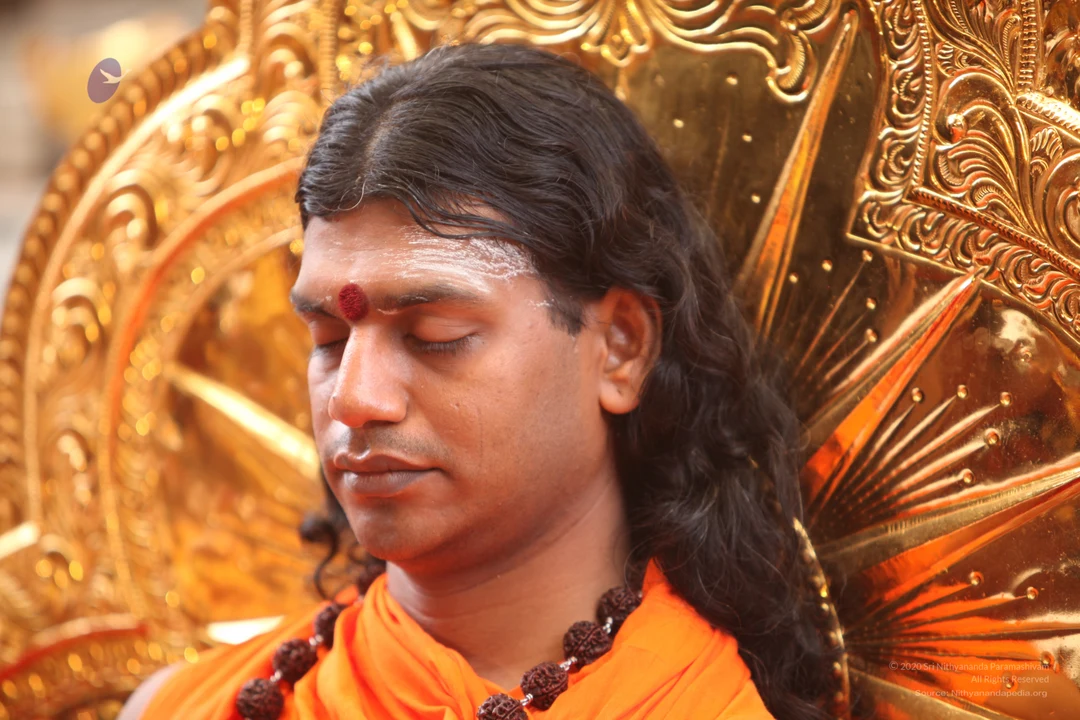
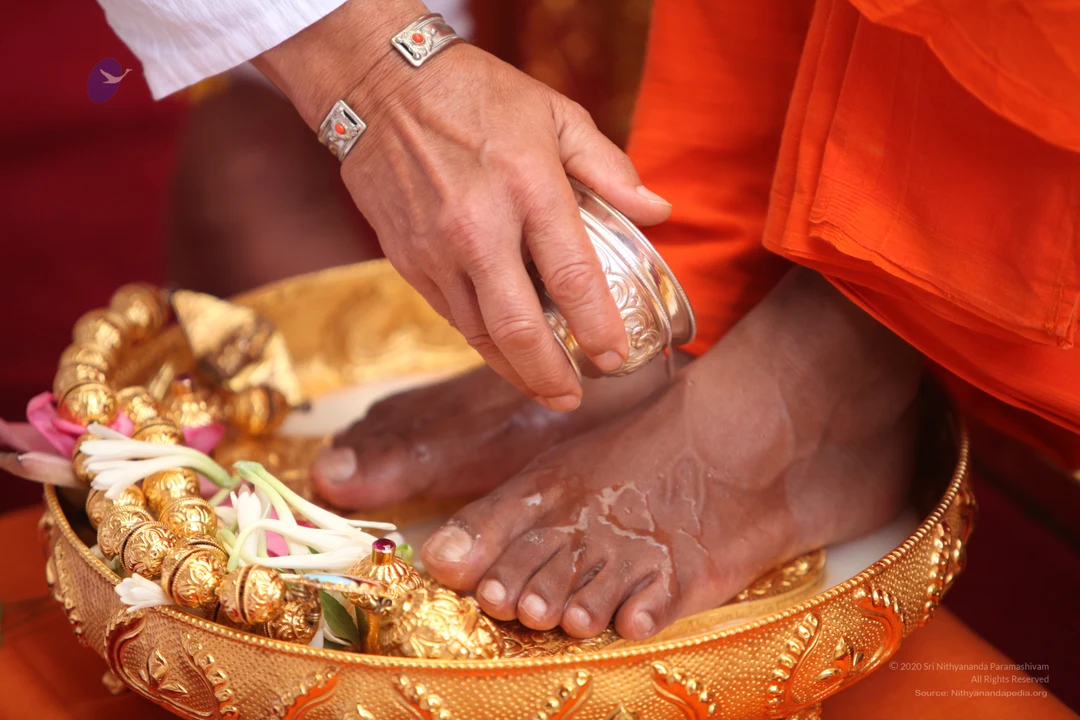
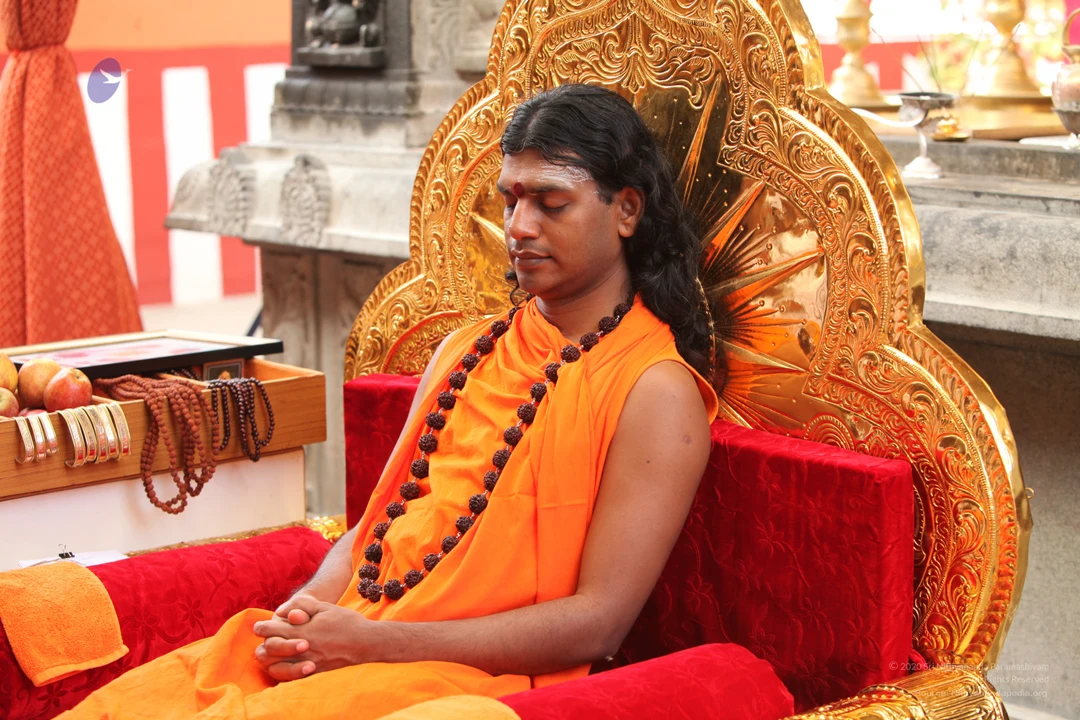
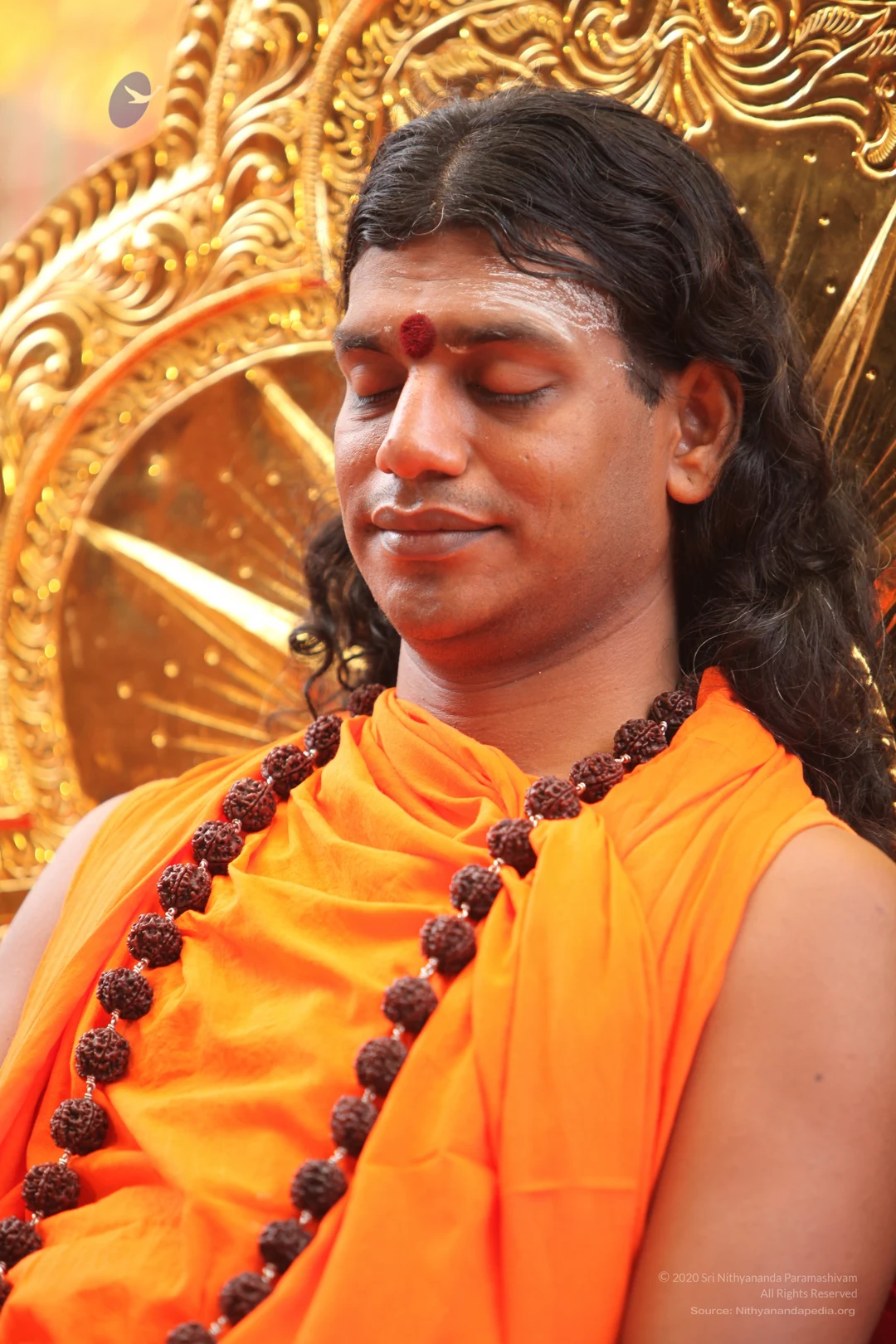
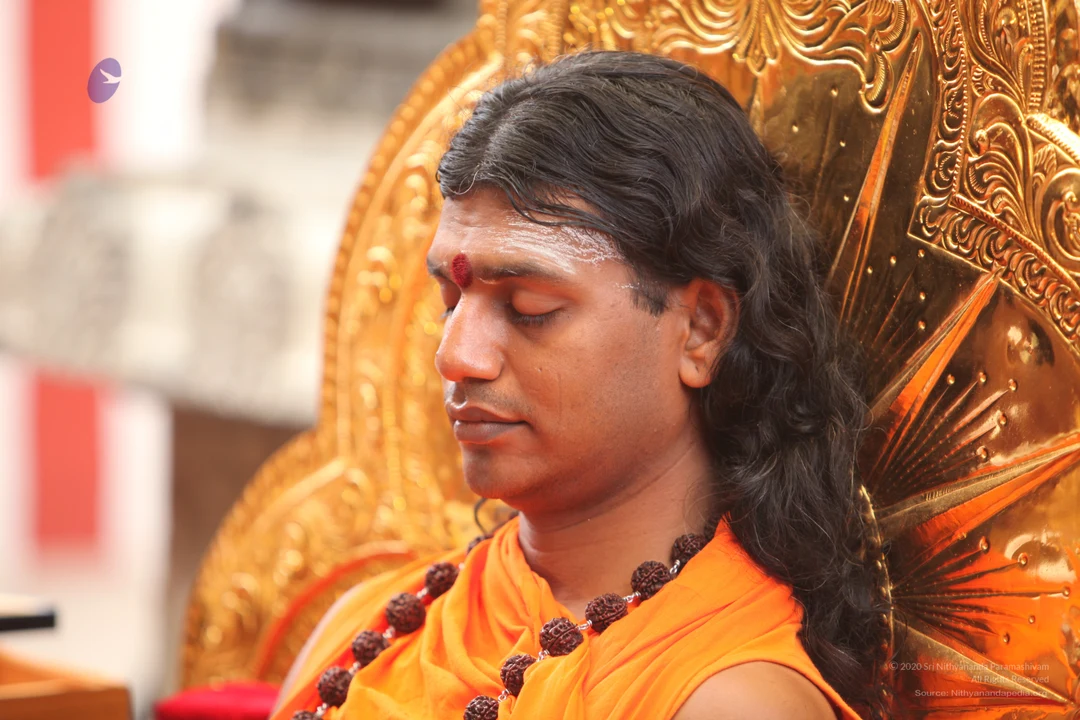
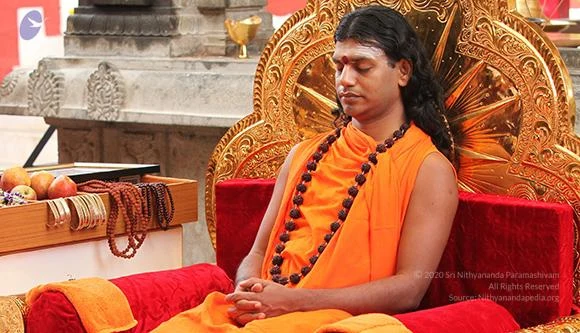
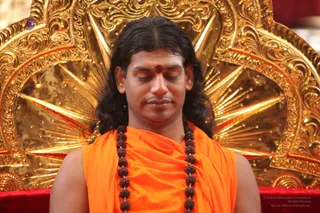
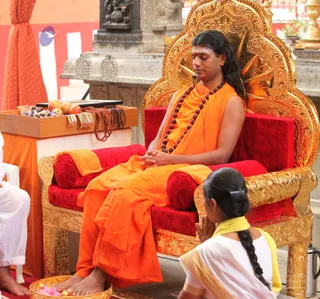
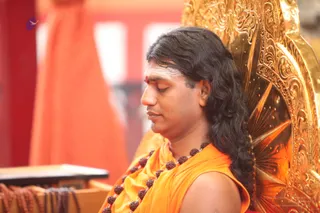
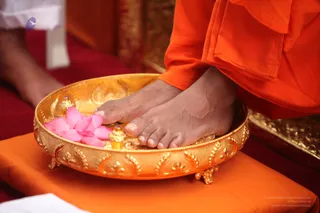
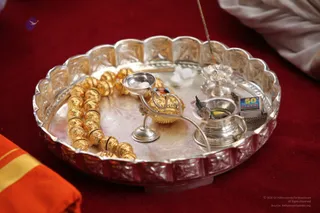
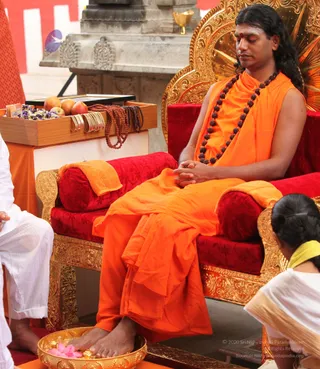
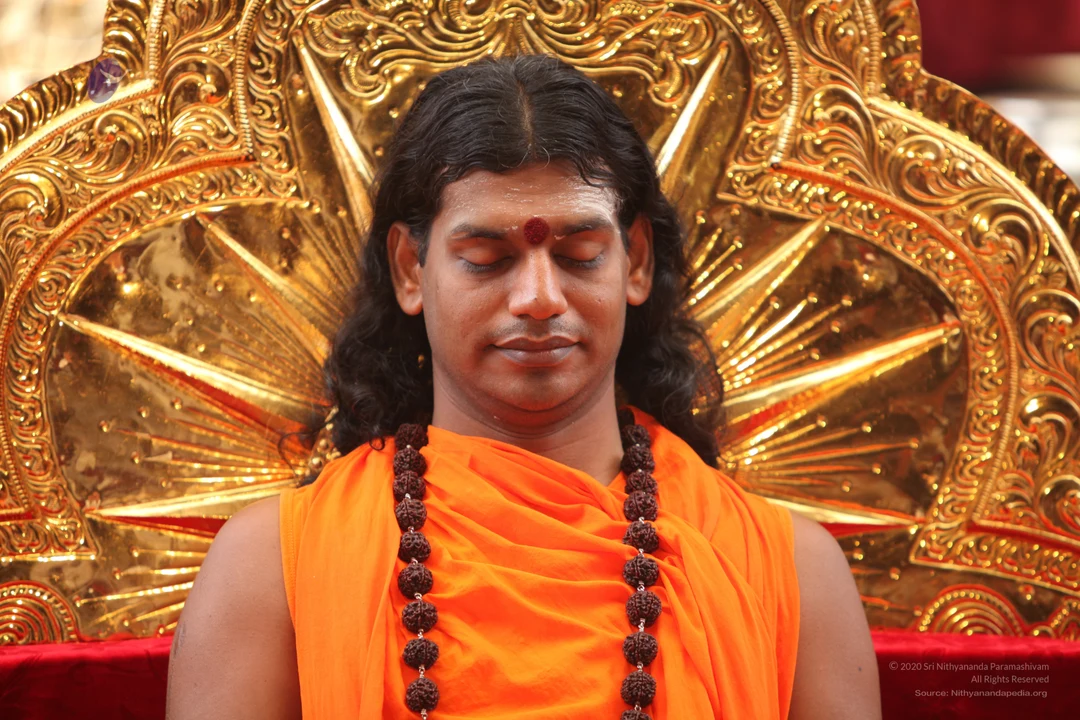
A close portrait photograph of a man with long dark wavy hair, eyes closed, in a calm meditative expression. He wears a saffron-orange shawl draped over his shoulders and a long strand of dark rudraksha beads around his neck, with a red bindi on his forehead. Behind him is an ornate gilded golden throne with radiating sunburst-style carved panels.A seated man in orange robes sits on an ornate gold throne with red cushions, eyes closed and hands folded in his lap, wearing a long rudraksha mala and a red tilak on his forehead with long dark hair falling behind him. Probable Swamiji is the seated figure: long swept-back hair, saffron clothing, a rudraksha mala and a distinctive throne setting. In the foreground a young woman in a white sari with a yellow border kneels with palms joined, while a golden bowl of pink petals sits near the feet. Behind the throne stand a stone pillar and a brass lamp, and a table holds fruit, flowers, bangles and mala beads. Another person in white trousers is partly visible at the left edge.A photograph of a man with long, swept-back dark hair seated with eyes closed in front of an ornate gold throne with radiating fan-shaped carvings. He wears an orange sleeveless garment, a long rudraksha mala of brown beads across his chest, and a red bindi with white markings on his forehead. Behind him stand orange and red fabrics, and a wooden table with mala strands sits at lower left. The man appears to be a probable Swamiji by appearance cues: long hair, saffron clothing, rudraksha malas and an ornate throne. He is shown in meditative stillness.Close-up photograph of a pair of bare feet resting in a large ornate gold-coloured tray decorated with embossed floral and scrolled patterns. A pink lotus flower and a small gold ritual vessel sit beside the feet in the tray. The person wears flowing saffron-orange robes, seated on an orange cushion over a red carpet. A second pair of bare feet appears at the upper left against a white cloth. The scene suggests a padapuja, a ritual washing of the feet, though the person's face and identity are not visible.A photograph of a polished silver ritual tray with a scalloped rim resting on a deep red cloth. On the tray are a silver oil lamp with a small flame, a silver incense holder with a lit incense stick rising above, a gold-coloured bead mala, a small gold-toned kalasha-style vessel, white camphor or sugar pieces, and a silver container with a small spoon. A matchbox labelled 50 is at the right edge. An orange-and-gold cloth lies at the lower left, and a white fabric at the upper right. No people are visible; the image shows ritual puja articles arranged for worship.Photograph of a seated man in saffron-orange robes on an ornate gold throne with red velvet cushions and bolsters. He wears a long dark rudraksha mala, has a red bindi on his forehead, and sits with eyes closed and hands clasped in his lap. Beside him, a woman in a white sari with a yellow border kneels and washes his feet from a golden bowl containing water and pink flowers. On a wooden side table are apples, bangles, rudraksha malas and bundles of flowers. A gold kalasha-style vessel and a stone shrine structure appear in the background.

Morning-Satsang
8 photosSource gallery
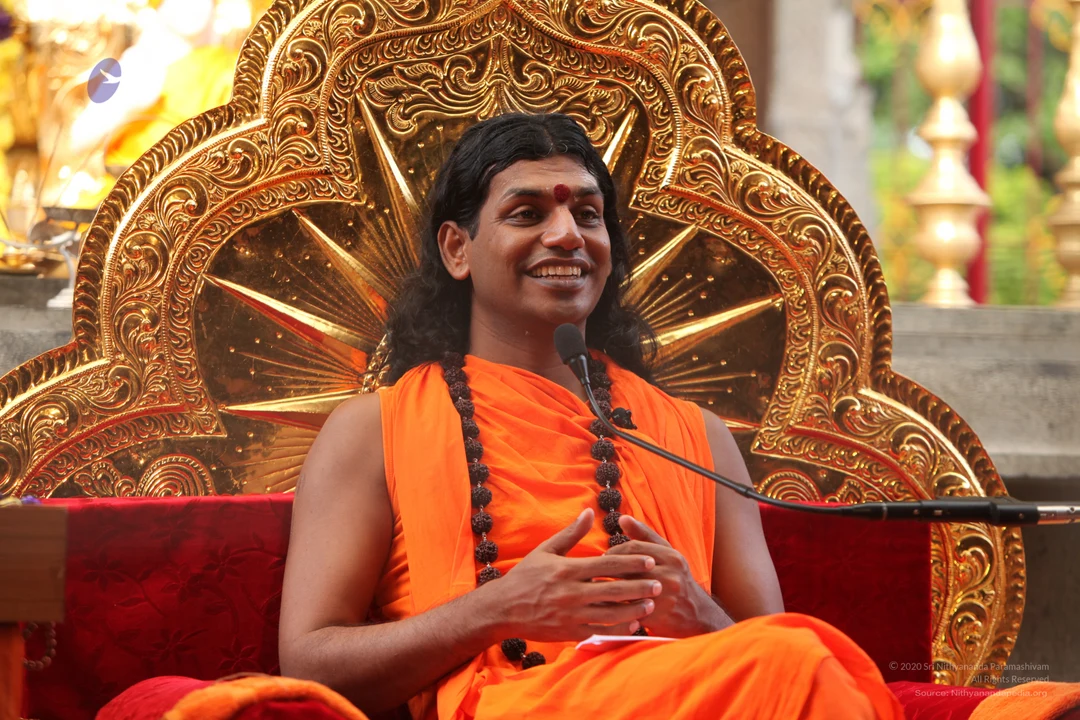
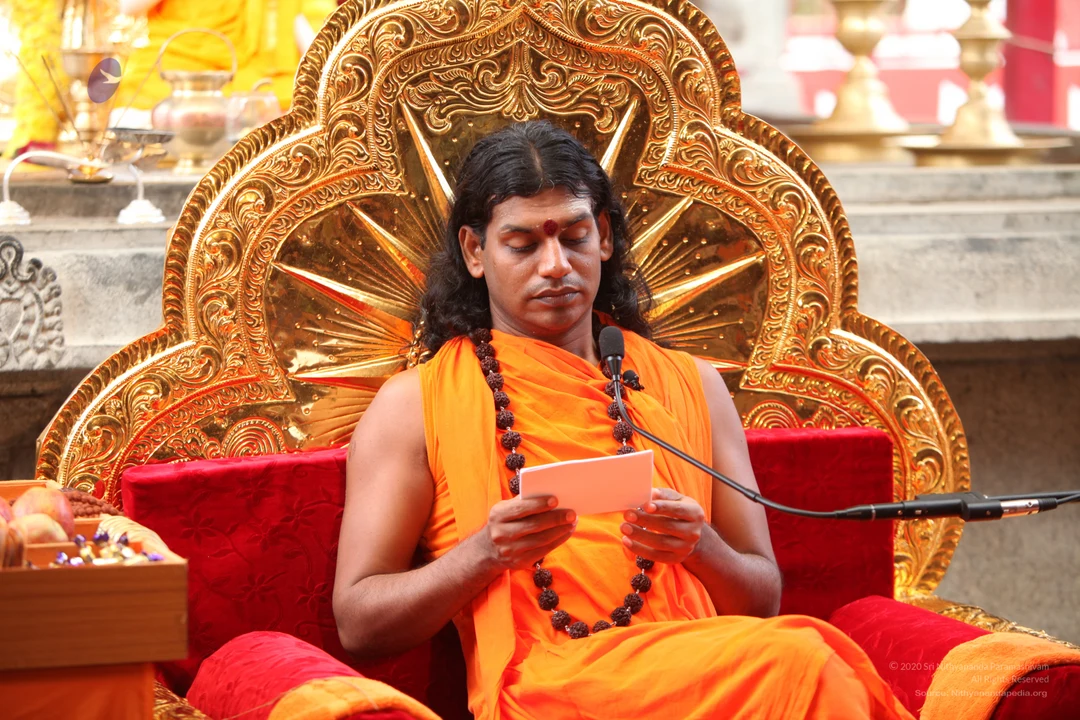
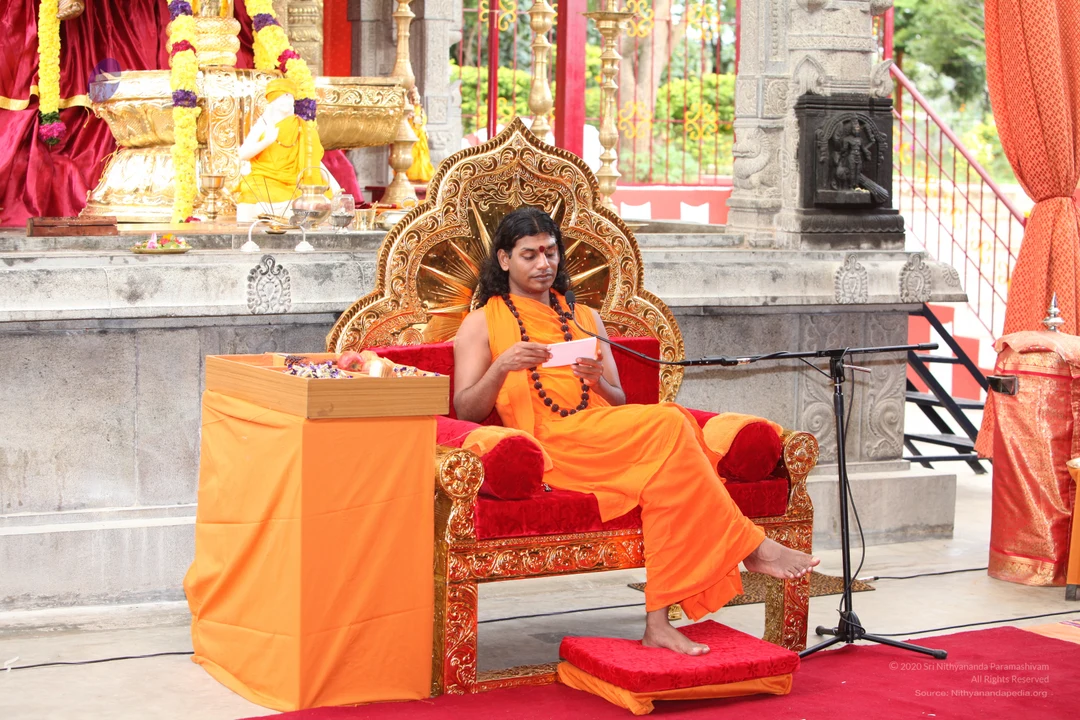
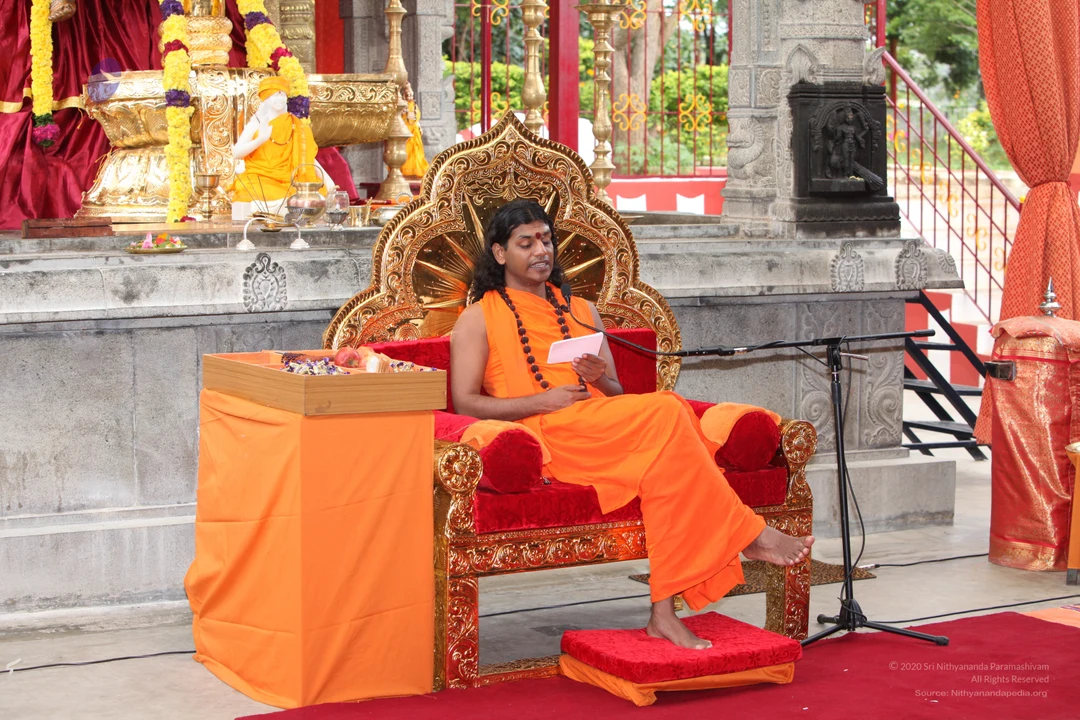
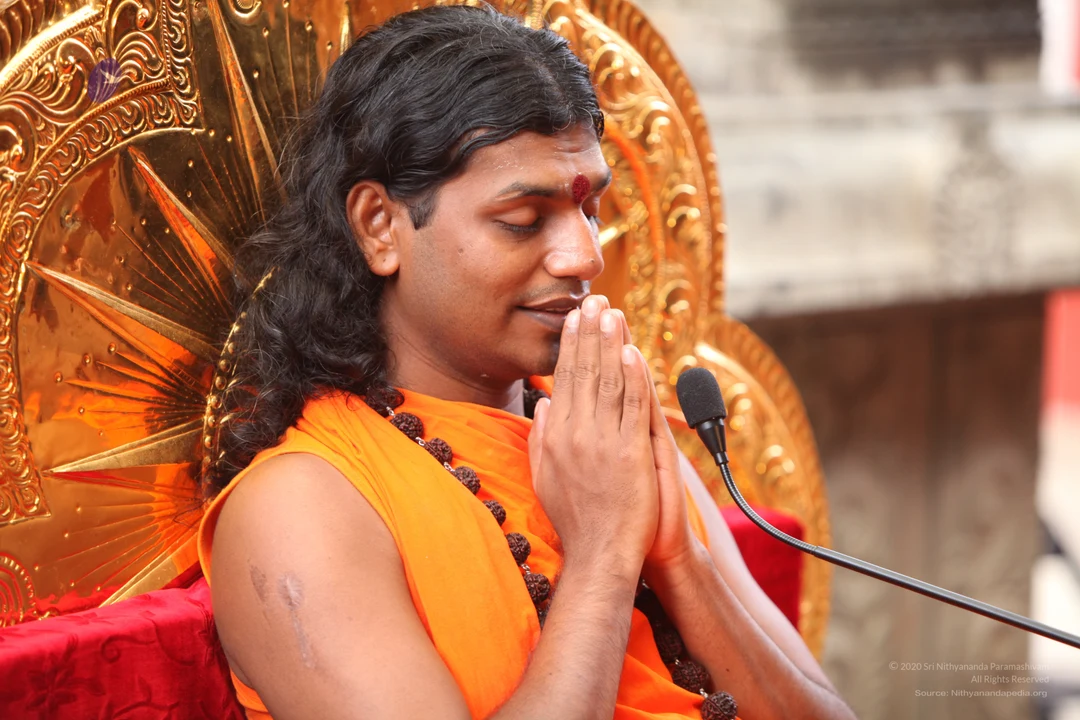
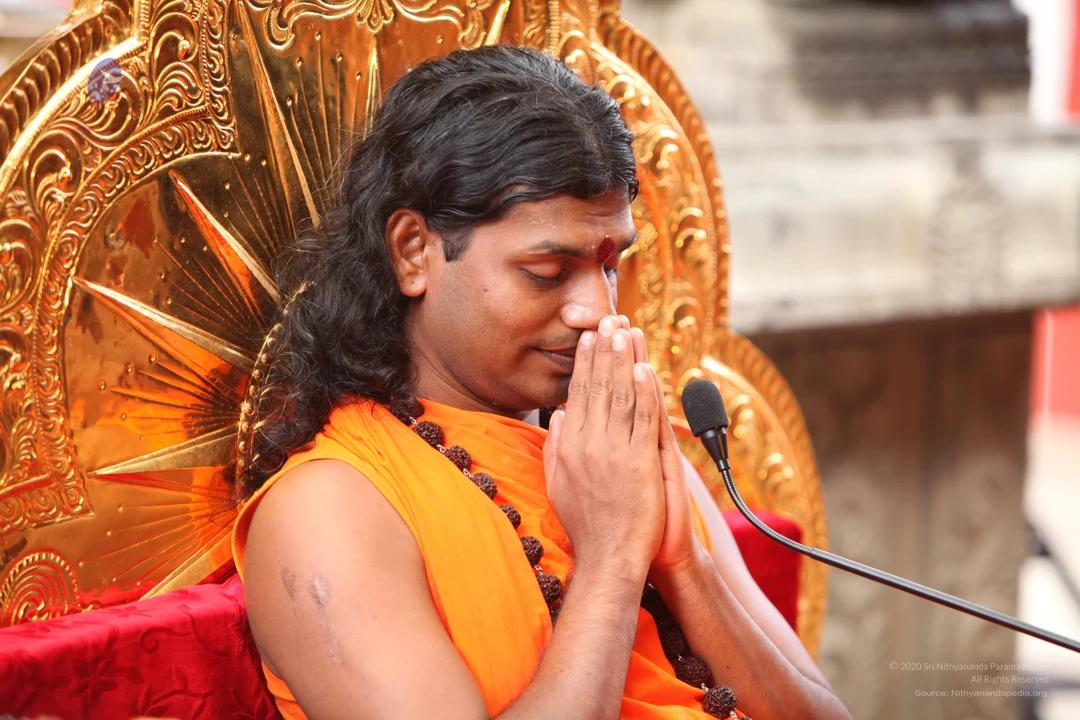
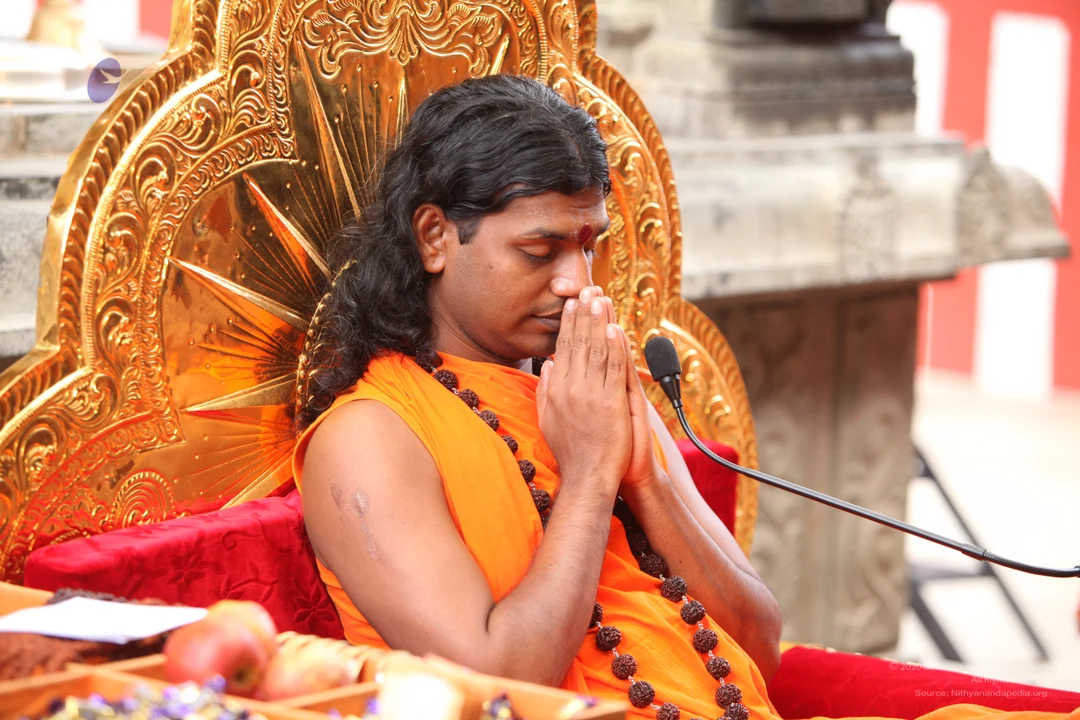
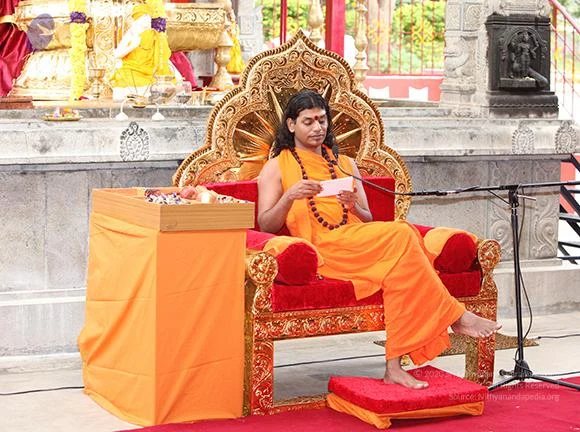
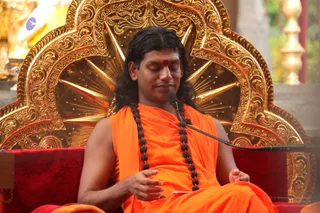
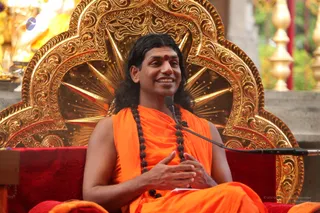
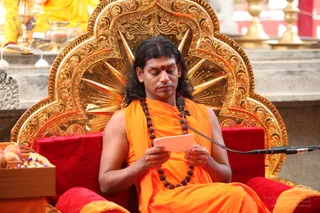
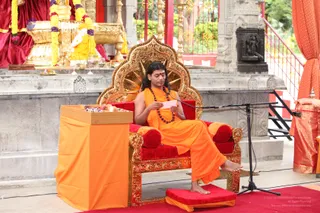
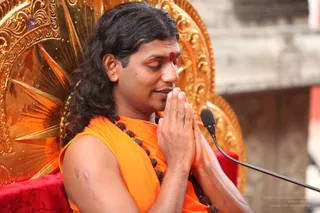
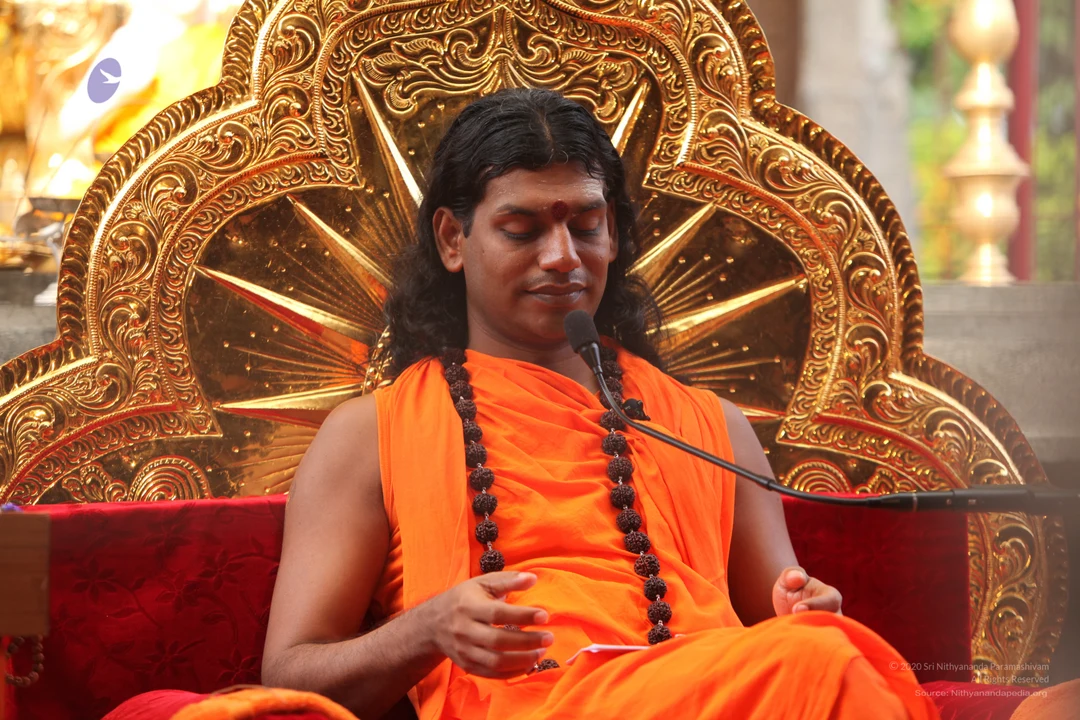
A seated man in an orange-saffron sleeveless robe with a long rudraksha mala across his chest sits on a red cushioned seat before an ornate gold throne with radiating sunburst carvings. He has long dark hair, a red tilak on his forehead, and eyes closed while his hands rest in his lap. A microphone on a boom stand is positioned near his face. Gold ritual objects and greenery are visible in the background.A photograph of a man seated on an ornate golden throne with a radiating sunburst backrest and red cushions, speaking into a microphone on a stand. He wears a saffron-orange robe draped over his shoulders and a long rudraksha mala of dark beads, with a red bindi on his forehead and long dark hair. His hands rest together at his waist as he smiles. Behind him are gilded ornaments and golden pillars. One person is visible.A man seated on an ornate gilded throne with a red cushioned seat, wearing a saffron-orange robe draped over his shoulders and chest and a long necklace of dark rudraksha beads. He has long dark hair, a red bindi on his forehead, and eyes lowered as he reads from a small white card held in both hands. A microphone on a stand is positioned in front of him. Behind him stands a gilded peetha backrest with radiating sunburst designs. At the left edge, a wooden table holds brass and gold ritual vessels, fruit and flower offerings, with a golden kalasha-style pot in the background. The setting appears to be a satsang discourse.A man in saffron-orange robes sits on an ornate gold throne with red velvet cushions, reading a small pink card held in both hands. He wears a long rudraksha mala with a red tilak on his forehead, long dark hair swept back, and is barefoot with his feet resting on a red footstool. A microphone stand is positioned beside the throne. A saffron cloth-draped table holds flowers and offerings on its top. Behind him, a golden seated figure in yellow garments stands near a golden urn with garlands of yellow and purple flowers, and a stone shrine niche with a small deity murti is visible at the right. Red drapes and an orange curtain frame the open-air stone platform.A seated man in saffron-orange robes speaks into a microphone while holding a small white card, on an ornate gold-and-red throne with a red cushioned seat and a red footstool. He wears a rudraksha mala and a red tilak on his forehead, with long dark hair. A wooden tray with flower petals and offerings sits beside him. Behind him, a golden canopy and a seated white-and-saffron deity figure stand near garlands of yellow and purple flowers. A red-carpeted stage and a red-and-orange drape frame the scene. The a person is seated in a satsang discourse setting, with a sign of the Nithyananda Dhyanapeetam style display in the background. Photo is outdoors on a raised platform, one person visible.A man seated in a red-cushioned chair before a large ornate gold throne-back with radiating carved patterns. He wears a sleeveless saffron-orange garment and a long rudraksha mala around his neck, with a red tilak on his forehead. His eyes are closed and his palms are pressed together in namaste before a black microphone on a stand. The background shows a stone wall. The appearance of the man with long swept-back hair, saffron clothing and rudraksha malas is consistent with the page's reference to Swamiji (probable), seated at a satsang talk.

Sarvadarshan

1 photoSource gallery
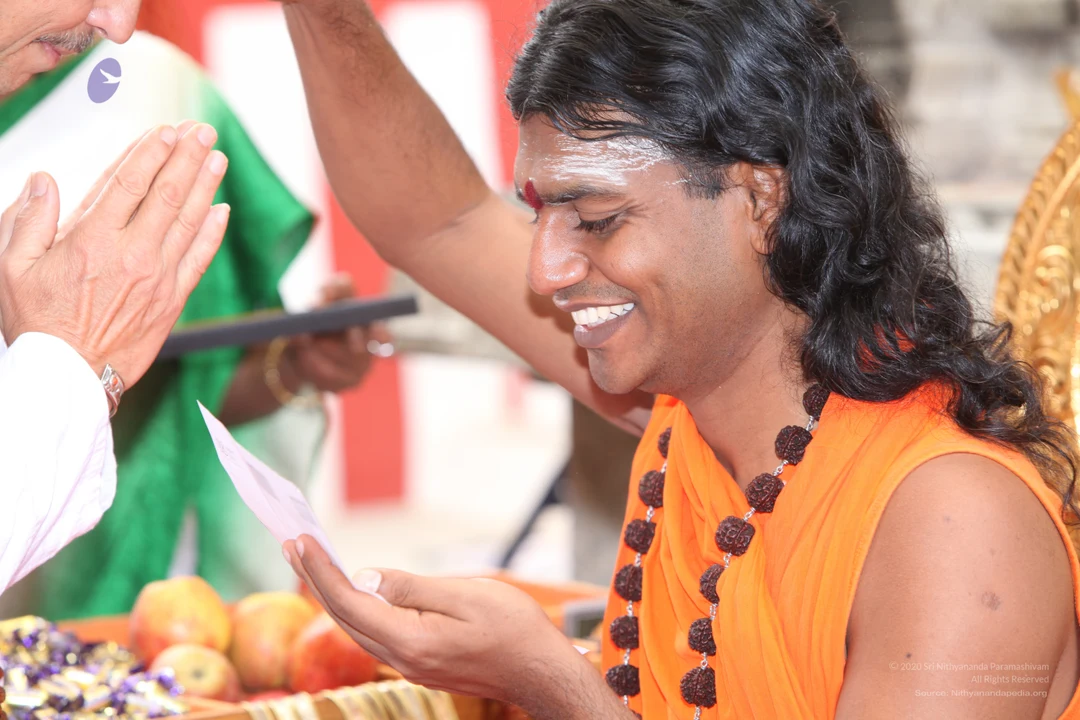
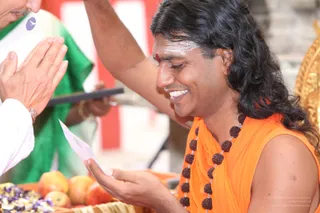
A photograph of a smiling man with long, swept-back dark hair, white sandalwood paste on his forehead and a red tilak mark, seated and wearing a saffron-orange sleeveless garment with a long rudraksha mala. He holds a folded white paper in his hand while another person's raised arm extends toward his head. In the foreground at left, an elderly man in white clothing presses his palms together in anjali. Behind them a person in green cloth stands near a basket of fruit, apples and flowers. Probable Swamiji by appearance cues: long hair, saffron clothing and rudraksha mala, seated in a ceremonial setting with offerings nearby.

Dasara-Culturals
80 photosSource gallery
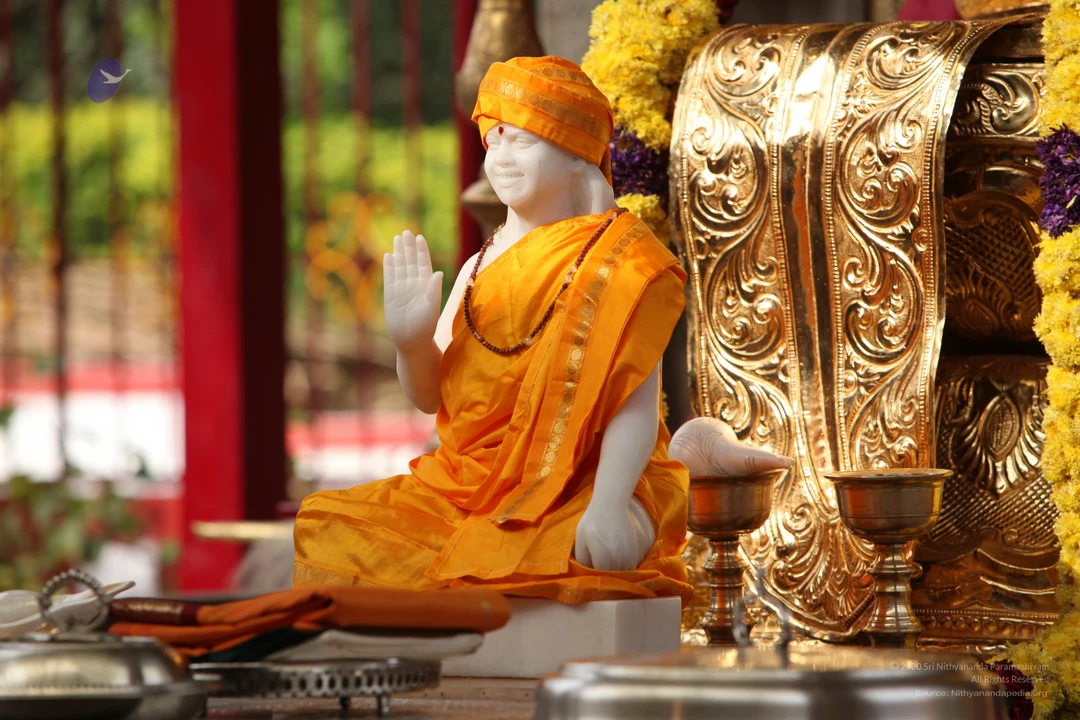
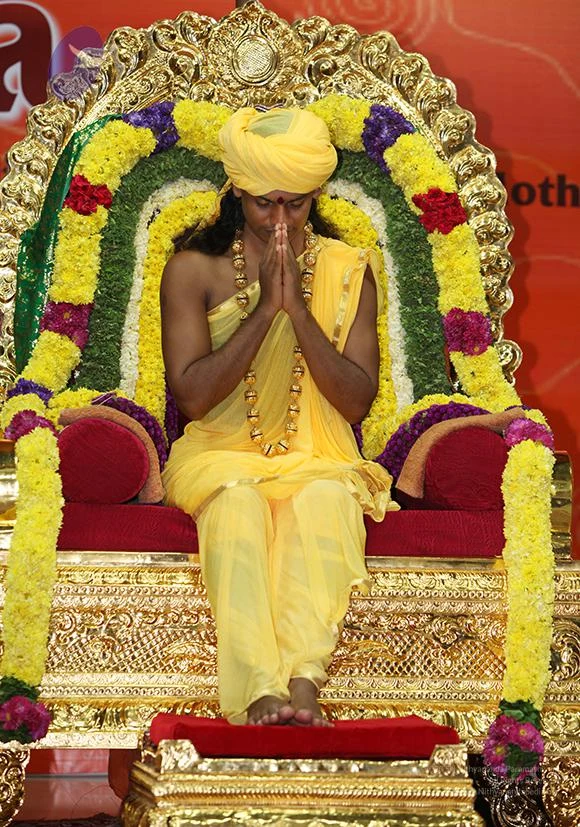
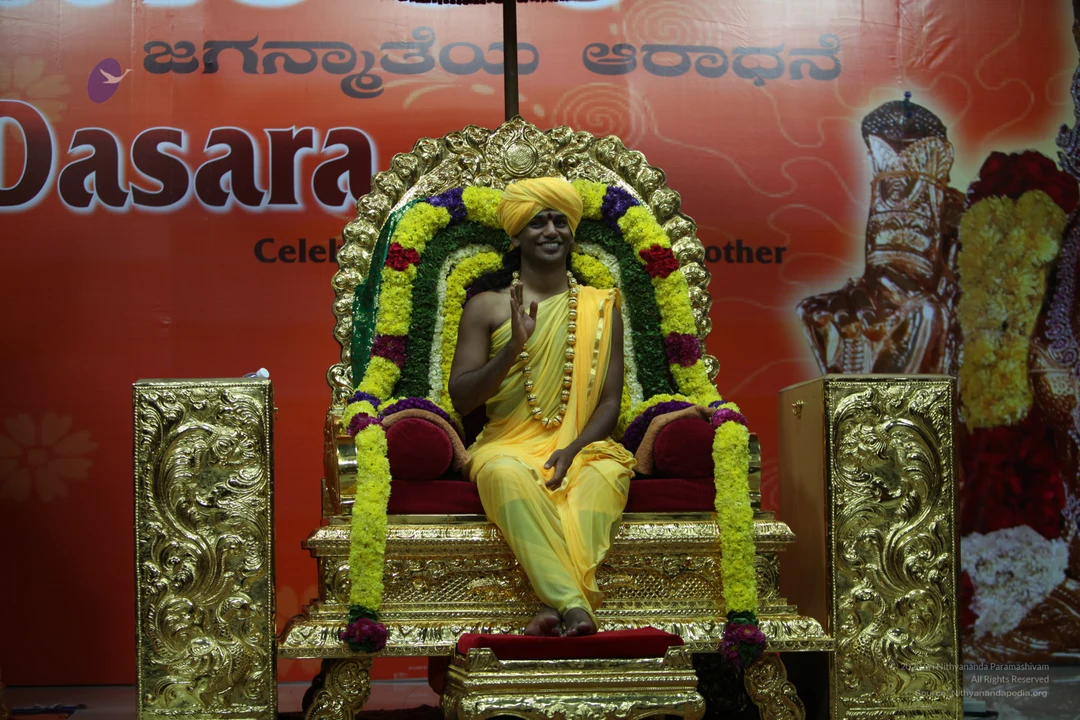
A man seated on an ornate gold throne decorated with yellow, purple, green and white flower garlands waves one hand in blessing while smiling. He wears a yellow turban, a red tilak on his forehead, a yellow draped robe with gold border and a long gold bead necklace. The background shows an orange banner with Kannada script. Probable Swamiji, seated on a throne with ceremonial garlands, wearing a yellow turban, yellow robe and gold bead necklace. No other people are visible.Close photograph of a smiling man in a bright yellow turban and matching yellow draped cloth, with a small red bindi on his forehead. He wears a long ornate gold bead necklace of large rudraksha-style gold beads and raises one hand in a blessing gesture. Behind him are dense arrangements of yellow marigolds, purple flowers and green foliage, with gleaming golden objects at the top of the frame. One person is visible.A man seated on an ornate gilded throne draped with yellow and green garlands of marigold and purple flowers, with red cushions beneath him. He wears an orange-yellow turban, a yellow robe over bare shoulders, a long gold necklace of beads, and a red bindi. His hands rest folded in his lap. Behind the throne is a red backdrop with partial lettering and a sculpted deity figure on the right. The Swamiji (probable) label applies: the candidate has a turban, saffron-yellow clothing, a bead necklace and a throne, so this is an appearance-based candidate seated as the central speaker.A photograph of a seated man on an ornate golden throne (peetha) decorated with a garland of yellow and orange marigolds, green leaves, red flowers and purple blooms. He wears a yellow turban, a yellow robe draped over his shoulders and chest, a long necklace of gold beads and a red bindi on his forehead, with his hands clasped in his lap. Behind him is a red backdrop with partial lettering. The appearance cues are a yellow turban, saffron-coloured clothing, ceremonial gold beads and a flower-decorated throne, so this is a probable Swamiji in person. Only one physical person is present.A man in a saffron-yellow turban and yellow robe sits on an ornate gold throne decorated with yellow marigold and purple flower garlands and green leaves, with red roses at the sides. He wears a long gold bead necklace, has a red bindi, and is clapping his hands with a gentle smile against a red and orange backdrop with partial lettering. The seated figure is the central speaker at a satsang-style talk. Appearance-based candidate: Swamiji (probable), wearing saffron ceremonial clothing, a turban, and a gold necklace while seated on a throne.A seated man in a yellow turban and yellow-gold dhoti-style garment sits with palms pressed together in anjali mudra, eyes closed in a gesture of greeting. He wears a long strand of gold beads around his neck and a red bindi. He sits on an ornate gold throne decorated with yellow marigold garlands, green leaves, red roses and purple flowers, with a red cushioned armrest. The background is a red wall with partial dark lettering. The seated figure is shown in person, with a probable identification as a person based on the saffron-yellow robes, gold malas and ceremonial throne, though the appearance is only moderately clear.

Ashramites-Meeting

12 photosSource gallery
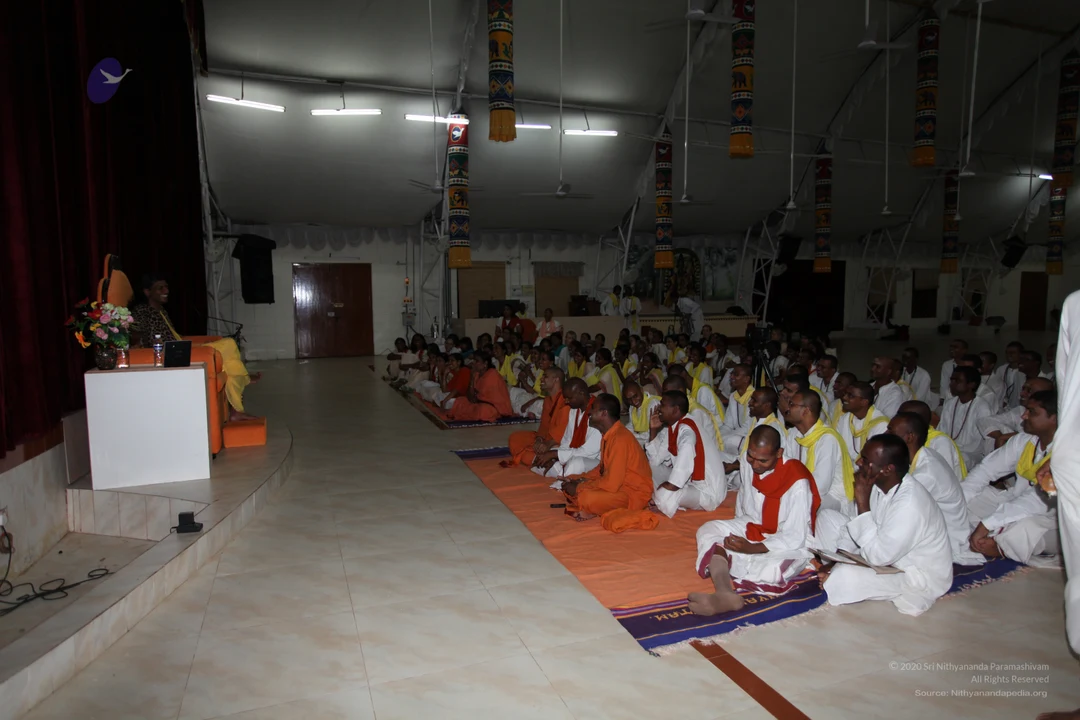
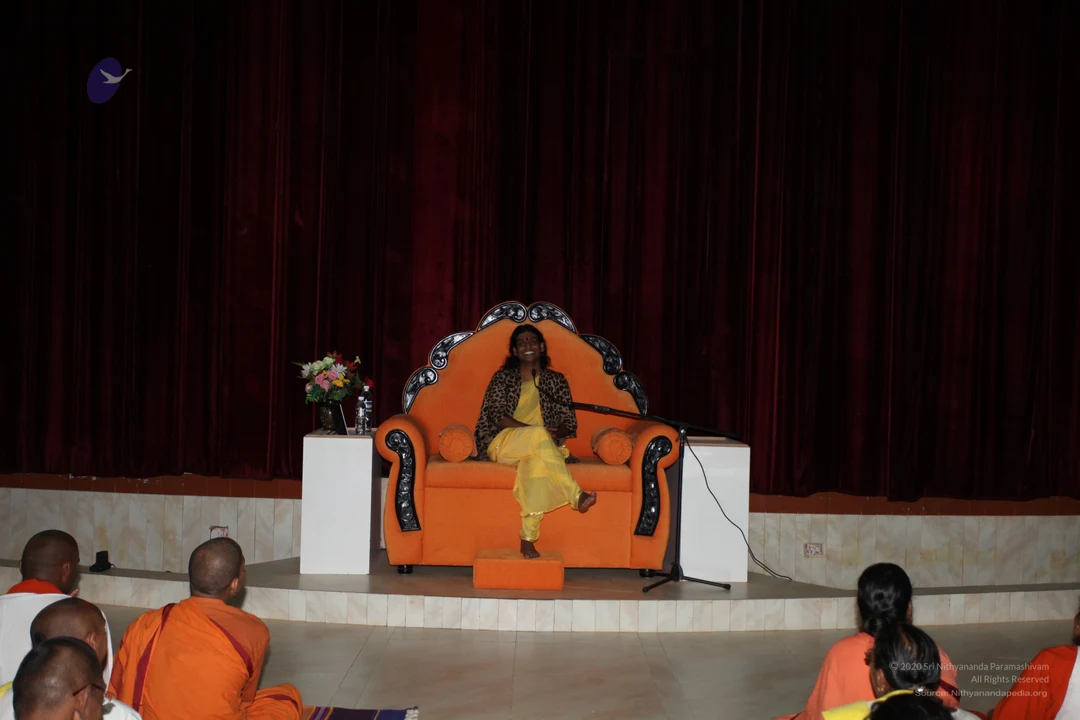
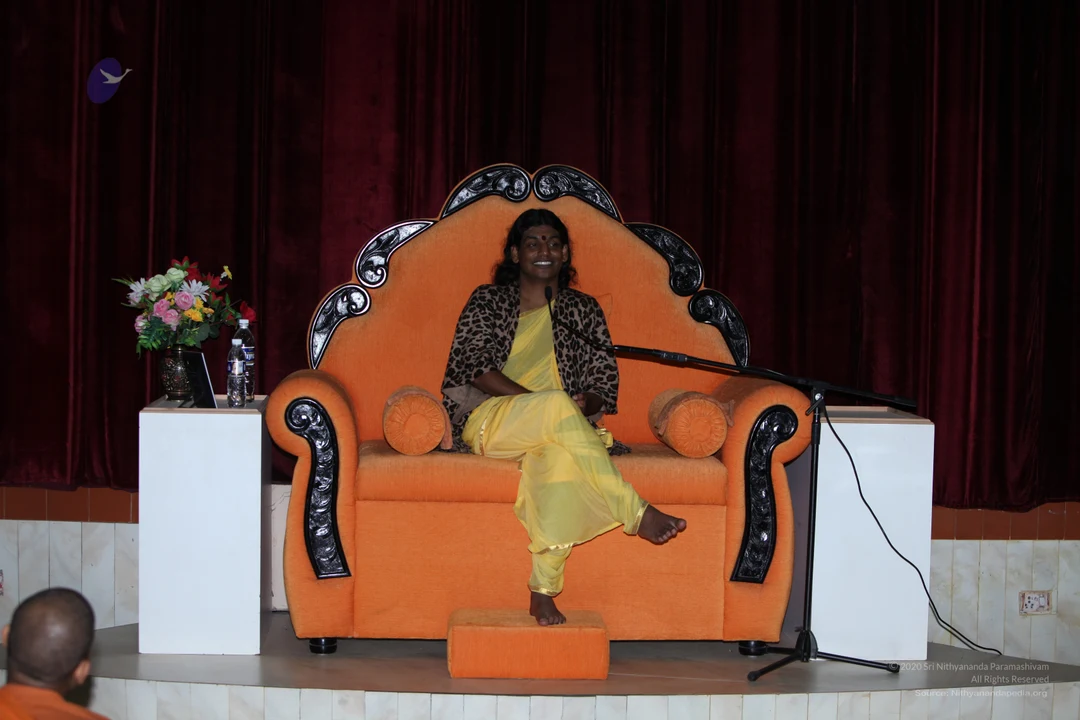
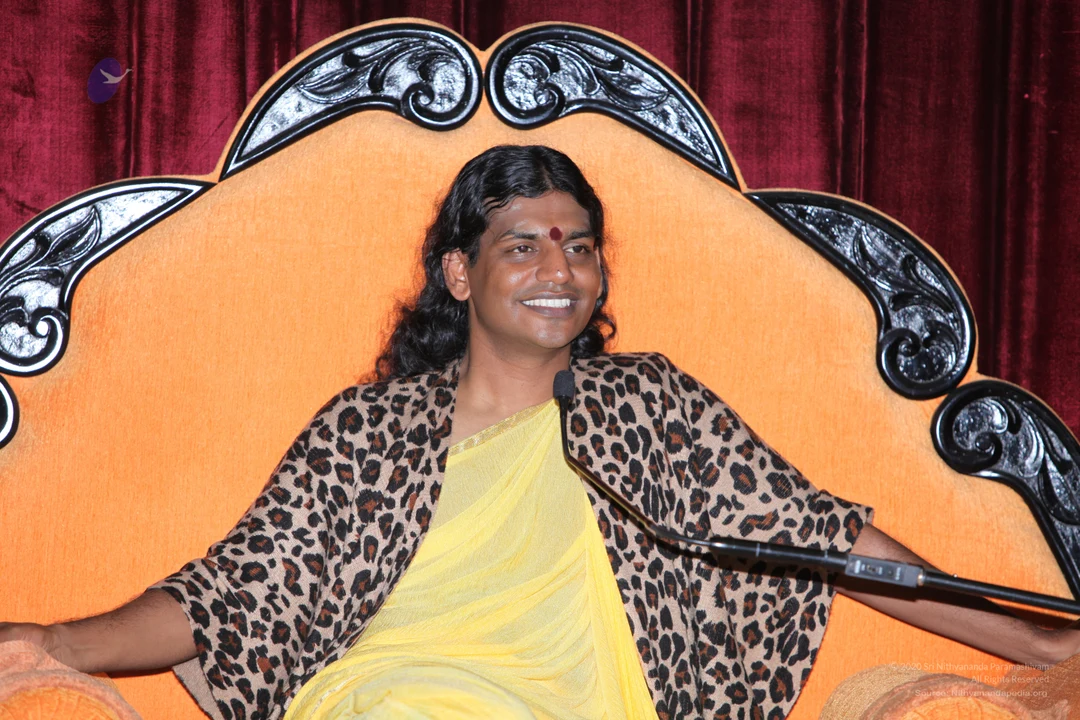
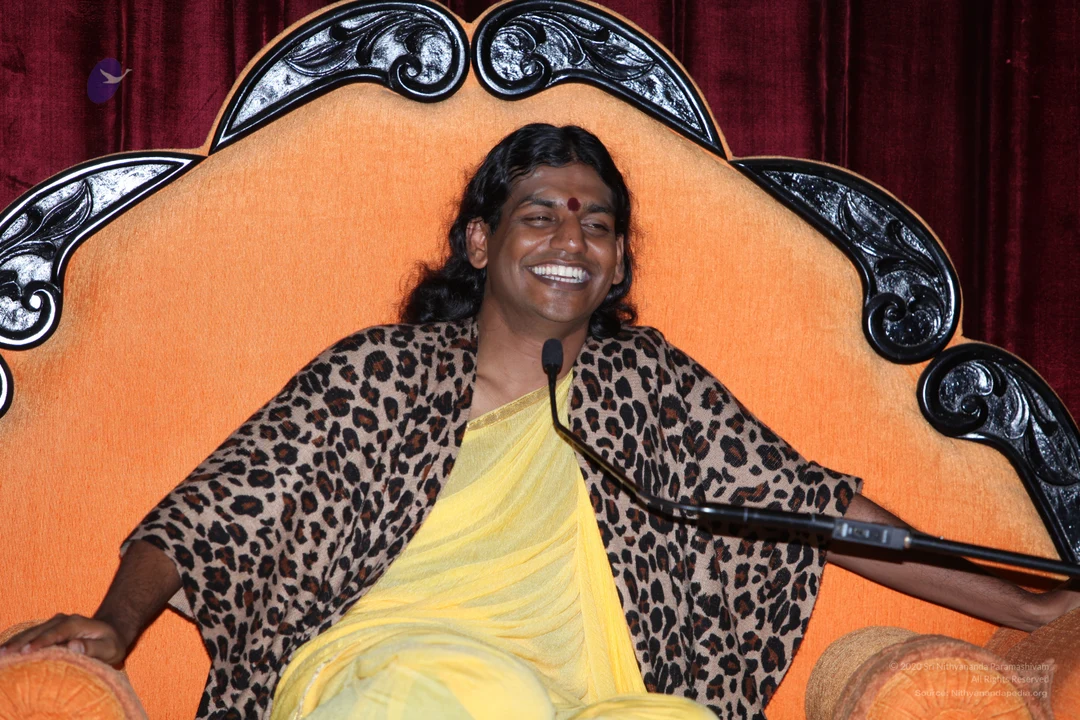
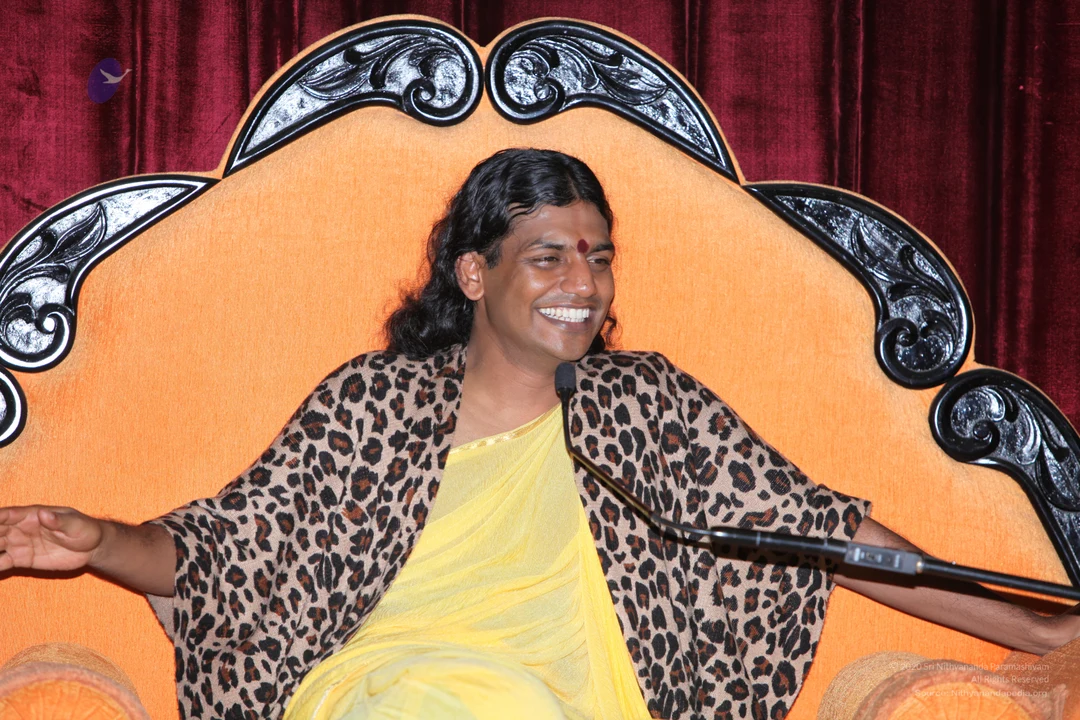
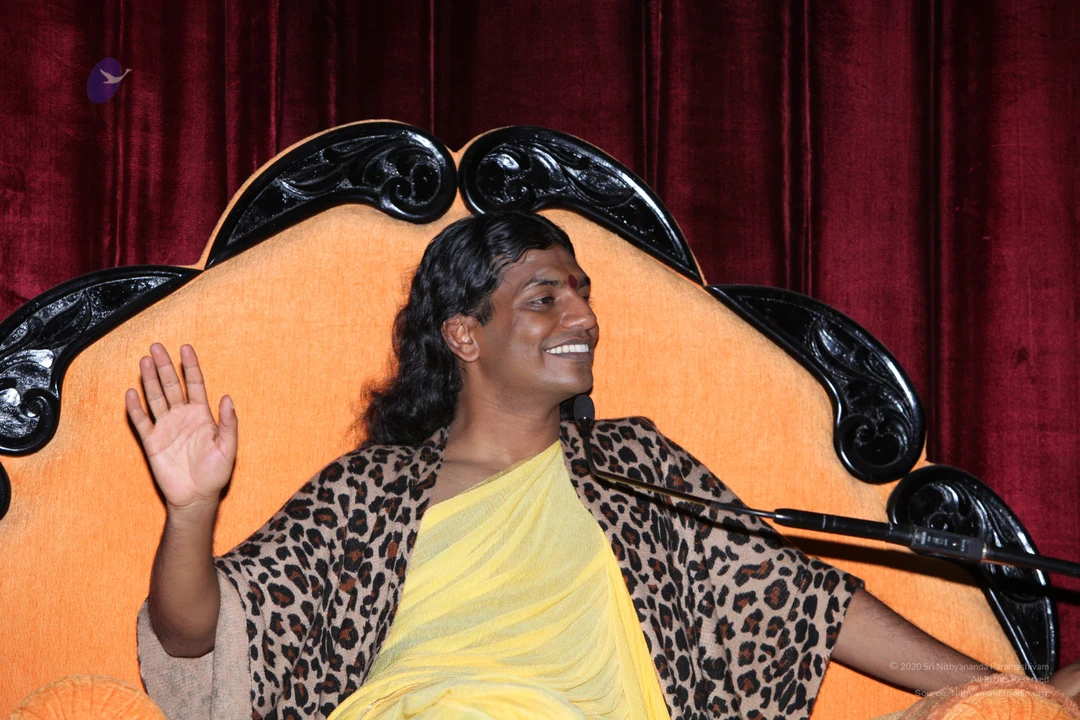
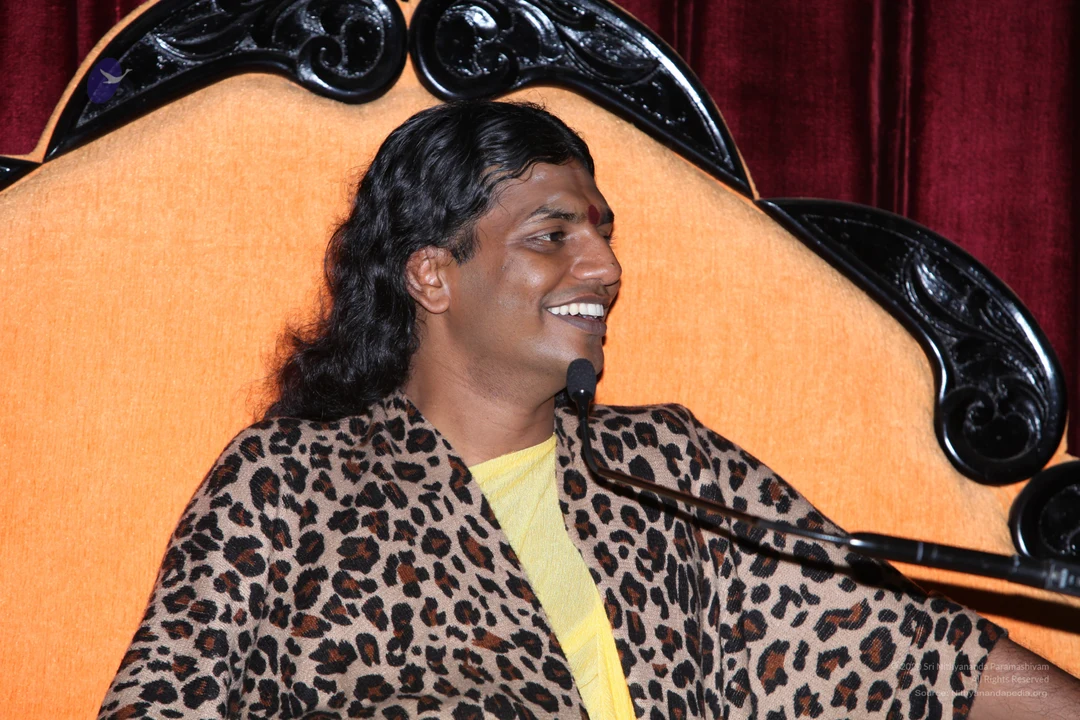
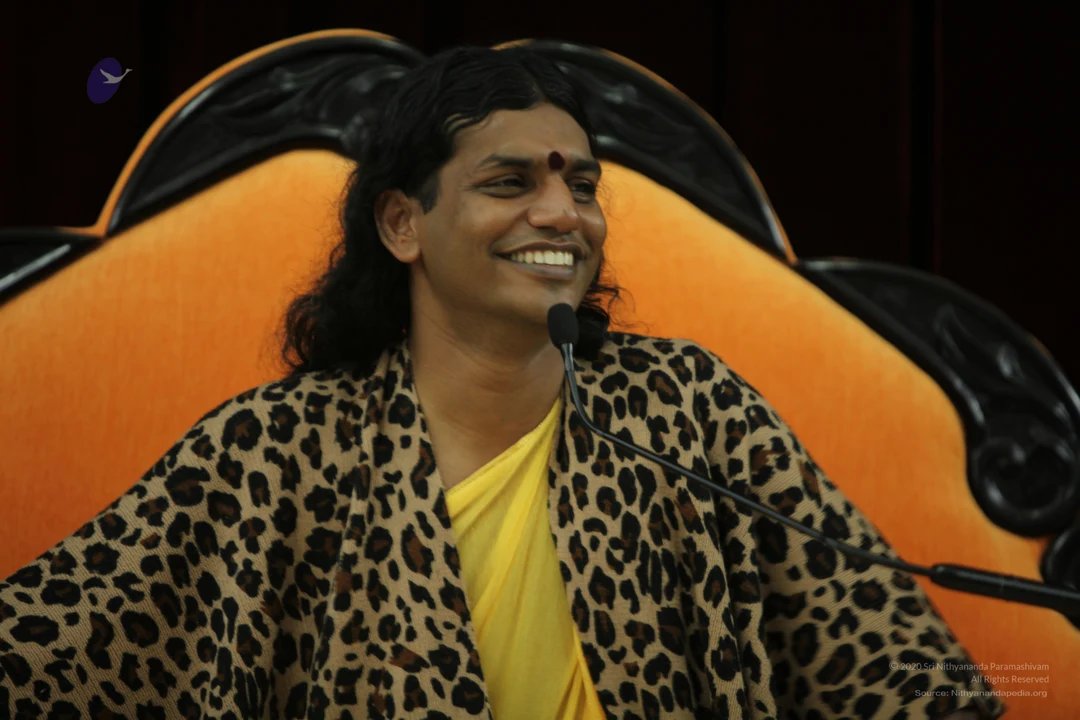
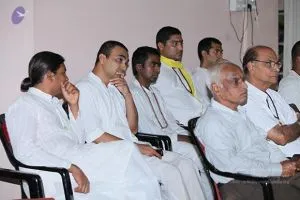
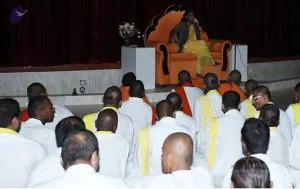
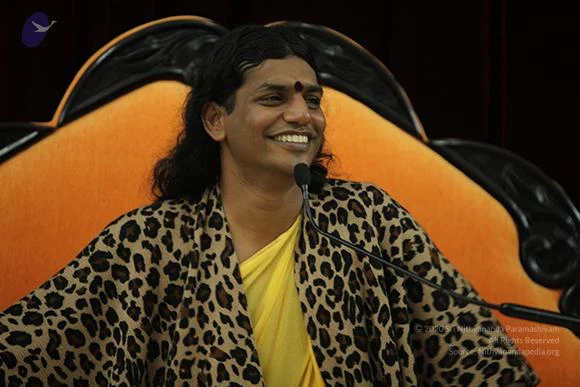
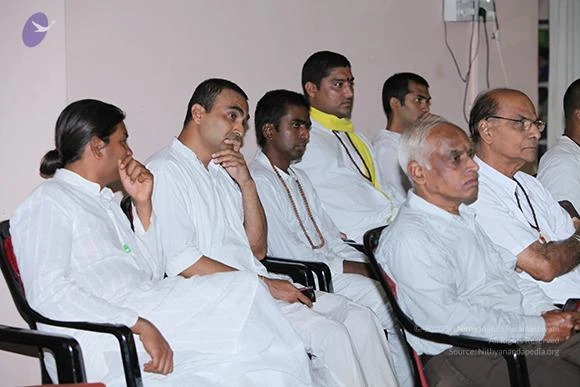
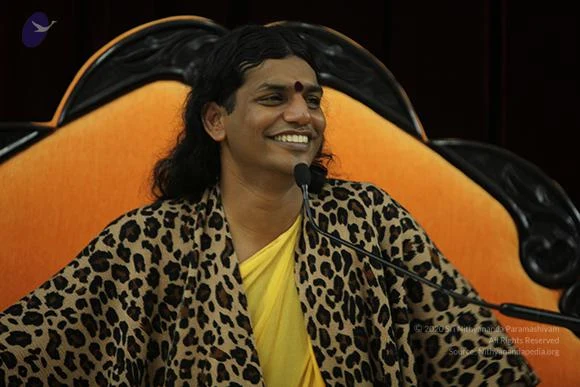
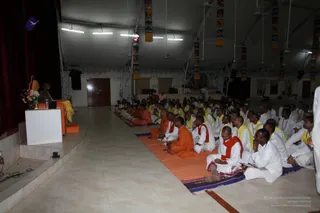
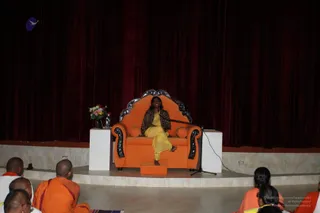
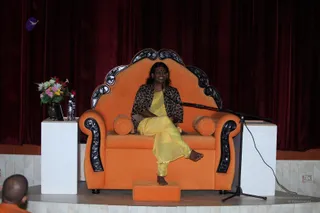
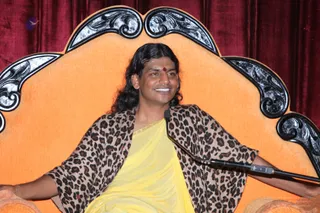
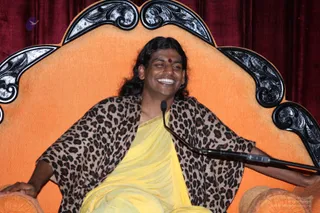
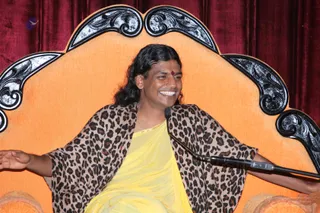
A seated audience of monastic and devotee attendees fills a long hall during a satsang talk. In the foreground, several men in white dhotis and white shirts with red shawls, and saffron-robed sannyasis sit on orange and purple mats. Behind them, rows of white-clad devotees wearing yellow shawls sit facing a raised stage at left. On the stage, a speaker in saffron and yellow garments sits on an orange-draped seat beside a white lectern, a flower arrangement and water glass. Colourful tasselled hangings and ceiling fans are overhead.A woman in a yellow kurta-style outfit and a leopard-print jacket sits smiling on an orange upholstered throne-like armchair with carved dark wooden arms, one foot resting on an orange footstool, on a raised stage before dark red velvet curtains. A vase of pink and white flowers and a water bottle sit on a white pedestal to the left, and a microphone stand is beside the chair. In the foreground, shaven-headed monks in saffron and orange robes and a figure in white sit on the floor facing the stage, and two women in orange sit at the lower right. A small purple logo appears at the upper left.A photograph of a person seated on an orange upholstered throne with ornate black carved armrests and scrolled backrest, in front of dark maroon drapes on a raised stage. The seated person has long dark hair, a red bindi, wears a leopard-print jacket over a yellow sari and is smiling with one leg crossed. Their bare feet rest on an orange footstool. To the left a white pedestal holds a bouquet of pink, white and red flowers, a water bottle and a small book. A microphone stand stands on the right. At the lower left edge a partially visible bald person in orange clothing sits on the stage. The seated person matches the appearance of a person with long hair and a colourful sari, but identification is uncertain, so the candidate is unsure.A photograph of a man seated on an ornate orange throne with carved black-and-silver scrollwork and a deep red velvet backdrop. He has long dark hair, a small red bindi on his forehead, and wears a leopard-print shawl over a yellow garment. He smiles with his arms spread along the armrests, and a microphone stand is positioned at his side. The appearance is consistent with a person, seated in a teaching setting, though the face is not used for identification. The scene shows a single speaker at a satsang-style discourse.A smiling man with long dark hair and a small red bindi sits on an ornate orange throne with carved black-and-silver scrollwork against a deep red velvet backdrop. He wears a leopard-print shawl over a yellow garment and has a microphone on a stand in front of him, with his hands resting on the armrests. The setting suggests a seated public talk or satsang. A faint copyright line appears in the lower right corner.A smiling man with long dark swept-back hair and a small red bindi sits on an ornate orange throne with black-and-silver scrollwork against a deep red velvet backdrop. He wears a yellow garment with a leopard-print shawl draped over his shoulders and extends one arm outward while speaking at a microphone on a stand. The setting appears to be a satsang discourse. Based on his long swept-back hair, shawl and throne, this is a probable Swamiji (probable) in person giving a talk.

Swamiji-With-His-Sacredarts-Team-In-Making-Vahanas

10 photosSource gallery
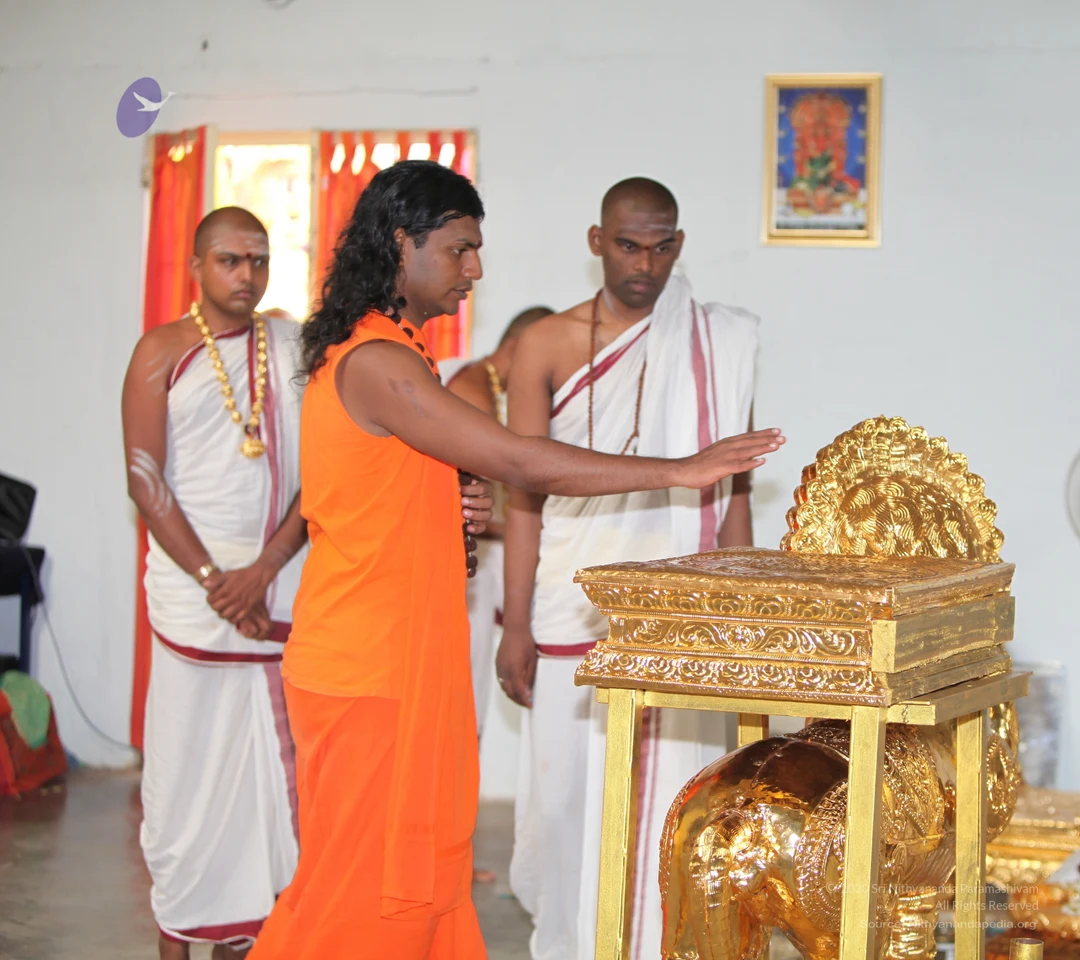
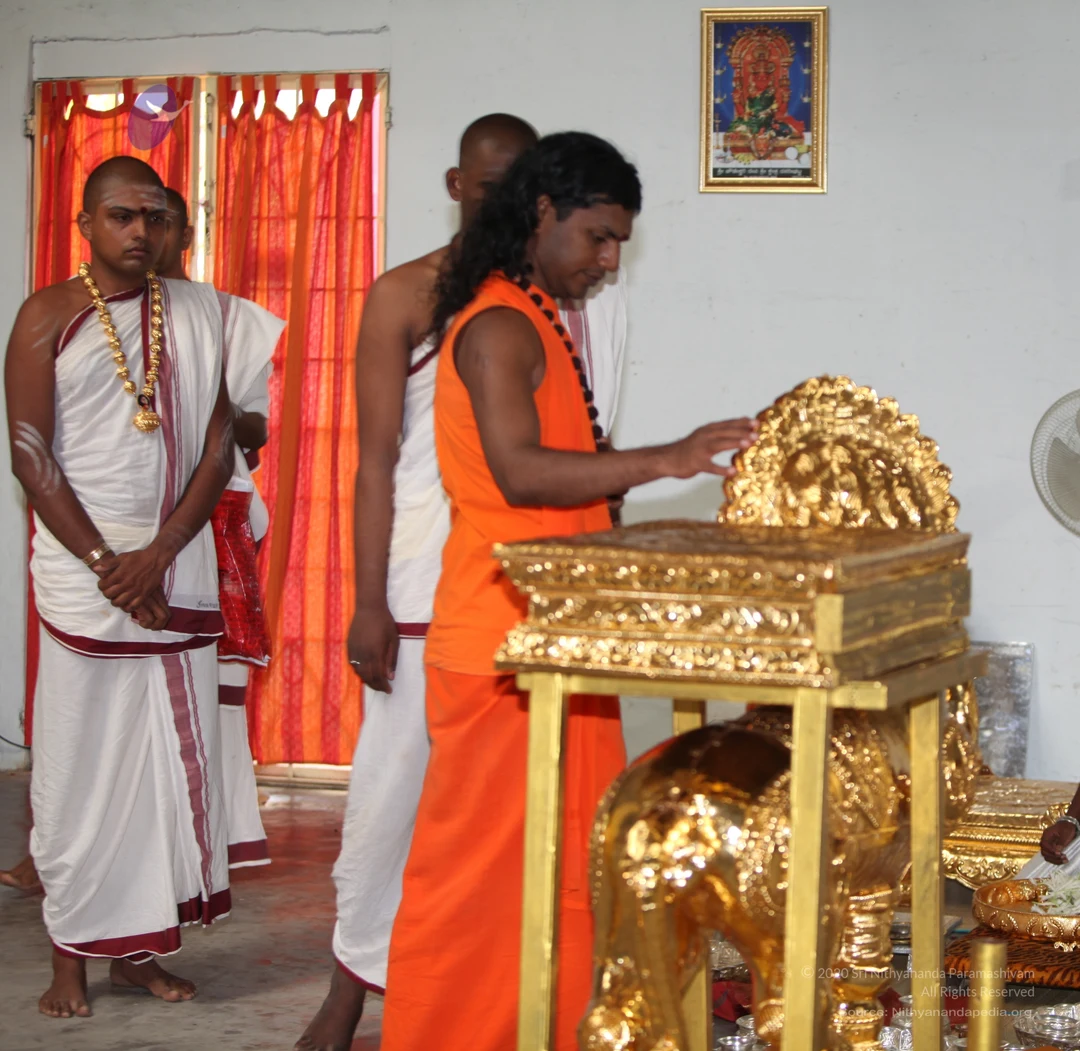
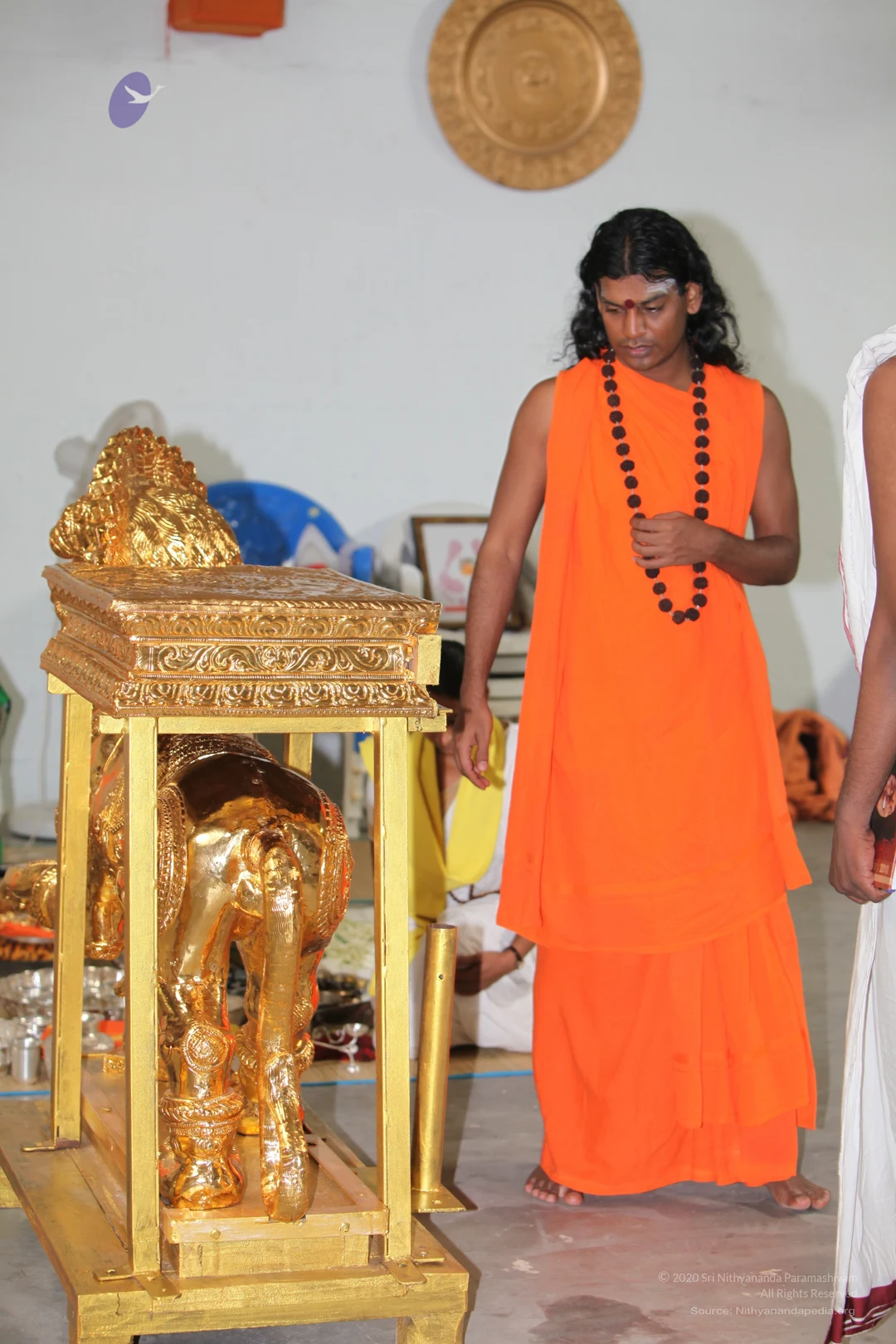
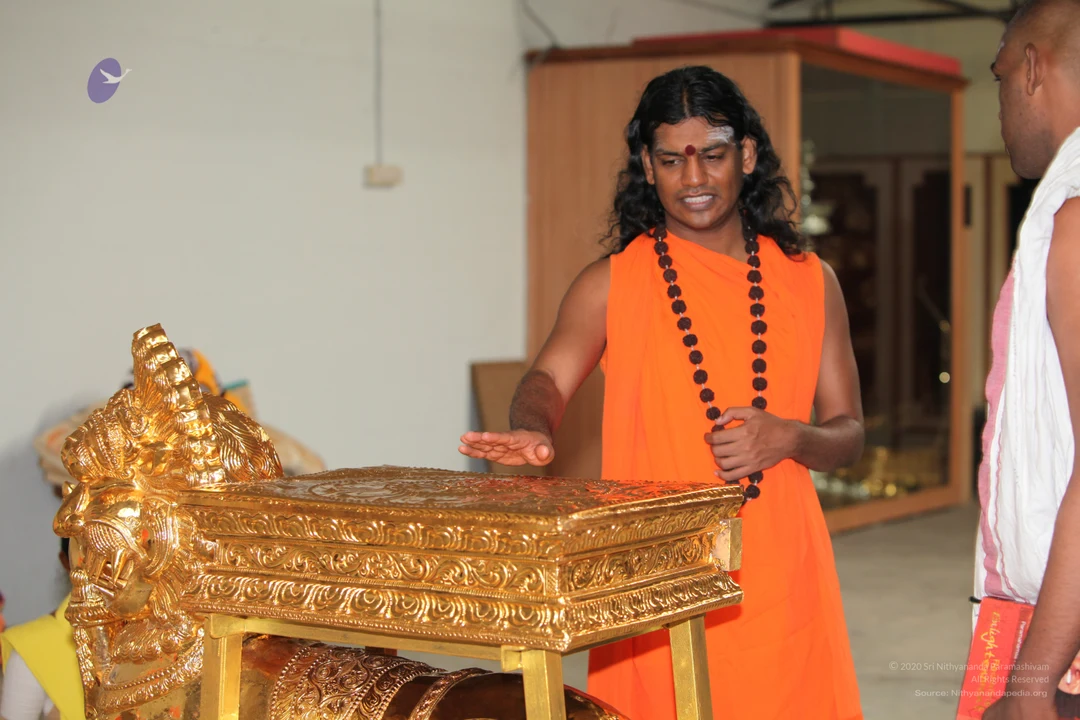
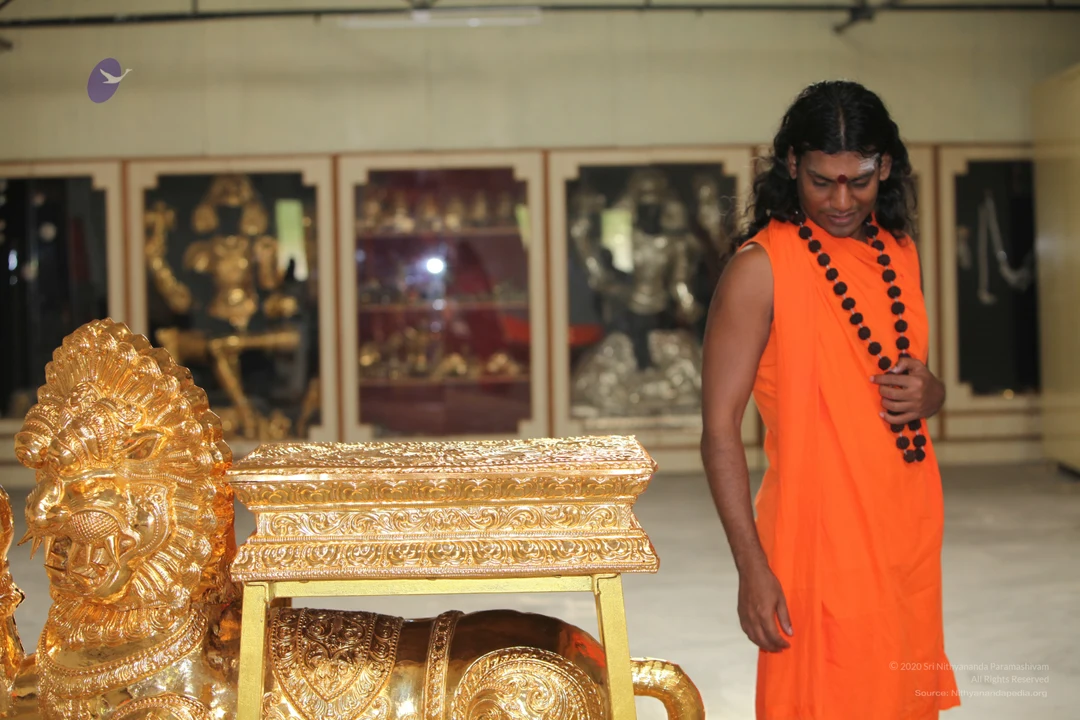
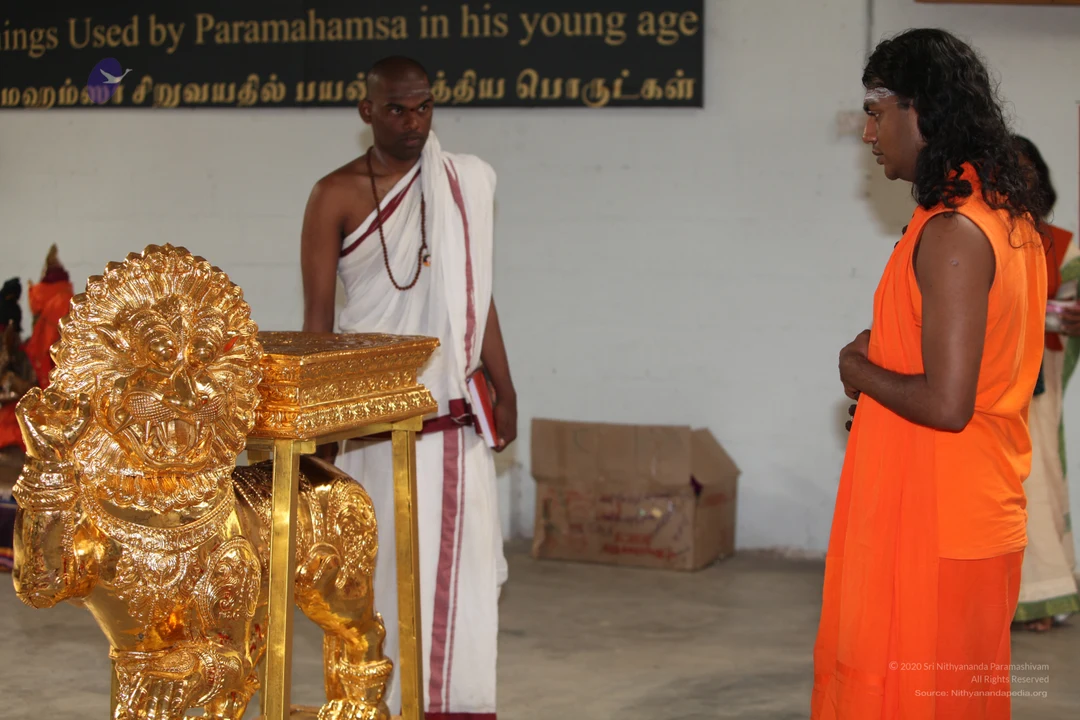
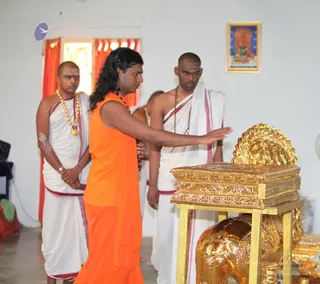
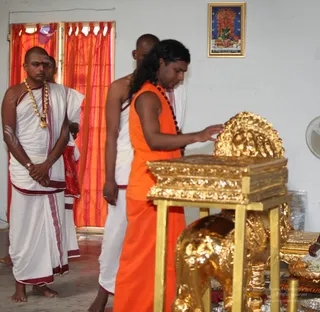
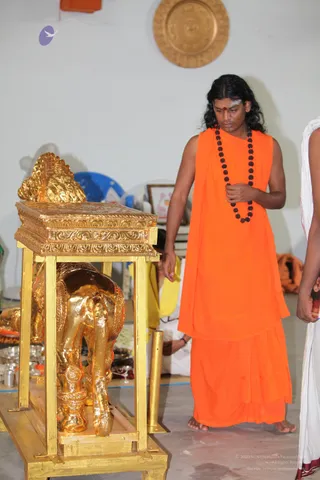
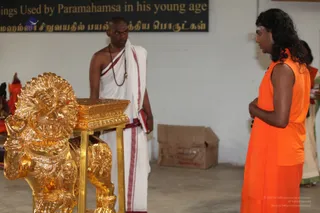
A photograph of a ritual scene indoors. In the centre, a man with long, swept-back dark hair wears a sleeveless saffron-orange garment and a rudraksha mala, and extends his right hand over a gold-coloured ornate peetha or stand with a carved gold canopy and a gold elephant base. Behind him, three men in white dhotis with red borders and white shawls stand; the one on the left wears a gold chain and sacred ash markings, and the one on the right wears a rudraksha mala. A small framed deity picture hangs on the white wall, and orange curtains frame a window.A photograph inside a plain white-walled room with red-orange curtains behind. A man in a saffron-orange robe and a dark rudraksha mala has long dark hair and his right hand resting on an ornate gilded canopy above a gold-painted stand with an elephant figure. Beside him, two men in white dhotis with maroon borders stand; the one on the left wears a gold chain necklace and has white markings on his arms and forehead, and the other partially visible man in white stands behind. A framed devotional picture of a deity hangs on the upper wall, and gilded ritual vessels are on a table at right.A photograph of a standing man in an orange sleeveless robe and an orange wrap, with a dark rudraksha mala around his neck and a red tilak on his forehead, his long dark hair swept back. He looks down and rests one hand on a gilded wooden ceremonial structure topped with an ornate golden crown-like finial, its base carved as an elephant with gold surfaces. Behind him, a figure in a yellow garment and another in white sit near silver vessels and brass items. A partly visible person in white stands at the right edge. A framed picture hangs on the wall and a large round gold-toned plate is mounted above. The scene suggests a ritual setting. Swamiji (probable) appears as the orange-clad man with rudraksha mala and long hair.A man with long dark swept-back hair wears a saffron-orange sleeveless robe and a dark rudraksha mala, with a red bindi and white forehead markings. He stands beside an ornate gilded wooden stand topped with a carved golden lion-headed figure, extending his right hand palm-down over it while gesturing. A second man in white clothing with a pink-and-white shawl stands at the right edge, partly cropped. Behind them are wooden cabinets and a white wall. The man in saffron is an appearance-based candidate for Swamiji, with saffron clothing and long hair plus rudraksha mala cues, so he is labeled probable Swamiji.A standing man in an orange saffron wrap and a long rudraksha mala stands beside an ornate gilded lion-headed carriage or palanquin with a richly carved golden canopy box. His long dark hair falls to his shoulders, he has a tilak on his forehead and a red bindi, and he looks down with his hands clasped at his chest. Behind him, glass display cases hold golden and silver deity murti and ritual objects against pale walls. The setting appears to be a museum or temple exhibit hall. Swamiji (probable): long hair, saffron clothing and rudraksha mala cues, shown as a standing devotee-style figure in a museum setting.Indoor photo in a plain hall with a whitewashed wall and concrete floor. A long-haired man in an orange sleeveless robe and orange dhoti stands at right, facing left, with a white headband and hands folded at waist; his long dark hair falls past his shoulders. Beside him stands a shaved-headed man in white dhoti and shawl with red border, wearing a rudraksha mala, holding a small red book. At left stands a large gilded lion-faced ornamental stand or peetha with ornate embossed carving, beside a cardboard box. A printed black banner with Tamil and English text hangs on the wall behind. A woman in a pale sari is partly visible at far right edge.

Nithyanandeshwara-Paramashiva-Golden-Temple

9 photosSource gallery
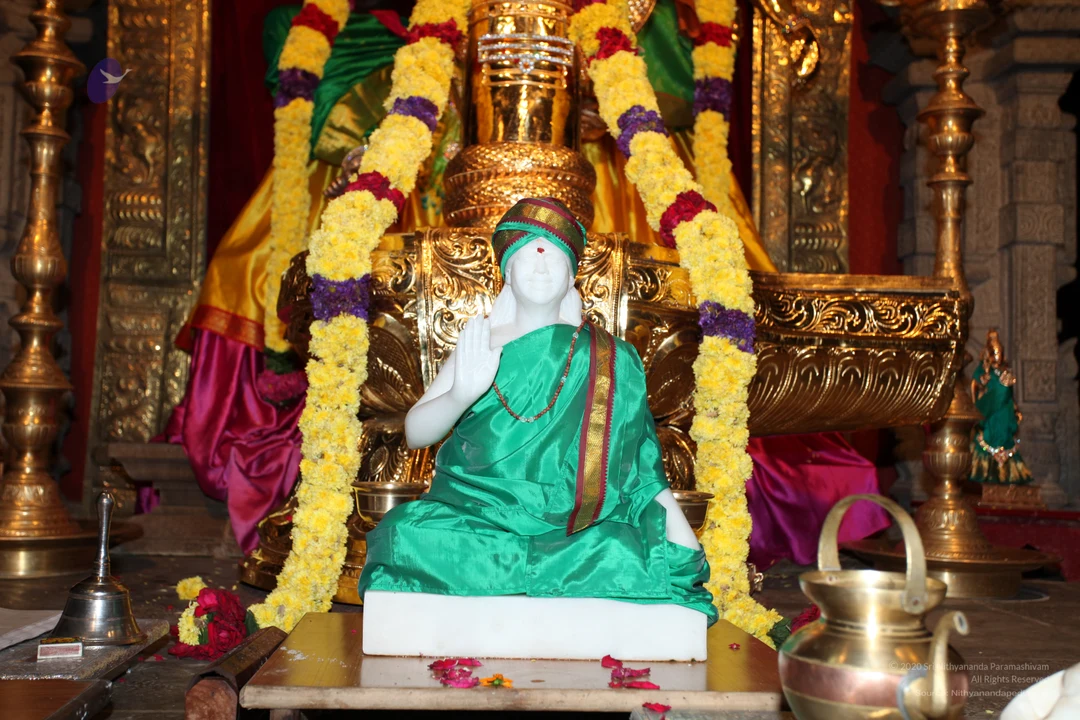
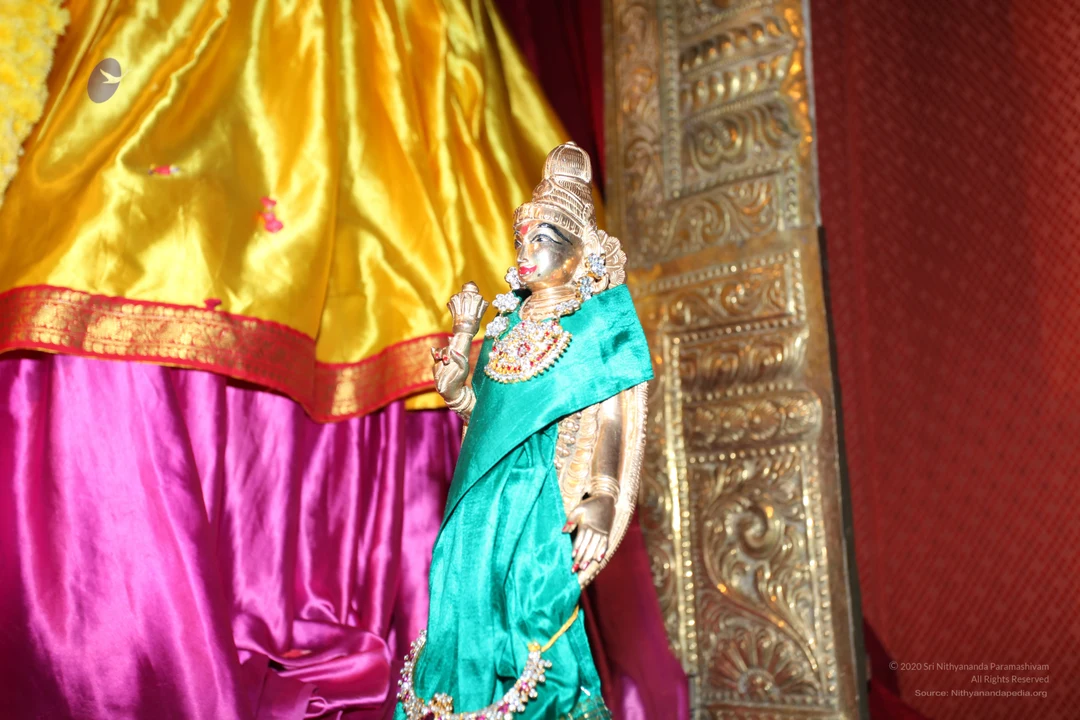
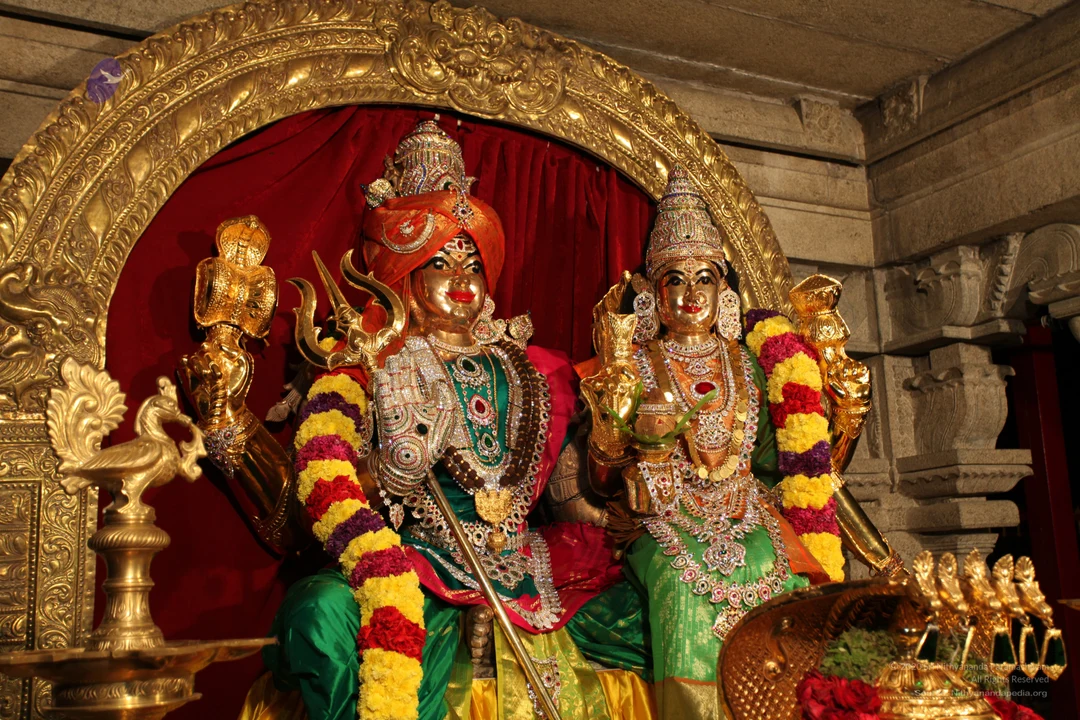
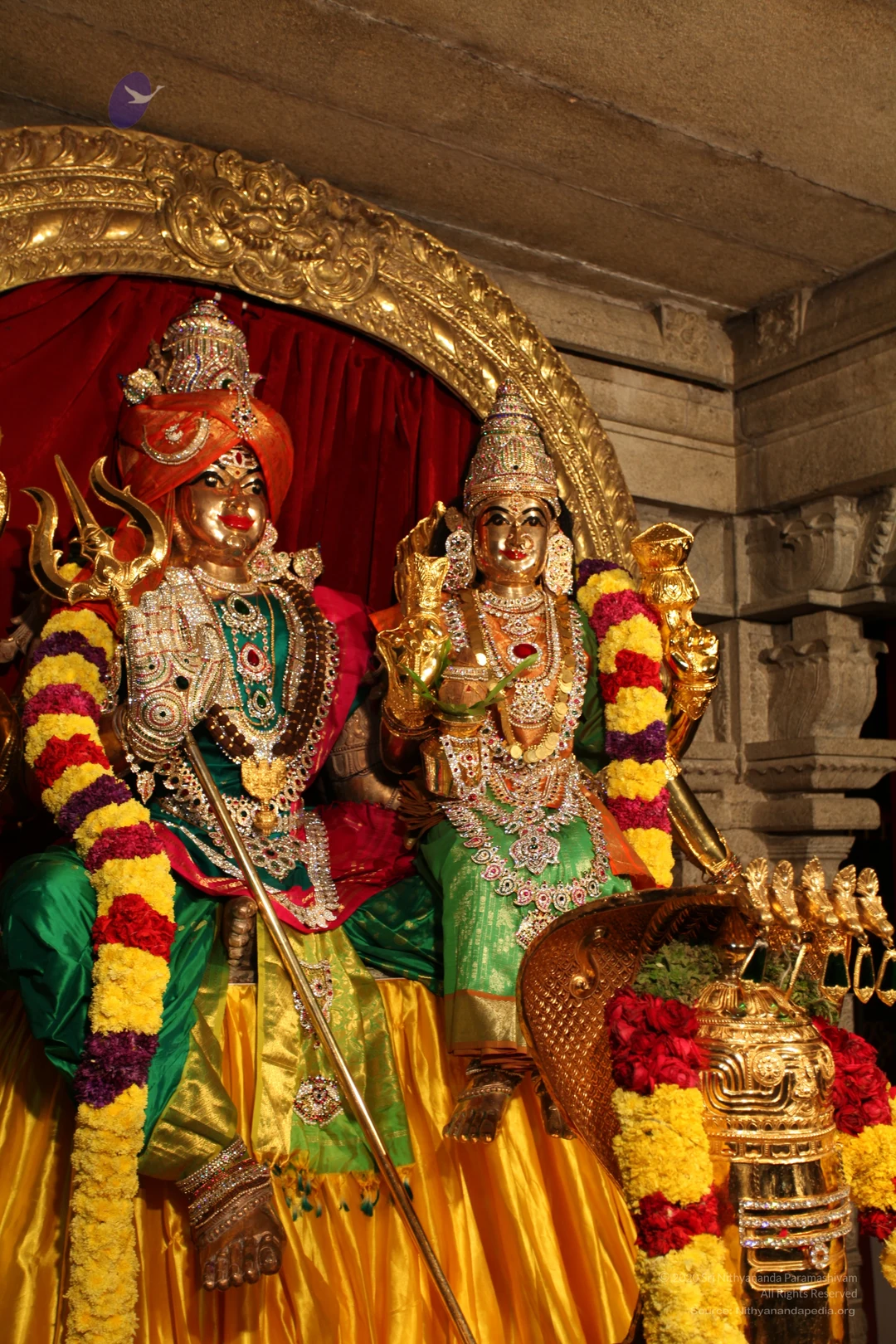
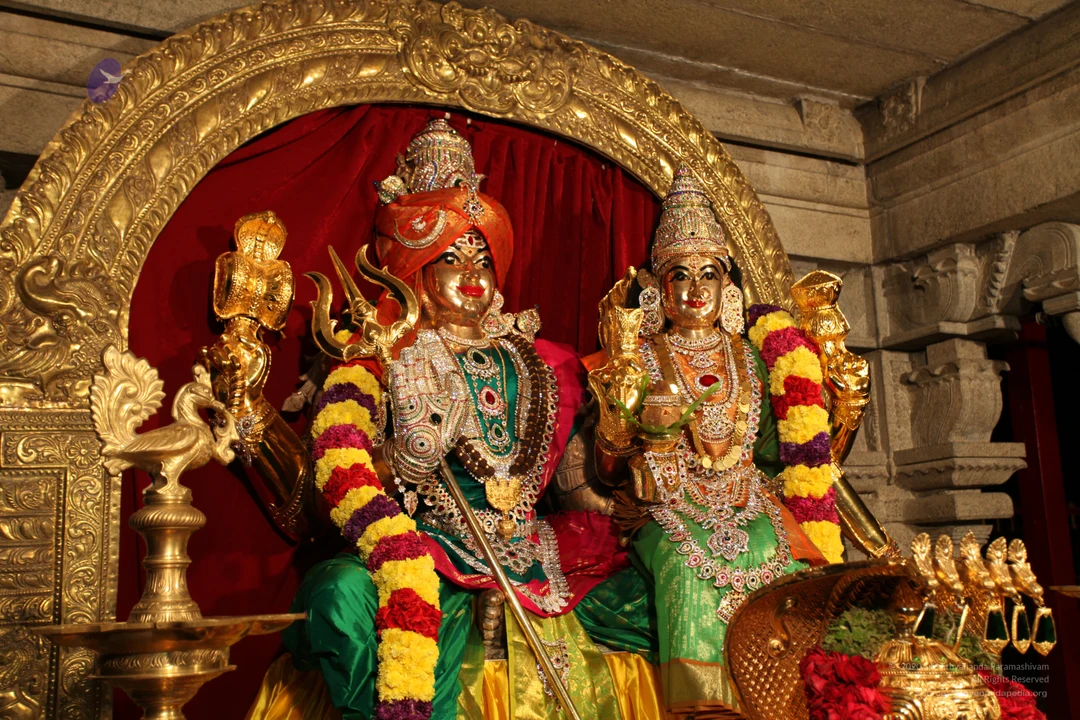
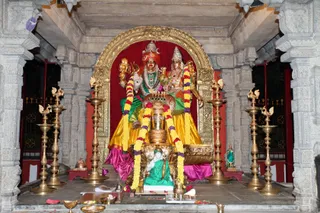
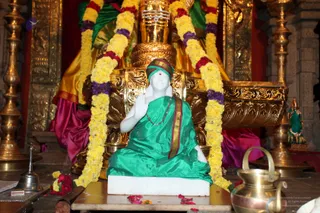
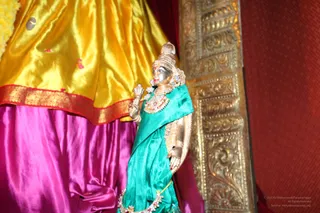
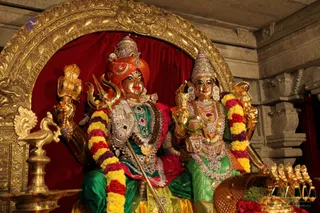
A photograph of a temple shrine with a deity murti pair seated on a golden throne beneath an ornate gold arch. The seated figure on the left wears an orange turban and holds a trident, while the figure on the right wears a tall crown and gold-coloured garments. A large brass lingam-shaped vessel sits in front of them on the platform, draped with yellow and purple marigold garlands. Tall brass oil lamps flank both sides of the shrine, and small brass bowls and offerings lie on the floor below. A red curtain and grey carved stone pillars frame the scene. The image appears to show a deity murti shrine rather than a living person.A photograph of a shrine inside a granite temple pavilion with carved stone pillars. At the centre stand two deity murtis, a male form with a red crown and a female form with a tall gold crown, both in gold and yellow garments with green and pink drapes, decorated with garlands of marigolds and purple flowers. A gold shivalinga-style object sits on a gold pedestal in front of them. Tall brass lamps with oil lamps and brass plates with offerings, including flowers and kumkum, line the platform. The statues are deity murtis, not living people, and no physical people are visible.A white marble statue of a seated figure in a green silk garment with a red-and-gold border and a red mala around the neck, hands raised in a blessing gesture with a red tilak on the forehead and a green-and-gold head wrap. The statue sits on a white base before a golden throne and a golden tiered structure, draped with yellow marigold garlands and purple and red flowers. Nearby are a brass bell, a brass pot with a long spout, scattered red and orange petals, and a small figure in green on the right. Gold ornate carved panels frame the background.A photograph of a gilded metal deity murti standing in front of a large yellow and magenta silk backdrop. The murti wears a teal-green silk sari draped over one shoulder, a layered gold necklace with red and white stone beads, matching earrings and a tall crown-like headdress, and holds a lamp-like object in one raised hand. Ornate gold-carved pillar panels and red drapery frame the scene, with yellow flower garlands visible at the upper left. No living people are visible.A photograph of a golden deity murti pair seated on a red-draped throne within an ornate gilded arch. The figure on the left wears an orange turban, a crown, a trident and a long staff, and is adorned with a green and red garment, jewelled necklaces and a multicoloured garland of yellow, red and purple flowers. The figure on the right wears a tall crown, a green garment with a rich jewelled necklace, earrings and a yellow and red garland, and holds a lotus stem. A brass oil lamp with a swan-shaped handle stands in the foreground beside a brass tray of offerings and flowers. No physical people are visible.Two gilded deity murti seated side by side under a gold arched frame against a deep red velvet backdrop. The figure on the left wears an orange turban, a silver-embellished breastplate, a green garment, and holds a trident; the figure on the right wears a silver crown, layered gold and beaded necklaces, a green sari, and holds a gold lotus. Both are draped in bright garlands of yellow, red and purple flowers. A brass oil lamp stands in the lower left and a gold vessel with flowers rests in the lower right. Statues only; no physical people are visible.

Banyan-Tree

4 photosSource gallery
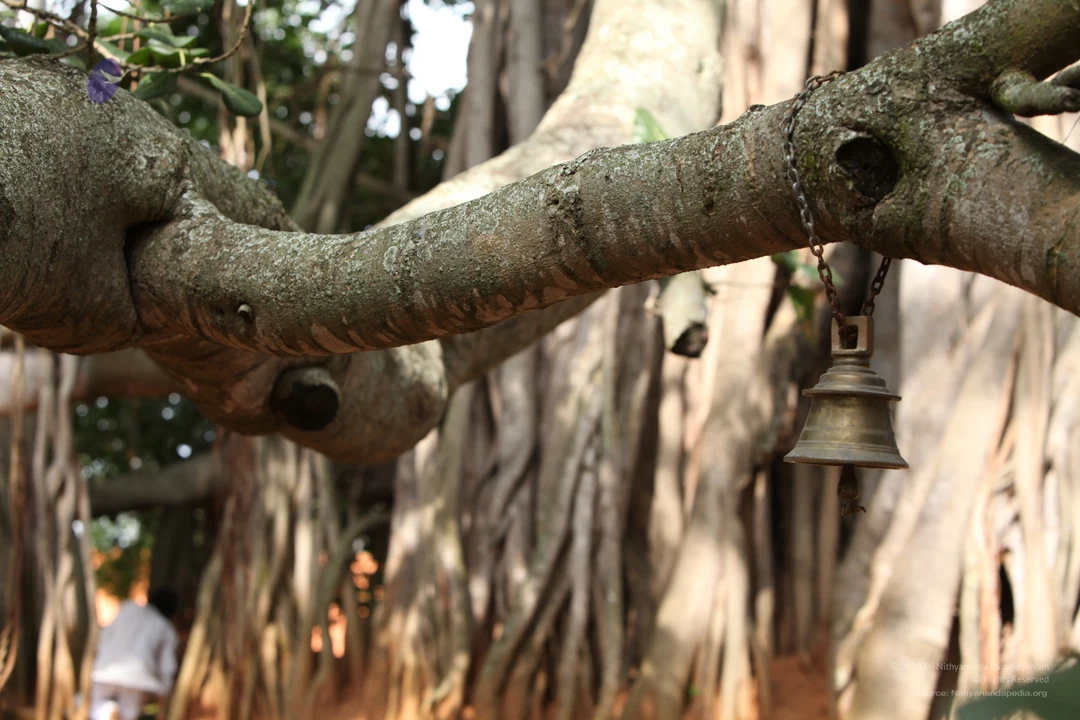
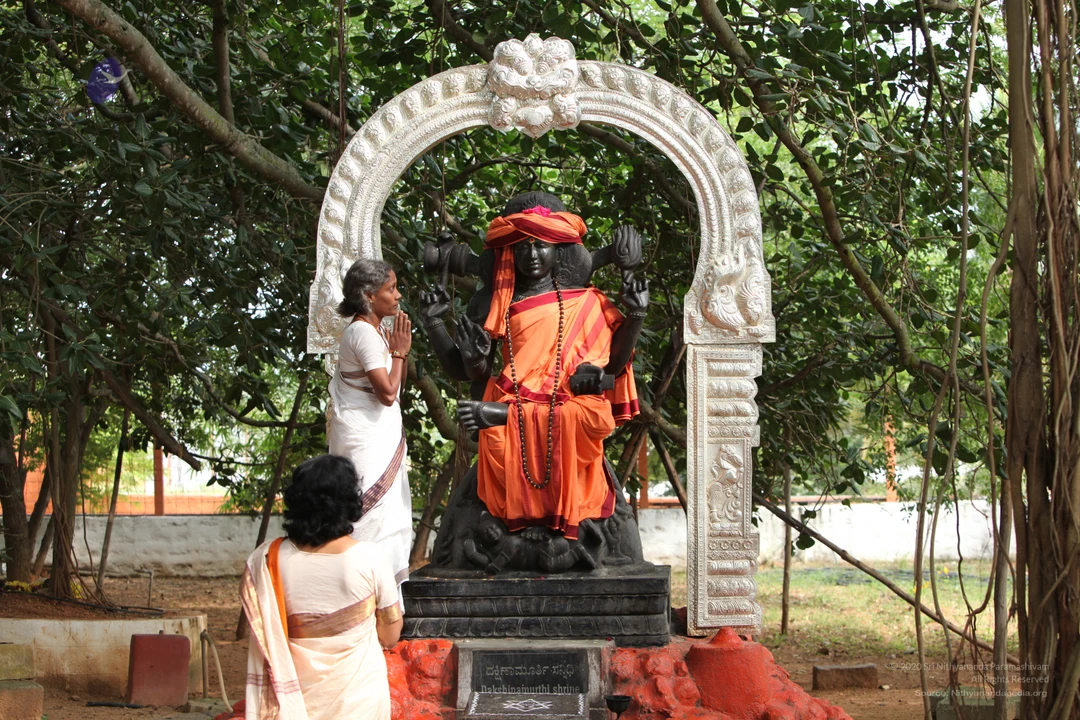
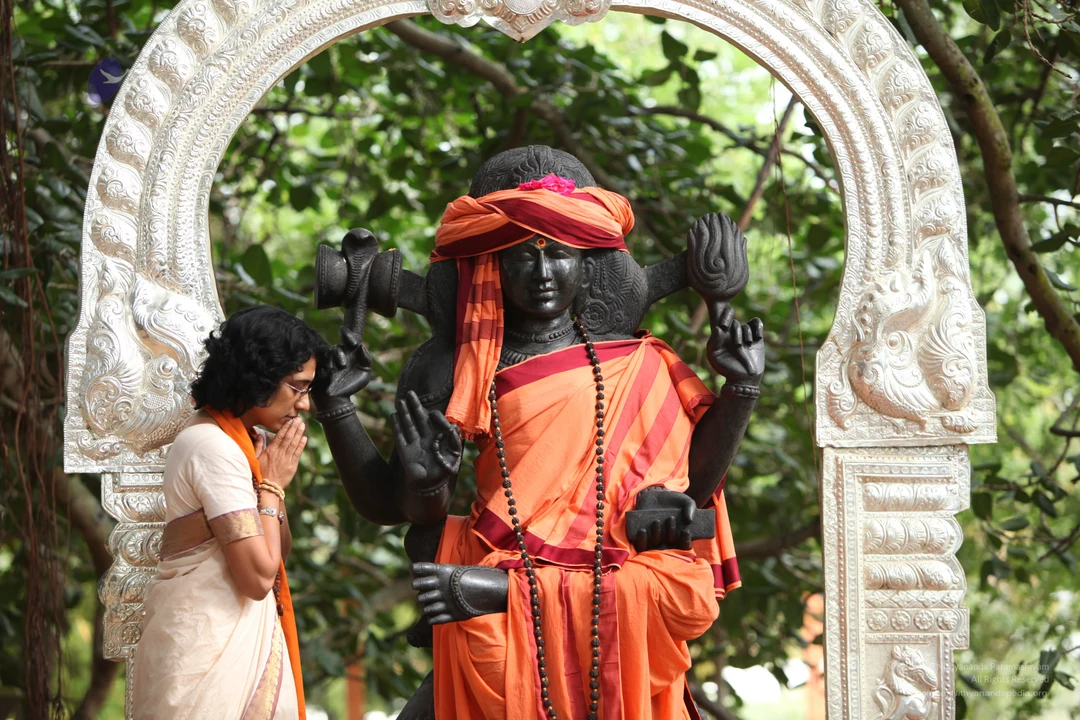
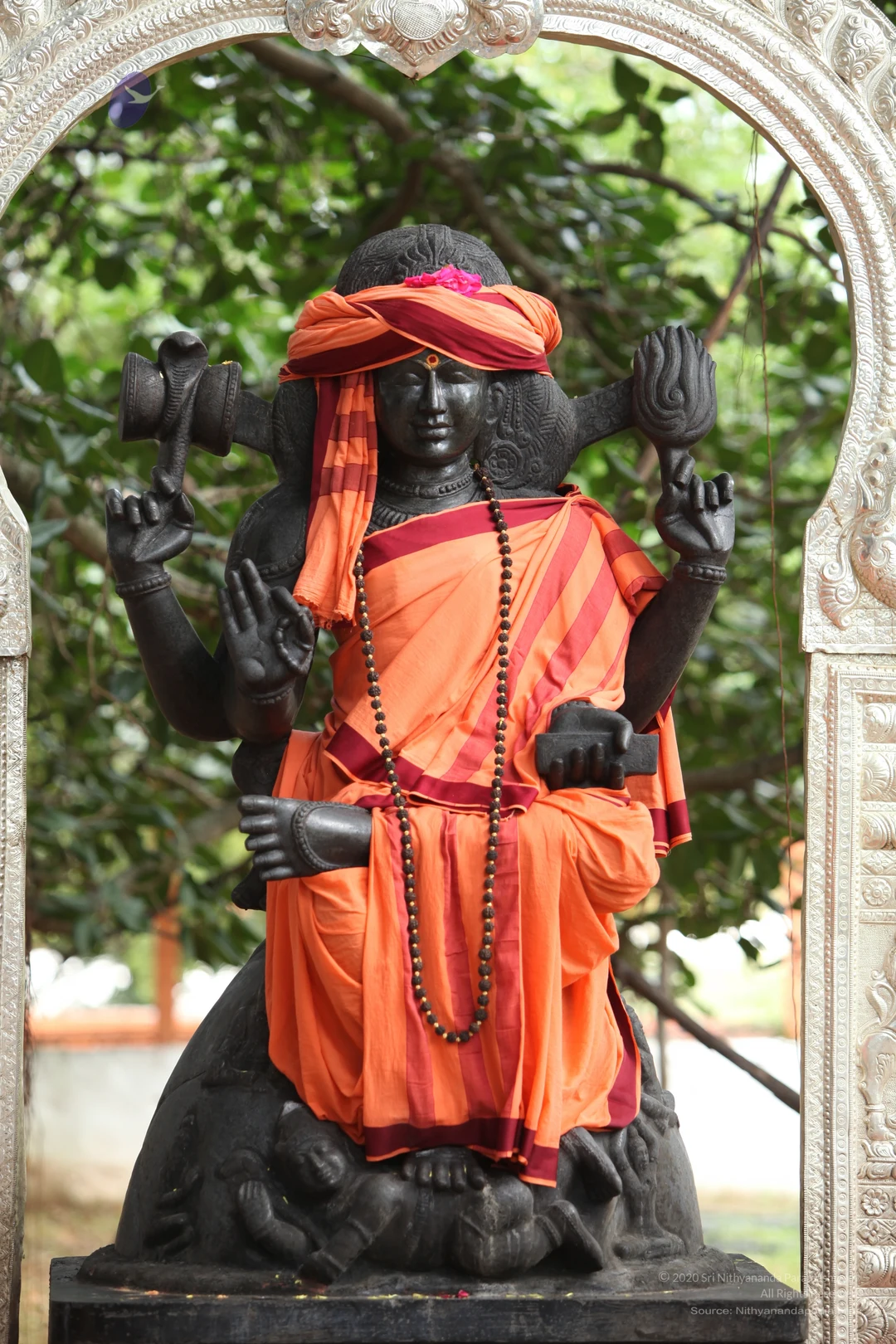
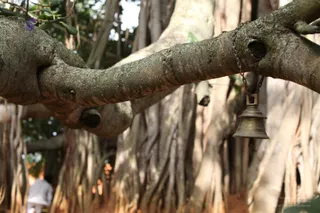
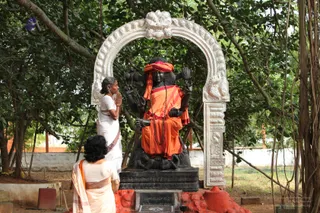
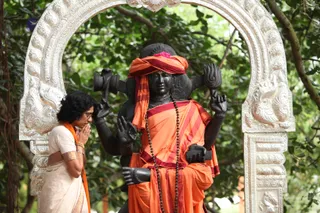
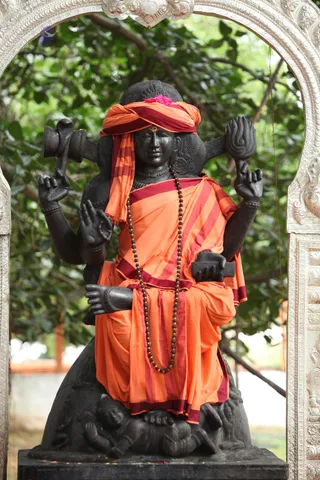
Close view of a large banyan tree with thick, twisting aerial roots and a weathered grey bark branch. A small brass bell hangs from a chain tied to the branch on the right, with a purple flower at the upper left. Out of focus at the lower left, a person in white clothing walks past the tree trunks. The setting appears to be an outdoor ashram grove.A black stone statue of a seated sannyasi-style figure with multiple arms stands under a white ornate arch set among trees. The statue wears an orange-saffron dhoti and a matching orange-red head cloth, with a rudraksha mala hanging across the chest. Two women in white saris stand at its base in devotion: one on the left stands with palms pressed together in namaskar, and another woman in the foreground kneels with her back to the camera. A small plaque on the red-painted pedestal bears inscribed text. Oil lamps and a small offering sit near the base.A woman in a cream sari with an orange border stands at left with palms pressed together in namaskar, eyes lowered, wearing glasses and bangles. Beside her stands a large dark stone statue of a multi-armed deity murti in orange and red garments, with an orange-red turban, a tilak on the forehead, a long rudraksha mala, and several raised hands holding implements. The statue stands within an ornate silver arch set among green leaves.A dark stone statue of a four-armed figure in saffron and maroon striped robes, wearing an orange turban with a pink flower, a rudraksha mala hanging to the waist, and a tilak on the forehead. It stands on a dark rounded pedestal carved with small figures, framed by an ornate silver arch against green foliage. The statue holds a trident-like staff and a drum in its upper hands, and its lower hands are in mudra poses.

Navaratri-Homa

4 photosSource gallery
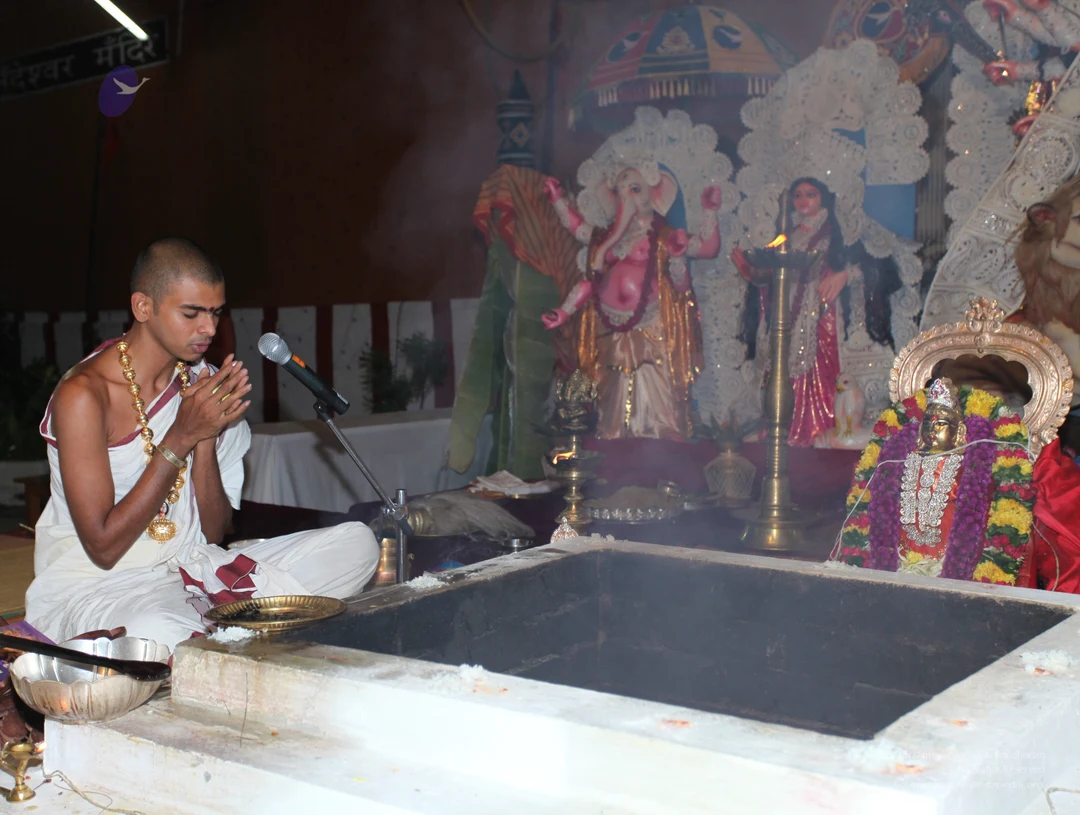
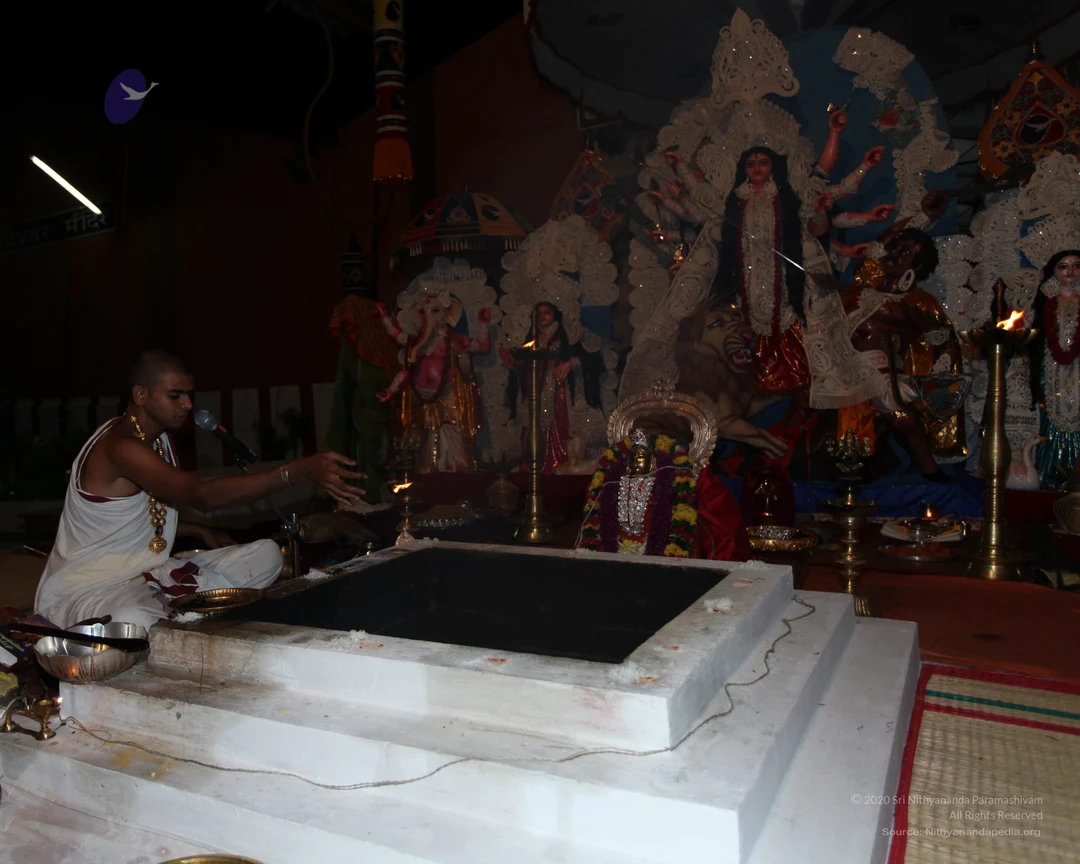
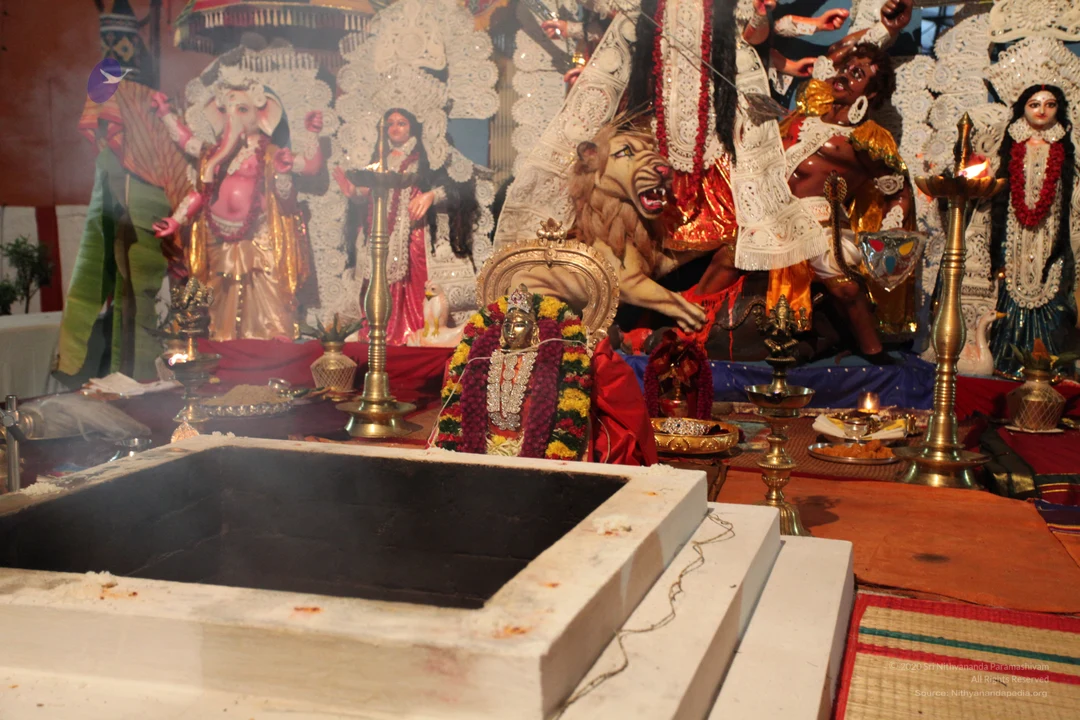
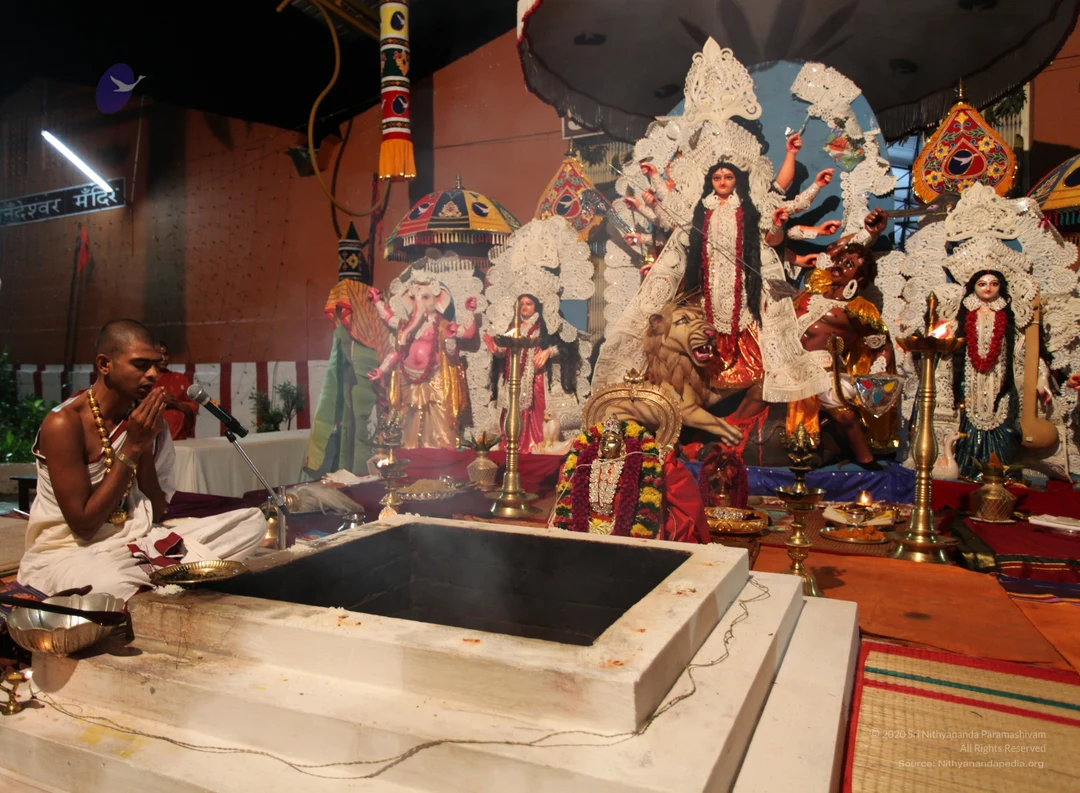
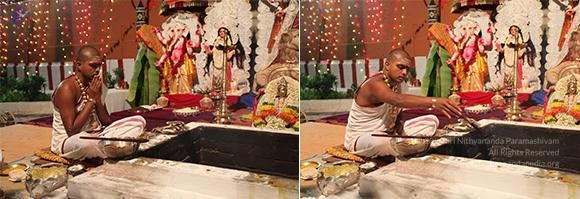
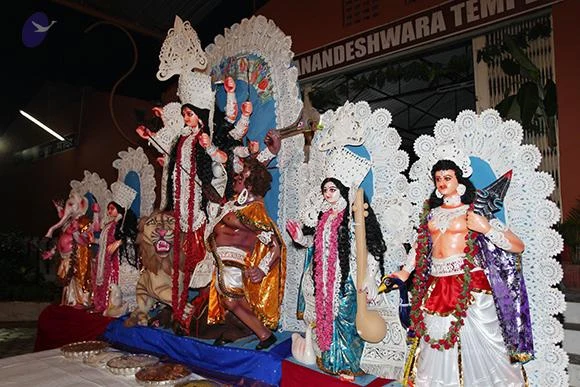
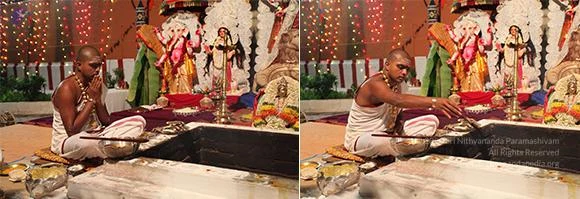
A priest in white ritual dhoti and shawl with a gold necklace and bangle sits with palms pressed together in namaskar beside a square black homa fire pit surrounded by white powder and smoke. A microphone on a stand stands near him. Behind the pit, a deity murti of Ganesha with a pink trunk and an elaborate white lace-like backdrop, a standing female deity in a pink sari, and a decorated brass oil lamp with a lit flame are visible, plus a garlanded deity murti with purple and yellow flower garlands at right. Brass vessels and a plate are on the platform in the foreground.A photograph of a homa or yagna at a shrine. A shaved-headed priest in white dhoti and white upper cloth, wearing gold necklaces and a bangle, kneels at a white-edged square fire pit and gestures over it with his hand. A microphone stands beside him. Behind the pit stand large colourful murtis of a goddess with many arms, a lion mount, Ganesha in pink and gold, and other deities draped in white floral decoration. Brass oil lamps with flames and brass vessels sit on the floor, and a small garlanded murti sits on a silver-framed peetha. The priest is shown from the side, and no one else is visible.A shaven-headed priest in white dhoti and shawl sits cross-legged before a square stone homa pit, hands folded in prayer near a microphone stand. Behind him stands a large white-and-red decorated deity murti of Durga riding a lion, with multiple arms holding weapons, flanked by a pink Ganesha figure and other deity figures in garlands. Brass oil lamps with flames, brass vessels, and marigold garlands surround the altar. A sign on the wall reads Nageshwar Mandir. Ornate umbrellas and colourful cloth hang overhead.

thumbs

6 photosSource gallery
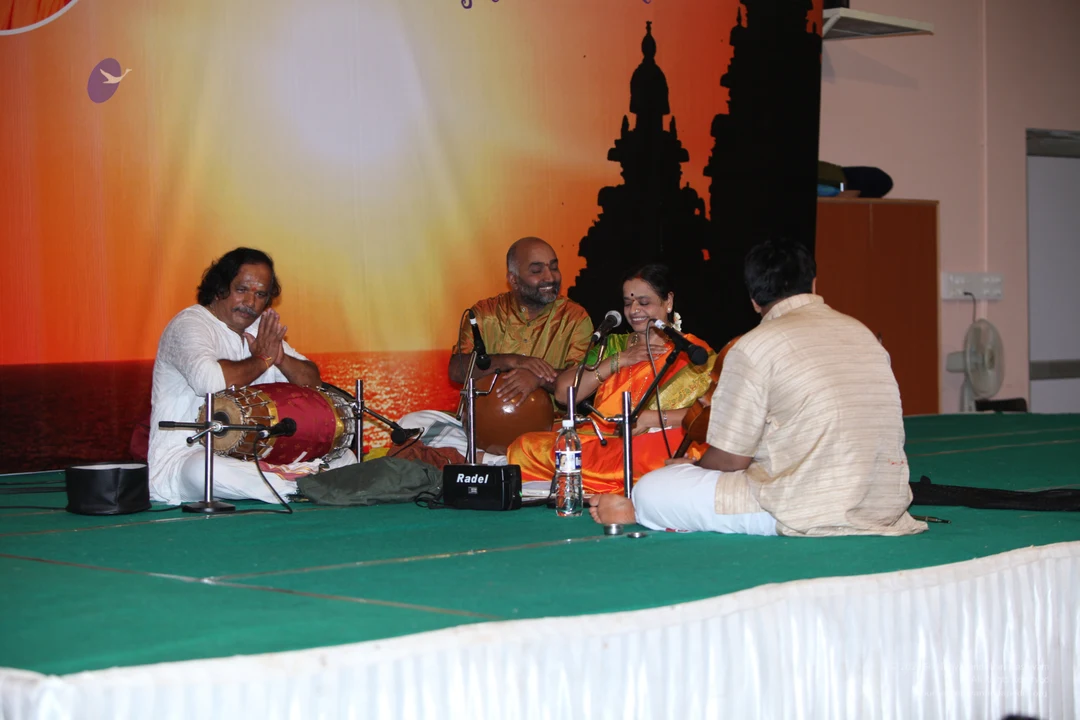
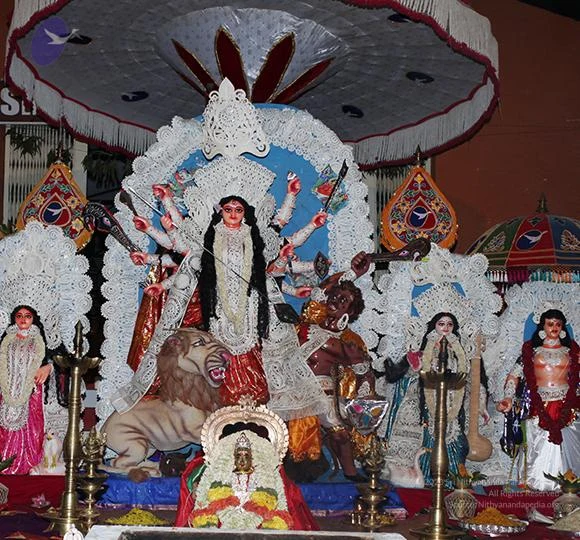
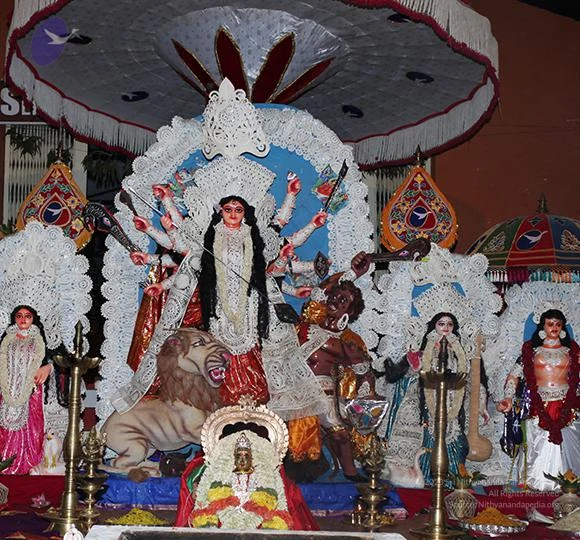
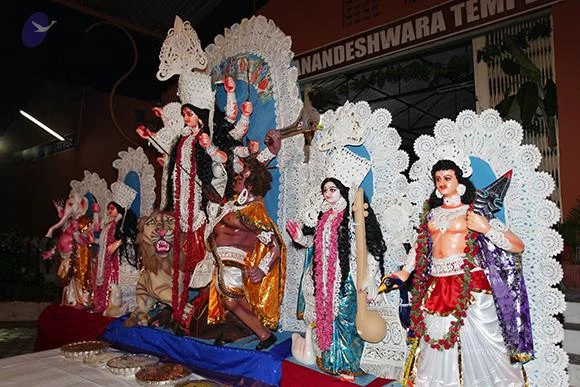
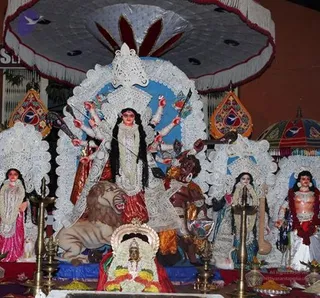
A man with long dark hair sits cross-legged with eyes closed in meditation on a woven mat and a cushion, wearing an orange saffron robe and a long necklace of dark rudraksha beads. A red bindi marks his forehead. Beside him on the mat is a small brass kalasha-style pot. Behind him stand orange temple pillars with yellow and purple garlands hanging from the top, and green plants grow in the sandy ground. The setting suggests an outdoor satsang or meditation session. a person cues: long swept hair, saffron robe, rudraksha mala, matching the event page.A photograph of a musical performance in a hall. Three seated performers face each other on a carpeted stage. On the left, a man in white clothing plays a harmonium-style instrument. In the centre, a woman in a green and orange sari sits with hands together, with a small wooden stand and decorative items before her. On the right, a man in a white shirt plays a stringed instrument. The room has pale walls and a plain backdrop.A seated man in yellow ceremonial robes sits on a red cushioned throne framed by a gold ornate arch decorated with yellow, purple and red flower garlands and green leaves. He wears a yellow turban with a red tilak on his forehead, a yellow shawl, and a long necklace of gold beads. He smiles and raises one hand in a blessing gesture while the other rests open on his lap. Behind him is an orange backdrop with partial script. Swamiji (probable): the figure has a yellow turban, saffron ceremonial robes, gold bead necklace and a throne setting, and is presented as a teacher giving a blessing from the throne.A seated man in a saffron-yellow turban and matching yellow robe sits on an ornate gold throne framed by a floral arch of yellow marigolds, purple and red flowers, and green leaves. He holds his palms pressed together in namaste, eyes lowered, and wears a long strand of gold-and-bead ceremonial necklace over rudraksha-style beads. A red and gold backdrop with partial lettering surrounds him. The throne is upholstered in red velvet.A large festival shrine dominated by a multi-armed goddess murti, Durga, riding or standing over a lion and battling a demon. The goddess has red skin, long dark hair, and holds weapons in many hands, with a red and gold sari. Flanking her are smaller white-and-gold lace-decorated figures in pink, red and green garments. Brass oil lamps (lamps) stand in the foreground beside a kalasha-like flower offering and marigold garlands. Ornate white paper-lace arches, red and gold canopies, and a decorated altar cloth frame the scene. No people are visible.

nithyananda-ashram

12 photosSource gallery
A man with long dark hair sits cross-legged on an ornate golden throne with red cushions, eyes closed in meditation. He wears saffron-orange robes and a dark rudraksha mala of beads across his chest, with hands folded in his lap. Before him on a low table are fruits, a brass bowl and a flower offering. Carved gold framing surrounds the throne.Close photograph of a ceremonial foot-washing ritual. A person in white clothing with a rudraksha mala and a wristwatch pours water from a pink flower-decorated vessel over the bare feet of a seated figure in saffron-orange robes. The bare feet rest in a golden bowl containing flower petals and offerings. The setting suggests a padapuja honouring a guru, though the seated figure's face is not visible. Pink and white flowers and gold metal are prominent.A photograph of a man seated on an ornate gold-and-red throne with carved wooden backrest, eyes closed, palms pressed together in namaste. He has long dark hair swept back, wears an orange-saffron garment draped over his body and a rudraksha mala around his neck. A microphone stands near his face. In front of him on a low table are fruits, flowers and small offerings, with a stone temple pillar behind. Candidate appearance matches Swamiji (probable), indicated by long swept-back hair, saffron clothing and rudraksha mala while seated on a throne at a public talk.A seated man in saffron-orange robes sits on an ornate gold-and-red throne with a carved golden back and a red cushioned footstool, reading from a small white card held in both hands. He wears a long rudraksha mala with a red-orange sacred thread and has long dark hair. A microphone stand stands to the right. Beside him is a draped orange-covered table holding small items. Behind the throne, a golden deity murti and flower garlands are visible, with a stone shrine structure and greenery in the background. The appearance is consistent with Swamiji (probable), seated in a throne as the speaker at a satsang, with the rudraksha mala and long hair as cues.A seated man in yellow ceremonial dress sits on a gold-carved throne decorated with a garland of yellow marigolds, purple and red flowers, and green leaves. He wears a yellow turban, a yellow shawl draped over one shoulder, and a long gold-beaded necklace, with his palms pressed together in namaskar and eyes lowered. A red bindi is visible on his forehead. Behind the throne is a bright red backdrop with partial gold lettering. Swamiji (probable): the long swept-back hair, yellow ornate robes, and ceremonial gold necklaces are cues for the presiding teacher seated in honour on the throne. One person is visible.A man in yellow-orange ceremonial clothing sits on an ornate gold throne decorated with garlands of yellow, green, and purple flowers. He wears an orange-yellow turban, a yellow shawl draped over his shoulder, and a strand of rudraksha beads around his neck, with his hands resting in his lap. Behind him are a large red banner and a golden framed backdrop with deity figures. Swamiji (probable) is seated on the throne as the speaker of a satsang, distinguished by the turban, saffron-yellow robes, rudraksha mala, and throne. A single person is visible, and the scene is a stage setting with floral decoration.