Skip to content
Wednesday

13 October 2010

Dated photos
509
Source pages
1
Media
2
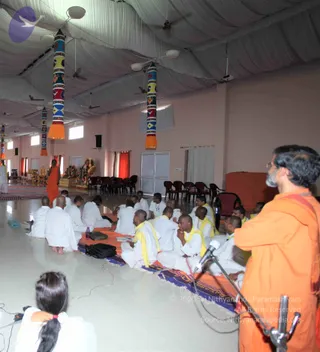
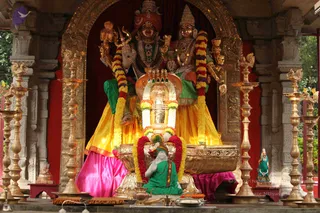
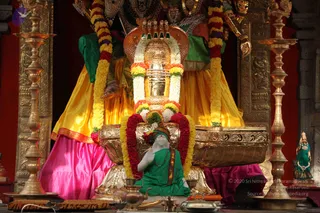
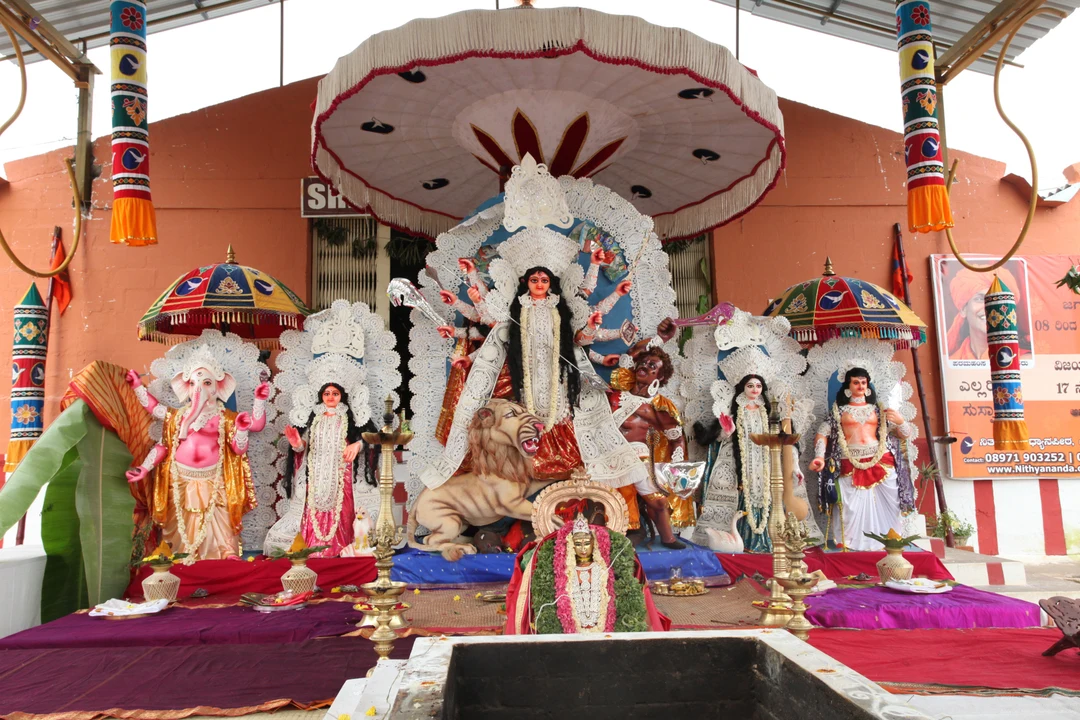
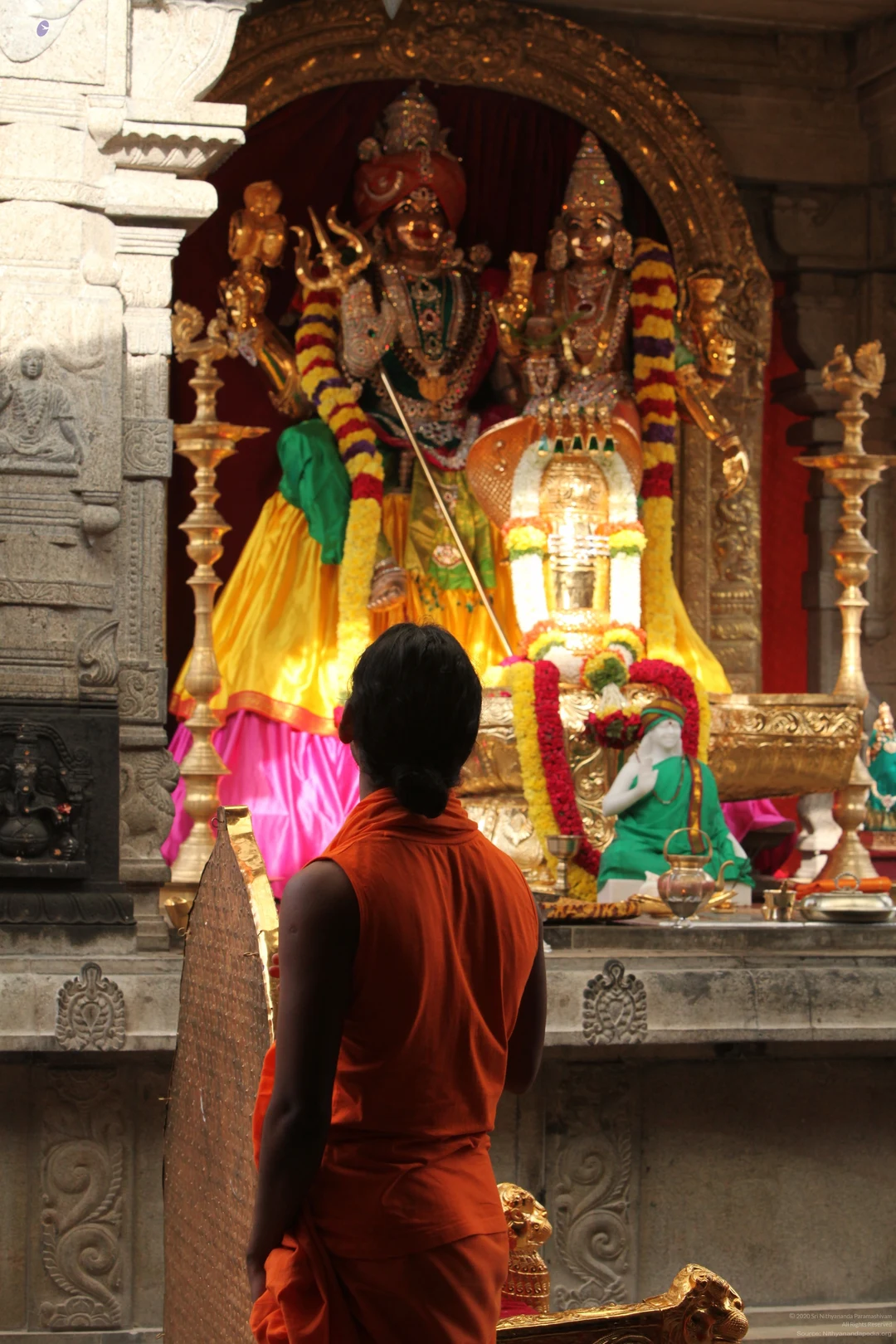
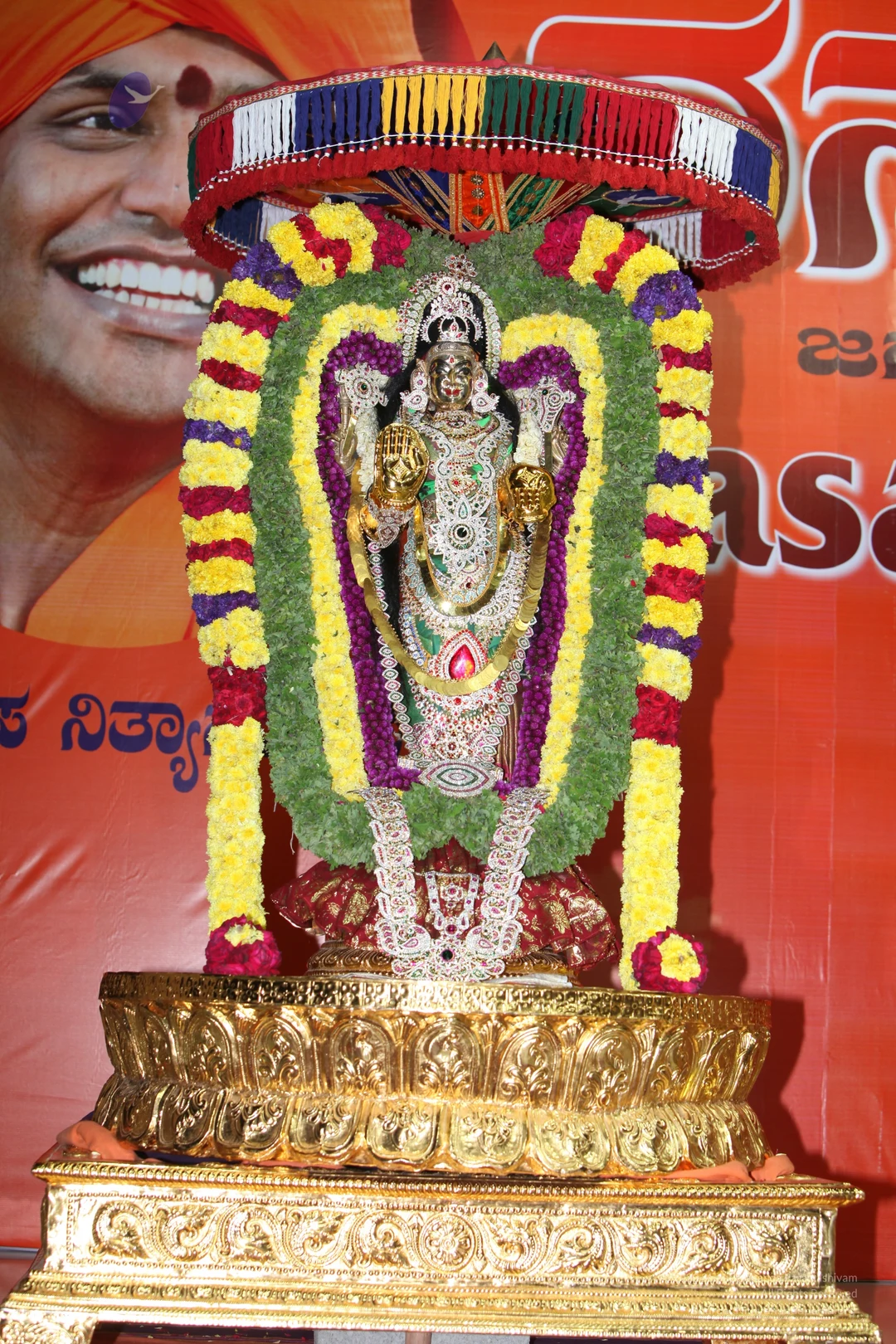
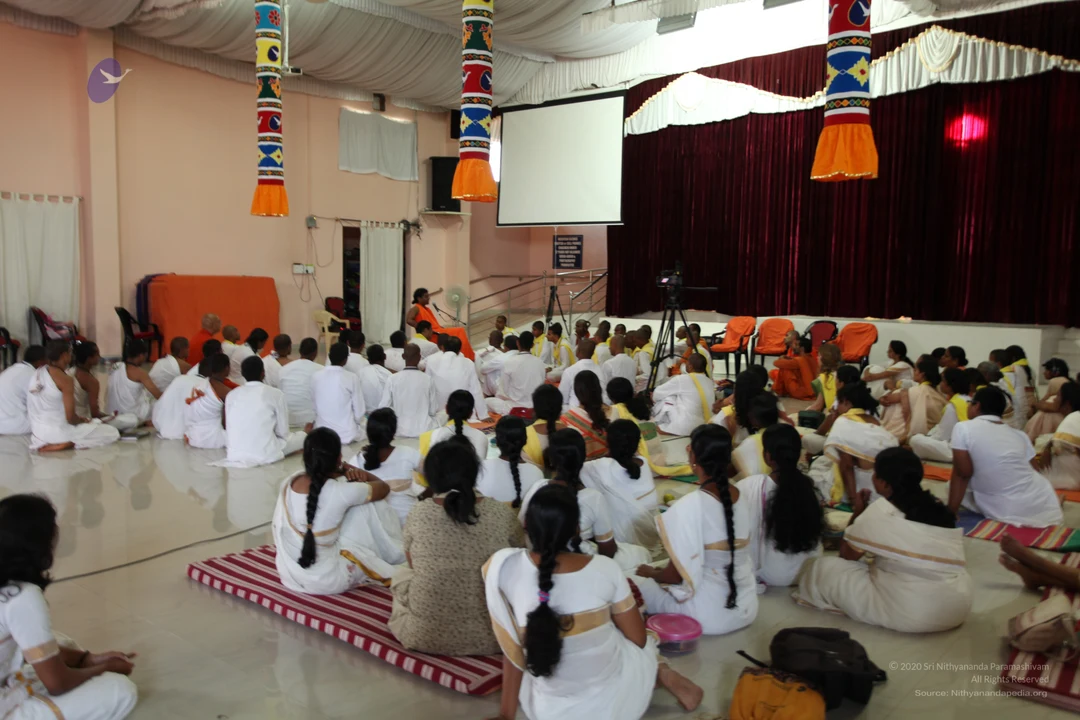
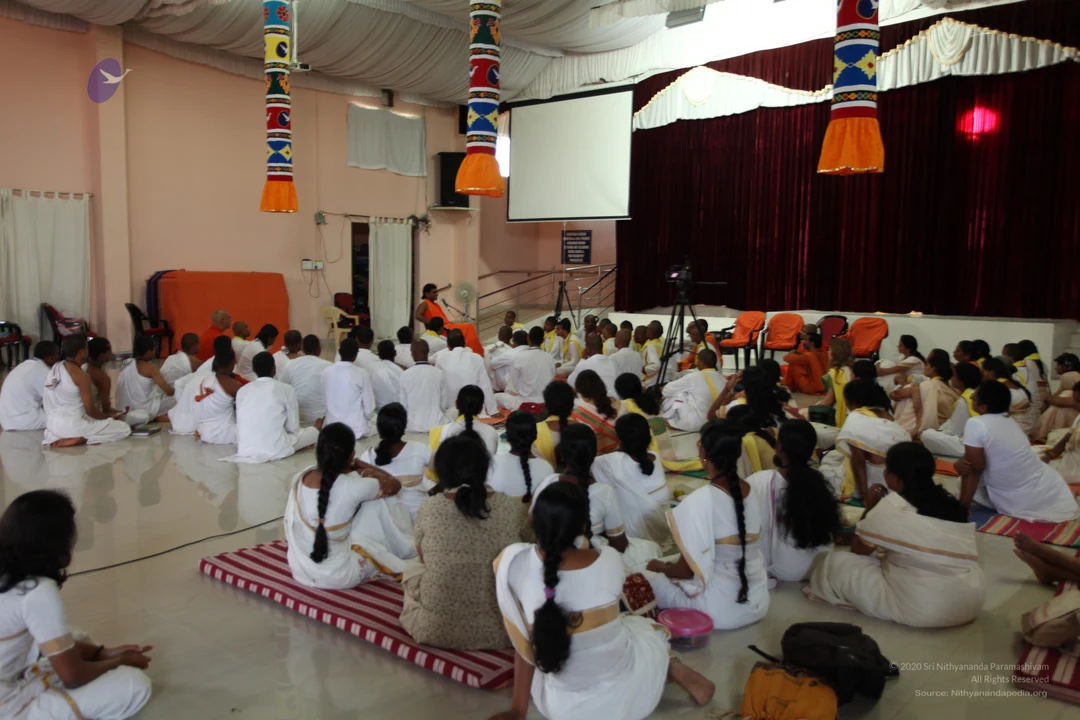
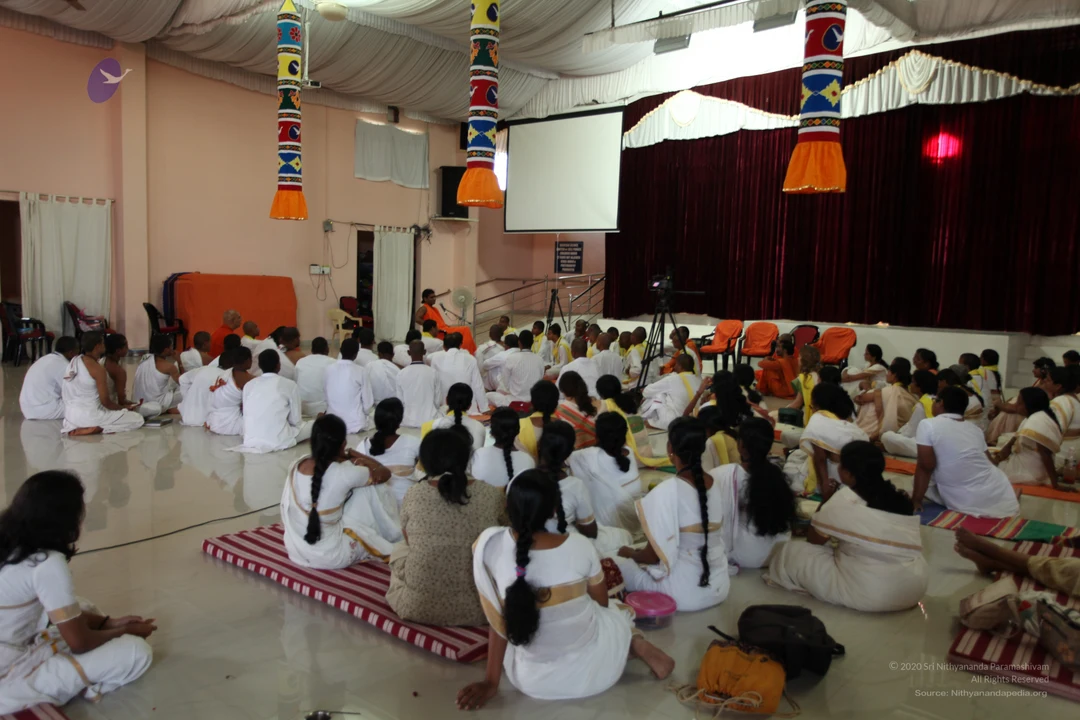
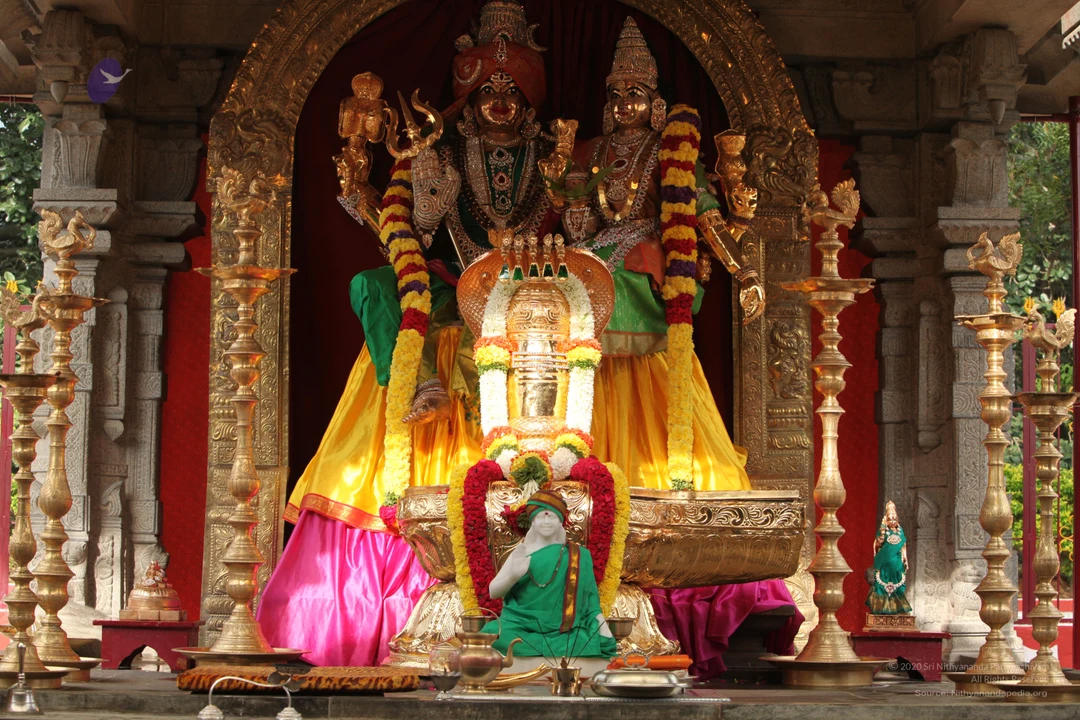
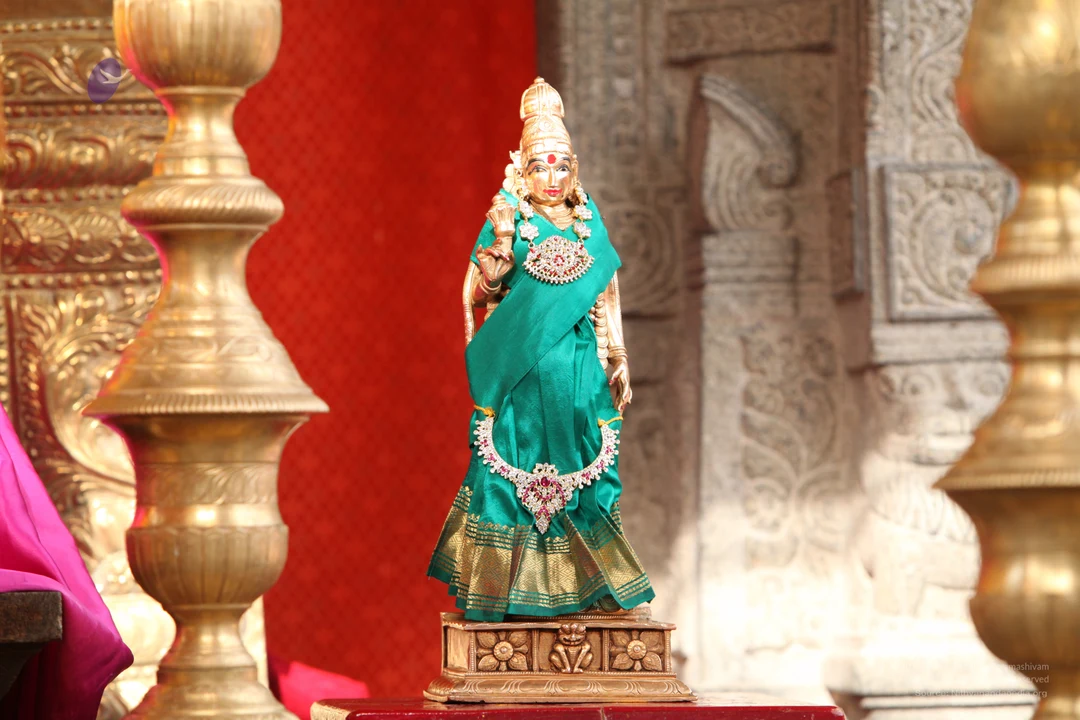
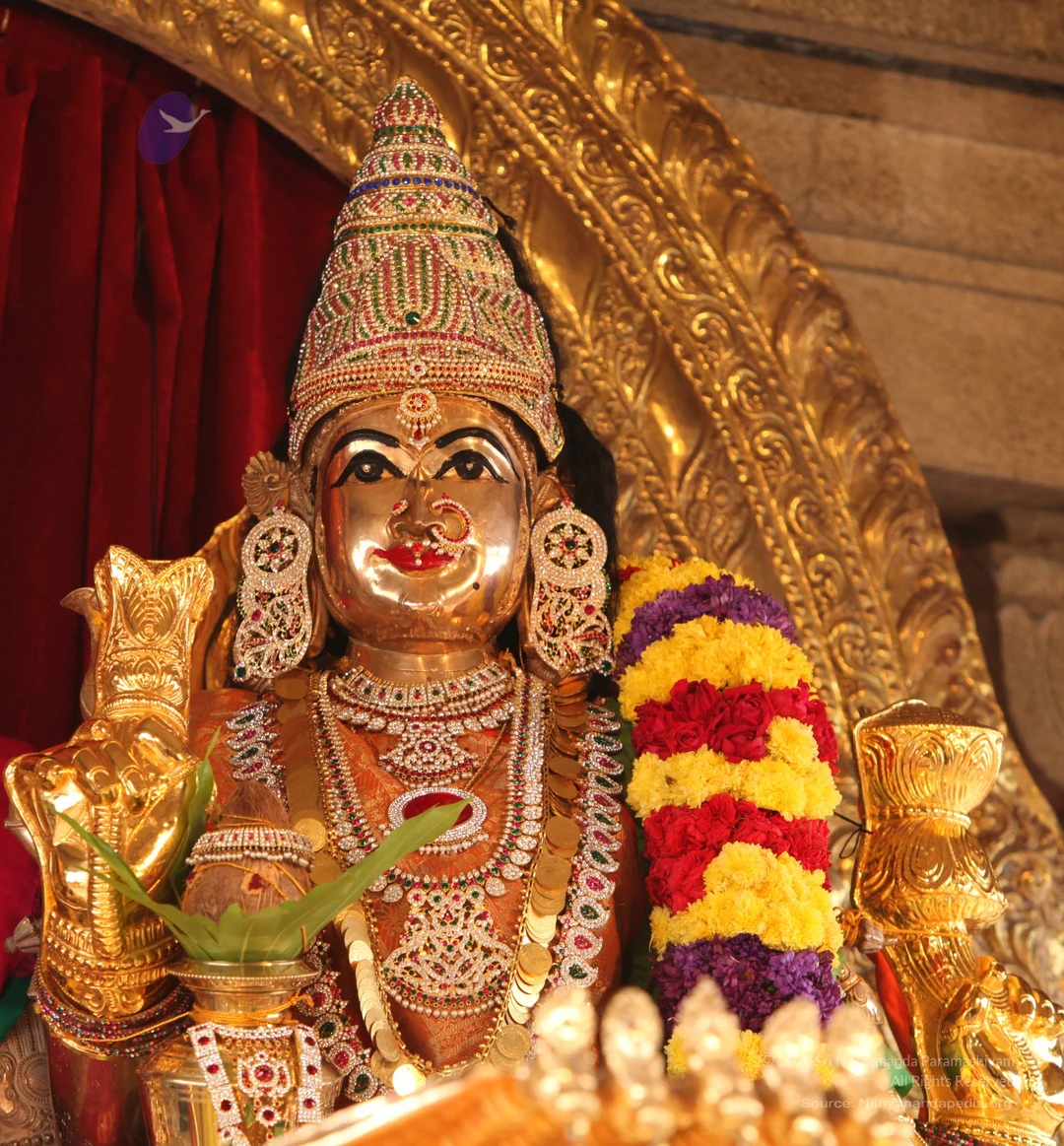
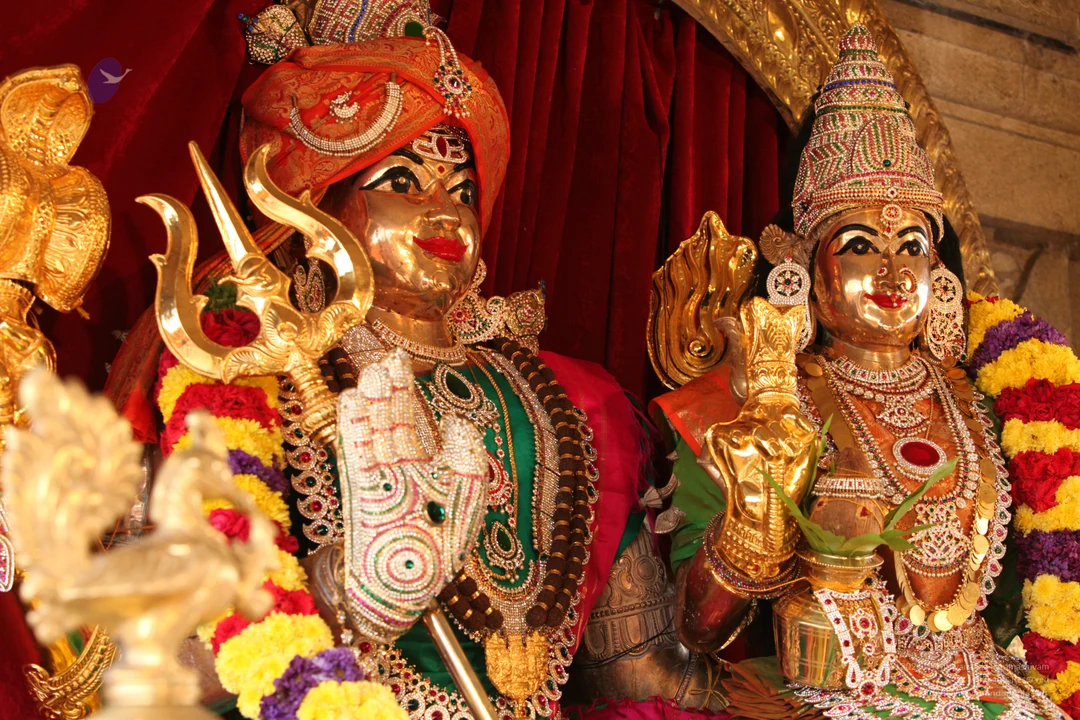
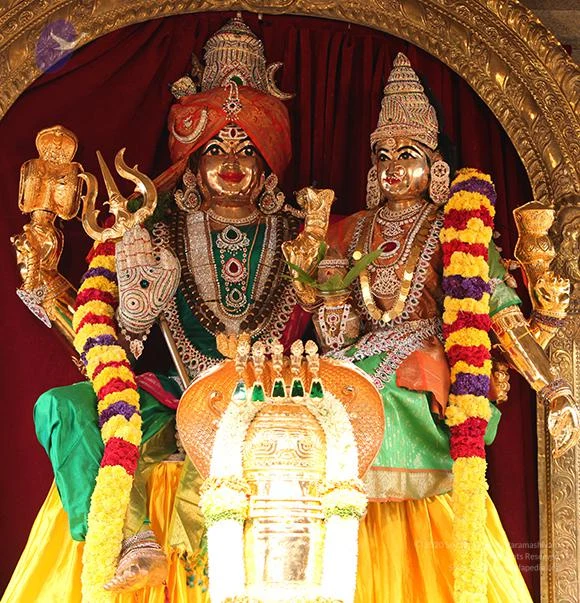
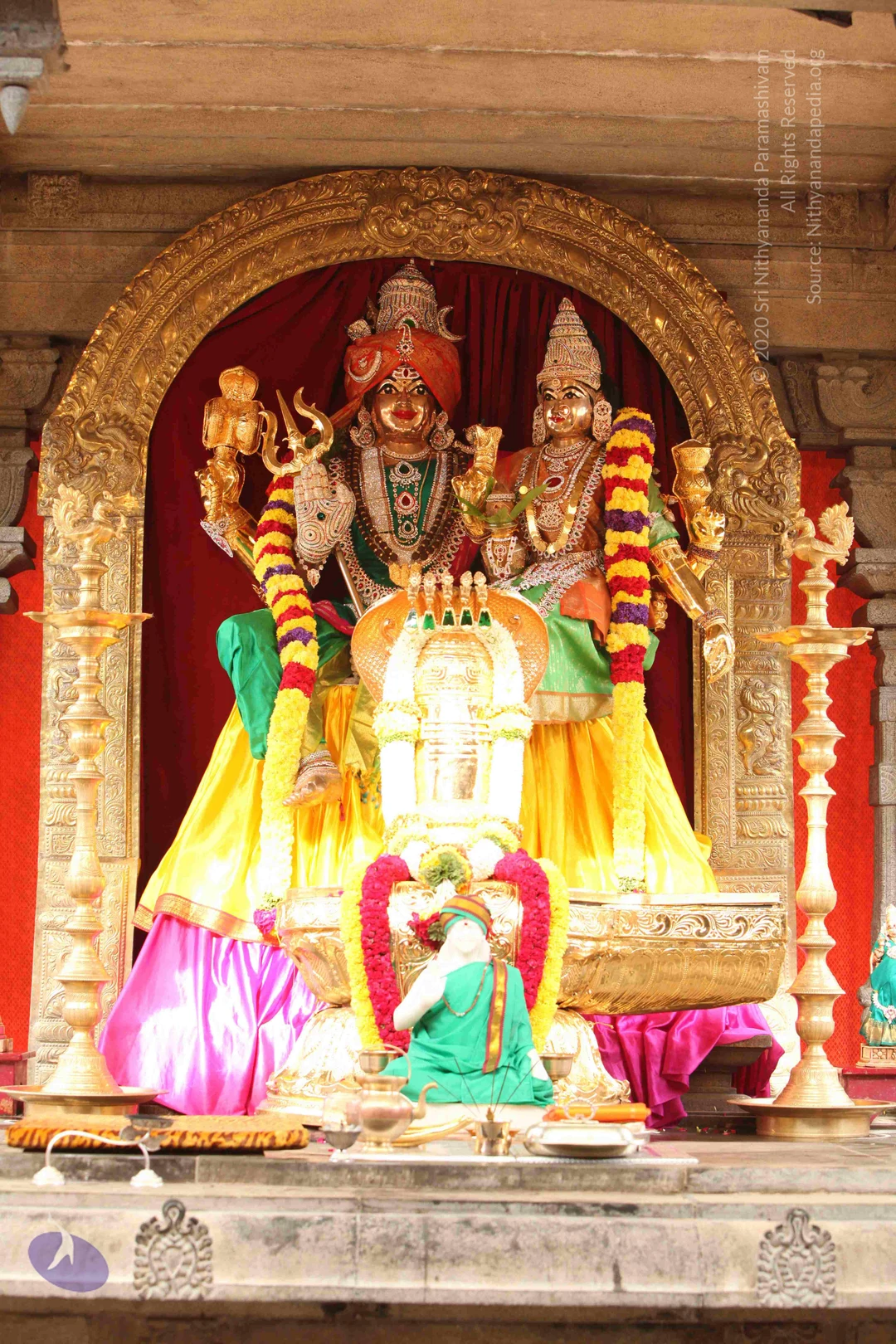
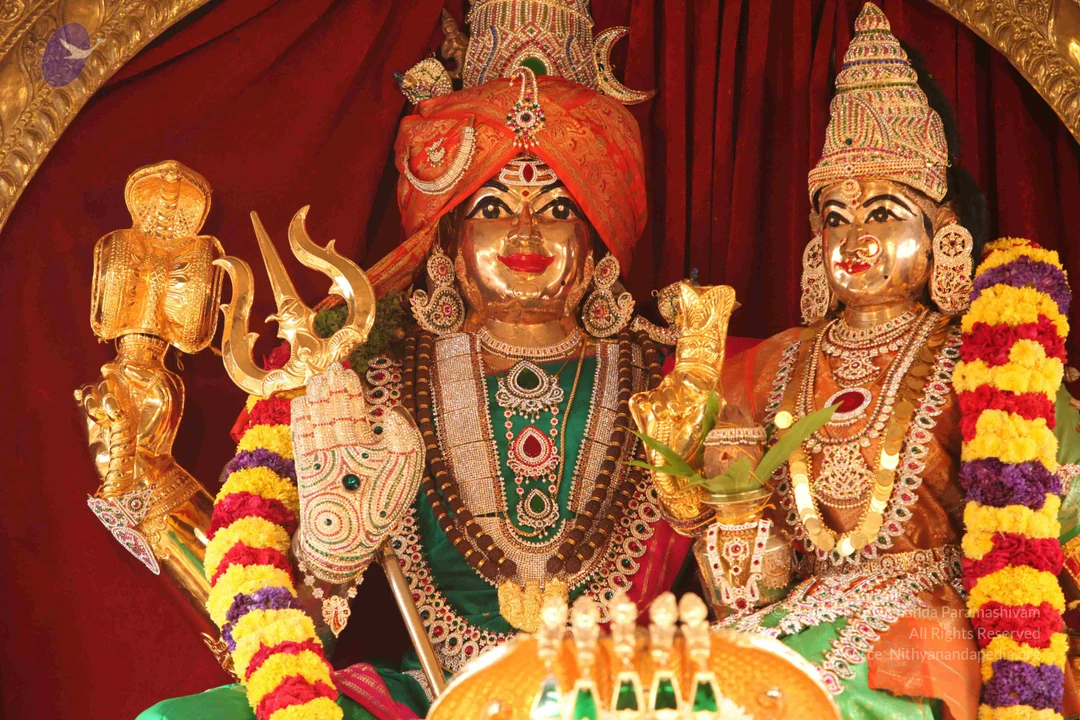
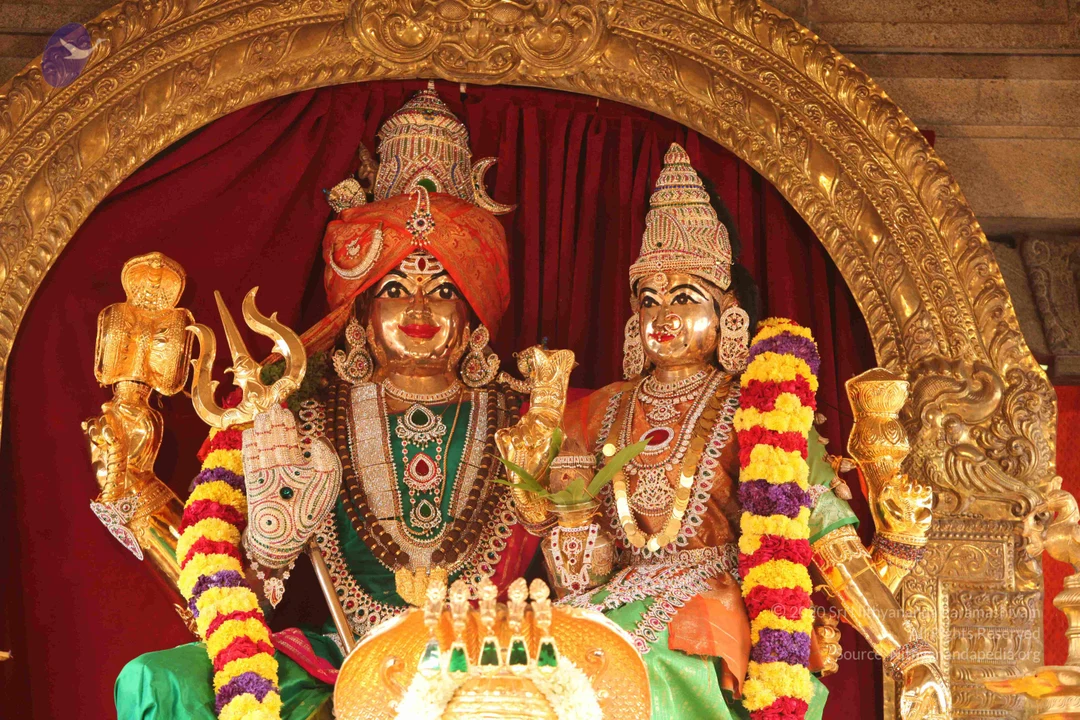
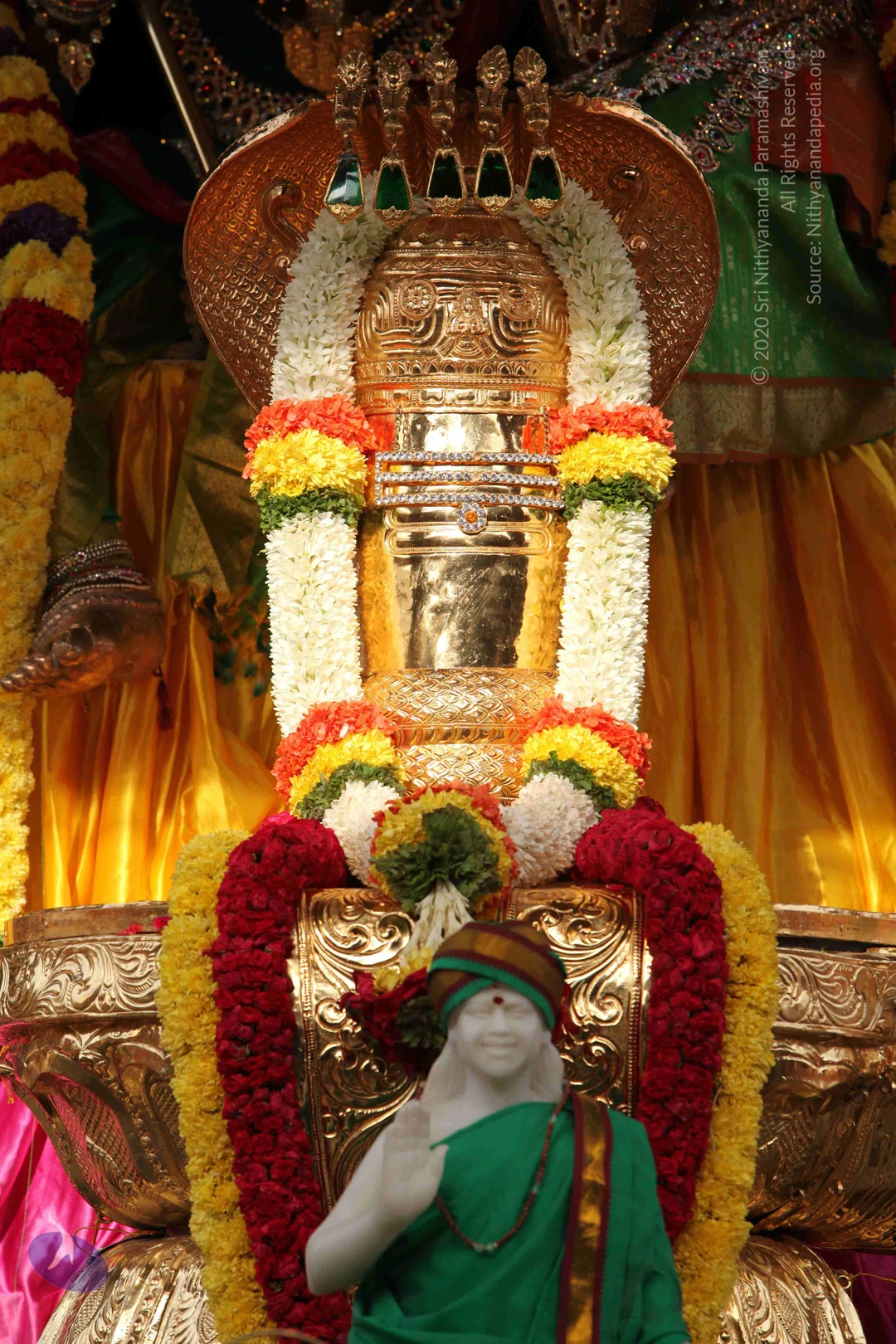
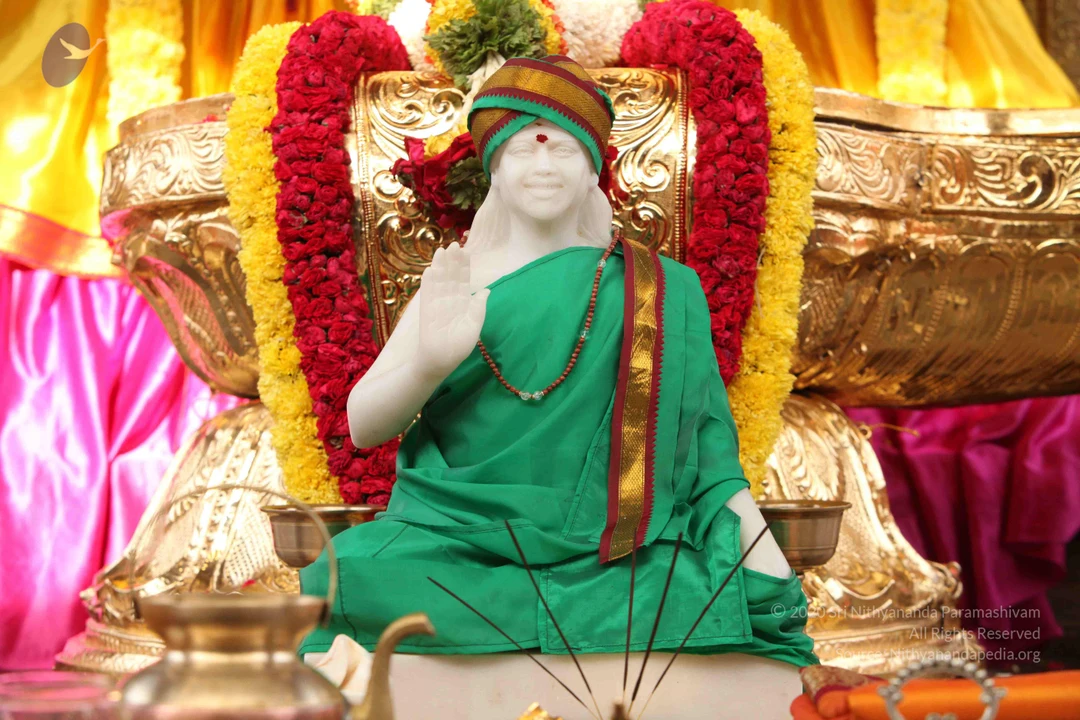
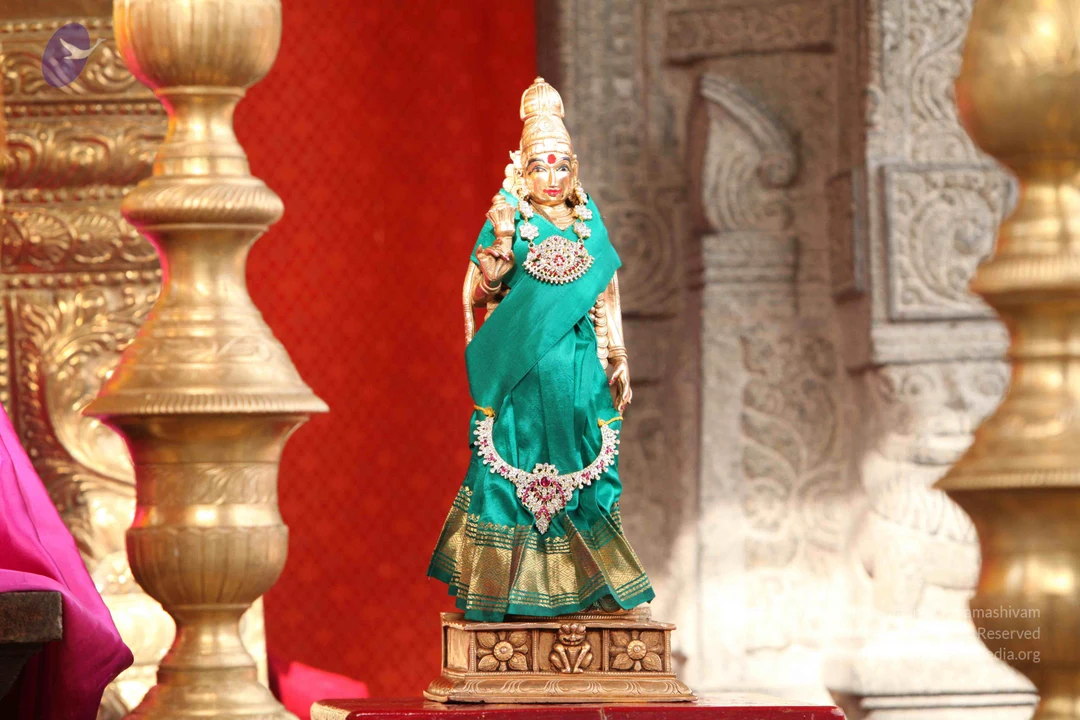
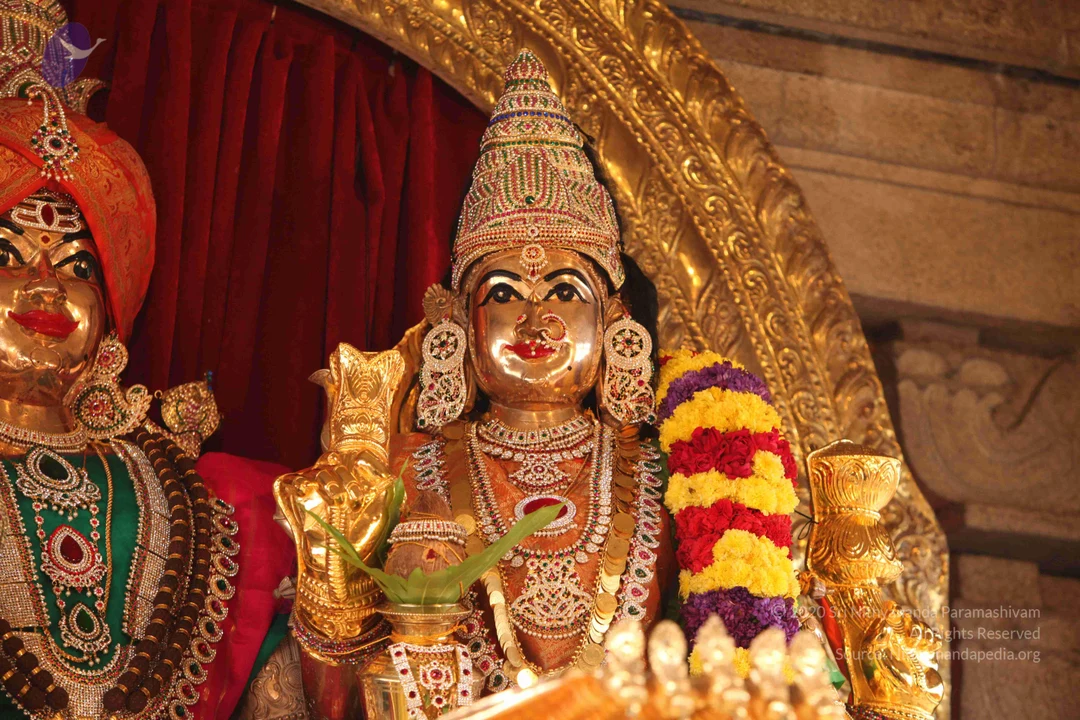
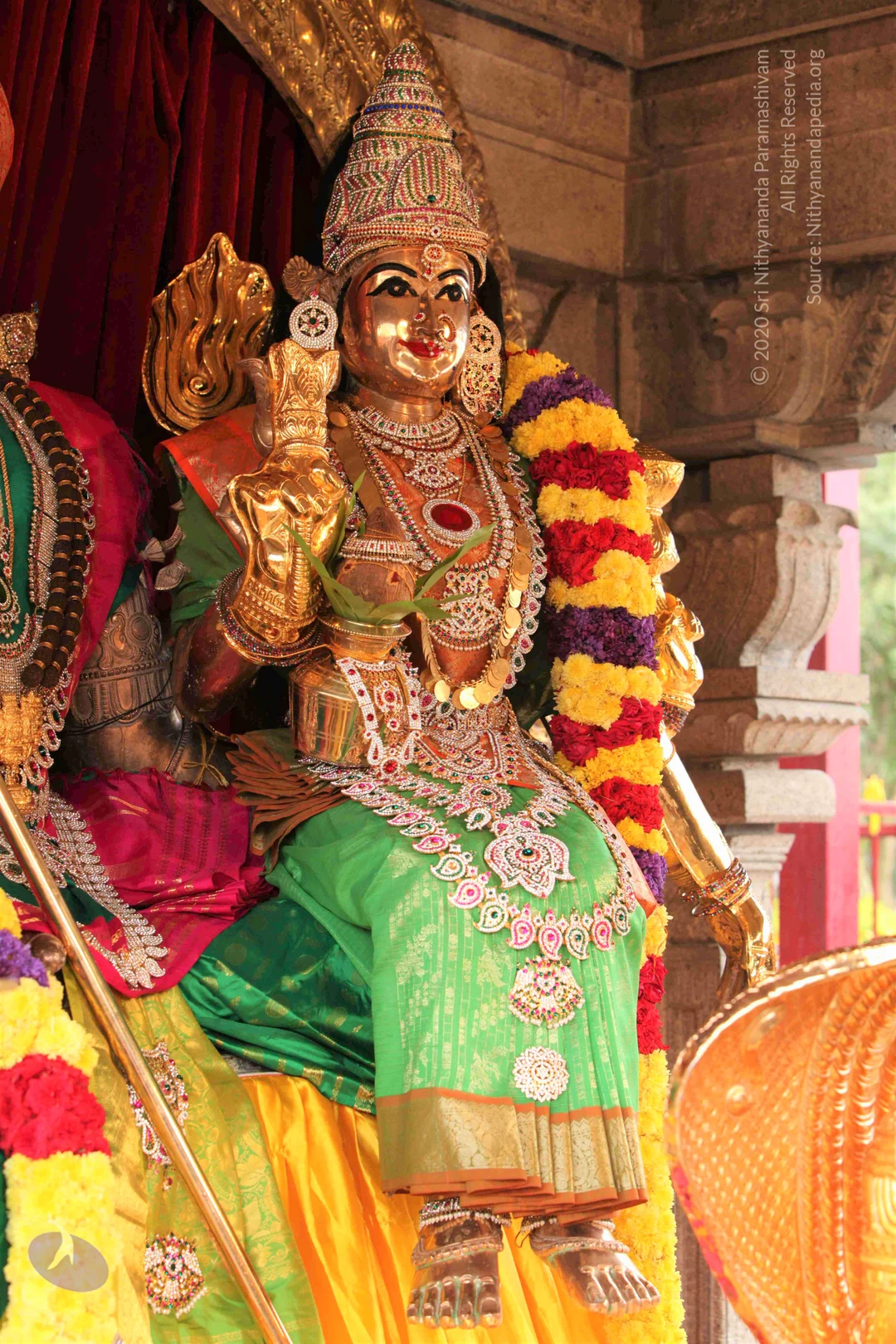
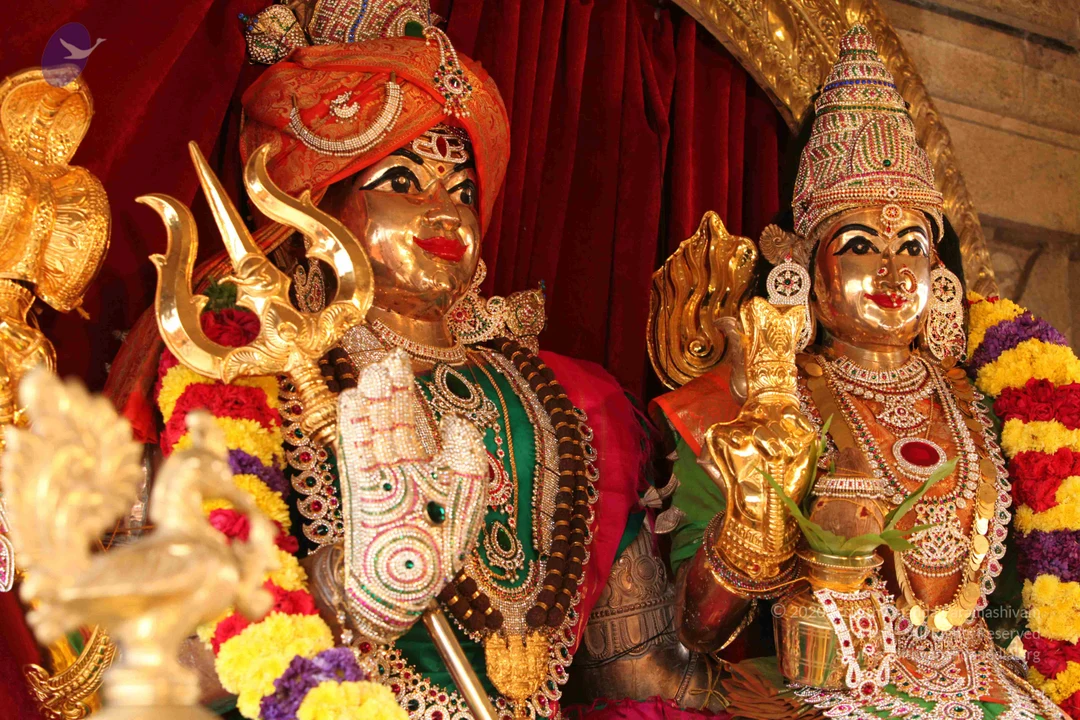
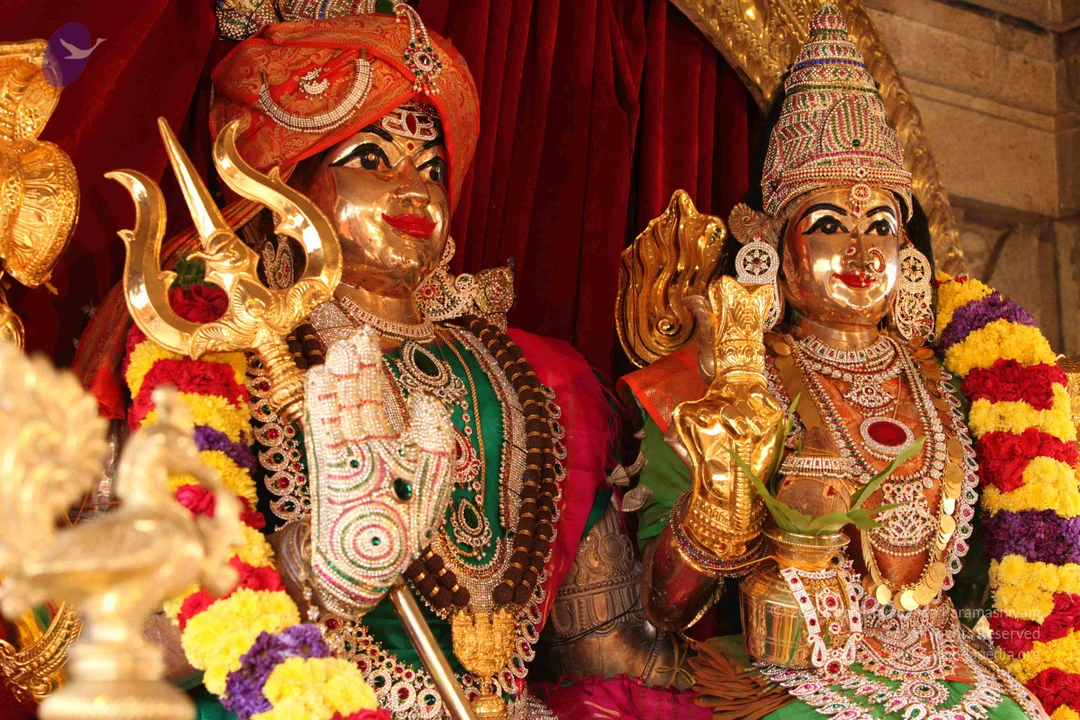
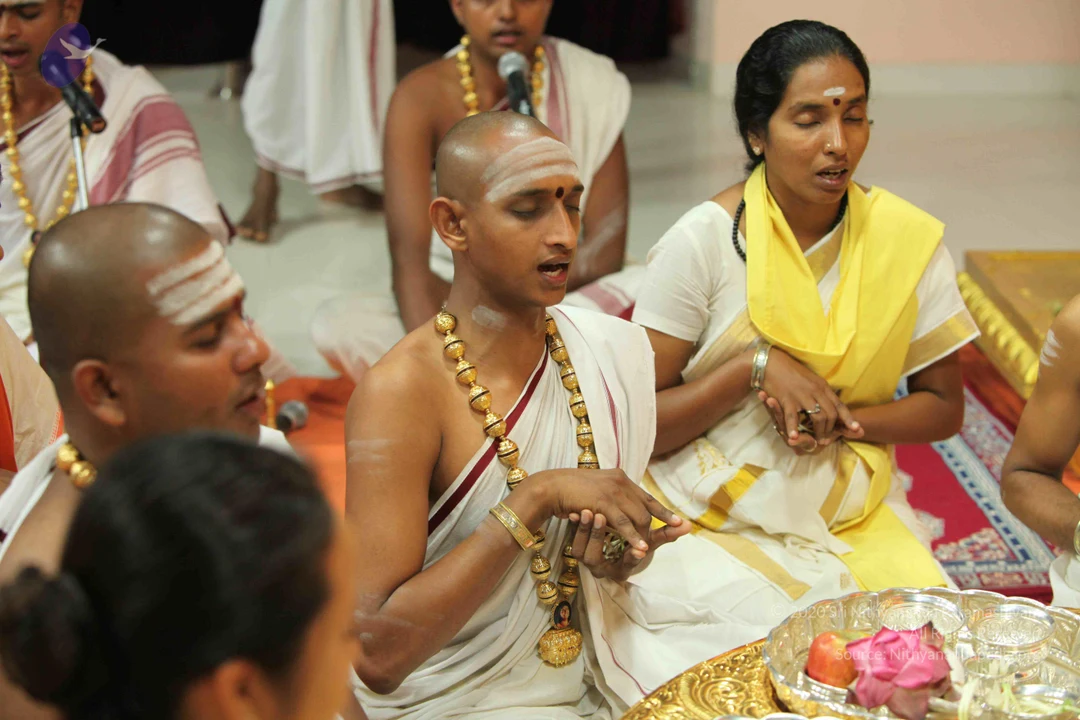
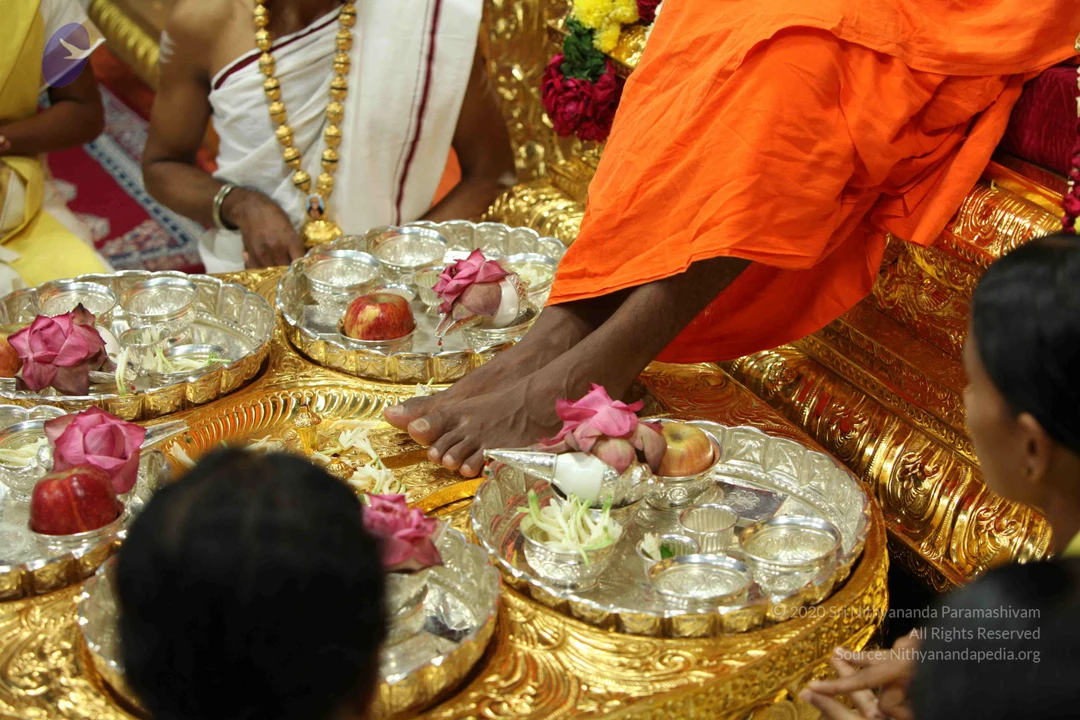
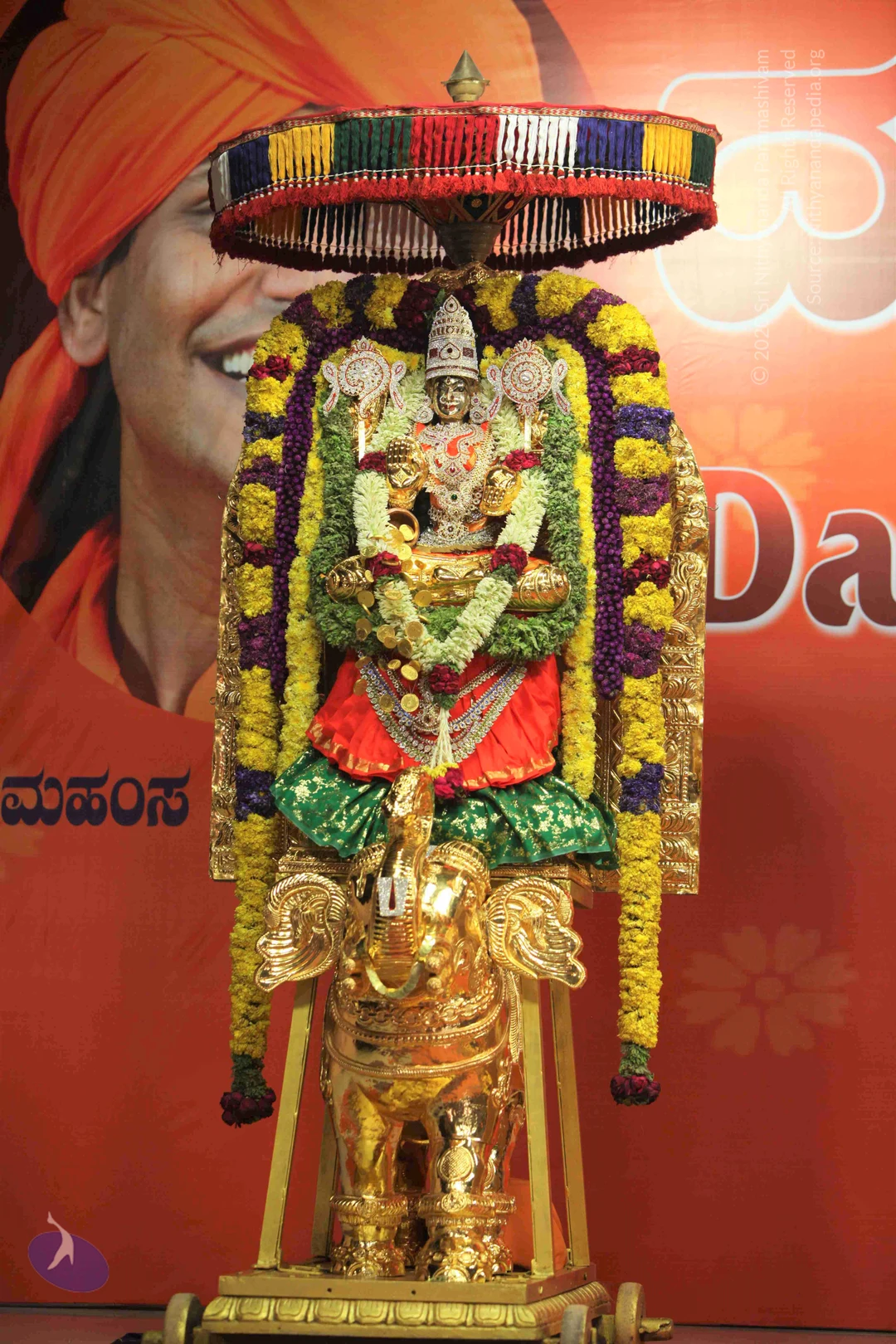
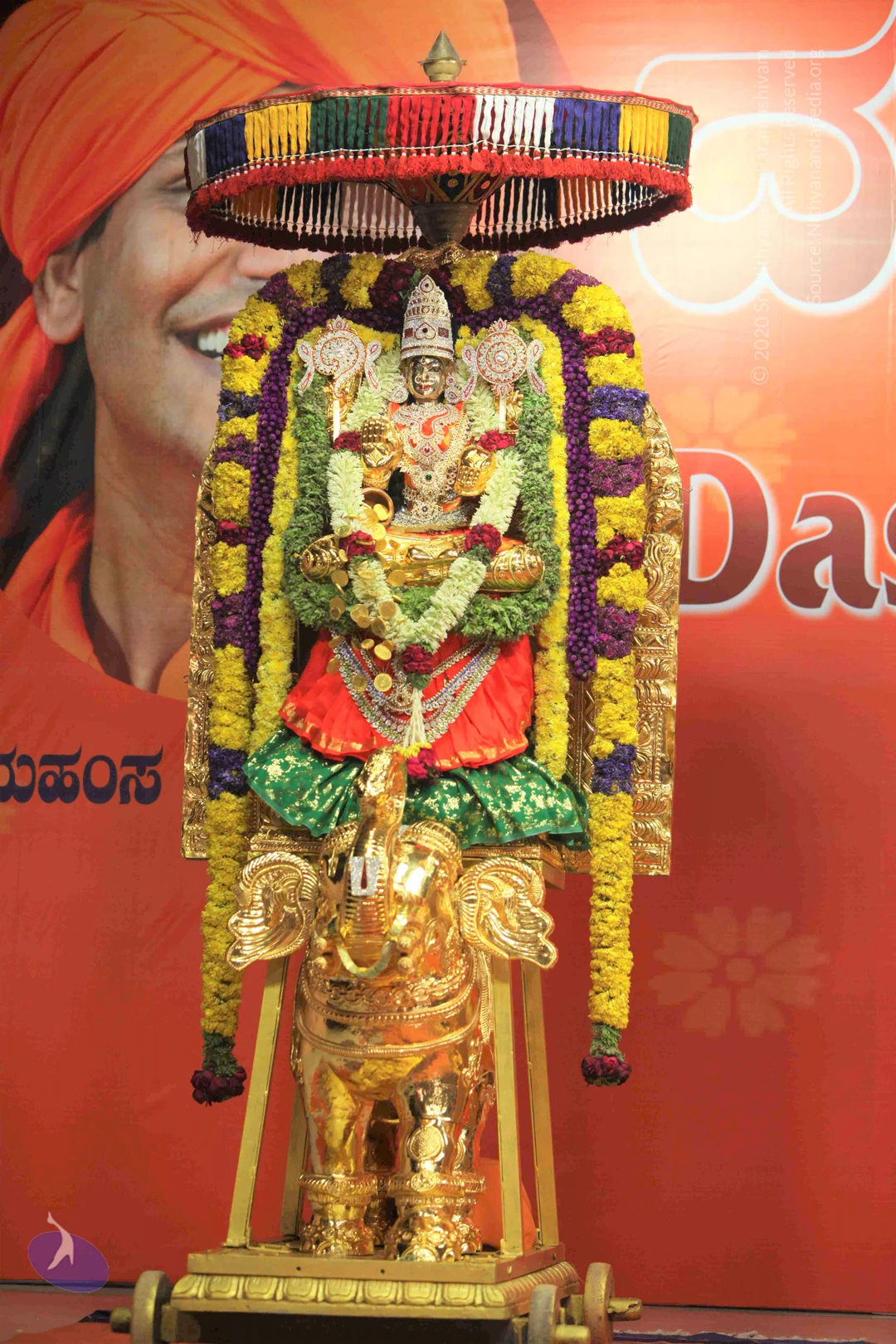
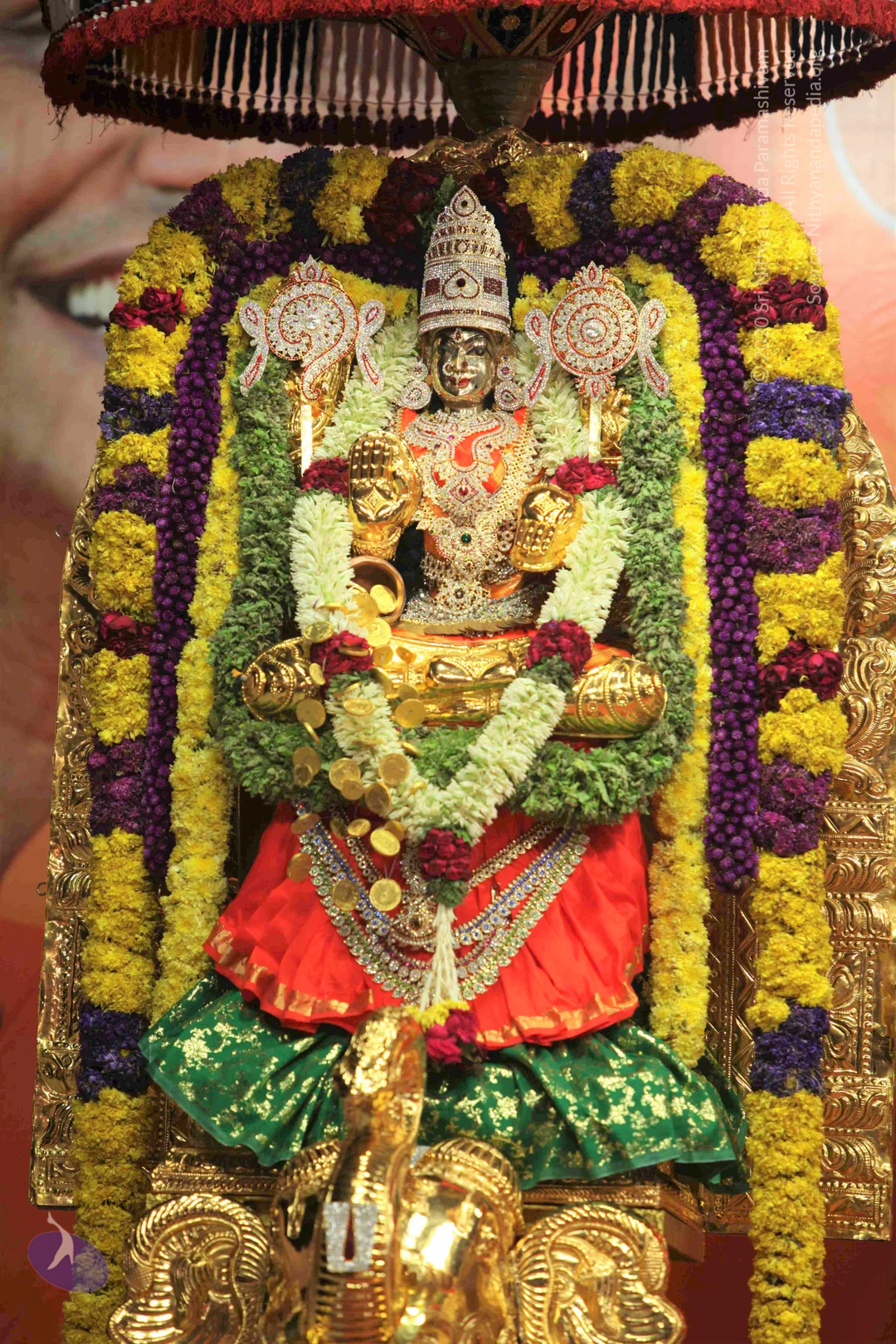
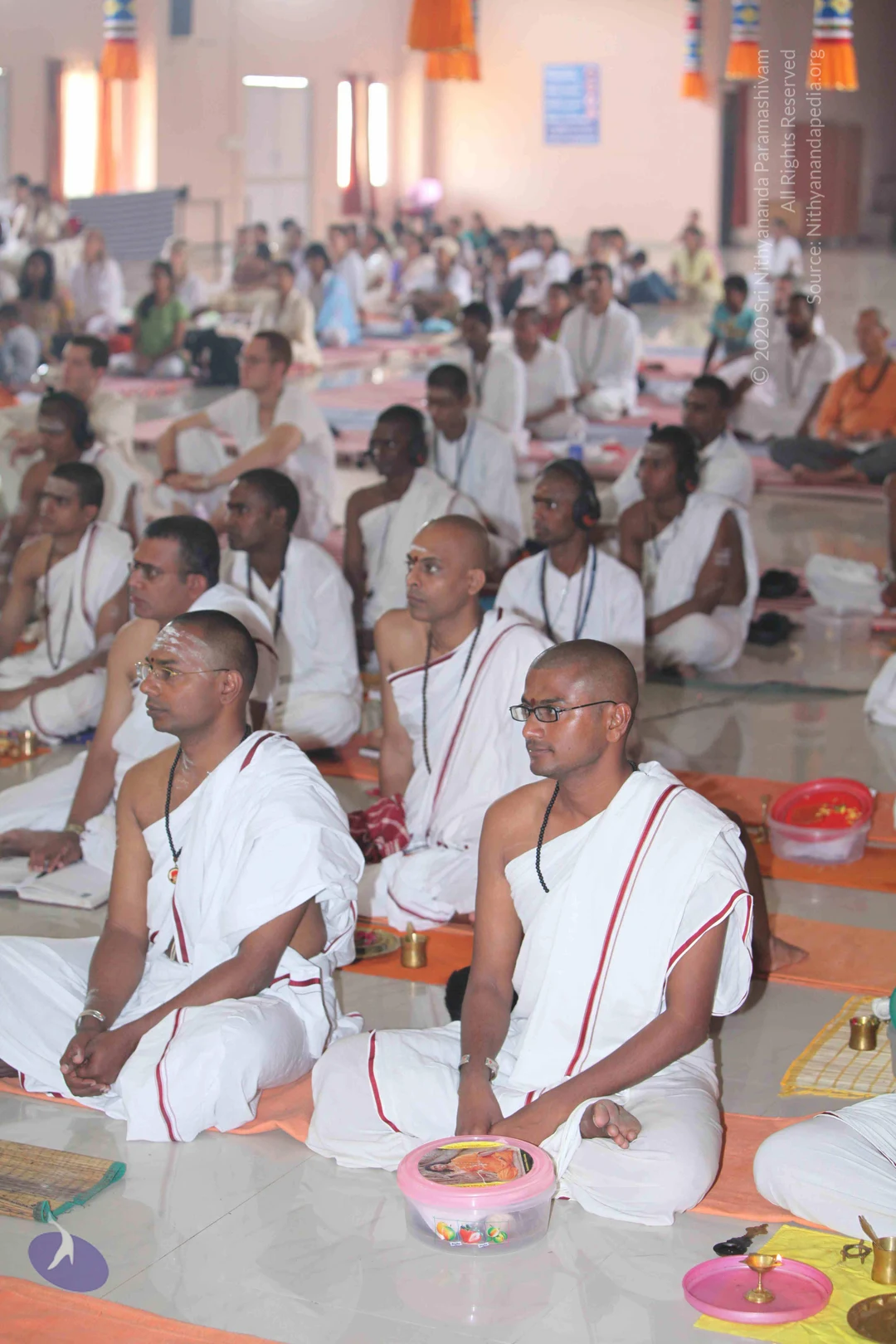
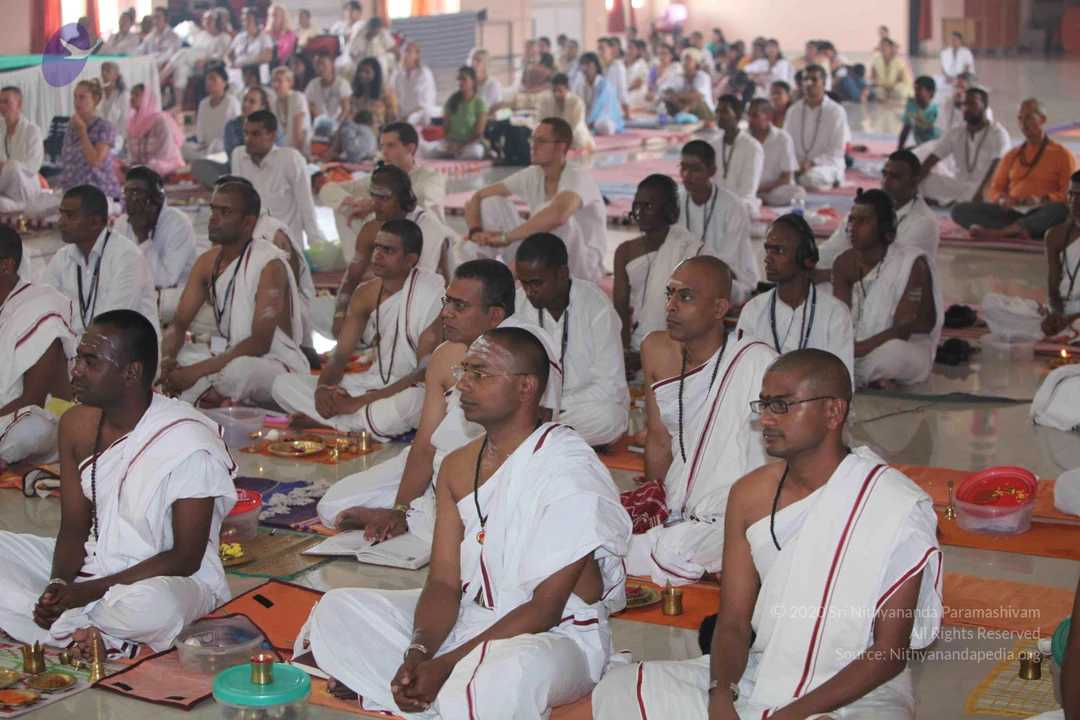
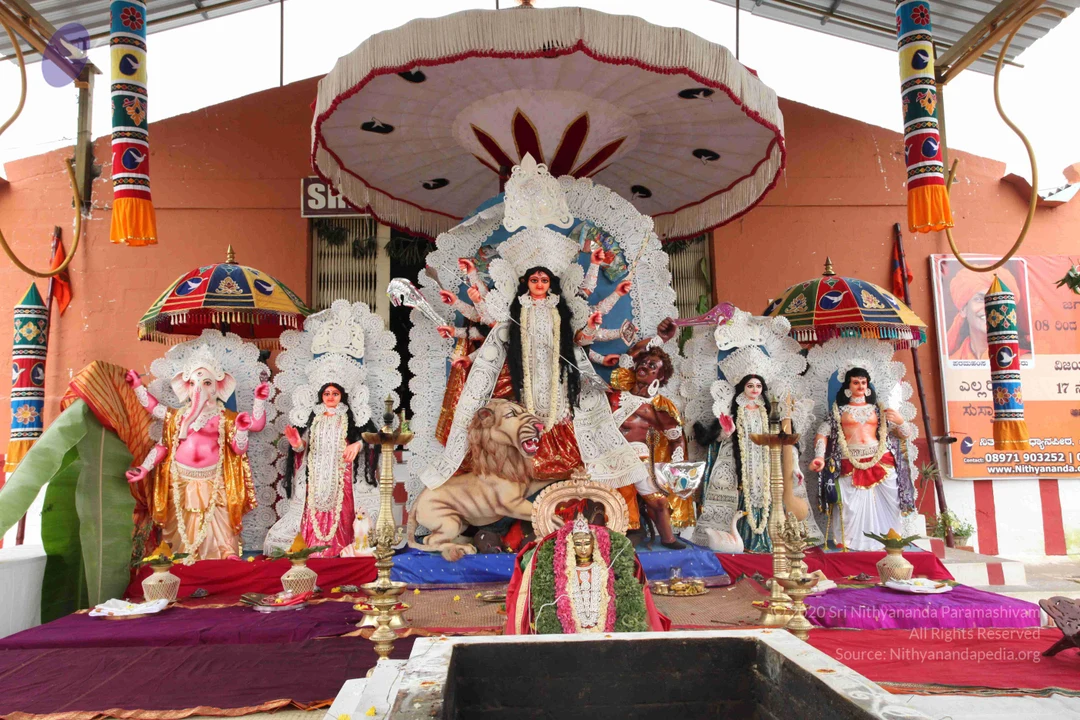
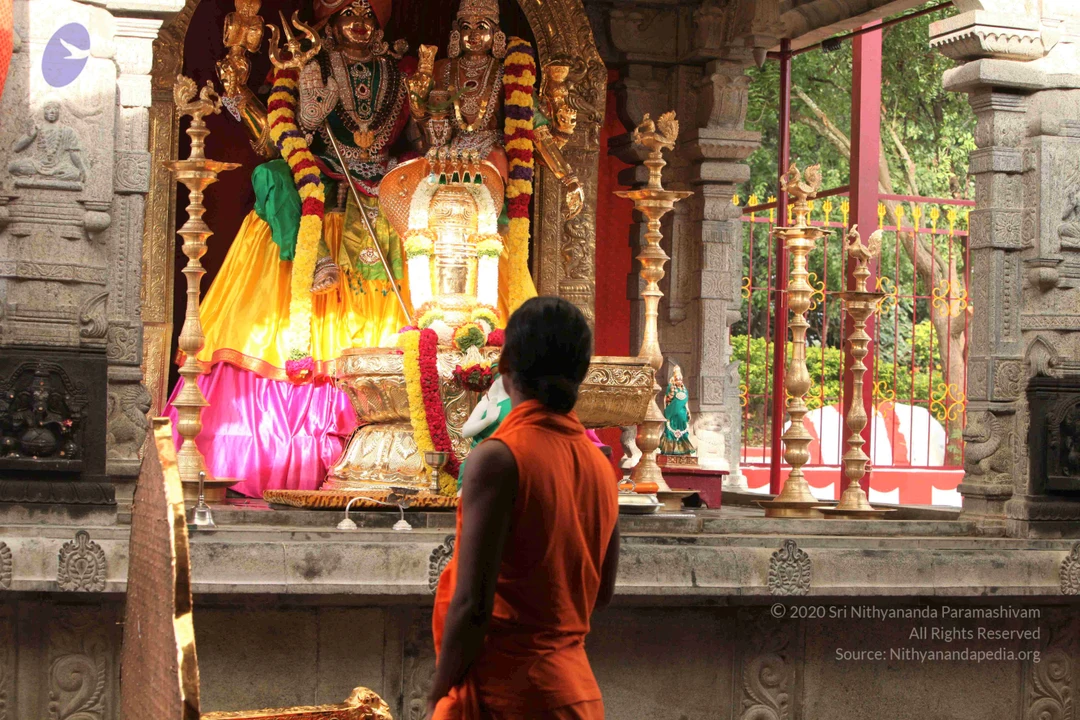
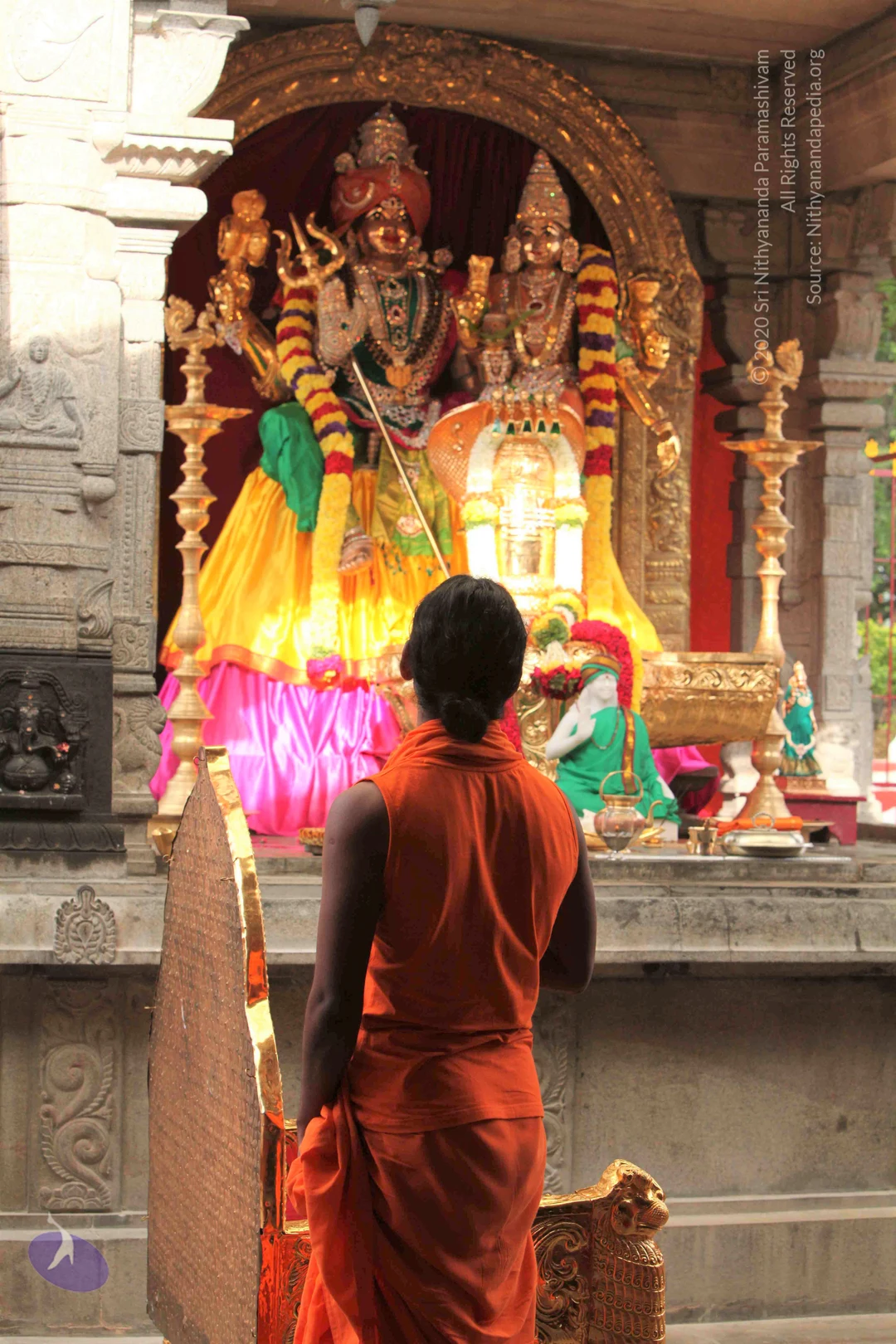
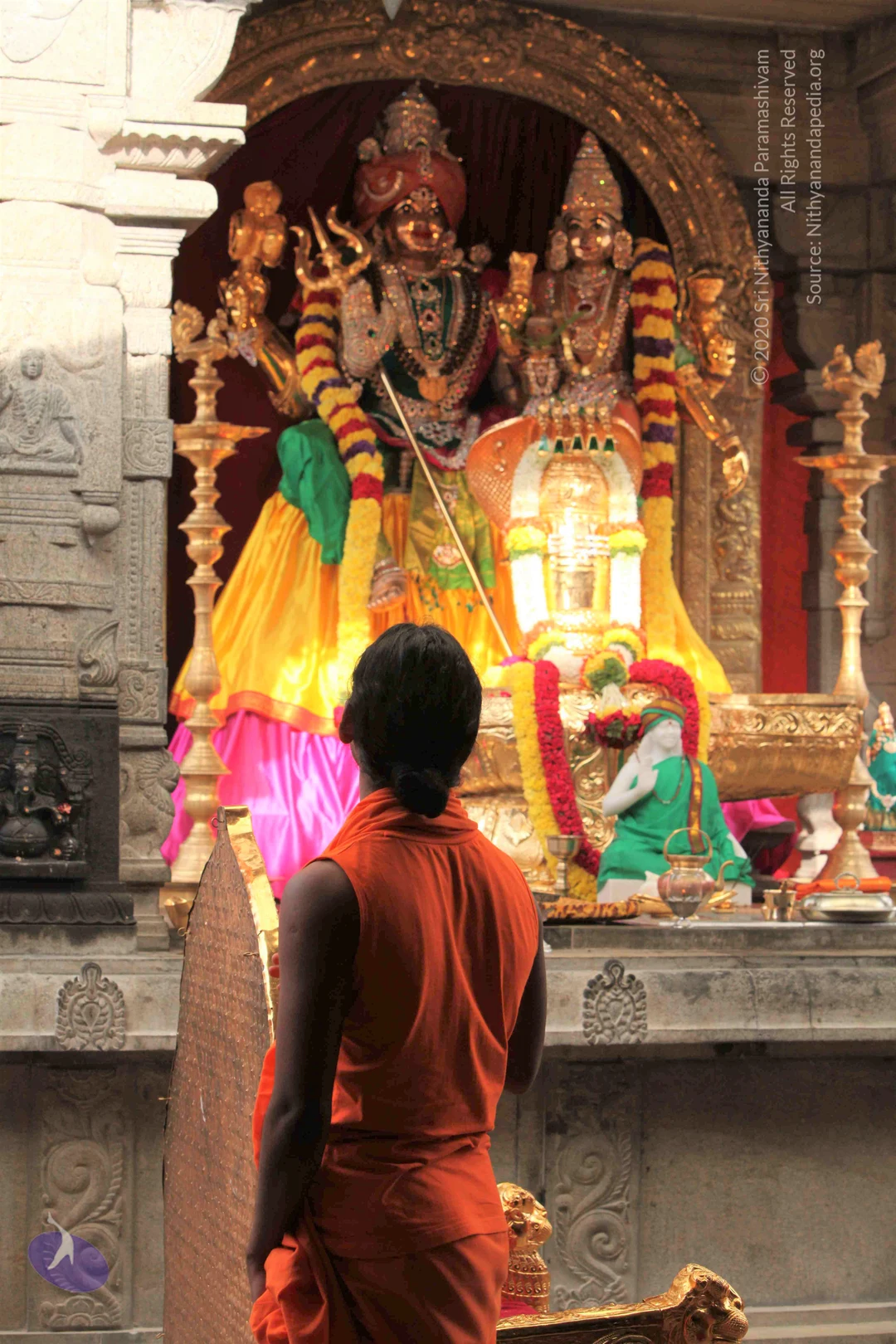
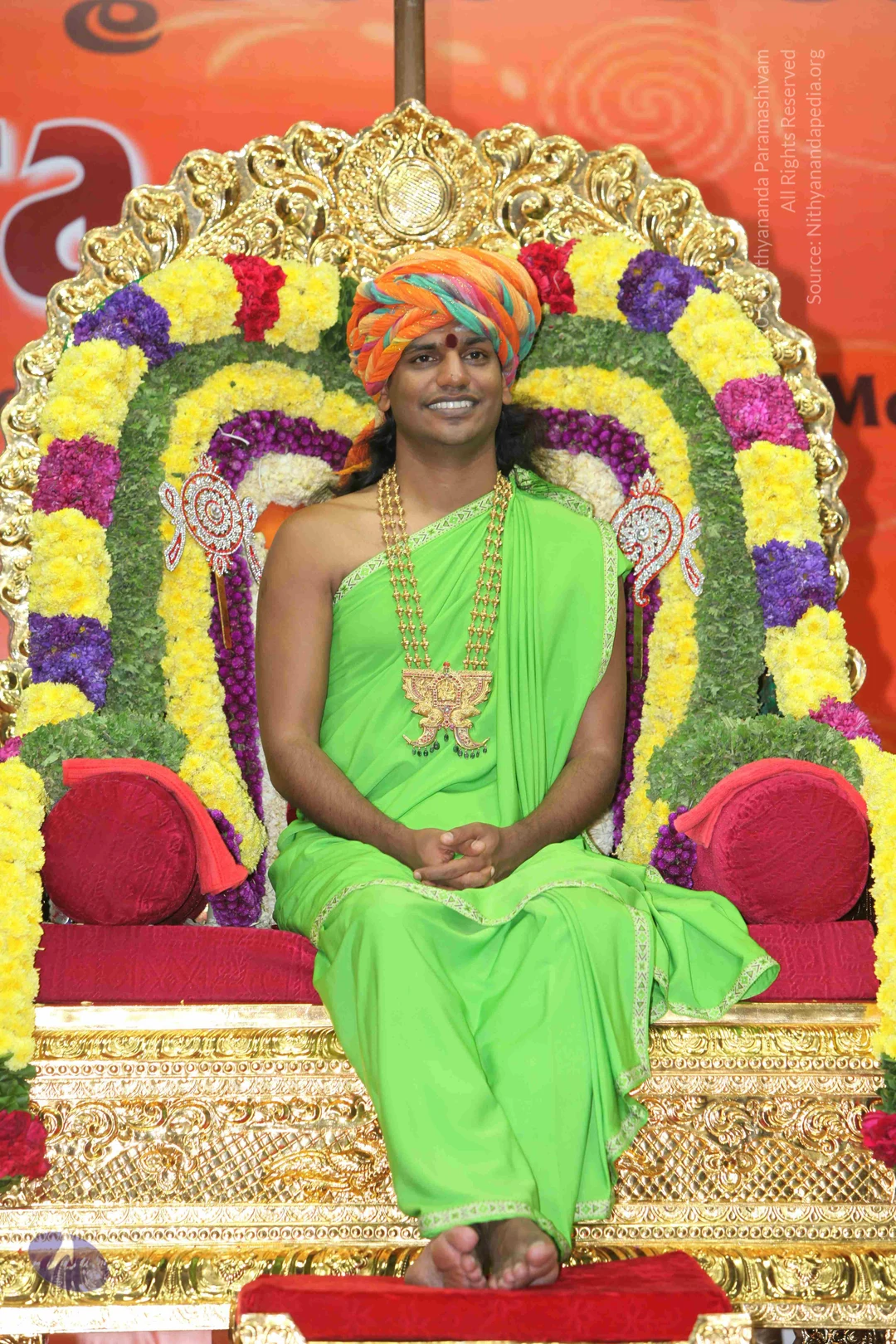
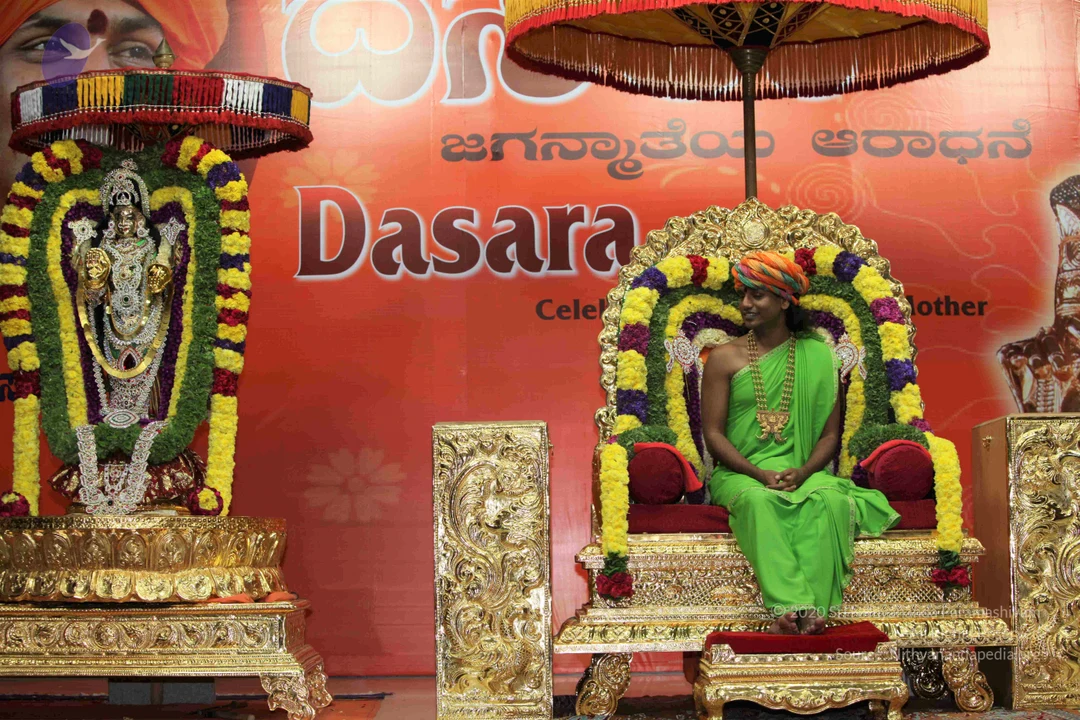
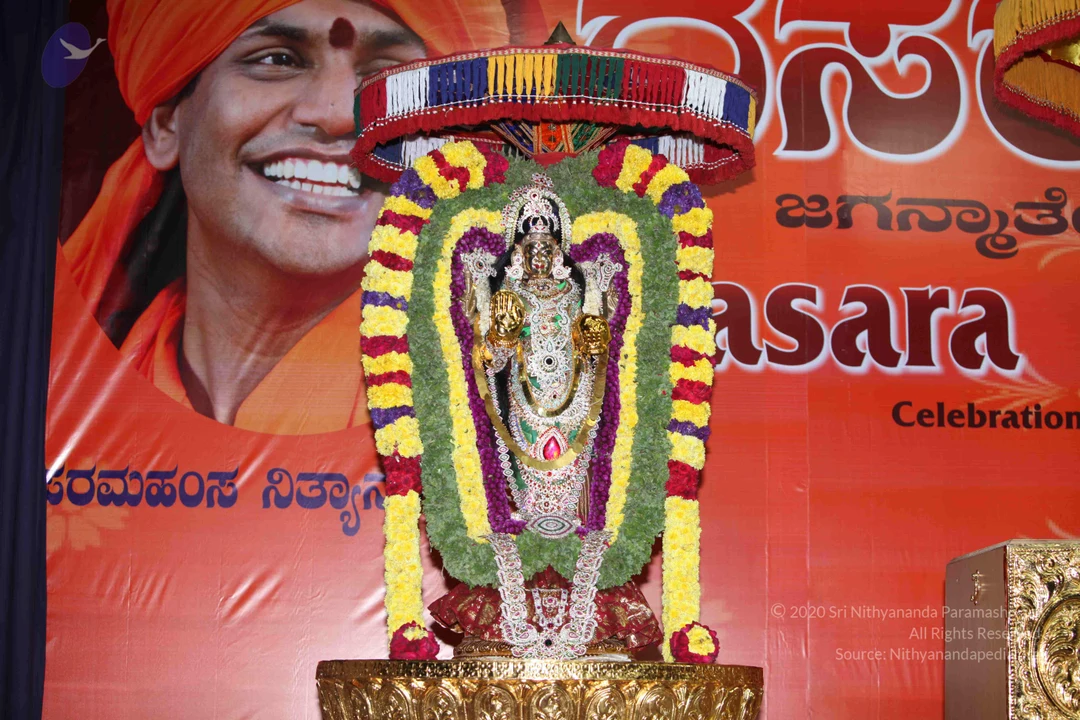
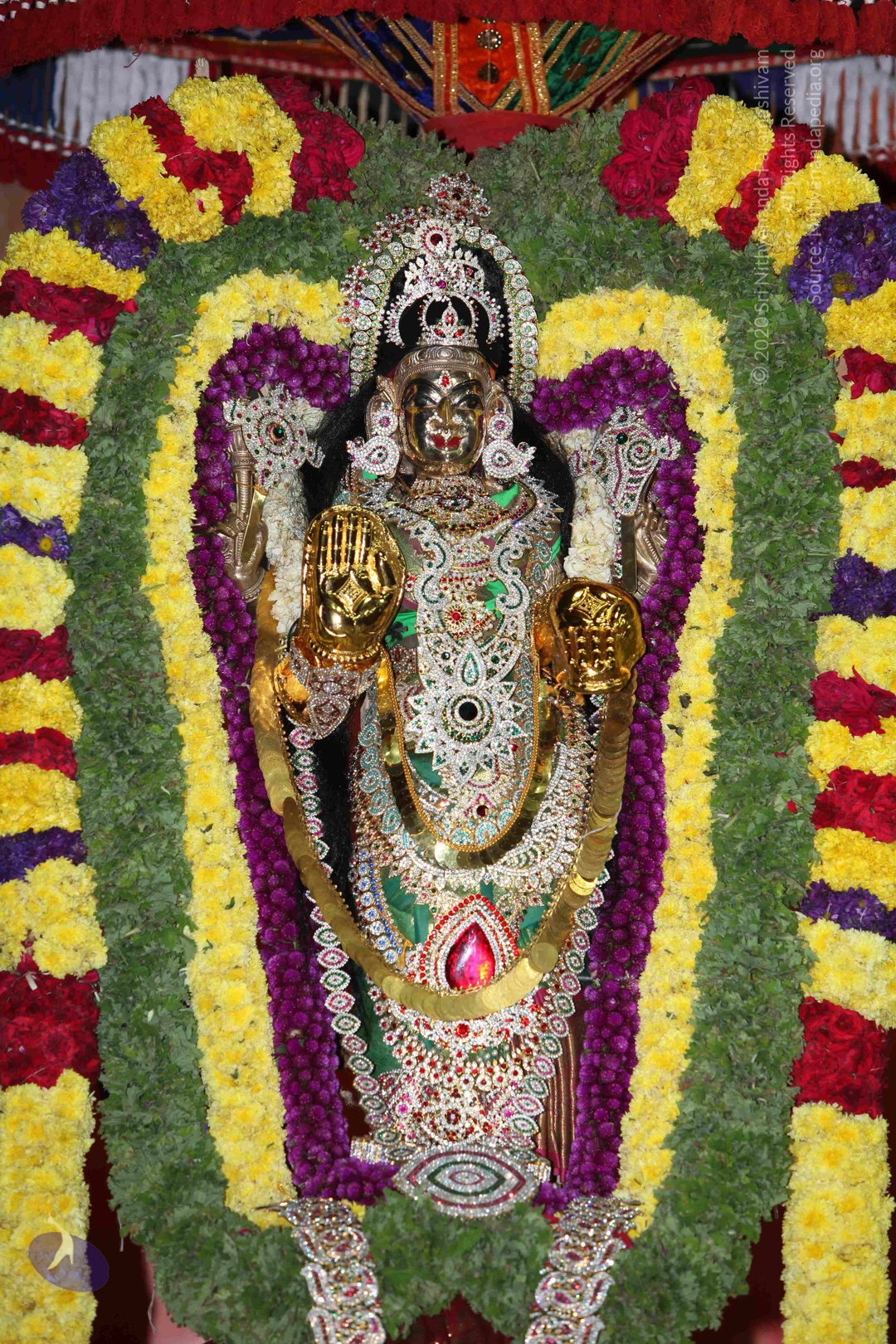
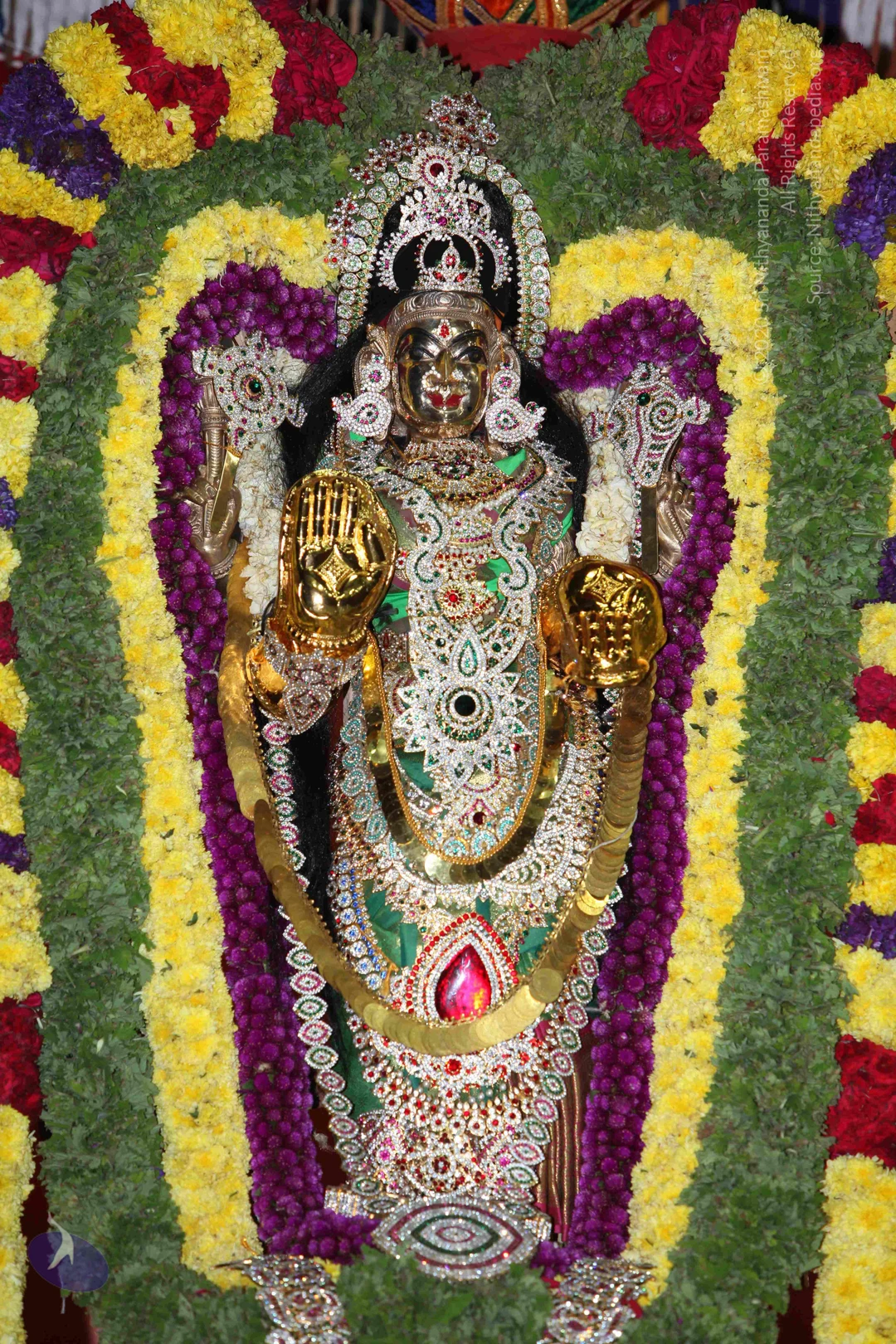
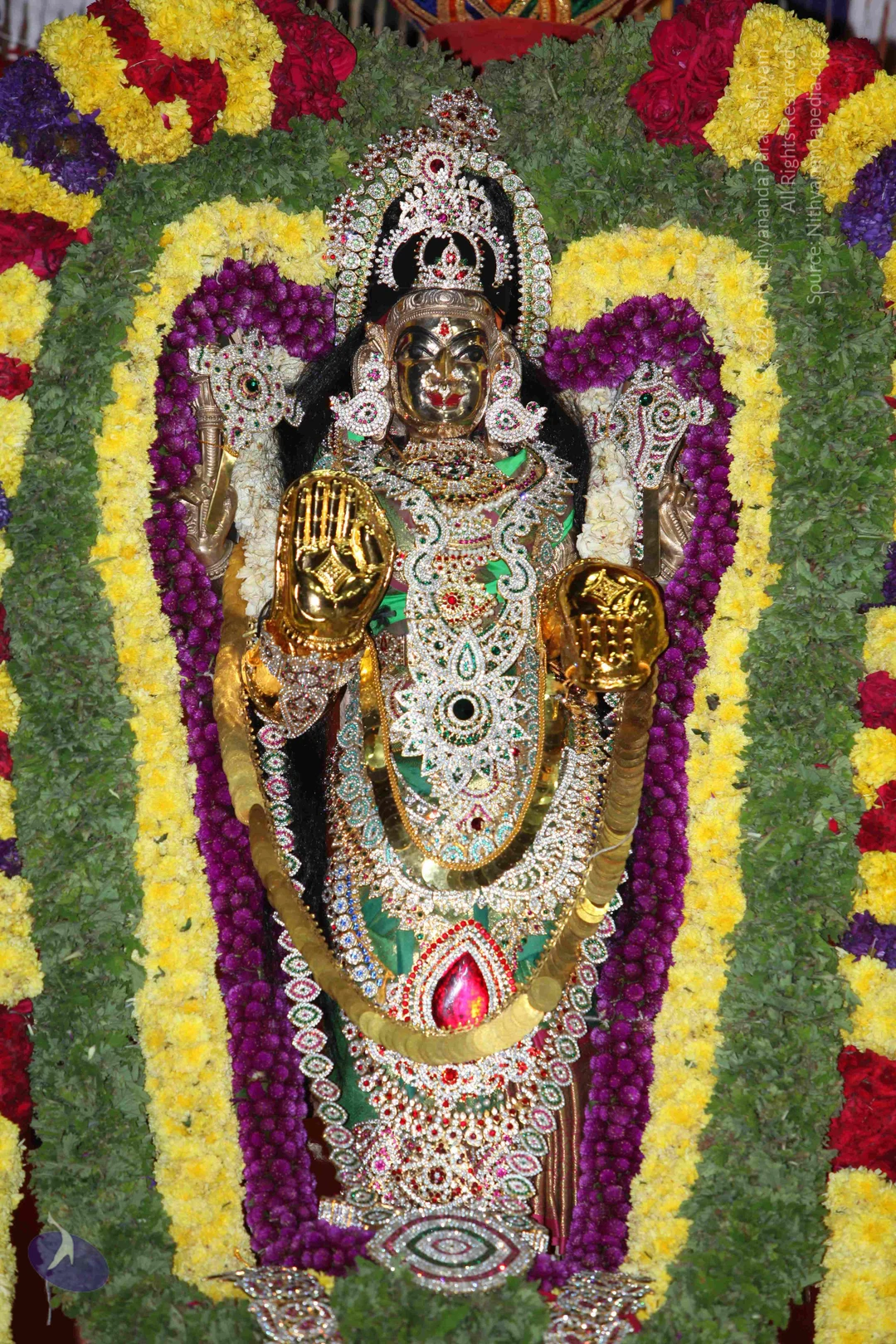
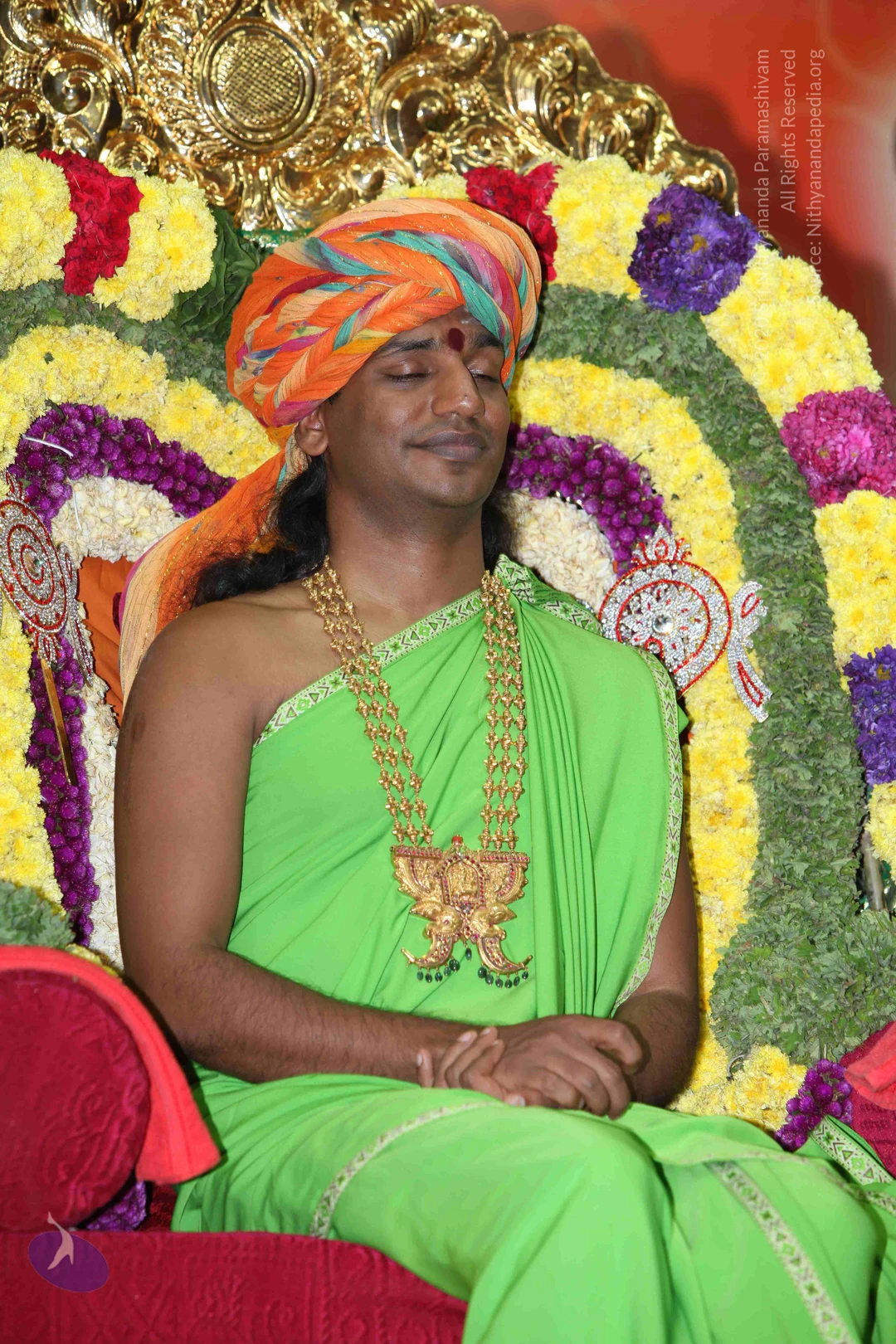
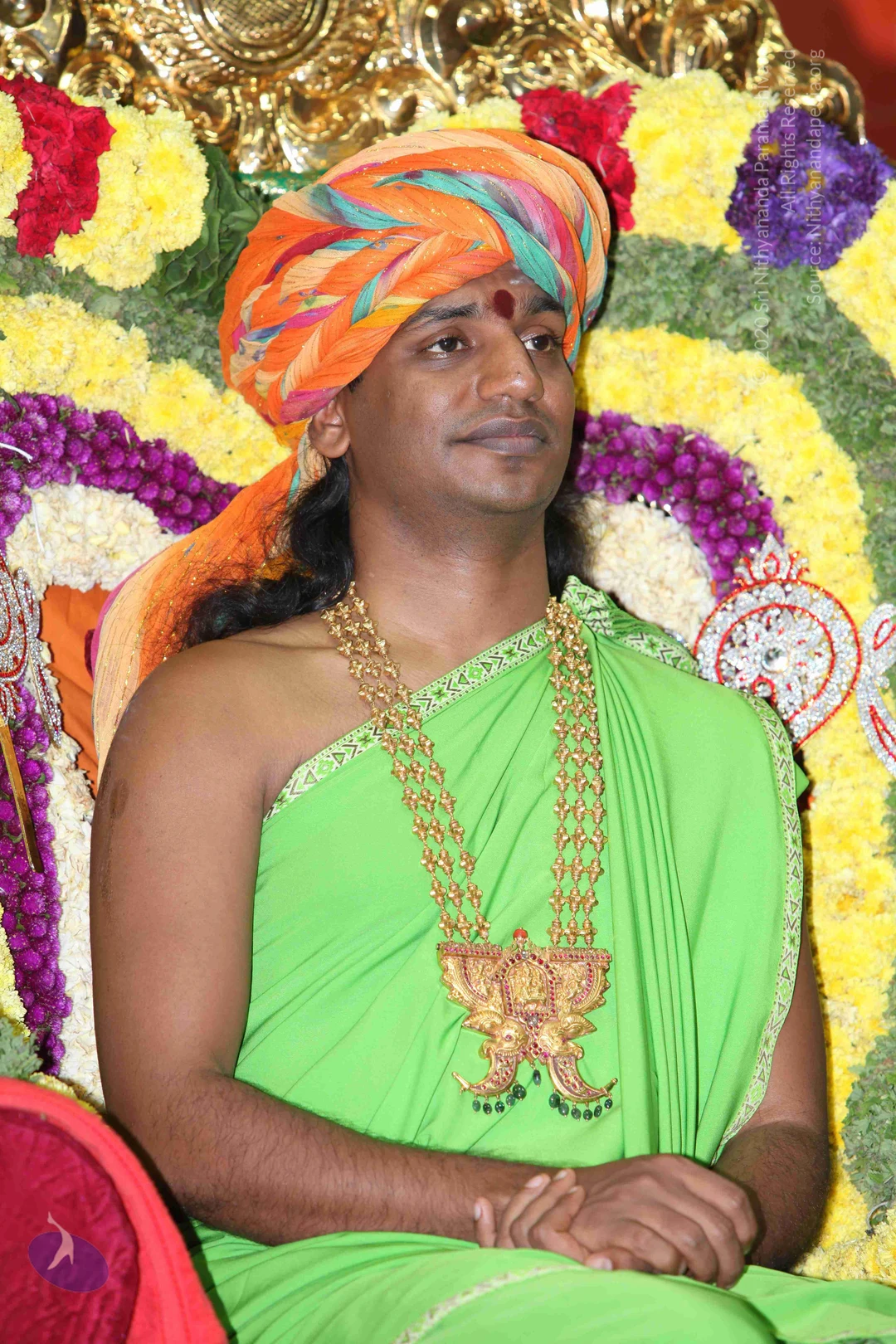
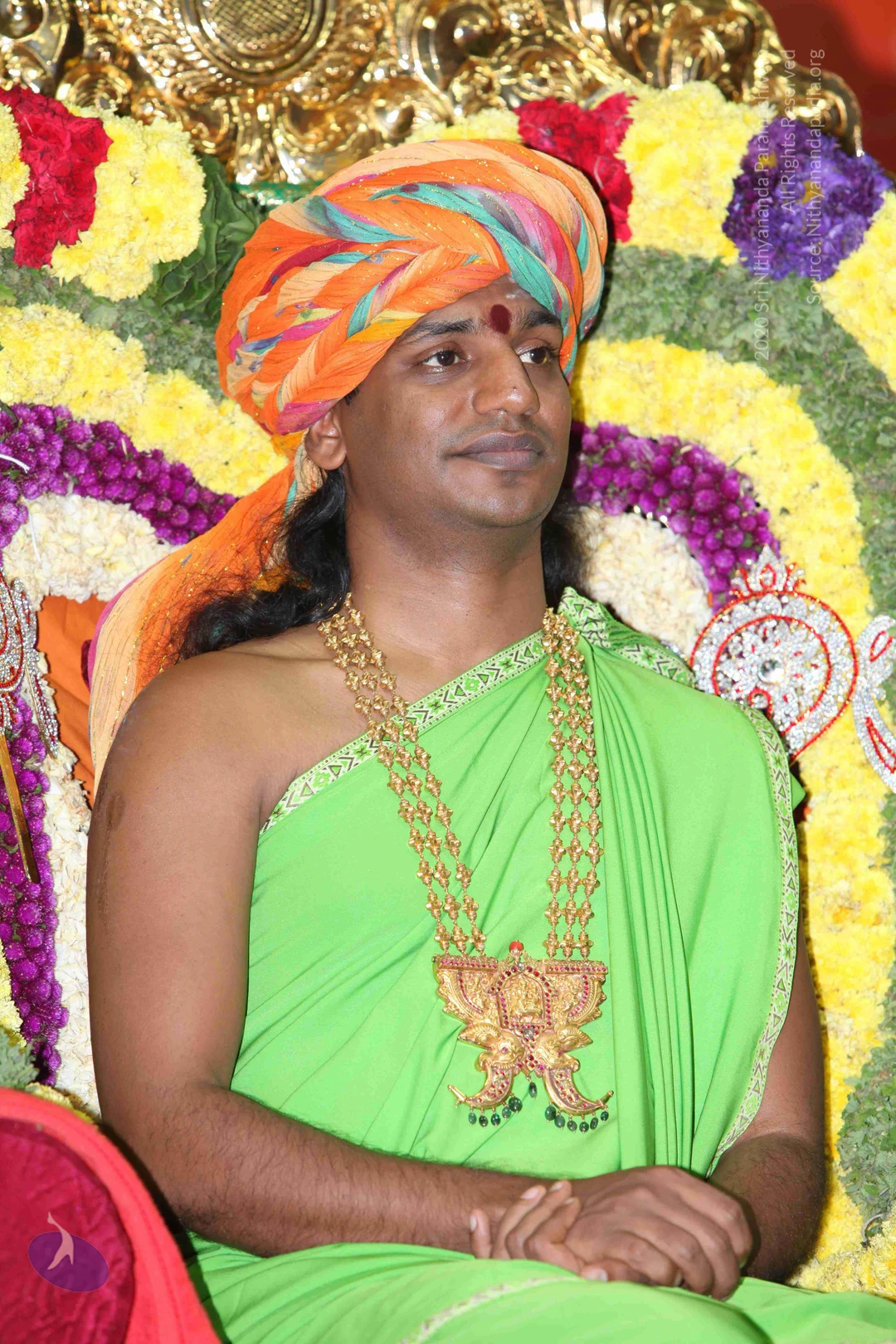
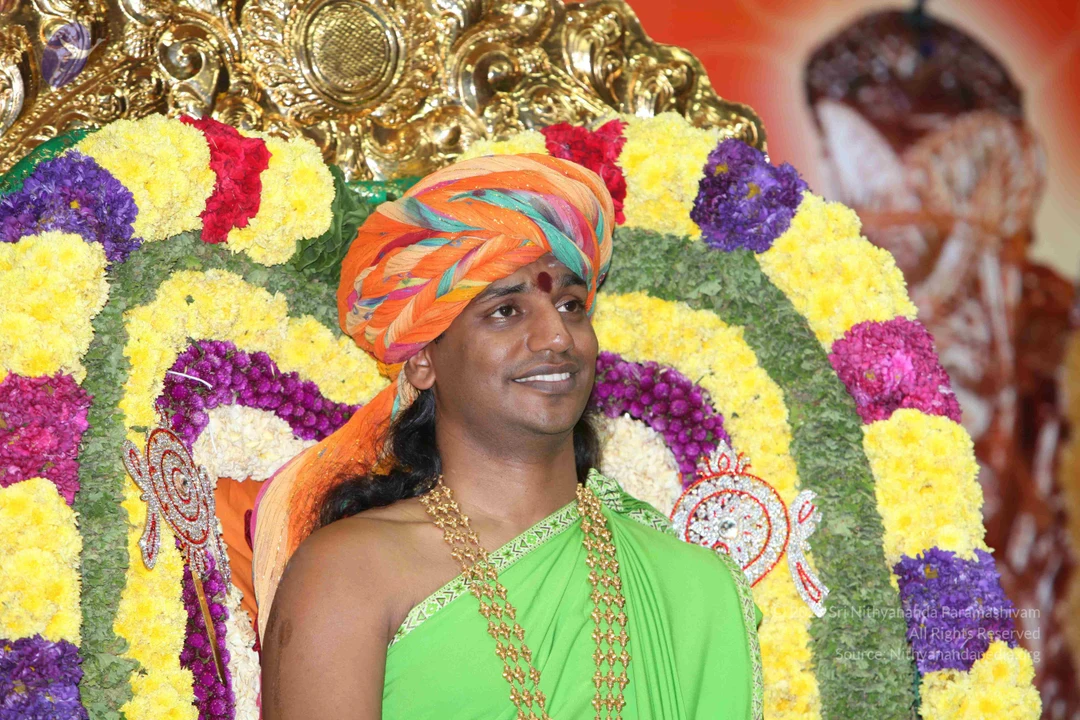
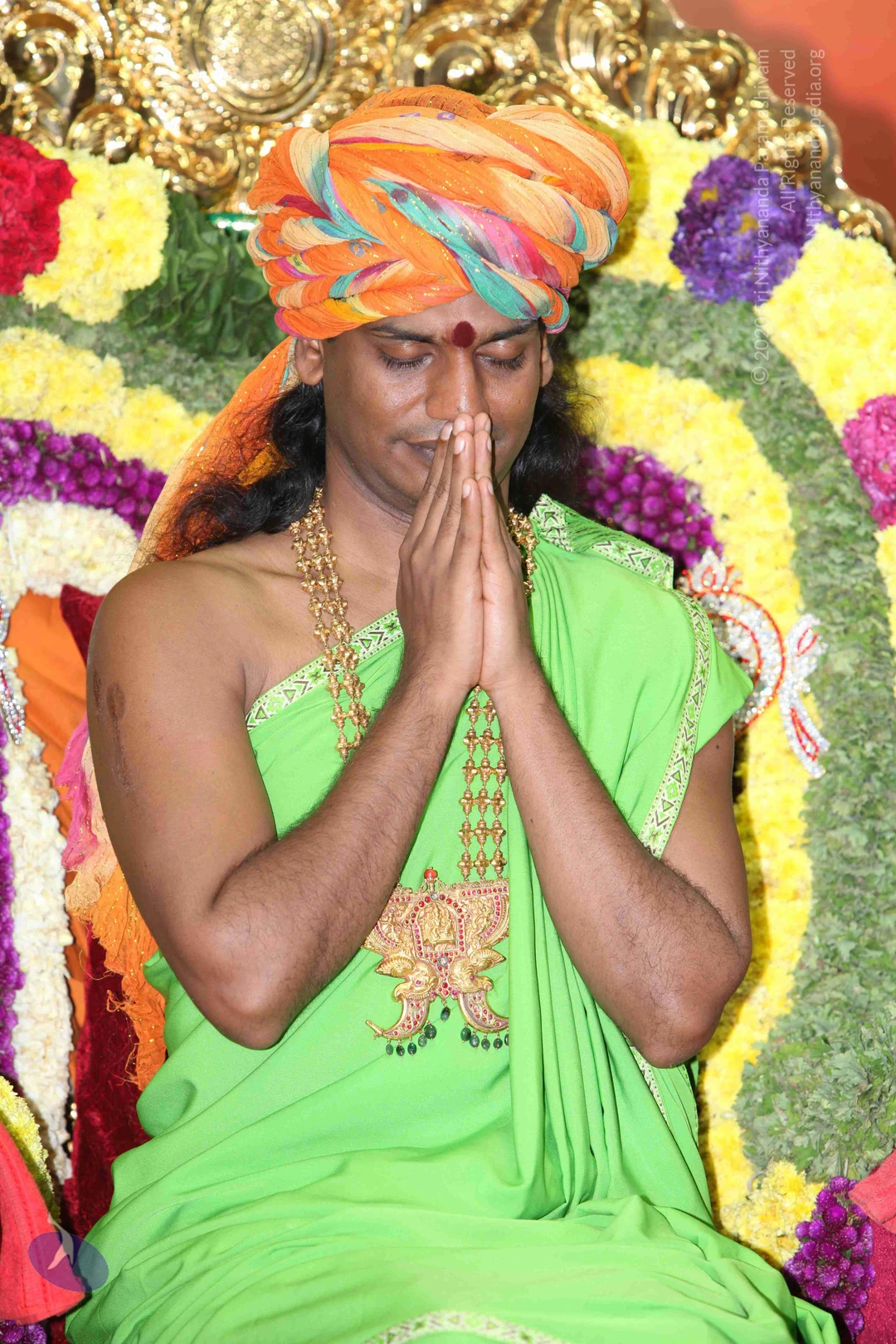
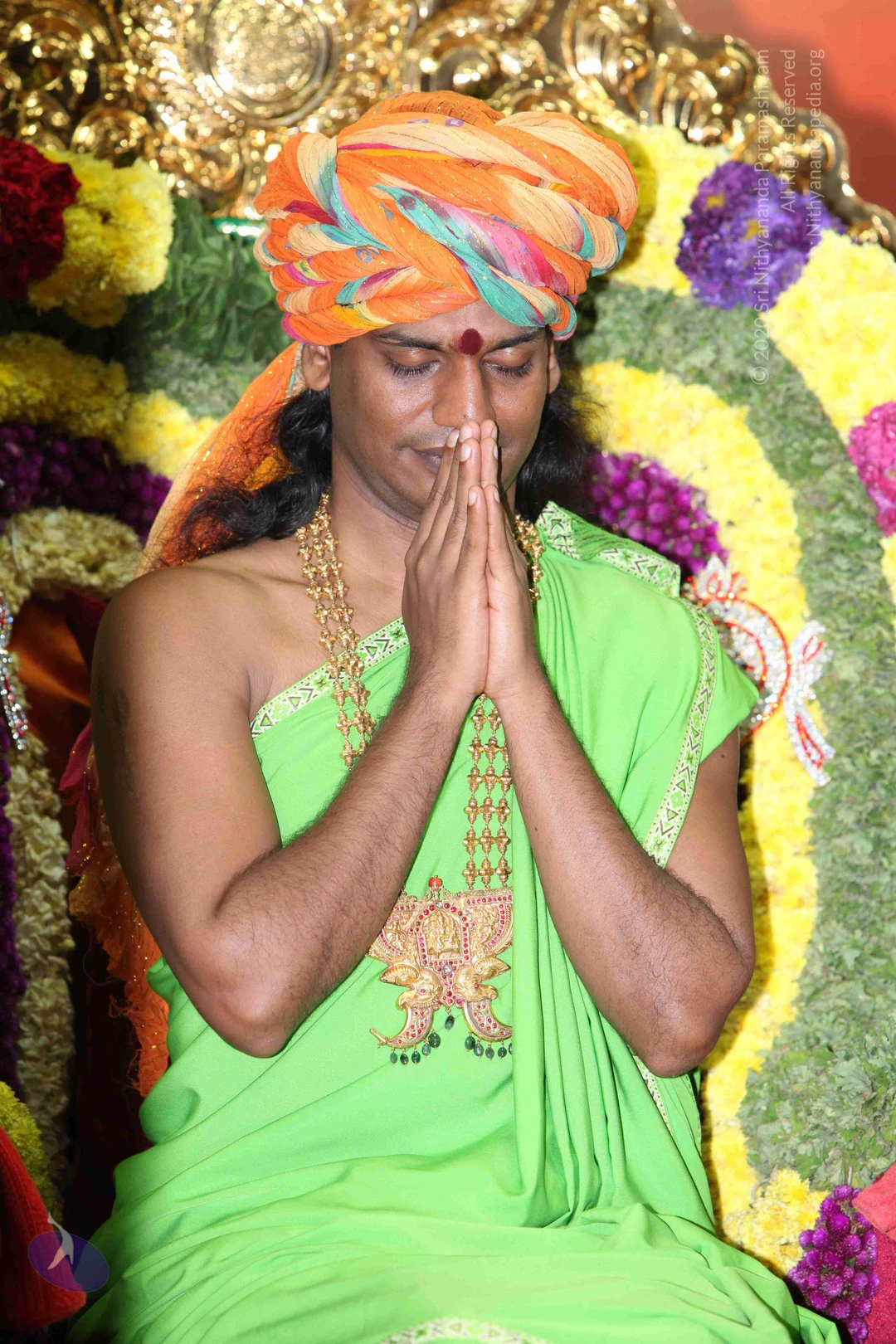
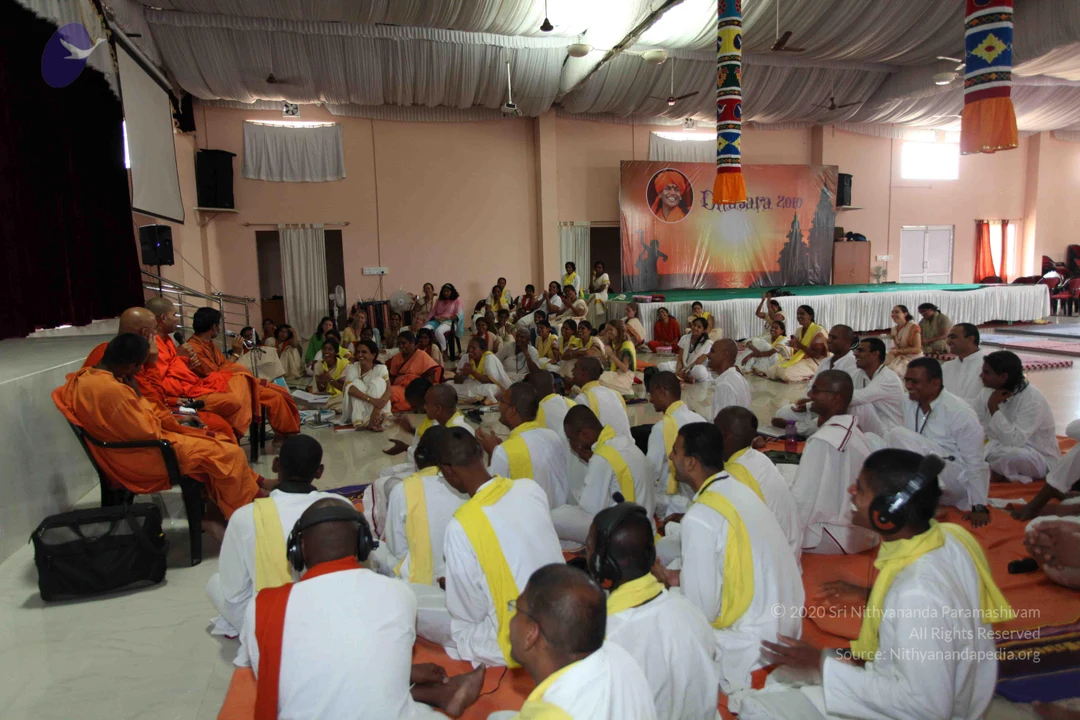
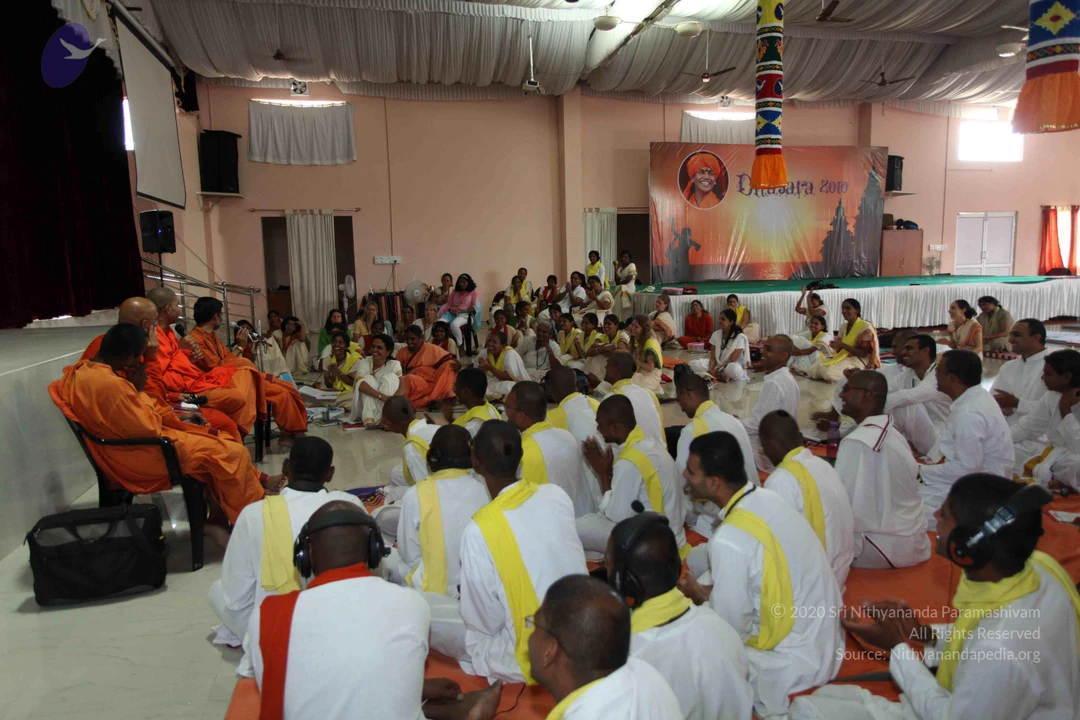
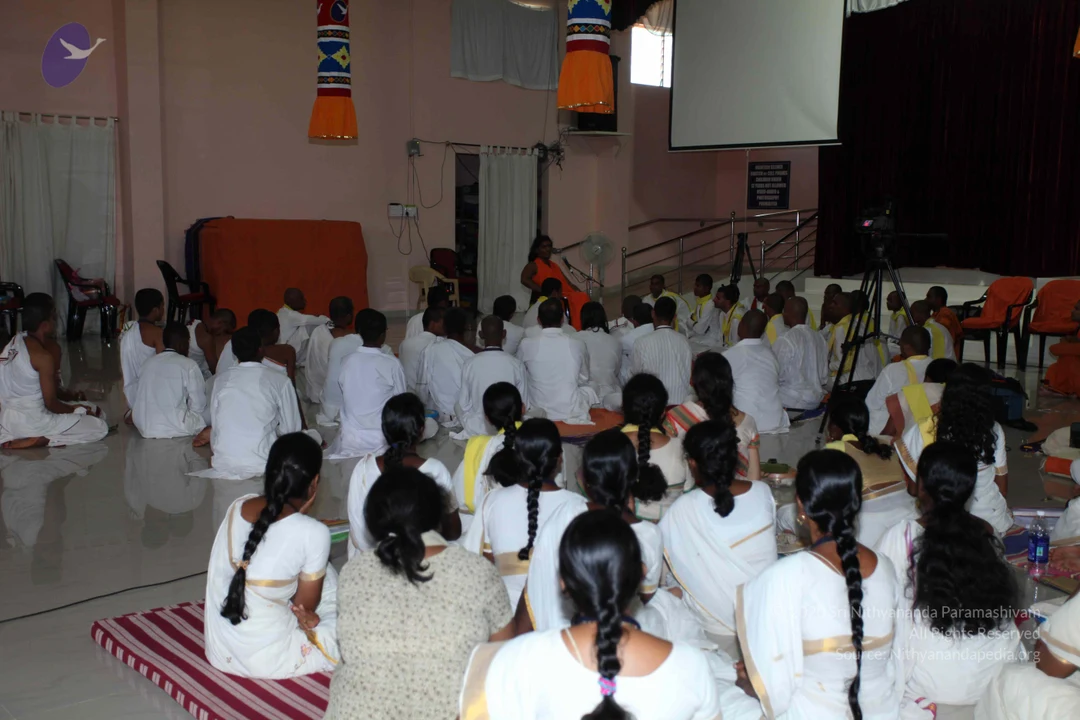
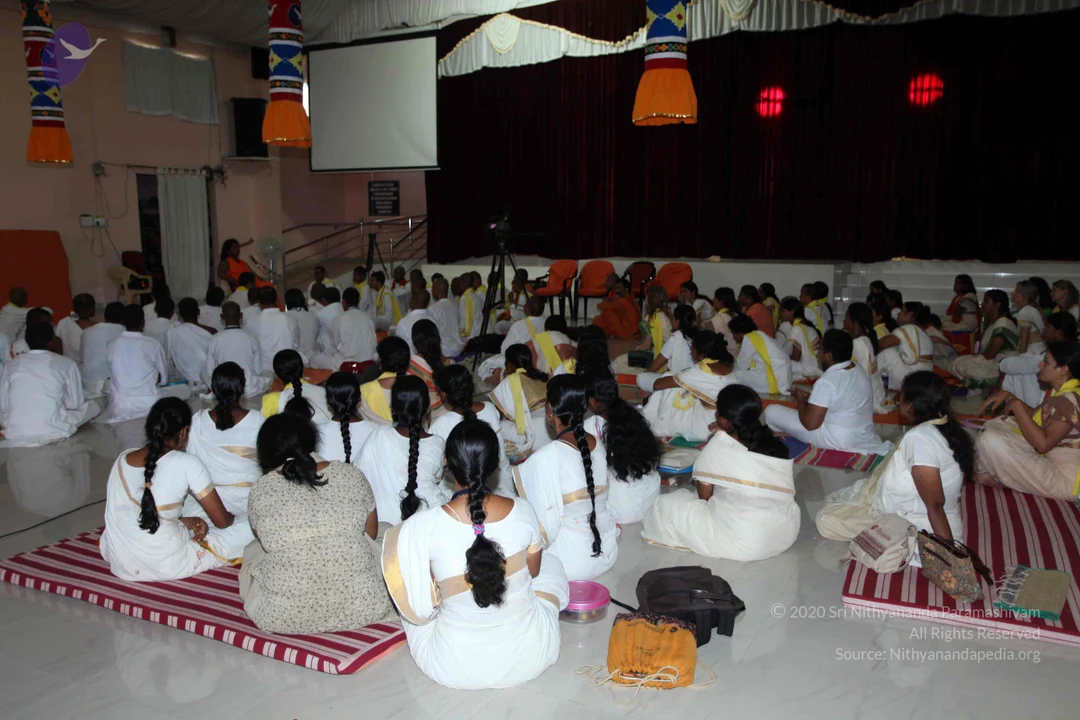
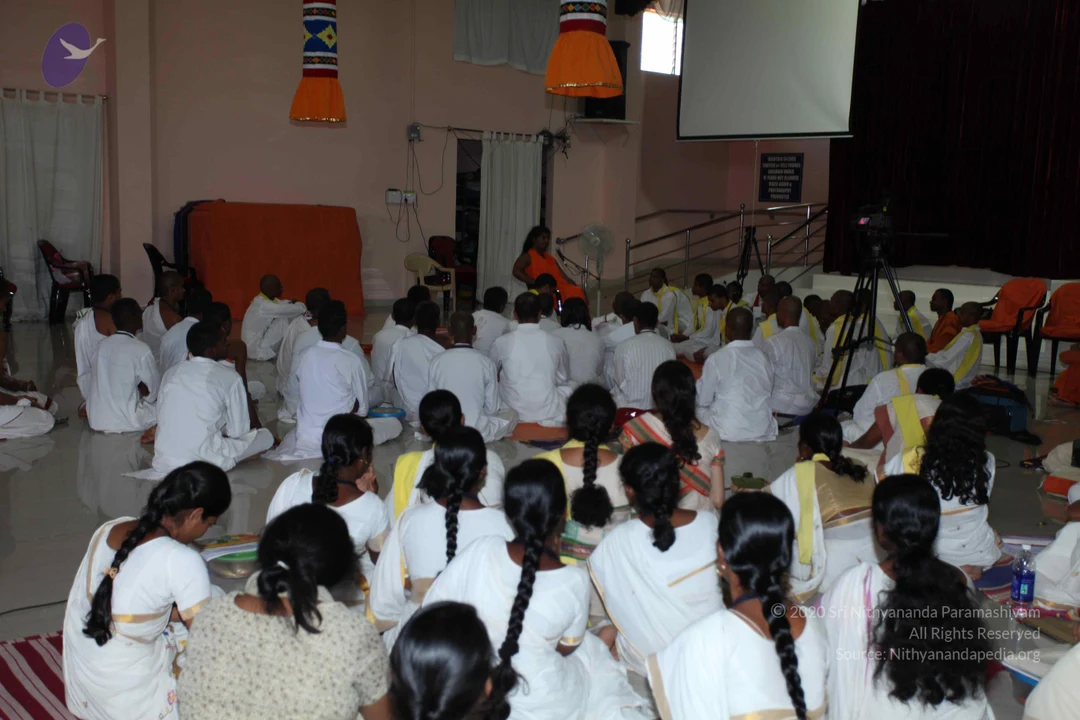
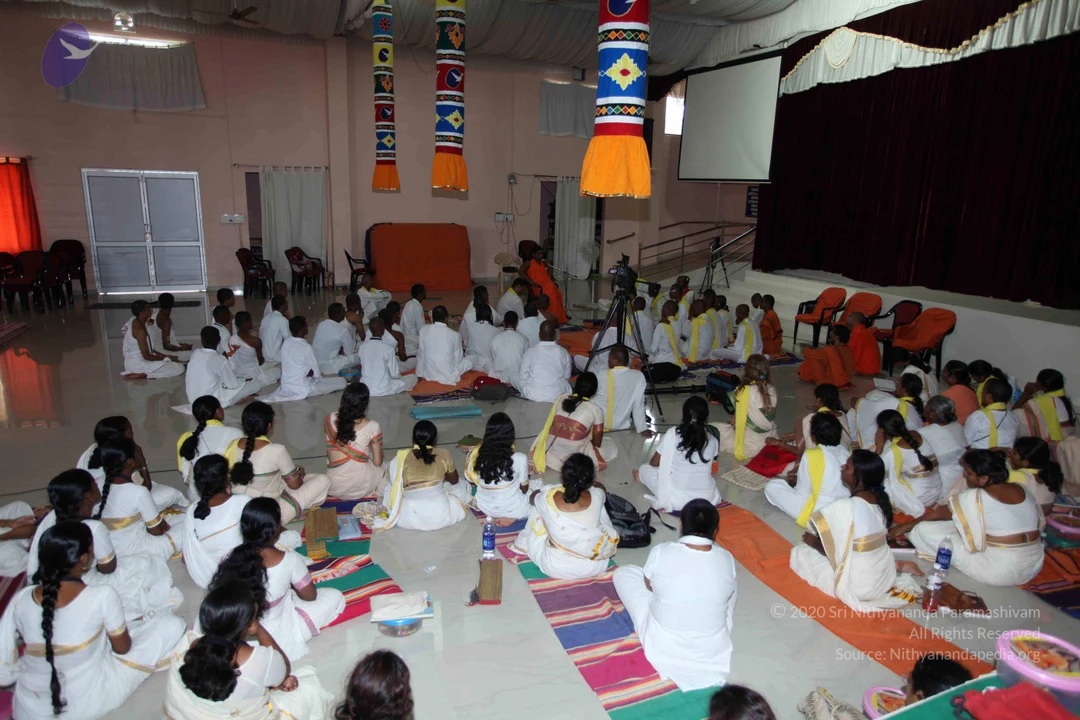
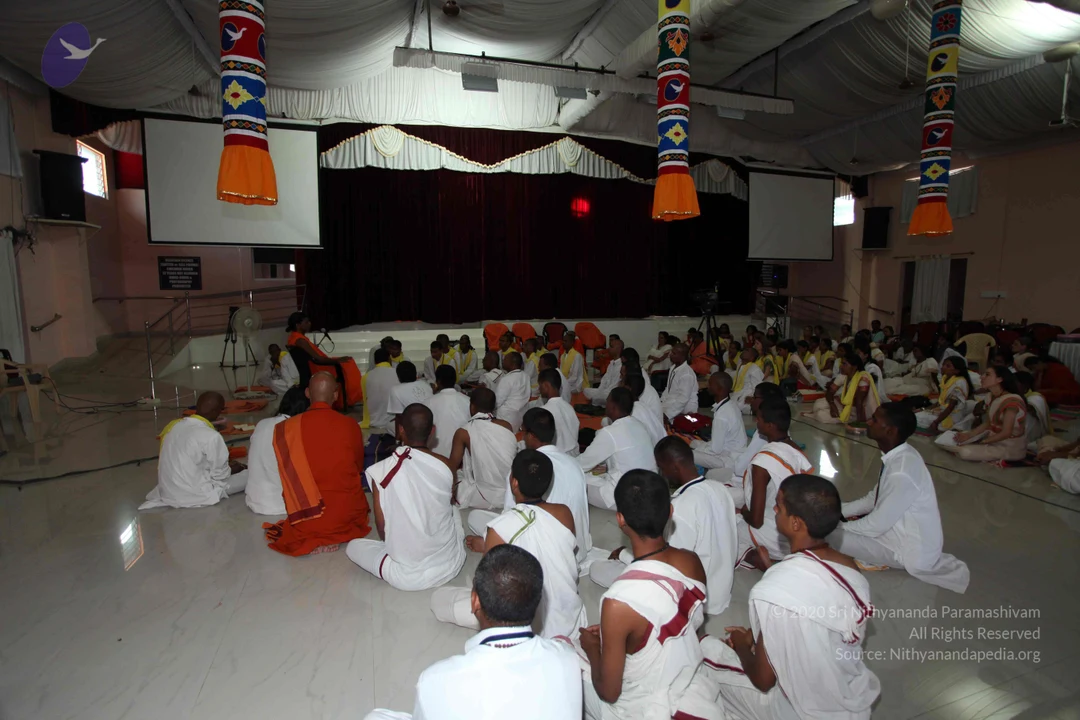
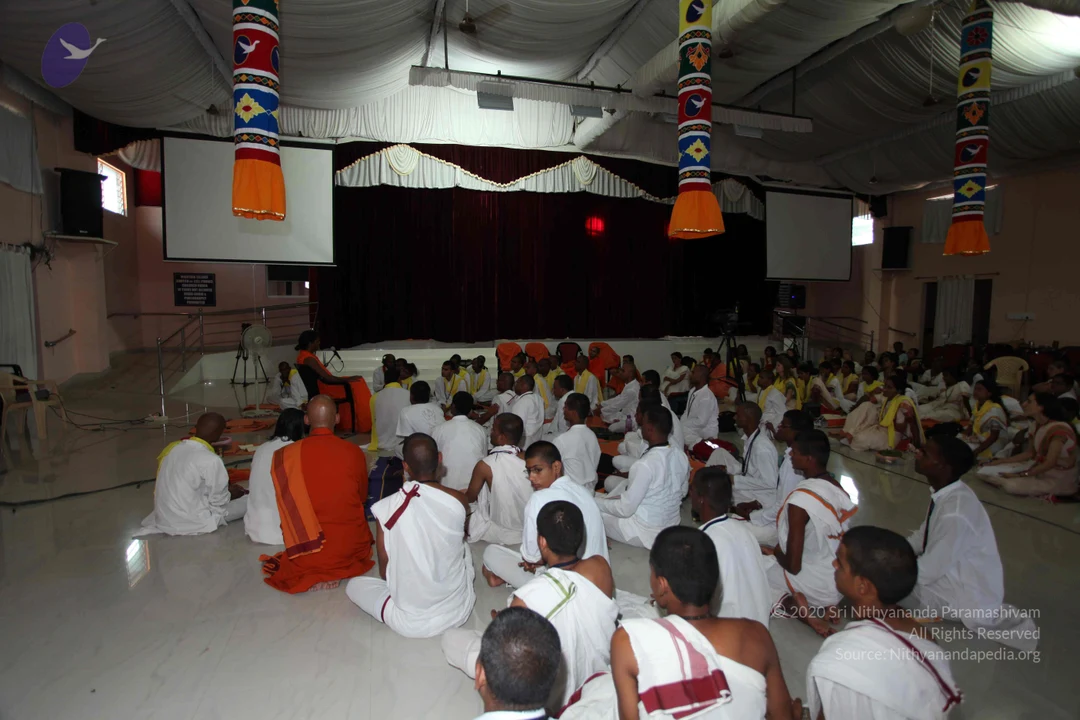
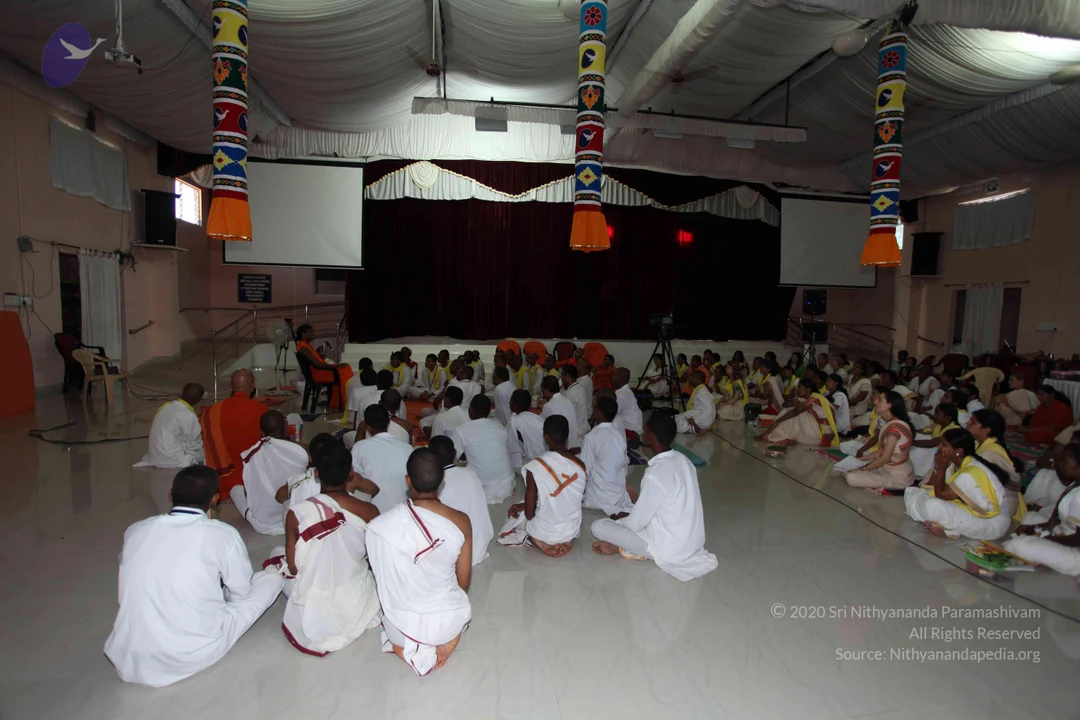
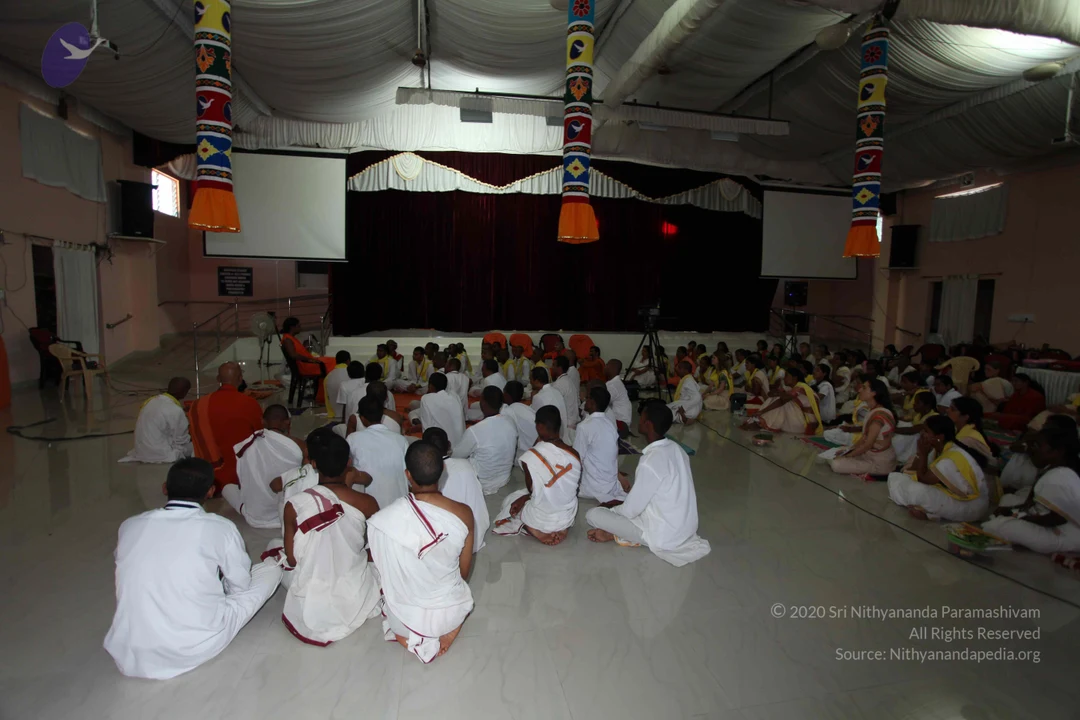
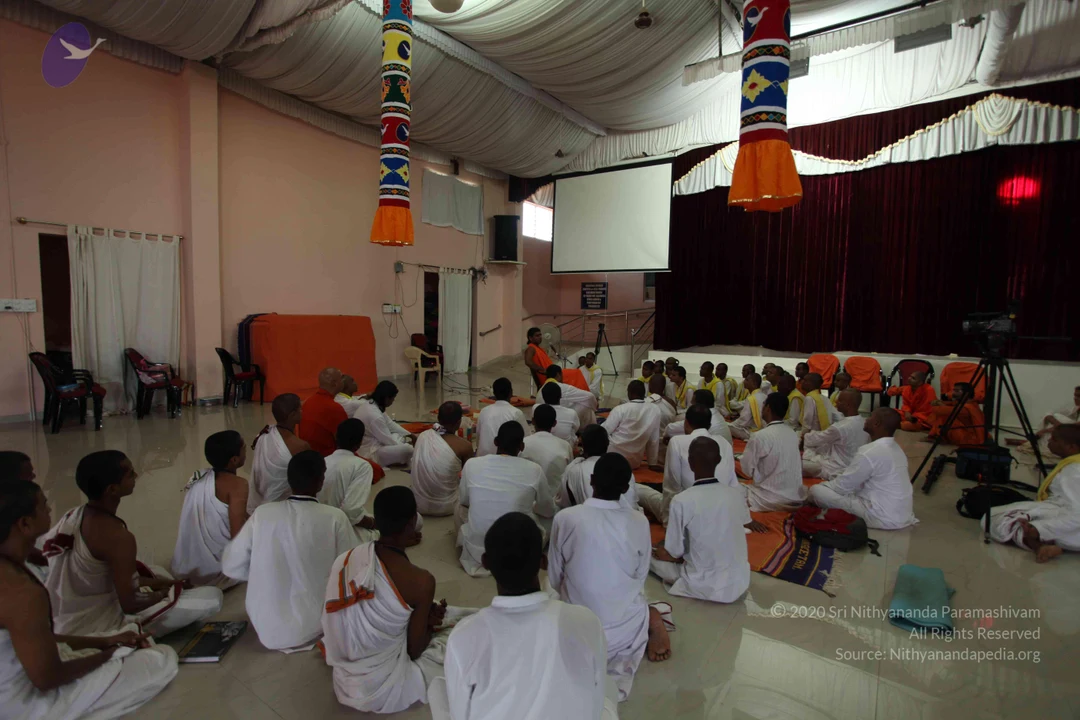
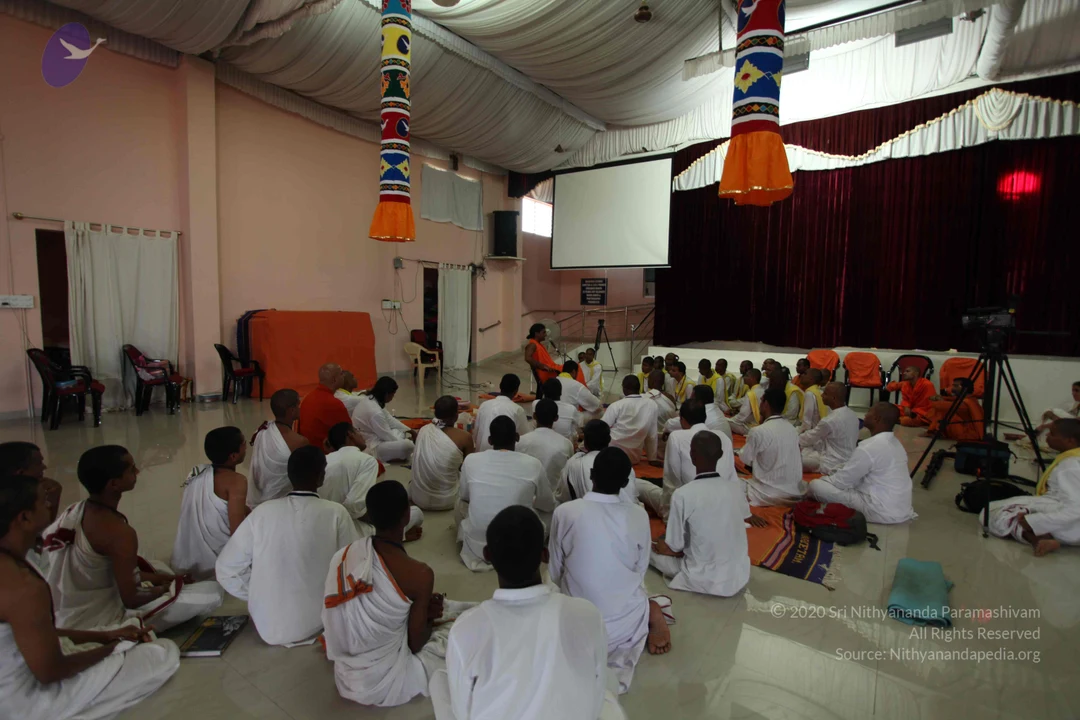
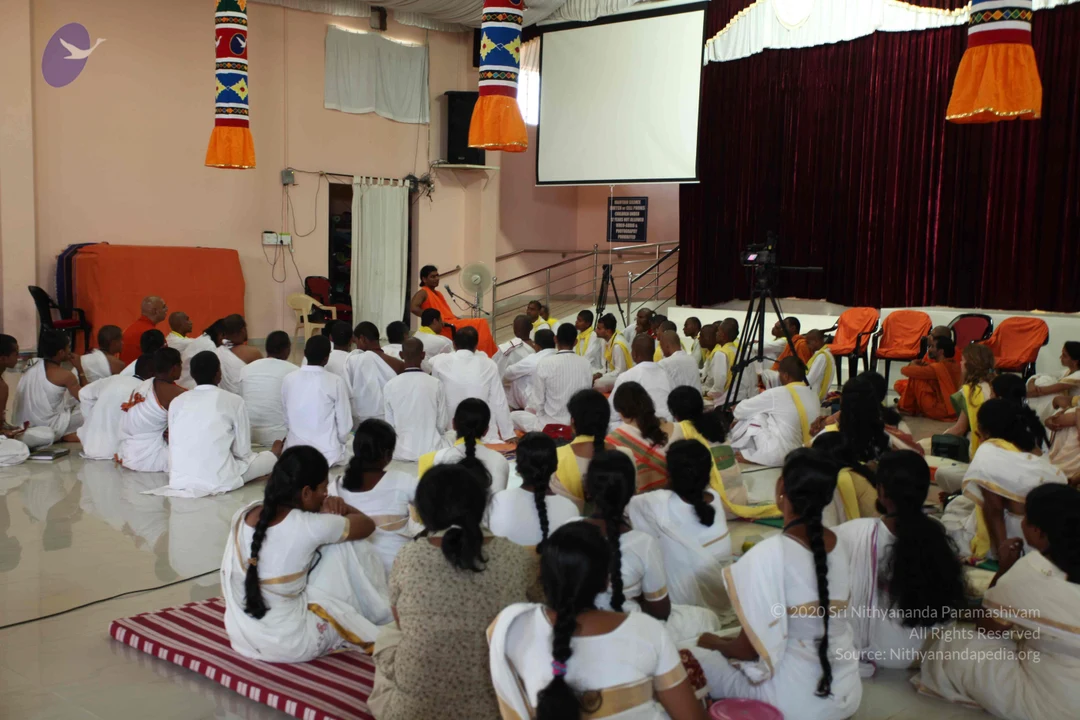
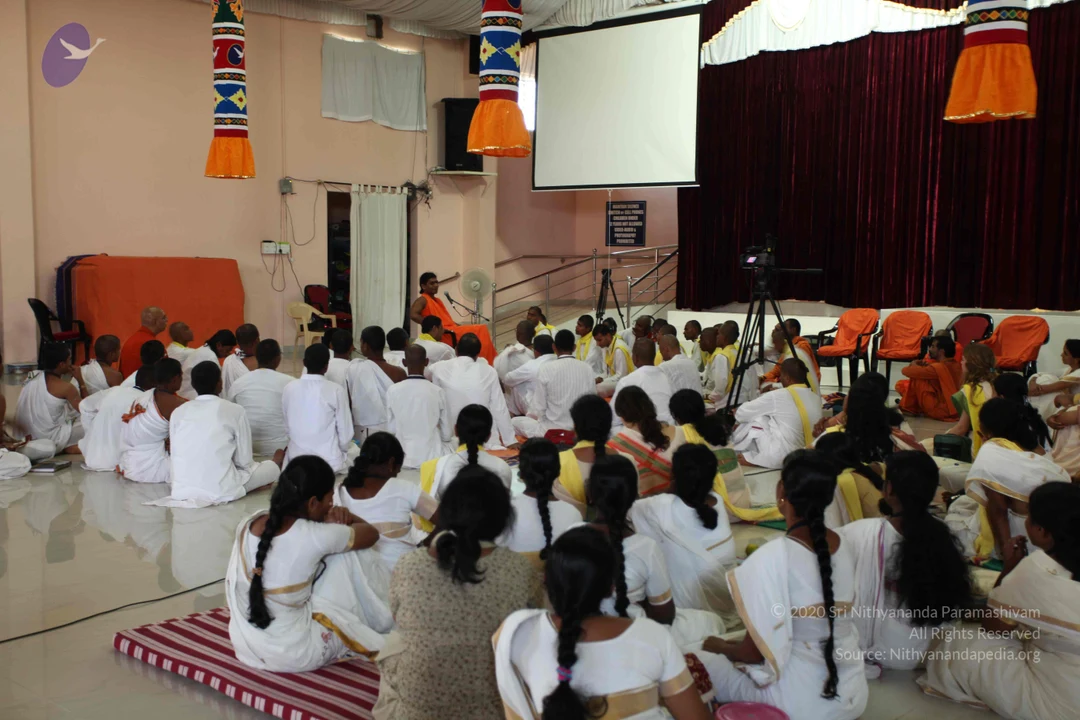
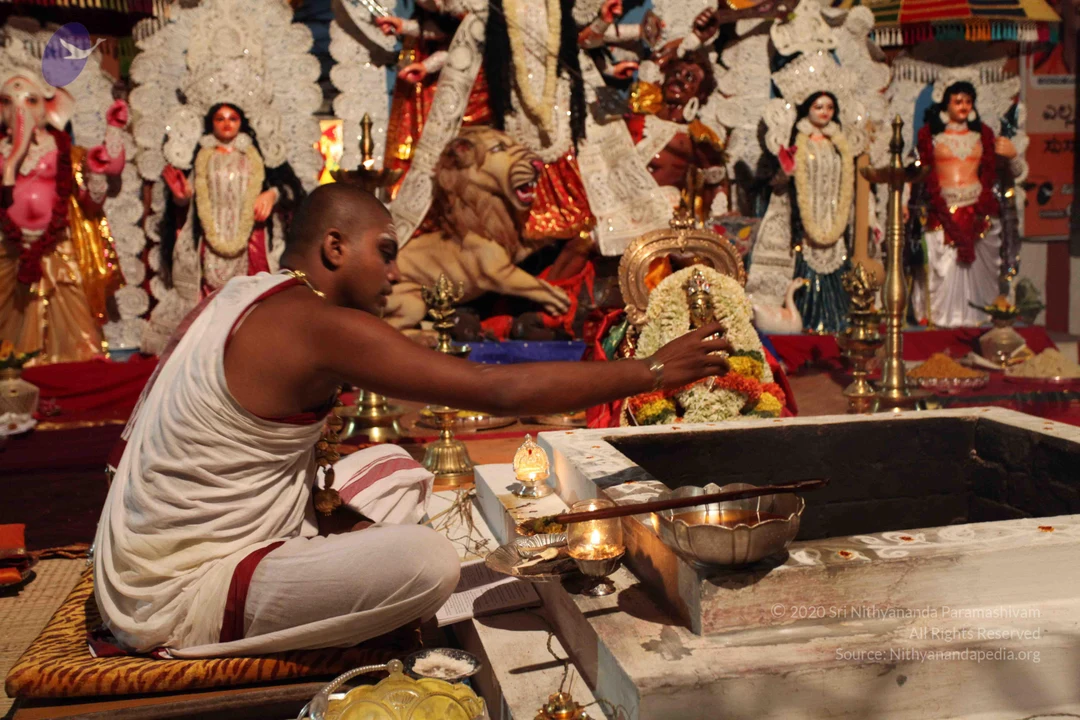
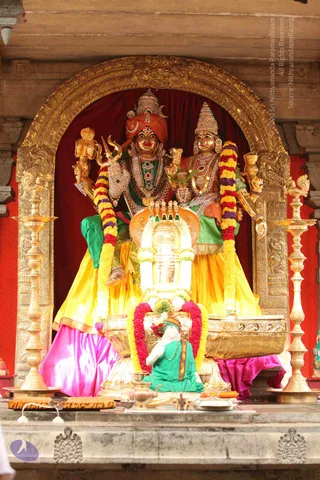
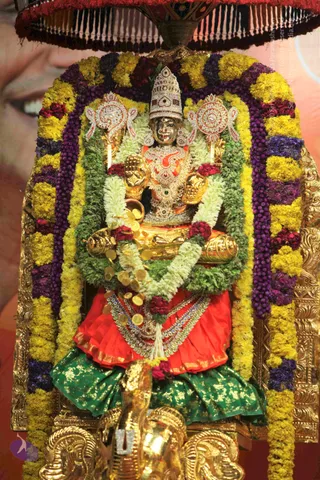
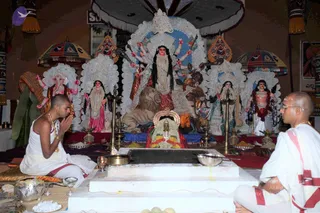
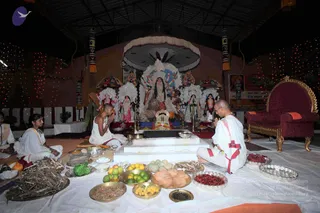
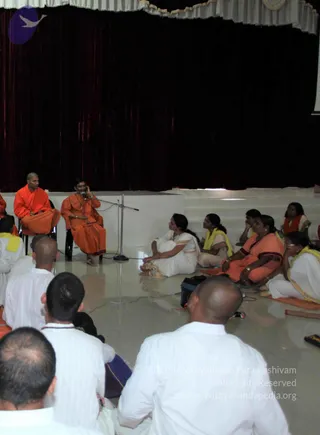
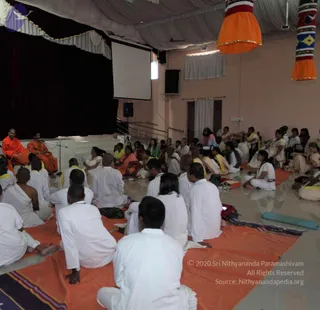
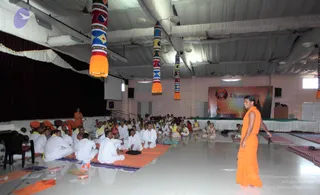
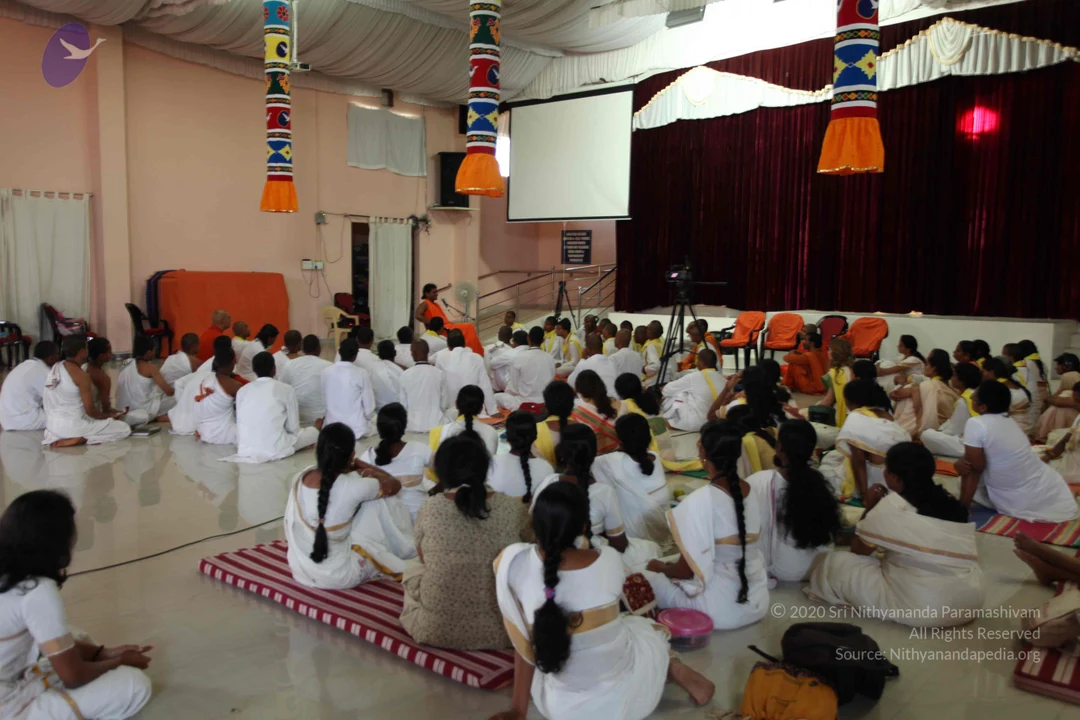
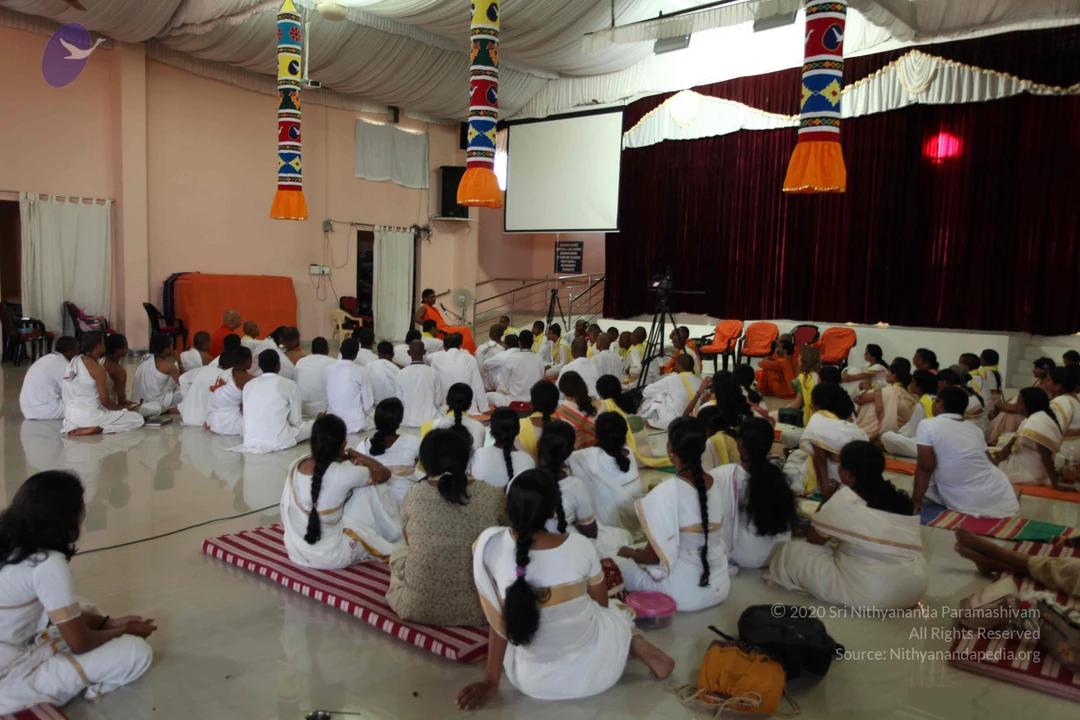
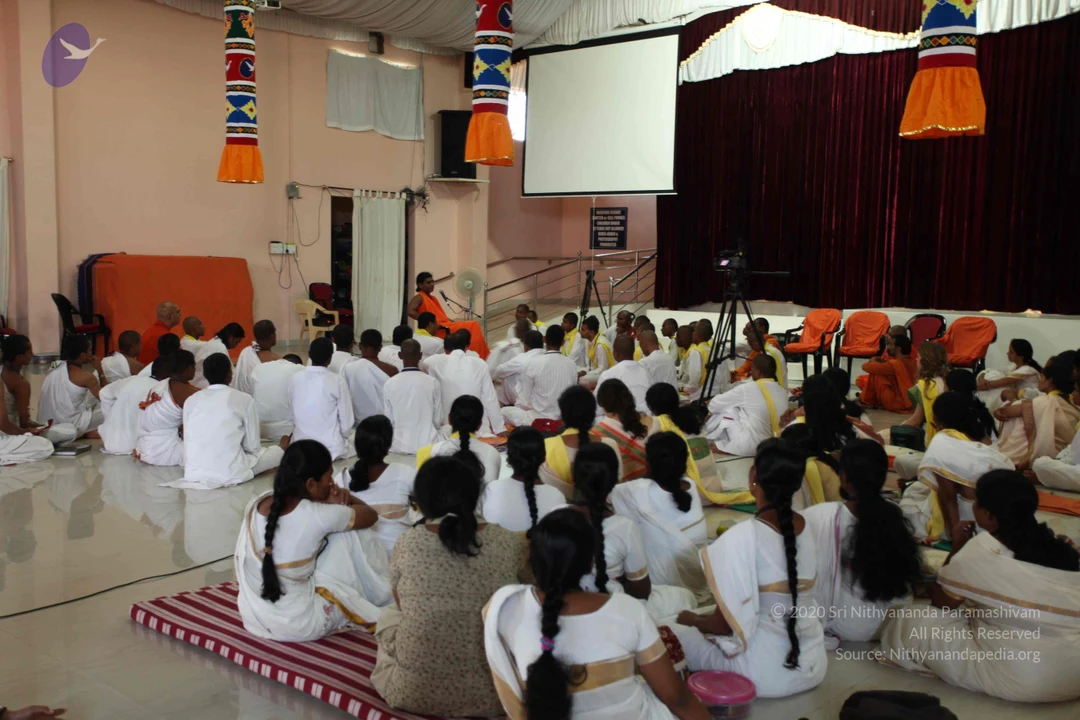
Wide indoor photo of a satsang hall with a white fabric ceiling, ceiling fans and tall colourful cylindrical banners with orange tassels hanging from above. Dozens of seated devotees in white clothes, several wearing yellow shawls, sit on orange and blue patterned mats facing a standing figure in orange robes at the far left. In the right foreground a man with short dark hair and a beard, wearing an orange robe, stands beside a microphone stand near the seated group. A woman with her hair tied back in a ponytail sits in white in the lower left foreground. Behind them, a decorated altar with deity murti and gold ornaments, red curtains, and rows of empty brown chairs complete the hall.A photograph of a golden shrine housing a large seated pair of deity murtis, one male figure with a tall crown, trident and bow-like staff and a female figure in a crown with a red garland, both dressed in yellow and green silk. Garlands of yellow, red and purple flowers drape the figures, and a shivalinga-like form with flower garlands sits on a gold pedestal. In front, a small green-robed seated statue of a saint with hands folded sits on a red-draped base. Tall brass oil lamps with lotus-shaped tops flank the shrine, and pink satin cloth hangs below. Pillars and arches surround the shrine with a green garden behind. No people are visible.A photograph of a temple shrine with a large deity murti dressed in a yellow and pink silk garment, its ornate gold and silver arms raised behind a tall, gold-framed alcove. In front stands a golden peetha with a cylindrical silver-and-gold kalasha-like object wrapped in garlands of yellow, orange, red and white flowers. A white marble statue seated in lotus-like meditative posture is dressed in a green robe with a red-and-gold shawl and a green-and-orange headwrap, adorned with a garland of red and yellow flowers. Tall brass oil lamps (deepas) with lit flames flank the scene, and smaller brass vessels and an offering plate sit on the floor. A small green-clad figure, possibly a deity statue, stands at the right edge. No living people are visible.

October 13 2010

Original wiki page
Contents

Title

Practising the Presence of God

Narration

The Supreme Pontiff of Hinduism, Jagatguru Mahasannidhanam, His Divine Holiness, Bhagavan Nithyananda Paramashivam, expounded on the Cosmic Principles of Presence of God during the everyday live public talk - Nithyananda Satsang. In this talk entitled Practising the Presence of God, The Supreme Pontiff of Hinduism shared how there is no shortcut for Enlightenment. He shared a story of a sincere disciple who exclaimed that there is no place where God or Guru is not observing or seeing me because he feels his presence everywhere. His Divine Holiness explained how you need to iron out your 24 hours with a clear understanding of practicing the presence of God in your body, mind, actions and everything with tremendous respect. He then gave blessings to practice the presence of the Guru and God and experience and radiate Enlightenment.

Video and Audio

VideoAudio

Transcript

(0:21)

|| Sadāshiva samārambhām Shankarācāryā madhyamām | Asmat ācārya paryantām Vande Guru Paramparām ||

(0:49)

Alright. Today I wanted to share few truths about, ‘Practicing the Presence of God’. There is a very beautiful story. You all would have read this story in school. There was a Guru and he had ten disciples. There was one chief disciple - very brilliant and highly spiritual. So naturally guru was giving attention to that disciple more. So the jealous started among other disciples. So all the other disciples wanted to defame, abuse, disrespect this chief disciple, who was getting too much of Master’s attention. Somehow they wanted to move him out of Master’s attention. Master also observed. He observes everything, even though you think he sits with closed eyes. He observed what goes on - all the absurdity which goes on when he is with closed eyes or when people think he is with closed eyes.

(2:31)

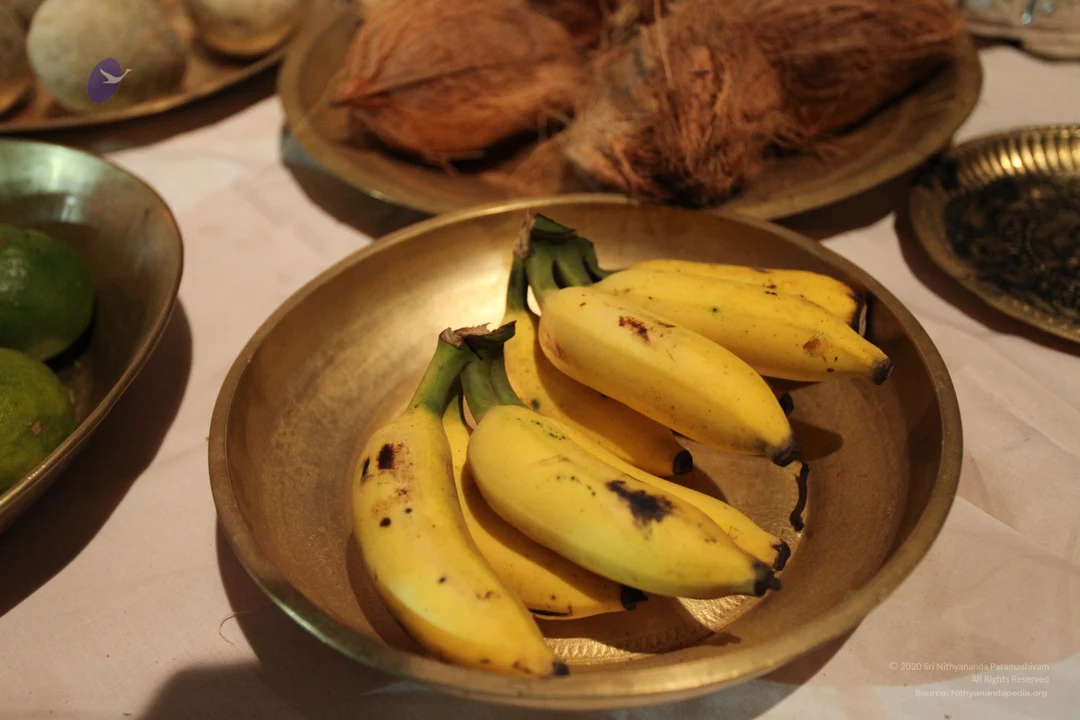
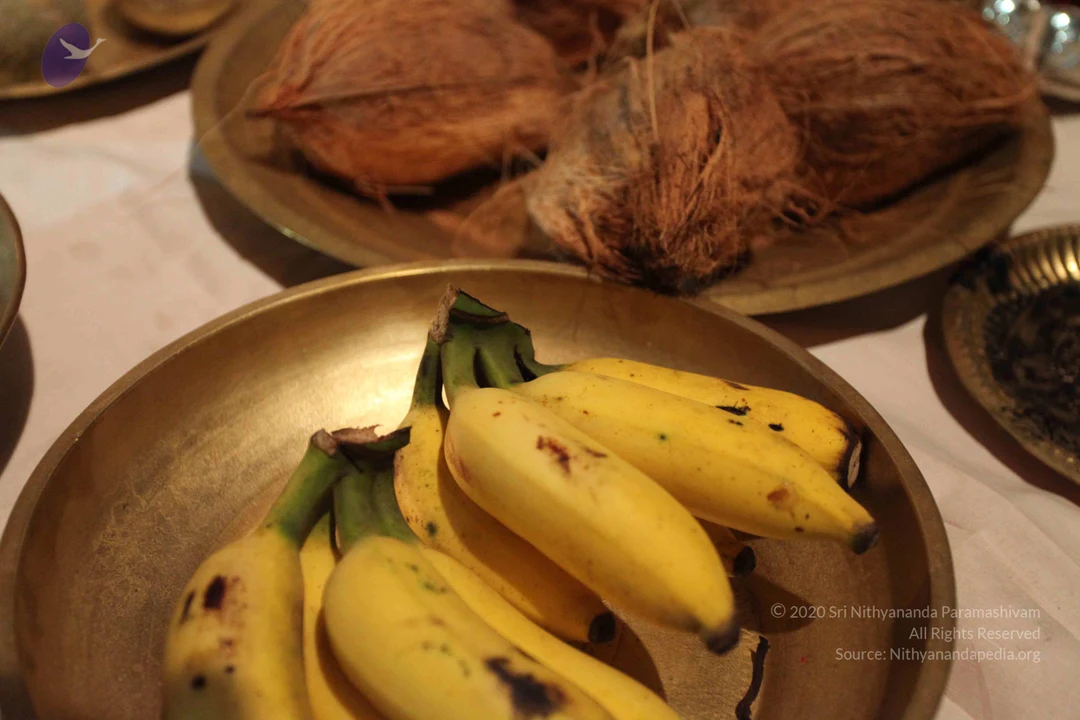
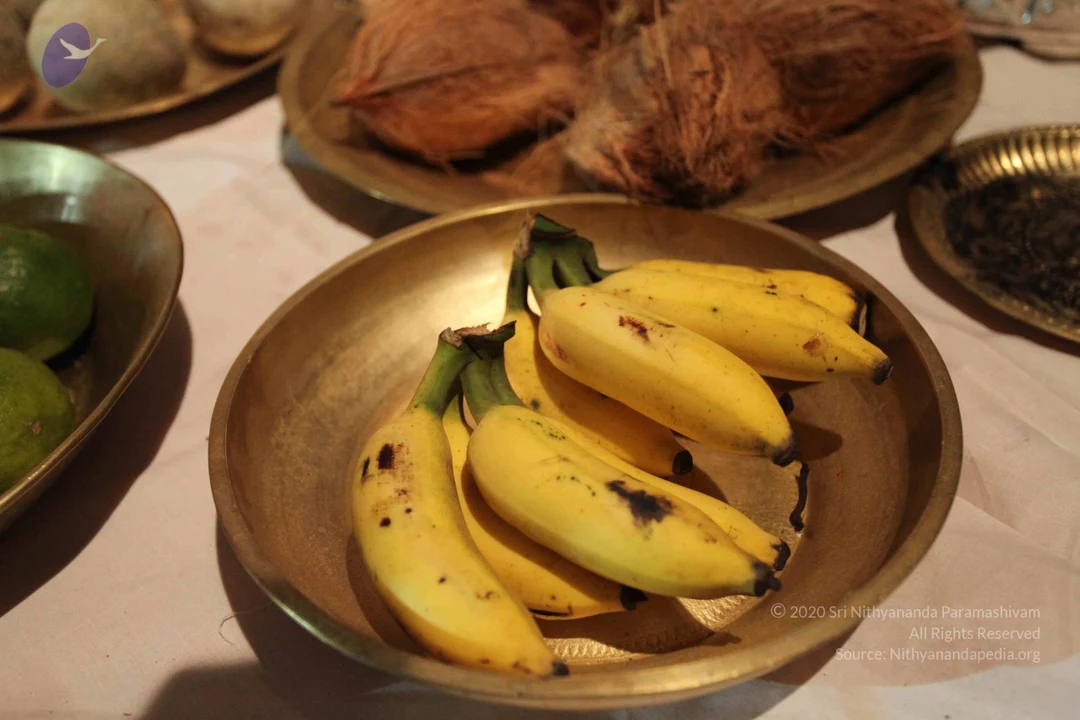
One day he wanted to tell, all the disciples, why he is giving more importance to that chief disciple, the sincere disciple. So he called everybody, kept a small test, giving each one of them, one-one banana and telling them, “Go and eat in a place where nobody sees you, where you are not observed by anybody”. All the fellows ran here and there. One ran behind the kitchen; one ran behind the sarovar; one ran outside the gate; one was hiding in the temple godown. They all ate and came back, except this chief disciple. He came back with the banana, without eating it. All the disciples asked, “Why? Did you not find any place?” He just kept quiet. Master asked, “You did not find any place where nobody was observing you?”. The disciple says very beautifully - it’s a very small story all of you would have known - “Master, I am not able to find any place, where God is not observing me, where God is not seeing me. I feel everywhere his presence.”

(4:11)

This story was known to all of you as a knowledge; unfortunately, did not become wisdom. This story has multiple layers of meaning and understanding. First thing, there is no shortcut for spirituality. There is no shortcut for Enlightenment. There is no technique for Enlightenment. Technique means shortcut. There is no shortcut. You have to iron out your 24 hours with a clear understanding of practicing the presence of God. In your body, mind, actions - in everything, that clear, intense awareness has to be imbibed.

(5:13)

Second thing; whatever you experienced as God; when you experience me, some will have 30% fear and 30% love, 30% confused emotions. Some will have maybe 50% fear, 40% confused emotions. Some will have 100% fear. Some will have 100% love, no fear. Different ways you will be experiencing the Guru. Whatever you experience as Guru, that’s what you, your experience as God; you have no other experience.

(5:59)

Whatever may be the experience you have about Guru - whether it is with fear or the attitude of ‘Master and Disciple’ or the attitude of ‘Father and Son’ or the attitude of ‘Mother and Son’ or the attitude of ‘Friend’ or the attitude of ‘Beloved’ - practice 24 hours. Two thing will happen. One, your action will fall into awareness. Second, that fear - whatever the lower experience you have about the Master - will extinct, will be burnt away. The percentage of fear you experienced with me will be burnt away. The percentage of other emotions except pure Surrender, you experienced with me, will be burnt away.

(6:58)

This two thing is possible, only by practicing intensely, the presence of Guru - practicing the presence of the Master. When you sit in your office, think, ‘This place is owned by Swamiji; how Swamiji will maintain this office?’ When you sit and talk to people, ‘If Swamiji is here physically how will I talk?’ When you do Guru Puja when I am here physically just remember, ‘If he is sitting with open eyes how I will do?’ Practicing the presence is the only way, is the only way, only way. Your arrogant egoistic logic can go on justifying, “No, there is some other technique or you can go on postponing with it”. That is what I call ‘hypocritic loopholes’.

(8:09)

The air hole, air bubble in the copper wire will not allow the copper wire to be a conductor; electricity will never flow. Same way, the hypocrisy between the relationship; when you practice my presence...The hypocrisy you handle - you have it - it’s like air bubble, will not allow the guru-disciple relationship to happen, will never...The presence will permeate, penetrate you. Practicing the presence with tremendous respect is the only way. That is the only way.

(9:04)

My blessings to all of you to practice the presence of the Guru and God and experience and radiate Enlightenment. Achieve, live and radiate the Eternal Bliss. Nithyananda. Thank you.

(9:30)

Photos

Panchatapas
Paadapooja

Morning-Satsang

Sarvadarshan

Dasara-Culturals

Ashramites-Meet-With-Swamiji

Navaratri-Homa

Nithyanandeshwara-Paramashiva-Golden-Temple

Photos Of The Day:

Culturals

Paadapuja

PanchaTapas

01-Temple

02-Pada-Puja

03-Morning-Satsang

04-Sarva-Darshan

05-Pancha-Tapas

06-Dhasara

07-Swamiji-Meet-With-Ashramite

08-Evening-Homa

Photos from this day

View all 509 photos

Panchatapas
7 photosSource gallery
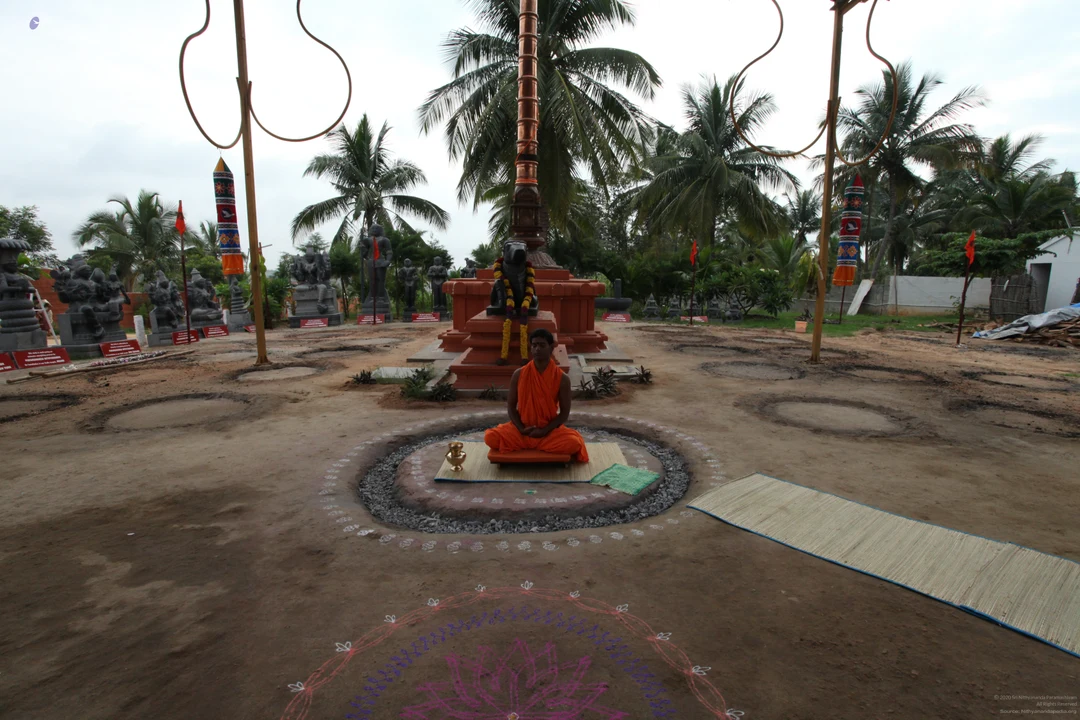
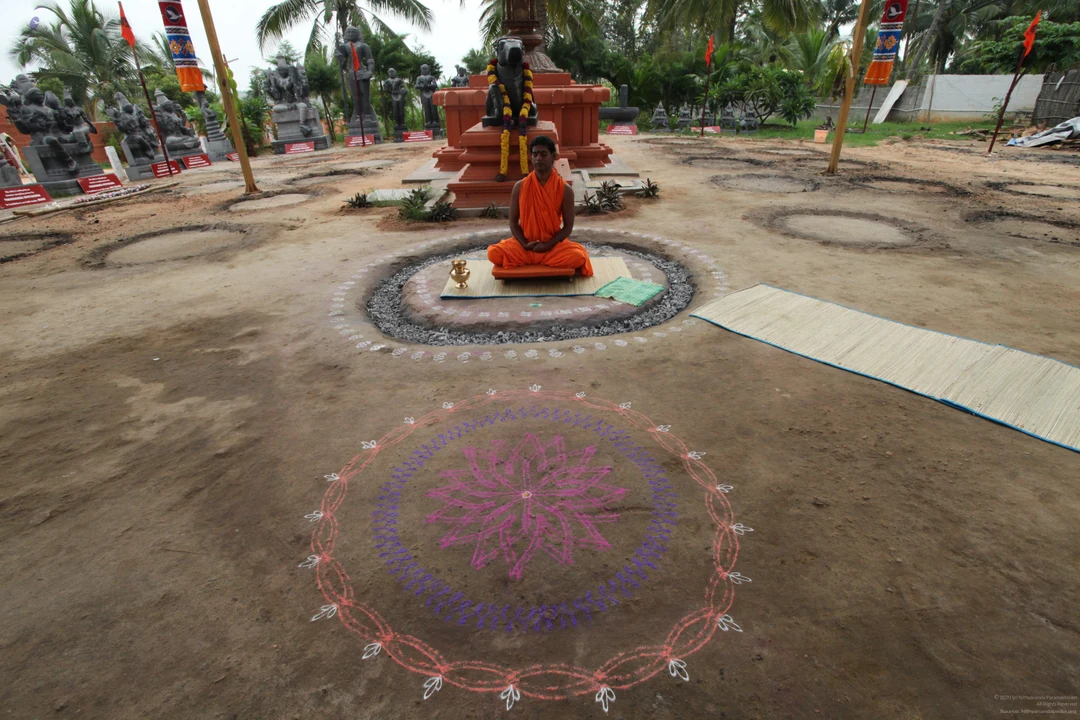
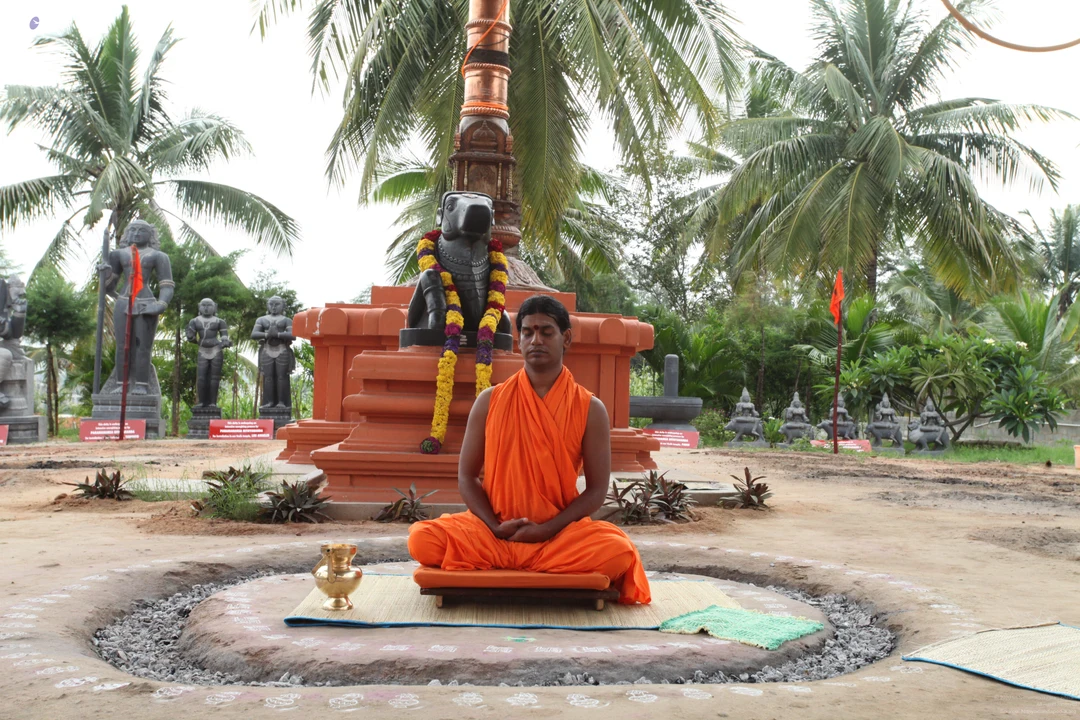
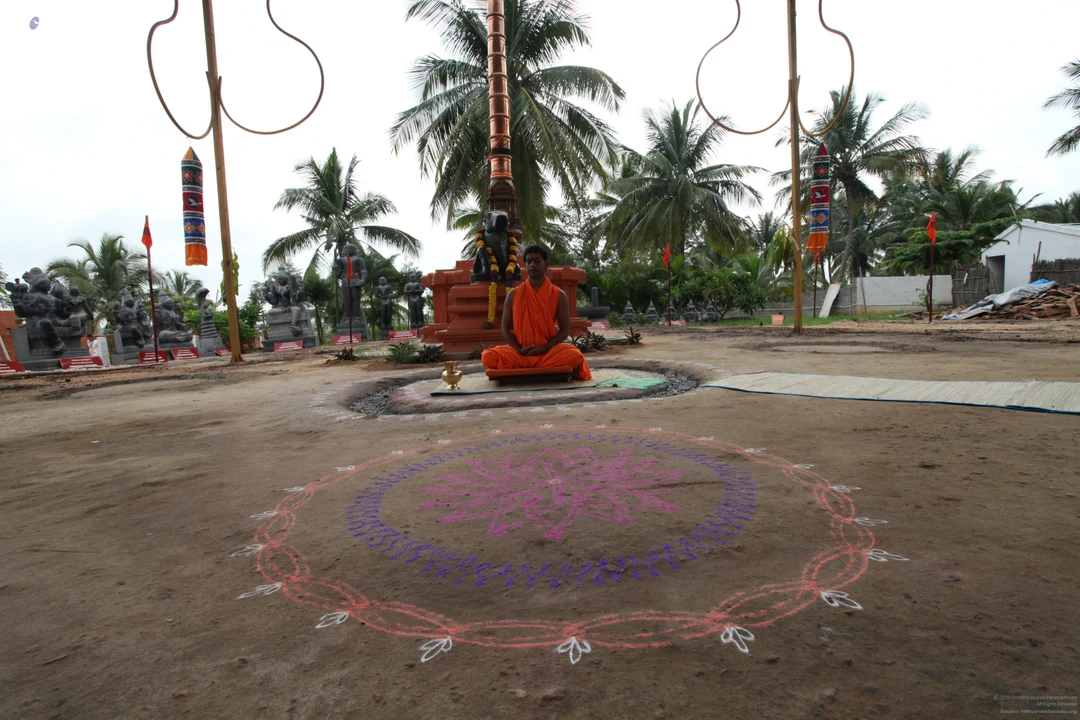
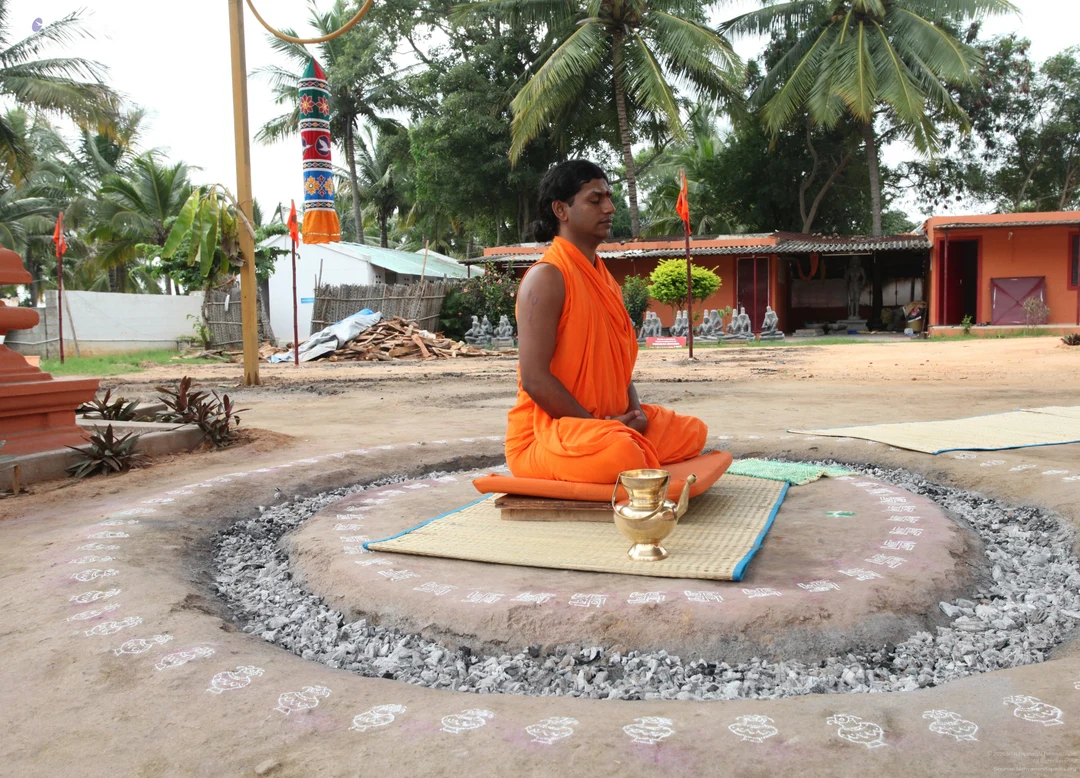
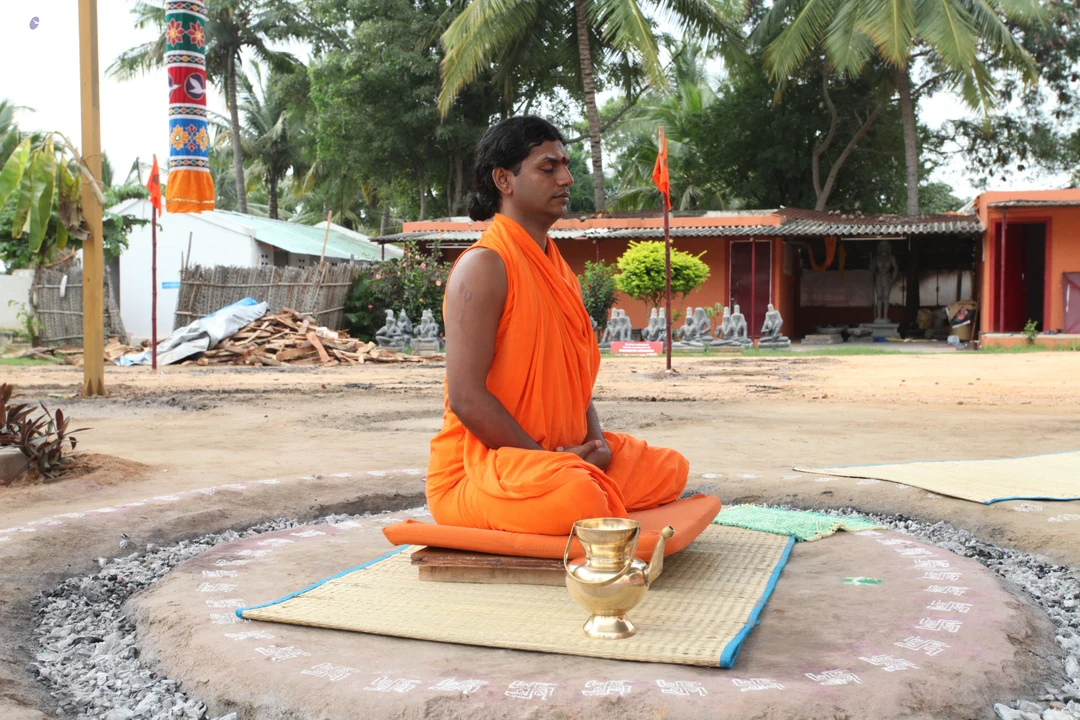
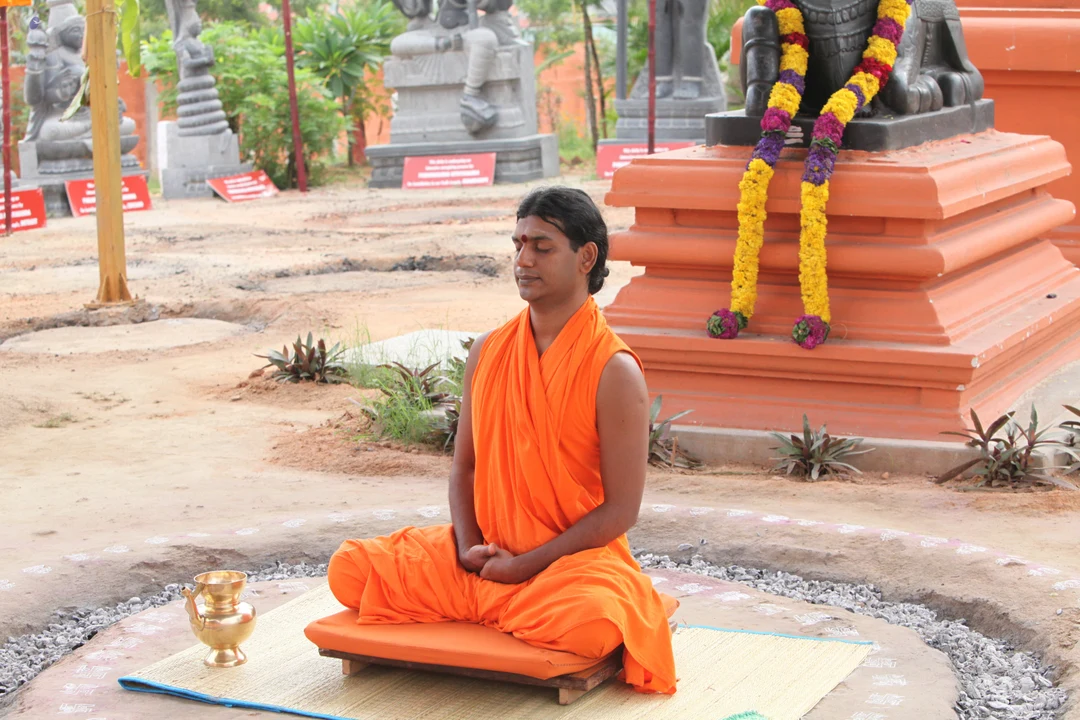
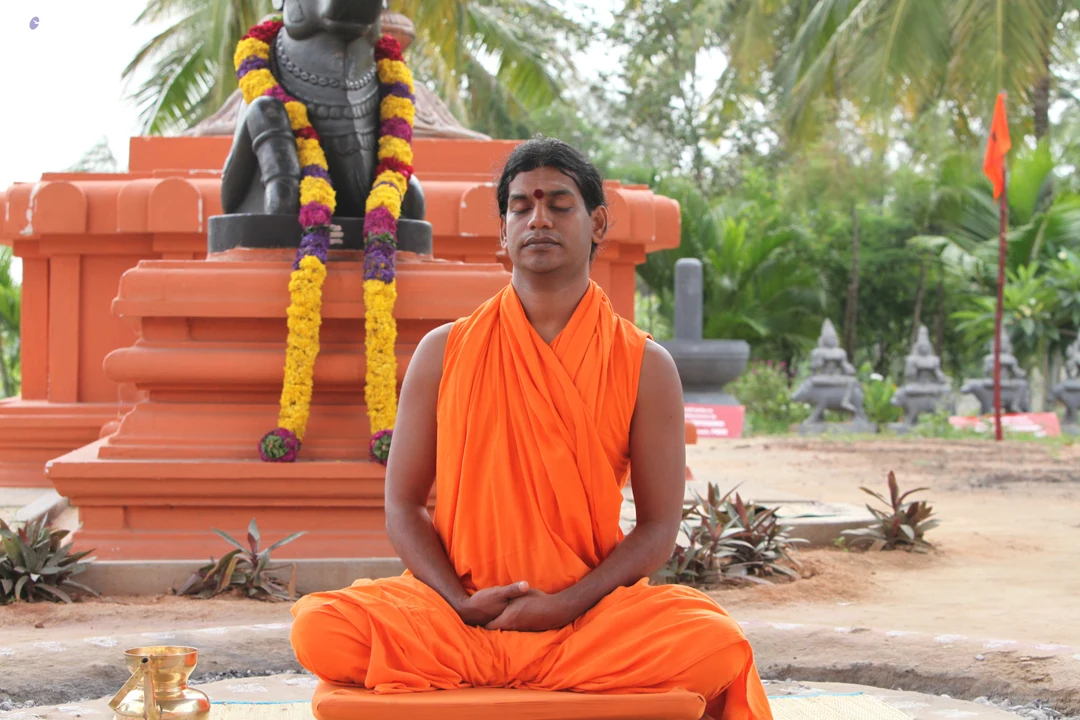
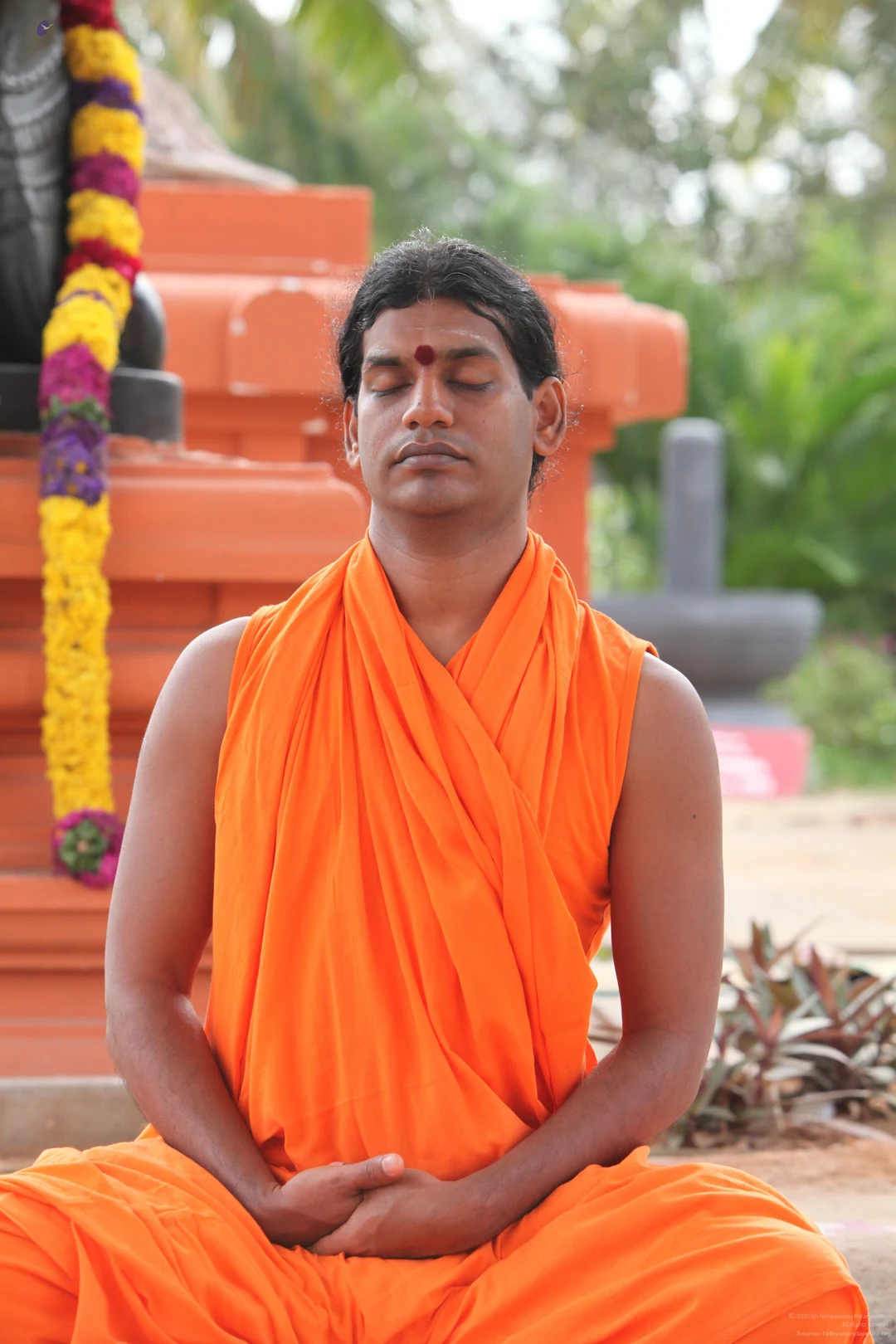
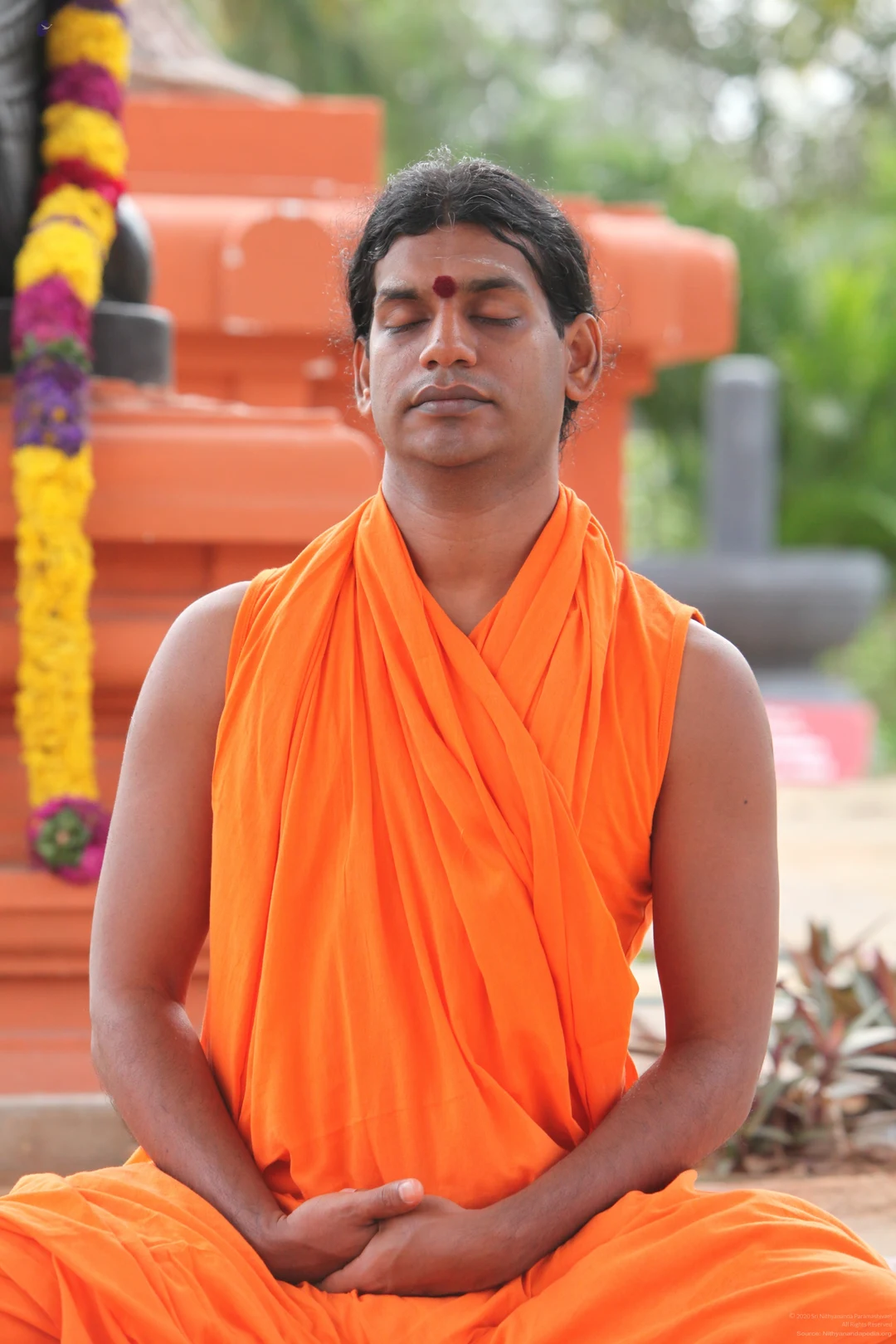
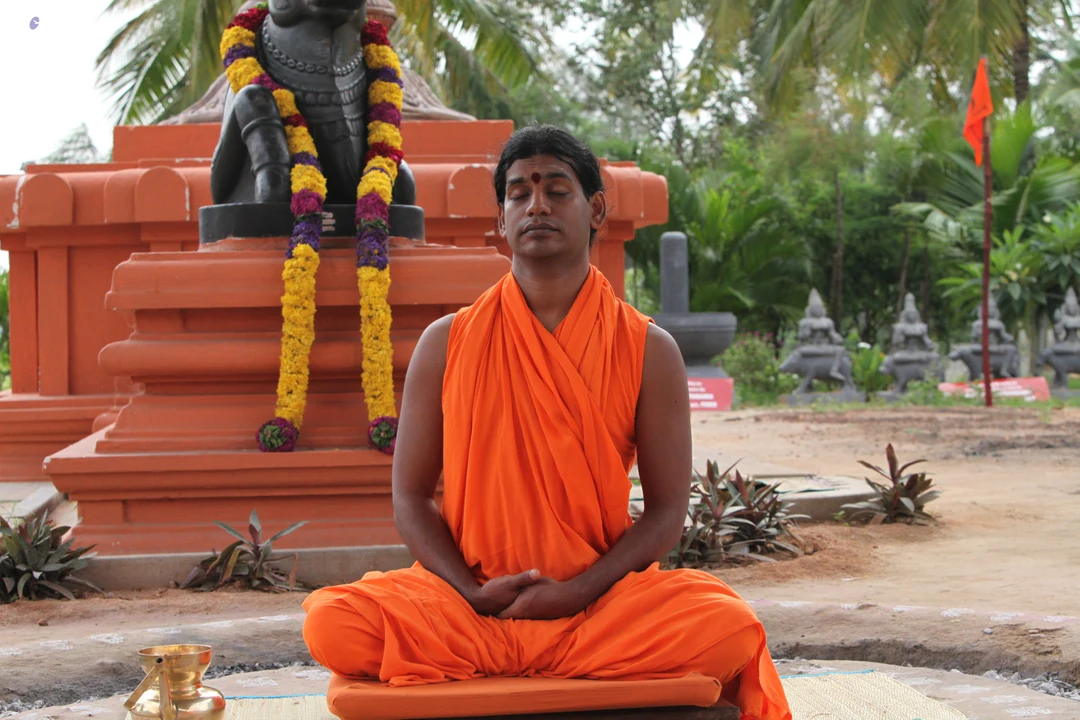
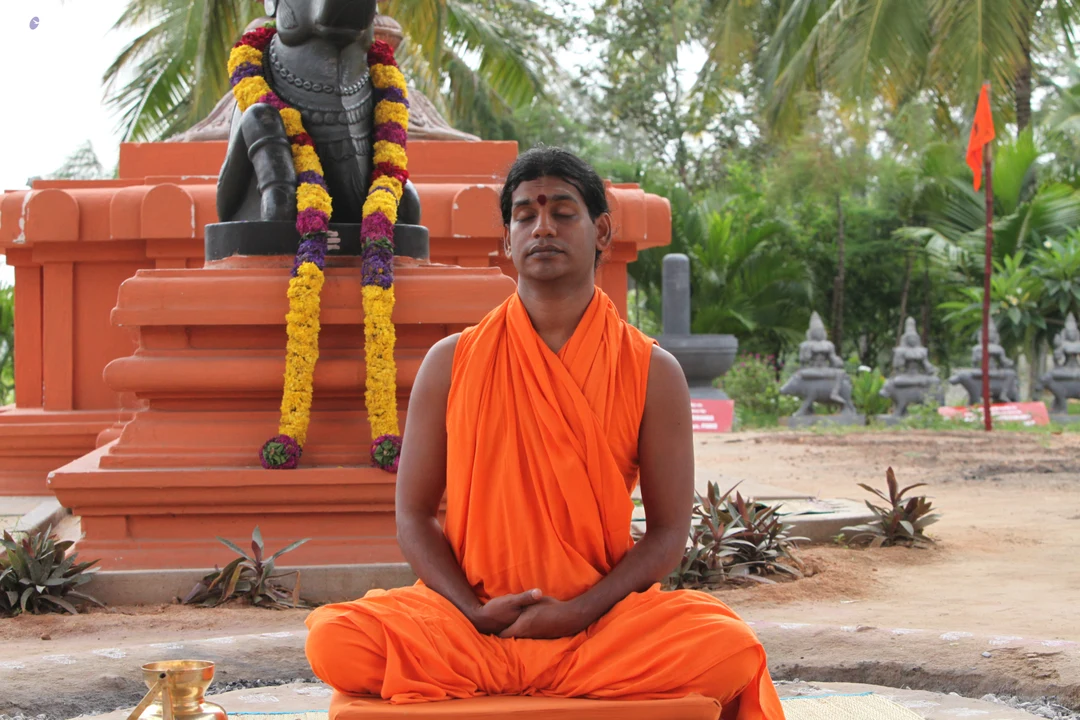
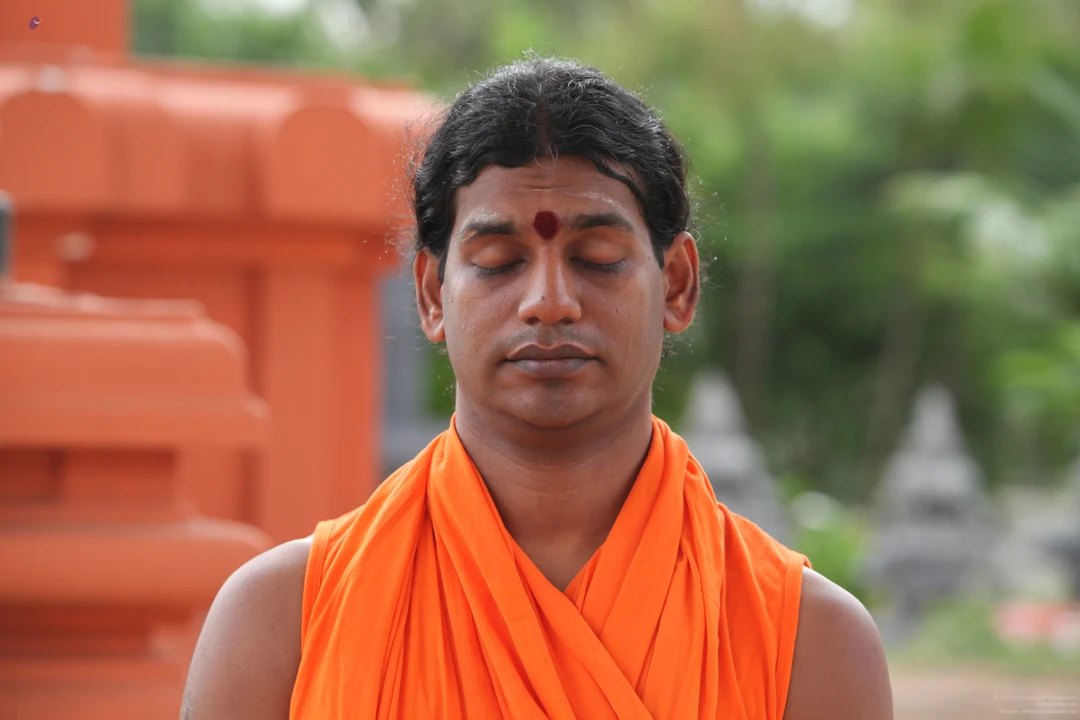
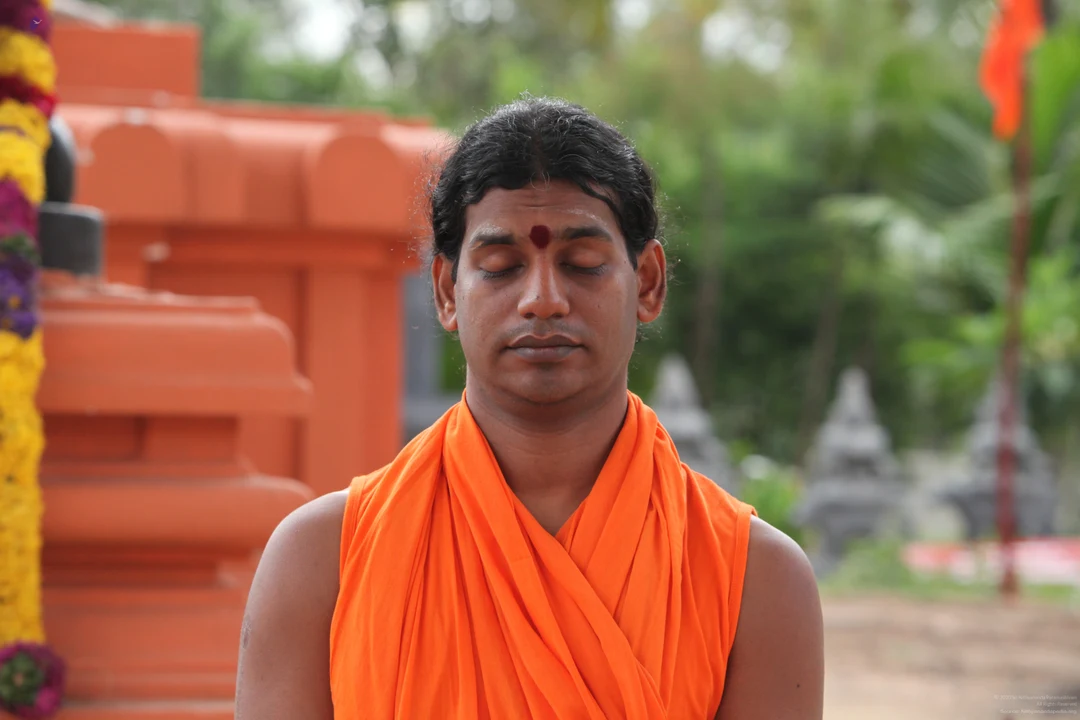
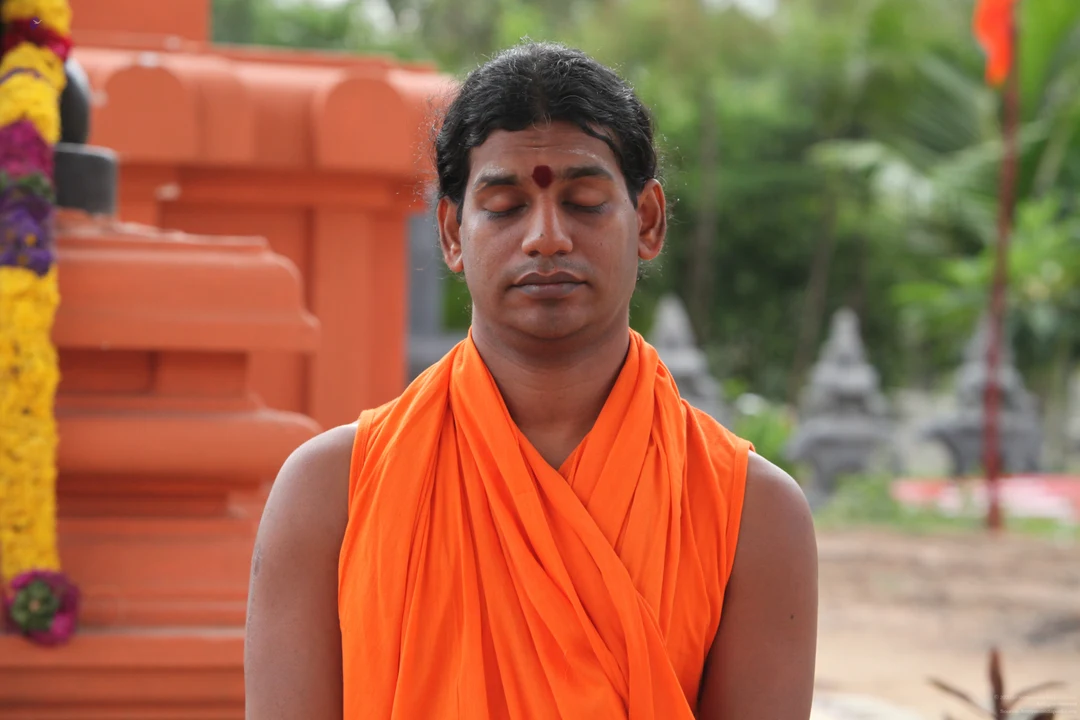
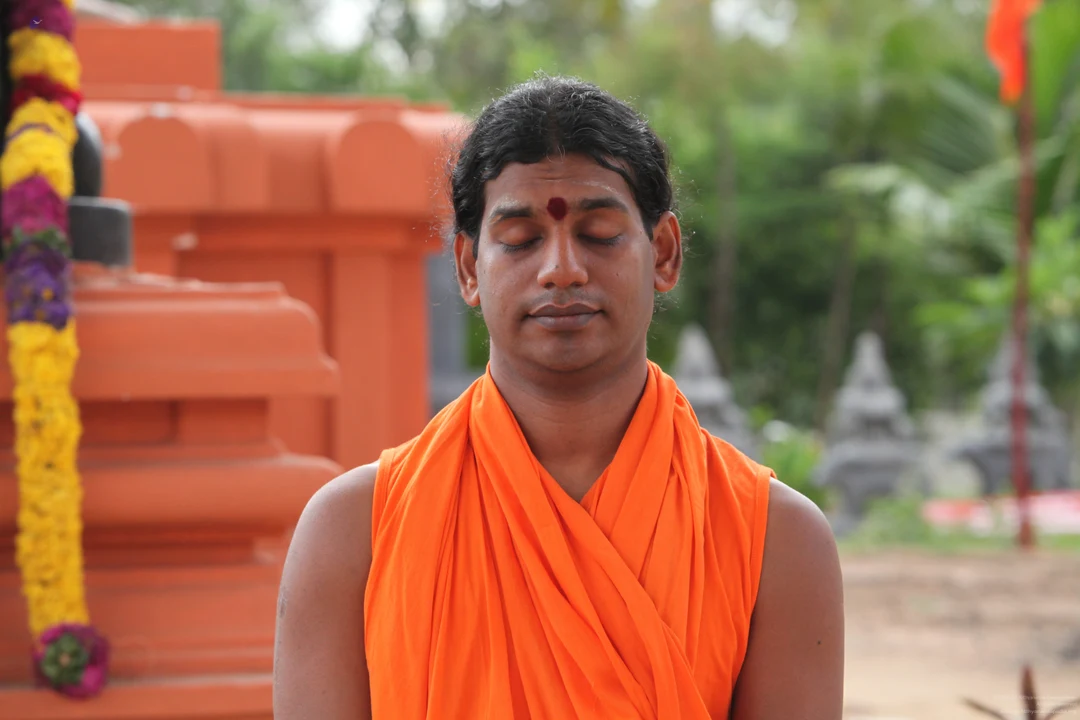
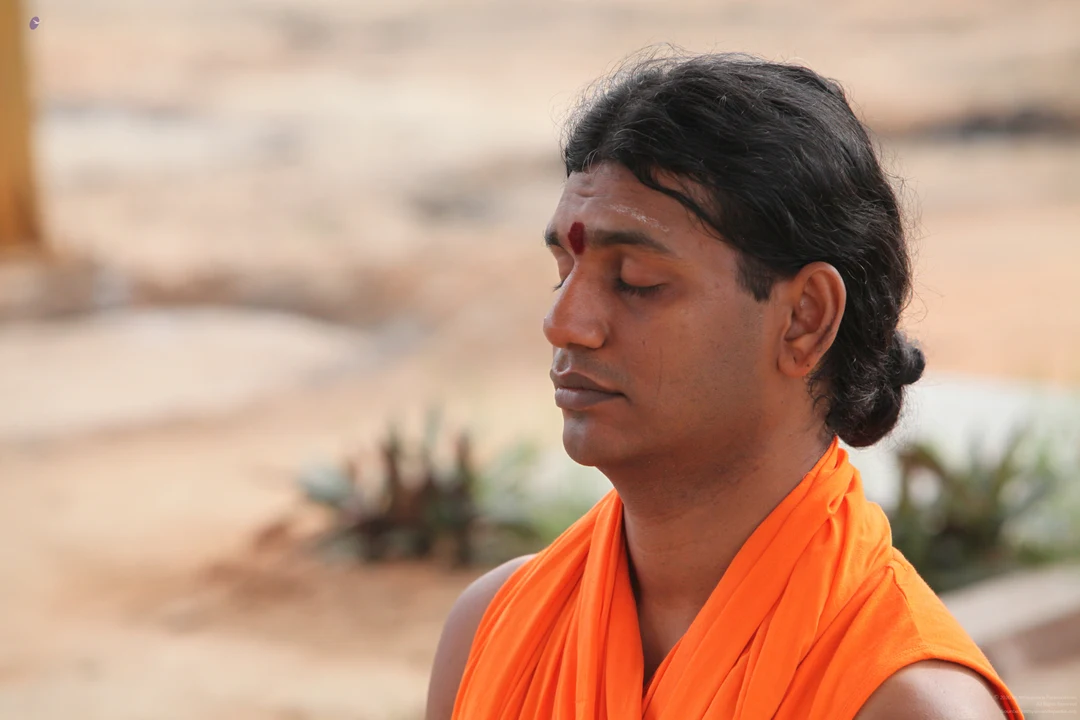
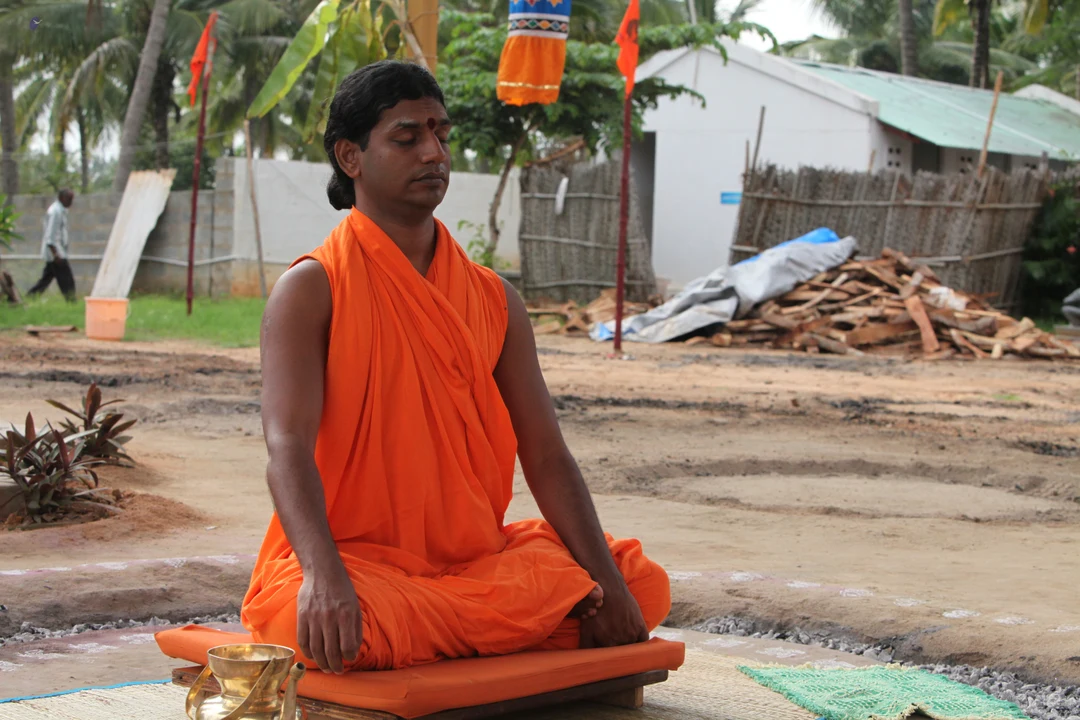
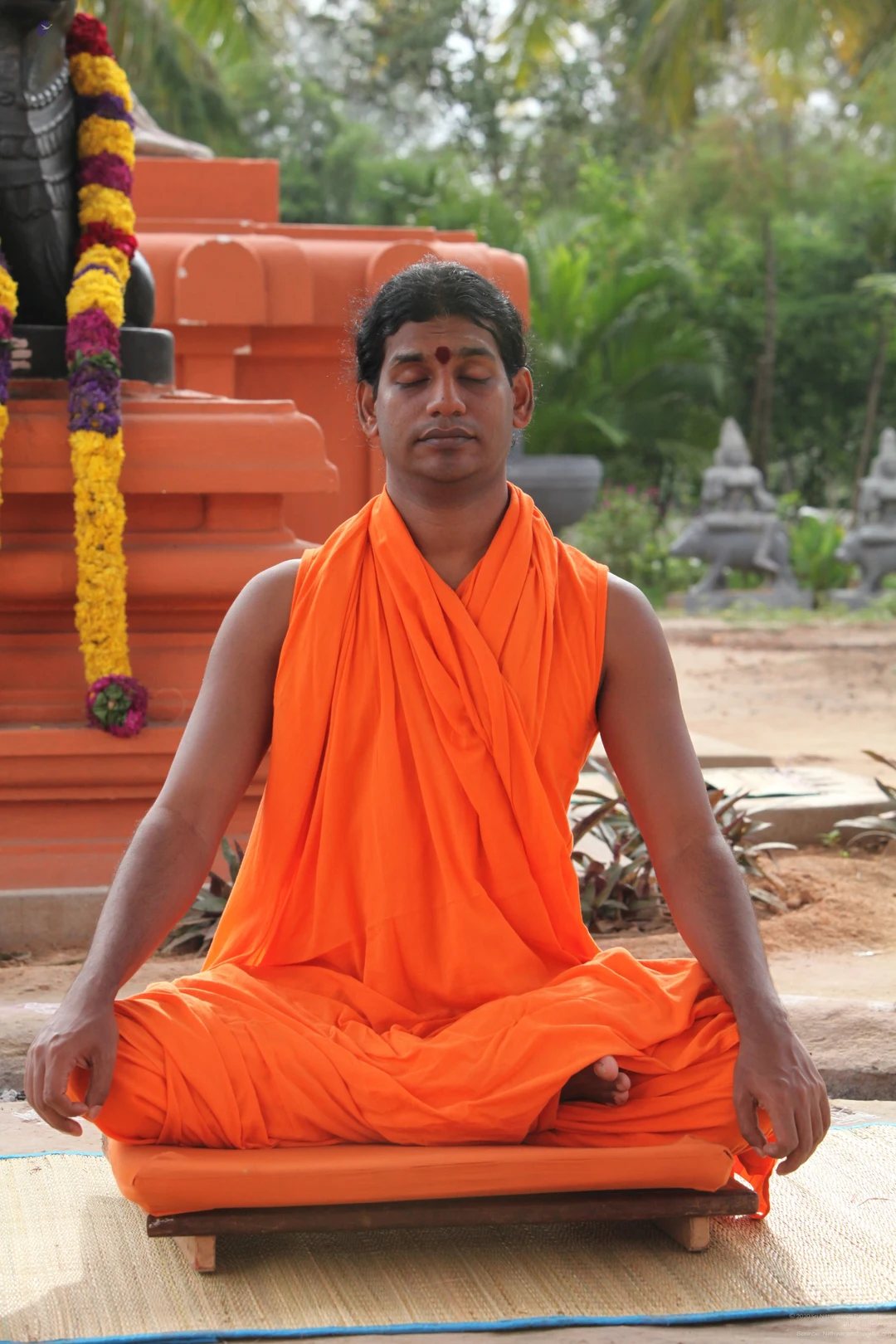
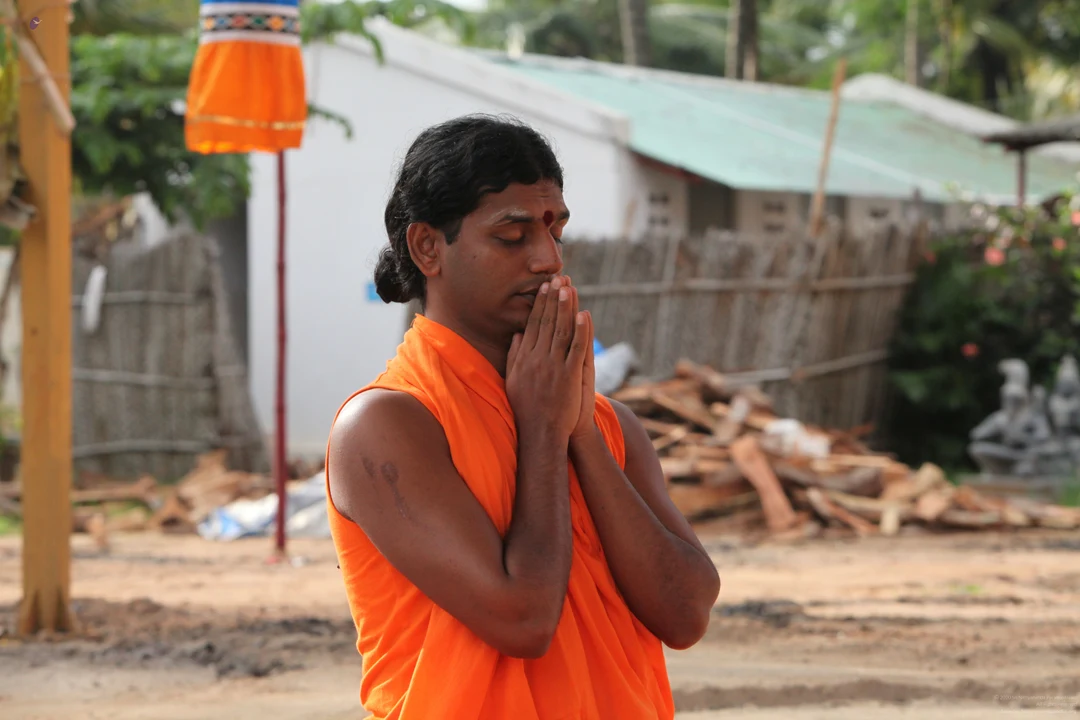
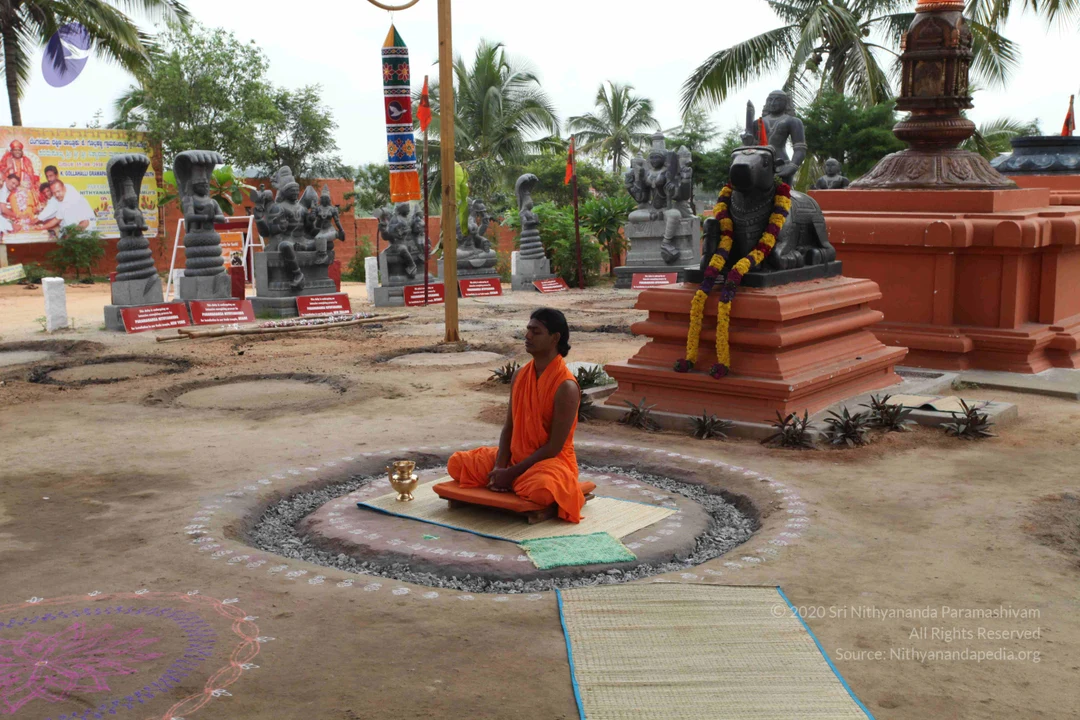
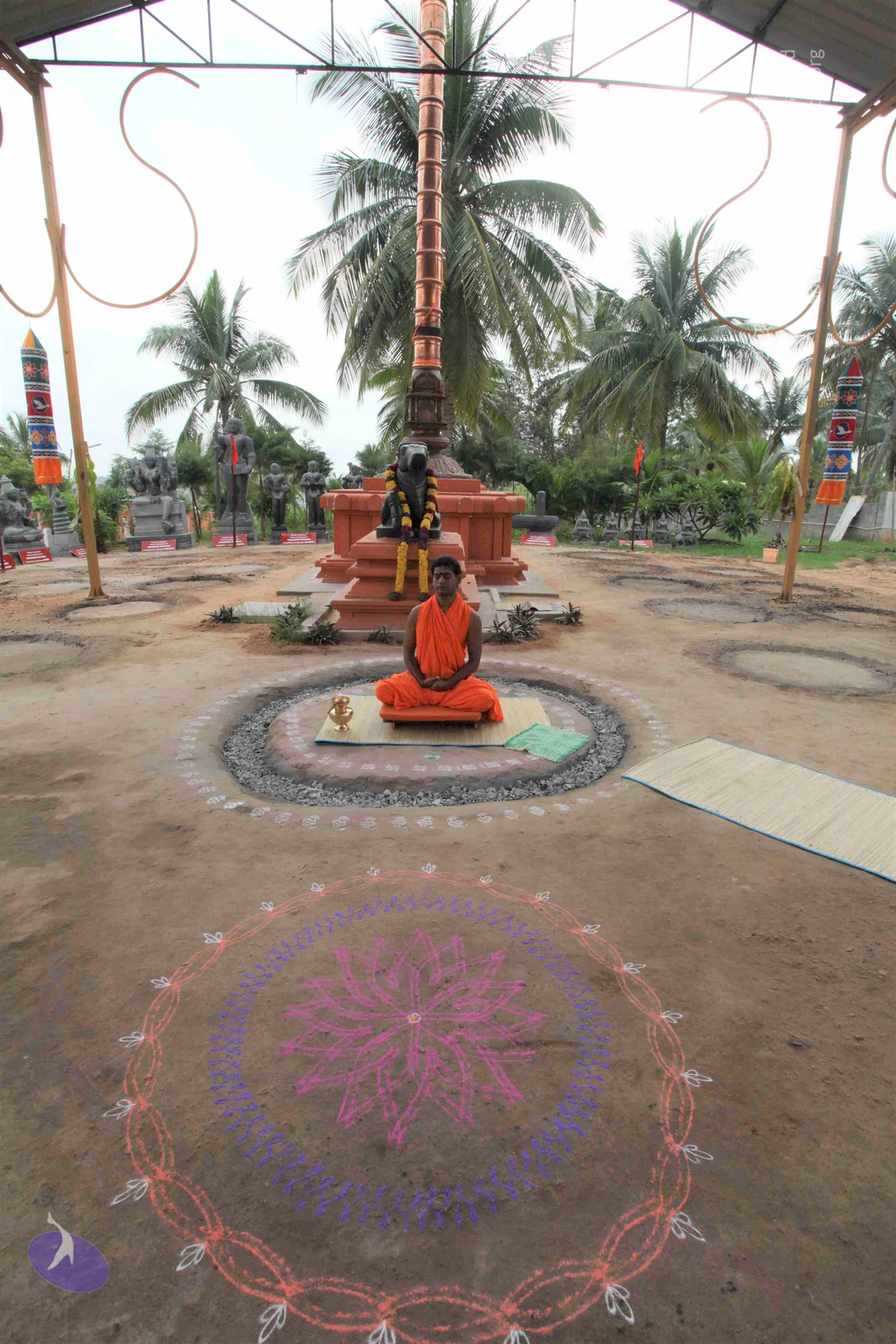
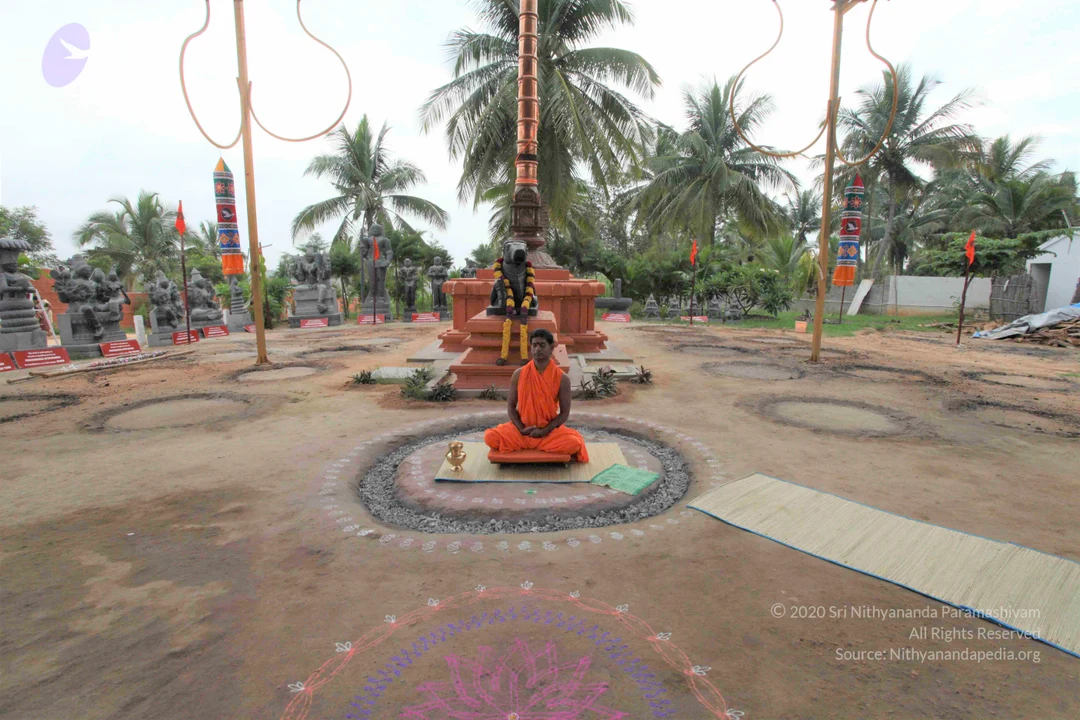
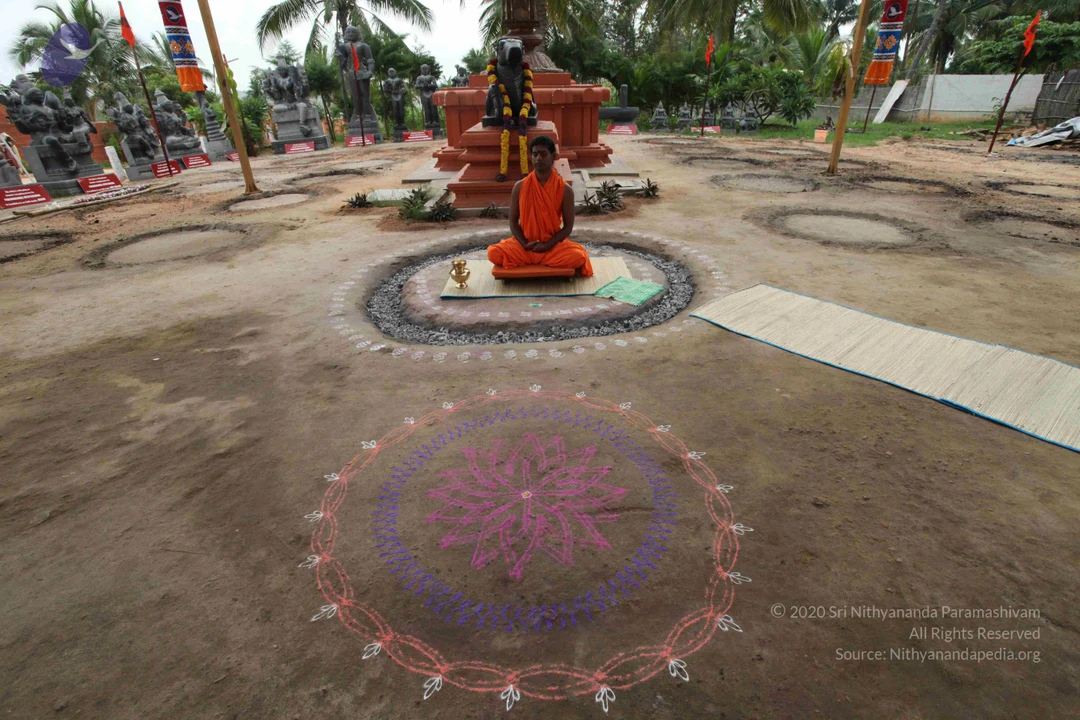
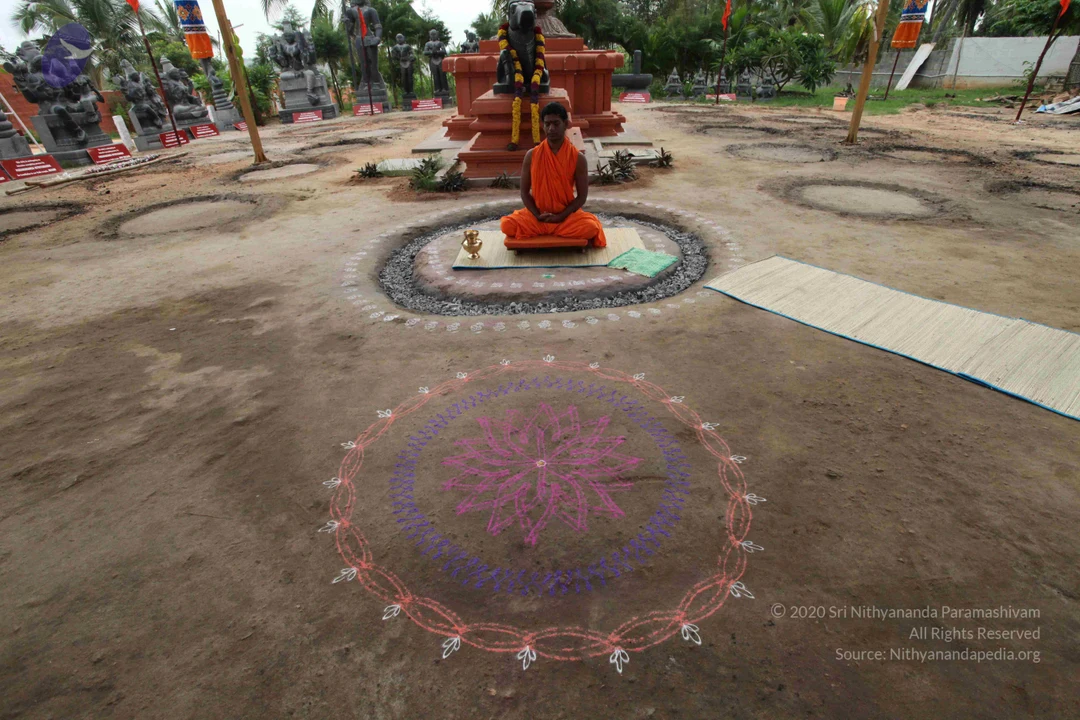
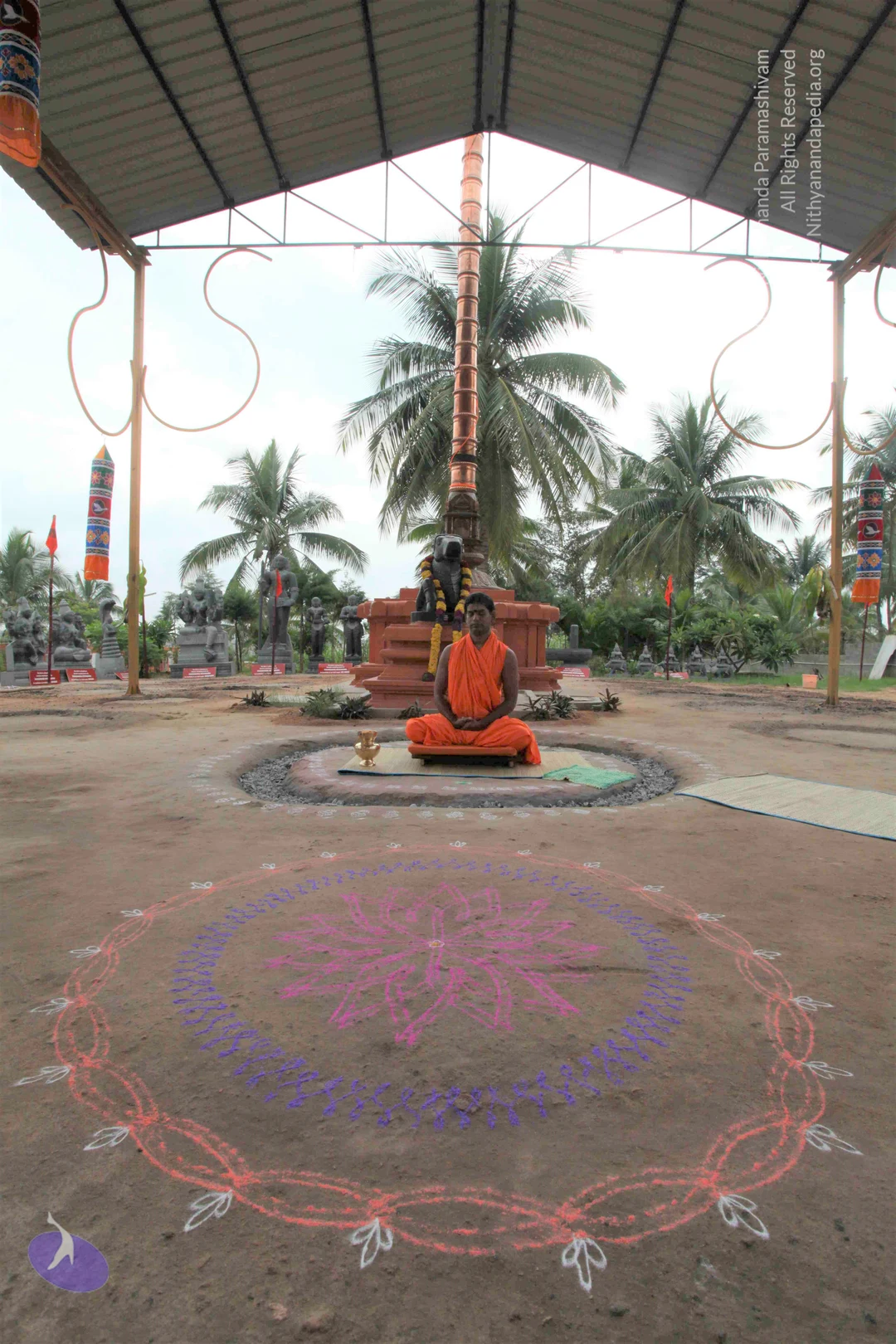
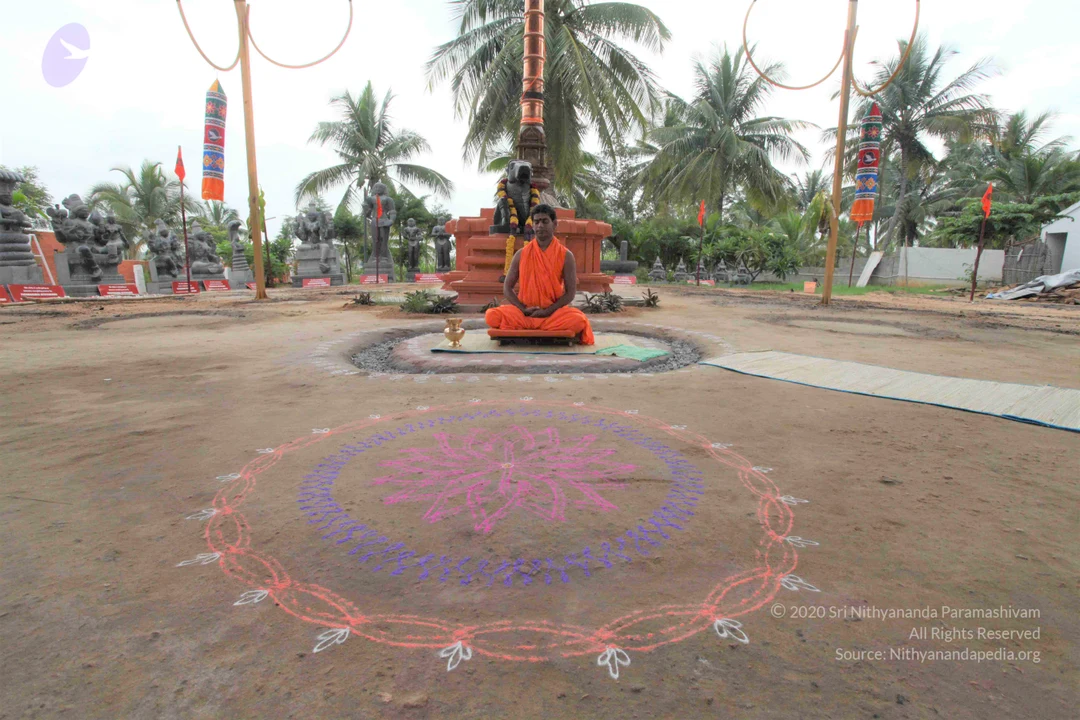
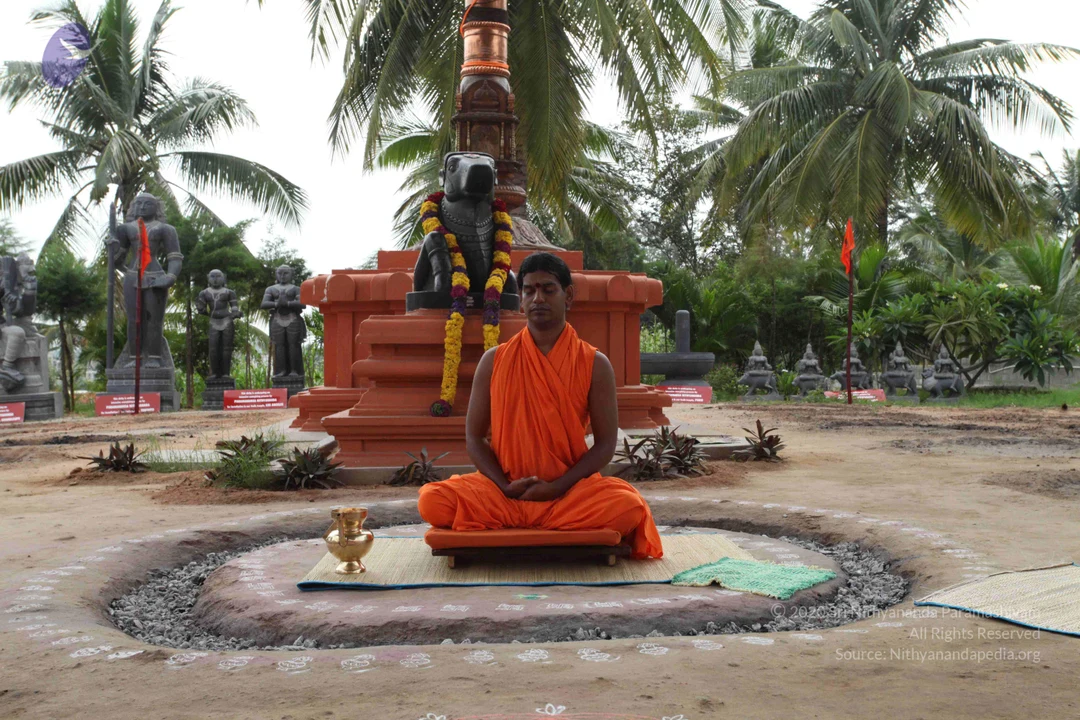
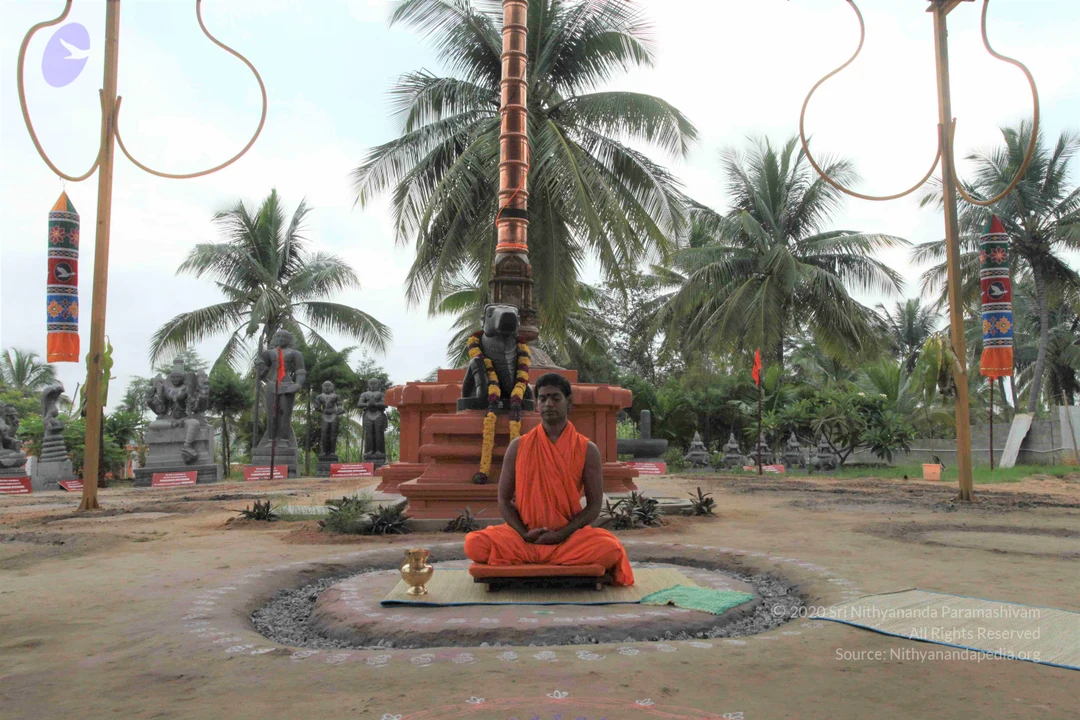
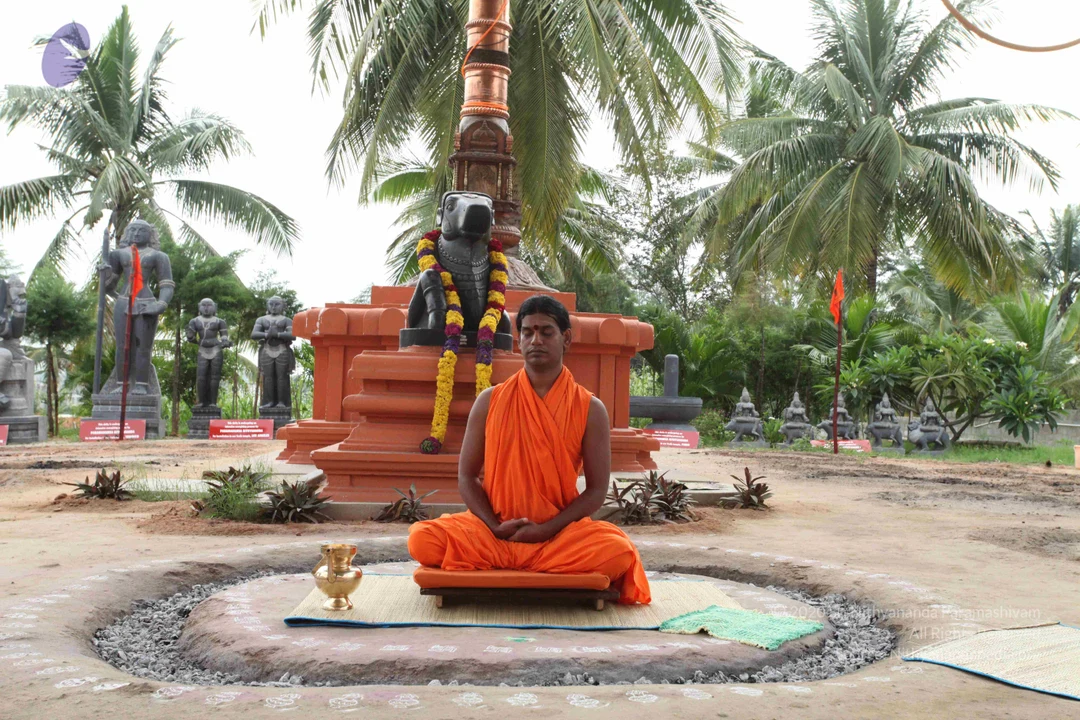
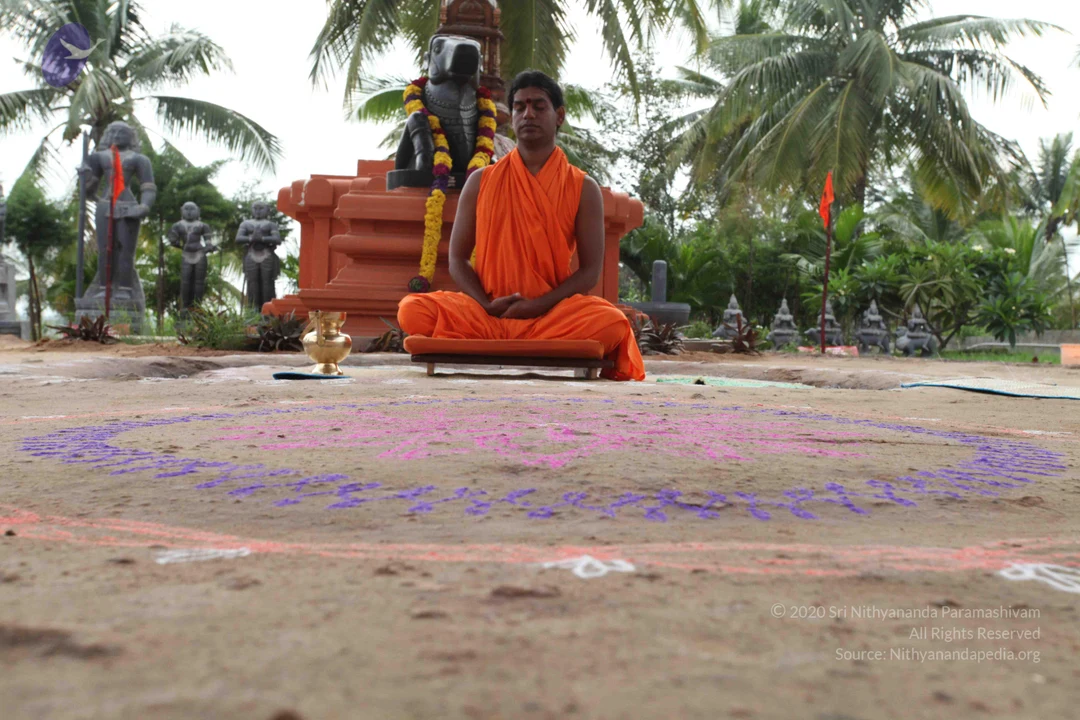
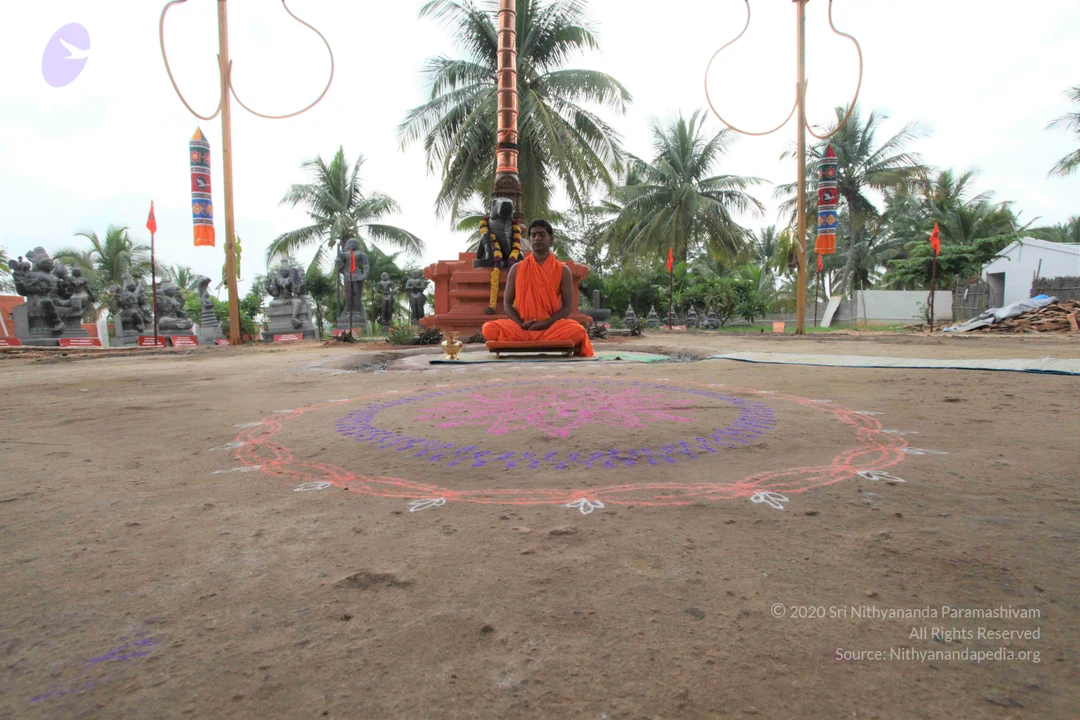
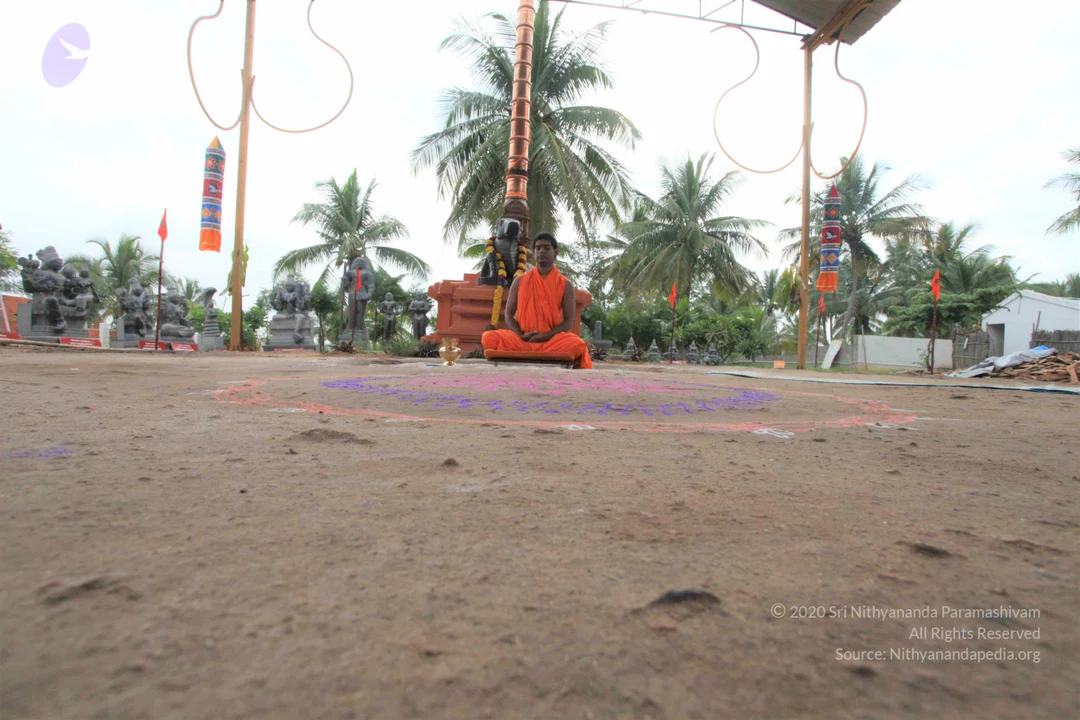
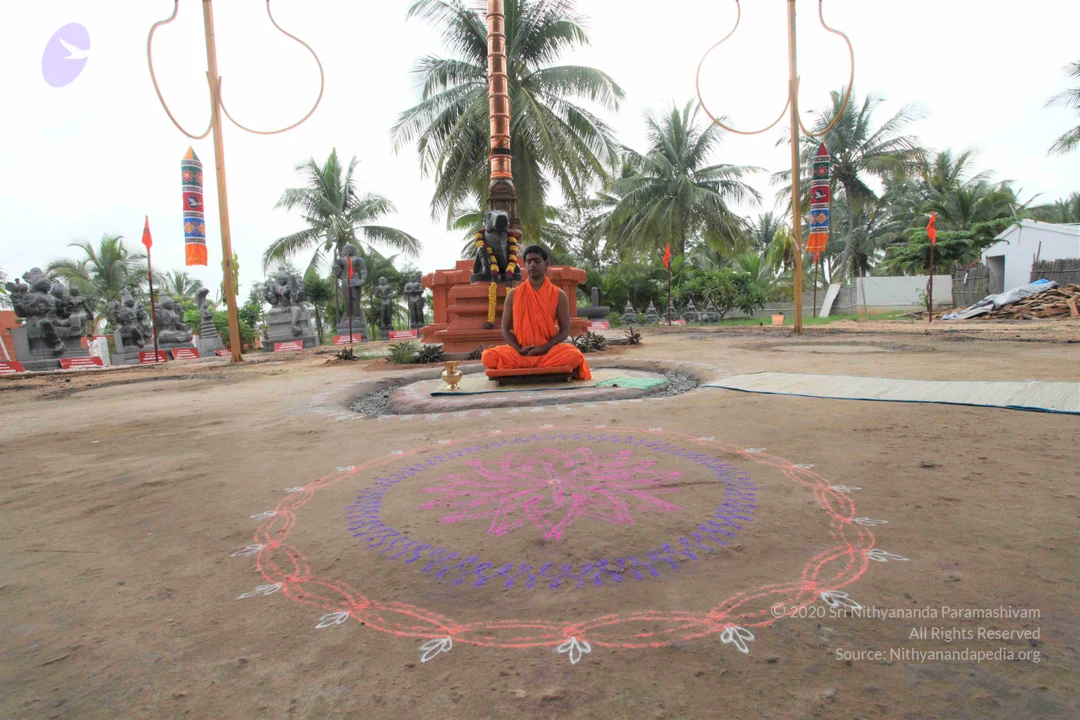
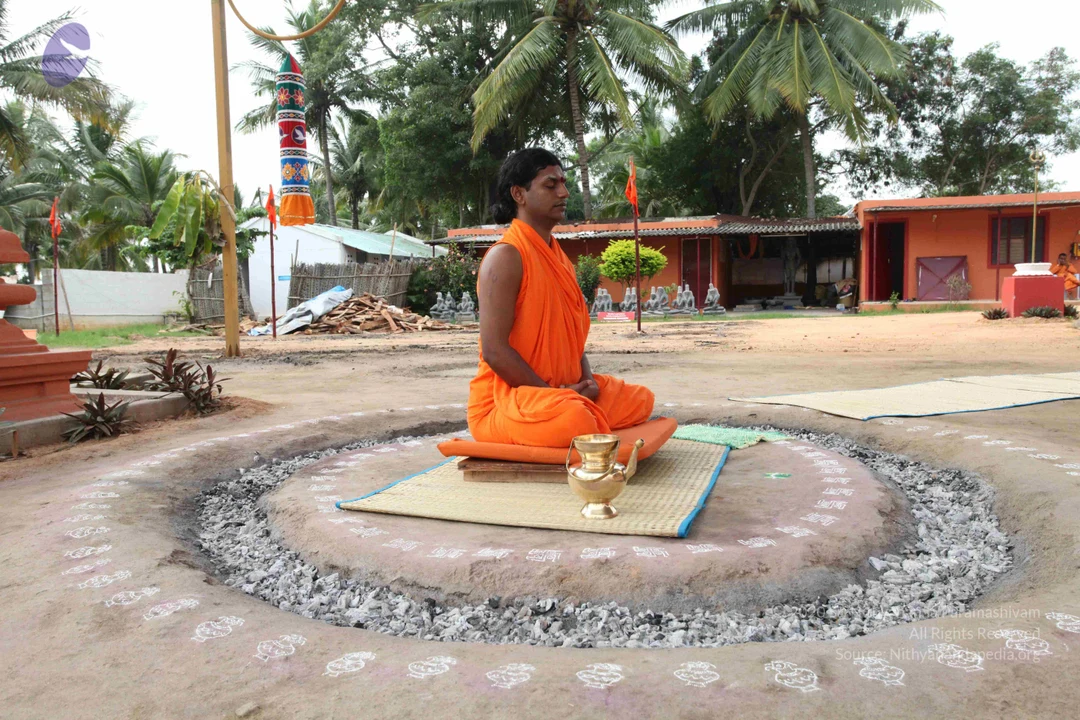
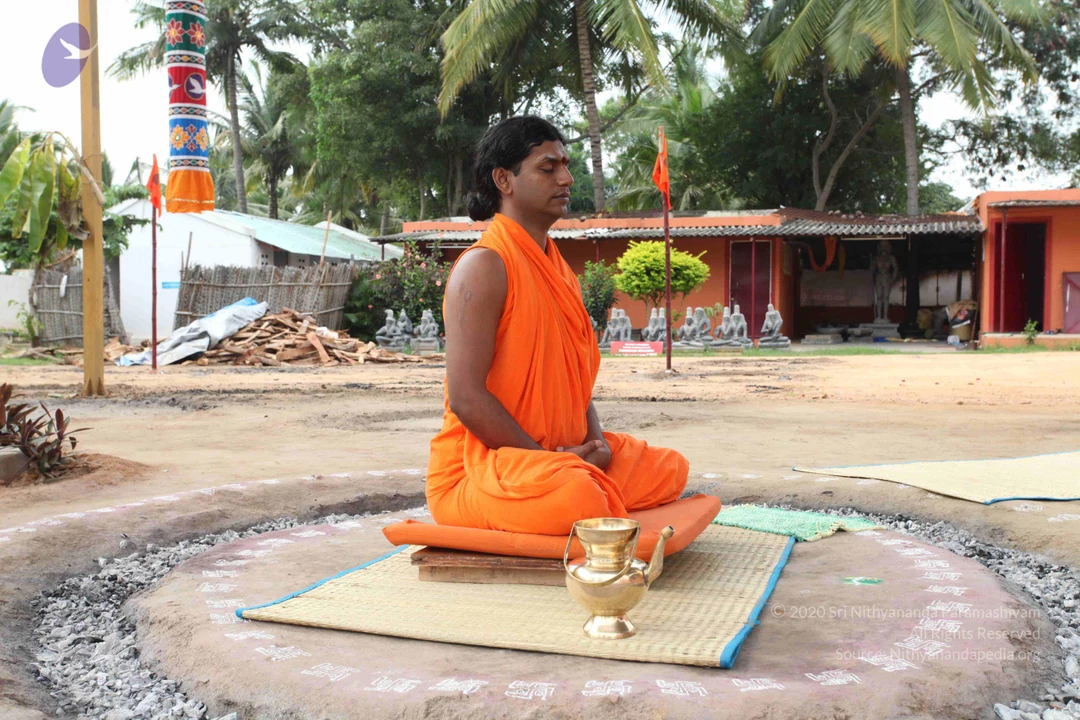
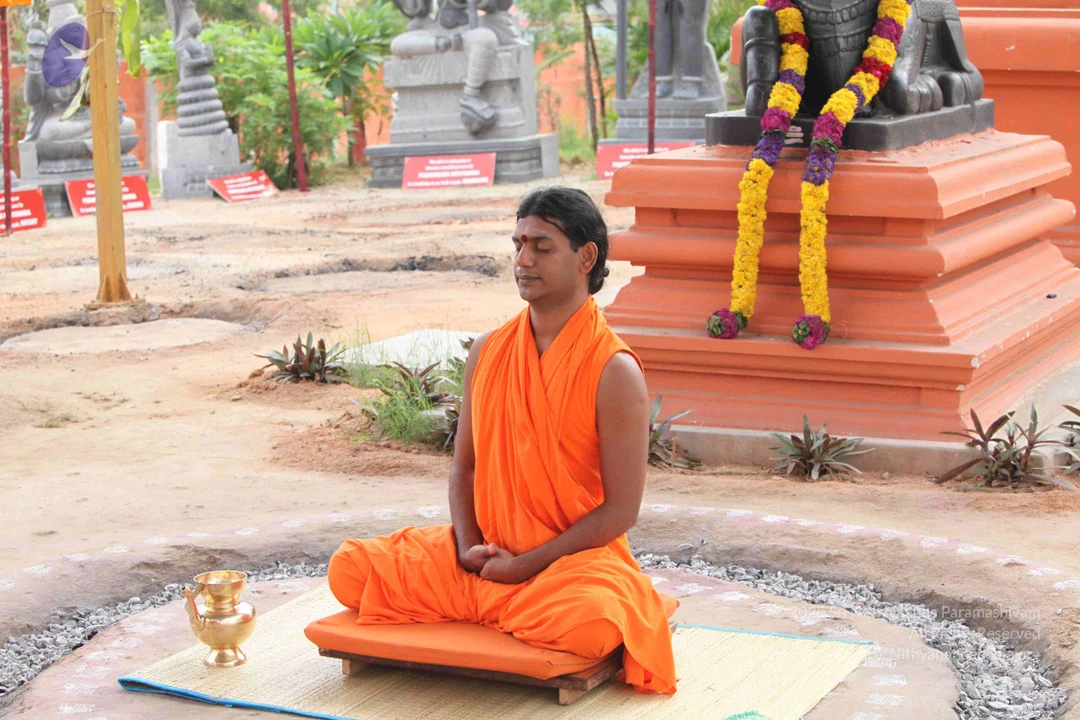
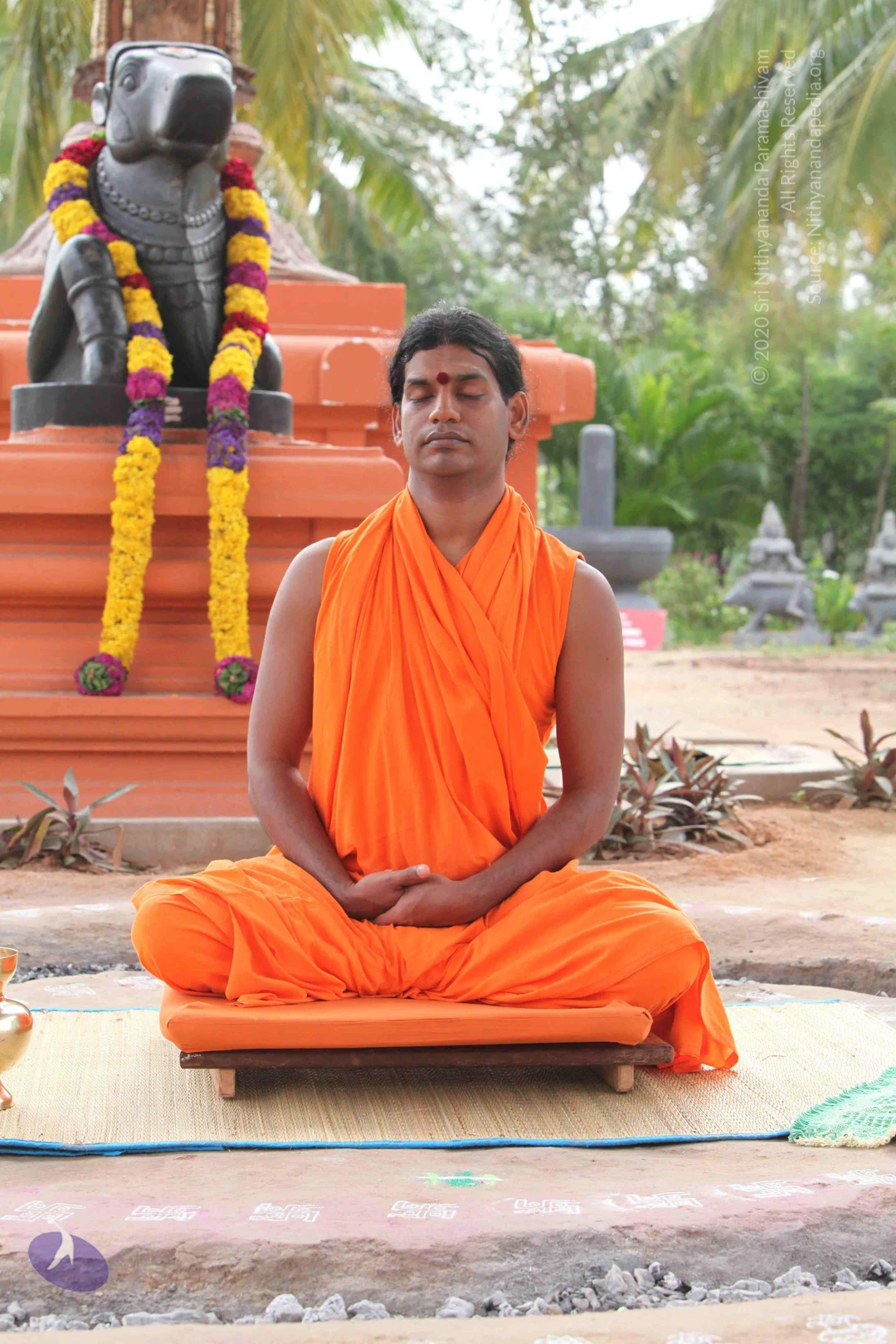
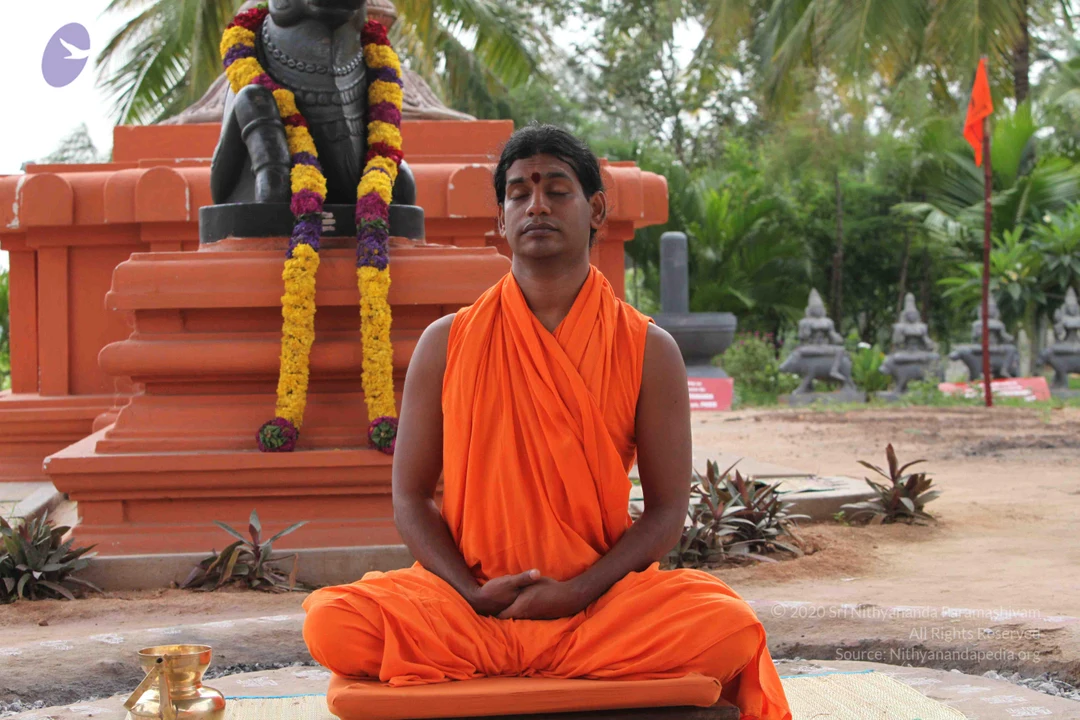
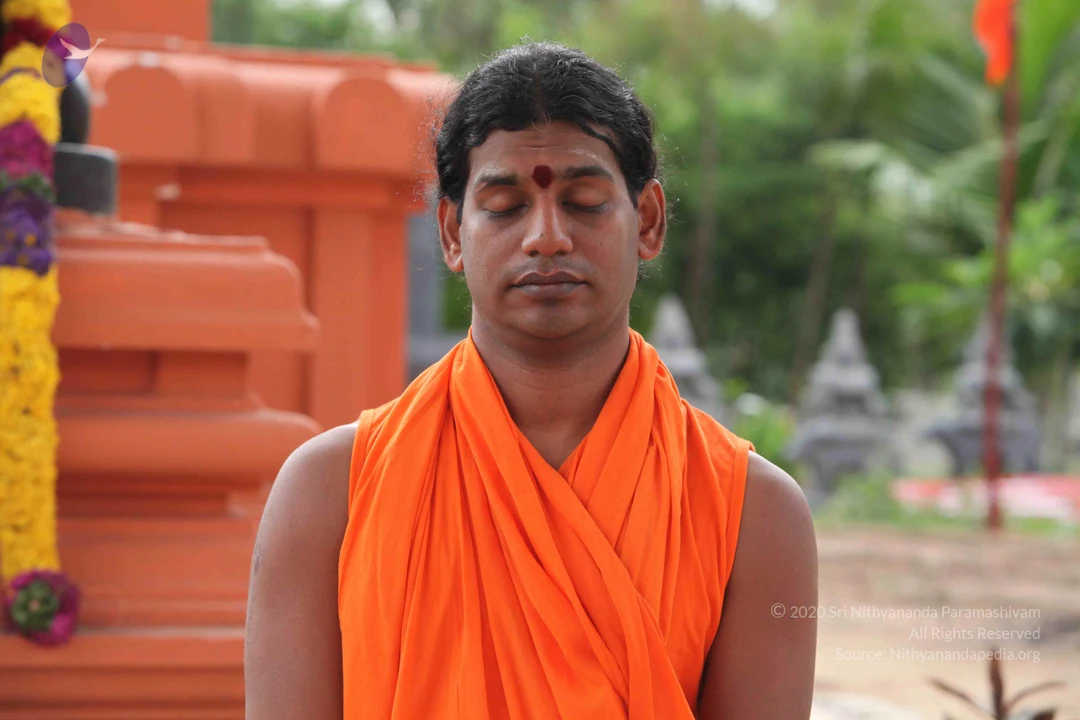
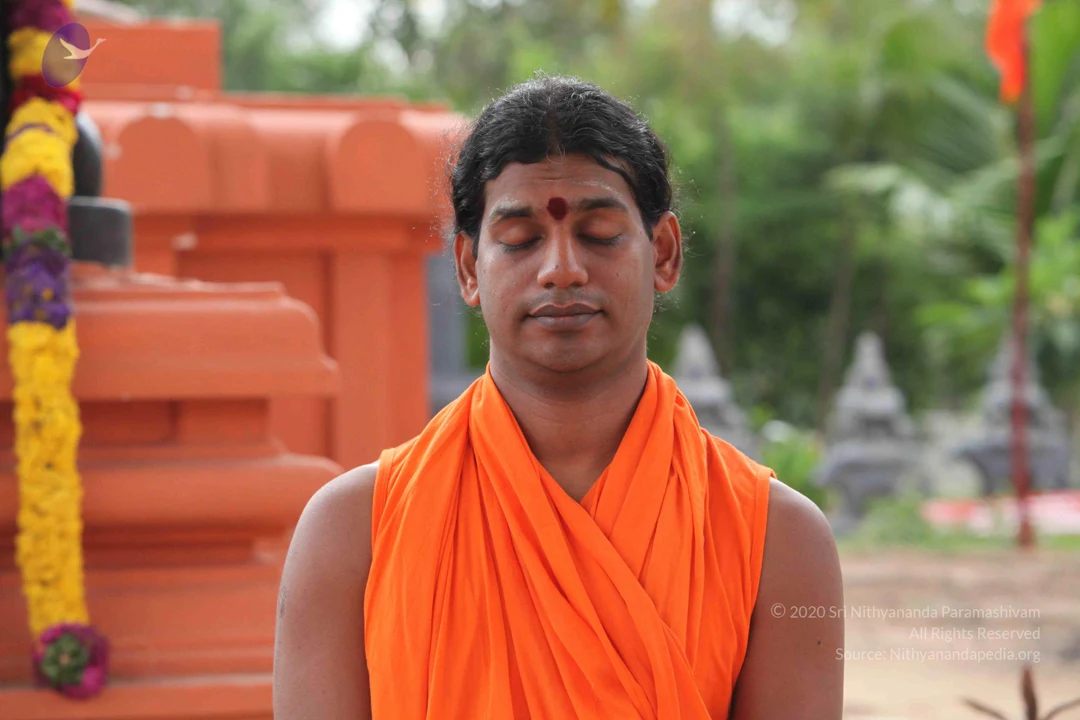
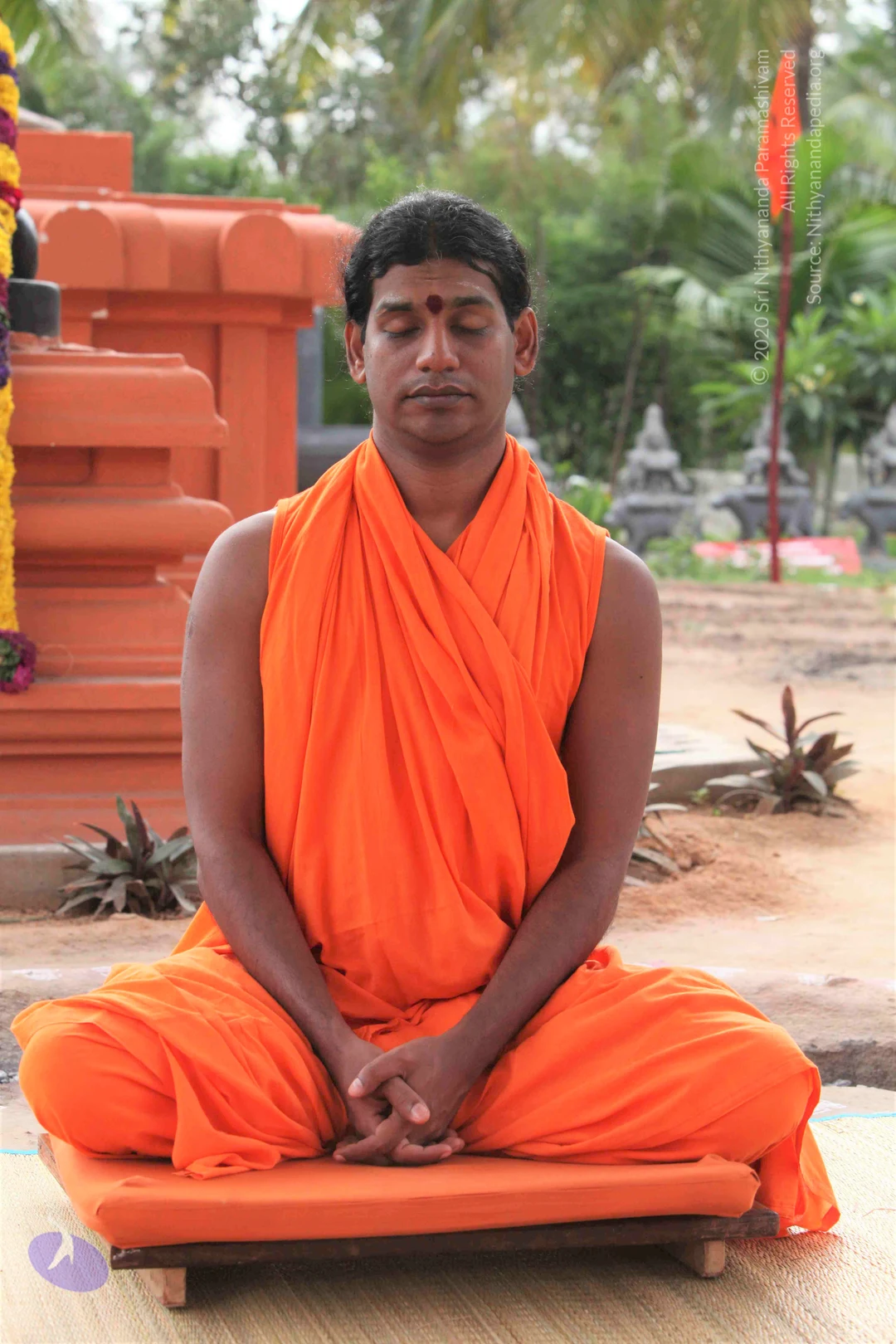
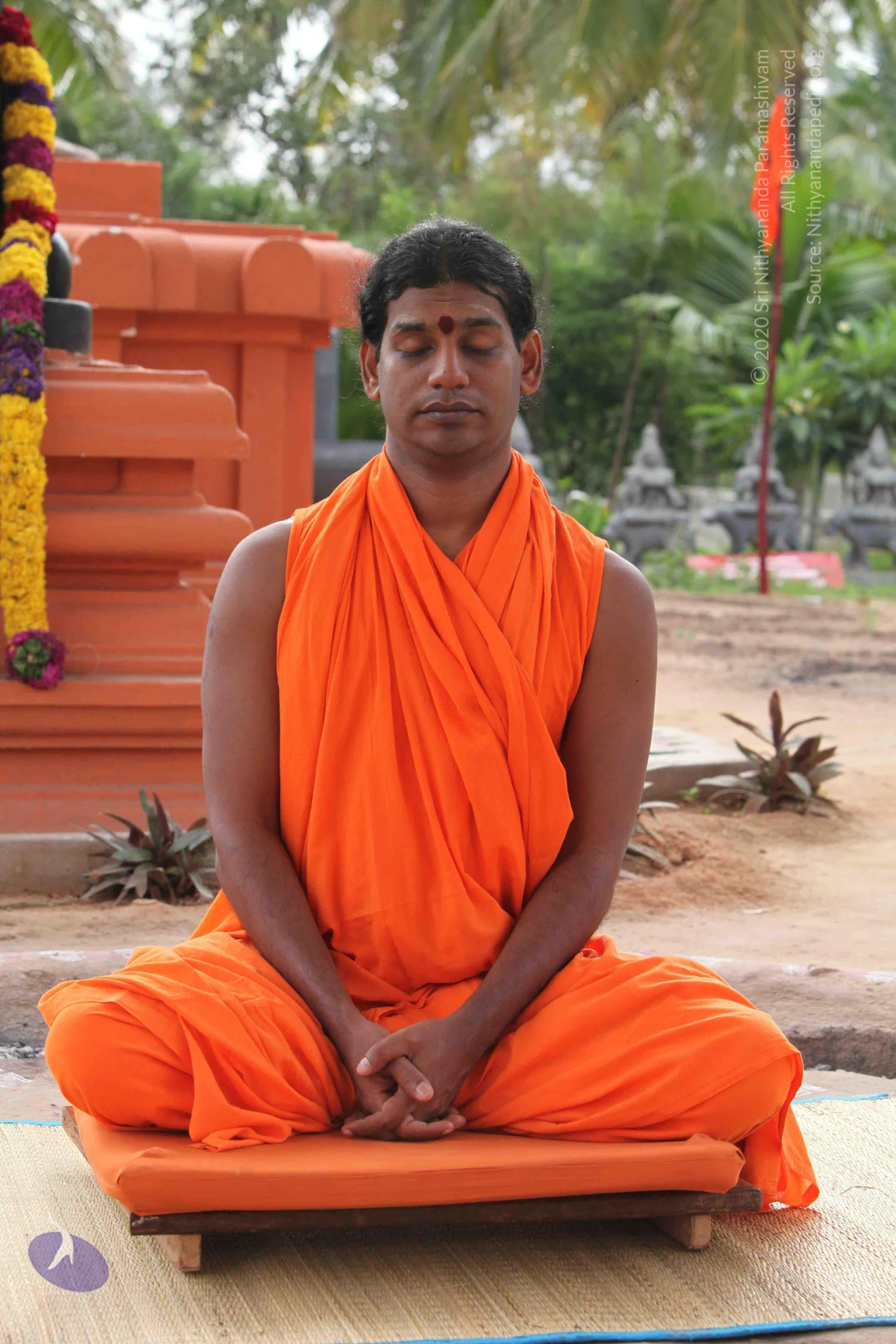
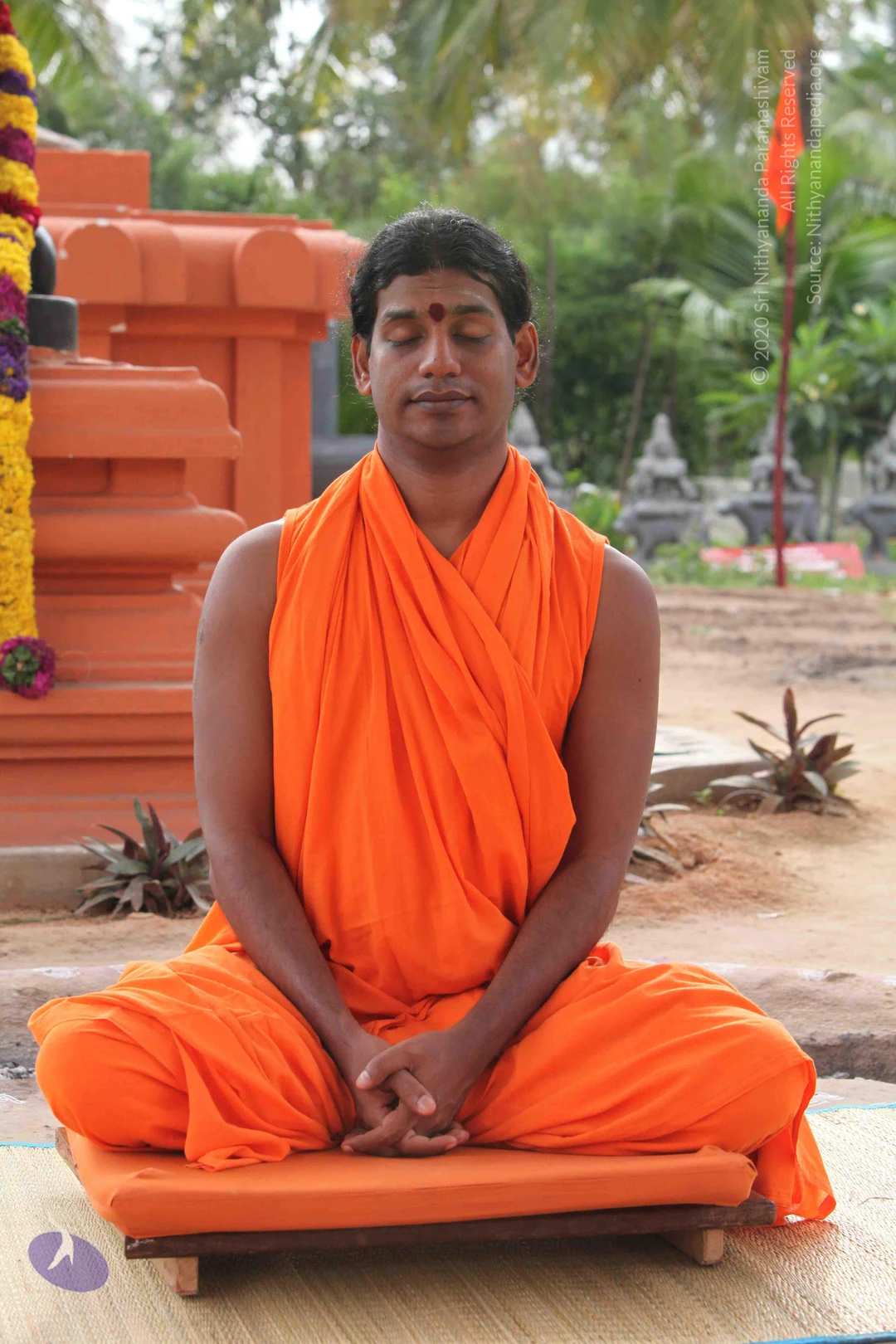
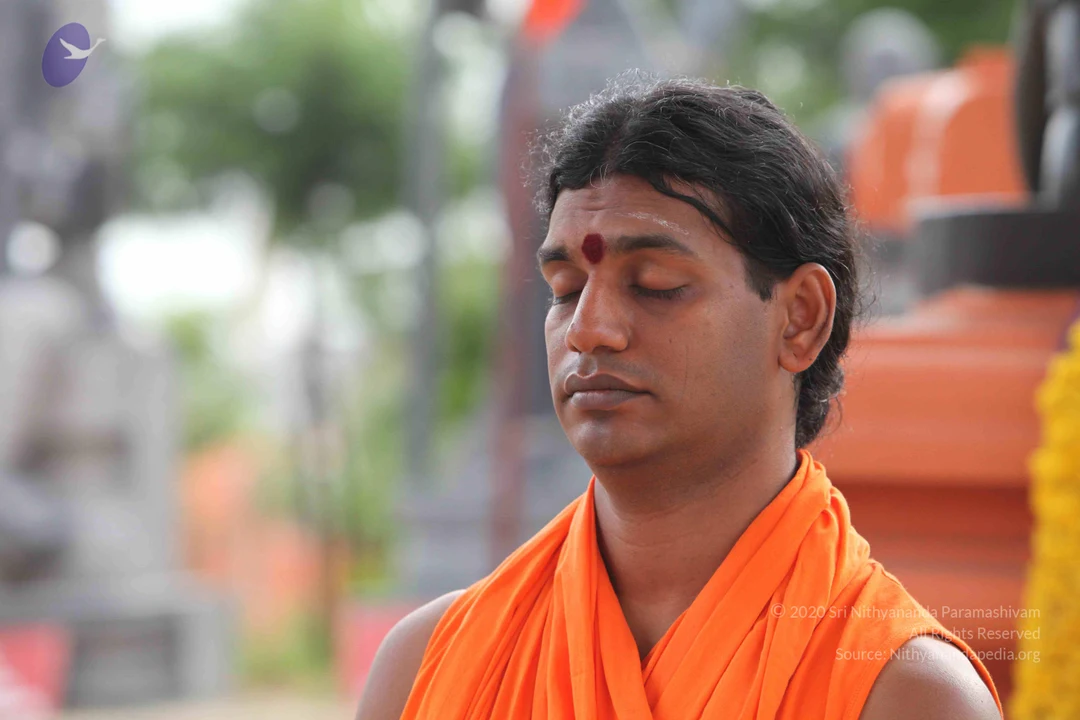
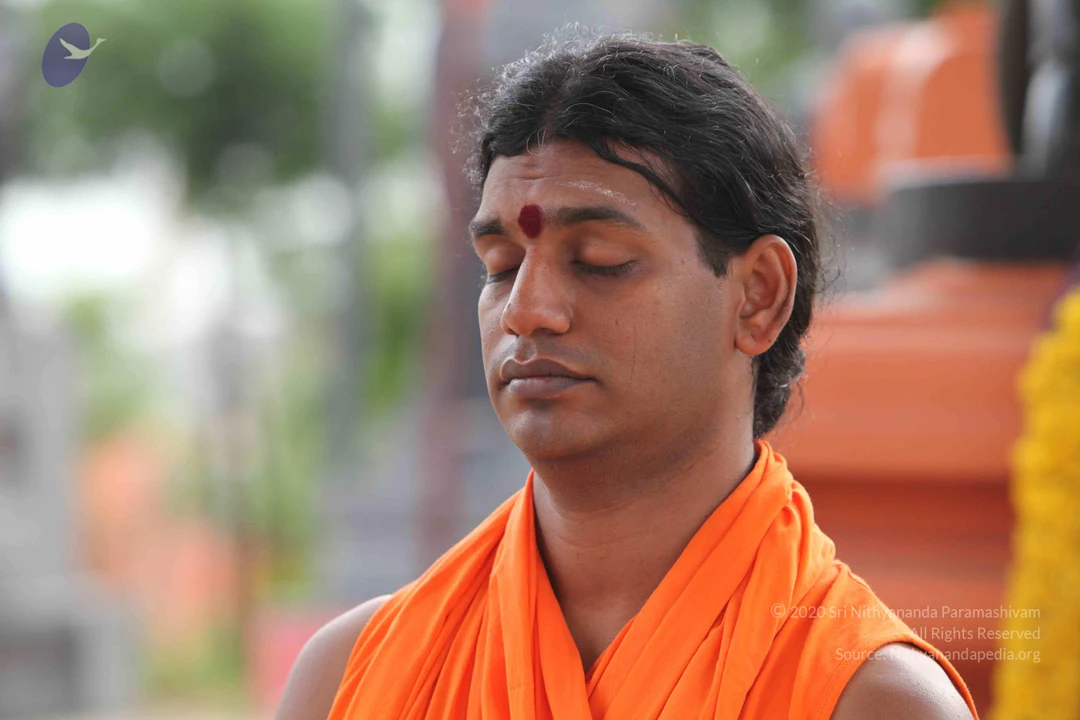
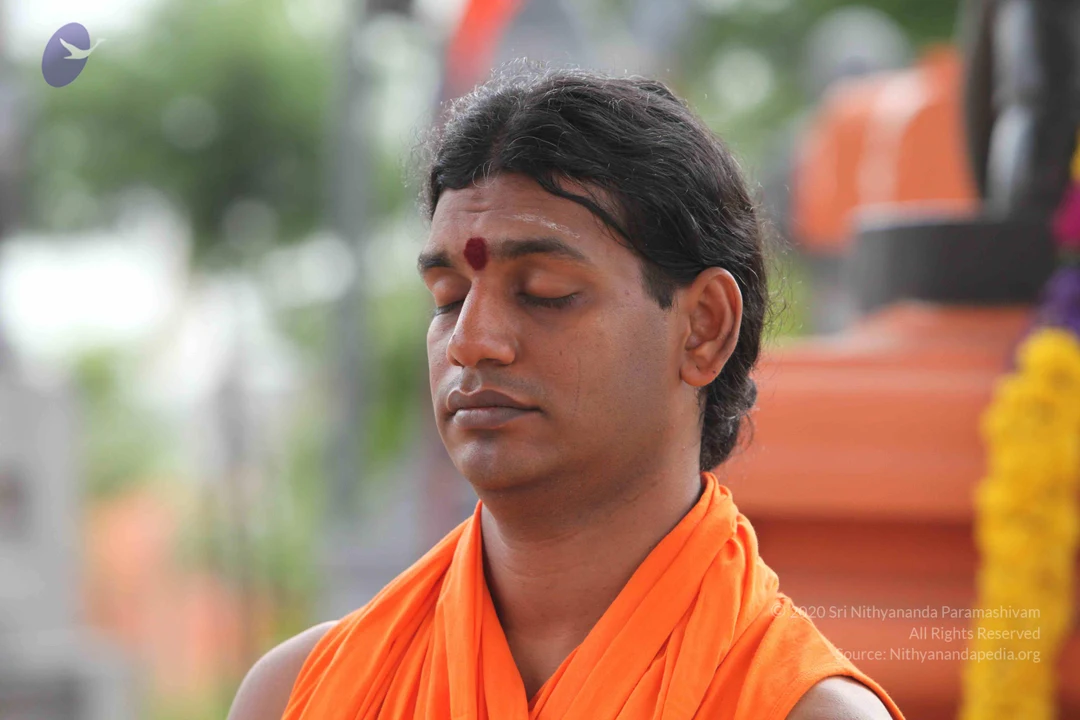
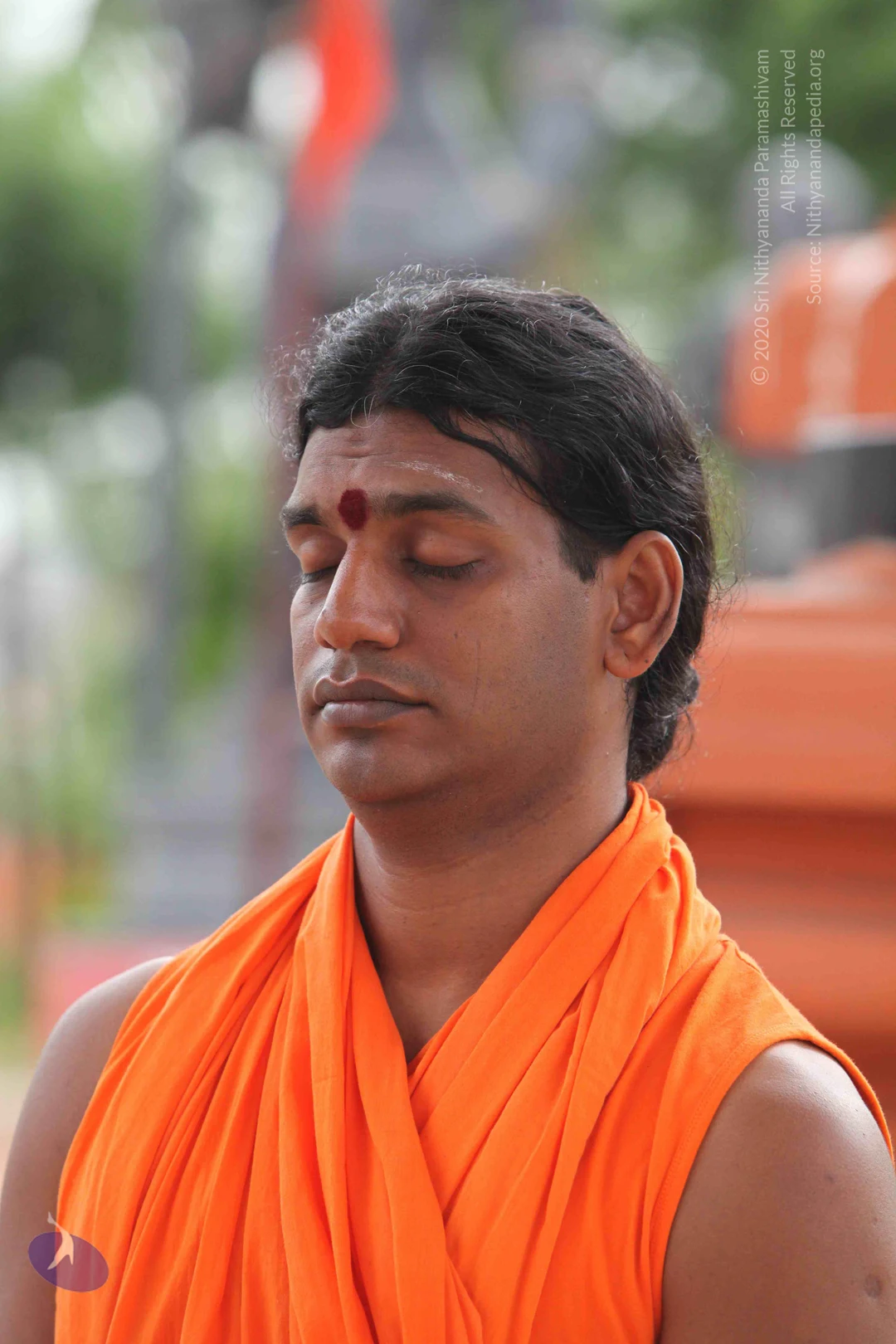
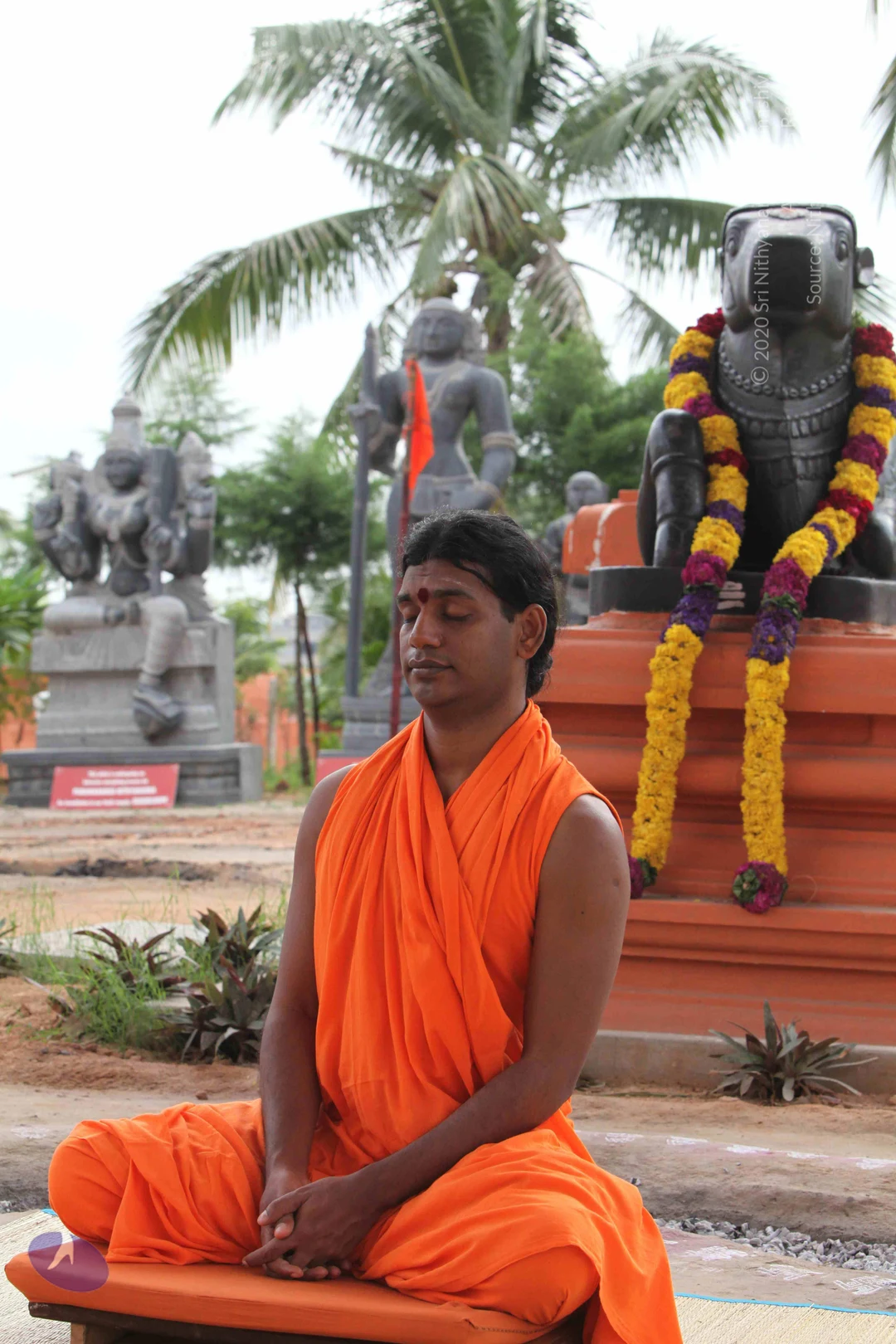
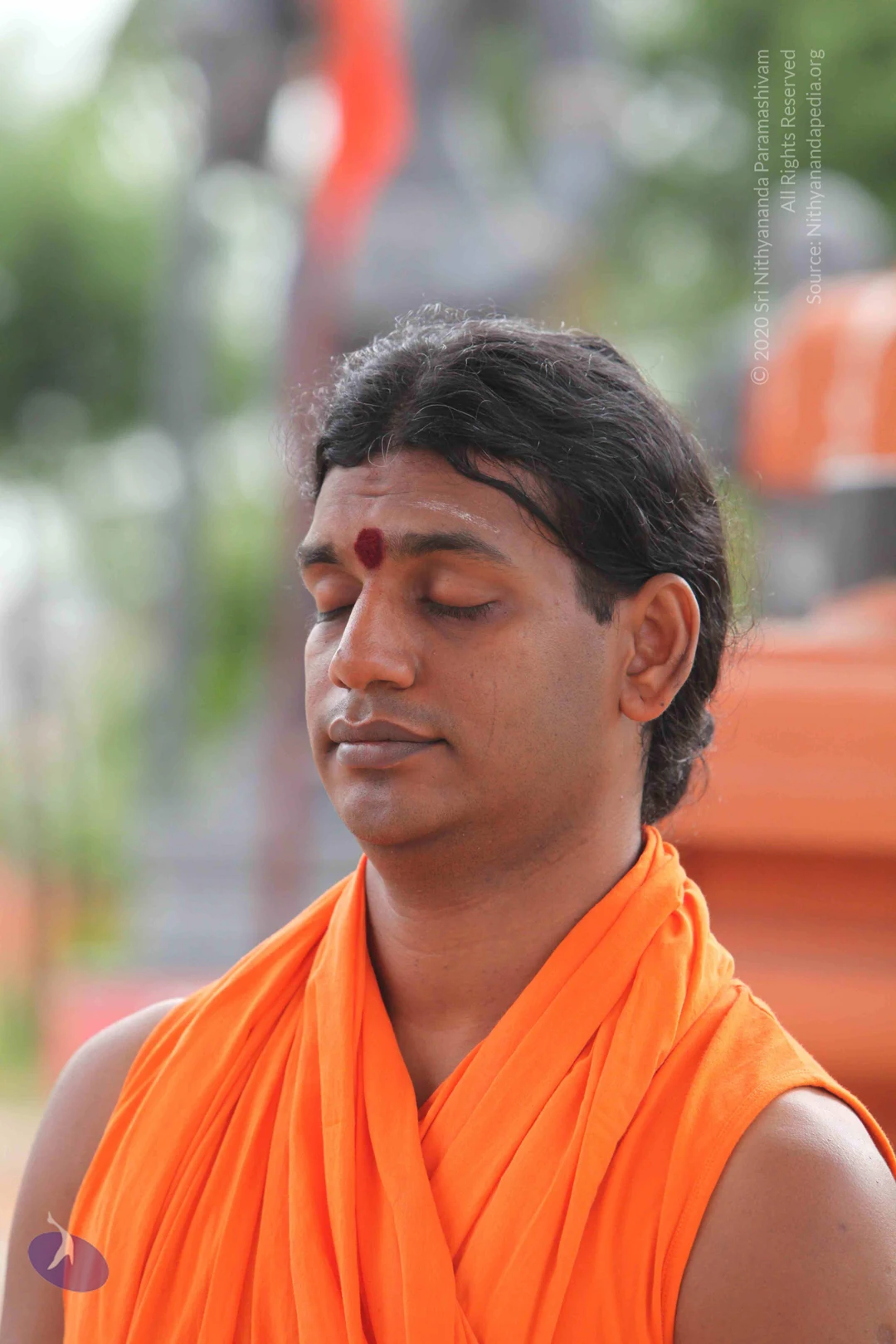
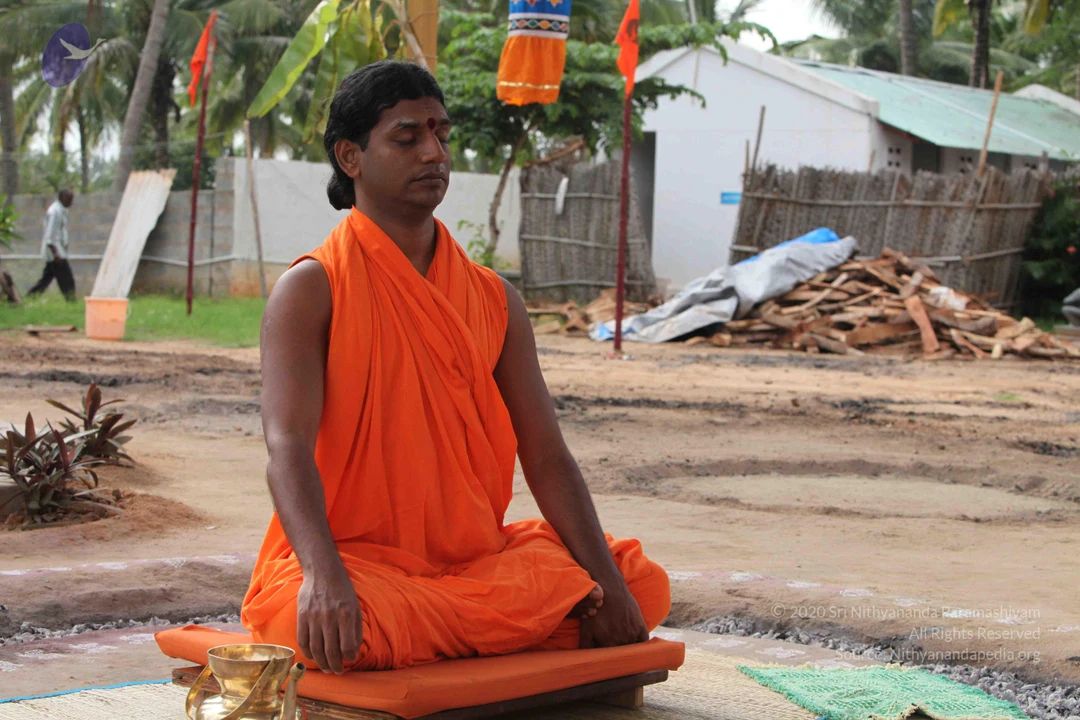
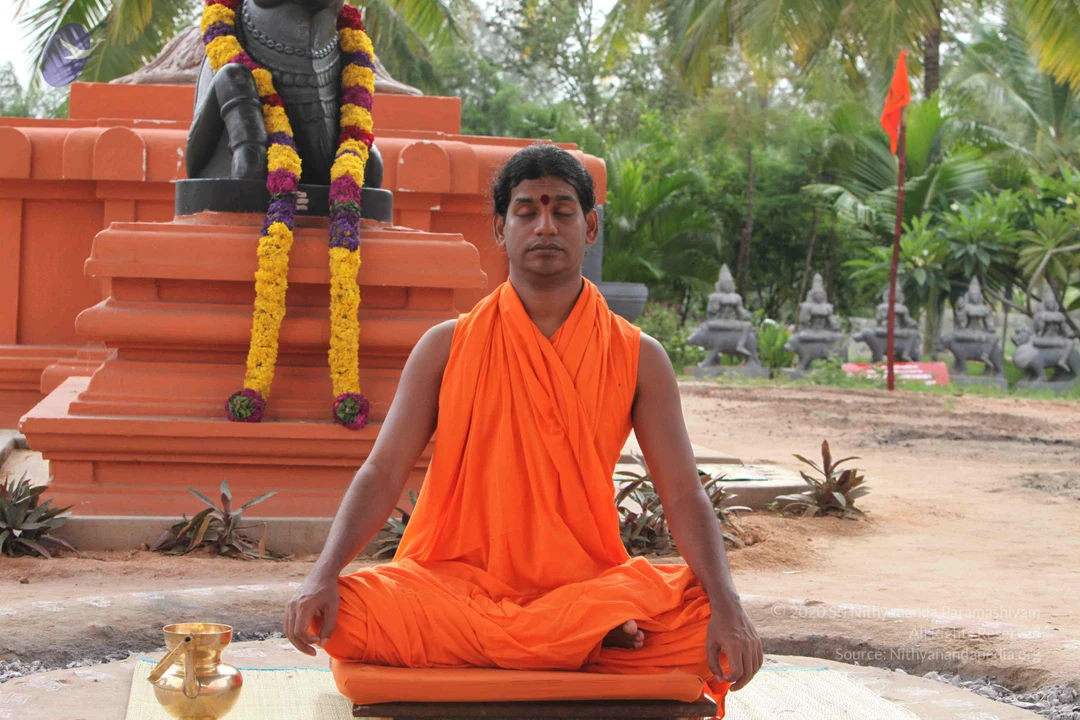
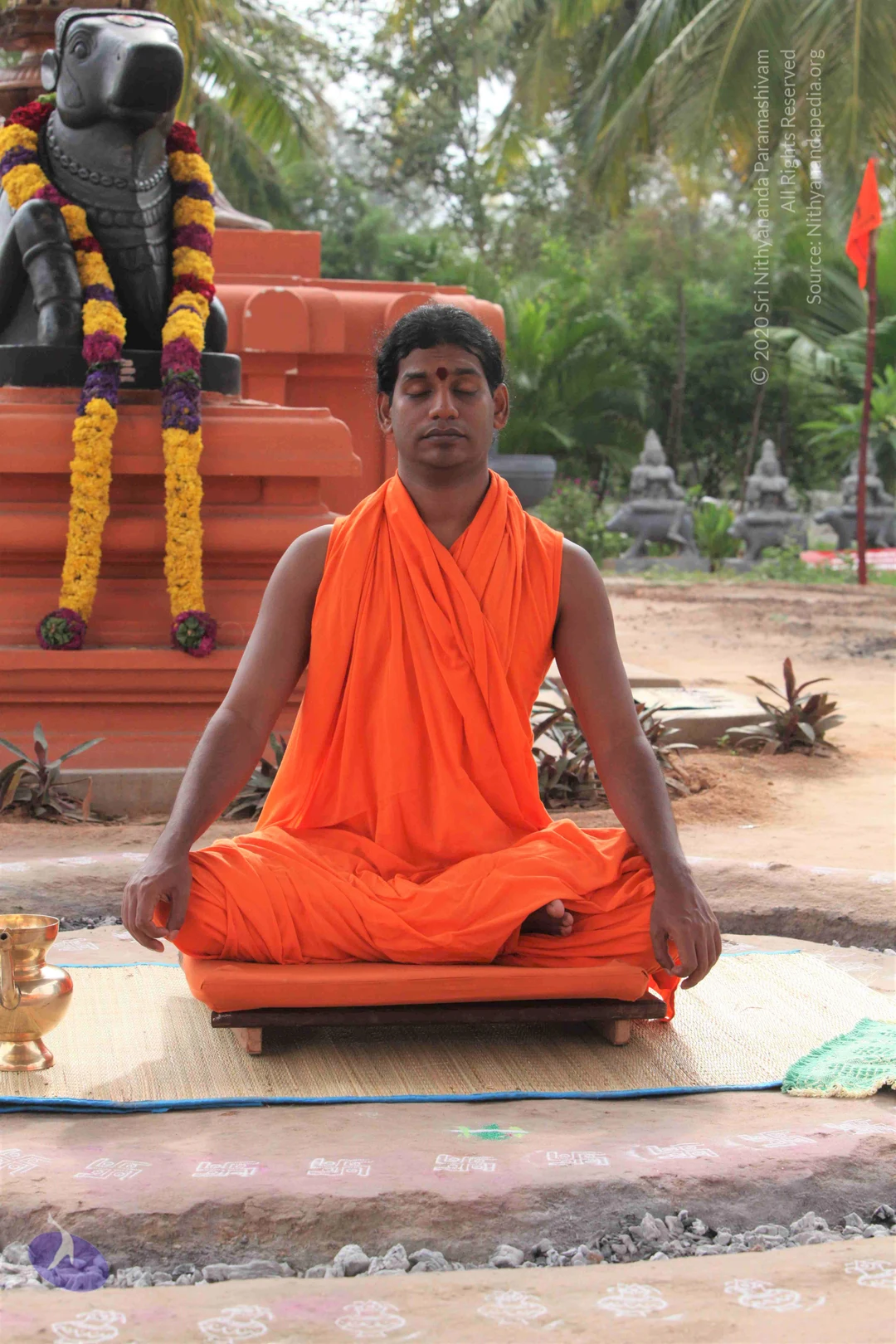
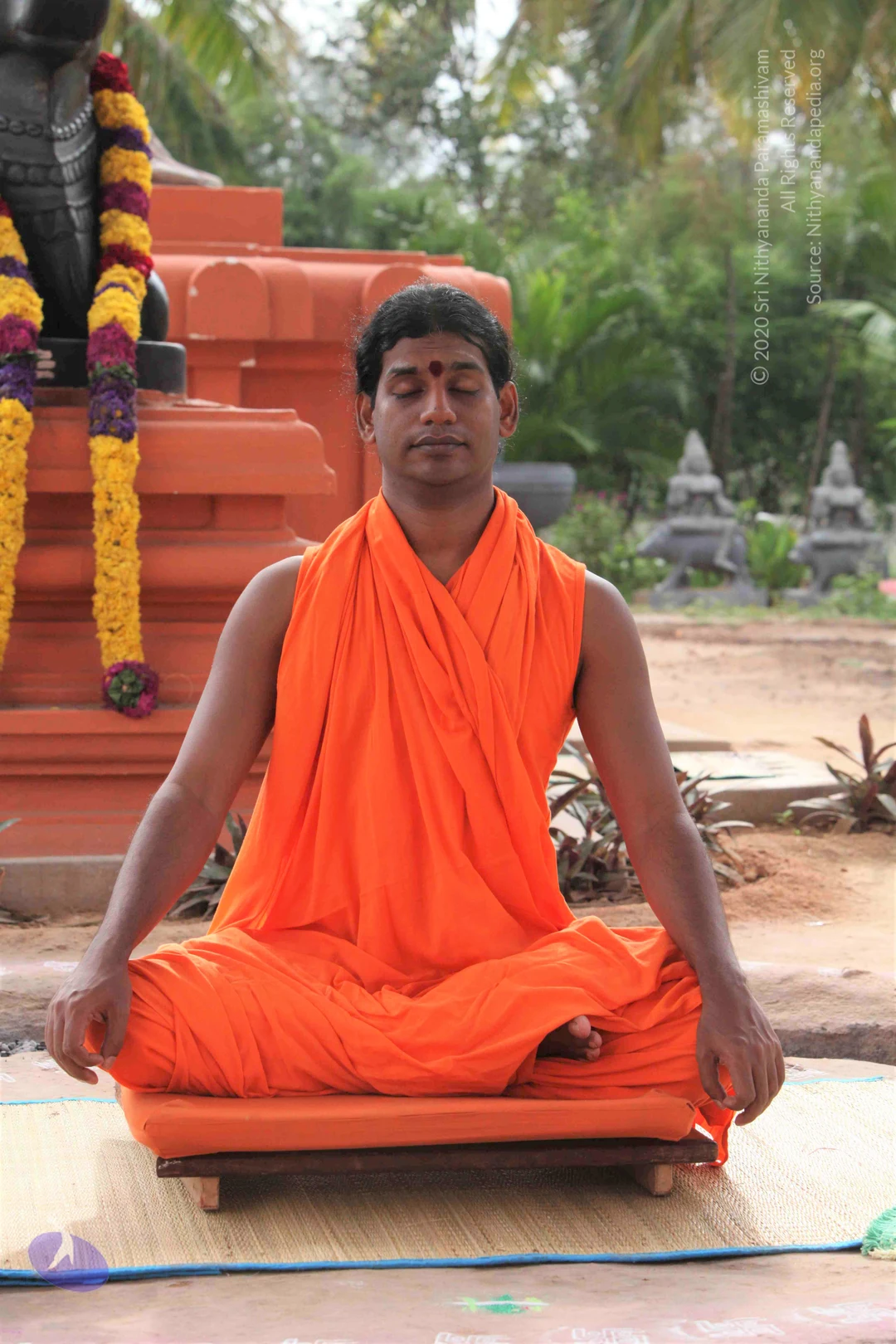
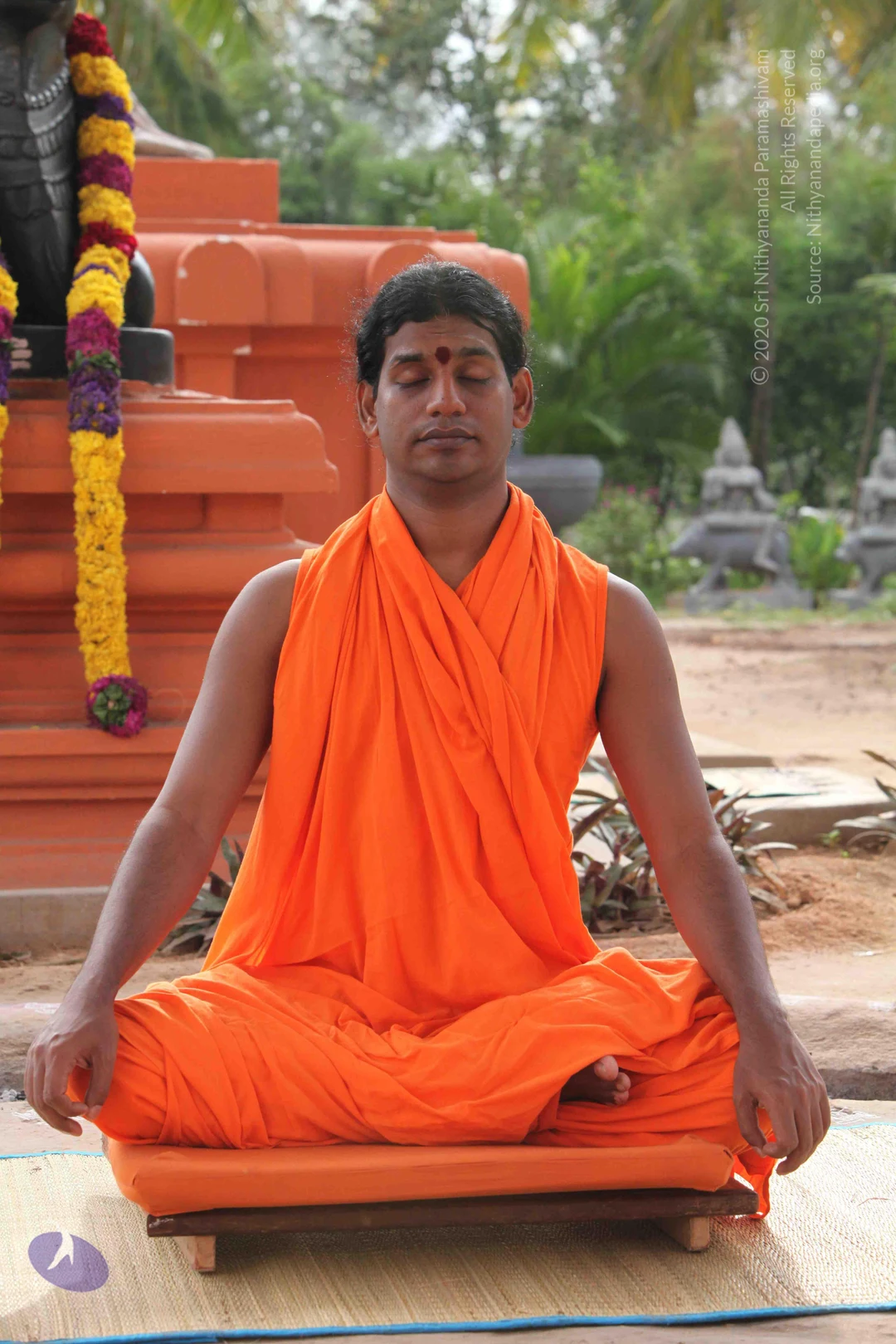
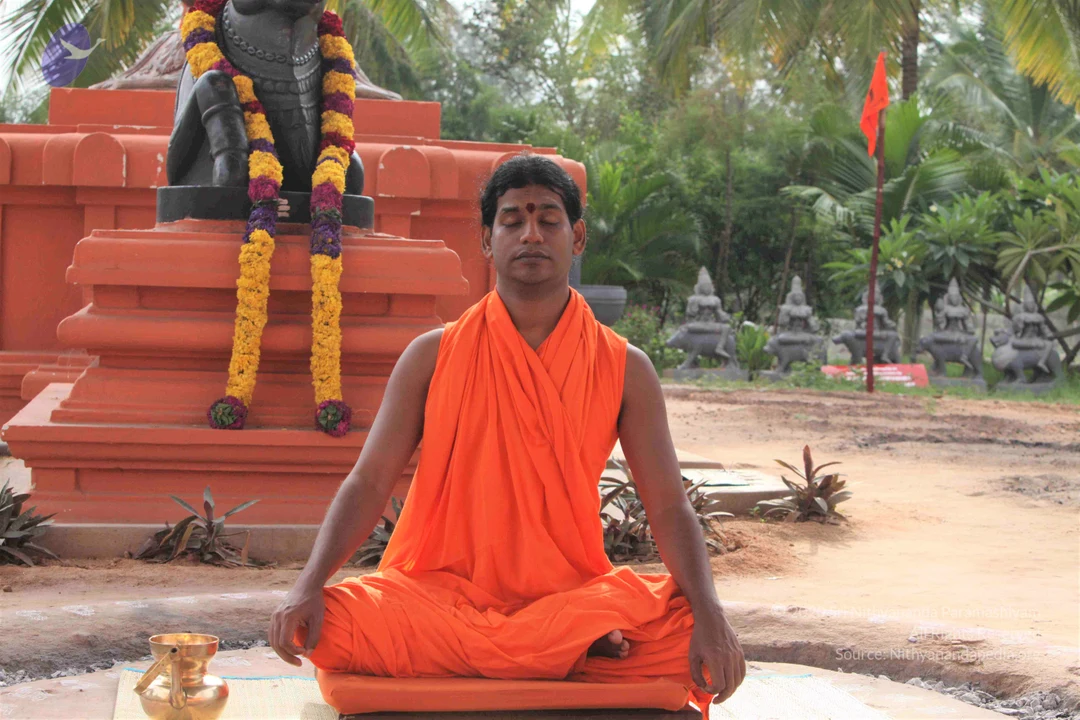
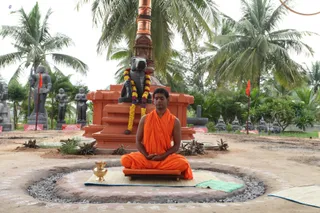
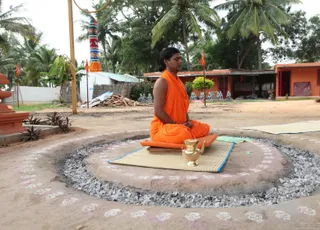
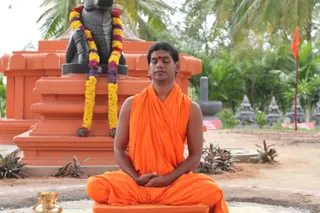
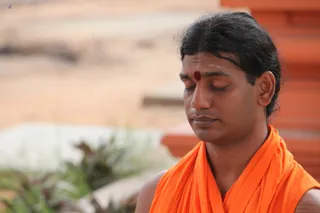
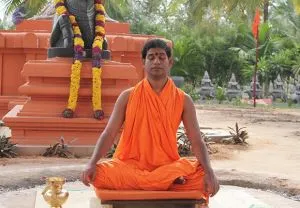
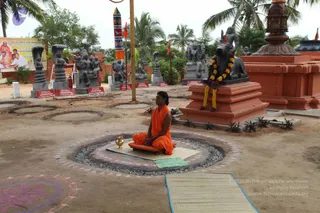
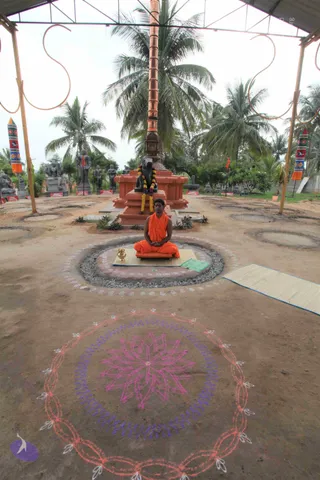
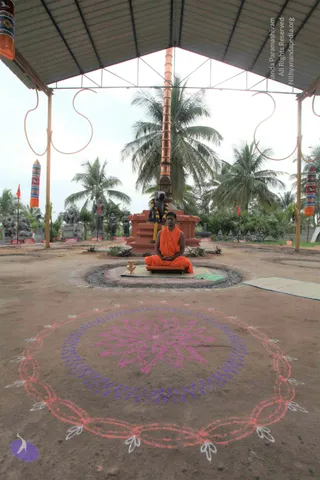
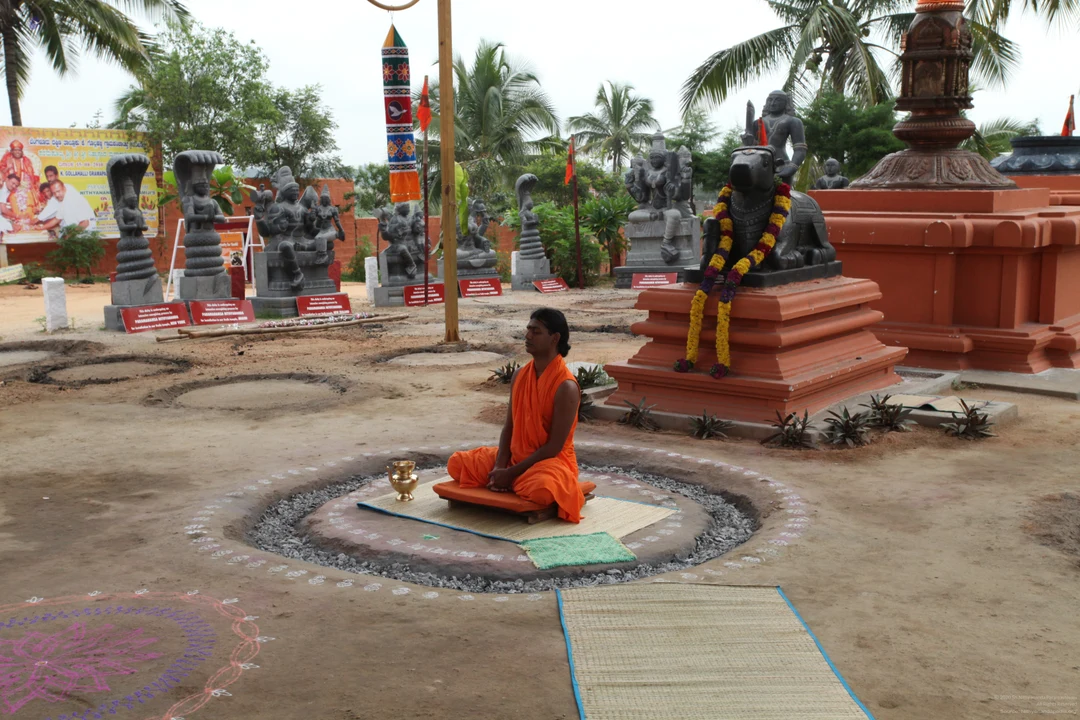
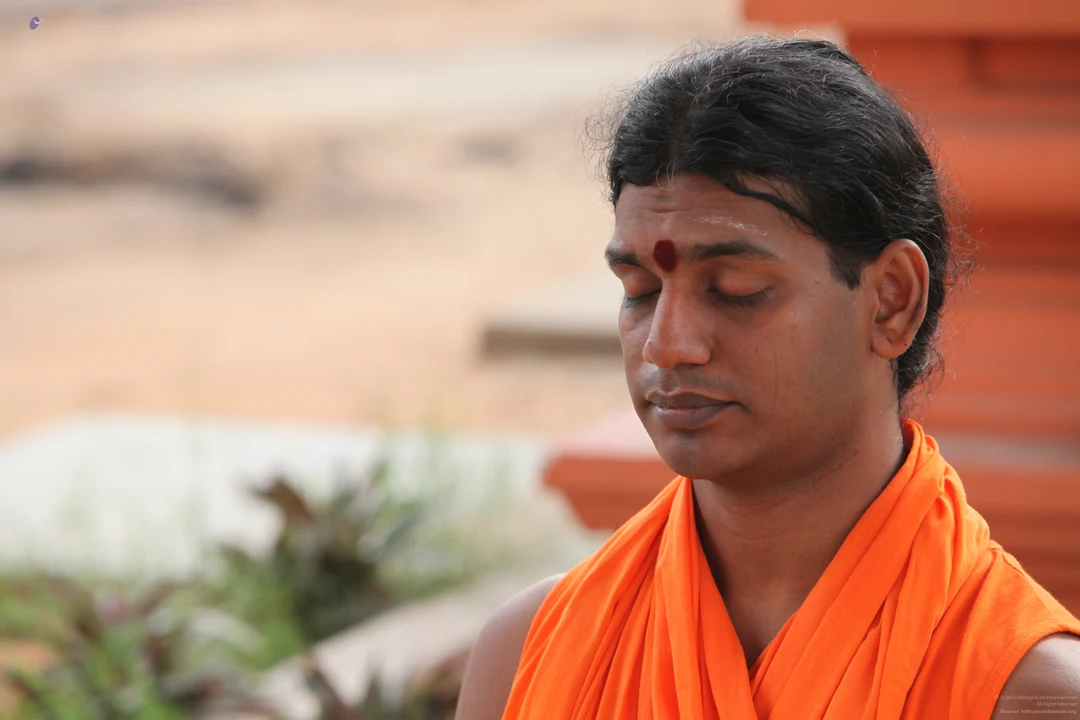
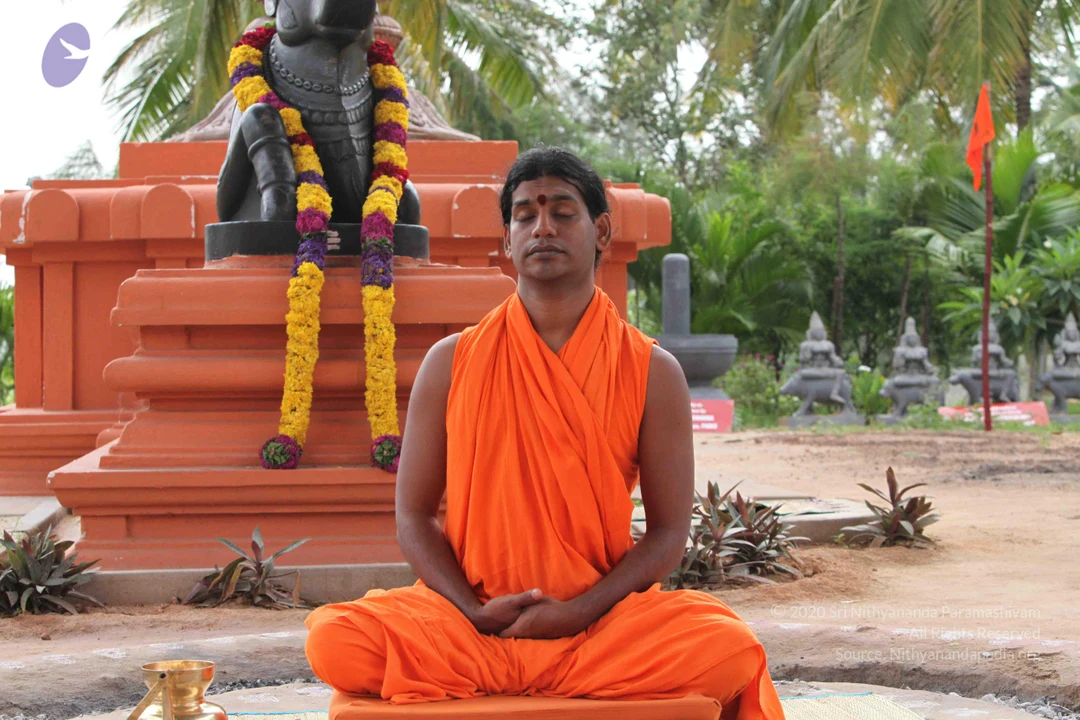
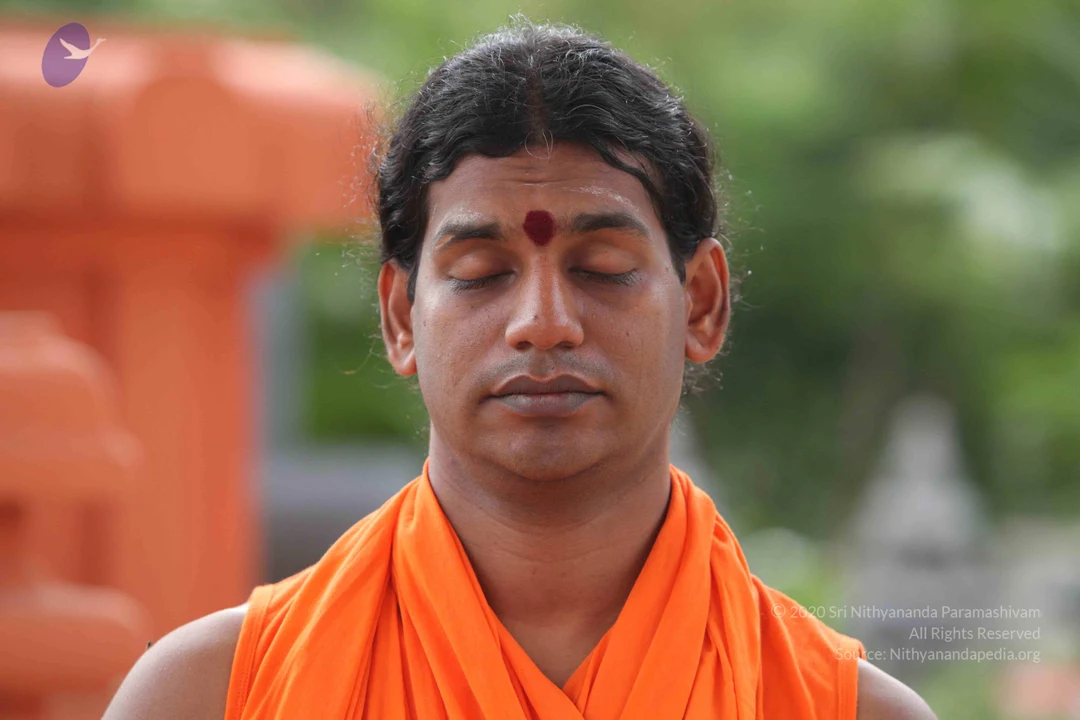
A seated man in orange robes sits cross-legged on a low platform in an open outdoor courtyard of dark earth, beneath coconut palms and a grey sky. Behind him stands a red-brown stepped pedestal topped by a dark stone linga-like form draped with marigold garlands, flanked by tall ceremonial poles with circular hoops and striped pennants. Dark stone statues line the left side. In front of the seated man is a brass oil lamp on a small mat, and a large colourful kolam floor design of concentric rings in red, purple and magenta with white accents surrounds the area. A cloth-covered walkway runs along the right.A man in saffron-orange robes sits cross-legged in meditation on a low orange cushion placed on a woven mat inside a circular gravel-lined pit. A brass kalasha or pot sits at his left. He wears a red tilak mark on his forehead and a garland of yellow and purple flowers hangs around a black Nandi bull statue behind him, which stands on an orange stepped pedestal beneath a tall copper-coloured pillar. Black stone deity statues and palm trees surround the open sandy courtyard, with small red signboards and orange flags nearby.A photograph of a single man seated cross-legged in meditation on a raised orange-red platform in an open dirt courtyard. He wears an orange-saffron robe and has short dark hair. Behind him stands a tall copper-coloured ritual pillar with a rounded top, flanked by two large copper hoop-shaped posts with flags and colourful fabric banners. A dark stone linga or deity murti with a garland of marigolds sits on the platform. Stone sculptures line the left side, palm trees and a white building stand in the background. In front of him, a large rangoli in purple, pink and red with white accents covers the ground, and a brass lamp rests before him. a person seated in meditation with saffron robes and a rudraksha mala; appearance cues are limited, so the identification is uncertain.A man with long dark hair, wearing a sleeveless saffron-orange garment, sits cross-legged in meditation on a woven mat placed on a raised circular platform of earth. Beside him is a brass kalasha-style vessel with a spout. The platform is encircled by a ring of gravel and decorated with white rangoli-style dot patterns on the ground. Behind him are palm trees, a tall decorated pole with red and orange ribbons, small saffron flags on poles, and an orange-walled building with a corrugated roof and statues visible in the background. The setting is an outdoor ashram courtyard.A man sits cross-legged in meditation on an orange cushion outdoors, eyes closed and hands resting in his lap. He wears a sleeveless saffron-orange robe wrapped over his body and has a red bindi on his forehead. Behind him stands an orange plinth bearing a dark stone sculpture of a seated figure draped with a garland of yellow marigolds and purple flowers. Palm trees, green shrubs and small grey stone statues line the sandy ground, and a red-and-orange flag stands at right. A brass pot sits at the lower left edge. The scene suggests a meditation or yoga session at an ashram-style outdoor shrine.Close portrait of a man seated outdoors with eyes closed in meditative stillness. He has swept-back dark hair, a red bindi and a white vertical tilak on his forehead, and wears an orange-saffron shawl draped over his shoulders. Behind him is a blurred warm sandy ground, green plants at lower left and orange-painted architecture at right.

Paadapooja

1 photoSource gallery
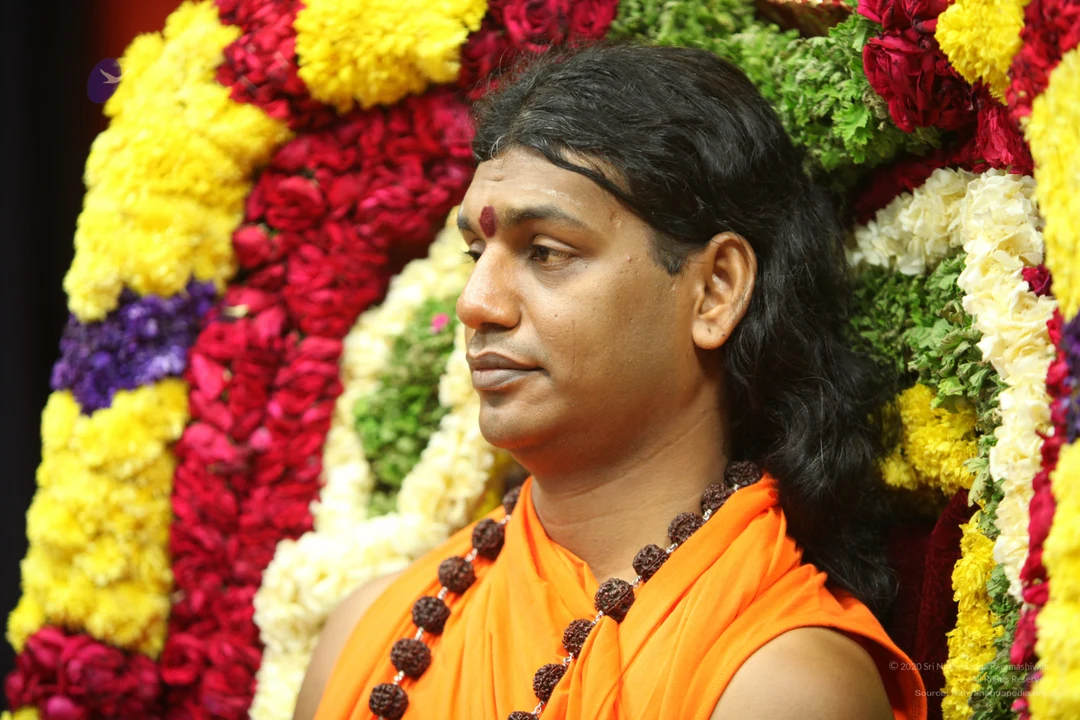
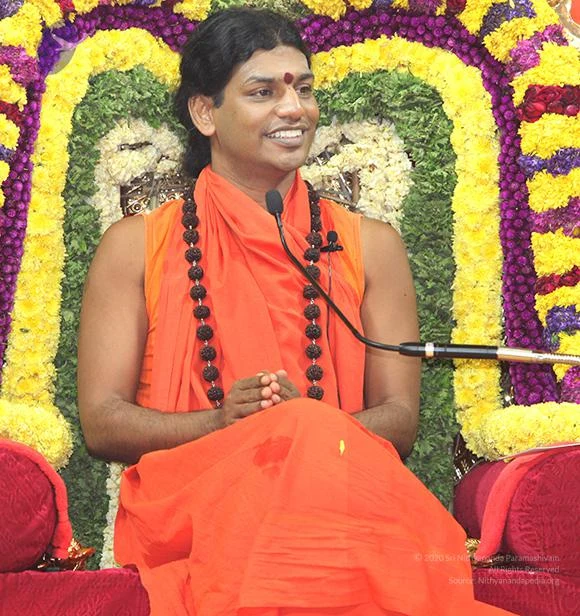
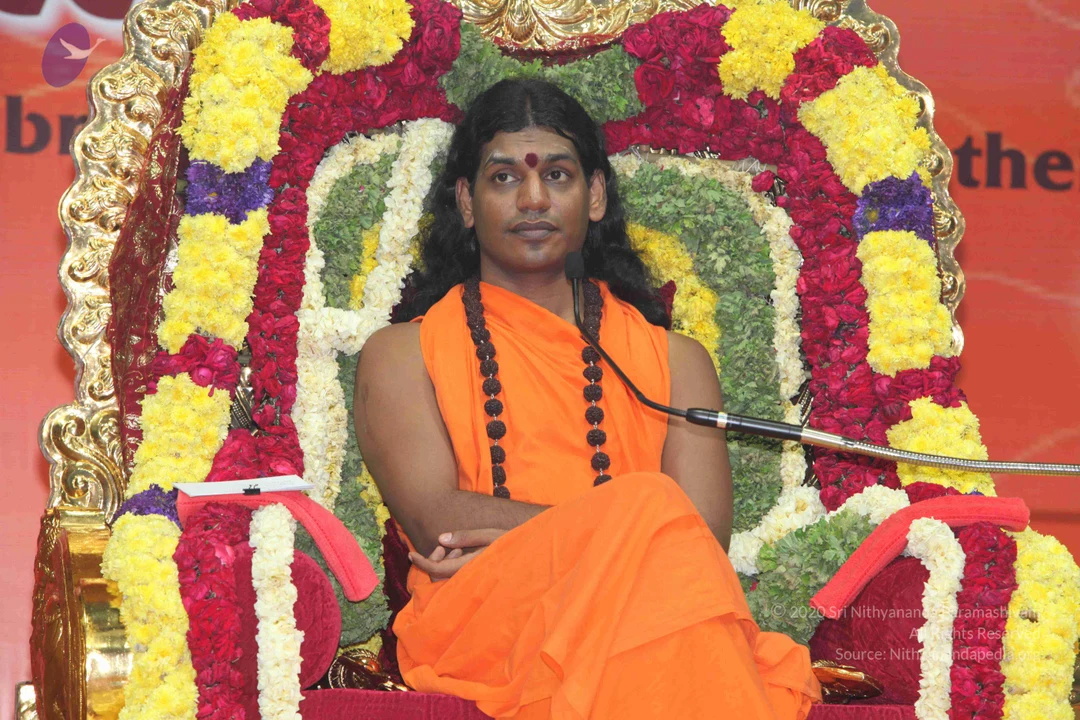
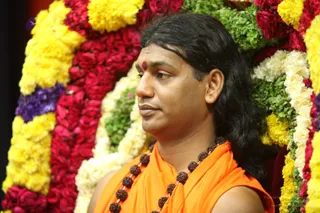
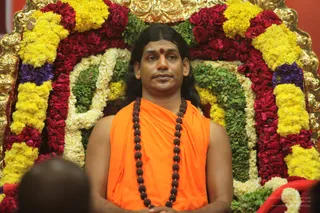
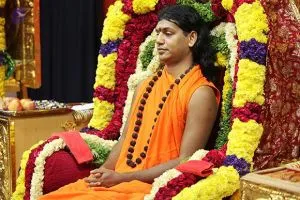
Photograph of a man with long swept-back black hair and a red bindi, seated in front of a floral backdrop of yellow marigolds, red roses, white blossoms and green foliage. He wears a saffron-orange shawl draped over one shoulder and a long rudraksha mala with large brown beads. His gaze is turned to the side. Given the page's claim of a Swamiji presence and the appearance cues of long hair, saffron clothing and rudraksha beads, this is a probable in-person Swamiji (probable) seated for a satsang with a flower-garlanded seat.

Morning-Satsang

2 photosSource gallery
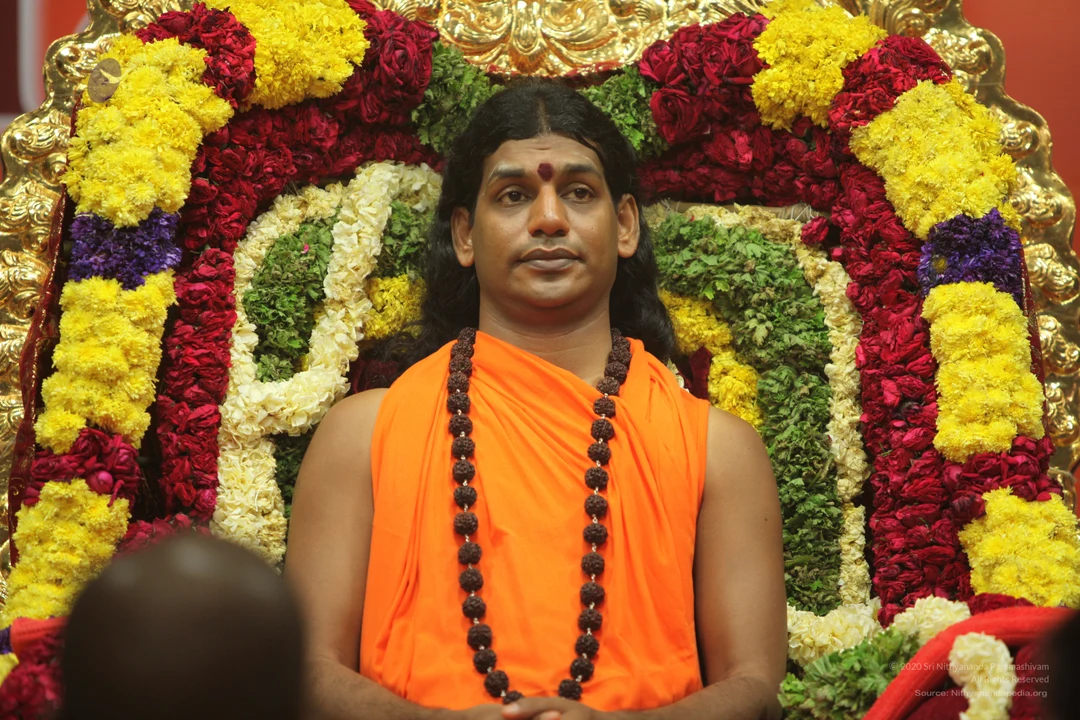
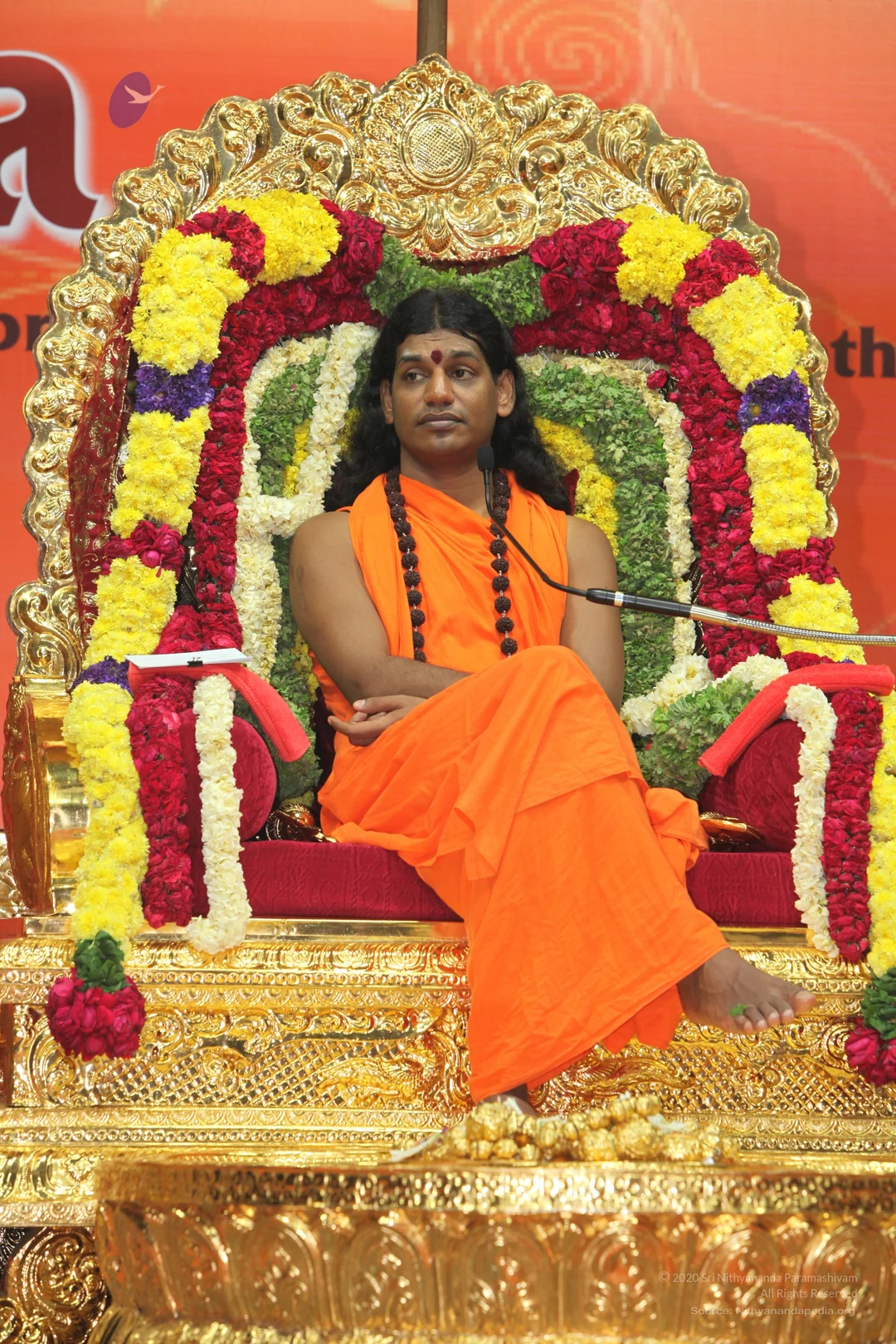
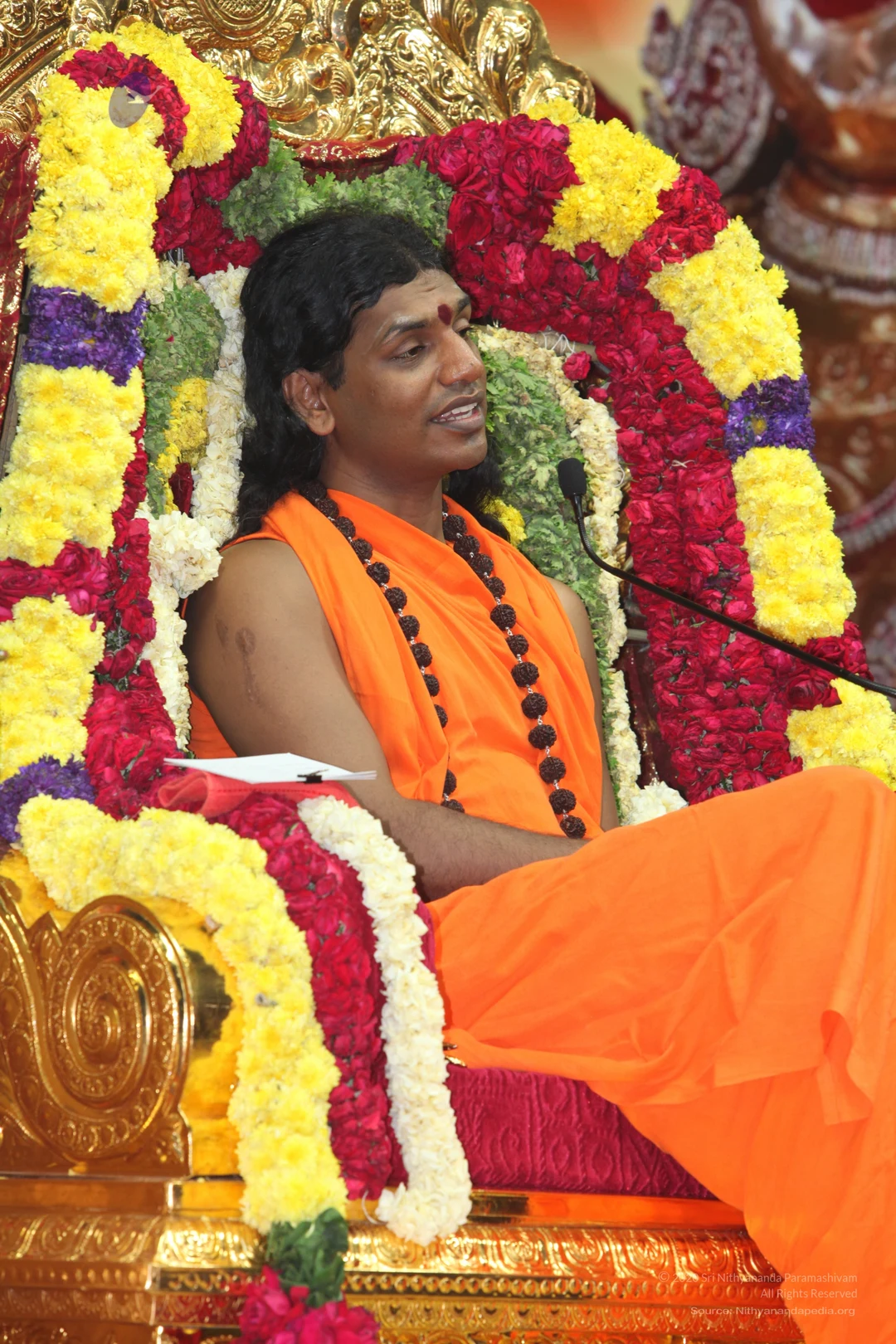
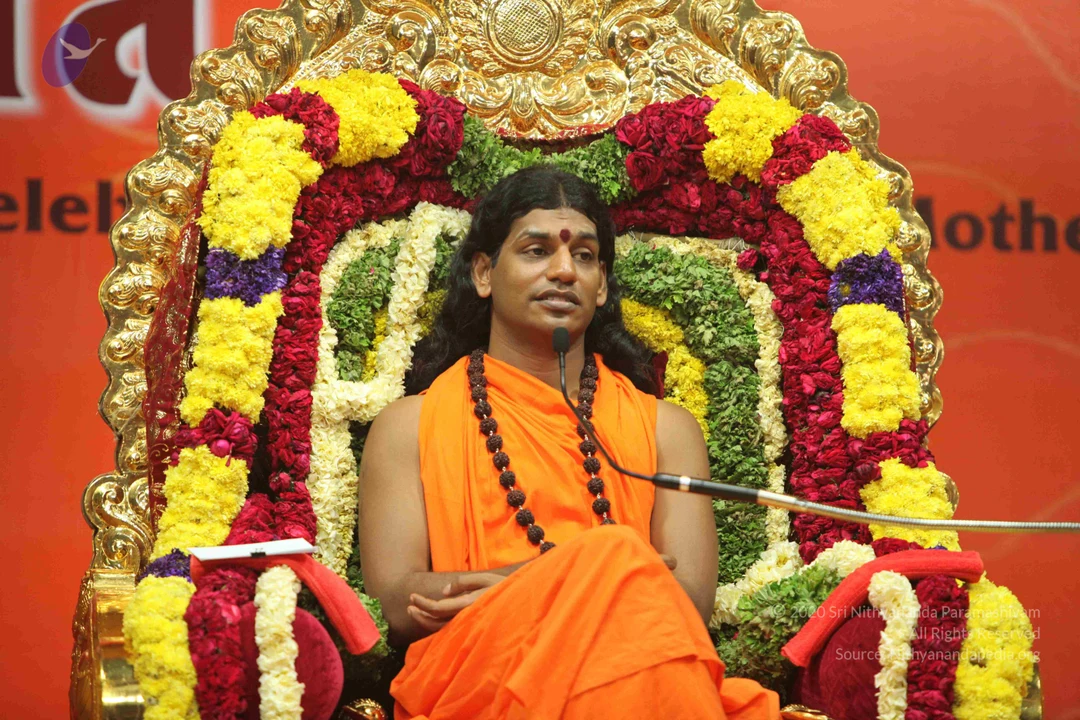
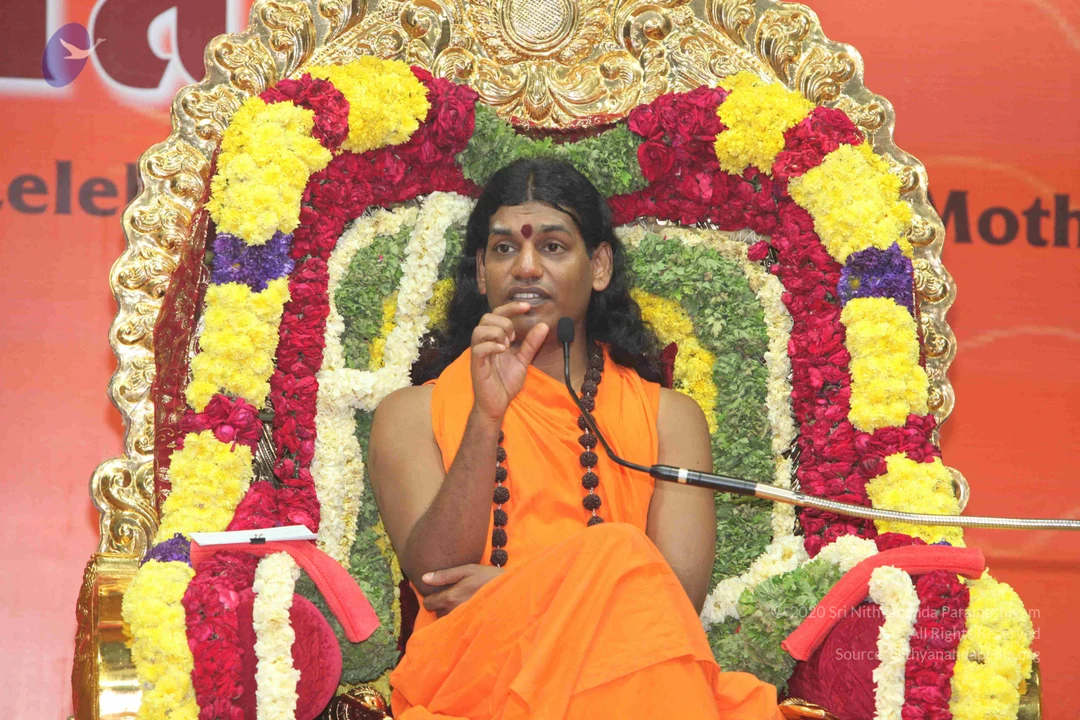
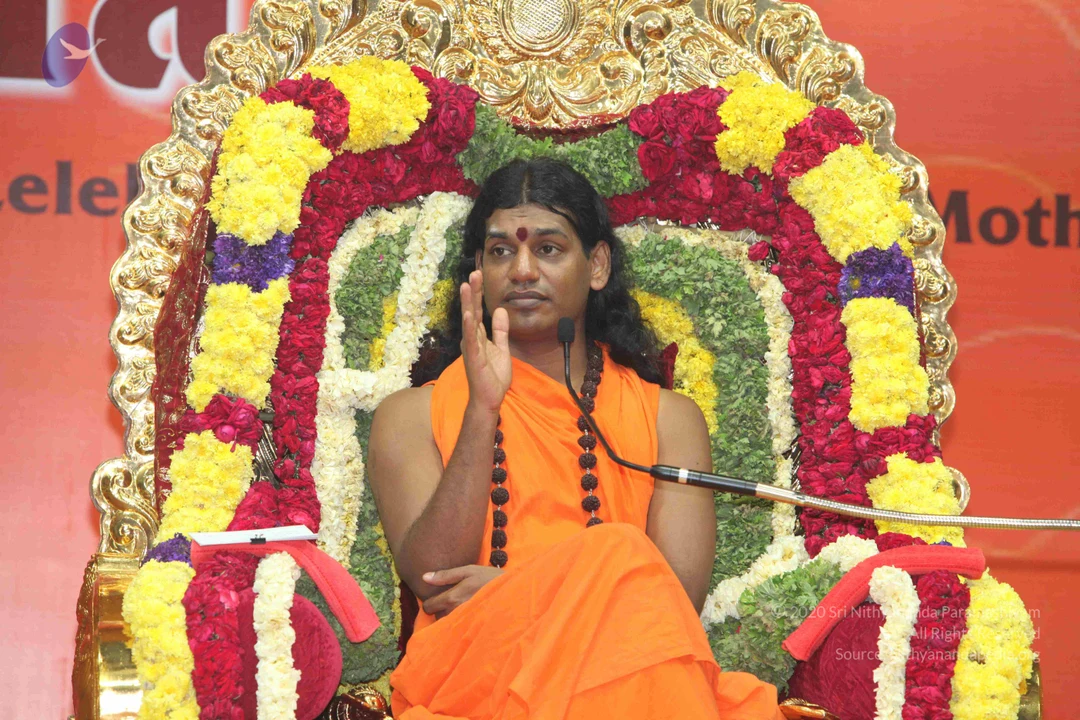
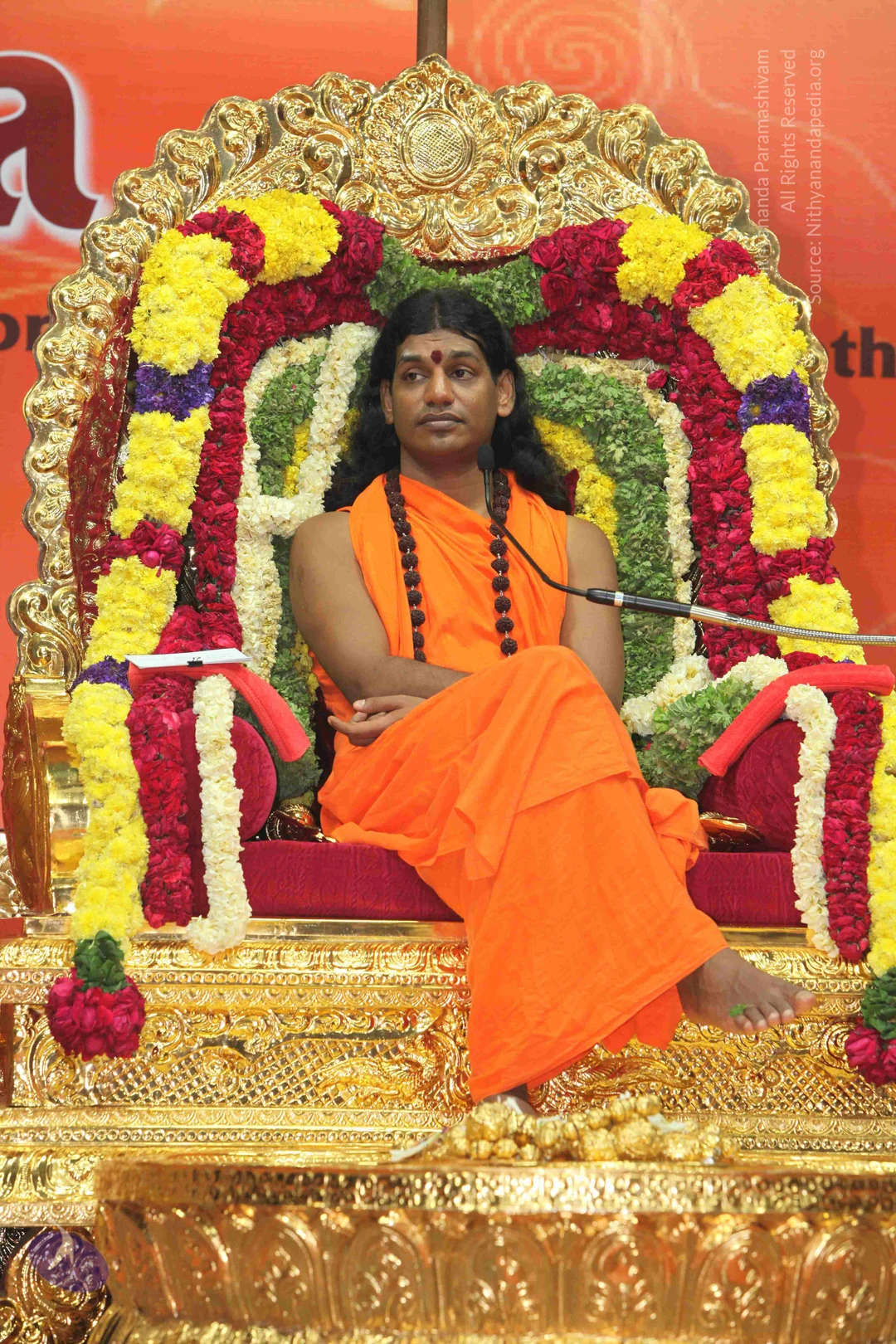
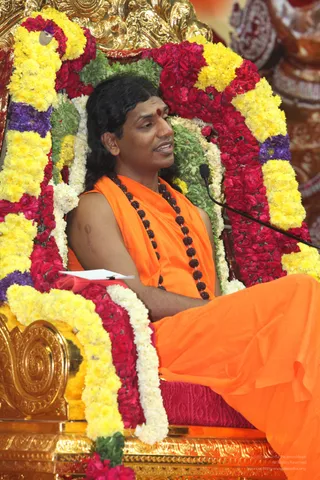
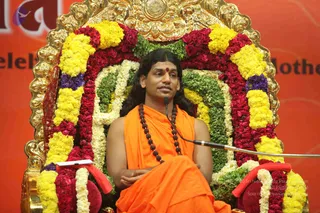
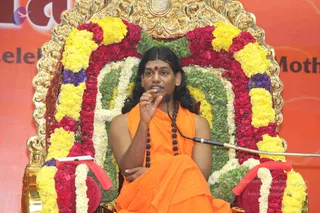
A photograph of a long-haired man in an orange saffron robe with a long rudraksha mala and a red bindi, seated in front of a throne-like backdrop framed with garlands of yellow marigolds, red roses, white jasmine and green leaves. He sits with his hands folded in his lap and a calm, attentive expression, while the blurred back of a head is visible in the lower left foreground. The setting is a satsang-style public talk. Only one physical person is visible.A man with long dark hair sits on an ornate gold throne framed by garlands of red roses, yellow marigolds, white jasmine and green leaves. He wears an orange sleeveless wrap, a long orange garment over his legs, and a dark rudraksha mala with a red tilak on his forehead. He speaks into a microphone while holding a sheet of paper. Swamiji (probable) is seated in the centre, appearing as a long-haired figure in saffron clothing with rudraksha and a floral-decorated throne, consistent with a satsang discourse.

Sarvadarshan

5 photosSource gallery
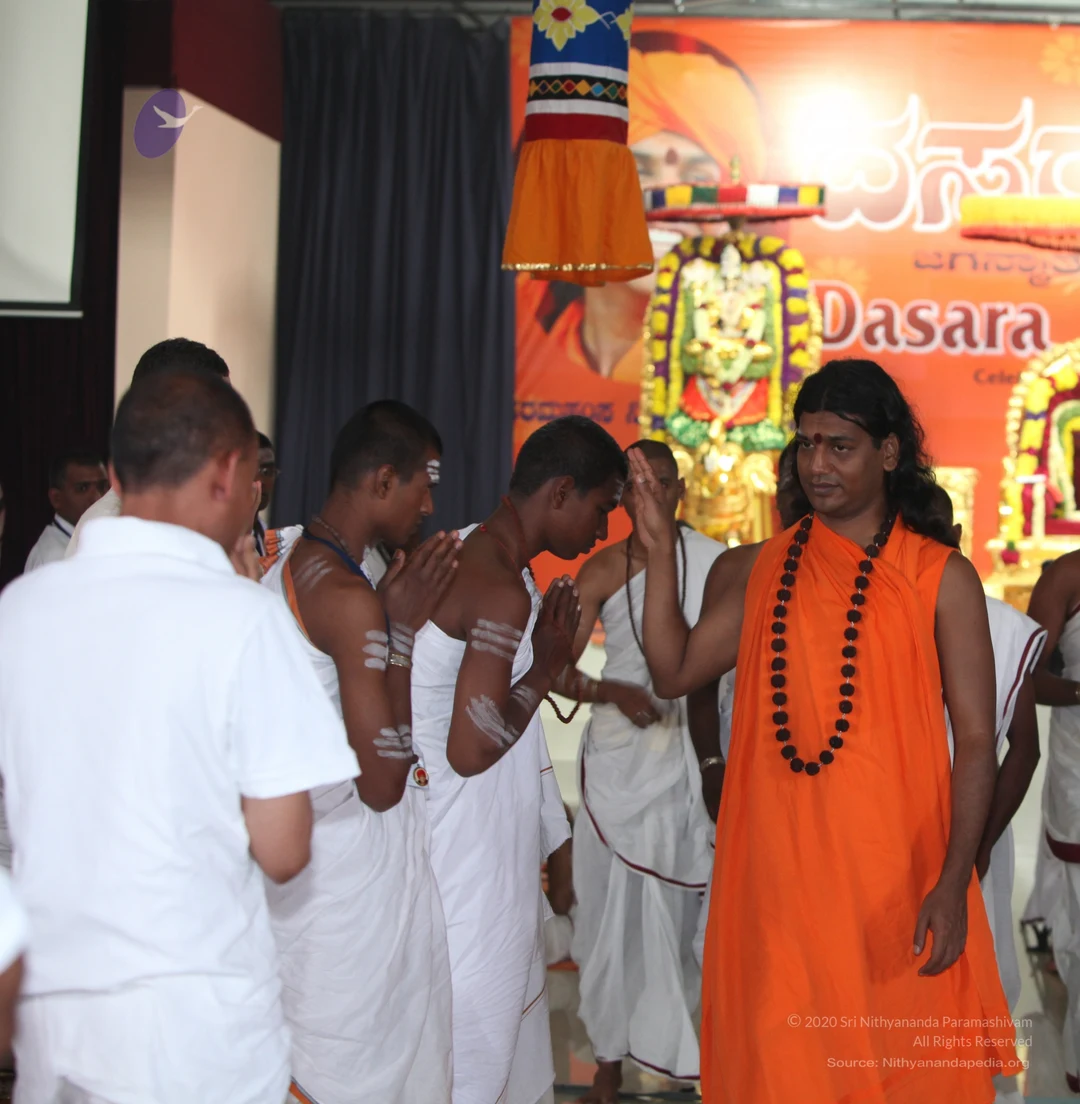
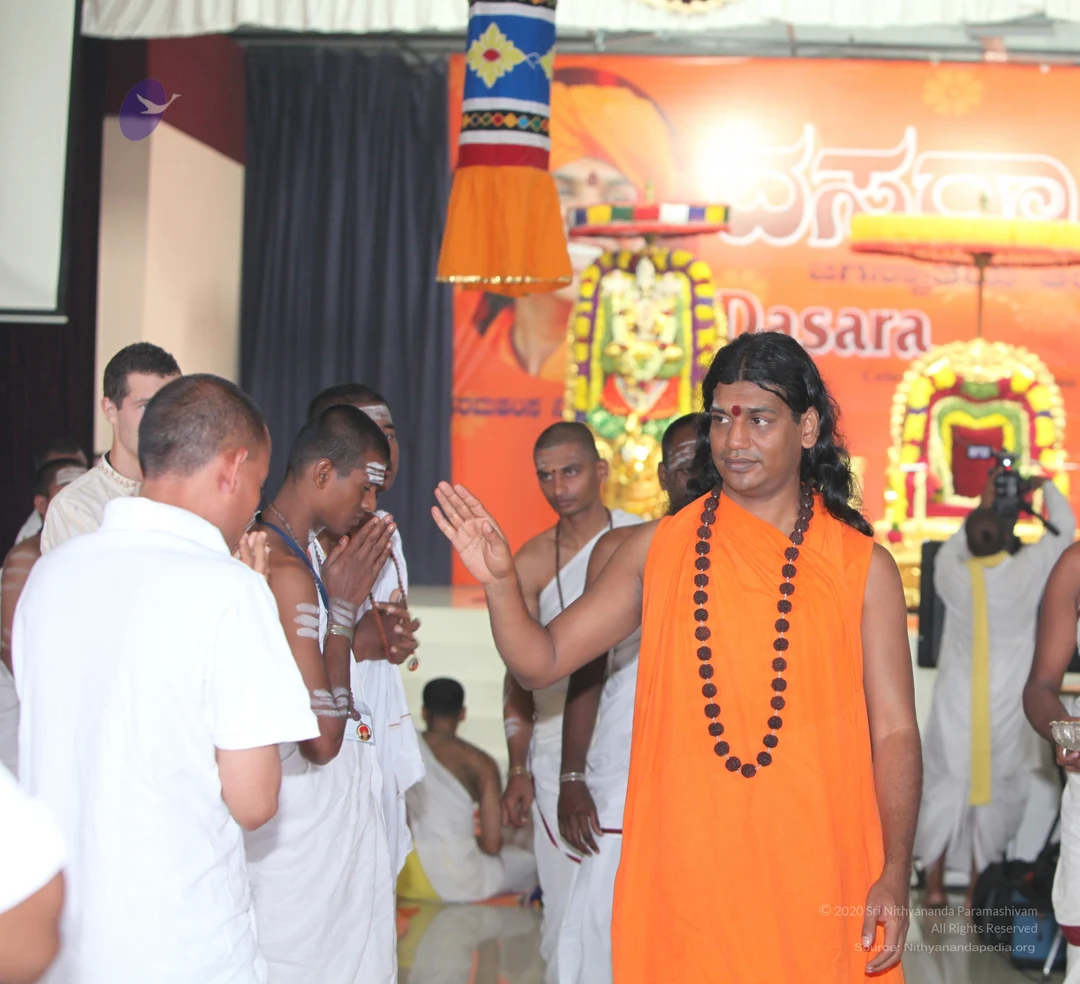
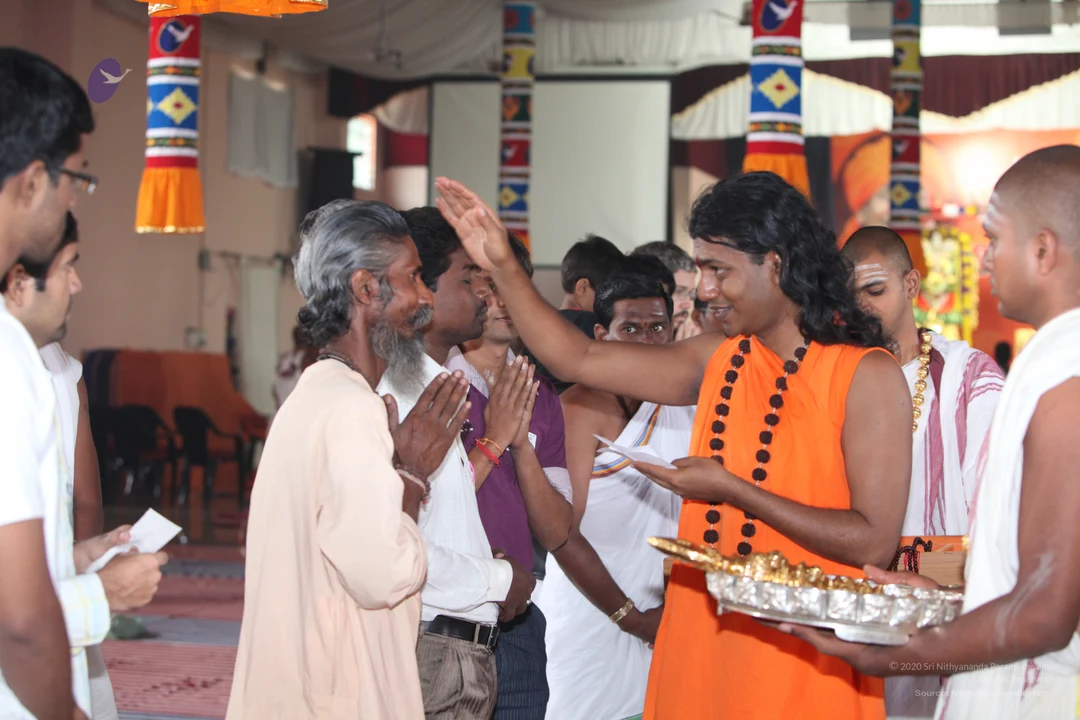
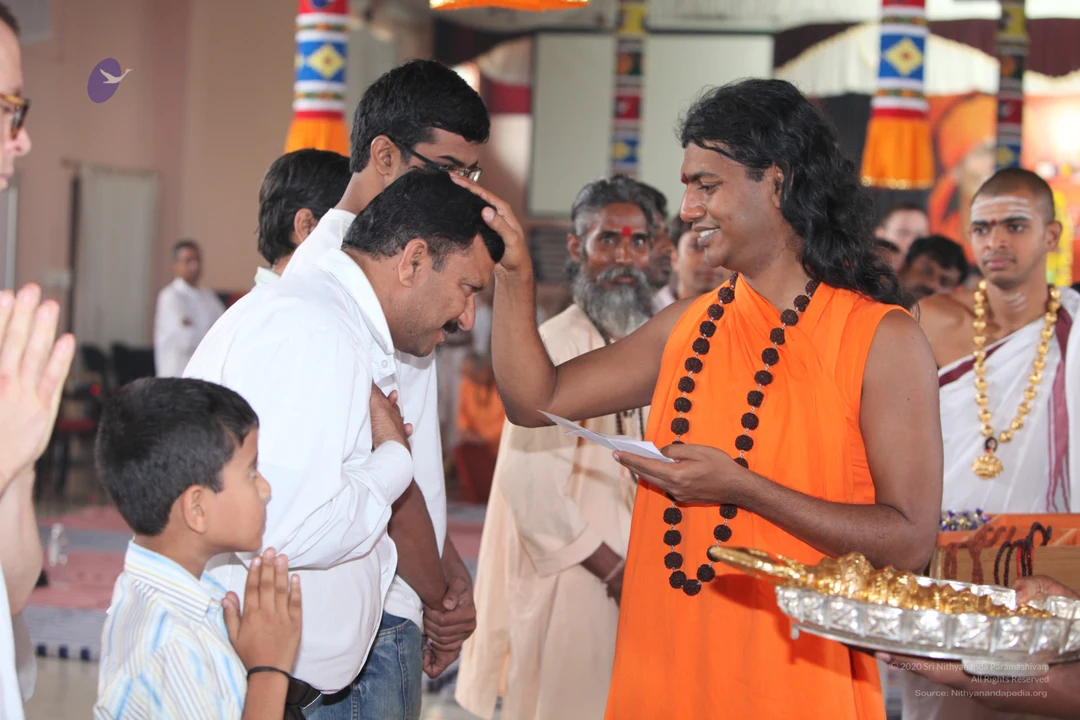
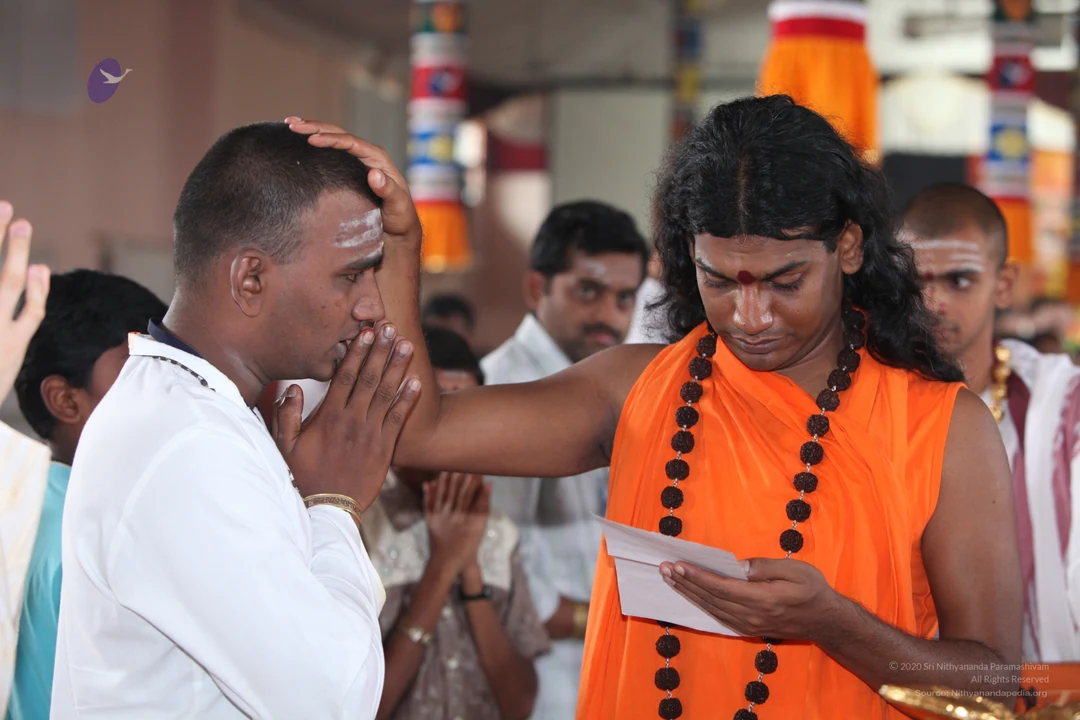
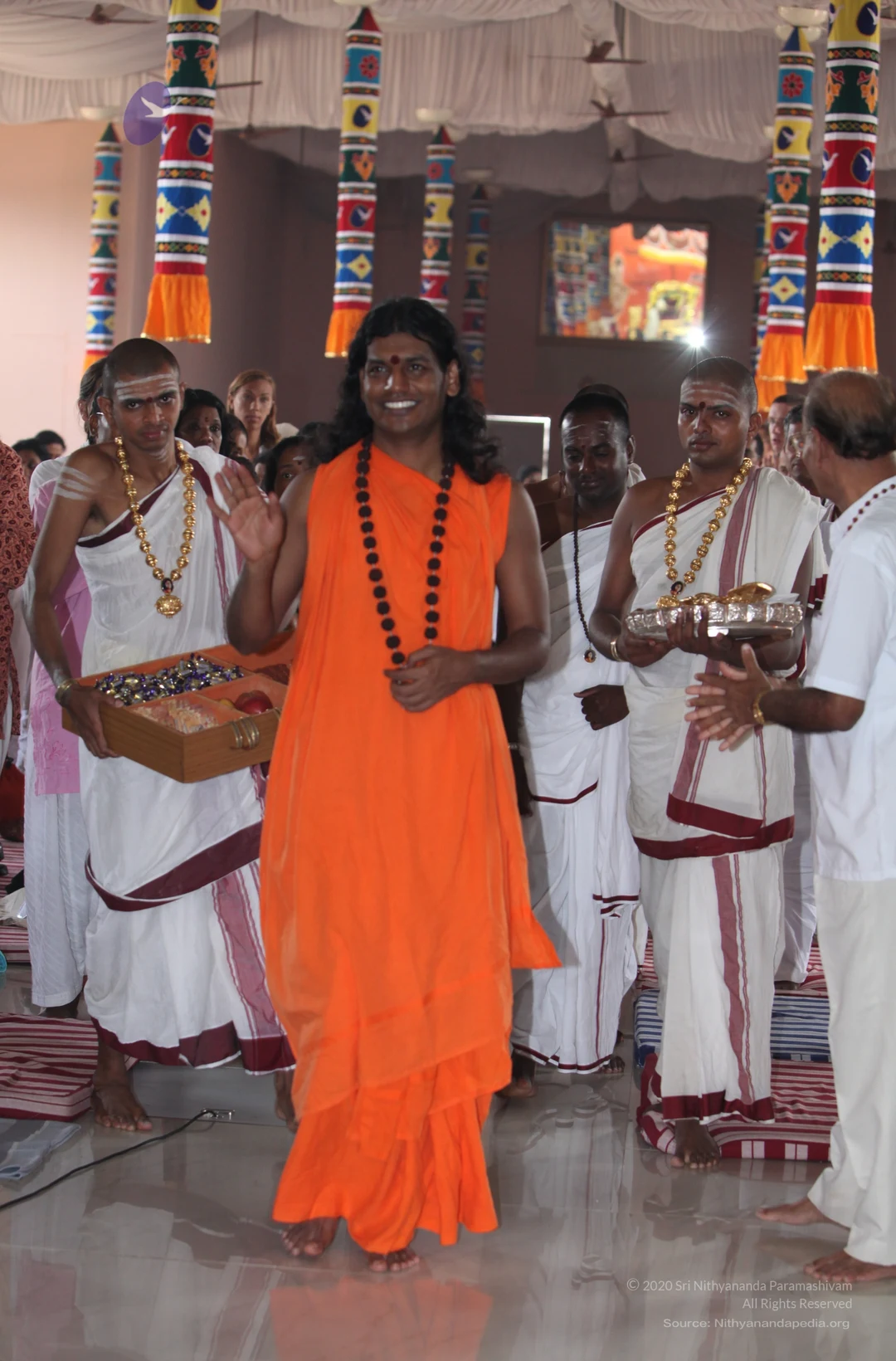
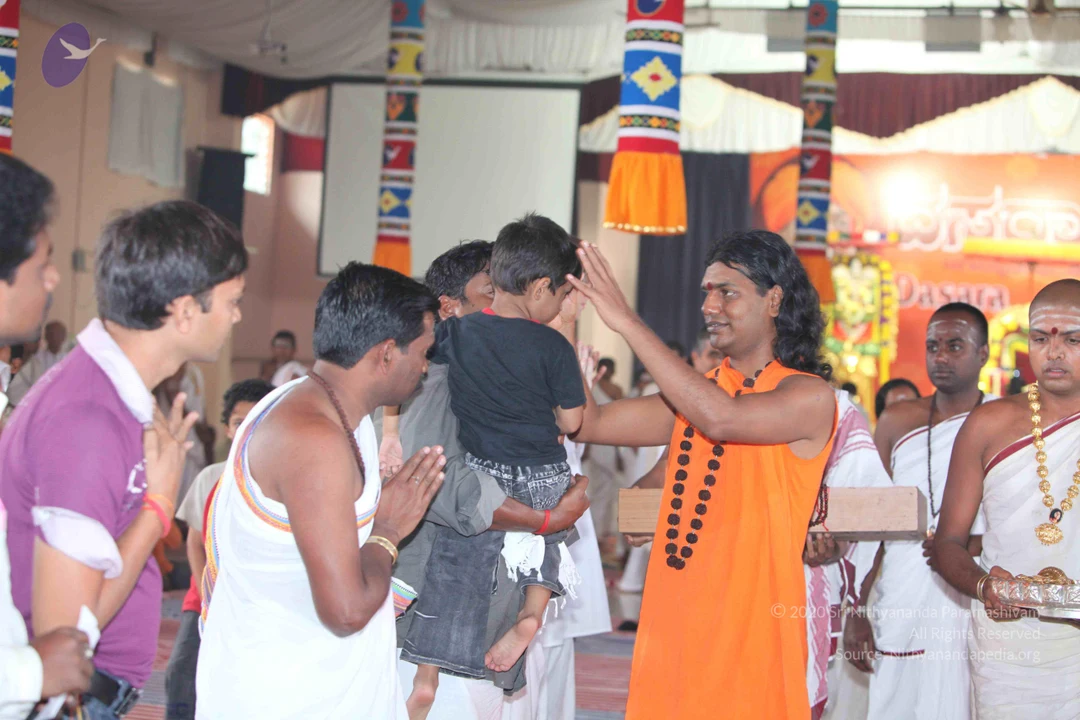
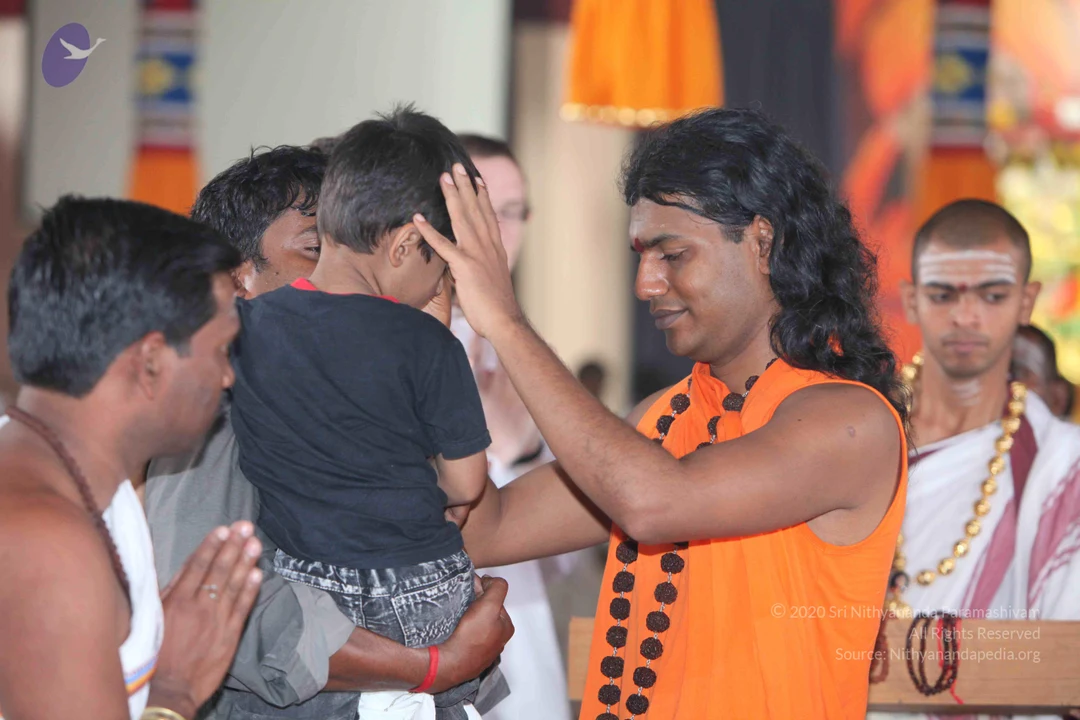
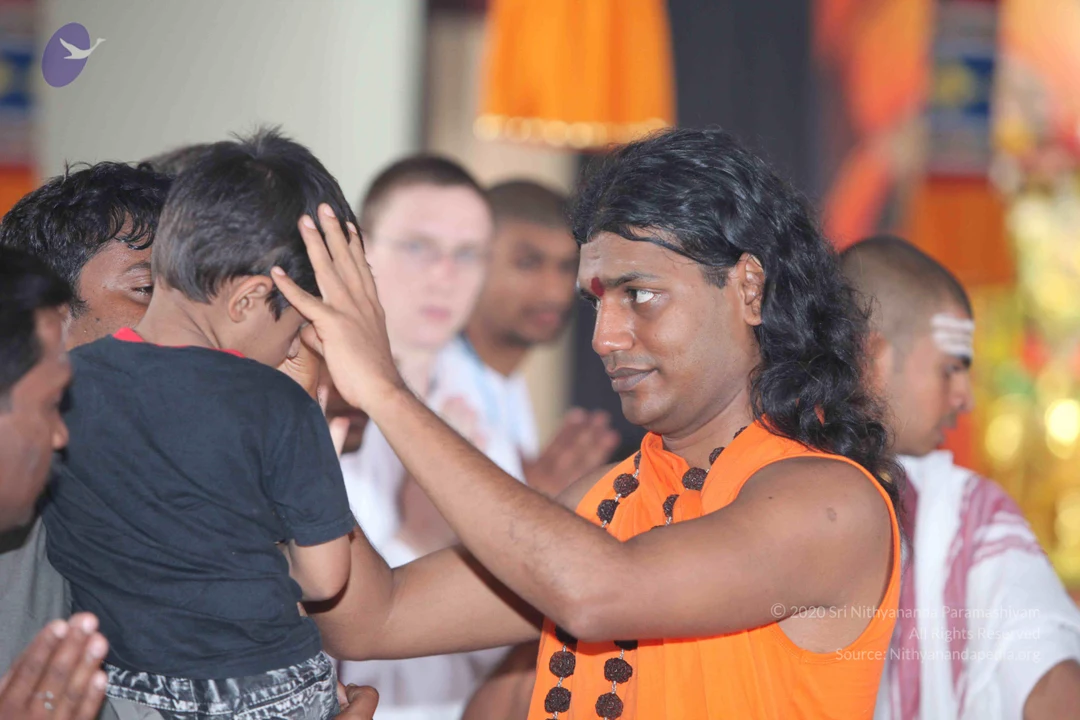
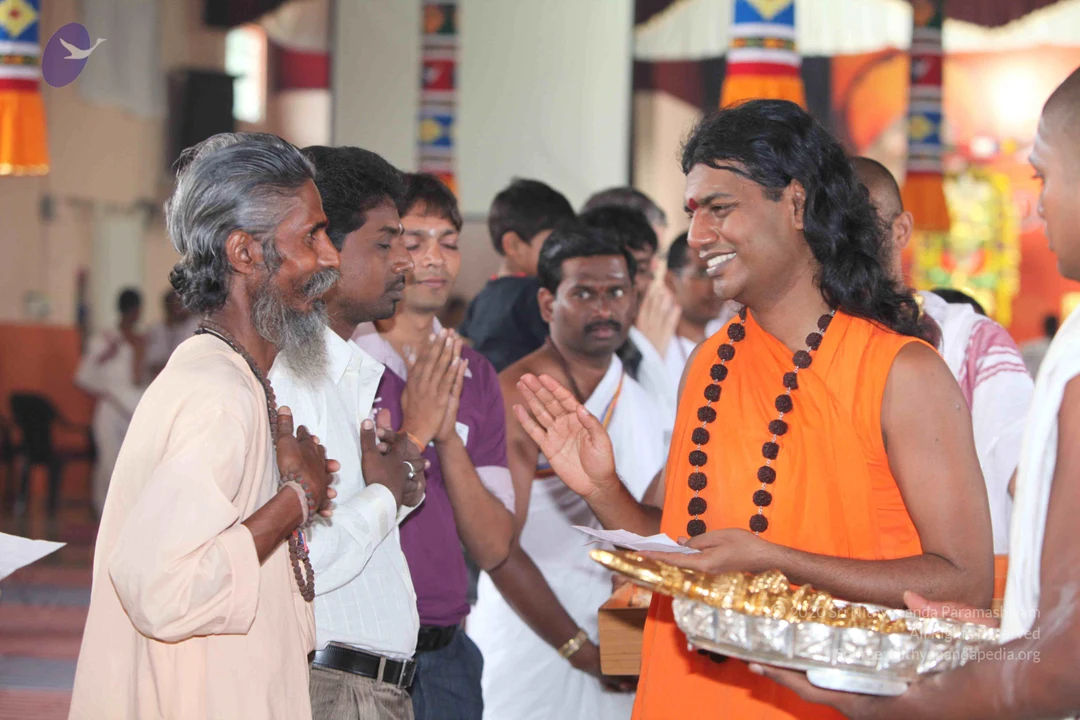
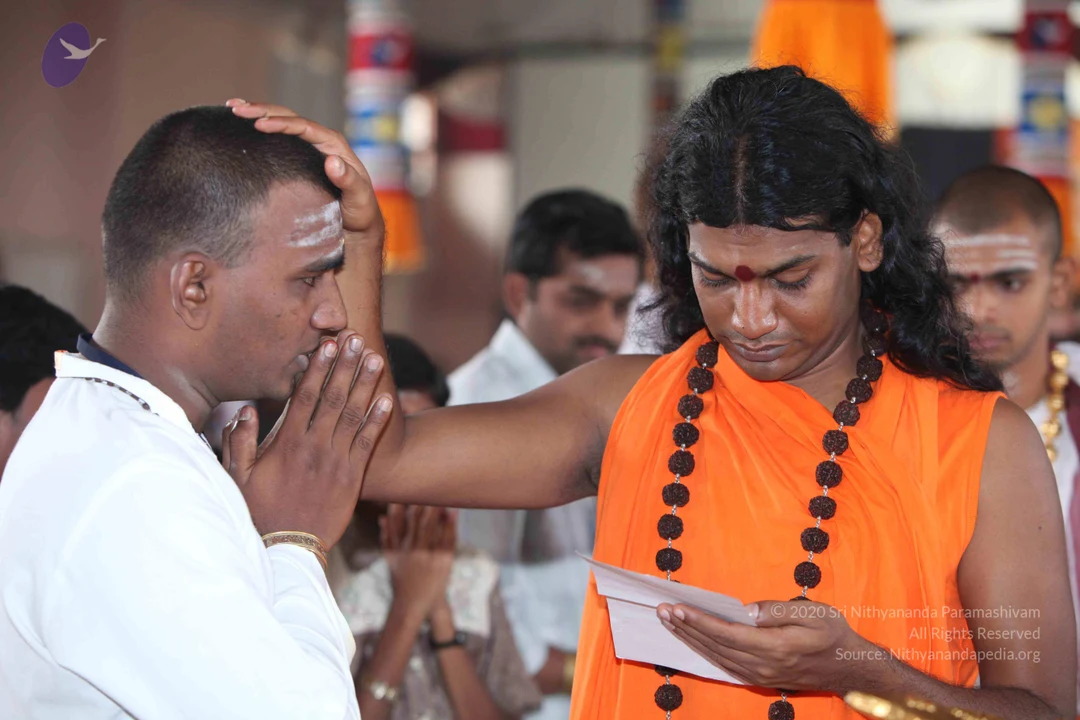
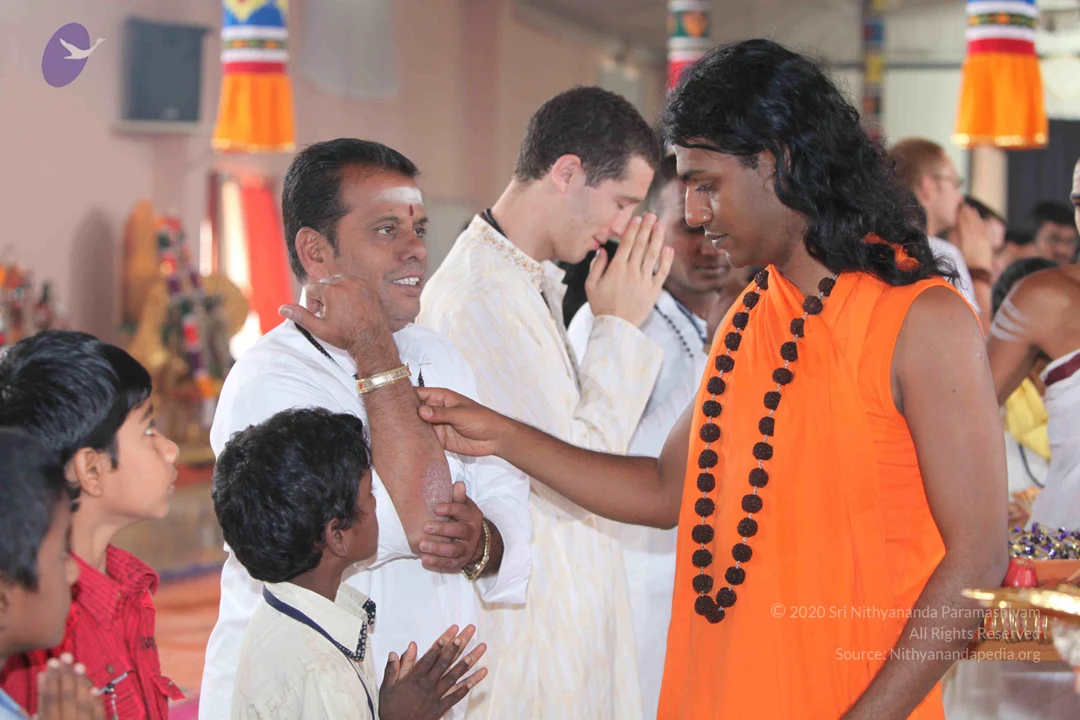
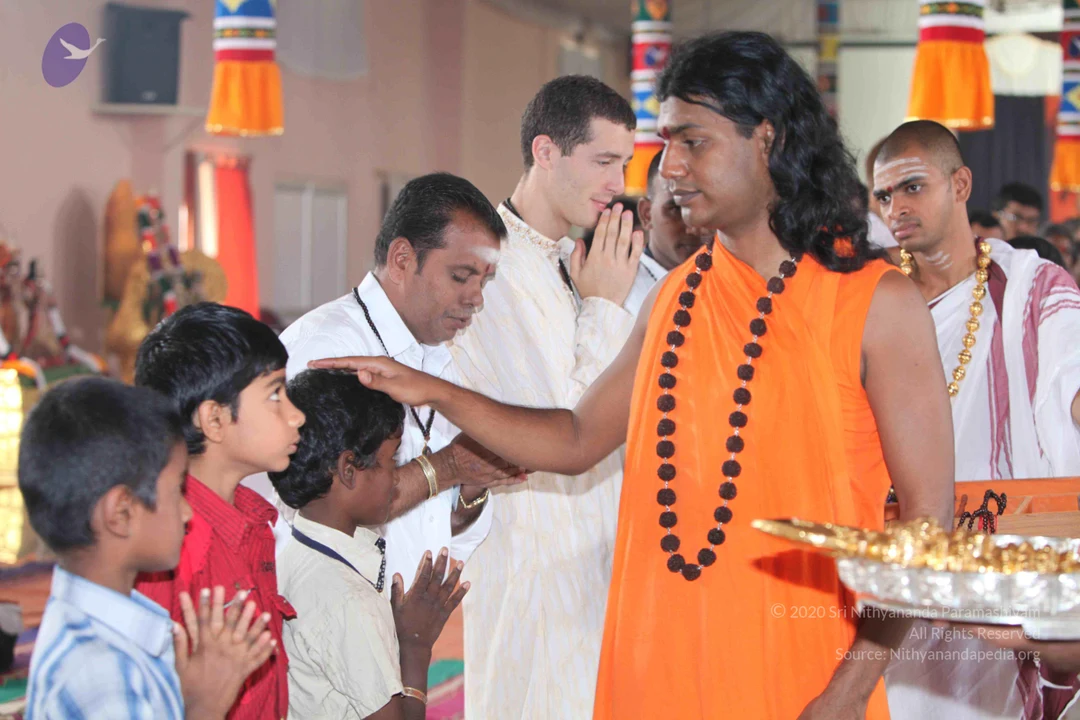
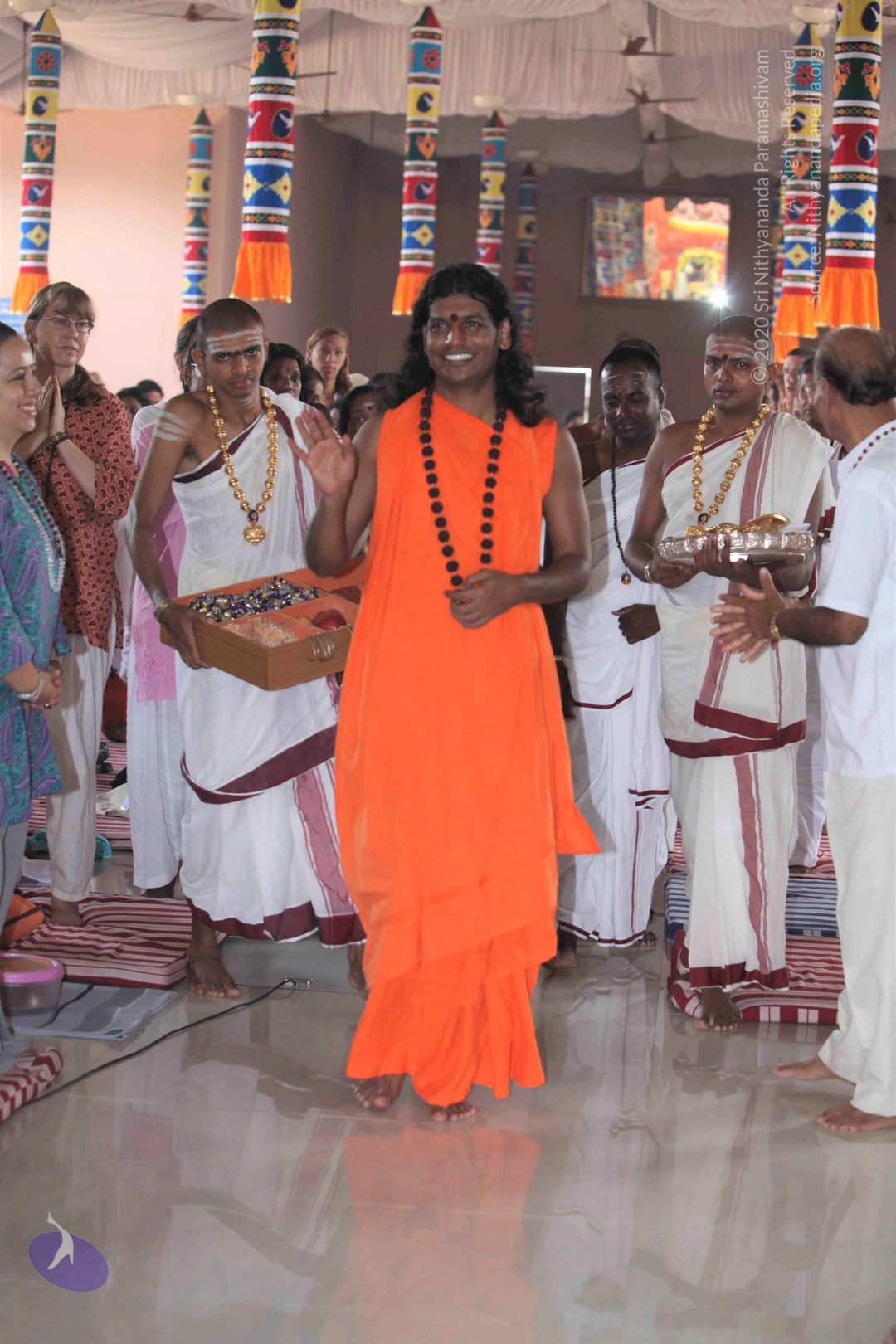
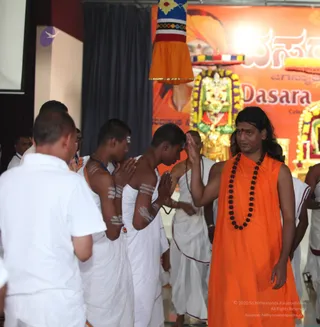
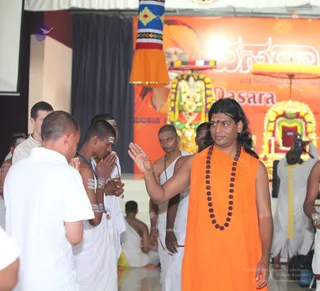
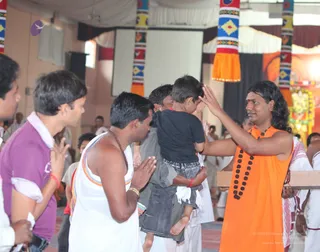
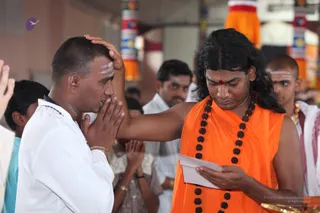
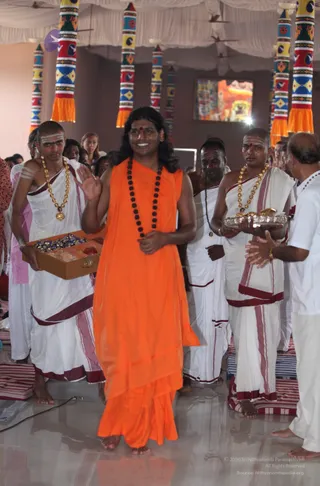
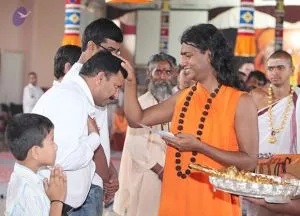
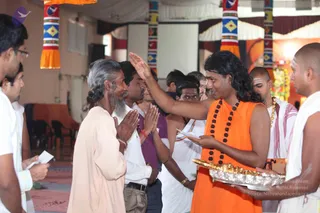
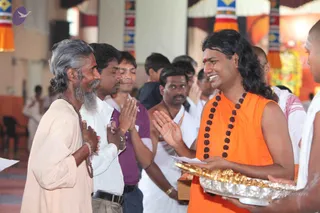
A photograph of a ritual greeting in a hall with an orange banner reading Dasara behind a decorated deity murti garlanded with yellow and red flowers. A long-haired man in a saffron-orange robe and a rudraksha mala stands at right with his palm raised in blessing toward a young man in white dhoti and shawl with white ash markings on his arms, who bends forward with hands folded in namaskar. Other men in white dhotis and white shirts stand around, one in a white shirt at left.A photograph of a man in a saffron-orange robe with a long rudraksha mala and long swept-back dark hair, raising one hand in blessing toward a group of devotees. The devotees wear white clothes and have white horizontal markings on their arms and foreheads; several press palms together in anjali. A banner behind reads Dasara in English, with an ornate deity or altar decoration in orange, yellow and green garlands. A man in a white shirt stands at the left edge, and a cameraman in white is visible at the right; the crowd includes several more people in white.Photograph inside a hall with a white ceiling drape and a screen behind, decorated with striped banners in red, blue and yellow with orange tassels. A man in a saffron-orange sleeveless robe with long swept-back hair and a dark rudraksha mala is raising his right palm in blessing over the head of a small boy in a black t-shirt, who is held in the arms of an adult in grey. Nearby, a man in a white dhoti with a multicoloured border and a rudraksha mala stands with palms pressed together in namaskar, while a man in a purple shirt on the left also folds his hands. Other people in white ritual clothes stand behind, and a garlanded deity murti is visible at the right edge. The scene suggests a darshan blessing line.A photograph of a ritual blessing at an ashram gathering. A man with long, dark, wavy hair wears a saffron-orange sleeveless robe and a long rudraksha mala, with a red bindi and white vibhuti marks on his forehead. He holds a folded white paper in one hand while his other hand rests on the crown of a shaved-headed man in a white shirt, who stands with palms pressed together in reverence. Other devotees in white and cream clothes, one with a gold bracelet, stand behind, with saffron and blue pillars in the background. The blessing gesture suggests a darshan or padapuja-style moment, and the scene shows a sannyasi-style figure bestowing blessings on a devotee.A central figure with long dark hair, a red bindi and an orange sleeveless saffron wrap walks forward smiling and waving, wearing a dark beaded rudraksha-style mala. Flanking him, two shaven-headed attendants in white dhotis with maroon borders wear gold necklaces and carry a wooden tray of offerings and a silver platter. Behind them stands another attendant in white with a mala, and a figure in white at the right edge. Colourful striped and patterned pillars hang from a white draped ceiling, with a framed image on the wall behind and a bright light at upper right. The figure with long hair and saffron clothing matches a distinctive appearance-based candidate, labelled Swamiji (probable), walking in a satsang hall.

Dasara-Culturals

23 photosSource gallery
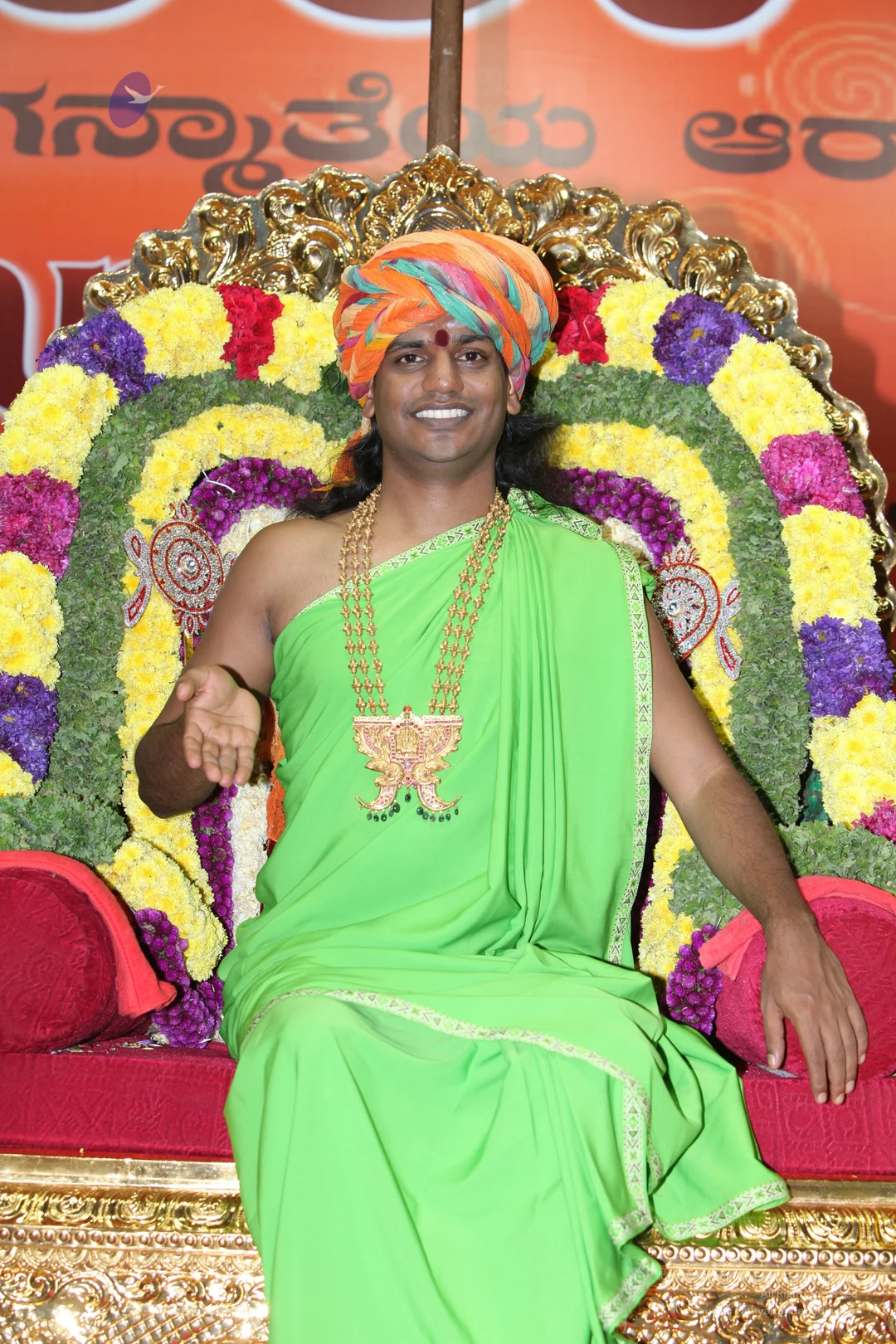
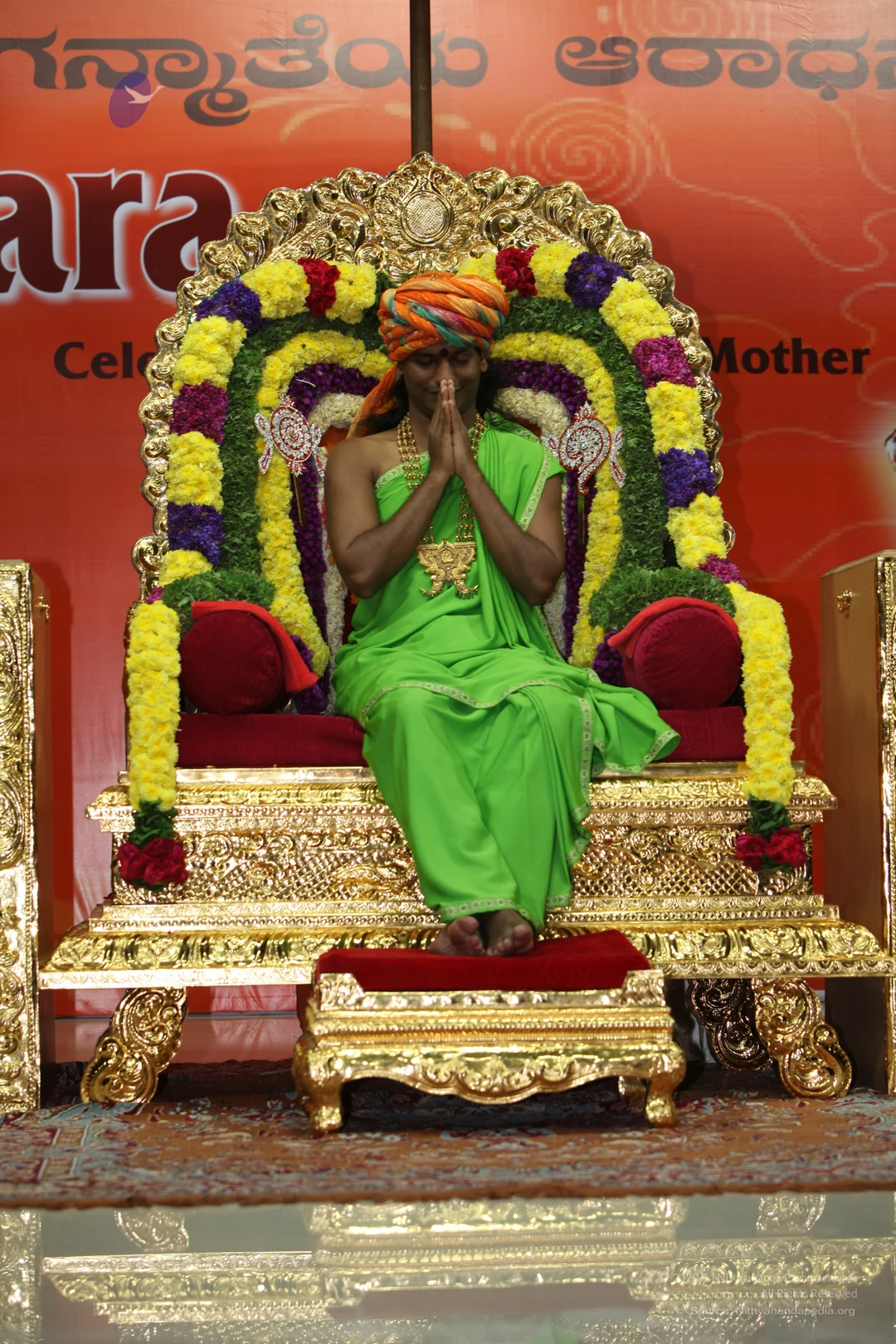
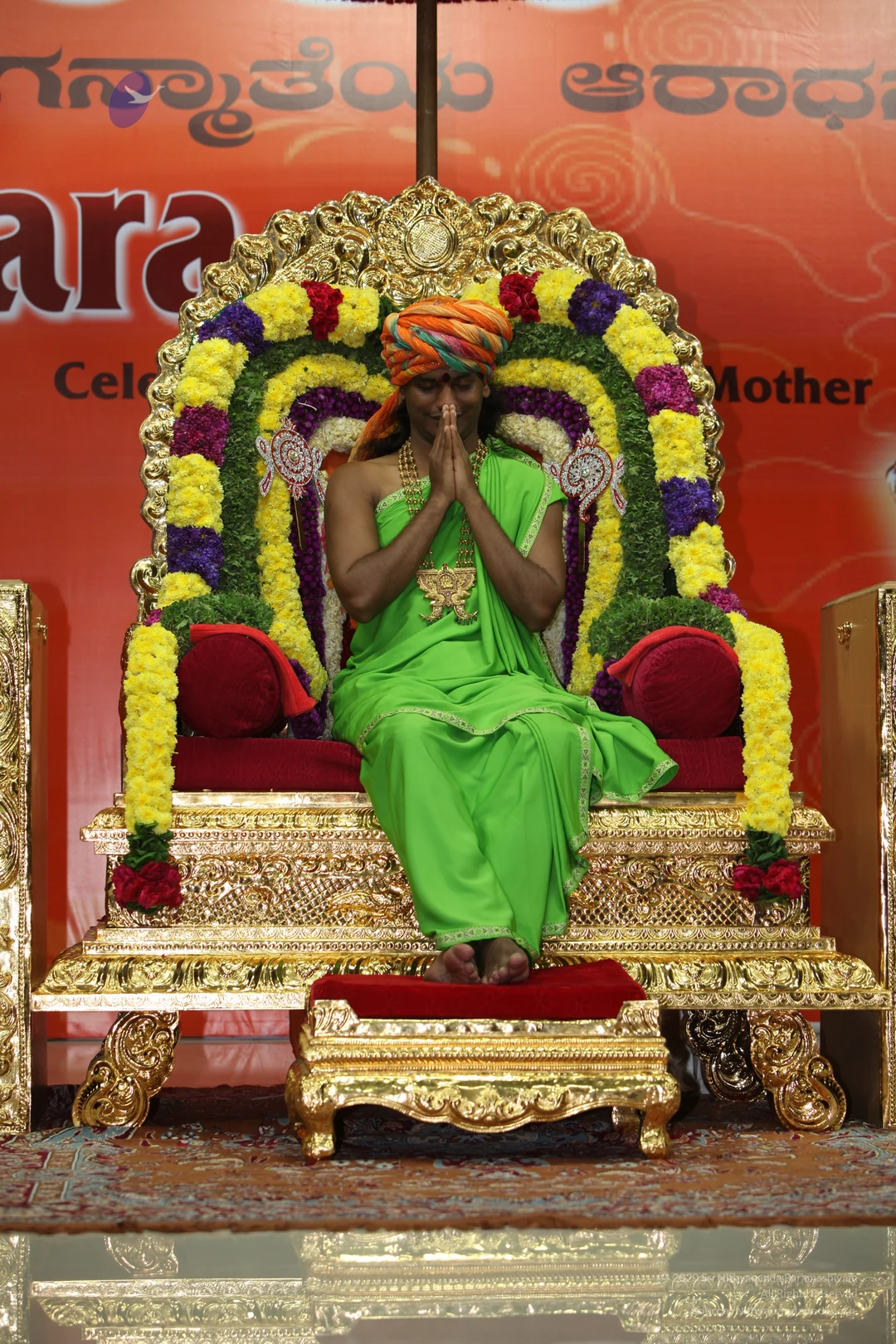
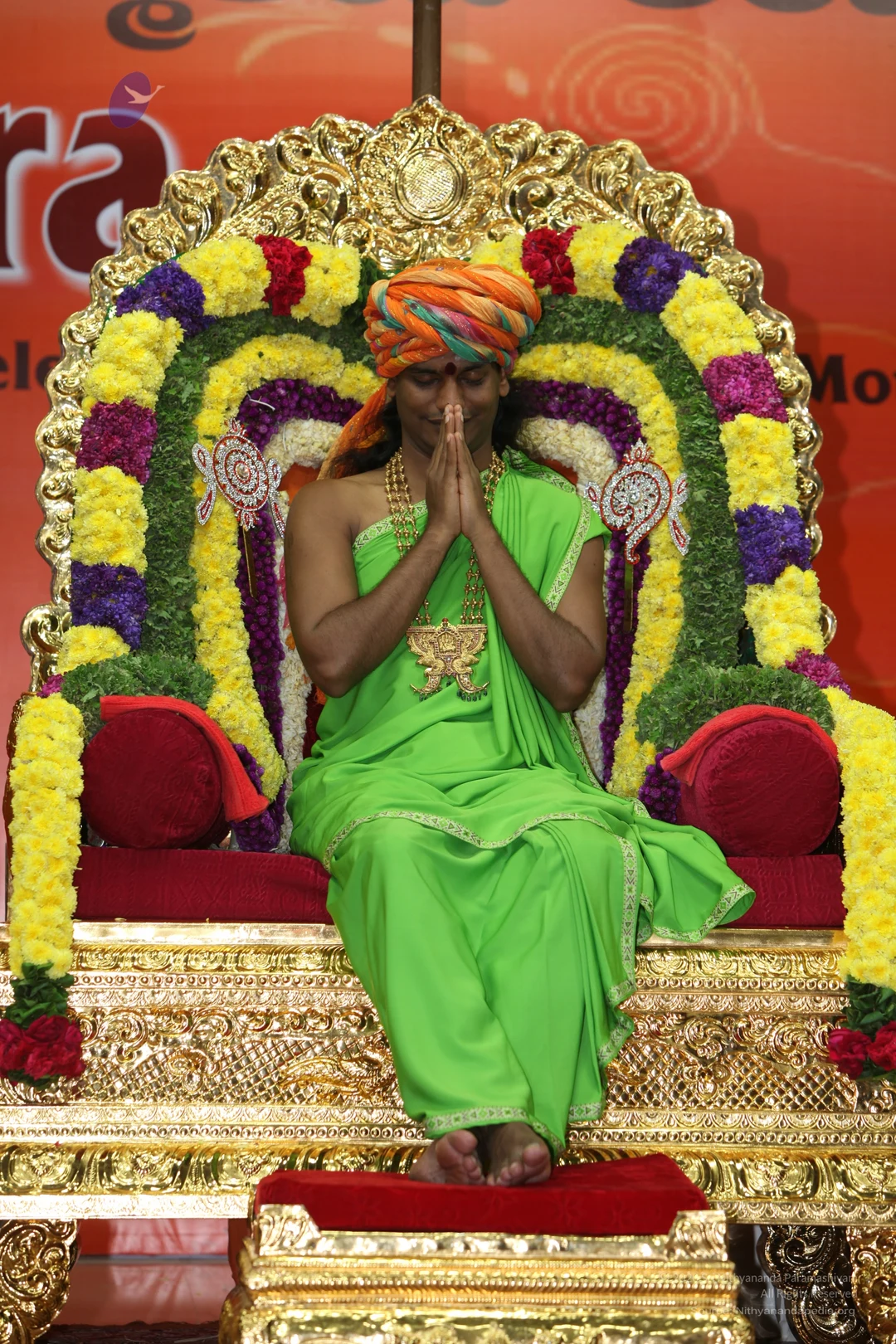
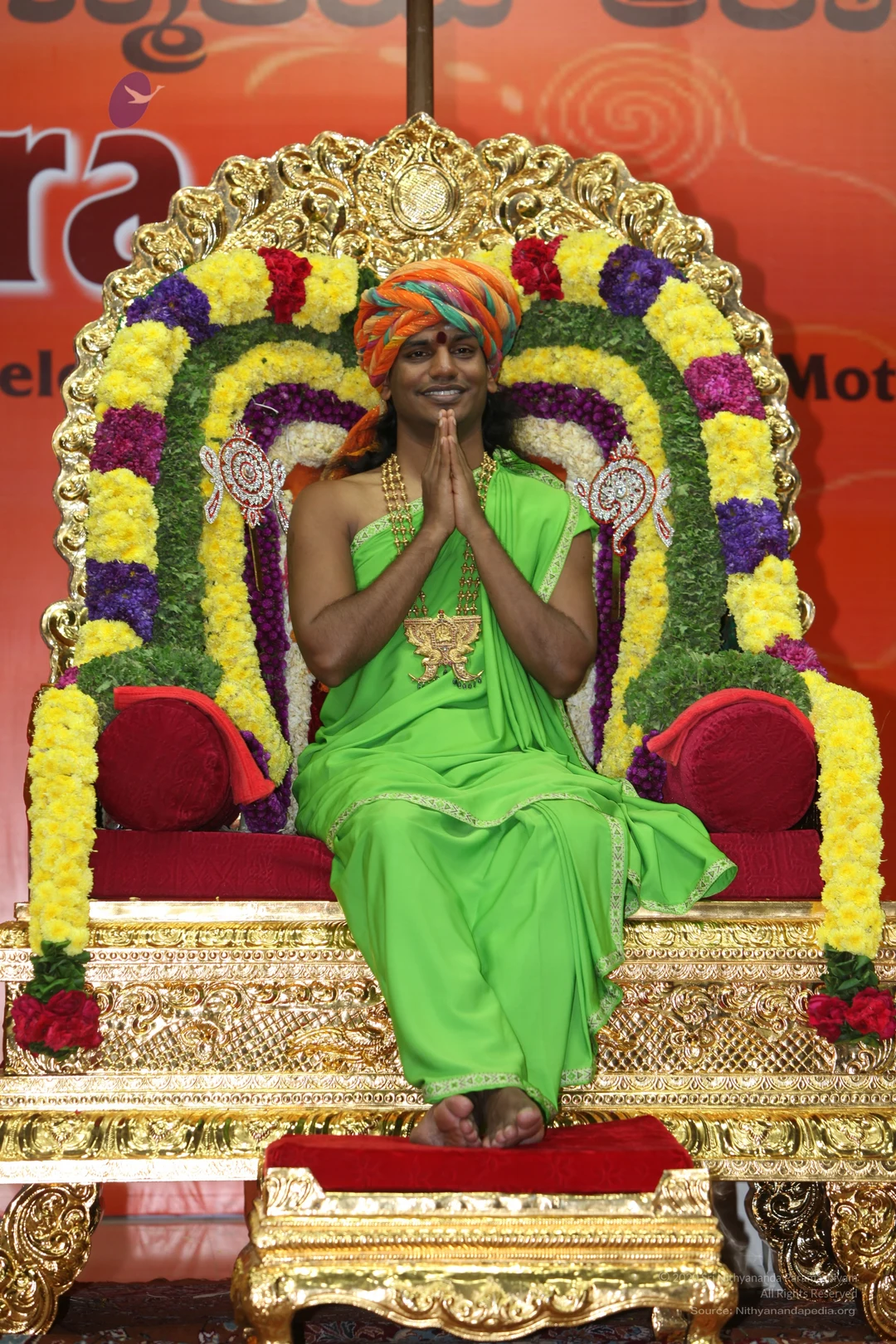
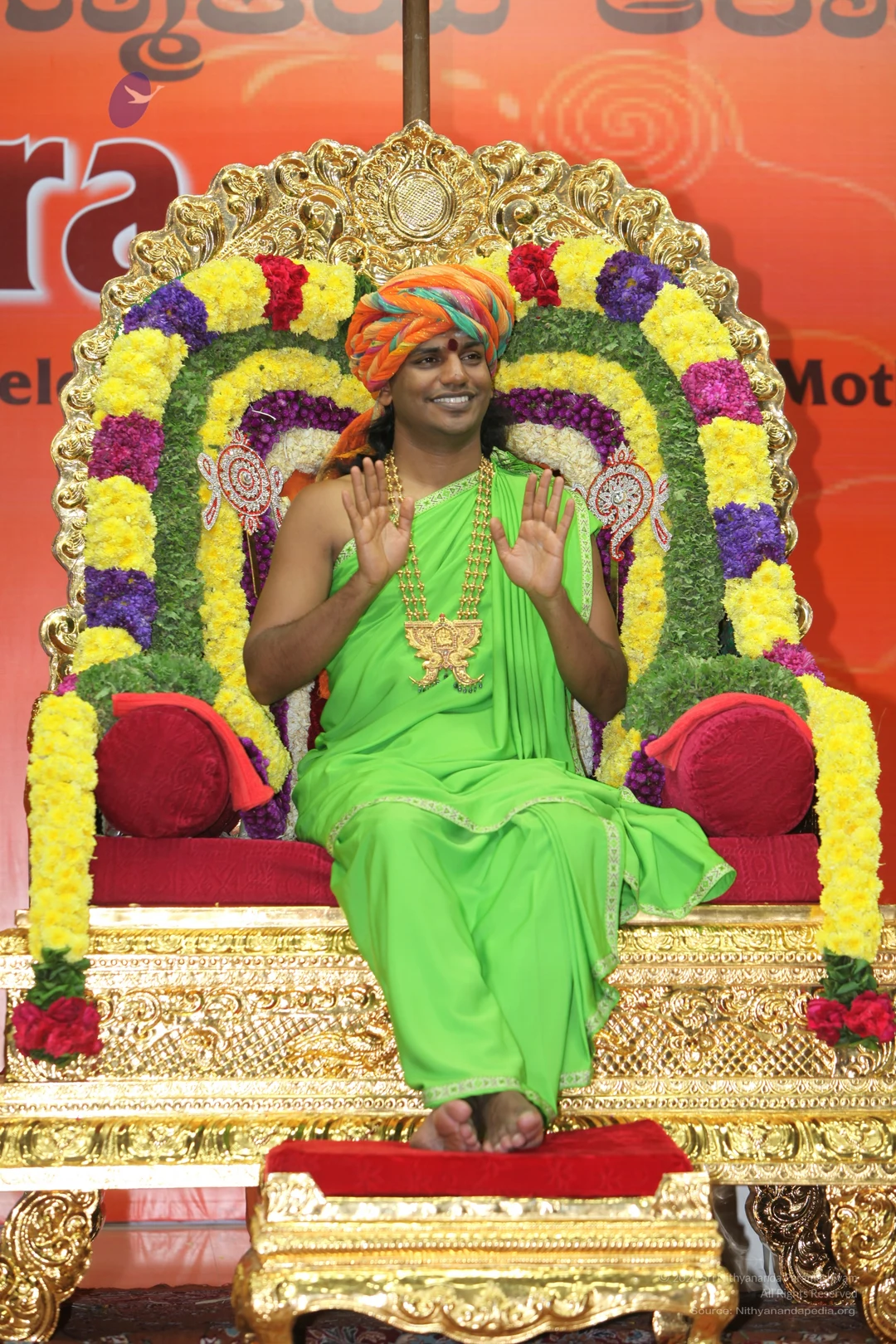
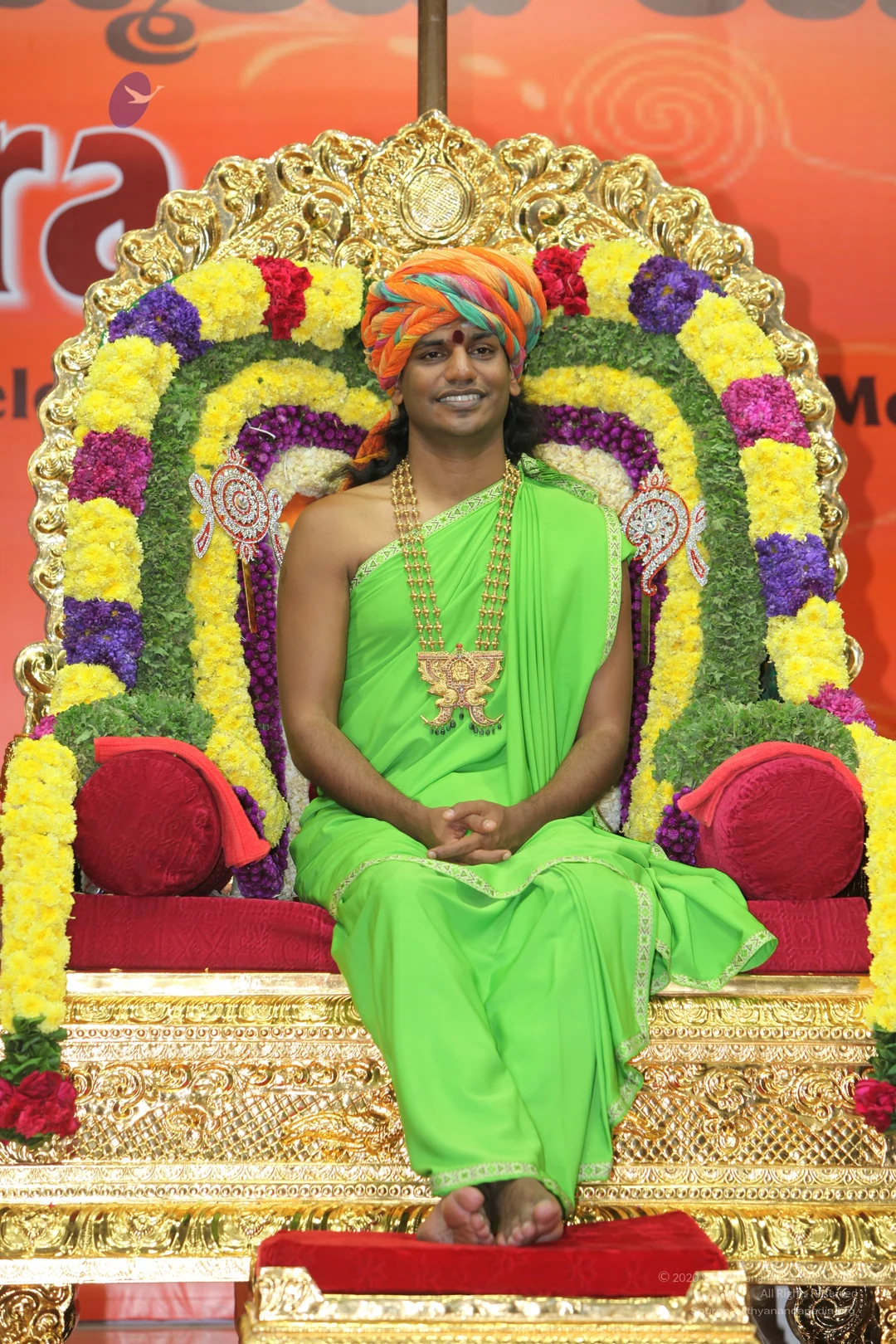
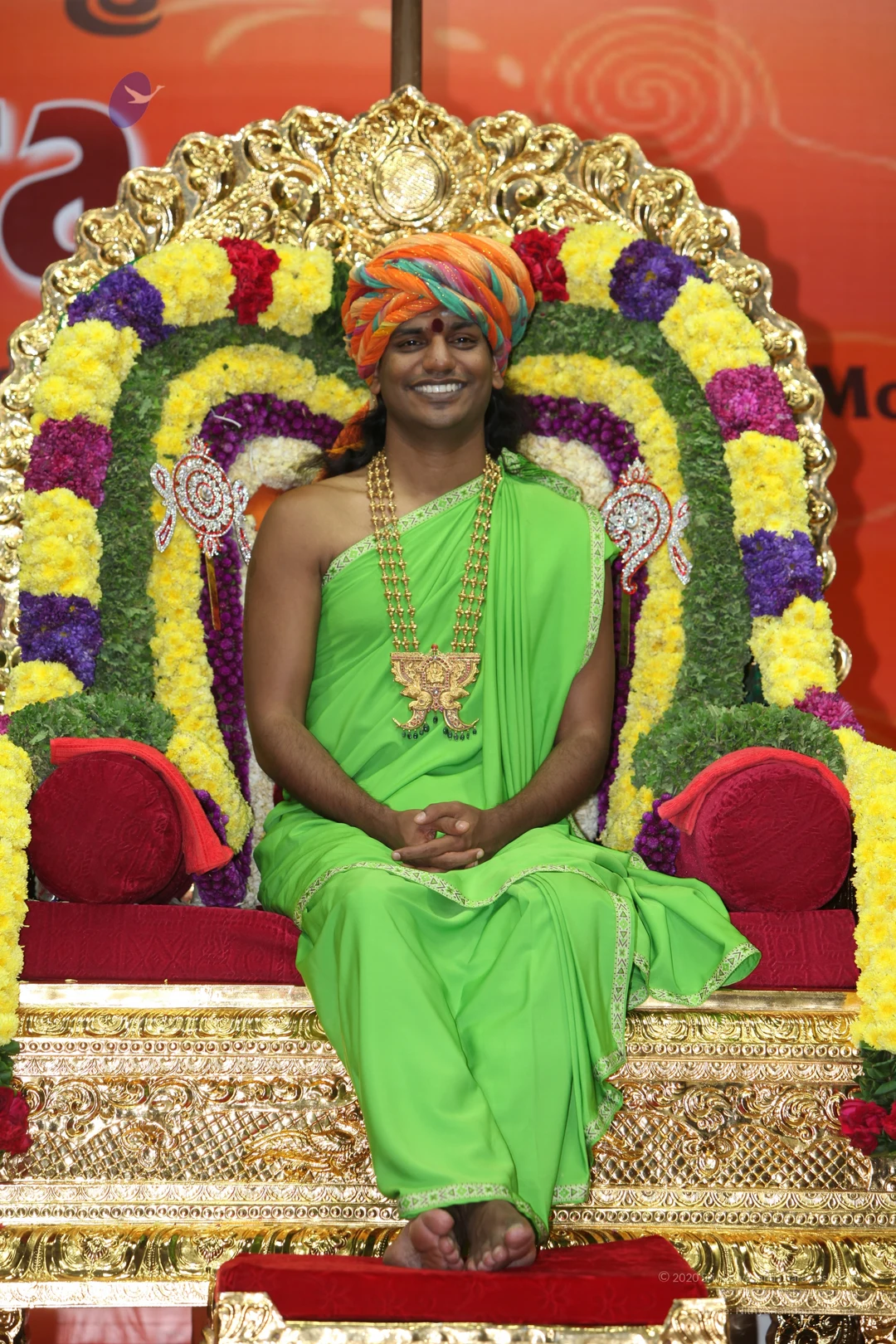
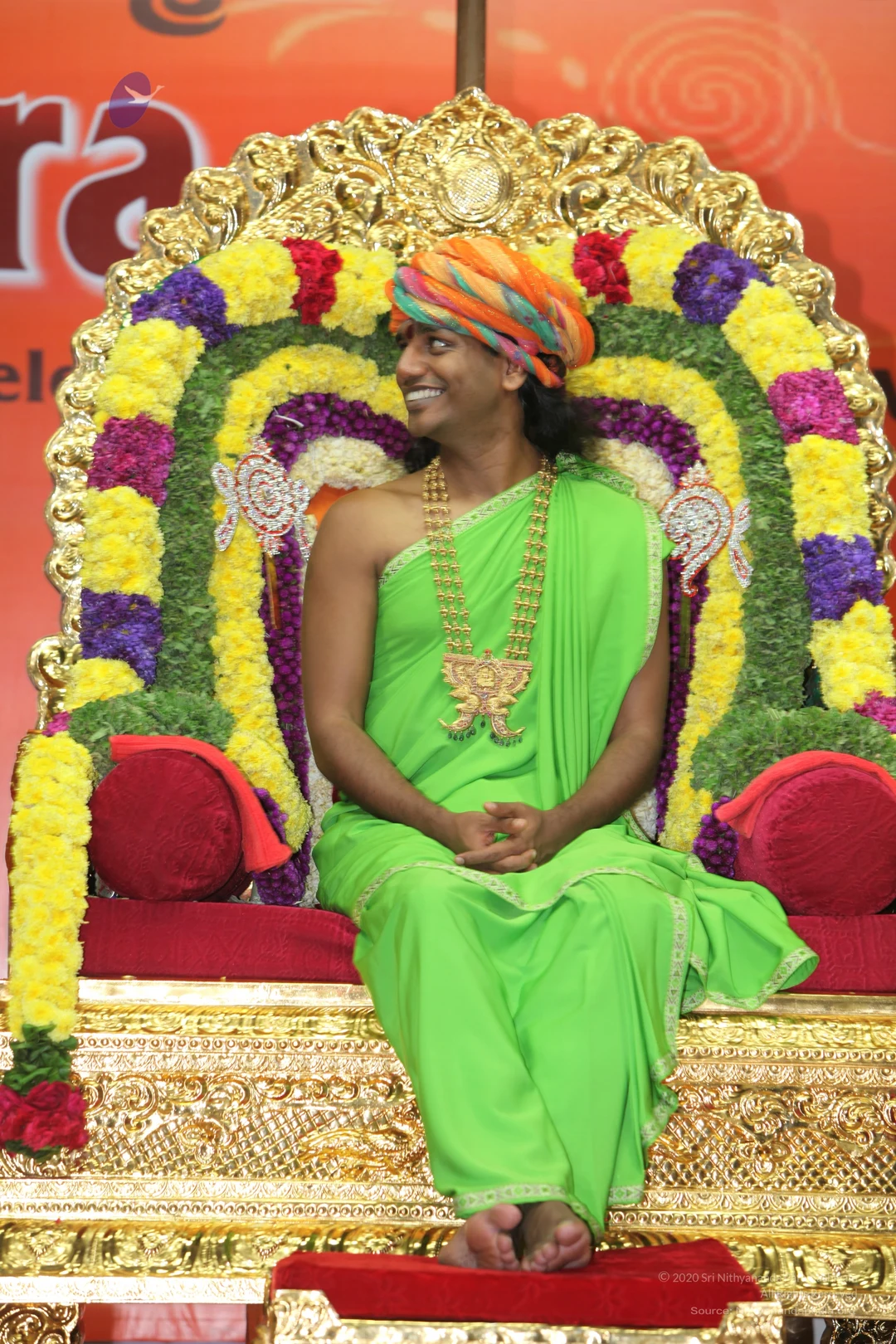
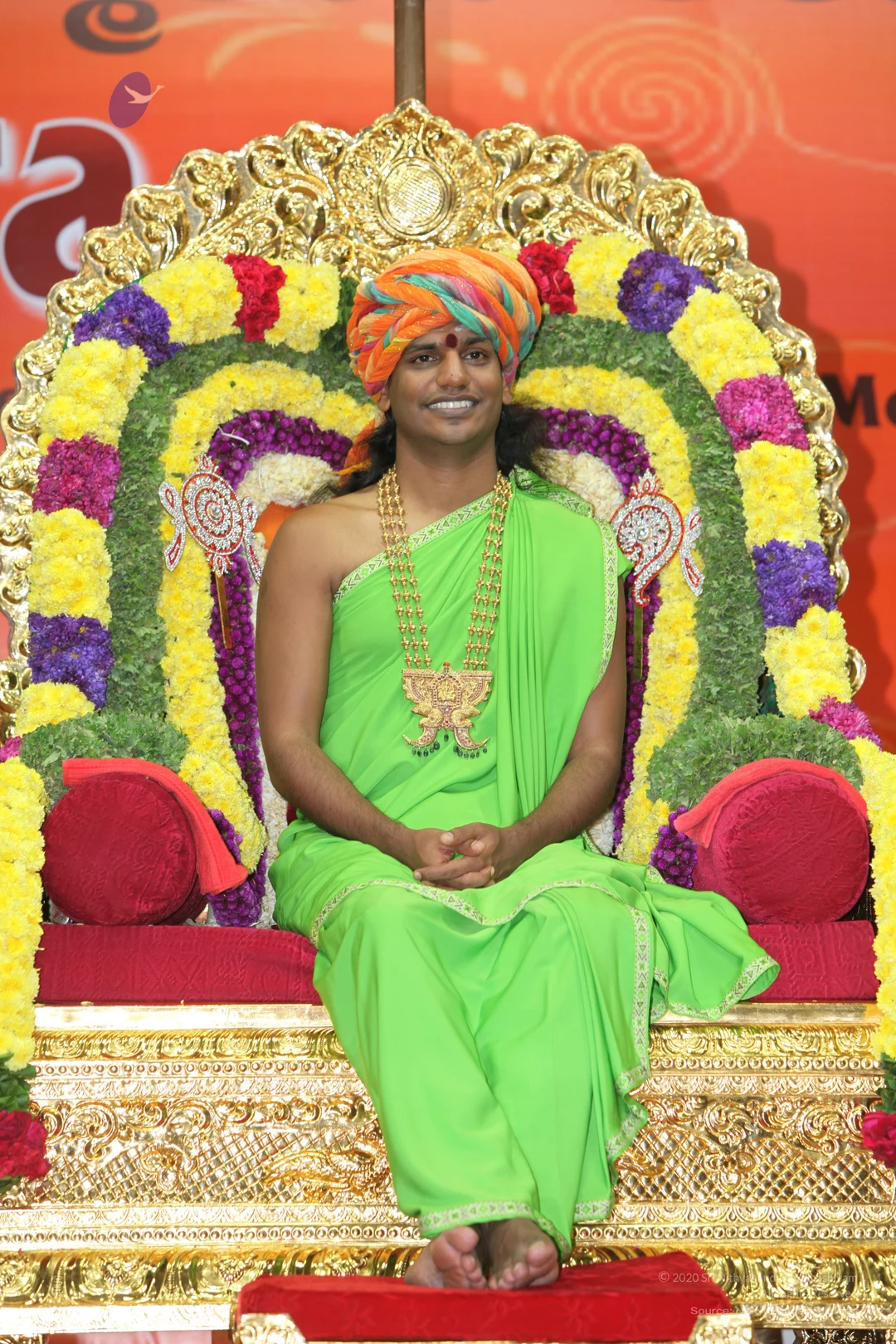
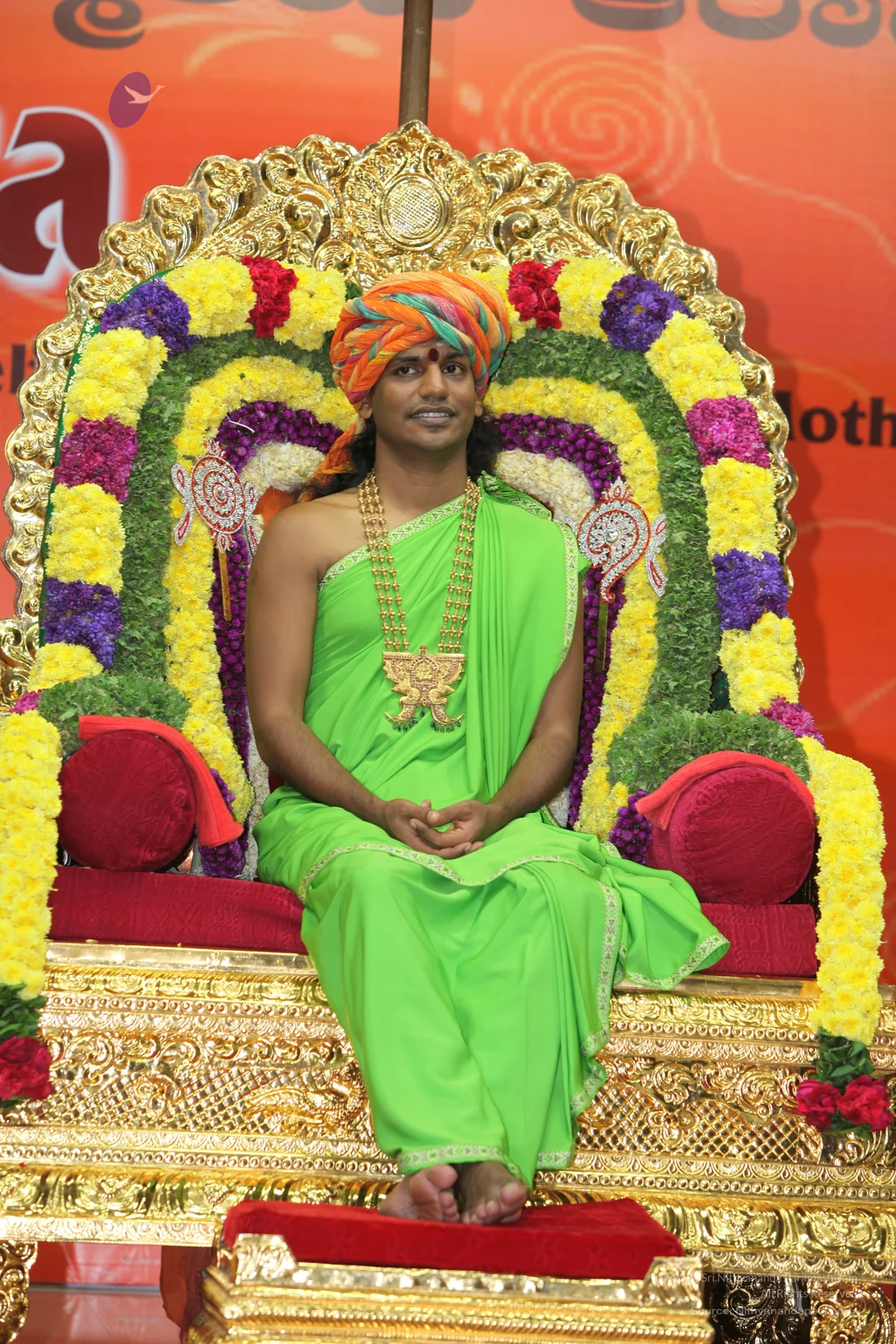
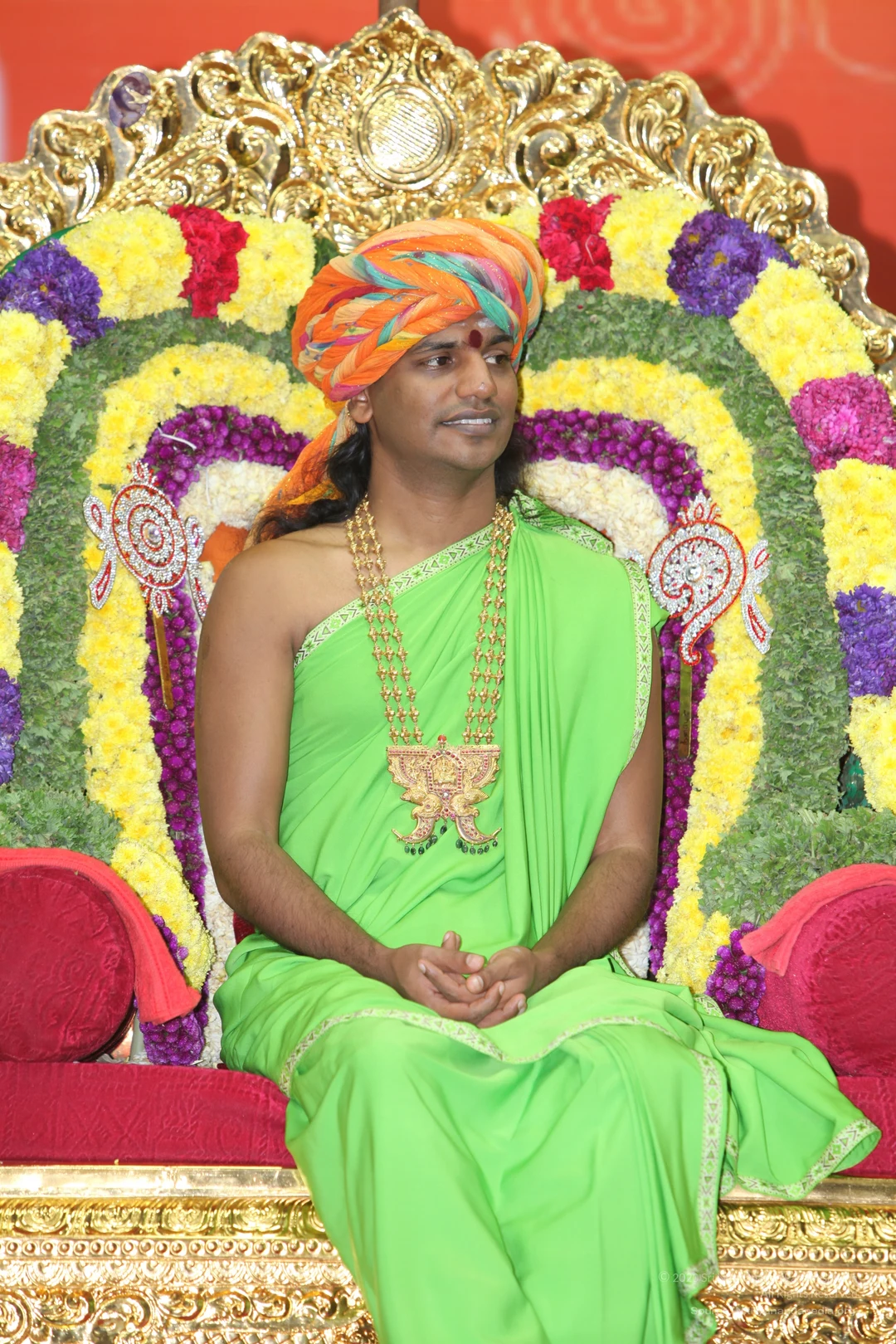
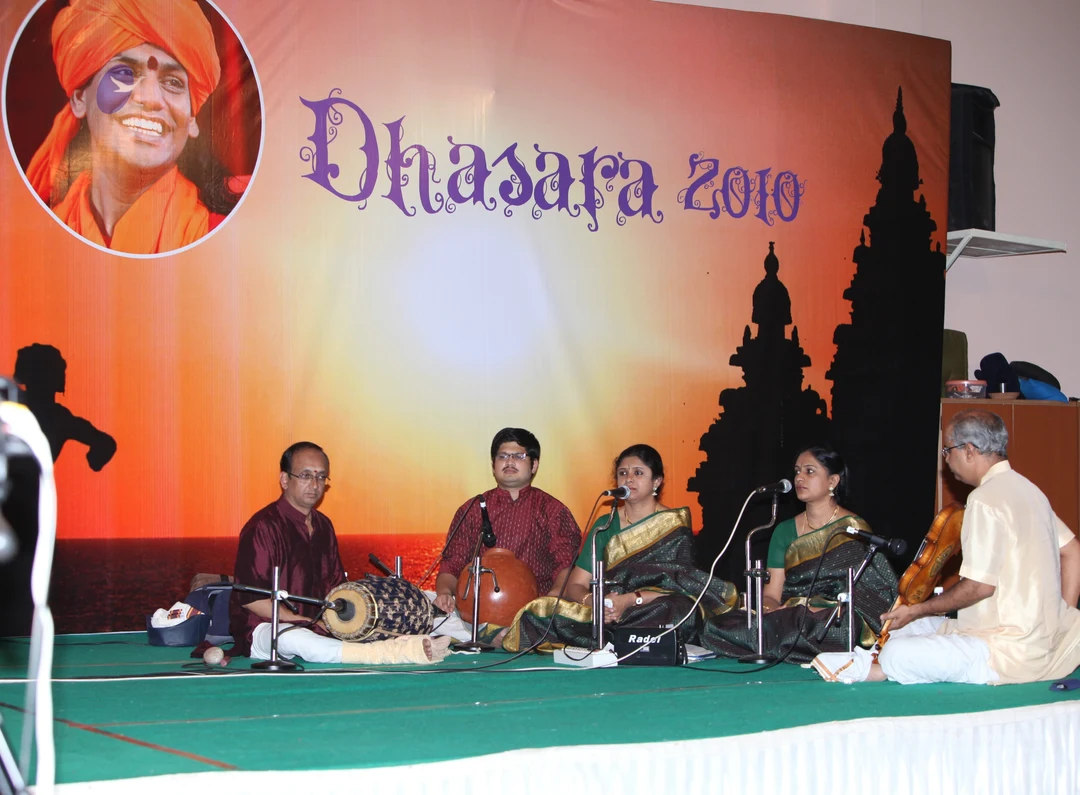
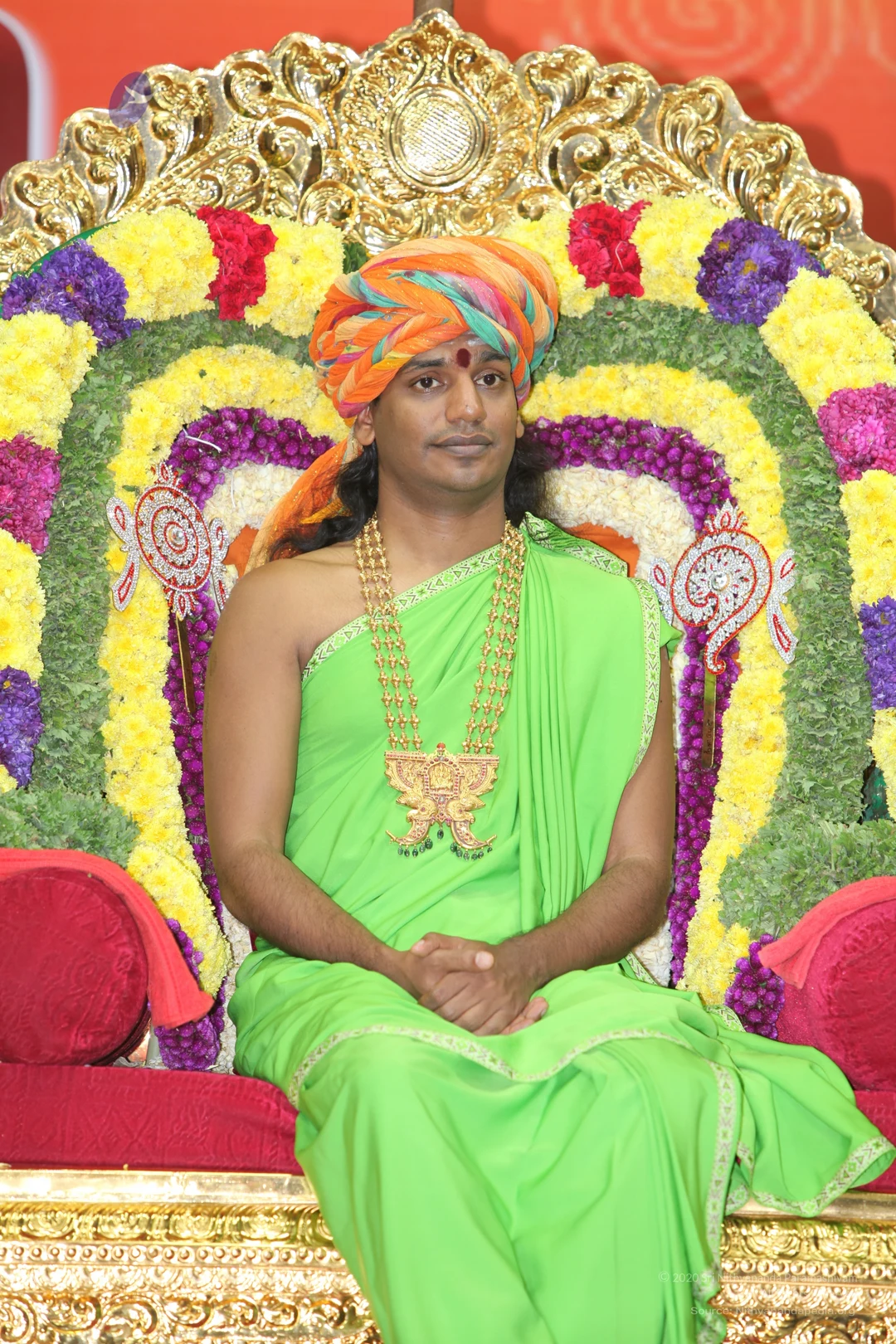
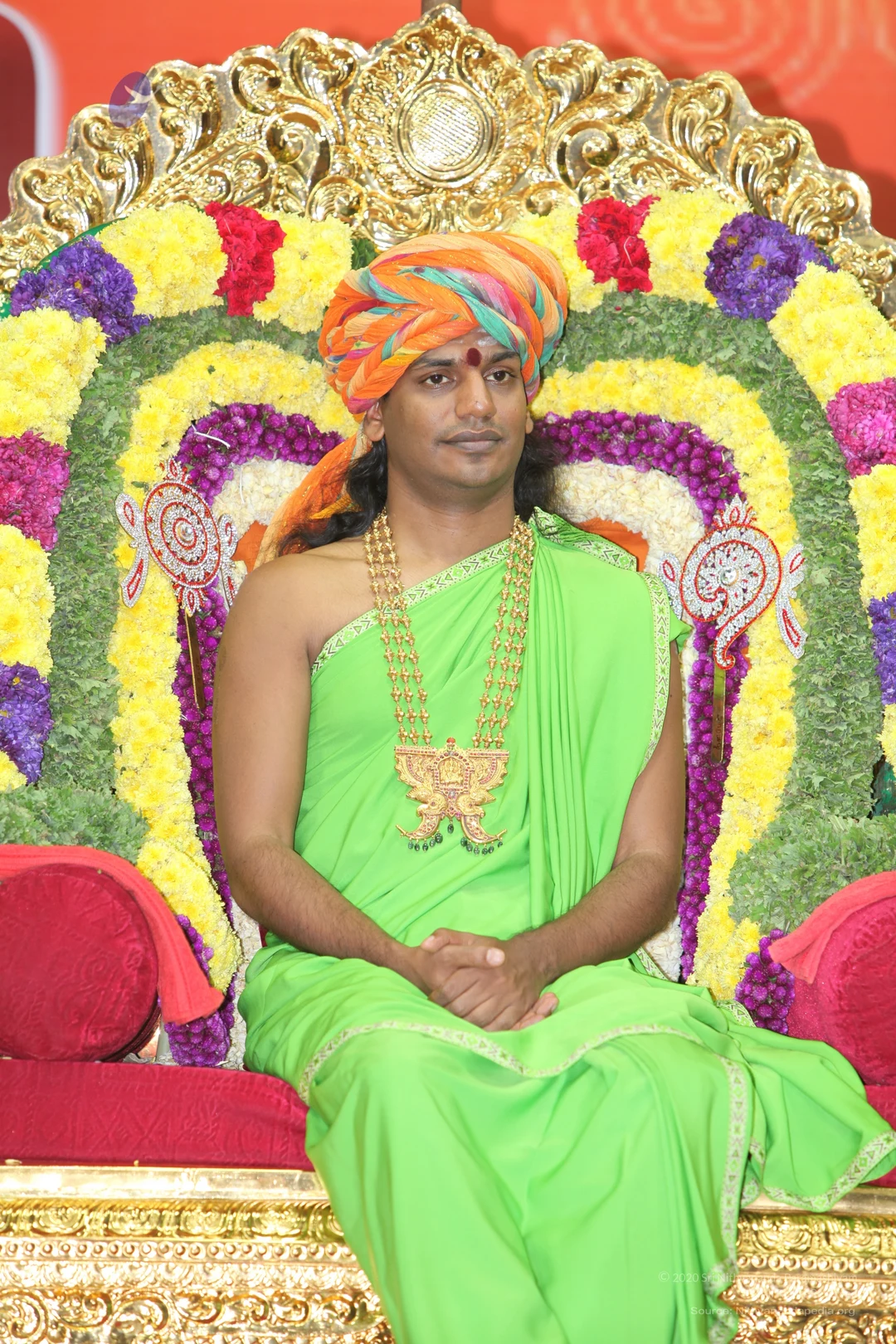
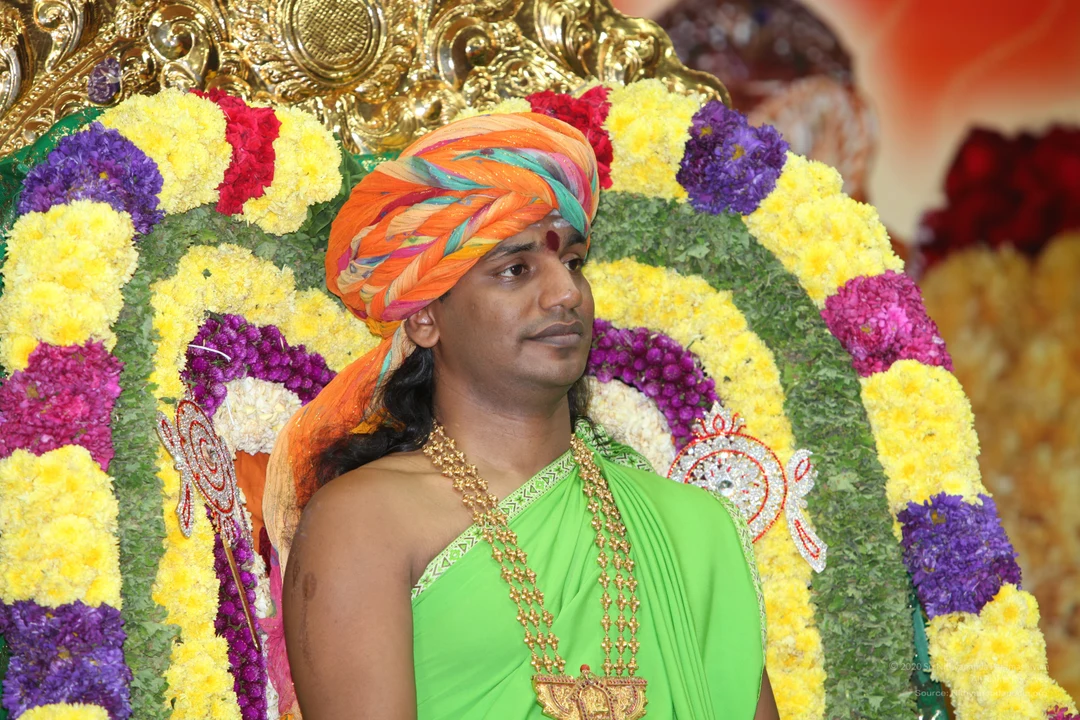
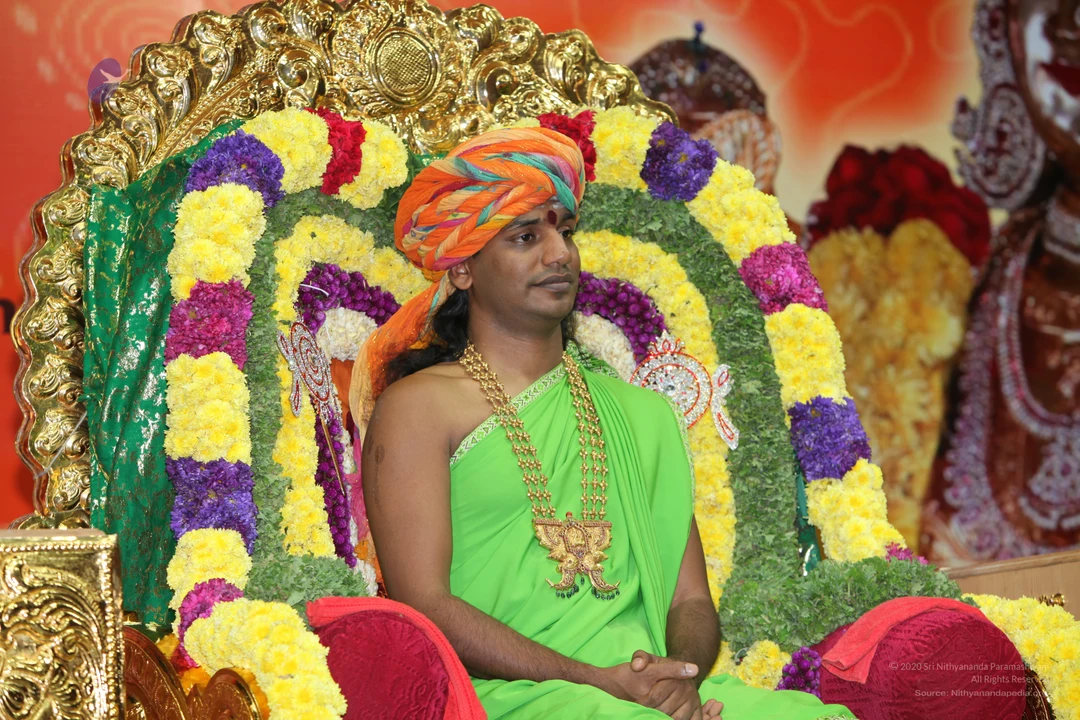
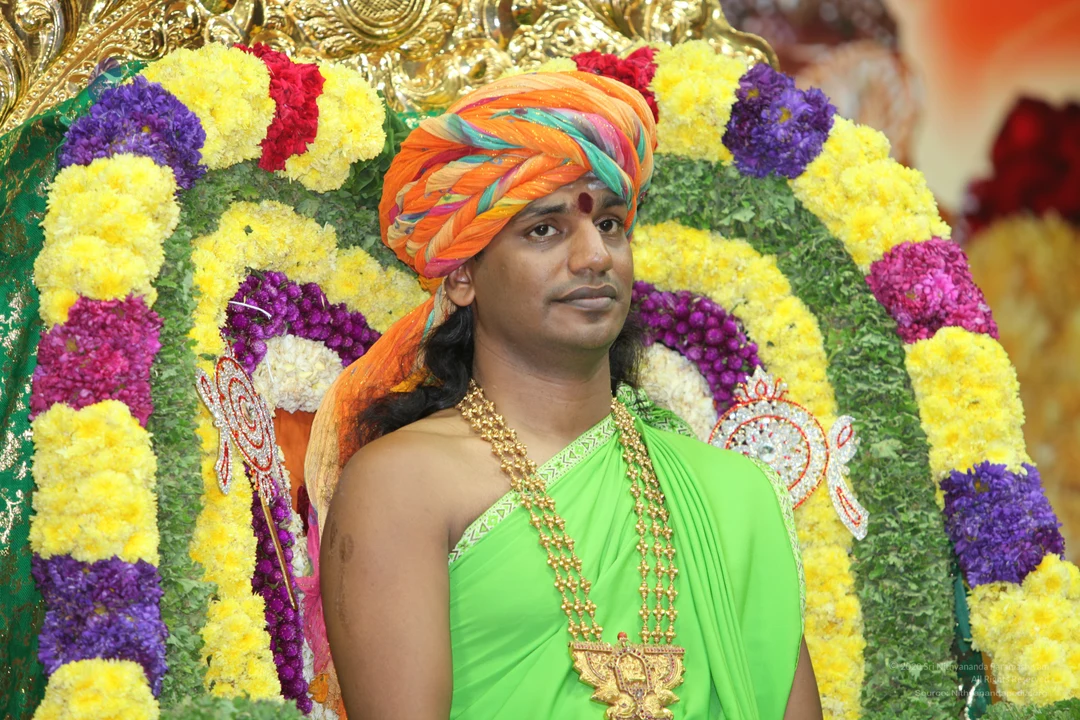
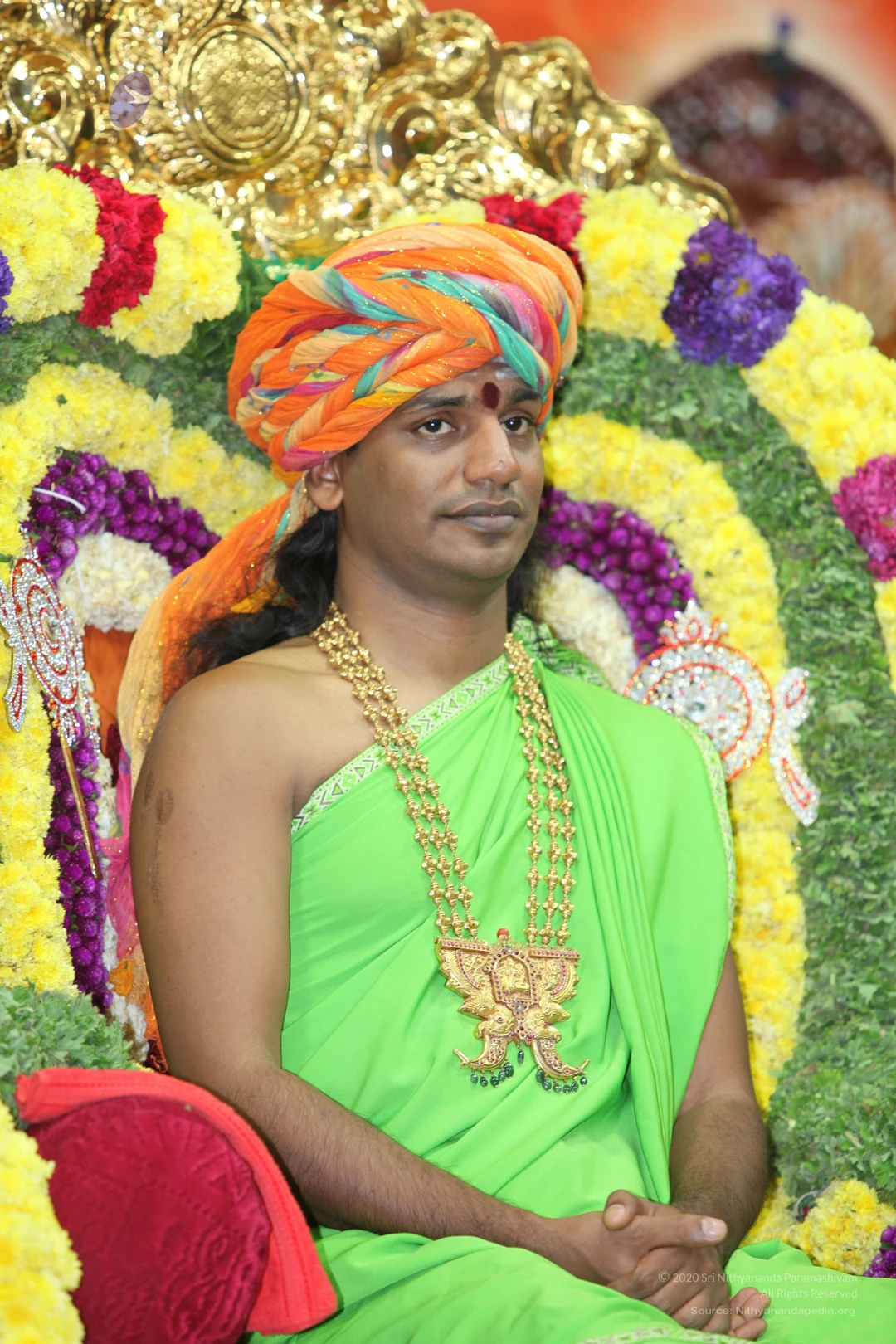
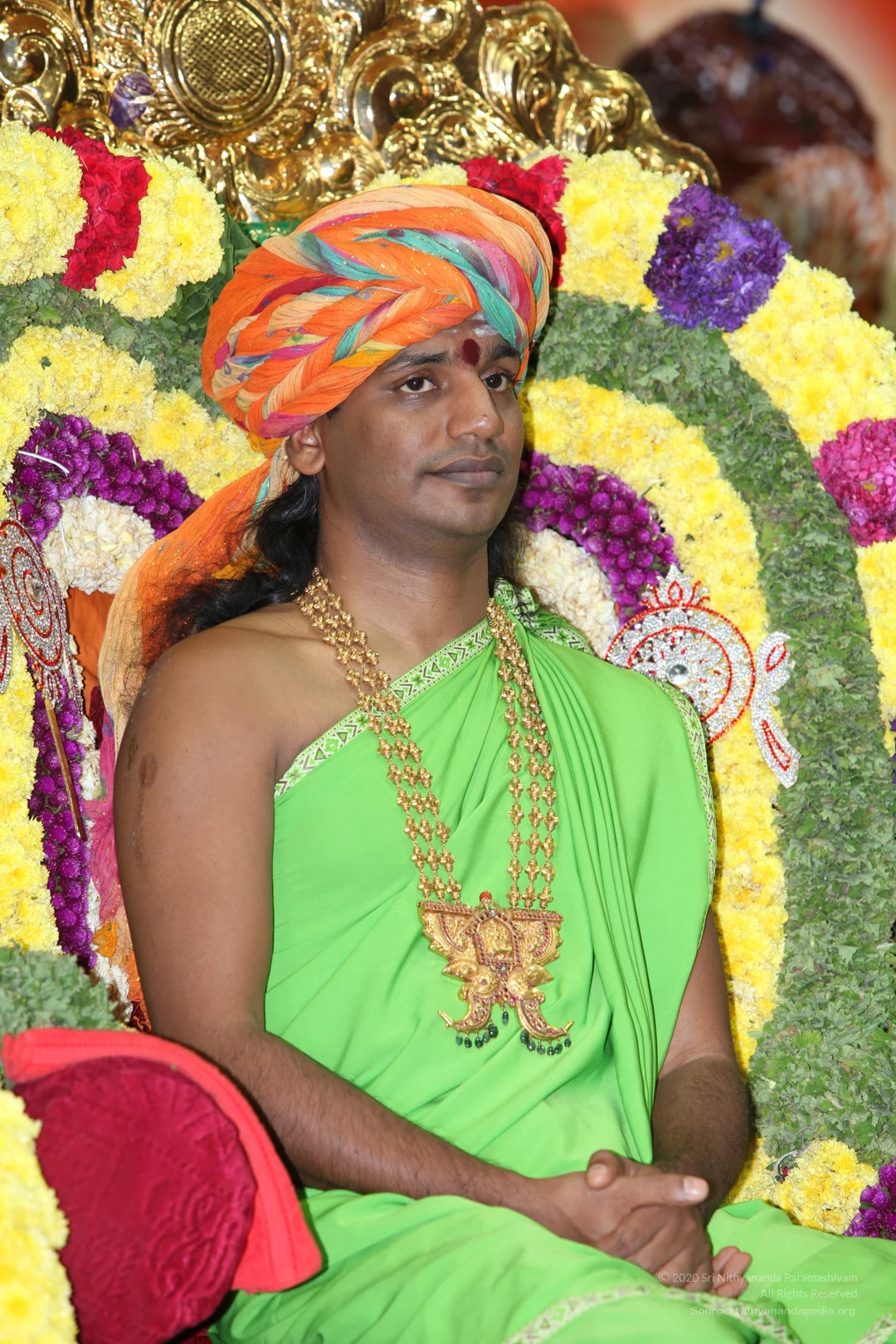
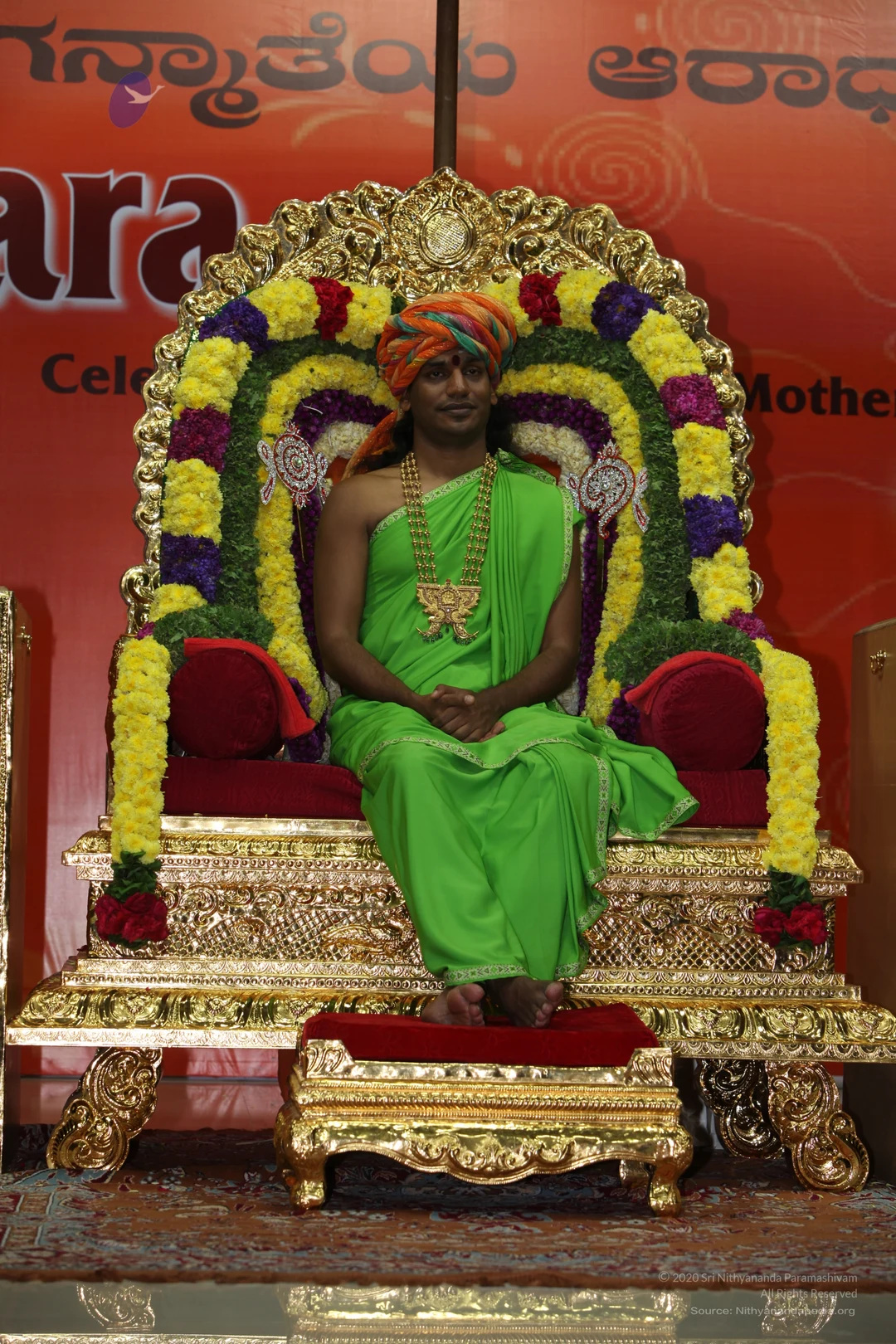
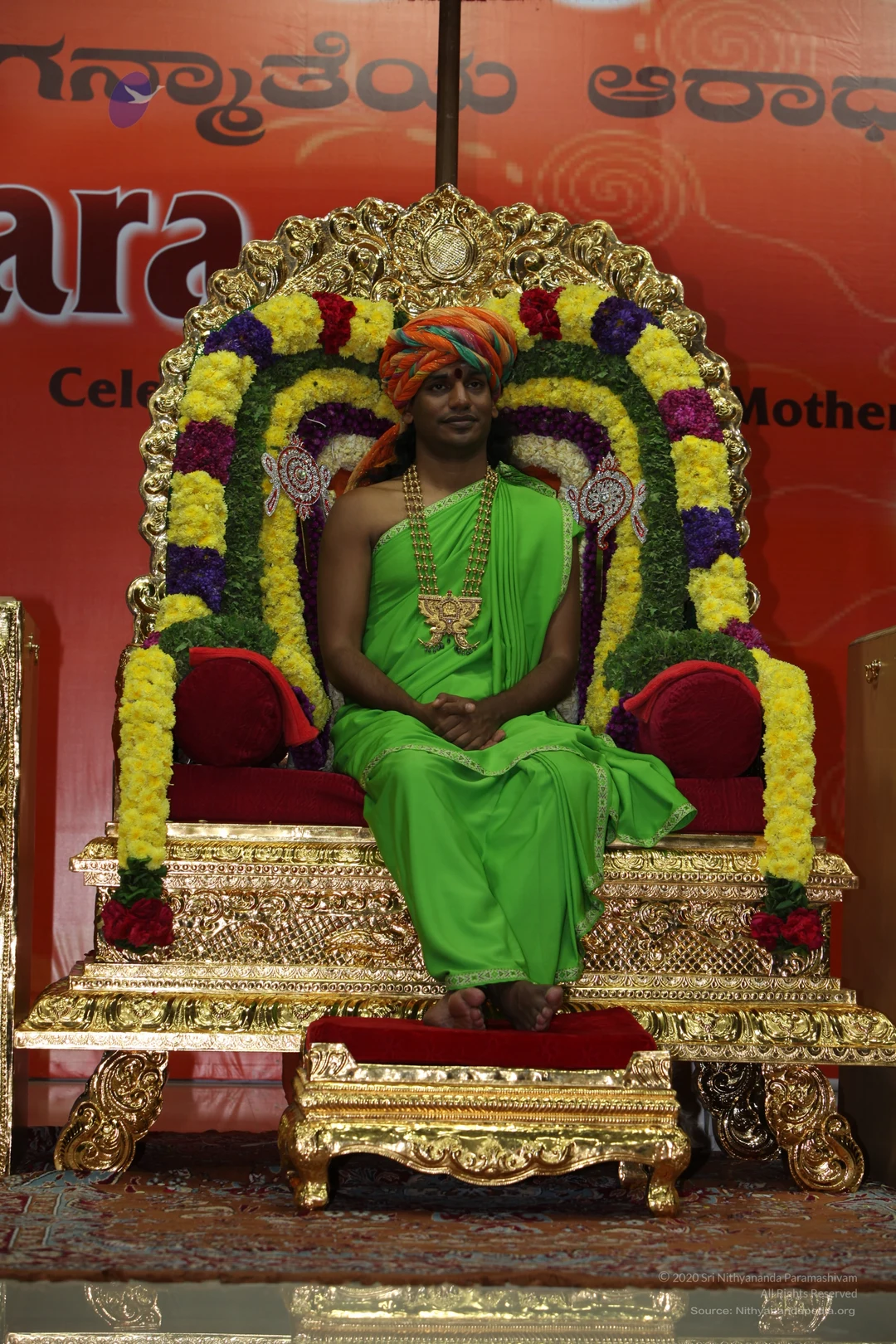
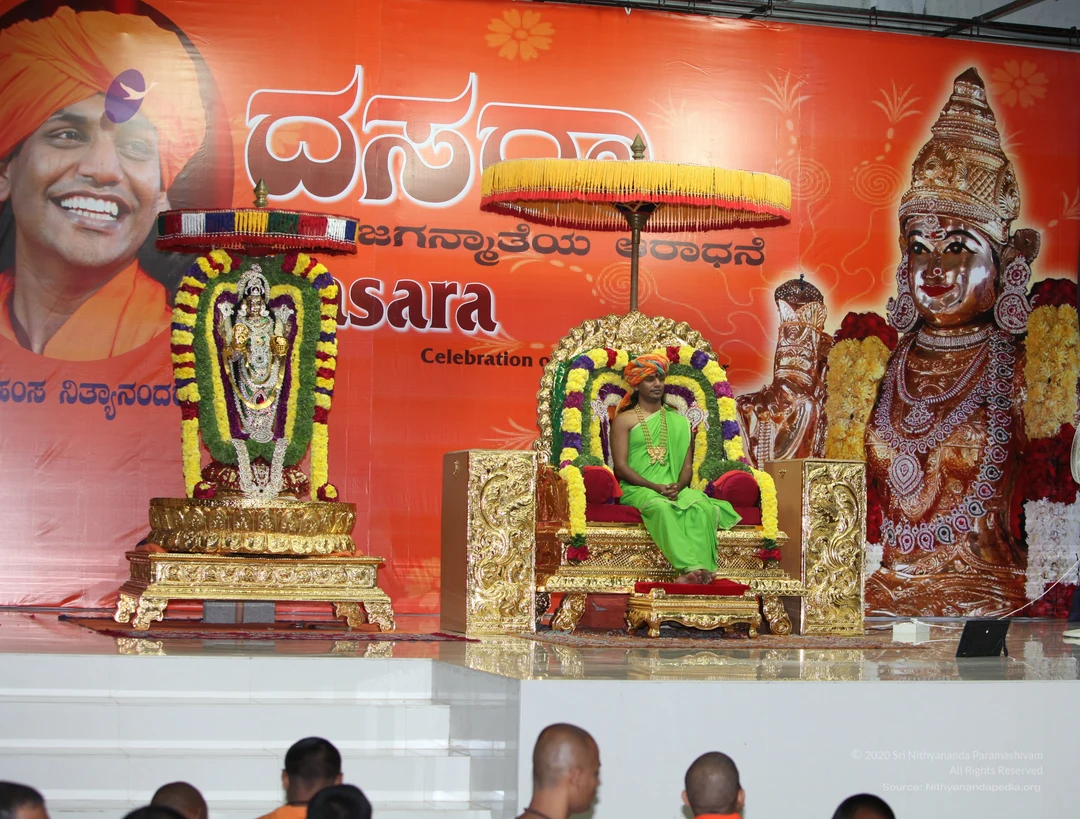
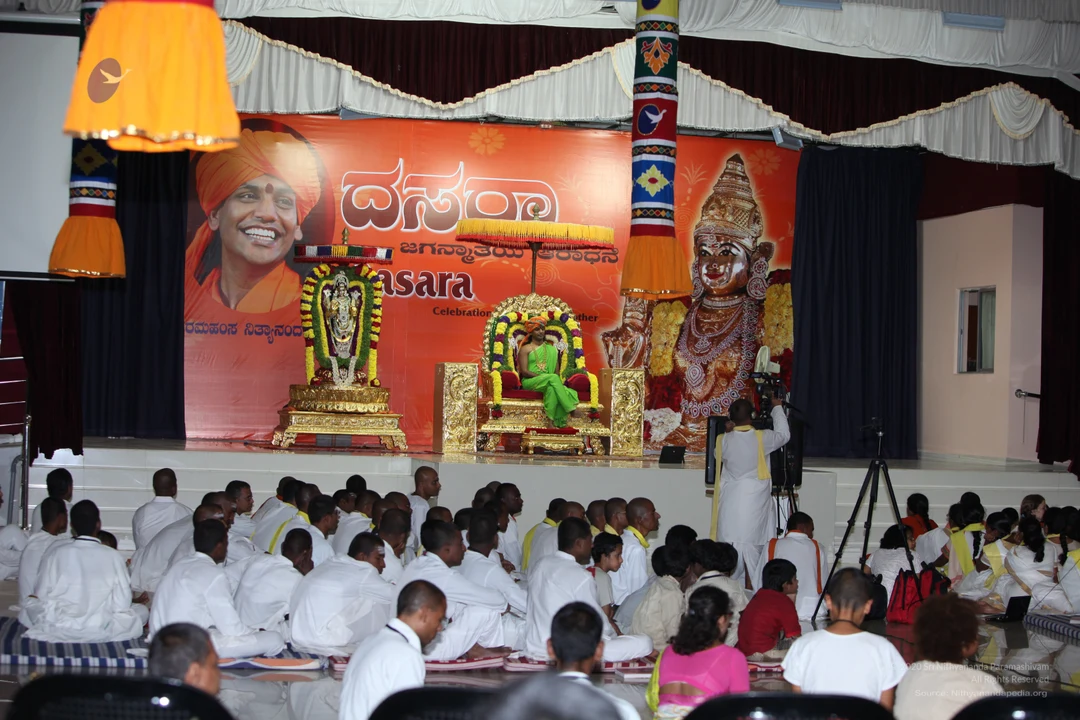
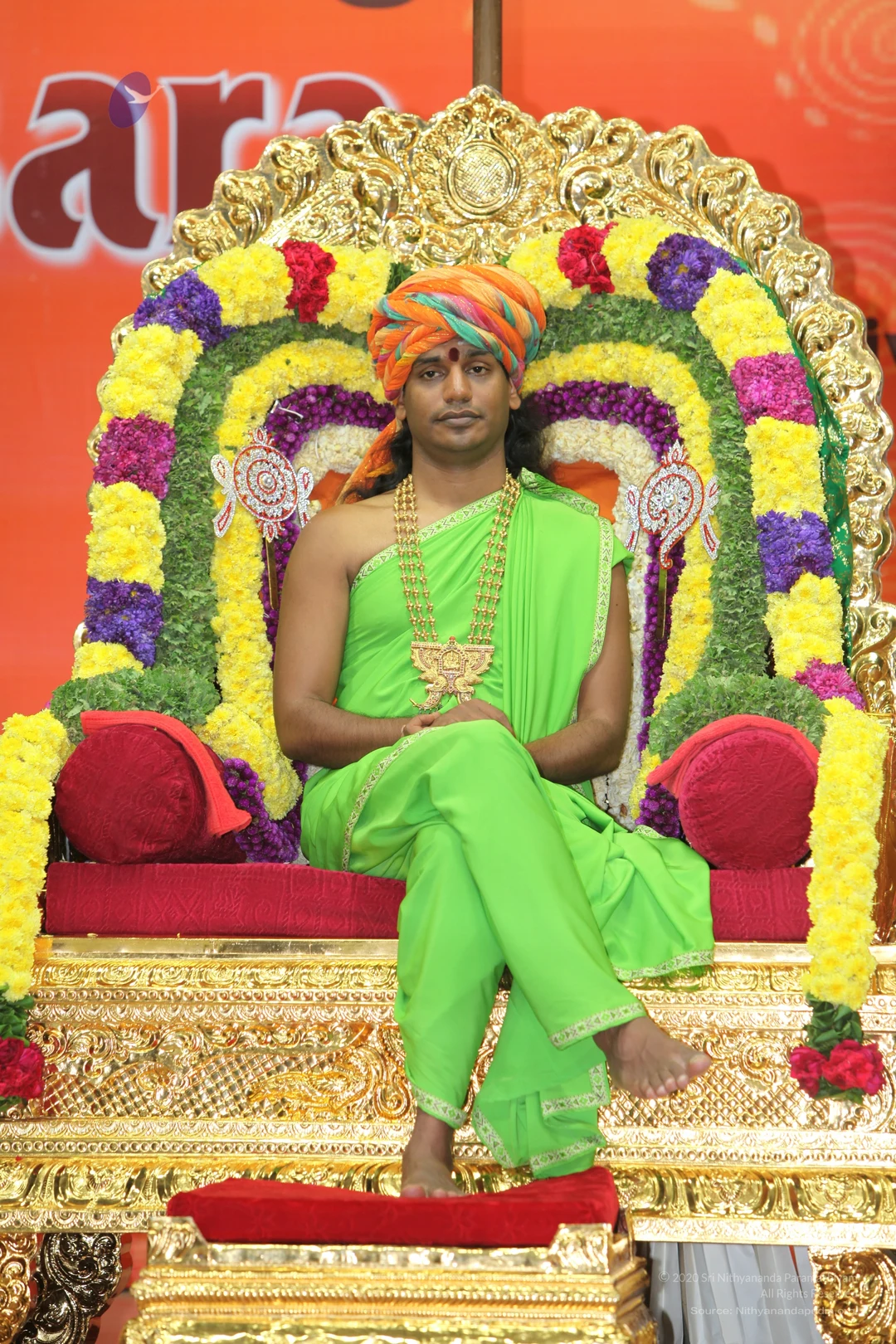
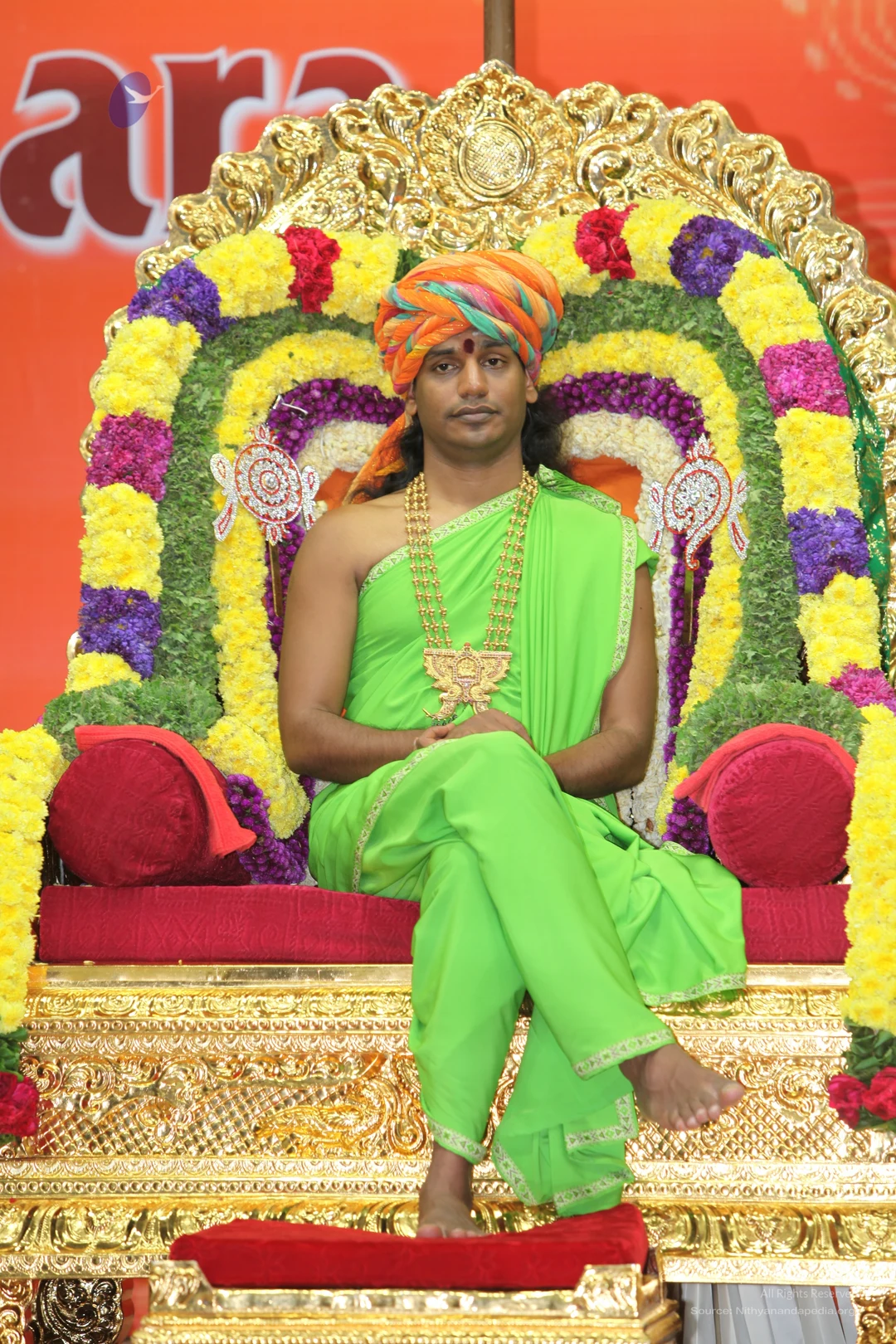
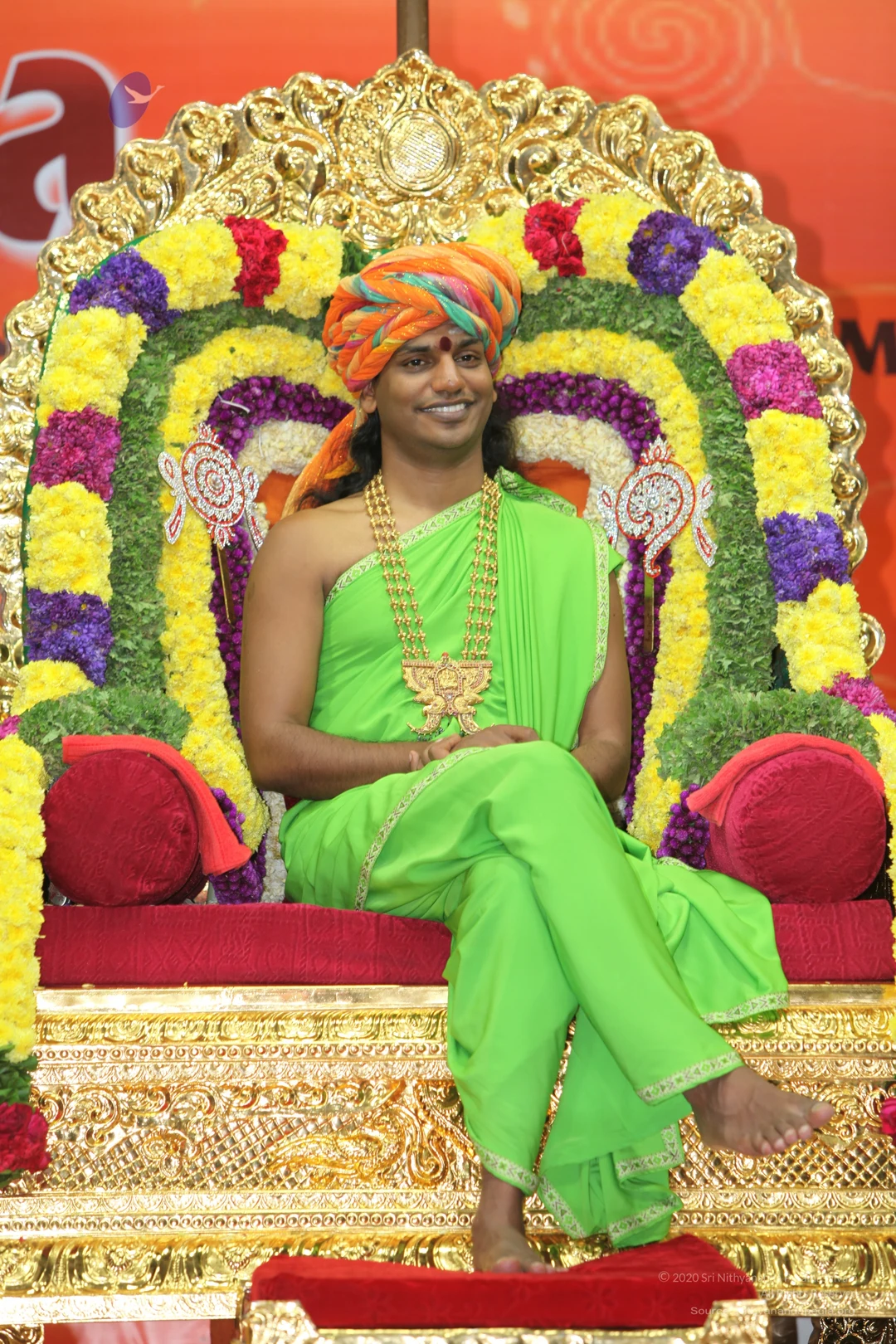
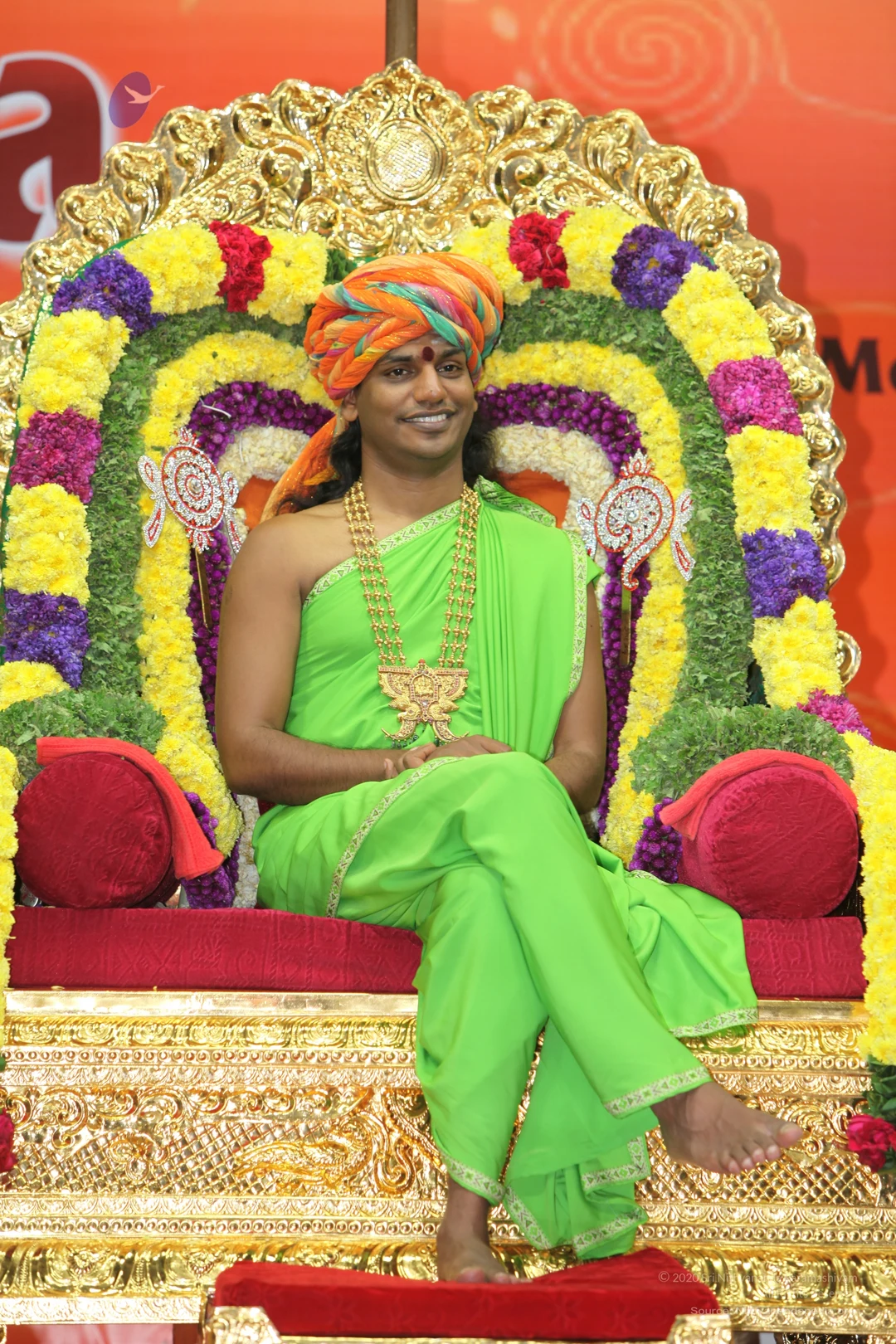
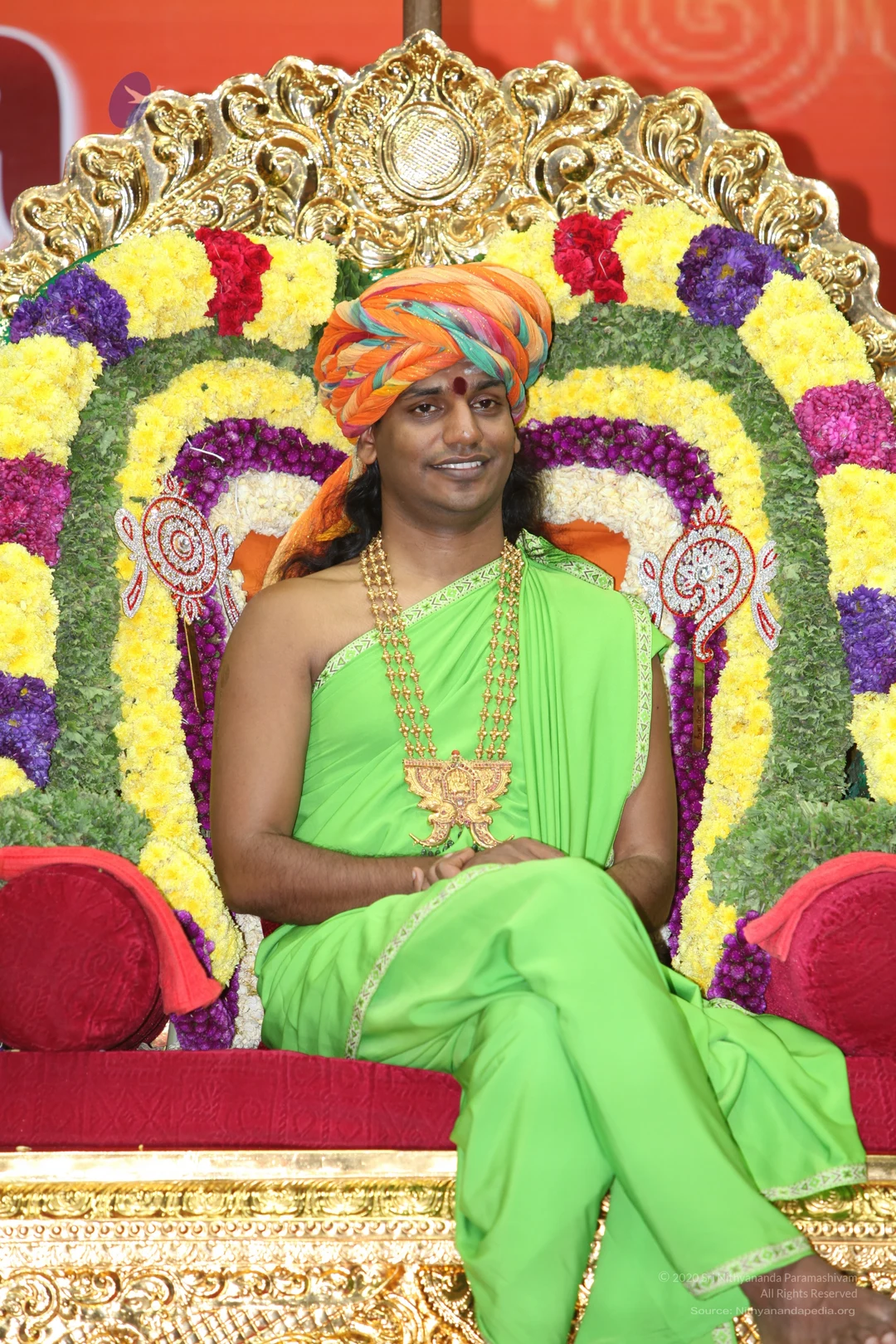
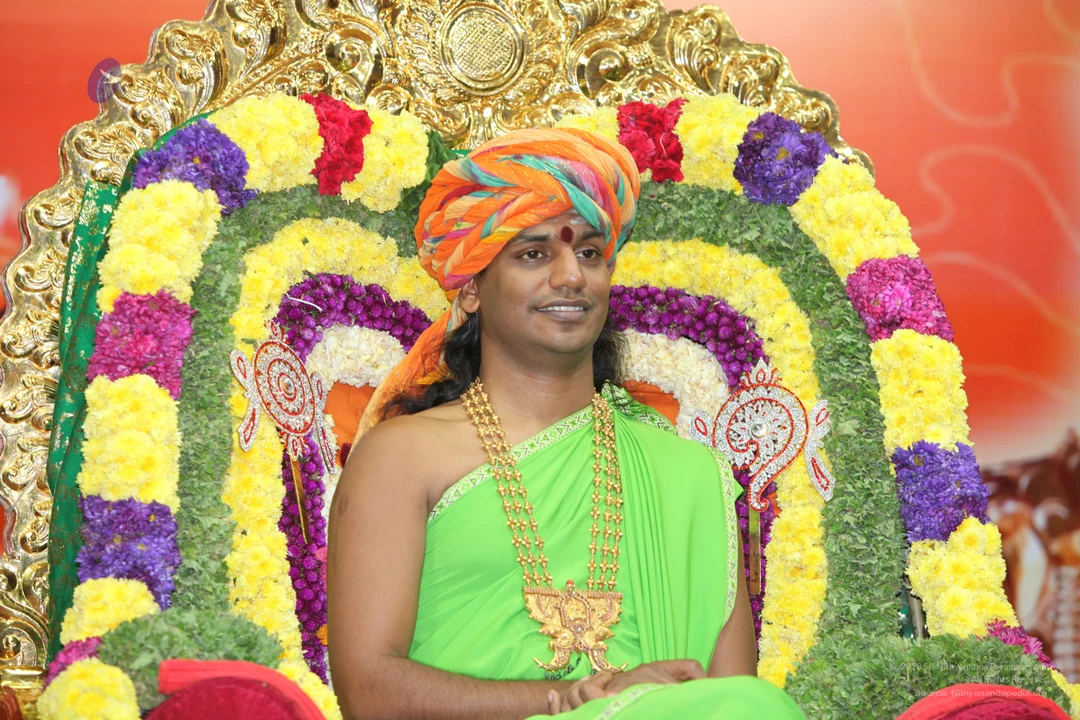
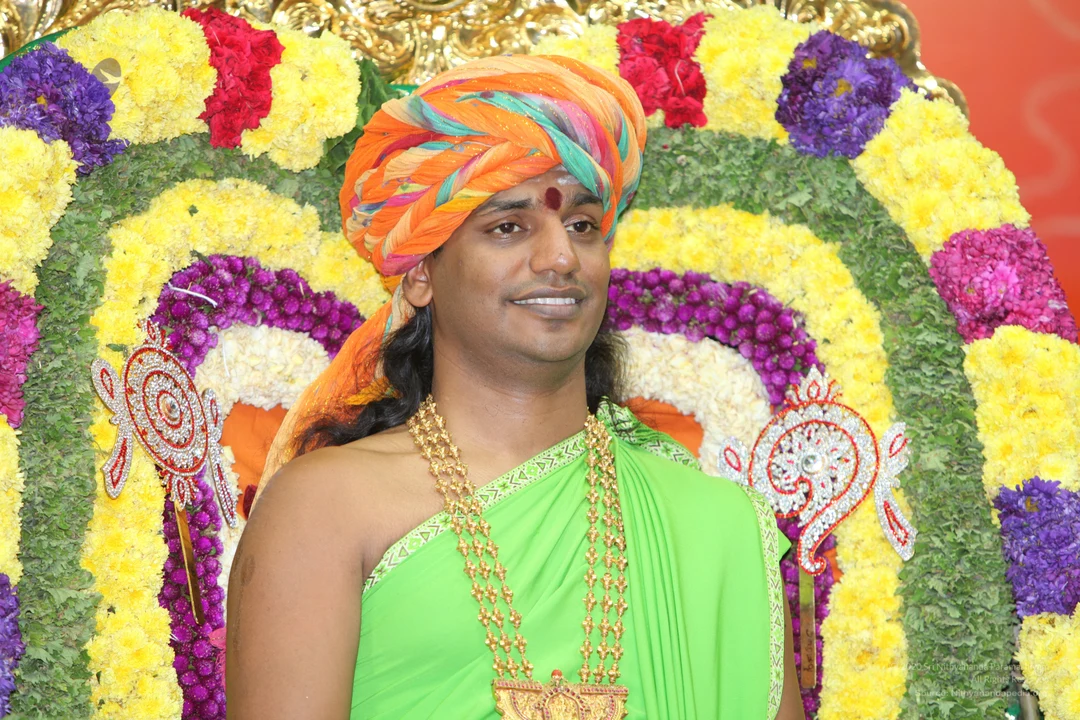
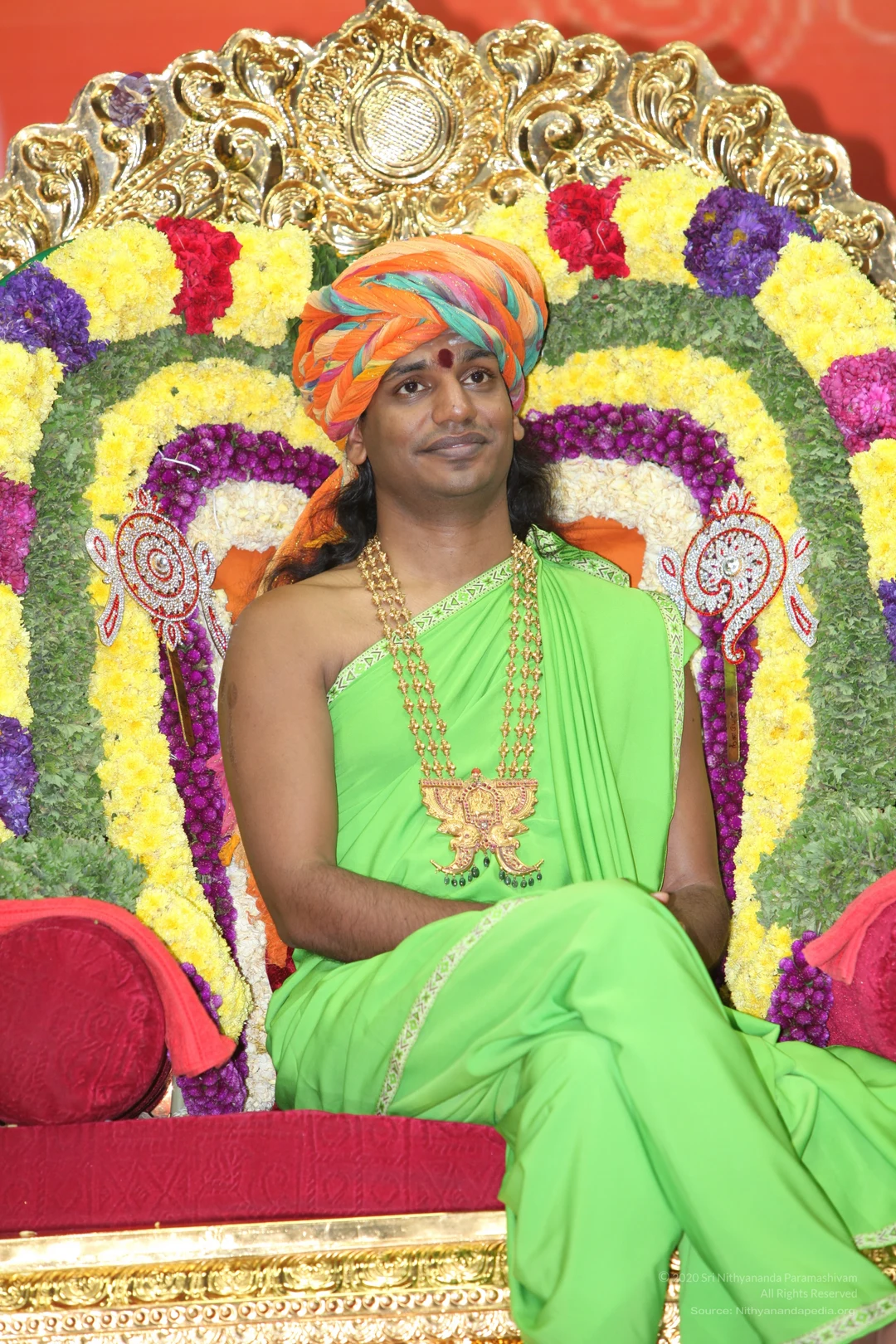
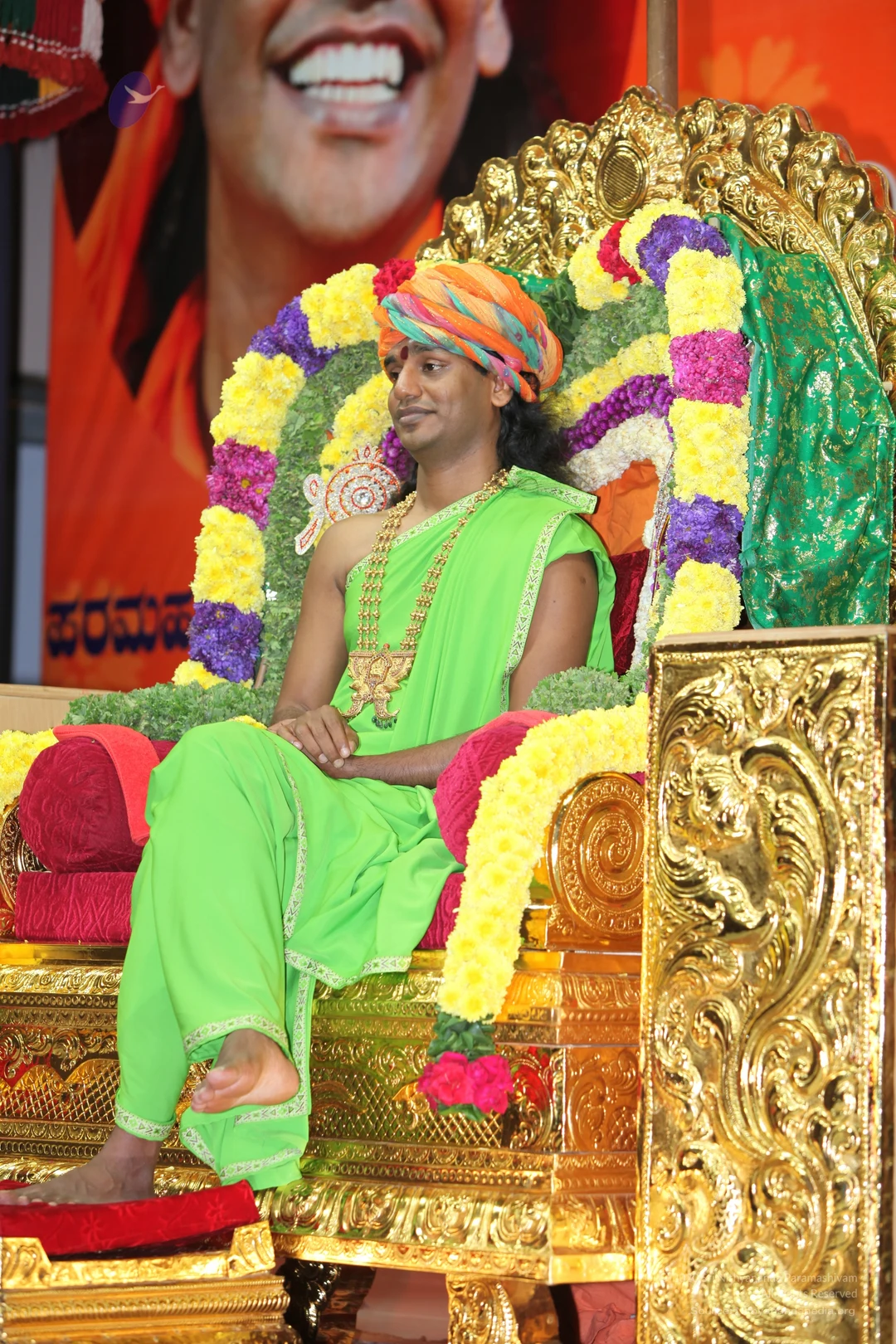
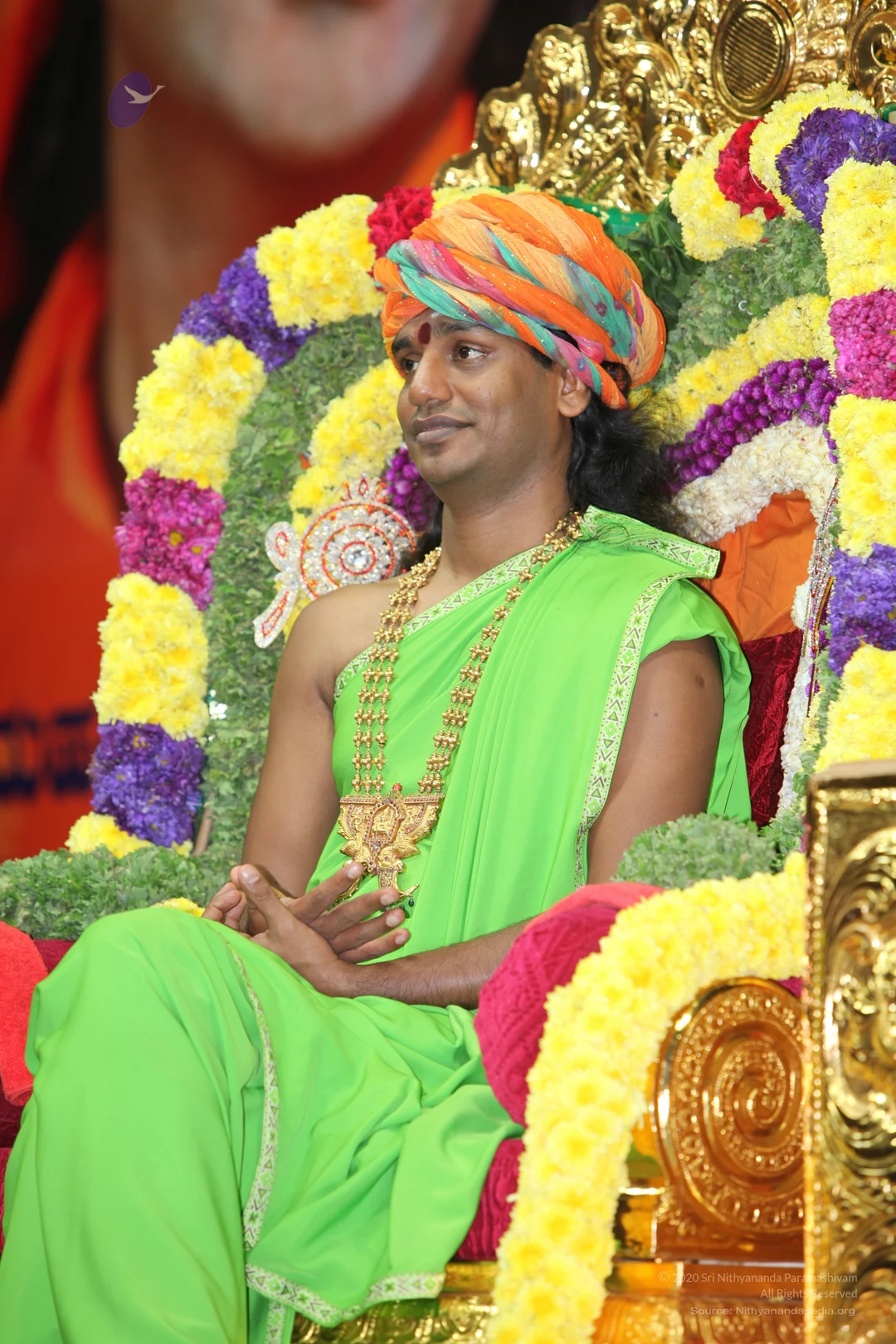
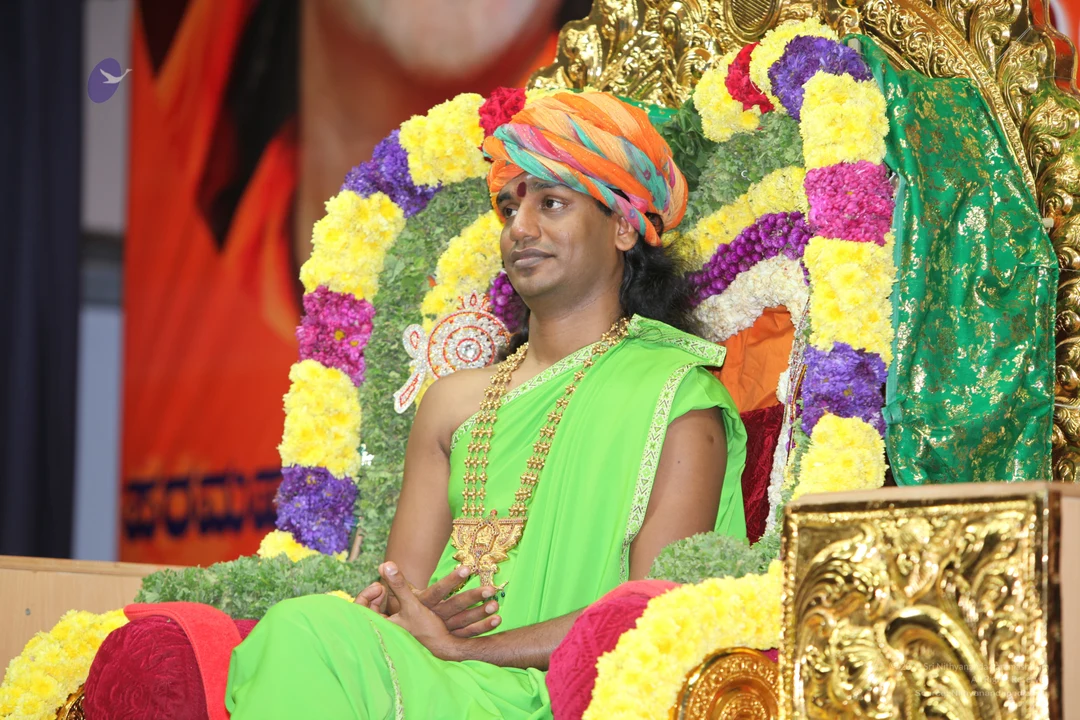
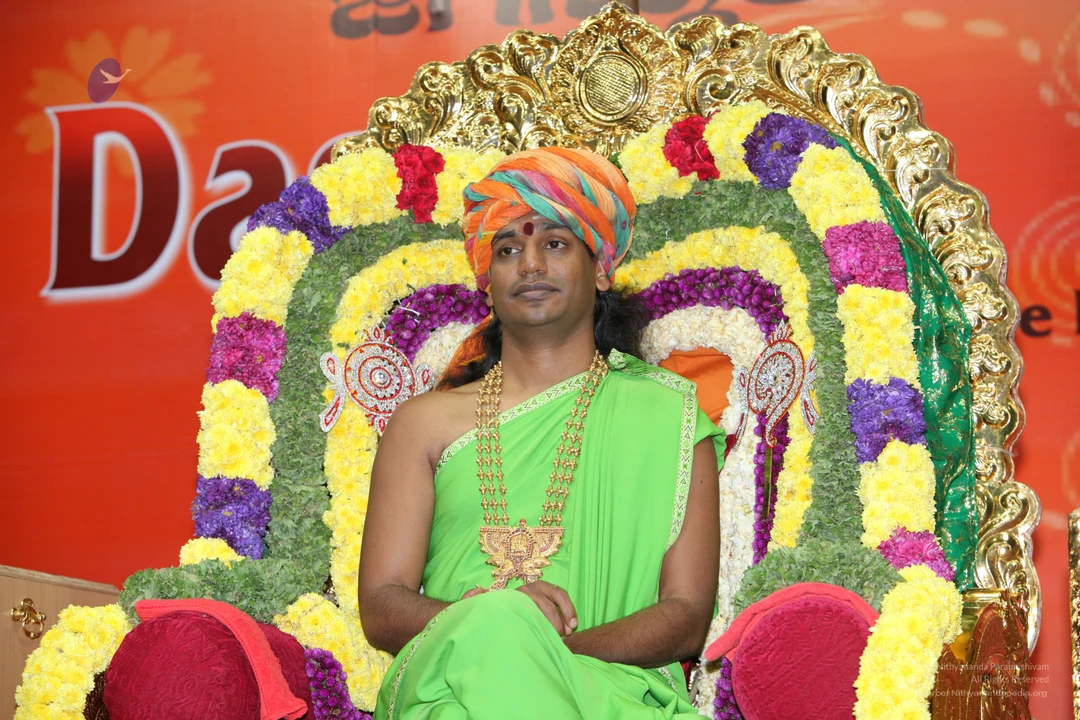
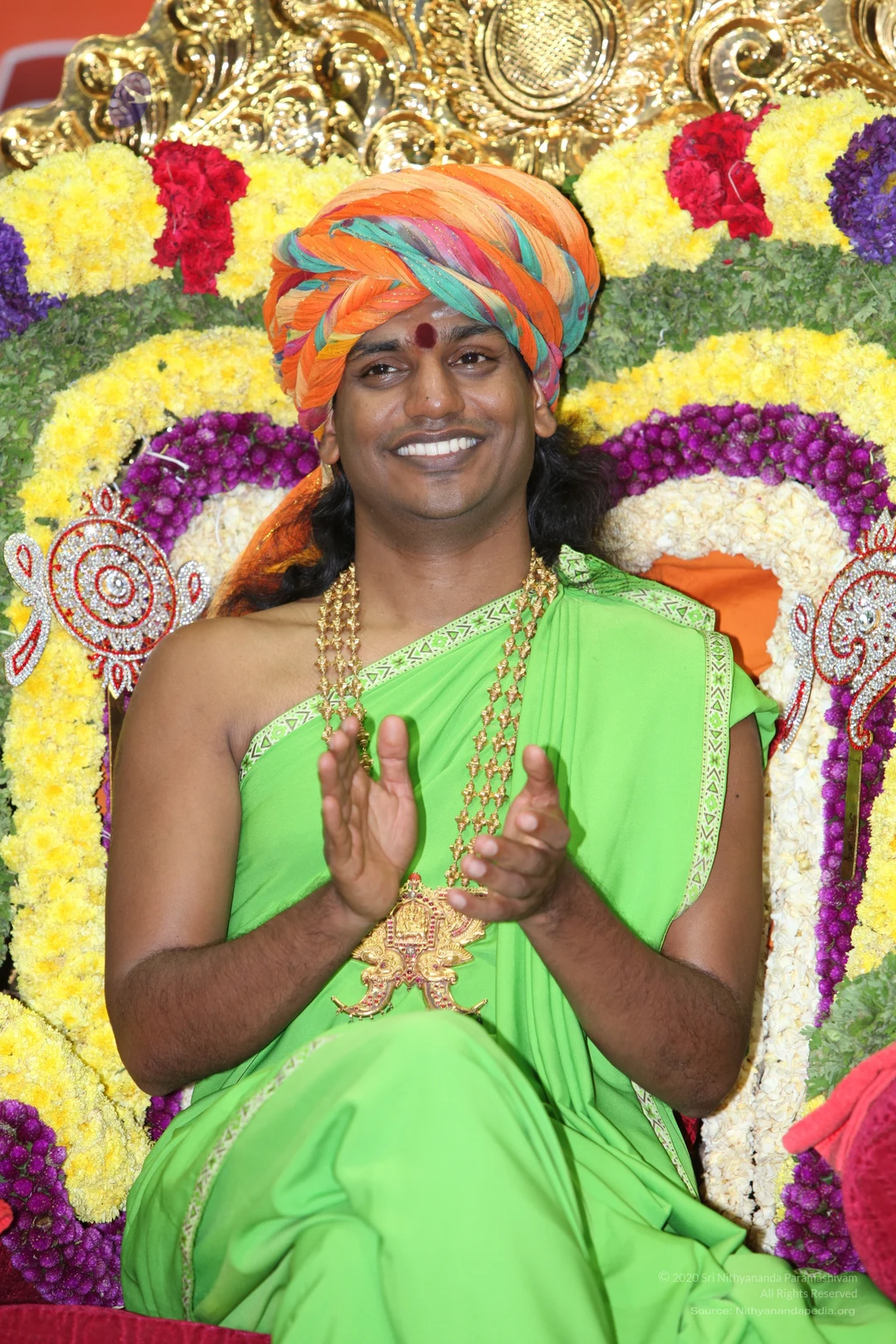
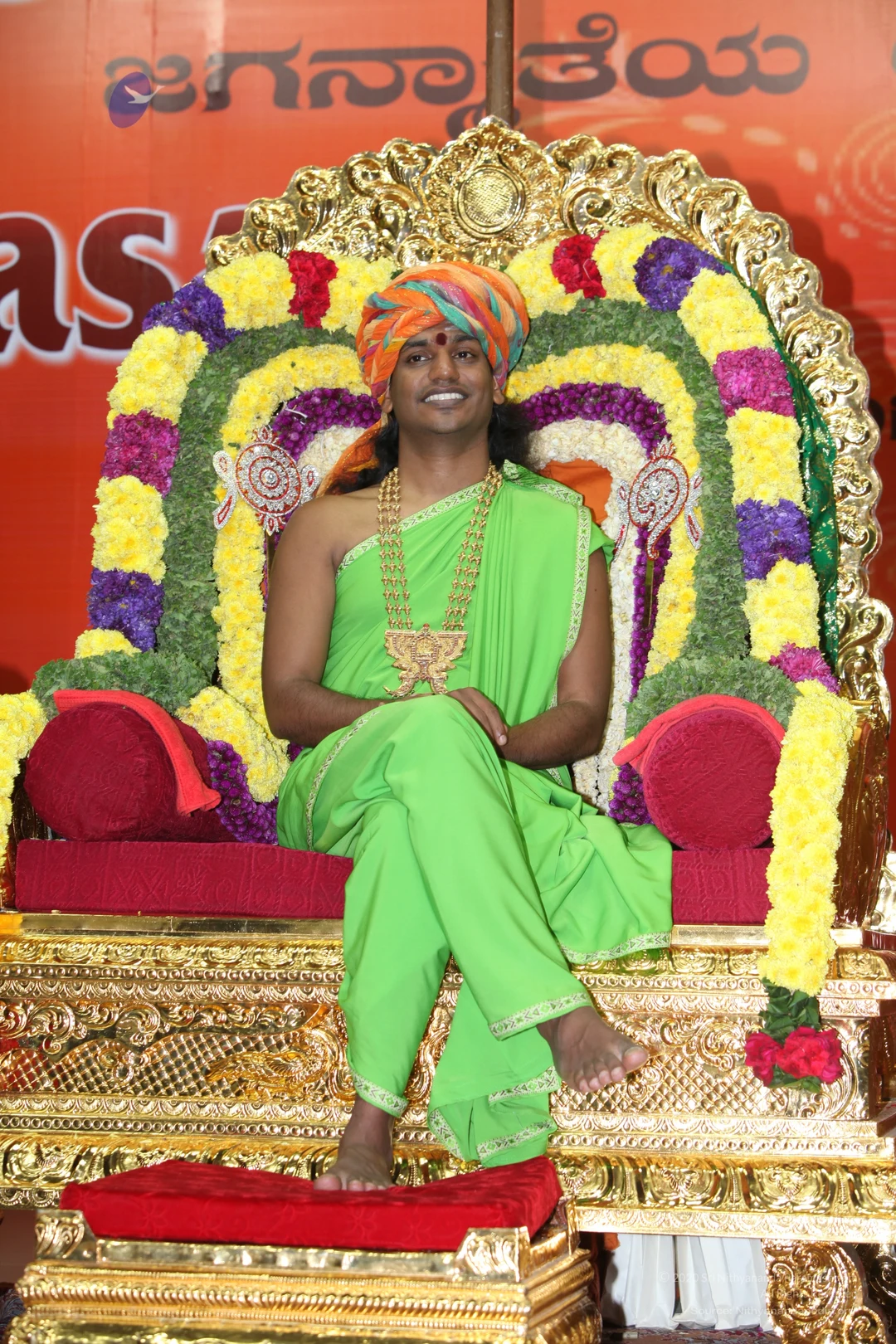
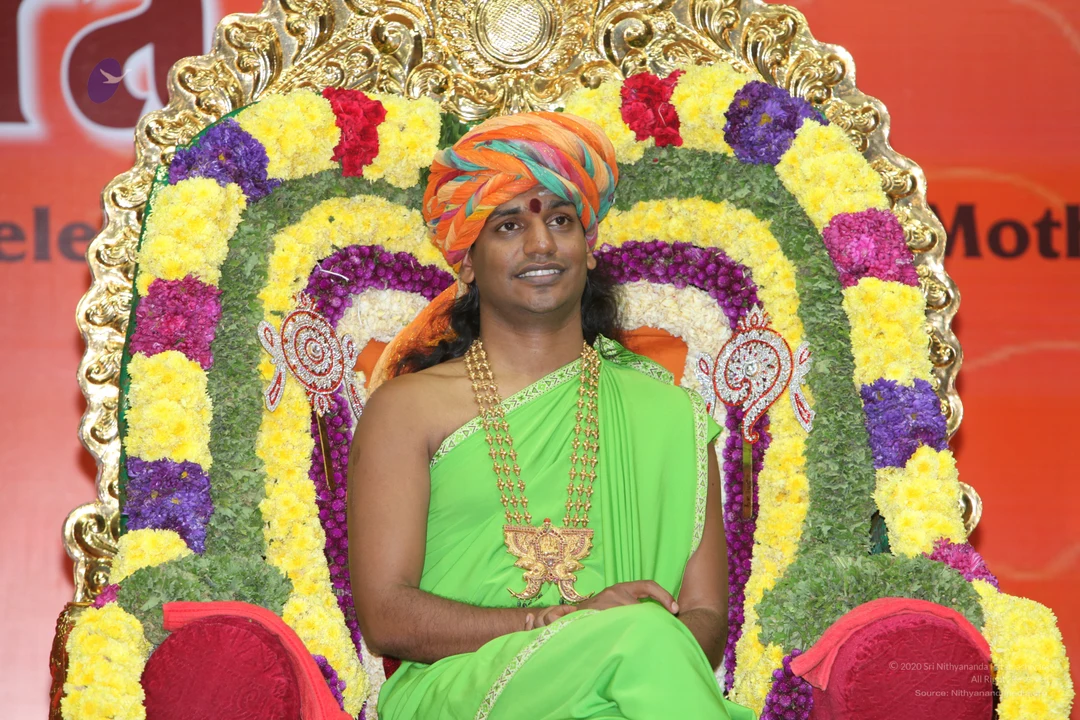
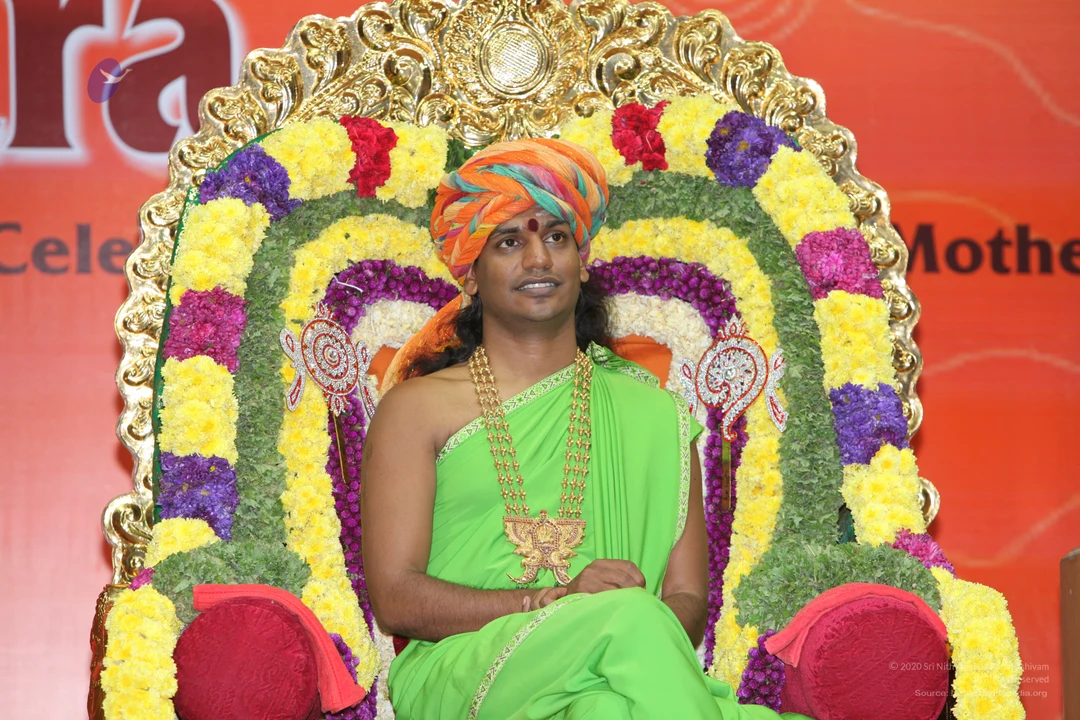
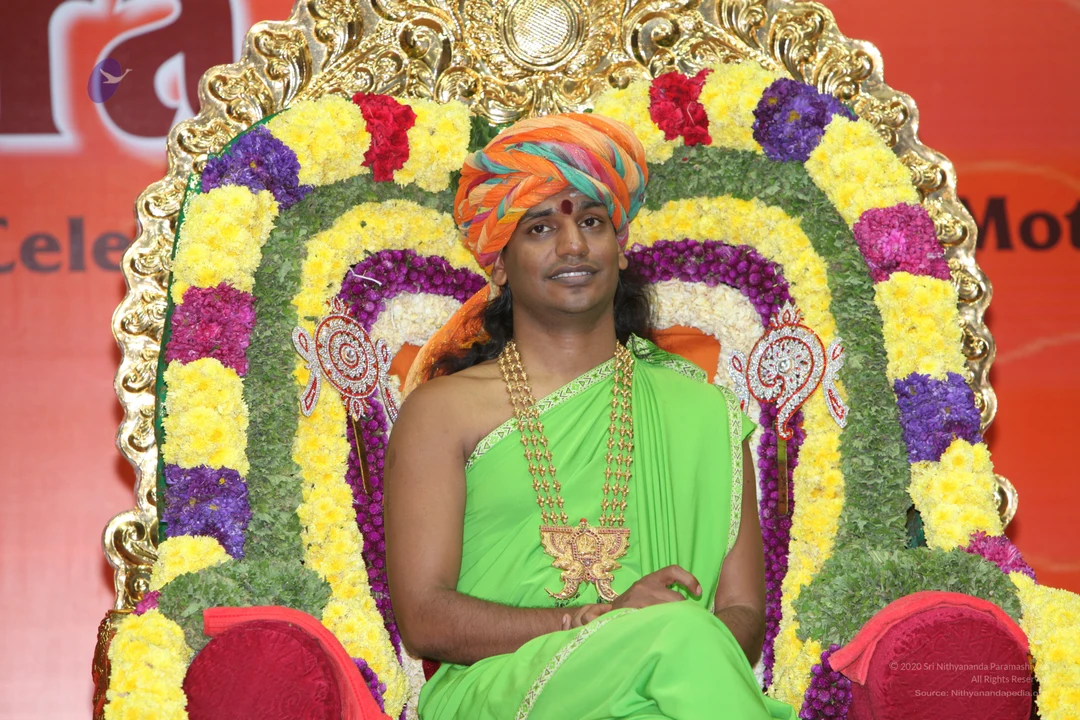
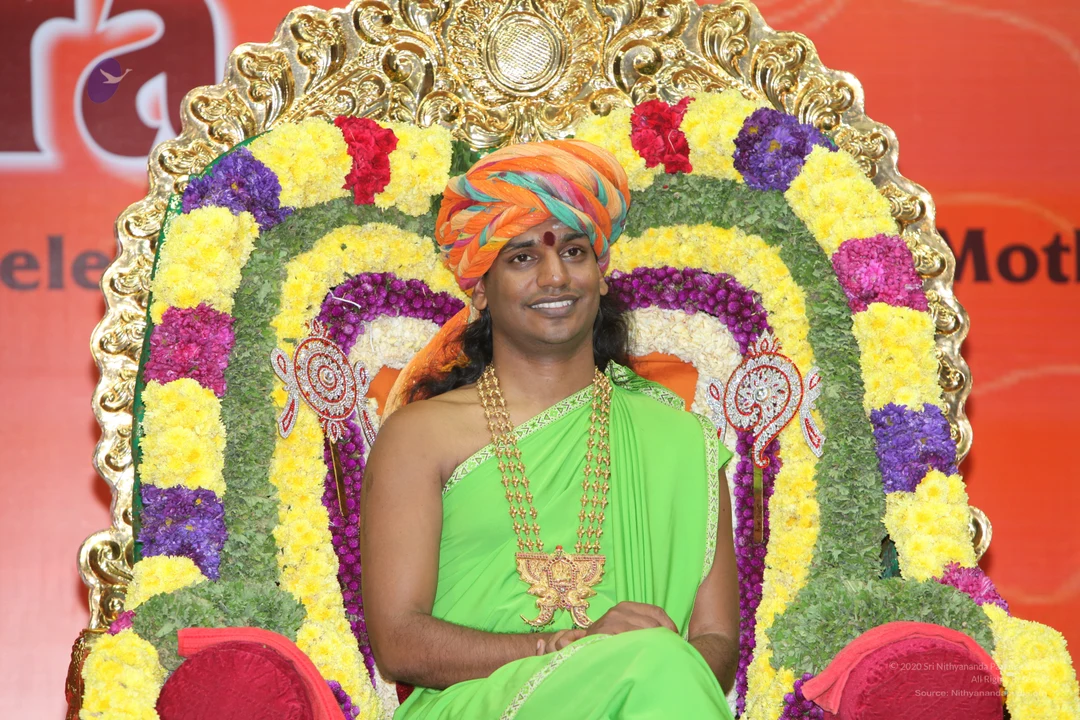
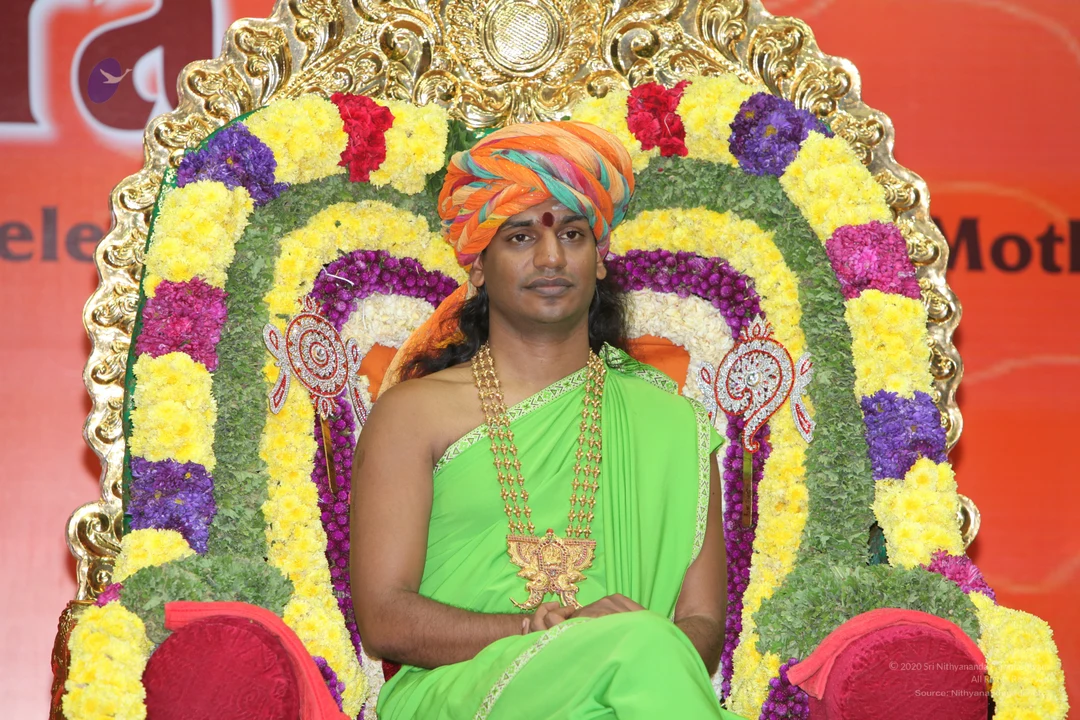
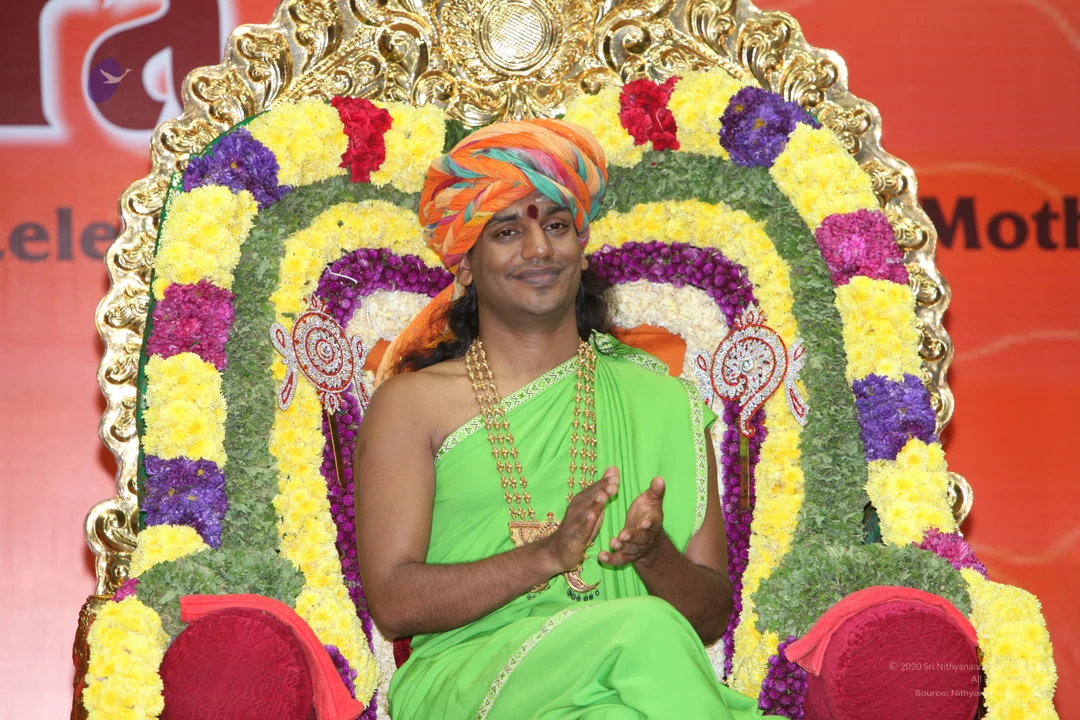
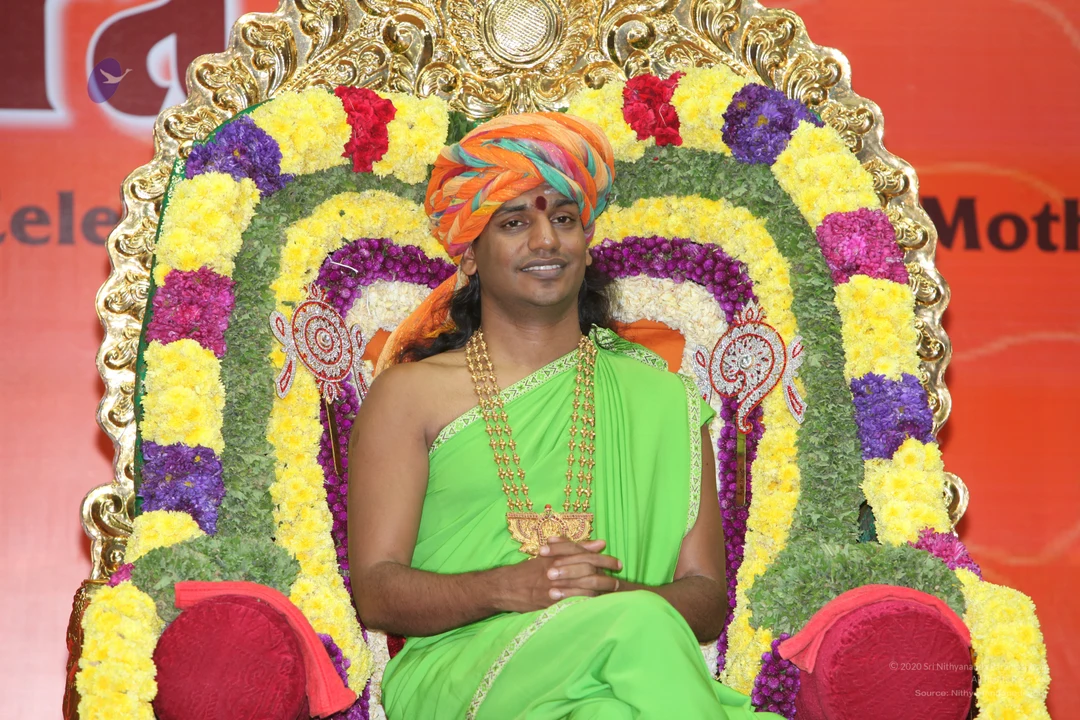
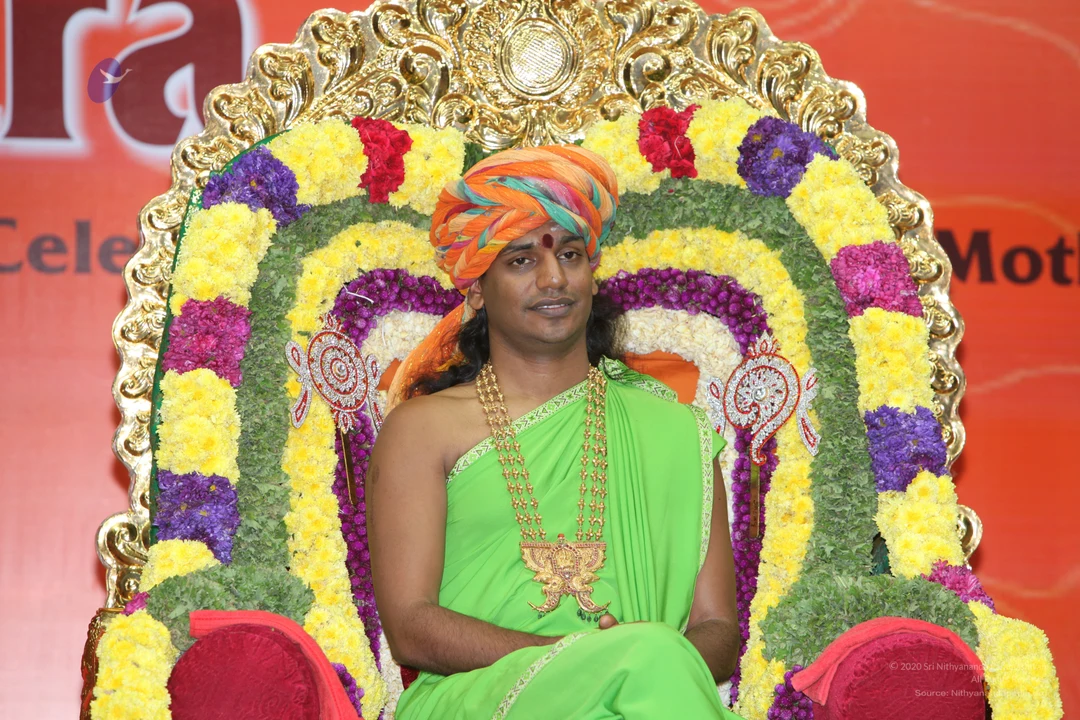
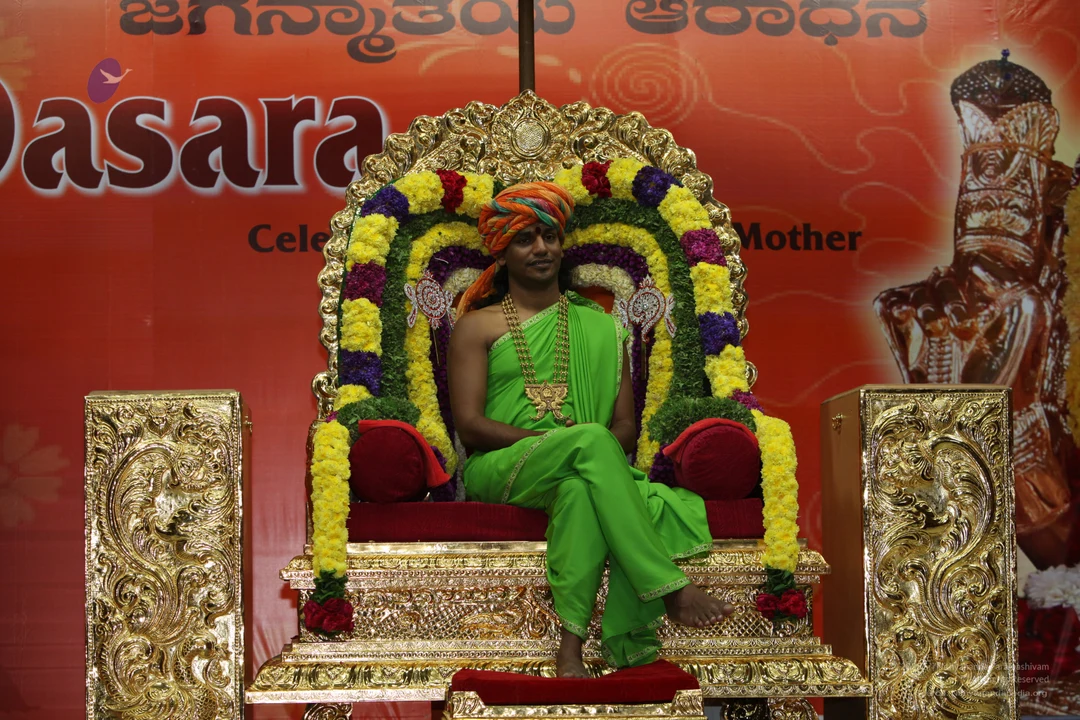
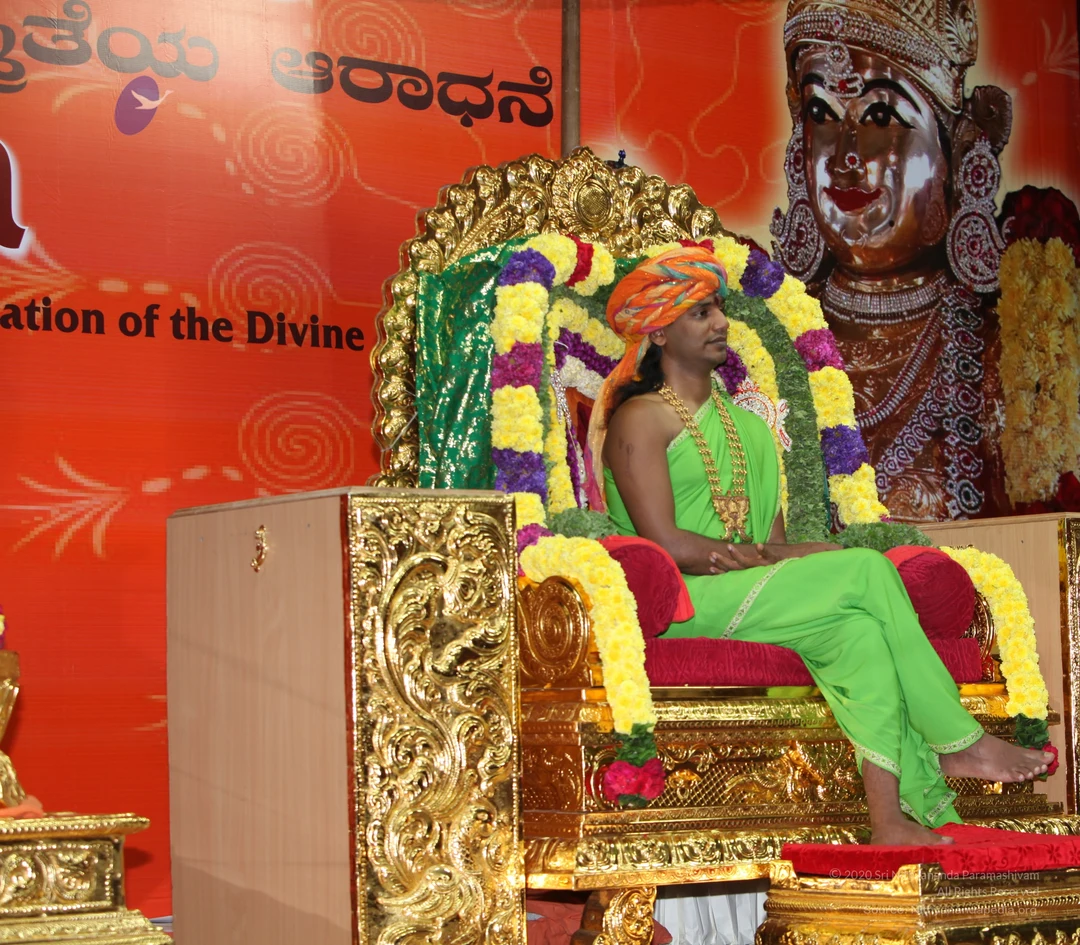
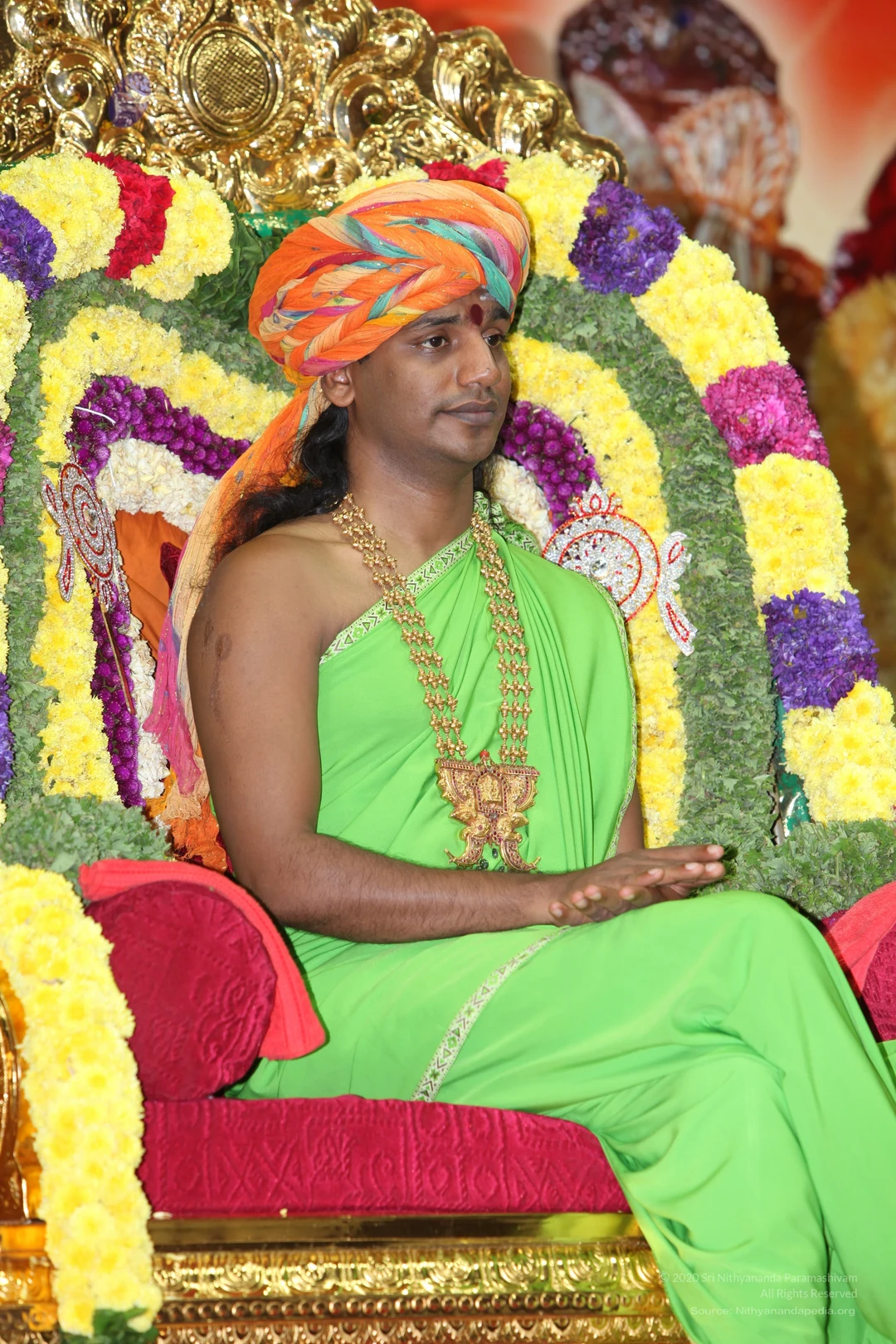
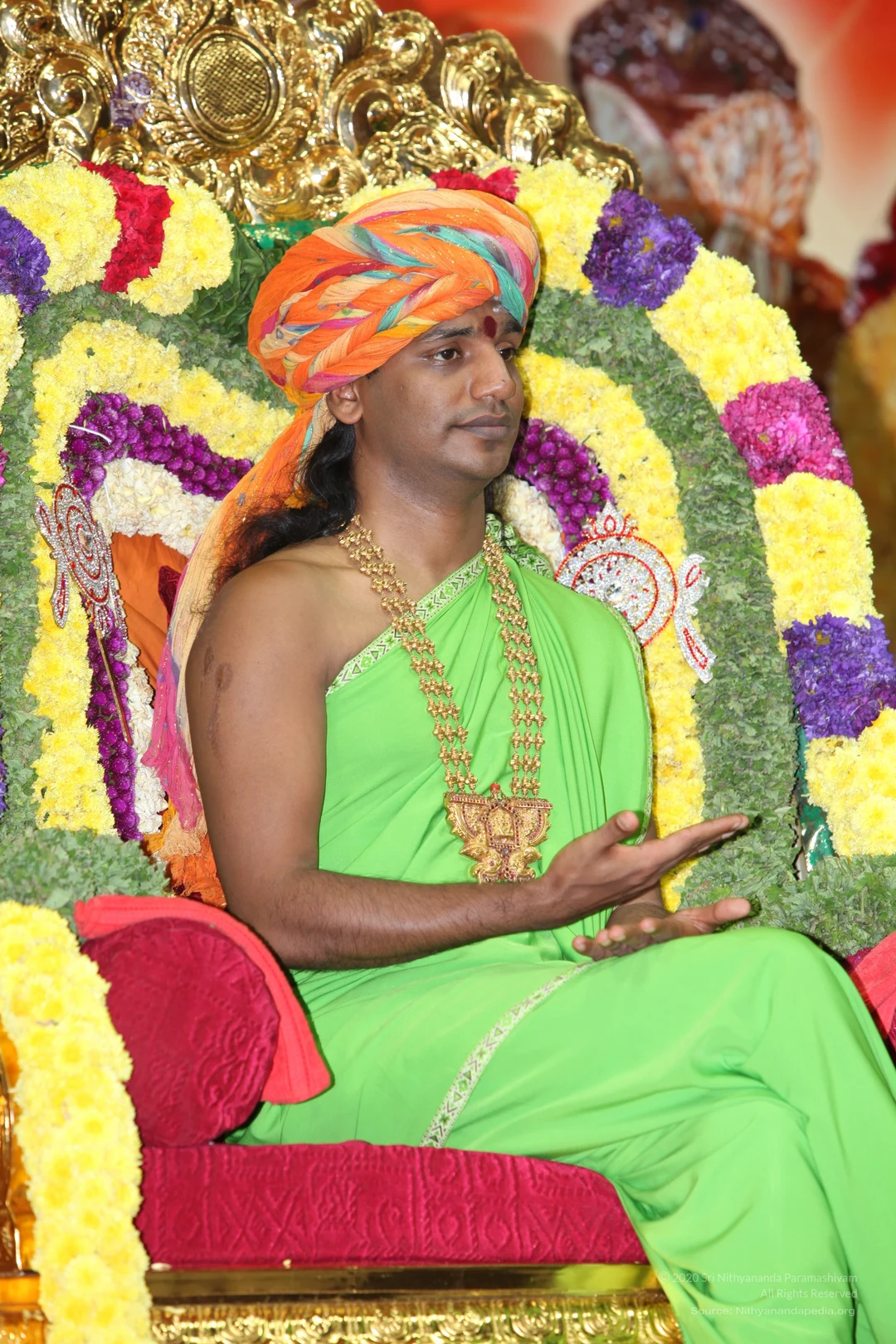
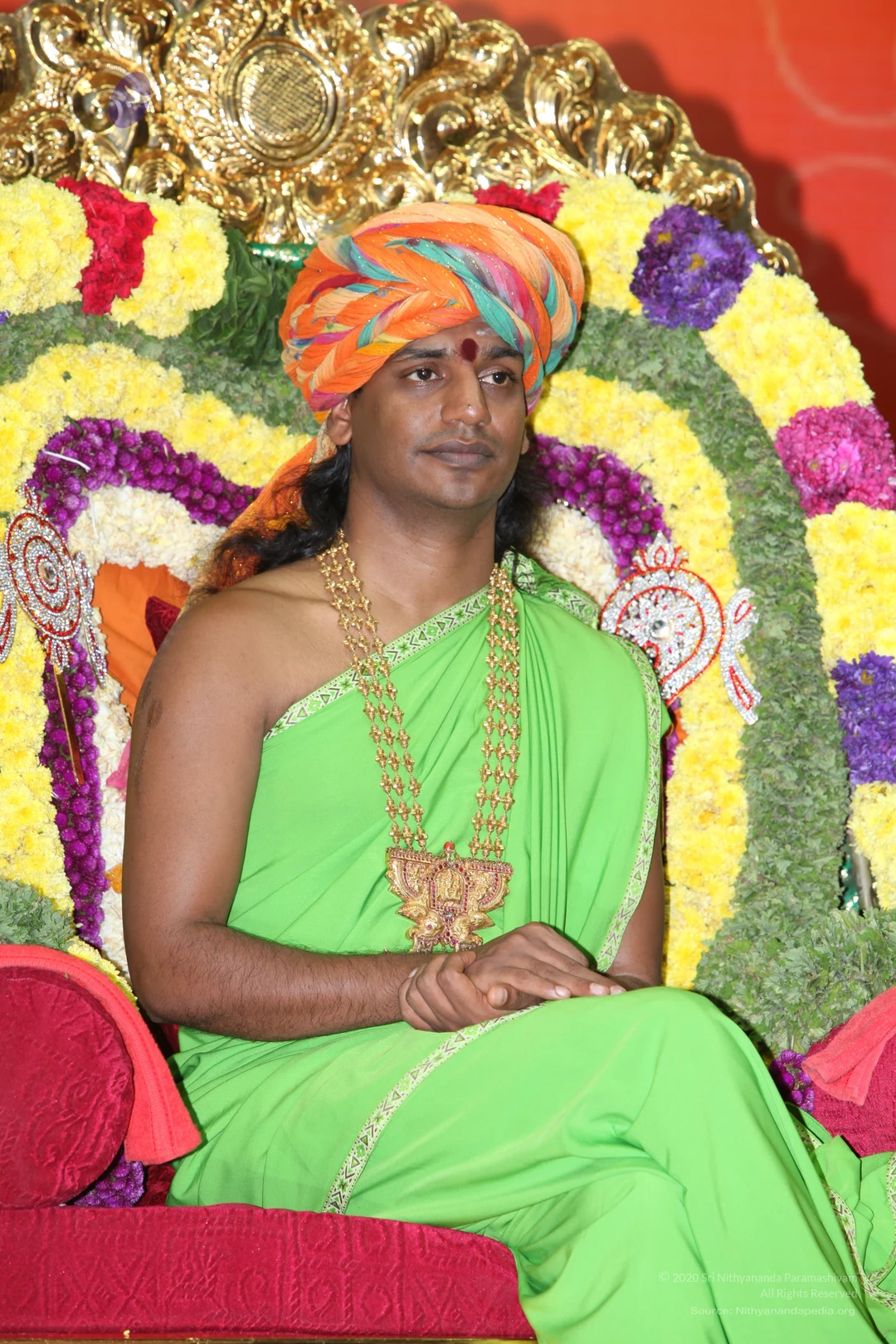
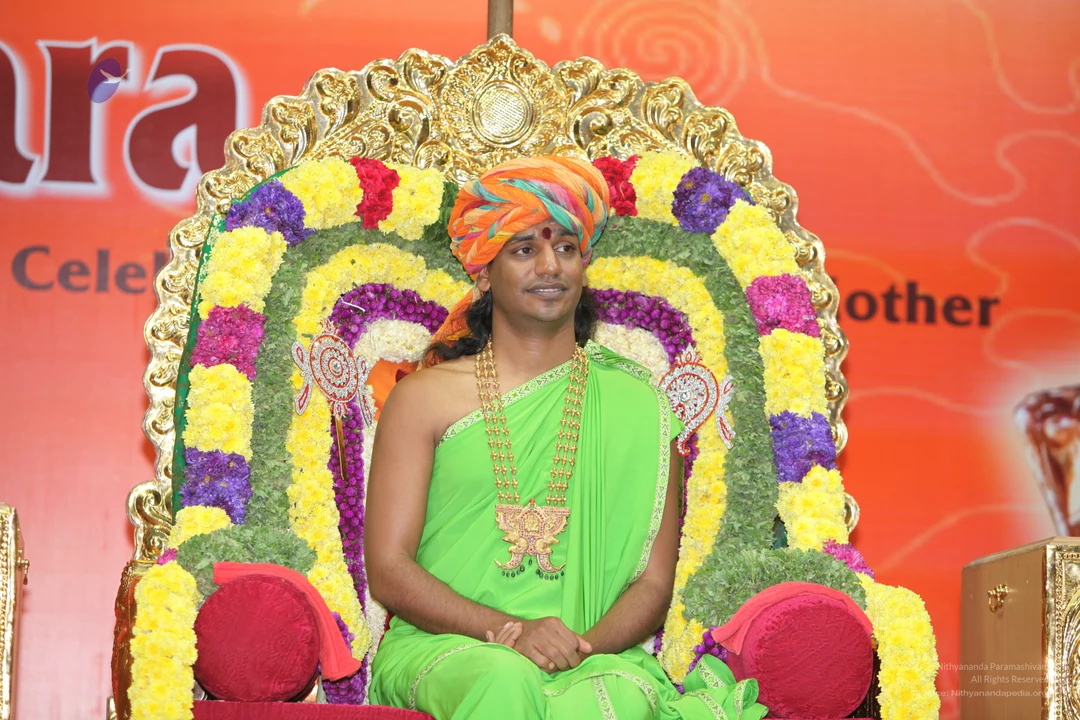
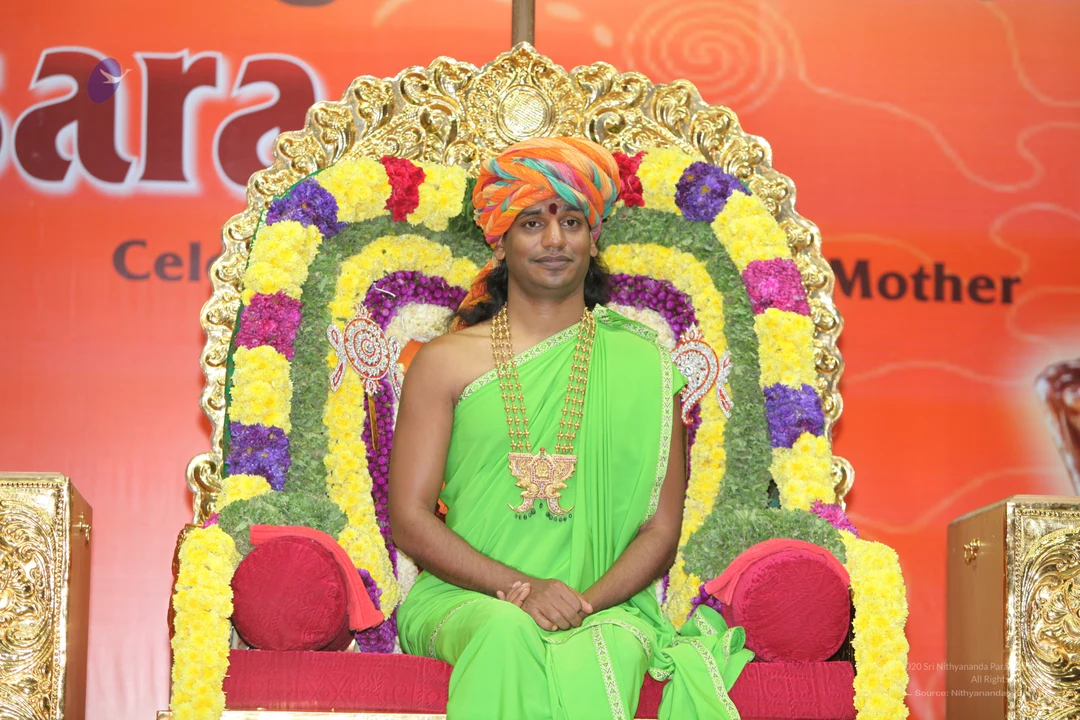
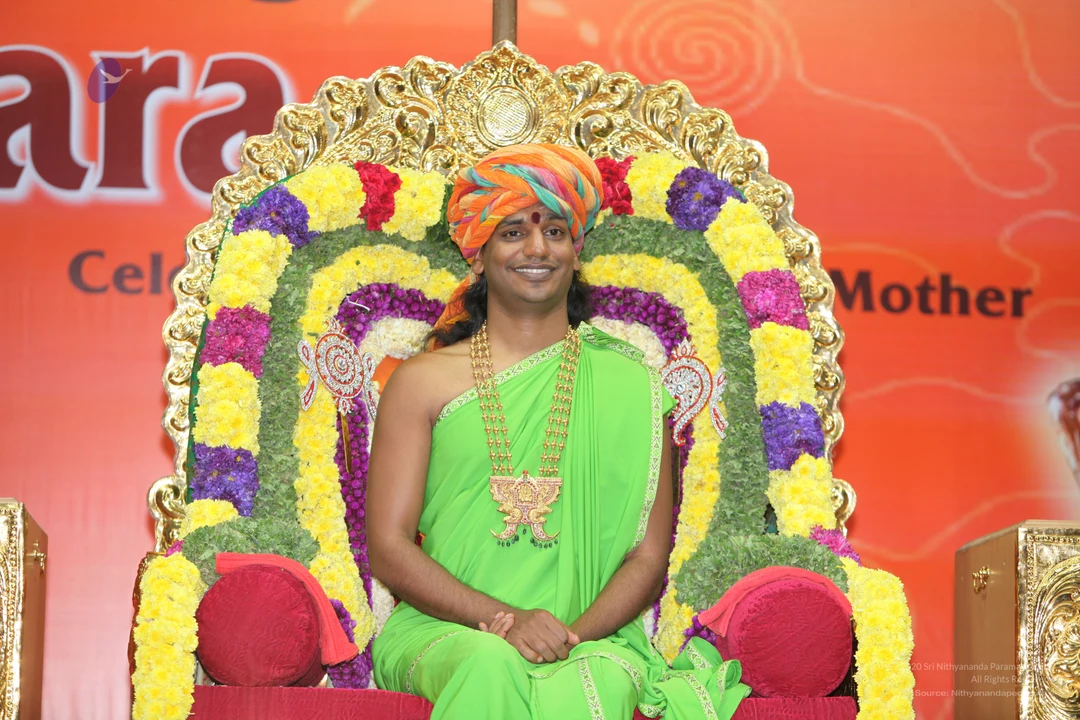
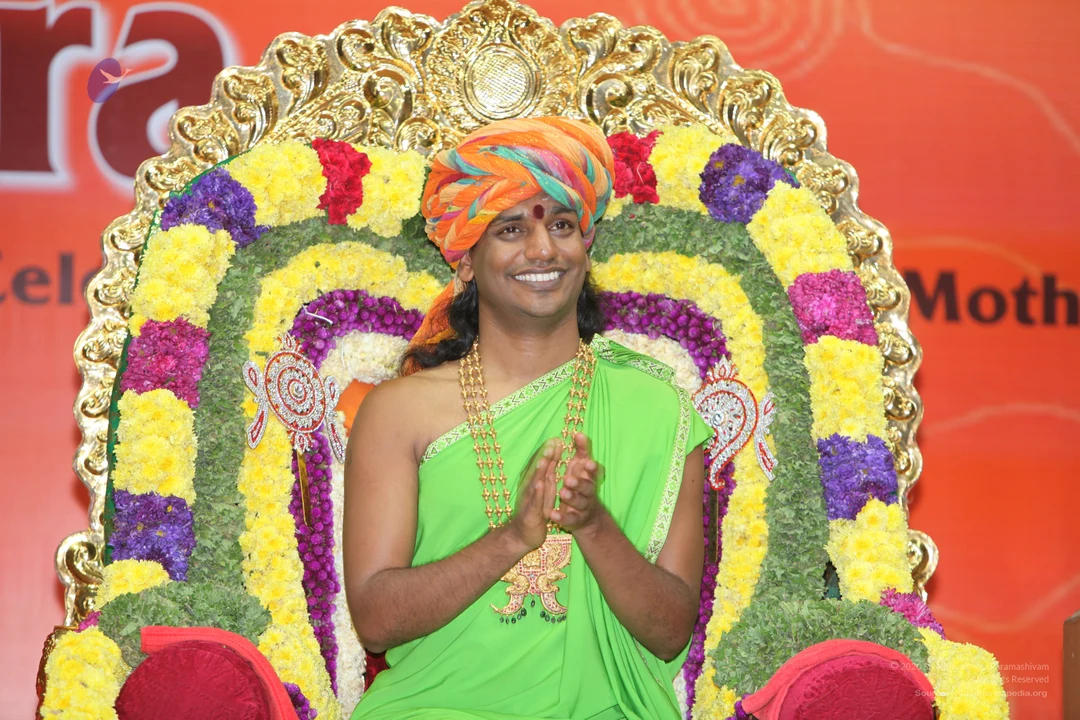
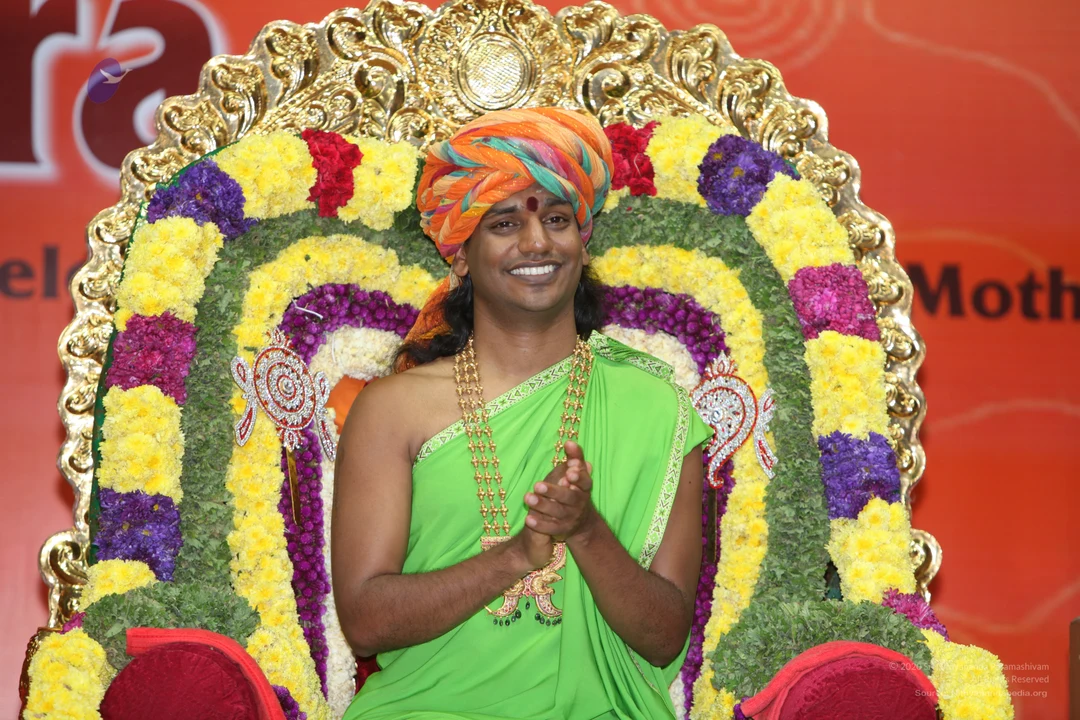
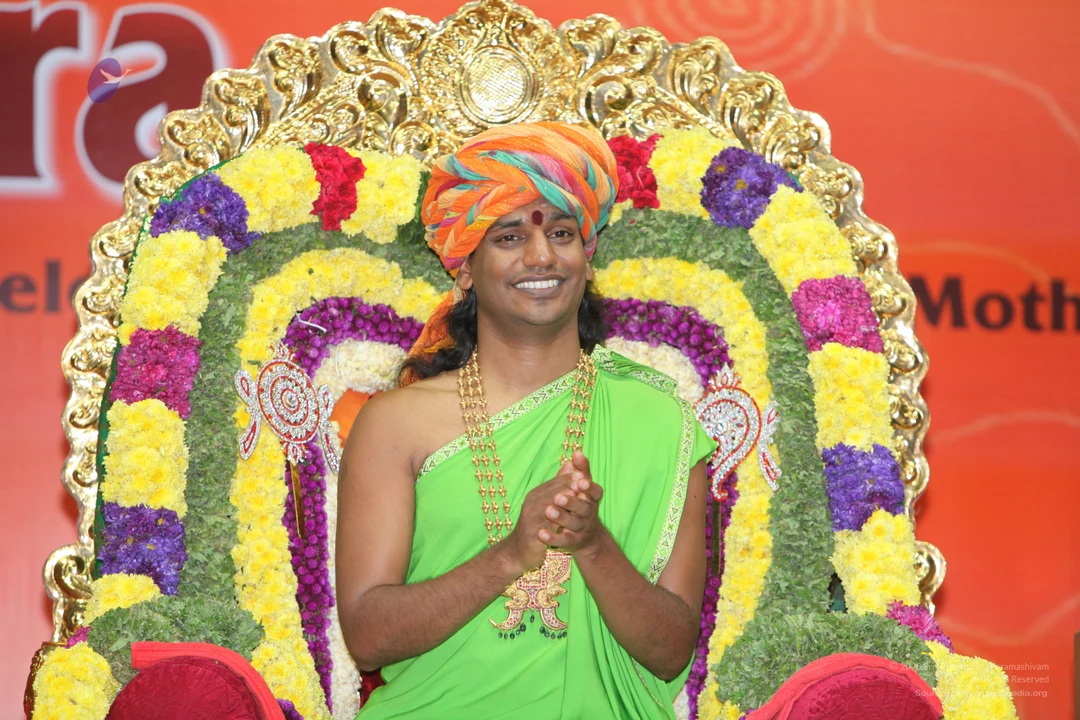
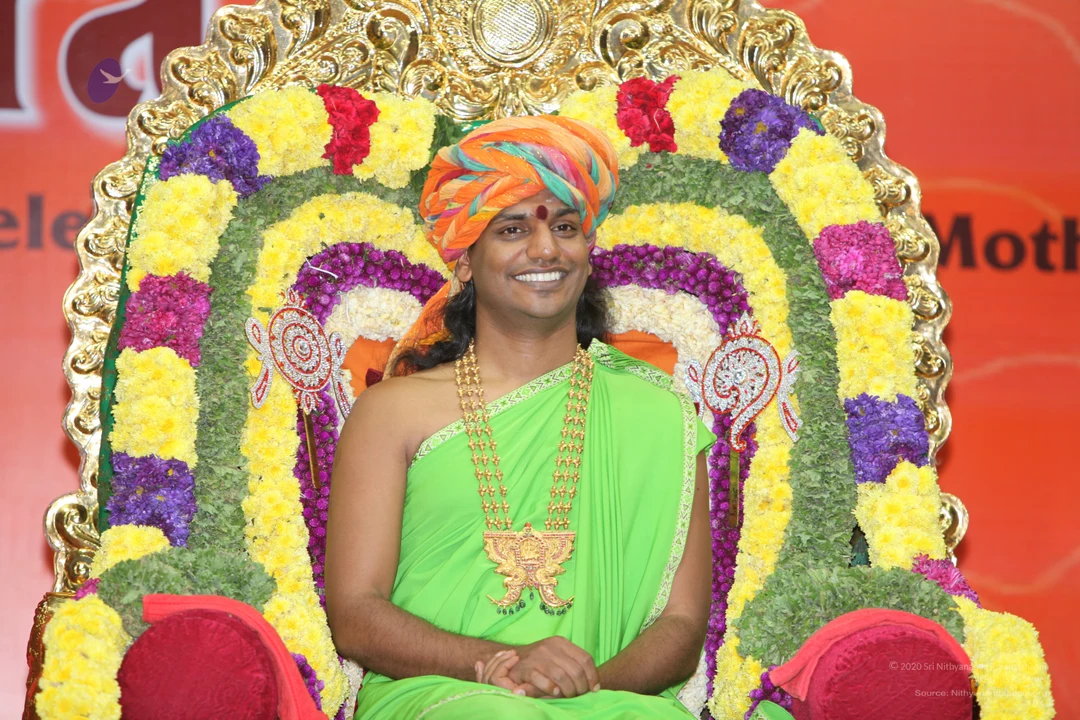
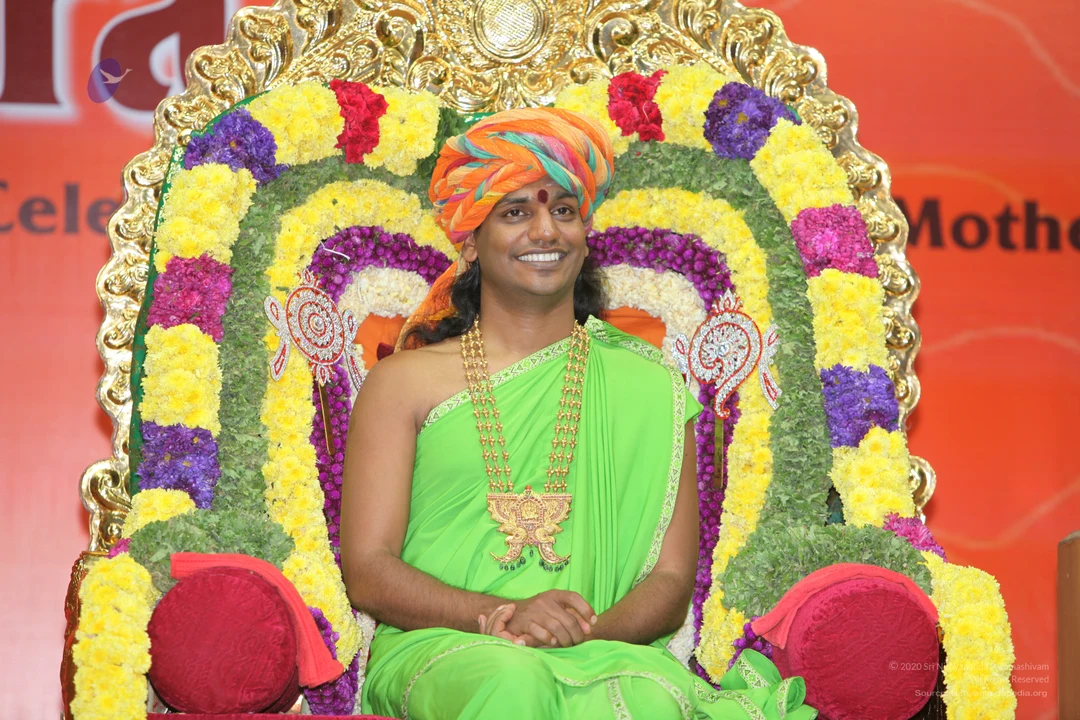
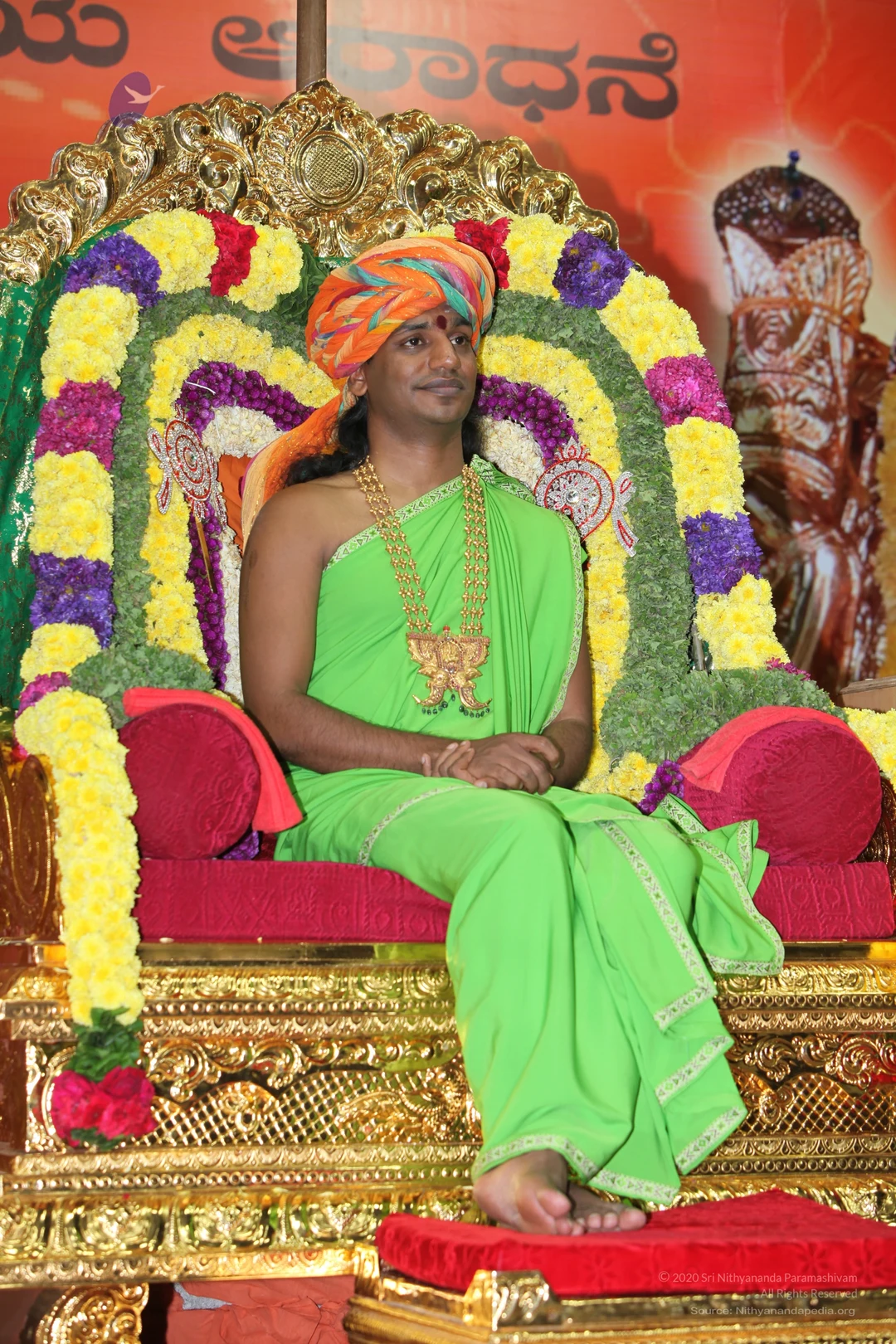
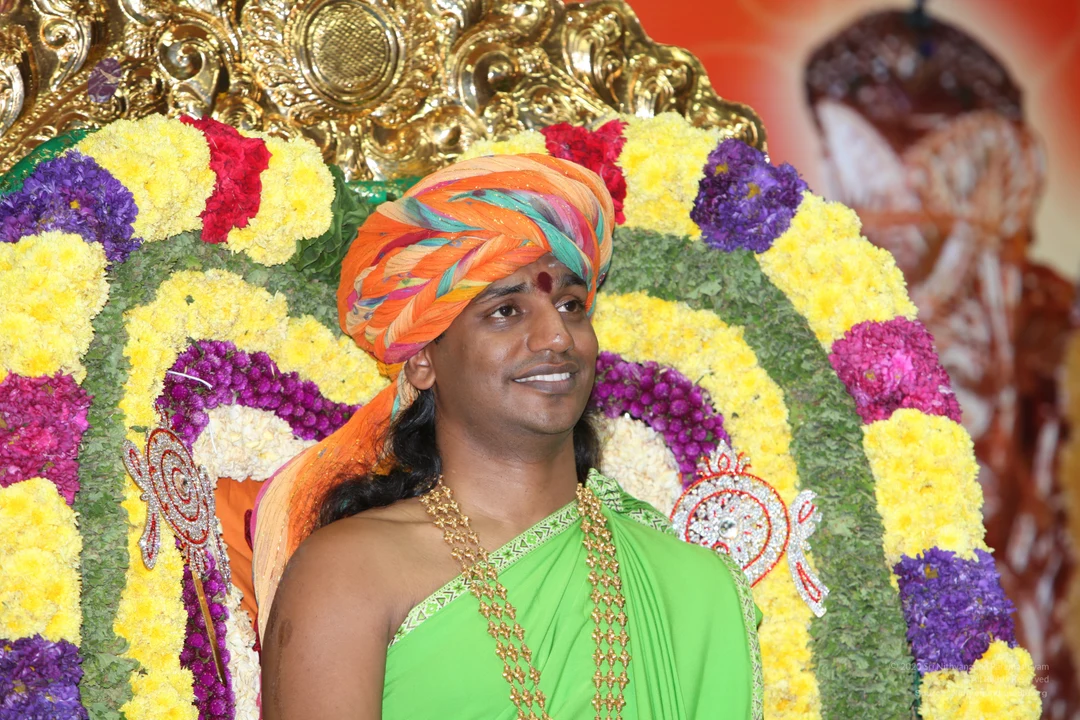
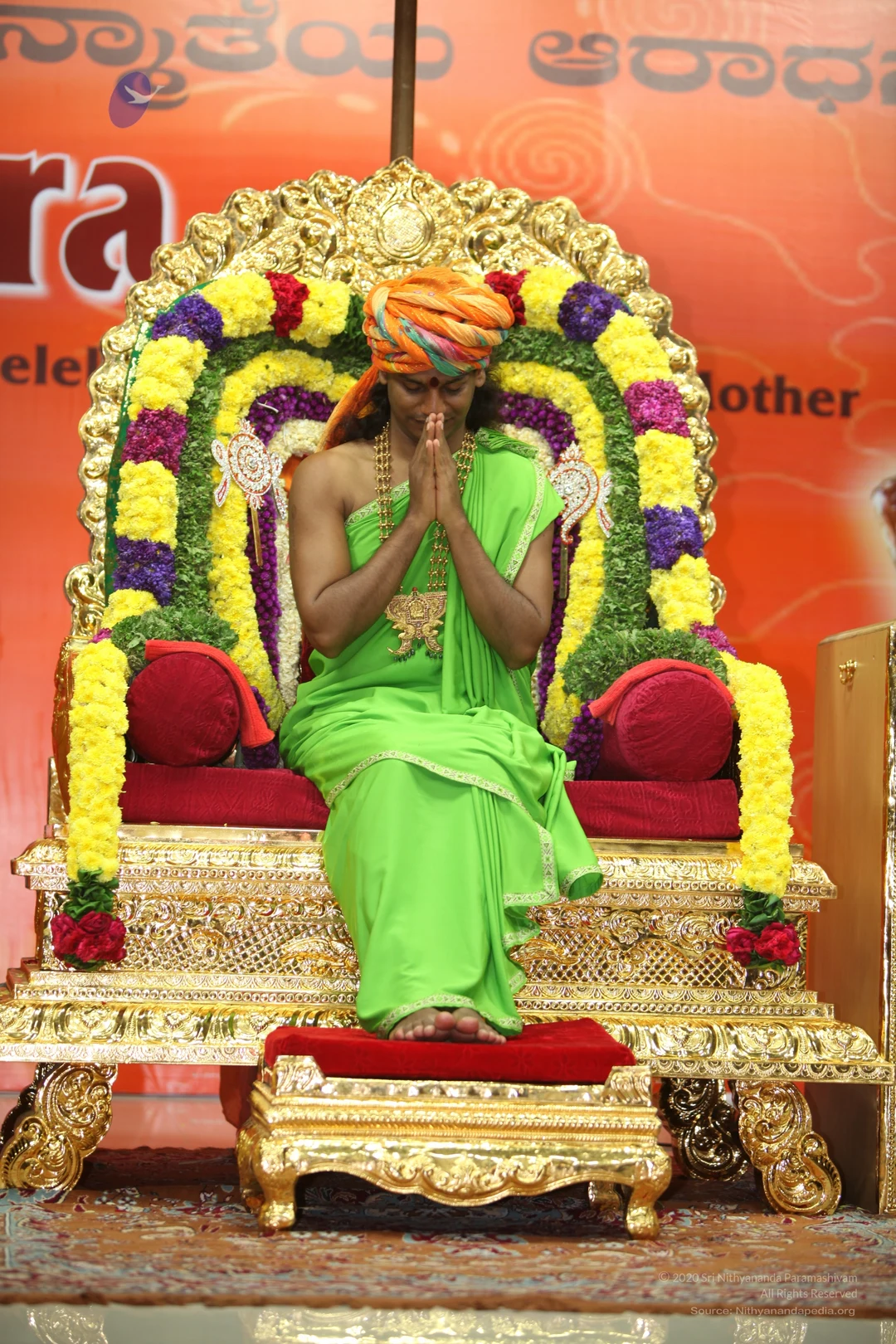
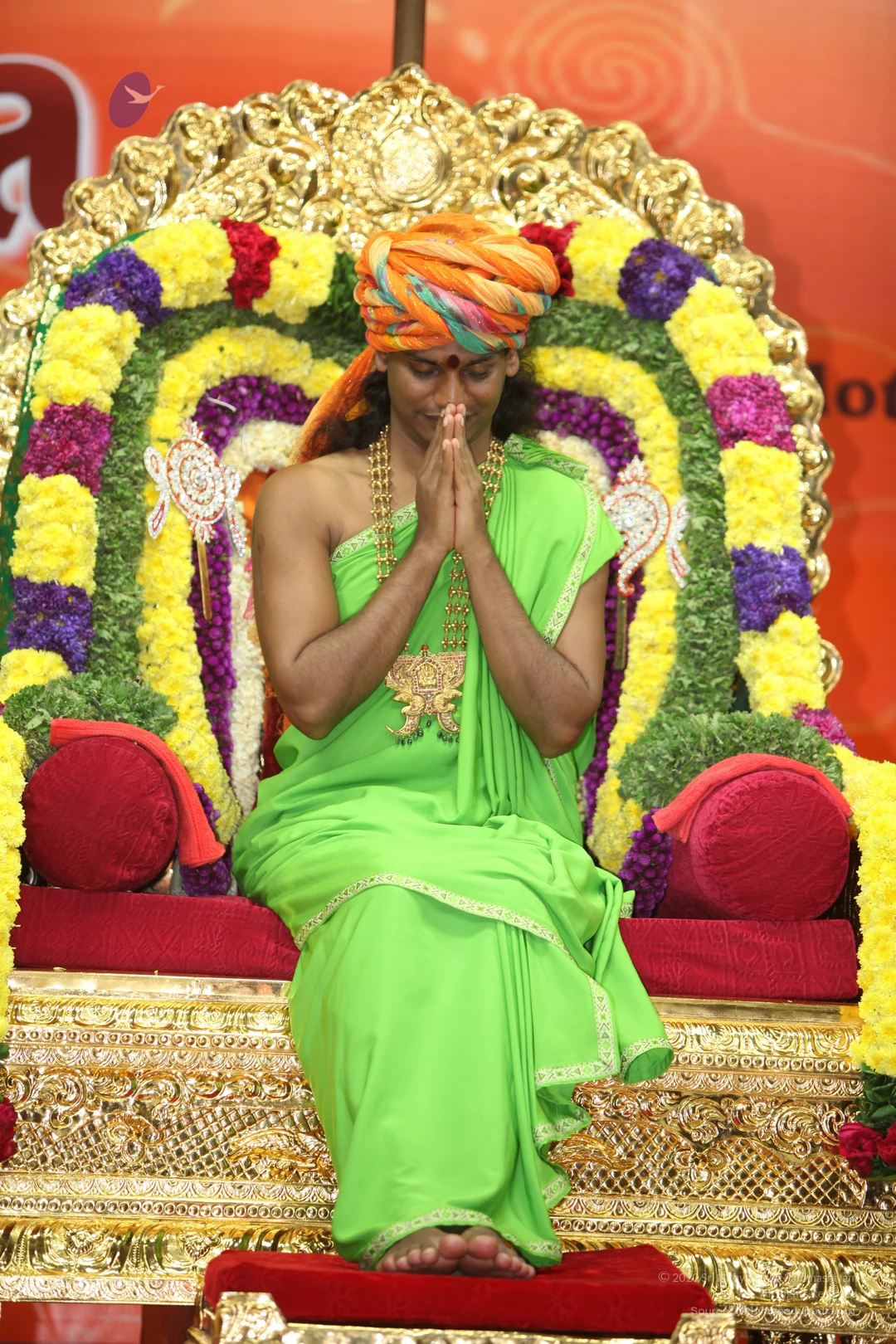
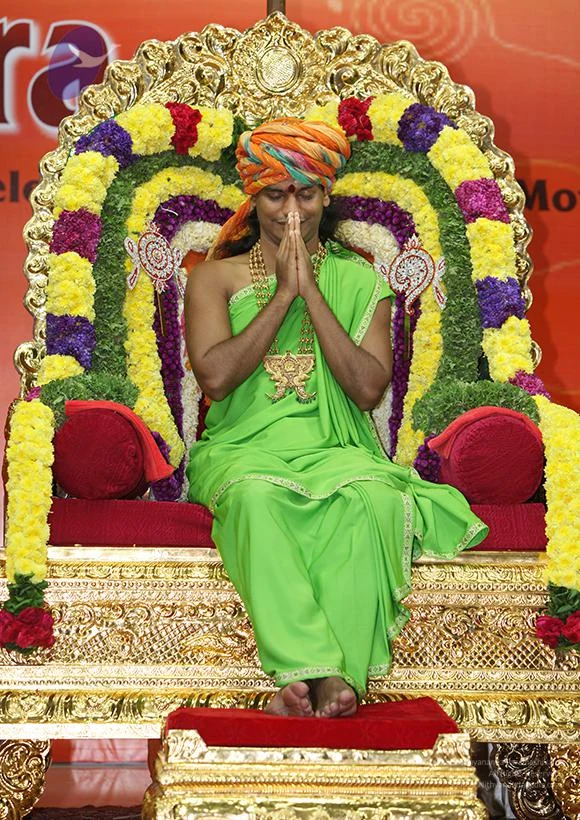
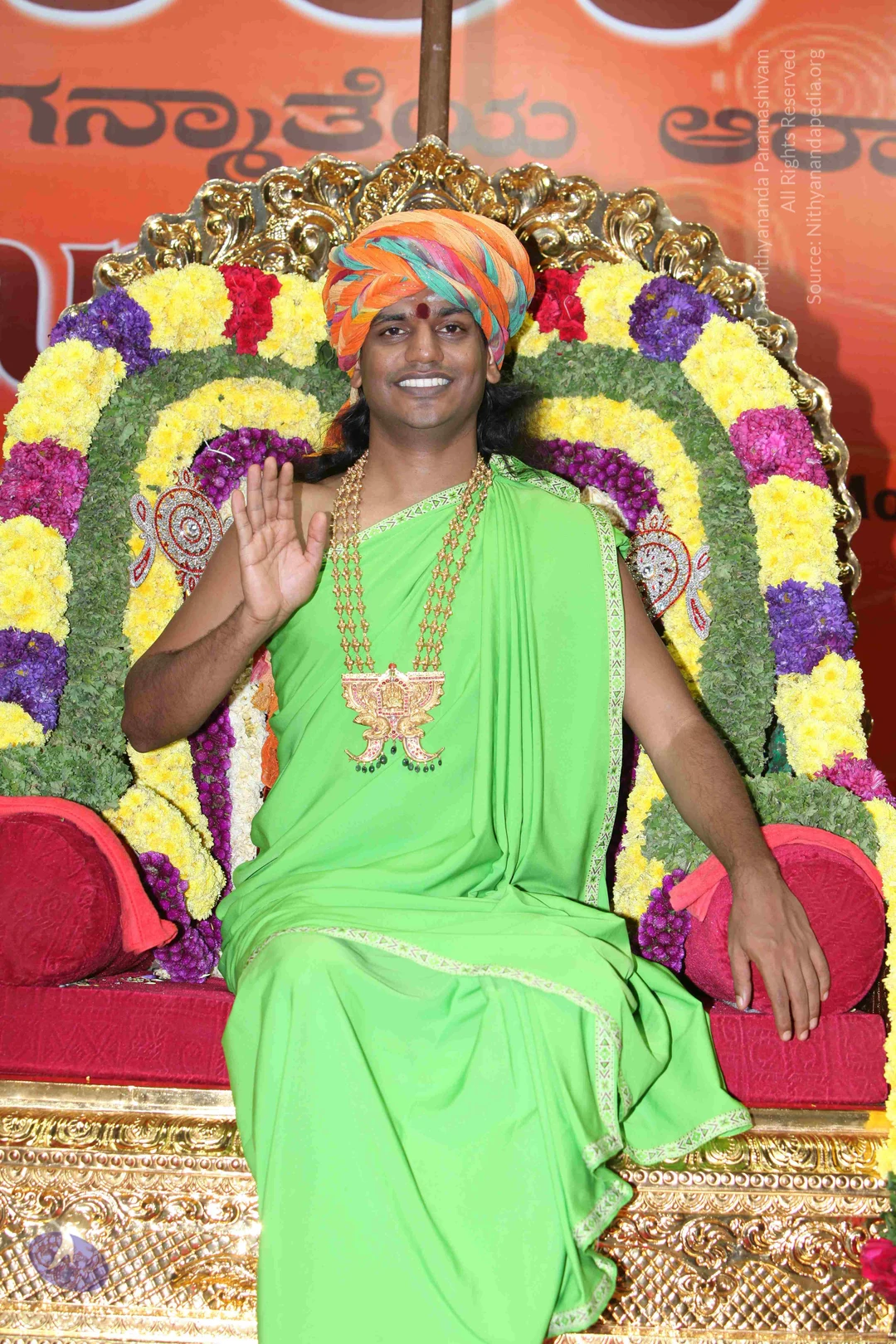
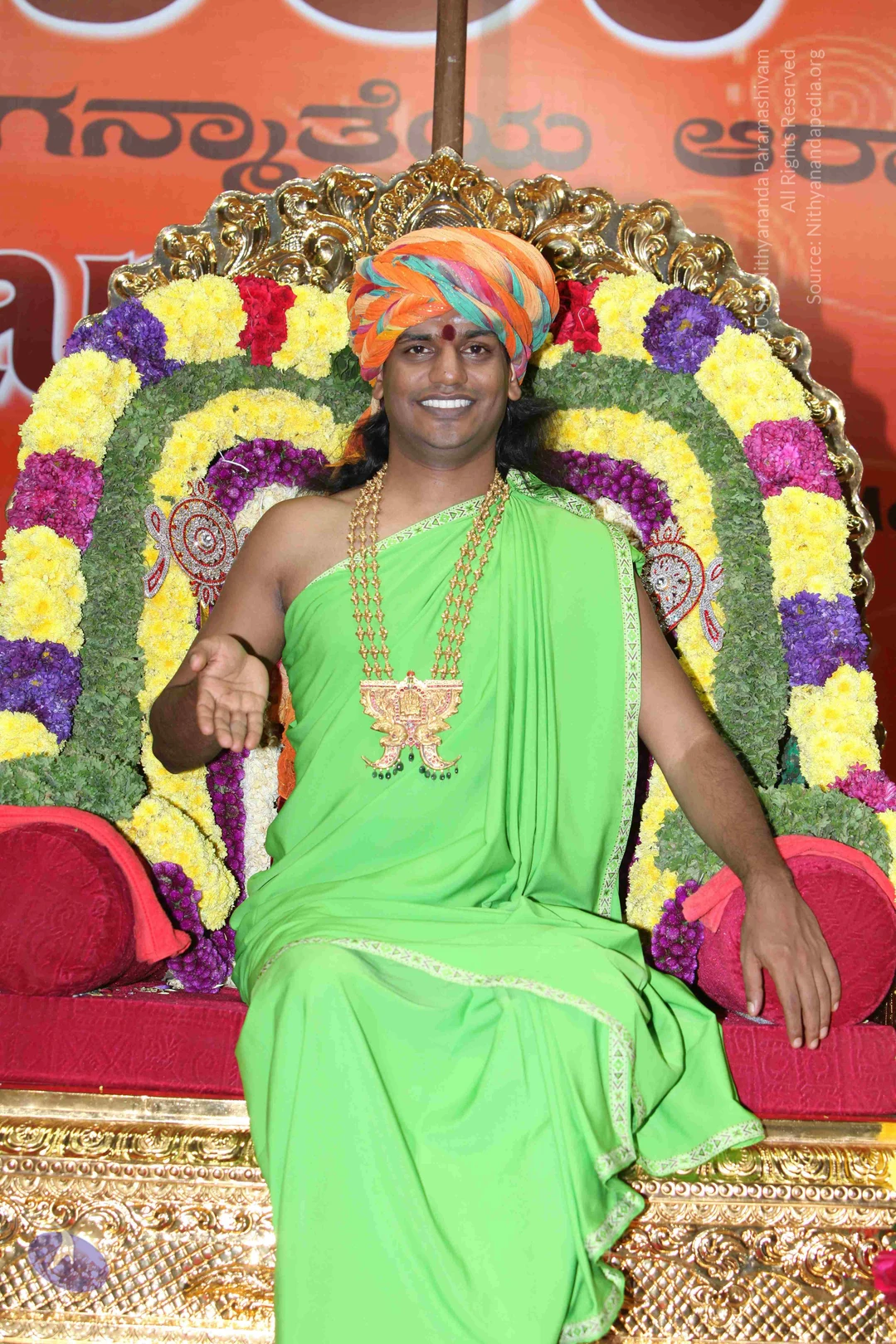
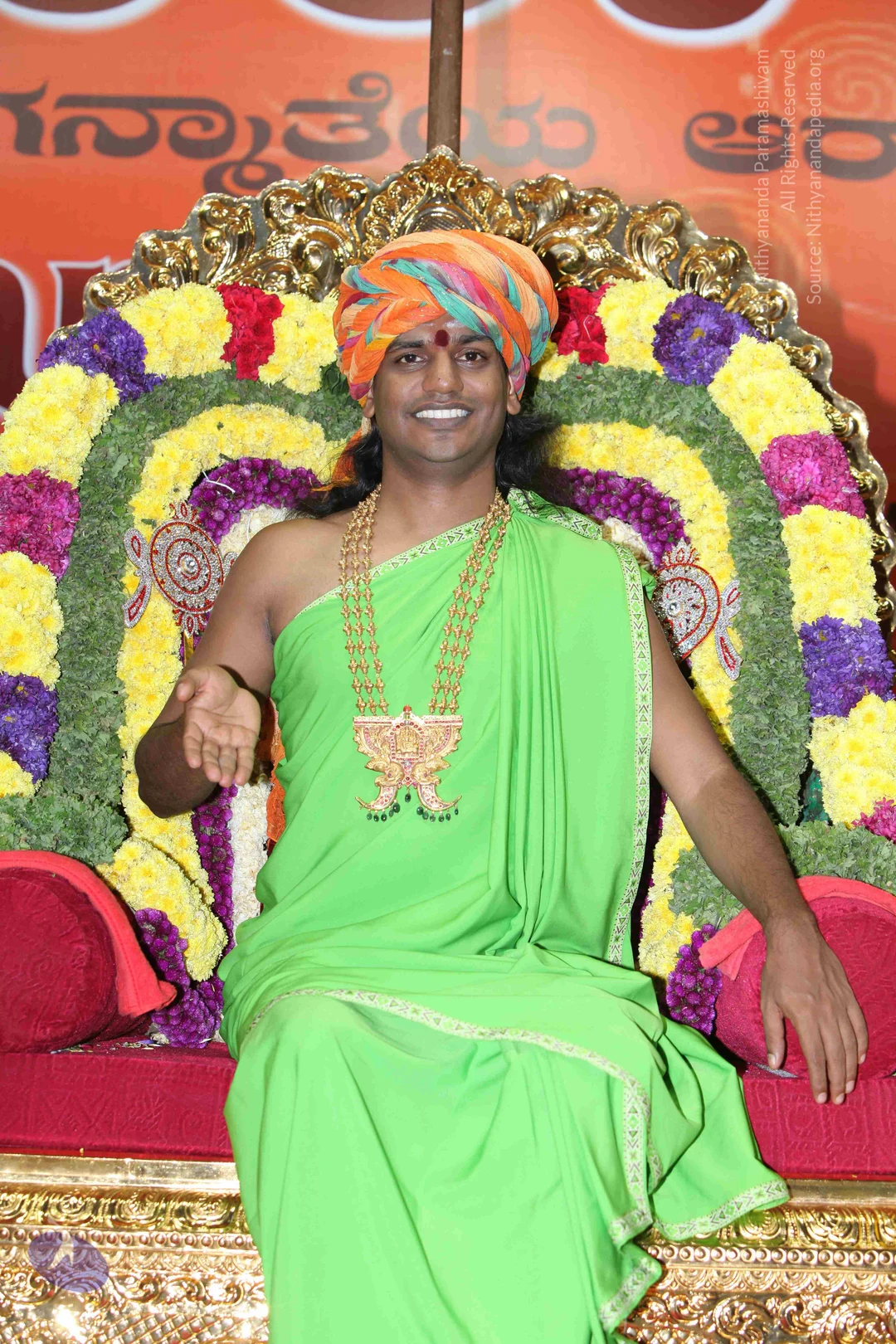
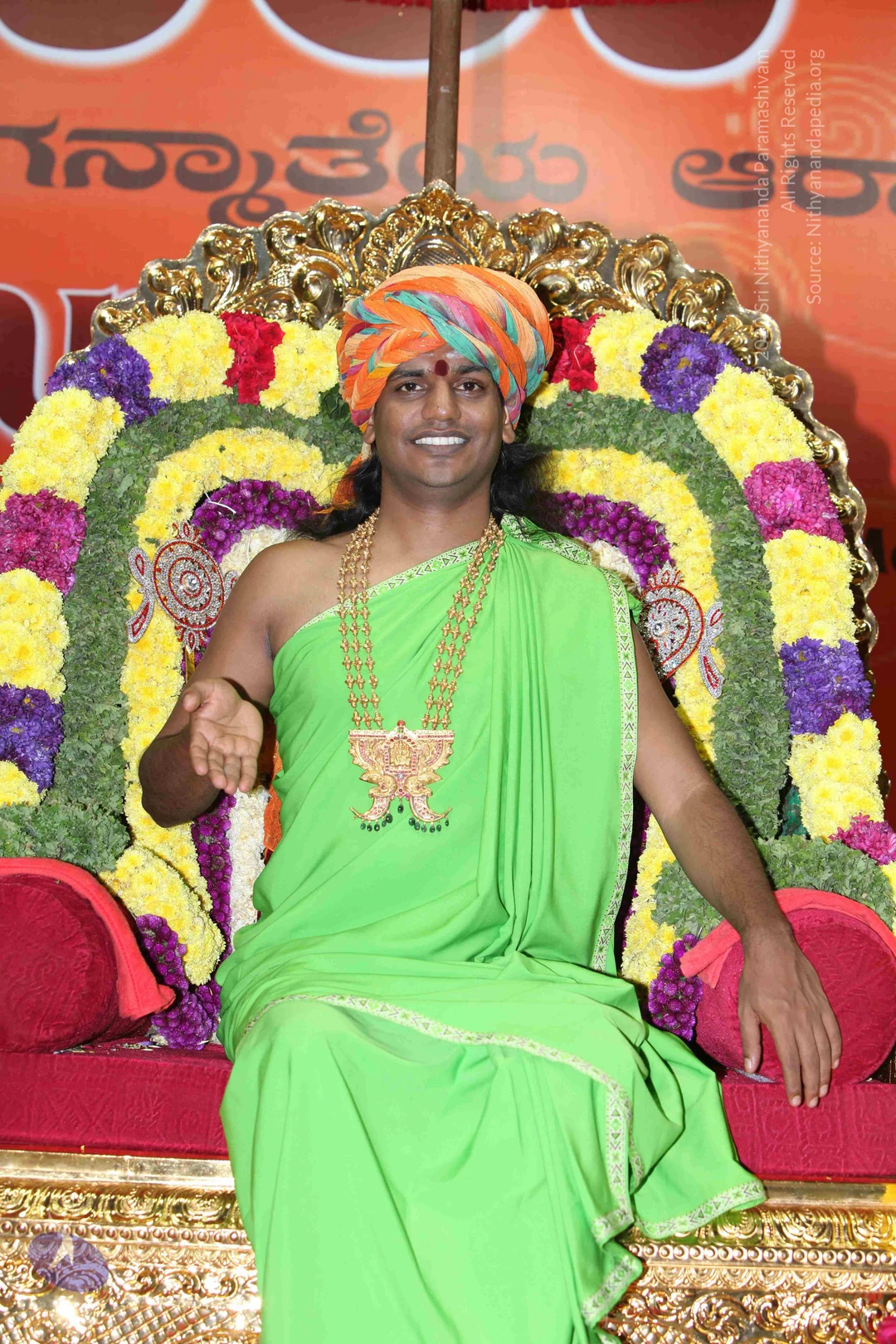
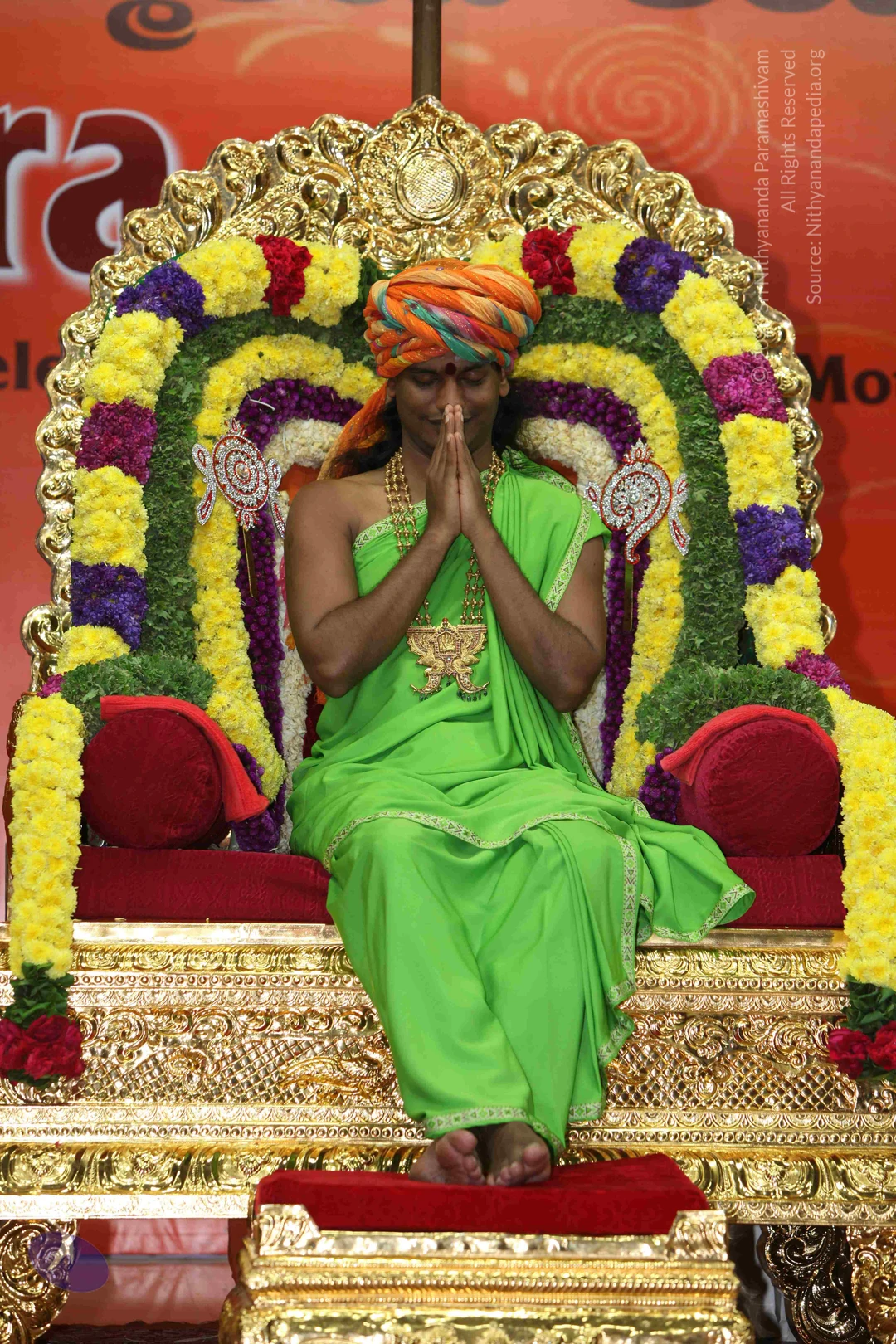
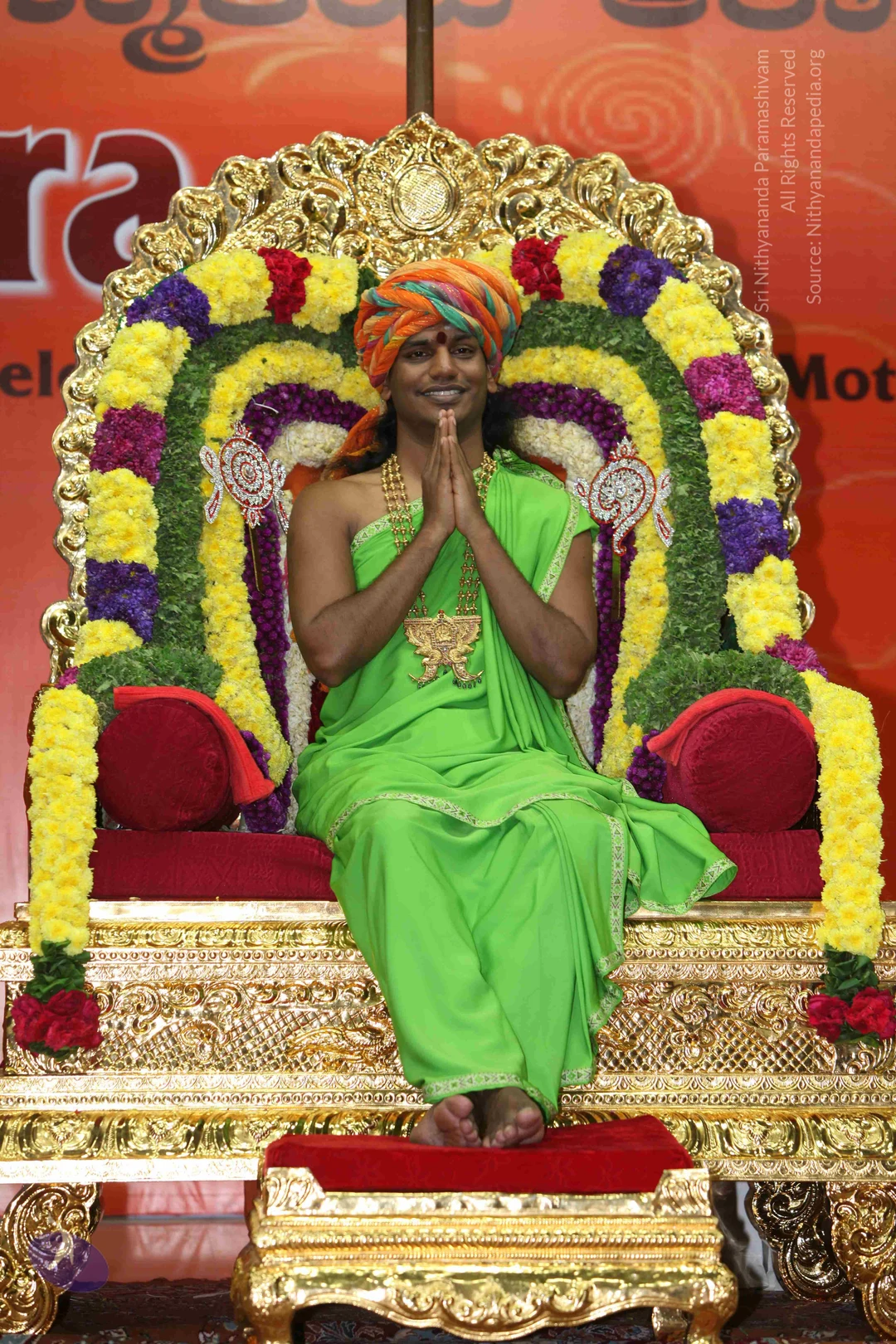
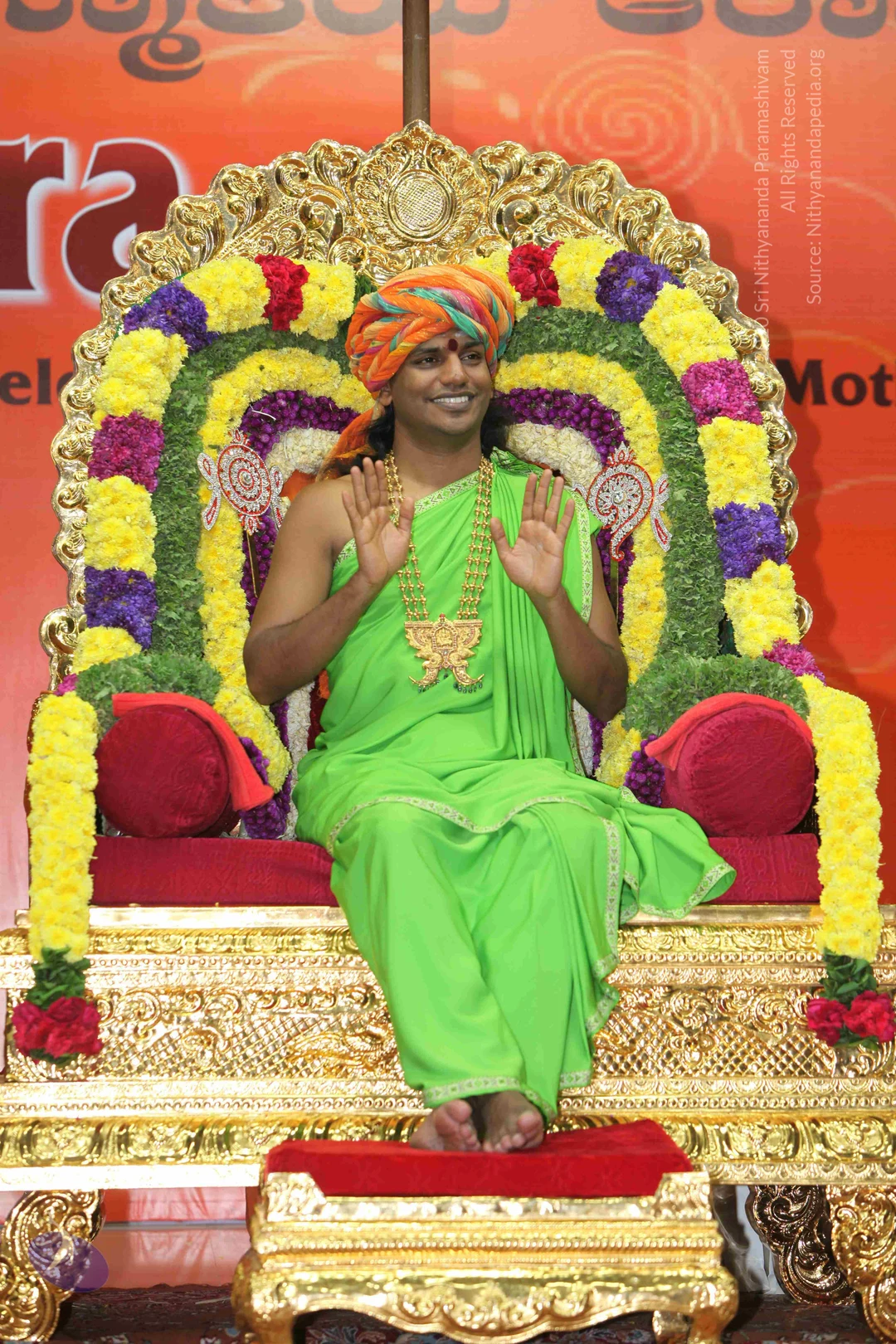
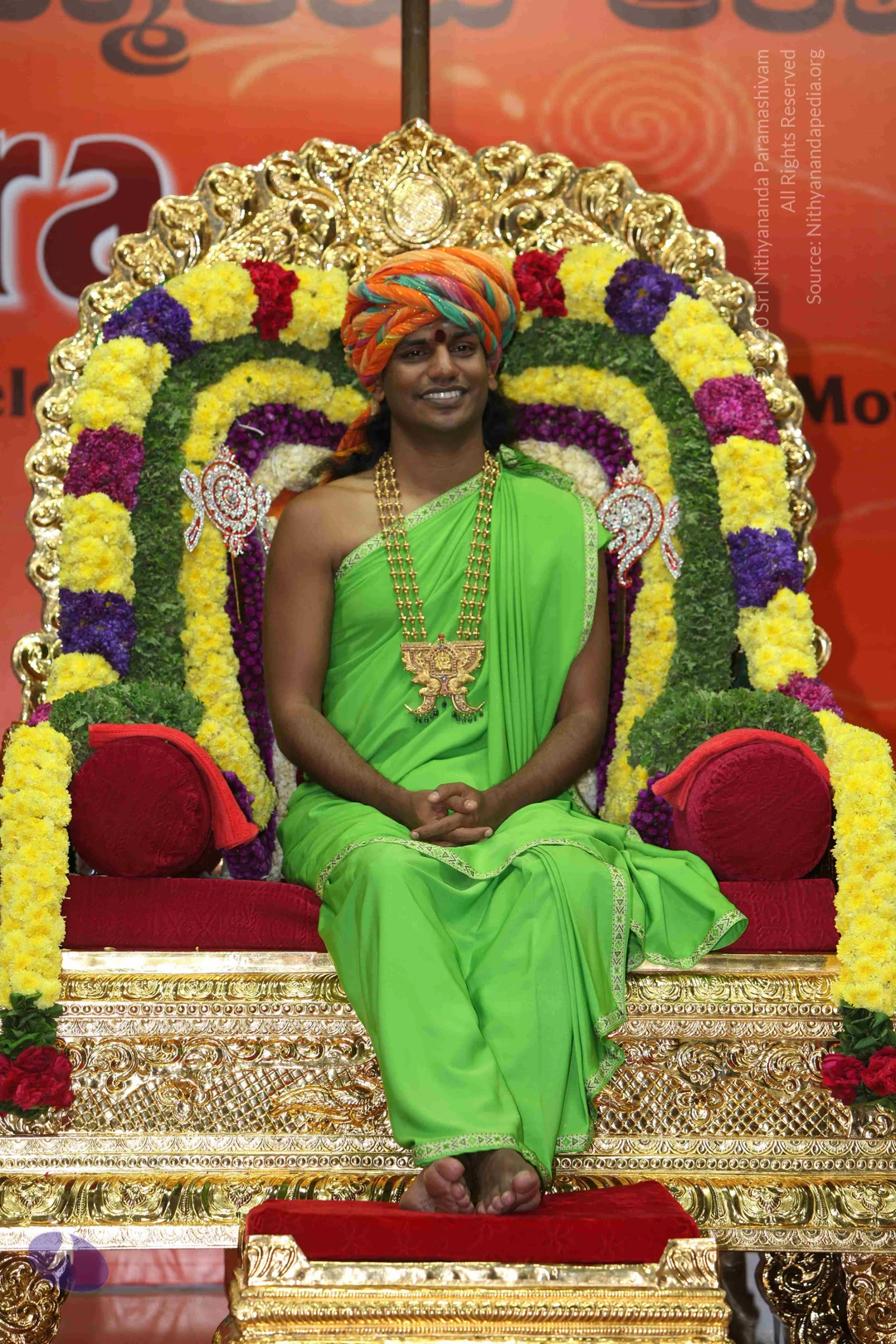
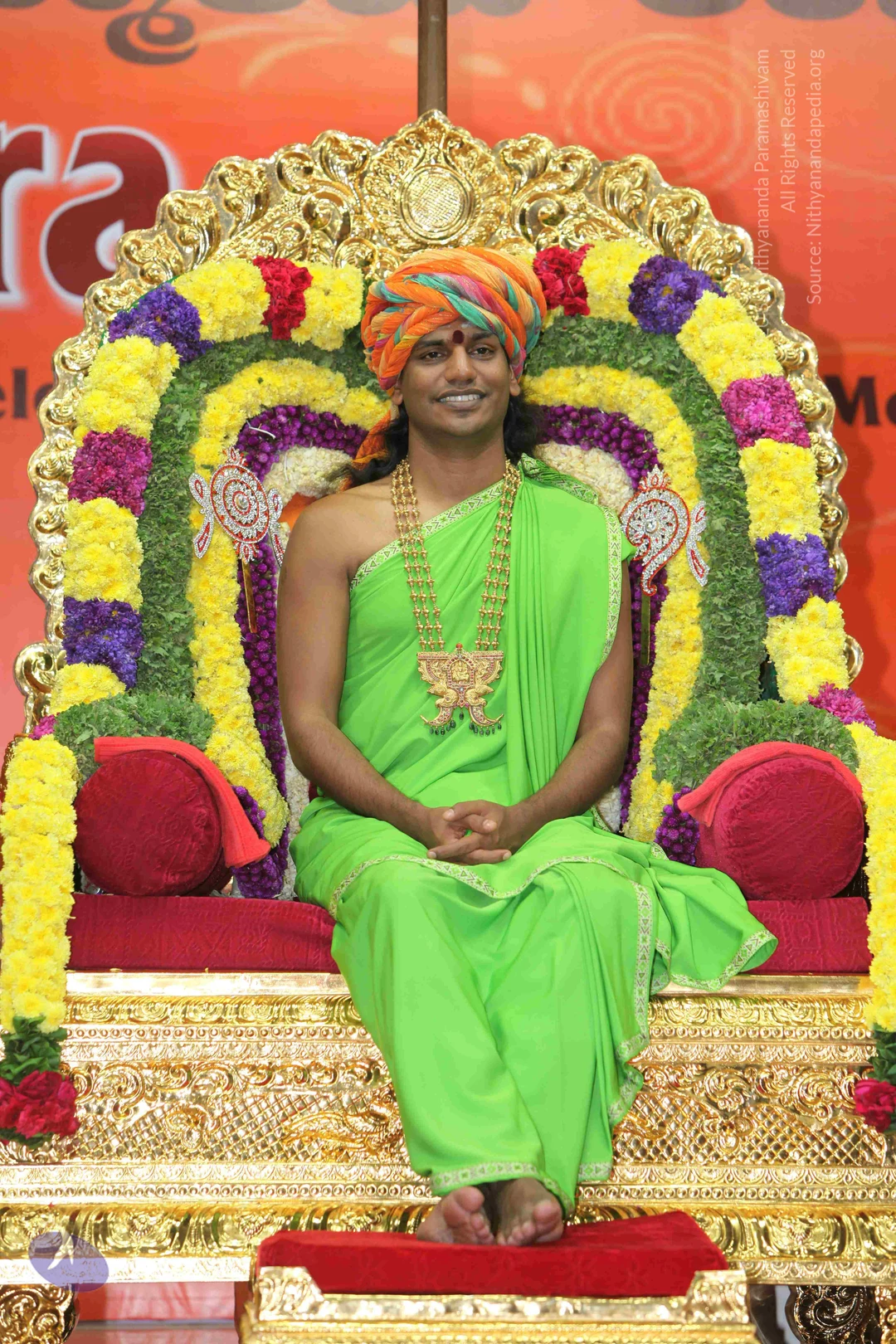
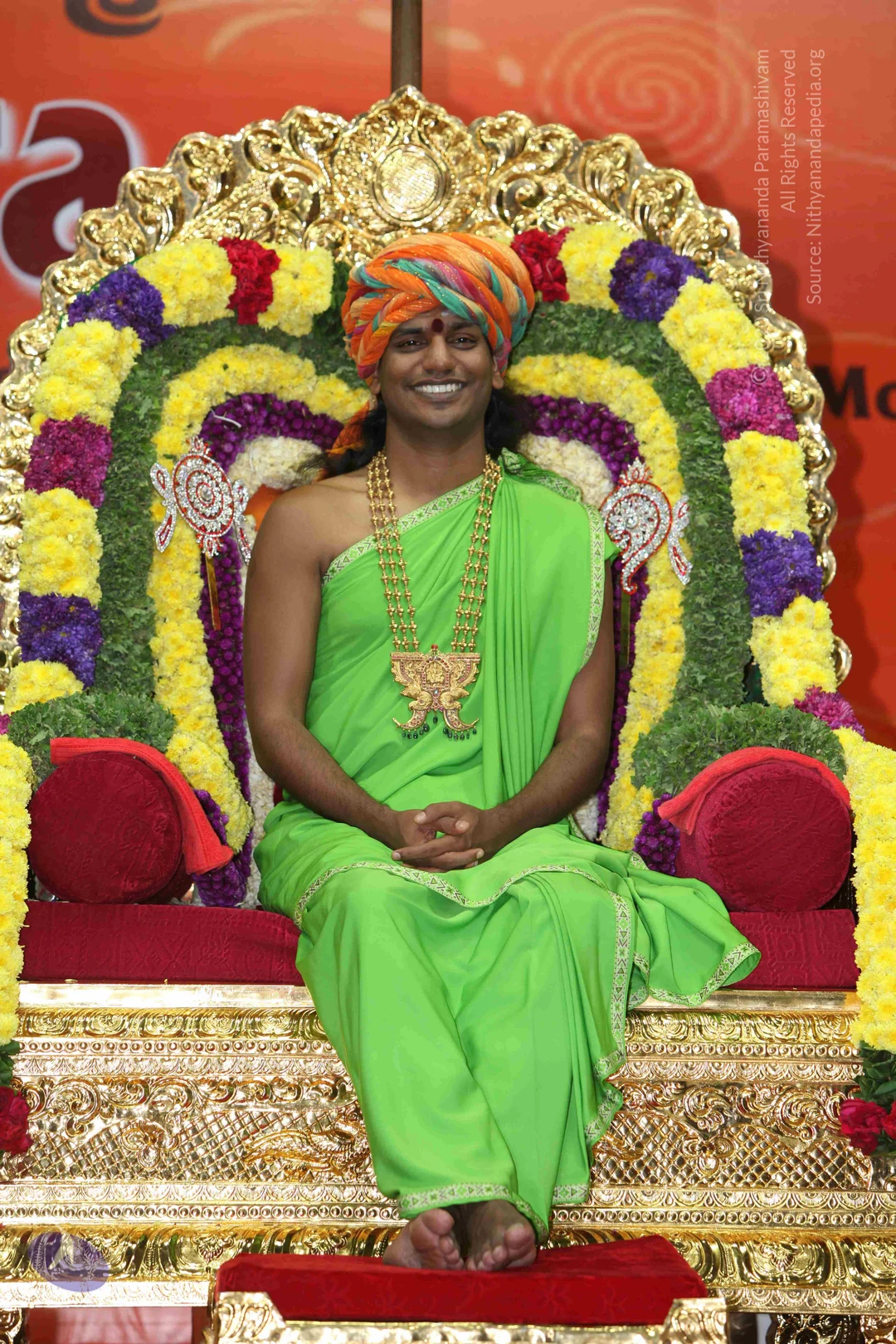
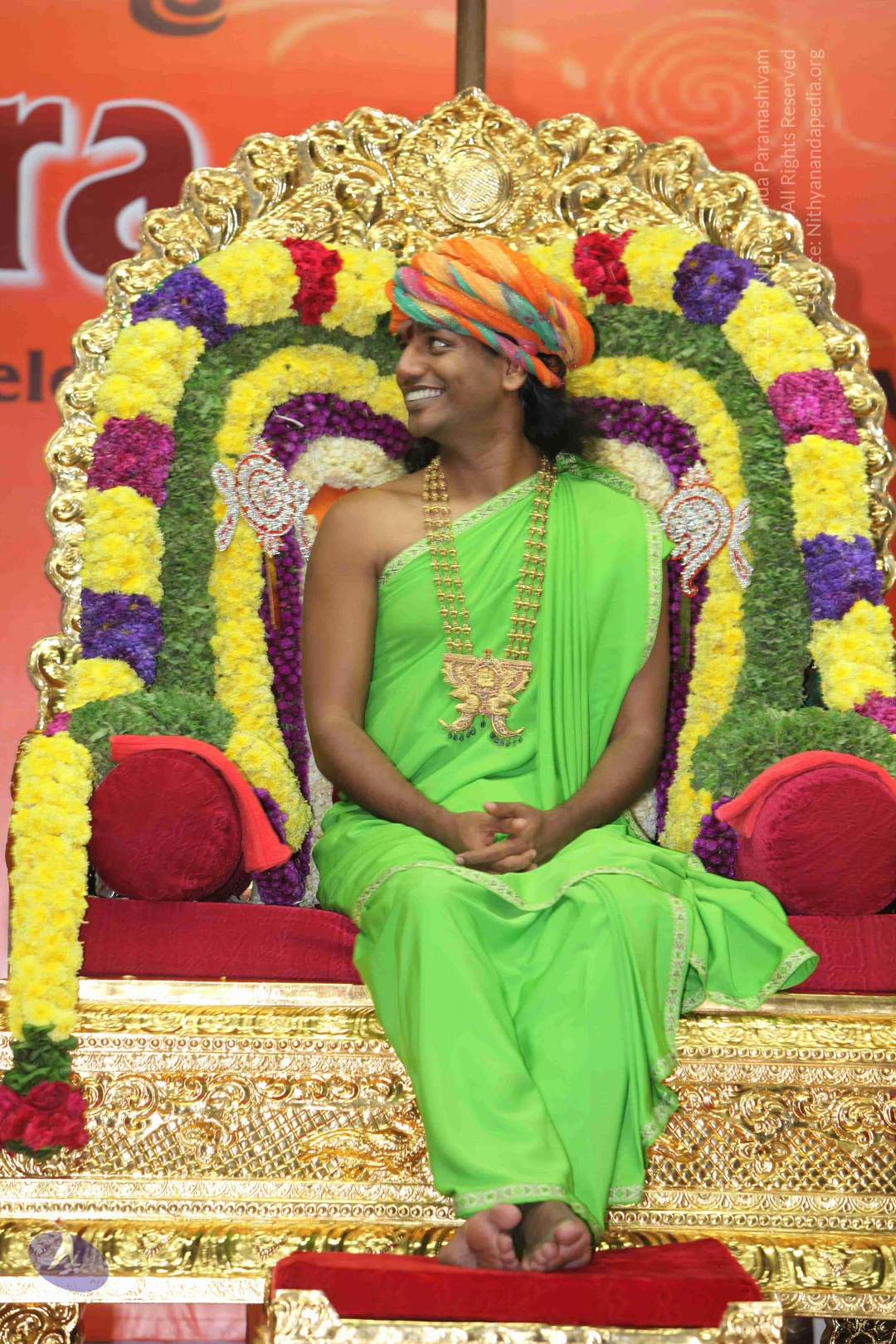
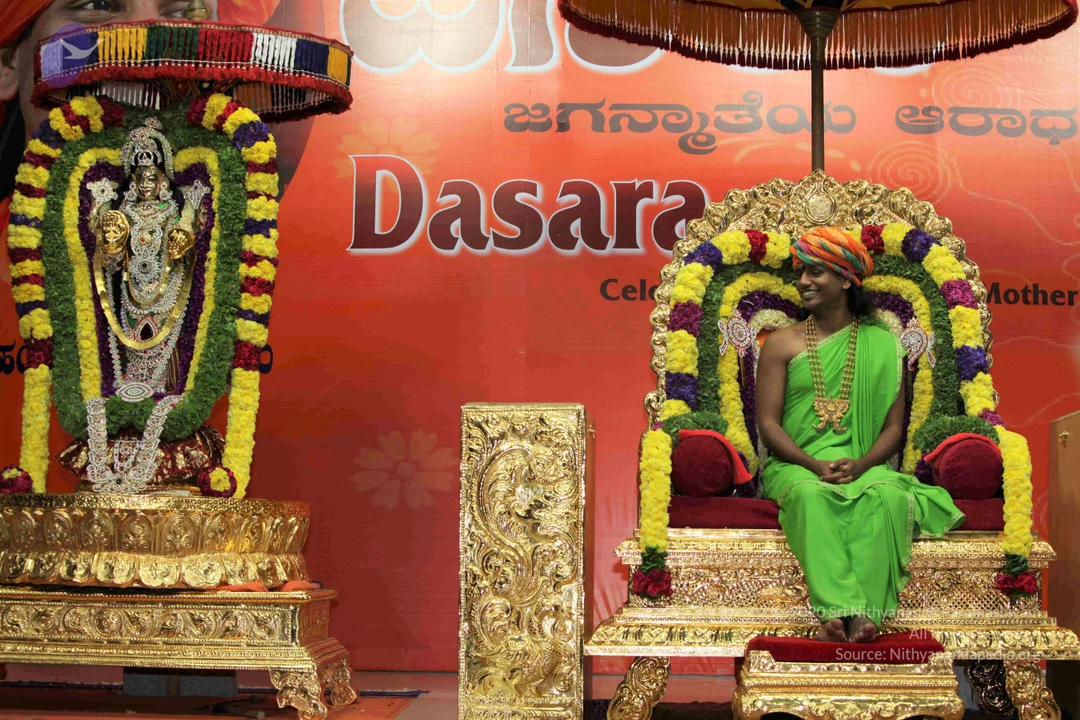
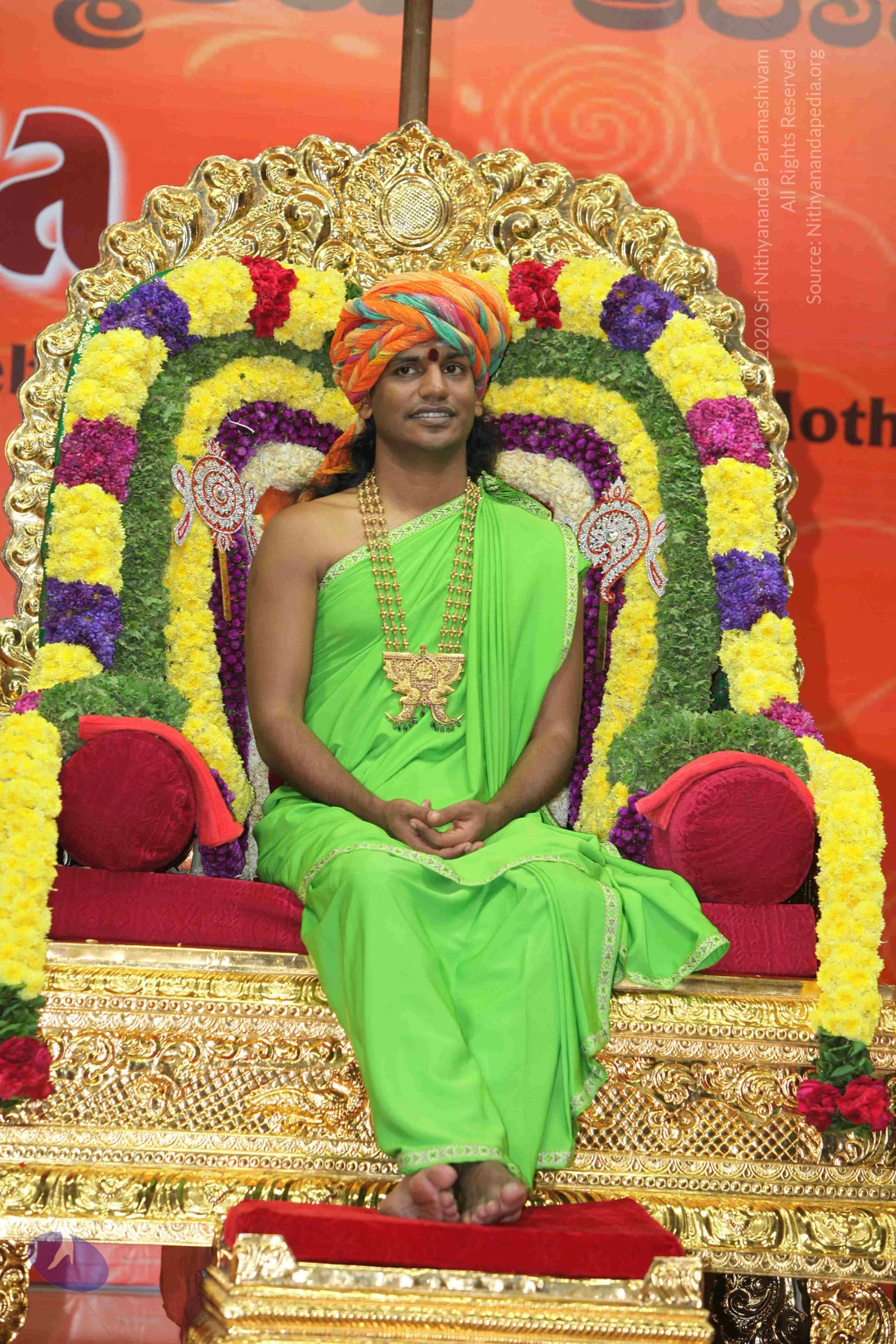
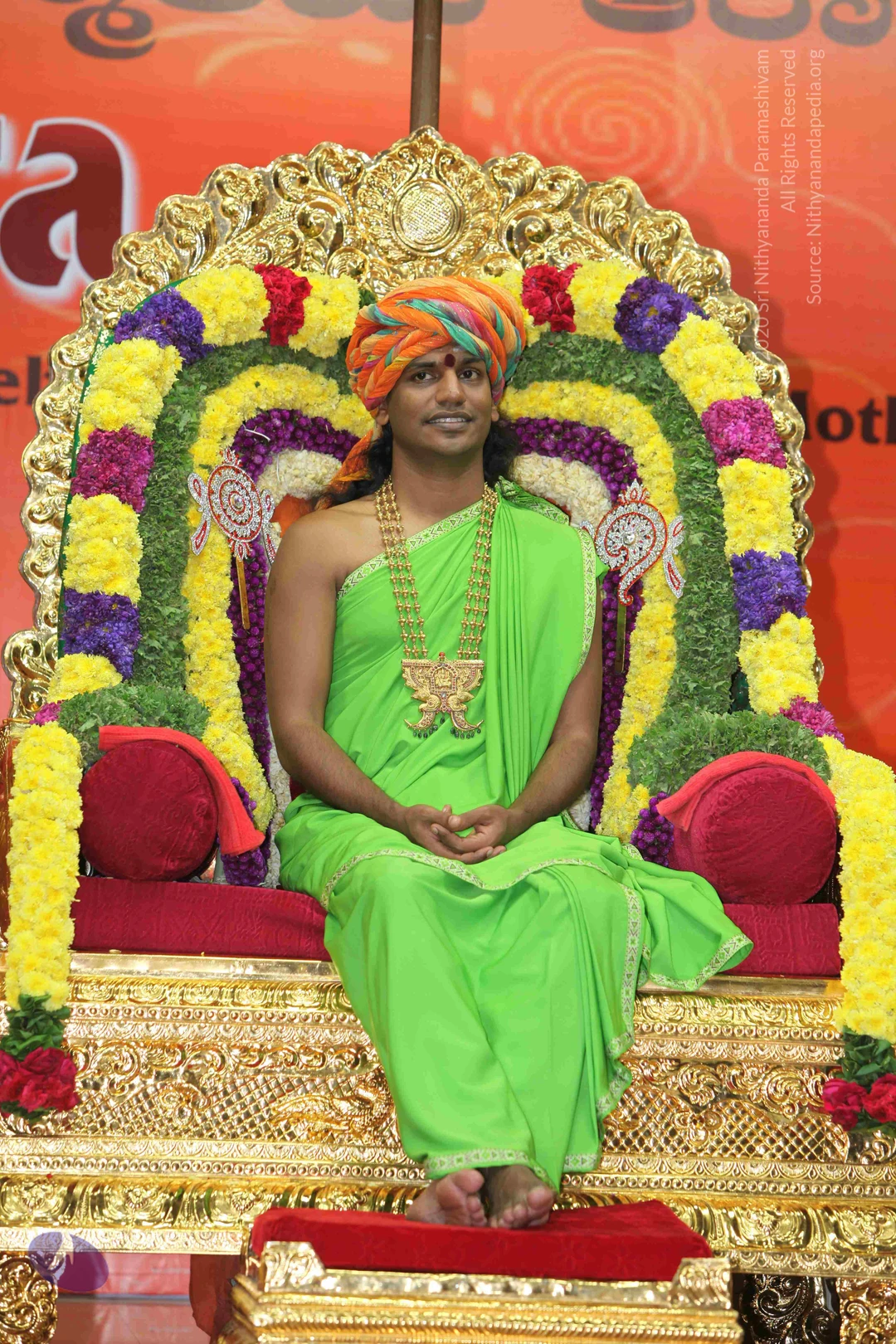
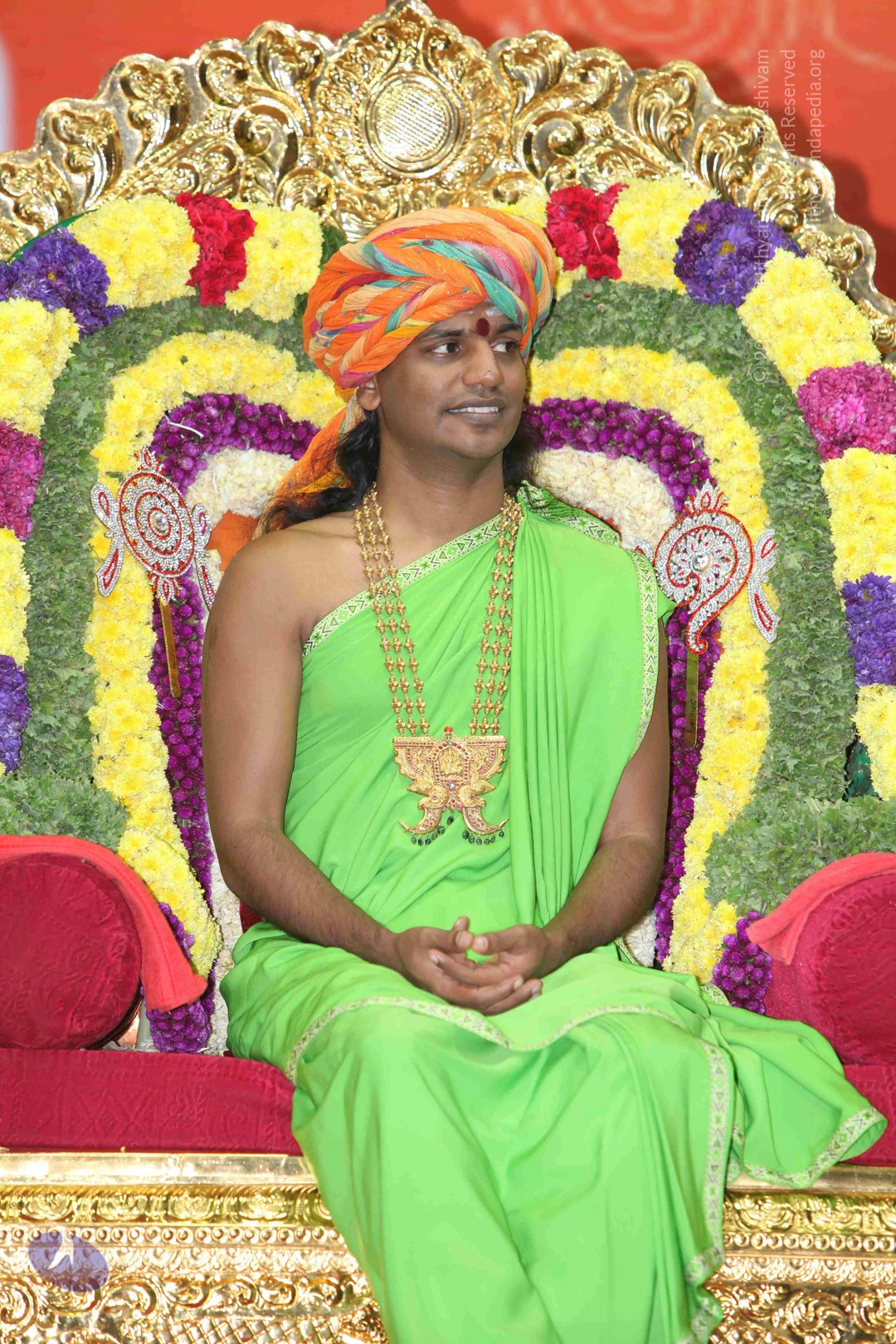
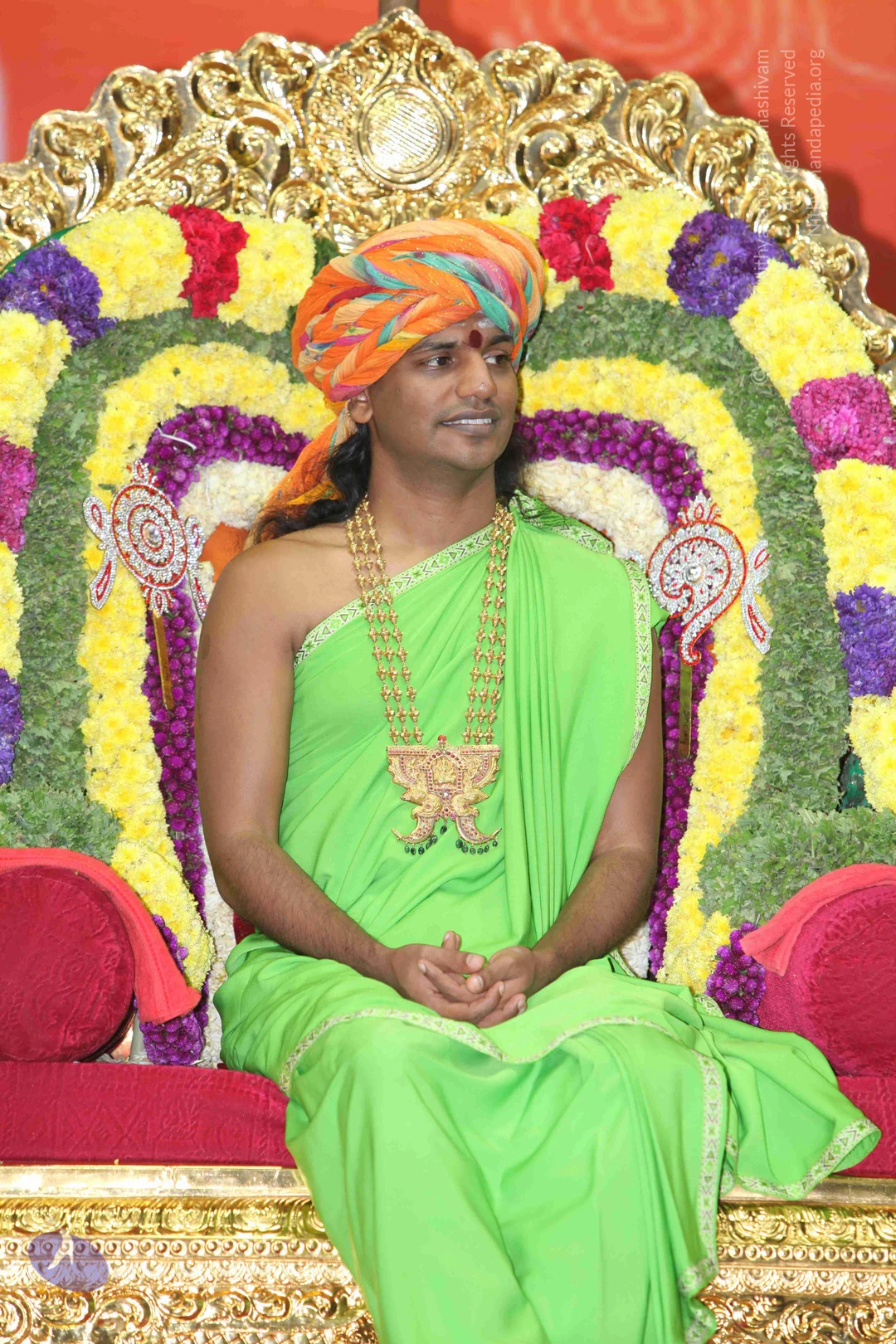
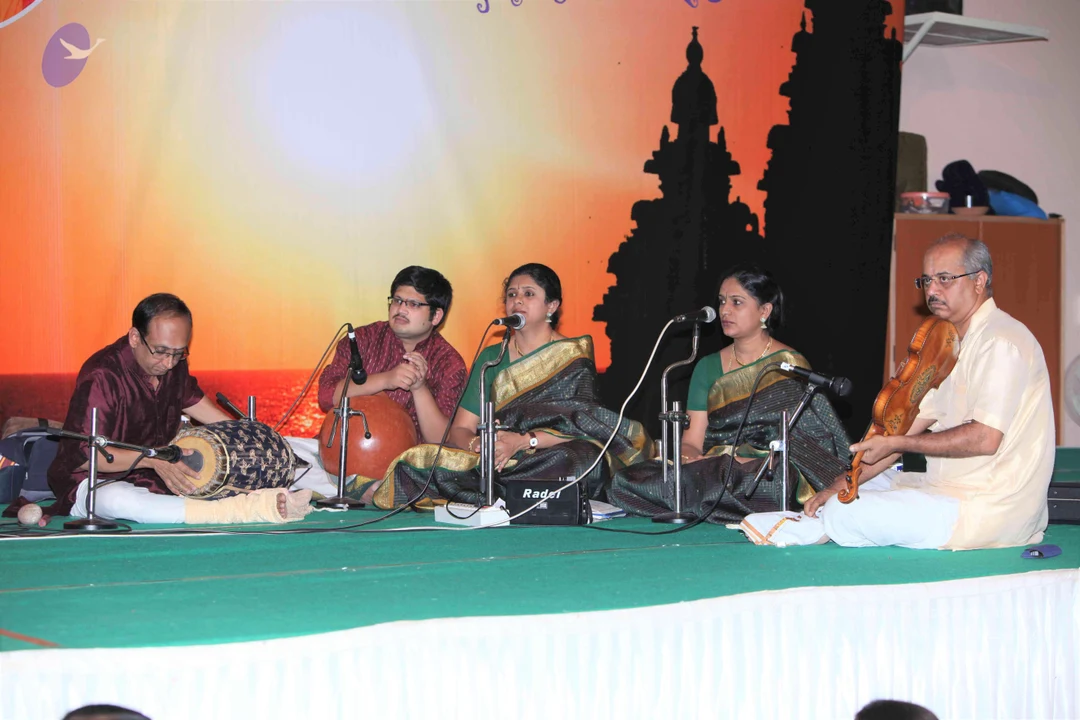
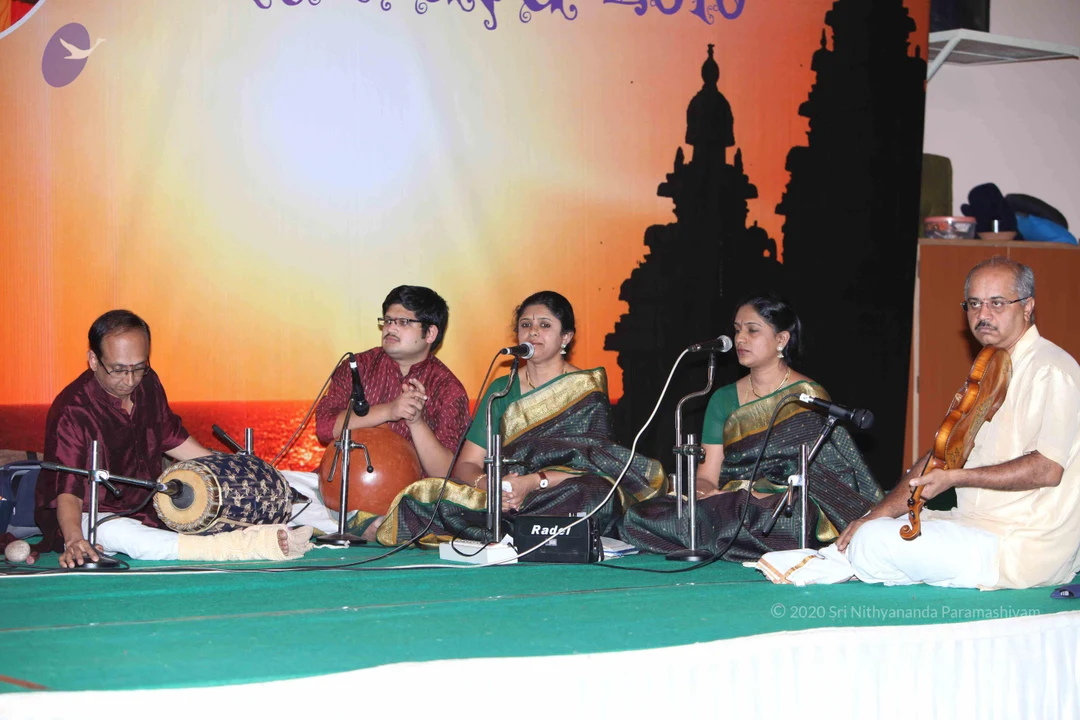
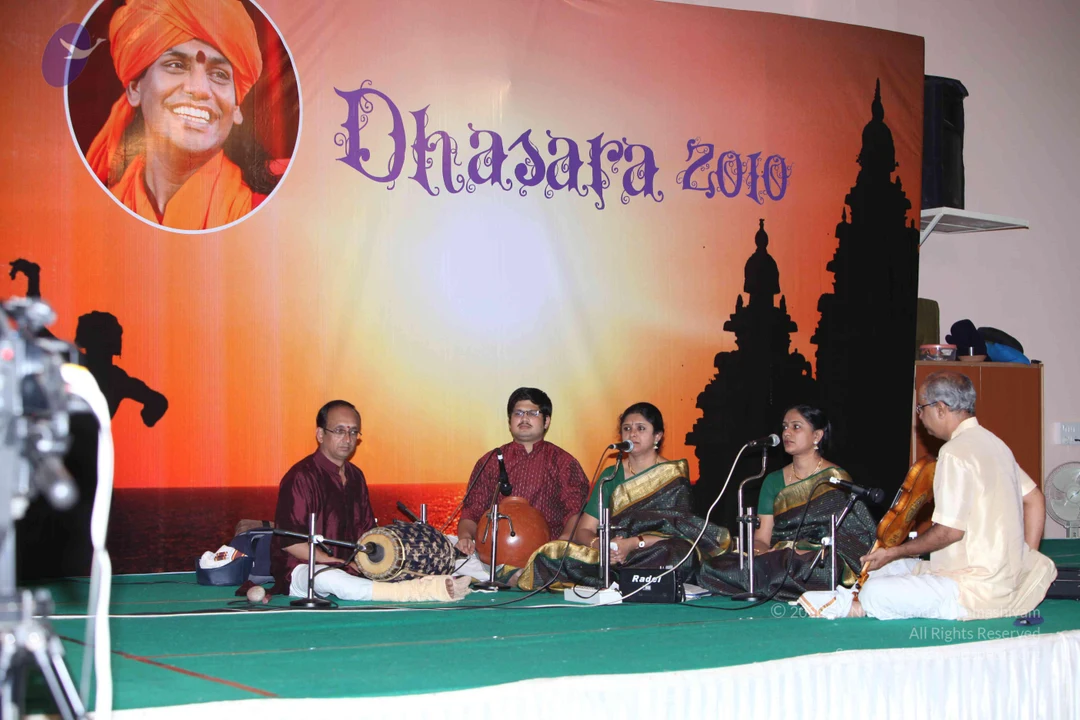
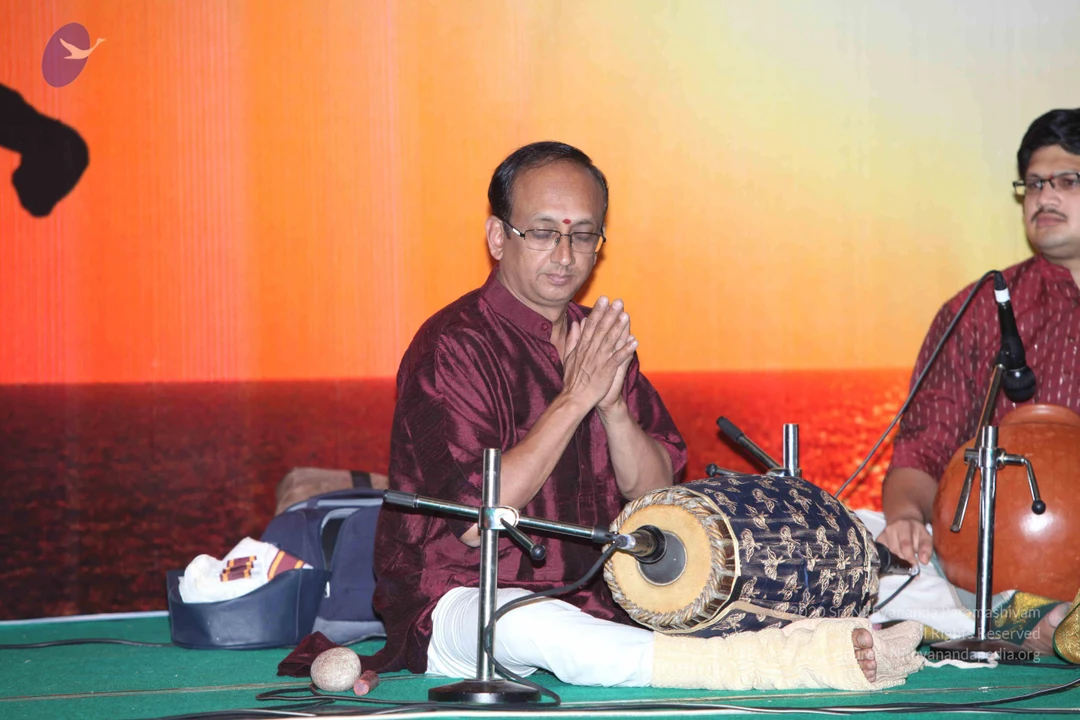
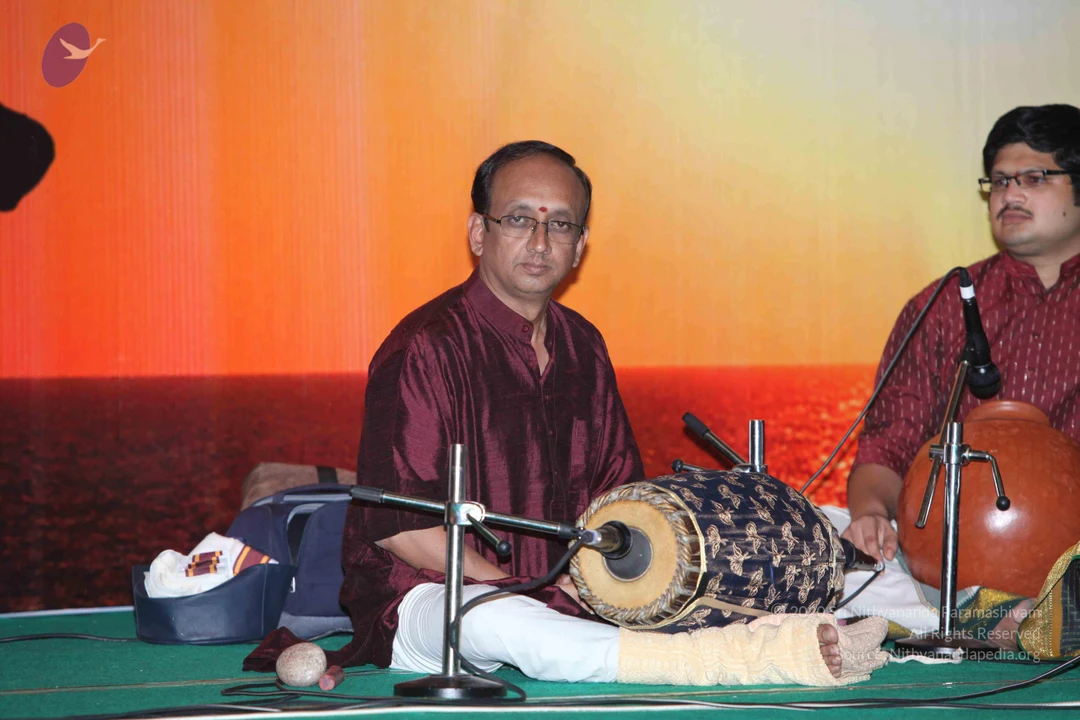
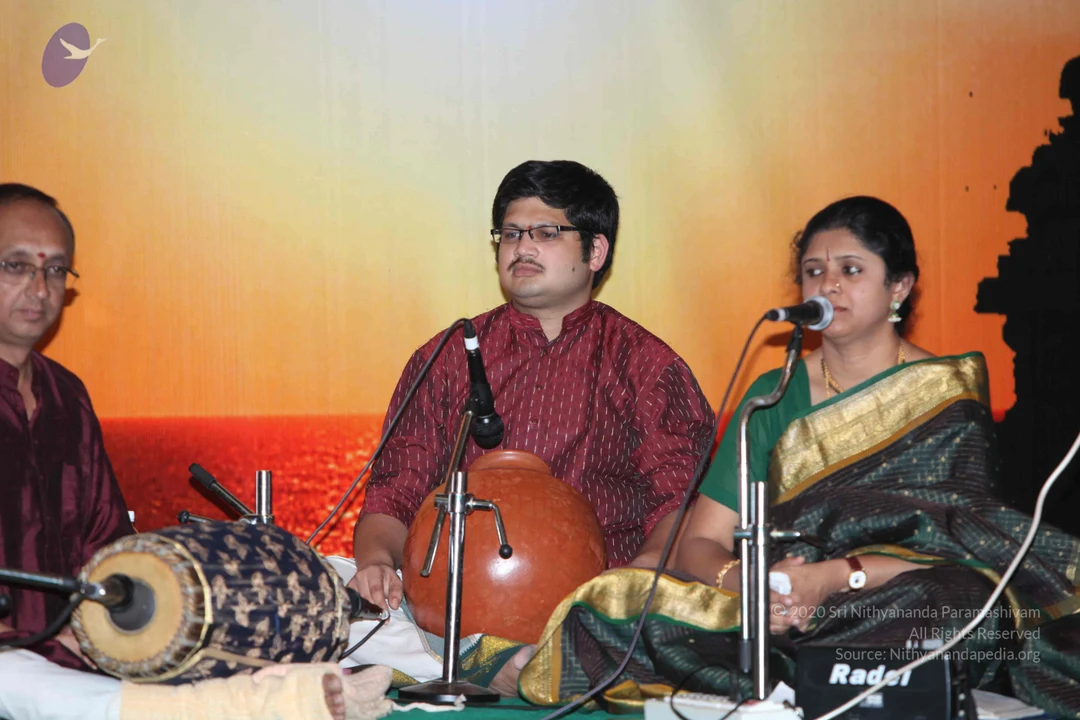
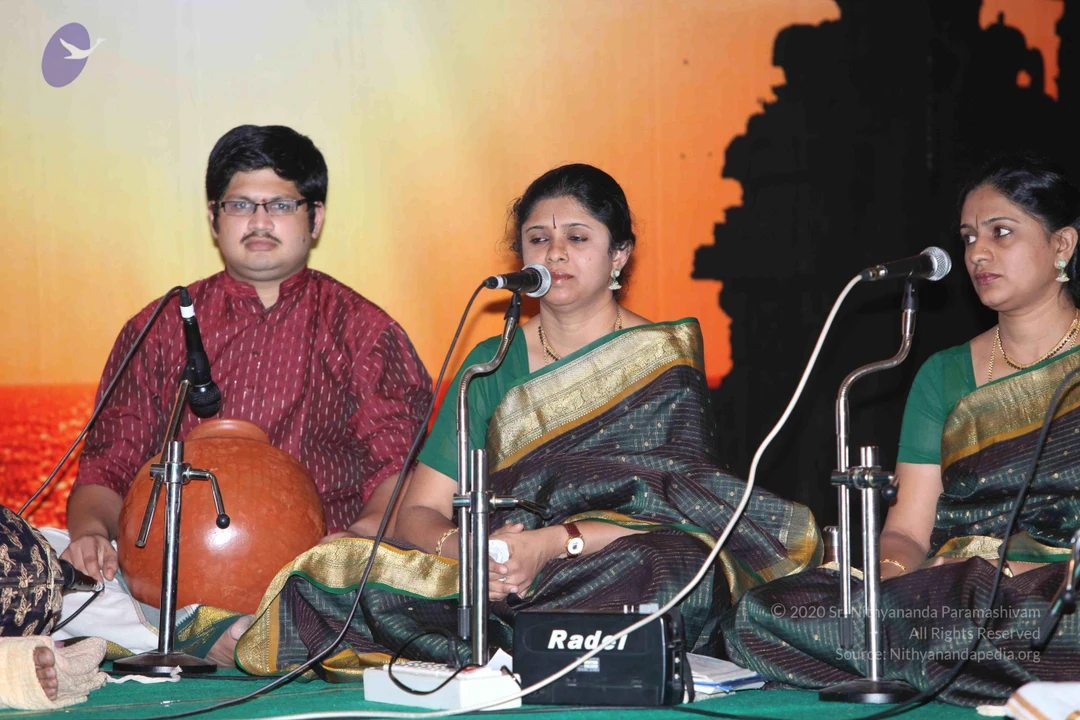
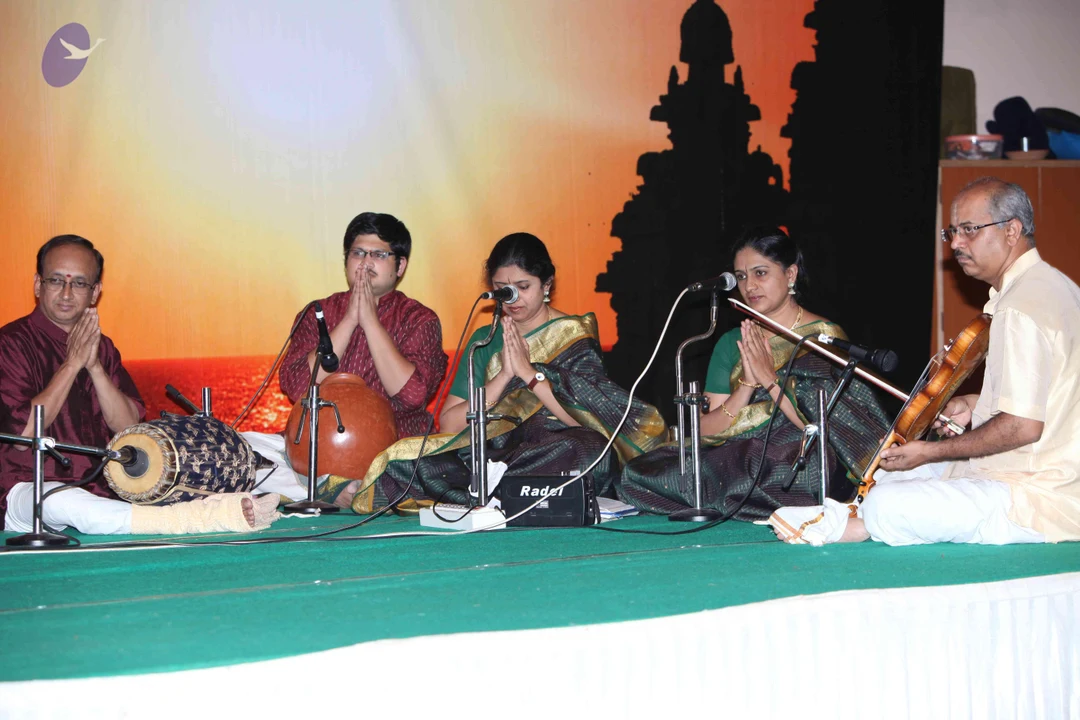
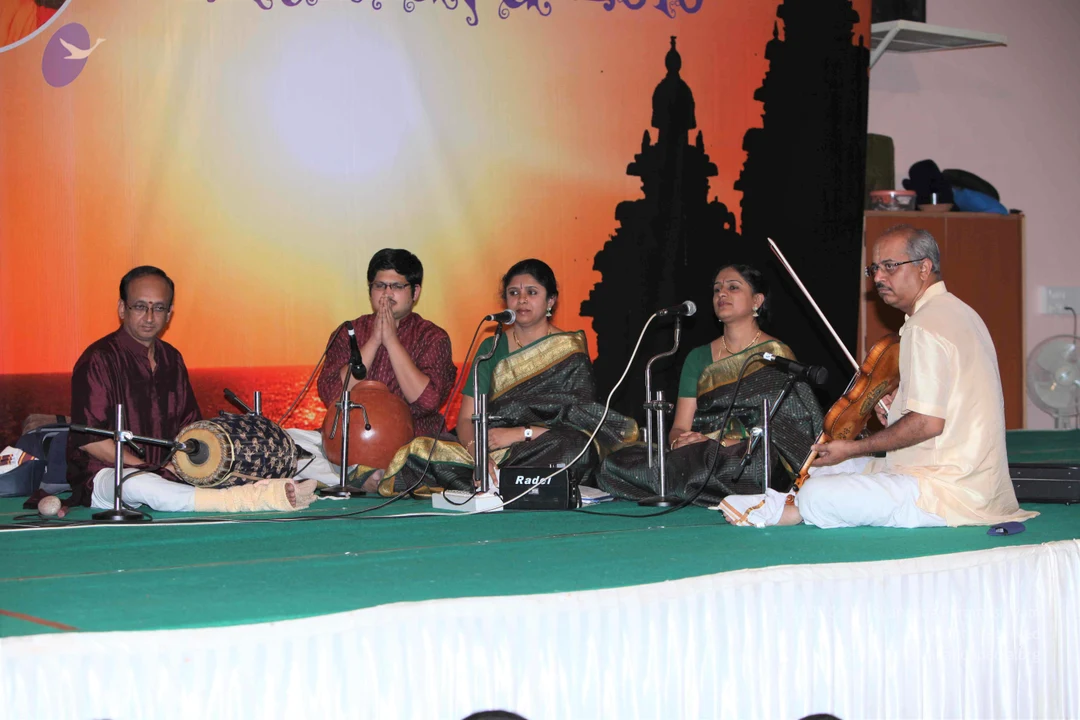
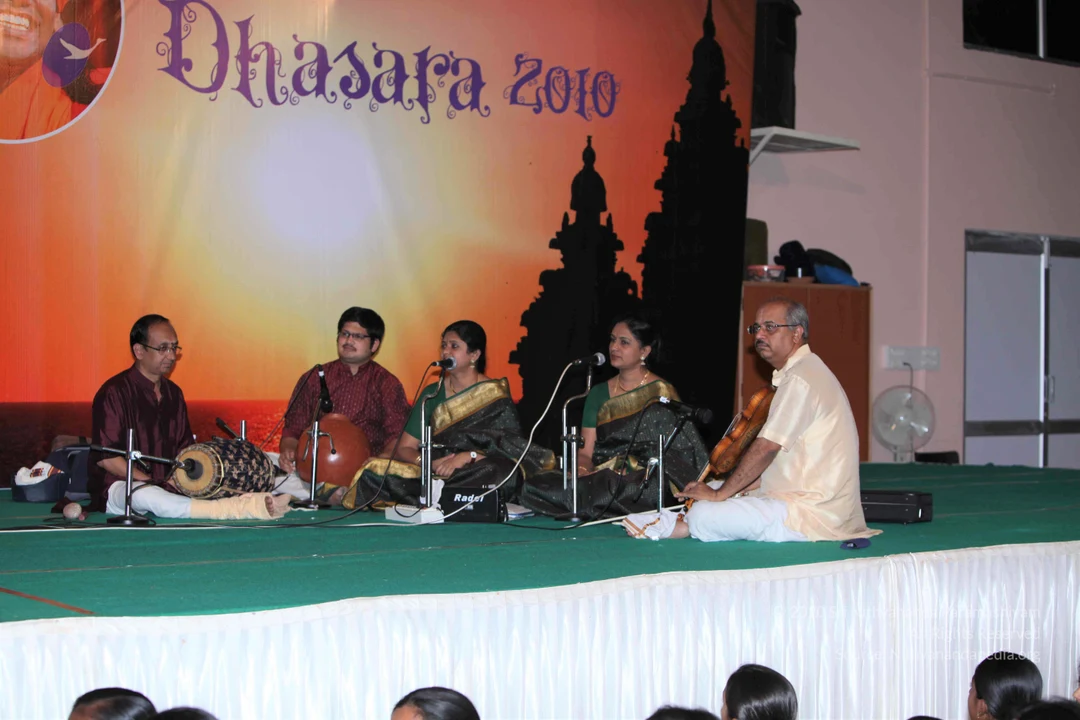
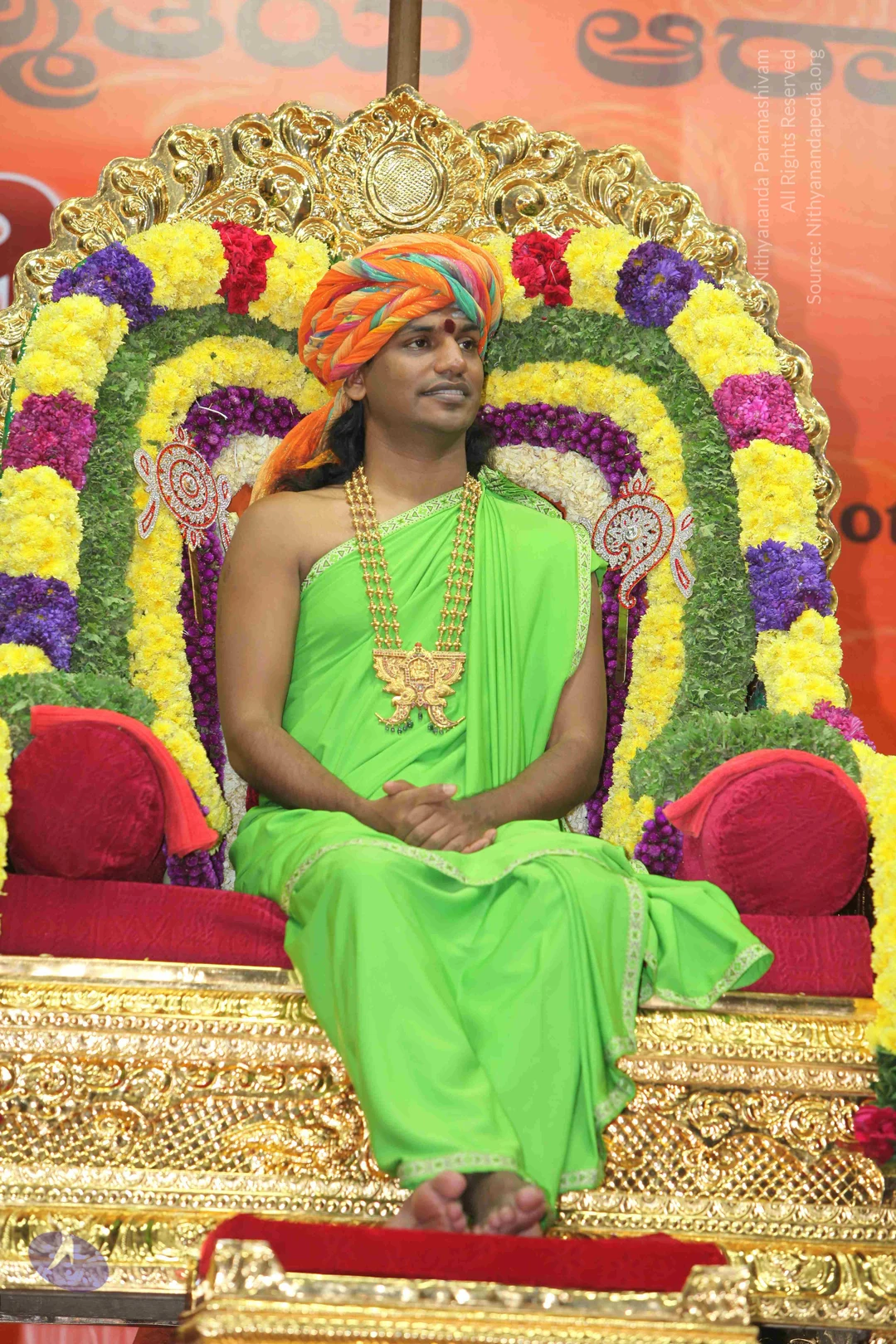
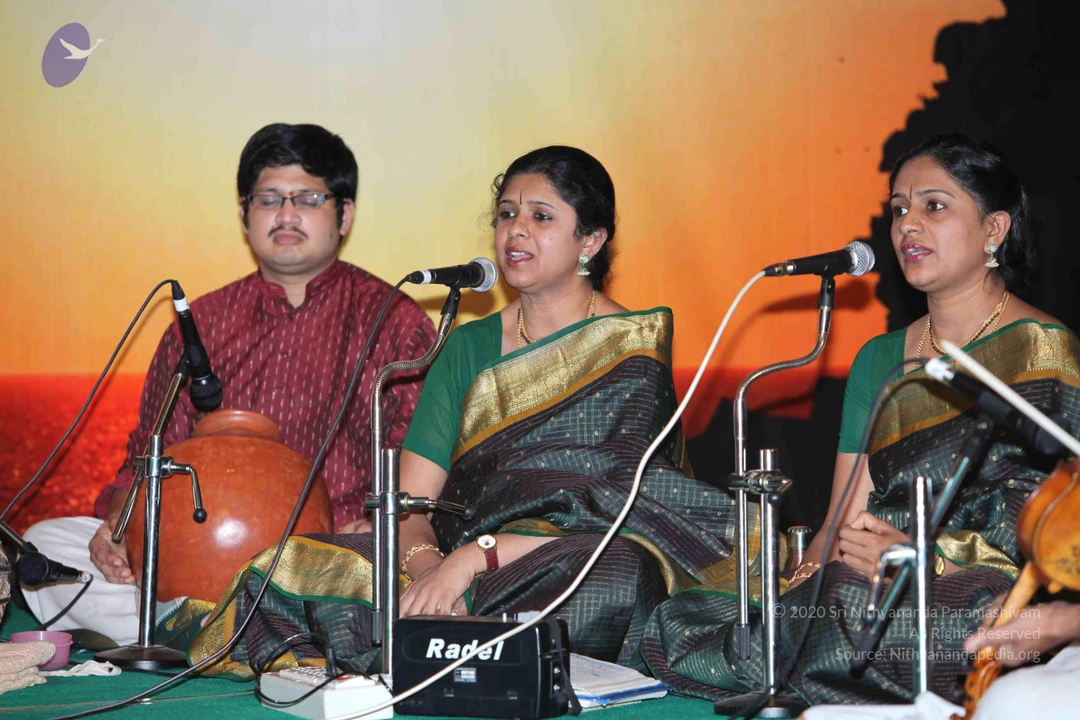
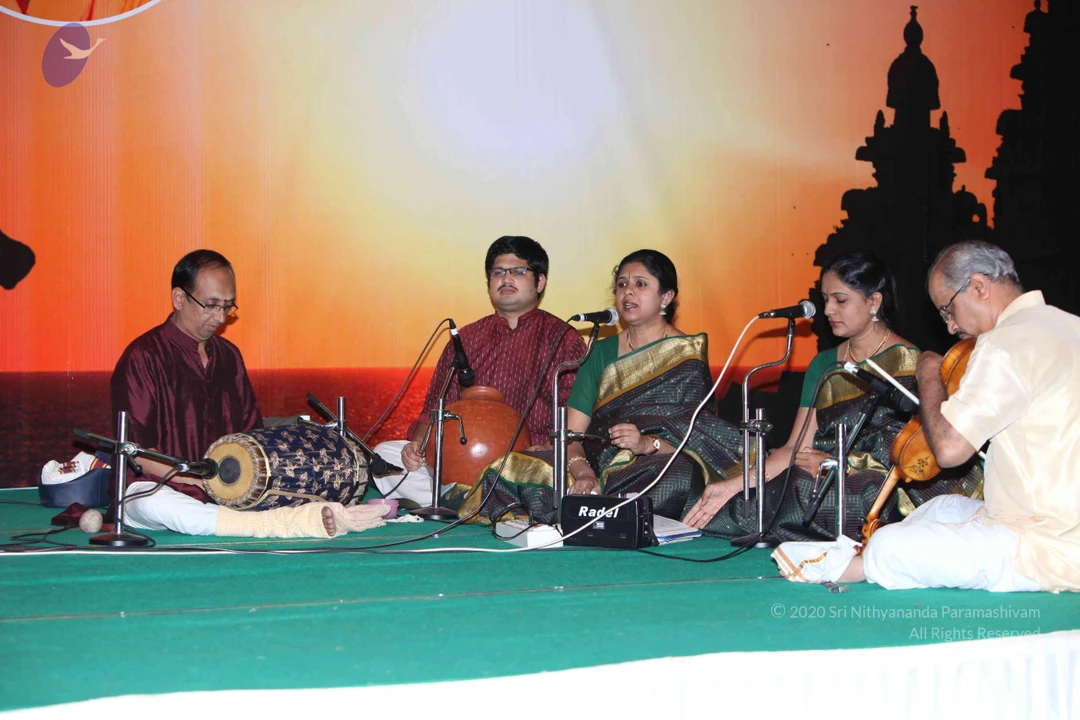
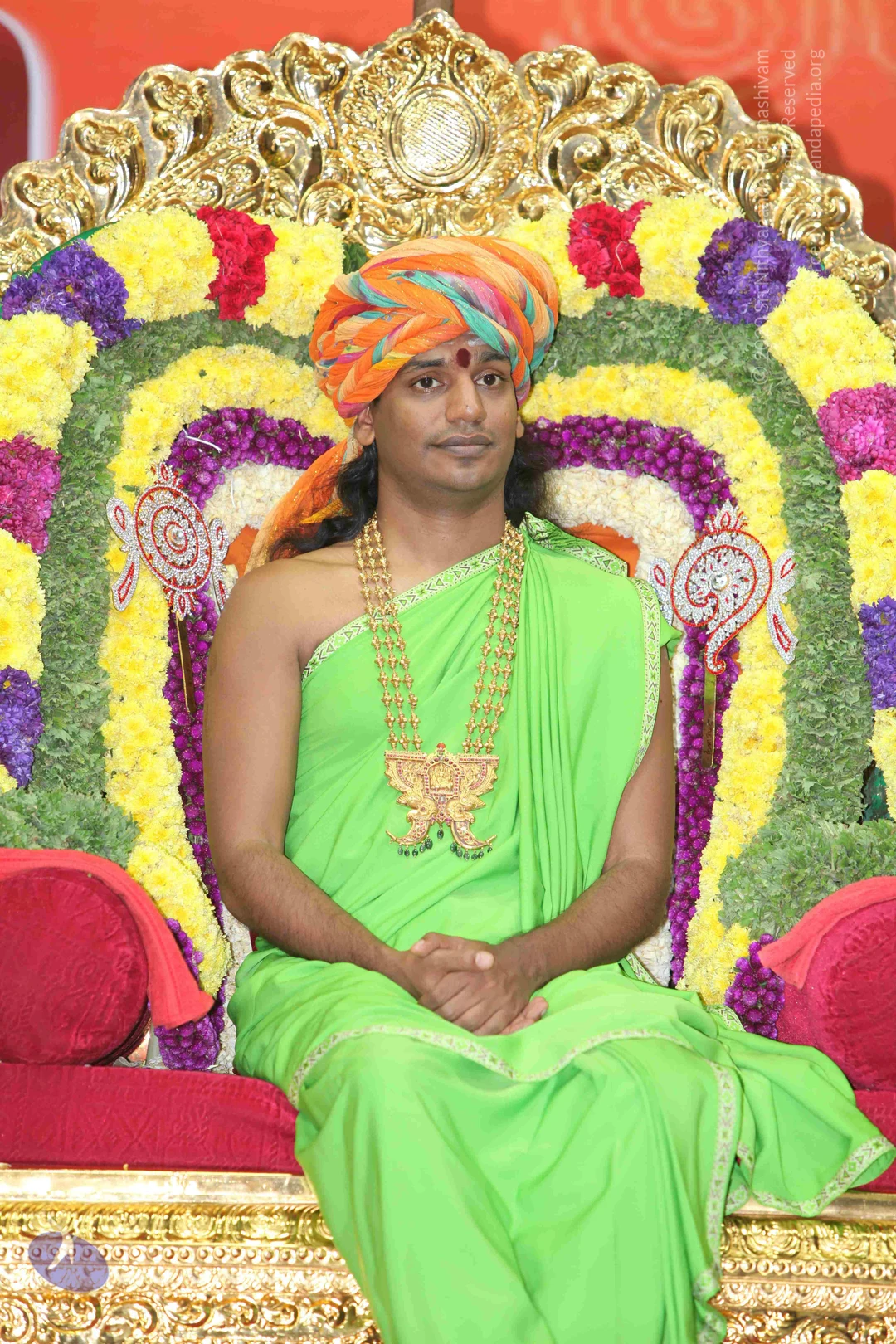
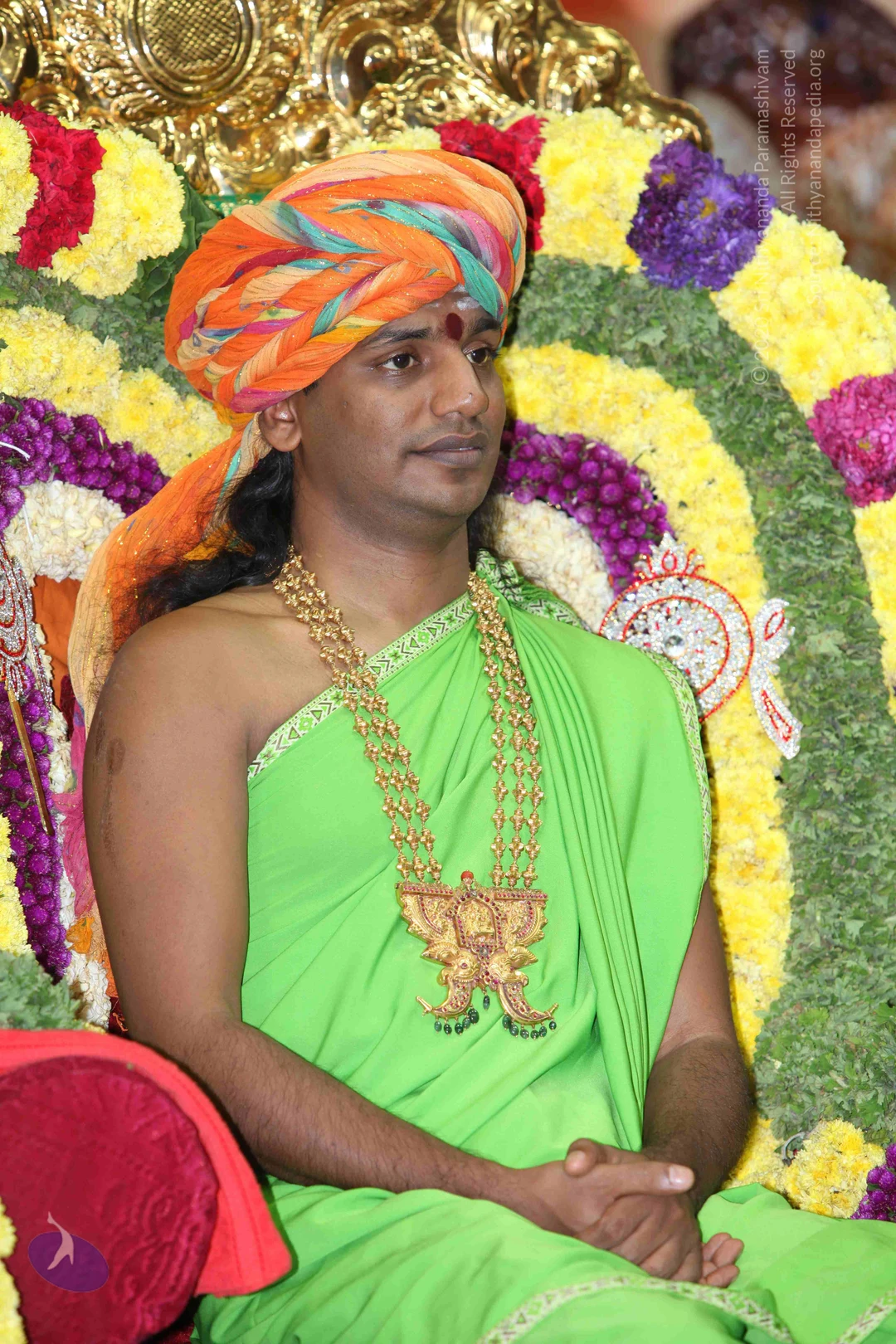
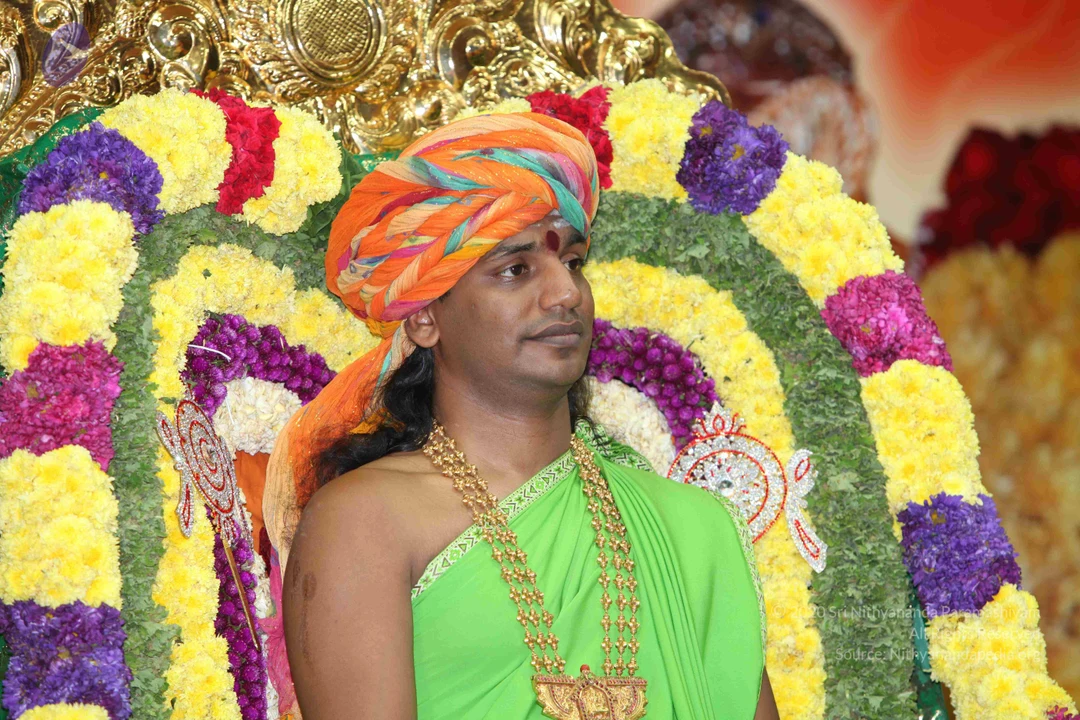
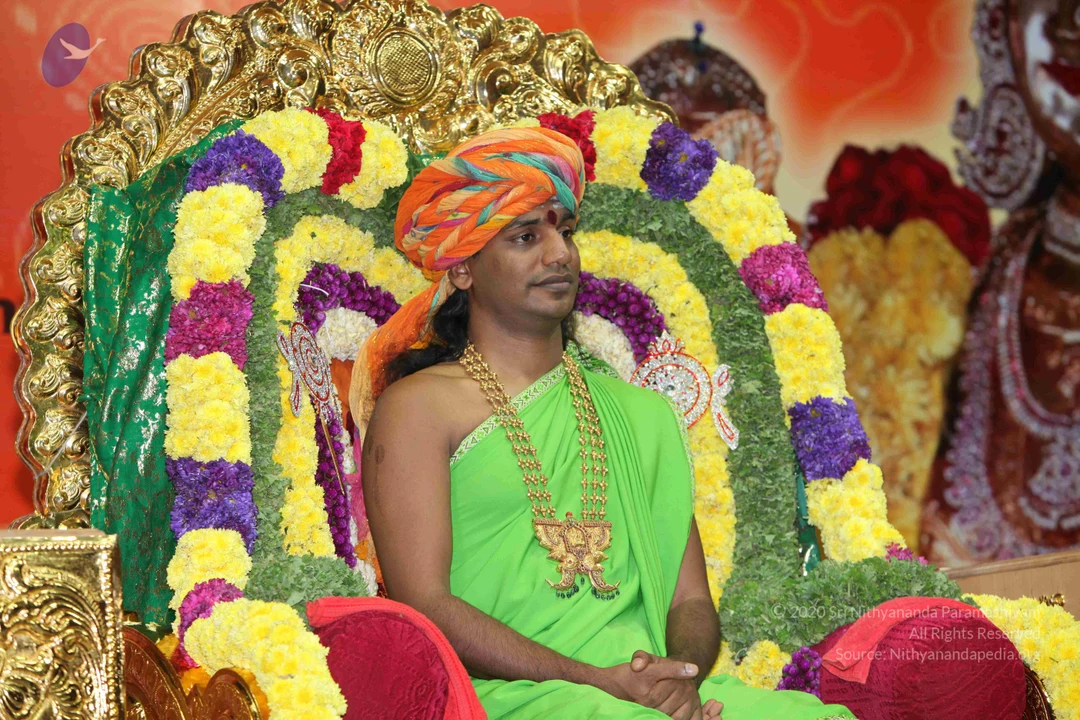
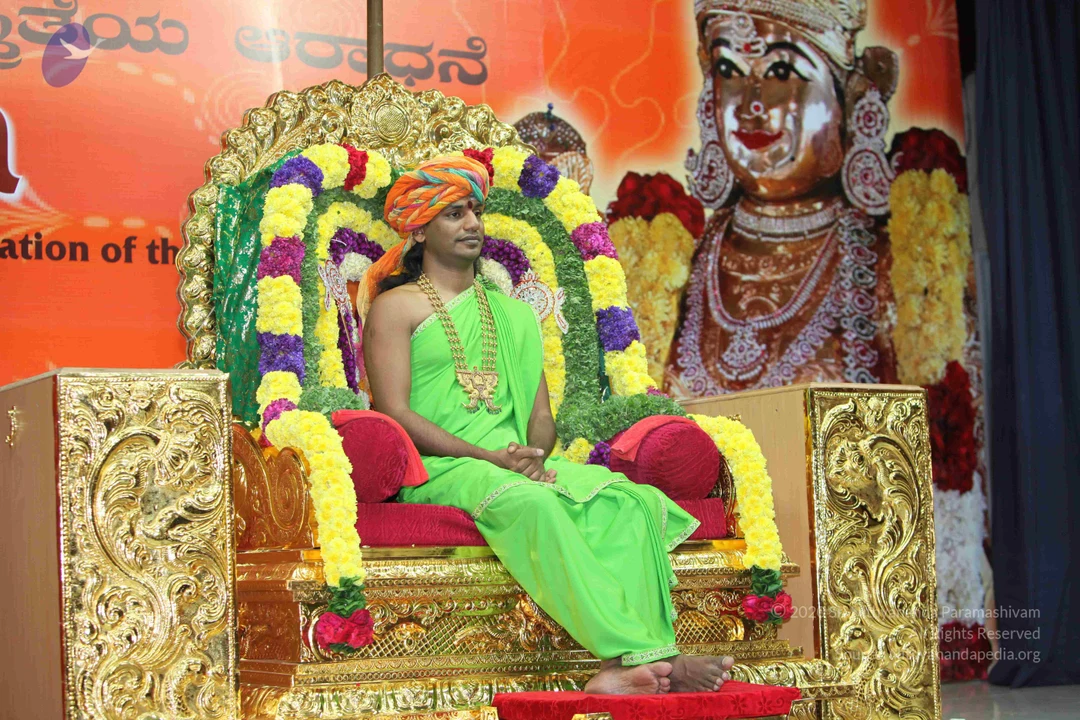
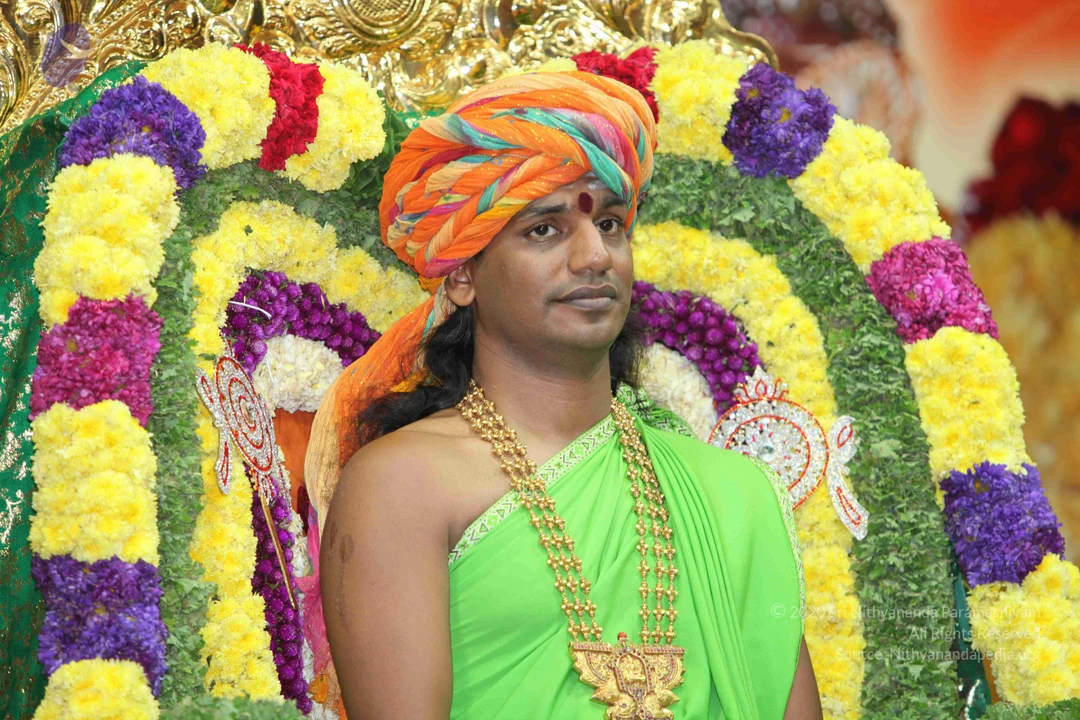
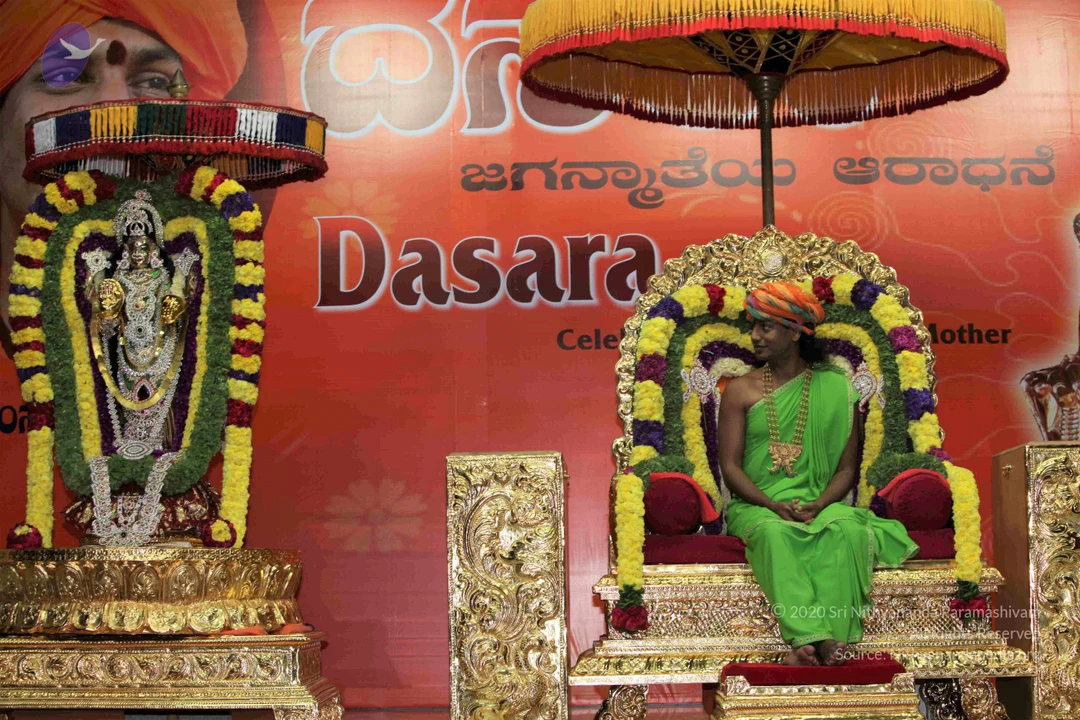
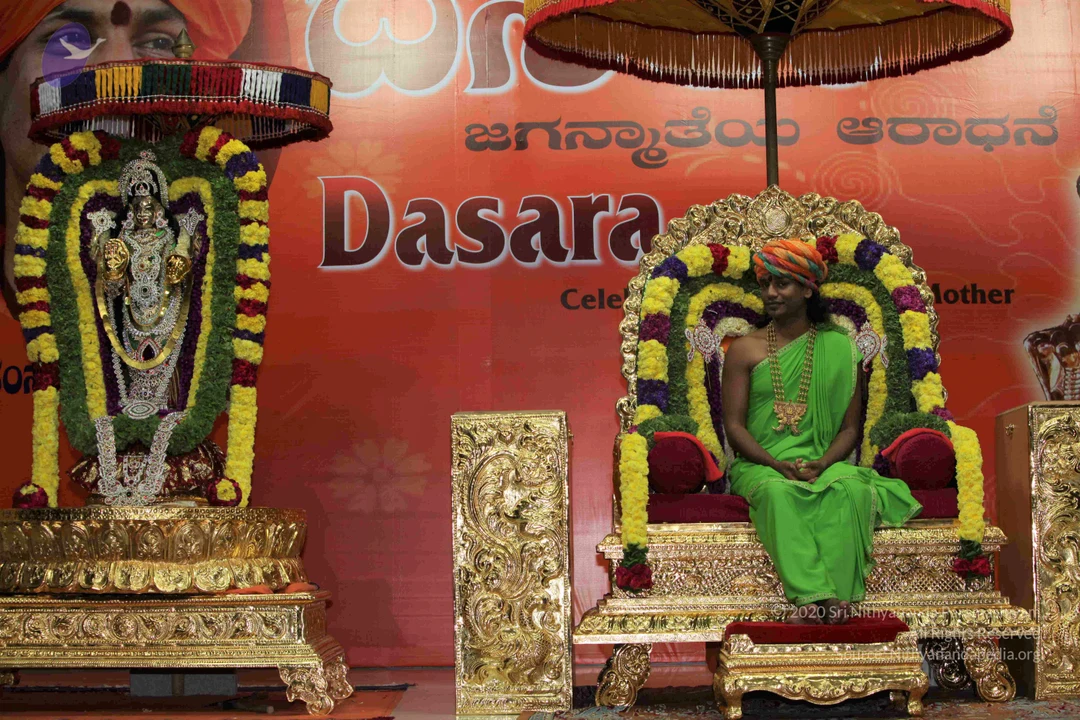
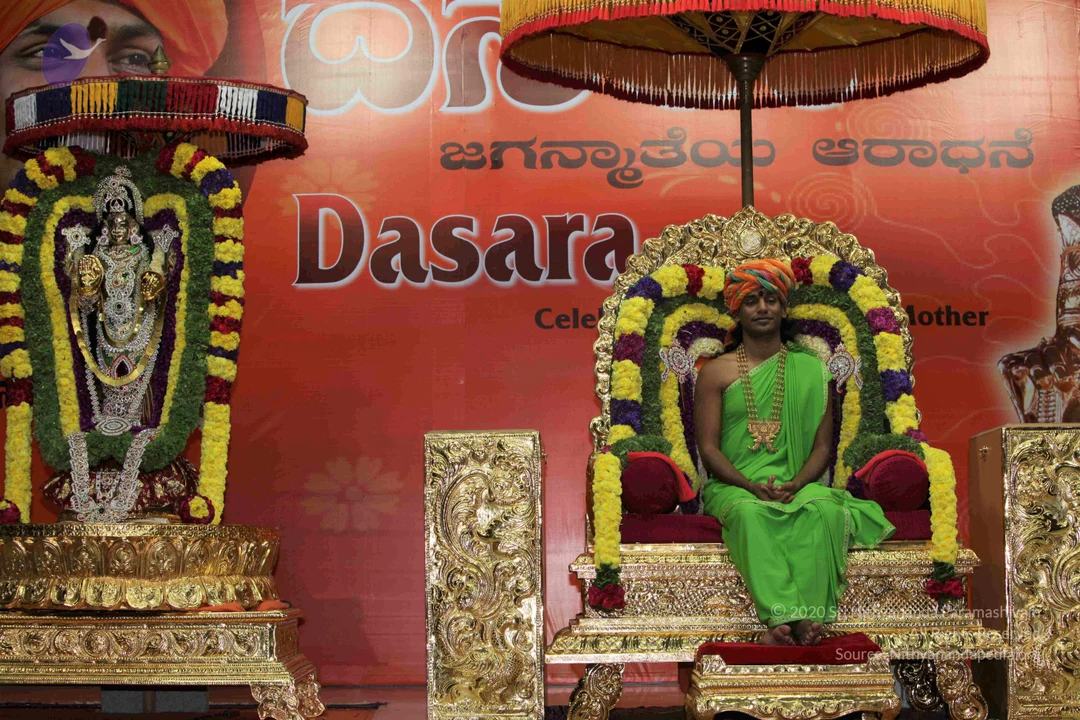
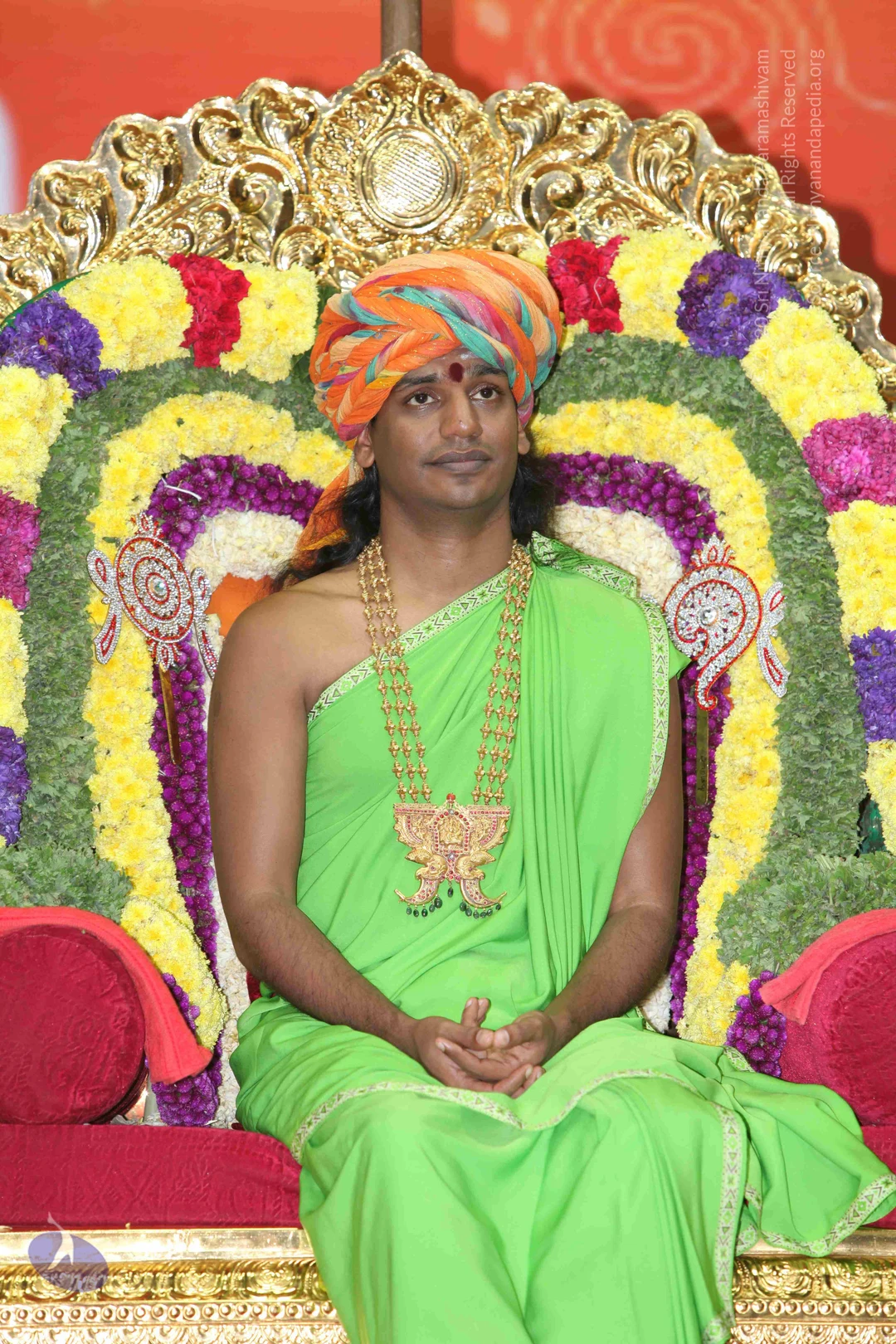
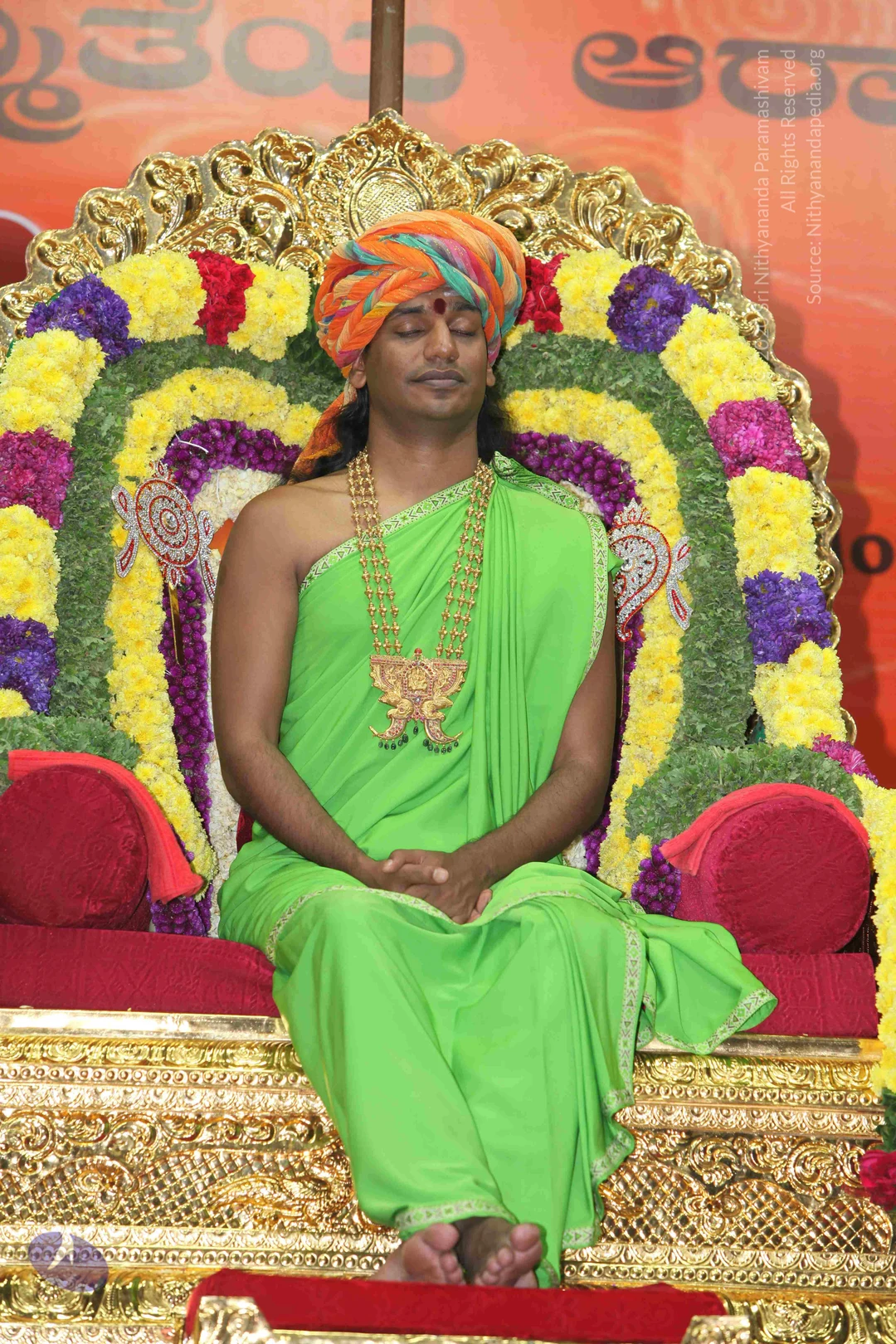
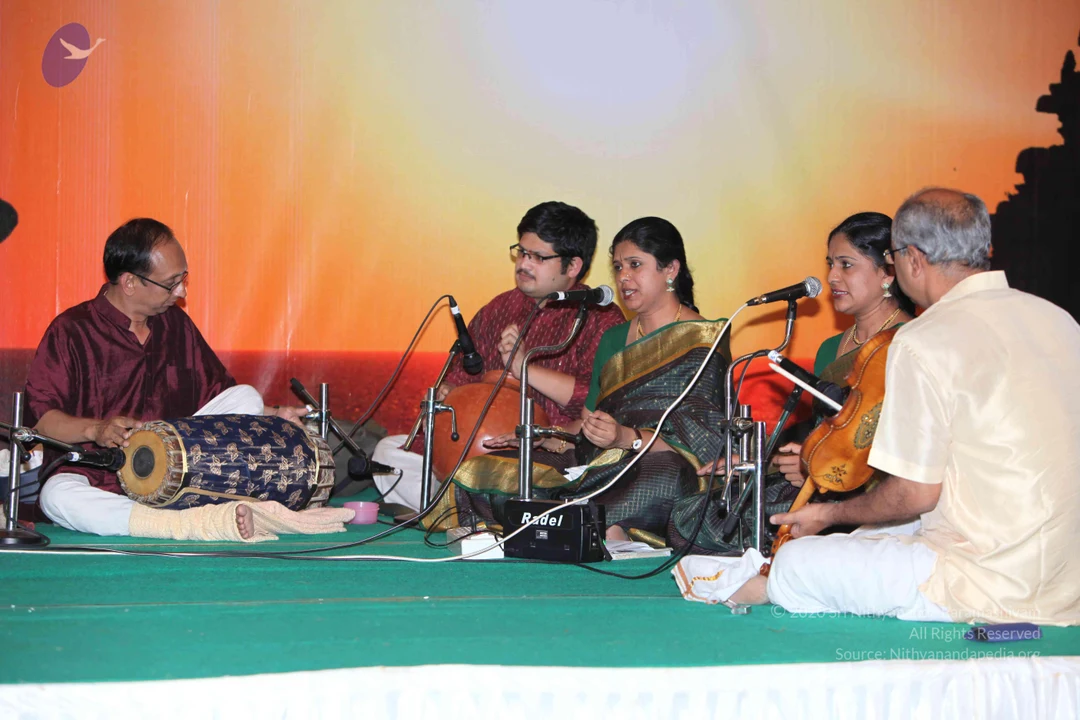
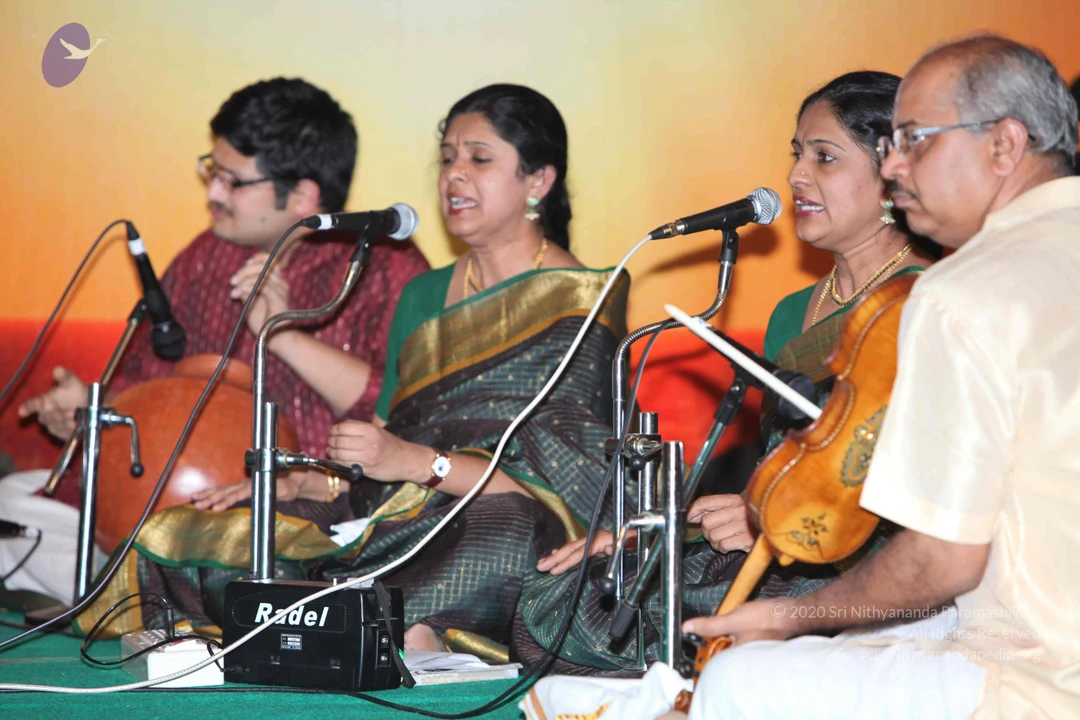
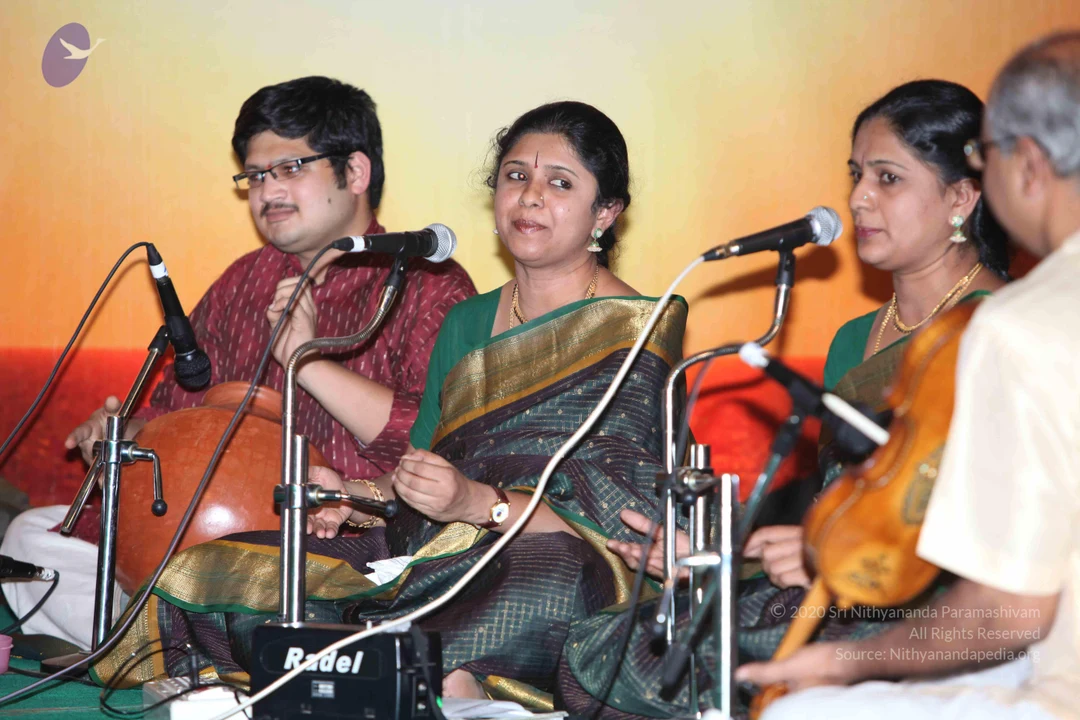
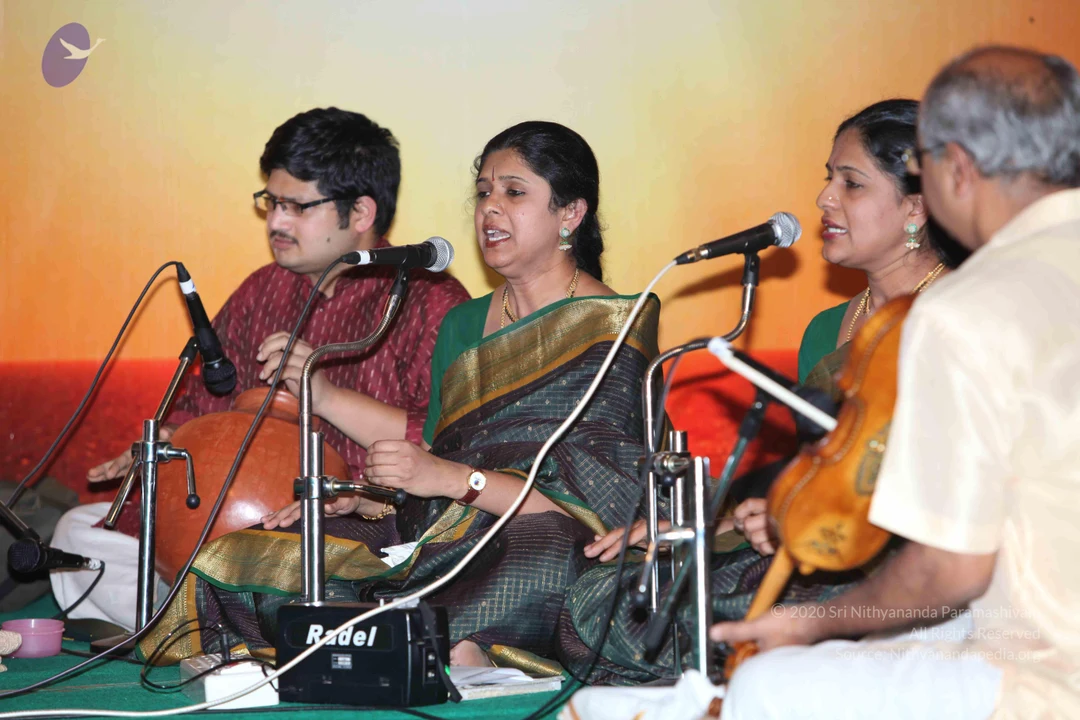
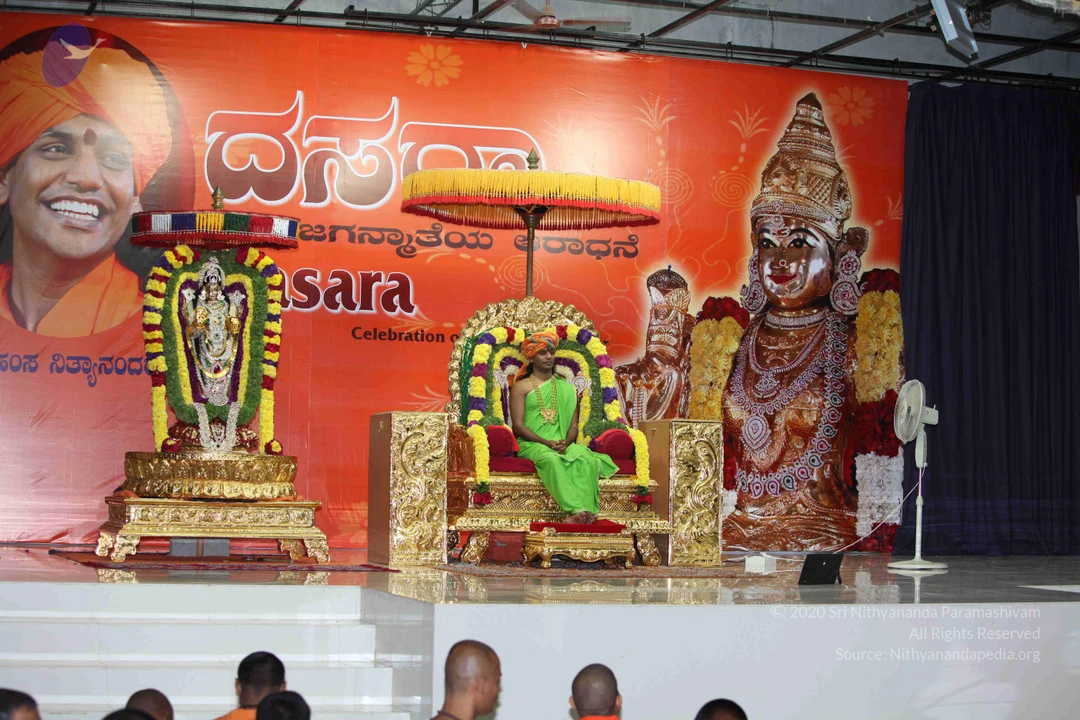
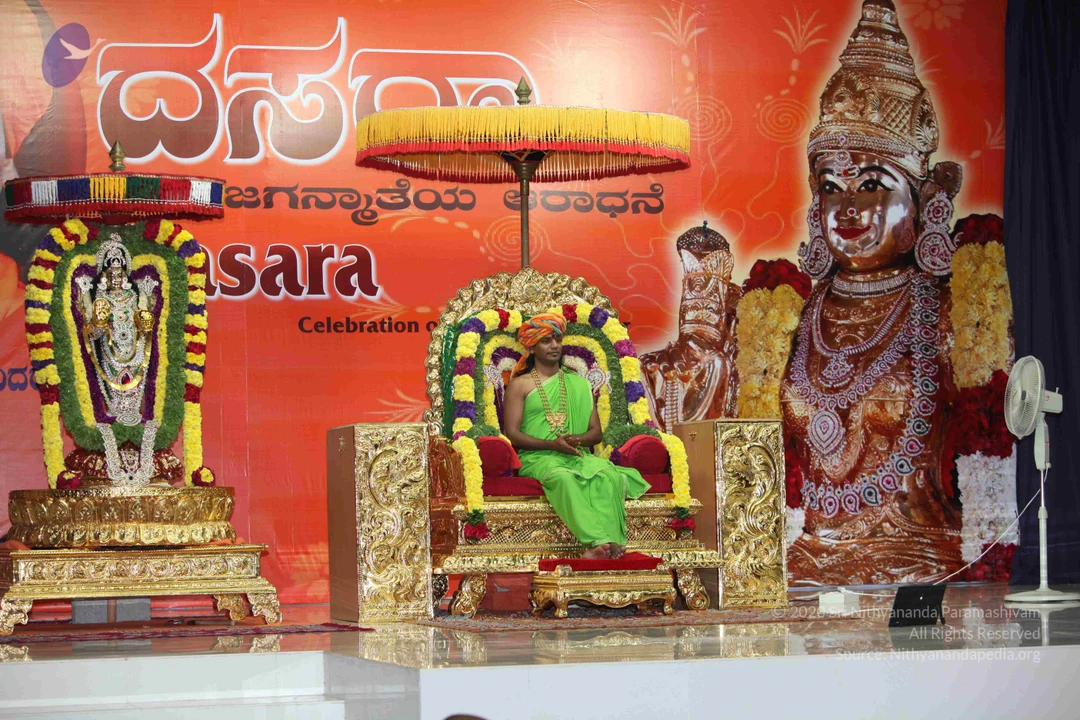
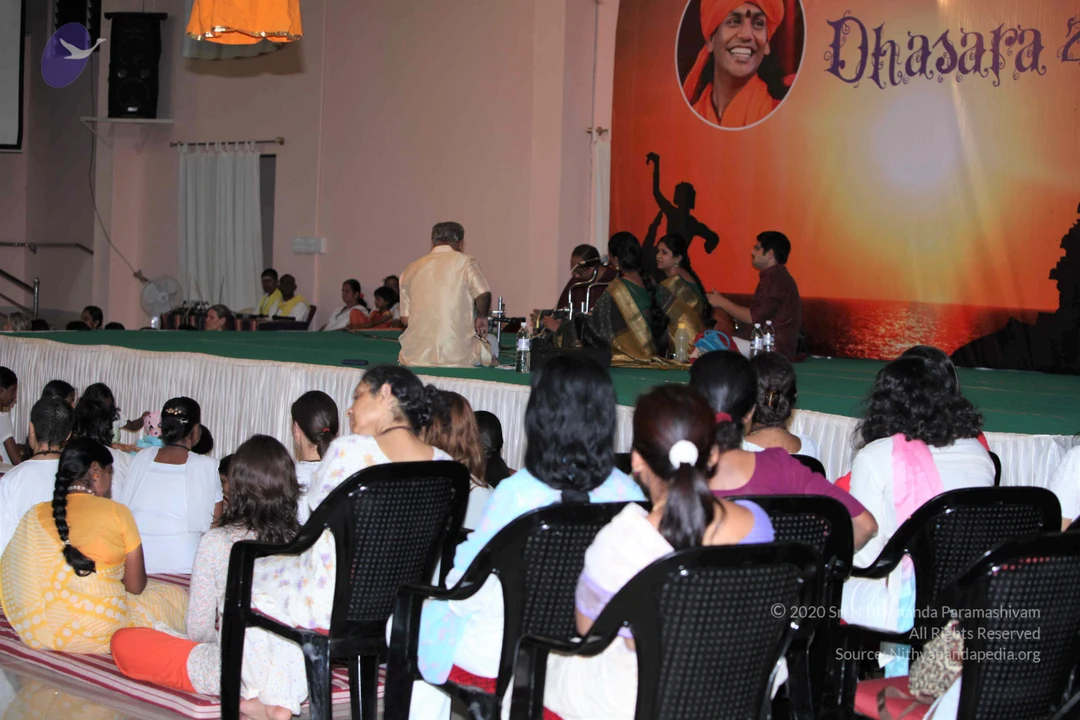
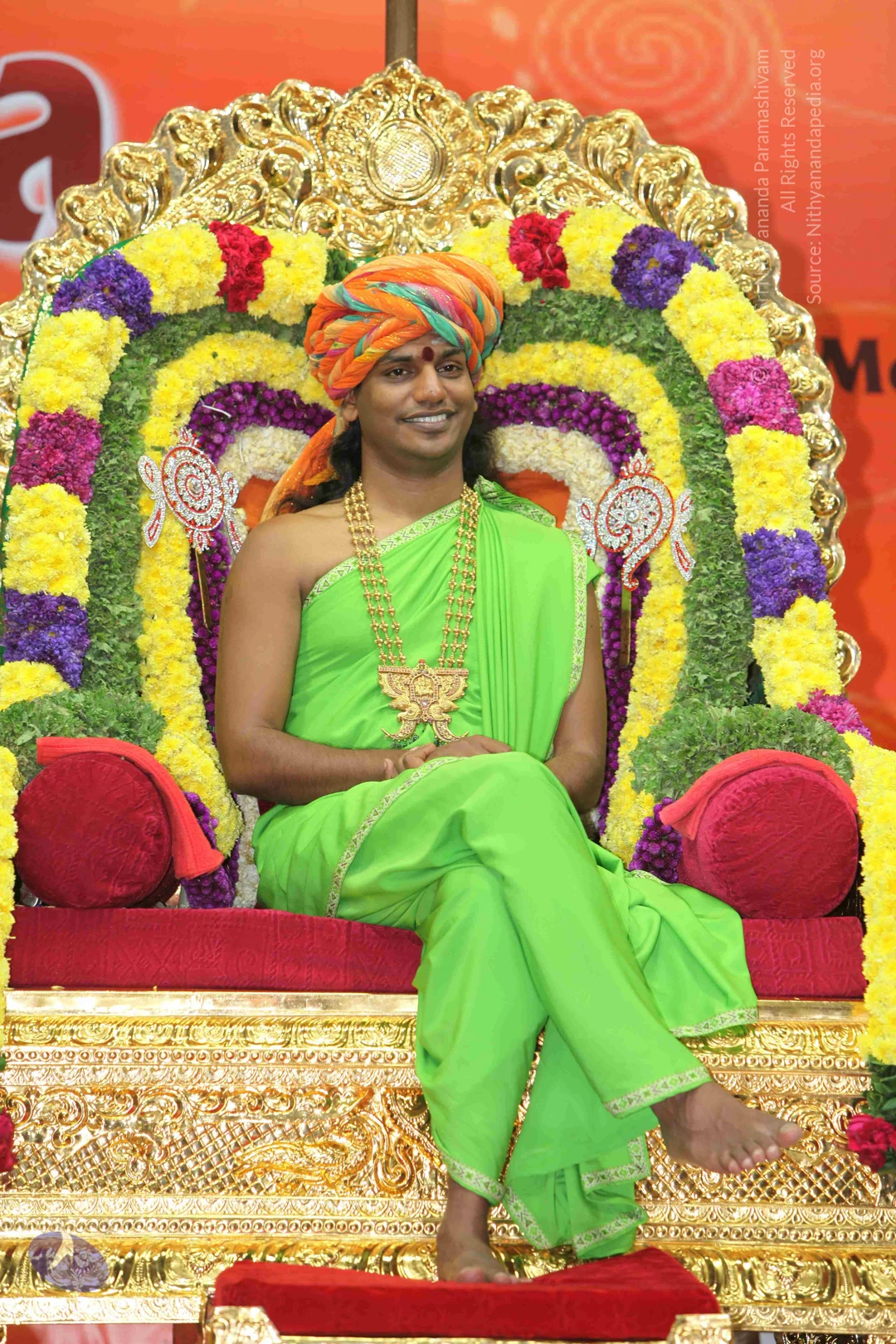
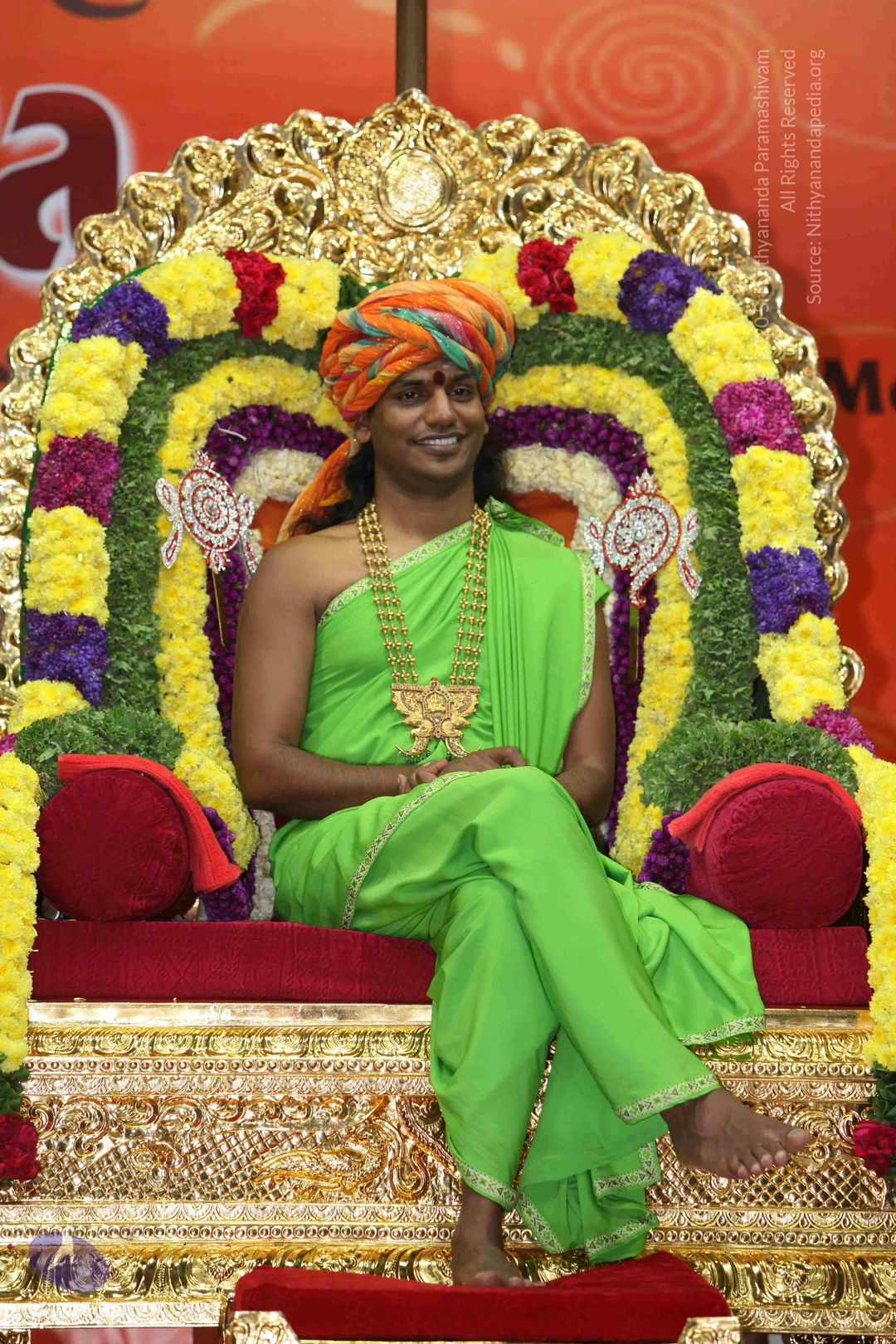
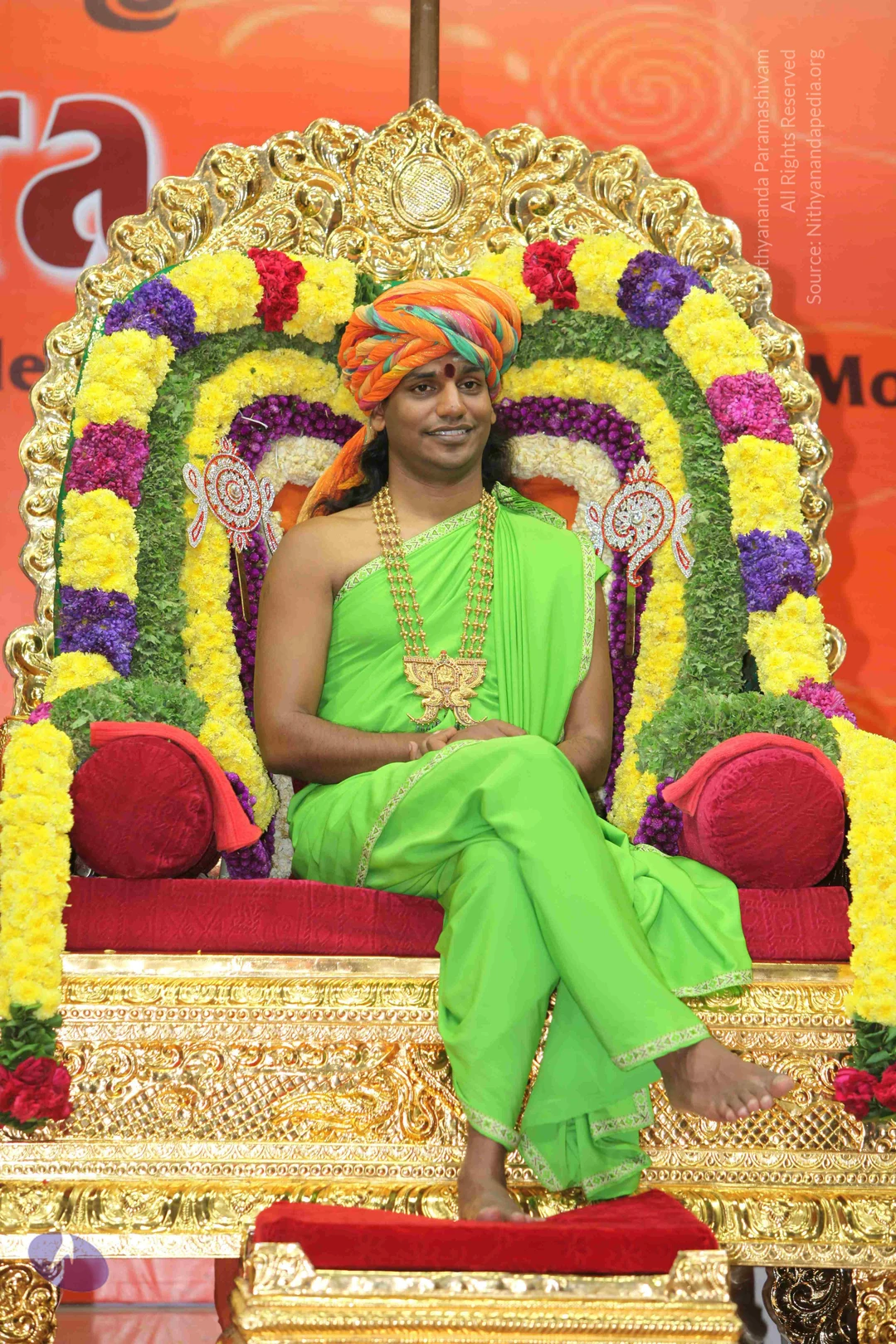
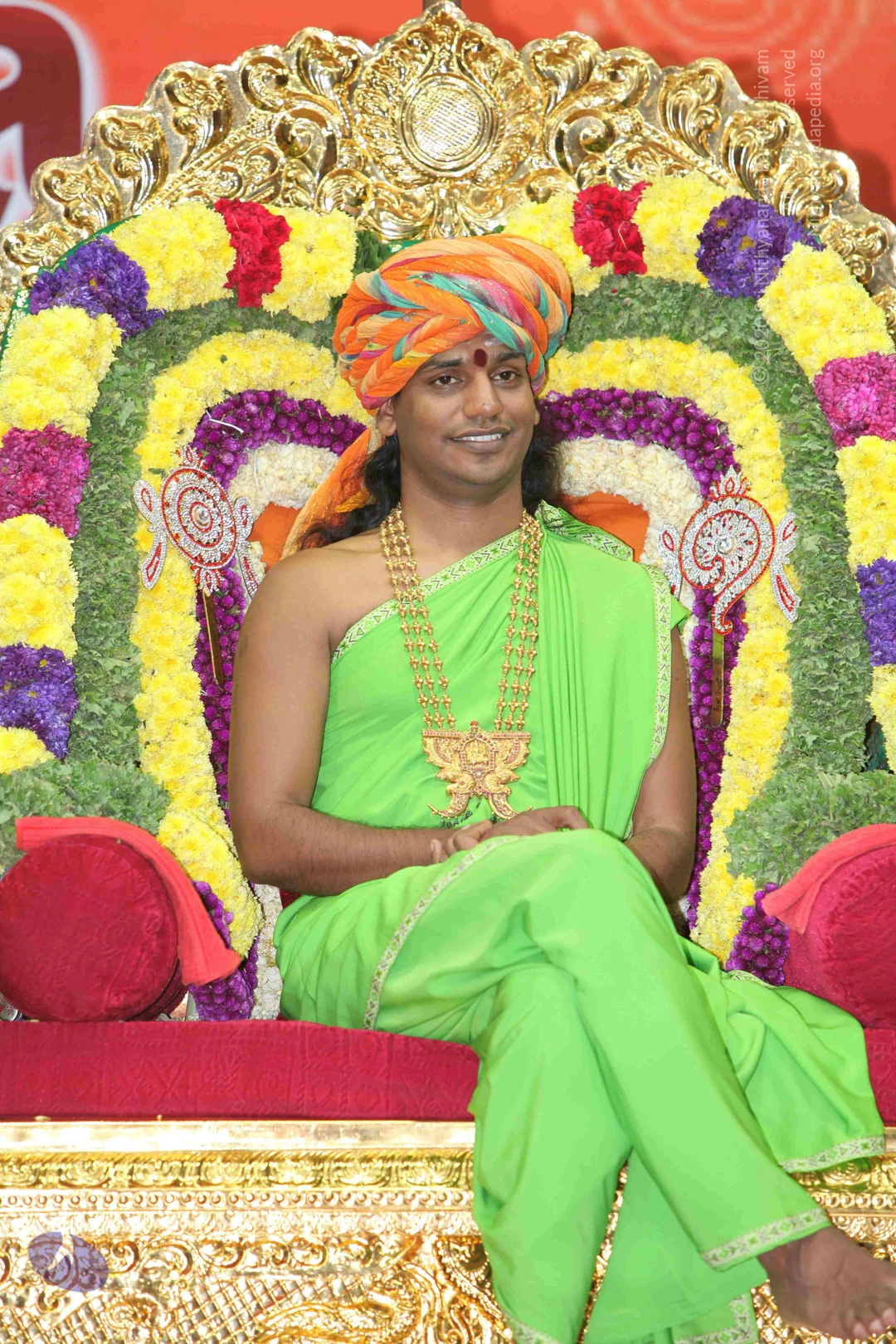
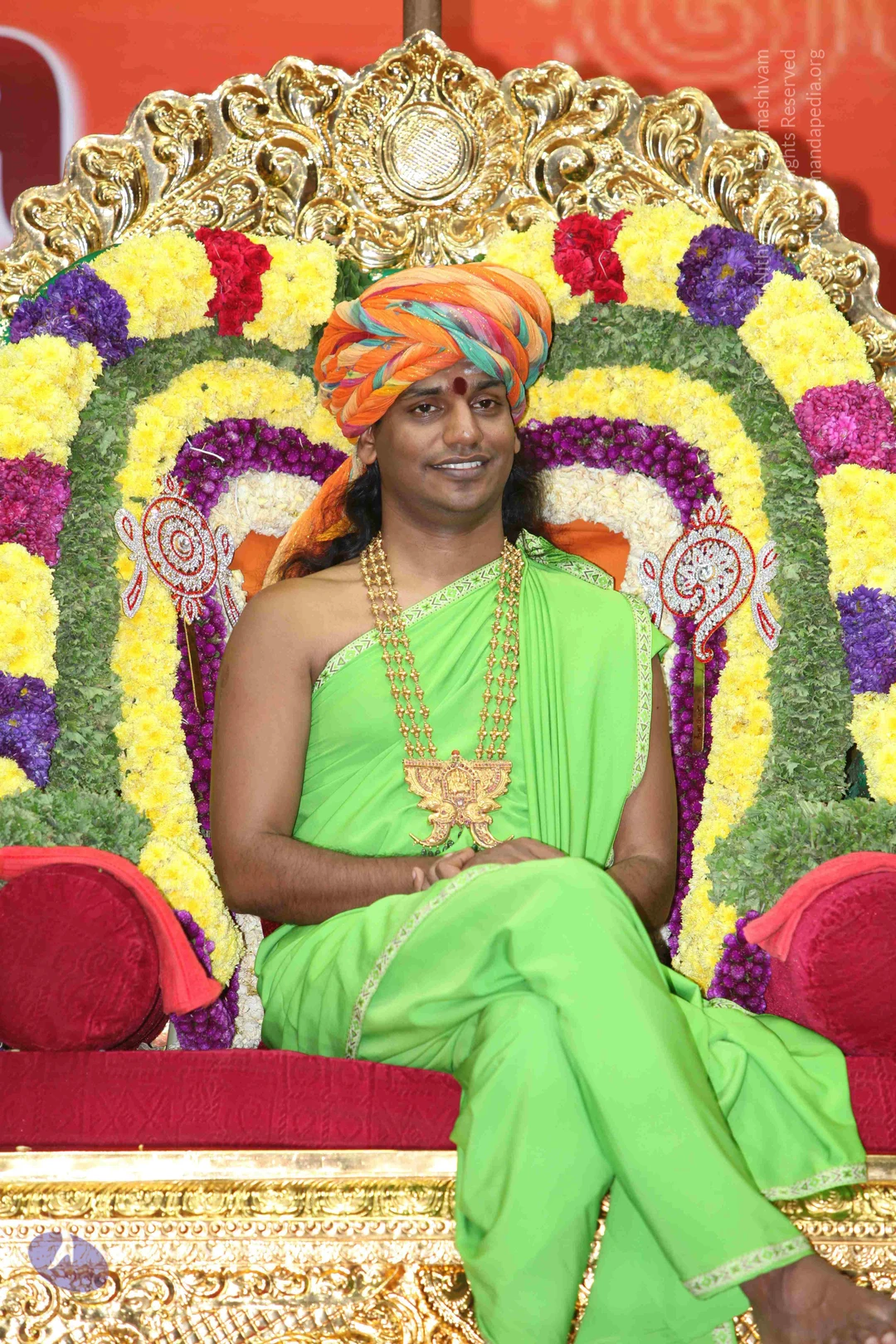
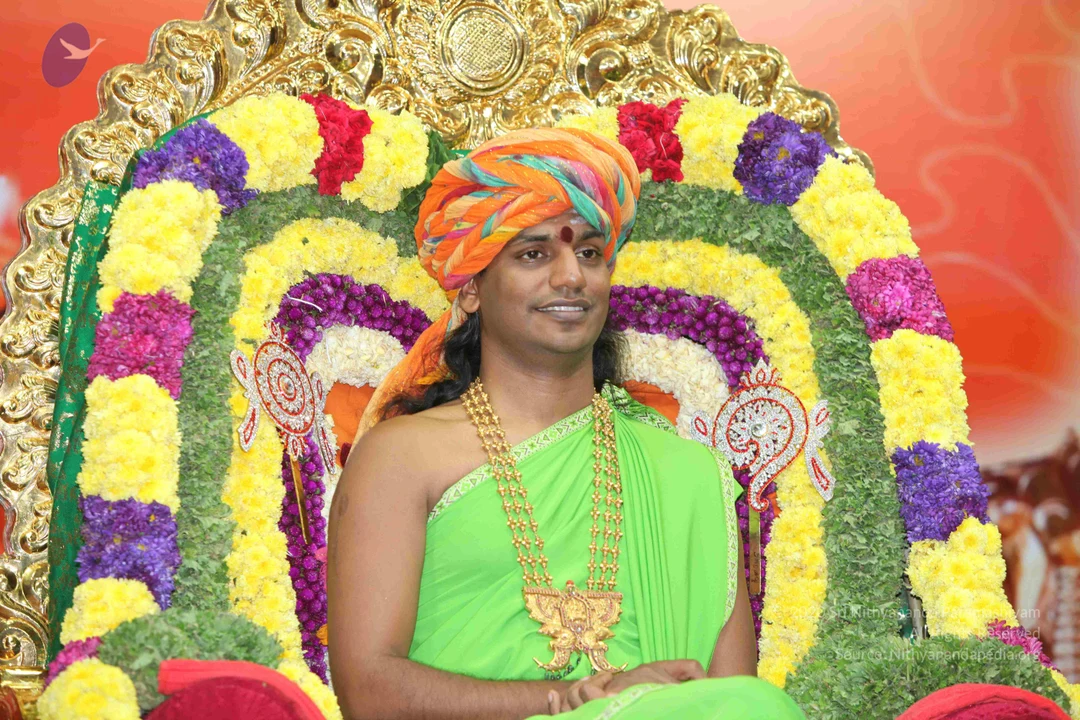
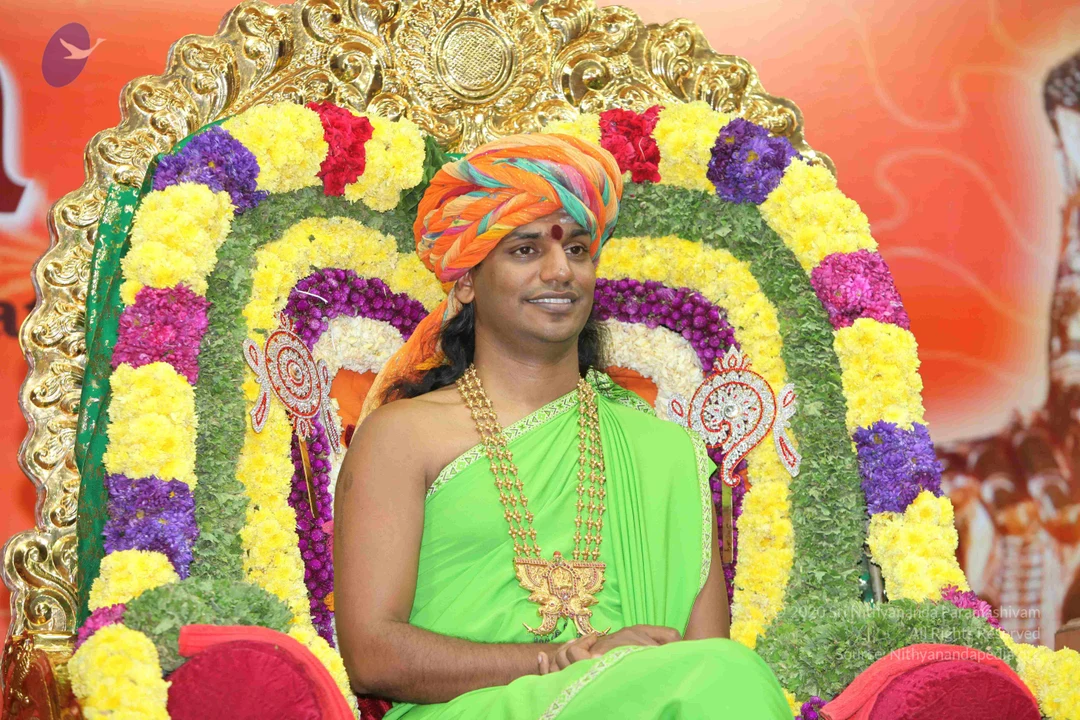
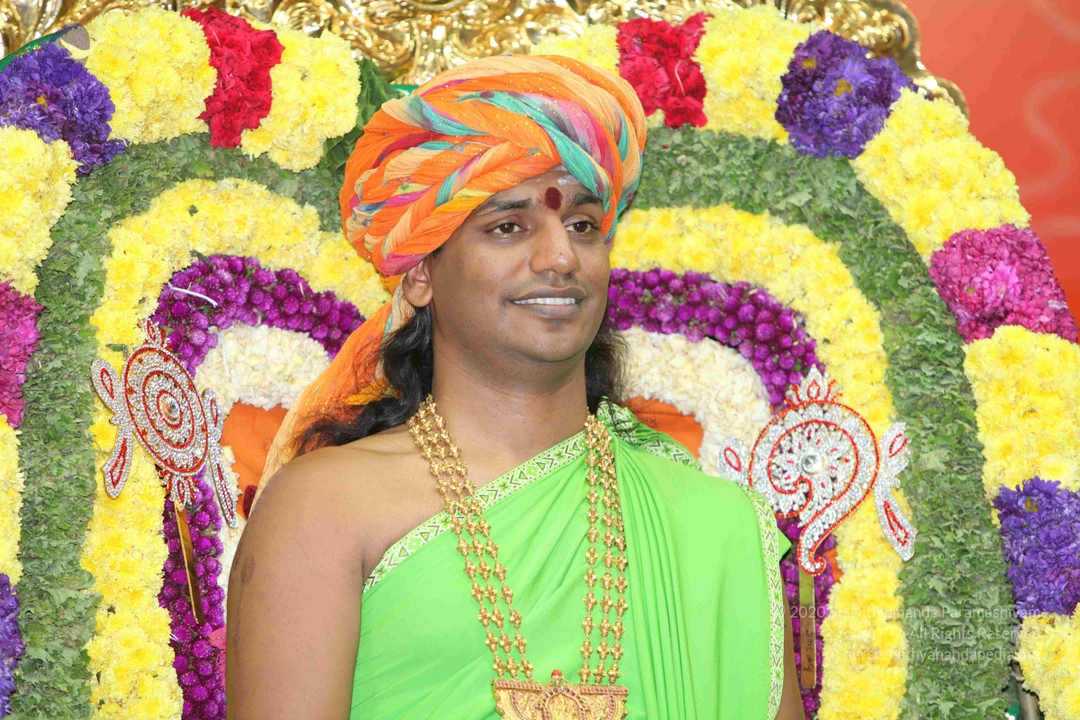
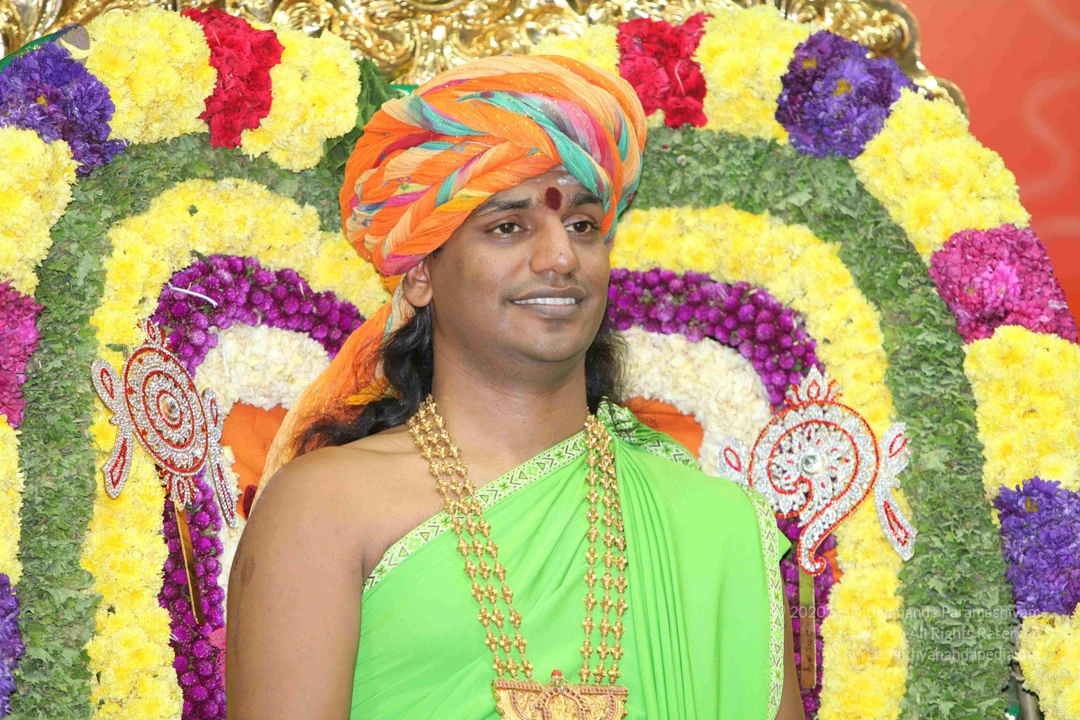
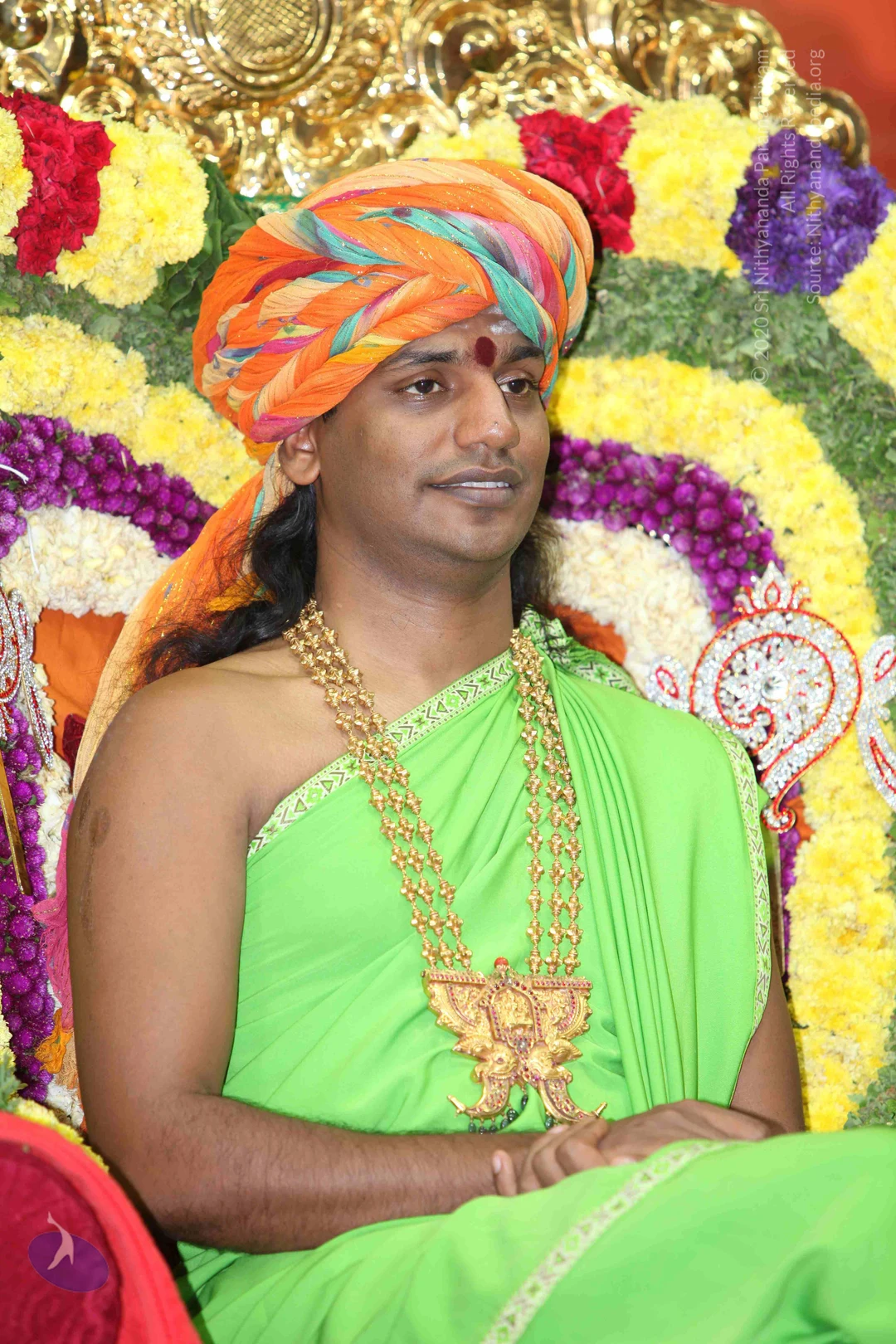
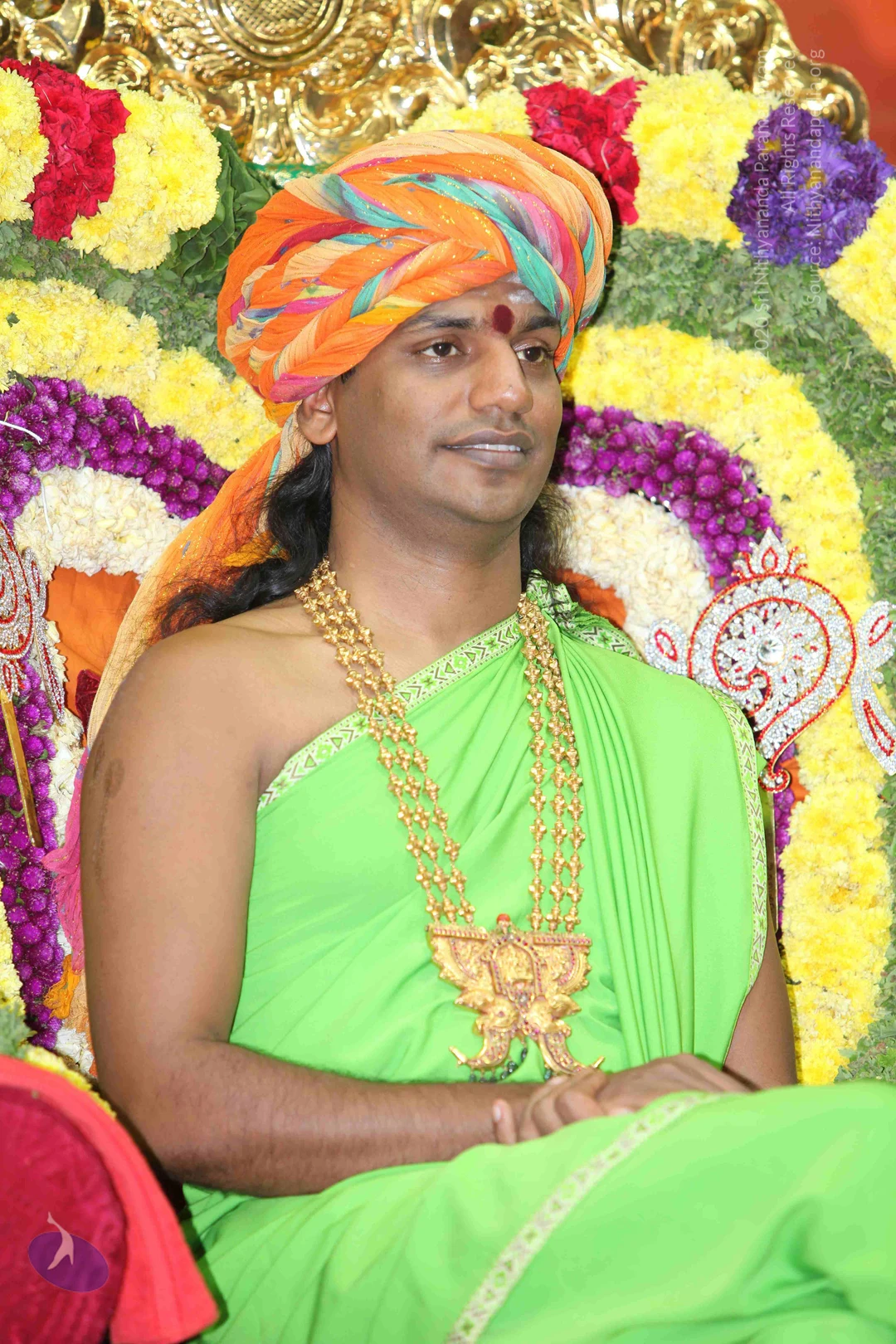
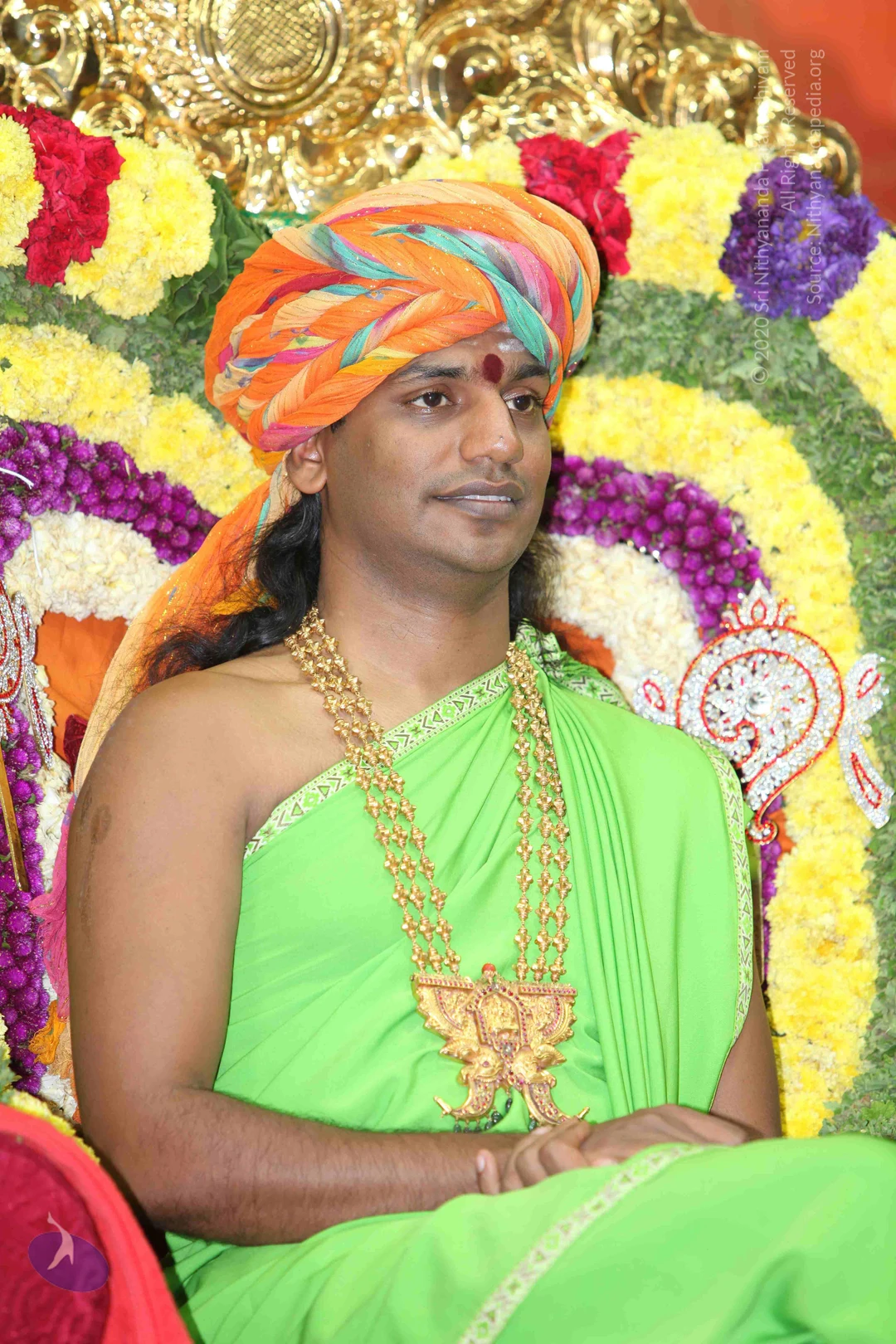
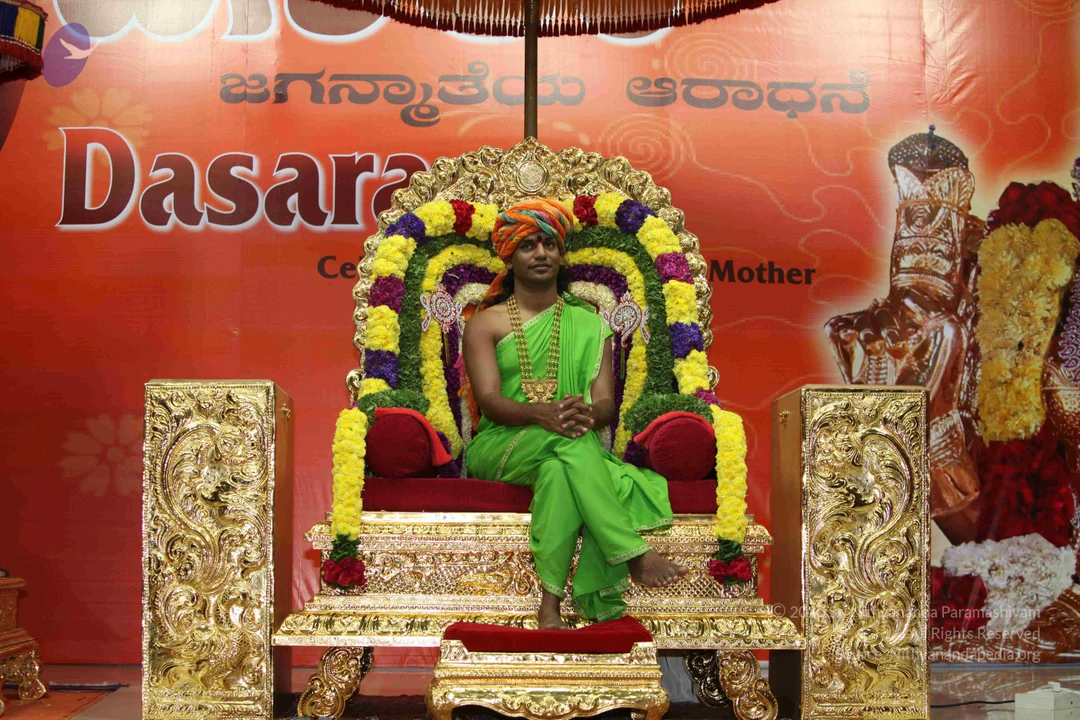
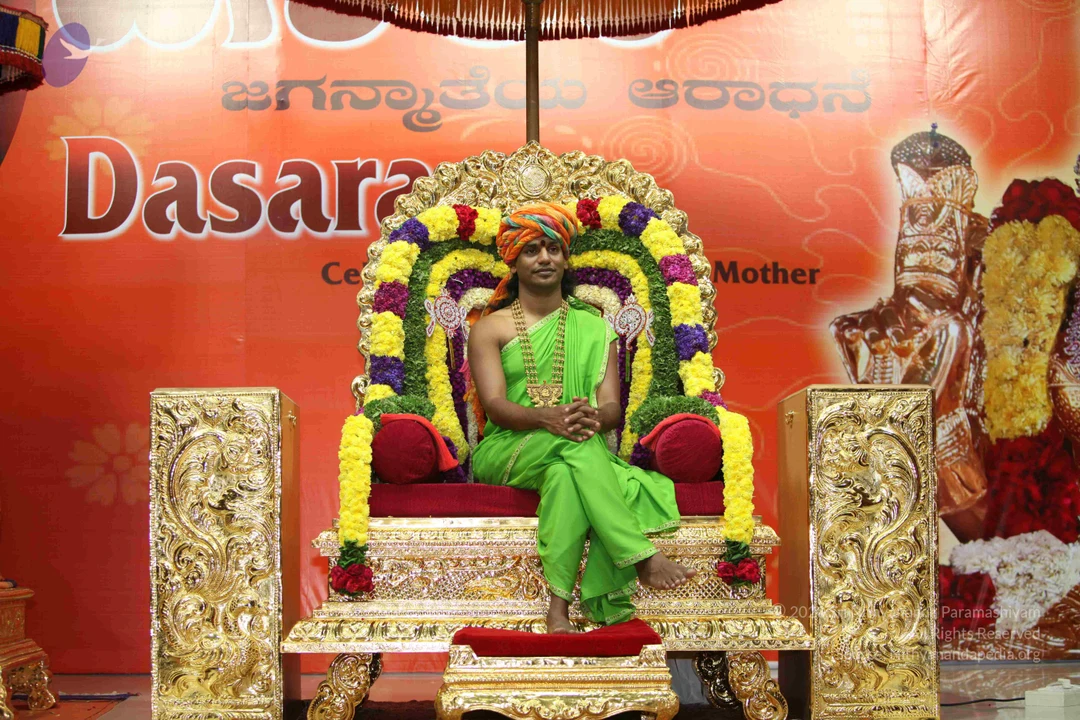
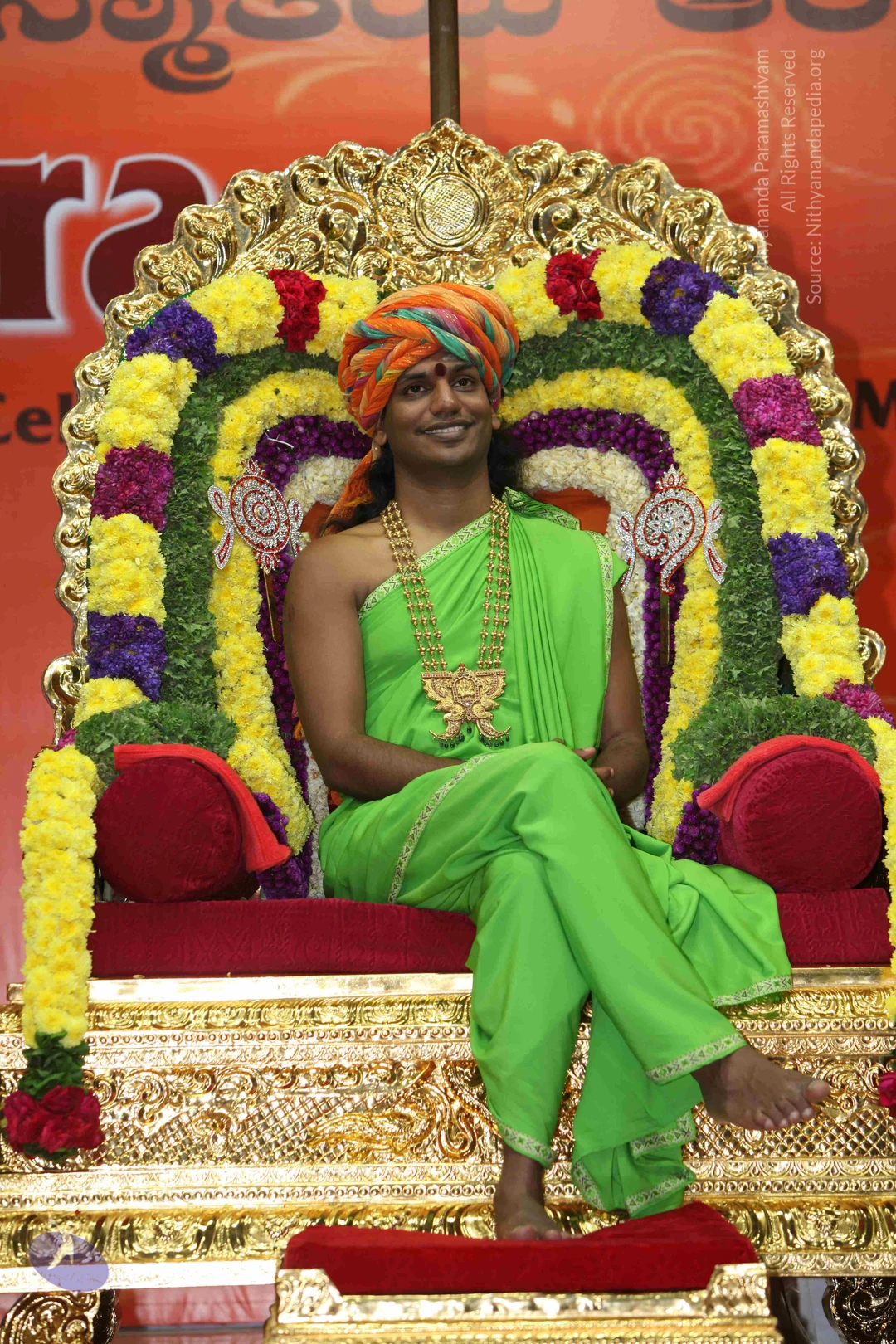
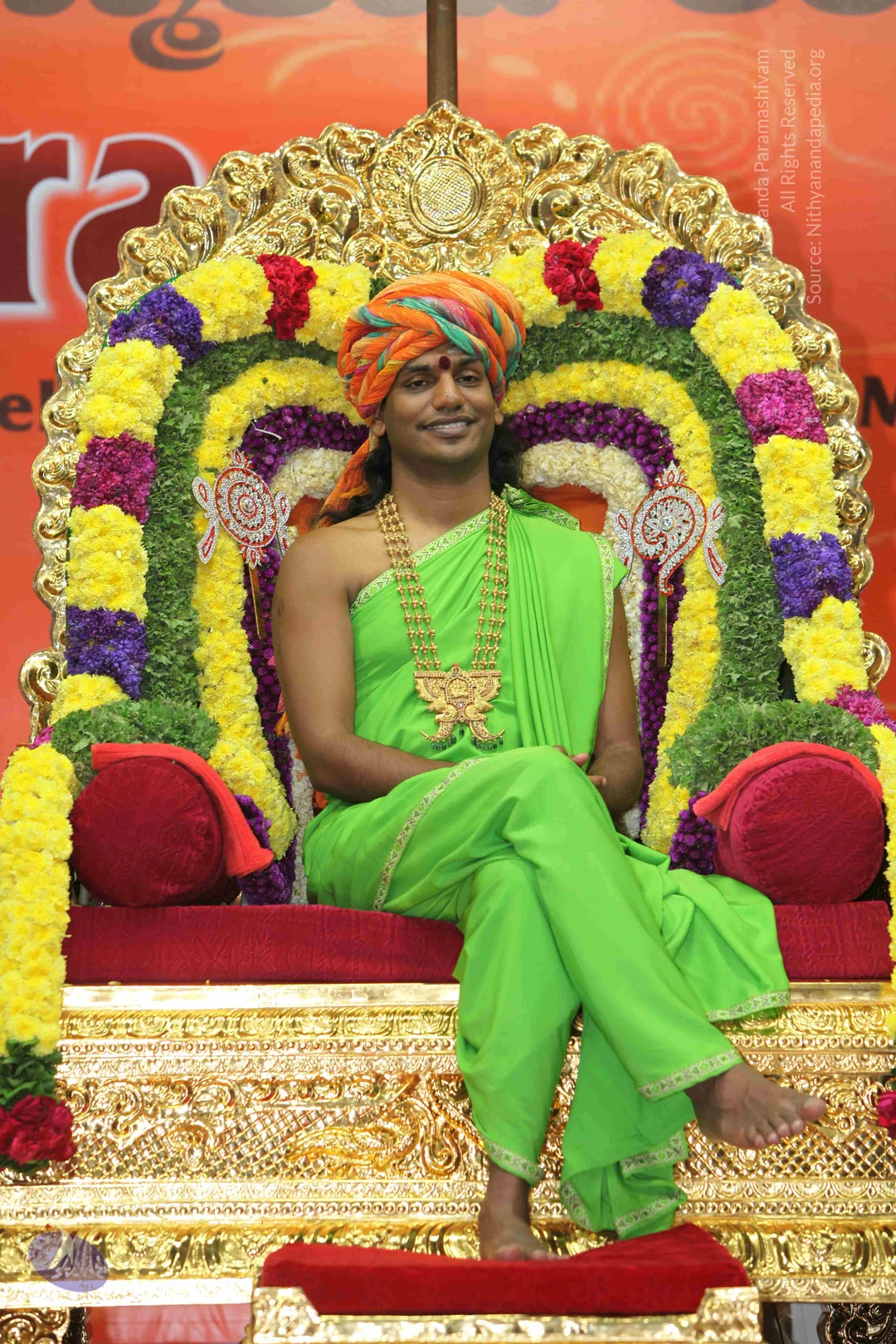
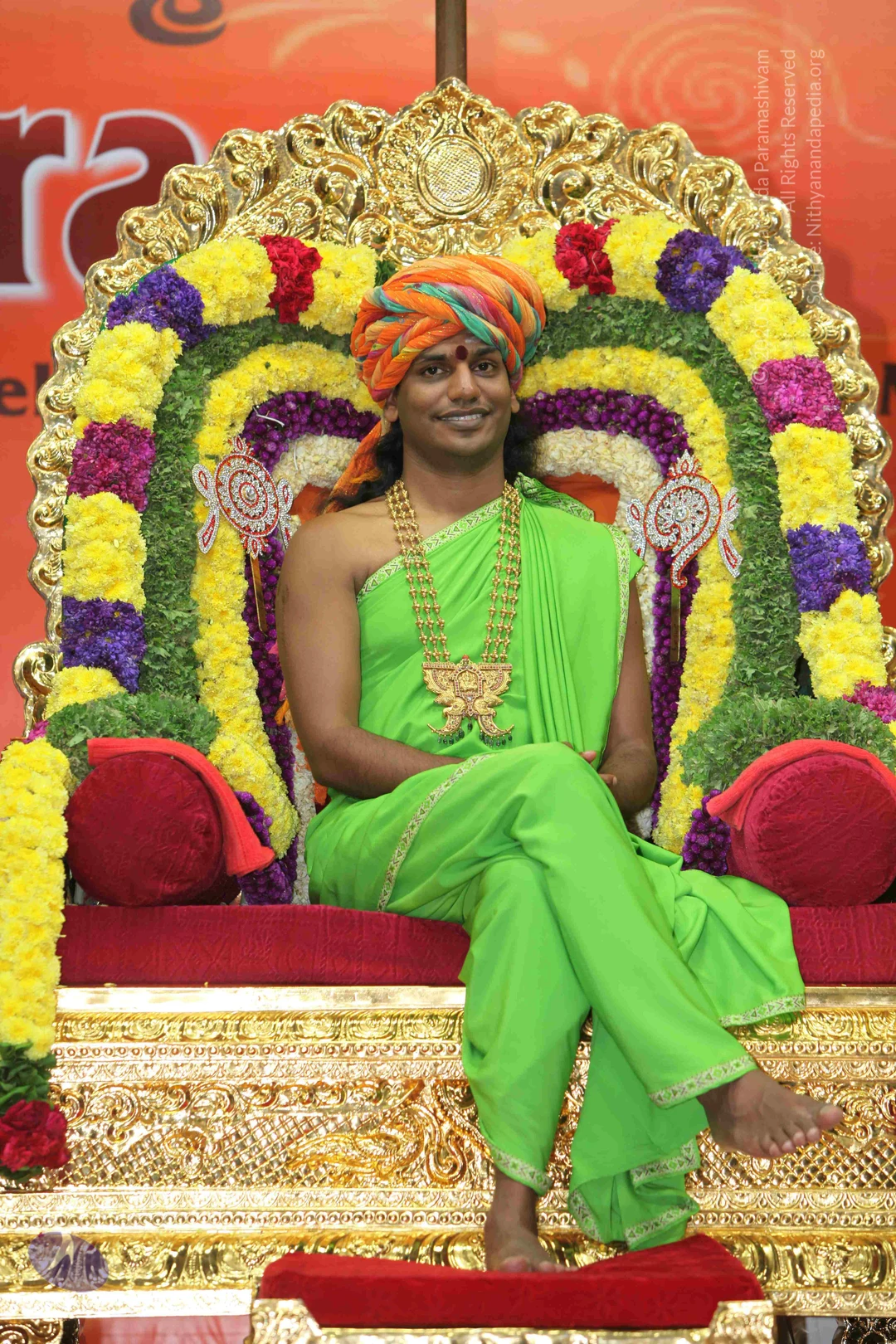
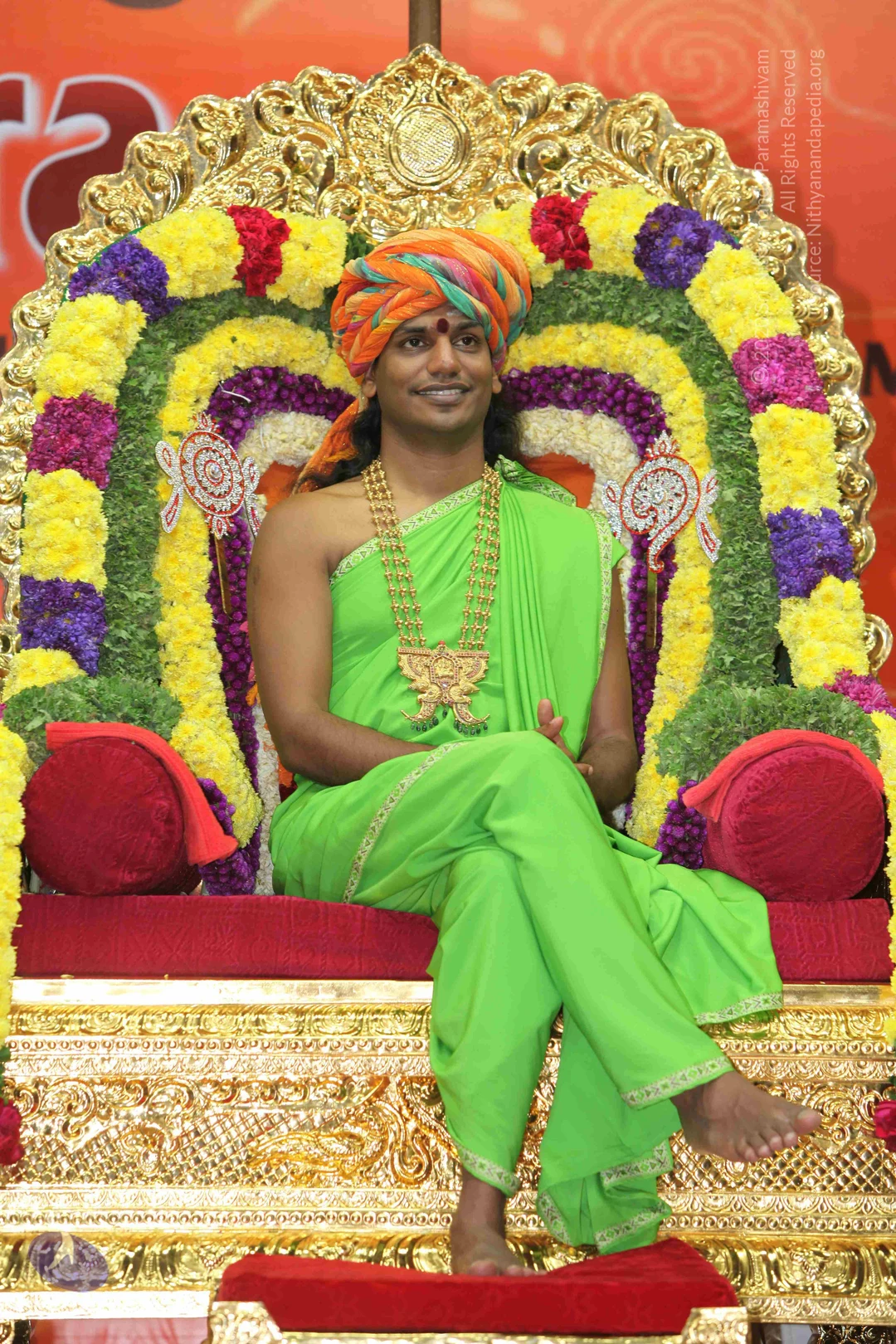
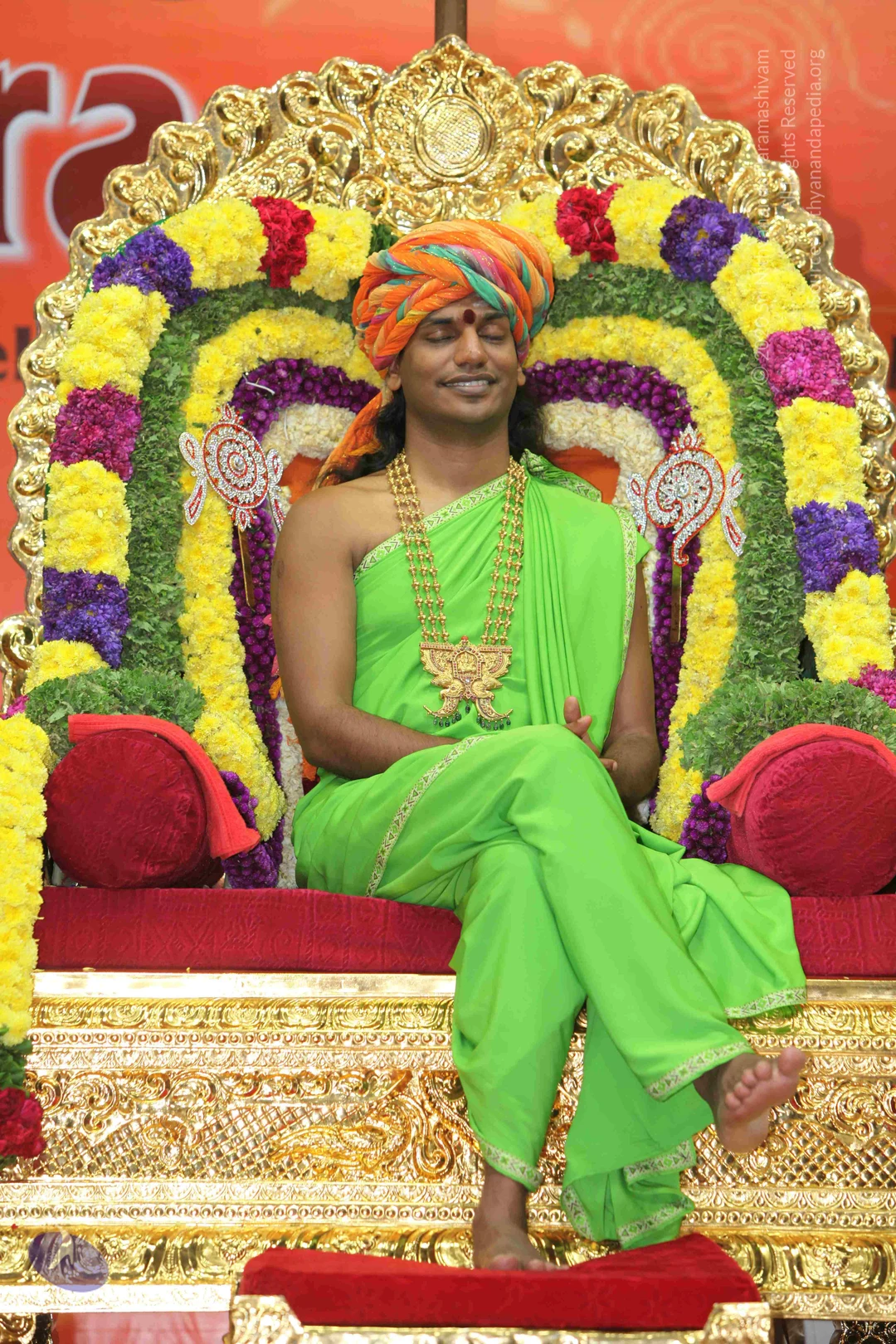
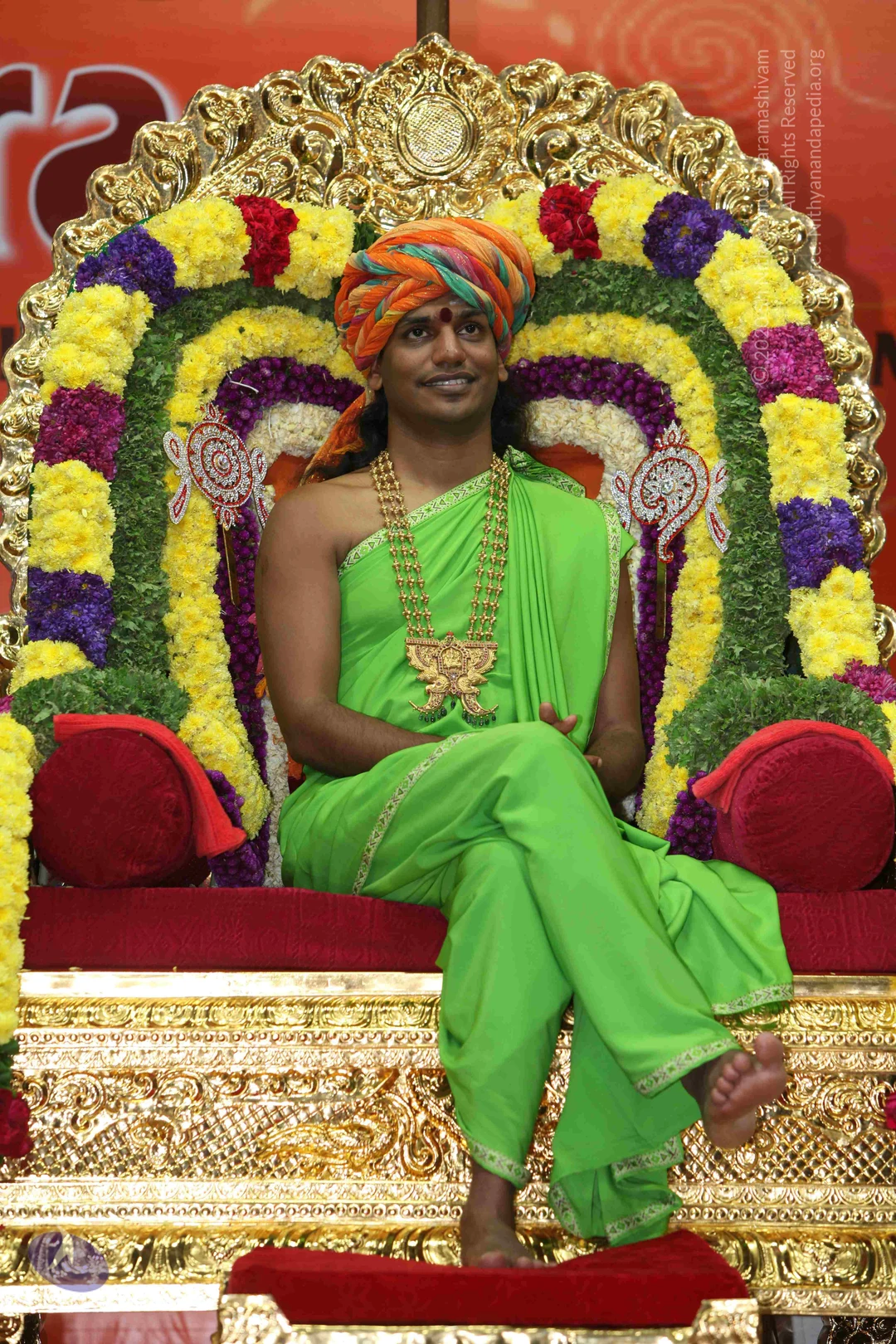
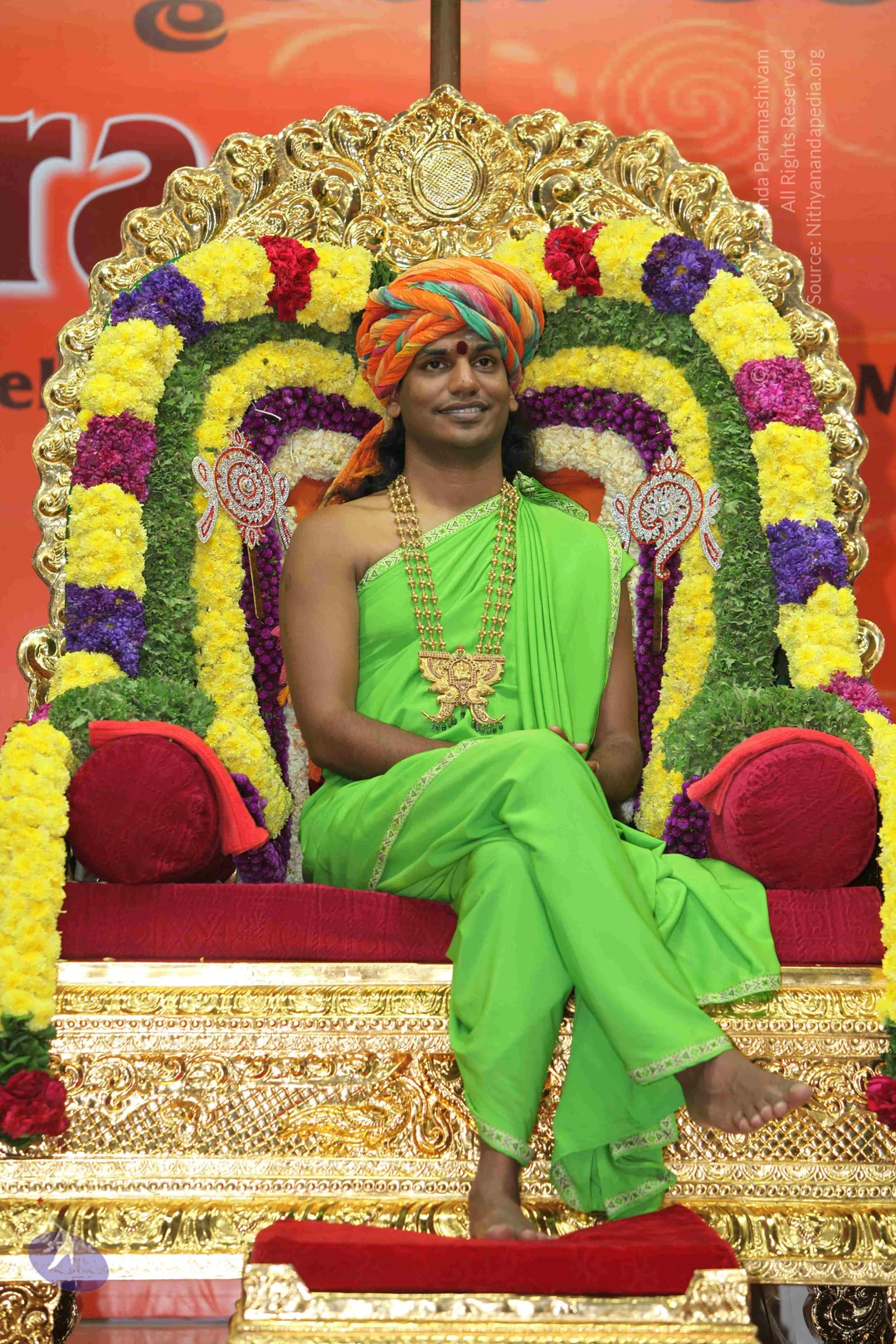
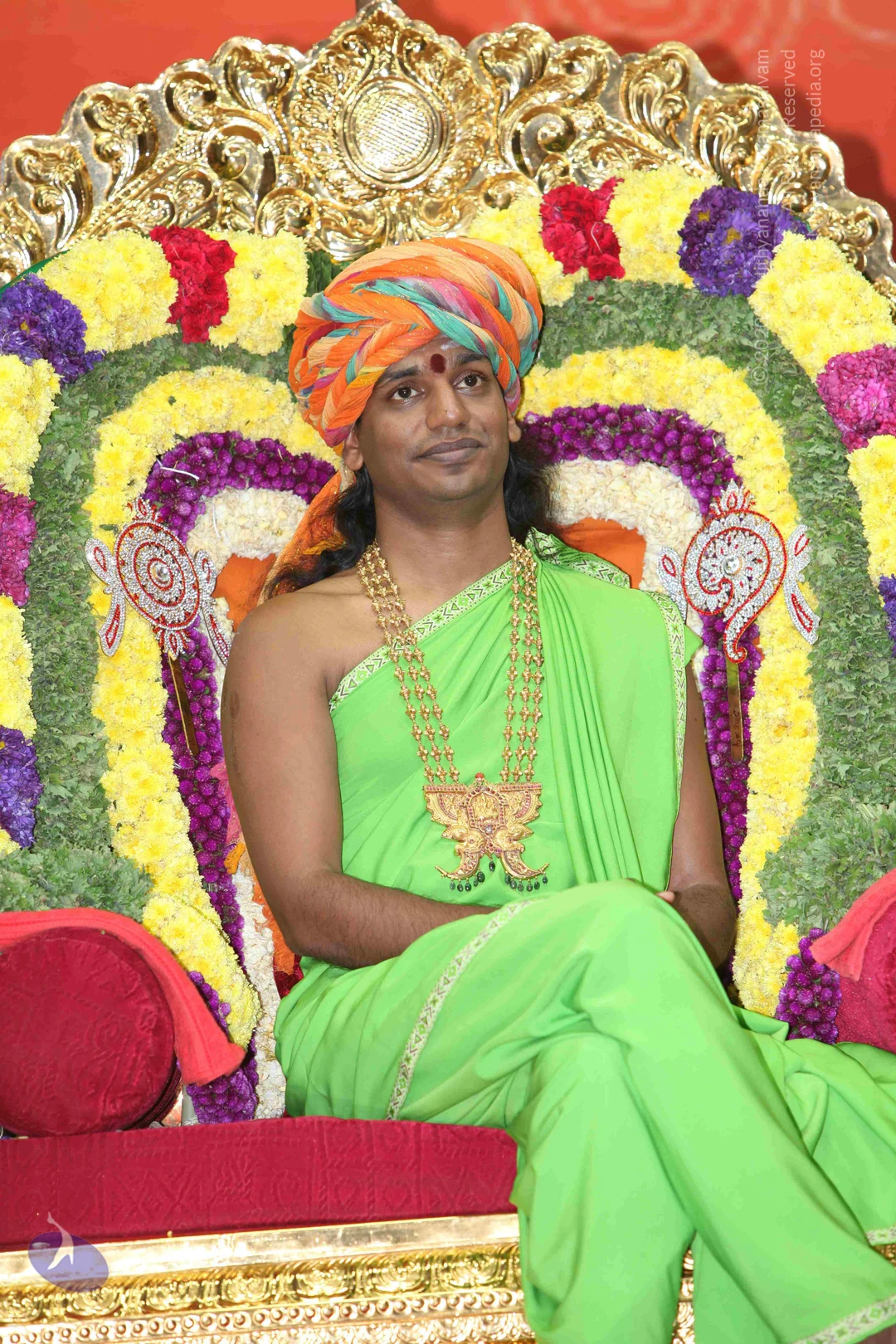
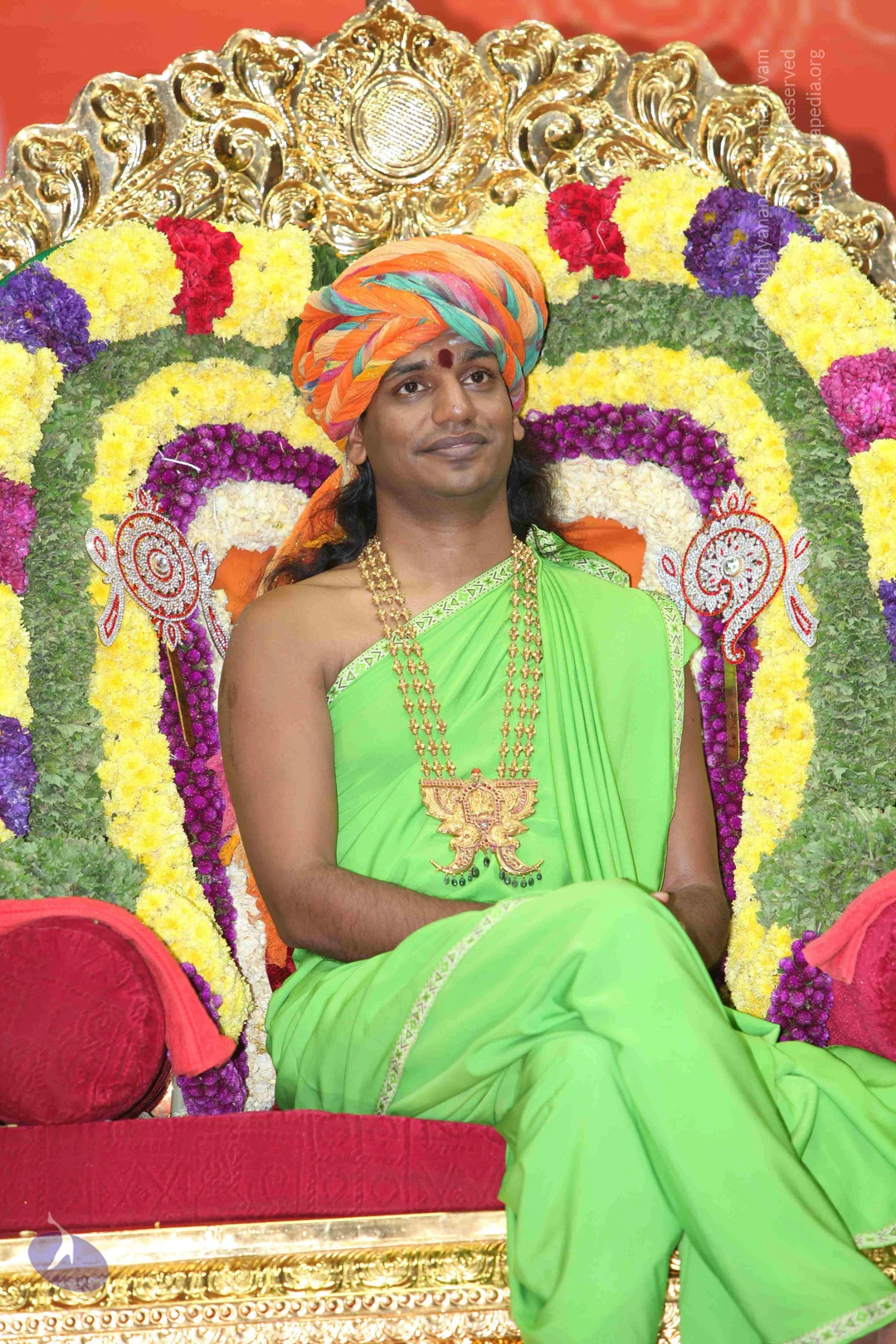
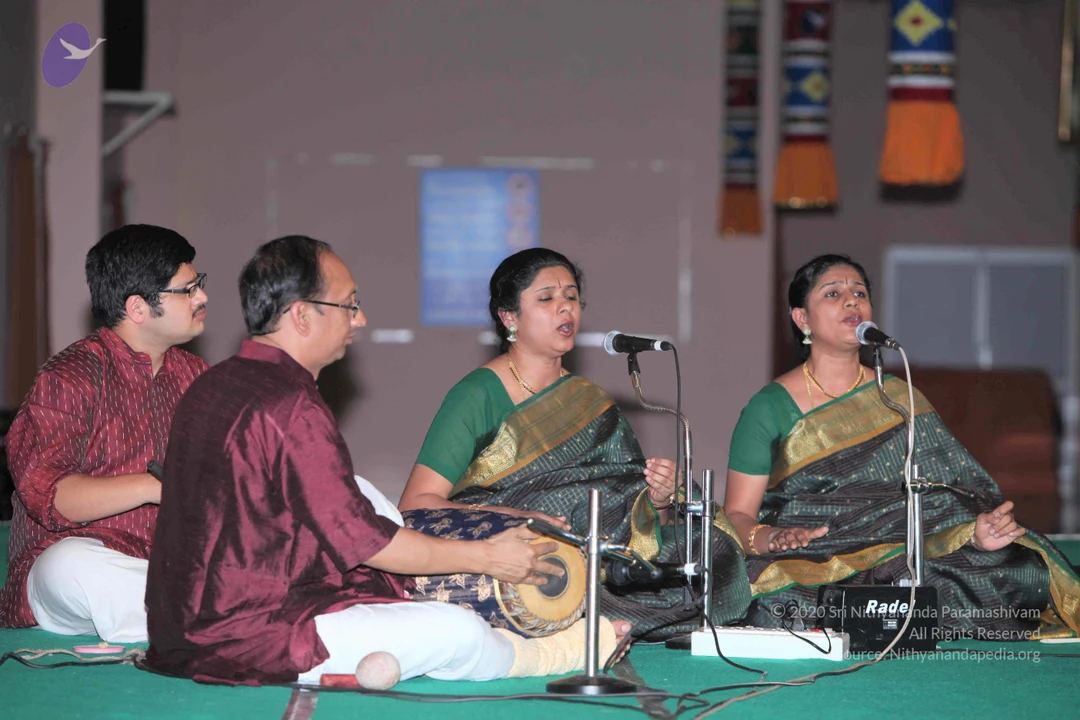
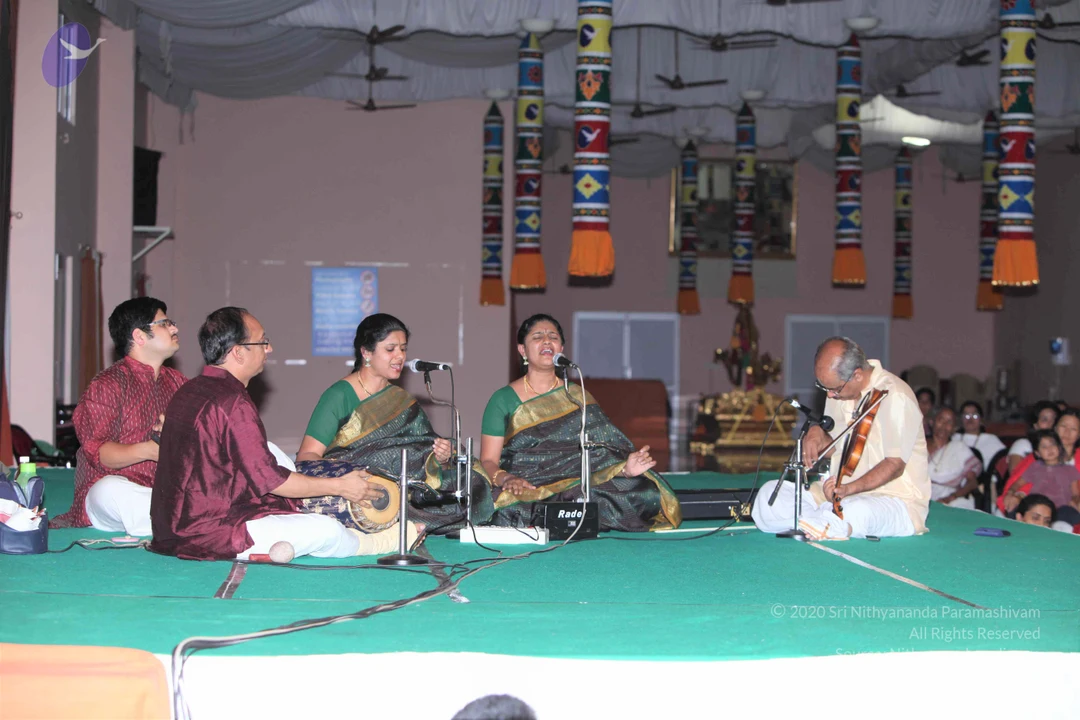
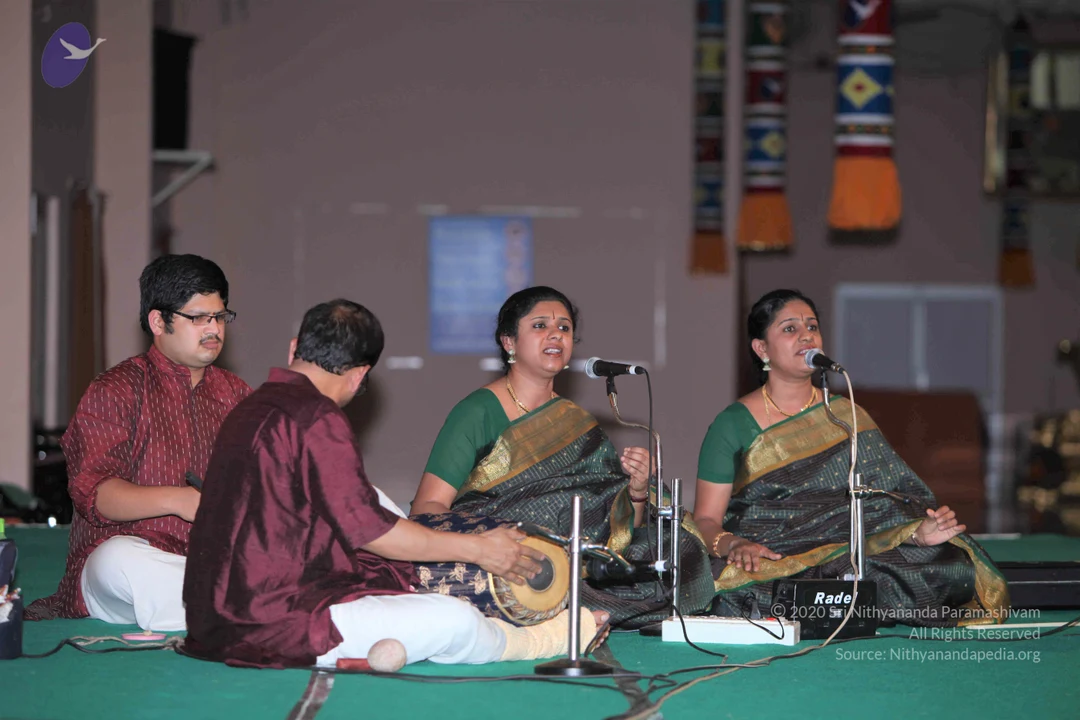
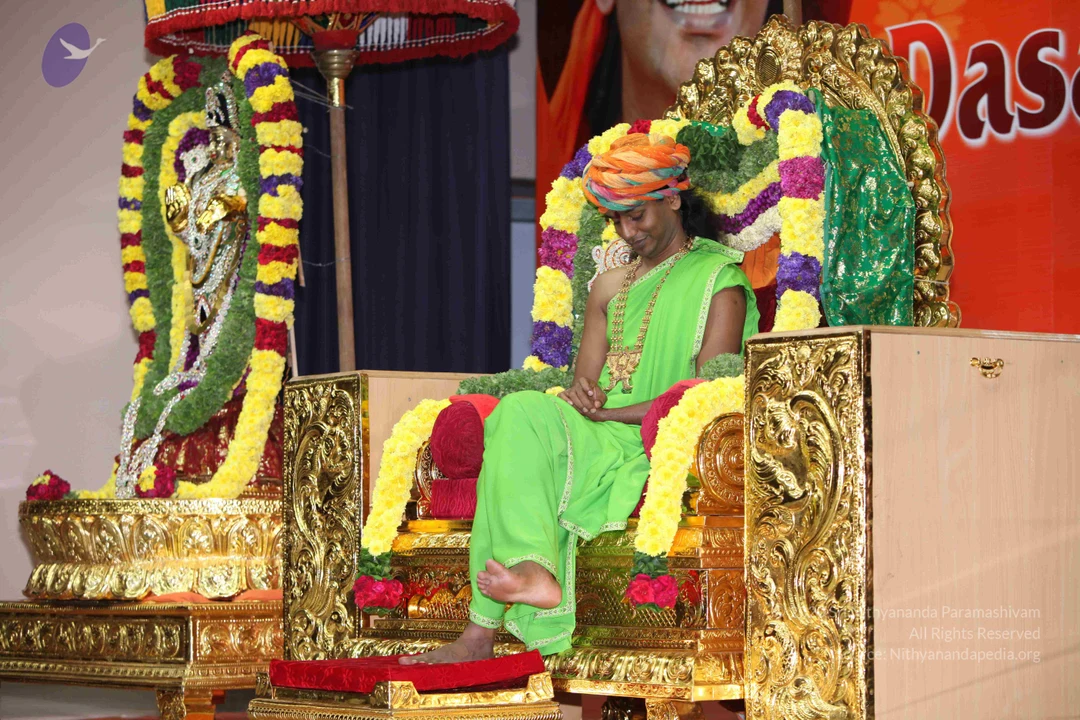
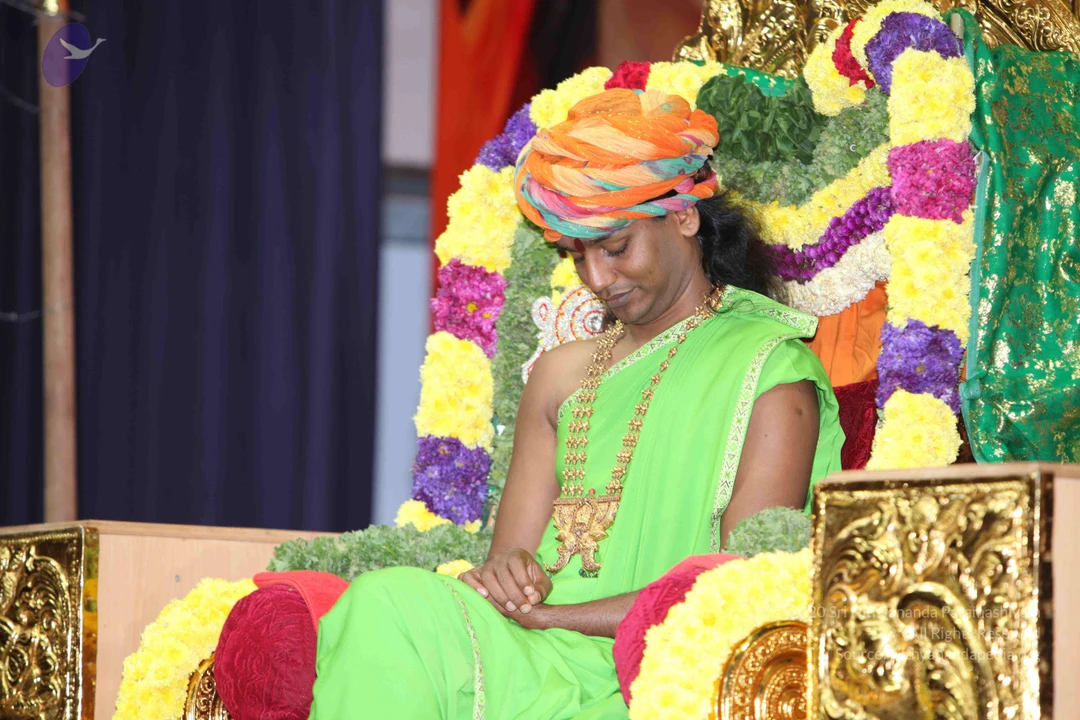
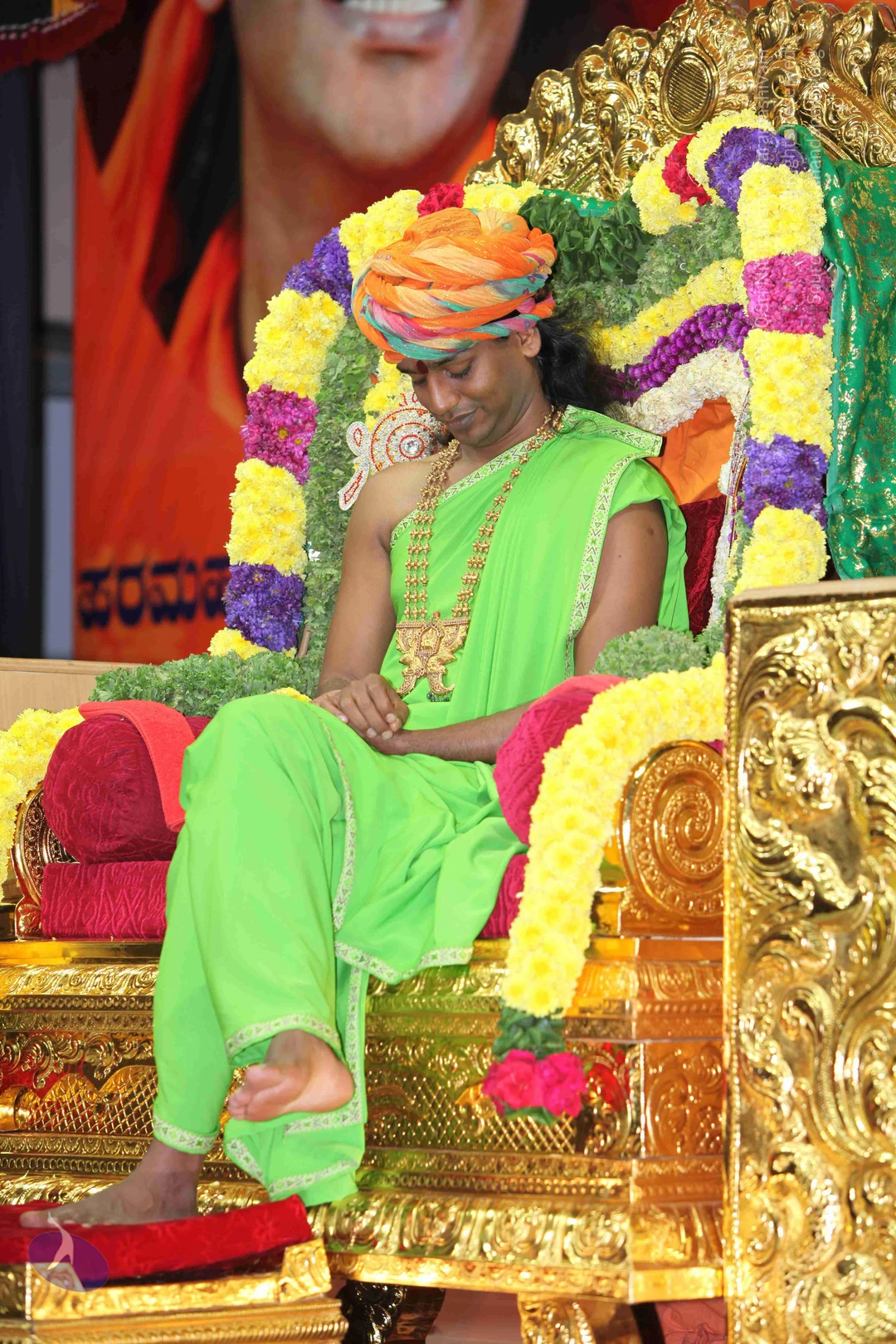
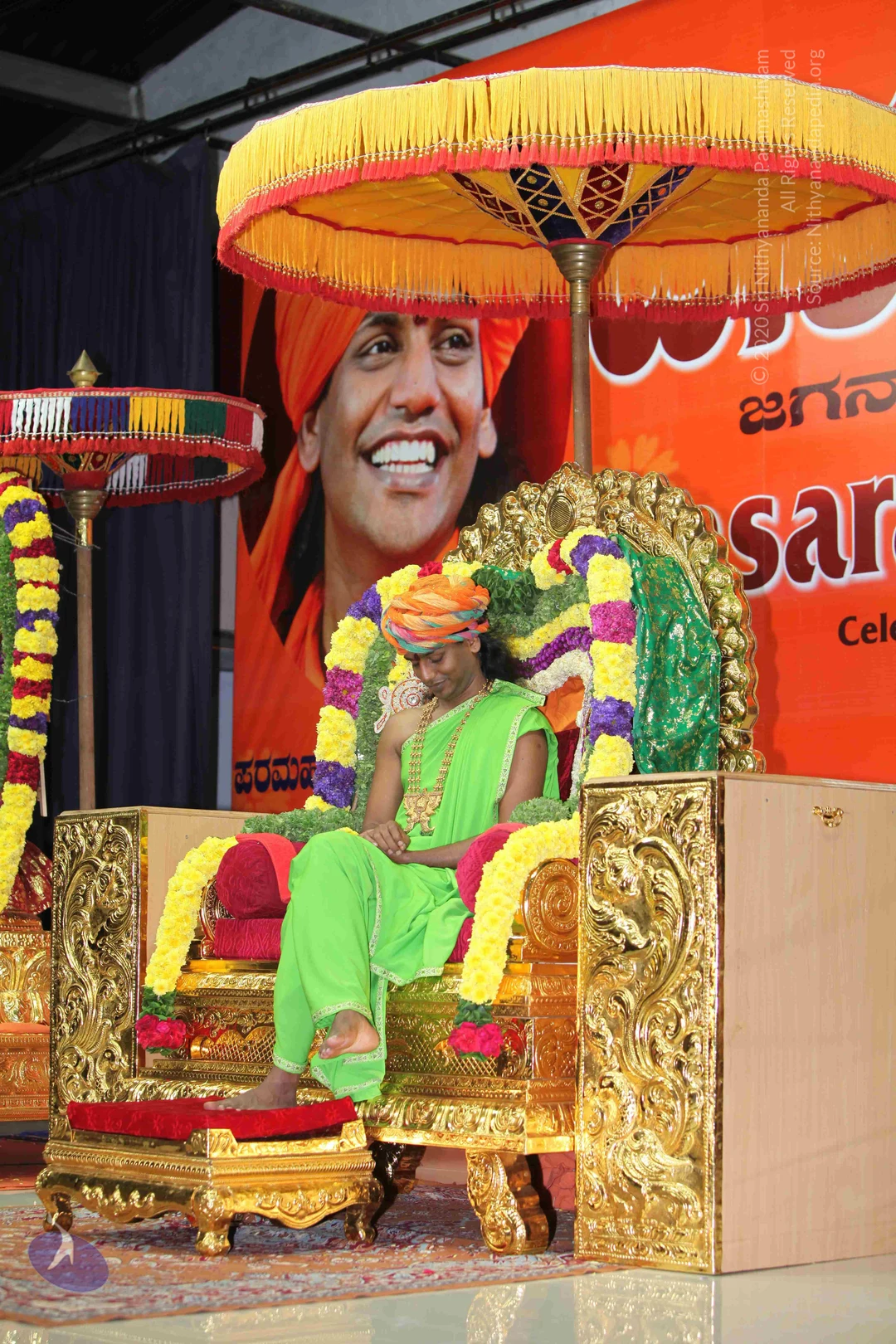
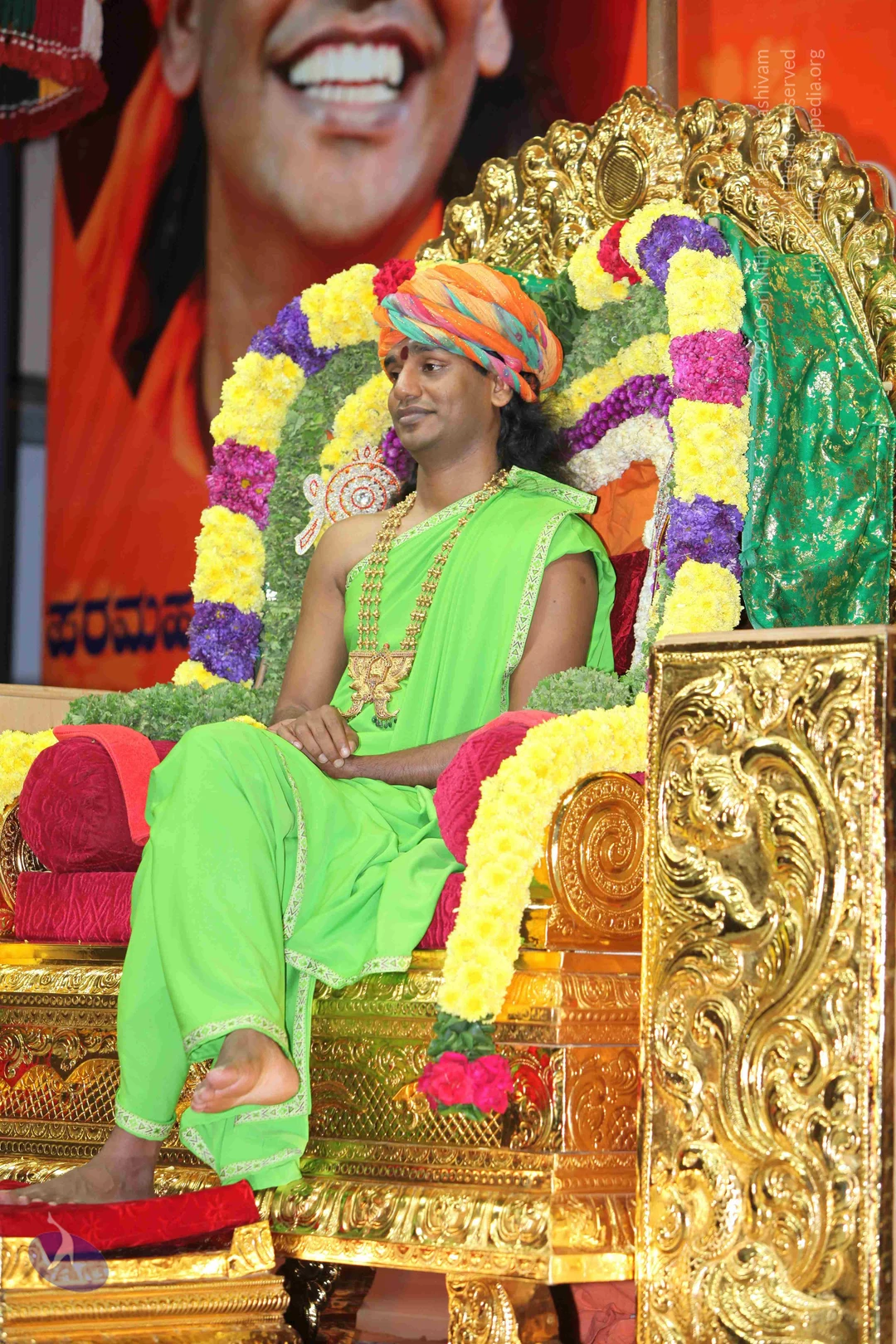
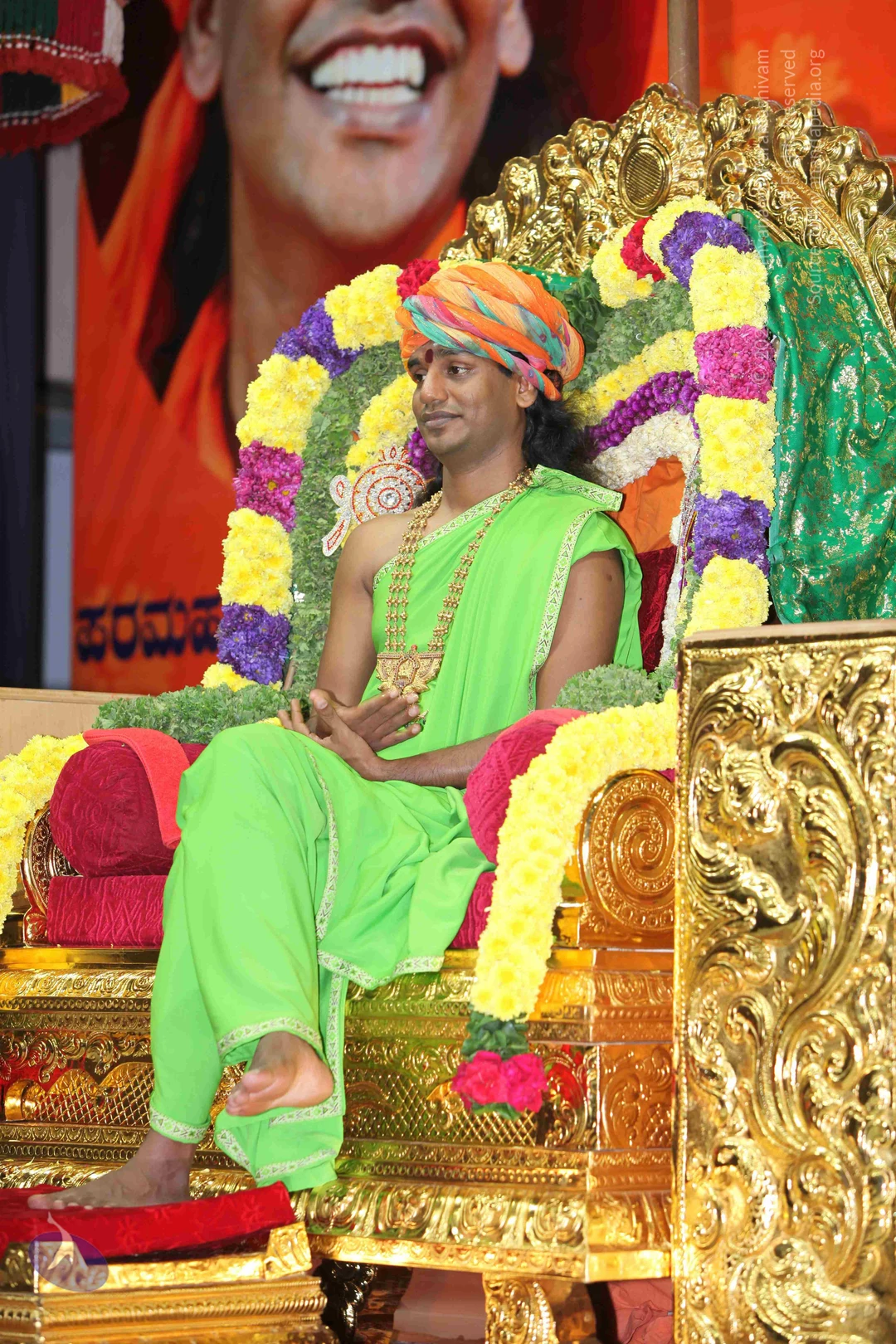
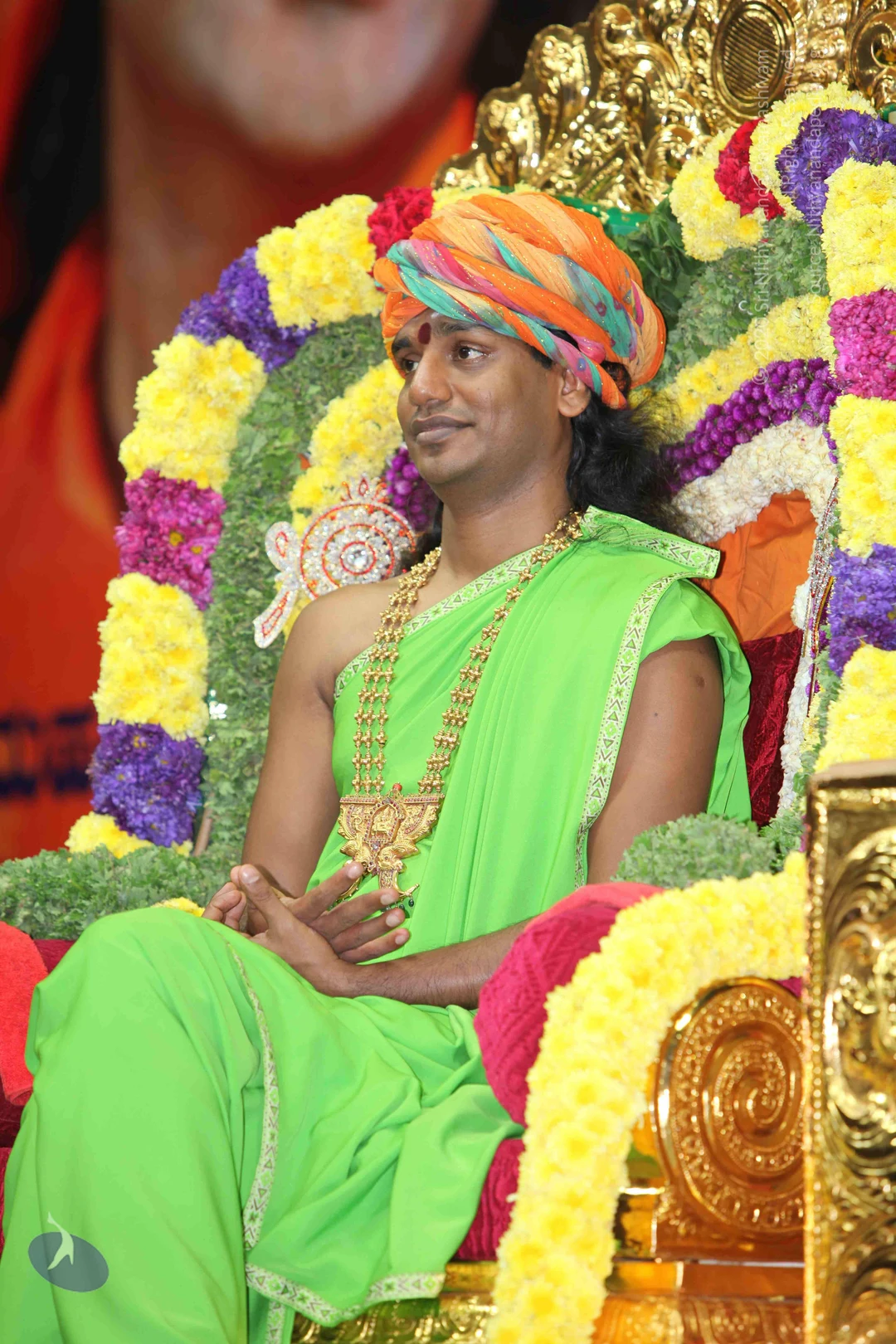
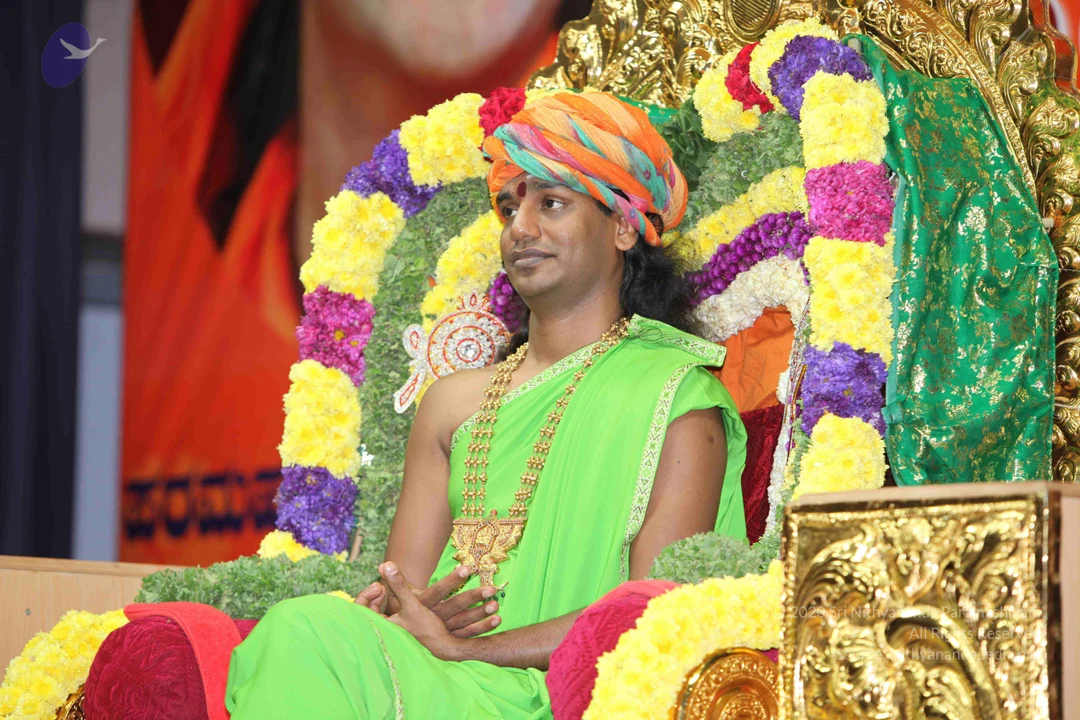
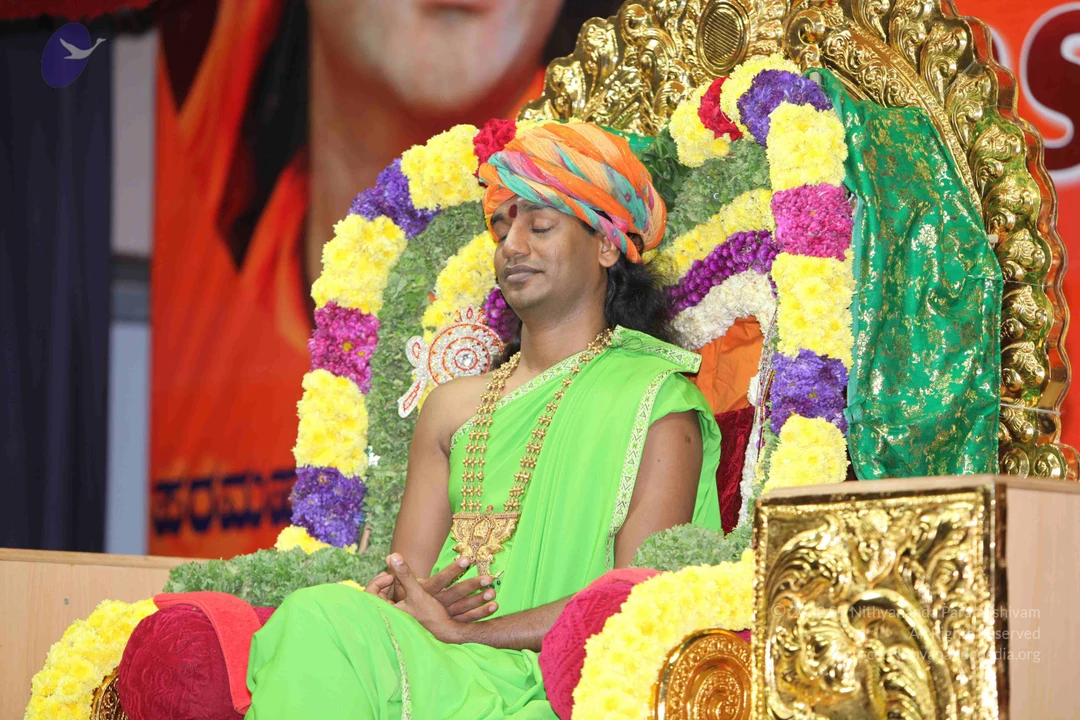
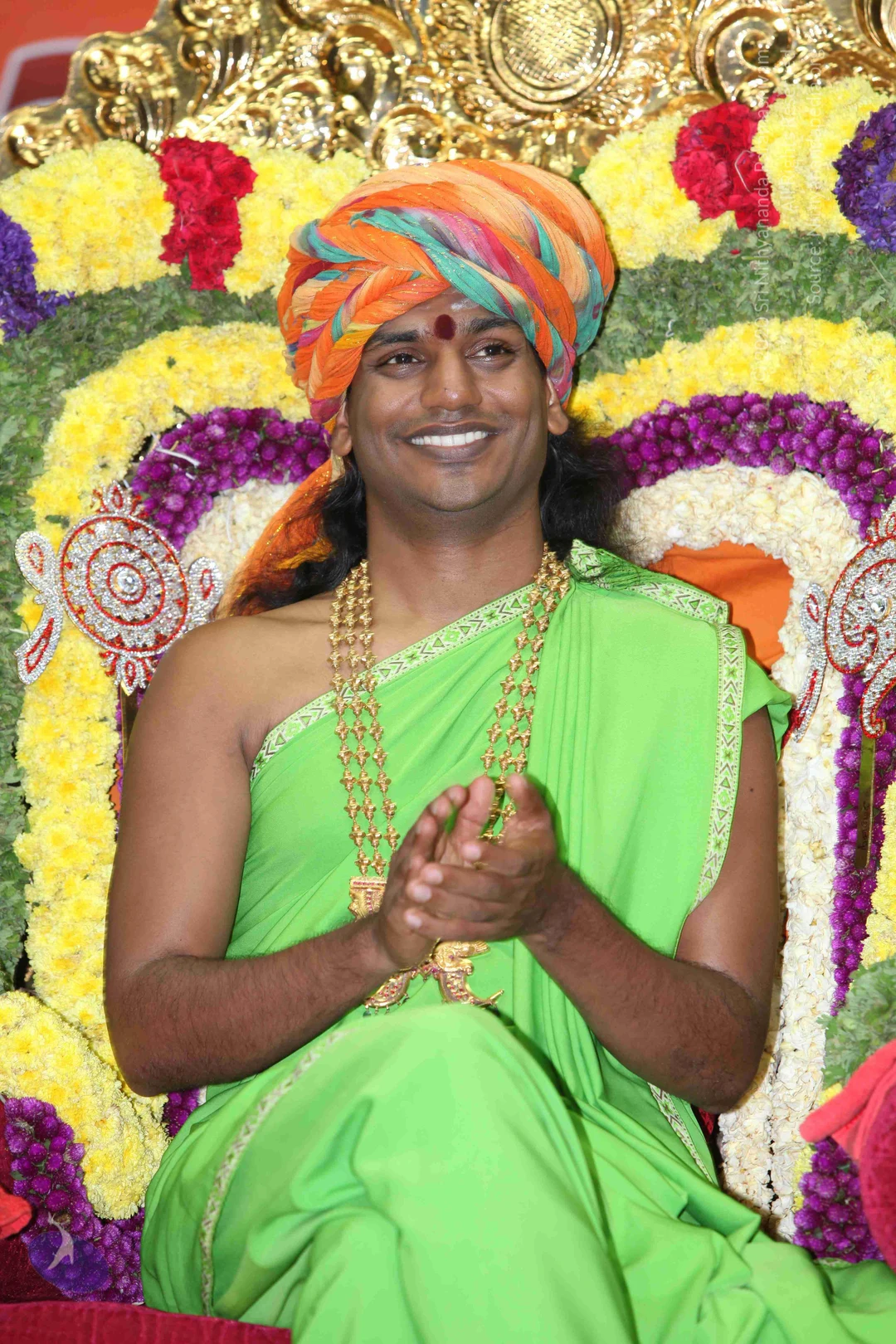
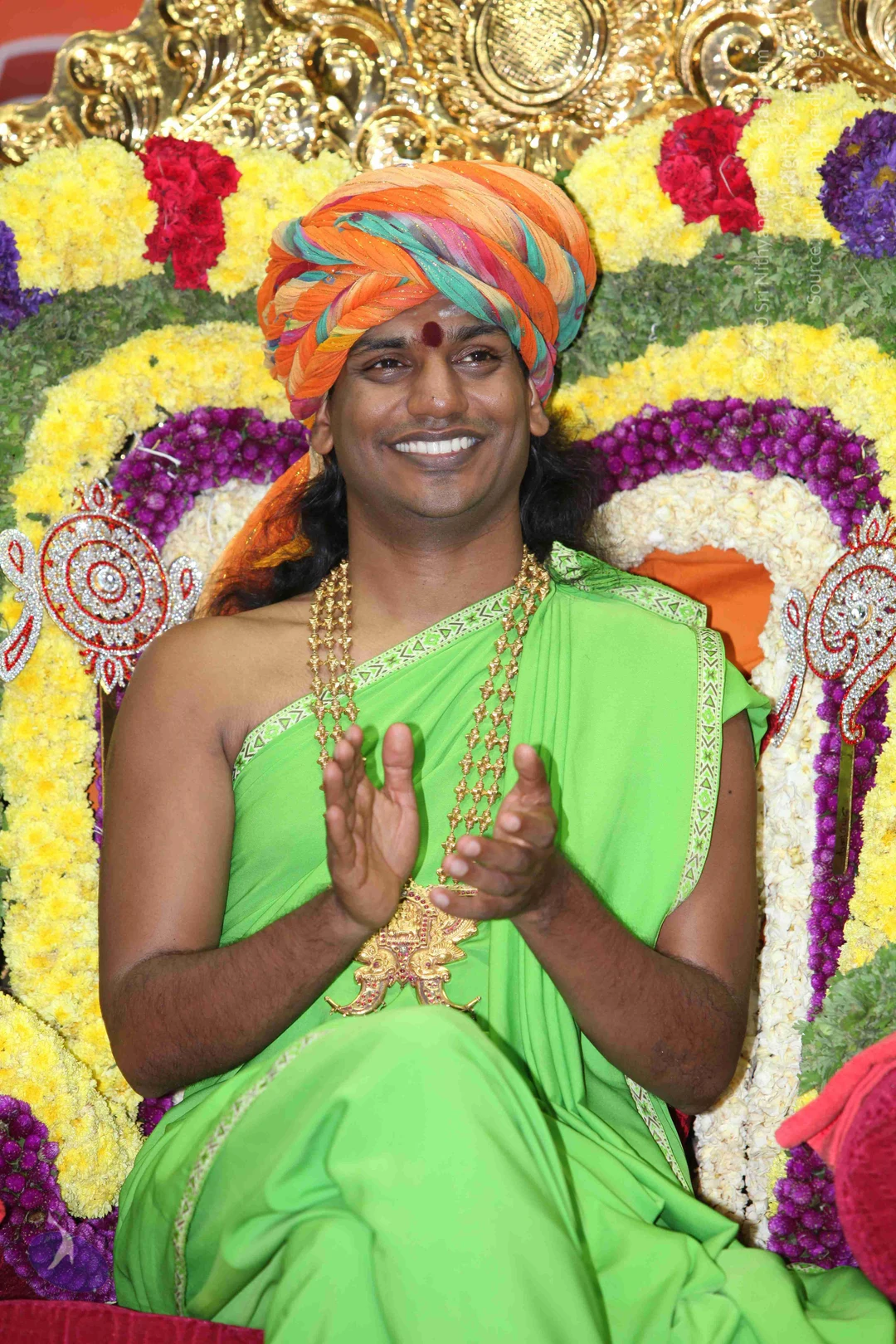
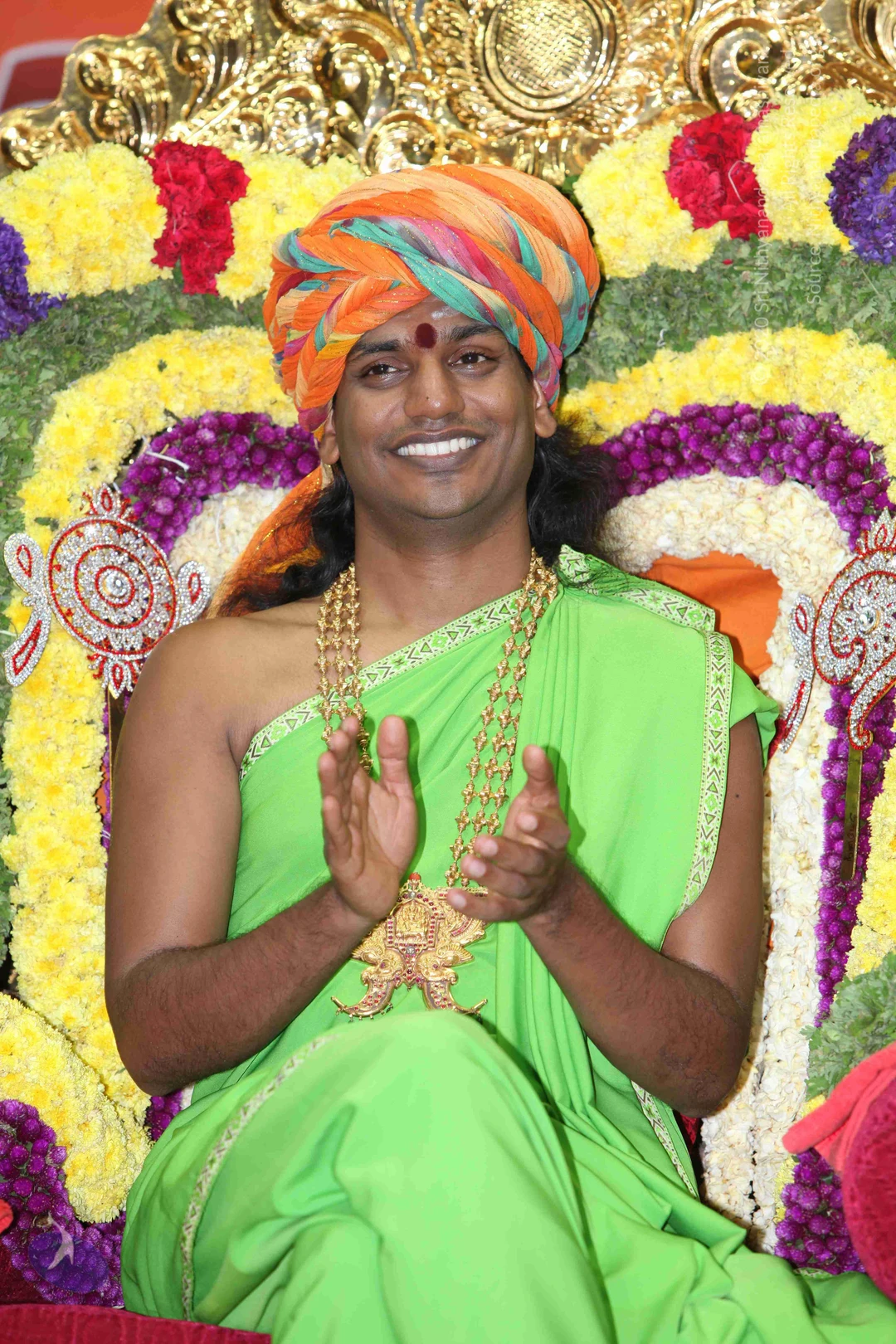
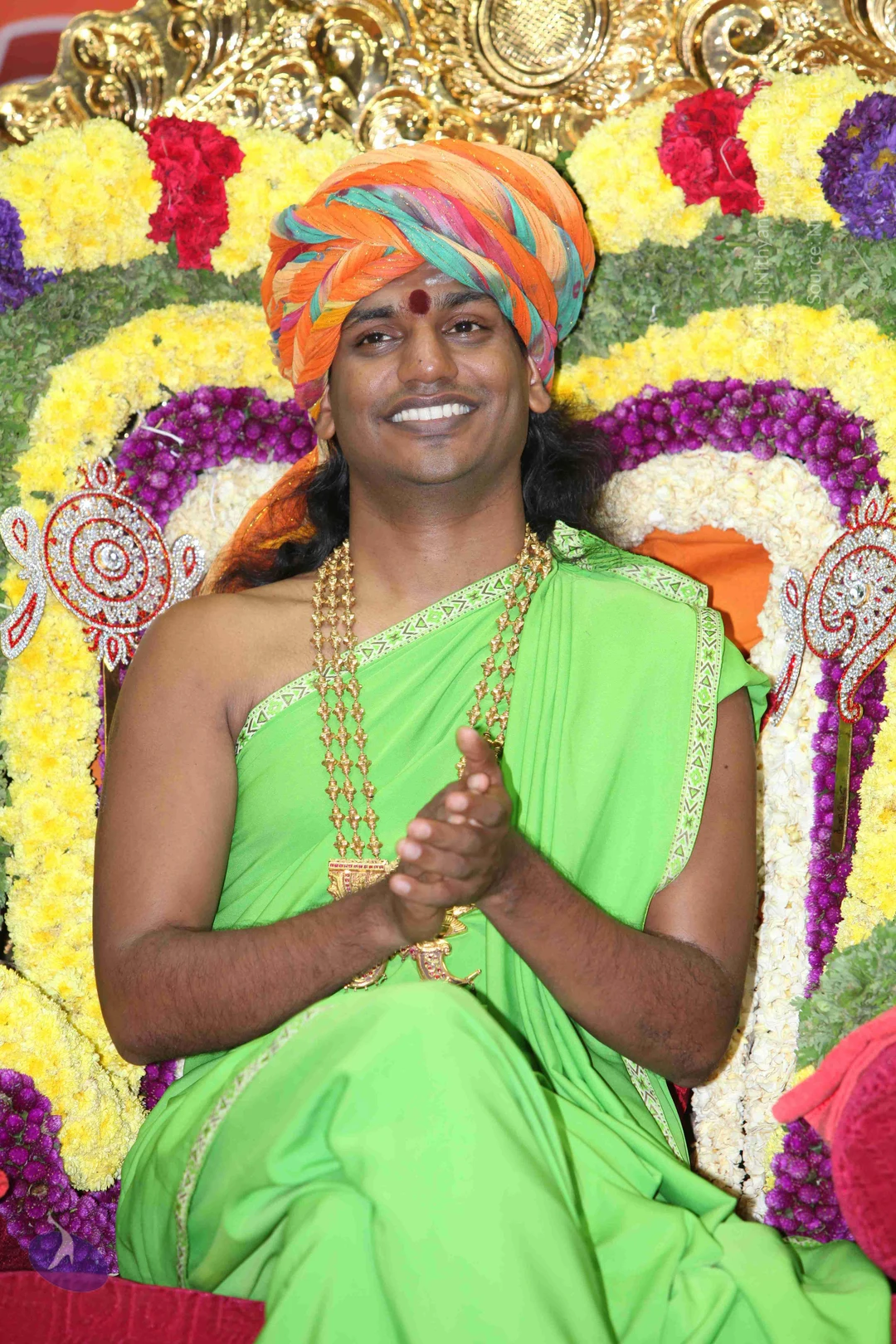
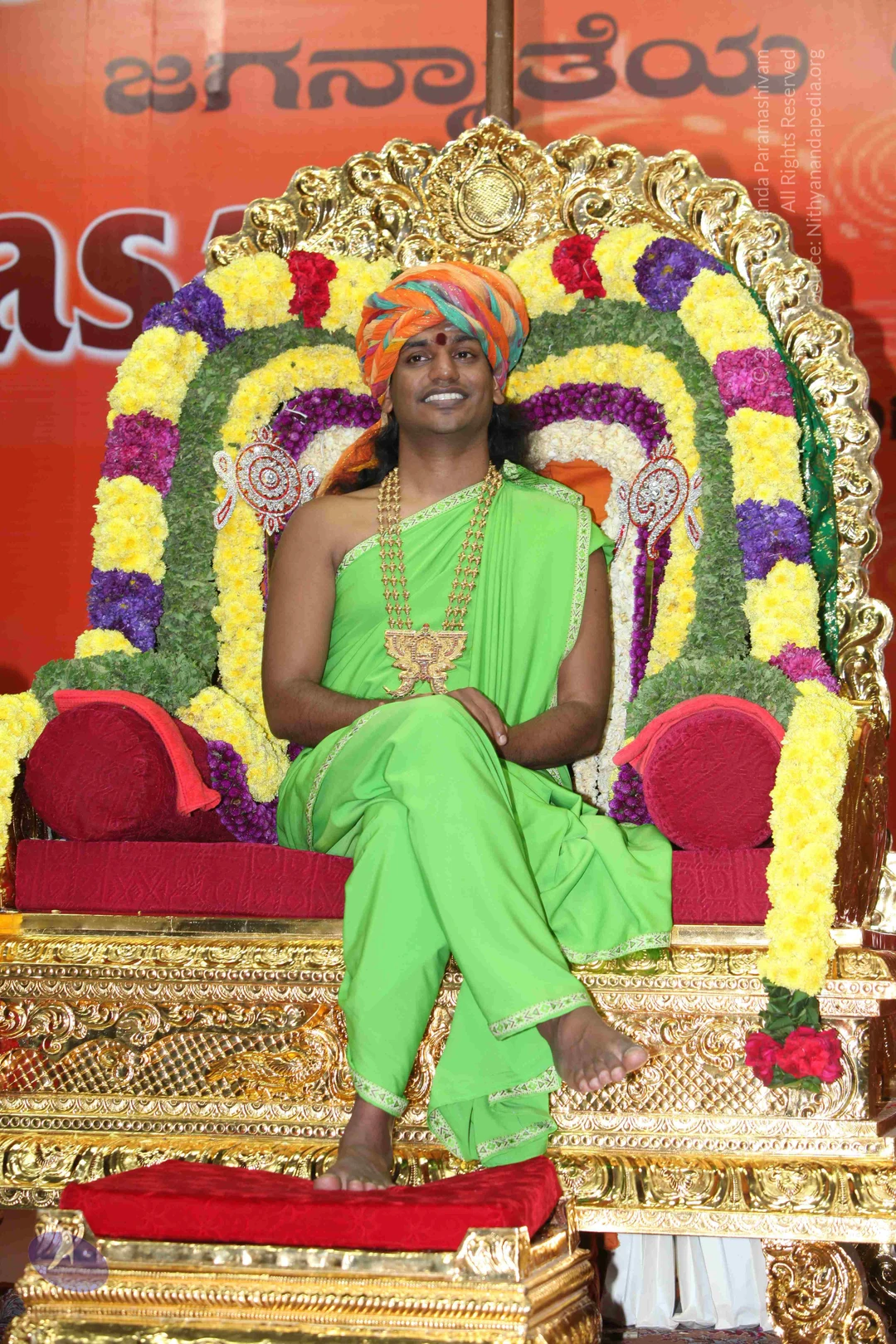
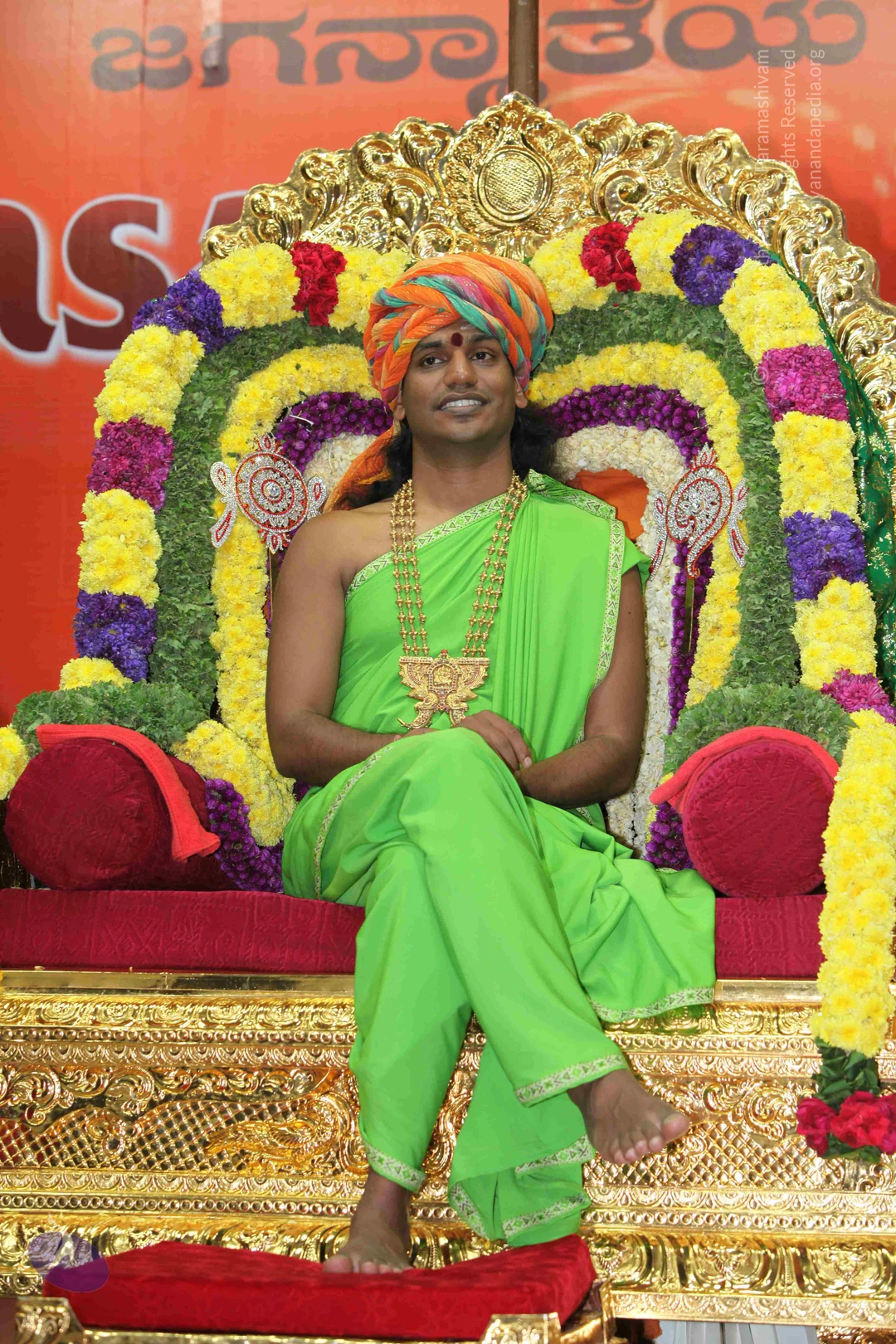
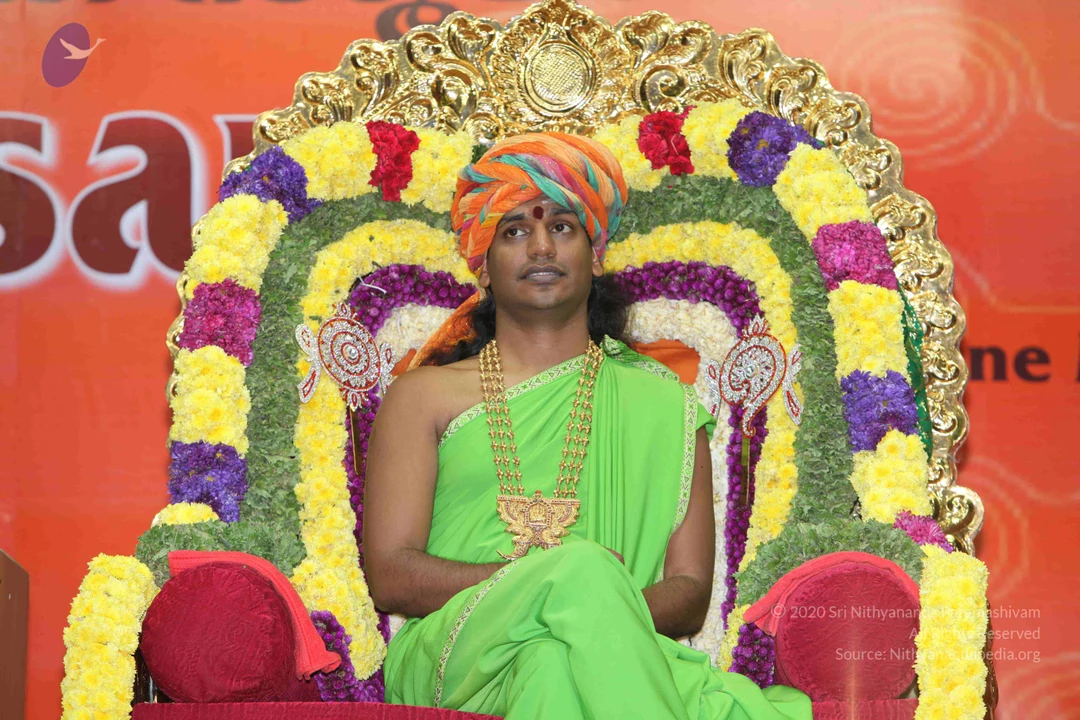
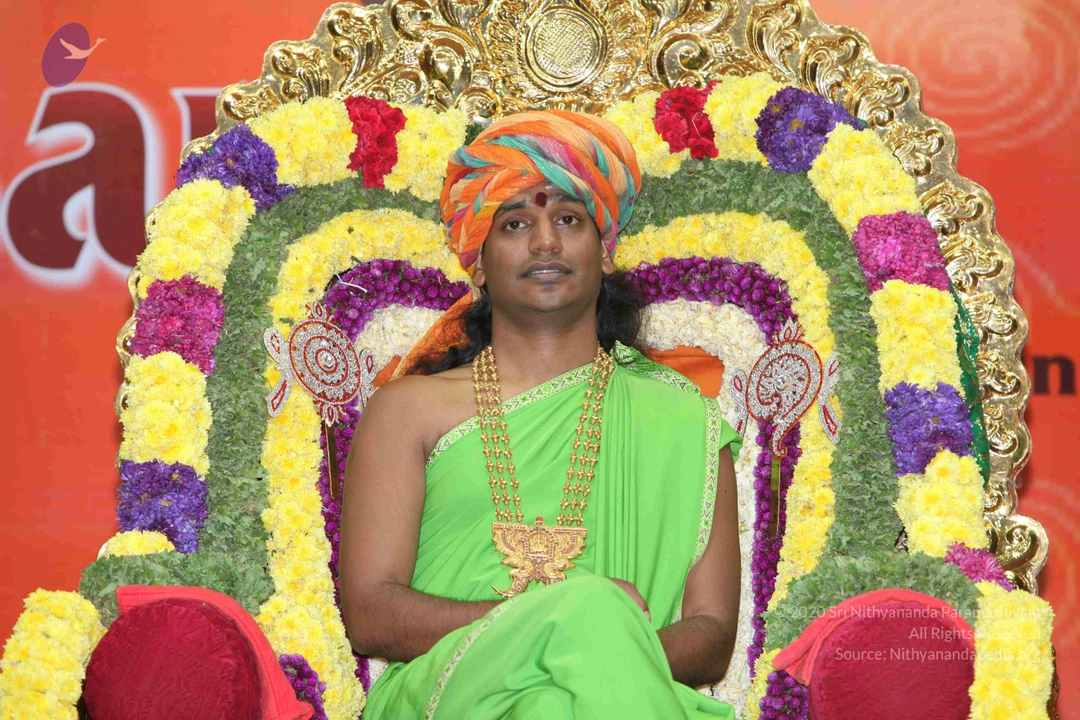
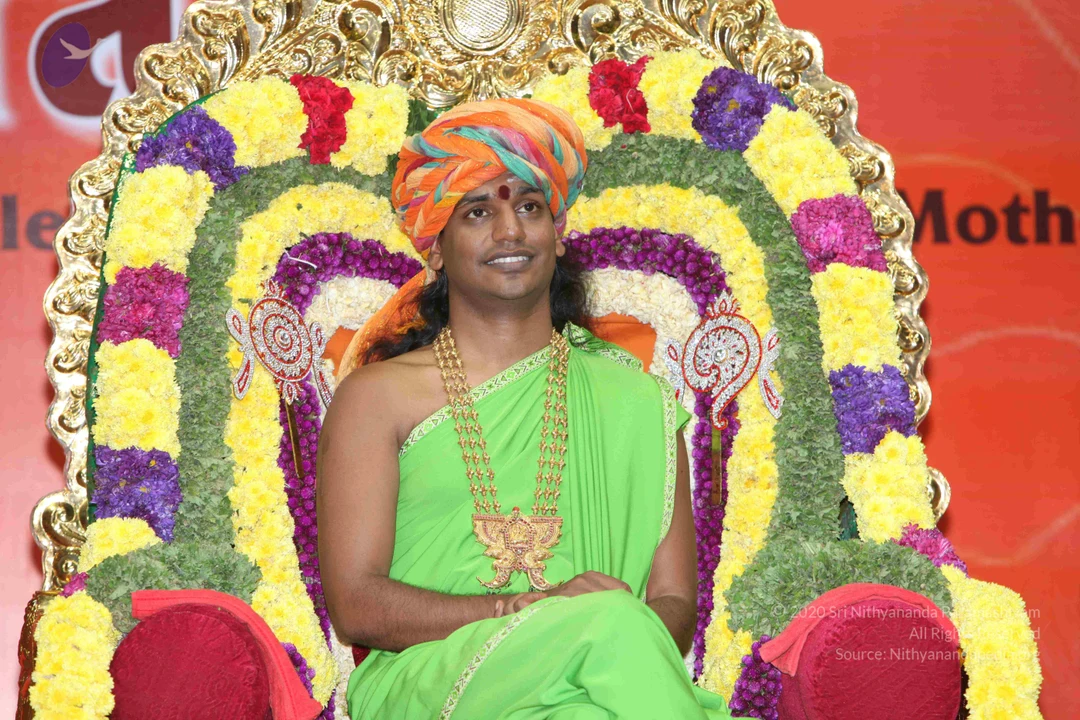
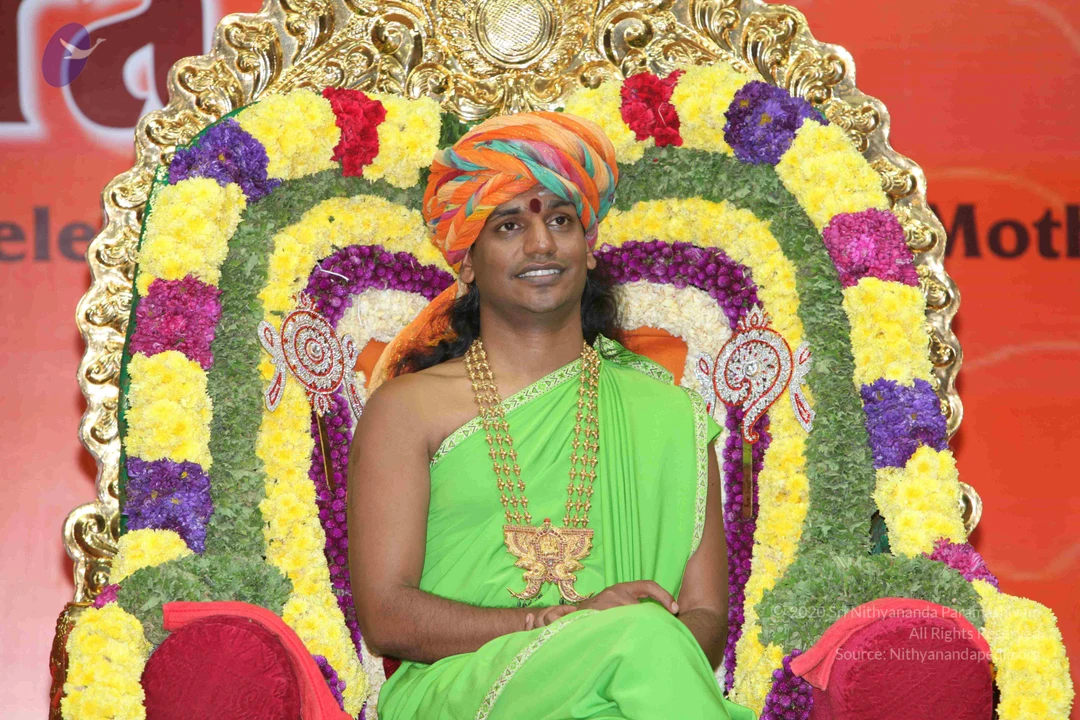
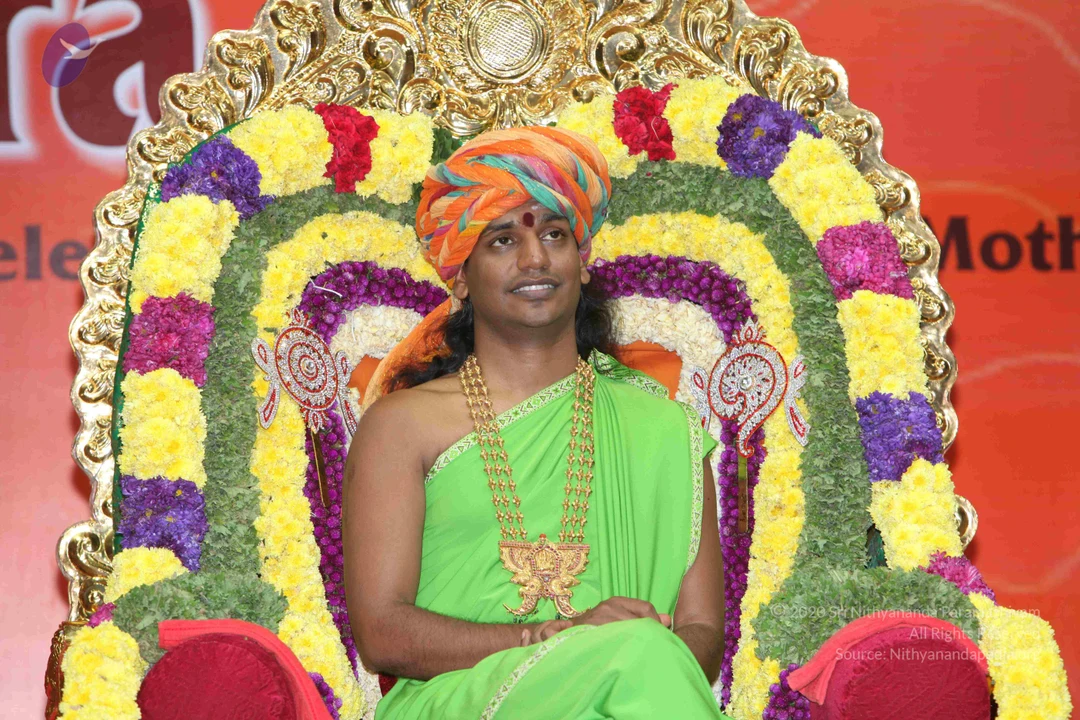
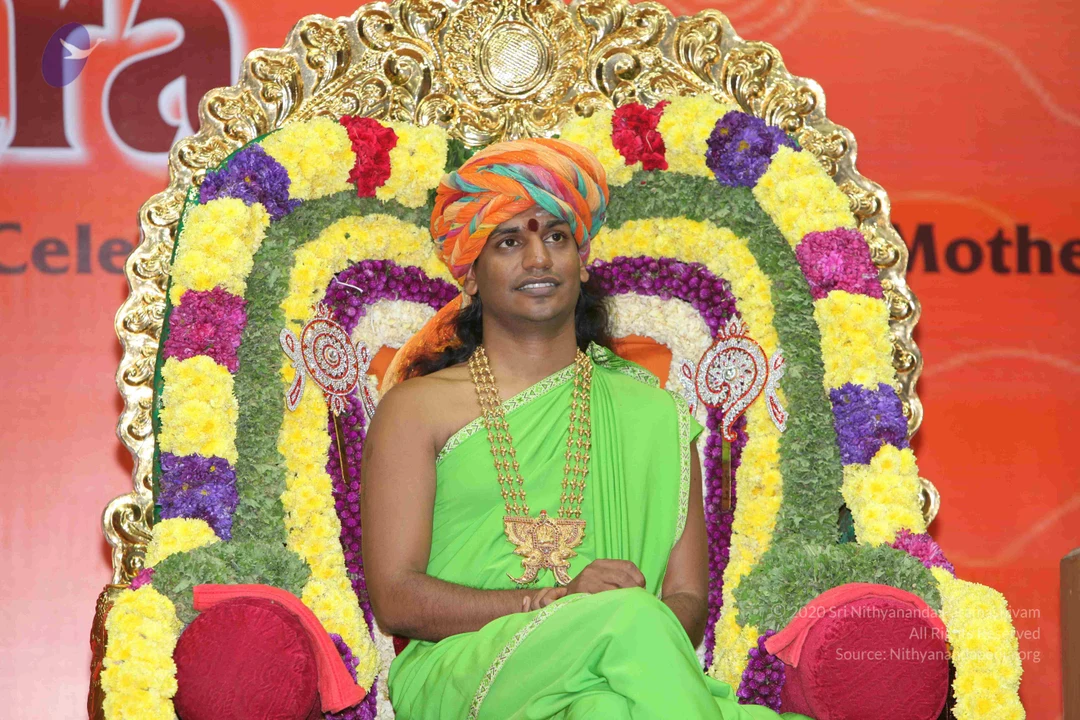
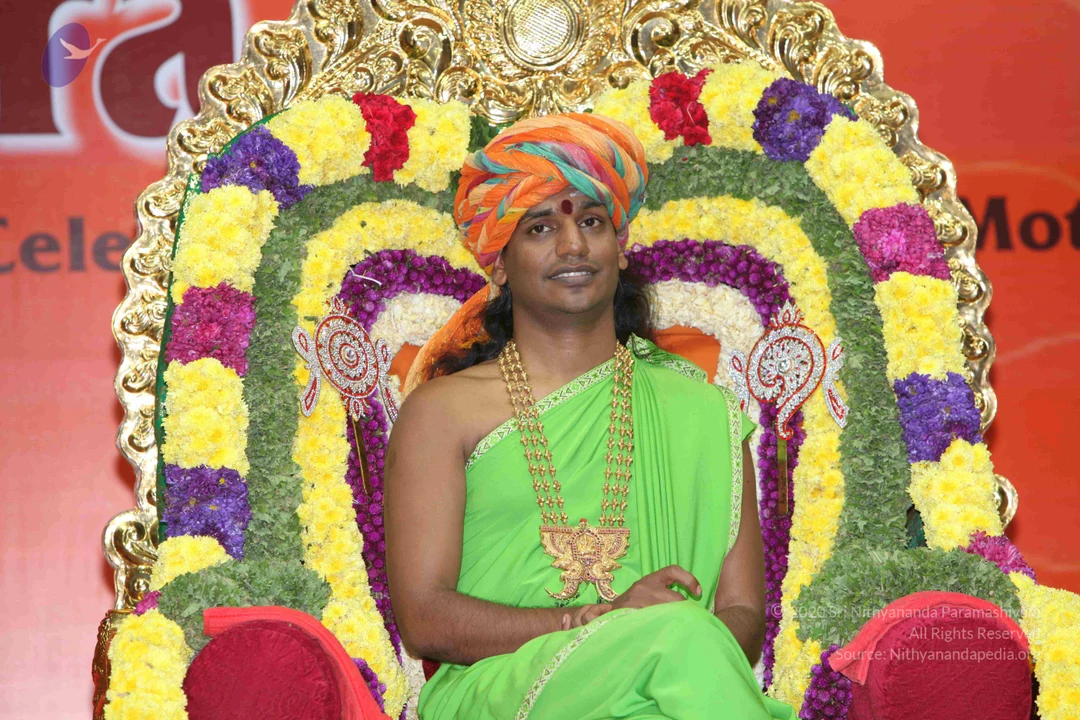
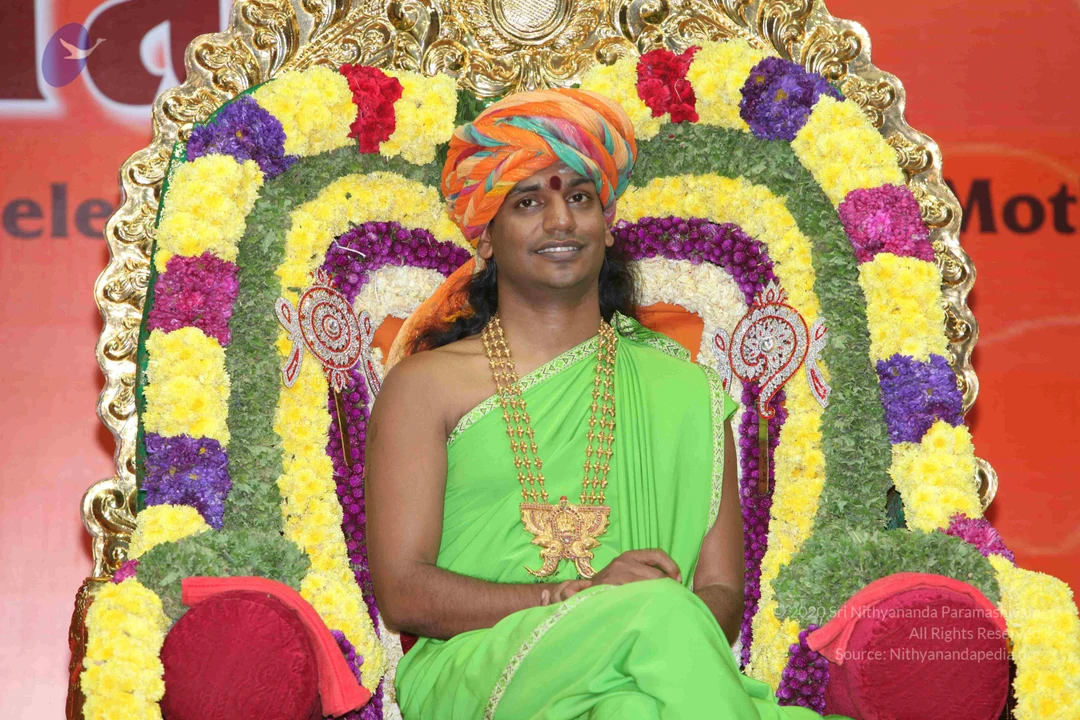
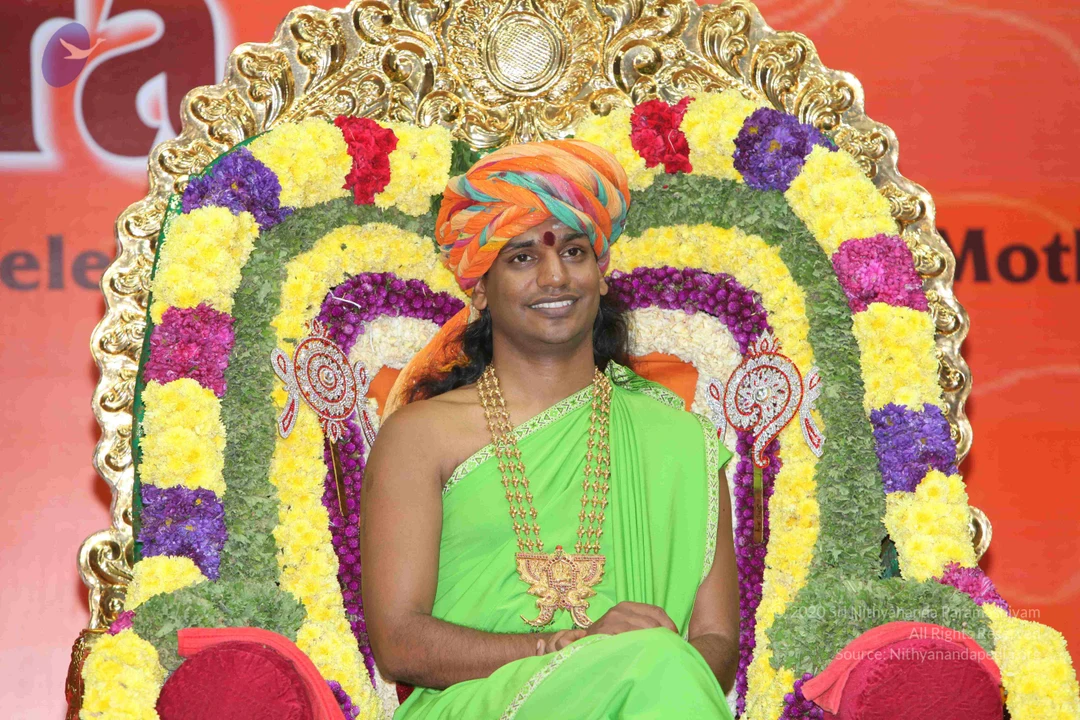
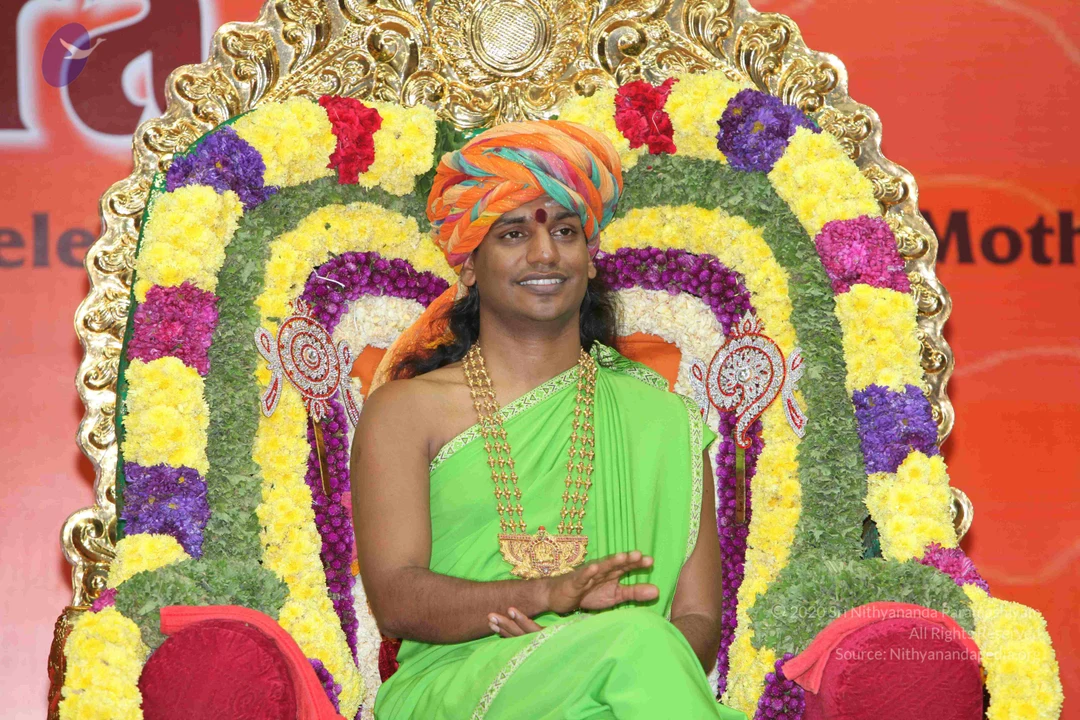
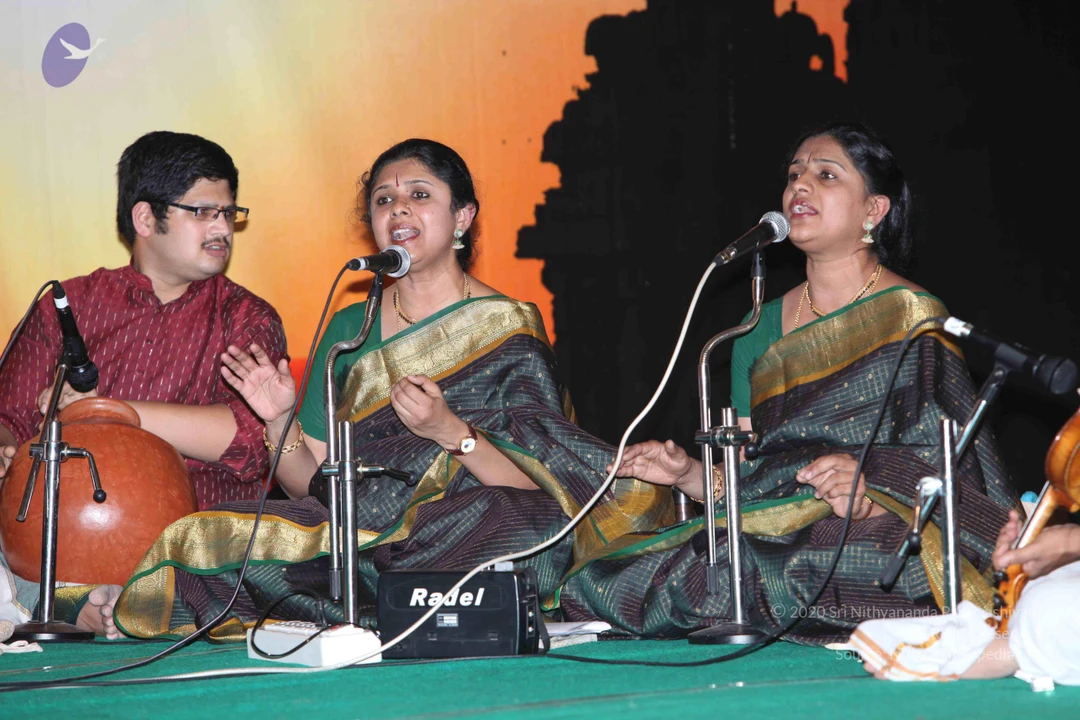
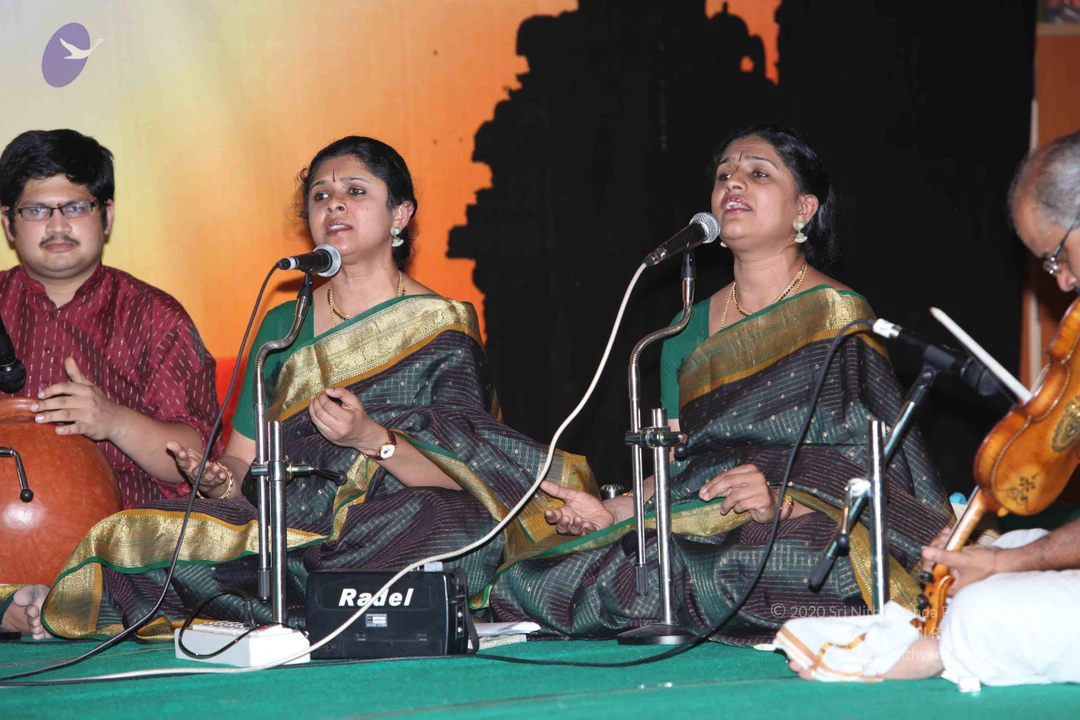
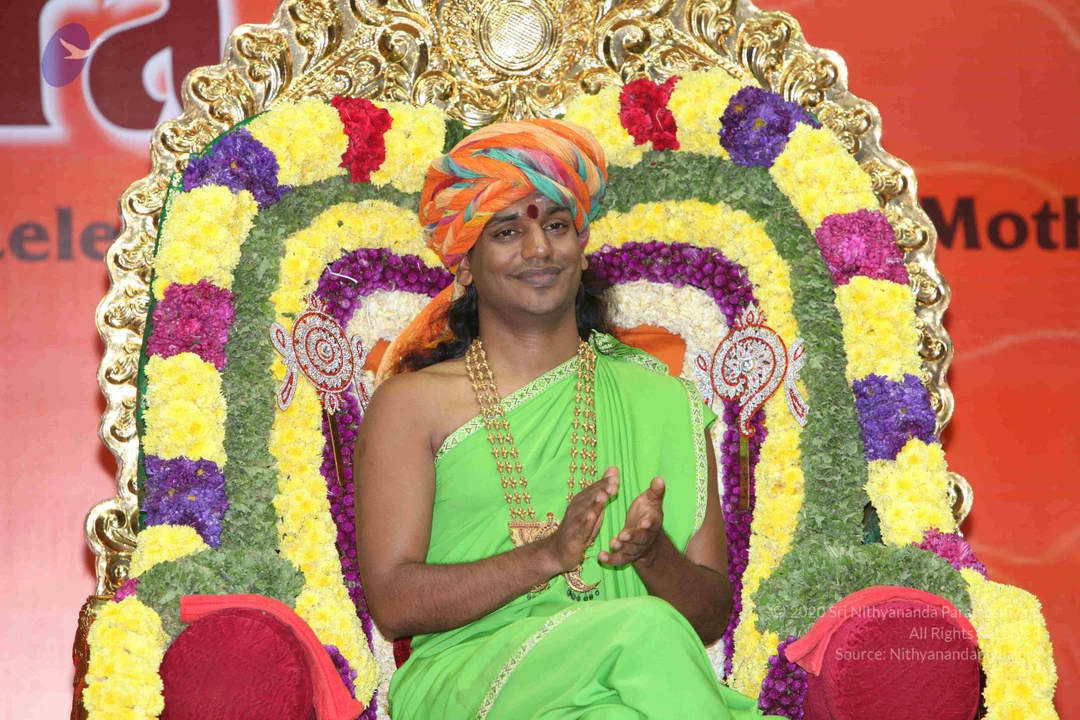
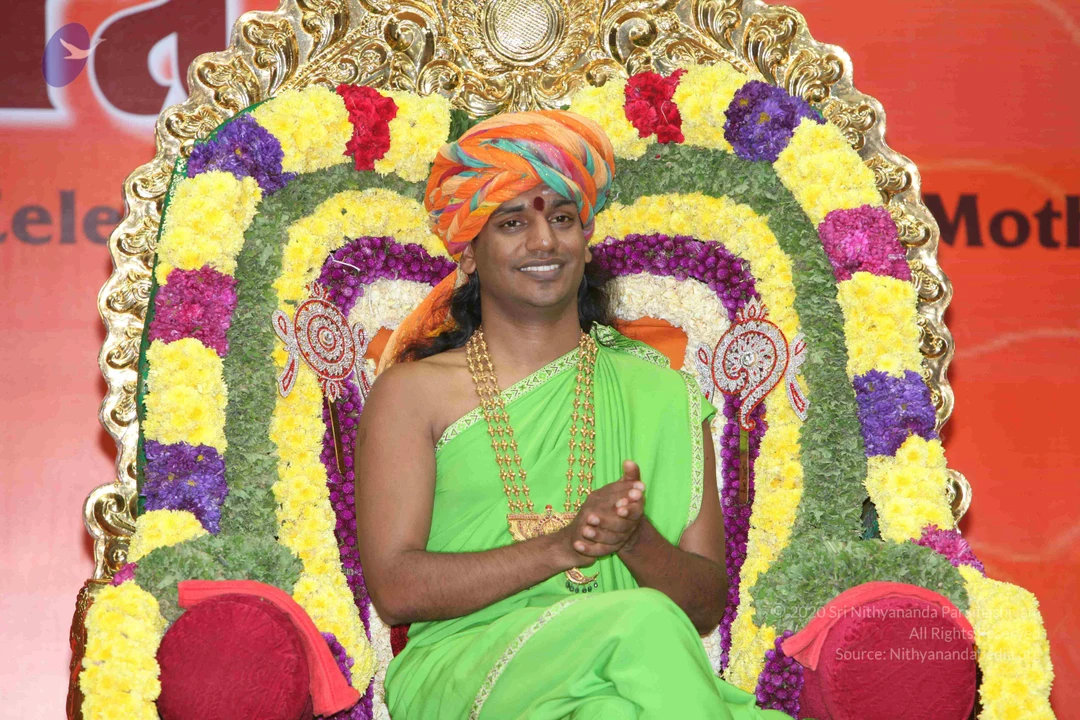
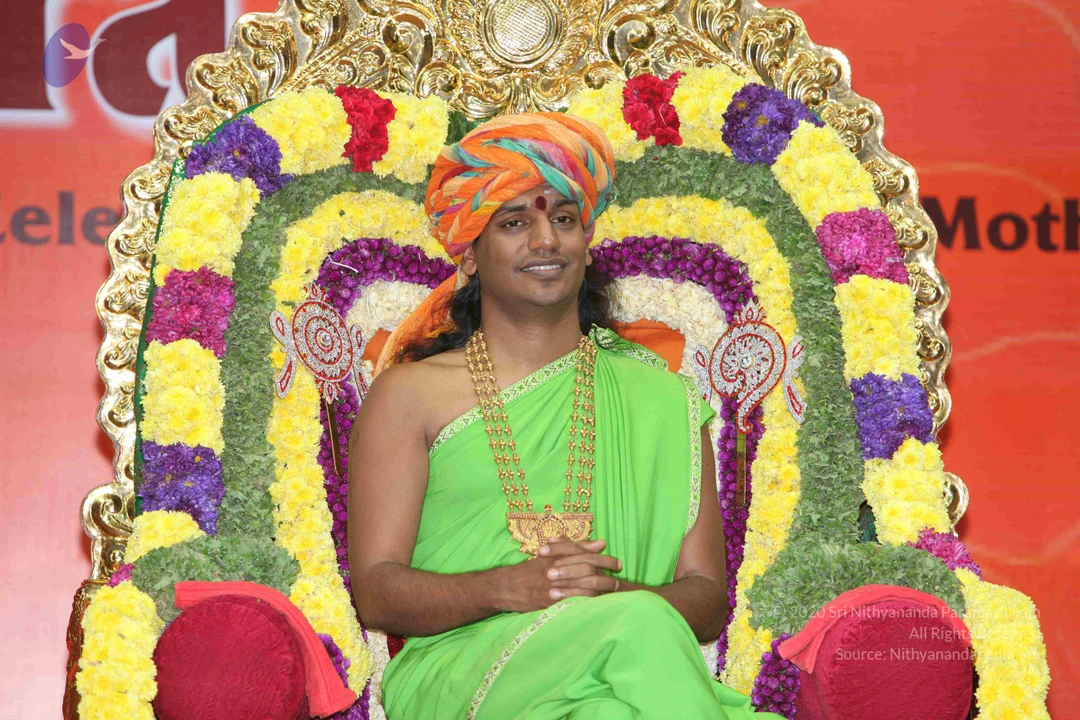
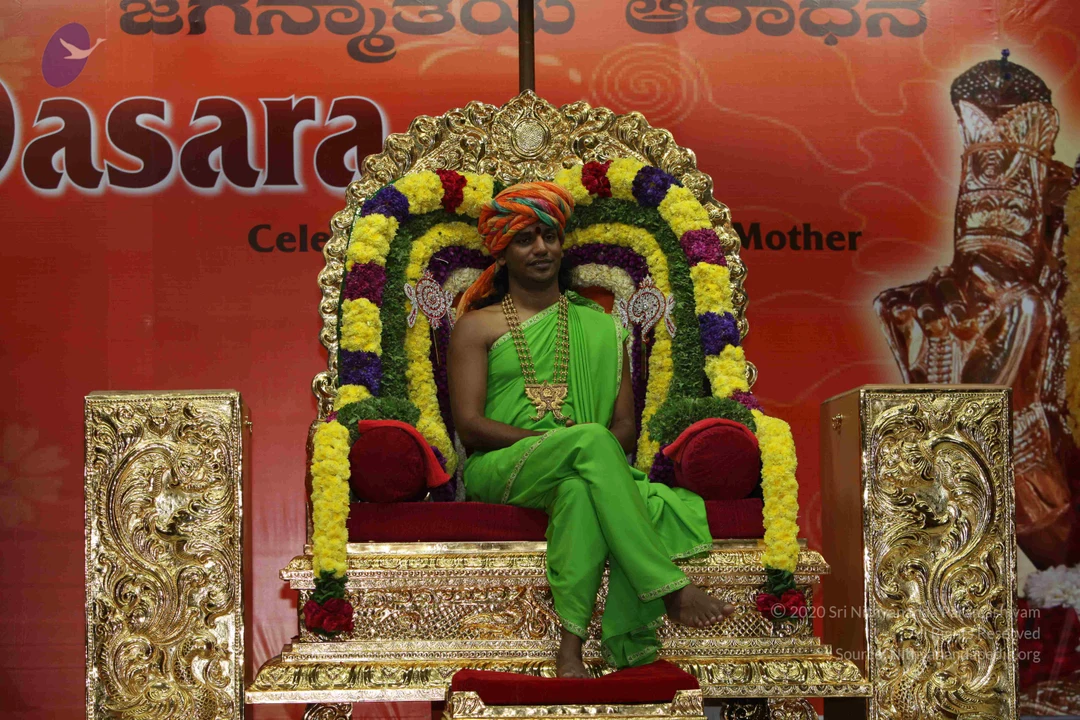
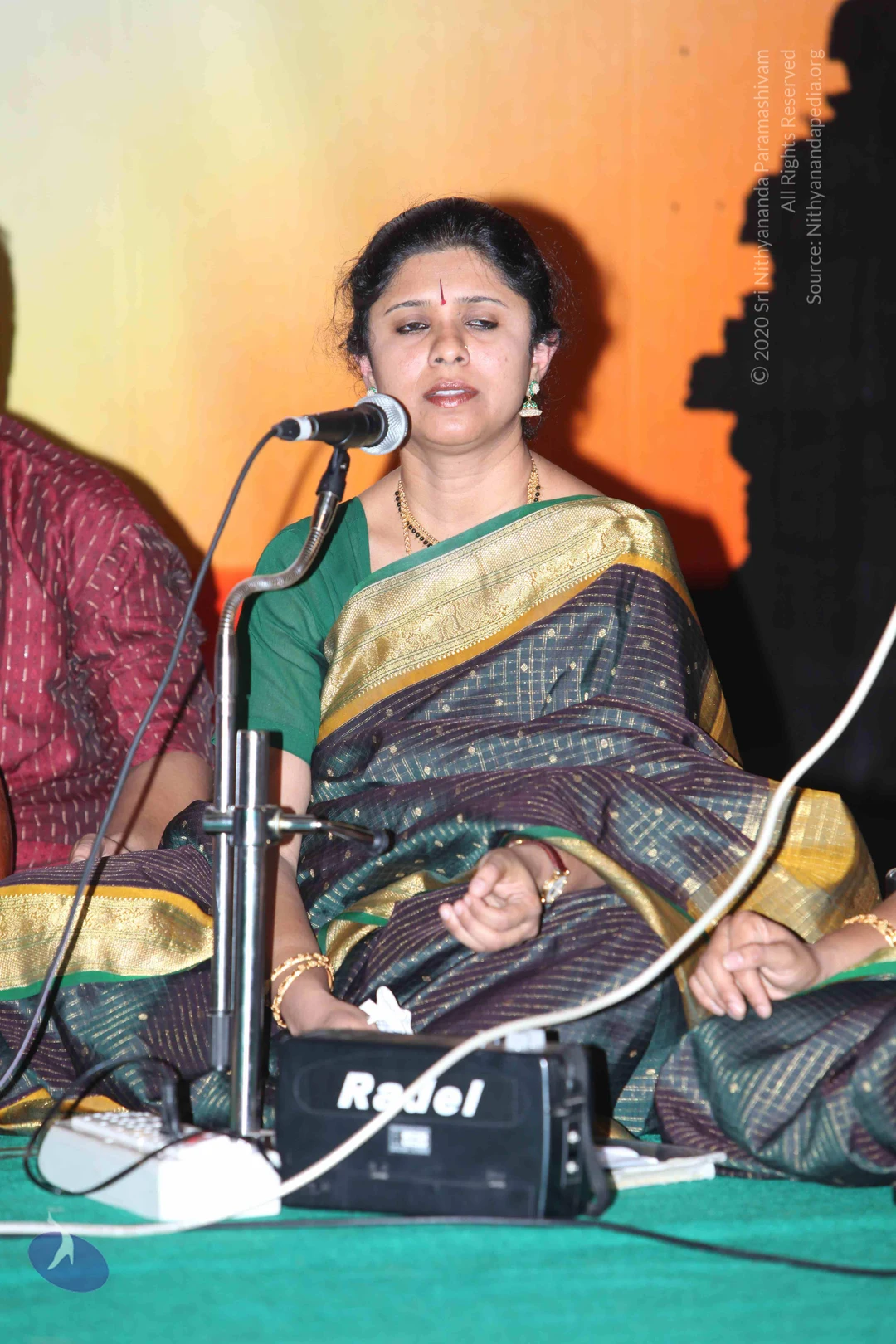
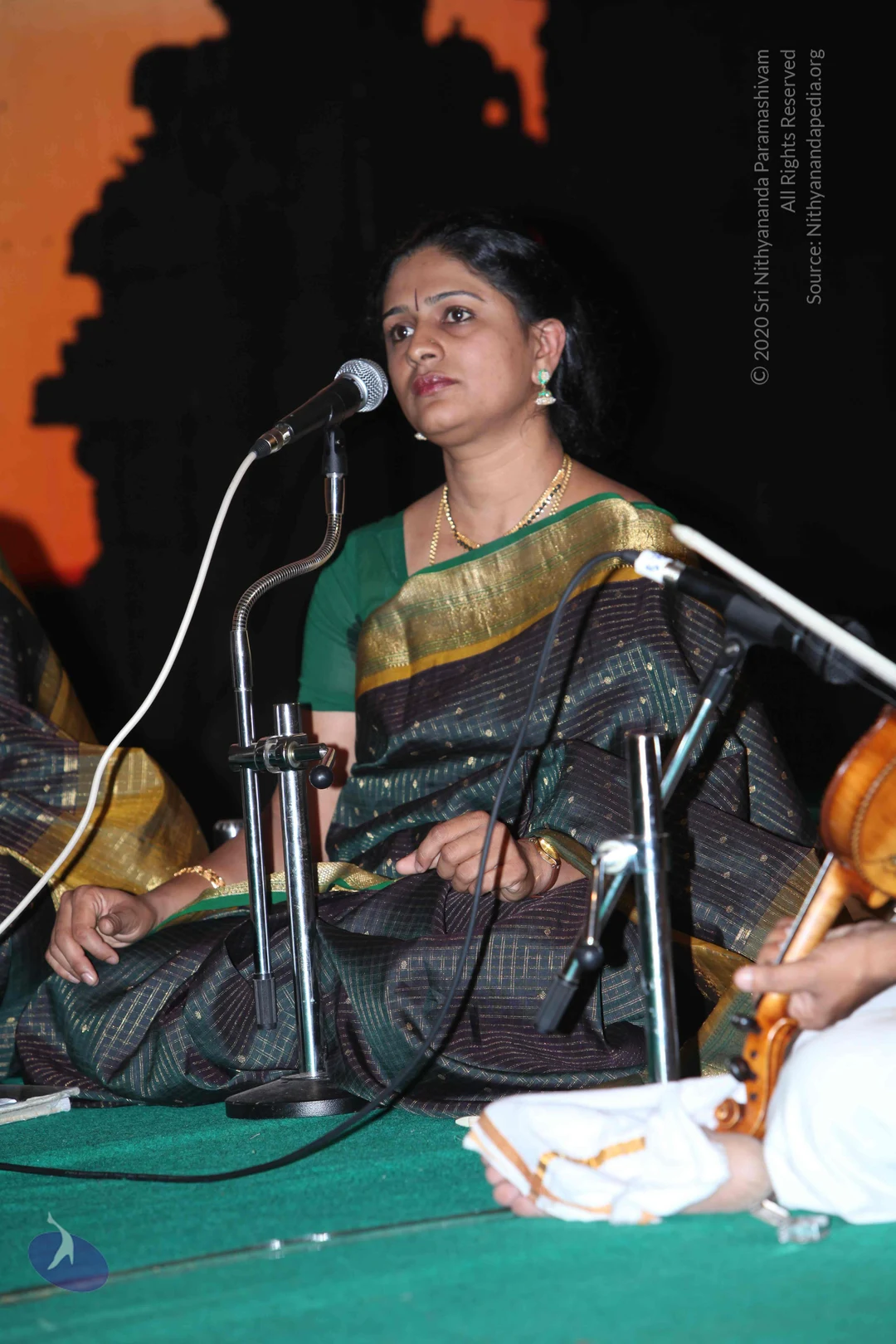
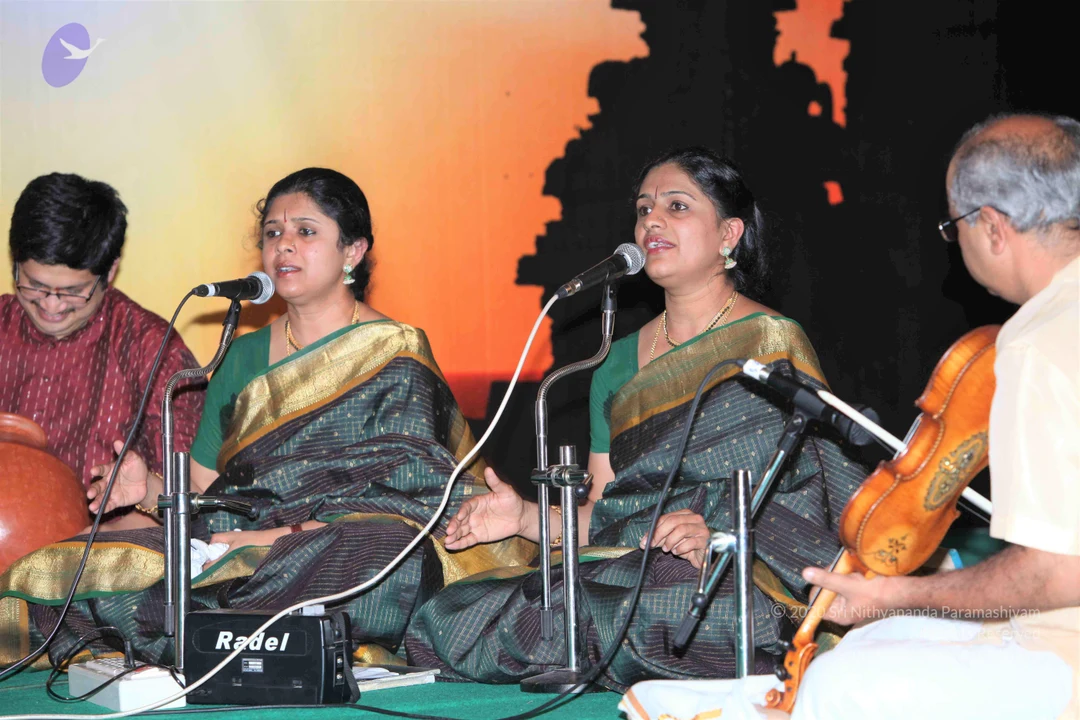
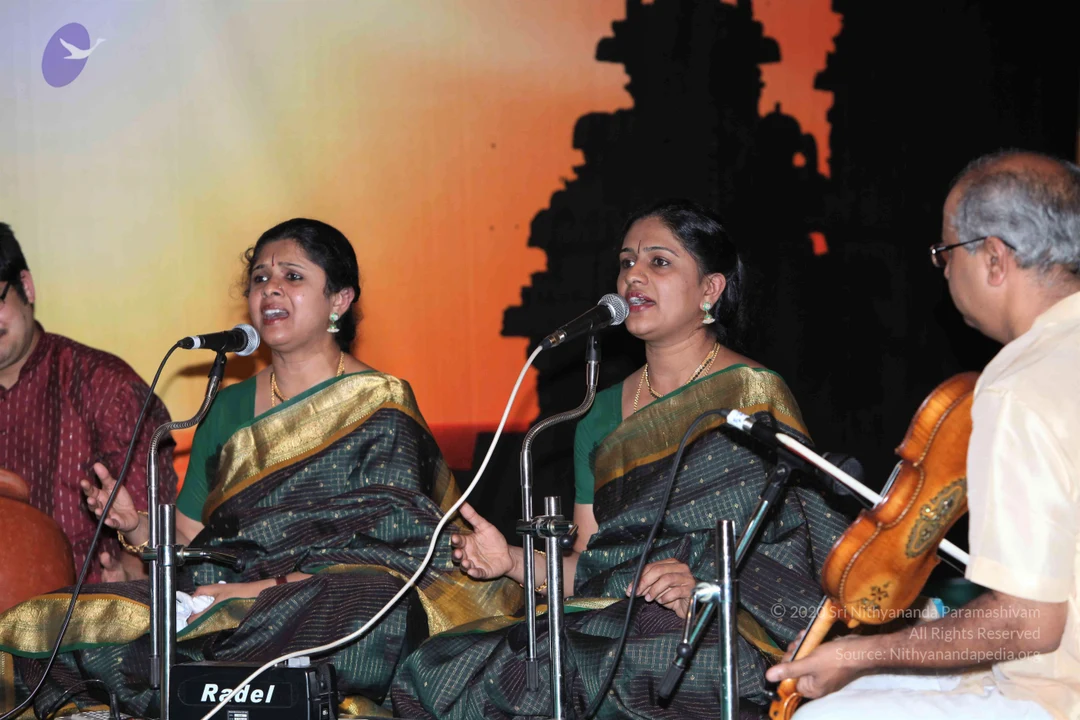
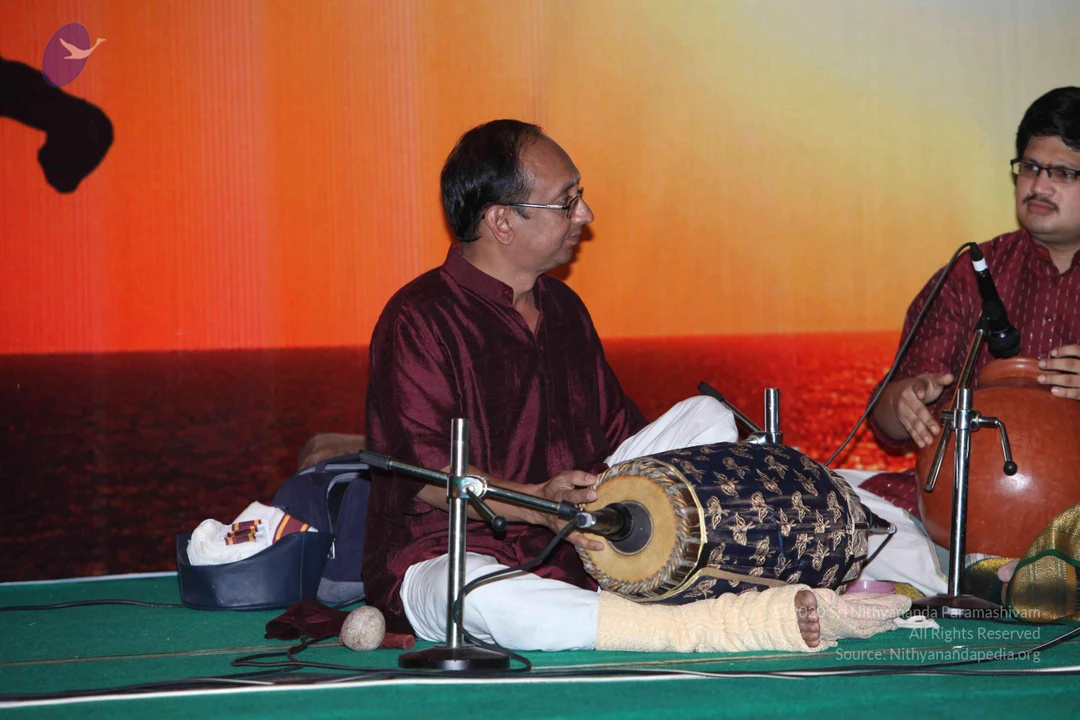
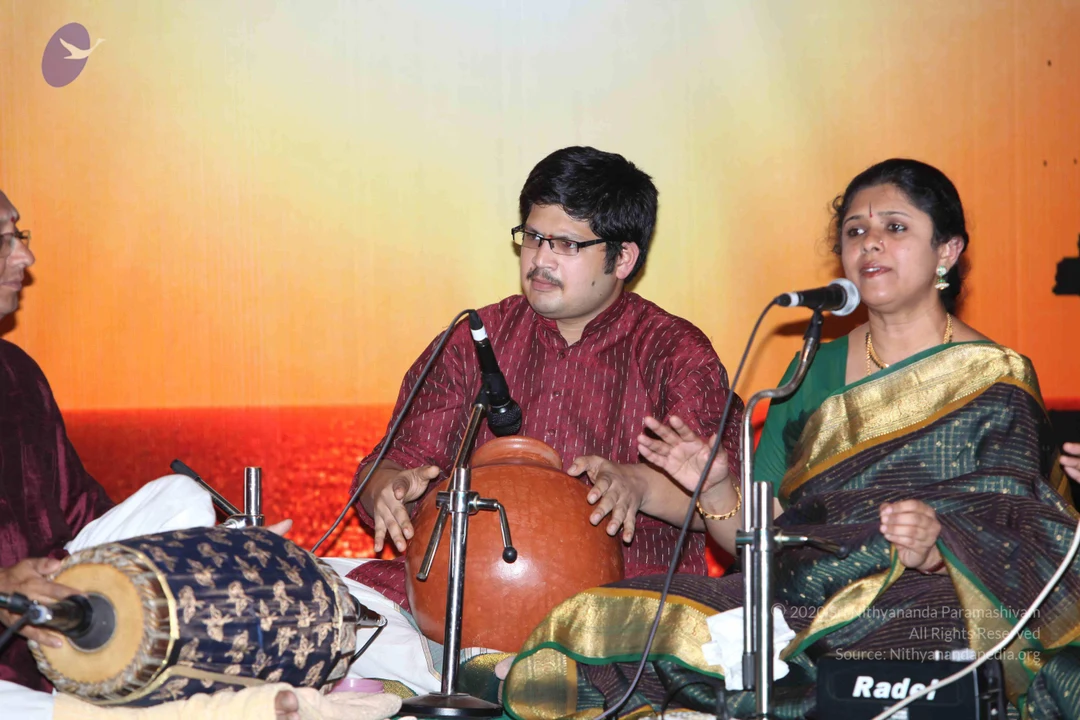
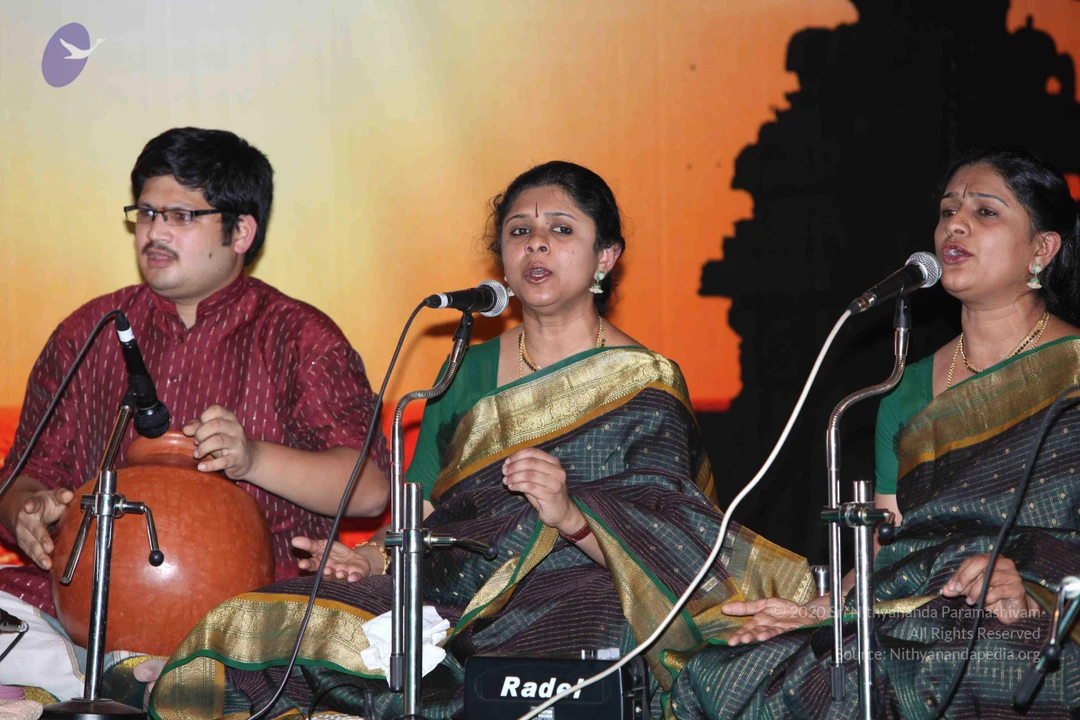
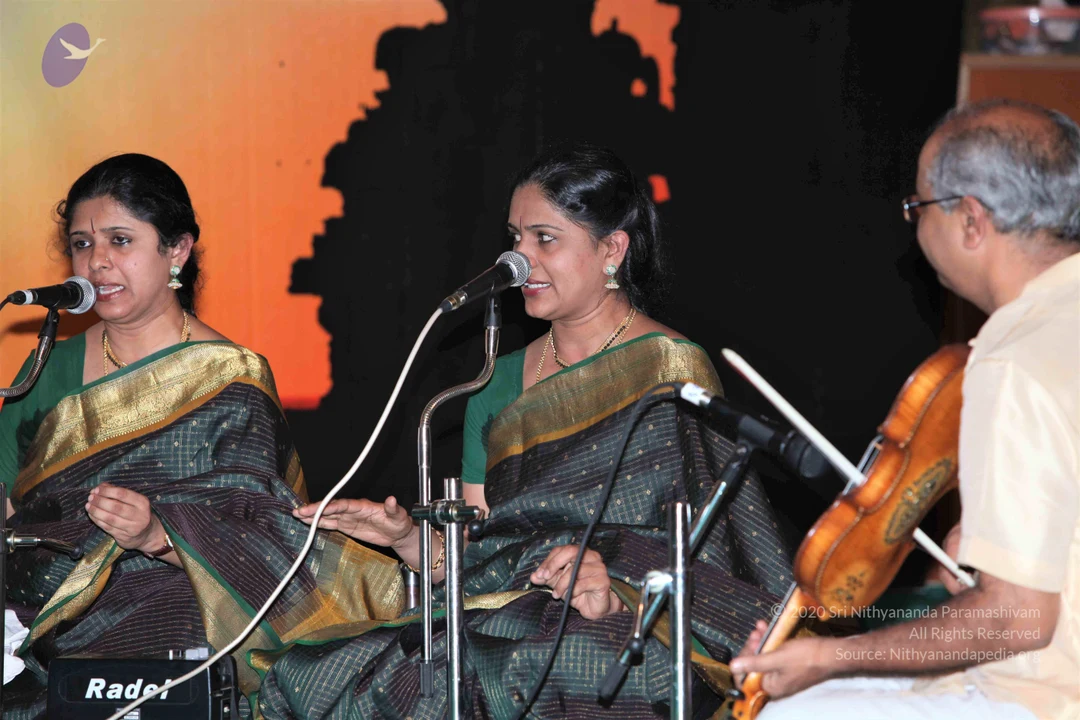
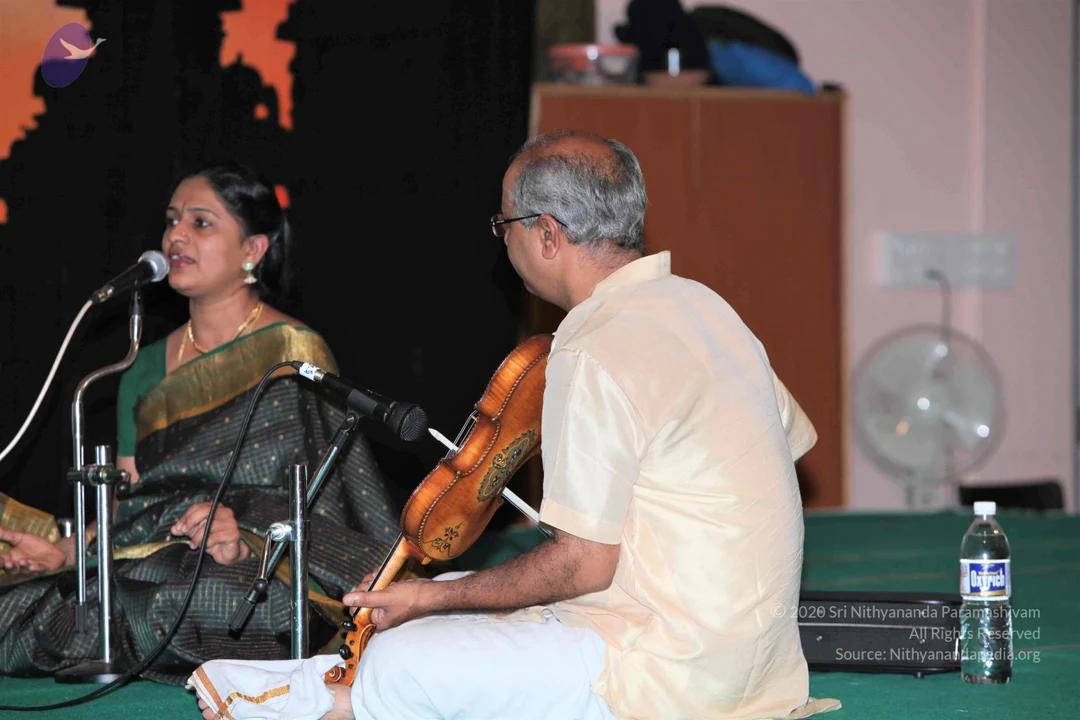
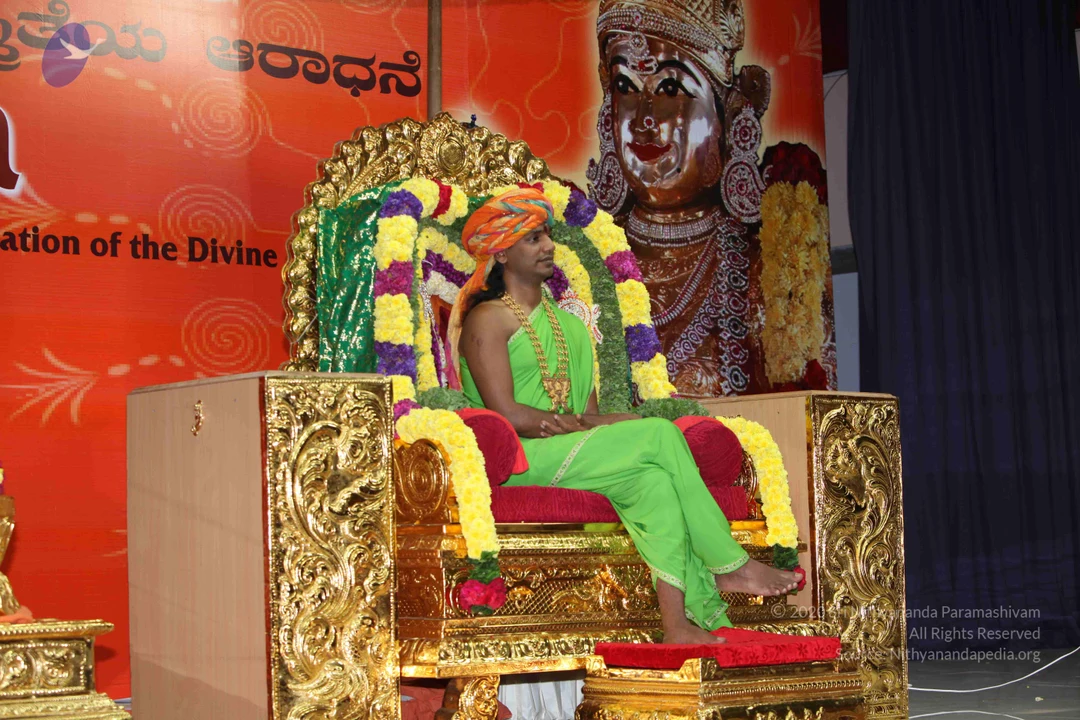
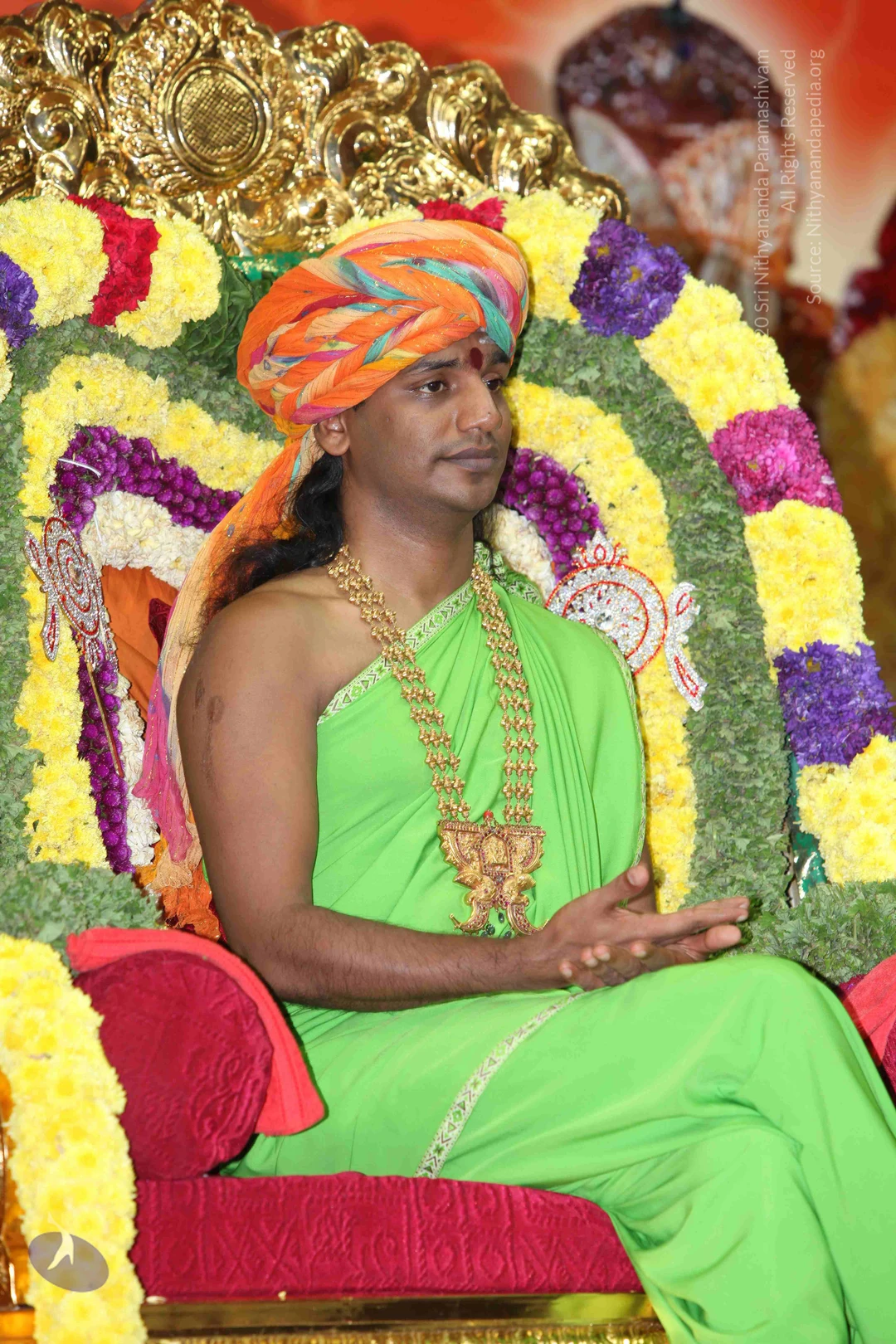
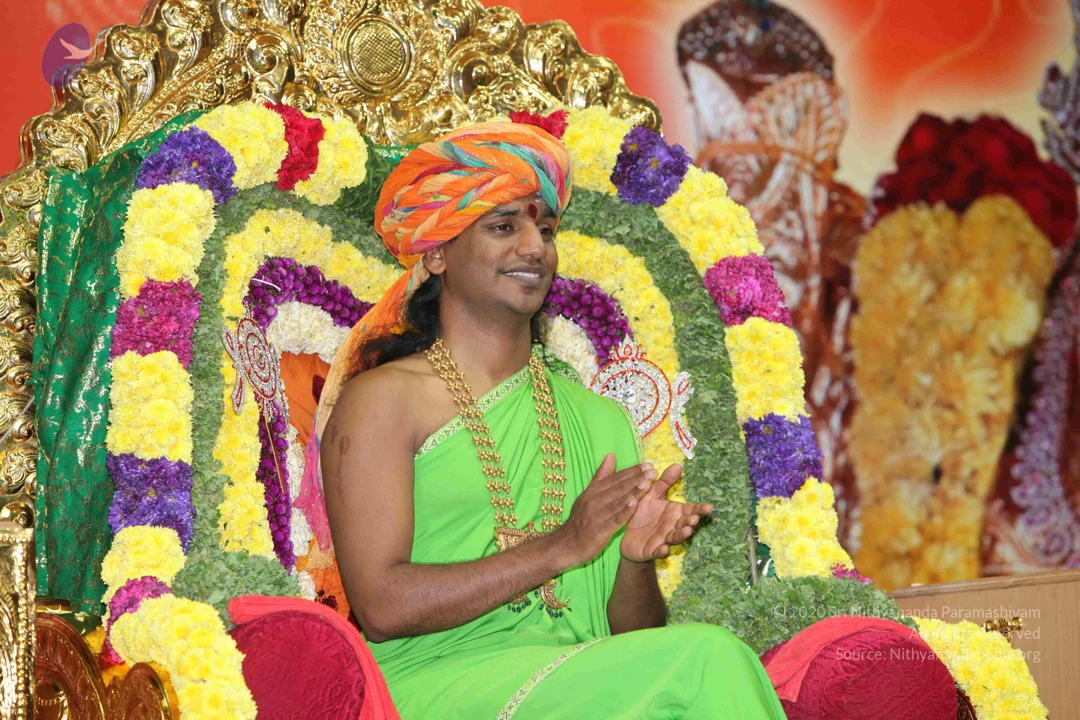
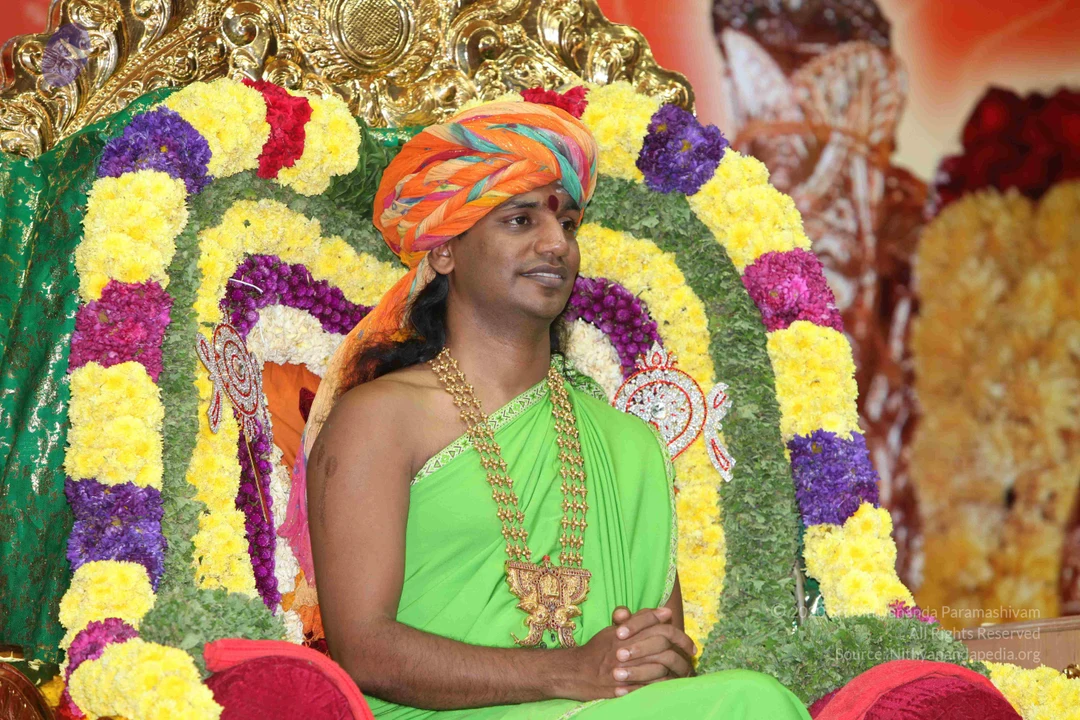
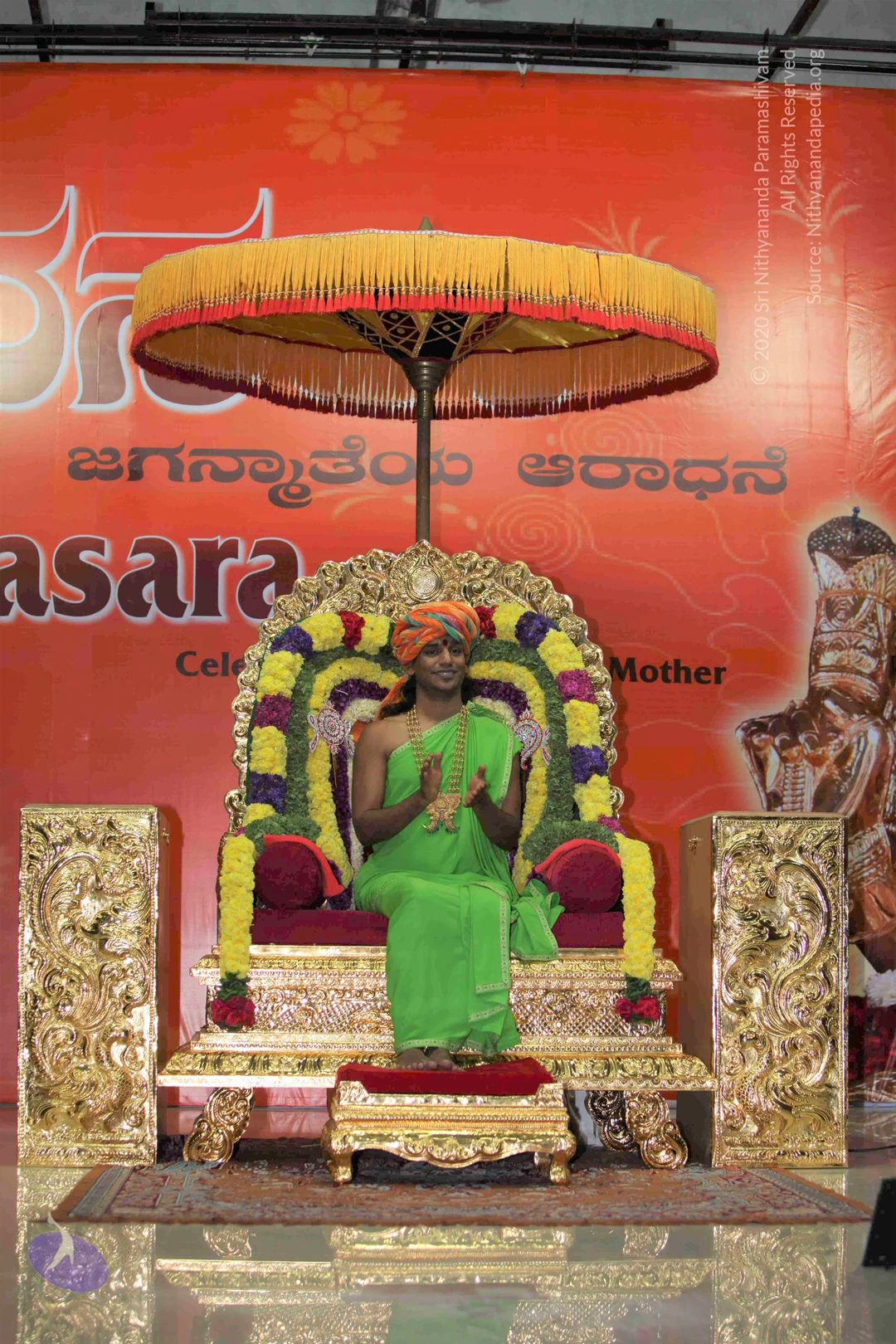
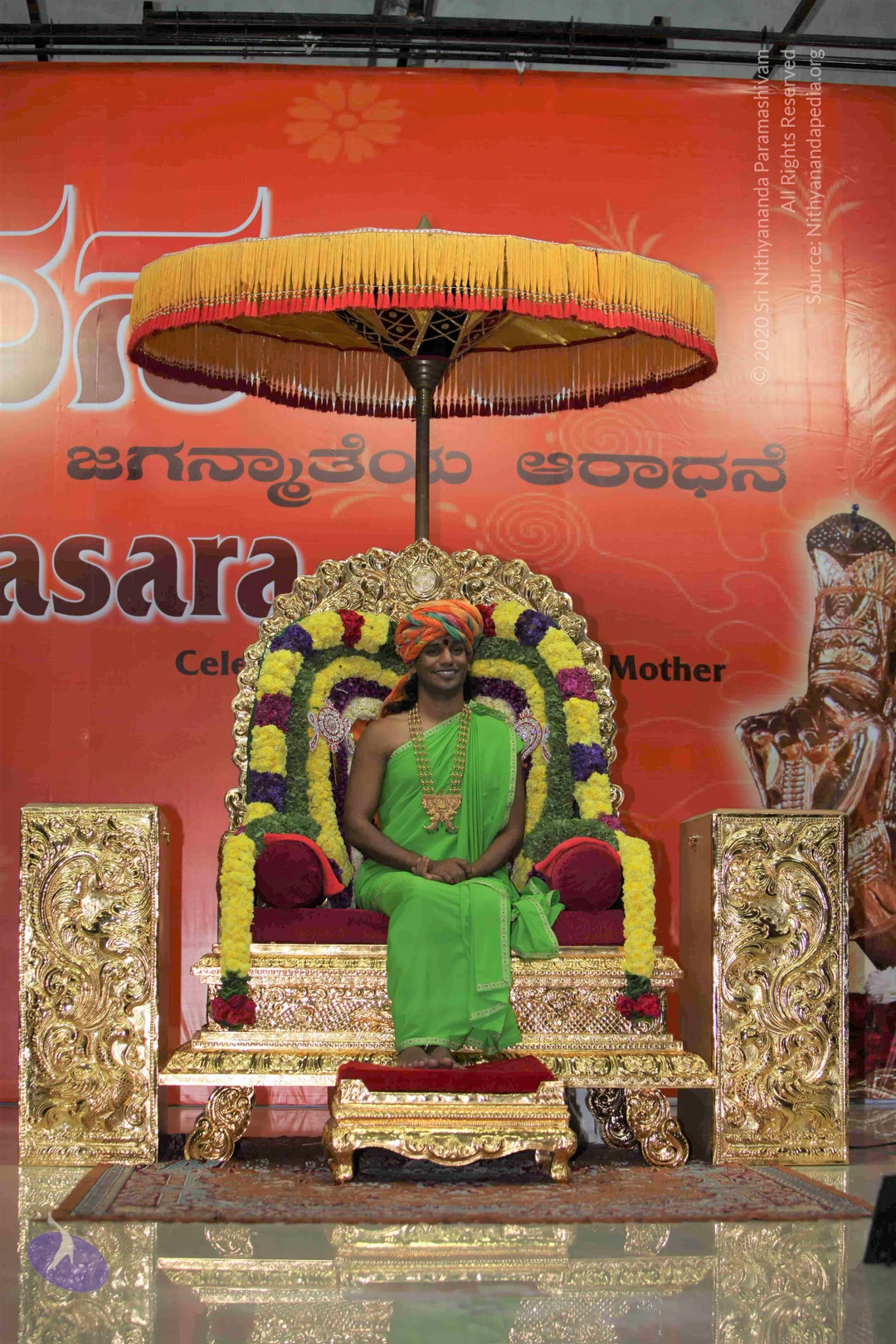
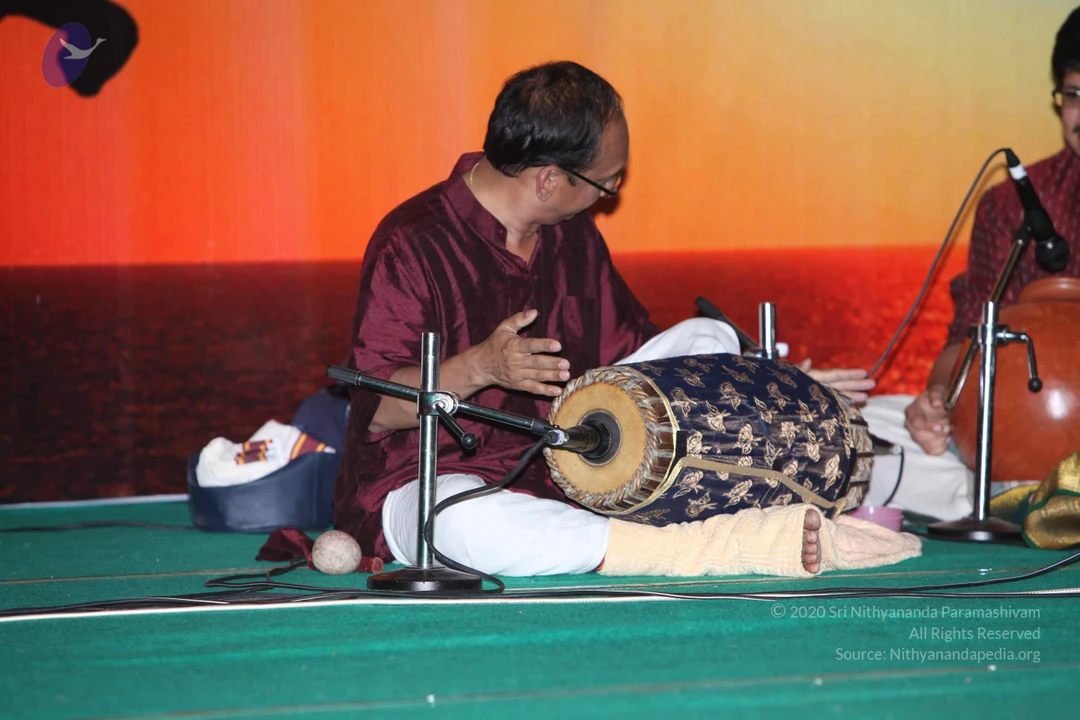
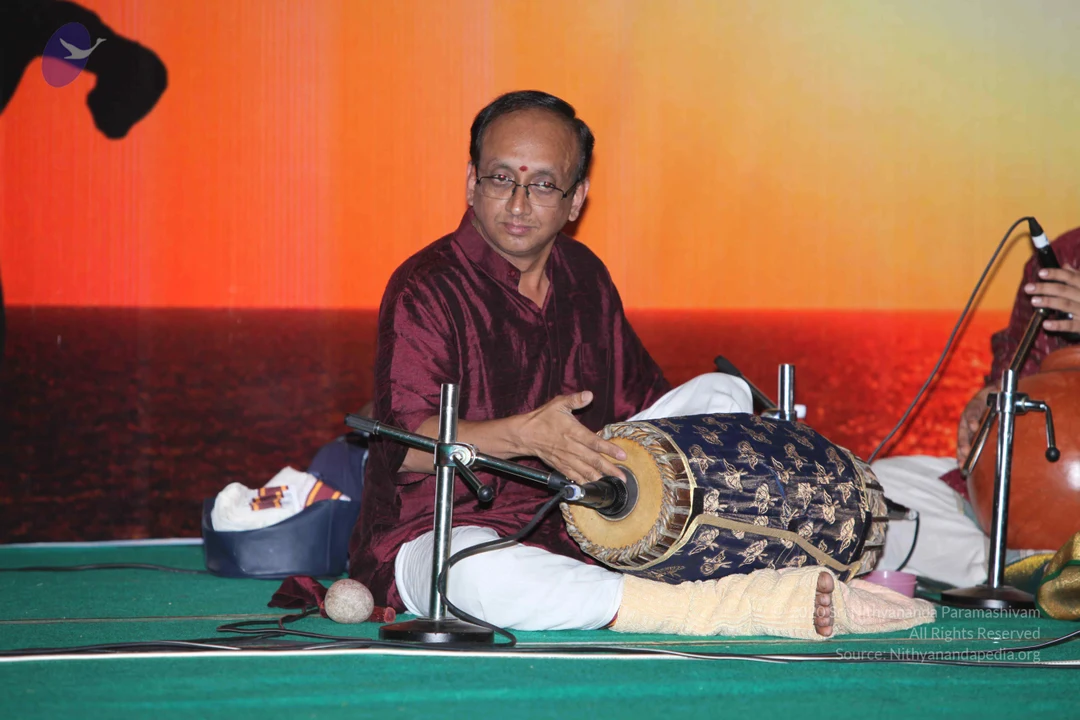
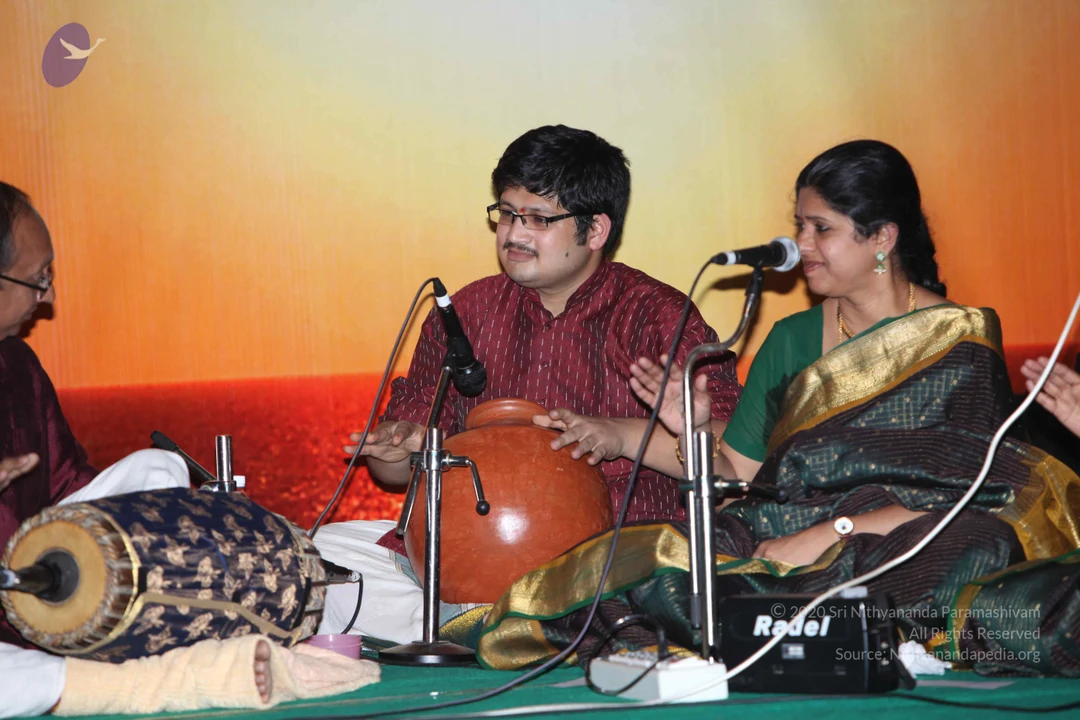
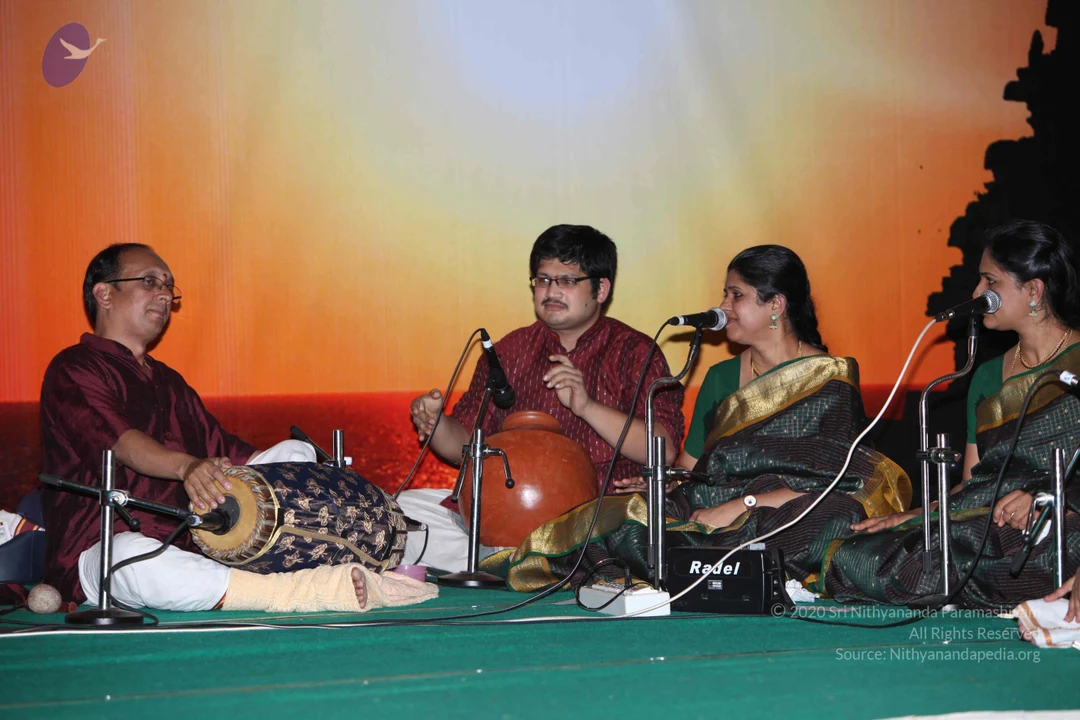
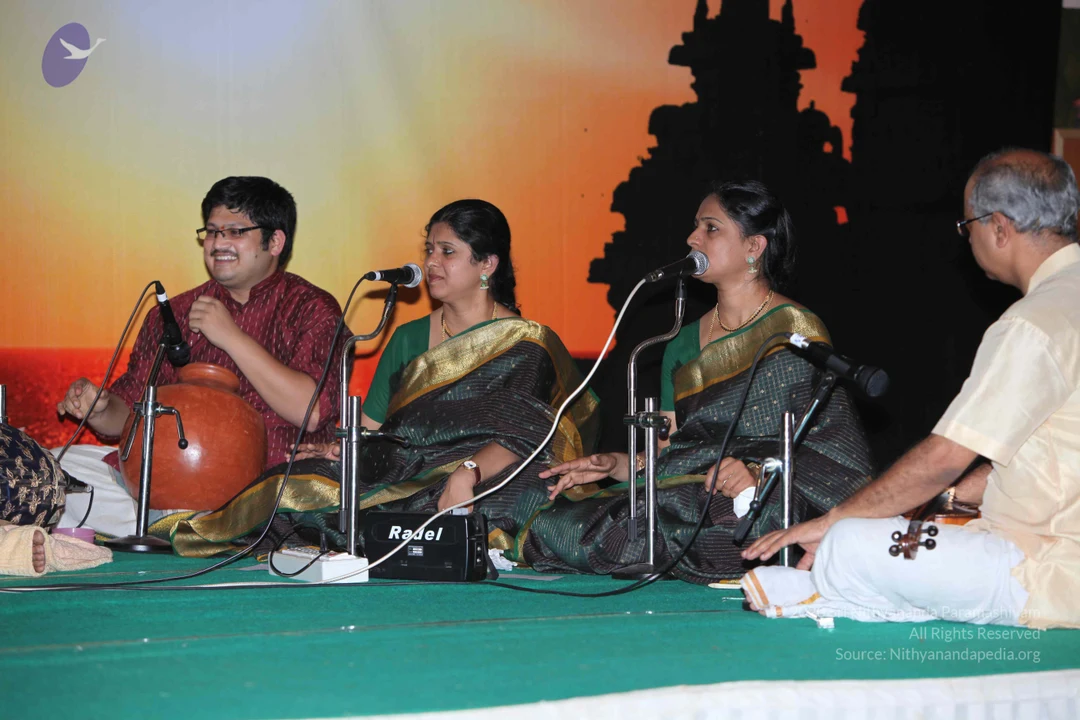
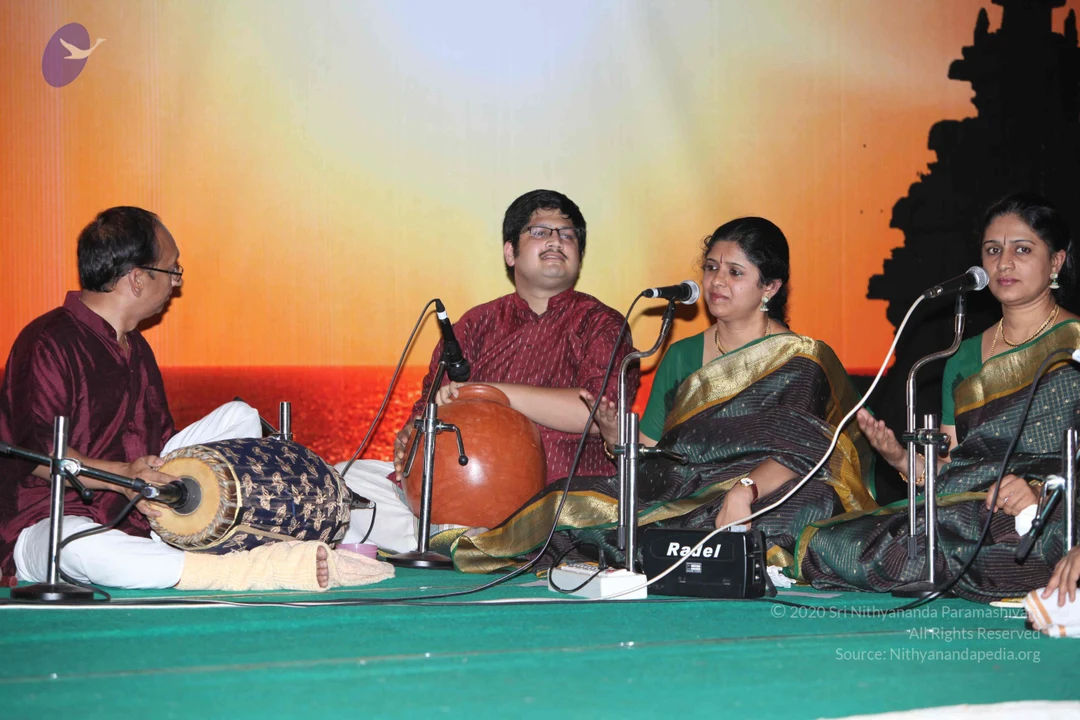
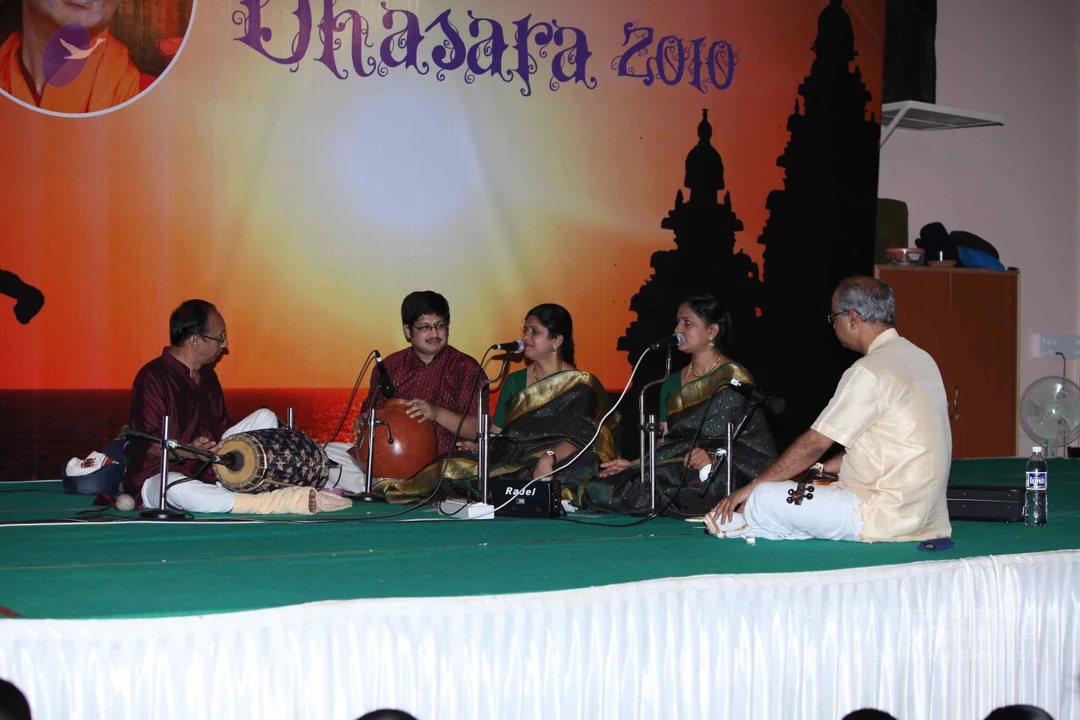
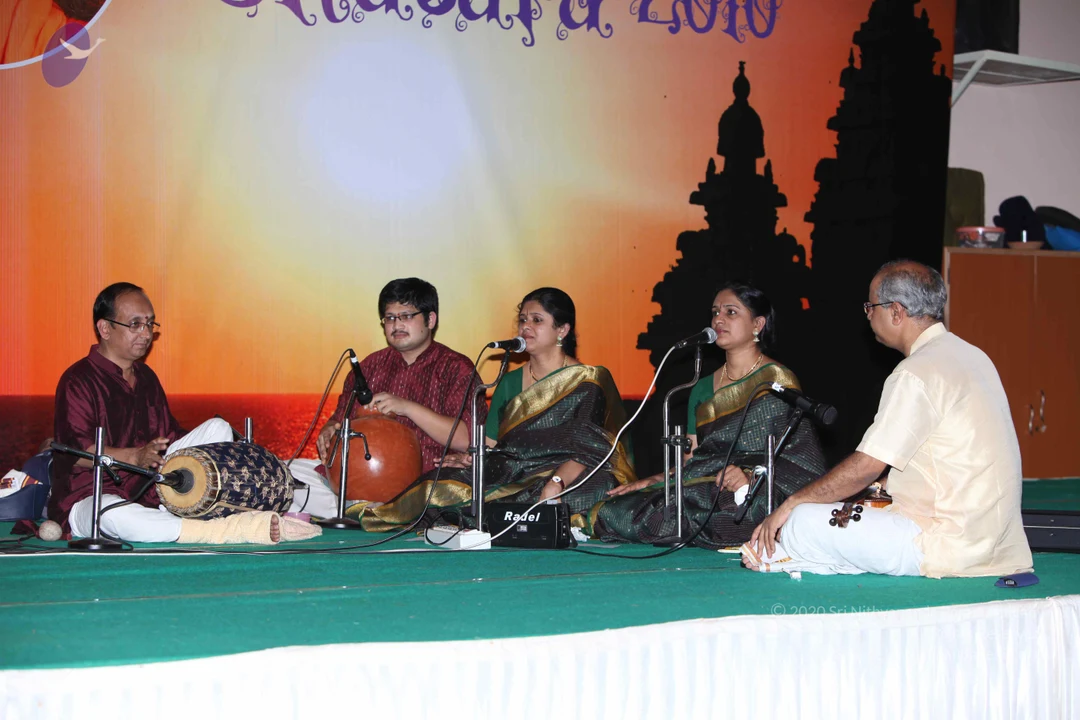
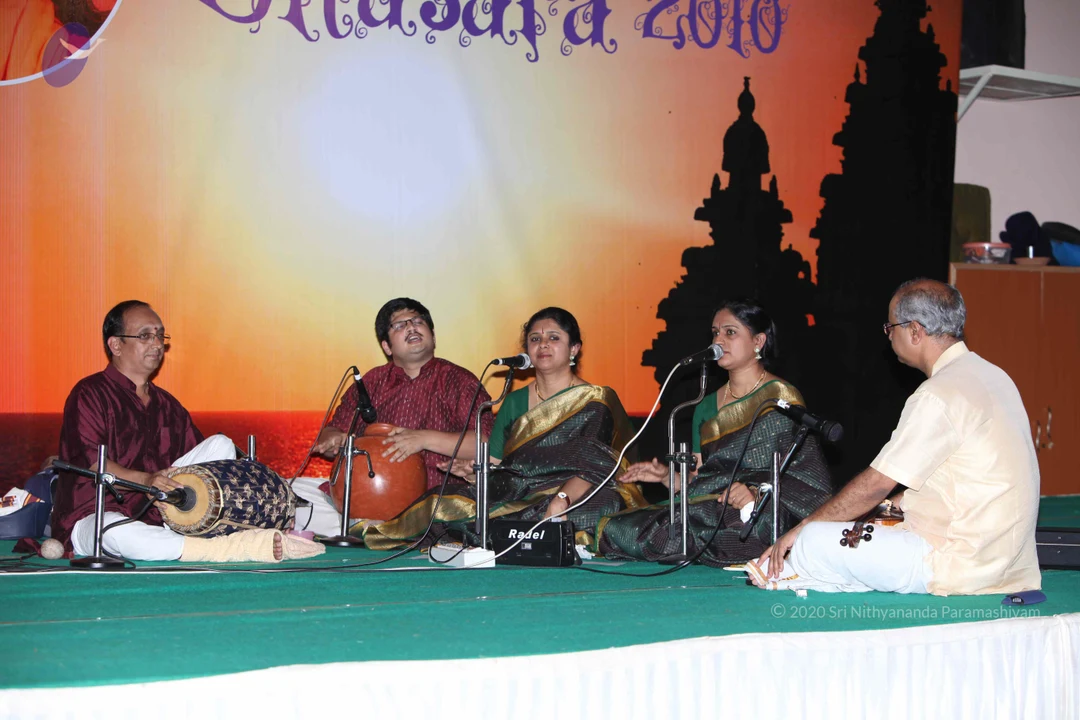
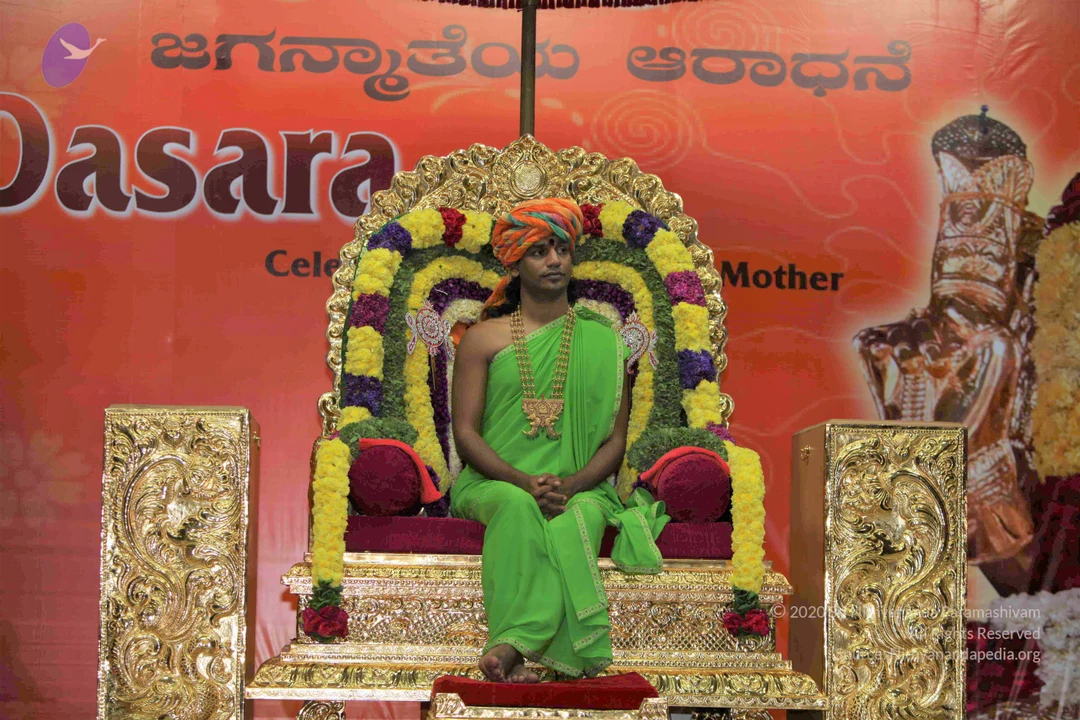
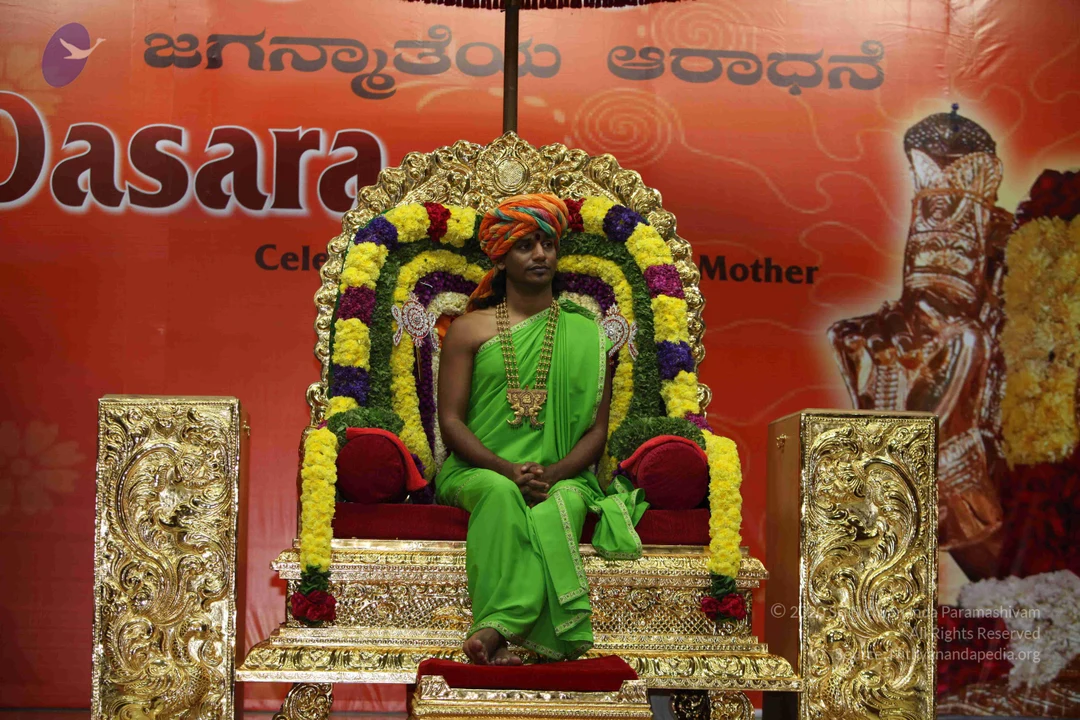
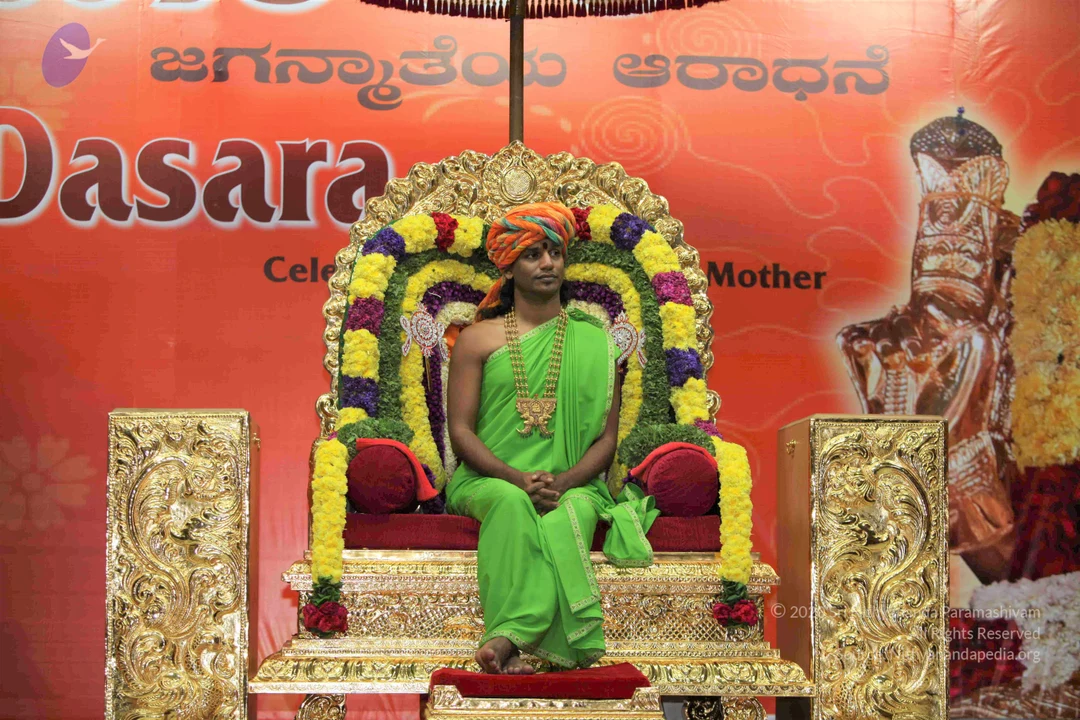
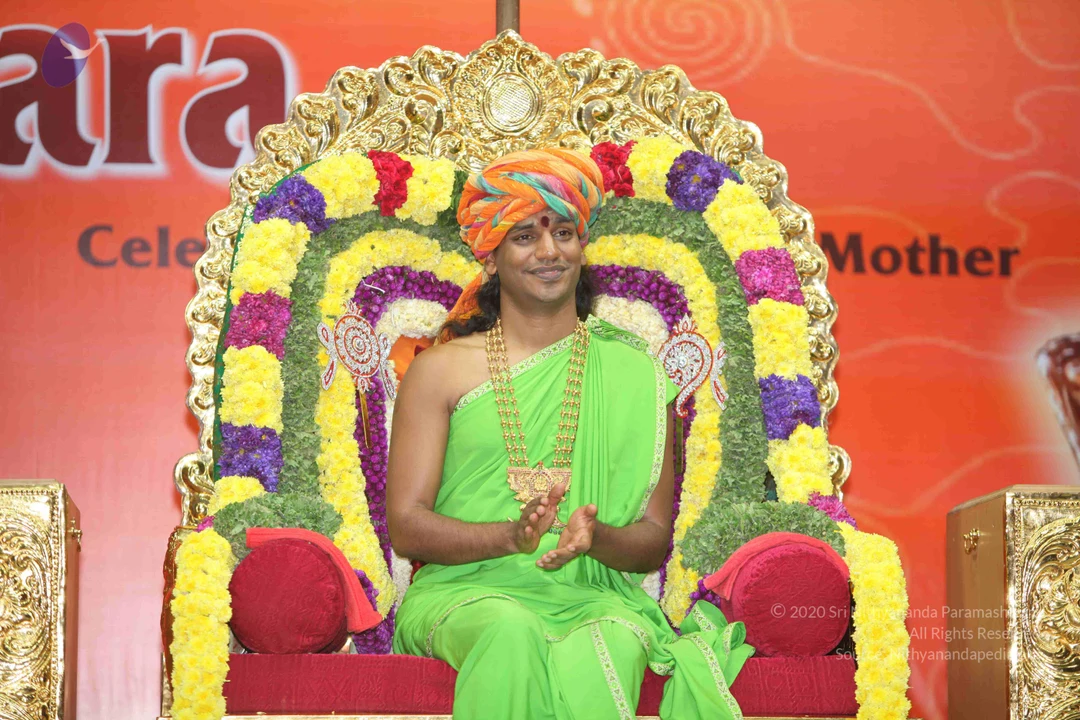
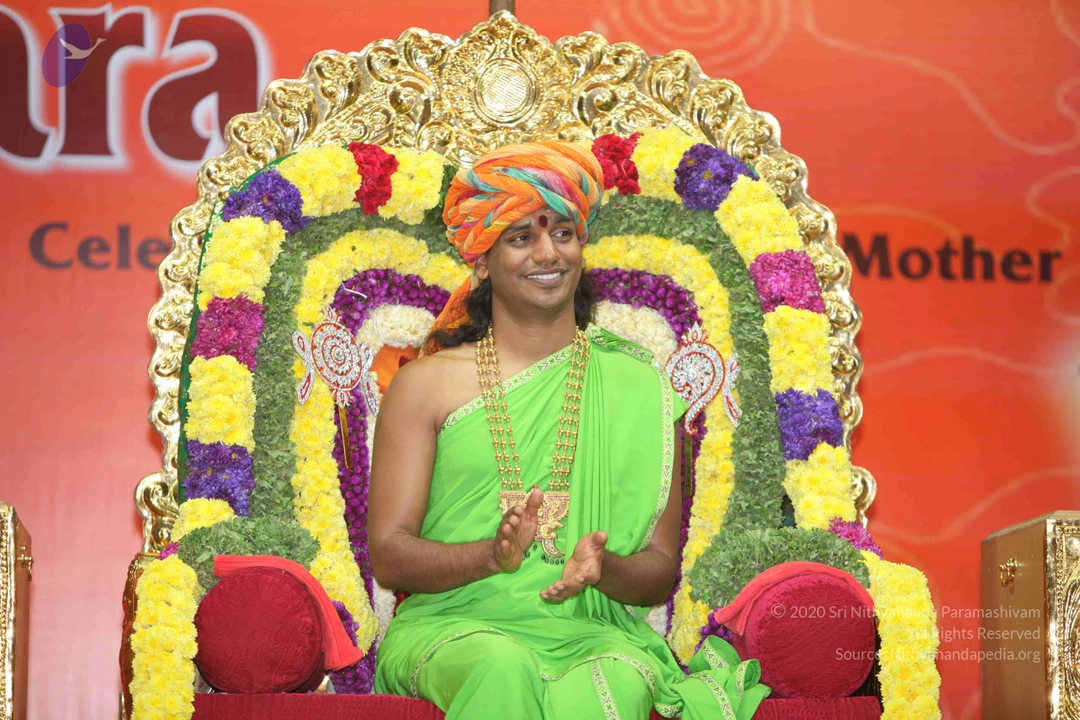
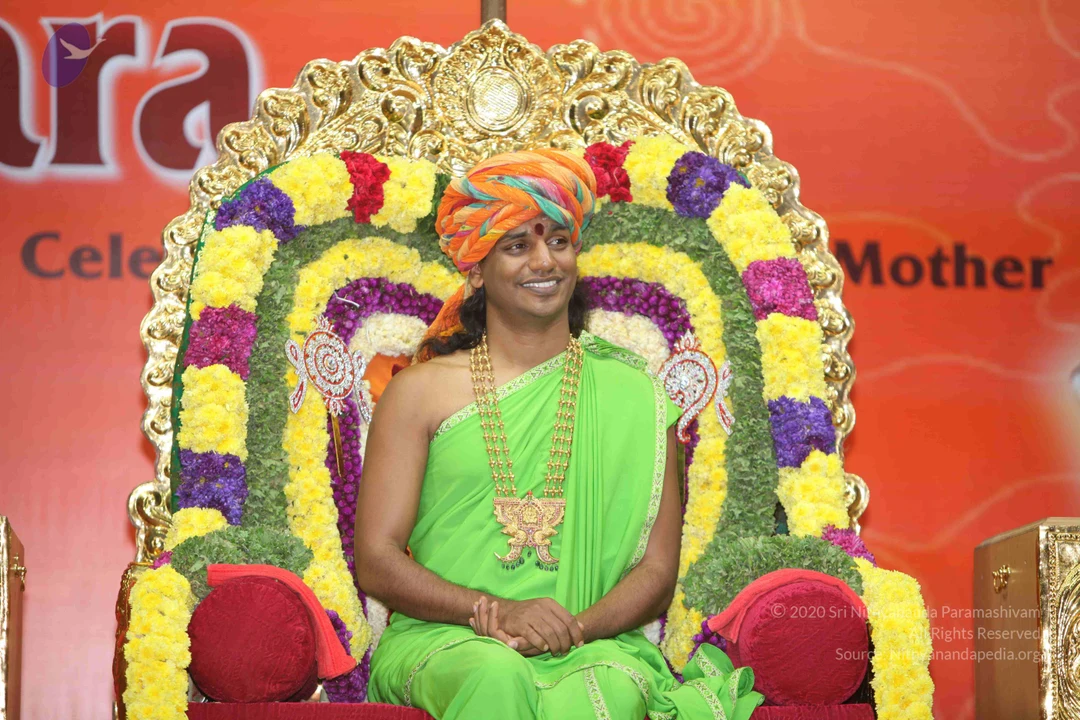
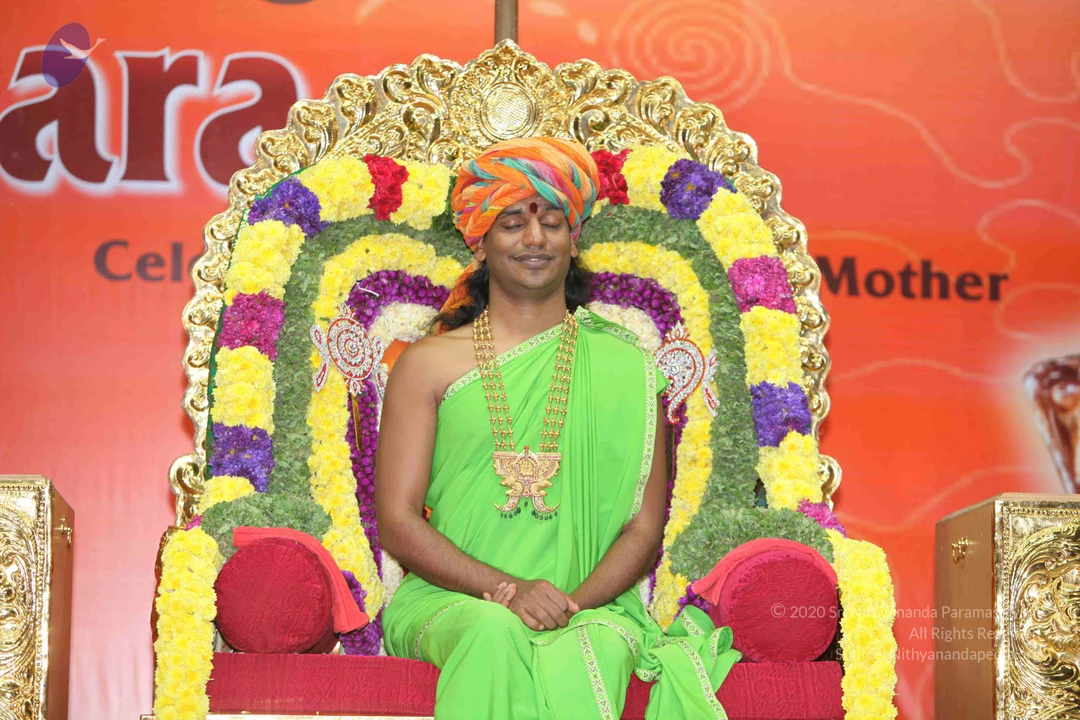
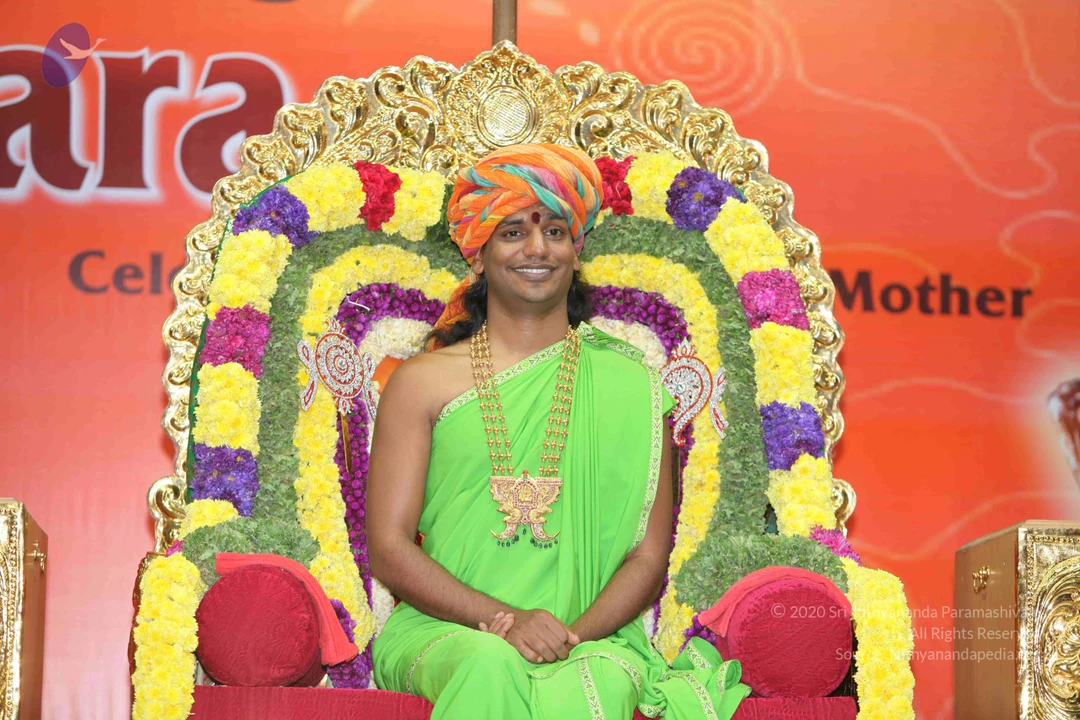
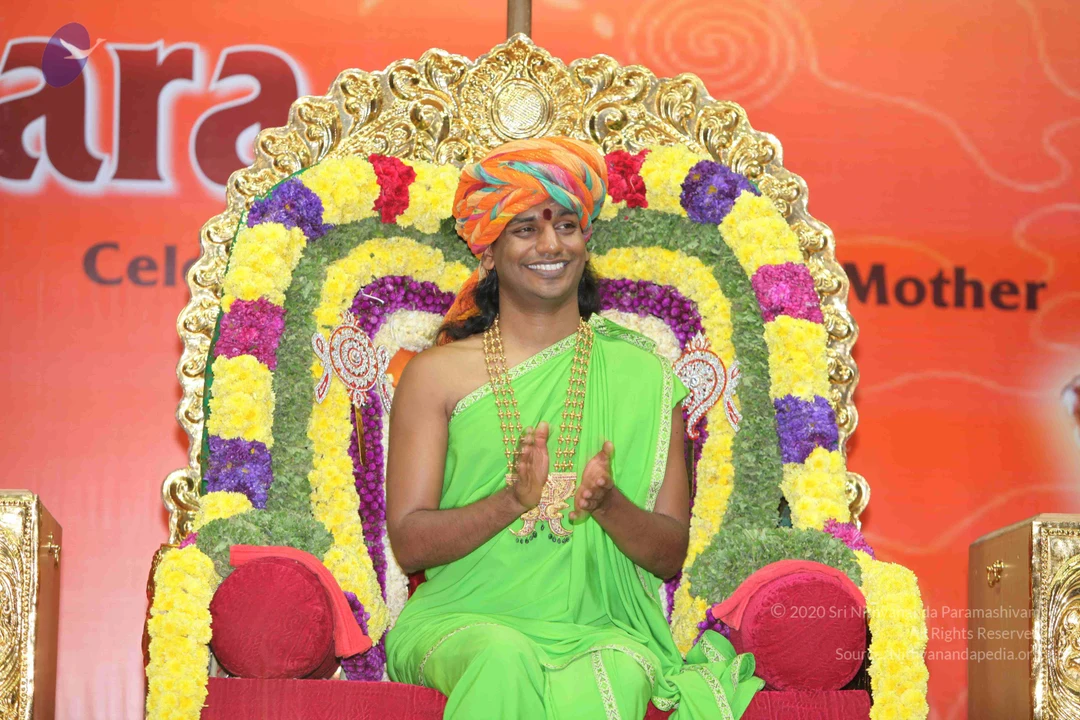
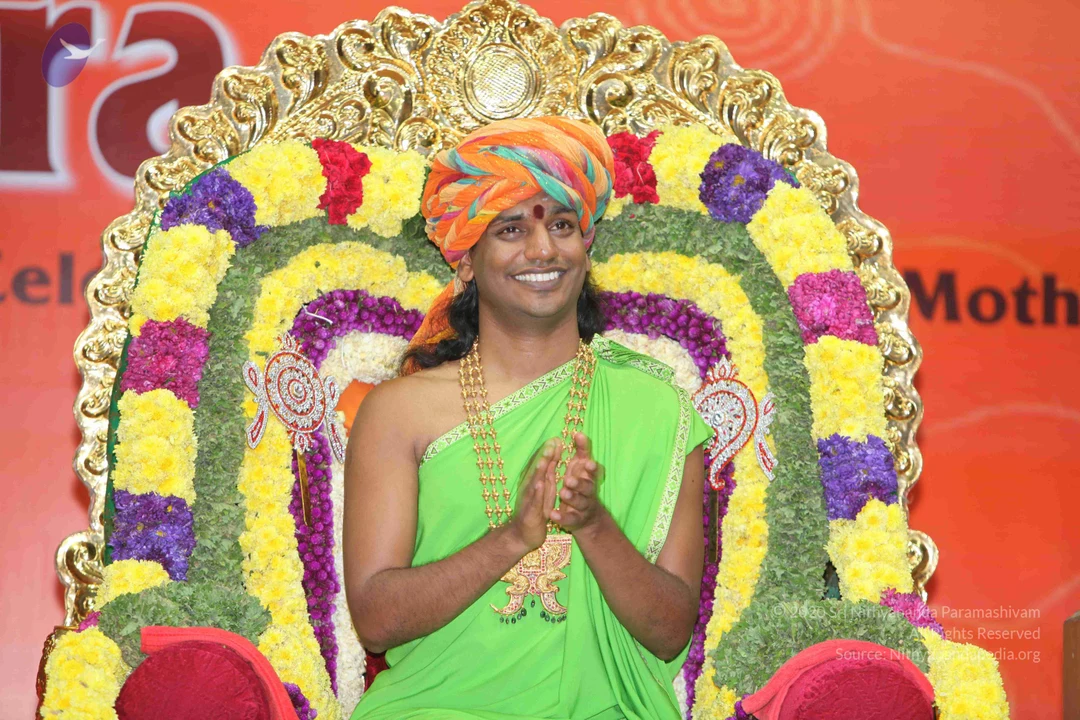
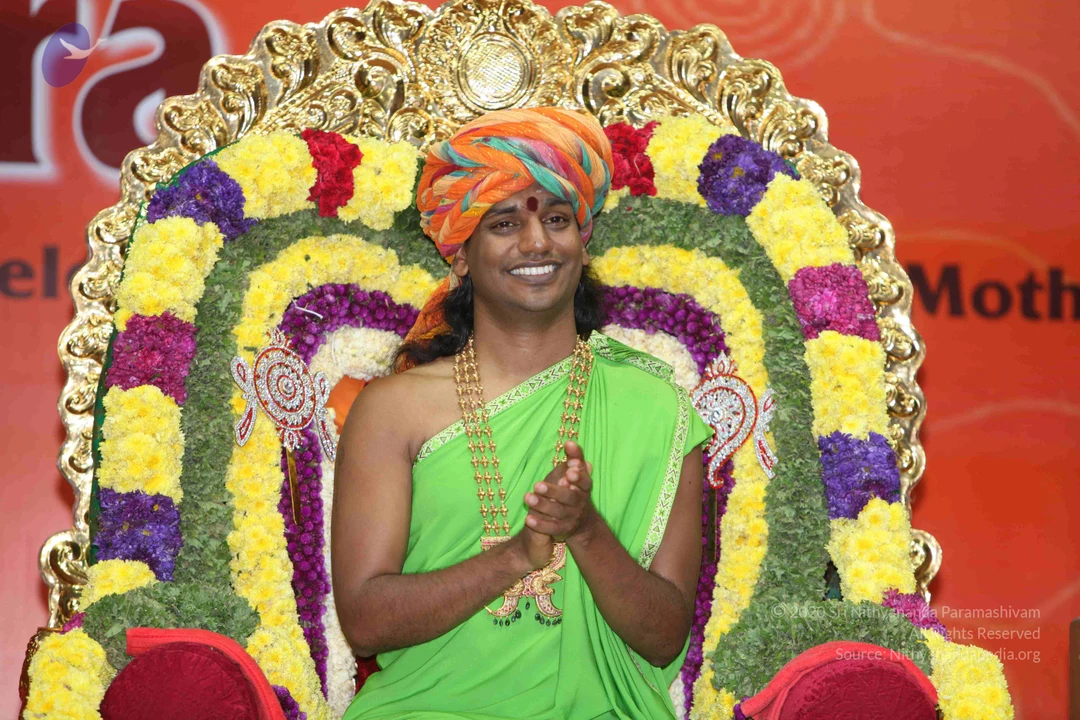
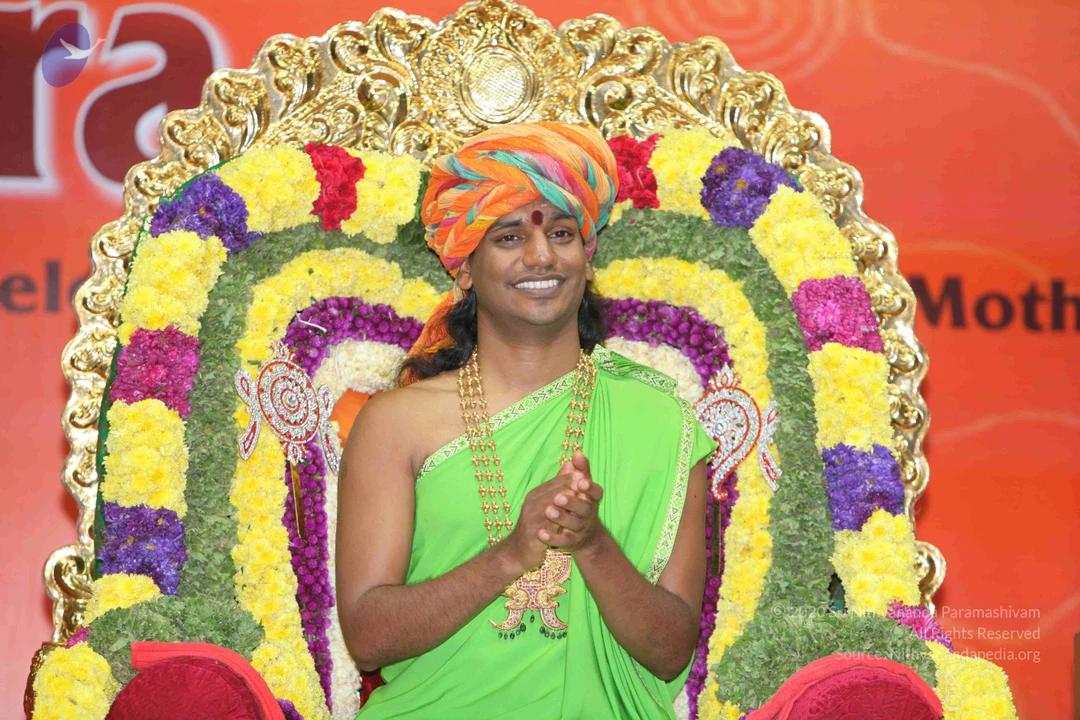
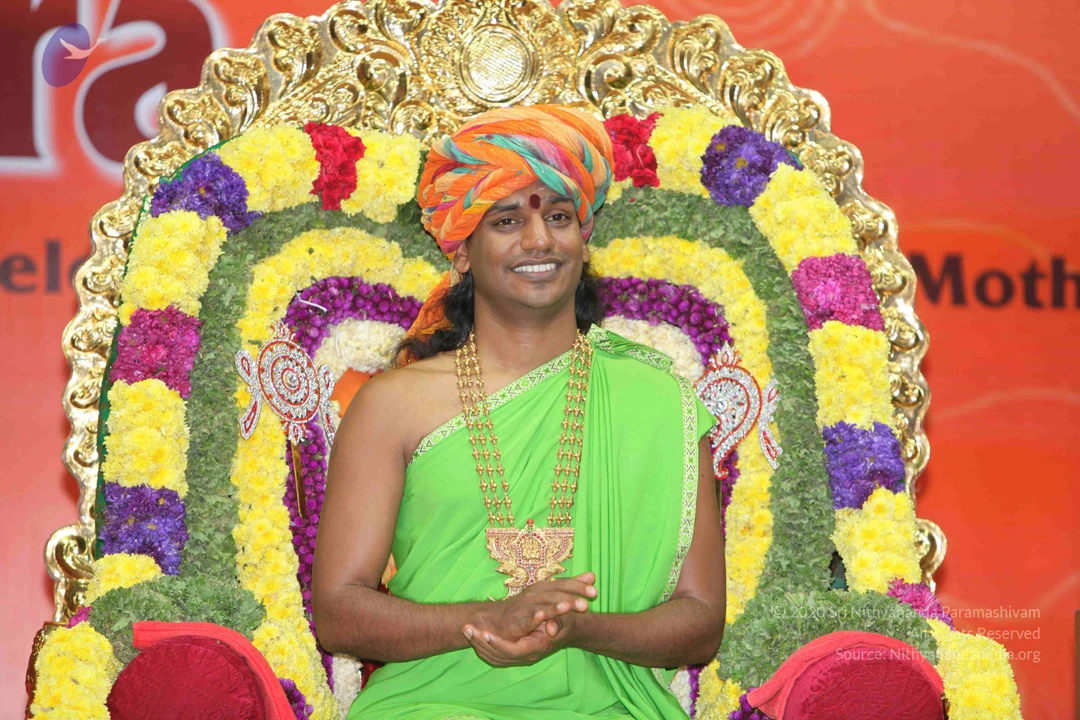
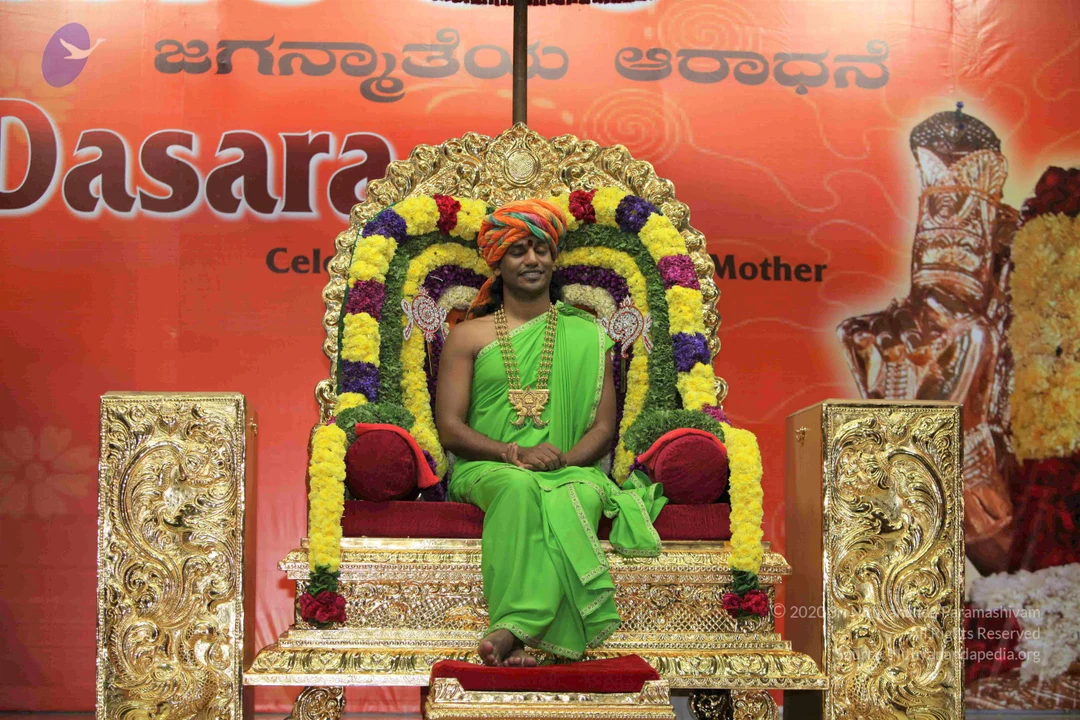
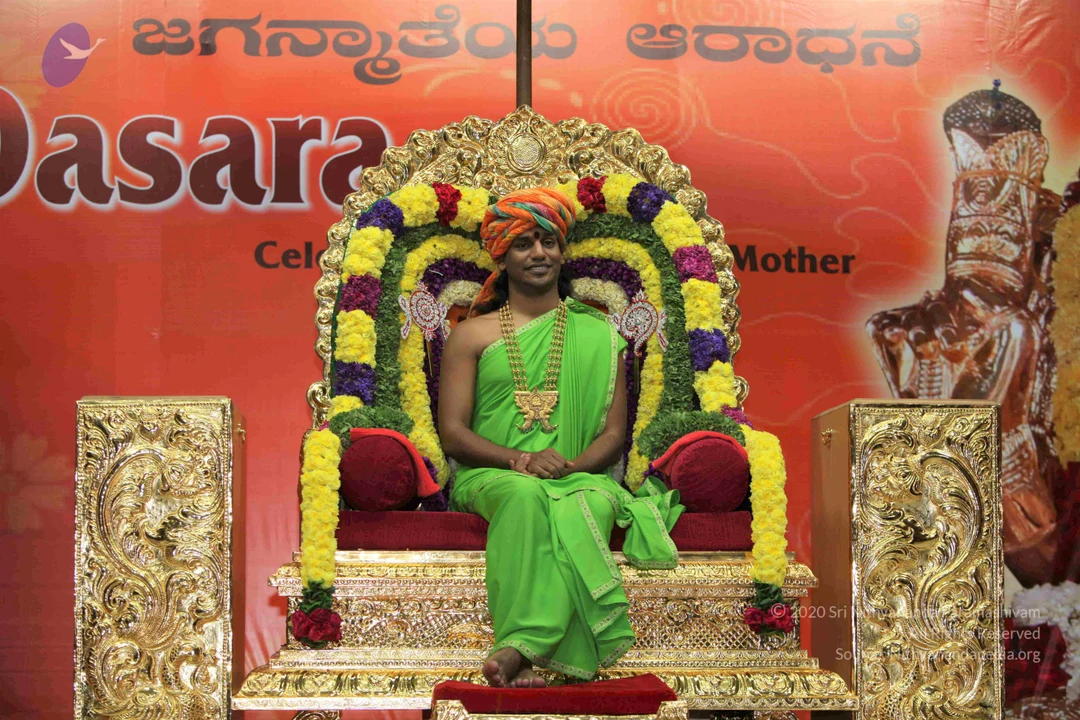
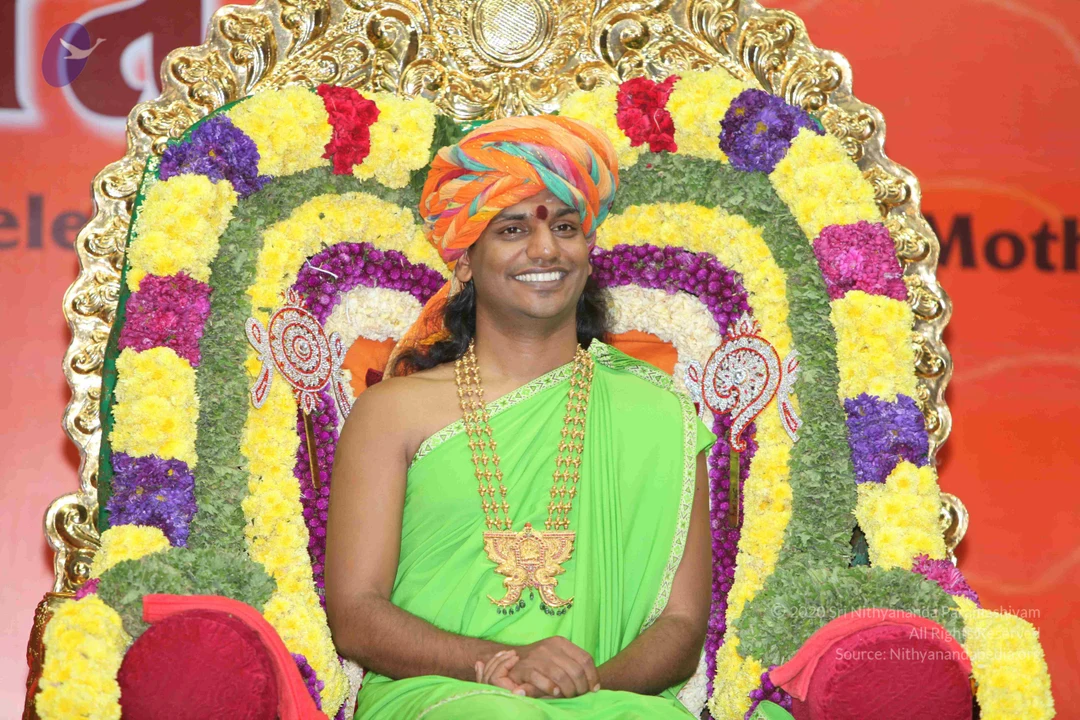
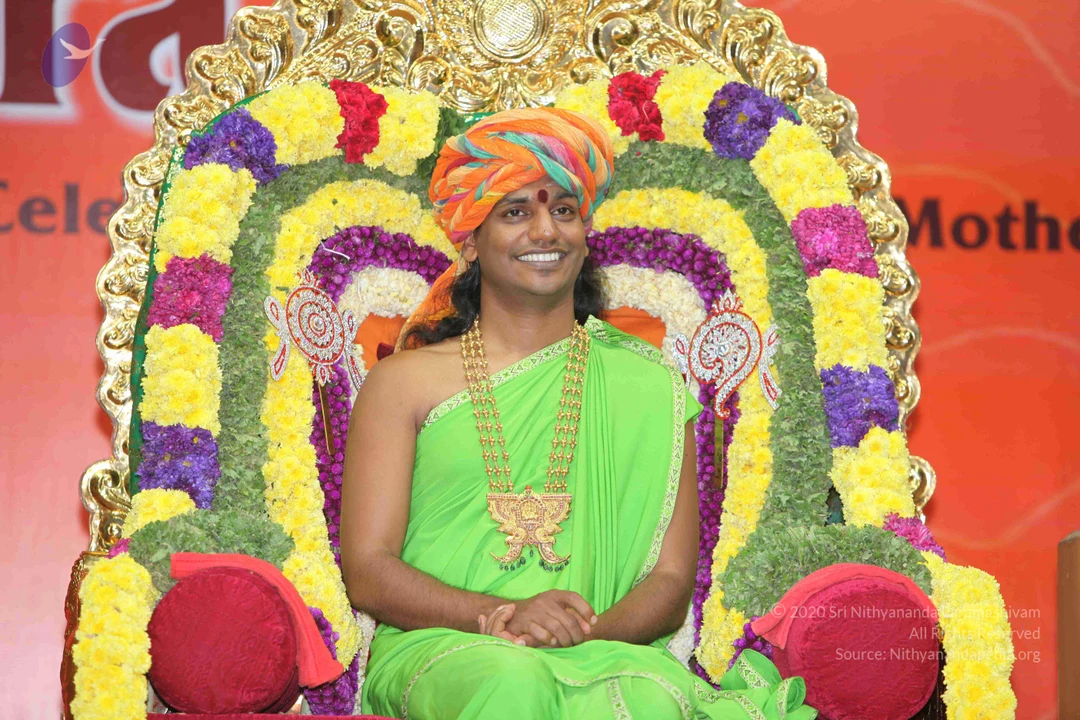
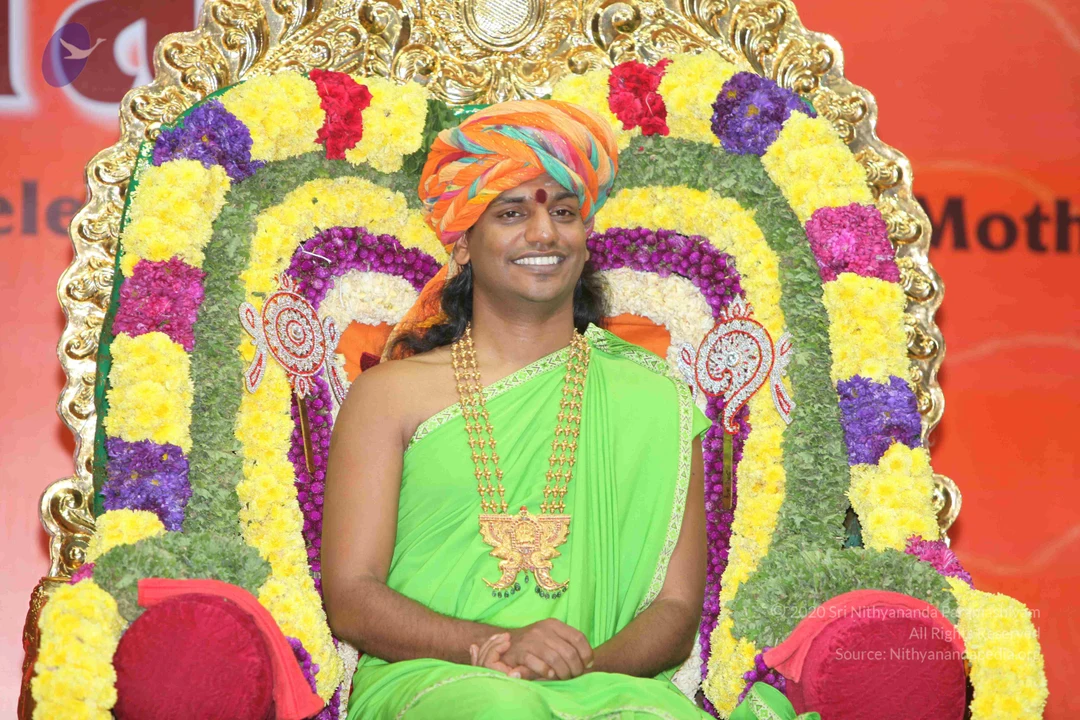
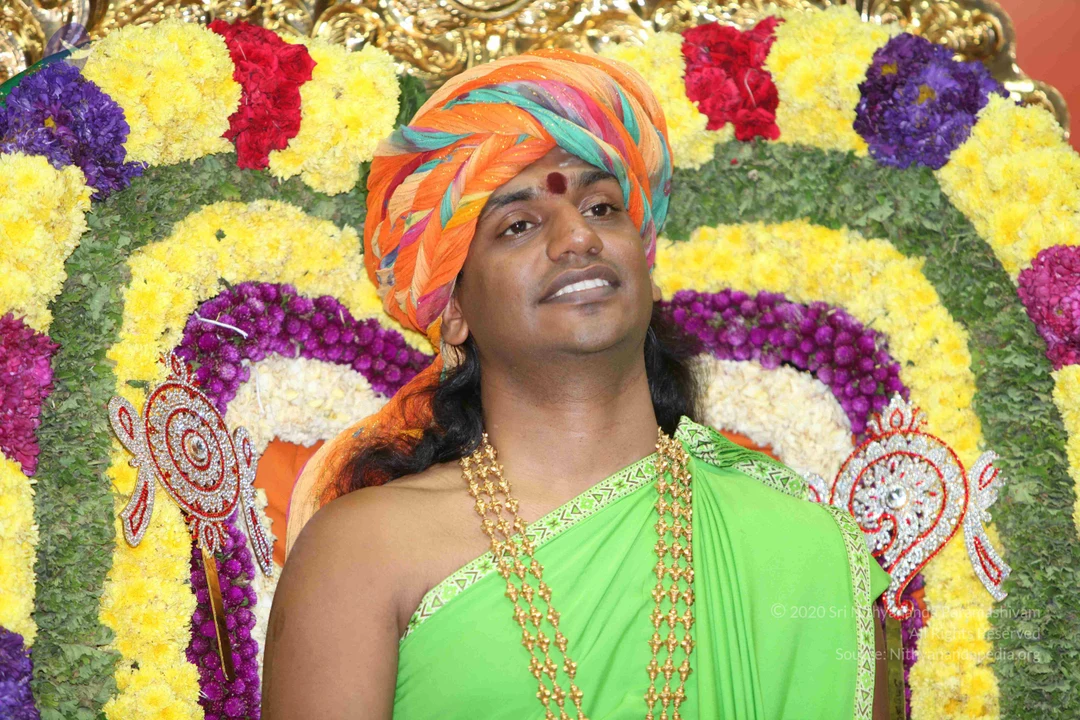
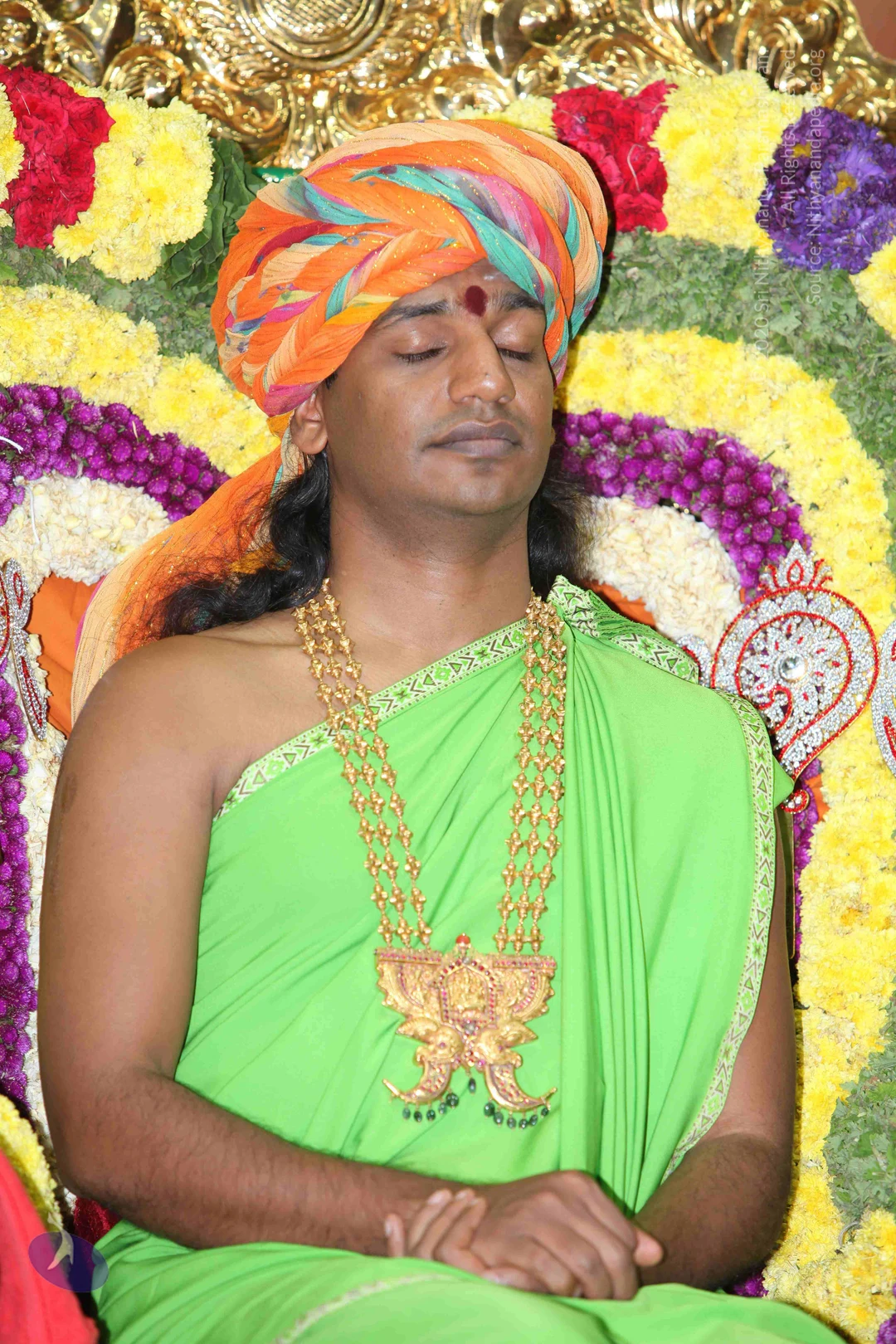
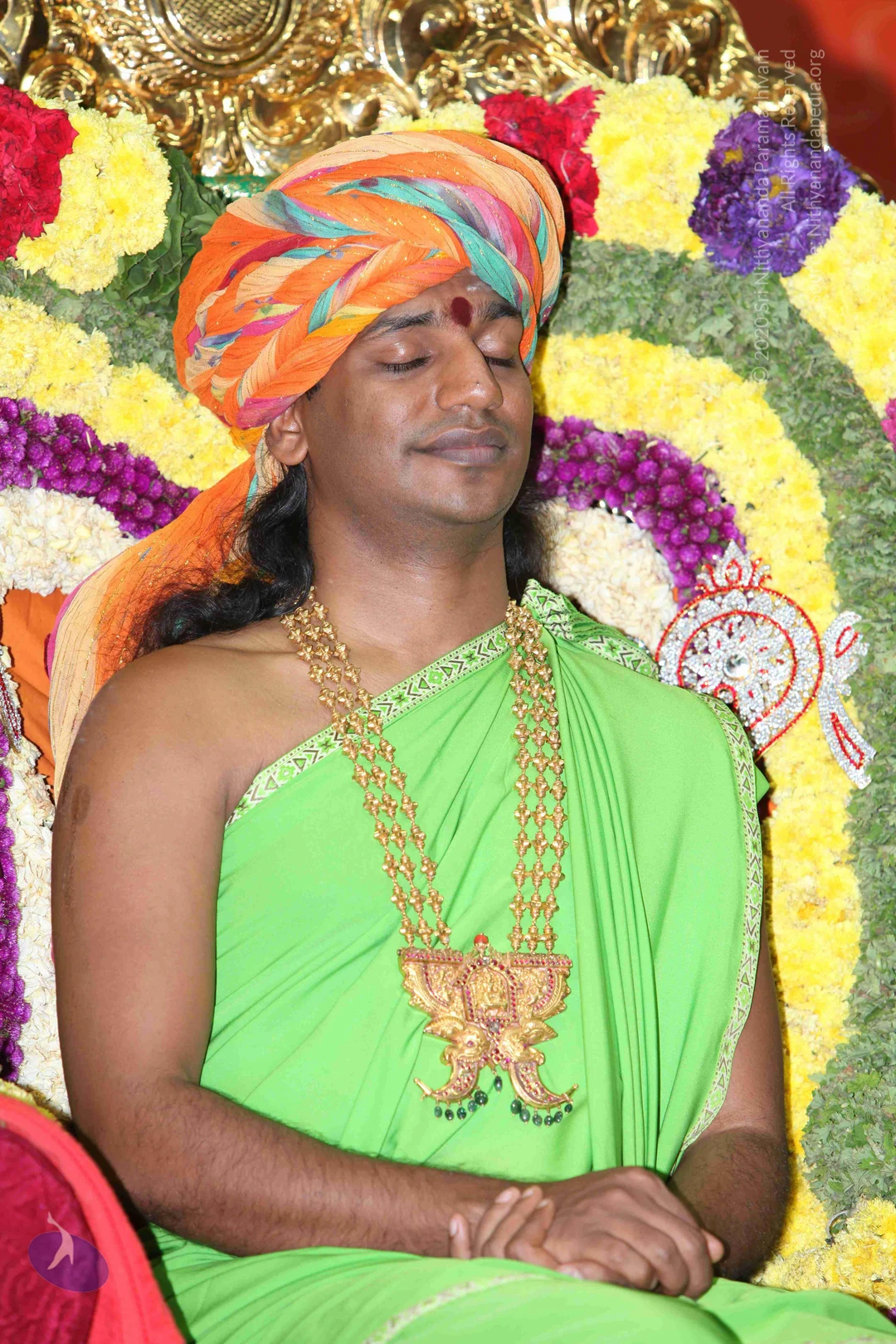
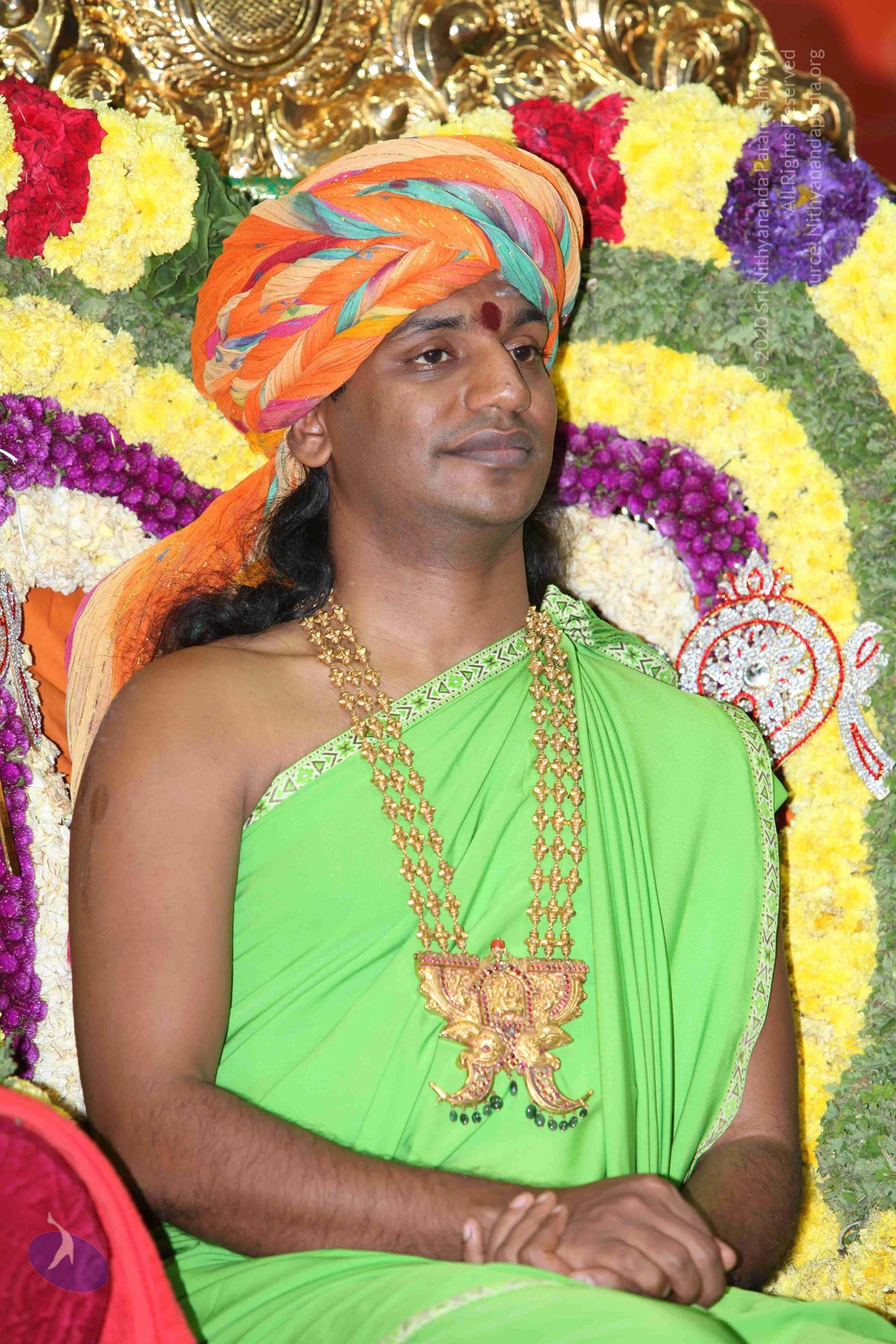
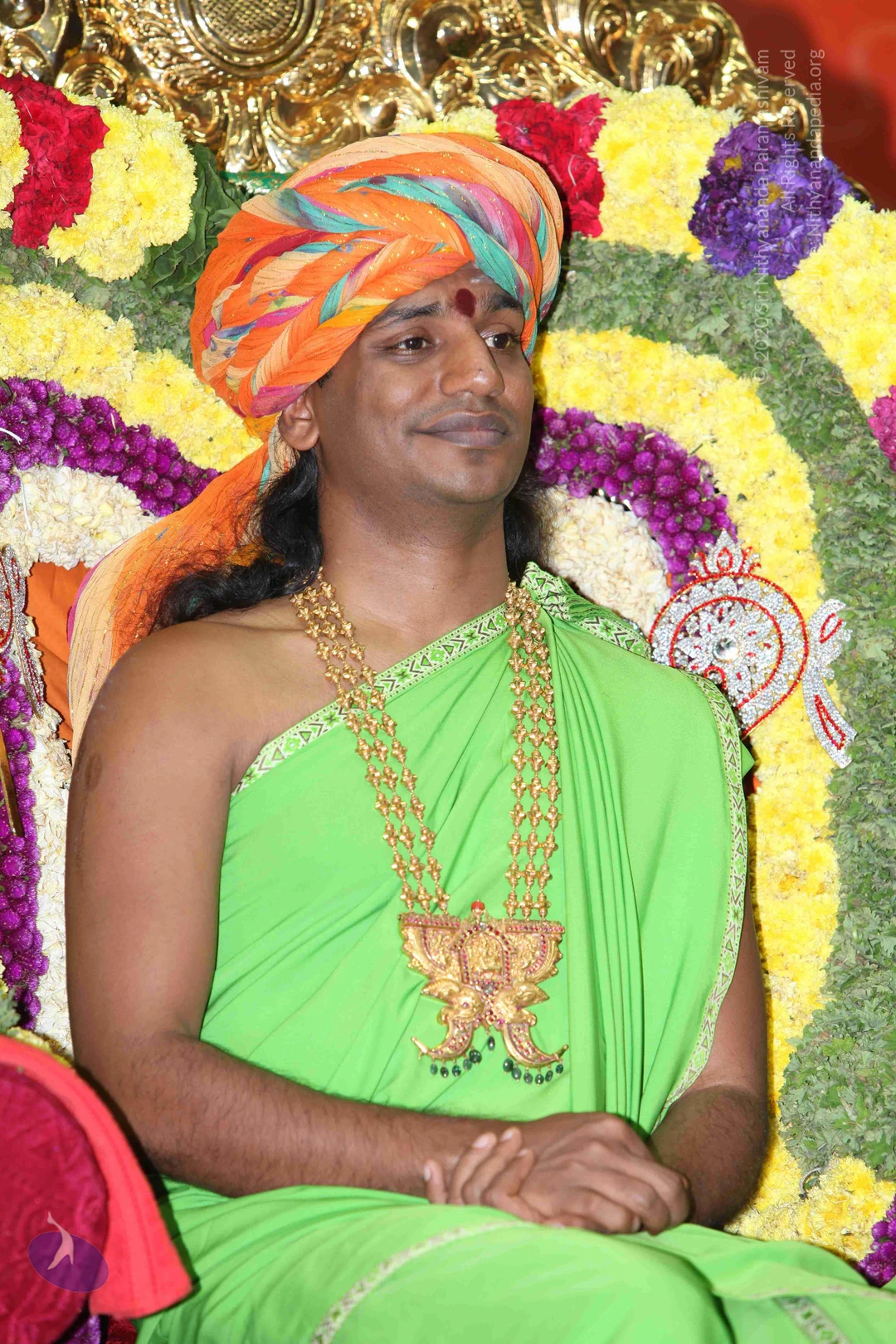
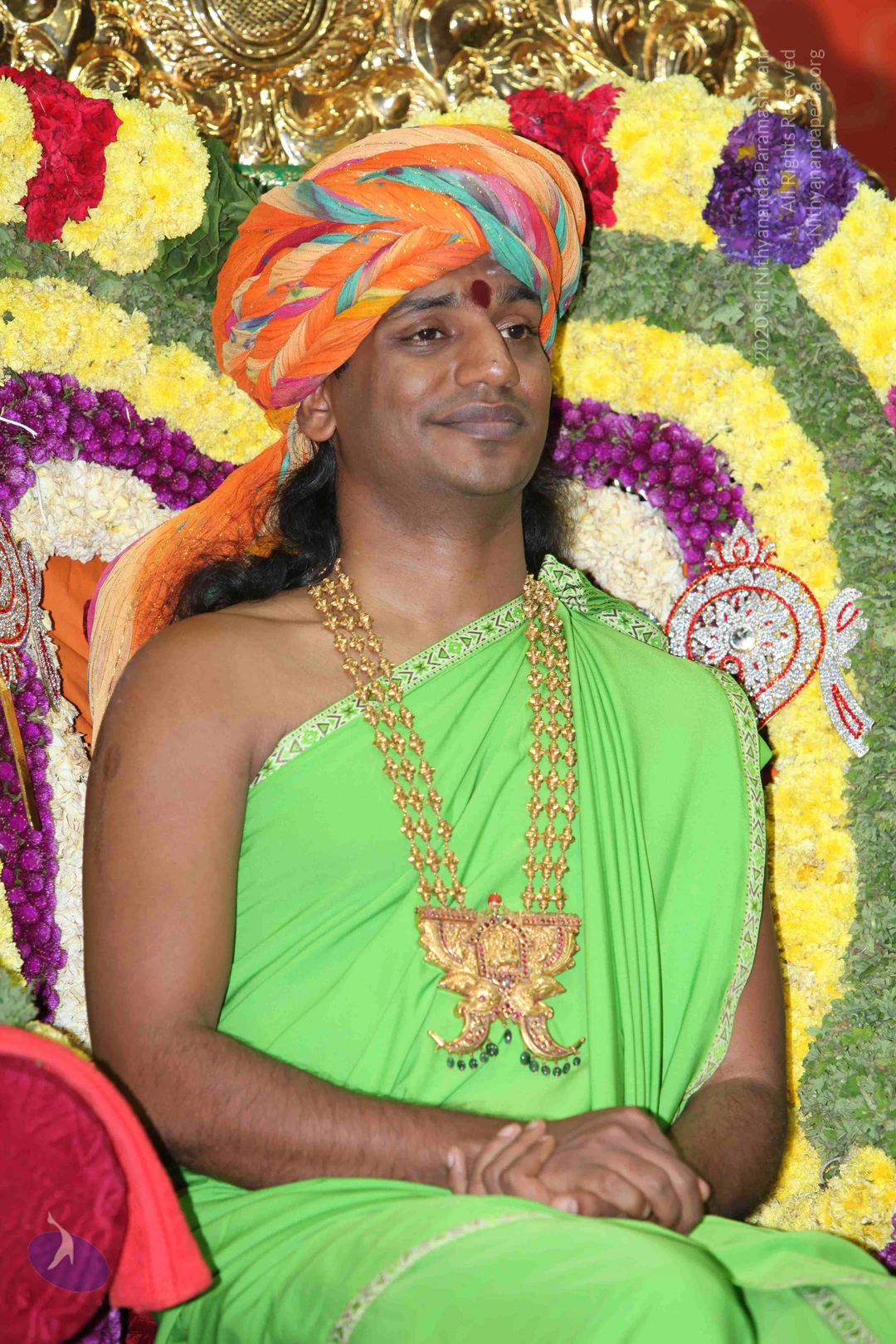
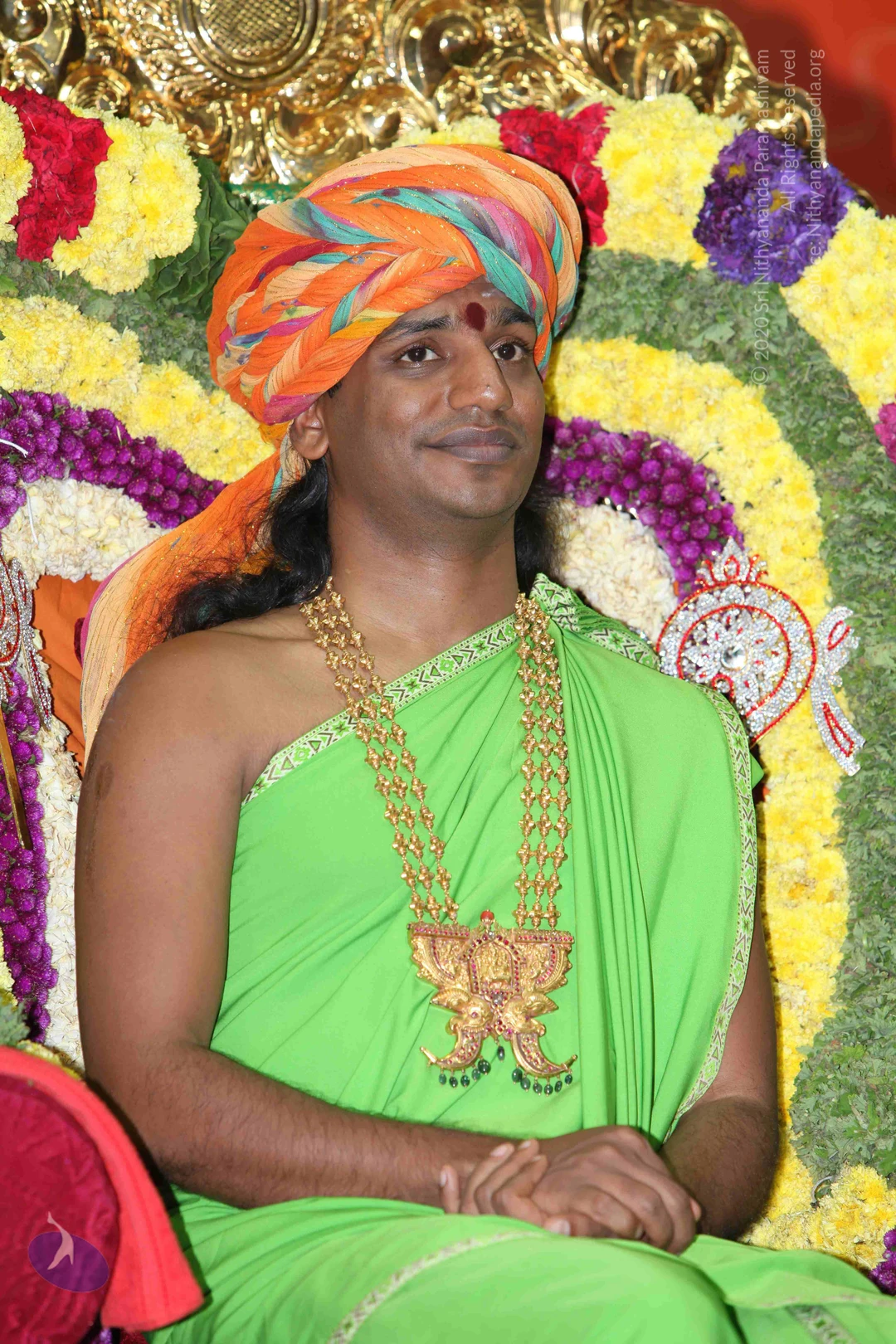
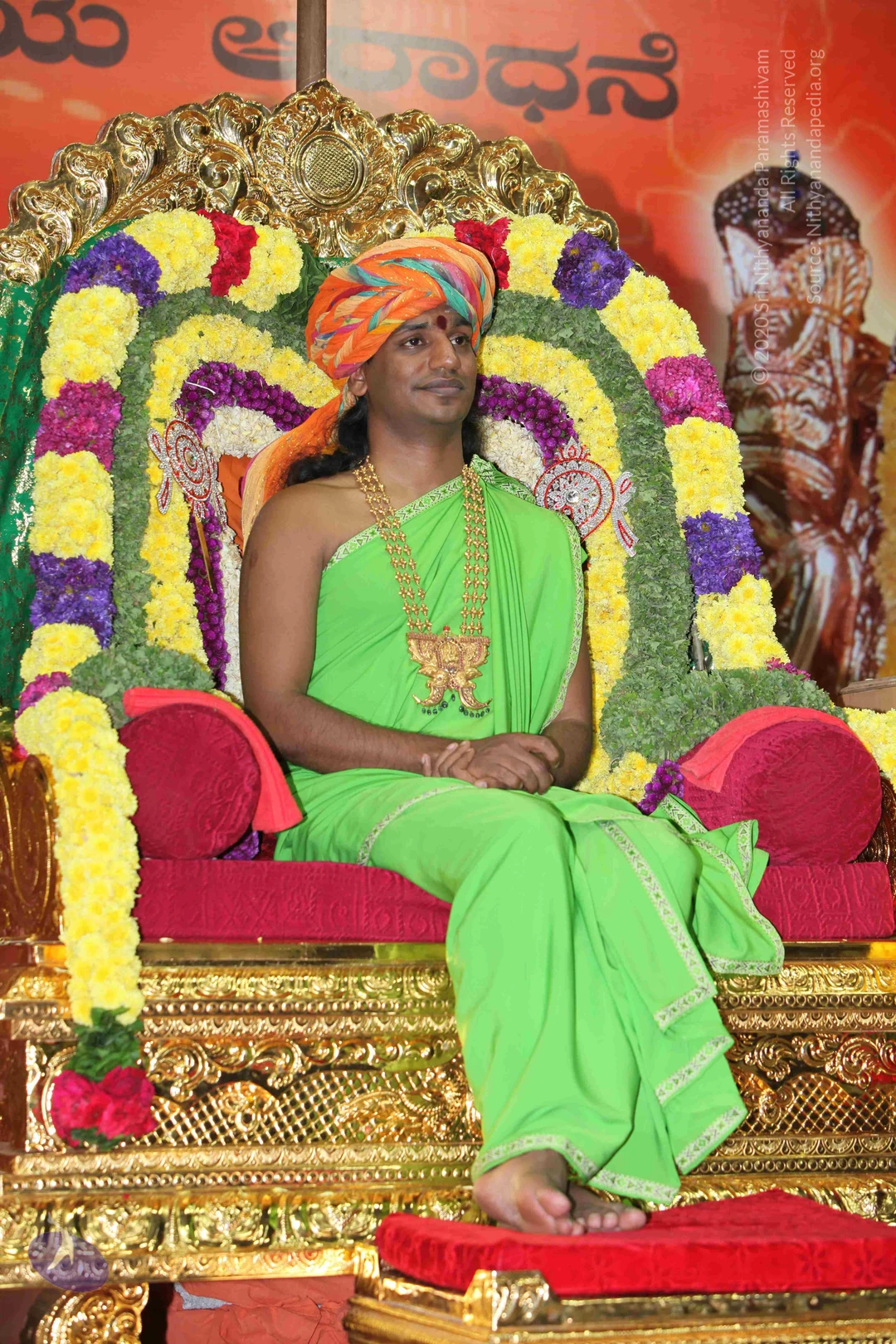
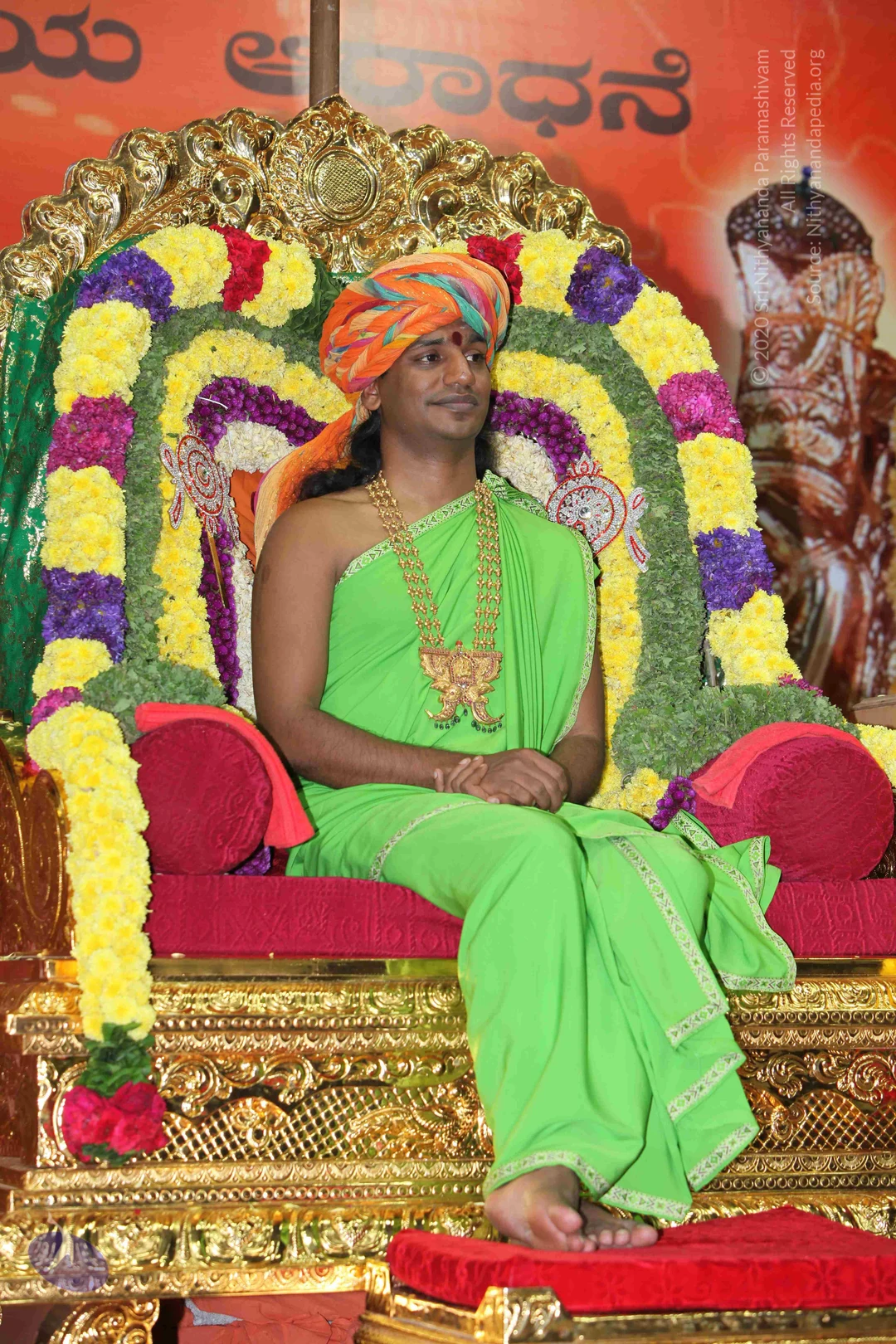
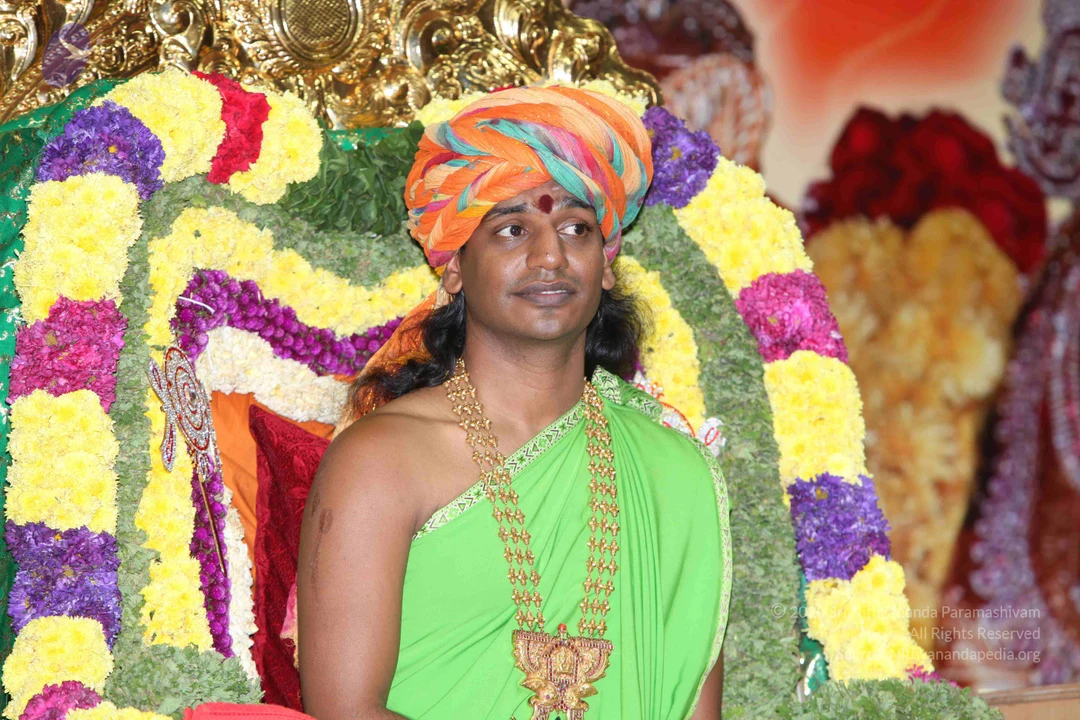
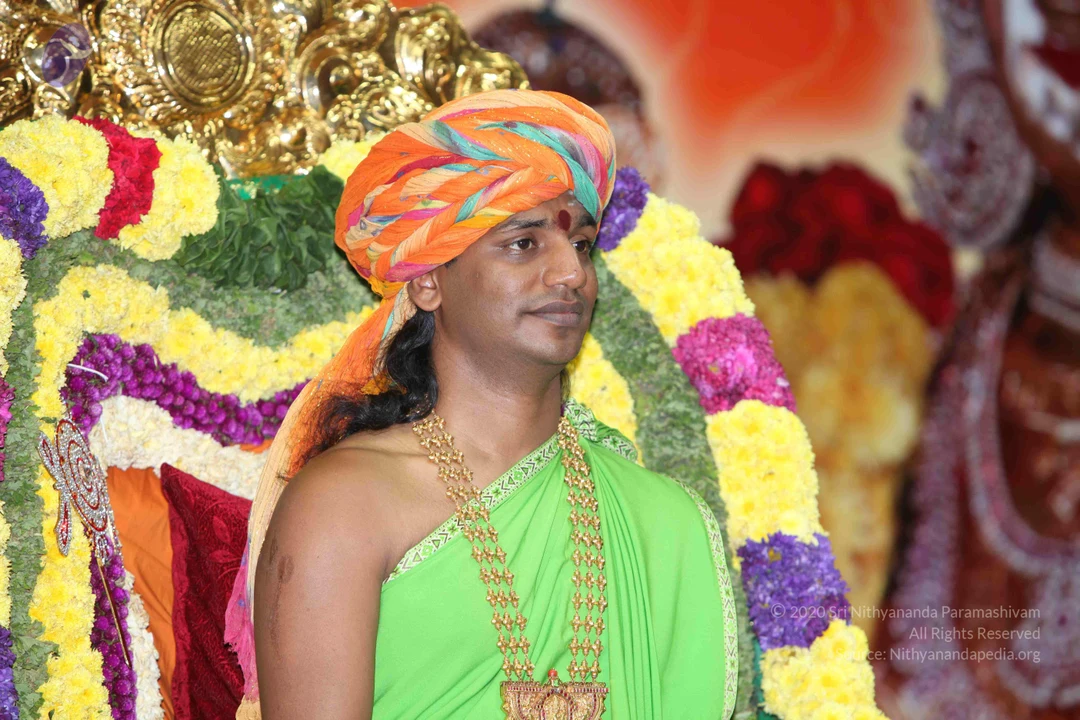
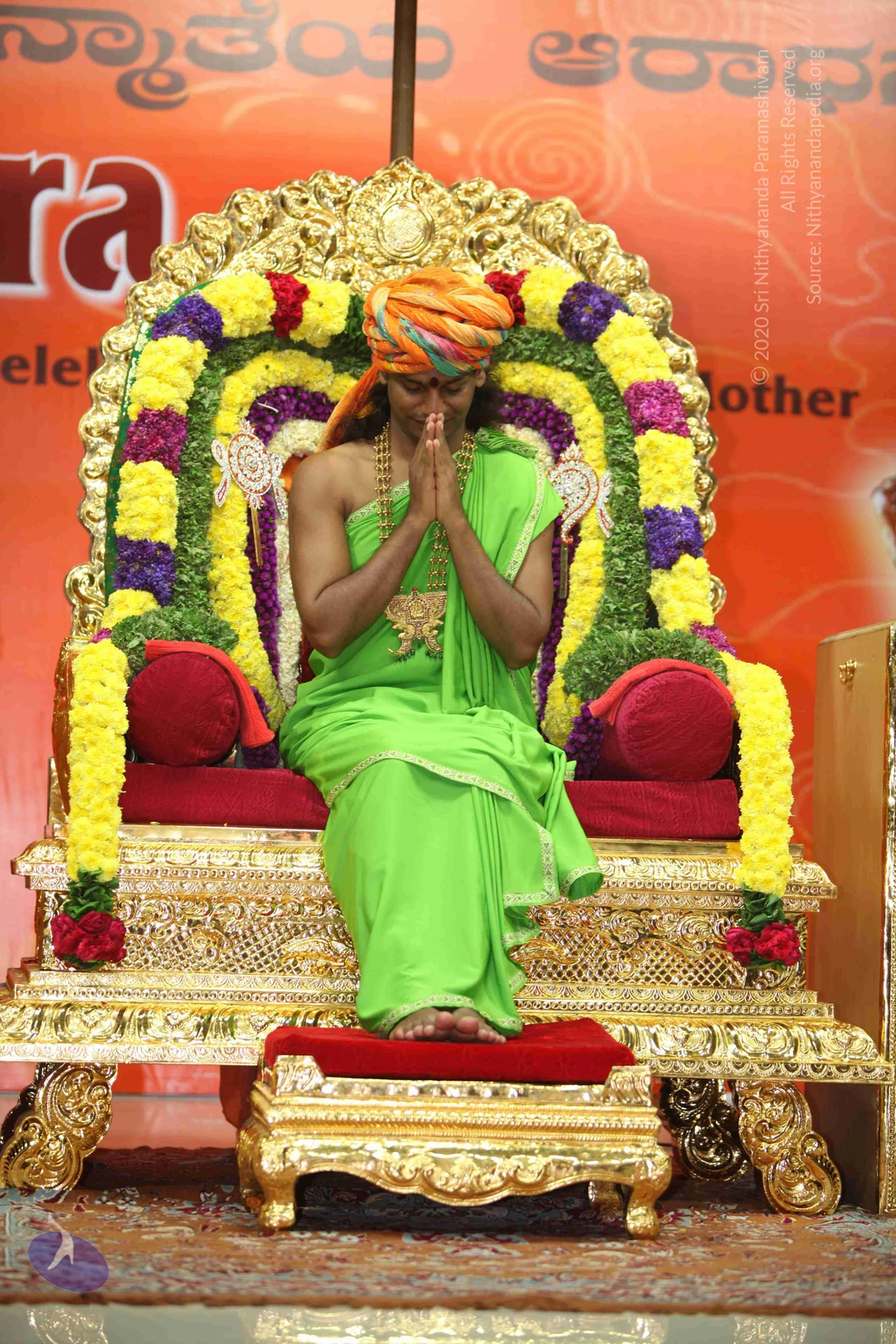
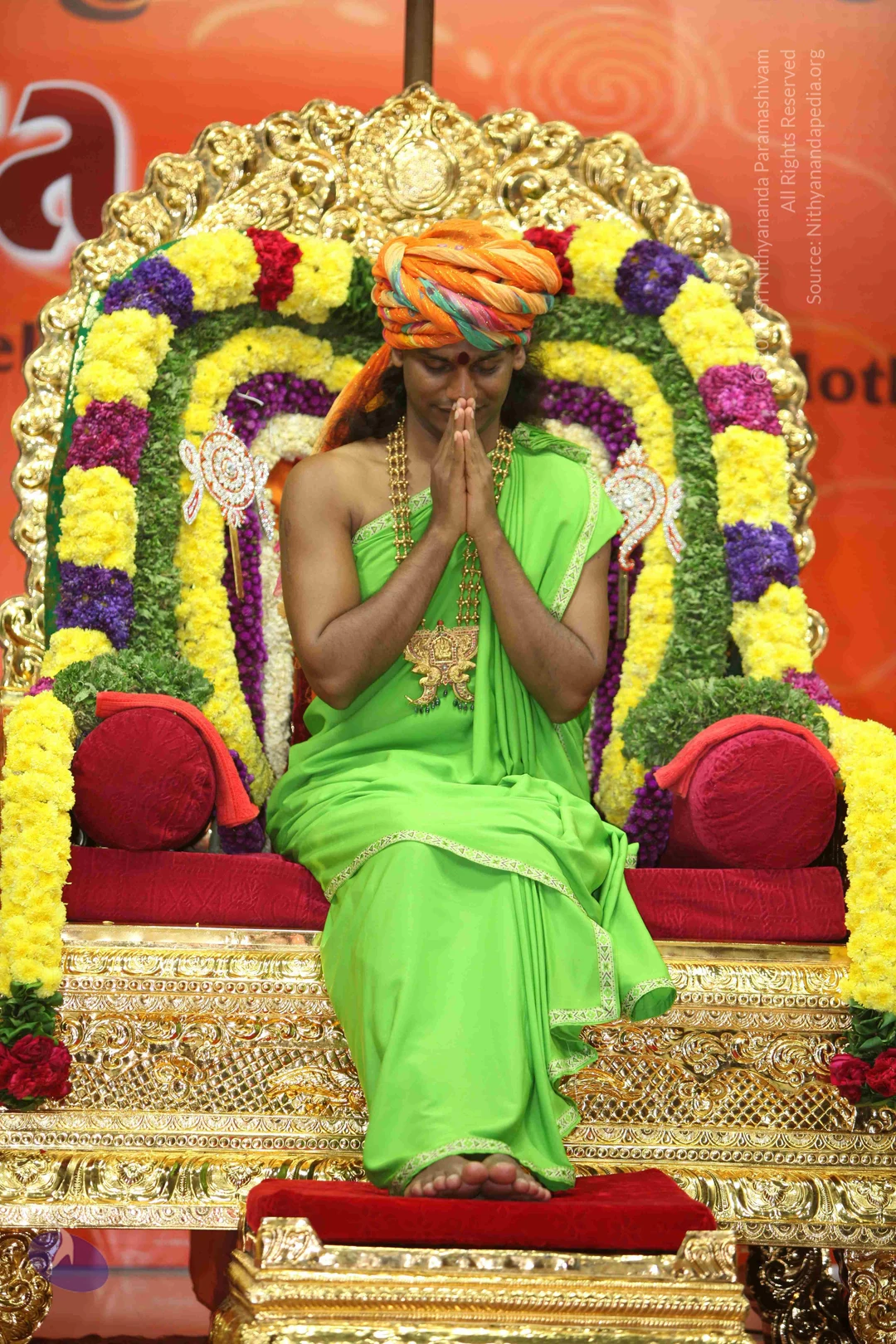
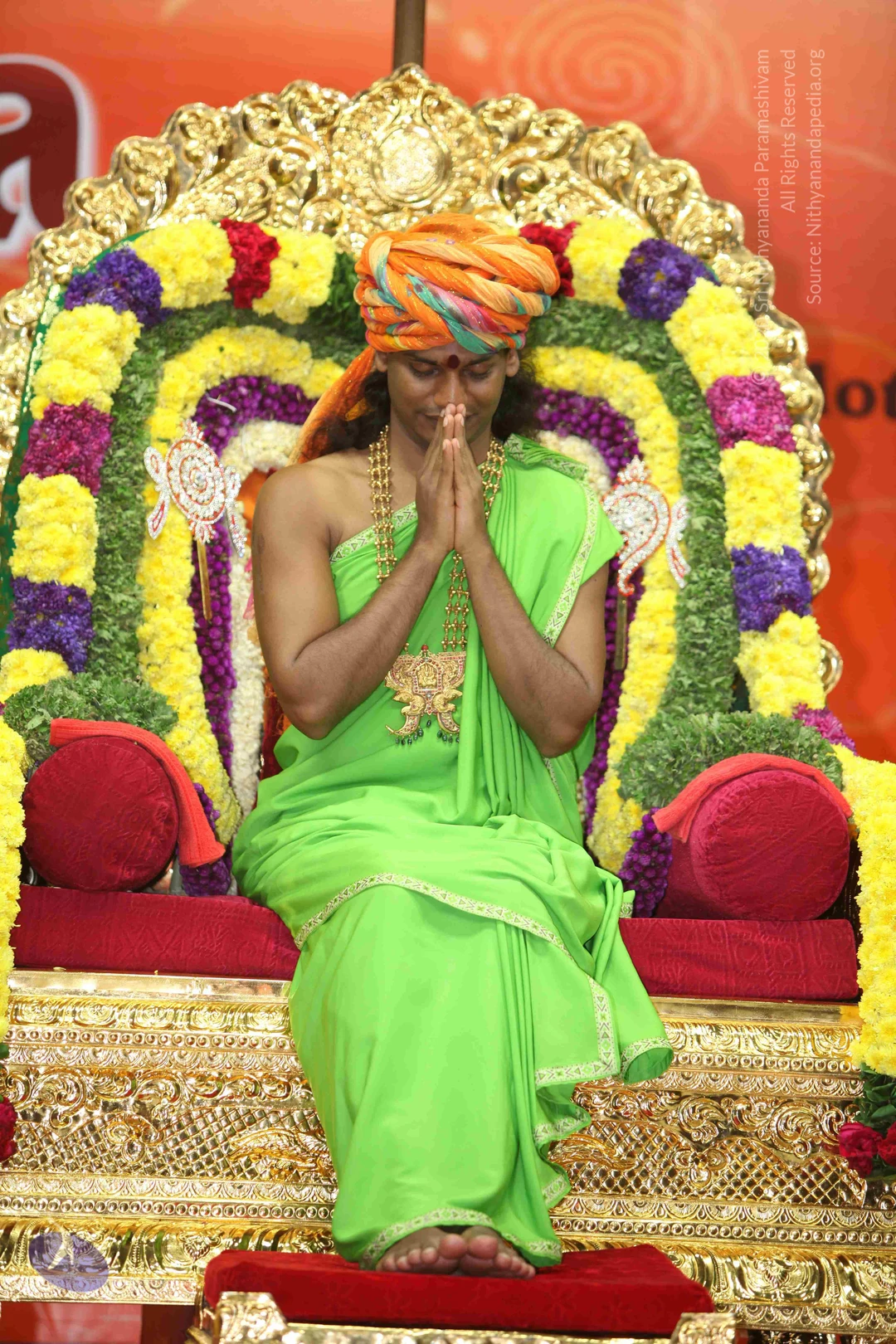
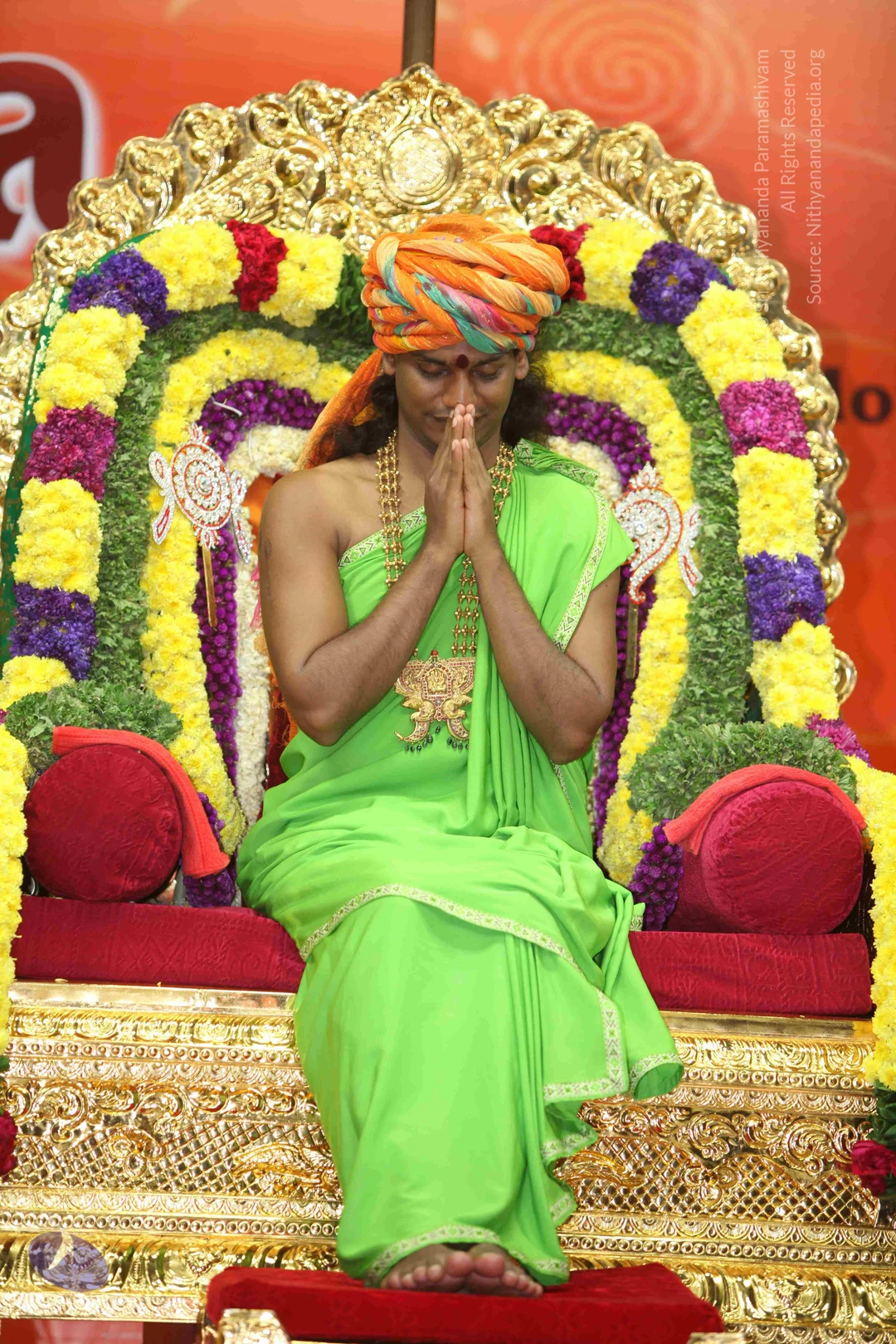
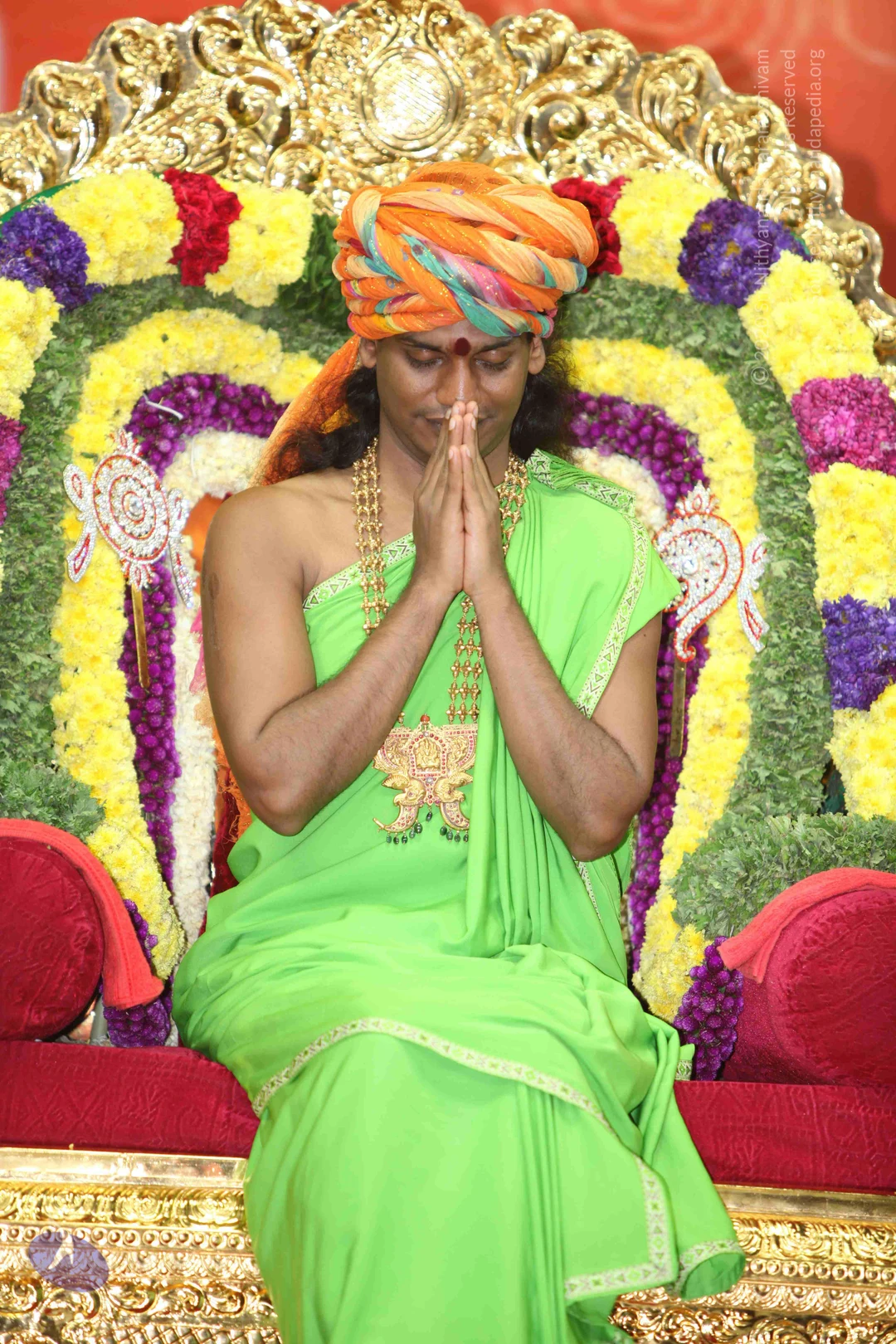
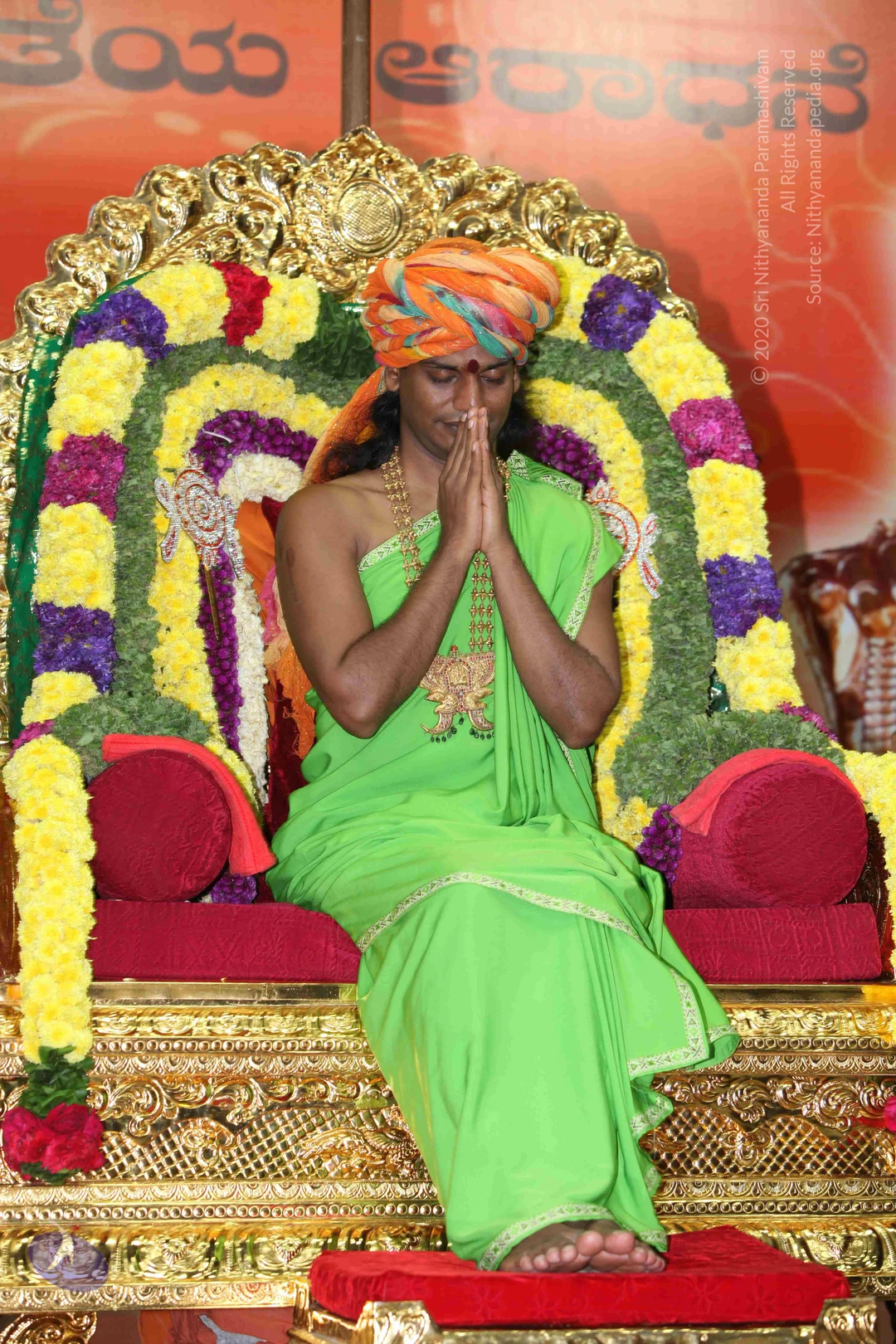
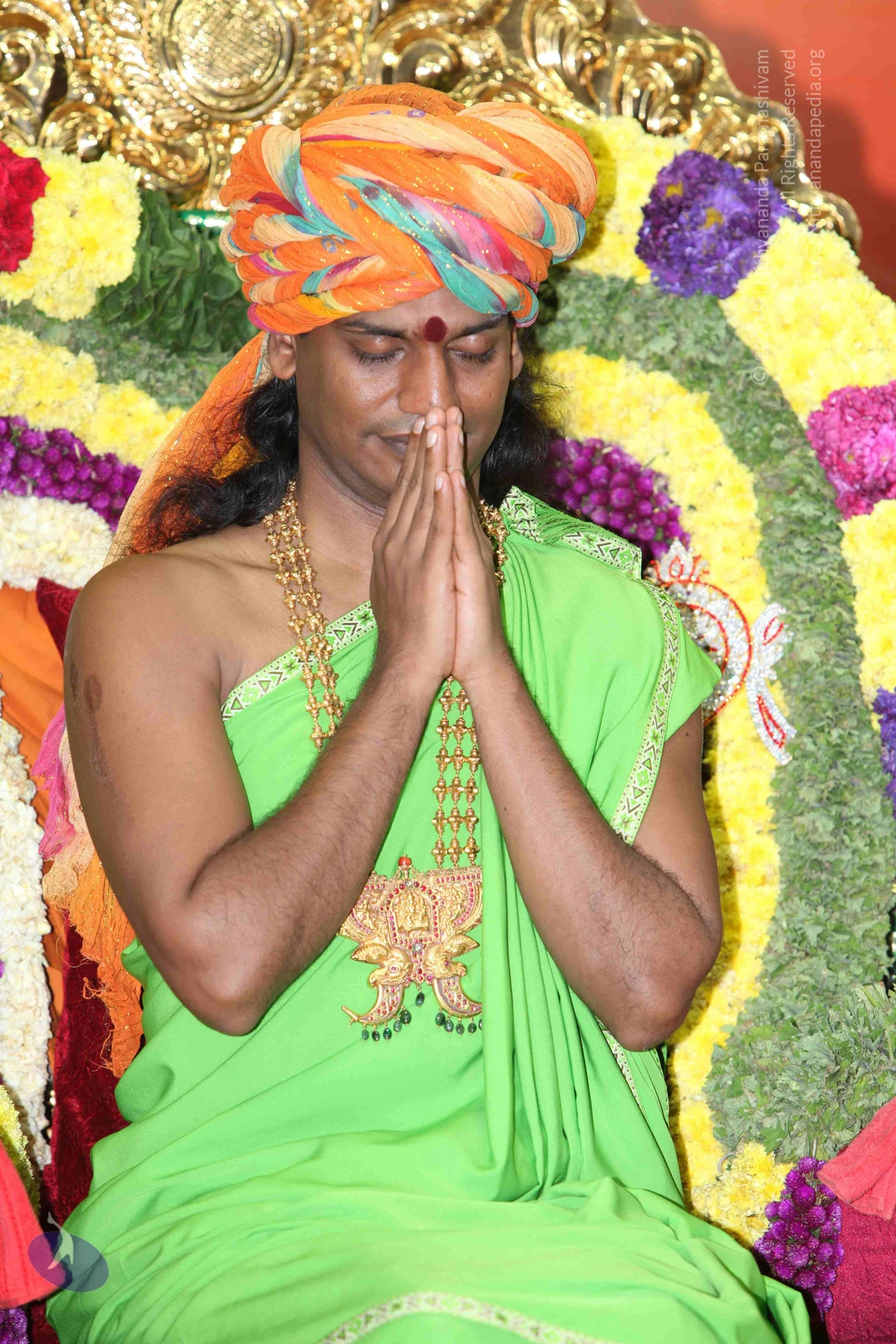
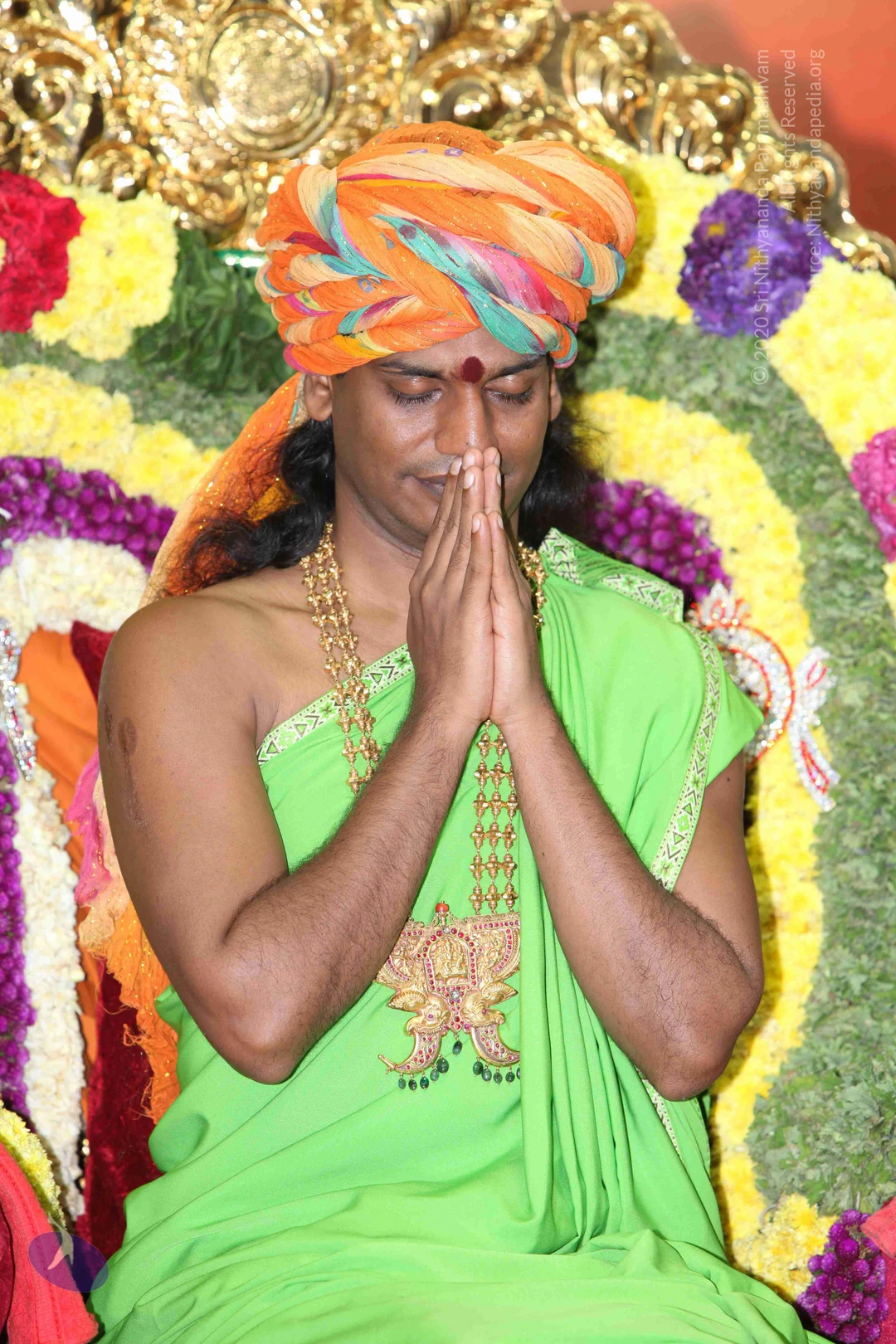
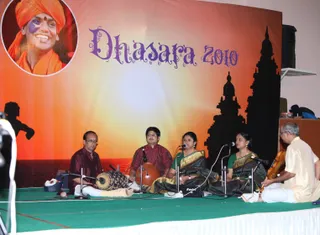
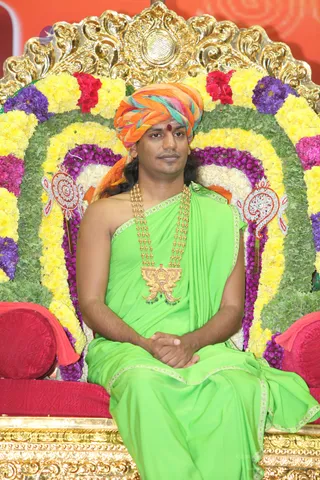
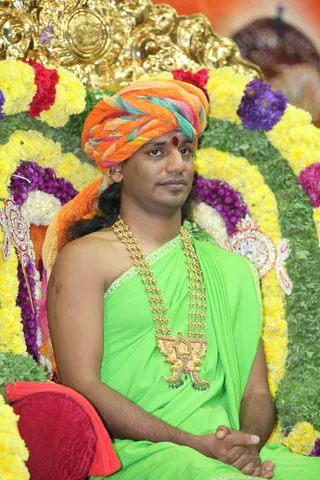
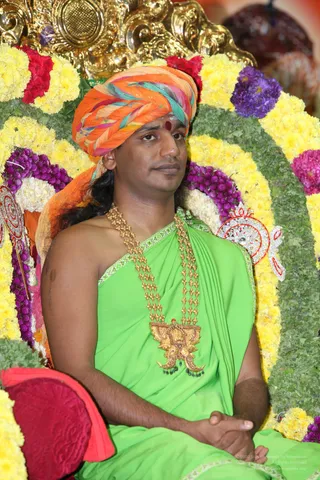
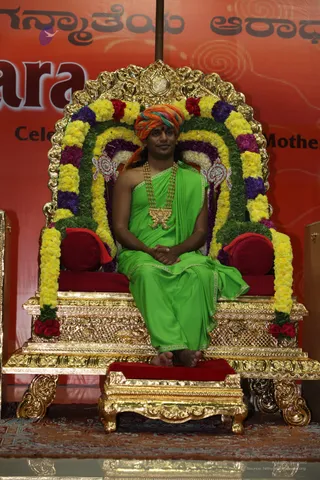
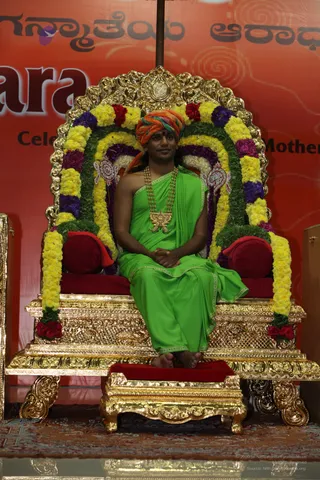
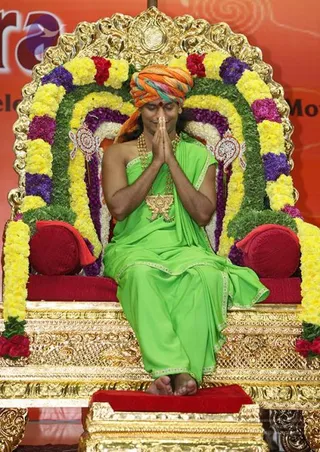
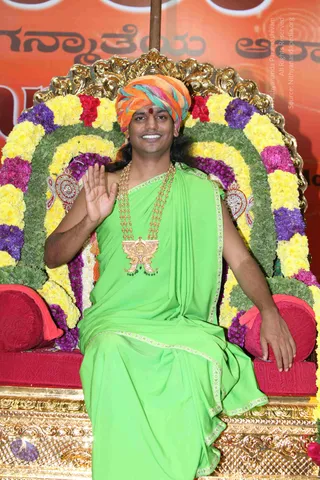
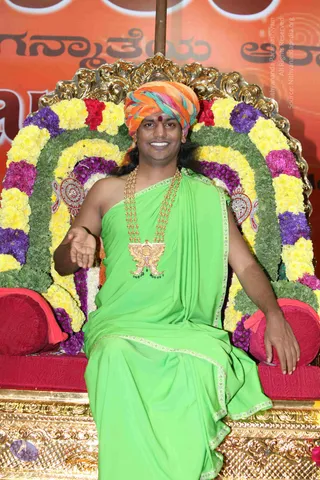
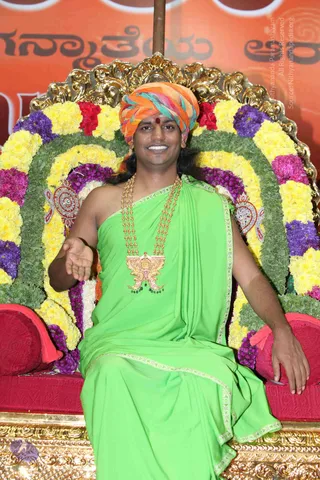
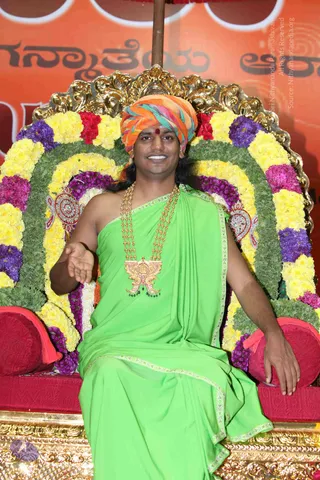
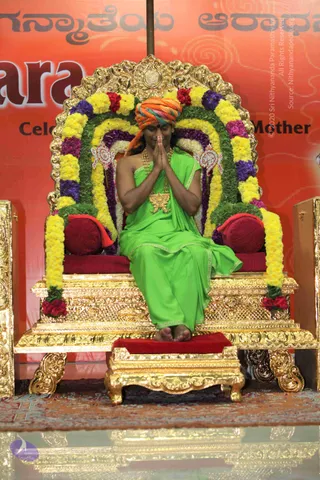
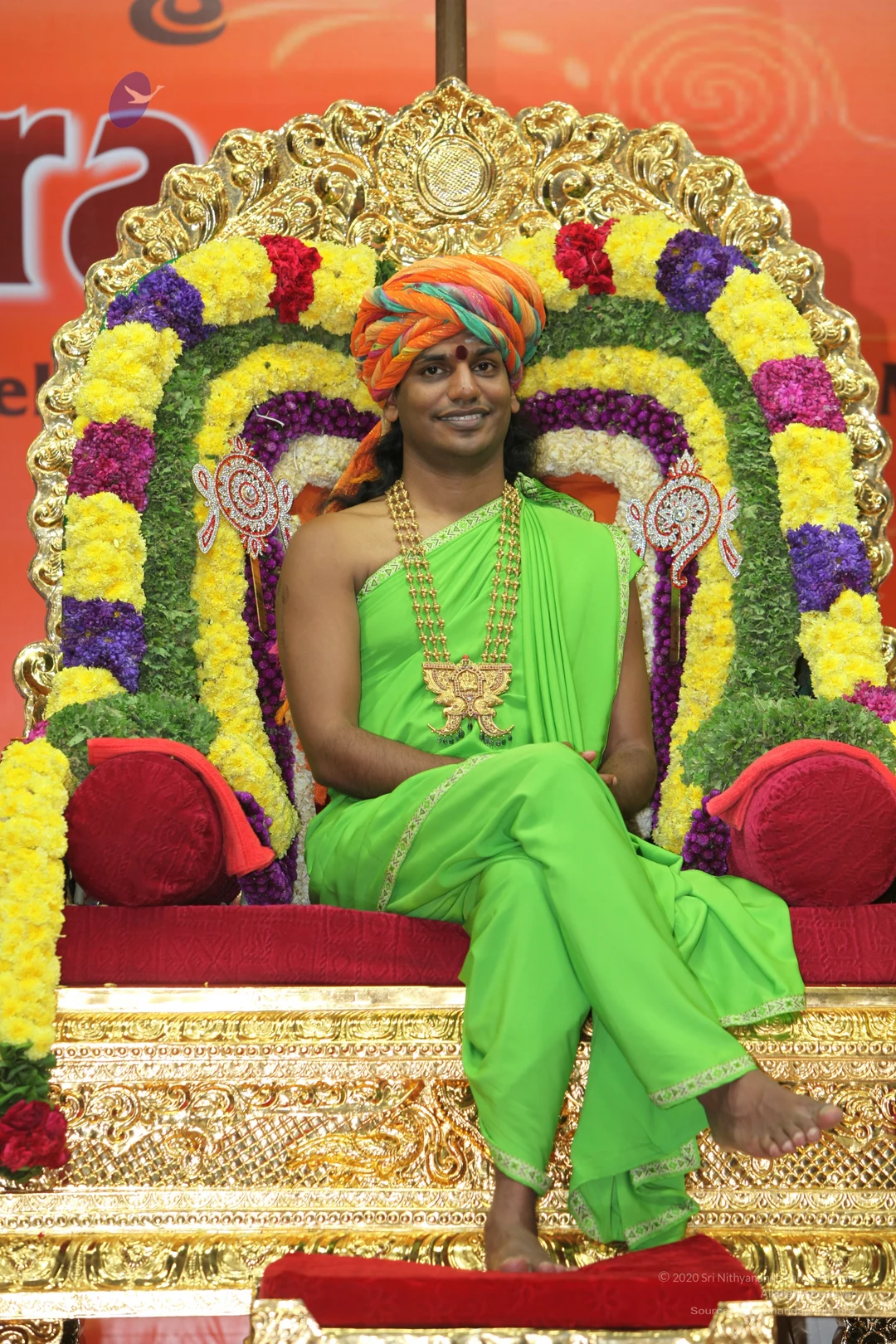
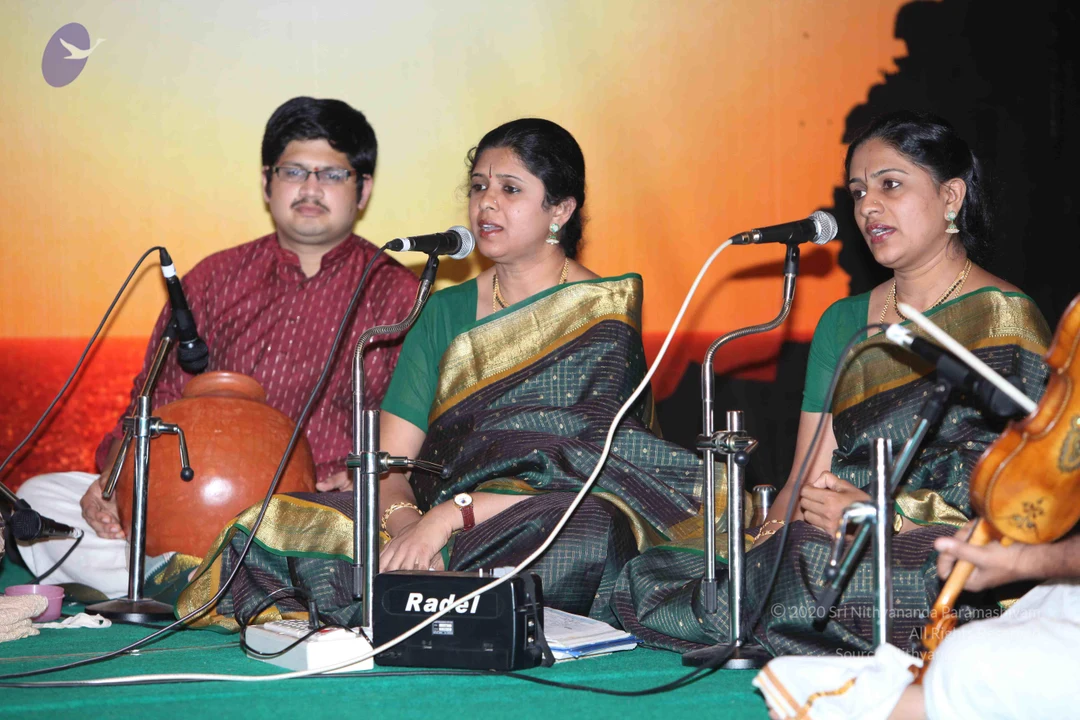
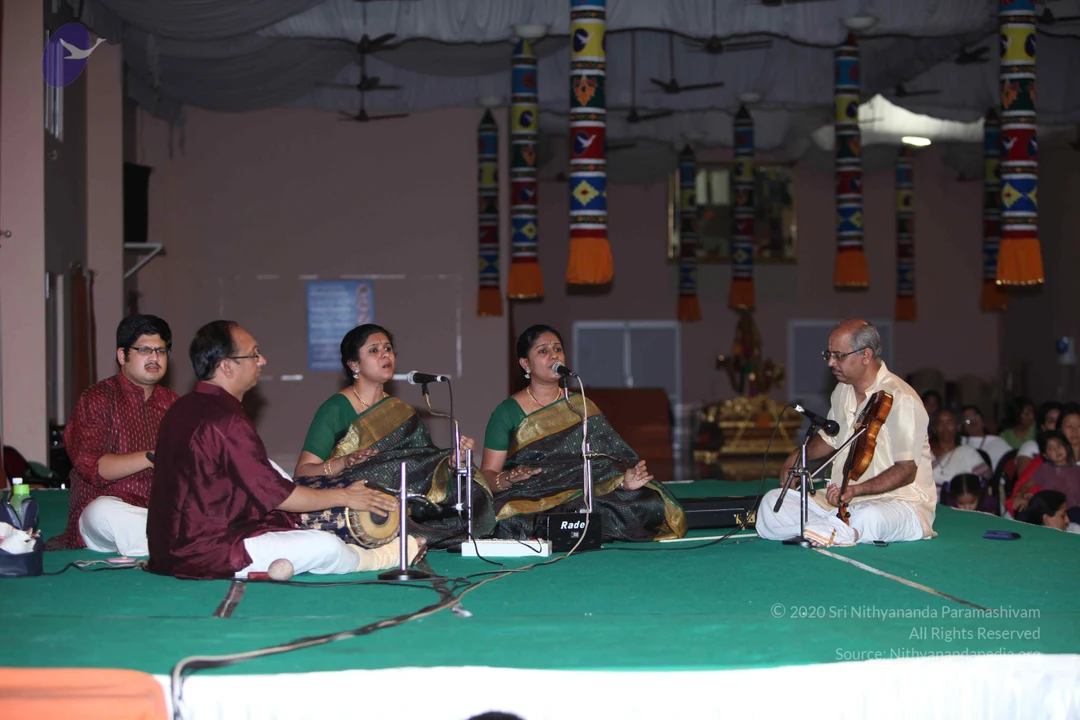
A photograph of a musical performance on a stage at the Dhasara 2010 event. Five musicians sit on a green stage floor before a backdrop with a sunset gradient and temple silhouettes. On the left, a man in a maroon kurta plays a tabla drum. Next, a man in a maroon kurta plays a tanpura-style instrument. Two women in green blouses and green-and-gold silk saris sing at microphones in the centre. On the right, an older man in a cream kurta and white dhoti plays a violin. A circular inset portrait at upper left shows a smiling man in orange saffron robes with an orange turban and a painted face mark; the portrait is printed, not a physical person, and appears on the backdrop rather than on stage.A seated man in a multicoloured orange, teal and pink turban and a bright green draped robe with gold-bordered edges sits on an ornate gold throne. A red vertical tilak mark is on his forehead, and he wears layered gold beaded necklaces with a gold pendant. Hands are clasped in his lap. The throne back and sides are decorated with yellow marigolds, purple and magenta flowers, green leaves and jeweled silver-red ornaments. Red cushions frame the seat.A man seated on a throne decorated with marigold and carnation garlands in yellow, red and purple, with a gold ornate backrest behind him. He wears a multicoloured orange, pink, green and teal turban with a red bindi, a bright green draped garment with a patterned border, and multi-strand gold necklaces with a large gold pendant. His hands are folded in his lap. A probable Swamiji is shown, identified by the saffron-orange turban, ornate gold necklaces and the swept-back long hair, seated on a flower-decorated throne. Red cushion at lower left.A man sits cross-legged on a throne decorated with marigold and gomphrena flower garlands in yellow, purple, red and magenta, with a gold ornamental backrest behind him. He wears an orange and teal striped turban, a red bindi on his forehead, a bright green shawl draped over bare shoulders, and layered gold necklaces with a large gold pendant. His hands rest folded in his lap. Appearance-based a person seated in a ceremonial setting. Only one person is visible.A man seated on an ornate gold throne (peetha) decorated with yellow and purple marigold garlands and green leaves, with red cushions. He wears a multicoloured orange, green and red turban with a red tilak mark on the forehead, a bright green shawl-draped robe edged with gold trim, a multi-strand gold rudraksha-style mala with a gold pendant, and bare feet resting on a gold and red footstool. His hands are folded in his lap. Behind him is a red banner with Kannada script and the partial word 'Celebrate' and 'Mother'. Ceremonial gold and silver ornaments decorate the throne. The man on the throne matches Swamiji's appearance, with a turban, rudraksha-style mala and ceremonial clothing, so he is.A seated man on an ornate gold throne decorated with yellow marigold and purple flower garlands and green leaves, against a red backdrop with Kannada script. He wears a multicoloured orange, red and green turban with a red tilak, a bright green sash and dhoti-style garment edged with gold, multiple gold bead necklaces and a large gold pendant, and sits barefoot with hands folded on a red and gold footstool. A red cushion rests on each side of the throne. Appearance-based candidate for a person, seated in the throne with ceremonial garlands and the turban and gold cues described.

Ashramites-Meet-With-Swamiji

1 photoSource gallery
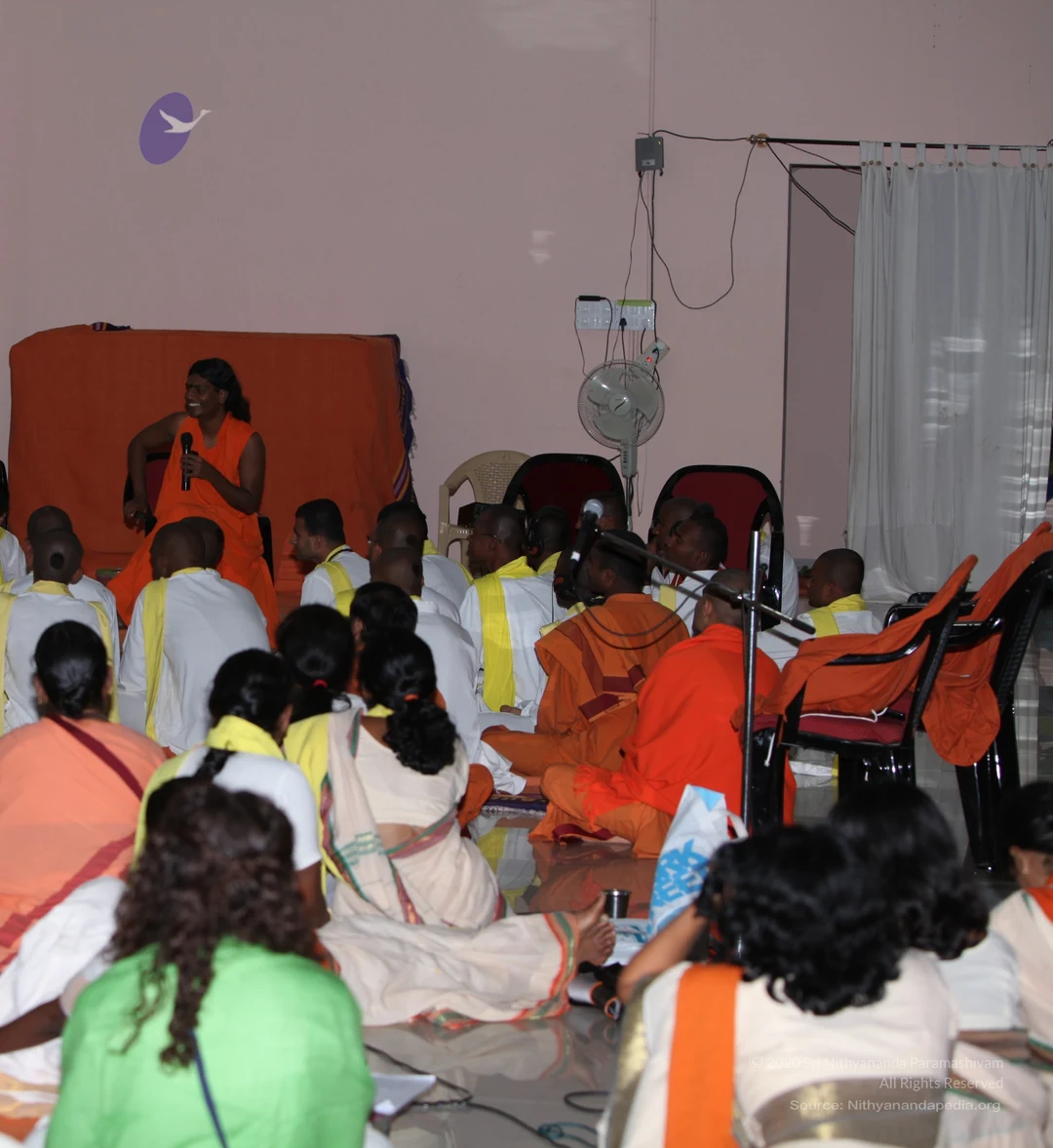
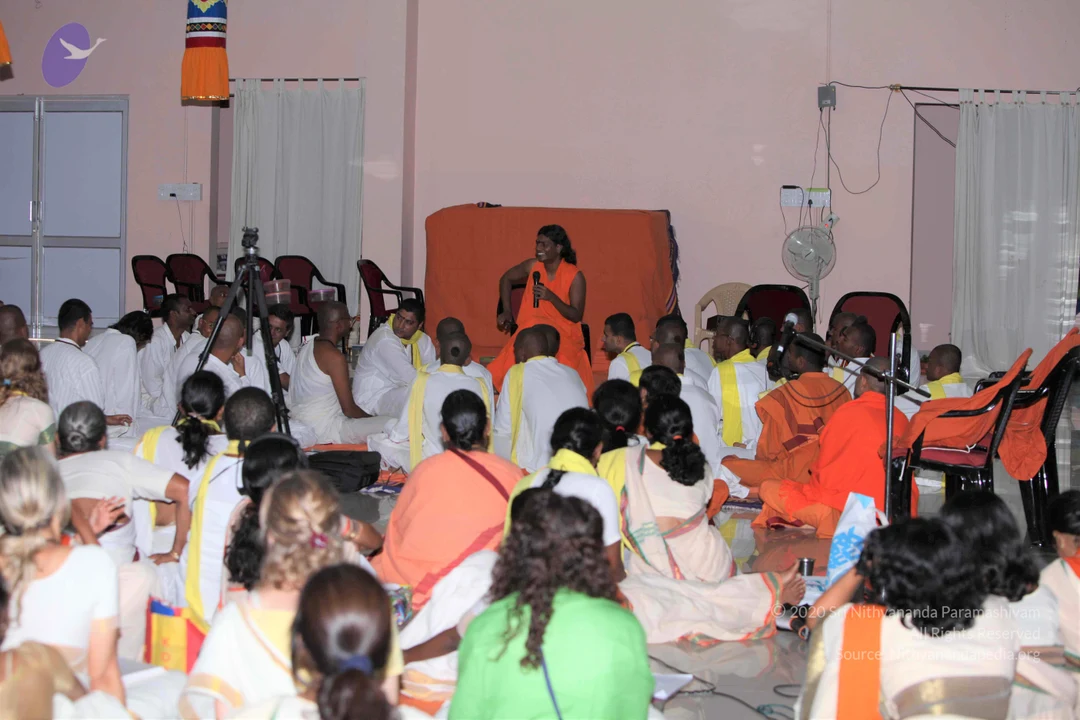
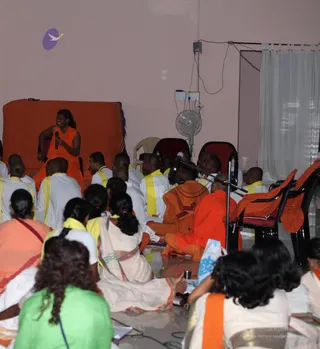
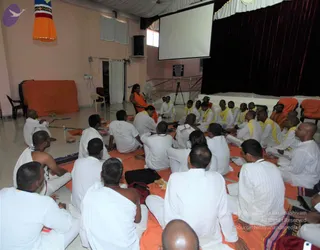
A satsang talk in a plain room with pale pink walls, a ceiling fan, a hanging curtain and a purple bird logo on the wall. A standing speaker in a saffron-orange robe holds a microphone on a raised orange-draped platform at the left. Seated before them on the floor are rows of devotees: men in white with yellow shawls, women in white saris with coloured borders, and a woman in a green top in the foreground. Two seated monastics in orange robes sit near a microphone stand on the right.

Culturals

7 photosSource gallery
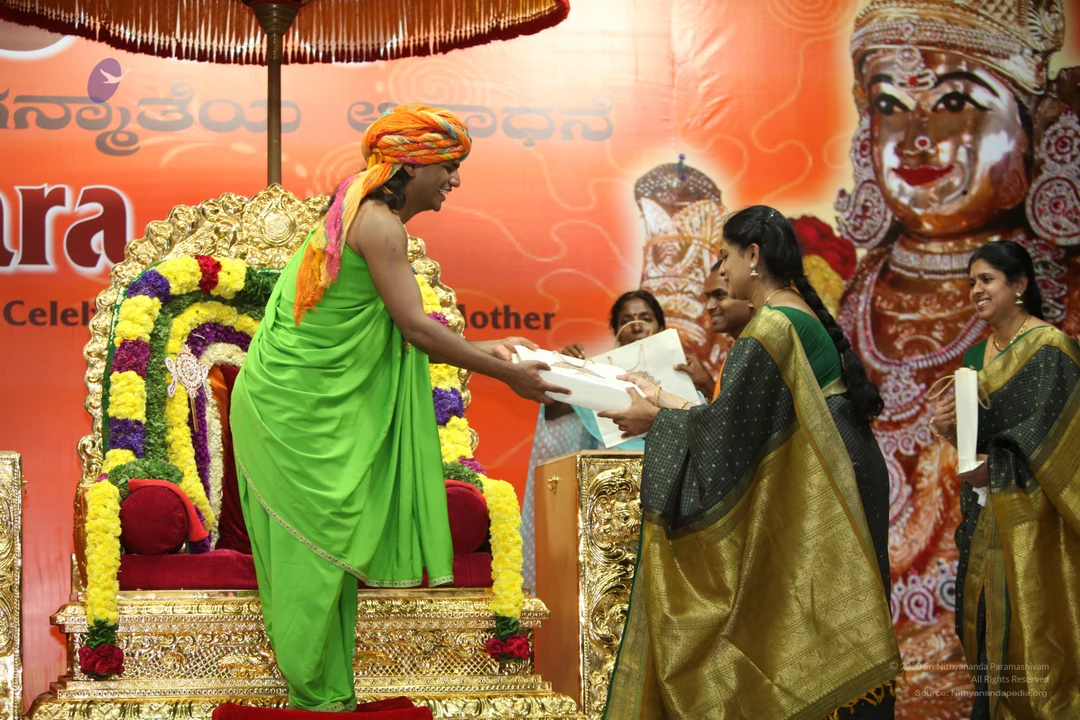
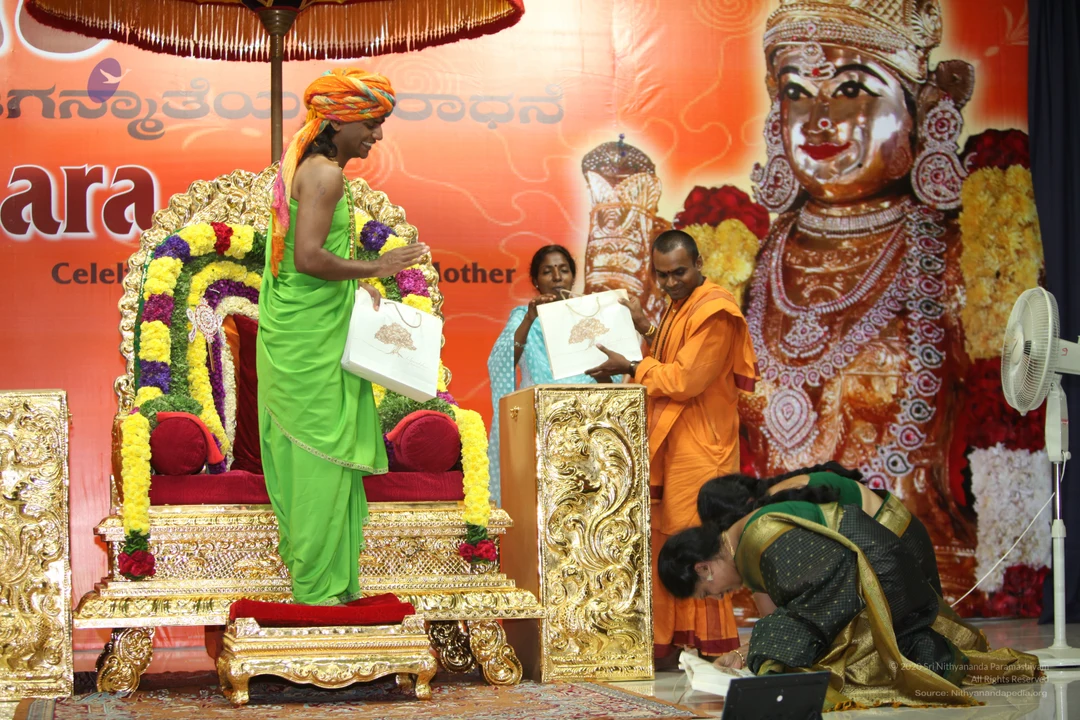
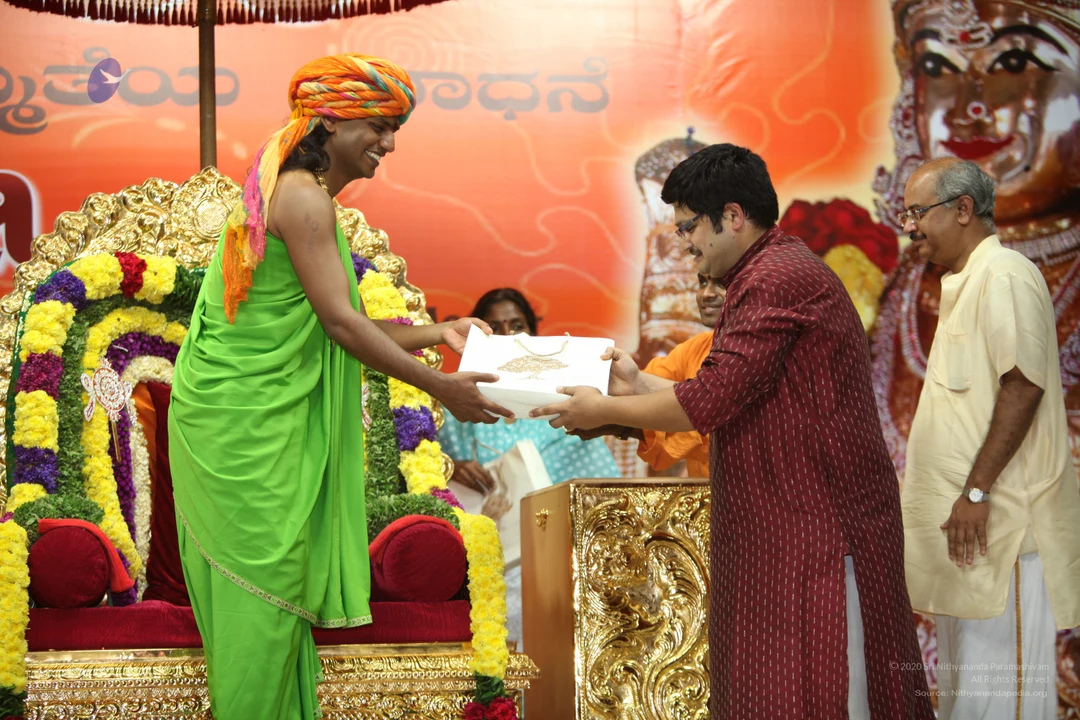
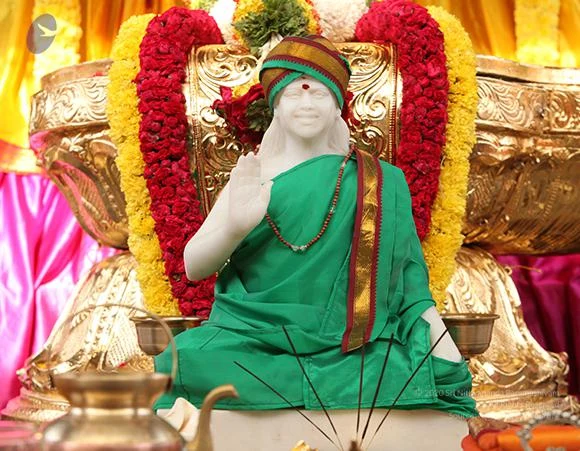
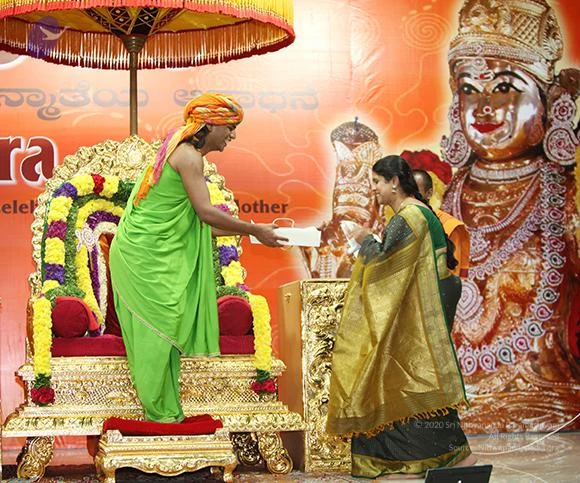
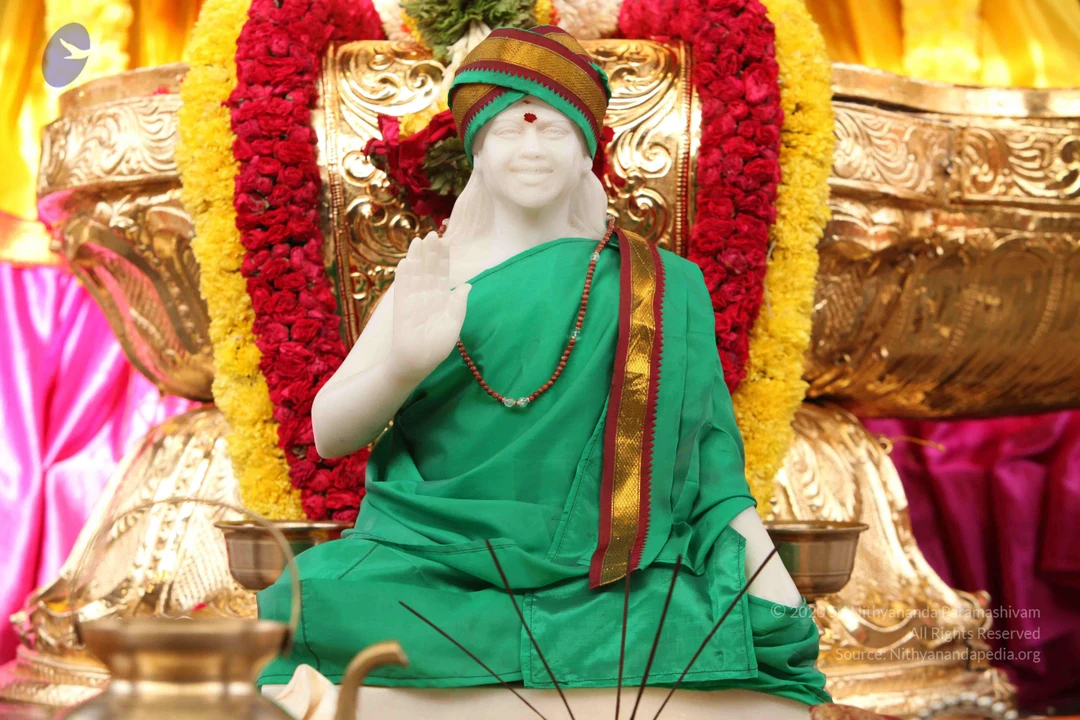
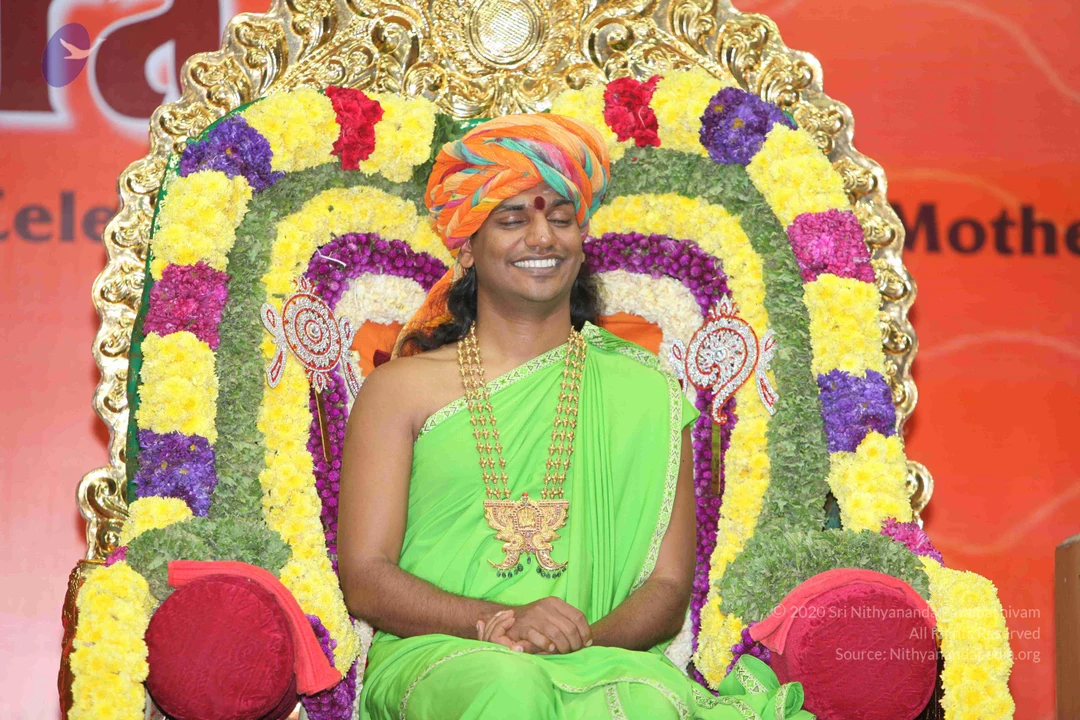
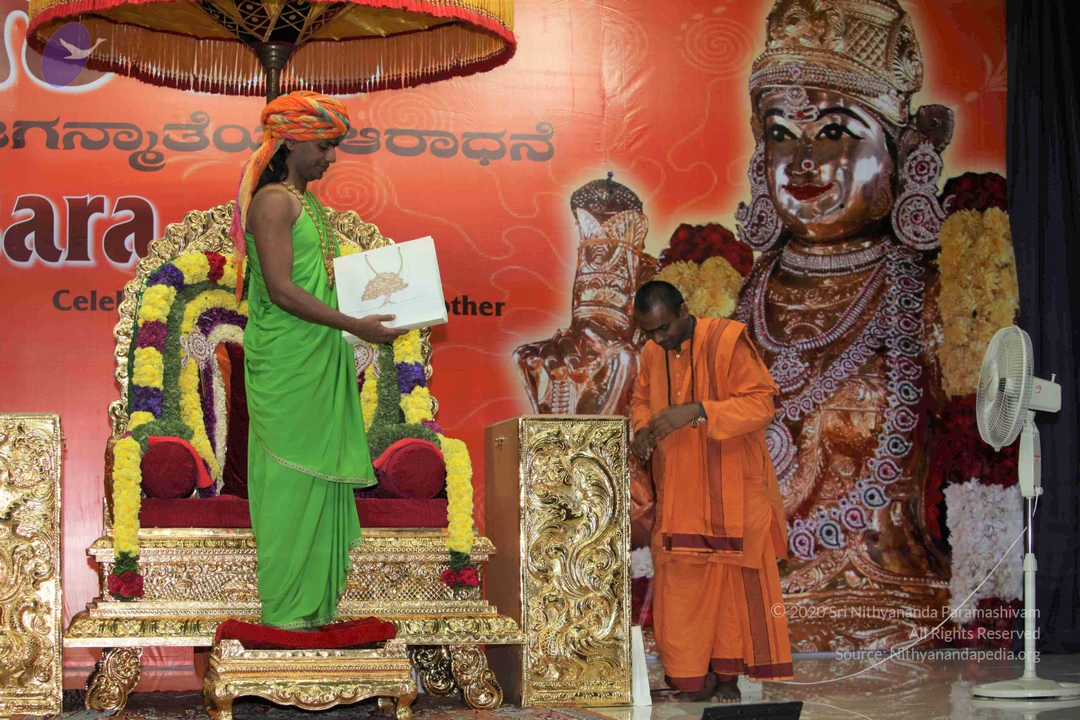
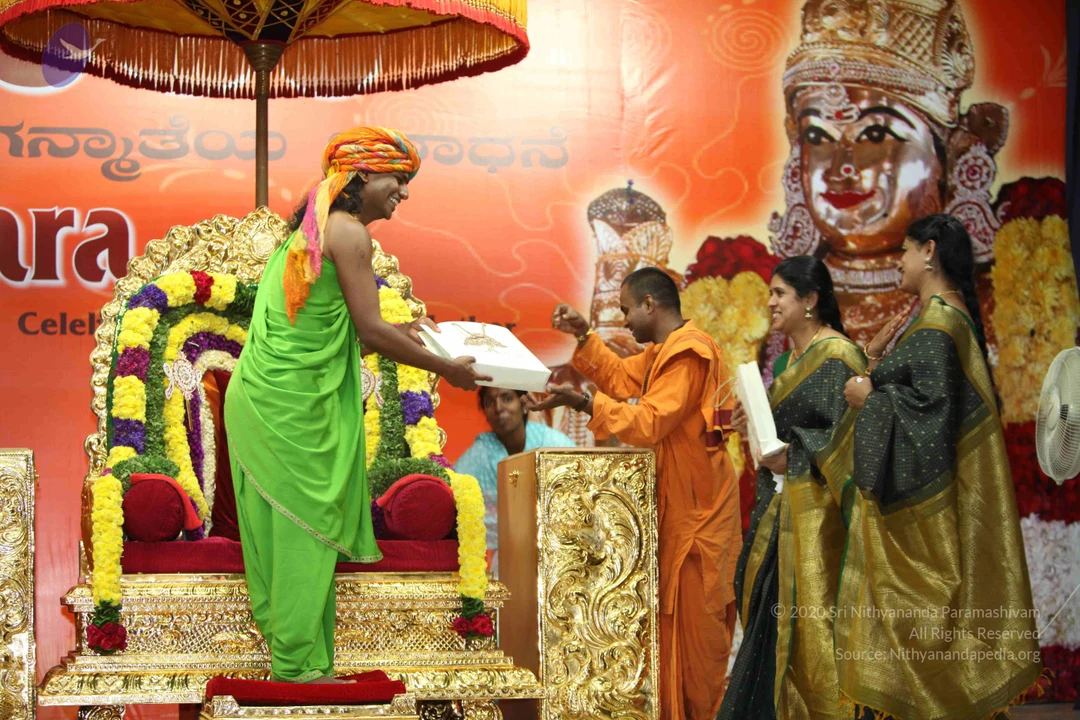
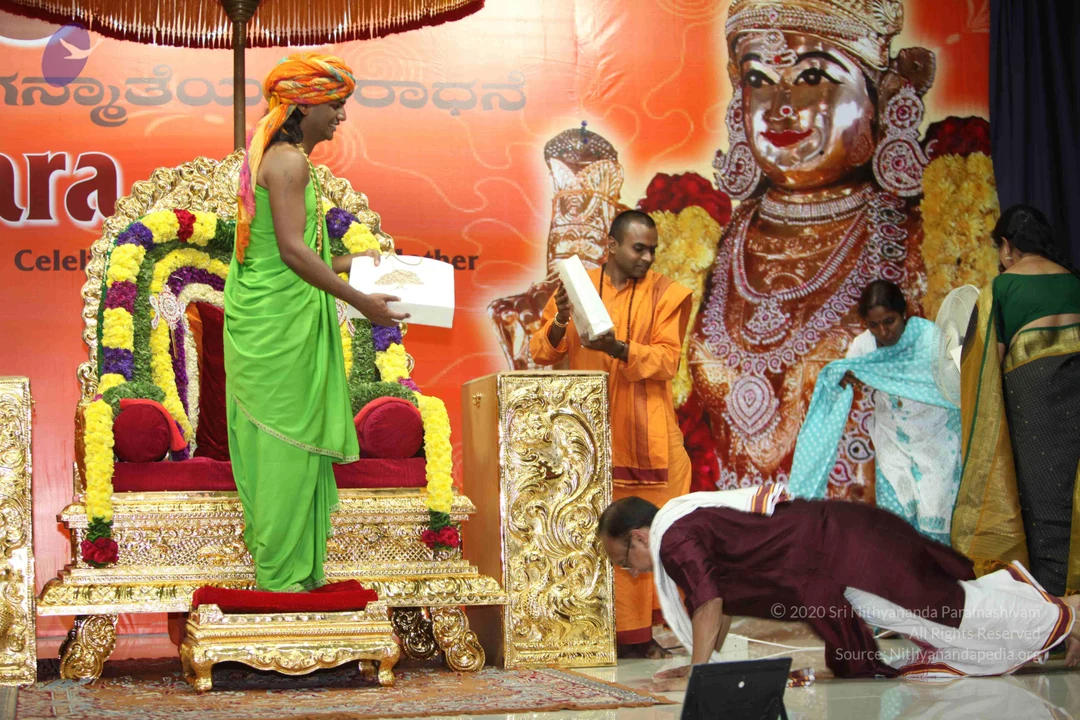
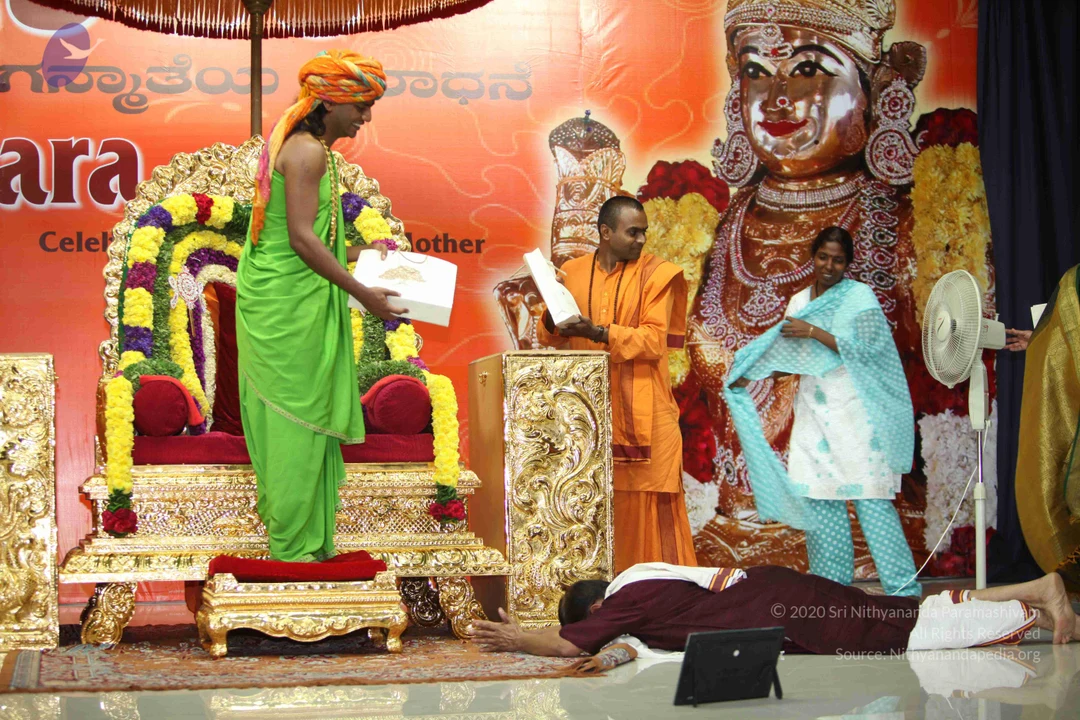
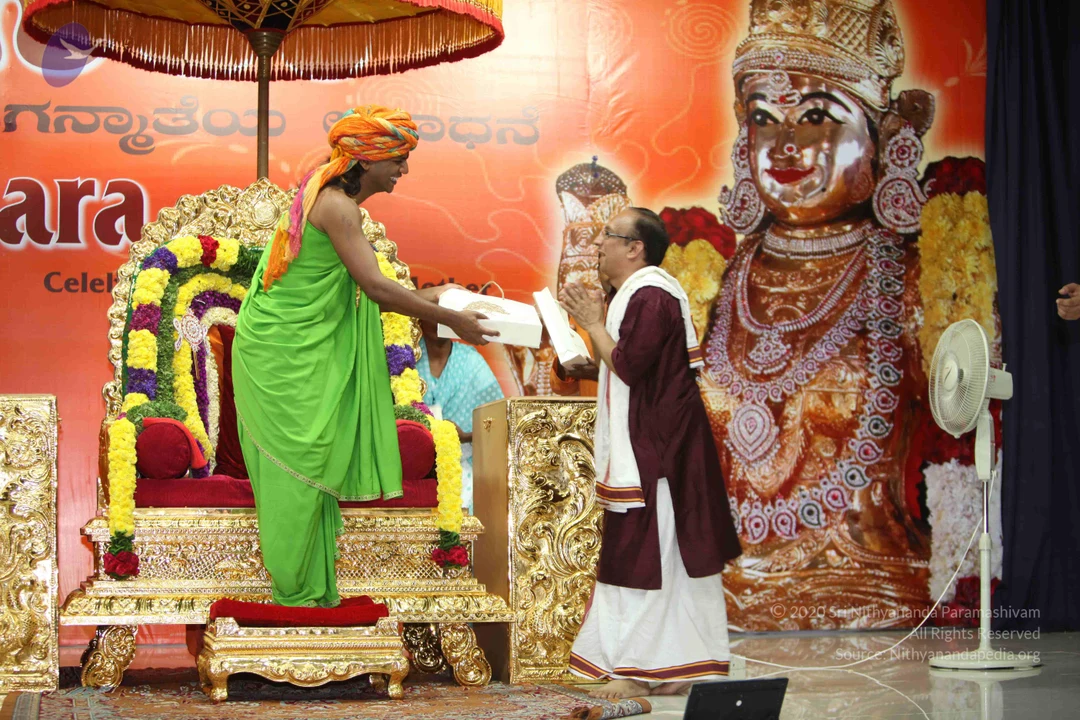
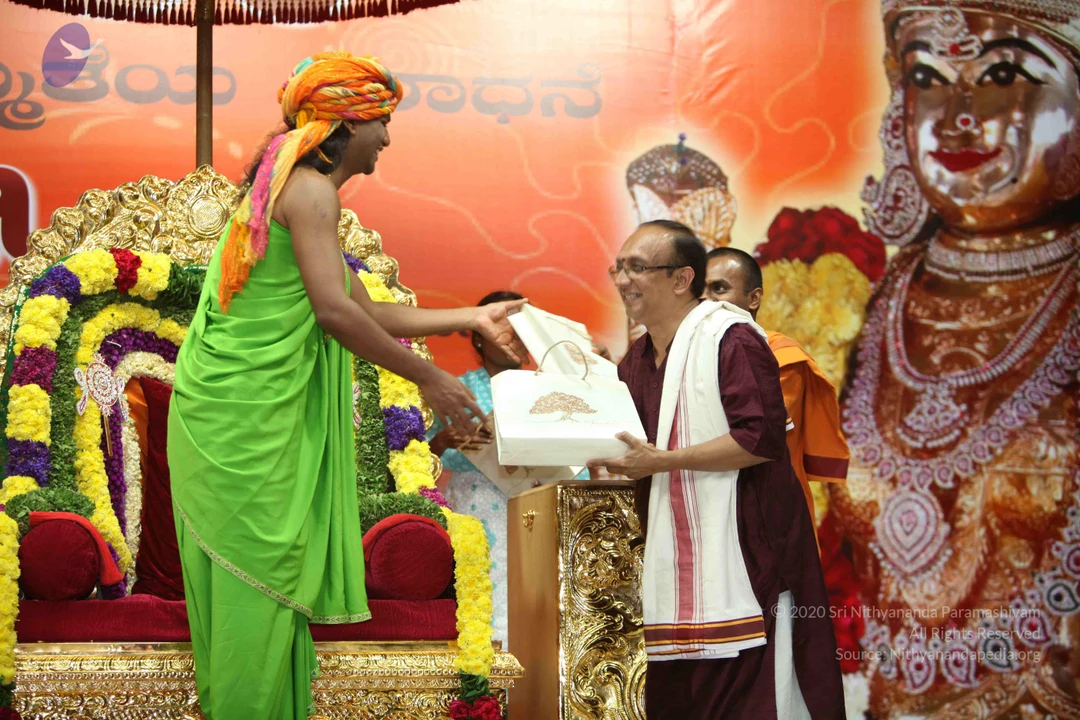
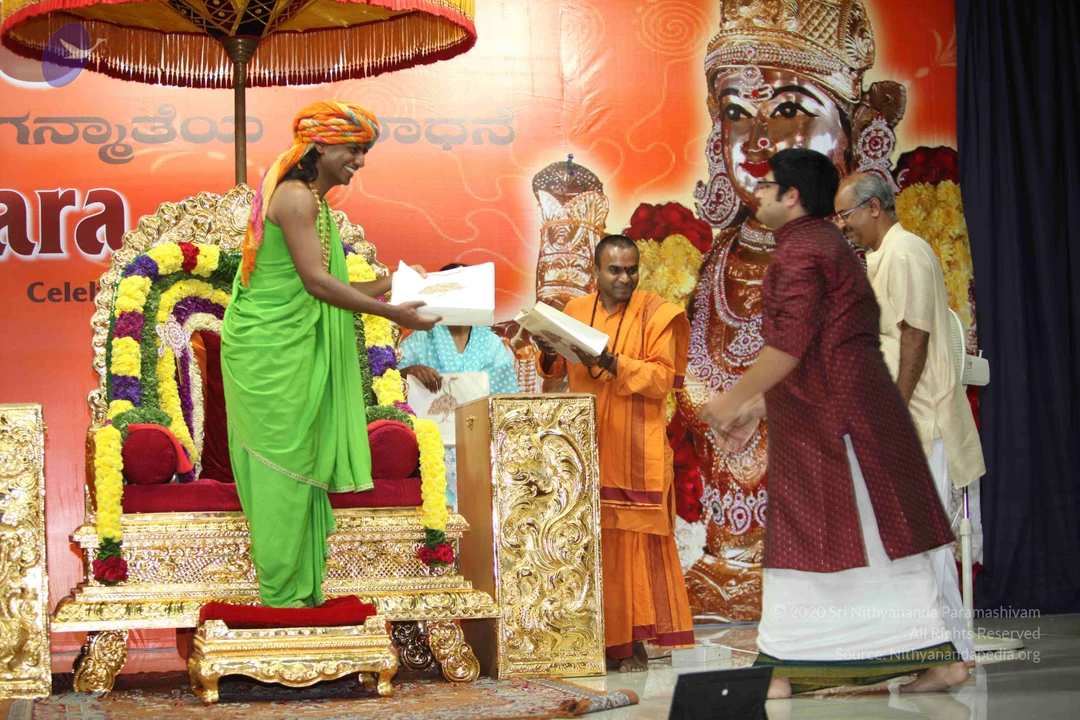
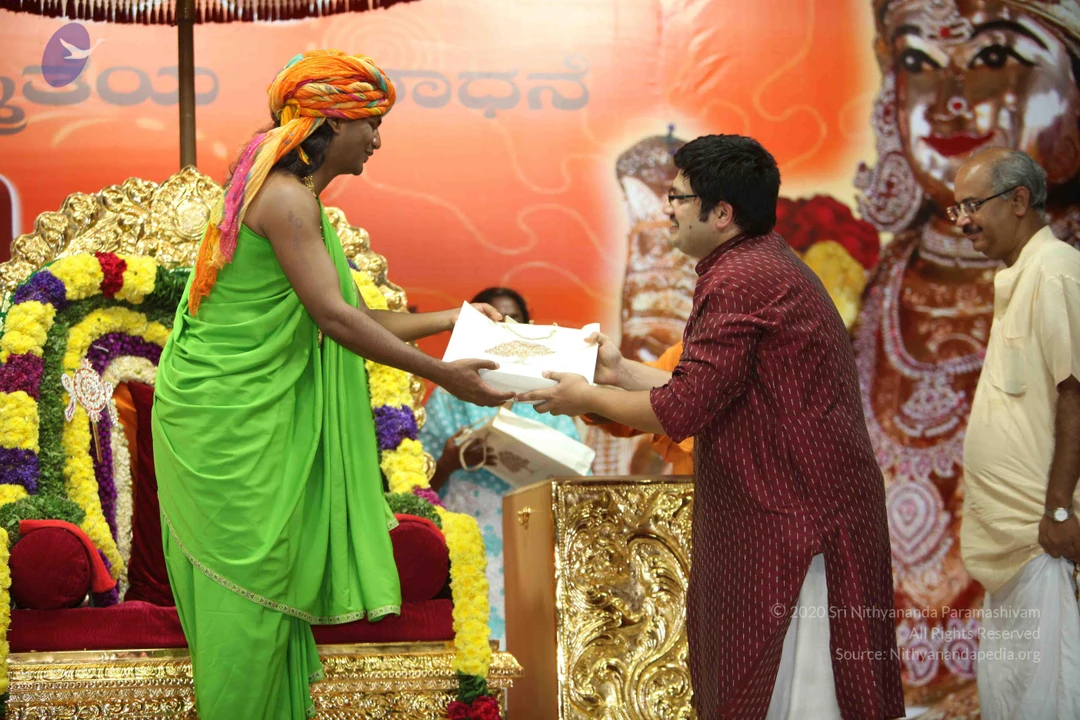
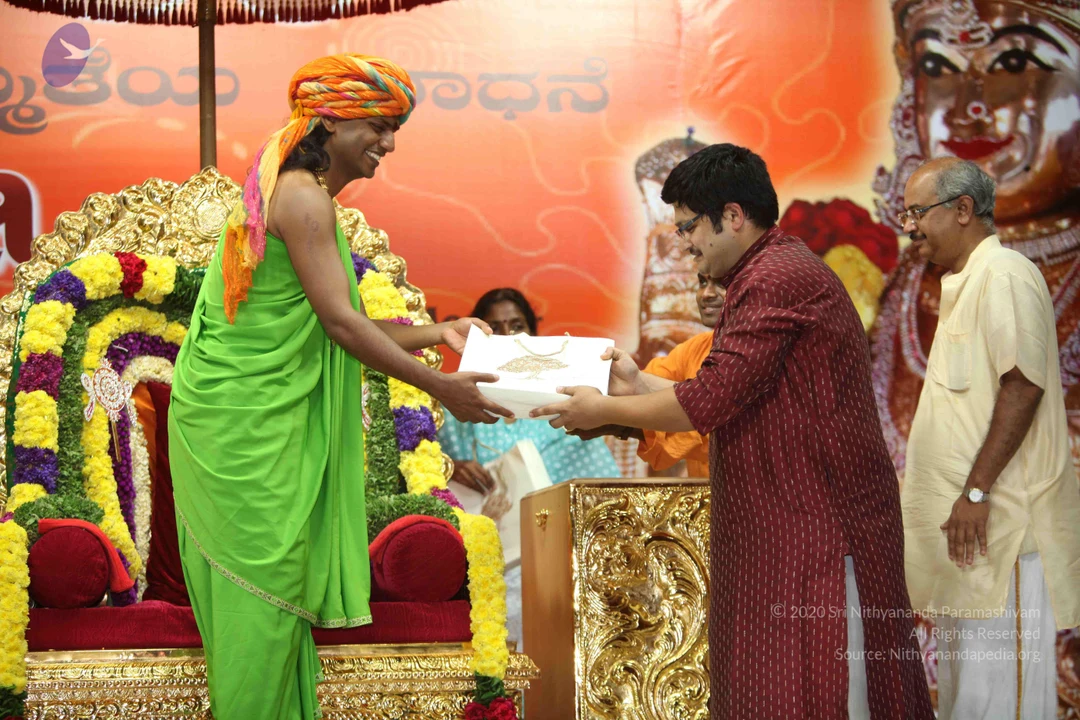
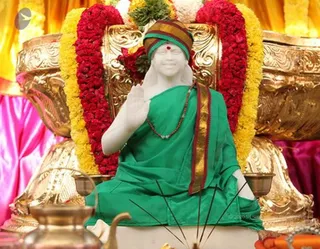
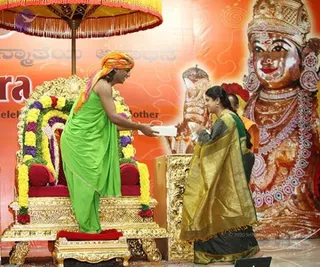
A white marble statue of a seated saint. The figure raises one hand in blessing. It is set within a heart-shaped arrangement of red roses and yellow marigold garlands against a gold backdrop. Brass lamps, a brass kalasha-style vessel and incense sticks stand in the foreground, with pink and gold draping behind. No living people are visible.A photograph of a pair of decorated metal deity murtis seated on a golden pedestal before a dark red curtain within an ornate gold frame. The left figure wears a red and orange turban-like crown, a green jewelled necklace, and holds a trident; the right figure wears a tall jewelled crown, gold and red ornaments, and a green and orange garment. Long garlands of yellow, red, purple and white flowers hang on both sides, and a silver shivalinga-shaped object with white flower garlands sits at the front on a kalasha-like base. The figures are statues, not people.A seated figure in a green garment sits on an ornate gold throne decorated with yellow, purple and red flower garlands and red cushions. He wears a multicoloured orange and pink turban, a gold pendant necklace and beaded necklaces, and has his palms pressed together in namaste with eyes closed. The gold throne is set against a red and orange backdrop. A figure dressed in saffron and ornate adornments with a turban, malas and a ceremonial gold necklace, seated on a throne in a satsang setting, fits the appearance-based Swamiji (probable) label; no other people are visible.A man in an ornate ceremonial setting stands in front of a floral arch of marigolds and purple flowers, framed by decorative garland work. He wears a bright orange and red turban, a green draped garment with a gold border, and layered gold necklaces. The turban and gold ornaments are prominent cues. He smiles toward the camera with hands near his chest in a relaxed pose. The garland arch and the vivid green and orange colours dominate the frame.A two-panel collage graphic. The left panel shows a smiling man in a green sari-style wrap with a gold-coloured ornate necklace and a multicoloured orange, pink and blue turban, set against a flower-decorated backdrop. The right panel shows a silver-and-gold deity murti of Murugan, adorned with a jewelled crown and a vertical tilak, dressed in a garland of yellow and magenta flowers and placed in a floral arch.A standing figure in a green garment with an orange-and-yellow turban hands a white envelope or paper down from a gold-and-red throne decorated with yellow, purple and white flower garlands. A woman in a gold-bordered green and black saree leans in to receive it, and a large backdrop shows a painted deity figure with a red face, gold crown and ornate jewellery, under a red and gold canopy. The figure's appearance is not distinctive enough to establish identity, so this is recorded as an uncertain candidate in a role of presenter.

Paadapuja

5 photosSource gallery
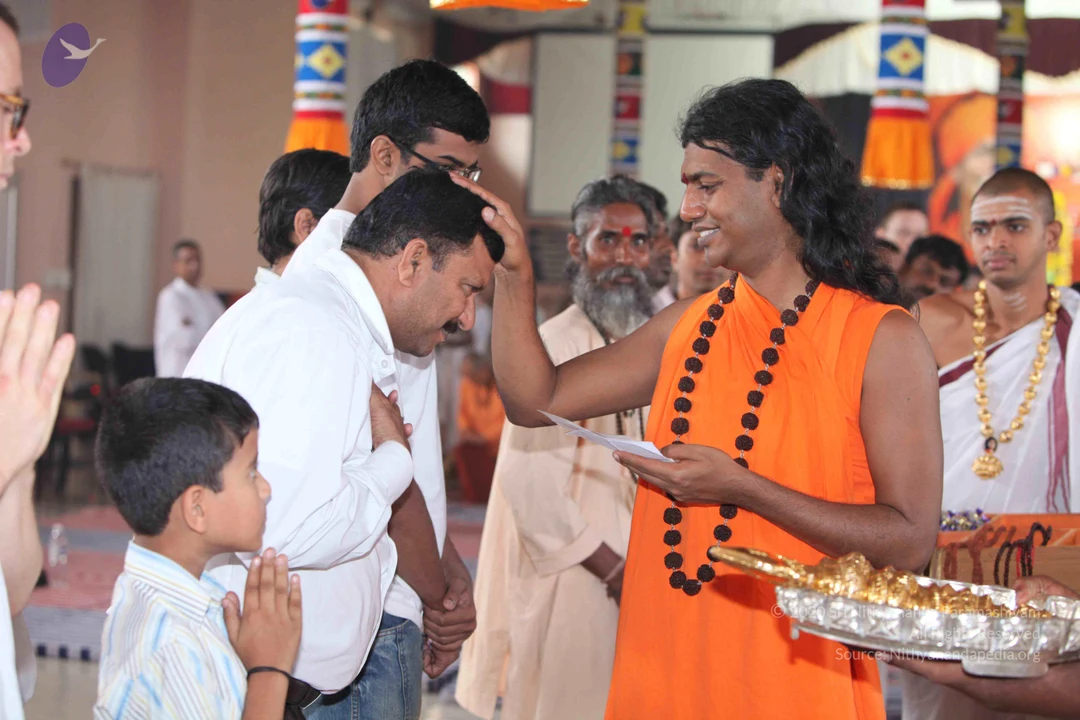
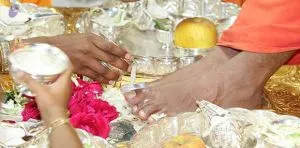
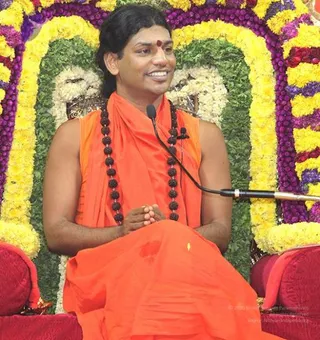
A photograph of a man seated cross-legged on an ornate throne-like seat, eyes closed in meditation. He wears a saffron-orange robe and a long rudraksha mala around his neck, with long dark hair swept back. Behind him is a dense arrangement of marigold garlands in yellow, orange and red, and a red cushion sits beside him. The setting appears to be a temple or satsang hall with a decorated backdrop. Appearance-based label: Swamiji (probable), seated in meditation, identified by saffron robe, rudraksha mala and long swept-back hair.Close-up photograph of a padapuja ritual: a bare foot in an orange or saffron garment rests on a brass plate, while a hand pours milk or water from a small spoon over it. Around the plate are silver bowls, a yellow fruit, pink flowers and other offerings. The foot appears to be a devotee's or a priest's, with no visible face, so the a person value is unsure.A photograph of a smiling man with long swept-back dark hair and a red tilak on his forehead, seated and speaking into a microphone during a satsang. He wears a saffron-orange robe draped over one shoulder and a long string of dark rudraksha beads, with hands clasped in his lap. Behind him is a backdrop of yellow, white and purple flower garlands forming an arch, with red cushioned seats at the sides. A , , . The subject matches the visible cues of the a person: long swept hair, saffron robe and rudraksha malaA photograph of a long-haired man in saffron-orange robes and a rudraksha mala holding a silver tray of offerings while placing a hand on the head of a young boy in a white shirt. Nearby, a man in a white shirt stands with hands folded in namaste, another man in white and an older bearded man in white watch, and a child in front lifts hands in prayer. The background shows orange and white decorations. a person is identifiable by the long swept hair, saffron robes, rudraksha mala and ornate gold necklace while bestowing a blessing.

PanchaTapas
1 photoSource gallery
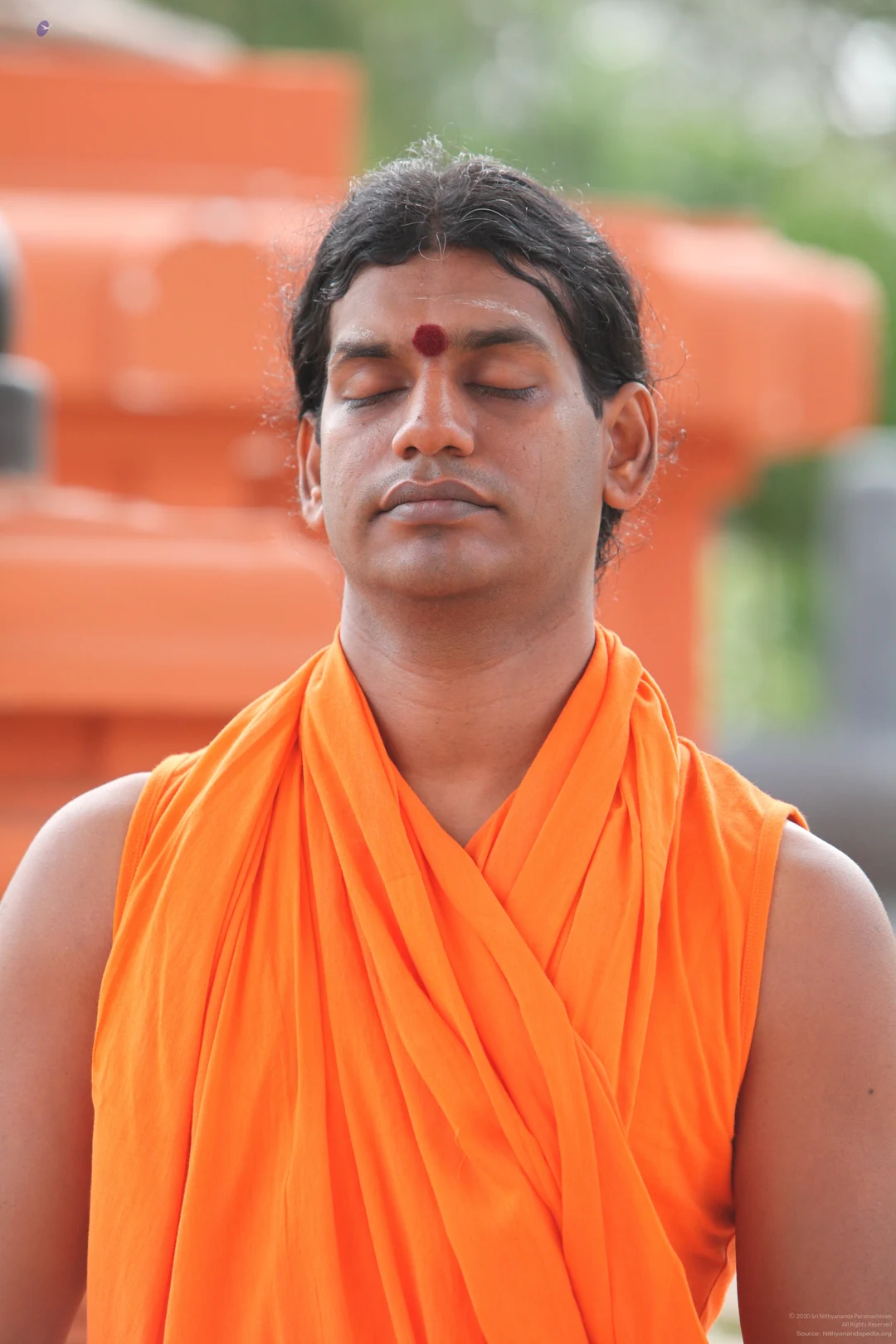
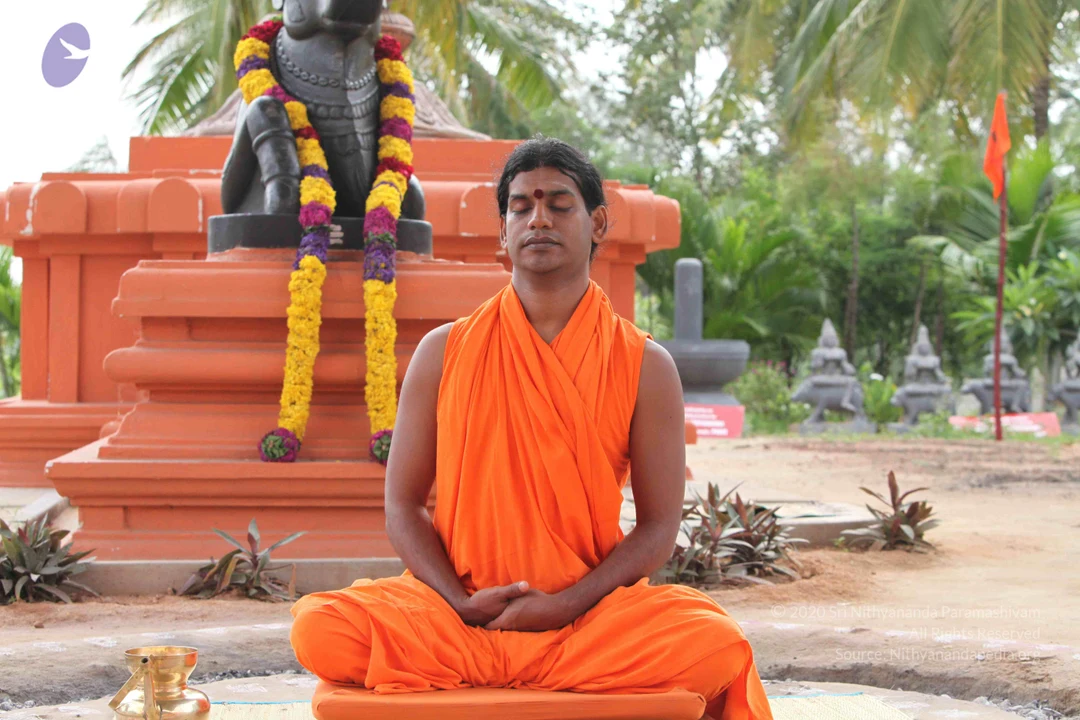
A man sits cross-legged in meditation on a low platform outdoors in front of an orange-painted temple structure. He wears a flowing saffron-orange robe draped over his shoulders and has short dark hair. Behind him stands a dark stone deity murti of a seated figure adorned with a yellow-and-orange flower garland, set against a red-orange shrine wall with a carved pillar and greenery. A small brass lamp and offering vessel sit on the platform at his lower left.

01-Temple

32 photosSource gallery
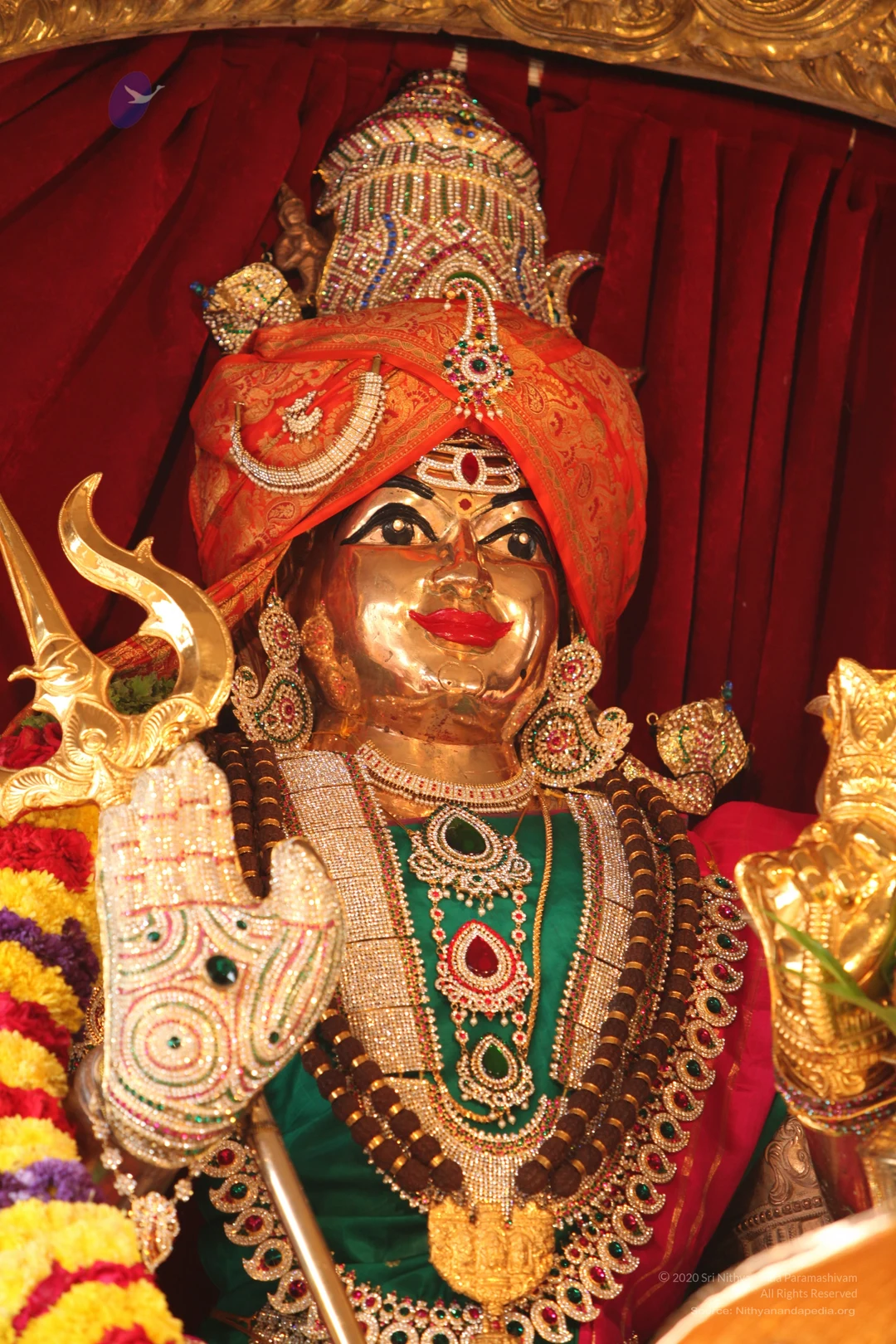
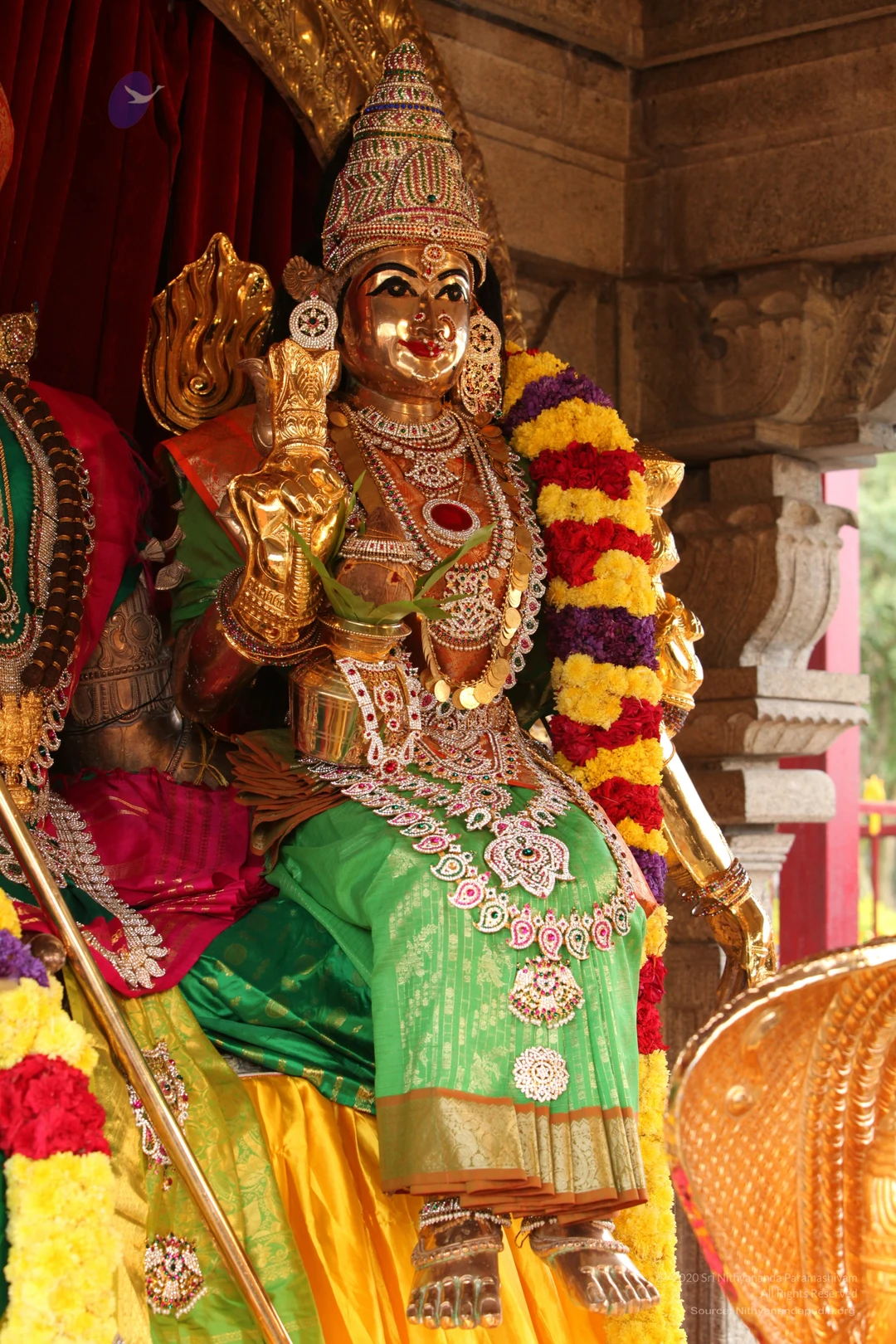
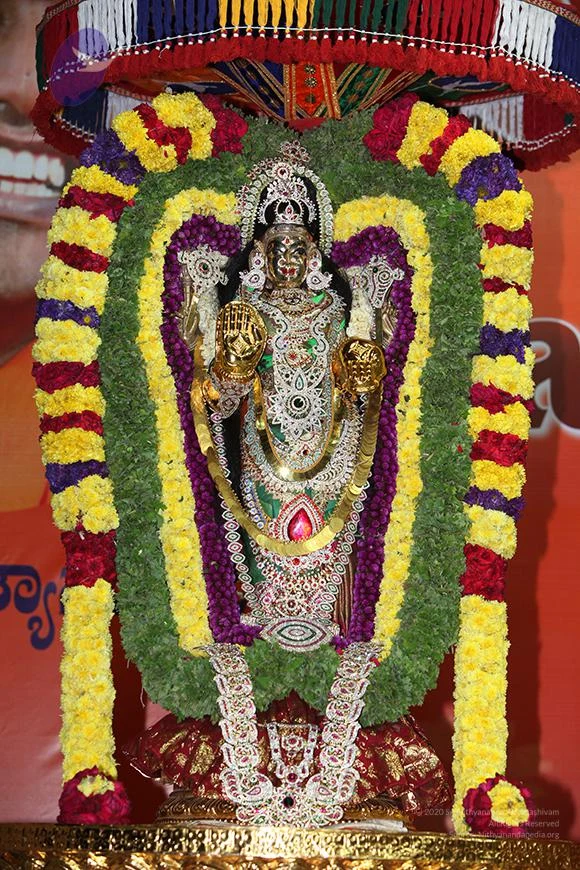
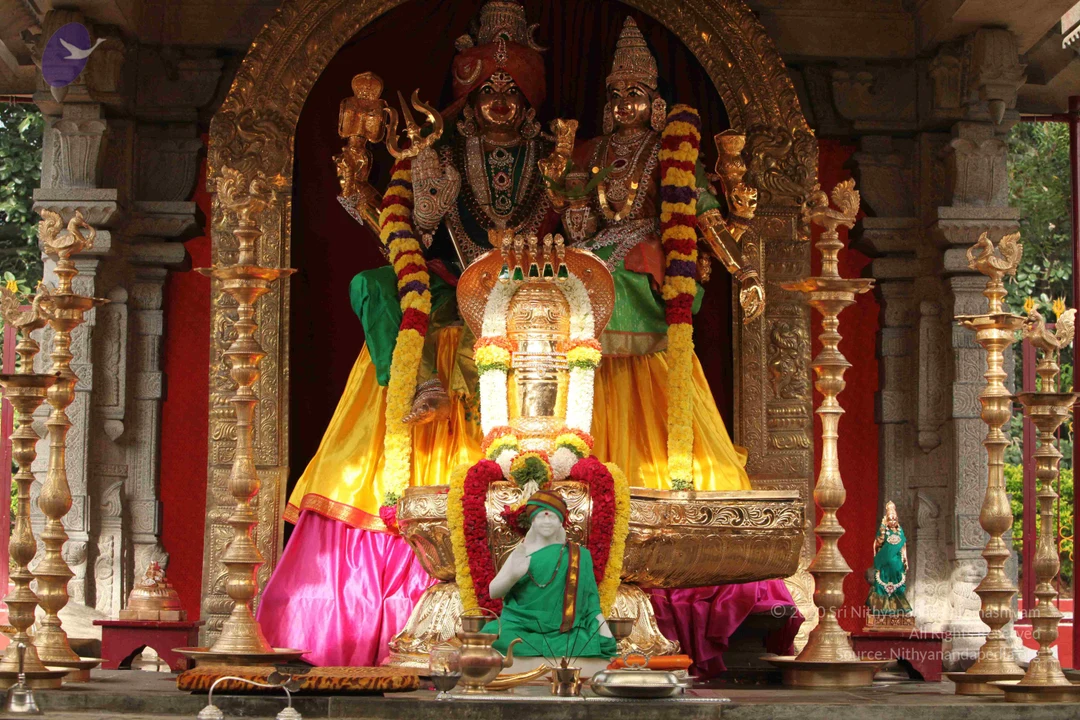
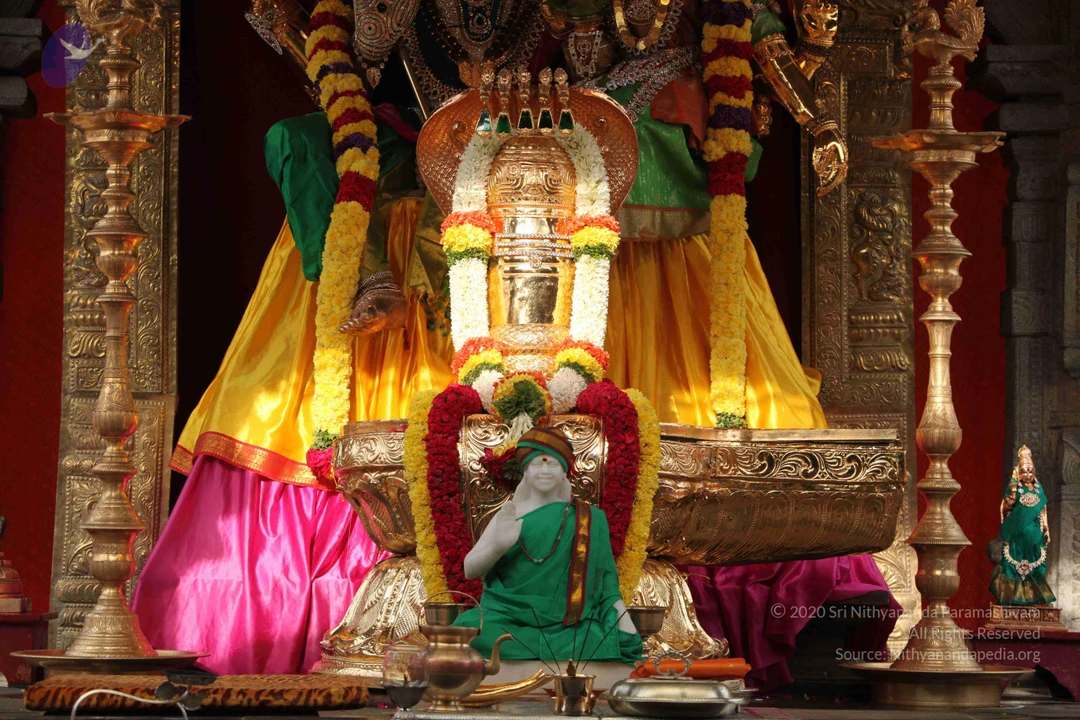
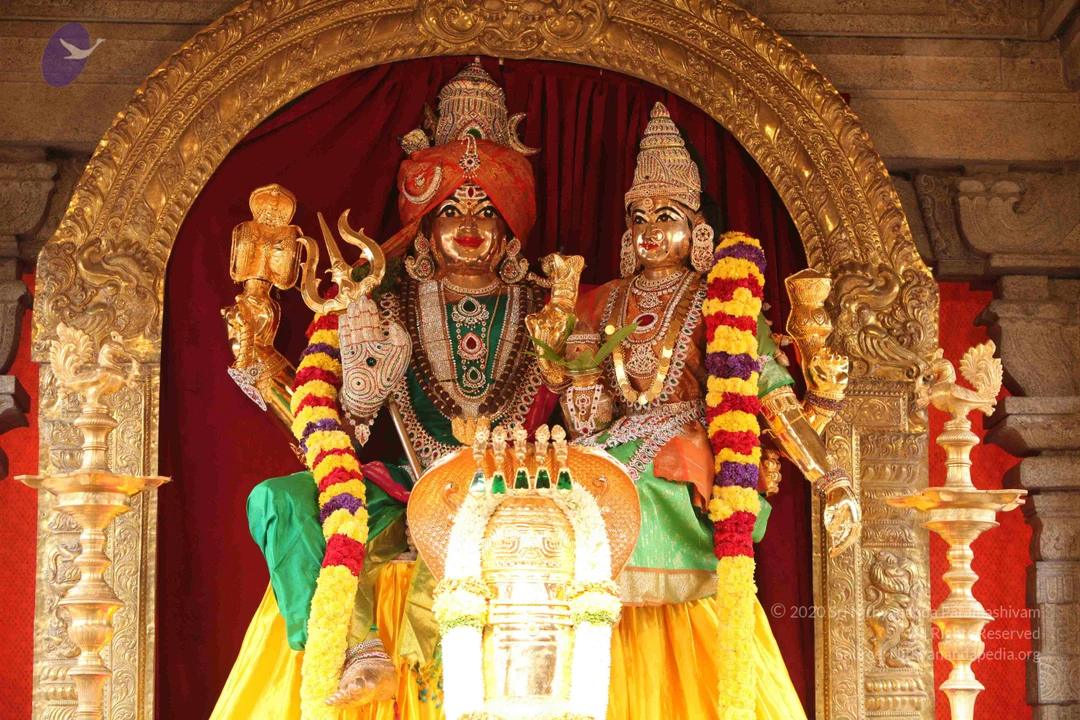
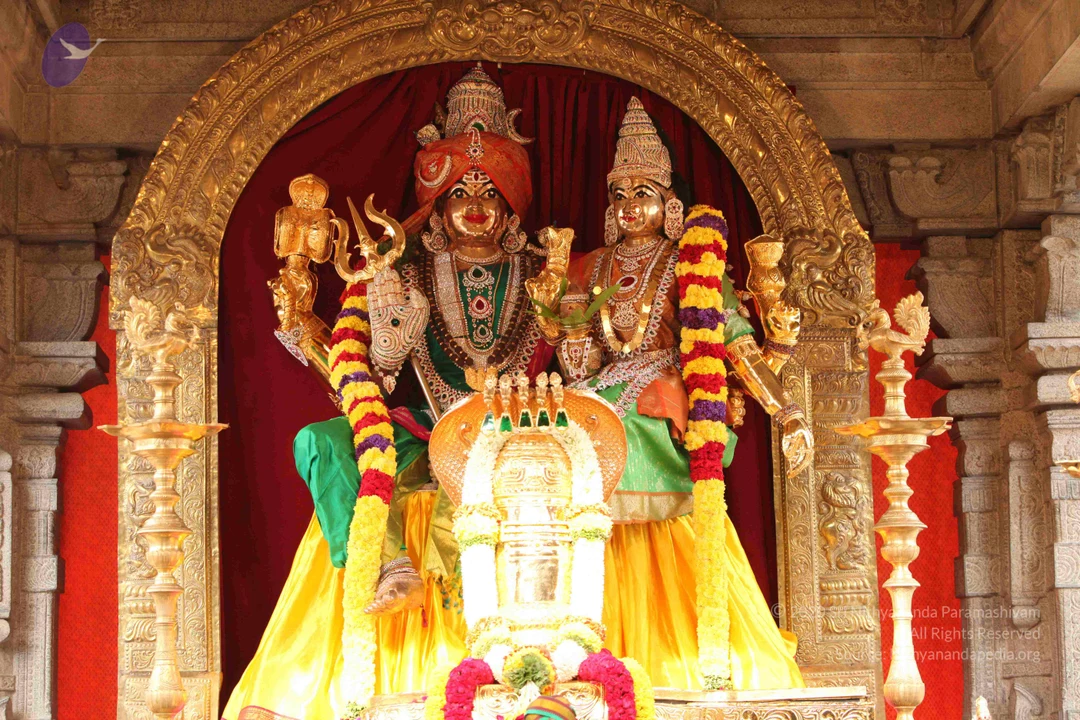
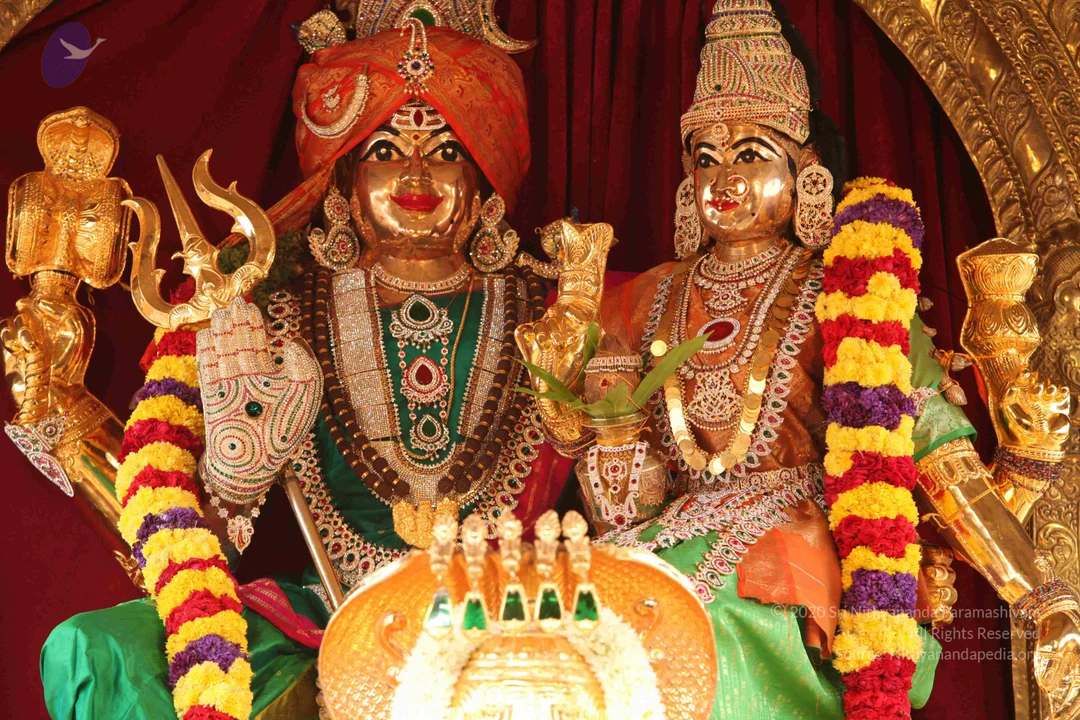
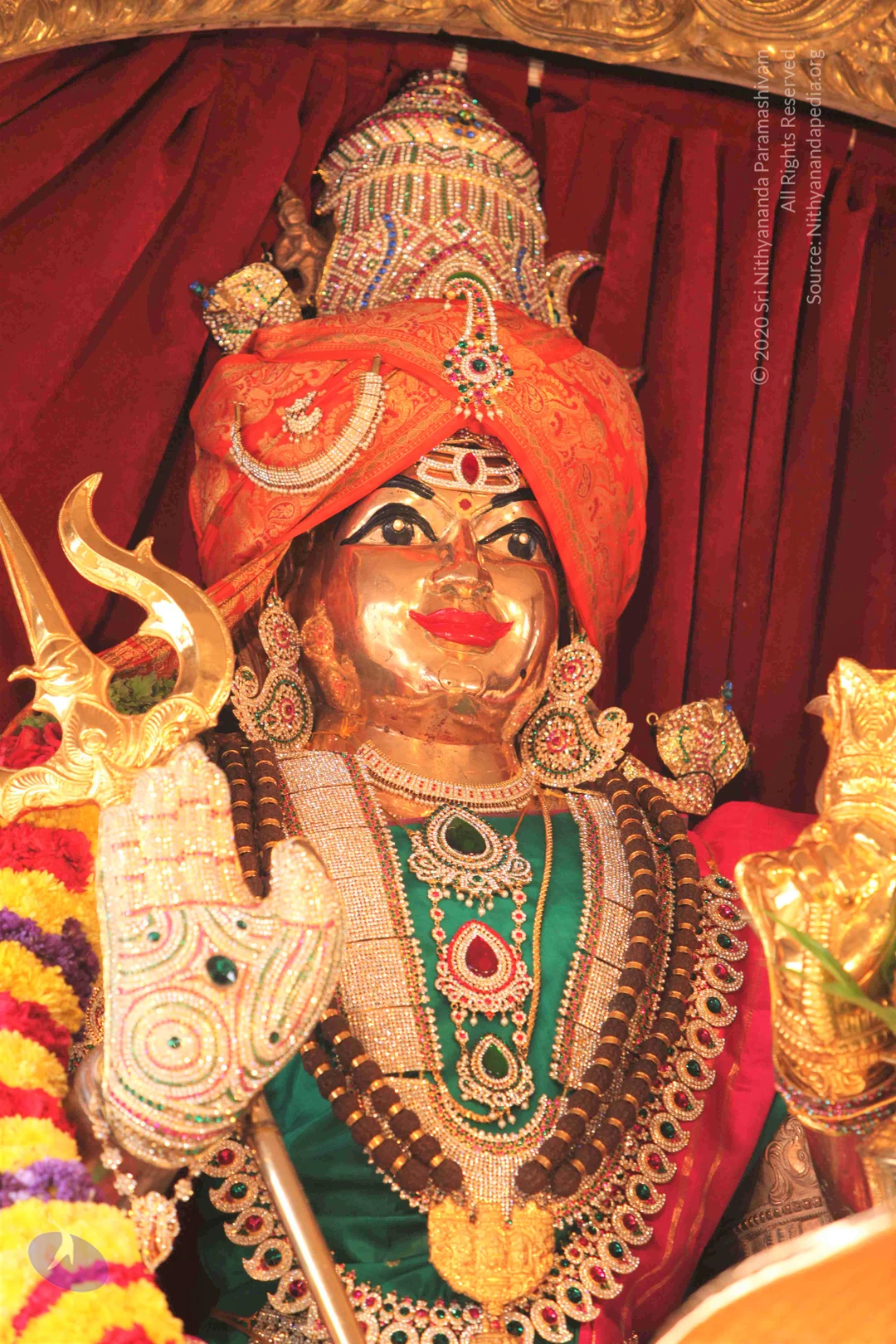
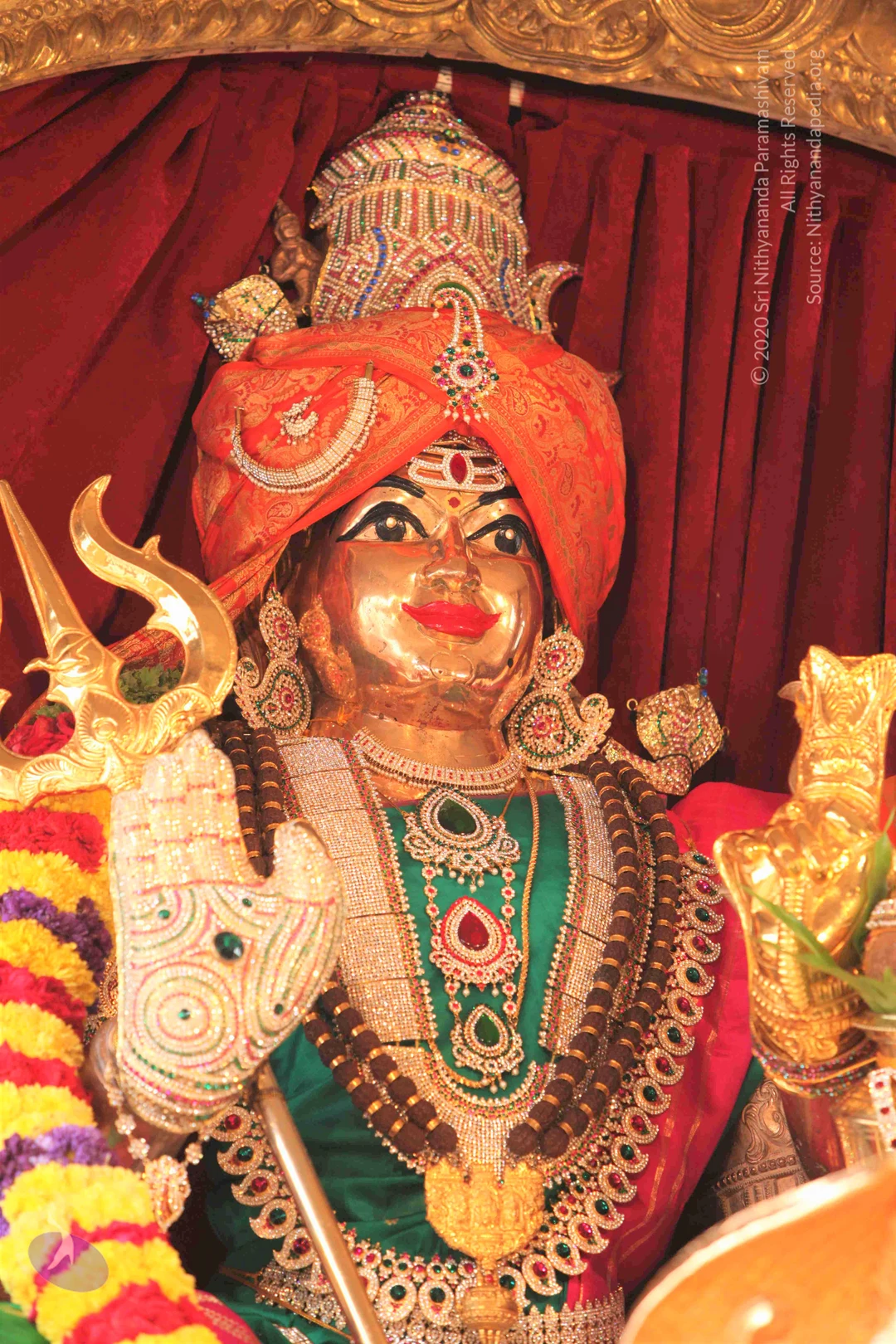
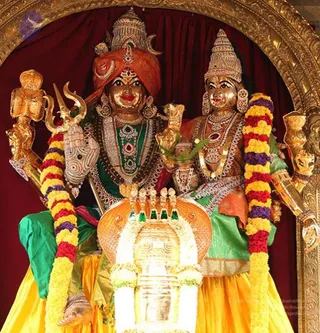
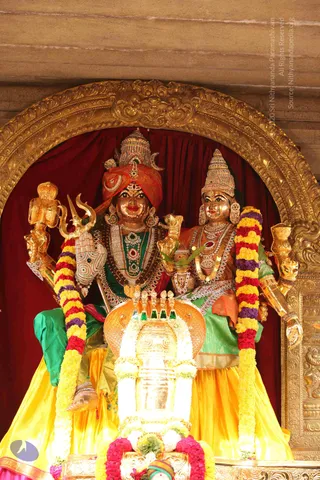
A photograph of a golden shrine housing a large seated pair of deity murtis, one male figure with a tall crown, trident and bow-like staff and a female figure in a crown with a red garland, both dressed in yellow and green silk. Garlands of yellow, red and purple flowers drape the figures, and a shivalinga-like form with flower garlands sits on a gold pedestal. In front, a small green-robed seated statue of a saint with hands folded sits on a red-draped base. Tall brass oil lamps with lotus-shaped tops flank the shrine, and pink satin cloth hangs below. Pillars and arches surround the shrine with a green garden behind. No people are visible.A photograph of a temple shrine with a large deity murti dressed in a yellow and pink silk garment, its ornate gold and silver arms raised behind a tall, gold-framed alcove. In front stands a golden peetha with a cylindrical silver-and-gold kalasha-like object wrapped in garlands of yellow, orange, red and white flowers. A white marble statue seated in lotus-like meditative posture is dressed in a green robe with a red-and-gold shawl and a green-and-orange headwrap, adorned with a garland of red and yellow flowers. Tall brass oil lamps (deepas) with lit flames flank the scene, and smaller brass vessels and an offering plate sit on the floor. A small green-clad figure, possibly a deity statue, stands at the right edge. No living people are visible.A photograph of a golden deity murti pair seated within an ornate gilded arch against a deep red curtain. The figure on the left wears an orange-red turban with a crescent ornament, a green garment, and ornate jewelled necklaces and rudraksha-style beads, holding a trident and a small hand drum. The figure on the right wears a cone-shaped crown, a green and gold sari, and layered gold necklaces, holding a kalasha-like vessel with leaves. Both sit above a yellow silk cloth and a silver shivalinga adorned with white flower garlands, and marigold and red-yellow-purple flower garlands drape the figures. No living people are visible.A photograph of a golden deity murti pair seated within a gilded arched niche against a red draped backdrop. The figure on the left wears an orange turban with a crescent, holds a trident, and has a green jeweled garment and rudraksha-style beaded necklaces. The figure on the right wears a tall jeweled crown, a green and gold sari-style garment, and holds a coconut-shaped offering with leaves. Both are draped in yellow, red and purple flower garlands. In front stands a white cylindrical object wreathed in white flowers, resembling a lingam-shaped offering, with a brass vessel at the base. These are statues, not living people.A photograph of a gilded shrine arch framing a pair of deity murtis seated on a raised platform with a red curtain behind them. The left figure wears an orange turban, a green jewelled necklace and holds a trident; the right figure wears a crown and a gold necklace and holds a lotus-like object. Both wear yellow and green garments and are garlanded with red, yellow and purple flower strings. In front stands a tall silver-coloured sivalinga-style vessel with a hood-like canopy, ringed with white and red flower garlands. A small seated white figure in green cloth with folded hands rests at the base. Brass oil lamps stand on either side, and brass vessels and offerings lie on the ledge below.Photograph of a gilded deity murti pair seated on a golden throne within an ornate gold arched niche against a red curtain. The left figure wears an orange turban and holds a trident, the right figure wears a gold crown and green and orange garments, both draped in flower garlands of yellow, red and purple. A small white Shiva lingam with flower garlands and a kalasha-like crown stands in front. Brass oil lamps flank the shrine and a small seated figure in a green garment sits before the throne. A partial view of a person in a white shirt stands at the lower left edge. Background shows carved stone pillars and a gold-framed doorway.

02-Pada-Puja

4 photosSource gallery
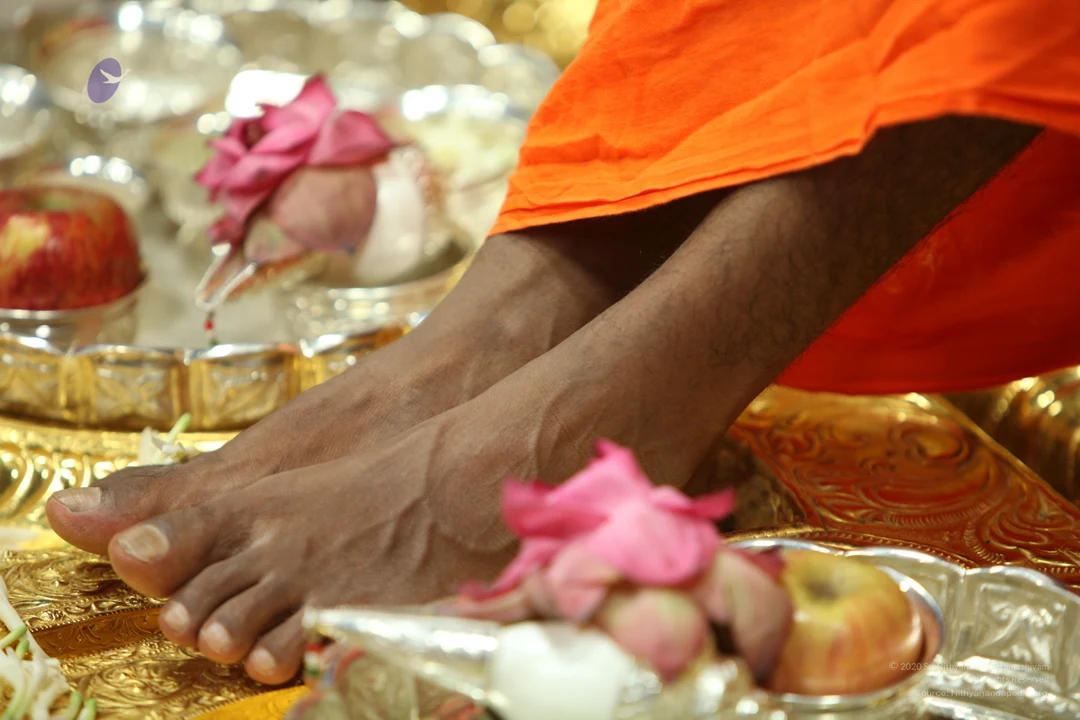
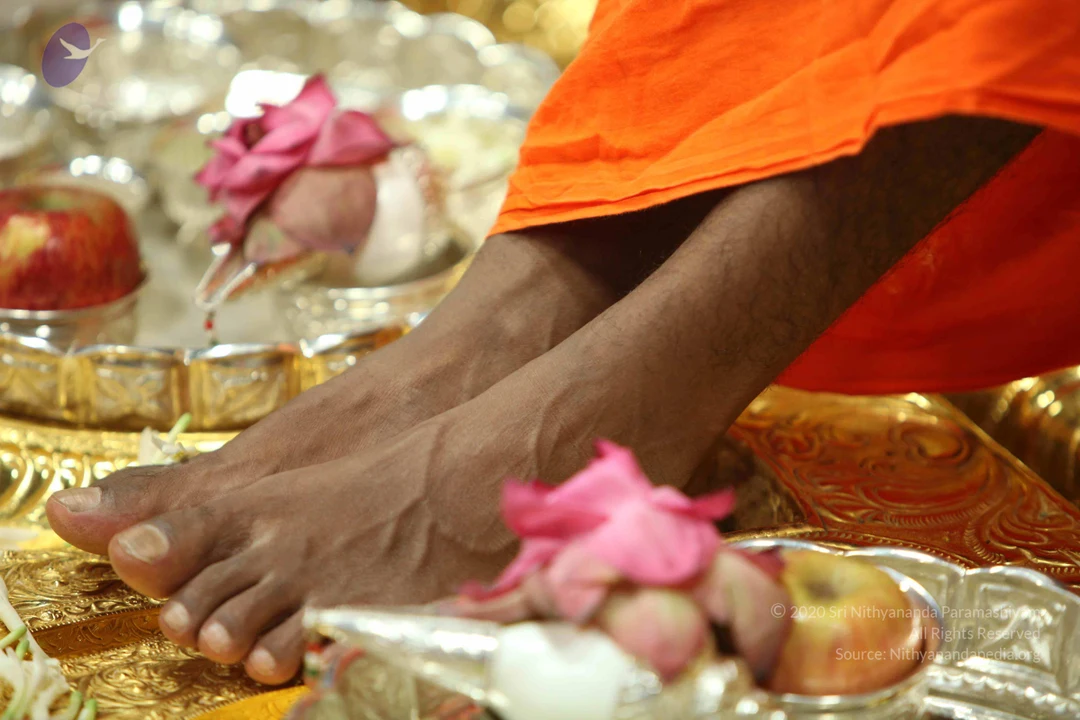
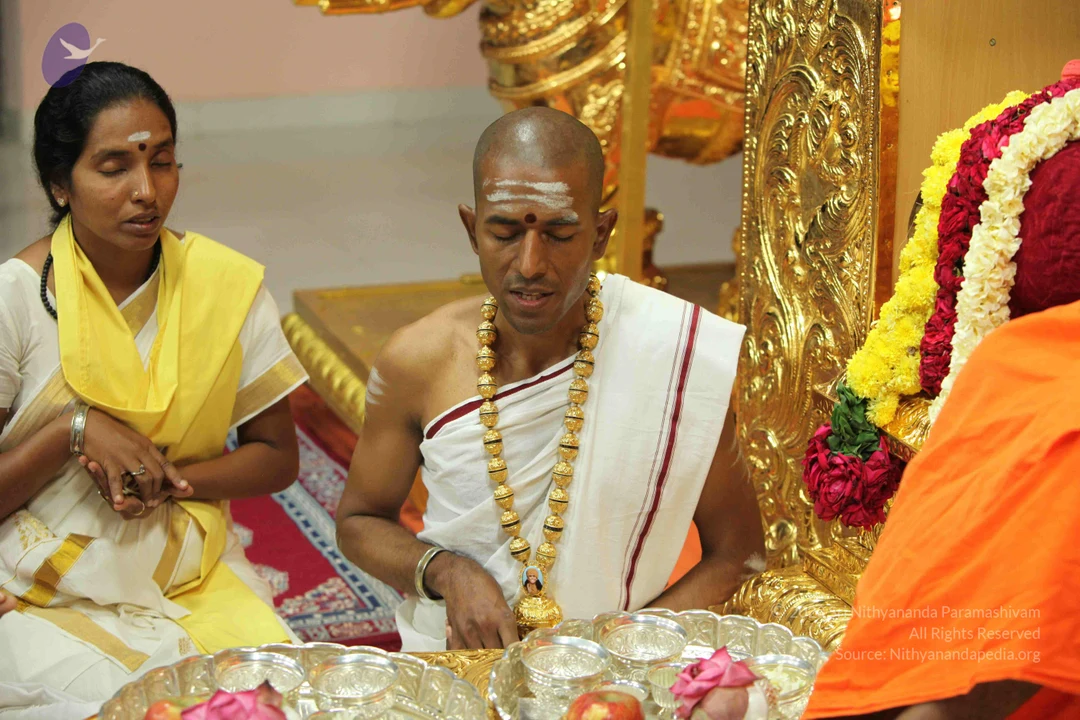
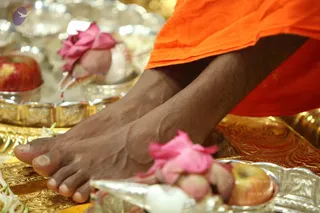
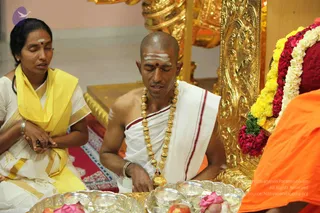
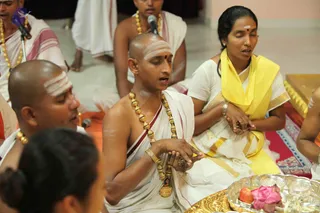
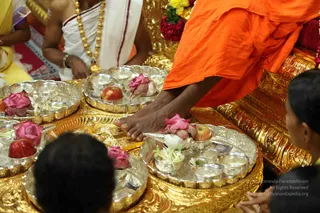
Close-up photograph of a pair of bare feet resting on a gold-patterned tray during a pada puja, the ritual washing of a guru's feet. The feet belong to a person in an orange-saffron garment whose hem is visible at the upper right. Around the feet are silver and gold plates and bowls holding pink lotus flowers, a sliced red apple, and white flowers, with water trickling from a silver vessel. Only the feet and lower garment are visible, so no face is shown and identity cannot be confirmed from appearance.A photograph of a pada puja ritual in progress. A shaved-headed man in a white dhoti with red-bordered edges sits before a gold ornate seat, wearing a heavy gold bead necklace with a pendant and white sandalwood markings on his forehead and arms. A woman in a yellow shawl over white clothing sits beside him with hands folded, eyes closed, and a white forehead mark. In the foreground are silver trays and bowls with flowers, and a person in orange robes is seen from behind at the right. Red and white garlands drape the gold seat. The man's appearance does not clearly match the page's claim, so he is described by role as a priest; no identification is made.A photograph of a seated puja ceremony in an indoor hall. In the centre, a shaven-headed priest in white dhoti and shawl with white and red sacred marks on his forehead wears a heavy gold bead necklace and a gold bracelet, his hands held together while he chants. Beside him, a woman in a yellow-bordered white sari with a yellow shawl sits with her eyes closed, singing and holding her hands together. Other shaven-headed priests in white and gold necklaces sit behind, one with a microphone in front of him. In the lower right, a gold tray holds fruit, pink flowers and leaves. Bottom left, the back of a woman's head is visible. Several people are visible in the scene.A padapuja ritual in which bare feet in orange robes rest on a golden platform. Silver trays hold pink lotus flowers, red apples, white flowers and shredded produce in small silver bowls. Behind, a man in a white dhoti with a gold necklace sits beside a golden seat, and at the lower edges two people with dark hair watch from close range. Orange cloth, gold ornamentation and gold trays dominate the frame.

03-Morning-Satsang

16 photosSource gallery
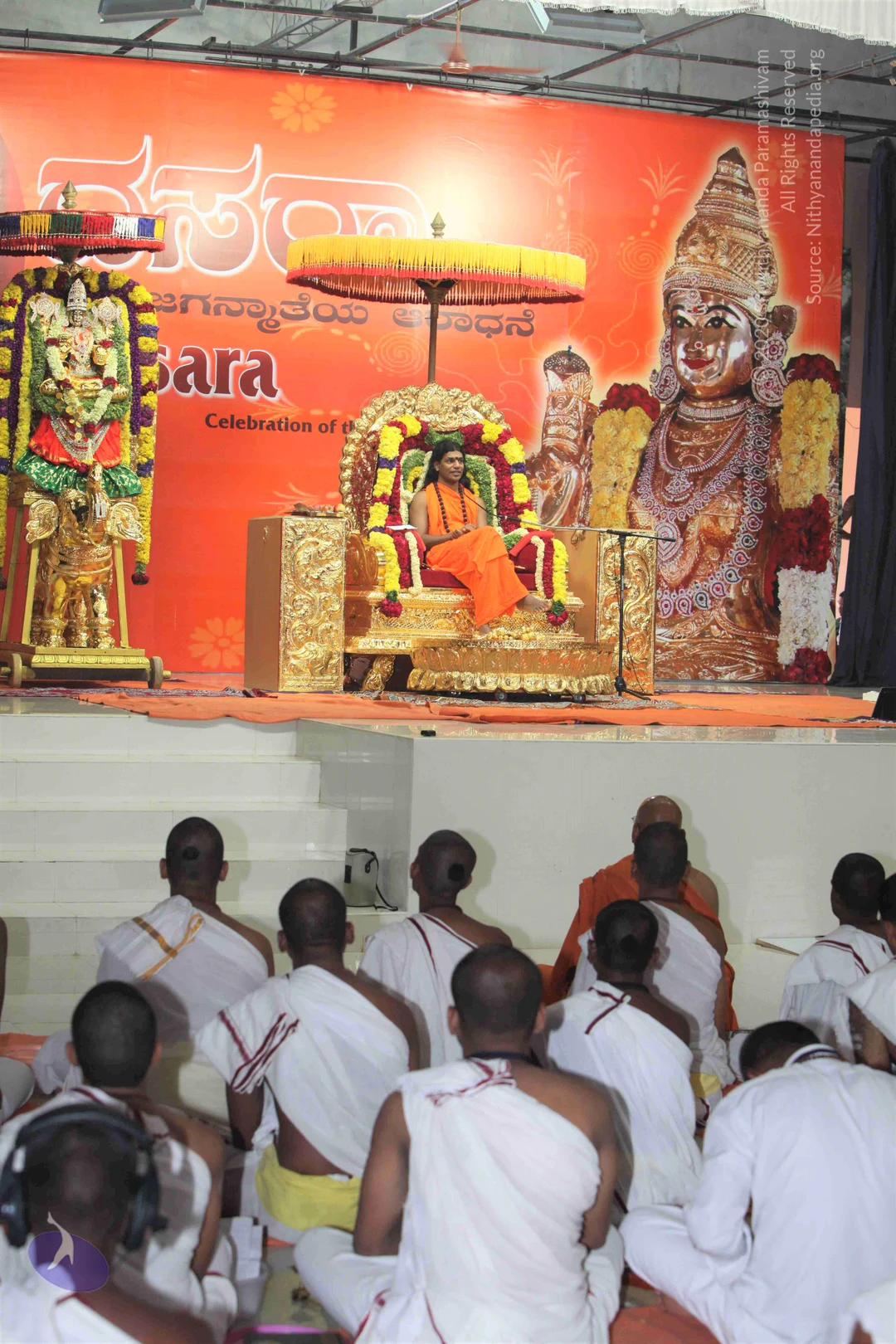
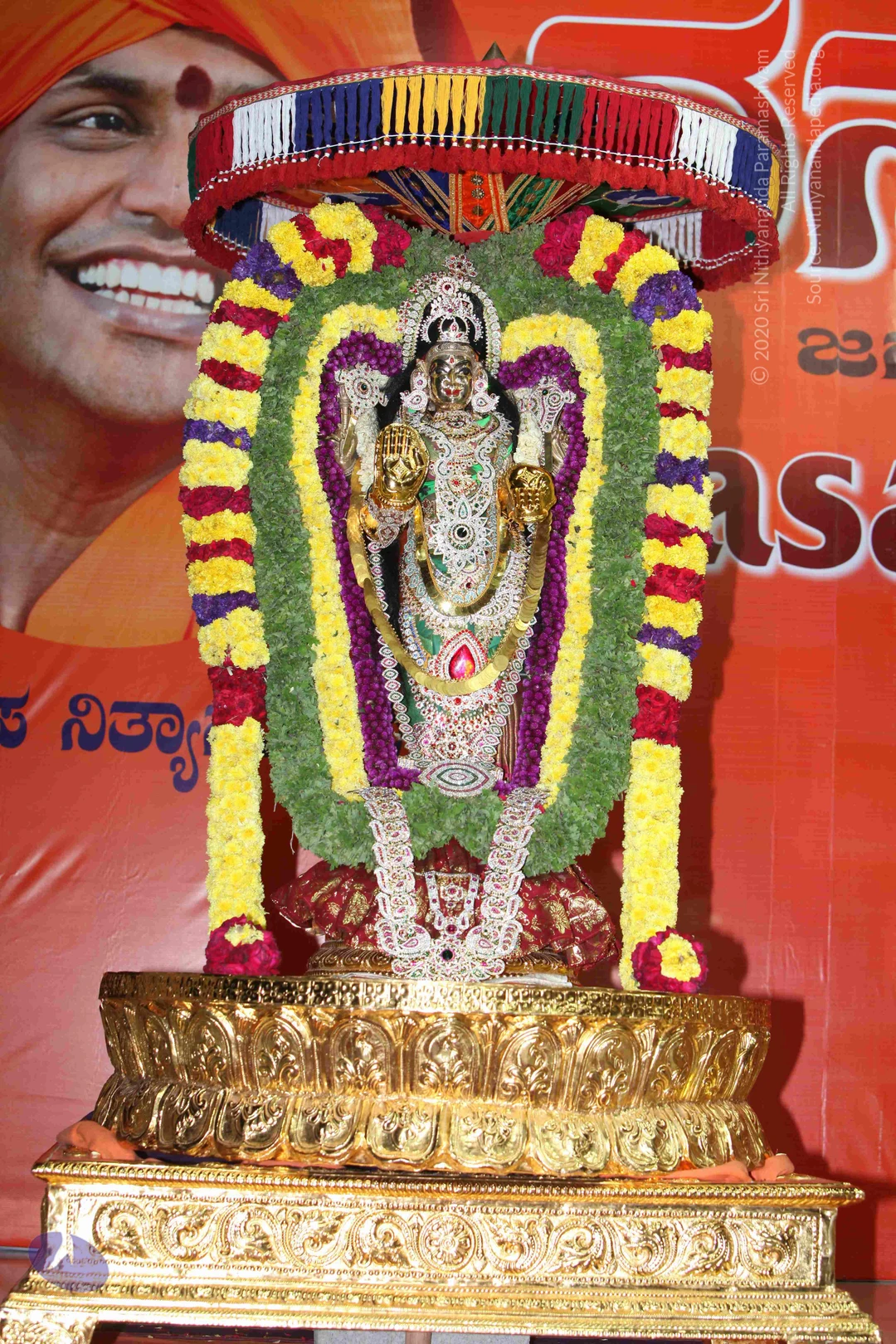
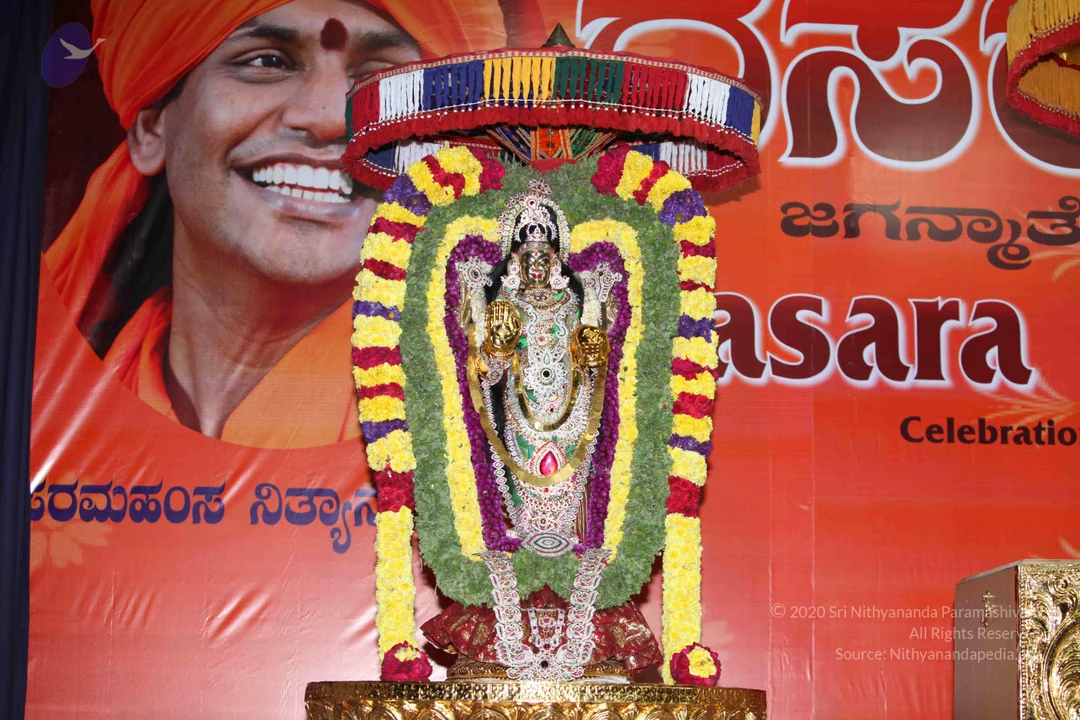
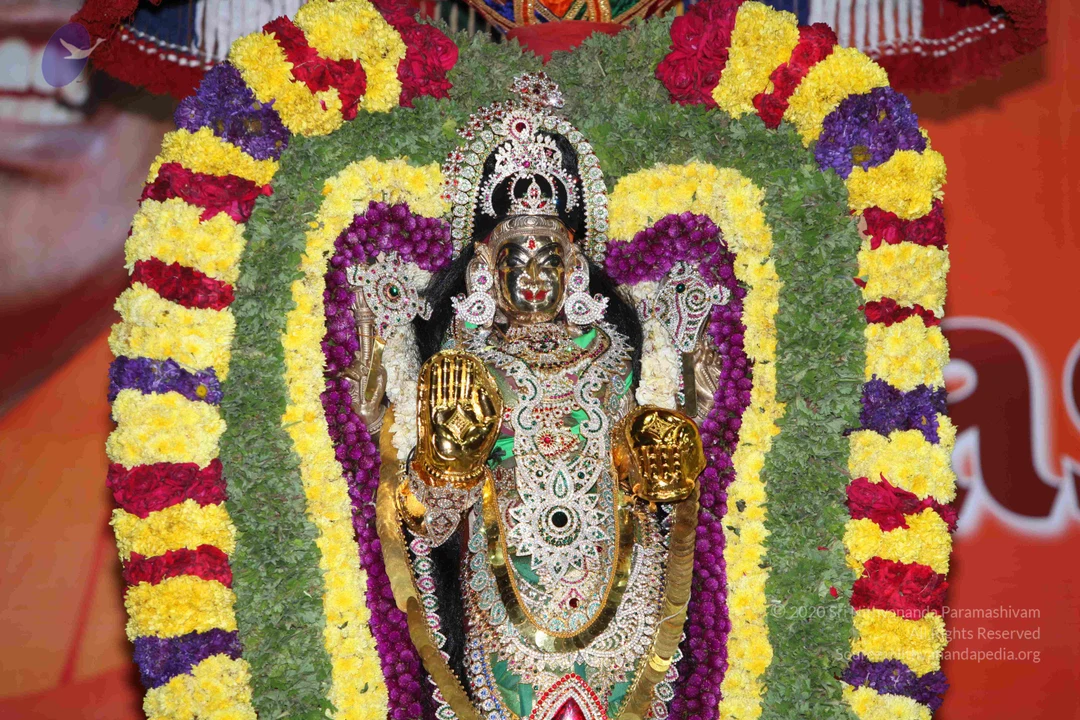
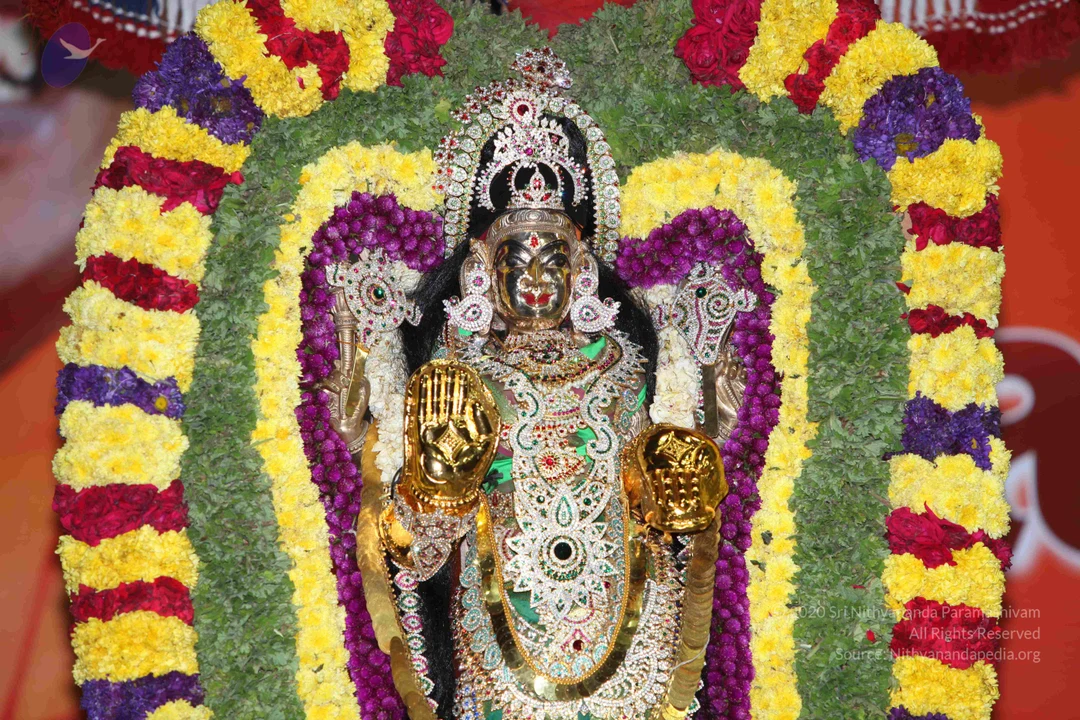
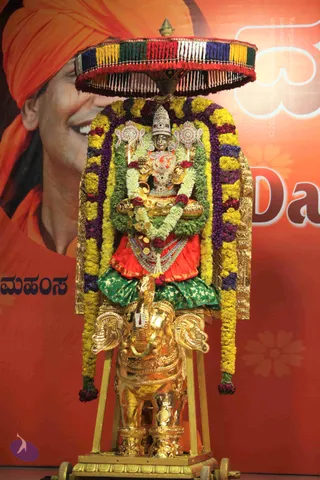
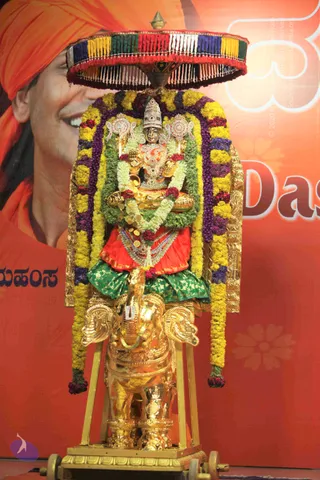
A photograph of a decorated processional deity murti, seated on a gilded golden vehicle with a lion or elephant-shaped base and wheels, under a red, green, yellow and blue fringed parasol. The murti wears a silver-and-gold crown, jewelled necklaces and a green and red silk garment, and is draped with garlands of yellow marigolds, purple flowers and green leaves. Behind it stands a large orange backdrop with a smiling man in a saffron turban partly visible on the left, and Kannada text reading 'ಮಹಂಸ' on the left and a partial 'Da' lettering on the right. No physical people are in the scene.A decorated golden deity murti sits on a gilded elephant-shaped ratha or palanquin base on wheels, under a multicoloured fringed canopy. The figure wears a jewelled crown and ornate gold and silver necklaces, with a red and green silk garment, and is draped in garlands of yellow marigolds, purple and white flowers. Behind it a large backdrop shows a smiling man in an orange turban and a red banner with partial Kannada text and the word Das. No people are visible in the frame; the figure is a statue, and the backdrop portrait is printed, so no in-person candidate is present.A photograph of a decorated deity murti on an ornate golden throne-like pedestal, with a red and gold canopy above. The murti wears a tall silver crown with jeweled ornaments, a red and orange garment, a green brocade skirt, and layered jewelled necklaces. It is surrounded by dense garlands of yellow marigolds, purple flowers, white jasmine and green leaves, with gold coins strung among the garlands. Two ornate silver fans or chamaras flank the head. The background shows a blurred pink and red setting with a partly visible face at the left edge.A photograph of a decorated deity murti seated on a golden throne under a fringed red and gold canopy. The figure wears a silver crown, a jewelled silver and red necklace, and a red skirt with a green lower cloth edged in gold. Garlands of white jasmine, yellow marigolds, purple flowers and green leaves frame the figure, and gold coins are draped across the chest. Gold hands hold ceremonial items, and golden lion or elephant carvings support the throne. No physical people are visible.A man with long dark hair and a red bindi sits cross-legged on a golden throne decorated with a dense arch of garlands in yellow marigolds, red roses, purple flowers and green leaves. He wears an orange saffron robe, a shawl over the shoulder and a long rudraksha mala. A microphone on a stand is in front of him, and he is speaking while his hands rest in his lap. The background is a bright orange backdrop with partially visible lettering.A seated man in an orange saffron robe with a rudraksha mala around his neck speaks into a microphone while gesturing with his right hand raised near his chin. He has long dark hair and a red bindi on his forehead. He sits on a golden throne decorated with dense garlands of red roses, yellow marigolds, white jasmine and green leaves. The background is an orange backdrop with partial red lettering. Probable Swamiji is shown here, identified by long swept-back hair, a rudraksha mala and saffron clothing, giving a discourse on stage.

04-Sarva-Darshan

11 photosSource gallery
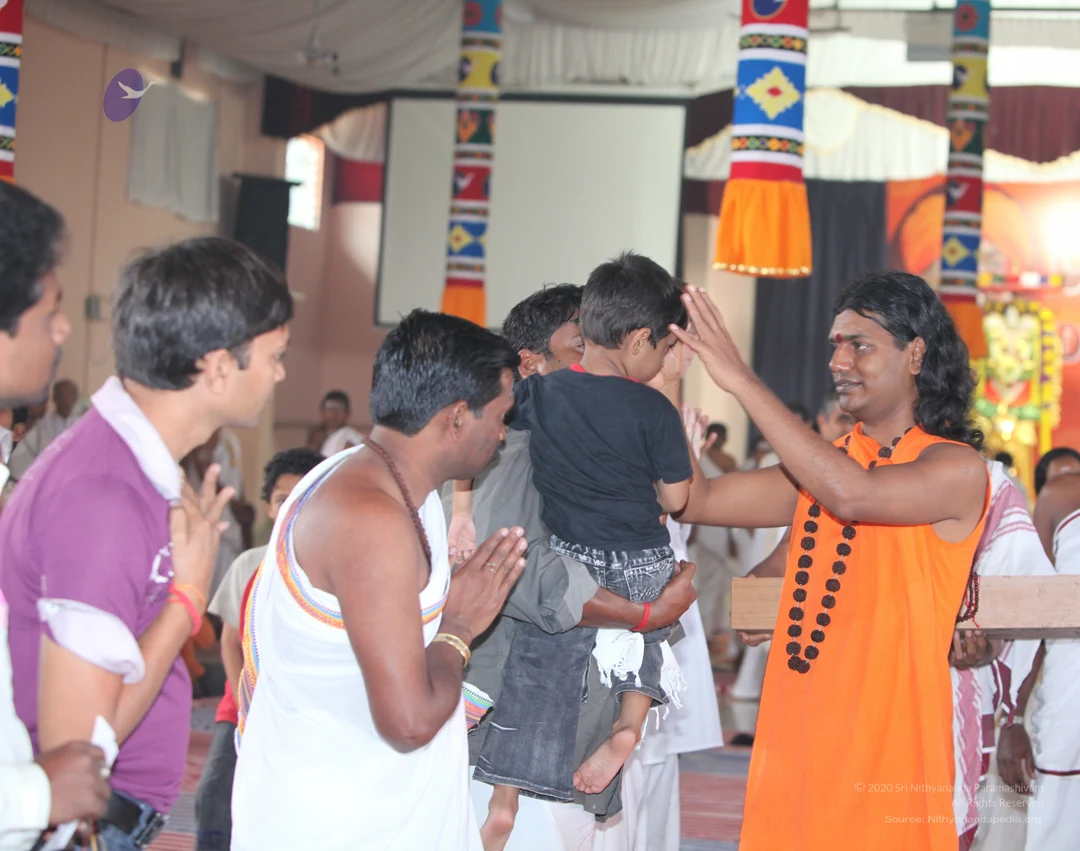
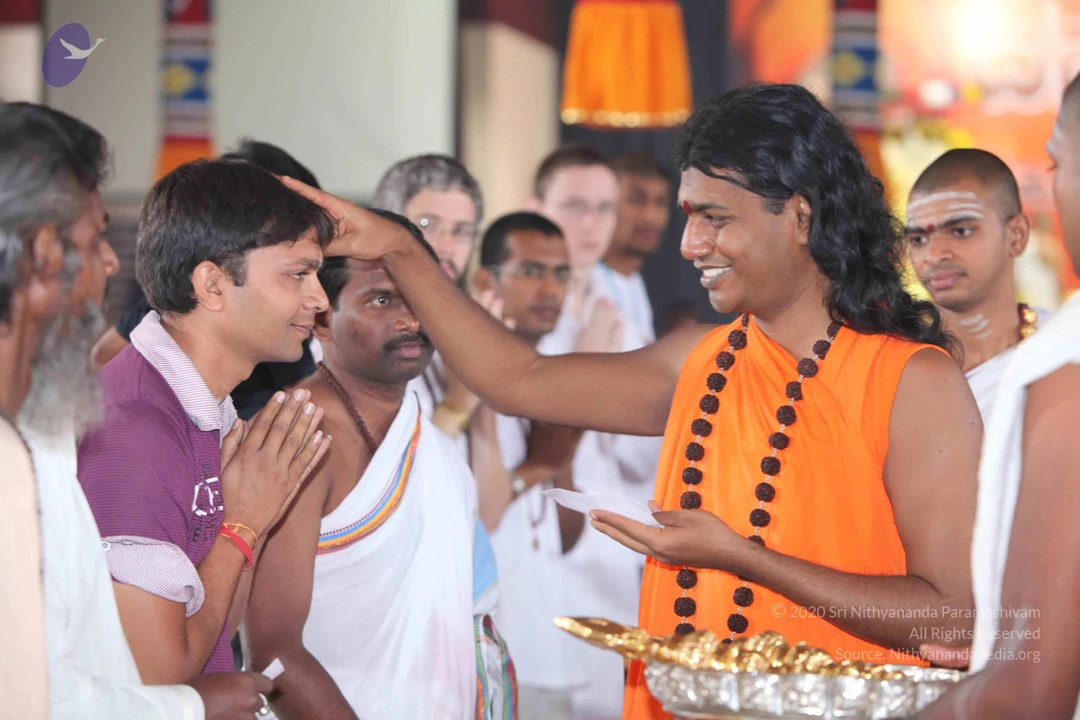
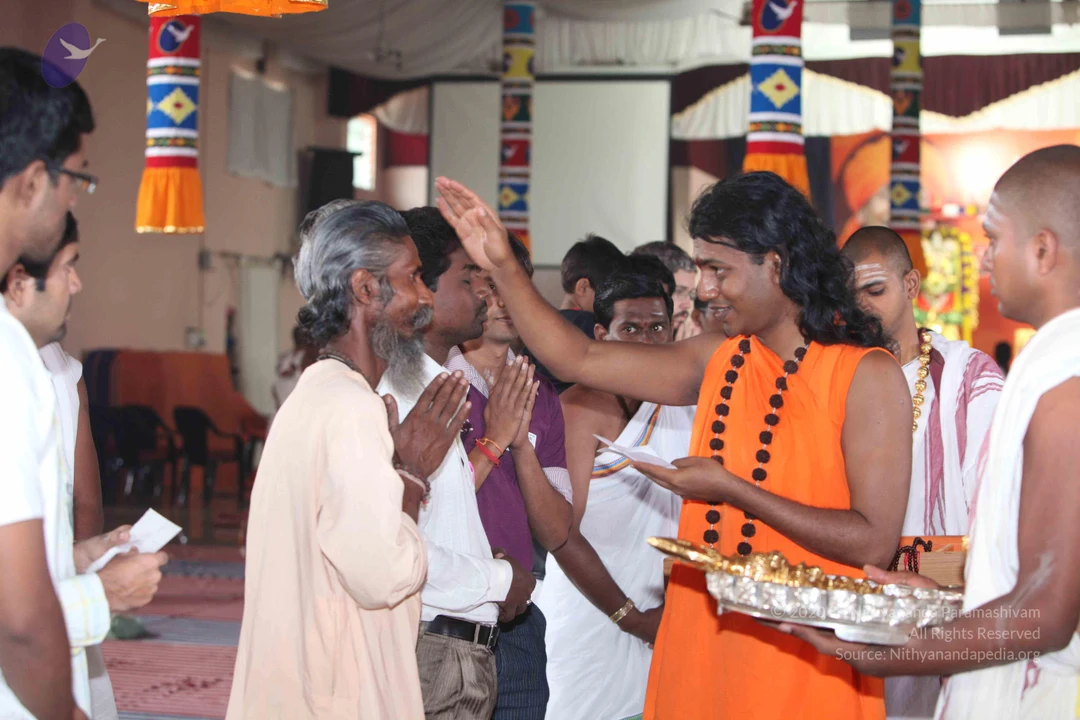
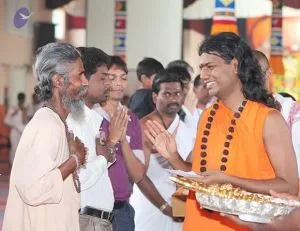
A photograph of a blessing at an indoor hall with draped white and yellow banners and orange-and-blue patterned pillars. A man with long, swept-back dark hair wearing an orange robe and a dark rudraksha mala raises his right hand in blessing over a small boy in a black t-shirt held by a man in grey clothes. To the left, a man in a white dhoti with a multicolour border and a man in a purple shirt stand with palms pressed together. On the right, two men in white dhoti and shawls stand near a wooden box, one wearing a gold chain and a red-and-white garment. Other people are visible in the background near a stage with orange and yellow decorations. a person is the man in the orange robe with long hair and rudraksha mala, giving the blessing.A photograph of a long-haired man in an orange sleeveless robe with a dark rudraksha mala and ceremonial gold necklace, his right palm raised over the head of a young boy in a dark navy t-shirt and denim shorts who is held against a man in grey. Swamiji (probable): the long swept-back hair, orange robe, and rudraksha mala are the qualifying cues; he is giving blessing by touching the child's head. On the left, a man with palms joined in namaste stands bare-chested with a rudraksha mala. Behind, a shaven-headed priest in white dhoti and shawl wears a gold necklace and tripundra markings. Orange and yellow banners and floral decorations fill the background.A man with long, swept-back dark hair, wearing an orange sleeveless garment and multiple rudraksha malas, places his right hand on the head of a young boy in a dark t-shirt who is held up by an adult at left. A red tilak is on the man's forehead. Behind them, a man in white with a striped shawl and a shaved head with white markings stands near other people with hands joined in namaskar, and an orange drape and a gold-and-colored decorated backdrop are visible. The scene appears to be a blessing given in a gathering. Swamiji (probable) cues: long hair, saffron garment and rudraksha malas, here shown giving a blessing to the child.A photograph of a long-haired man in an orange sleeveless robe and a rudraksha mala placing his right hand on the forehead of a young man in a purple striped polo shirt with hands folded in namaste. A gold-coloured ritual plate with a white cloth sits in the man's left hand. Around them, people in white dhotis and sacred white-and-ochre forehead marks stand watching, including a bearded man in white at left and a bald man with tilak at right. Wall panels in orange and gold colours form the background. The ritual suggests a blessing being given to a devotee.A photograph of a blessing scene in a hall decorated with colourful striped hanging banners with orange tassels. A man with long dark hair and an orange saffron robe with a rudraksha mala raises his right hand in blessing toward an older bearded man in a pale peach kurta who stands with palms pressed together in namaste. The robed figure holds a silver tray with a small paper or offering in his left hand. Around them, several men in white dhotis and shirts, one in a purple shirt, and a shaved-headed man with a tilaka wearing a white shawl stand watching. Swamiji (probable) appears as the orange-robed figure giving blessings, identified by long swept-back hair, saffron clothing and rudraksha malas.A photograph of a satsang-style gathering in a hall with saffron and red decorative banners. A man with long dark swept-back hair, wearing an orange sleeveless garment, a rudraksha mala with dark beads, and a red tilak on his forehead, smiles and holds a gold-and-silver tray while raising a hand toward a bearded older man in cream clothes with a mala, who stands with palms pressed together in namaste. Other devotees in white dhotis and a purple shirt stand nearby with hands folded.

05-Pancha-Tapas
91 photosSource gallery
An outdoor photograph of a sadhu seated in meditation on a low wooden platform within a circular stone-lined ring on bare ground. He wears an orange-saffron robe and has long dark hair, with a small brass vessel beside him. Behind him stands a black stone Nandi bull draped in marigold garlands, beside a red-brick temple structure. Numerous dark stone deity sculptures and red-lettered placards stand in the courtyard among palm trees, with a red-and-white flag pole and a large painted banner at left. Woven mats and colourful kolam-style floor designs are visible in the foreground.Outdoor photo of a shaved-headed man in orange robes seated cross-legged in meditation on a straw mat within a circular gravel-filled platform. A small brass kalasha sits beside him. Behind him stands a red brick pedestal holding a black Nandi bull statue draped with marigold garlands, and a tall copper-clad pillar rises beside a palm tree. Colourful lotus-and-ring kolam designs in pink, purple and white are drawn on the sandy ground in front of him, and a rolled mat lies to the right. Stone statues and a tall orange-and-red flag stand under a thatched shelter with palm trees around.An outdoor courtyard with sandy ground and coconut palms, where a figure in orange robes sits cross-legged in meditation on a mat inside a circle of gravel. A tall copper lamp stand rises behind, and a stone shivalinga-style form draped with a marigold garland sits on a red platform. Grey stone sculptures line the grounds, with tall red and orange ceremonial poles and white ropes overhead. A brass vessel sits beside the seated figure, and a coloured rangoli lotus design is drawn in the foreground. The seated person's appearance is uncertain and the page does not clearly confirm identity, so the figure is described by role as a meditating sannyasi.A photograph of an outdoor temple courtyard with dry sandy ground. A single person sits cross-legged in meditation on a woven mat inside a circular gravel-lined platform, wearing a saffron-orange robe and a dark bead garland, with a small brass oil lamp placed before them. Behind them stands a red-brick shrine with a dark deity murti draped in a marigold garland. A large colourful kolam rangoli in pink, purple and white lines is drawn on the ground in front. Dark stone statues and red-and-white plinths line the courtyard, with orange flags and a palm grove in the background, and a rolled reed mat lies to the right.A seated person in orange robes sits cross-legged on a yellow mat inside a circular gravel bed in an open outdoor courtyard. A small brass lamp sits on the mat beside a folded green cloth. Behind them, a red stepped plinth supports a dark statue of a bull garlanded with yellow and orange flowers. Stone deity statues stand in rows on the left beneath palm trees, and a large kolam-style floor drawing of concentric pink, purple and white rings with lotus-petal motifs lies on the bare earth in the foreground. A rolled bamboo mat lies to the right and saffron flags rise from the ground.Outdoor photo of a seated sannyasi in saffron-orange robes meditating in lotus posture on a low platform inside an open-sided roofed pavilion. A brass kalasha sits beside him on a mat, and a garland of marigolds hangs on a dark stone Nandi bull statue in front of a red-brick shrine. A tall copper-toned pillar rises behind, flanked by coconut palms and rows of stone deity murtis and figures. The ground in front holds a large colourful kolam design with pink lotus motifs, purple dotted rings and red-and-white loops. Tall orange and multicoloured banners hang at the pavilion corners.
06-Dhasara

216 photosSource gallery
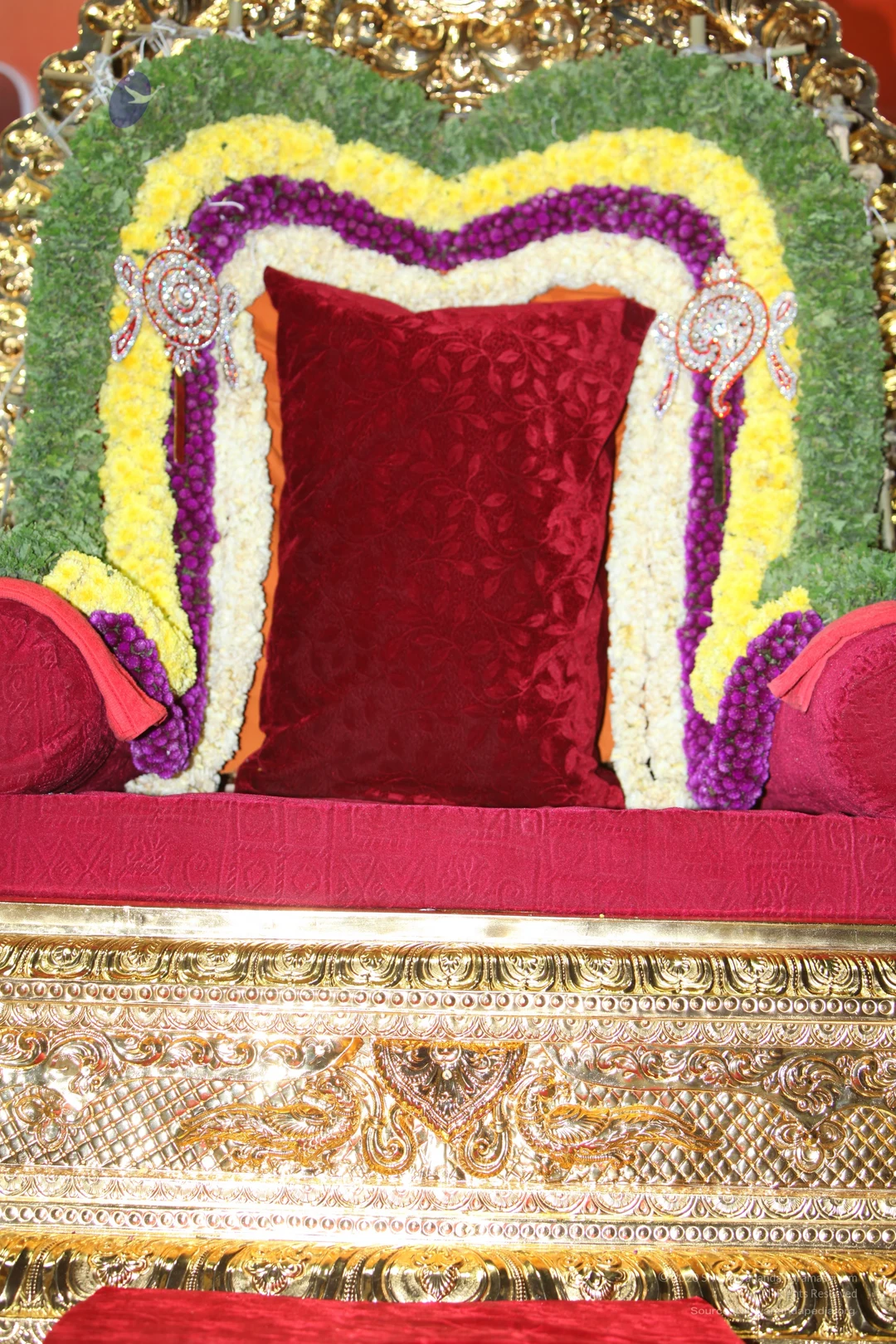
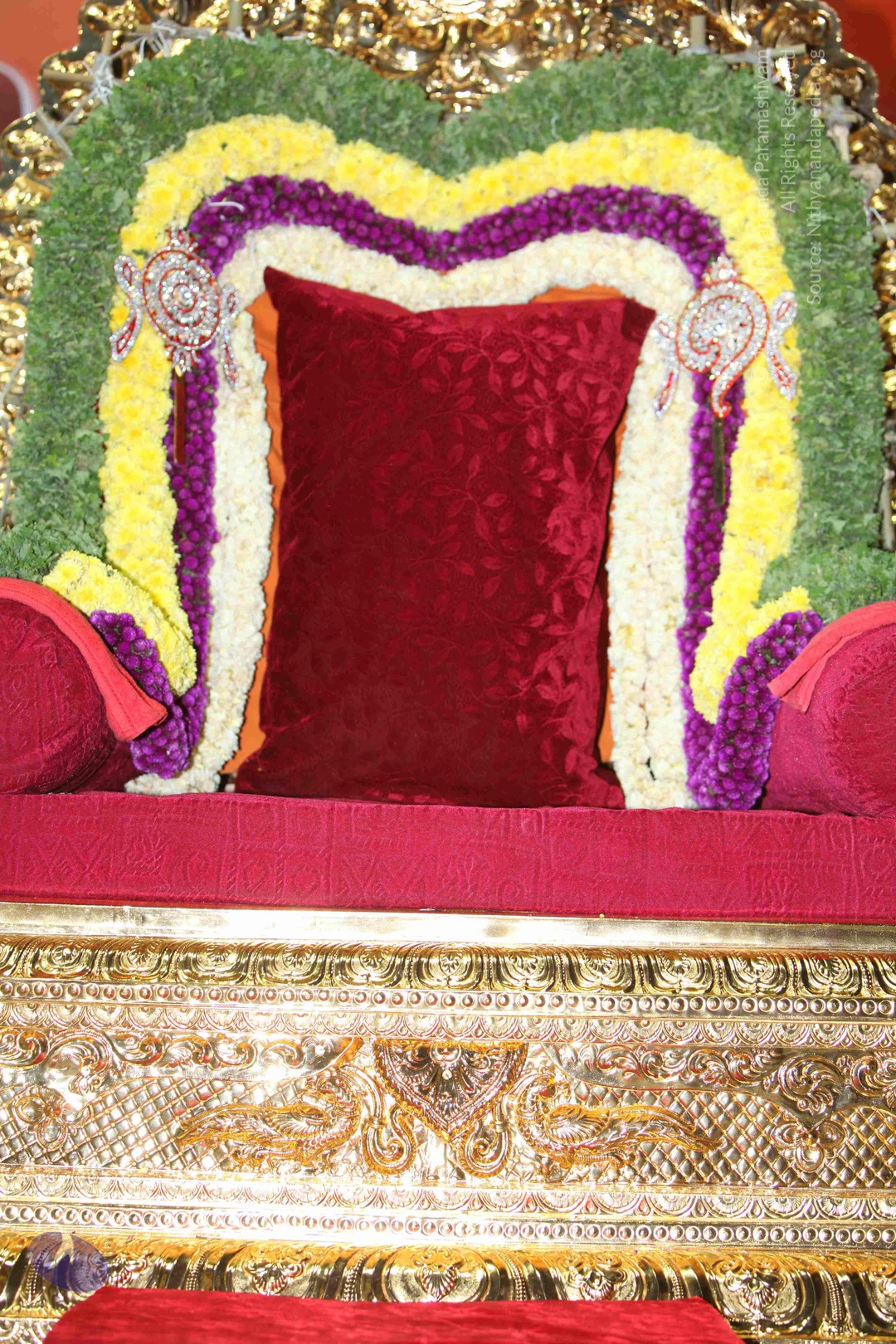
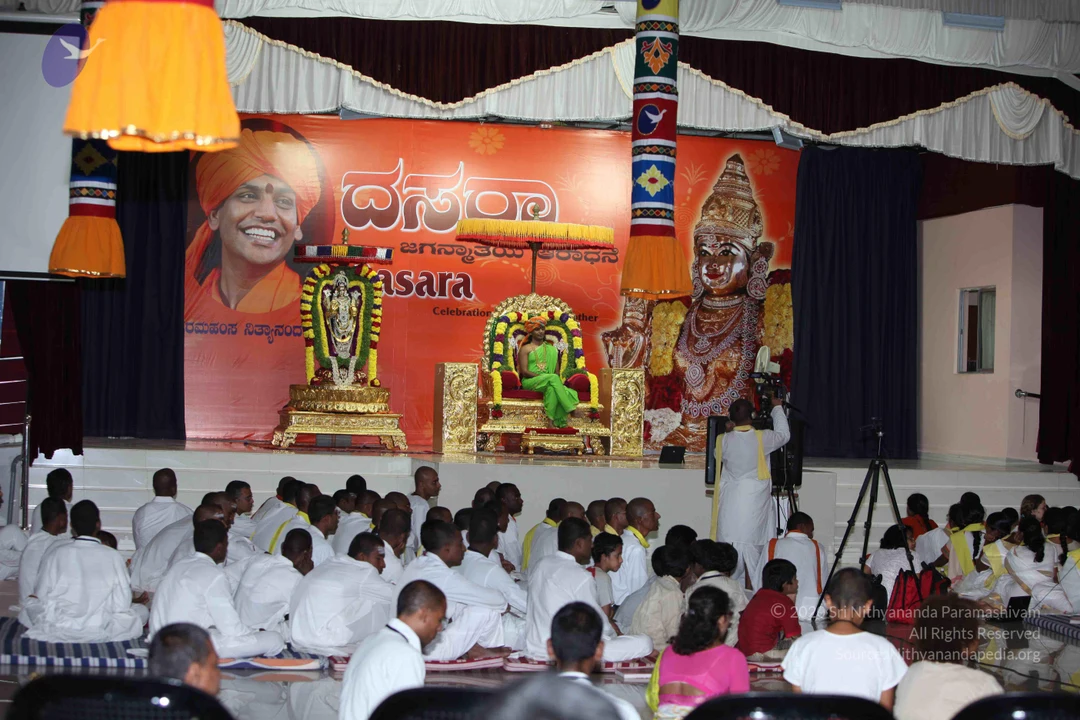
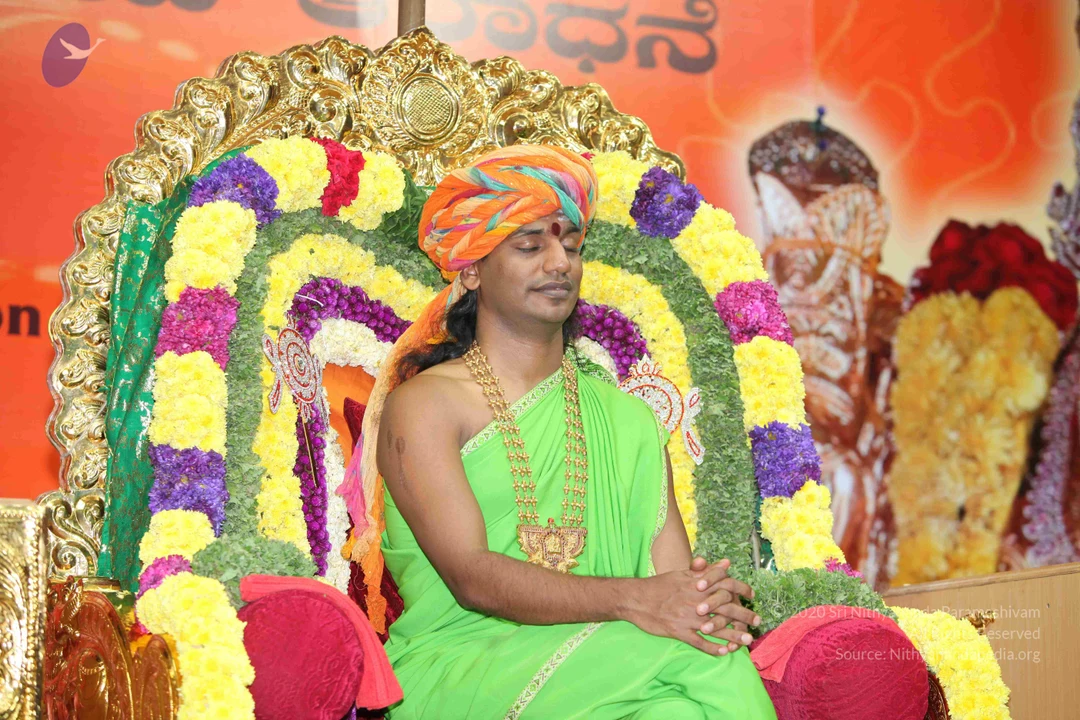
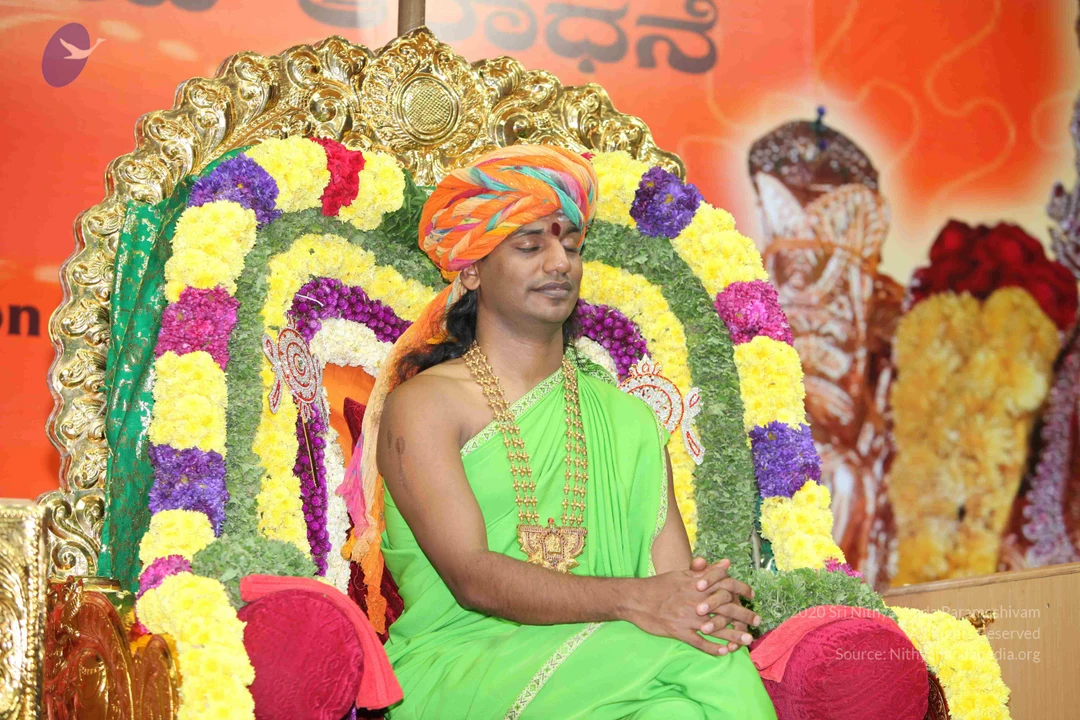
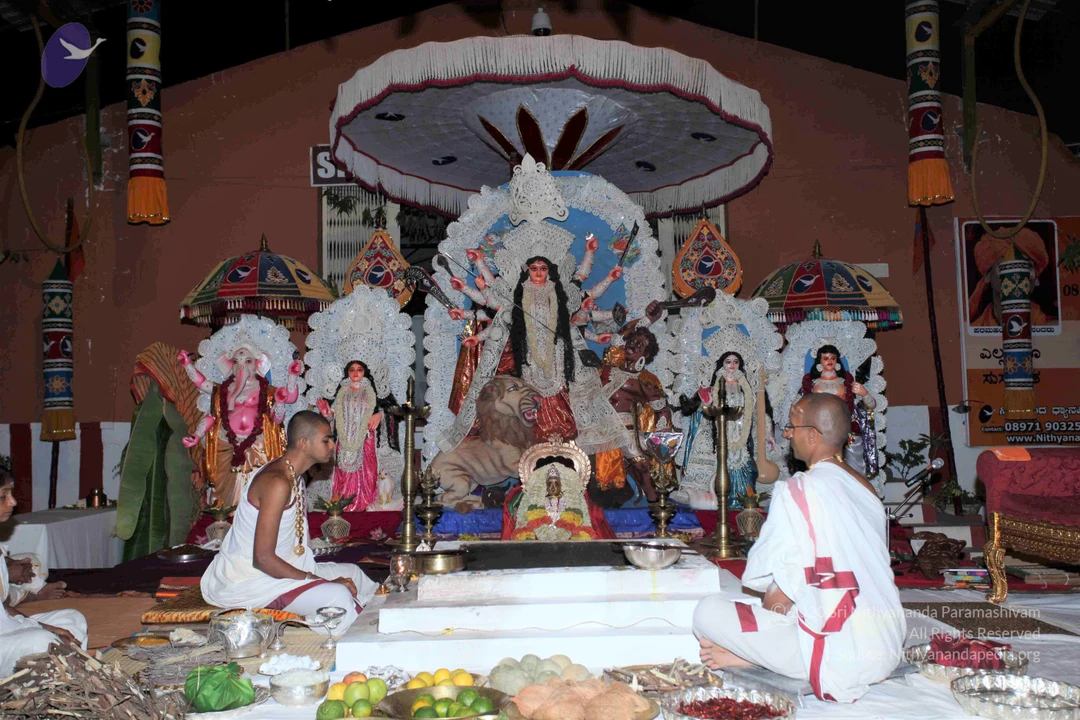
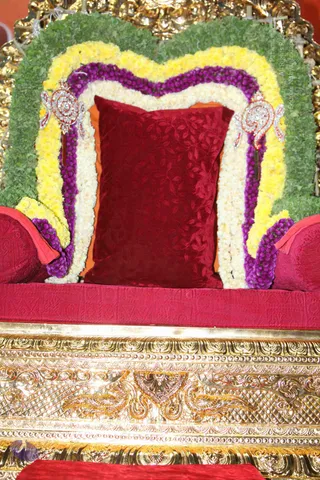
A photograph of an empty ornate golden throne (peetha) with a deep red velvet cushion and red side bolsters. The high back is framed by a garland of green leaves, yellow and white flower strands and purple flower clusters, with ornate silver-and-red jeweled ornaments at the sides. The gilded carved base has a red velvet seat panel. No people are visible.A smiling man seated on an ornate gold throne decorated with garlands of yellow, purple and pink flowers and green leaves, raising his right hand in a blessing gesture. He wears a multicoloured orange, teal and pink turban with a red bindi, a flowing lime-green robe with gold border, and layered gold beaded necklaces with a large gold pendant. Behind him is an orange backdrop with Kannada script. Swamiji (probable): the figure wears a turban, ornate gold necklaces and saffron-toned or ornate clothing associated with the Swamiji presentation, seated on a throne in a public satsang setting.A photograph of a man seated on an ornate gold throne decorated with garlands of yellow, purple, pink and green flowers. He wears a multicoloured orange, green and pink turban with a red dot on his forehead, a bright green draped robe edged with gold border, and a multi-strand gold necklace with a large gold pendant. He smiles and extends his right hand forward in a gesture of blessing. Behind him a red-orange backdrop carries partial Kannada script. Probable Swamiji seated in the cushioned throne as the honoured presenter, with the appearance cues of a turban, long hair, ornate gold jewellery and green robe.A smiling man seated on an ornate gold throne decorated with garlands of yellow and purple flowers and green leaves, with red cushions beneath. He wears a multicoloured orange, pink, teal and yellow turban with a red bindi, a green draped garment with a light green border, and multiple strands of gold beaded necklaces with a large gold pendant. His right hand is extended outward in a gesture while the left rests on the armrest. Behind him is an orange backdrop with Kannada script. a person: the man is seated on a throne with a long-haired, turbaned appearance and gold ornaments, consistent with the page's claim of his presence.A man seated on an ornate gold throne with a floral arch of yellow, purple, pink and red flowers and green leaves behind him. He wears a multicoloured orange, green and pink turban, a red tilak on his forehead, a bright green draped shawl edged with gold border, and a long gold rudraksha-style necklace with a large ceremonial gold pendant. He smiles and extends one hand in a gesture of address, with a red cushion beside him. Behind him is an orange backdrop with Kannada script and a golden umbrella above. a person: the seated figure matches the page's a person association through his long swept hair, ornate gold necklaces, and vivid green shawl.A man seated on an ornate gilded throne with a red cushioned seat and a gold footstool, hands pressed together in anjali mudra. He wears a multicoloured orange, red, green and yellow turban, a bright green draped garment with gold border, and a heavy gold necklace with a large gold pendant. The throne is framed by a garland arch of yellow marigolds, purple and red flowers and green leaves. Behind is a red banner with Kannada script and the word 'Celebrate' partially visible, and a red Dhasara backdrop. Swamiji (probable): long hair not visible, but the orange-and-multicolour turban, green ceremonial robe and gold necklaces match the presentation.

07-Swamiji-Meet-With-Ashramite

31 photosSource gallery
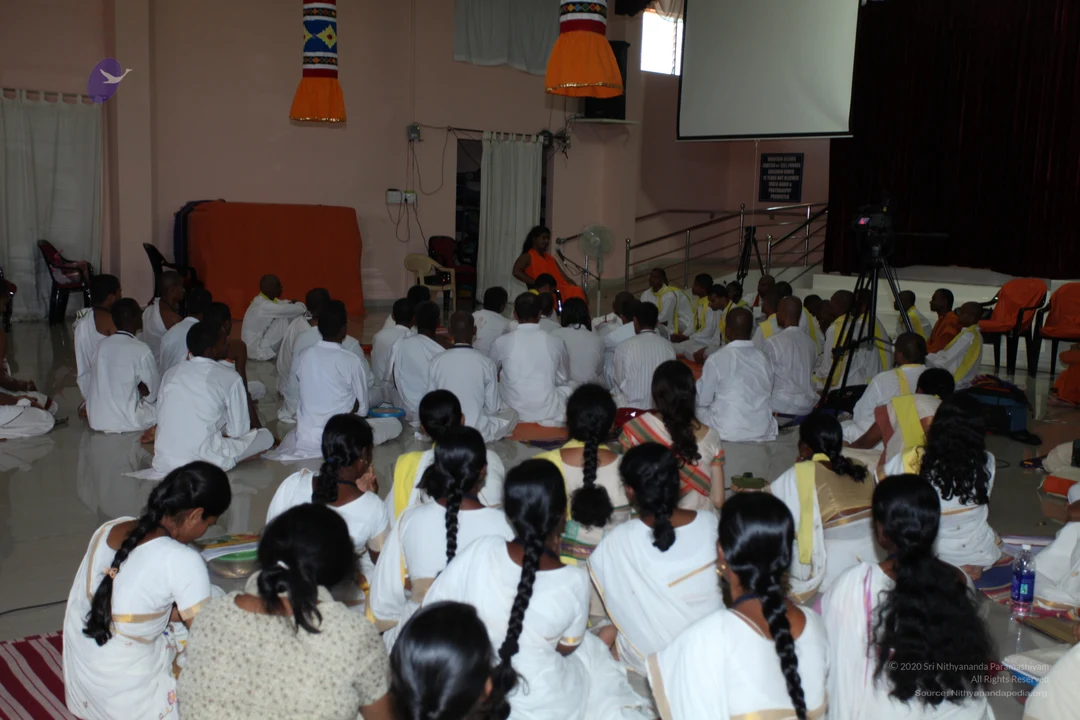
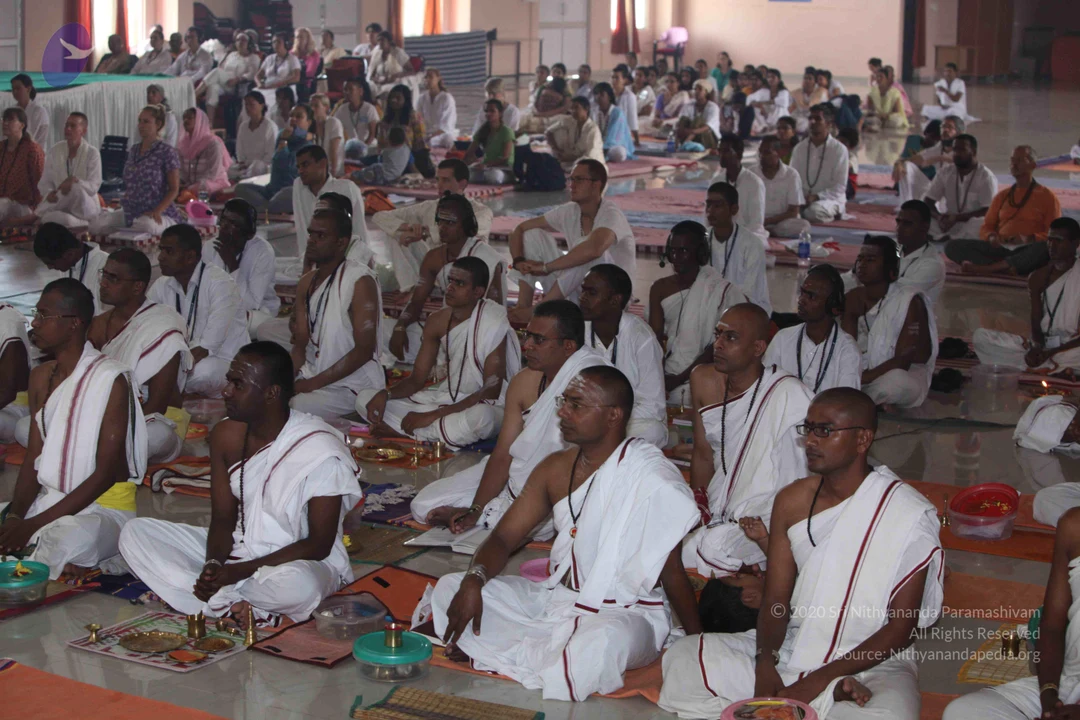
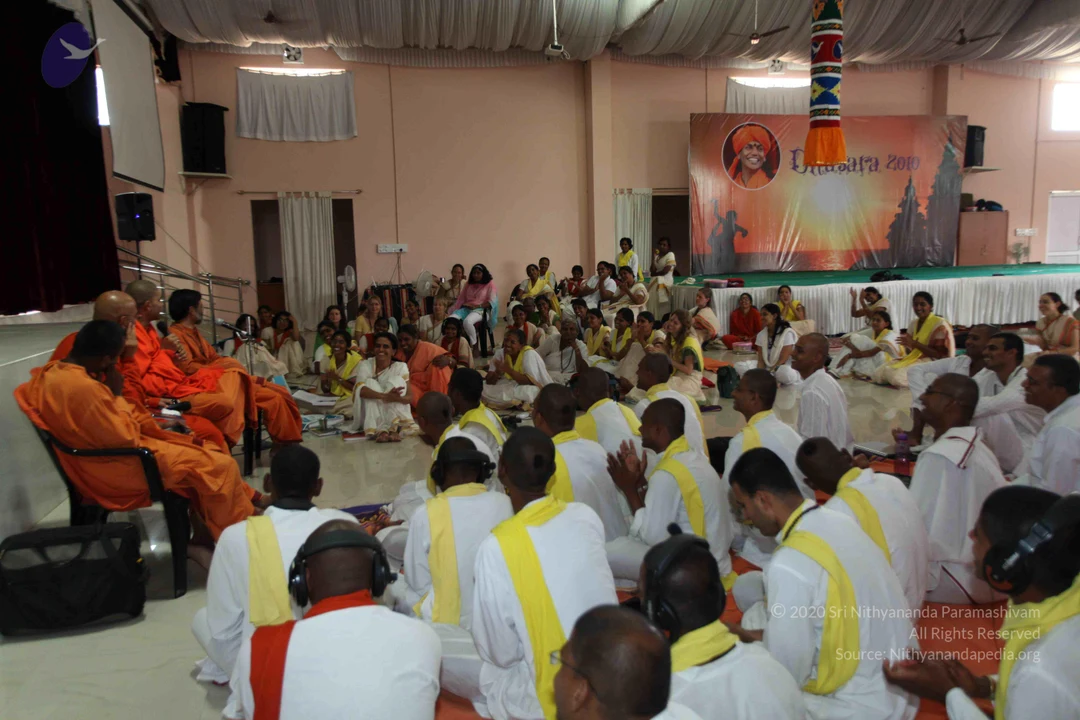
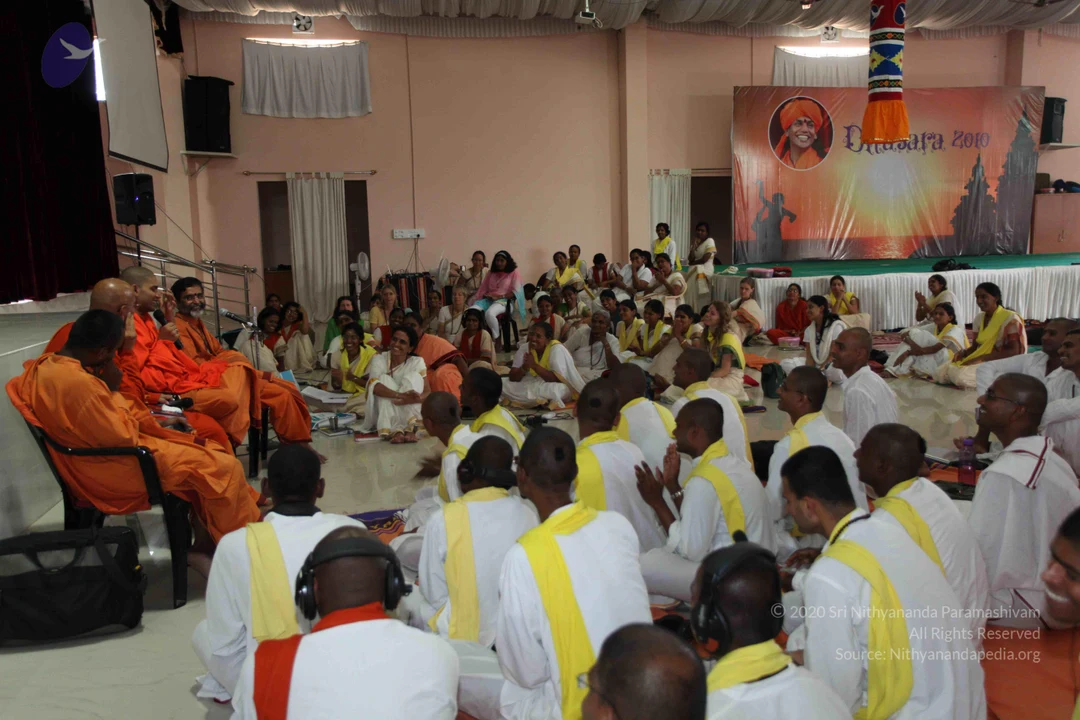
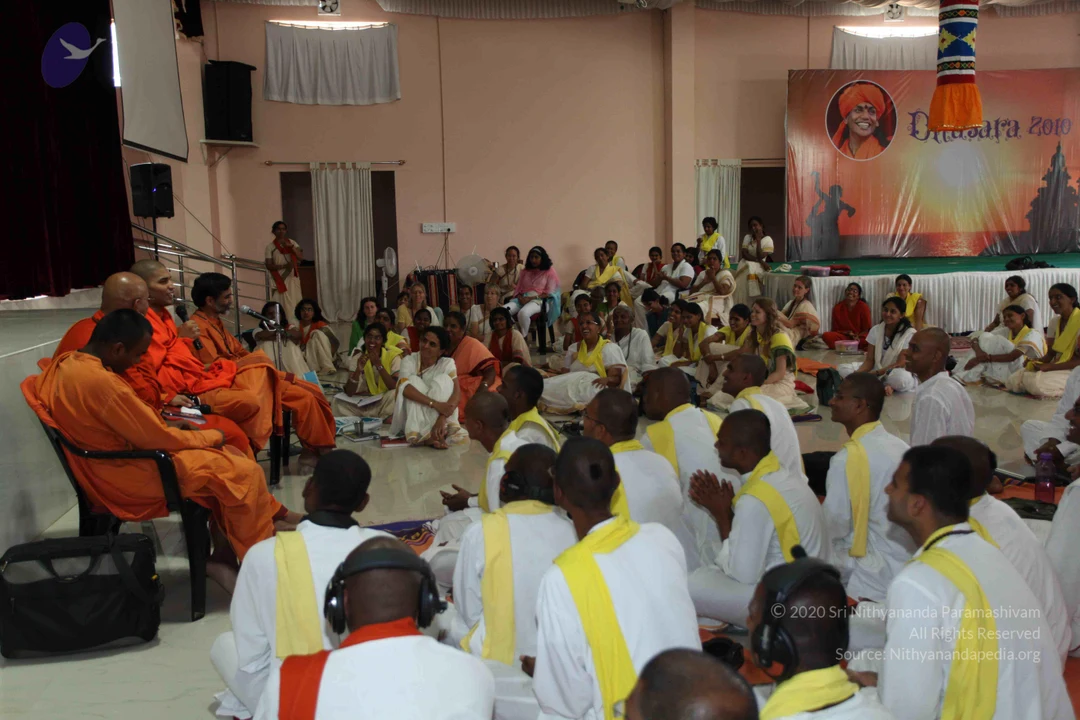
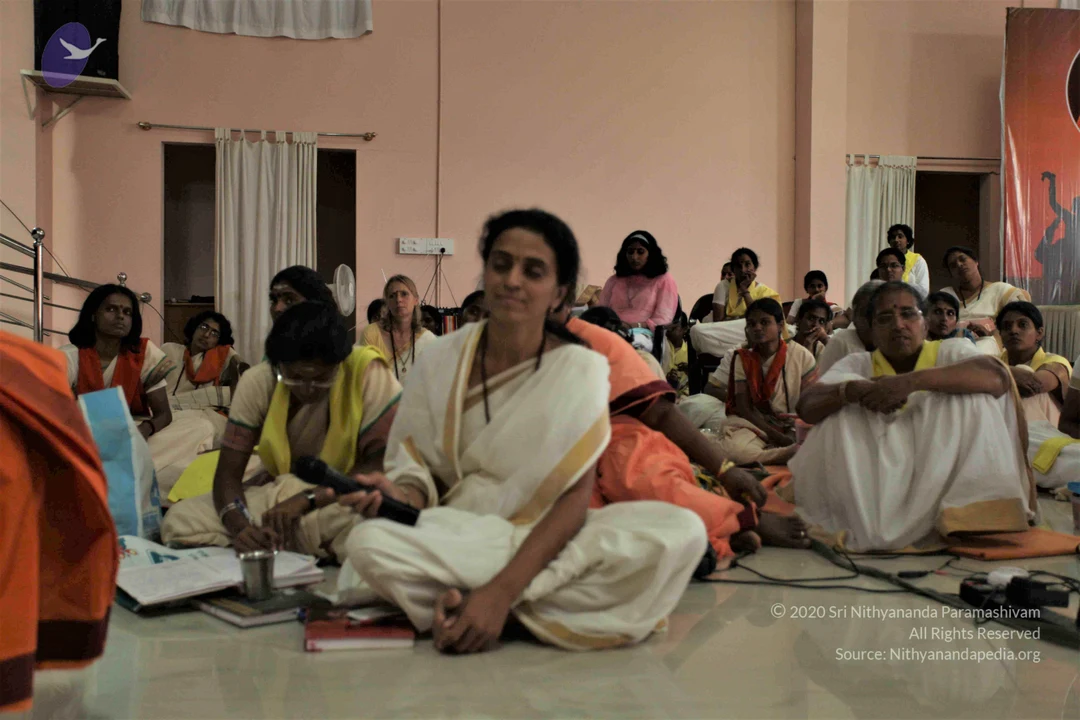
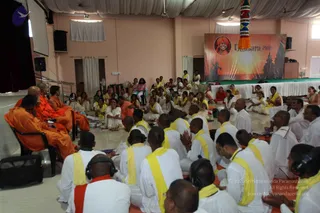
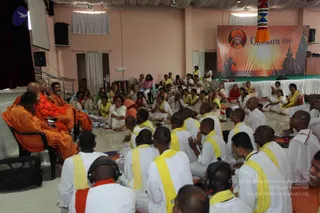
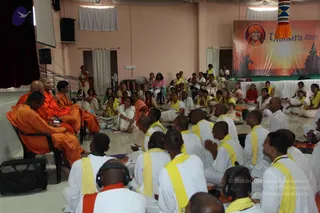
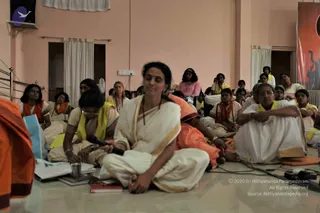
A photograph of an indoor hall during a seated gathering. Monks in saffron and orange robes sit on chairs at the left edge, facing a seated audience. Most attendees wear white clothing with yellow or saffron shawls, and several wear headphones. The audience sits on orange and white mats on the floor. A banner reading Dhyanapeetam 2010 with an image of a figure hangs at the back, beside a green-draped stage. Colourful decorative hangings and a white draped ceiling fill the room, and a projection screen stands at the left.A photograph of a seated assembly in a large hall with pink walls and white draped ceiling fabric. In the left foreground, several saffron-robed figures sit on a raised platform with a black bag and microphones nearby; one leading figure sits in a chair. Rows of devotees sit on orange mats wearing white clothes with yellow sashes, several wearing headphones, many with hands folded. A stage behind them displays a banner reading Dasara 2010 with an orange-toned image of a saffron-robed figure against a sunset temple backdrop. Colourful tassel decorations hang from the ceiling.A photograph of a seated satsang gathering in a pale pink hall with a large banner reading "Dhyanapeetham 2010" and a sunset temple graphic on the stage backdrop. In the left foreground, several men in saffron and orange robes sit on chairs and mats, one with a shaved head, while a row of devotees in white kurtas with yellow shoulder sashes sits cross-legged on the floor with headphones around their necks. A woman in a white sari sits near the centre, and more people in white and yellow fill the room toward the stage, where a red-and-gold ceremonial tassel hangs from the ceiling. A figure on the far right appears to be standing in the stage area. A black bag rests at the lower left.A seated assembly in a hall with pale walls and a stage backdrop reading Dhyanapeetham 2010 beside a portrait of a smiling figure in orange. In the left foreground, several monks in saffron-orange robes sit on chairs and cushions, with one holding a microphone; a shaved-headed man wears an orange shawl. Facing them, rows of devotees sit on the floor wearing white clothes with yellow shawls, several with hands folded in anjali, and some wearing headphones. Among the seated devotees on the right, a few wear white and orange. Behind them, women in yellow and white sit in rows near a white-draped stage. A saffron banner and a tall colourful pole with decorative cloth hang at the top. No a person candidate is clearly identifiable in the scene, so the presence of a figure cannot be confirmed from appearance.A photograph of an indoor hall where a seated group of devotees listens to a talk. In the foreground, a row of ashram members in white garments with yellow shawls sit cross-legged on the floor, several wearing headphones, one with palms pressed together. At left, three figures in orange robes sit on chairs, one holding a microphone; one has a shaved head. Behind them, many seated women and men in white and yellow attire fill the floor. On the stage at the rear, a banner reads Dhyanapeeta 2010 beside a portrait of a smiling figure in an orange head wrap. A large orange and yellow sunset backdrop with silhouetted temple architecture is visible. Hanging white curtains and a wall-mounted screen frame the room.A photograph of a seated group during a meeting or satsang in a plain pink-walled hall with white curtains and a red banner on the right. In the foreground a woman in a white sari with a gold border sits cross-legged holding a black handheld microphone, with a steel cup and open notebooks on the floor before her. Behind her many women sit on the floor, several wearing yellow-bordered white saris and others wearing orange or red shawls. An older woman in white with a yellow border sits to the right with her arms folded. A figure in orange robes is partly visible at the left edge. No man matching the a person description is visible, so no candidate is identified.
08-Evening-Homa
37 photosSource gallery
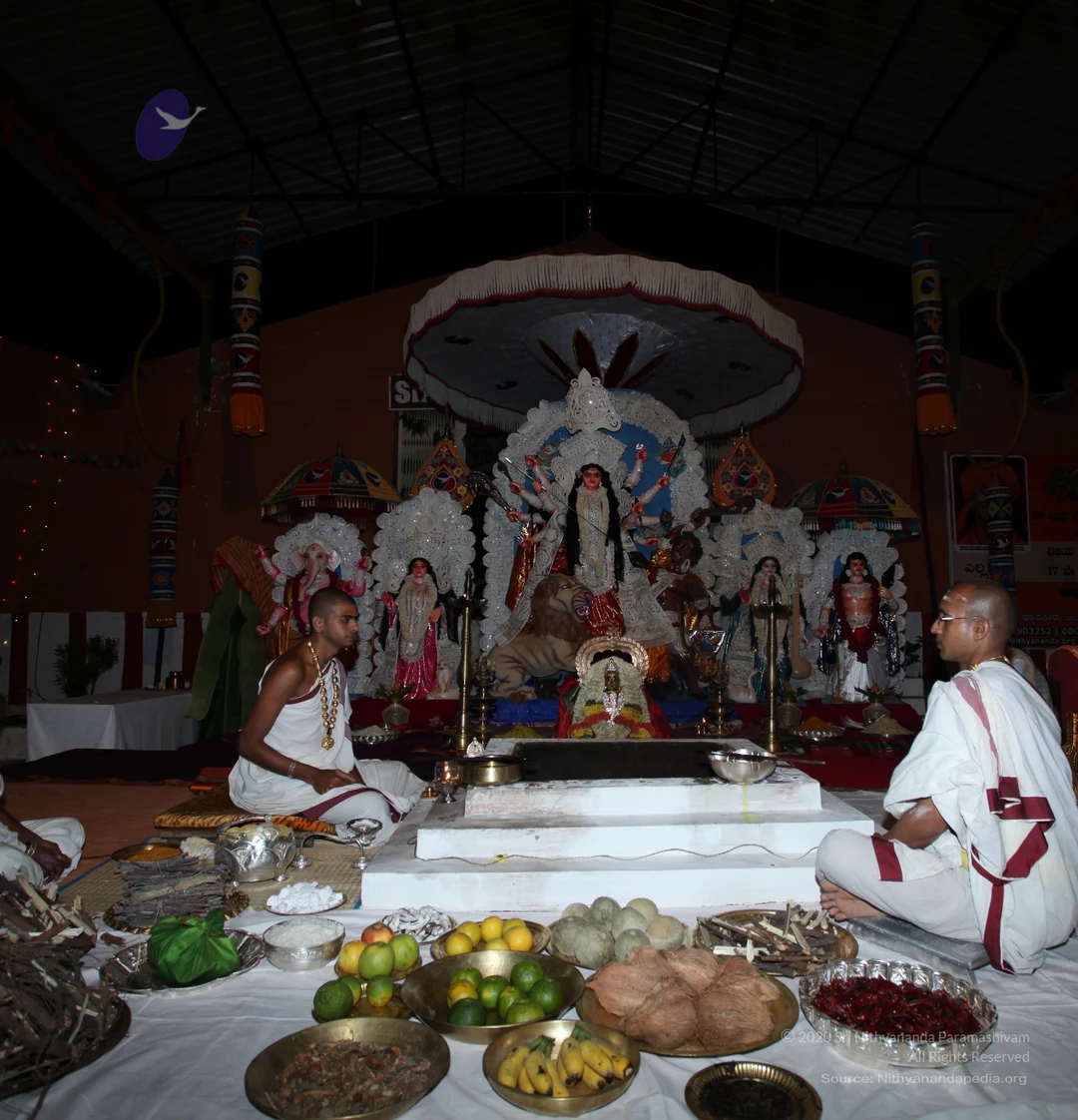
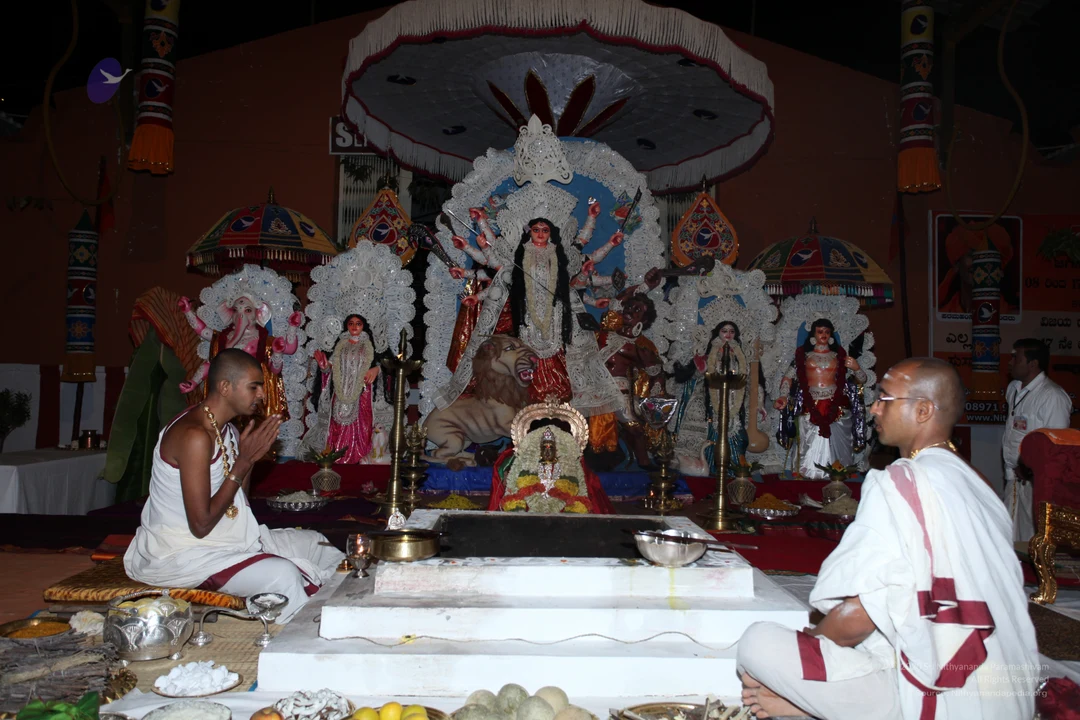
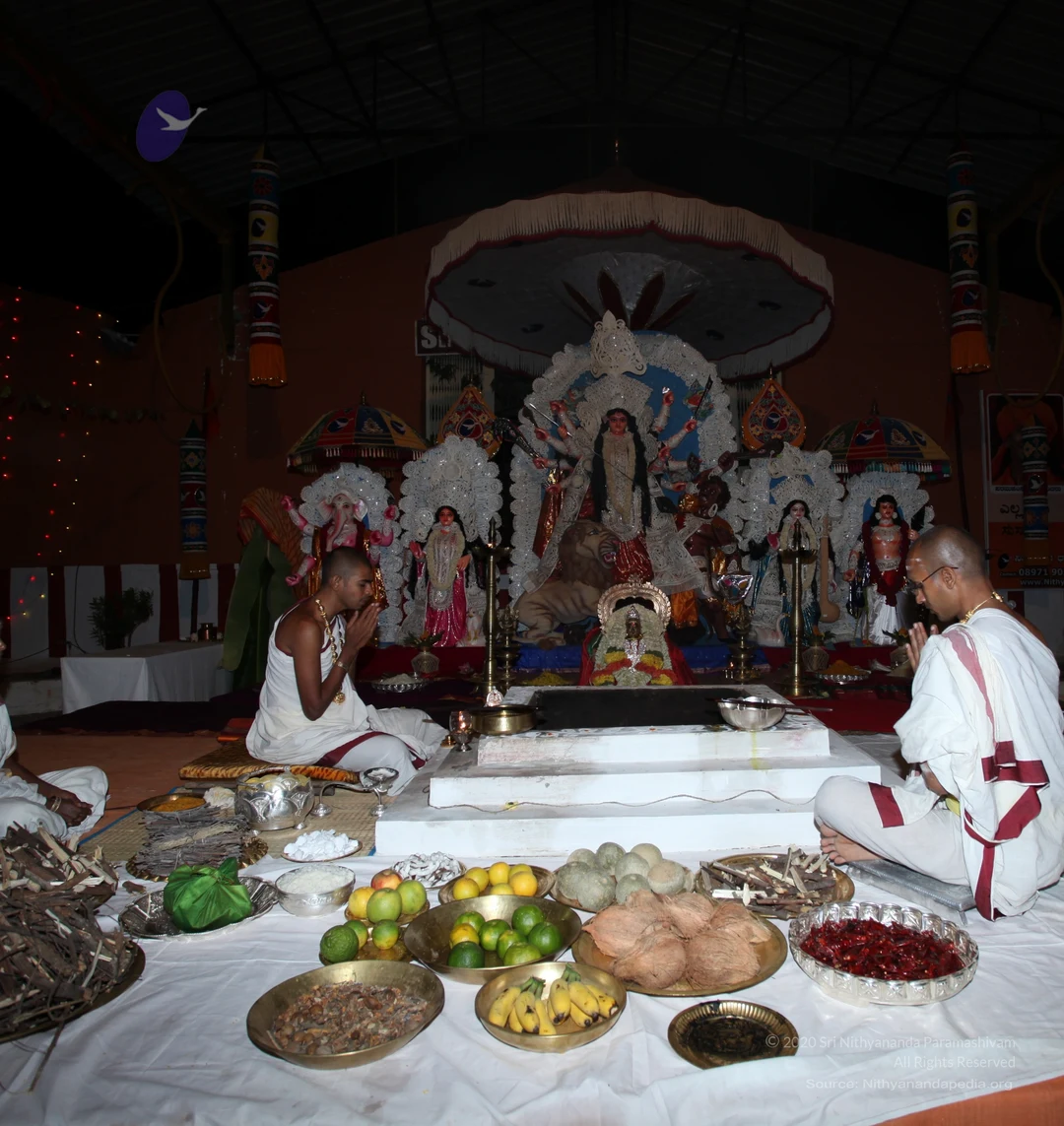
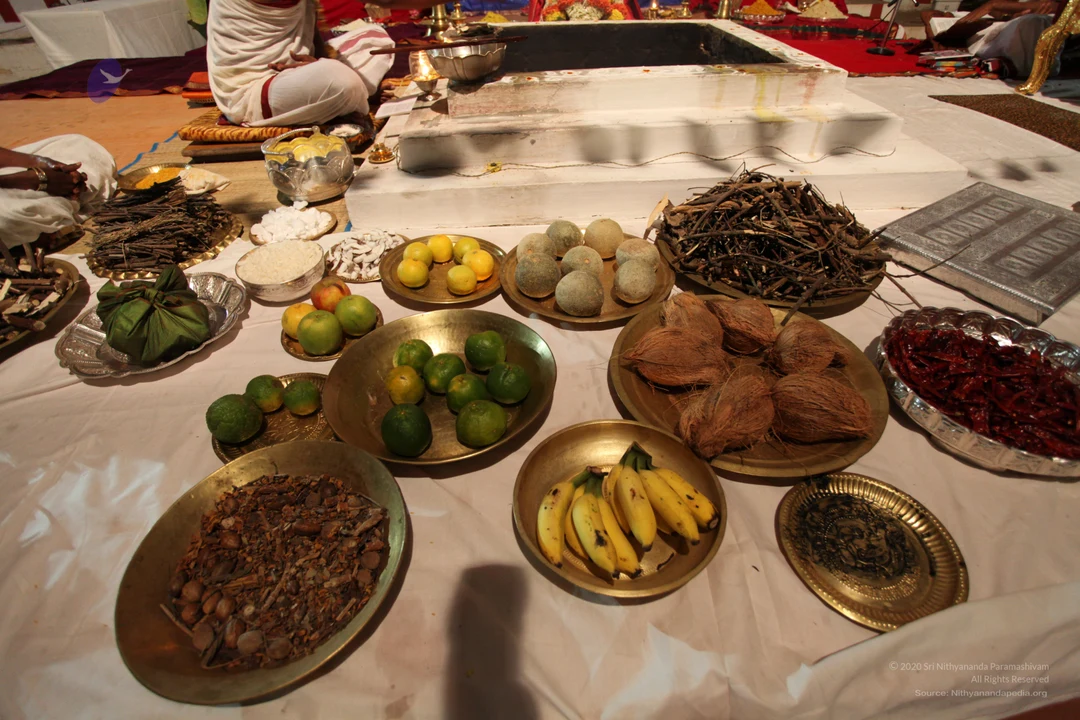
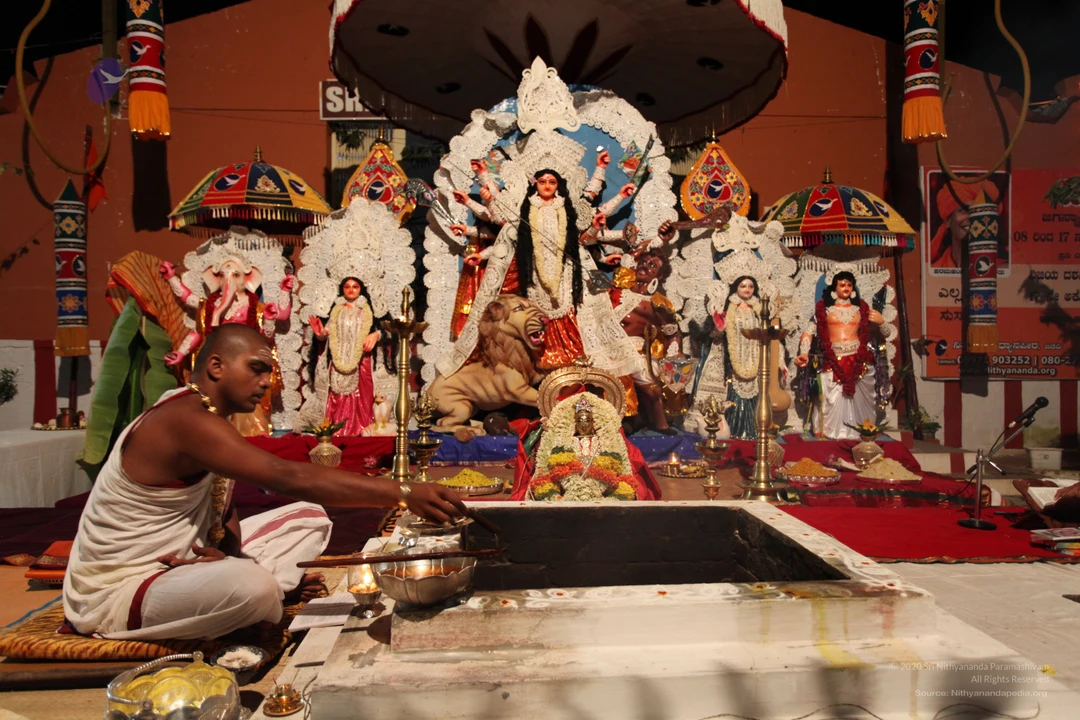
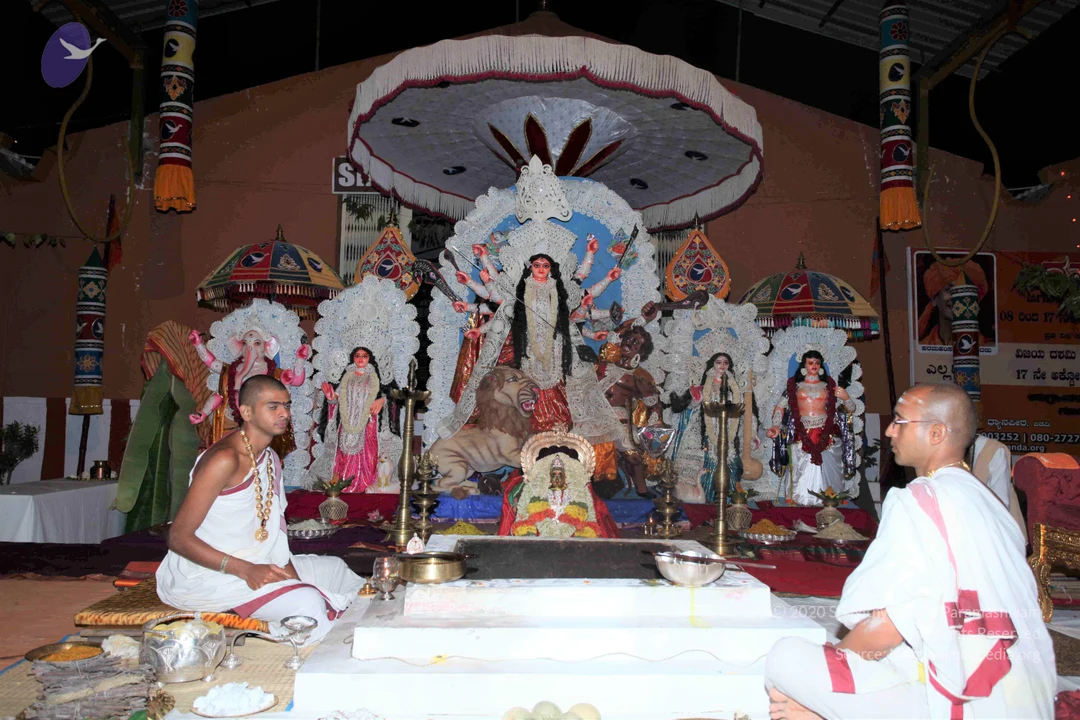
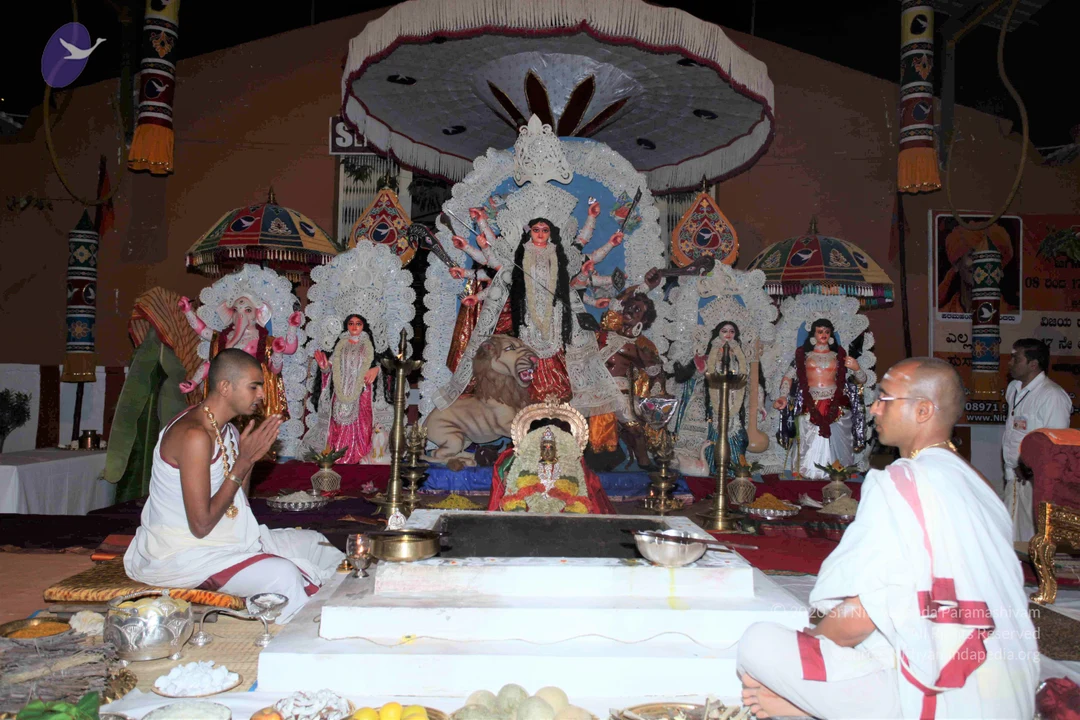
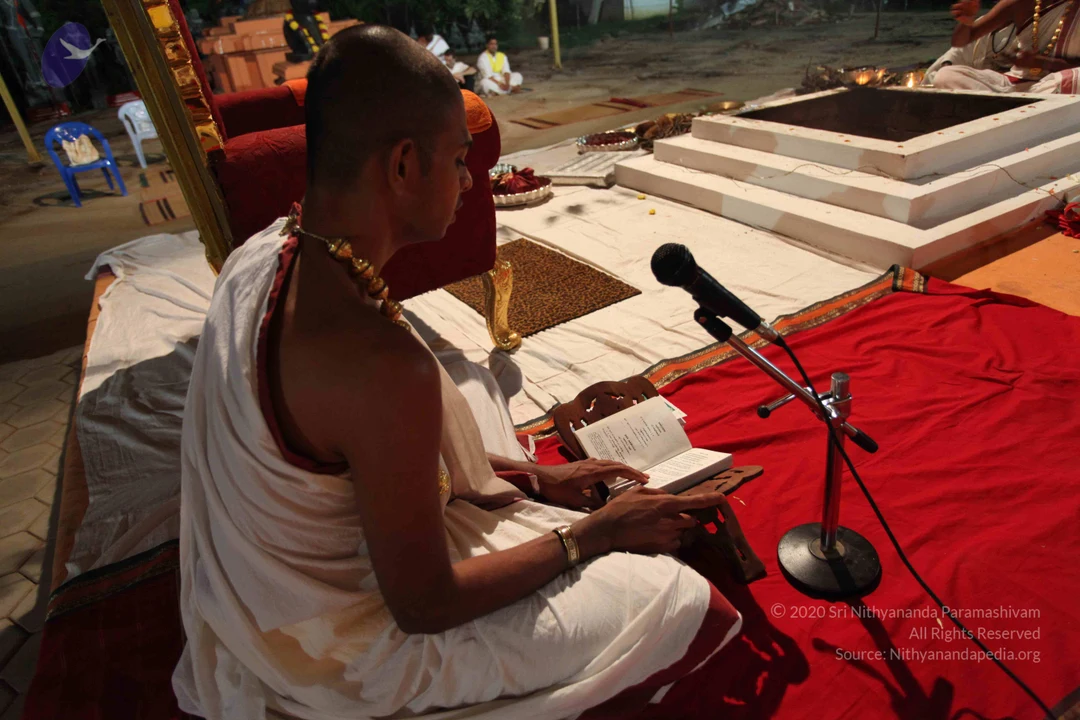
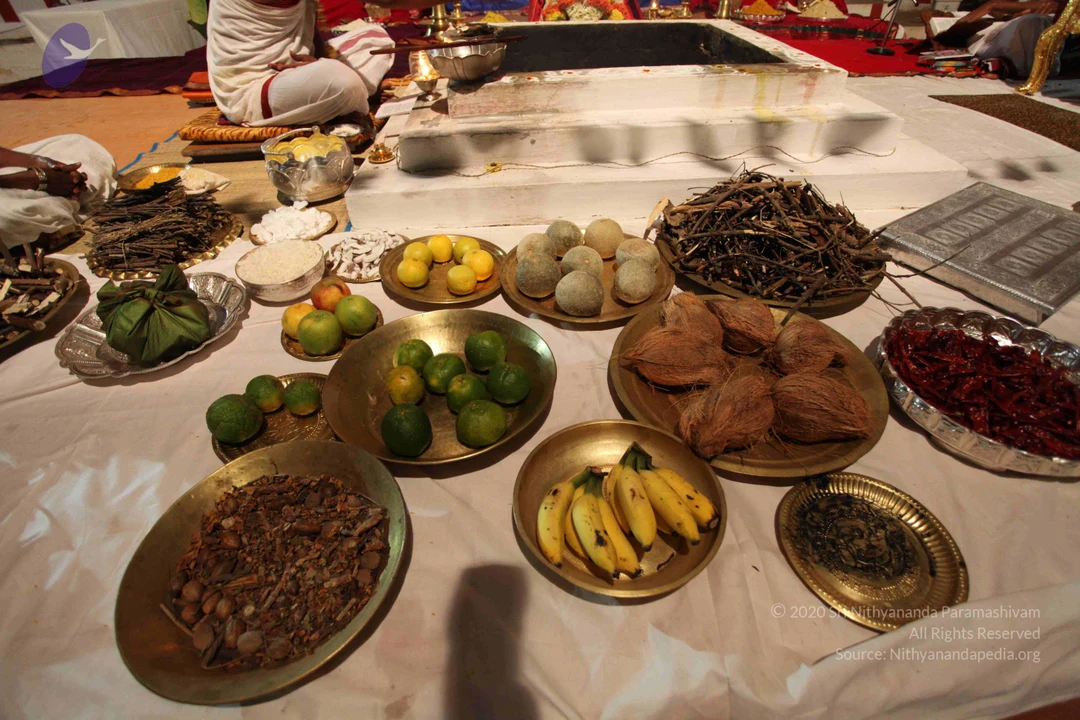
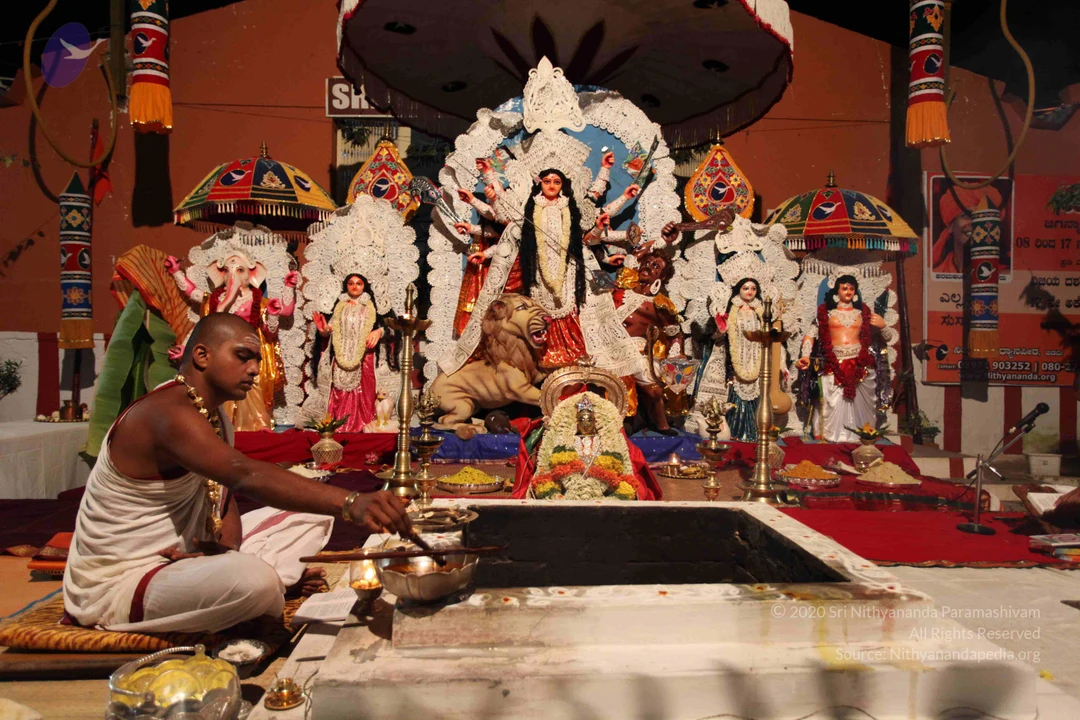
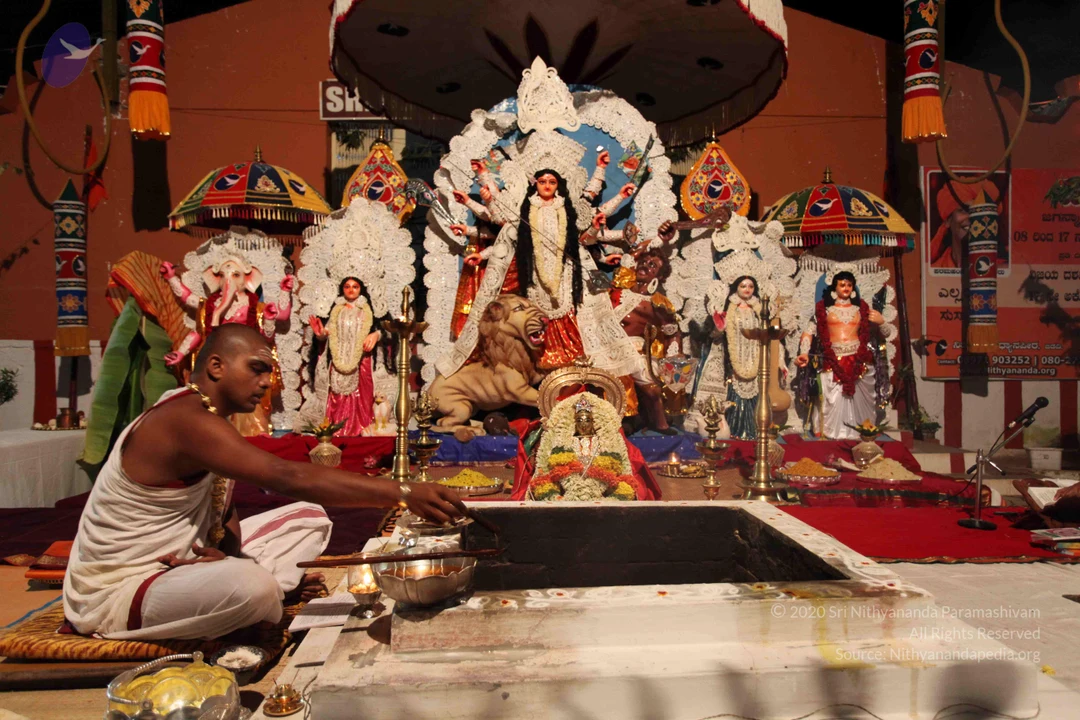
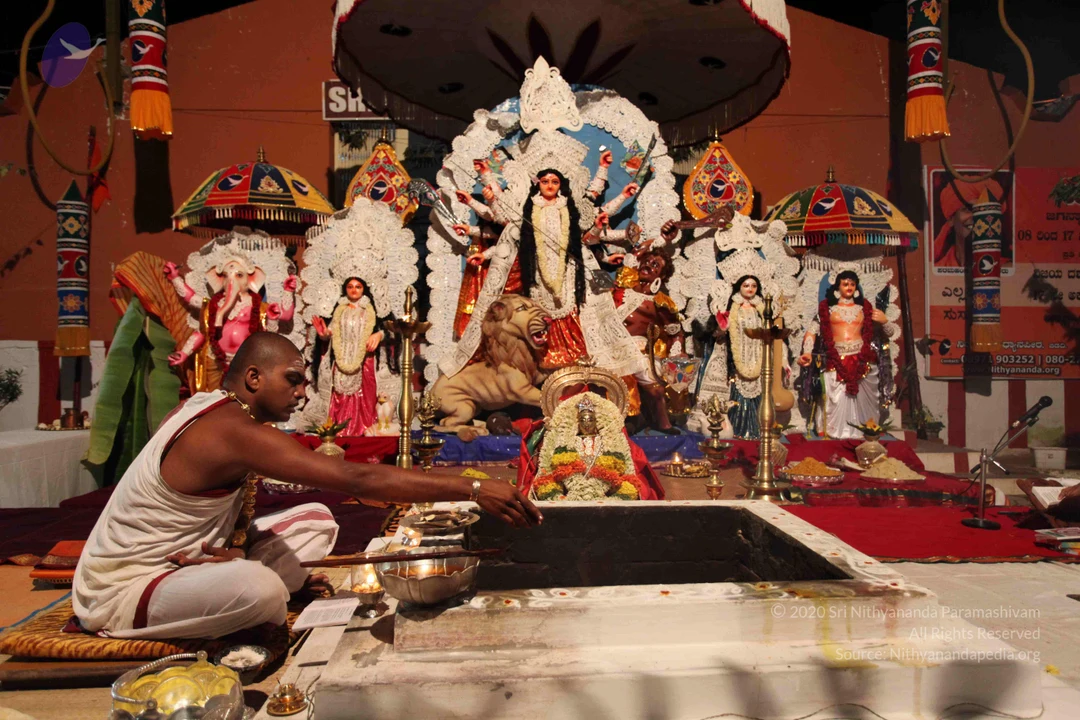
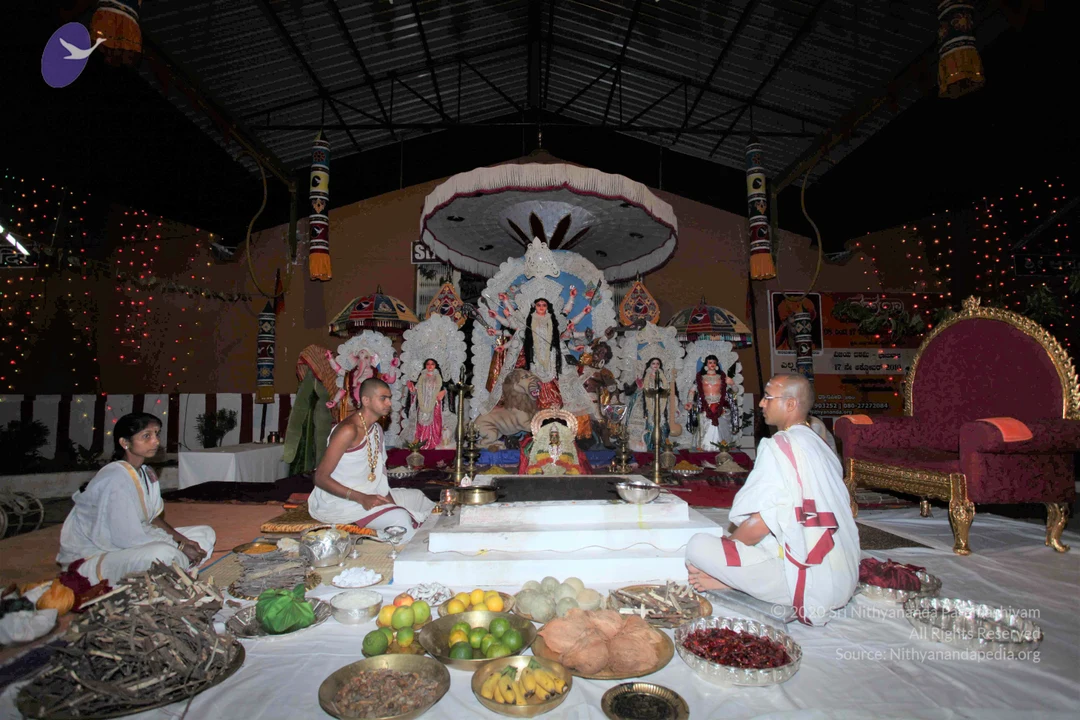
A night-time homa ritual performed in an open-sided pandal decorated with fairy lights and hanging cloth tassels. Three people sit on a white cloth before a square white altar fire platform. A woman in white sari sits at left, a young man in white dhoti with a sacred thread sits at centre, and a shaved-headed priest in white dhoti with a red-bordered shawl sits at right, facing the altar. Behind the altar, a large deity murti in a white and gold floral arch is flanked by smaller idols and brass oil lamps. Heaped offerings surround the fire pit: bundles of wood sticks, bowls of bananas, lemons, coconuts and red flowers, plus a small brass pot. An empty ornate red velvet throne with gold trim stands at right.Two priests in white dhotis sit cross-legged before a white homa platform at night in a temple pavilion. The priest on the left, a young shaved-headed man, wears a gold necklace and a white shawl and sits beside brass and silver vessels and bundled offerings. The priest on the right, also shaved-headed, wears white with a red-bordered cloth and gold chain and sits near brass lamps. Behind them stands a large deity murti of a multi-armed goddess riding a lion, with a white floral backdrop, flanked by additional decorated murtis, brass oil lamps and red and yellow umbrellas. Pillars are wrapped in colourful fabric. A banner in Kannada script and a Nithyananda Dhyanapeetam logo appear at the right.Night outdoor ritual before a large multi-armed goddess Durga murti seated on a lion, with a crowned, ornate backdrop and white decorative arches. Two priests in white dhotis sit on a raised white platform in front of a fire pit and offerings: the priest on the left has his palms pressed together in prayer and a rudraksha-style bead necklace, while the priest on the right wears a white cloth with red borders and gold chains. Brass oil lamps, a kalasha-style vessel, bowls of fruit, flowers, coconuts and heaps of powder sit in front. Tall decorated pillars with tassels frame the scene, and a banner at right shows Kannada text.A photograph of a night puja before a large multi-armed goddess murti, shown with a lion mount and several attendant deity figures with white floral halos, flanked by small umbrellas and tall tassel poles. Two men in white dhoti and shawl sit on the floor before a low altar with brass lamps, a silver bowl, and offerings of flowers and kumkum. The man on the left, bare-chested with a gold necklace, sits with palms pressed together in prayer. The bald man on the right wears white with red borders and rimless glasses. Other figures stand at the edge of the frame.A photo of a nighttime puja before a large multi-armed goddess murti seated on a lion, with a gold-trimmed white and silver backdrop, and attendant deity figures including an elephant-headed figure to the left. Two shaved-headed priests in white dhotis with red borders sit cross-legged before a white stone altar. The priest on the left, with a gold chain, presses his palms together in prayer, while the priest on the right, wearing glasses and a gold chain, sits in profile. Brass oil lamps stand on the altar, with a silver bowl, a small brass vessel, and offerings of flowers, fruit and white sweets arranged in front.Night-time ritual inside a open-sided pandal decorated with strings of fairy lights and hanging tassels. At the centre, a large white altar stands before a deity murti of a goddess with multiple arms and a crown, flanked by white floral decorations and additional figures. Brass lamps and offerings surround the altar, including bowls of fruit, sweets, red flowers and bundled sticks spread on a white cloth. A bald priest in white dhoti with a red-bordered cloth kneels at the right with hands folded in prayer, while a shaved-headed young boy in white sits in front of the altar, also in prayer. A woman in white sari sits to the left. An empty red velvet throne with gold trim stands at the far right.
October 13 2010

19 photosView all
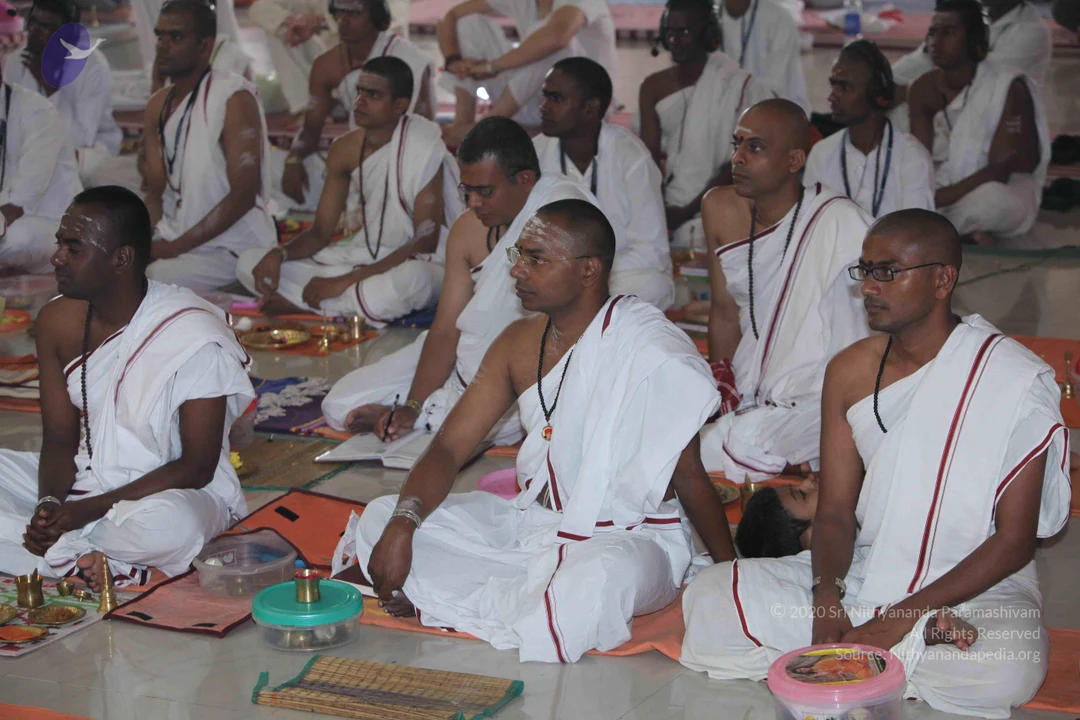
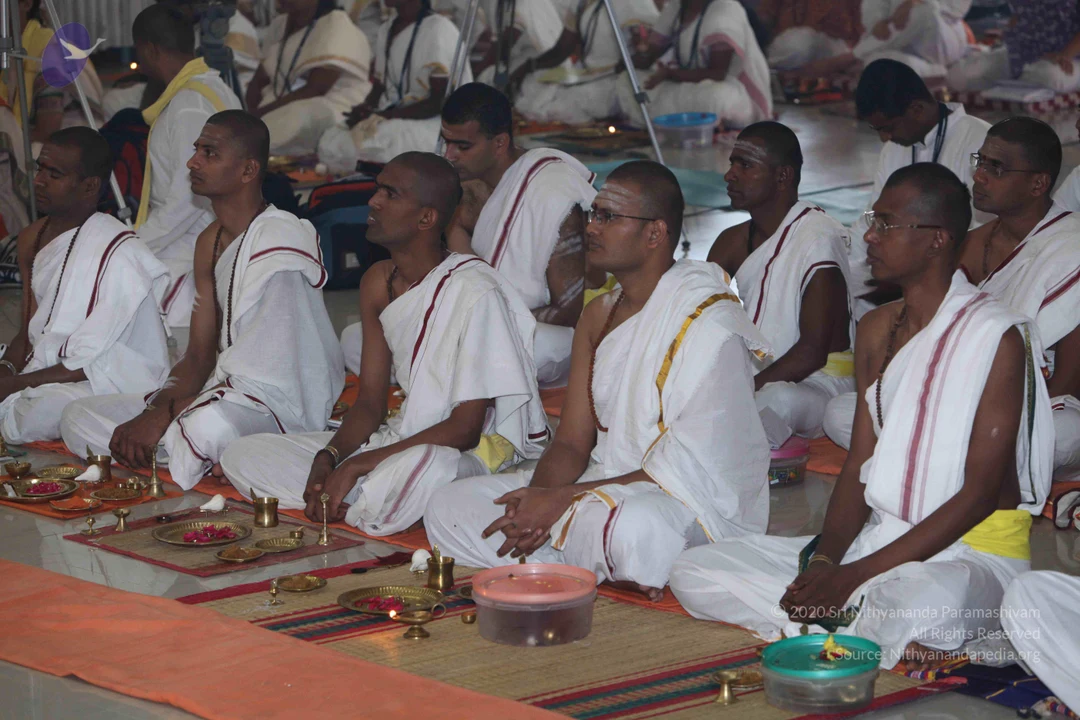
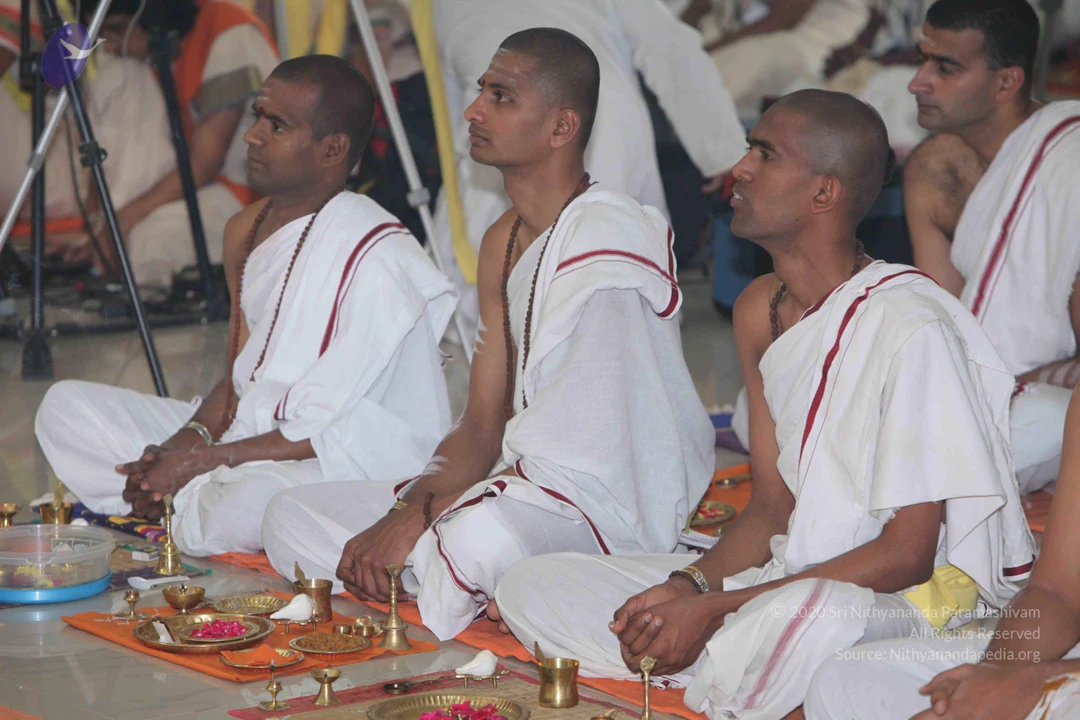
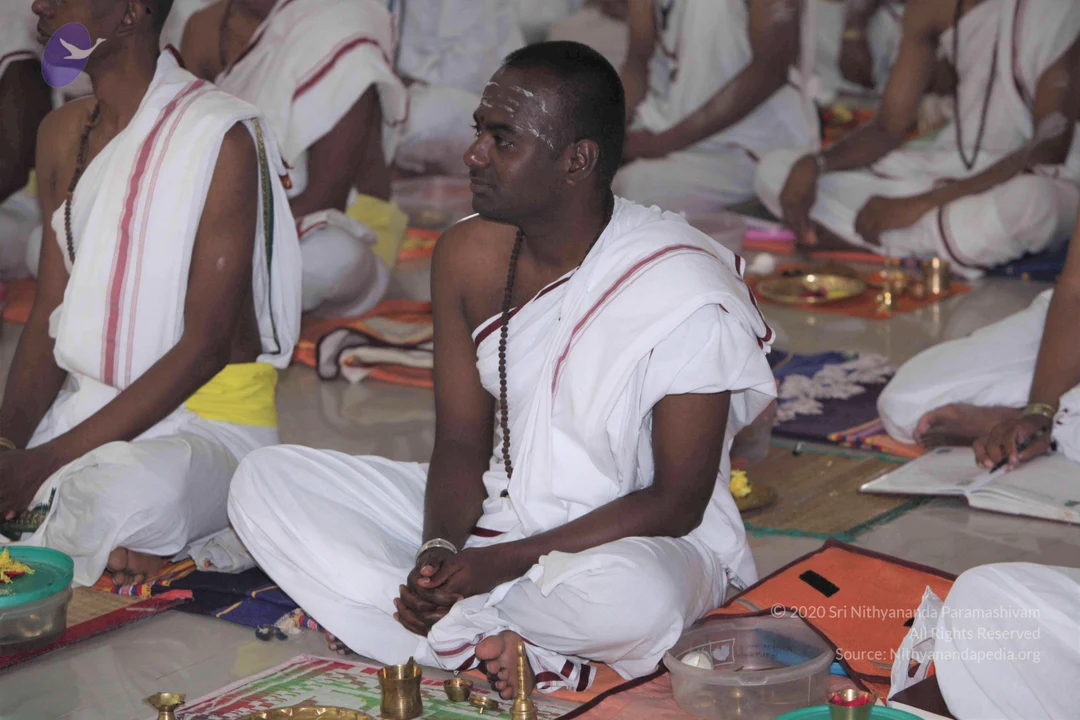
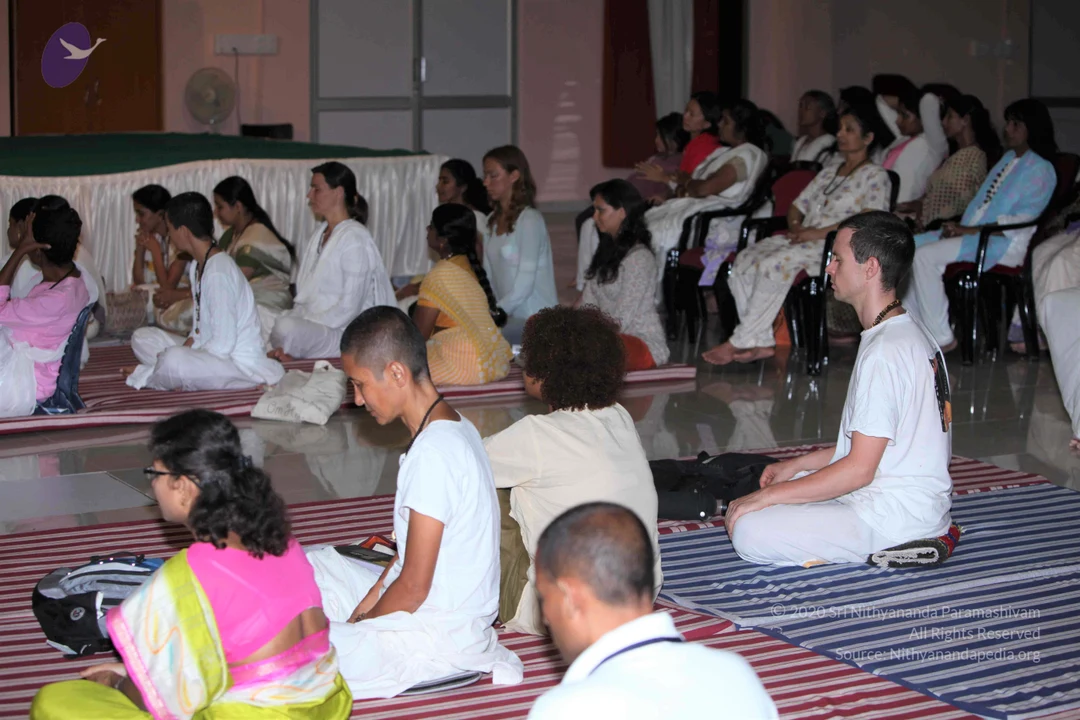
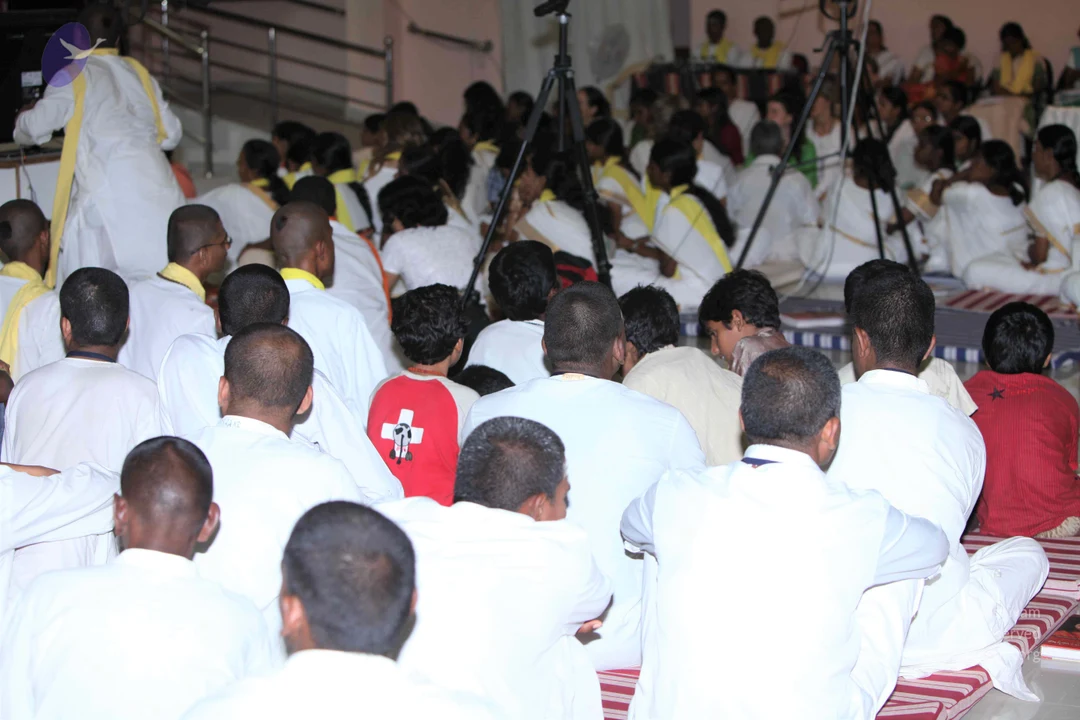
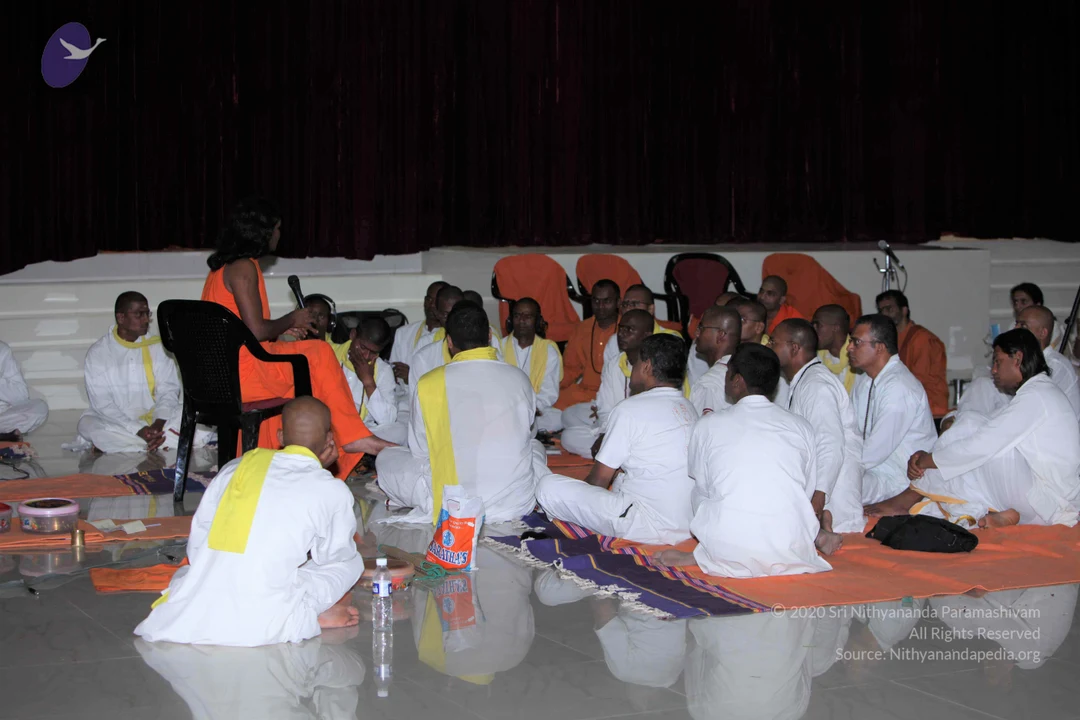
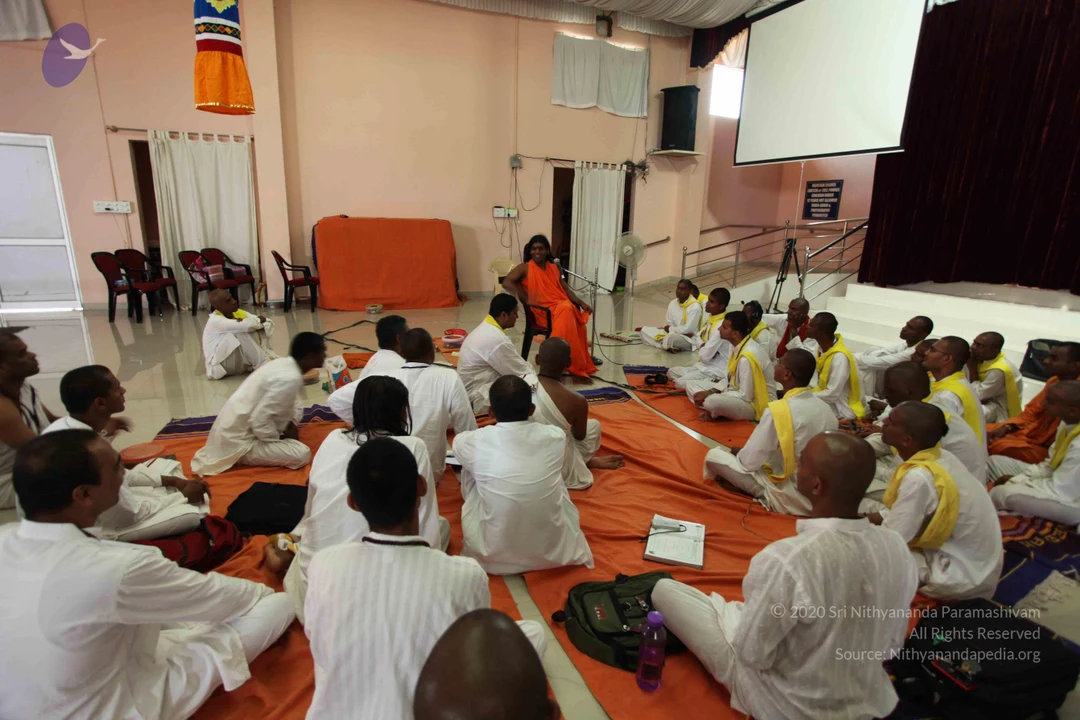
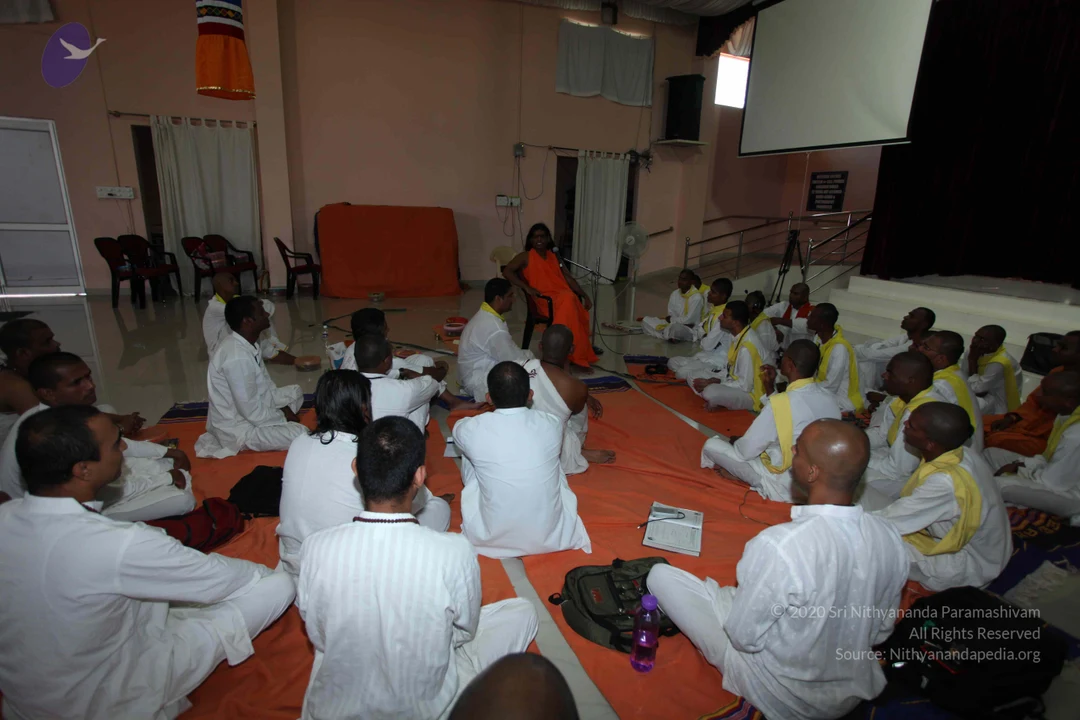
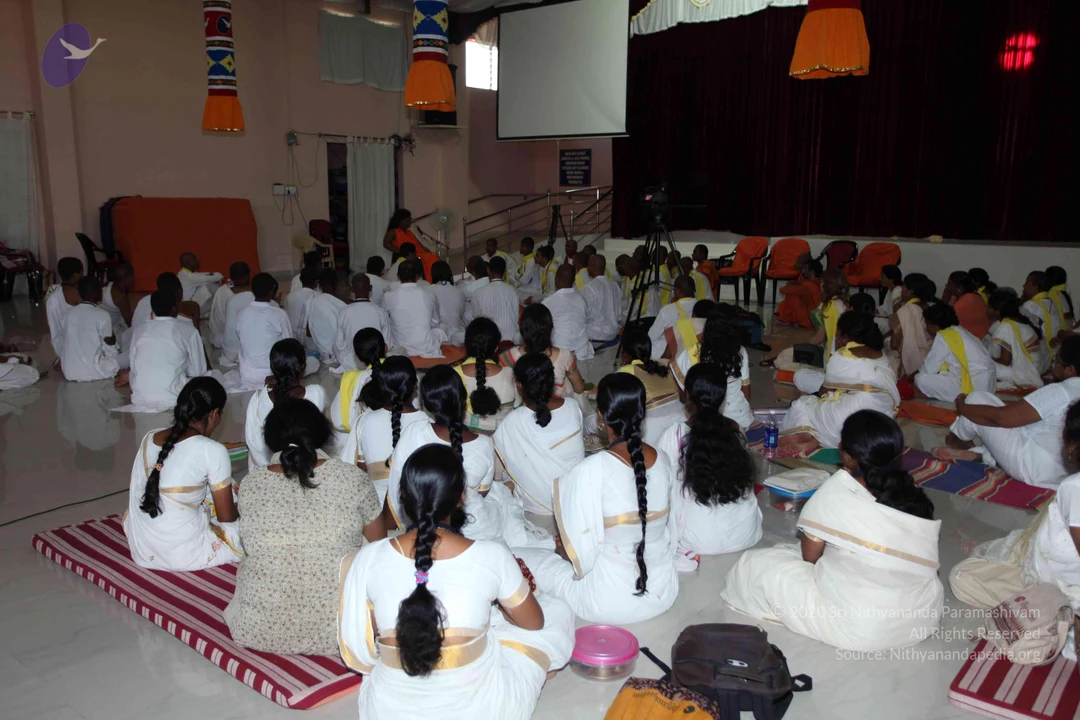
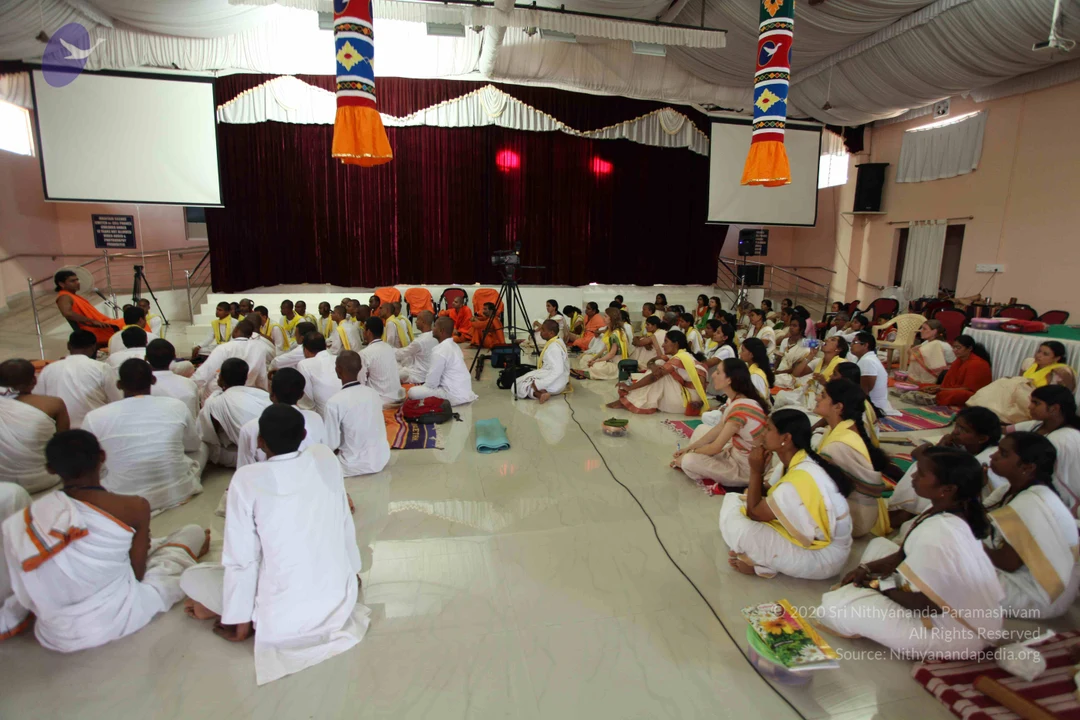
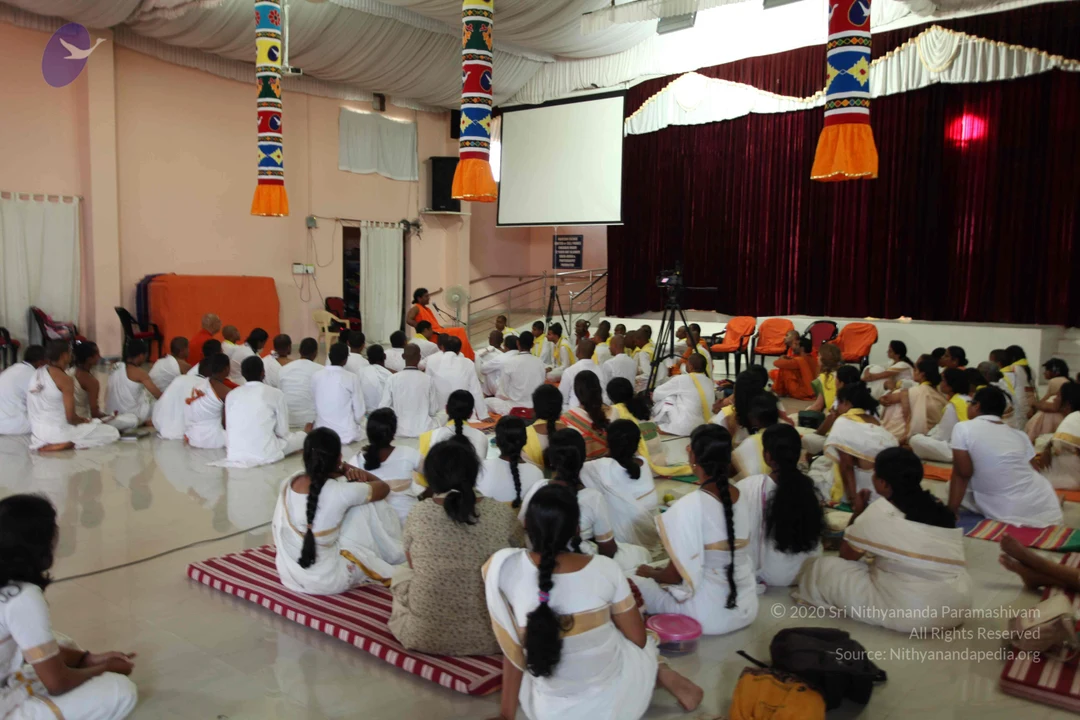
Wide indoor photo of a satsang hall with a white fabric ceiling, ceiling fans and tall colourful cylindrical banners with orange tassels hanging from above. Dozens of seated devotees in white clothes, several wearing yellow shawls, sit on orange and blue patterned mats facing a standing figure in orange robes at the far left. In the right foreground a man with short dark hair and a beard, wearing an orange robe, stands beside a microphone stand near the seated group. A woman with her hair tied back in a ponytail sits in white in the lower left foreground. Behind them, a decorated altar with deity murti and gold ornaments, red curtains, and rows of empty brown chairs complete the hall.A photograph of a seated satsang gathering in a hall with a dark red curtain backdrop and a white stage platform. Two men in saffron-orange robes sit on chairs on the stage; the man at centre holds a microphone on a stand and speaks. Facing them on the floor sit devotees: women in white saris with gold borders and in orange saris, and women in yellow-shawled white garments, plus shaved-headed men in white shirts seen from behind in the foreground. A projection screen is partly visible at upper right. Whether either stage figure is a person cannot be established from appearance, so the role is given only as a seated speaker in orange robes.A seated satsang audience in a hall with a white draped ceiling and a dark curtained stage. On the stage, two men in orange robes sit near a microphone stand; one has a shaved head. In the foreground, several men in white clothes sit on orange mats, one on a striped blue and red mat with Nithyananda Dhyanapeetam lettering. Women in white saris with yellow borders sit on the floor and in chairs at the right, and a projection screen hangs on the back wall. The people visible number around thirty.A hall with a seated audience facing a raised stage. On the stage, two men in orange robes sit on a white platform before a microphone; the one on the left has a shaved head, and the one beside him wears an orange shawl. Men and women in white and cream clothes sit cross-legged on orange and patterned mats, with some yellow-trimmed garments in the crowd. A projection screen hangs behind the stage, a black curtain frames it, and orange and patterned cloth hangings descend from the ceiling at the right.A large hall with a white draped ceiling and hanging decorative pillars in red, yellow and blue with orange tassels. Seated on the floor in front are roughly two dozen people dressed in white, sitting on orange and patterned mats. In the right foreground a person in orange robes stands facing the seated audience, smiling. A stage at the back has a backdrop reading Dhyanapeetham and a framed portrait; another figure in orange stands near the left stage area. Projection screen and speakers are visible on the left.A photo of a seated group of men in white dhotis and white shirts sitting on orange and cream cloths on a tiled floor in an indoor hall. Many wear yellow-trimmed shawls or yellow stoles. A standing figure in an orange robe with long dark hair stands at the center-back, facing the seated audience and holding a microphone. A projection screen hangs on the right against dark red drapes, with an orange cloth draped over a chair on the left and a banner with a pale blue emblem on the wall at the top left. A tripod and a standing fan are visible. The scene suggests a seated talk or satsang.