Skip to content
Saturday

21 August 2010

Reality TV or Integrity: Nithyanandas morning message, 21 Aug 2010
483Dated photos
1Source pages
4Media embeds
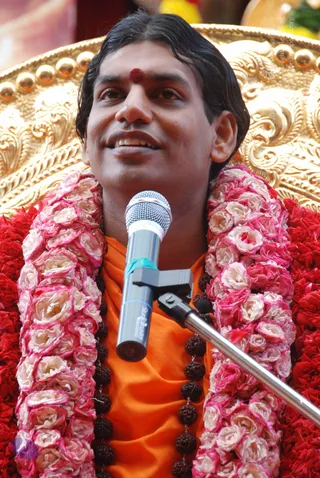
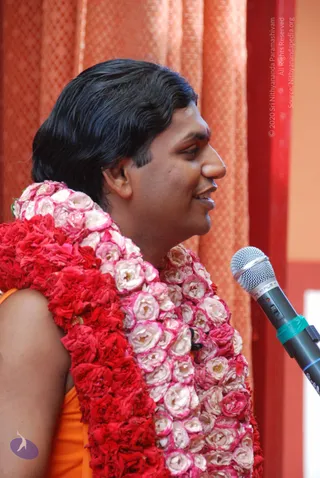
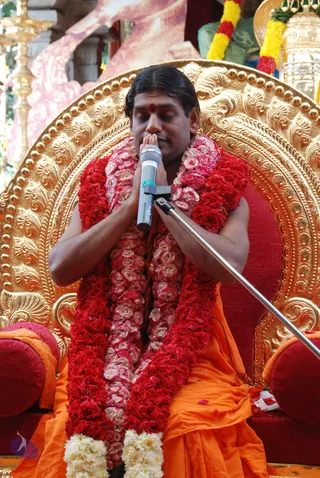
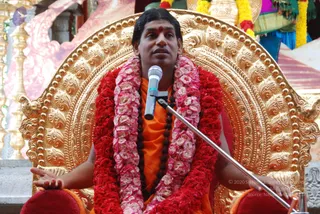
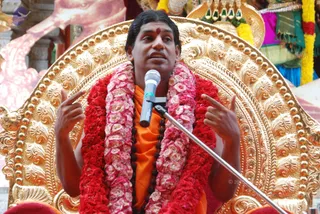
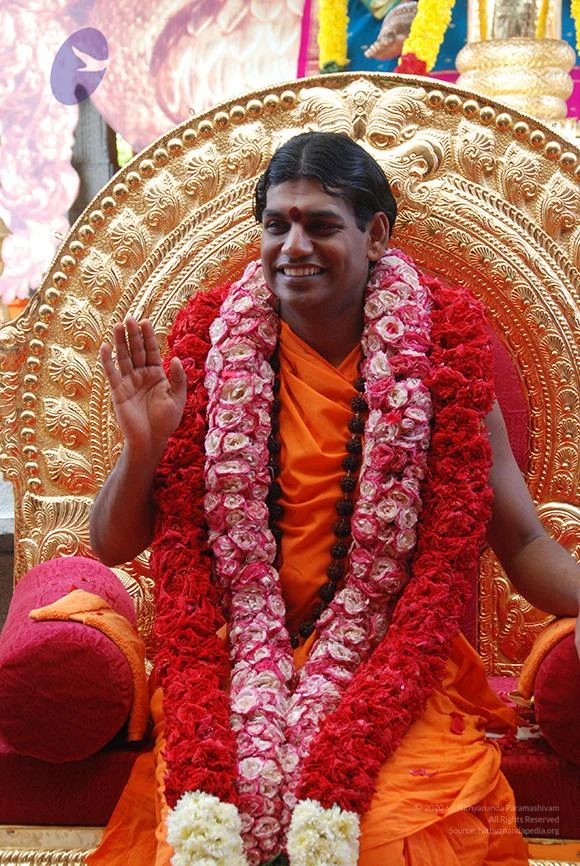
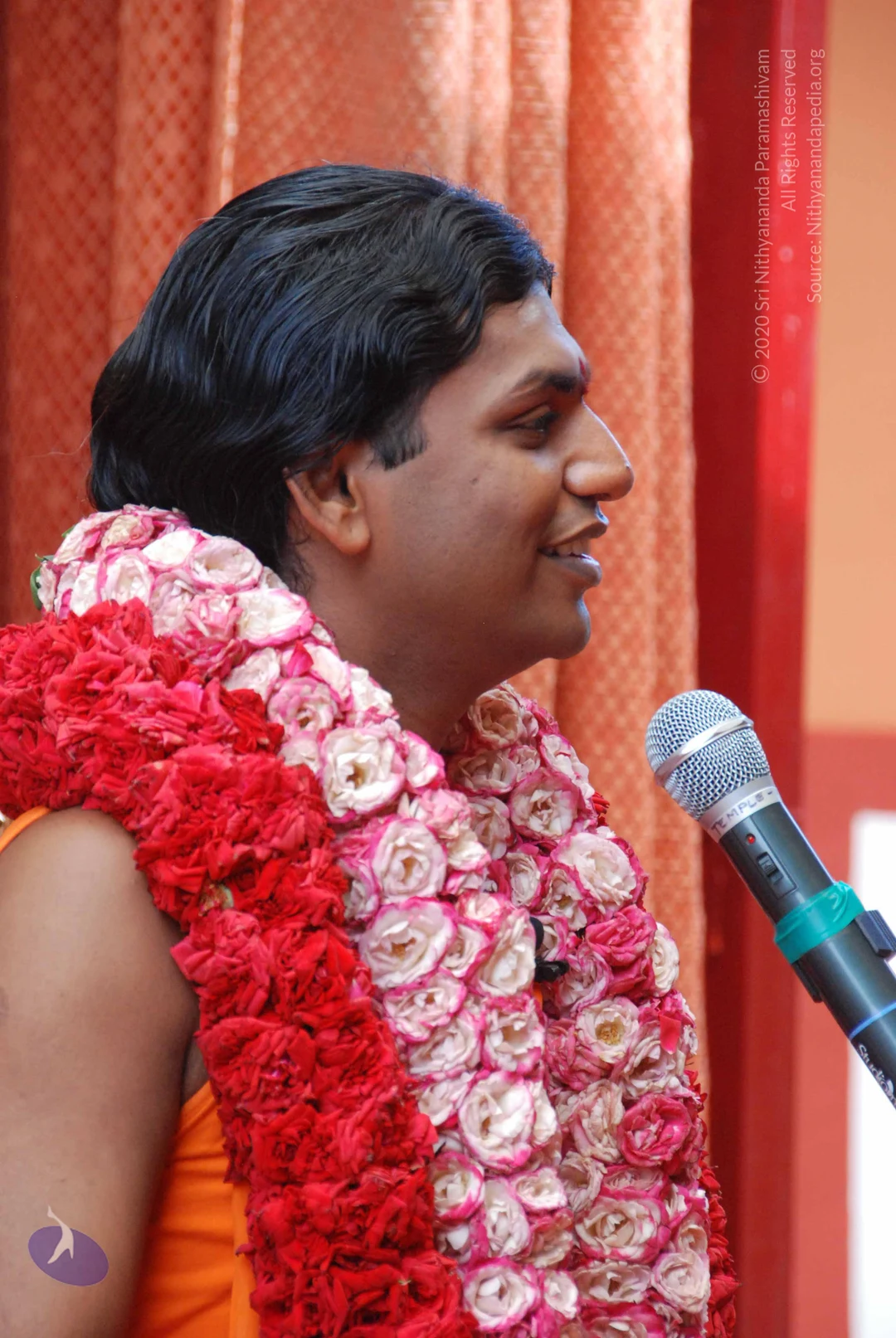
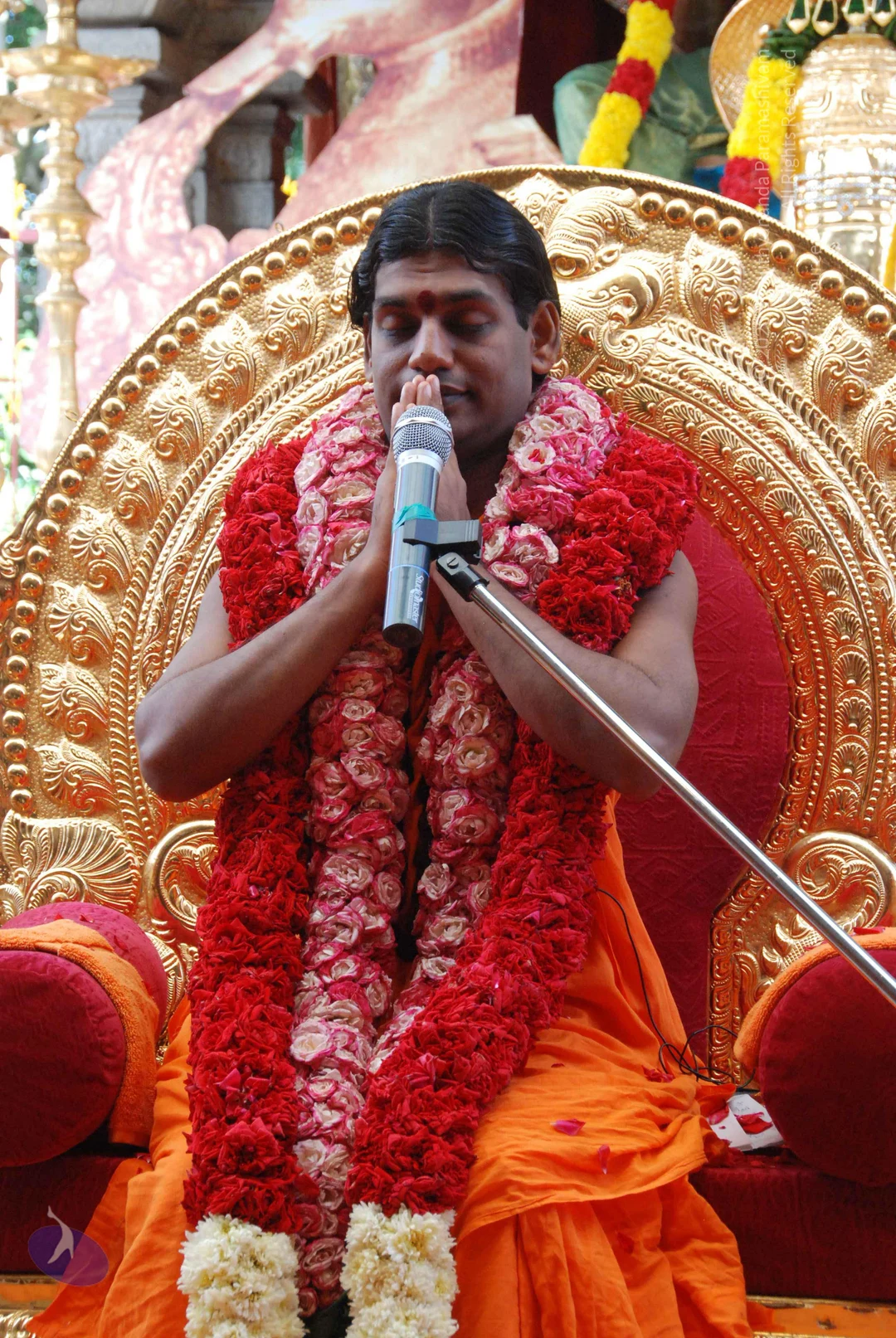
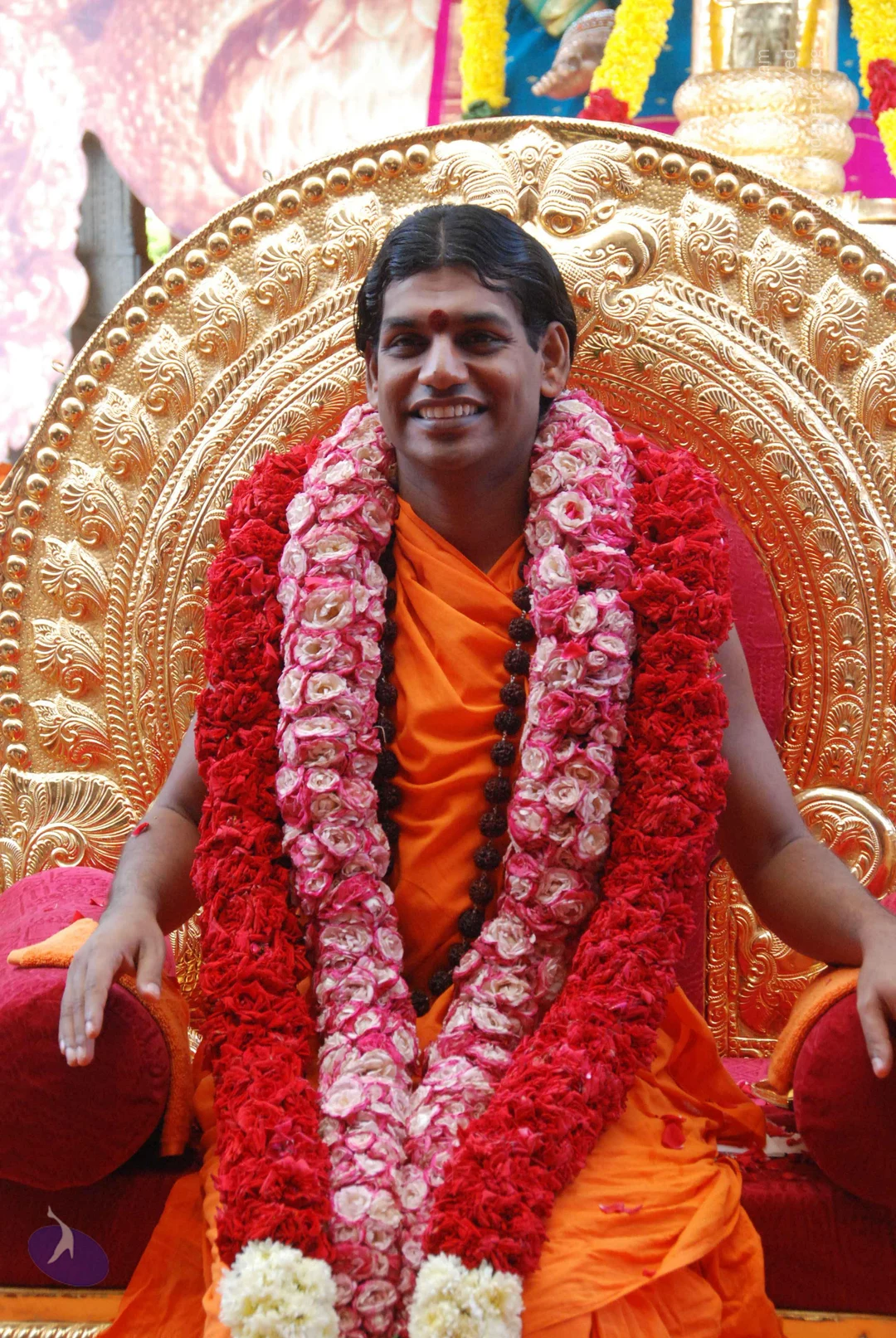
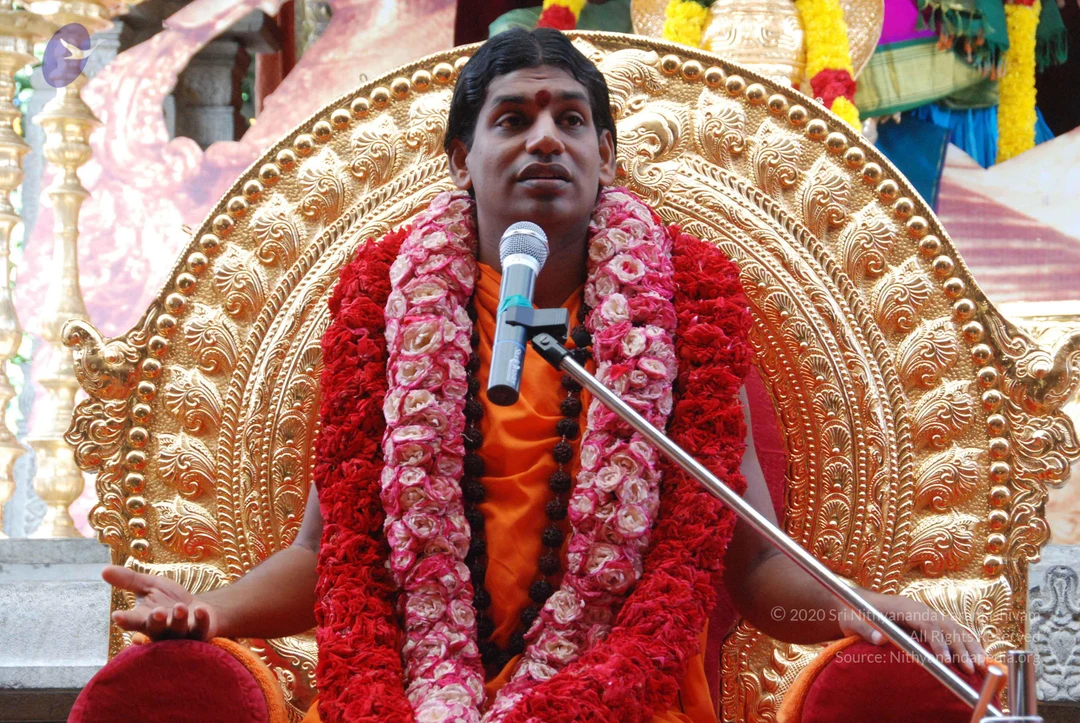
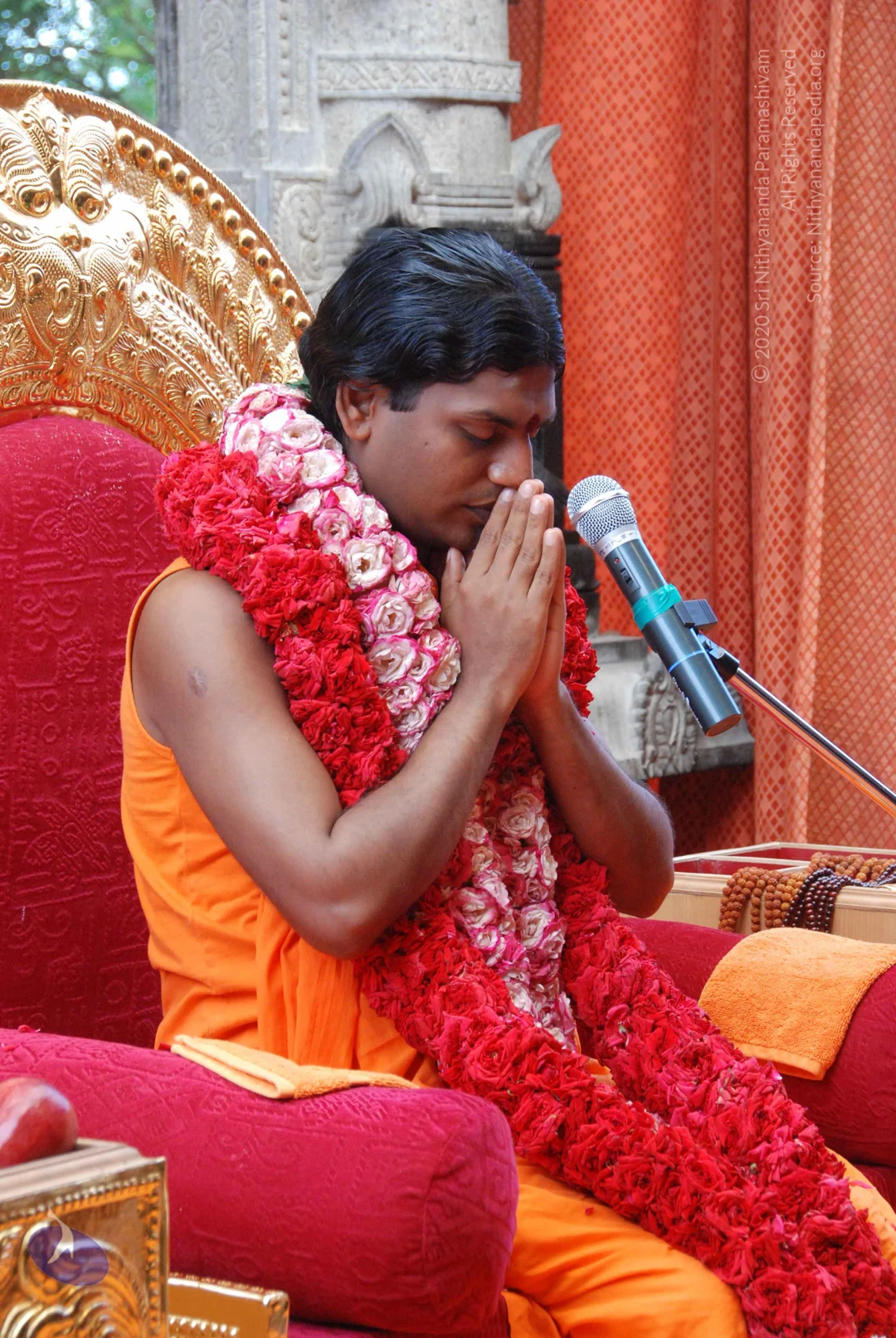
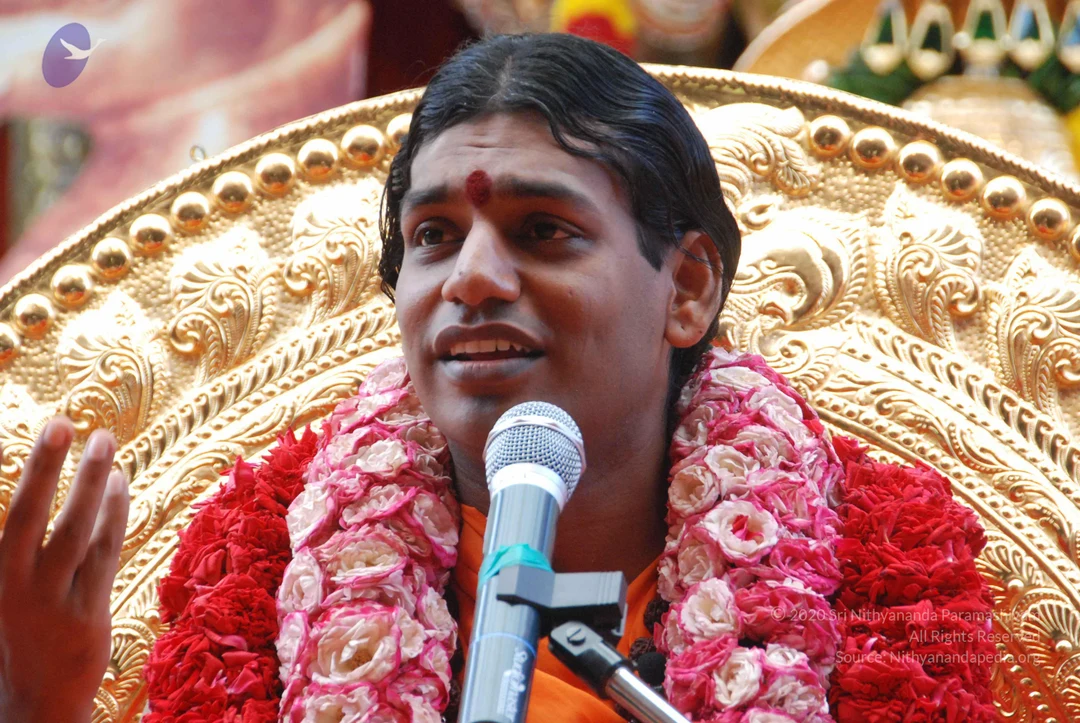
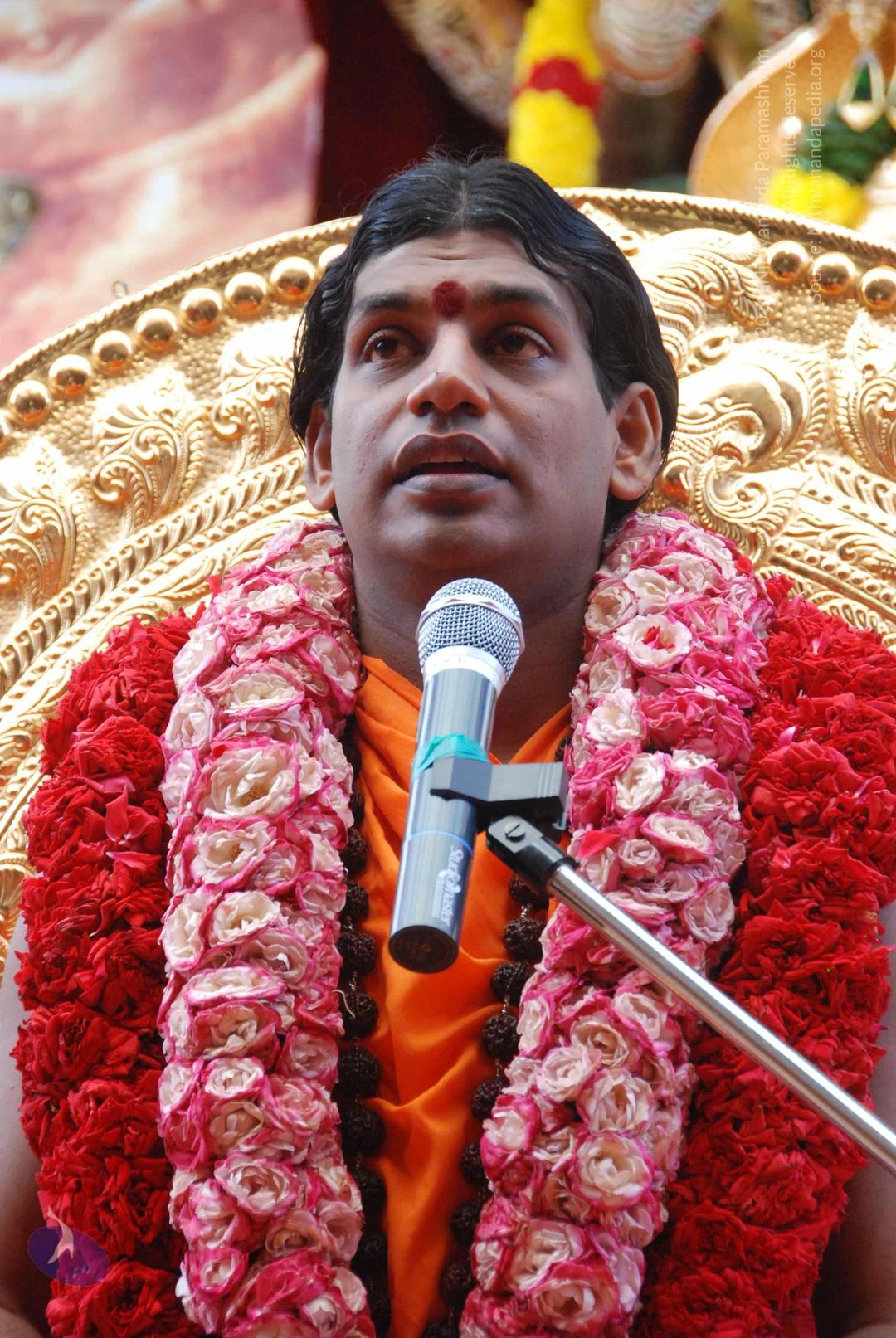
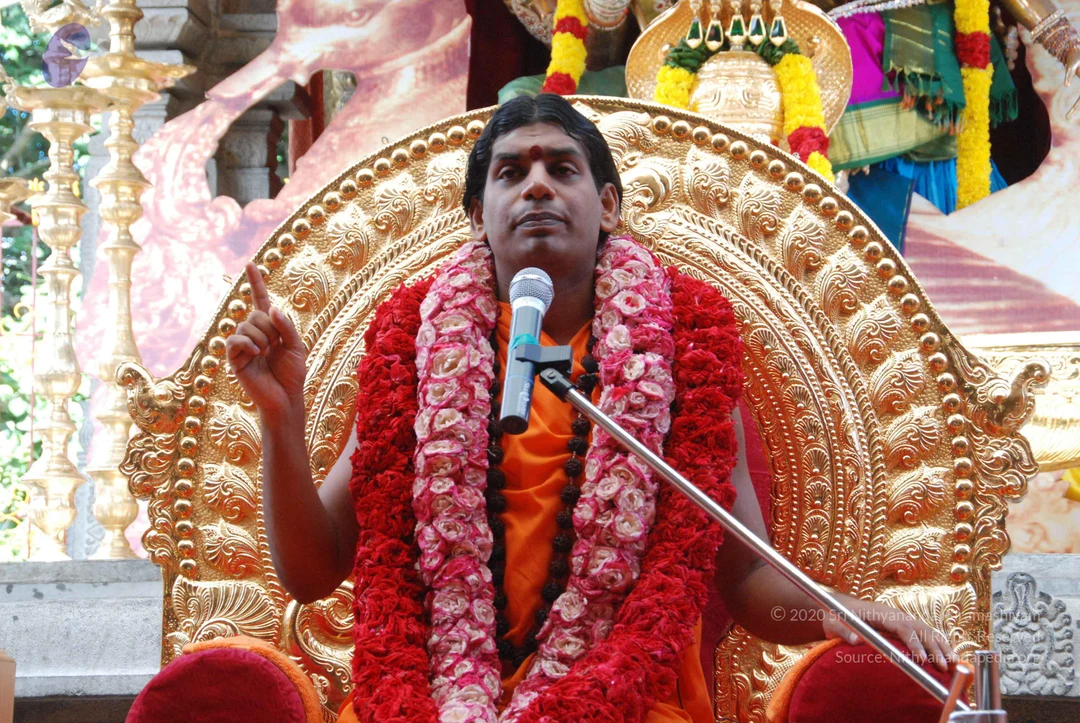
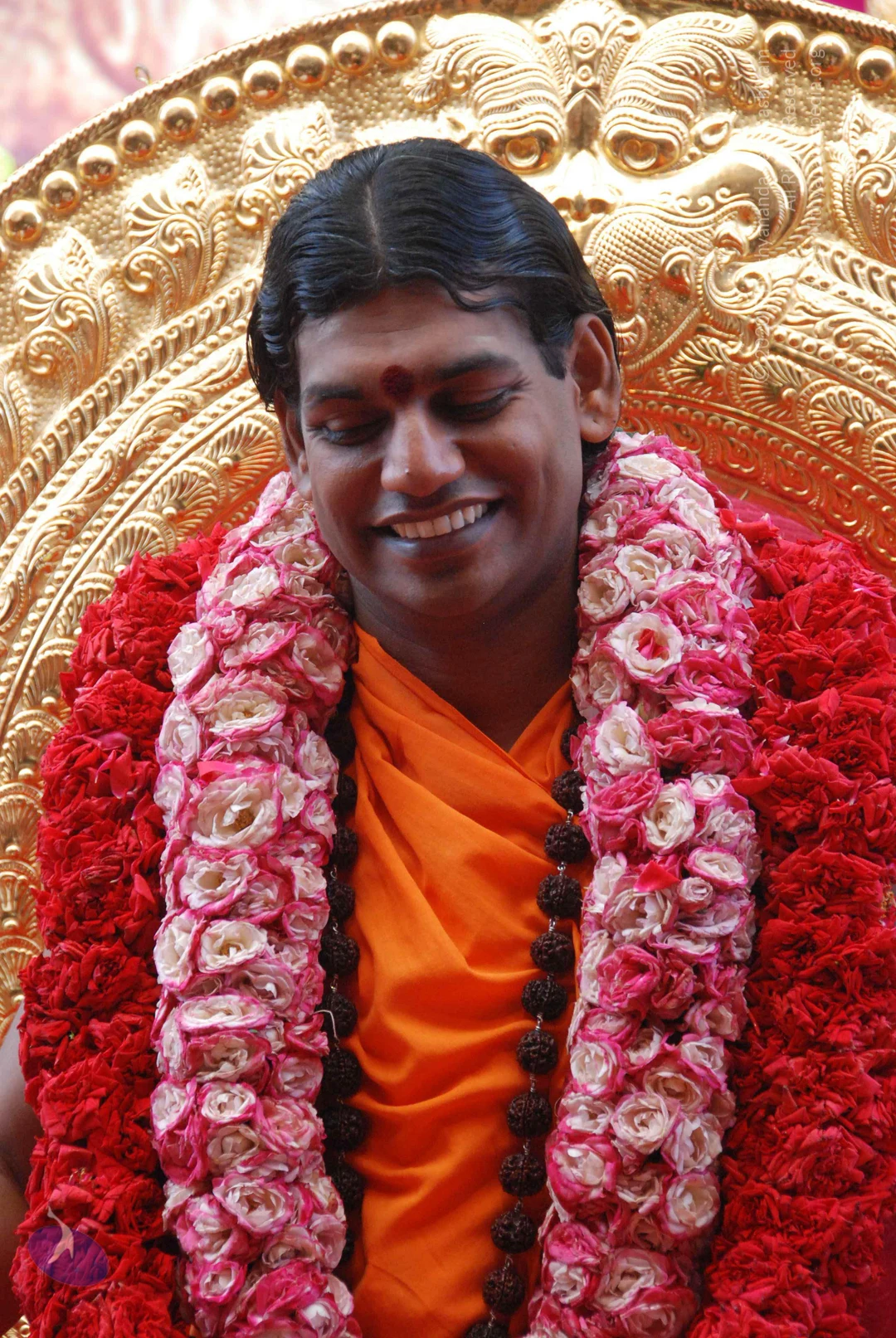
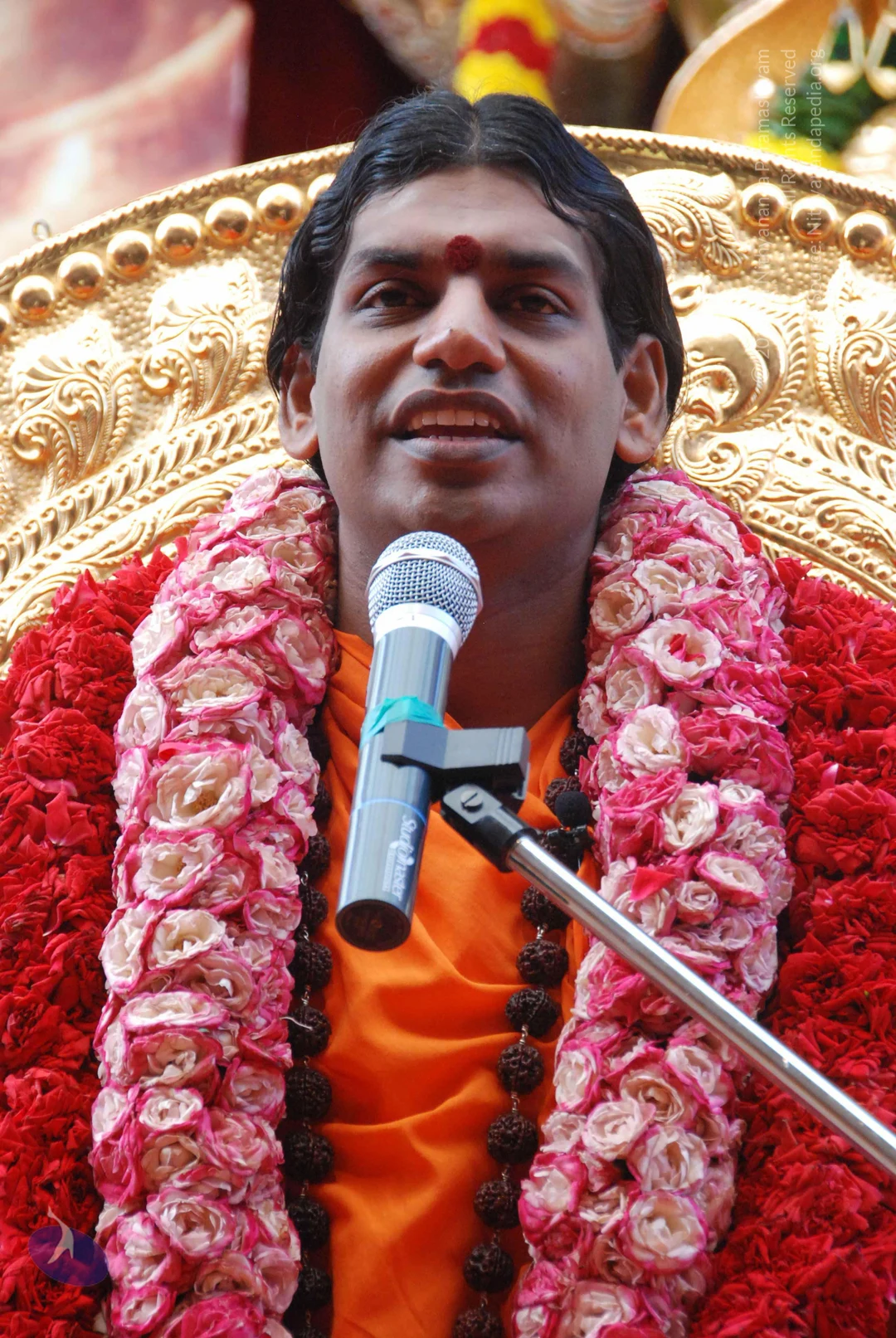
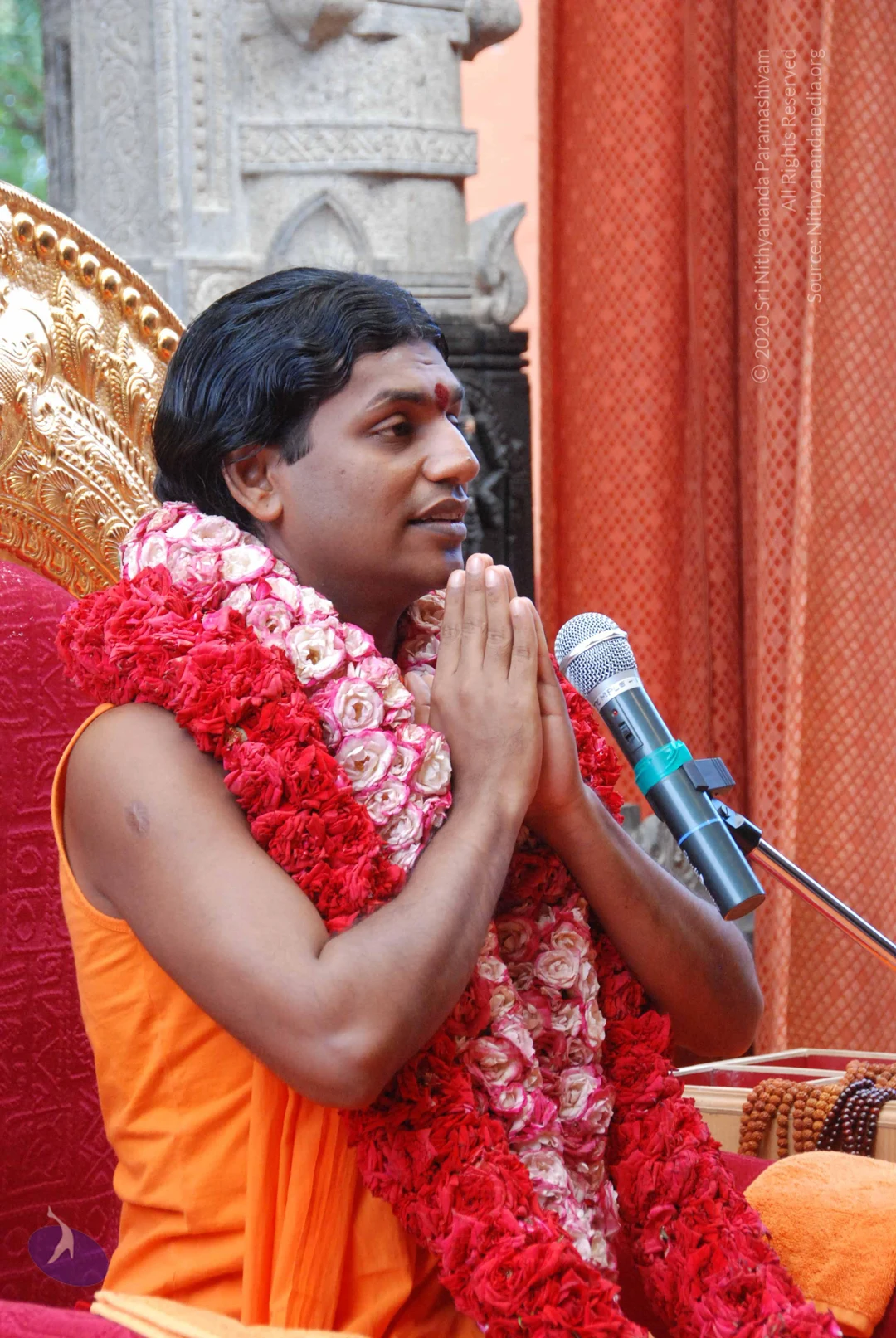
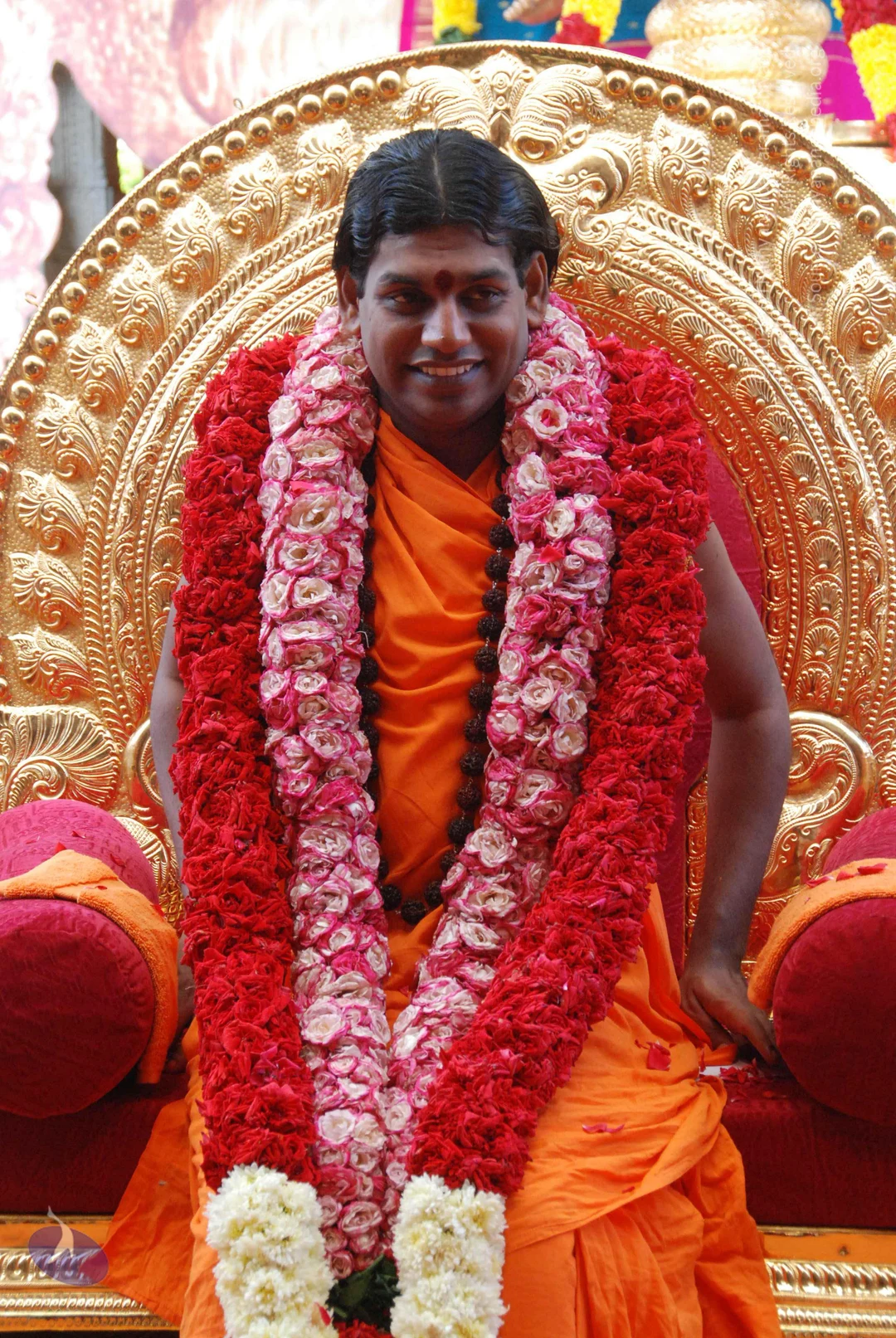
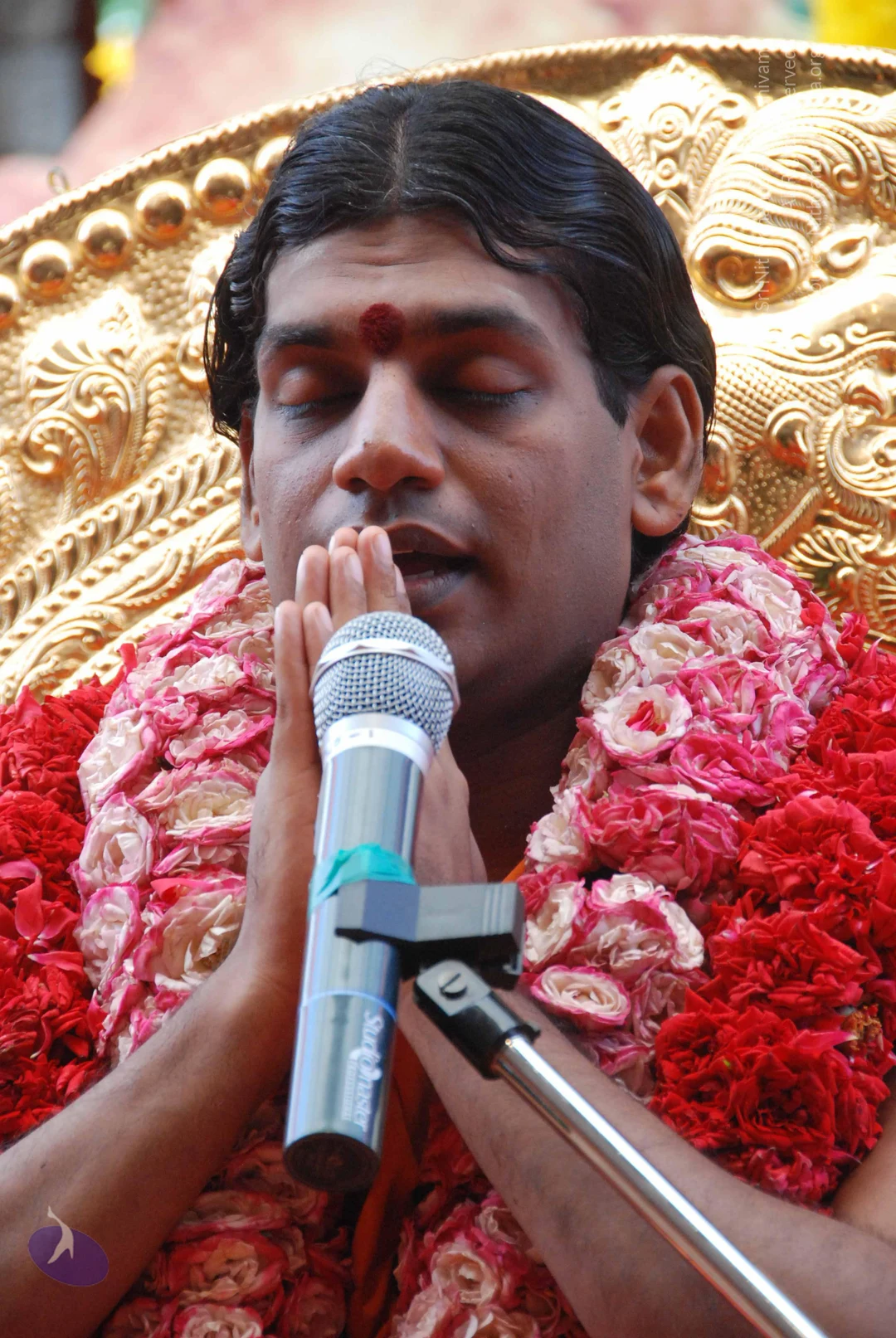
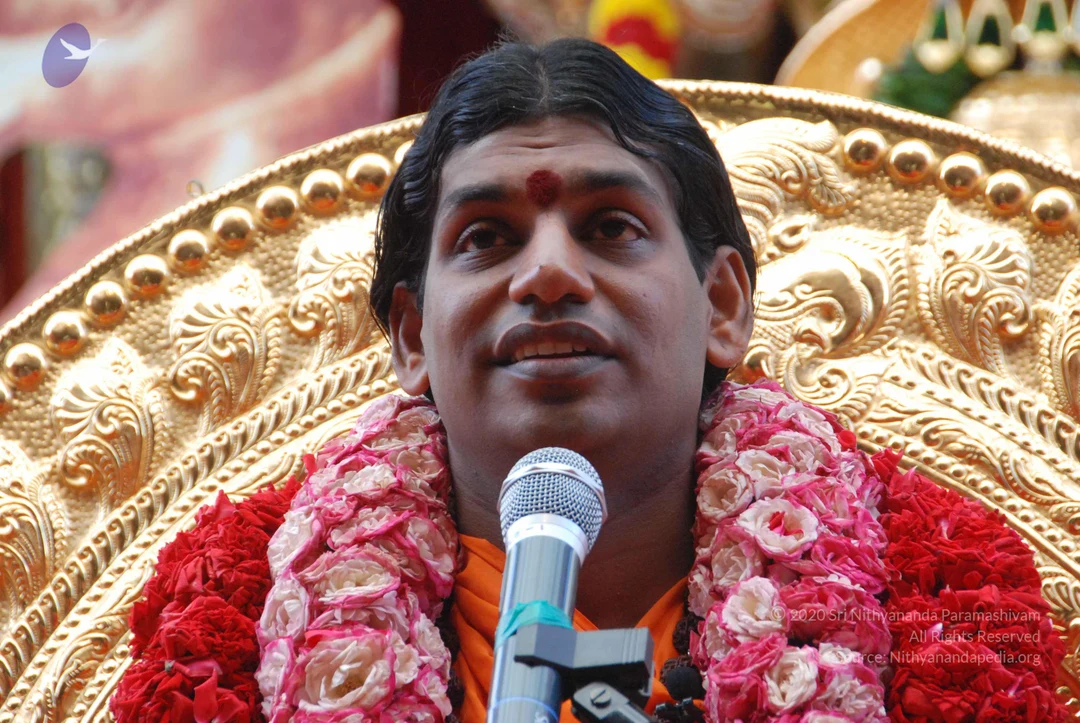
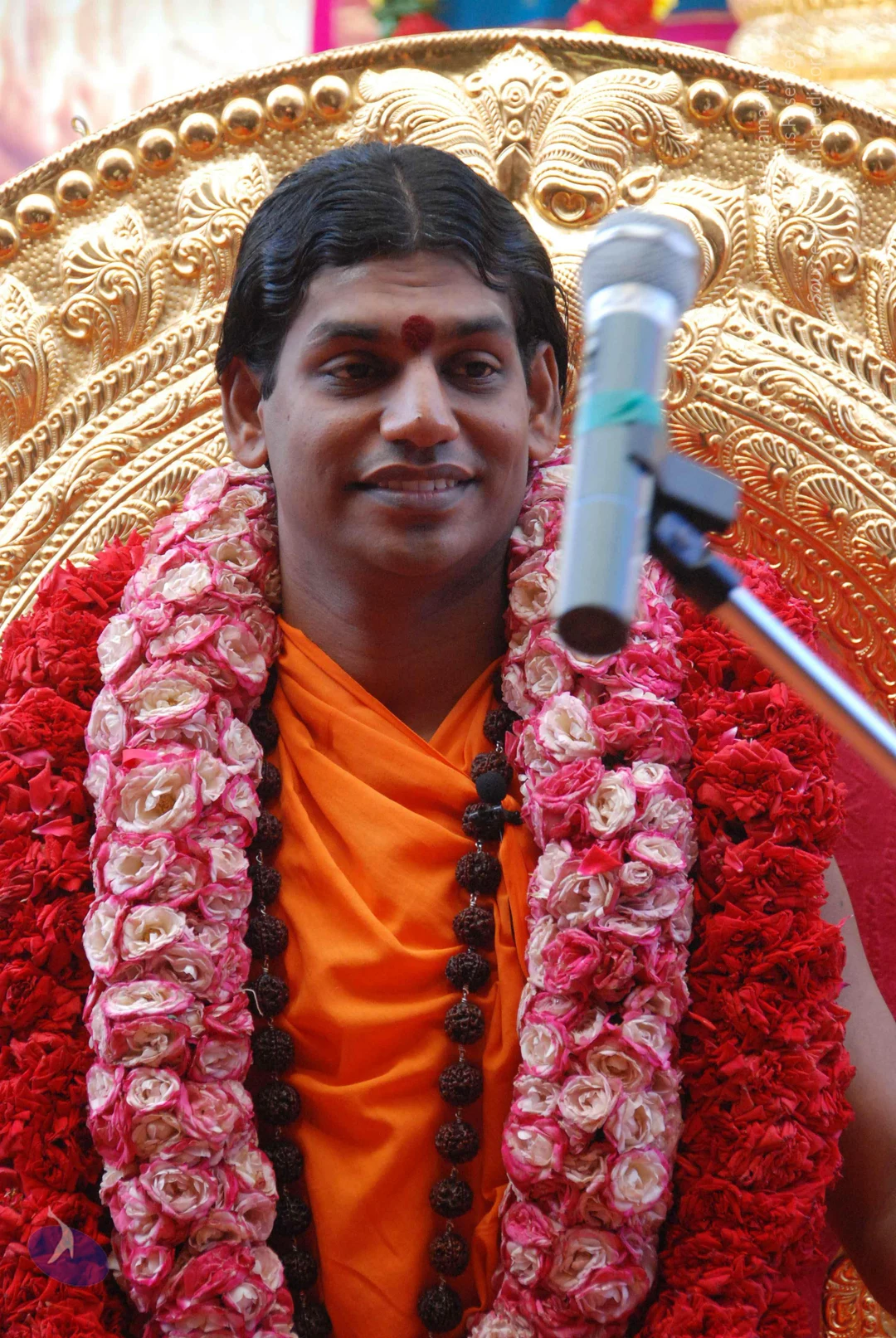
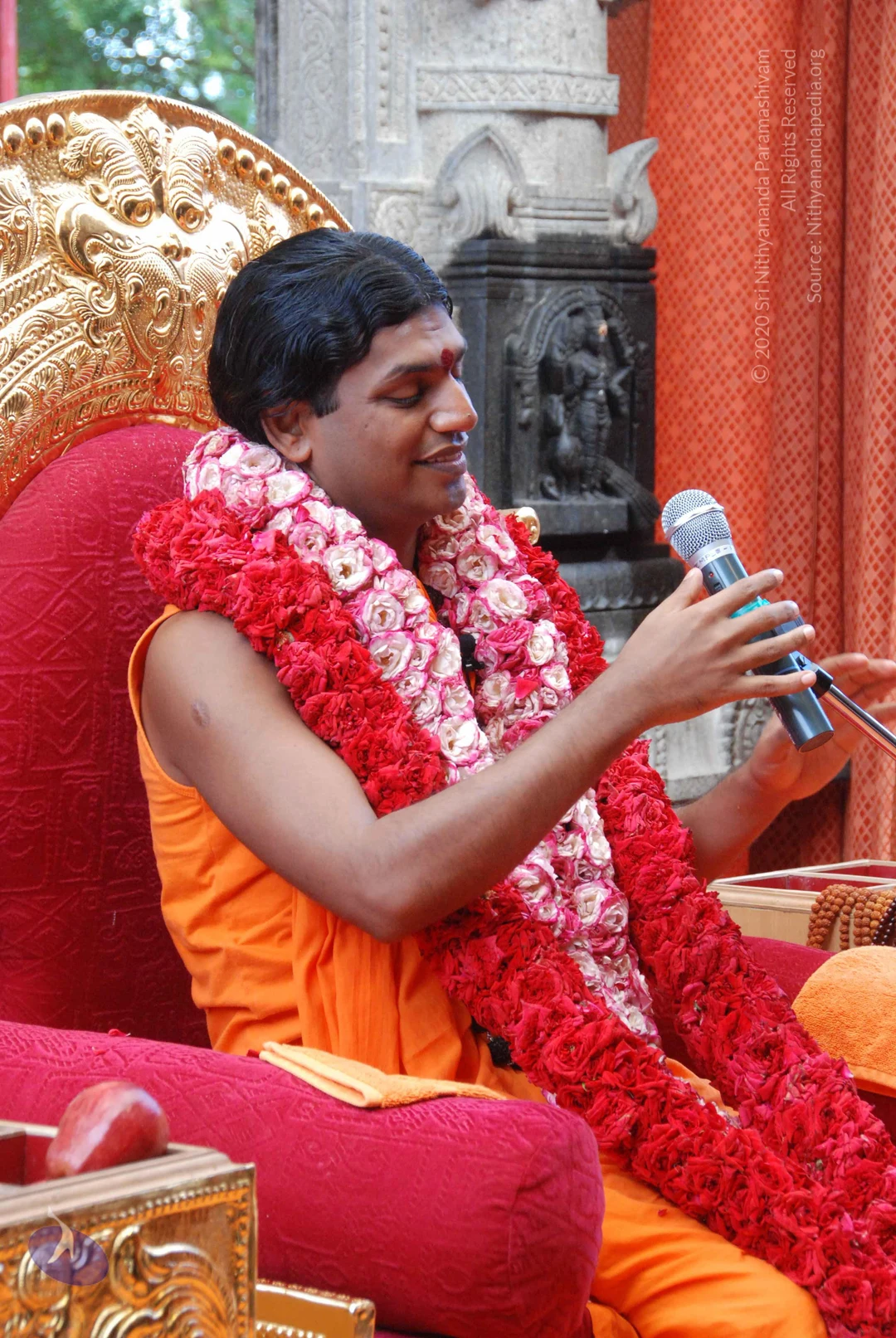
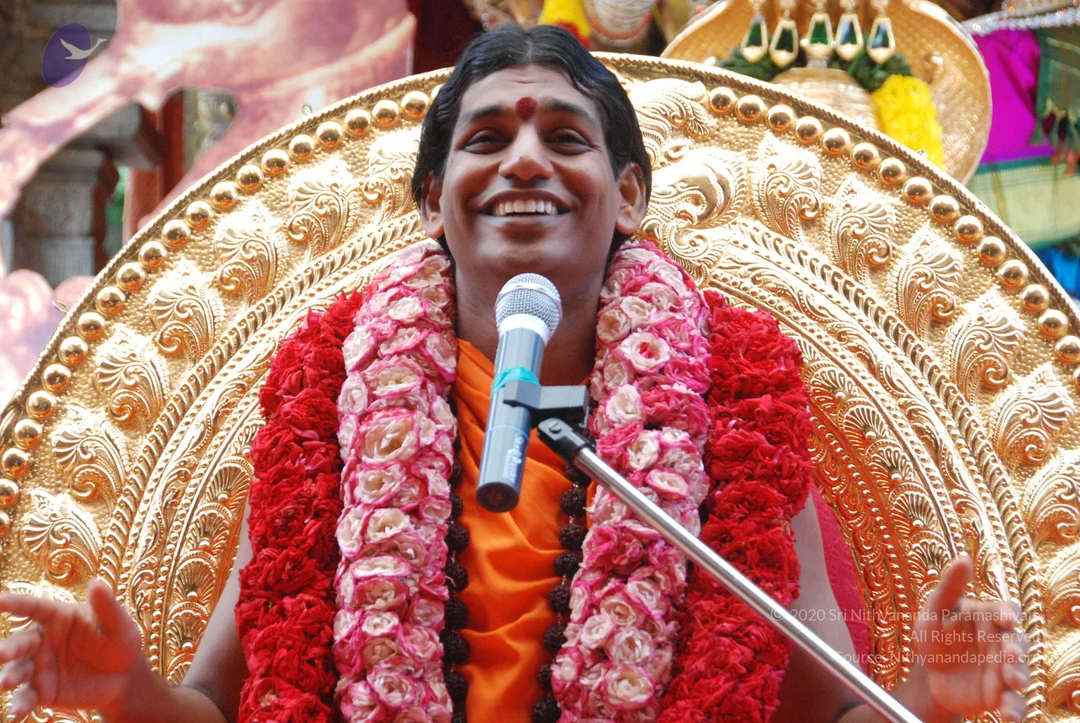
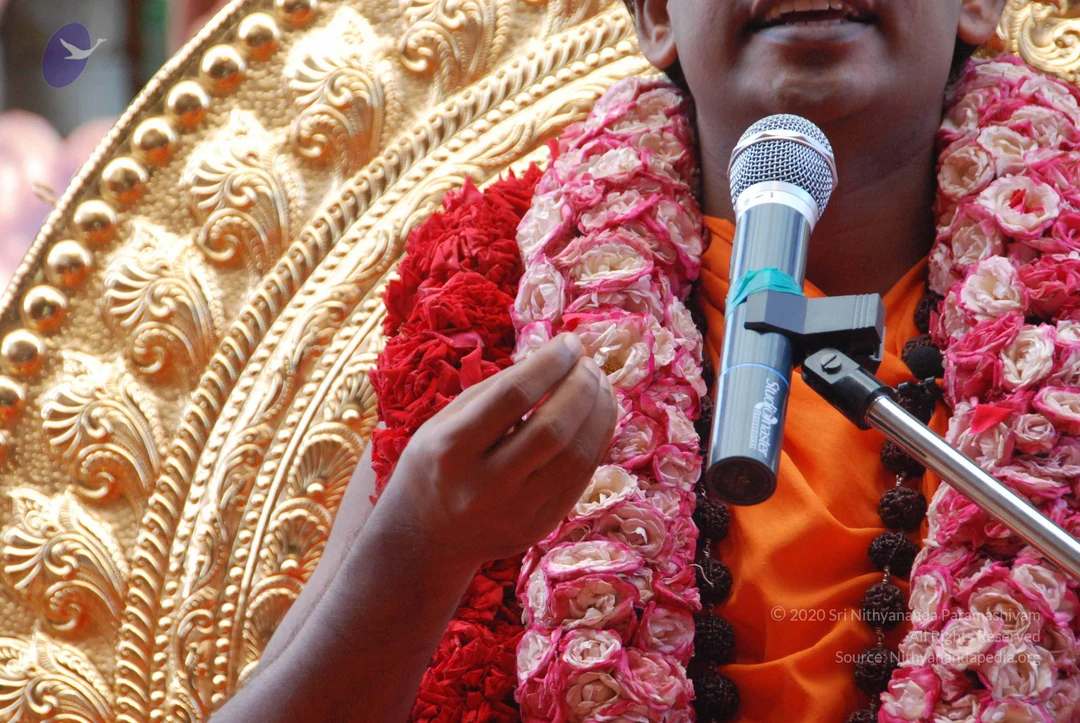
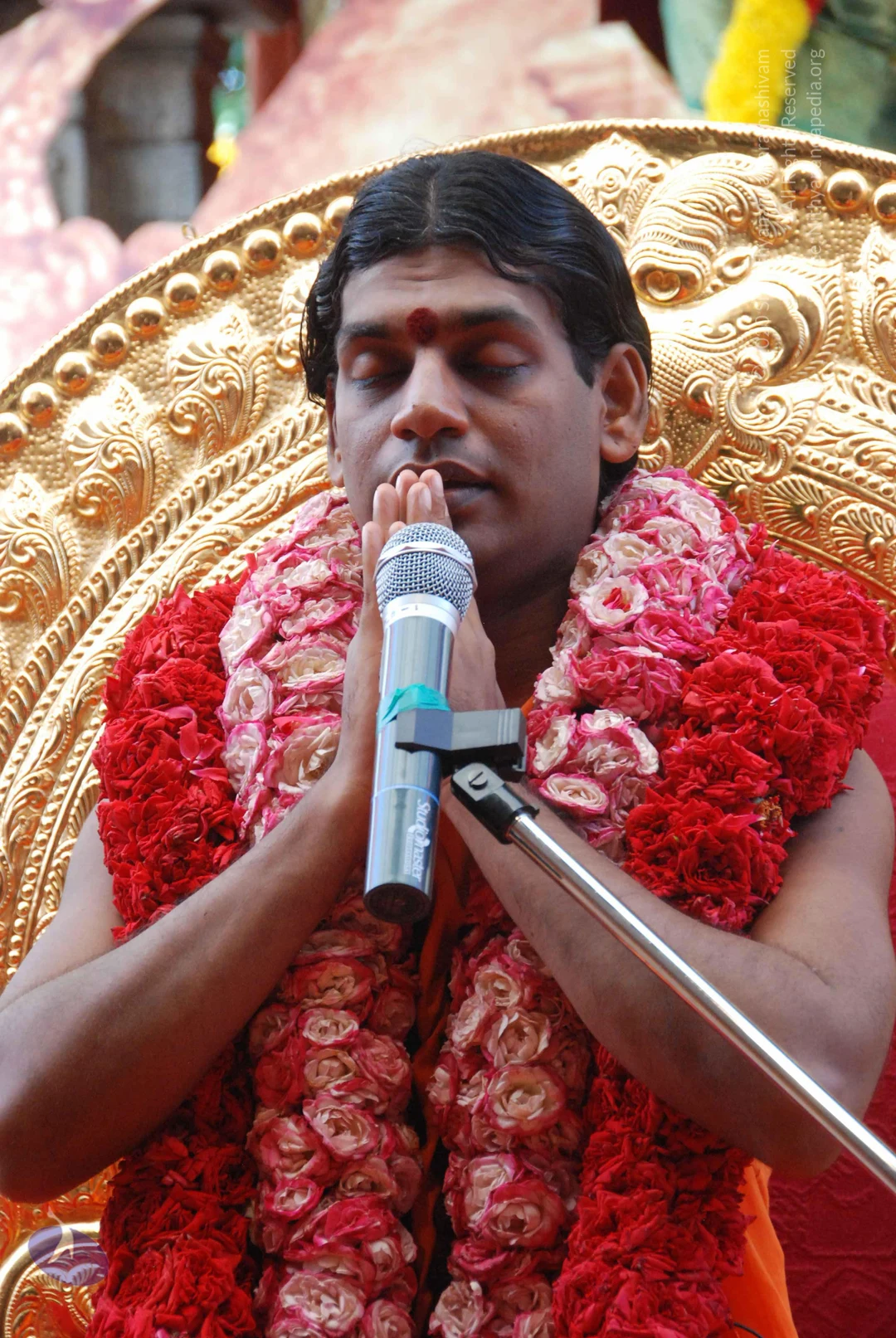
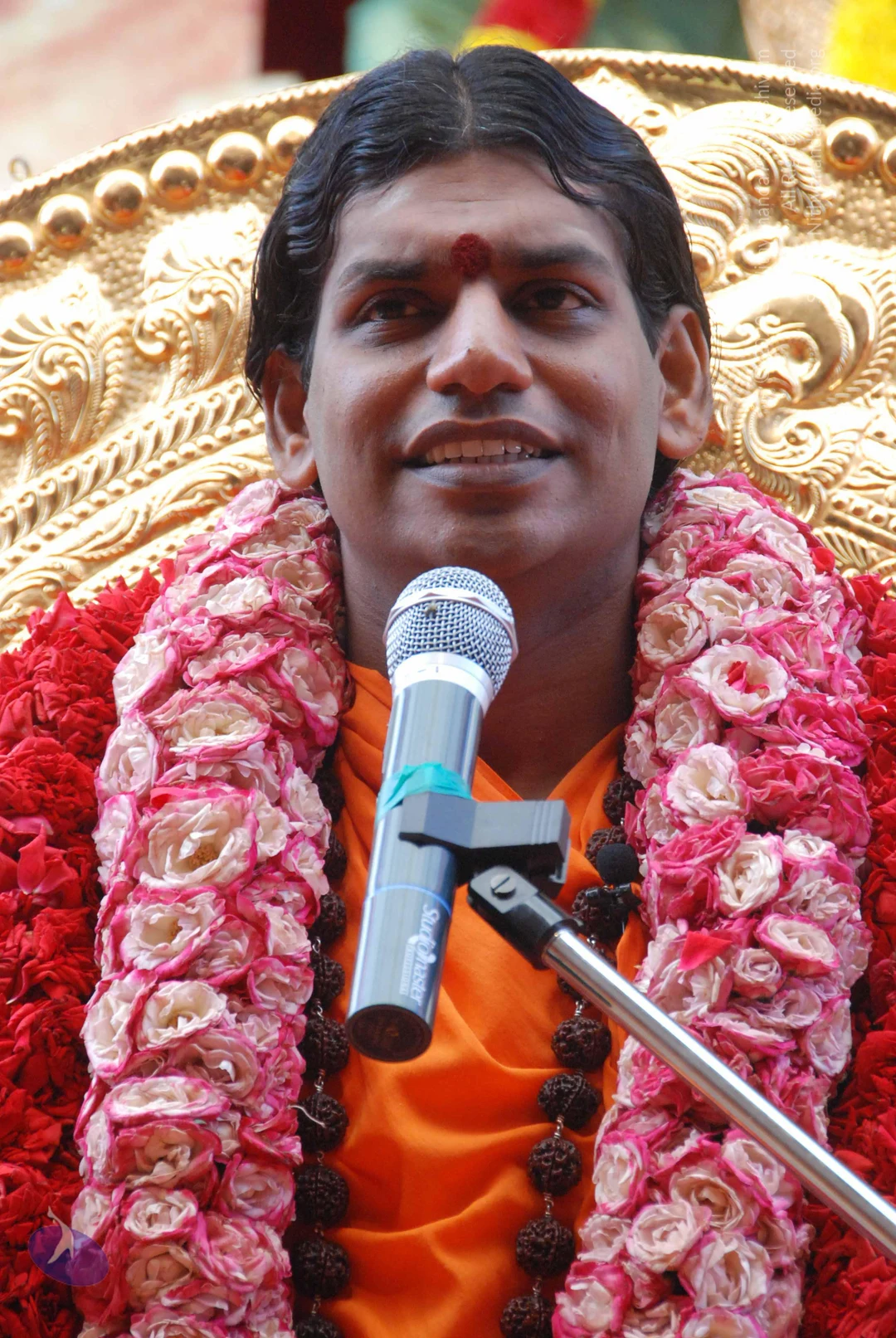
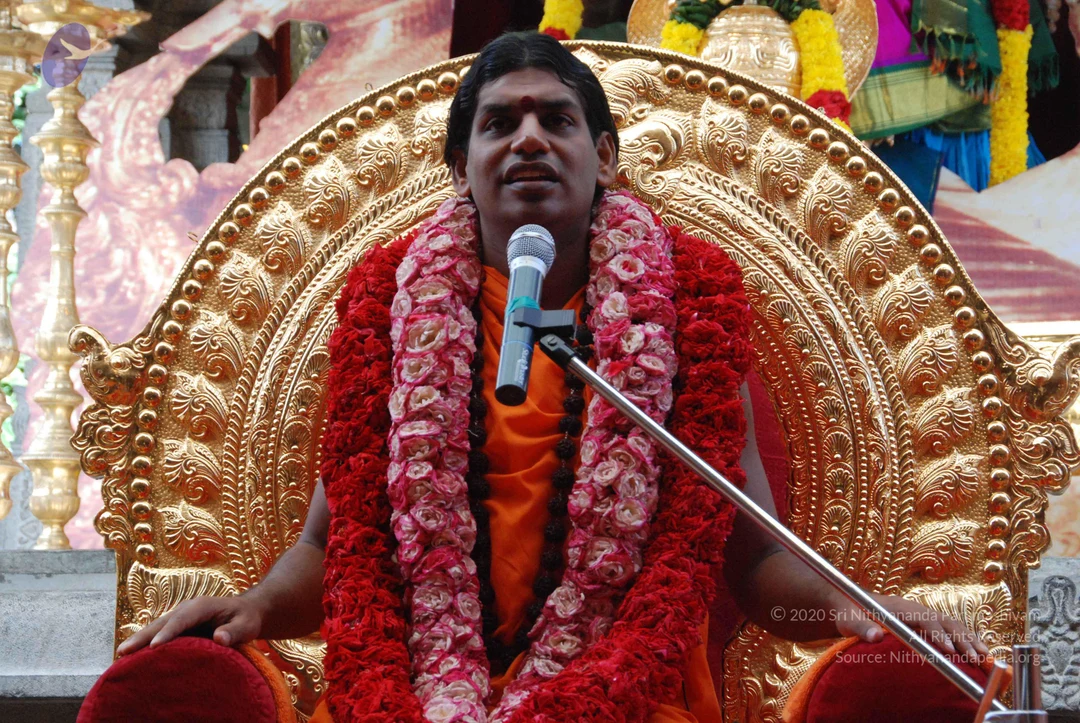
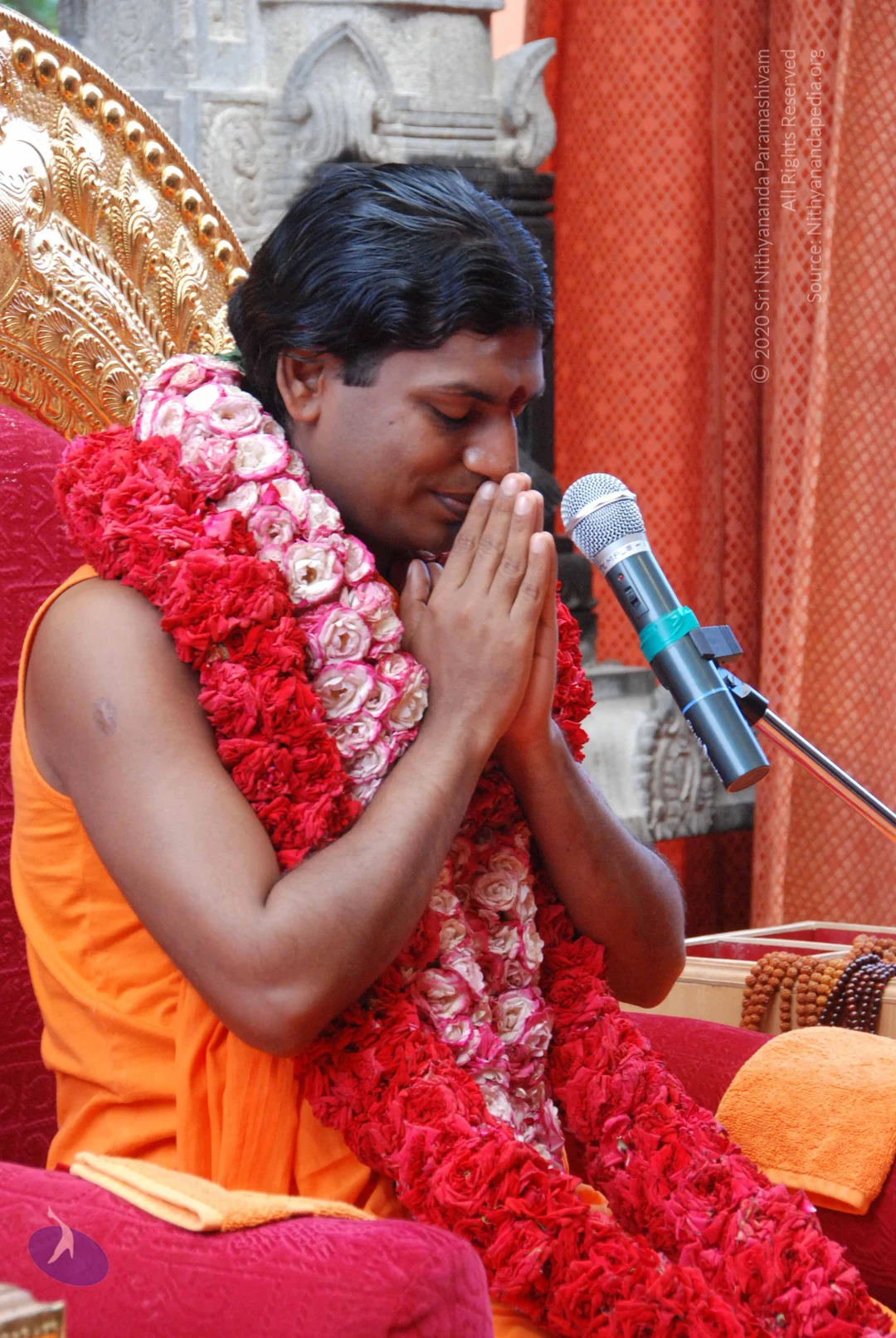
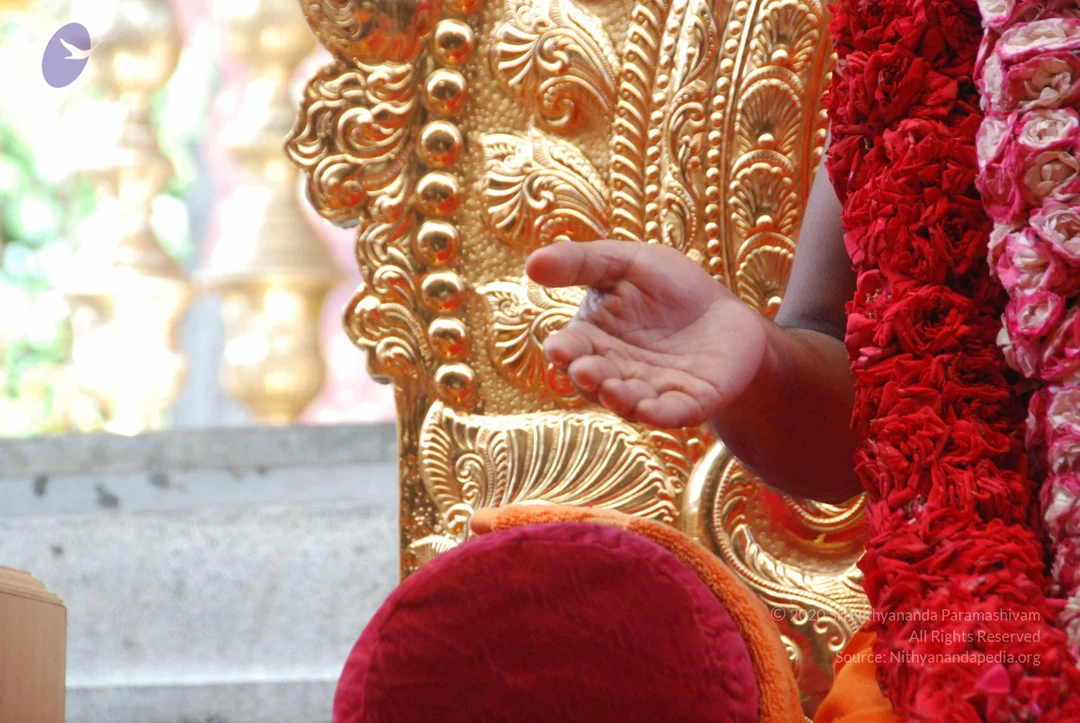
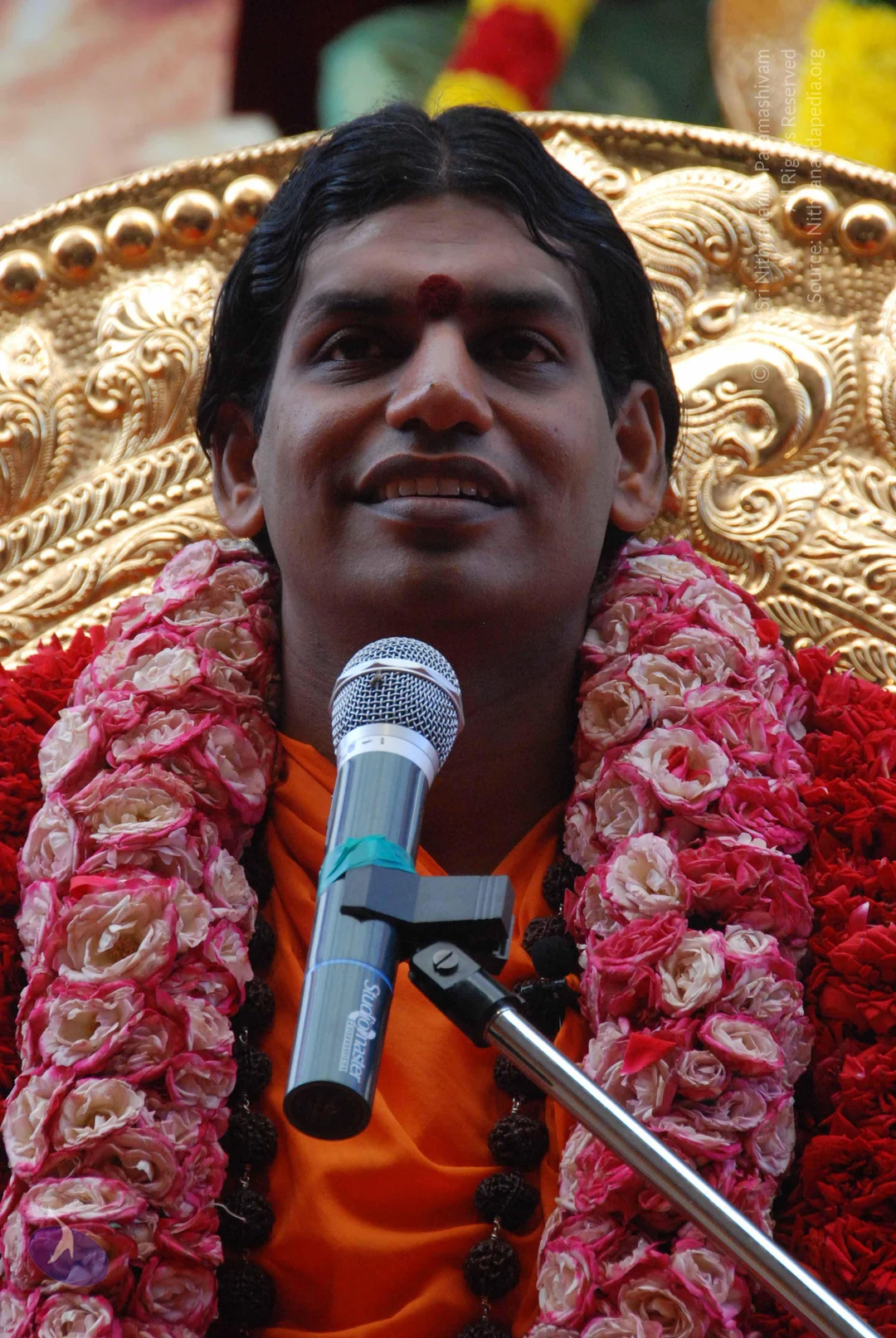
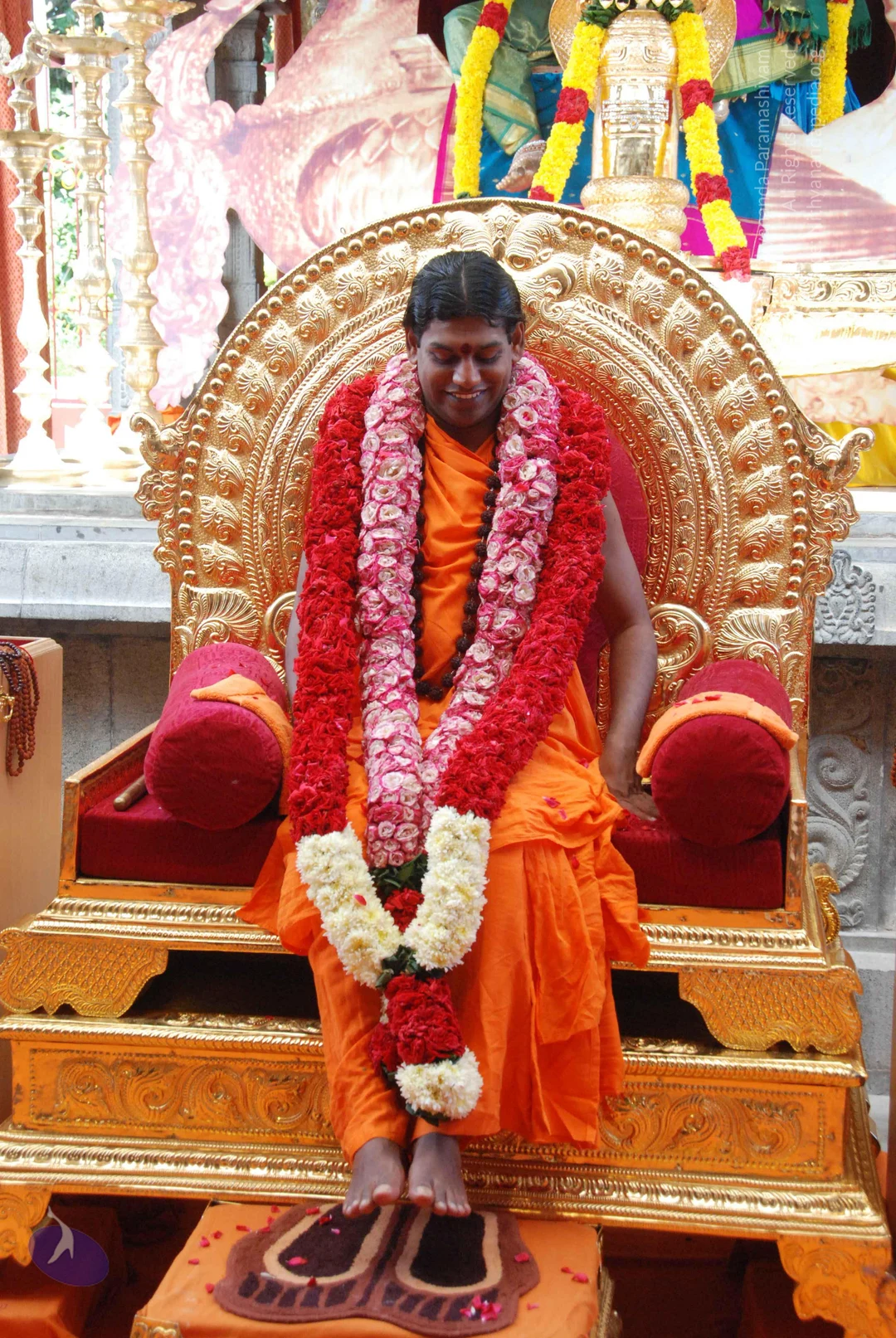
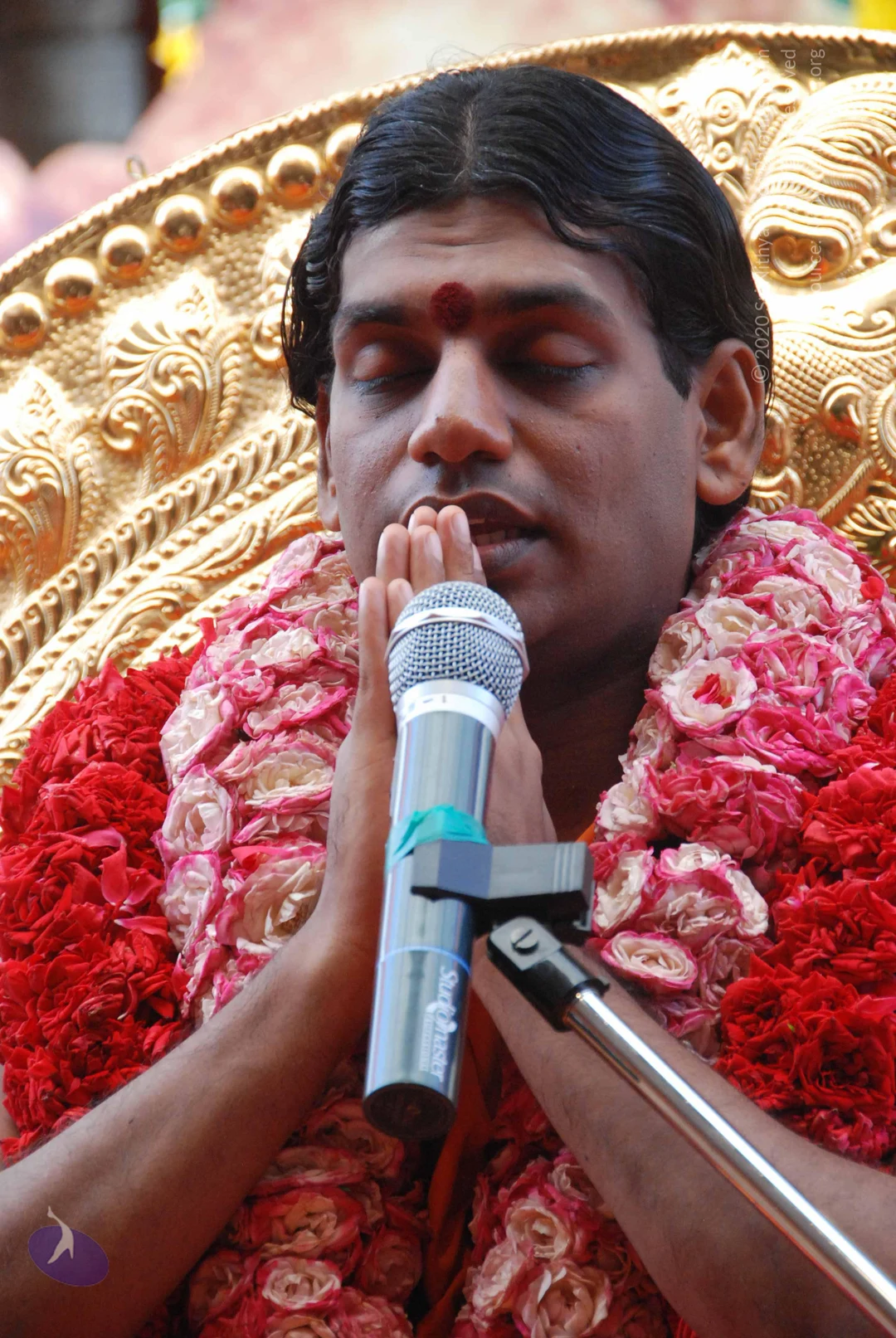
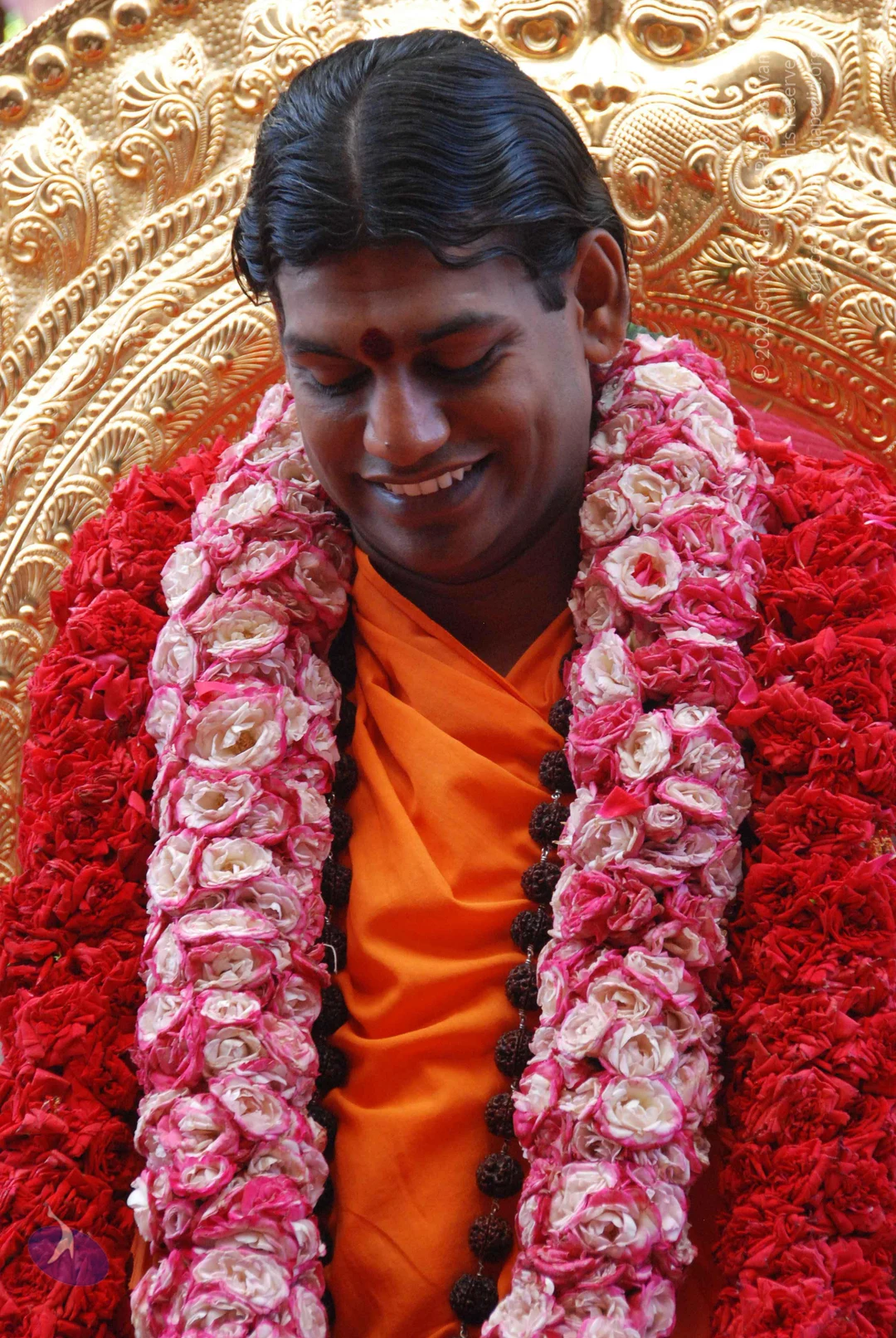
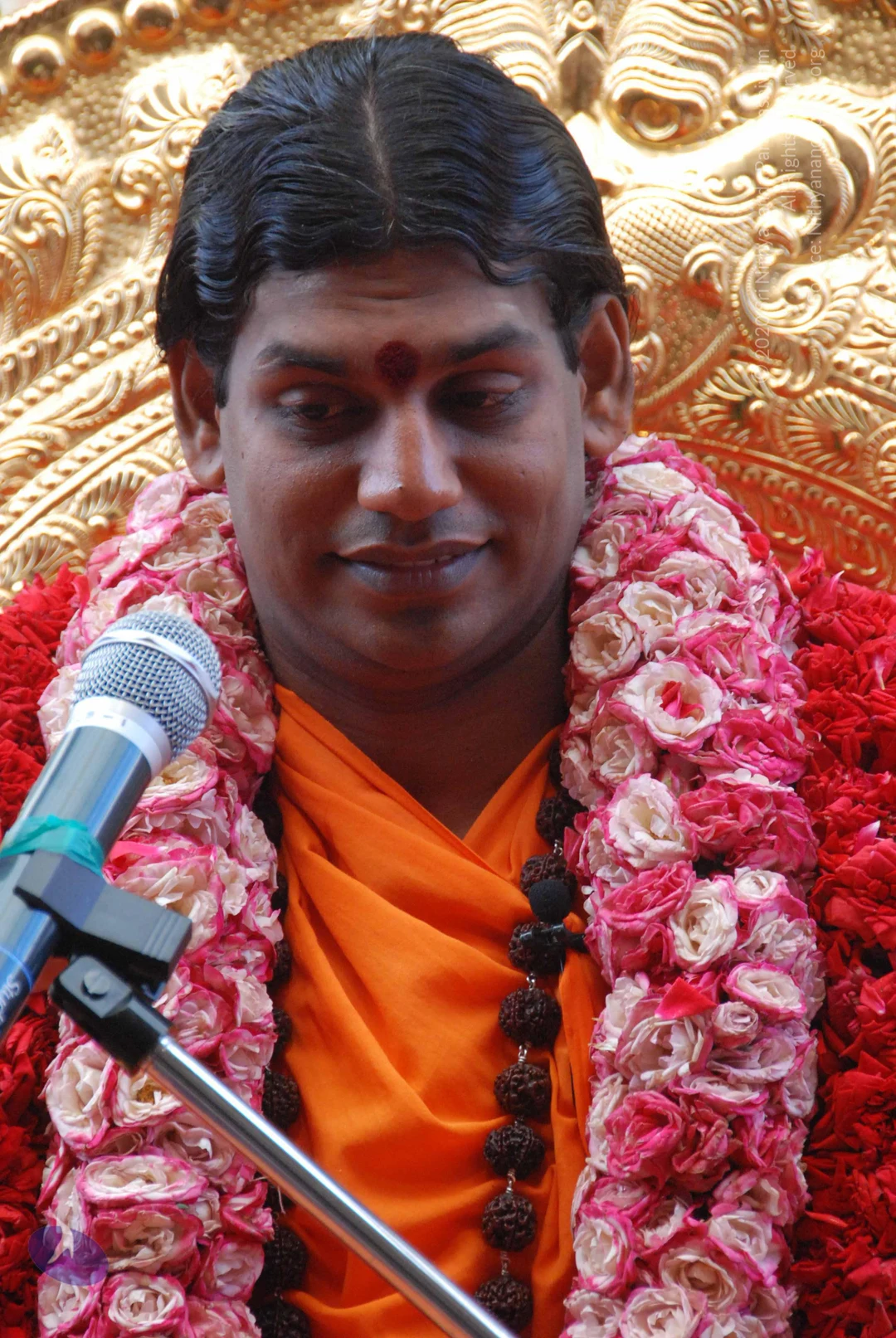
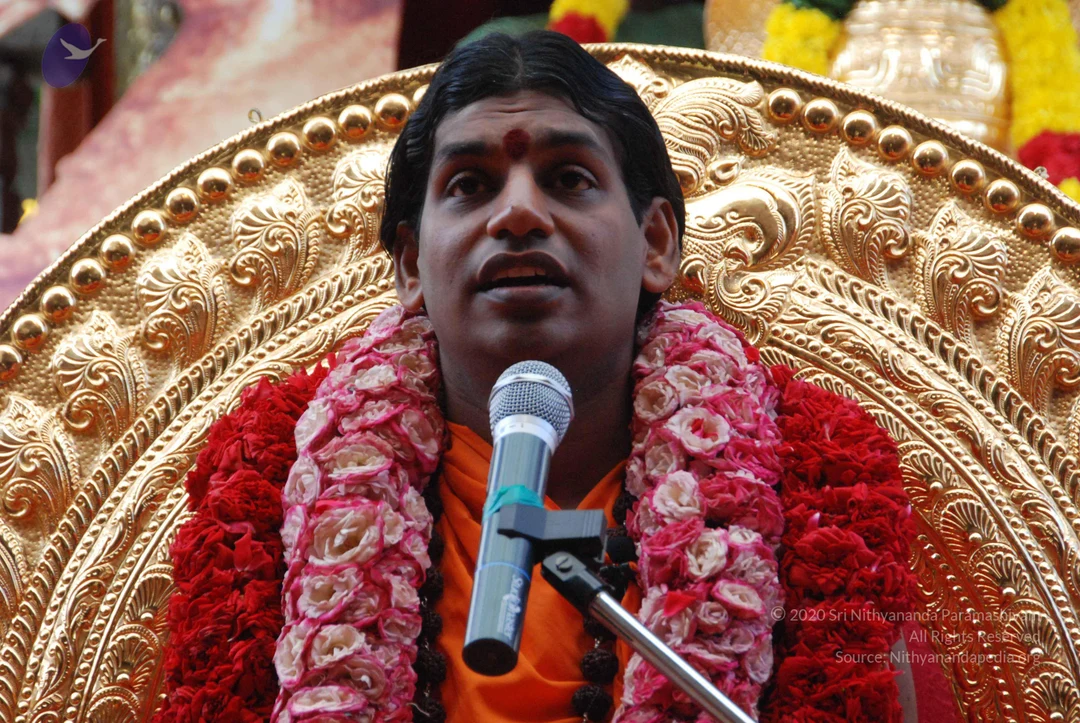
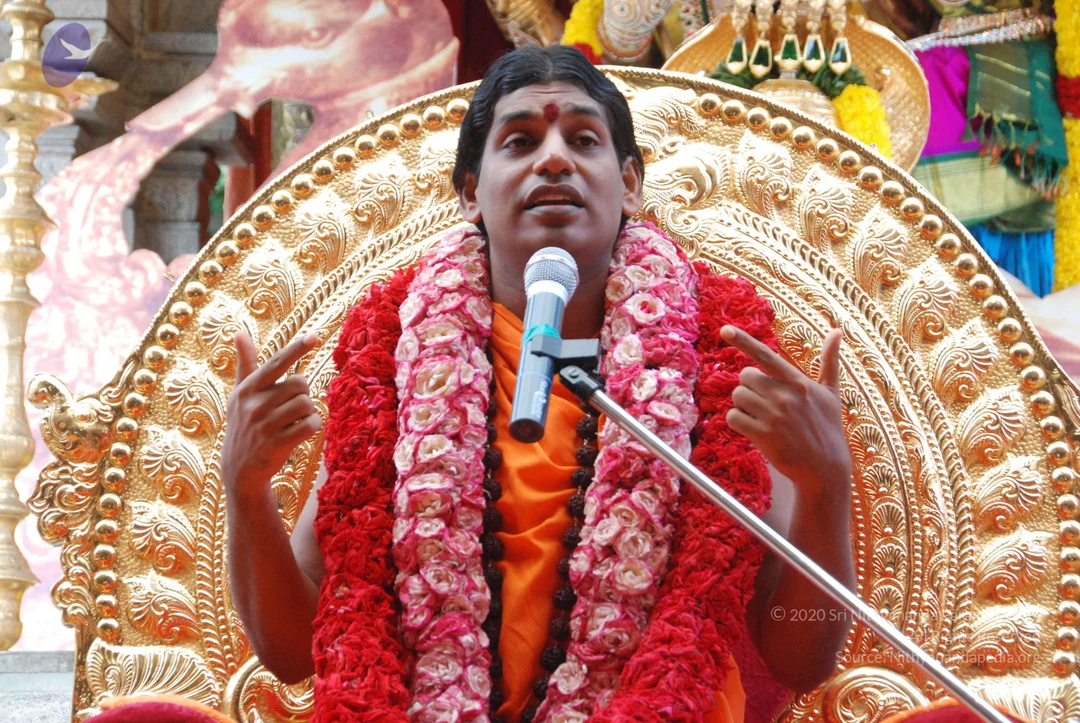
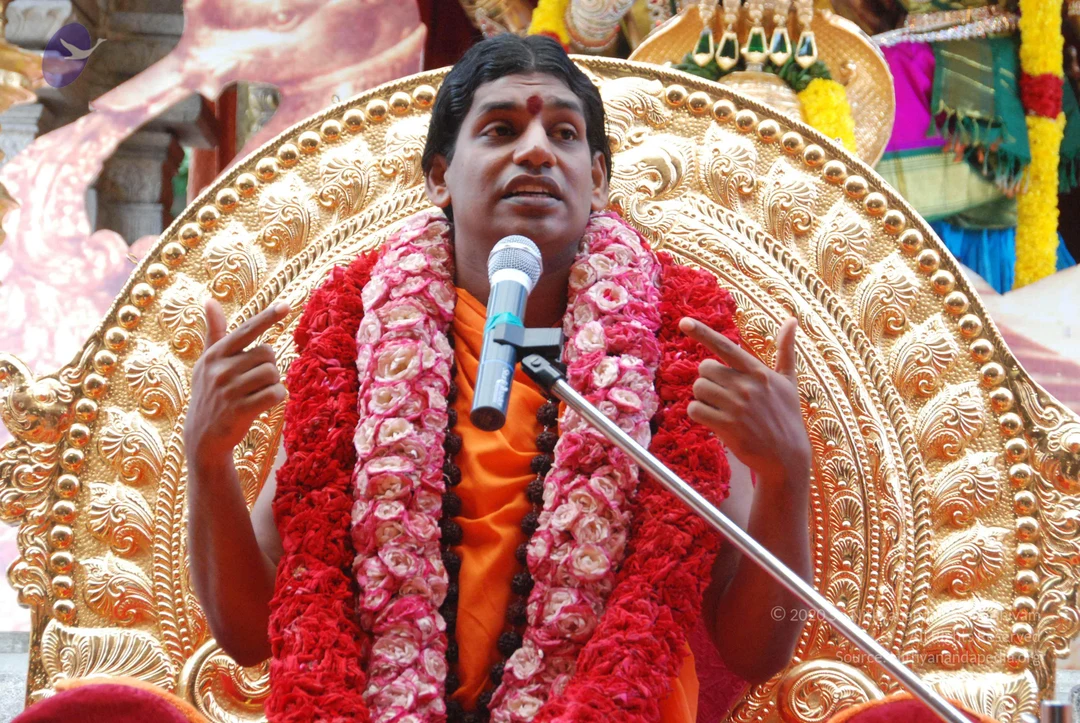
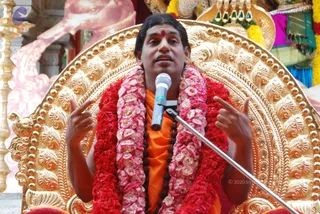
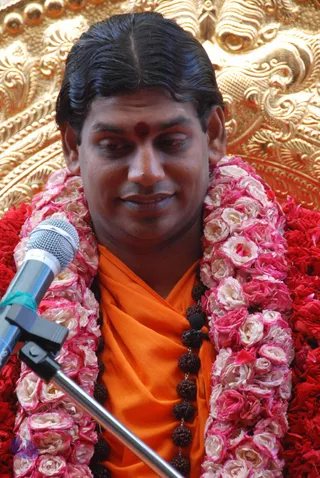
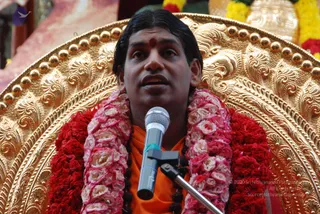
A man in saffron-orange robes sits on an ornate gold peetha throne with a rounded, repoussé back. He wears a large garland of red and pink roses around his neck and a red tilak on his forehead, and speaks into a silver microphone on a boom stand while gesturing with both hands, index fingers raised. Behind him are gold and green-yellow floral decorations and a pink painted backdrop.A seated man in an orange saffron cloth wrap, wearing a dark rudraksha mala and a large garland of pink and white roses, sits before a microphone on a stand. A red bindi mark sits on his forehead and his hair is swept back. Behind him is an ornate gold throne with carved scrollwork, and red rose petals cover the surface in front. He looks downward while speaking. The appearance-based label is a person, seated in a satsang setting.A man in an orange saffron robe sits before an ornate gold throne with carved scrollwork and beaded rims, speaking into a silver microphone on a stand. He wears a red kumkum mark on his forehead and a double garland of pink and white roses over red flower garlands. Behind him, gold and yellow floral decorations are visible. The scene suggests a seated public talk or satsang. The a person label is withheld because the visible cues are only partly distinctive; the man's appearance is not clearly established.

Photos of the day

View all 483 photos

483 distinct dated photos. Source gallery sets may overlap.

01

Pada-Puja-Morning-Message-Darshan

4 dated photos in previewSource gallery
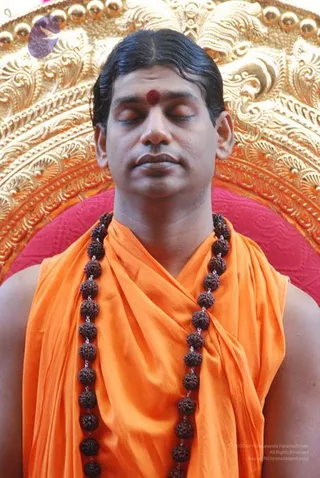
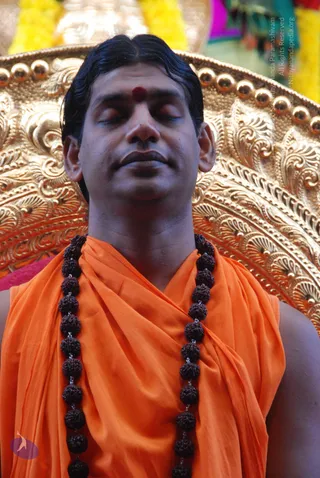
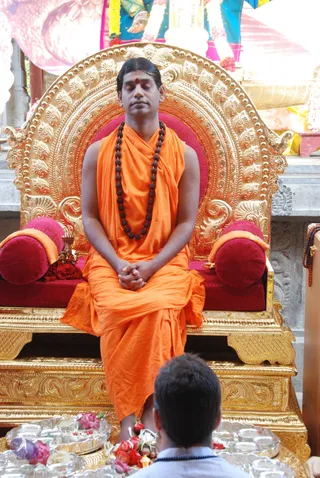
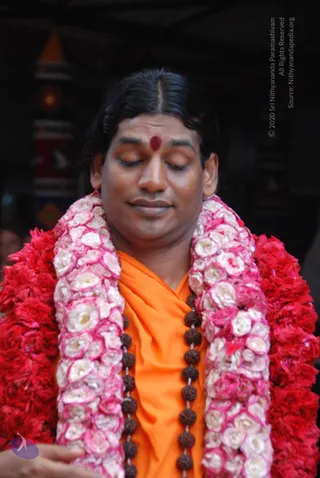
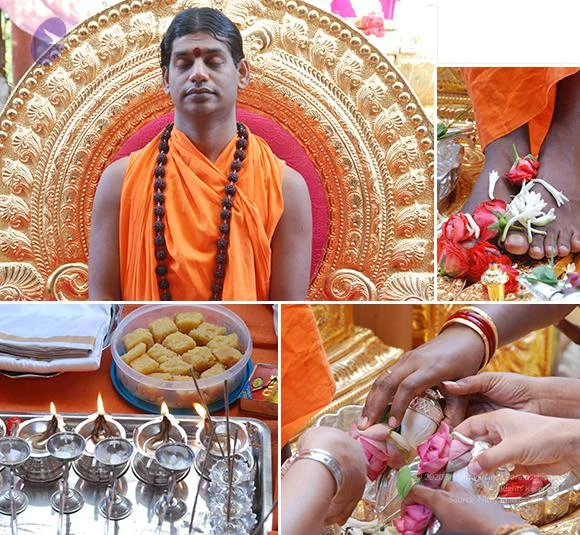
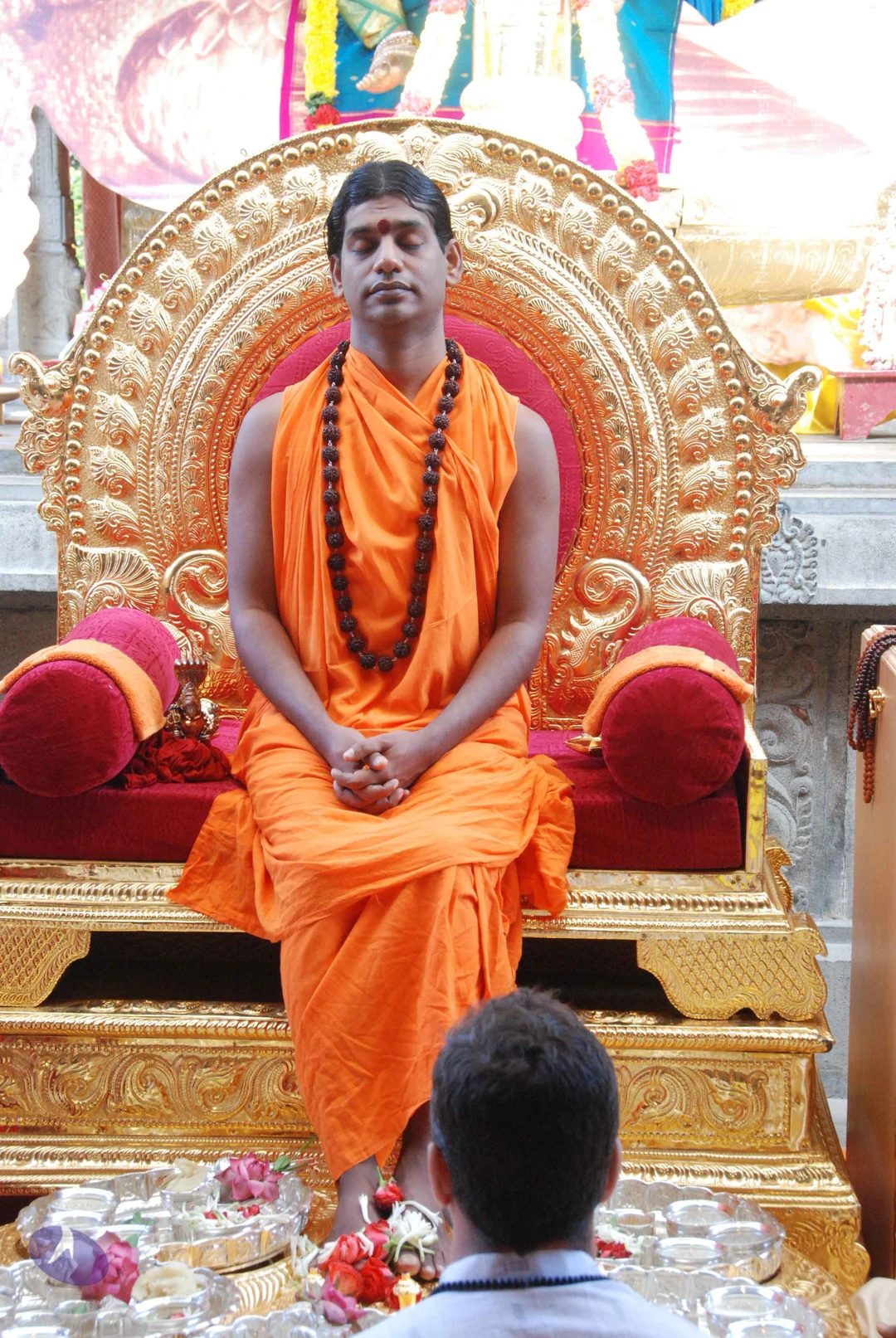
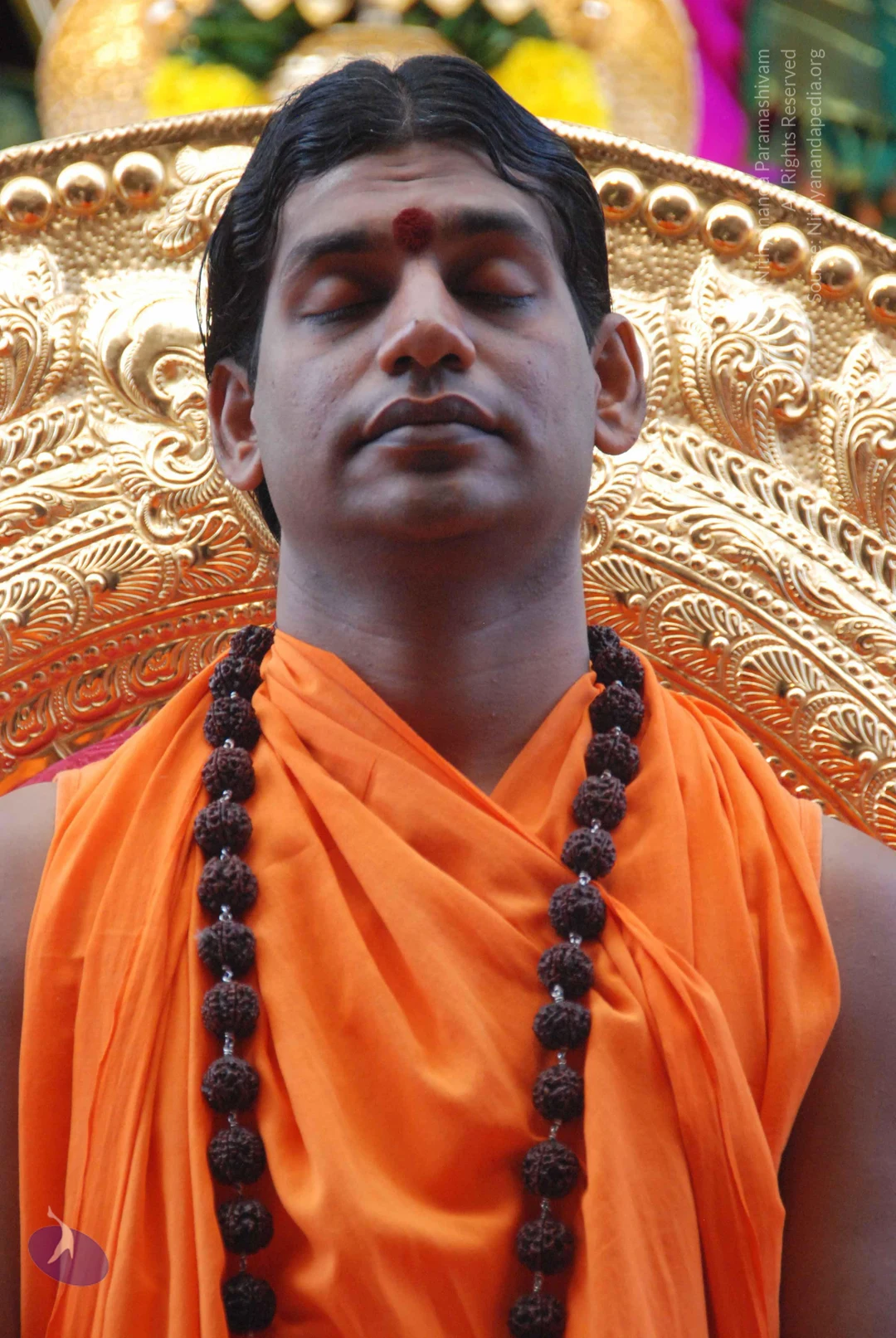
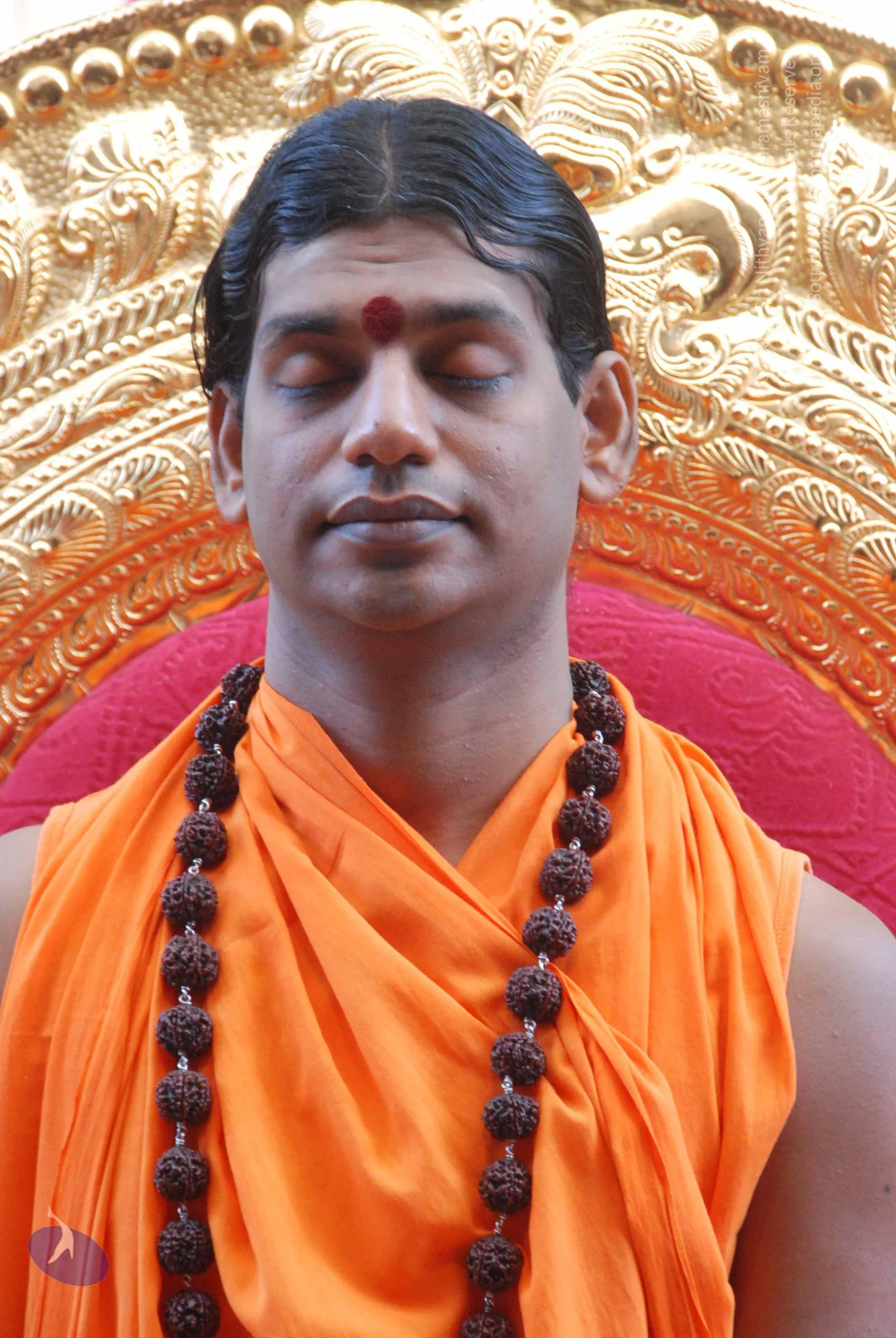
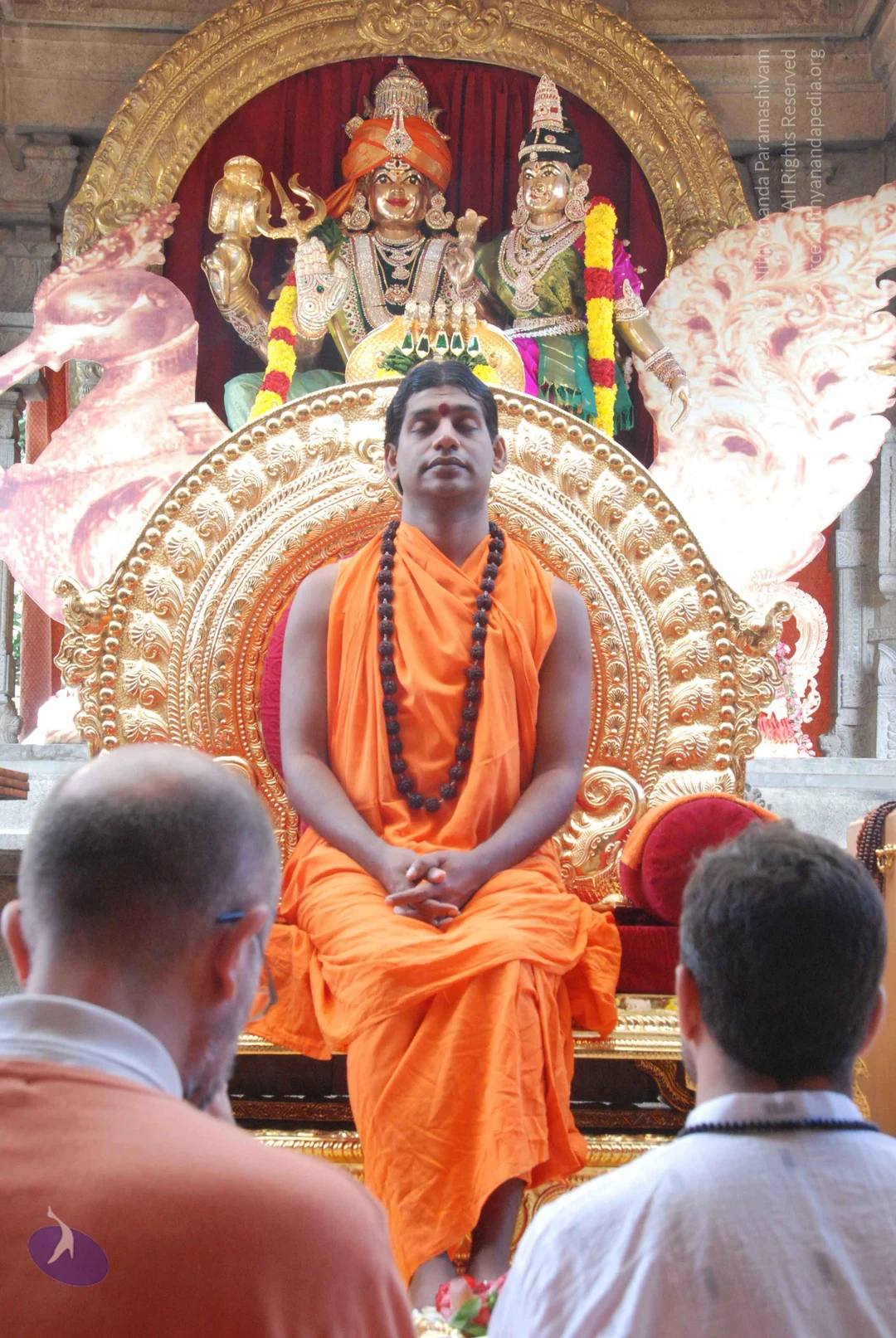
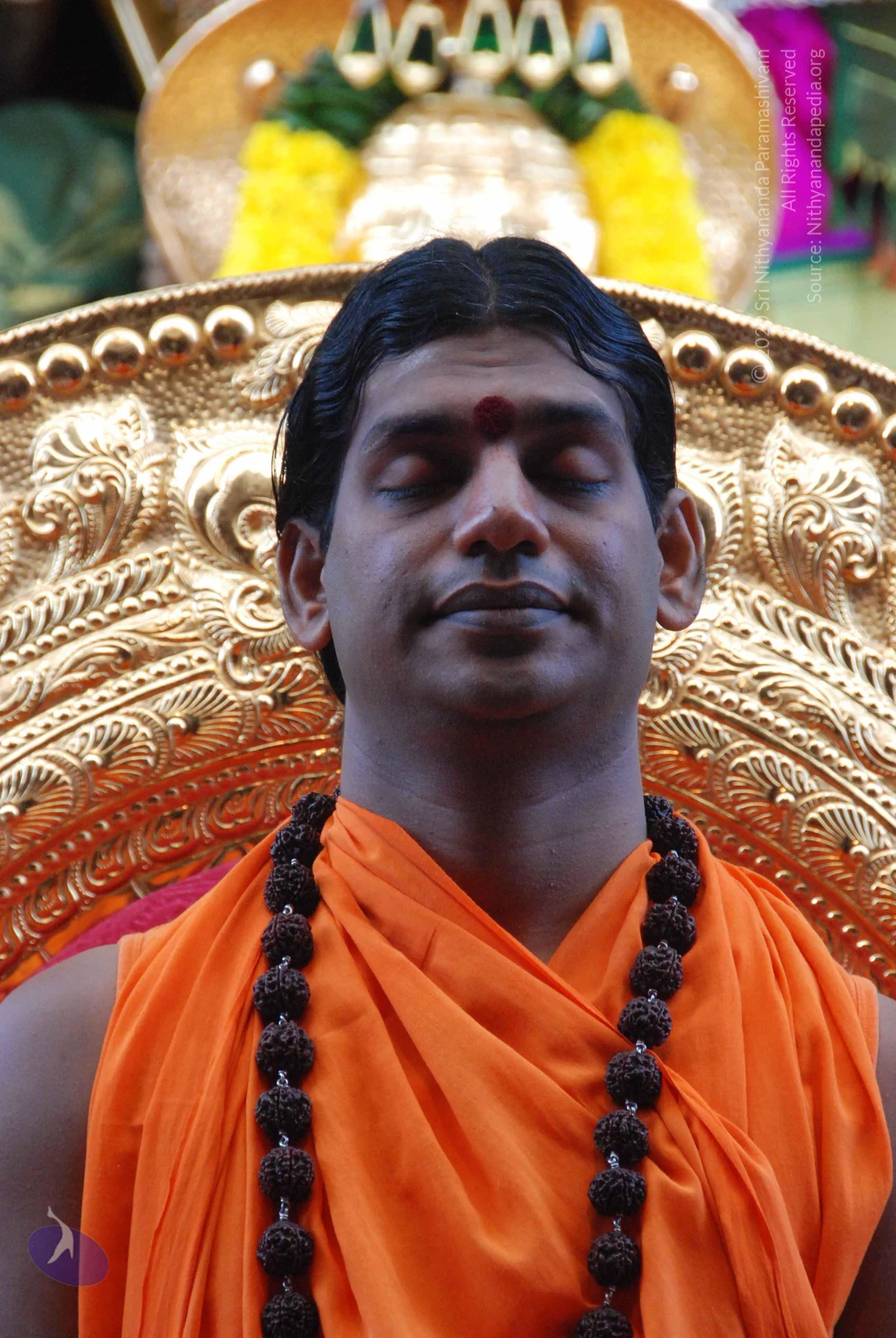
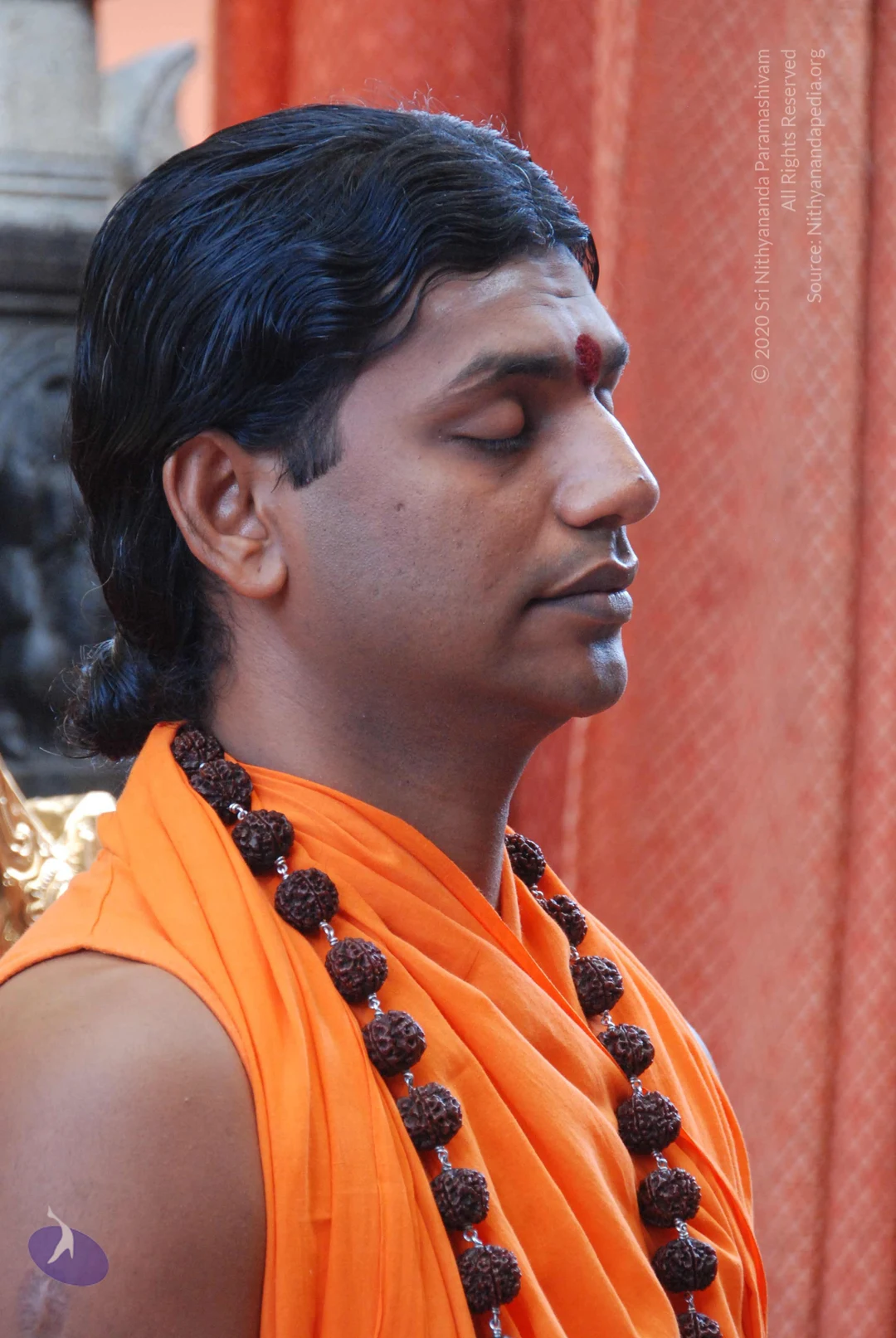
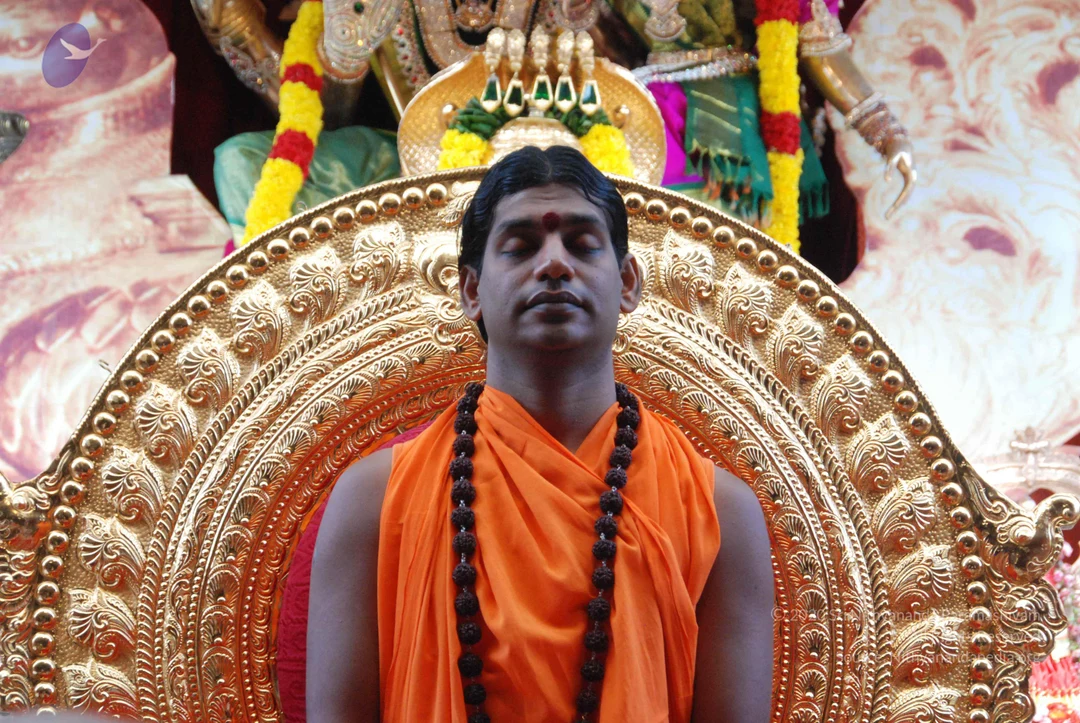
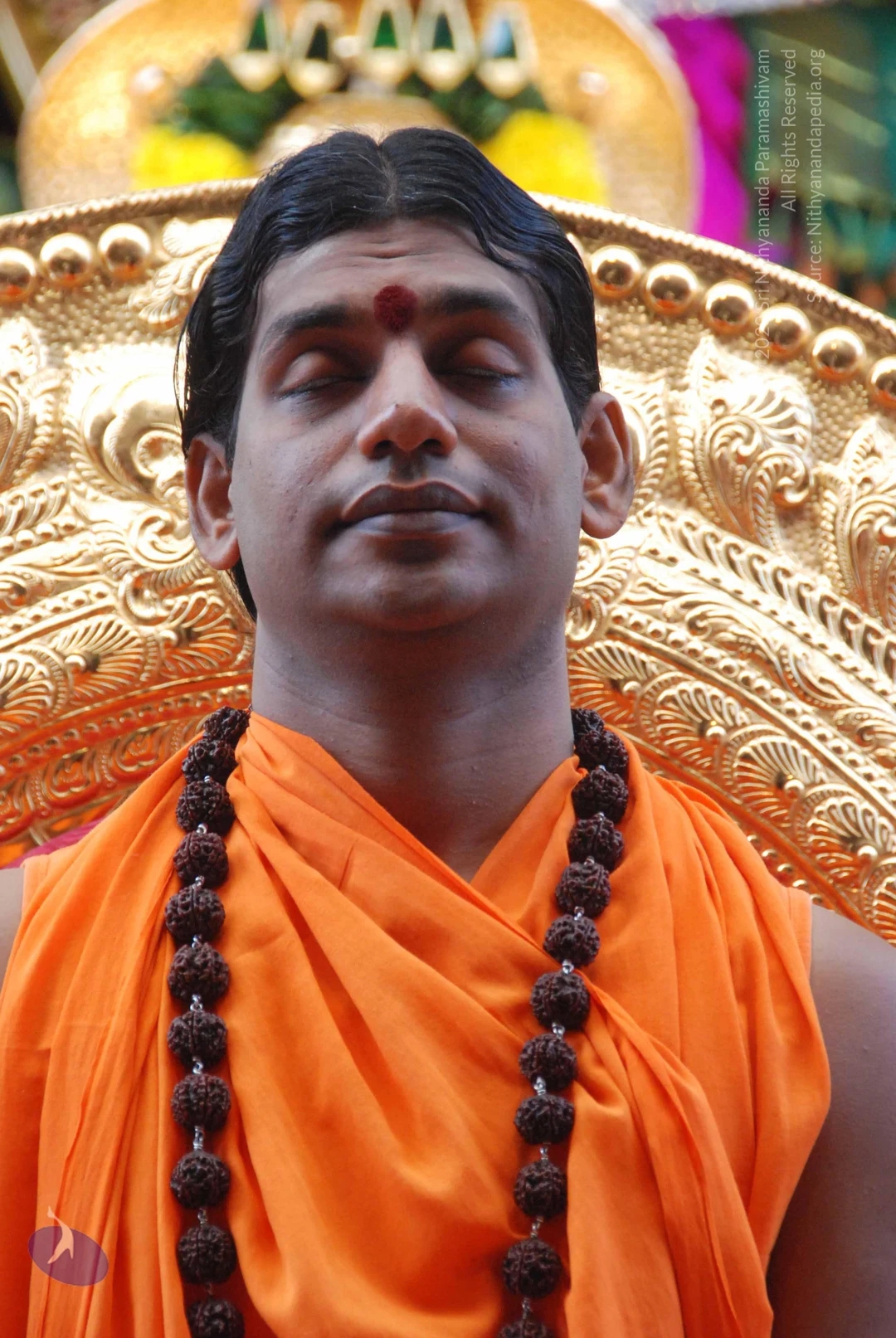
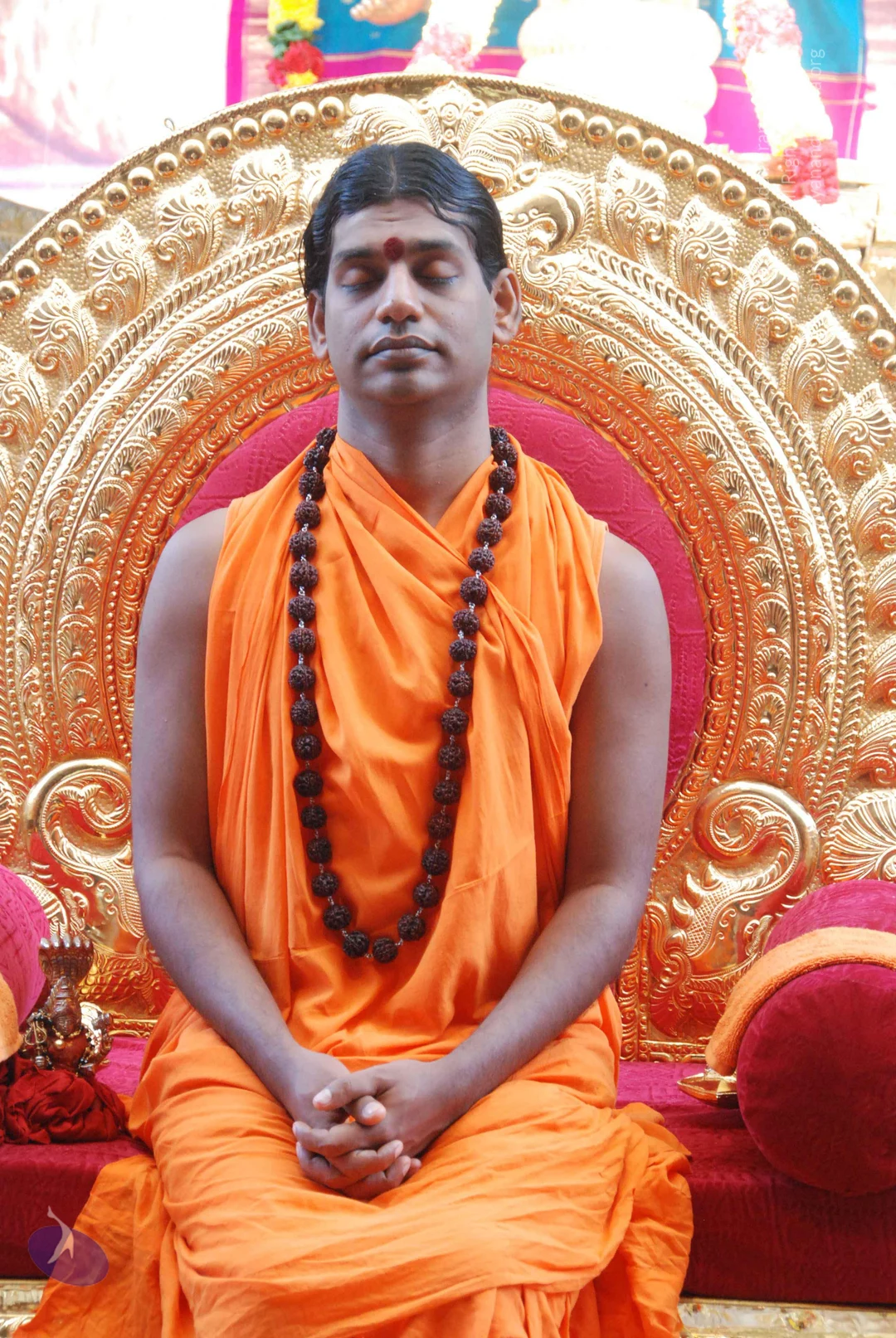
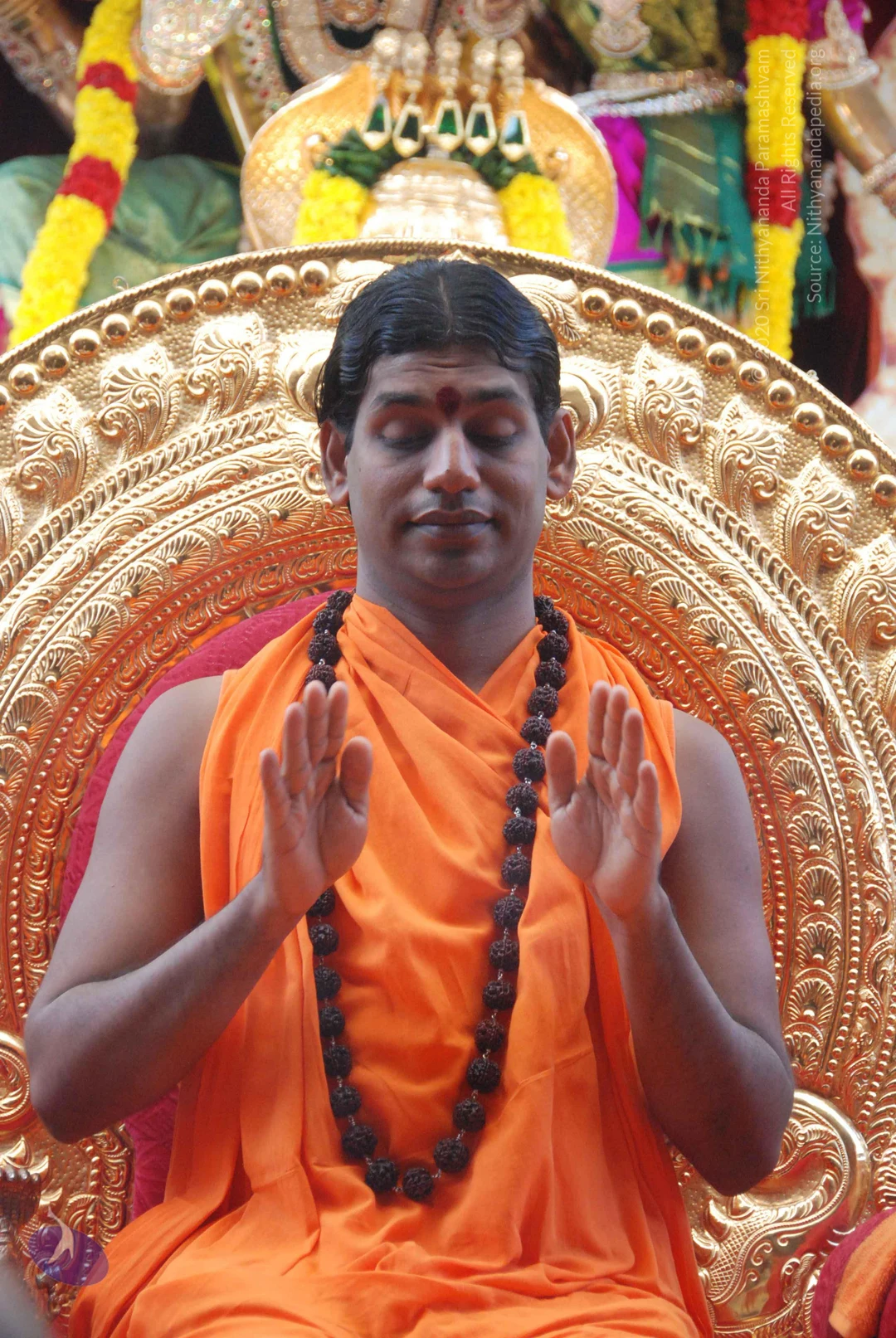
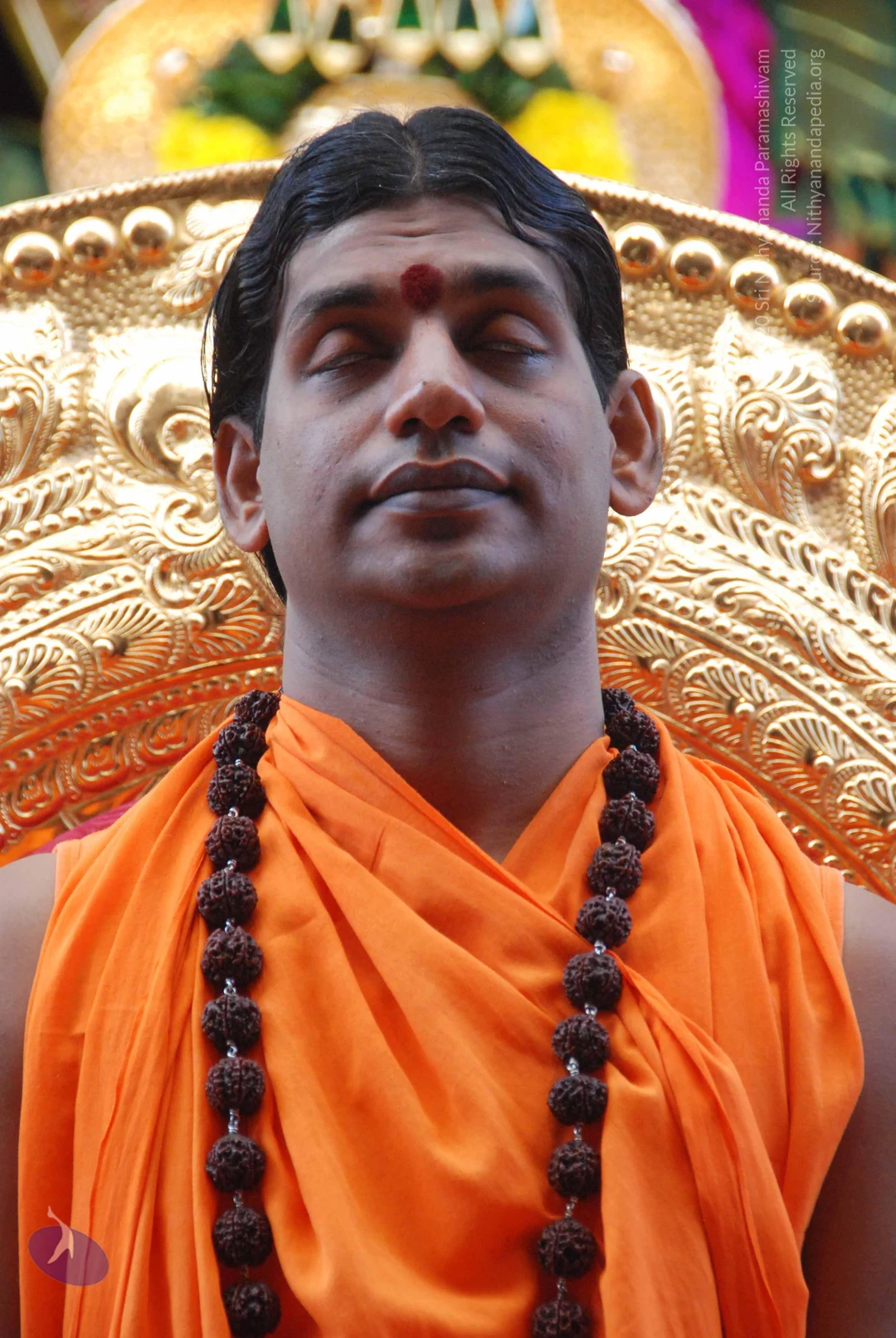
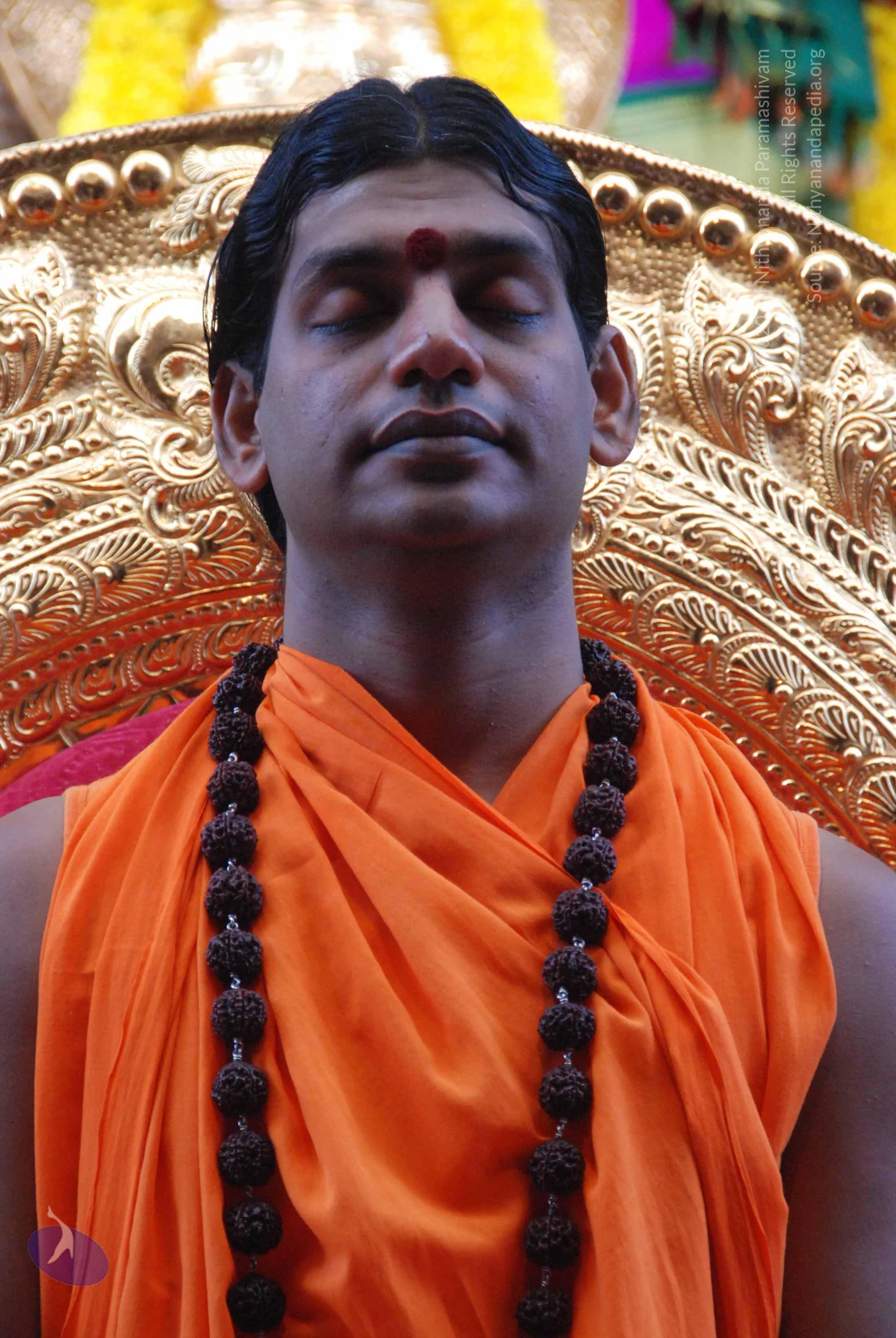
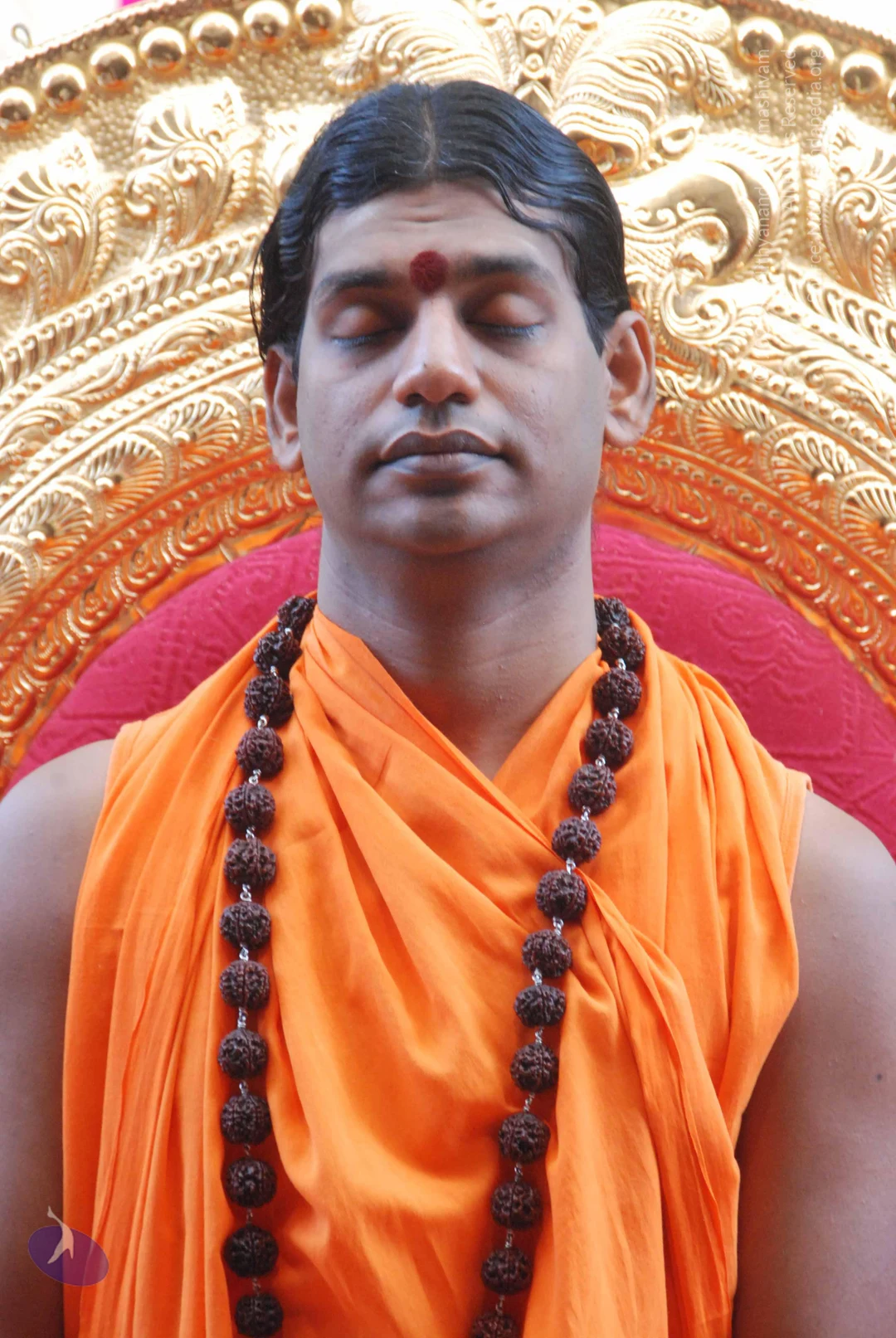
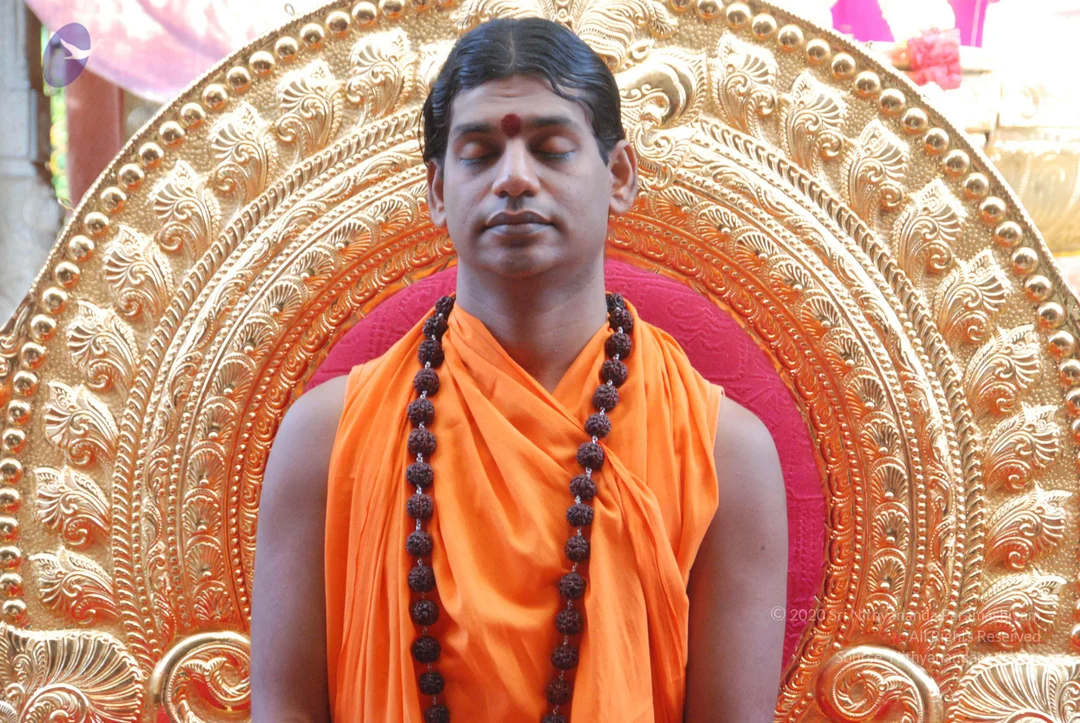
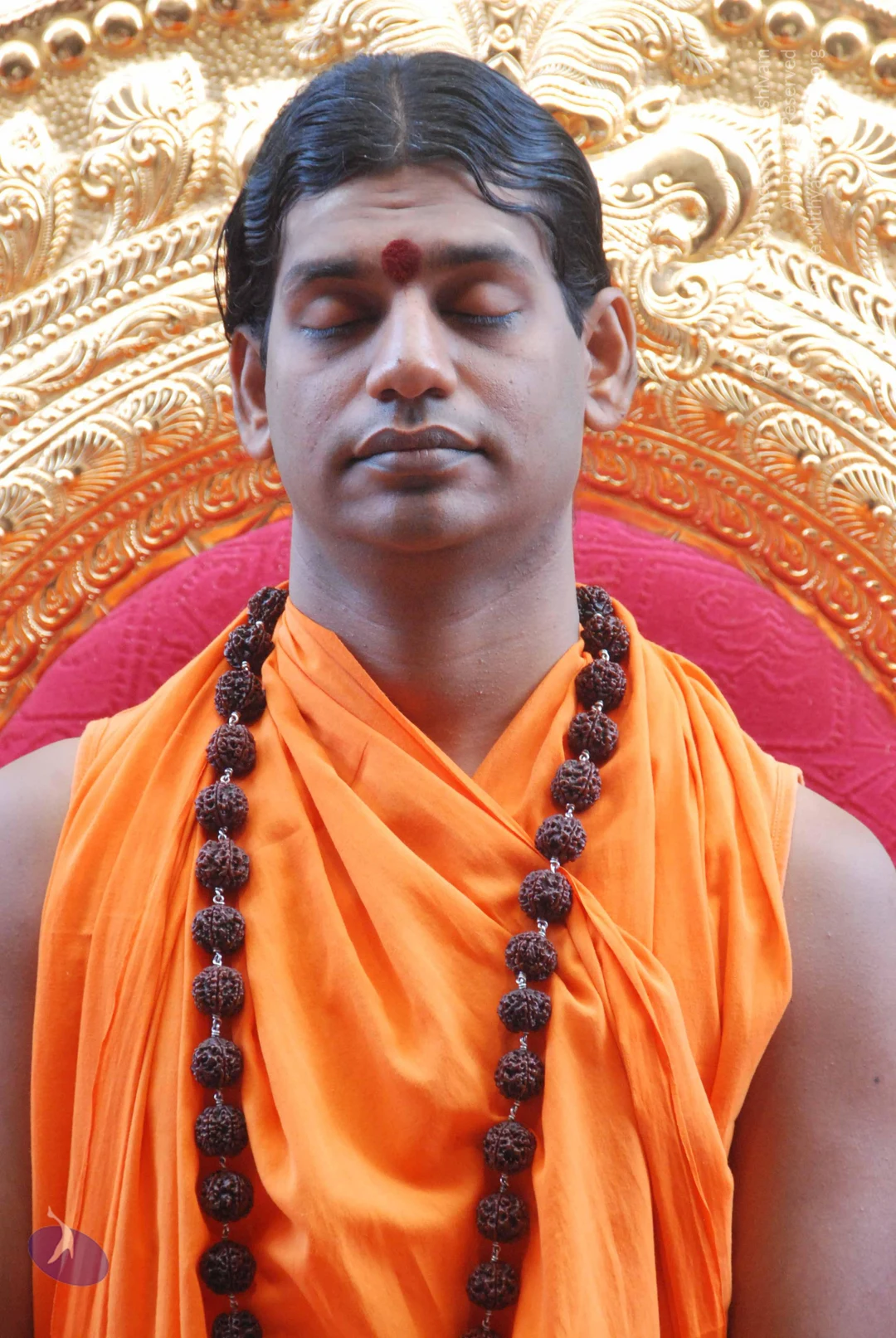
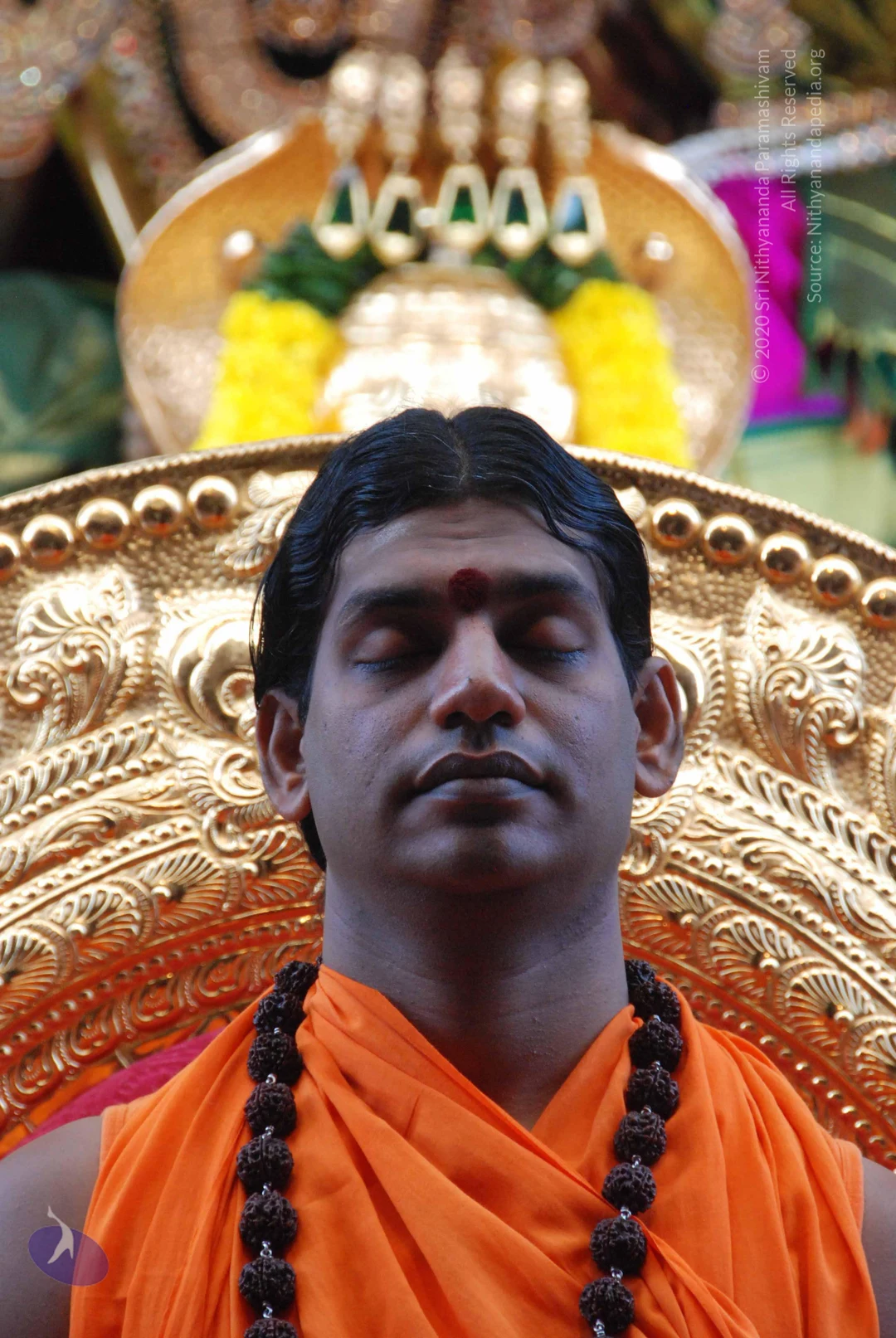
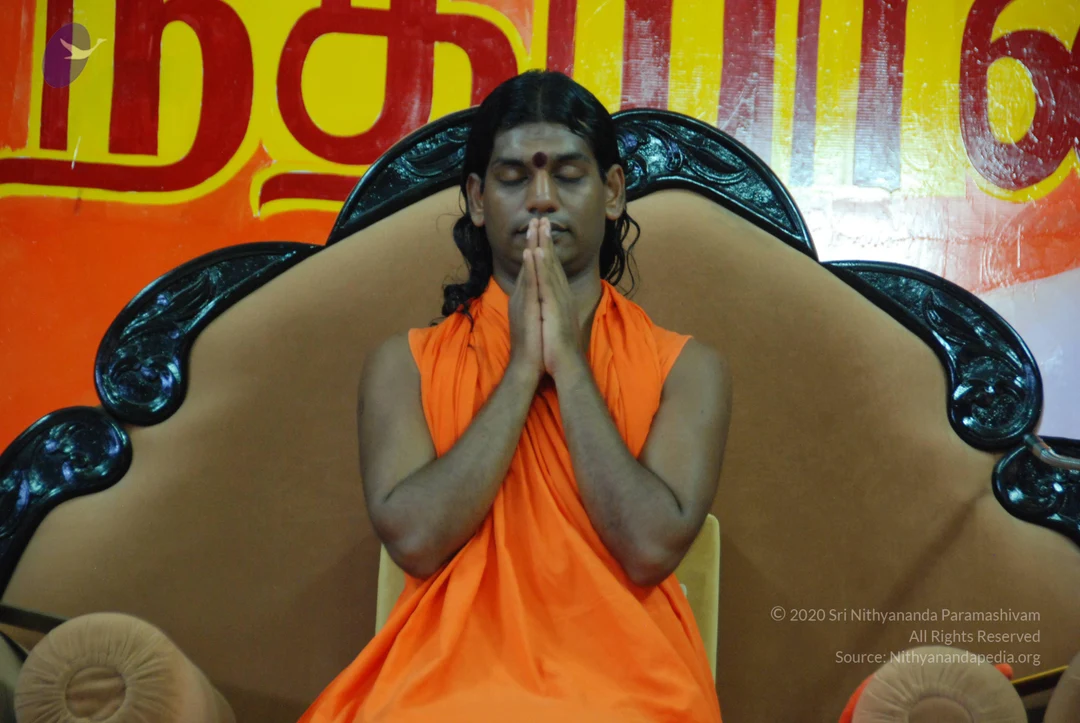
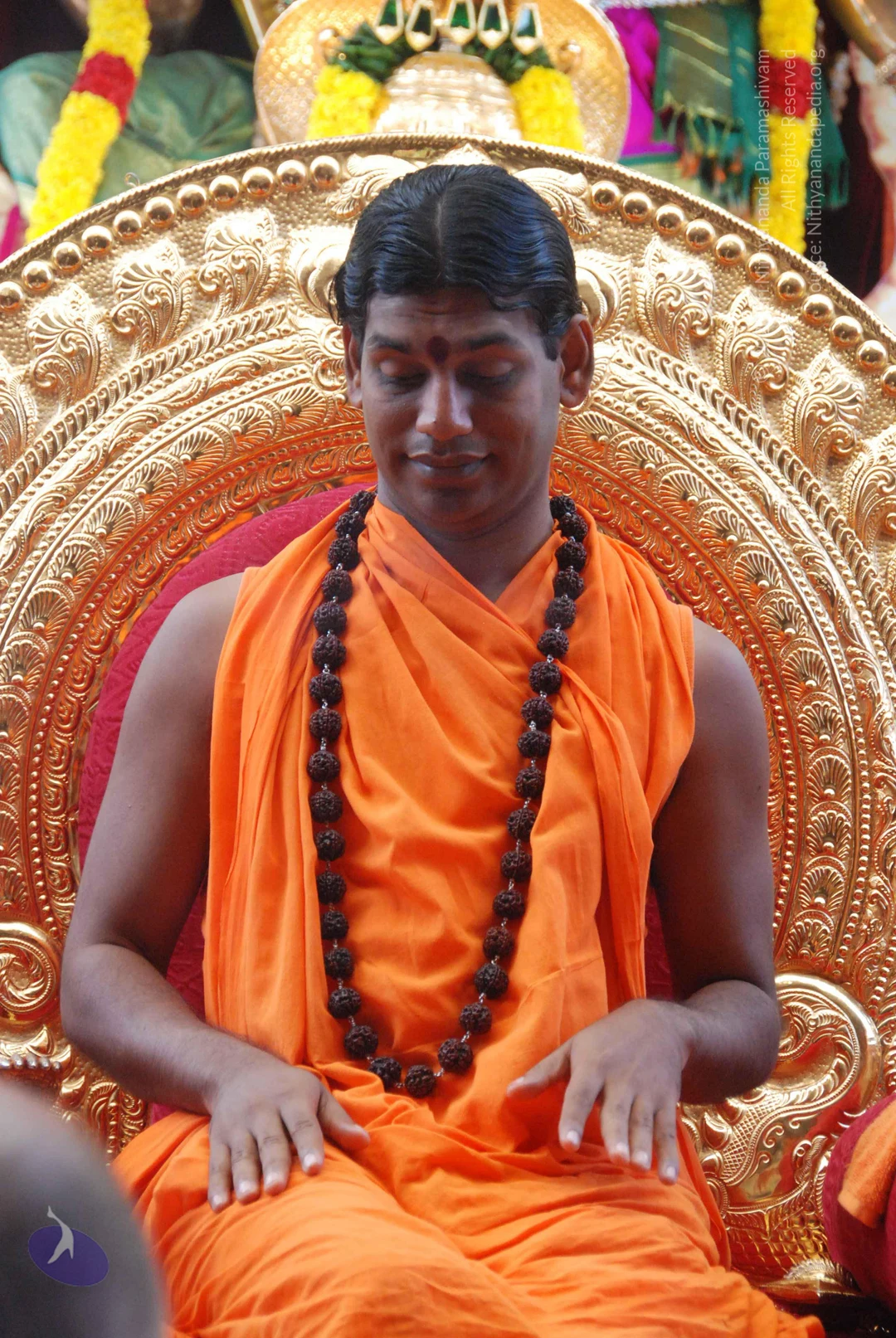
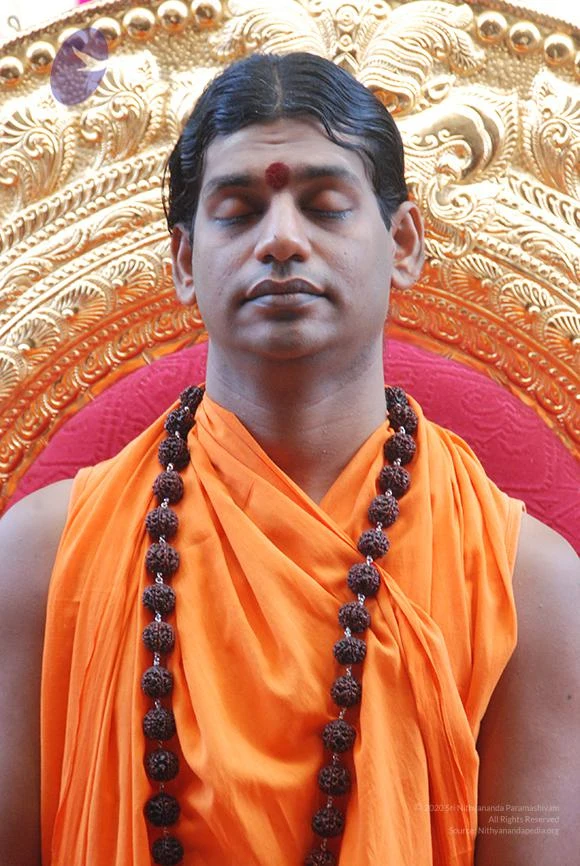
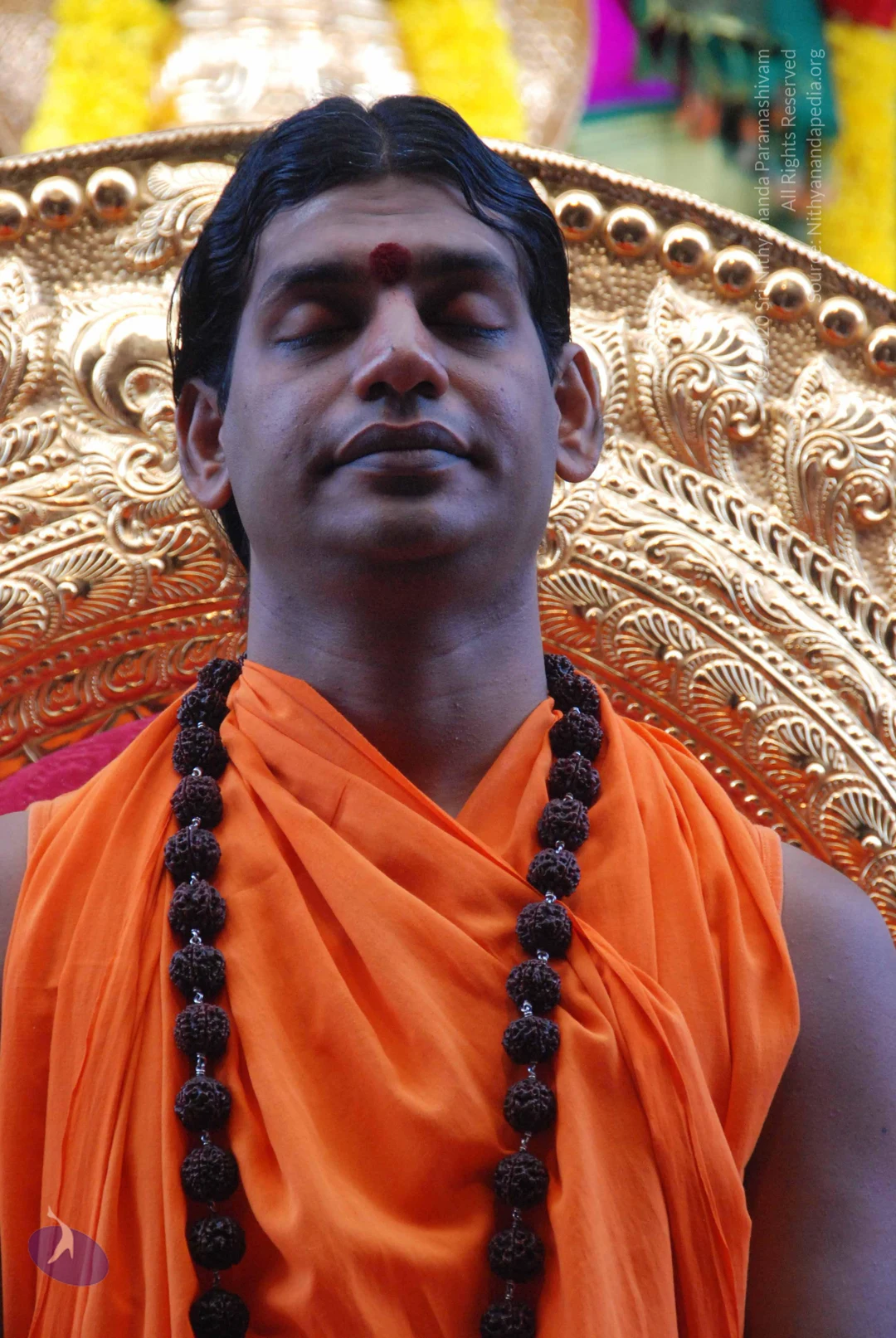
A close frontal photo of a man with eyes closed in calm meditation, seated before an ornate gold carved backdrop with a red cushion. He wears a sleeveless orange saffron wrap draped over the shoulders and a long strand of dark rudraksha beads reaching the chest, with a red kumkum mark on the forehead and short dark hair swept back. Single person.
02

01-Morning-Satsang-and-Darshan

57 dated photos in previewSource gallery
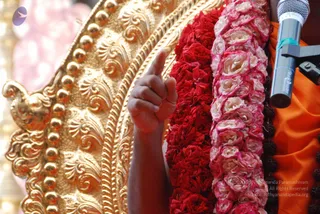
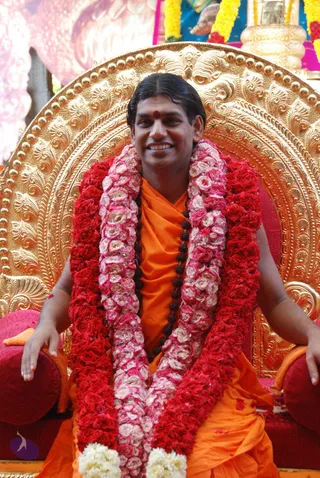
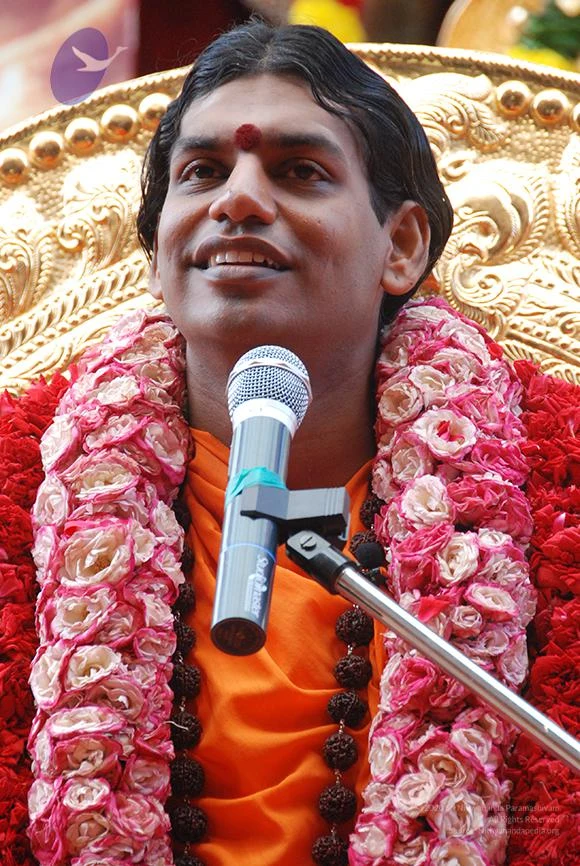
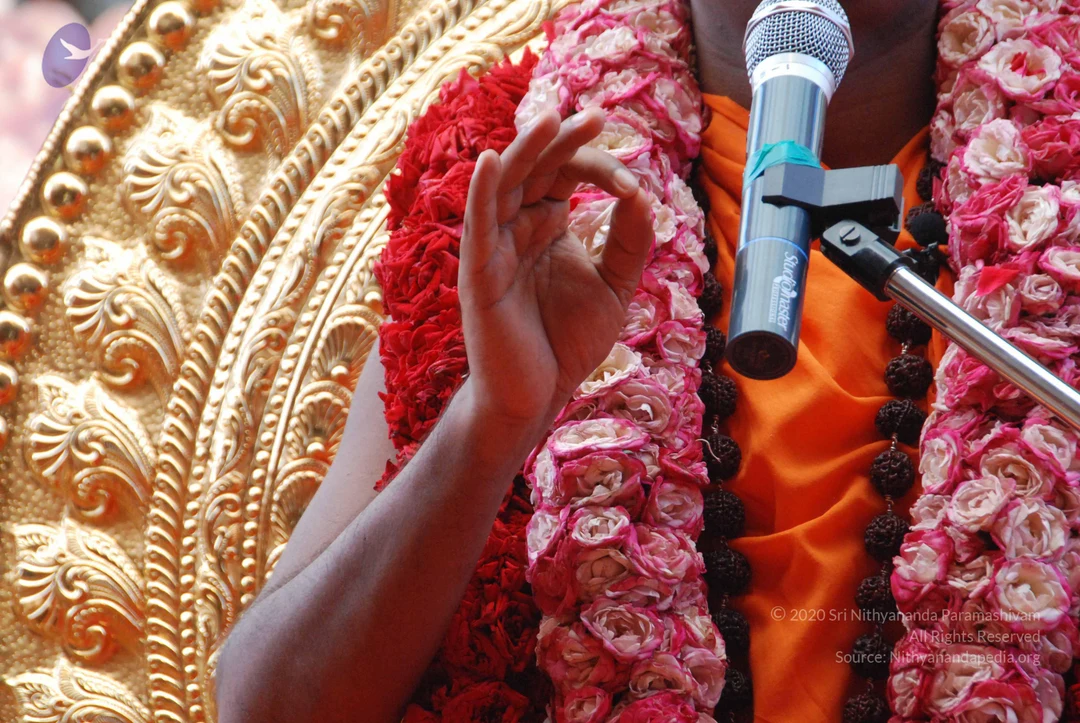
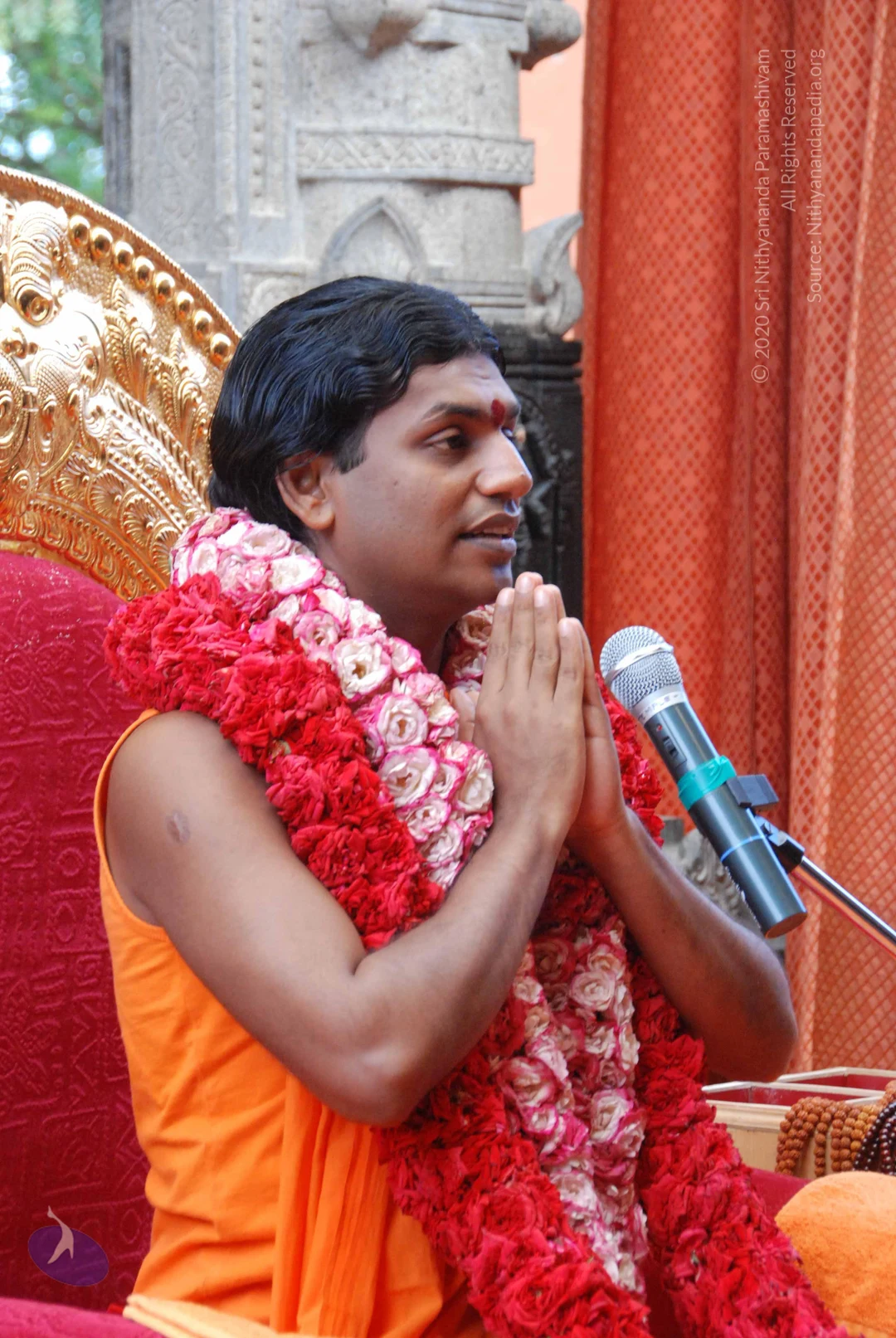
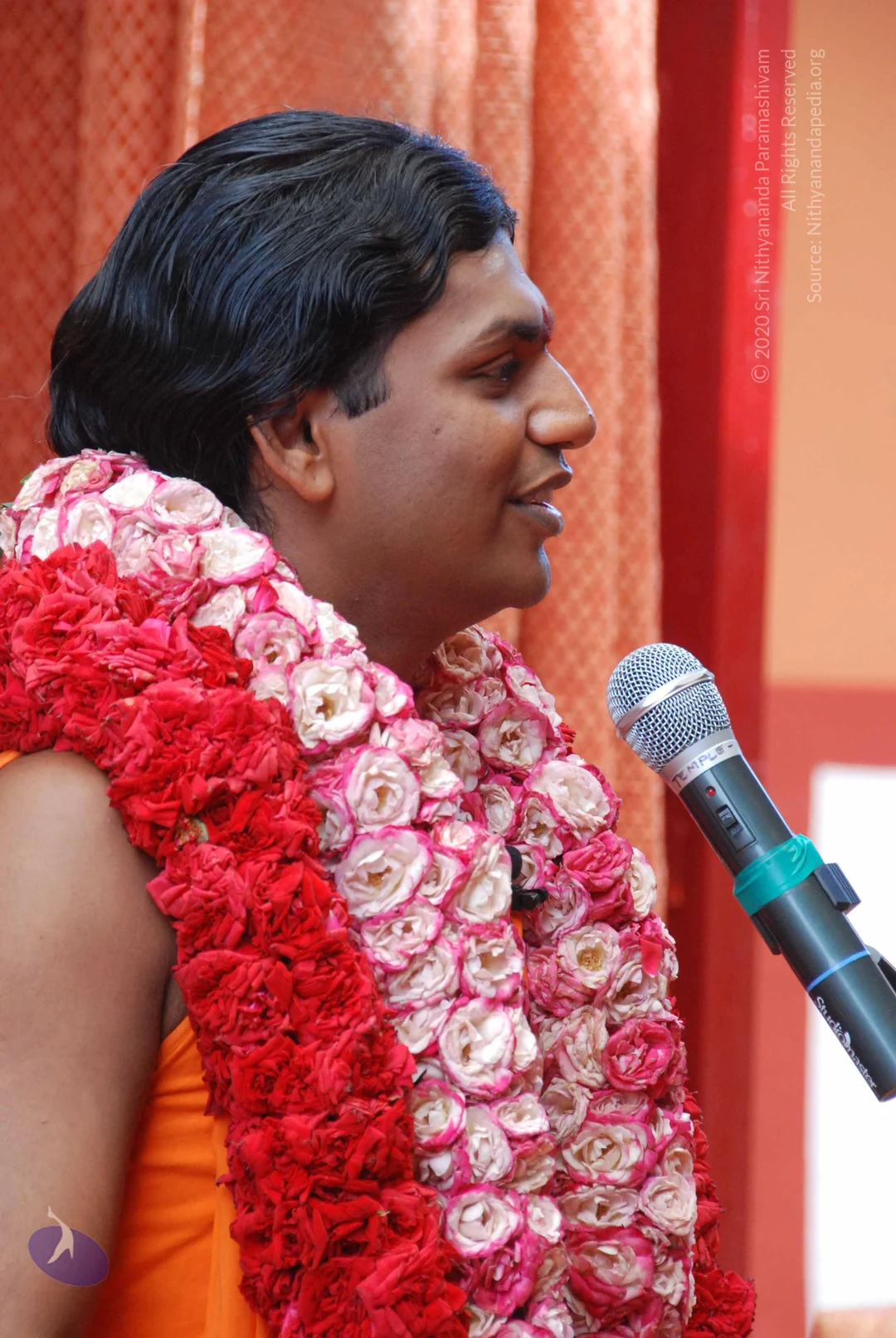
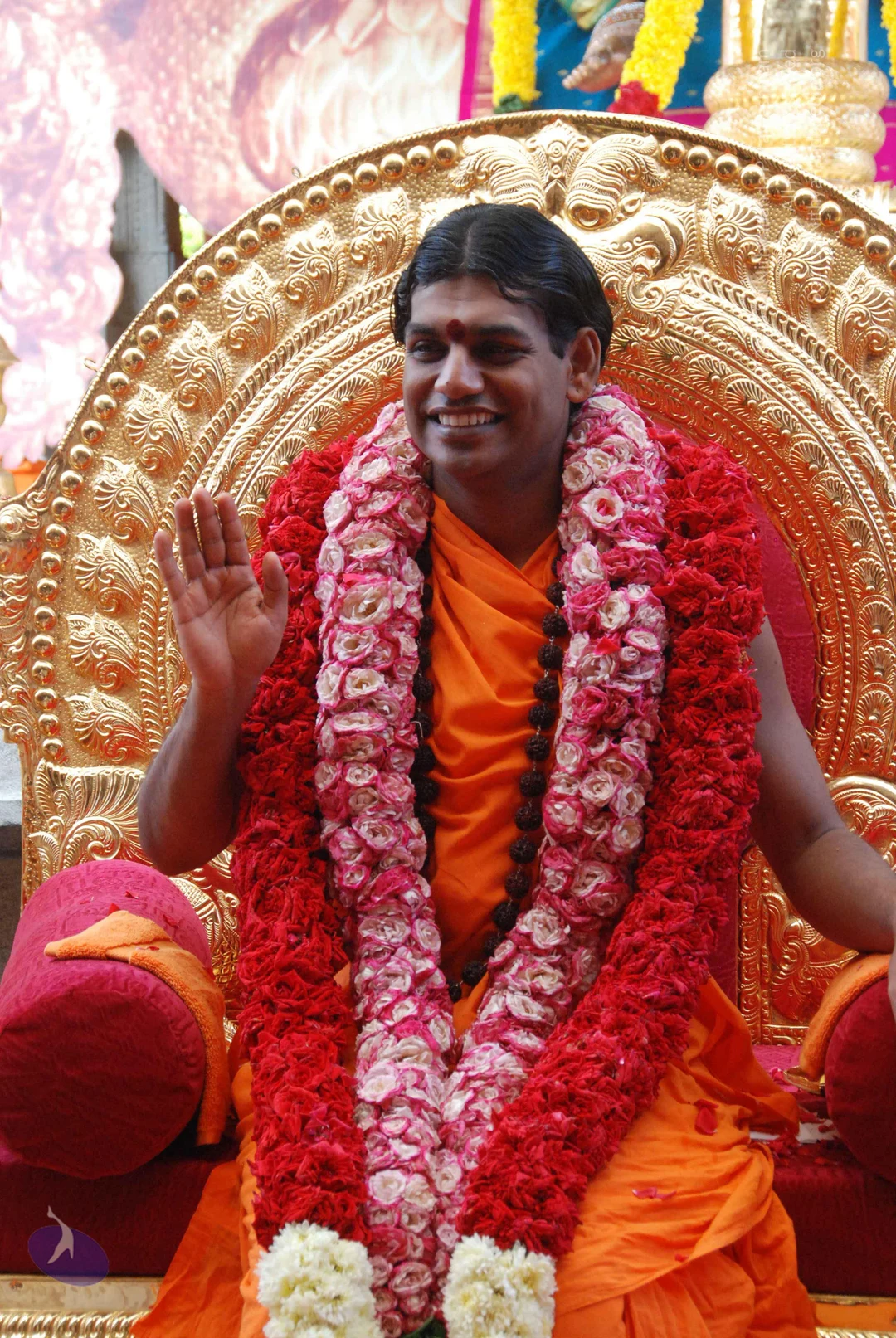
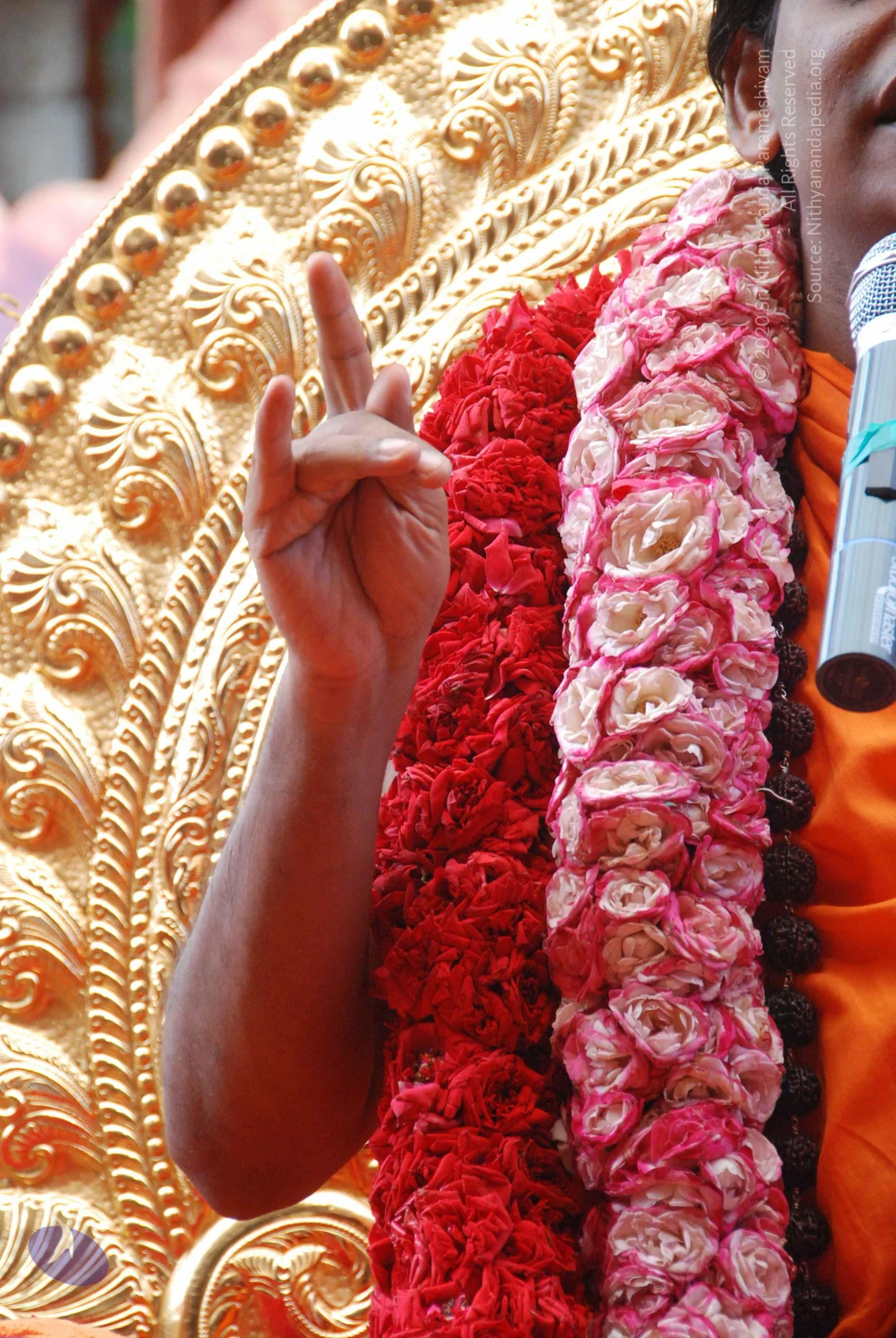
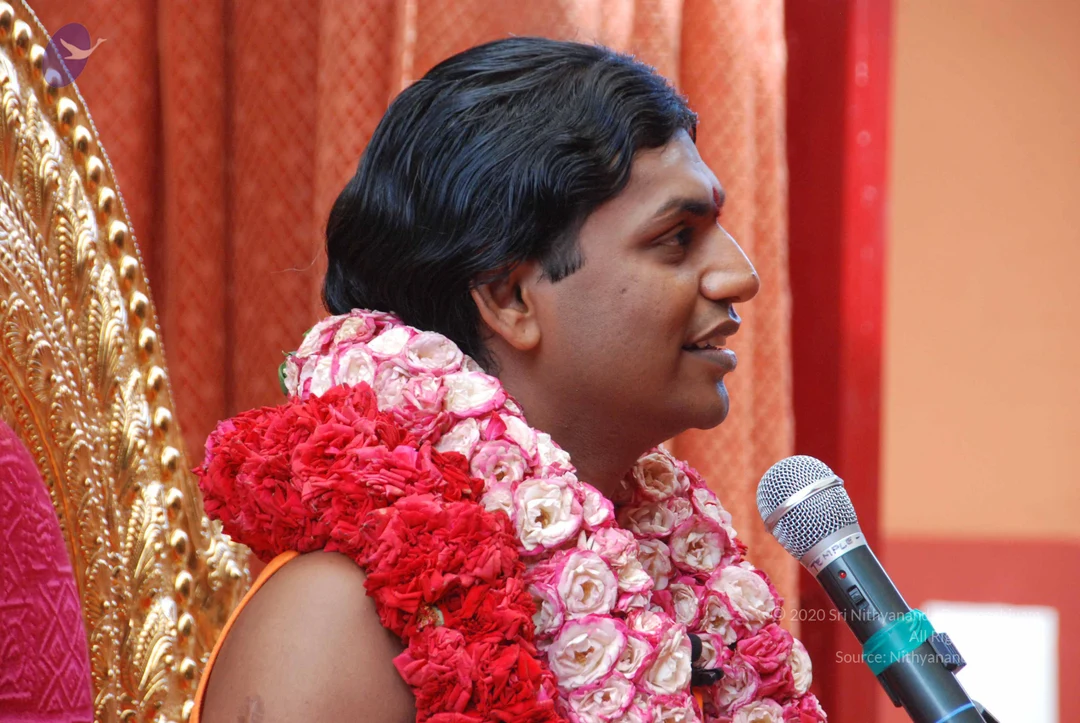
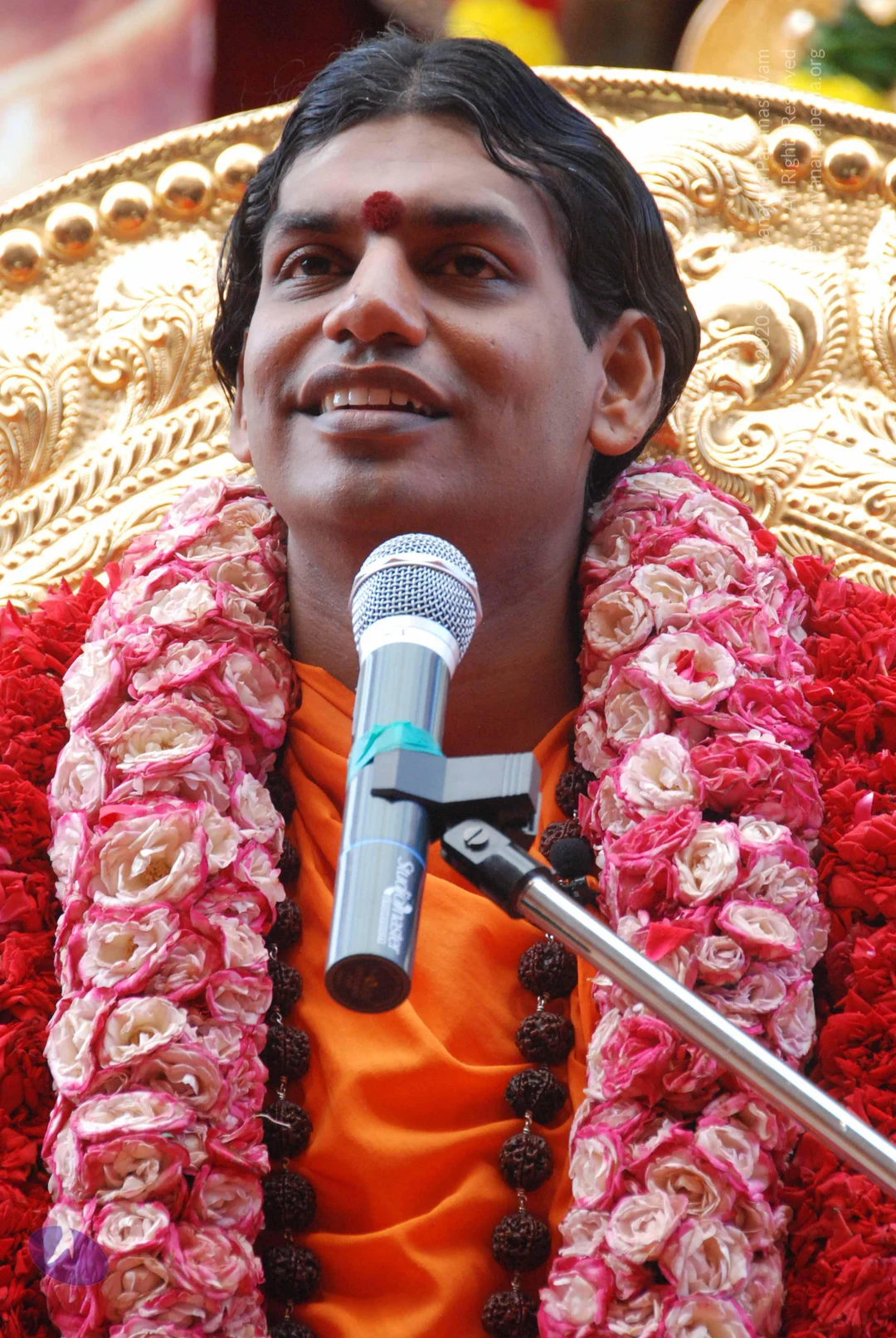
A close-up photo of a smiling man seated before a microphone on a stand, wearing an orange saffron garment and a long rudraksha mala. He has a red bindi on his forehead and swept-back dark hair, and he wears a thick garland of pink and white roses. Behind him is an ornate gold throne with raised gold ball finials, and red rose petals cover the seat. The visible cues of long swept-back hair, saffron clothing, a rudraksha mala and a ceremonial garland make him a probable Swamiji seated on a peetha during a talk.A photograph of a man in profile speaking into a silver microphone with a black handle and teal band, apparently addressing an audience. He has swept-back black hair, a small red tilak on his forehead, and wears a thick garland of red roses and white-and-pink roses draped over his shoulders, with orange clothing visible beneath. Behind him hangs a textured orange-red curtain beside a red pillar.A man seated on an ornate gold throne with carved scrollwork and red cushions, eyes closed, palms pressed together in namaste while holding a microphone on a boom stand. He wears a thick garland of red and pink roses plus white jasmine strands, and an orange saffron cloth draped over his shoulders. A red tilak mark is on his forehead, and gold kalasha-style ornaments and a pink decorative backdrop appear behind him. a person: long swept-back hair, saffron-orange clothing and a floral garland on a throne, although appearance alone is not conclusive.Close crop of a raised right hand with the index finger pointing upward, in front of an ornate gold throne back with carved scrolls and rounded gold beads. Draped over the seat are a red rose garland and a pink-and-white rose garland. At the right edge a microphone with a person-style windscreen is clipped to a saffron-orange robe, with rudraksha beads visible along the robe's edge. Only the hand and a sliver of the wearer's body are visible, so the person is partly visible and identity cannot be confirmed from appearance.A smiling man with long dark hair swept back and a red bindi sits on an ornate gold throne with red cushions. He wears an orange saffron robe and a long rudraksha mala, and is draped in thick garlands of red and pink-white roses with white flower garlands at the bottom. Behind him are yellow marigold garlands and a golden vessel.A seated man in an orange saffron robe speaks into a microphone on a stand, one hand open in gesture. He wears a red kumkum mark on his forehead, a rudraksha mala, and layered garlands of red and pink roses. He sits on an ornate gold throne with carved scroll designs and round finials, with a pink backdrop, gold pillars and colourful draped fabric with flower garlands behind him. Swamiji (probable): long dark hair, saffron robe, rudraksha mala and ornate gold throne setting, shown here as a satsang speaker.
03

02-Temple-Visit

16 dated photos in previewSource gallery
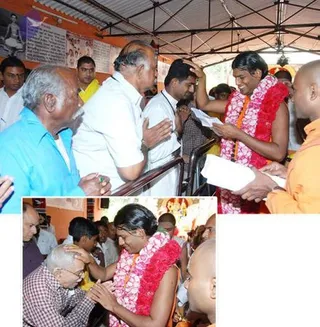
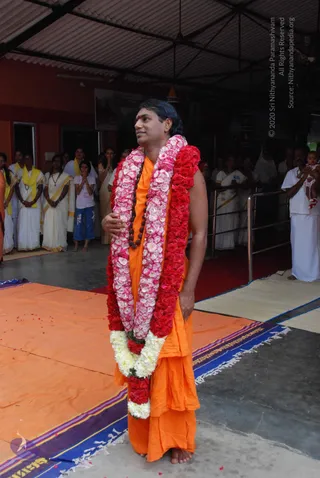
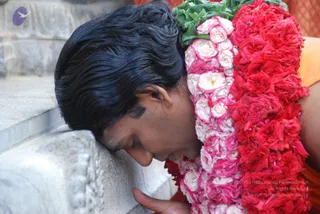
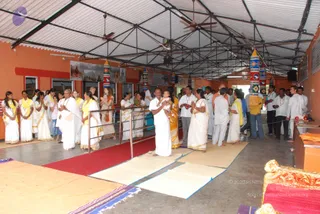
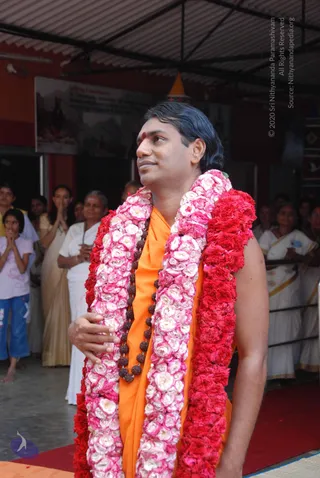
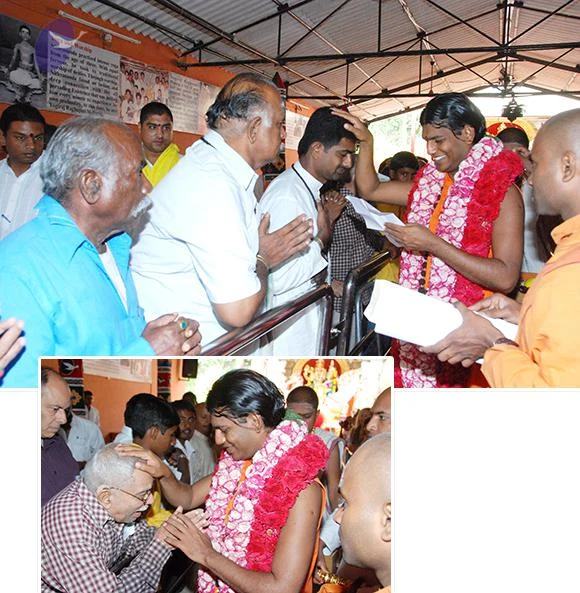
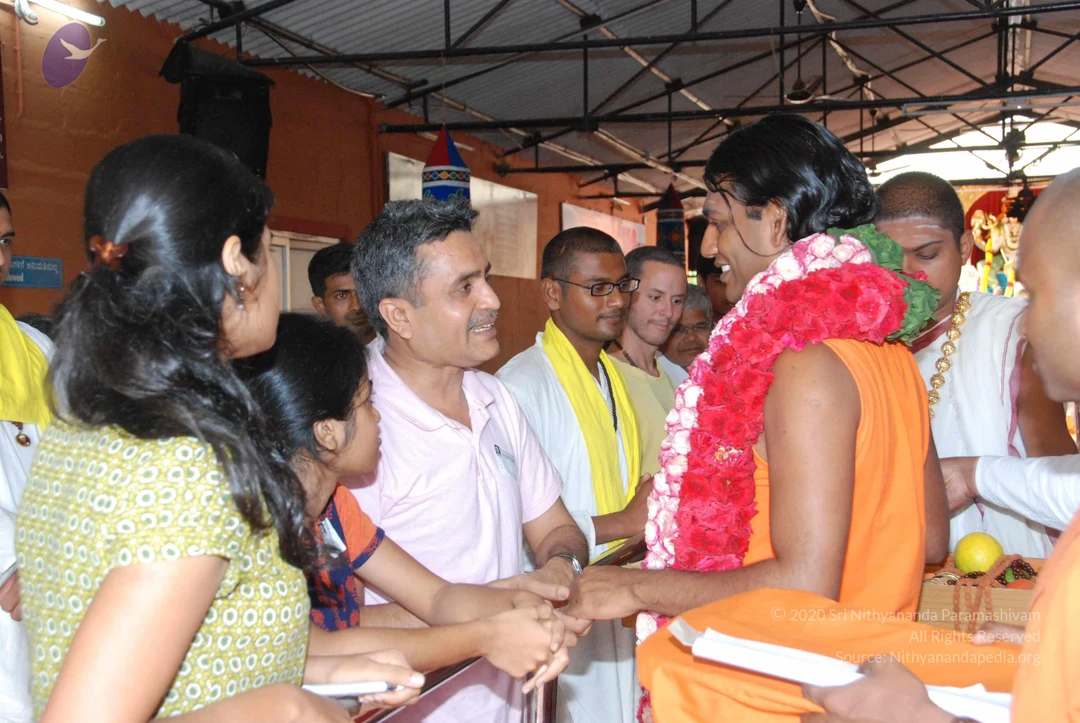
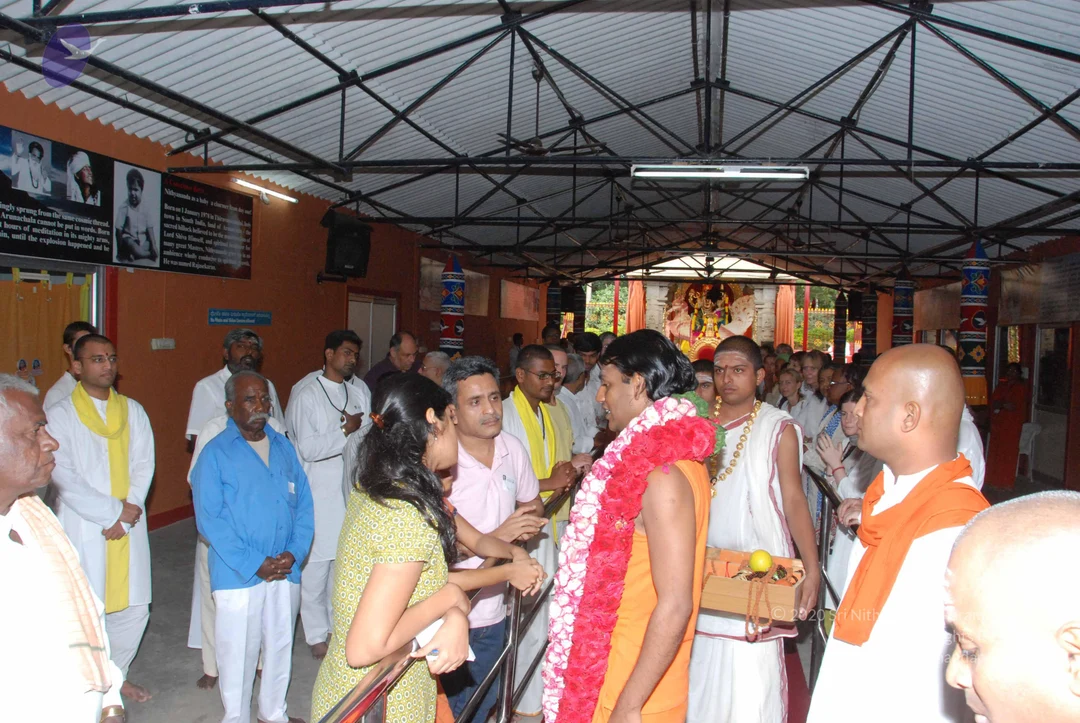
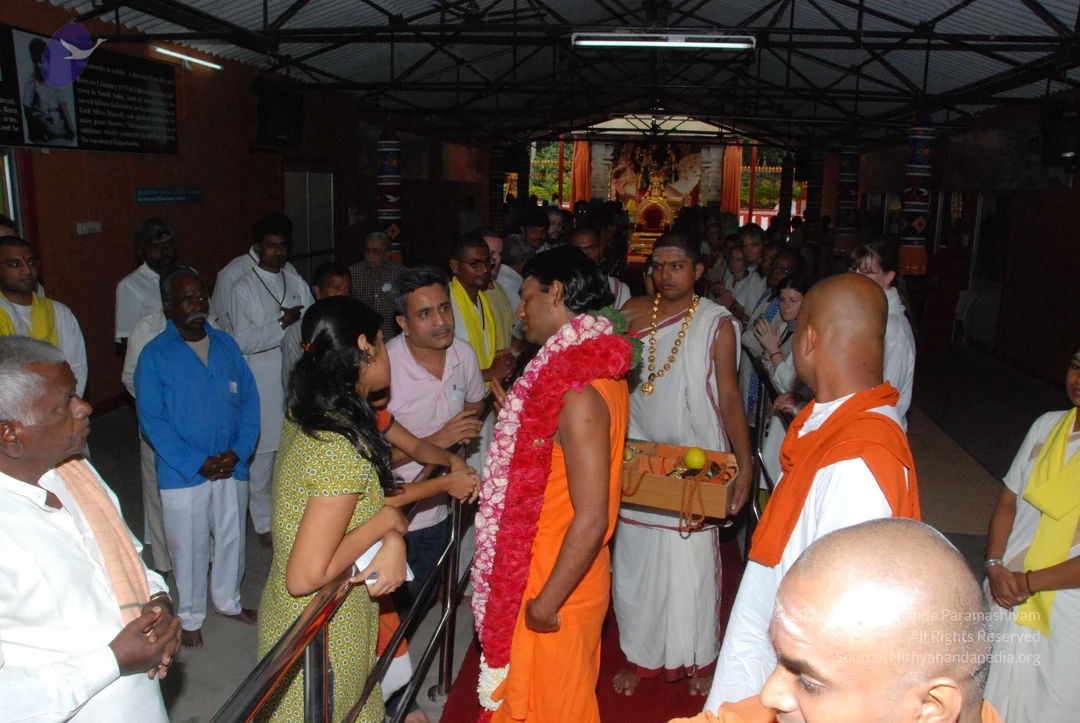
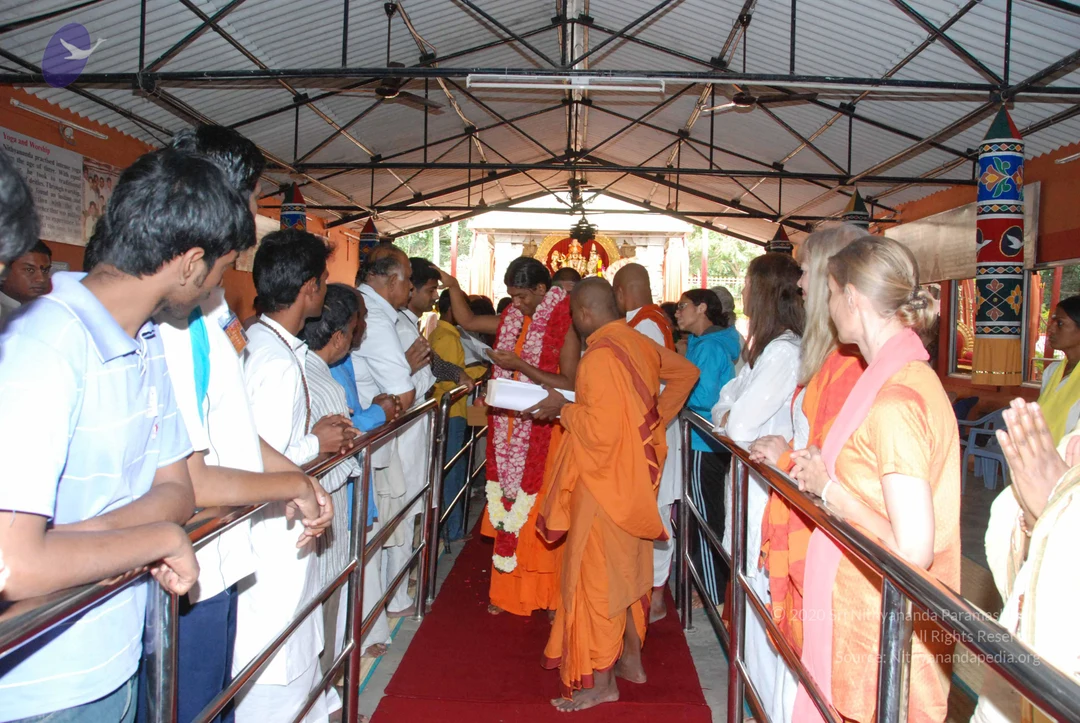
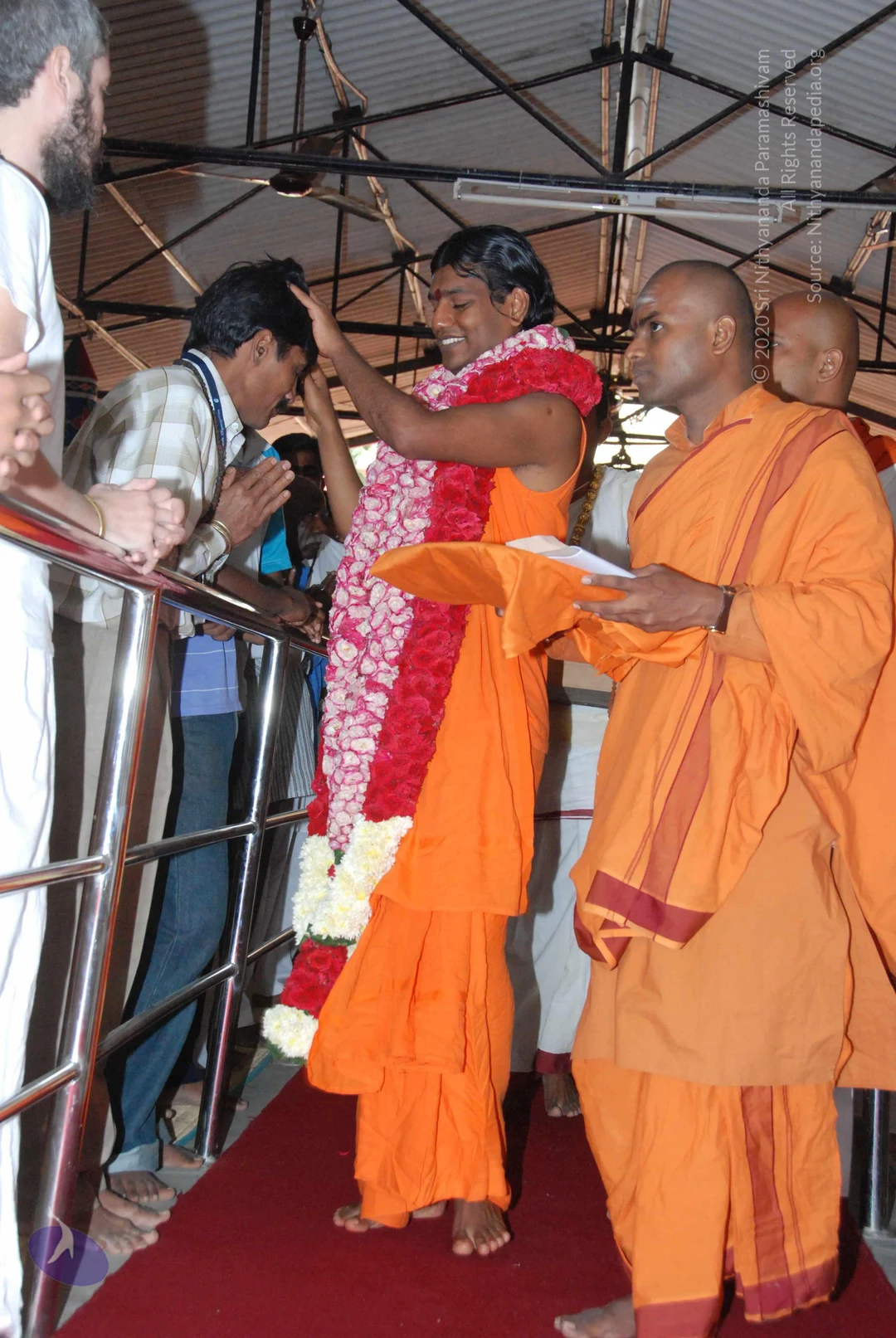
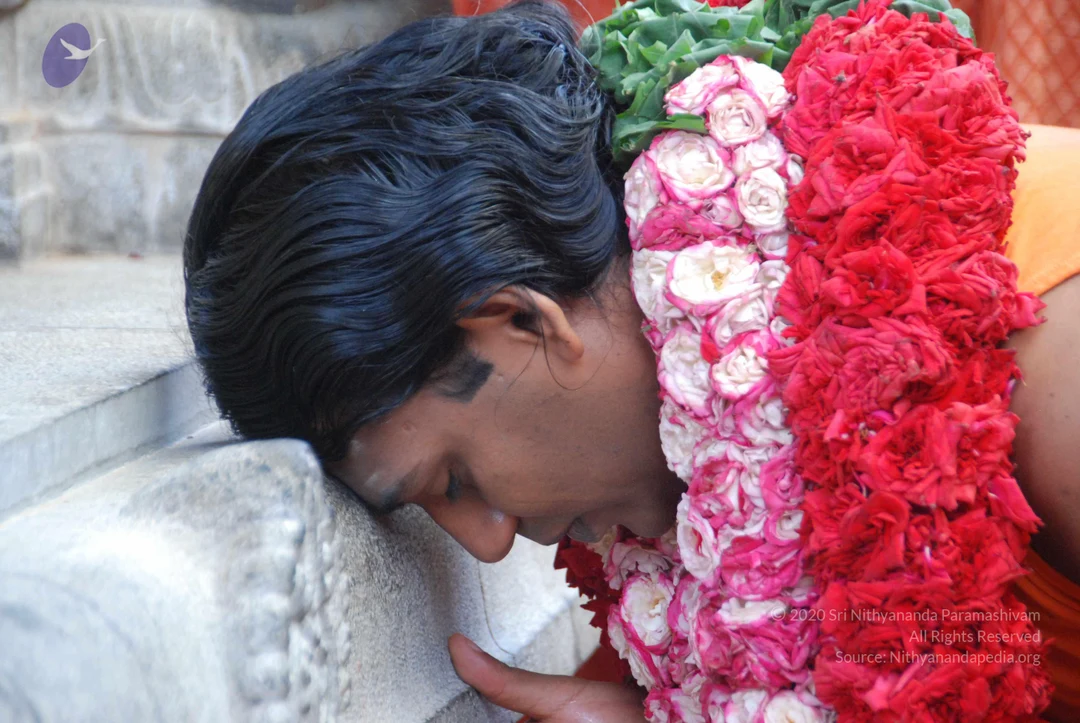
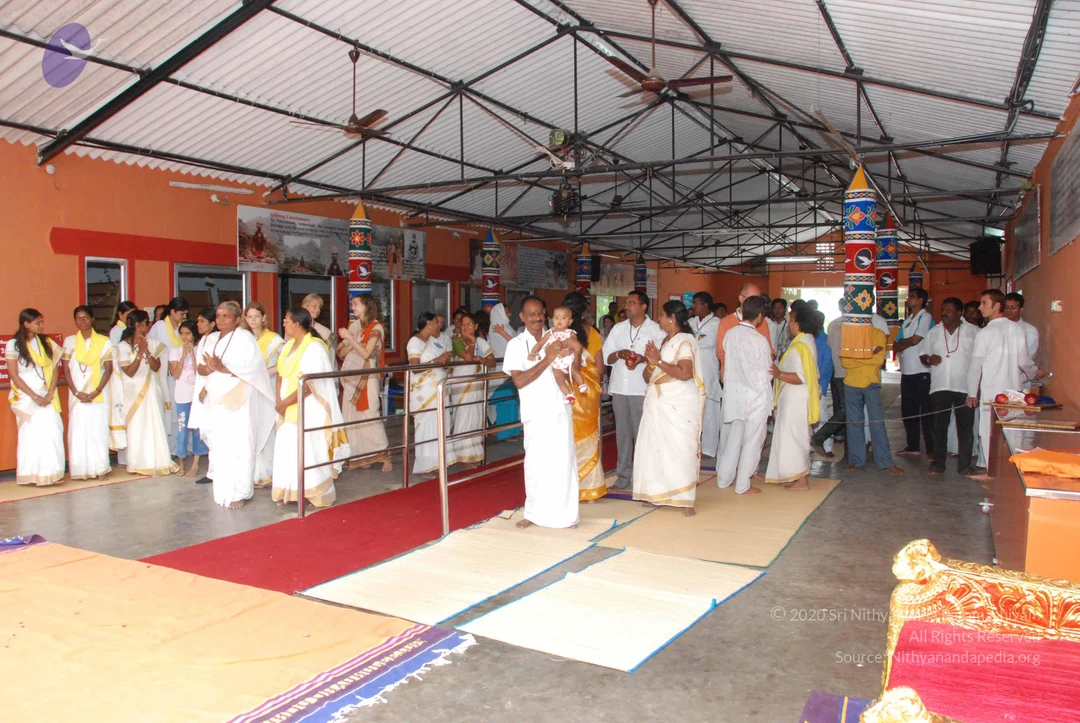
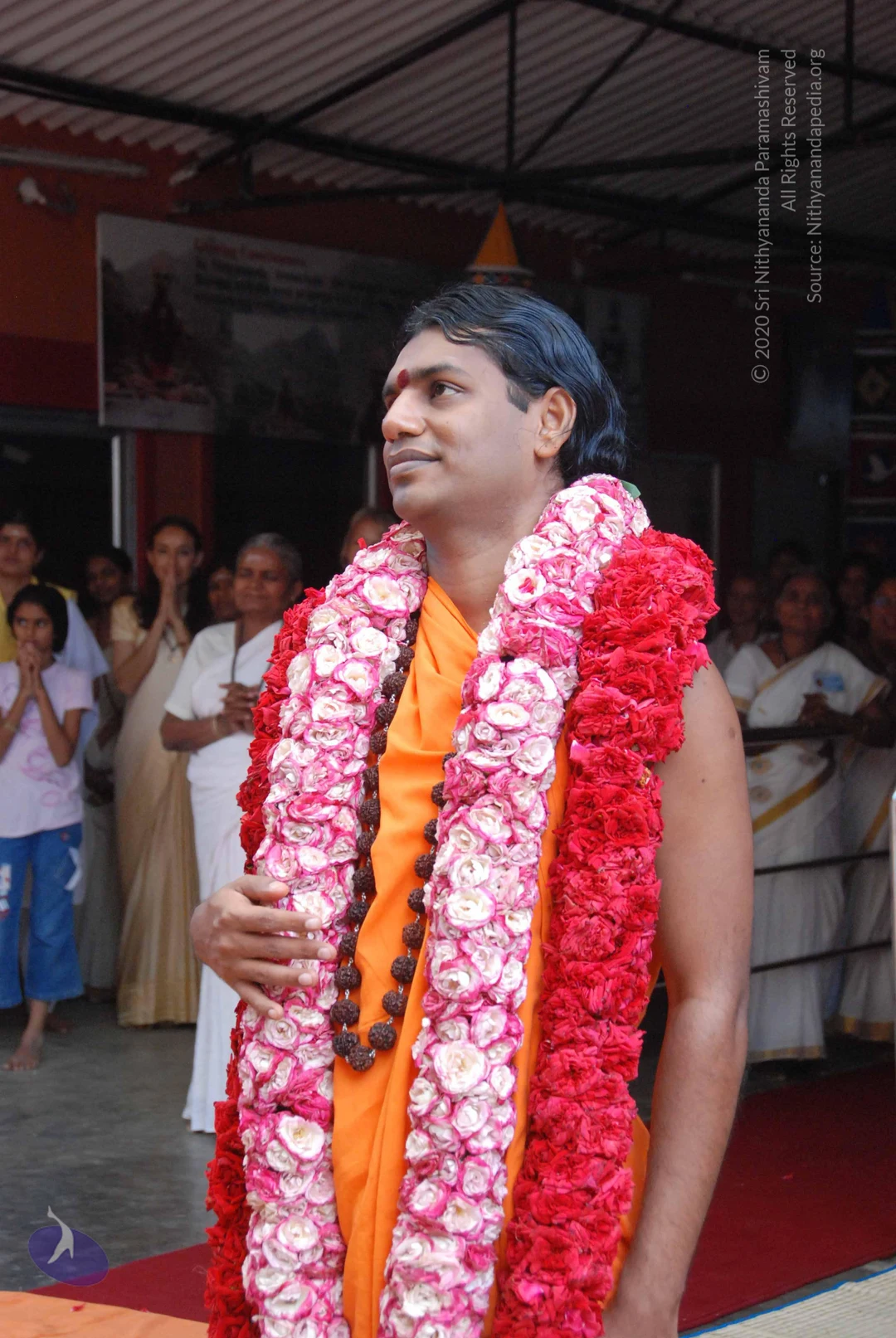
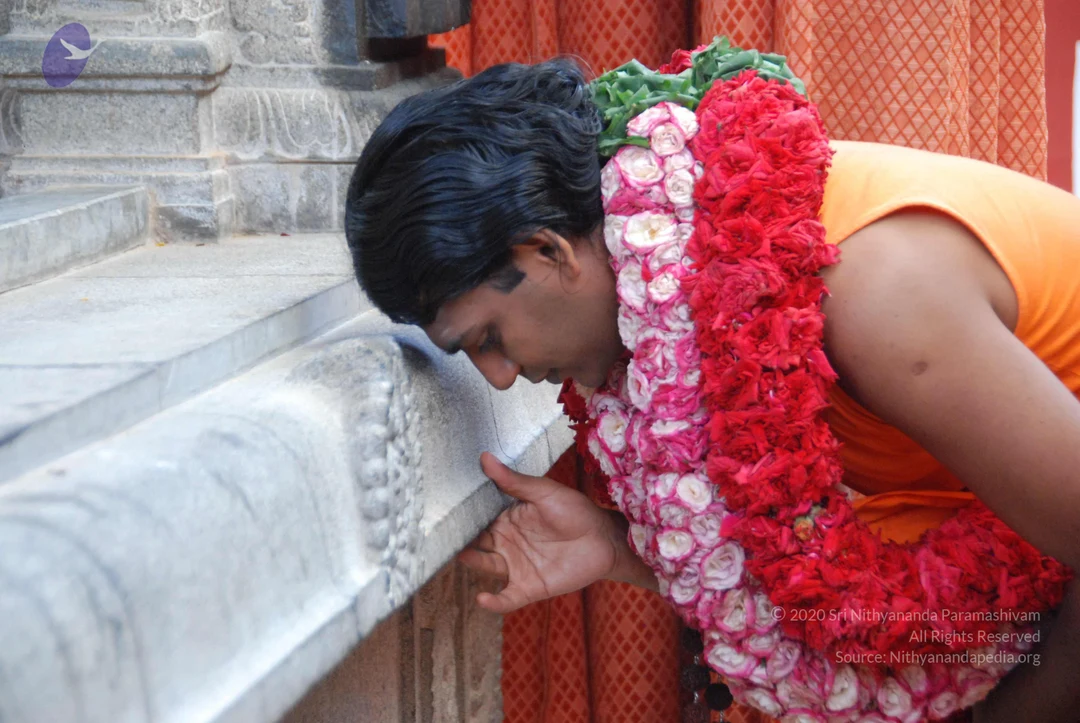
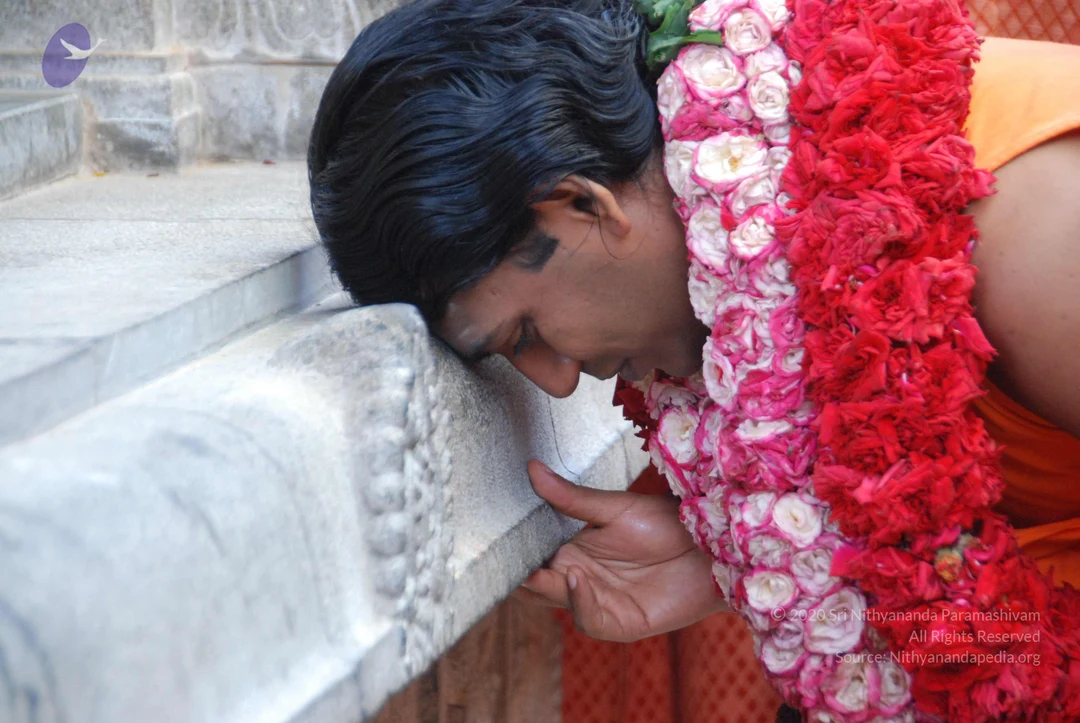
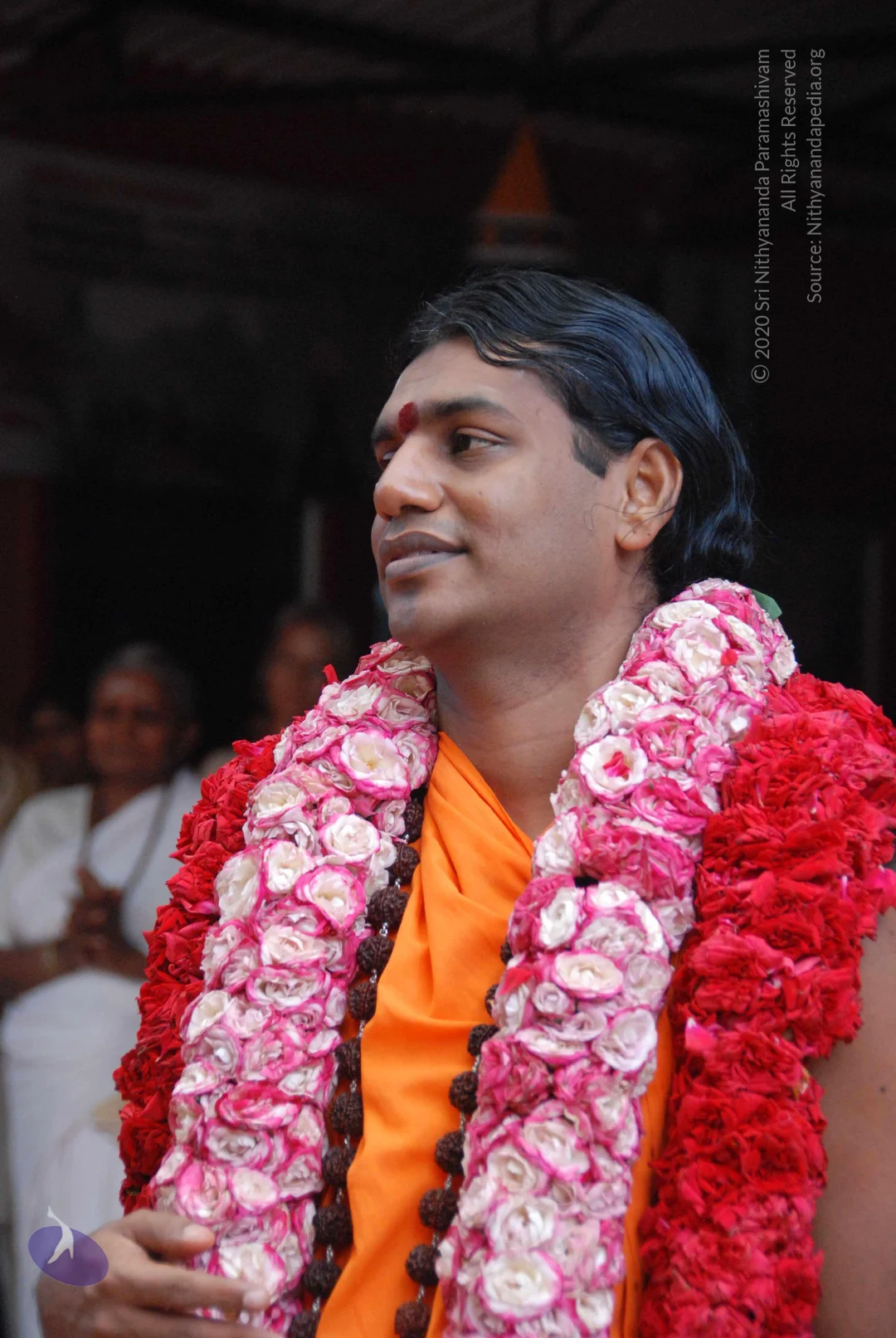
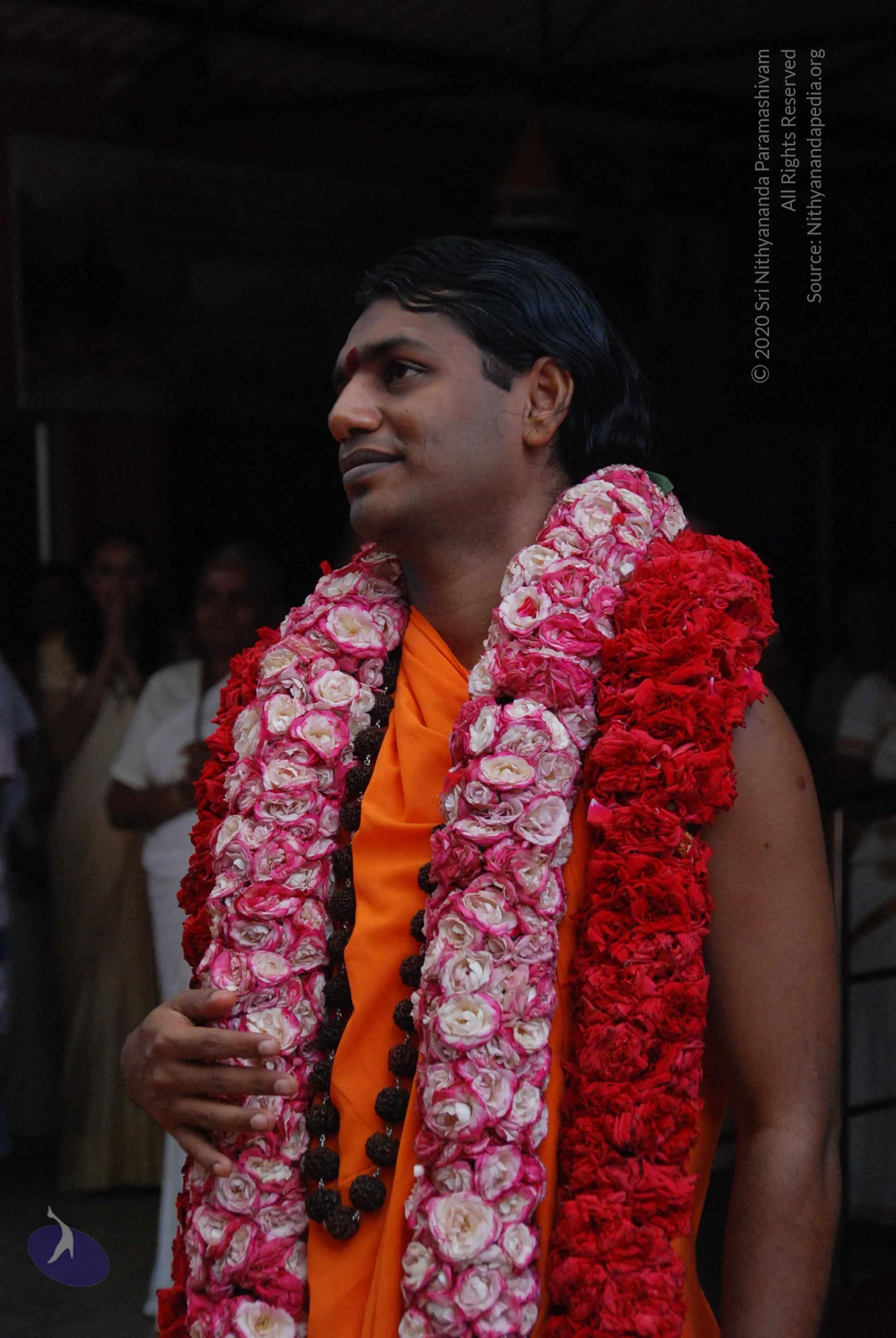
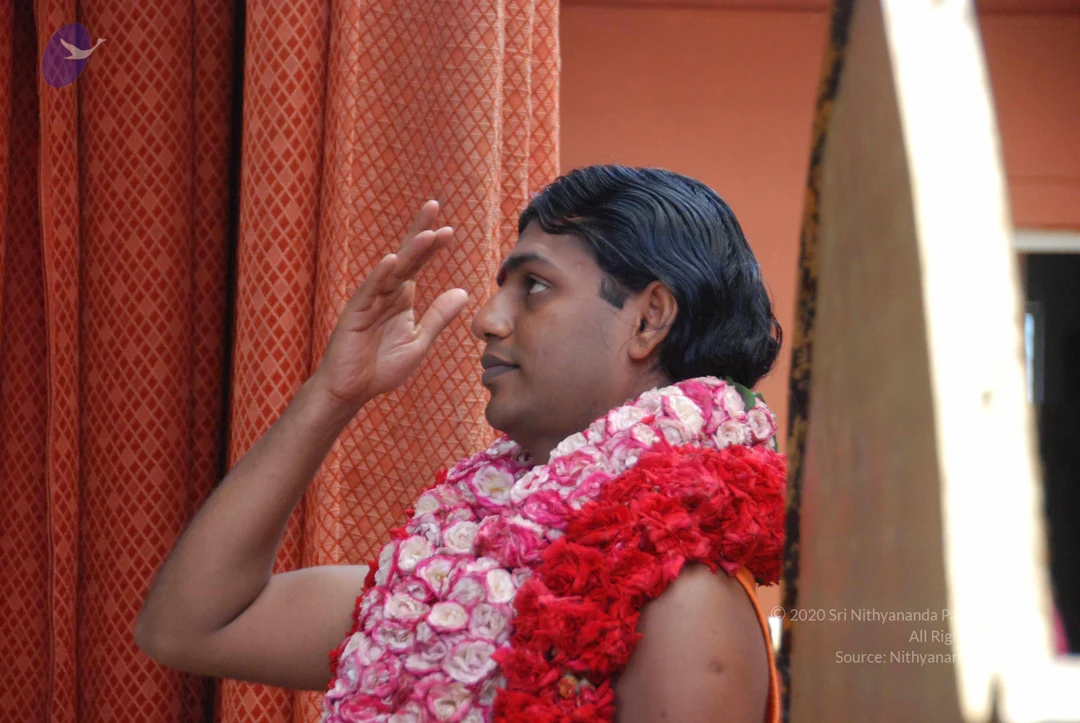
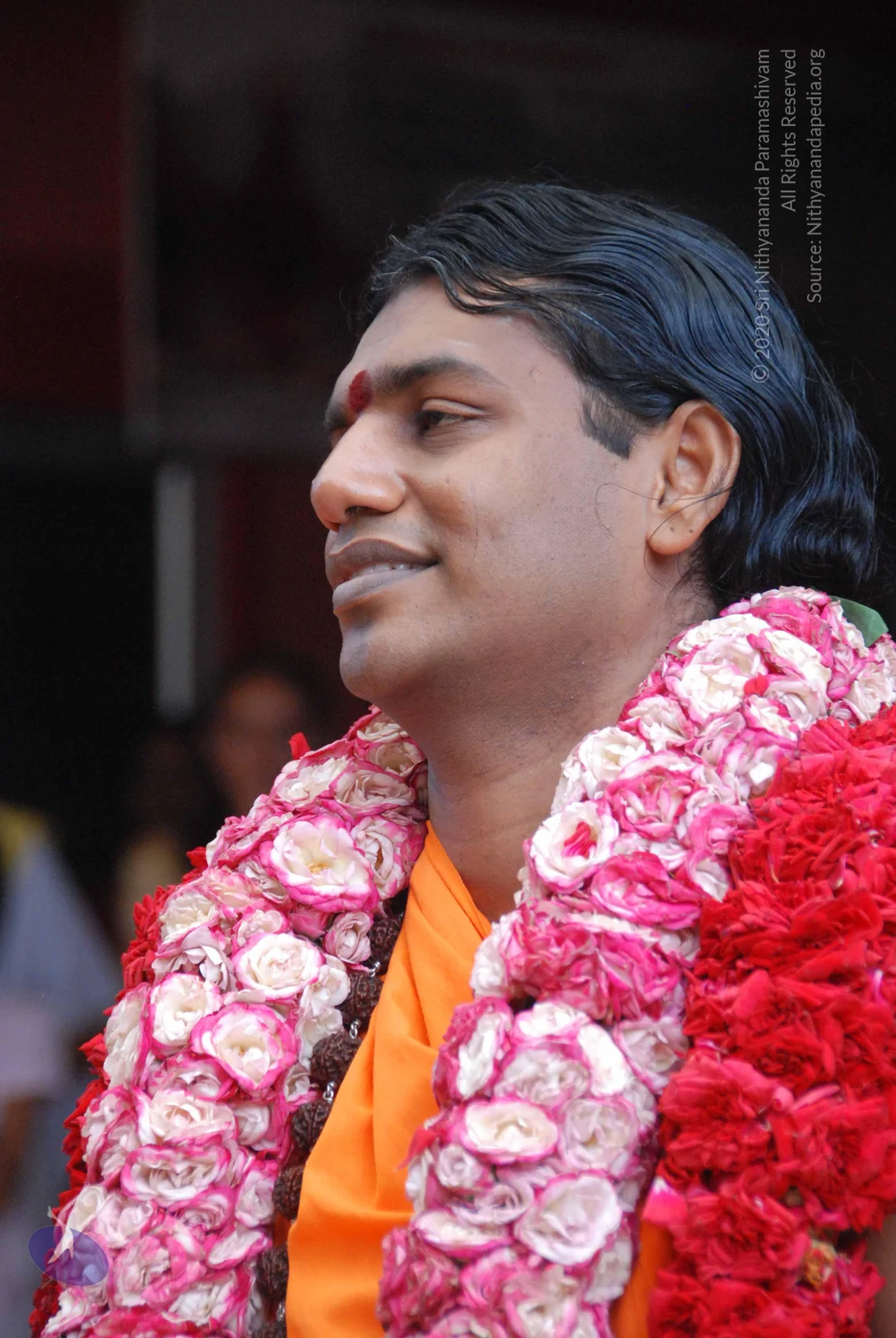
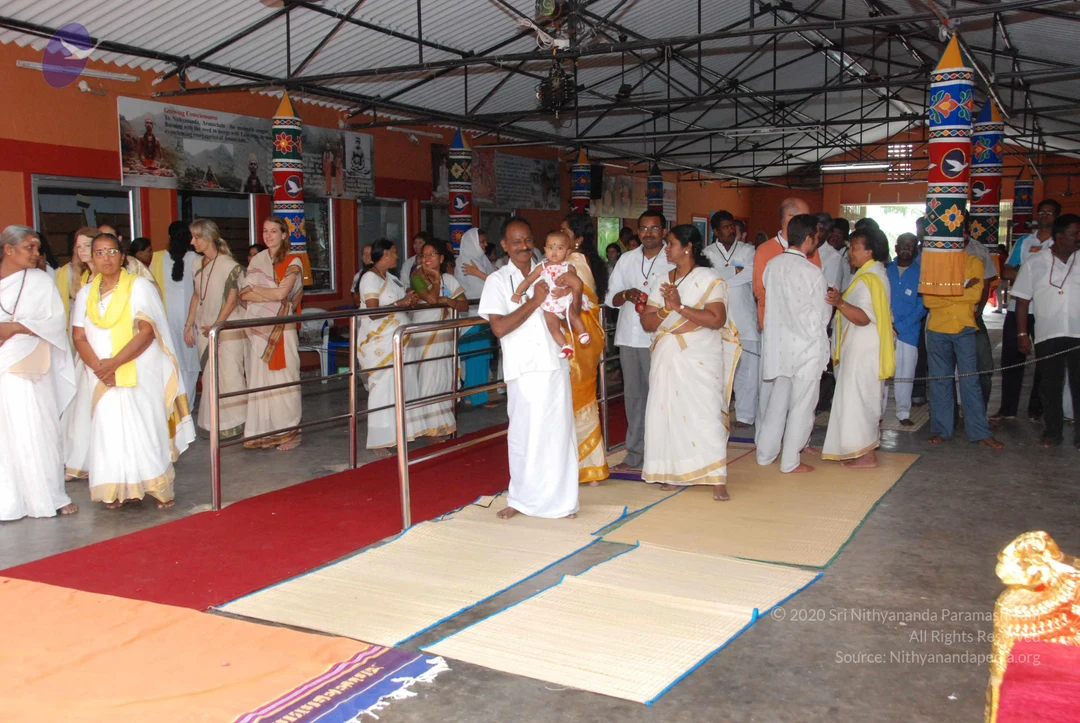
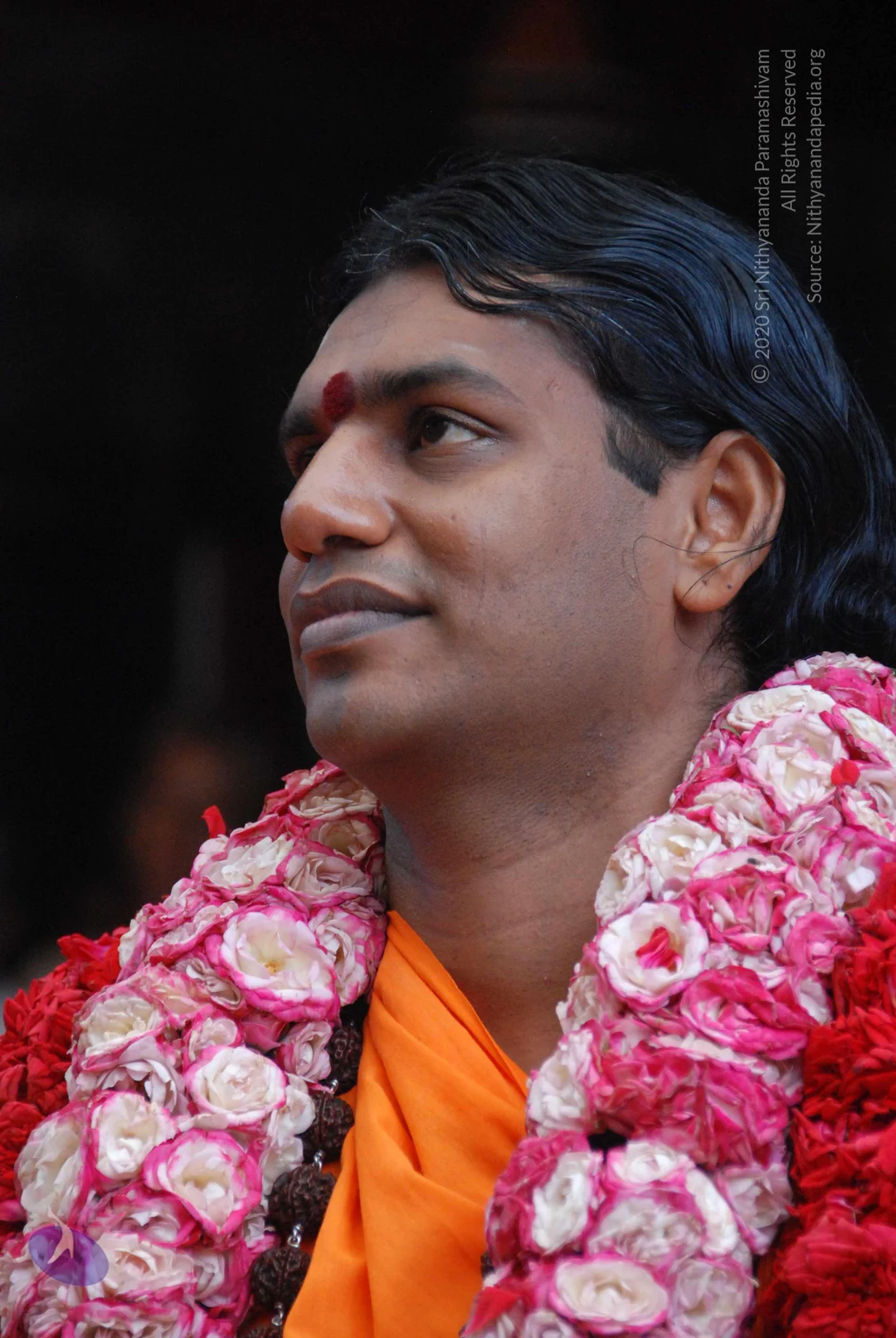
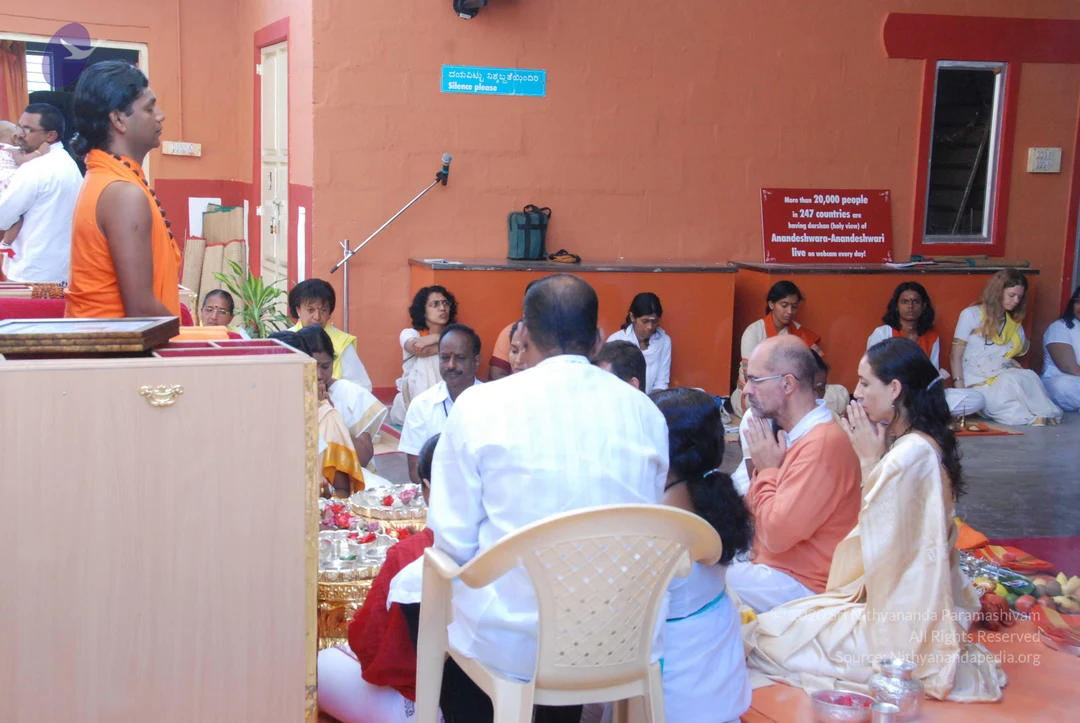
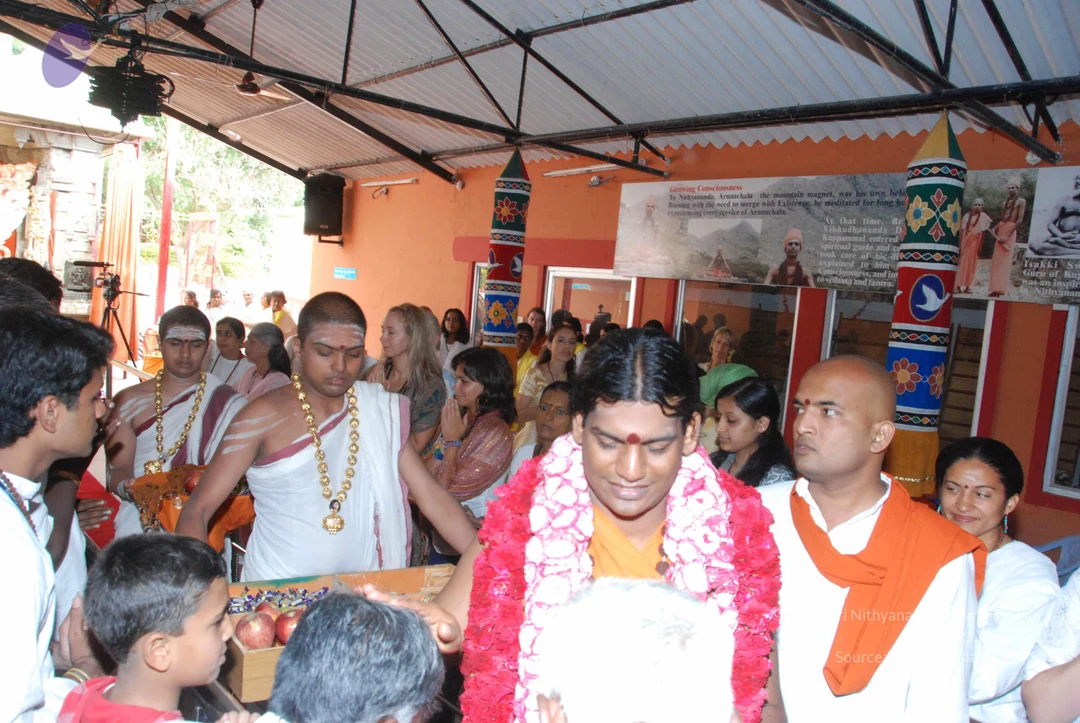
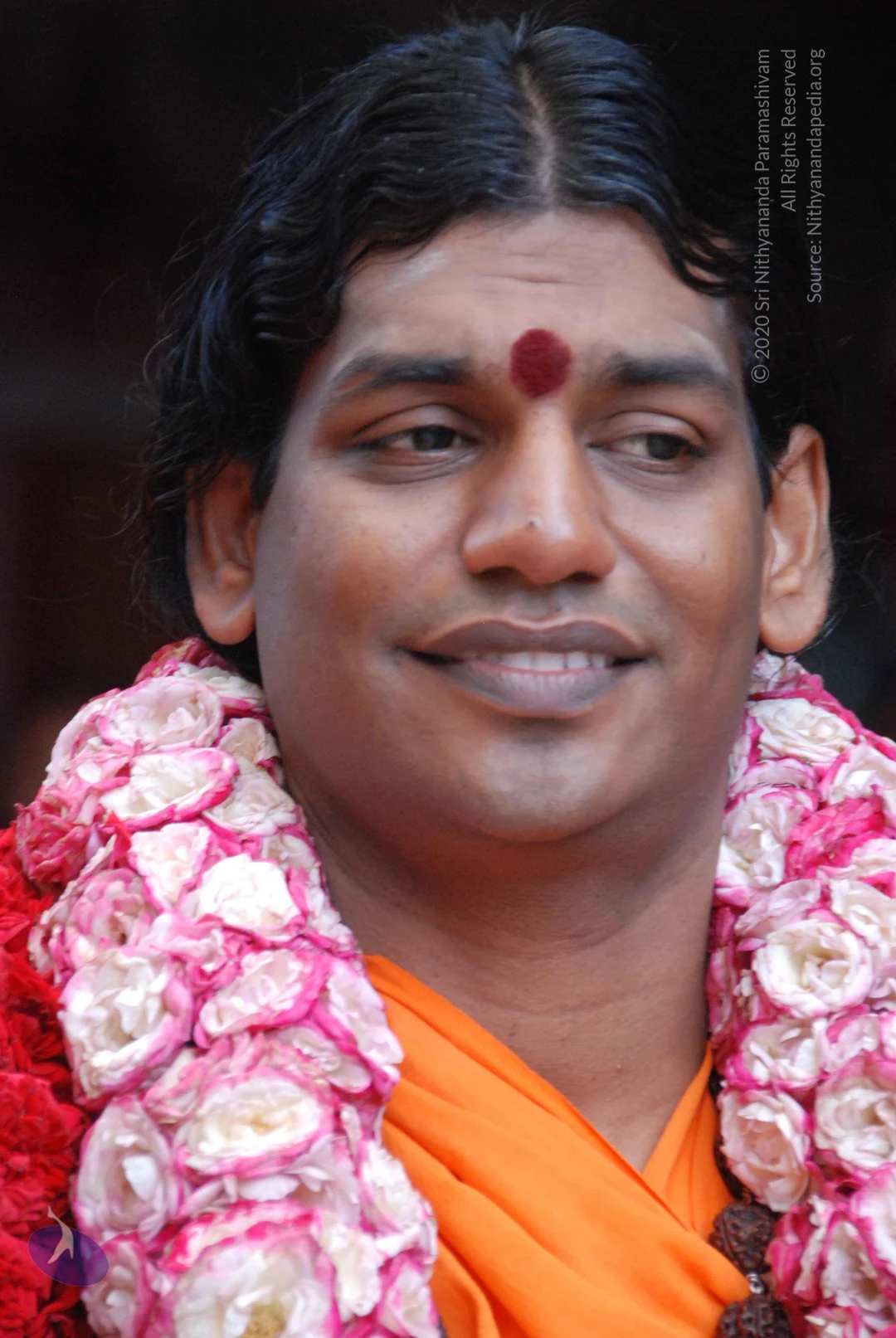
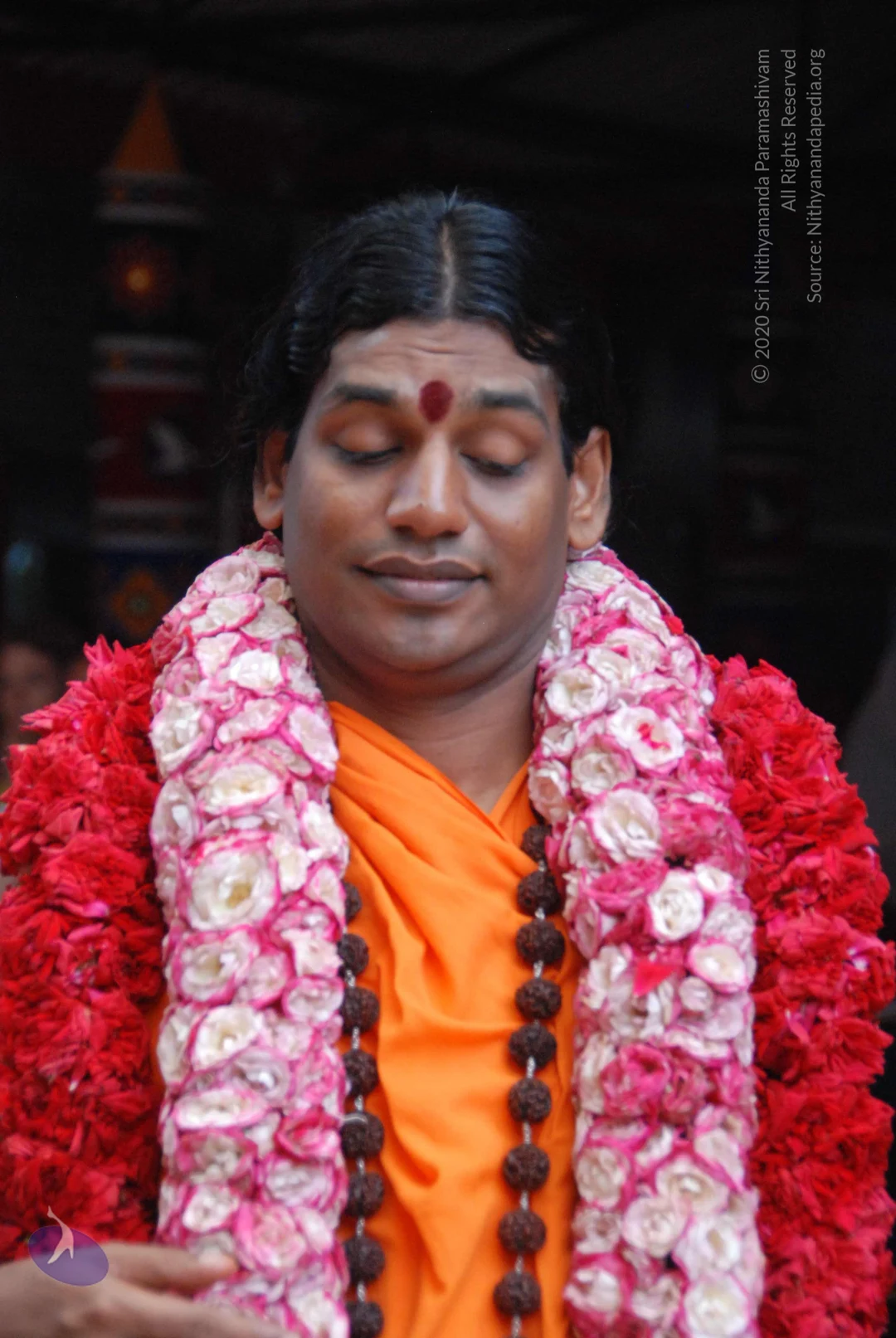
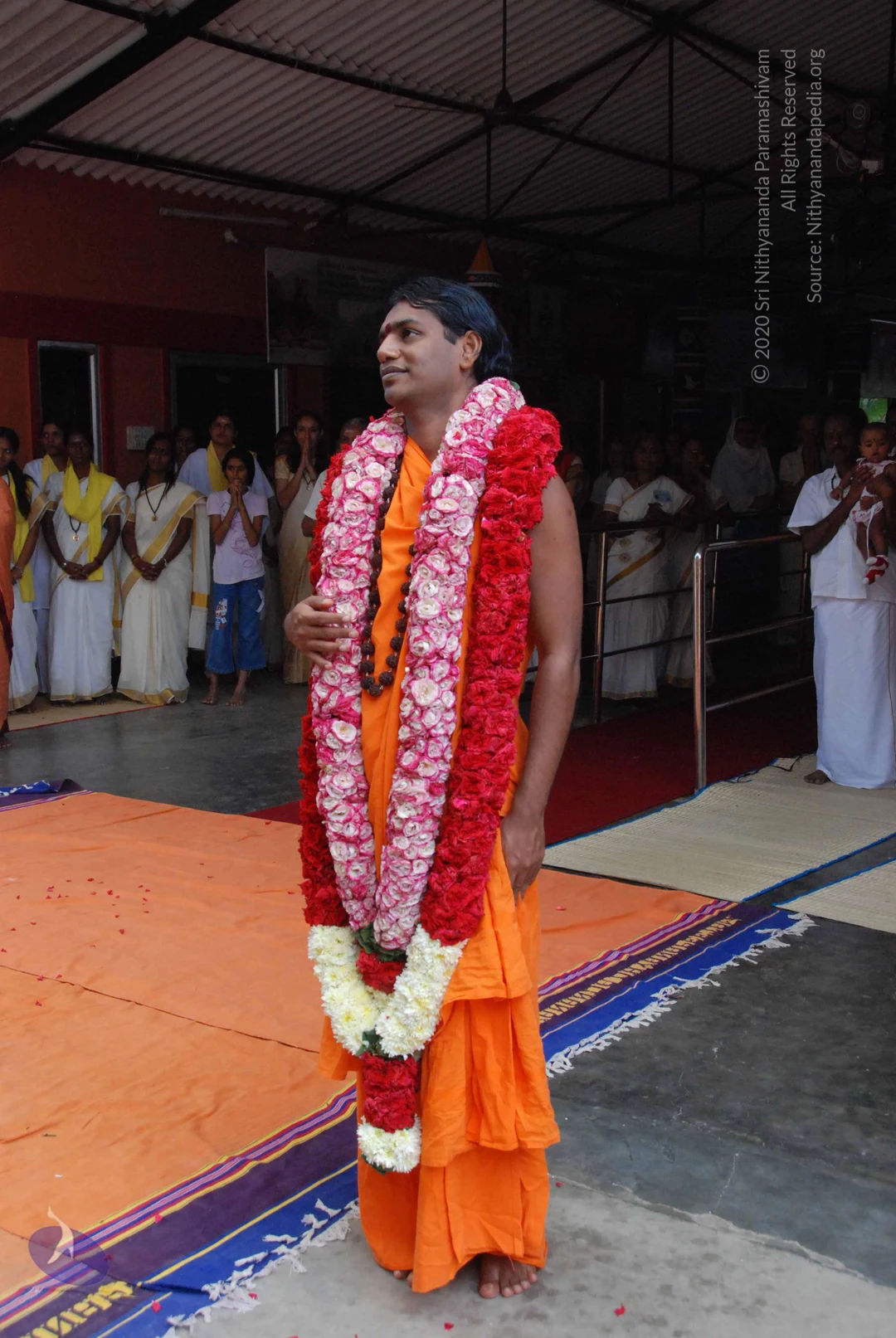
A barefoot man in a saffron-orange robe stands on an orange cloth with blue and purple borders in a covered open hall. He wears long layered garlands of pink and red roses, with white jasmine at the lower end, and a rudraksha mala around his neck, with a red bindi on his forehead. His hands are folded at his waist and he gazes upward. Behind him, devotees in white and cream clothes with yellow shawls stand with palms pressed together, and a man in white holds a small child. Rose petals are scattered on the floor. a person is marked by the saffron robe, rudraksha mala and garlanded reception; the garlanded man is in saffron with a rudraksha mala, and the page places a person at this event.A photograph of a man in an orange garment bending forward with his forehead and face pressed against a pale grey stone step or plinth, in a gesture of deep reverence. He wears a thick garland of red roses and pink-white roses draped over his shoulder and chest. His dark hair is swept back and he has a dark mark on his forehead. The stone surface has carved relief edges. The image shows a devotee prostrating in worship. No readable text appears in the photograph apart from a copyright overlay which is excluded.A man in profile, turned to the left, wears a dark red bindi on his forehead and an orange shawl over his shoulders. He is draped with thick garlands of red and pink-and-white roses. Behind him hang orange and red patterned fabric panels. He has long, swept-back dark hair. Appearance-based label: Swamiji (probable), shown in person, with the qualifying cues of swept-back long hair, saffron/orange shawl and rose garlands.Close profile photograph of a man with dark swept-back hair and a red tilak on his forehead, wearing an orange saffron shawl and layered garlands of pink-edged white roses and red flowers around his neck. Rudraksha beads are visible beneath the shawl. The background is dark and blurred.A photograph inside an open-sided hall with a corrugated roof and orange walls, showing a crowd of devotees in white dhotis and white saris with yellow shawls arranged in lines on mats. A man in white in the centre holds a small child in his arms while others stand with hands folded in namaskar. Striped decorated pillars and framed banners line the back wall. A gold-and-red throne-like seat with a red cloth is visible at lower right, near a table with offerings. Several people stand on red and beige mats beside a metal railing. No identifiable a person figure is clearly visible in the frame.A man stands on a red carpet in a covered hall, wearing an orange saffron cloth draped over his shoulders and a long rudraksha mala with brown beads. He has a large garland of pink-and-white roses and red flowers around his neck, and a red bindi on his forehead. His hands are clasped at his waist and he gazes upward. Behind him, several women in white saree-style clothing with gold borders stand with their palms pressed together in namaste. A girl in a pink top and blue pants also has her hands folded. A red-and-orange banner with printed text hangs on the wall behind. The man has long dark hair swept back and wears the saffron and rudraksha cues associated with the ashram's presentation, so the appearance-based label applies: Swamiji (probable), in person, receiving a flower welcome from devotees during a public gathering.
04

03-Pada-Puja

79 dated photos in previewSource gallery
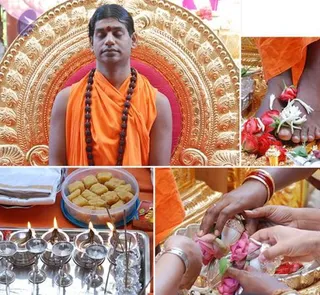
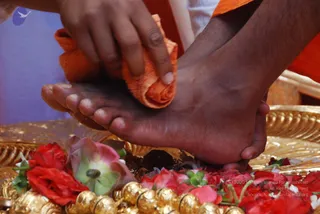
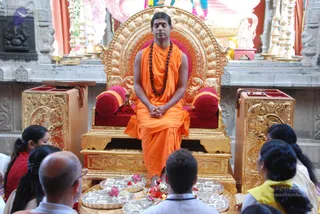
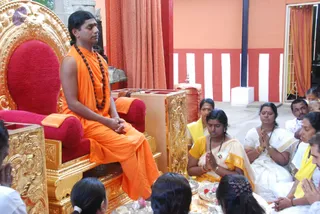
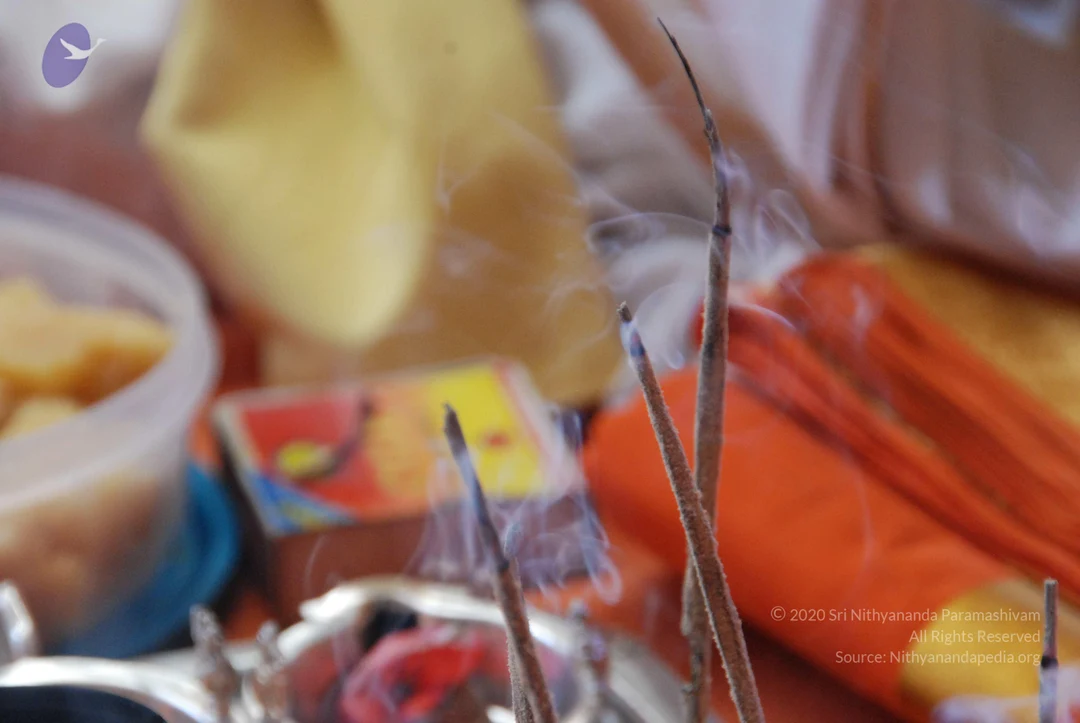
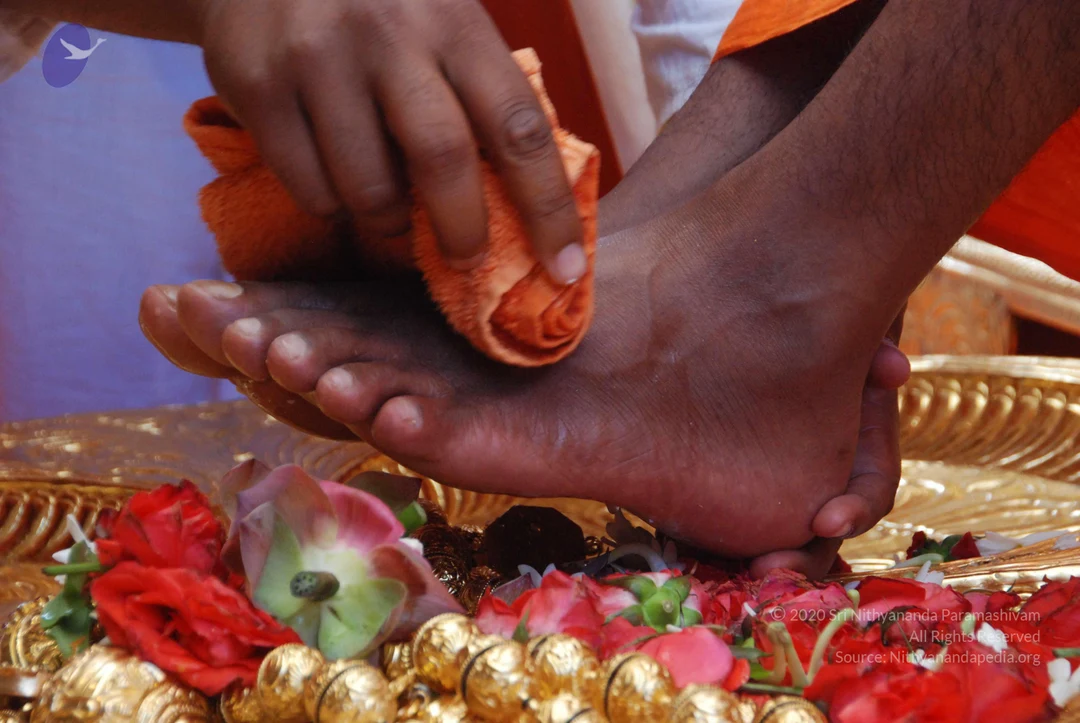
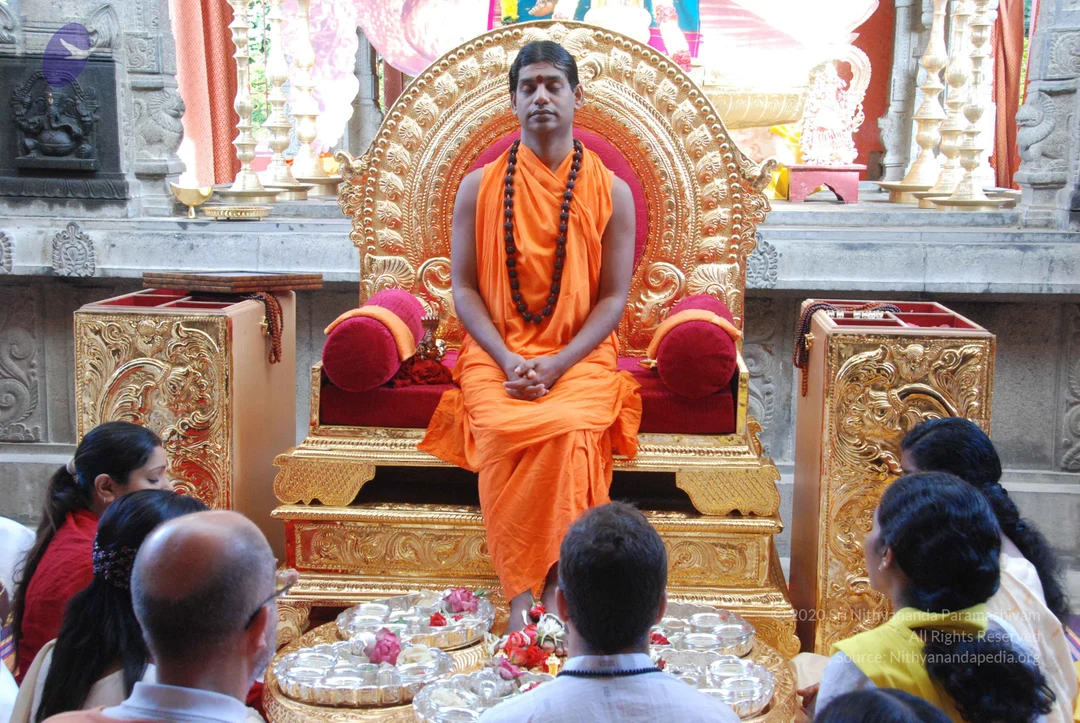
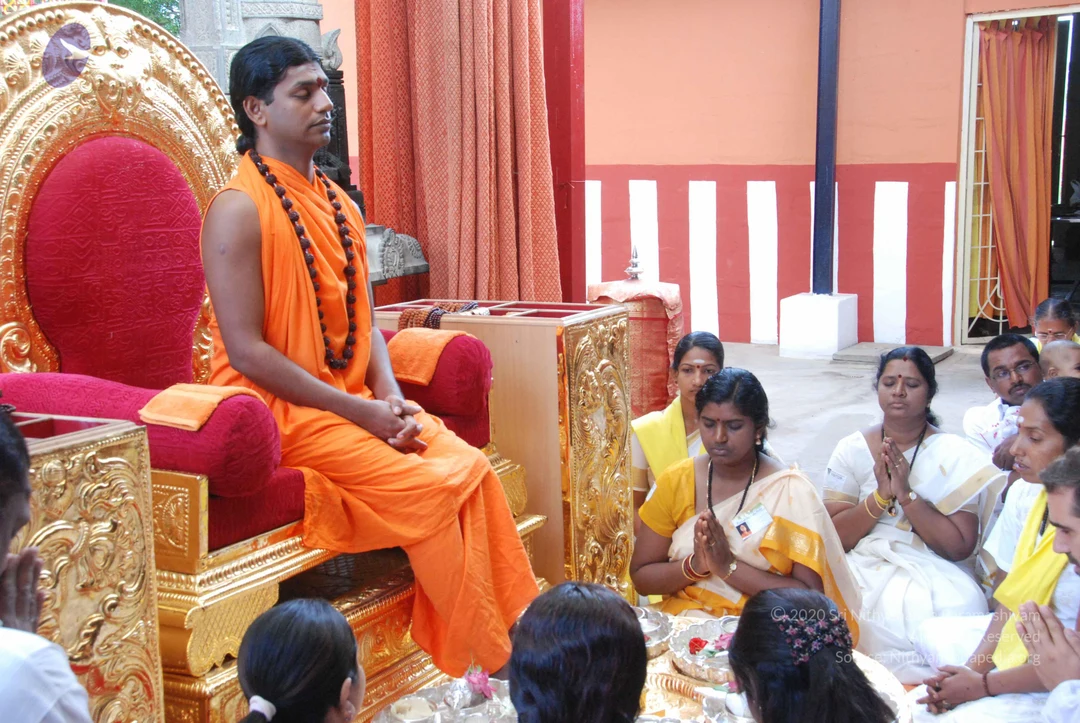
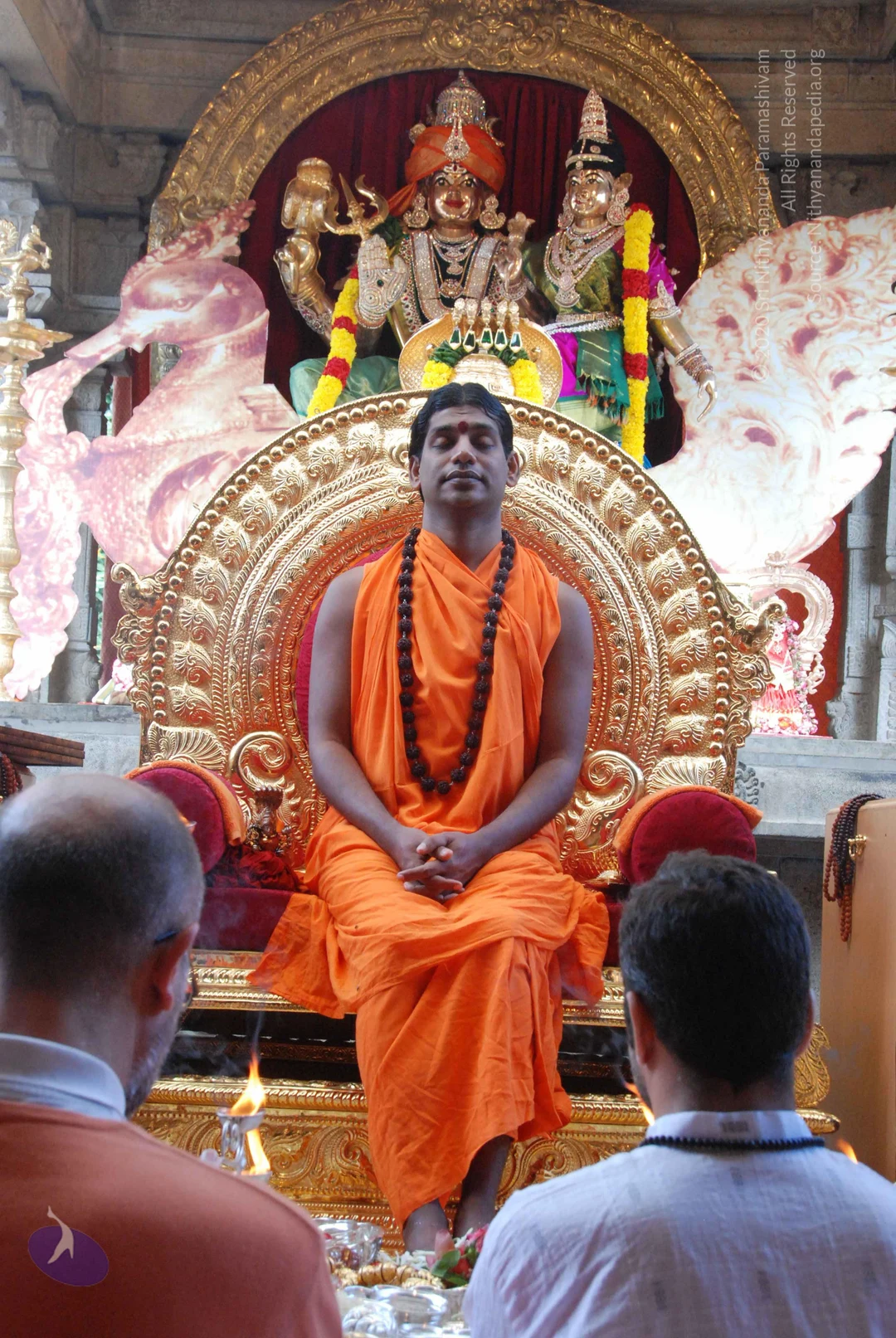
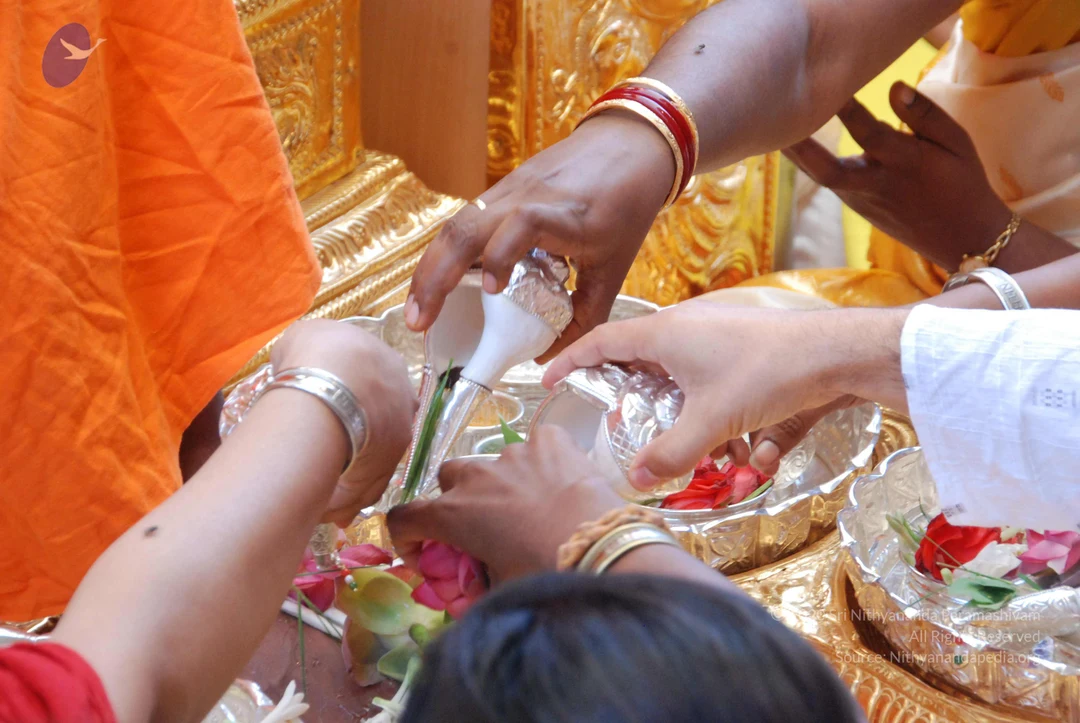
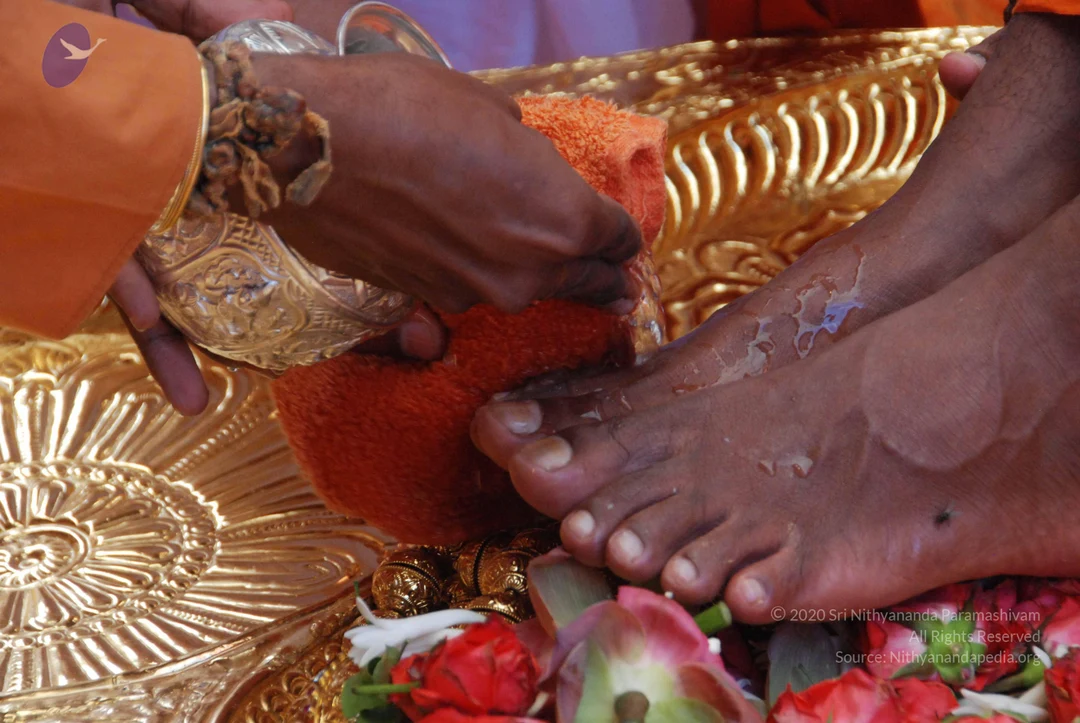
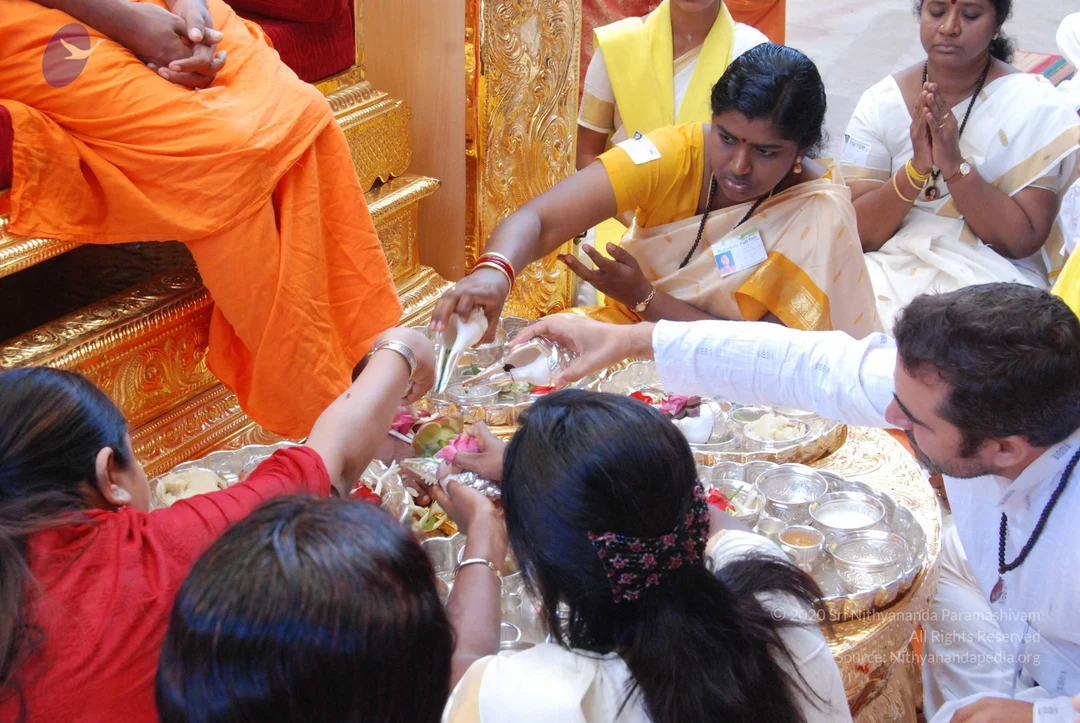
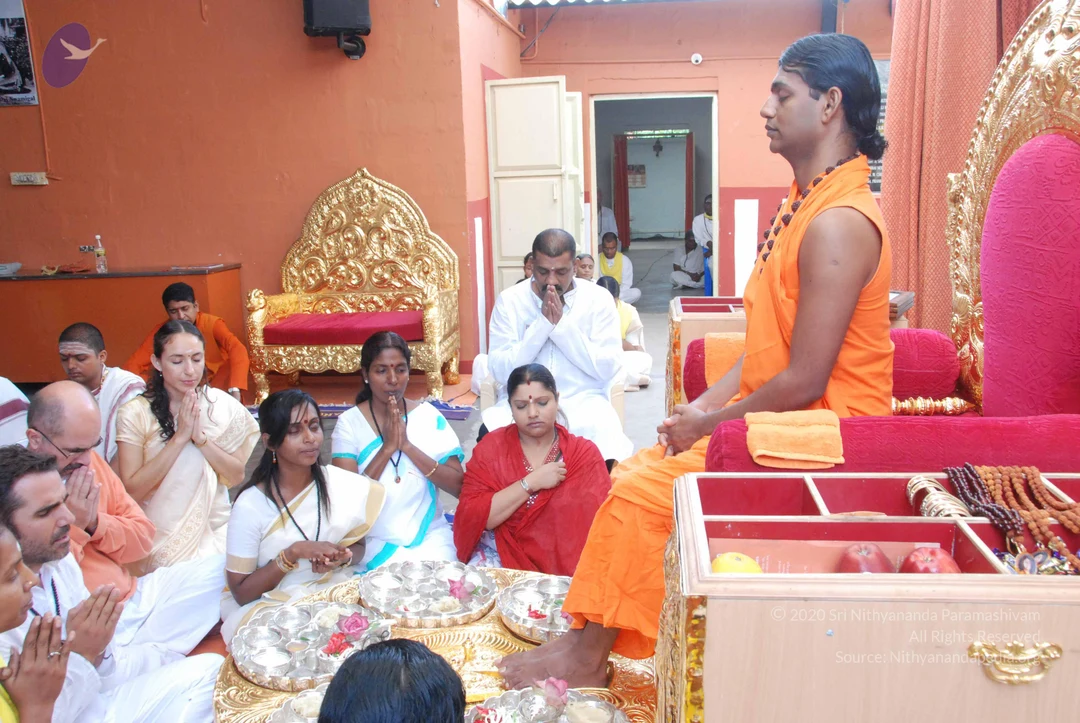
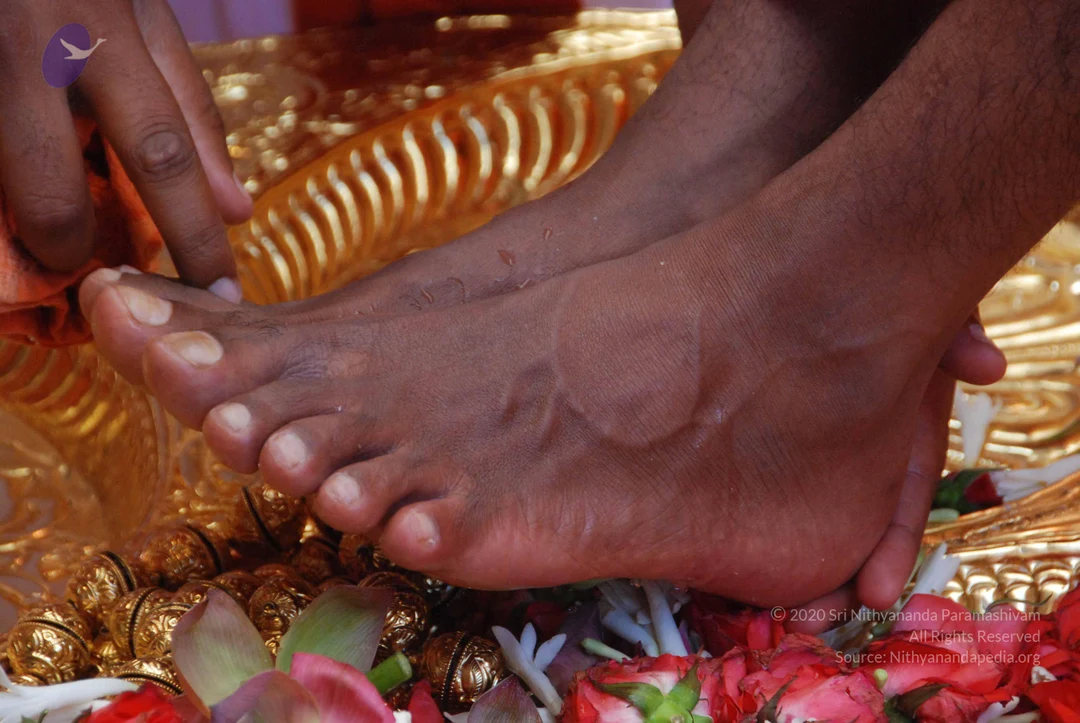
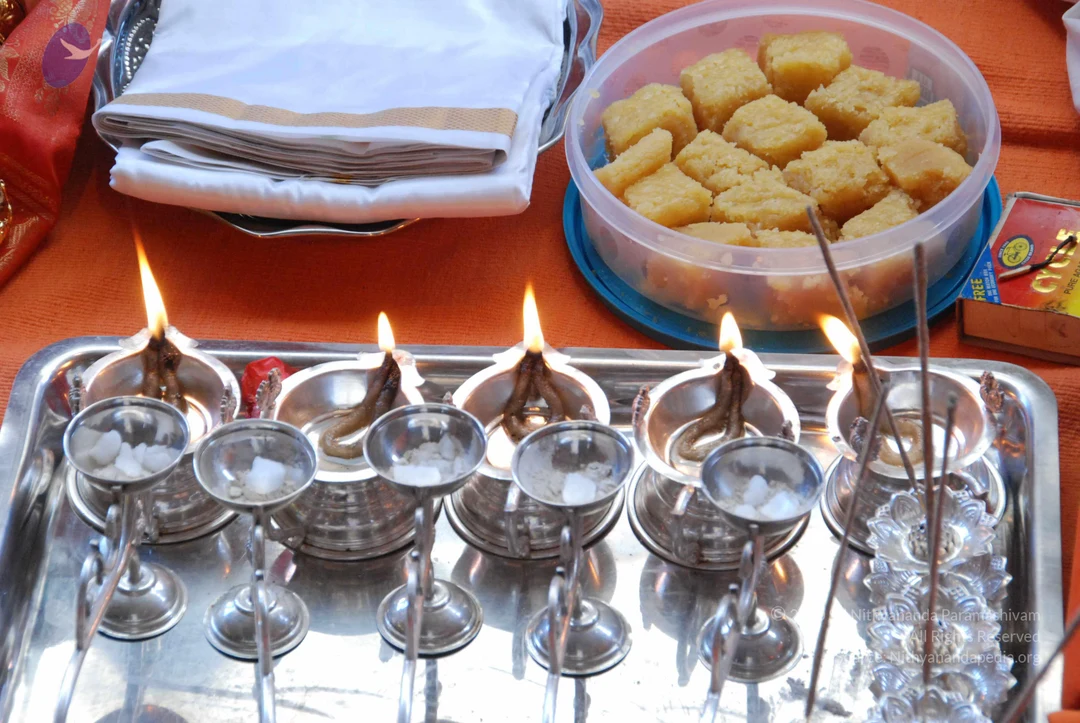
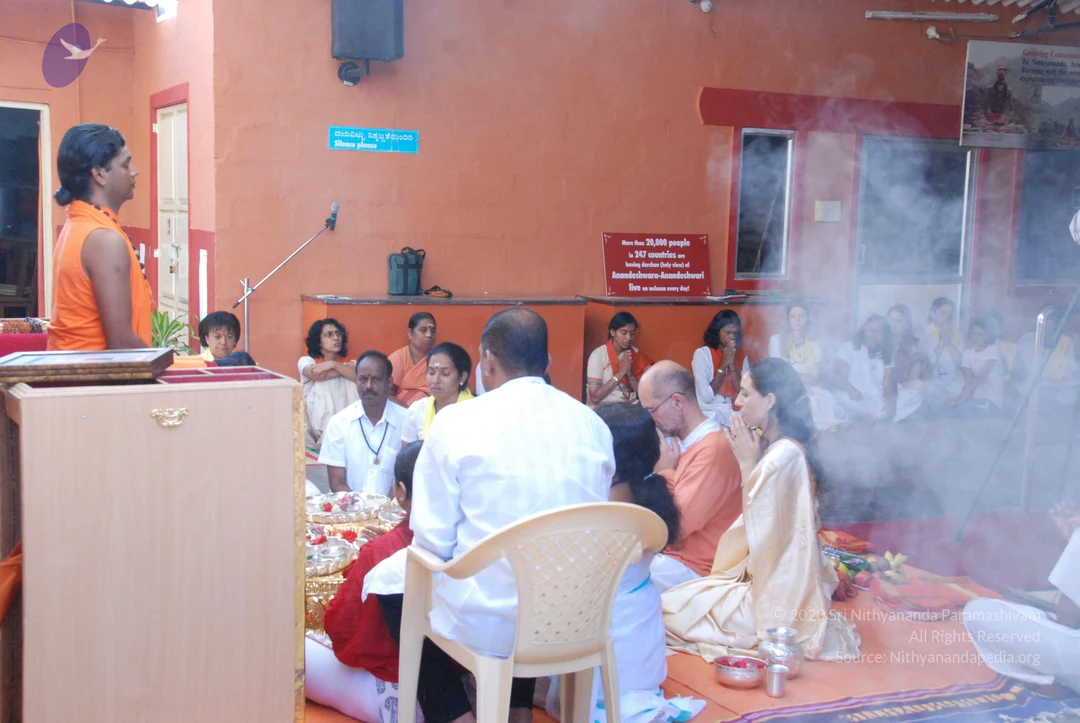
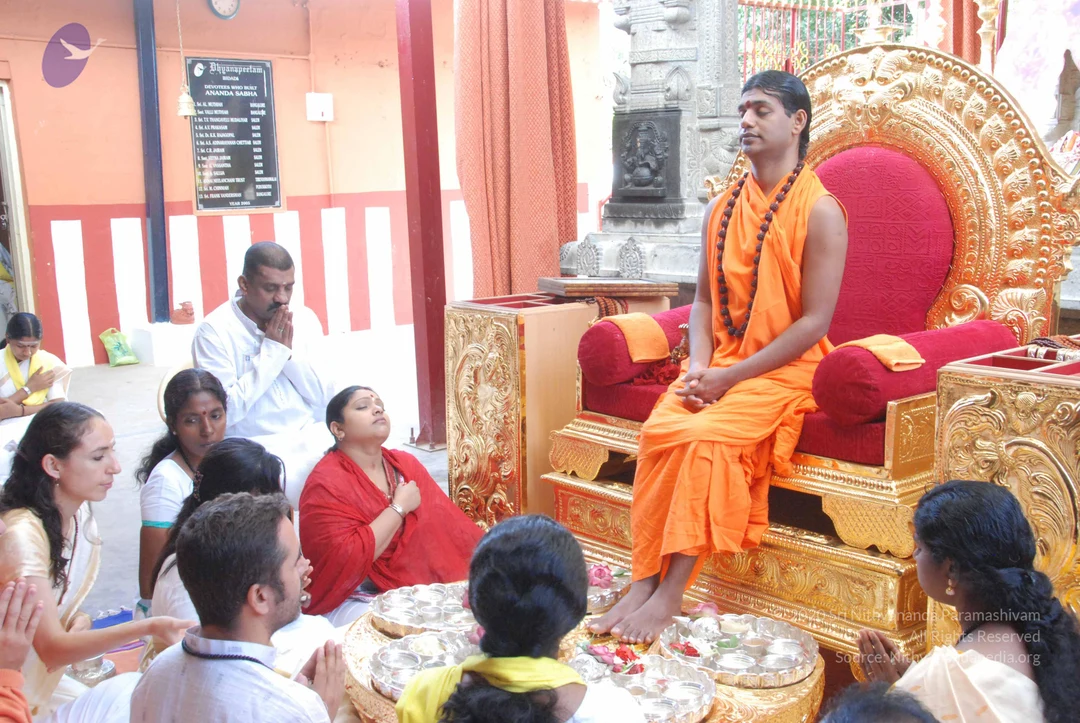
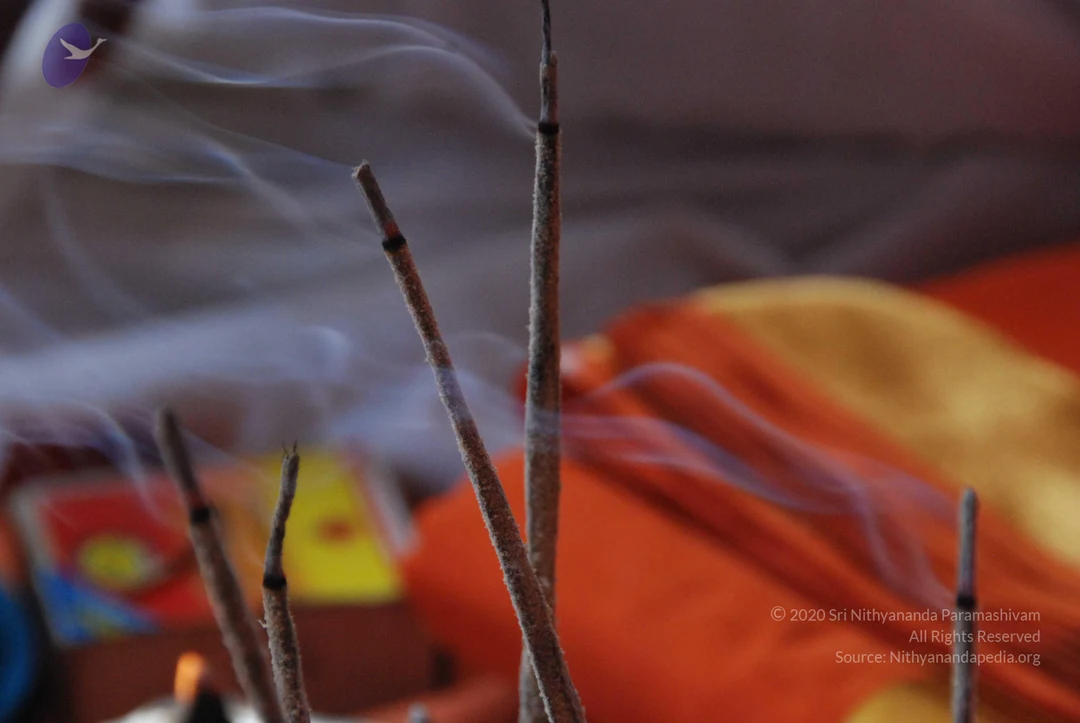
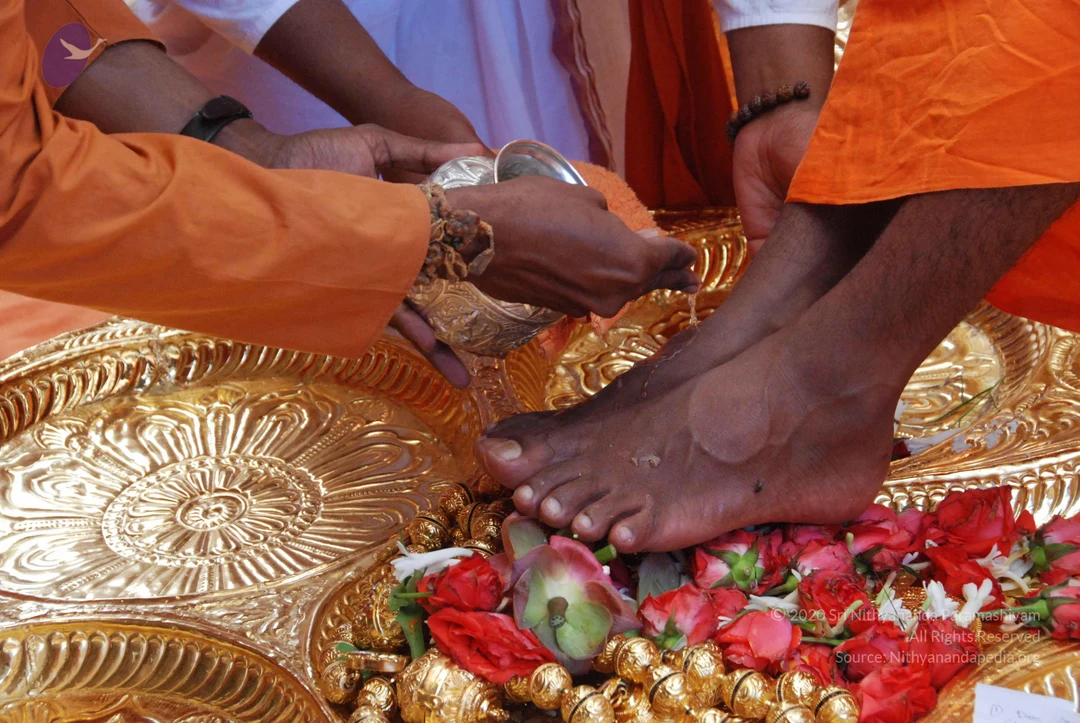
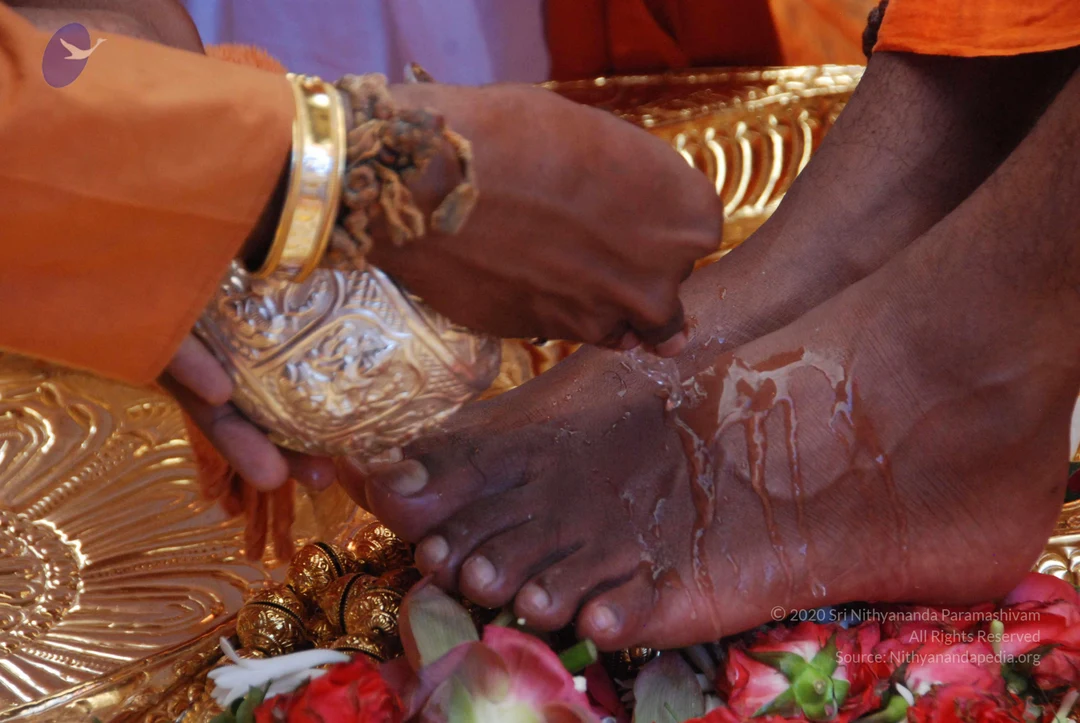
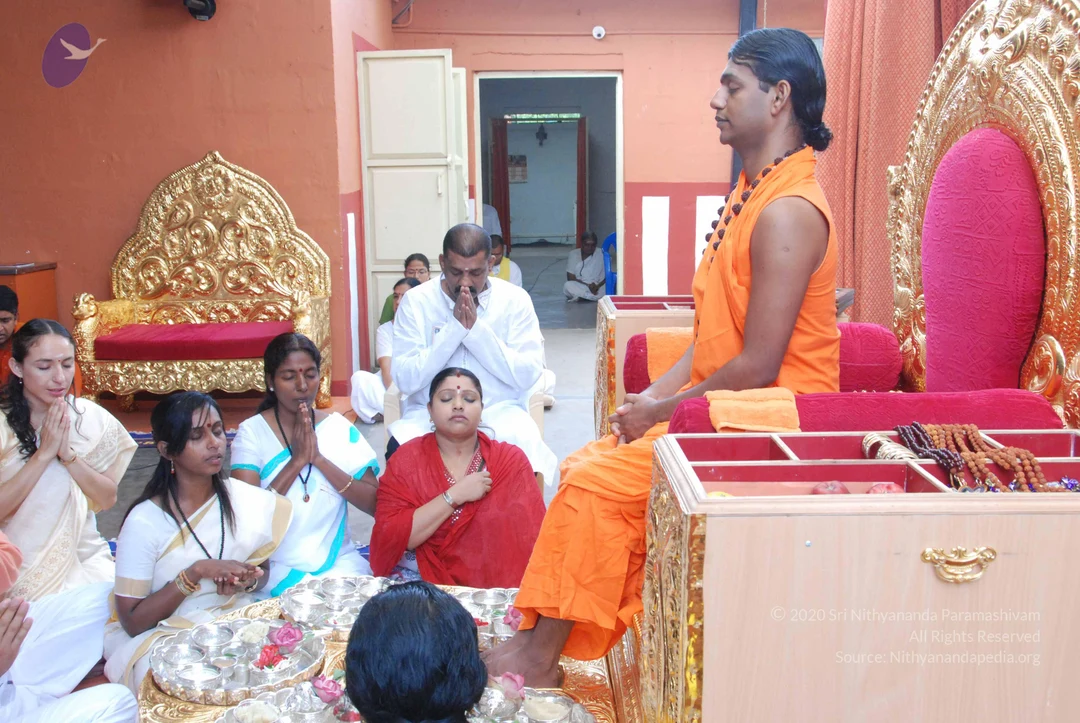
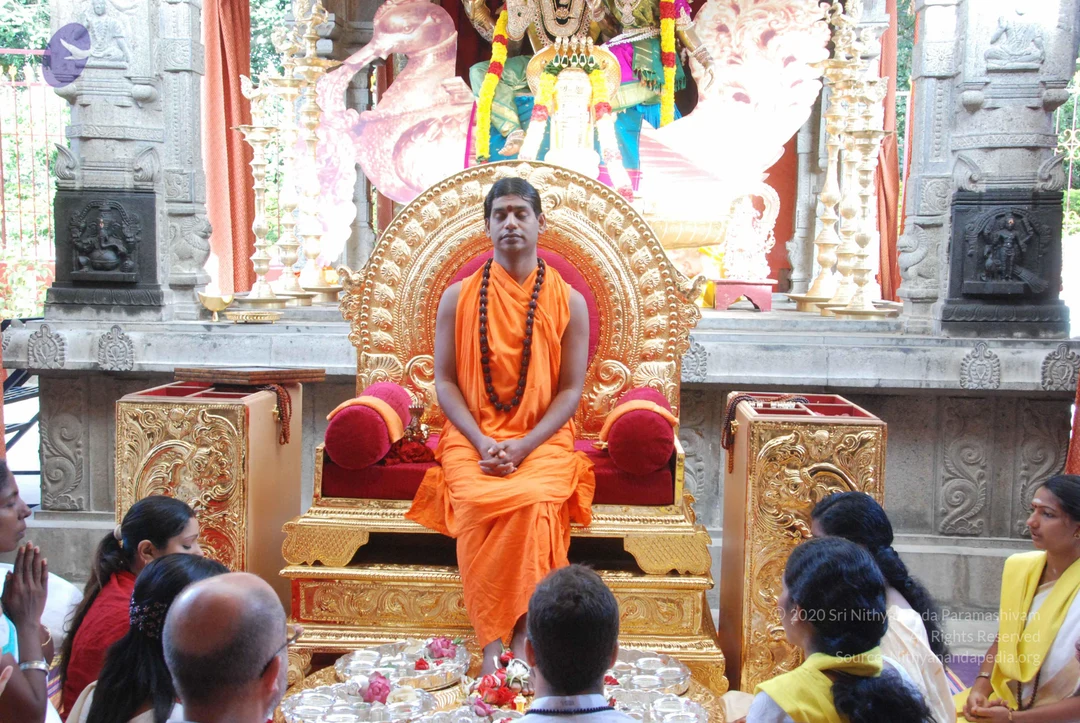
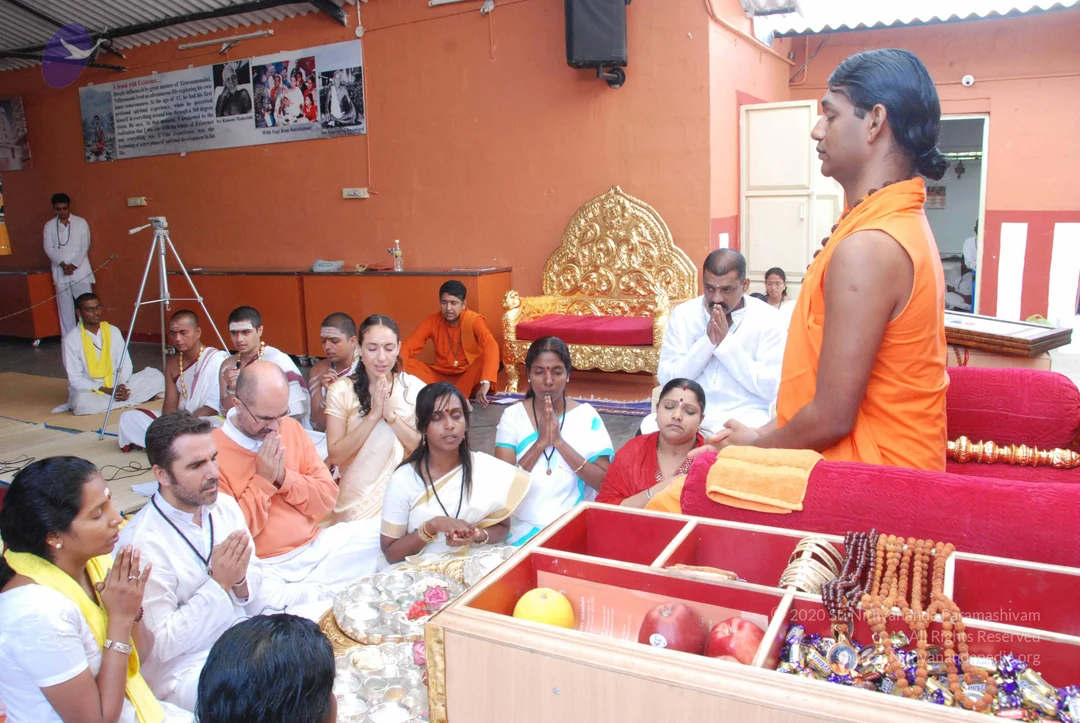
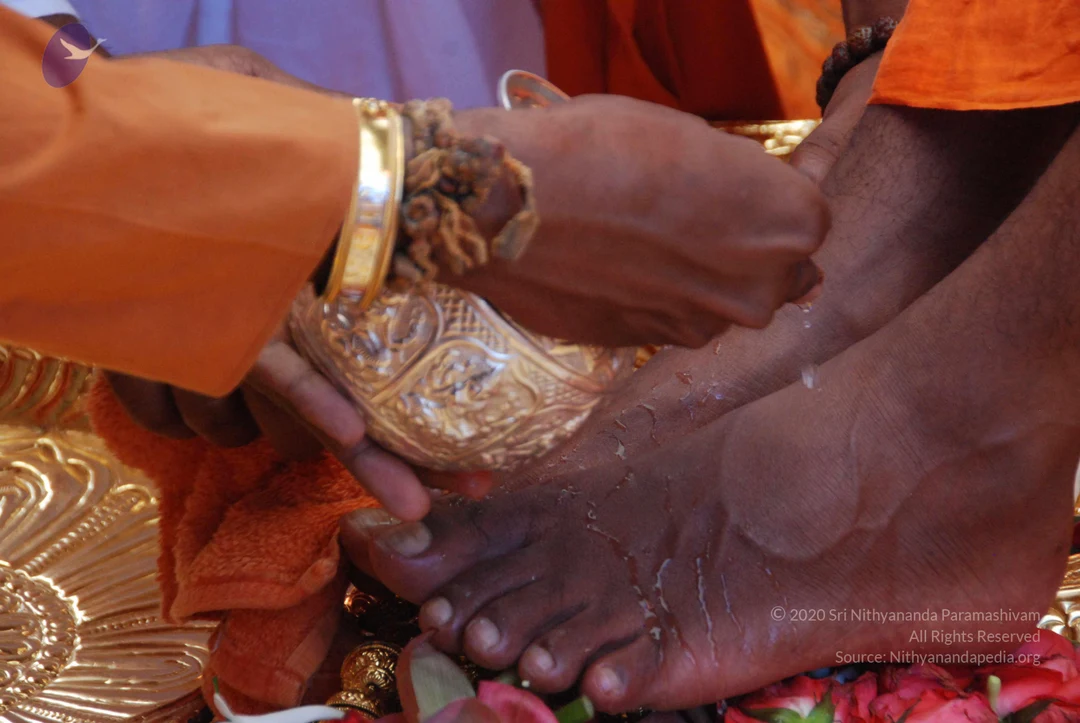
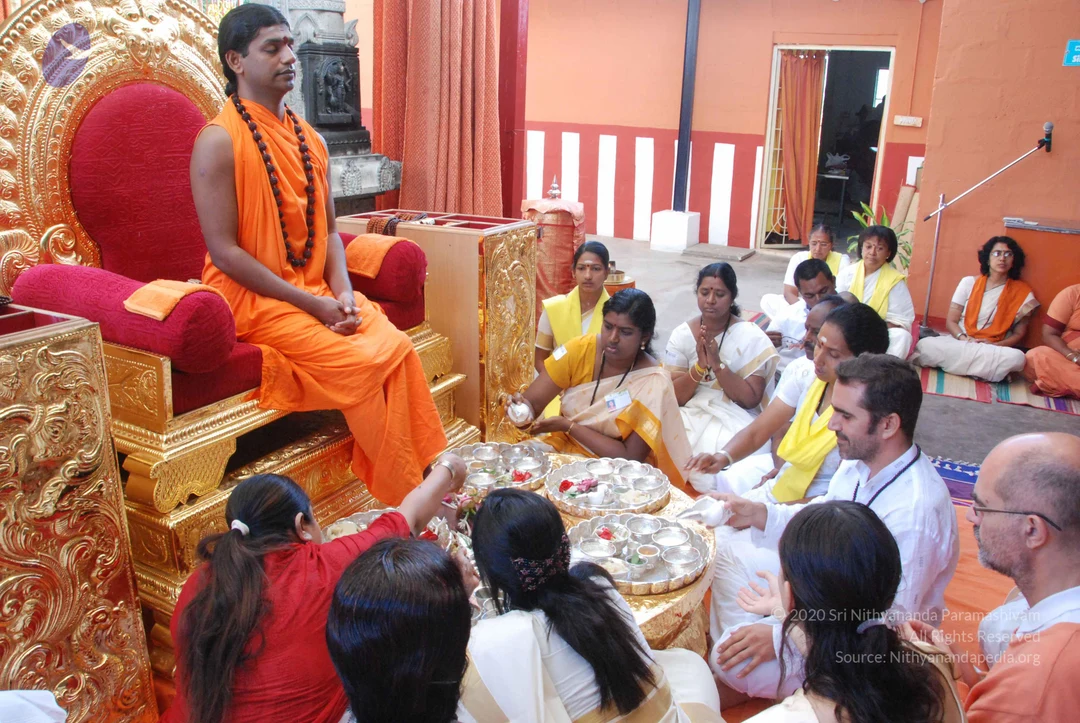
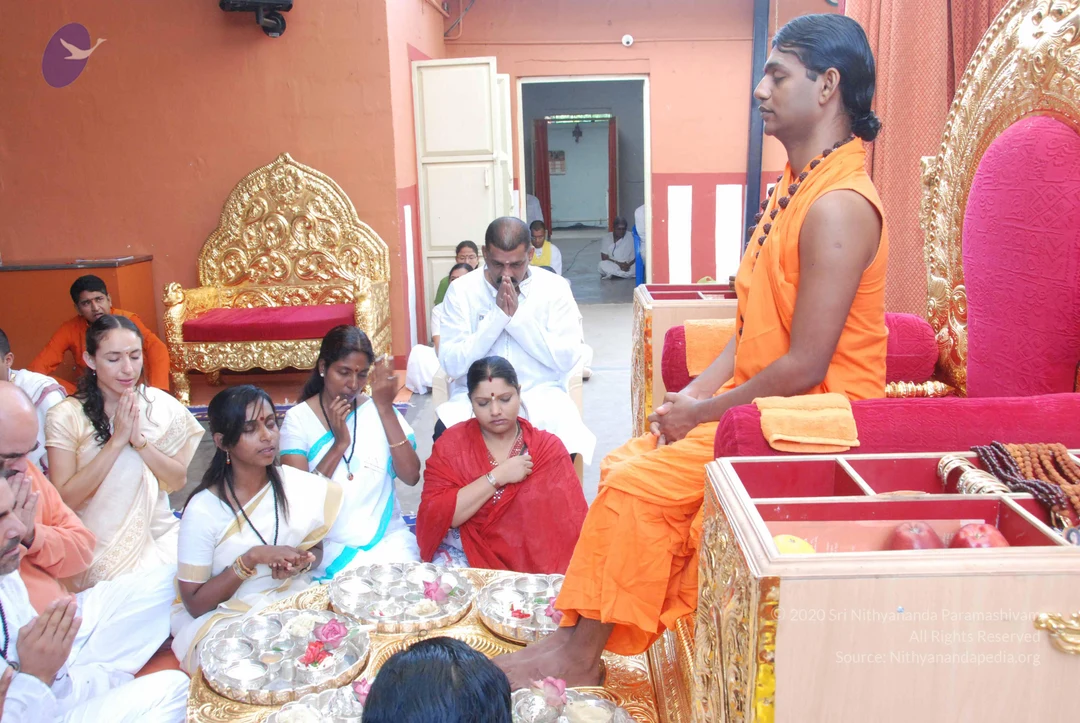
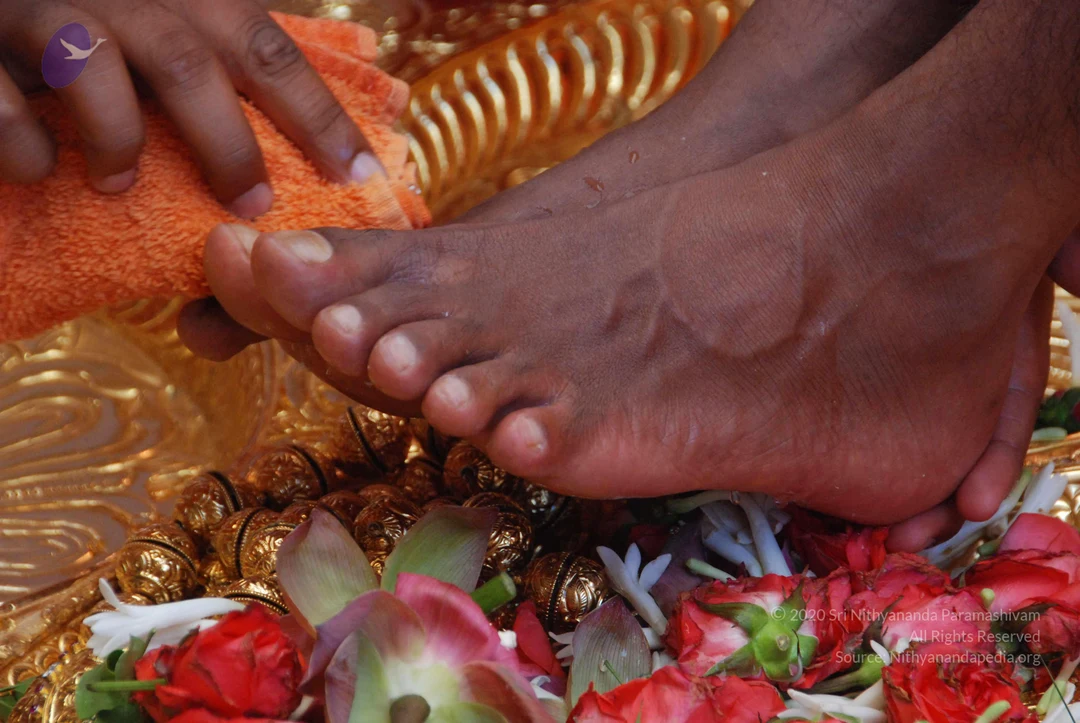
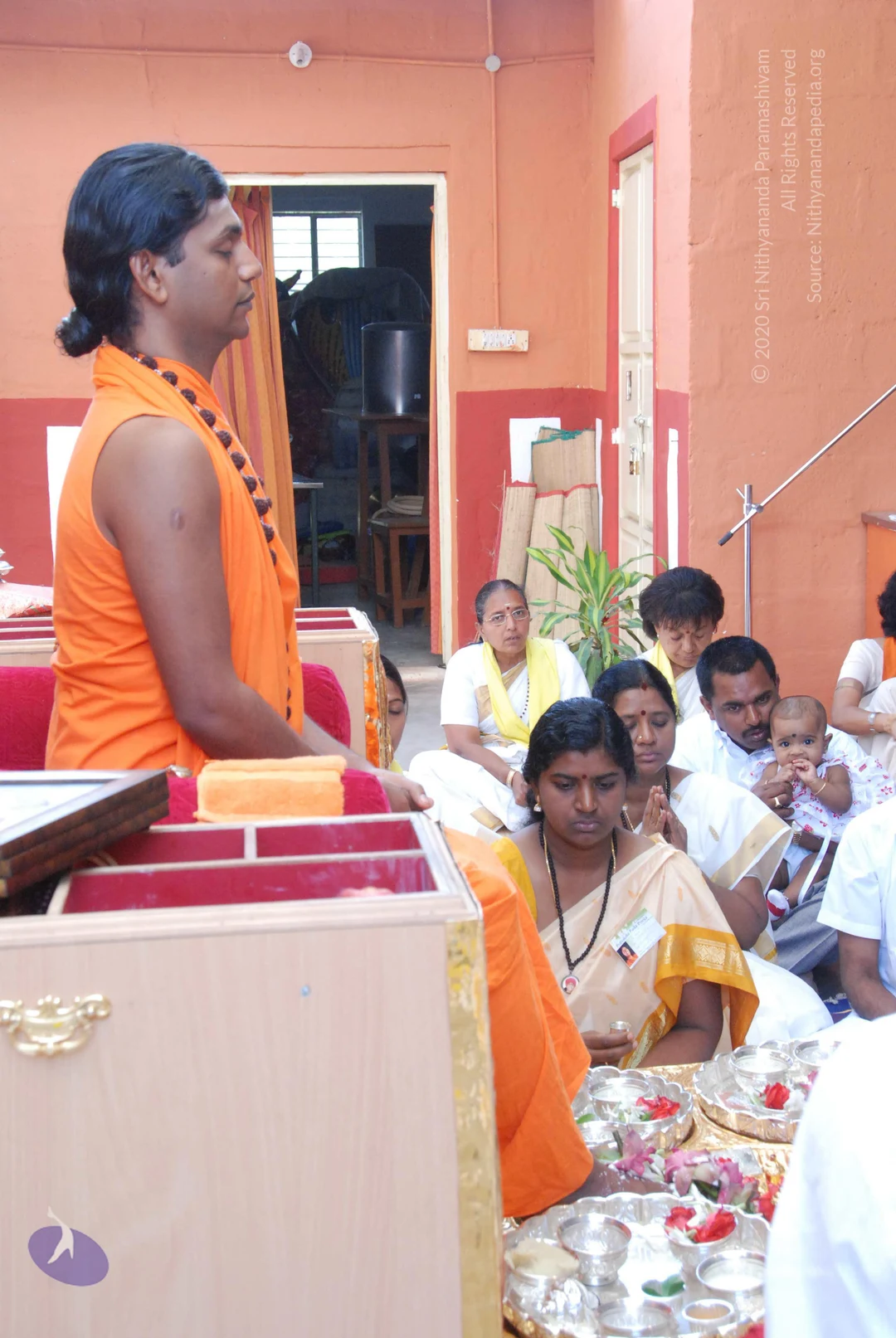
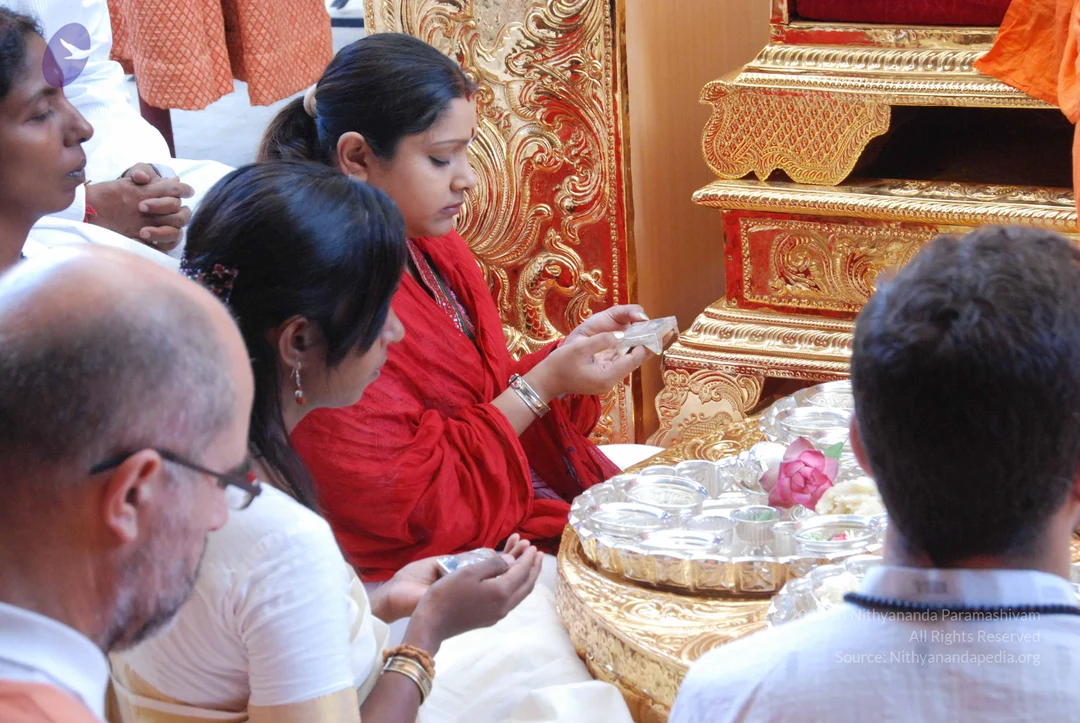
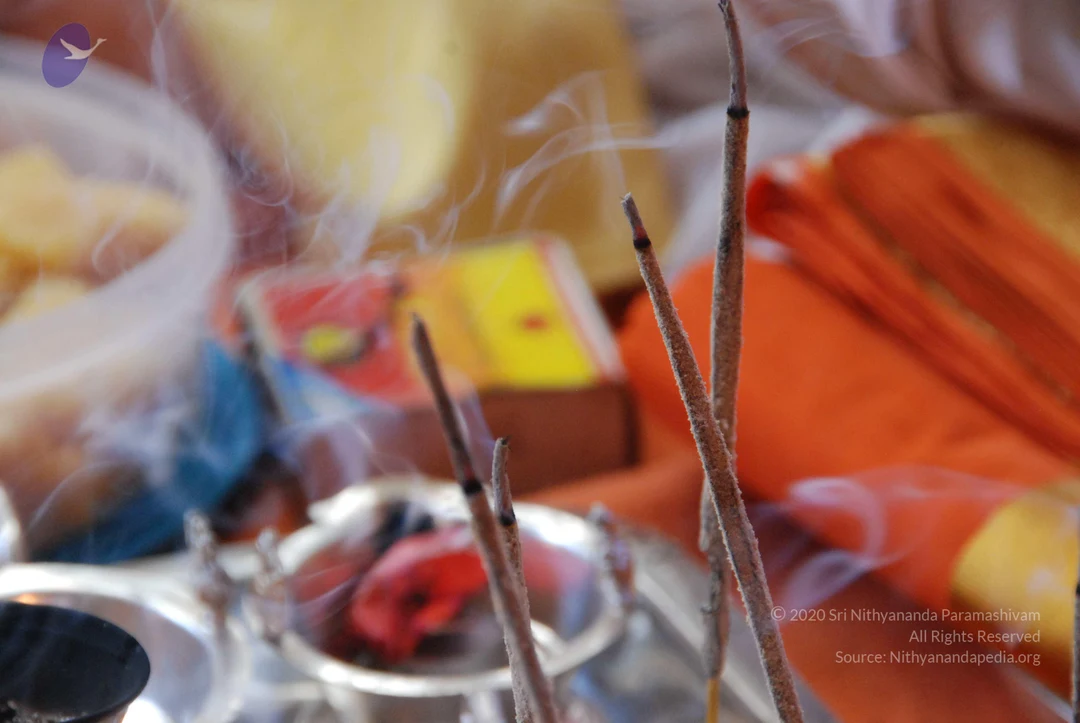
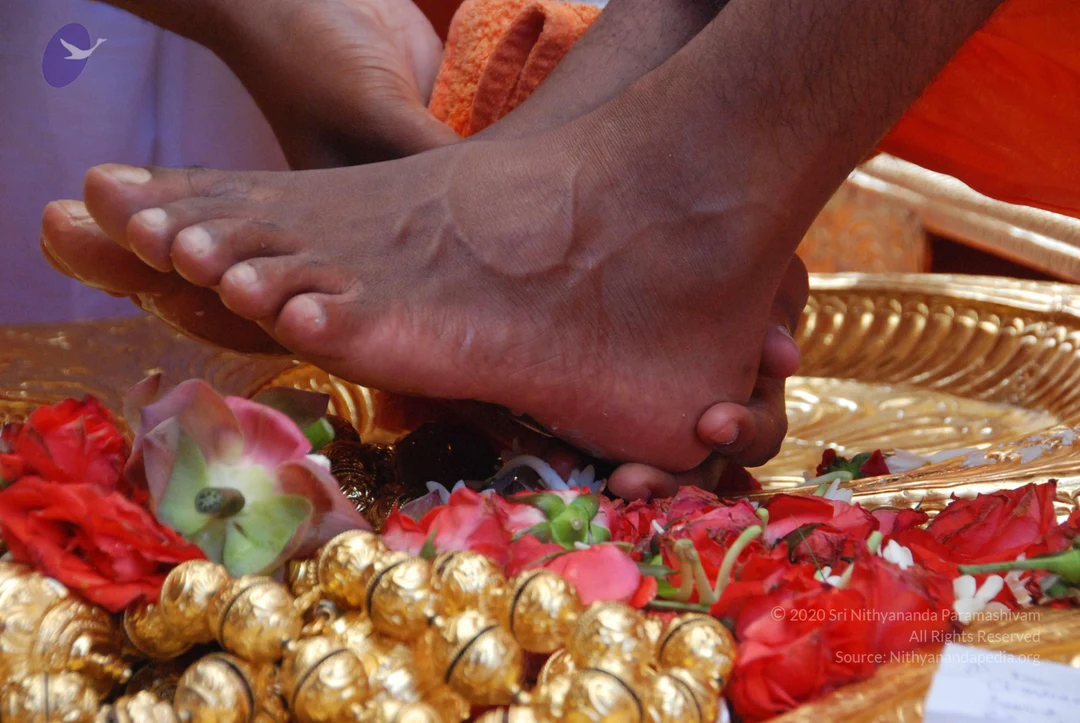
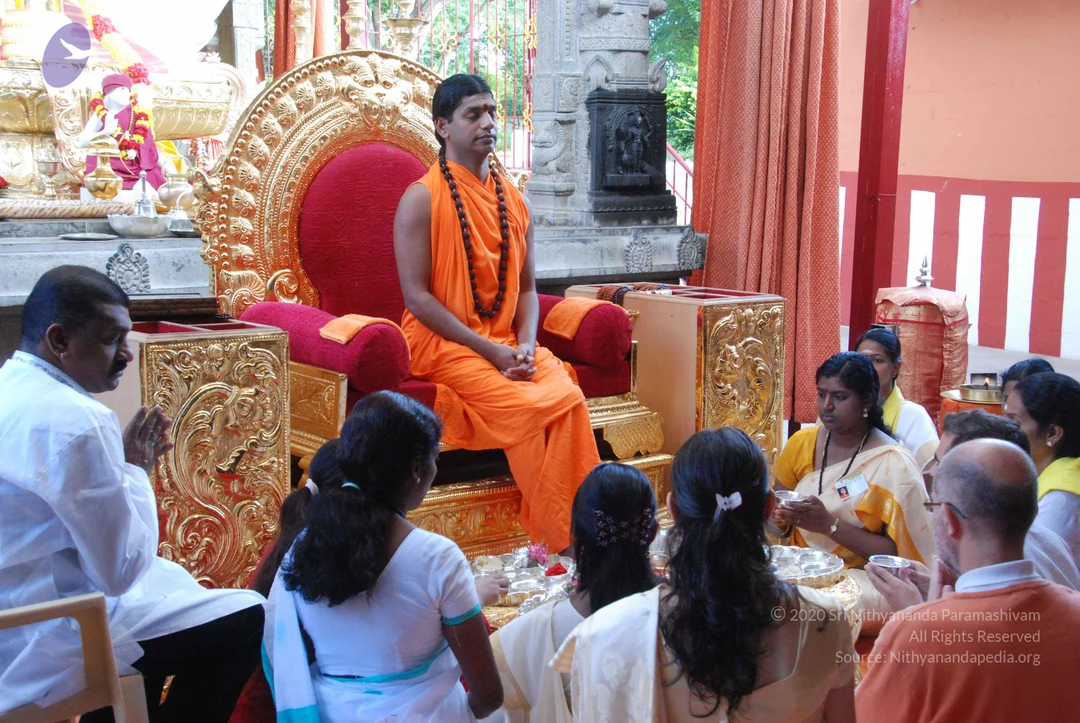
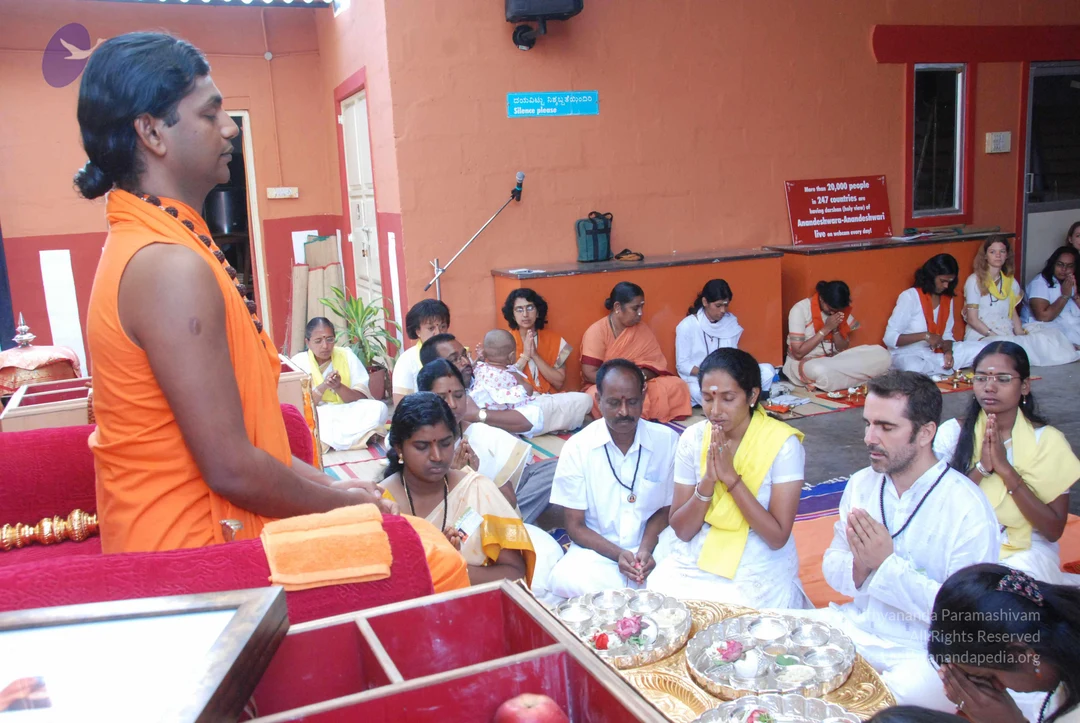
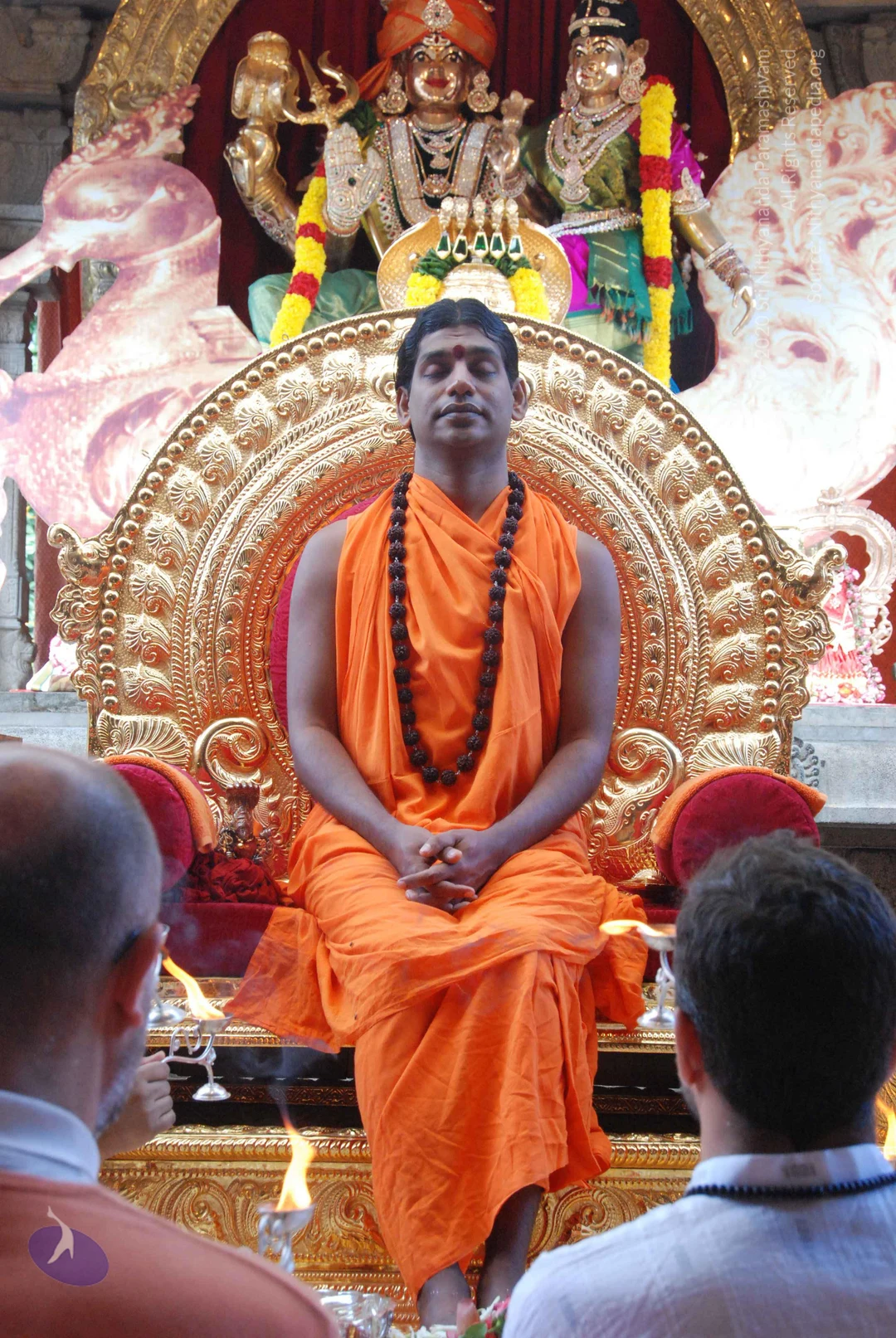
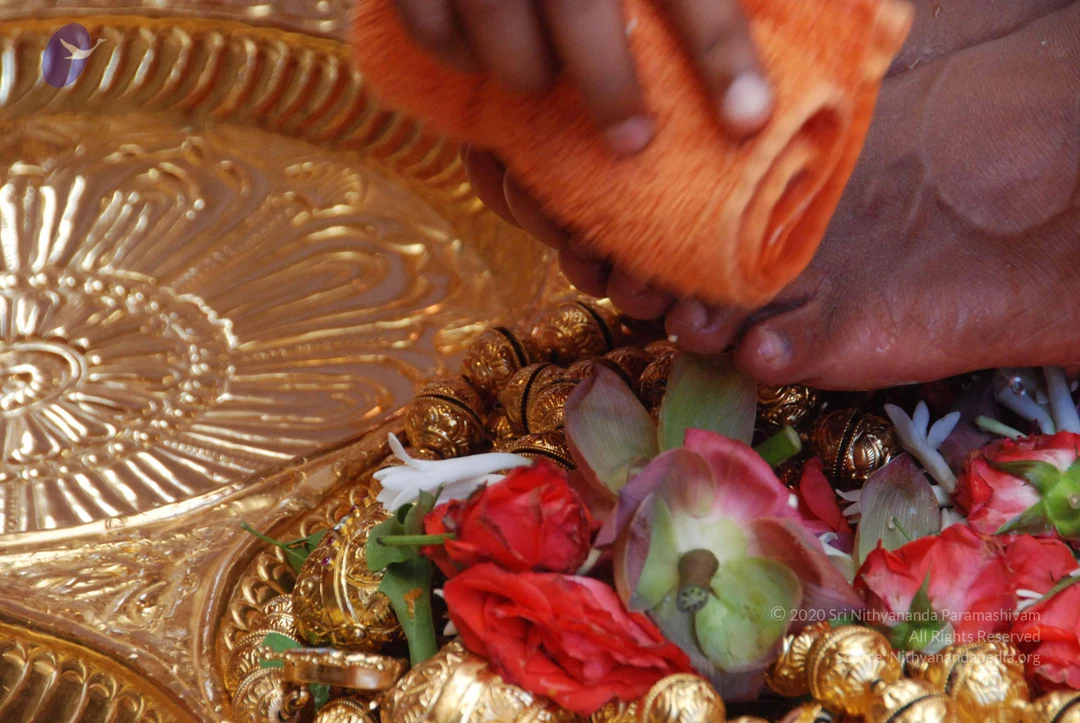
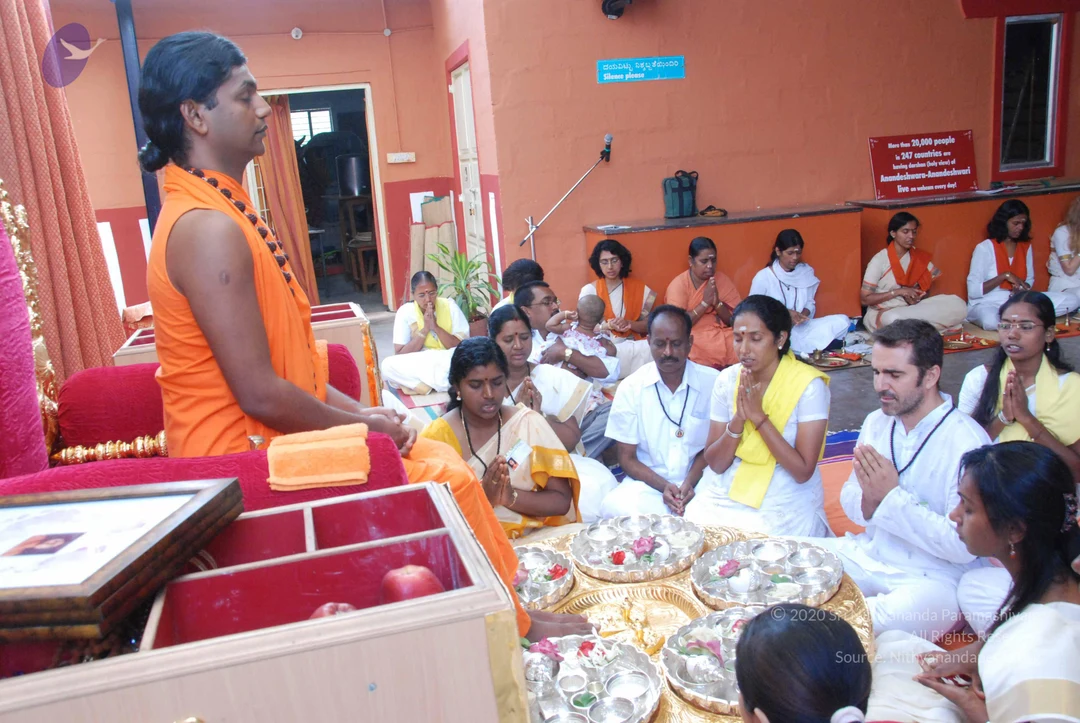
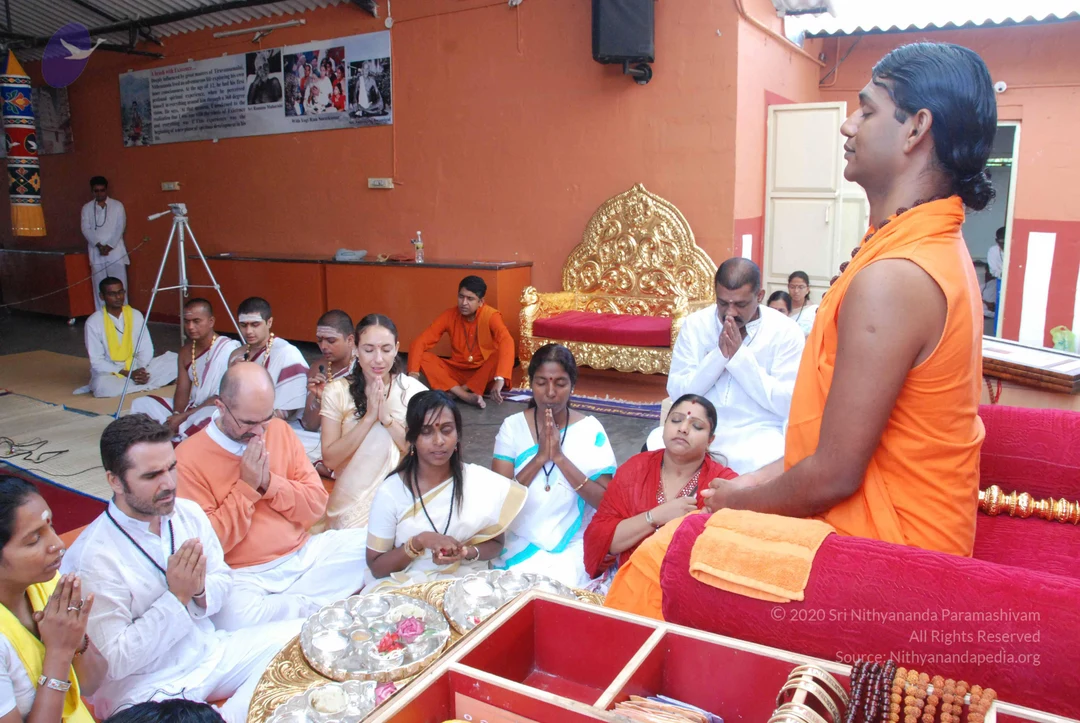
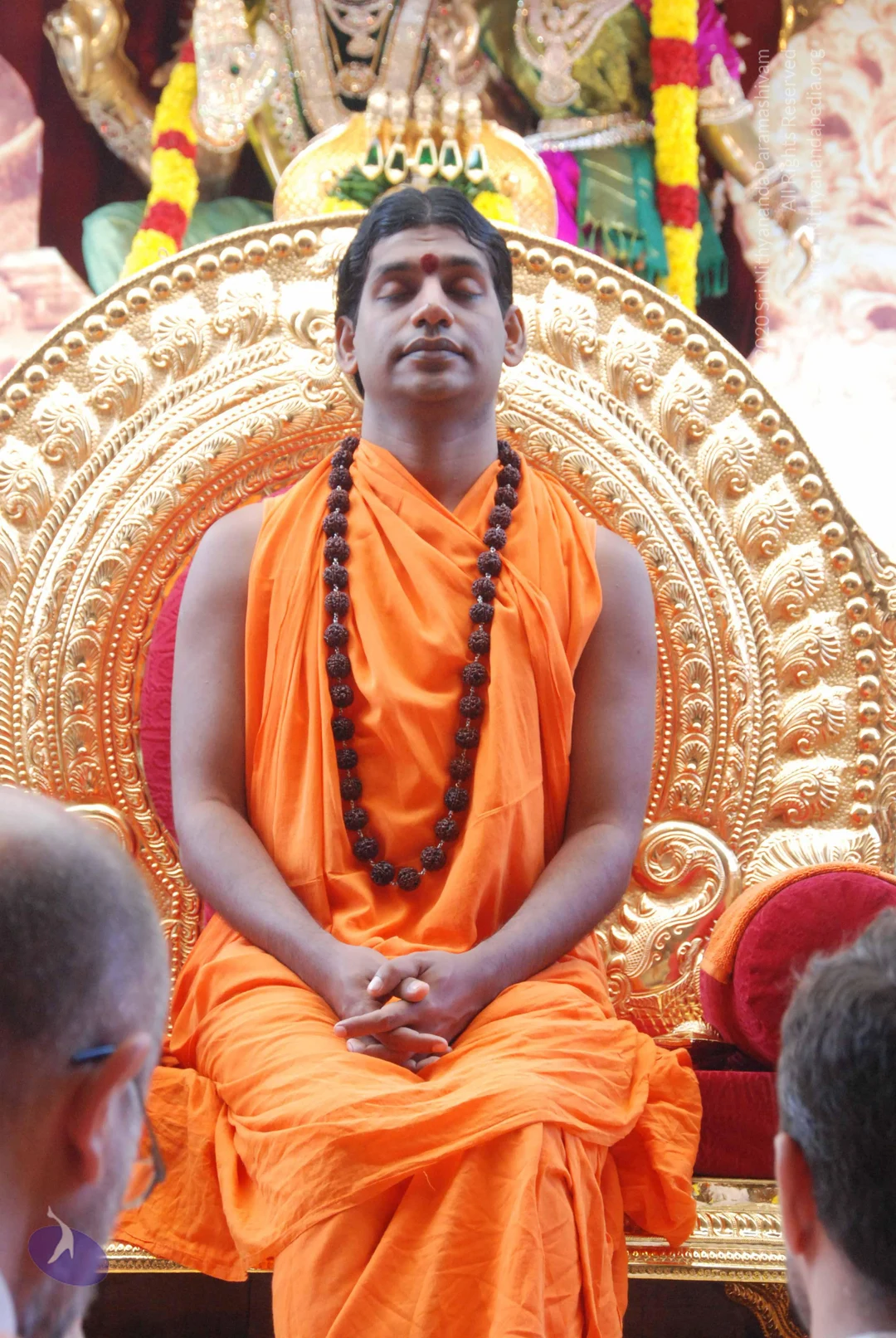
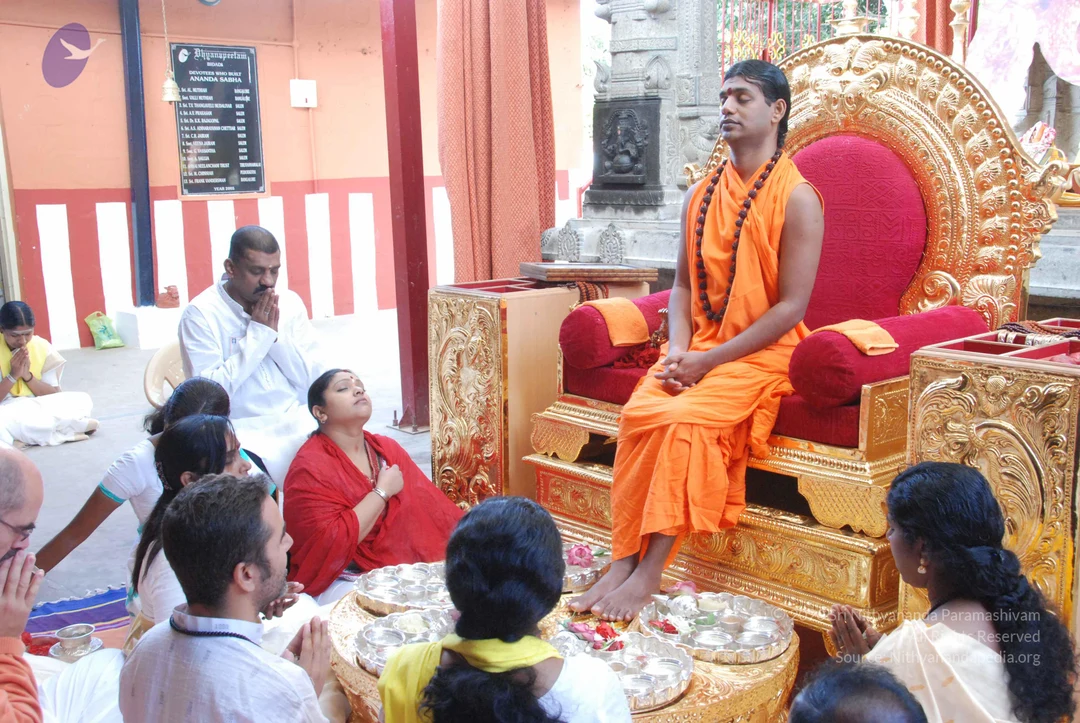
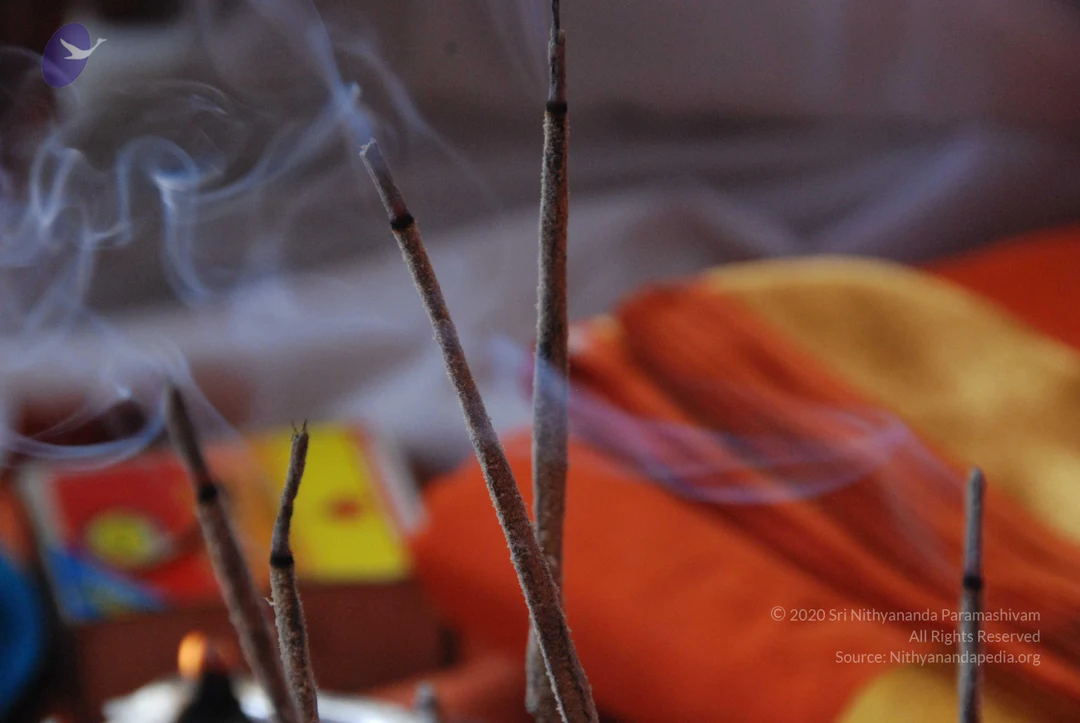
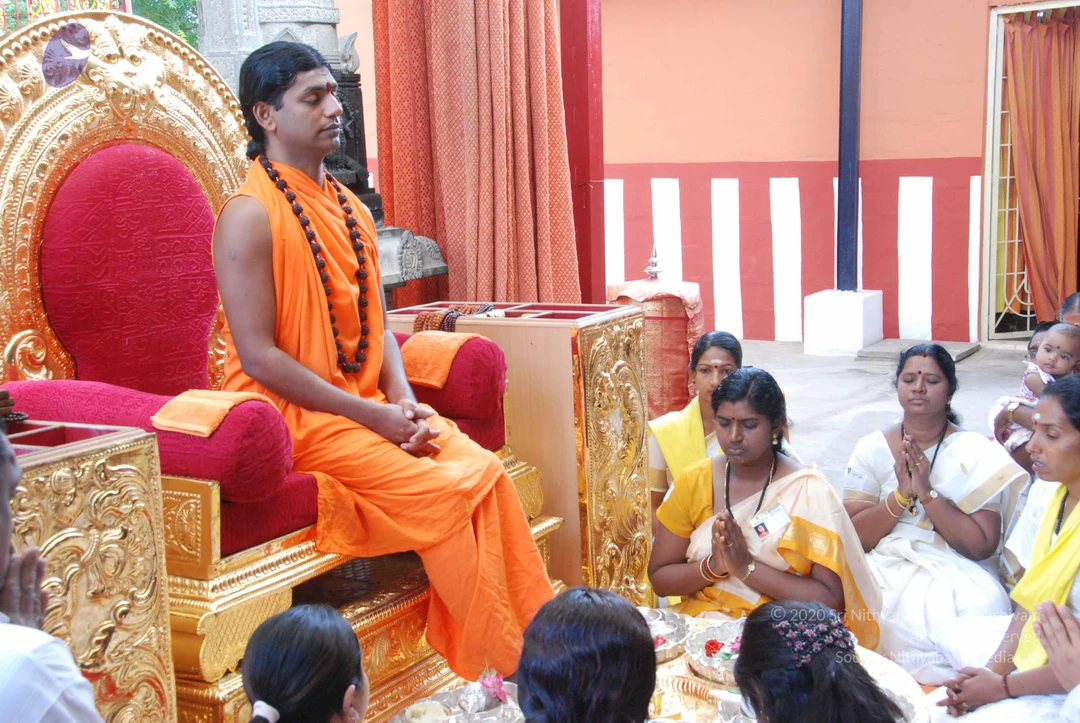
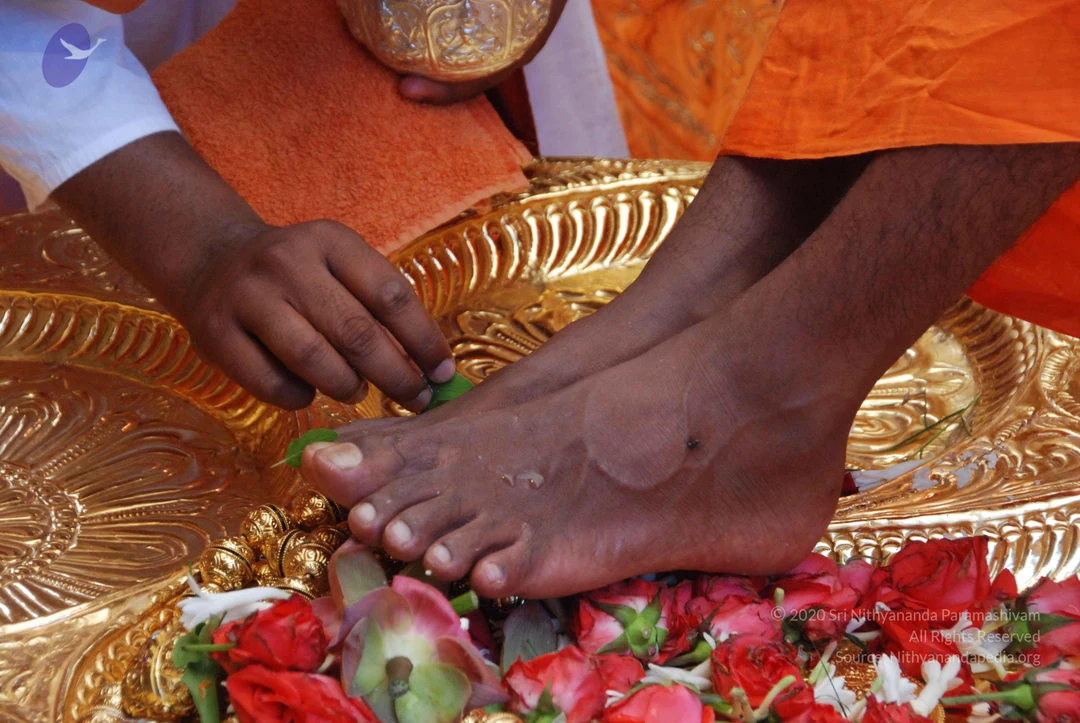
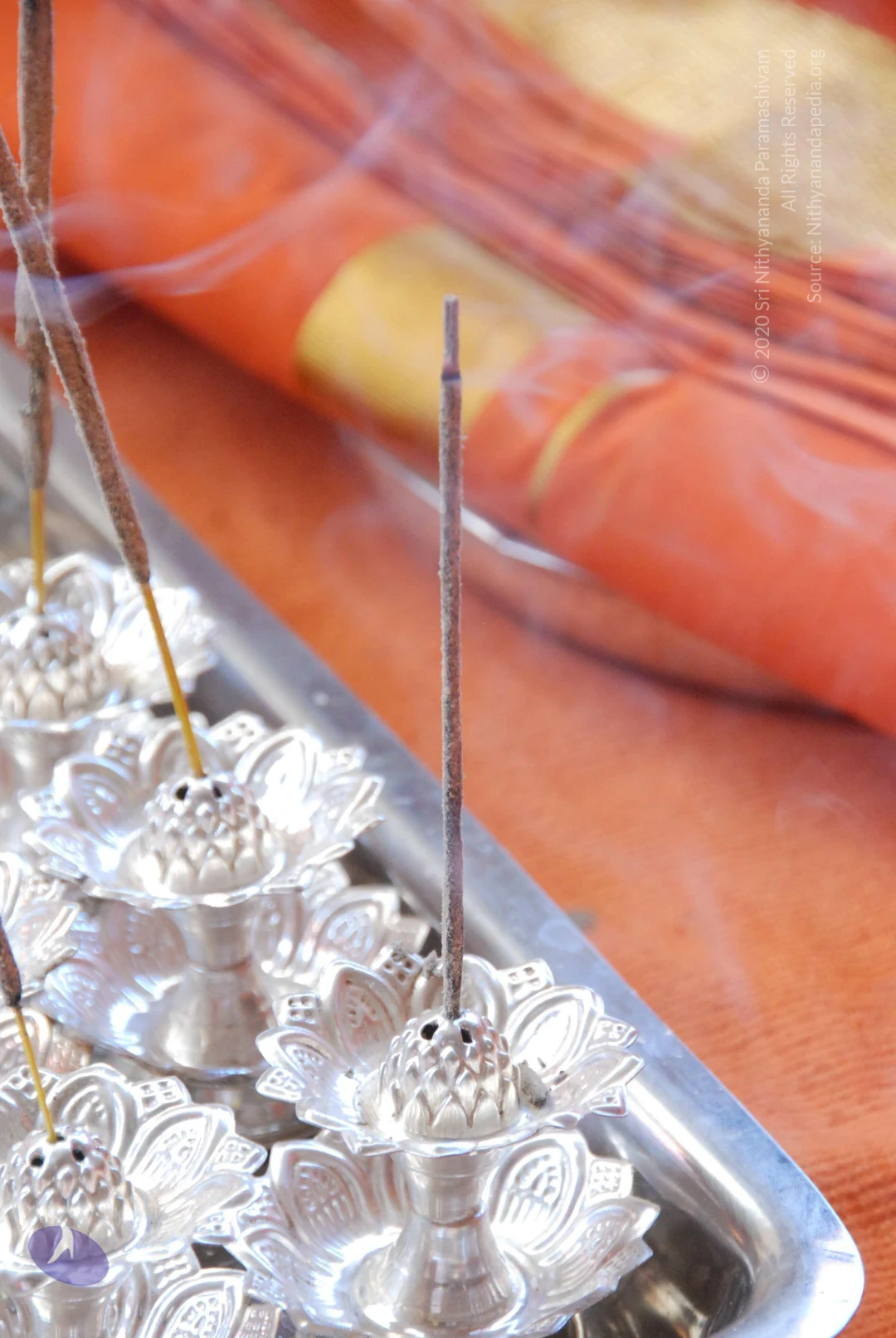
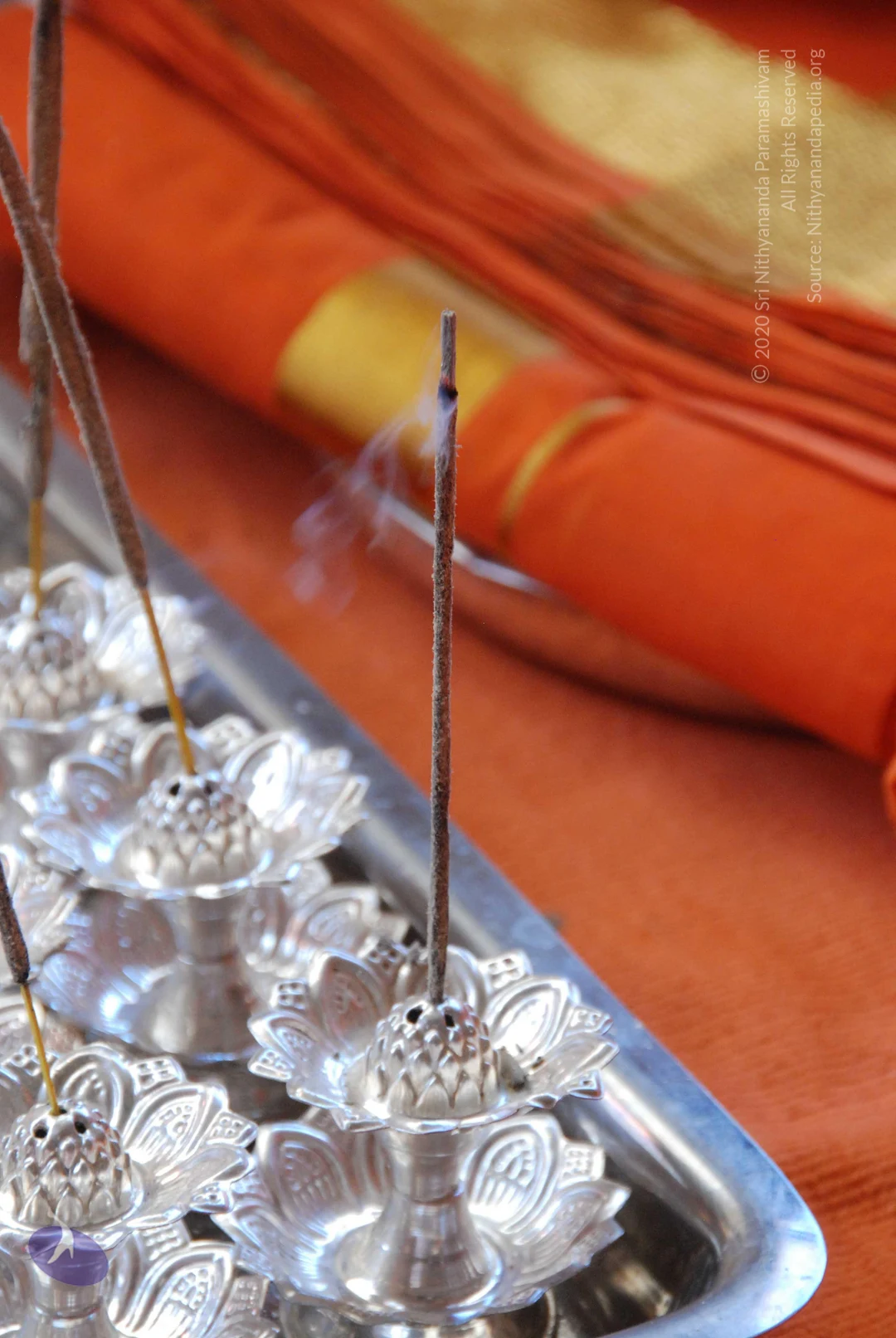
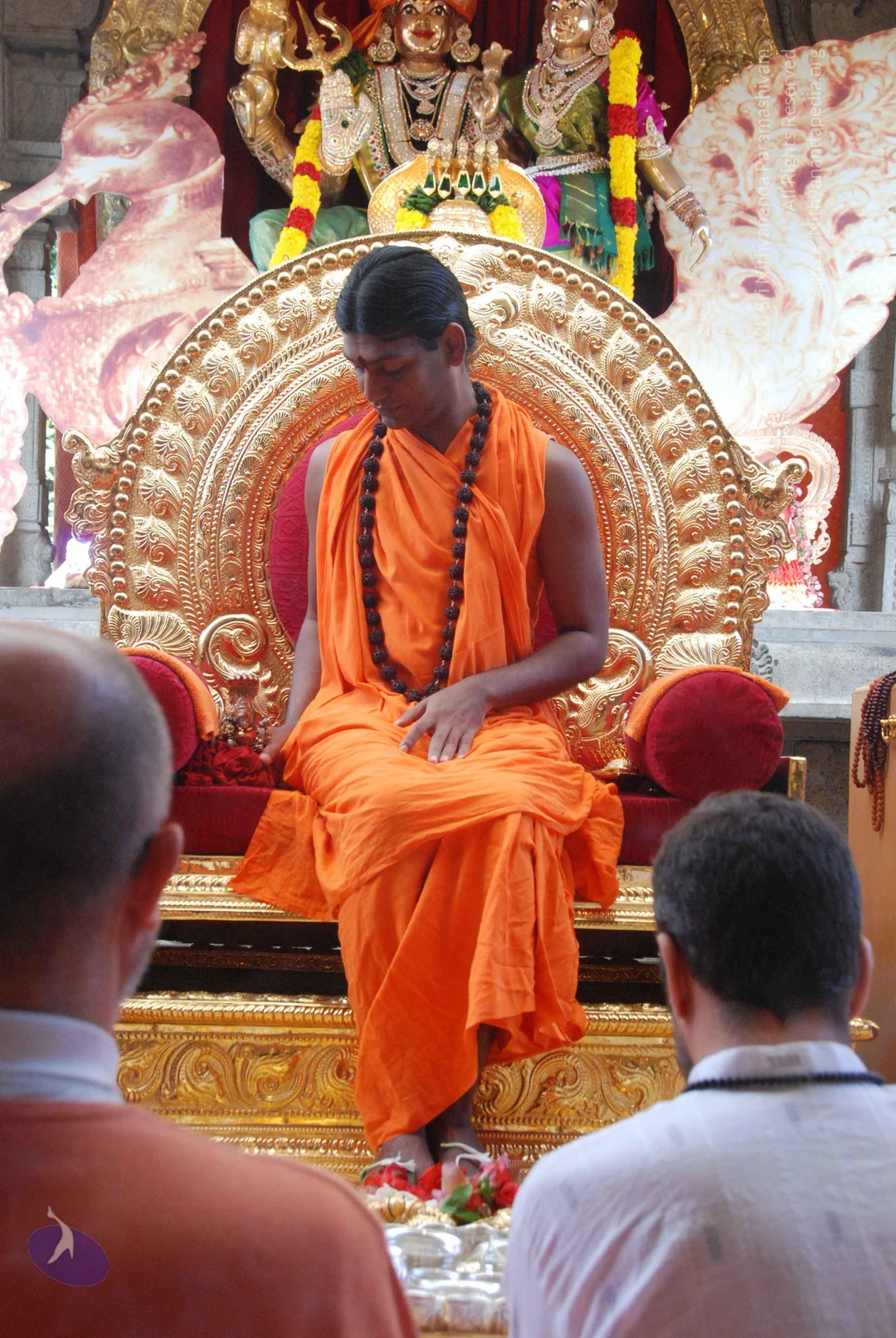
Close-up photograph of a man seated in front of an ornate gold throne-back with carved floral scrollwork and gold beaded rim. He has his eyes closed, a red kumkum mark on his forehead and dark hair swept back. He wears an orange saffron wrap over his shoulders and a long dark rudraksha mala reaching to his chest. Yellow flower garlands and a colourful backdrop appear behind him.Close-up photograph of incense sticks burning in a silver puja plate, with thin trails of smoke rising. Behind them, blurred, are a clear plastic container holding yellow sweets or offerings, a red and yellow matchbox, folded orange and saffron cloth, and a yellow cloth. No people are visible. Shallow focus blurs the background objects.Close-up photograph of a pair of bare feet being washed during a padapuja. A hand in the upper left holds a folded orange cloth and dabs at the top of the right foot, while the sole and toes rest on a polished gold tray. Red roses, pink lotus-like blossoms, and scattered gold ornaments or coins surround the feet. The person wears orange cloth at the leg, and a blue fabric is visible at the left edge.A man in saffron-orange robes sits cross-legged on an ornate gold throne with red cushions, hands folded in his lap, wearing a long rudraksha mala. Behind him stand gold-embellished side pedestals and a richly decorated temple shrine with brass lamps and colourful drapes. Several devotees sit before him on the floor, partly visible at the lower edge, including a bald man in glasses, a woman in red, and a woman in yellow. Silver plates with flowers and offerings rest in the foreground. Swamiji (probable): the seated saffron-robed figure on the throne with a rudraksha mala and long hair is a candidate for the Swamiji, appearing in person.A man in orange saffron robes and a rudraksha mala sits with eyes closed and hands clasped on an ornate gold throne with red velvet cushions. A red tilak mark is on his forehead. Behind him, deity murti with garlands and pink and red cloth. In the foreground, a man in white with his back to the camera faces the throne, with silver trays of flowers, rose petals and small glass bowls. The setting appears to be a temple puja. The seated figure's appearance (orange robes, rudraksha mala, ceremonial throne) is consistent with a person, seated for the padapuja.A seated man in an orange robe and a rudraksha mala sits on an ornate gold-and-red throne with eyes closed and hands folded in his lap, while devotees kneel before him on the floor. Several women in white and yellow saris with folded hands in prayer sit in the foreground, and a man in white kneels at the right edge. Silver plates with flowers and offerings lie near the throne. The courtyard has orange walls with white vertical stripes and an orange curtain behind. The man in orange shows appearance cues associated with the Swamiji candidate (long swept-back hair, saffron robe, rudraksha mala) and is seated on the throne, so this is a probable Swamiji presence.
05

04-Sarva Darshan

21 dated photos in previewSource gallery
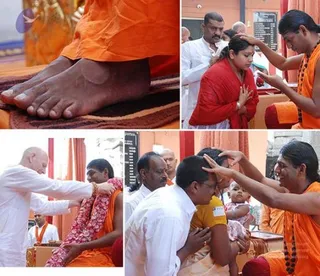
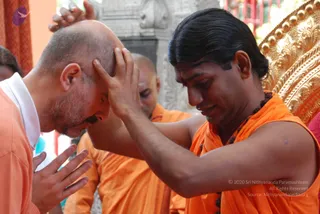
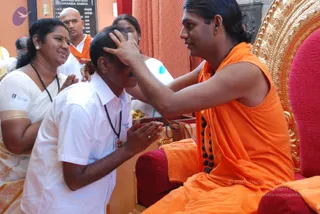
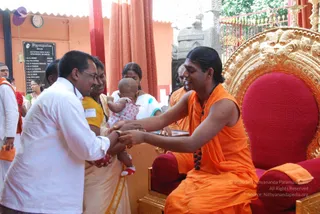
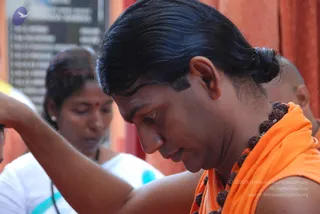
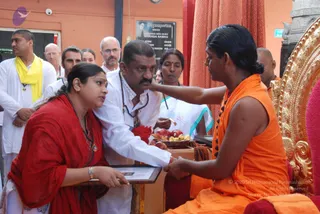
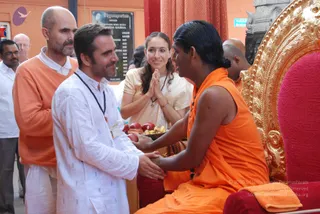
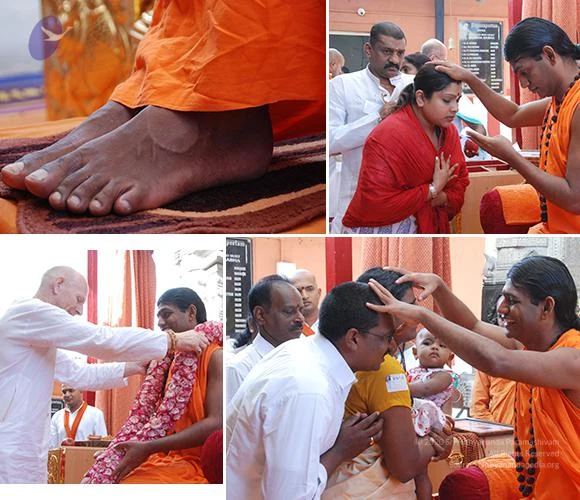
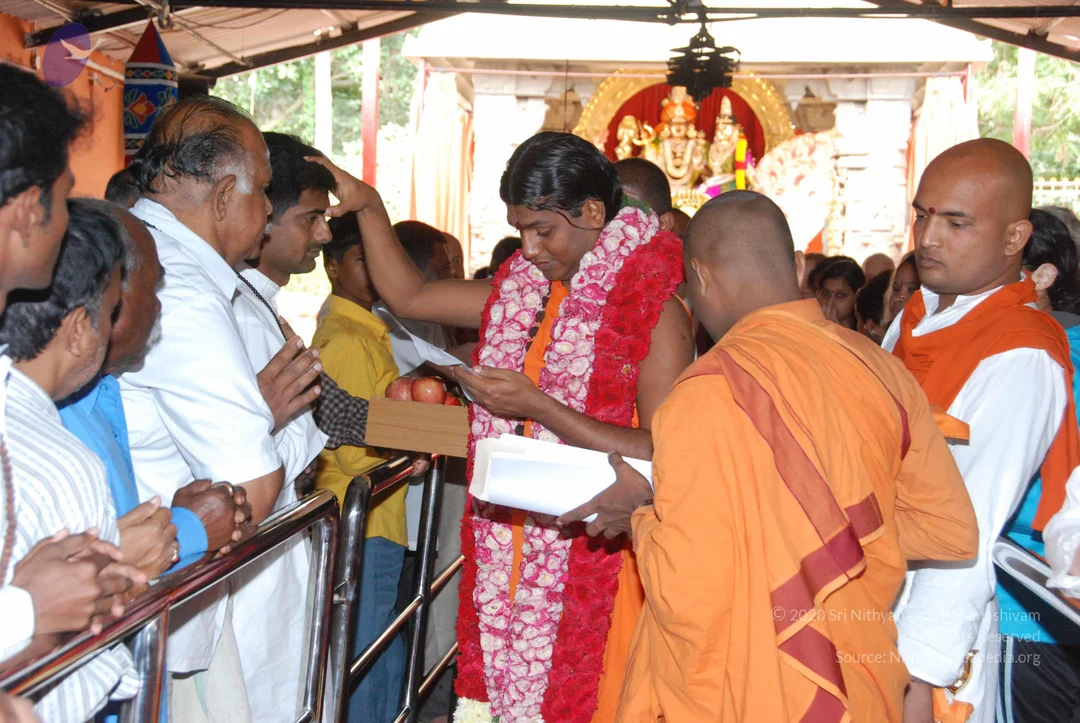
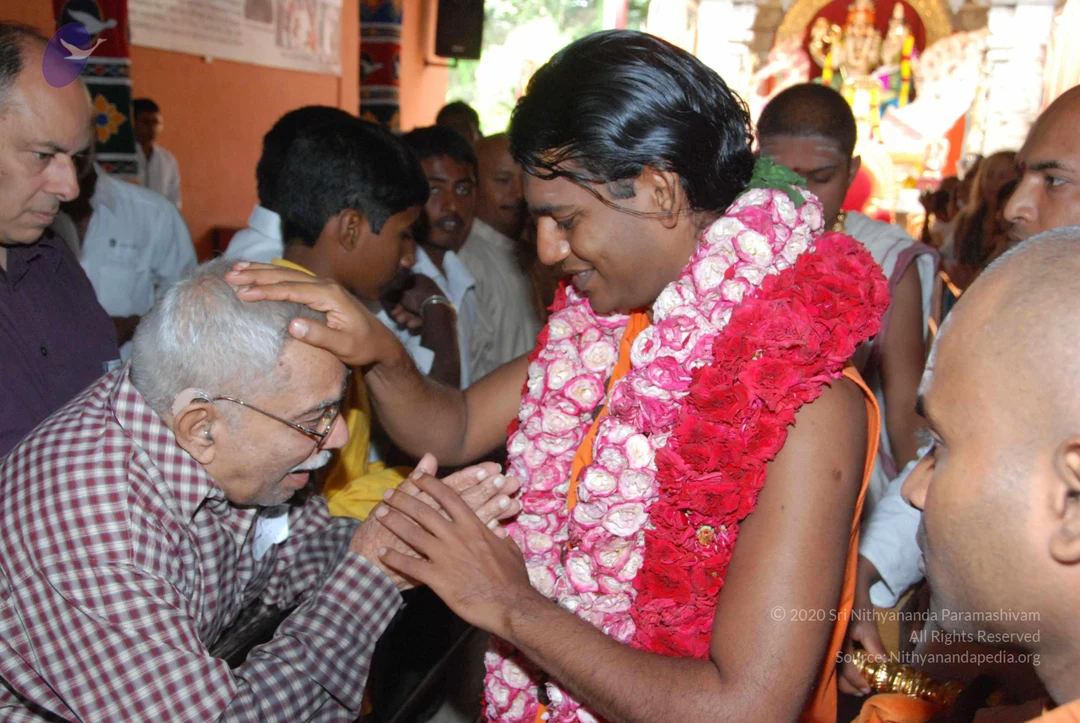
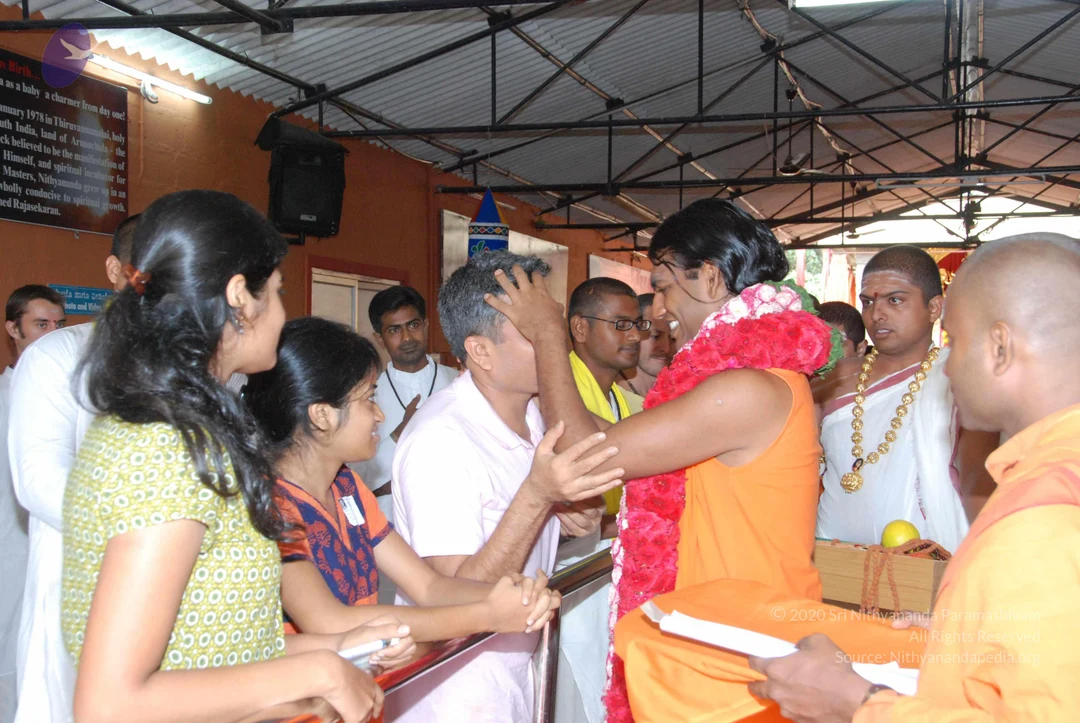
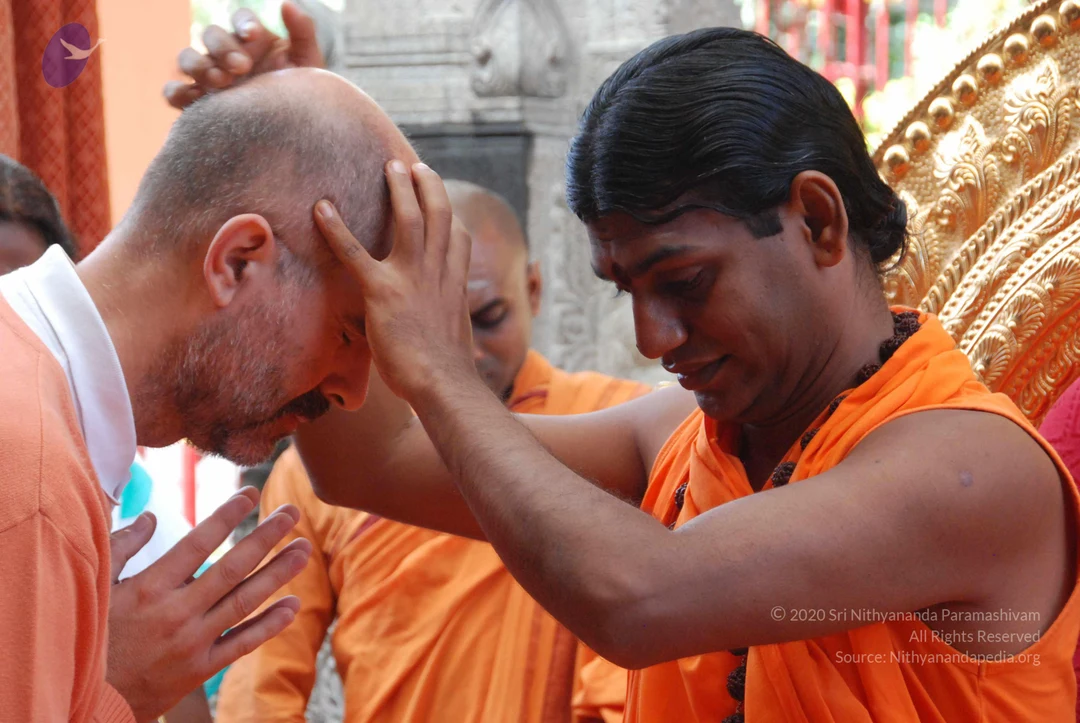
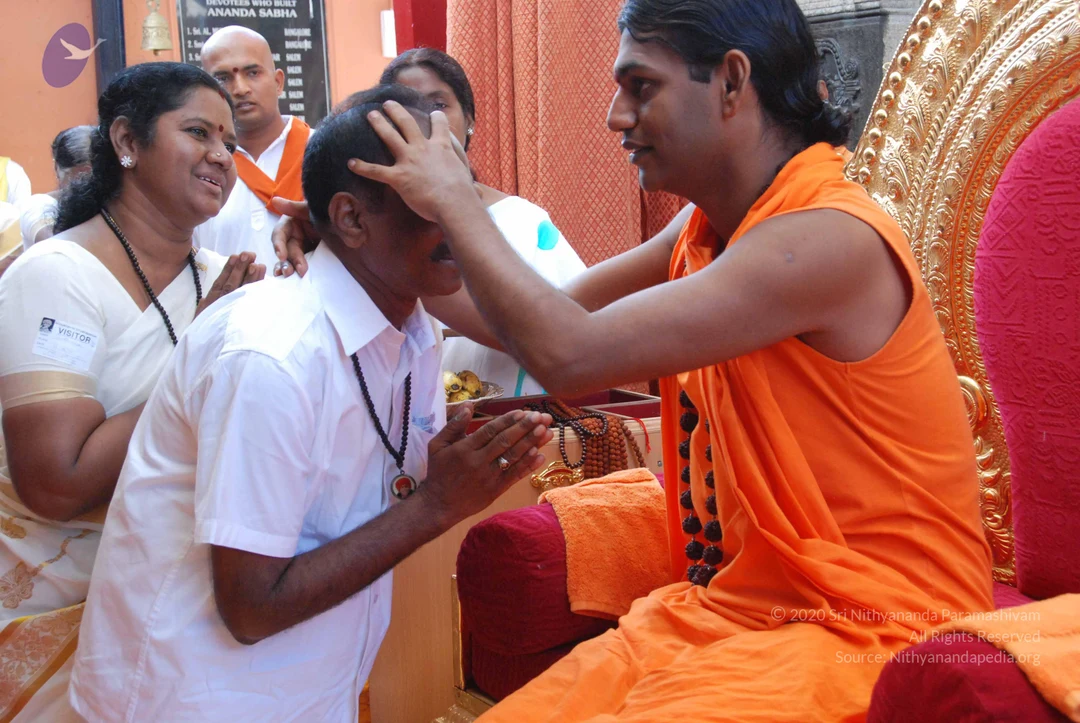
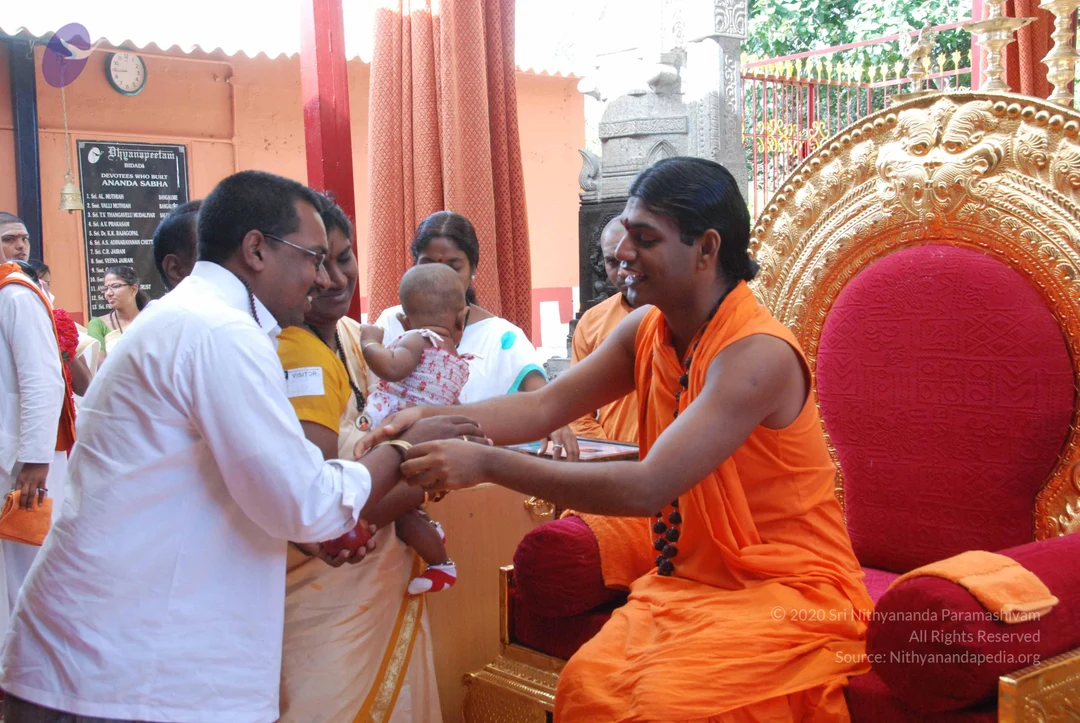
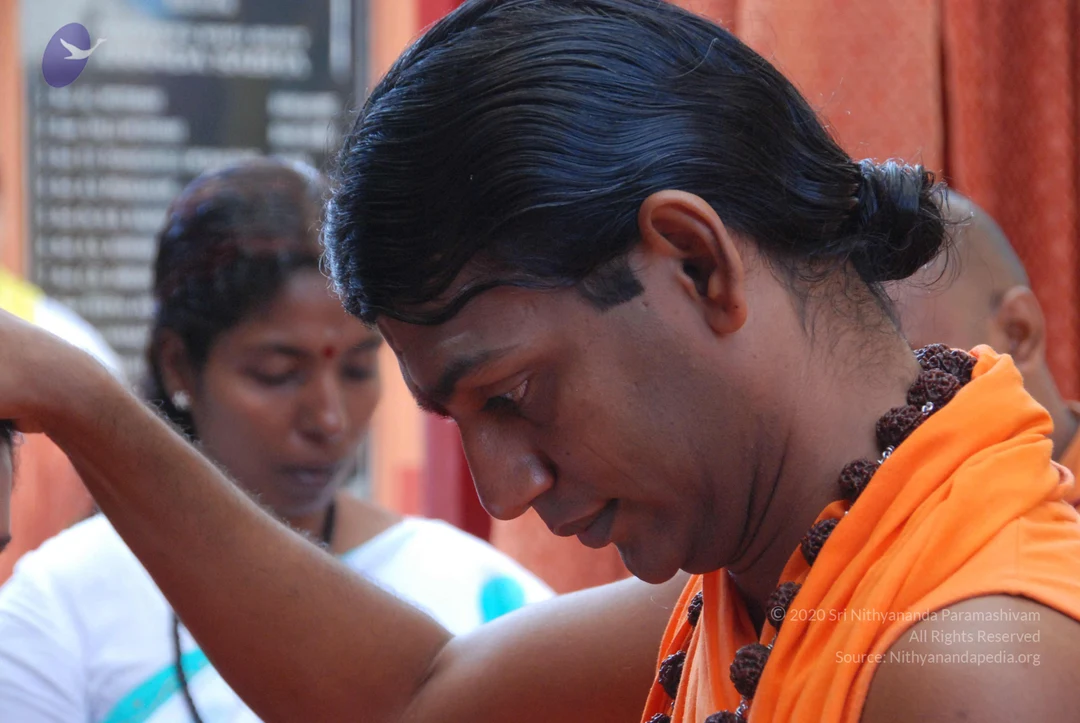
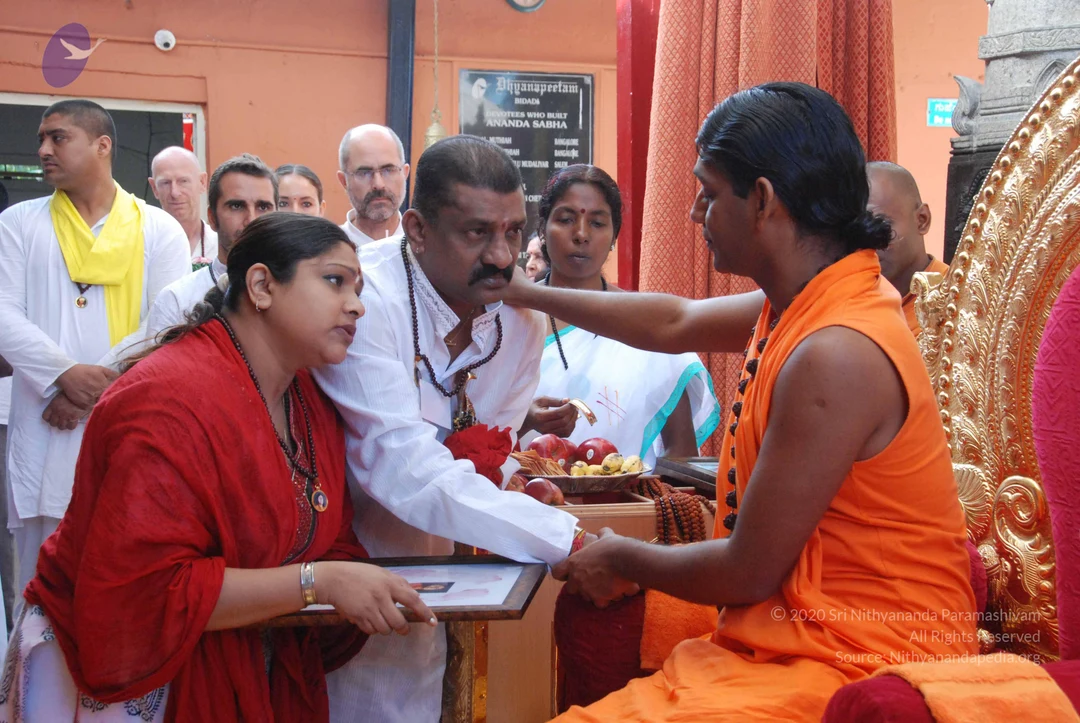
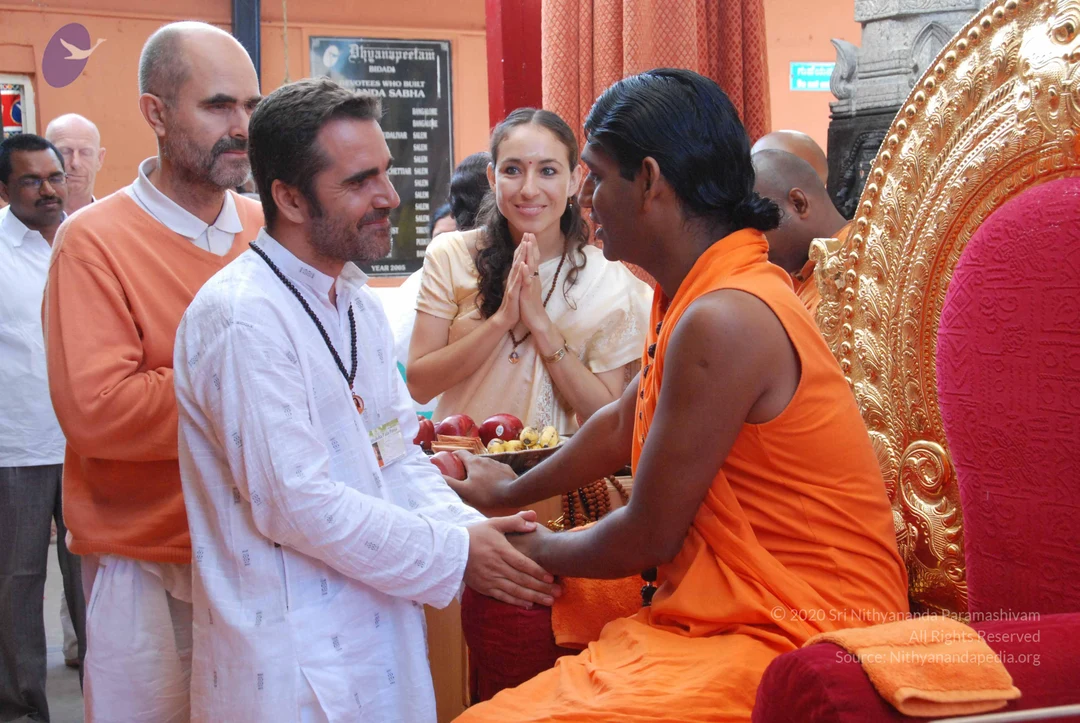
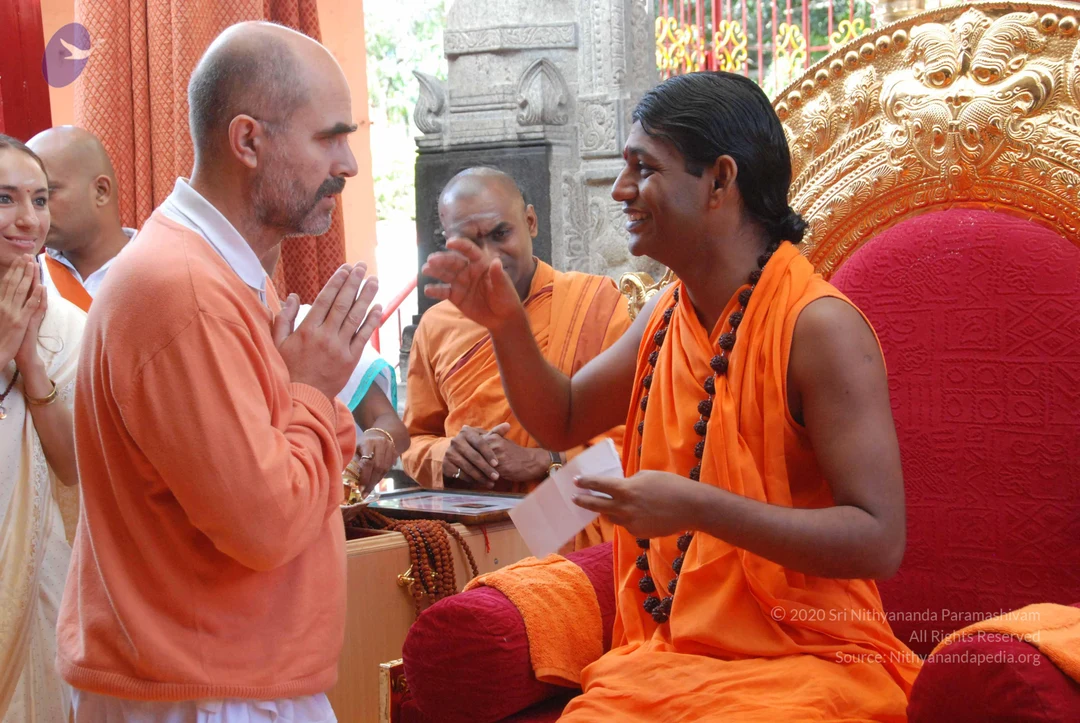
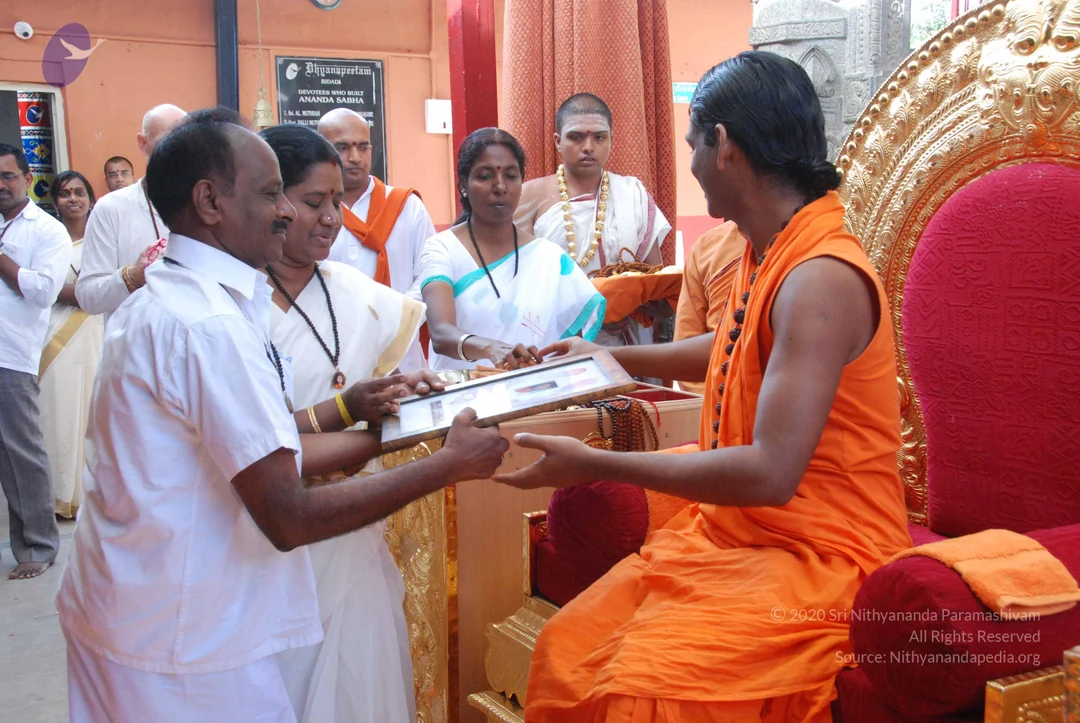
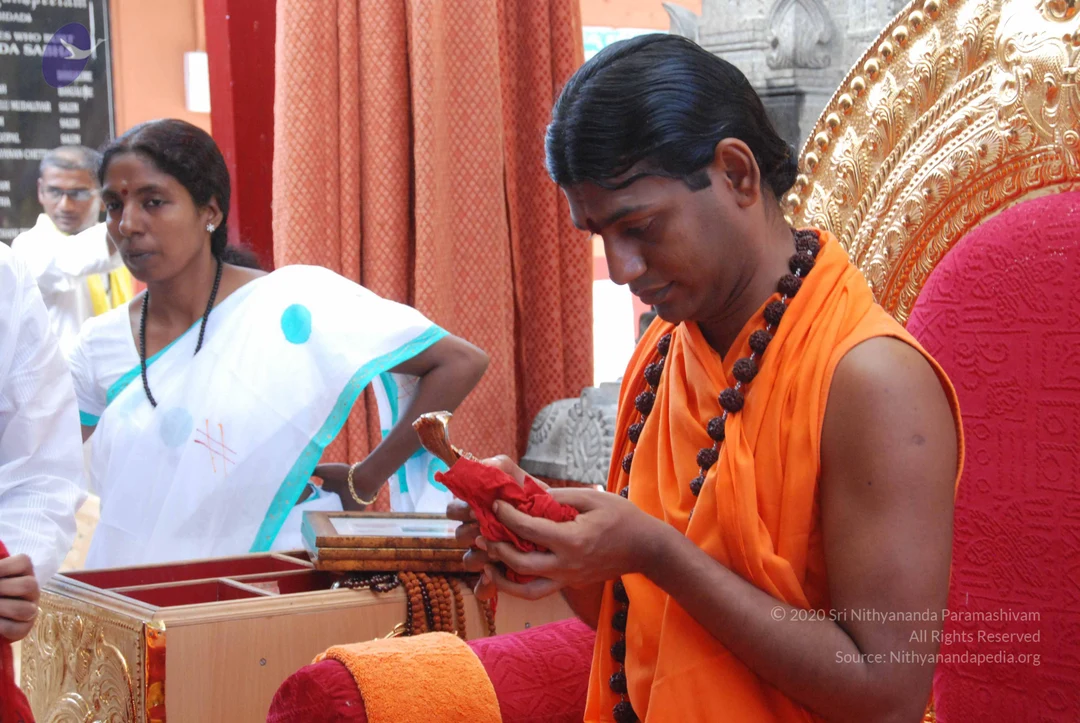
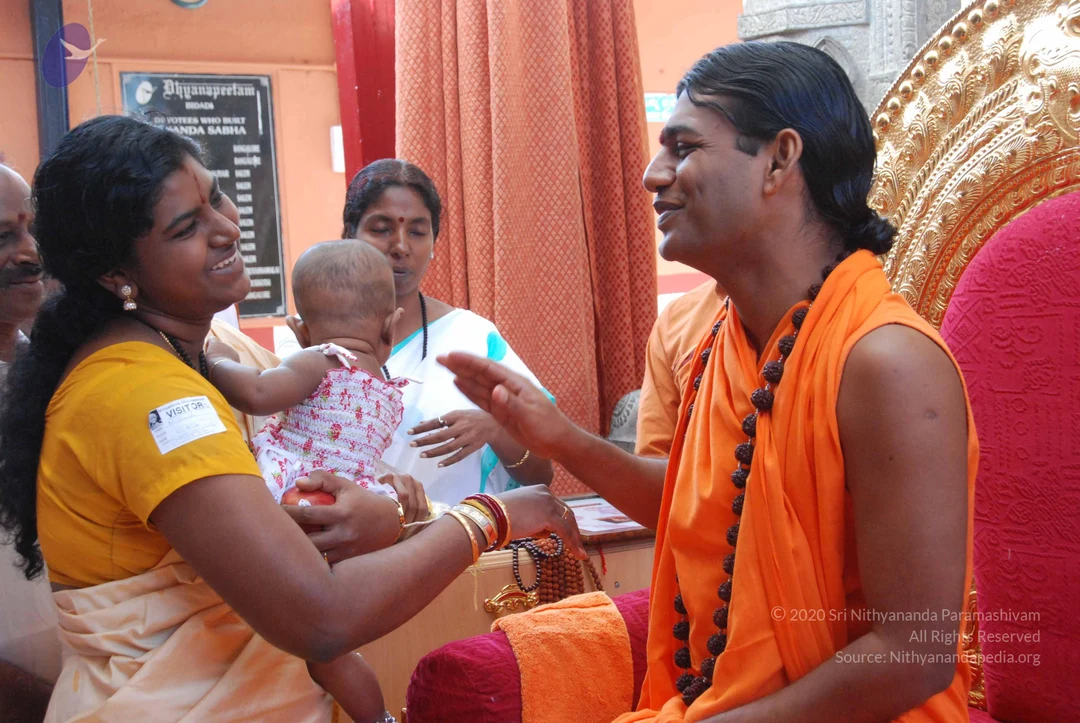
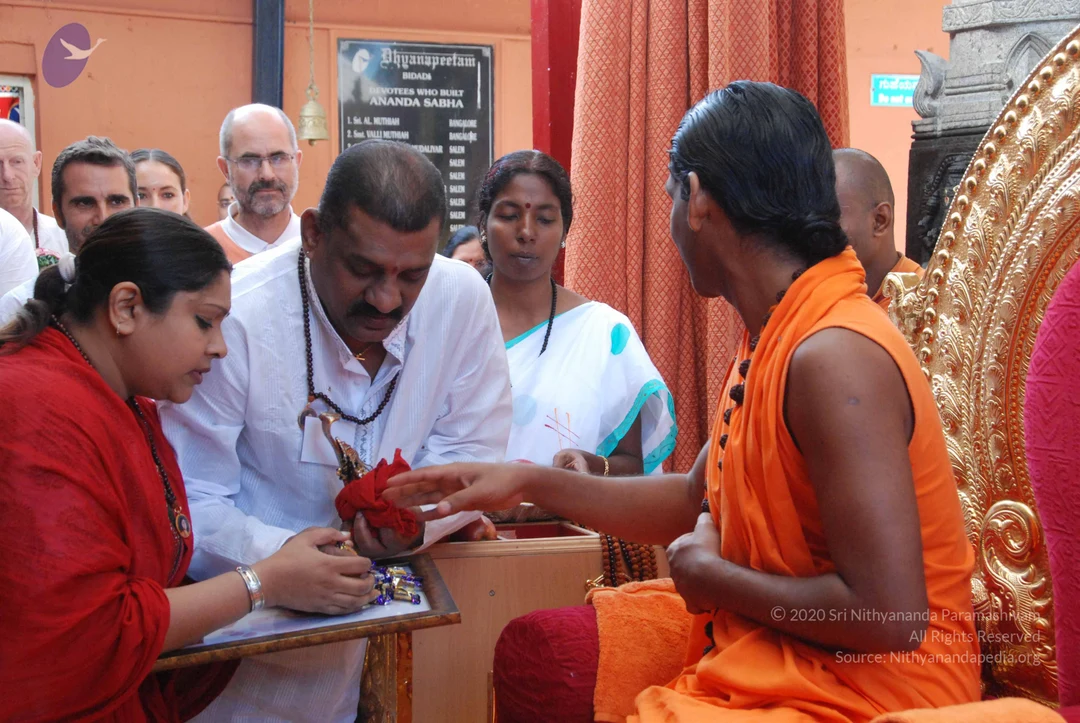
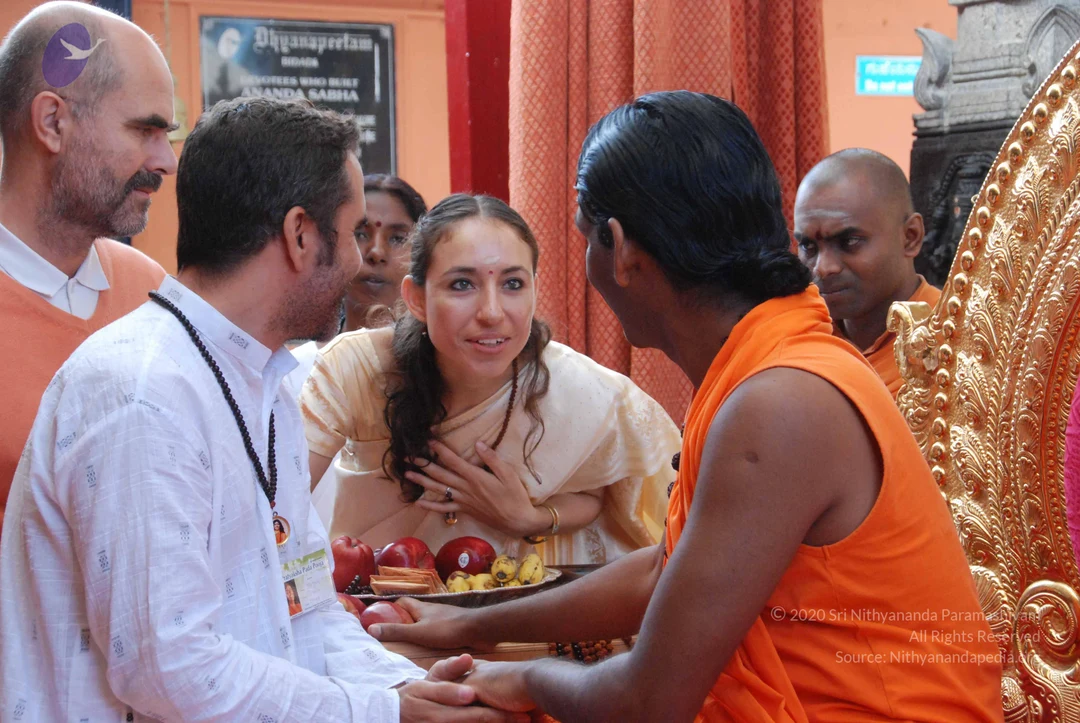
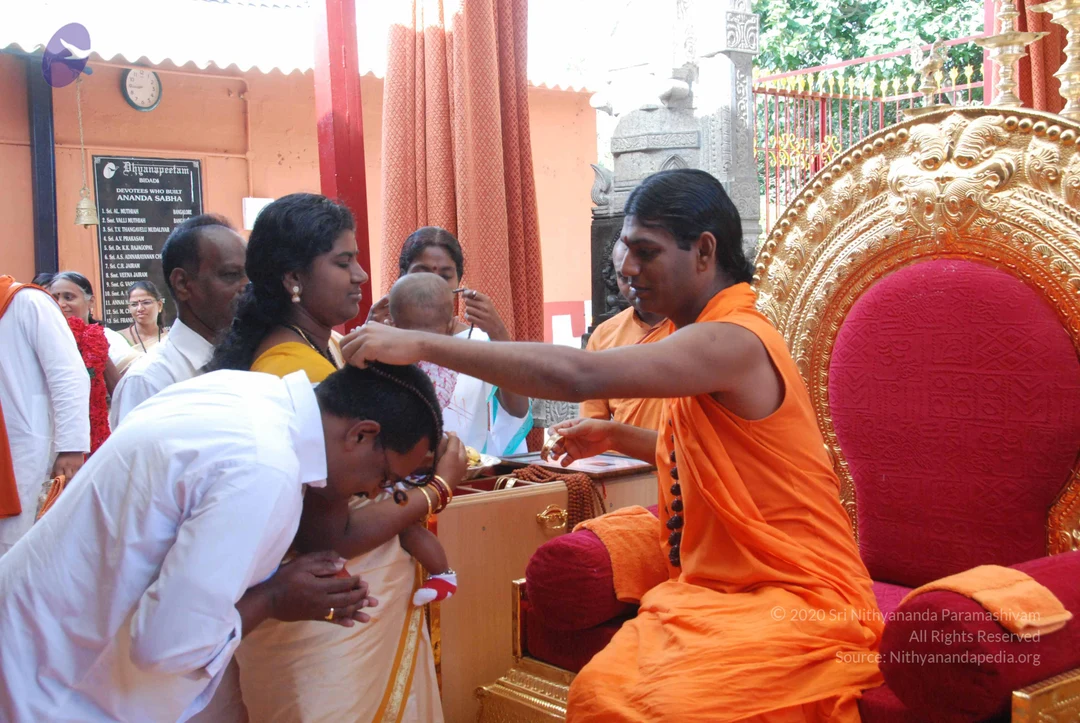
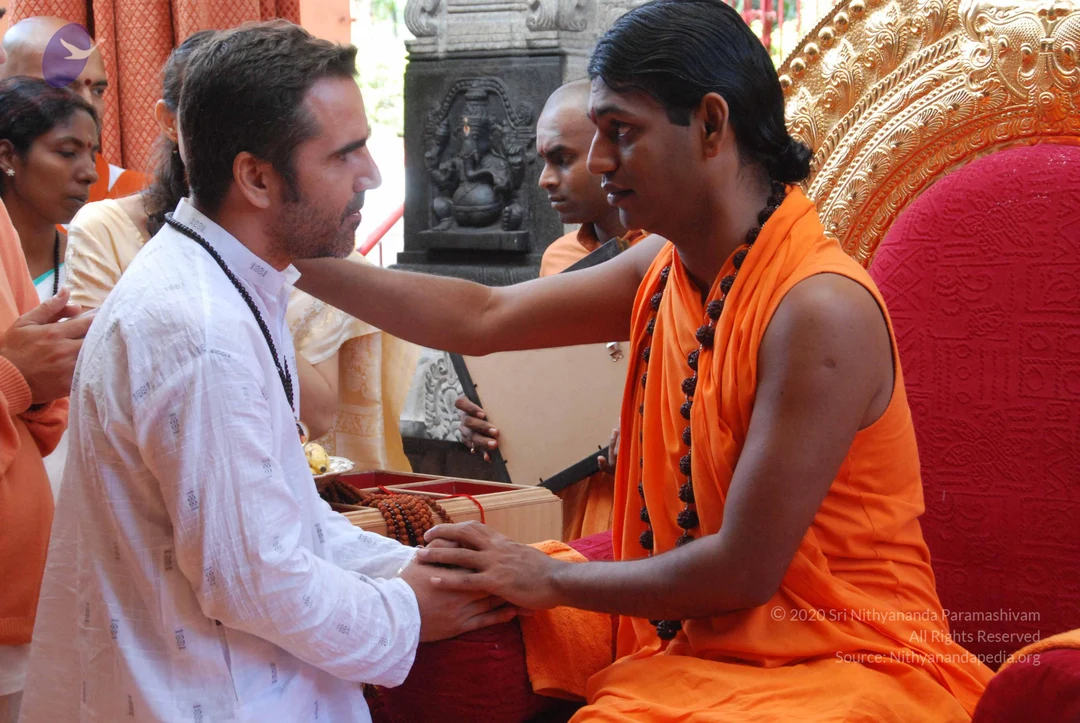
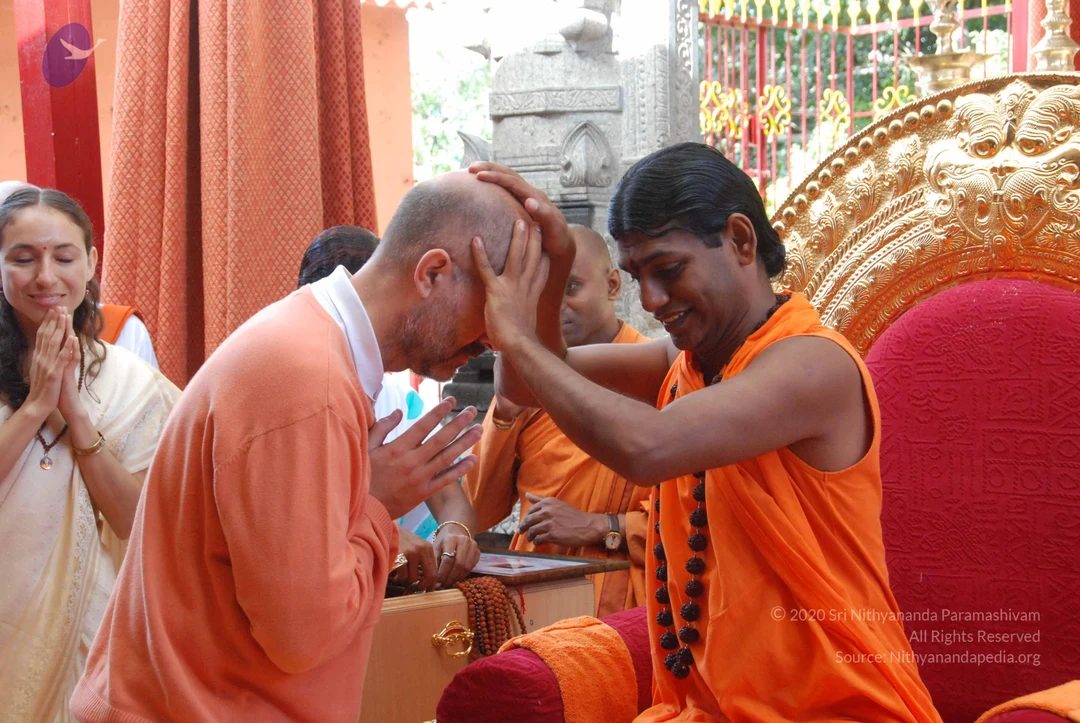
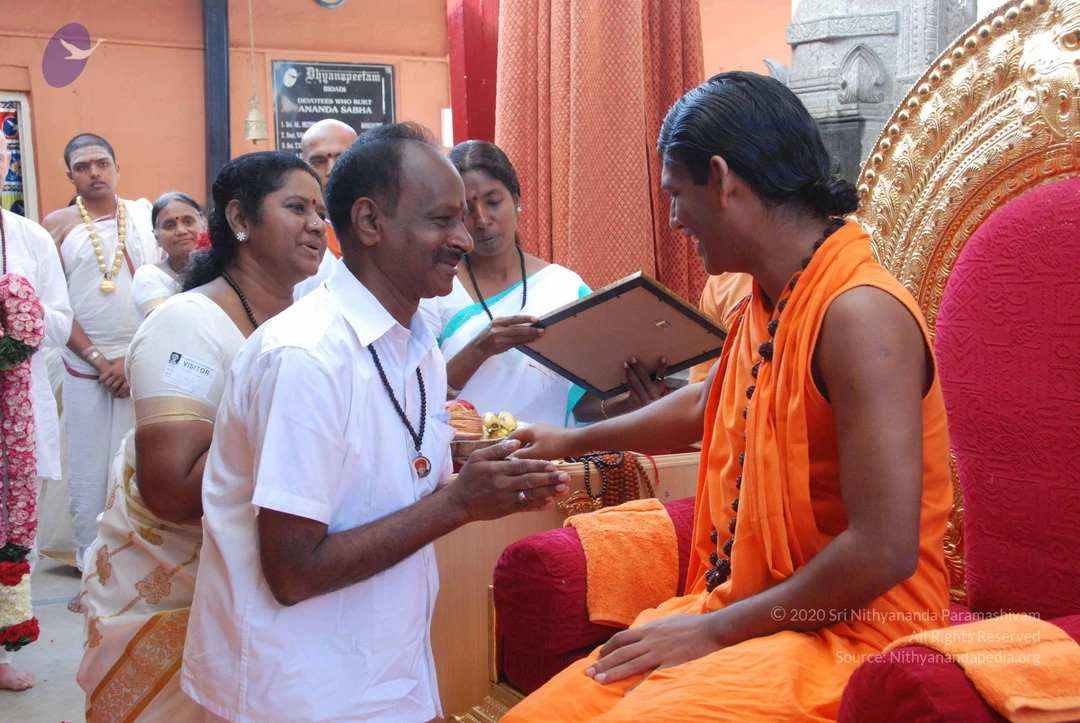
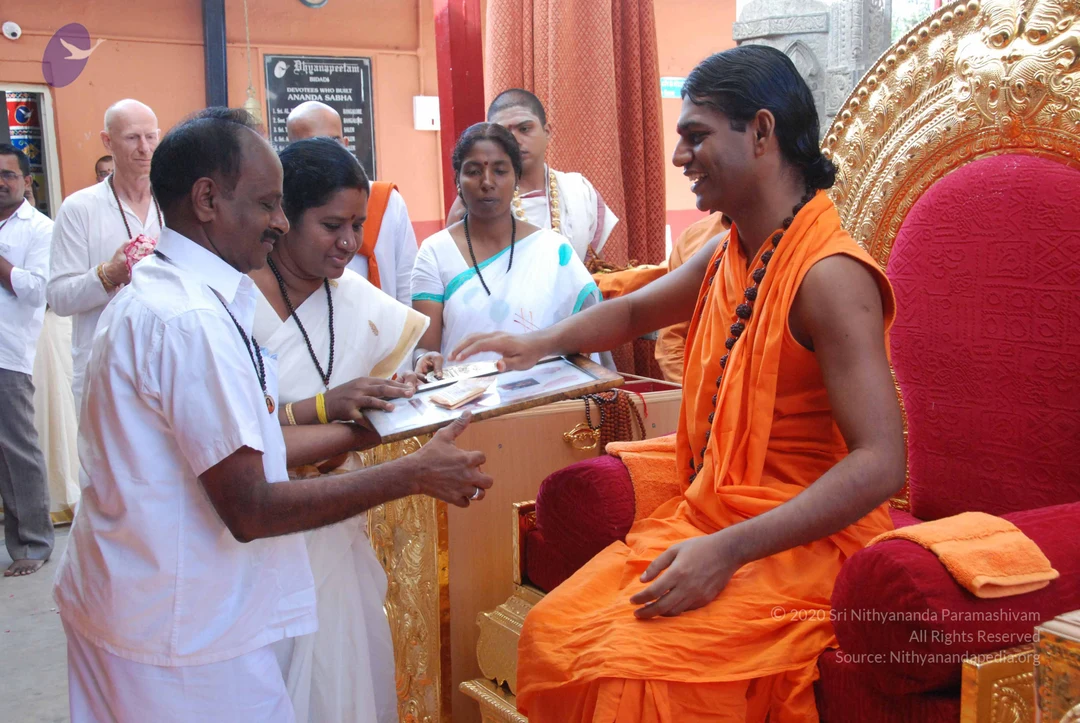
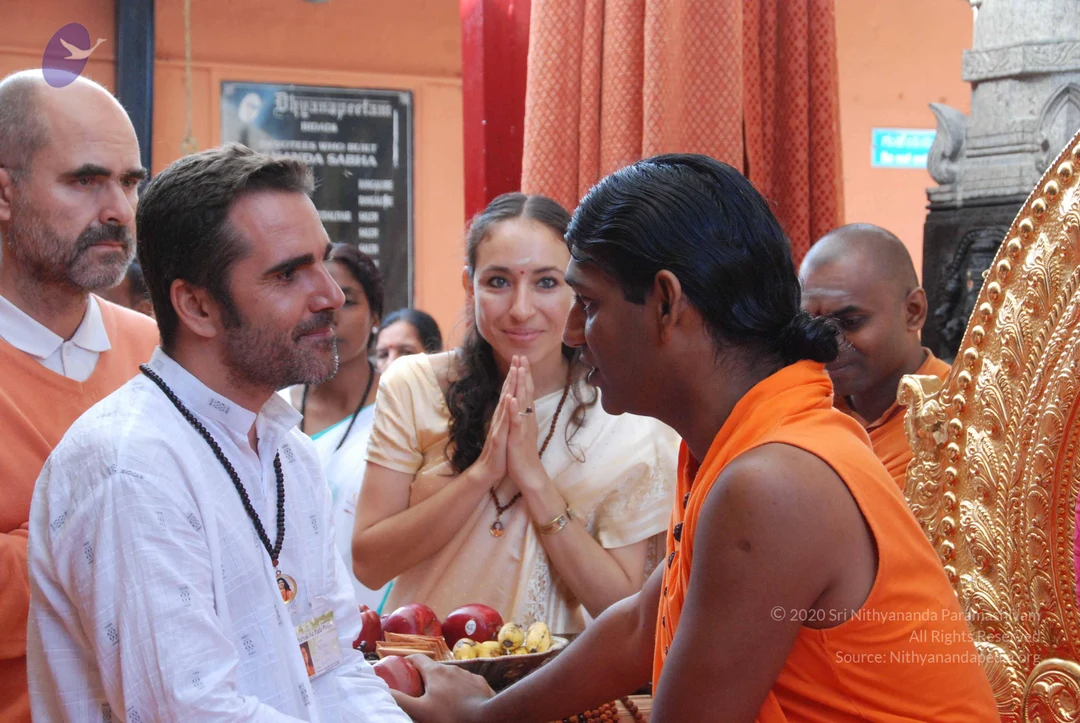
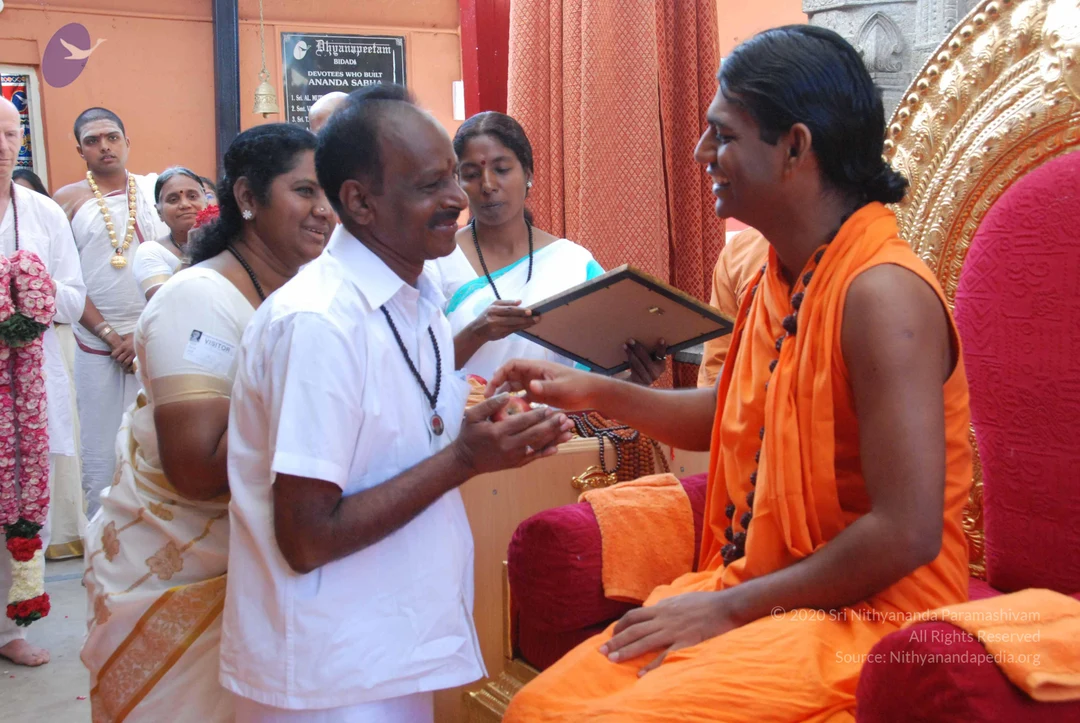
A bald man with a short beard and orange shirt bows forward with his palms pressed together while a figure in orange robes and a dark rudraksha mala places his right hand on the man's head in blessing. The blessing figure has long, swept-back dark hair, a tilak on the forehead and a sleeveless orange garment, and is seated in front of an ornate gold throne with carved floral patterns. Another orange-robed devotee with a shaved head stands behind them, and a red cloth hangs in the background. Two people are visible in the main scene, with a third partially visible behind. The figure giving the blessing has distinctive long swept-back hair and orange robes with a rudraksha mala, consistent with the Swamiji (probable) appearance cues, shown in person.A seated man in an orange sleeveless robe with a dark rudraksha mala and long swept-back hair places his right hand on the forehead of a kneeling devotee in a white shirt with folded palms and a red pendant. A smiling woman in a white sari with a red bindi and dark mala stands to the left, and another white-clad person and a bald man in orange stand behind. The seat is a gold-carved throne with red cushions and an orange cloth, with brass items and a wooden mala on a tray. A sign on the wall in the background is partly visible. This is a blessing moment at a sarva darshan setting. Swamiji (probable): the seated figure in orange has long swept-back hair, an orange robe and a rudraksha mala, seated on a throne.A photograph of a seated figure in saffron-orange robes and a rudraksha mala on a gold-and-red throne, leaning forward to take an offering from a standing man in a white shirt. Beside them a woman in a cream sari with a yellow border holds a baby in a pink outfit, and a second woman in white stands behind. Behind the throne is a gold metal gate and a black board labelled Dhyanapeetam with a list of devotee names. Several other people in white and orange stand nearby.Close photograph of a man with long dark hair swept back and tied at the crown, wearing an orange saffron shawl over a bare shoulder and a dark rudraksha mala around his neck. He looks downward with his head bowed and an arm raised in the left foreground. Behind him, a woman in a white top with a red bindi watches with lowered eyes in front of a dark wall board containing rows of printed text. A shaved-headed man is partly visible at the upper right. Probable Swamiji cues: long swept-back hair, saffron clothing and rudraksha mala, though the face is not used for identification.A seated figure in an orange sleeveless robe with long swept-back dark hair and a mala of wooden beads sits on an ornate gold throne with red cushions, extending a hand to touch the forehead of a man in white kurta and white dhoti with a beaded mala and a yellow-gold pendant. A woman in a red shawl kneels beside a wooden tray holding fruit and a red flower, while a woman in white with a teal border stands behind. Several white-clad devotees and foreign visitors stand in the background near an orange wall with a wall sign reading Dhyanapeetam. The scene resembles a darshan blessing in an ashram hall.Photograph at an indoor hall with an orange-painted wall and a dark board reading "Dhyanapeetam" and a list of names. A seated figure in saffron-orange sleeveless robes and a rudraksha mala sits on an ornate golden throne with red upholstered cushions, a long dark braid visible over his shoulder. A man in a white kurta with a mala and an event badge stands before him with palms joined and accepts a plate of fruit, including apples and bananas, that is held out to him. Behind them a woman in a cream sari with a red bindi and mala stands with hands folded in greeting, a man in an orange sweater stands at left, and other people are partly visible in the background.
06

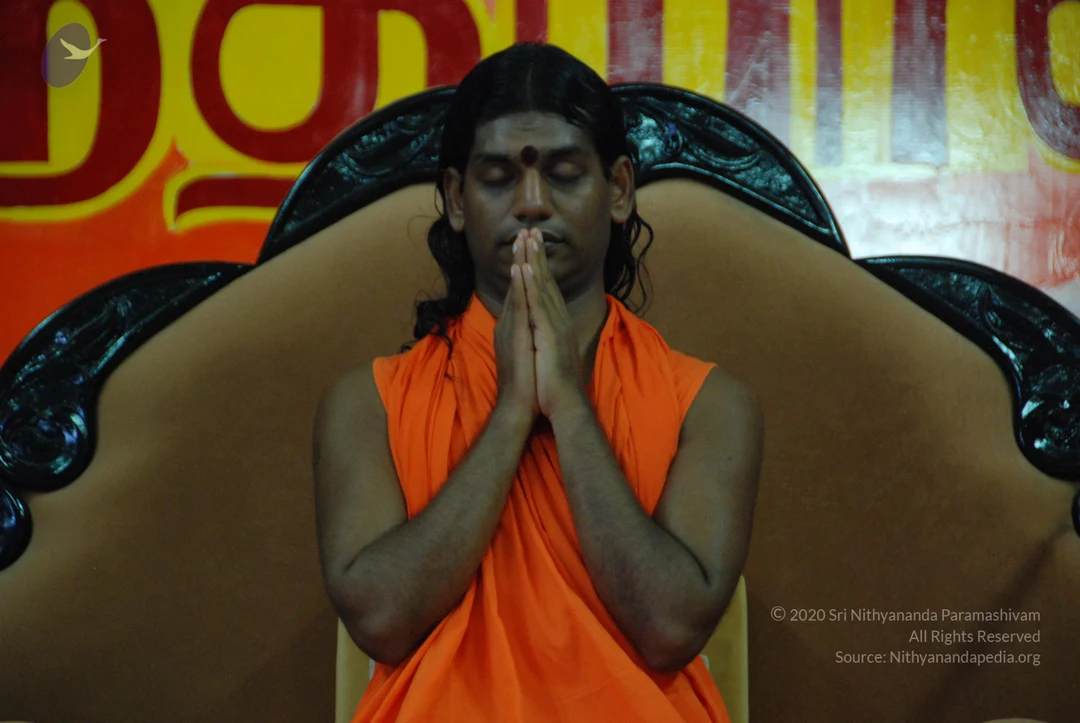
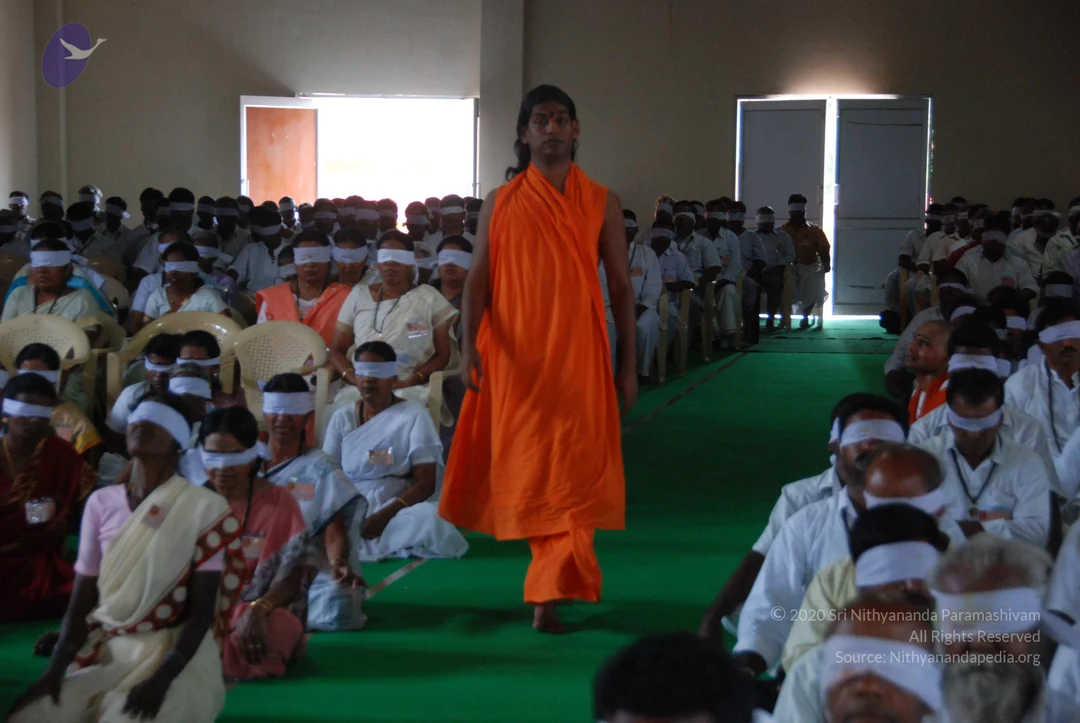
05-Tamil NSP

249 dated photos in previewSource gallery
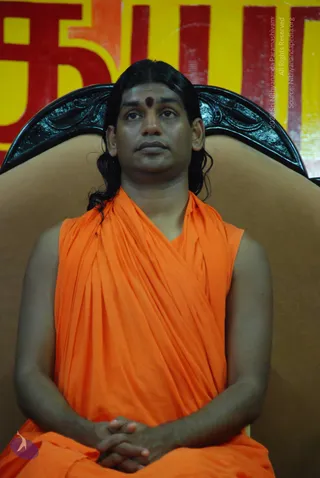
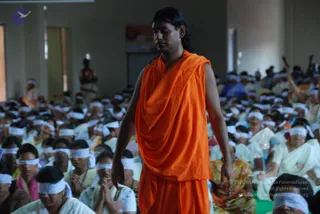
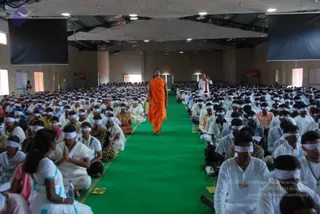
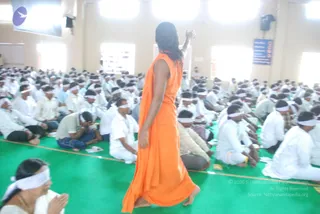
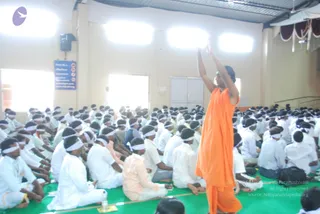
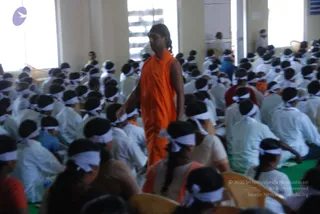
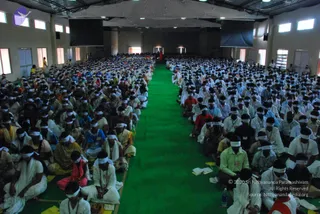
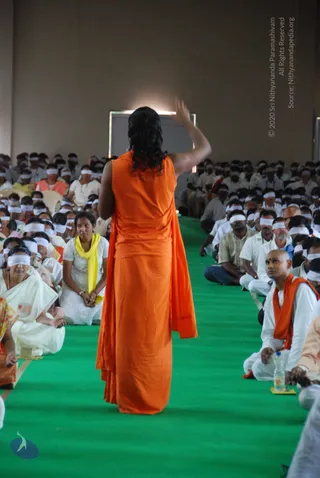
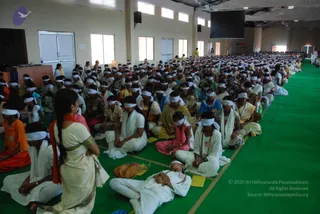
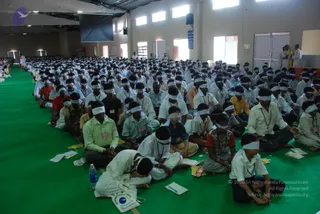
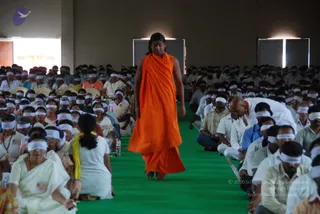
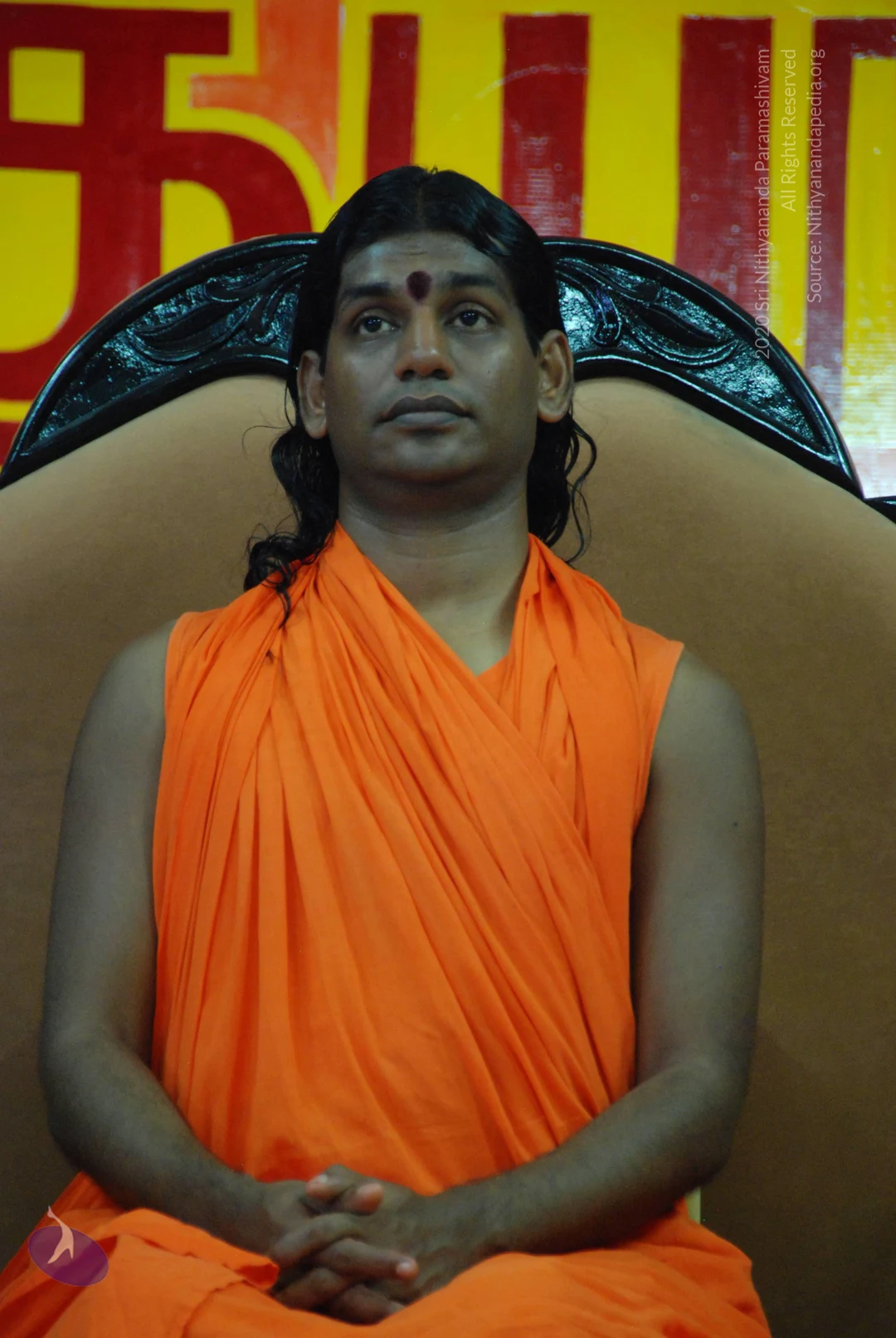
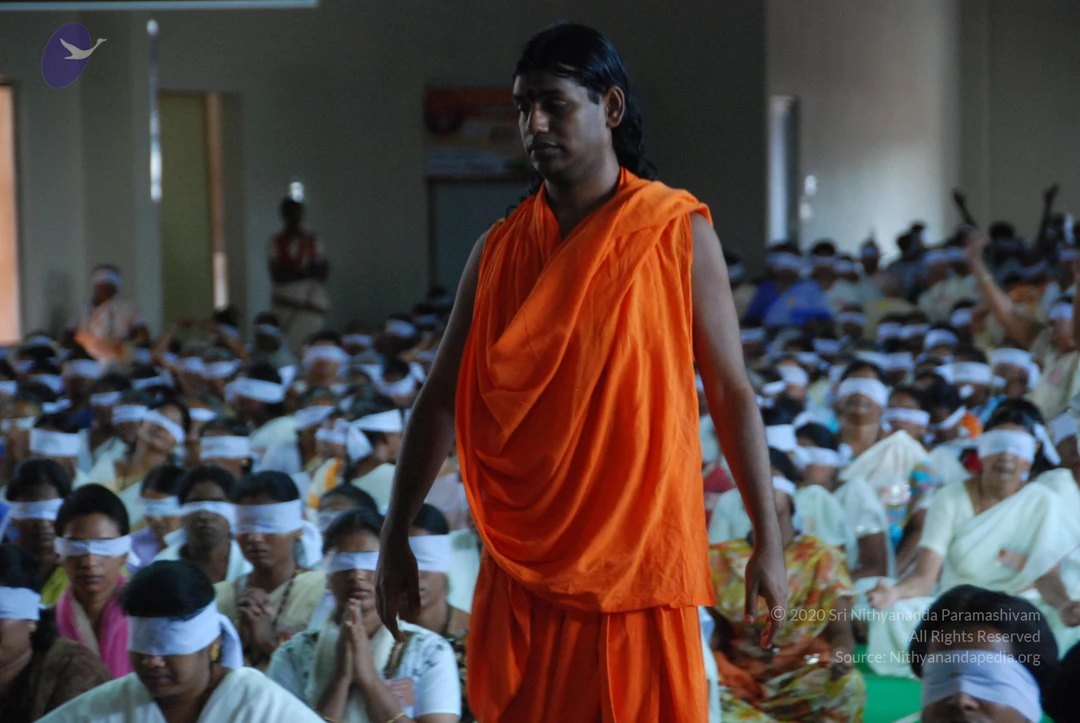
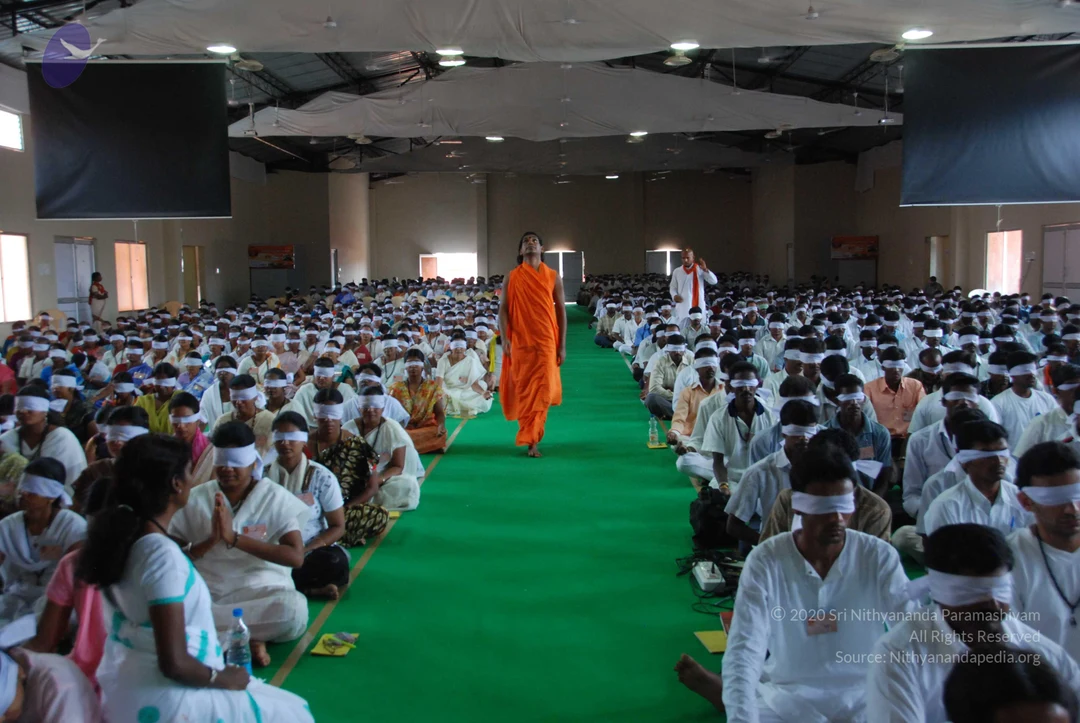
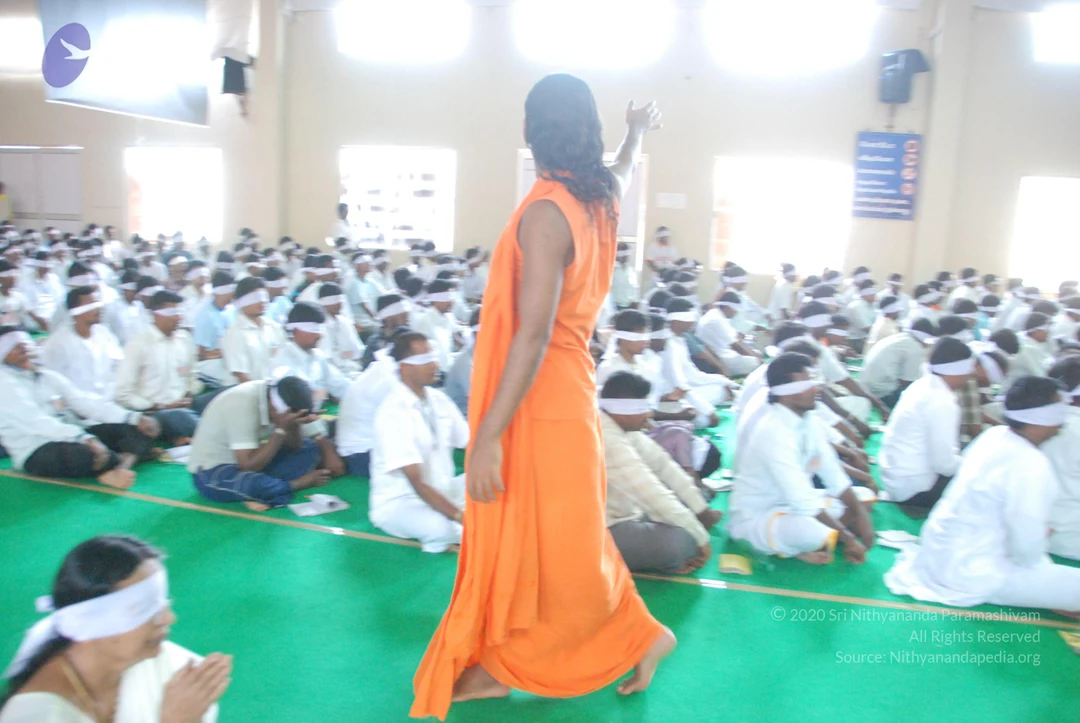
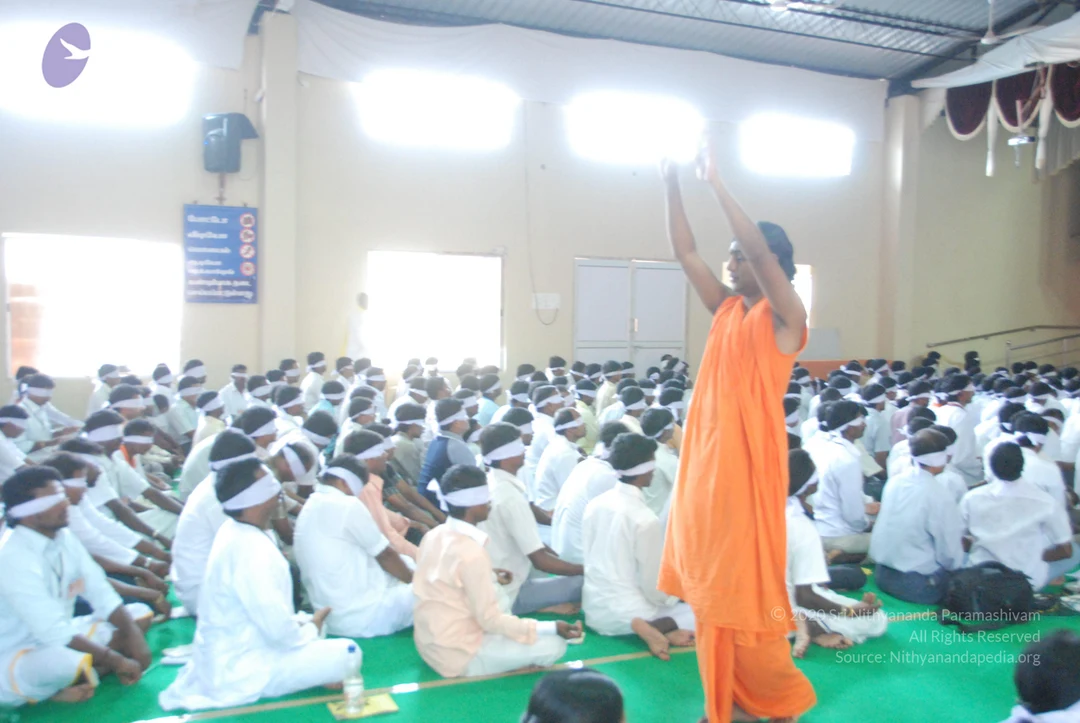
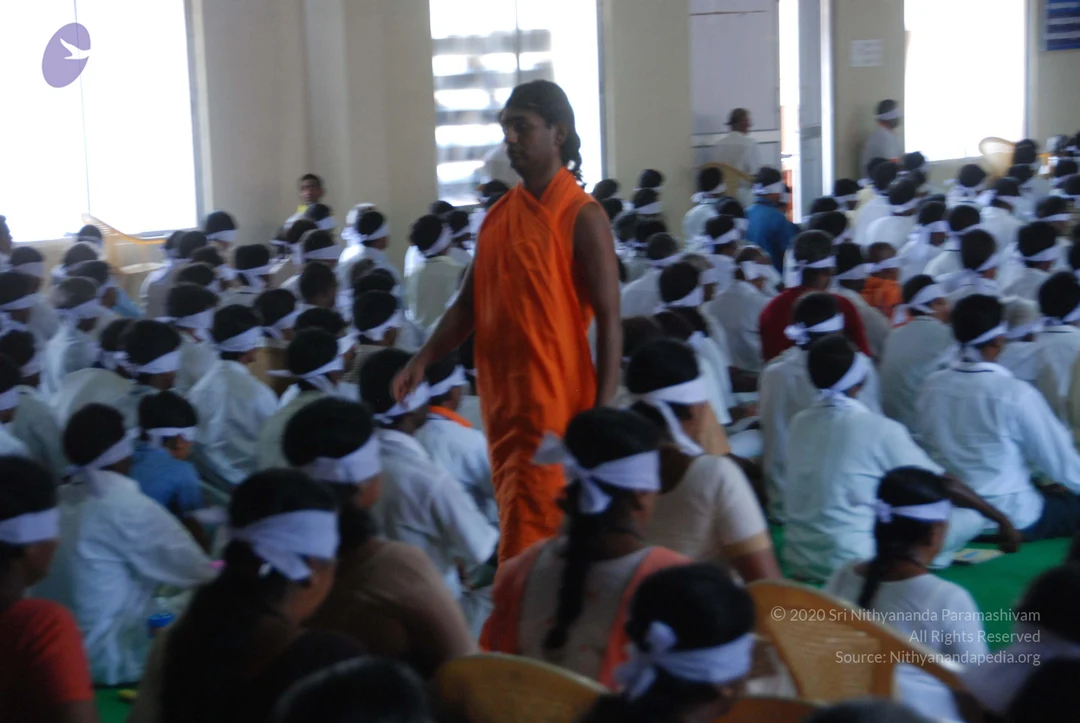
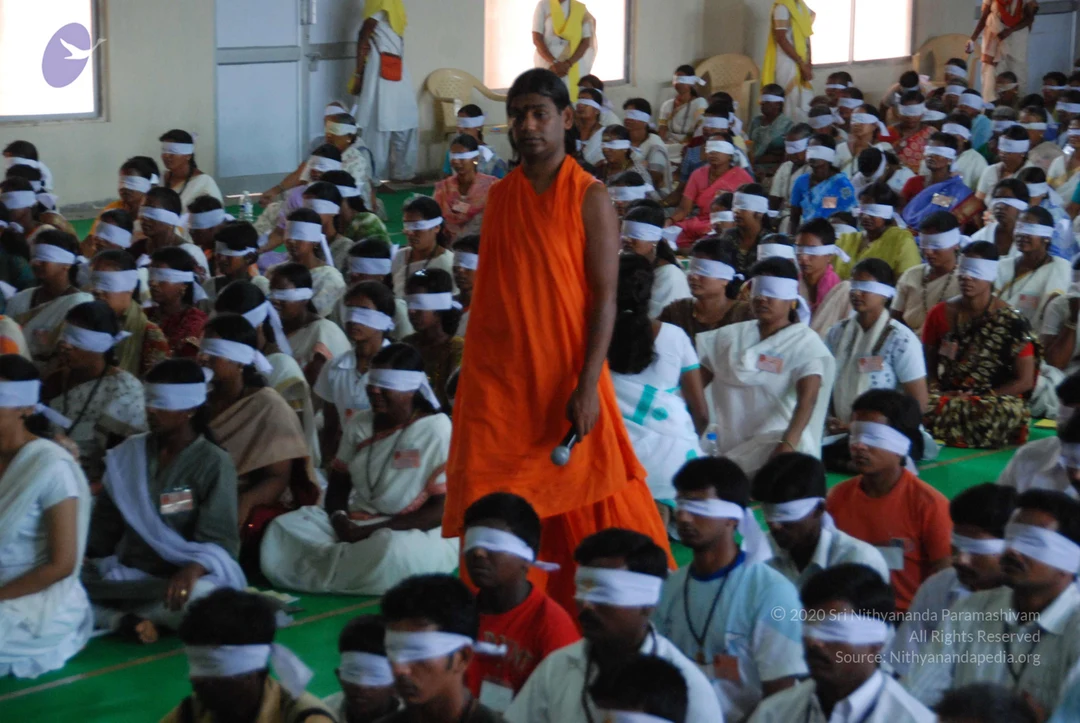
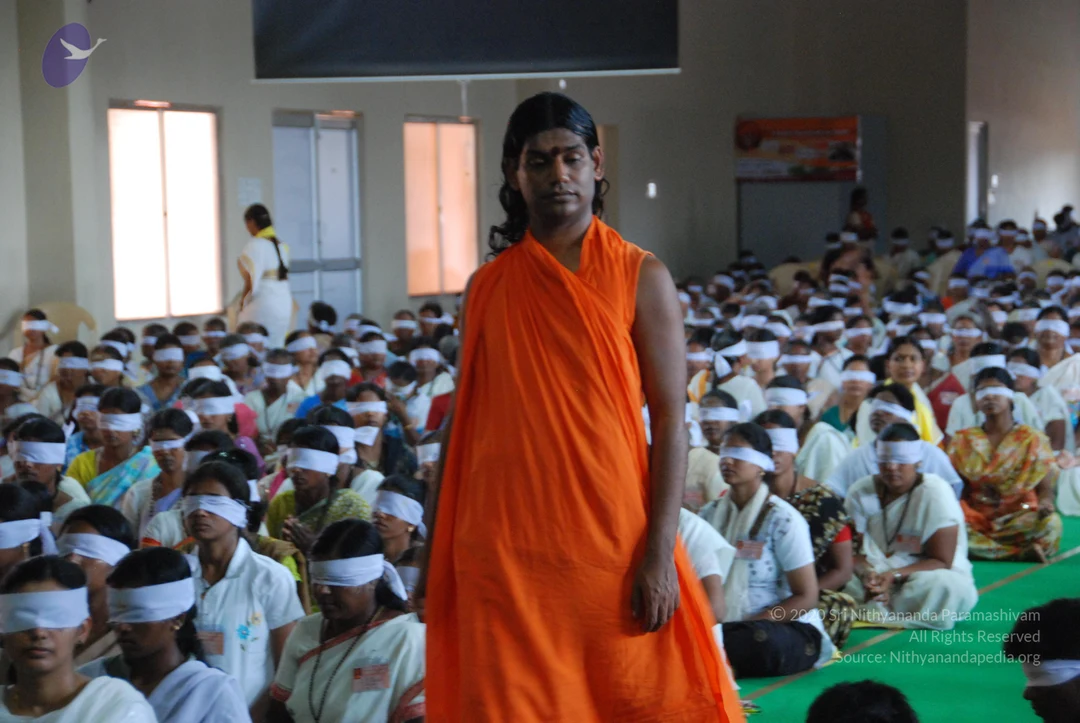
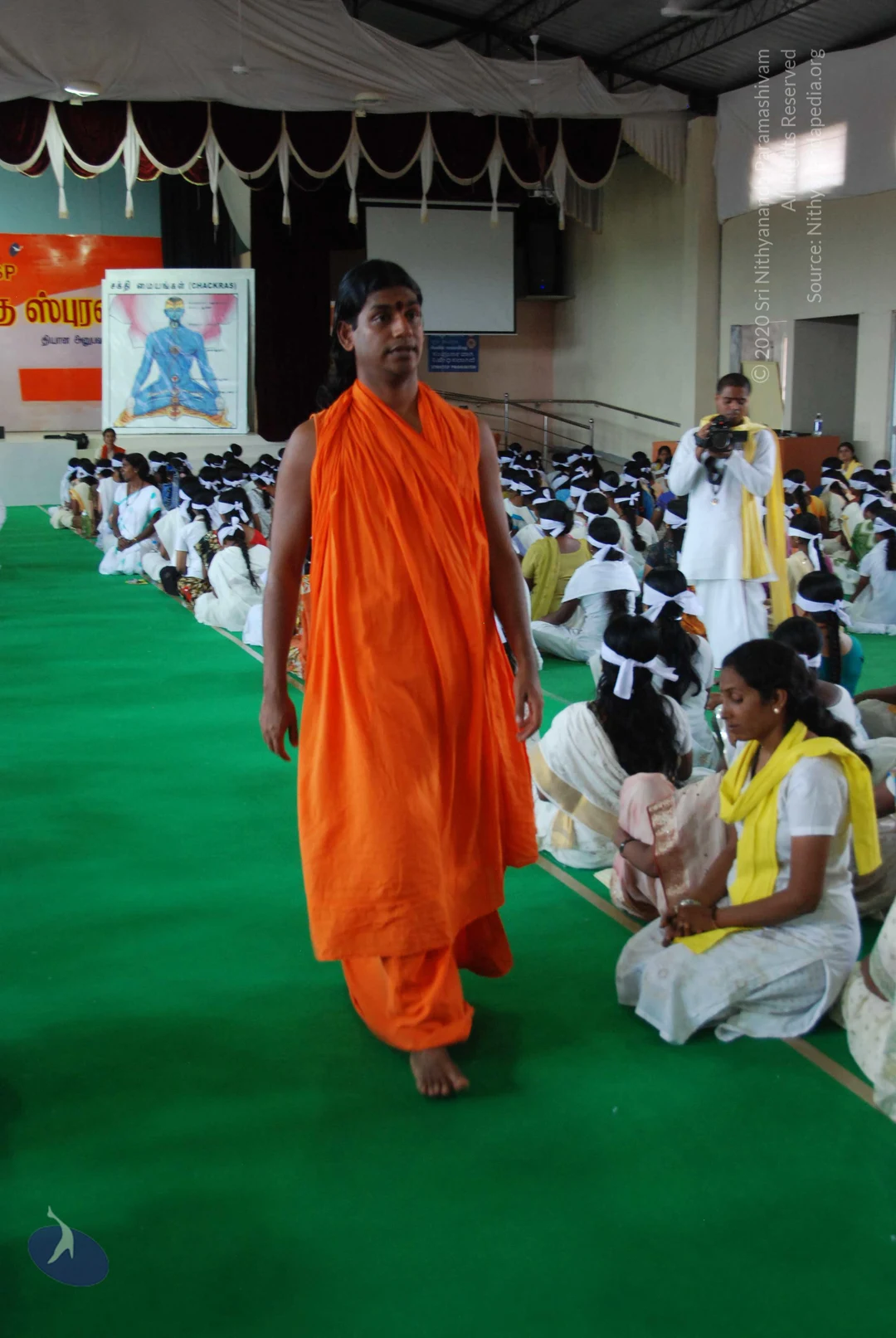
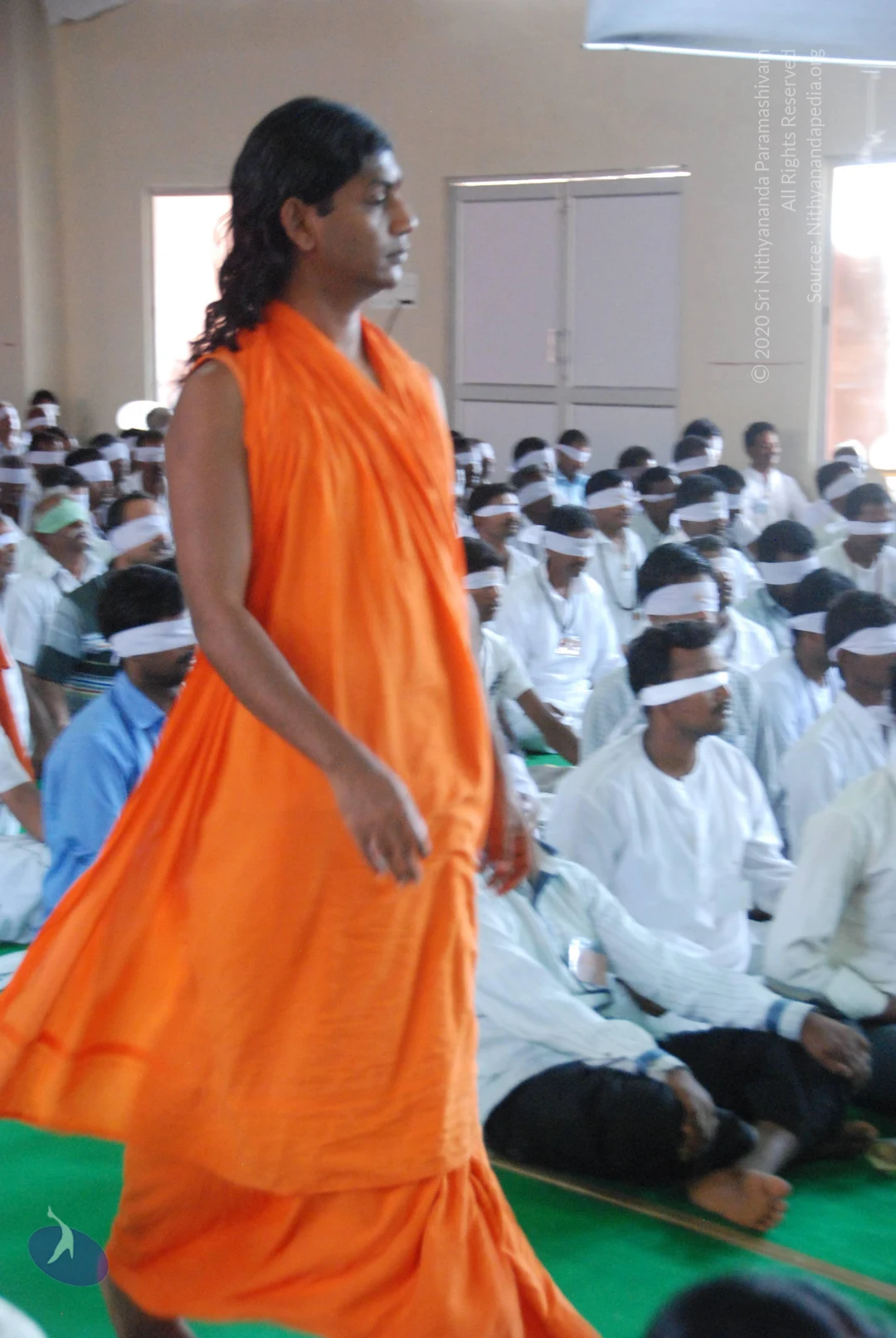
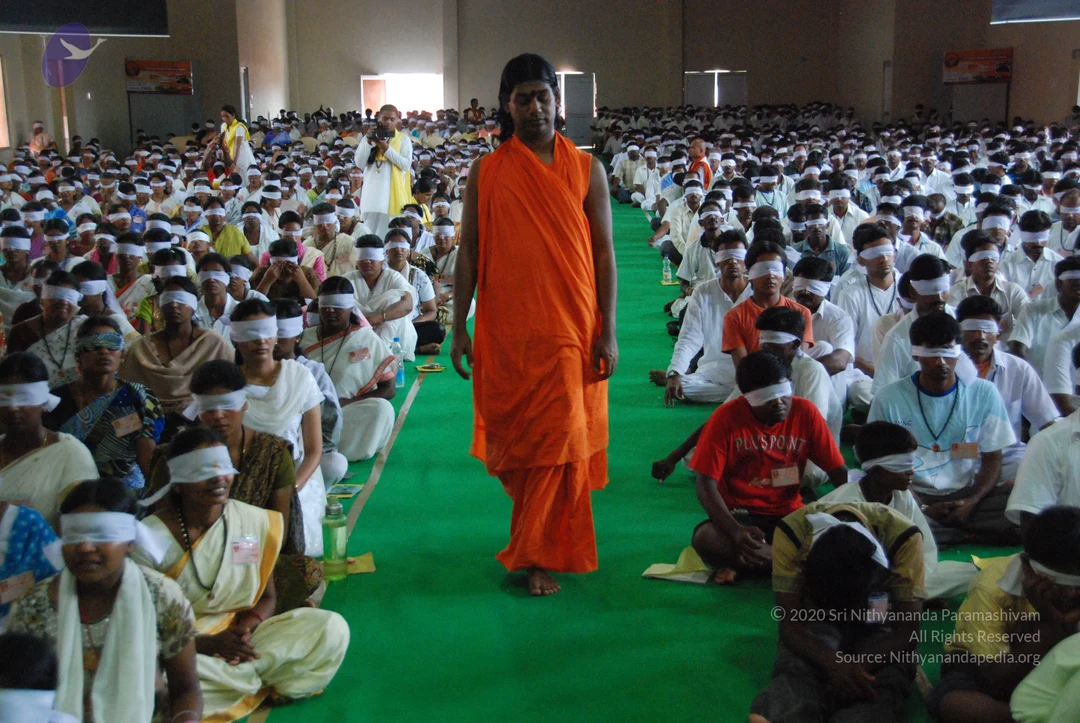
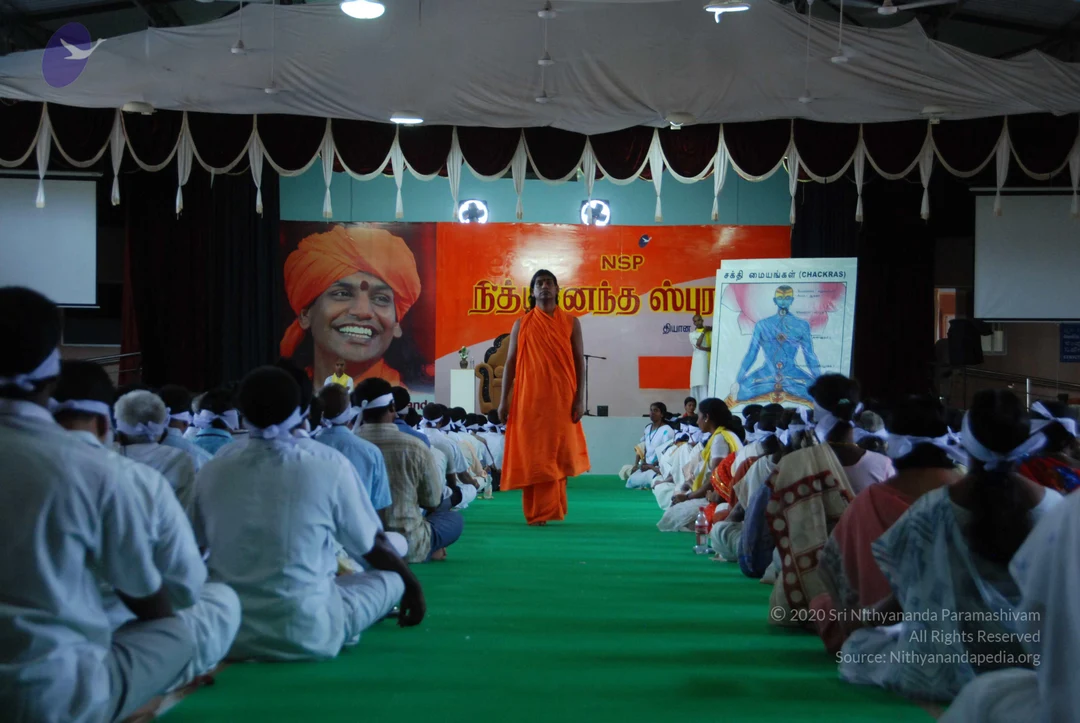
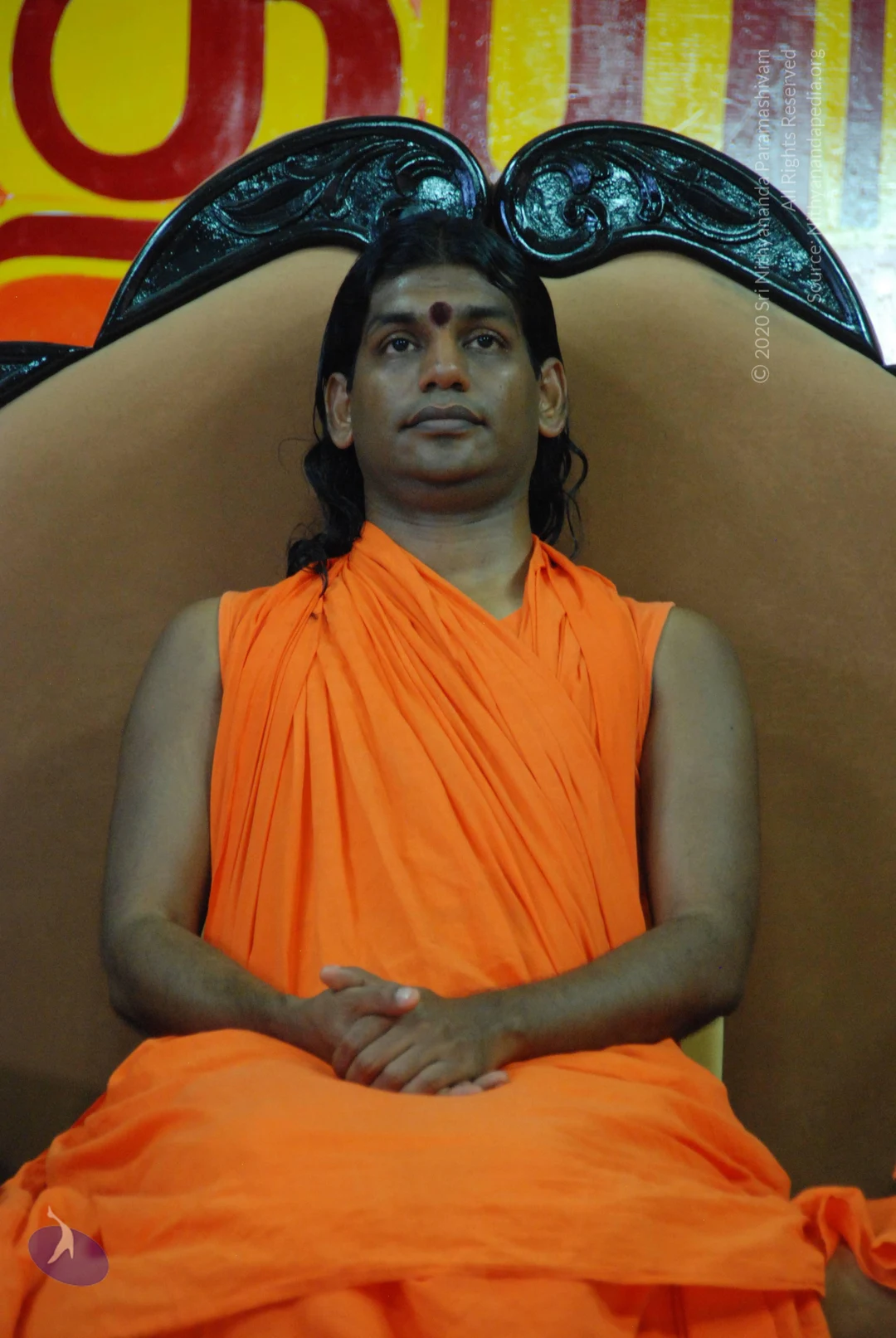
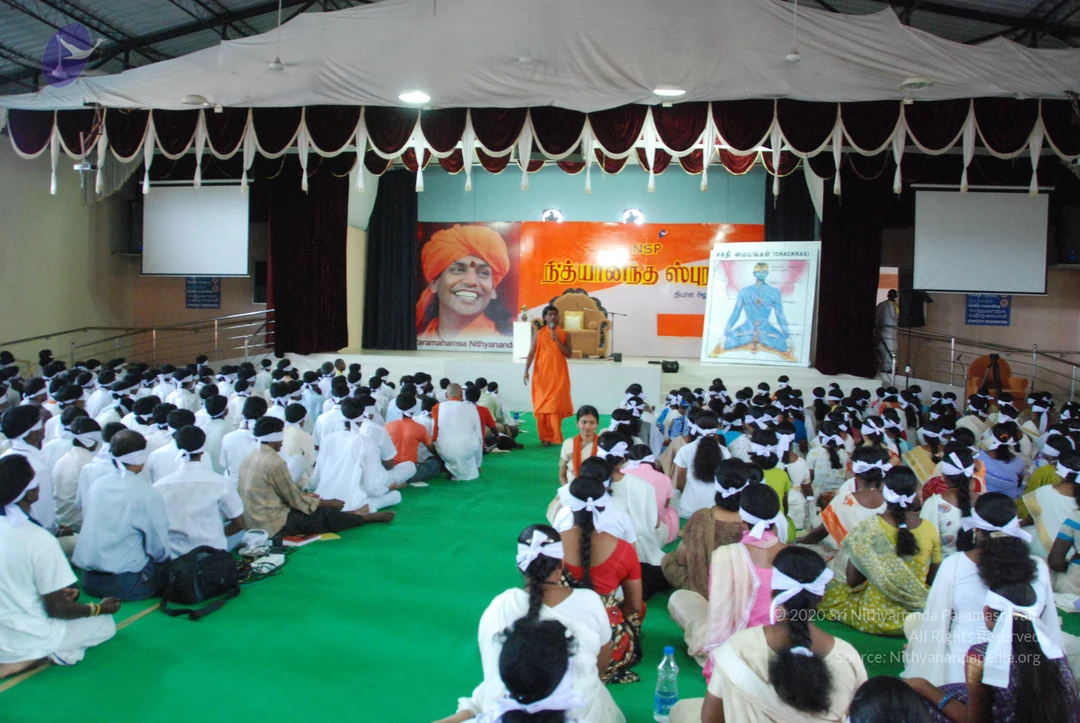
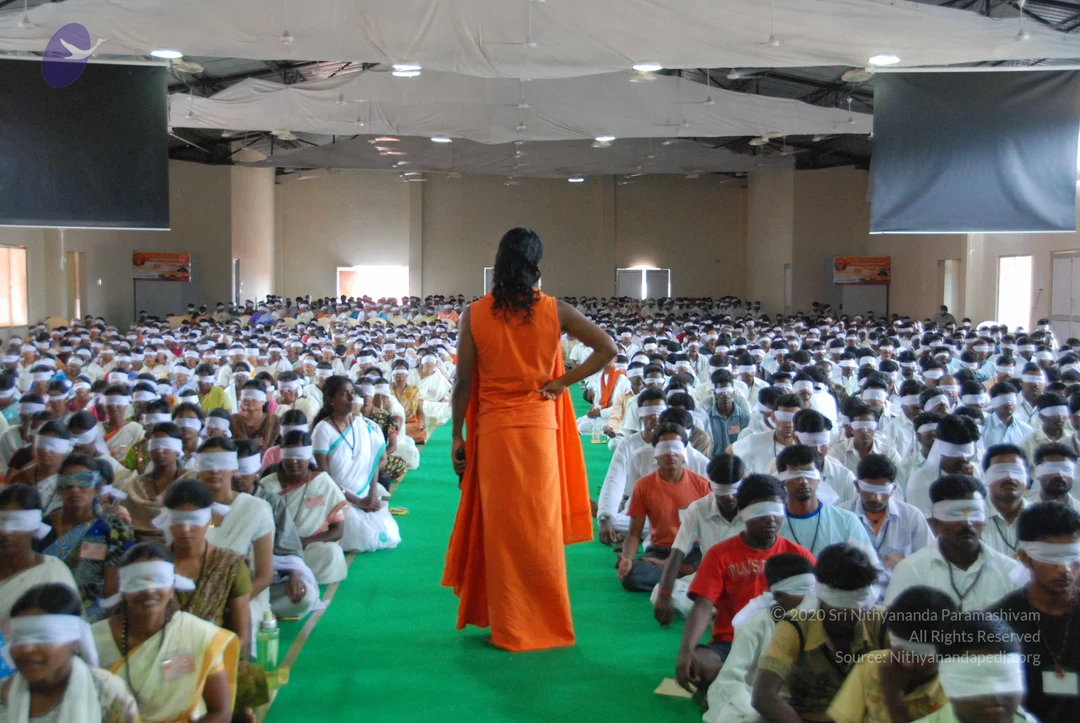
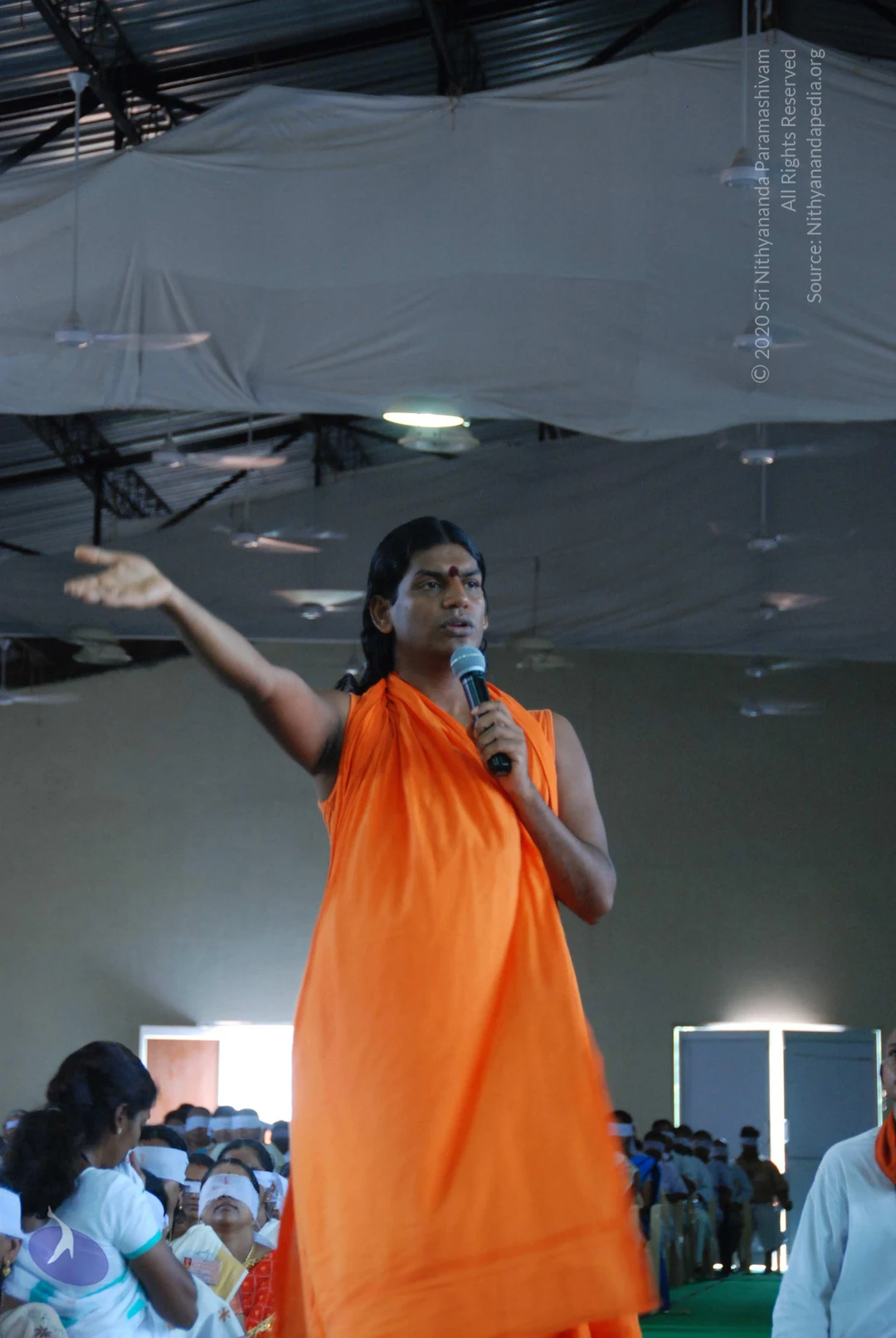
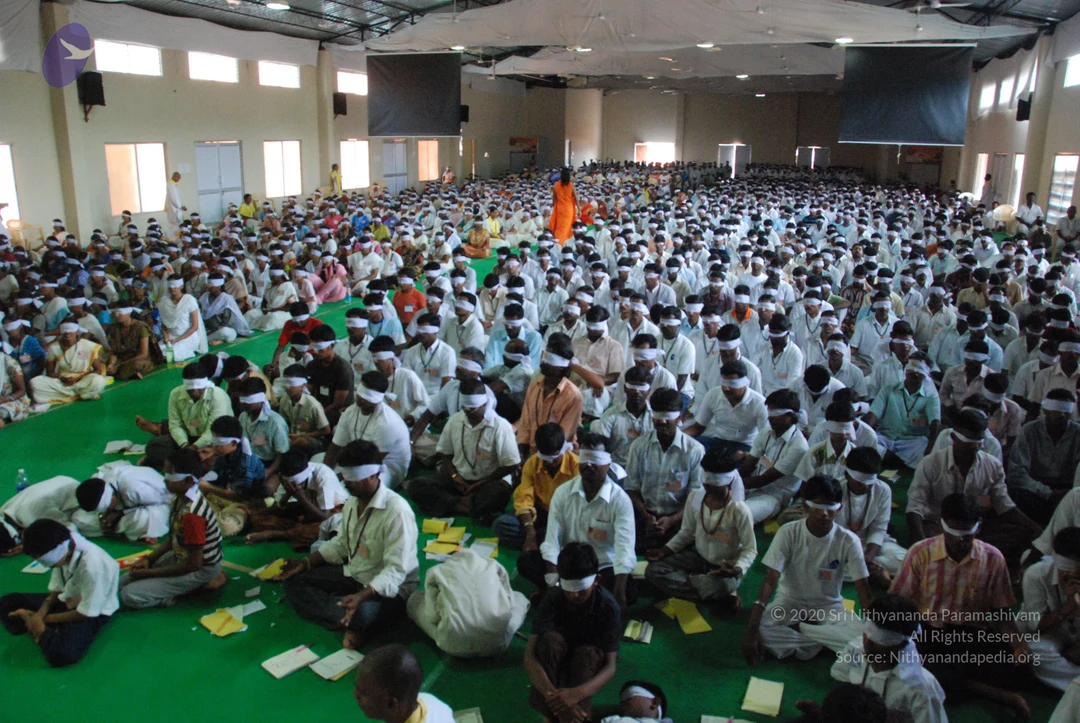
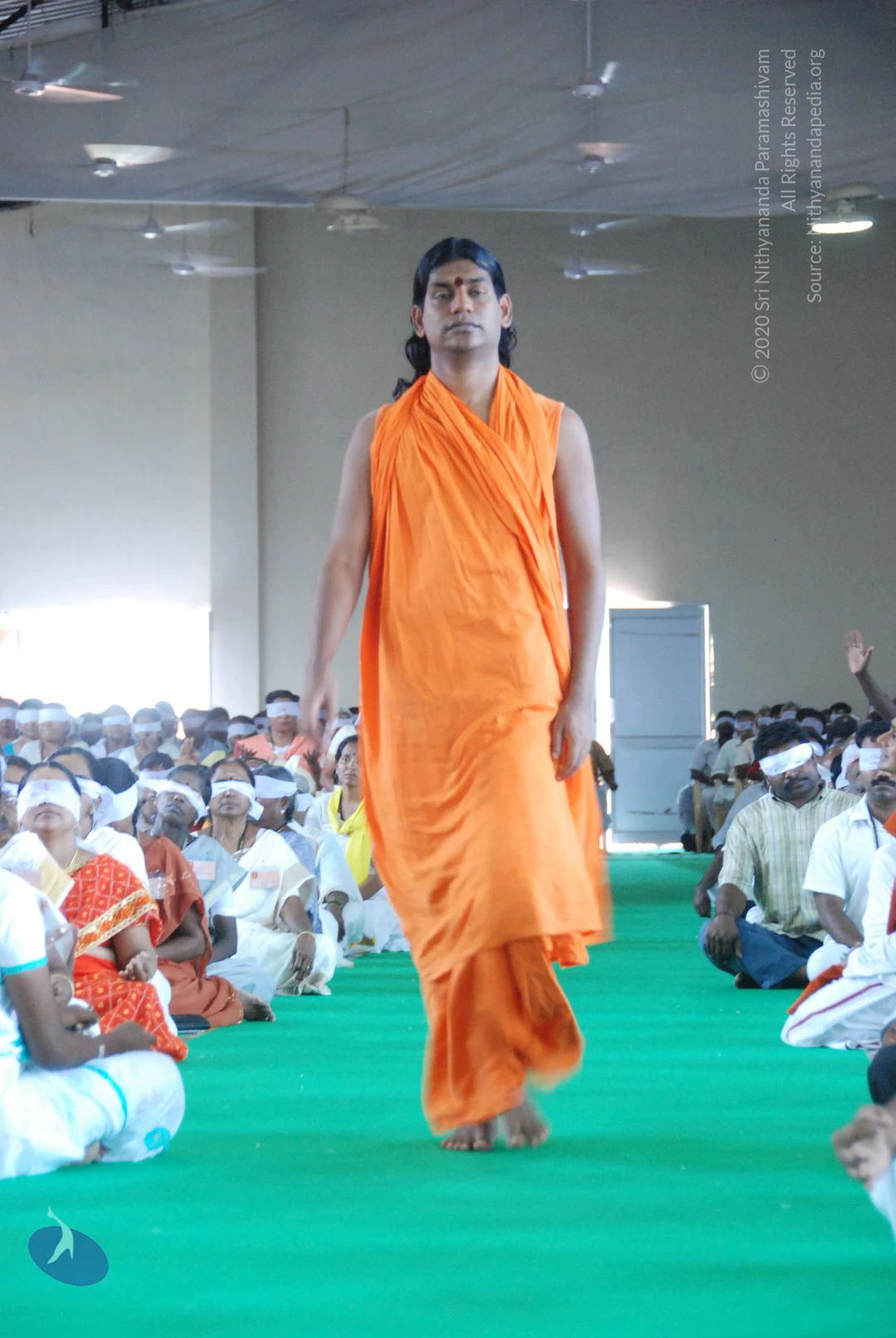
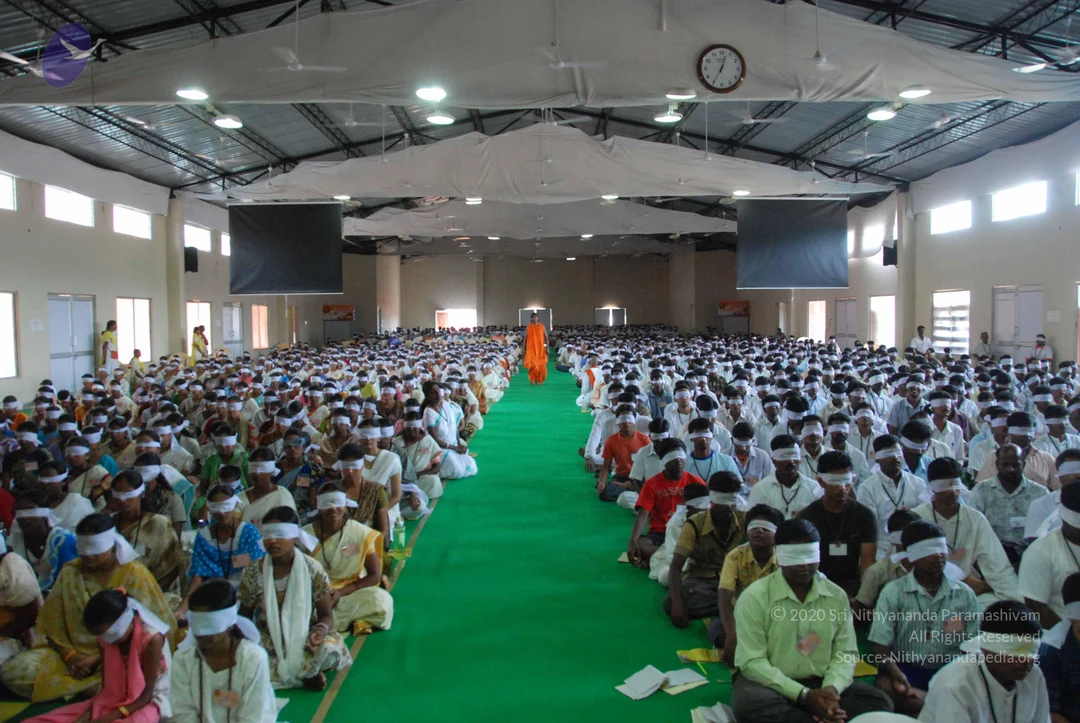
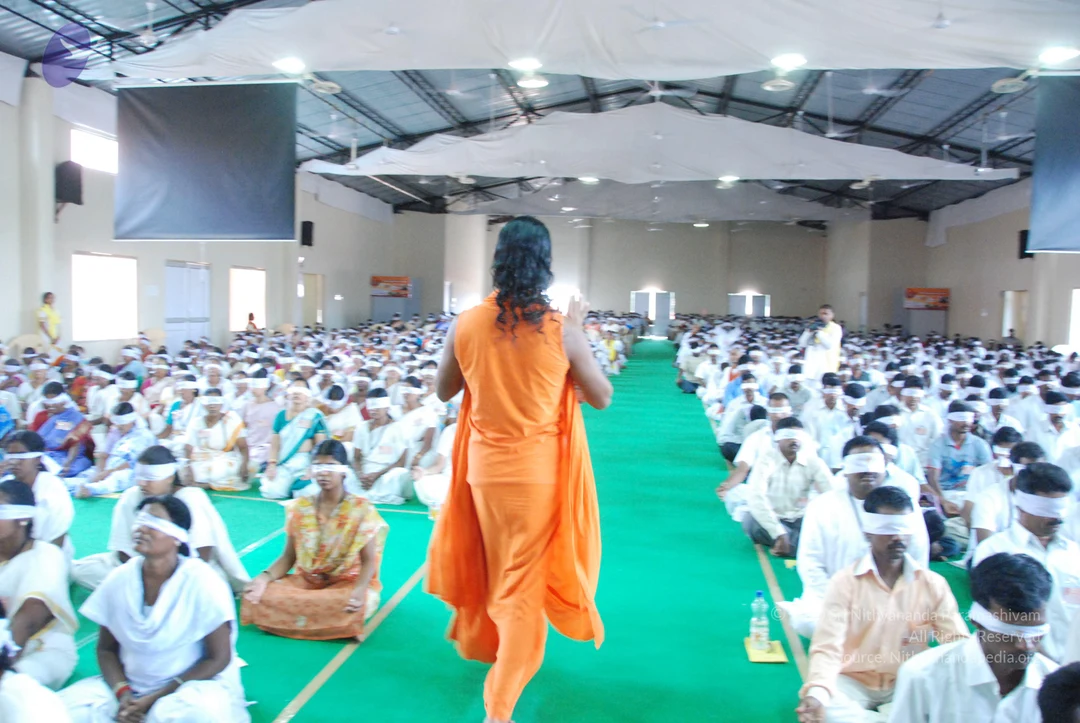
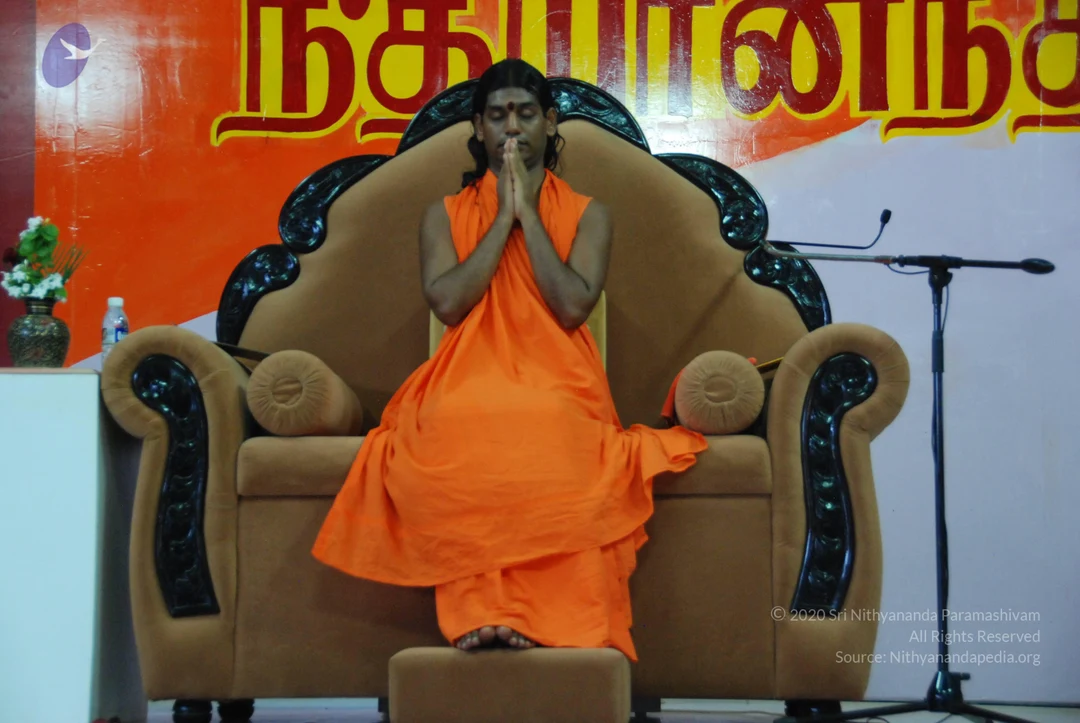
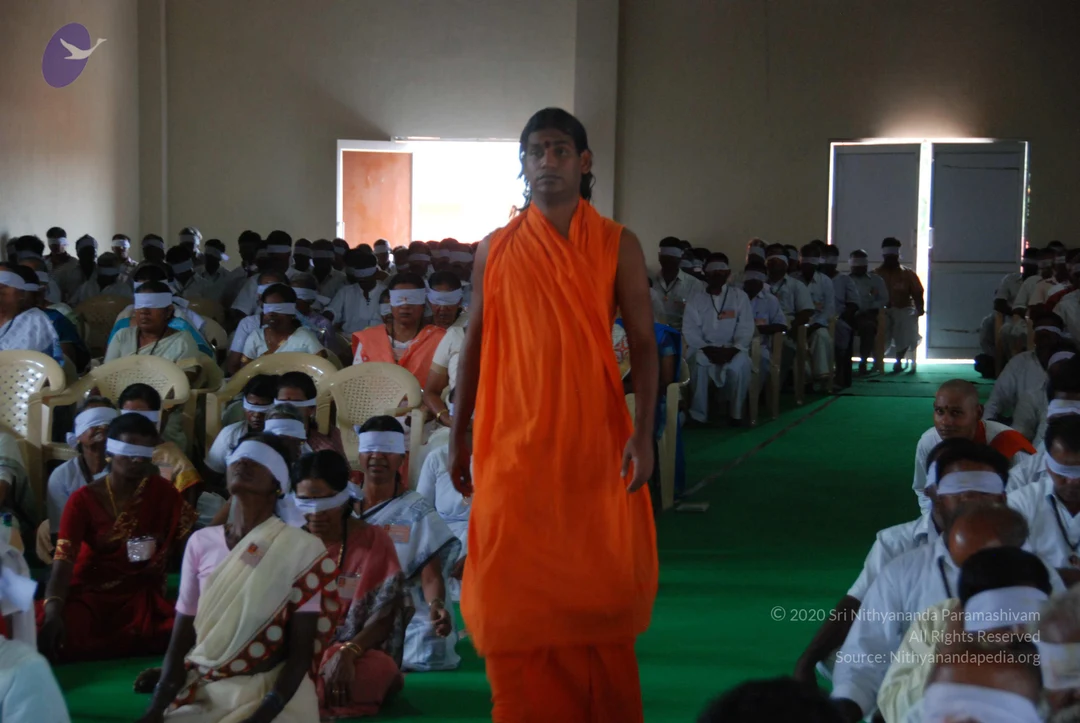
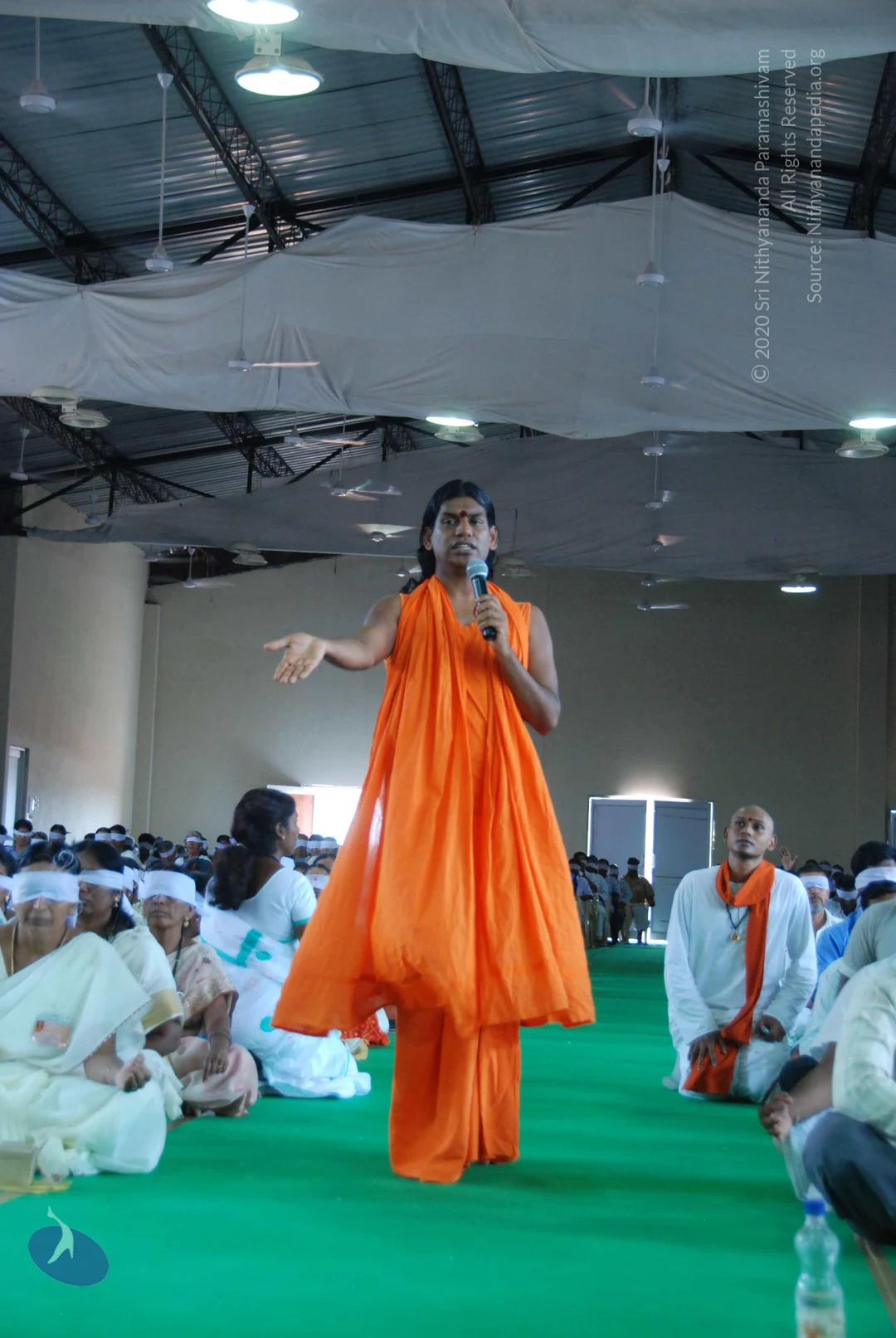
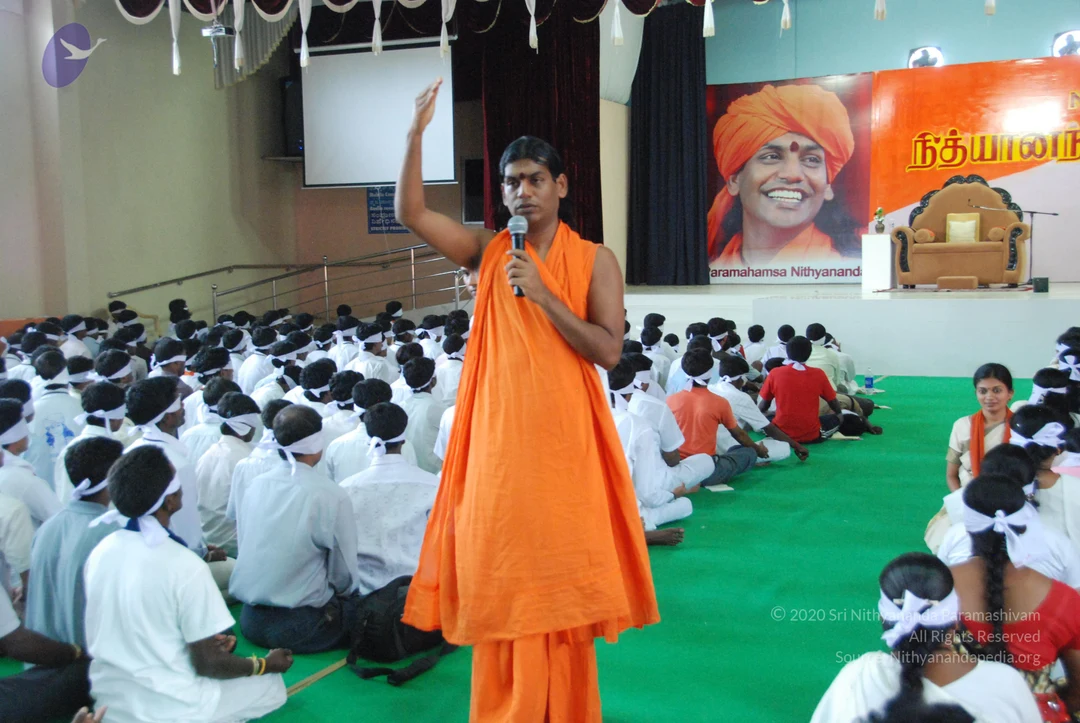
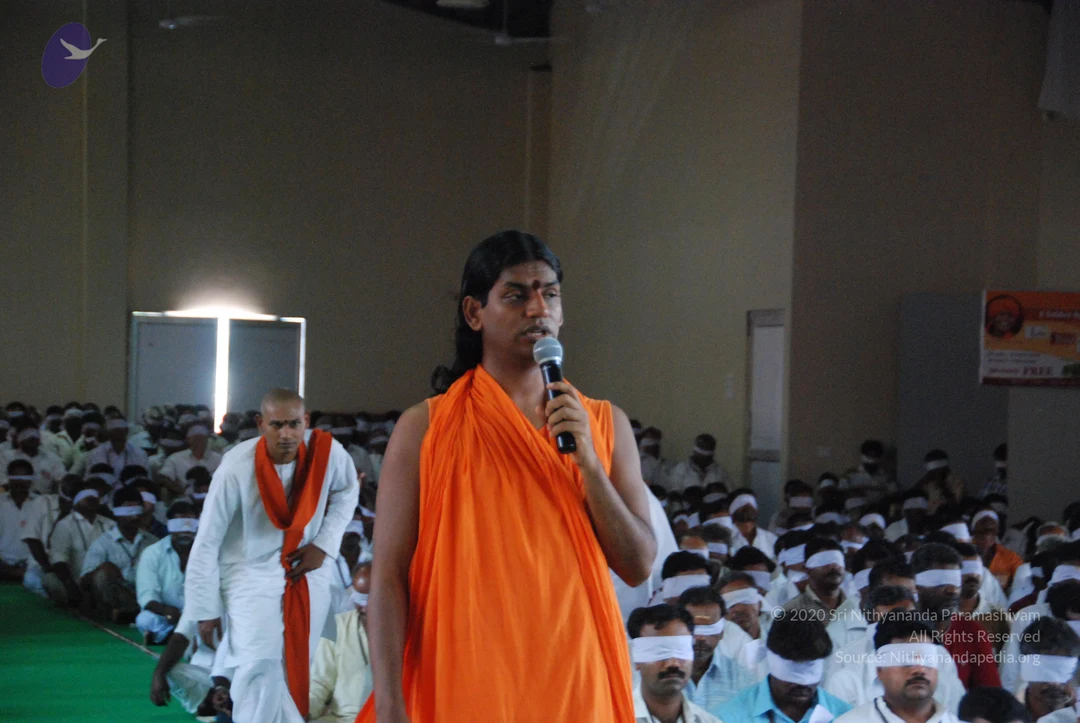
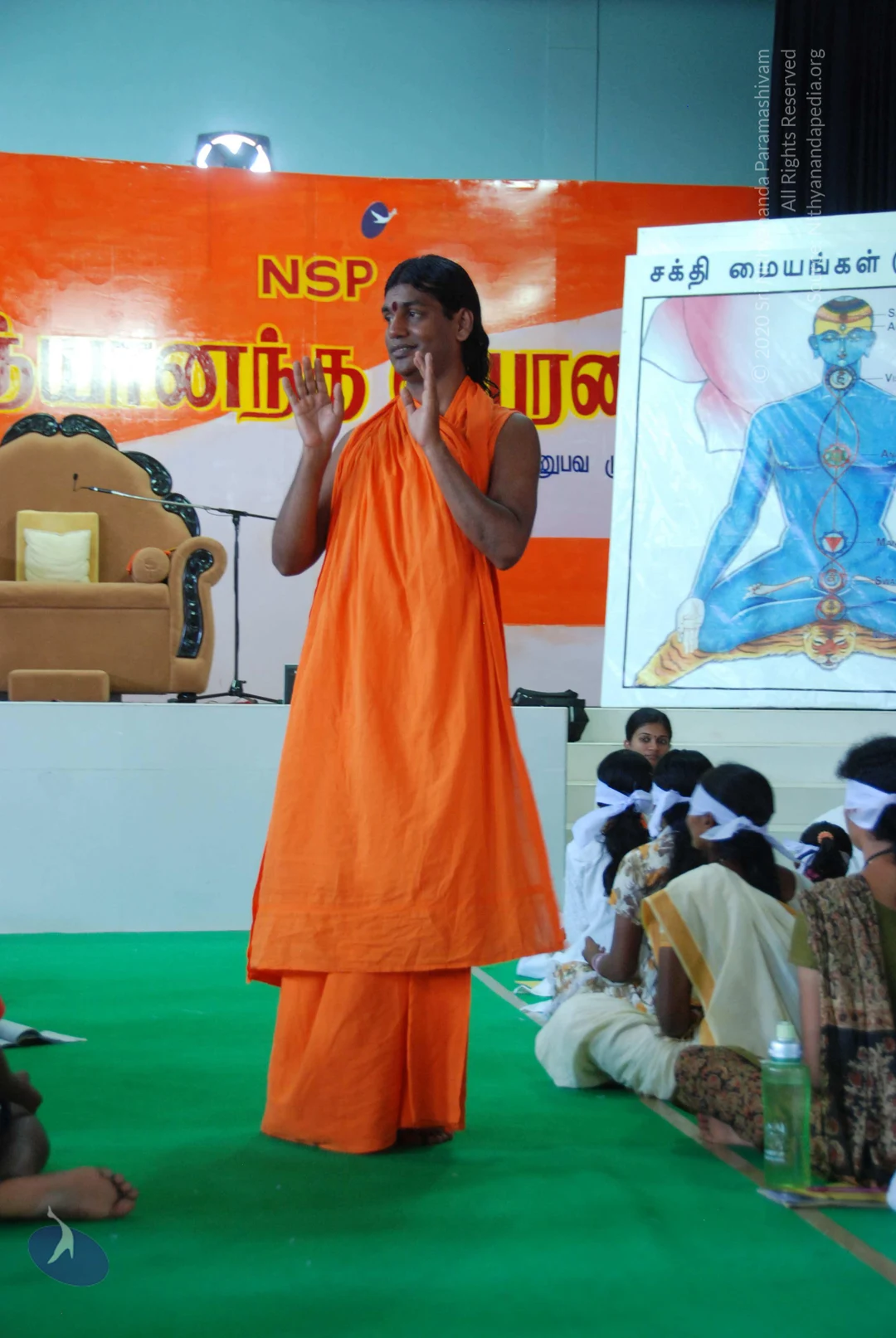
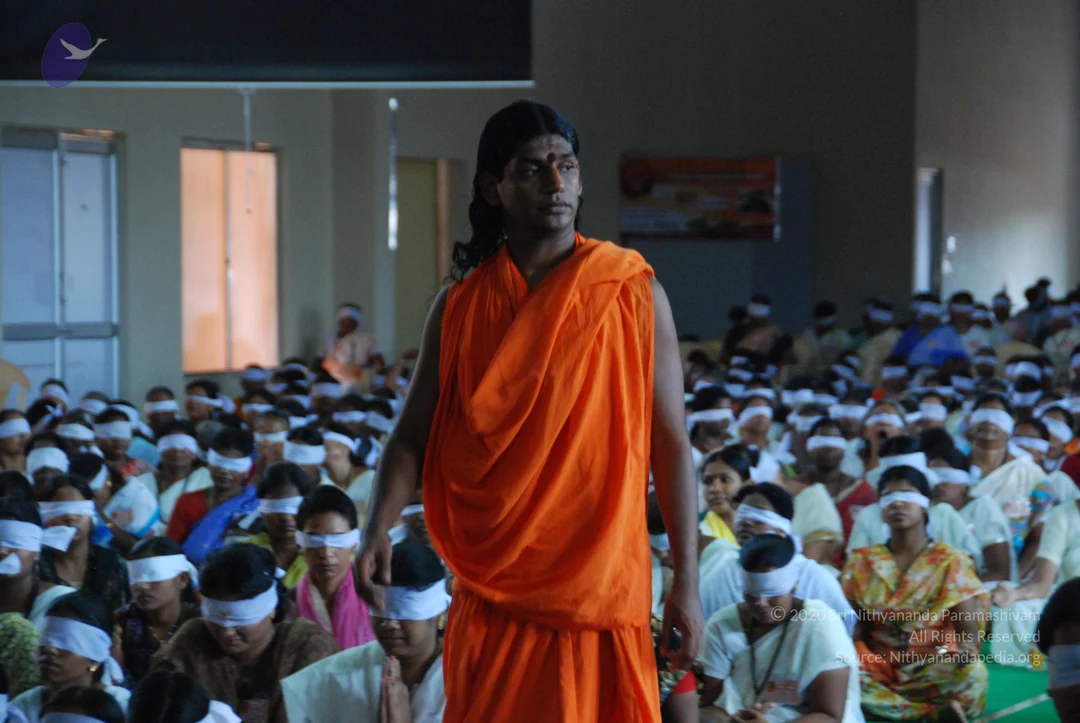
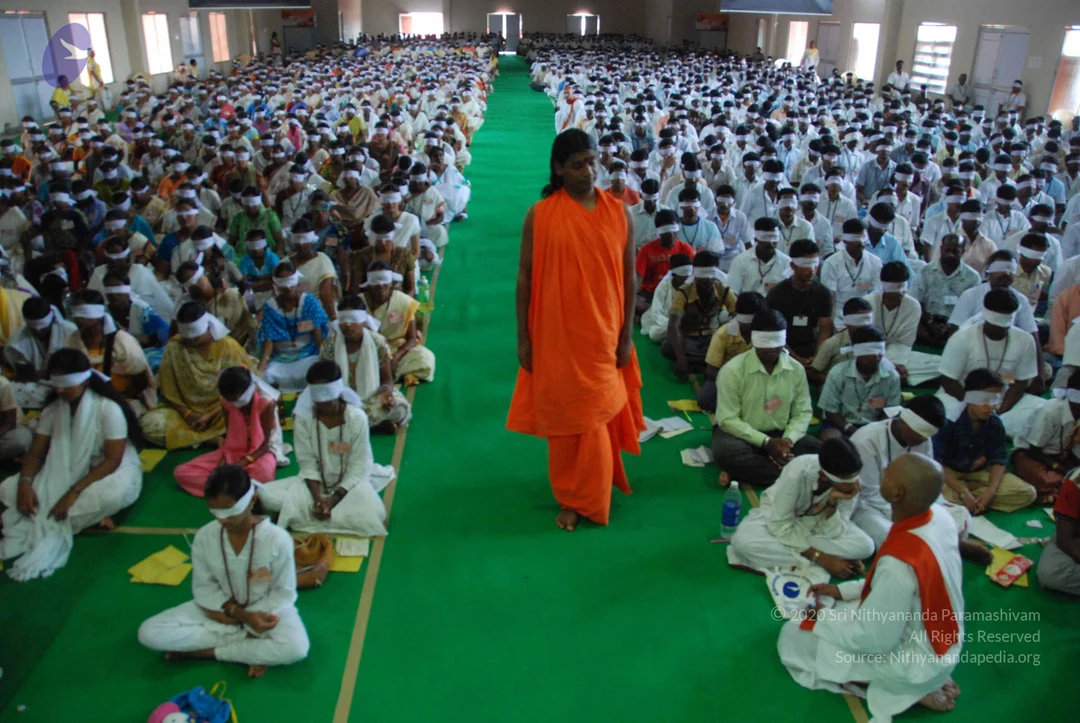
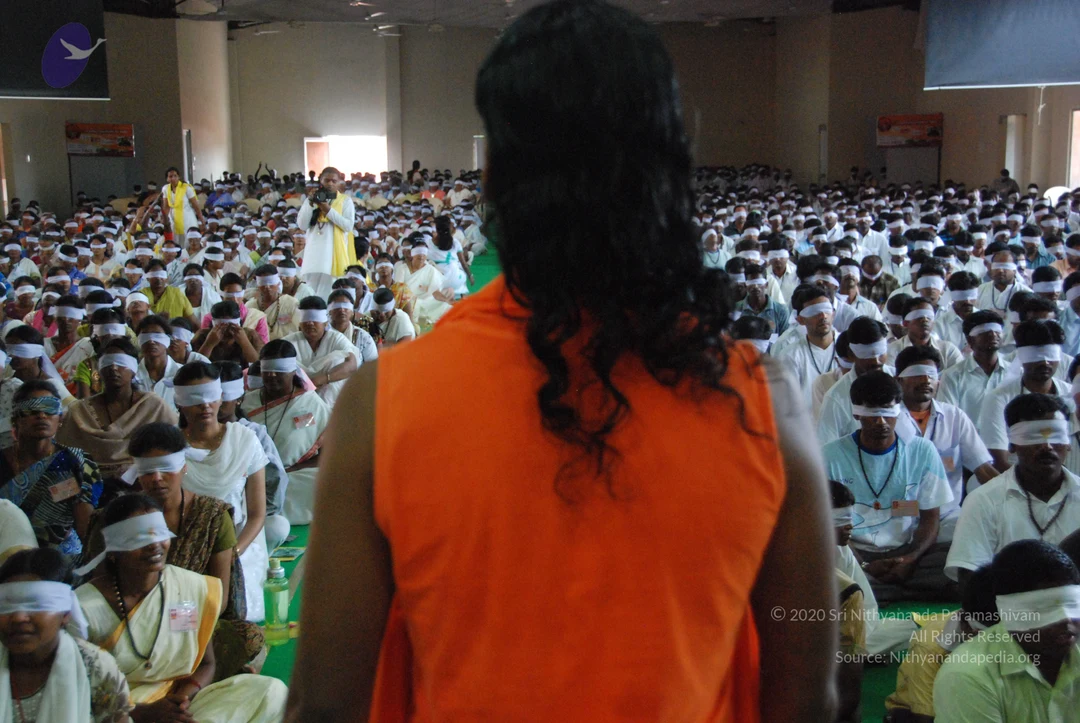
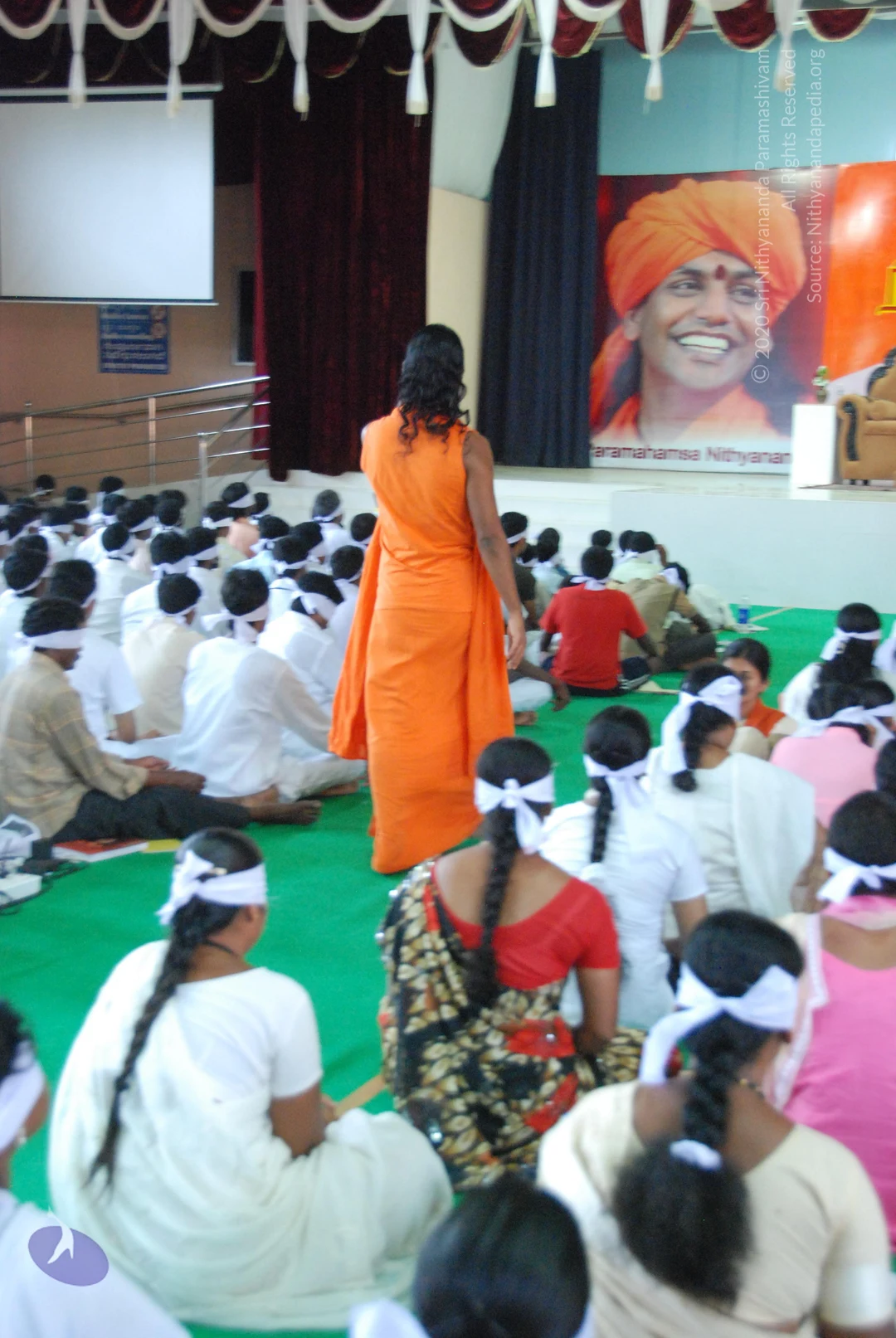
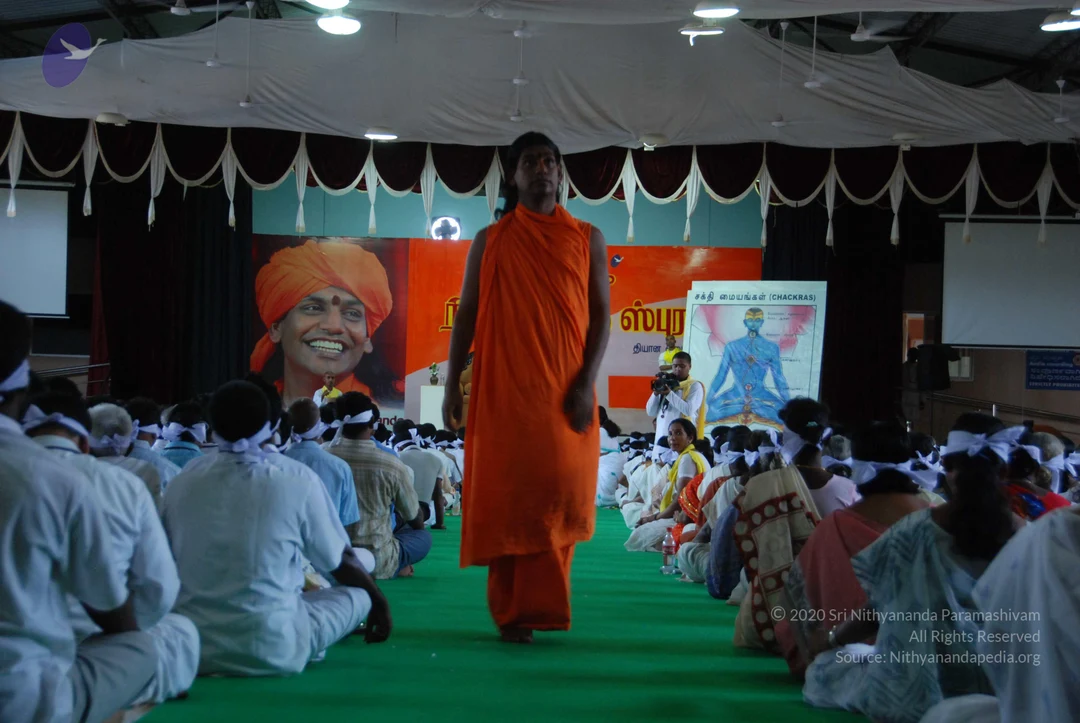
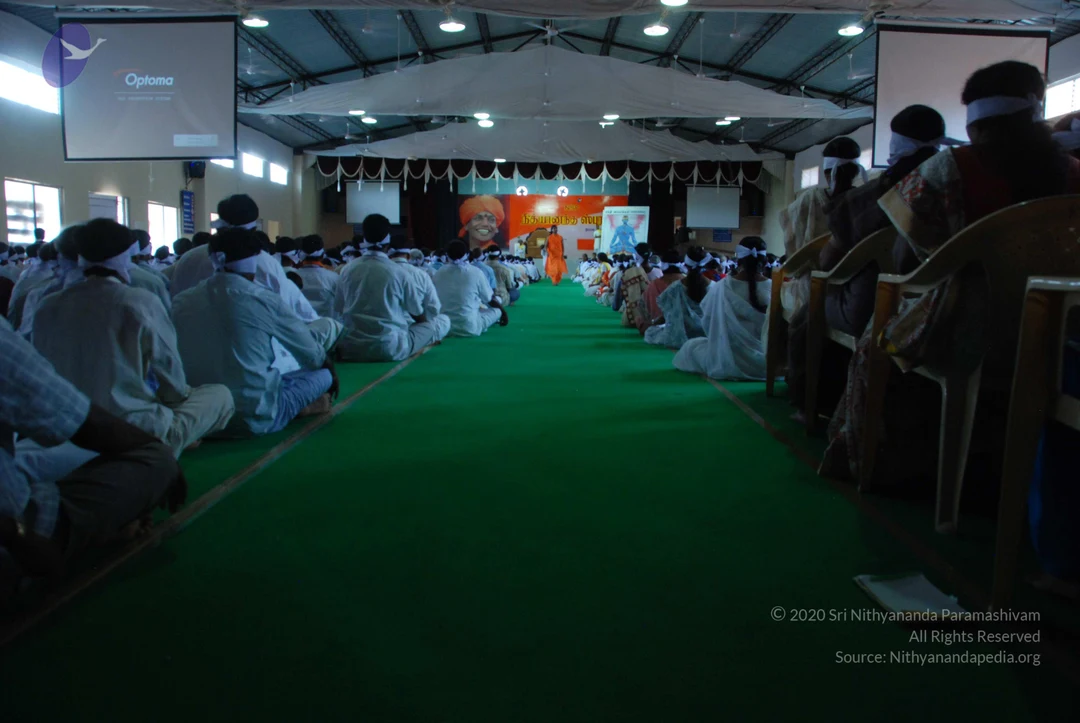
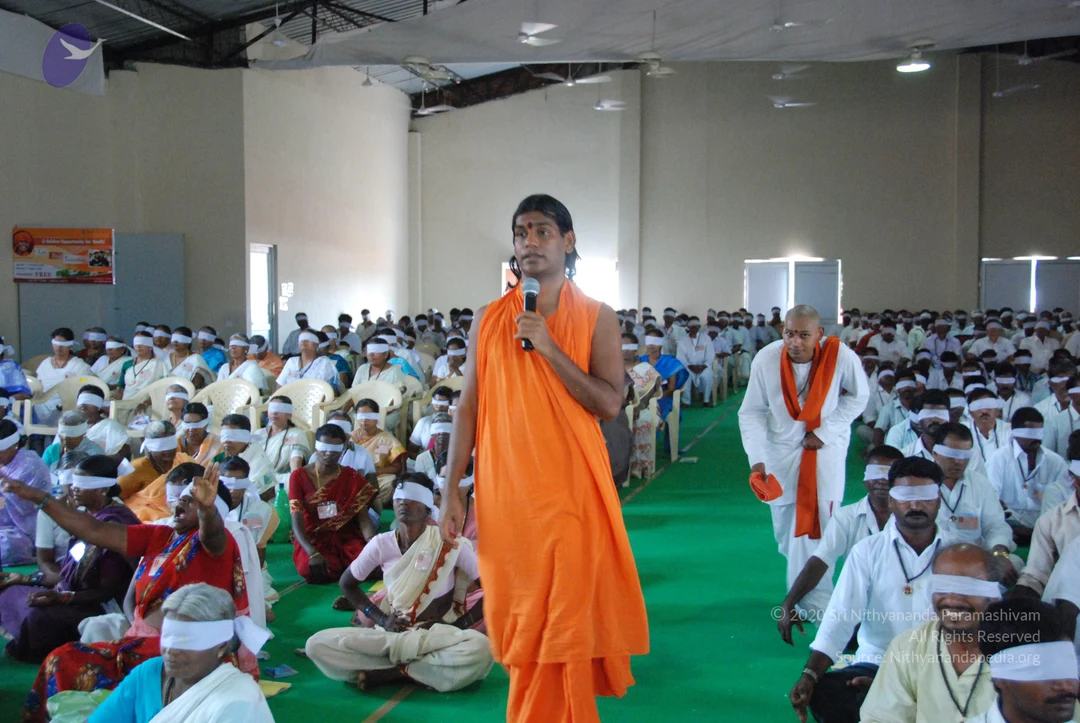
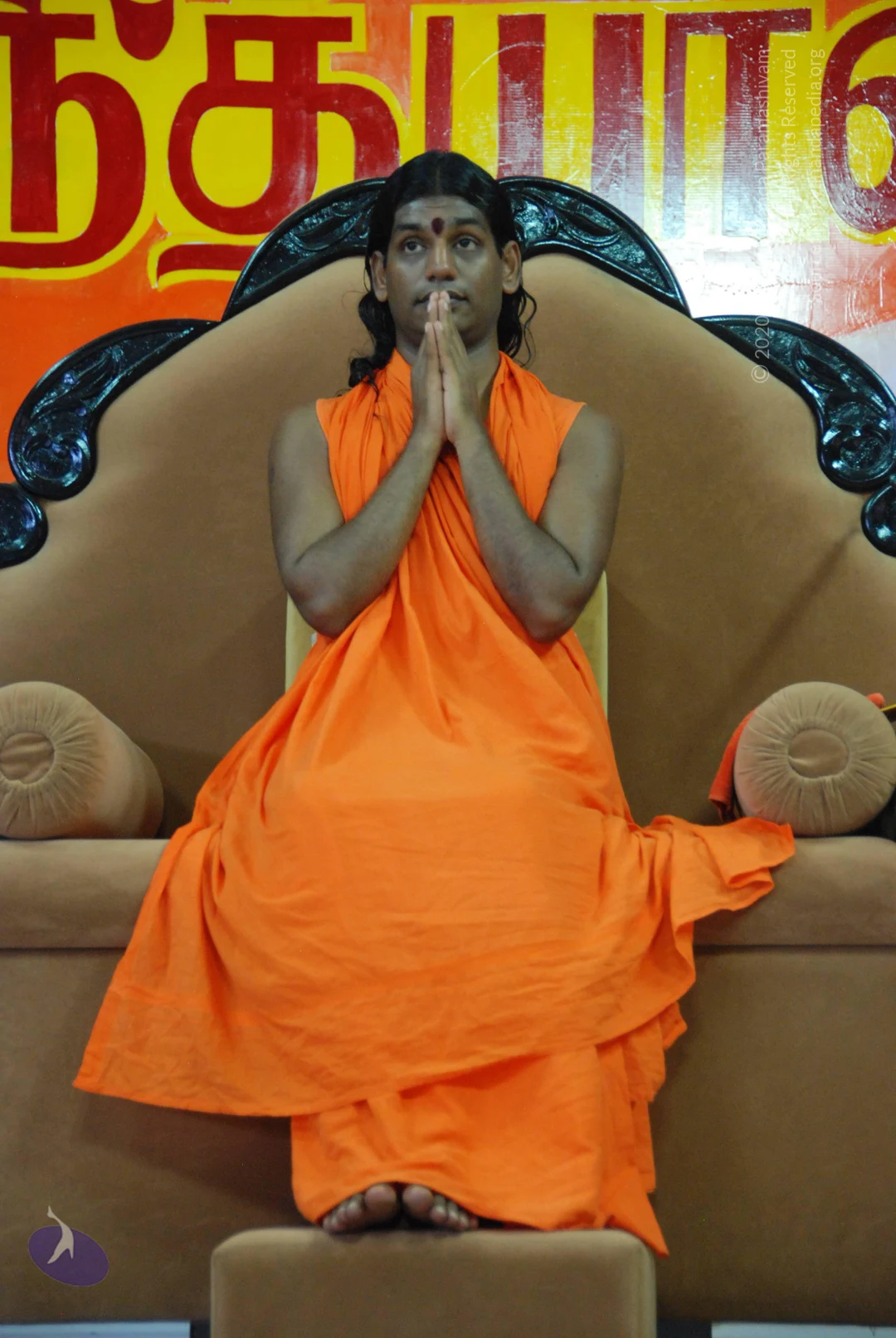
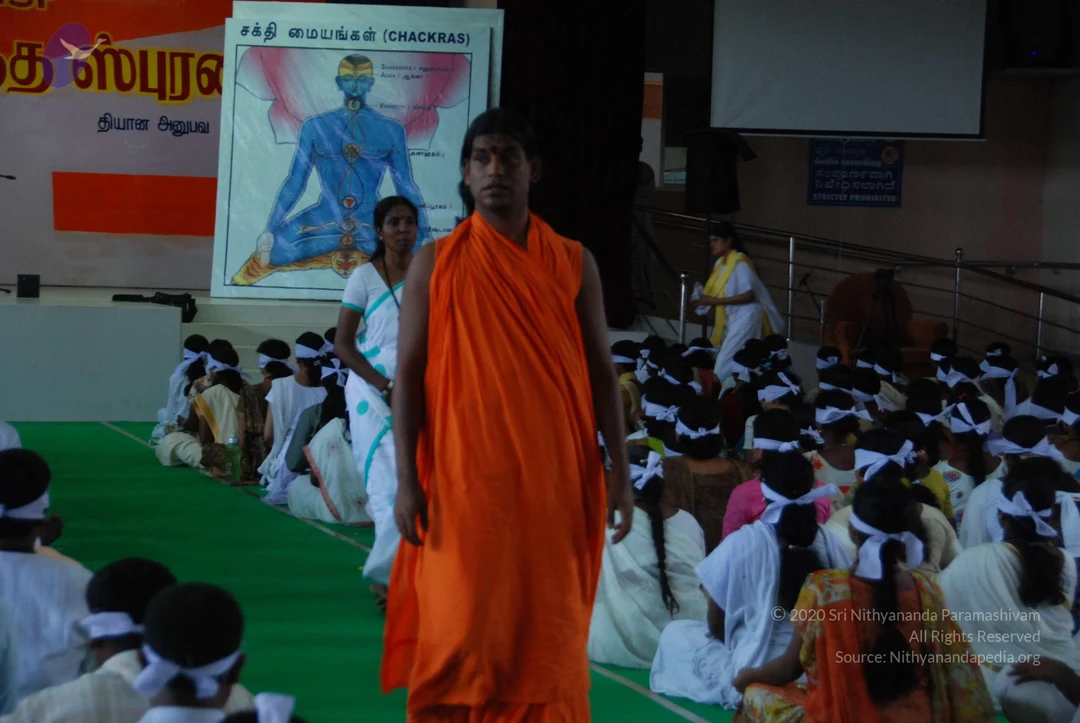
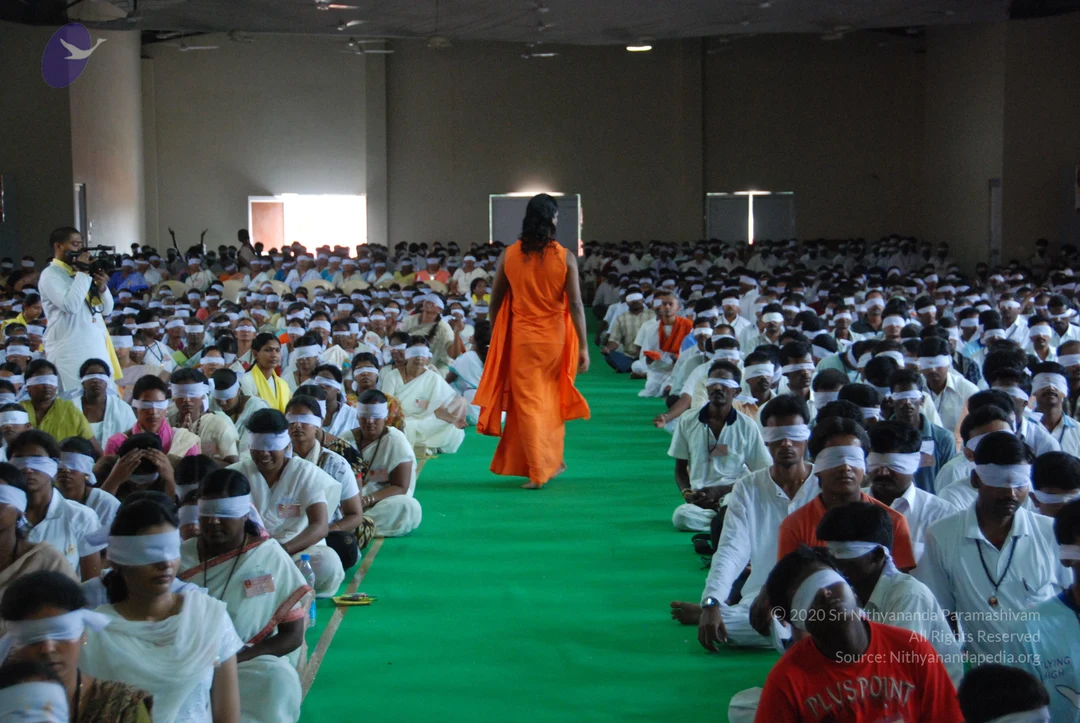
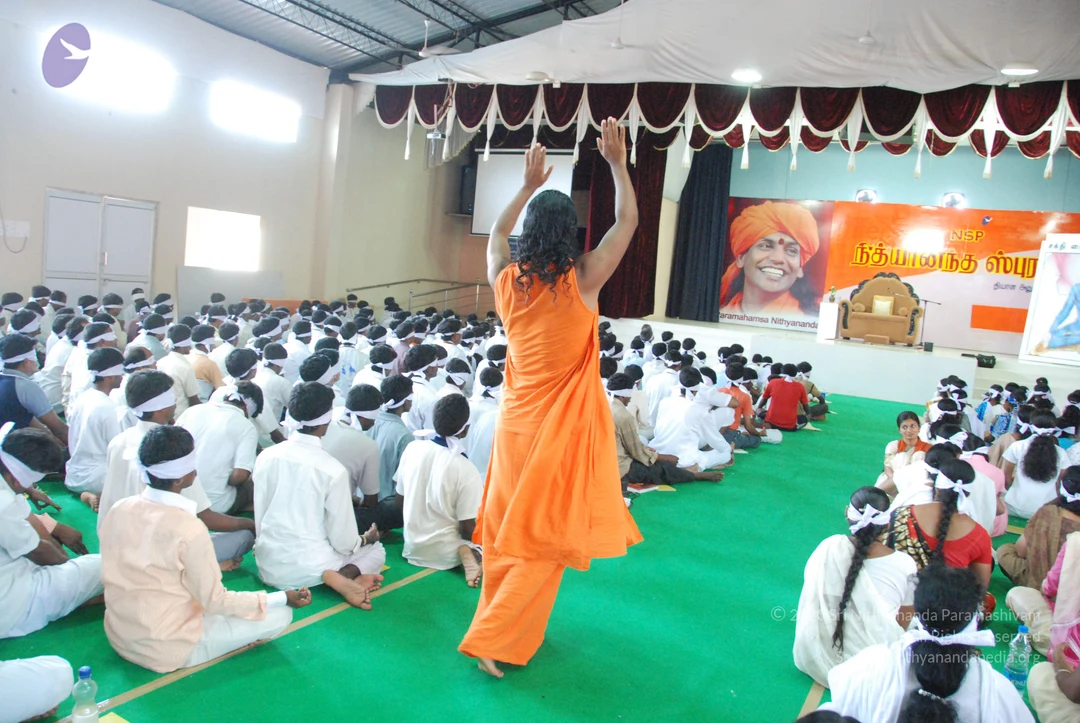
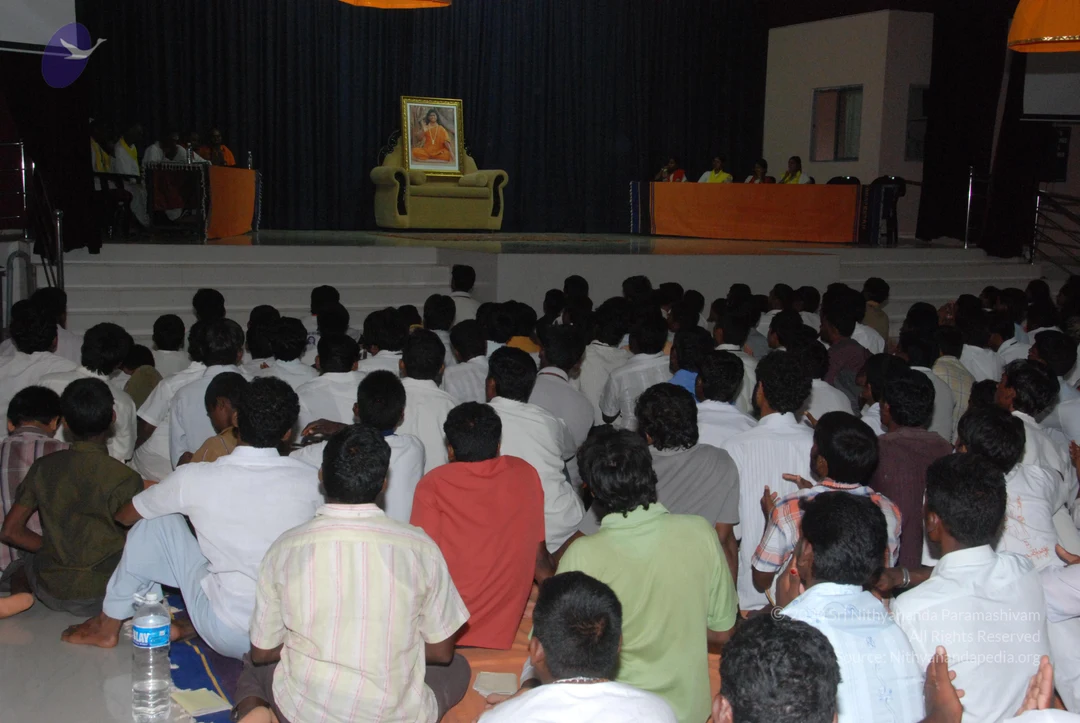
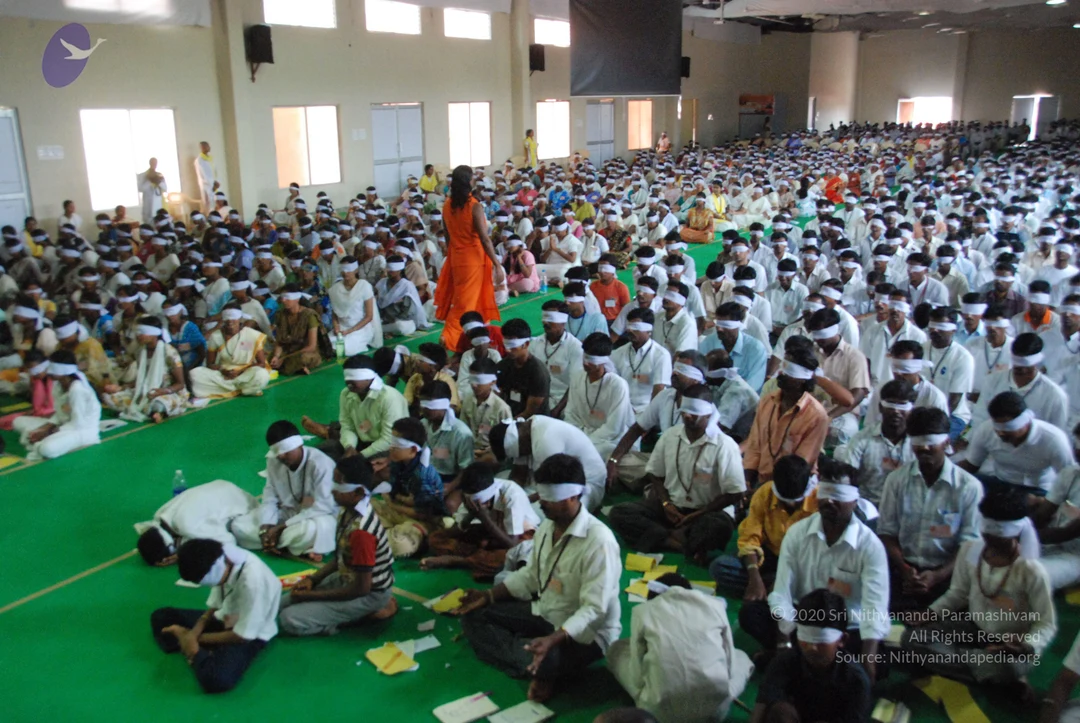
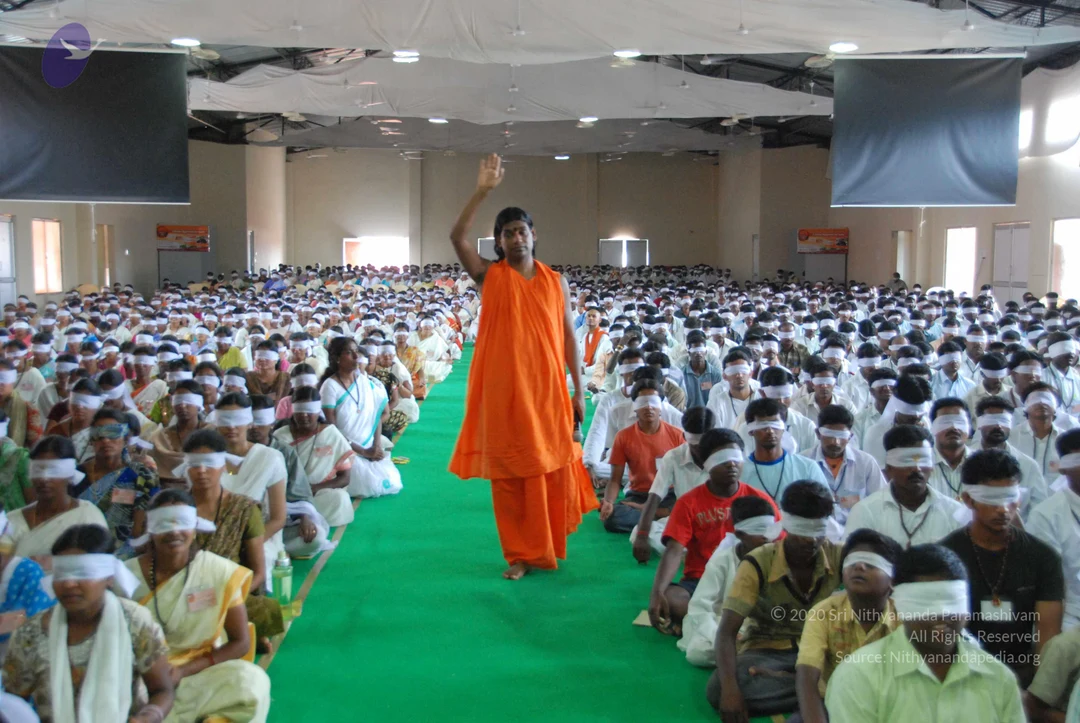
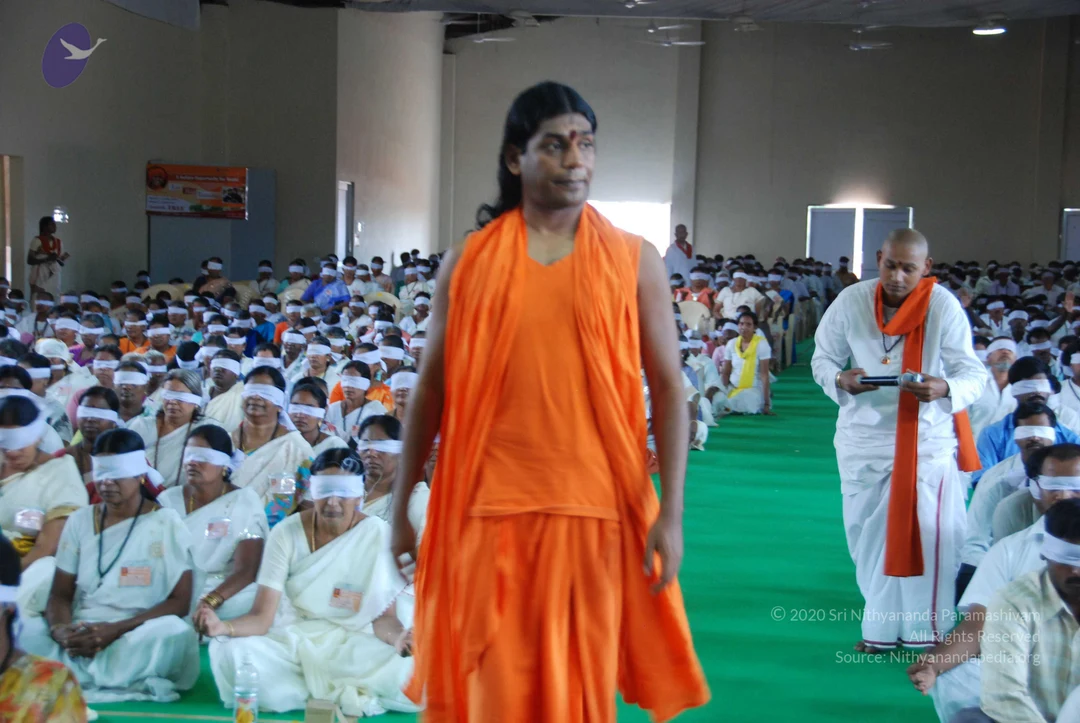
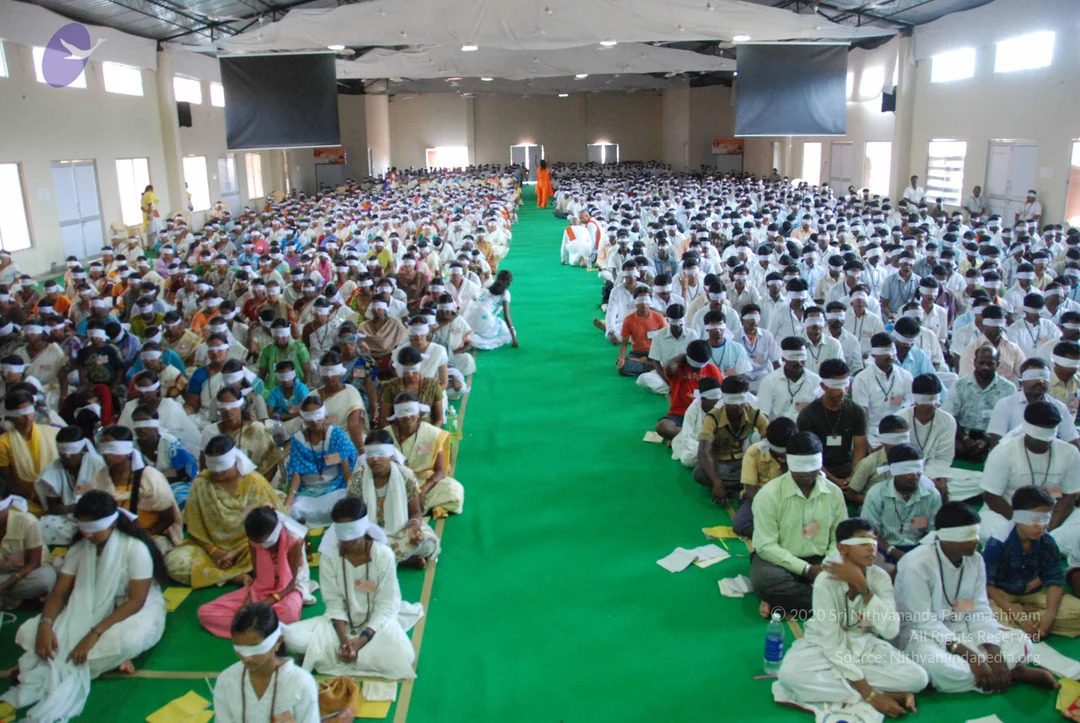
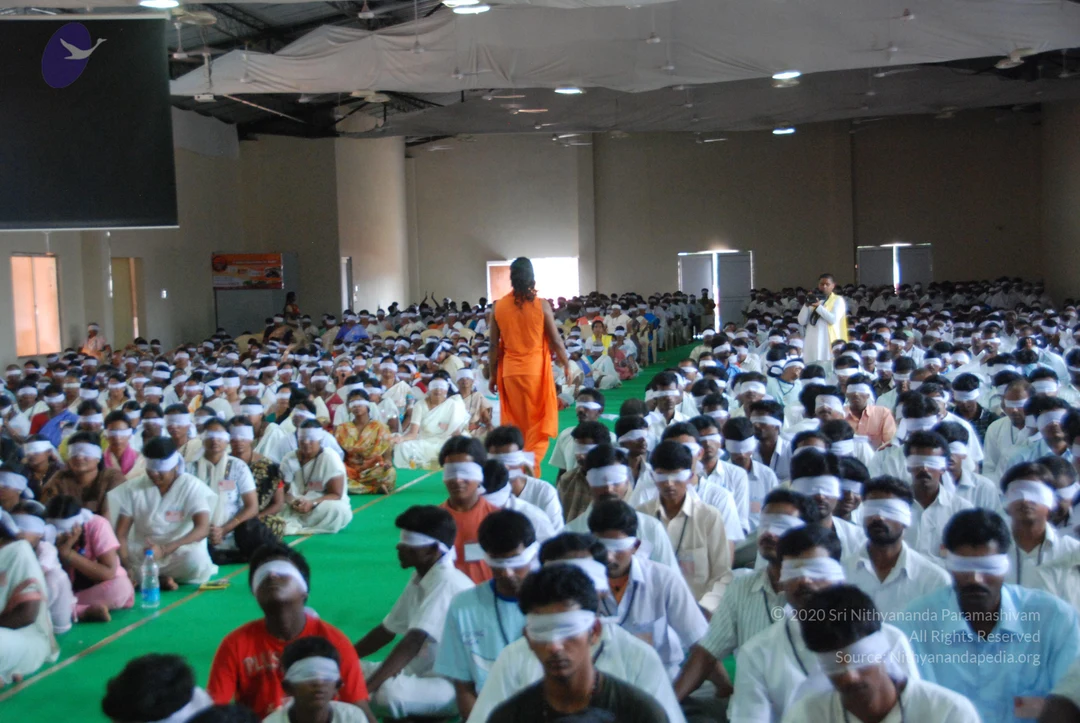
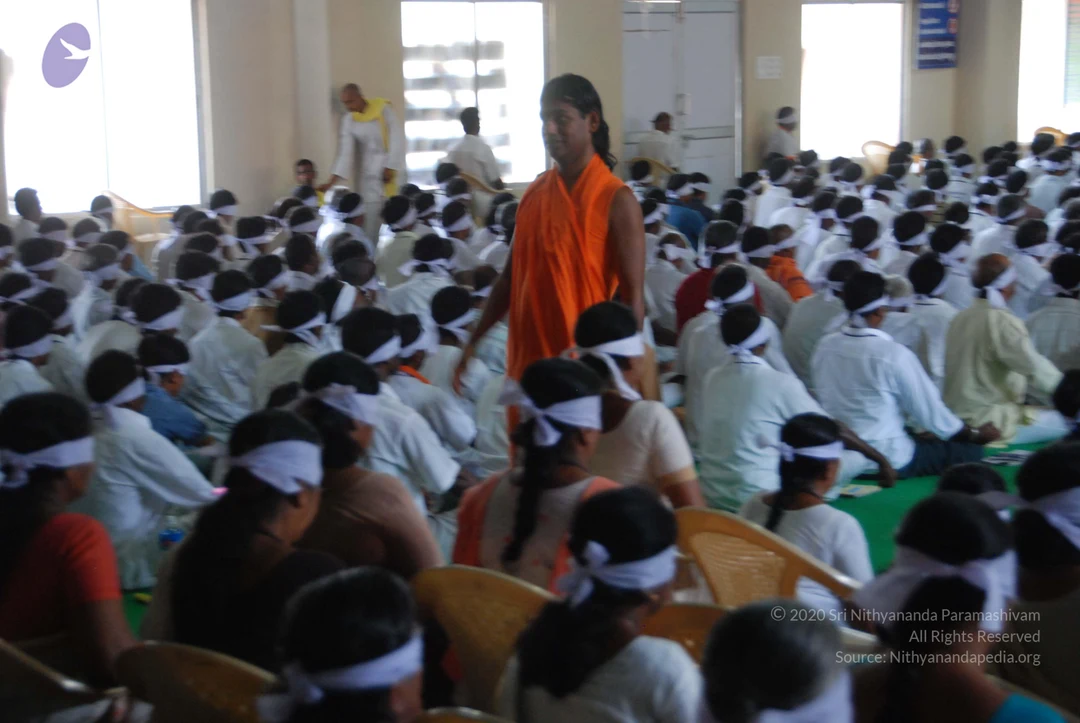
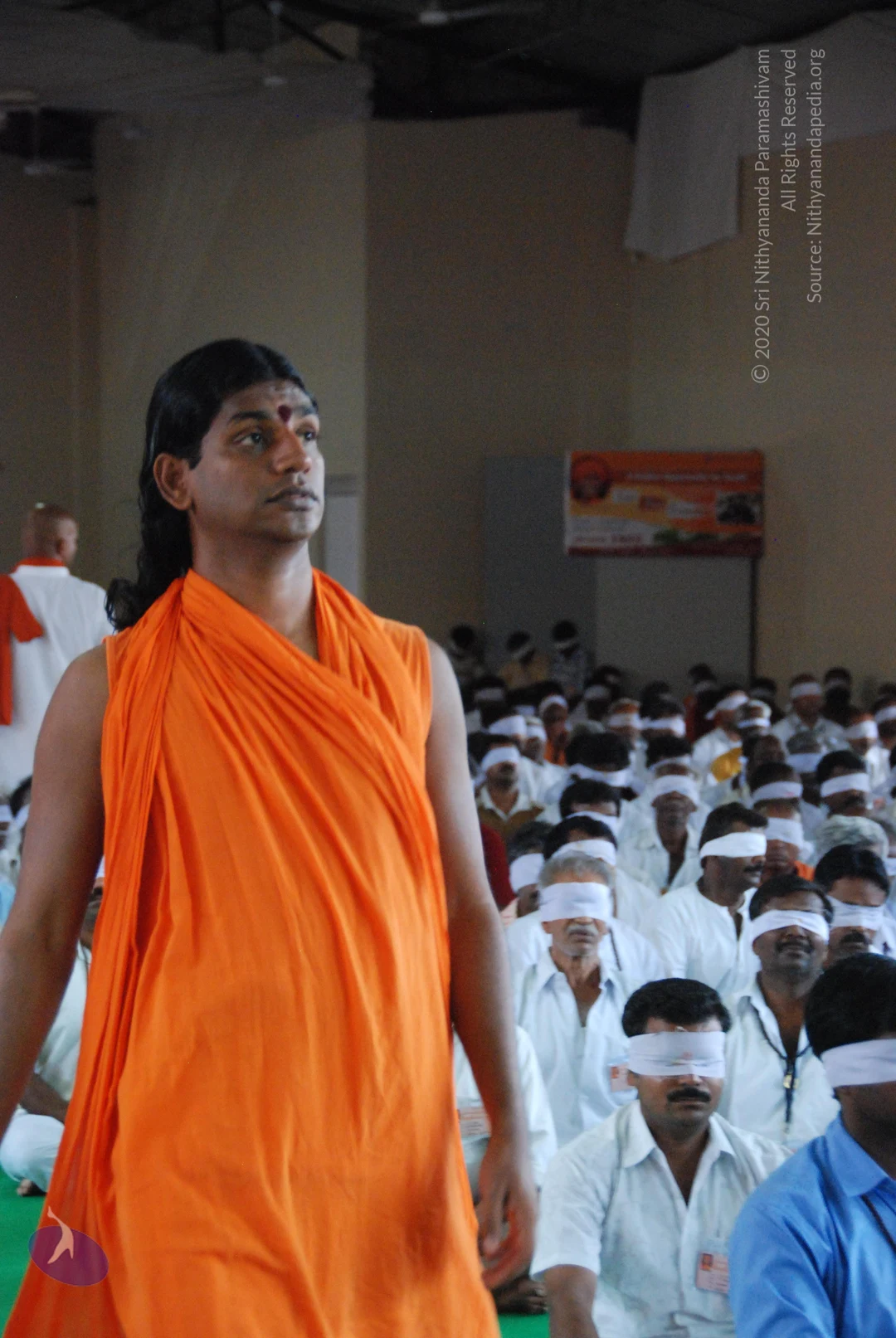
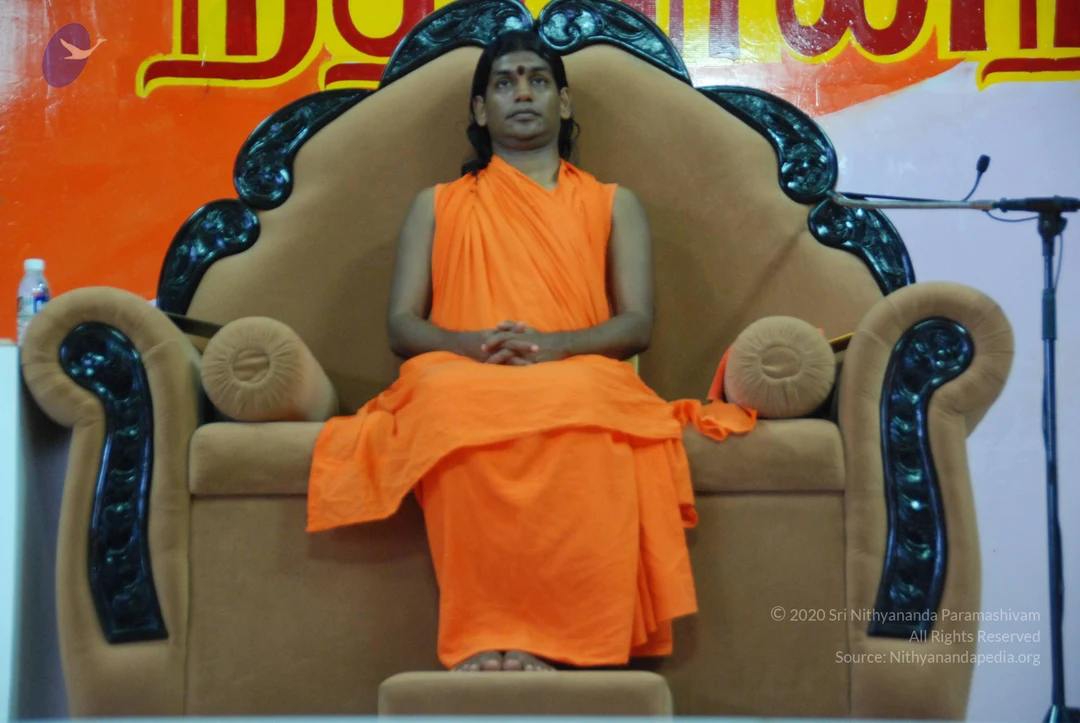
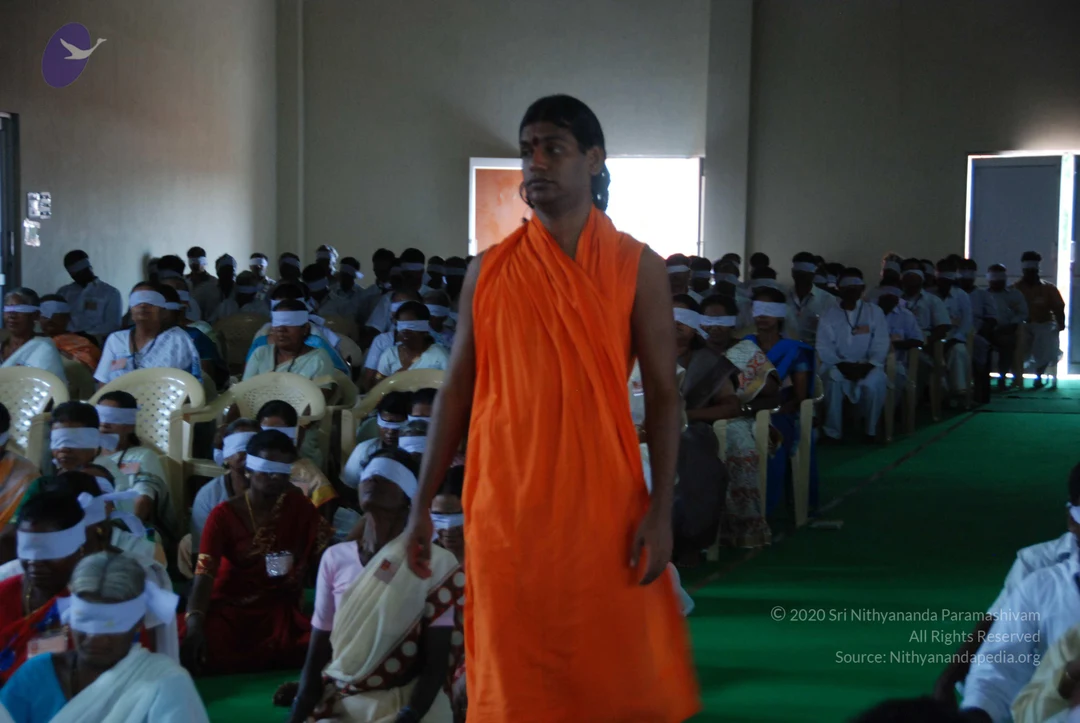
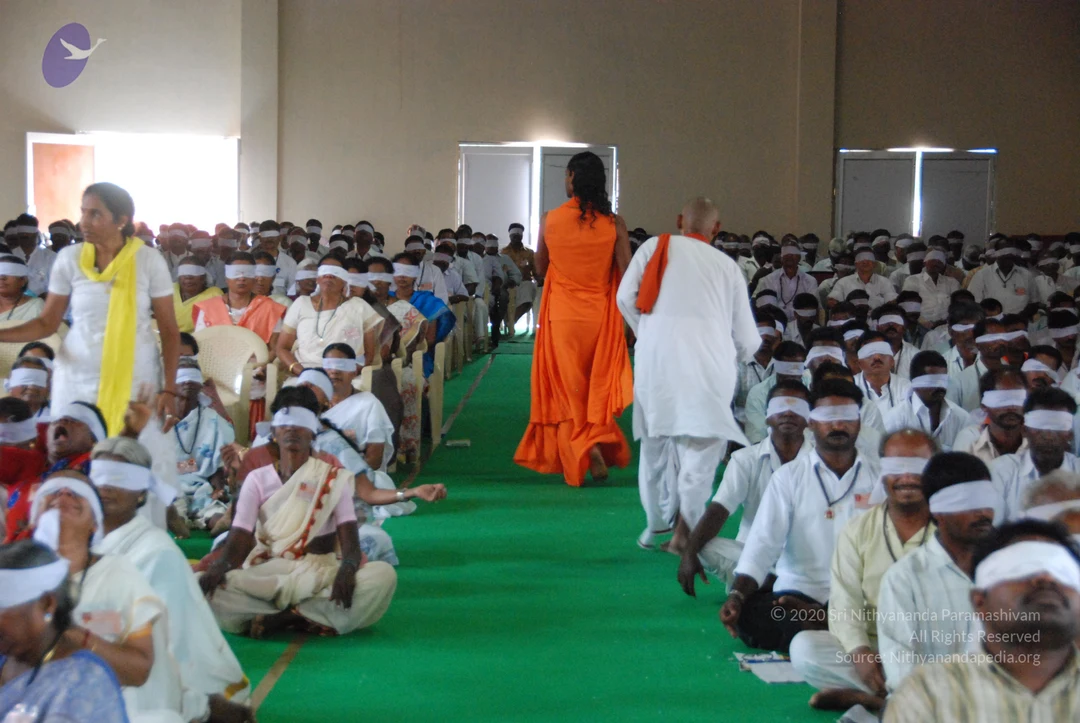
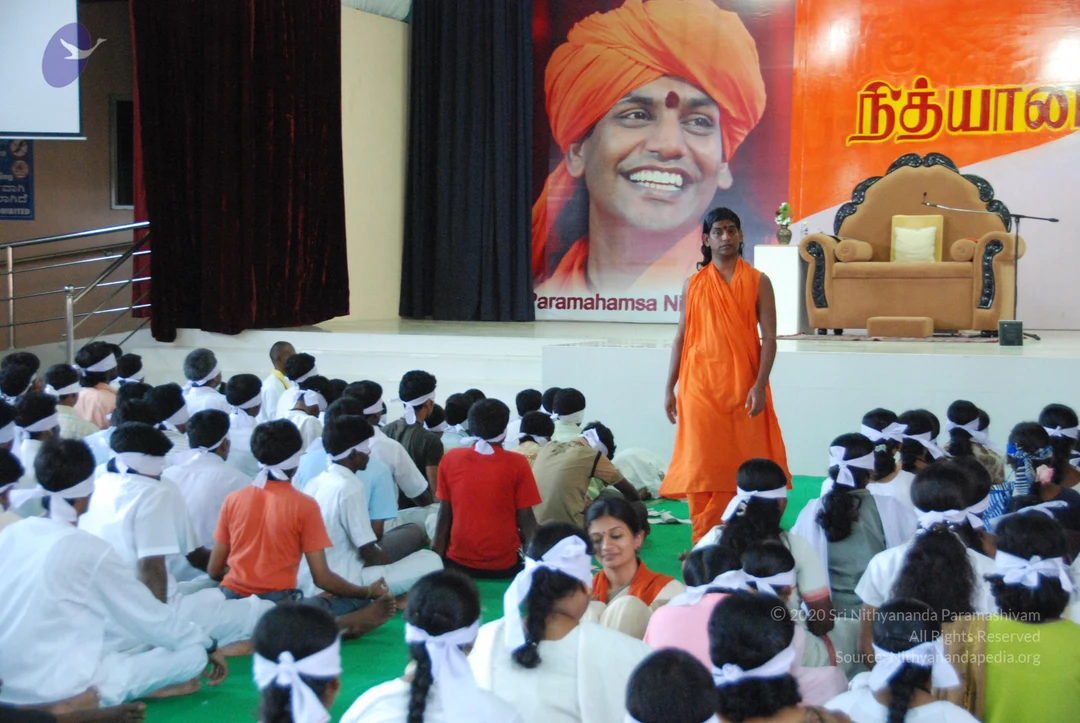
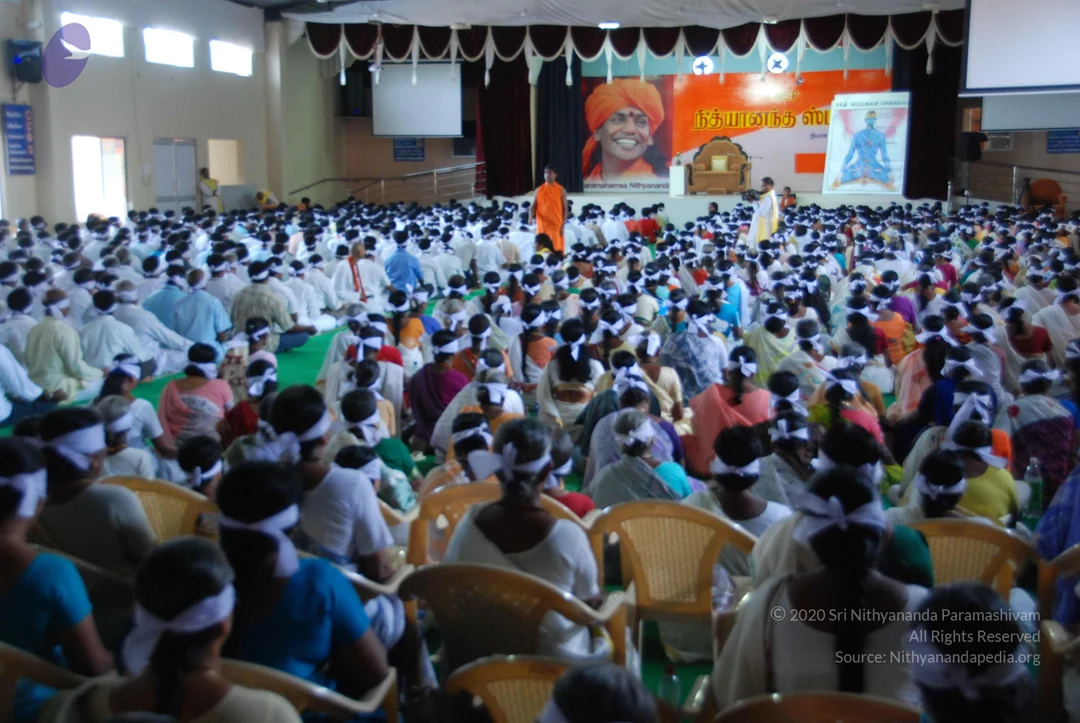
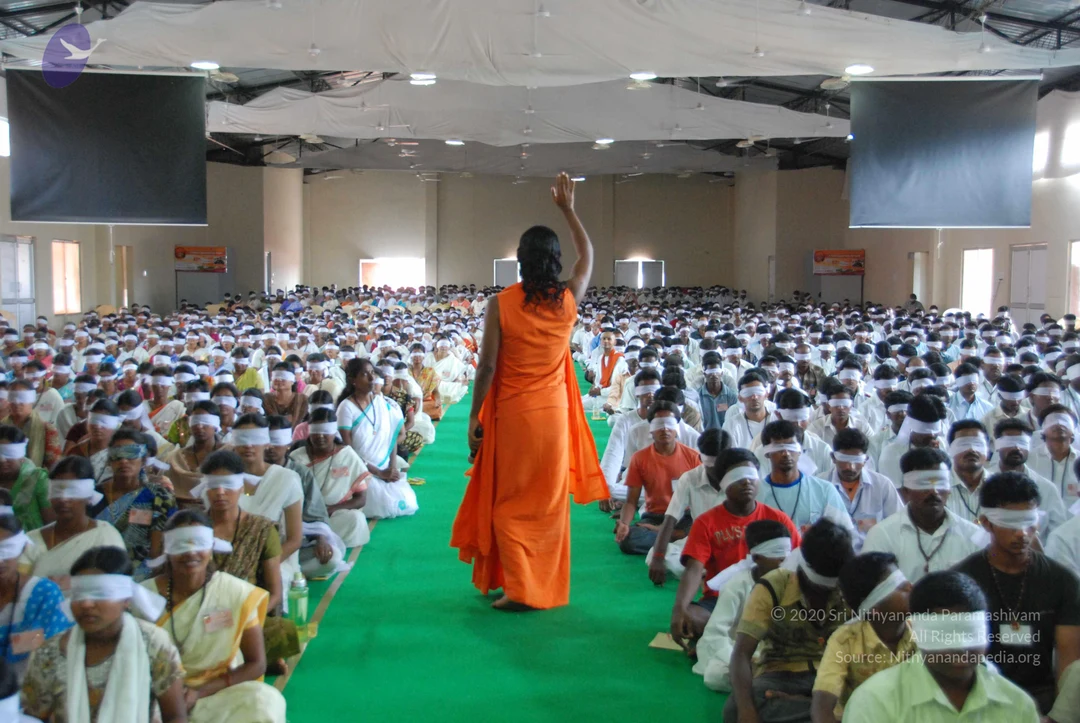
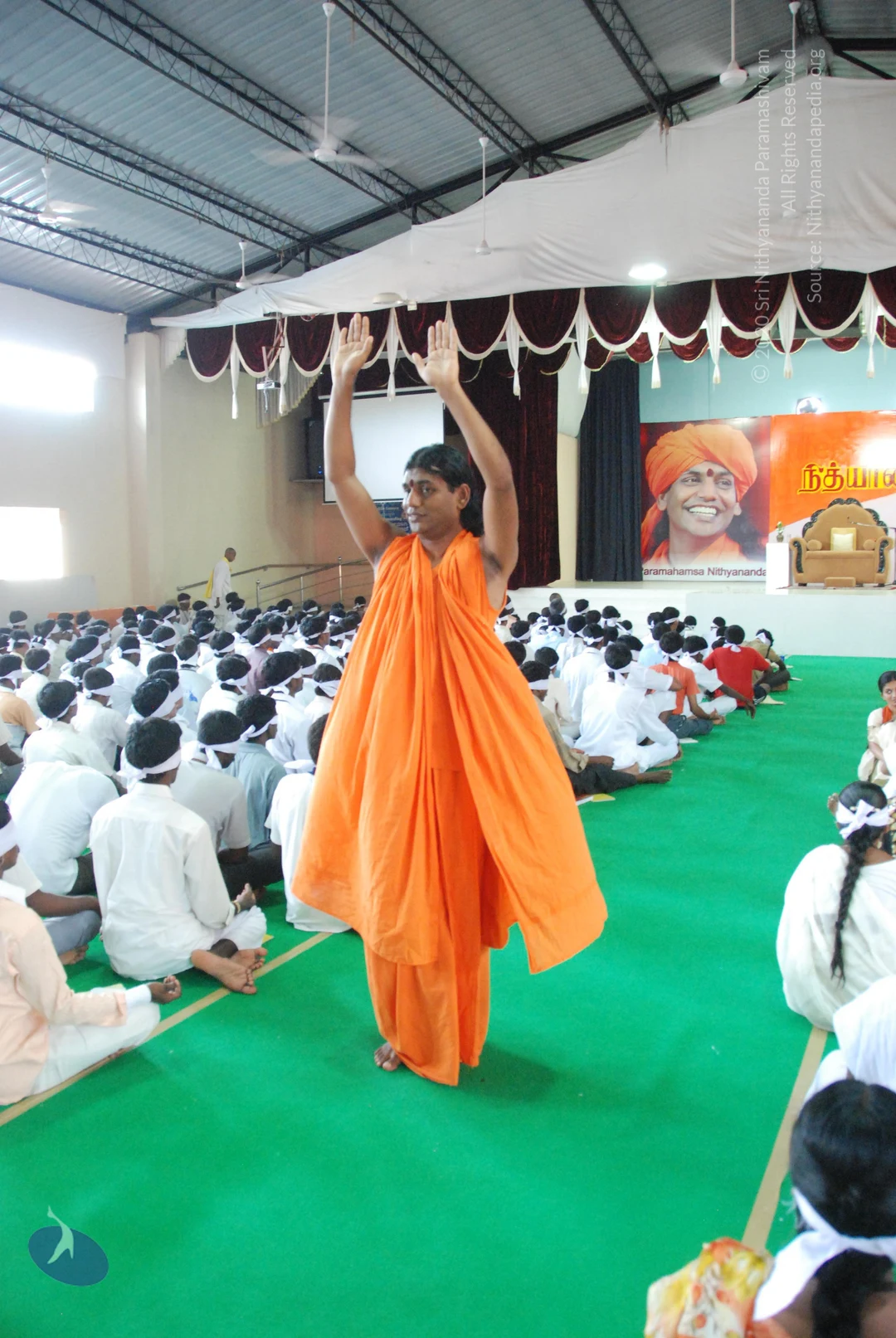
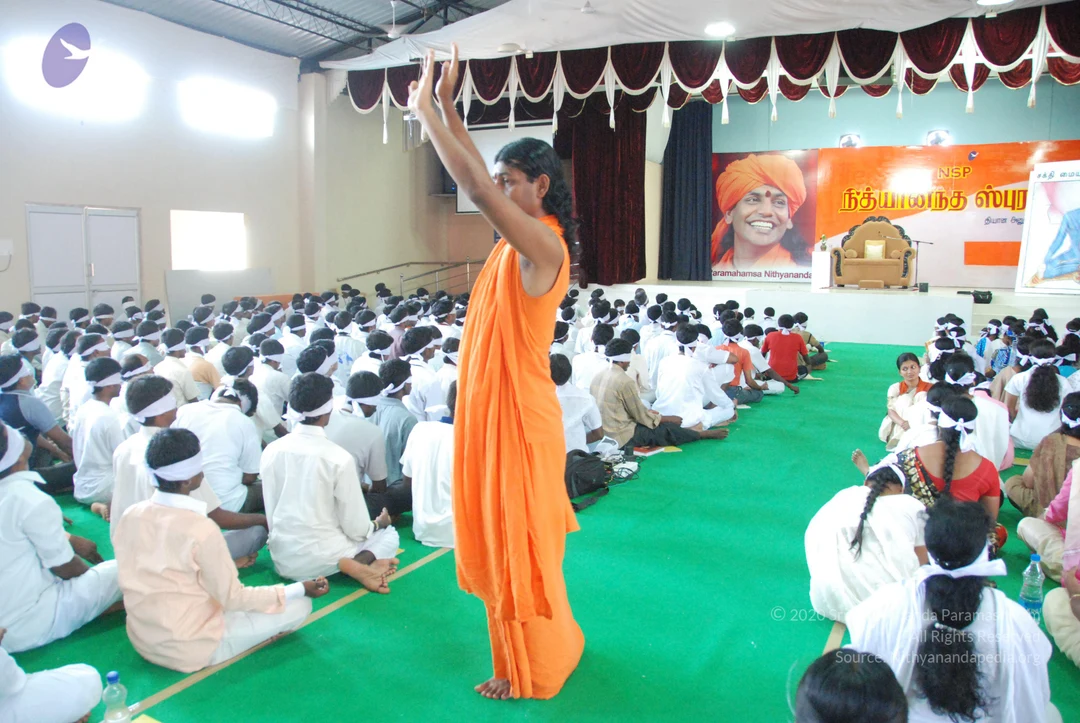
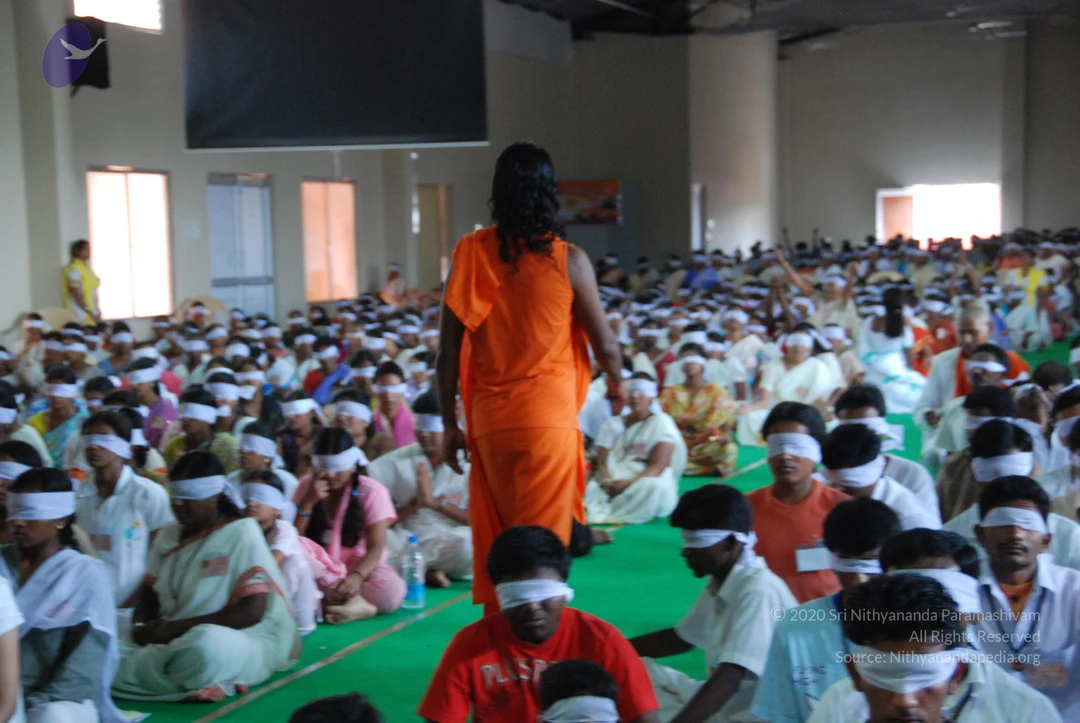
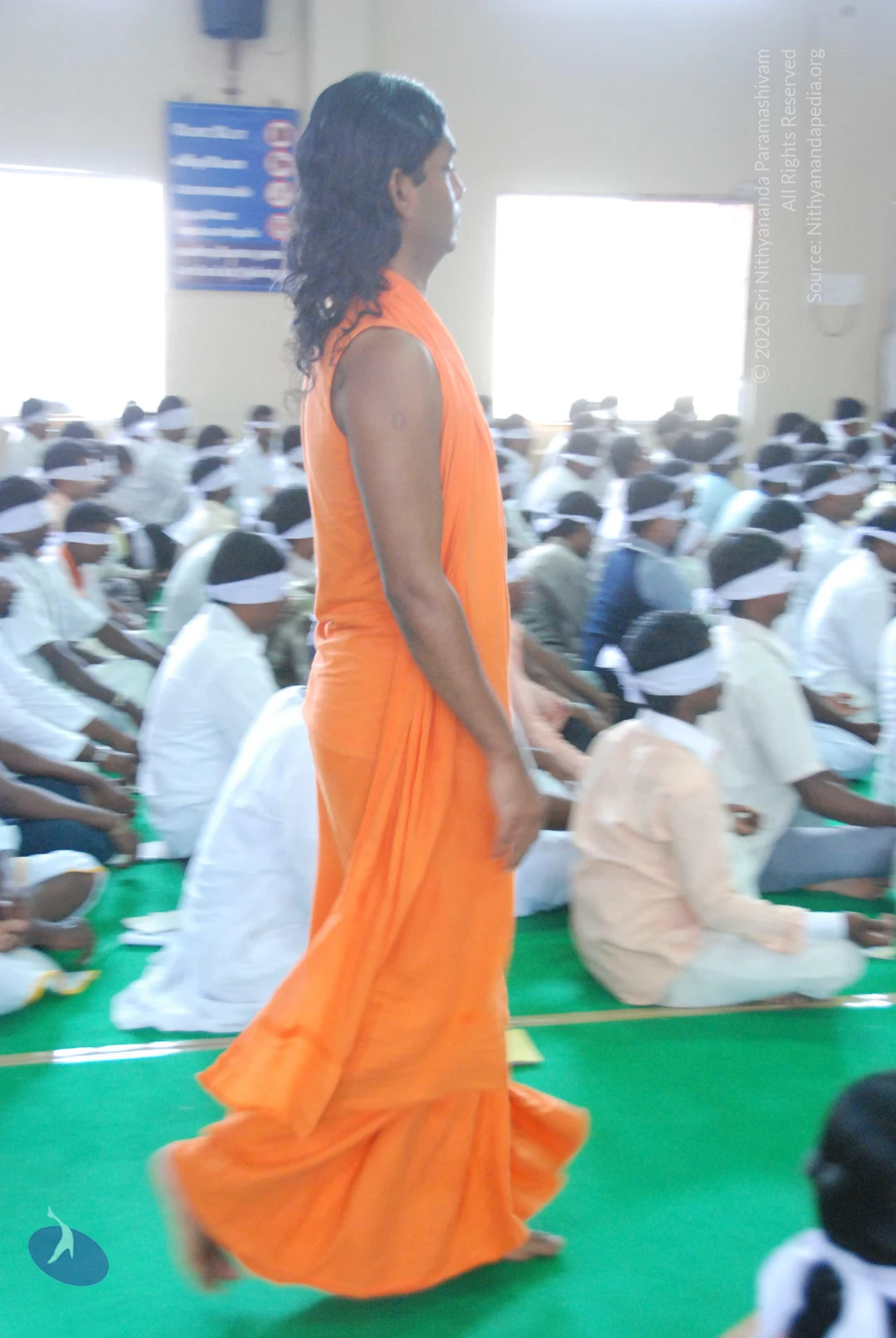
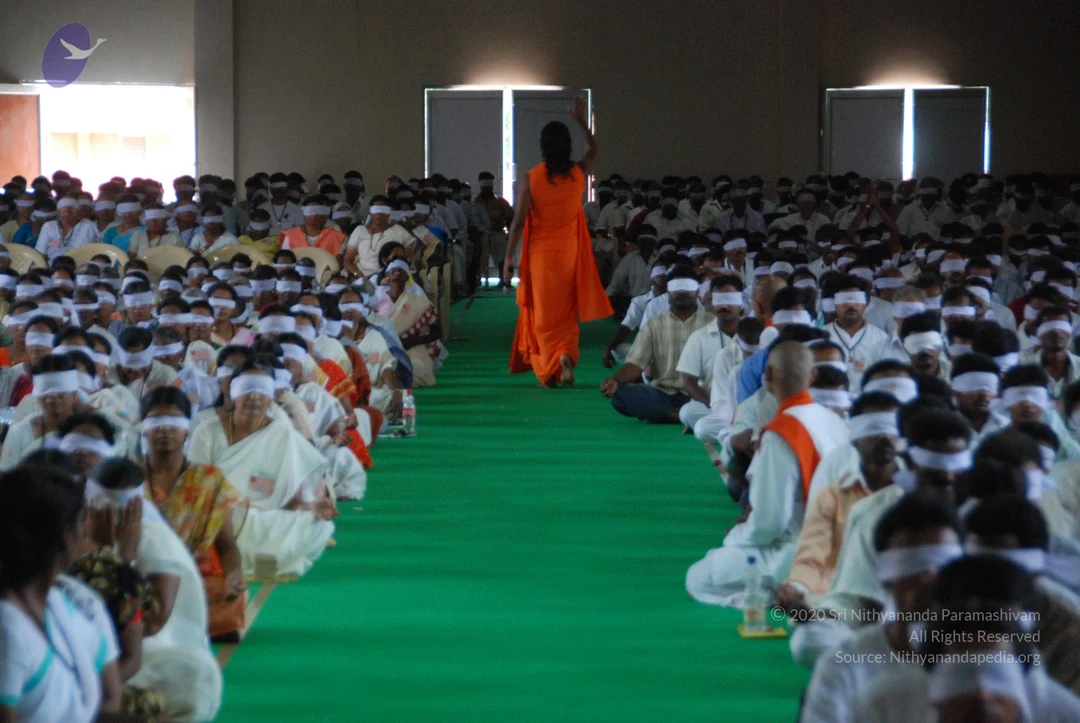
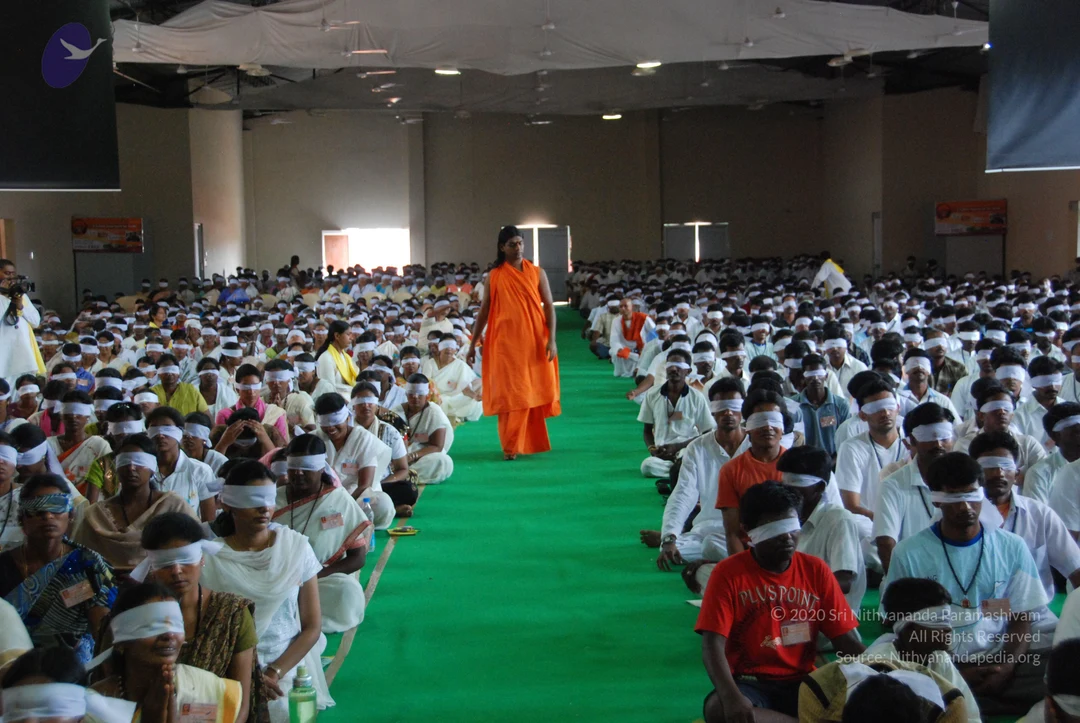
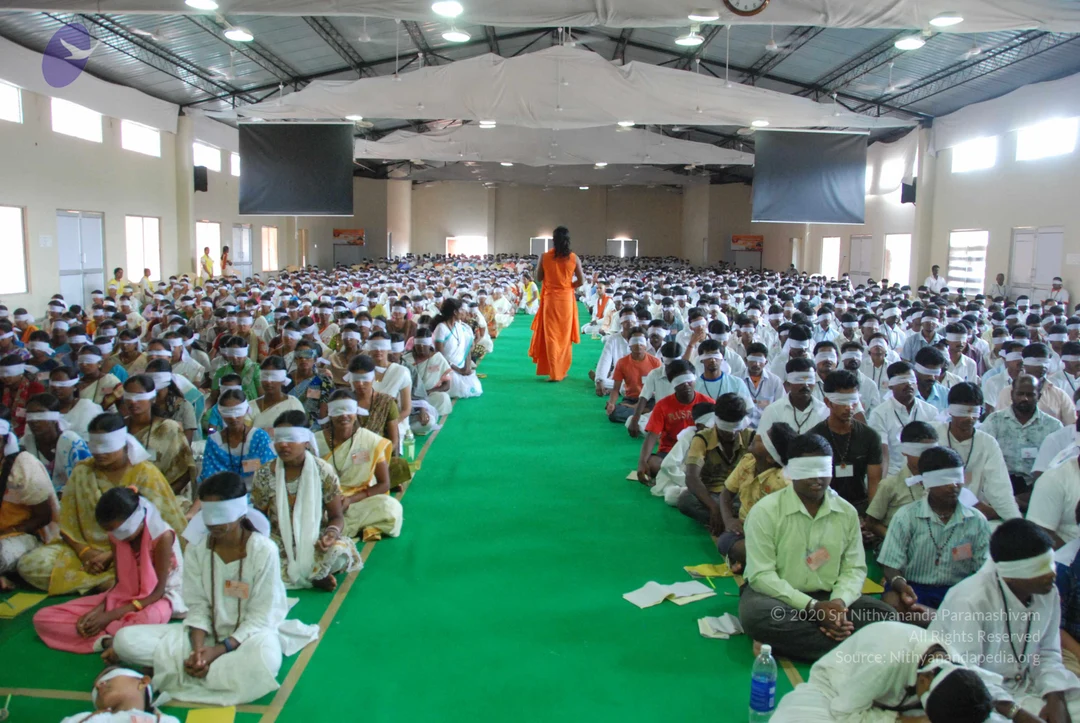
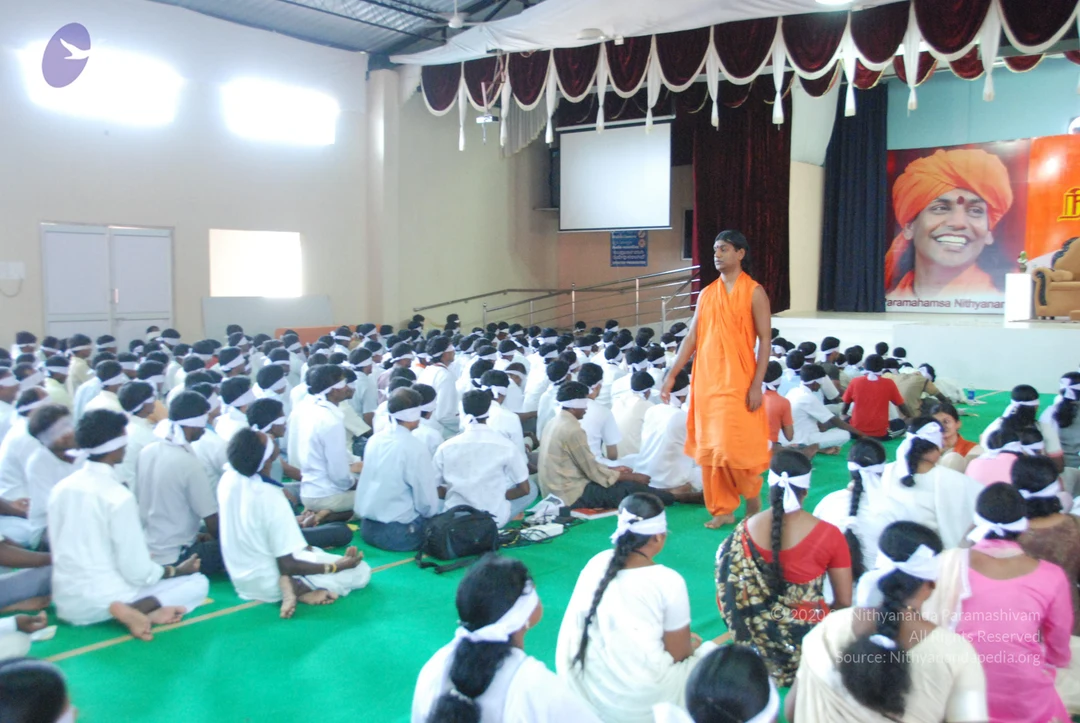
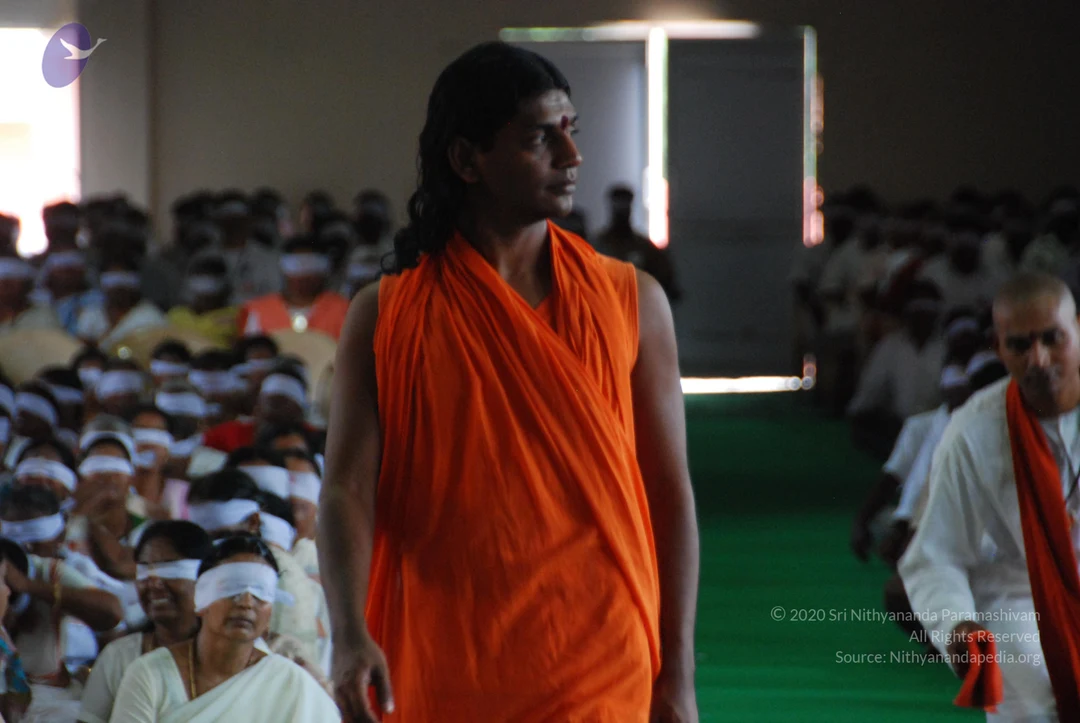
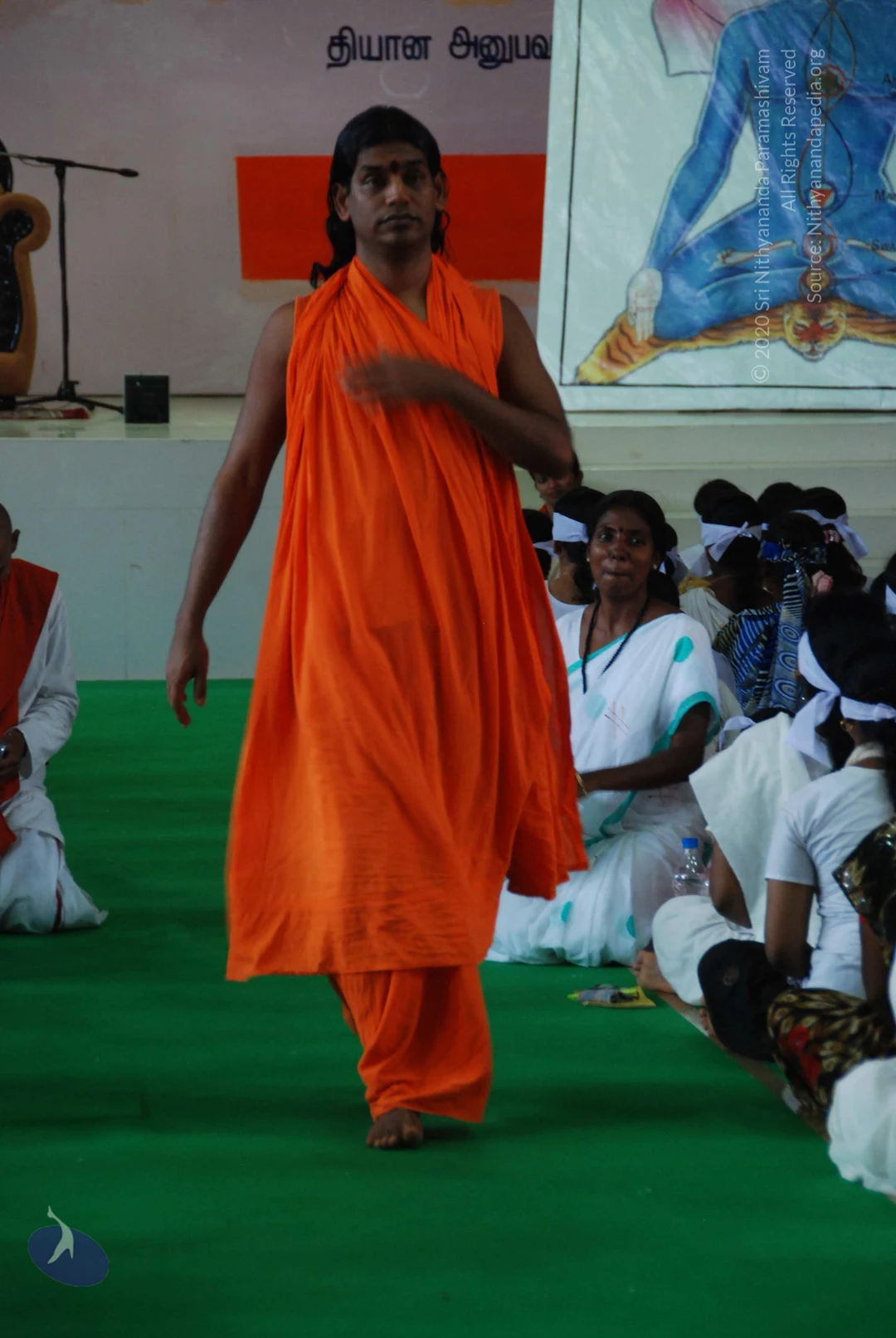
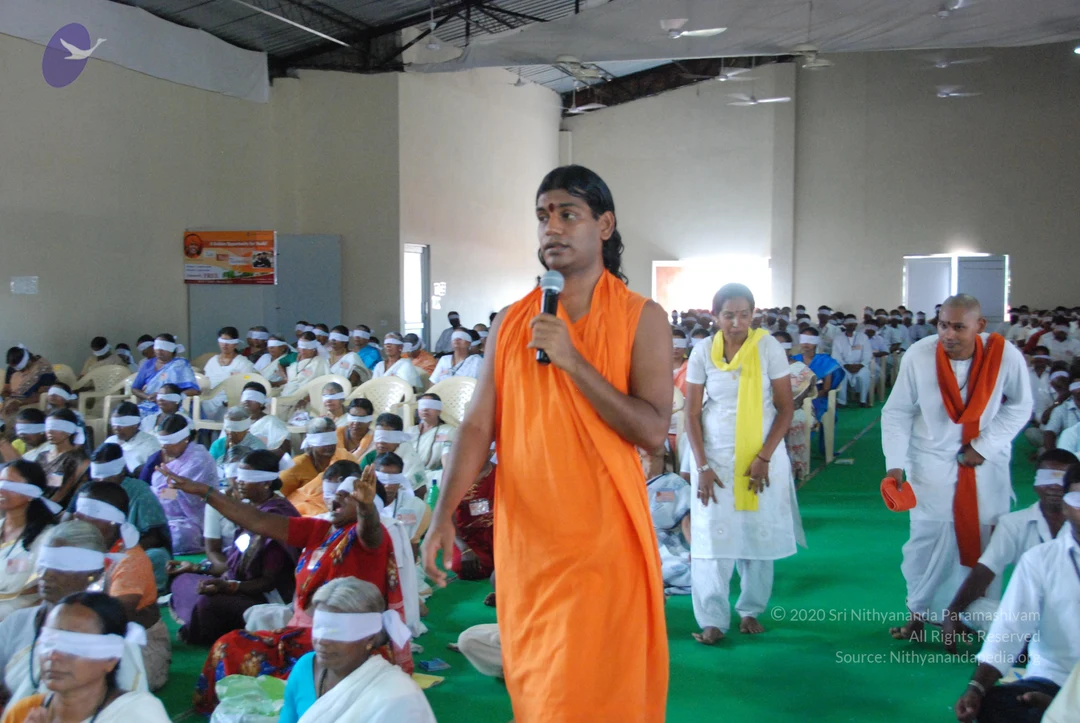
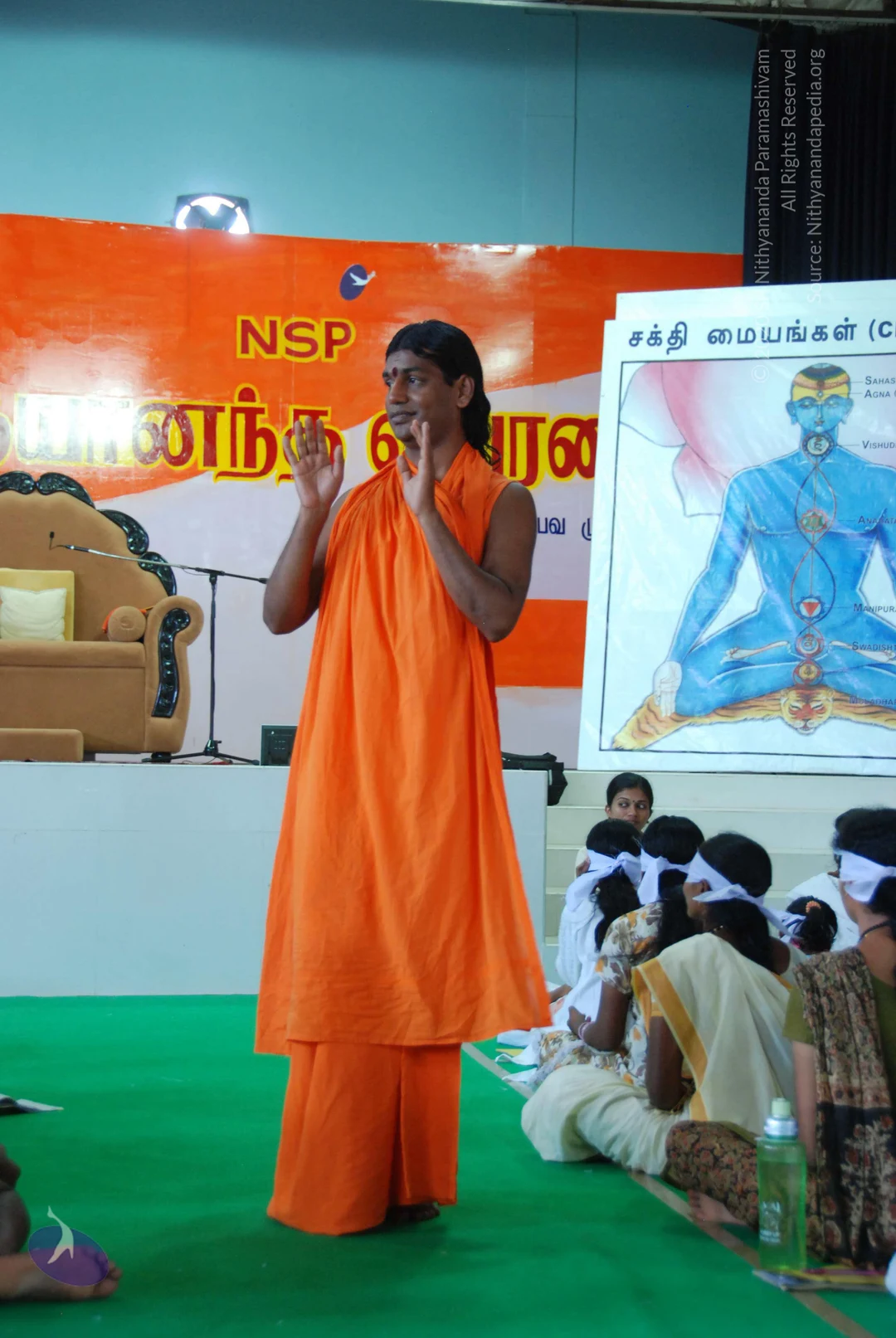
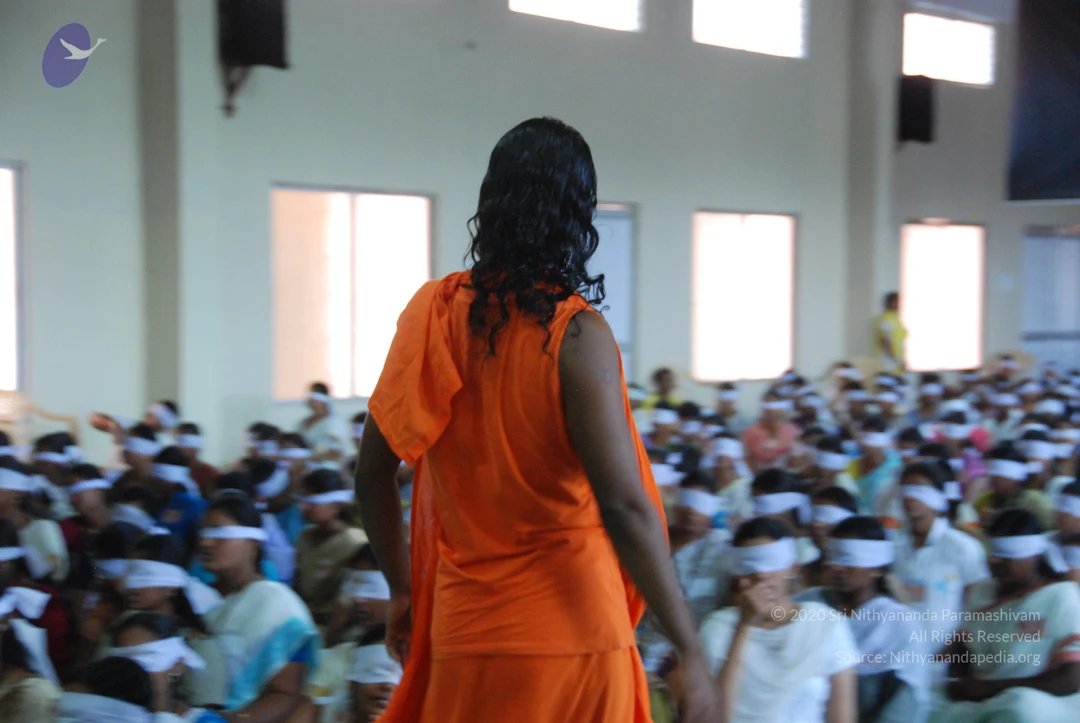
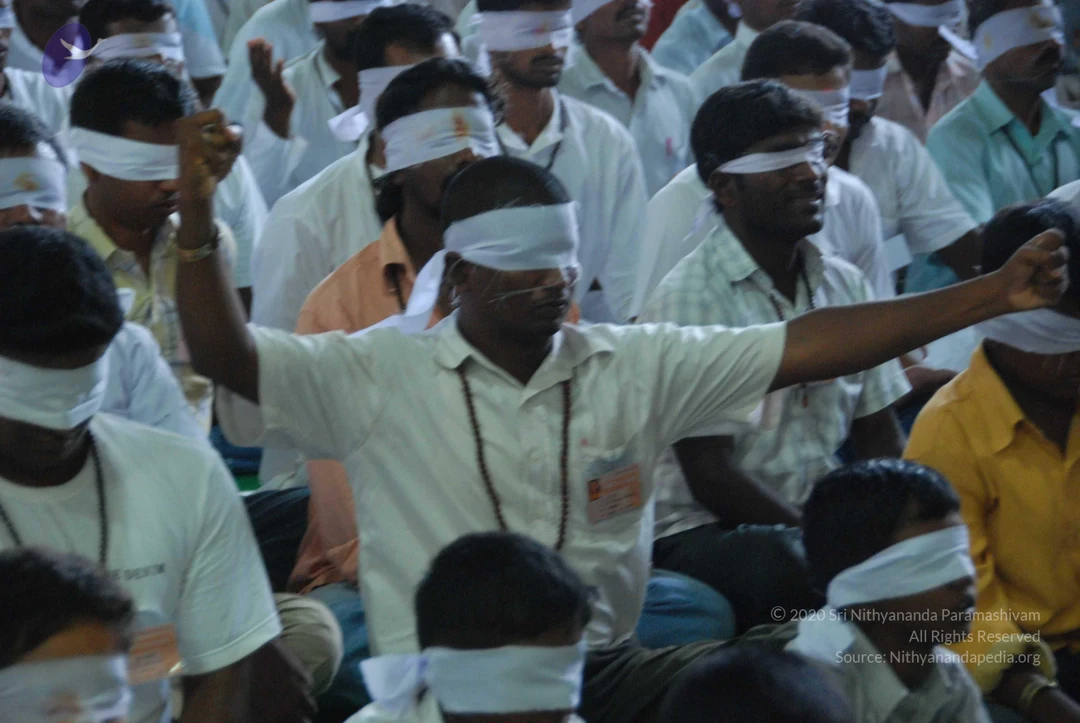
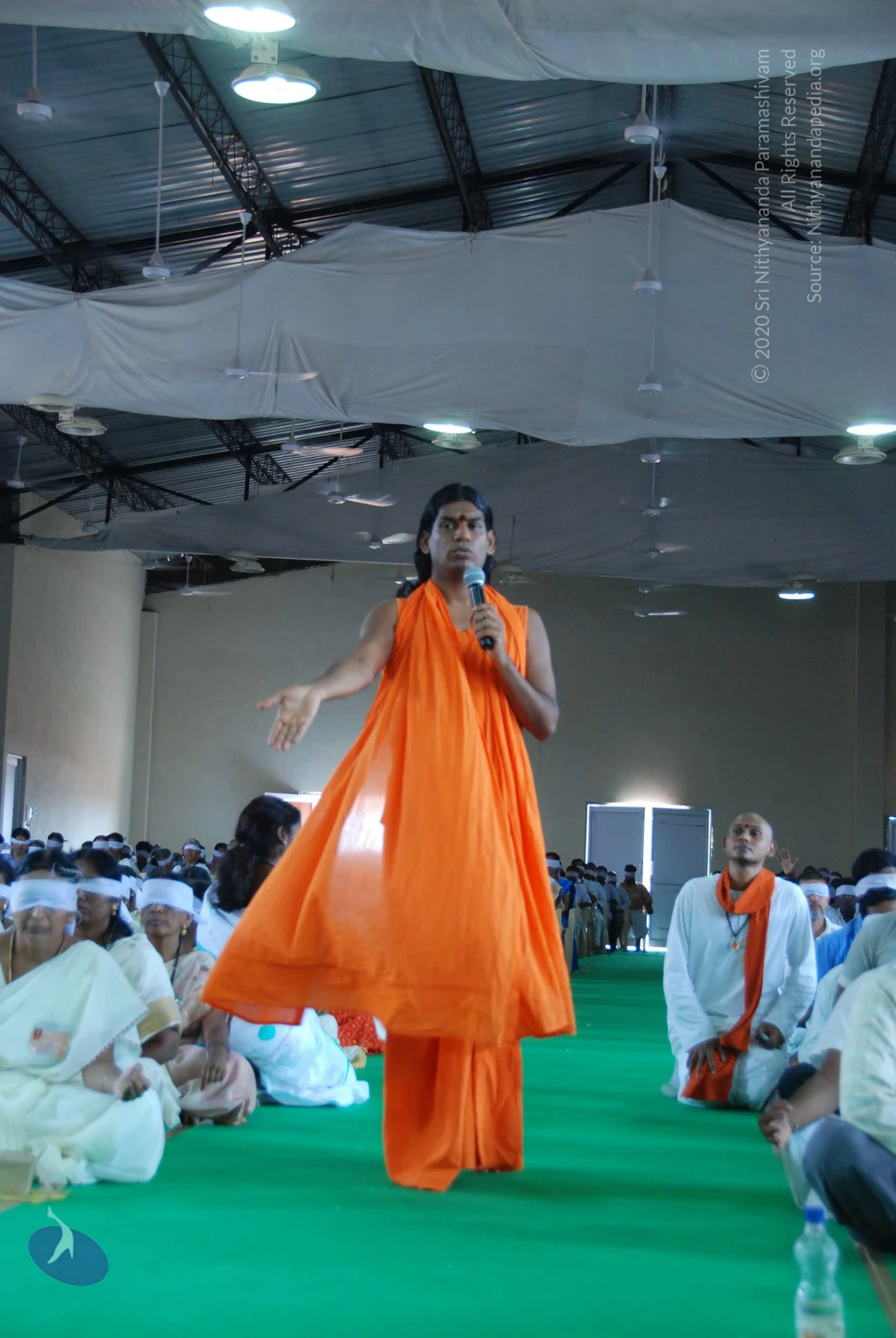
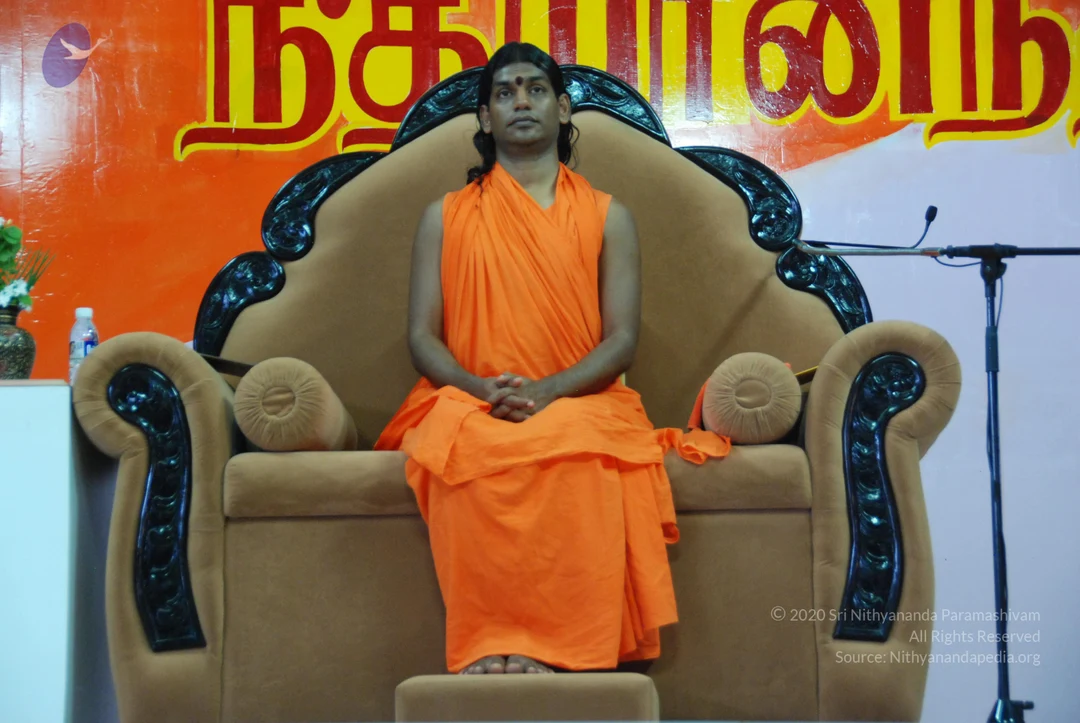
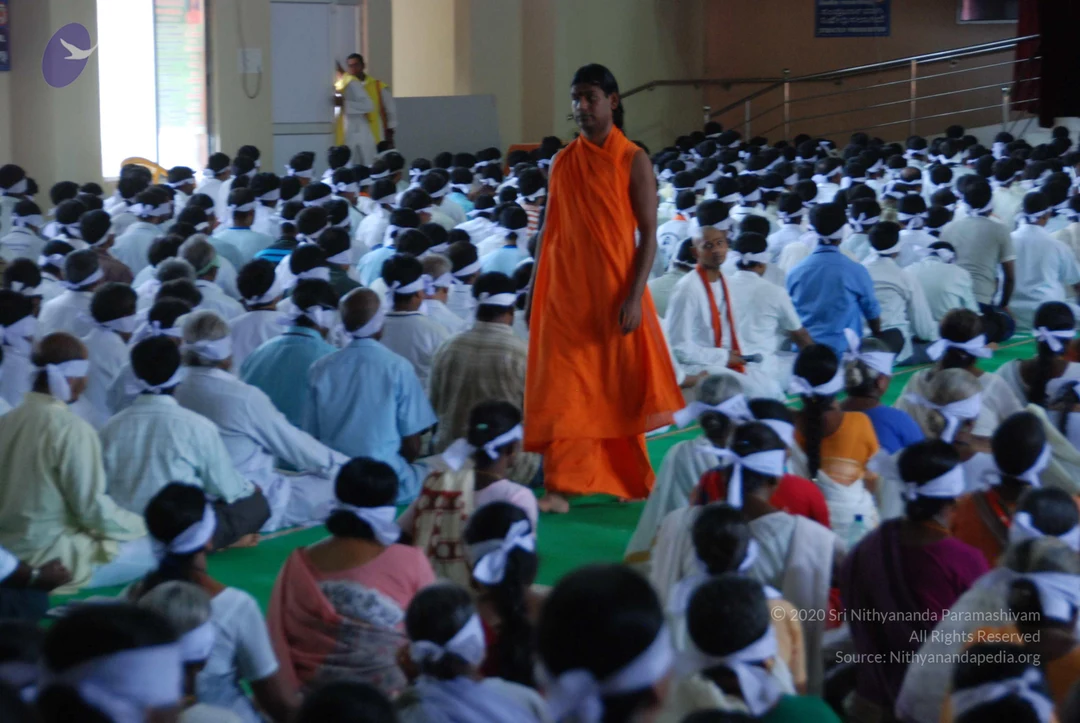
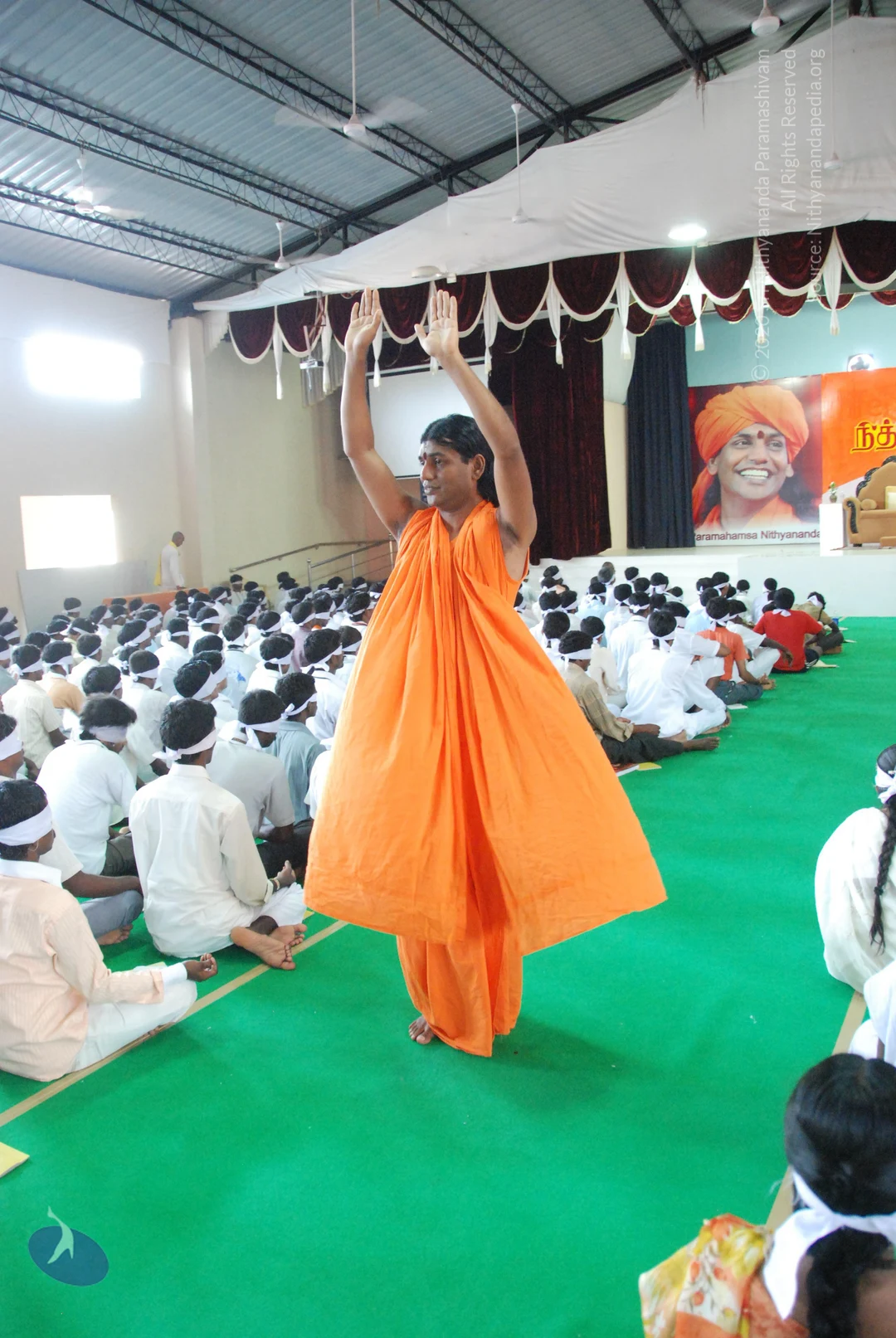
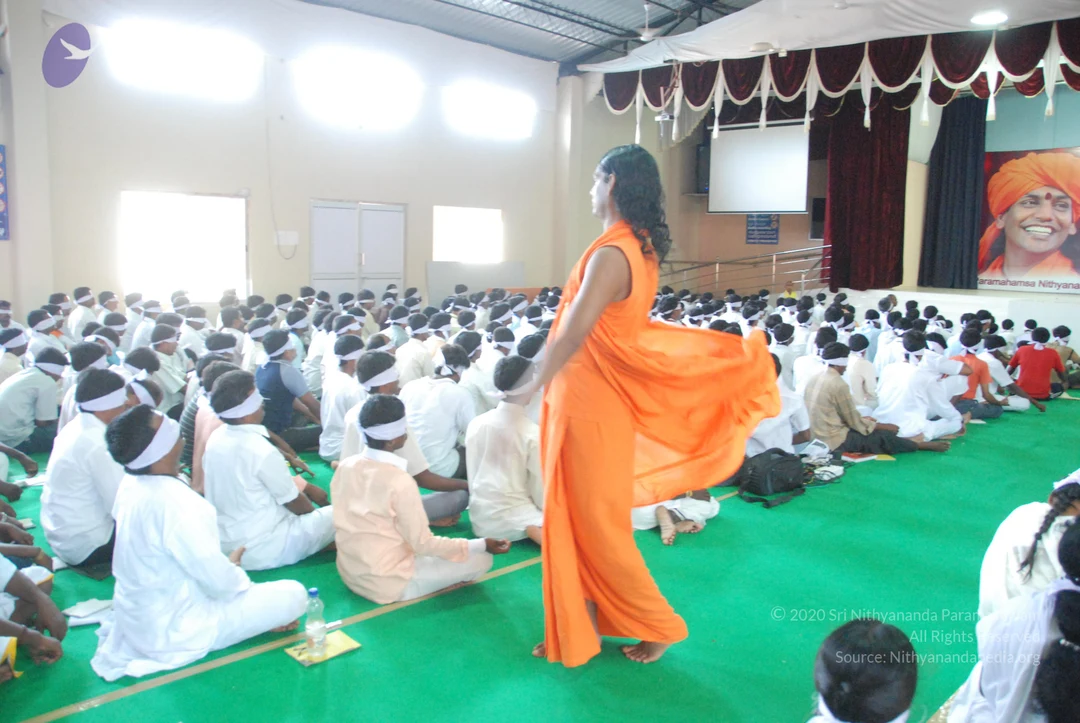
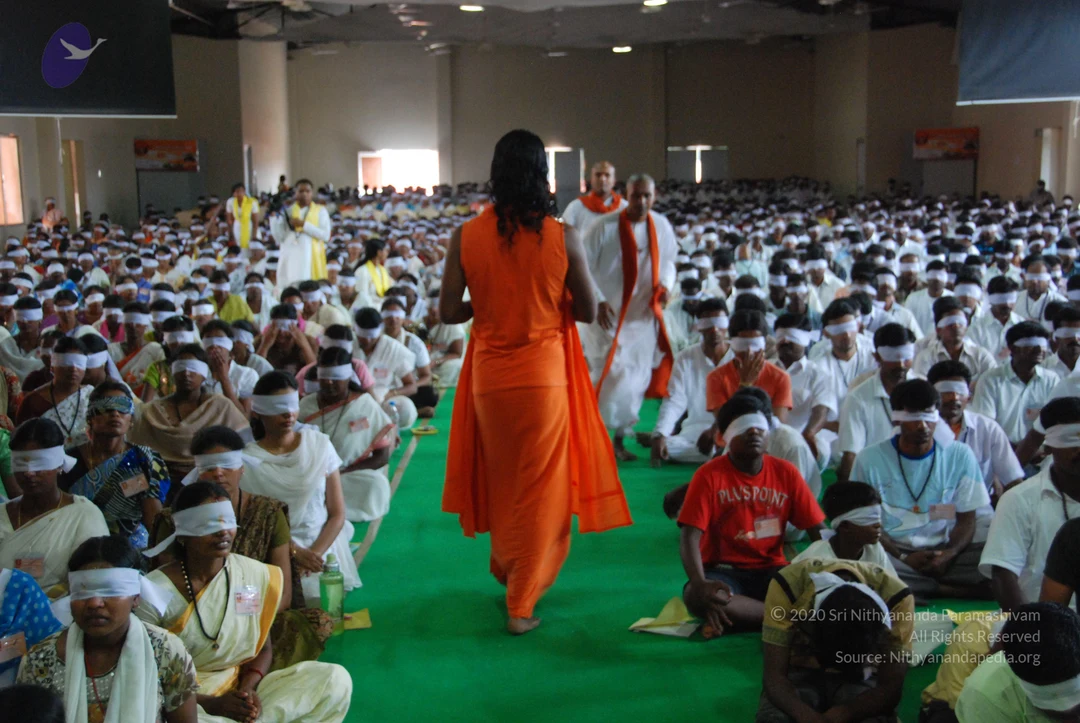
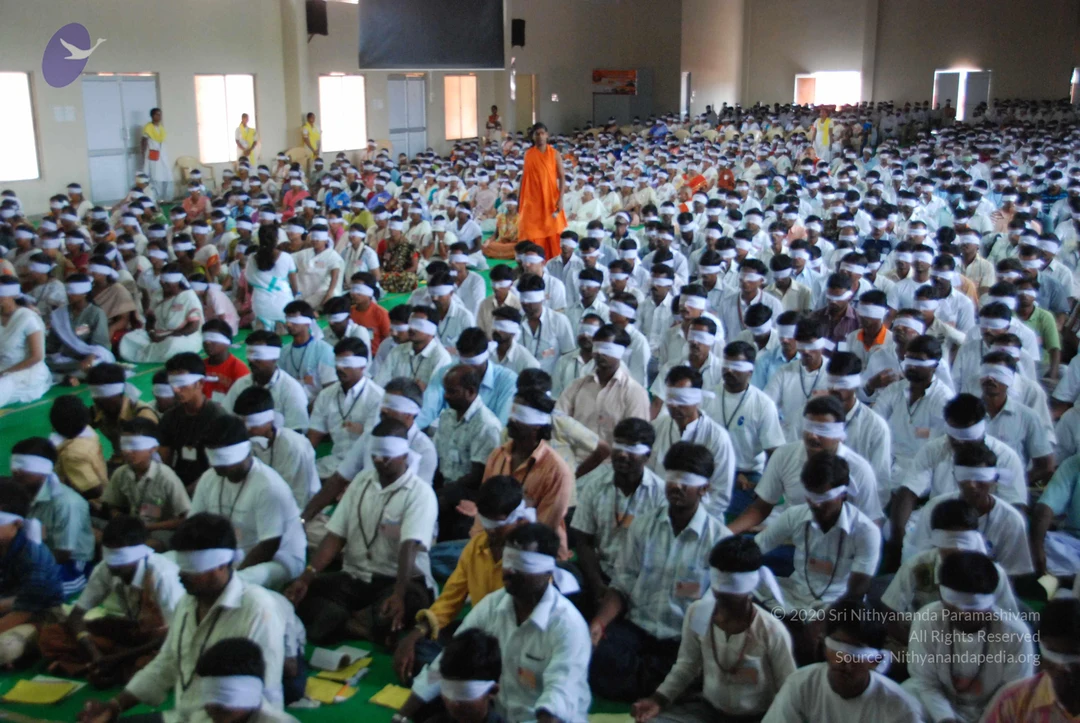
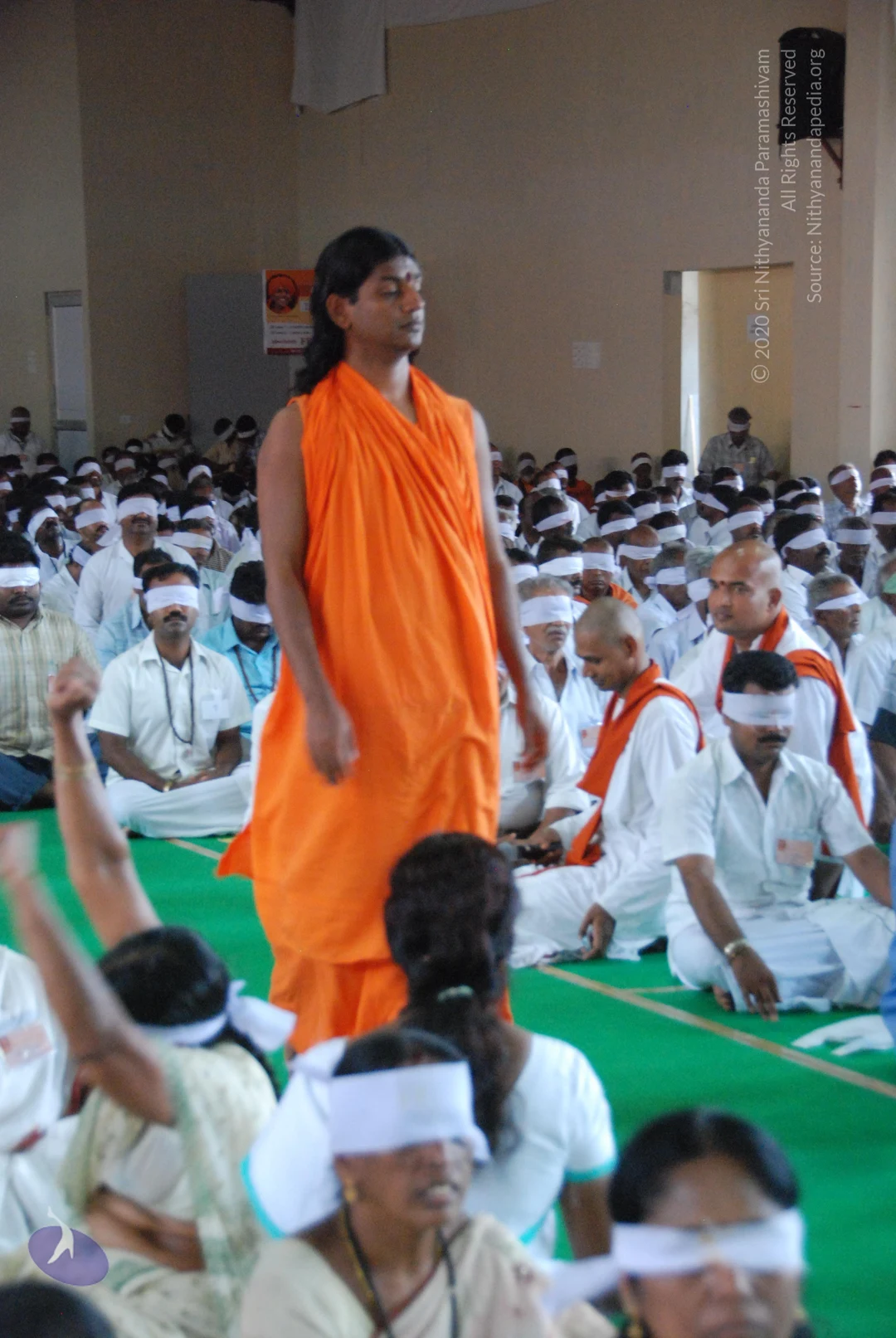
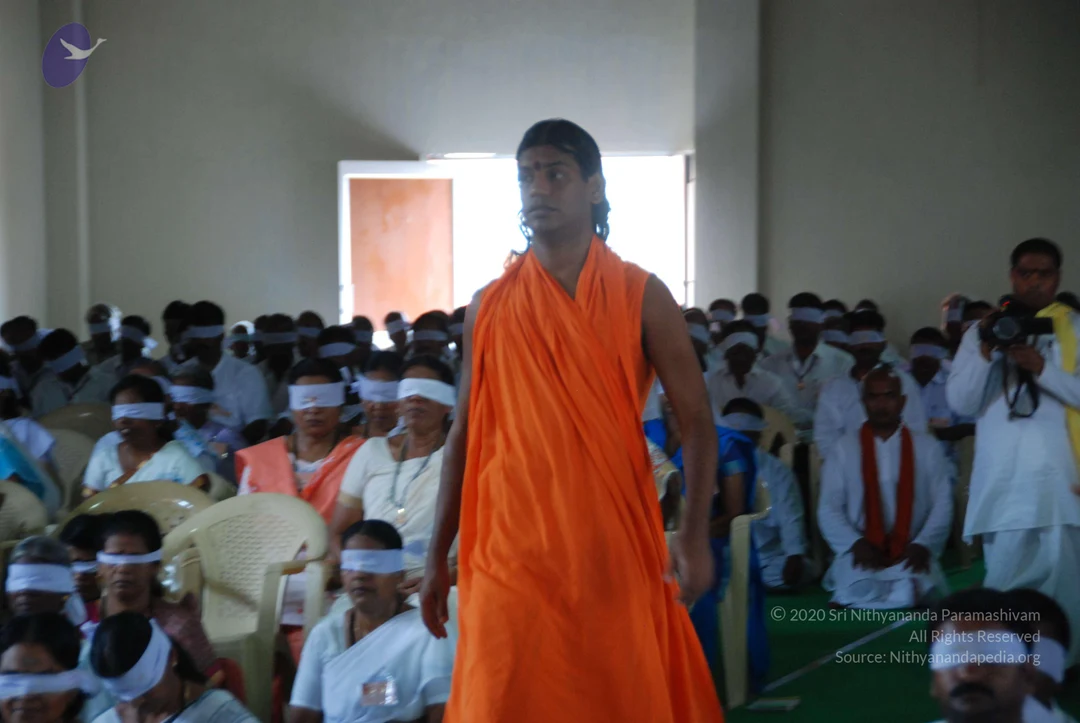
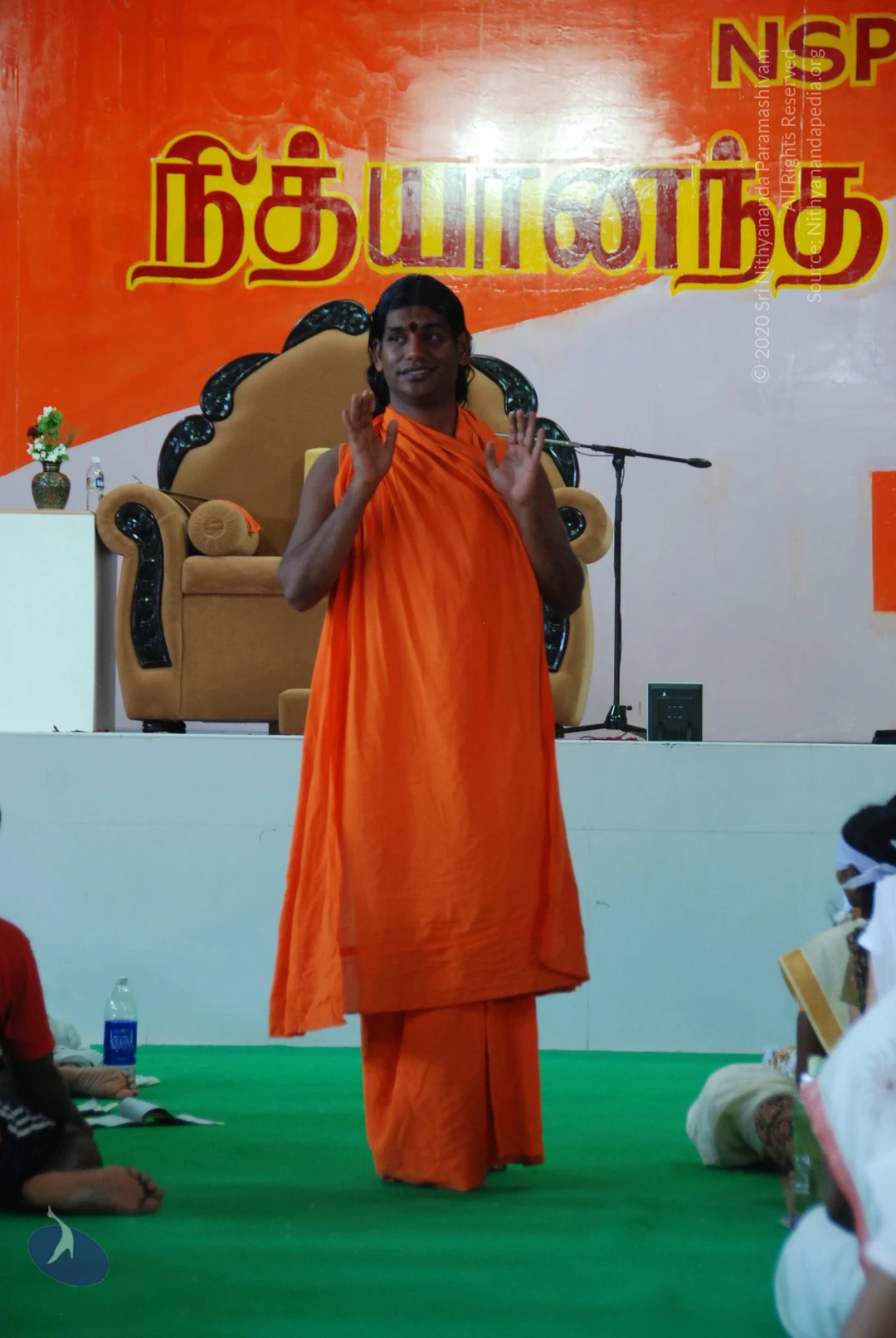
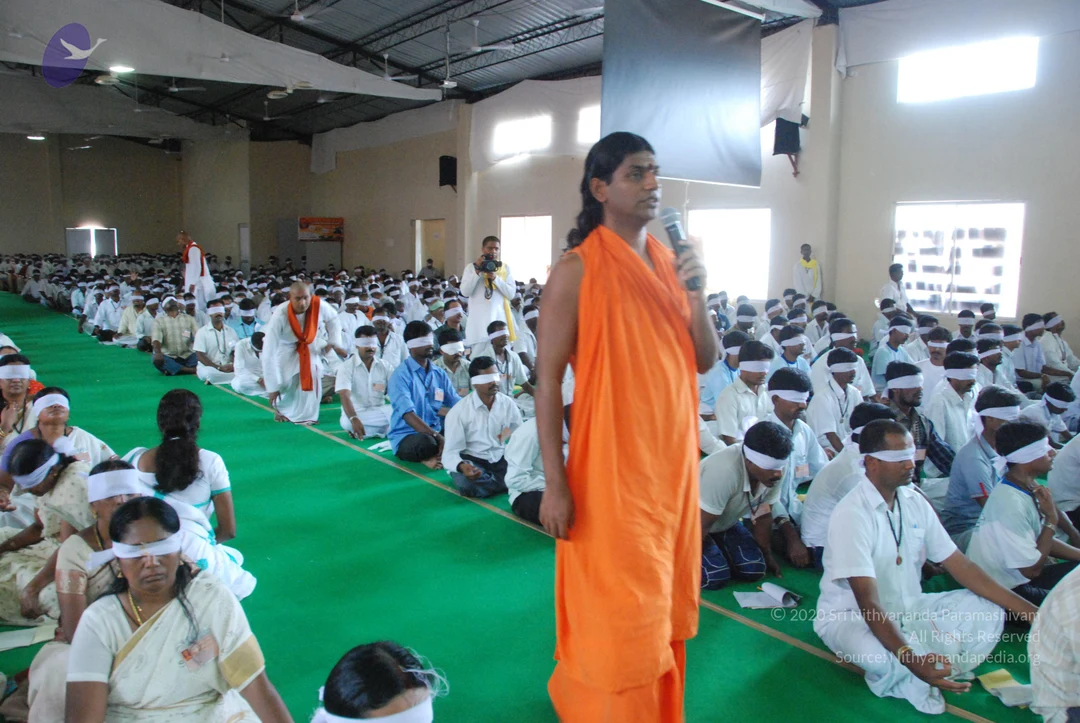
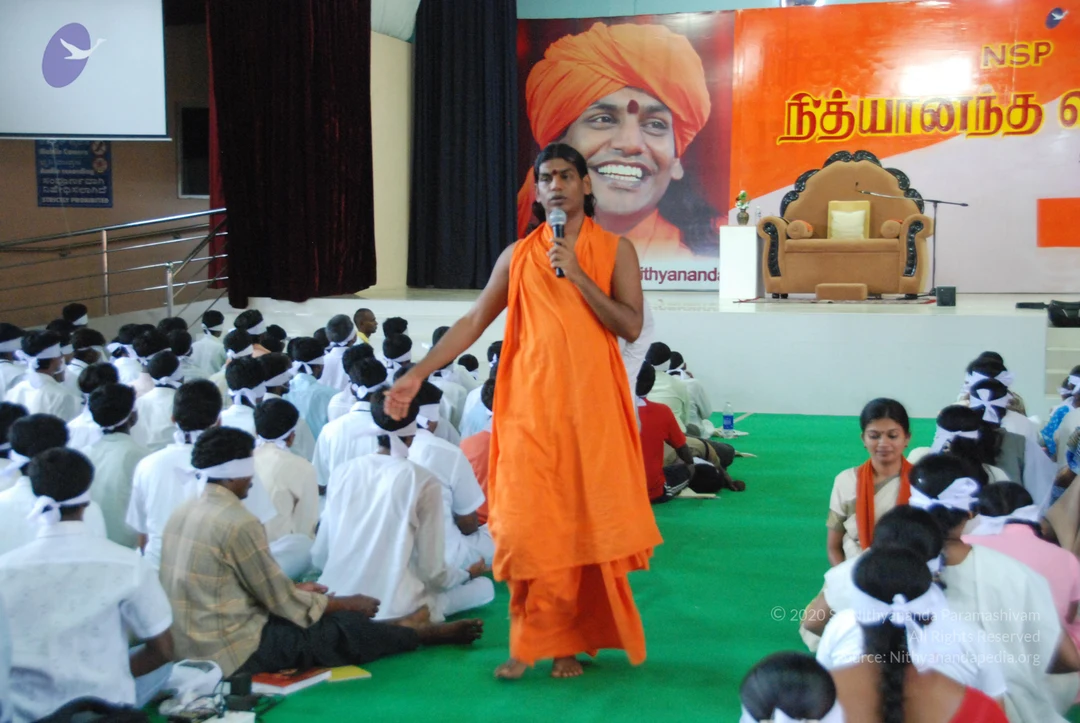
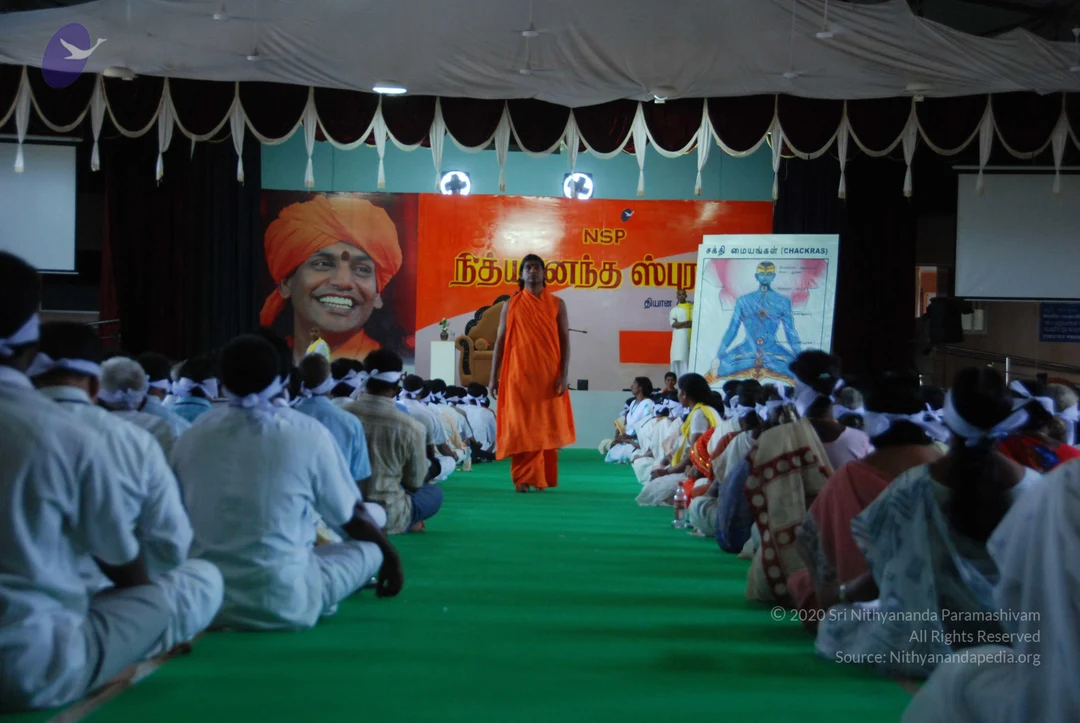
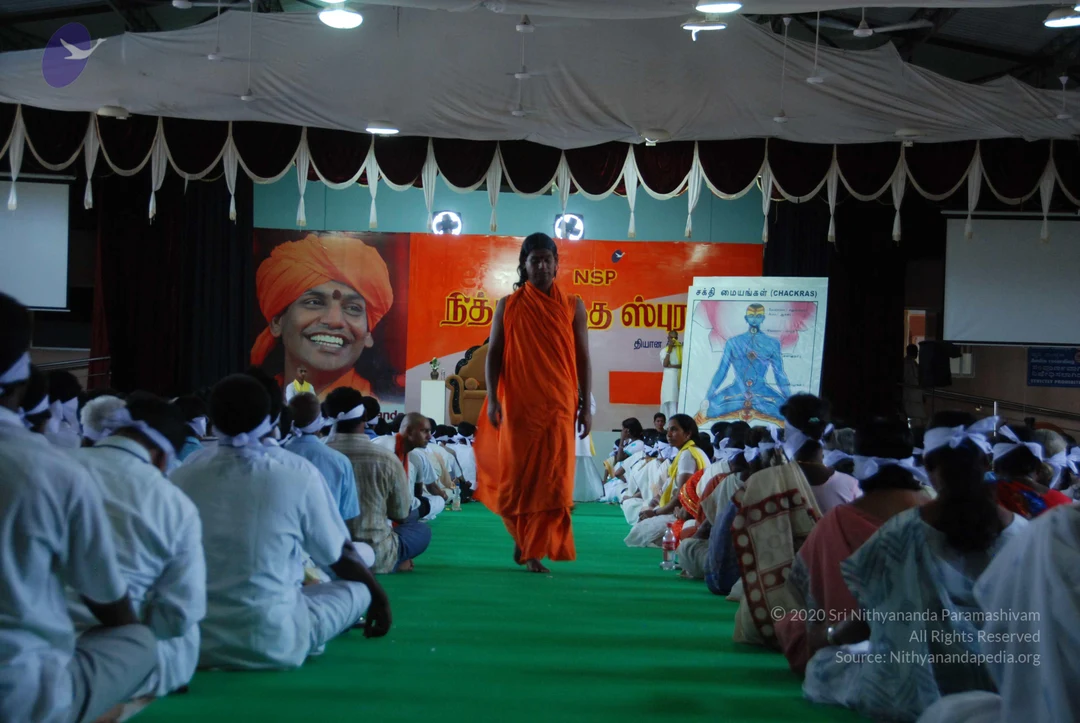
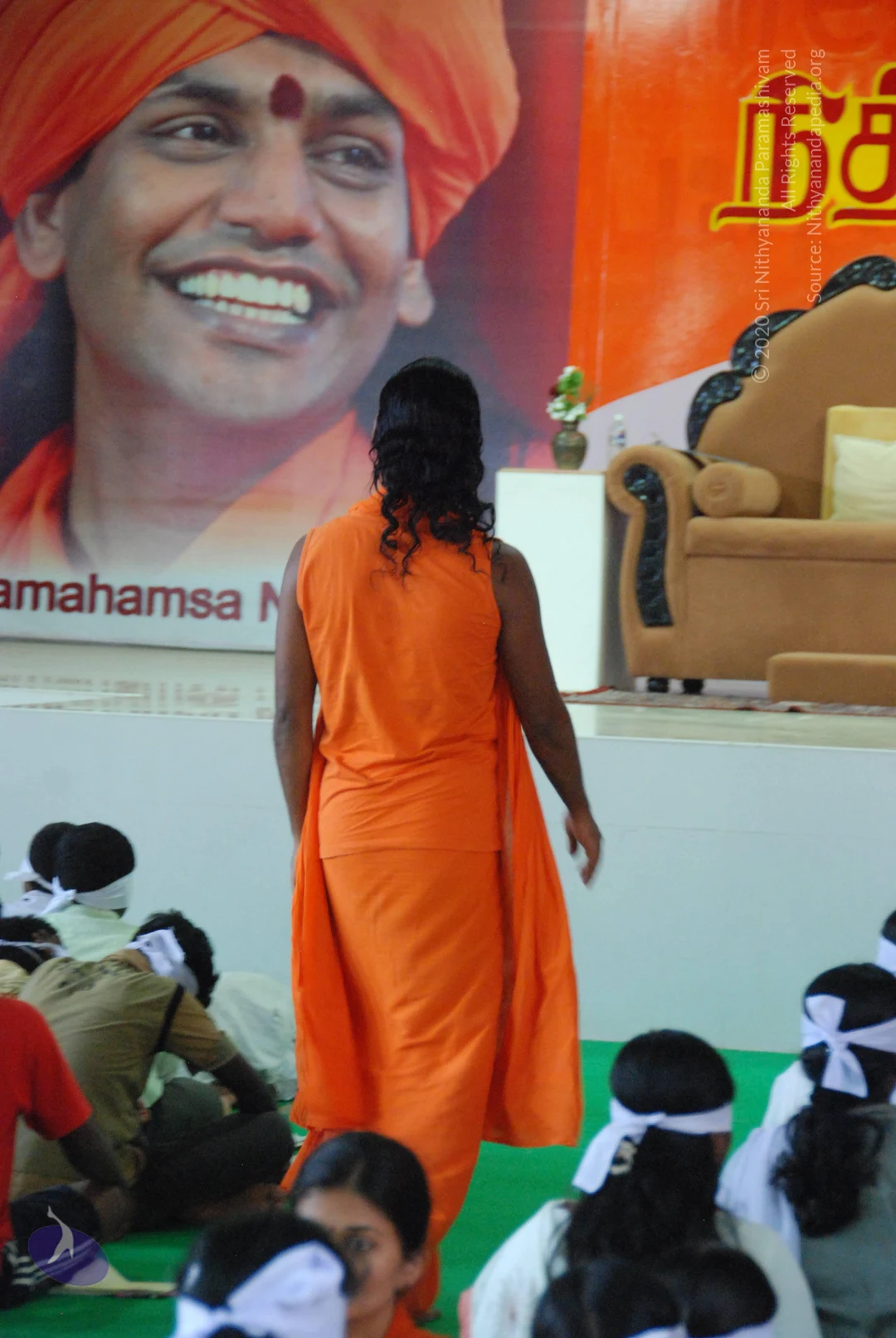
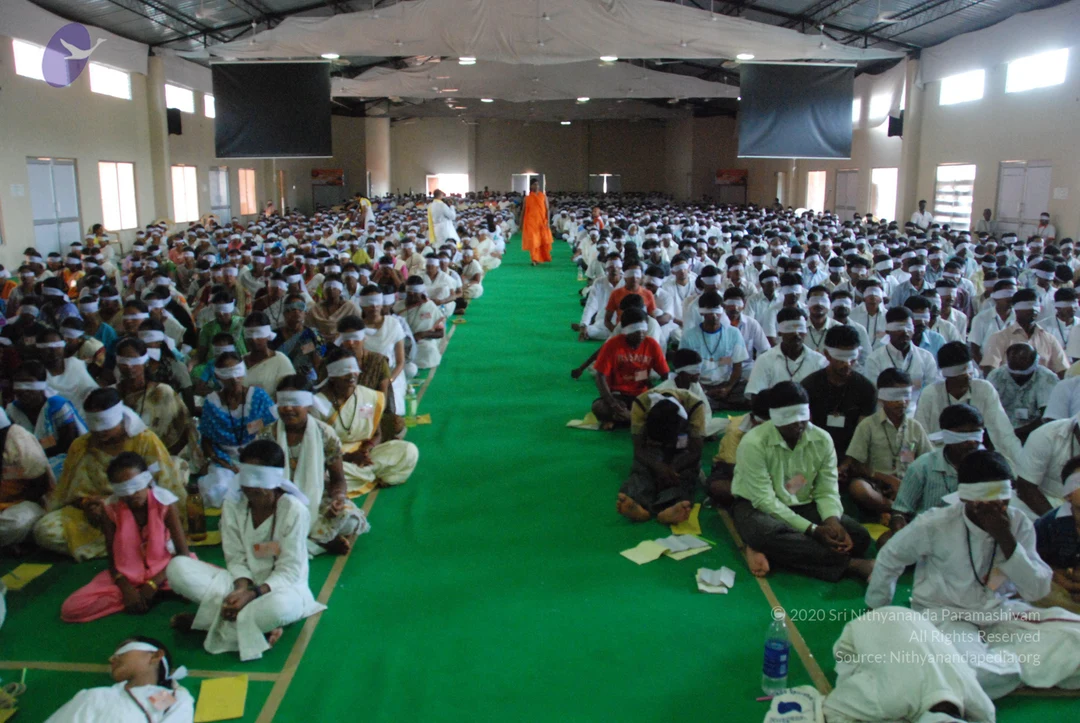
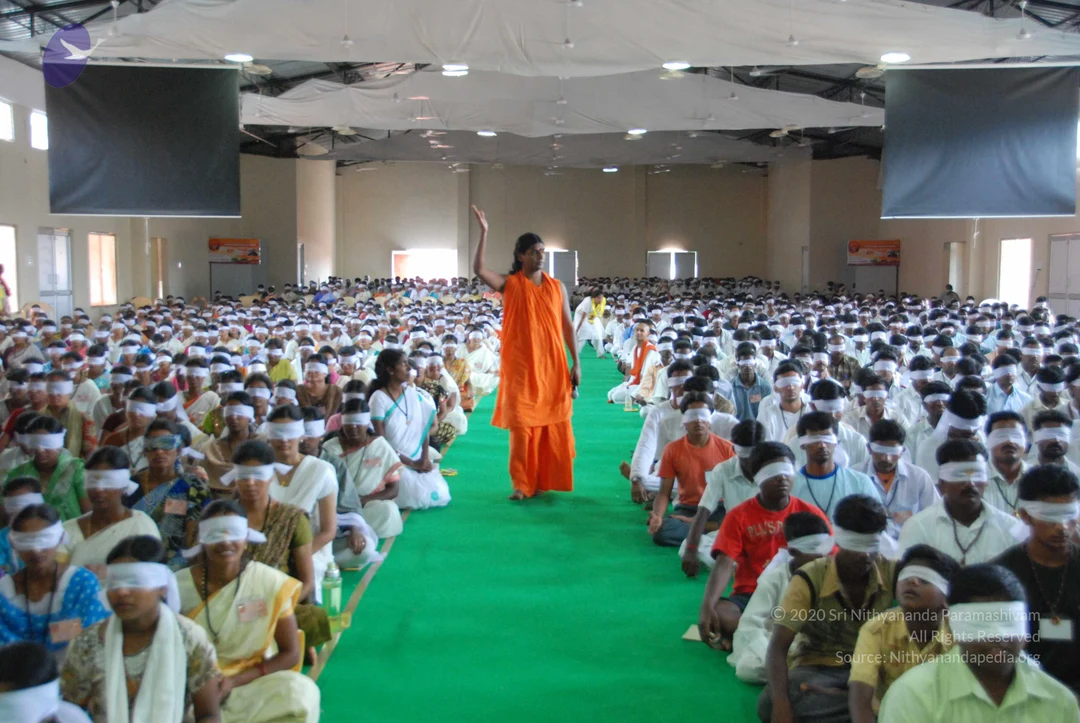
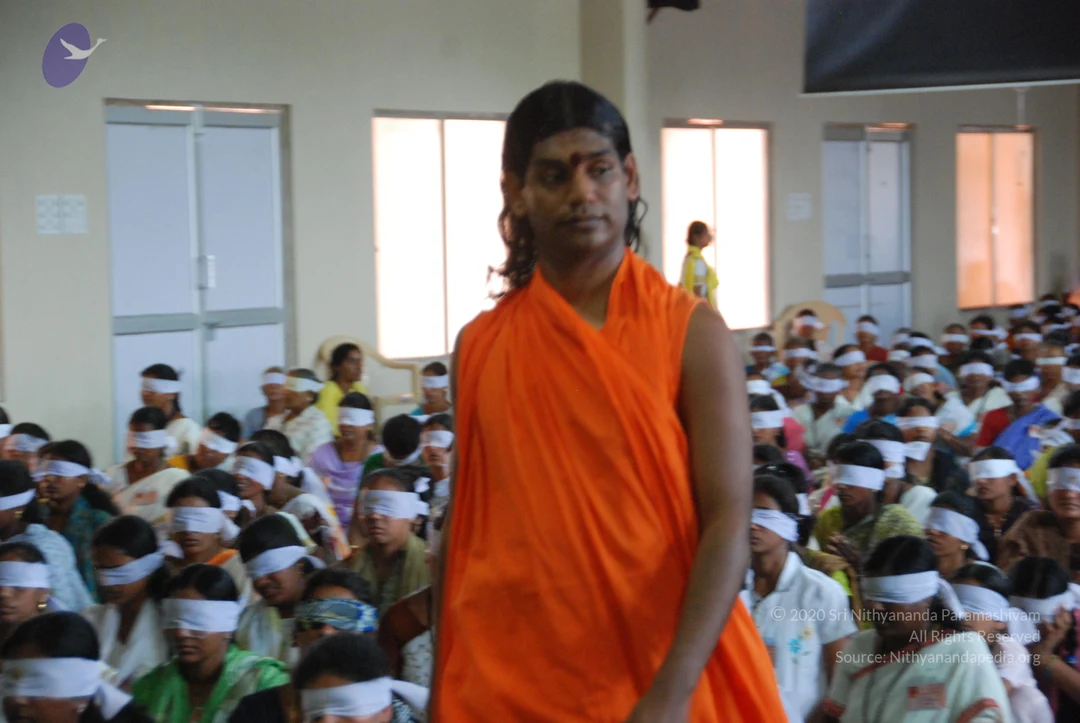
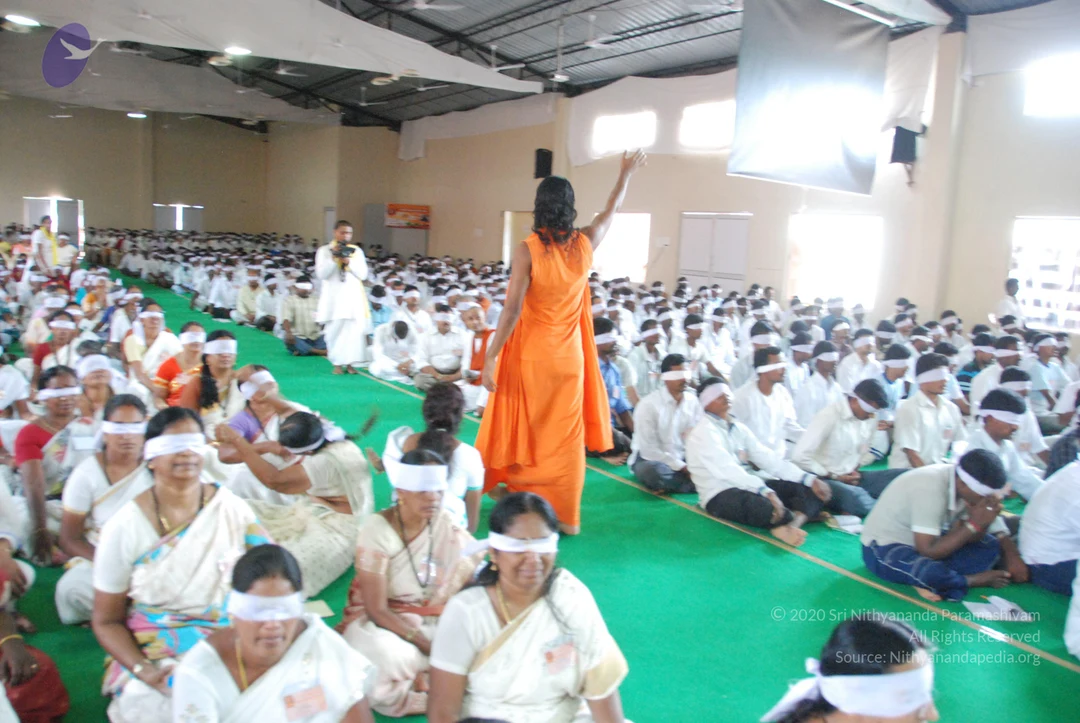
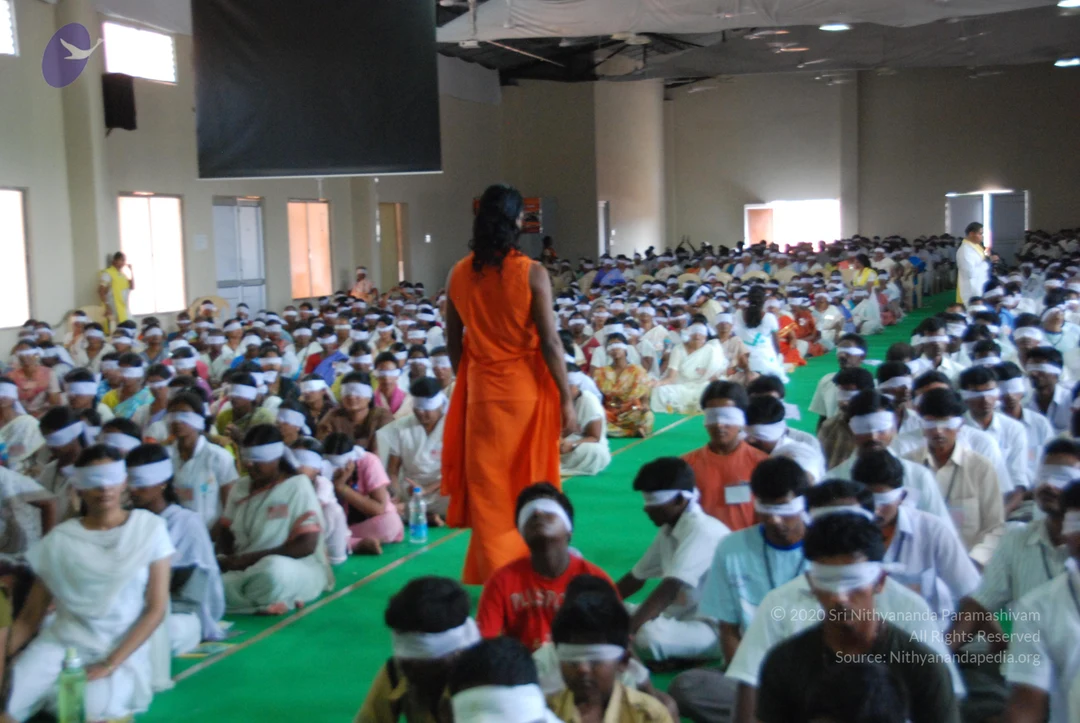
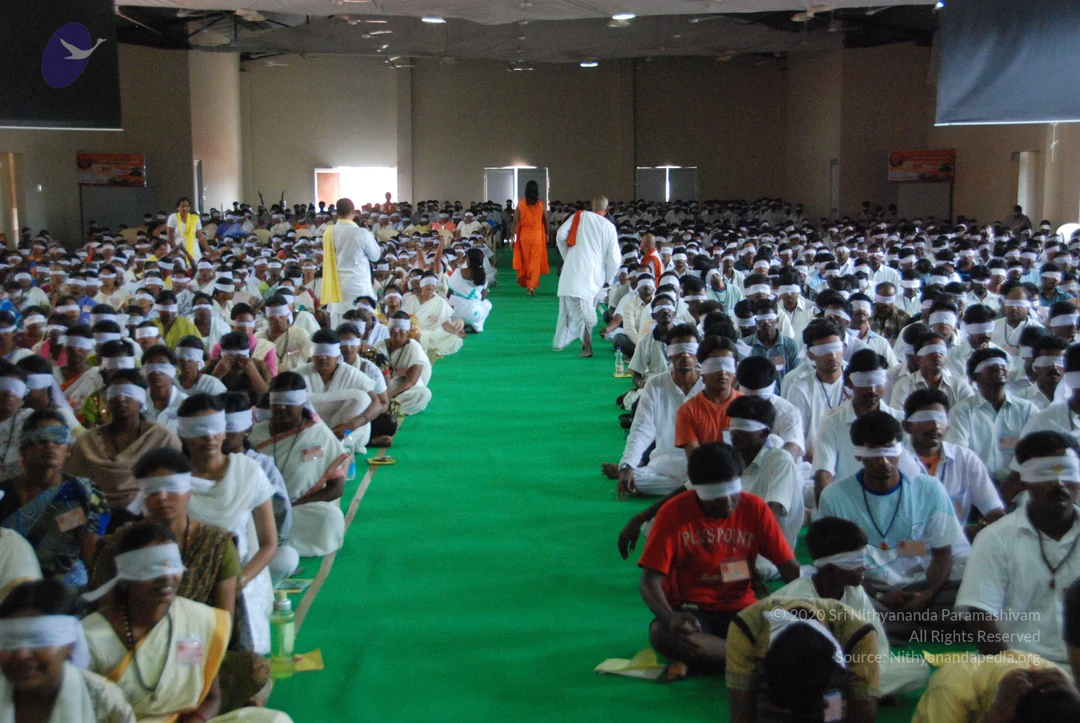
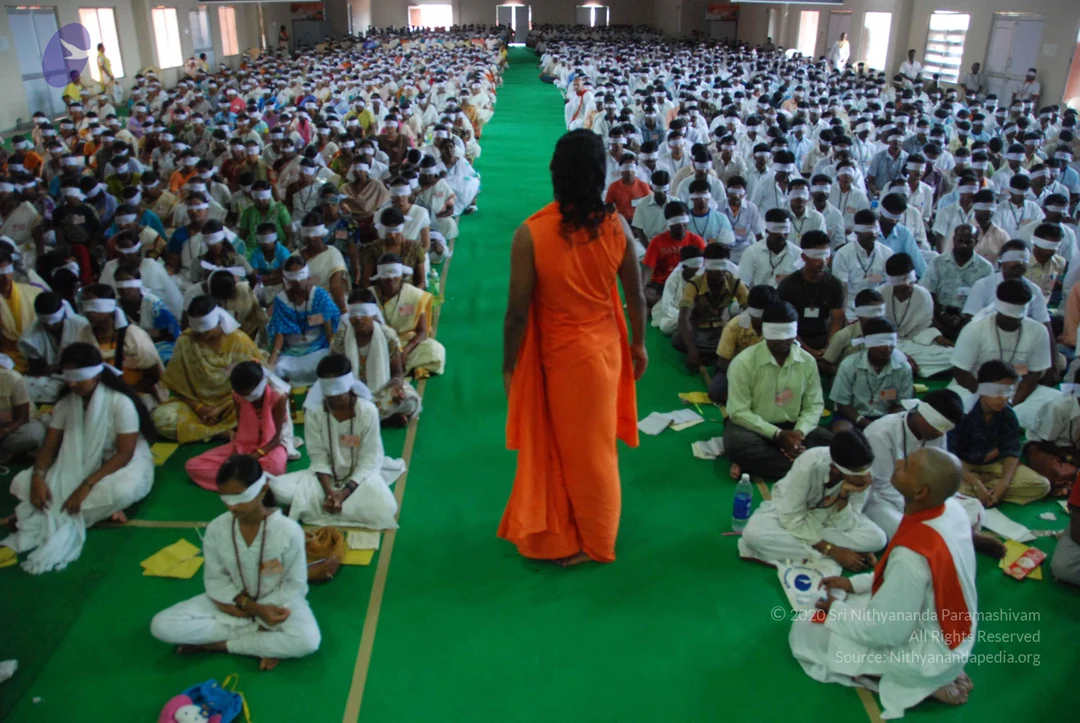
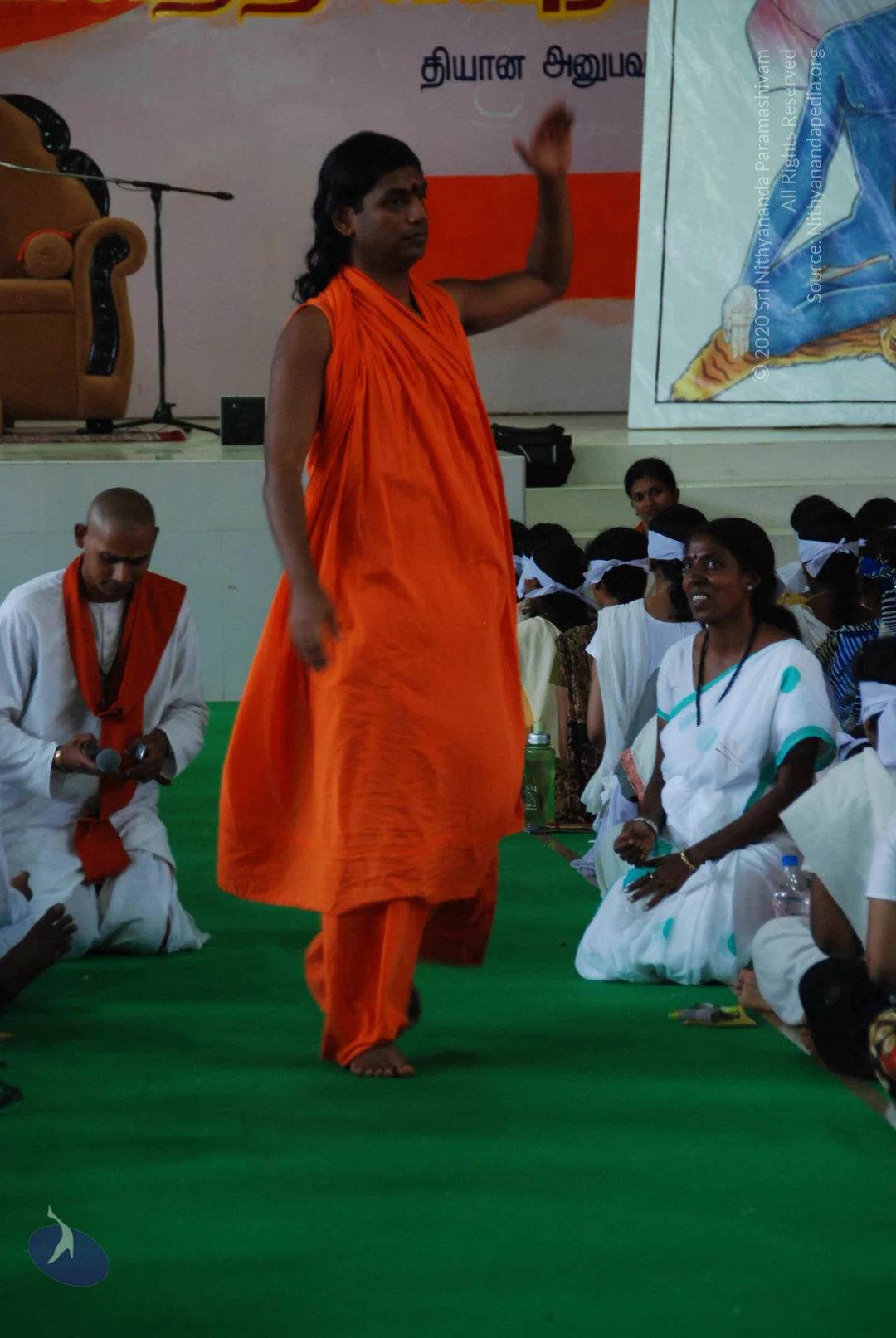
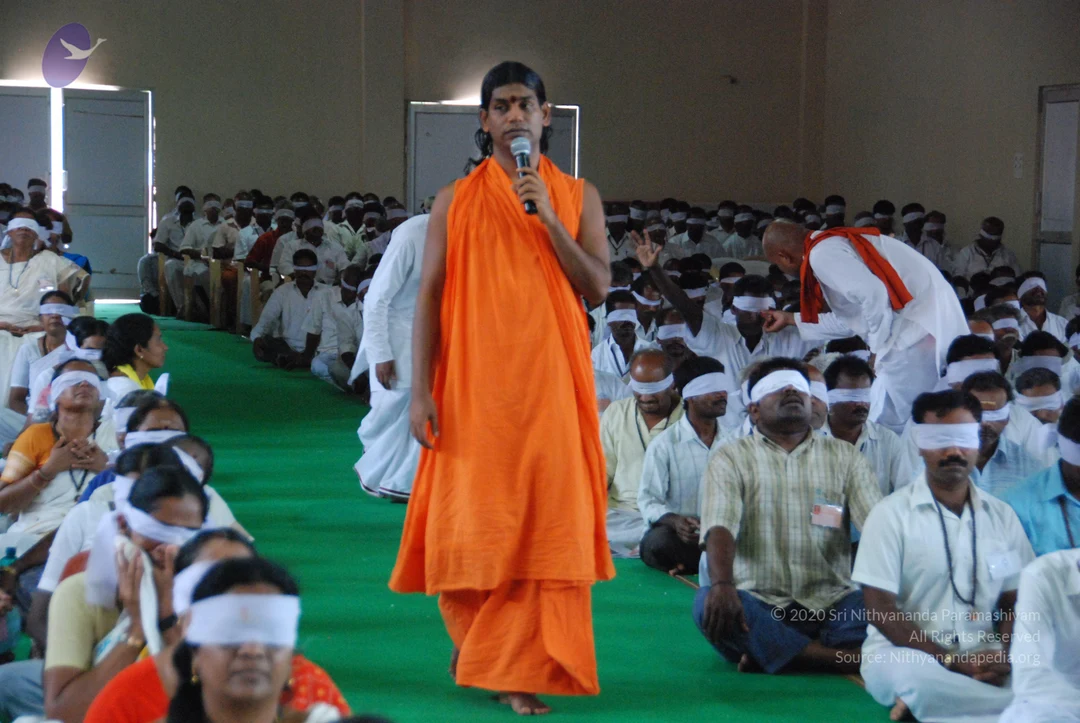
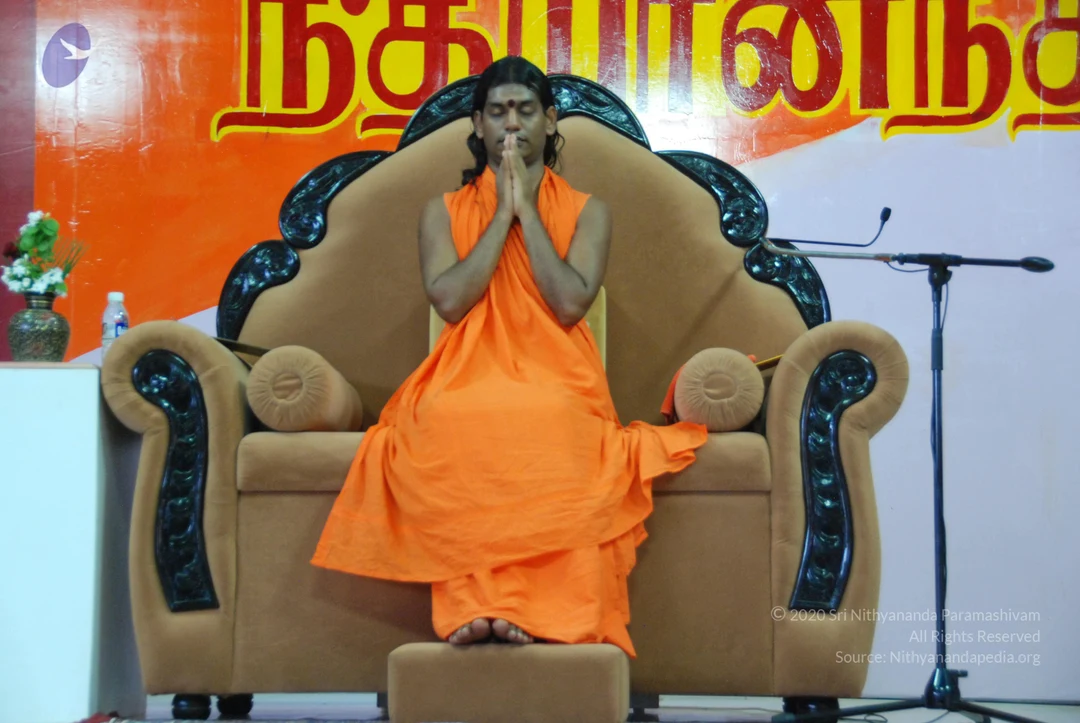
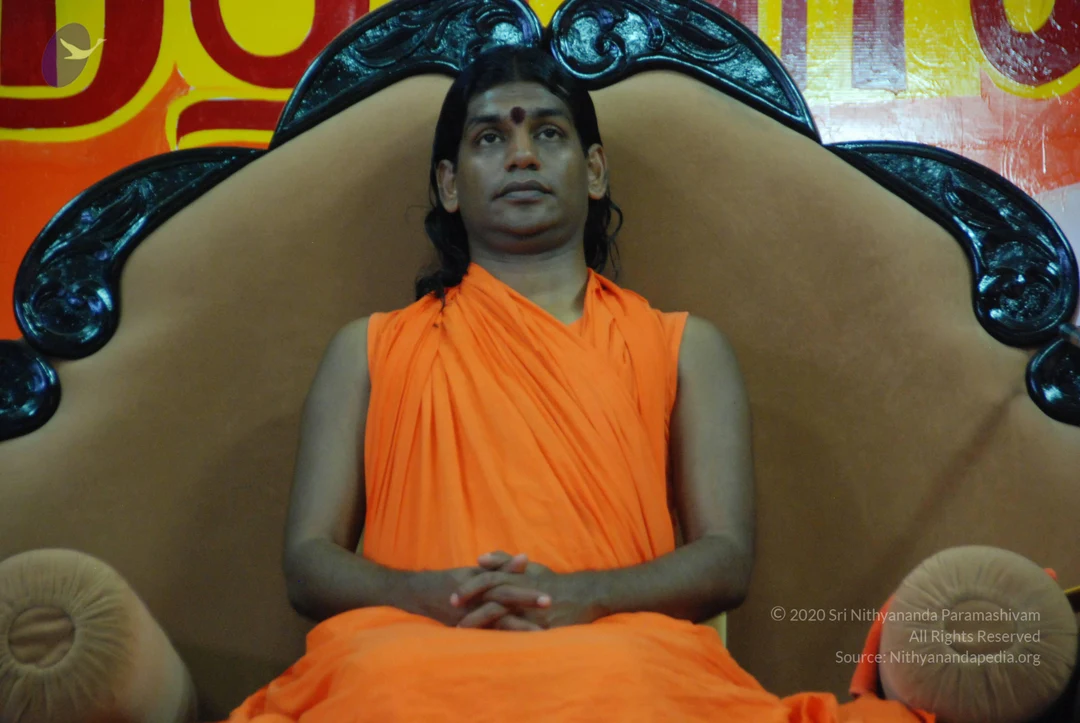
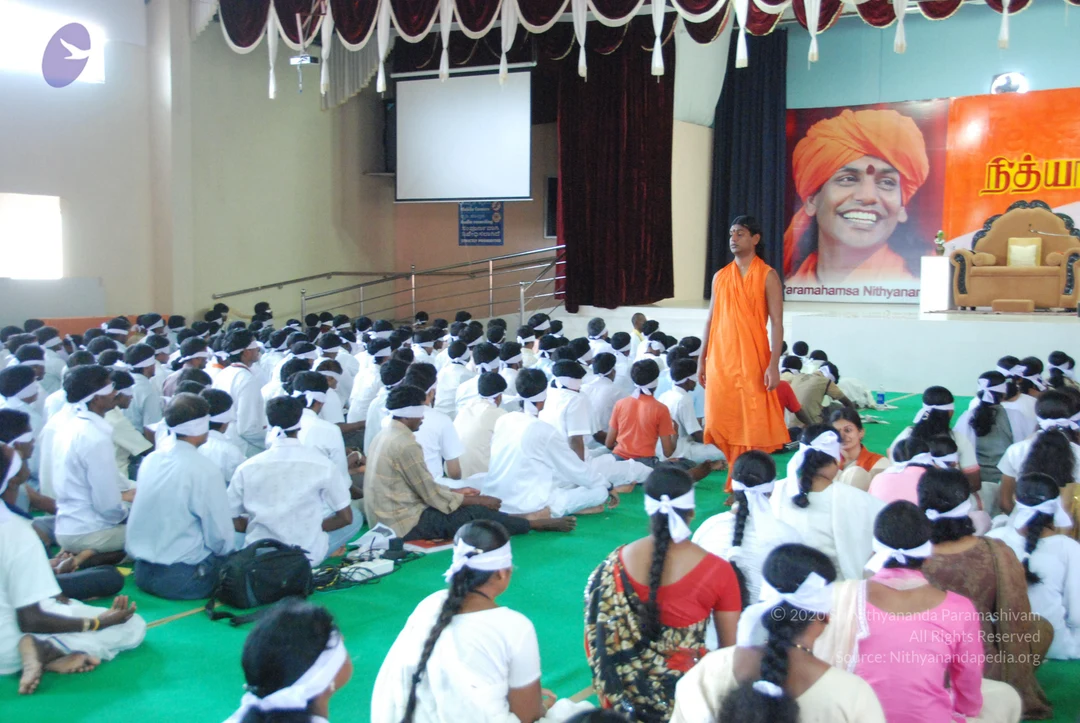
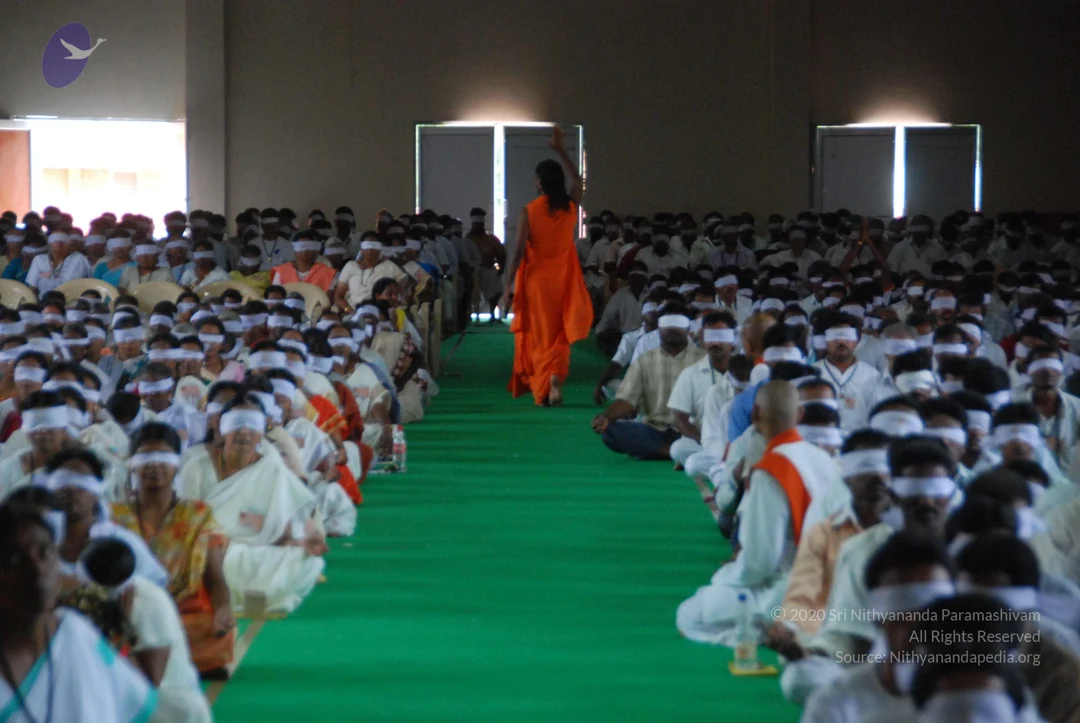
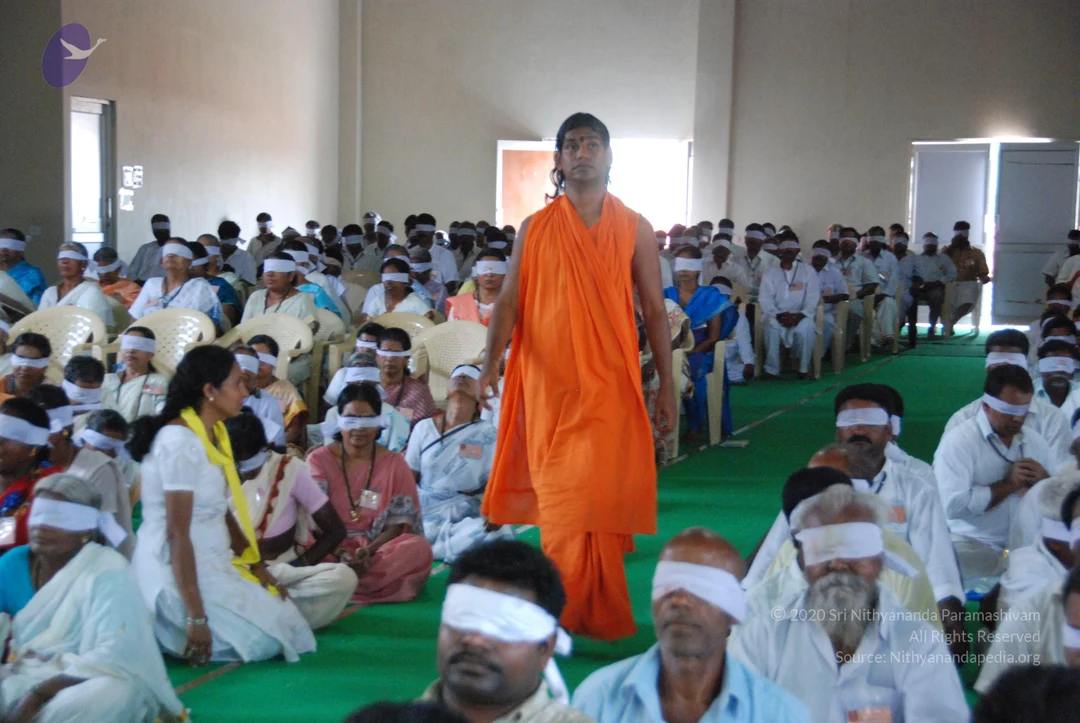
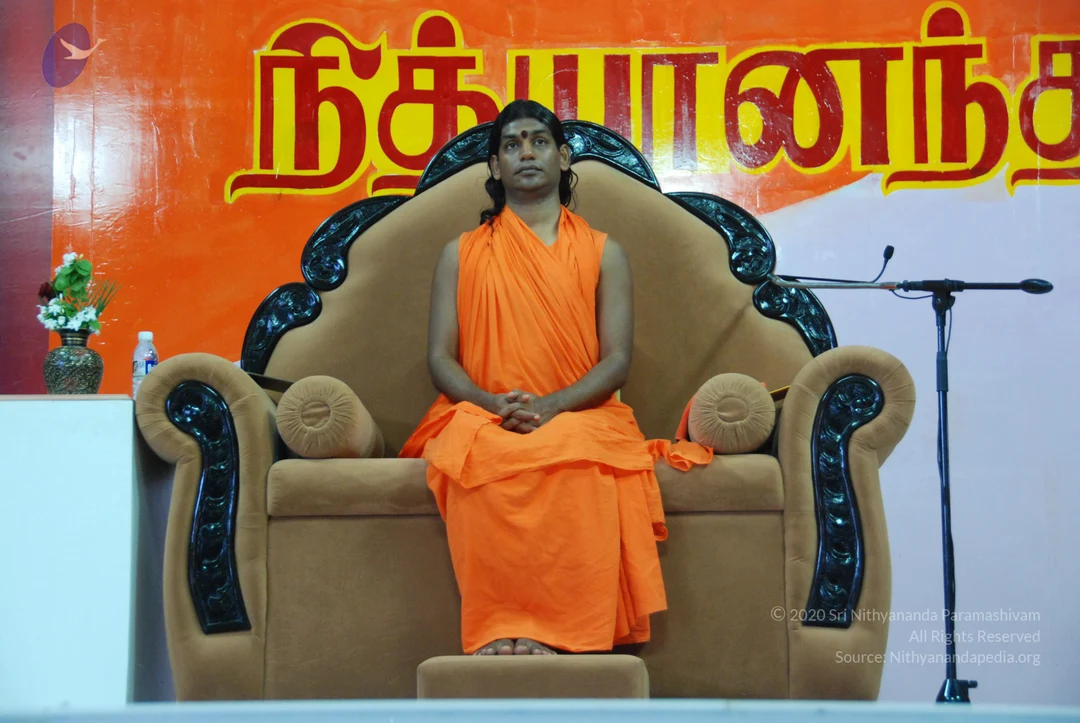
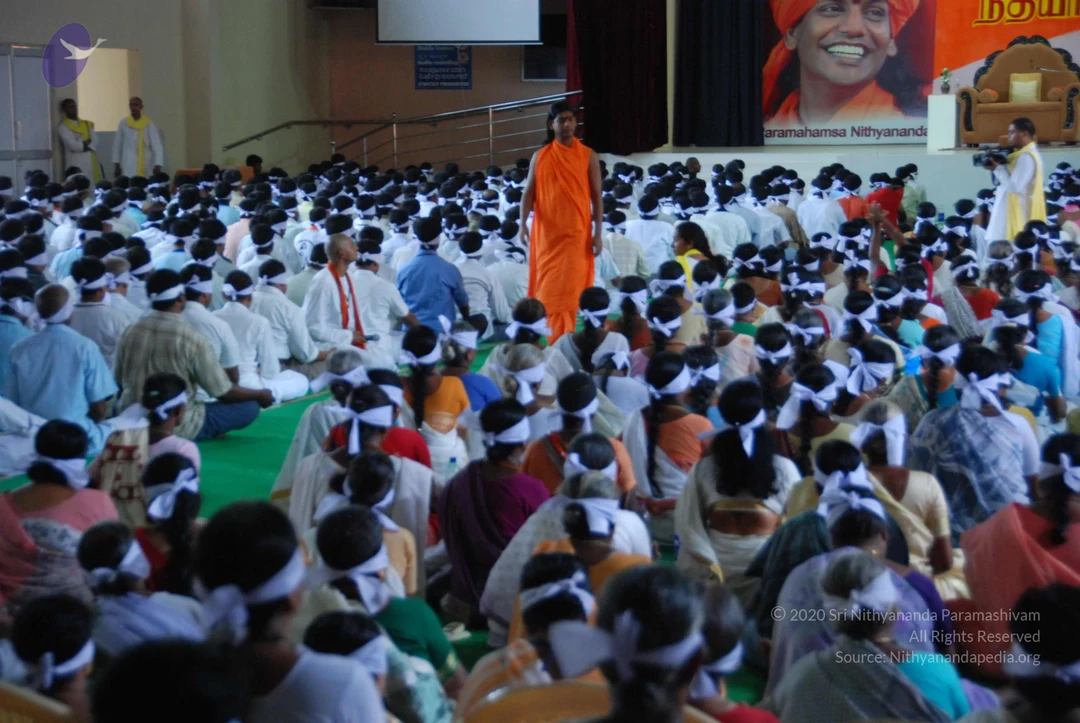
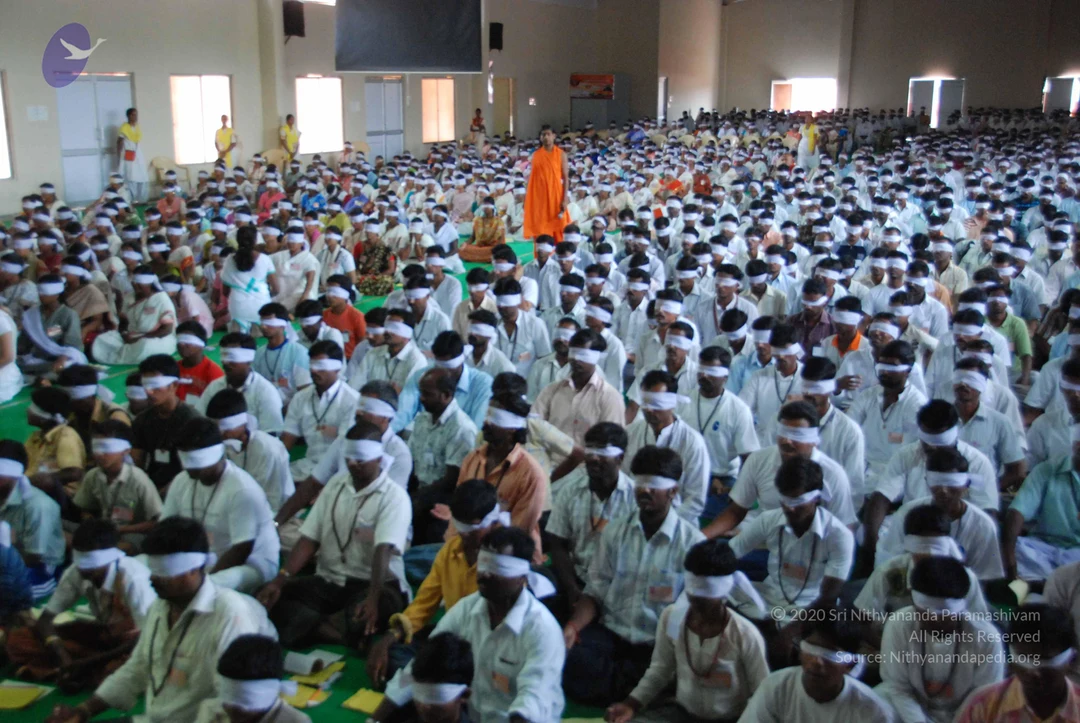
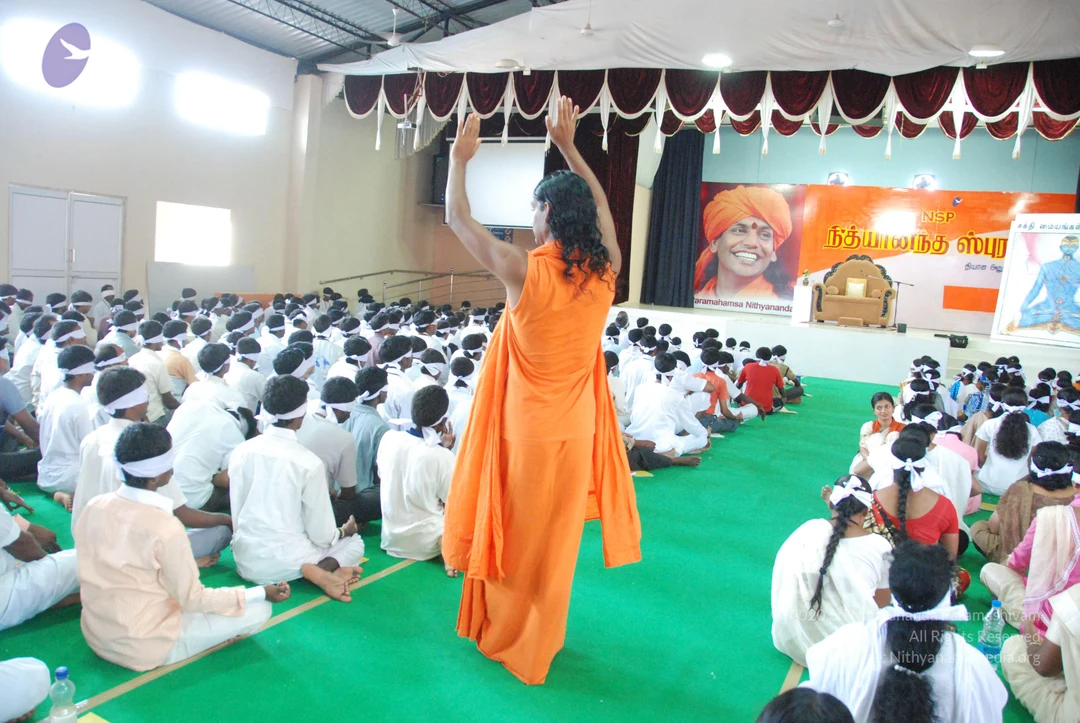
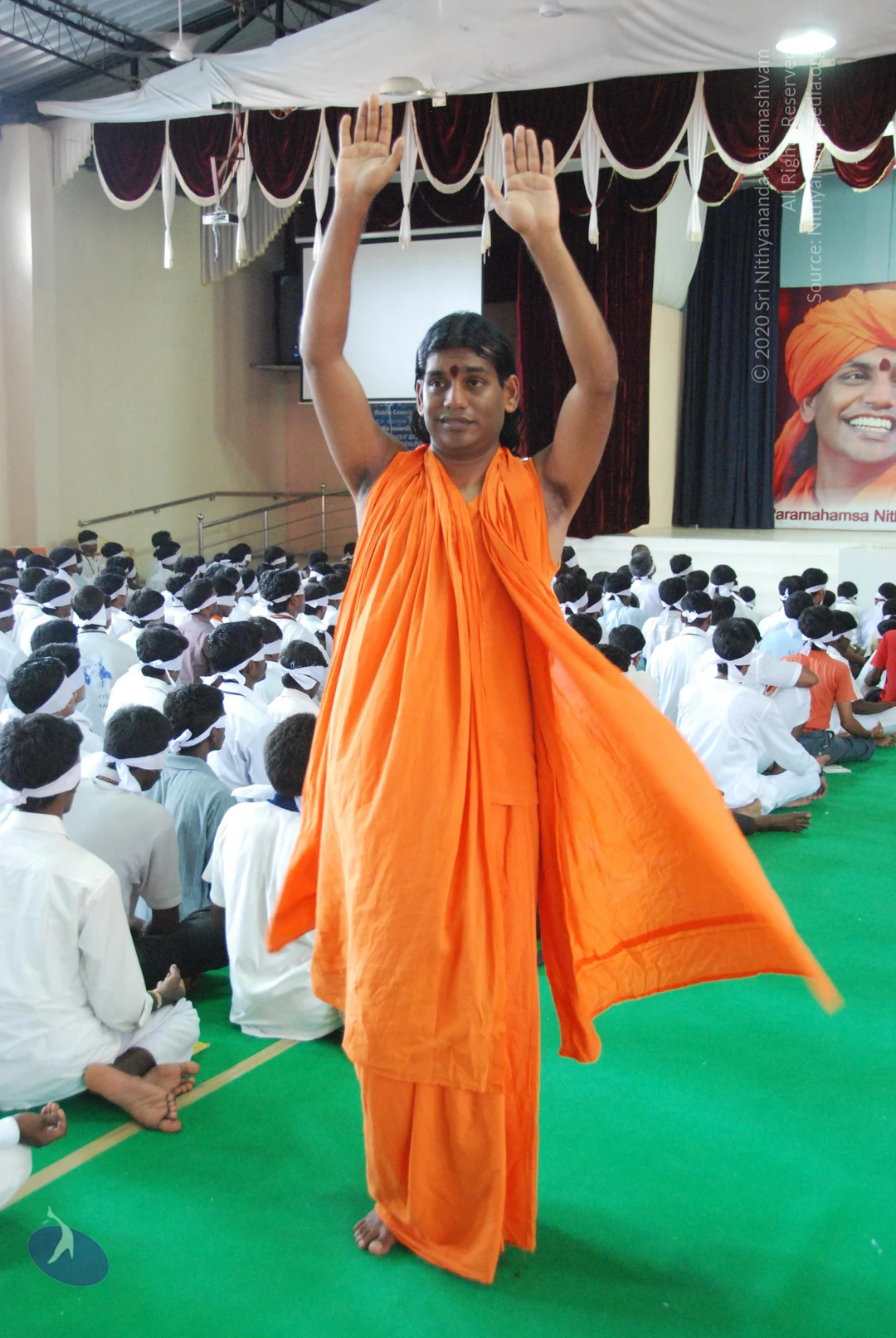
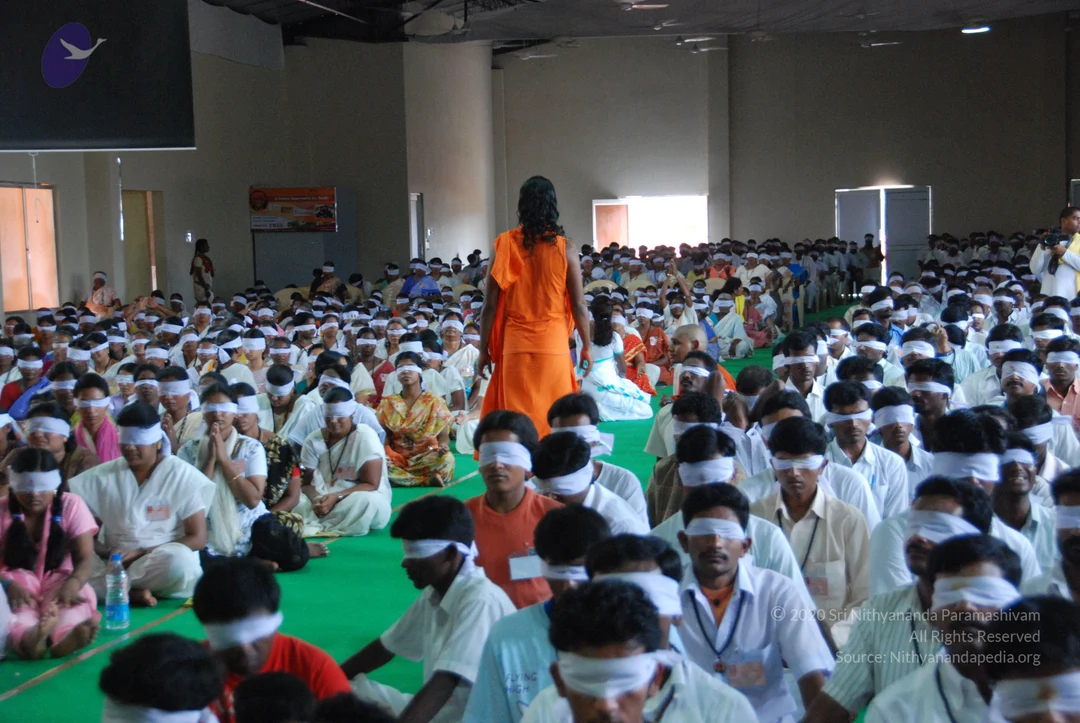
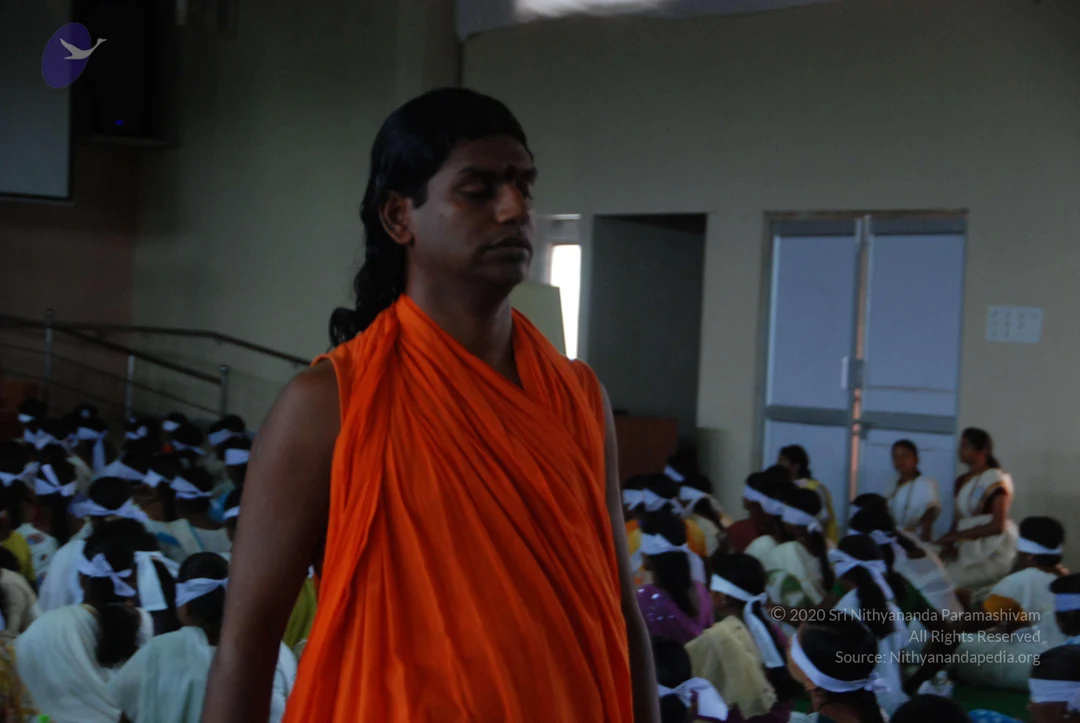
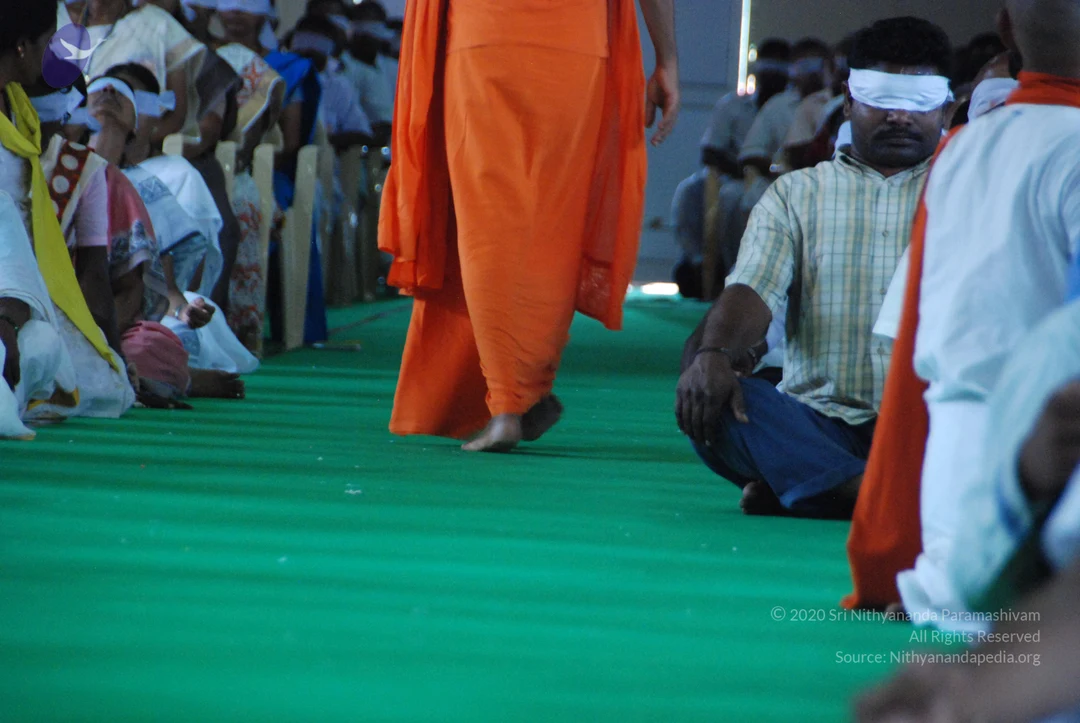
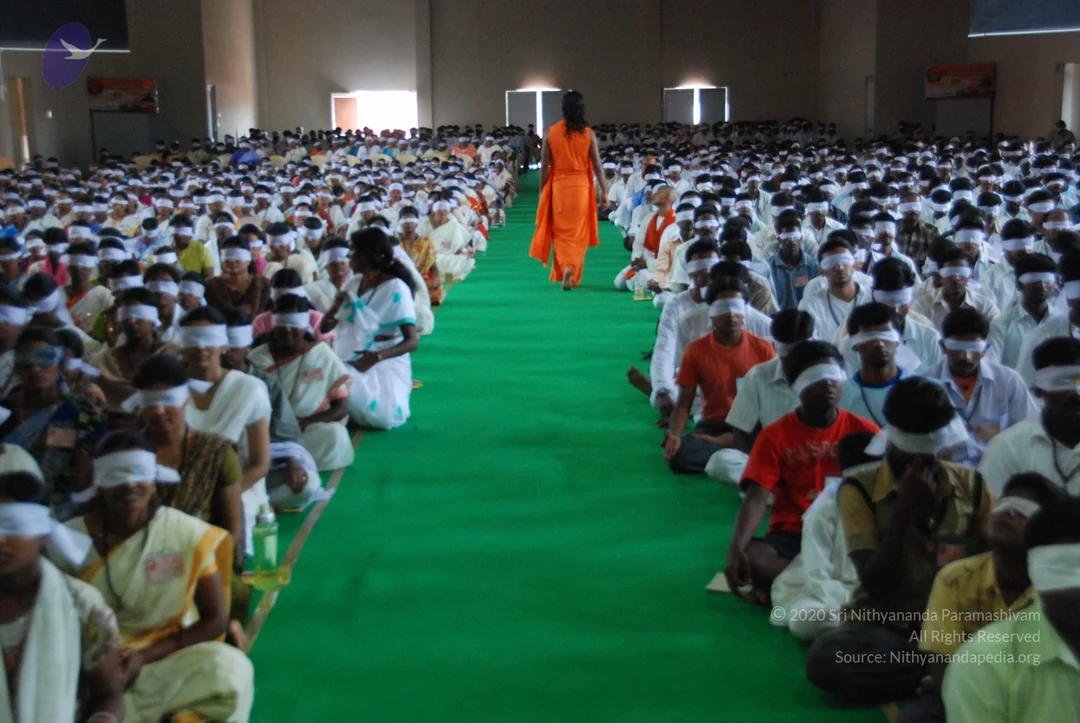
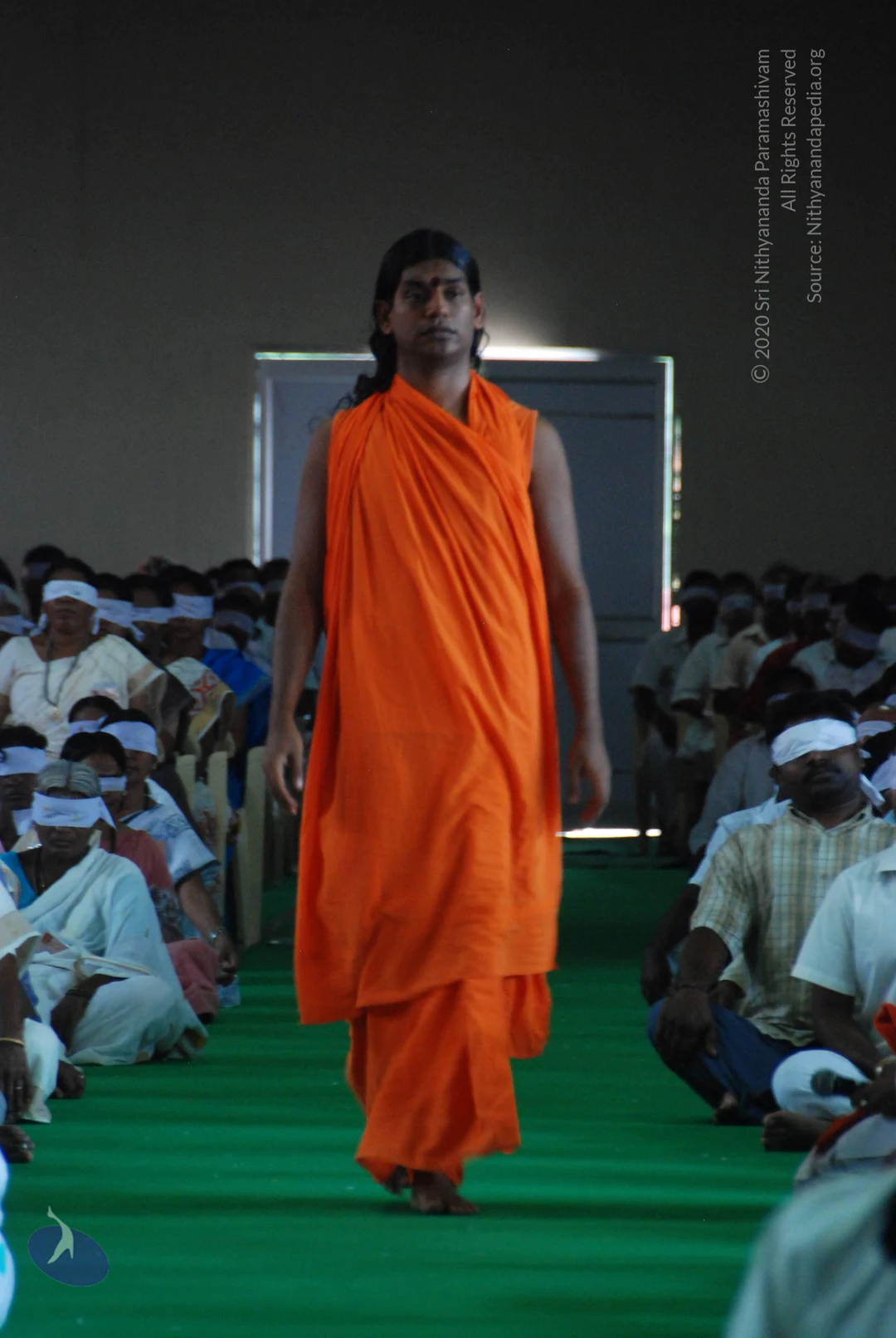
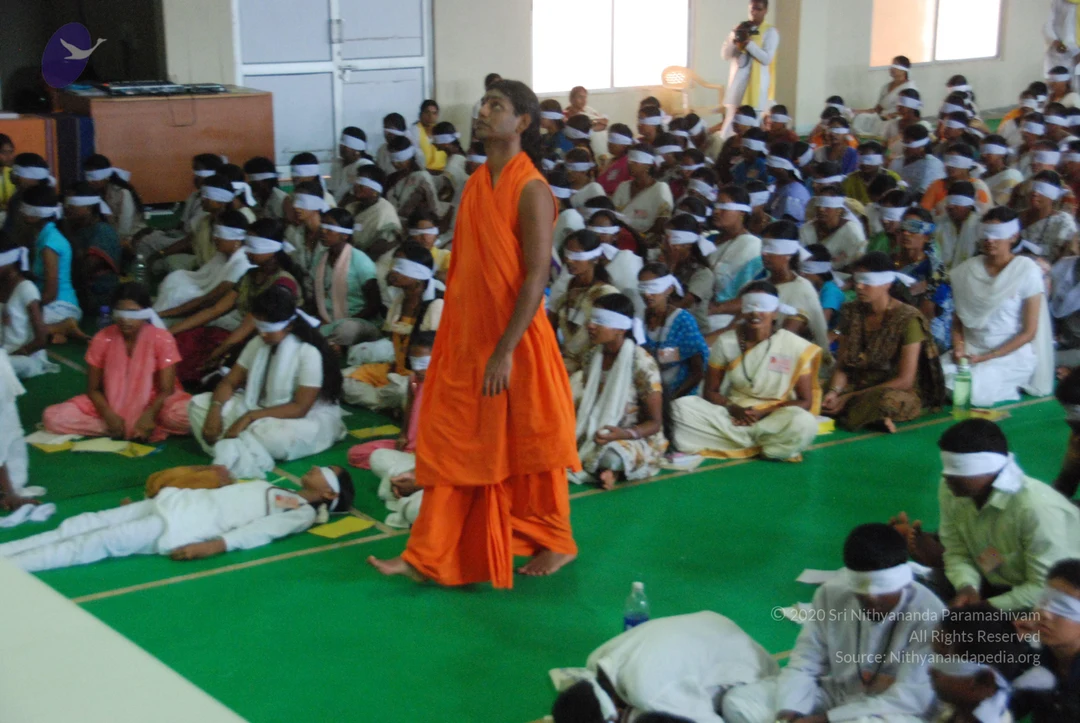
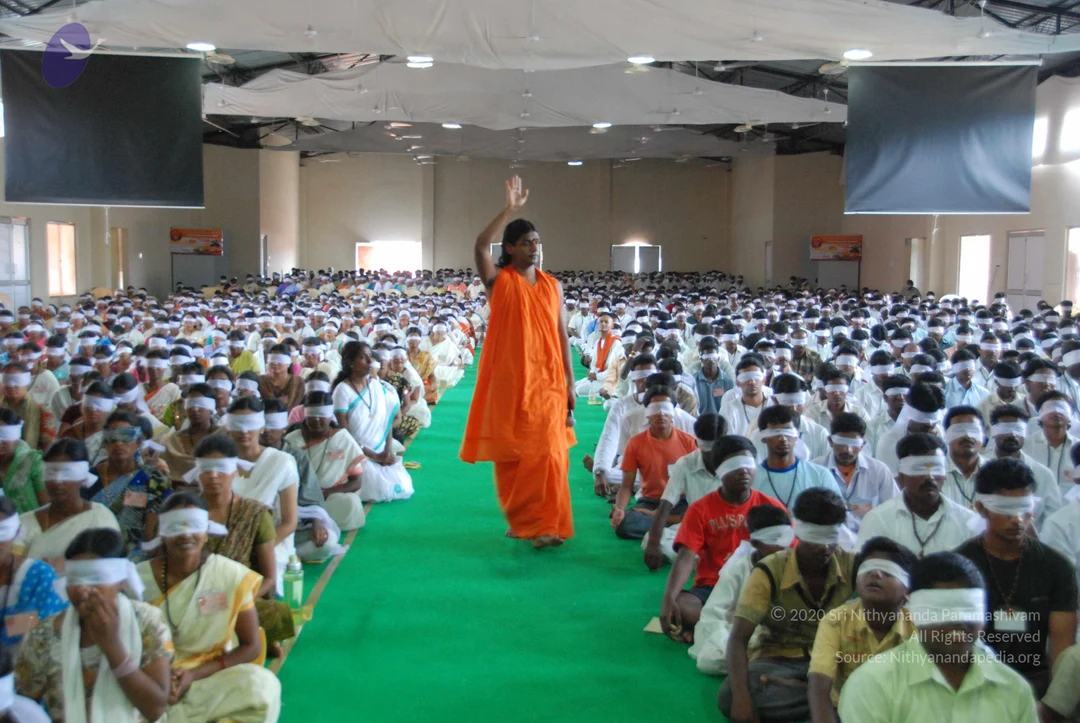
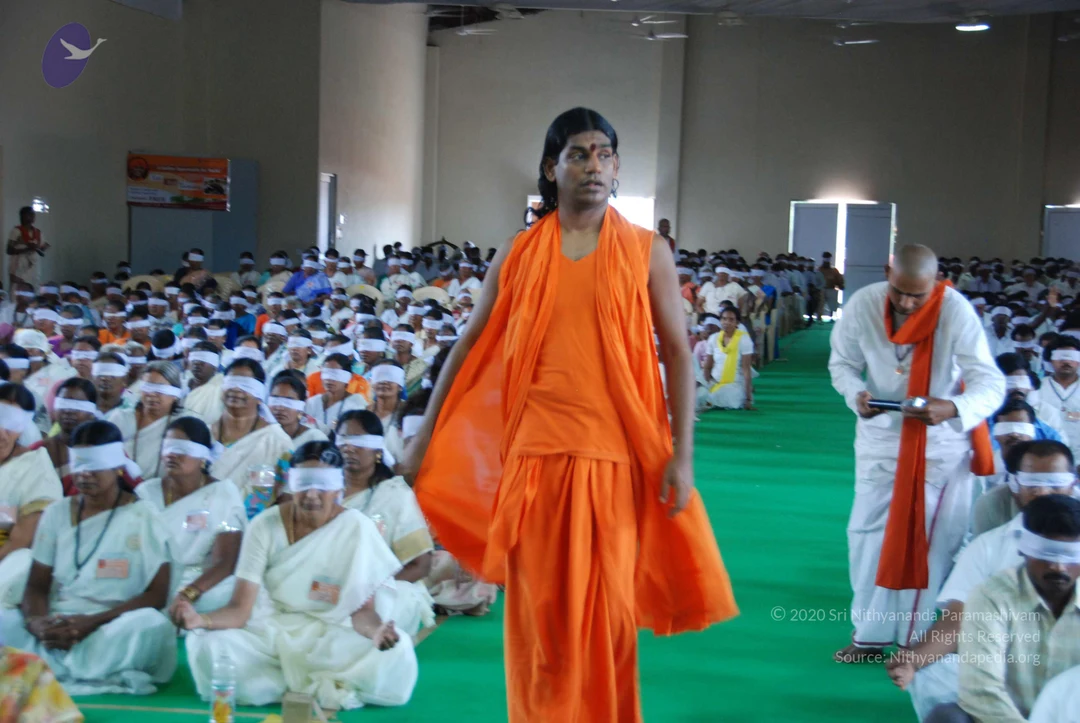
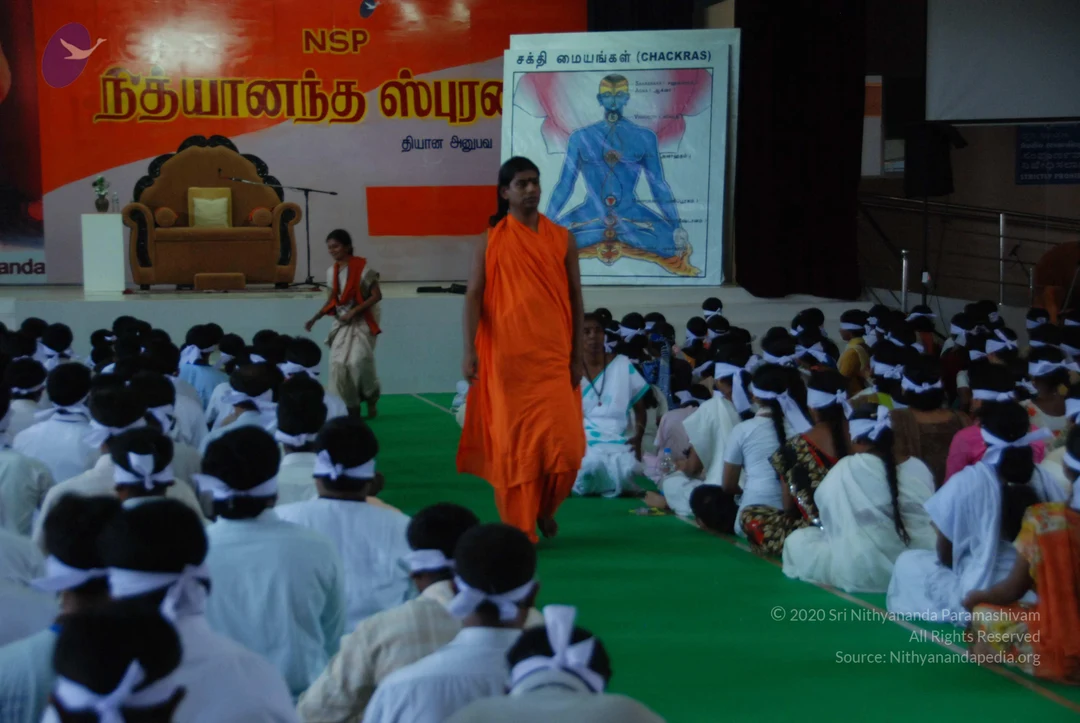
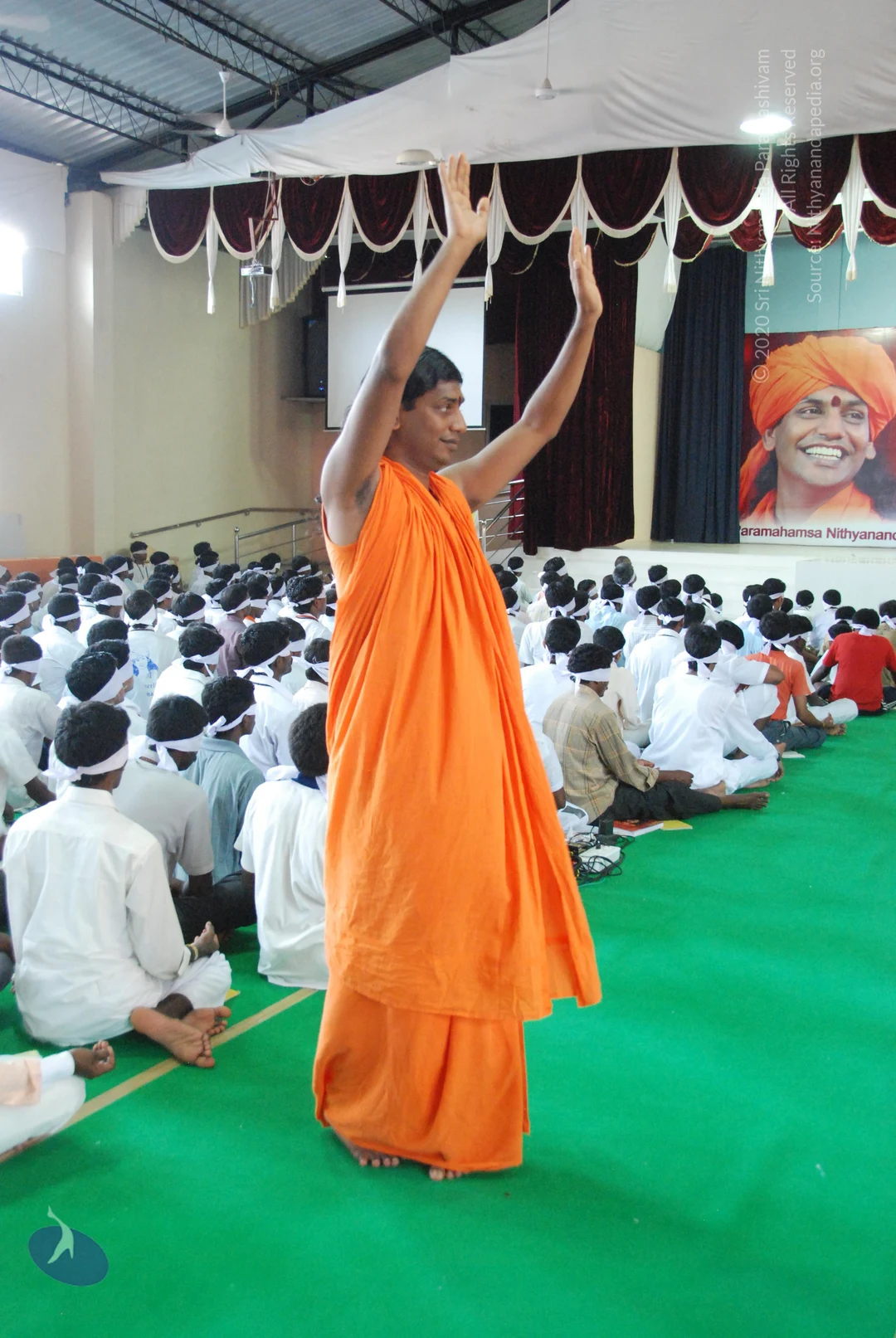
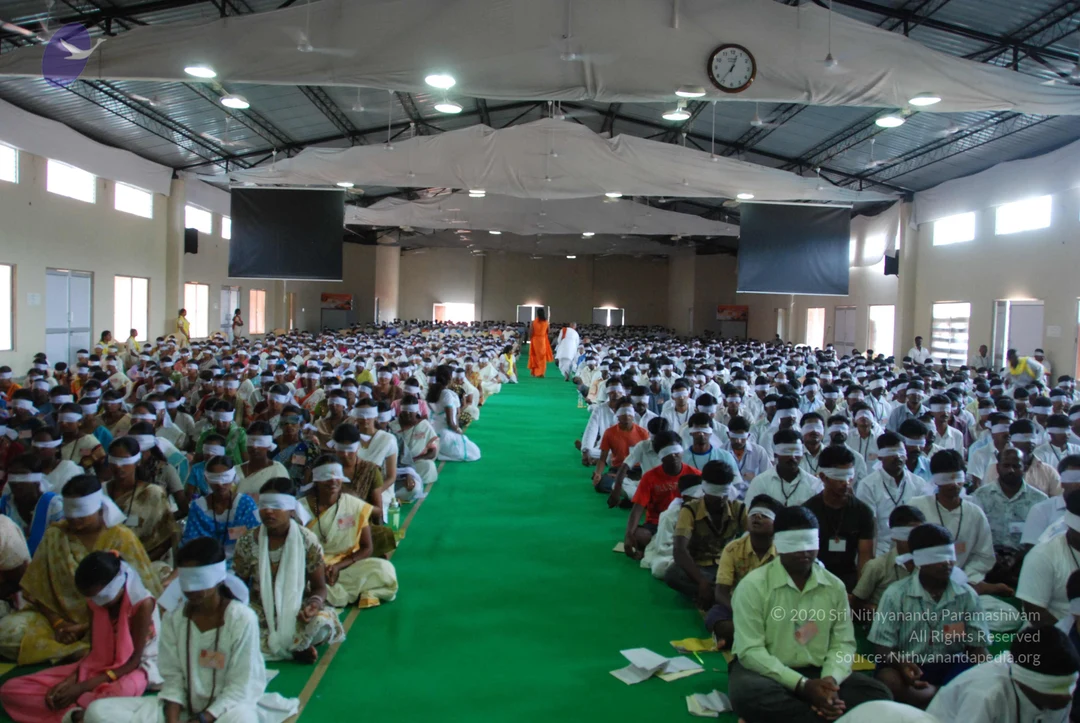
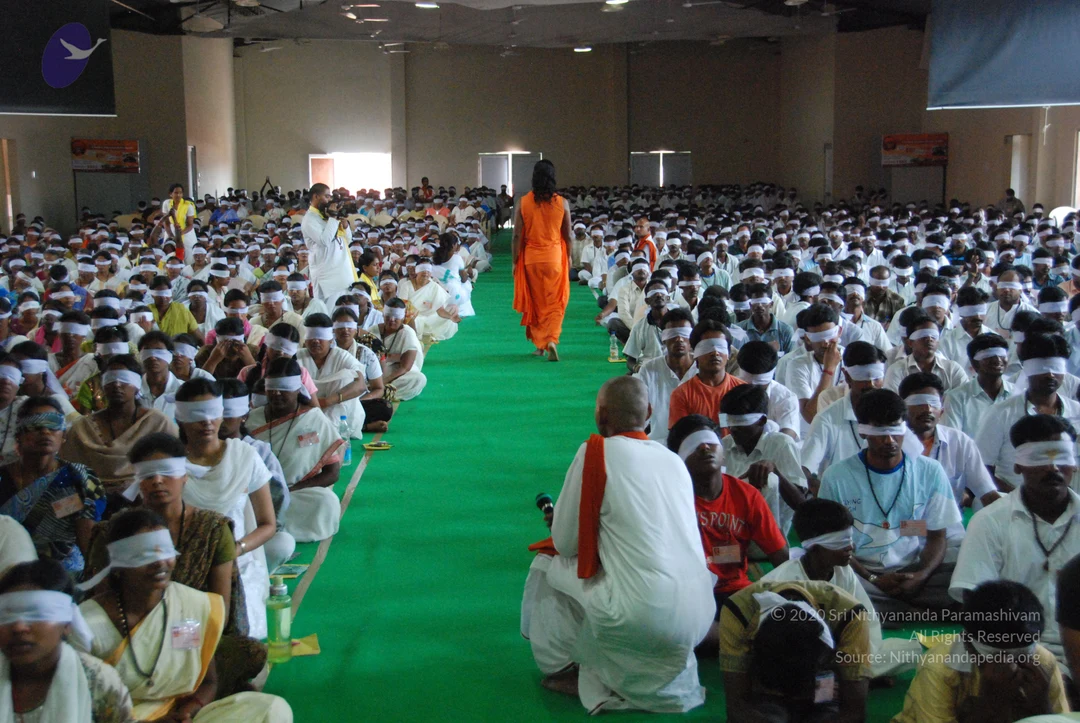
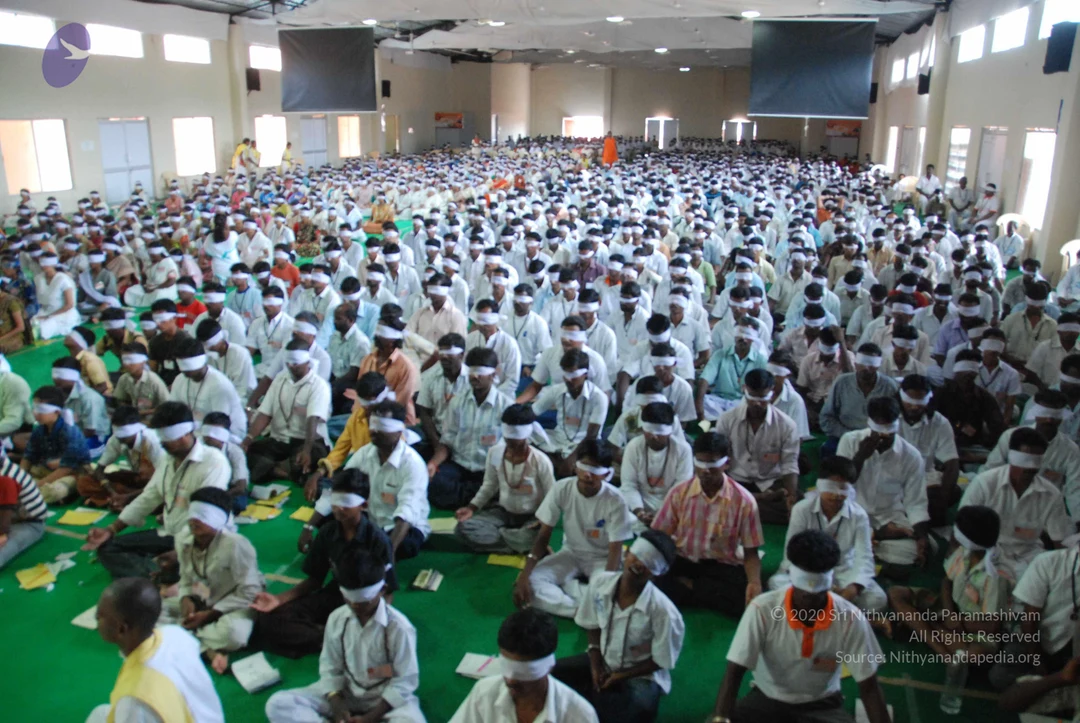
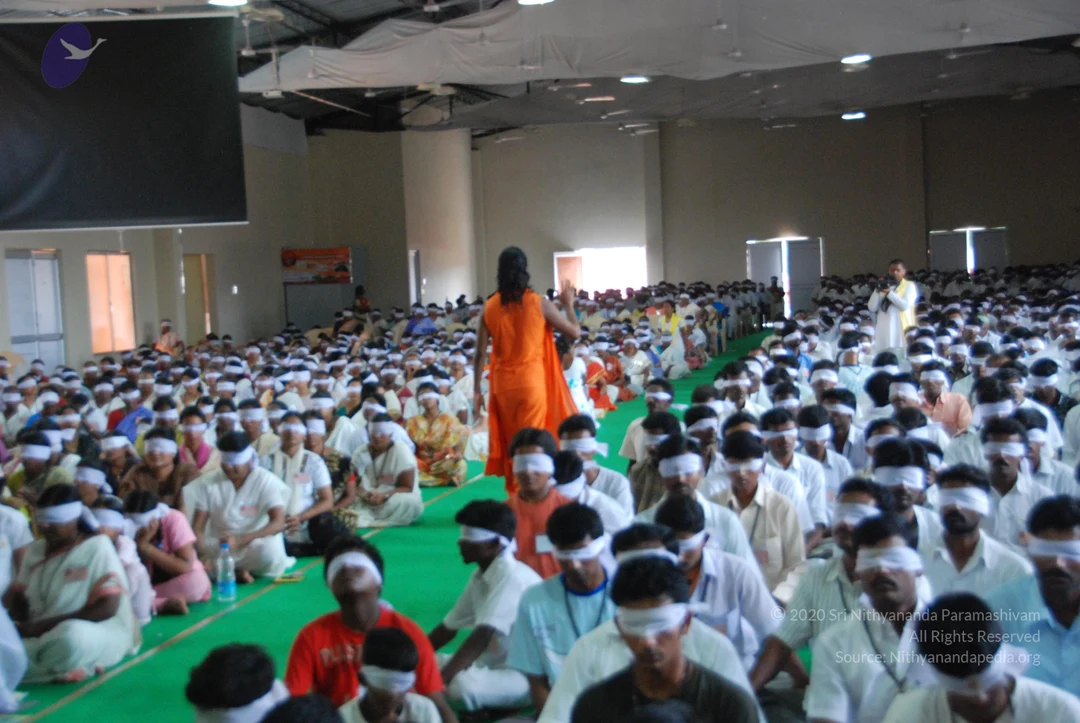
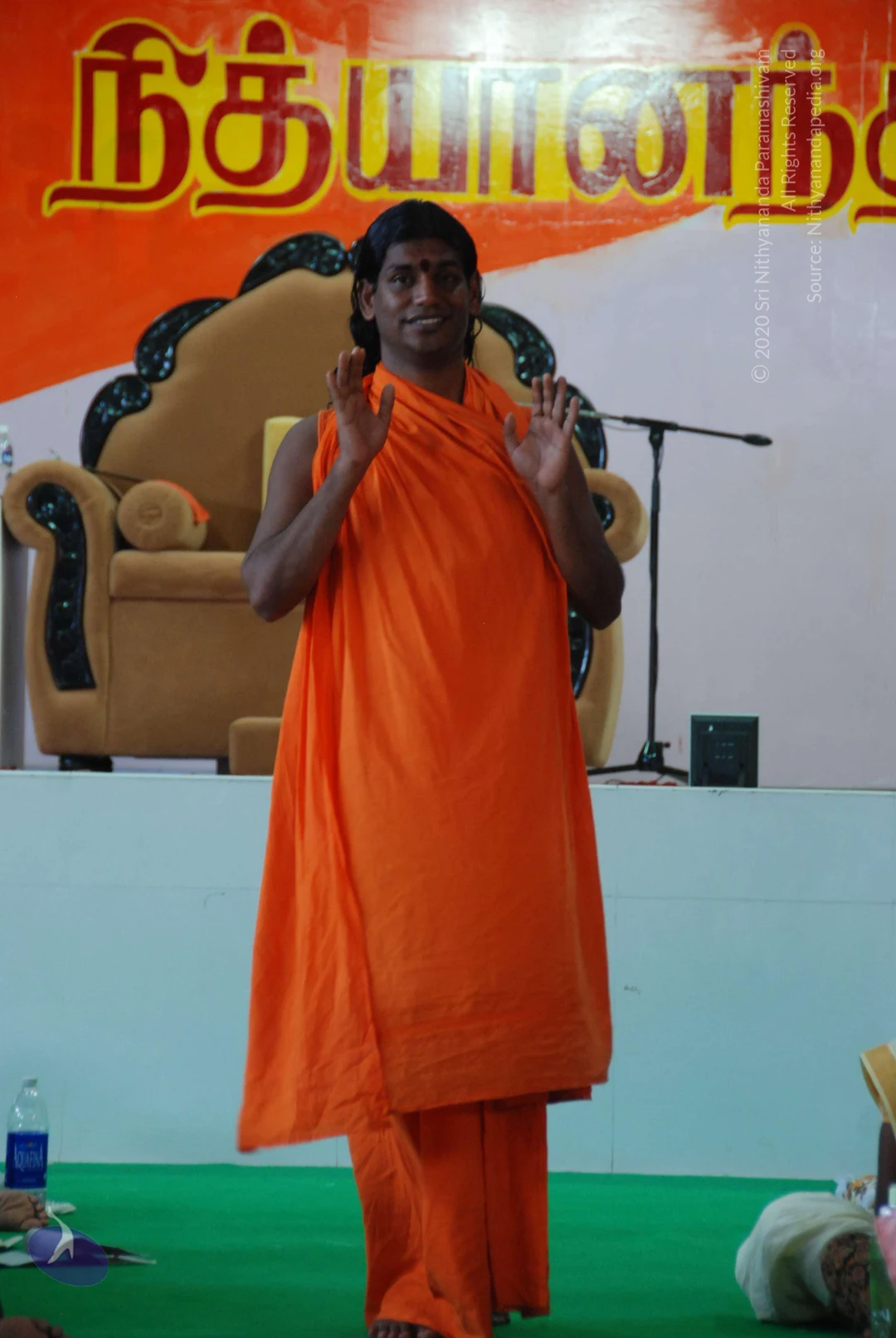
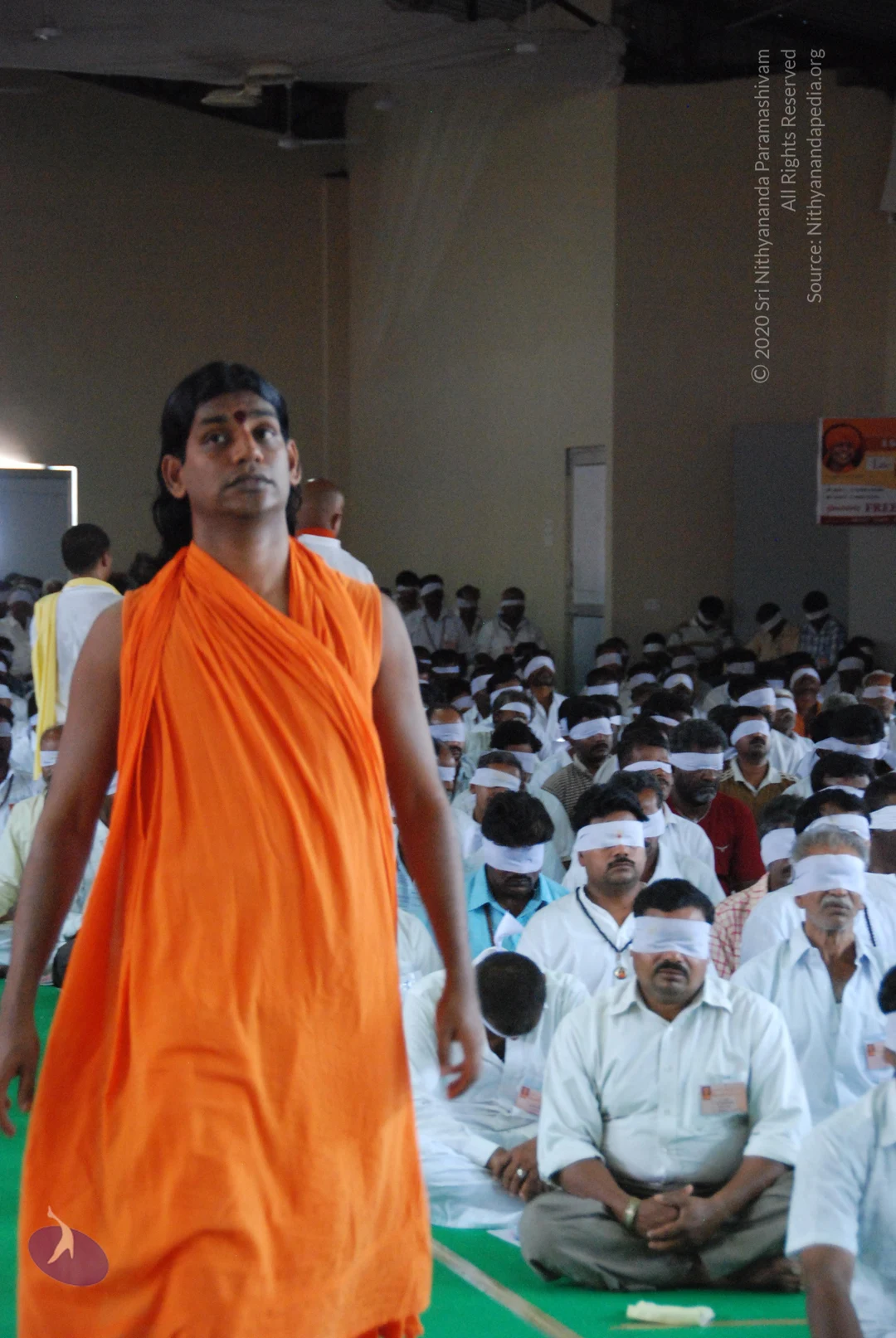
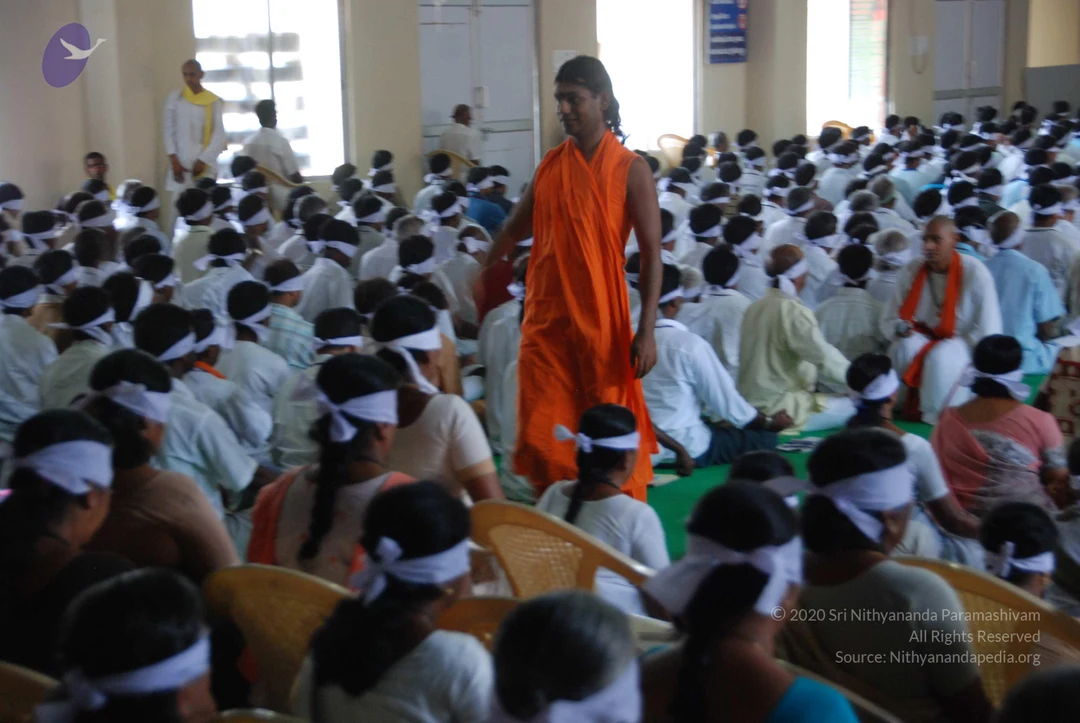
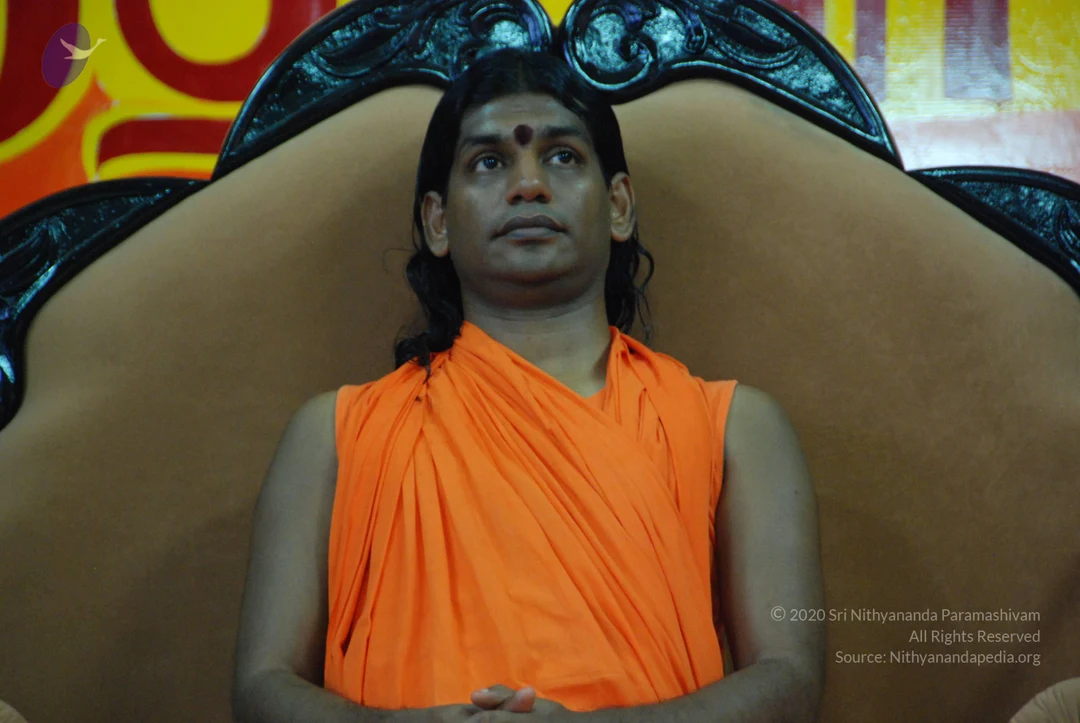
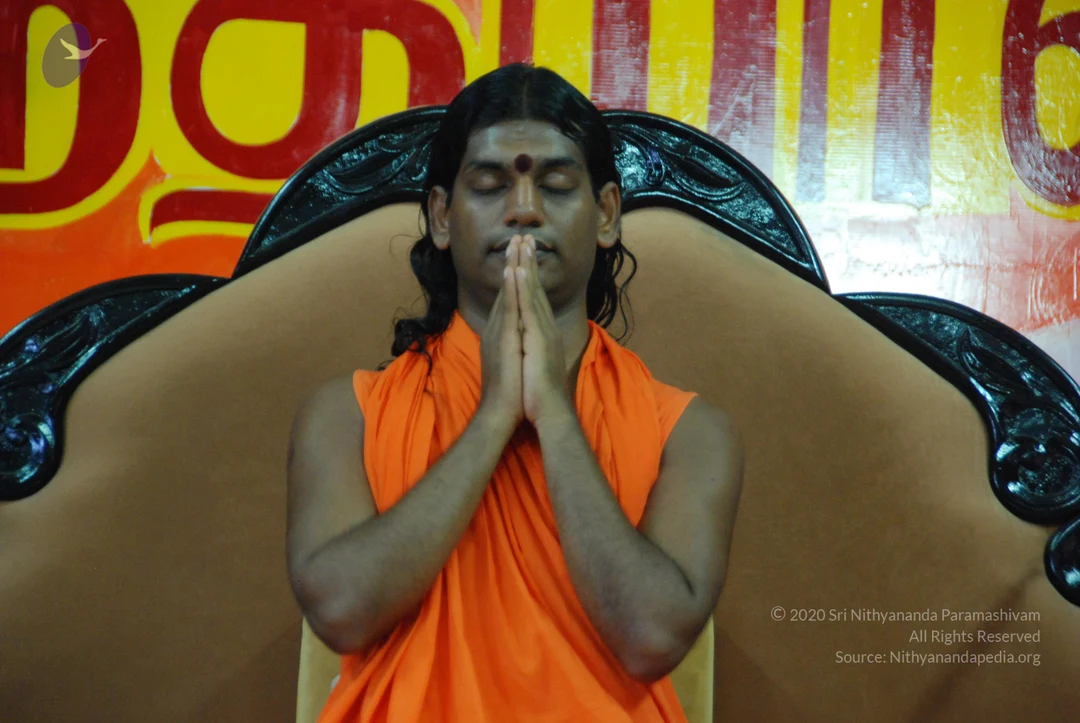
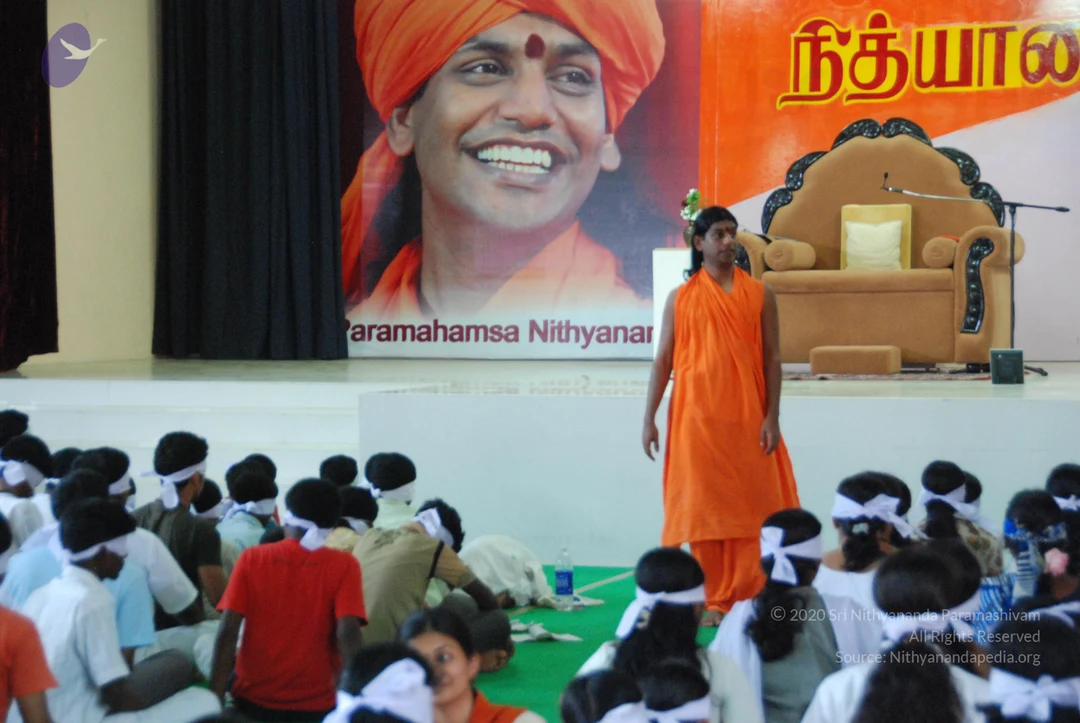
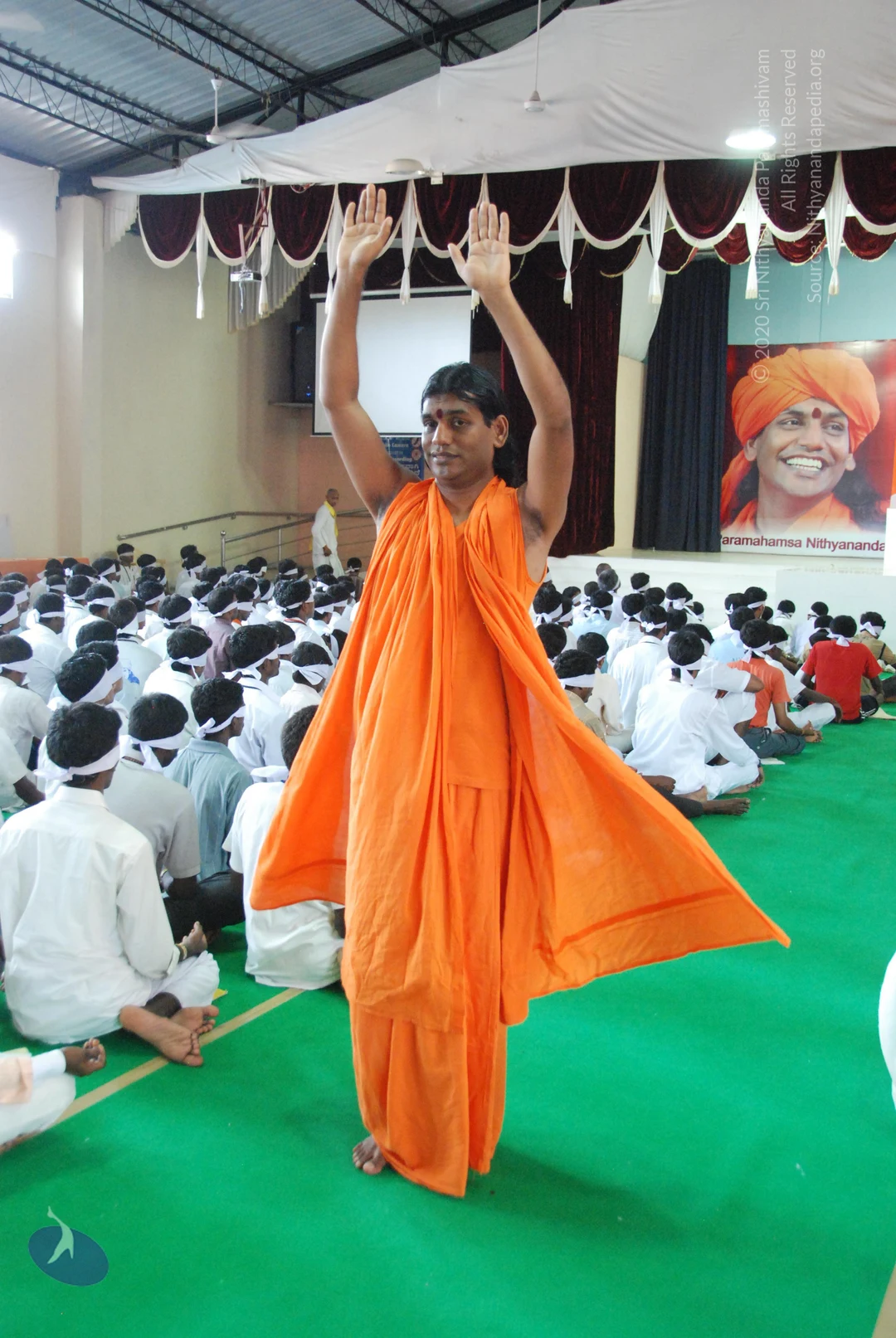
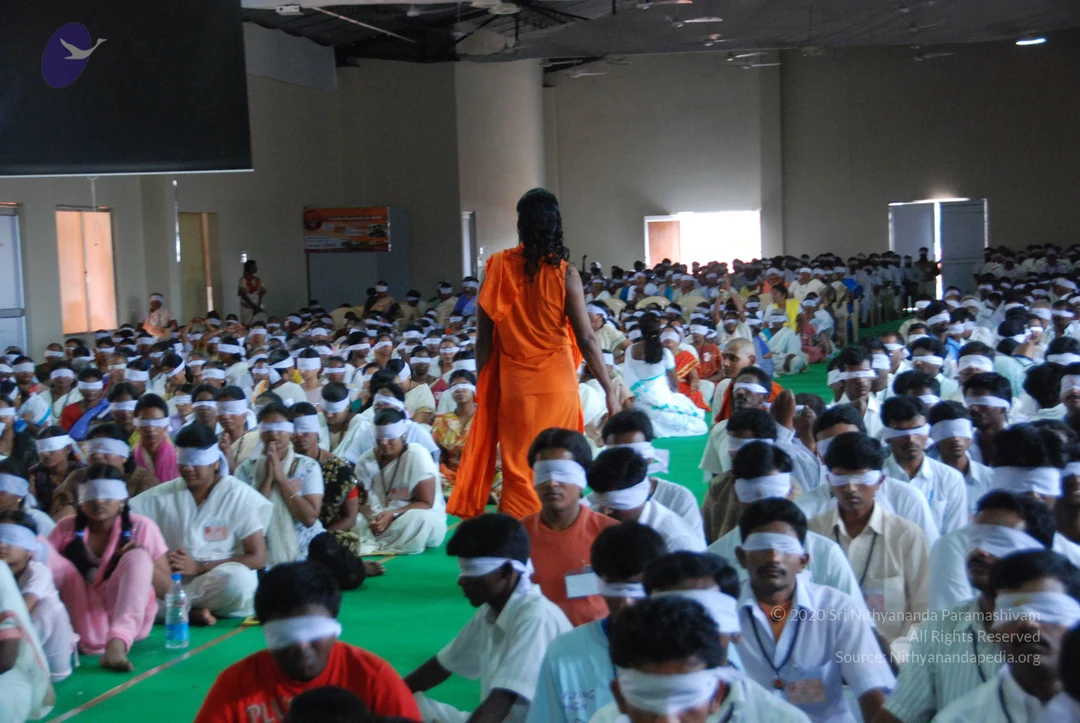
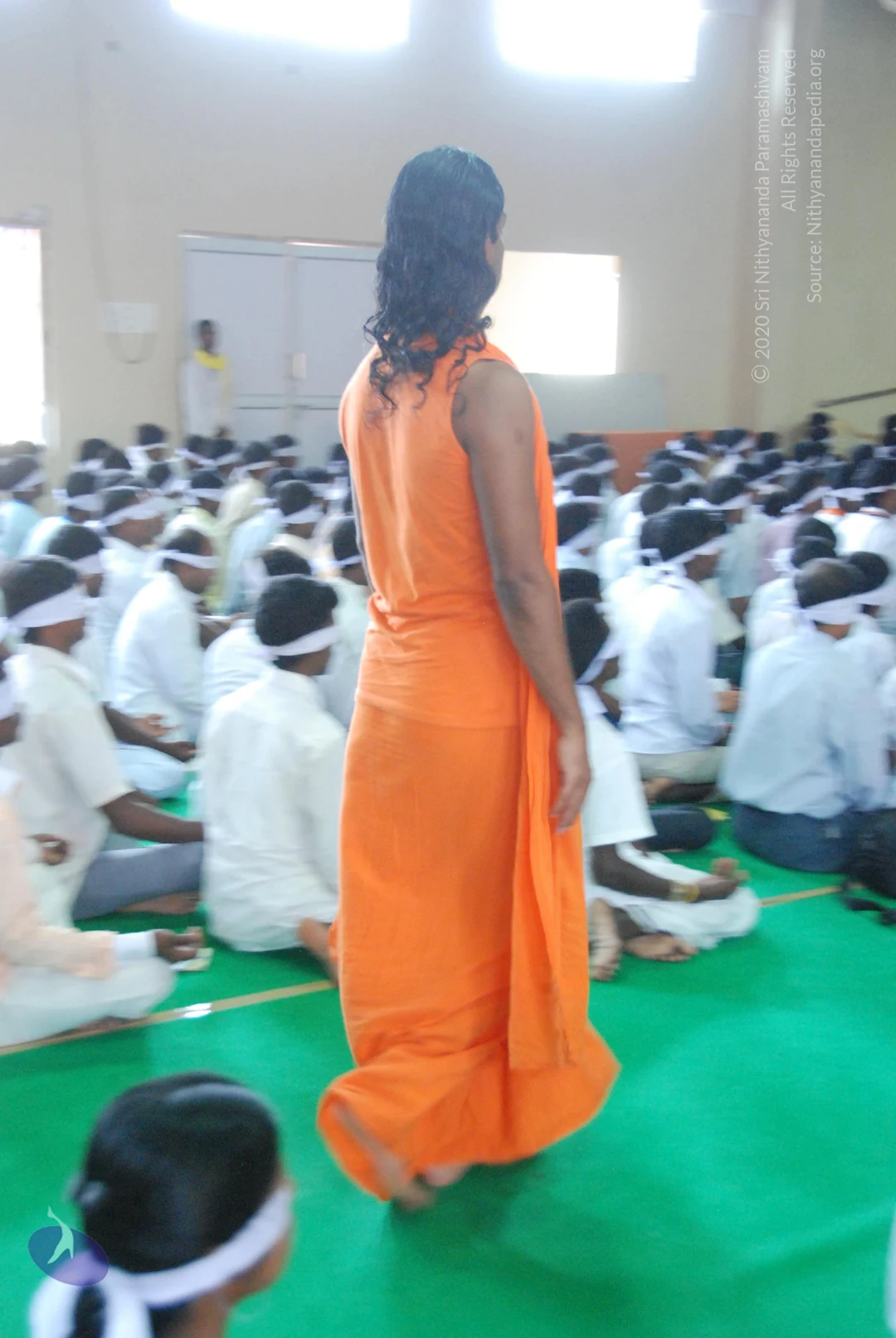
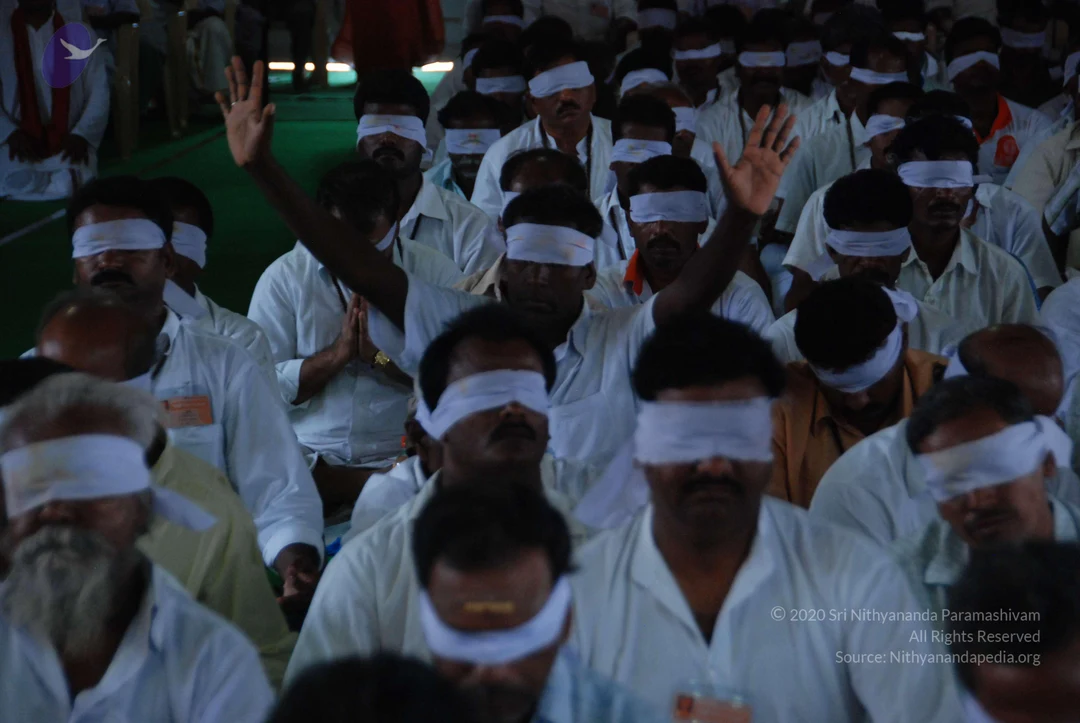
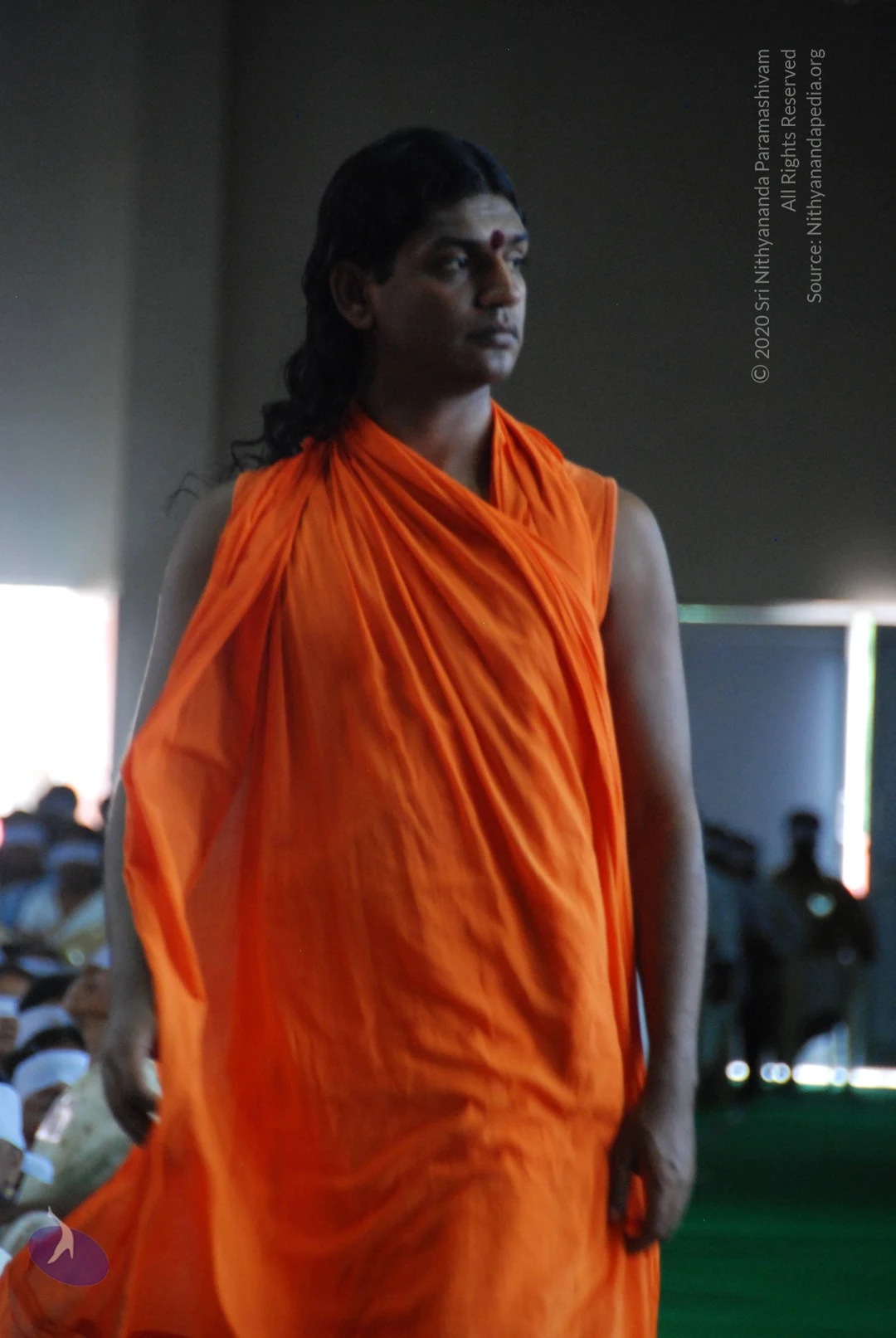
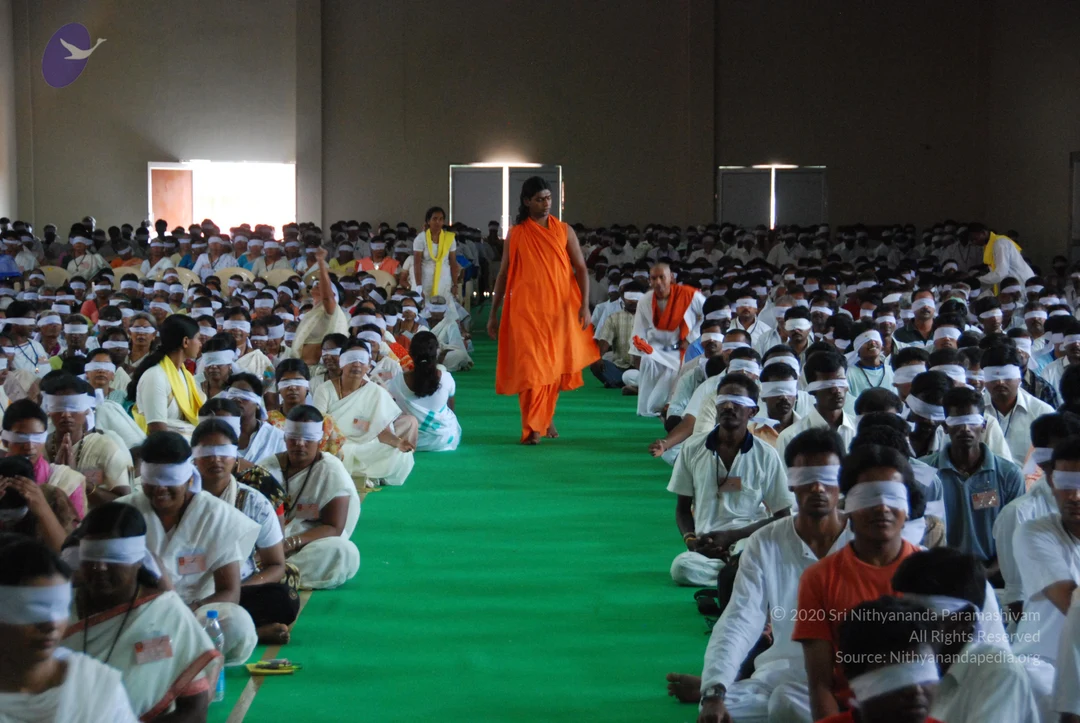
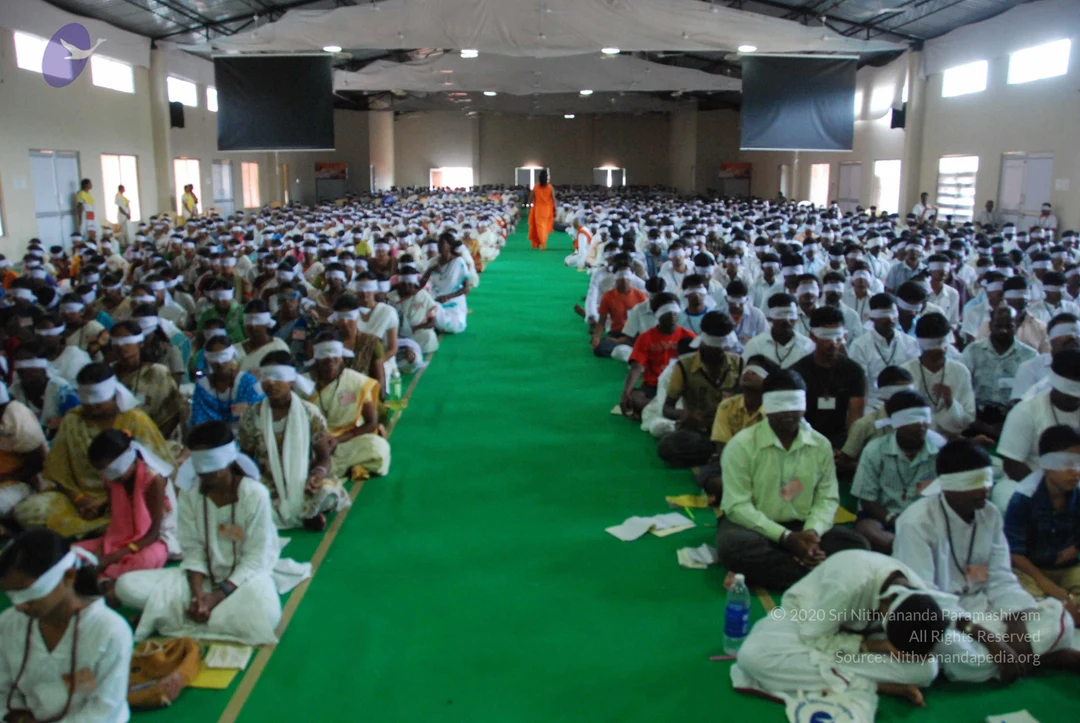
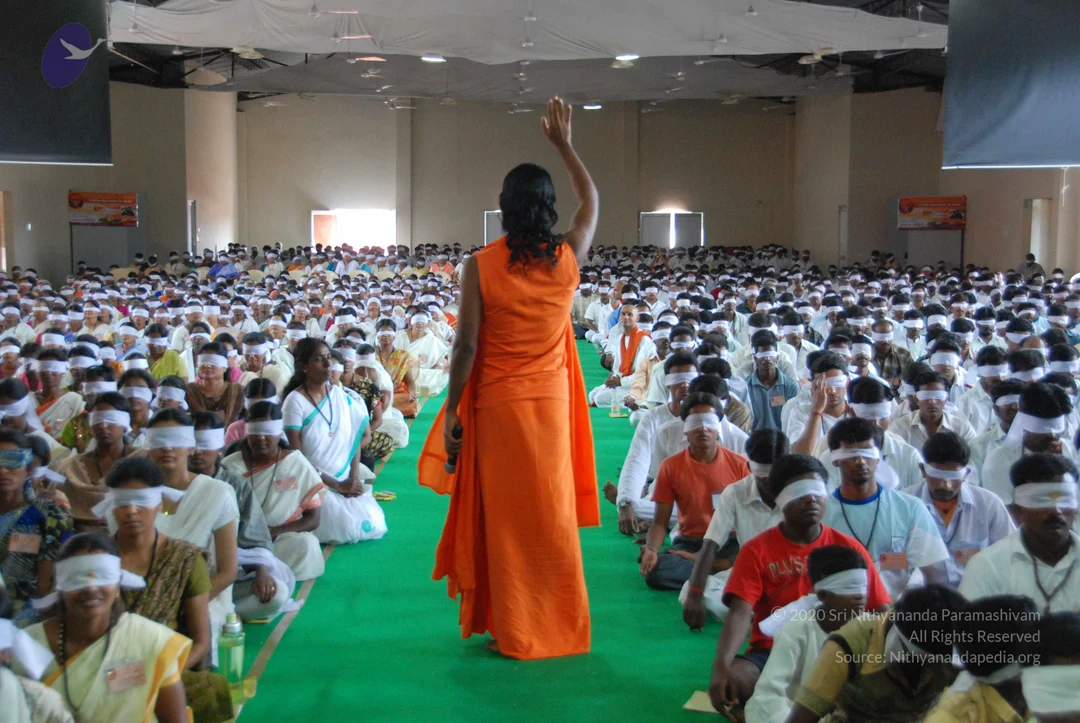
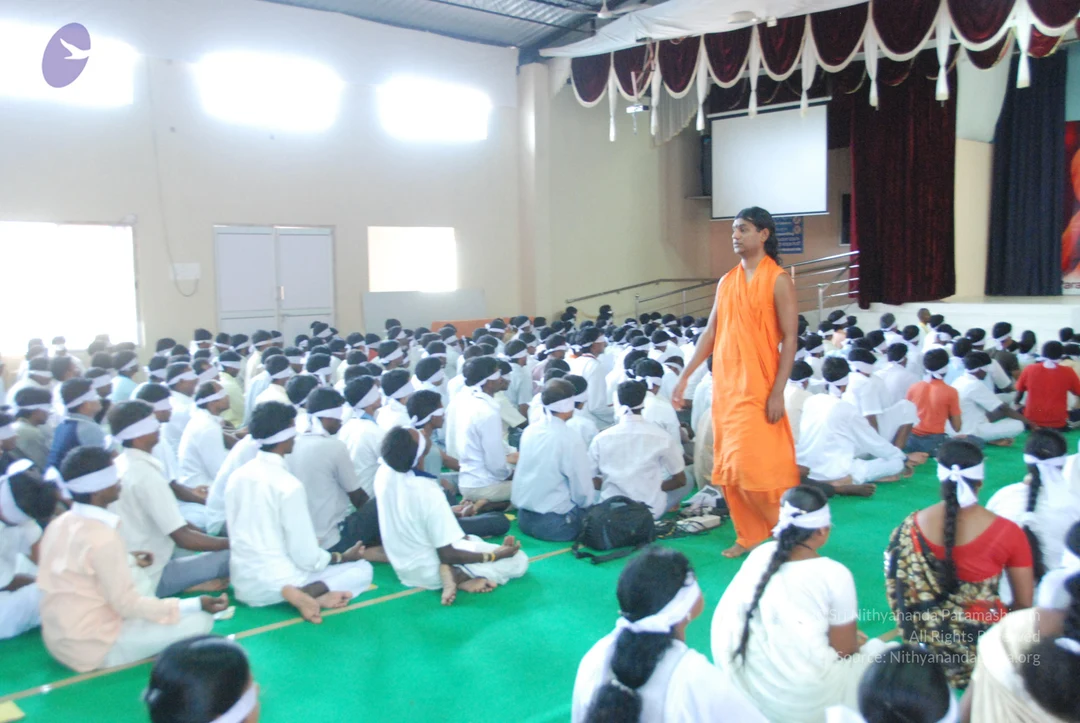
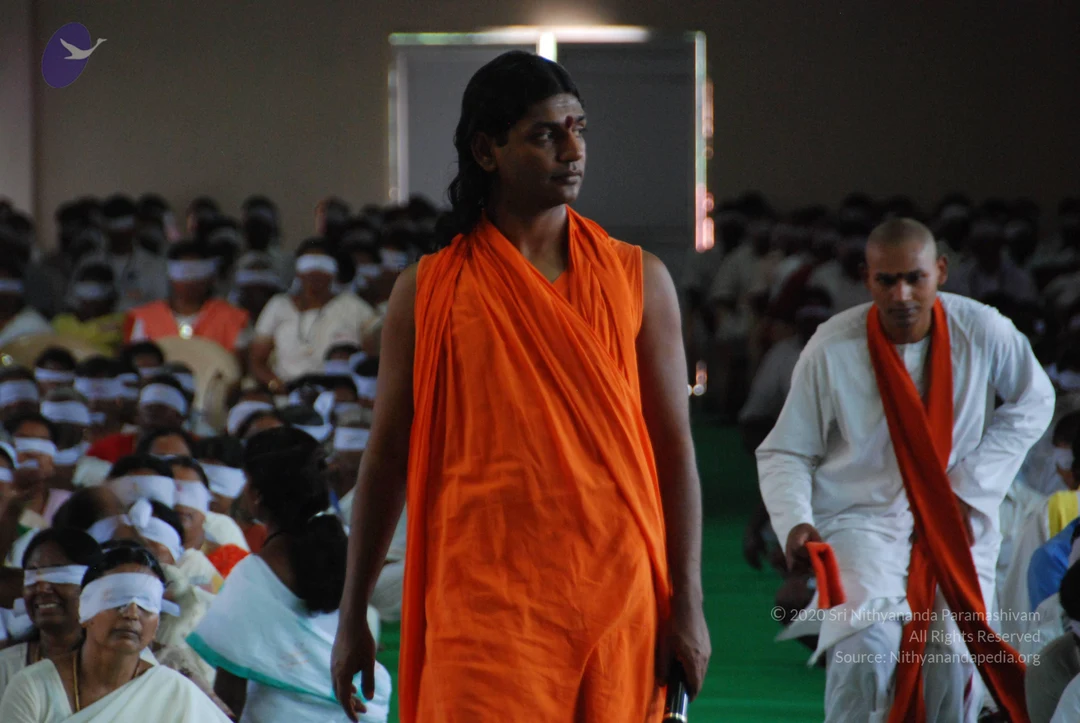
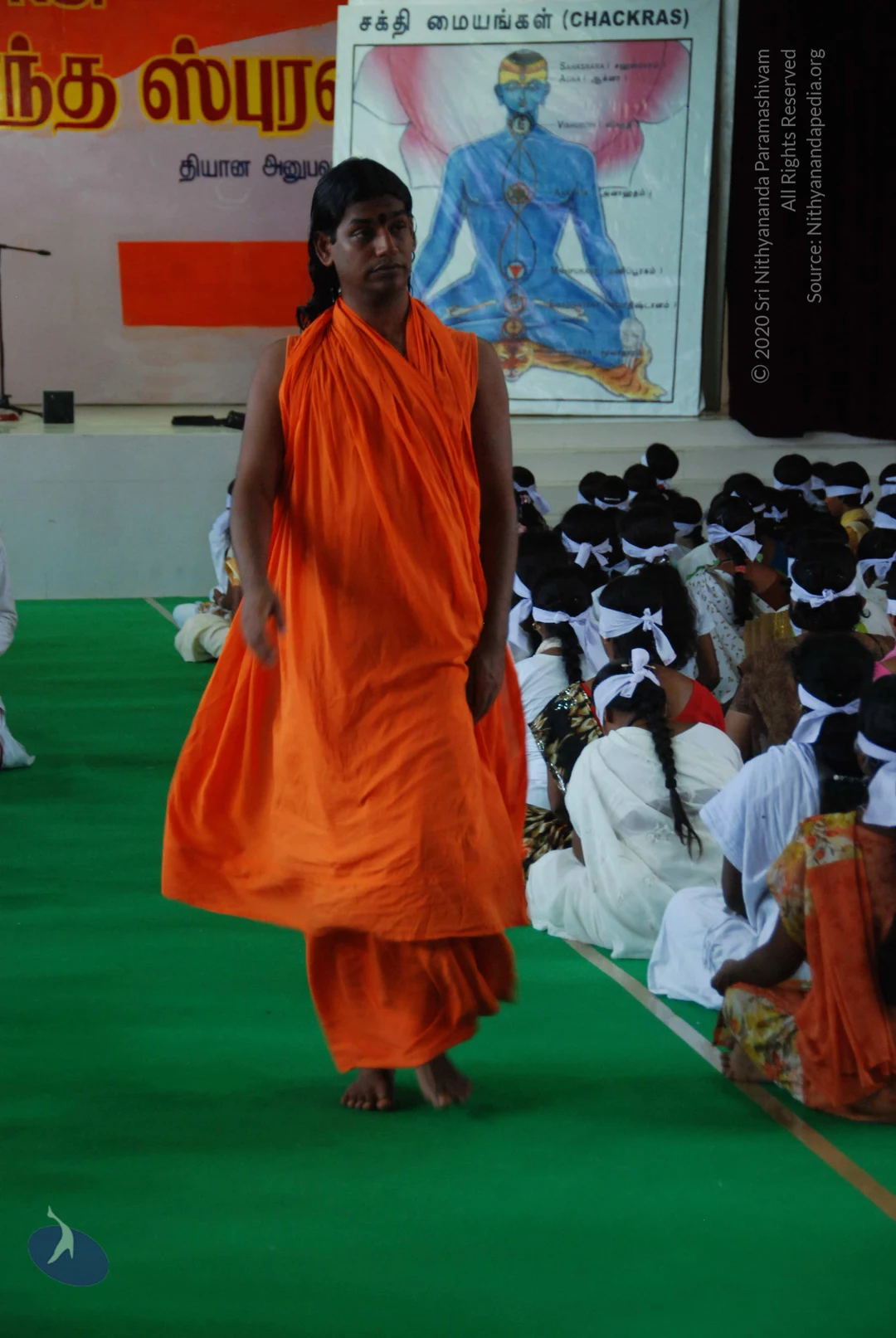
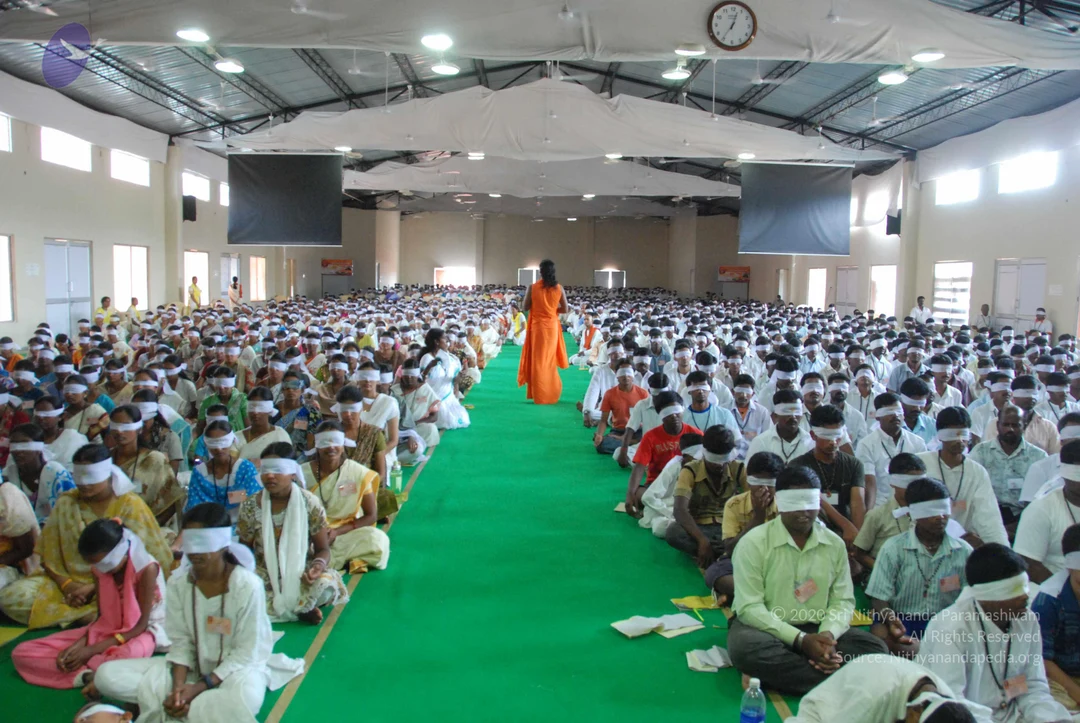
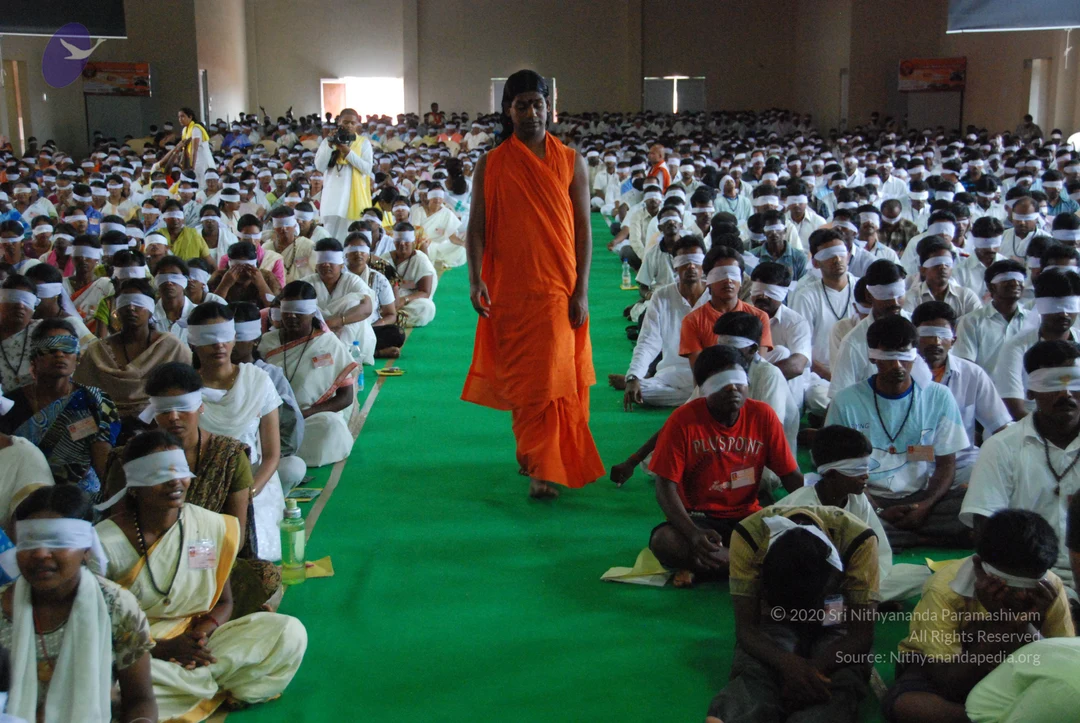
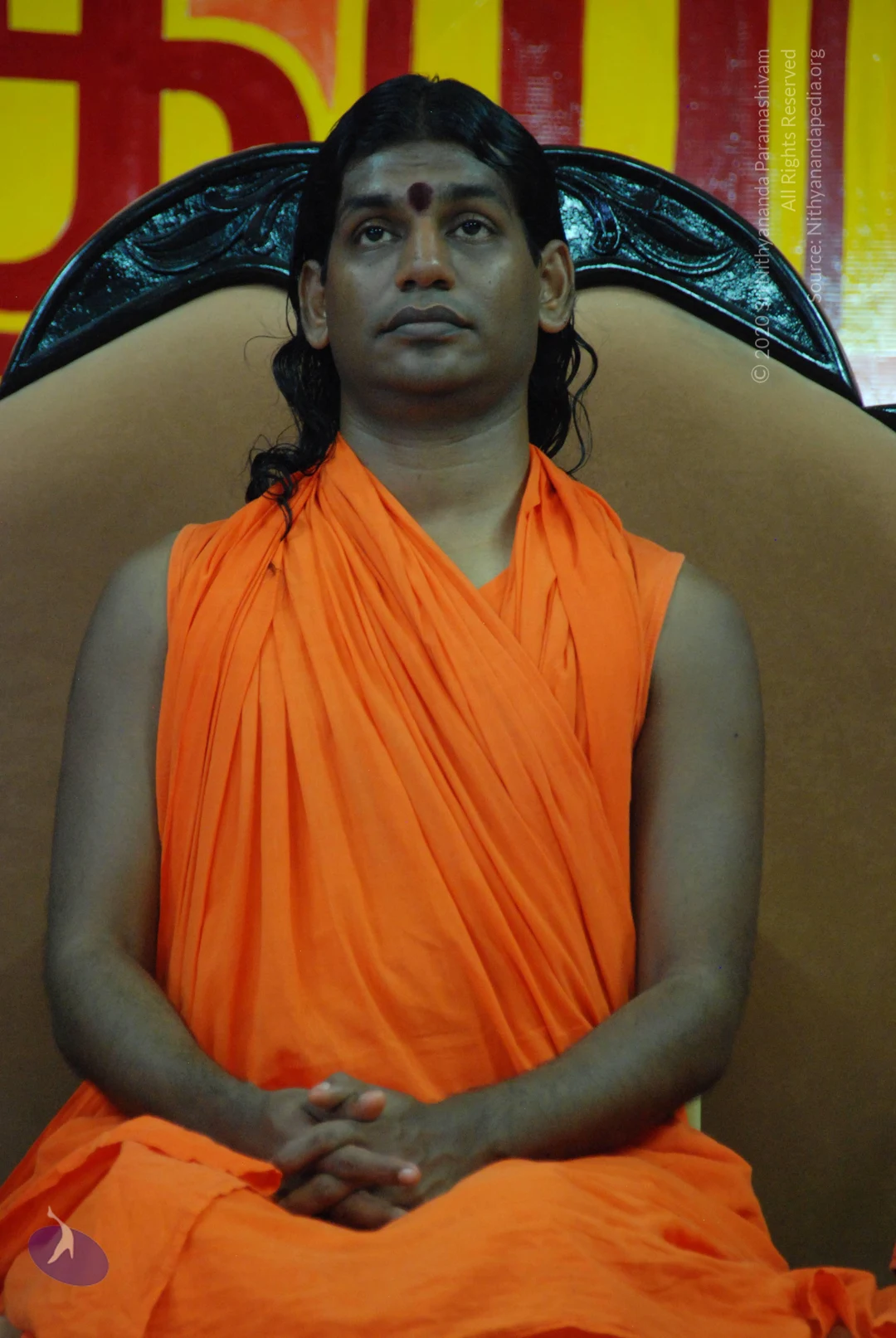
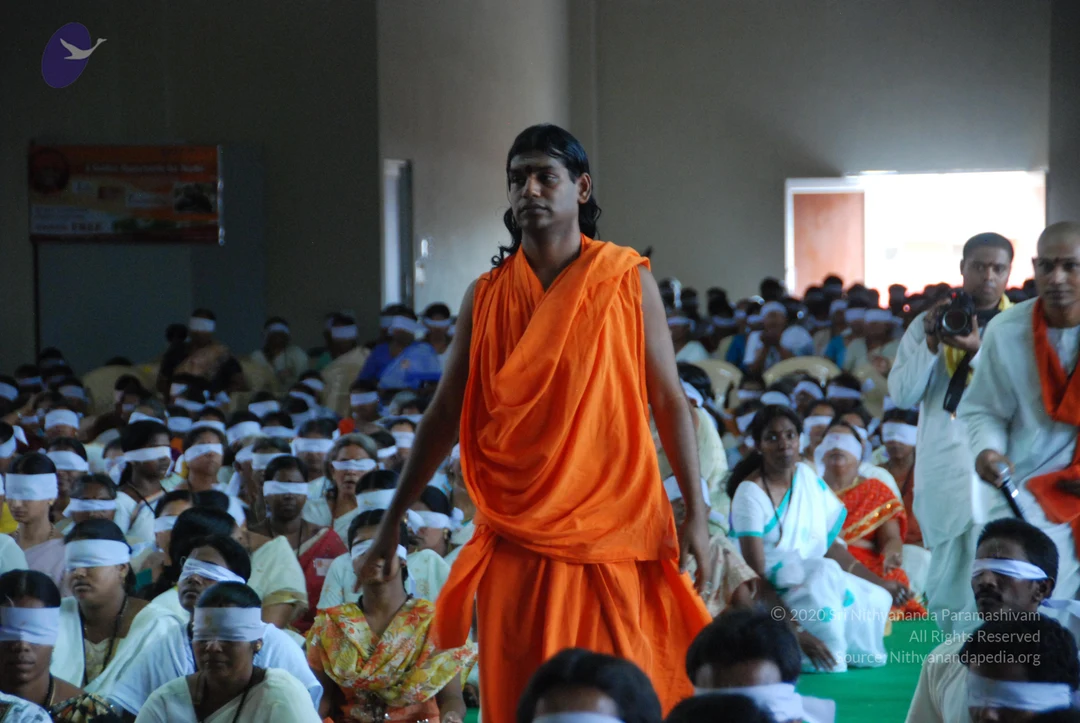
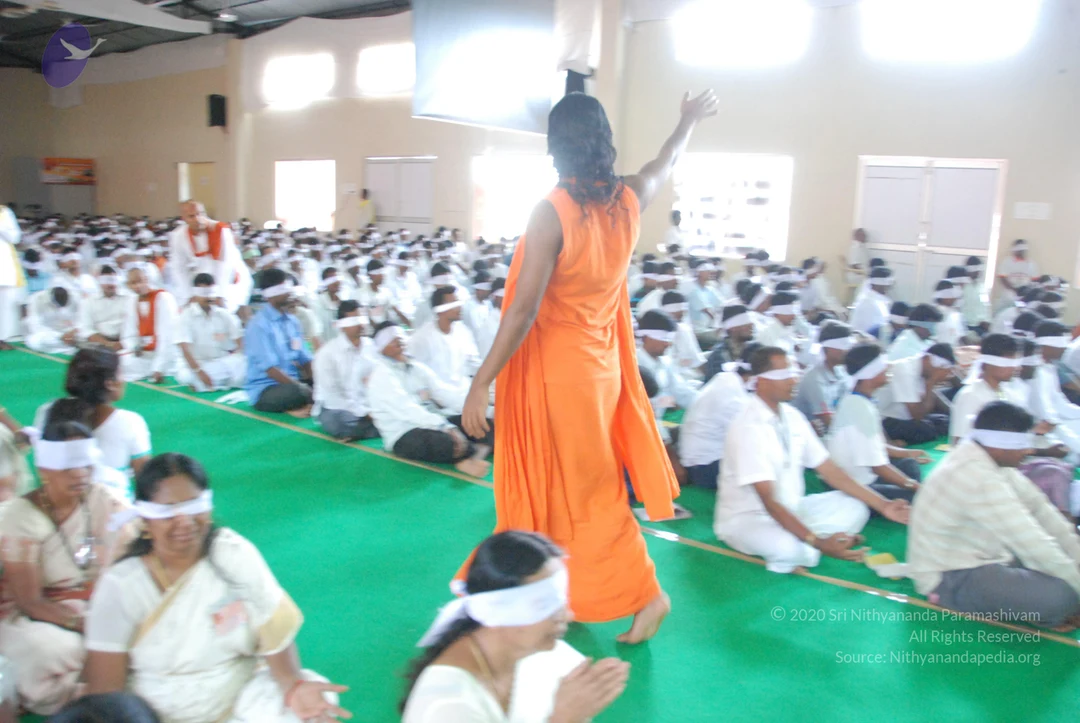
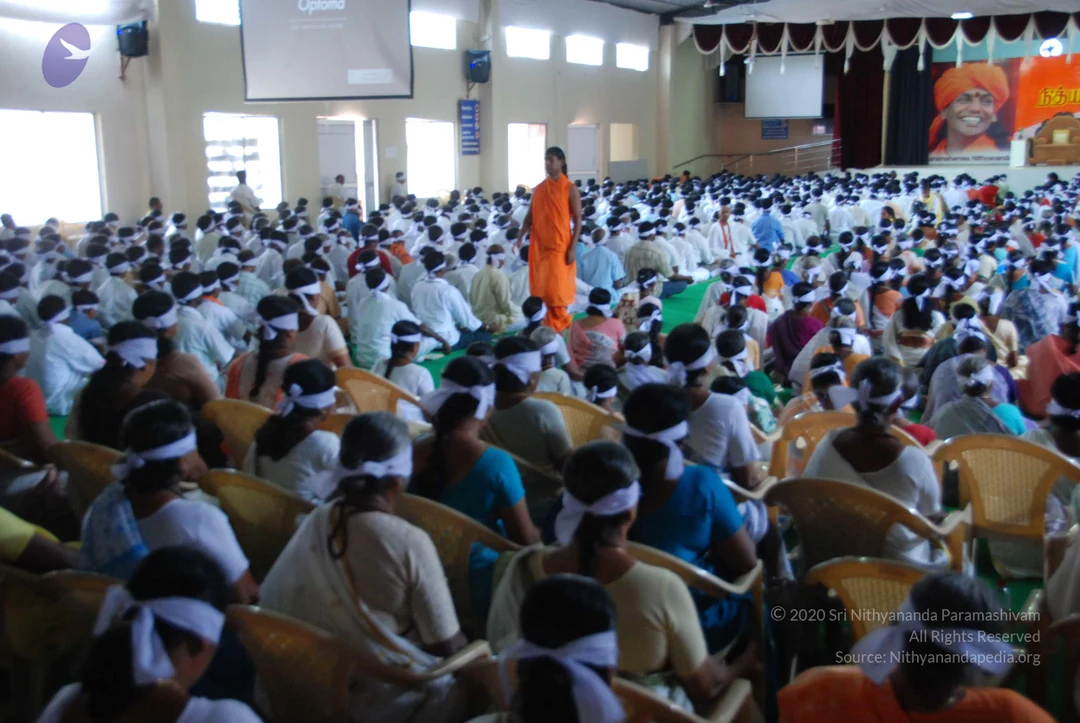
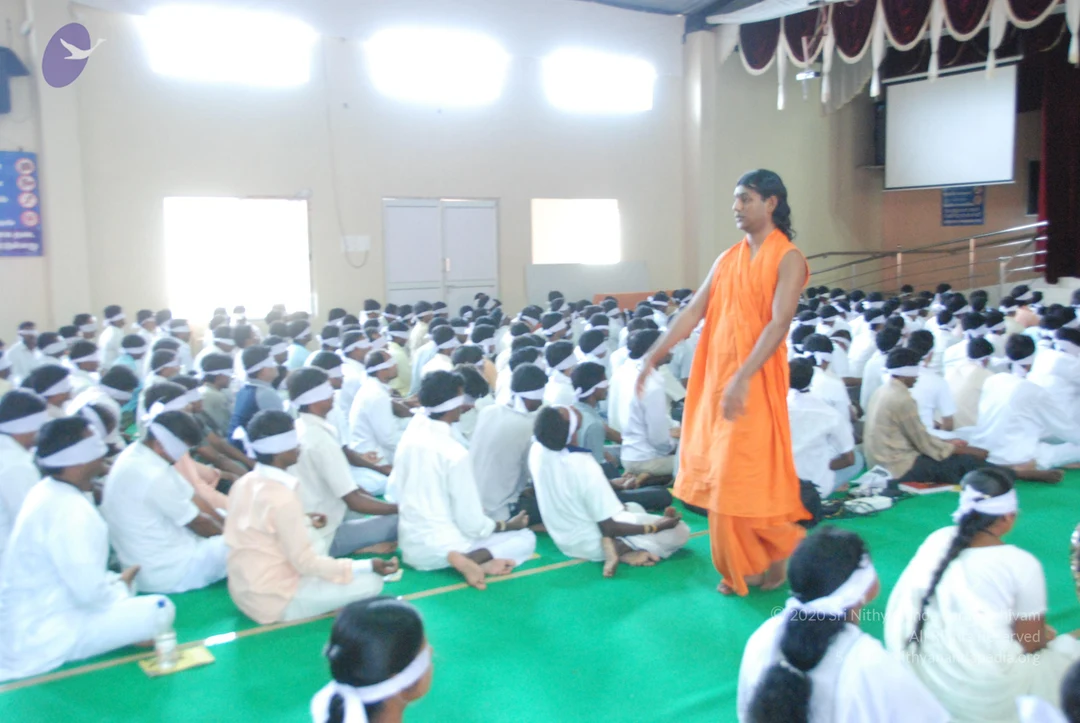
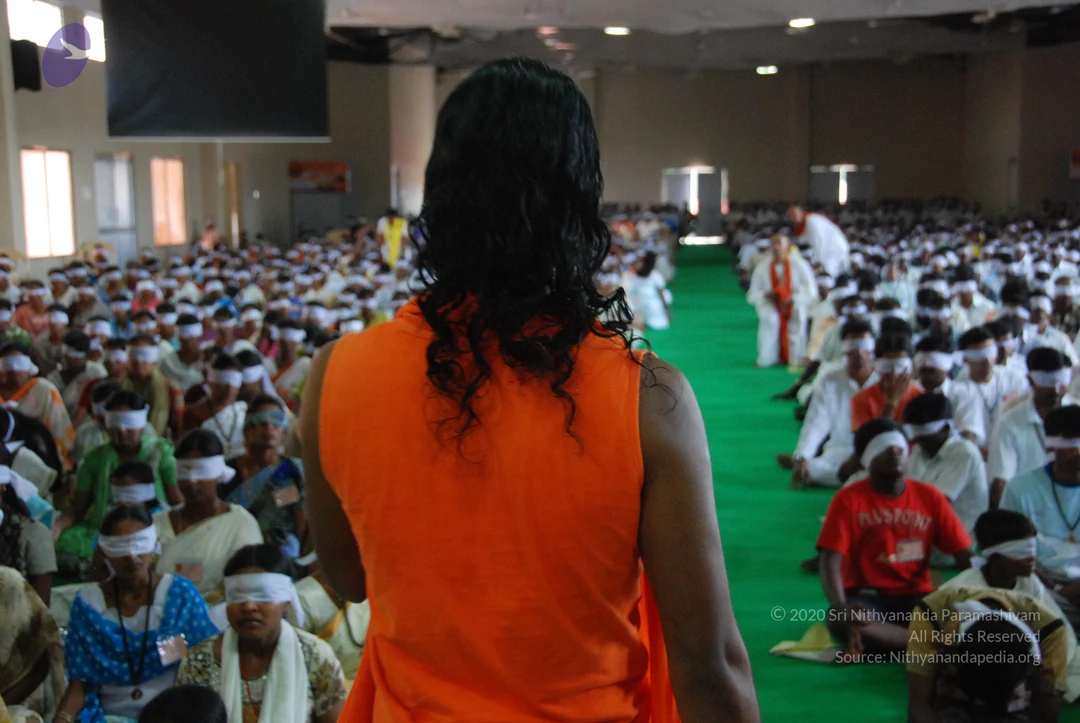
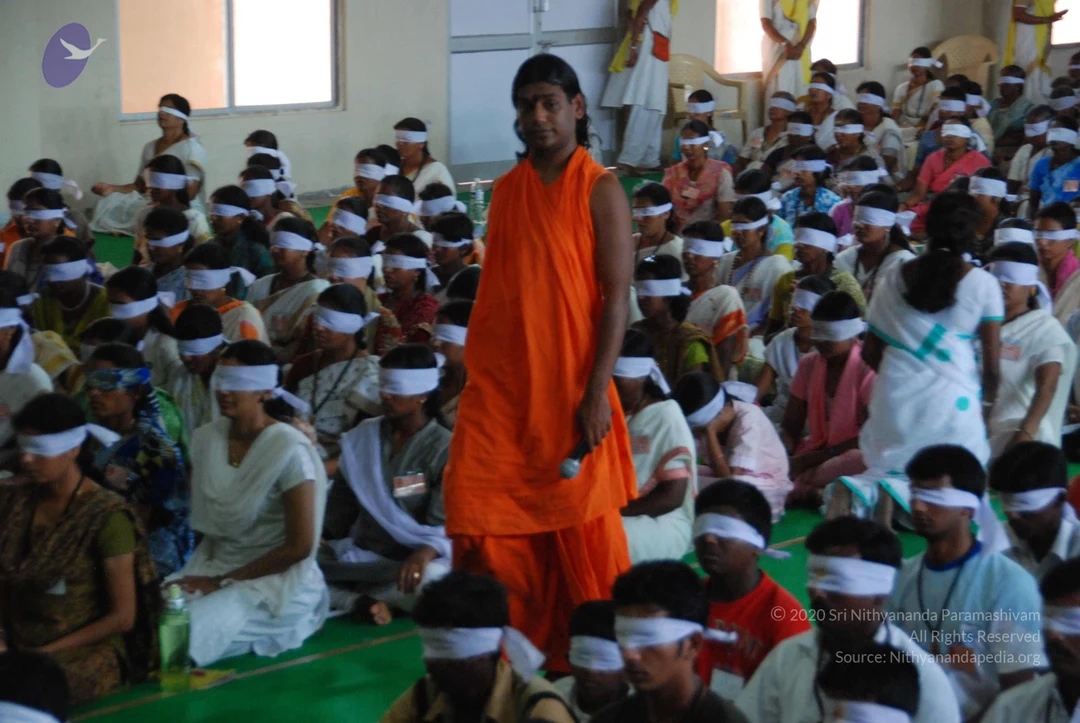
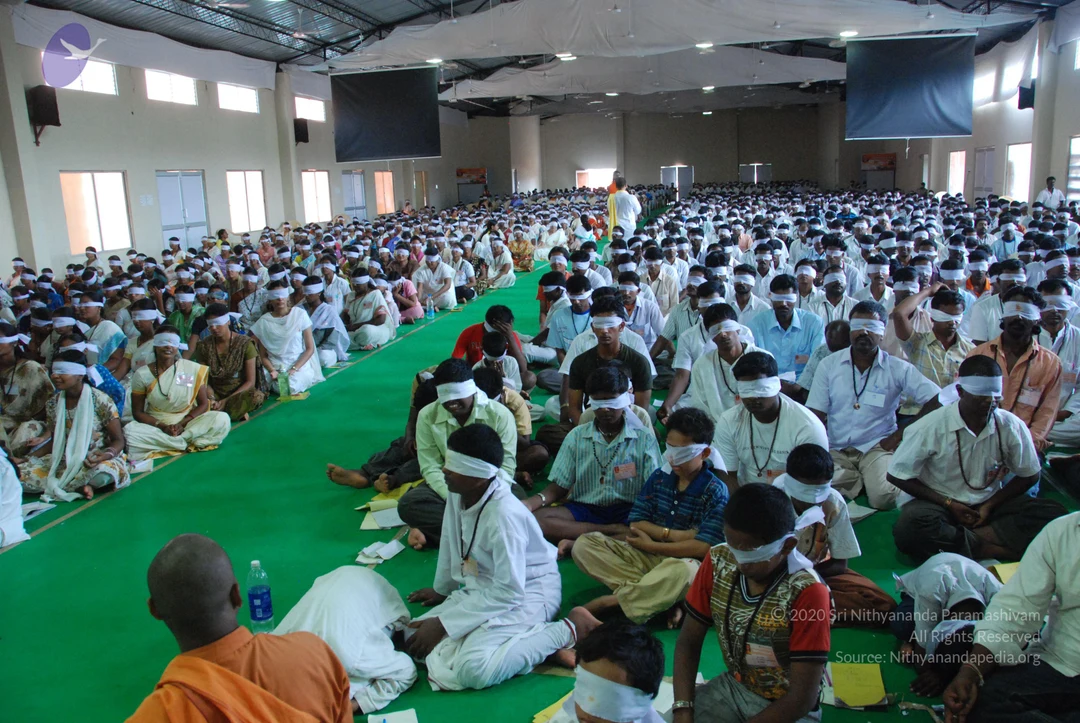
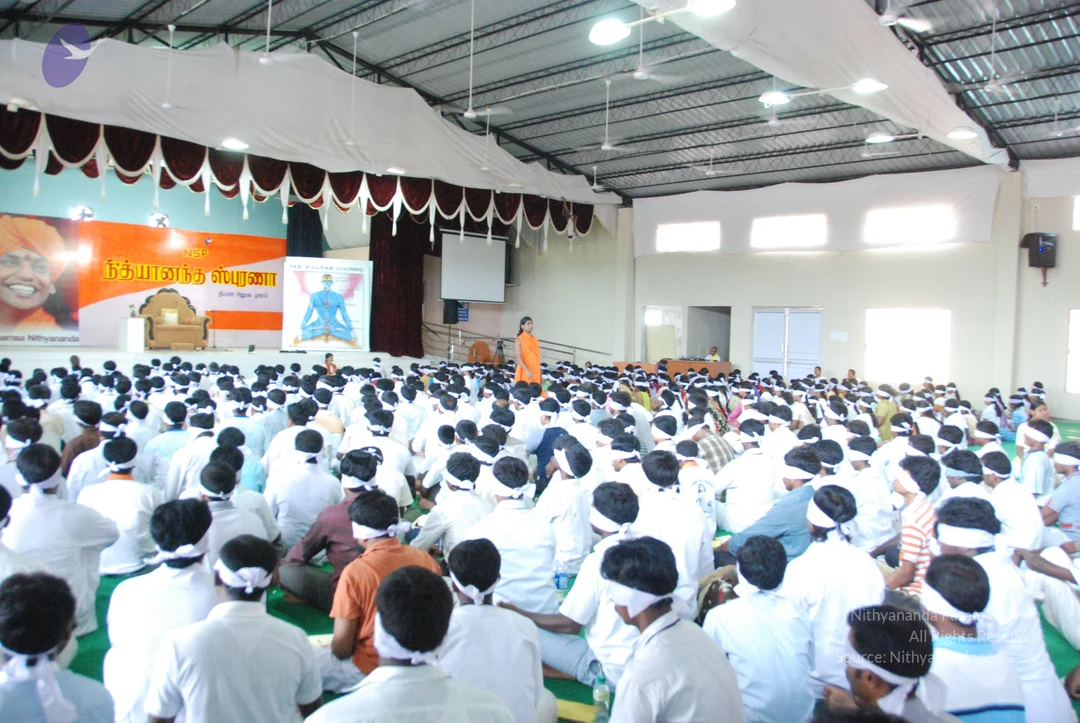
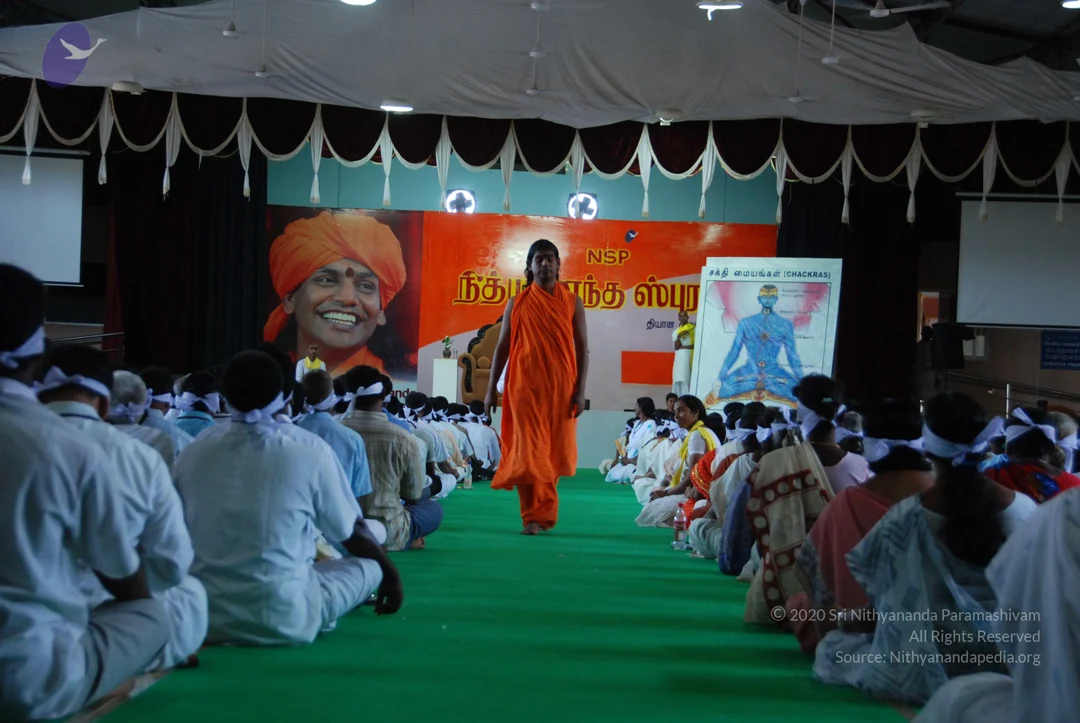
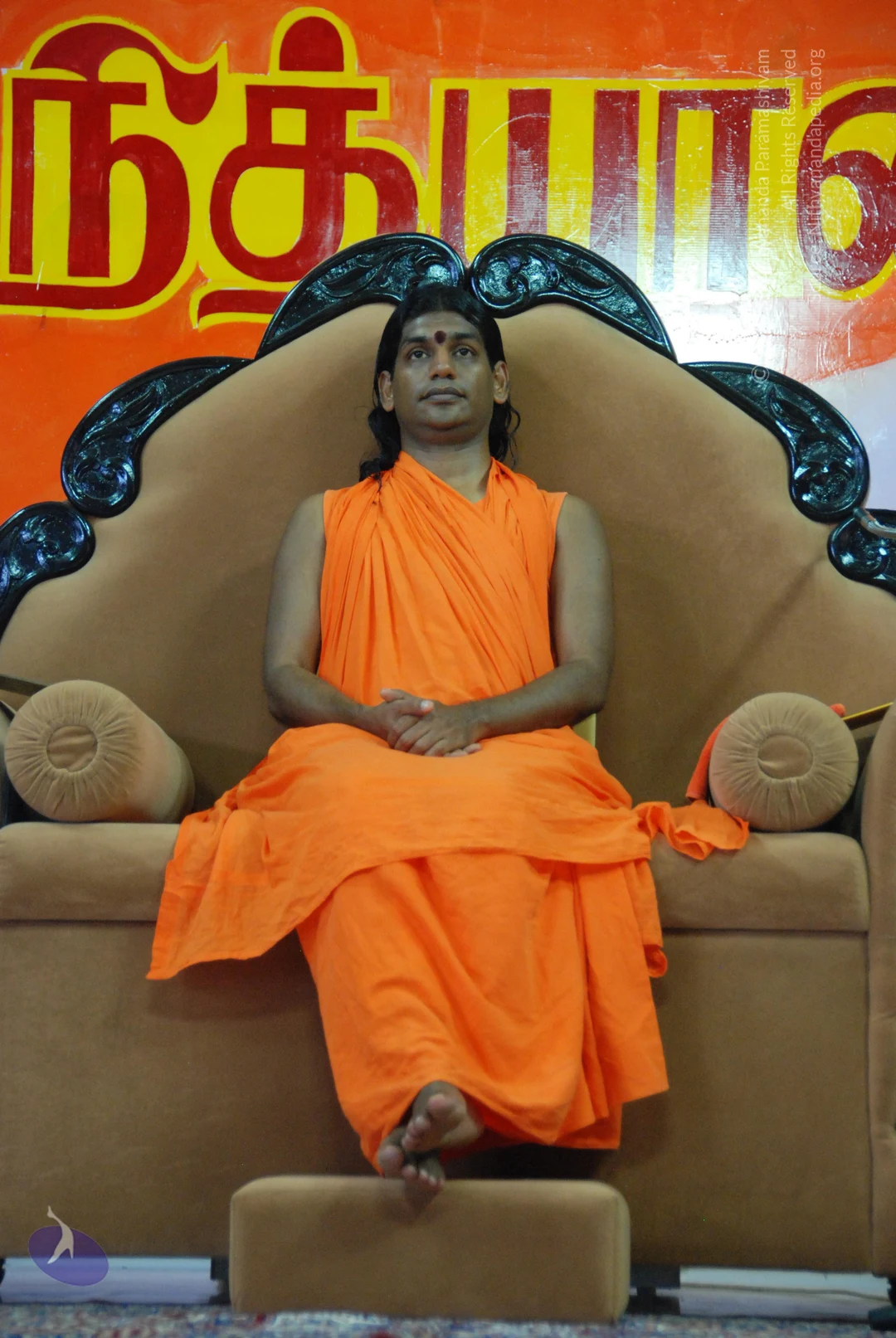
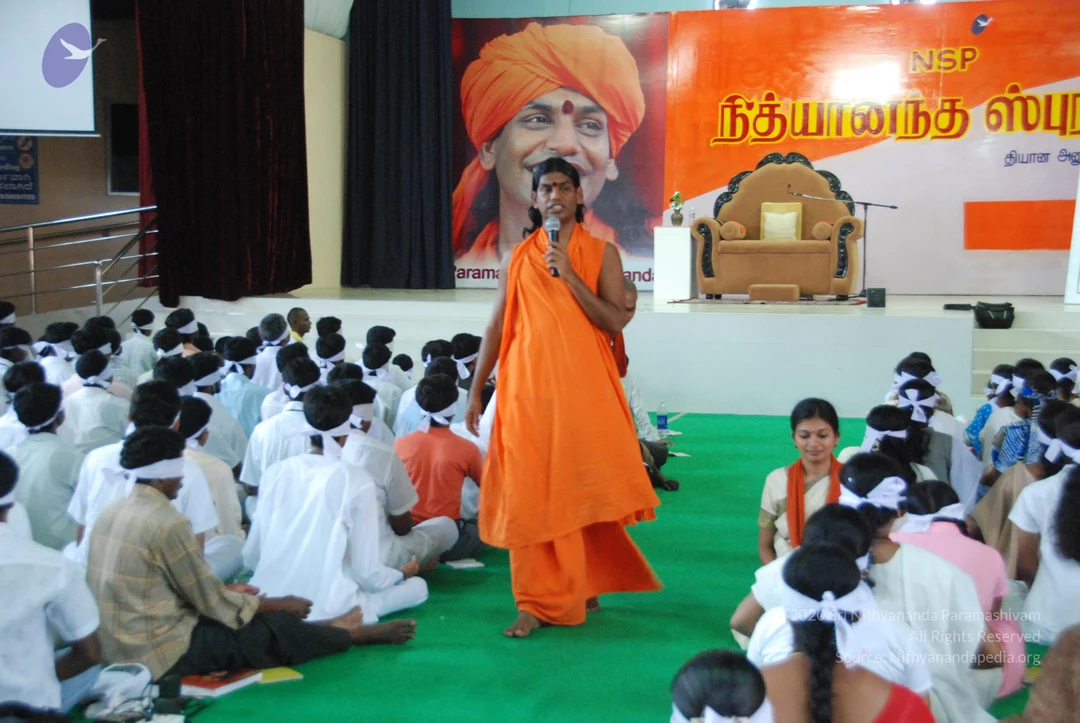
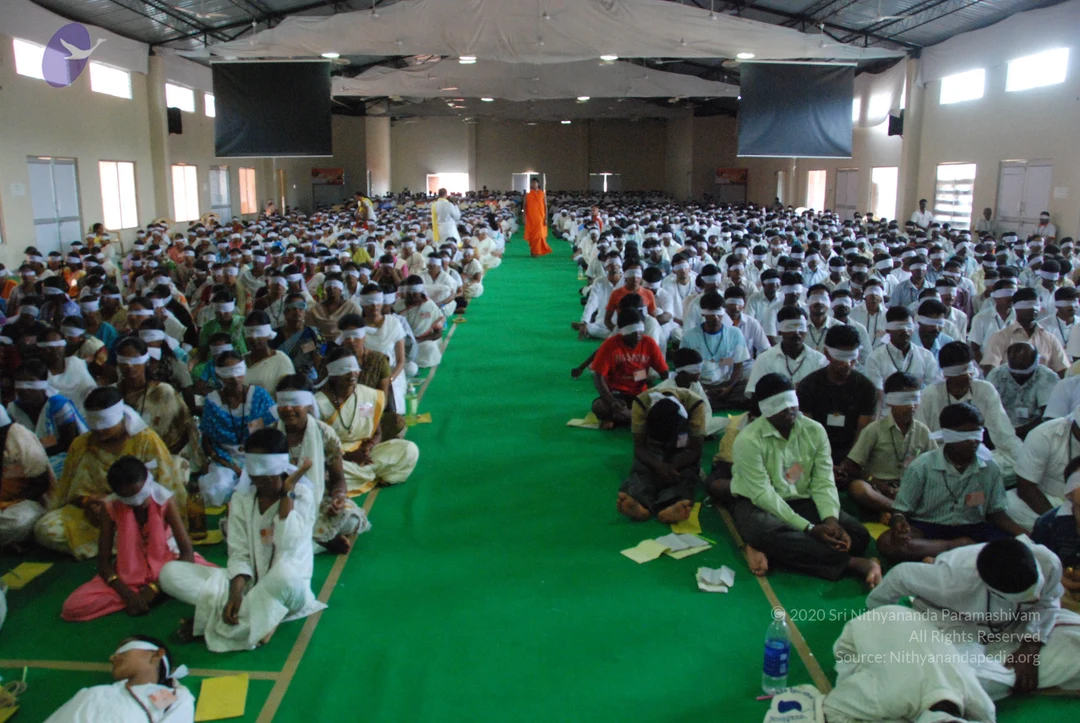
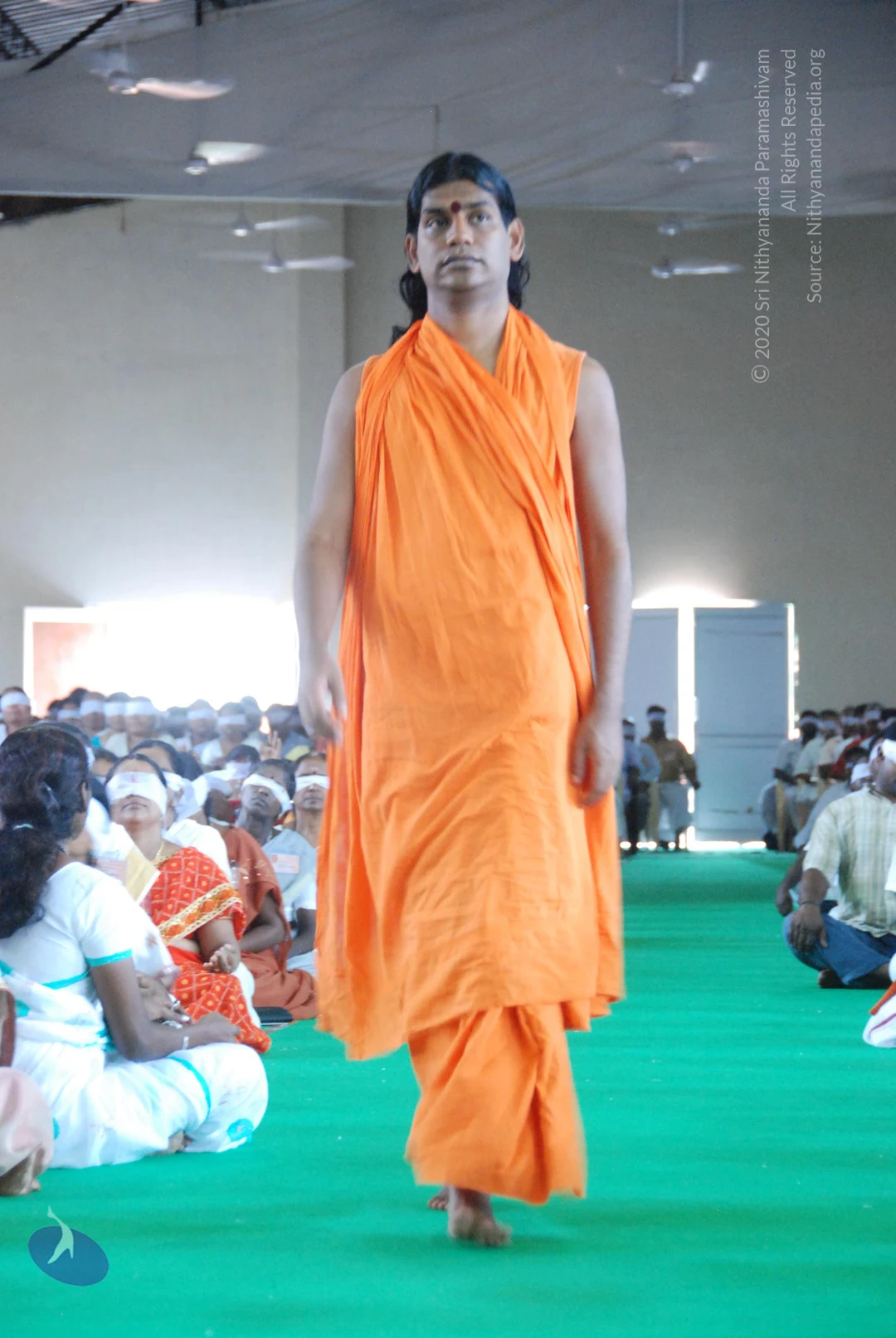
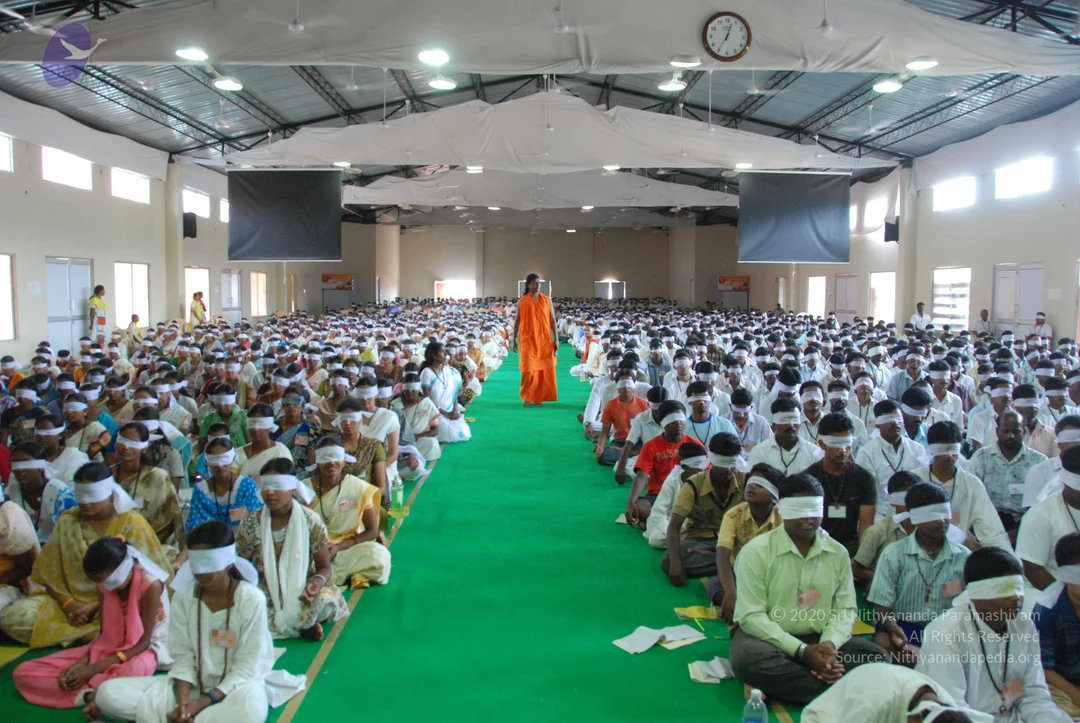
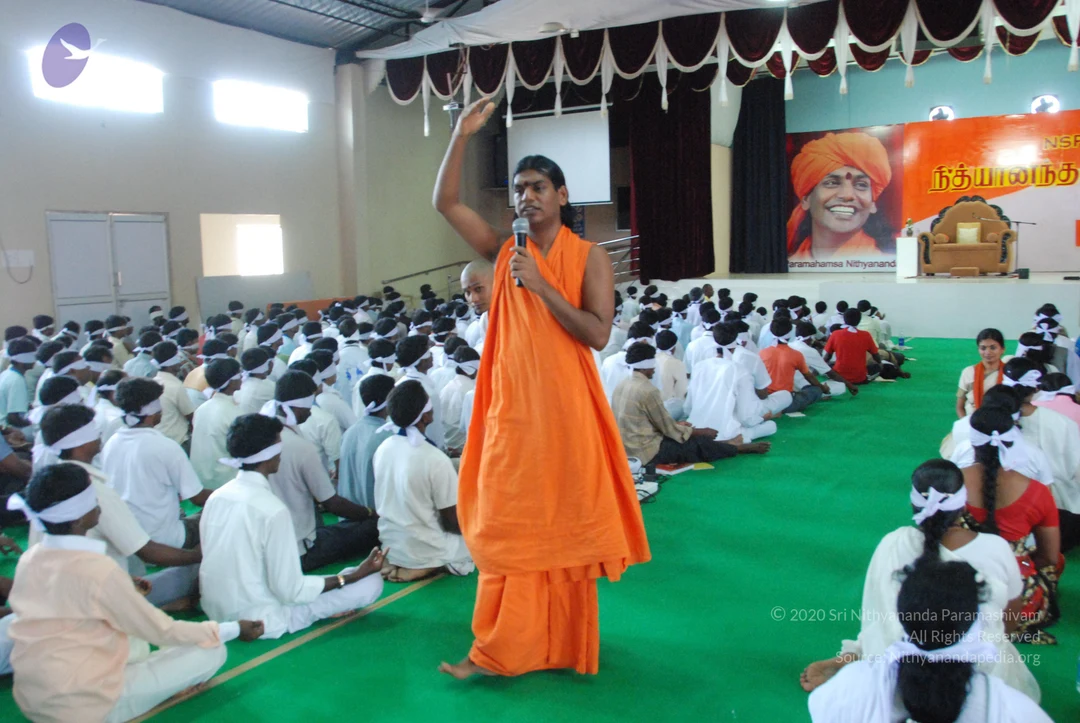
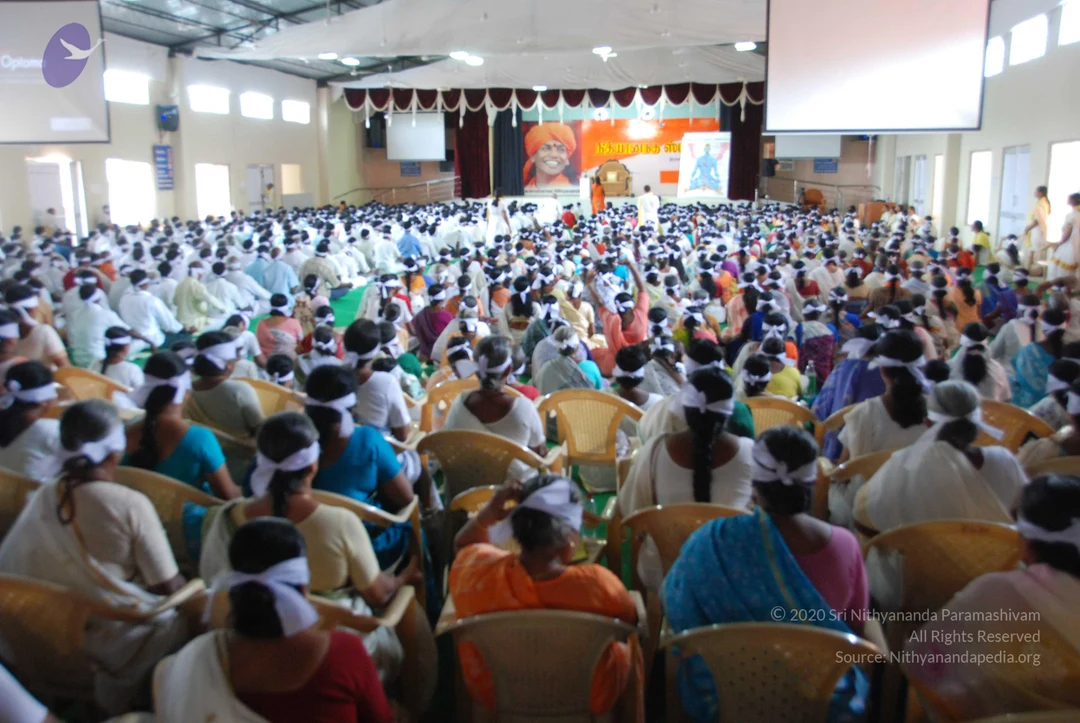
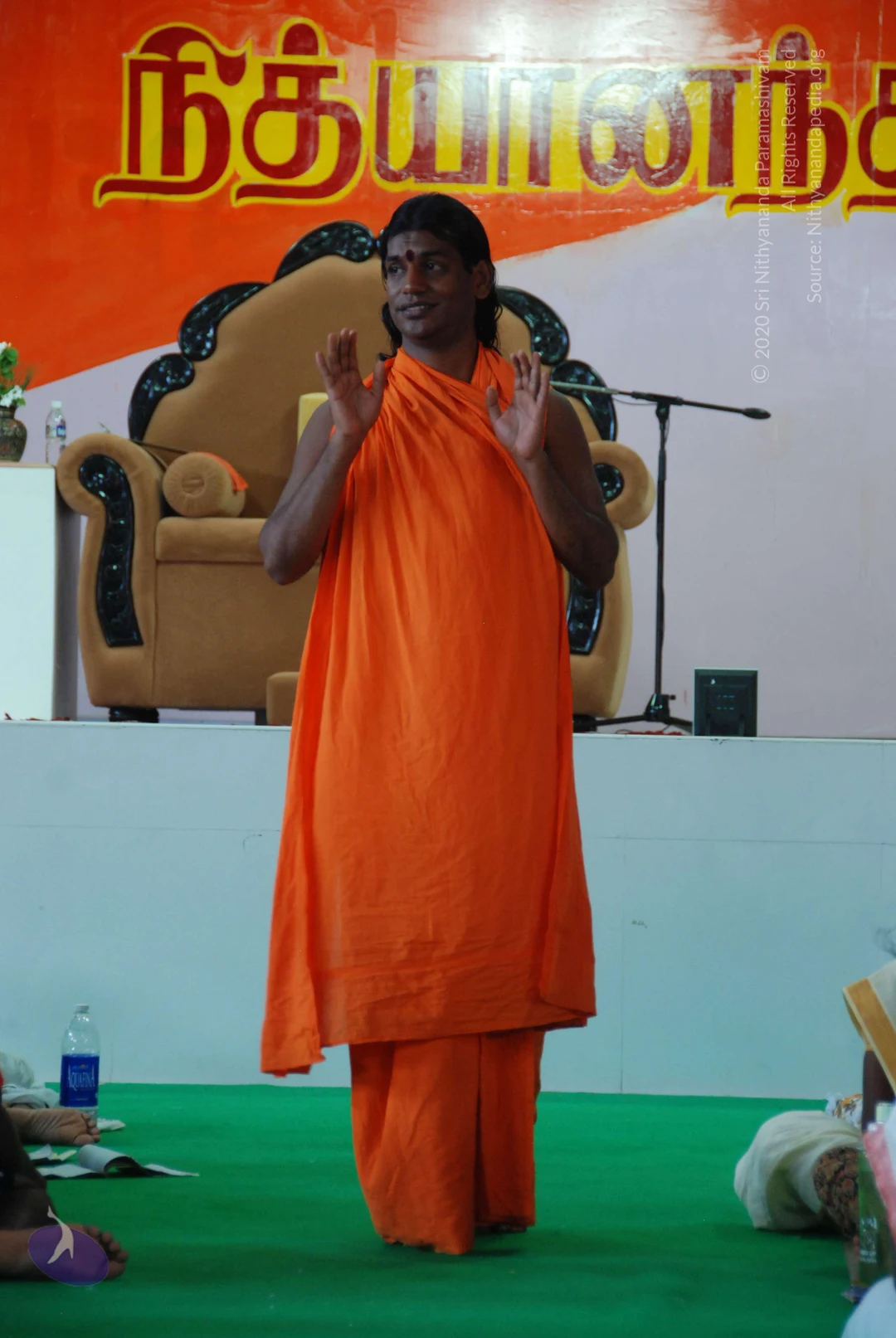
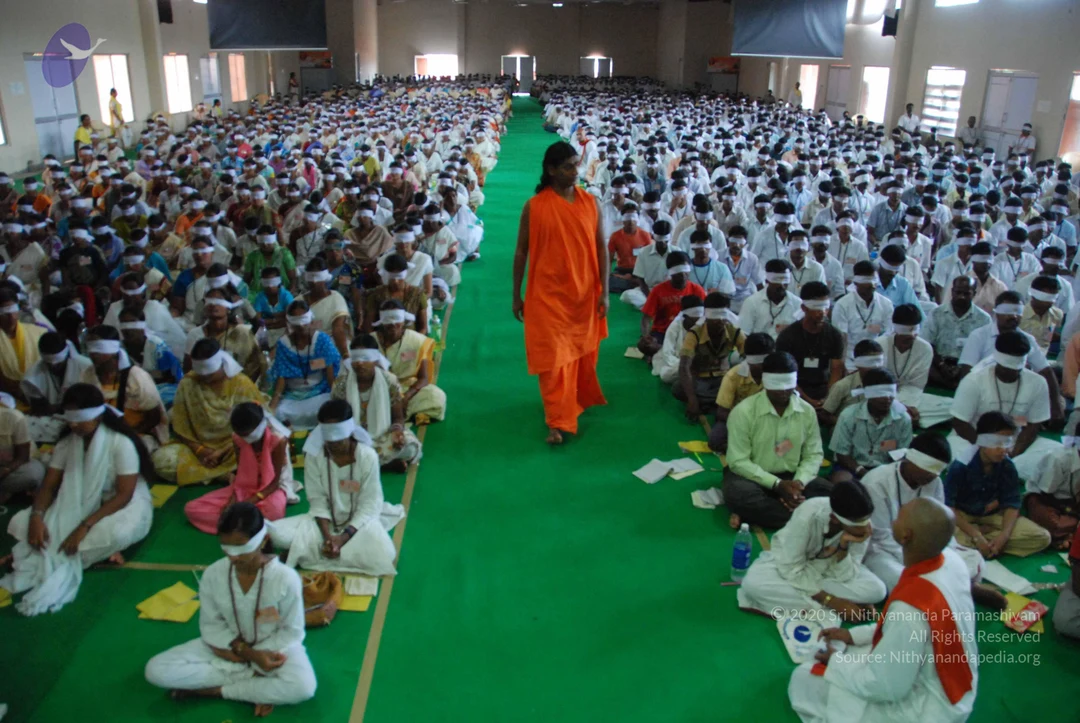
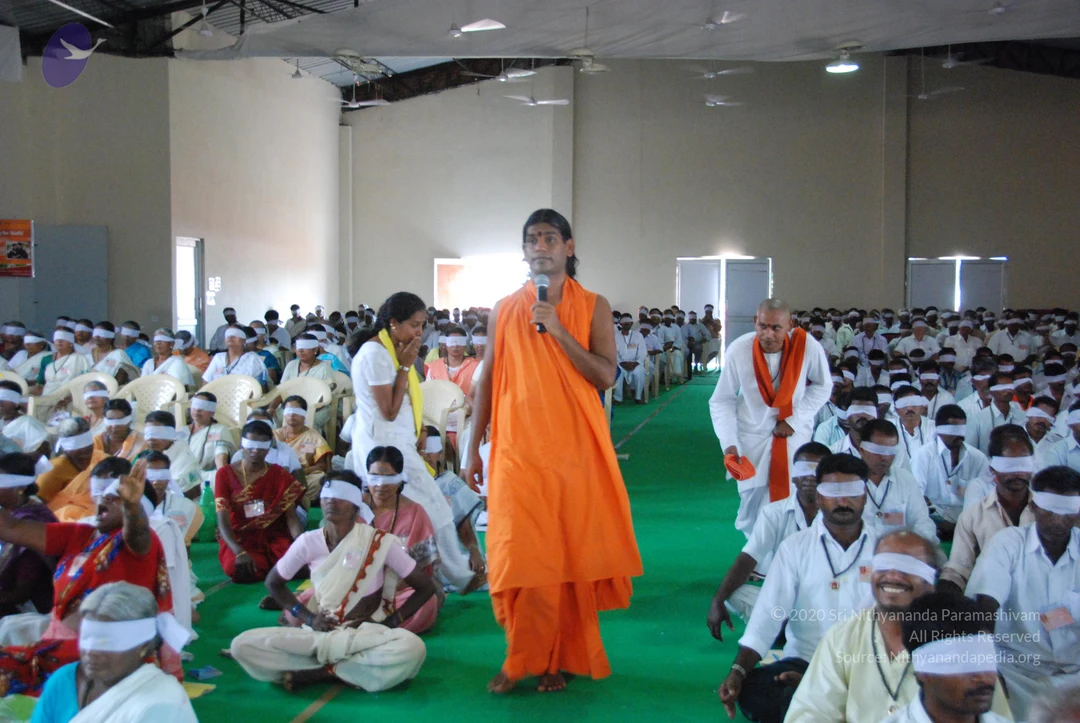
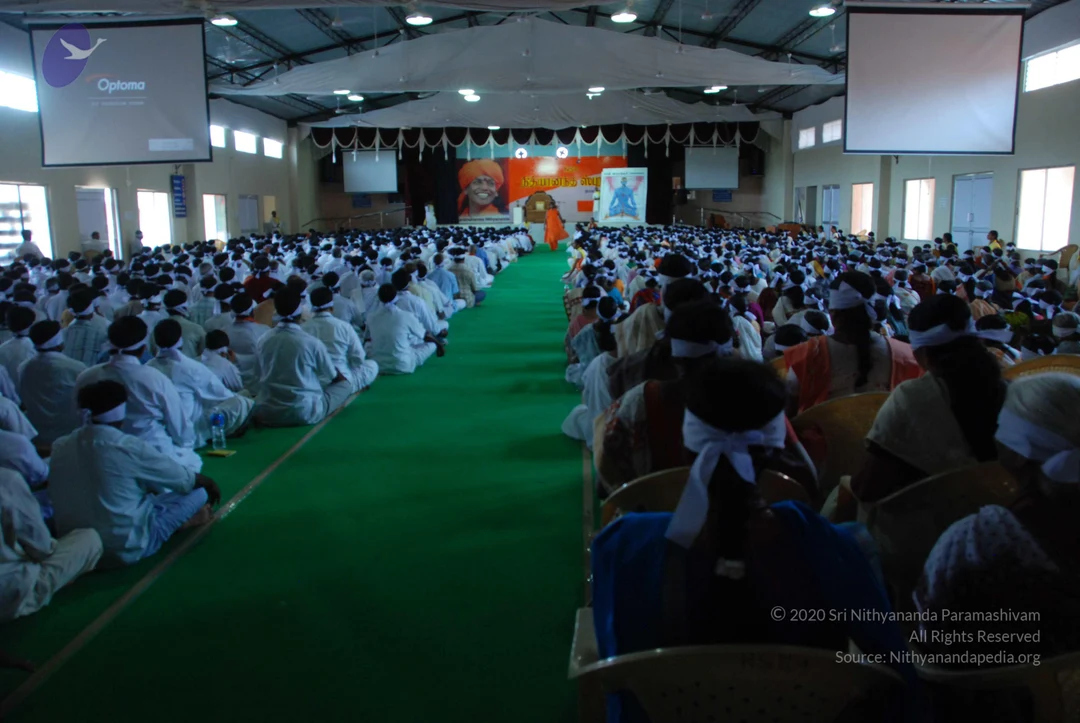
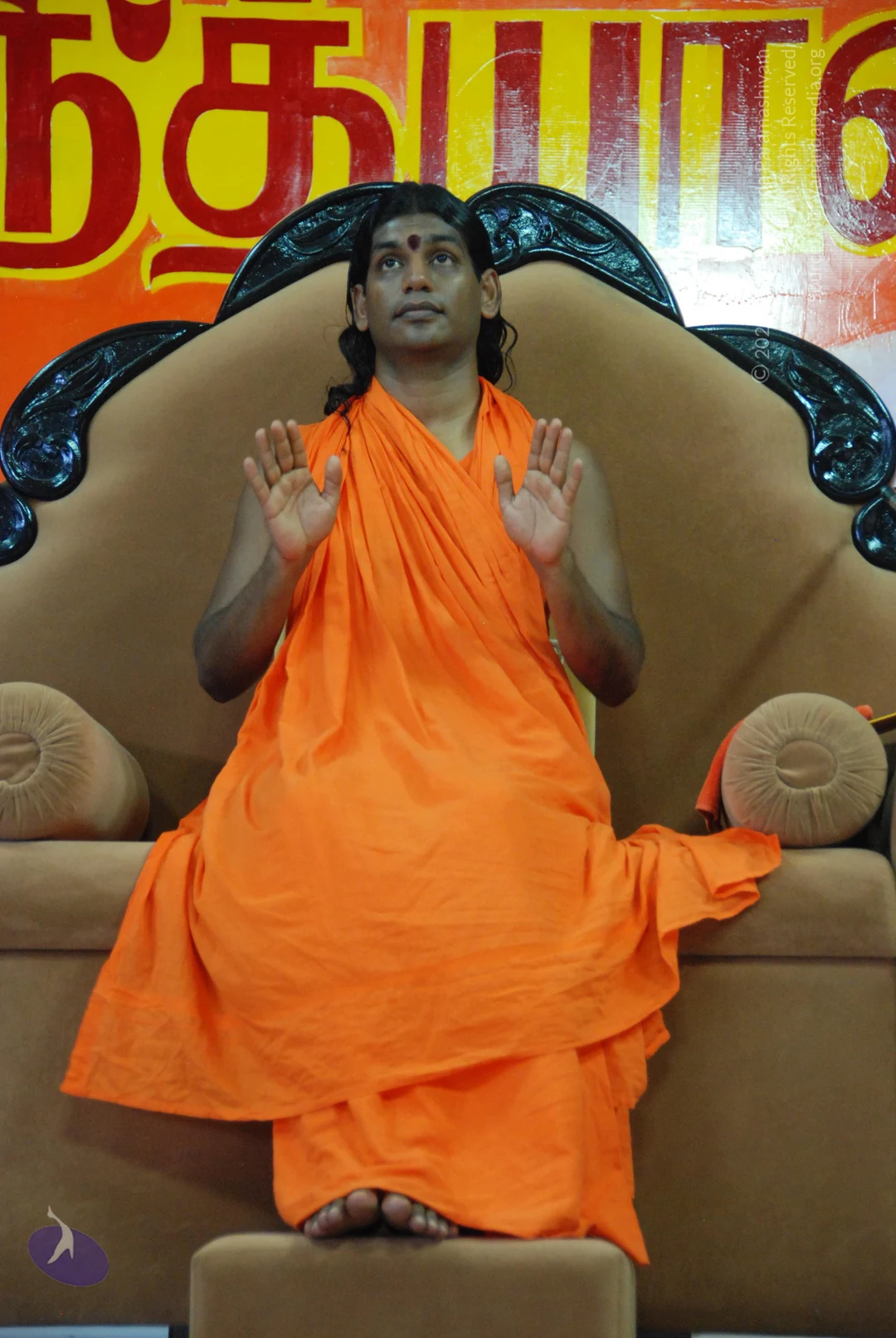
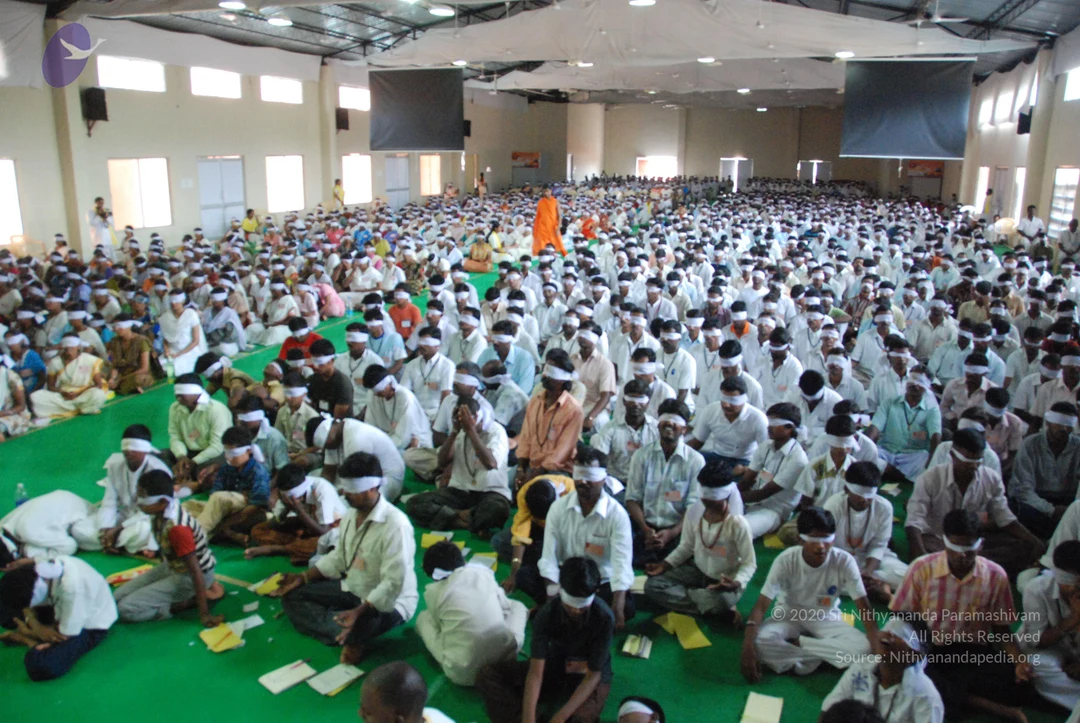
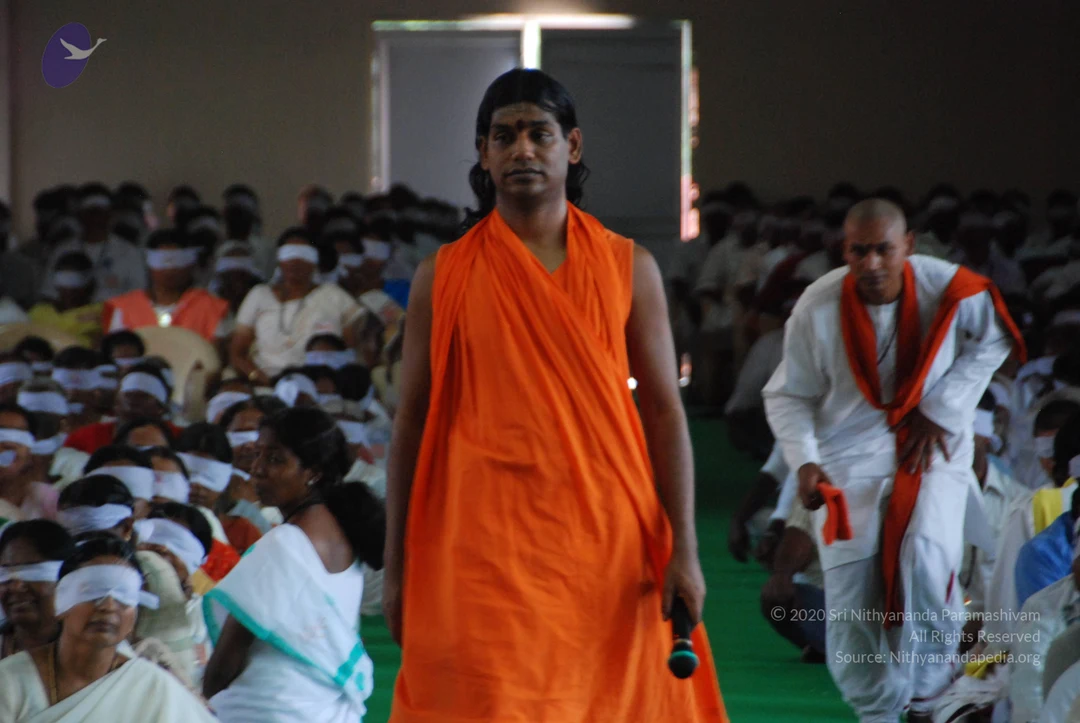
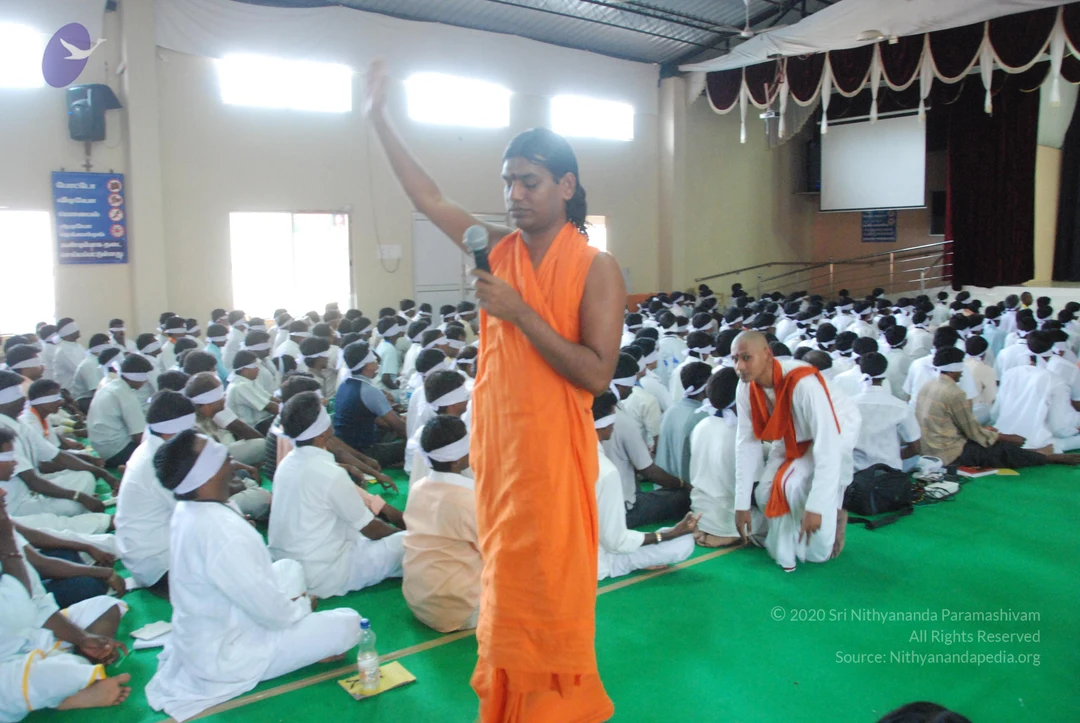
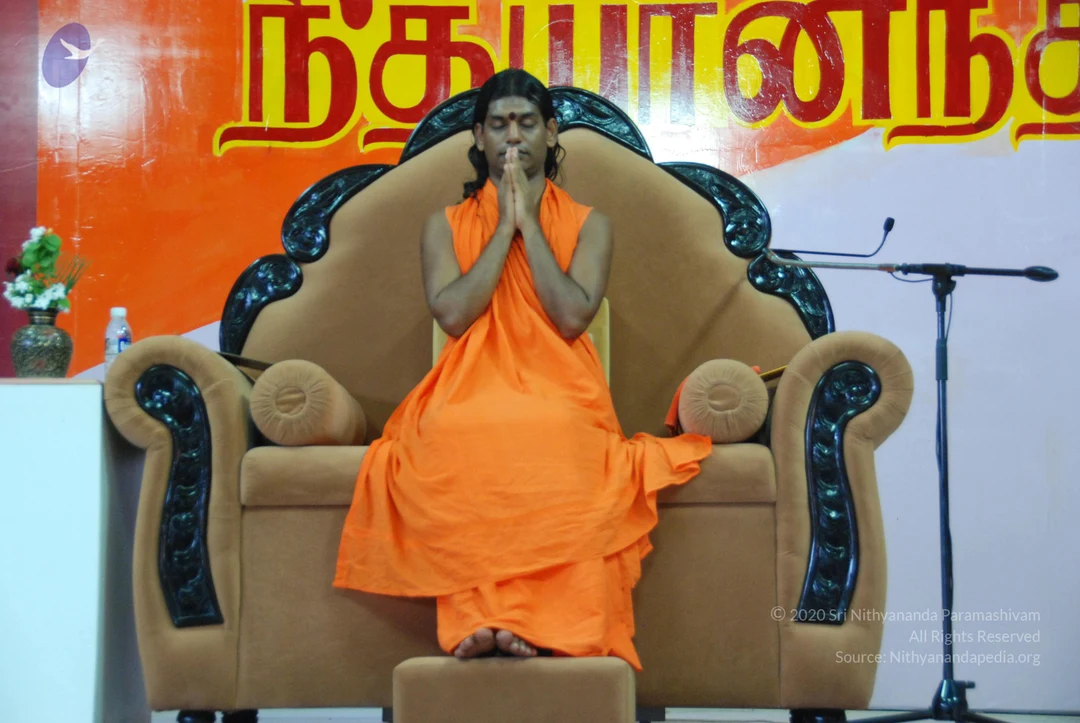
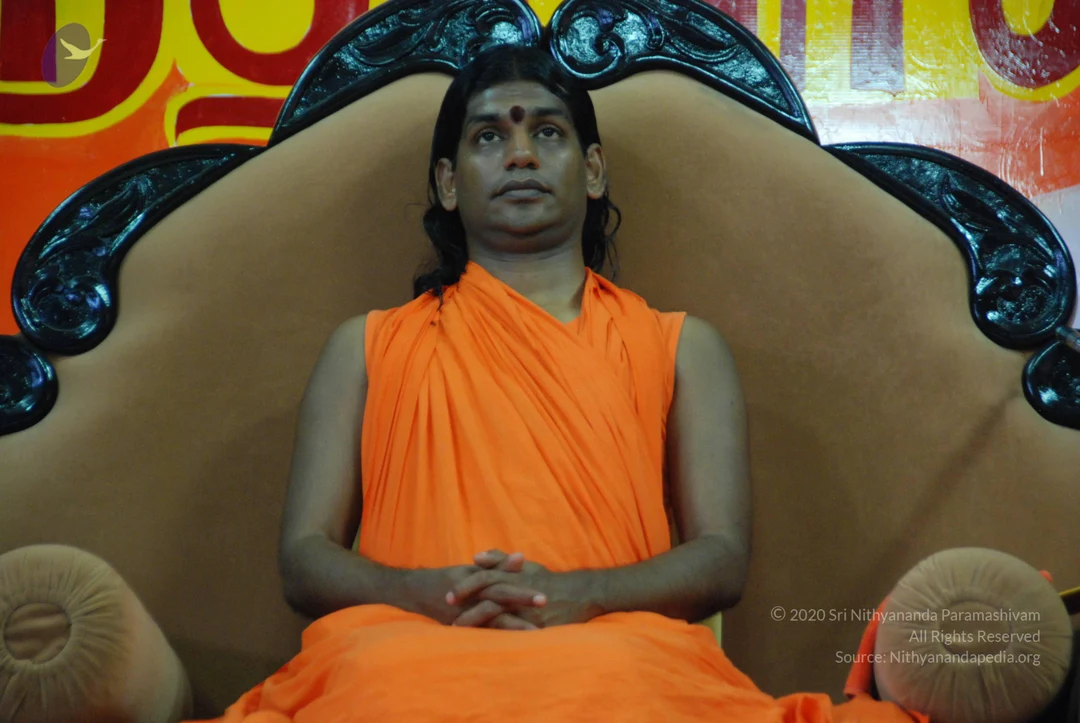
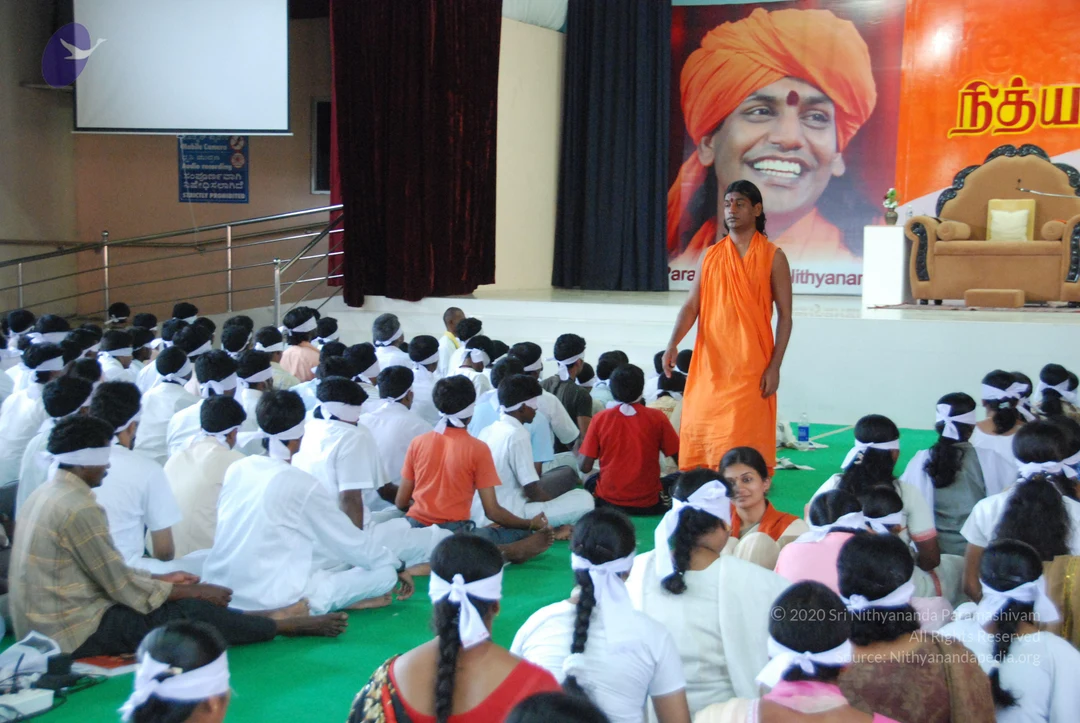
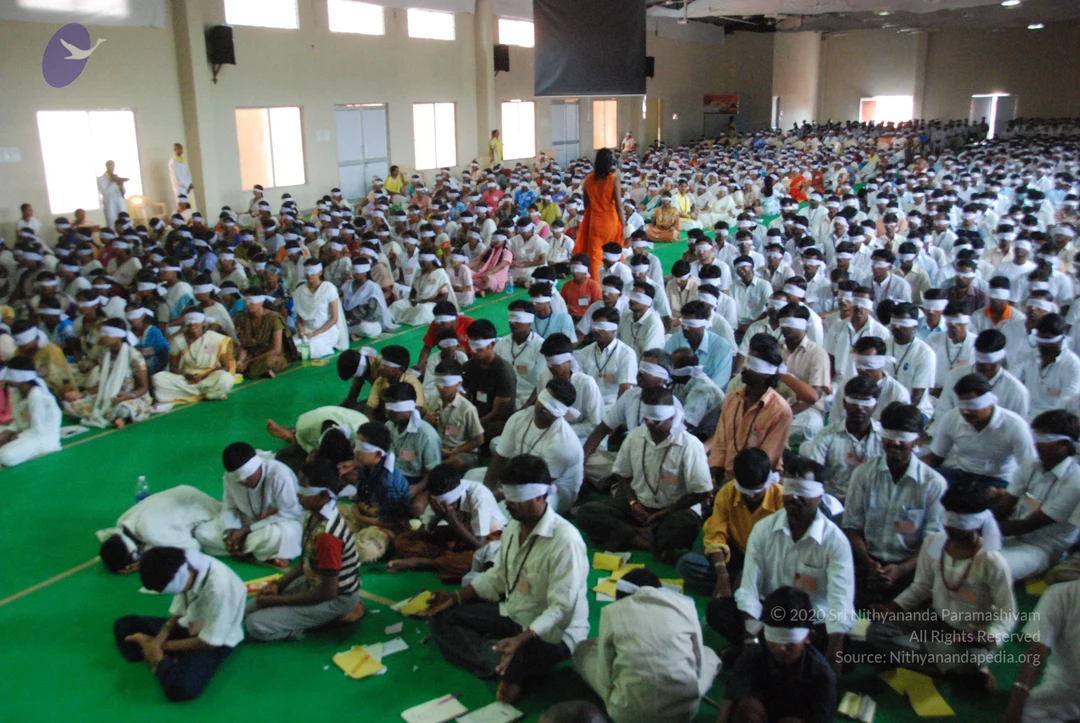
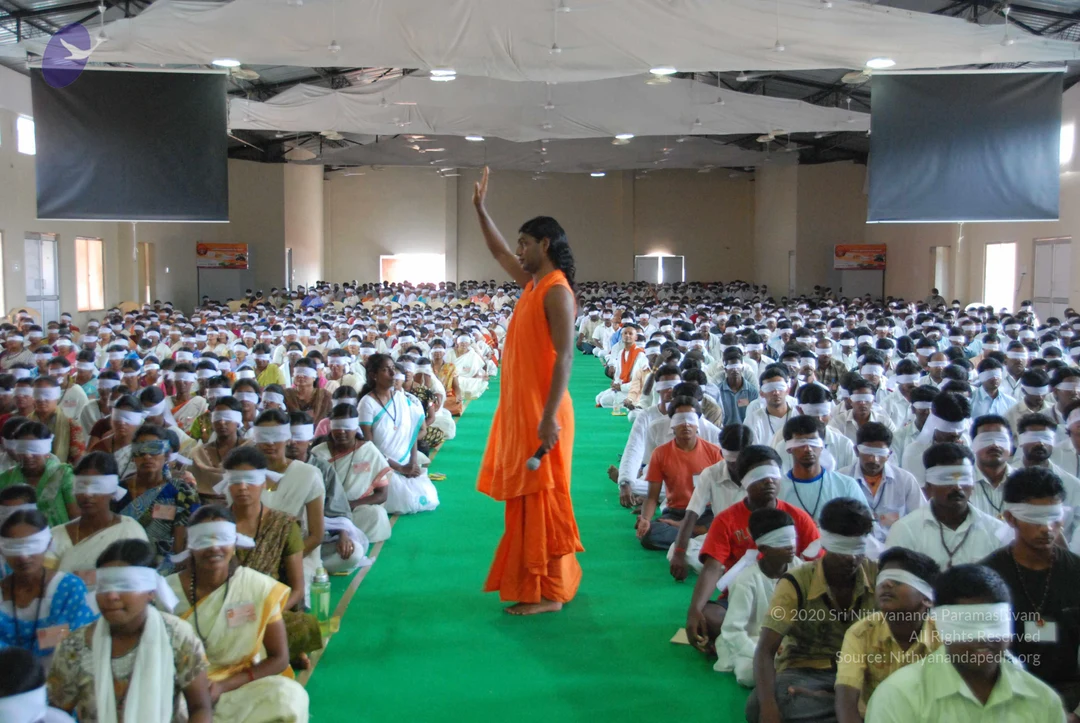
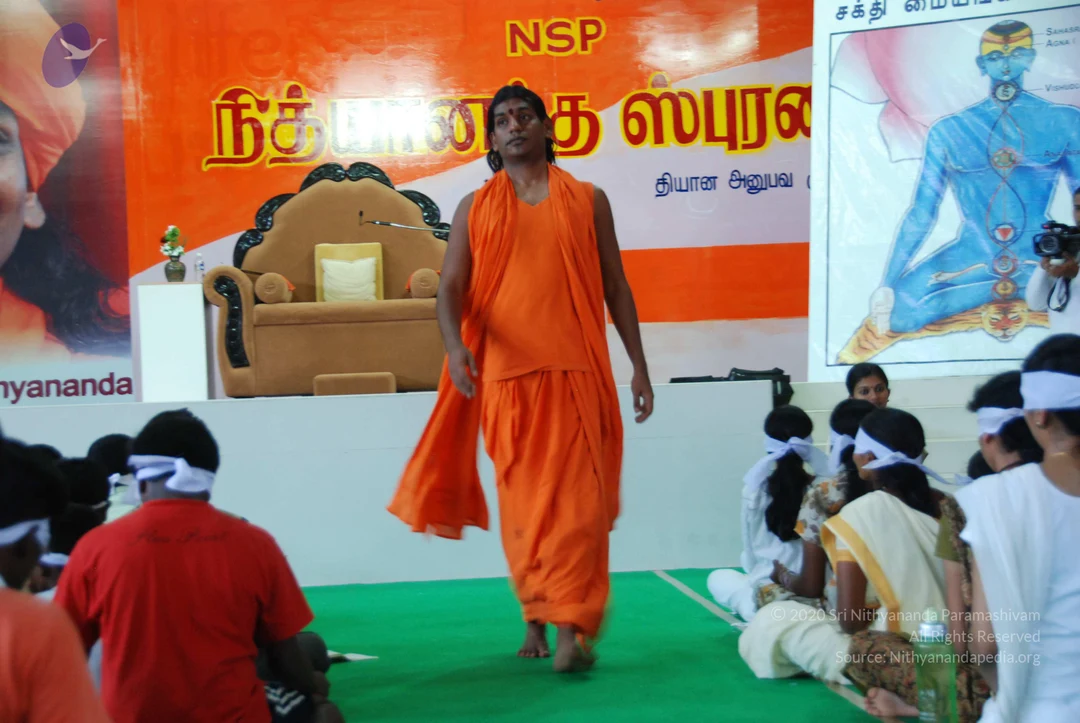
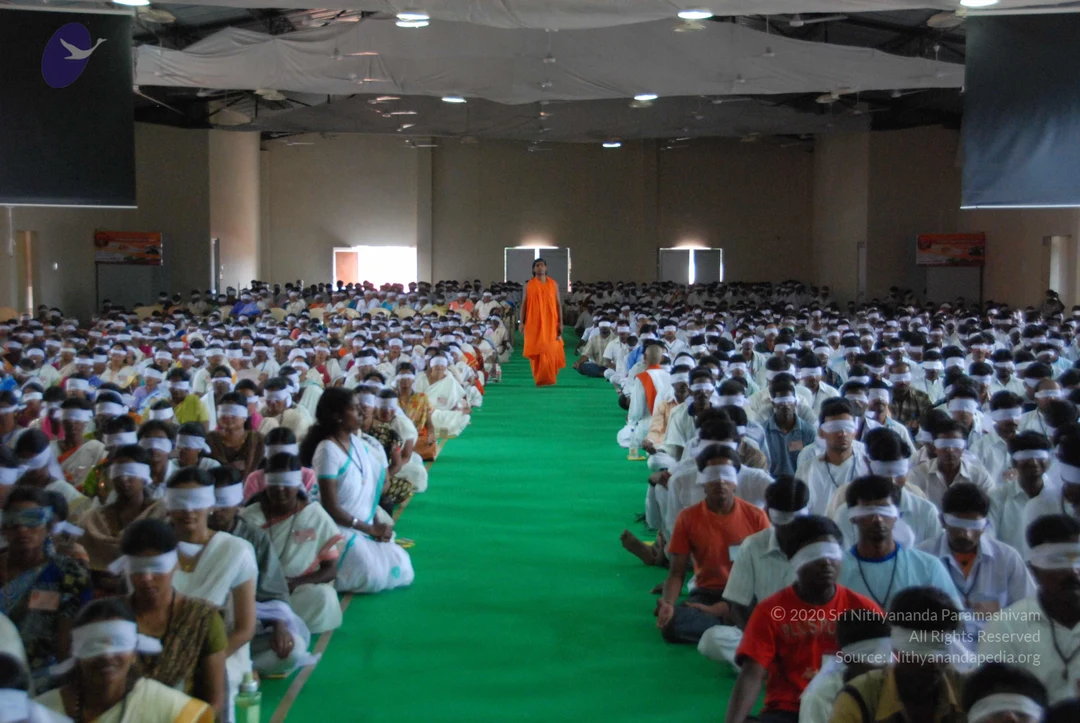
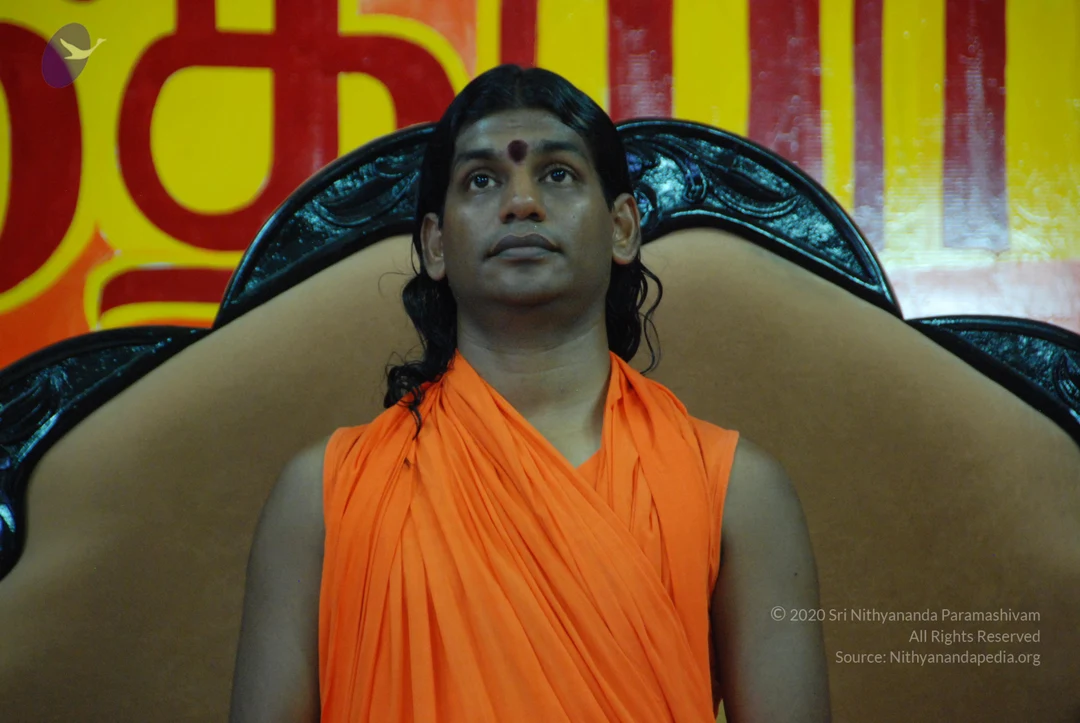
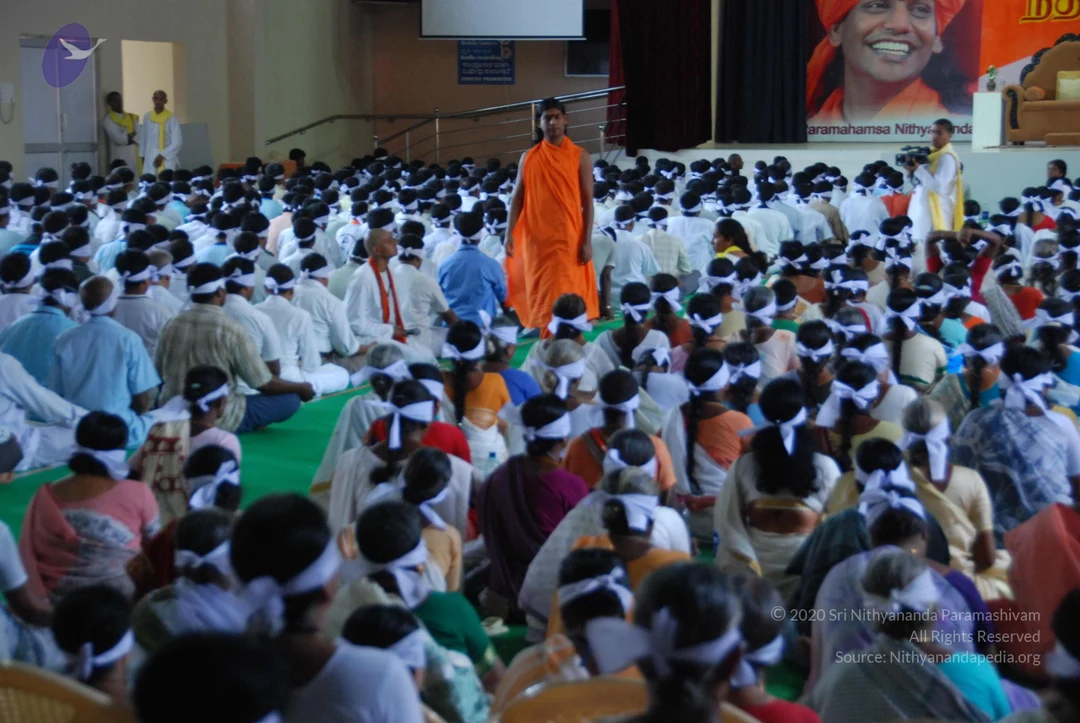
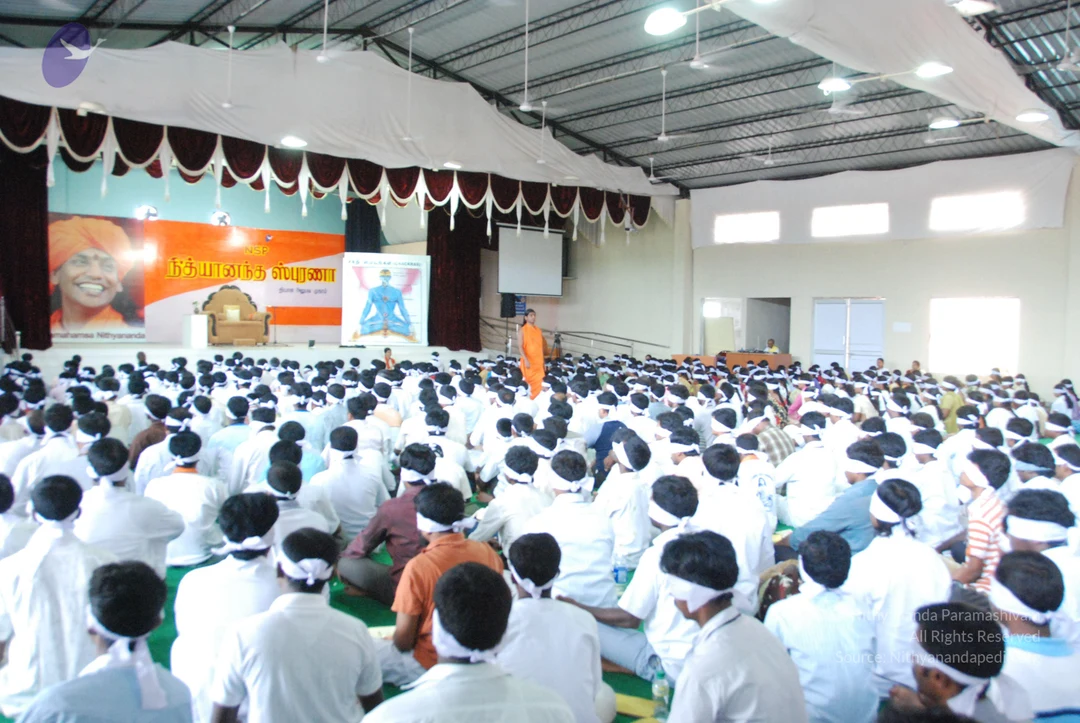
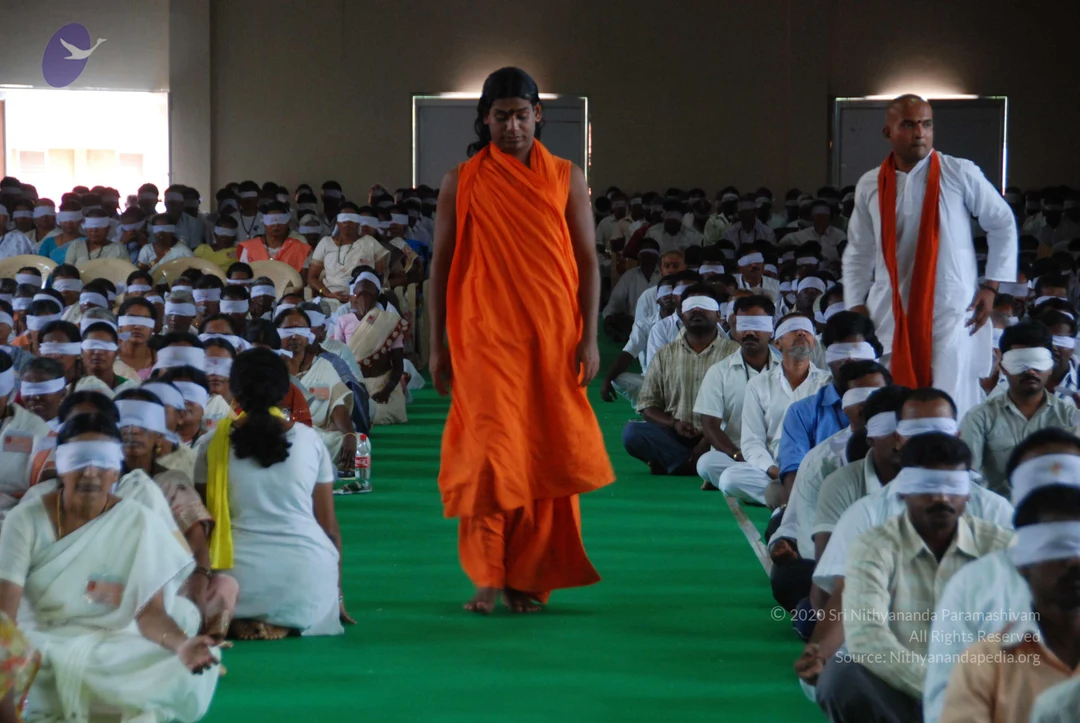
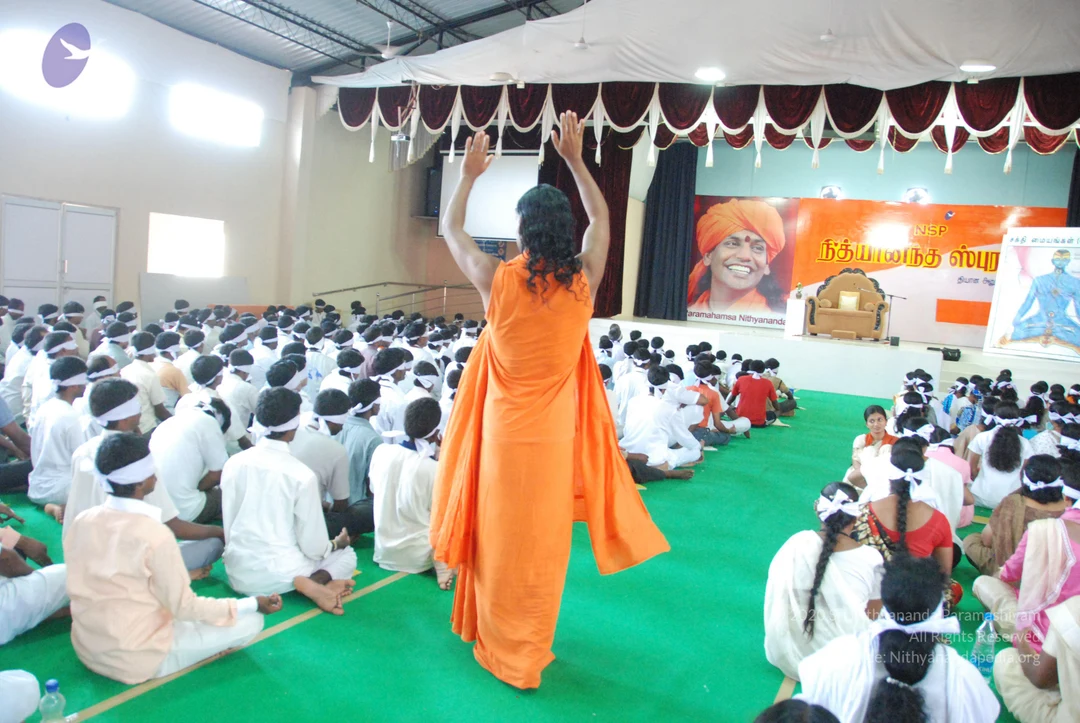
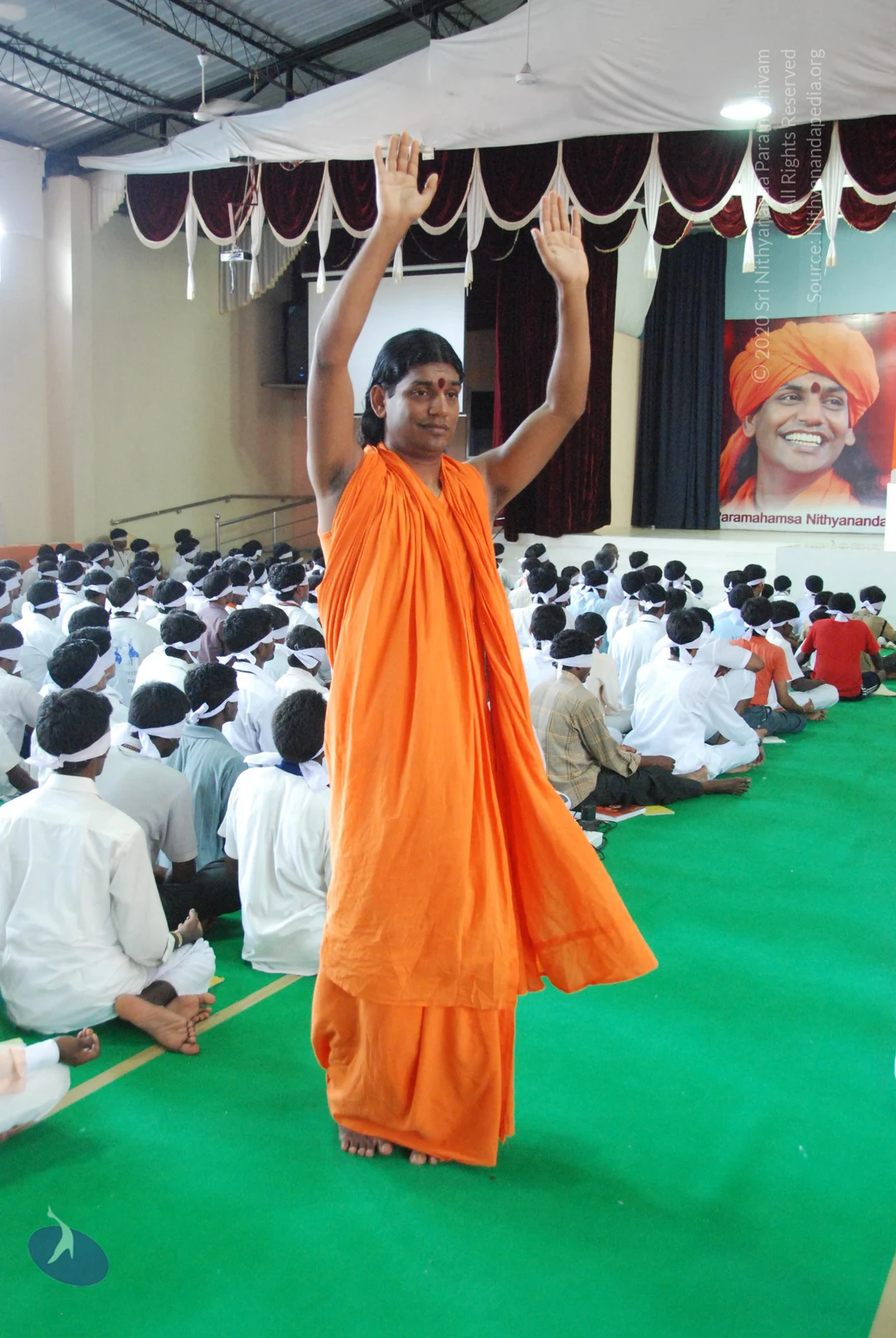
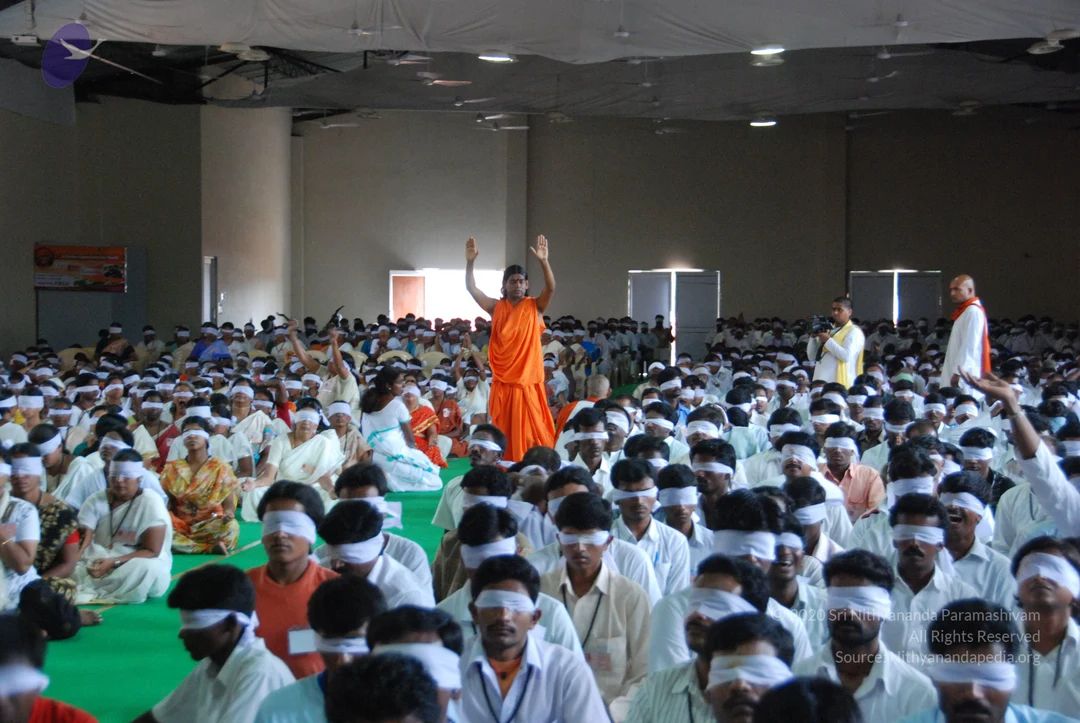
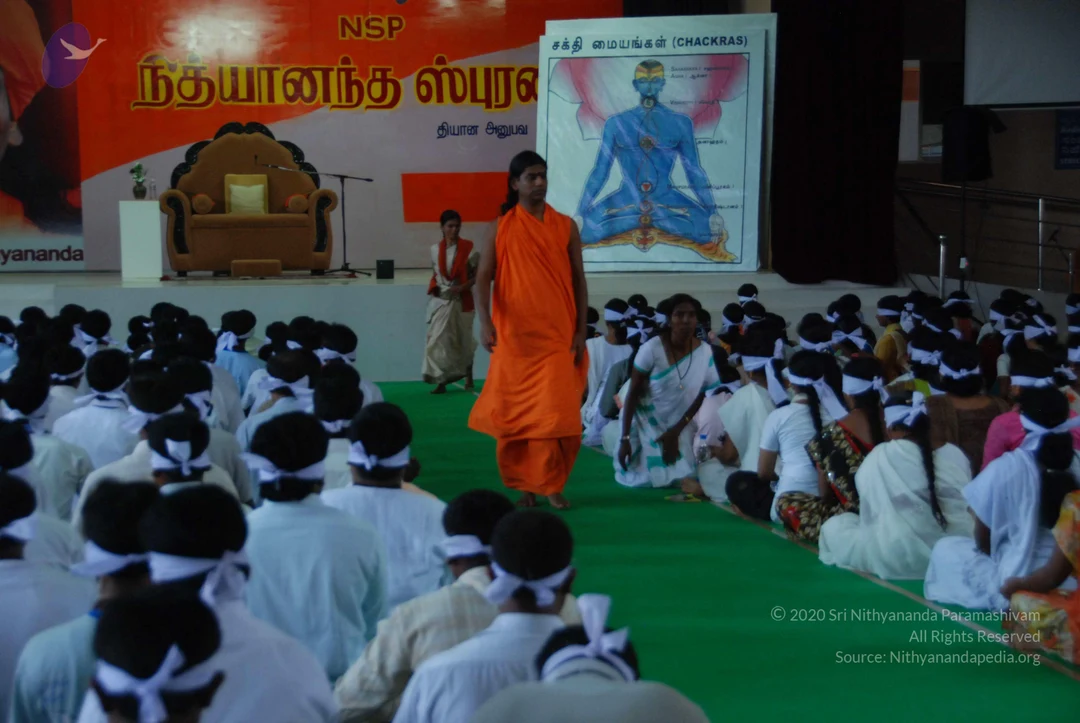
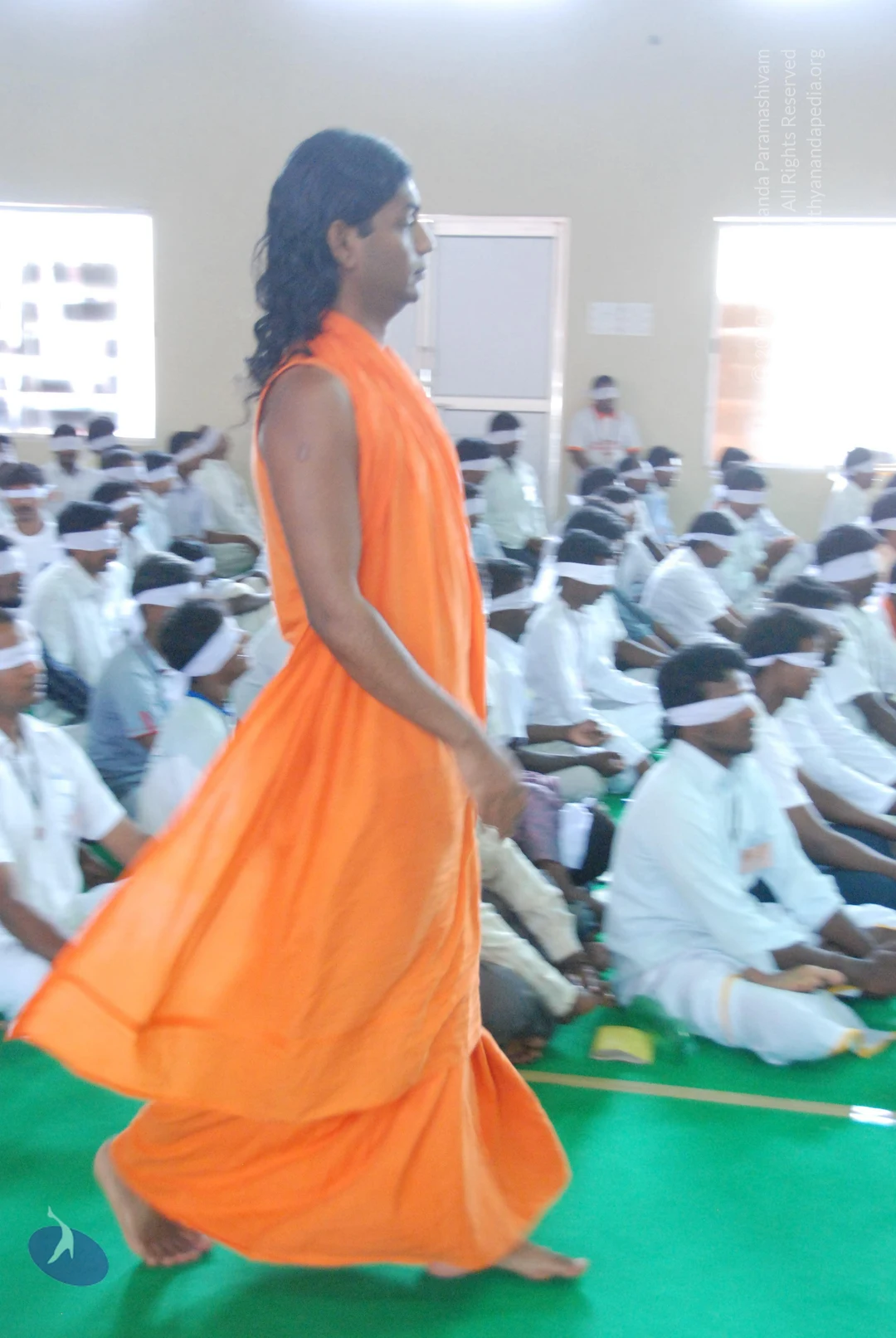
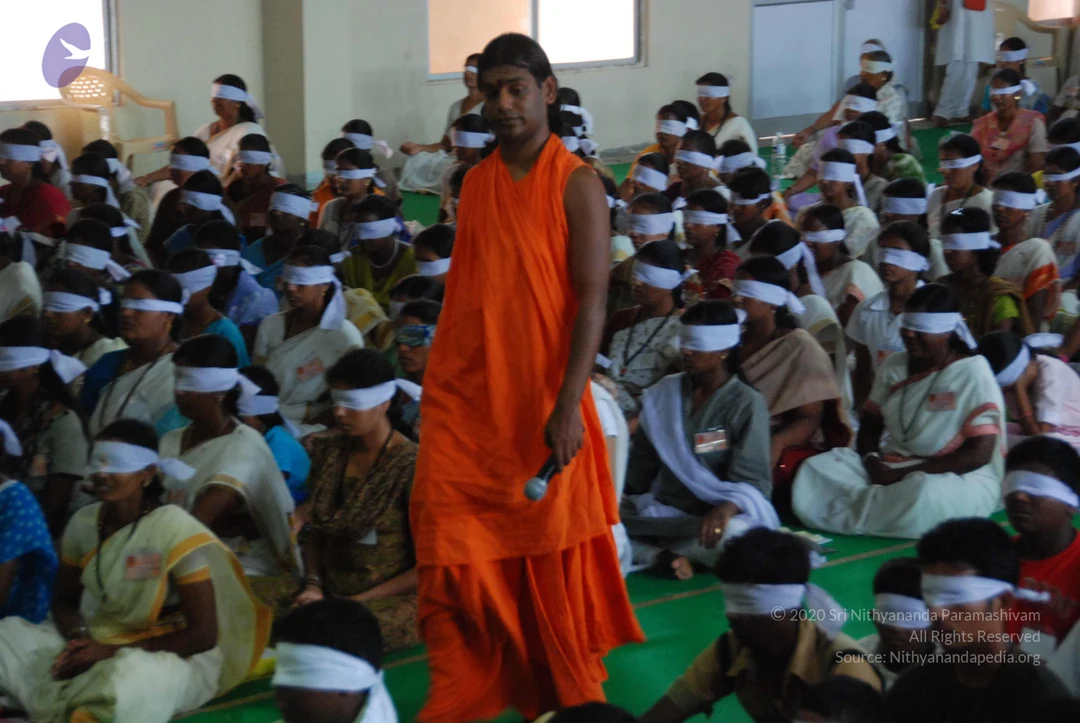
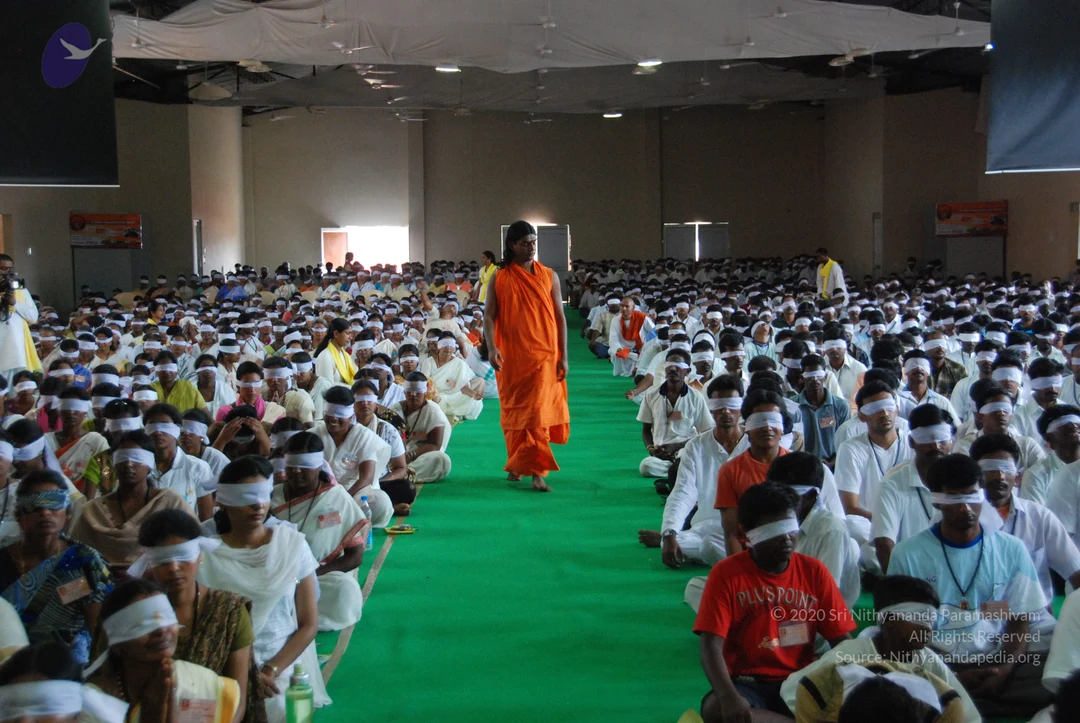
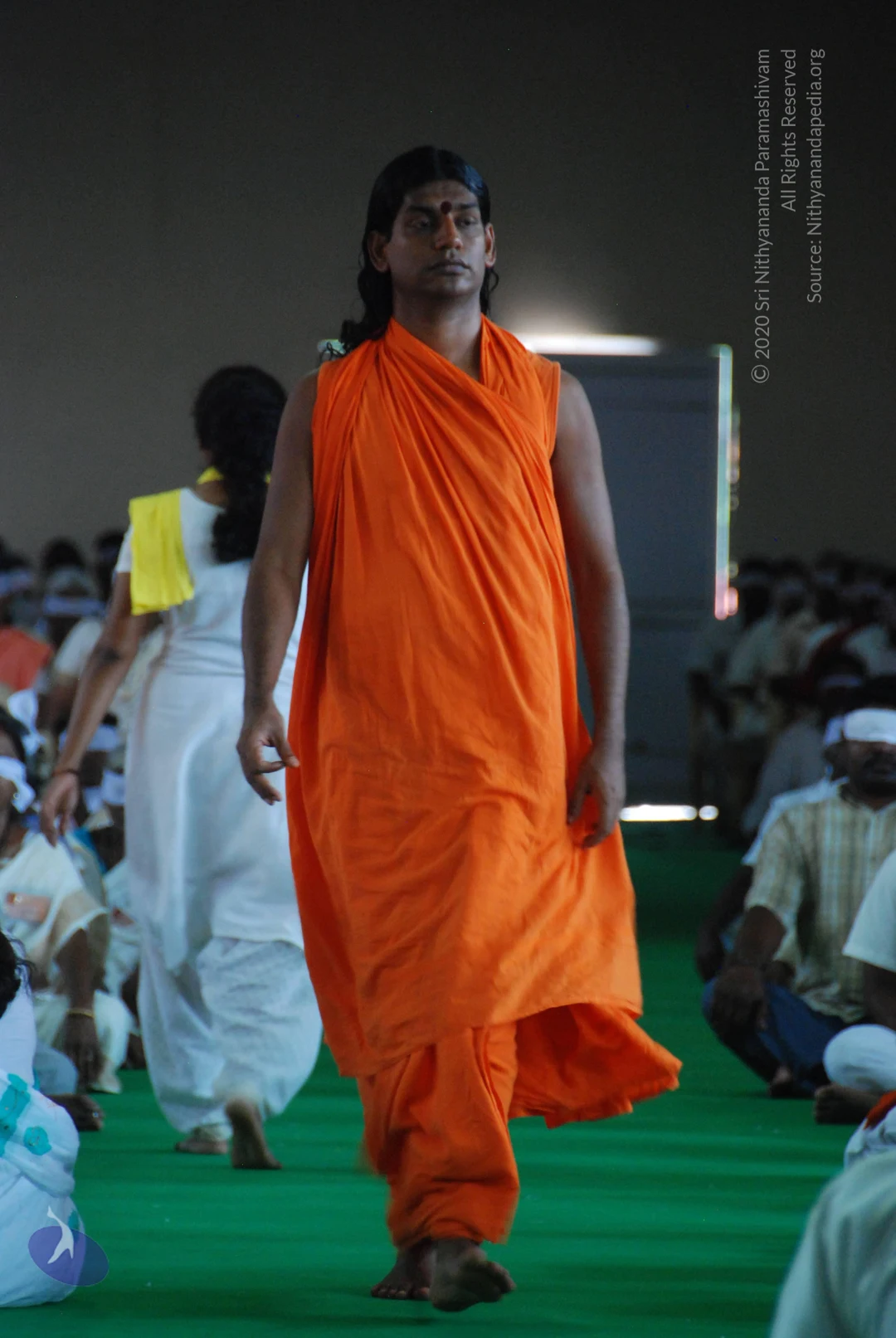
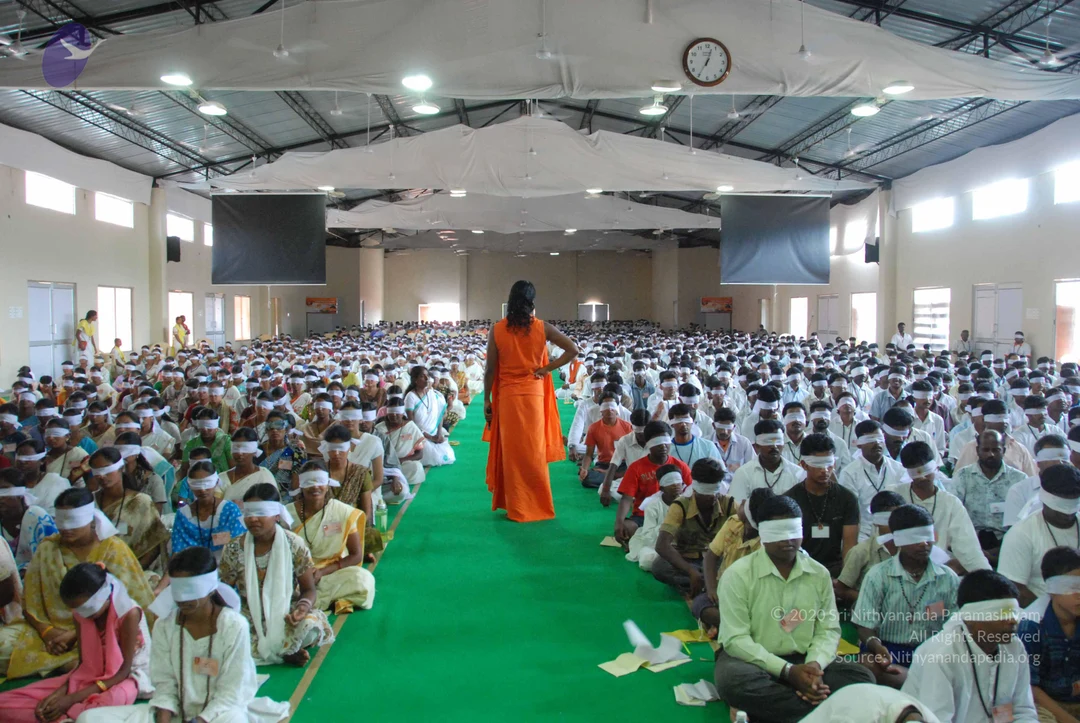
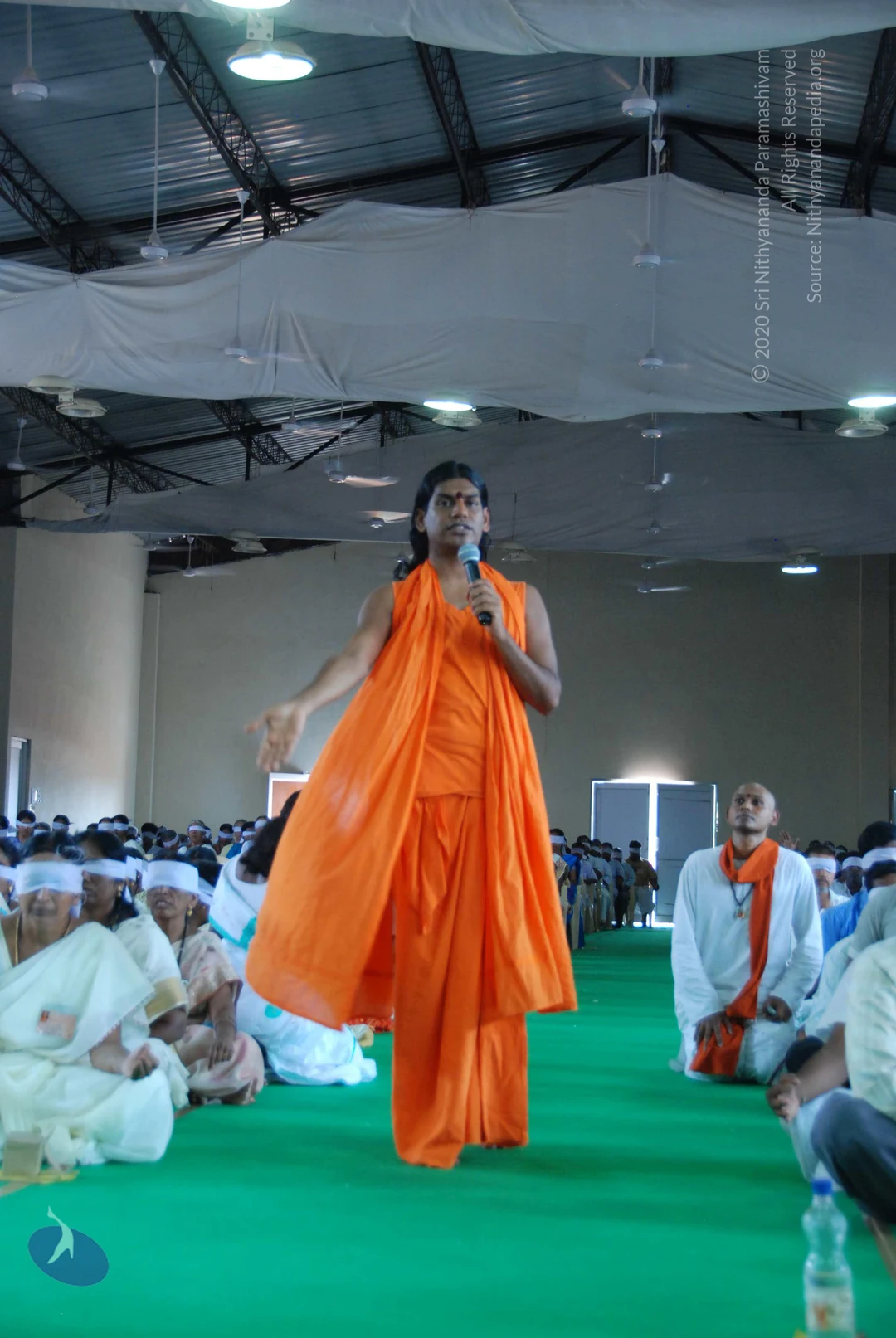
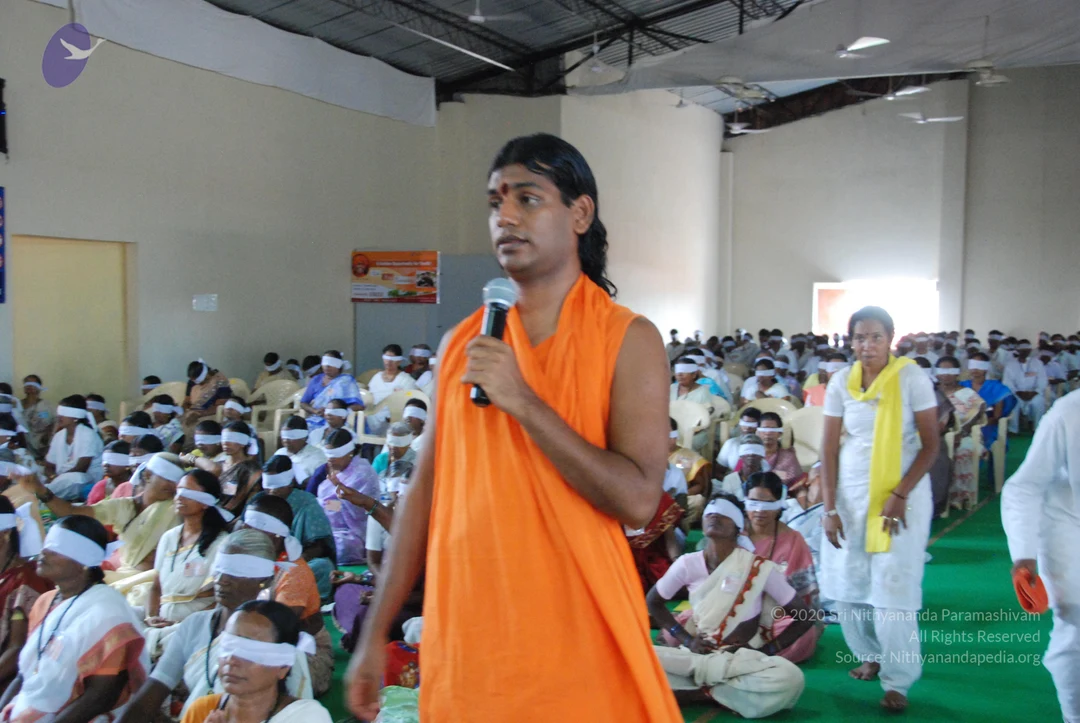
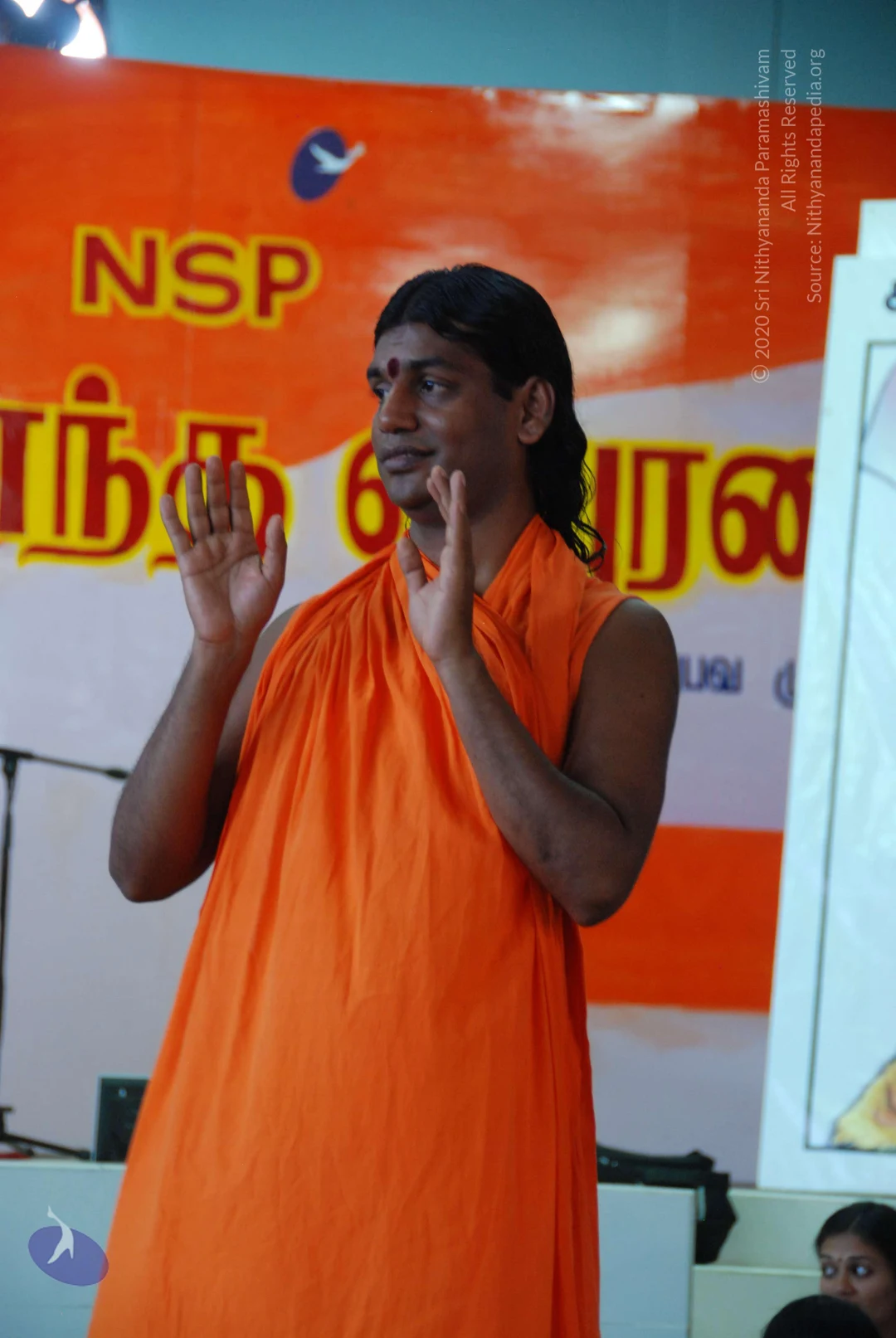
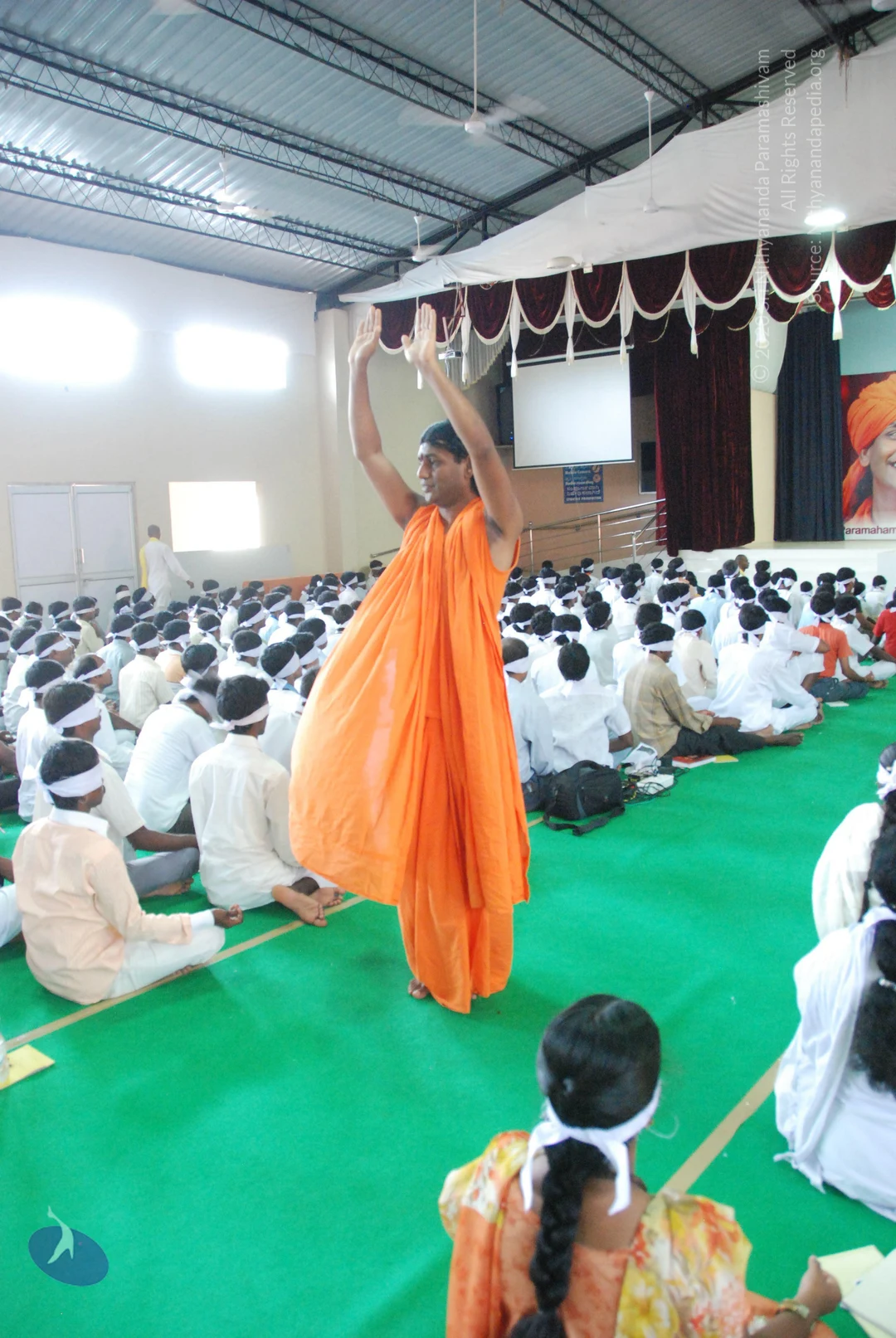
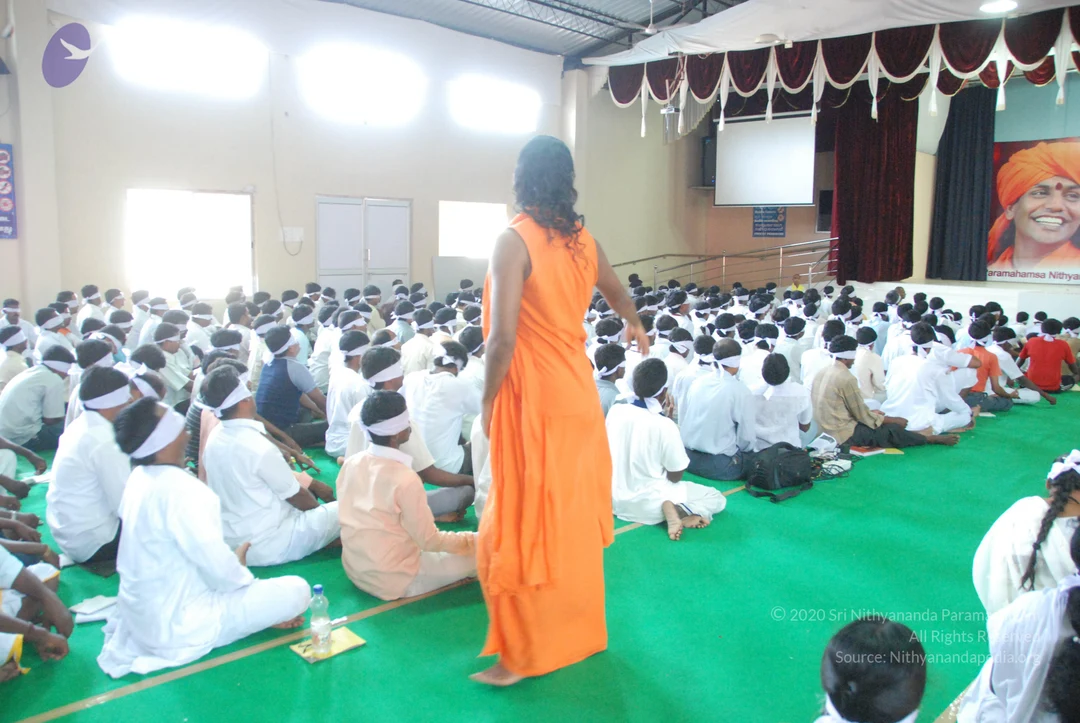
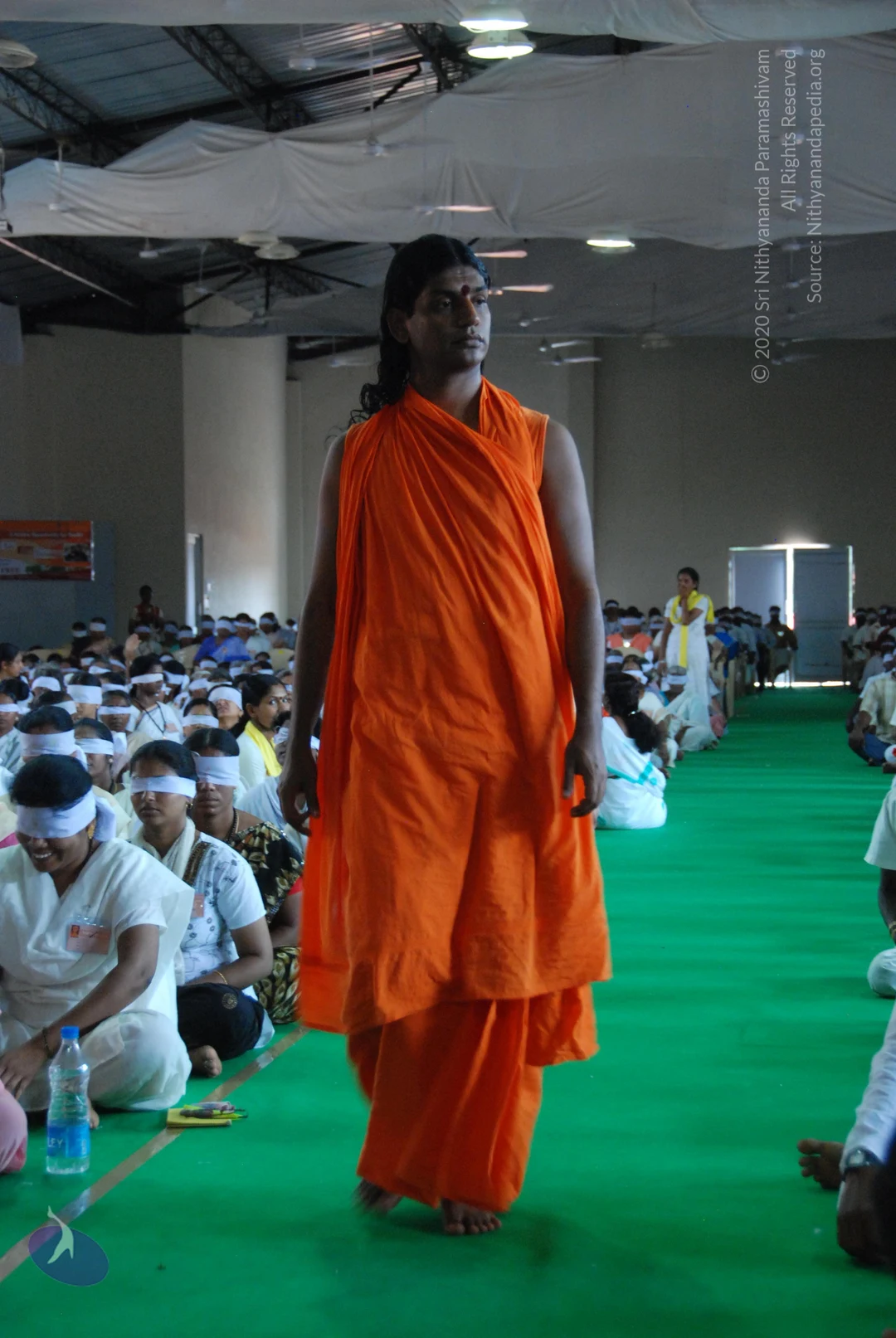
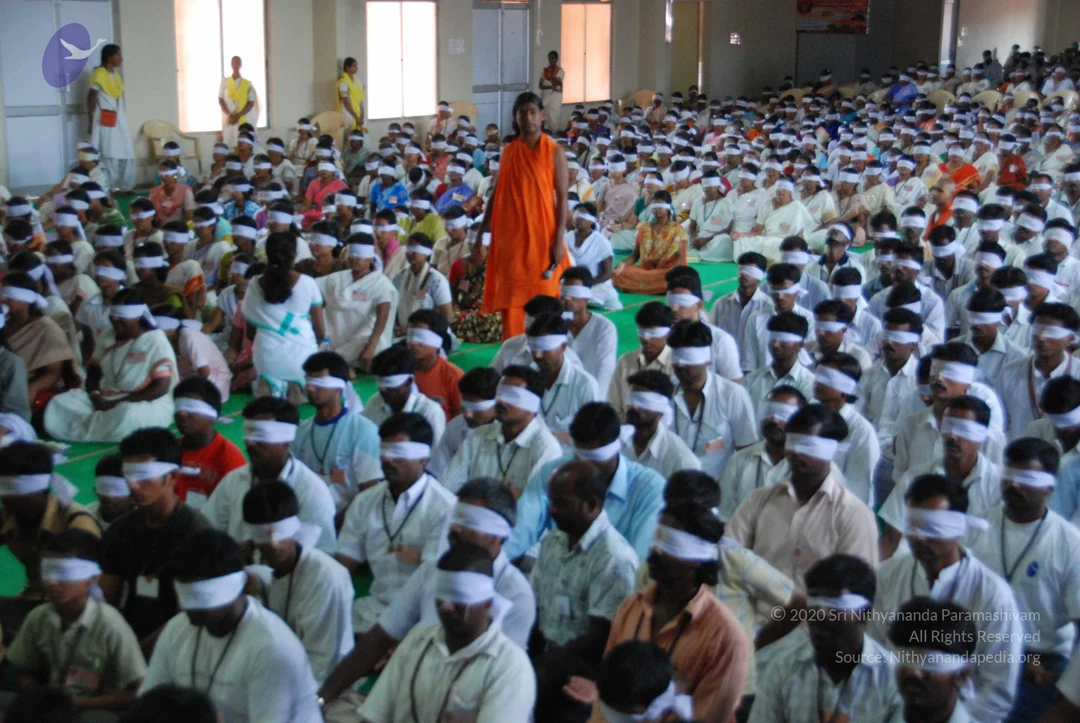
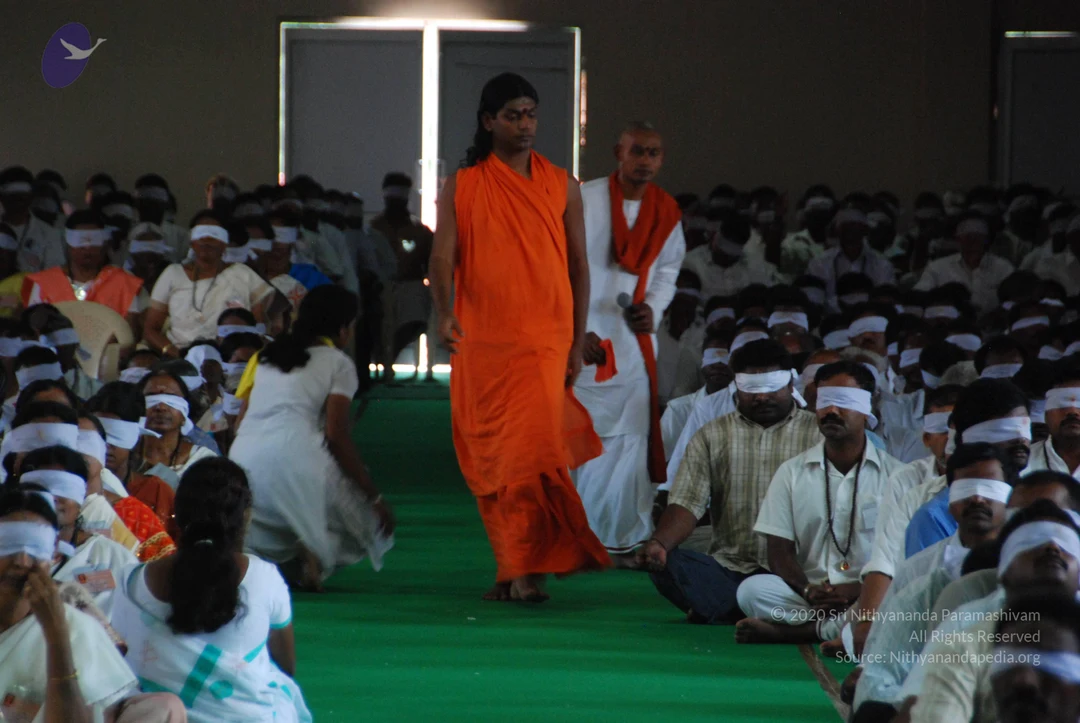
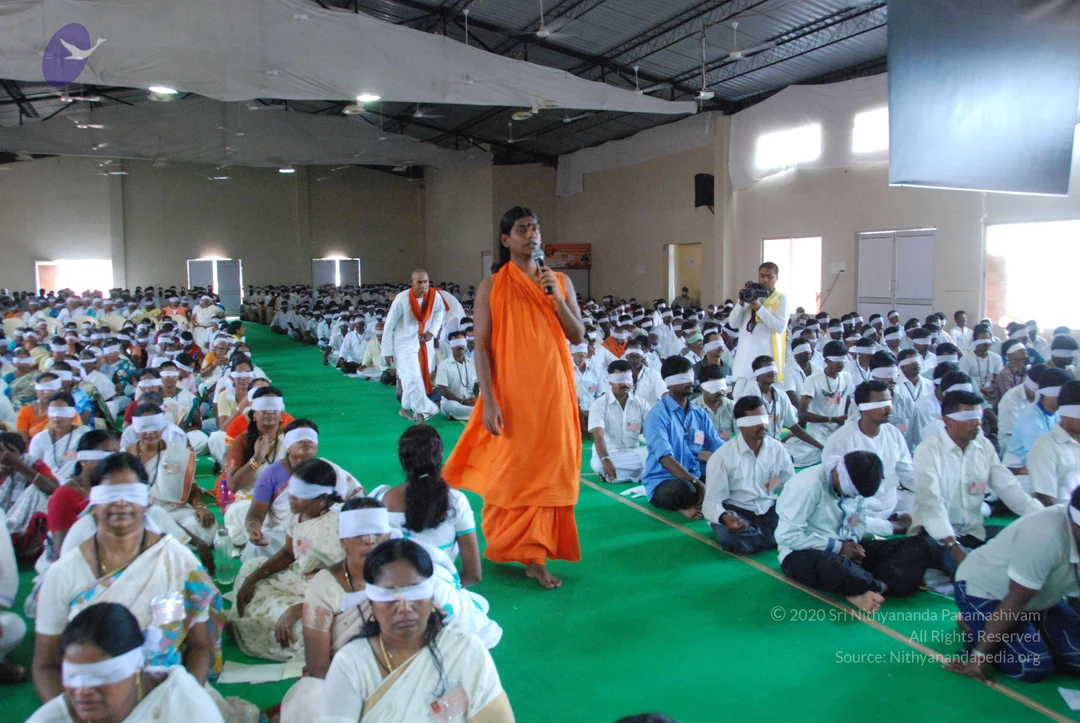
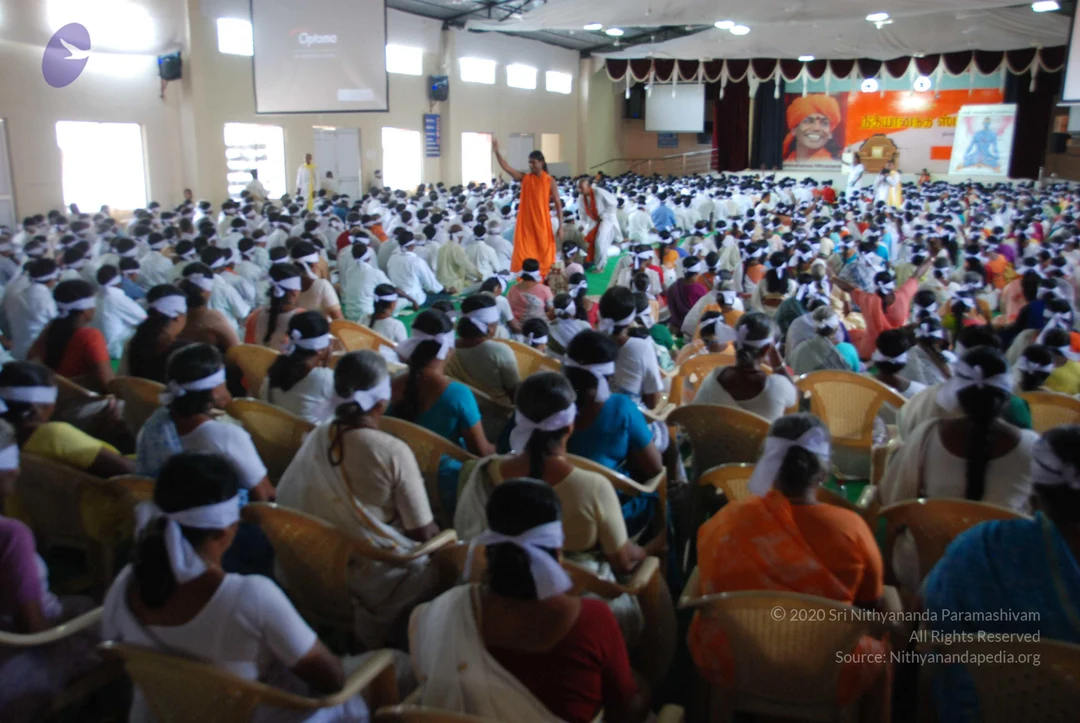
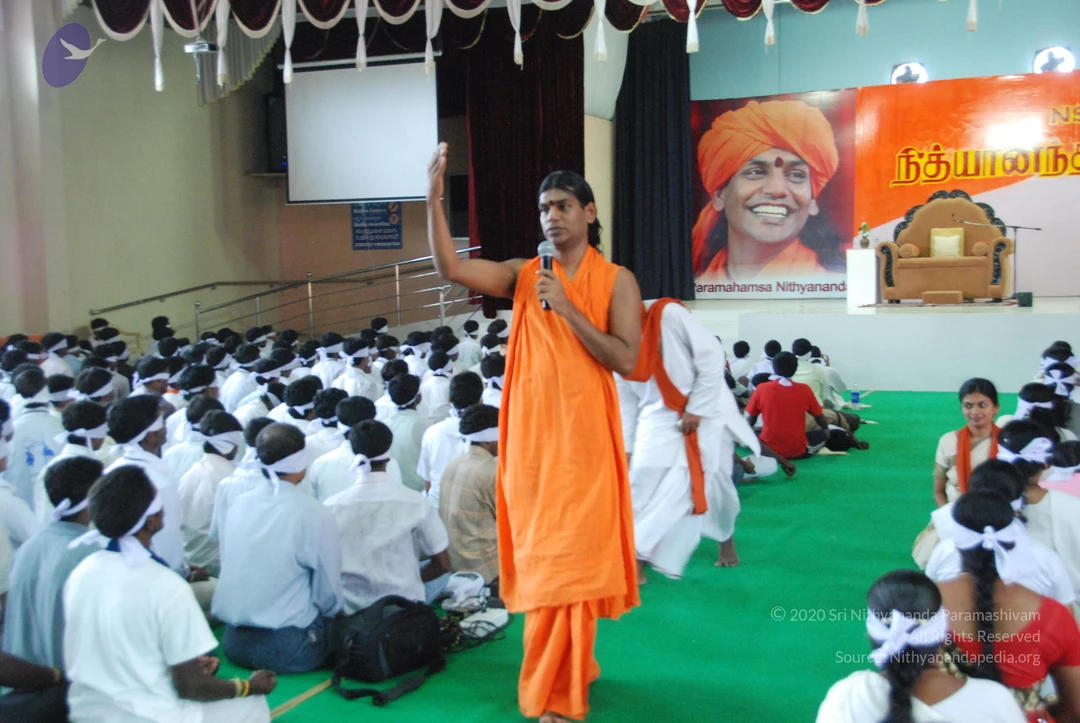
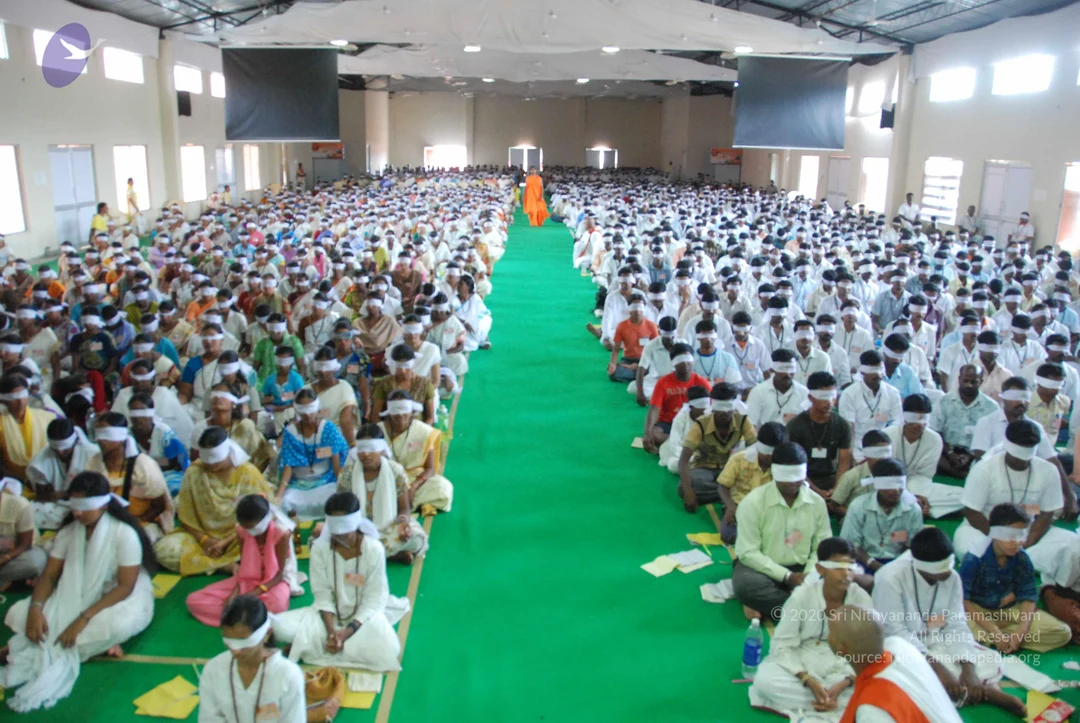
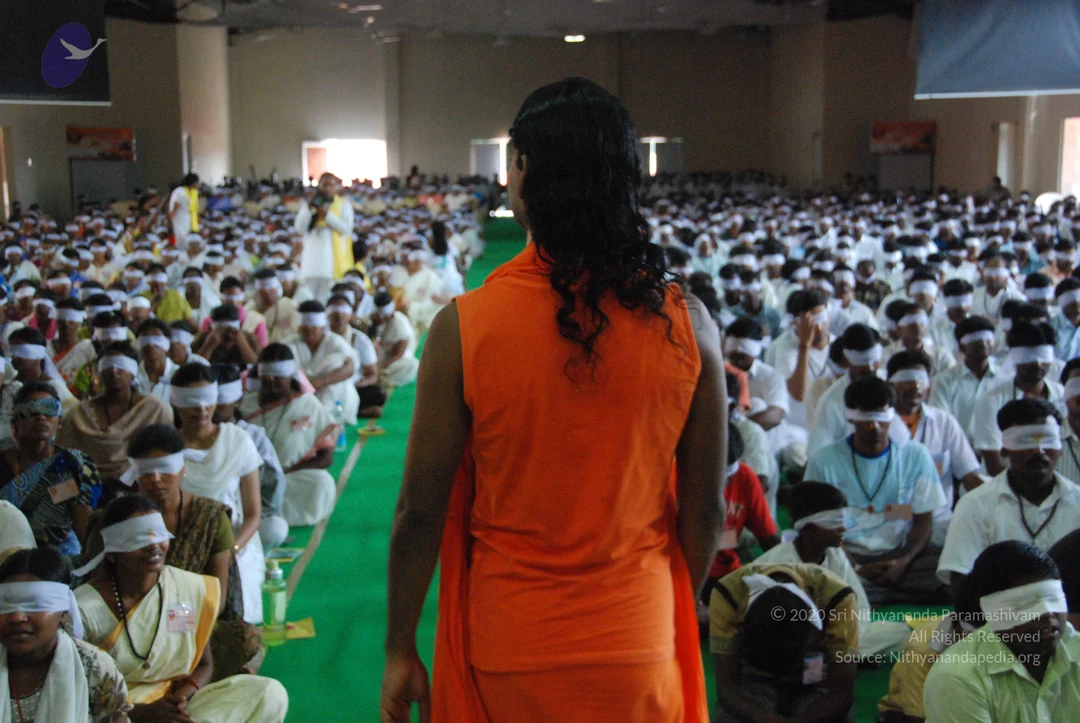
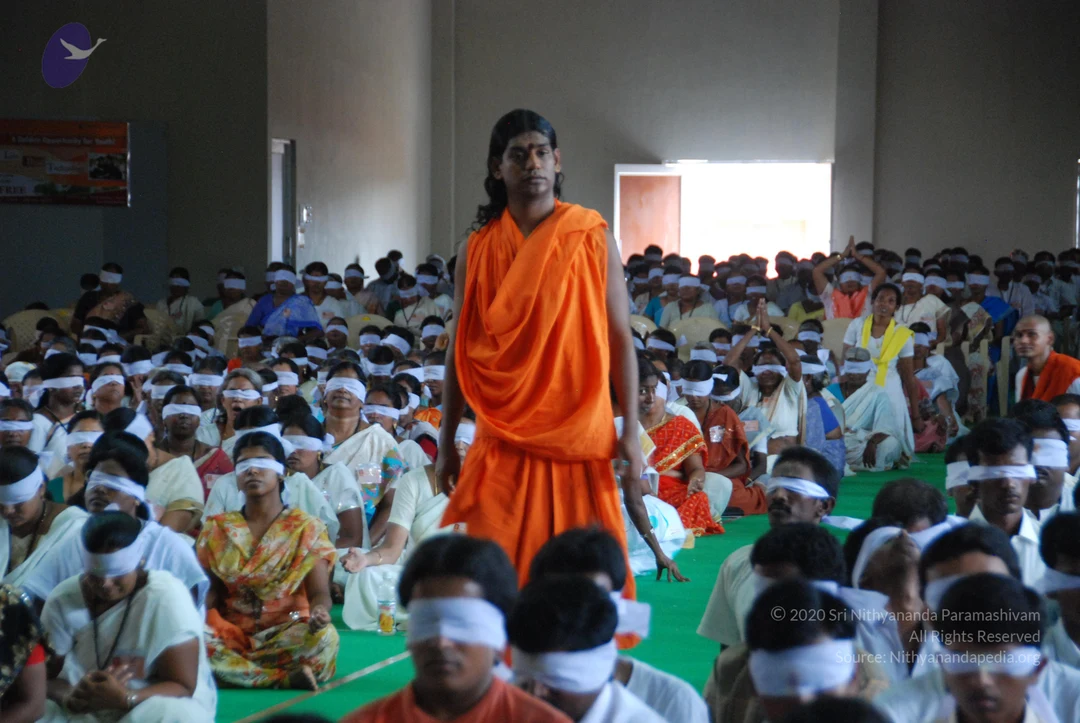
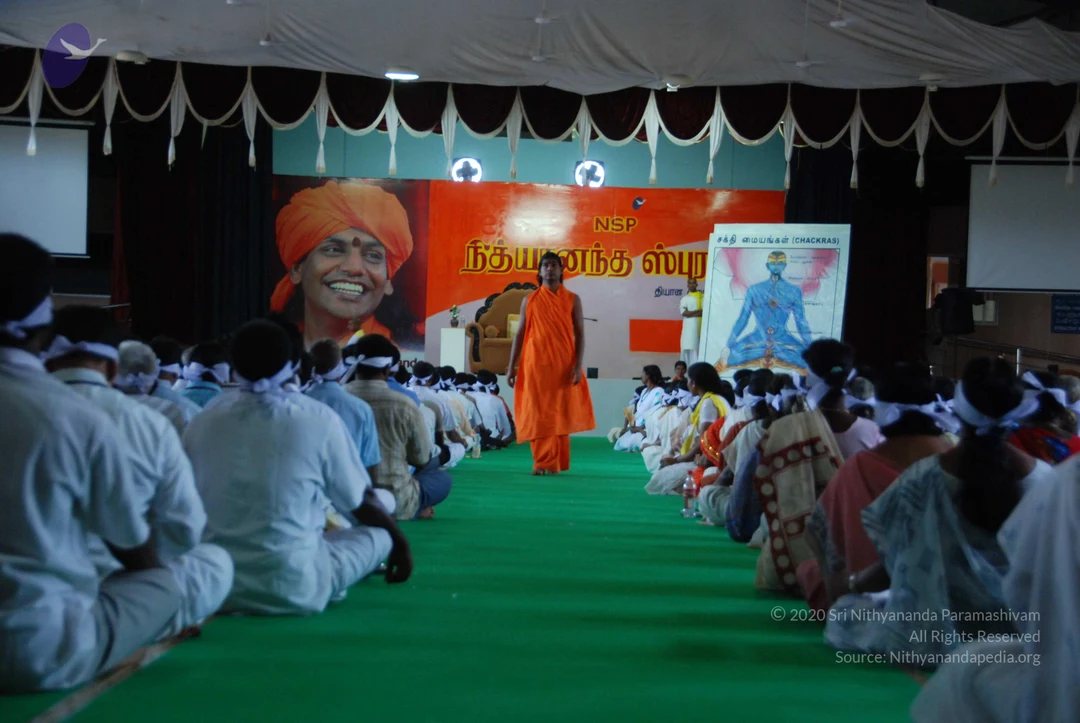
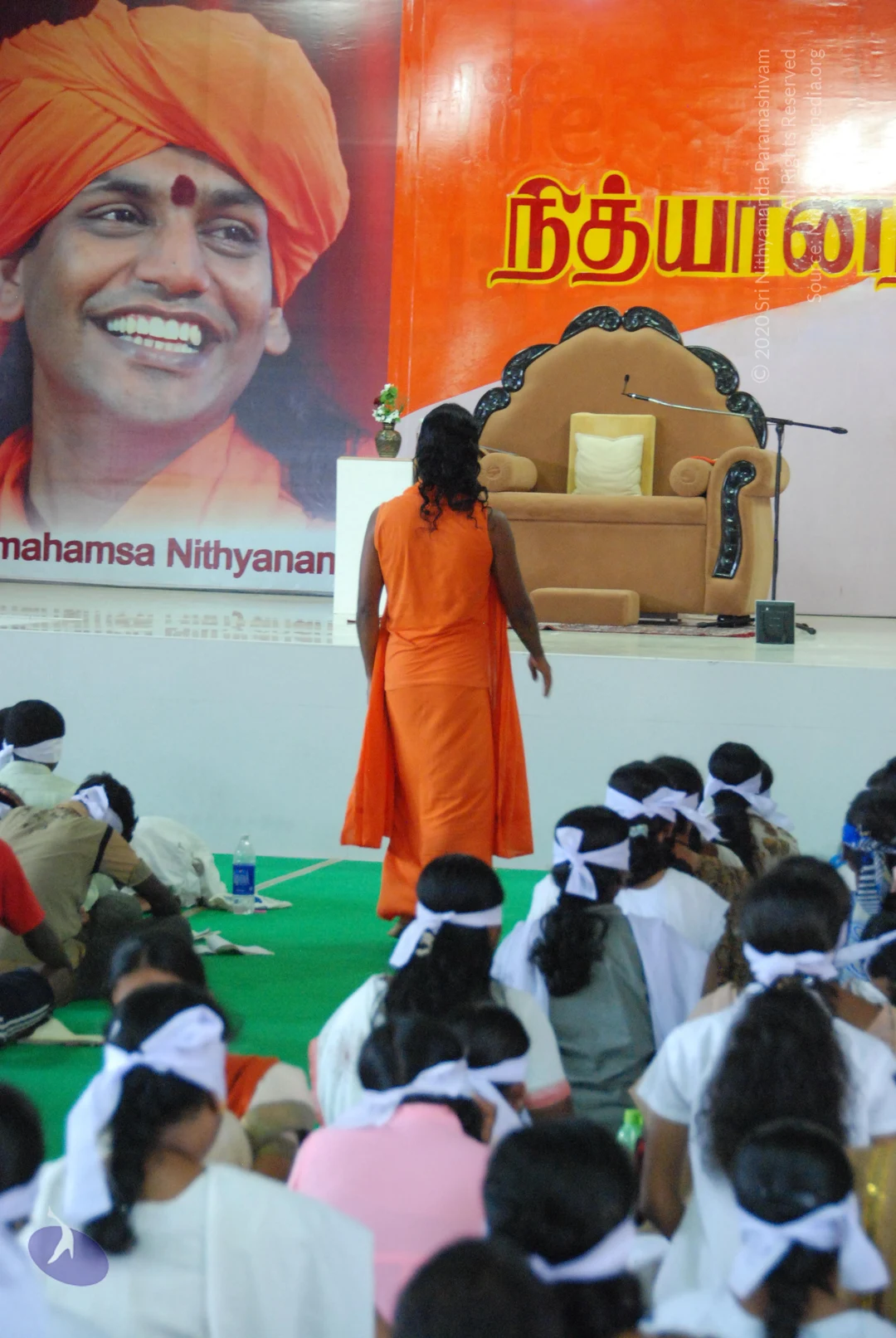
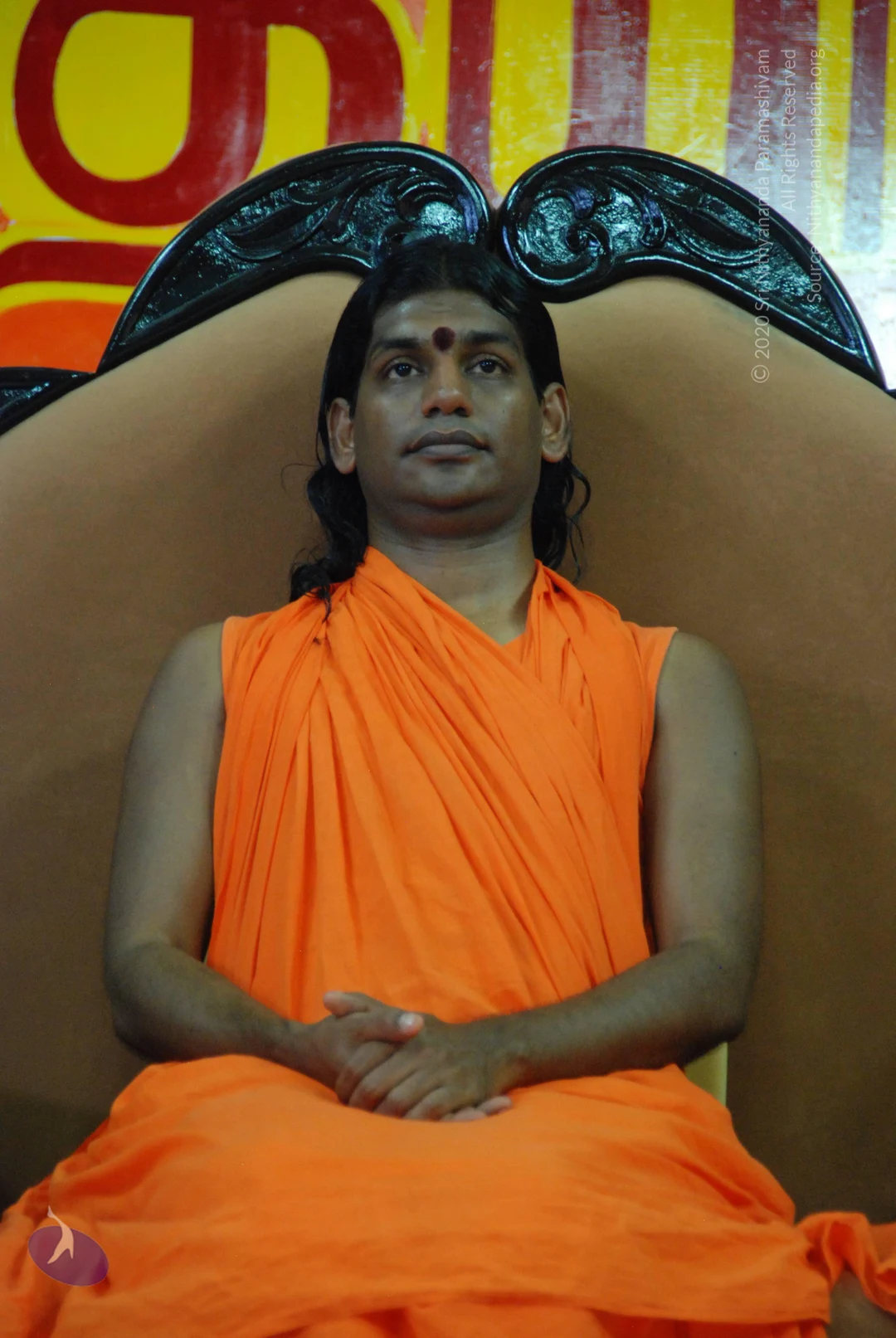
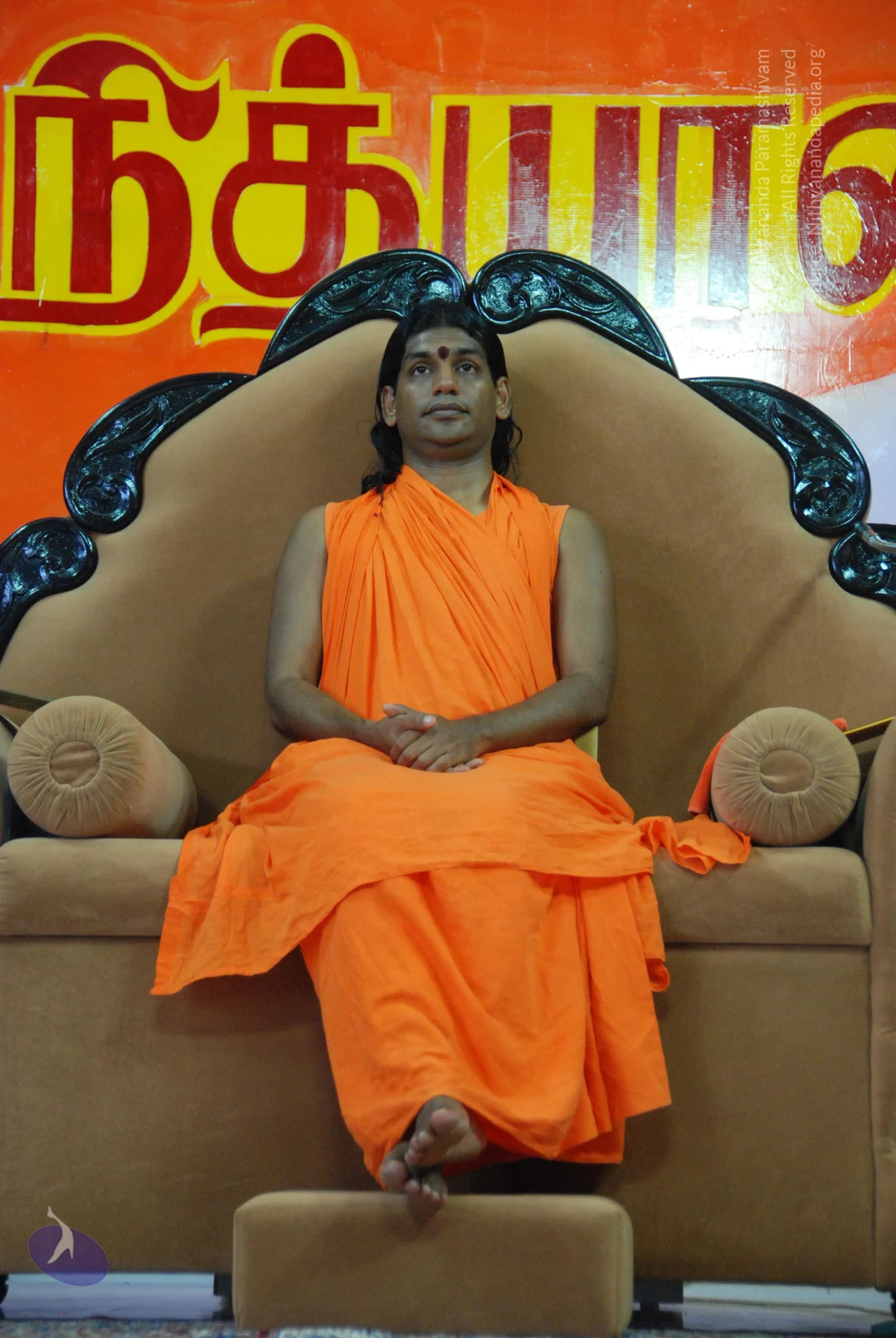
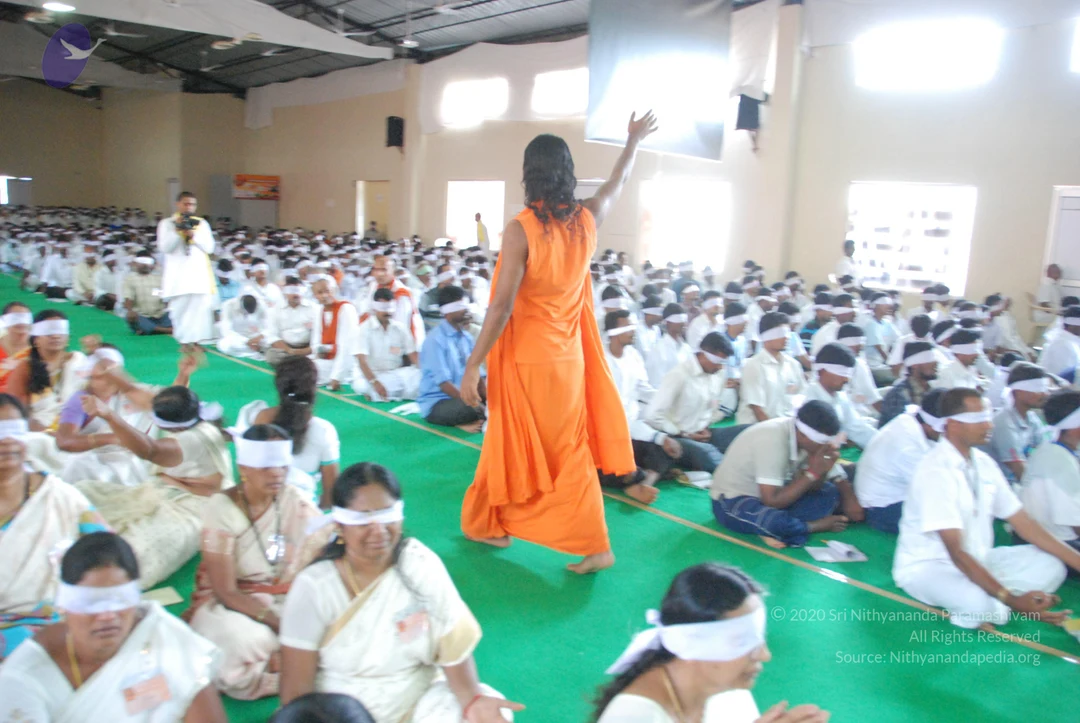
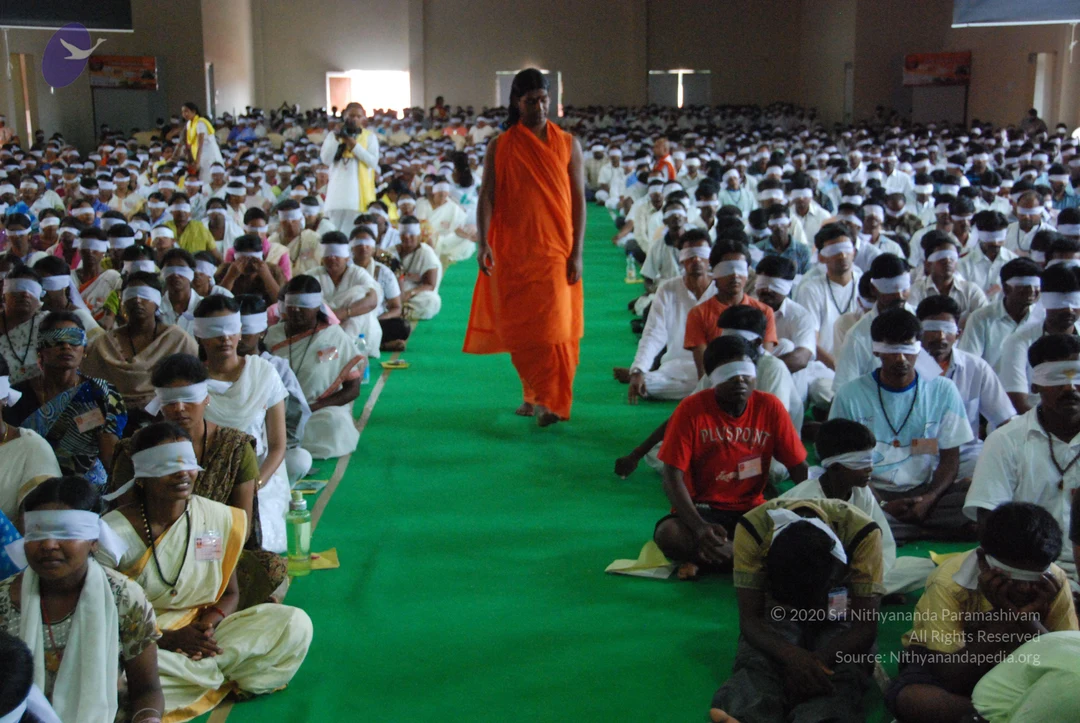
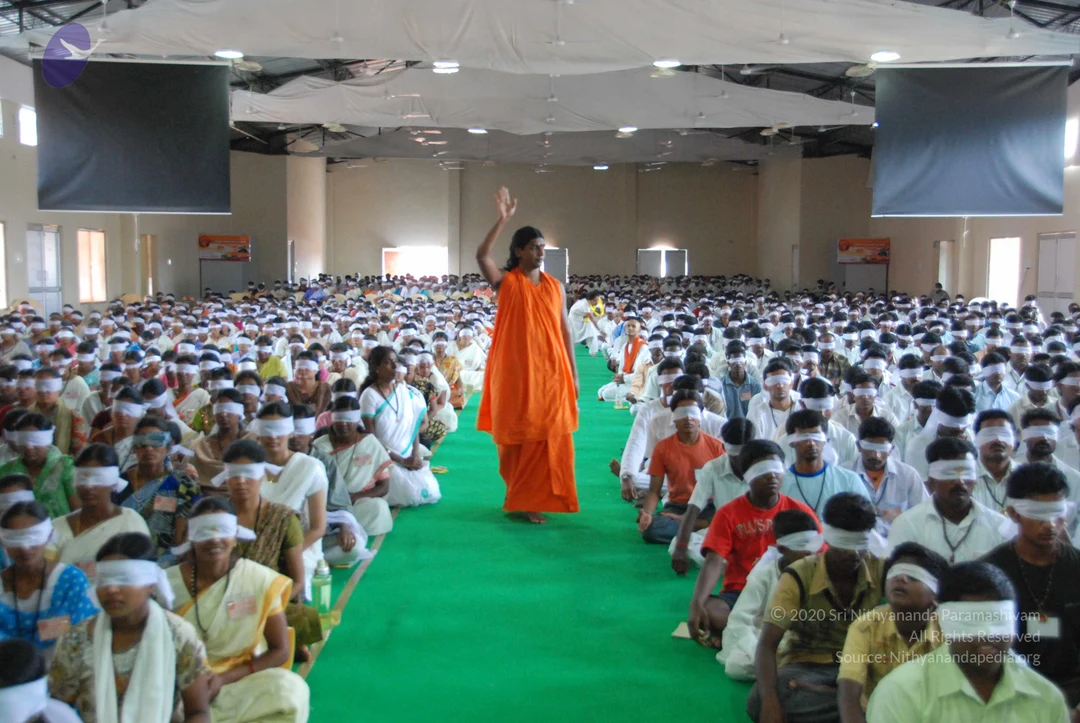
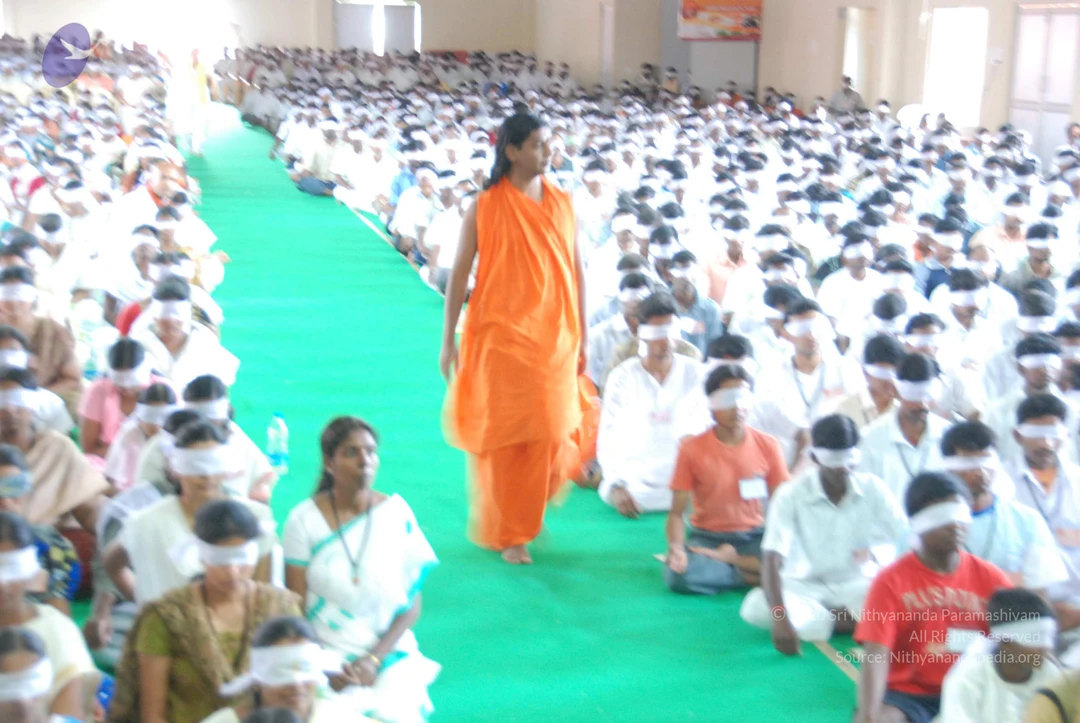
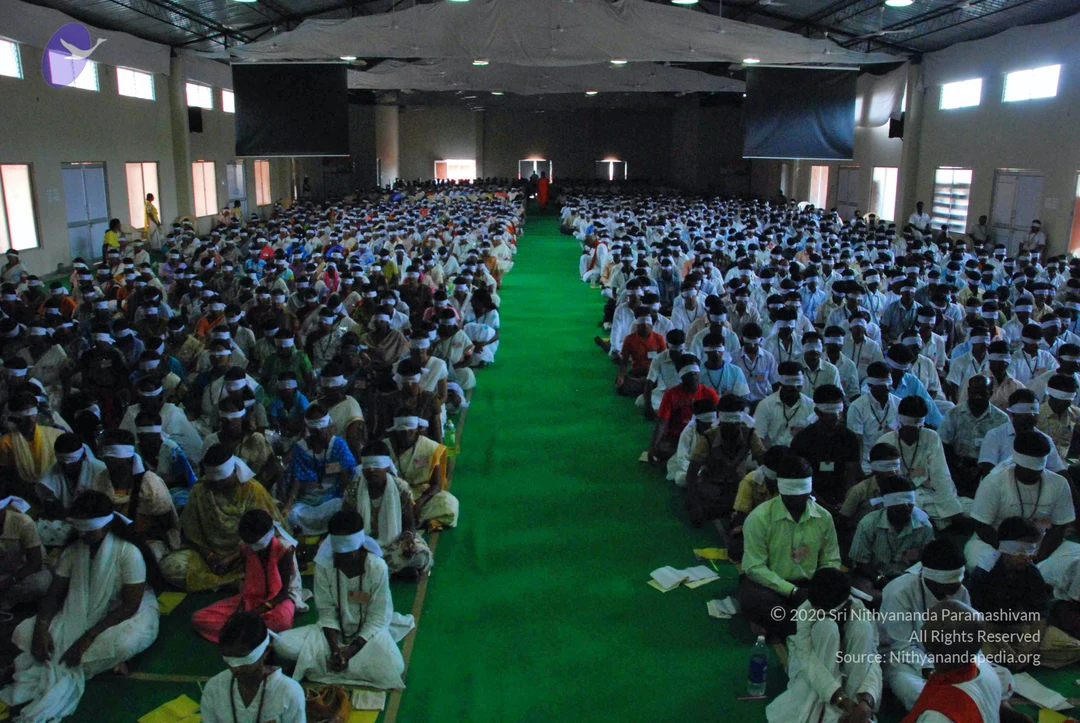
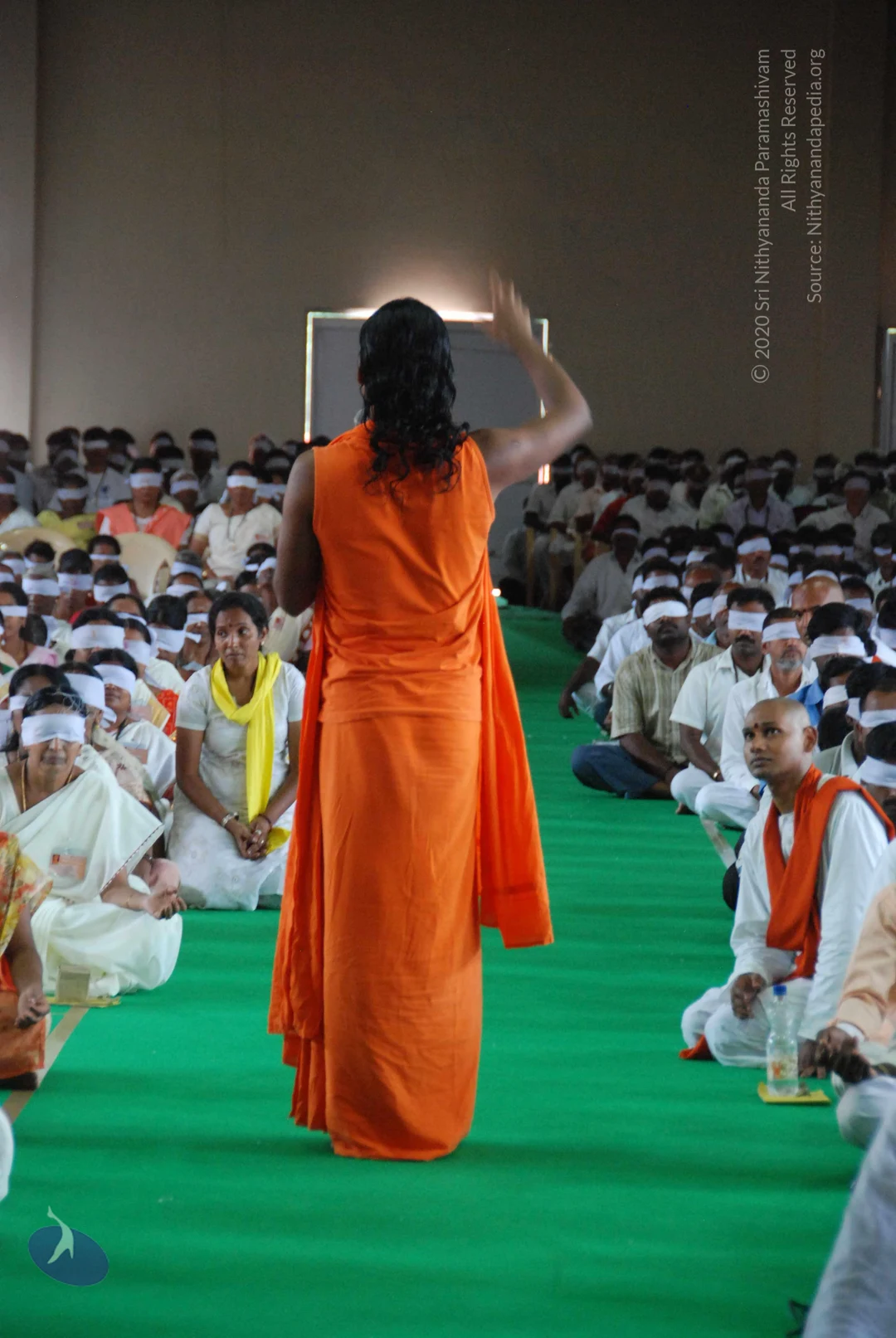
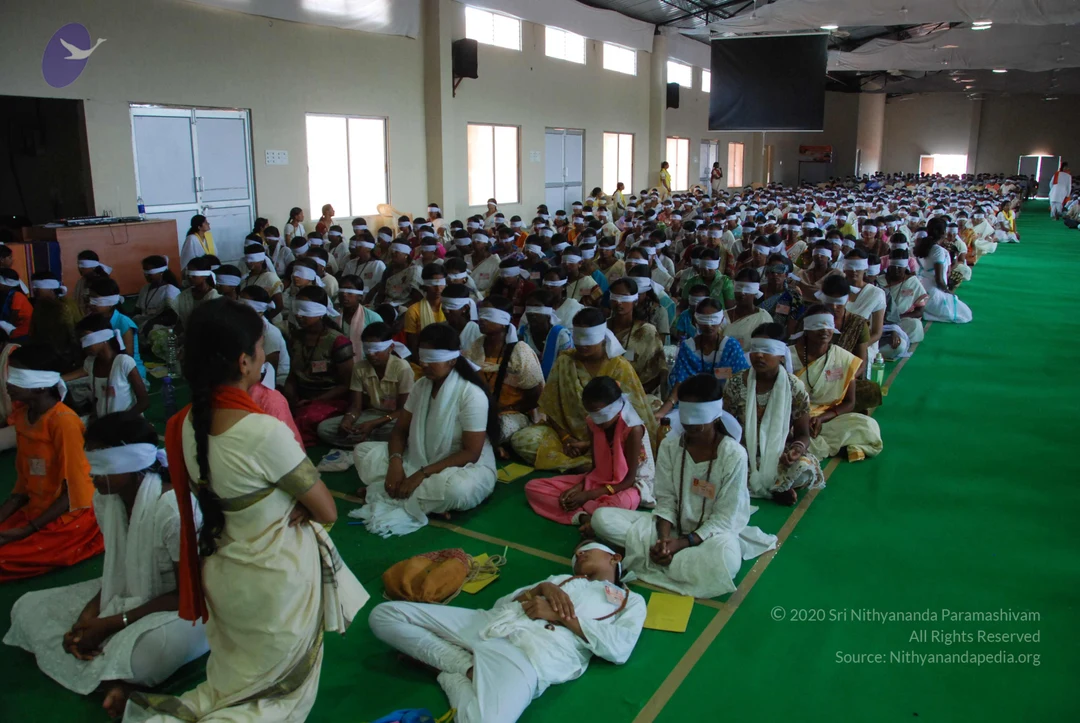
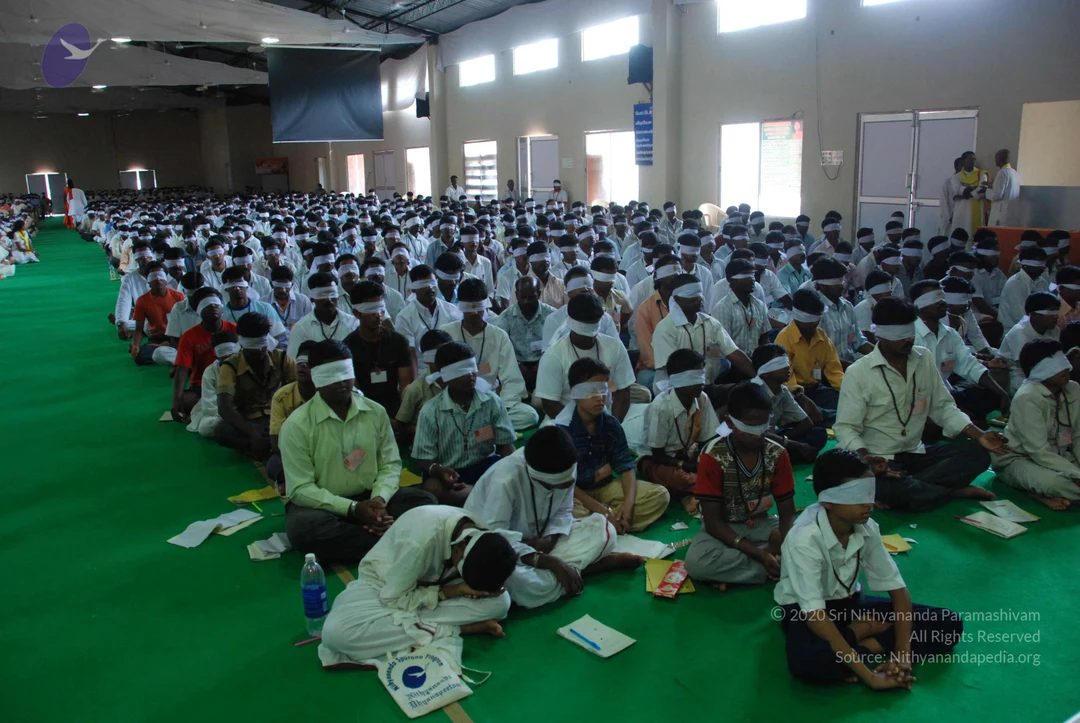
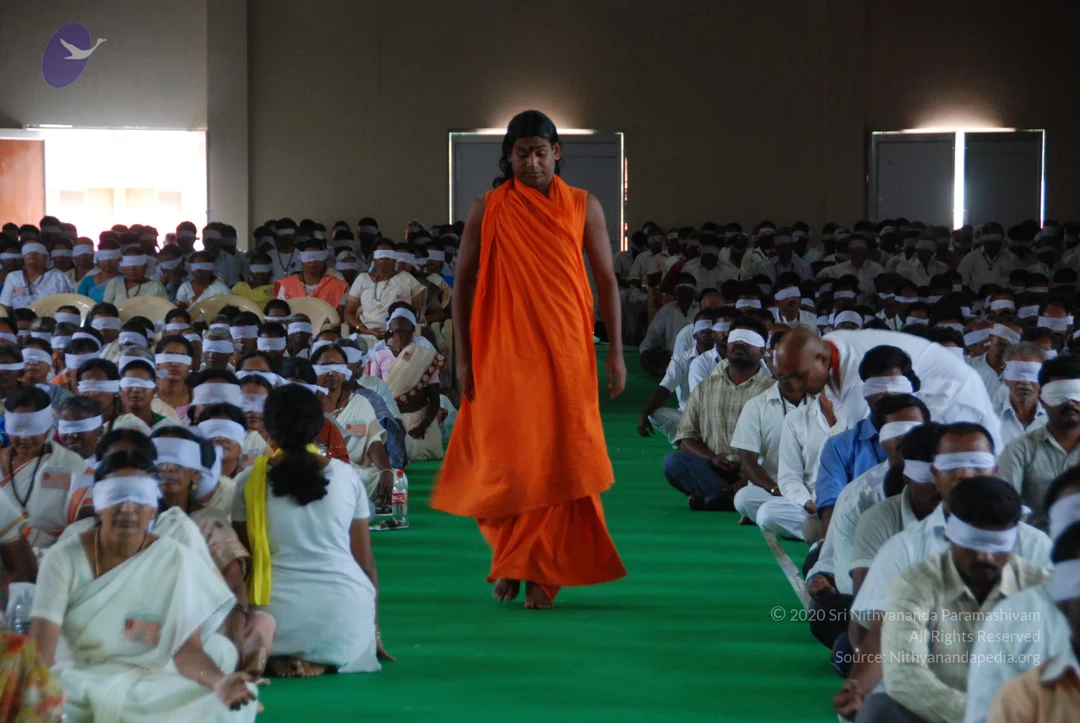
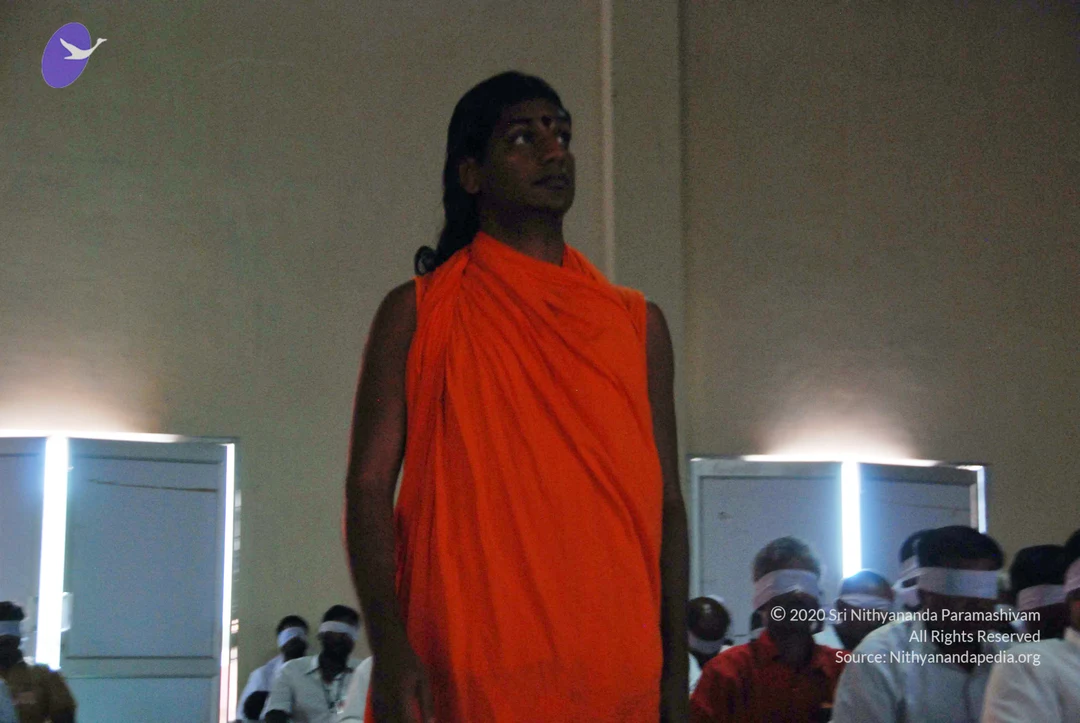
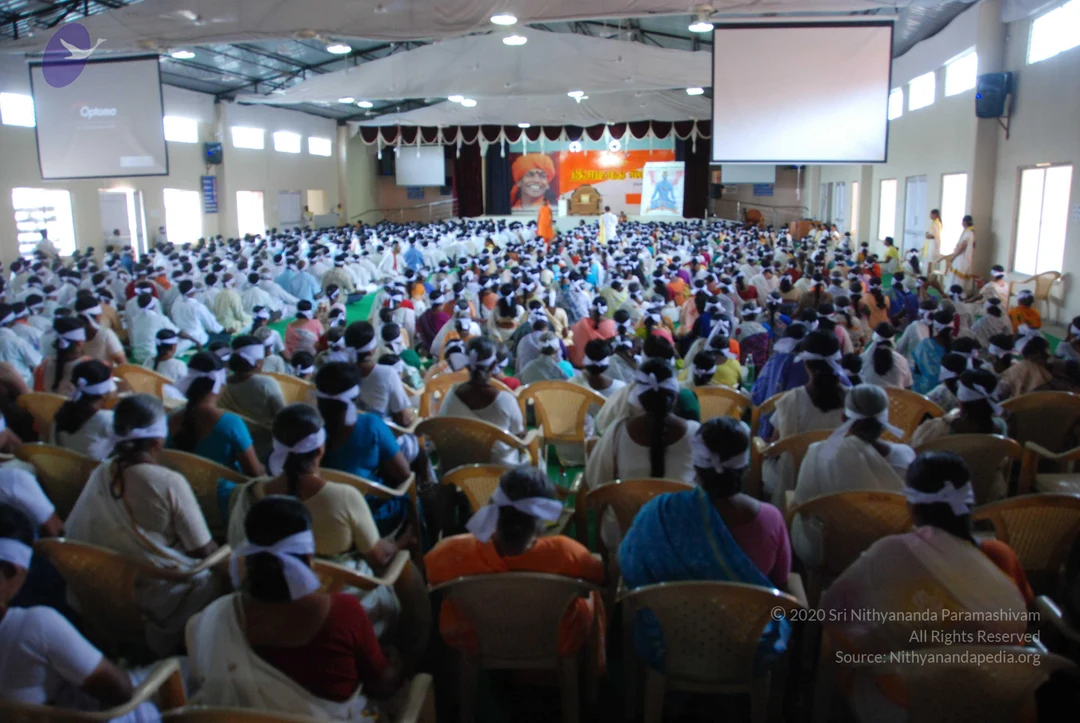
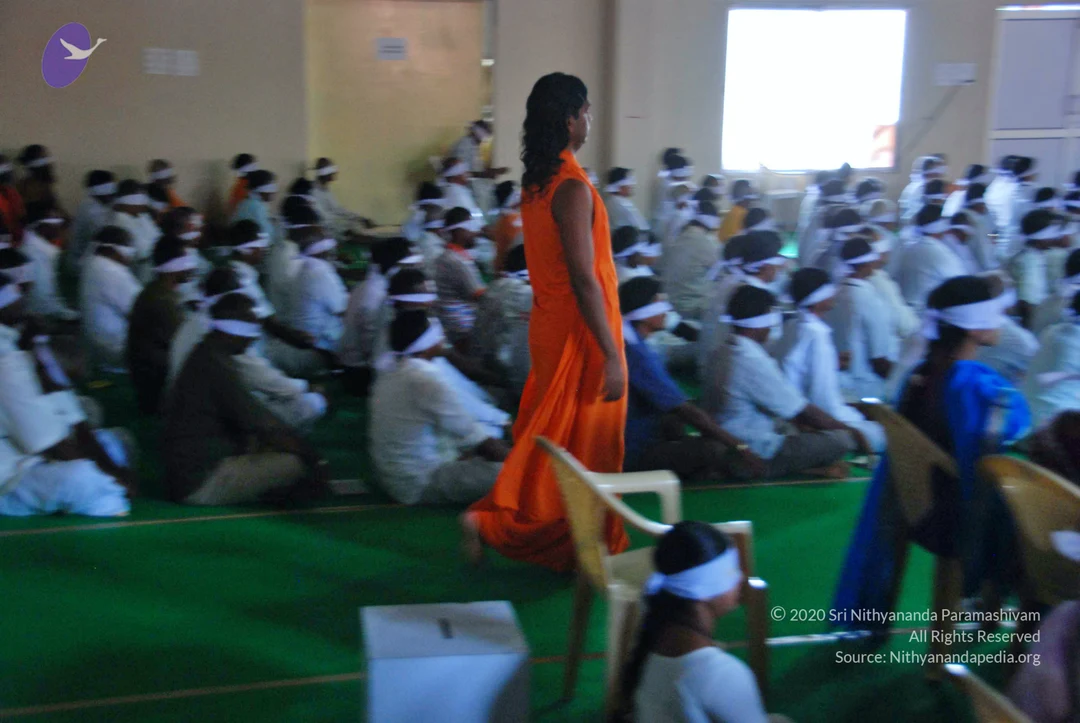
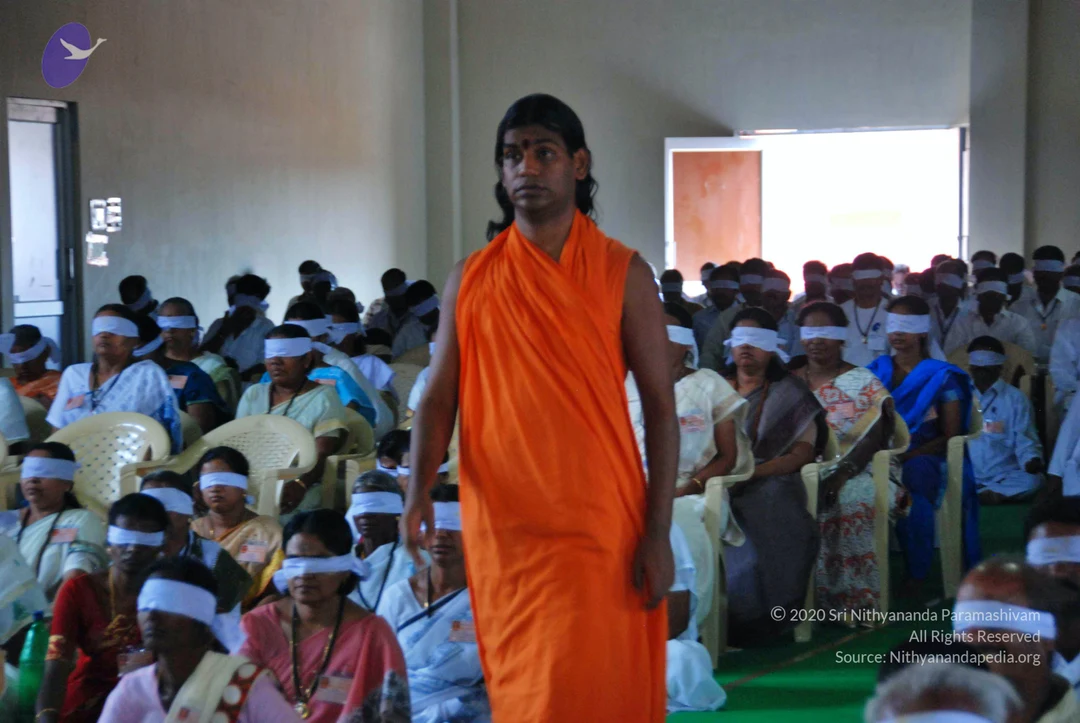
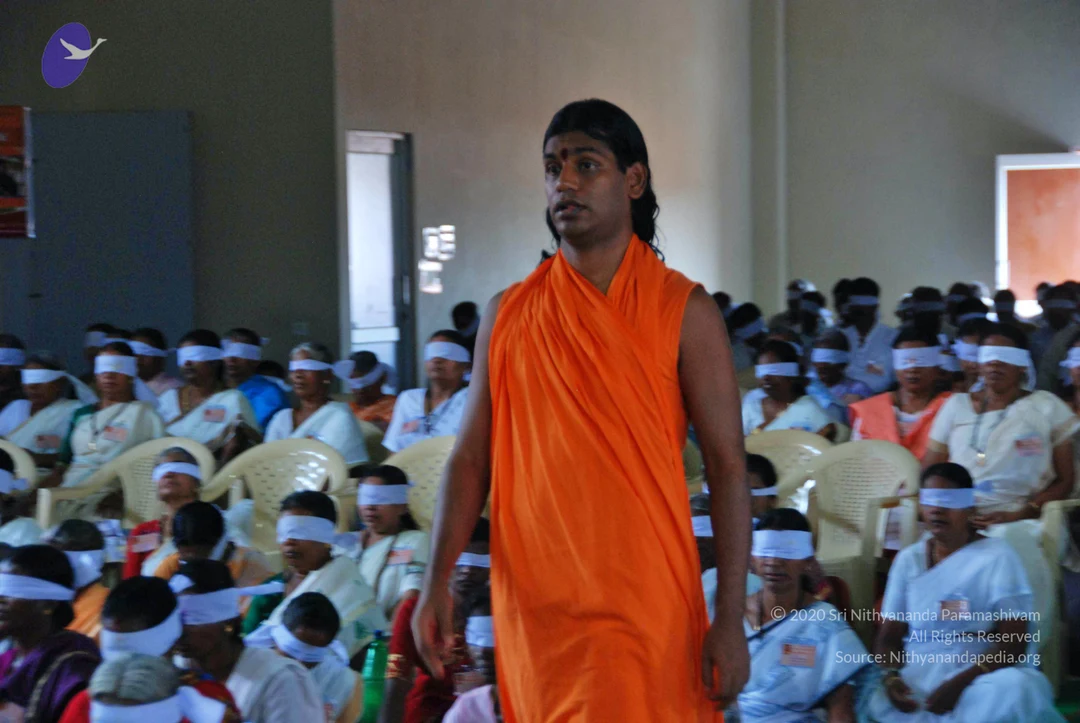
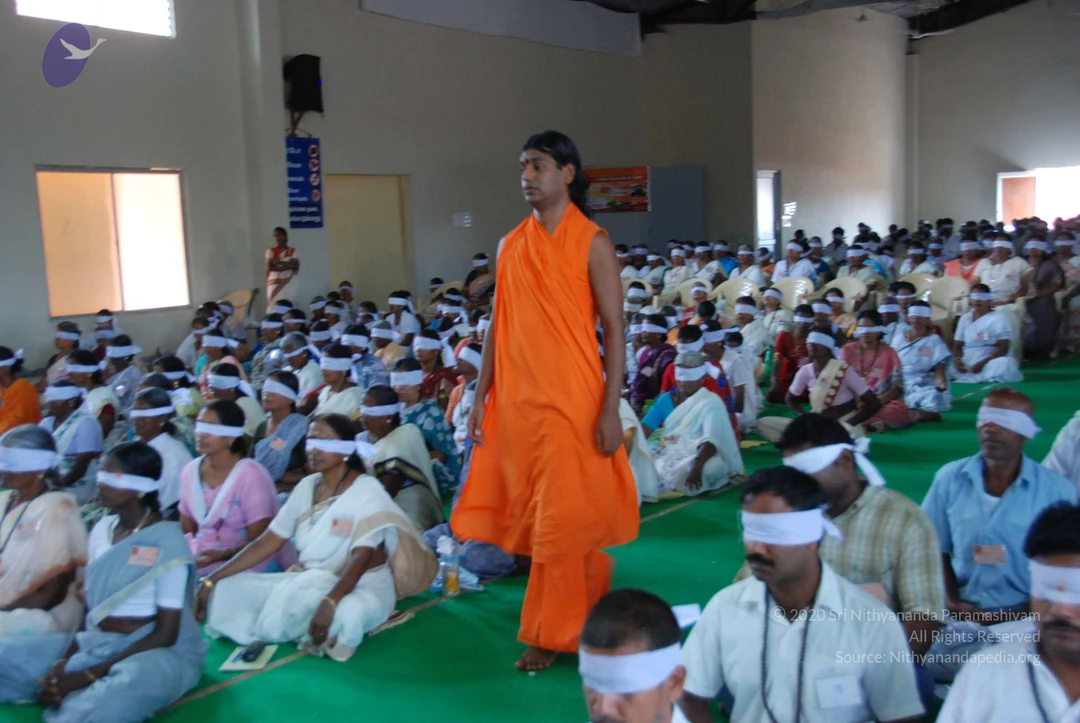
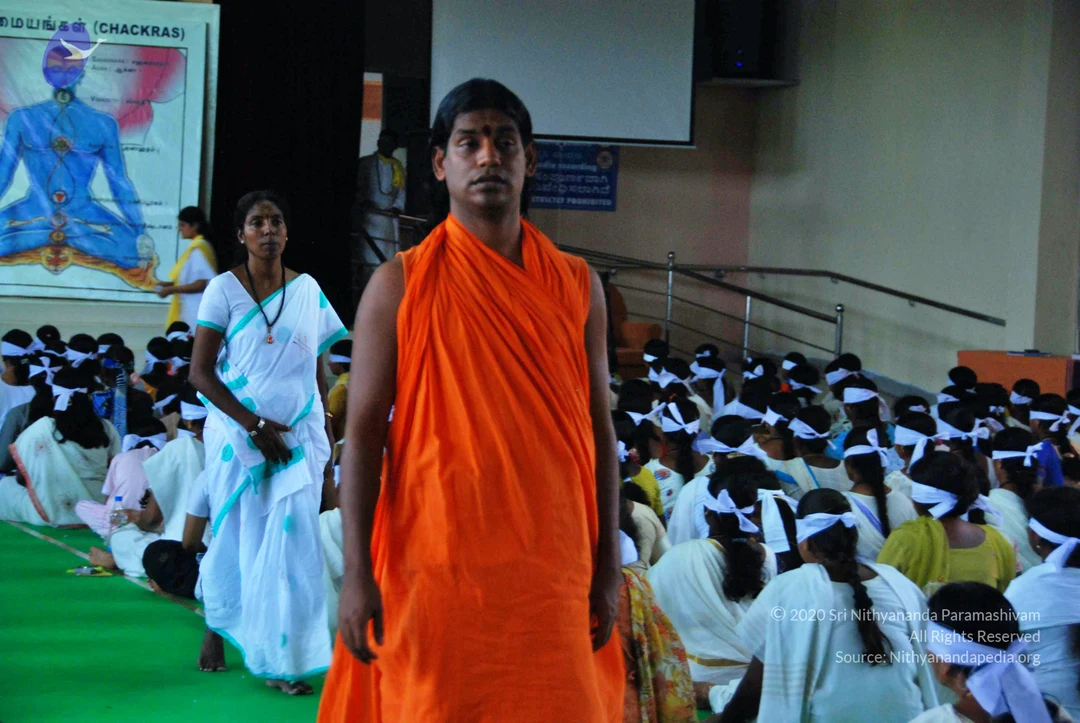
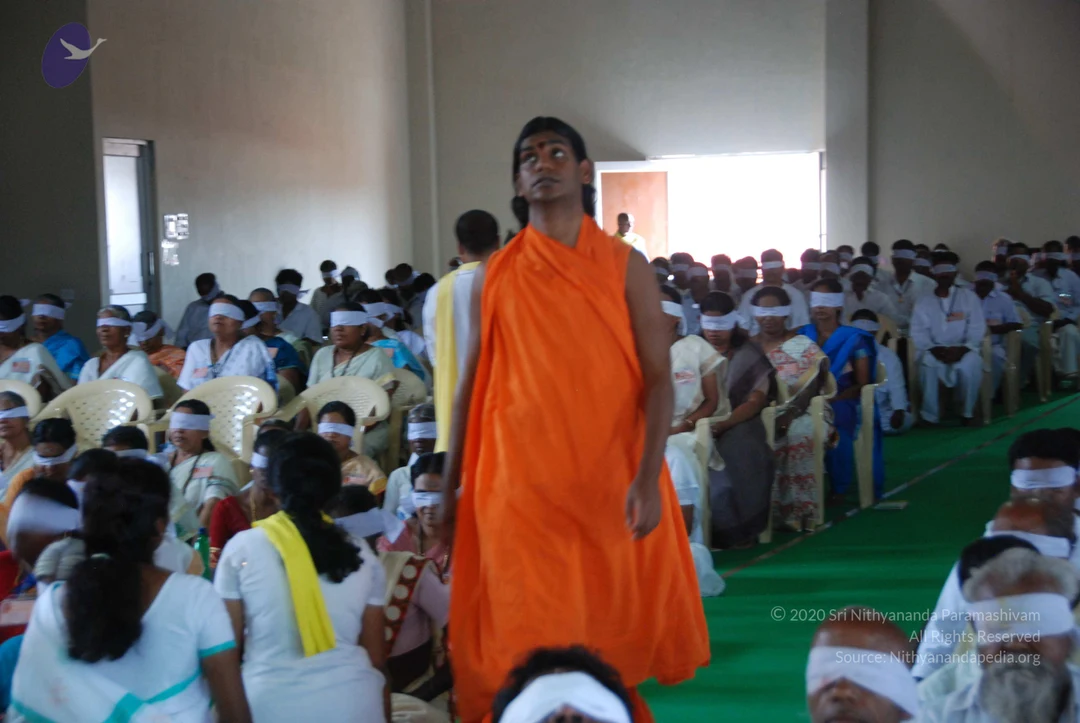
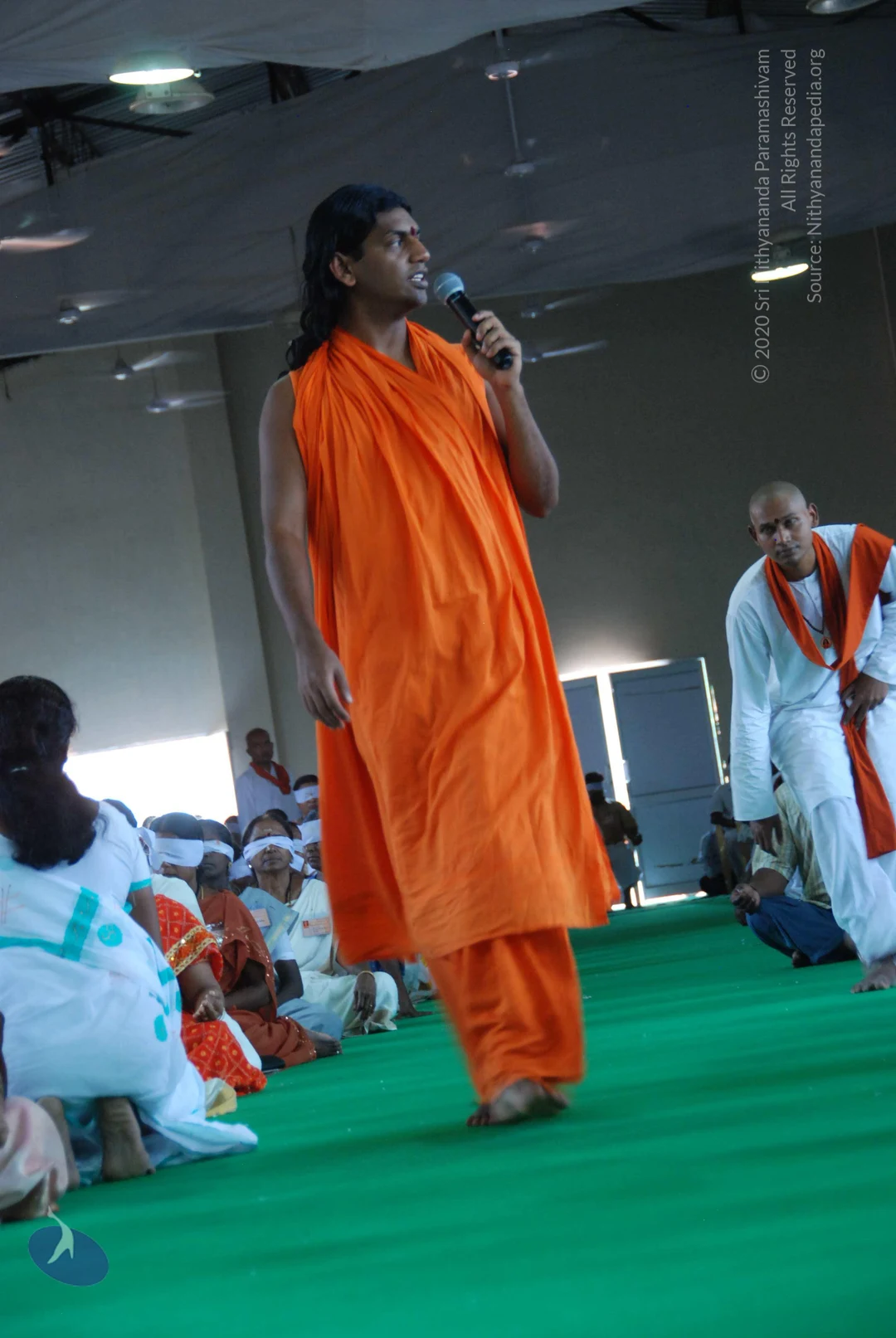
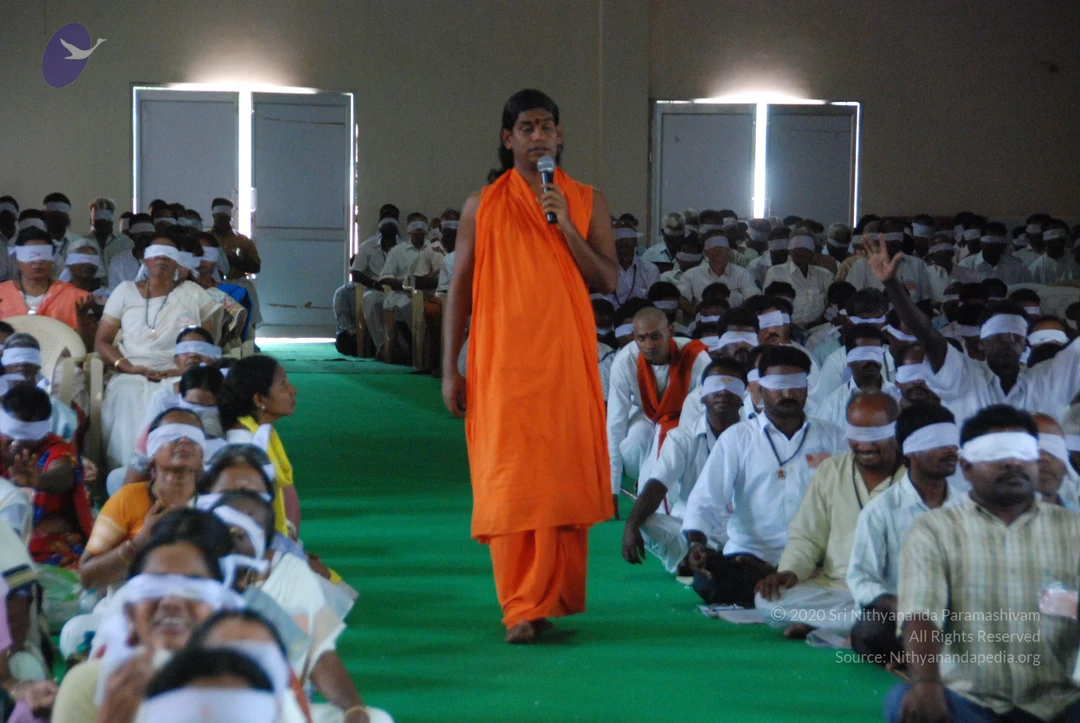
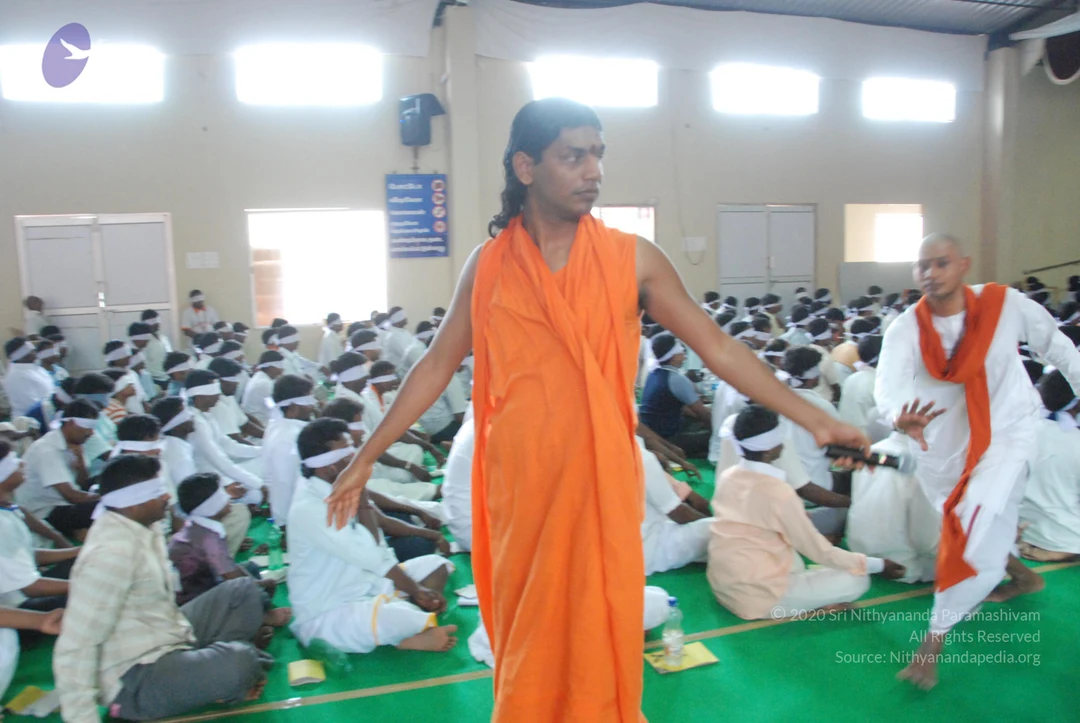
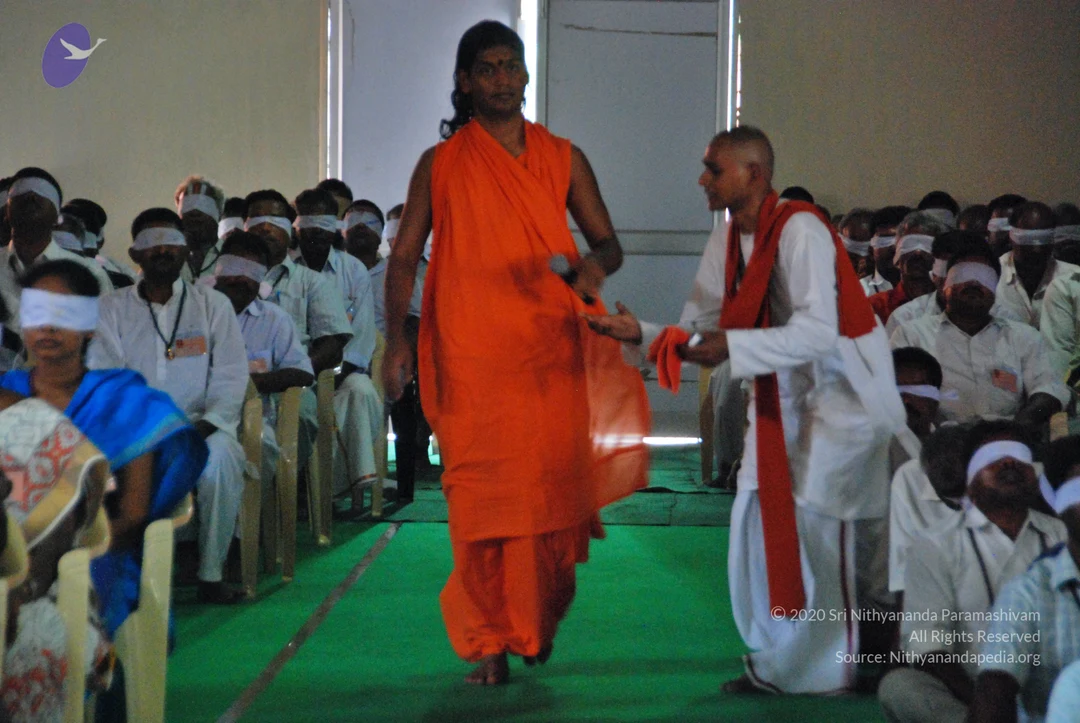
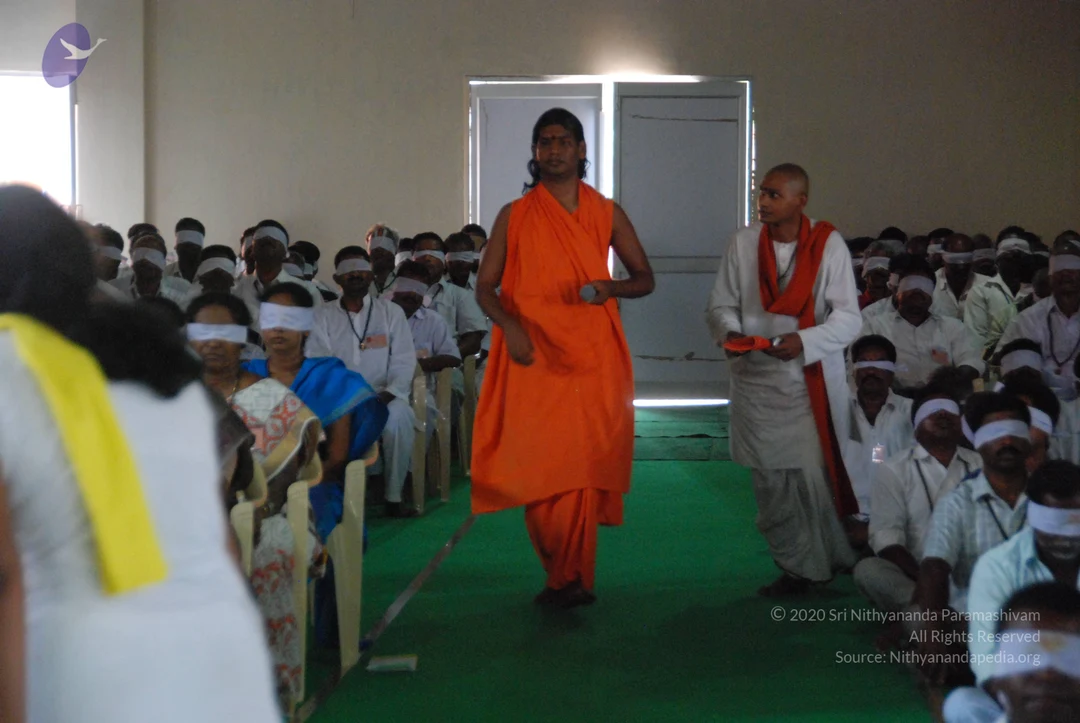
A seated man in a brown upholstered throne-style chair with a carved black wooden backrest. He wears a sleeveless saffron-orange robe draped over one shoulder, with long dark hair falling to his shoulders and a dark red bindi on his forehead. His hands are clasped in his lap and he gazes upward. Behind him is a large red and yellow banner with bold Tamil lettering. Appearance-based label: Swamiji (probable), seated in person, with long swept-back hair, saffron robe and a bindi as visible cues.A man with long dark hair swept back, wearing a flowing saffron-orange robe draped over one shoulder and wrapped around the body, walks forward through a hall in front of rows of seated people. Behind him, many participants sit on the floor with white blindfolds or eye bands tied over their eyes, several with hands folded in anjali, some in white and pastel saris. A few people stand at the back of the hall beside pale walls and doorways. The orange-robed man's distinctive long hair and saffron clothing are visible cues for the page-referenced Swamiji, so the label is probable. The scene suggests a satsang or meditation session with blindfolded participants.A large hall with a green carpeted aisle runs between rows of seated devotees, most wearing white clothes and white blindfolds over their eyes. In the centre, a figure in a long saffron-orange robe walks up the aisle with head tilted upward, while another person in orange stands further back near the wall. Black screens hang from the ceiling and white fabric canopies cover the roof. Several devotees in the foreground have hands pressed together in namaste. Water bottles sit on the floor near the front rows, and the scene suggests a guided meditation session.A photograph inside a large hall with pale yellow walls and a green carpet, where many seated devotees wear white clothes and white headbands. In the centre, a figure seen from behind wears a long sleeveless saffron-orange robe, long dark hair falling to the back, and bare feet; one arm is raised toward the seated crowd as if addressing them. In the foreground at lower left, a woman in white with a white headband sits with her palms pressed together in namaste. Some devotees in the back rows hold small booklets or papers. Windows and a wall sign are visible in the background.A hall of seated devotees, many with white headbands and wearing white clothes, sit on green mats in rows. A standing teacher in a full orange-saffron robe raises both arms high toward the ceiling, hands held up together. Blue wall signage and white fluorescent lights are visible, with a maroon curtain drape on the right side of the hall. The scene looks like a satsang or meditation session with the teacher leading the group.A large seated gathering of devotees in white clothes with white headbands fills a hall with green mats and plastic chairs. In the centre a standing man wears a saffron-orange sleeveless robe with long hair tied back, walking between the rows; he is visually distinctive with the saffron robe and long hair, so this is a probable Swamiji appearance. Other people in the background wear white and some in orange or red. Watermarked archive photo of a satsang or meditation session.
07

07-Construction

17 dated photos in previewSource gallery
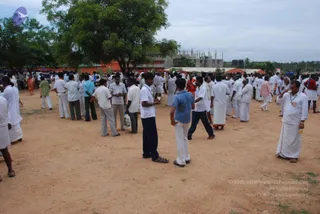
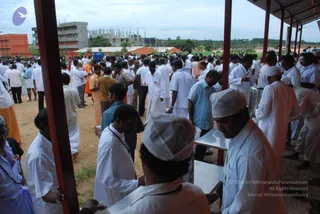
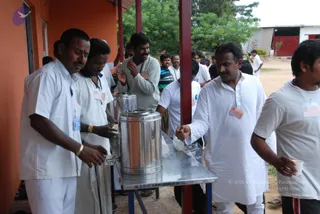
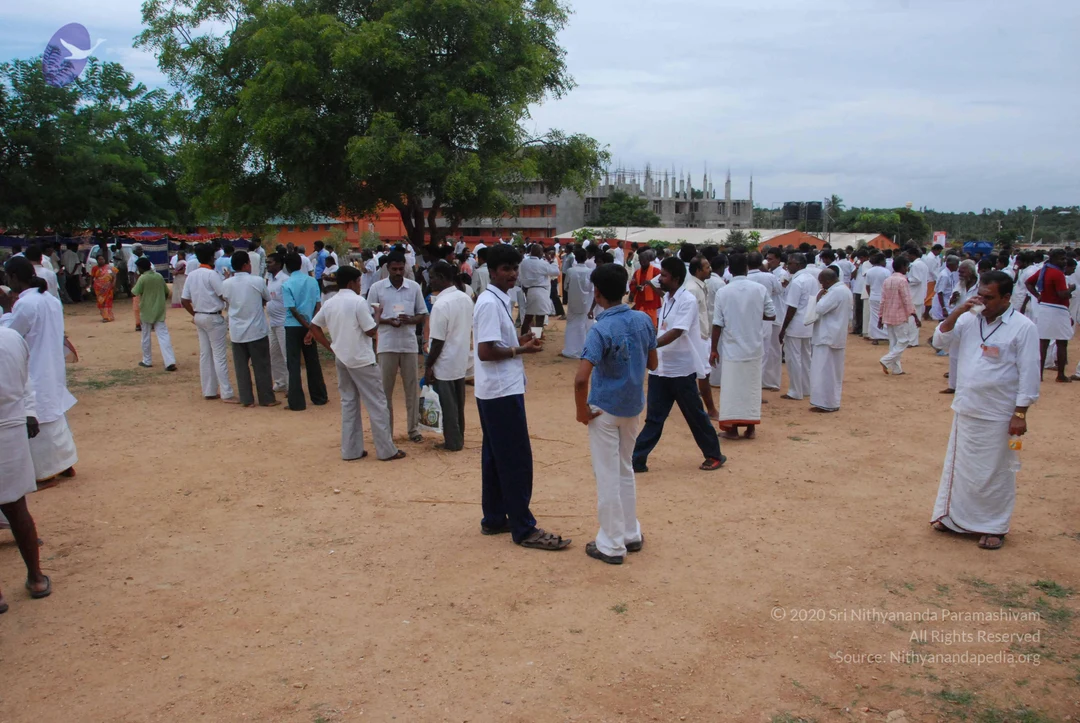
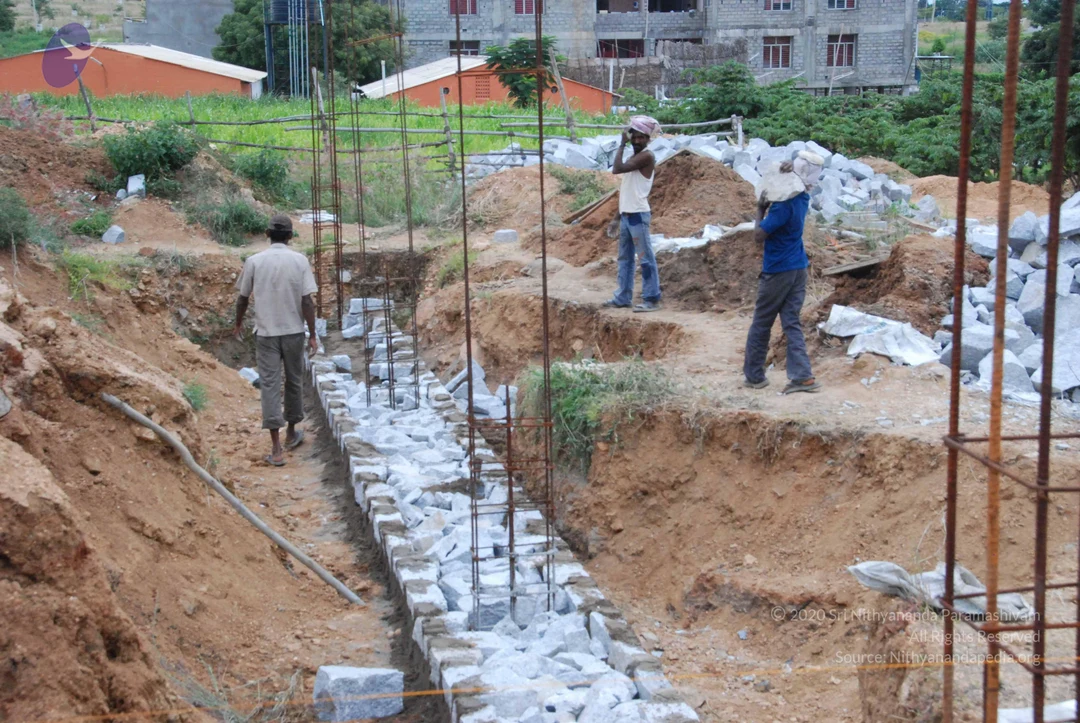
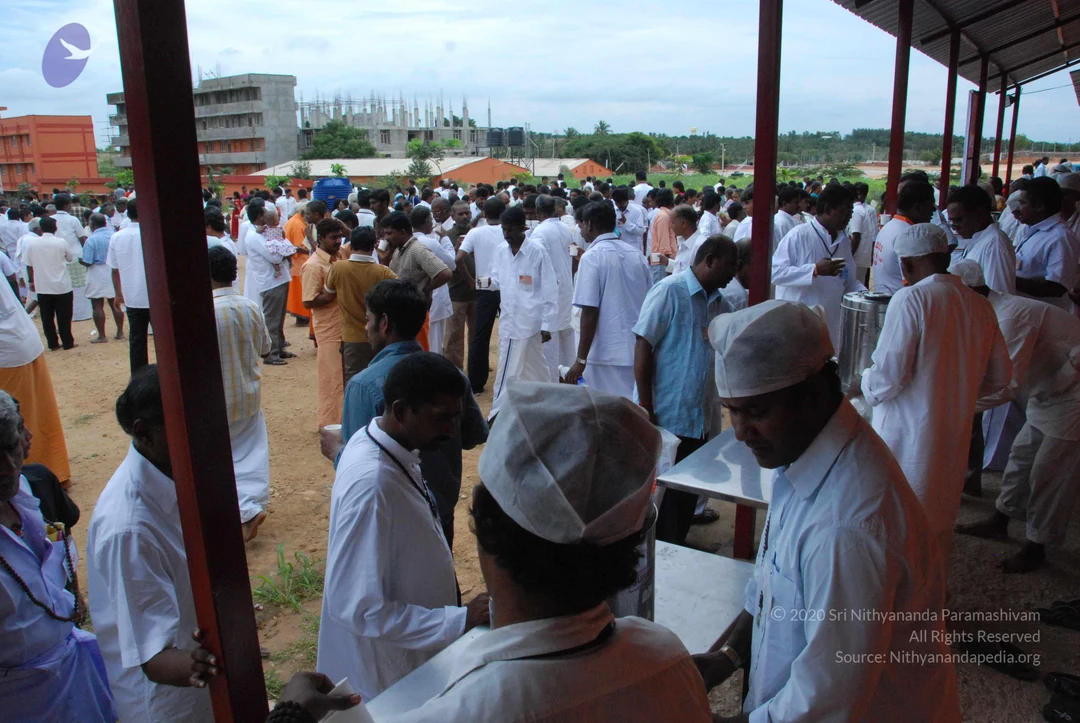
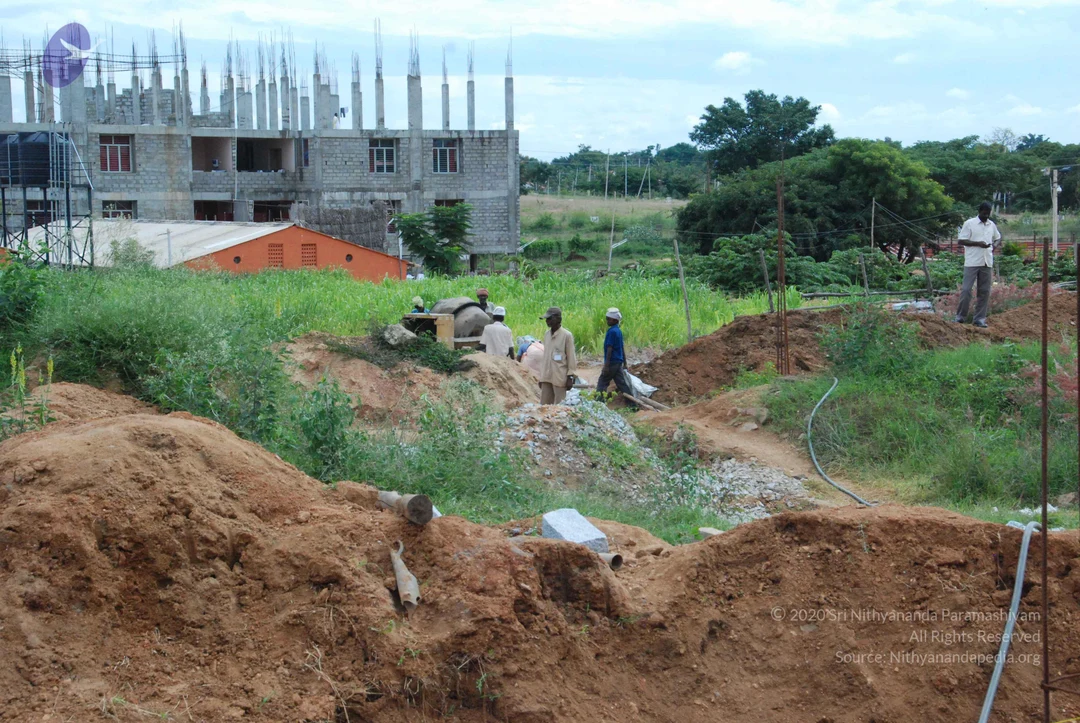
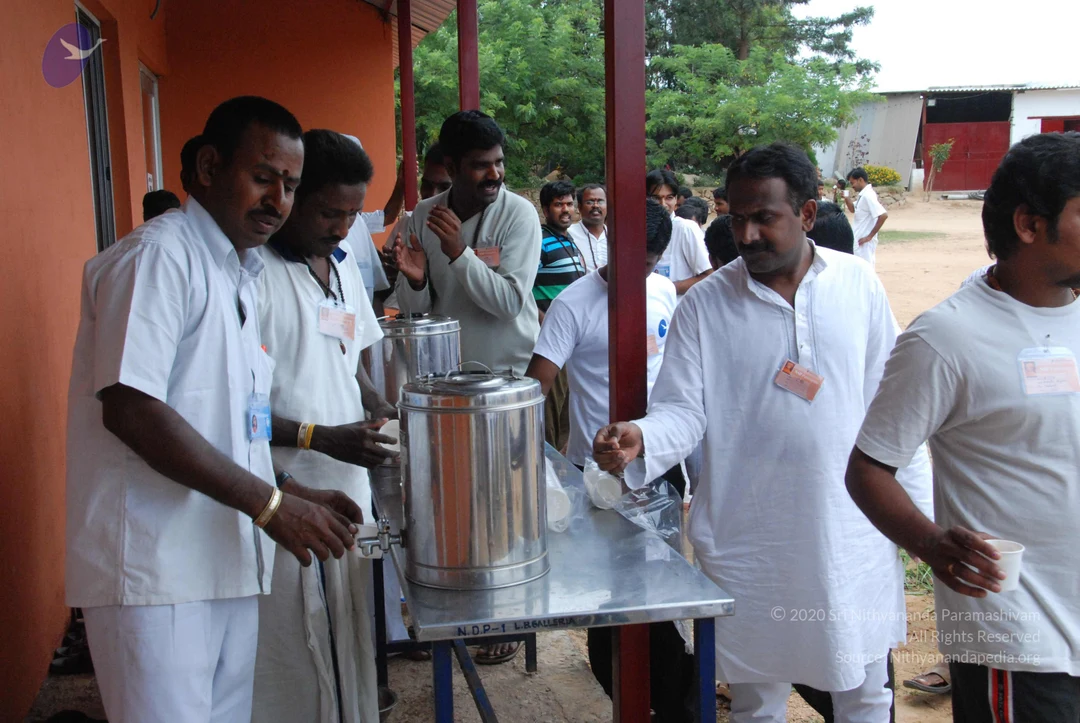
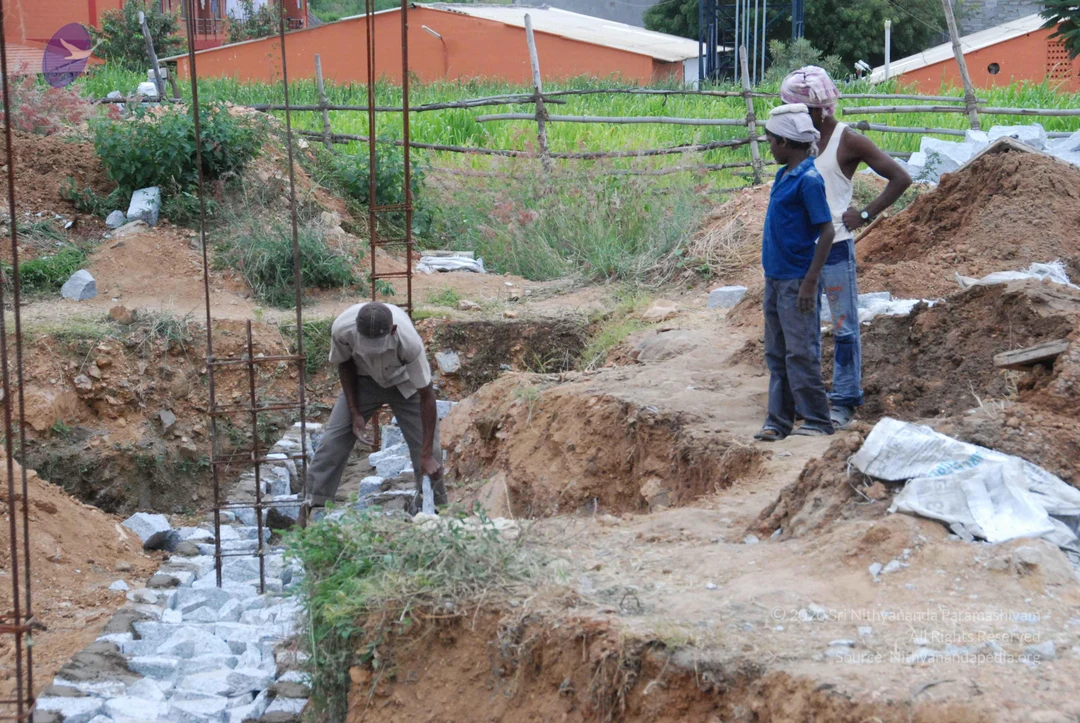
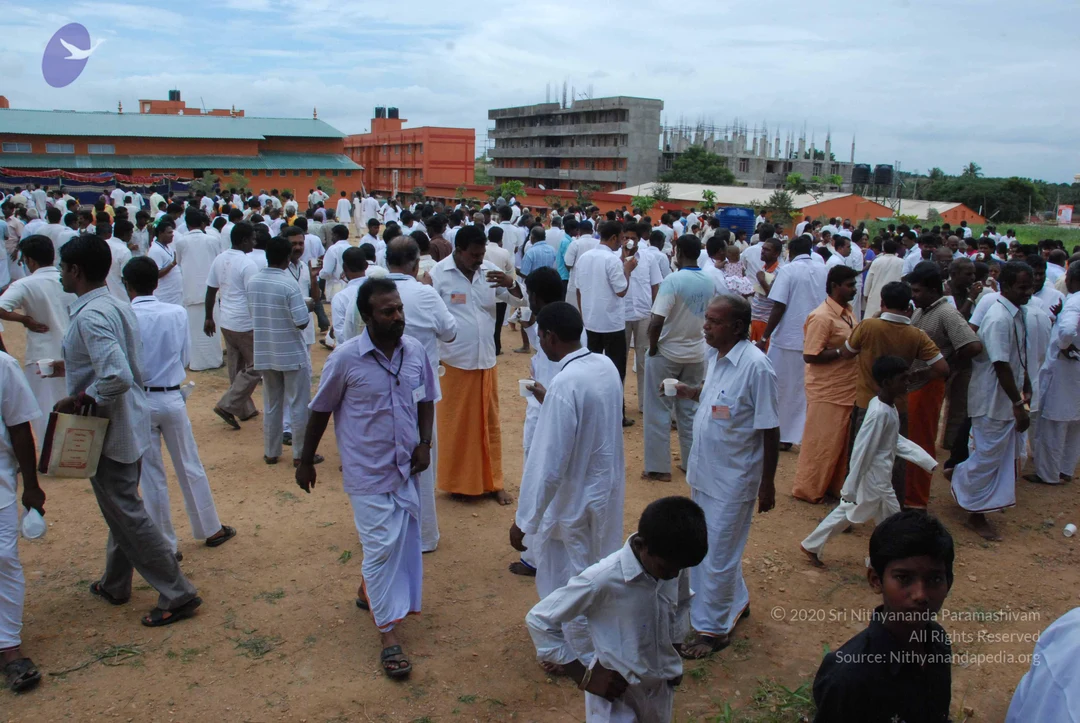
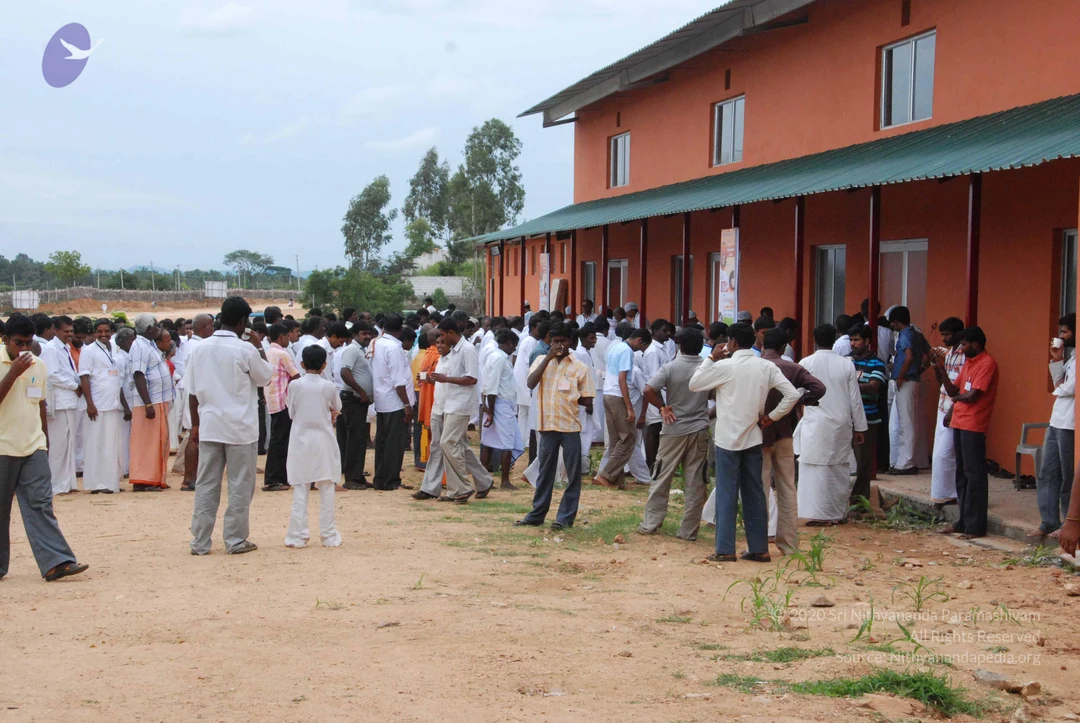
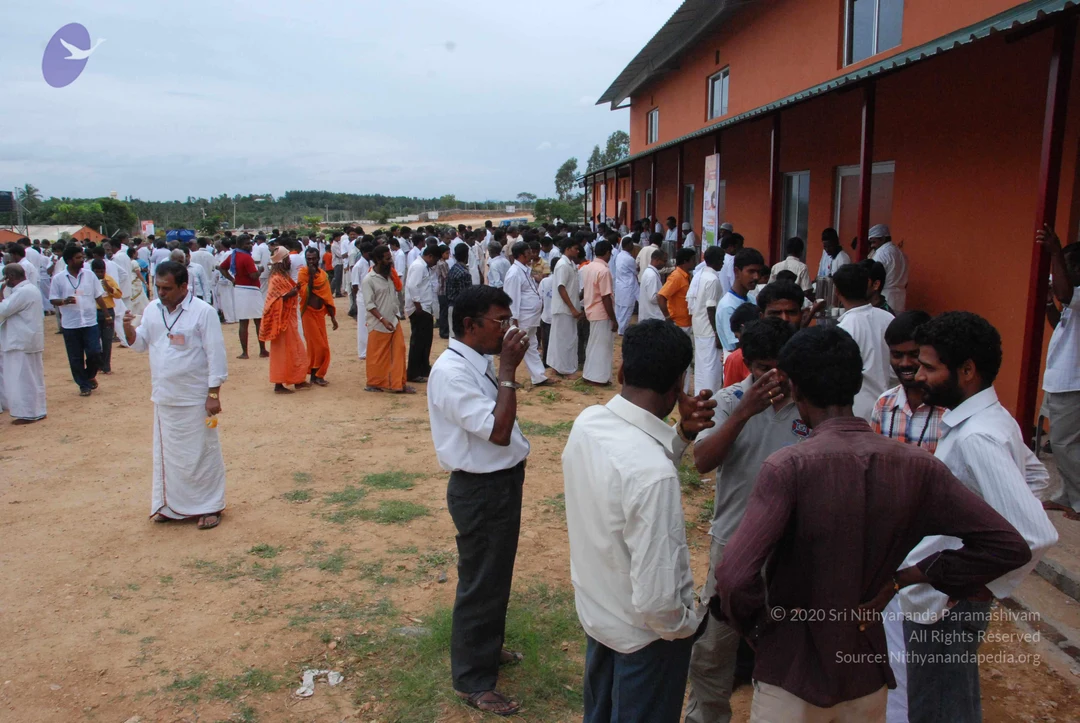
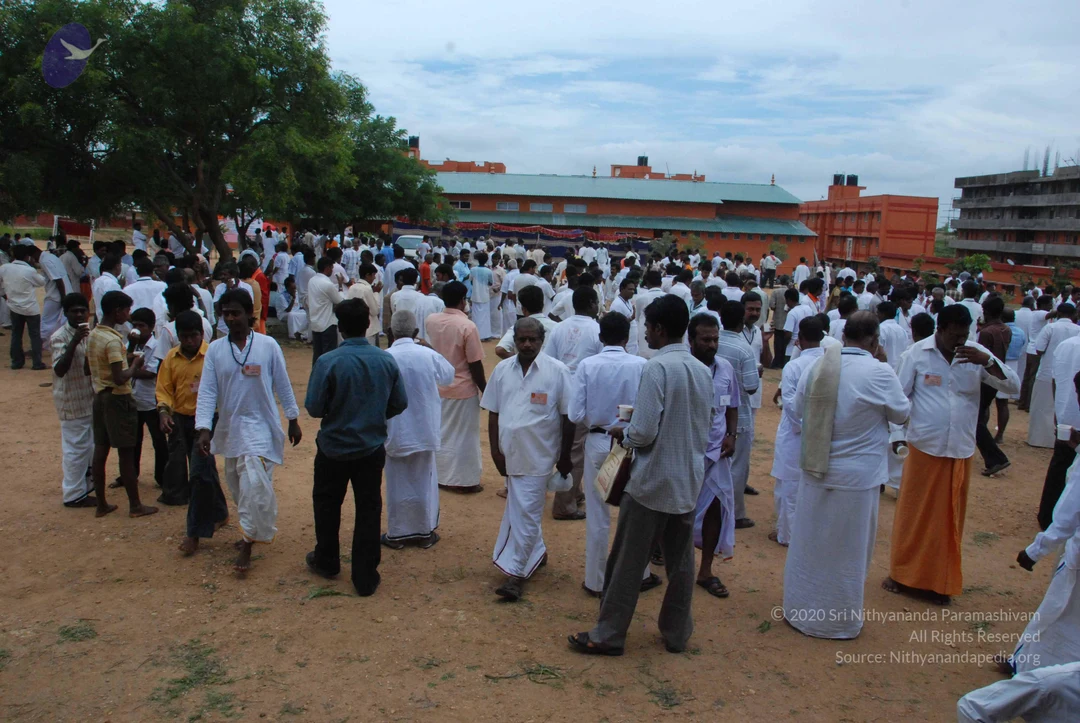
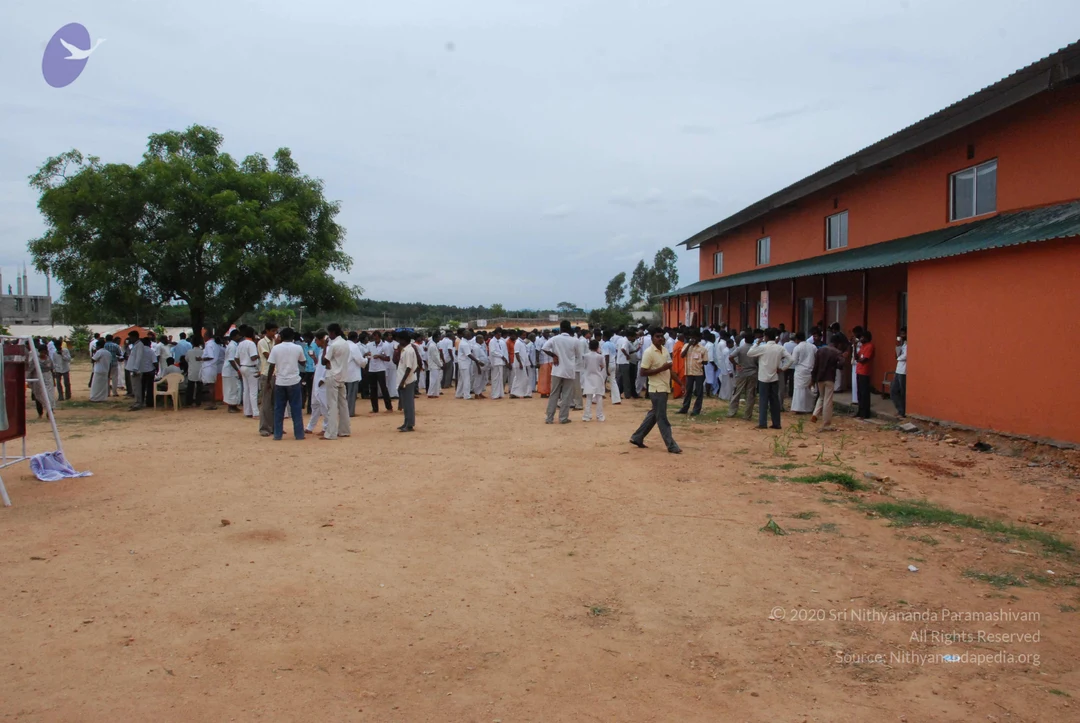
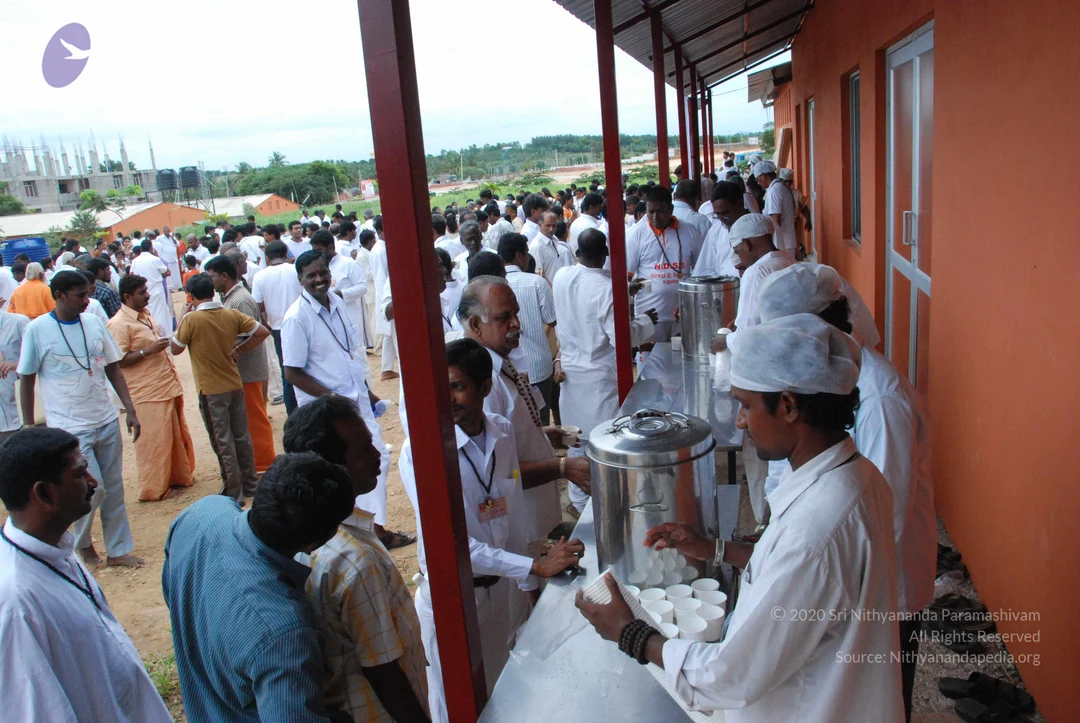
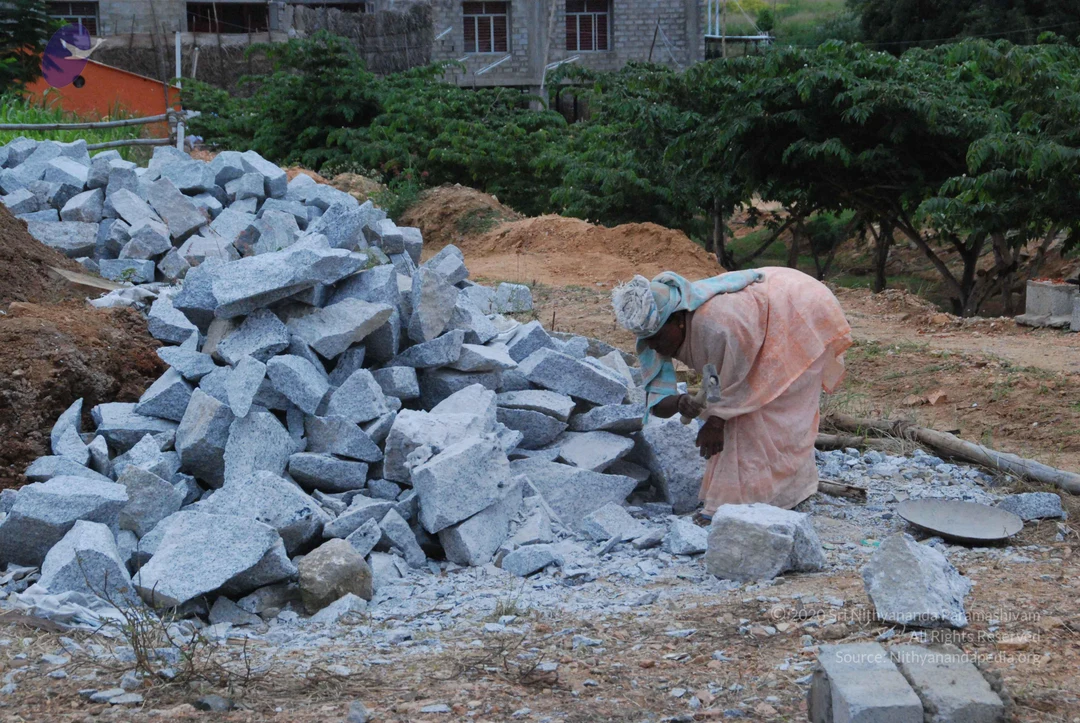
A large open dirt ground at an outdoor gathering, with a crowd of men mostly in white shirts and white dhotis milling about and conversing. Several men in light shirts and trousers stand among them, and one woman in an orange sari appears at the left. A large shade tree stands behind, with orange-roofed sheds and an unfinished concrete building beyond under a cloudy sky.A construction site photograph showing a trench being excavated in red-brown earth, lined with rows of cut grey granite blocks and rebar cages standing upright along its edges. Three workers are visible: a man in a light grey shirt and khaki trousers walking along the trench floor, a man in a white vest and blue jeans standing on the upper ground holding a cloth bundle, and a man in a blue shirt and dark trousers carrying a sack on his shoulder. Stacks of granite stones lie on the right, with plastic sheeting and mounds of soil around. Behind is a green field, orange-roofed sheds and a multi-storey concrete building under construction.A crowd of men gathers under an open-sided shed with red metal posts, many dressed in white dhotis and white shirts with lanyards around their necks. In the foreground, a man in a white cap and white shirt stands beside a stainless steel counter holding metal serving containers, while another man in a white cap ladles or serves food. A man in a light blue shirt walks through the queue, and a few people wear saffron or orange robes in the background. Beyond the shed are unfinished concrete buildings, a red-brick structure, and open land with palm trees under a cloudy sky.A construction site photograph showing an unfinished concrete block building with exposed rebar rising from its roof, behind a foreground of raw red-brown excavated earth and piled soil. Several workers in plain shirts and trousers stand among the trenches and a low wooden platform near grass and scattered gravel, while one man in a light shirt and grey trousers stands at right beside rebar stakes. A small orange-roofed shed and a water tank sit at left, with trees and open grassland behind. No ritual, discourse or depicted person appears in the frame.A photograph of an outdoor ashram serving area beside an orange-painted building with red pillars. Several men in white clothing stand at a steel table holding large stainless-steel urns with lids; one man in a white shirt and white lungi-style dhoti dispenses liquid into small paper cups, and a man in a white kurta to the right holds a cup. Men wearing white attire with ID badges stand behind them, and a man in a grey shirt claps. Some men wear gold bangles and a rudraksha-style necklace. Dirt ground, trees and a red-roofed shed sit in the background.A construction site photograph with excavated red-brown earth and trenches. In the foreground a worker in a khaki shirt and dark trousers, bent over, lays pale grey cut stone blocks along a trench edge, with a stone-cutting tool in hand. Beside him stand two men: one in a blue shirt and jeans, the other in a white sleeveless vest and light trousers, both wearing head wraps. Rusty steel reinforcement rods rise on the left, and piles of stone and white sacking lie on the right. Behind is a wooden pole fence, green field grass and orange-roofed buildings. No ceremony or deity is visible.
08

01-Morning-Satsang-and-Darshan

5 dated photos in previewSource gallery
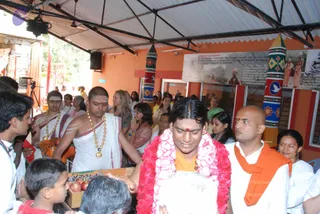
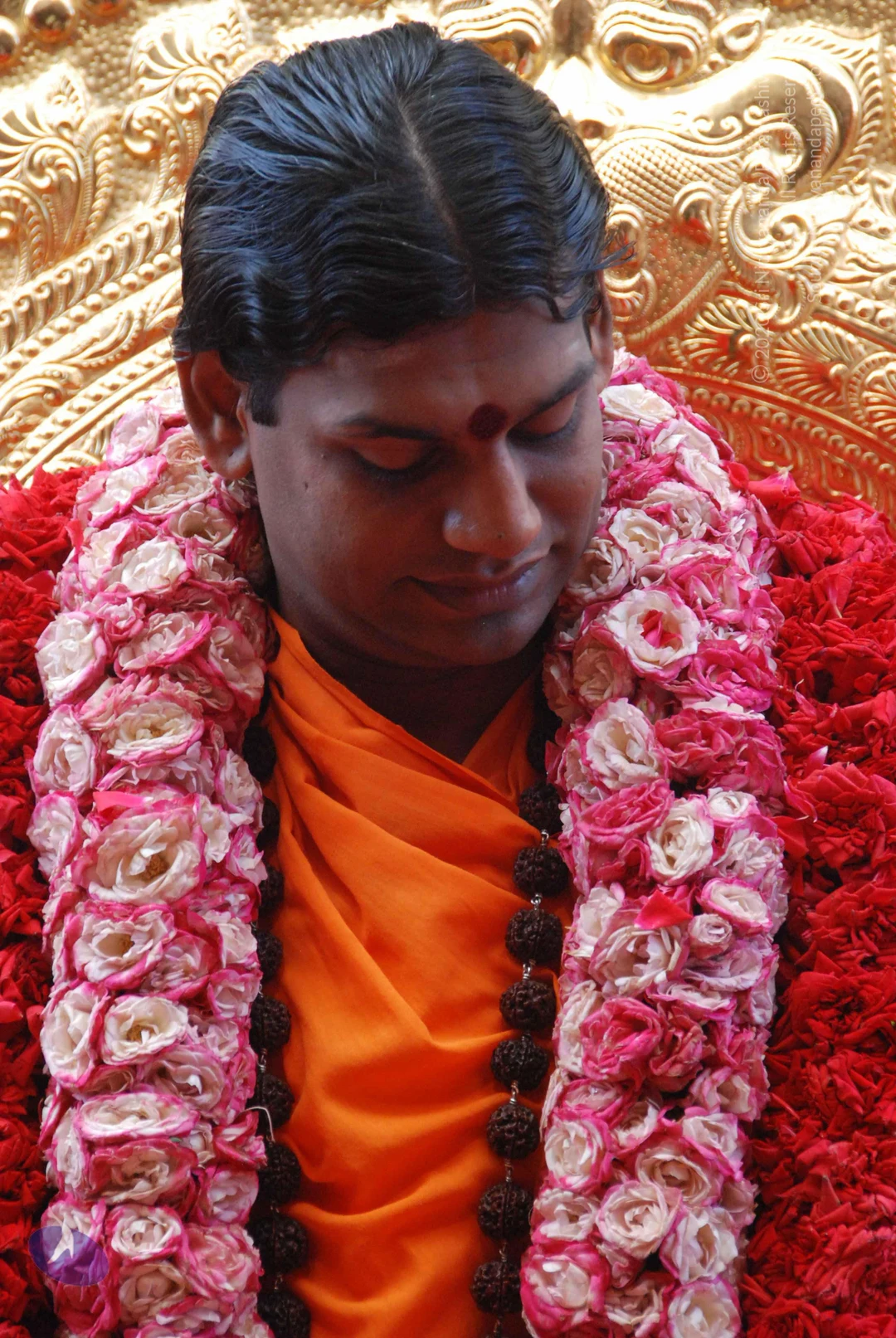
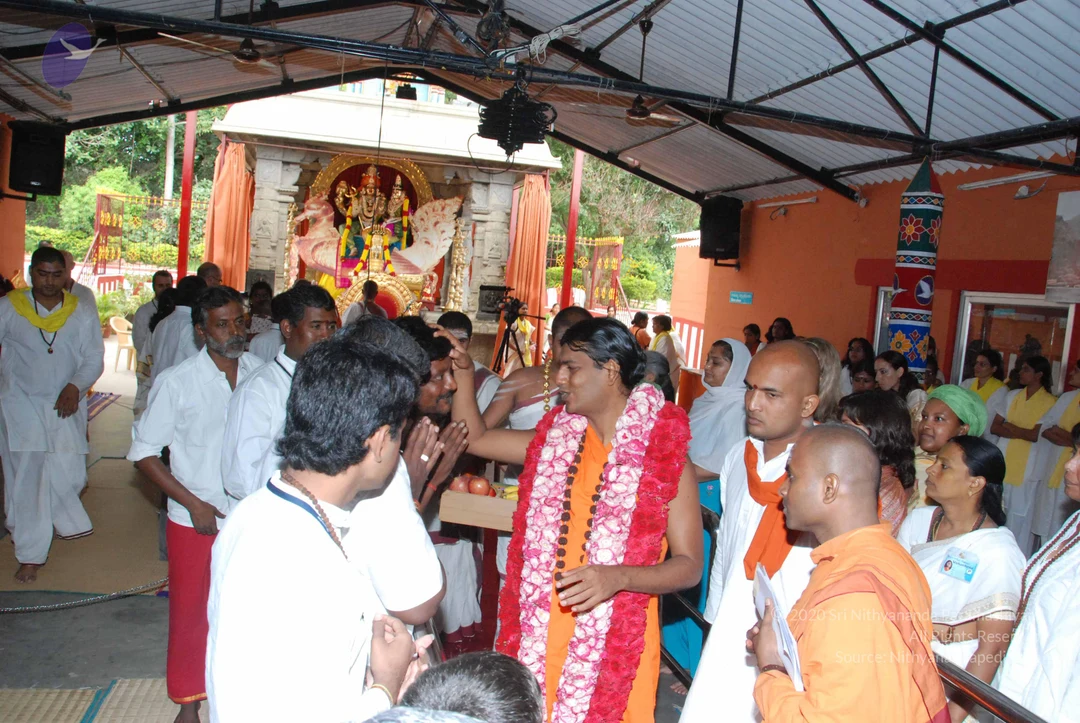
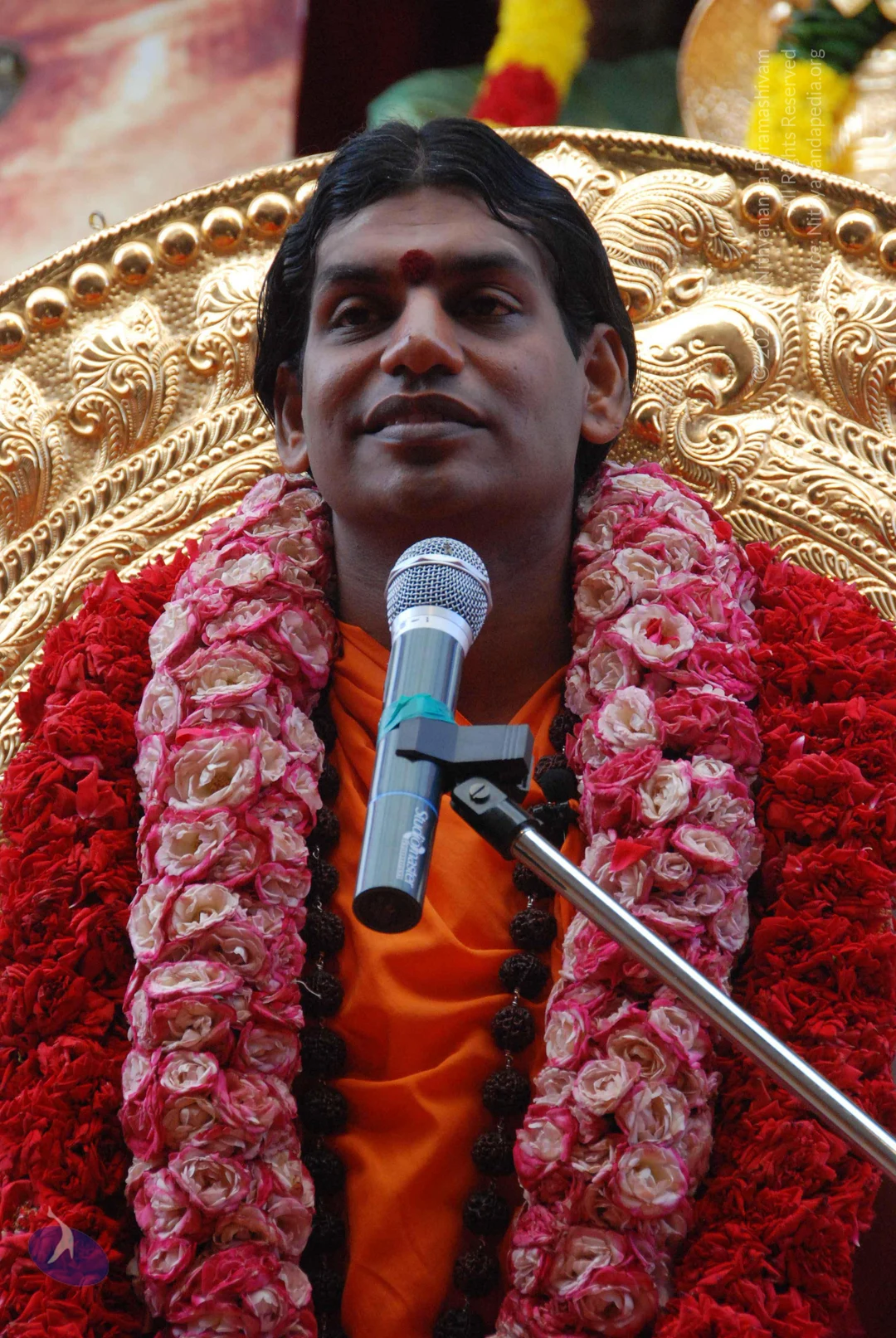
A seated man in an orange saffron cloth wrap, wearing a dark rudraksha mala and a large garland of pink and white roses, sits before a microphone on a stand. A red bindi mark sits on his forehead and his hair is swept back. Behind him is an ornate gold throne with carved scrollwork, and red rose petals cover the surface in front. He looks downward while speaking. The appearance-based label is a person, seated in a satsang setting.A man in an orange saffron robe sits before an ornate gold throne with carved scrollwork and beaded rims, speaking into a silver microphone on a stand. He wears a red kumkum mark on his forehead and a double garland of pink and white roses over red flower garlands. Behind him, gold and yellow floral decorations are visible. The scene suggests a seated public talk or satsang. The a person label is withheld because the visible cues are only partly distinctive; the man's appearance is not clearly established.A man in saffron-orange robes sits on an ornate gold peetha throne with a rounded, repoussé back. He wears a large garland of red and pink roses around his neck and a red tilak on his forehead, and speaks into a silver microphone on a boom stand while gesturing with both hands, index fingers raised. Behind him are gold and green-yellow floral decorations and a pink painted backdrop.A man seated on an ornate gilded throne with a curved, bead-studded backrest speaks into a microphone on a stand. He wears an orange-saffron garment, a red and pink rose garland and a dark rudraksha-style mala, with a red tilak on his forehead. He gestures with both index fingers raised. Behind the throne are yellow and red marigold garlands, a pink painted backdrop, and a golden decorative crown or canopy above. a person candidate appears in person: the orange robe, gilded throne and garlands are visible cues, though the face is not used for identification, so the attribution is uncertain. One person is visible.Photograph of a crowd at an open-sided orange-walled hall with a corrugated roof, during a darshan or ritual event. In the centre, a young man wearing a large pink and white flower garland, a red bindi and an orange shawl over white clothing holds a white cloth bundle. A priest in white dhoti with a gold necklace and white tripundra marks stands beside a tray of fruit, apples and a small offering. On the right, a bald man in white with an orange shawl stands near a smiling woman in white. Devotees, women in saris and children crowd the background. A wall panel with text and photographs is visible behind them. Whether the central figure is a person cannot be determined from appearance alone, so the a person field is unsure.
09

02-Temple-Visit

2 dated photos in previewSource gallery
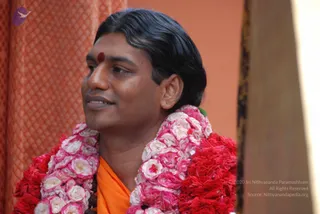
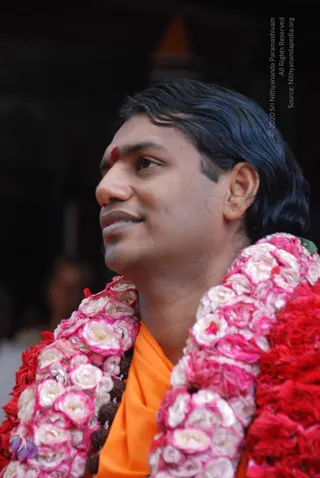
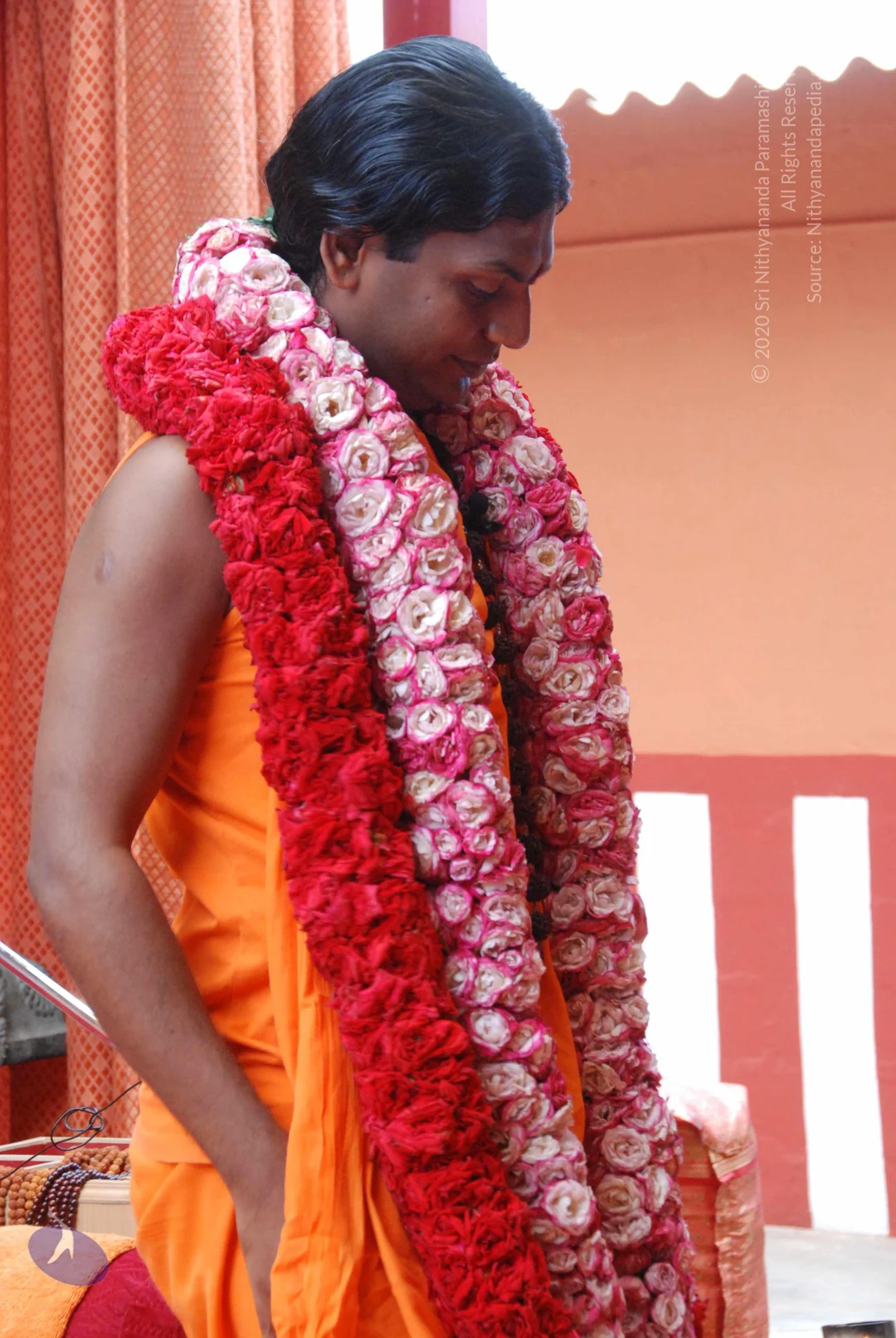
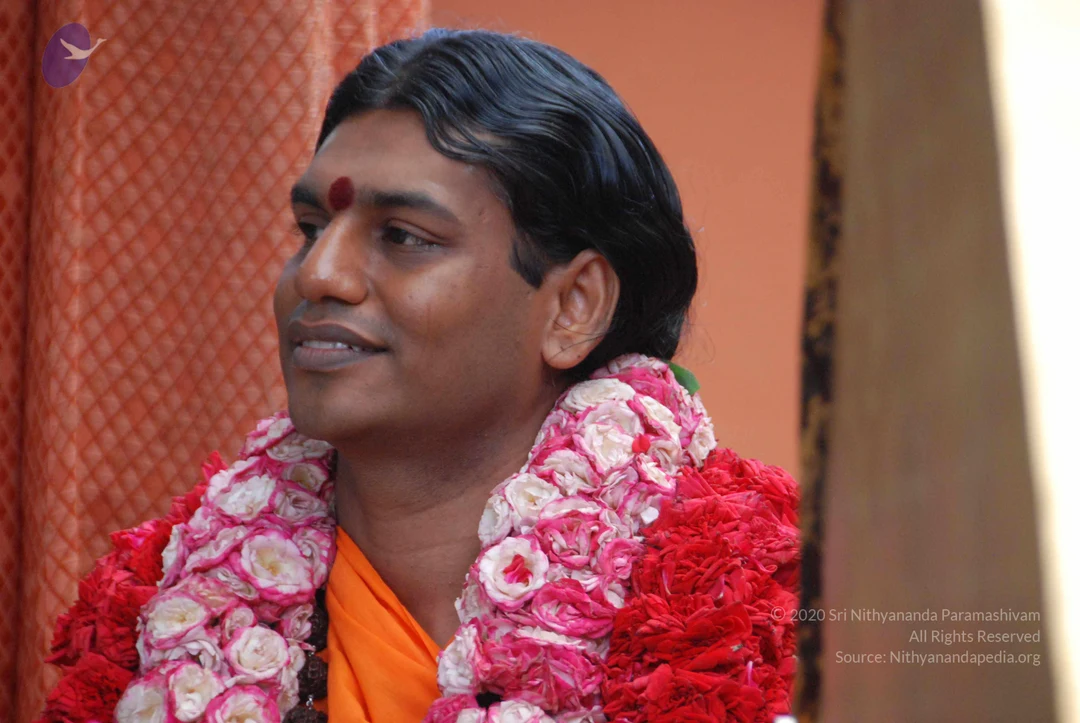
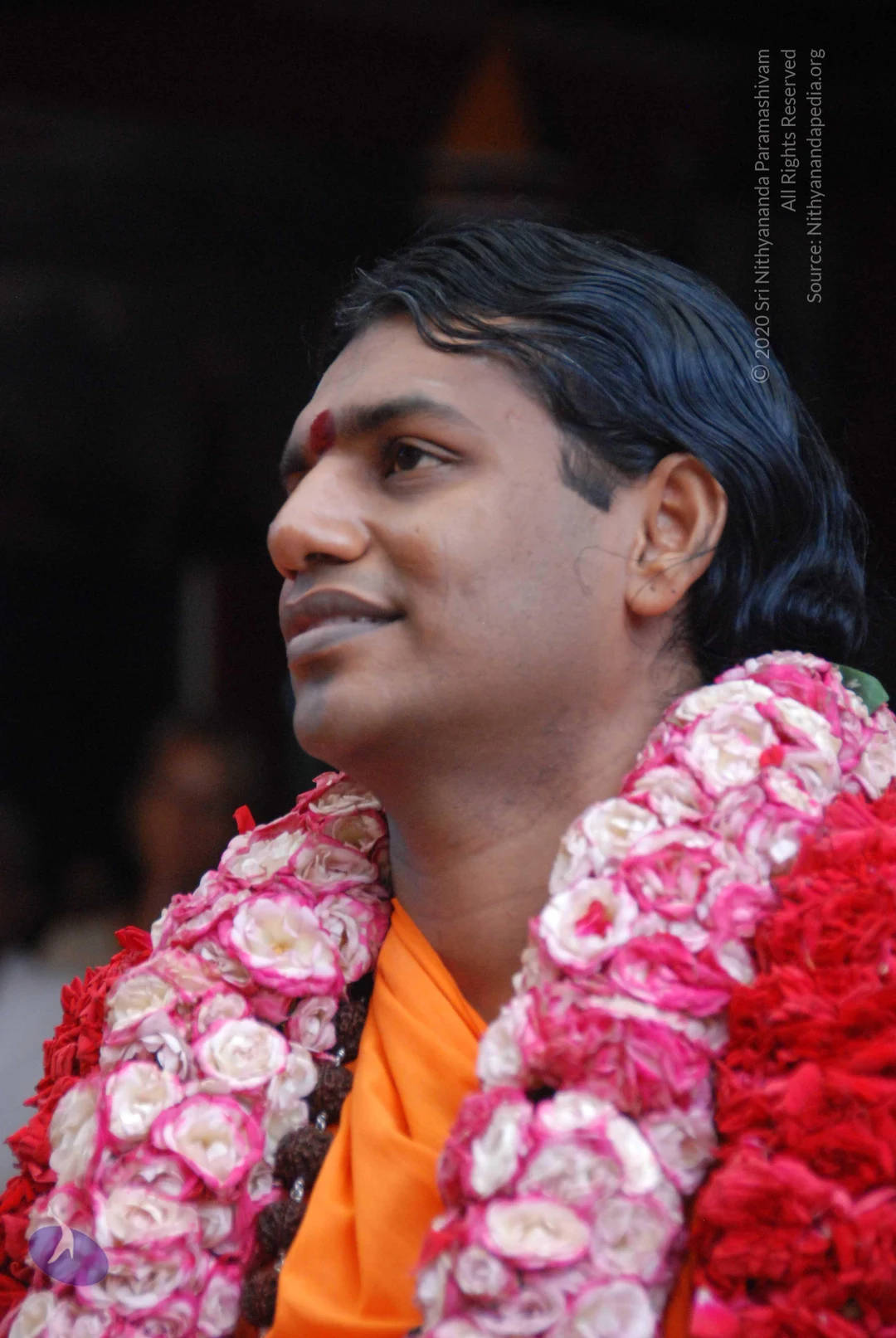
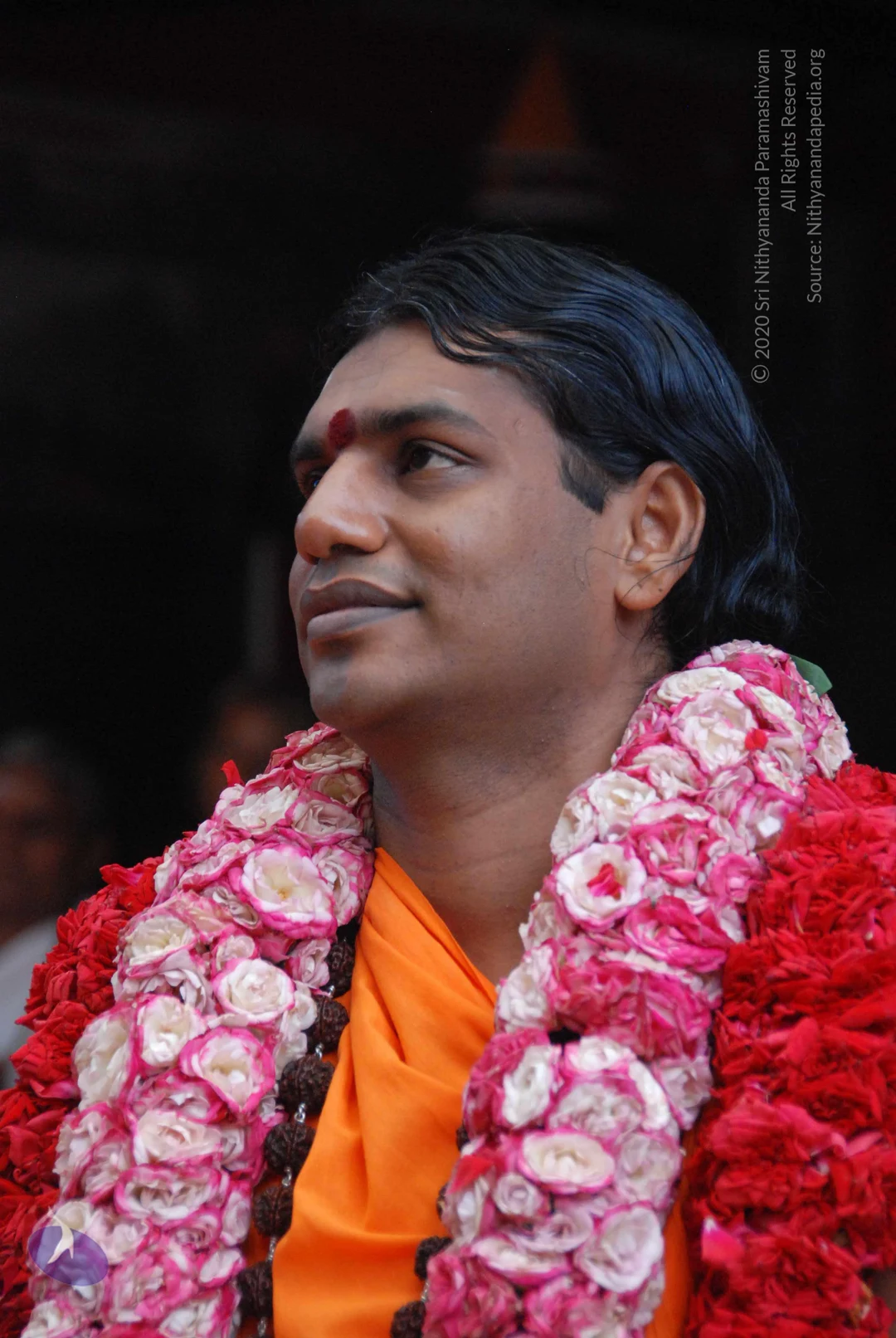
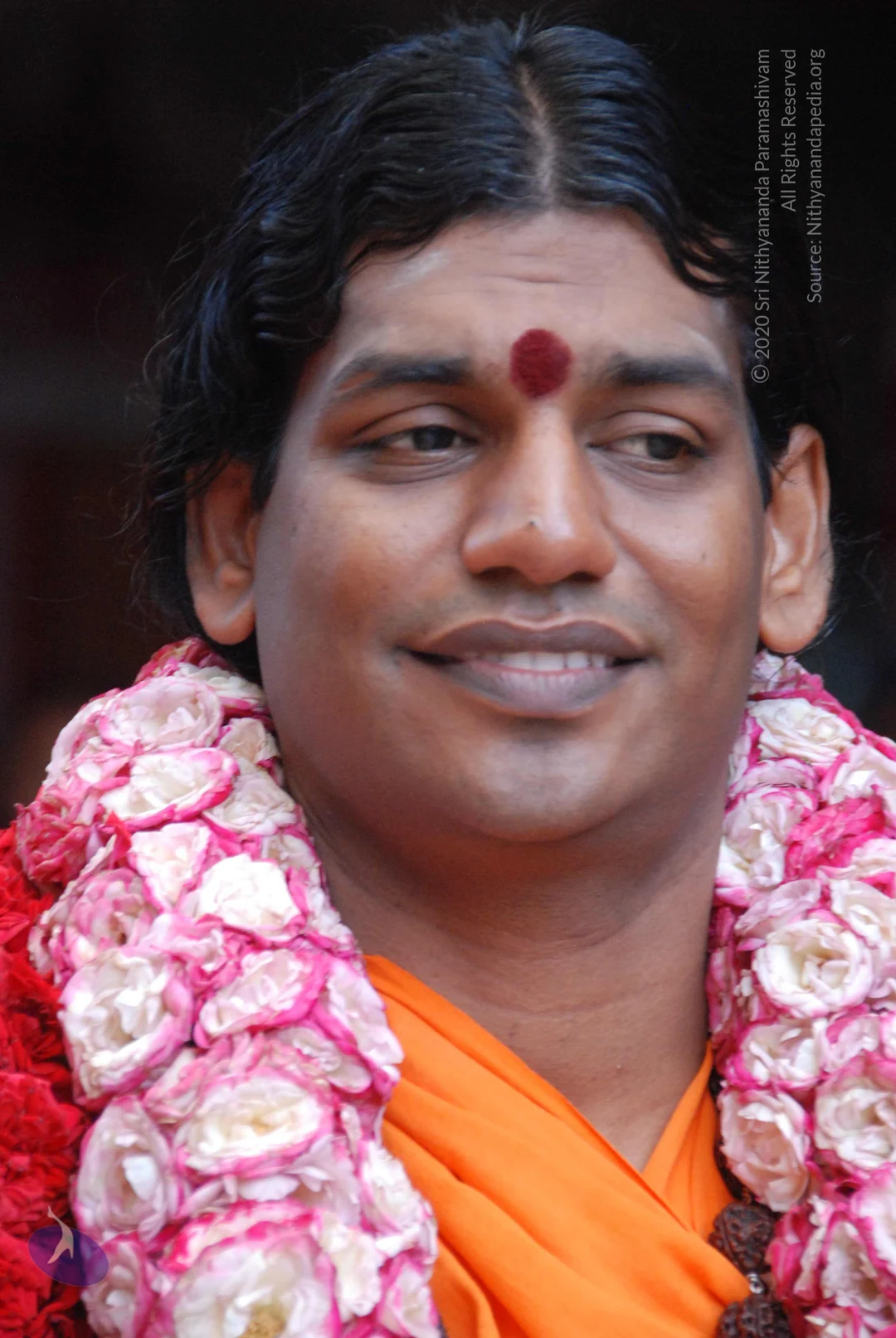
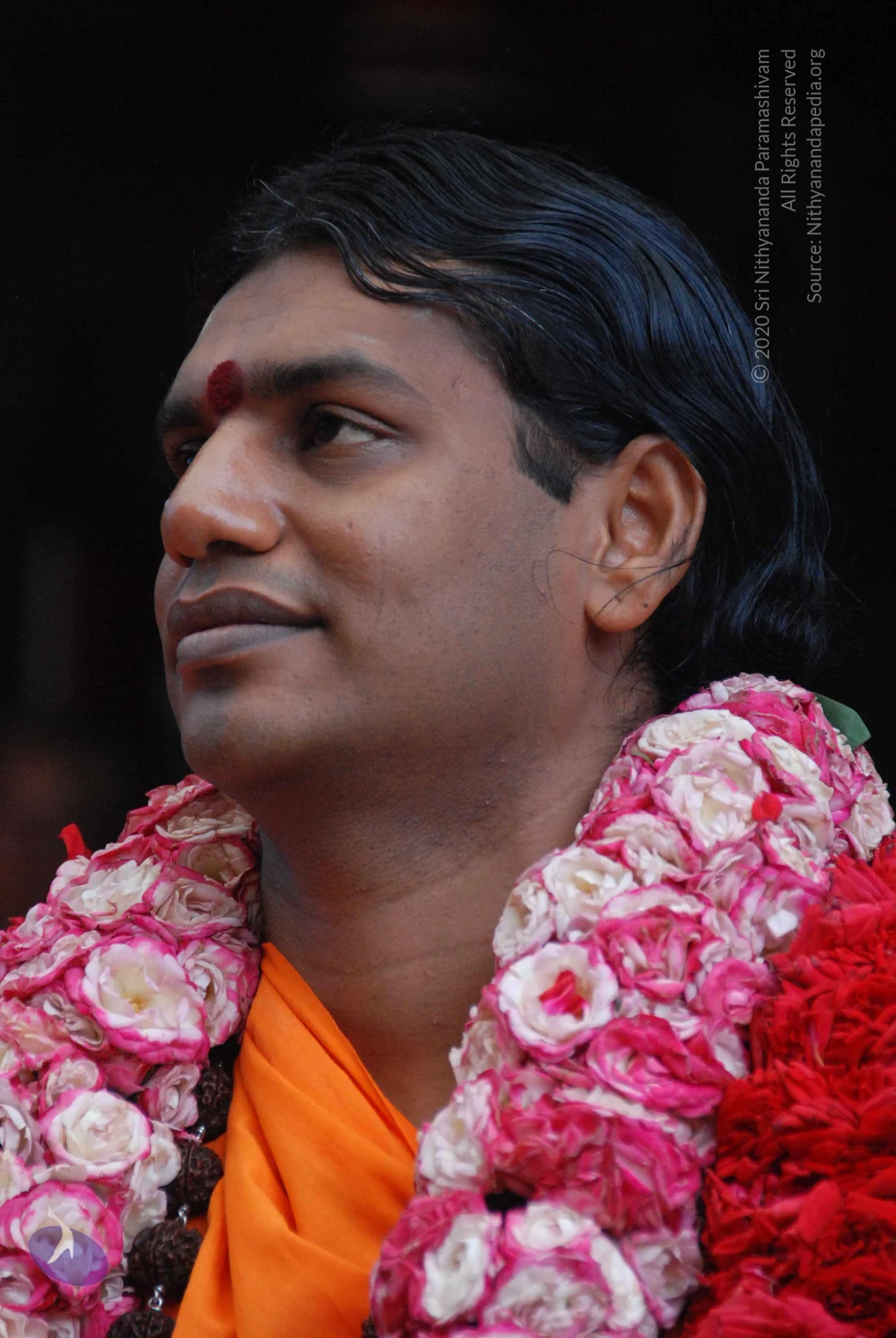
Close-up photograph of a smiling man with shoulder-length dark hair parted in the middle, wearing a round red kumkum mark on his forehead. He is draped in an orange saffron shawl and wears a thick garland of white and pink-edged roses with red flowers at the sides, with a rudraksha mala visible at the lower edge of the frame. He is the only person shown, and the background is dark.Close photo of a man with eyes closed and a faint smile, wearing a red bindi on his forehead, dark hair swept back, an orange saffron wrap draped over his shoulders, and a double garland of red flowers and white-and-pink roses. A row of brown rudraksha beads hangs across his chest. A dark background with a reddish-orange temple pillar edge behind him suggests a shrine setting. a person cues: saffron clothing, rudraksha mala and flower garlands, shown in a devotional posture.
10

03-Pada-Puja

8 dated photos in previewSource gallery
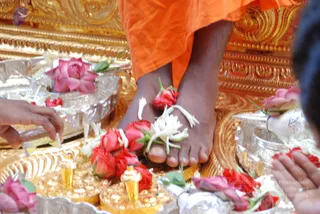
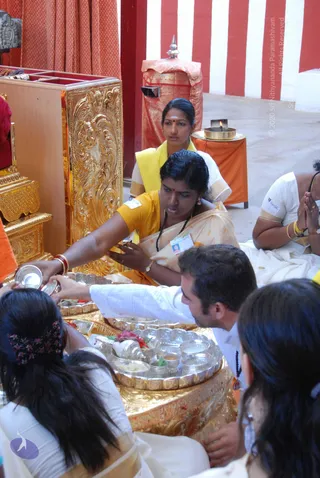
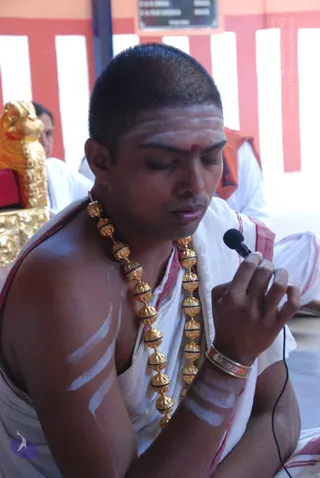
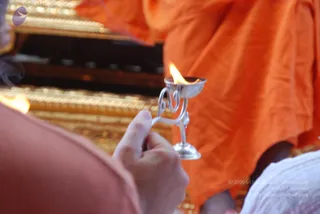
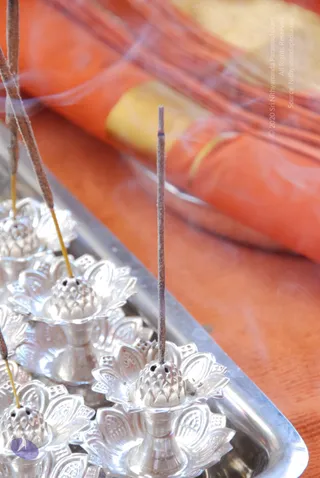
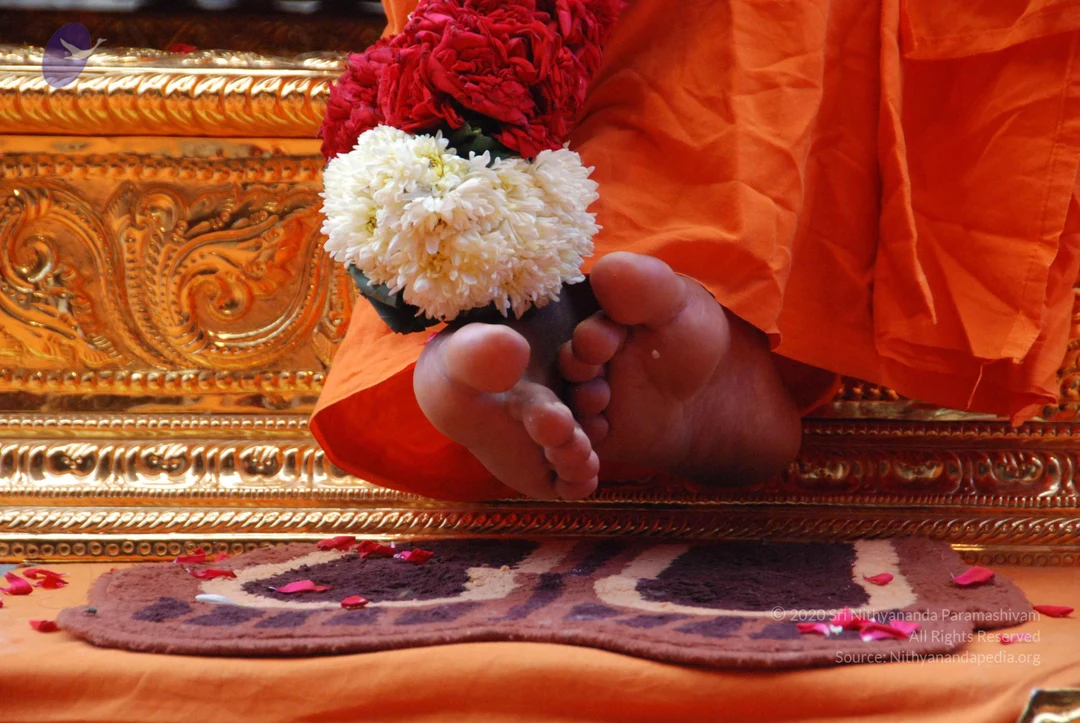
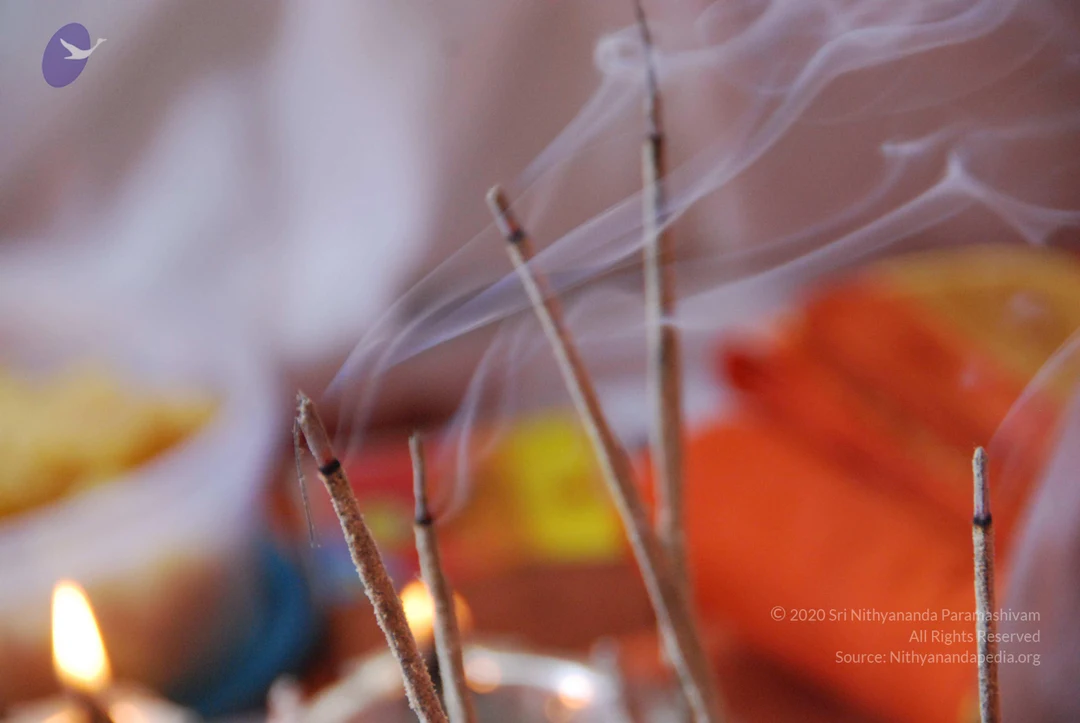
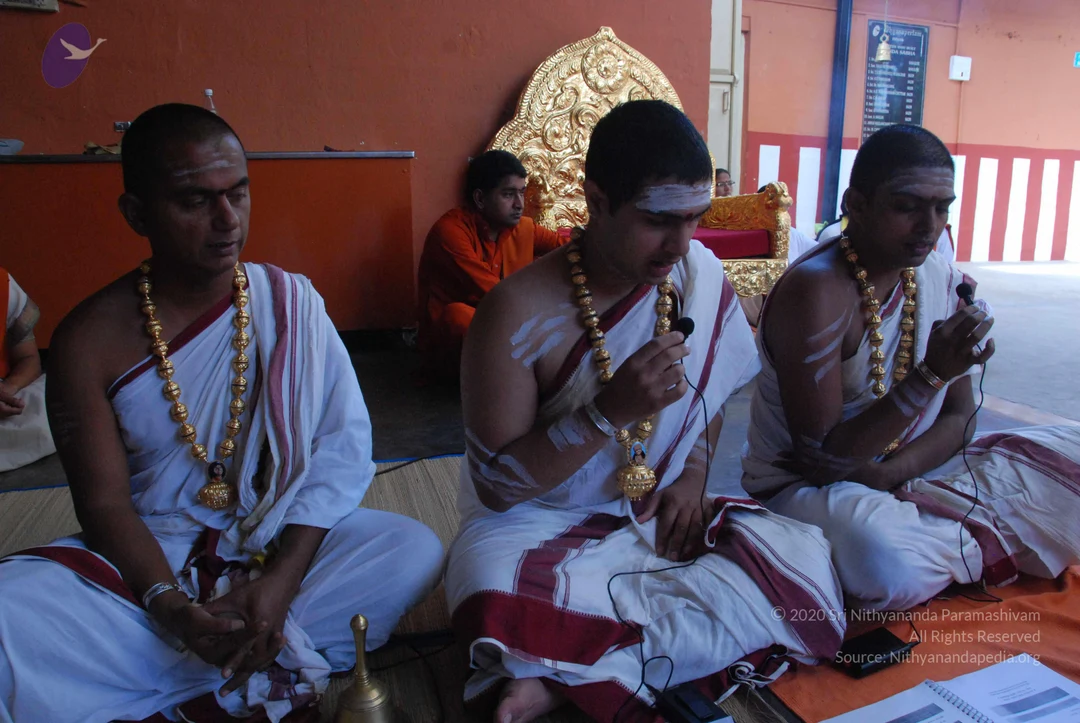
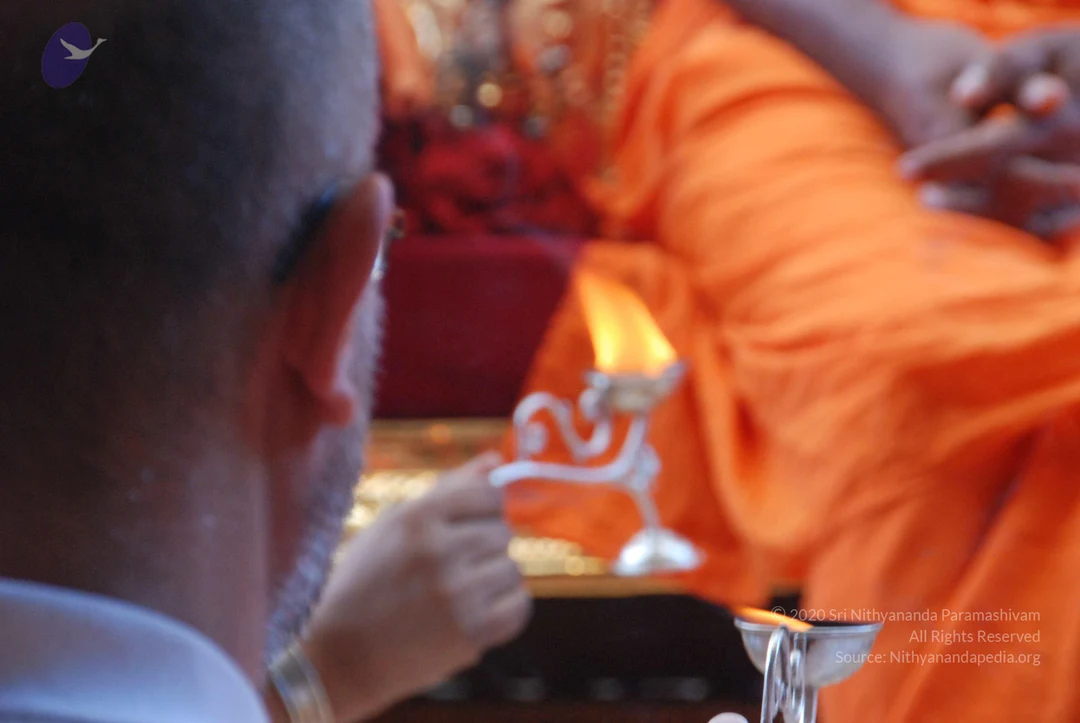
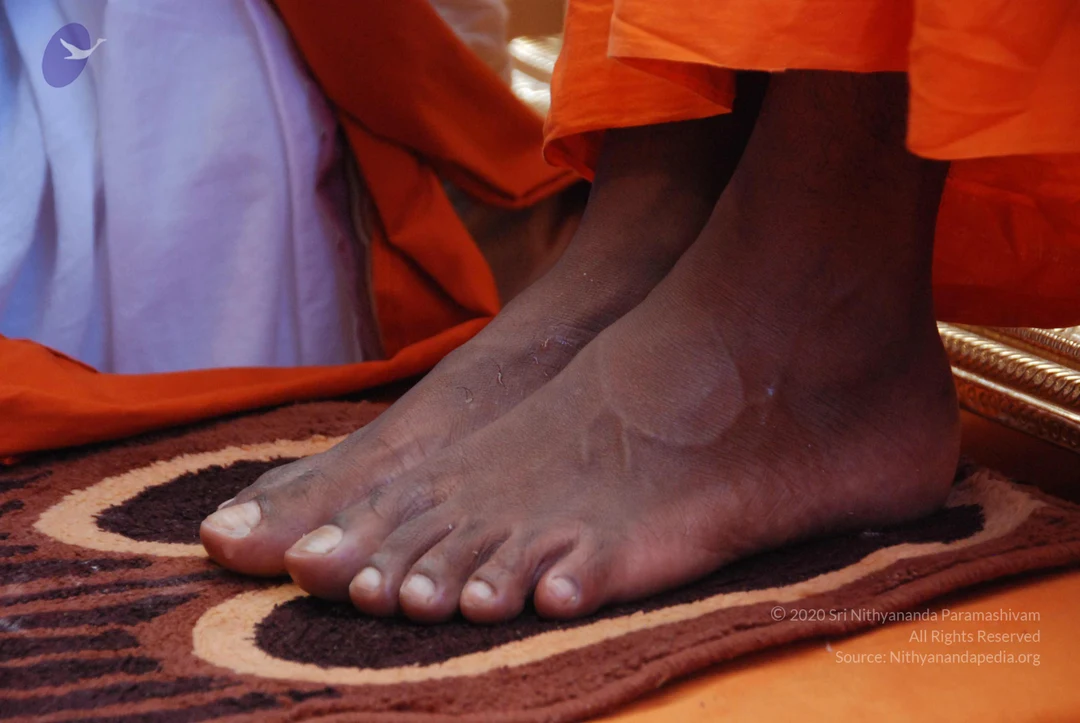
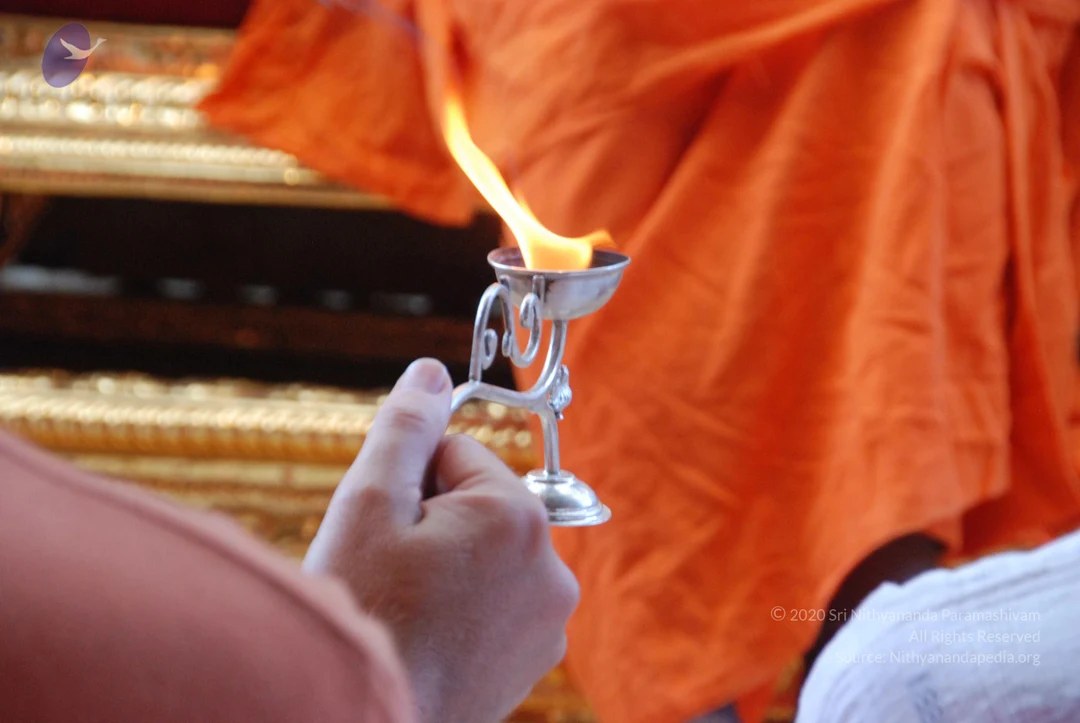
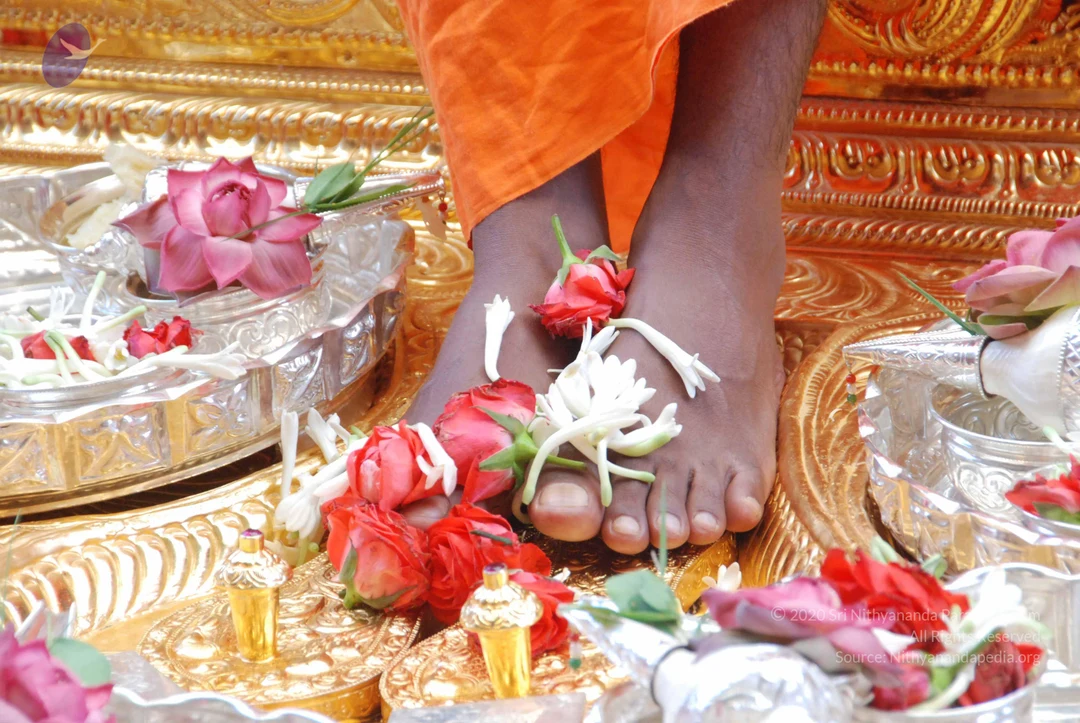
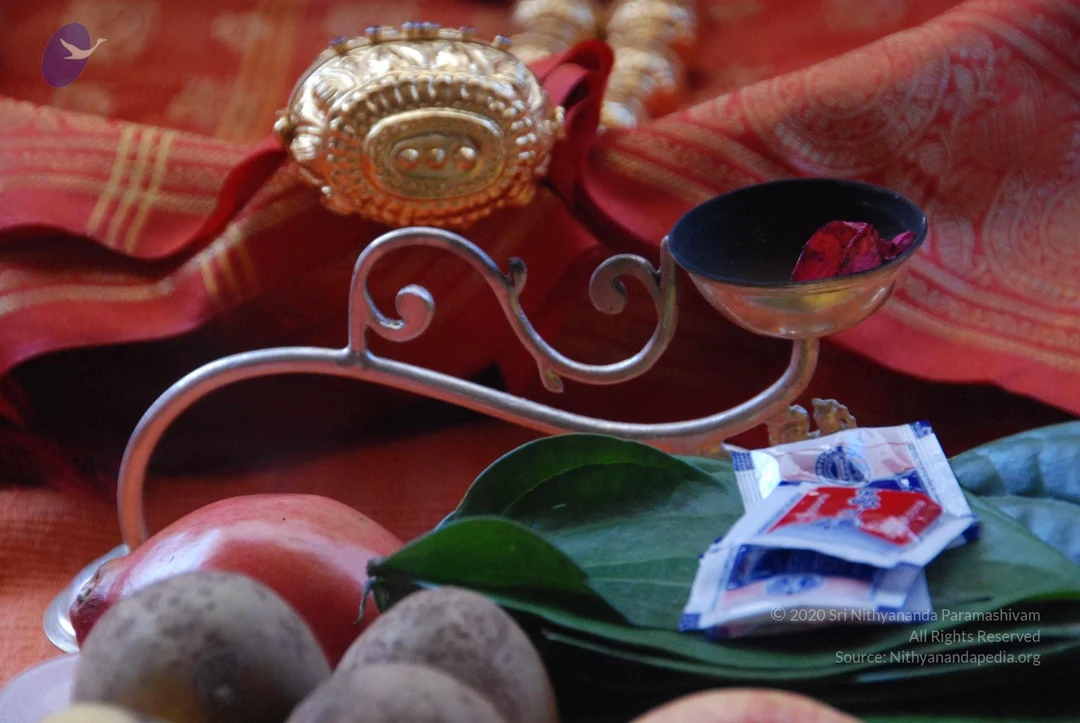
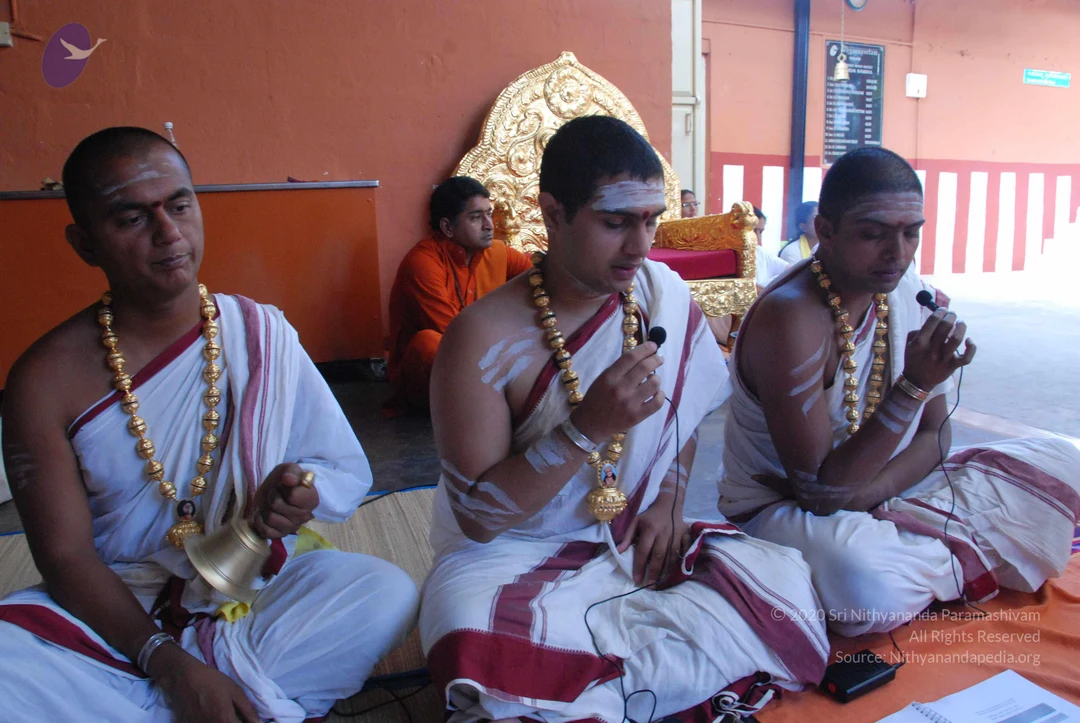
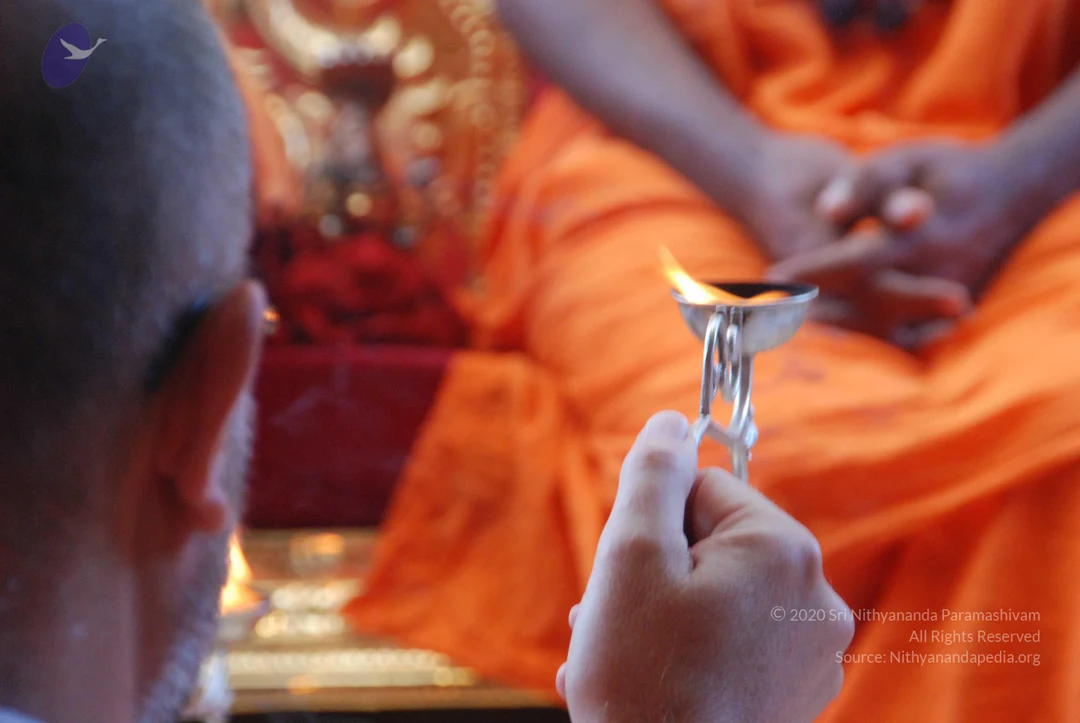
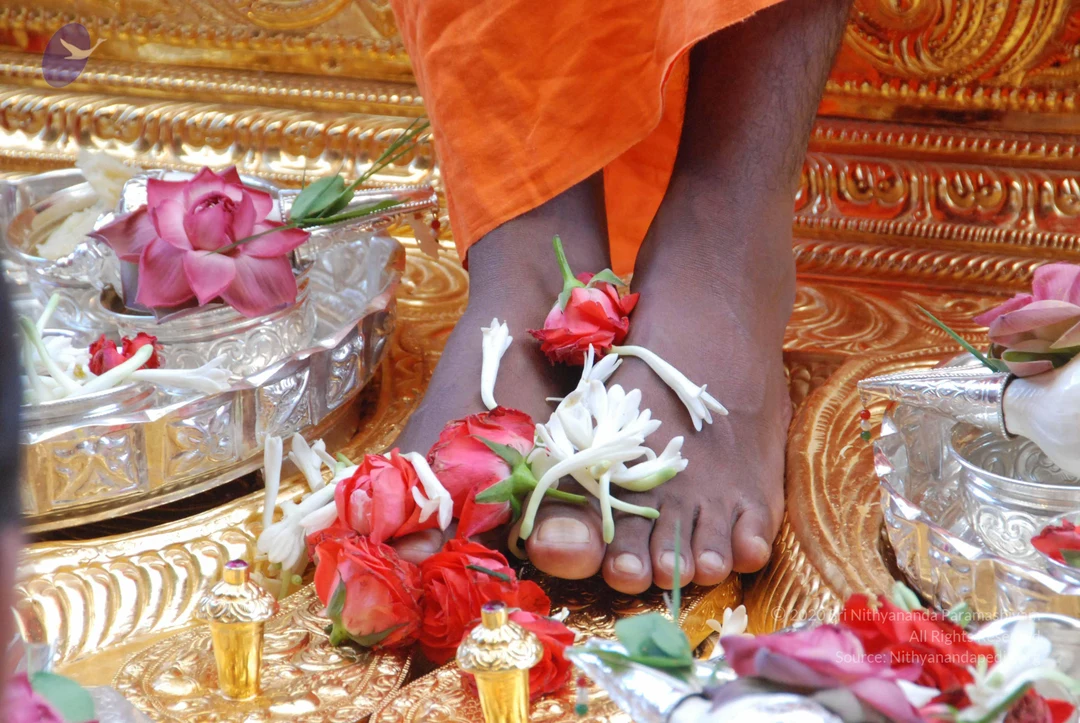
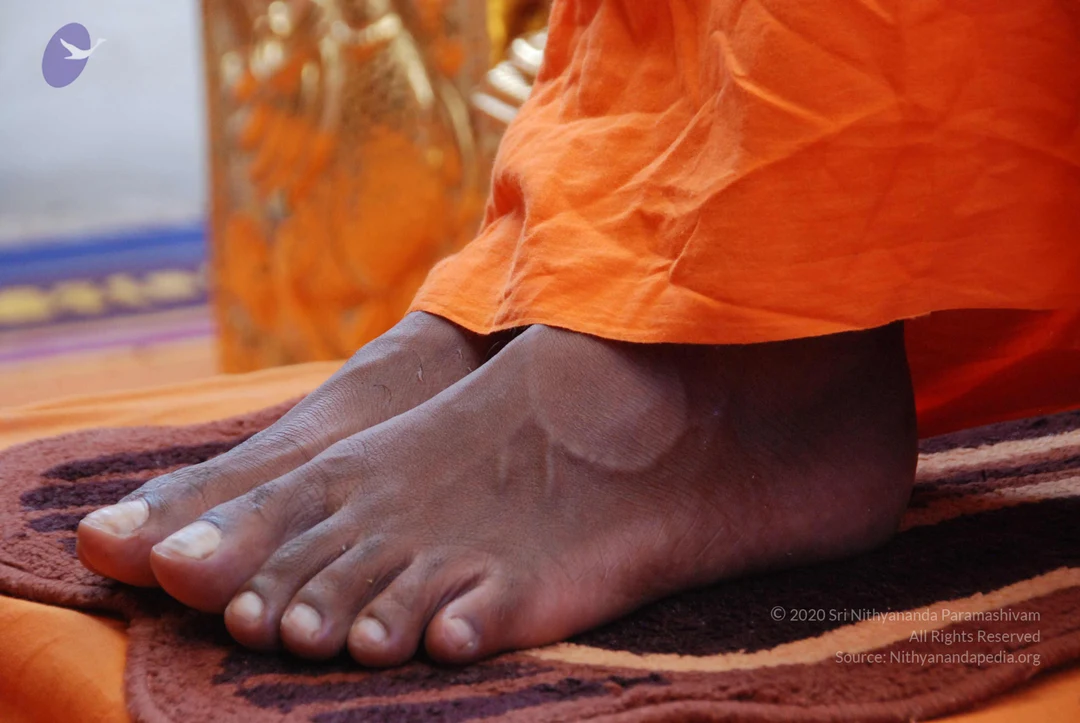
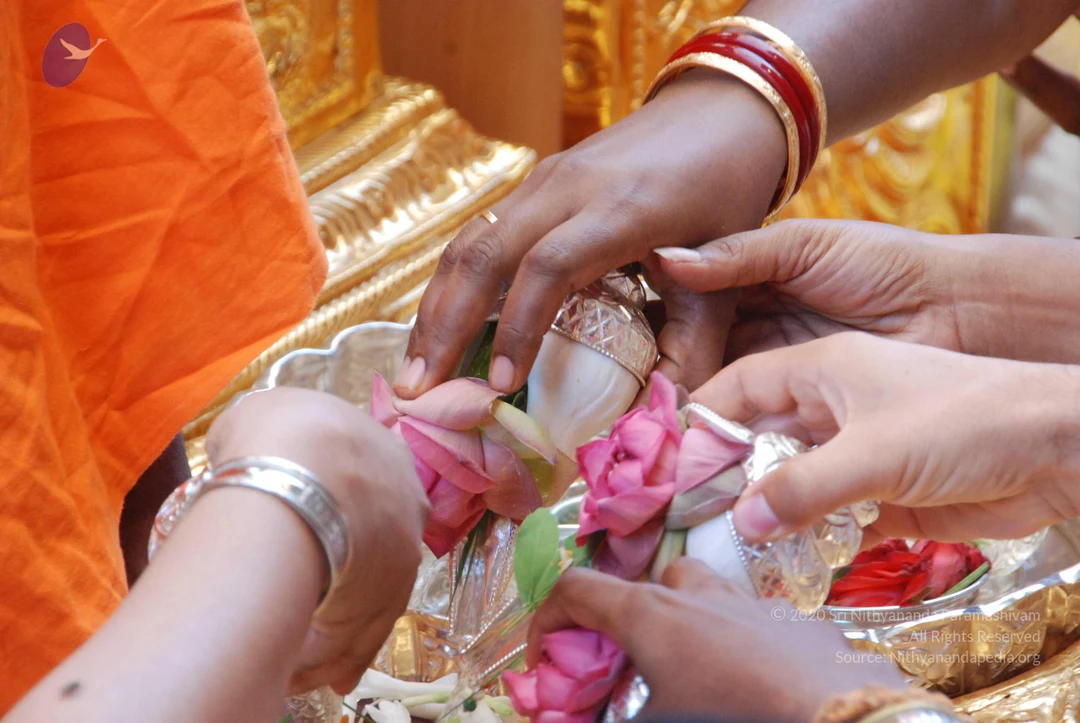
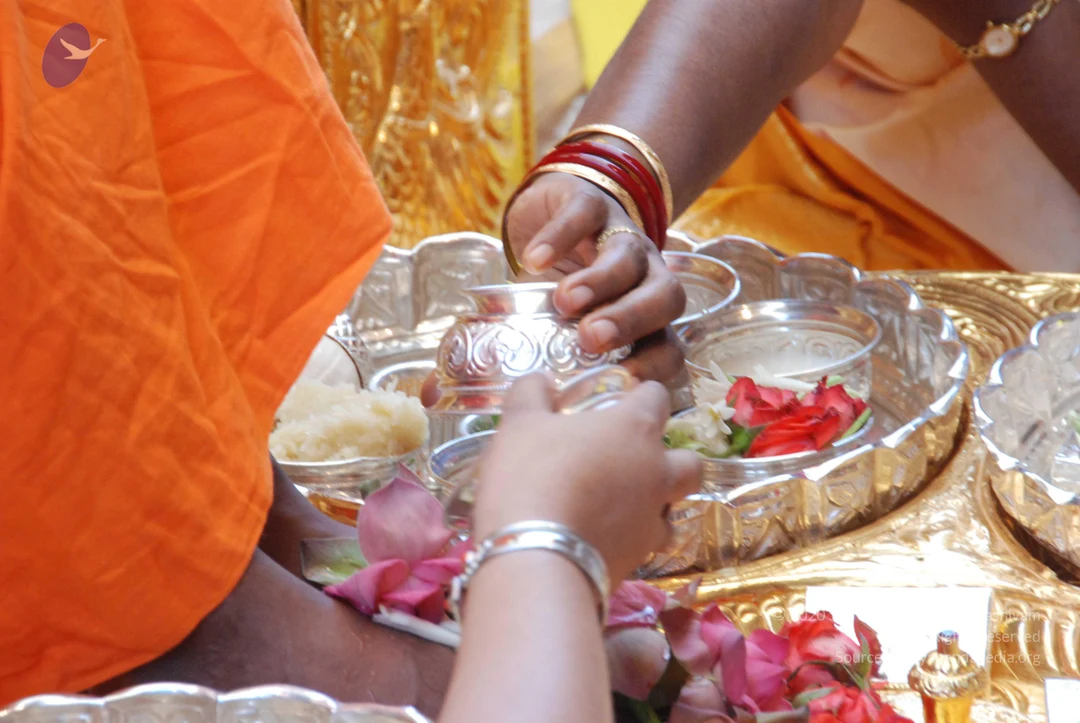
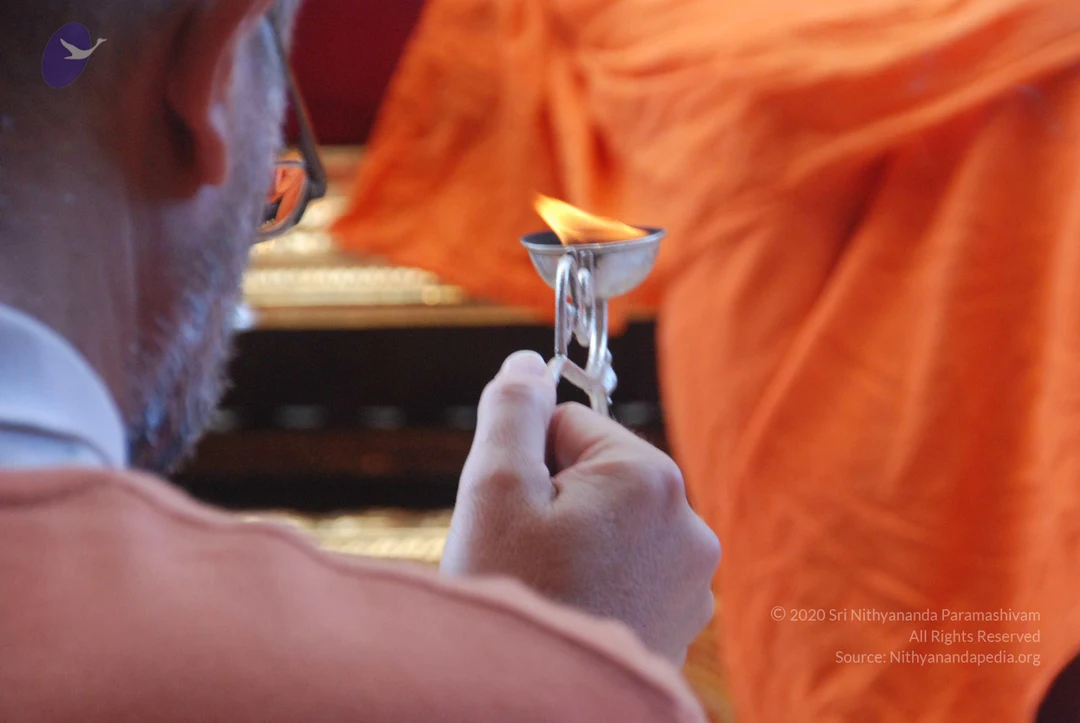
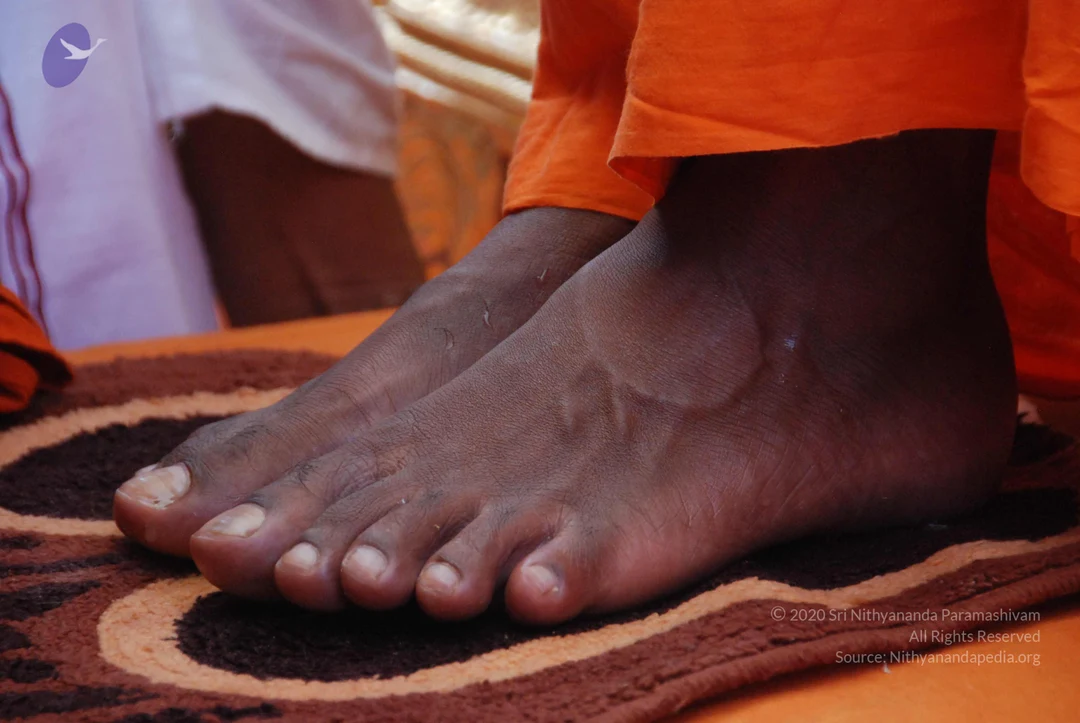
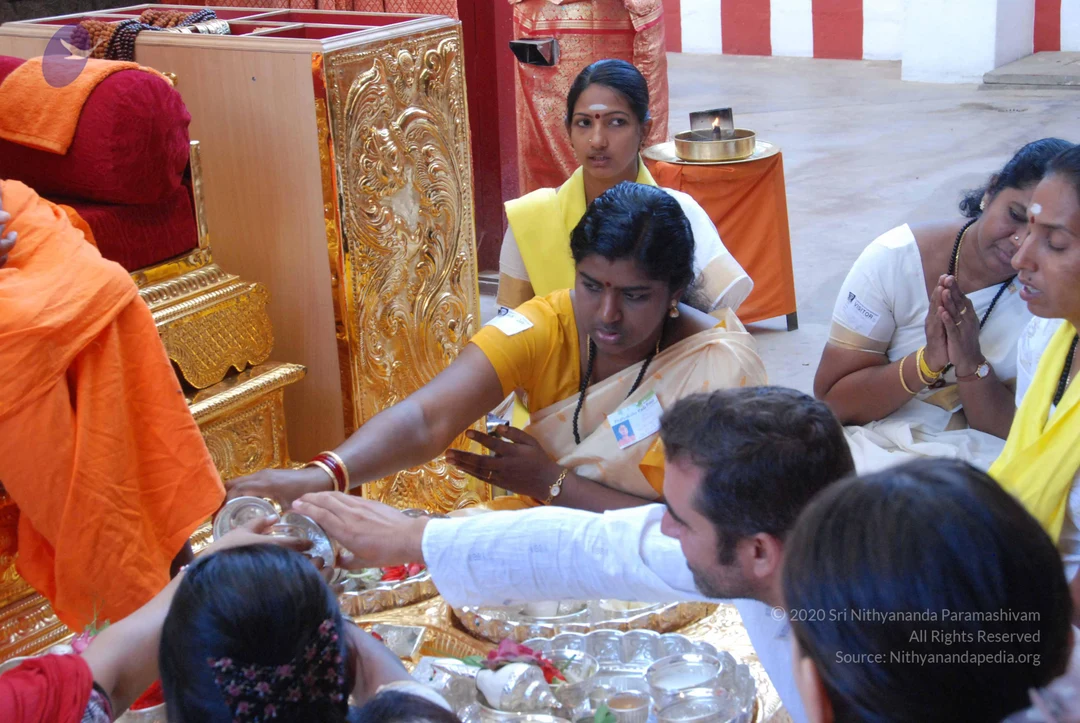
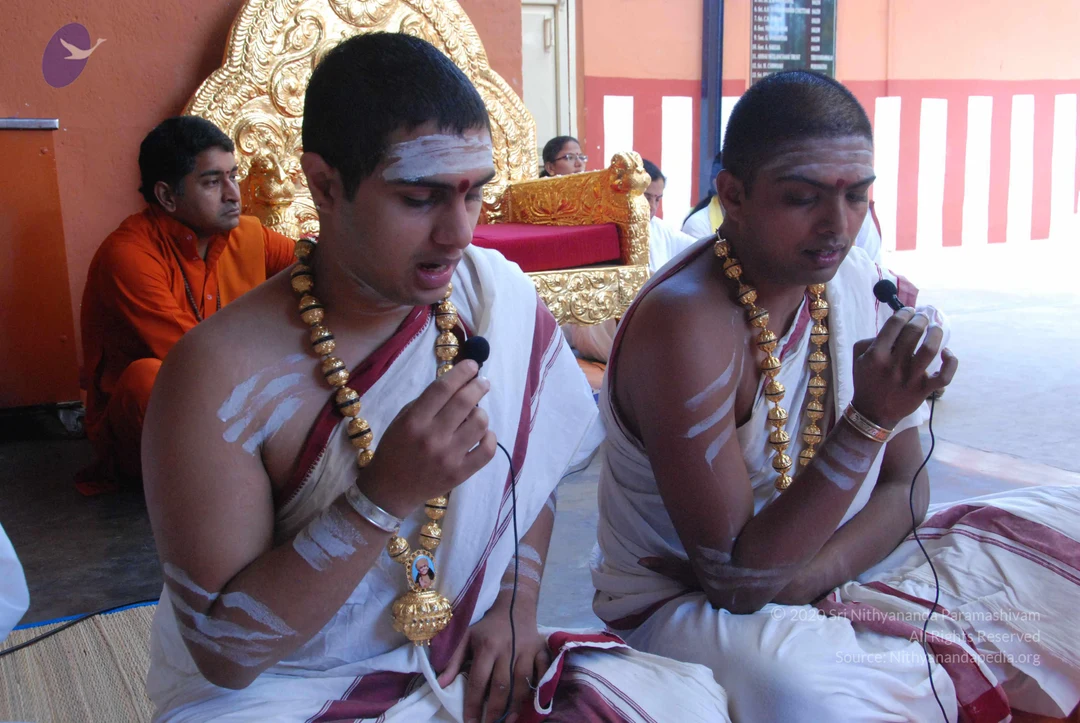
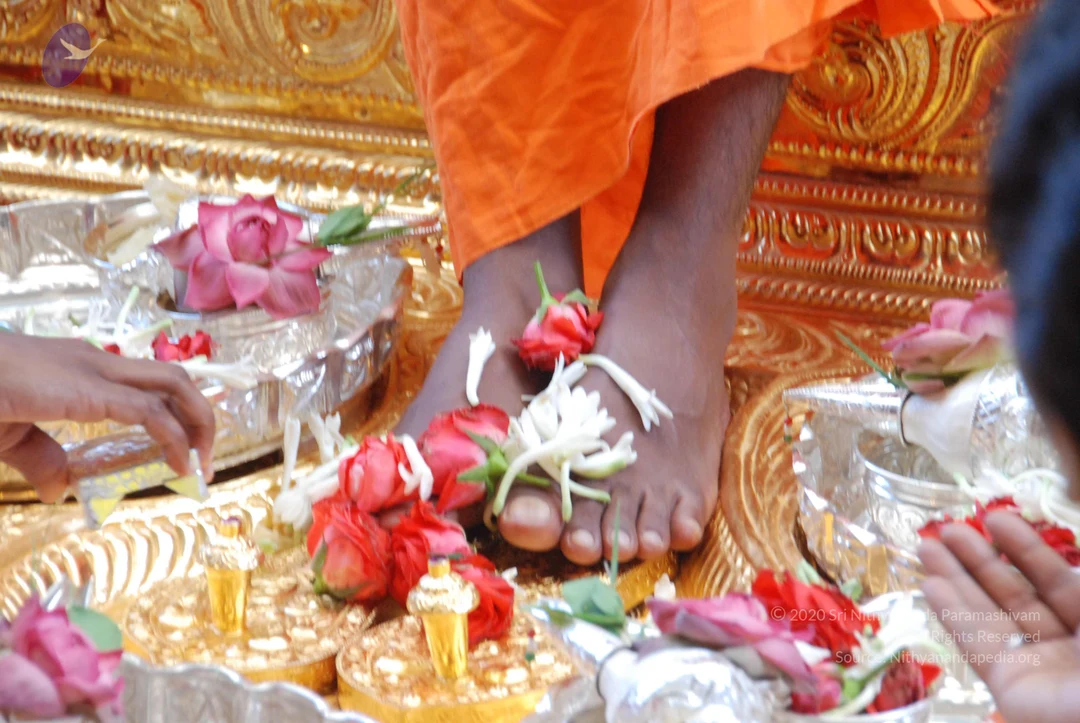
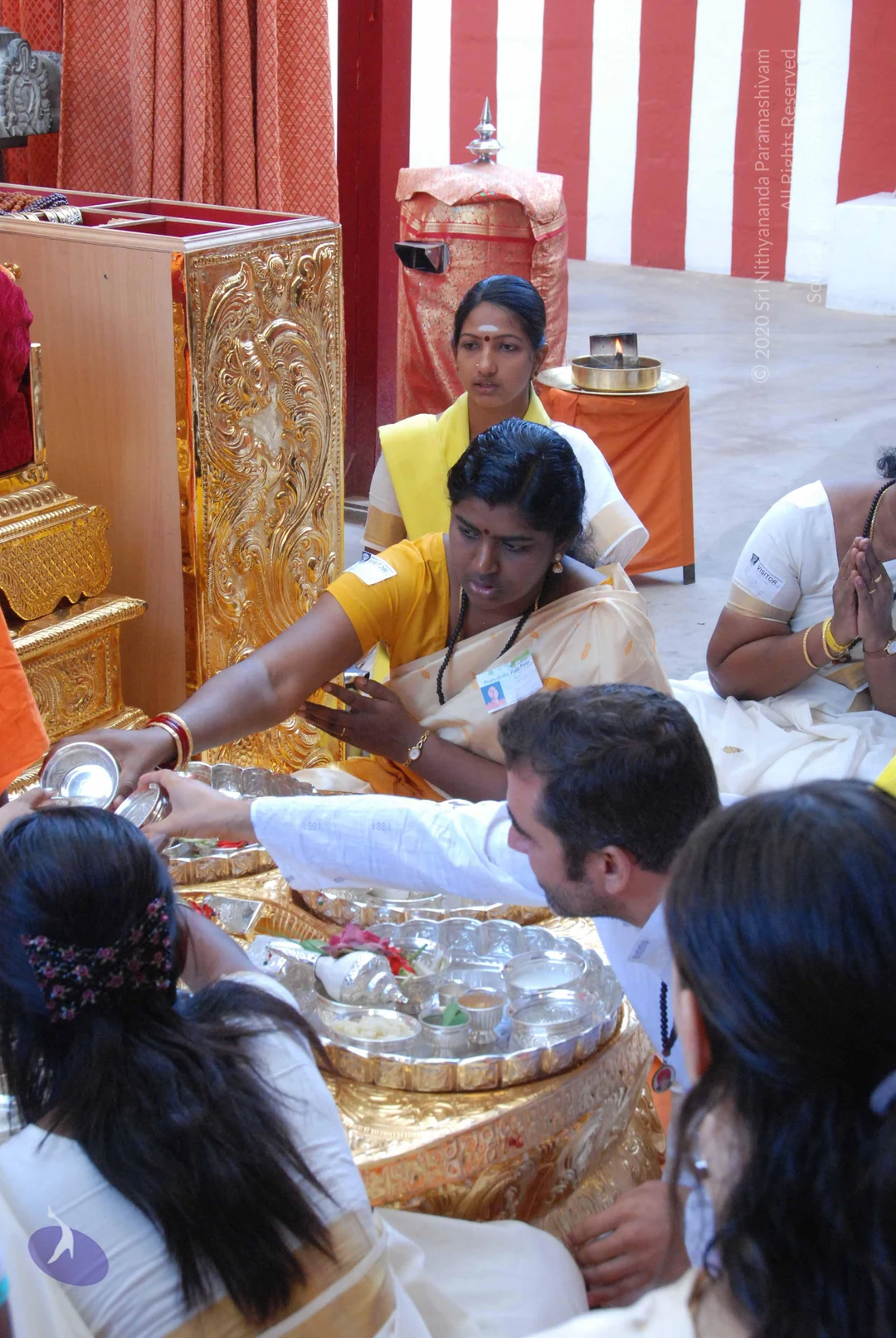
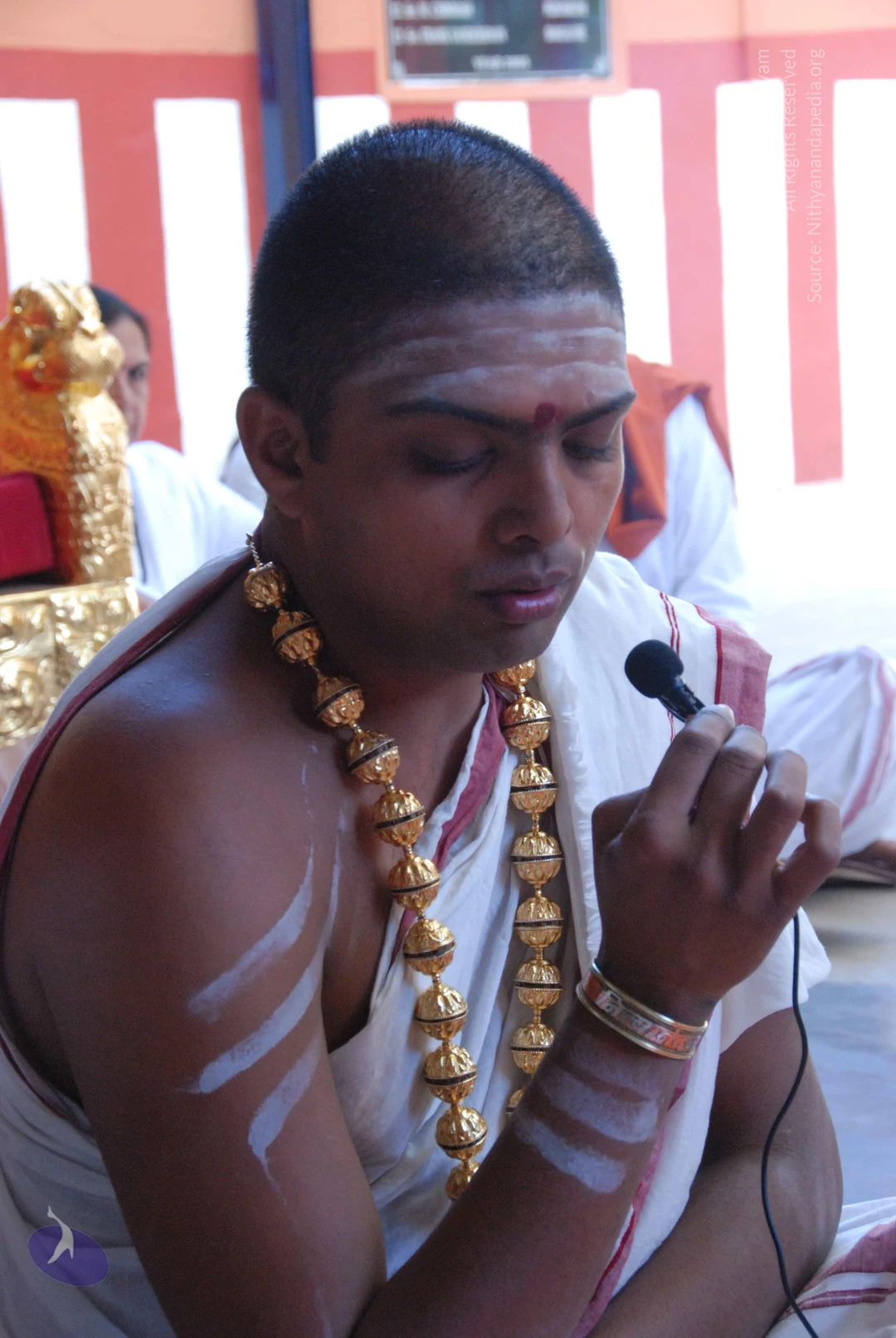
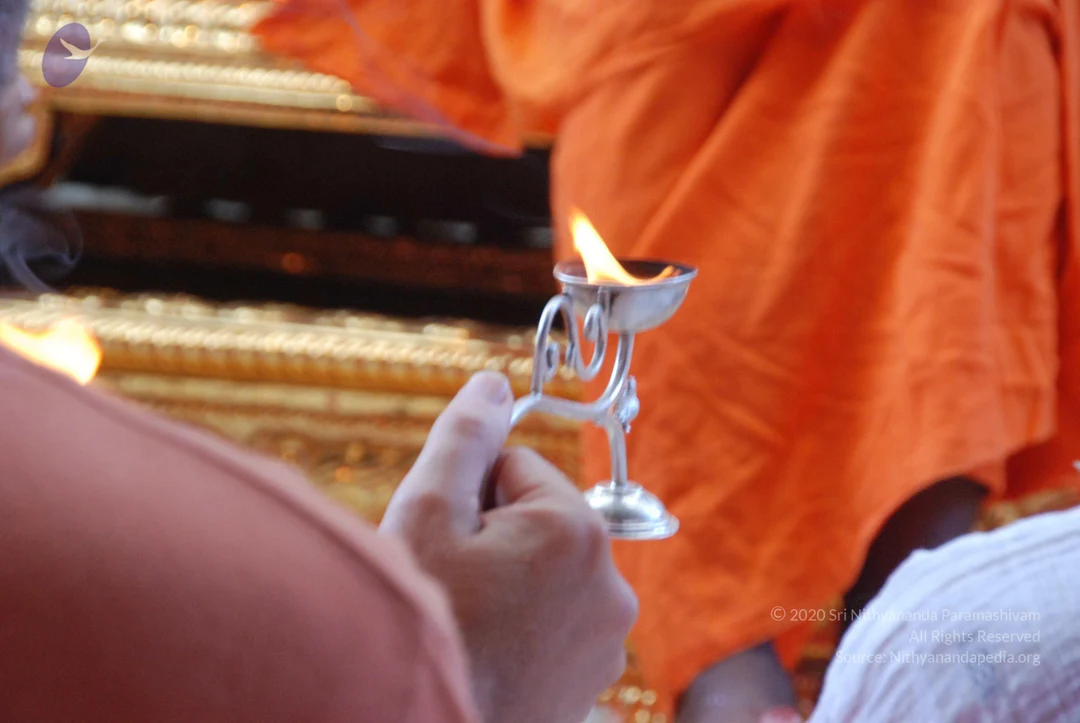
Close-up of bare feet in a padapuja ritual, standing on a gold-patterned platform. The feet are draped by an orange robe at the top of the frame and are adorned with red roses, white jasmine-like flowers and white petals. Silver trays hold more pink and red roses, and gold-capped small vessels with yellow liquid stand beside the feet. A hand on the left pours or places an offering and a second hand on the right holds flowers. The person whose feet these are is not visible beyond the robe, so no identity can be assigned from the image. Only partial people are visible: two hands and a sliver of dark hair at the right edge.A photograph of a ritual offering in a temple hall with red-and-white striped walls and orange draped cloth. A woman in a yellow blouse and cream saree with a red bindi and black beaded necklace leans forward to pass a small silver bowl over an ornate gold-embossed pedestal holding a large silver thali of offerings, with petals and a small lamp. Behind her, another woman in a yellow shawl and white garment sits watching. On the right, a man in white dhoti and shirt sits with palms joined, and a man in white clothing reaches toward the tray. A lit oil lamp stands on a gold-trimmed side table, and a silver kalasha-topped structure is in the background. Two women's heads are visible in the lower foreground, one with a floral hair clip. Sitting and standing people are visible in the scene; the image shows a padapuja-style offering setting.A shaven-headed man in white ritual dhoti and shawl with red border sits cross-legged, holding a small black microphone to his mouth with his right hand while his eyes are lowered. He wears a heavy gold bead necklace resembling rudraksha beads, a gold bangle, and white horizontal forehead and arm markings with a red bindi. Behind him stands a gilded lion-form seat with a red cushion, and a red-and-white striped wall, with other seated people in white robes in the background.A close photograph of a silver aarti lamp held in a person's hand, its wick flaming above a small cup with a curled, ornamental stand. The bearer wears a reddish-pink sleeve in the foreground, and behind them a figure in orange robes stands before a gold-decorated shrine or altar edge. A wisp of smoke drifts at the left and a white-clad devotee's shoulder appears at the lower right.Close-up photo of incense sticks burning in silver lotus-shaped holders arranged on a metal tray. Smoke rises from the sticks. Behind them, out of focus, lies a folded orange cloth with a golden border. No people are visible.Close-up photograph of several silver lotus-shaped incense holders on a polished silver tray, each holding a lit incense stick with thin smoke rising. Behind them, a folded orange cloth with a gold-yellow border lies out of focus. No people are visible in the scene, so no a person candidate appears in this image.
11

05-Tamil-NSP

25 dated photos in previewSource gallery
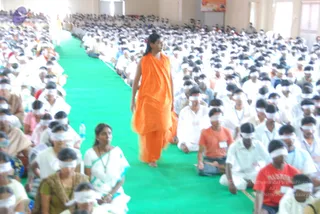
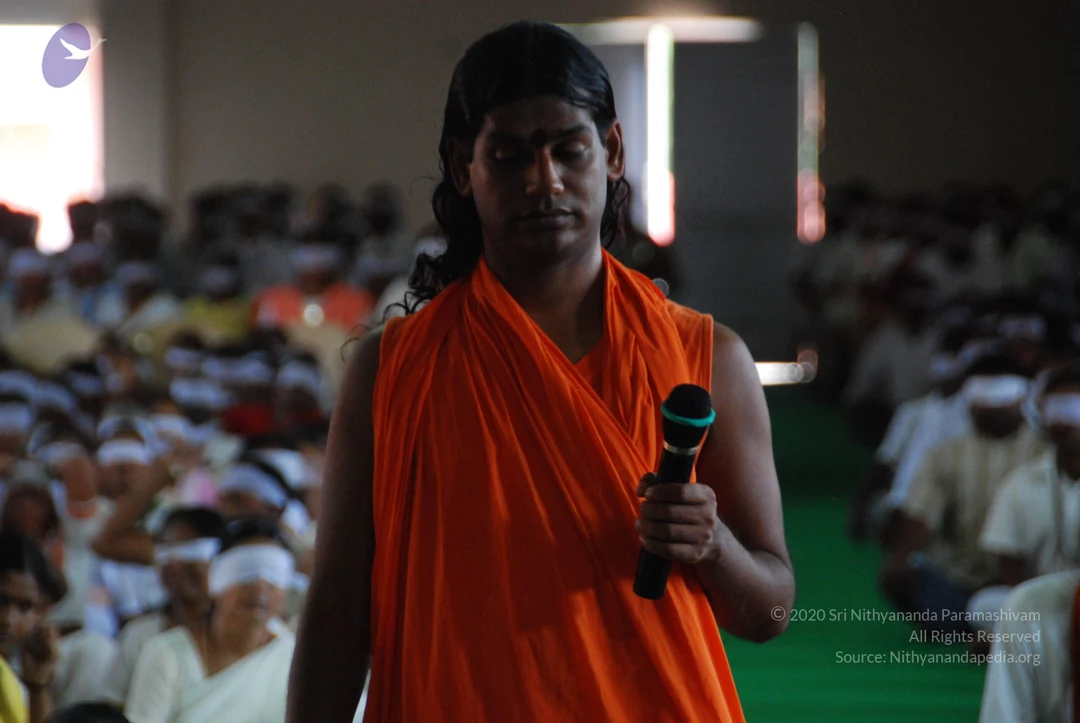
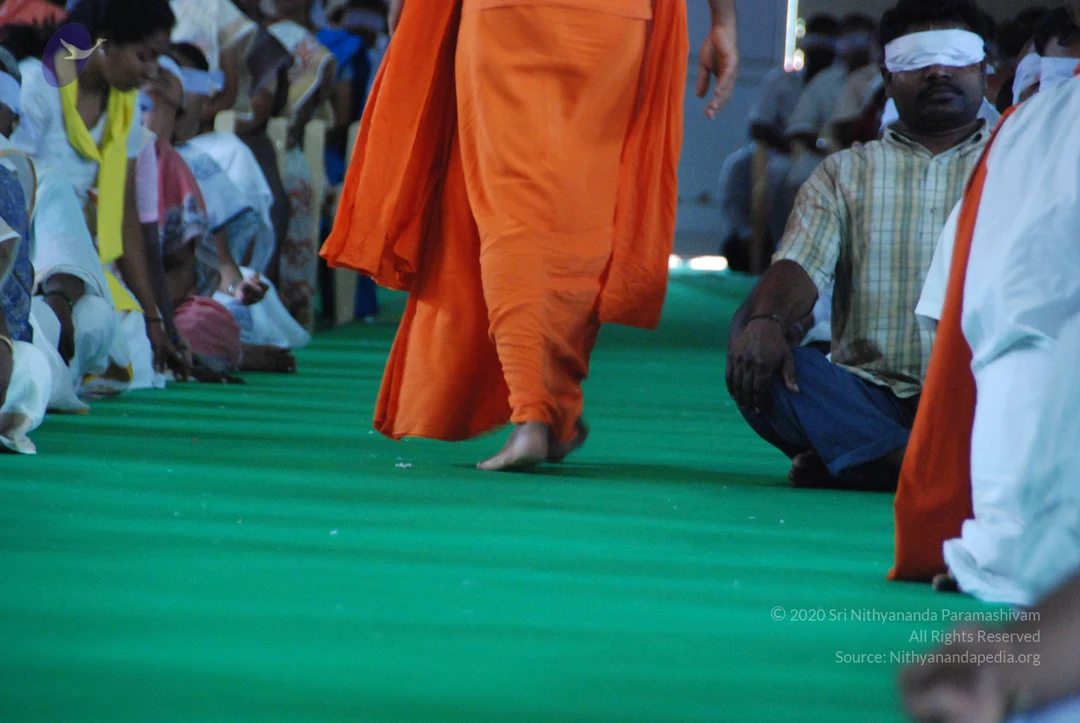
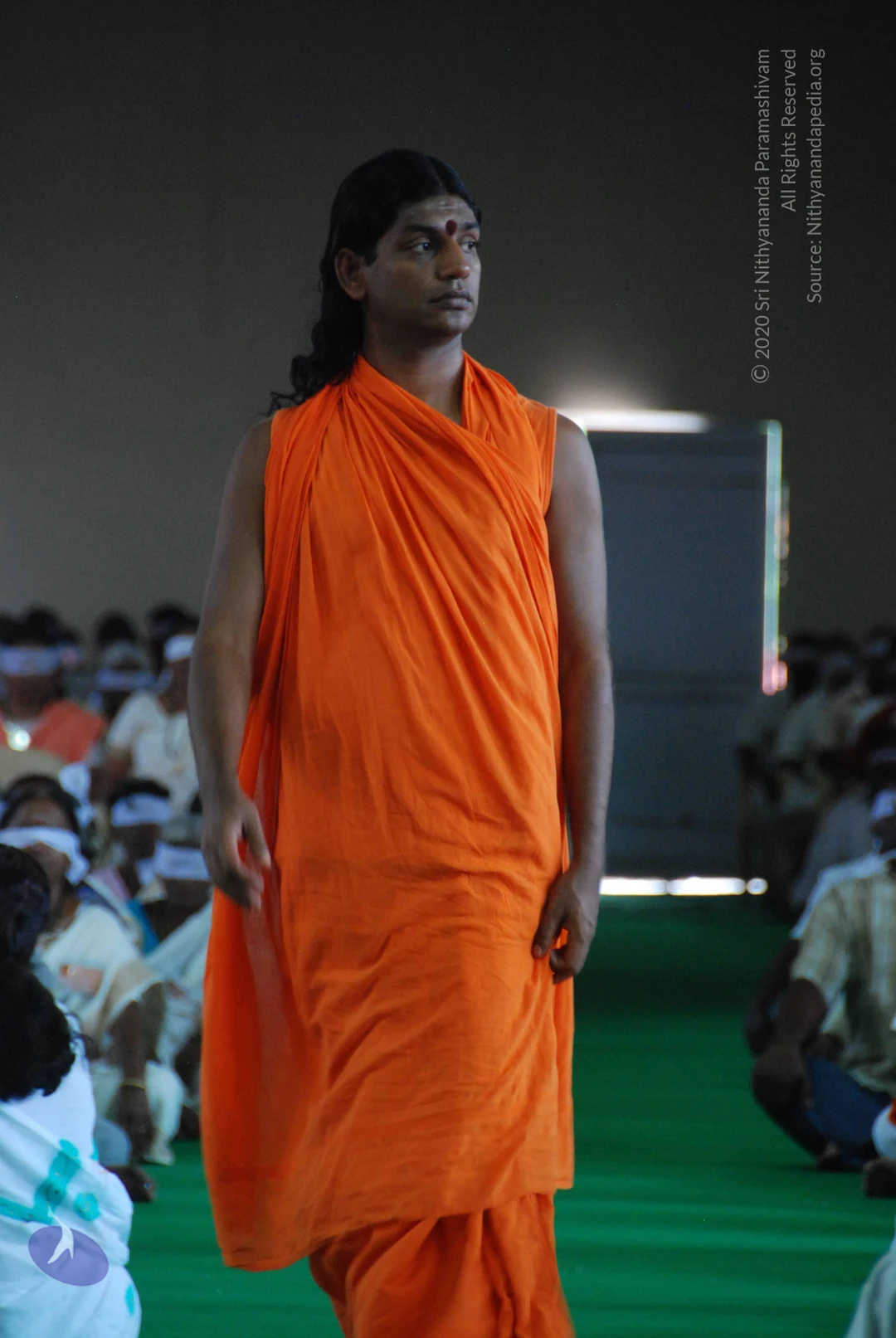
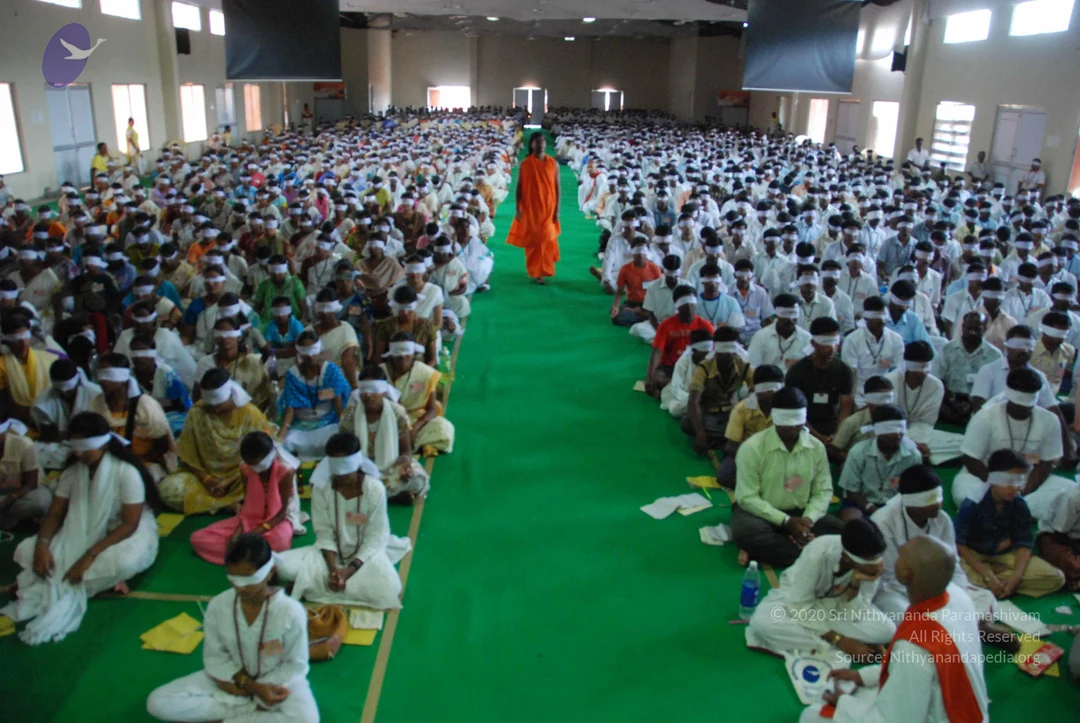
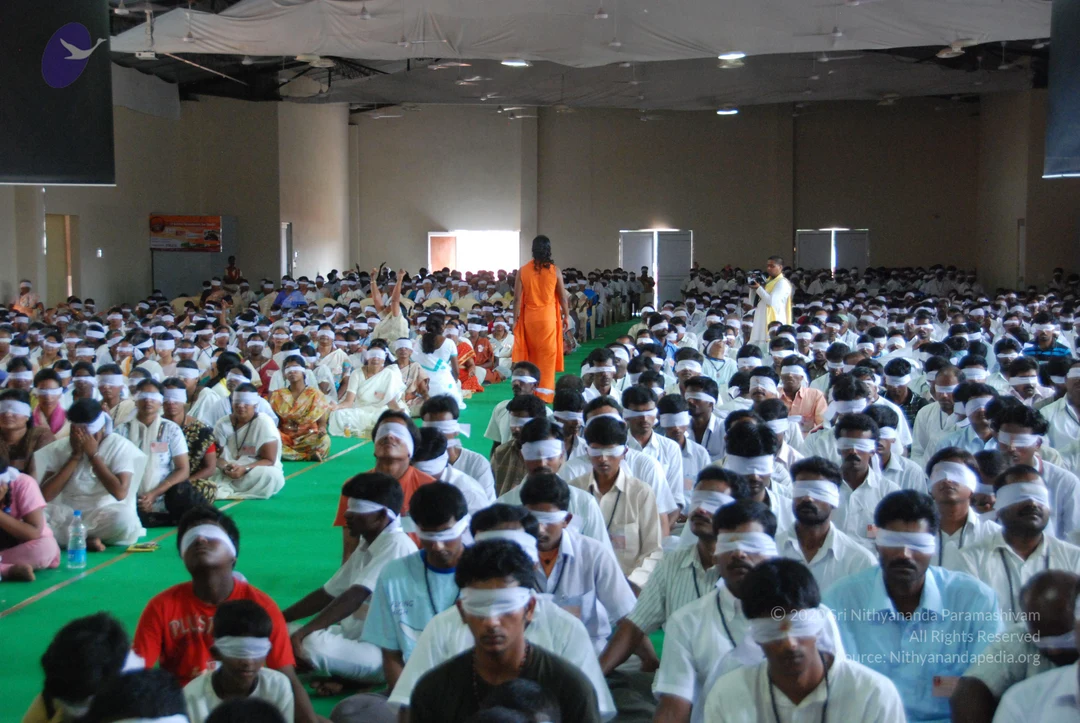
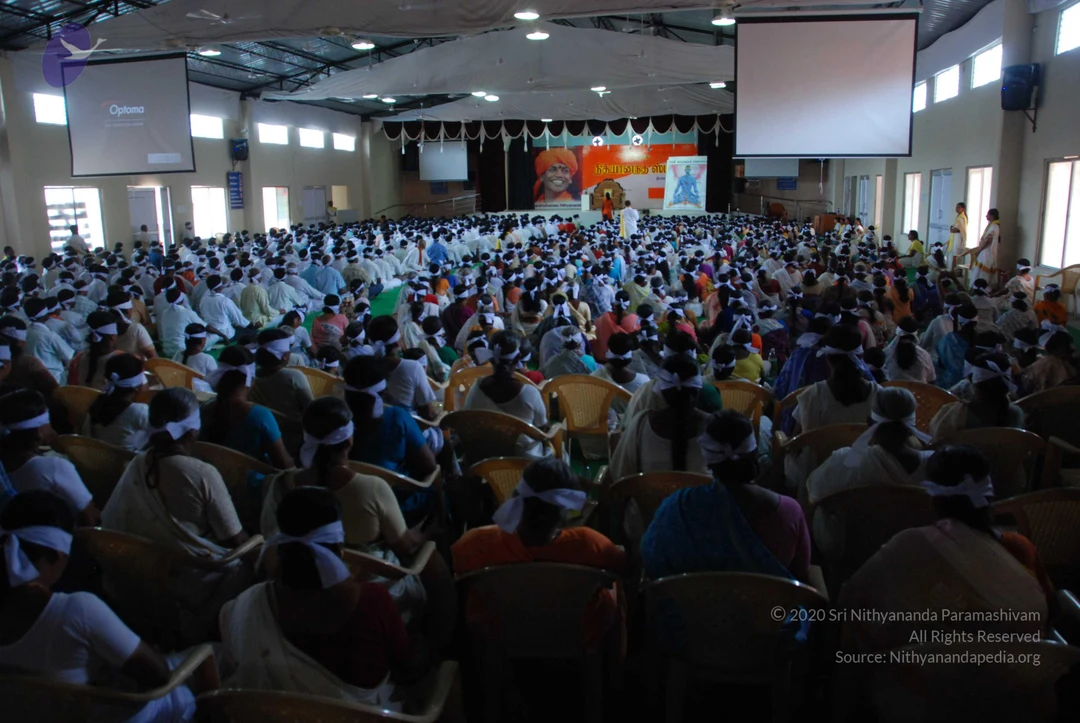
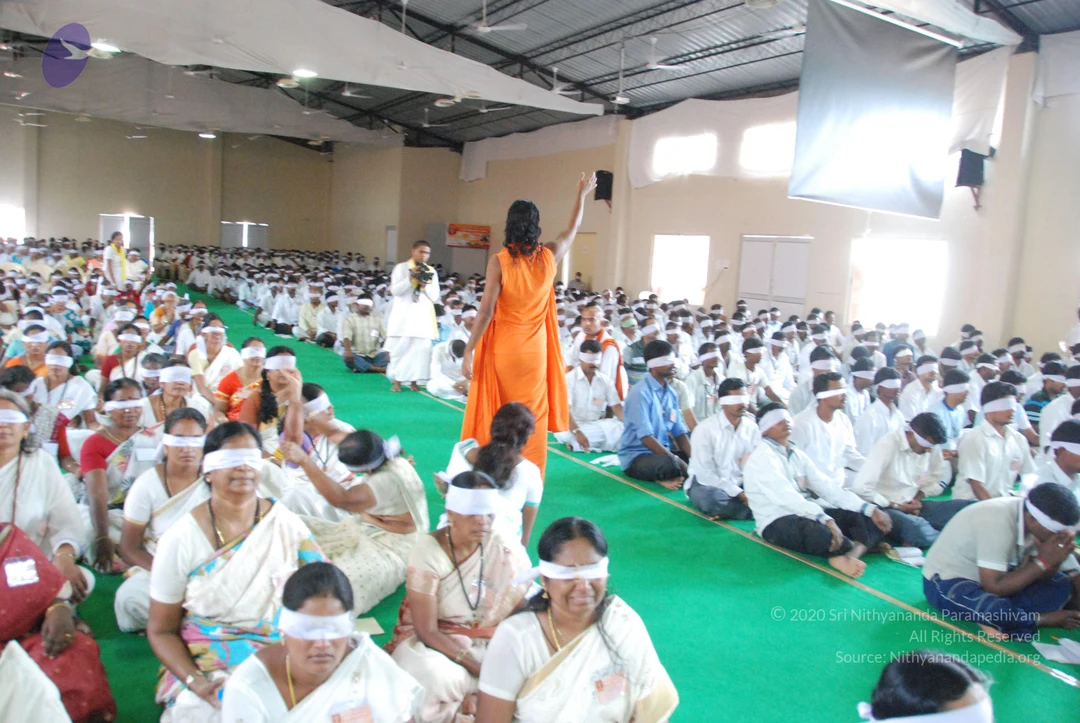
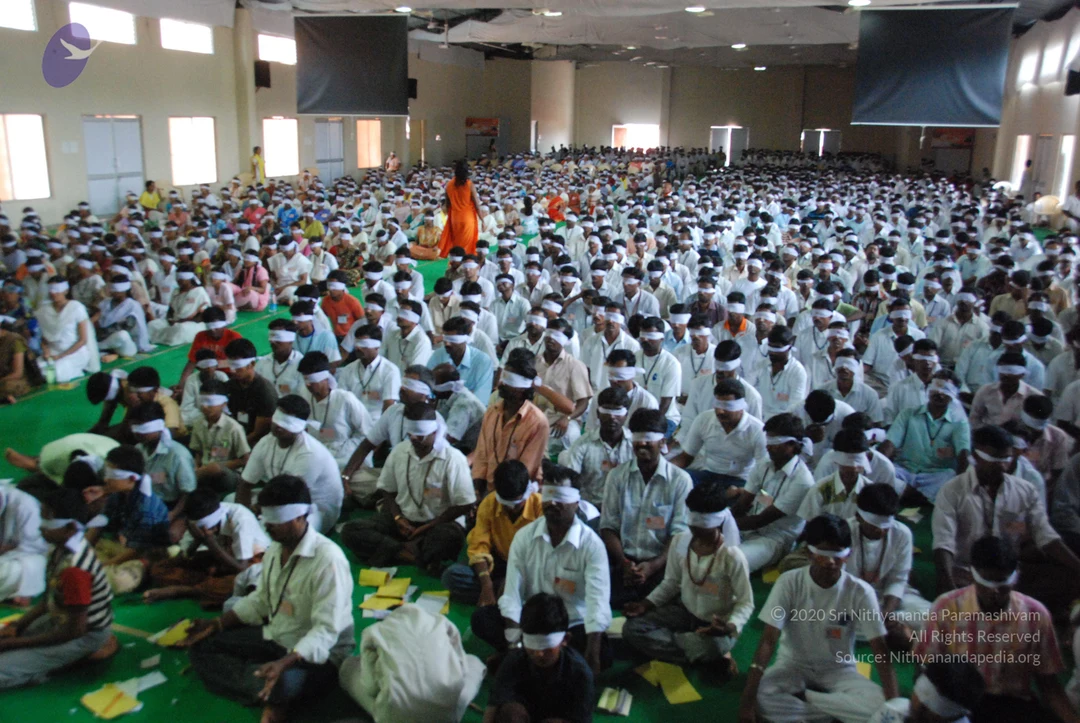
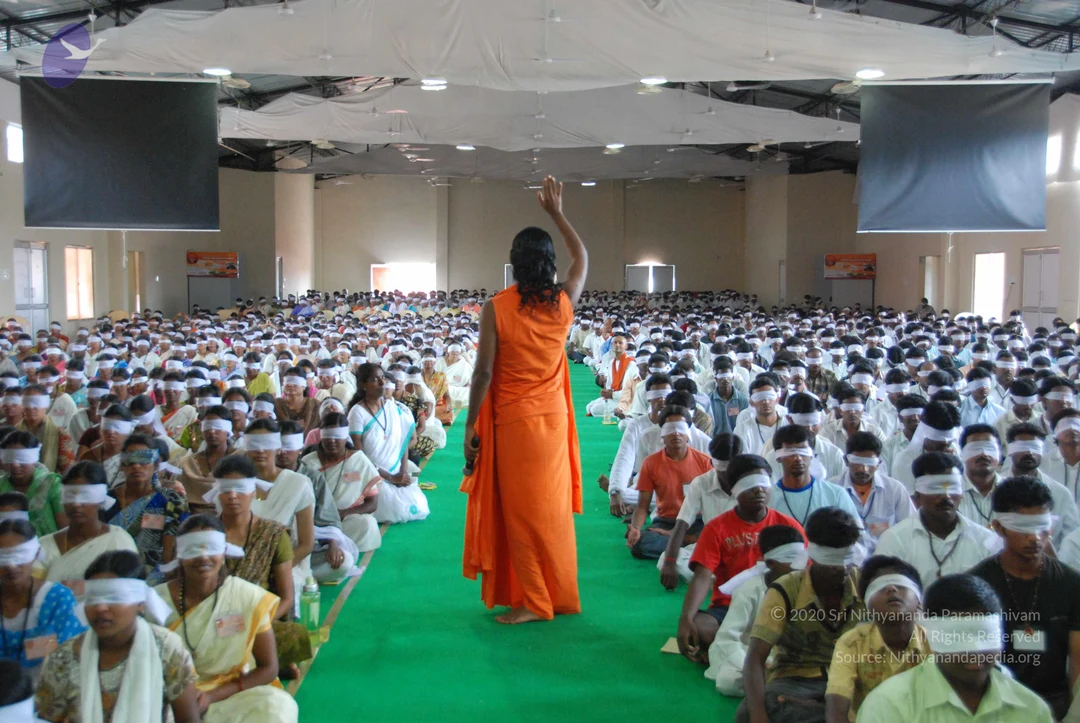
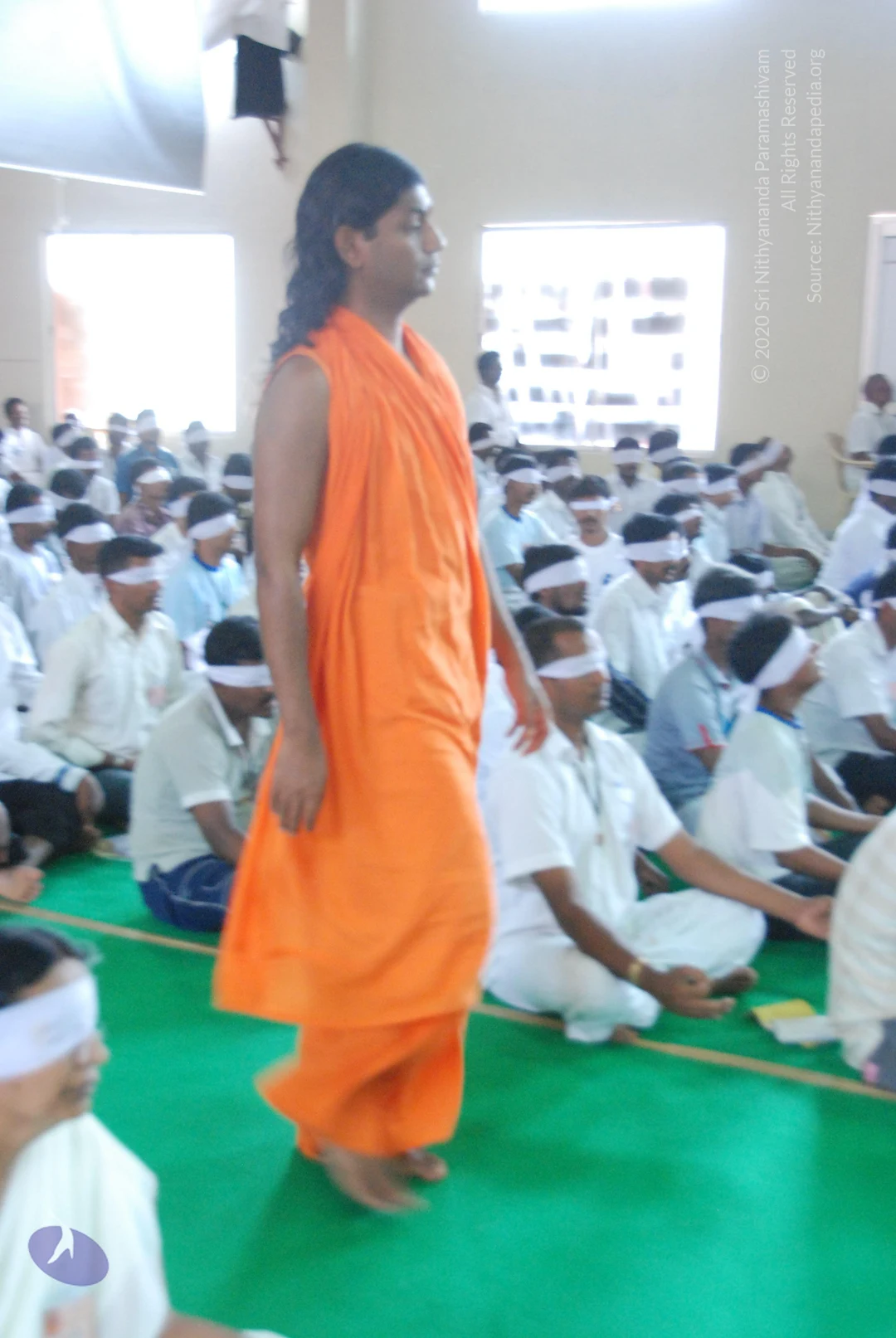
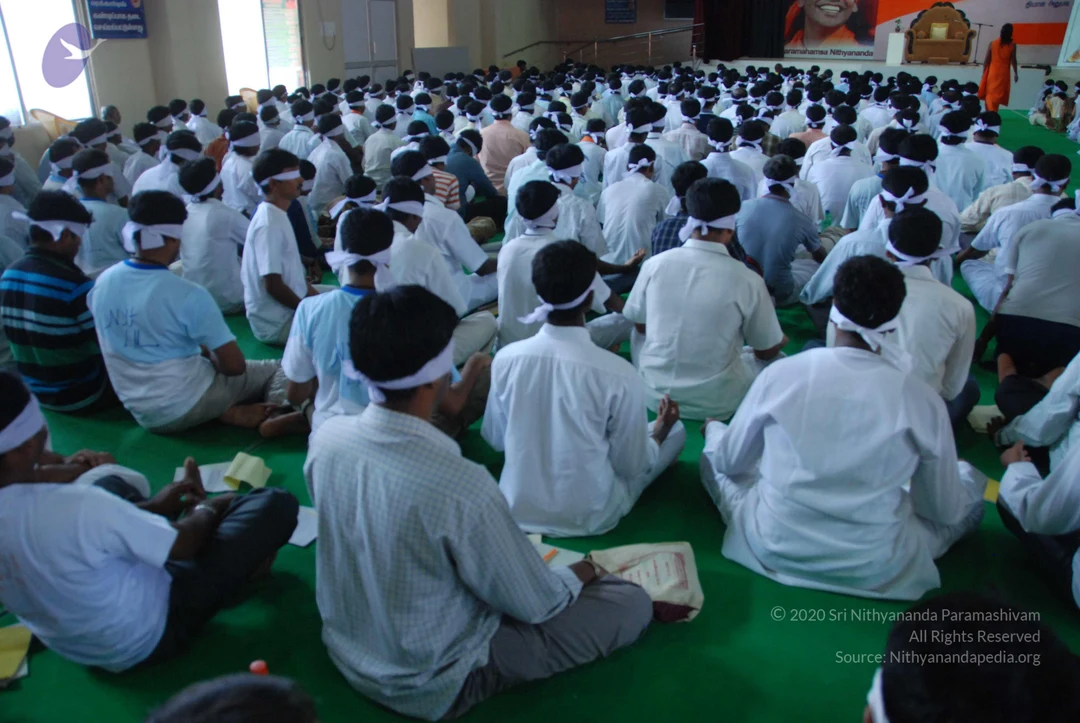
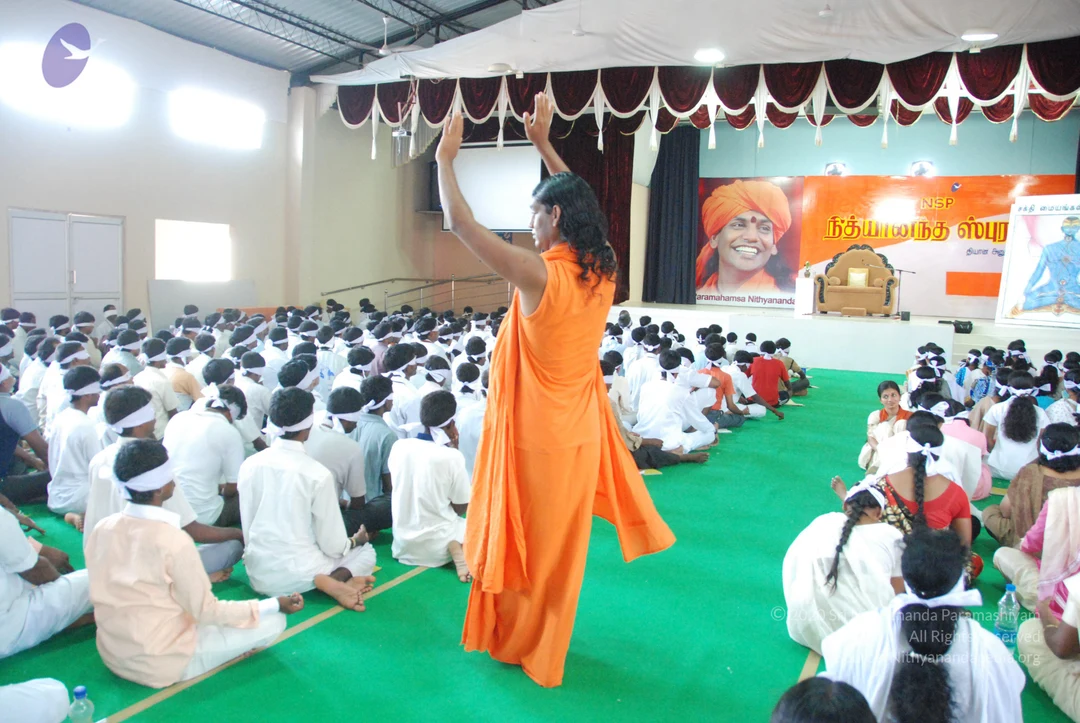
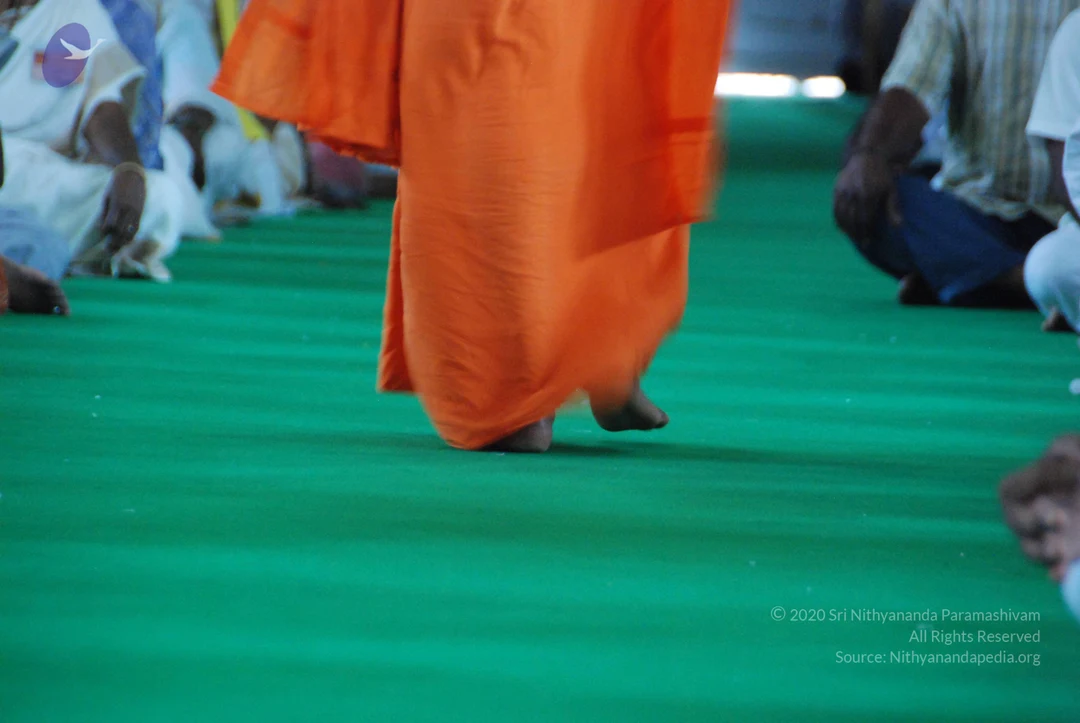
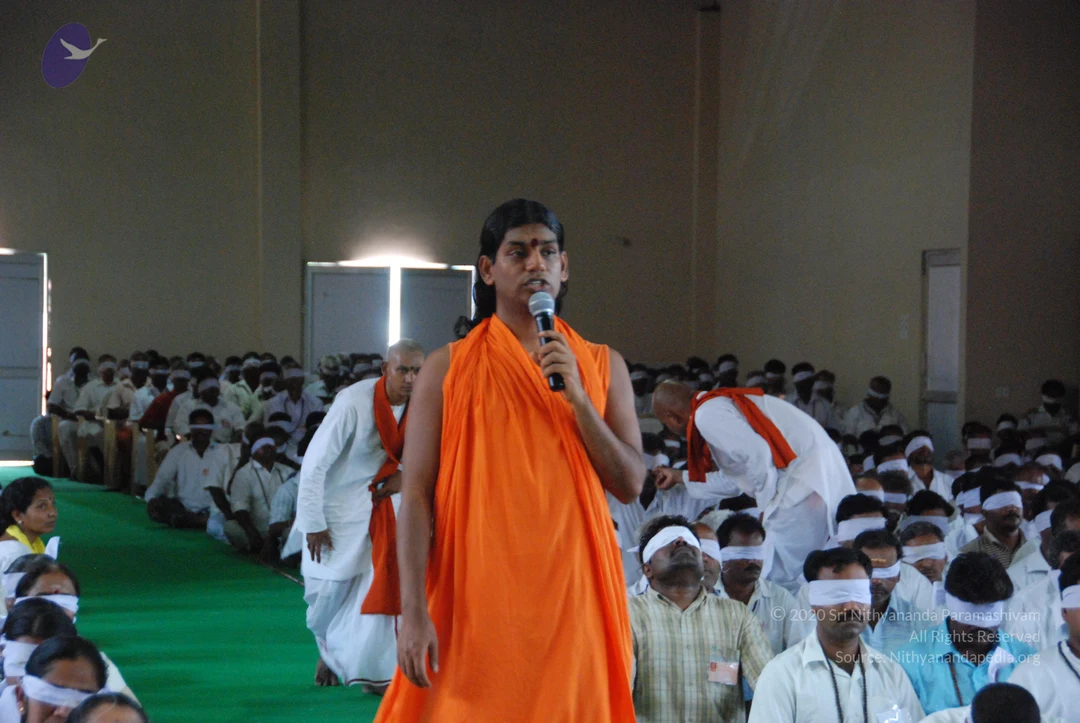
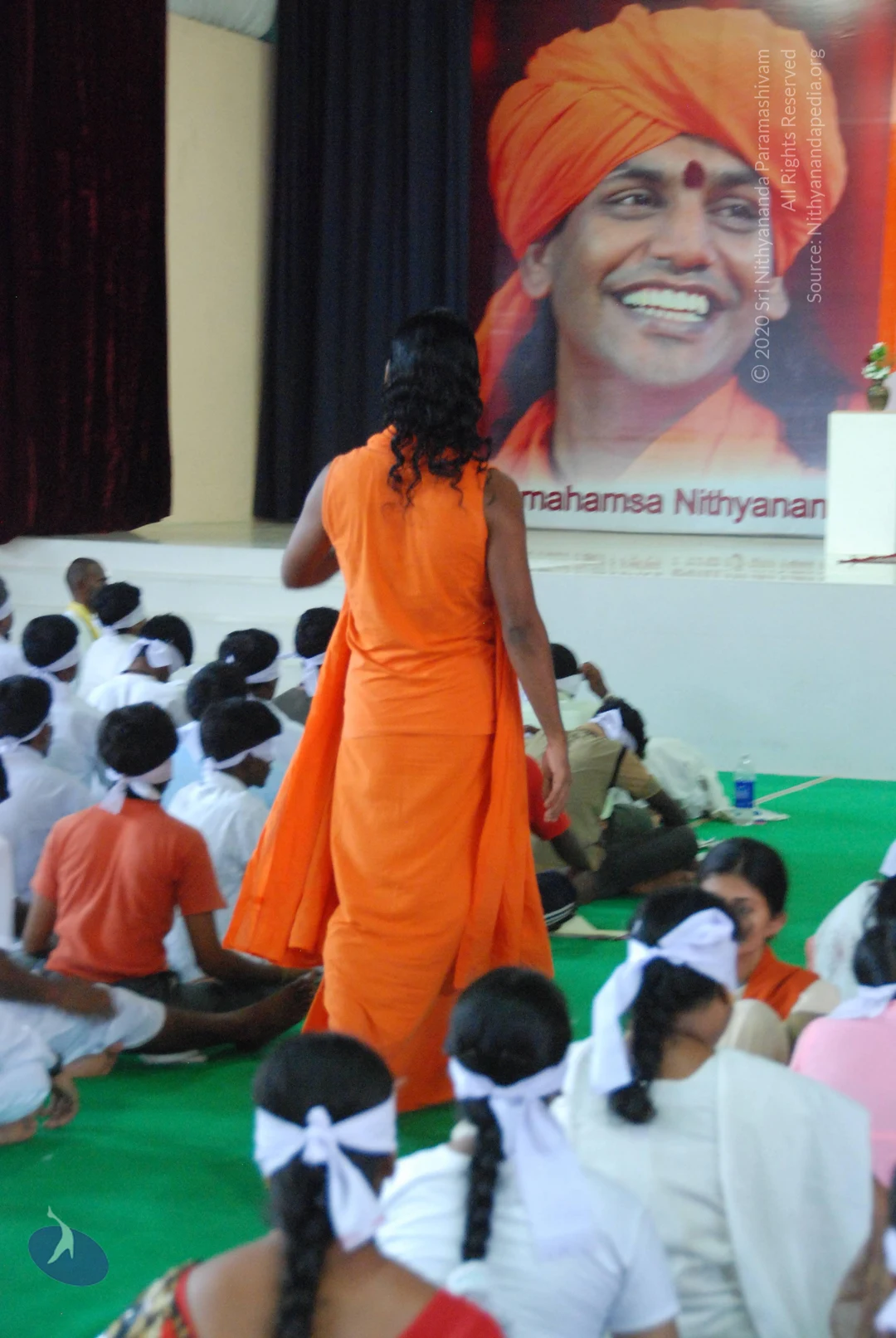
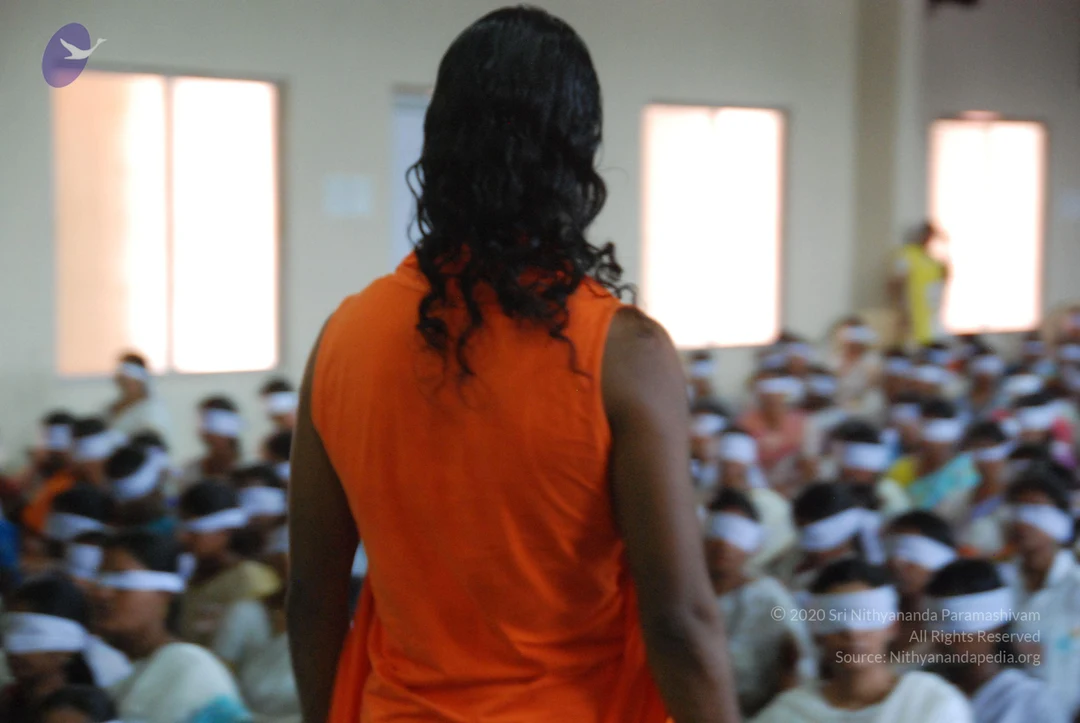
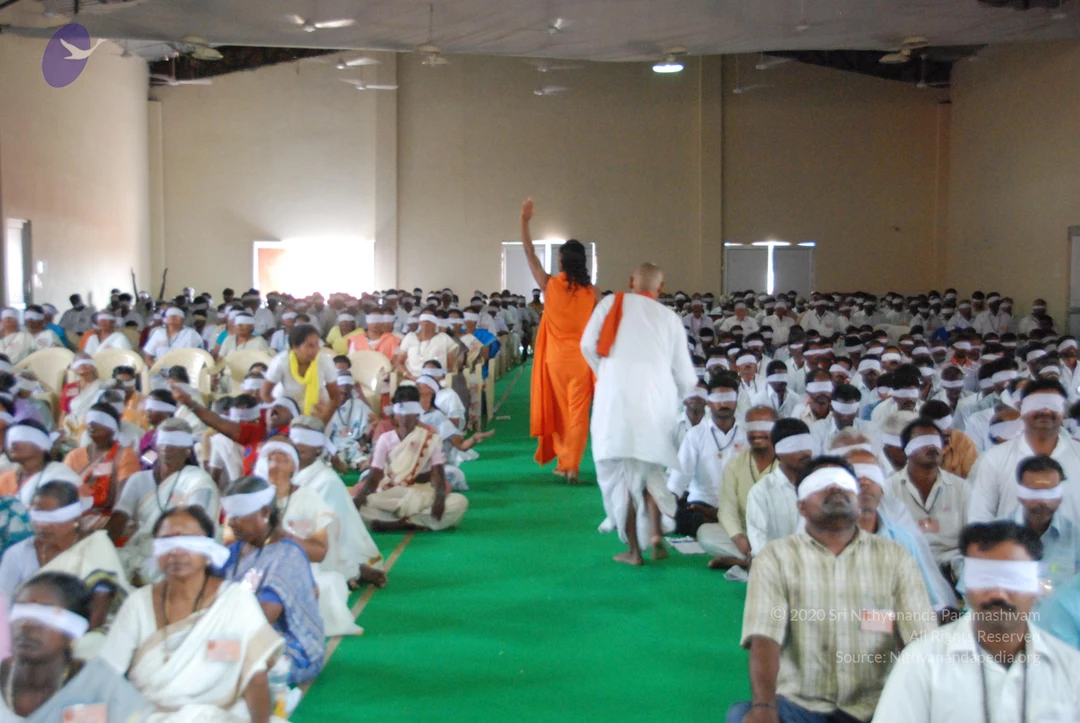
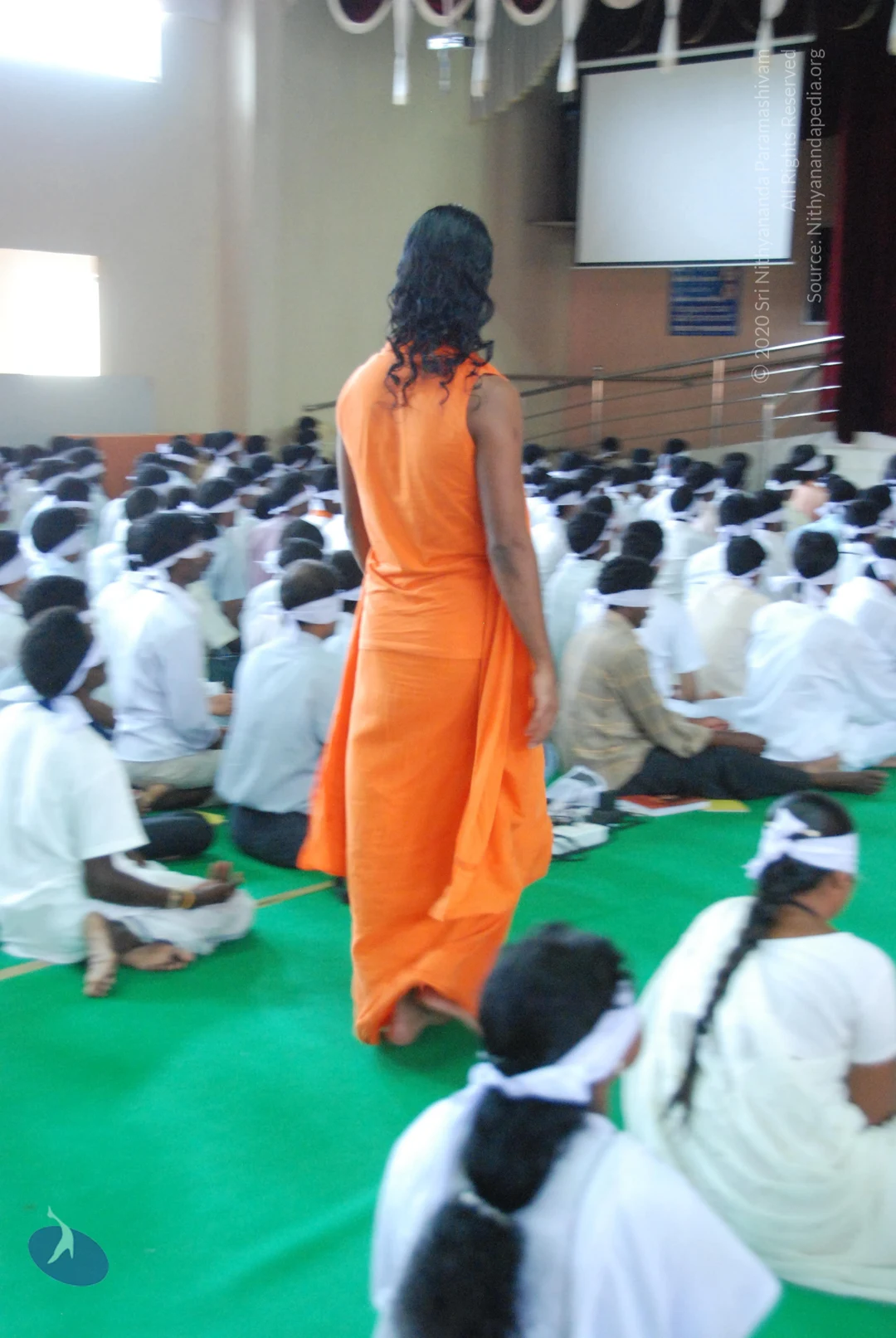
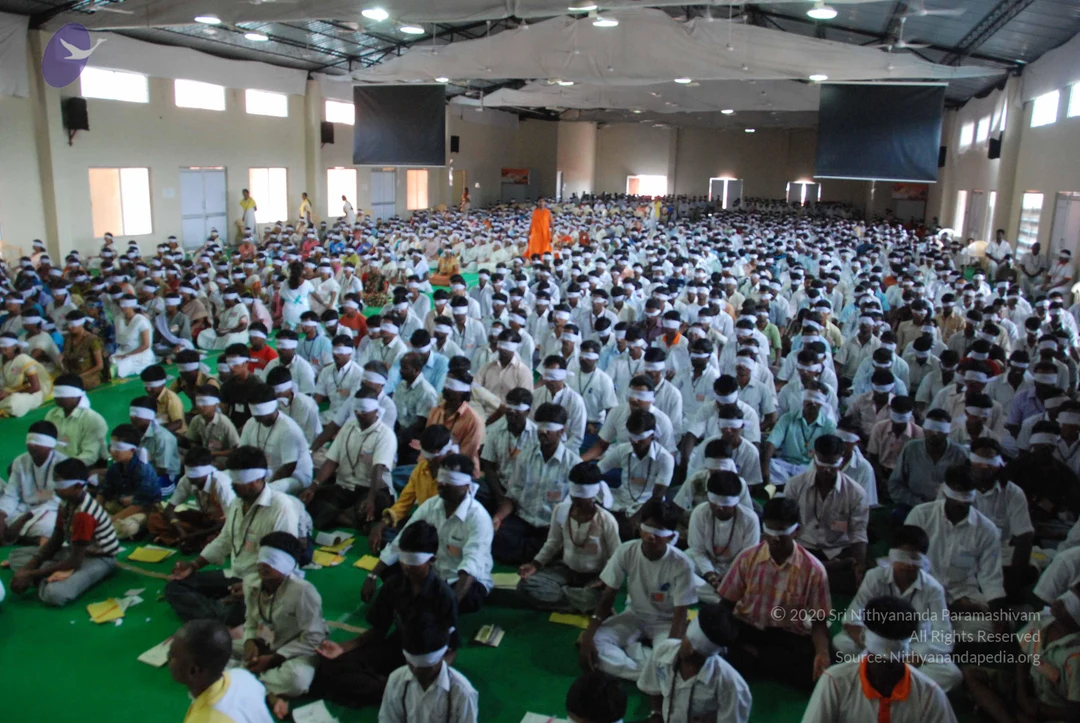
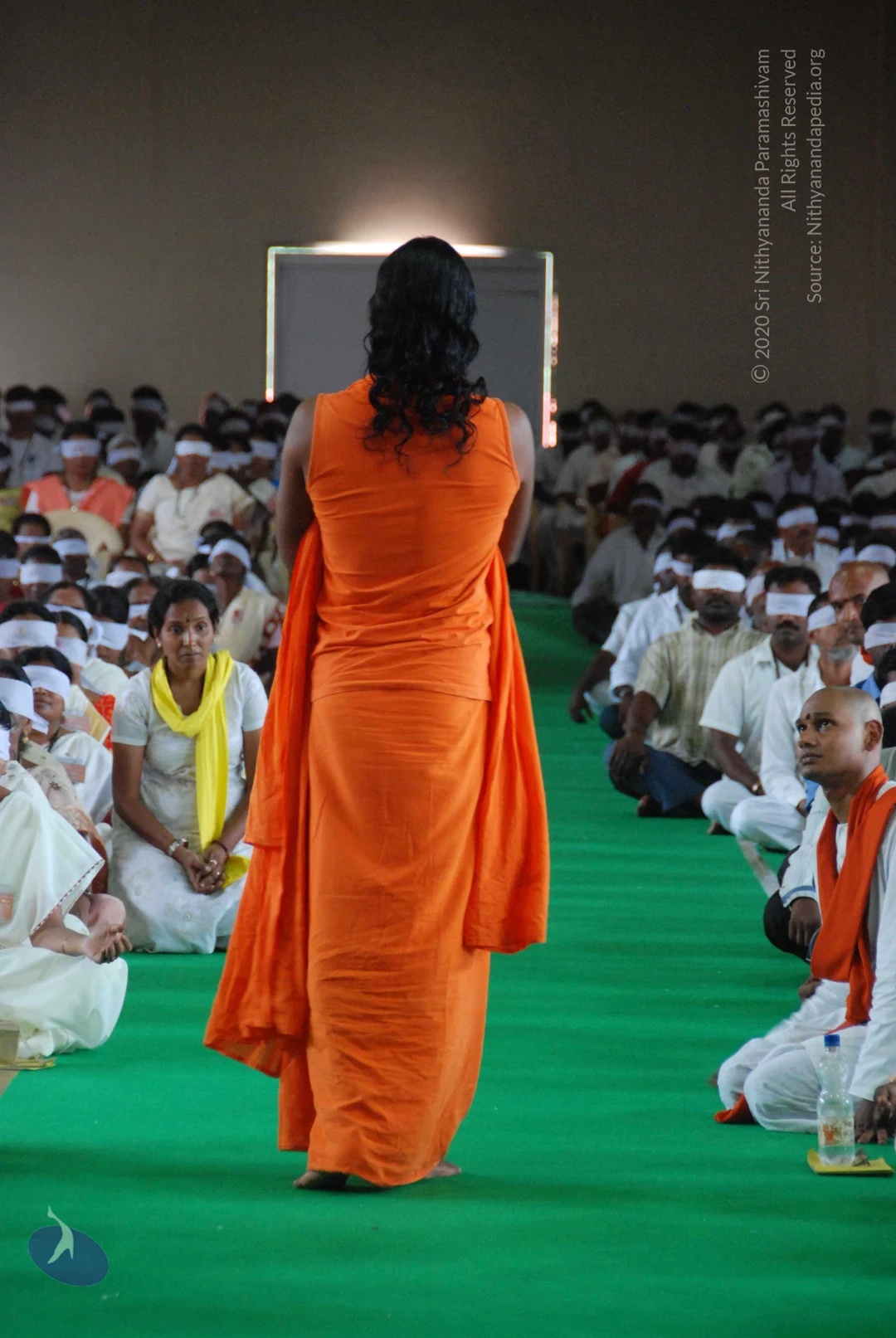
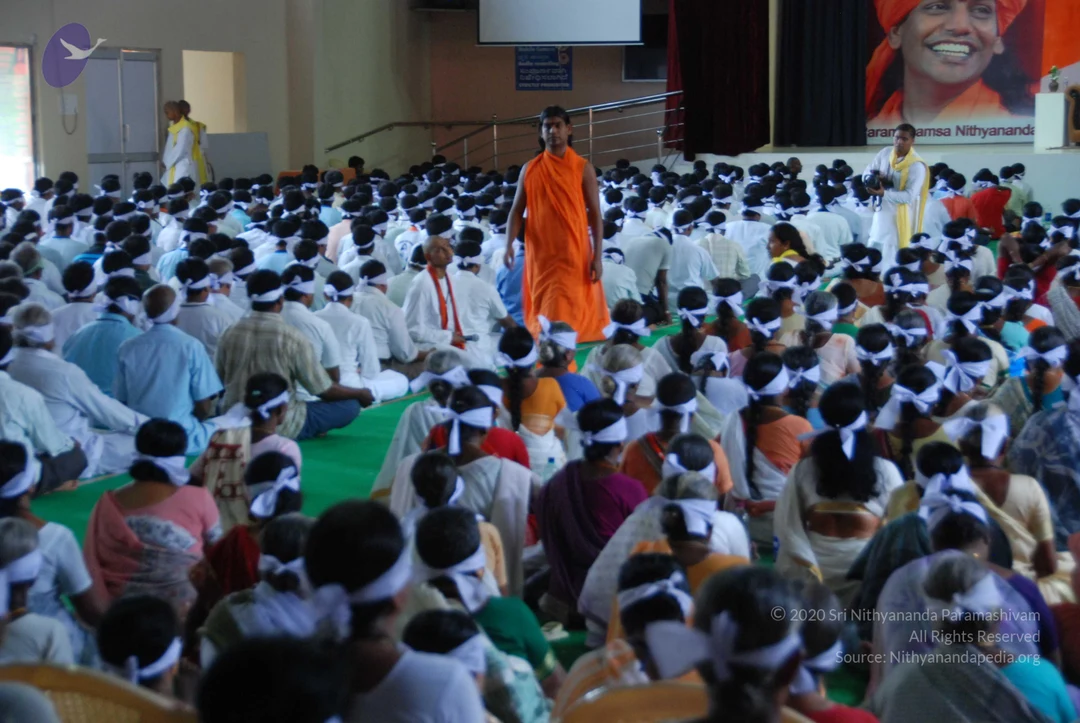
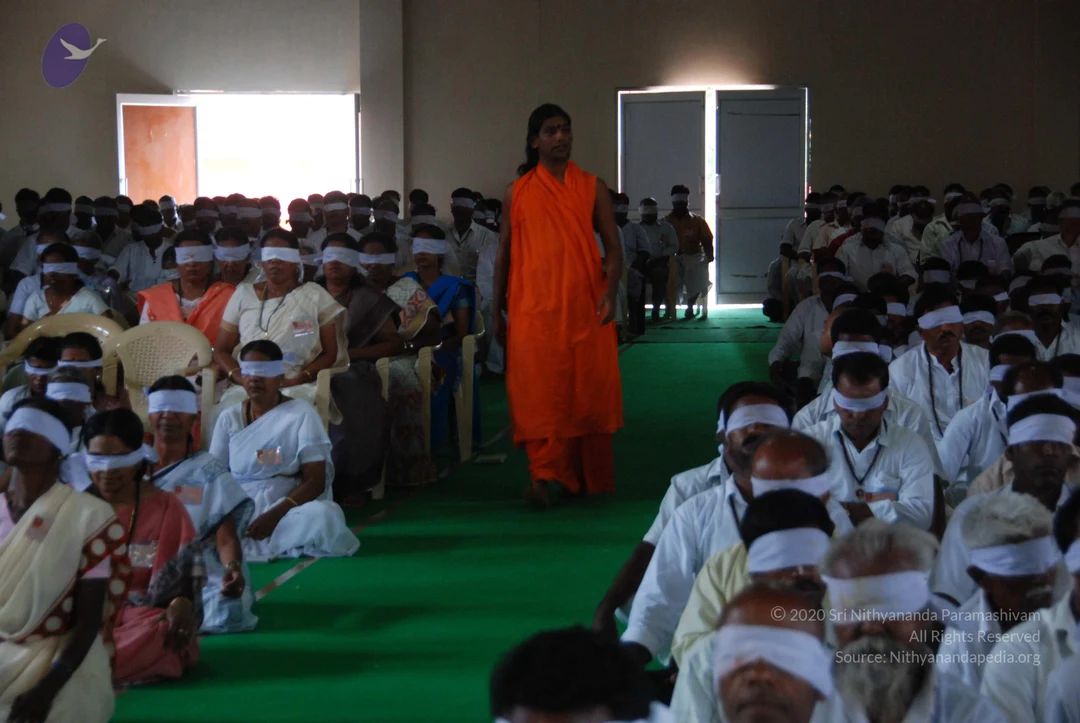
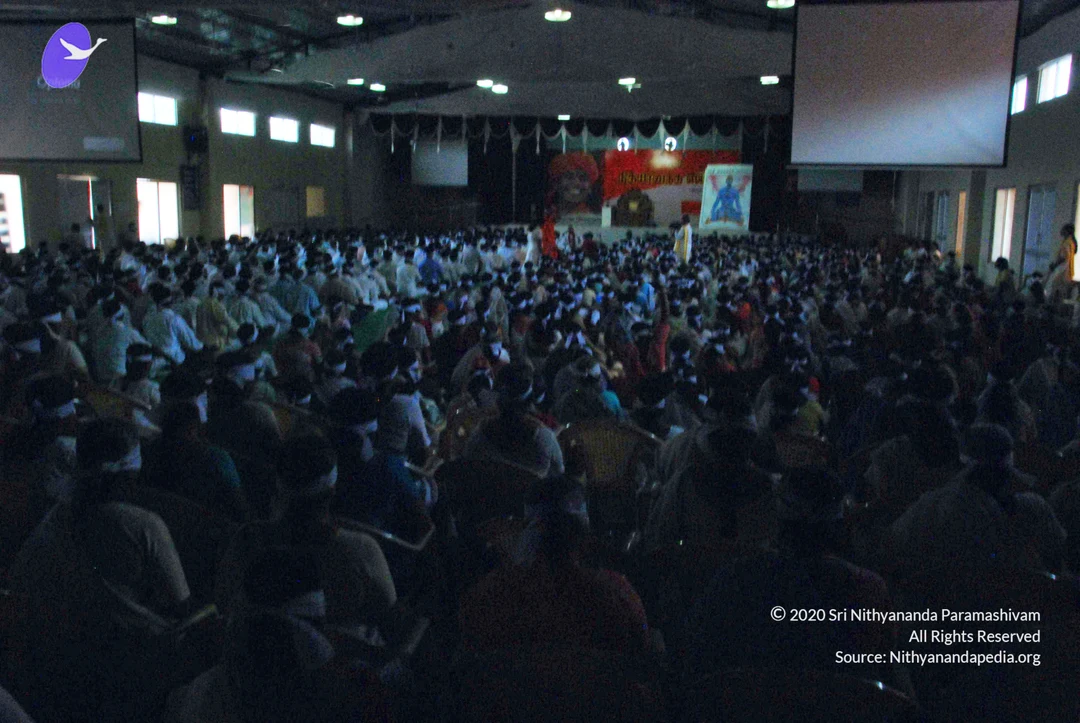
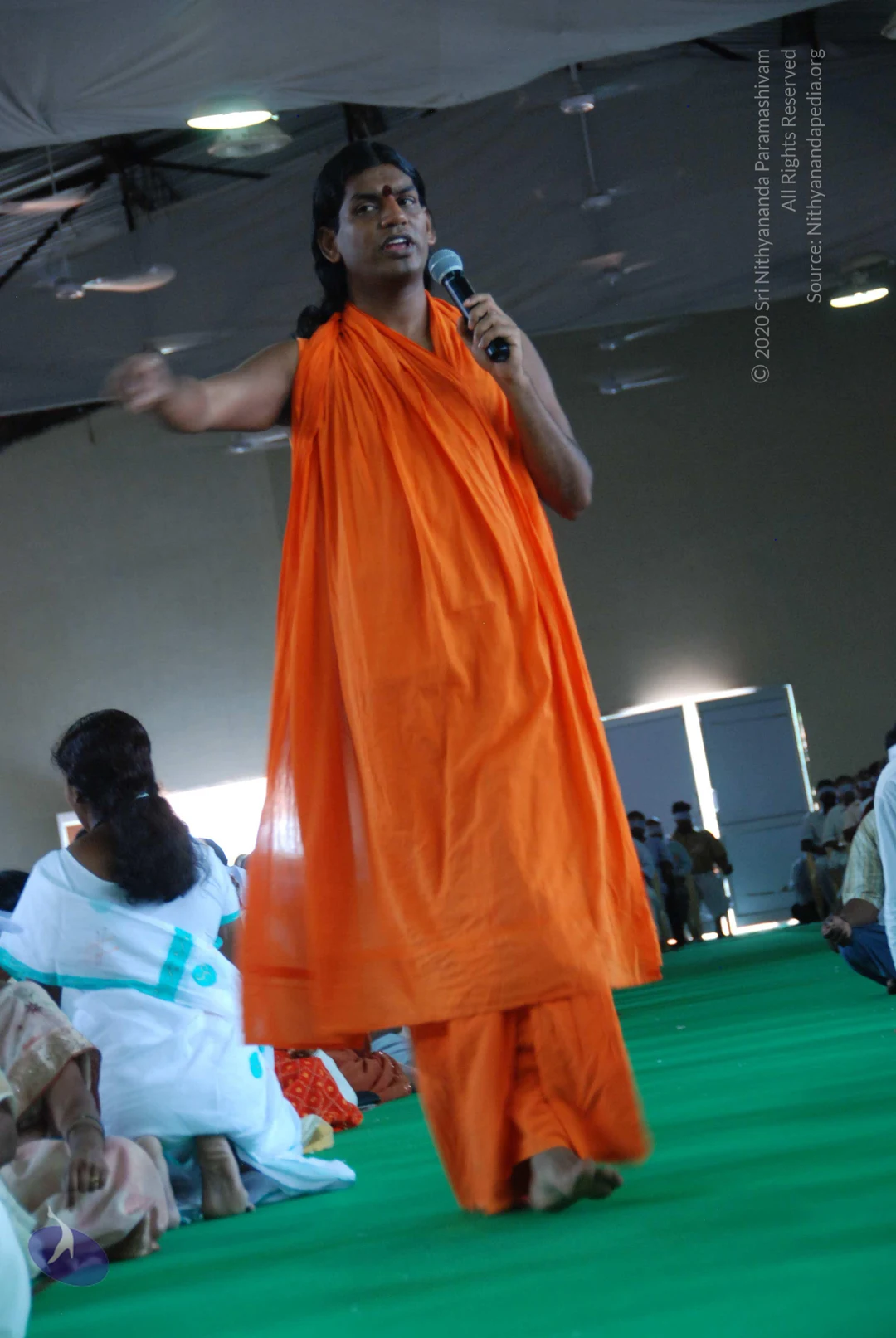
A large seated congregation of hundreds of people wearing white clothes and white blindfolds fills a hall, sitting on the floor on both sides of a long green carpet aisle. A single figure in flowing orange robes, with long dark hair pulled back, walks barefoot down the centre of the aisle. Among the seated people are a woman in a white sari with a teal border, a woman in a mustard-and-green sari, and a man in an orange shirt. Water bottles sit on the floor near the front. The photo is blurred, and the orange-robed walker is a person visible in the scene whose identity cannot be confirmed from appearance, so the a person field is unsure.A large indoor hall with a long green carpeted central aisle divides two blocks of seated participants. Hundreds of people sit cross-legged on mats, many wearing white clothes and white cloth blindfolds or headbands tied over their eyes, consistent with a guided meditation process. Some wear orange, red, yellow and green garments, and a few hold small white papers or books on the floor. Dark drapes hang from the ceiling and white framed windows line the walls. A white banner-like canopy stretches across the top of the hall. Attendees are seated in rows facing the front, with a water bottle visible near the foreground. The photo is taken from an elevated vantage point at the back, showing the full depth of the seating.Photograph of a large hall where a person in a flowing orange robe and orange shawl stands with their back to the camera, long dark wavy hair falling down, one arm raised mid-gesture while addressing the room. Hundreds of seated attendees face forward on a green carpeted aisle, many wearing white blindfold-style cloths over their eyes. A woman in white with a yellow scarf sits near the aisle, a man in white with an orange scarf sits at the right edge, and a woman in a white sari sits at left. A bright screen or doorway glows behind the speaker against a plain beige wall.A large indoor hall with a green carpet holds a dense crowd of seated participants, most wearing white headbands over their eyes and white or cream clothes, with some in orange, yellow, pink and blue saris and kurtas. A woman in a cream sari with a long braid and orange shawl stands at the left edge facing the room, while a person in white lies stretched out on the floor in the foreground. Rows of attendees sit cross-legged on mats across the hall, with a projection screen mounted on the upper right wall and tall windows along the back wall.A large hall with green carpeting holds a dense crowd of several hundred people seated on the floor, most wearing white cloth blindfolds over their eyes. Many wear white or light green shirts, some in striped or checked shirts, and a few in orange, red or yellow tops. Some sit cross-legged with hands resting on their knees, and one person in front bends forward over a white bag printed with a Nithyananda Dhyanapeetam logo. Small papers and pens lie on the floor among them, a water bottle sits at the left, and a large dark screen hangs from the ceiling above a row of high windows. Staff in white stand near the far wall and doorways.A barefoot figure in a flowing saffron-orange robe walks down the centre of a green carpeted aisle in a large hall. Long dark hair is swept back and a dark tilak is on the forehead. Hundreds of seated participants on both sides wear white blindfold bands across their eyes; many wear white clothes, and some women wear saris with yellow and pink tones. A man in white bends forward toward the aisle at right. Bright doorways and plain beige walls frame the scene.

August 21 2010

Original wiki page
Contents

Title

Reality TV or Integrity: Nithyanandas morning message, 21 Aug 2010
Narration

The Supreme Pontiff of Hinduism, Jagatguru Mahasannidhanam, His Divine Holiness, Bhagavan Nithyananda Paramashivam, expounded on the Cosmic Principle Integrity during the everyday live public talk - Nithyananda Satsang. In this talk entitled Reality TV or Integrity, the Supreme Pontiff of Hinduism shared the truth to make us Living Enlightenment, further expanding that human Consciousness is suffering because of Unconscious, hypocritical social set-up, not having Integrity. His Divine Holiness revealed further that a person who is at the peak of intellectual, social, hypocrisy, becomes a politician; a person who is at peak of emotional, social, hypocrisy becomes an artist celebrity; the person who is in the peak of being social hypocrite will be in an asylum. He divulged the psychology of the reality shows as too many people are inside their own head, further encouraging to add Integrity and achieve Enlightenment.

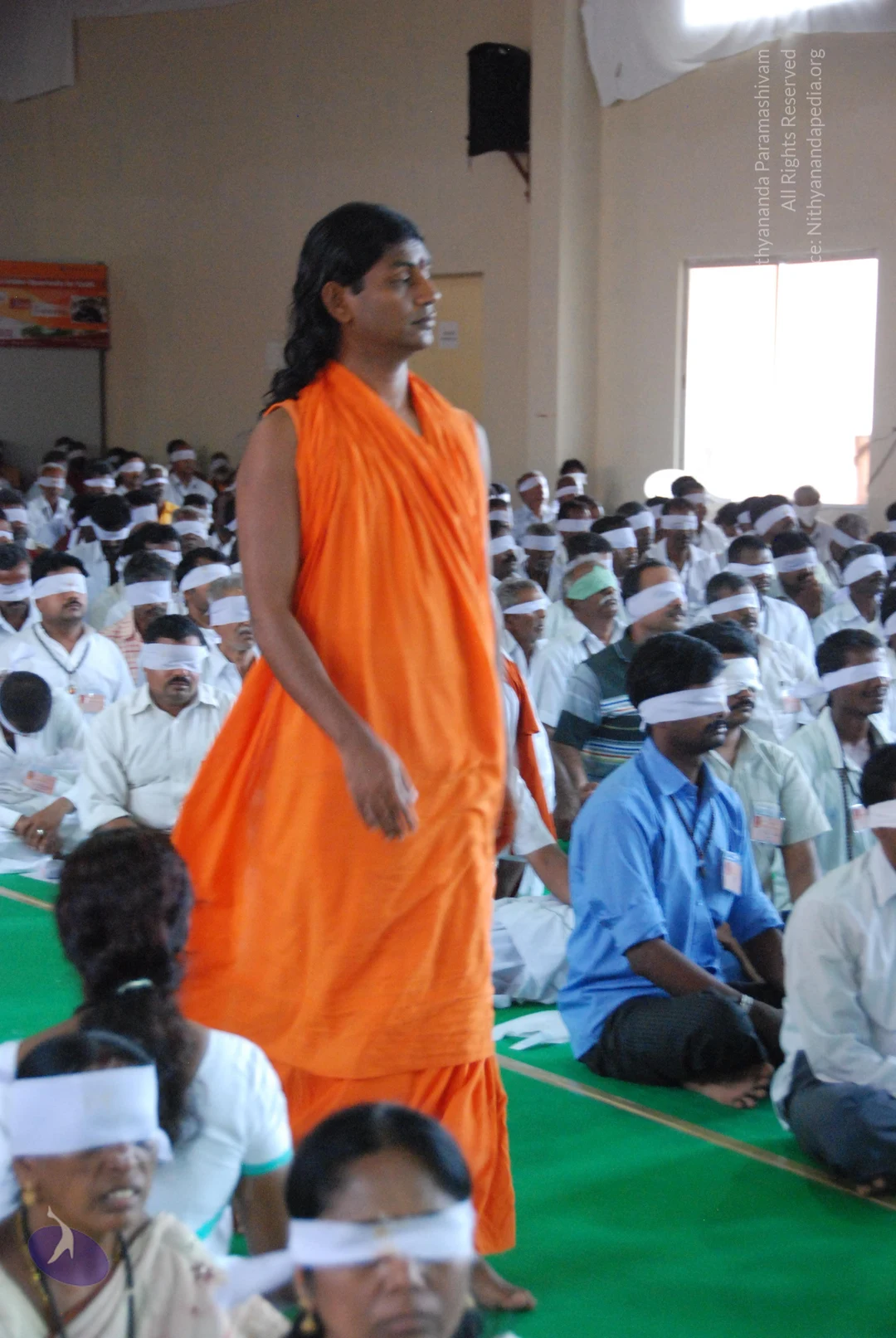
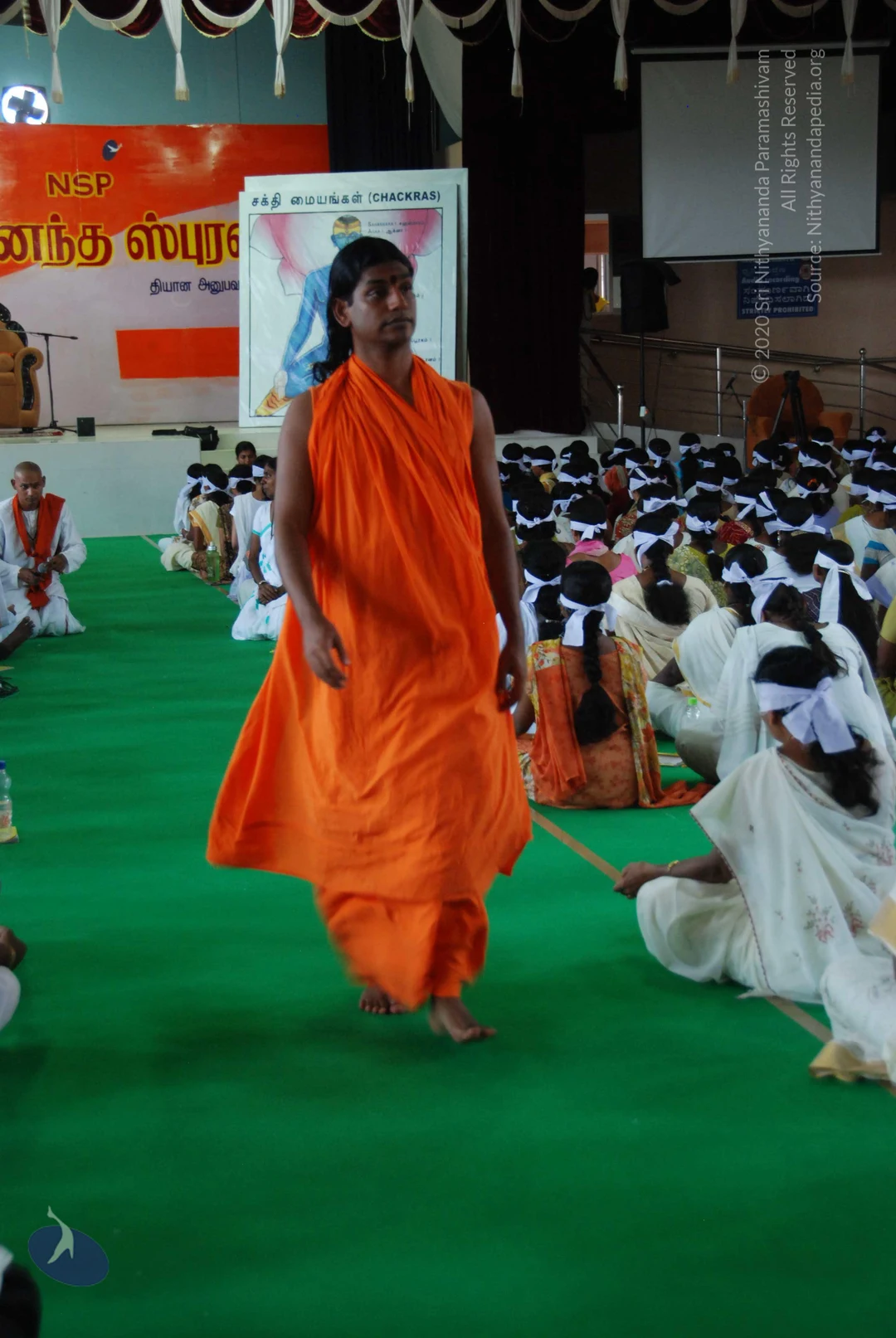
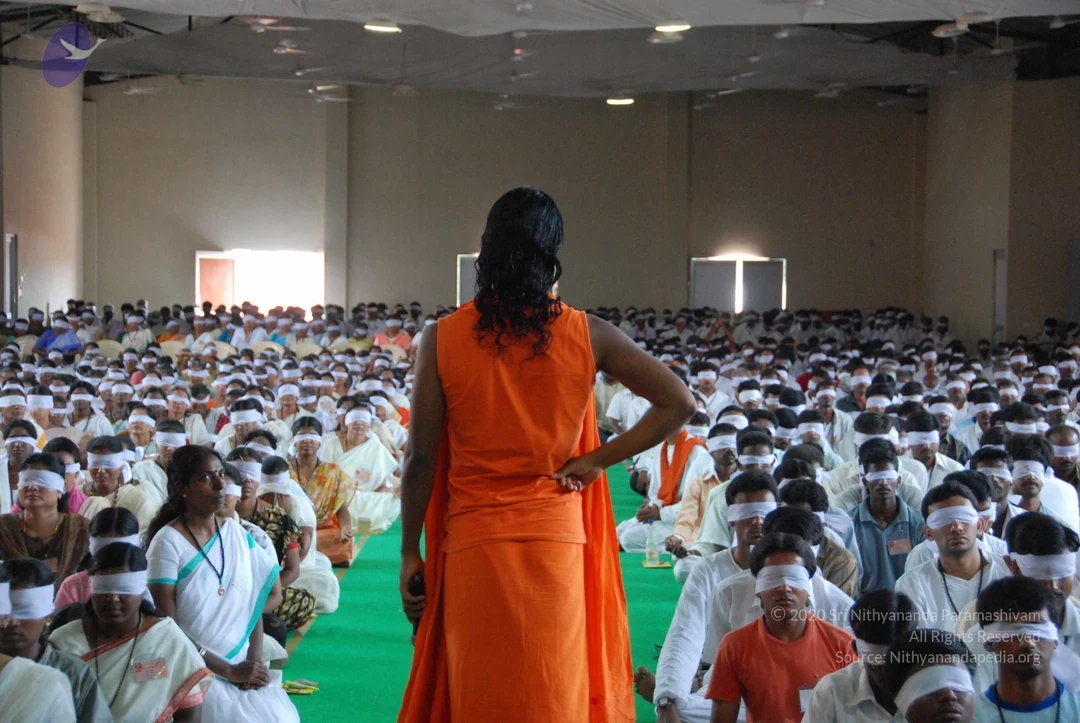
After the morning Sarva Darshan, His Divine Holiness conducted a Kundalini Dhyaan process to clear the Etheric Body of painful memories. The Life Bliss program was also announced.

Video and Audio

Reality TV or Integrity: Nithyanandas morning message, 21 Aug 2010
VideoAudio

Transcript

(0:11)

I welcome you all with My love and respects. Today I’ll share the truth to make you all living enlightenment; the integrity. One of the worst problem human consciousness is suffering because of unconscious, hypocritical, social set-up is integrity - not having integrity, problem of not having integrity. Please understand. The unconscious, hypocritical social set-up, society... In Shiva Sutras, Shiva gives a very beautiful verse, very beautiful sutra, I can say, the straight solution for all the problems. Just integrate your, all your energies into one direction. Feel... I’m trying to give the exact translation. Feel, every soul, every being as your very center.

(02:32)

Understand this one idea.It’s a very powerful idea, very powerful idea. That is why it takes a lot of time even to understand, get the hang of it, even get the introduction. All our problems are just because we go on trying to insist, we go on trying to emphasize that your being is separate from somebody else’s being. The suffering caused to that being will not come near you. You are separate and outside your skin whatever exists is separate. One of the worst thing is, first you start separating what exists outside your skin and inside your skin, but that attitude of separation, separating, does not stop there. It just gets inside your system slowly.

(03:47)

Then even inside, you separate your intellect and emotion. You separate your emotion and being. You separate your being and consciousness. Go on separating, separating, separating, dividing, dividing, dividing. The more you divide, the more you become weak and more problems and more enemies you need to handle. I have seen some people, they feel the whole world is enemy for them. The other day, one person came and told me, ‘Swamiji I feel this whole world, my father, my mother, my brother, my sister, my husband, everybody is sitting together and planning and conspiring against me’. I thought, ‘Oh God! What kind of a mental set-up?’

(04:43)

But I wanted to share with you an important thing. From the young age, I used to feel a very deep, strong feeling inside Me. It’s like a, Vivekananda says once to his Guru Ramakrishna, “Whenever I fall asleep, I feel a ball of light happening in front of me and exploding into My inner space. I just fall asleep, fall into that”. And he says, he always felt all kids used to sleep like that only. He never thought he is some way special because of that experience. He thought, “not only for Me, for always everybody this is the way it is”.

(05:32)

Ramakrishna was so happy and he said, ‘You don’t know how special you are. Only normal human beings, people who can compare you with normal human beings can understand how special you are’. How Vivekananda was feeling always that whenever he falls asleep, he falls into that consciousness, into that light, I have one experience. I had from the young age, unbroken thought trend, a experience, a current, not even thought trend, current, that whole world is celebrating My Presence. The whole world is supporting My existence. The whole world is supporting, fulfilling for what I took birth. This one feeling, one experience was a constant inspiration.

(06:29)

Please understand, till now, even after this whole scandal and abusal I went through by the unconscious, hypocritical society, even after all this, somehow that strong feeling inside, that strong current inside, everybody is part of My drama, My leela. The happening which is happening through this body is being supported by all the people who cherished so much enemity, so much conspiracy, so much of vengeance, wanted to destroy Me and My mission physically, legally, socially and character assassination and what not! Tried to poison, tried to kill, tried to threat, tried to physically destroy, what not? But still somehow unimaginable confidence, the unimaginable joy, unimaginable experience. Whenever I just relax, either into Samadhi or into rest, or into sleep, of course, you can call with the different names but I have only one thing- Turiya.

(07:51)

Whenever I relax into that, I have such a strong confidence, such a clear experience, not even just ordinary confidence, just an experience. Hey, all these fellows who have cherished so much enmity, vomited so much venom on Me and My mission... And just yesterday I had one abusive email from an ex-devotee. Anyhow, even after seeing that mail, after seeing that whole thing, somehow I feel this whole thing is My own drama. This whole thing, not just this scandal, this whole cosmos, this whole prapancha, this whole universe, I have a strong feeling, just my play! And everybody is helping in what I am doing. Everything is supporting in what I am doing. Everything is playing for My side. Still I do not feel that there is something playing opposite side. How to exist in the planet earth, that is a big problem!

(09:06)

So one guy, this devotee when he came and told me, “Swamiji, I feel my husband, my family, my brother, sister, everybody around me are conspiring against me and working against me”, I could not understand. I thought, “O God. What a sickness that person is carrying!” Of course she is helpless. It is not that she created it. She is helpless. She is caught in it. That is the gift or punishment given by society to her. The unconscious hypocritical society constantly makes you feel threatened. The first lessons which you learn from the hypocritical society is, only if others are second, third, you can be first. For you to be first, all others have to be second, third, fourth, fifth. Means, you have to defeat everyone to win. Day one in the school this is the lesson you learn. Unless you defeat you can’t win.

(10:22)

The very system encourages the intense vengeance. The very system encourages intense jealousy. The very system encourages abusing other beings. Creating distance between you and others. Making boundary physically, mentally, psychologically, emotionally. First they teach you, you, you. Then your family, then, your friends, your team, your country, your language, your religion. Everything goes on centered on you, you, you. Then anything other than you is enemy. Understand, this is the worst punishment society gives to human being.

(11:23)

I tell you, I really feel, if some way I can reproduce that feeling which I am carrying, that everything is supporting you... I really feel even when I walk, the trees, plants, the animals, I just feel everything is supporting My mission. What for I exist, what is purpose of My life, everything is just part of it. Everything is just supporting it. If somehow I can reproduce this experience on all of you, I can say, this will be the anti-venom for social hypocrisy. Constantly in every step society teaches you unless you destroy people with other ideology you cannot live; either by hook or crook.

(12:28)

I tell you, this is the worst thing taught to human consciousness, the greatest suffering human consciousness carries is, other than you, everybody is enemy. Still I am not able to understand how to feel enmity. Still I am not able to… See when people talk to Me, I logically understand. Many time people come and tell Me, ‘Swamiji whatever you talk logically I understand but I don’t know how to experience it’. Same way I have a big problem. I can logically understand enmity - how people feel enmity and how to respond to it, how to act towards it. All these things logically I can calculate. Or I sit with My disciples and ask them, ‘Hey what to do about this? What to do? How to go about? What shall we do?’

(13:23)

That is the reason even with this whole scandal, I just, simply listen to the lawyer’s strategy. I could not make a single strategy. First time in My life I obeyed somebody at some time because I was not able to understand at all. I was not able to logically relate, experientially understand, till, what till, till now I can say. I am not able to understand logically how people will have so much of enmity for no reason. Still I have no logical, experiential understanding. So just whatever lawyers say, I say alright. What can be done? I try to educate them, “No, no, no. Go as much as possible, non-violent, compassionate, just defending us, nothing else. Don’t hurt anybody. Don’t hurt anybody’s sentiments.”

(14:27)

One so called the ‘spiritual guru’, used this chance to abuse Me left and right in the press, just fishing for few disciples in this chaos. But when you try to fish in the dirty waters, you get into dirty. They don’t understand. So My lawyers were insistent on Me sending legal notice. I said, “No, no, no, leave it”. But this guy is not stopping. He goes on commenting whenever he gets a chance, press mike in front of him, he goes on abusing. Now what to do? I can neither listen to My compassion nor listen to this lawyer’s strategy but still I am holding. I say, “No, no, no, it is ok, leave it, don’t do, leave it, let’s wait, let’s wait. Trust His intelligence. At some point it will be awakened.” What to do? But it goes on!

(15:36)

Sometimes, the problem is, but I tell you, whatever is said and done, that feeling, whole thing just supports you, whole thing just stands for you and what for you stand. Whole thing is just fulfilling you, celebrating you. I tell you, even if it is just hypnotizing Myself, self hypnosis or some illusion, I am happy to have it. No really, I am just enjoying it. Sometime your joy and bliss becomes more important than the factuality of the ideas you carry. I tell you, because the society’s hypocrisy has become too much, even you start doubting about your own experiences. I really saw, thousands of disciples who had such a strong experiences, fools, they have started suspecting their own experiences because of the social hypocrisy.

(16:45)

See, their bio-memory is built on society, built by society. So when society just creates an euphoria, it’s like a, every full moon day, the ocean, ocean gets agitated, salt water gets agitated because of the moon. The energy from moon, pull from the moon, salt water gets agitated, the ocean gets agitated. When the salt water gets agitated, all the people who have little weak mind, their body’s salt water also gets agitated. That is why, the people who lose their balance along with the moon, they are called lunatics. Along with the flow of lunar, they are called lunatics. The pournami or amavasya comes, the full moon day or new moon day comes, they will be little imbalanced.

(17:37)

How, when the whole ocean gets agitated, the peoples body also gets agitated, same way, when an abusive idea is put into the social mind, social euphoria is created, suddenly these guys also lose their base. I know so many disciples, ex-disciples who abused Me during this scandal, now they are repenting terribly because now social euphoria is settled. They are not able to tolerate that they did this. But what to do? When the social euphoria gets aroused, their bio-memory also gets aroused and they themself do not know what they did. It’s unconscious. I feel actually sympathy for them. I don’t feel angry with them, about them, I just feel sympathy, oh God what to do? Alright.

(18:36)

So understand, one of the important suffering human beings have in their life is, problem of not having integrity. I’ll explain the integrity in different levels to you. Now I explained the problems of not having integrity. I’ll explain exactly the integrity itself. The intellect-logic, analyzing, intellect, and emotion-feeling connection, the juicy part of your life and being-your very idea about you, which is constant, which runs like a thread during your waking, dream and deep sleep. During all these three state, it runs like a common thread. That is why, when you get back to waking state, you are remembering the same personality. You remember about yourself as the same continuity. This is what I call being.

(19:38)

Understand, in all these three, there is lot of disturbance. You’ll understand the intellectual disturbance. The moment you start planning for one thing, within few second, some other plan will be going on in the other part of the brain. That is why, I always tell people, disintegrated brain, right brain and left brain. “Nothing is right in the left, nothing is left in the right! Nothing is left in the right, nothing is right in the left!” Disintegrated brain. It goes on and on and on in different direction. One says one thing, the other says other thing. By the time you decide this, already you see, if you take one decision using three words, already ten words are used to support the other decision. The number of words you use...

(20:40)

Sit and analyze only one decision. Take up one problem and develop solution for that and how many words you use for and against that one solution, one problem you analyze it. You will realize nothing is left in right and nothing is right in left; you’ll realize it. Just one problem, take up one small problem. “Today it’s so pleasant, wonderful day. Can I just sit in the temple and meditate.” Make this one decision. You just, just decide. Just one problem. If you don’t want to have this problem, pick up your own problem, or having whether to have this problem or not. Take decision on that one thing, just one thing. See how many words you use, I am not even asking the emotional strength behind the words; that you will not be able to calculate. Just number of words you use, for and against. Just see, you will understand how many voices are there. It’s like a hundred fellows are sitting inside your brain and talking.

(22:01)

People sometime come and tell Me, “Swamiji I hear two voices in my inner space, I hear two voices”. I tell them you are blessed you have only two! :) I know people who have hundred, two hundred, not just one. There is a Upanishad which says, ‘A Paramahamsa should not live with two persons. It says He should live just with Himself.’ I was really surprised. The Upanishad goes on describing. It describes, ‘Two persons are staying in one place means it is equivalent to village. Three persons are staying means it is equivalent to city. Four people means, it is equivalent to mahanagara,’ means large city, cosmopolitan city. Because each fellow has hundred voice.

(22:58)

Why do you think these reality shows are such a big success, such big hit? Because people want to see the same chaos in which they are living. The reality shows where some 10-12 celebrities are put in one house, see actually in one house, ten people living is not a big thing at all. See in our ashram. One small dormitory, 50 people stay for 21 days of Living Enlightenment program. And all are completely from different country, culture, language, background, education, everything! And I don’t hear a single problem or fight. Fifty people stay in one dormitory and most of them, I can say 99% of them are habituated for private space in their regular life. They will have at least their bedroom and I tell you, the greatest sacrifice is sacrificing the privacy. It’s practically impossible. You need at least a few hours where nobody will see you. I can understand what it means abusal of privacy. But 50 people stay in one dorm but I don’t see any problem, disturbance in them because of the power of that inner awakening, power of that Inner Awakening, when the inner space is getting awakened. But a normal man, impossible, impossible.

(24:49)

That is why this celebrity reality shows - such big success. Because one person itself is too much. And celebrity means you have at least some 400, 500 voices because he is the peak of social hypocrisy. Person who is peak of intellectual, social hypocrisy becomes politician. Person who is peak of emotional, social hypocrisy becomes artist celebrity; in the line of art. The person who is in the peak of the being level social hypocrisy will be in asylum; lunatic asylum. Celebrities unconsciously suffer this social hypocrisy too much. It’s really too much, that is why when you put few celebrities in the, together in a house and start a reality show, you don’t even need to create any trouble for them. Just put few of them together, that’s enough. So much anger, so much vengeance, so much crying.

(26:00)

You may think how I know about celebrity shows. Just the other day I got an offer from a big celebrity show, one of the international celebrity show, 14 weeks of My time and they said, any money, any money we will offer. I was laughing. No really! What all offers I get you don’t know! Karan Thapar, the strongest tongue I have ever heard in Indian talk shows. Karan Thapar personally called My press secretary. And he said, “I wanted to interview Swamiji”. And he says, “I am ready to accept all conditions you place. I just want Swamiji in my show.” I was really shocked because he doesn’t need to raise his TRP having Me. He has enough people and enough TRP and he is very popular for his sharp tongue. But he says, “No. He’s the most watched celebrity now.” First his secretary called then, he personally called, “I want Swamiji in my show.” Of course, hundreds of offers.

(27:31)

When they asked Me about this celebrity show, this reality show, 14 weeks. I thought maybe everyday half an hour they will shoot. I didn’t understand what it means by reality show. They came and told Me. I said, “Okay, talk to Bhakta and fix time.” They said, “No, no Swamiji you don’t understand reality show, first watch some reality shows. Then you will understand.” When I saw, Oh GOD! It is a whole day, they fix camera and they watch and they try to boil you. But actually after watching the show I was really interested that I should take up a celebrity show, I should take up a reality show. No really, because I wanted people to see a Masters life day and night.

(28:24)

I really wanted a reality show but unfortunately no time, no time. 14 days, 14 weeks, even my brahmachari cannot afford 14 weeks of free time. And they said any money is okay, we will give. Just give Swamiji’s time 14 weeks. I said, “No. No question of money, it is a question of lot of spiritual classes and sessions. We’ll not be able to take 14 weeks of Swamiji’s time. Thousands of people wait every day.” I heard last few days, thousands of people are attending pada puja and this darshan from around the world through web camera even now. They say more than hundred countries, people are watching even now.

(29:16)

So, I sincerely respect the devotion and commitment and feelings of people from around the world than any money making reality shows. And the other guy, one guy came and offered that he is taking a movie on this whole scandal and he wanted Me to directly act. He offered six crore; one and half million he offered. He just said, “Swamiji, all I want is 10 days of your call sheet, nothing else. I will give you six crore.” I just laughed and said, “I am not interested in any of this. I wanted to spend time with My people, disciples who are waiting for My message and meditation, spiritual solutions around the world.”

(30:14)

Anyhow, the psychology of the reality shows, it is just too many people inside every body’s head, the disintegrated intellect. And people are also so happy to see others are also irritated, agitated, disintegrated like us. You see, people always have a fantasy about celebrities, they are not like us. But when that fantasy is broken, they feel, ‘Oh they are also like us only.’ So it gives a kind of a very nice feeling; ego satisfaction. See, celebrities are always projected that they are higher than you, above than you. But when you crack them, it gives you a kind of fulfillment of the violent feeling you have; the vengeance you have. ‘Ah, he’s also you see, shouting like me only, good’. It’s a kind of a revenge. That’s why in all the reality shows, the more the women cry, more people watch. The TRP goes up. It’s crying that makes the TRP rate high.

(31:33)

Disintegrated intellect, understand. When you integrate your intellect, it becomes knowledge, life solution, it leads you to life solution. You will understand about the cosmos. When you integrate your emotions, it leads to devotion, you will feel connected to cosmos. When you integrate your being, it leads to dhyana, you will realize cosmos. Understanding, emotional feeling connection, realization, all these three happens just by integration. Integrity is ultimate yoga. When integrity is added to your intellect, it leads you to life solution, it solves your prob; all problems of life. I can say, it dissolves all problems of life. When you integrate your emotion, it becomes devotion. When you integrate your being, it becomes meditation. You realize the whole cosmos. So add integrity and achieve enlightenment.

(33:00)

Let you all experience and radiate living enlightenment. Let you all experience and radiate the eternal bliss, Nithyananda. Thank You. (33:17)

Title

21 Aug 2010 Nithyananda World Family News

Video and Audio

21 Aug 2010 Nithyananda World Family News

VideoAudio

Photos Of The Day:

Pada-Puja-Morning-Message-Darshan
Photos Of The Day:

01-Morning-Satsang-and-Darshan
02-Temple-Visit

03-Pada-Puja

04-Sarva Darshan

05-Tamil NSP

07-Construction

01-Morning-Satsang-and-Darshan
02-Temple-Visit
03-Pada-Puja
05-Tamil-NSP