Skip to content
Saturday

12 September 2009

Question & Answers at Kalpataru Program

Dated photos
264
Source pages
1
Media
2
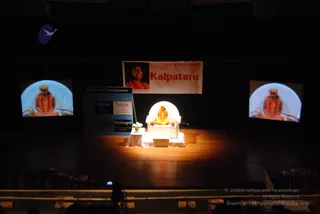
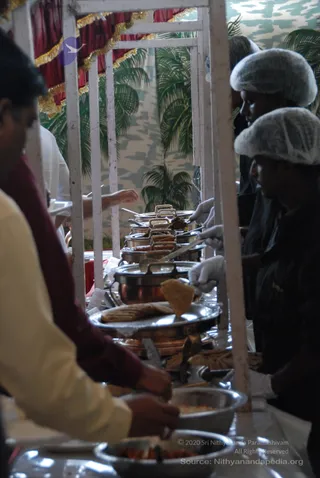
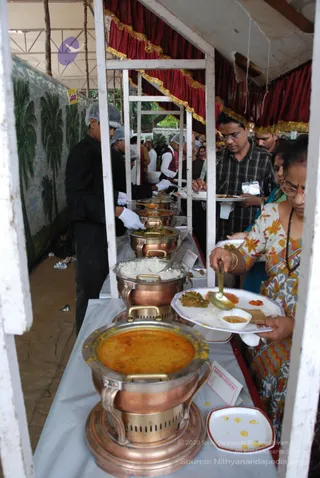
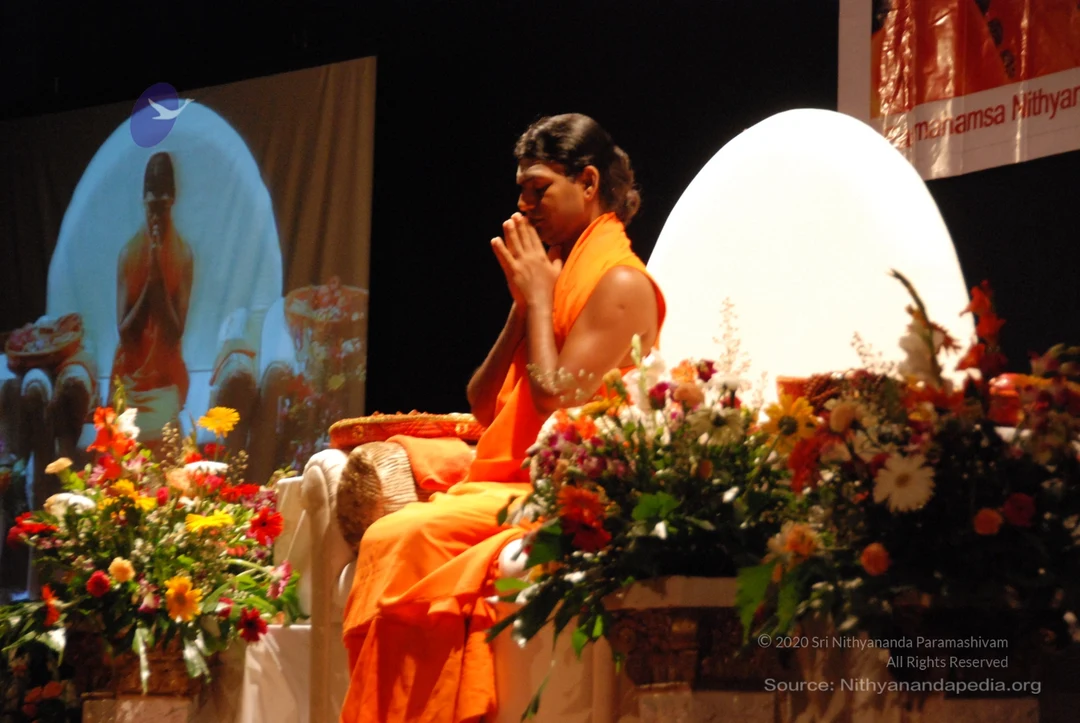
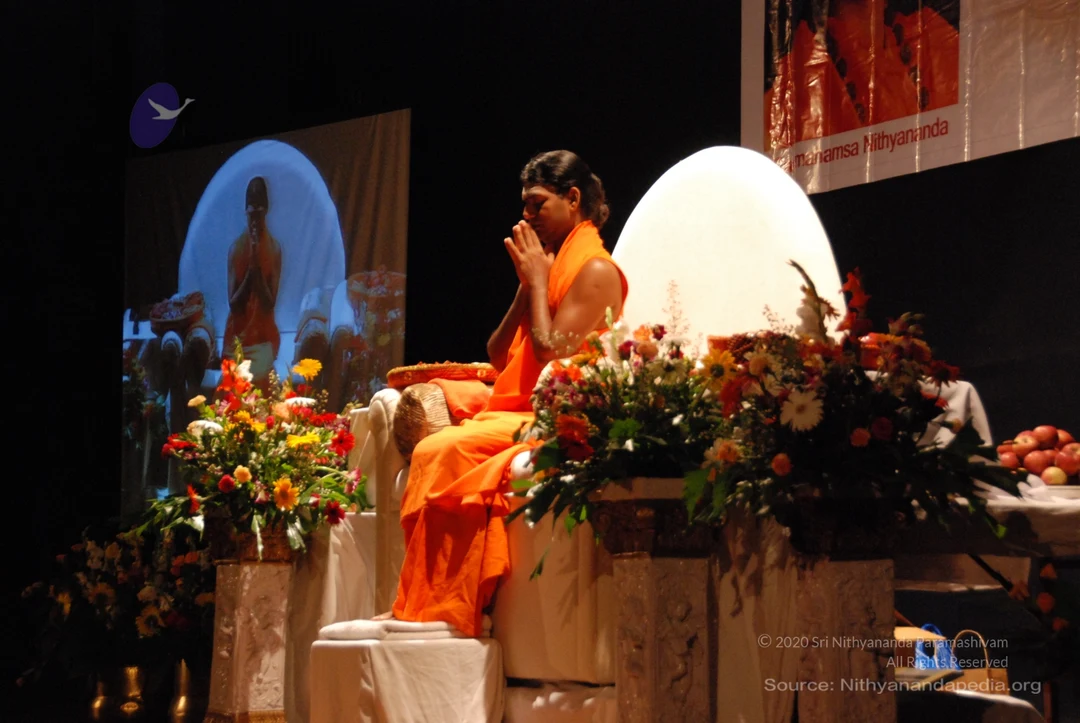
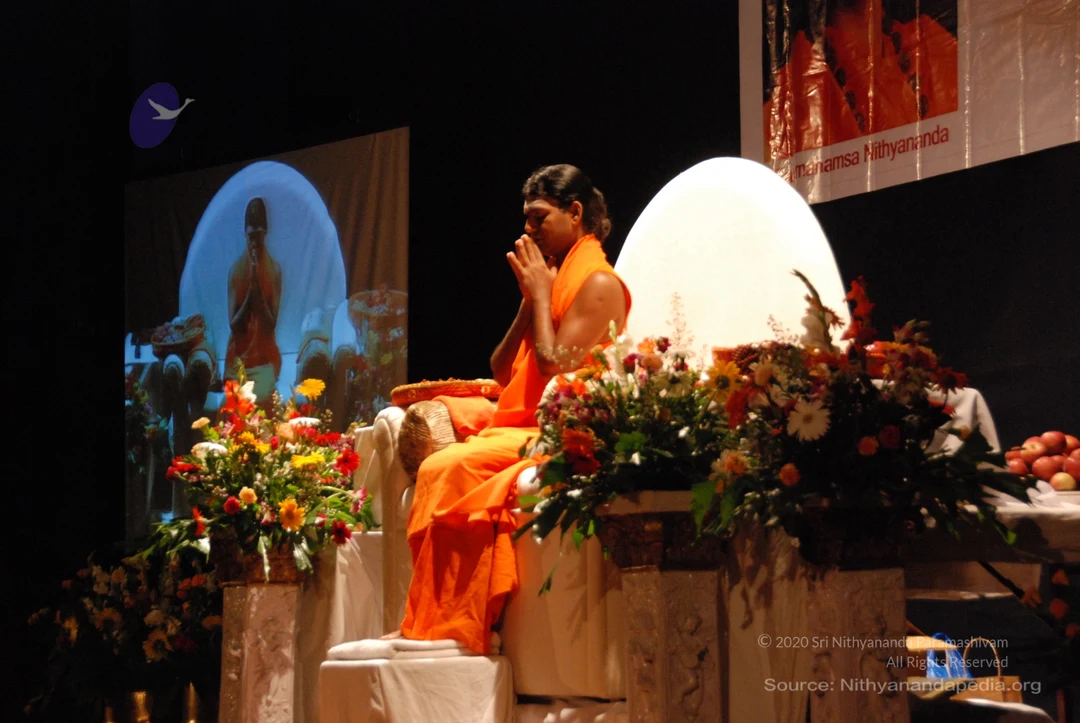
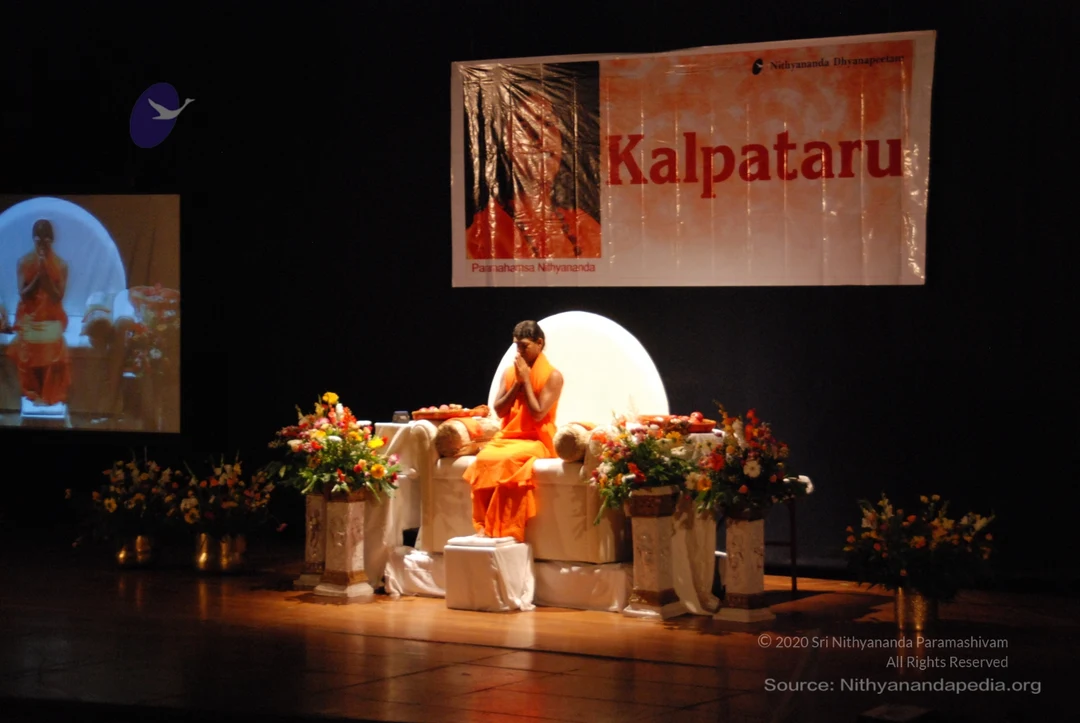
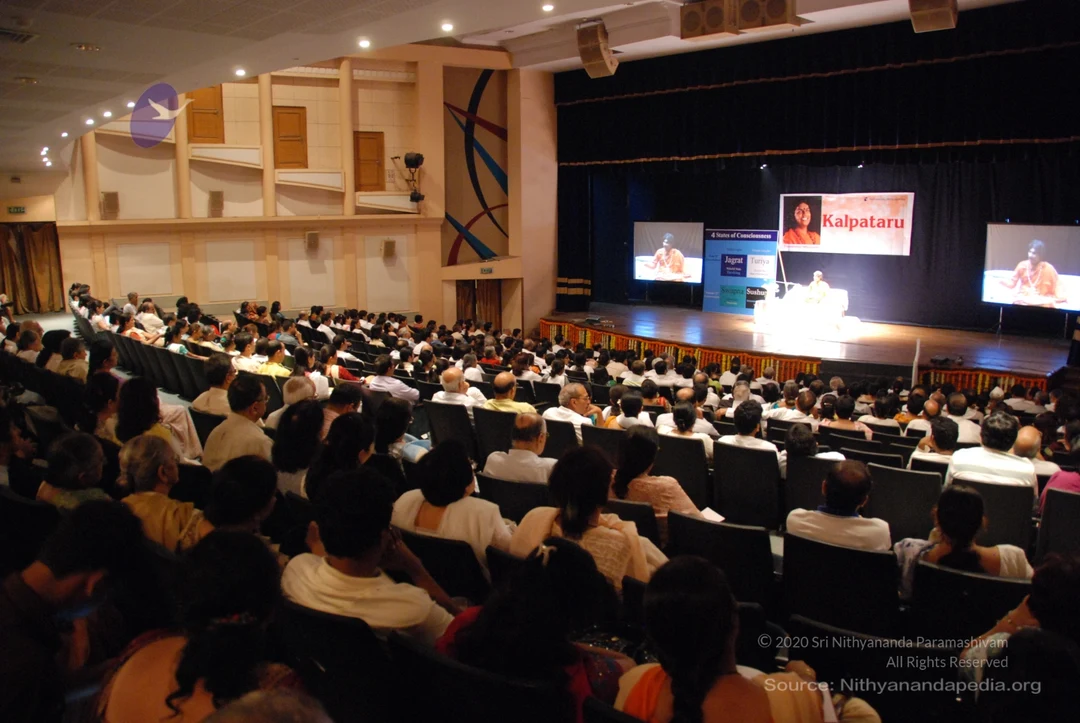
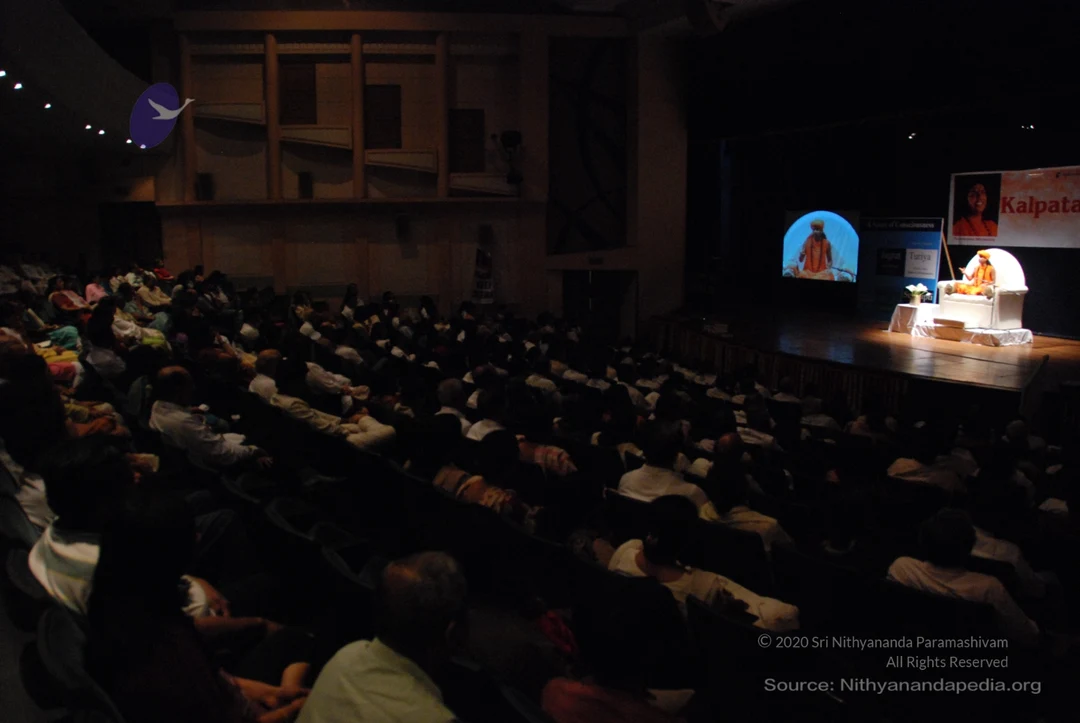
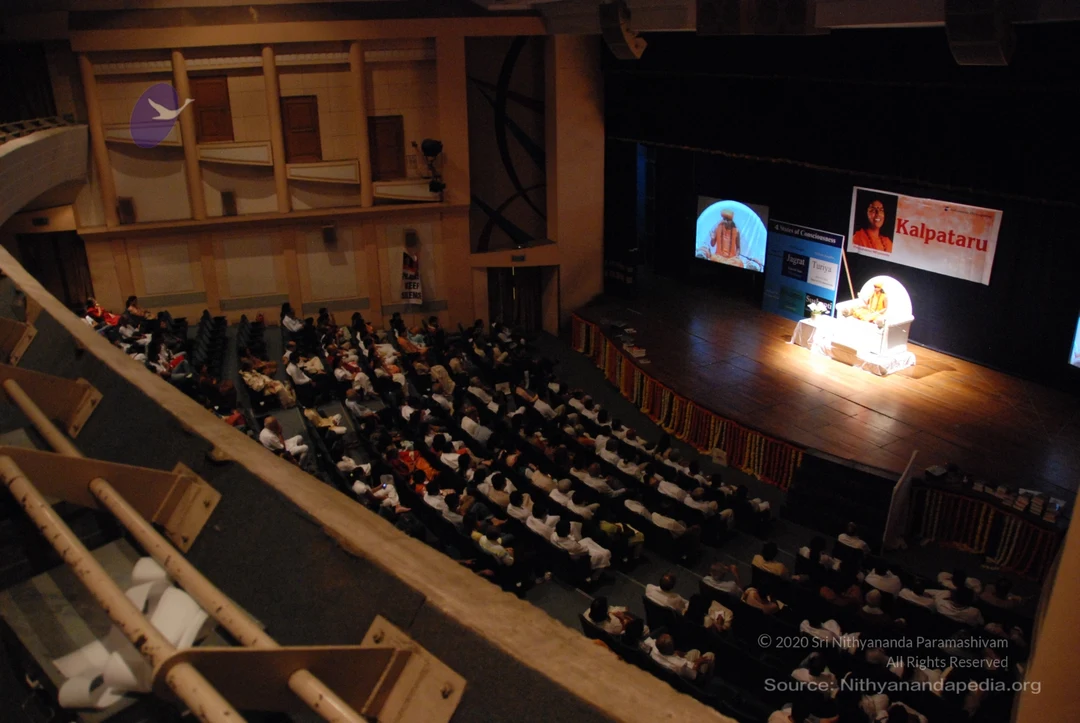
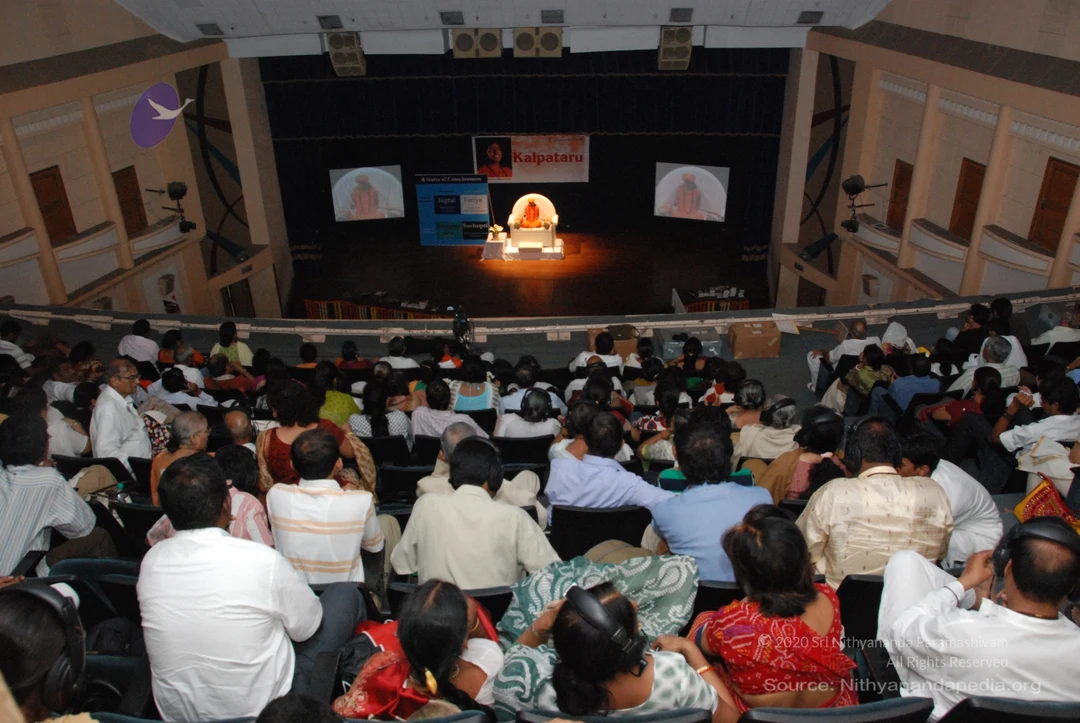
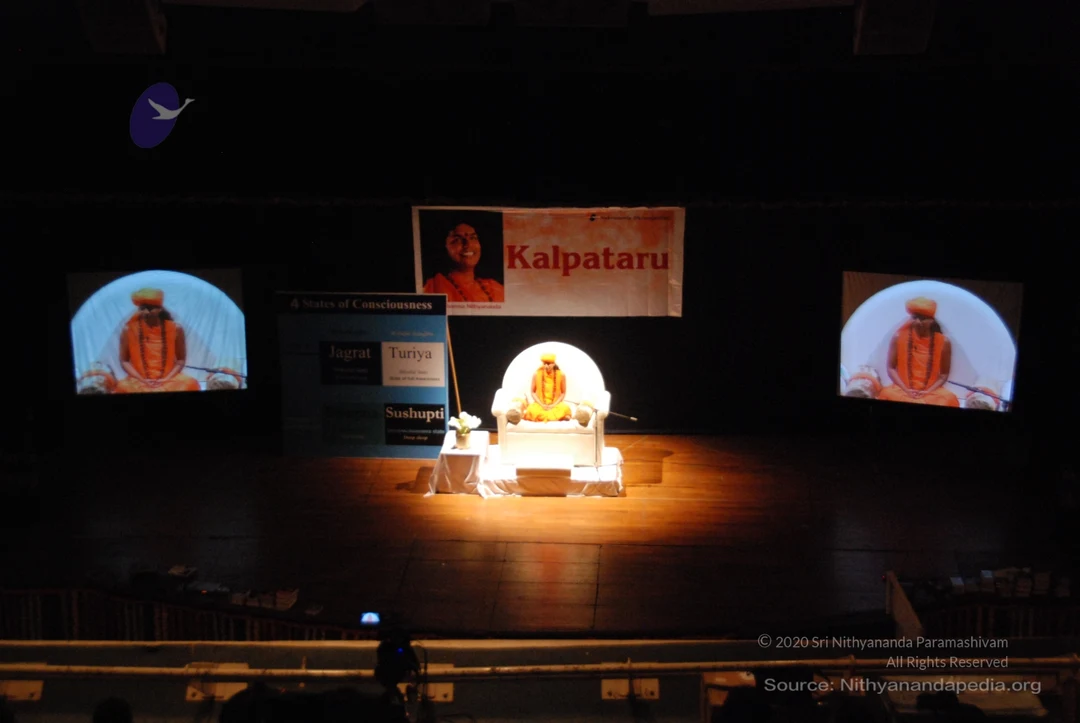
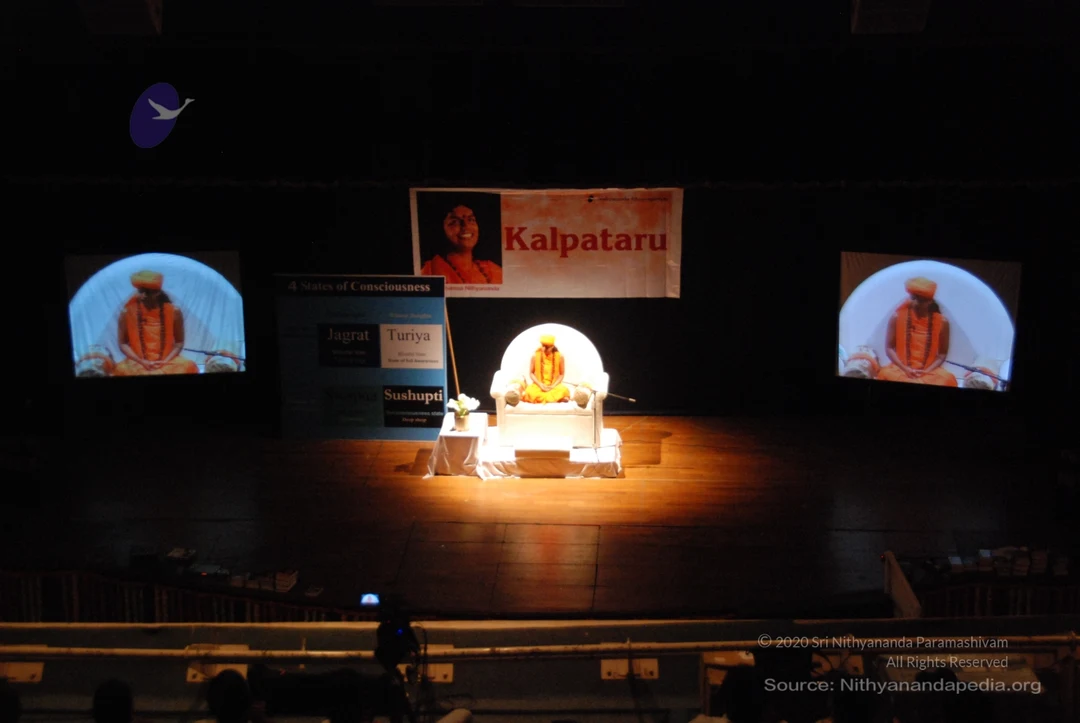
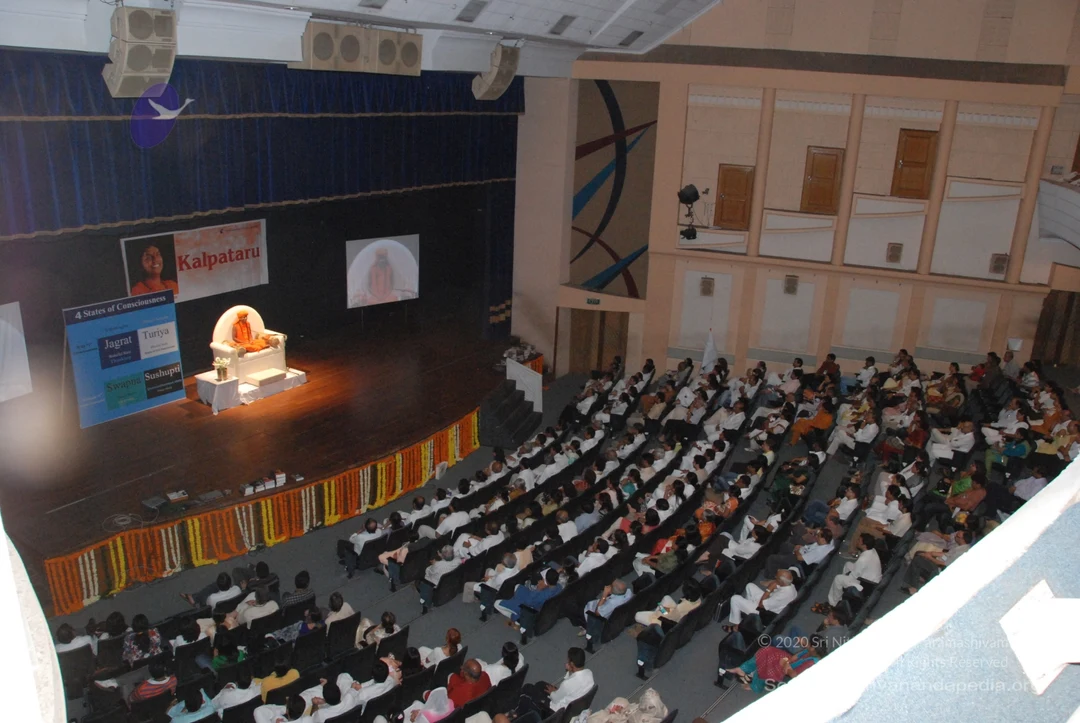
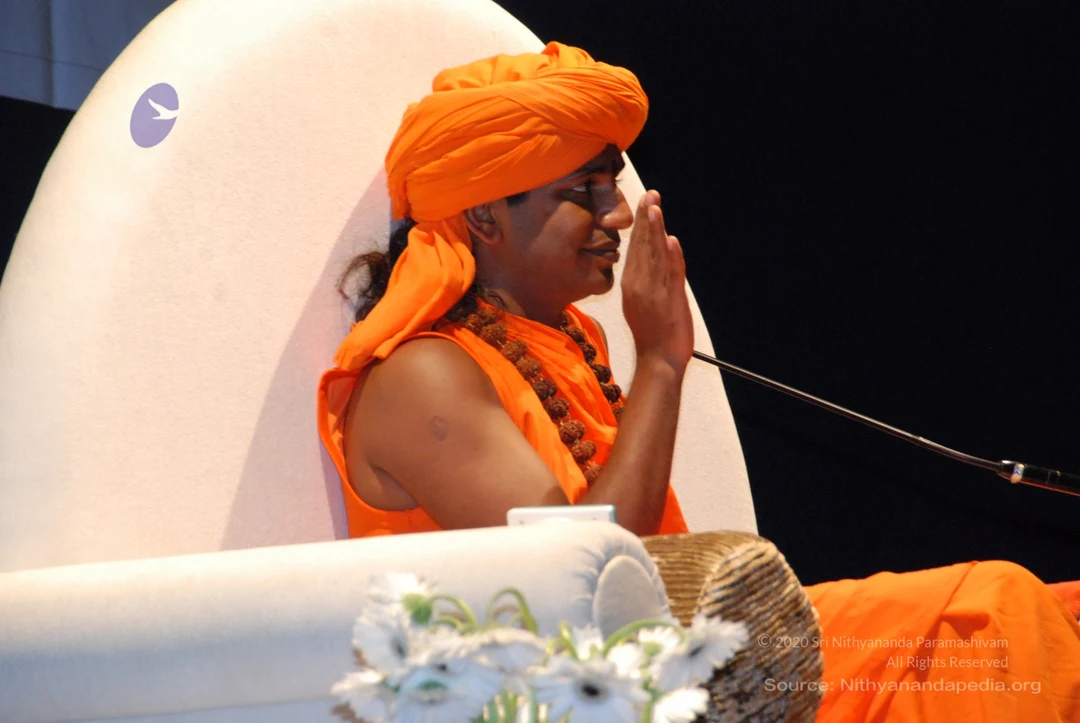
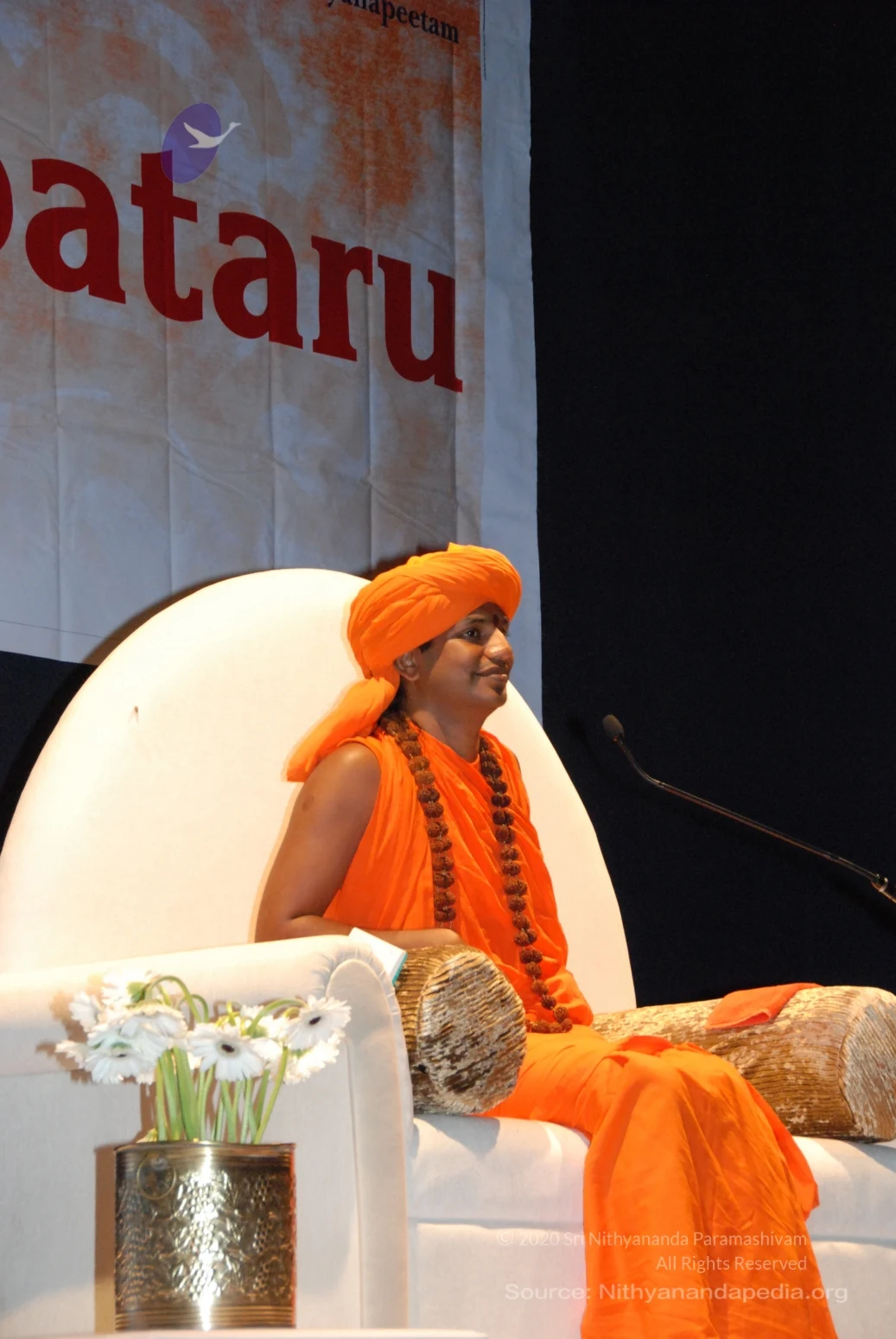
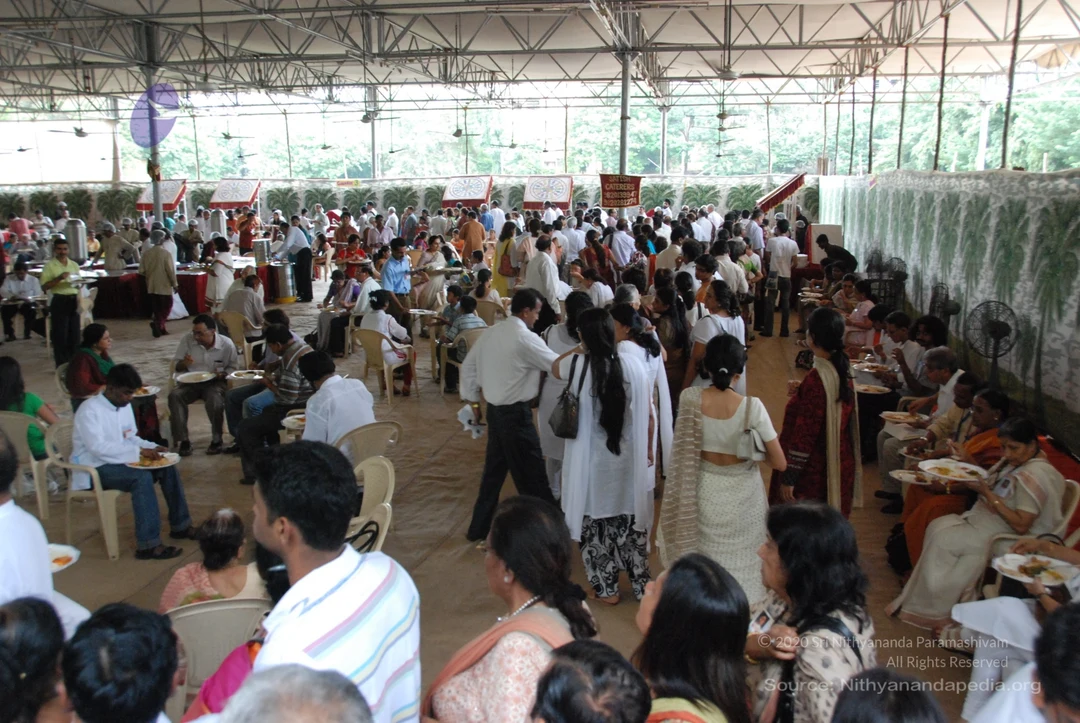
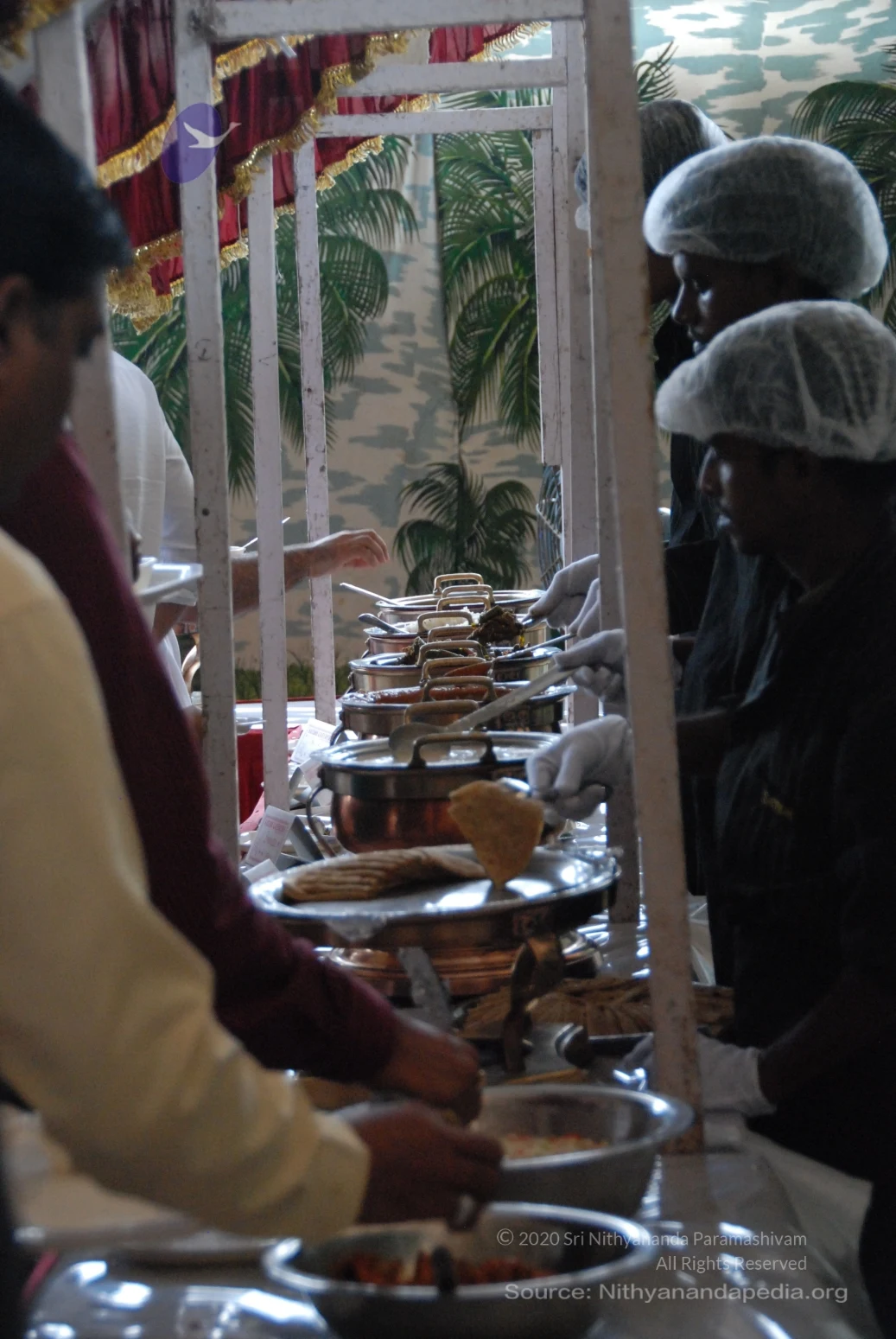
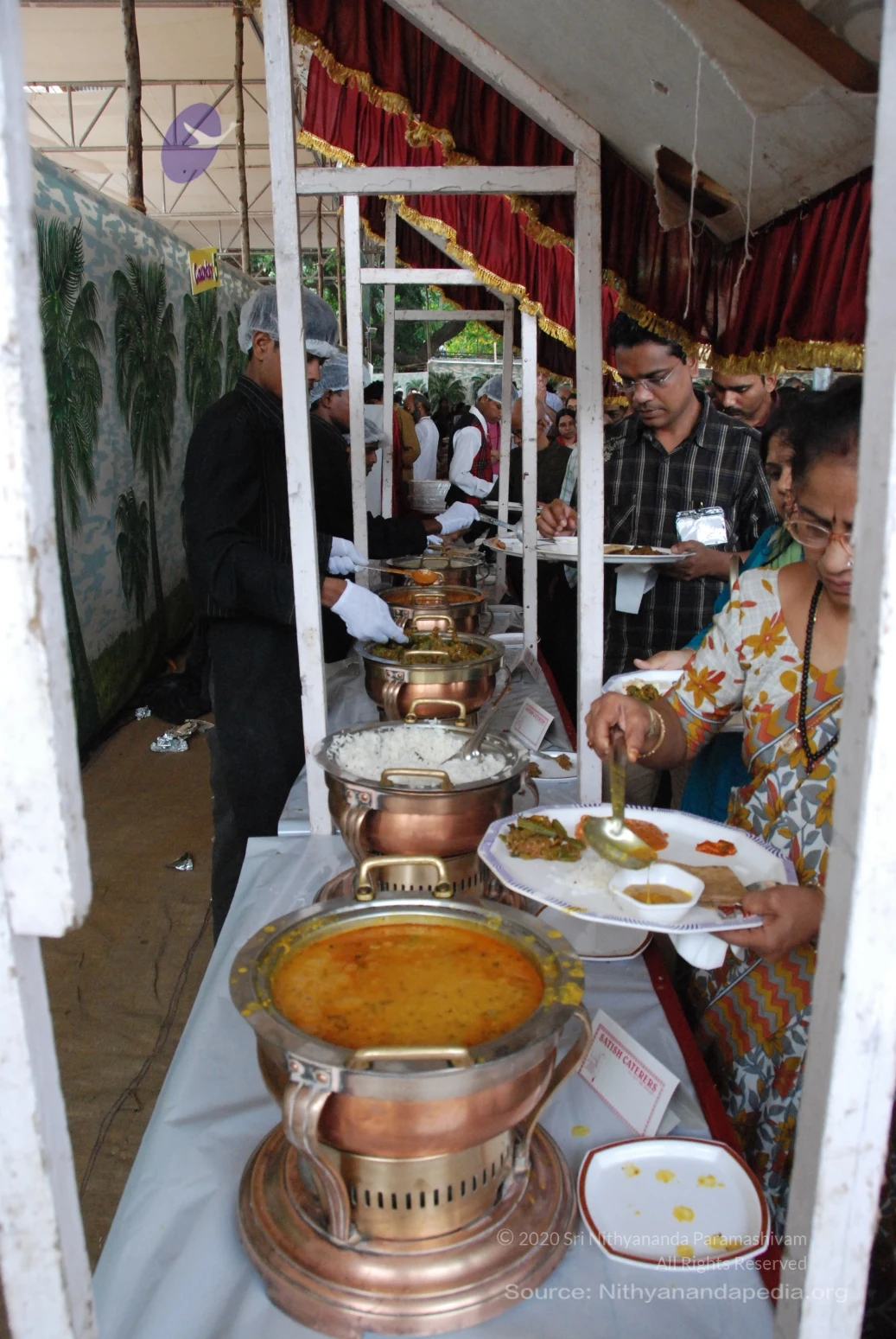
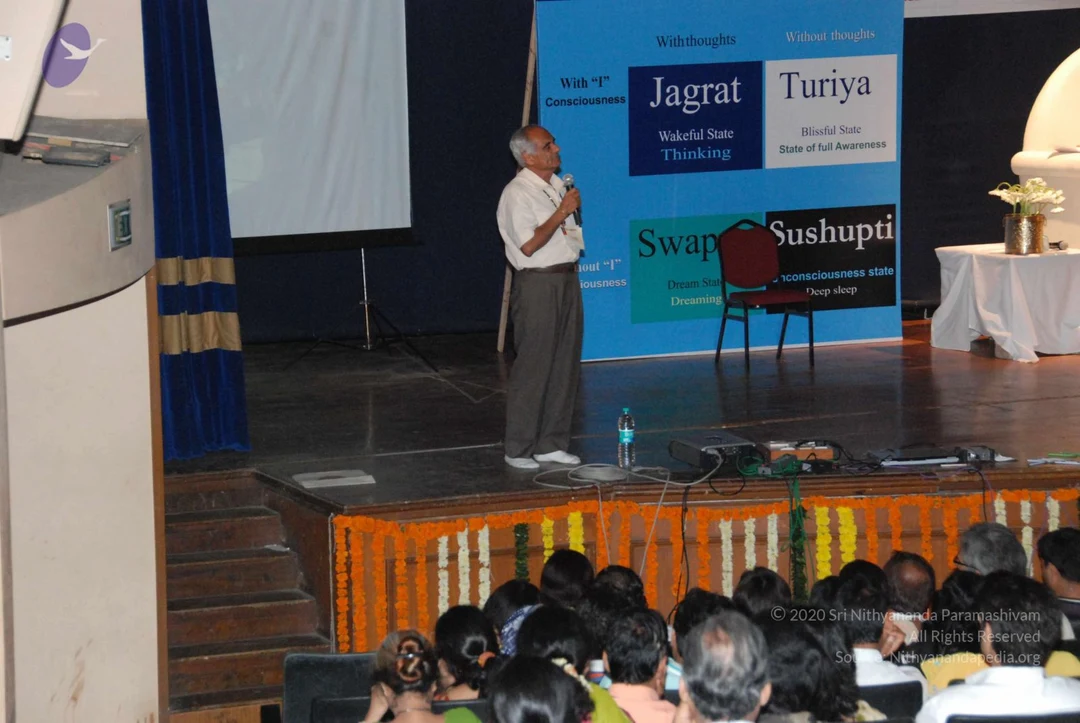
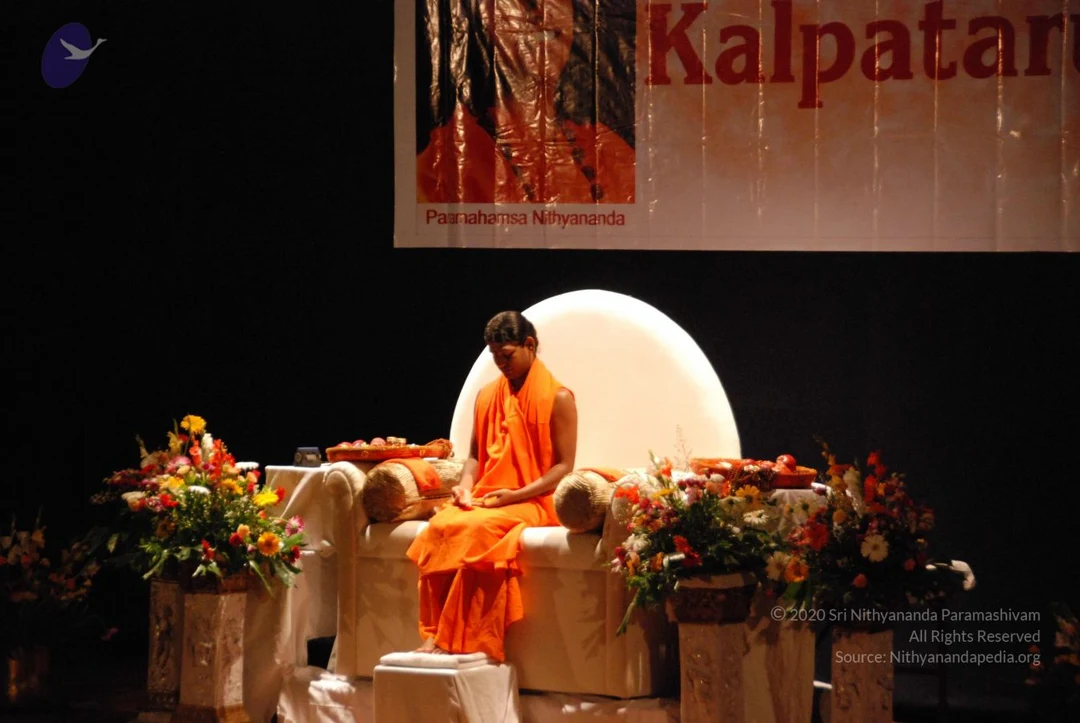
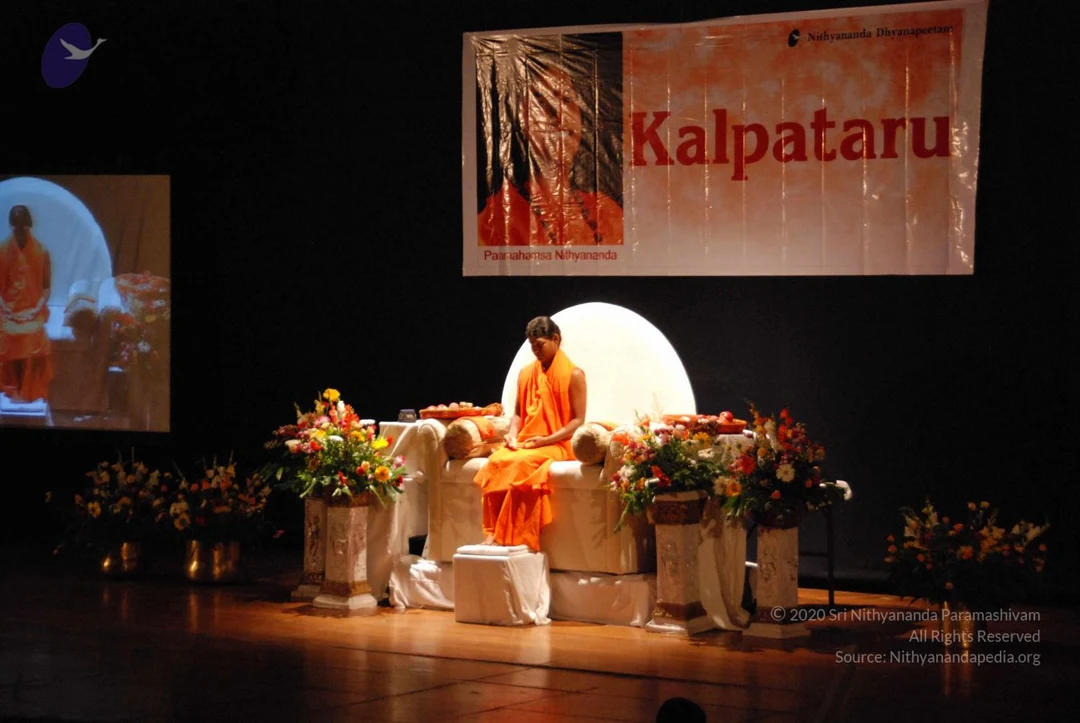
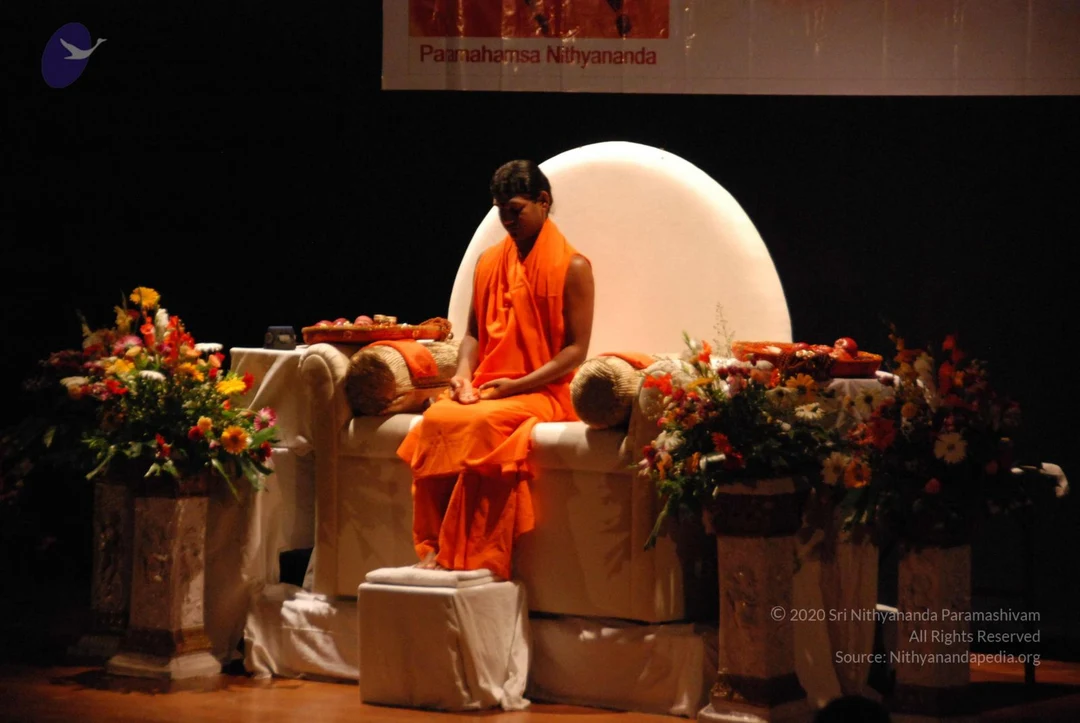
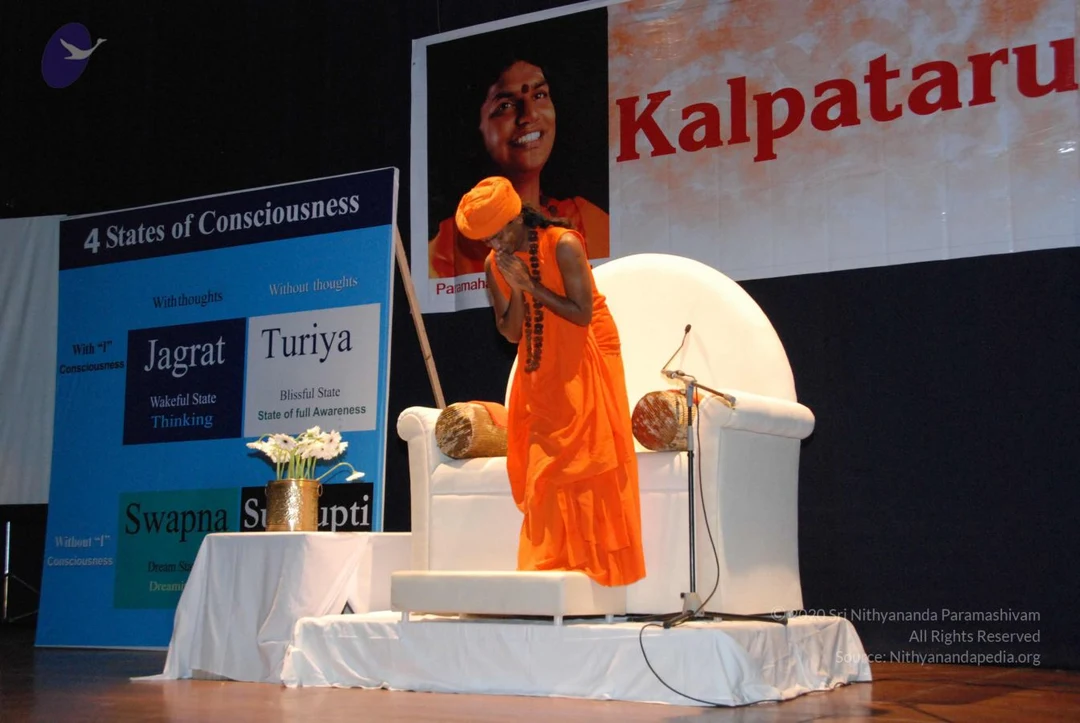
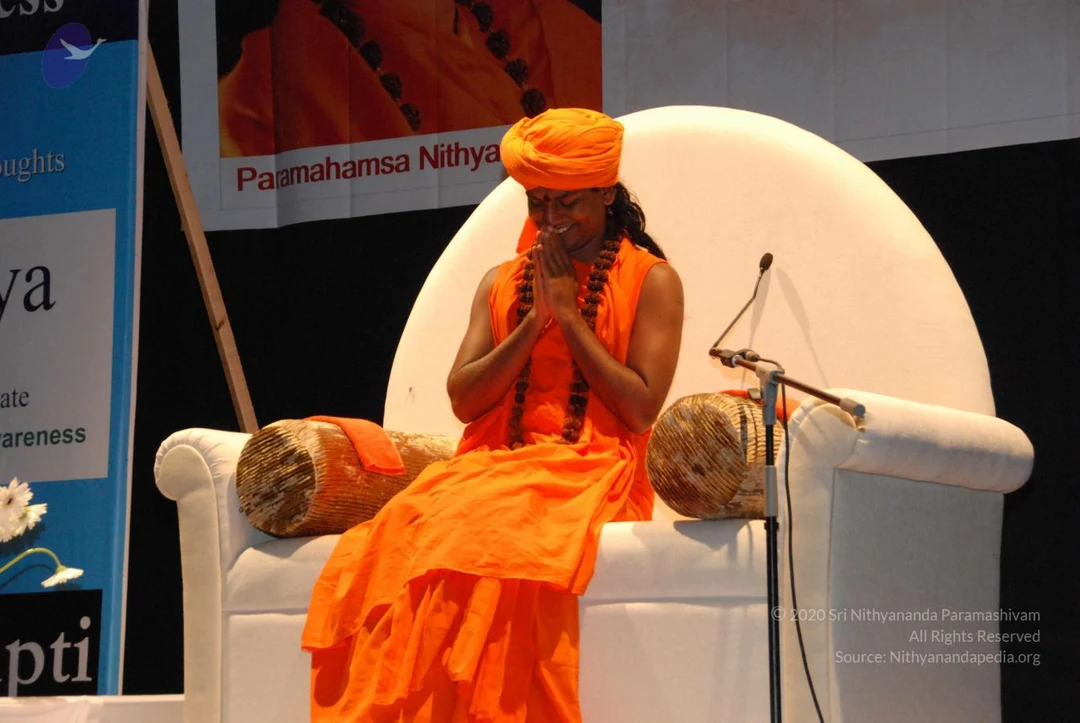
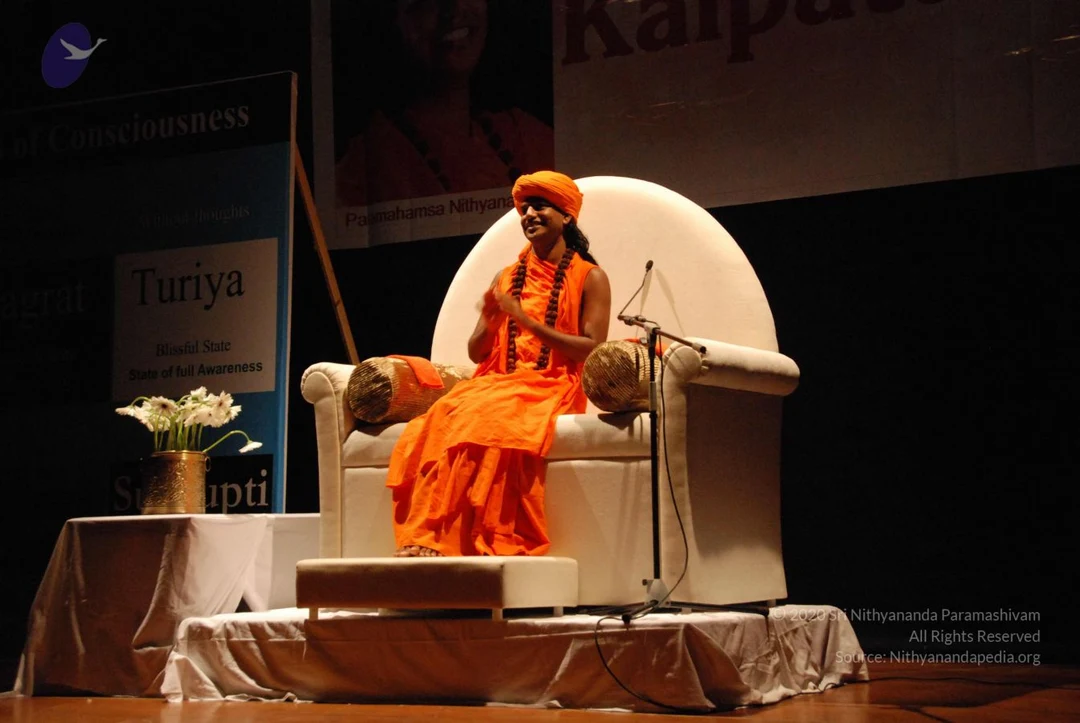
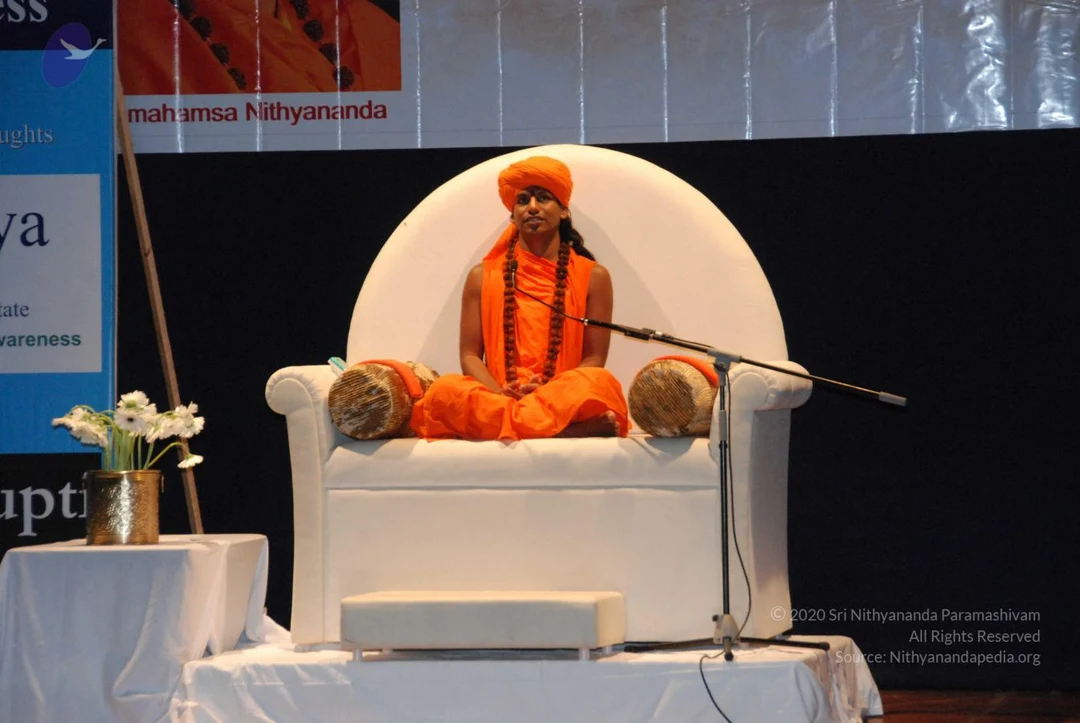
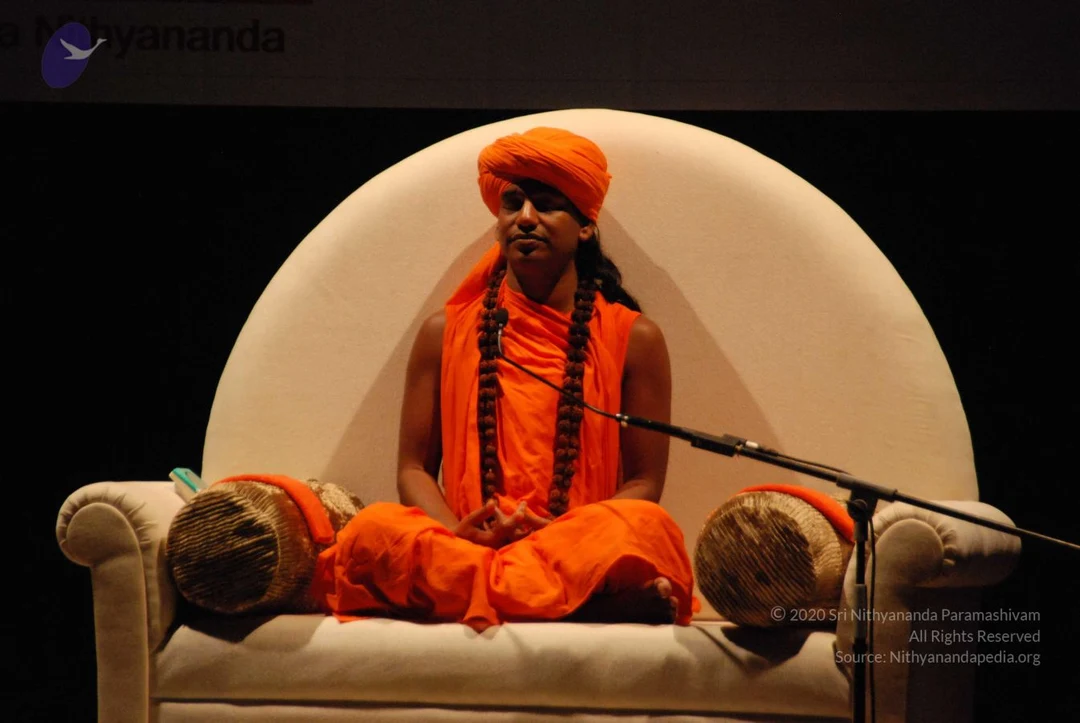
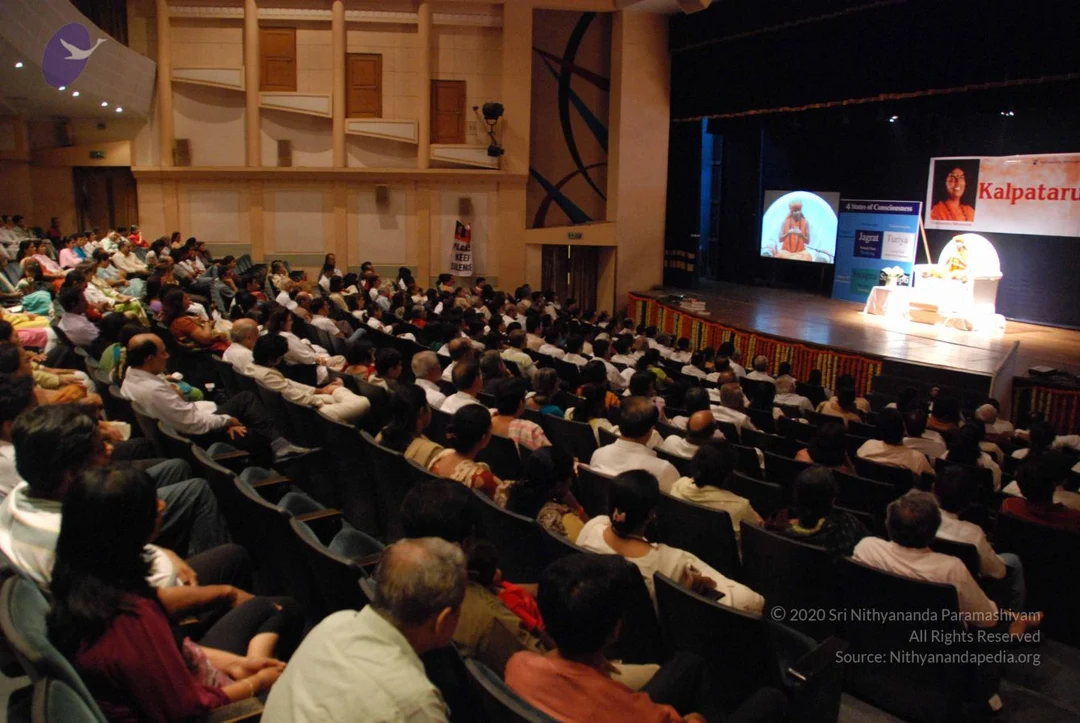
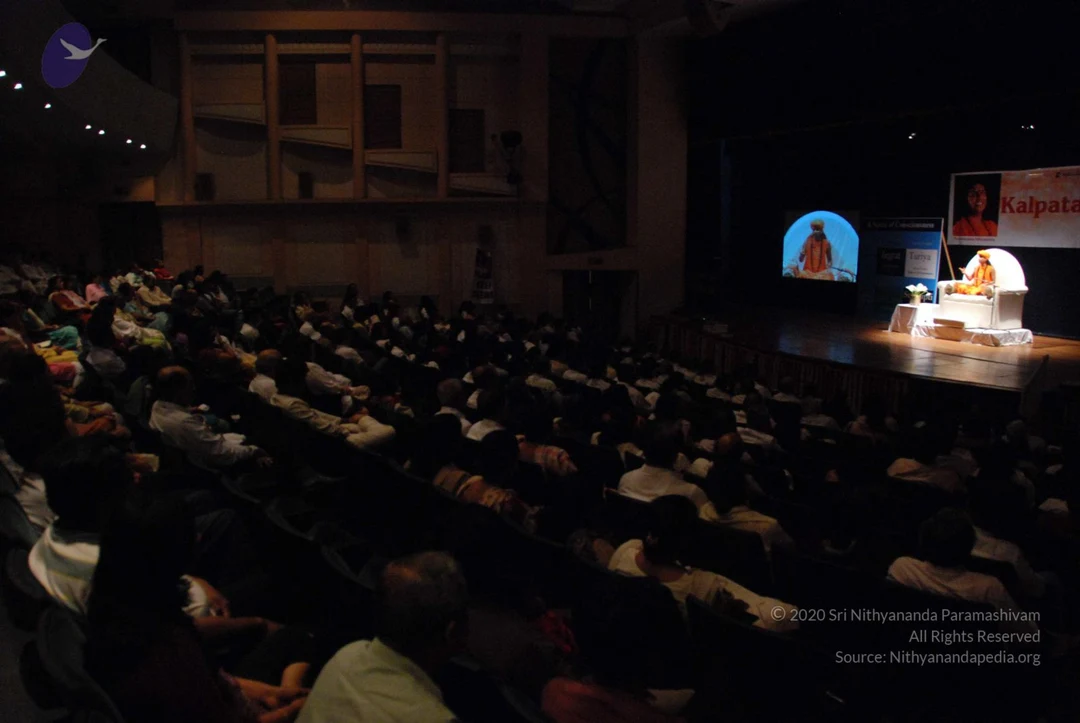
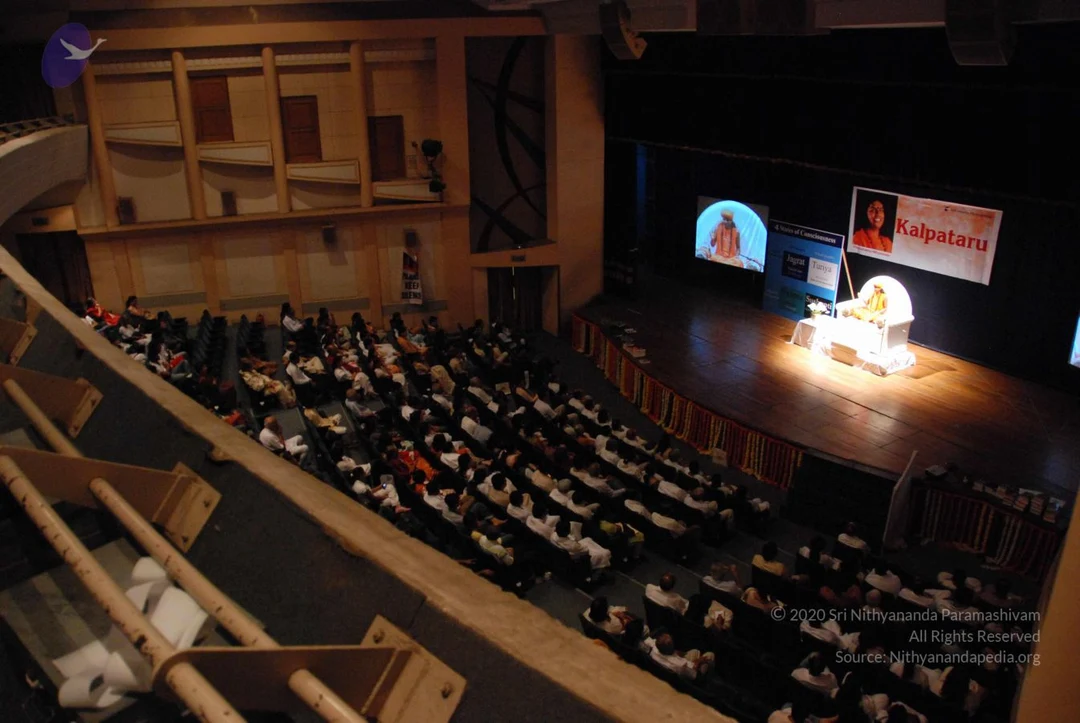
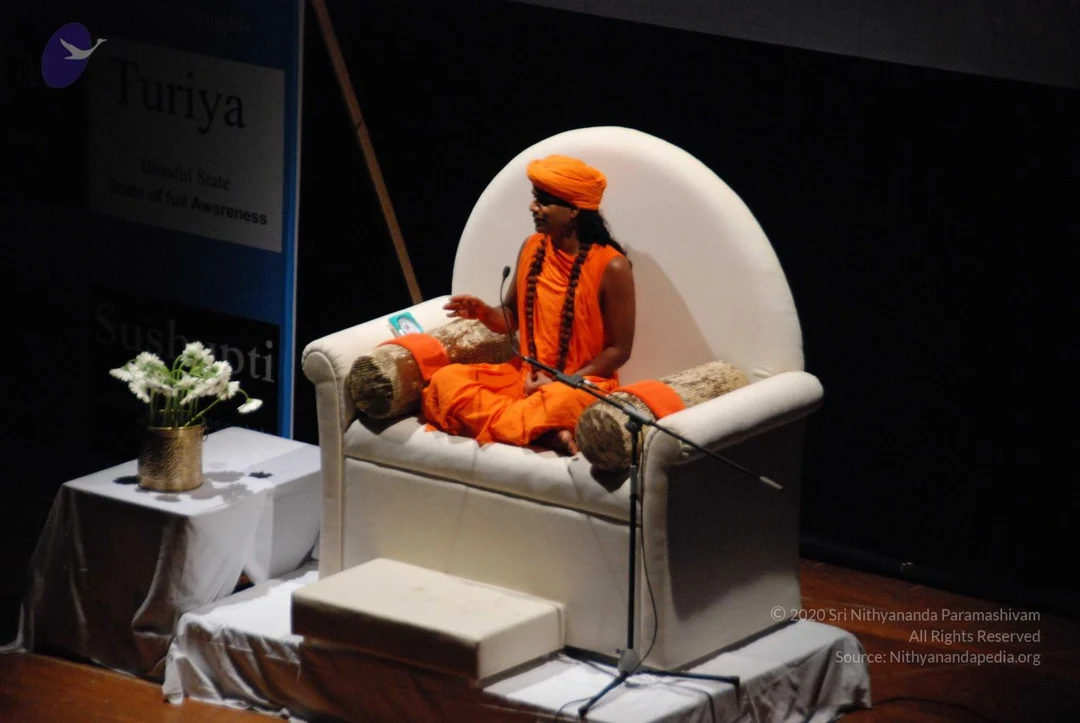
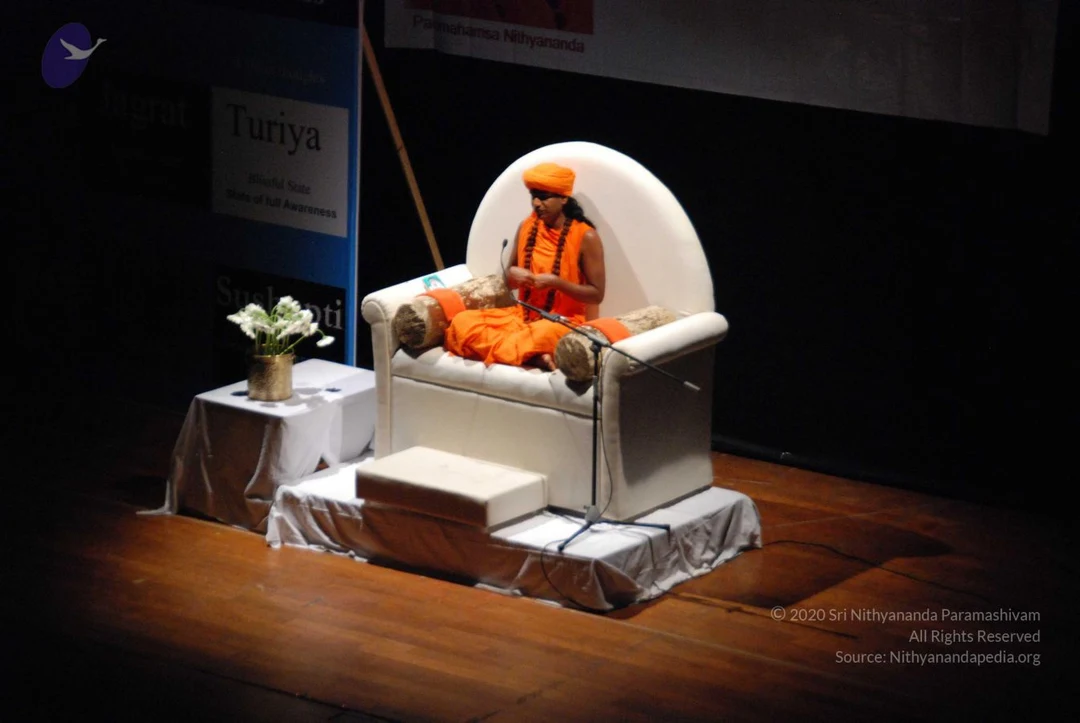
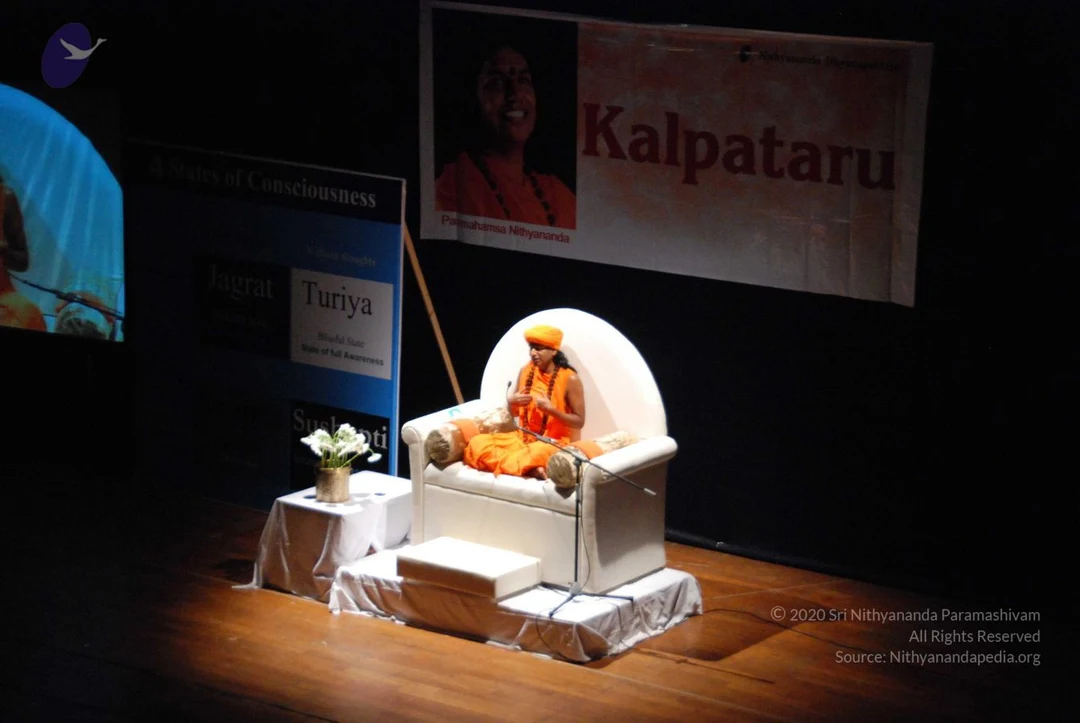
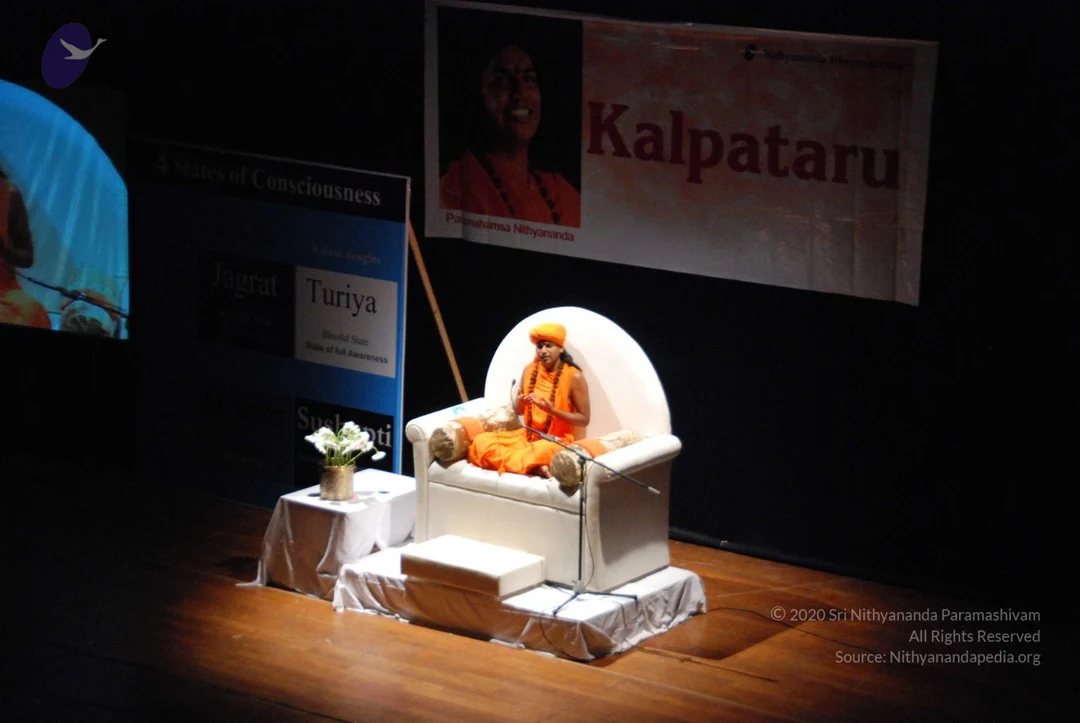
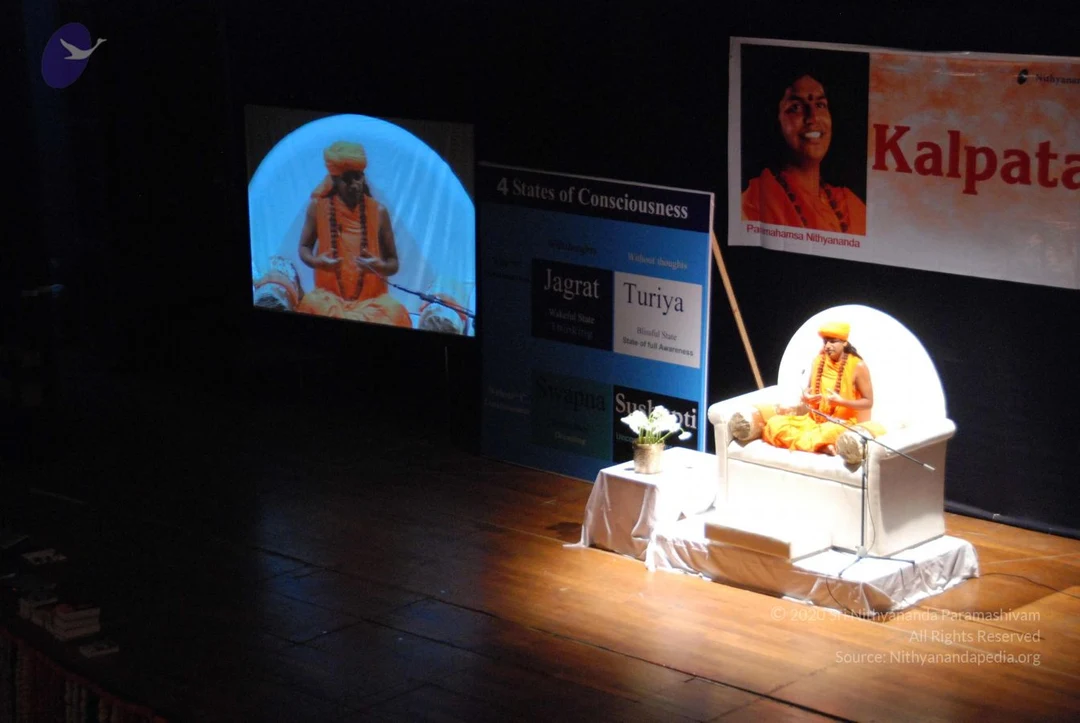
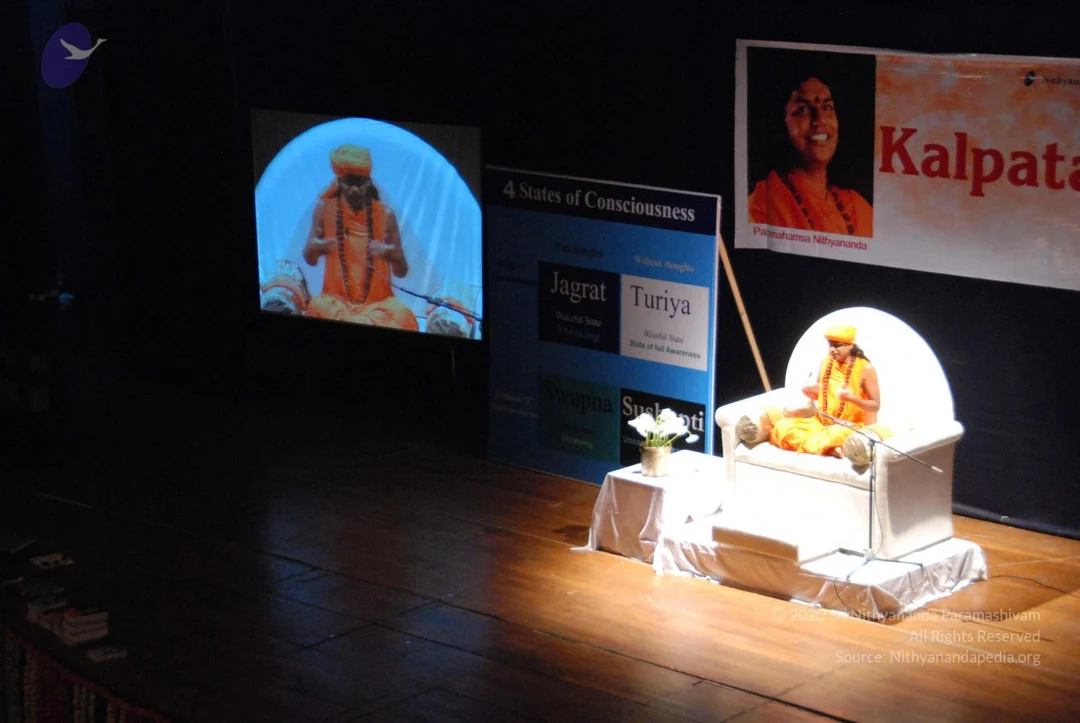
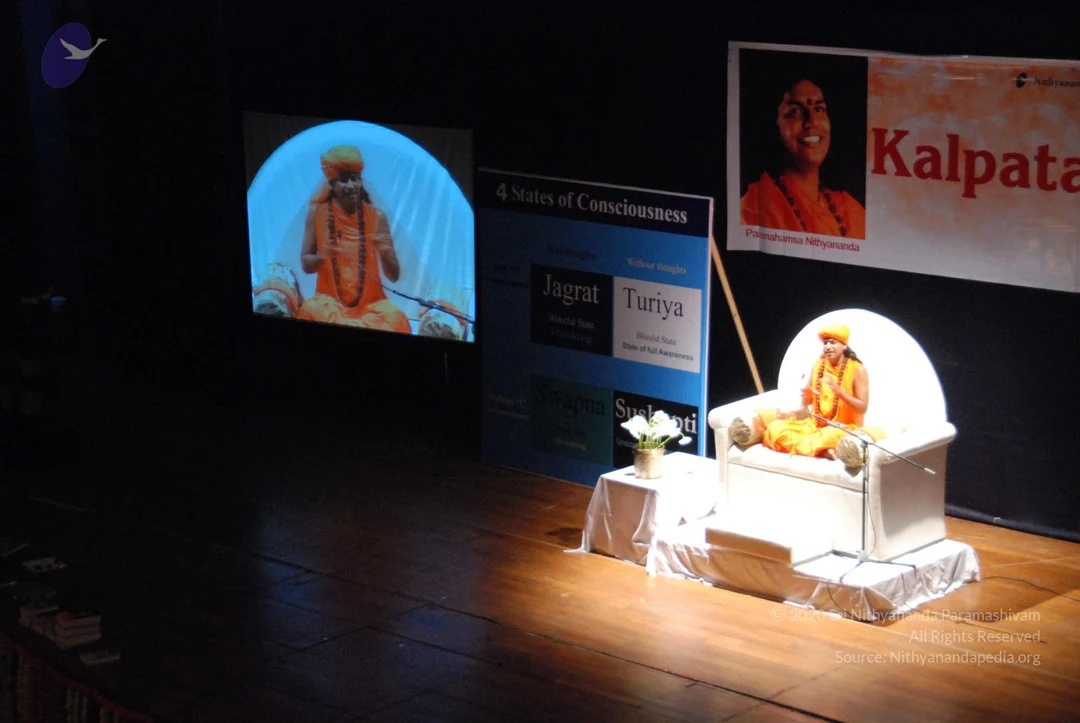
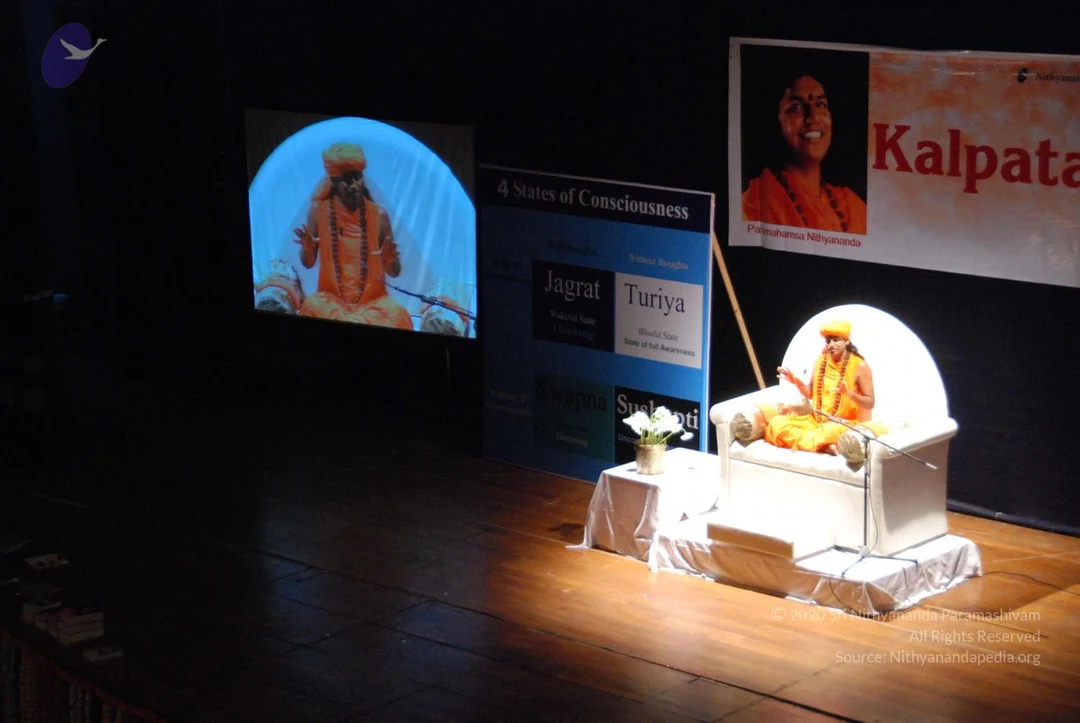
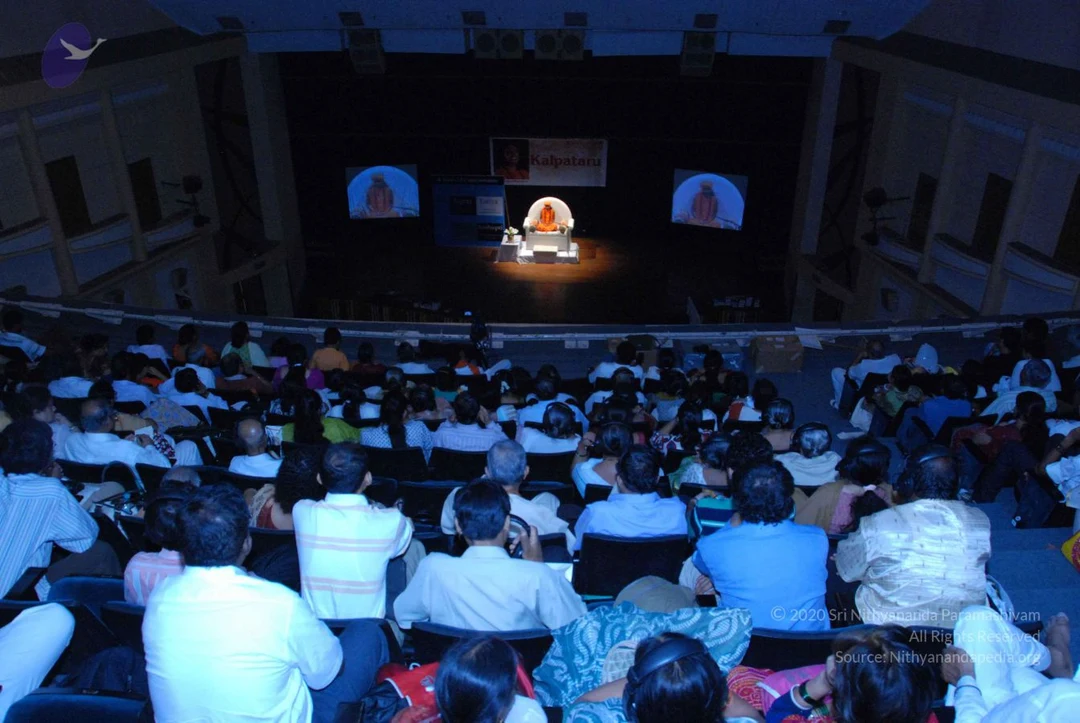
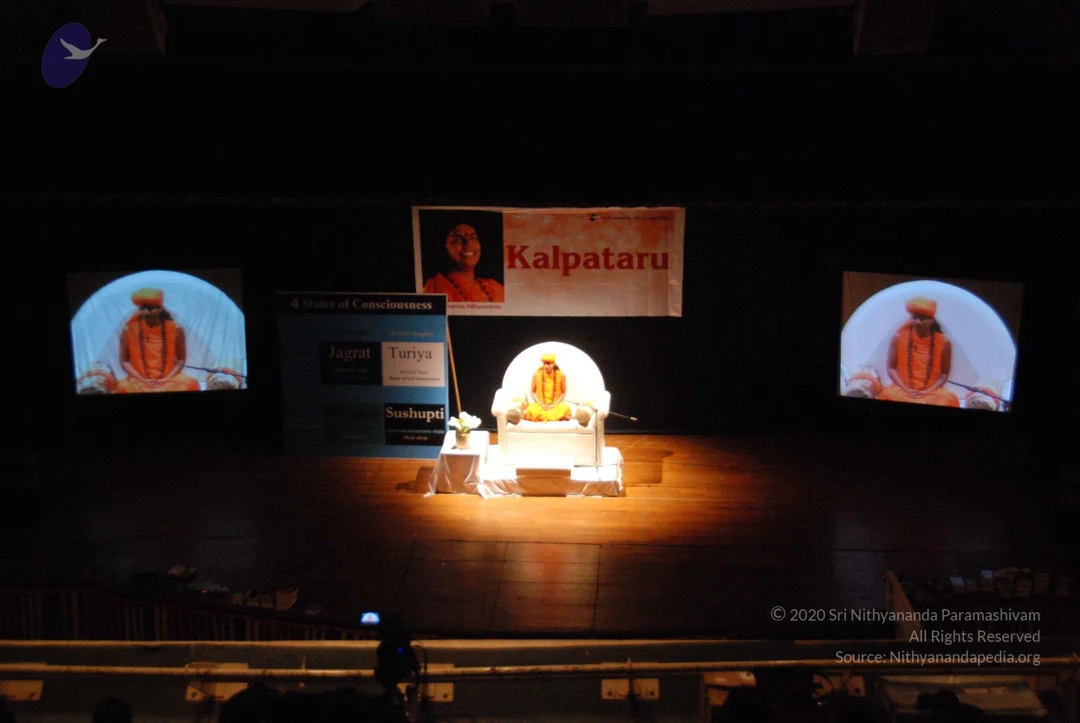
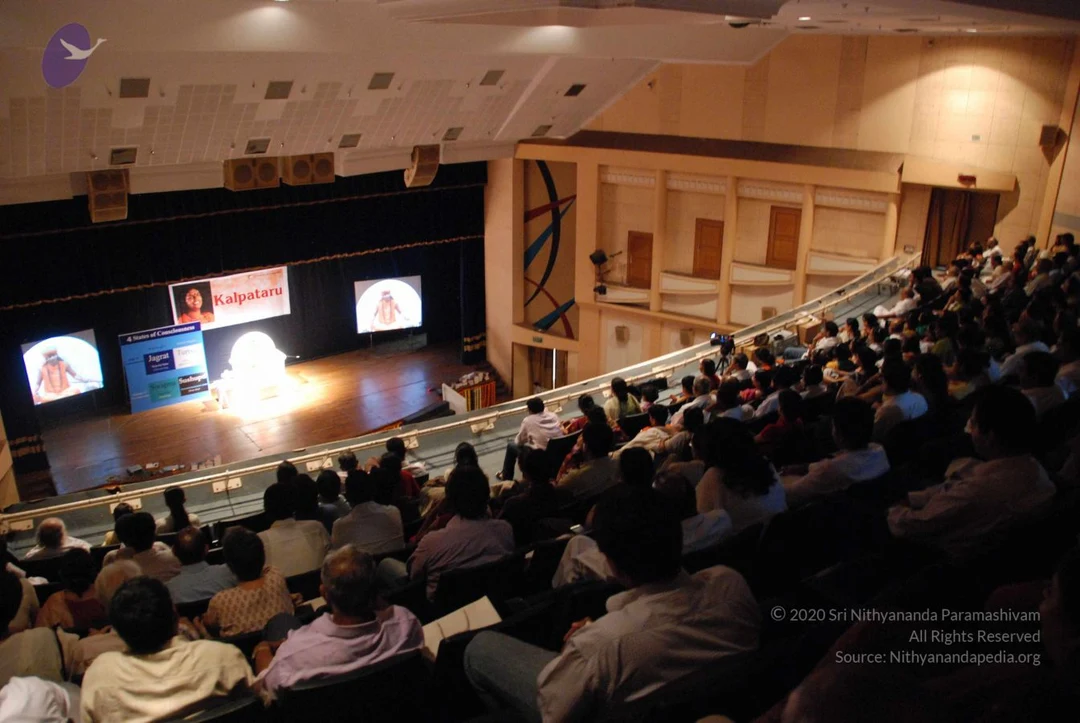
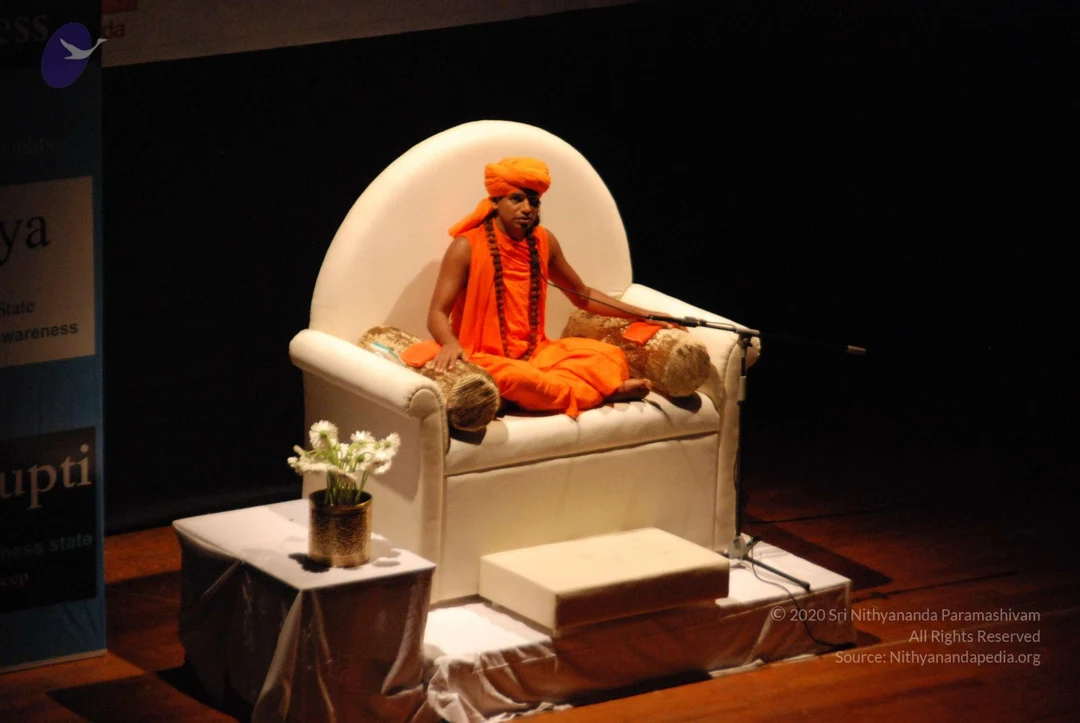
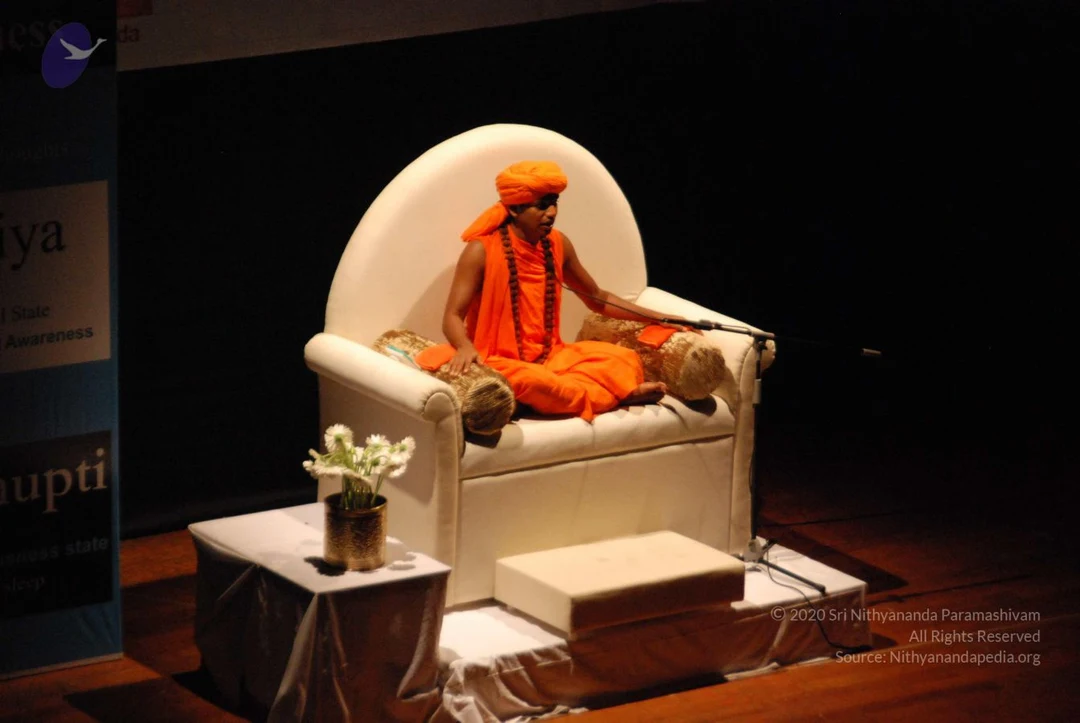
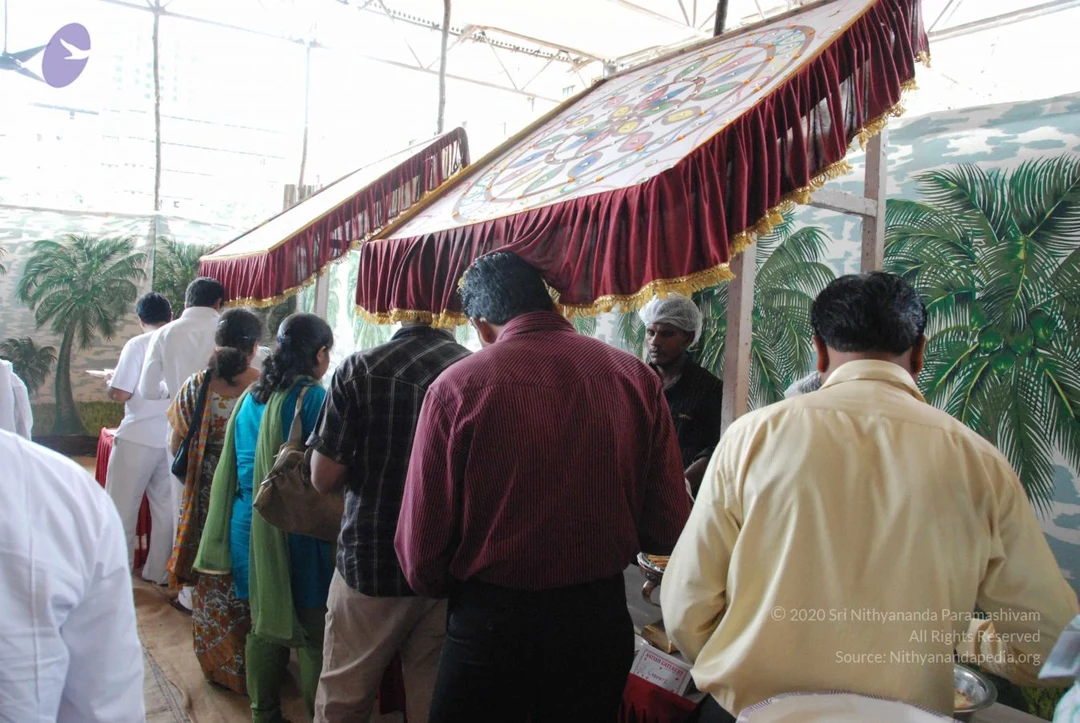
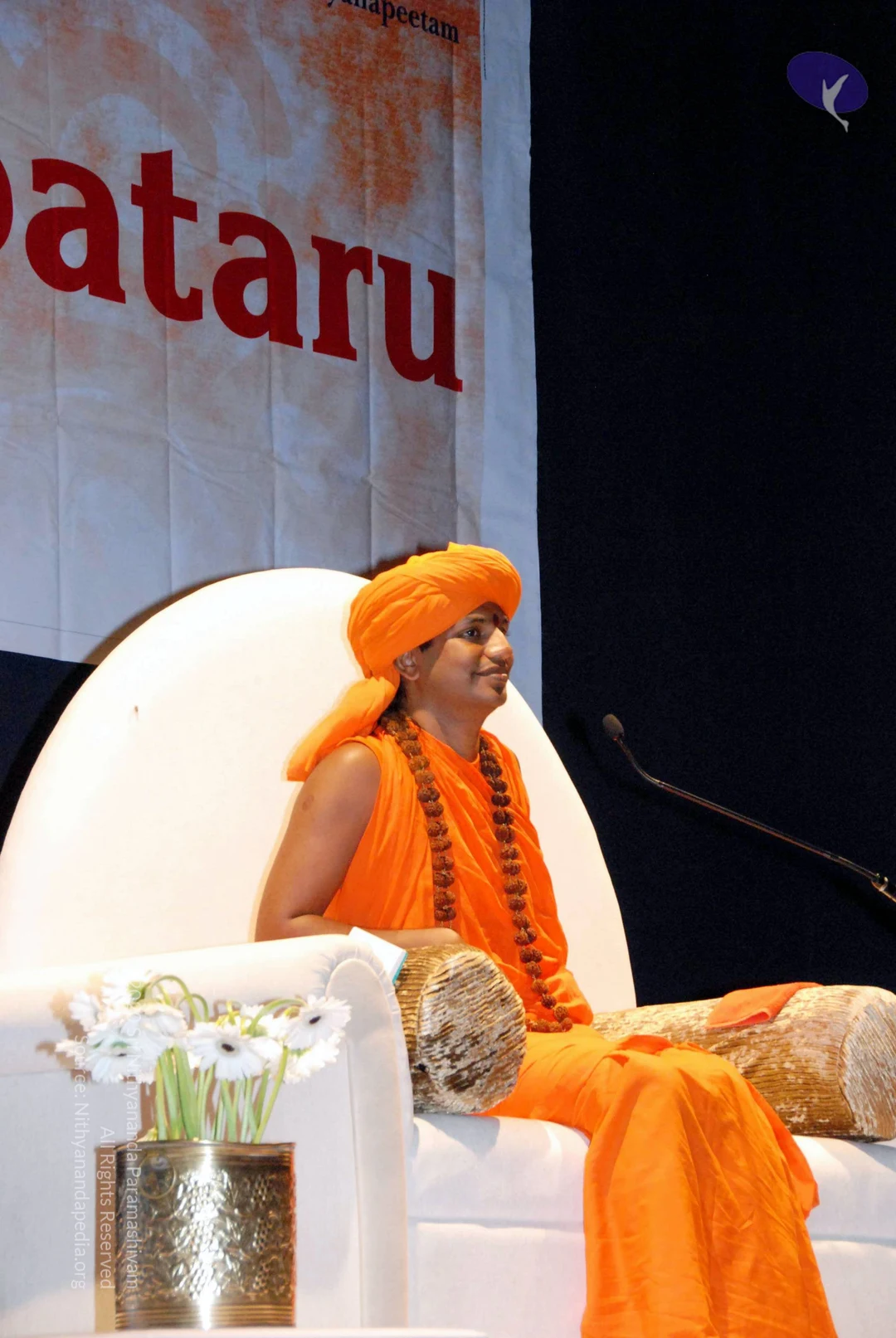
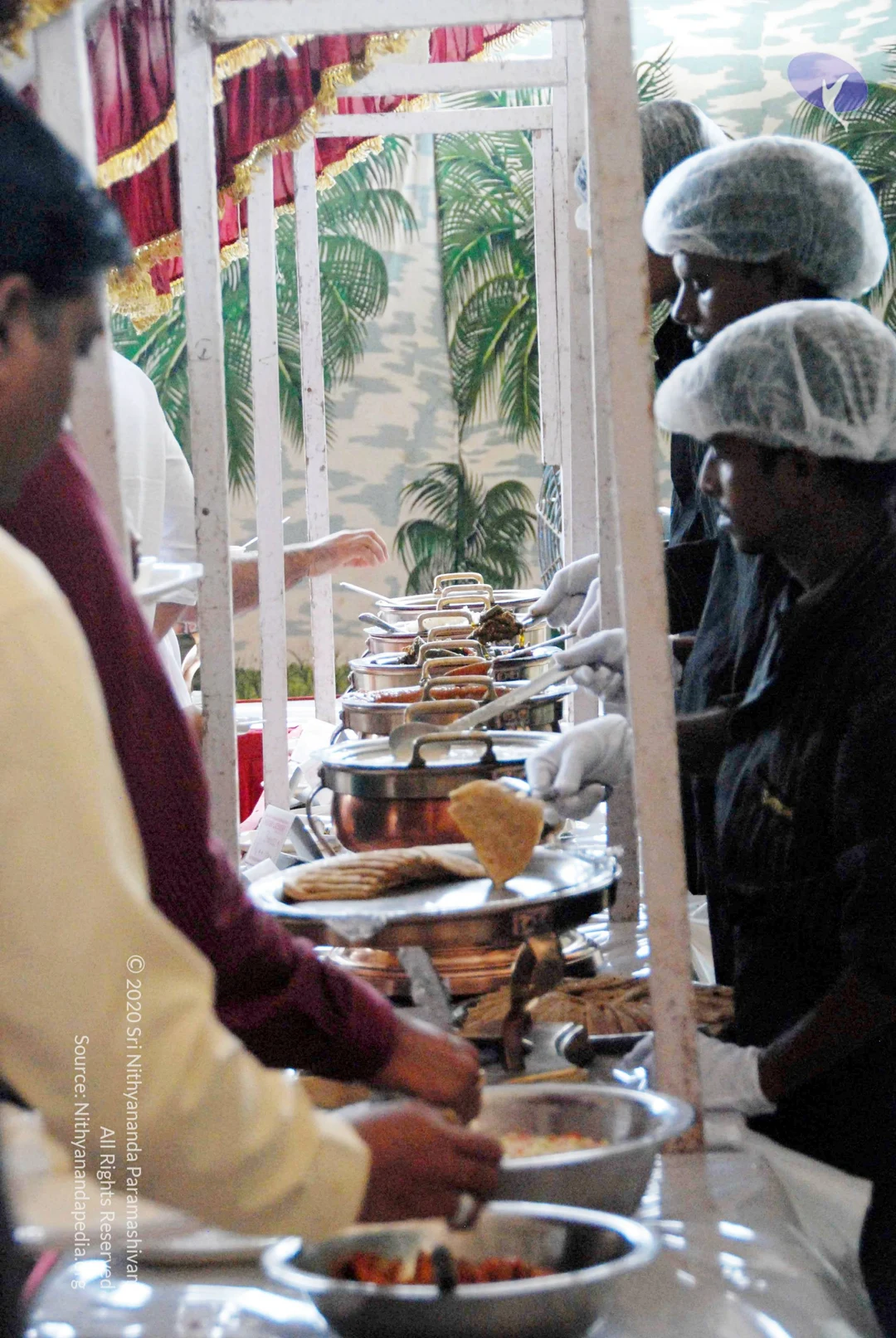
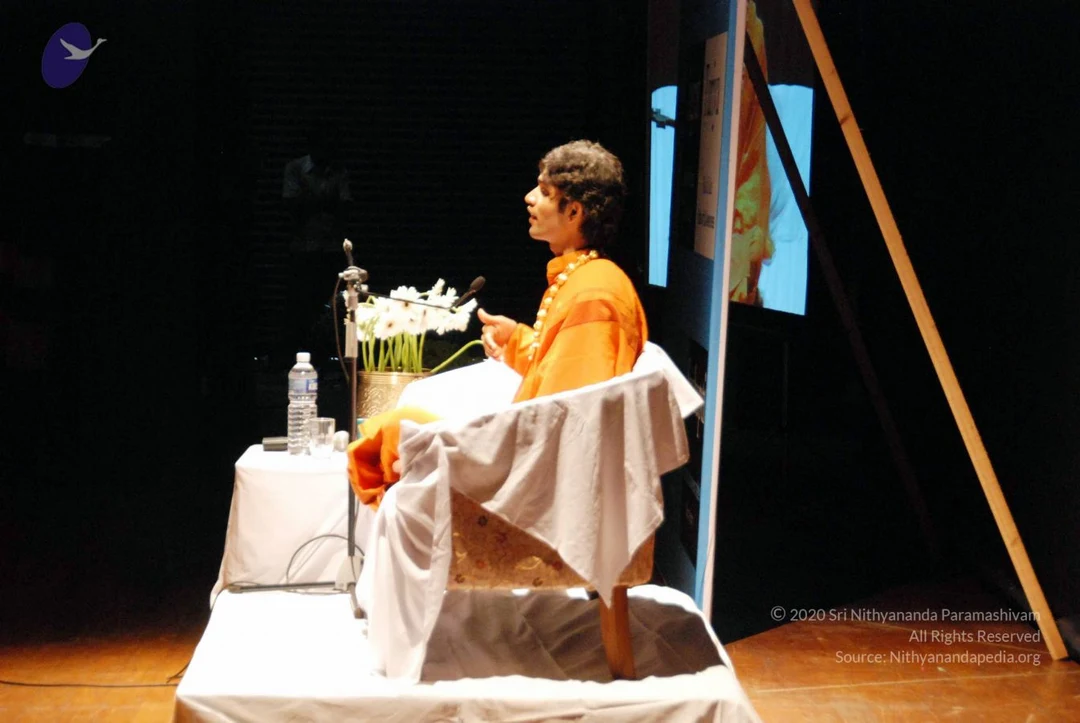
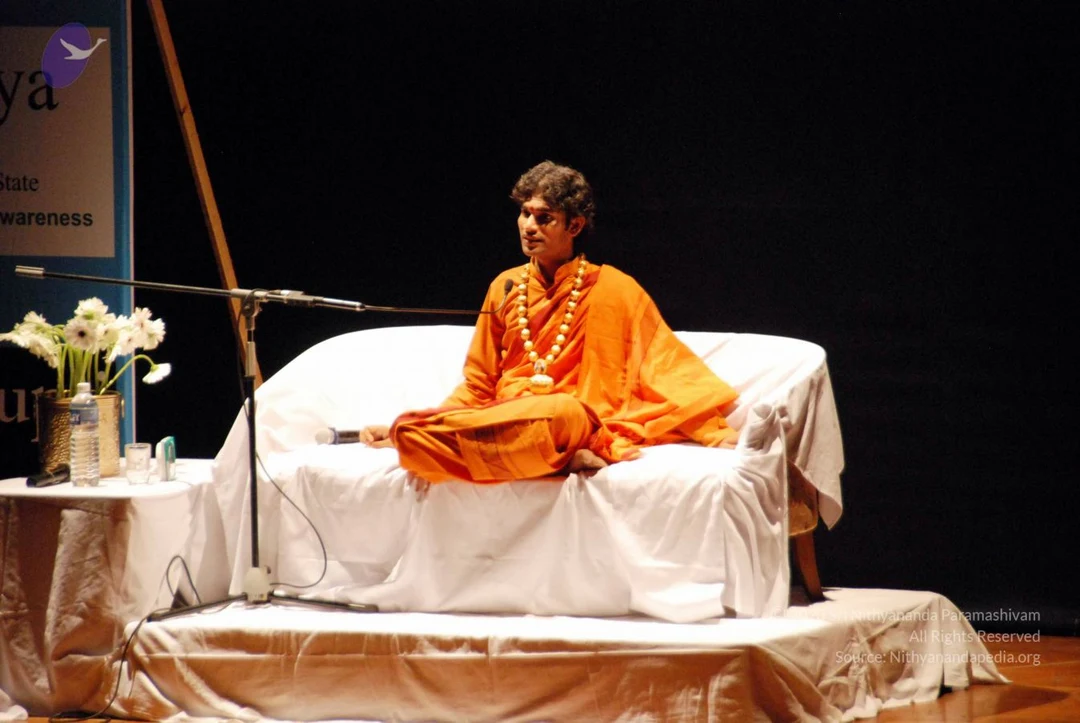
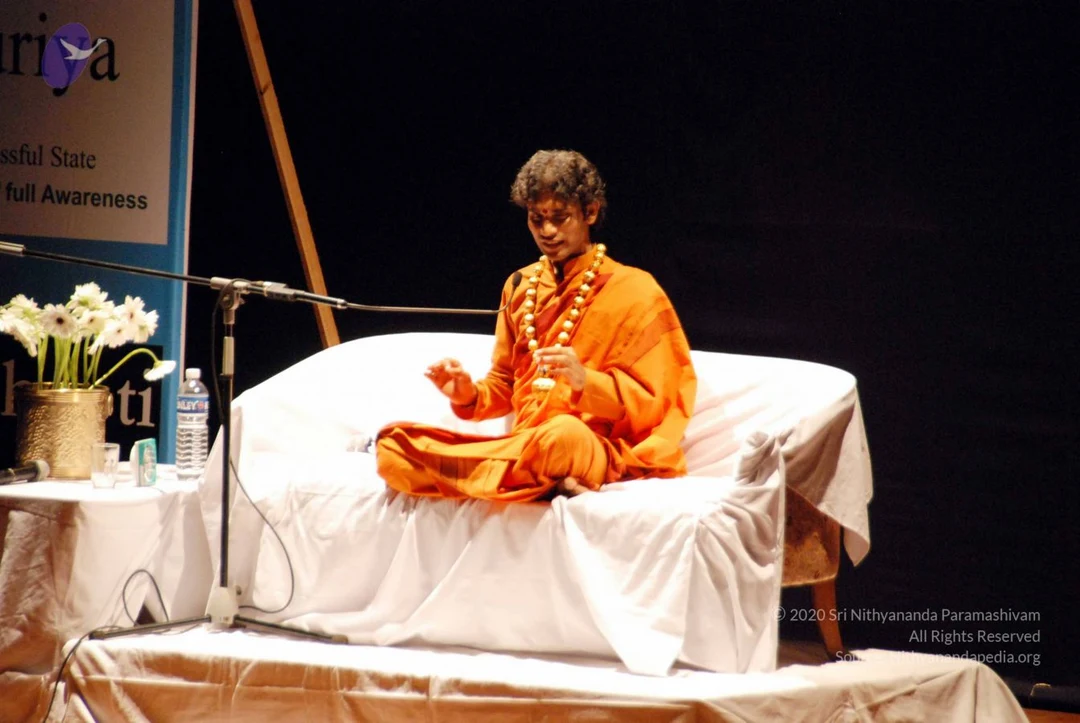
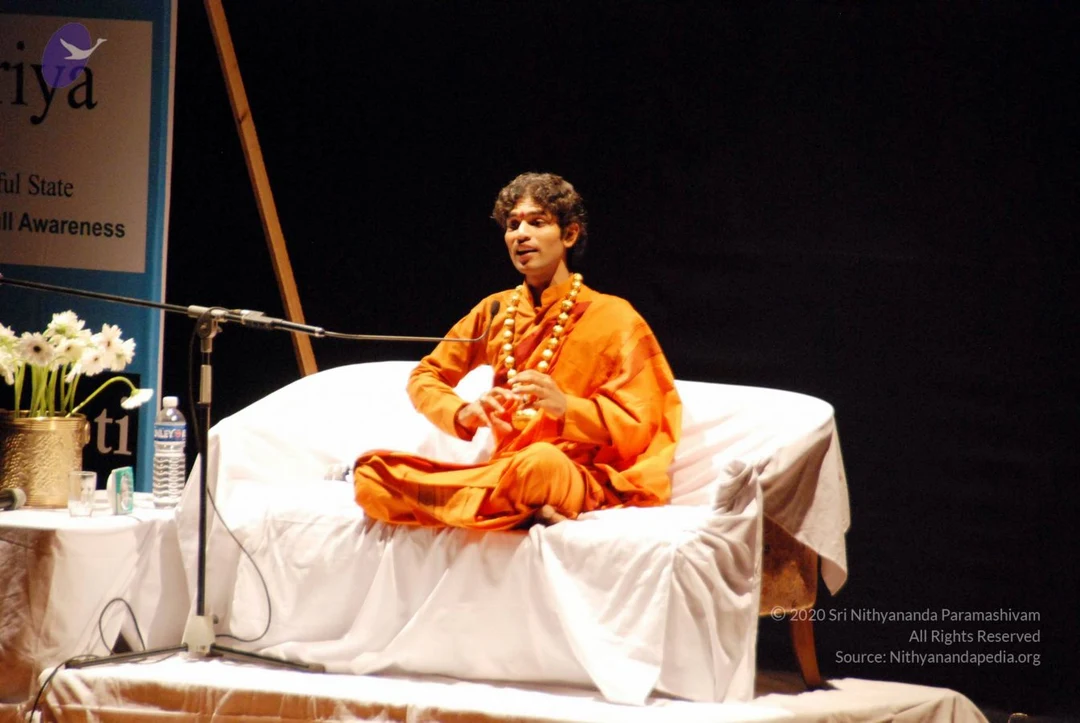
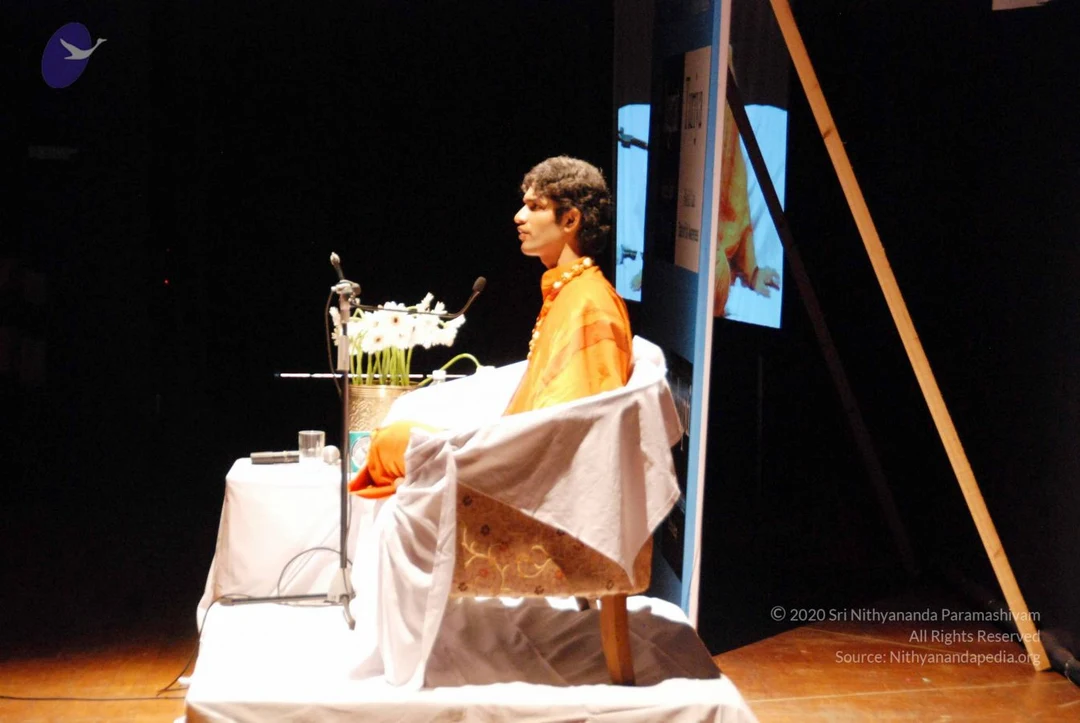
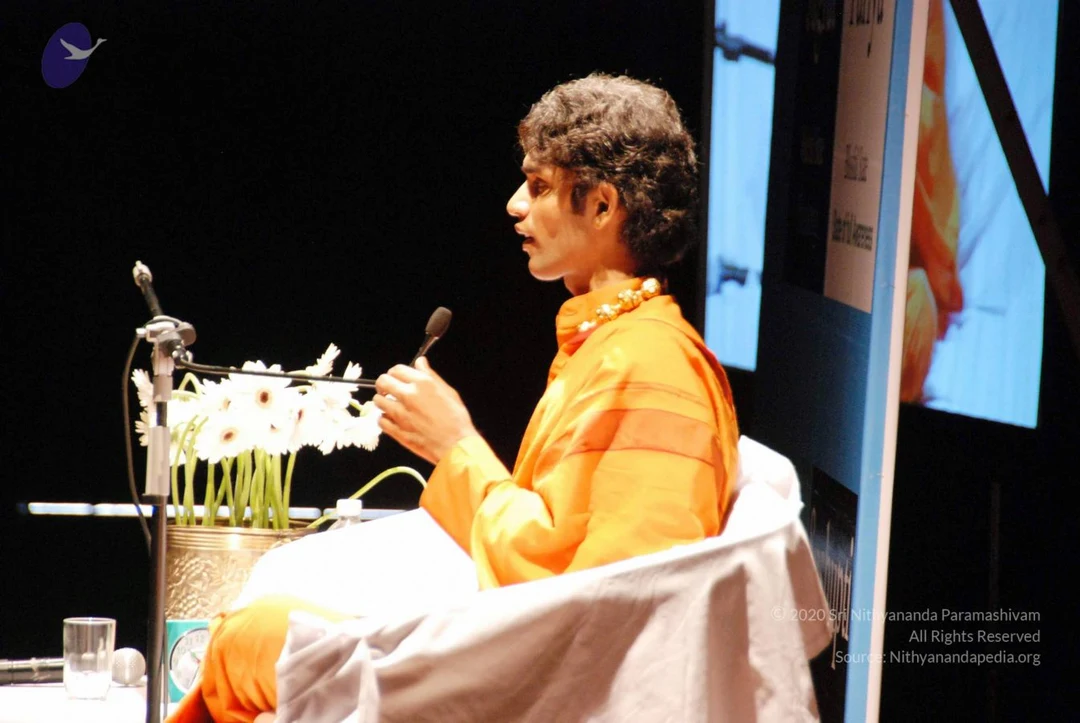
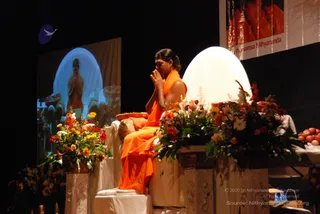
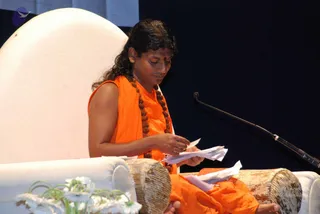
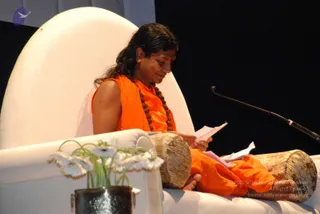
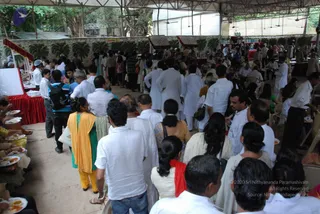
A photograph of a darkened stage at a Kalpataru event. A seated figure in orange robes and a saffron turban sits on a white throne-like chair under a spotlight, with a small white-cloth table and white flowers beside it. Behind the stage hangs a banner reading Kalpataru with a portrait of a smiling woman in orange, and a blue panel lists States of Consciousness: Jagrat, Turiya, Sushupti. Two large screens on either side show close-up views of the same orange-robed figure. Only the seated figure is a physical person visible on stage, with audience silhouettes at the bottom edge.A photograph of a buffet food service line at an indoor event. Several staff in white hairnets and white gloves serve food from copper-bottomed stainless steel pots and chafing dishes set on a white metal frame. Visible dishes include flatbreads and a cooked vegetable preparation in steel bowls. Behind the counter, a painted backdrop of palm trees and a red draped cloth with gold fringe frame the scene. Several guests in the foreground, one in a cream shirt and another in a maroon top, reach toward the food. No one is identifiable as the a person in this image.

September 12 2009

Original wiki page
Contents

Title:

Question & Answers at Kalpataru Program

Description:

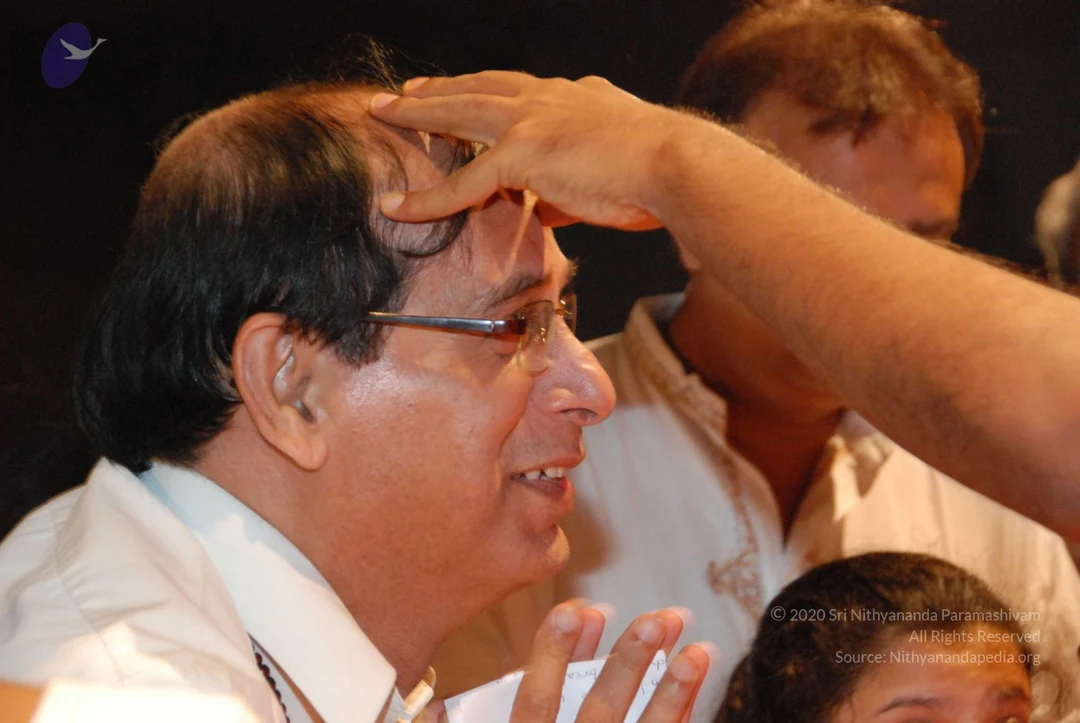
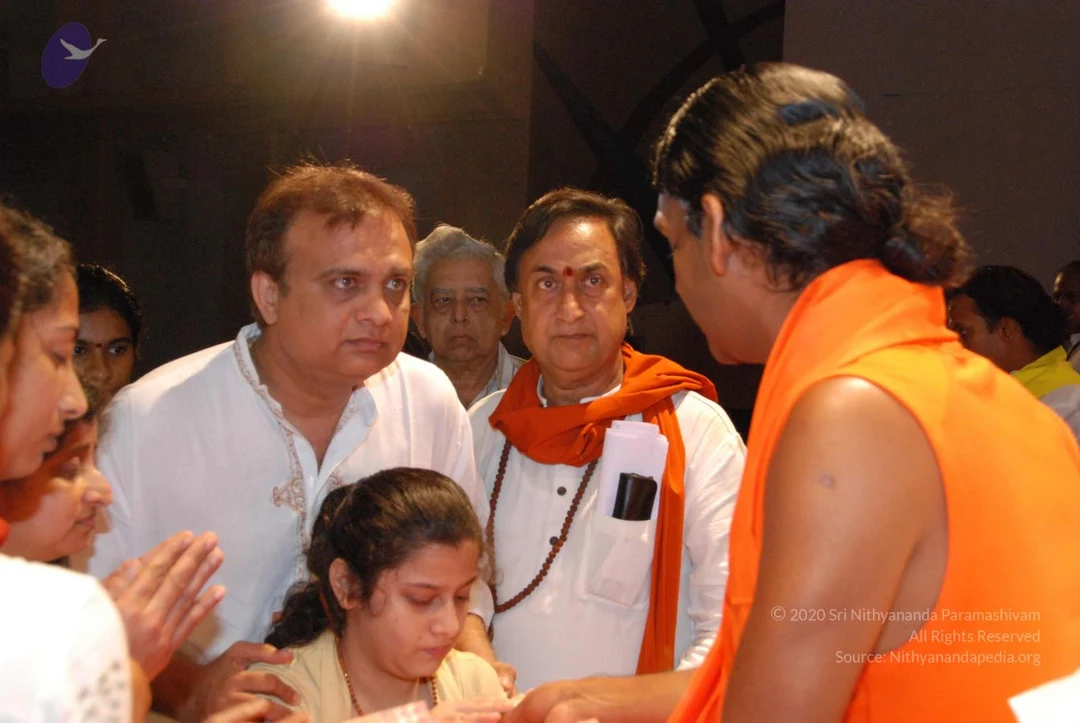
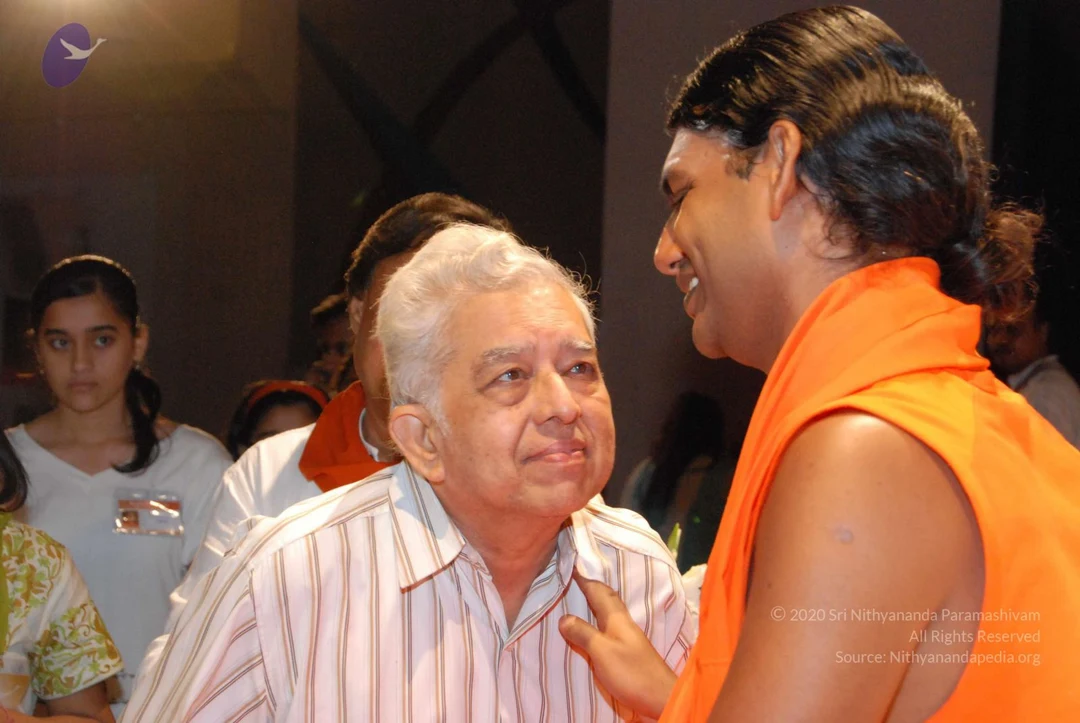
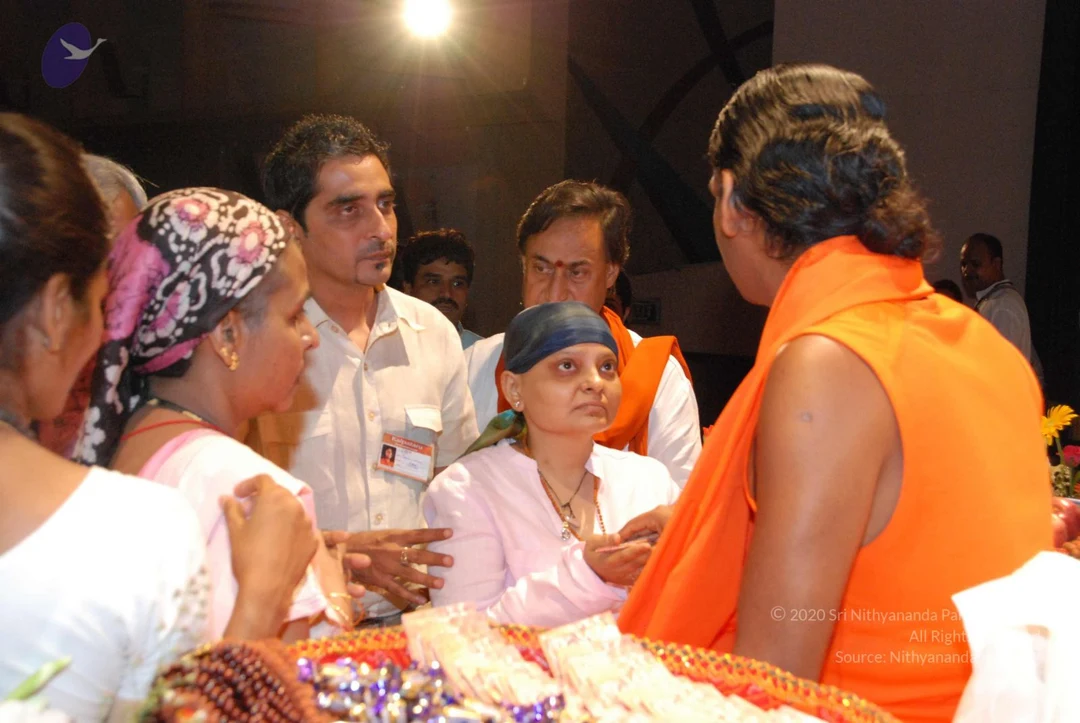
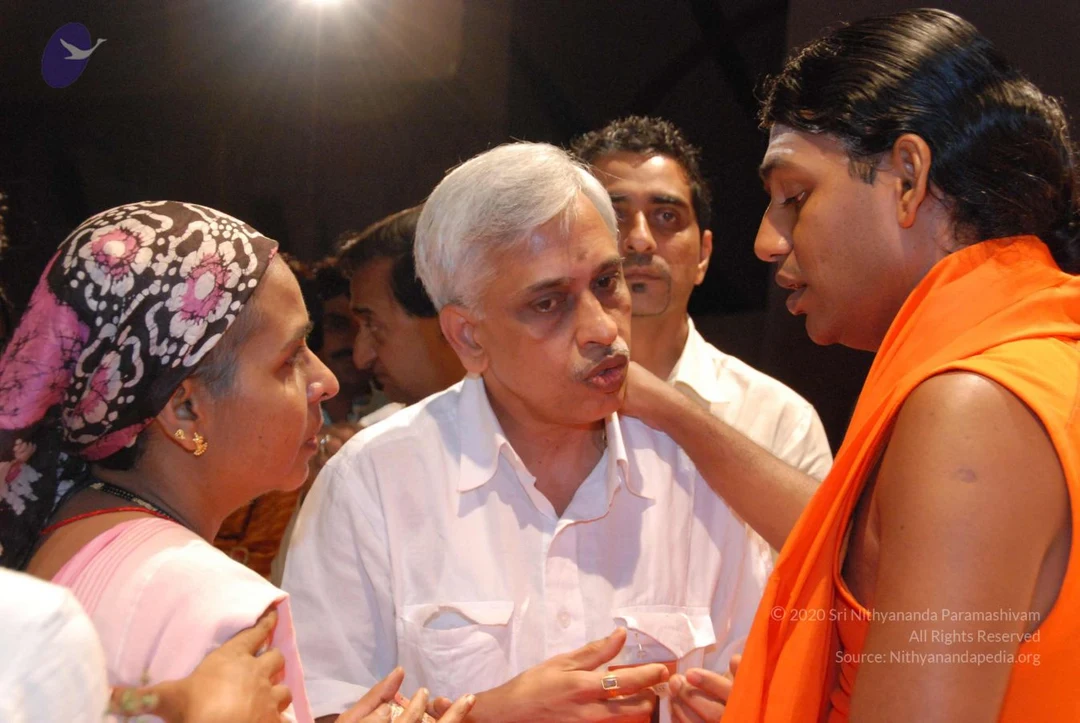
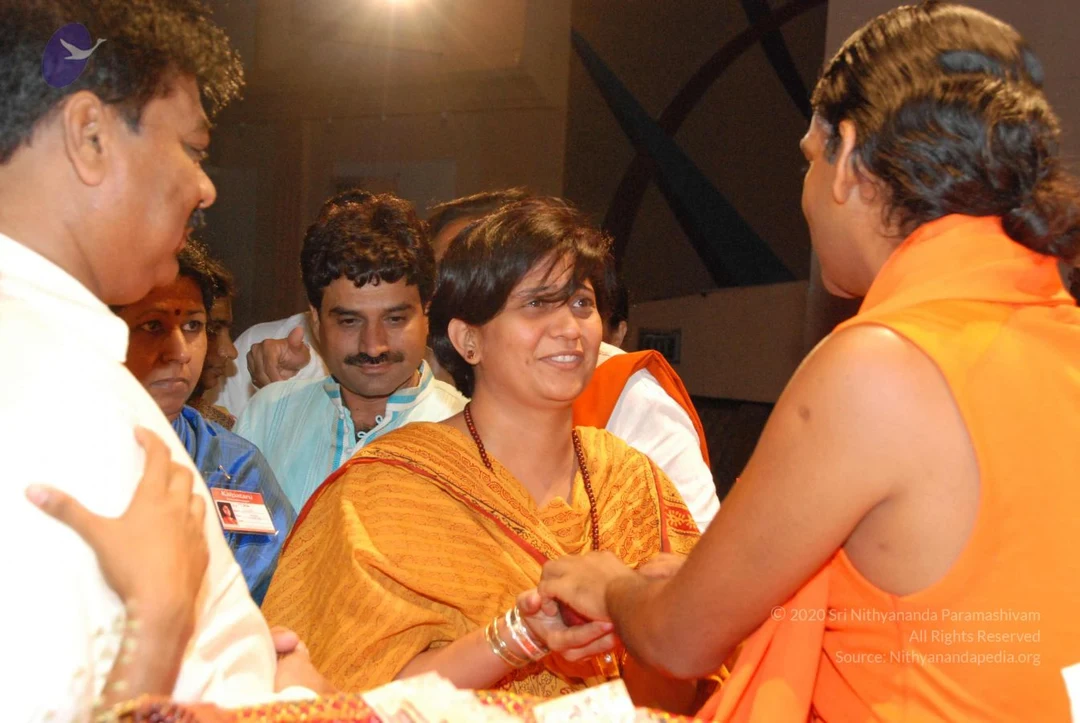
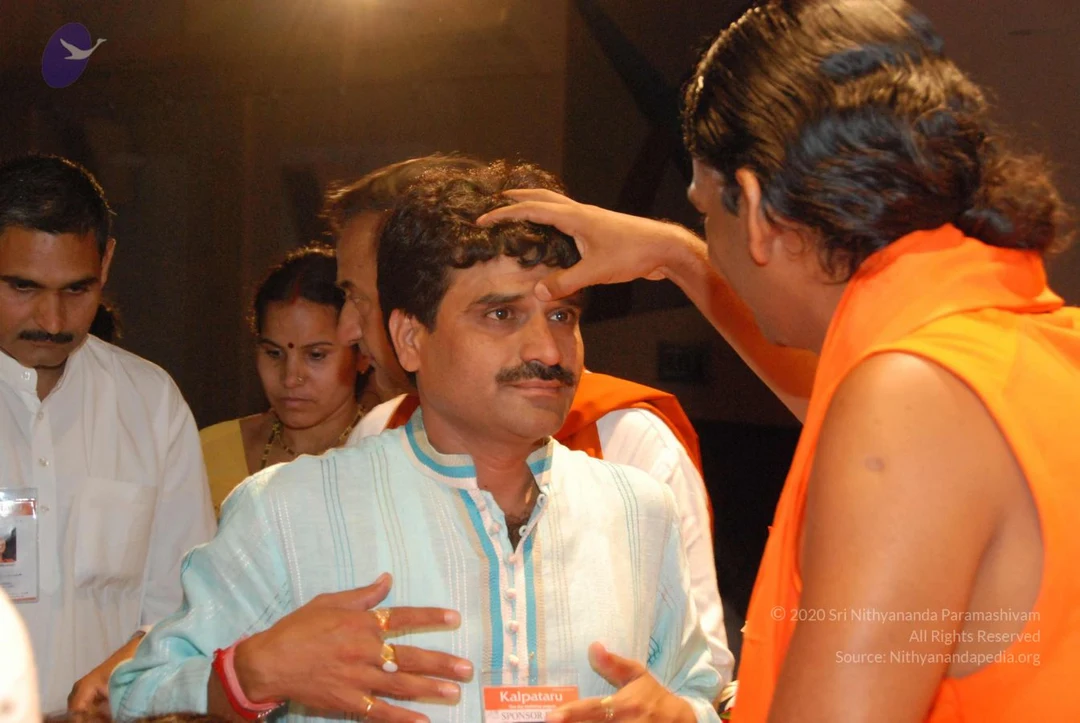
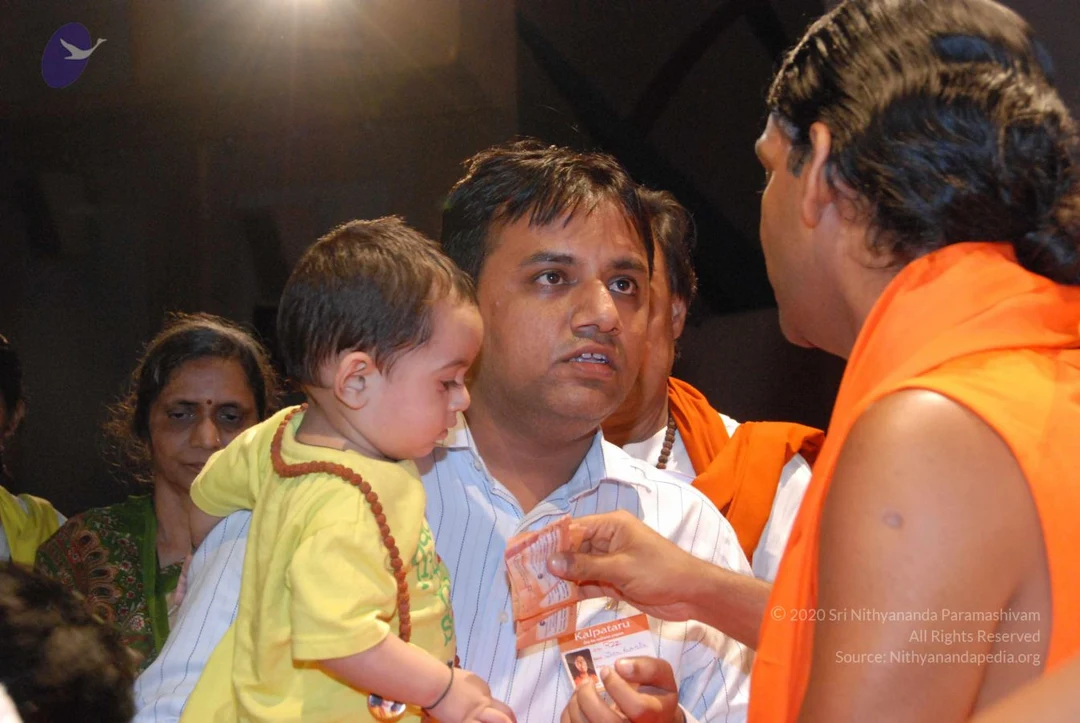
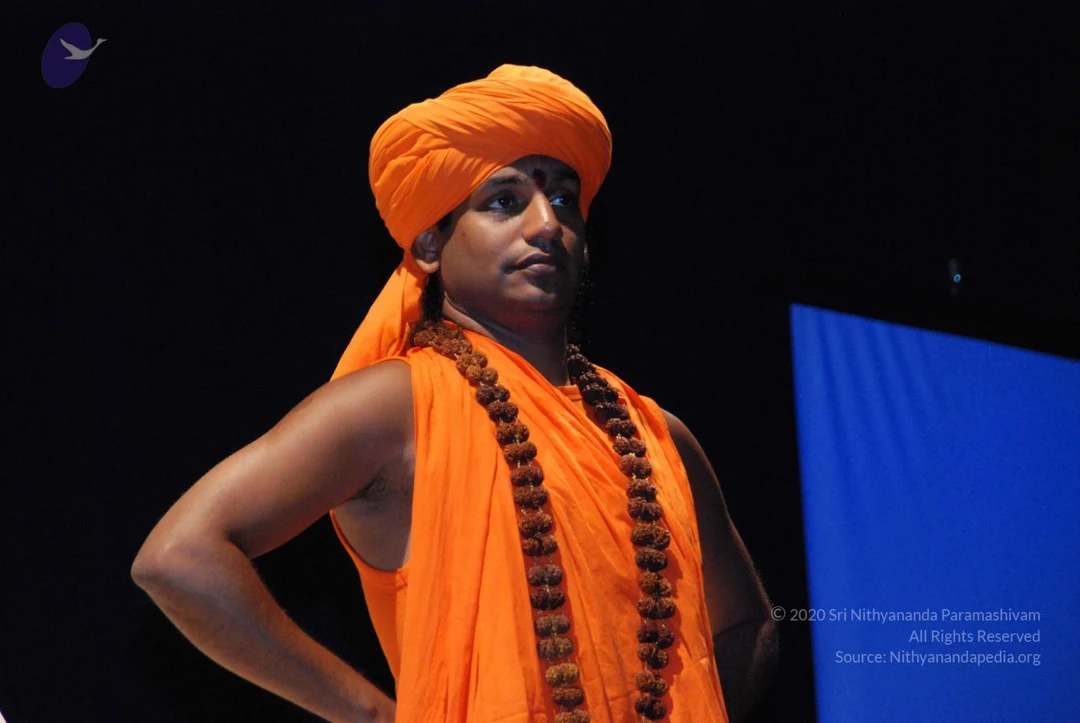
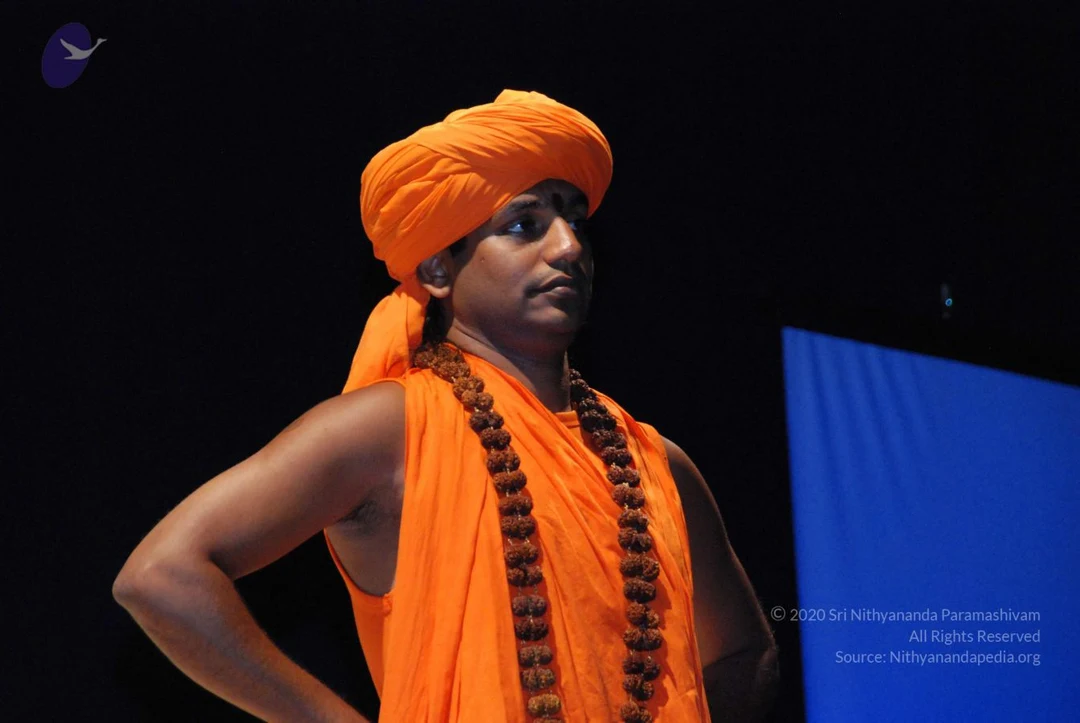
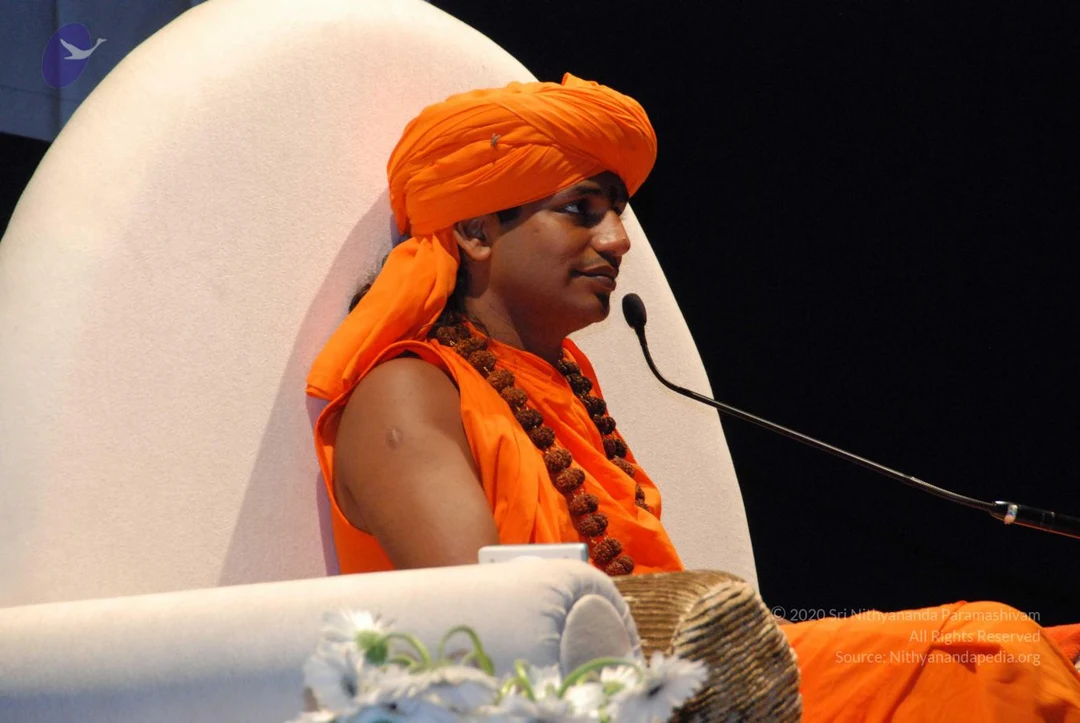
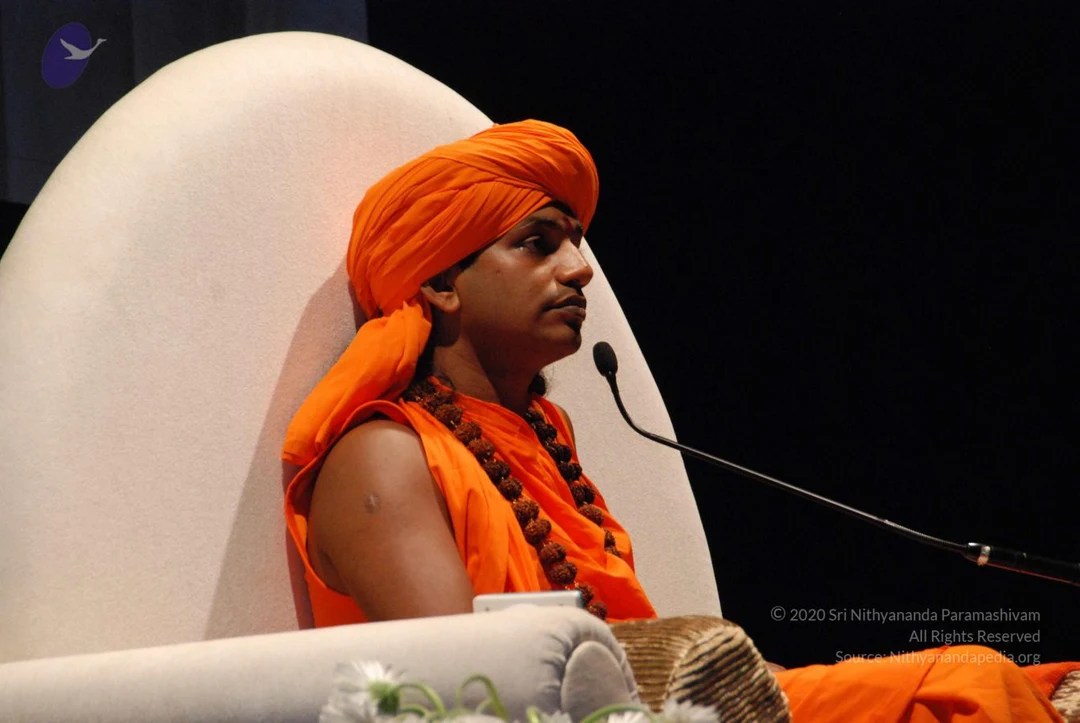
From the works of living enlightened master Paramahamsa Nithyananda, this clip is taken during Q&A session at Kalpataru Program held at Mumbai. In this video clip, He answers questions on some common topics like scale for spiritual growth, honesty, destiny and pilgrimage.

Paramahamsa Nithyananda is an enlightened master living amidst us today. With a worldwide movement for meditation and inner bliss, Nithyananda continues to offer solutions for things as trivial as every day stress to something as profound as enlightenment. Nithyananda conducts meditation programs all over the world. Inner Awakening is one such profound program. It is a 21 day experiential meditation program to live enlightenment or Jivan Mukthi.

Link to Video:

VideoAudio

Photos

Photos For The Day

Kalpataru - One day workshop to manifest your reality with HDH Nithyananda Paramashivam at Mumbai, India
Paadapooja
Kalpataru

Mumbai_Page1_Flyer
Kalpataru

Mumbai_Page2_Flyer
Kalpataru

Mumbai-1
Kalpataru

Poster_Mumbai
Photos Of The Day:

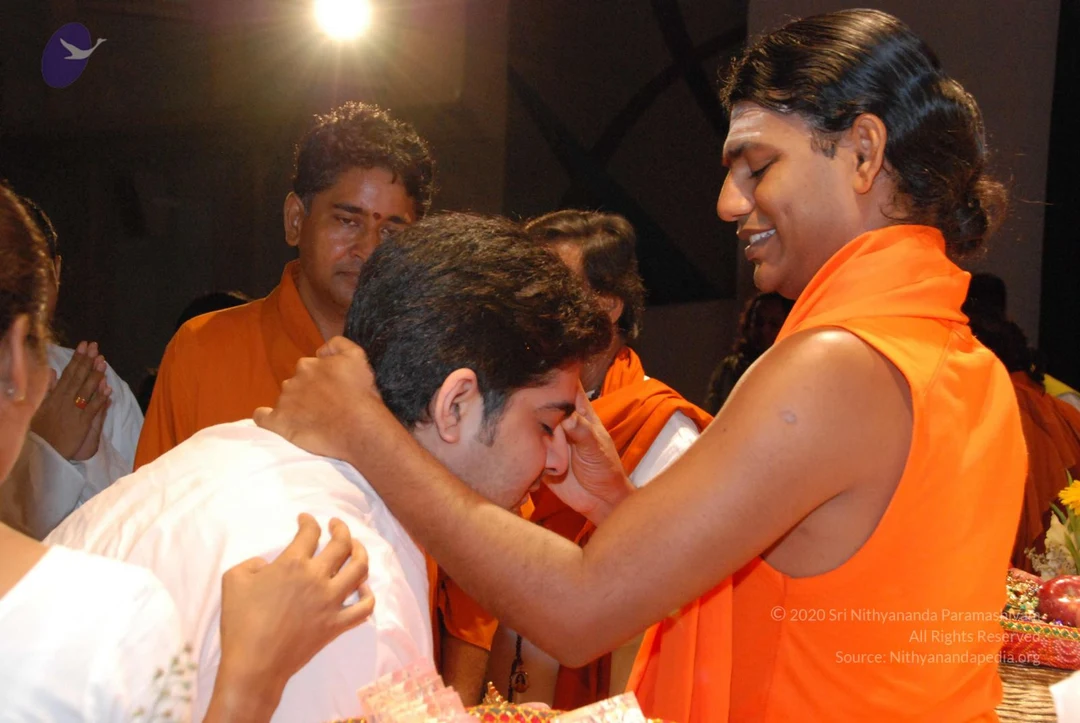
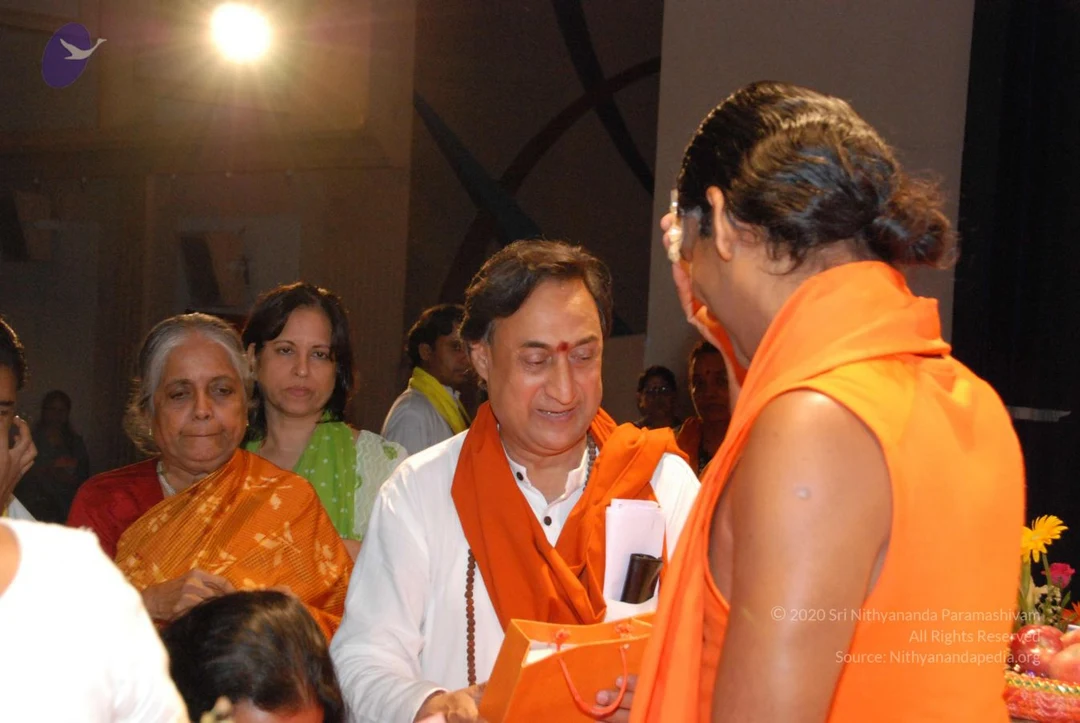
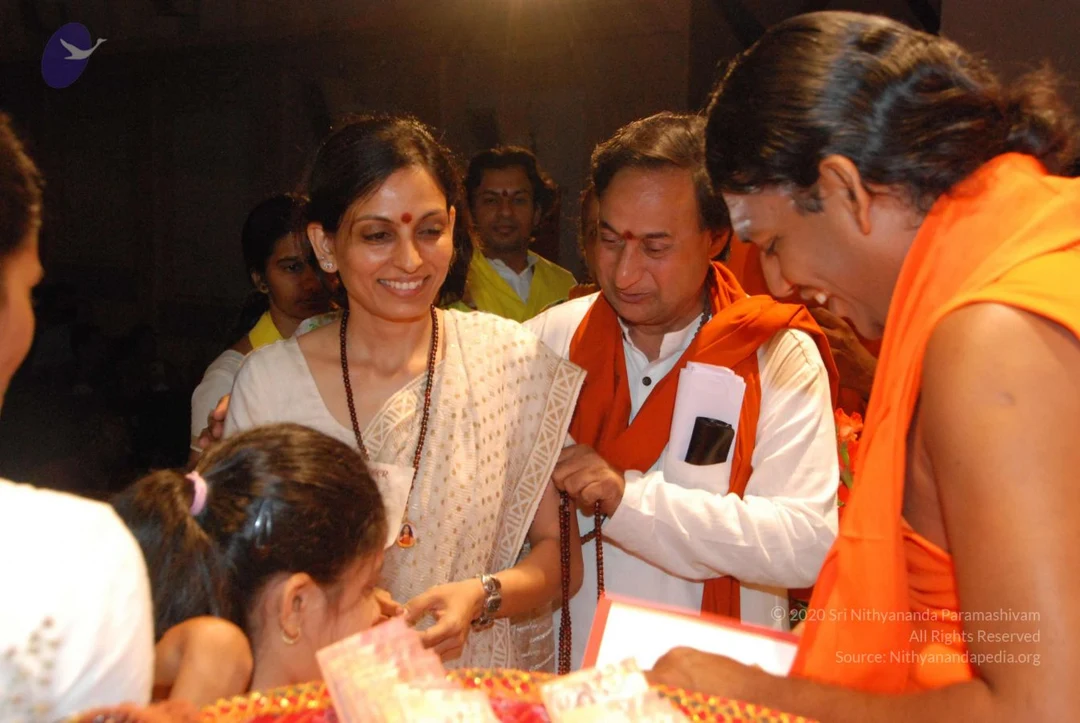
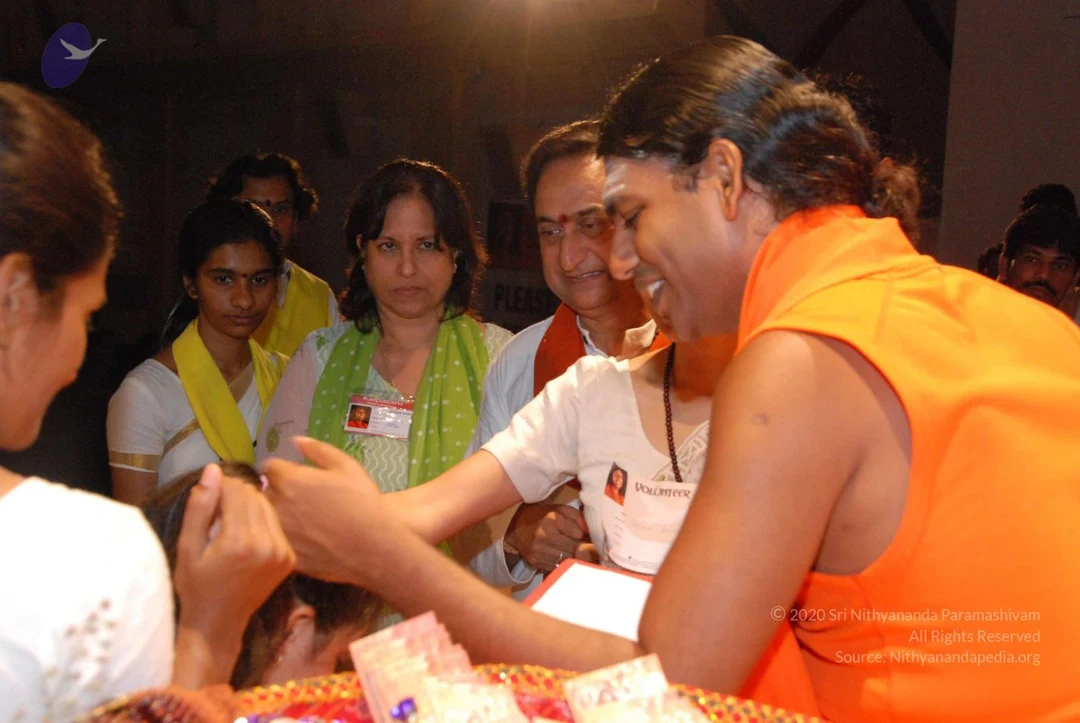
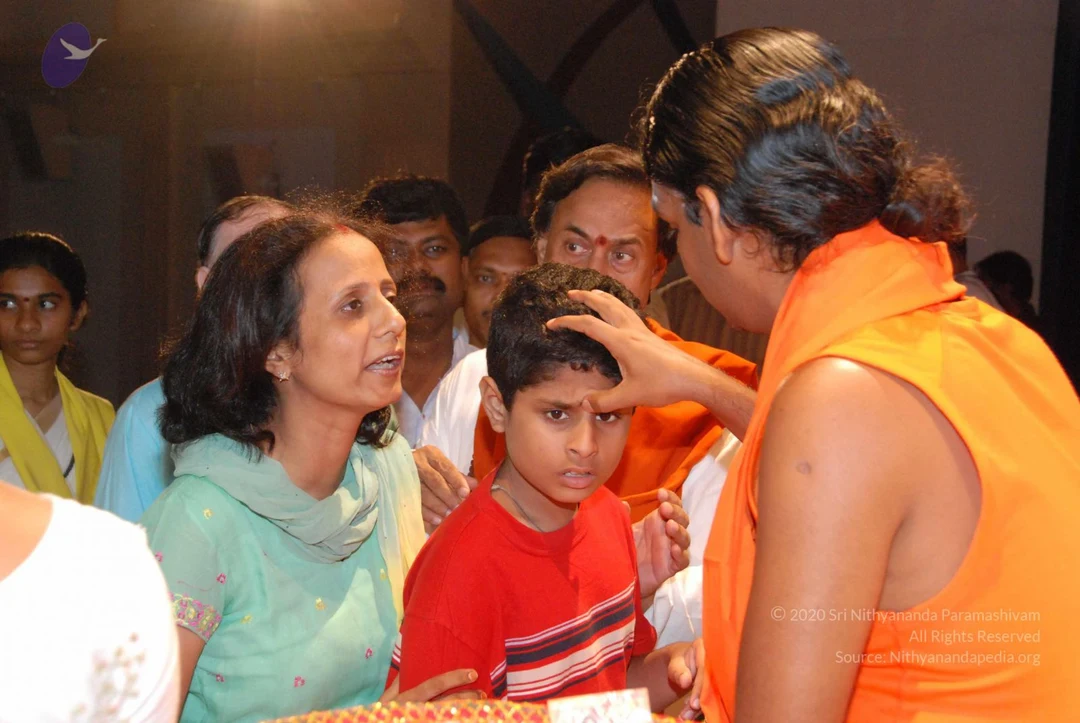
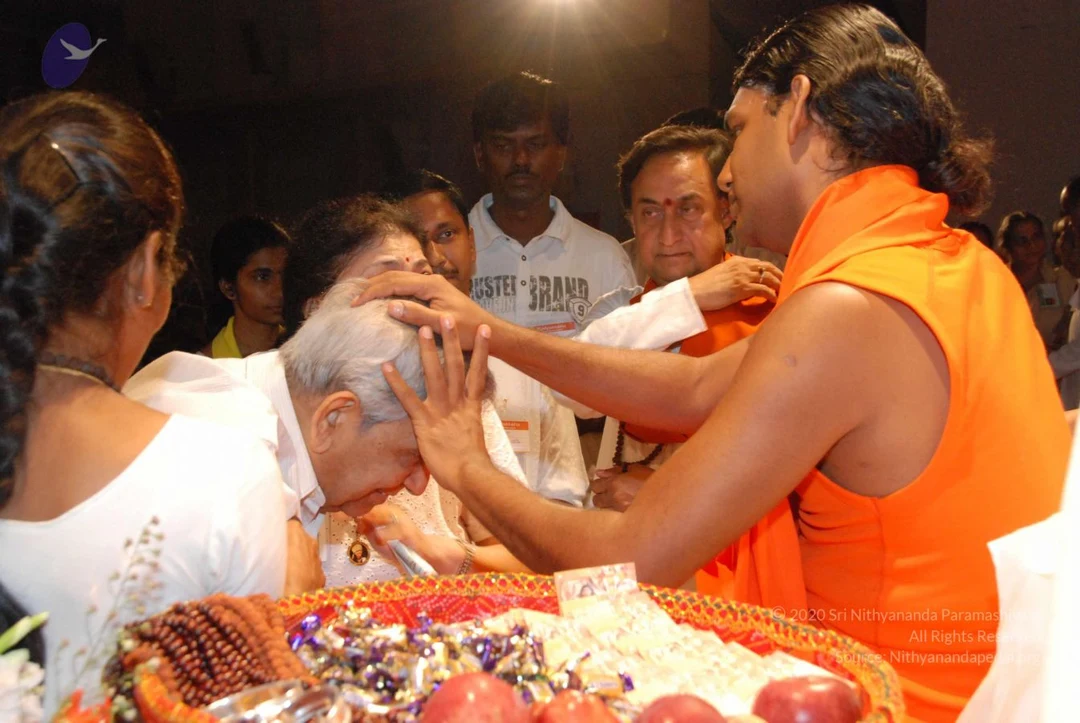
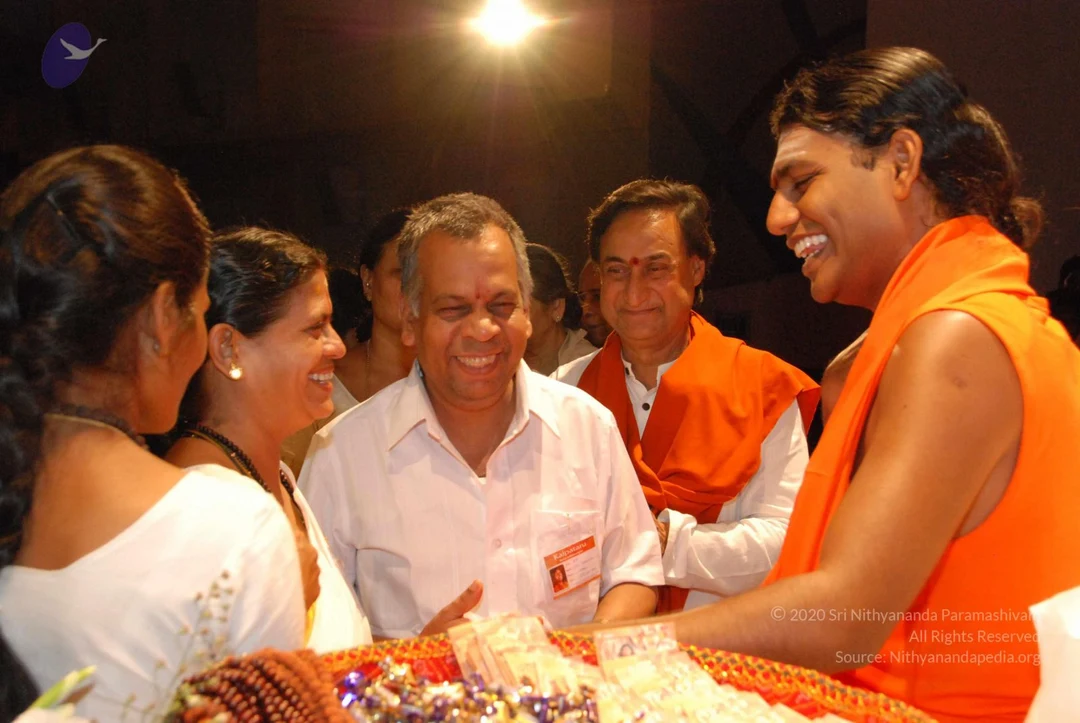
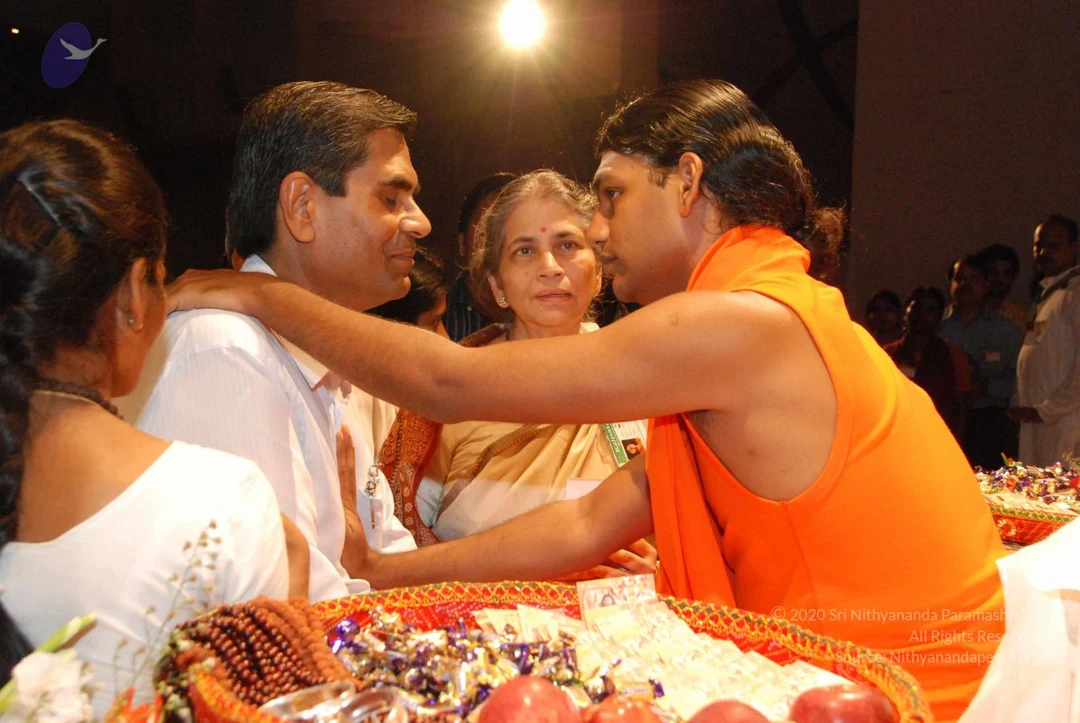
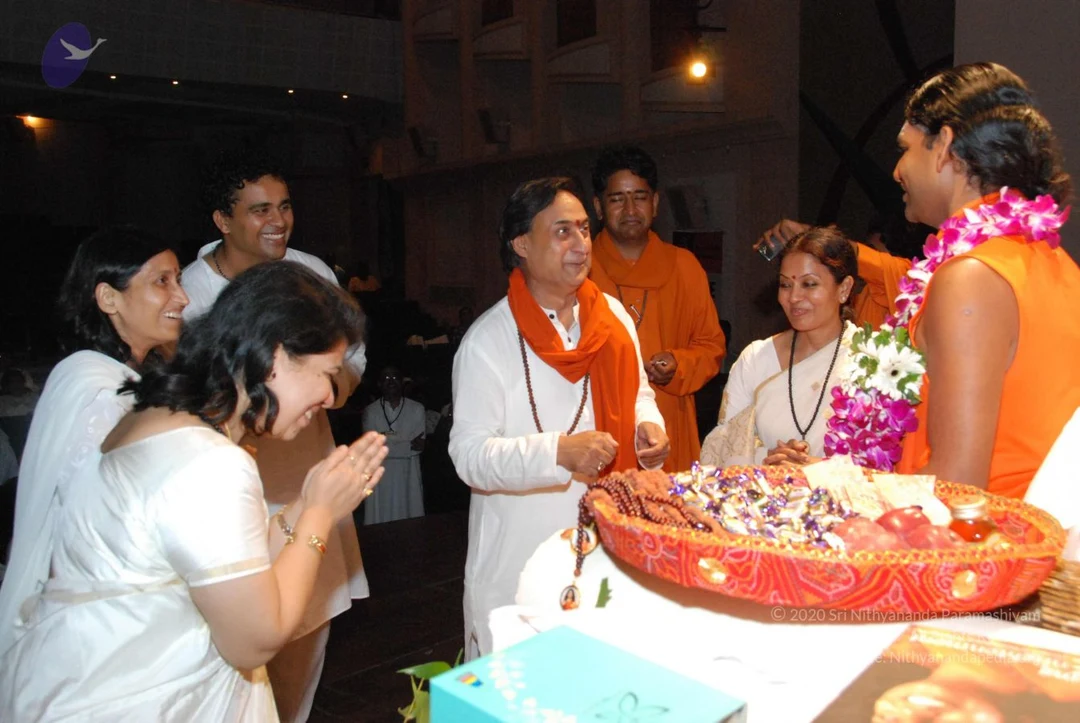
VIP-Visit
PaadaPuja
Kalpatharu
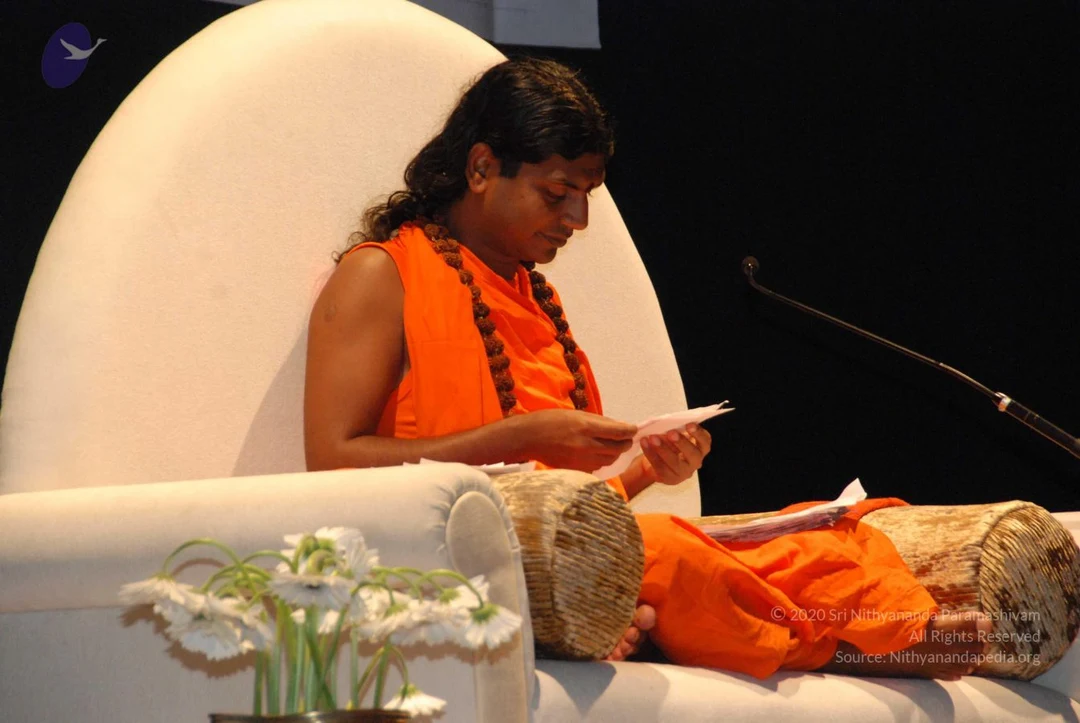
Food

more photographs

Photos from this day

View all 264 photos

Photos

13 photosSource gallery
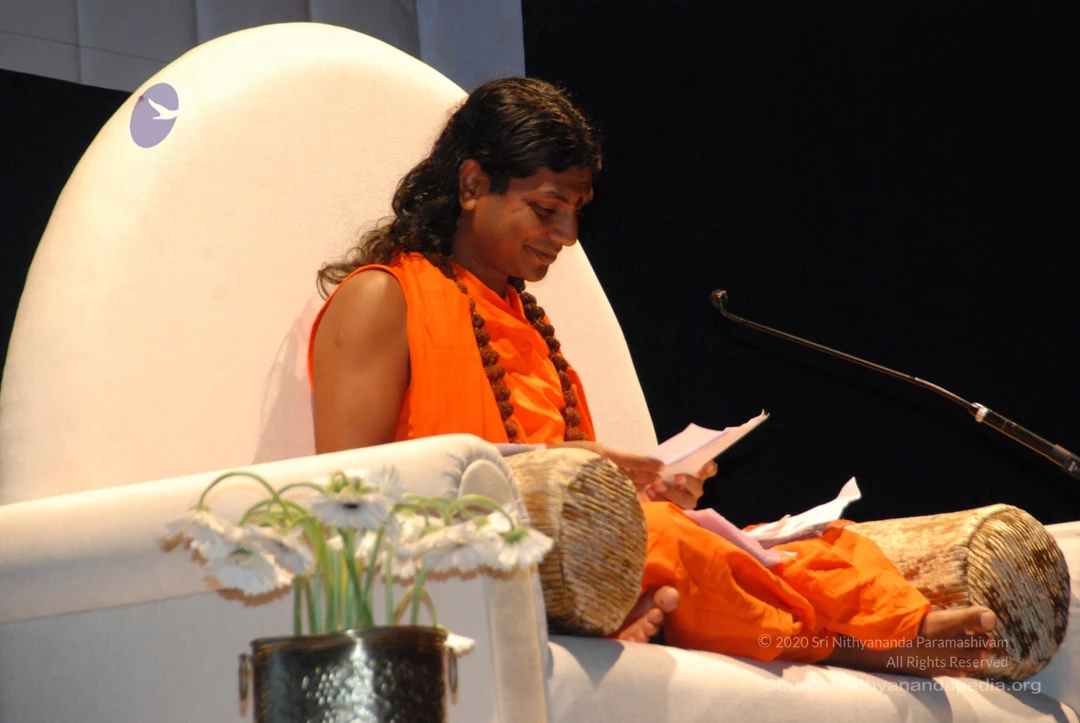
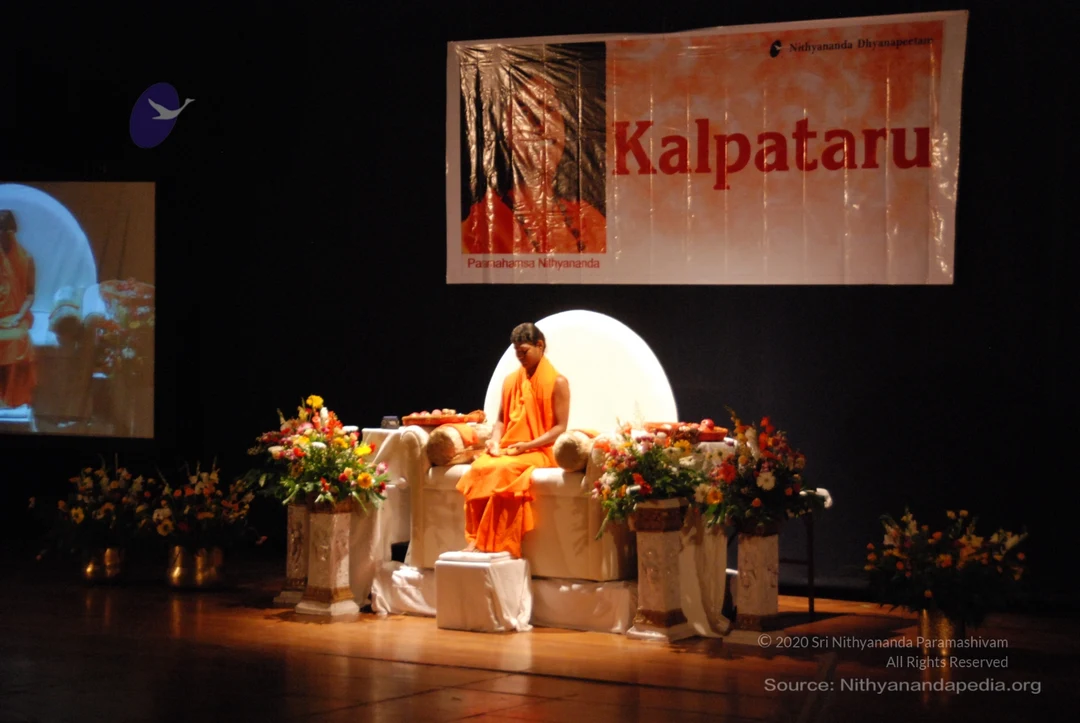
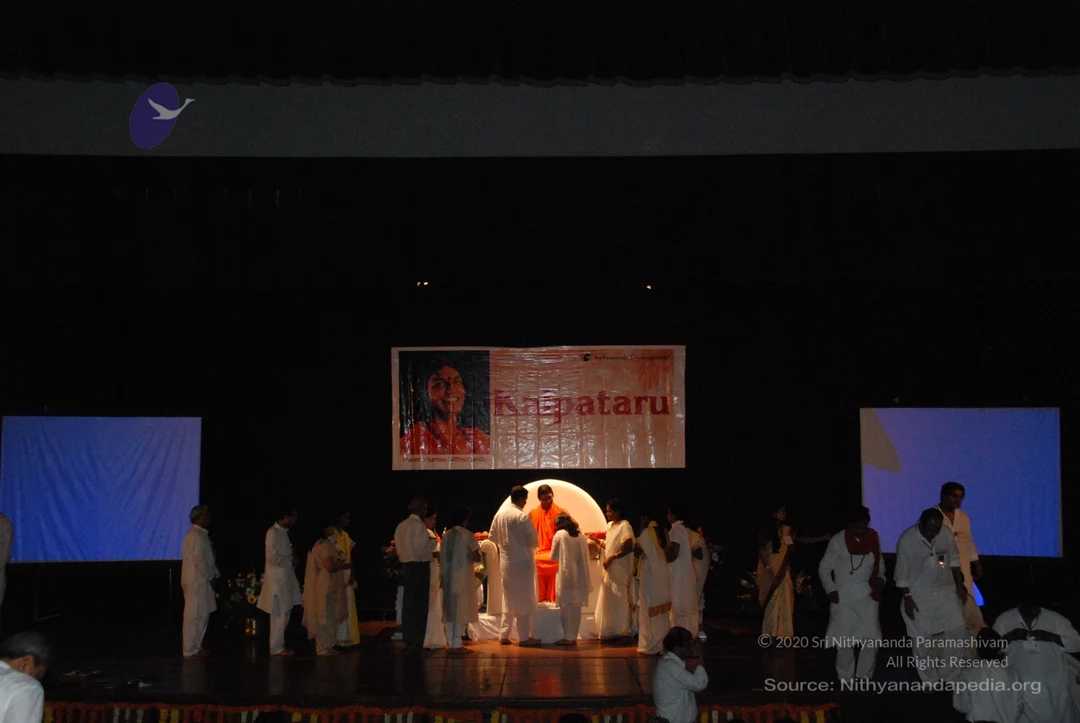
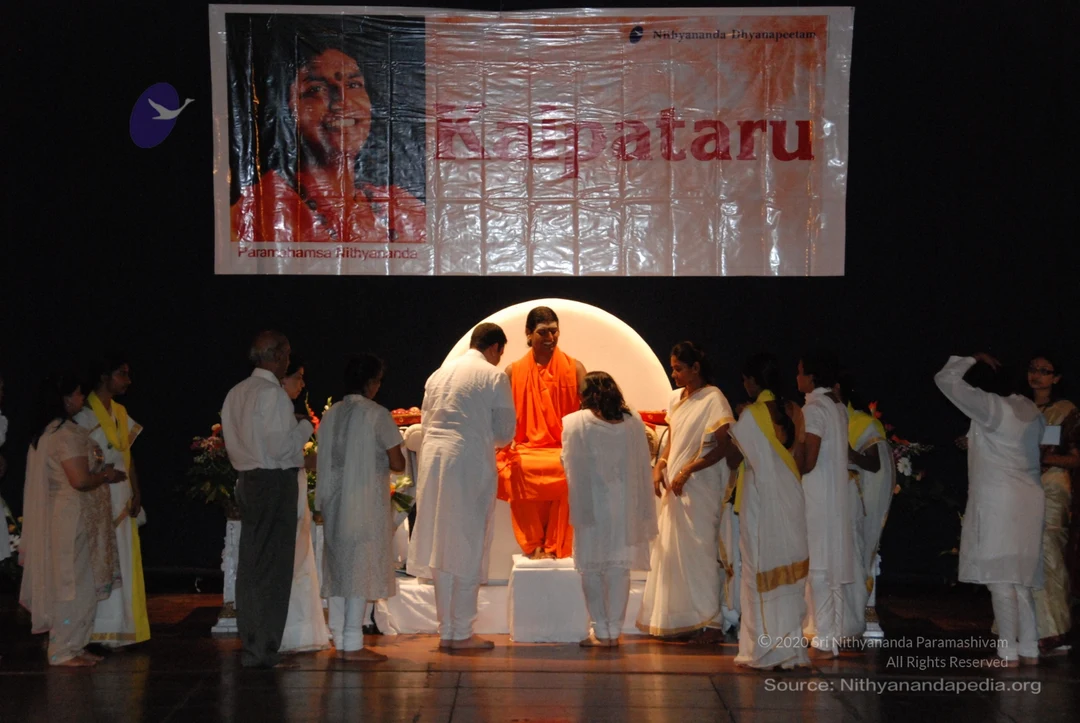
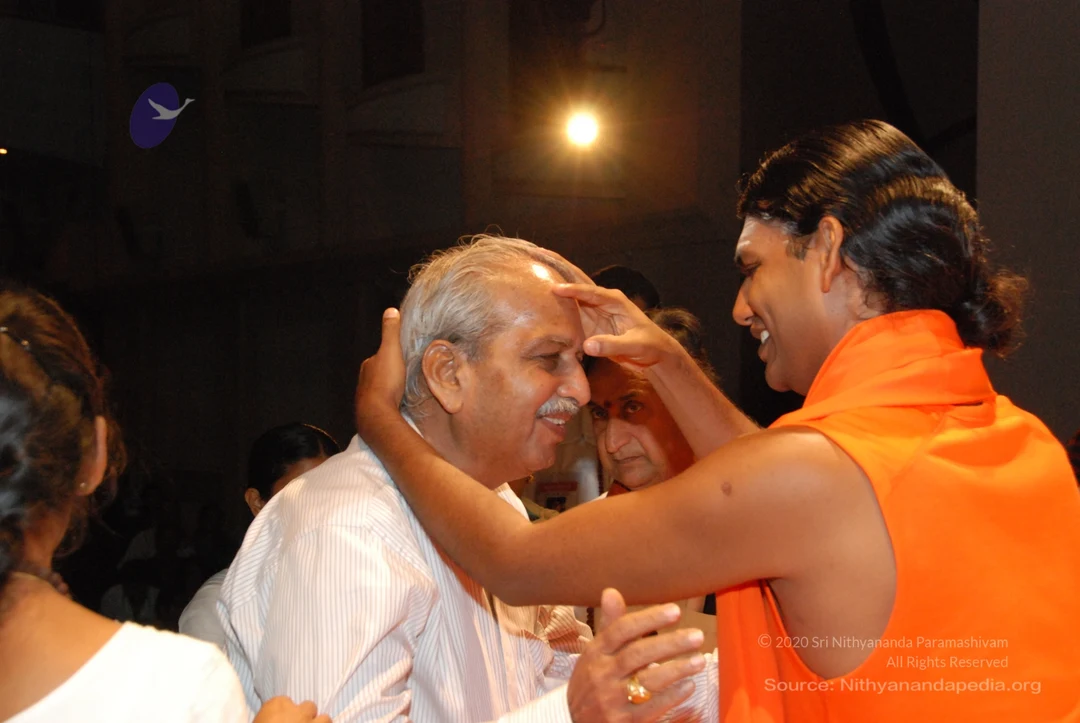
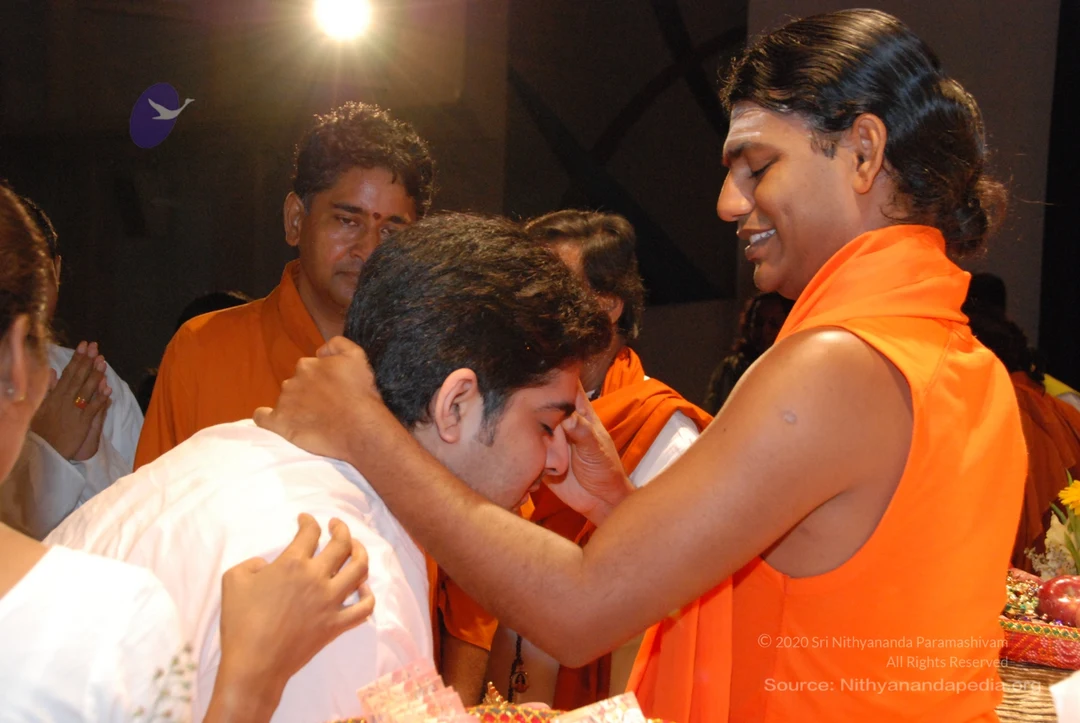
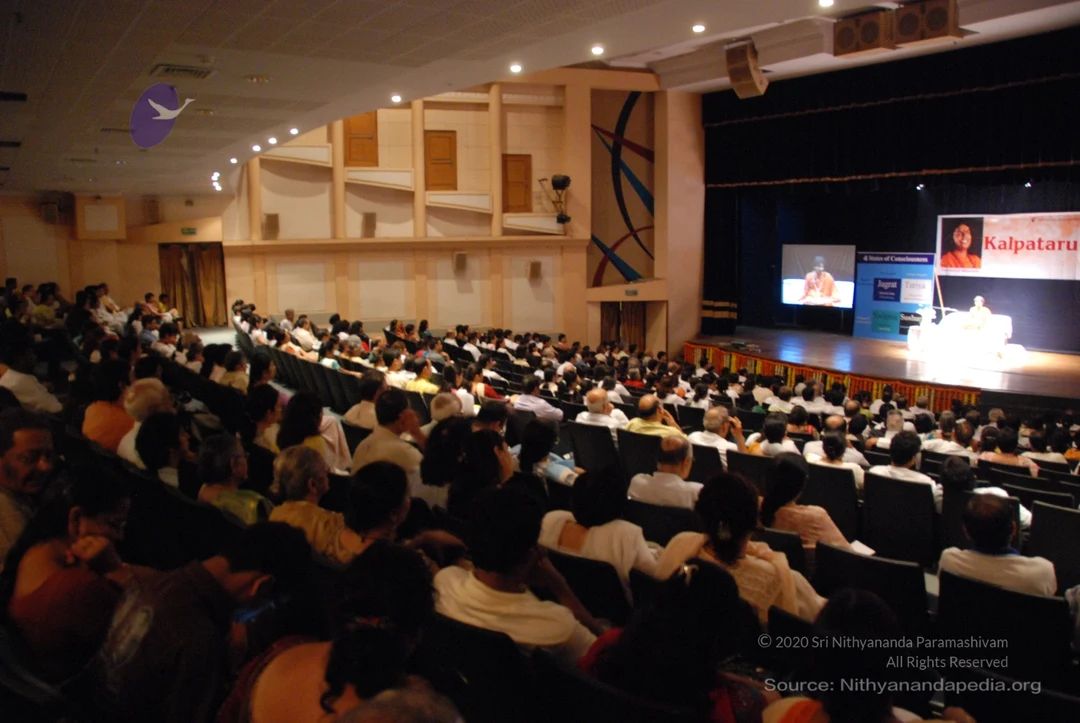
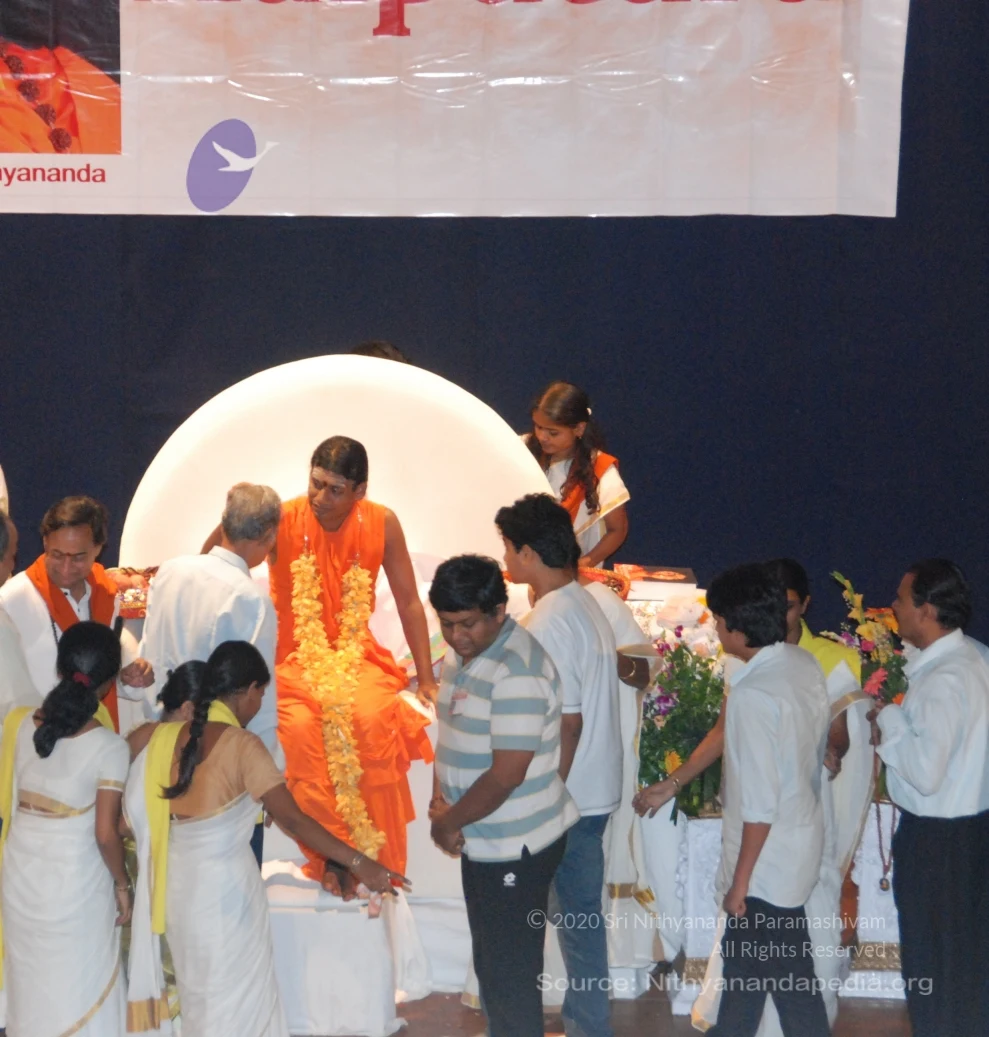
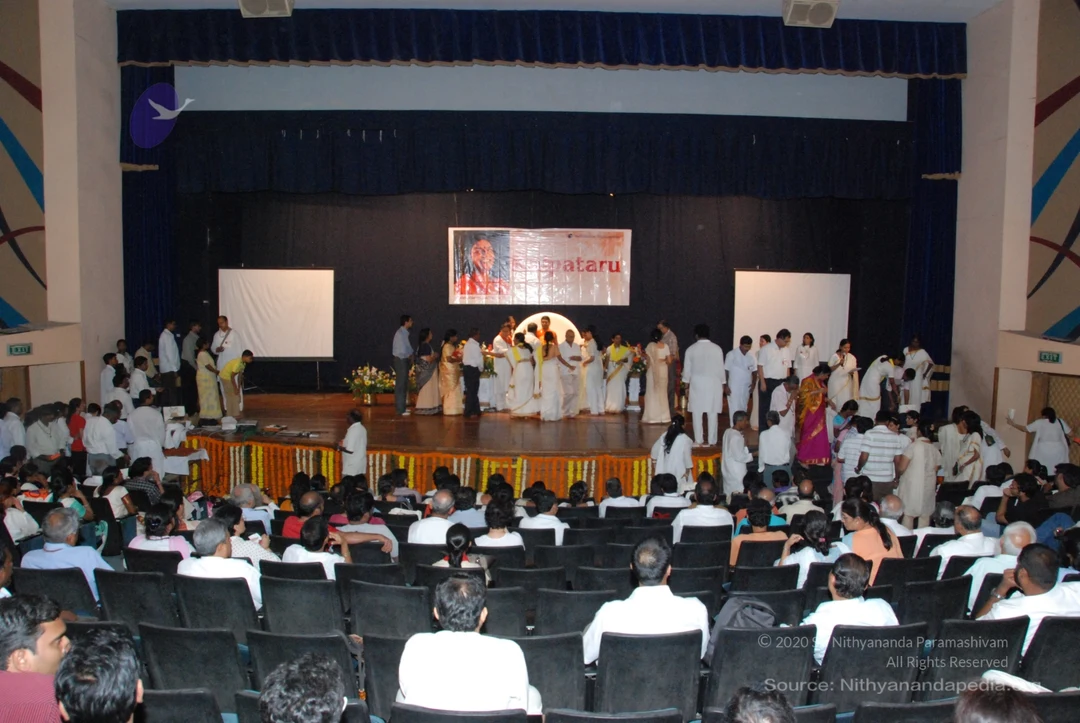
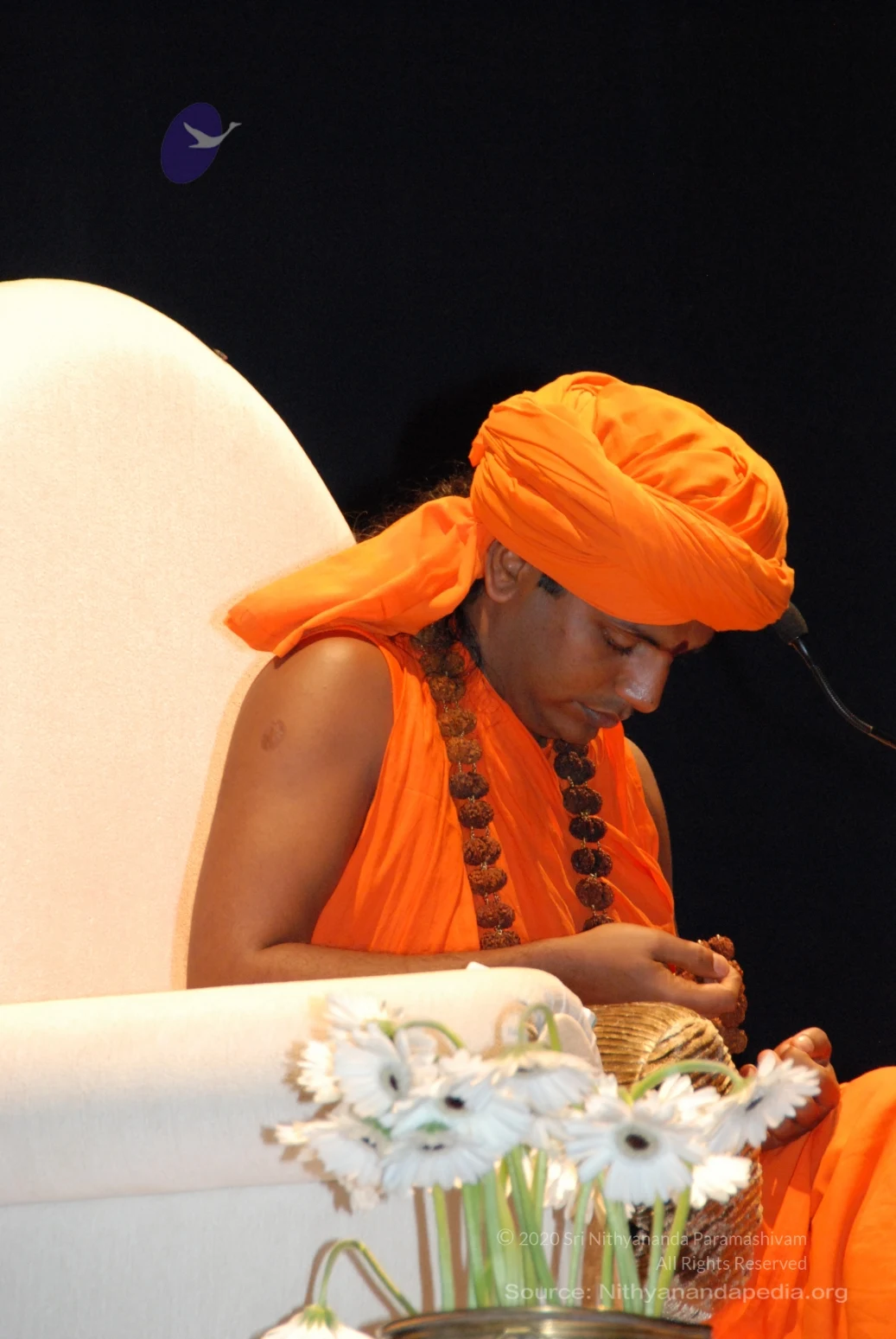
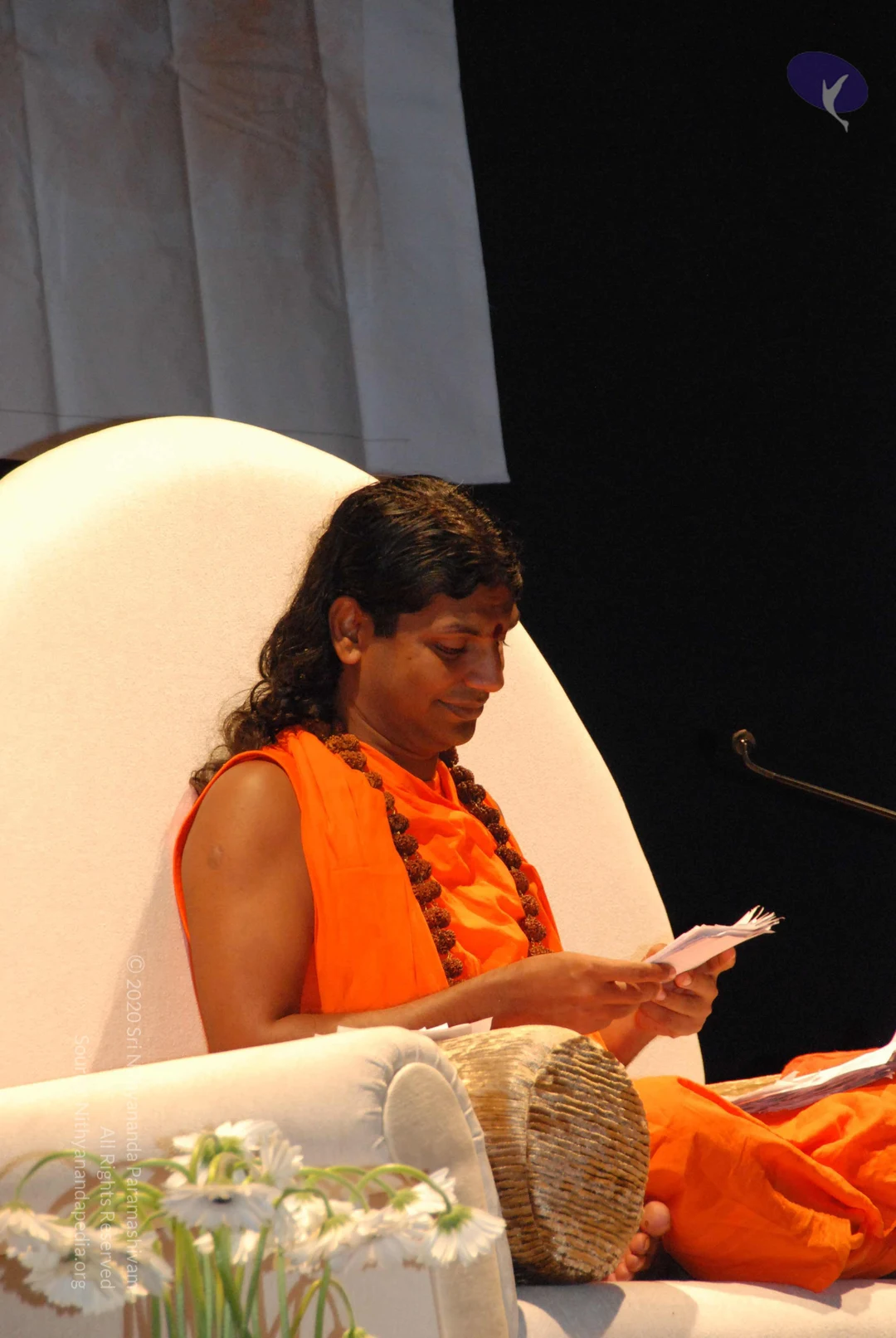
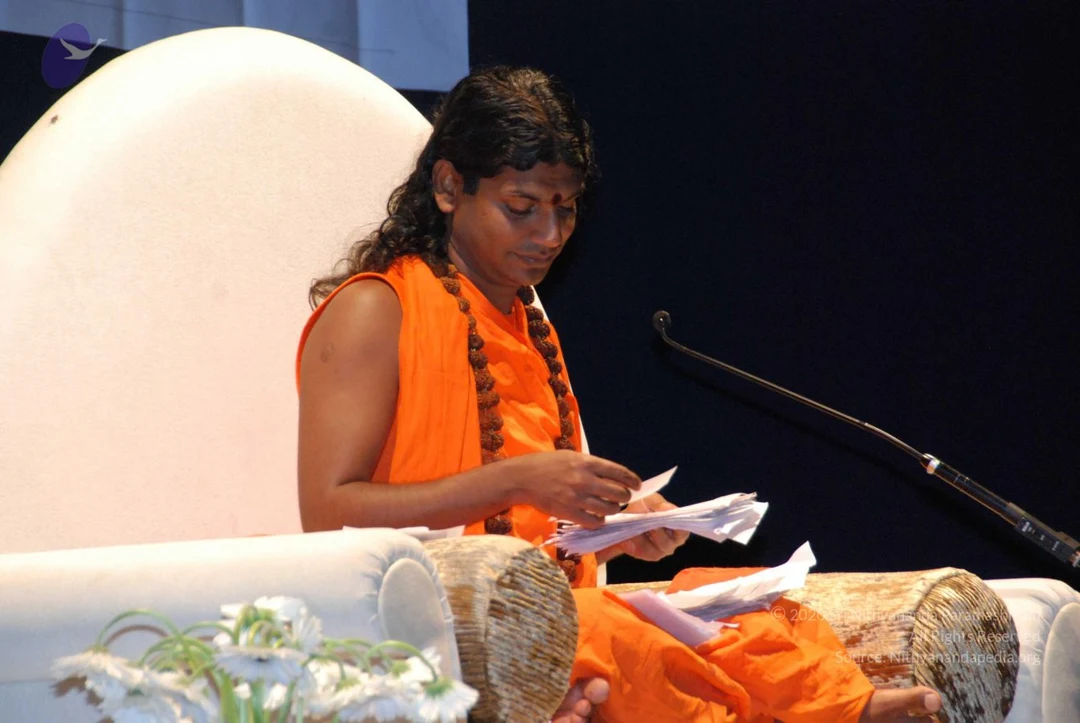
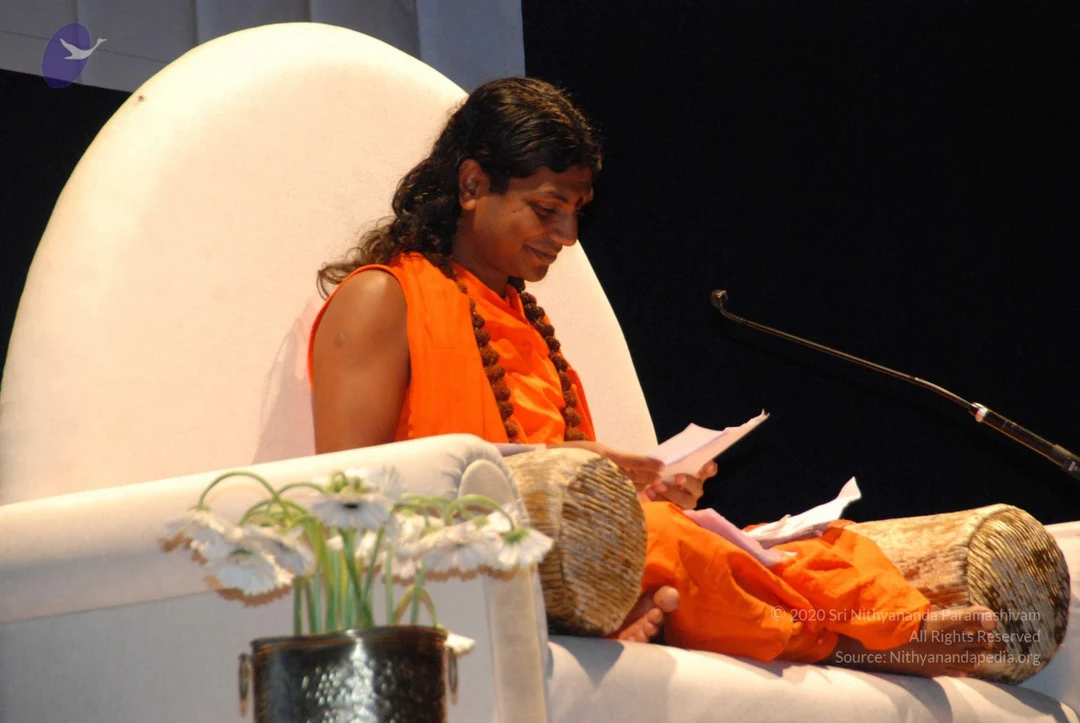
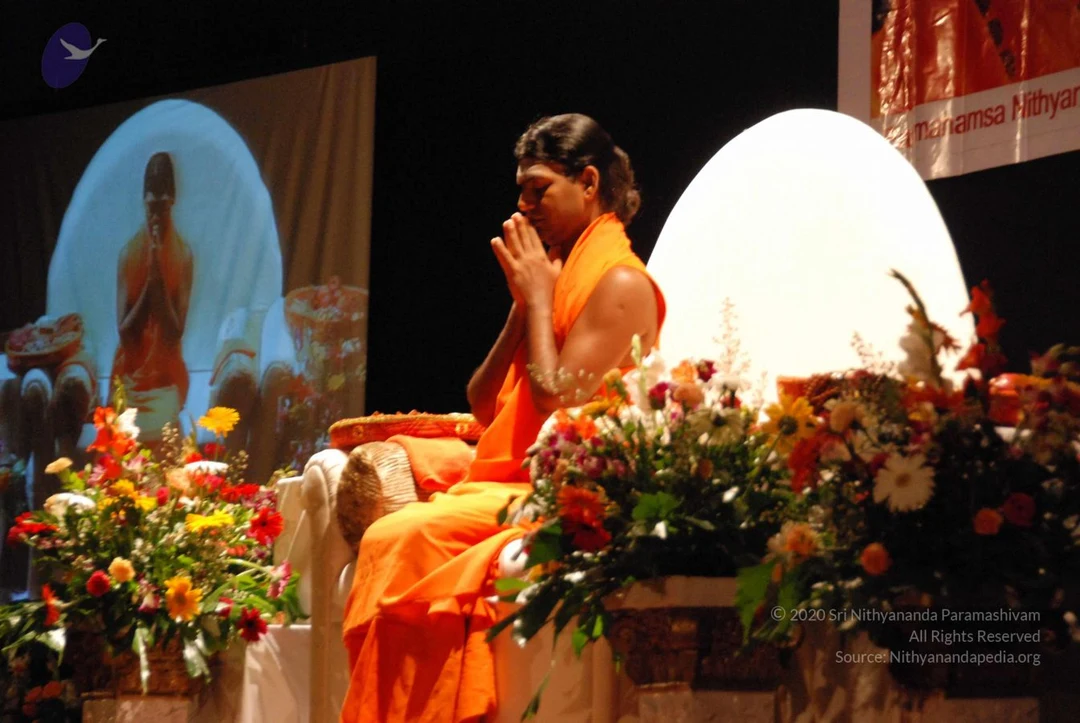
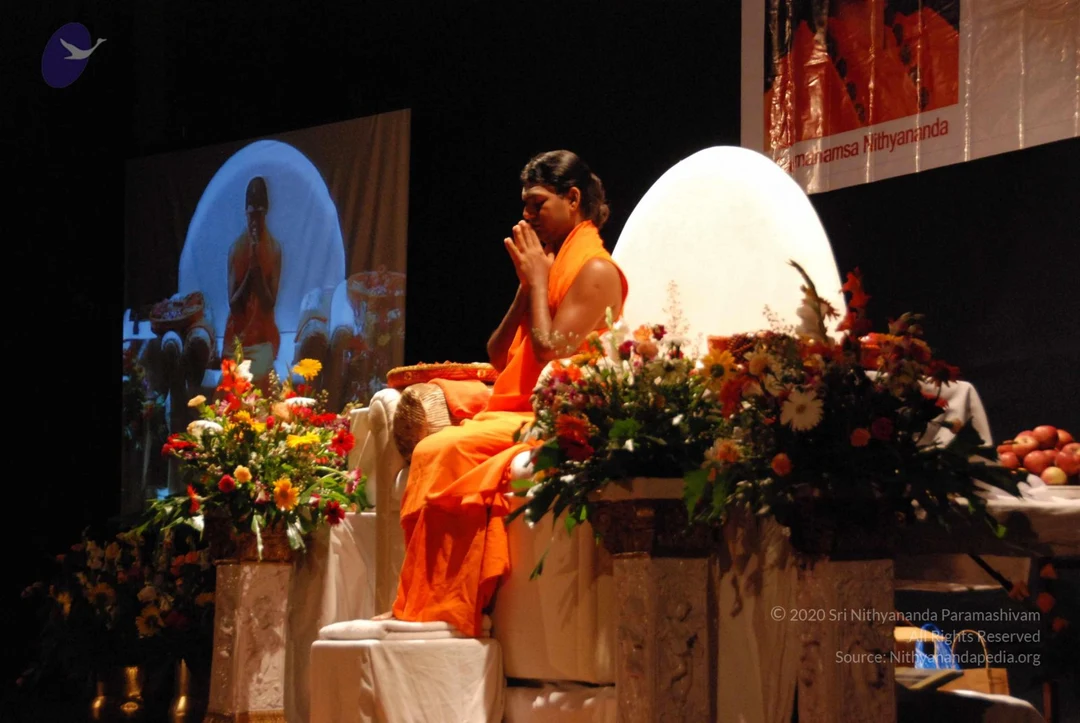
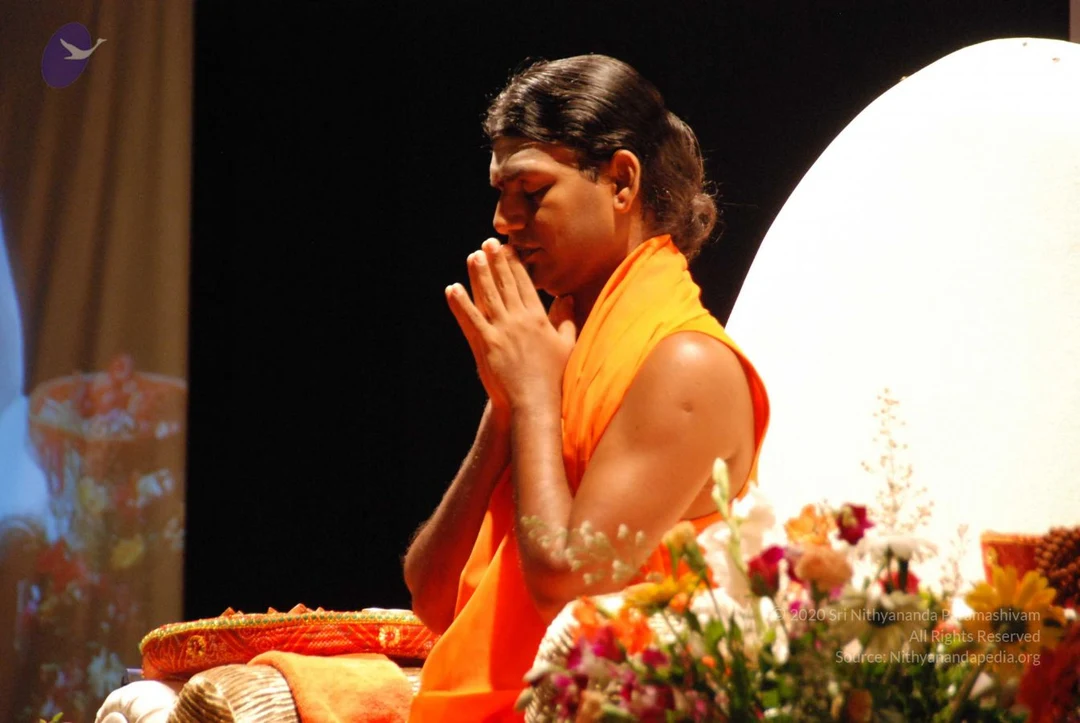
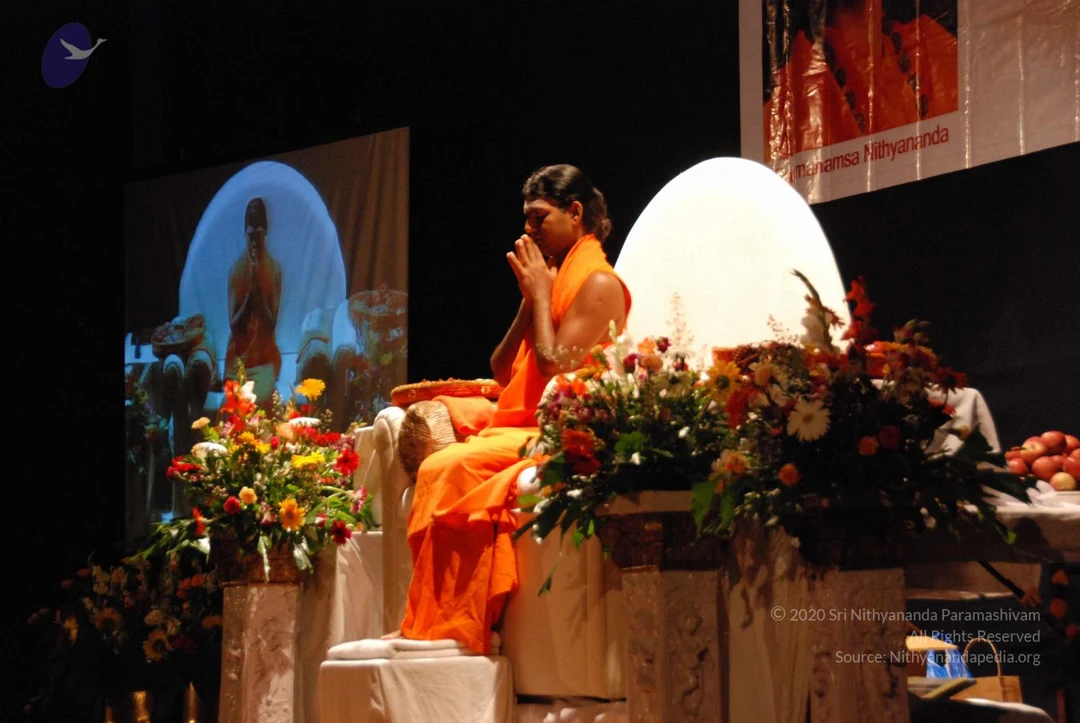
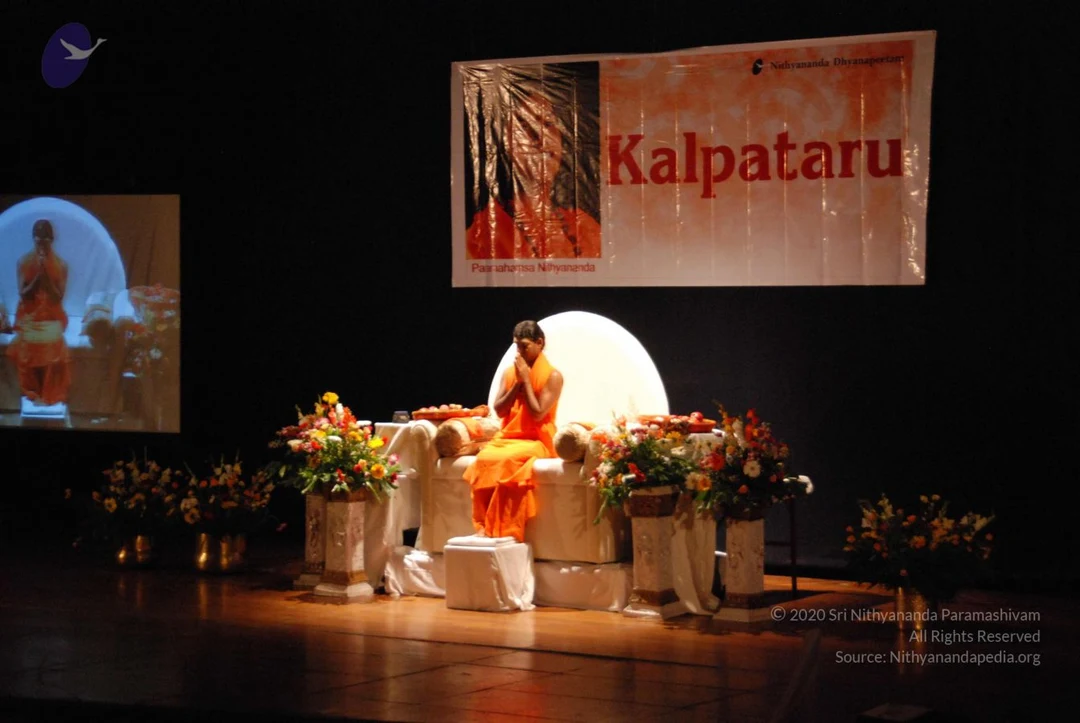
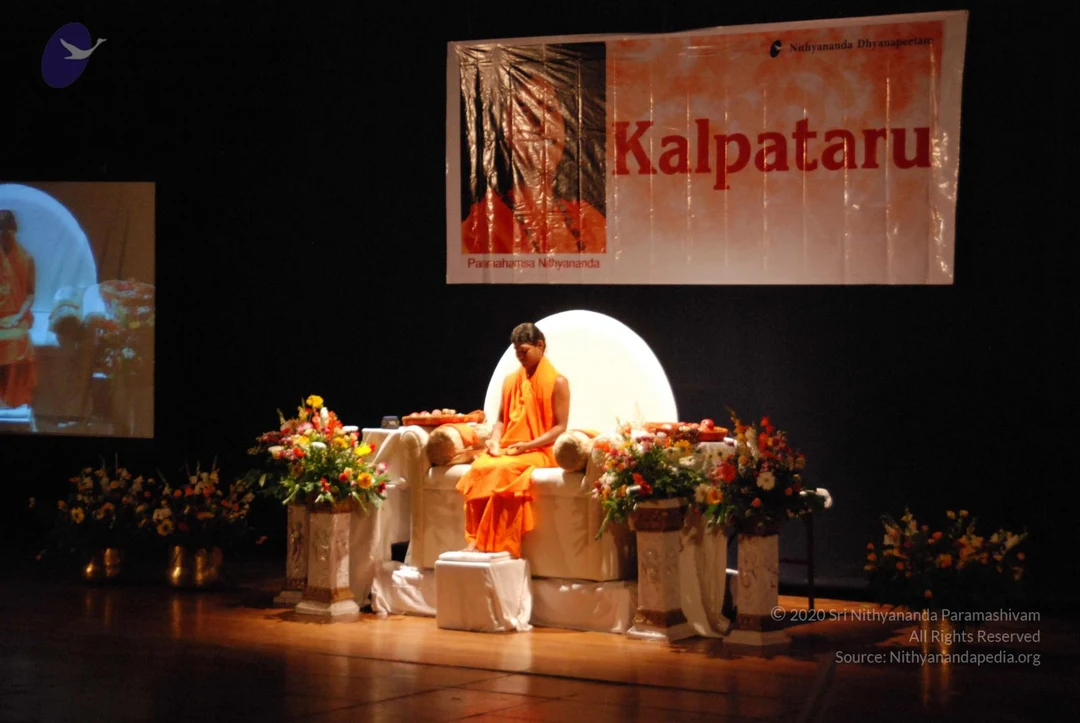
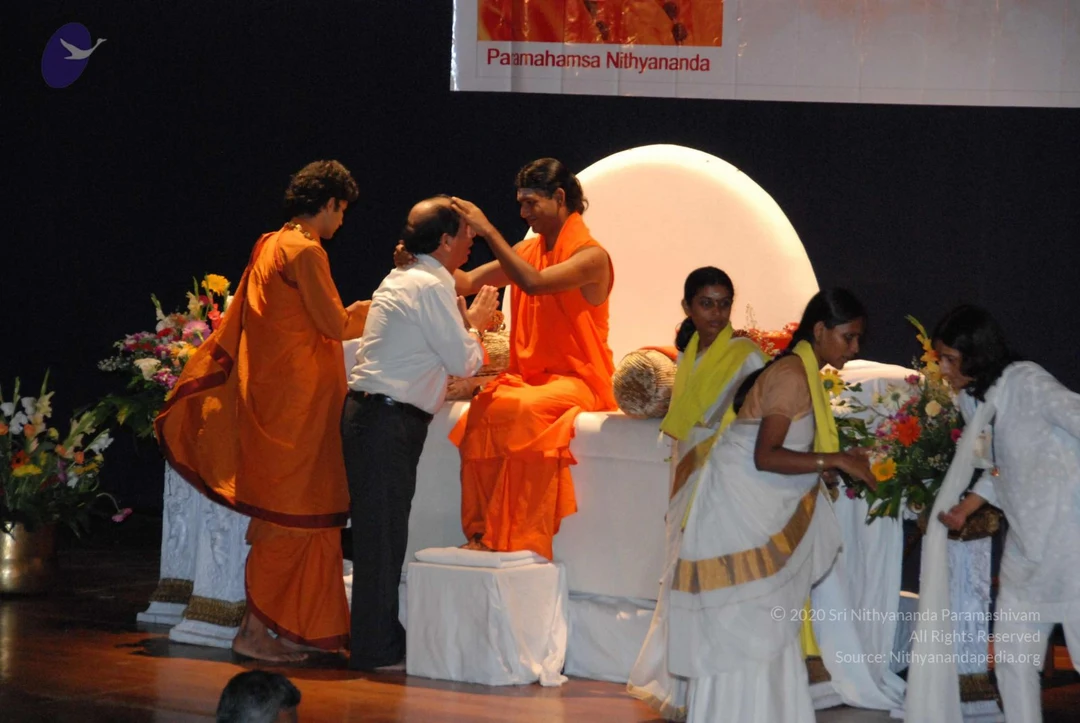
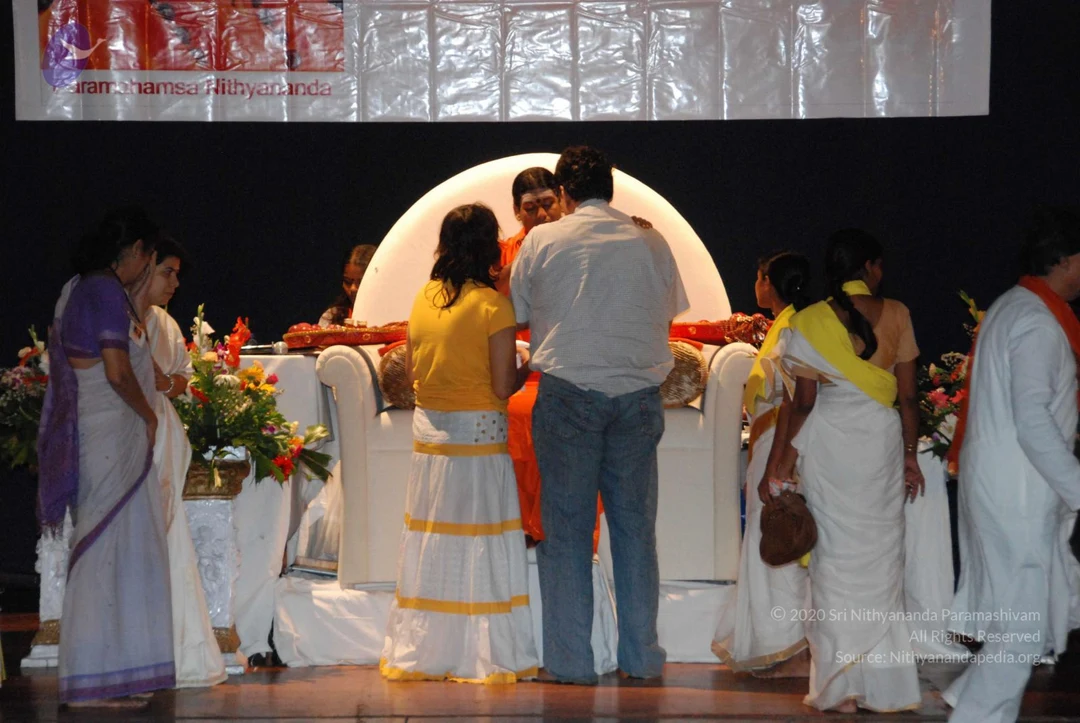
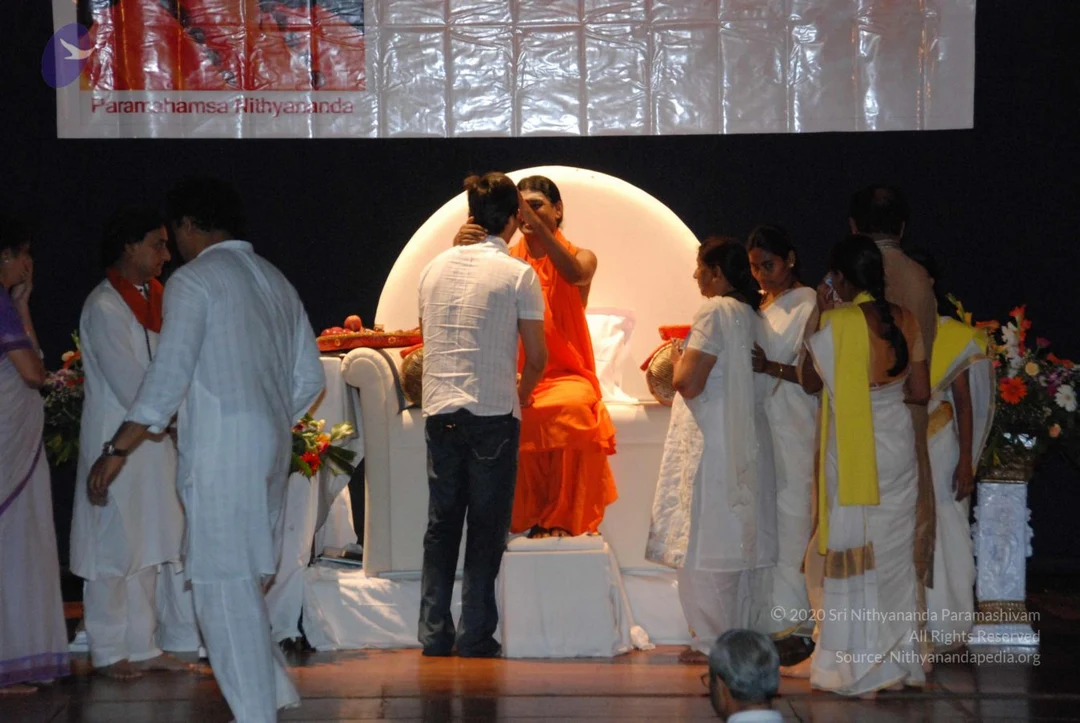
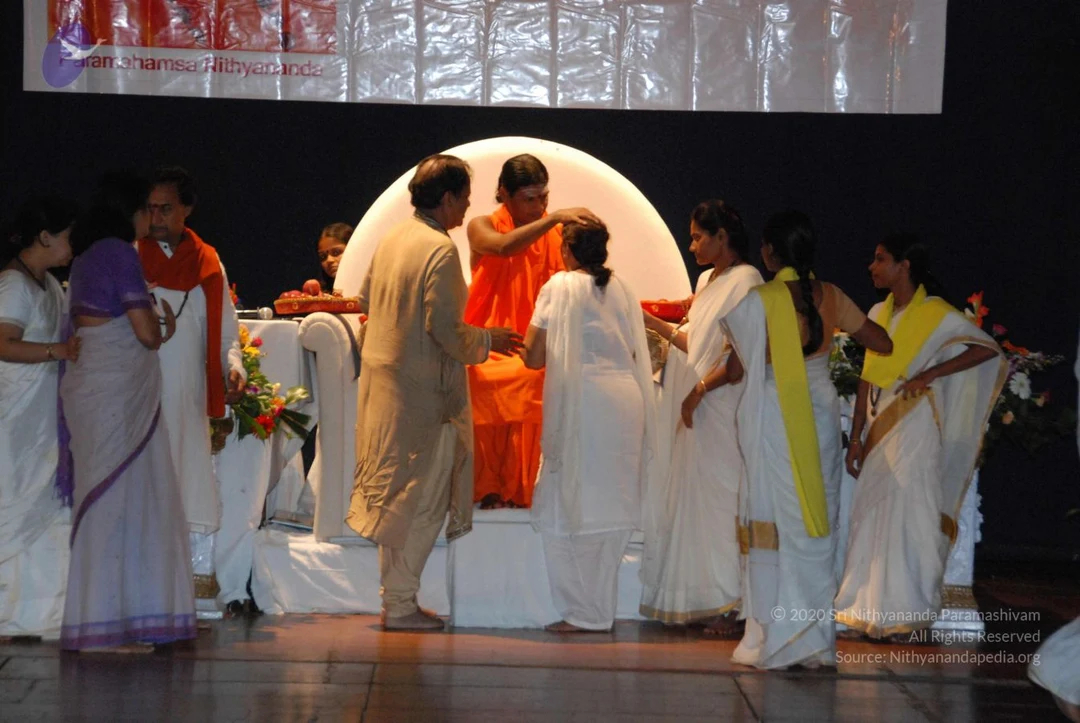
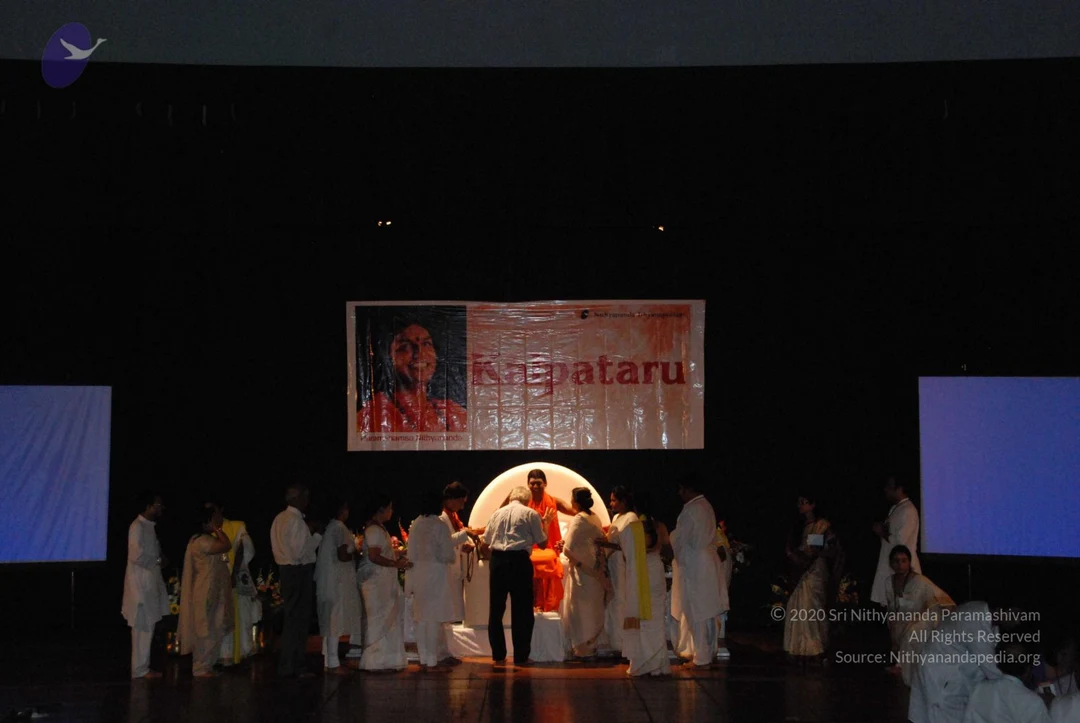
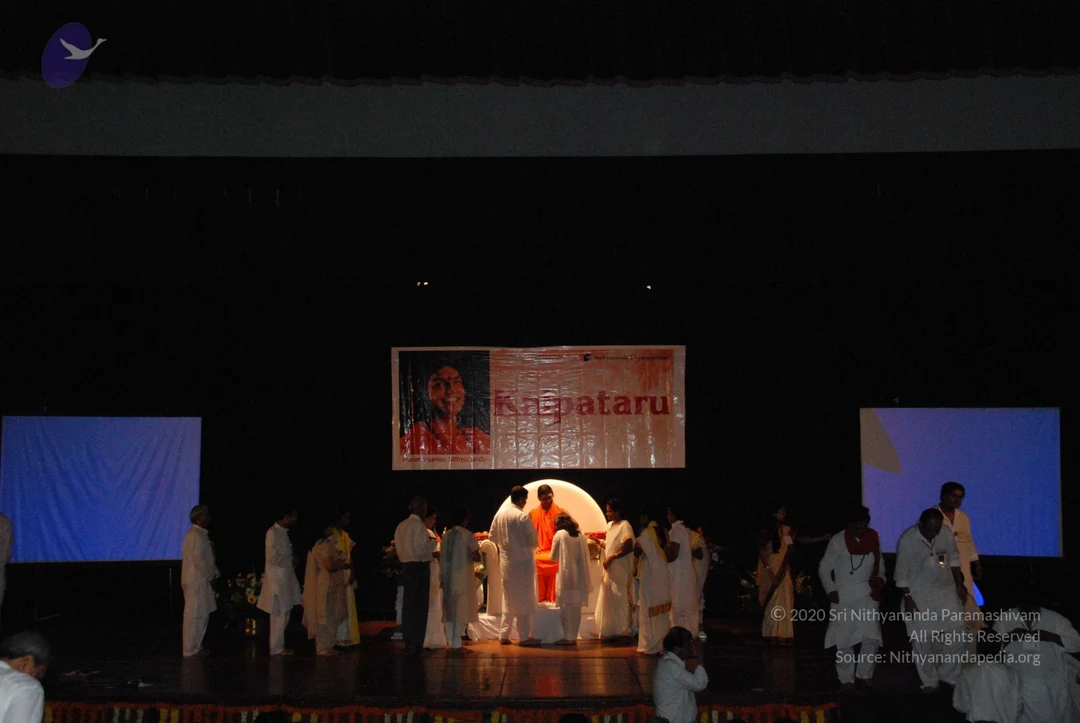
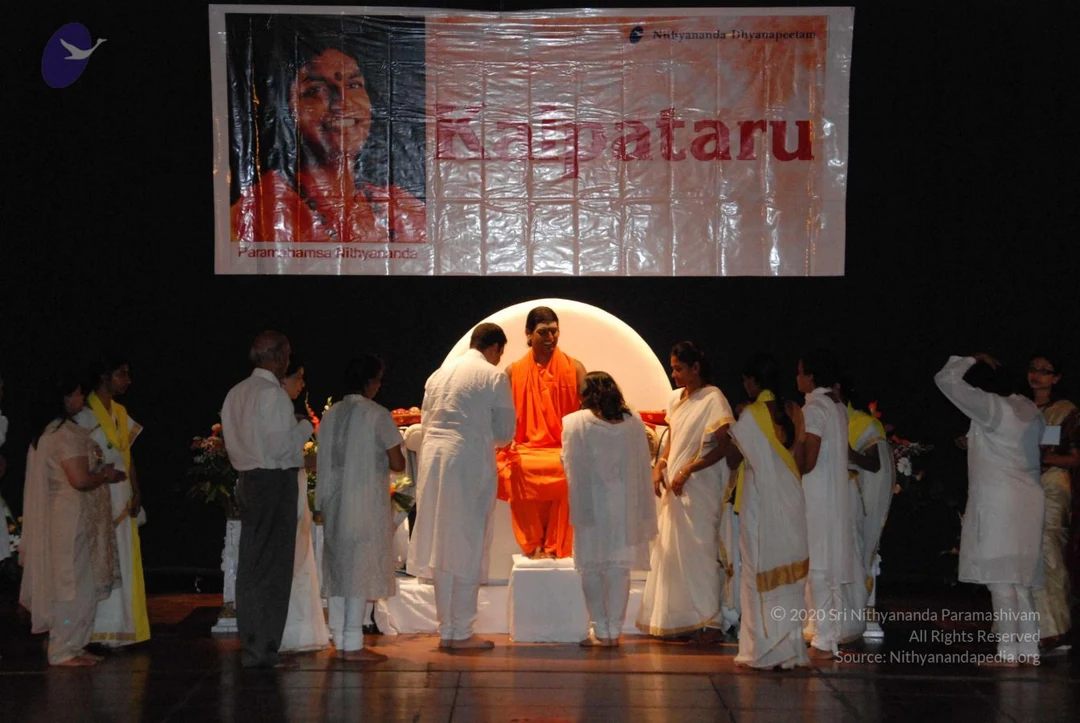
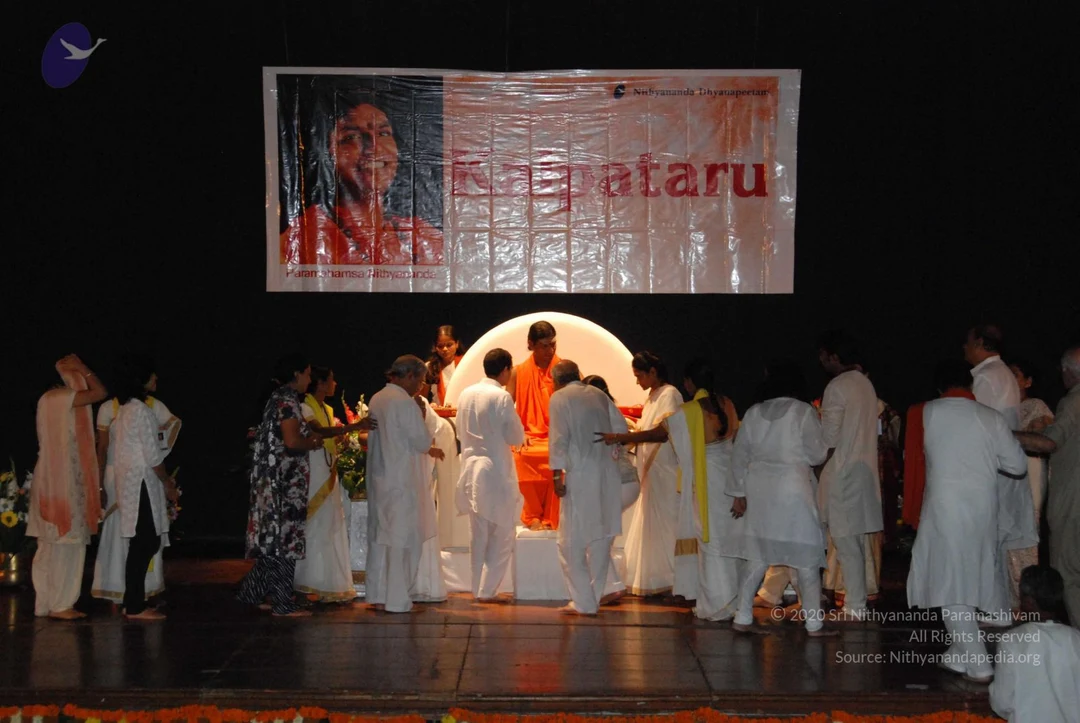
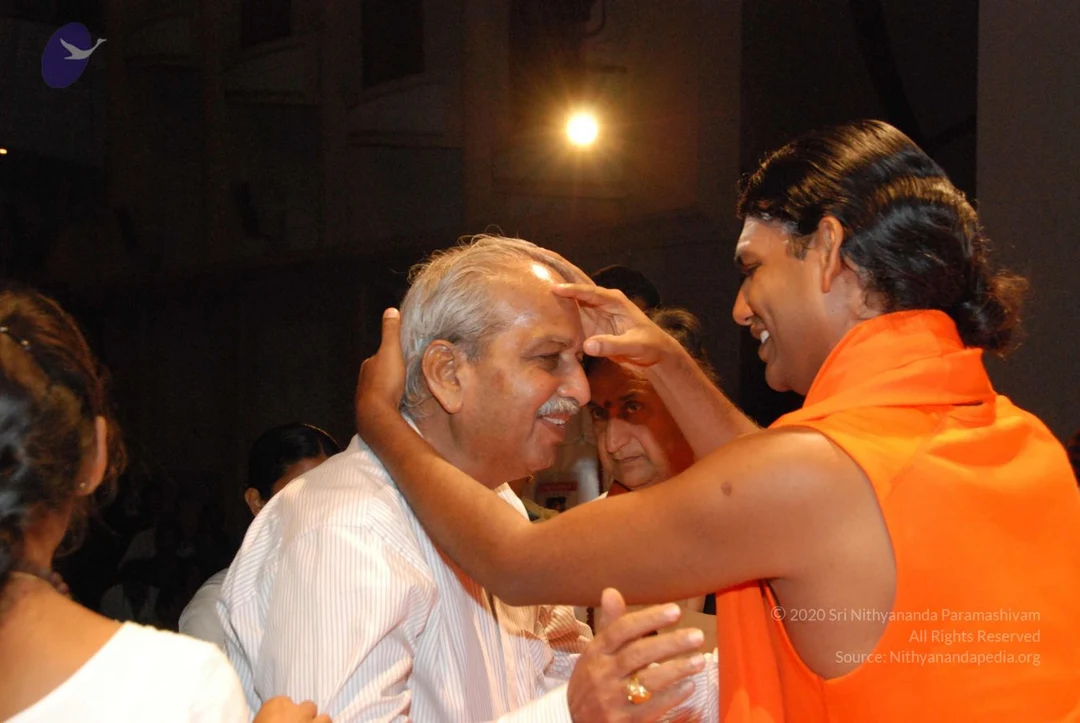
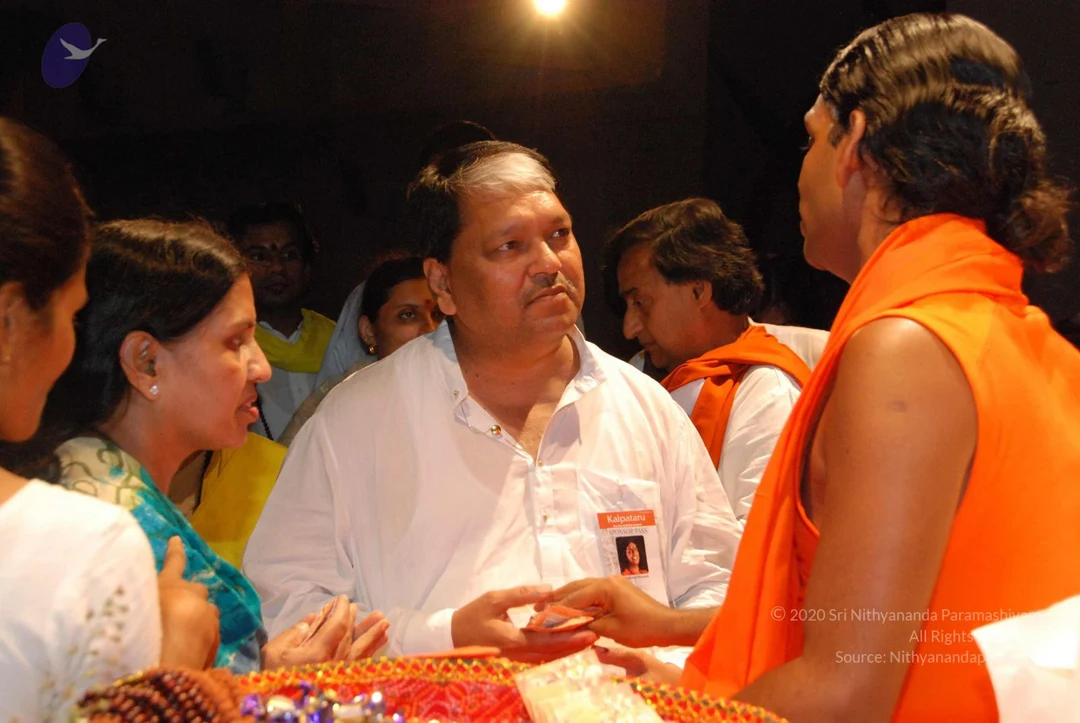
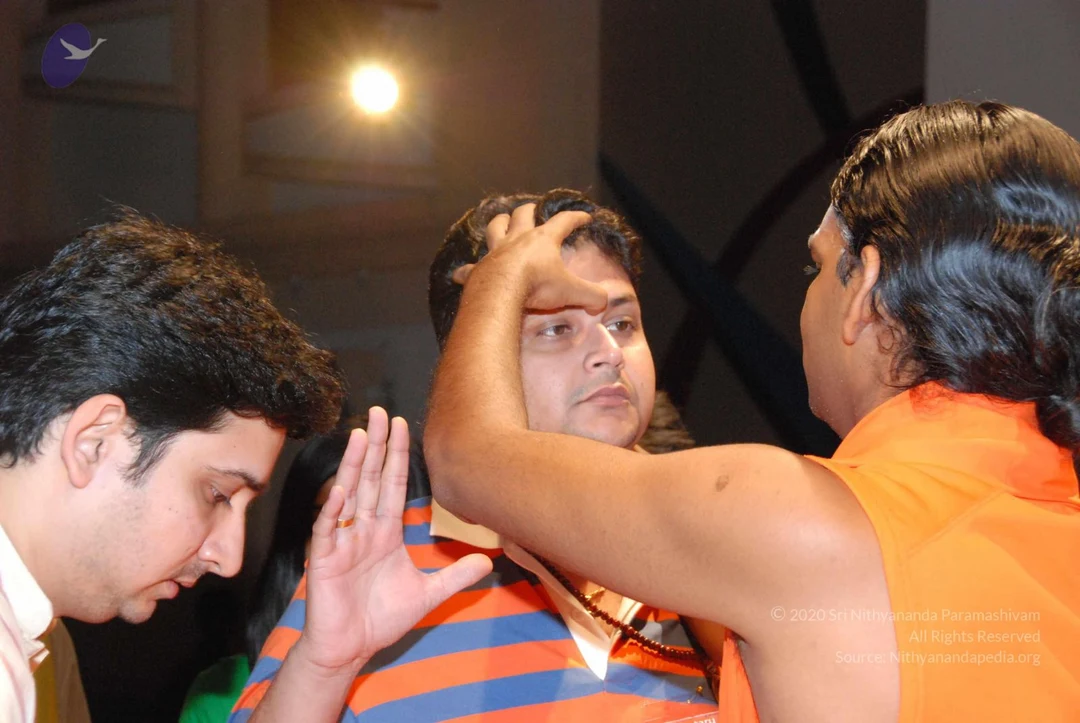
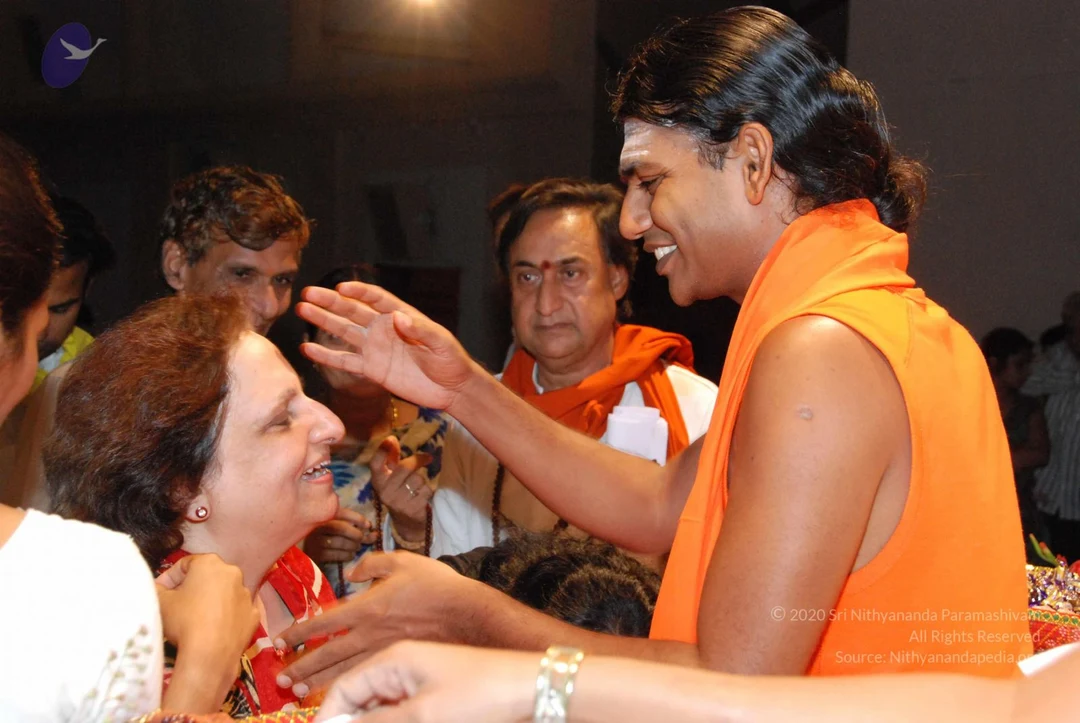
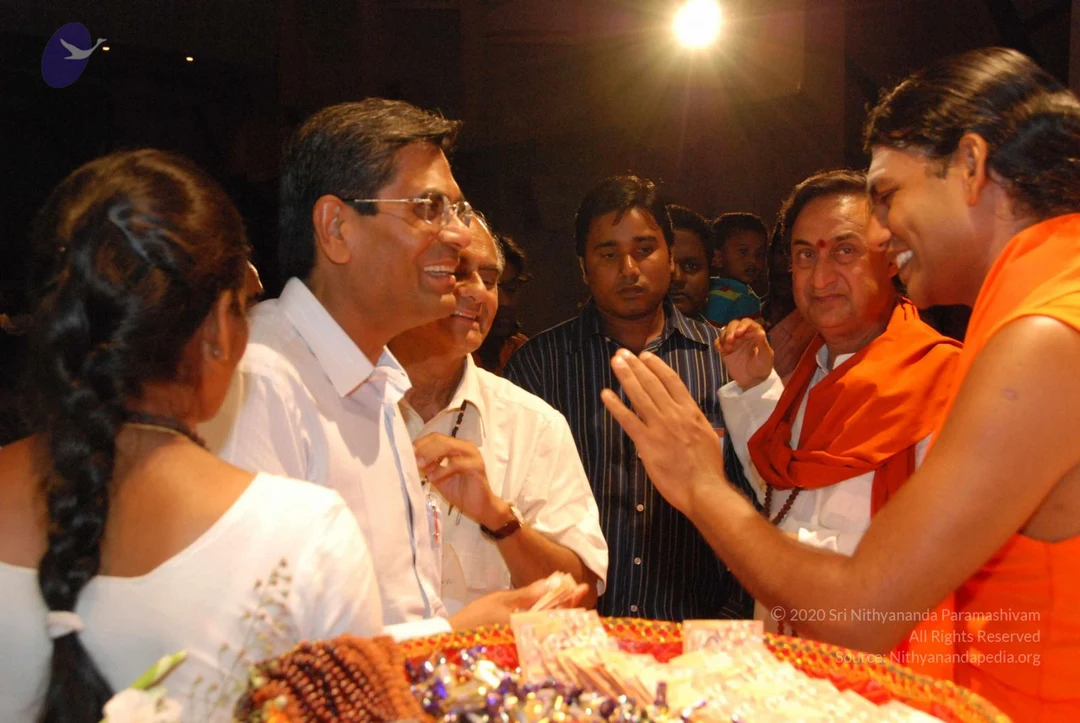
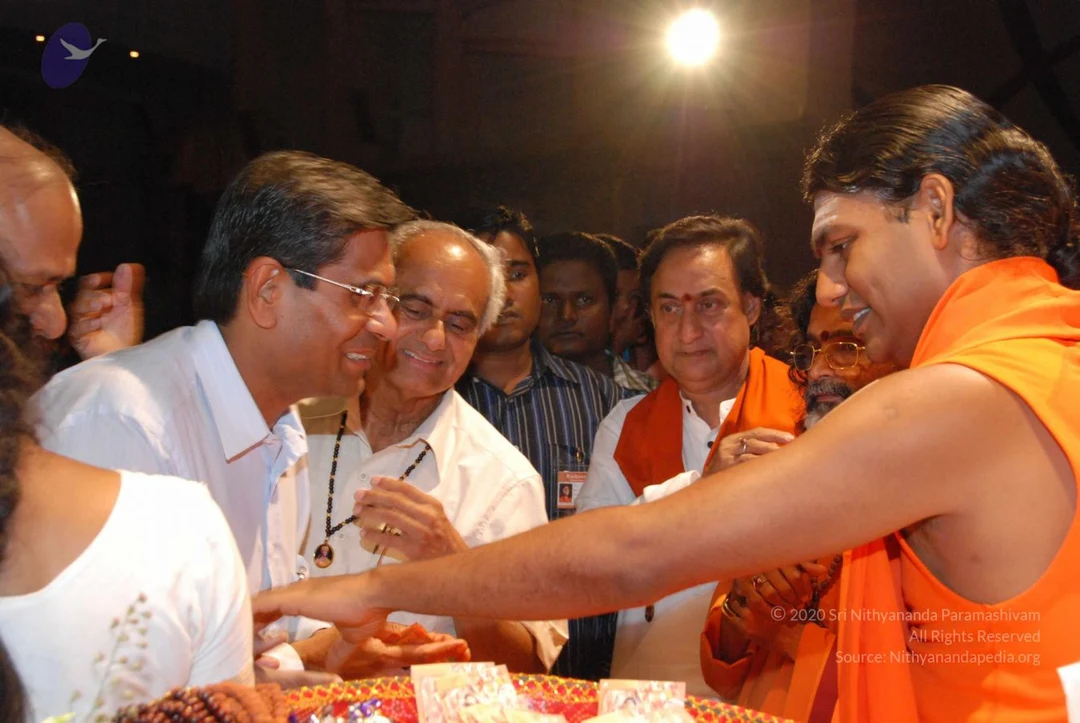
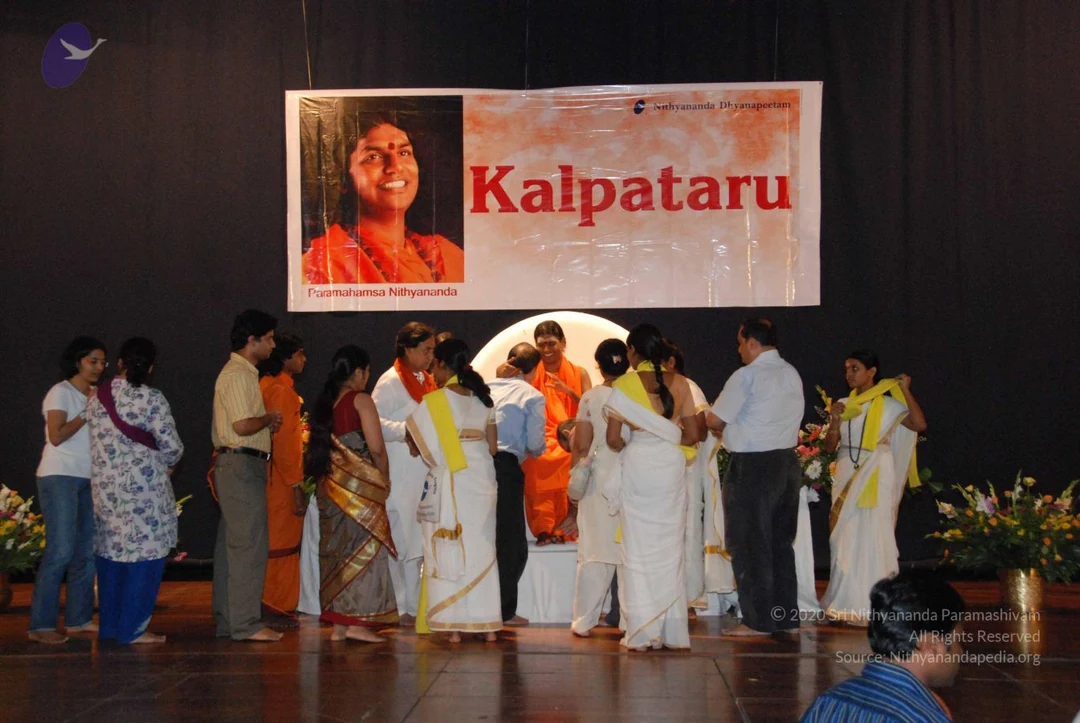
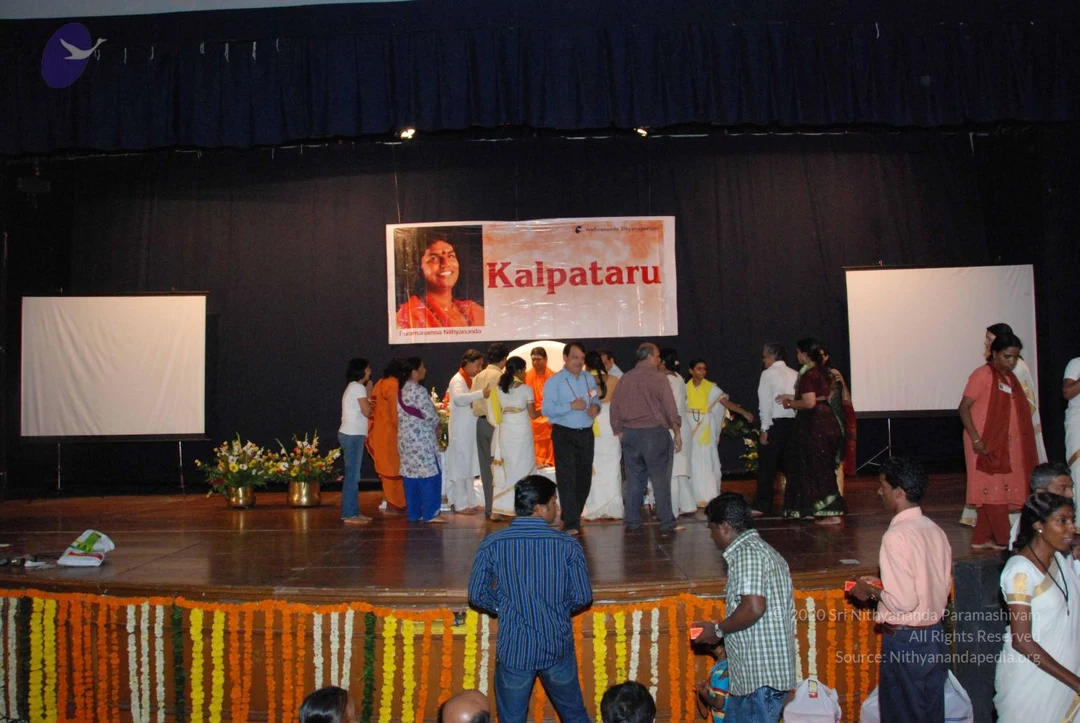
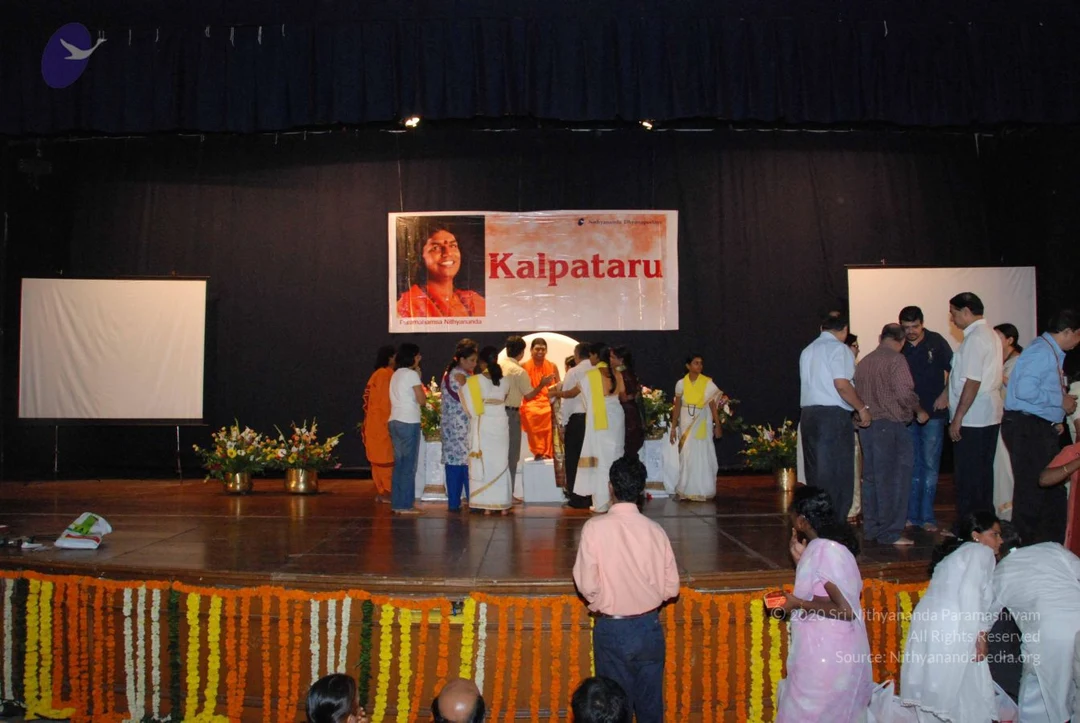
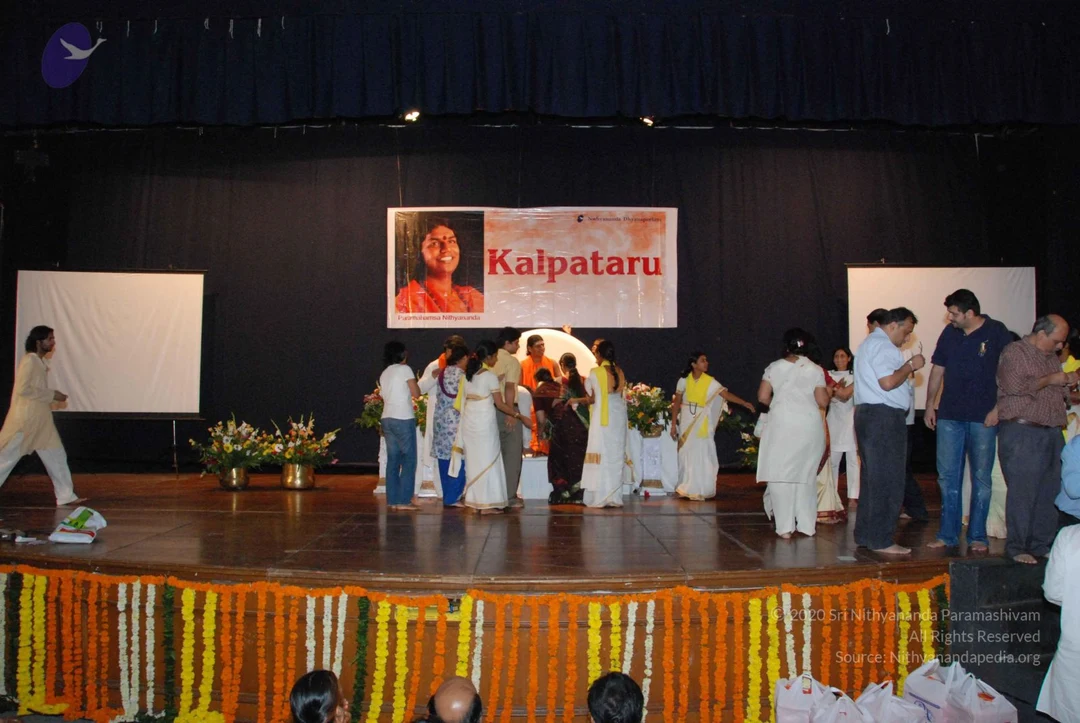
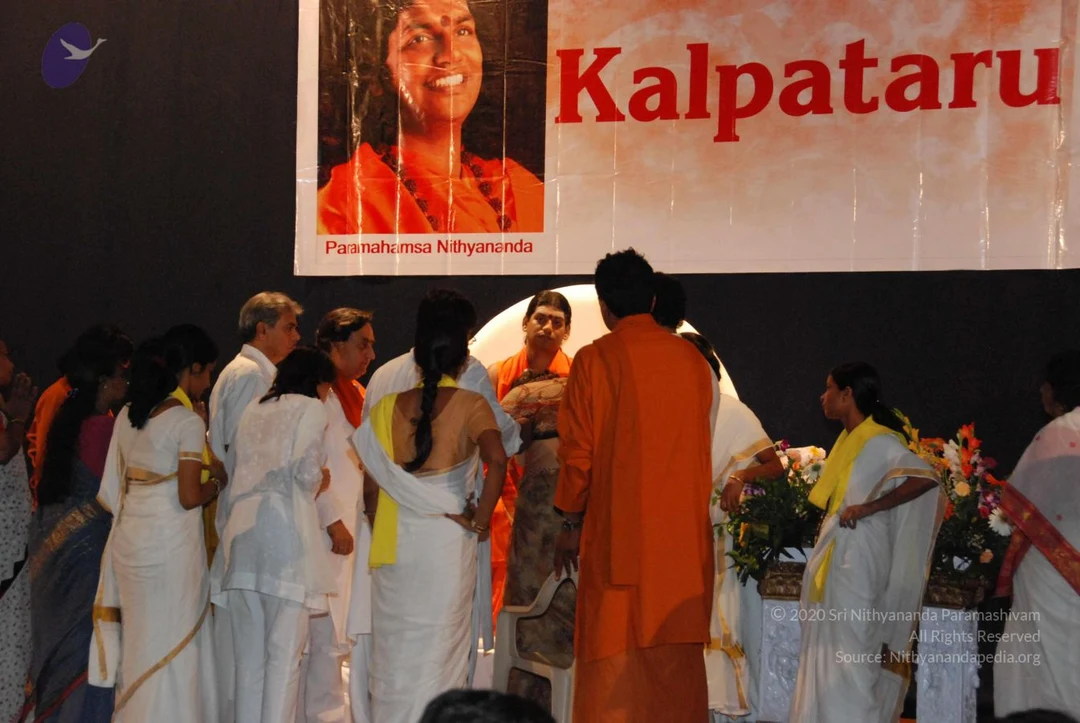
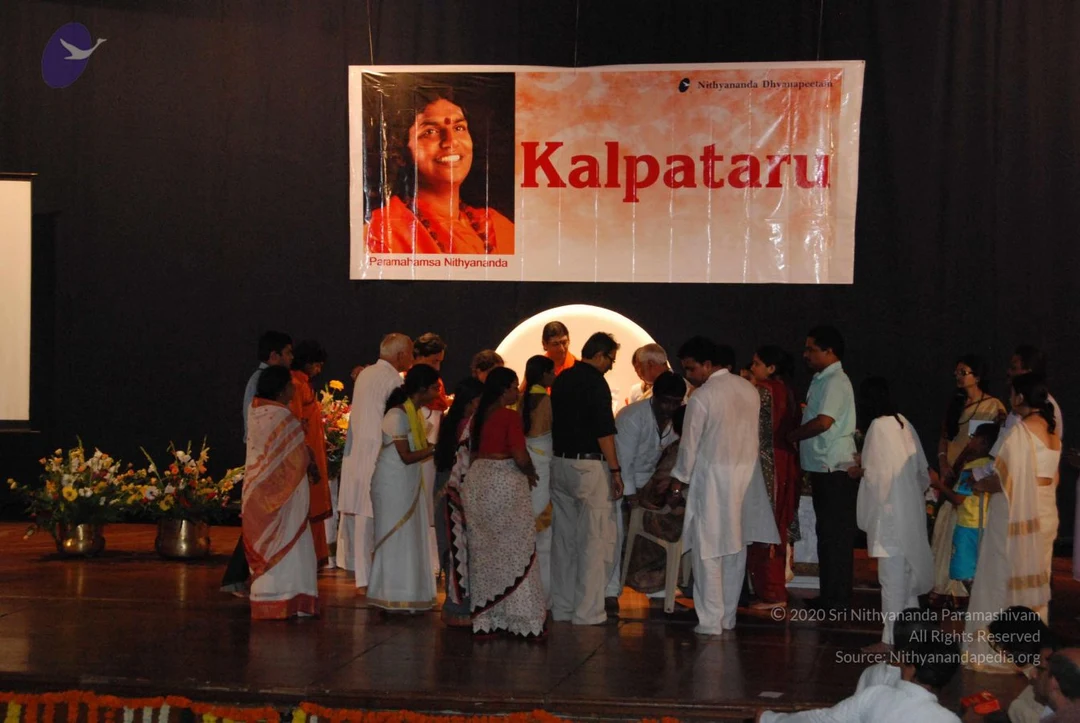
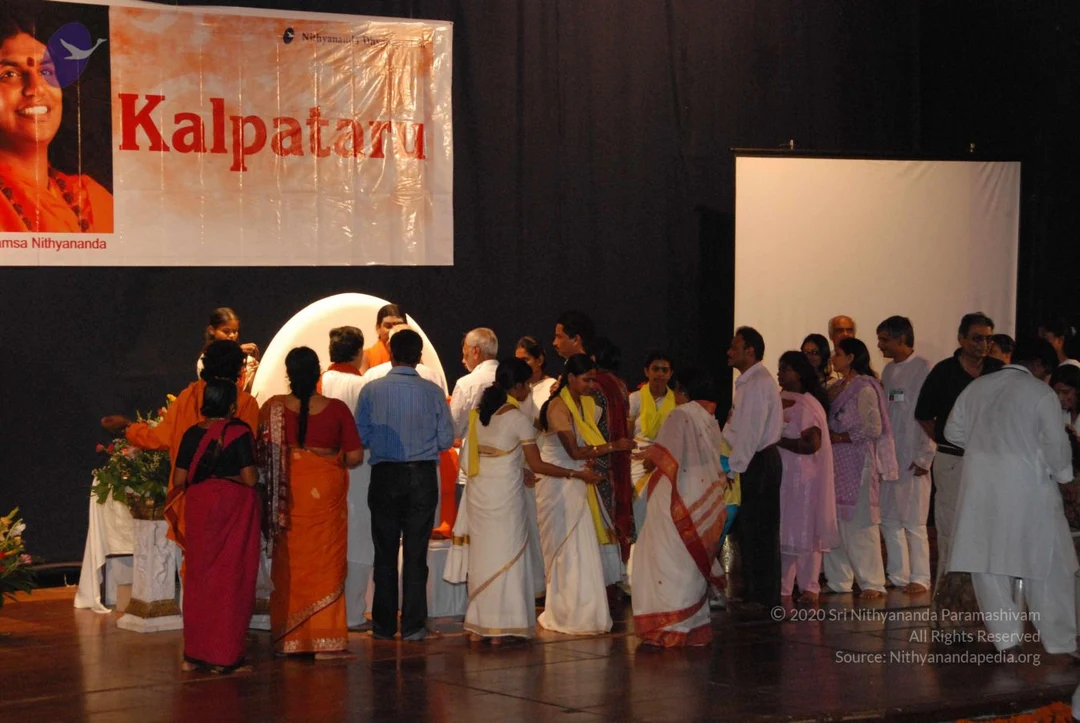
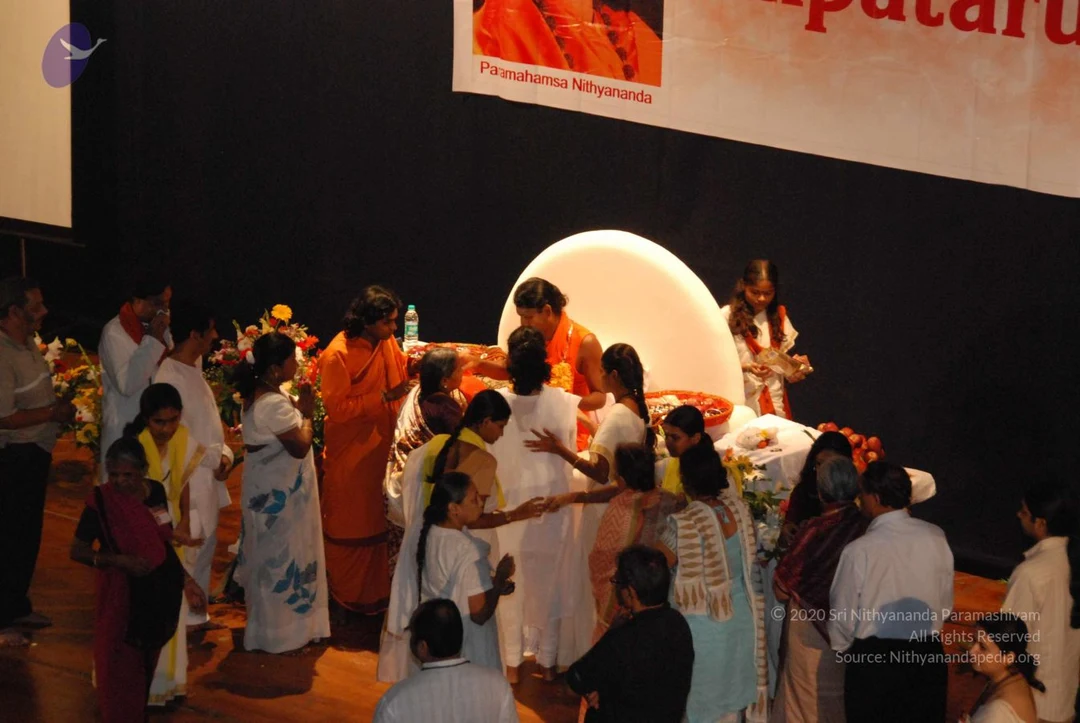
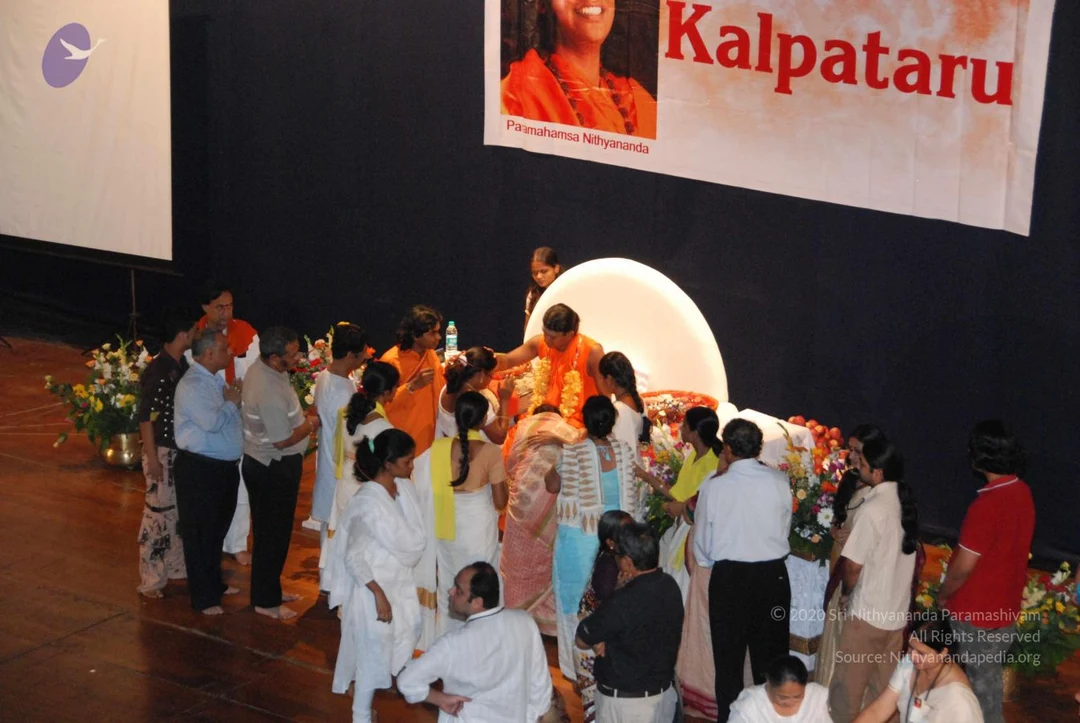
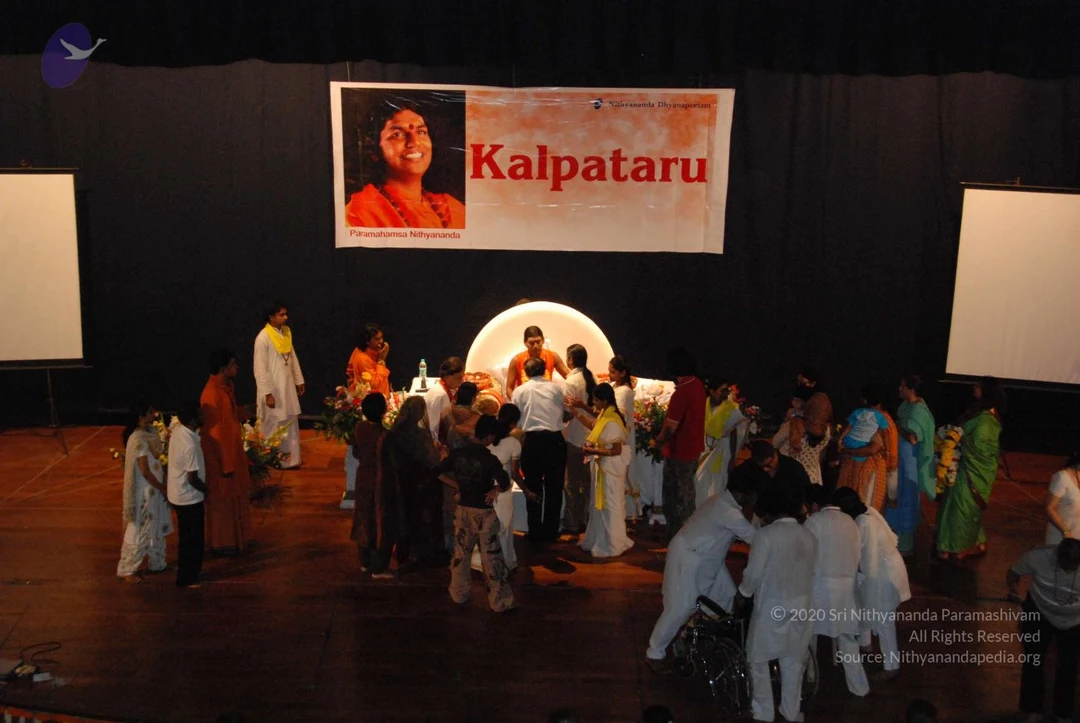
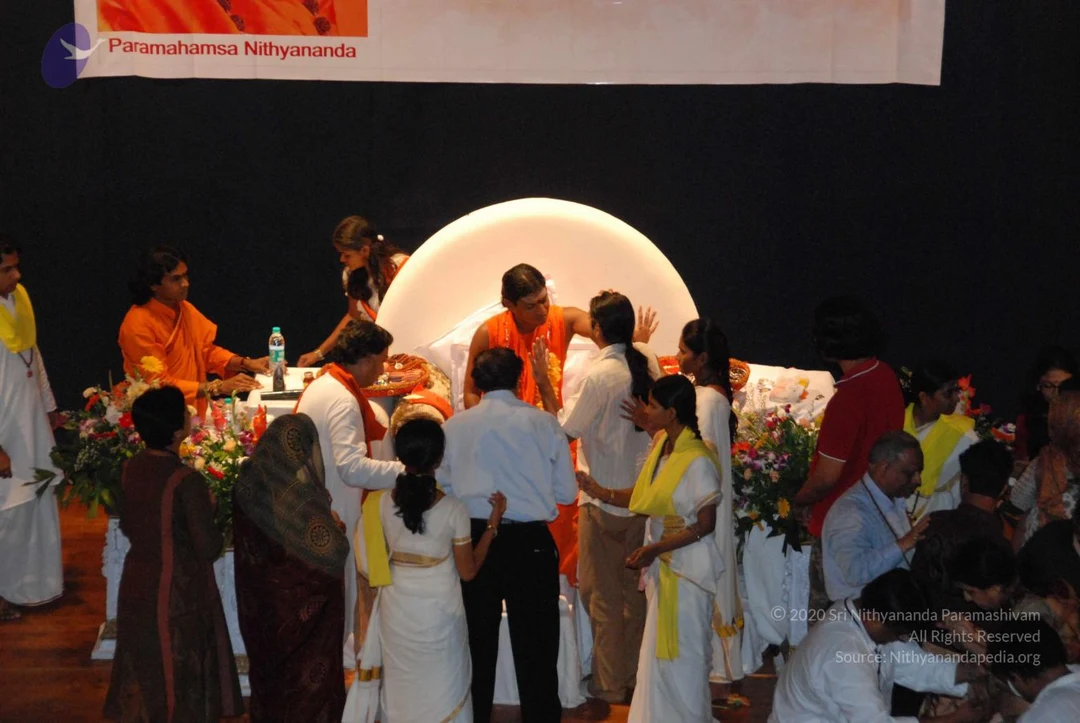
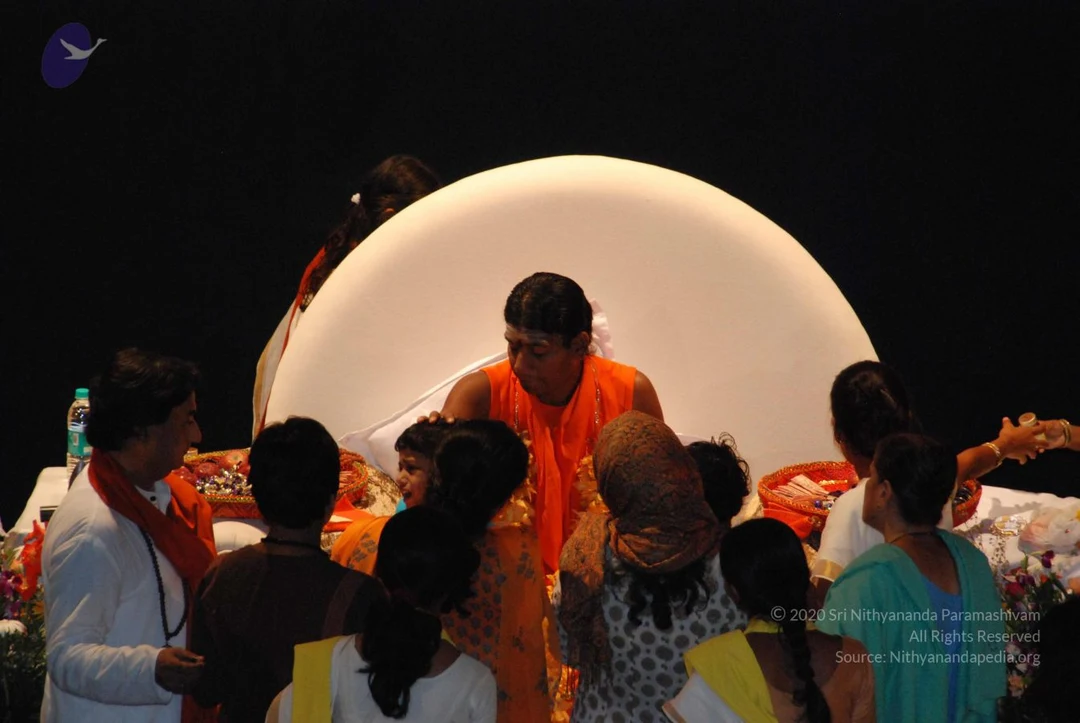
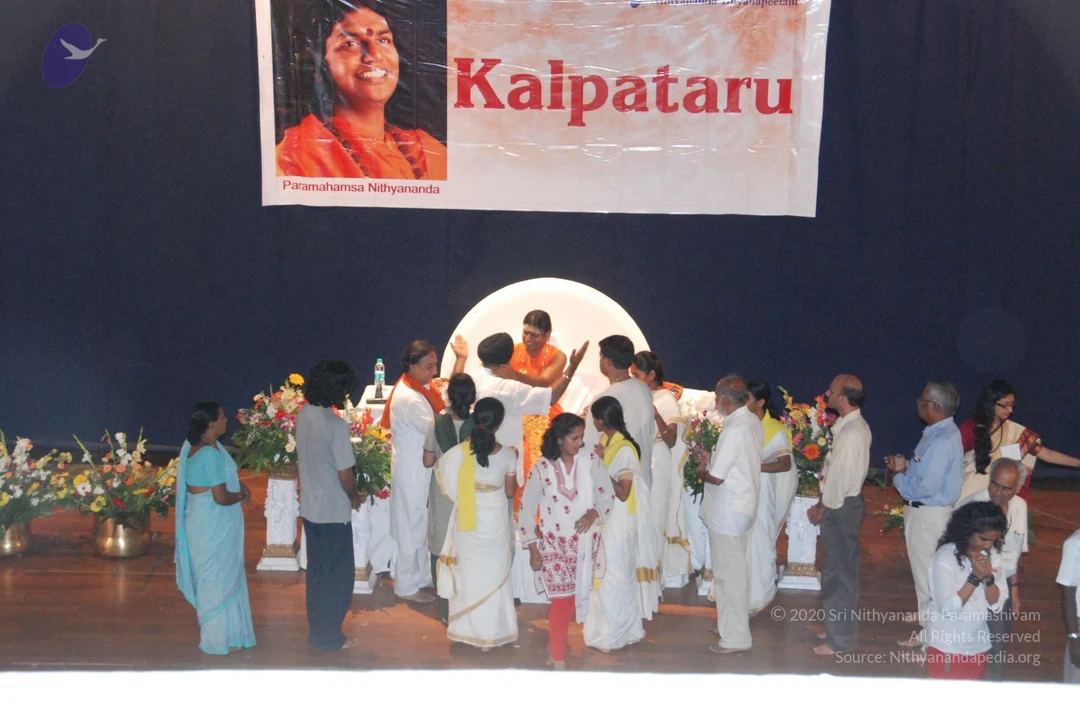
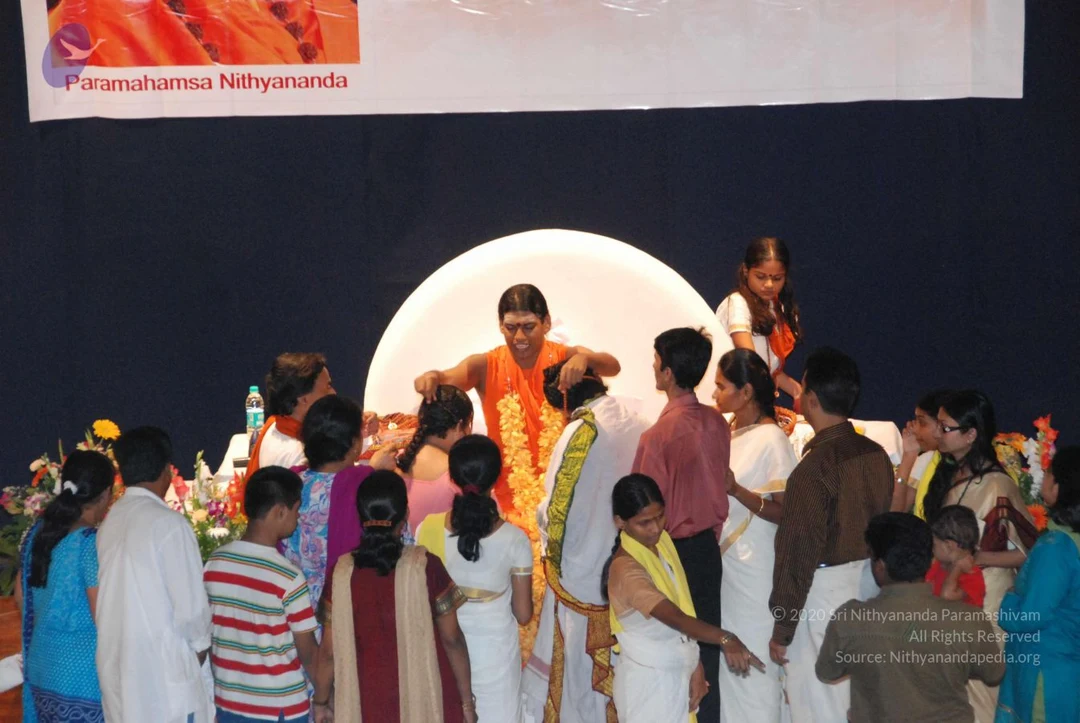
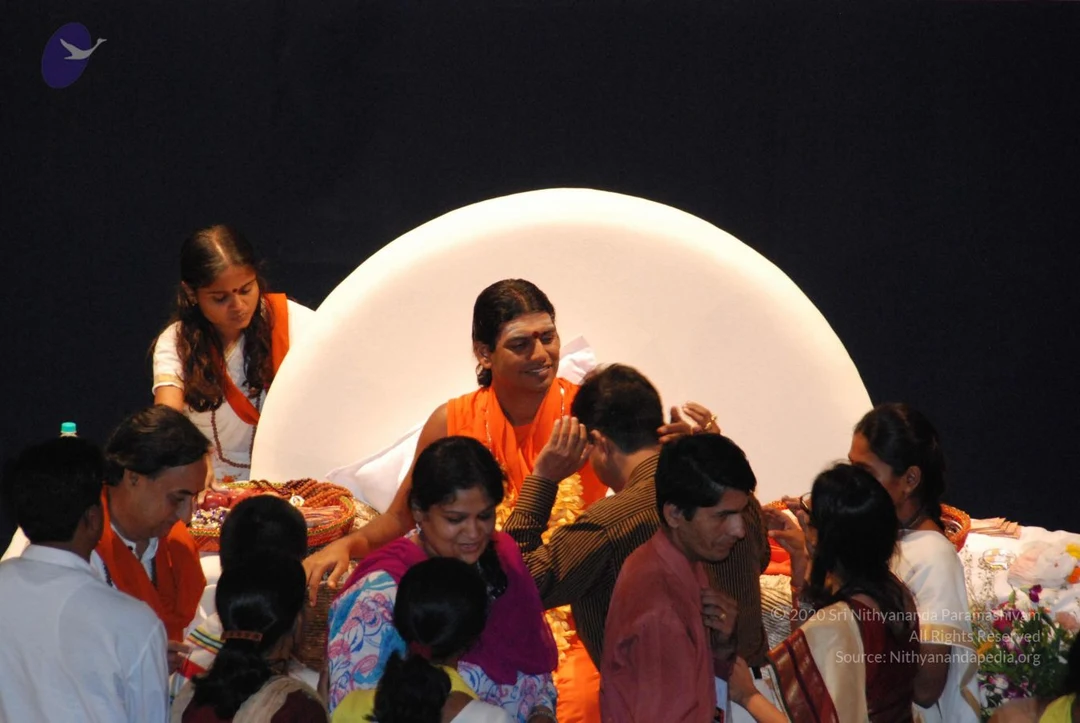
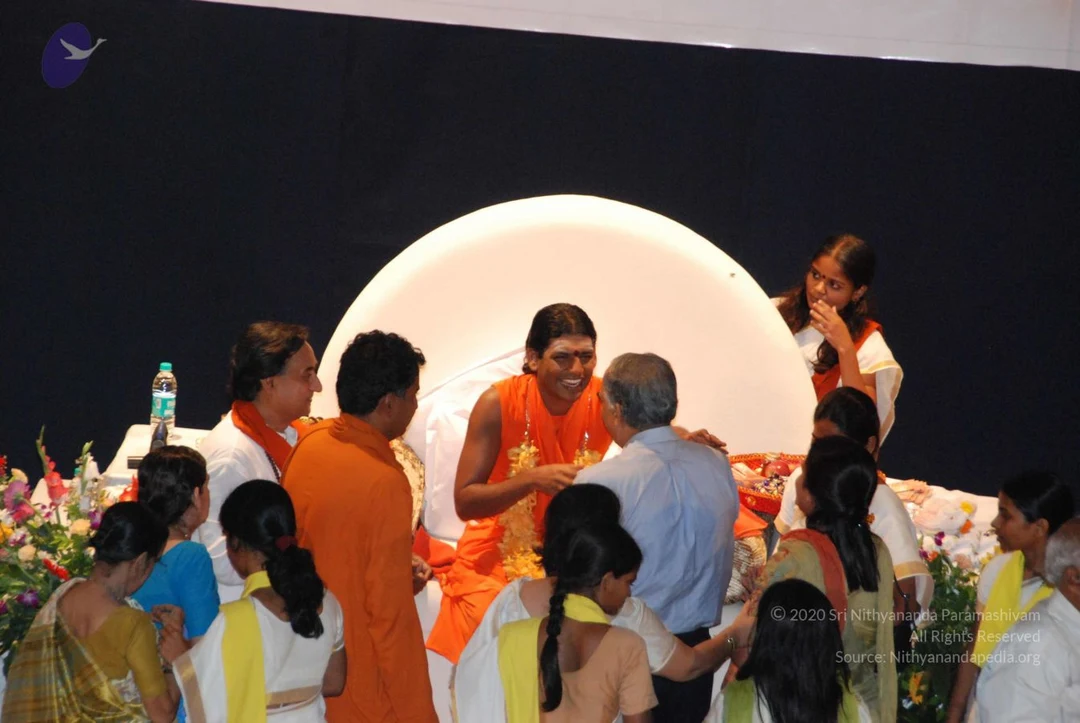
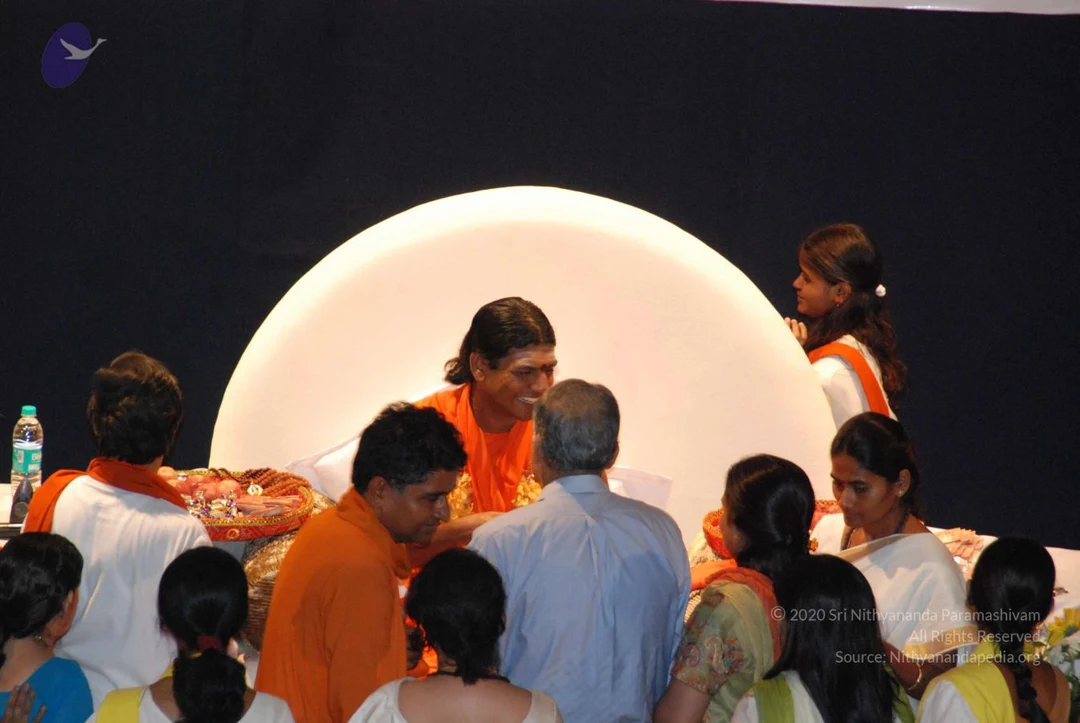
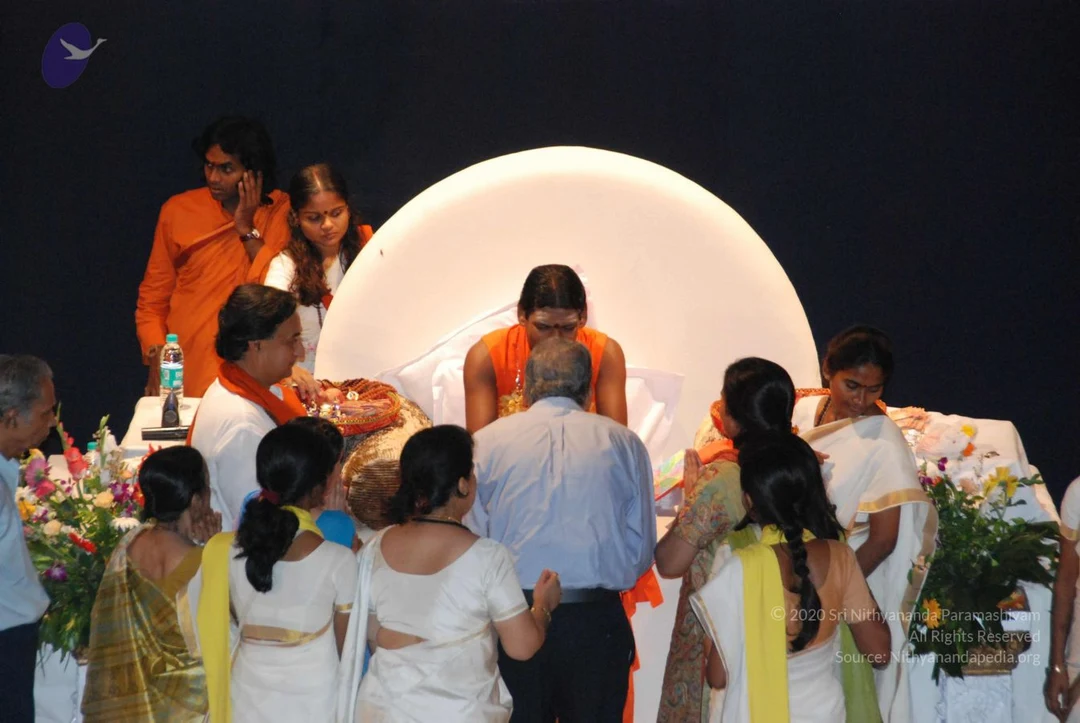
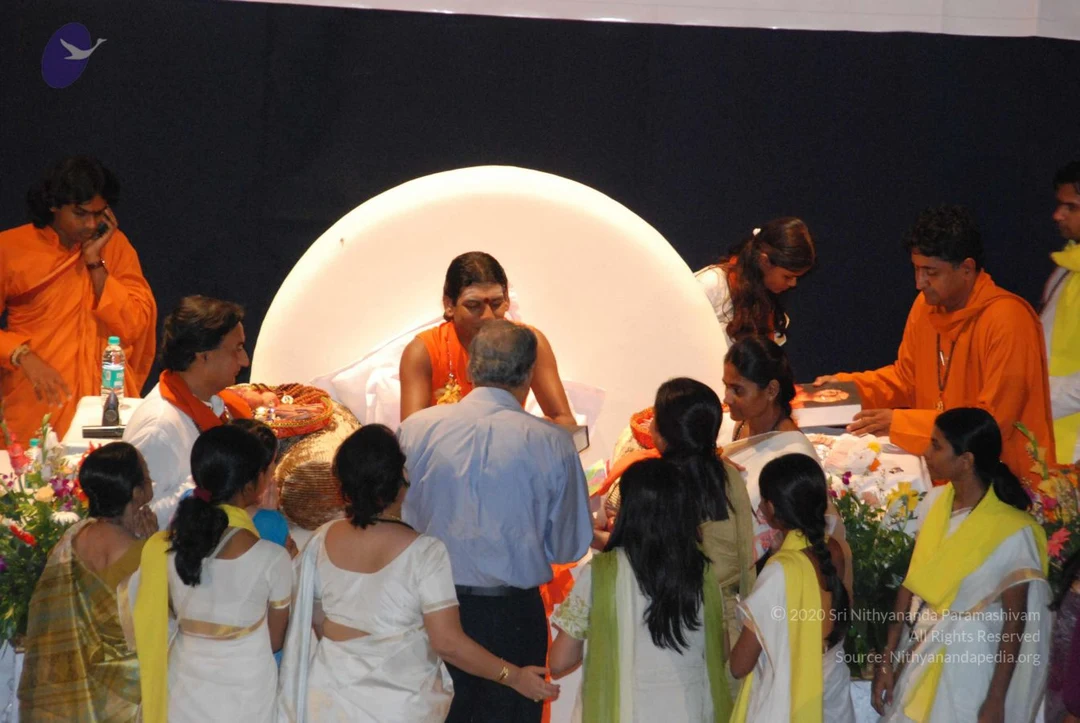
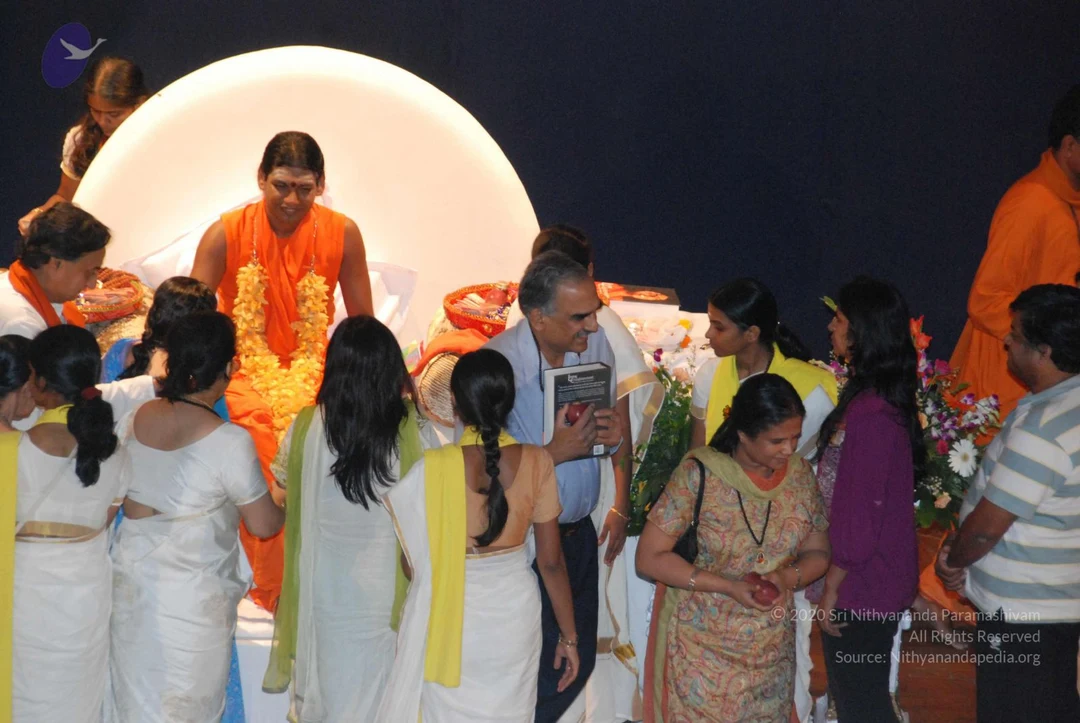
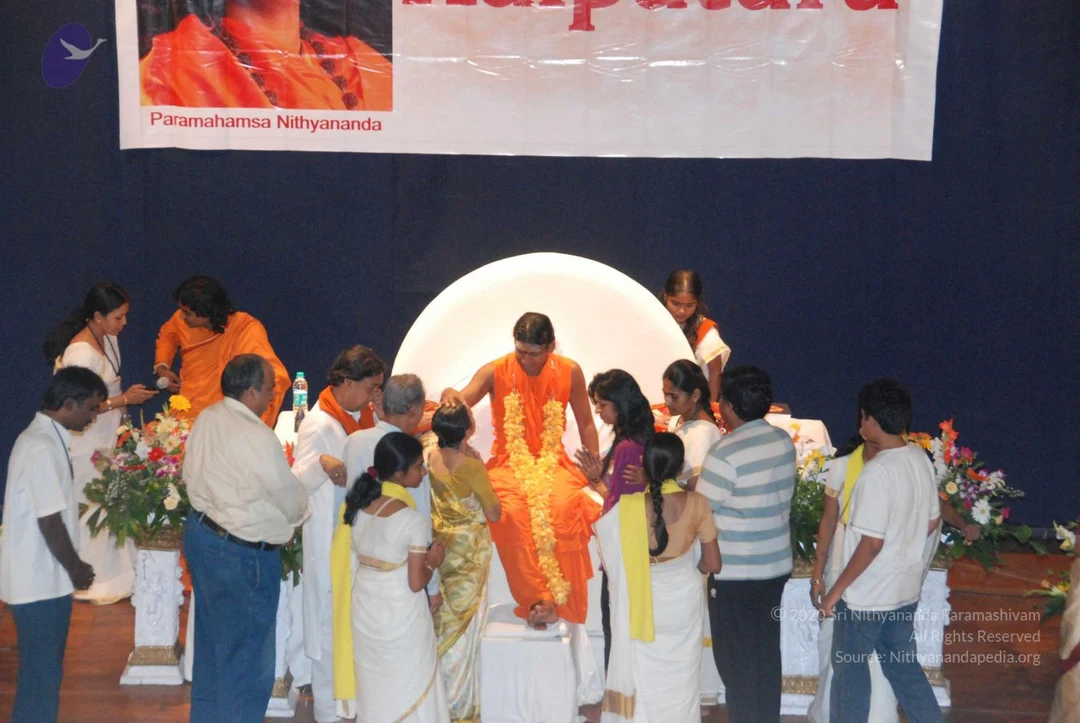
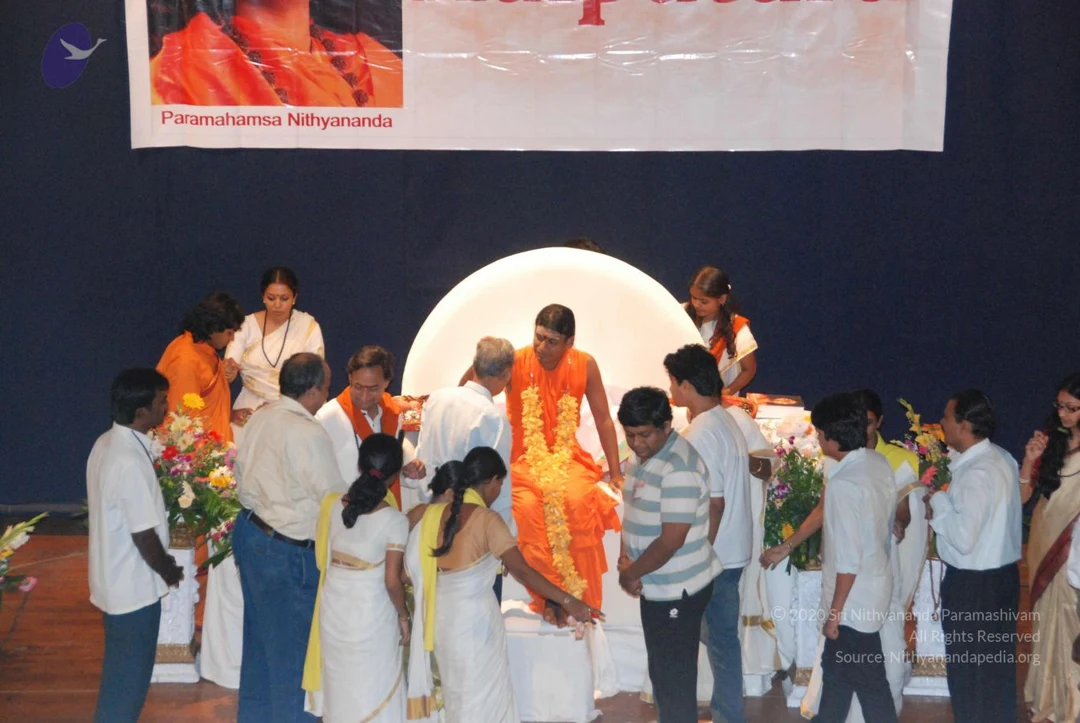
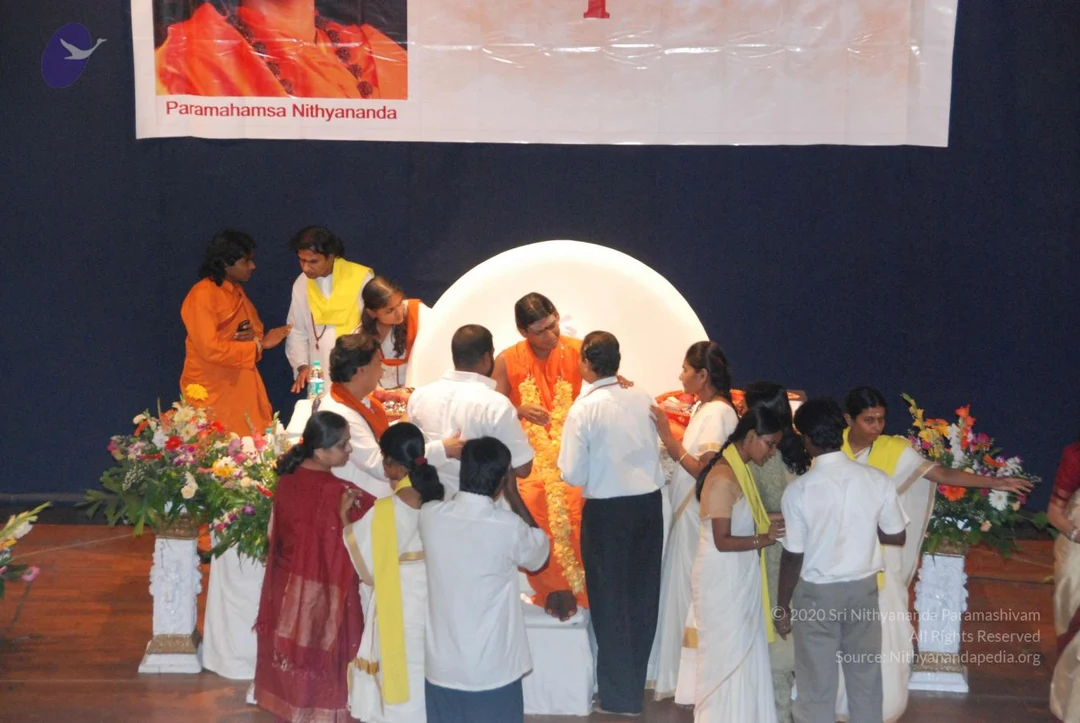
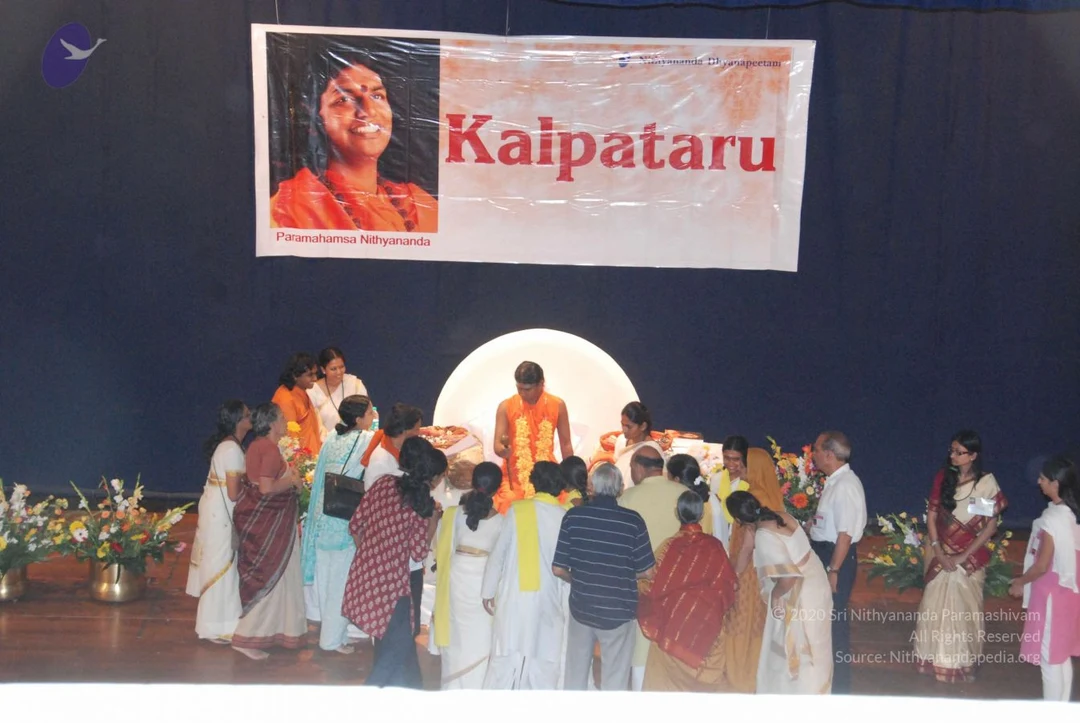
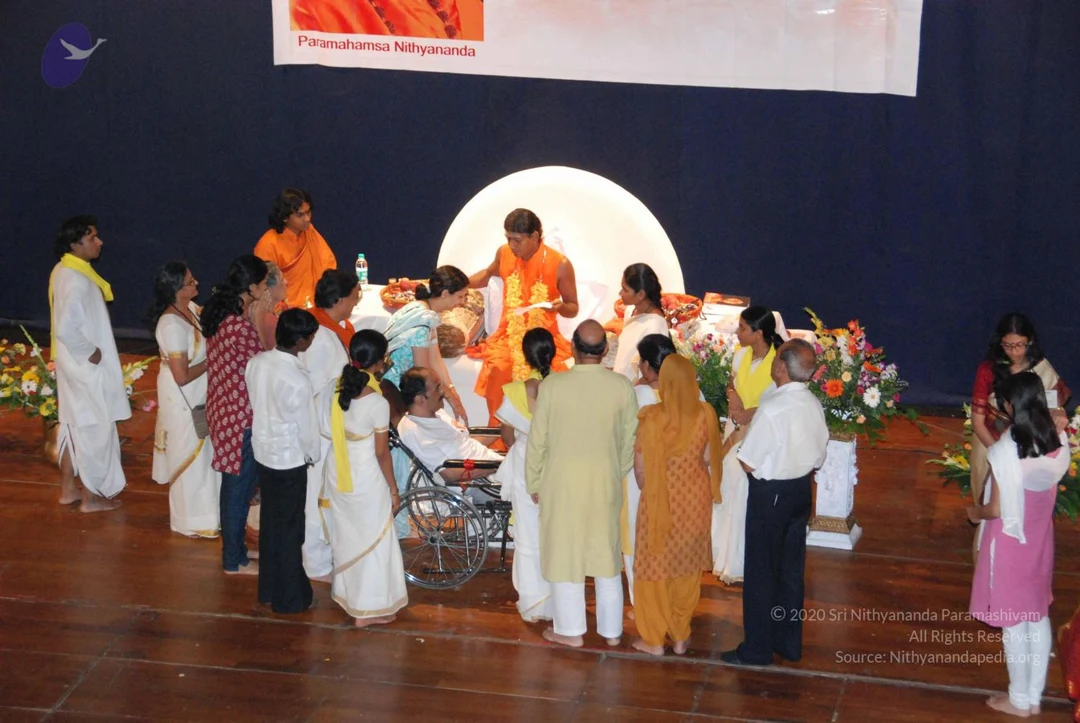
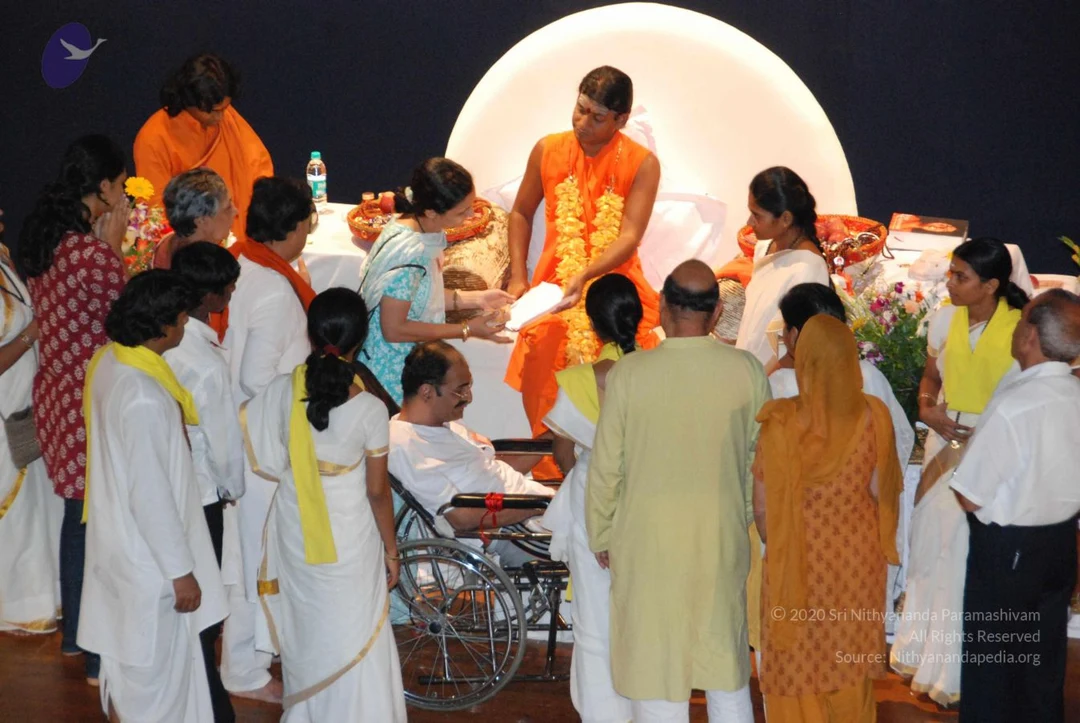
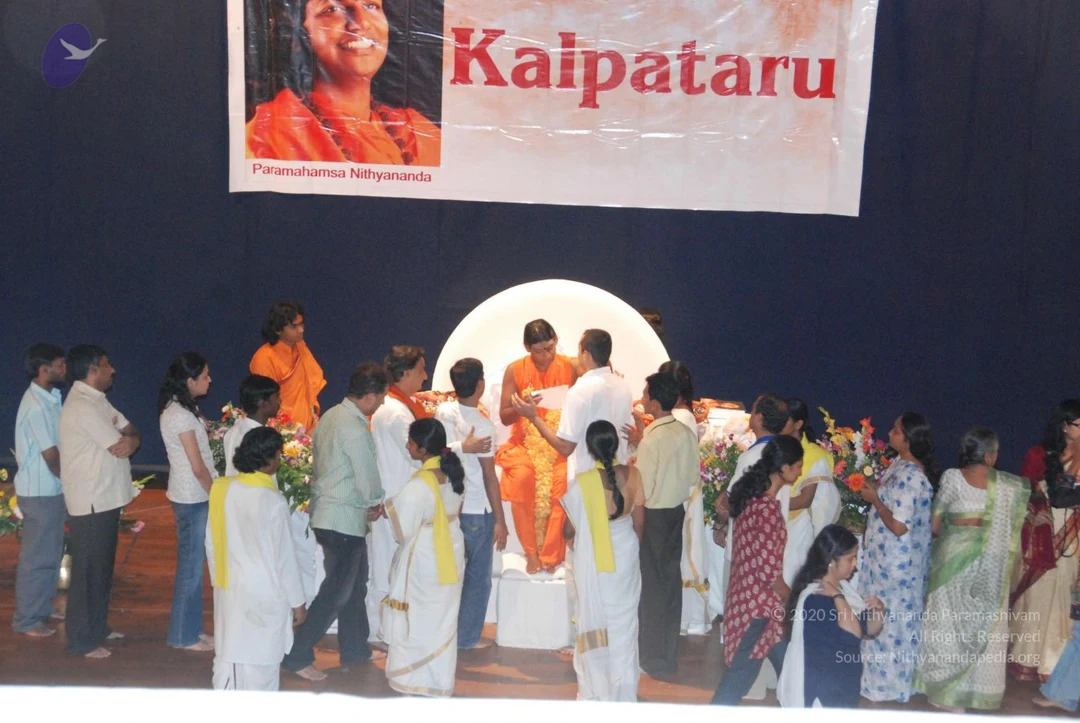
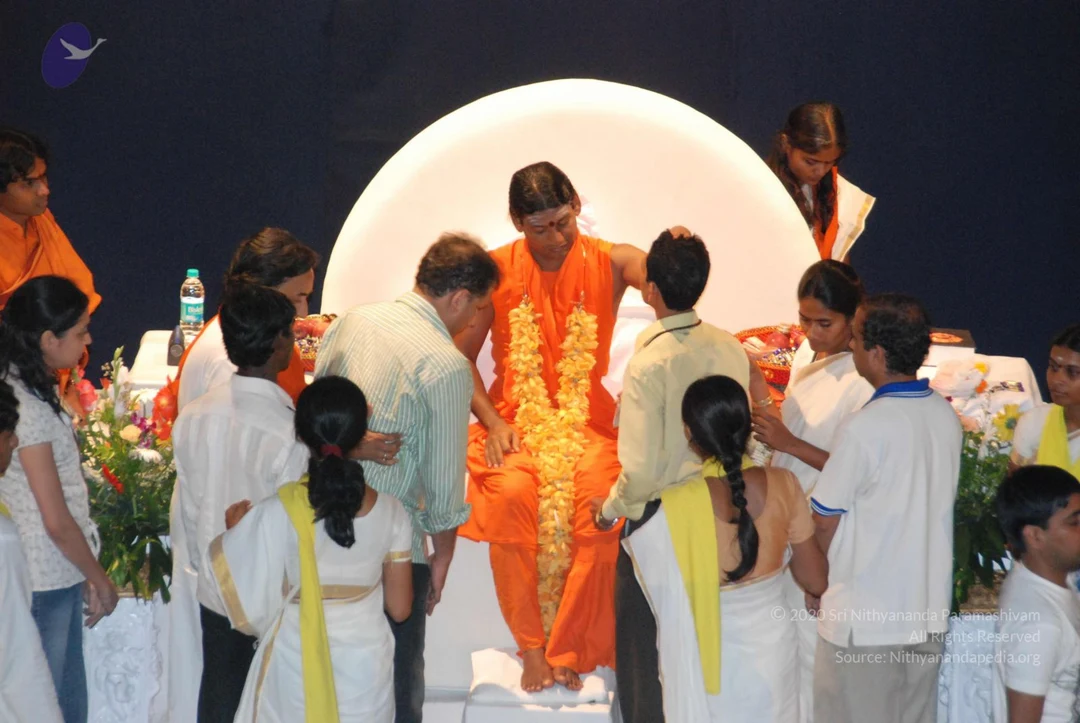
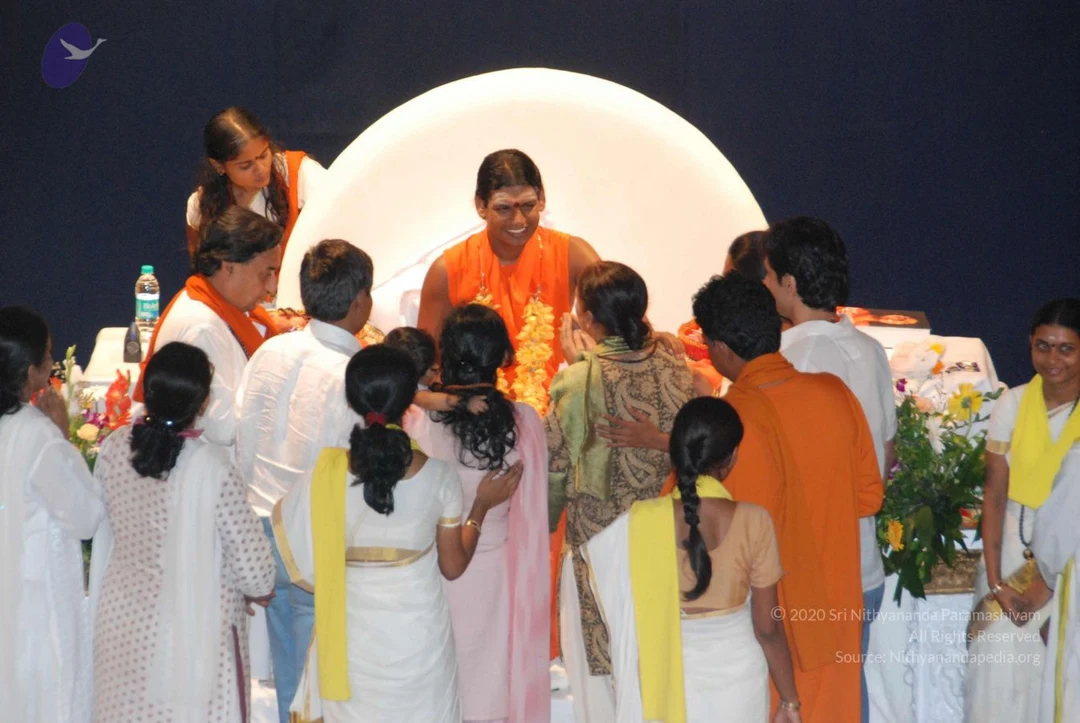
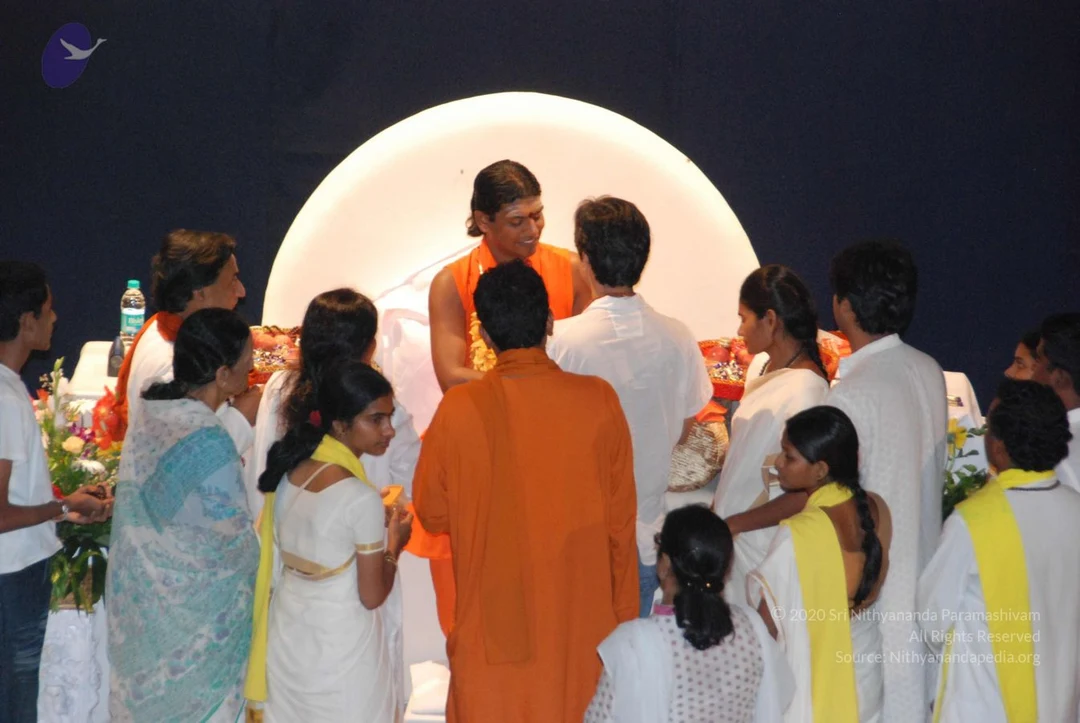
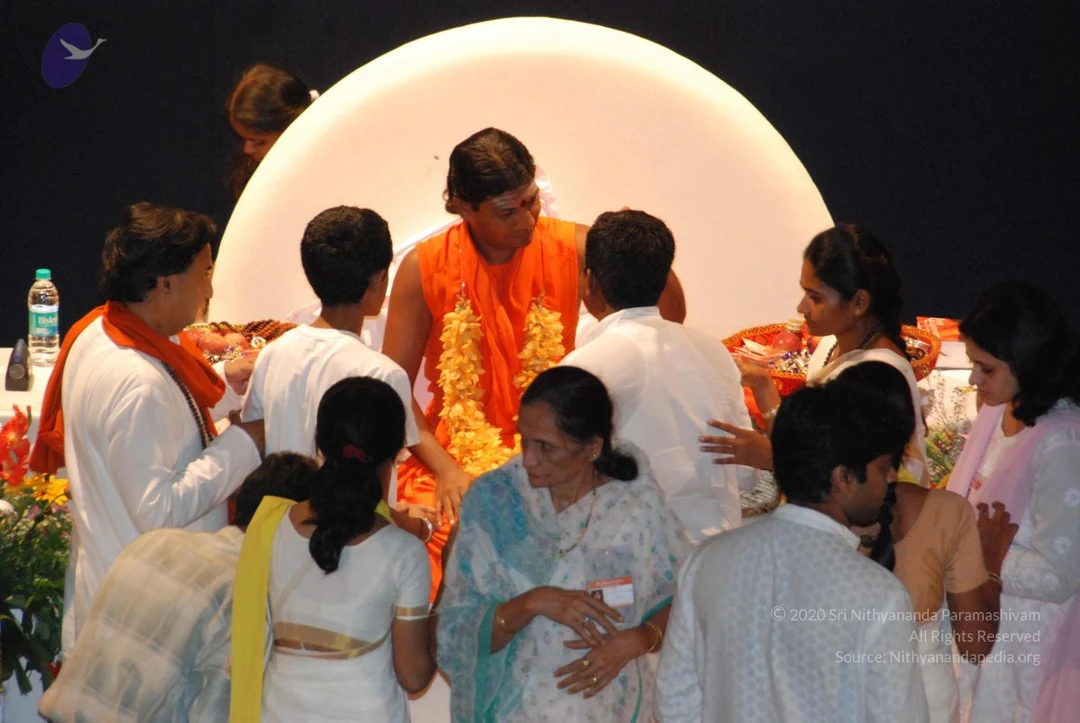
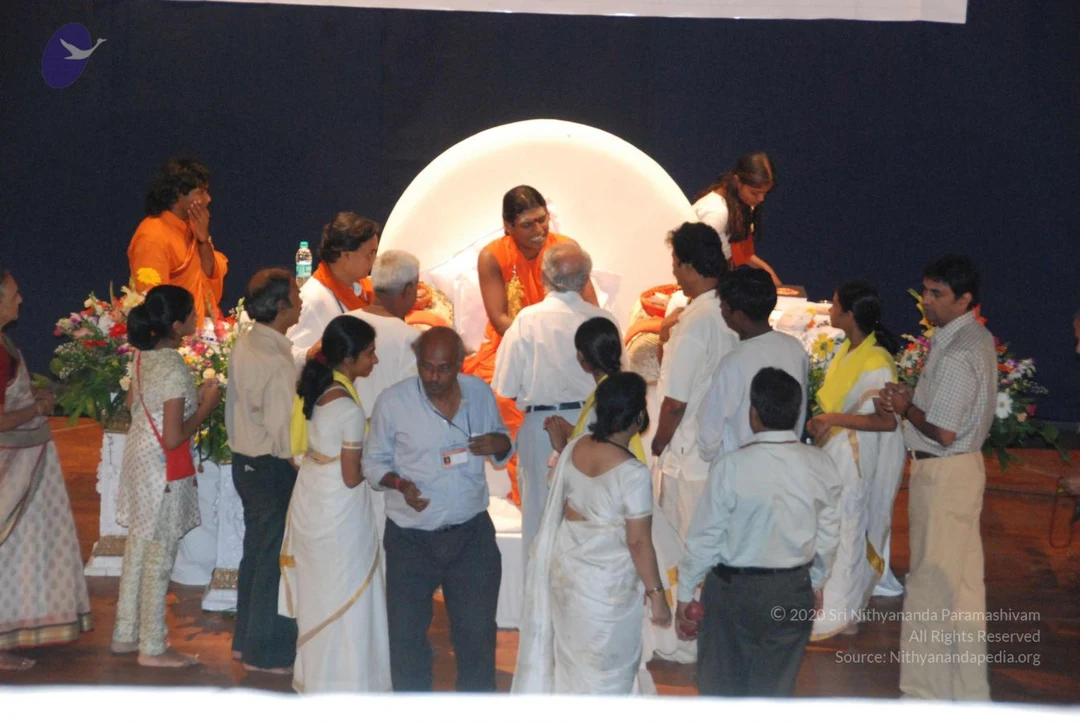
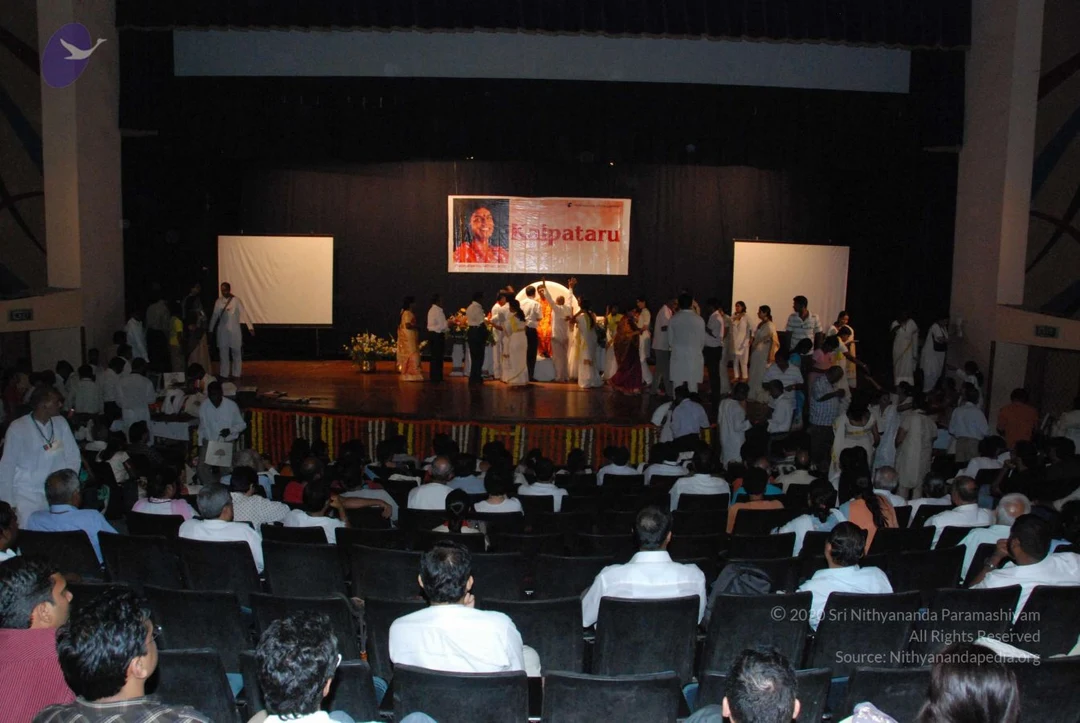
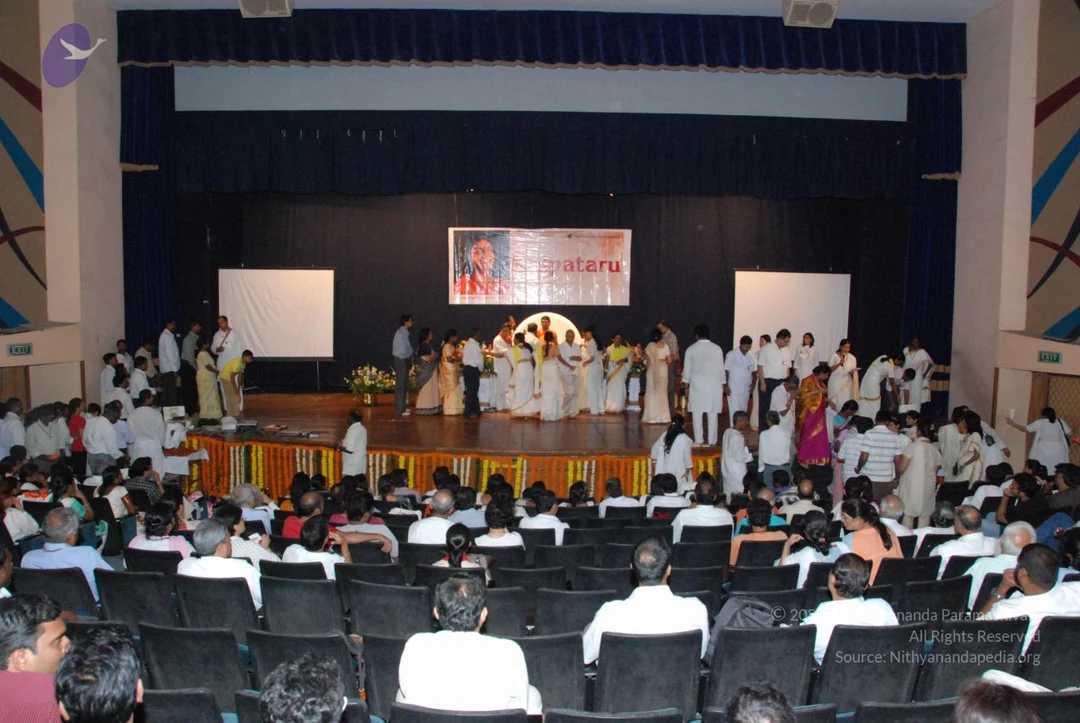
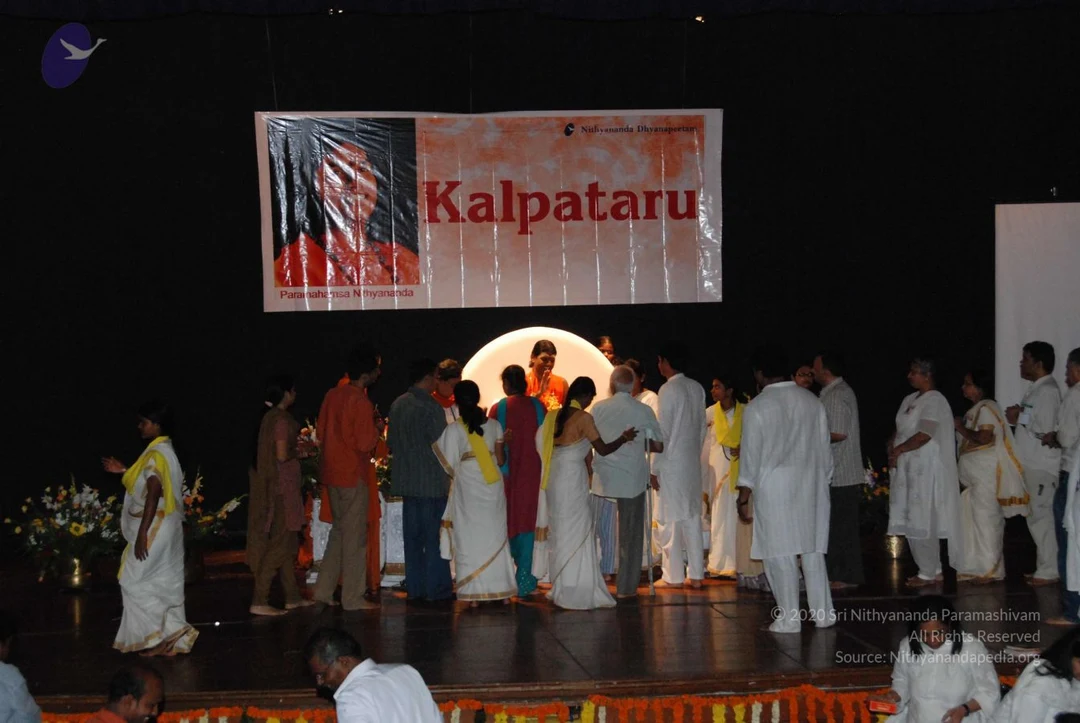
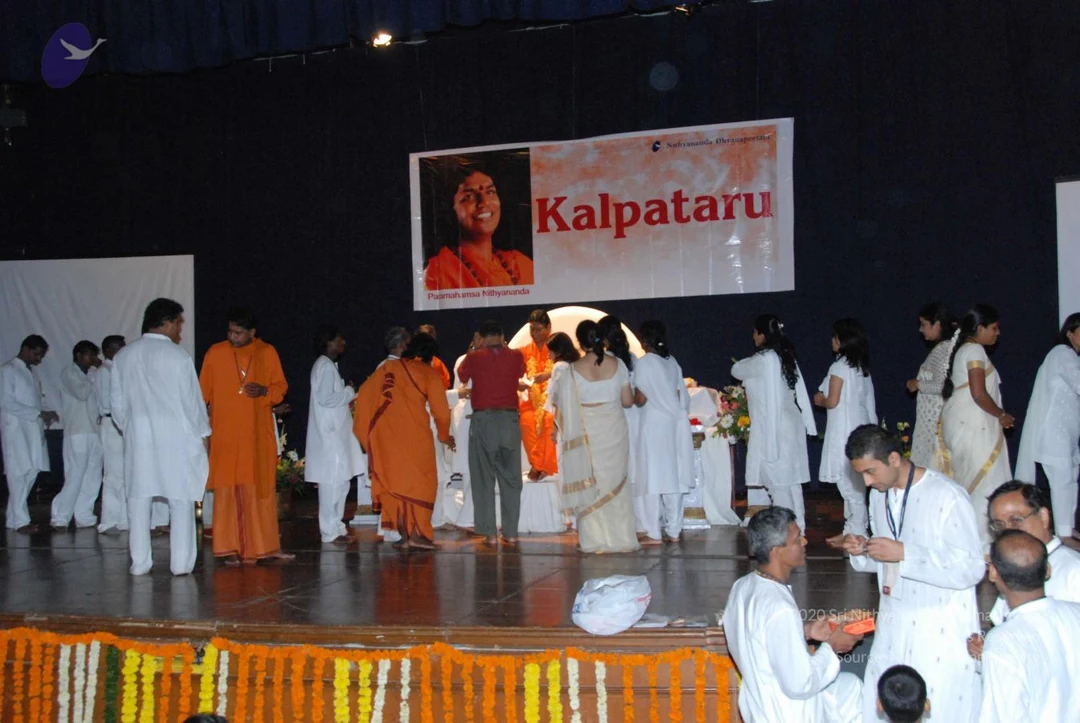
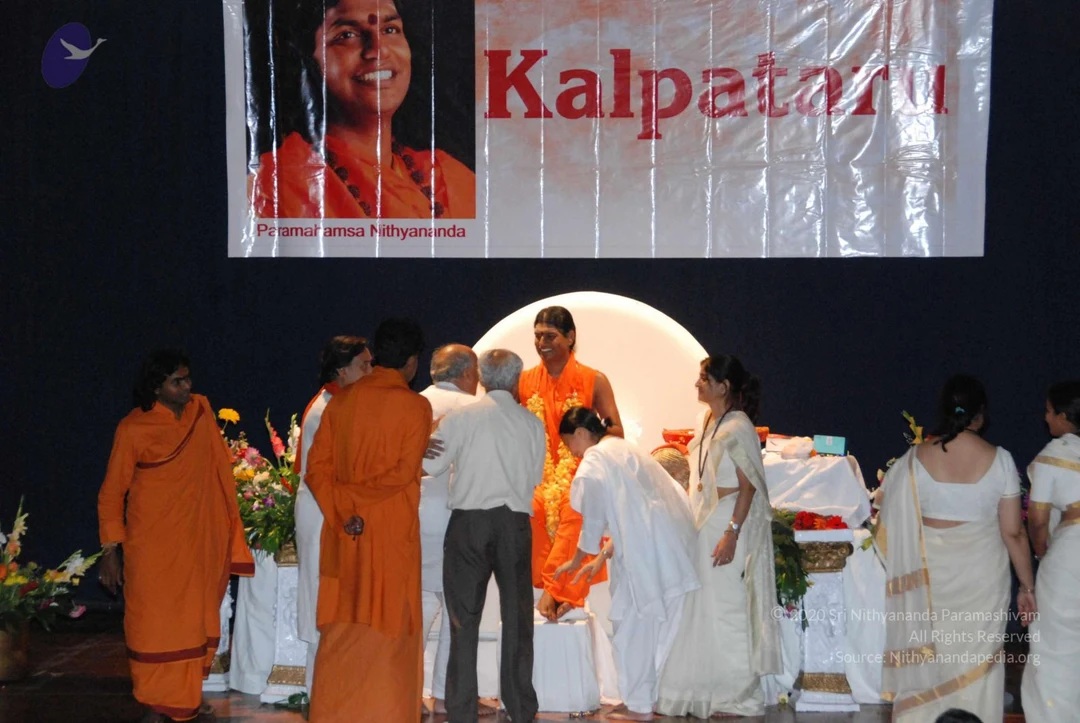
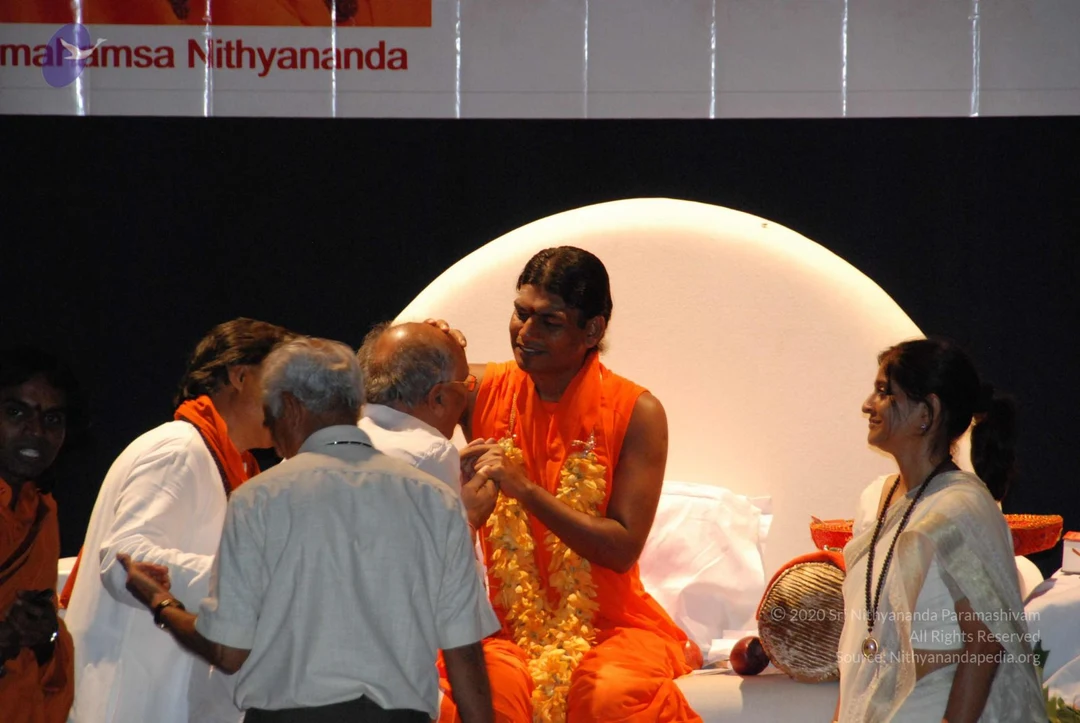
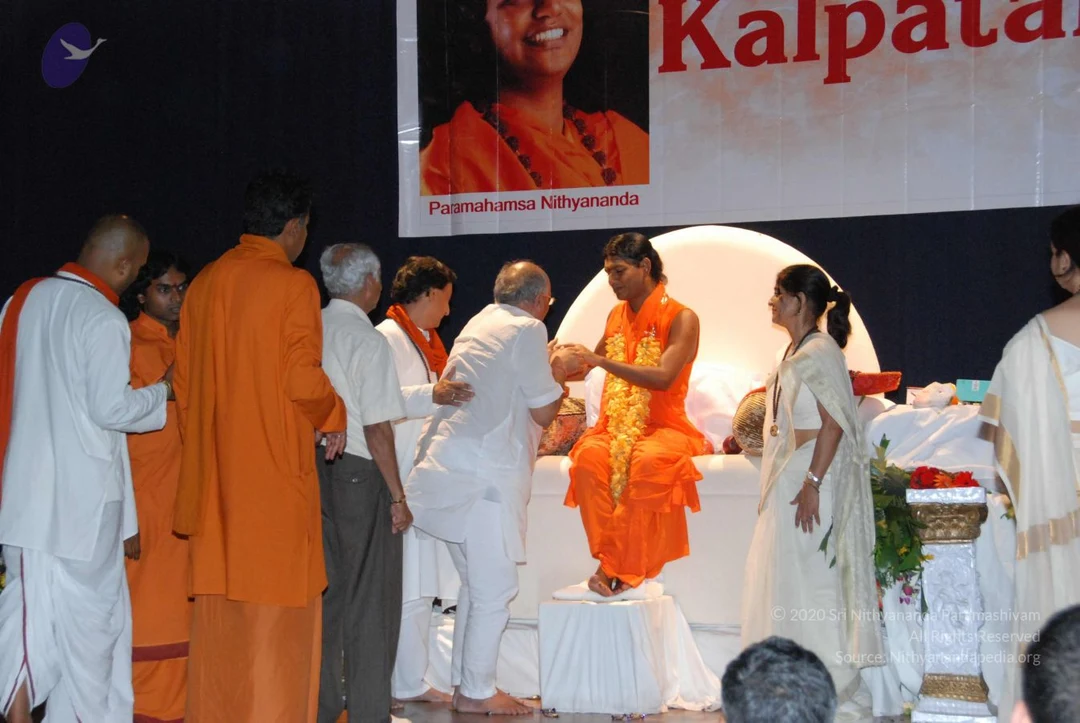
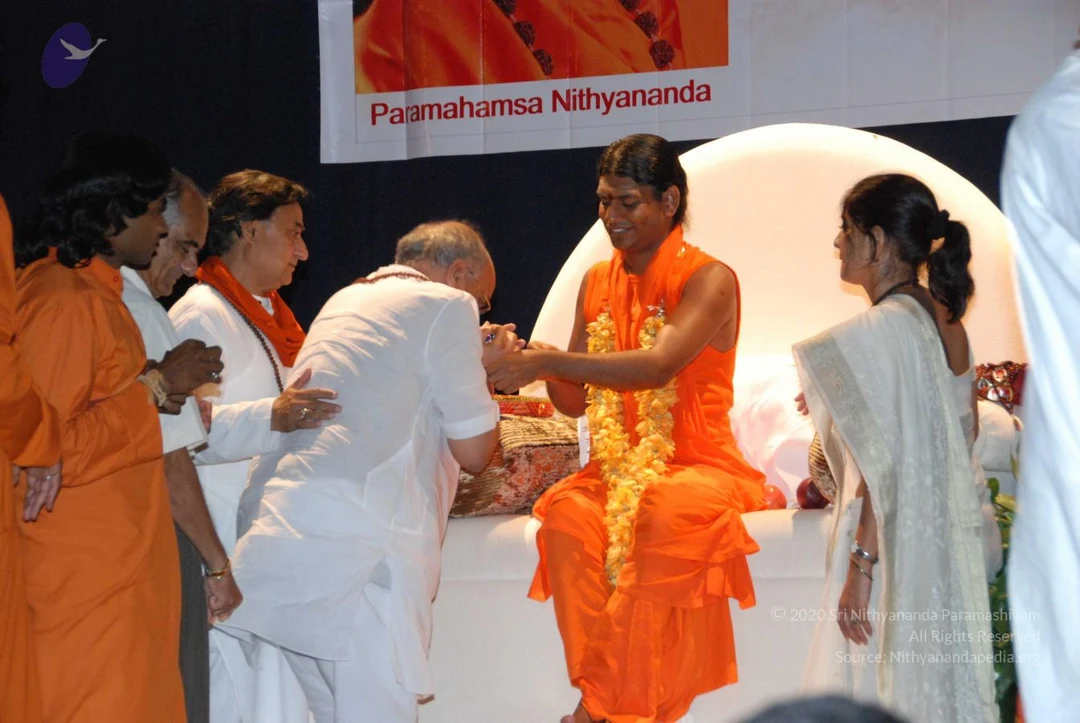
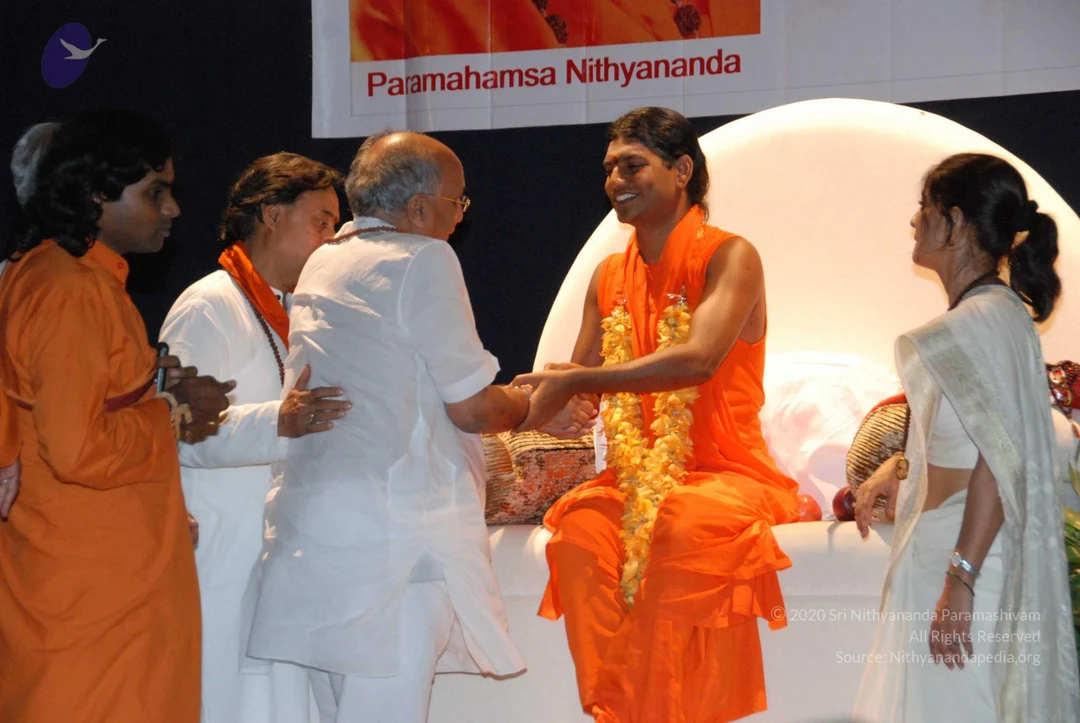
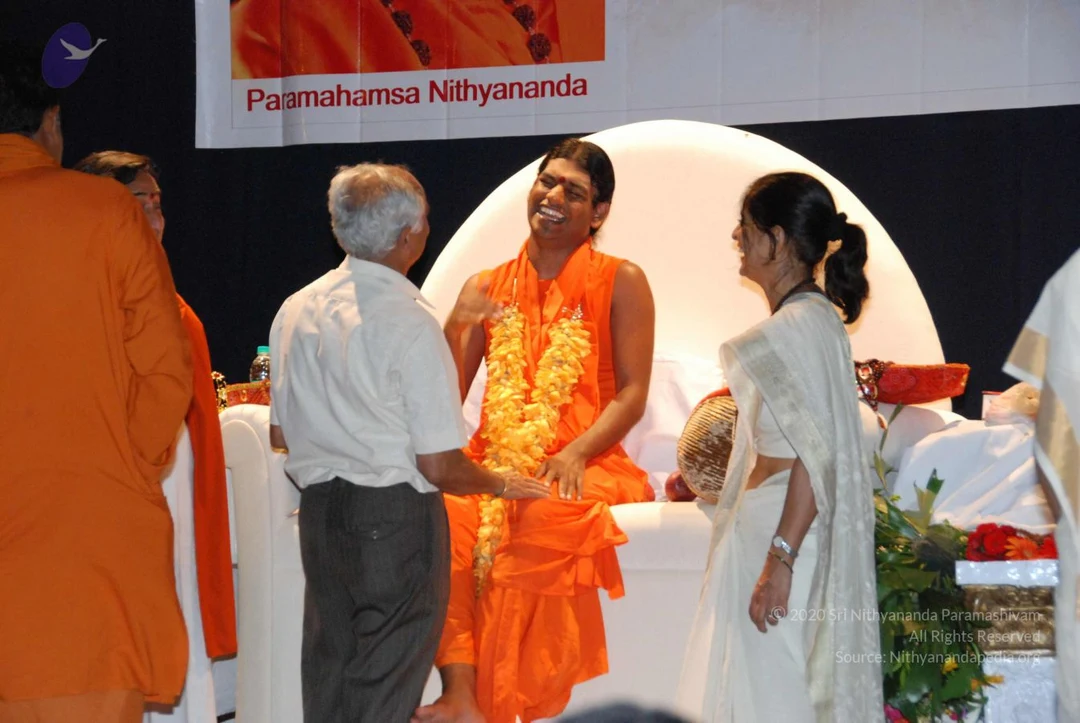
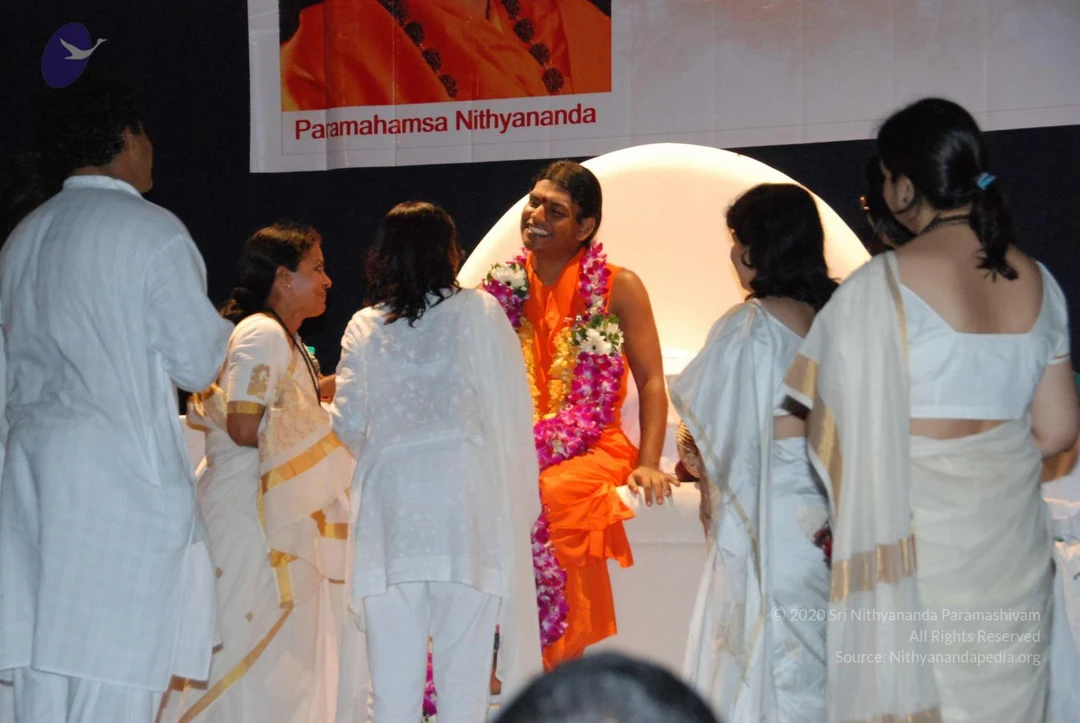
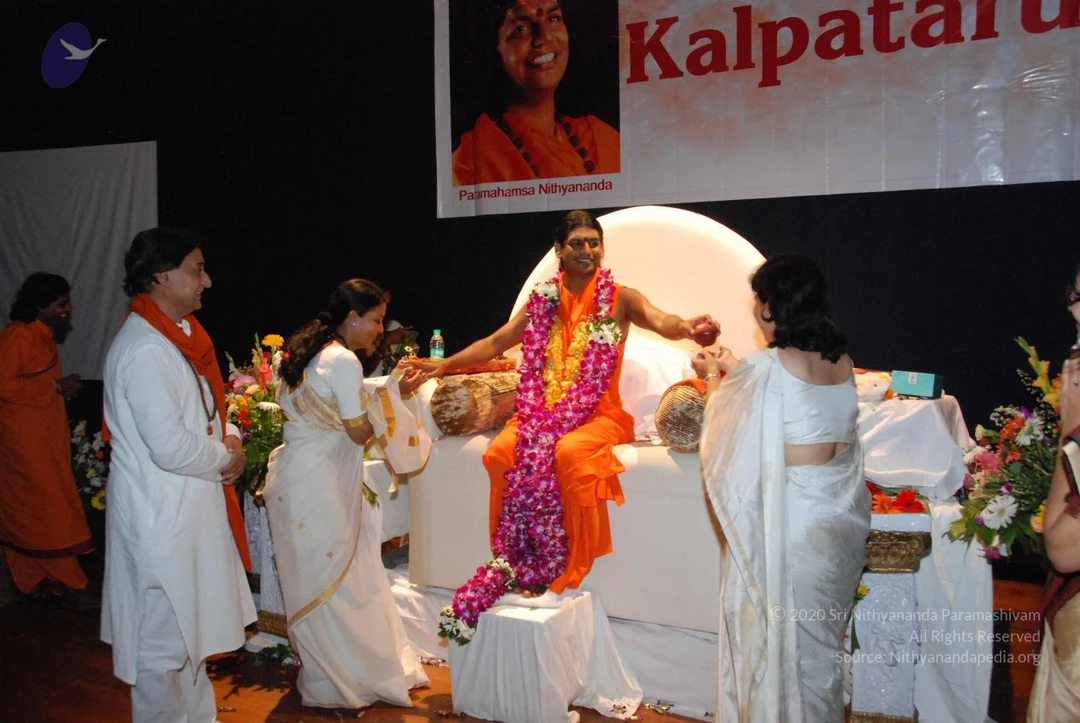
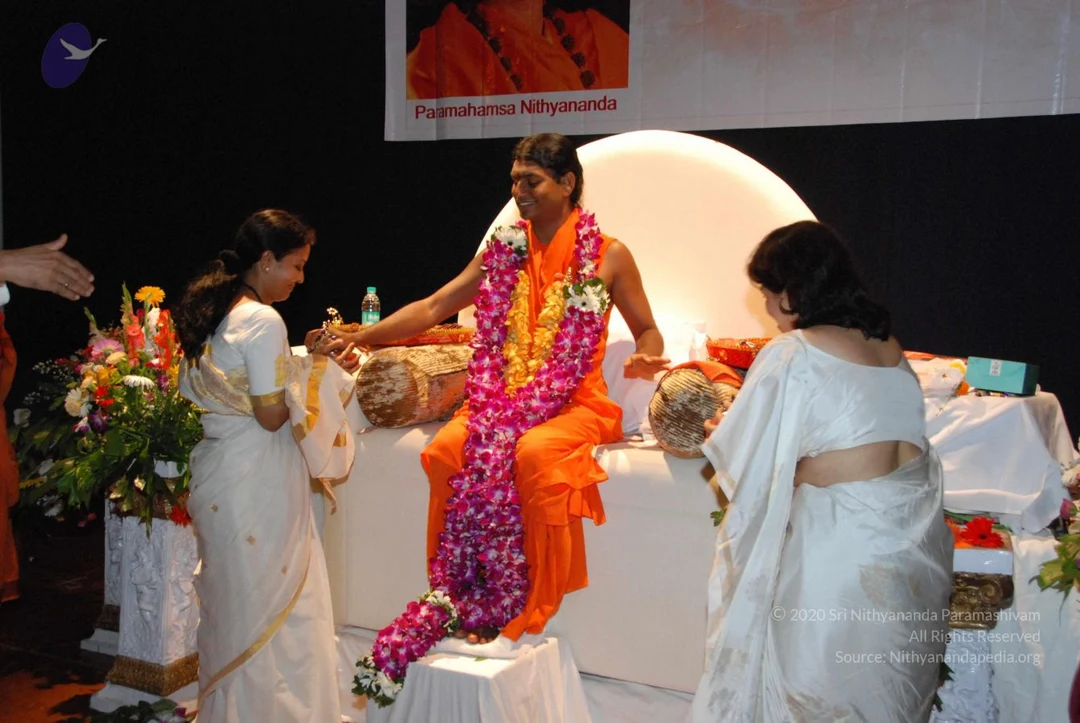
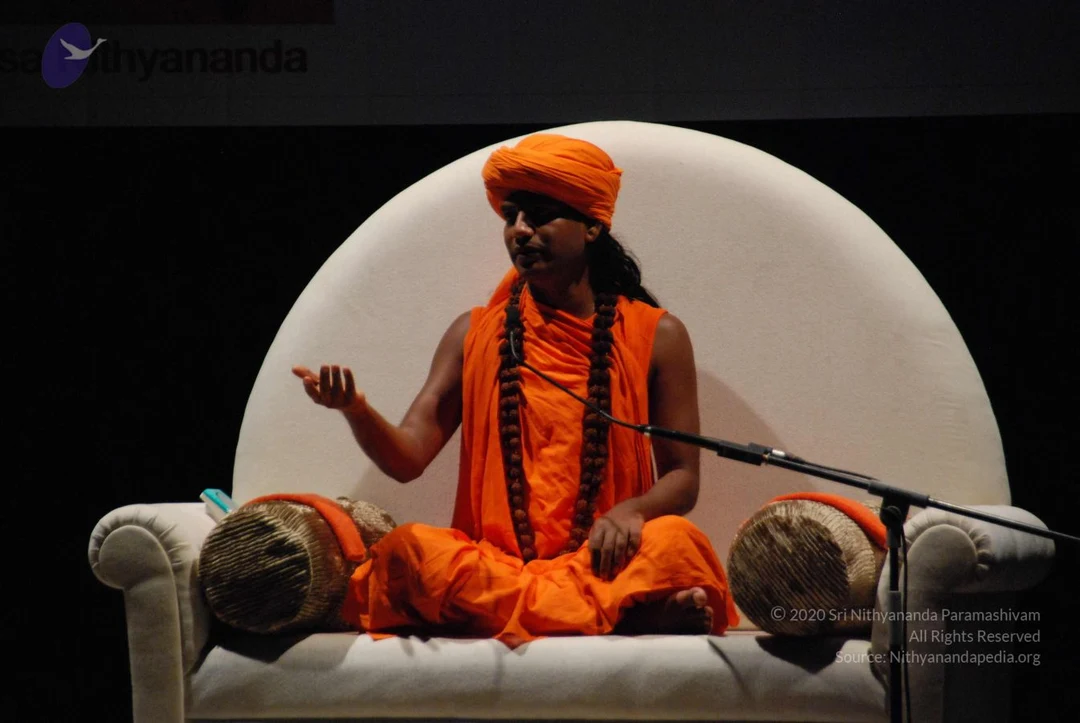
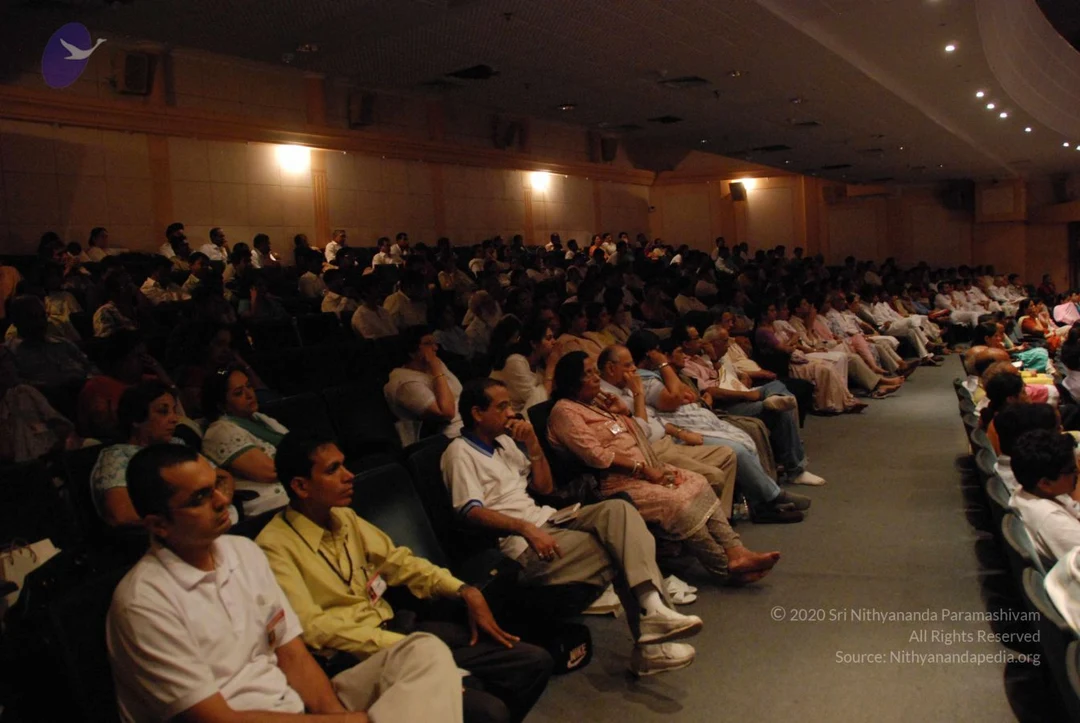
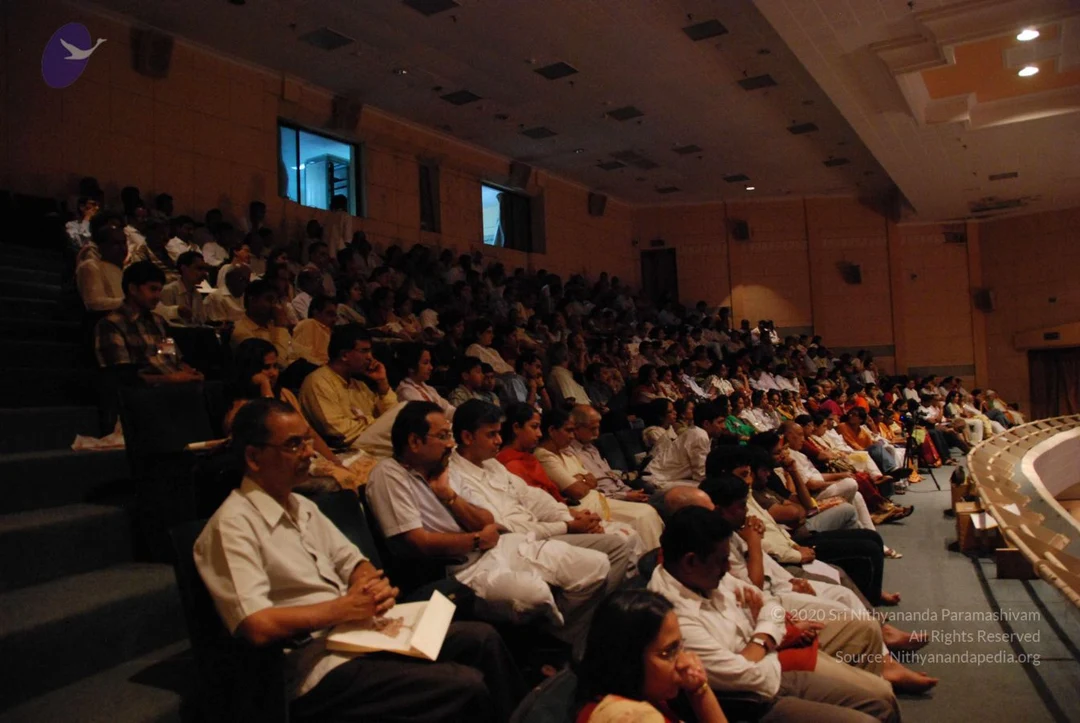
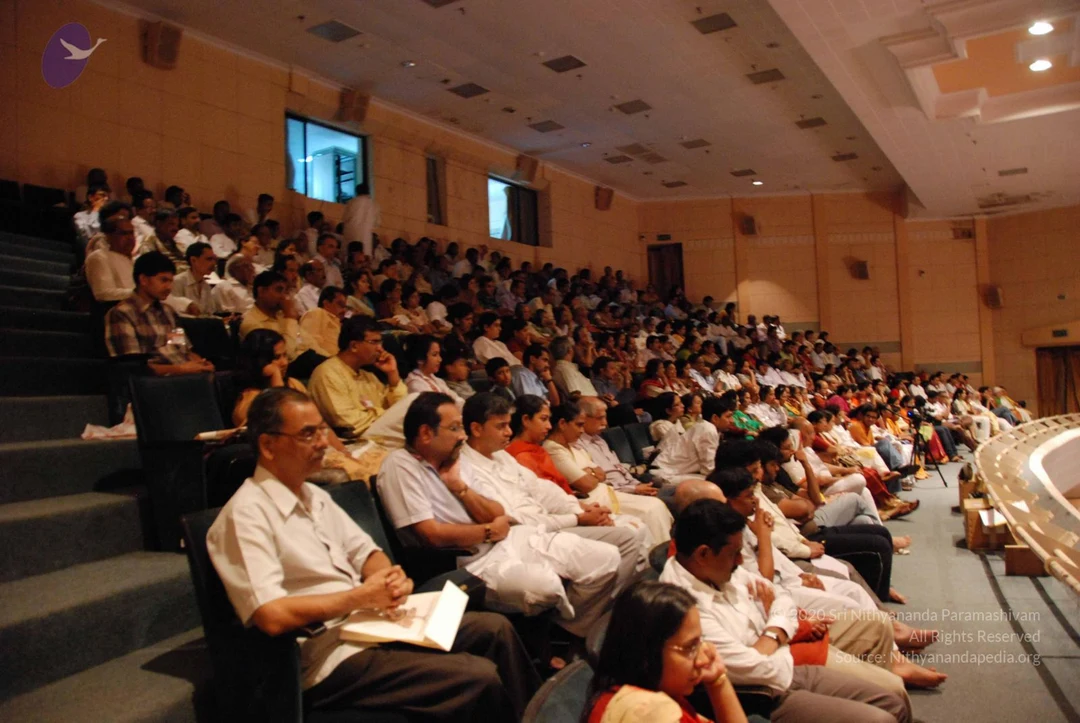
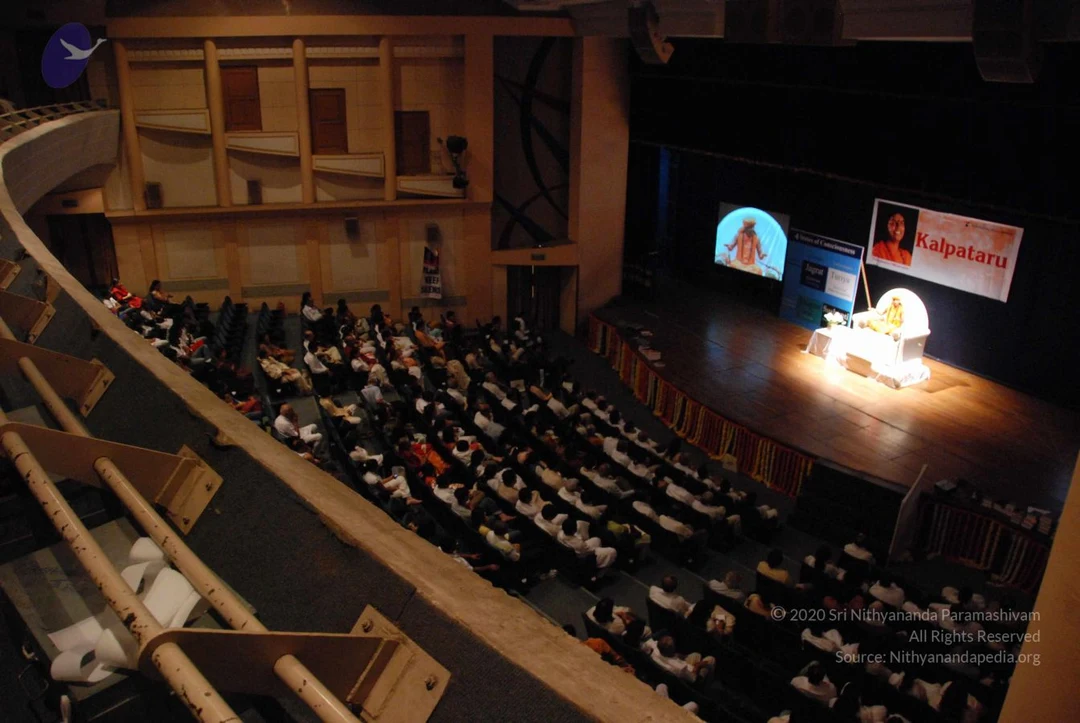
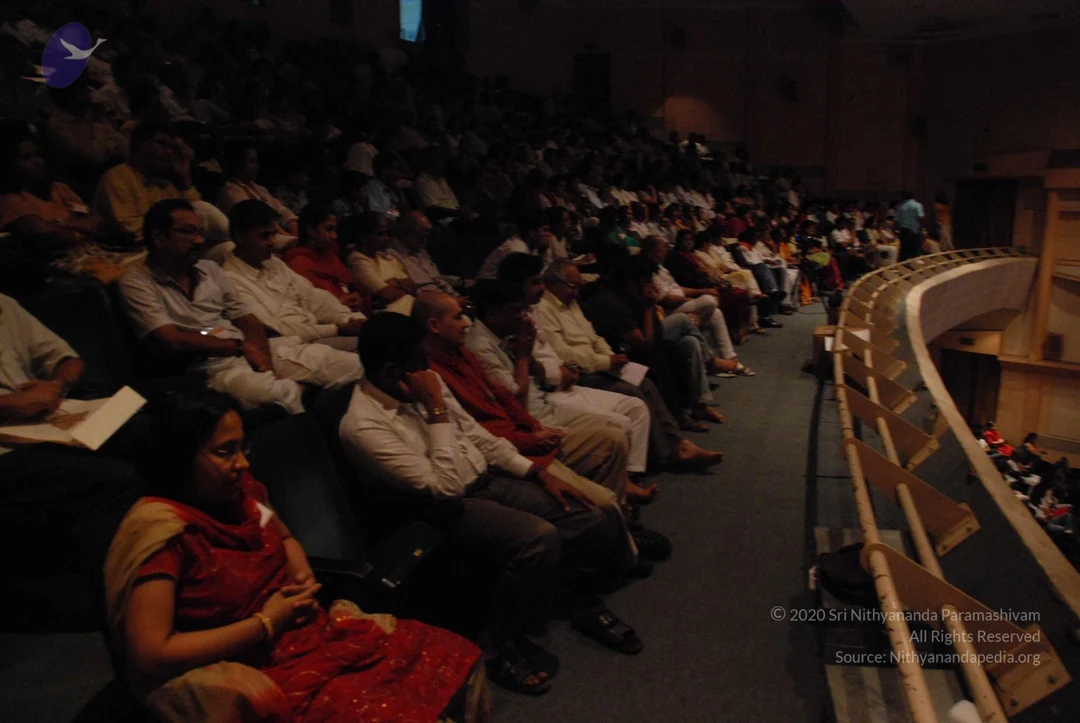
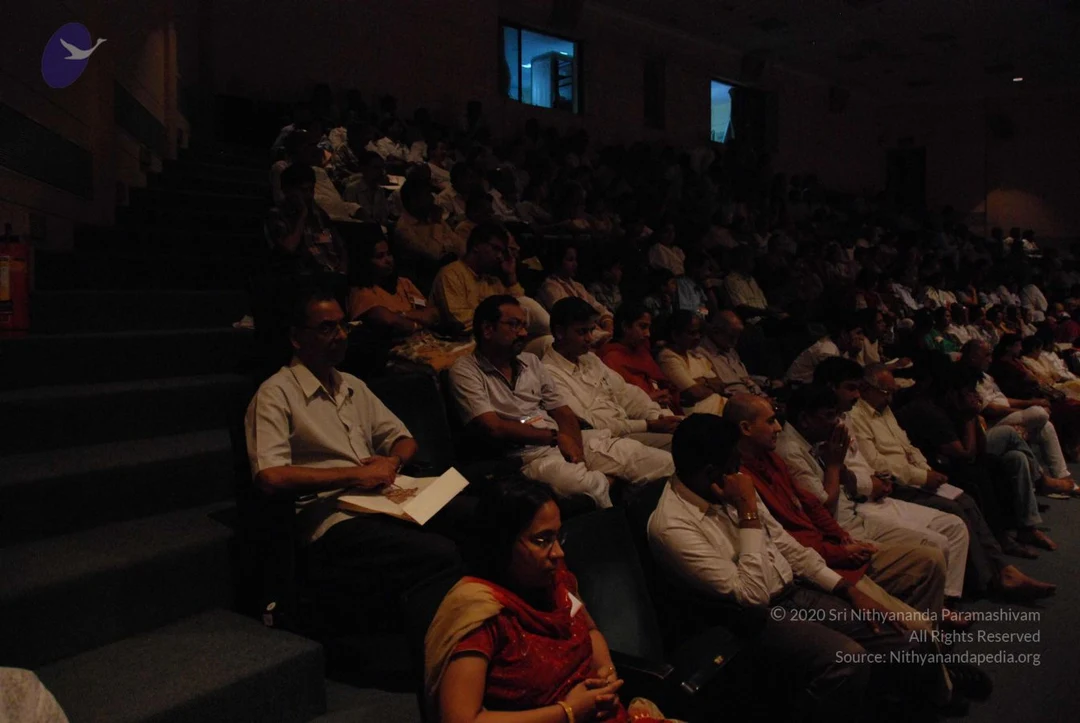
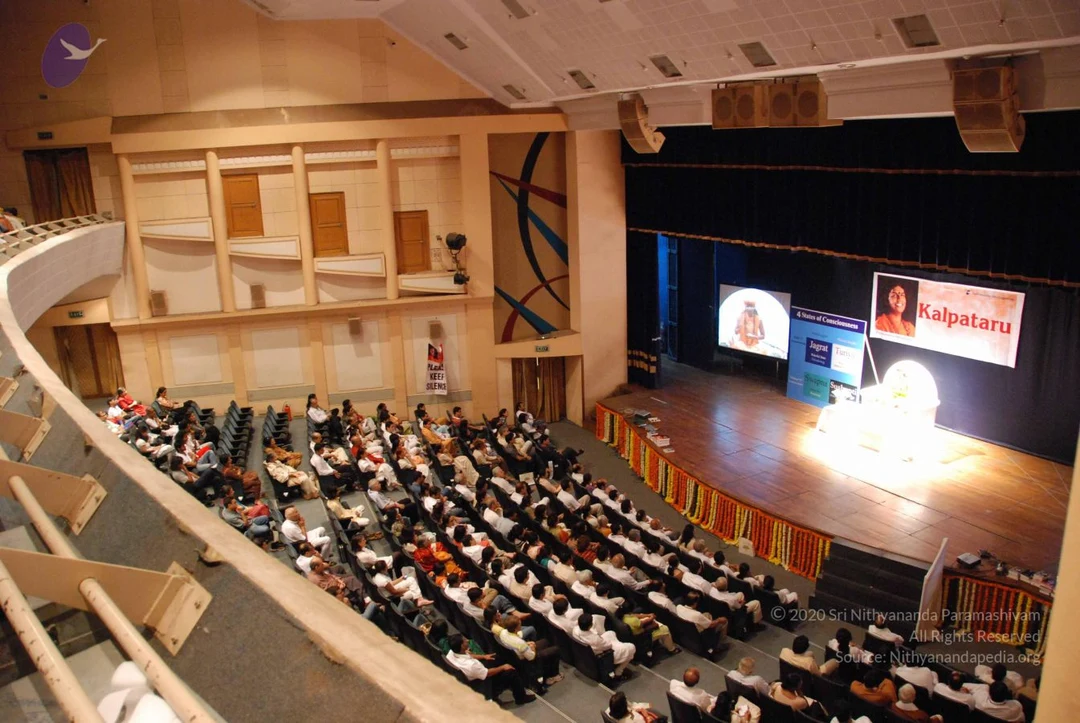
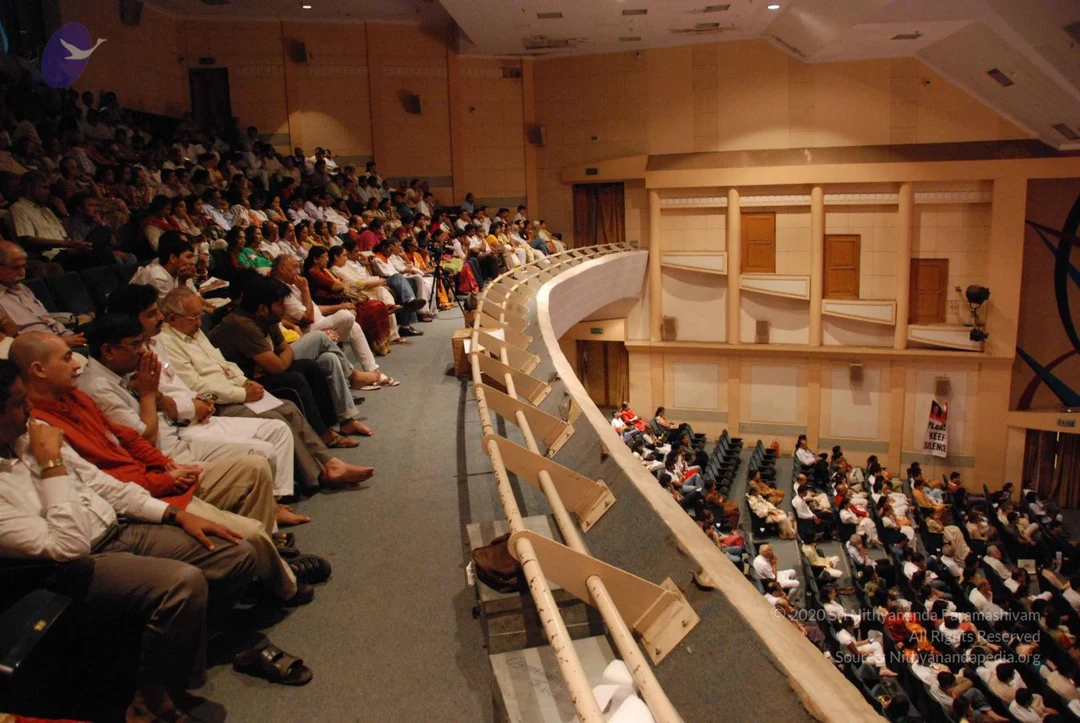
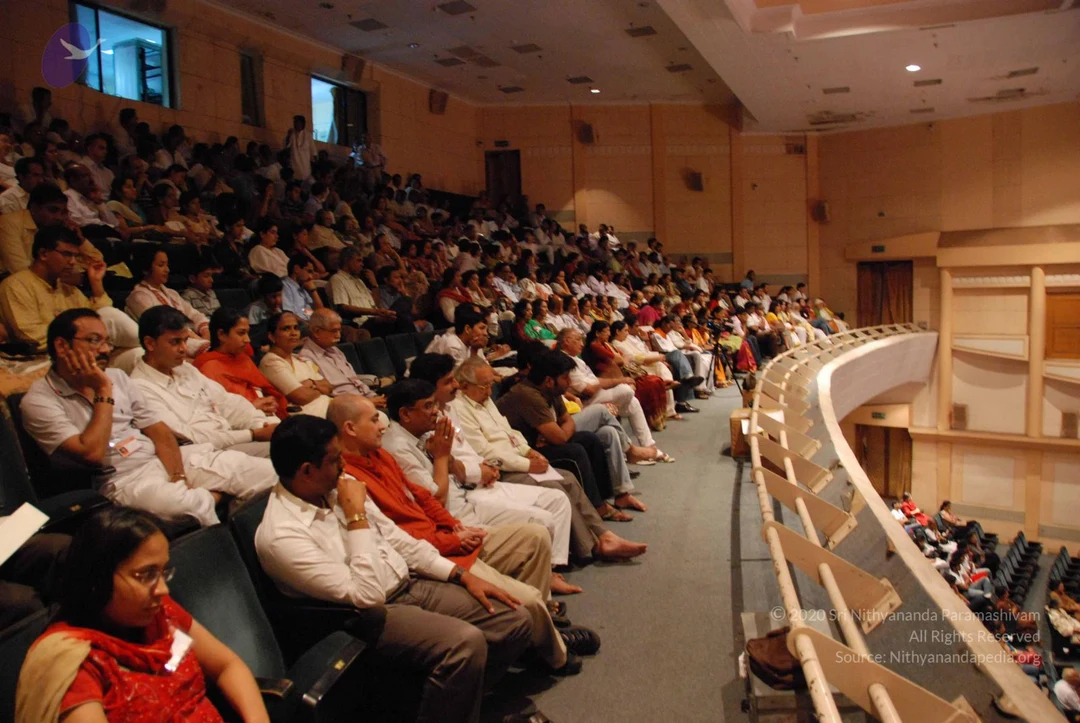
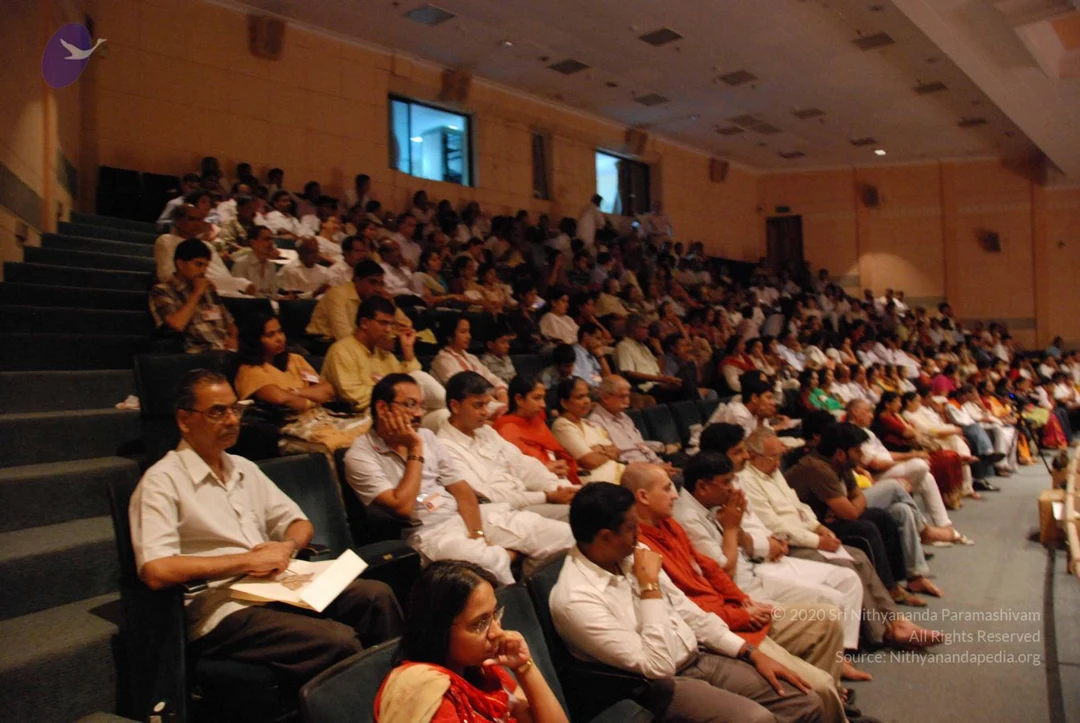
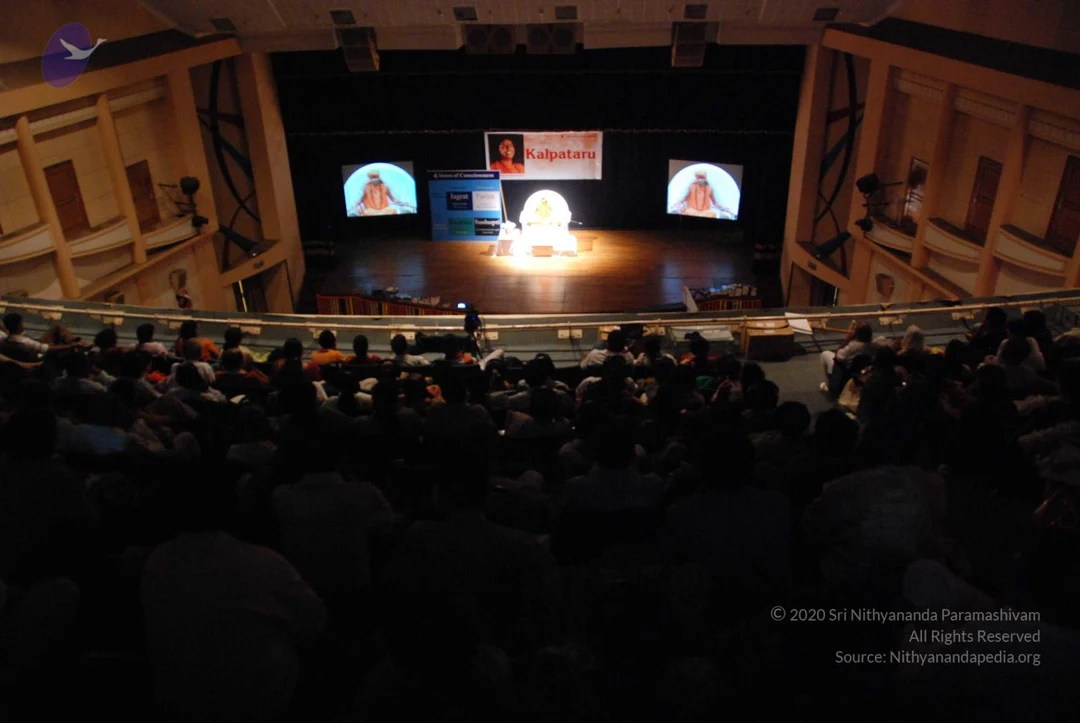
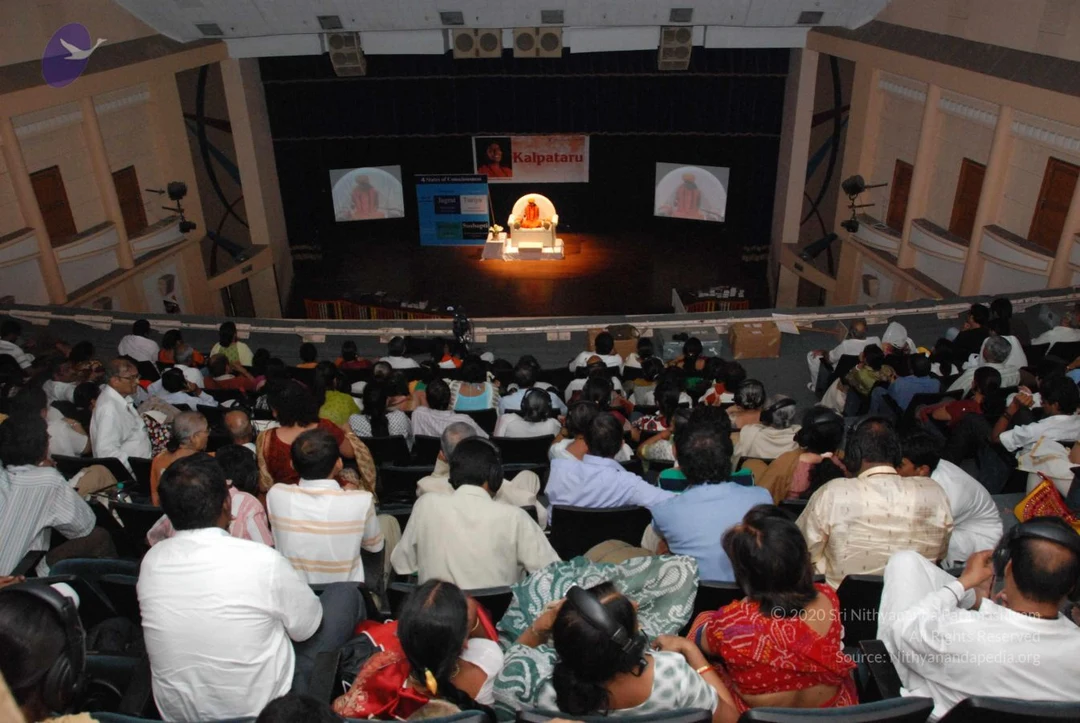
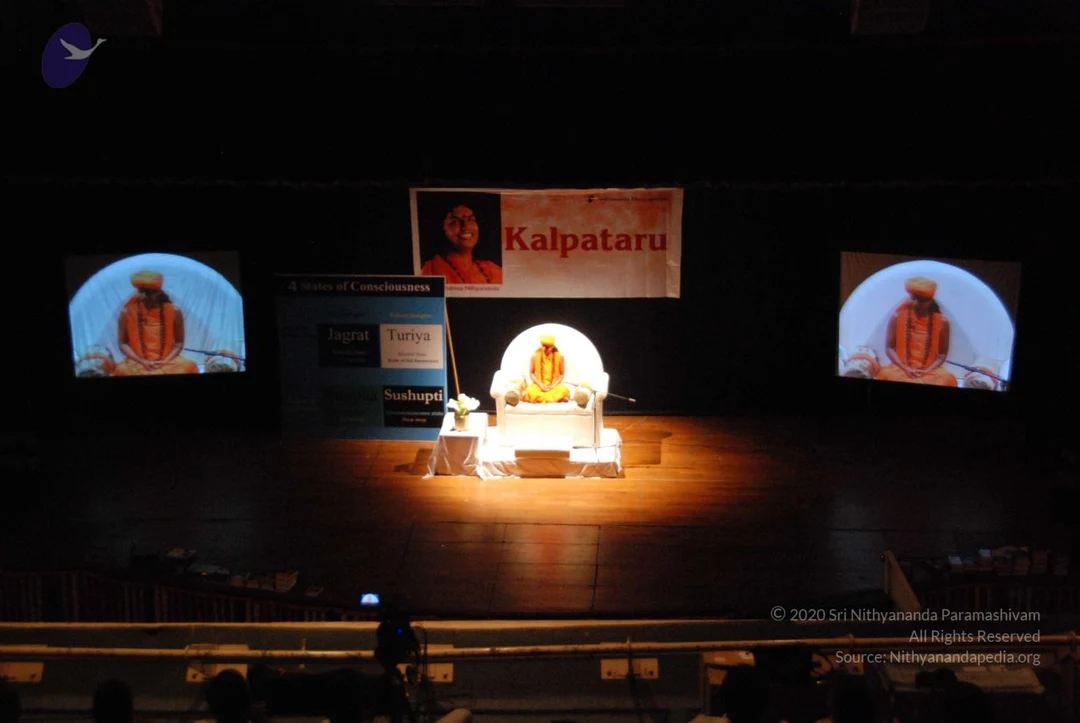
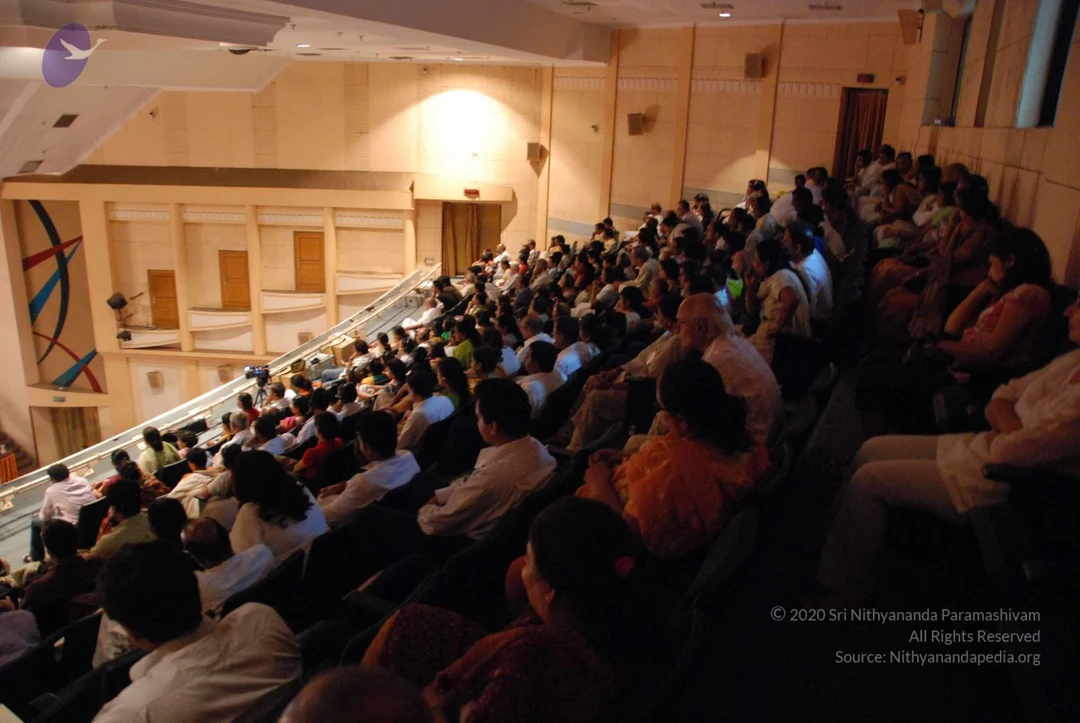
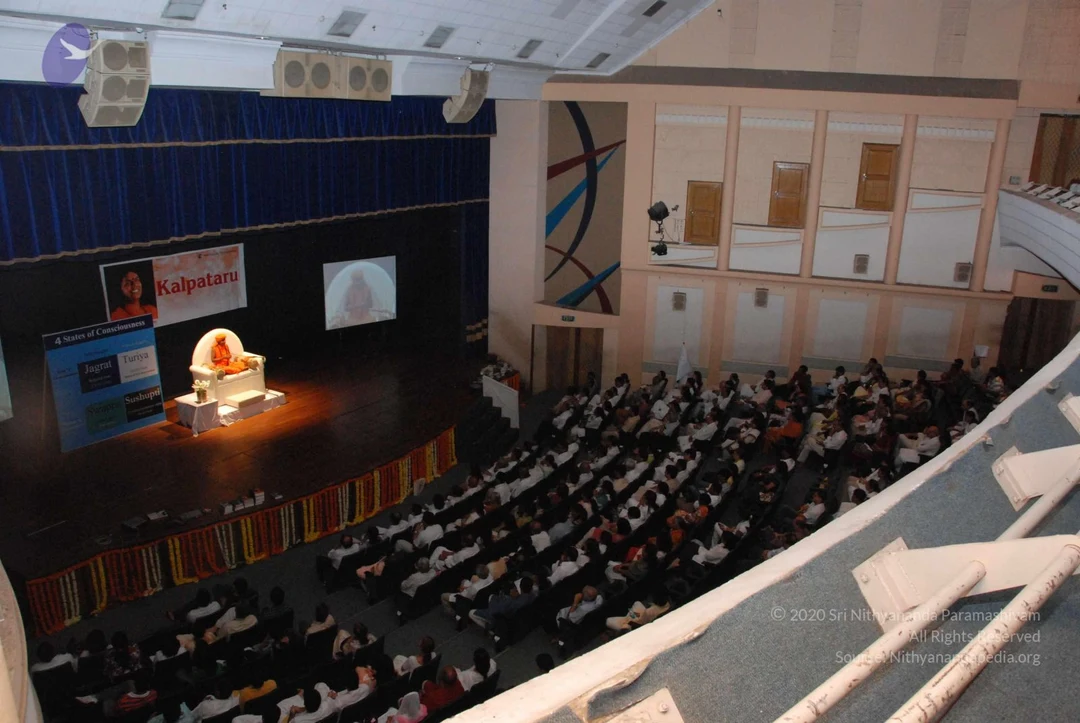
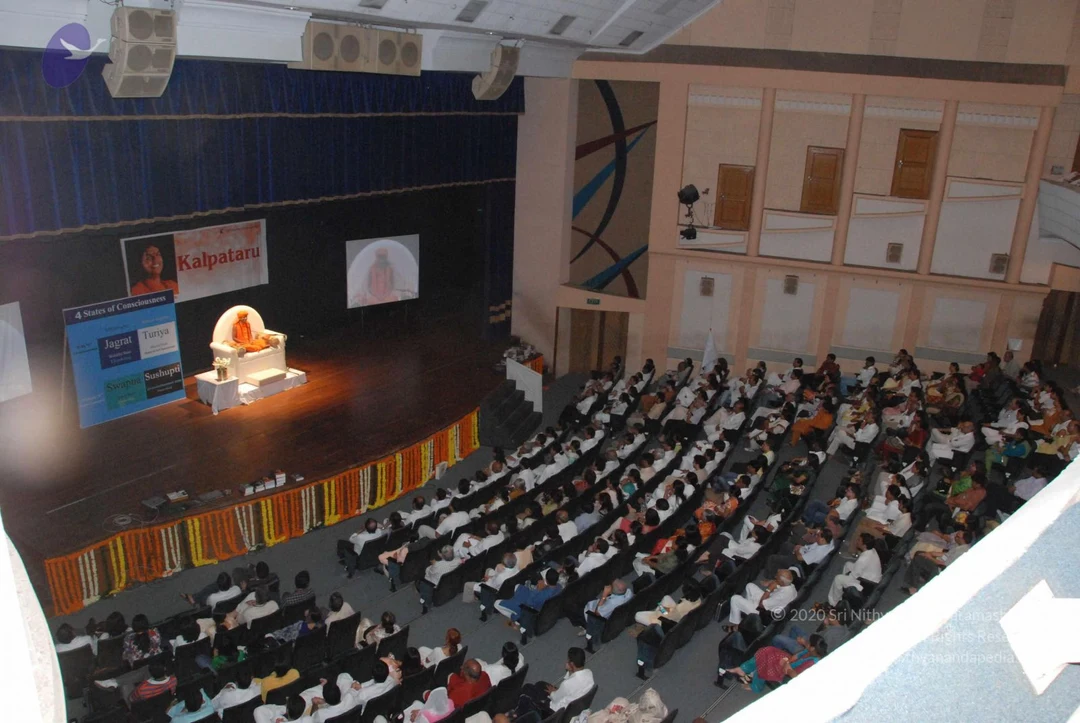
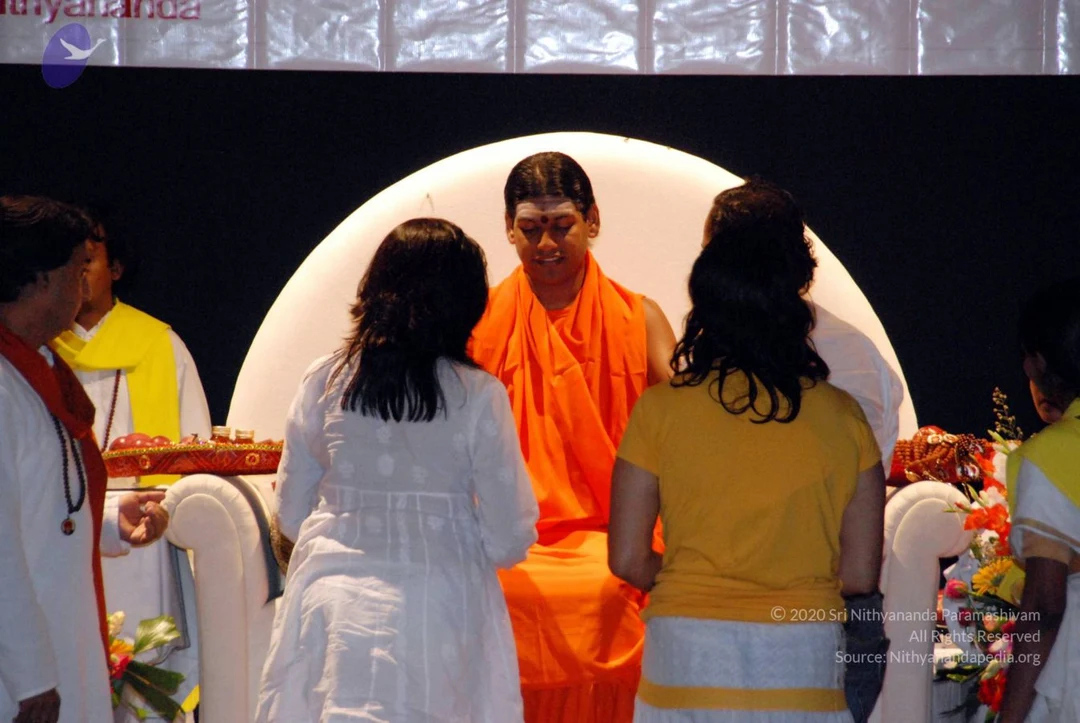
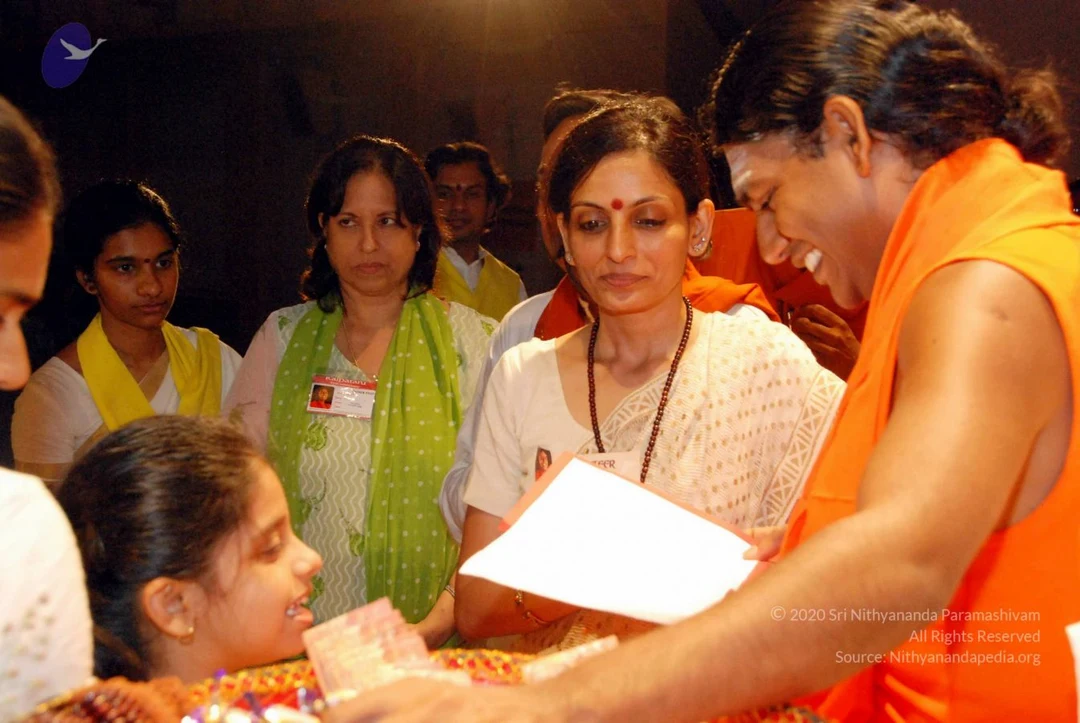
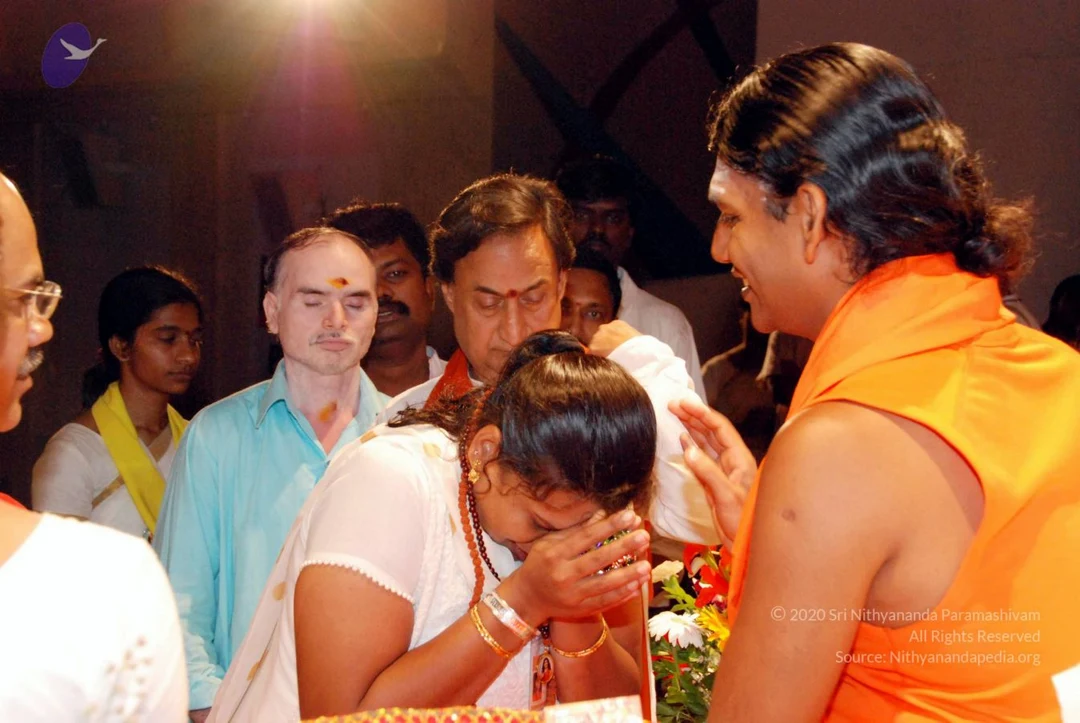
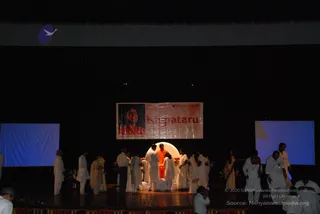
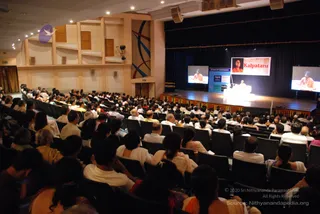
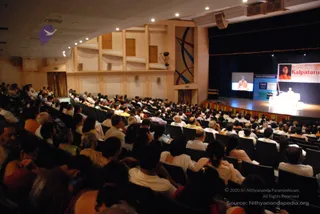
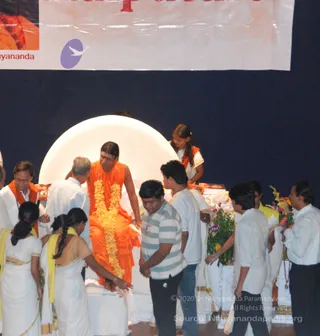
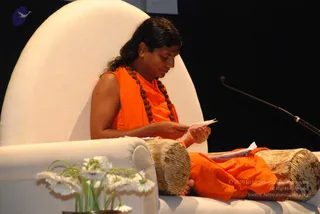
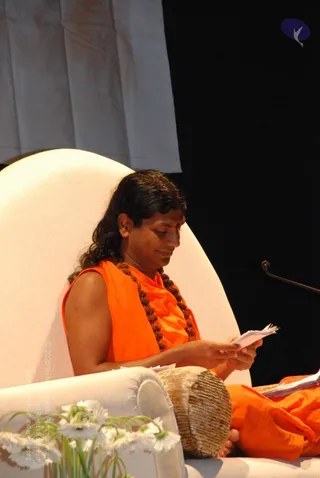
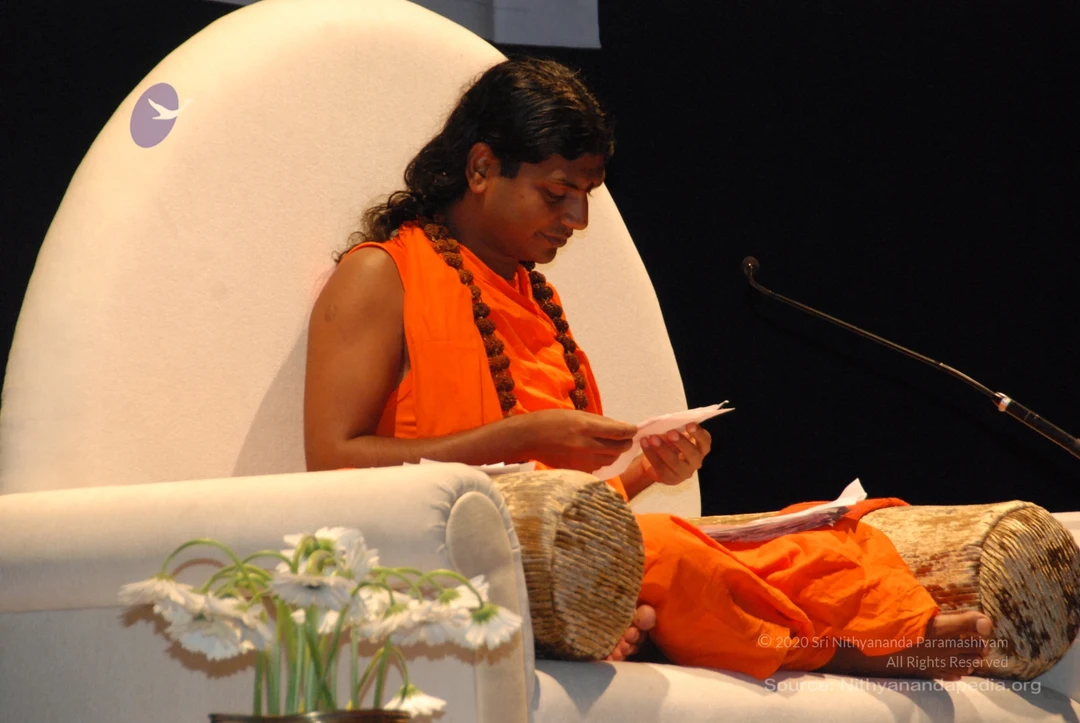
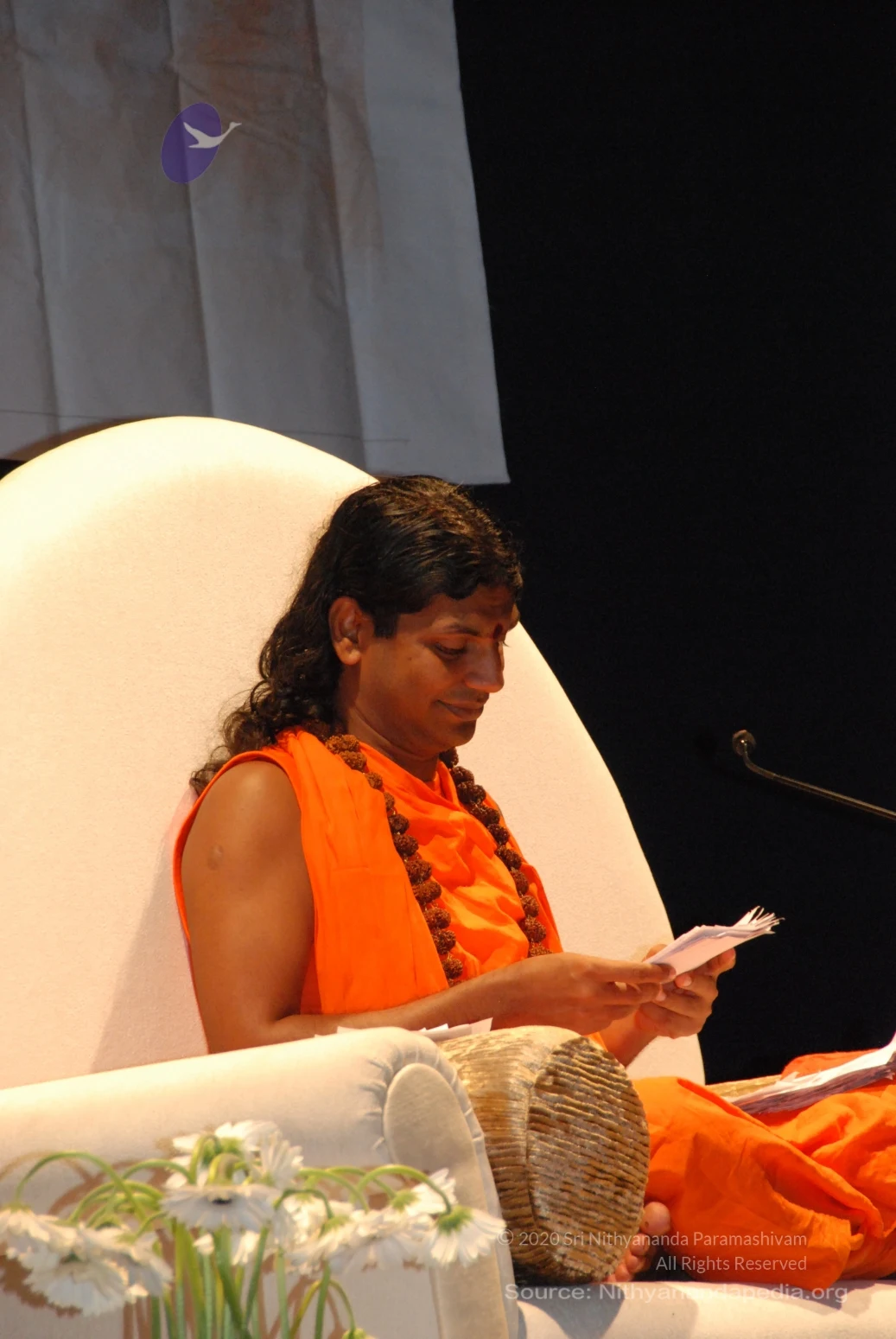
A photograph of a man seated on a large cream-upholstered throne-style chair on a stage with a black backdrop. He wears an orange saffron robe, a long rudraksha mala around his neck, and has long, swept-back dark hair. He holds a sheet of paper in both hands and reads it while looking down. Cylindrical cushions rest beside his legs and a microphone stands on a stand to the right. A vase of white flowers sits in the lower left foreground. a person is seated in the centre of the image, reading notes during a Q&A session.A figure in an orange saffron robe sits on a large white throne-like seat on a dark stage, hands pressed together in namaste with eyes closed. Floral arrangements of orange, yellow and white flowers surround the seat, with a tray of fruit at right. Behind, a projection screen shows a figure in orange in a blue-lit arch, and a hanging banner at upper right reads Paramahamsa Nithyananda. The figure has long swept-back hair and a gold-toned bracelet and wears an orange shawl over the robe, matching the Swamiji (probable) appearance cues; the figure is physically present on stage.A dim auditorium stage at a Kalpataru event. A large backdrop banner reads "Kalpataru" beside a portrait of a smiling woman. A seated figure in orange robes sits on a raised white throne-like seat within a white arch. Around him, roughly a dozen people in white clothes and shawls stand and kneel, some holding flowers, others with garlands, as if performing a padapuja. Flower arrangements and a marigold-decorated edge line the stage, with two blue screens at the sides.A wide photograph of a packed auditorium during a Kalpataru programme in Mumbai. Rows of seated audience members, mostly in white and light clothing, fill the foreground and middle, facing a stage. On stage, a figure in orange robes sits on a white seat at a central lectern. Behind him a backdrop reads Kalpataru beside a portrait of a figure in orange, and a banner labelled 4 States of Consciousness with Jagrat, Swapna, Sushupti and Turiya. Two large screens on either side show the speaker. Wall panels and stage lighting frame the hall.A photograph of a large auditorium filled with a seated audience, most people in white or light clothing, viewed from the back rows. On the right, a stage has a central lectern and a figure in orange clothing standing behind it. A large display screen beside the stage shows a magnified view of the speaker, and a banner reading "Kalpataru" hangs above, with a blue banner reading "State of Consciousness" at the side. Ceiling speakers and lights are visible, and a faint dove-shaped logo appears on the wall at upper left.A photograph of a stage event with a large white circular backdrop and a dark blue curtain. A central figure in a saffron-orange robe with a yellow-orange marigold garland sits on a white seat while devotees bow and touch his feet. Nearby, a man in a white shirt and a woman in a white sari with a yellow shawl kneel or stand in attendance, a man in a striped polo shirt bends forward, and a woman in an orange top stands behind with flowers and offerings on a table. A banner across the top carries partial printed text, with a dove-like logo at its left. This appears to be a padapuja, or foot-worship ritual. a person is the seated figure in orange robes and garland, matching the page's note that he attended this event.

Paadapooja

1 photoSource gallery
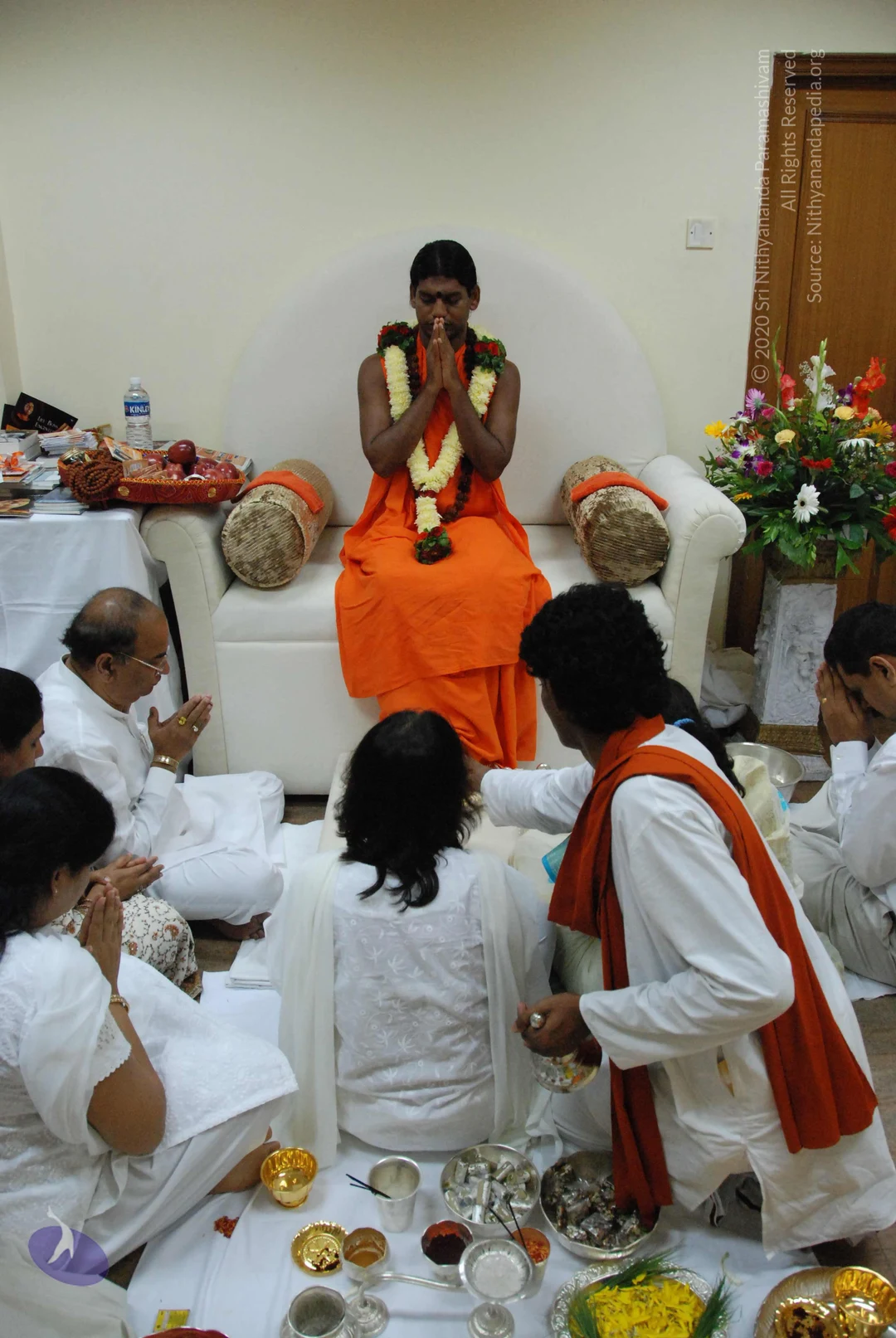
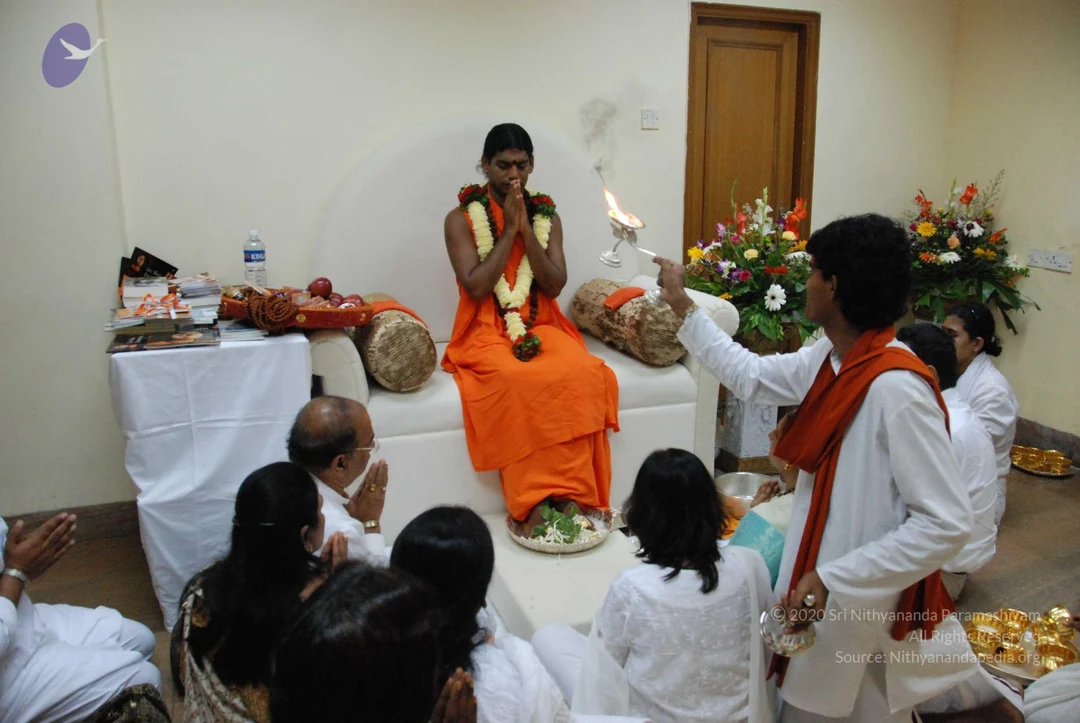
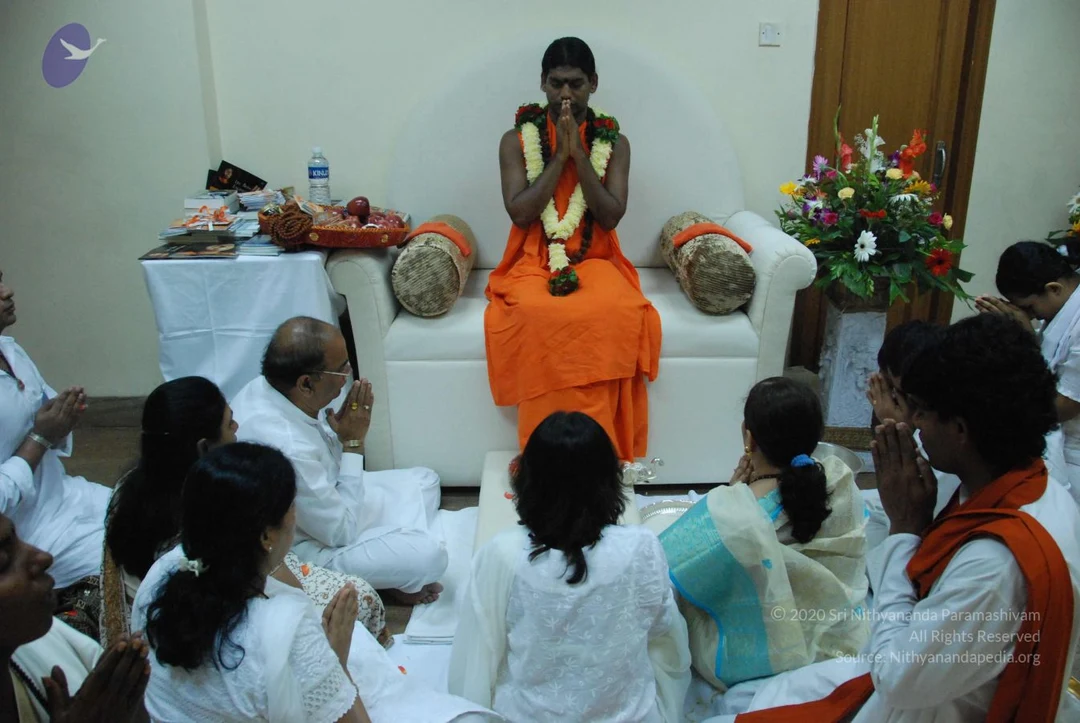
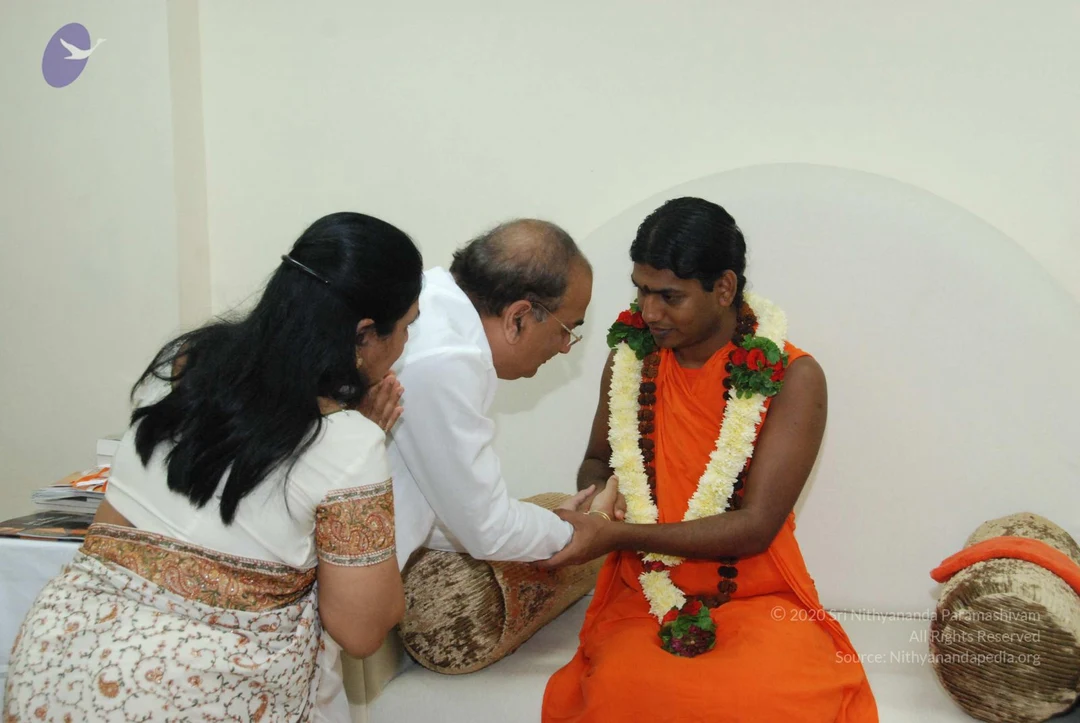
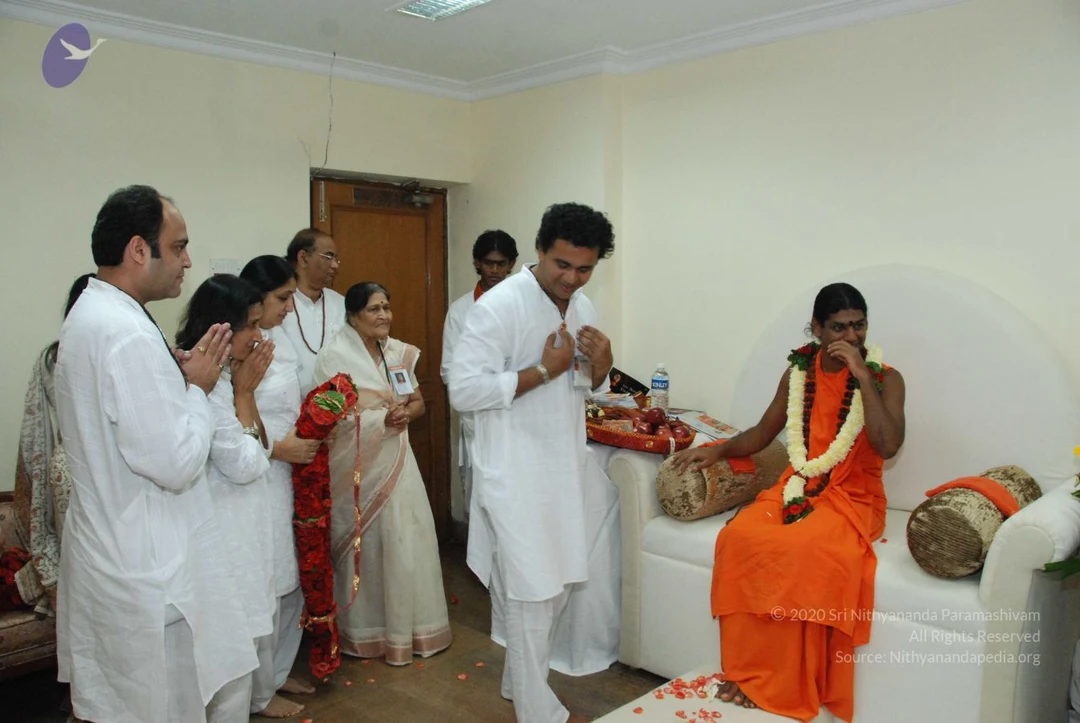
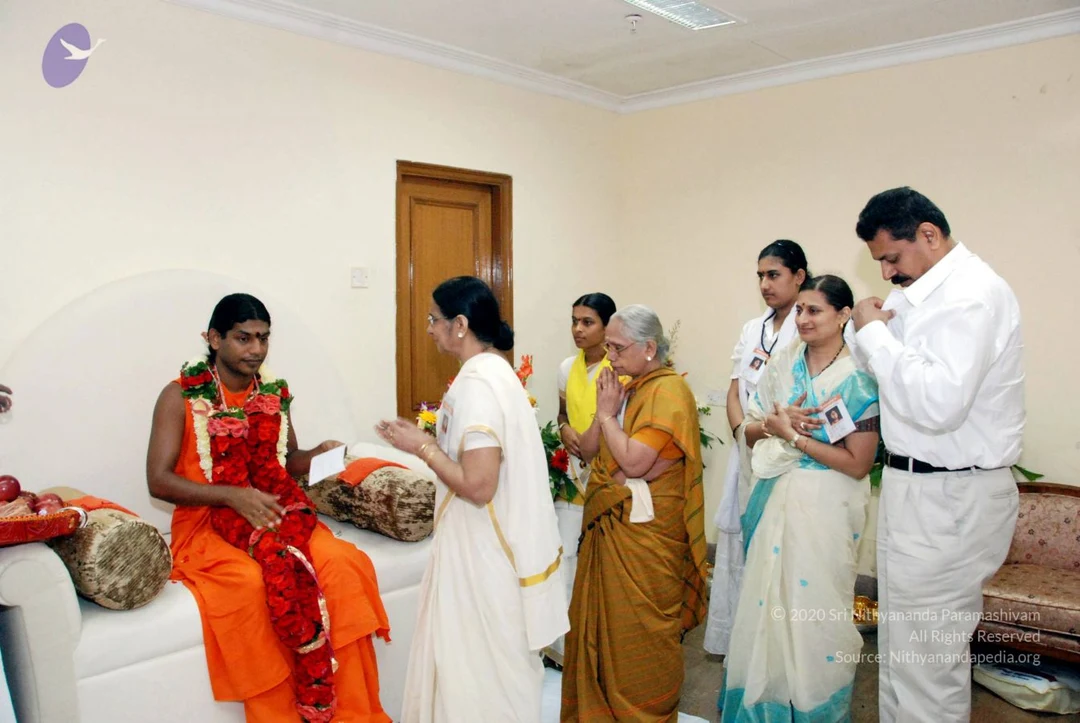
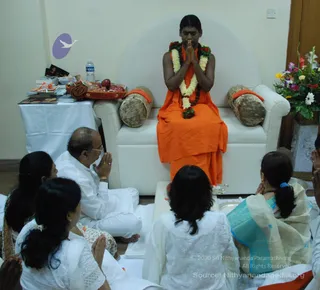
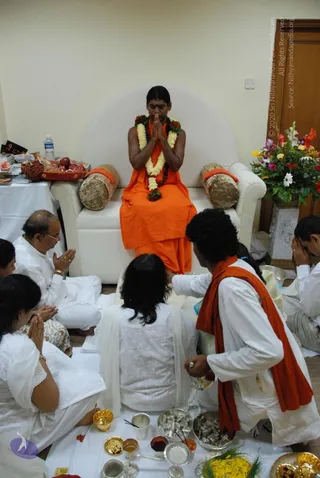
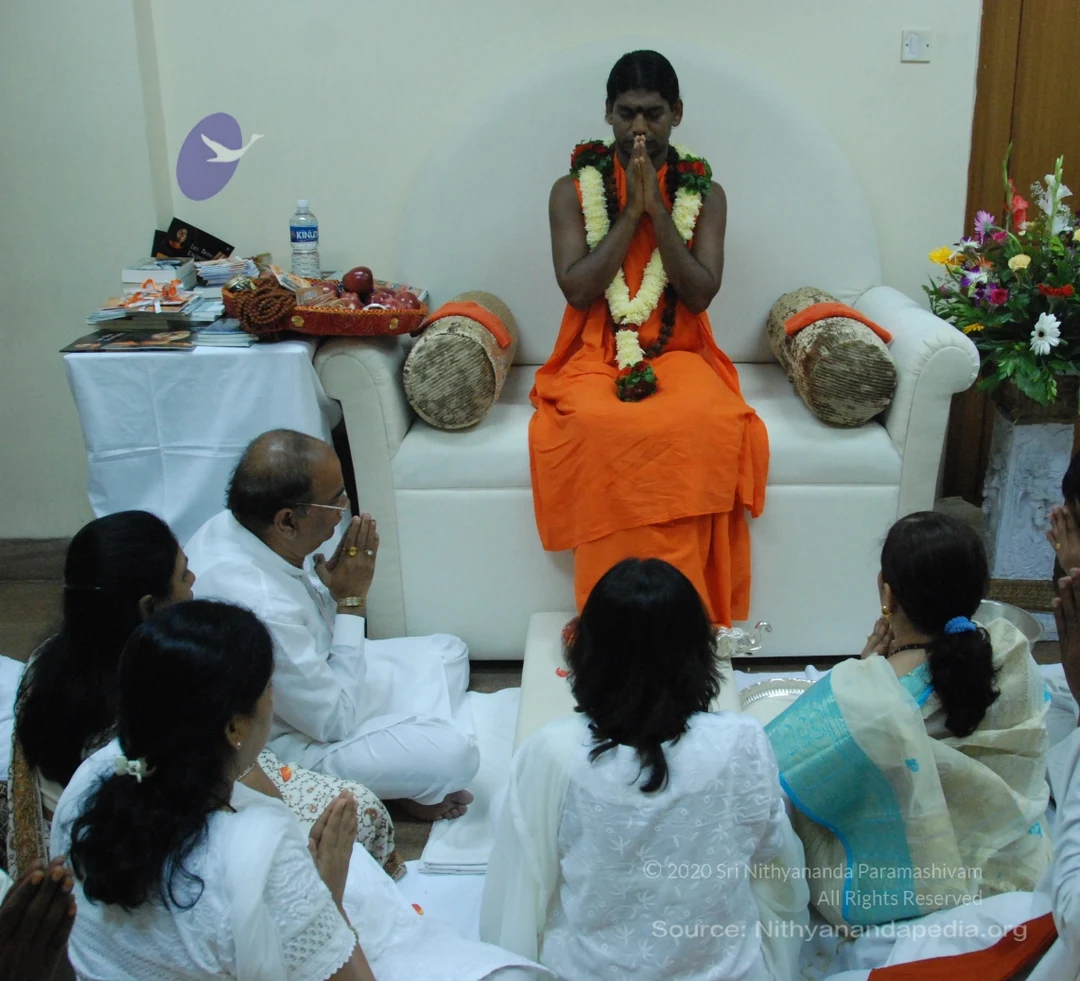
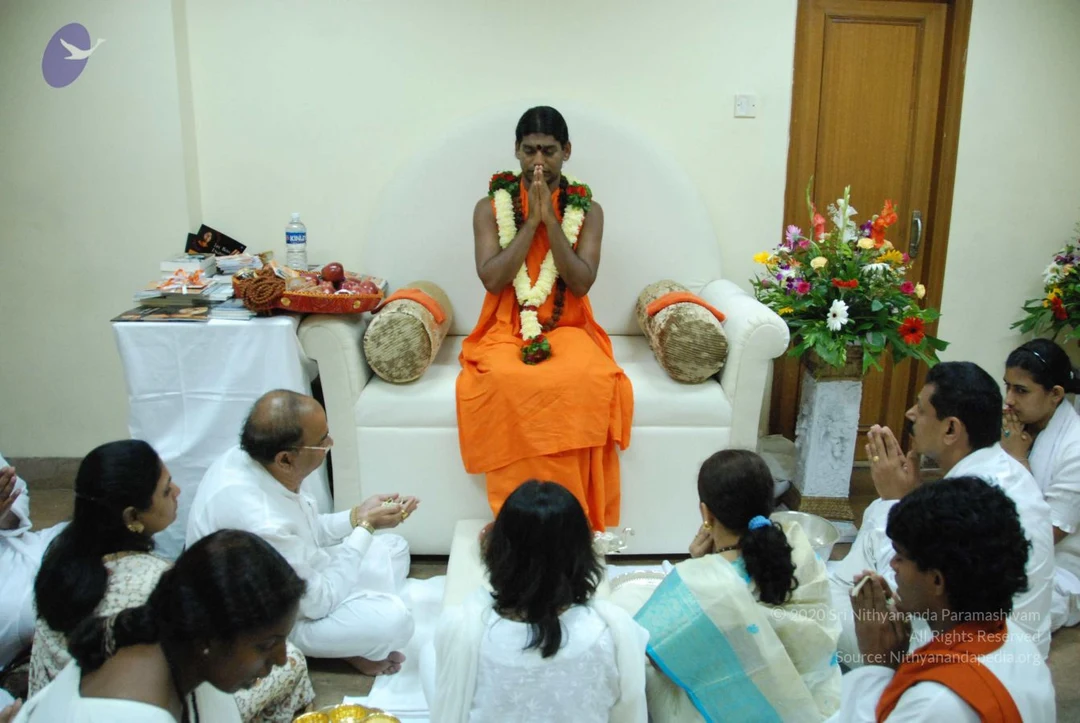
A photo of a seated person in orange robes with hands pressed together in namaste, eyes closed, wearing a white and red flower garland and a rudraksha mala, sitting on a white armchair with two cylindrical bolsters with orange covers. Several devotees in white clothes sit cross-legged on the floor before him with folded hands, including a man in white kurta at left and a woman in a cream sari with turquoise border at right. A table at left holds books, pamphlets, fruit, a basket of rudraksha beads and a water bottle; a bouquet of flowers stands at right. A wall logo shows a white bird in a purple circle. This is a padapuja-style reverence scene.

VIP-Visit

1 photoSource gallery
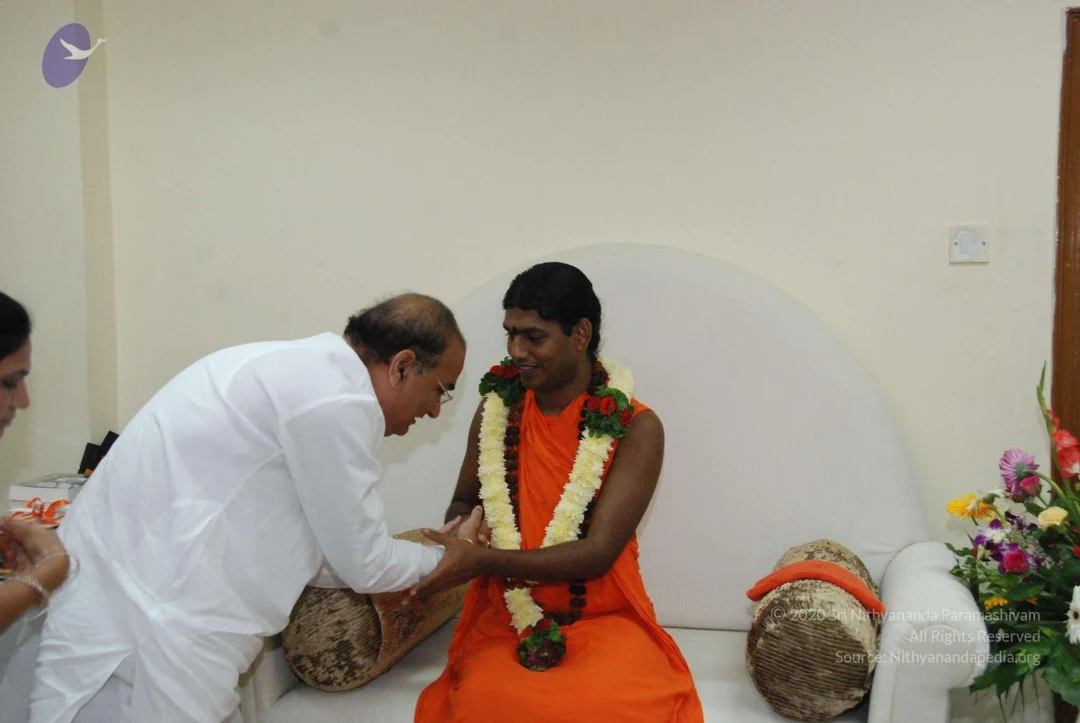
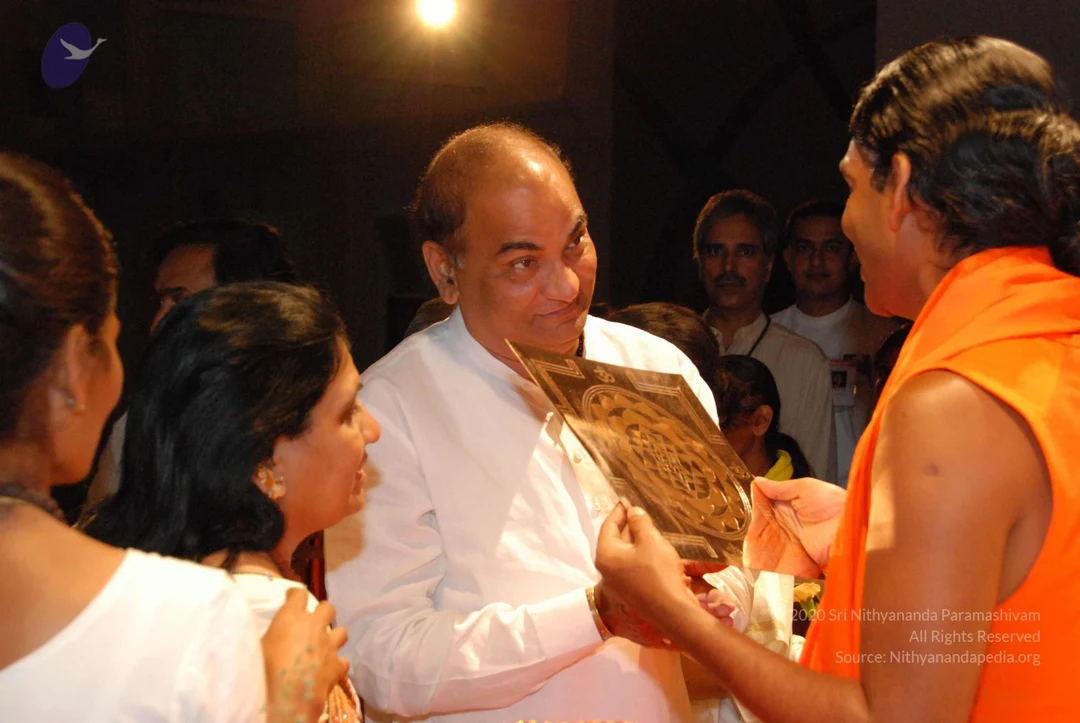
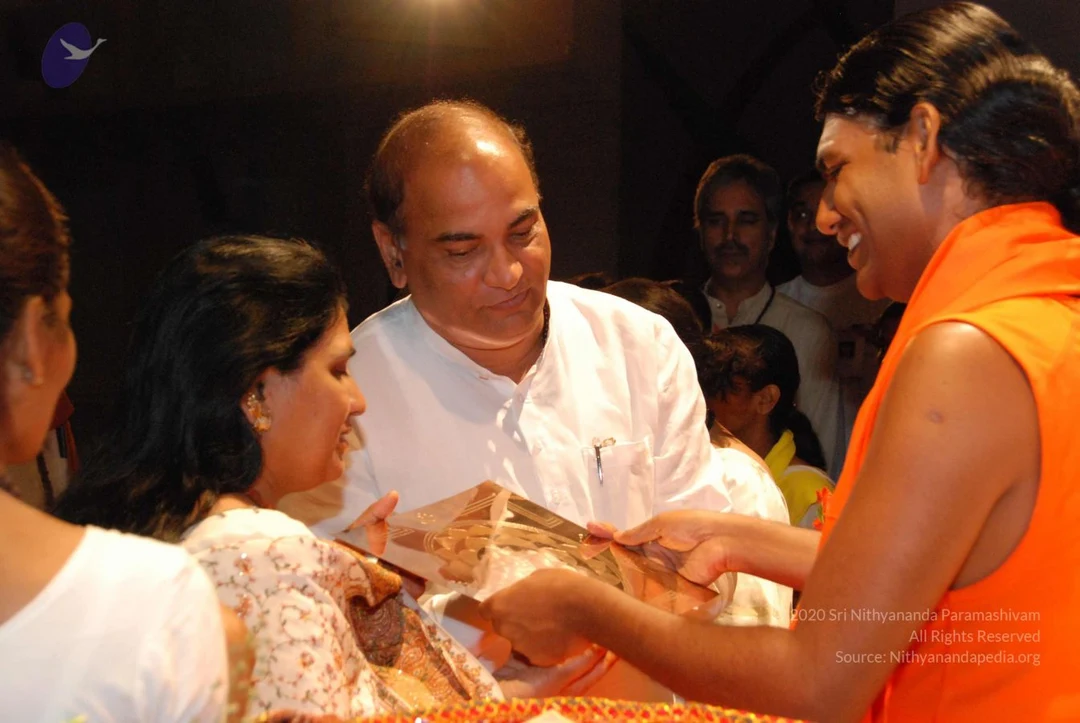
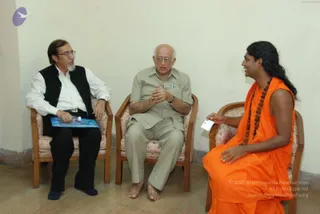
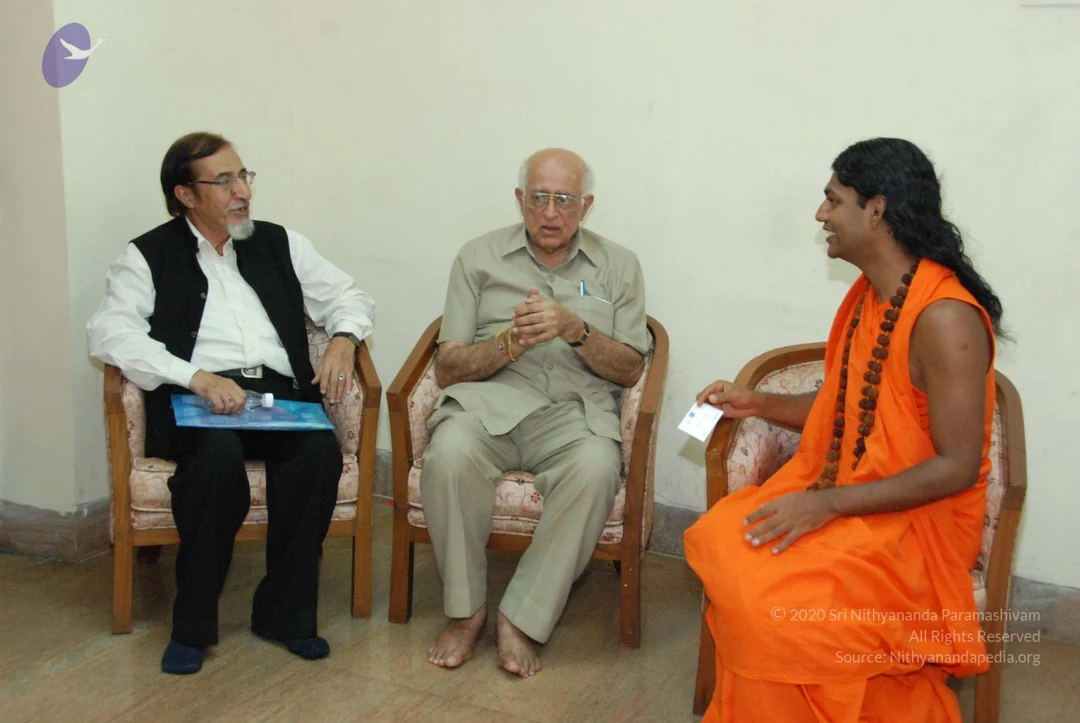
A photograph of three men seated in upholstered armchairs in a plain room with cream walls and a light tiled floor. On the left, a man with grey hair, glasses and a goatee wears a black vest over a white shirt and holds a blue folder. In the centre, an older bald man with glasses wears a khaki shirt and trousers, hands clasped, and is barefoot. On the right, a man with long dark hair and a rudraksha mala wears an orange robe and holds a small white card while speaking with the others.

PaadaPuja

22 photosSource gallery
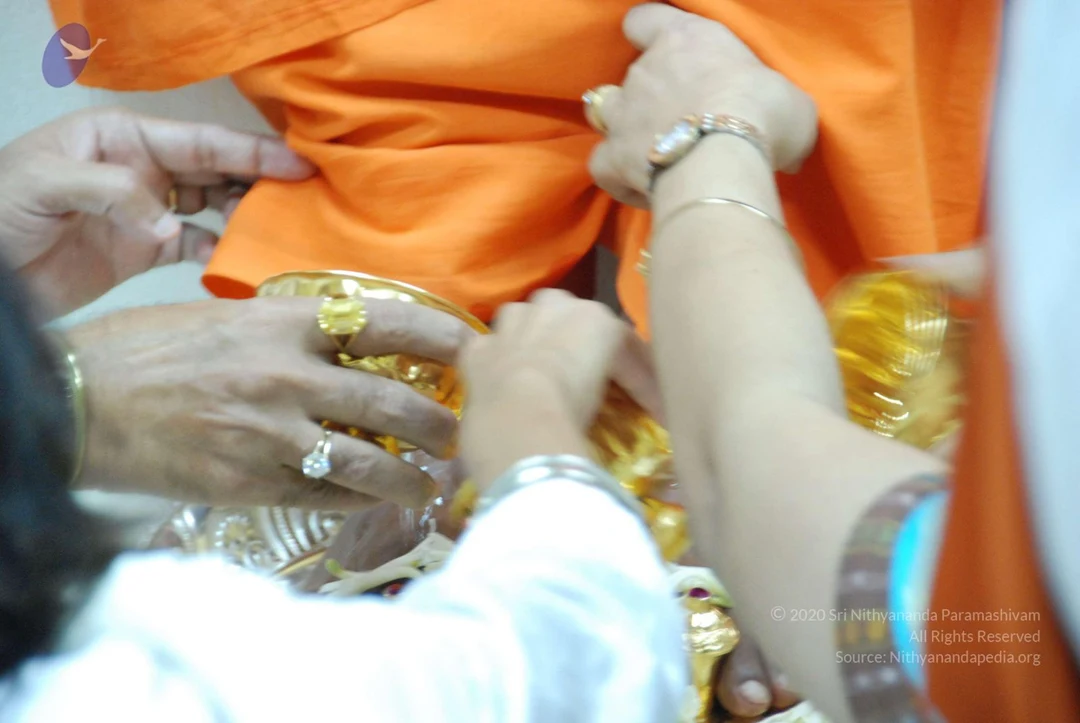
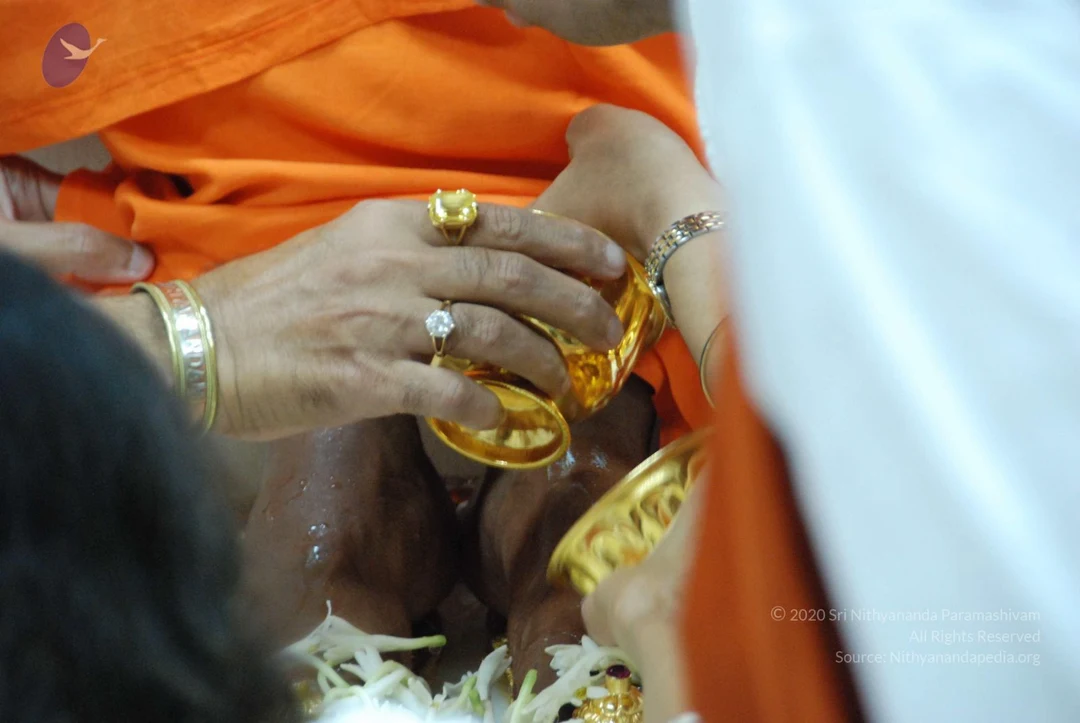
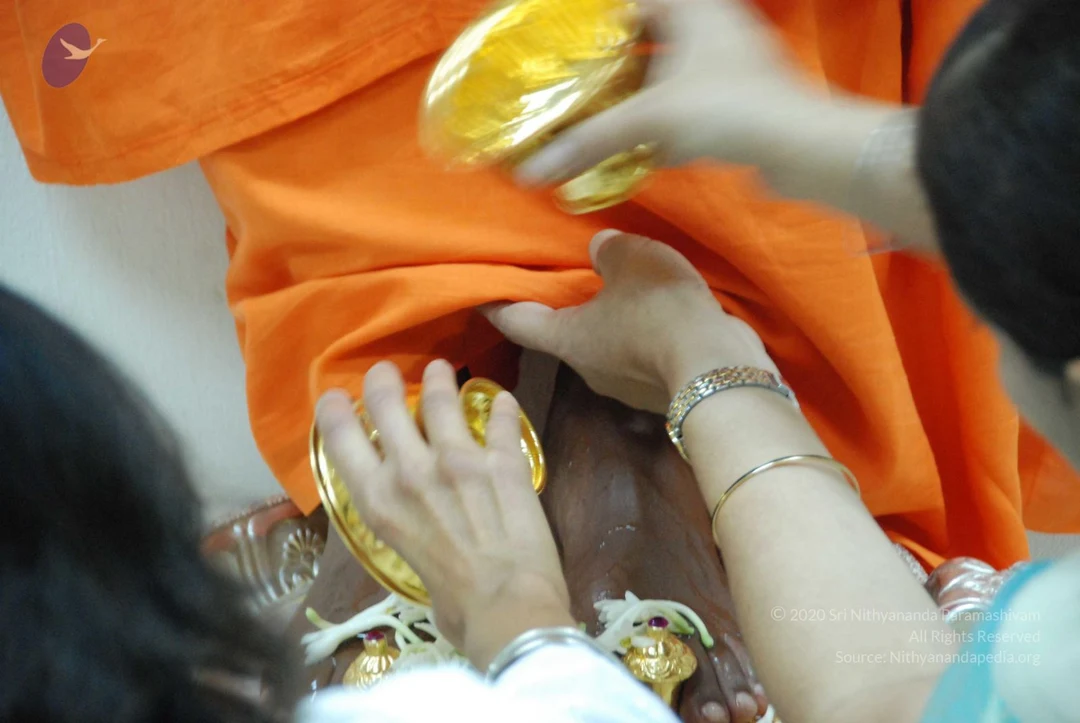
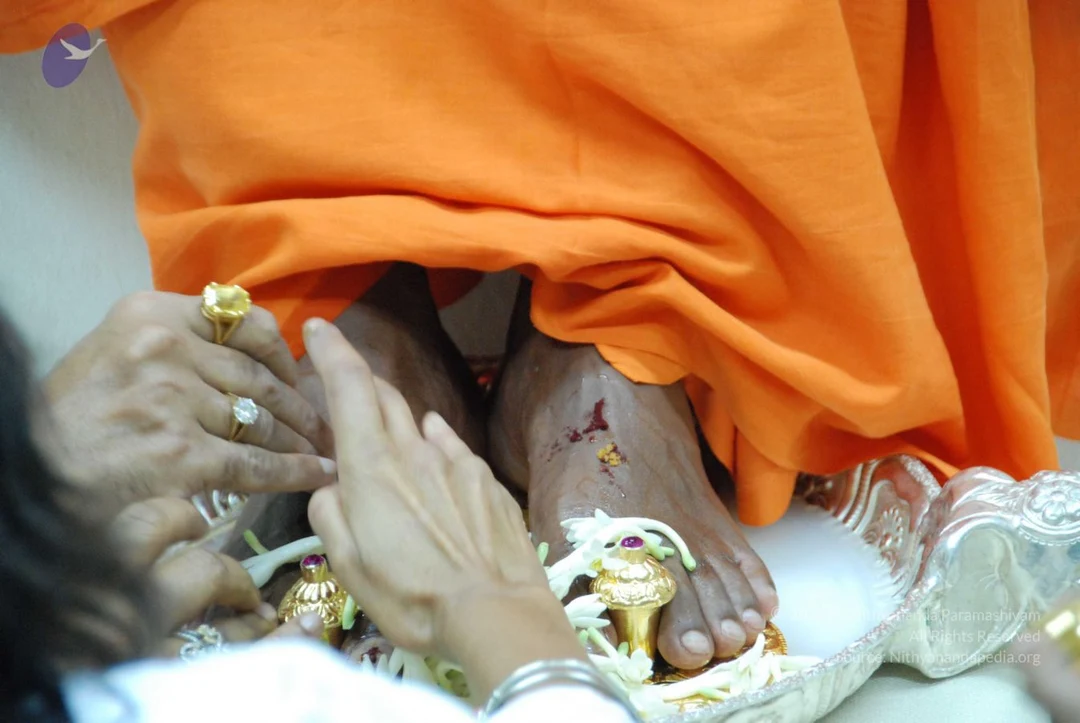
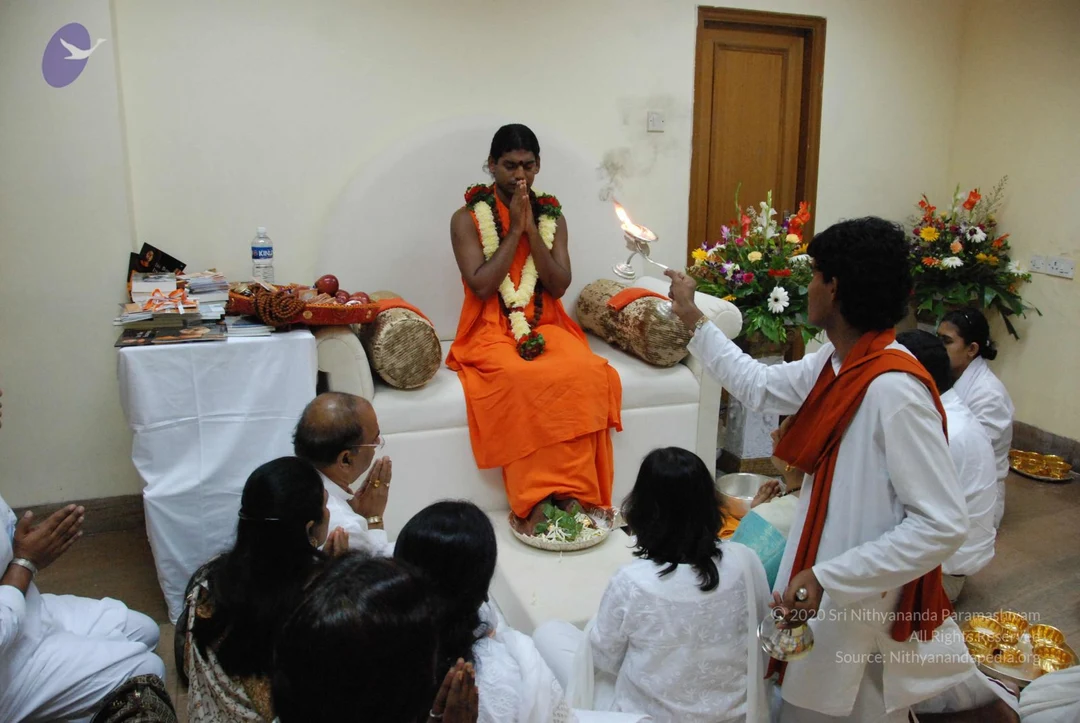
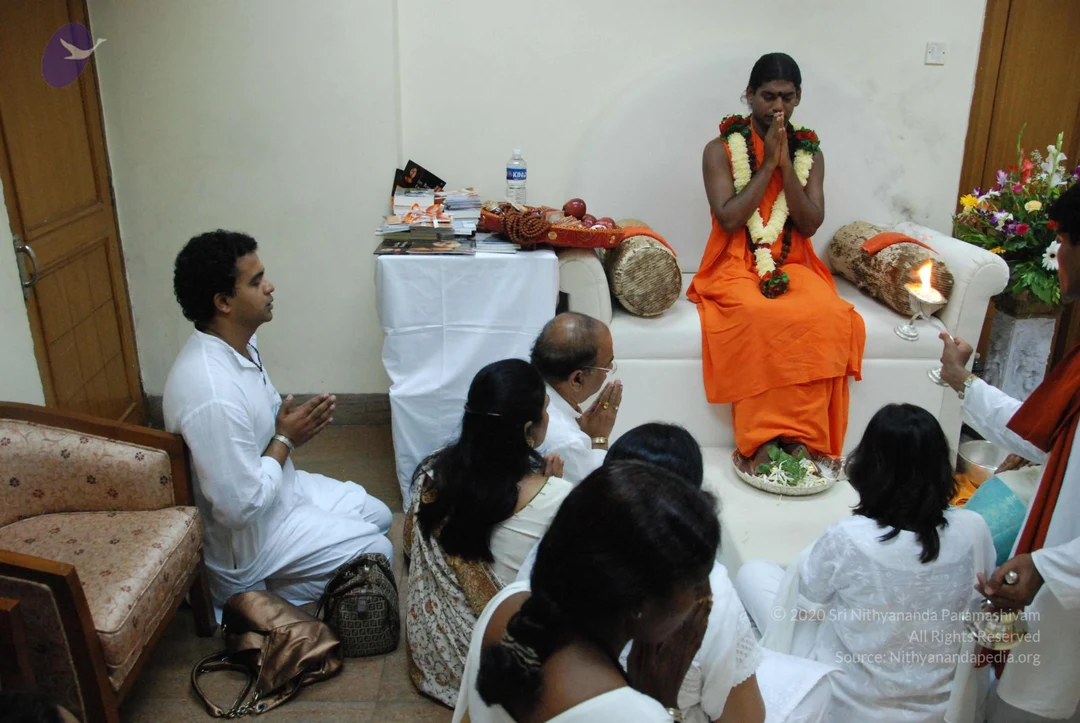
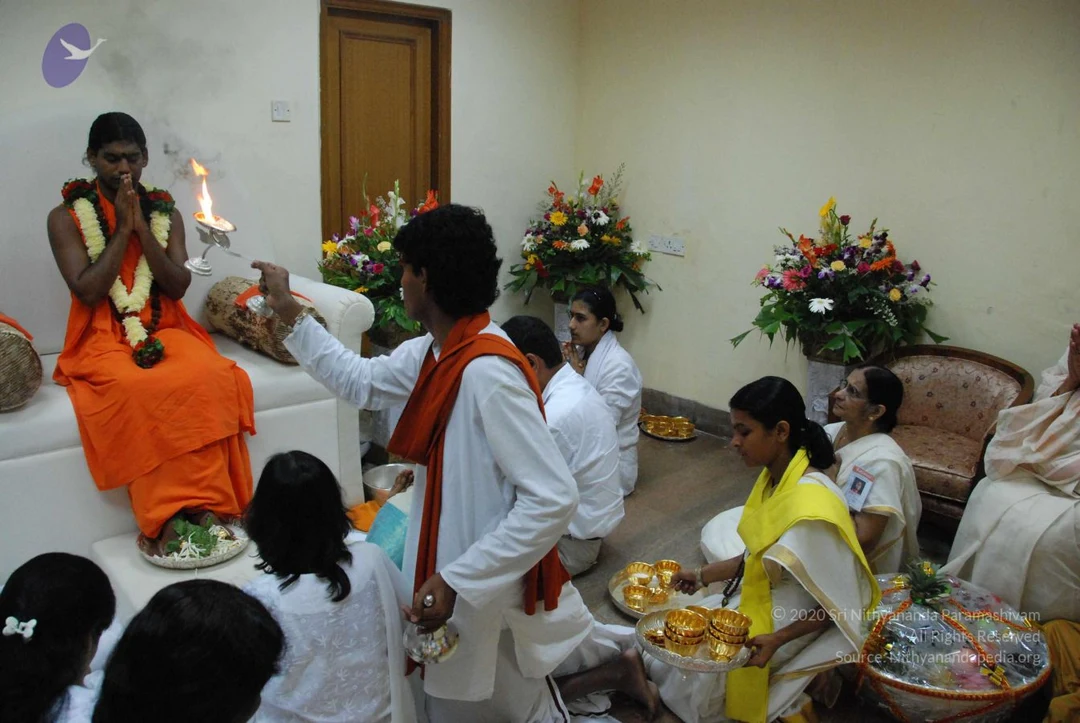
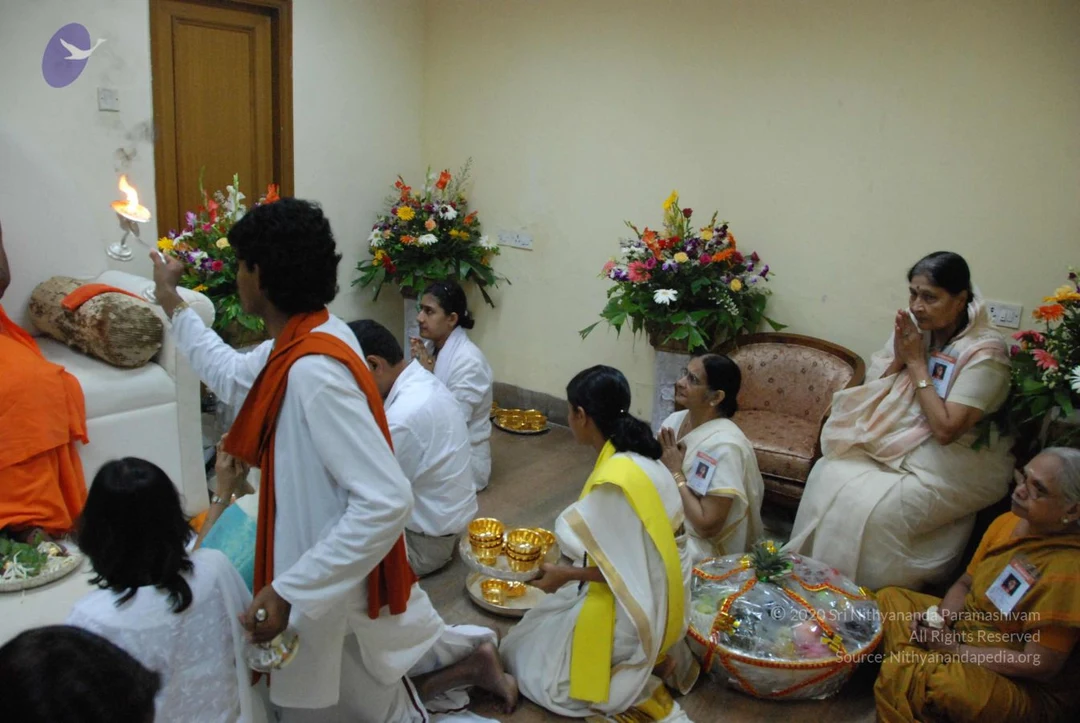
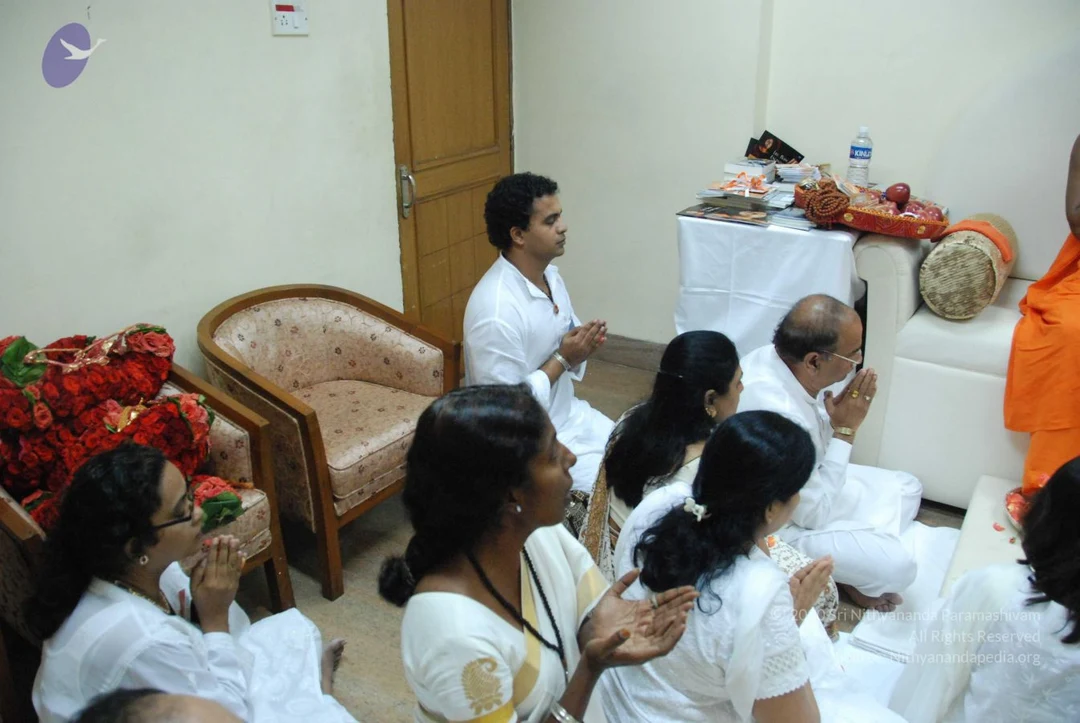
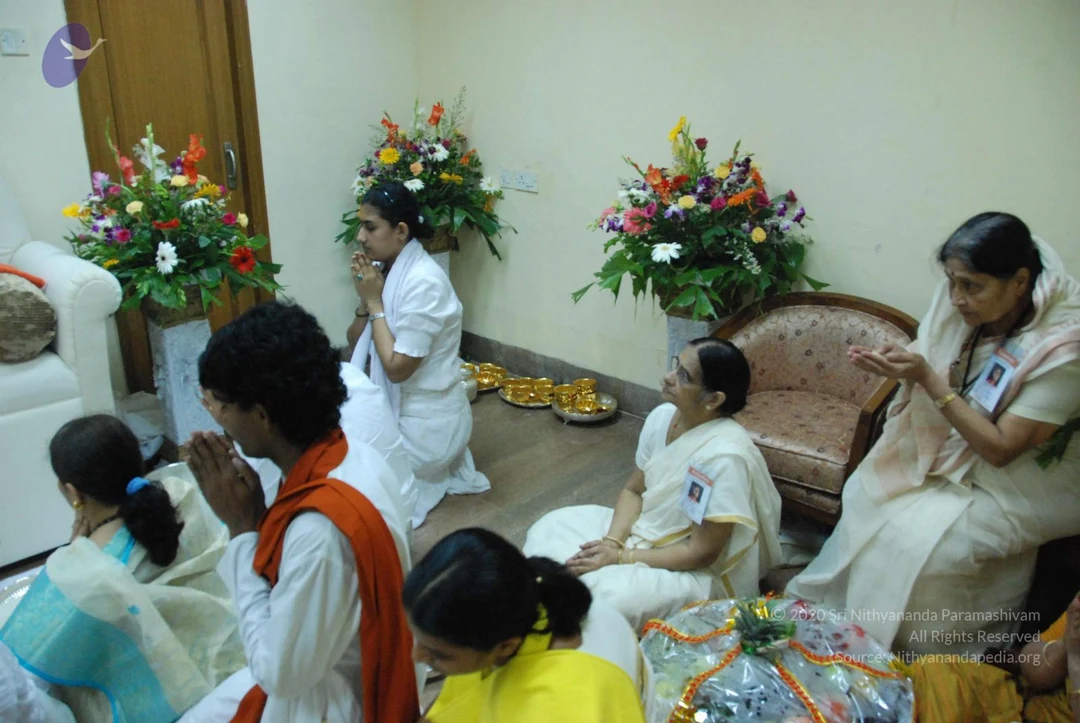
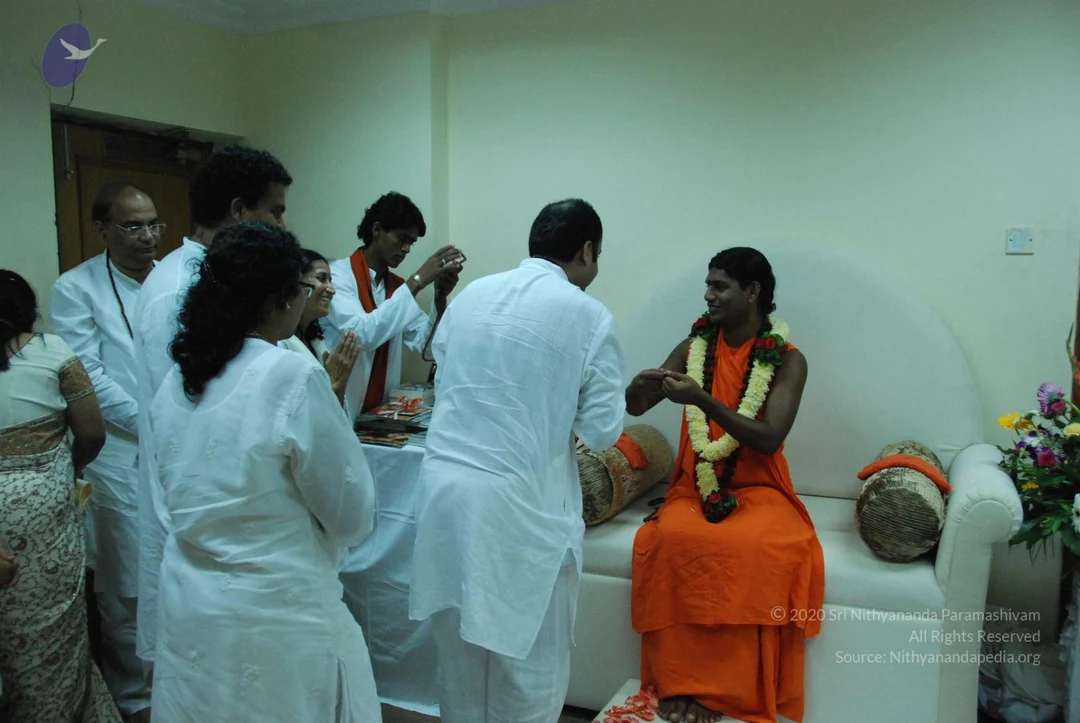
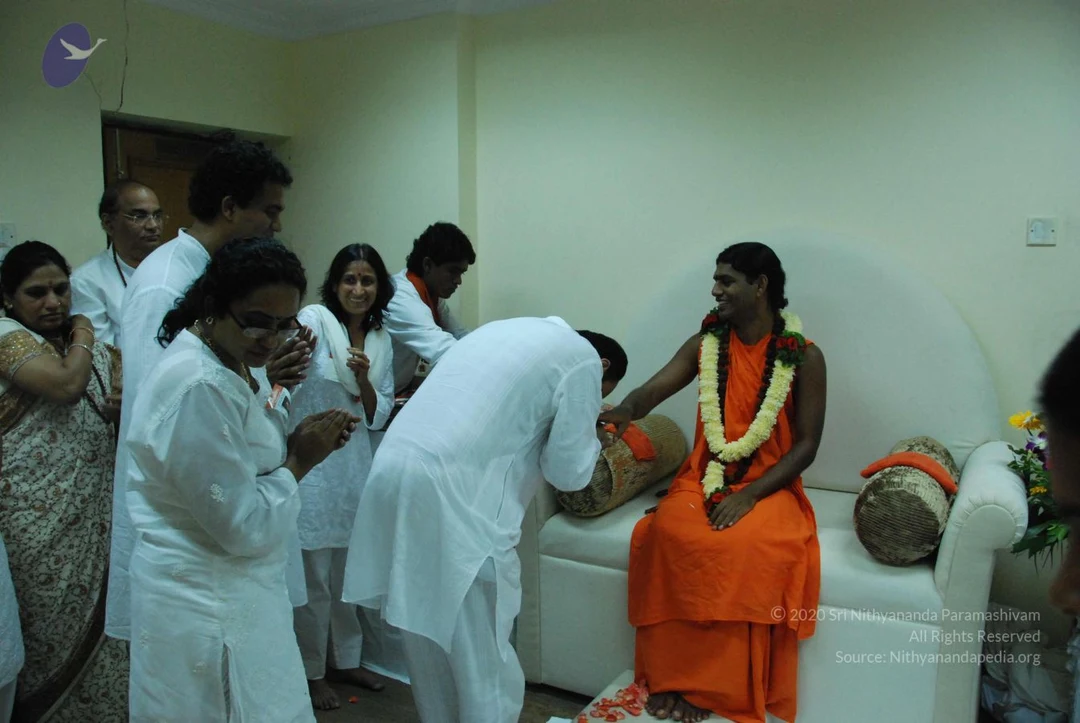
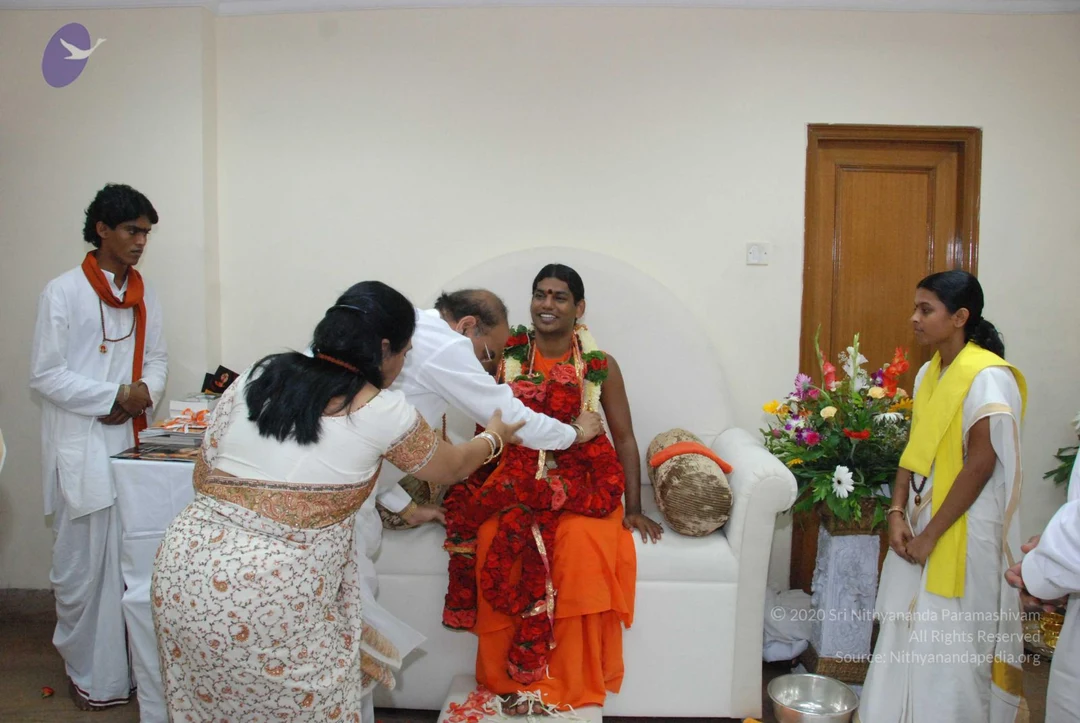
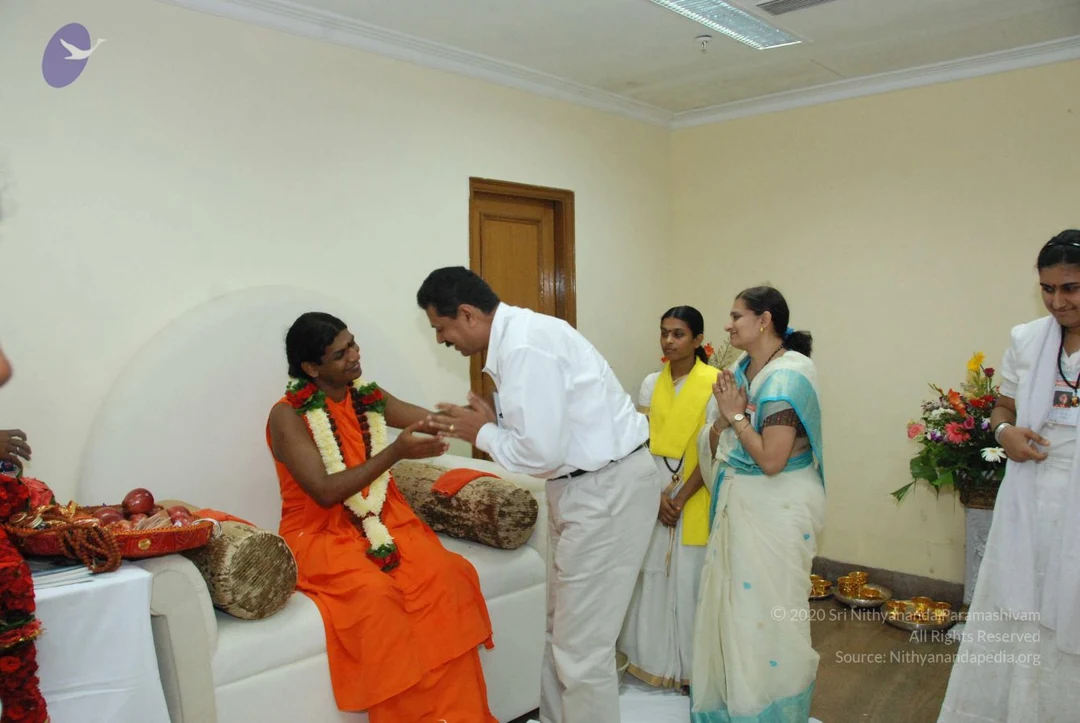
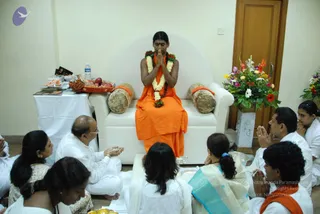
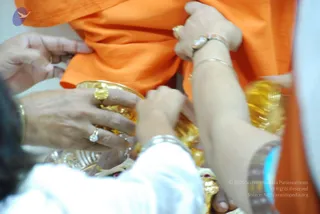
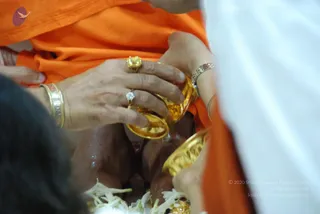
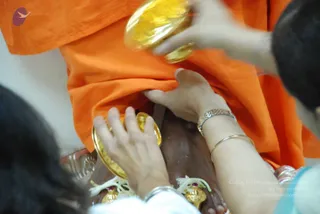
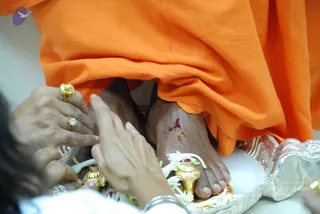
A seated figure in saffron-orange robes sits with palms pressed together in namaste on a white sofa-style seat with orange bolster cushions. Garlands of white and red flowers hang around the neck and a rudraksha-style mala is visible. Around the seat, several devotees in white clothing sit on the floor with hands folded in prayer, including a woman in a cream sari with a light blue border. On a side table are fruit, a brass plate, flowers and printed booklets. A vase of colourful flowers stands beside an open wooden door, and a water bottle is on the table. The seated figure's appearance is consistent with a person, with orange robes, garlands and a mala as distinguishing cues, appearing in person.Close photograph of a padapuja ritual. An orange-robed figure's lower body and feet are visible, with several hands reaching in. A woman in white, seen from behind at left, holds a brass plate. Hands wearing gold and silver rings and bangles pour or offer items into golden vessels and a silver plate near the feet. The gold bowls and jewelry catch the light against the saffron cloth.Close-up photograph of a padapuja ritual. A person in orange robes sits with bare feet on a bed of white flowers, while a hand wearing a large yellow-gold ring and a diamond-set ring pours water from a gold bowl over the feet. Another gold vessel is held nearby, and a dark-haired person is visible at the left edge. Gold bangles and a silver-toned bracelet are visible on the wrists.Close overhead photo of a padapuja ritual. An orange-robed figure's bare feet are visible at the bottom centre, with a woman's hand in a silver bangle reaching to touch the feet while another hand holds a gold bowl. Two more gold bowls and hands appear at the top and left, with white flowers and gold-tipped ornaments near the feet. Ritual foot-washing with orange cloth and gold vessels.Close photograph of a padapuja in progress. Bare feet of a seated person in an orange saffron garment are being washed and honoured. Two hands of a devotee wearing a gold ring with a red stone and a white stone rest on the feet, while another hand holds a silver-rimmed tray with white jasmine-type flowers and two gold kalasha-shaped vessels with red gemstone tops. A dark red and yellow mark, possibly kumkum or turmeric, appears on one ankle. Only the feet, orange cloth and hands of people are visible, so no whole person can be seen. Most of the scene is orange, white and silver.A seated figure in an orange saffron robe with a white and red flower garland and rudraksha beads sits with palms pressed together in namaste on a white cushioned armchair. Two round bolsters with orange ties flank him. Below, several devotees in white clothes kneel on a white cloth, hands folded, while a man in white with an orange shawl pours or offers from a silver bowl. Silver and brass plates hold kumkum, sweets, flowers and a small brass cup. A flower arrangement and a table of books and fruit stand in the background. The seated figure has distinctive saffron robes, a garland and rudraksha cues, so this is an appearance-based a person in a padapuja setting with devotees washing or honouring his feet.

Kalpatharu
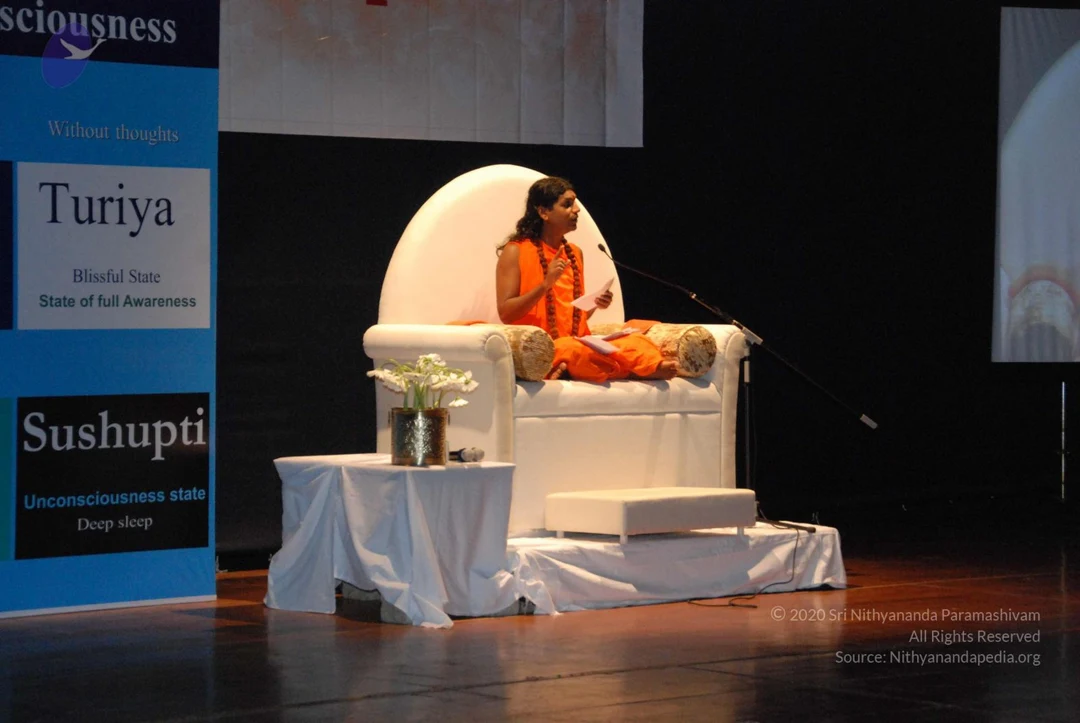
179 photosSource gallery
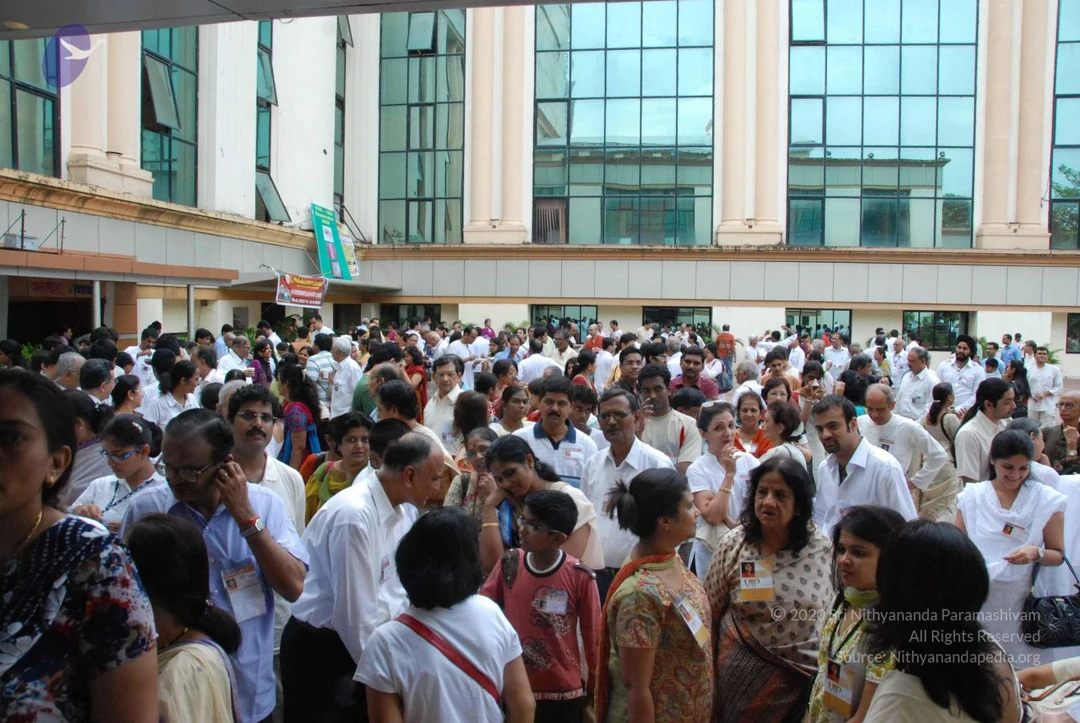
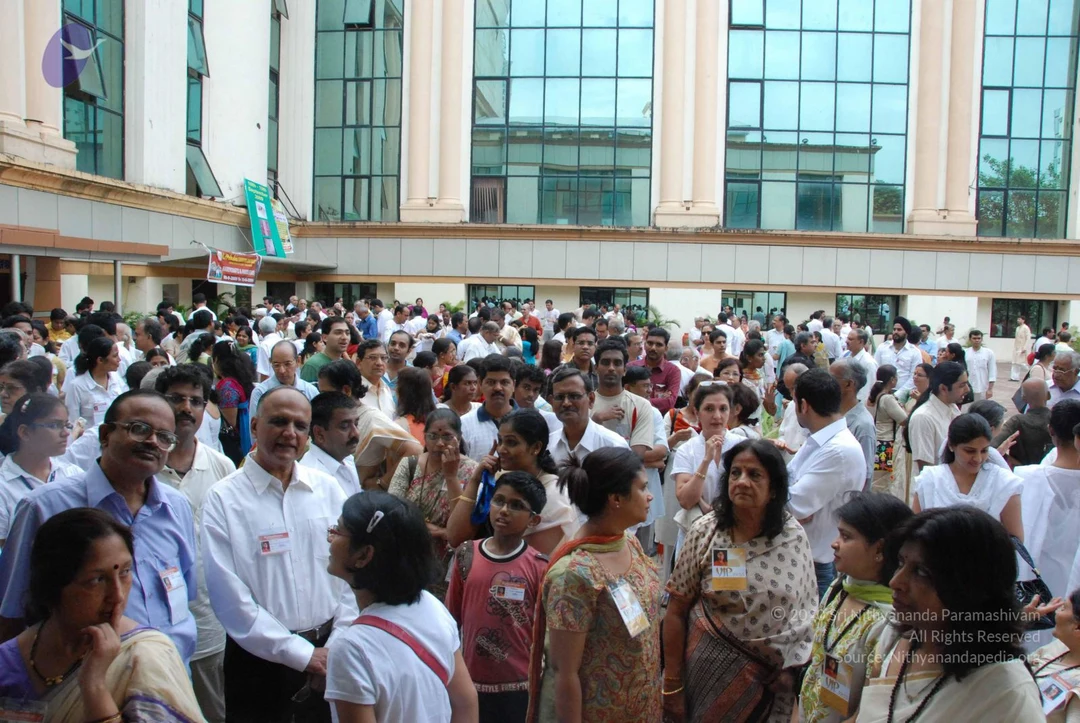
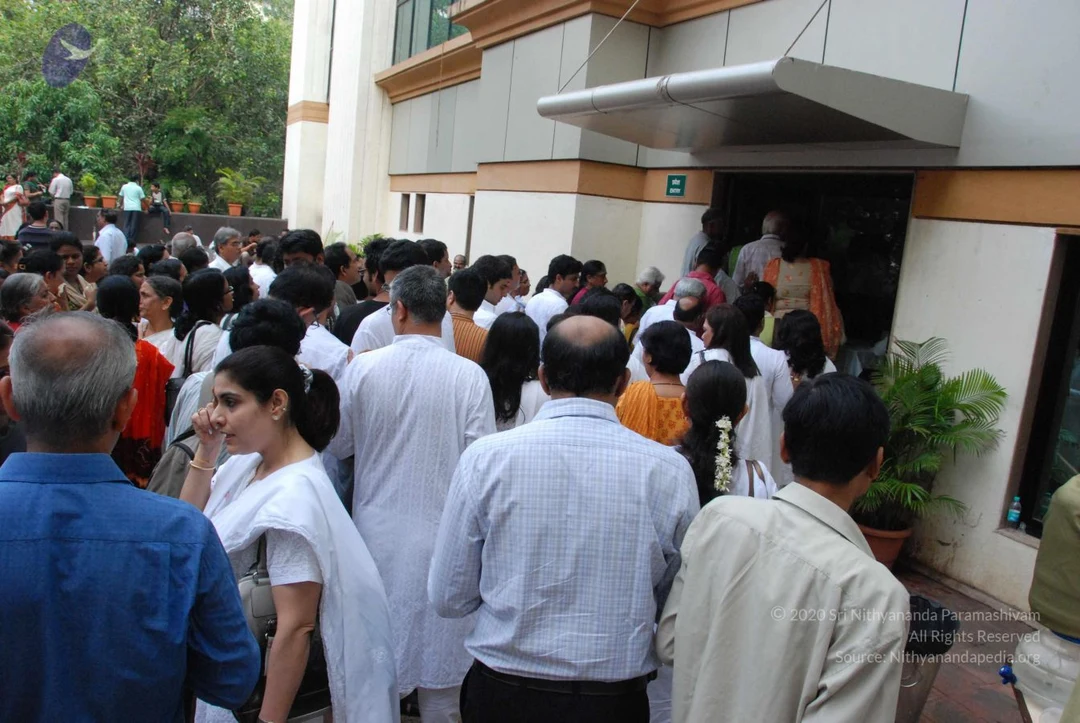
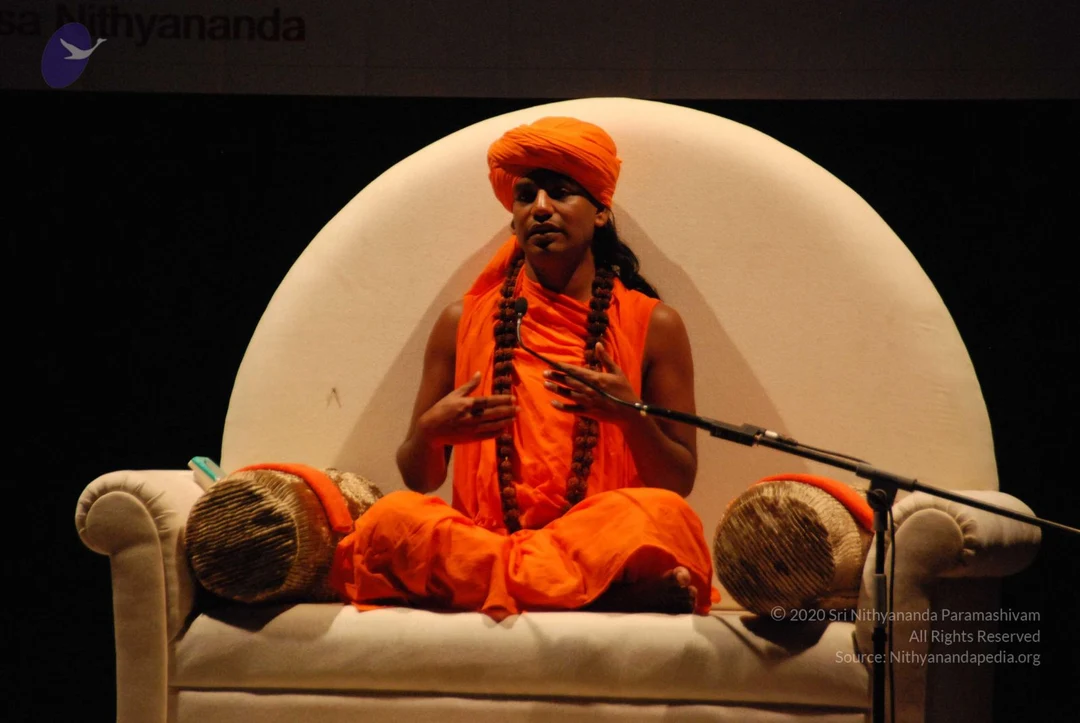
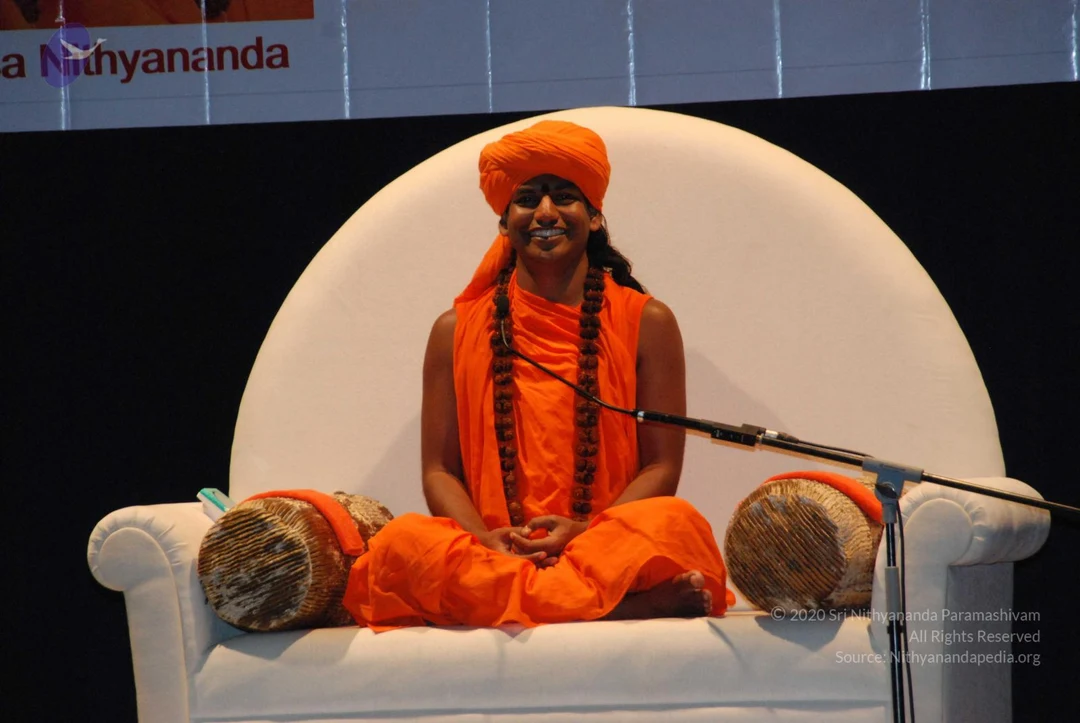
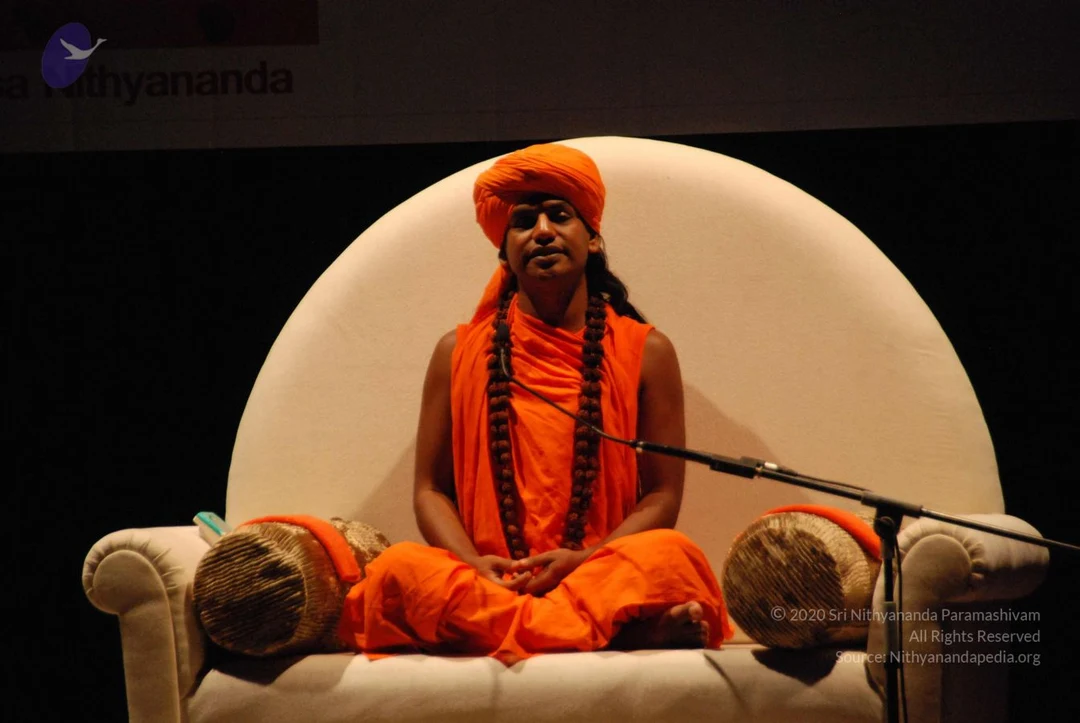
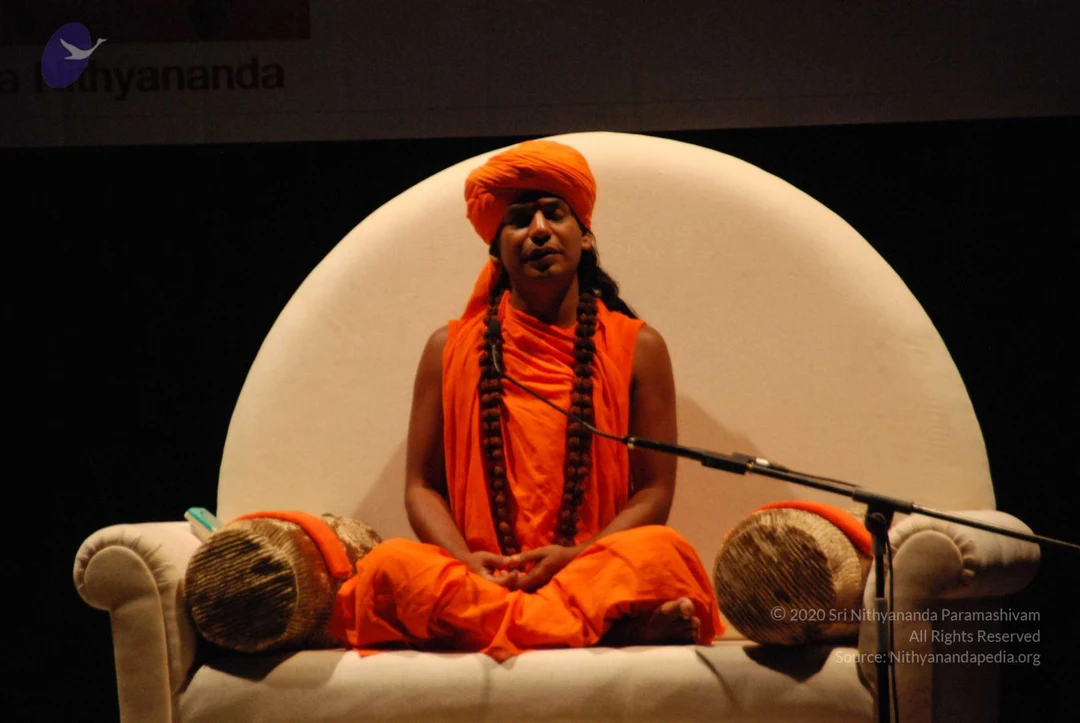
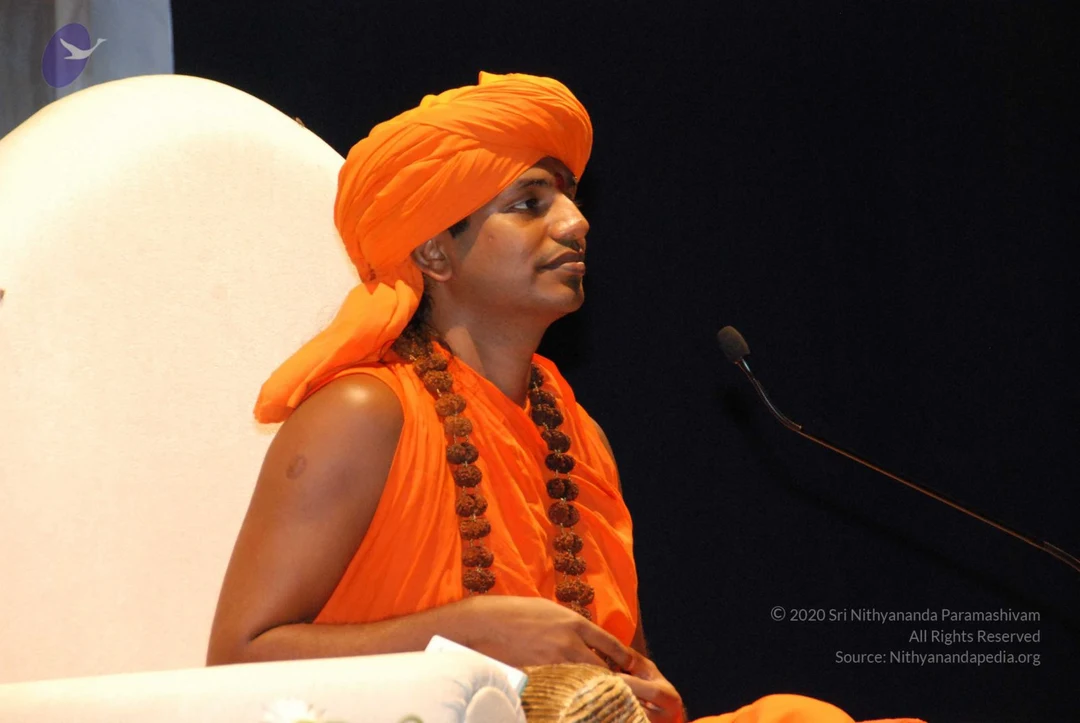
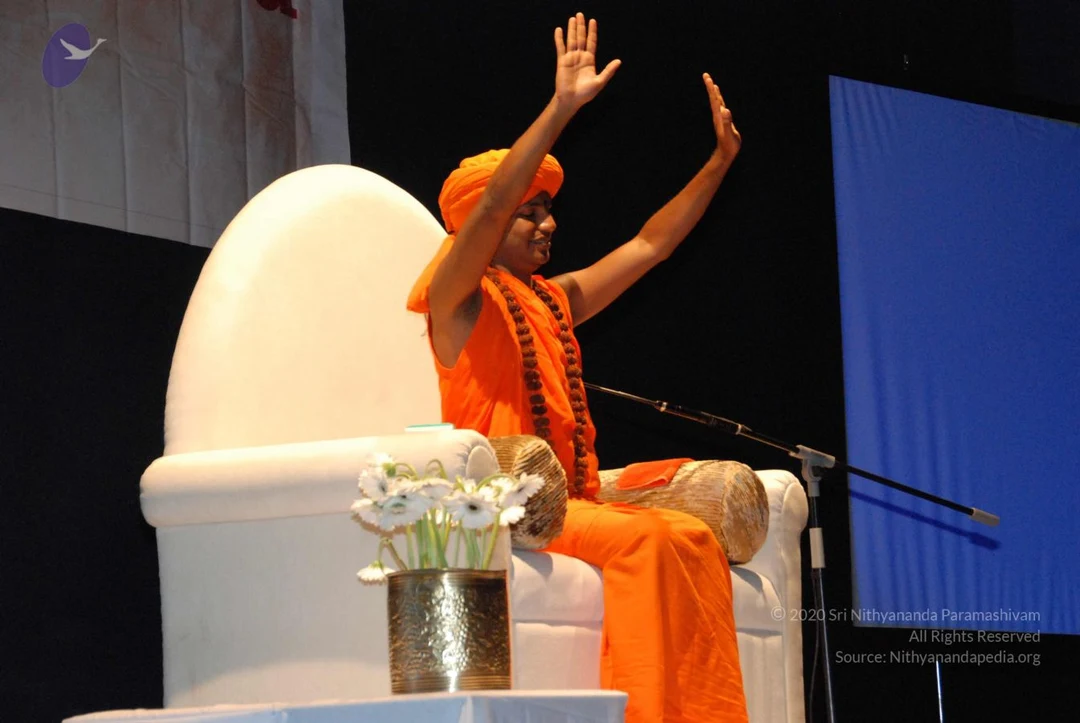
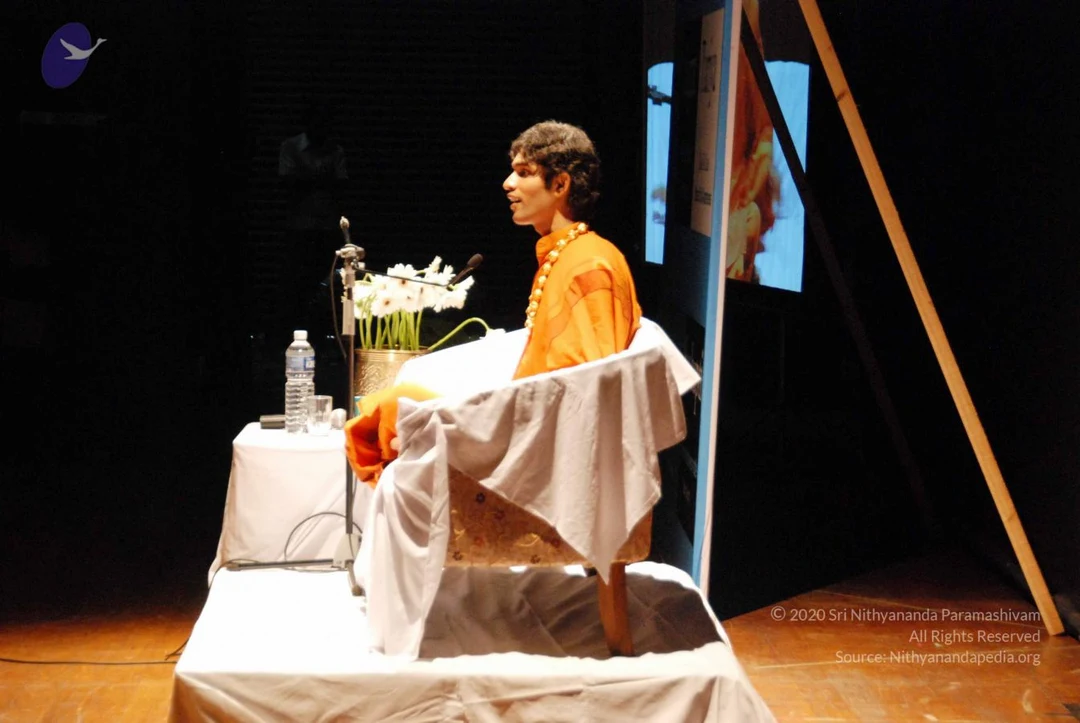
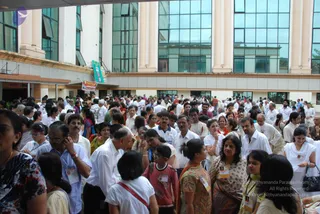
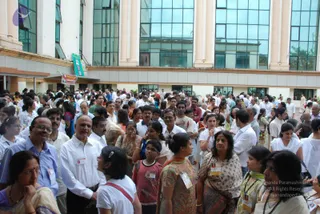
A seated man in an orange sleeveless robe and a long rudraksha mala reads a sheet of paper on a large white throne-like chair with cylindrical cushioned armrests. He has long swept-back hair and looks down at the paper in his hands. A microphone stand stands at the right against a black backdrop, and white flowers in a vase sit in the lower left foreground. Appearance-based label: a person, seated and reading during a programme.A seated man in an orange saffron robe and a long rudraksha mala reads a stack of small white cards on a white upholstered throne-like chair. He has long swept-back dark hair and a red tilak on his forehead. A white flower arrangement sits in the lower left and a dark cylindrical bolster rests beside him. A microphone stand is visible at right against a dark stage backdrop with a pale drape at top left.A large crowd of participants gathers outdoors in a courtyard of a multi-storey building with tall glass windows and white pillars. Many men wear white shirts and trousers, and women wear white or patterned saris and salwar kameez. Several people in the foreground wear lanyard badges. A boy in a red shirt stands near the centre, and a man in a blue shirt talks on a mobile phone at left. No single leader is clearly identifiable among the crowd.A man in an orange saffron robe sits on a large white armchair on a stage, reading through a stack of white papers held in both hands. He has long, swept-back dark hair, a red tilak on his forehead, and a multi-strand rudraksha mala draped over his shoulders and chest. His bare feet rest on a wooden cylindrical bolster. A microphone on a stand is at right, and white flowers sit in the foreground against a dark blue backdrop. The orange robe, long hair and rudraksha mala are appearance cues consistent with the swamiji candidate, so this is a probable identification from appearance, not from the face.A photograph of a person seated on a large white cushioned throne-style chair on a stage, wearing a sleeveless saffron-orange robe and a long rudraksha mala with a ceremonial look. The person has long, swept-back dark hair and is reading printed sheets of paper held in both hands, head bent downward. Cylindrical gold-patterned bolsters rest on the lap and beside the arms of the chair. In front, a microphone stand rises from the right, and a dark metal vase holds white flowers at lower left. The background is a plain black curtain. Appearance cues include long swept hair, saffron clothing and a rudraksha mala, so this is a person seated in a discourse setting.A large crowd of people mills about in a paved courtyard in front of a modern multi-storey building with tall glass windows and white columns. Many attendees wear white shirts and kurtas, while women wear sarees, salwar kameez and churidar outfits in pink, floral, green and beige. Several people have name badges clipped to their clothing. A pale-blue shirted man stands at left, and a boy in a red t-shirt stands near a woman in a patterned saree. A green and white banner hangs on the building facade. The scene suggests an event gathering, with people standing in groups and talking.

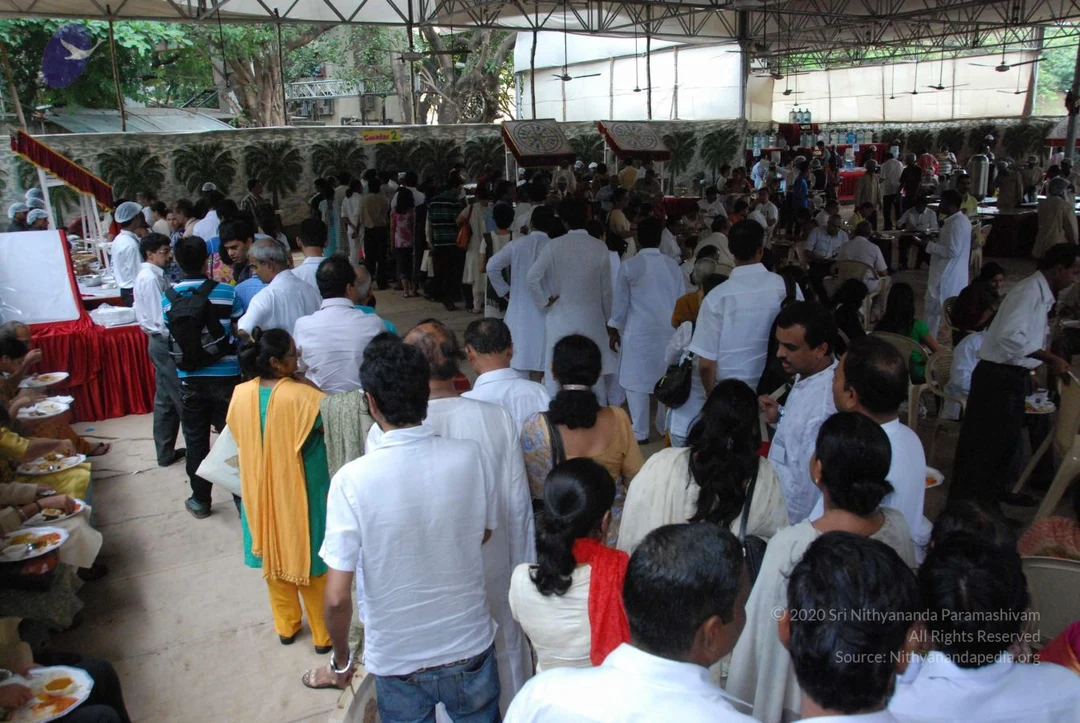
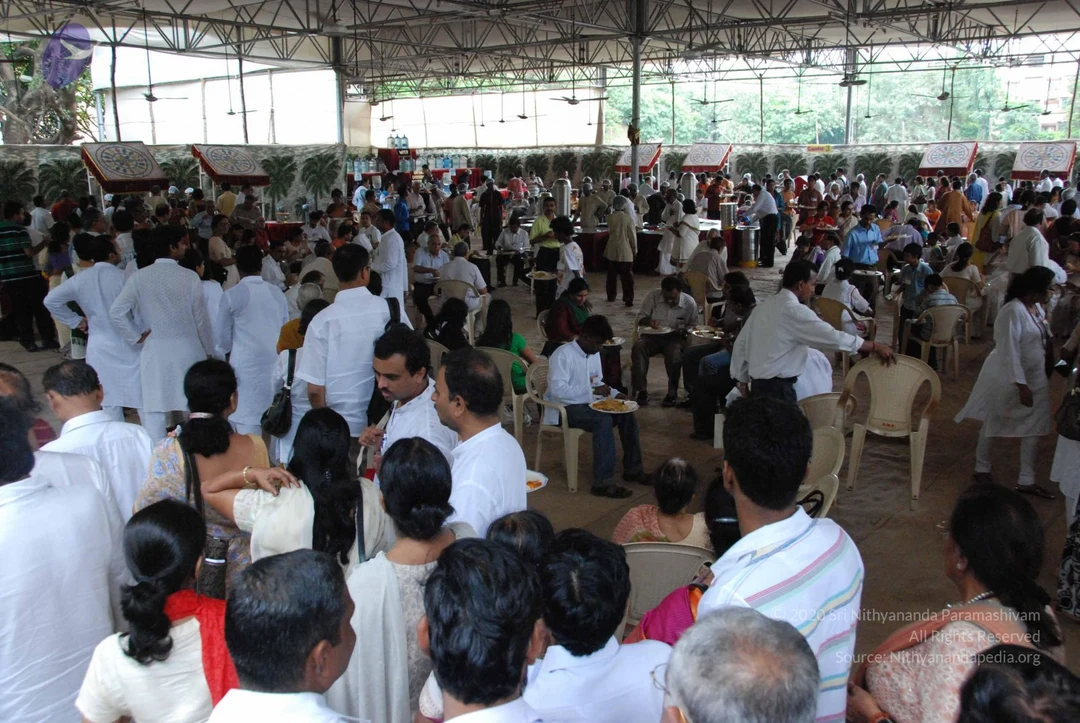
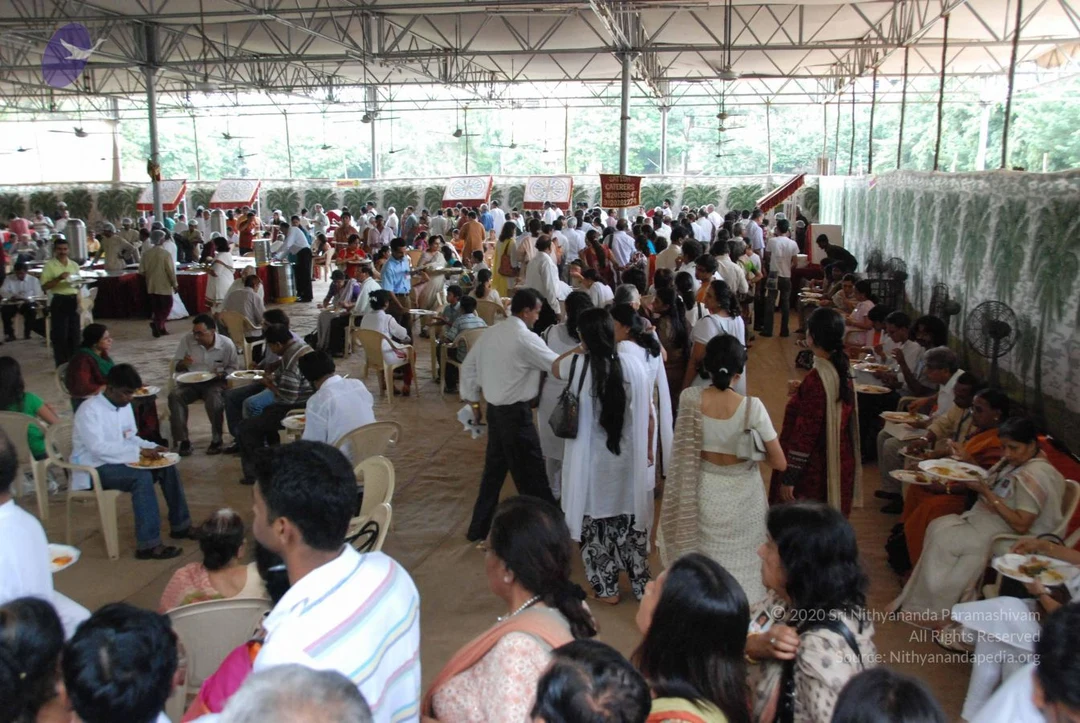
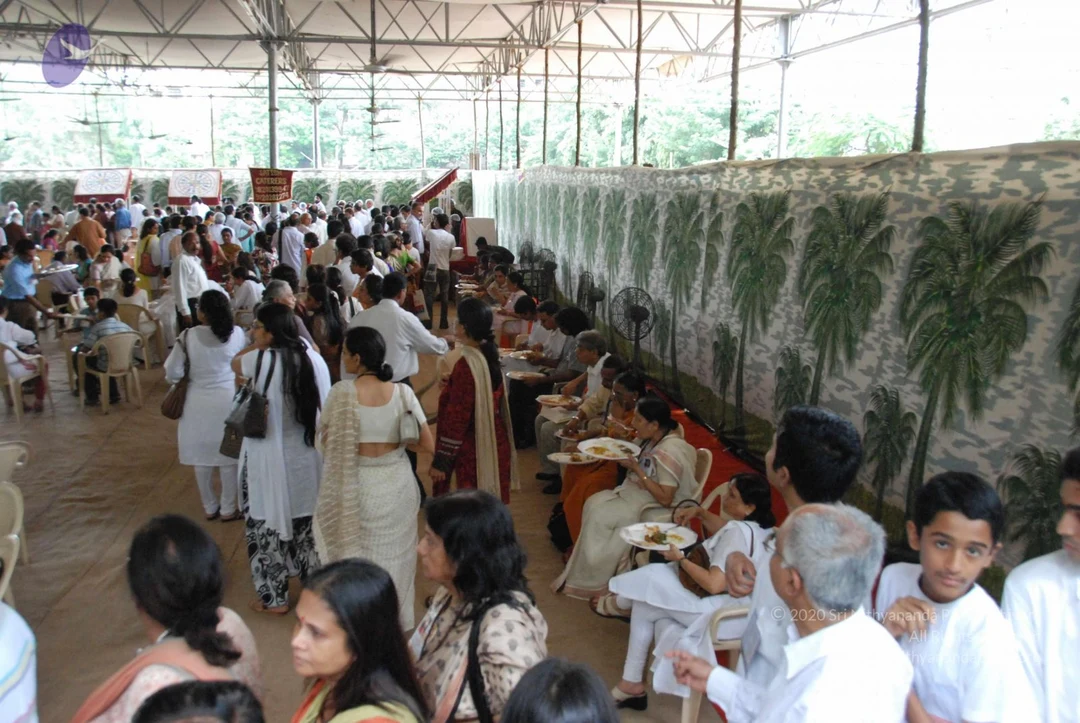
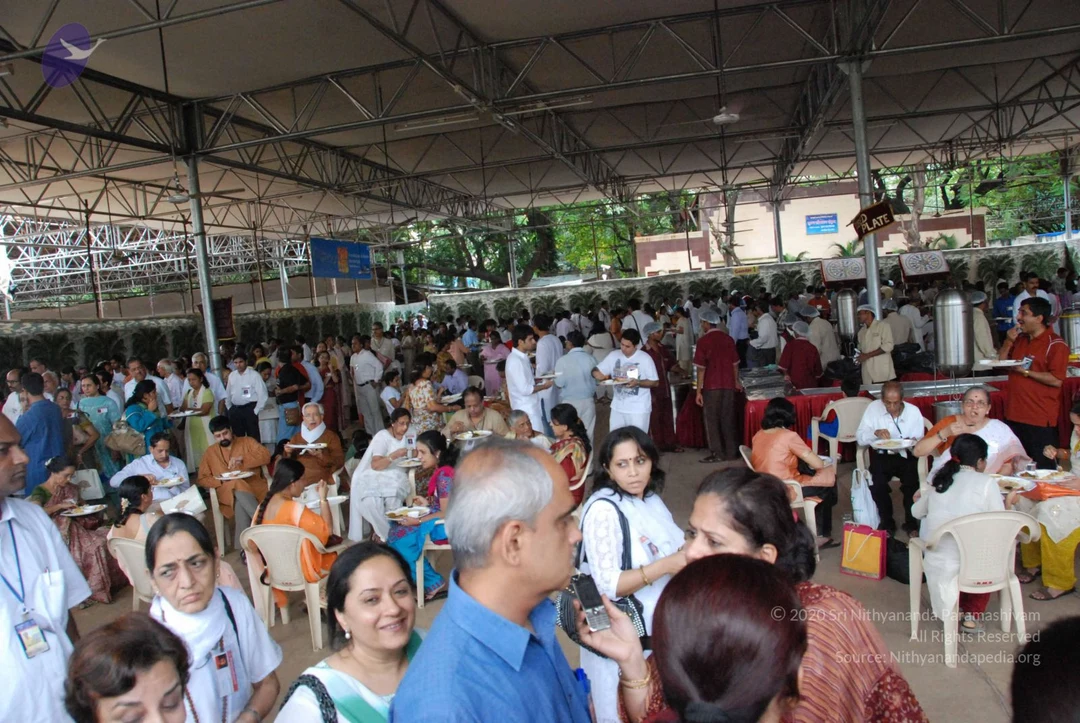
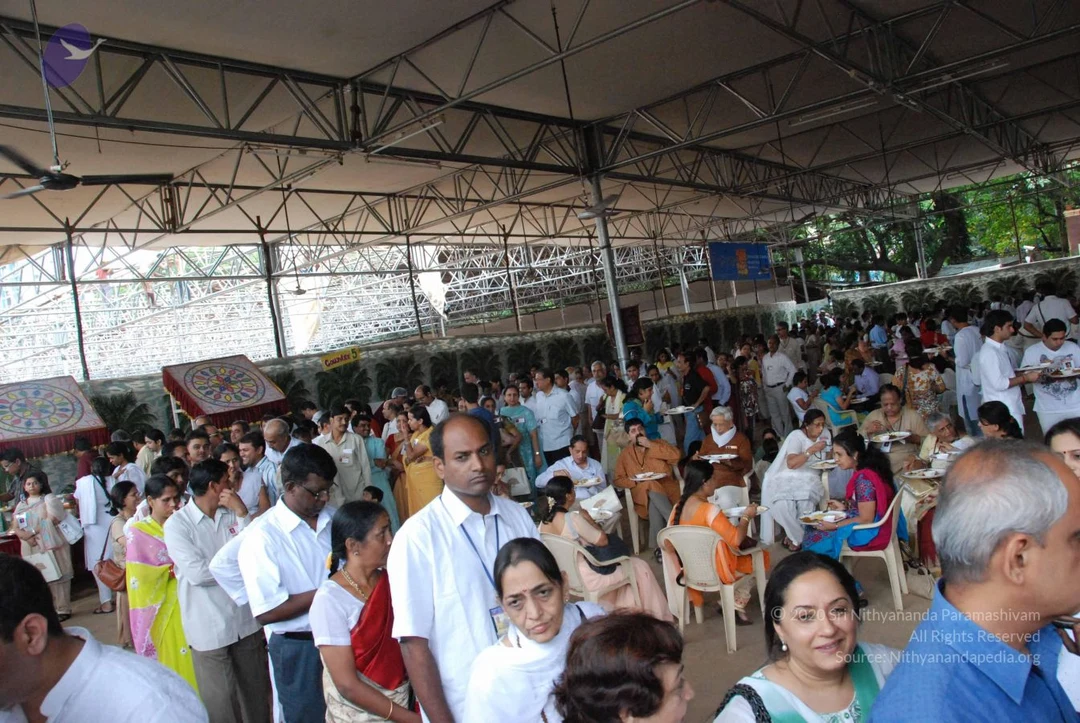
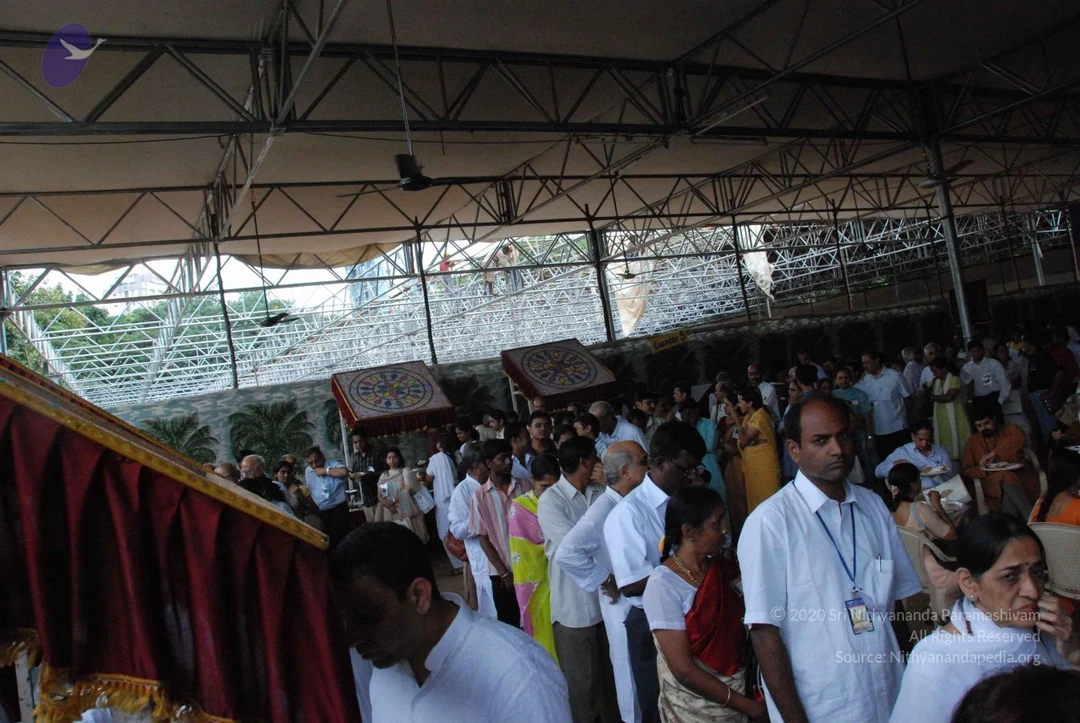
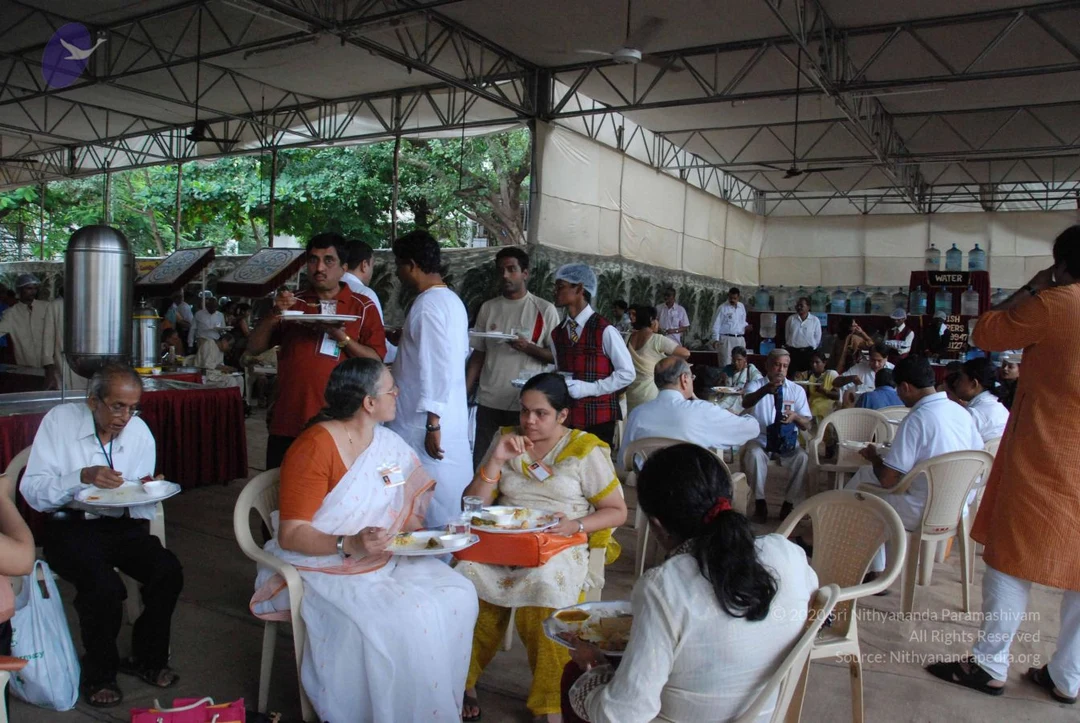
Food

16 photosSource gallery
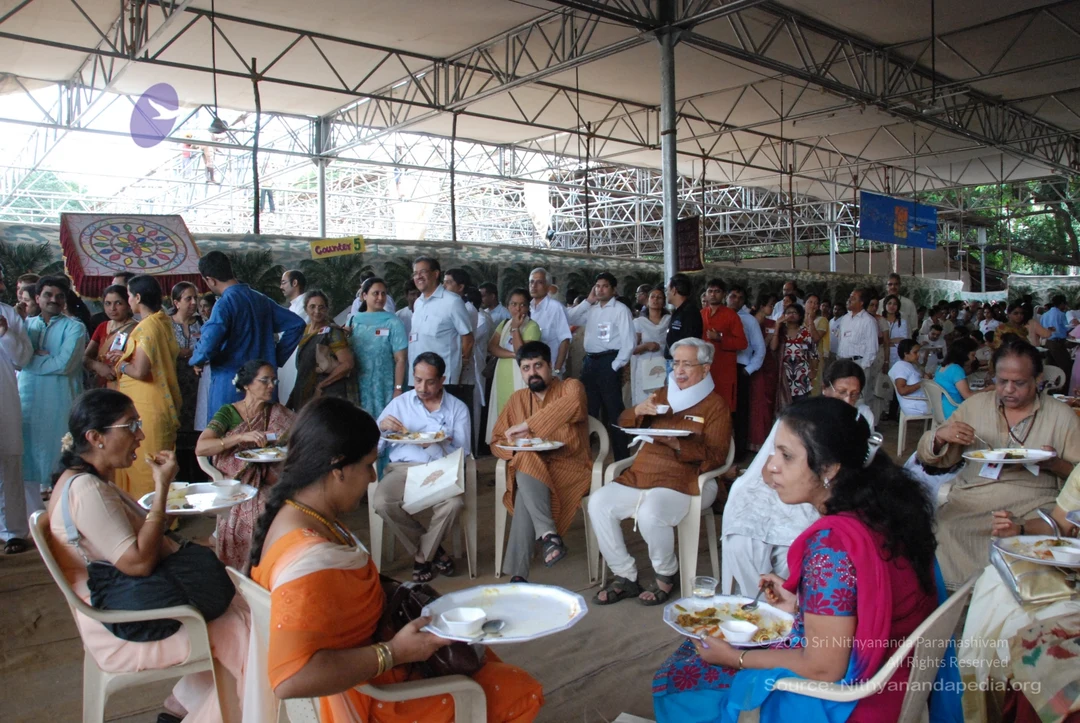
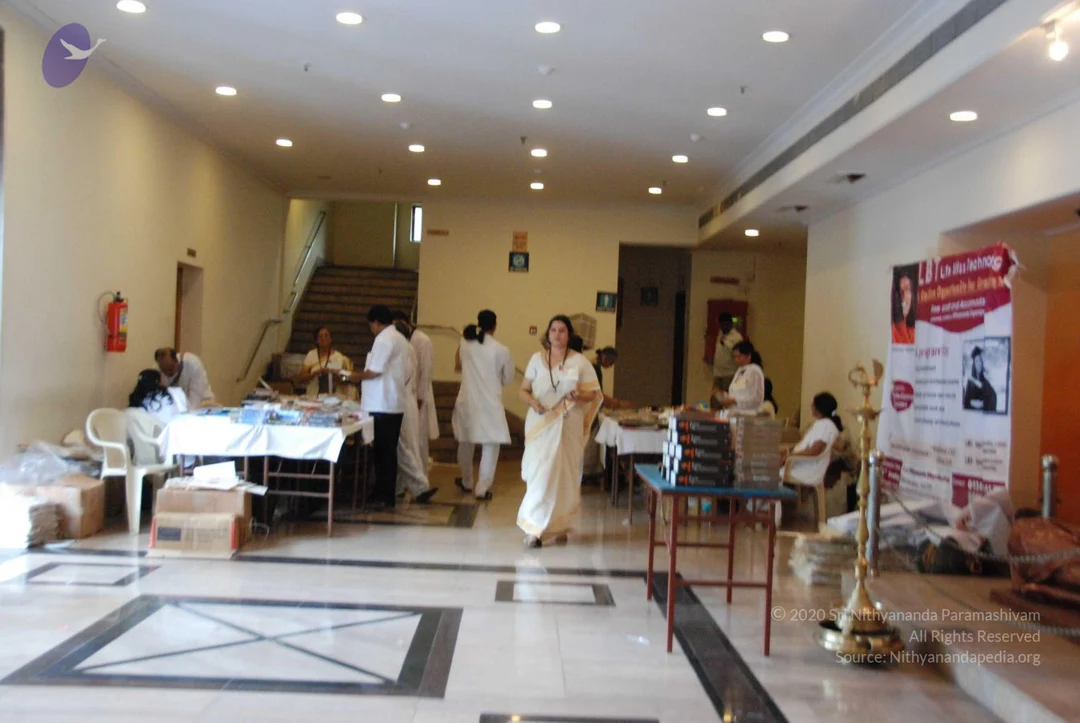
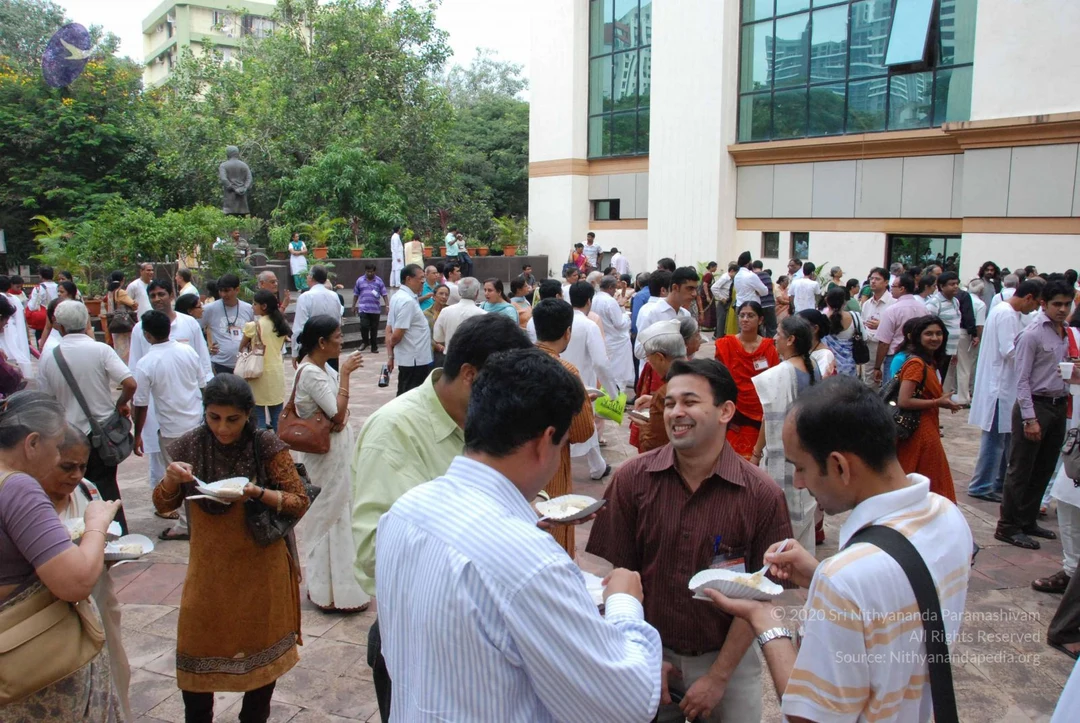
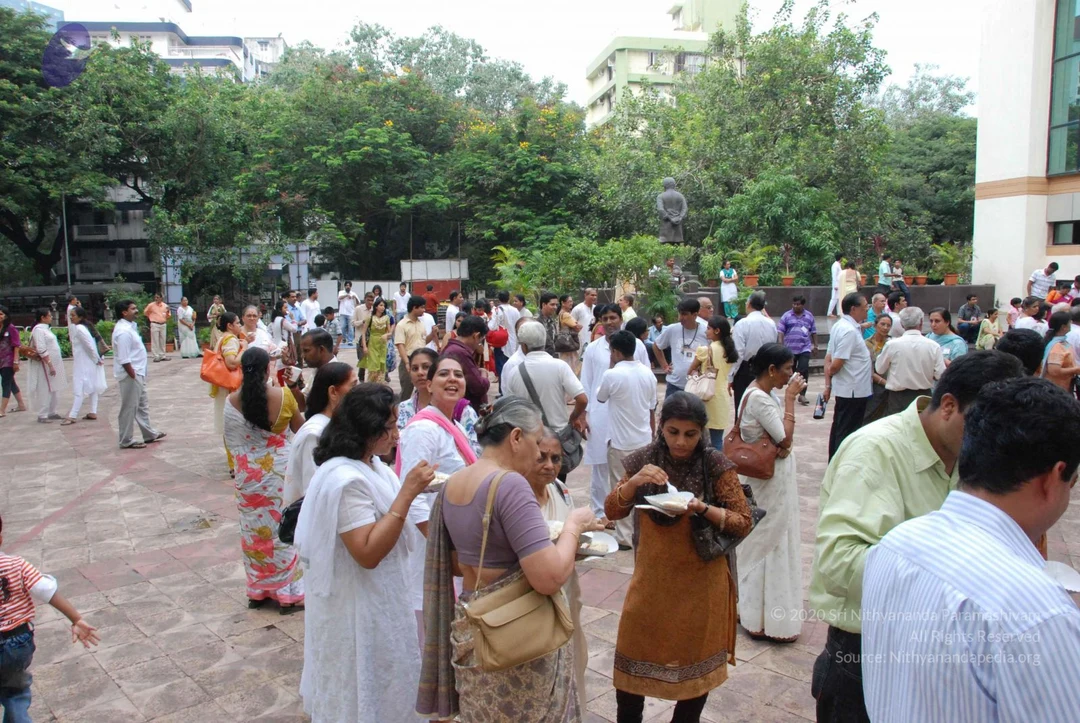
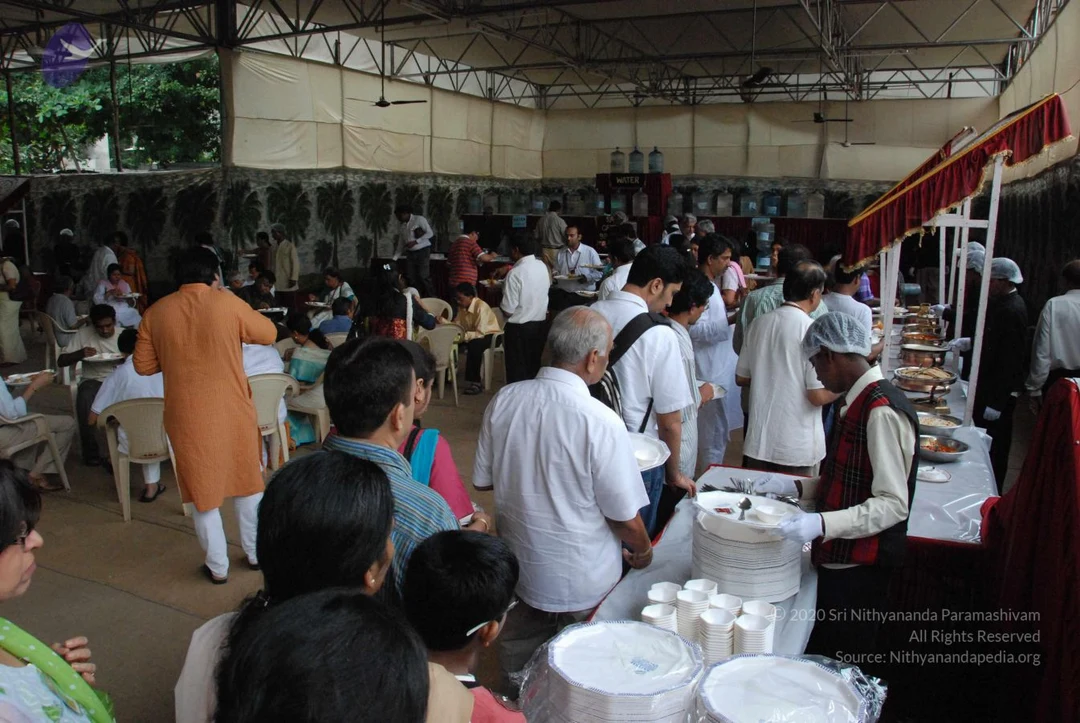
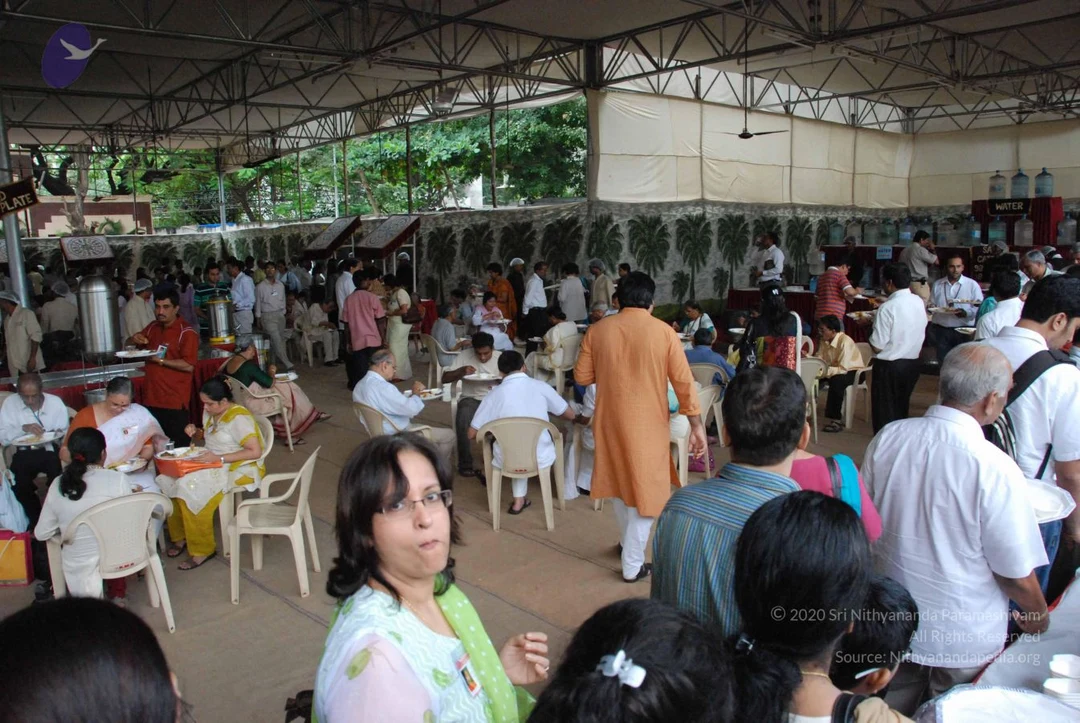
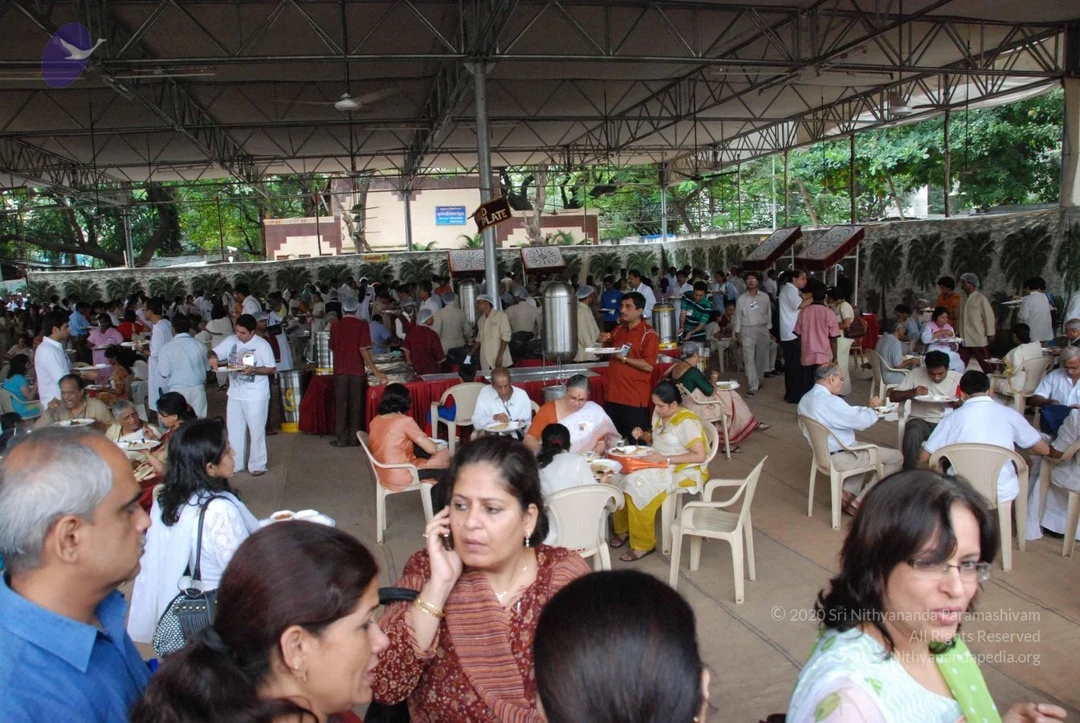
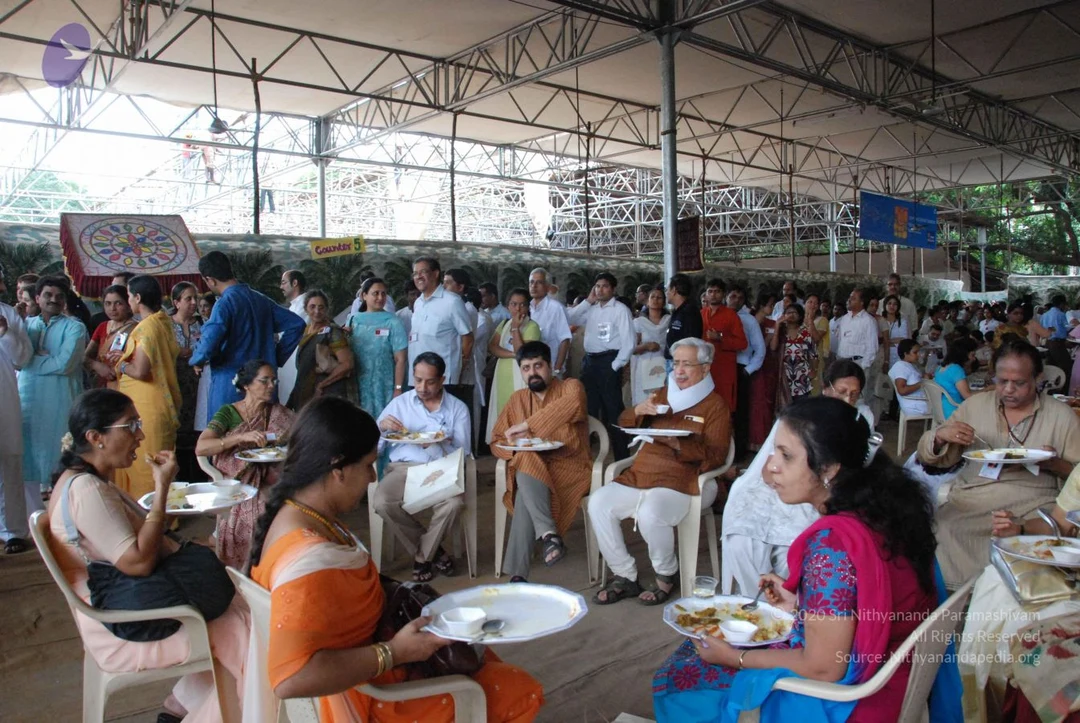
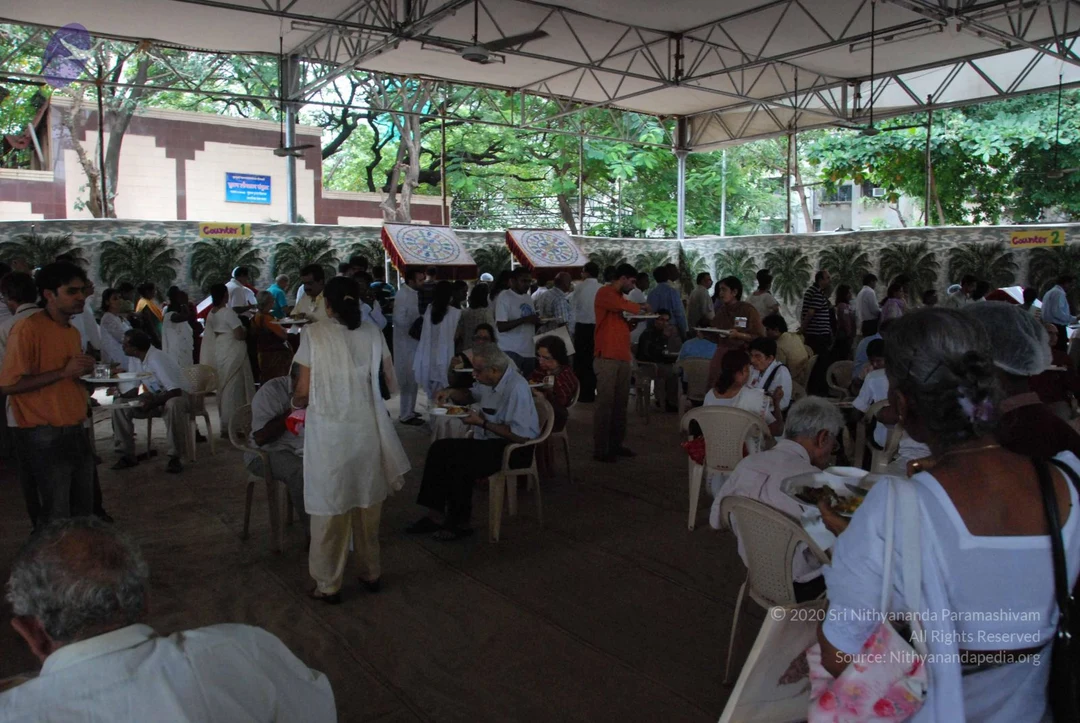
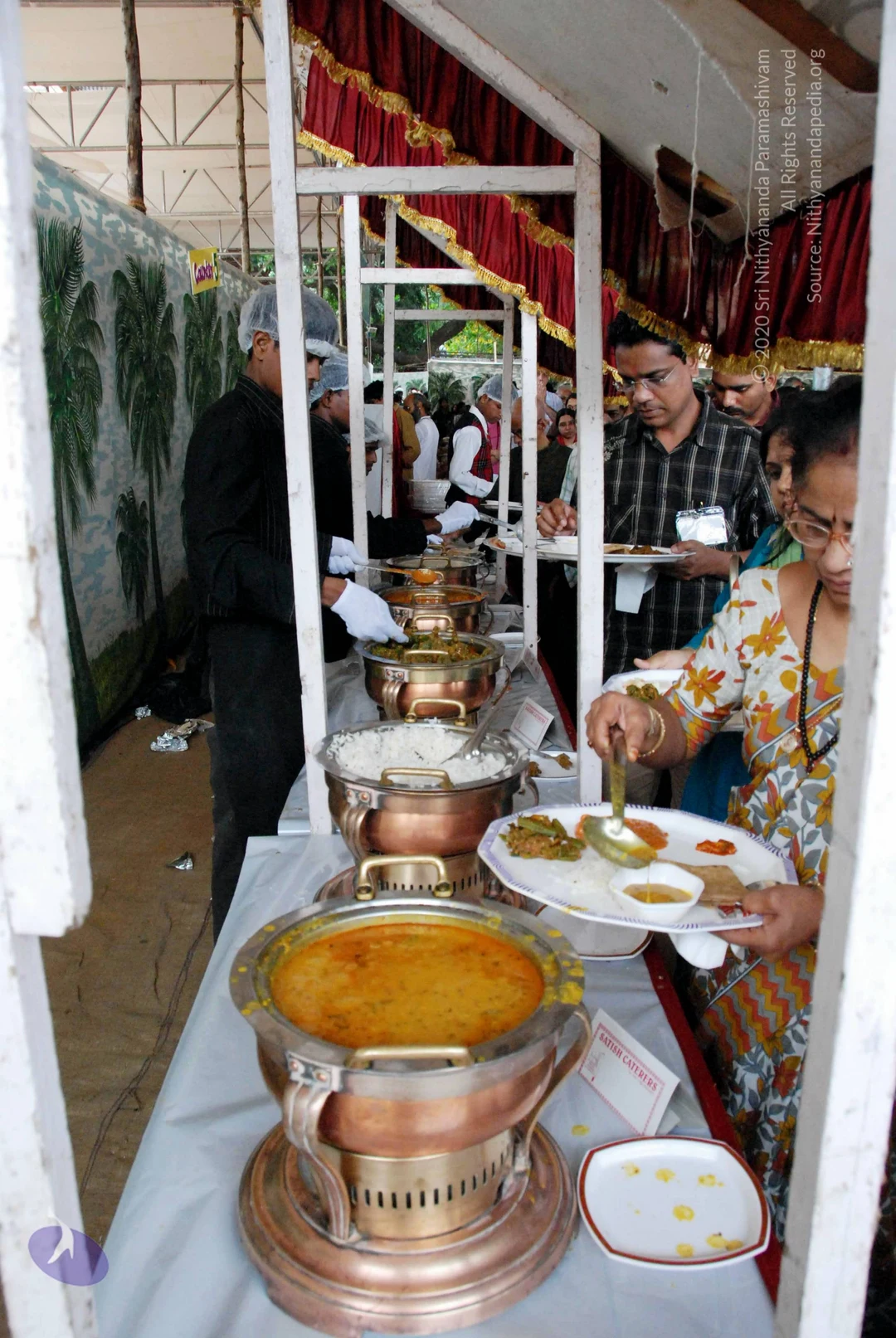
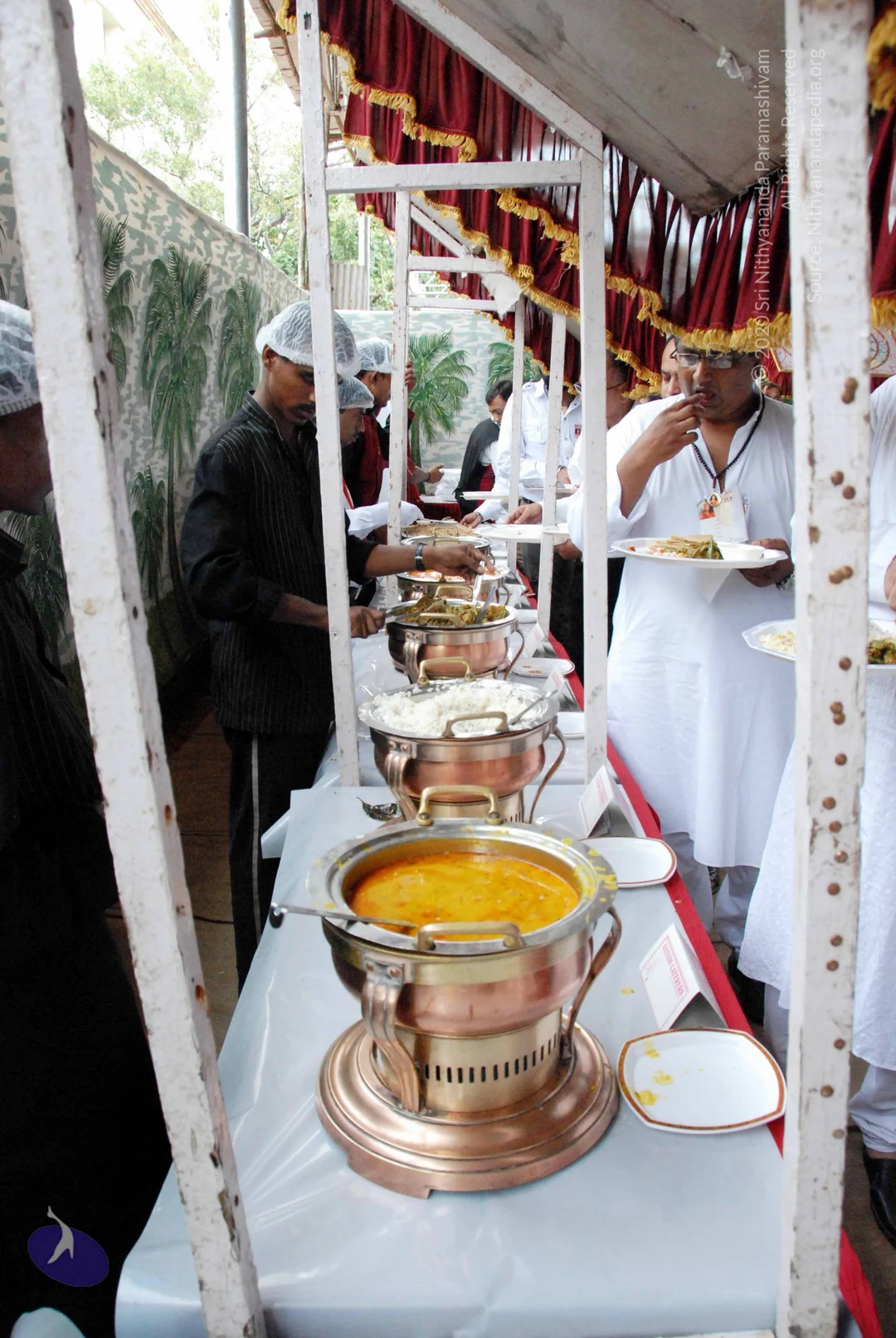
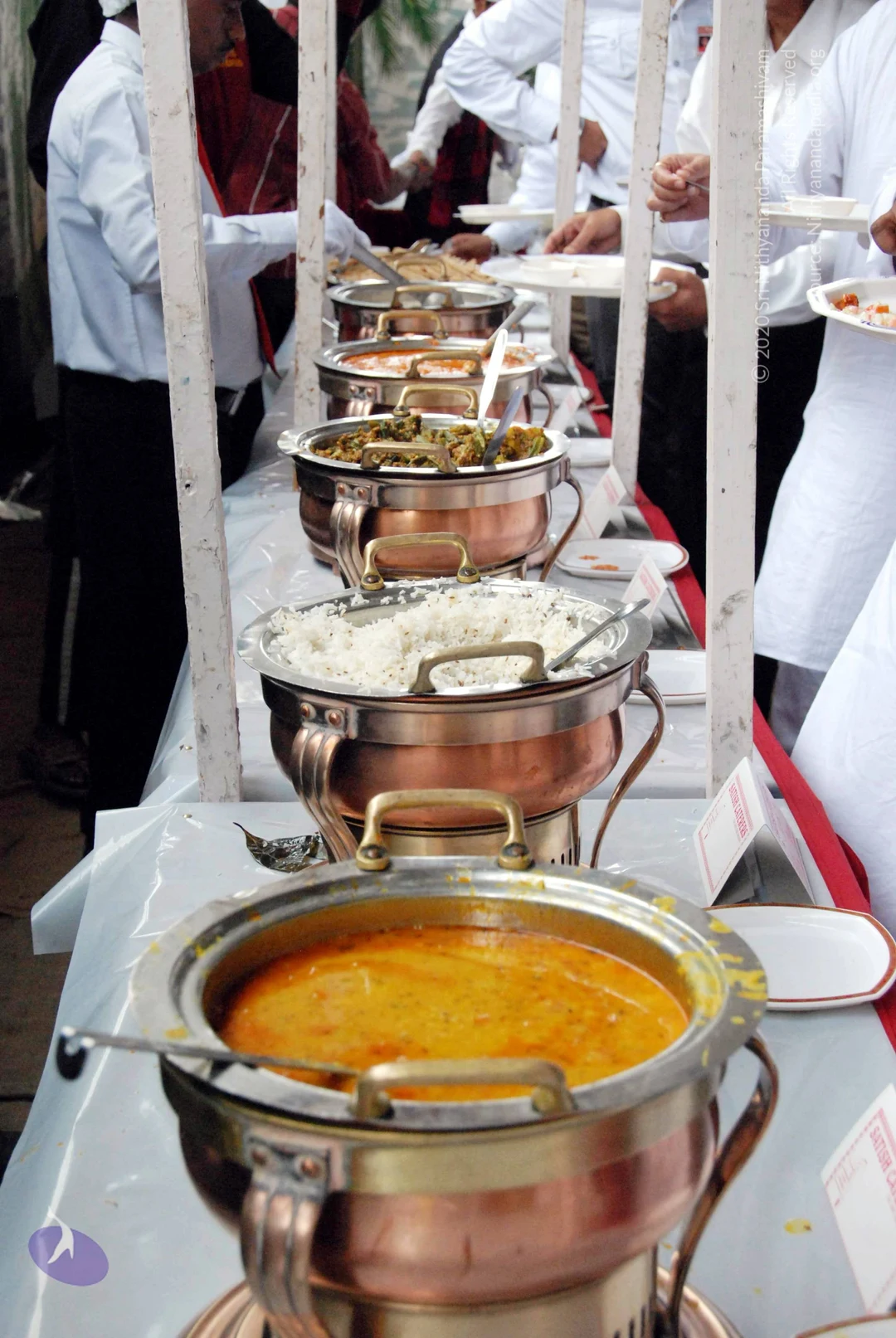
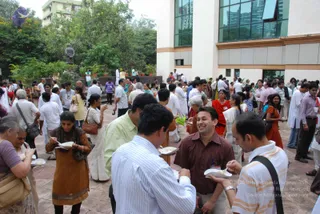
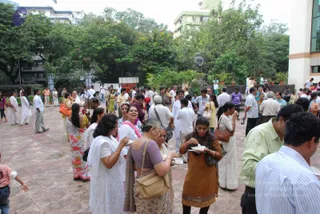
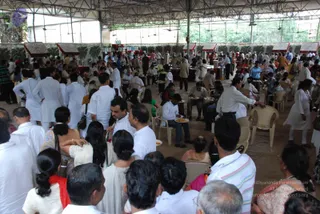
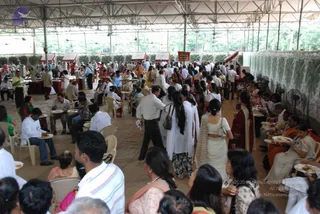
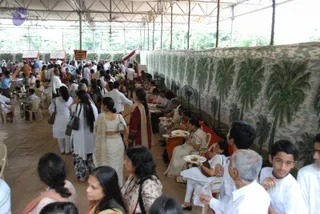
A photograph of a crowded outdoor courtyard at a Mumbai venue, with many people in white kurtas, sarees, salwar kameez and western shirts standing and eating from paper plates. A grey statue of a seated figure stands among green plants and trees beside a white modern building with dark glass windows. Several people in orange, red and brown clothing mingle, and one man in a brown shirt smiles while holding a plate. No one can be clearly identified as a person in this crowd, so no candidate is marked.A photograph of a crowded paved courtyard outdoors with leafy green trees and a tall building behind. Many people, mostly women and some men, stand and mingle, several holding small paper plates or food, eating. Many wear white clothing such as white kurtas and white saris or shawls, while others wear colourful salwar kameez, saris and striped shirts. A woman in a purple top and cream sari stands near the centre, and a woman in a brown kurta holds a plate. A grey statue of a standing figure stands on a pedestal in the background among potted plants. Children are partly visible at the left edge.A crowded outdoor food hall under a covered canopy with ceiling fans, where many people queue along buffet tables and stand in line holding plates. Most men wear white shirts and white kurta-style clothes, while women wear saris and salwar kameez in yellow, green, orange and red. A palm-leaf printed wall and red-draped food counters are visible at the back. No identifiable a person figure is visible, and the people are all presumed attendees.A large covered outdoor hall with ceiling fans and open sides, filled with a crowd of devotees dressed mostly in white kurtas and white salwar-kameez. Many people sit on beige plastic chairs at tables, some holding plates of food, while others stand in lines and conversation near serving counters with steel containers and kalasha-style urns. Red and maroon canopy tents with ornate patterns line the back, and a man in a white shirt at the centre points toward the food area. Seated diners and standing attendees fill the space.A large covered hall with a metal roof and ceiling fans hosts a community meal. Many people, most seated in white plastic chairs at long tables, hold paper plates of food. Several men and women in white and in colourful saris and salwar kameez walk among the tables, one woman in a white outfit carrying a bag. Along the right wall, red and white banners and a sign reading Children's Food hang above a green foliage backdrop. Some attendees wear saffron and orange garments. The crowd is dense, filling the hall, with serving tables and urns at the far left.A wide photograph of a large open-sided pavilion with a tent roof where many people sit on white plastic chairs at long rows of tables, eating from white plates. Foreground devotees in white kurtas and salwar kameez, saris and dupattas in many colours stand and walk through the crowd, and a man in a white shirt directs the line. A painted backdrop of palm trees runs along the right wall, and small red and white placards hang near the back. A man in a white shirt and an orange-clad woman sit among the diners, and a young boy in white stands at the right edge. The setting suggests a communal meal, with food being served and eaten.

more photographs

28 photosSource gallery
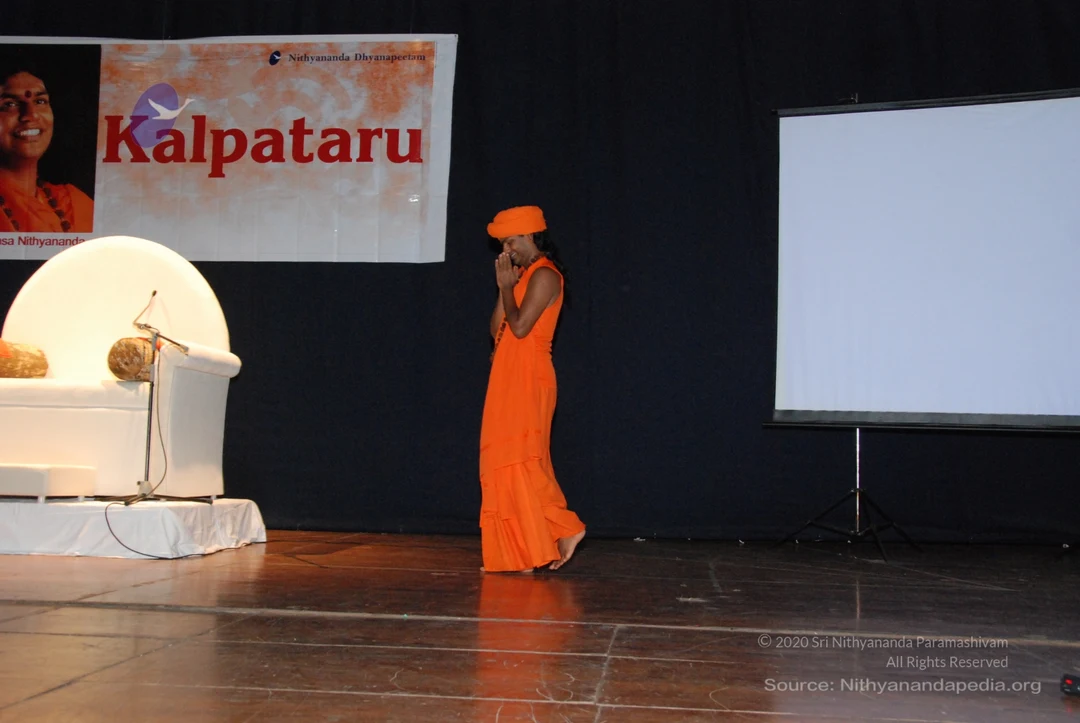
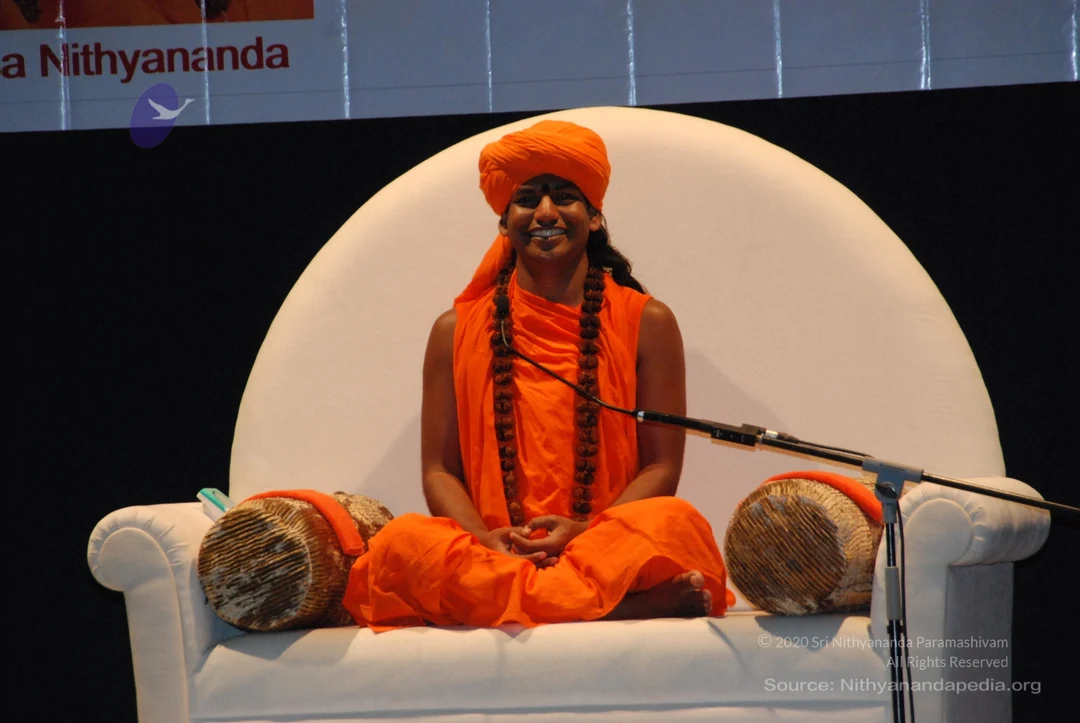
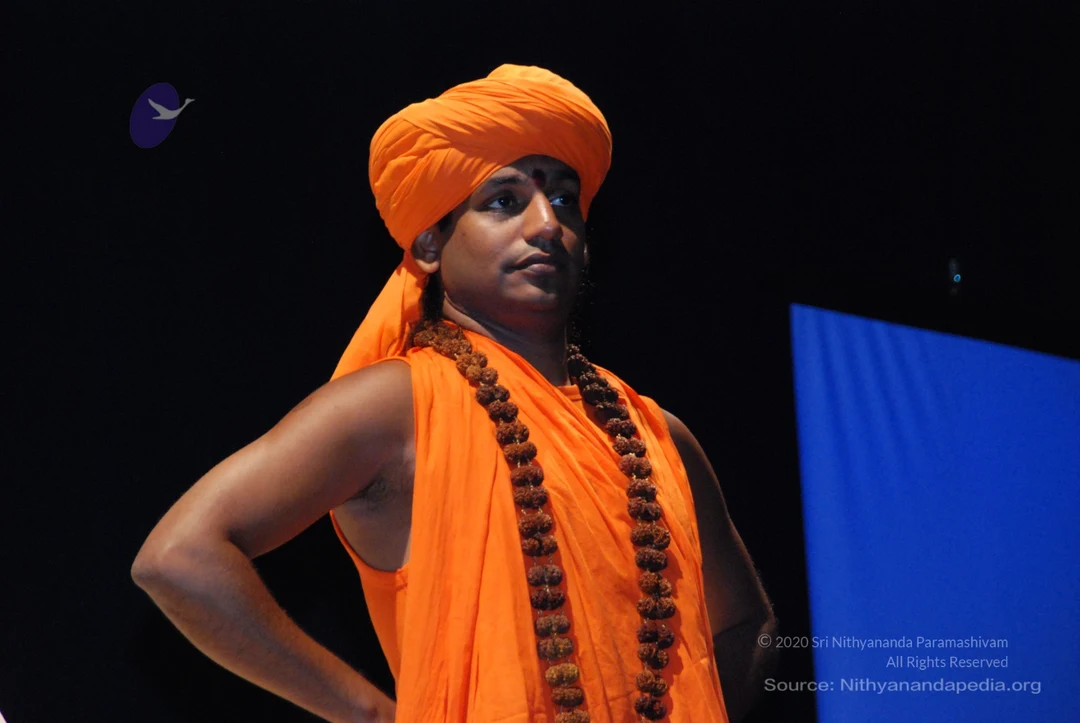
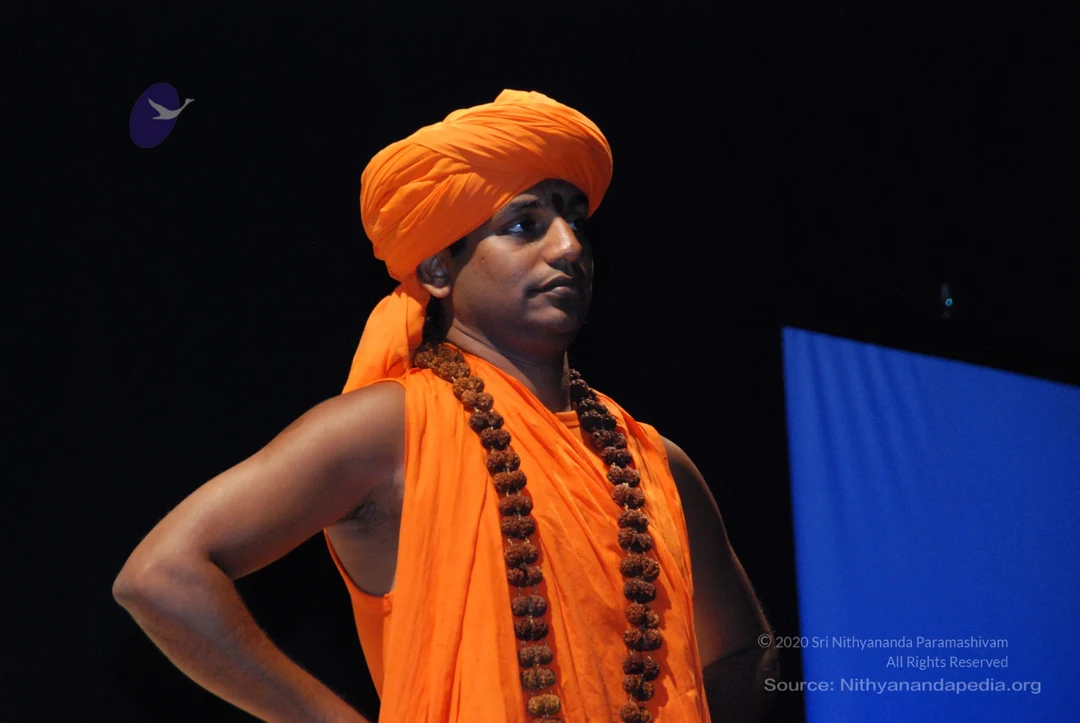
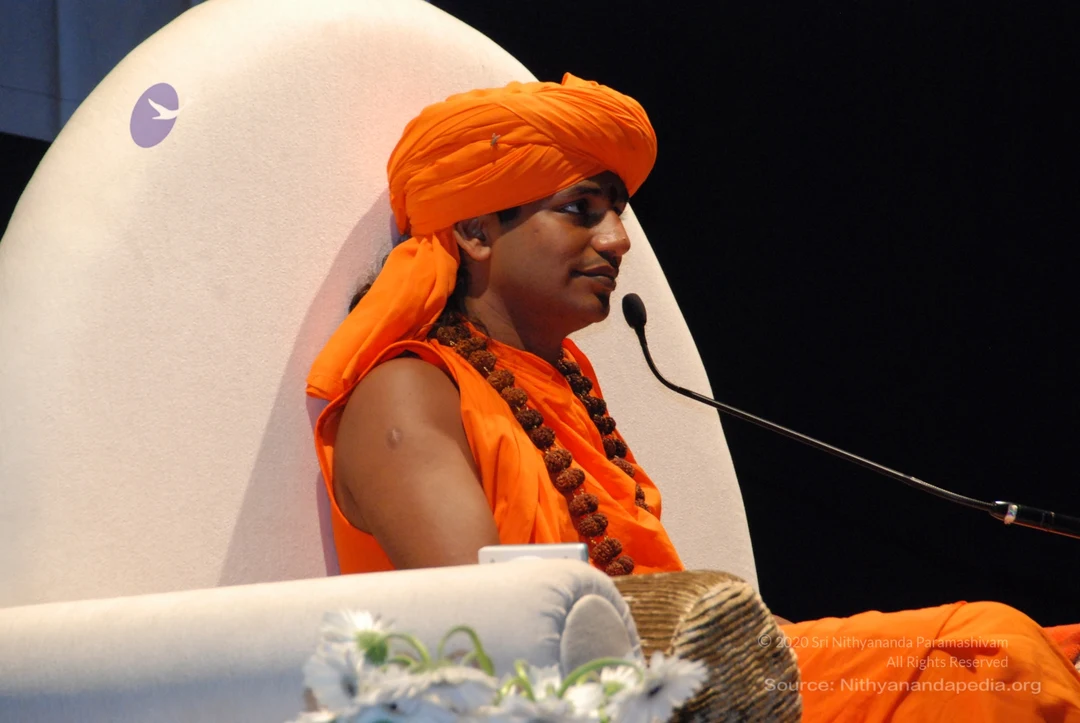
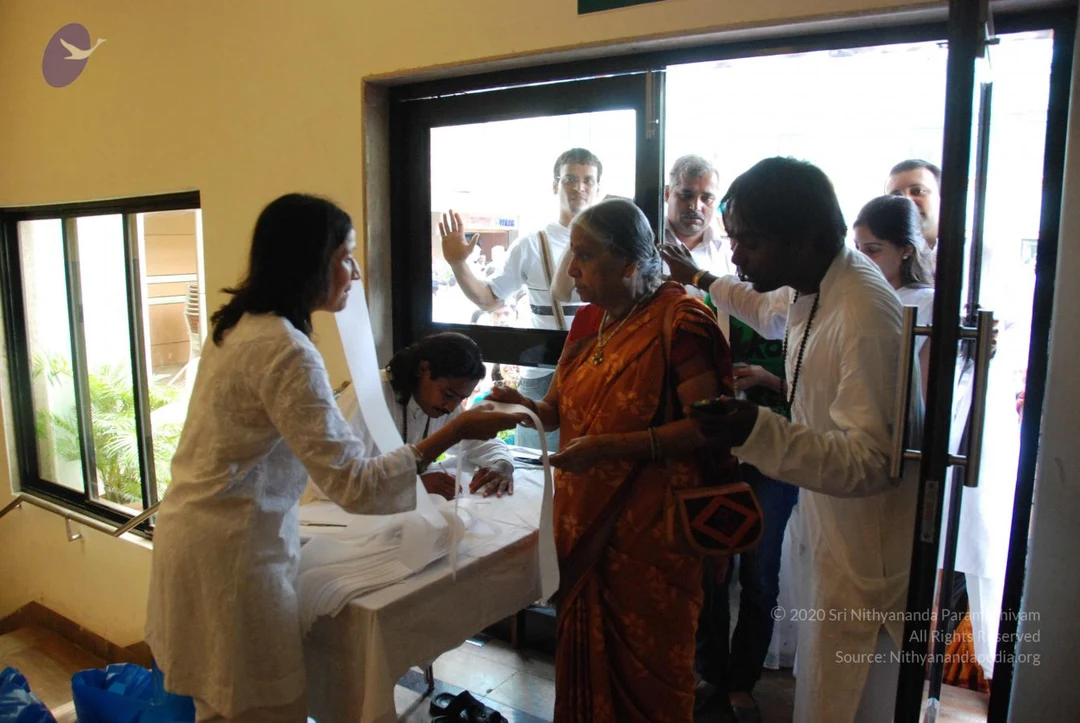
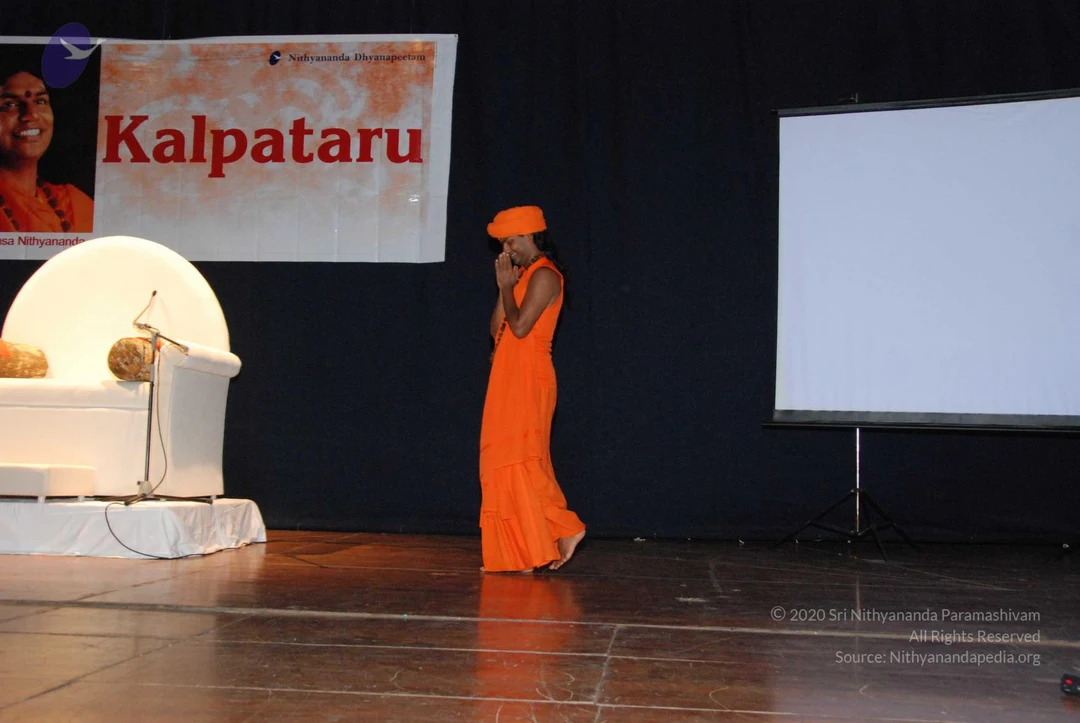
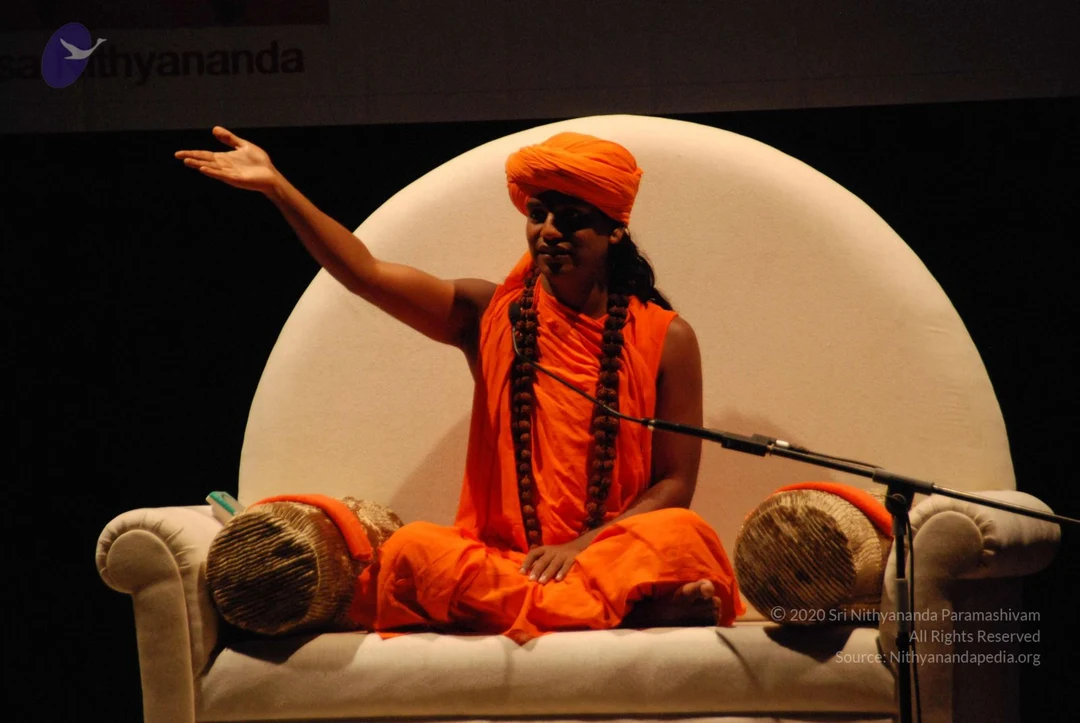
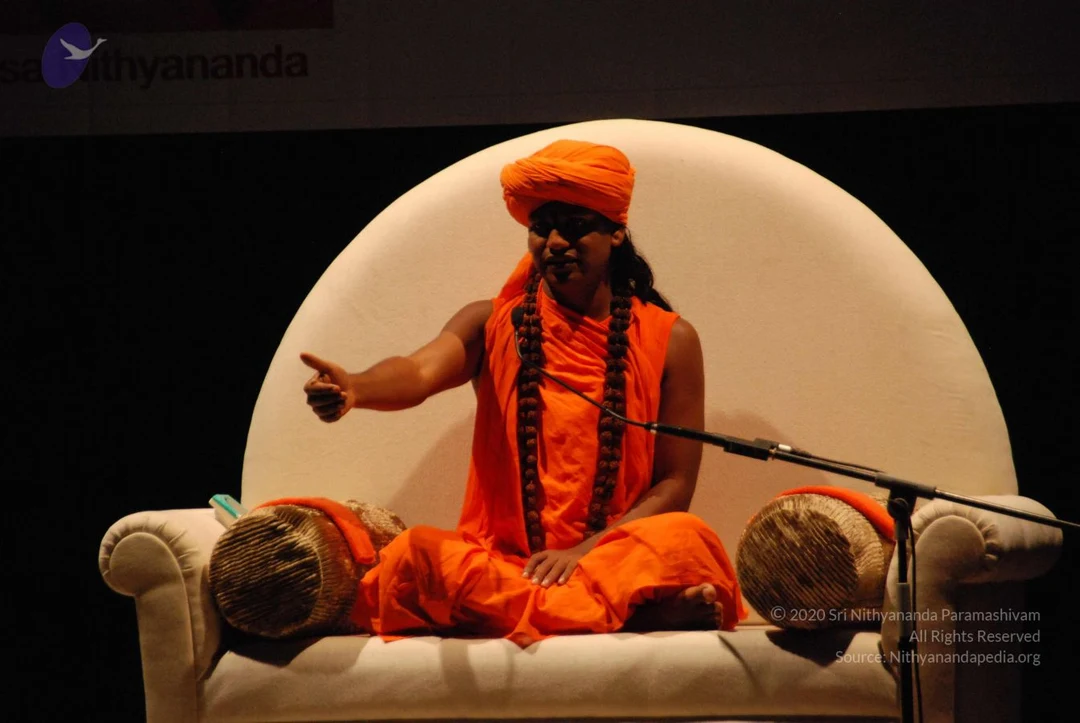
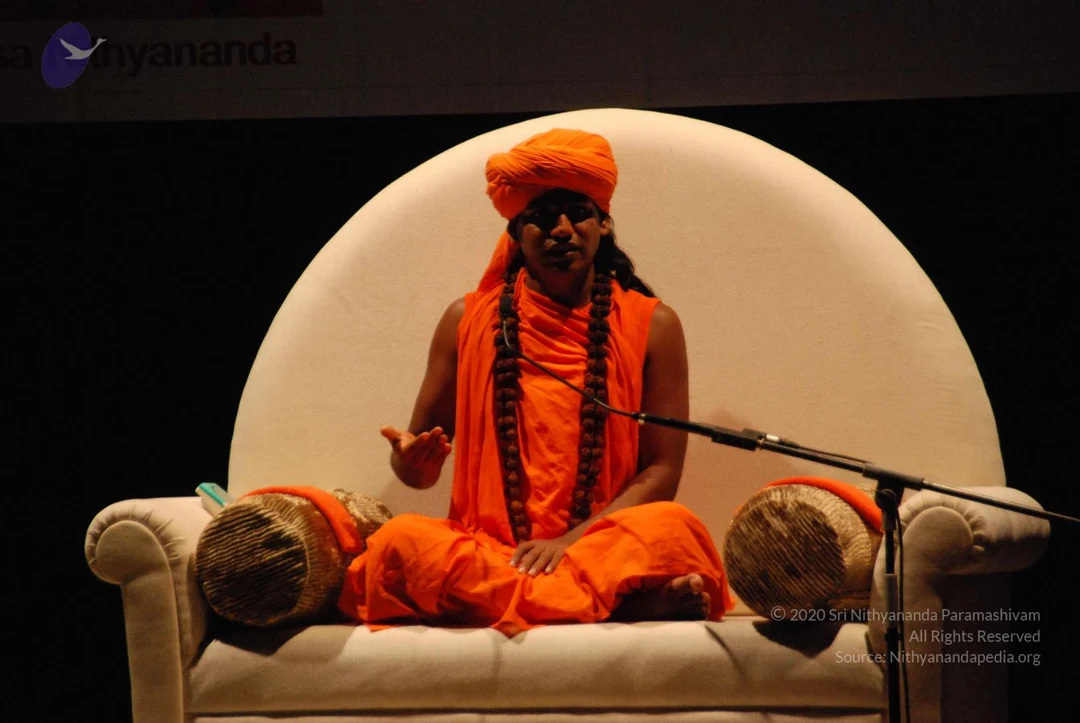
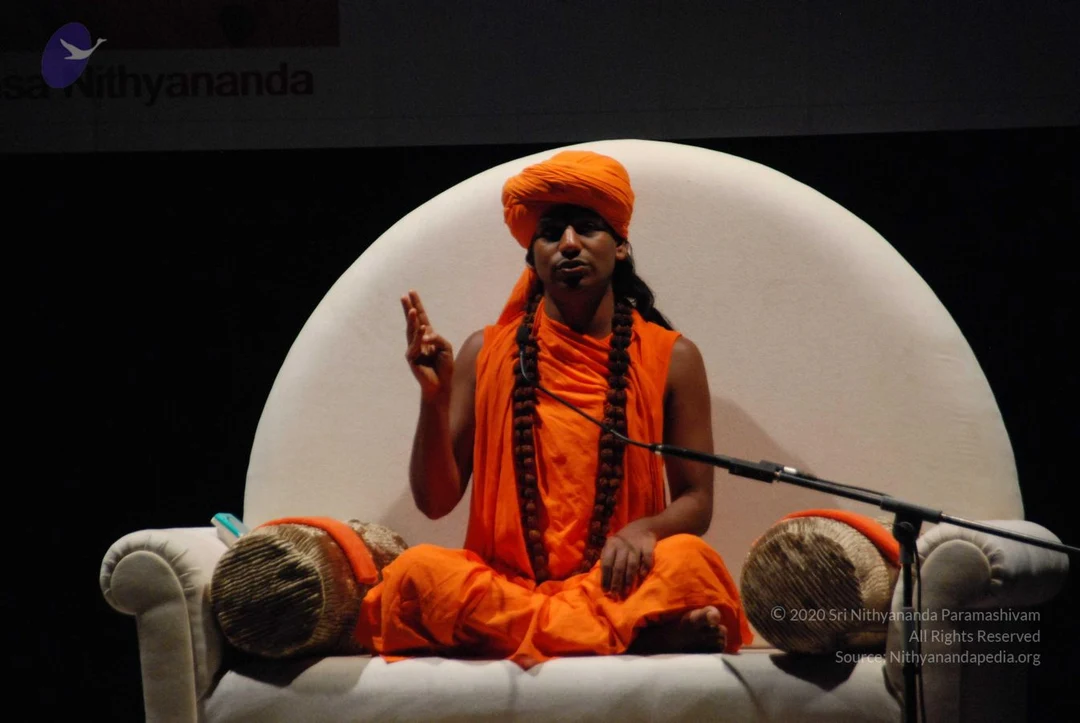
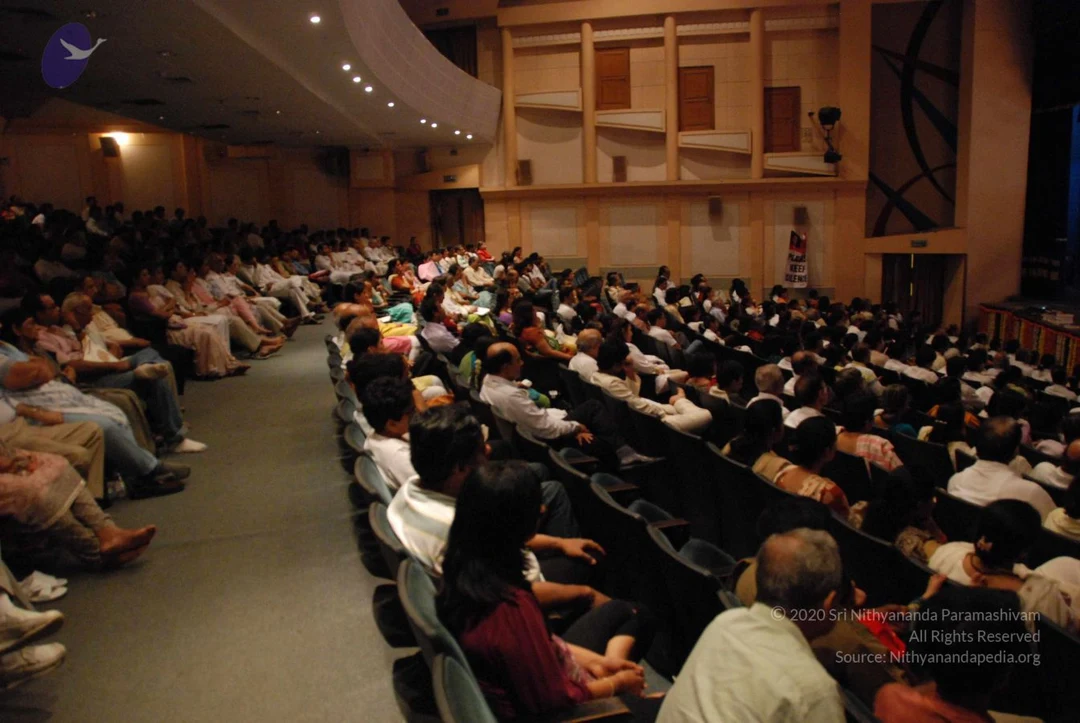
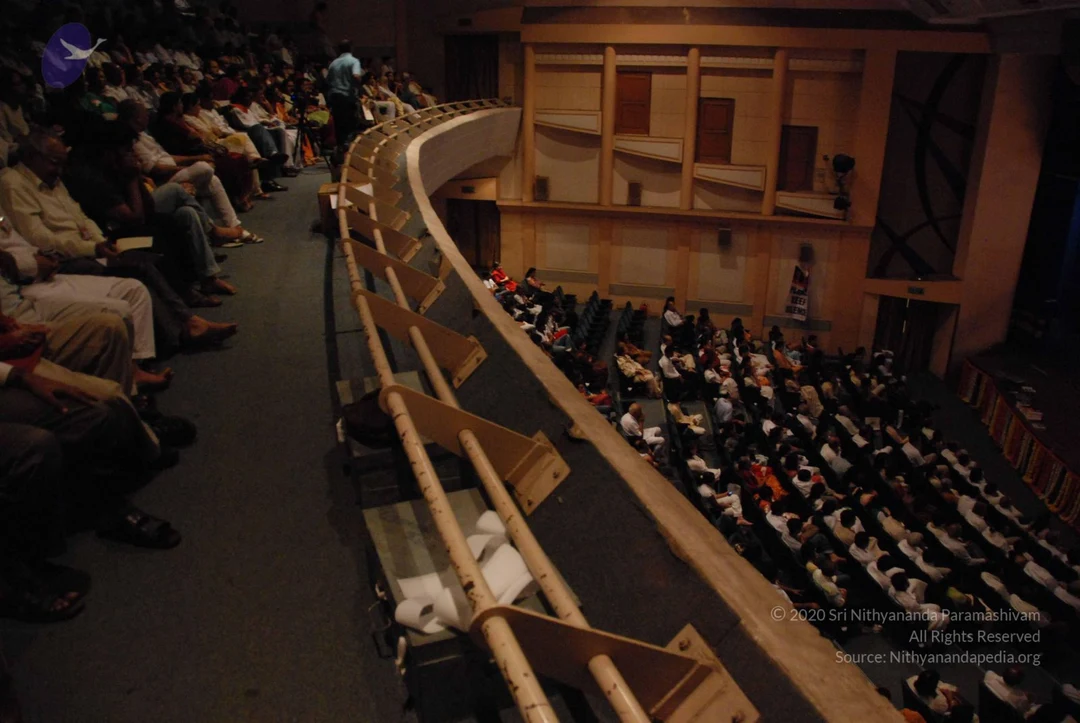
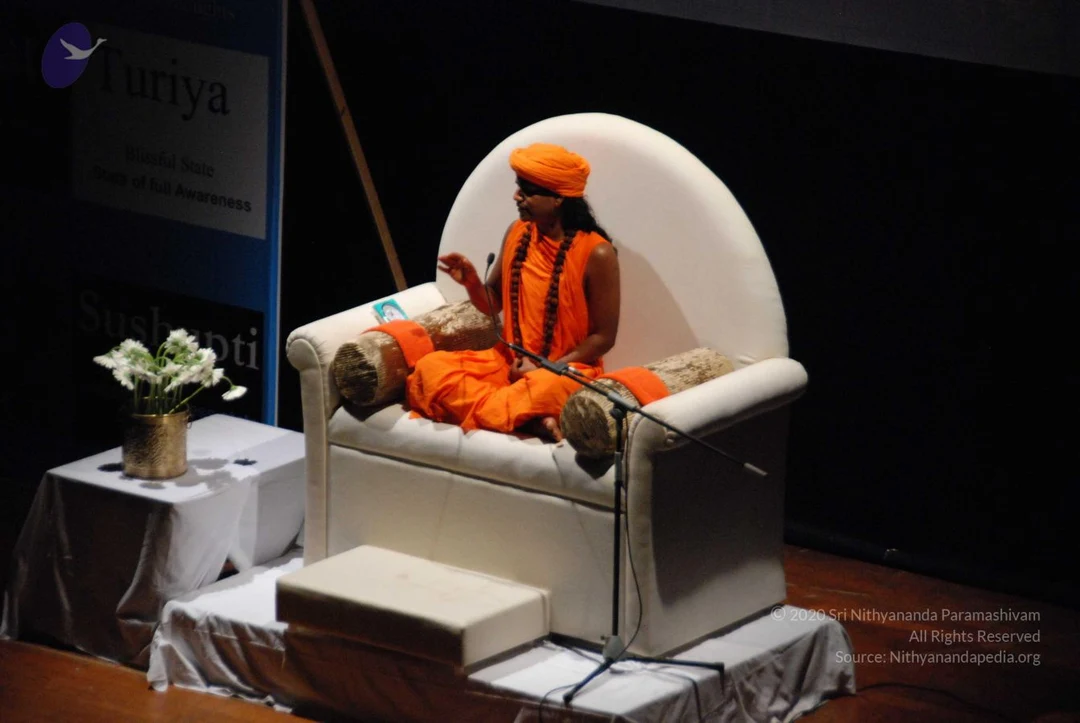
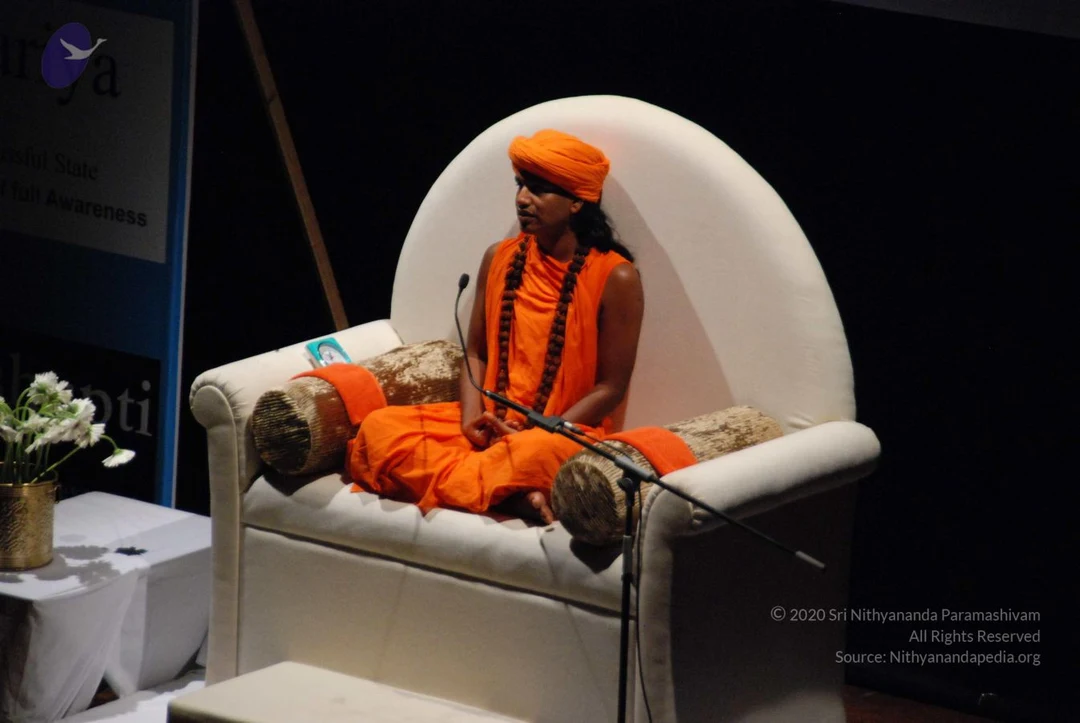
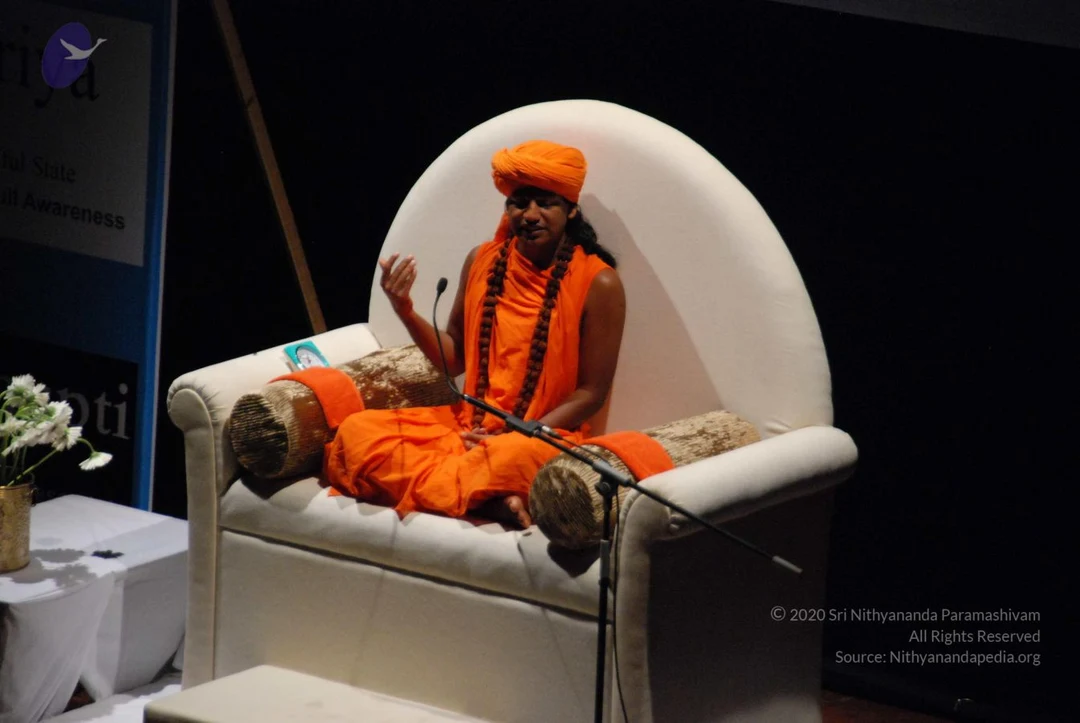
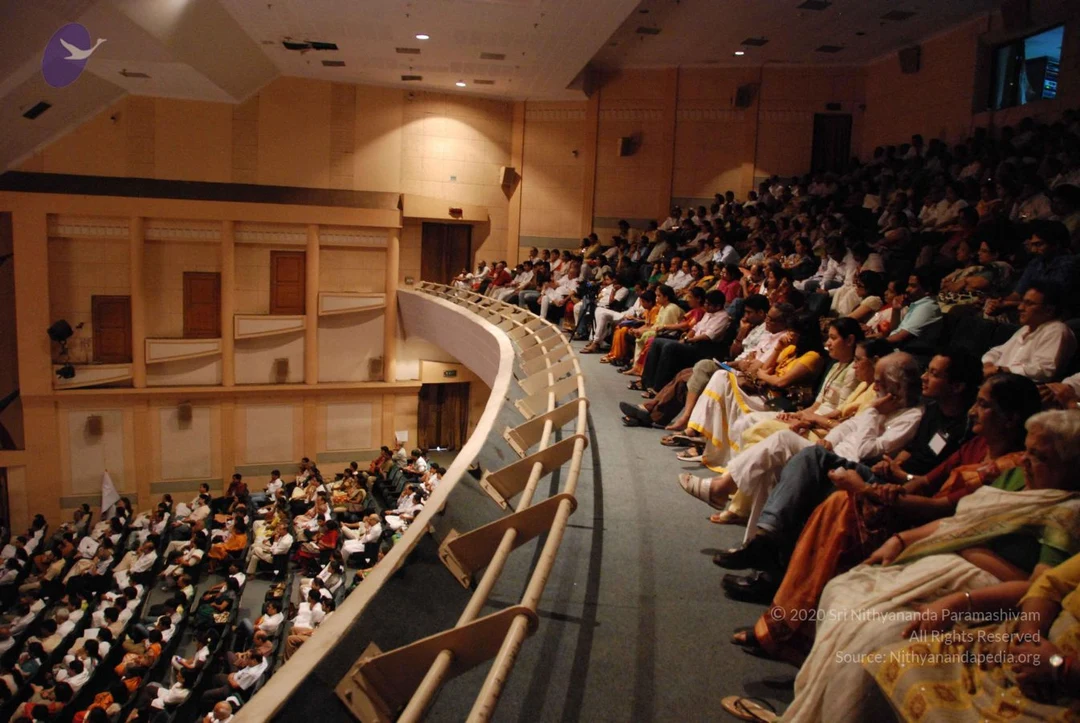
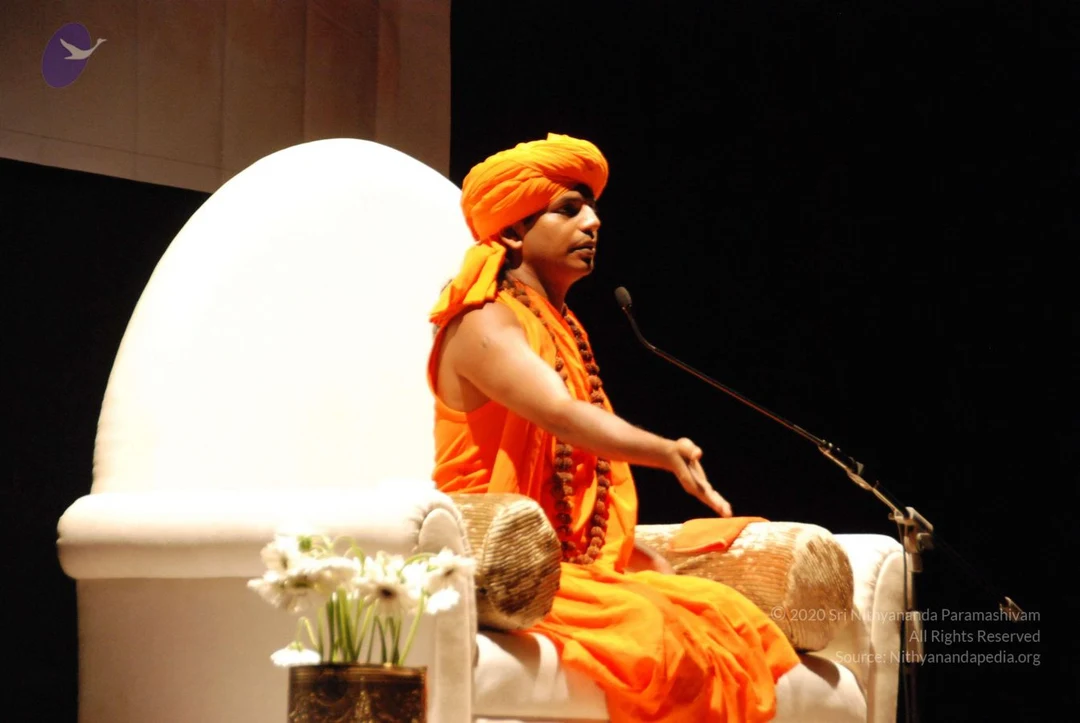
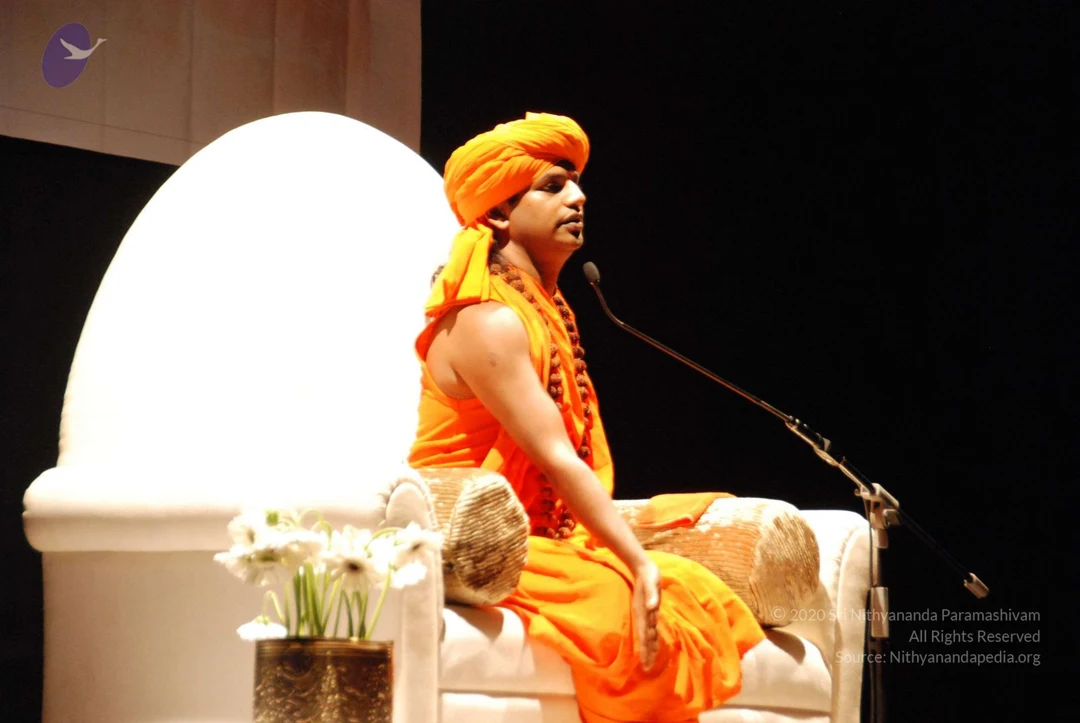
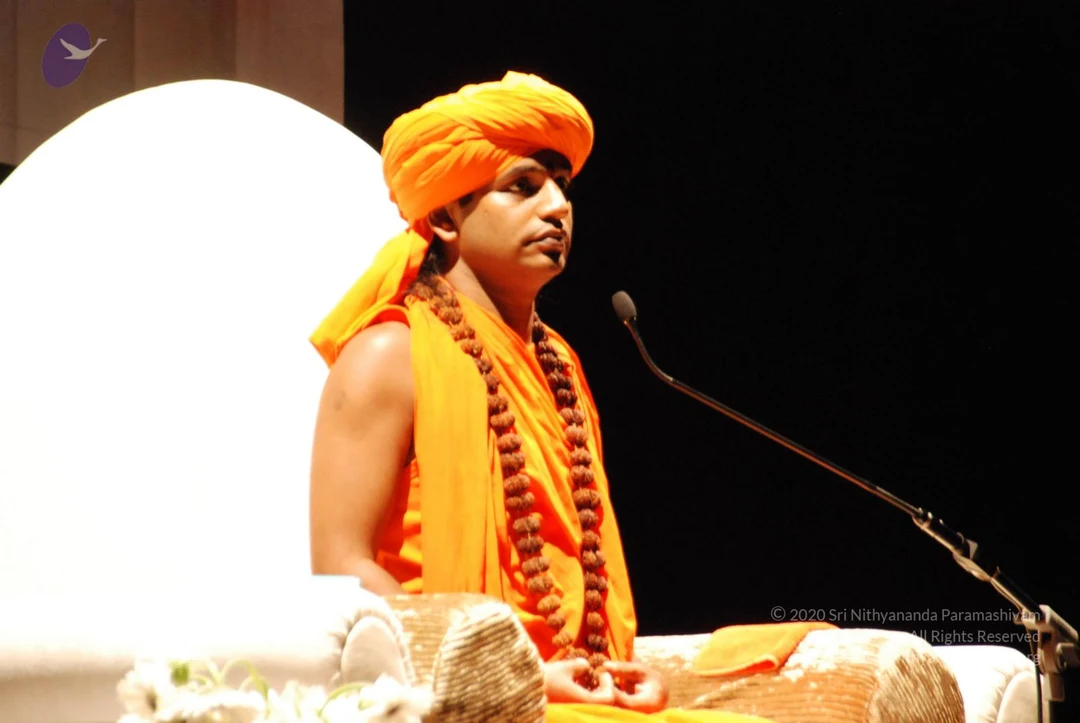
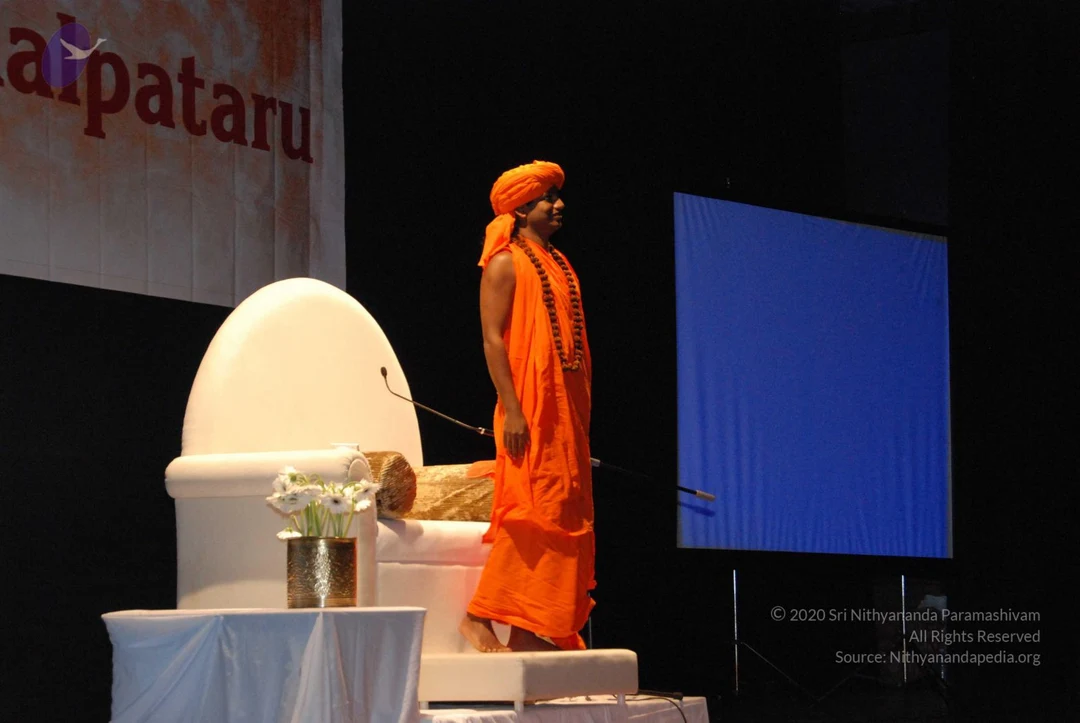
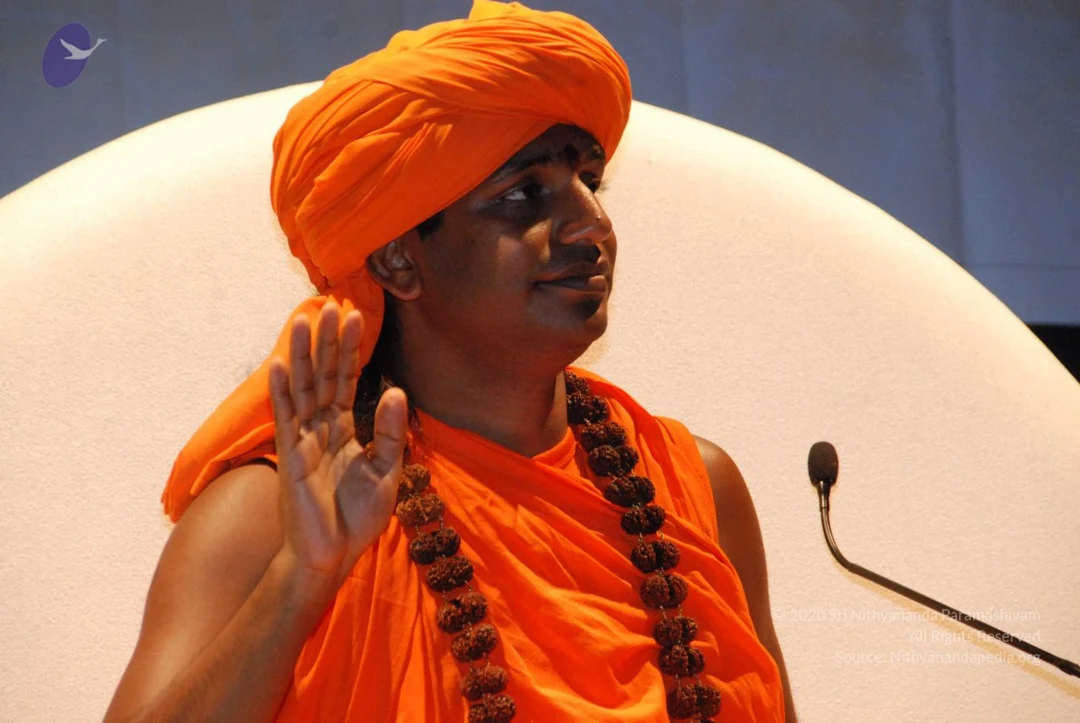
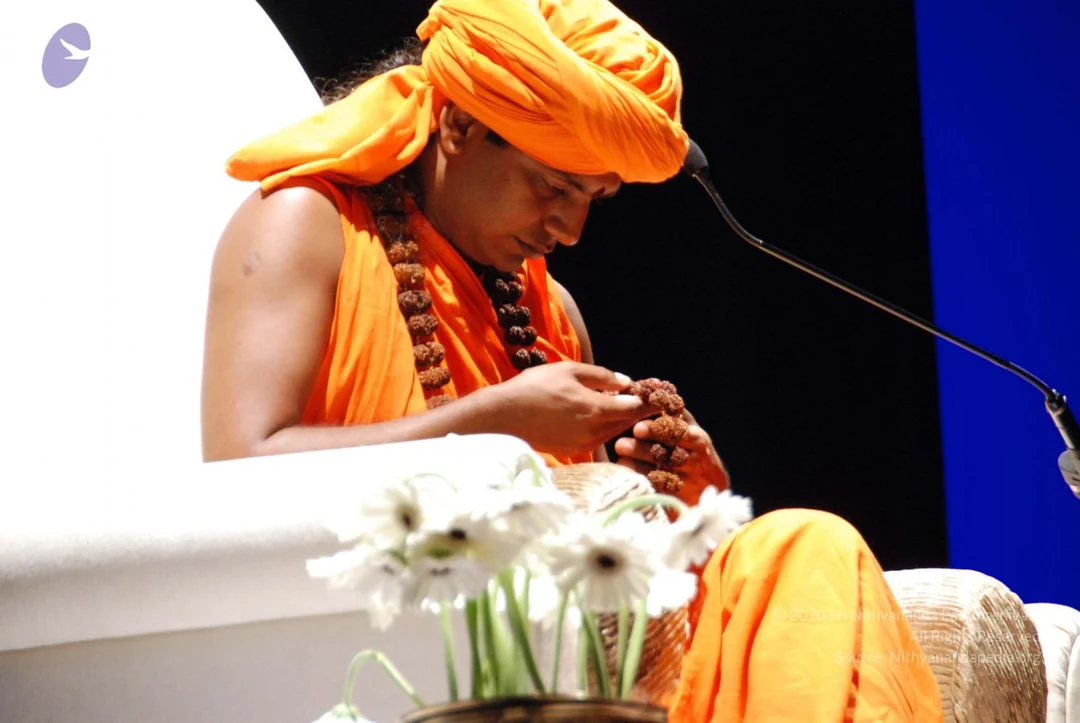
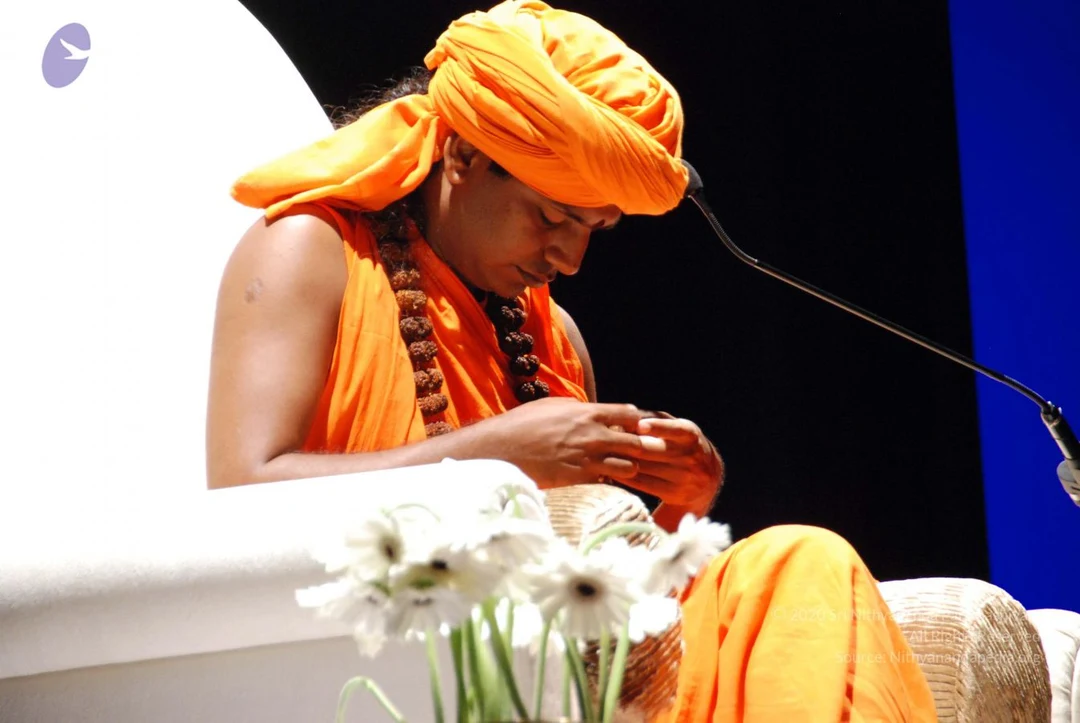
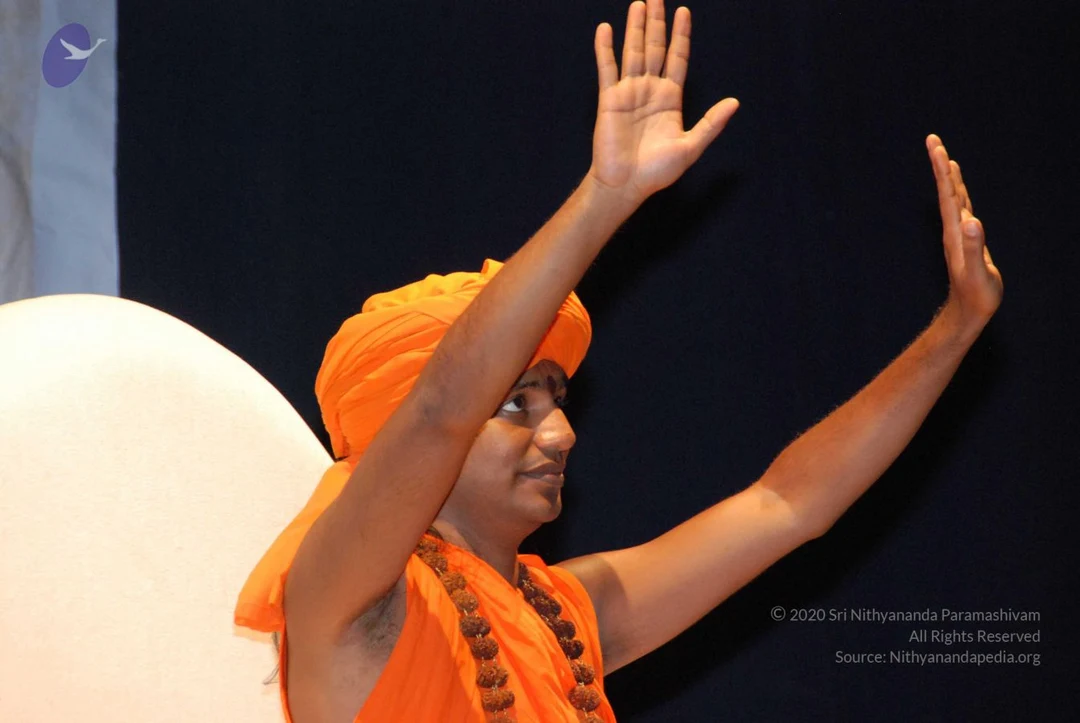
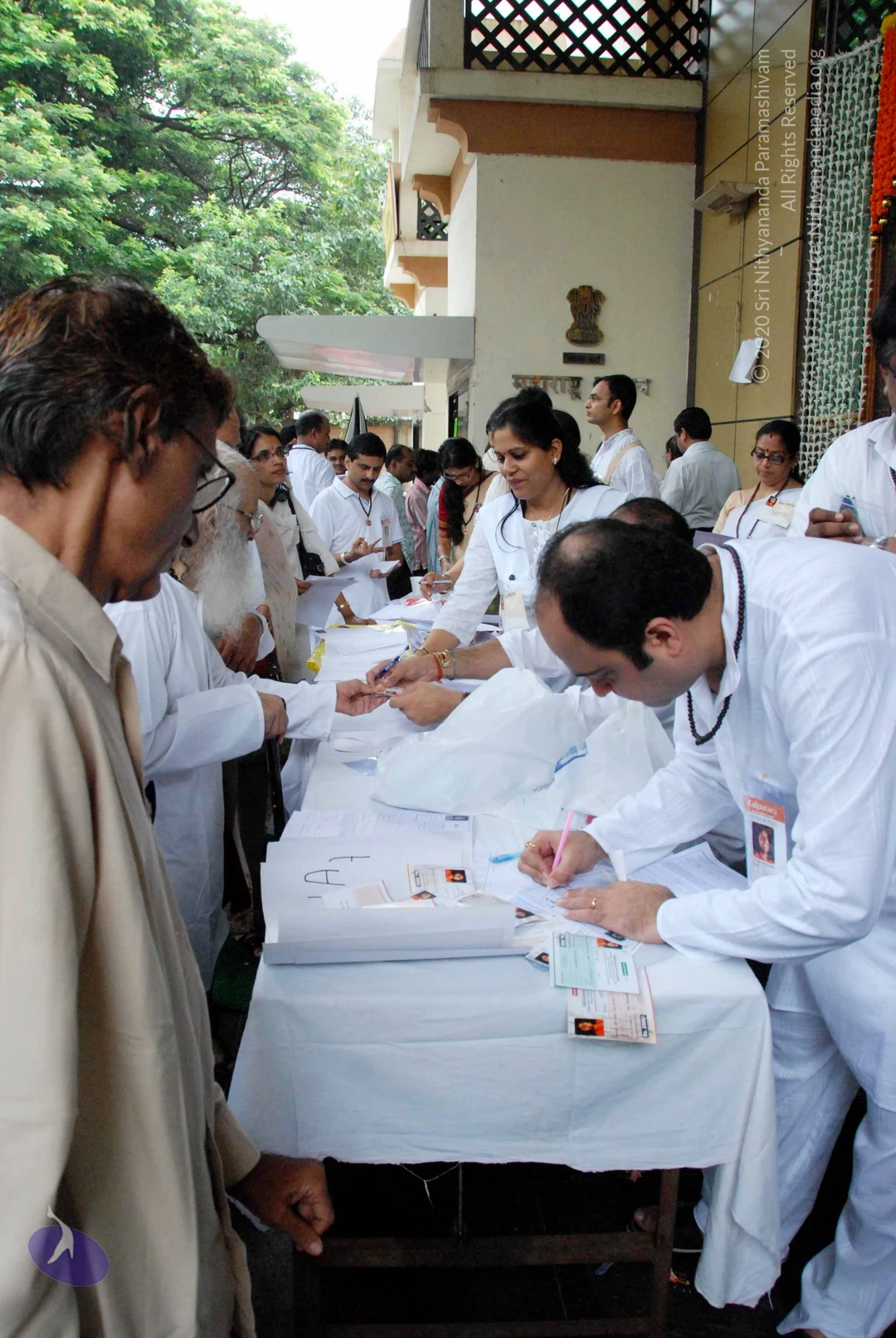
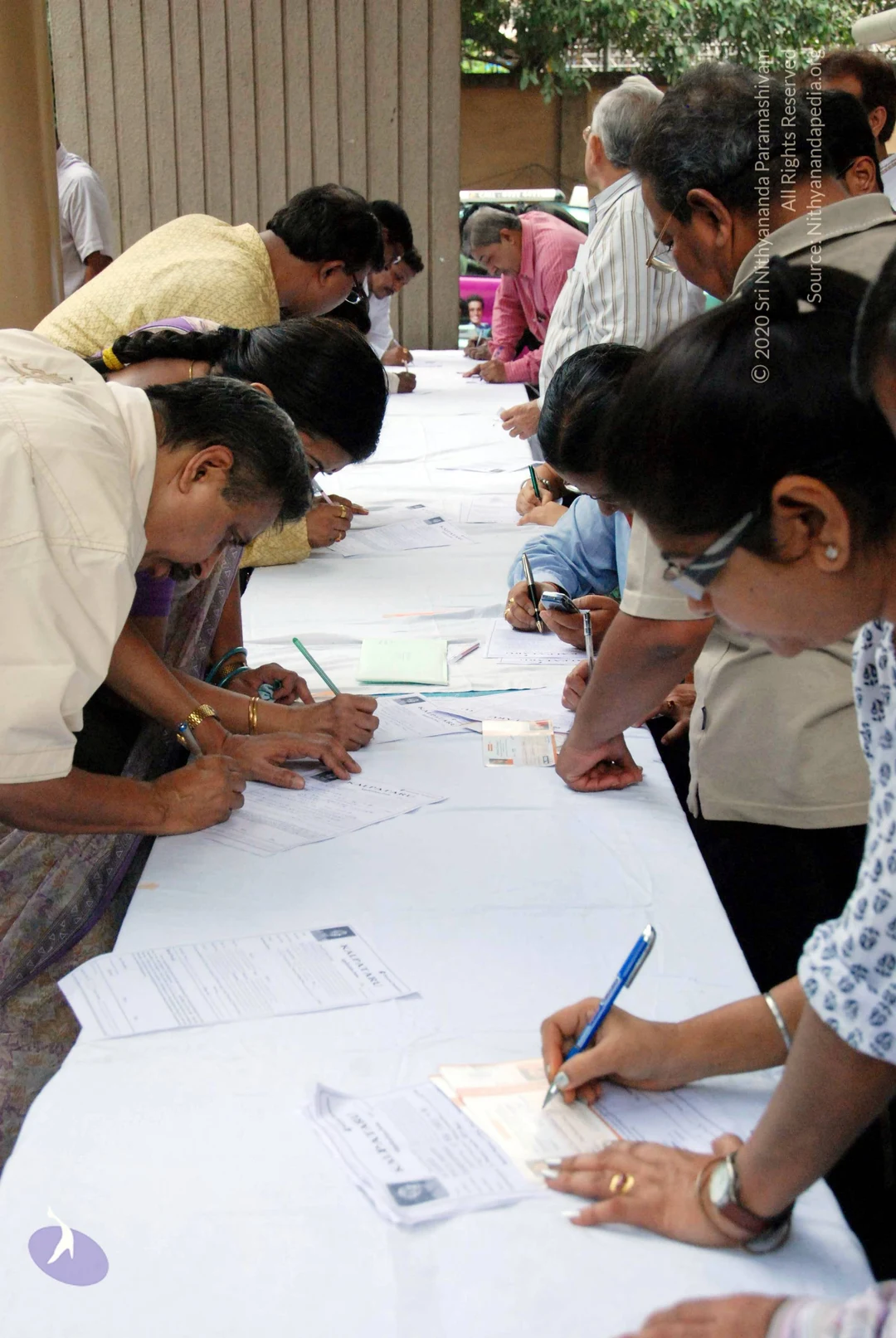
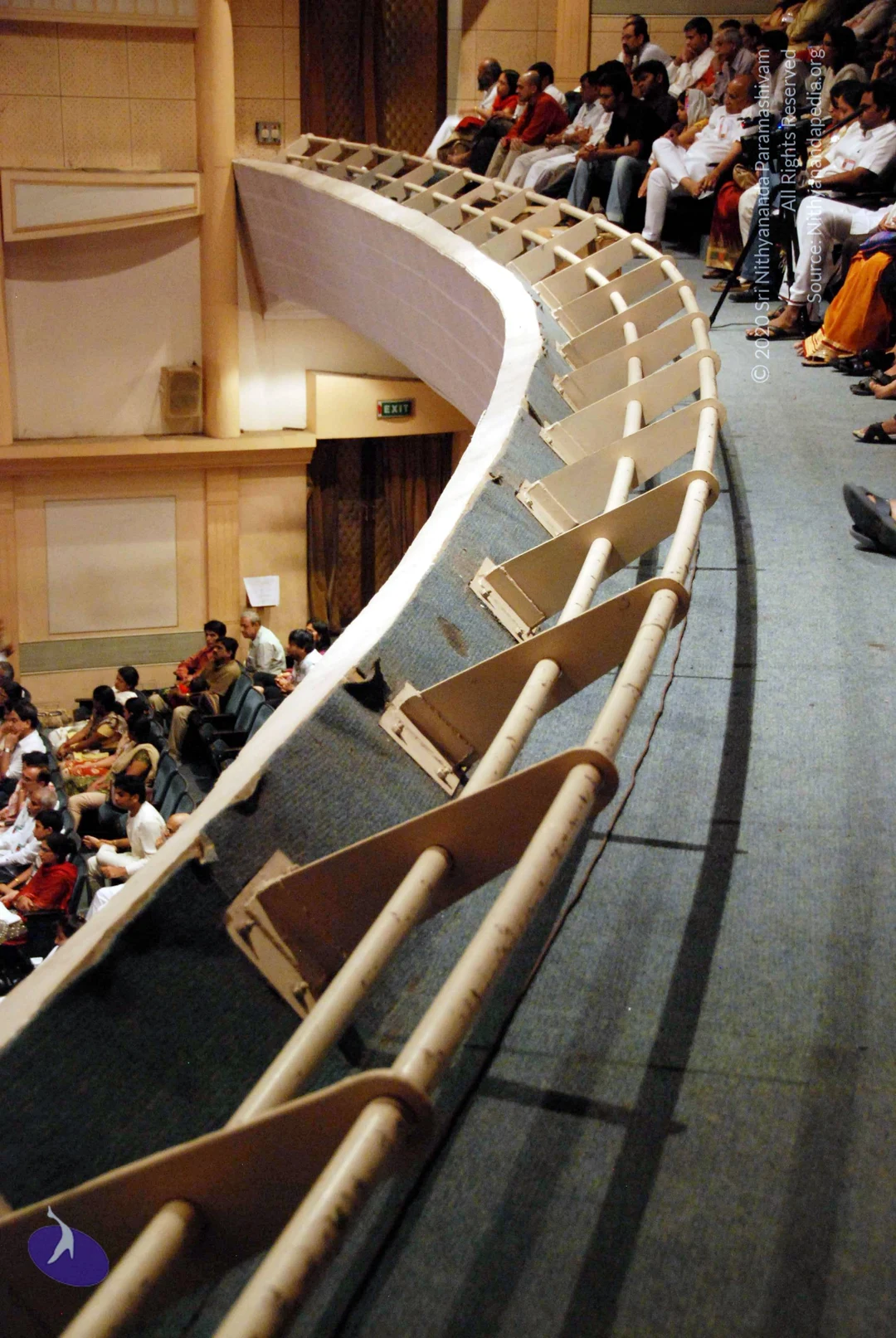
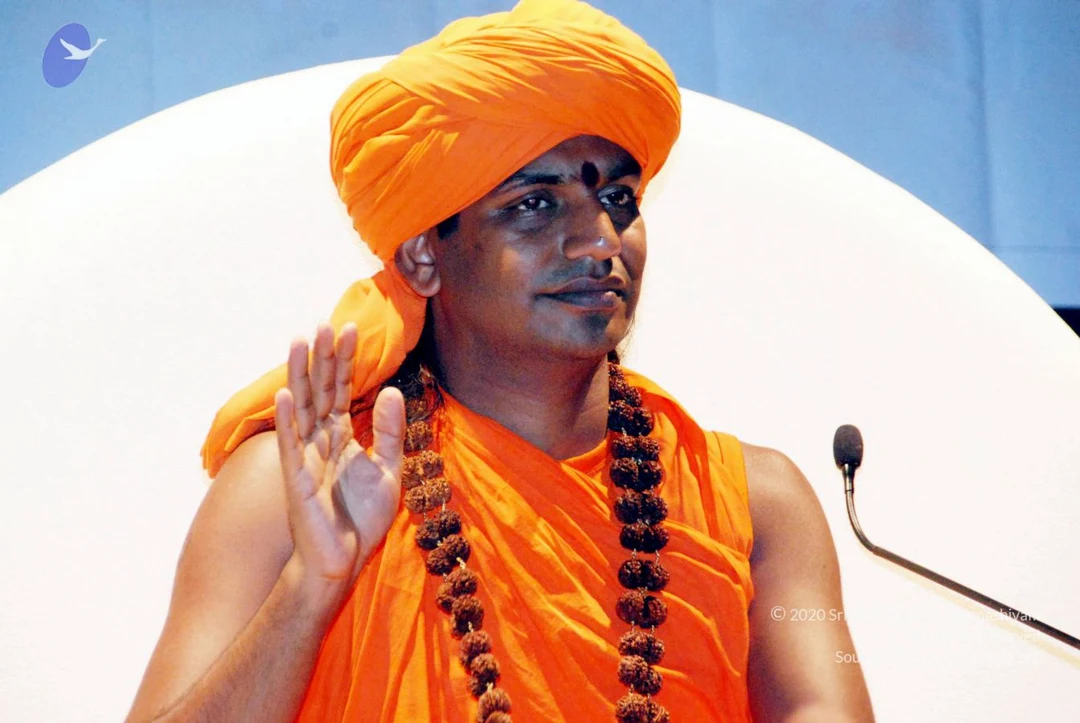
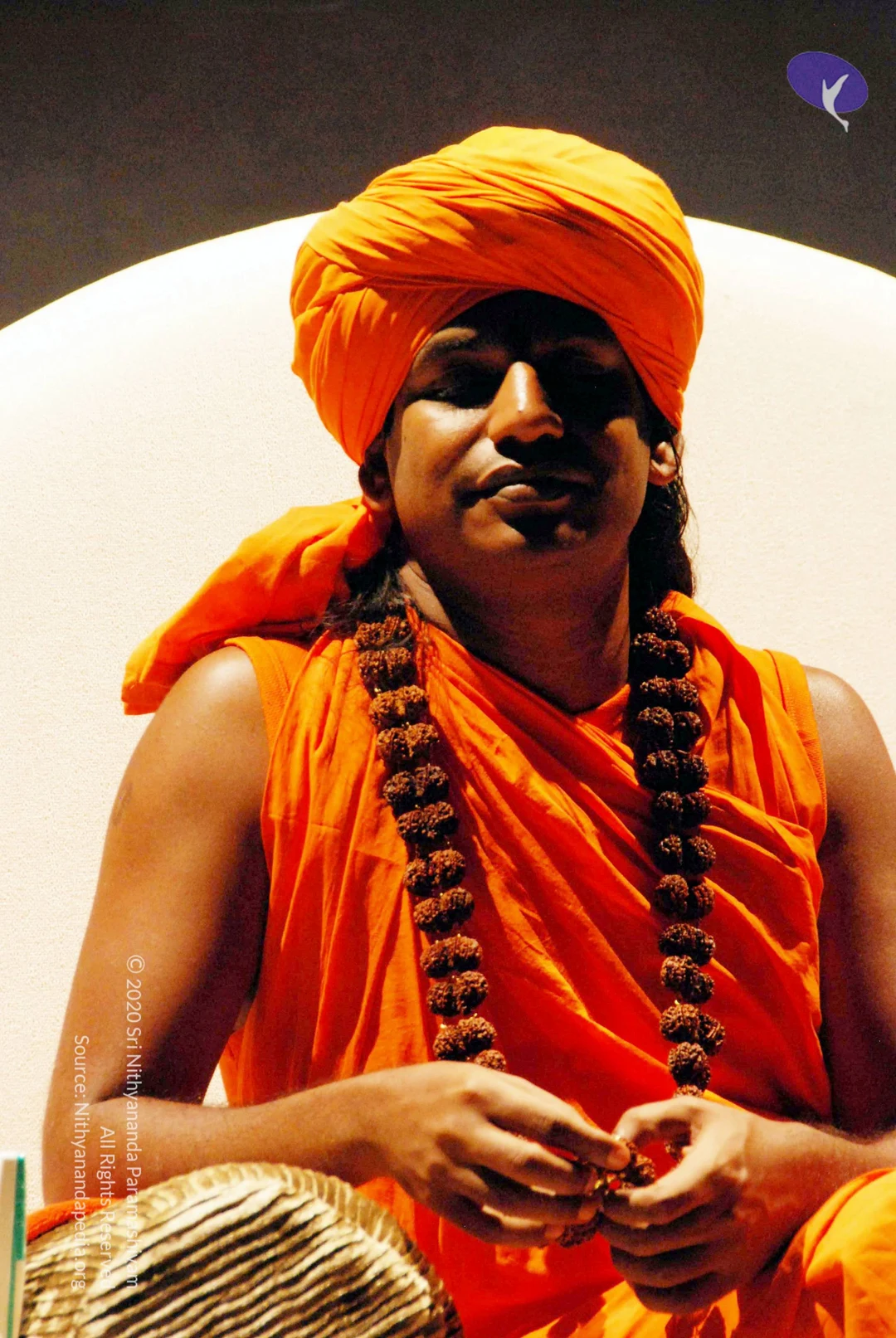
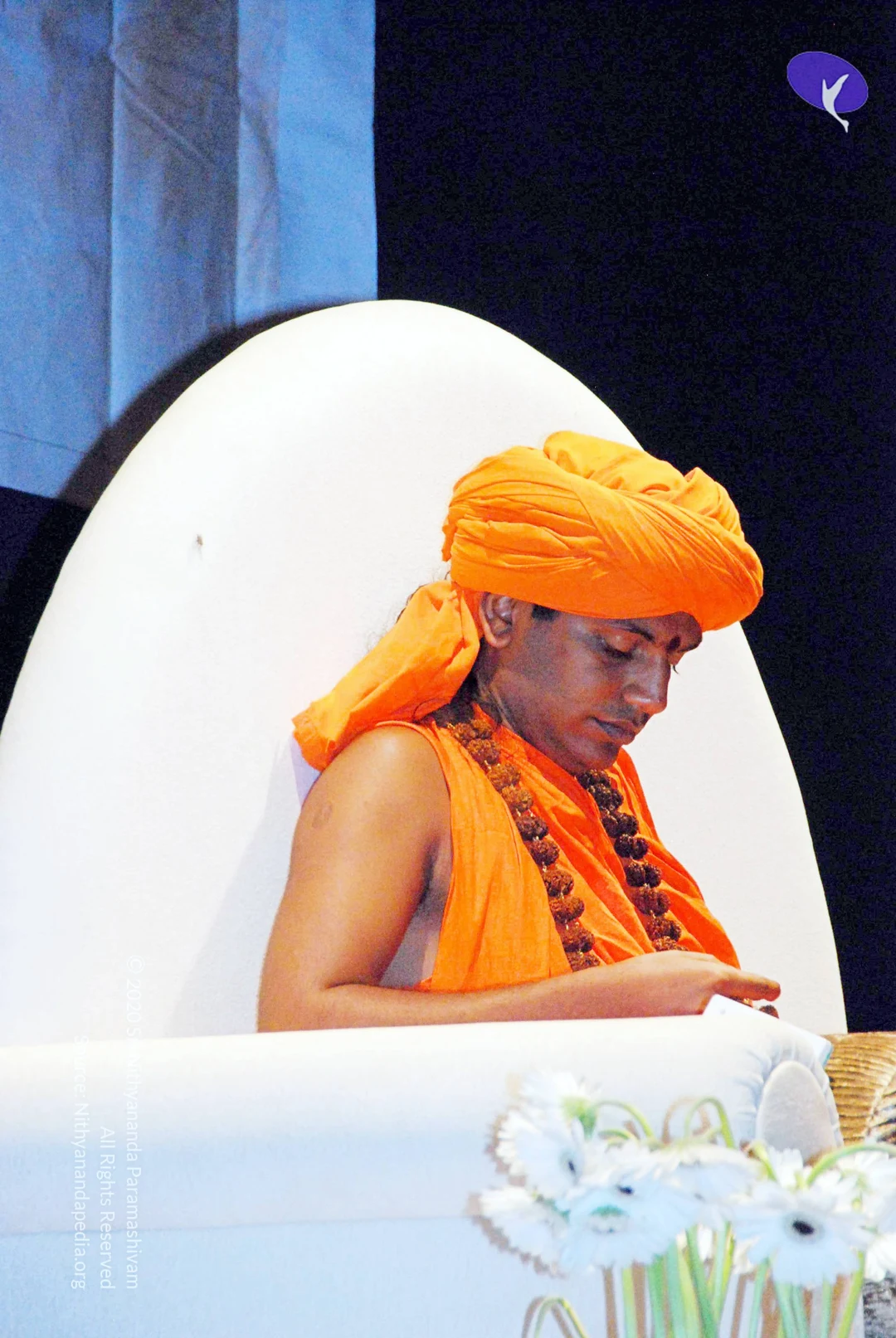
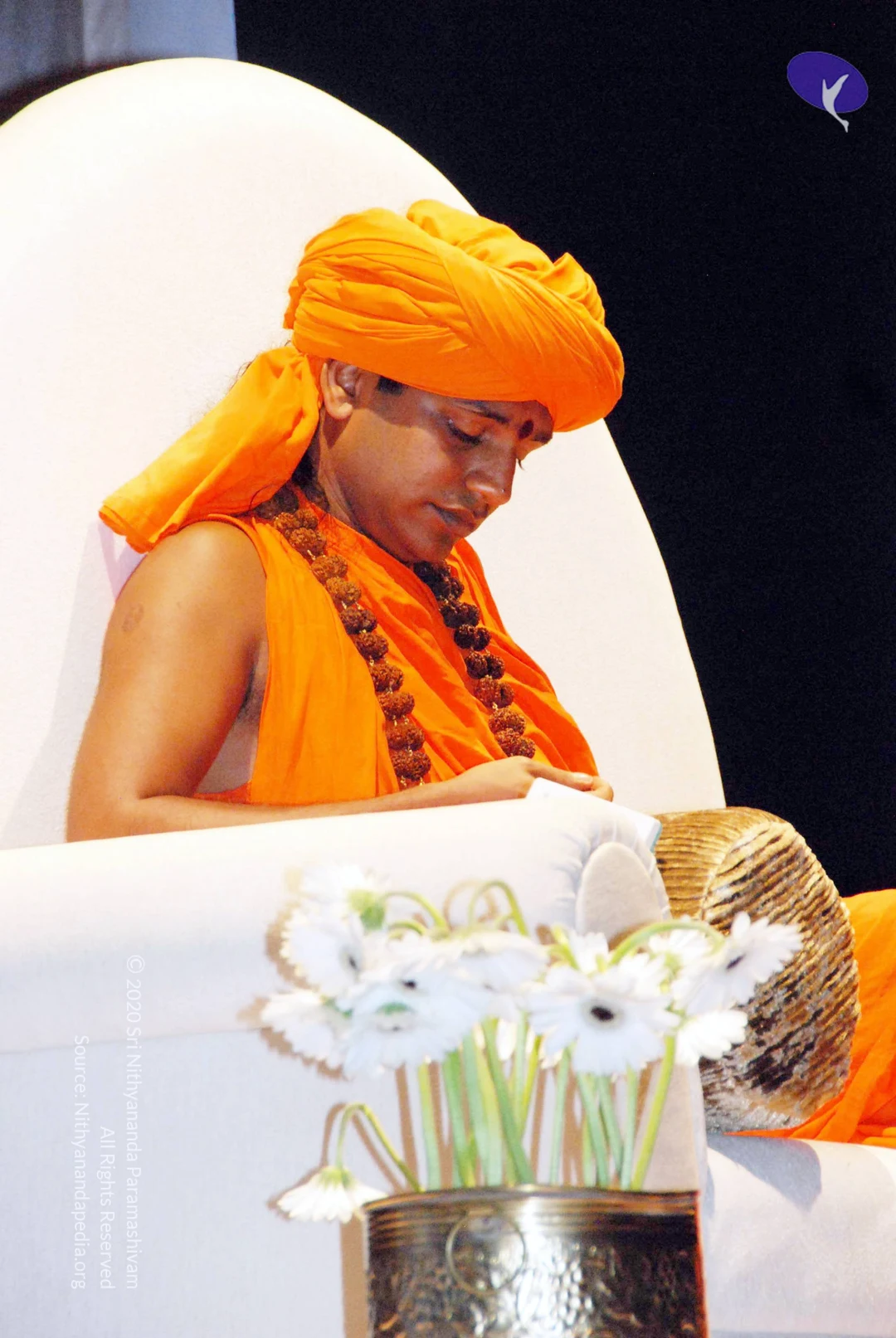
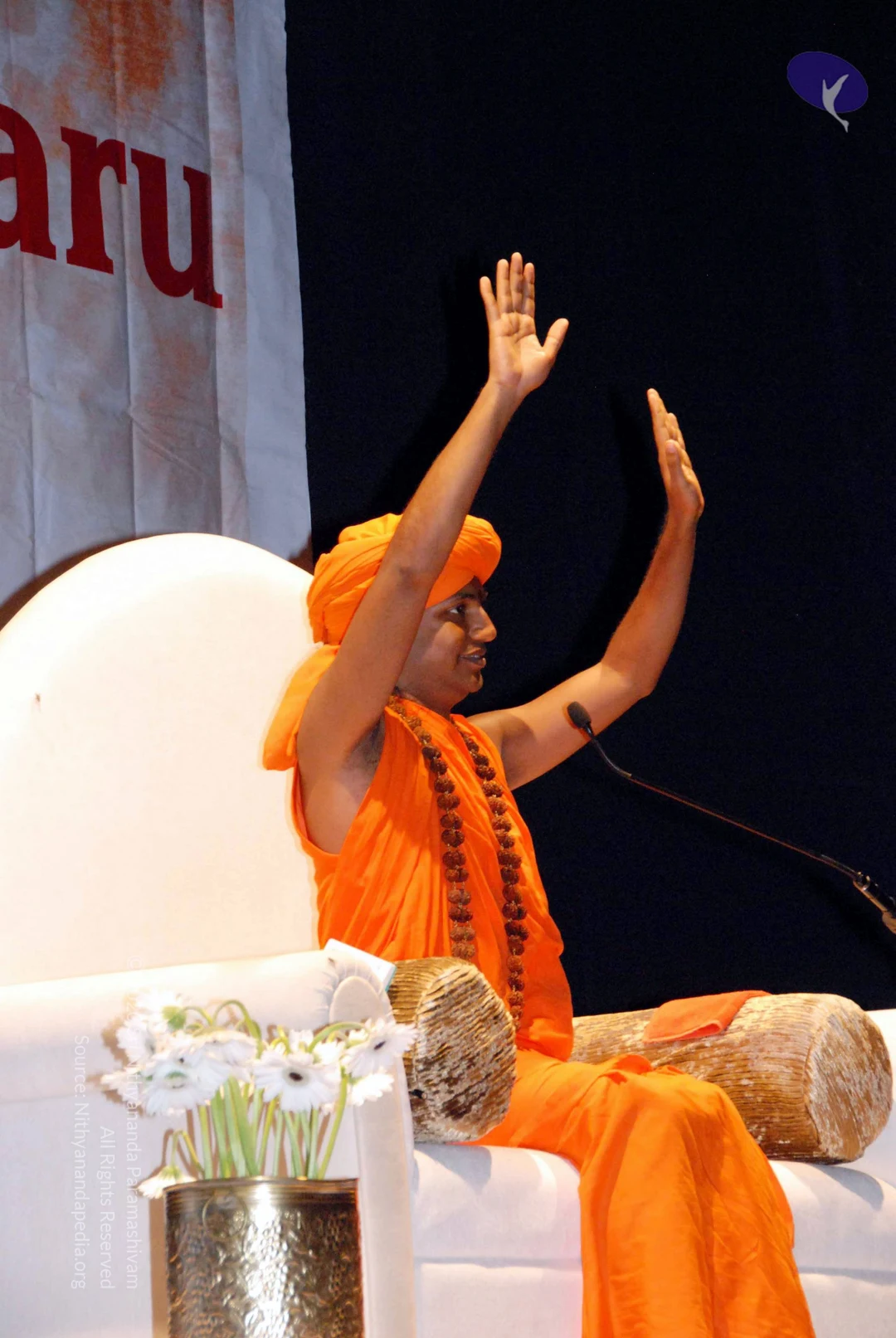
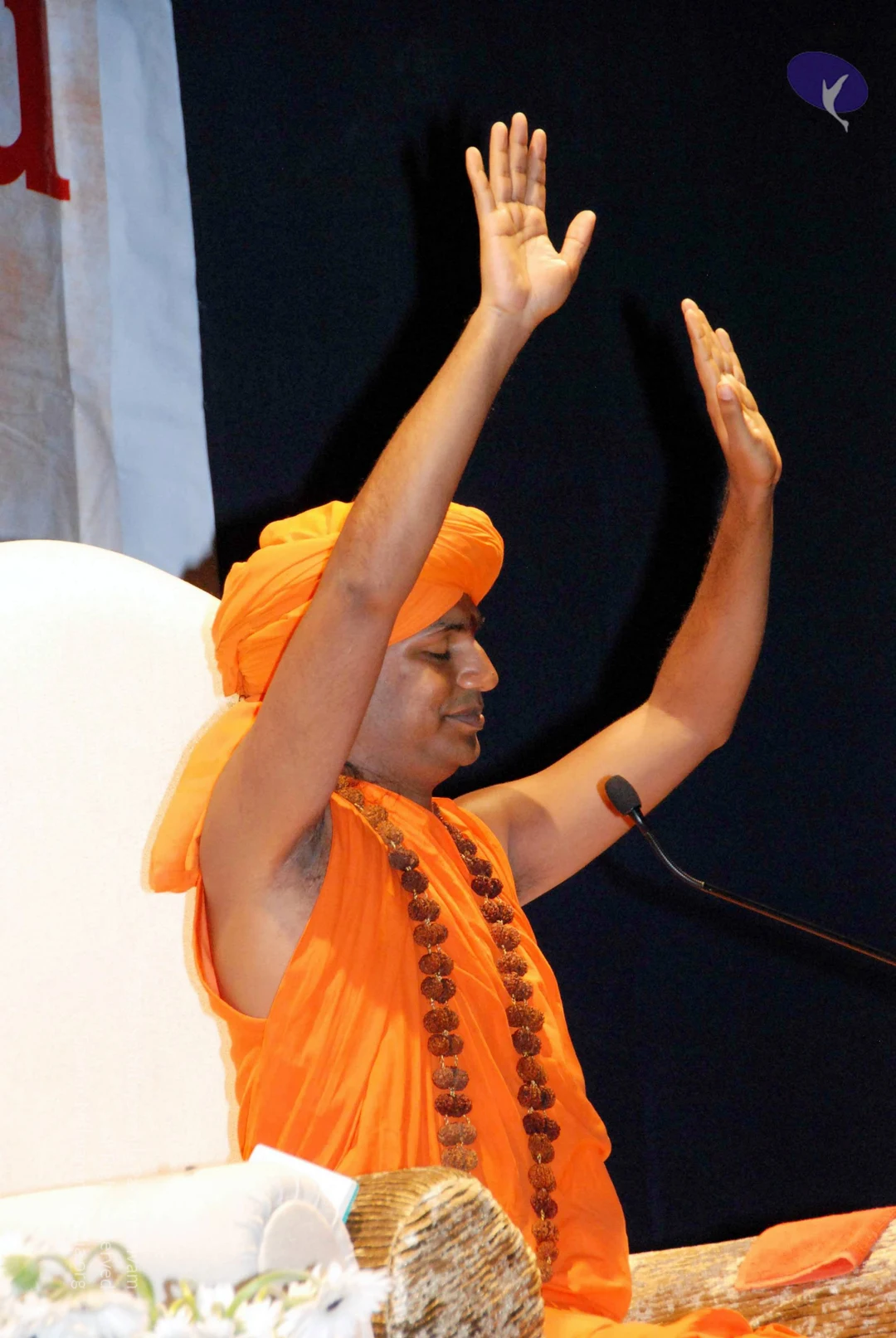
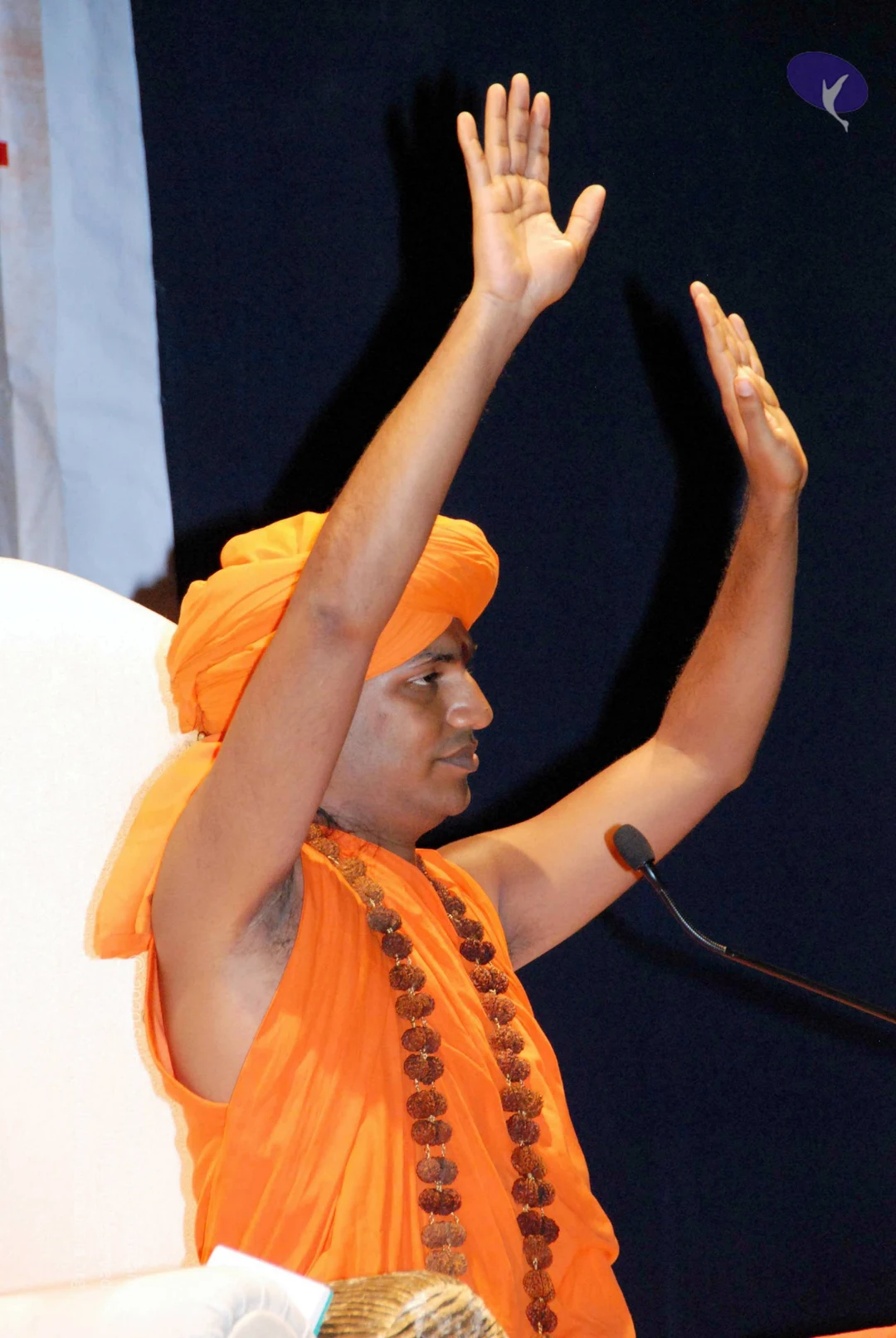
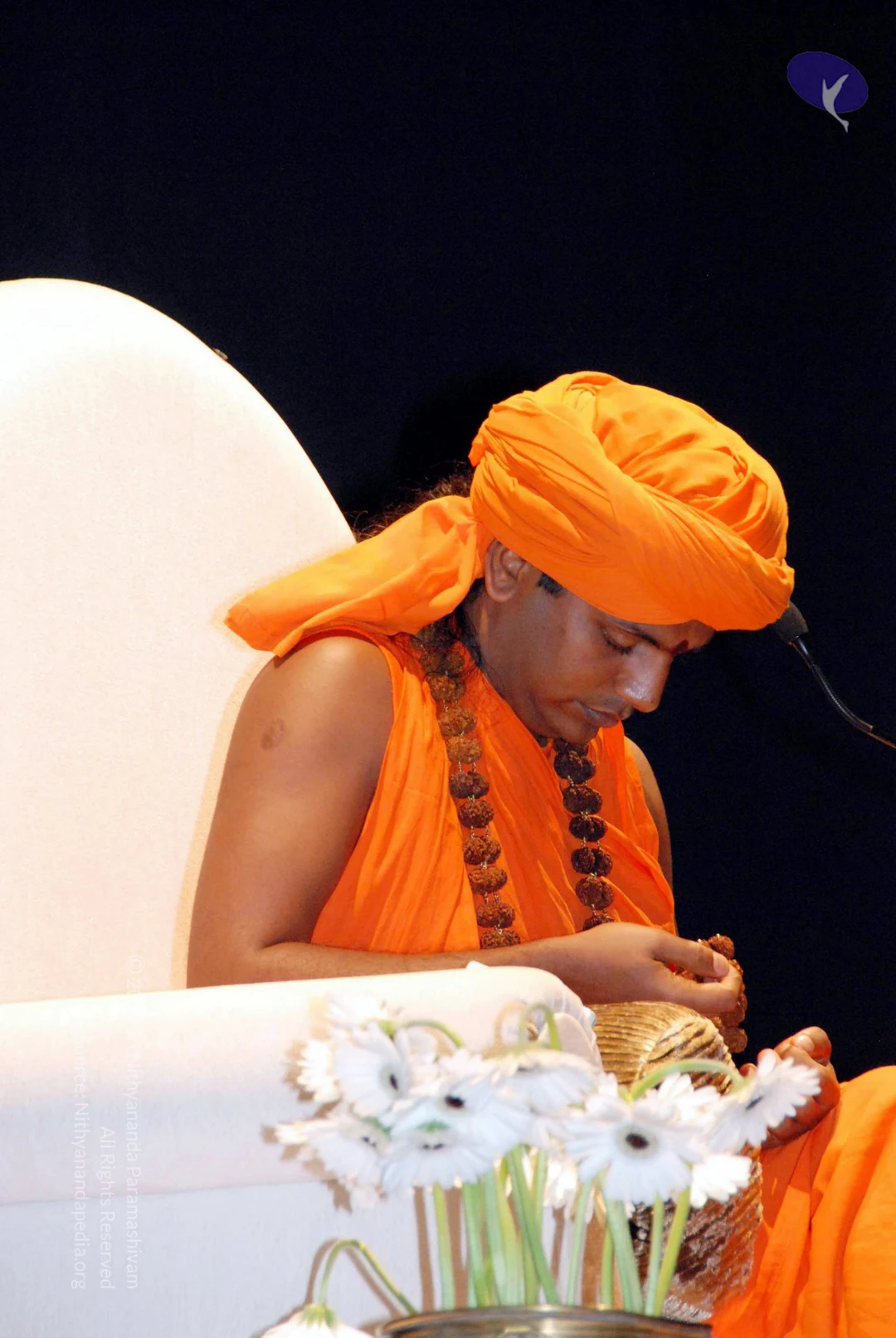
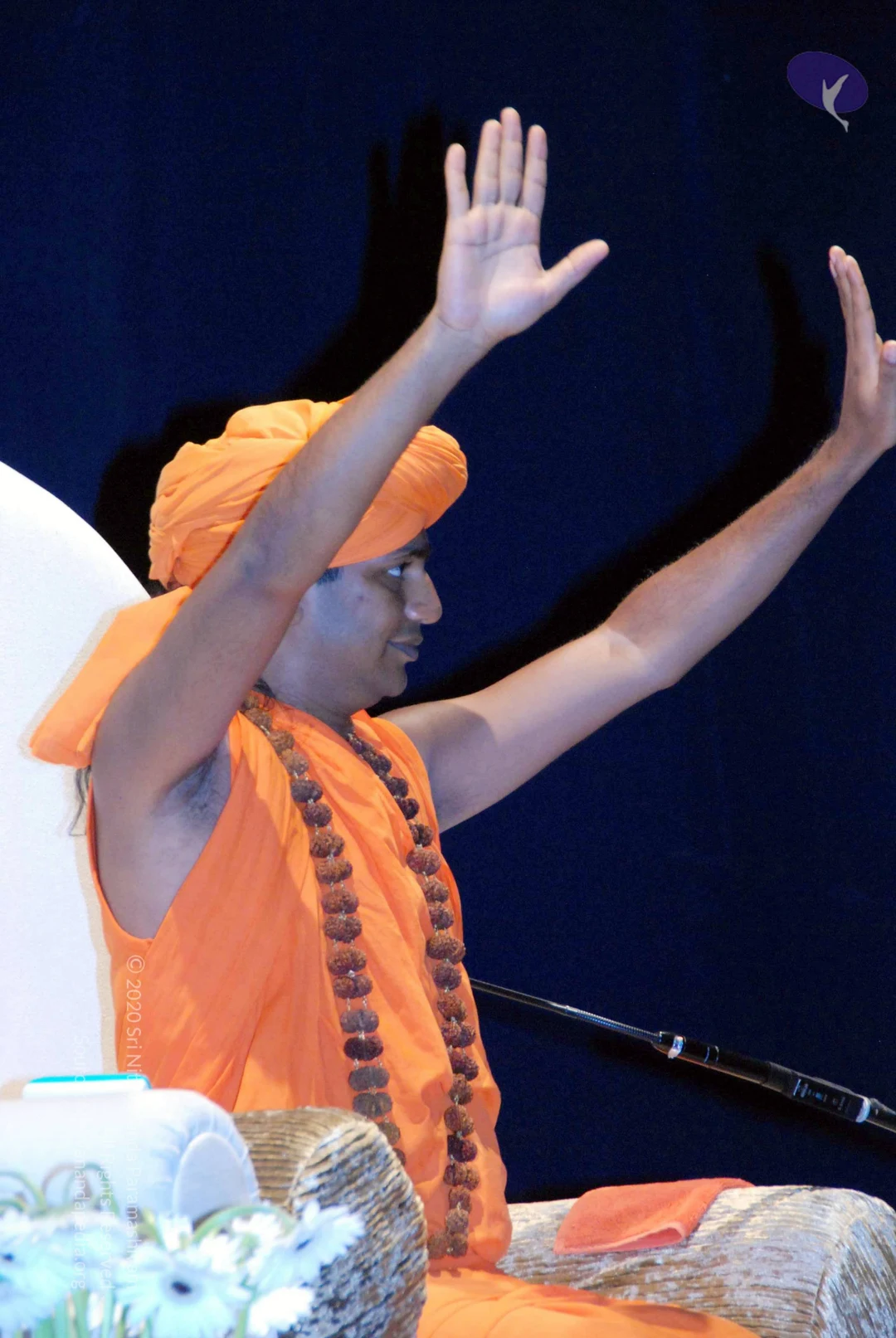
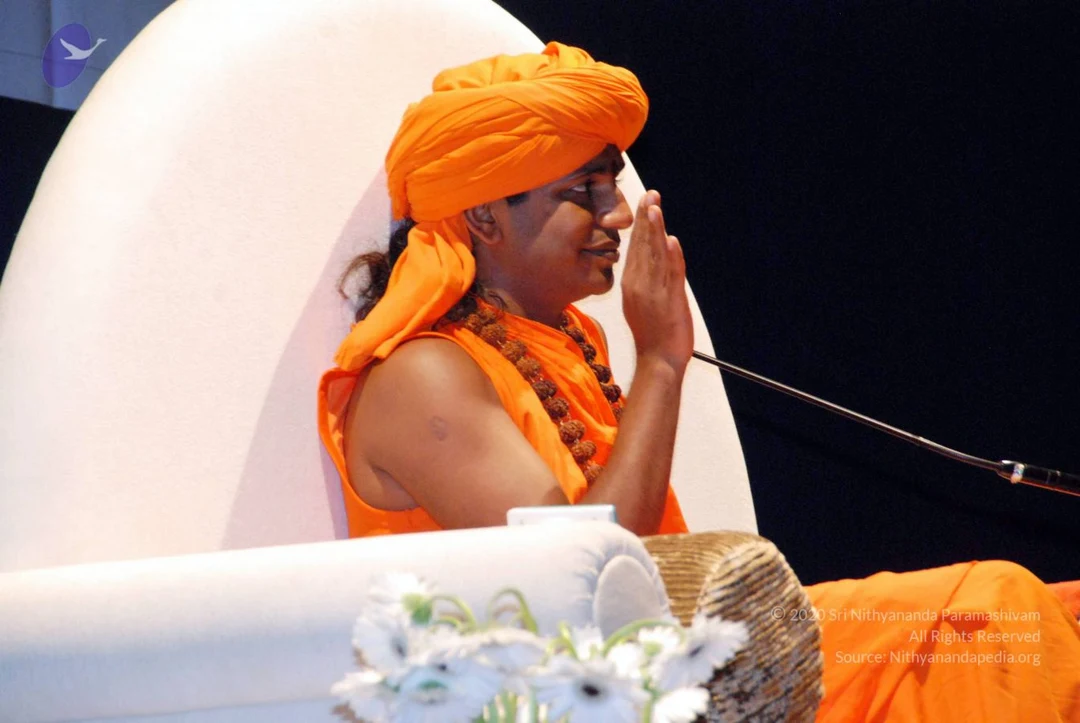
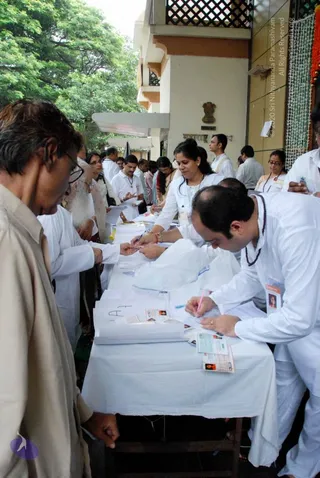
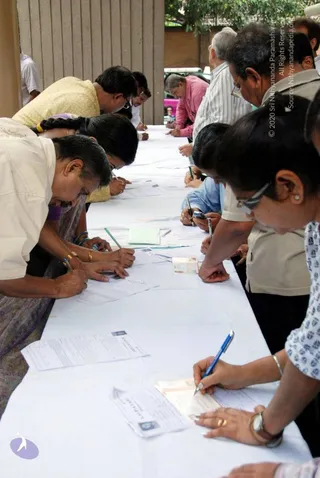
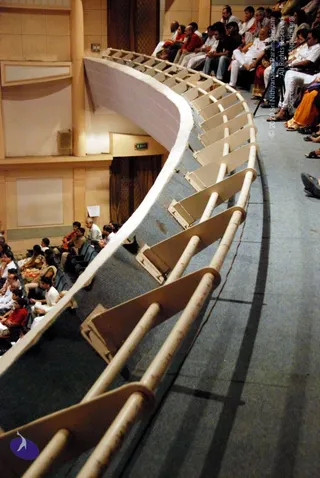
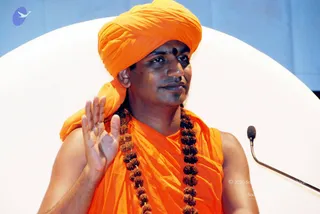
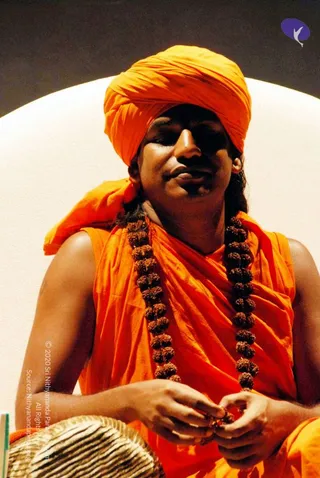
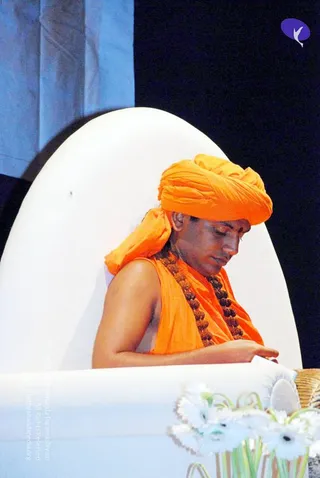
Photograph of a registration desk outside a building at a Kalpataru event in Mumbai. A volunteer in white clothes with a rudraksha mala and a lanyard badge leans over a white-draped table, writing on a form with a pink pen. A woman in a white top and a man in white shirt stand beside the table handling papers, while a man in a beige shirt with glasses and an older bearded man in white wait in line at the table. Other attendees in white and cream clothing stand along the pavement under trees. A carved emblem plaque is visible on the building wall, and marigold garlands hang at the right edge.A photograph of a long white-covered table outdoors where many people stand and lean over forms to fill them in, writing with pens. Visible participants include a man in a cream shirt in the left foreground, a woman in a purple-and-grey sari with green bangles, a man in a yellow kurta, a man in a pink striped shirt, a woman in a blue-and-white patterned top with a blue pen, and others further back. Printed forms labelled KALPATARU lie on the cloth, and a green notepad is visible. A green wall and a tree sit behind the table. A copyright line is printed vertically at upper right.Interior photograph of a curved auditorium balcony with a long beige curved barrier and rows of beige seat-back rails in the foreground. Rows of seated attendees fill the right side, many men in white kurtas and some women in orange and red saris, and a second group sits in the left-hand section beneath a lit EXIT sign. The walls are cream-coloured panels and the carpet is grey-blue. A small purple logo appears in the lower left corner.A man in an orange saffron turban and orange sleeveless robe stands at a microphone stand against a large white curved backdrop, raising his right hand in a gesture of address. He wears a long mala of brown rudraksha beads and has a red bindi on his forehead. Probable Swamiji by appearance cues: the saffron turban, saffron robe and rudraksha mala are visible, and the scene matches a speaking event.A seated man in an orange turban and orange sleeveless robe draped over one shoulder, wearing long rudraksha malas, holds a mala in both hands in front of a glowing white round backdrop. Warm stage lighting; a wicker or woven basket edge appears in the lower left corner.A seated man in an orange turban and orange sleeveless robe with a long rudraksha mala draped over his shoulders sits on a large white egg-shaped throne-like chair on a stage. He looks down, eyes lowered, with a red bindi on his forehead, and his right hand rests on the armrest holding a small white card. In the foreground, white gerbera daisies sit in a vase, and a blue draped curtain and dark backdrop fill the background.
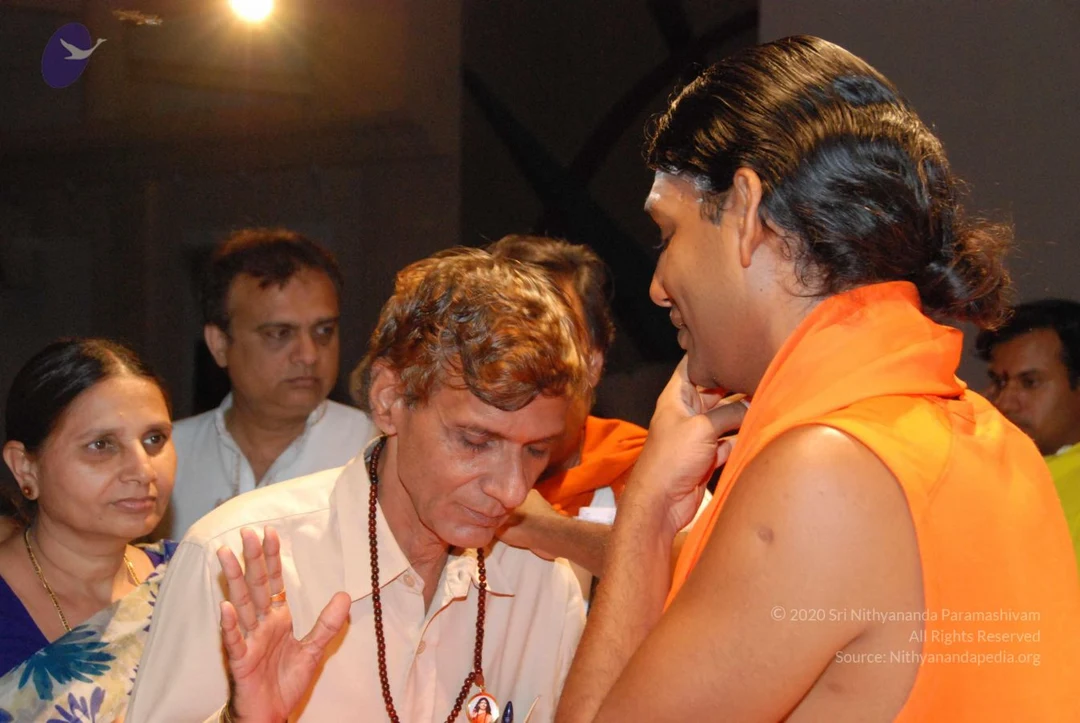
September 12 2009

4 photosView all
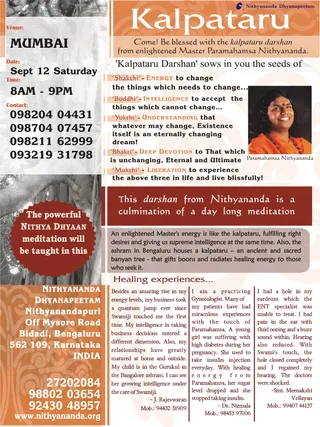
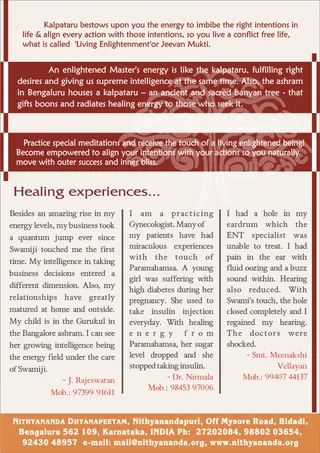
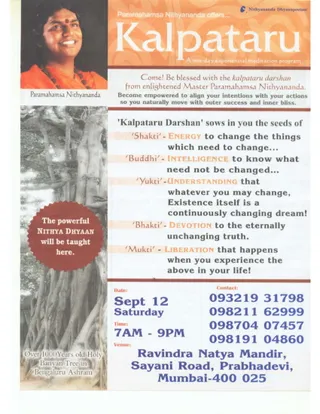
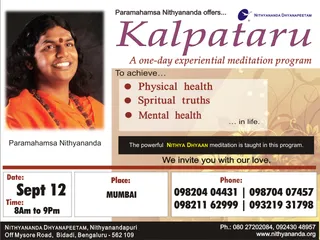
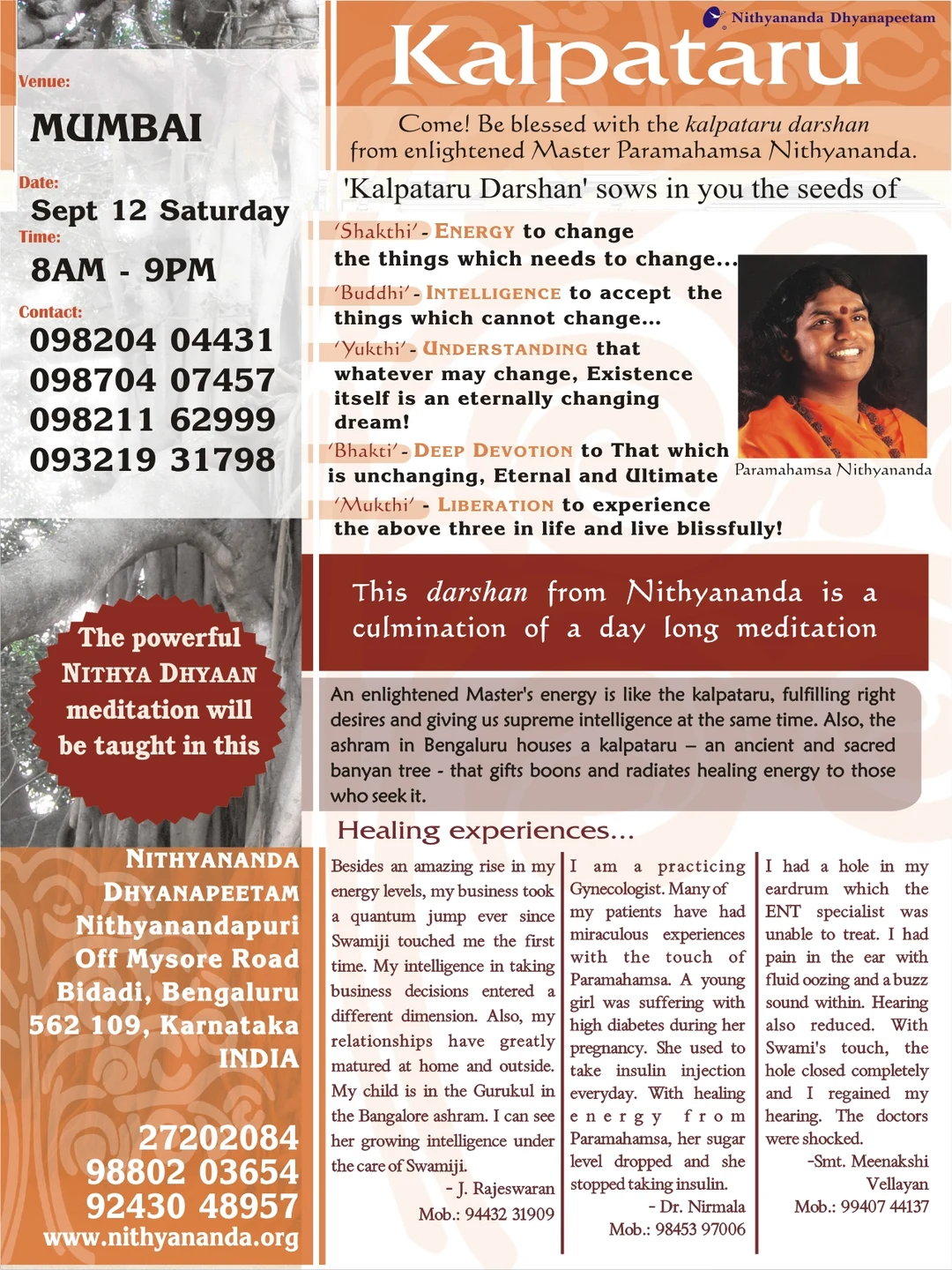
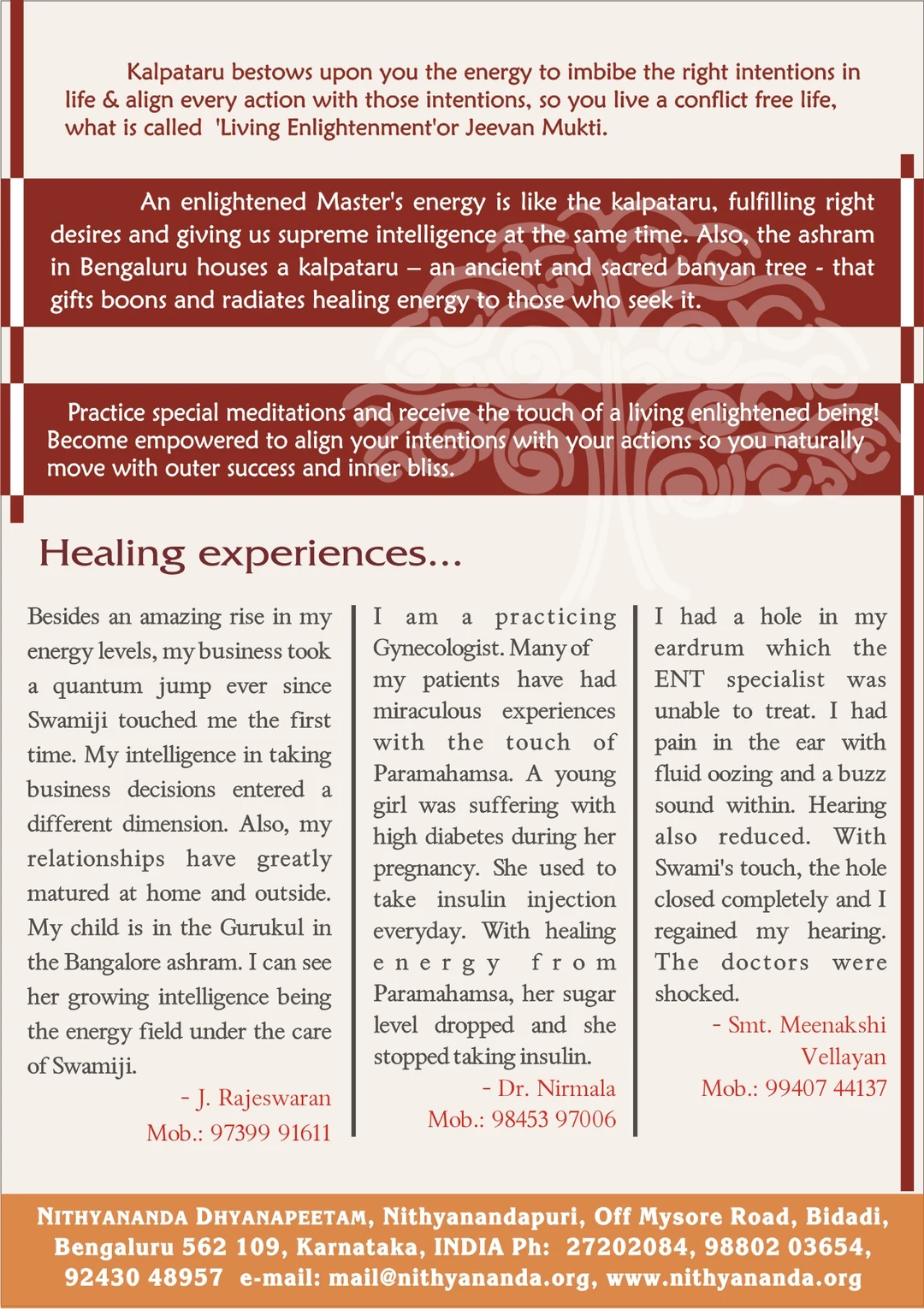
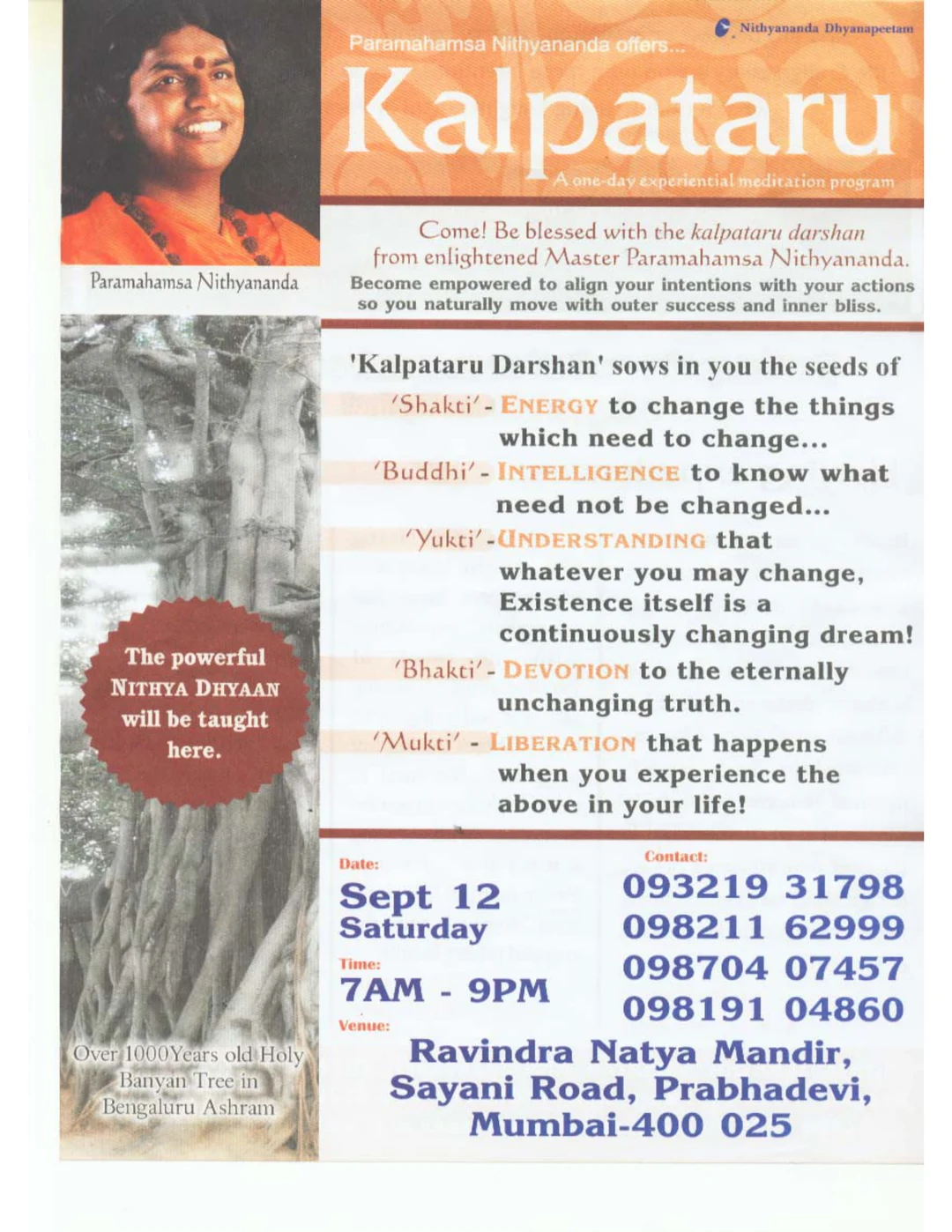
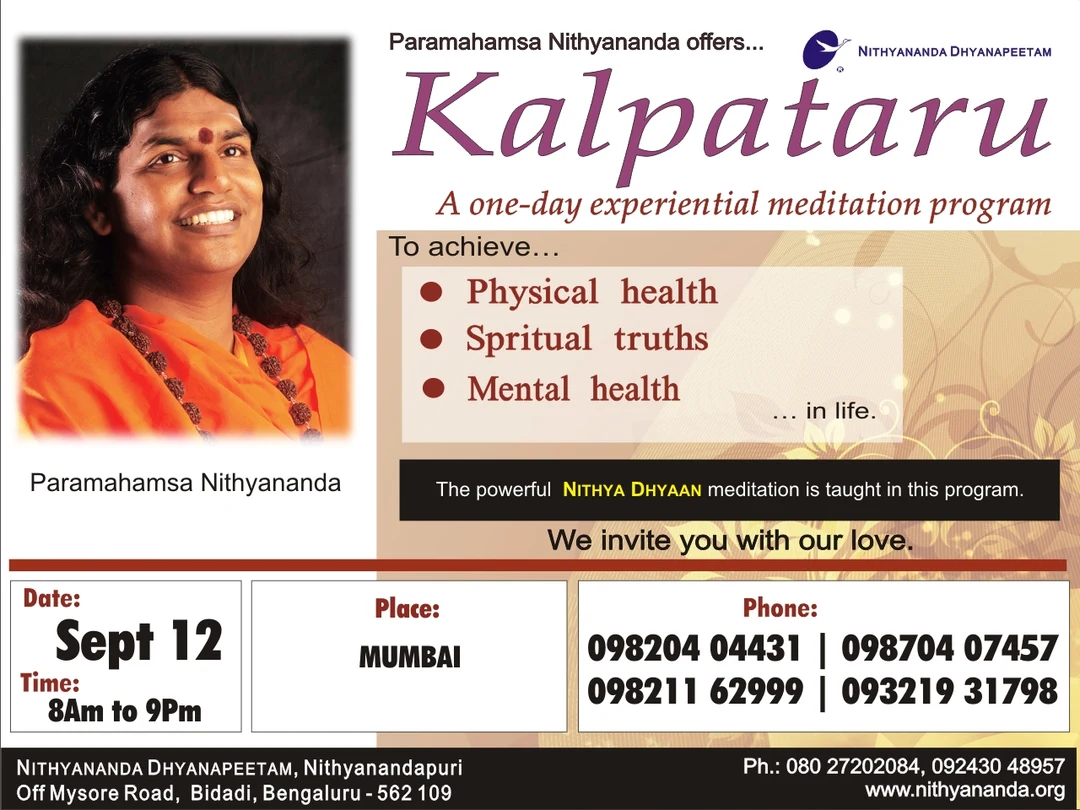
A printed event flyer for a Kalpataru darshan in Mumbai on Saturday 12 September. The top left has a black-and-white photo of a large banyan tree with a red starburst reading 'The powerful NITHYA DHYAAN meditation will be taught in this'. The right side has bold headings and bullet-style lines about energy, intelligence, understanding, devotion and liberation. A framed portrait labelled 'Paramahamsa Nithyananda' shows a smiling figure with long dark hair in orange clothing, a red bindi and a beaded mala. Lower sections contain testimonial columns and a contact block for Nithyananda Dhyanapeetam, Bidadi, Bengaluru, with phone numbers and a website.A printed flyer for the Kalpataru programme, a one-day workshop, with a red and cream layout and an orange footer. Red banded text describes the Kalpataru as a wish-fulfilling tree and the Bengaluru ashram's banyan tree. Faint white tree-branch artwork sits behind the text. Below is a 'Healing experiences' section with three columns of testimonial text and phone numbers. No people are shown.A printed flyer advertising the Kalpataru one-day experiential meditation program. A top-left portrait labelled Paramahamsa Nithyananda shows a smiling woman with a red bindi wearing orange clothing and rudraksha beads; the flyer's text attributes the event to a person. The left column shows a large ancient banyan tree with exposed aerial roots and a red seal reading the powerful Nithya Dhyaan will be taught here. The right side lists the energies Kalpataru Darshan sows: Shakti, Buddhi, Yukti, Bhakti and Mukti, with dates, times and a Mumbai venue. No physical people are present in the graphic.A promotional poster for the Kalpataru one-day experiential meditation program. A large left-side portrait labelled "Paramahamsa Nithyananda" shows a smiling figure with long dark hair, a red bindi, an orange robe and a beaded rudraksha mala. Right side lists goals: physical health, spiritual truths and mental health, under a banner about the Nithya Dhyaan meditation. Bottom panels give the date, place and phone numbers, on a background of floral gold swirls.