Skip to content
Wednesday

1 August 2007

THE SUPREME PONTIFF OF HINDUISM HDH BHAGAVAN SRI NITHYANANDA PARAMASHIVAM

Dated photos
32
Source pages
1
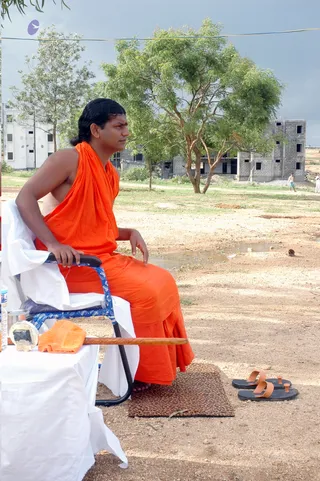
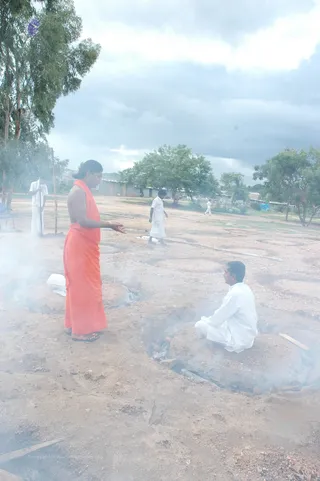
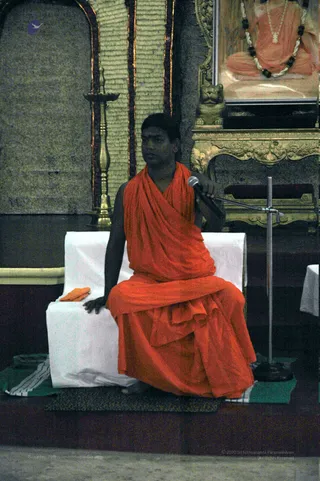
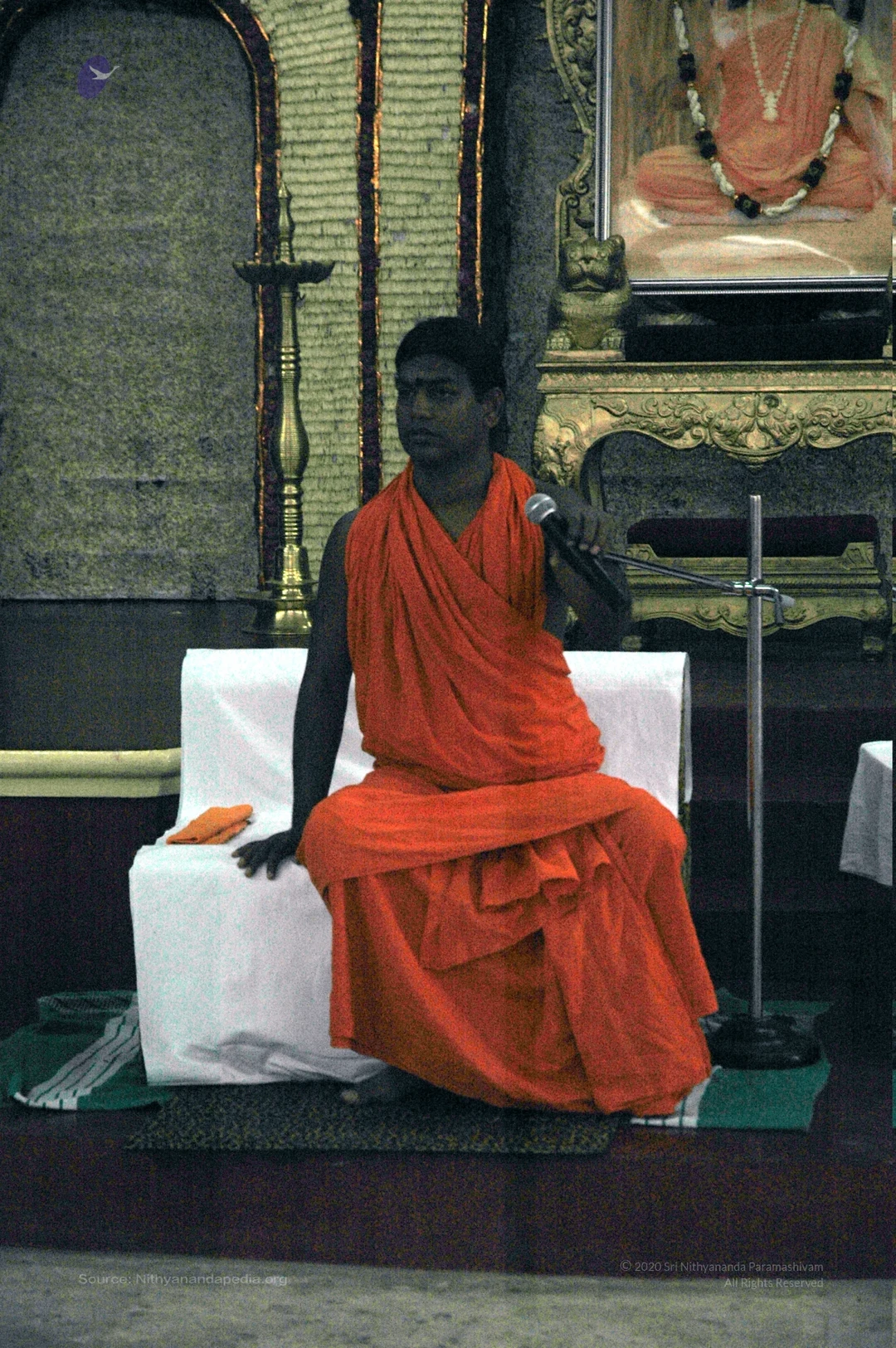
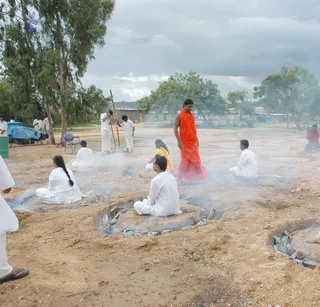
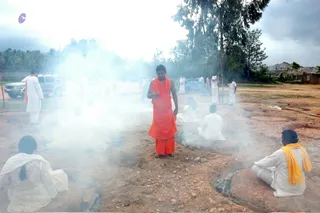
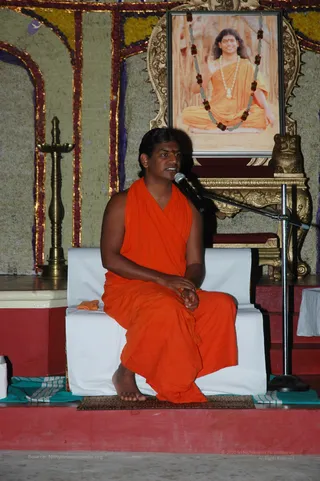
A photograph of a man seated on a folding chair outdoors on bare dirt ground. He wears a flowing orange garment draped over one shoulder, leaving his arm bare, with a small red mark on his forehead and dark hair tied back. He is barefoot on a leopard-print mat, with orange-strapped black sandals placed beside it. A white draped cloth covers a table to his left holding a steel tumbler, a small object, and a folded orange towel, and a wooden staff rests across the chair. Behind him are unfinished concrete buildings, green trees, a puddle, and a stray figure in the distance. Appearance-based label: Swamiji (probable), seated in orange robes with a red forehead mark and long hair, as a presiding figure at an outdoor meditation programme.Outdoor photo on a dusty open field with scattered trees and low buildings under a cloudy sky. A man in an orange-saffron wrap cloth stands barefoot on the left with long hair pulled back, hands extended toward a seated man in white clothes who sits cross-legged in a shallow pit with smoke rising around him. Other people in white dhotis and shirts walk or stand in the background; one stands near a tree at far left. The scene suggests an outdoor meditation or fire-based practice, with the saffron-clad figure appearing to guide the seated participant.A seated man in orange saffron robes sits on a white-draped chair on a low dais, holding a handheld microphone on a metal stand in his right hand. He has short dark hair and his left hand rests on the chair arm, with an orange cloth folded beside him on the white fabric. Behind him stands an ornate gilded side table and a brass oil lamp with a tall stem. Above the table hangs a framed painted portrait of a seated figure in orange robes wearing a white bead necklace and dark rudraksha beads, which is a printed artwork rather than a physical person. The dais has a green and white striped cloth beneath it. The setting suggests a talk or satsang in a hall with a wall of patterned gold and maroon drapery.

August 01 2007

Original wiki page
Contents

Title:

THE SUPREME PONTIFF OF HINDUISM HDH BHAGAVAN SRI NITHYANANDA PARAMASHIVAM

Description:

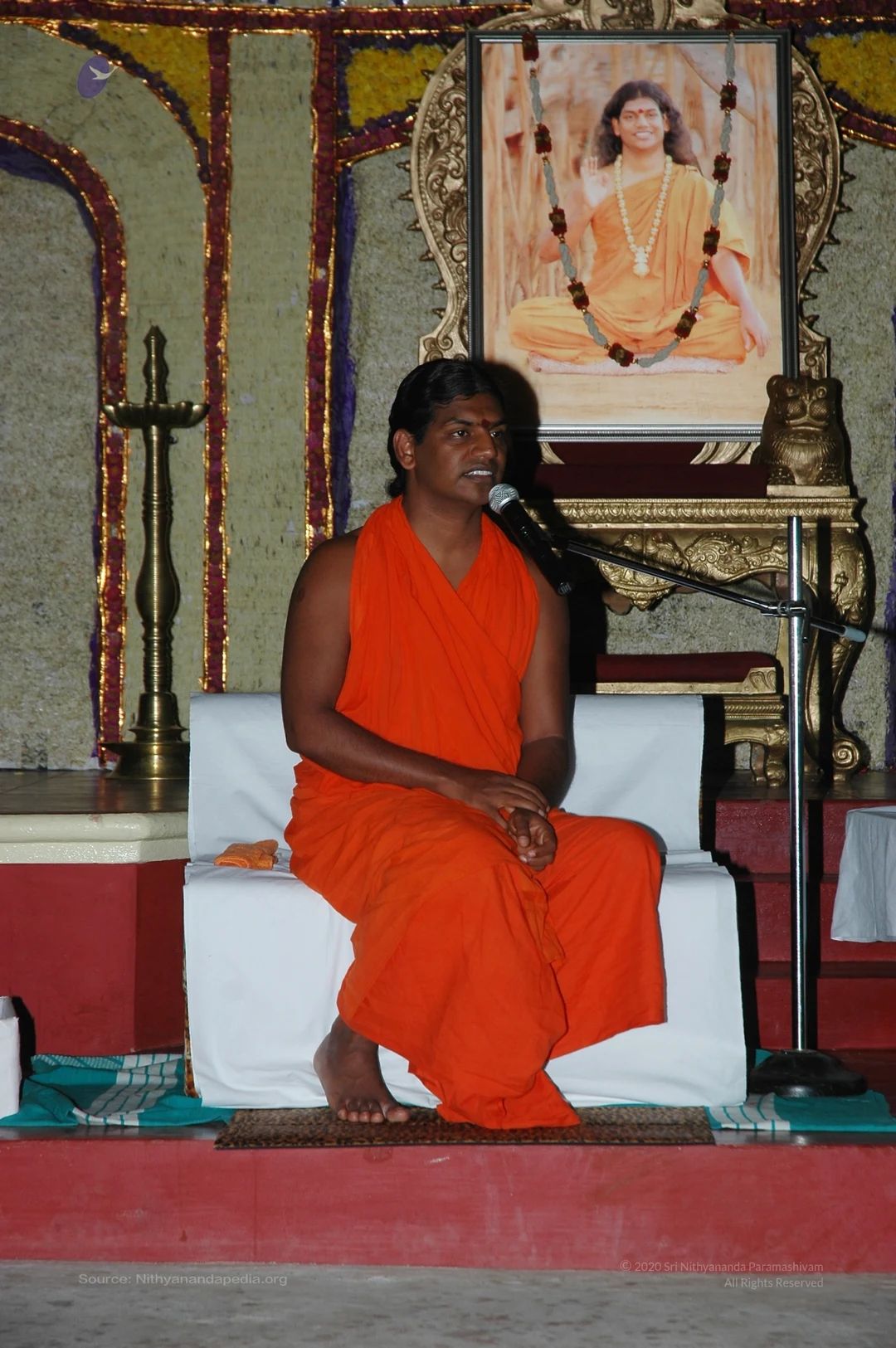
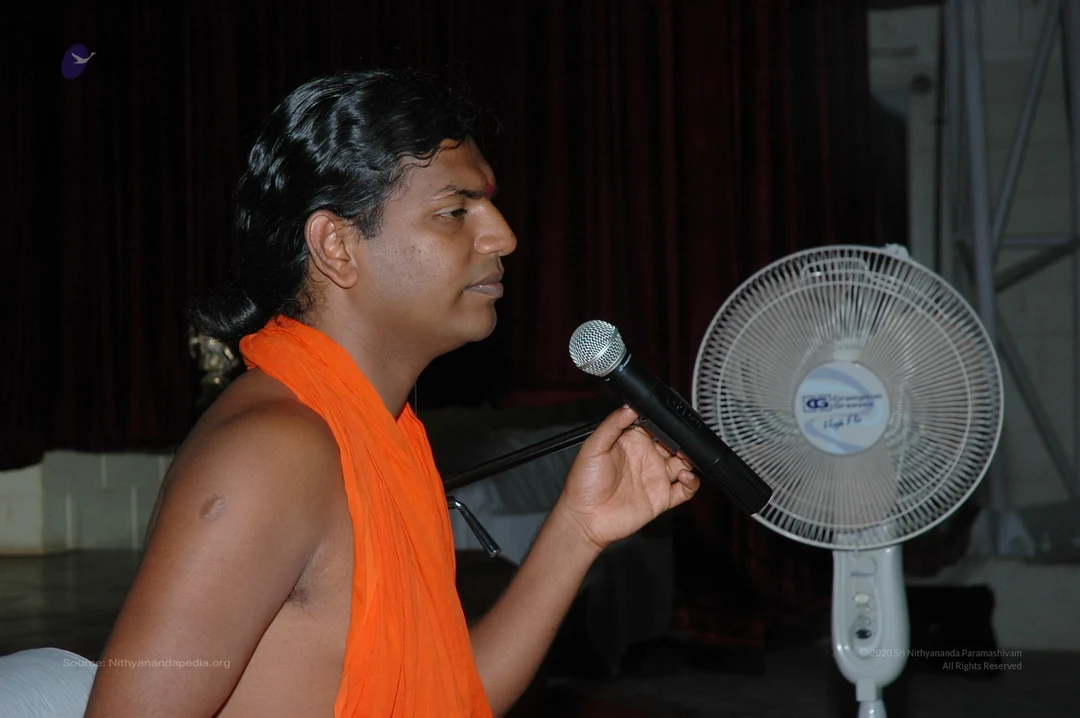
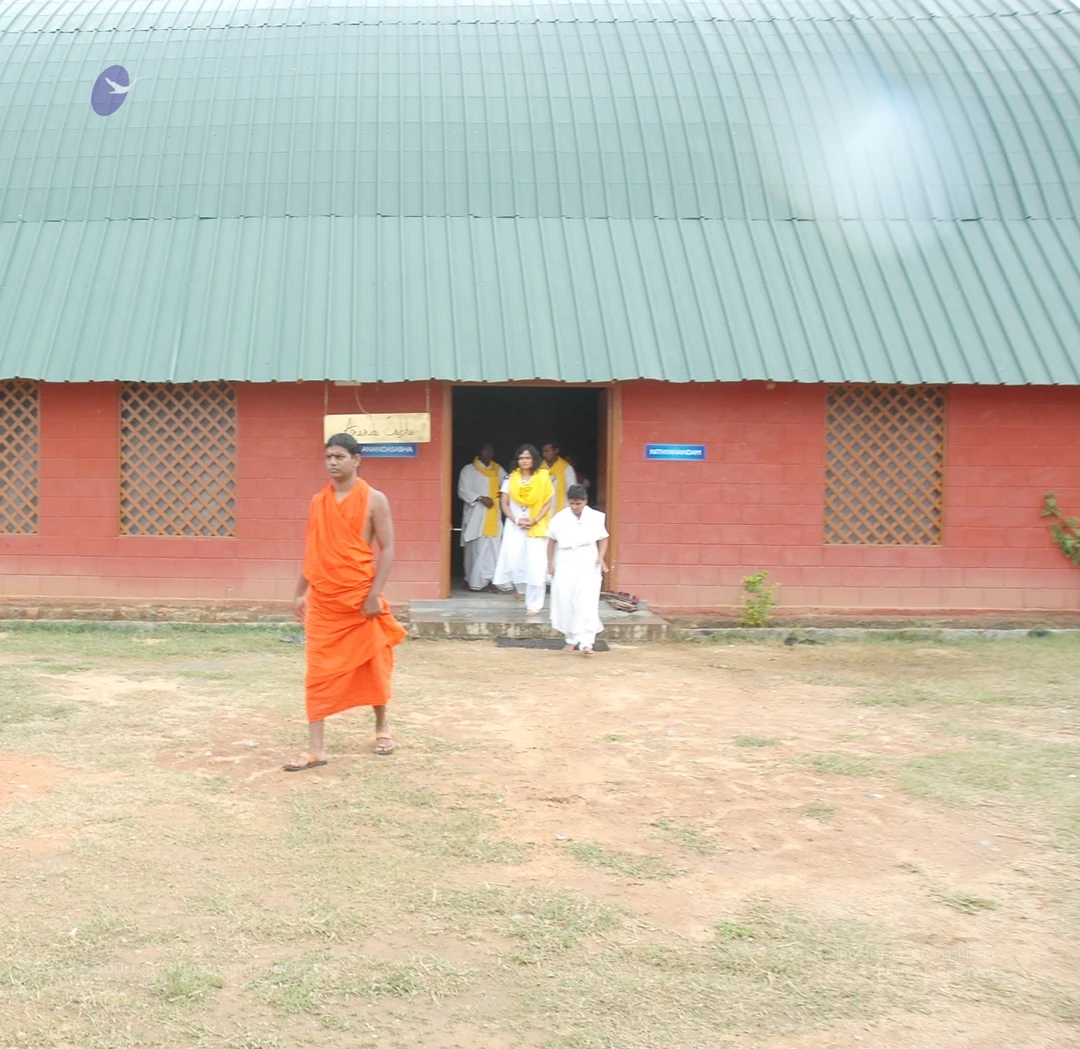
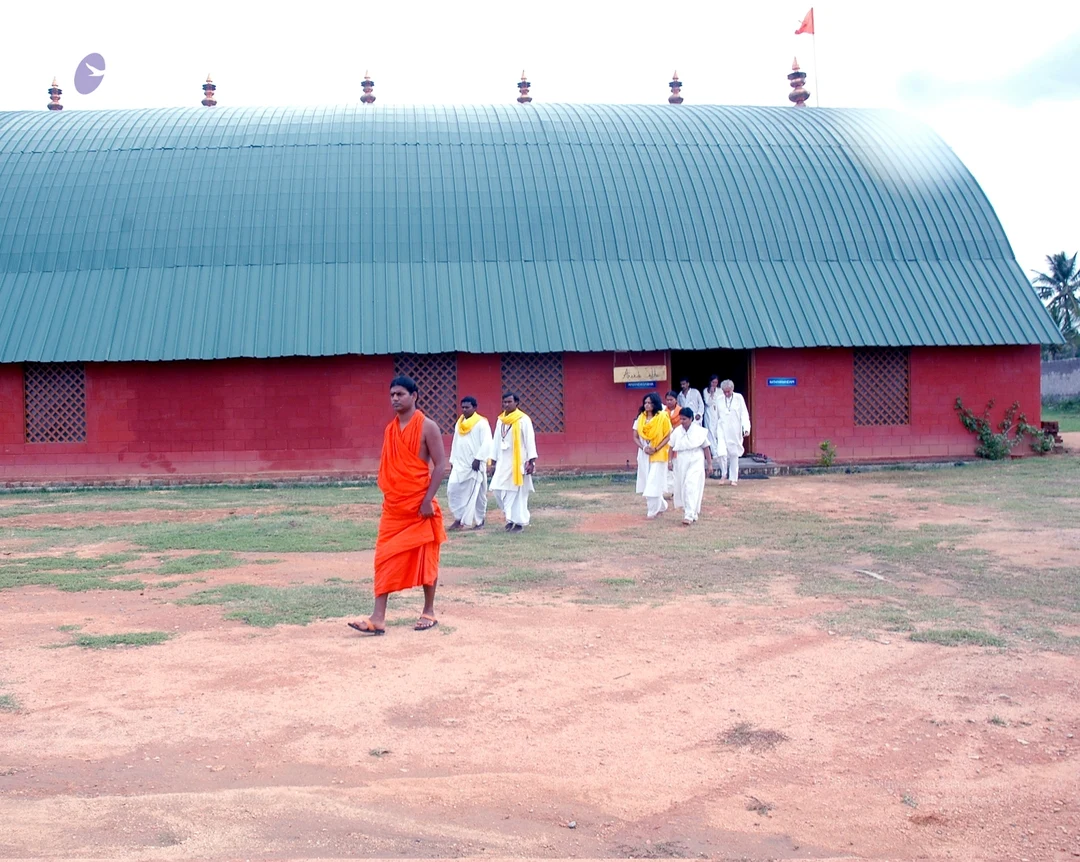
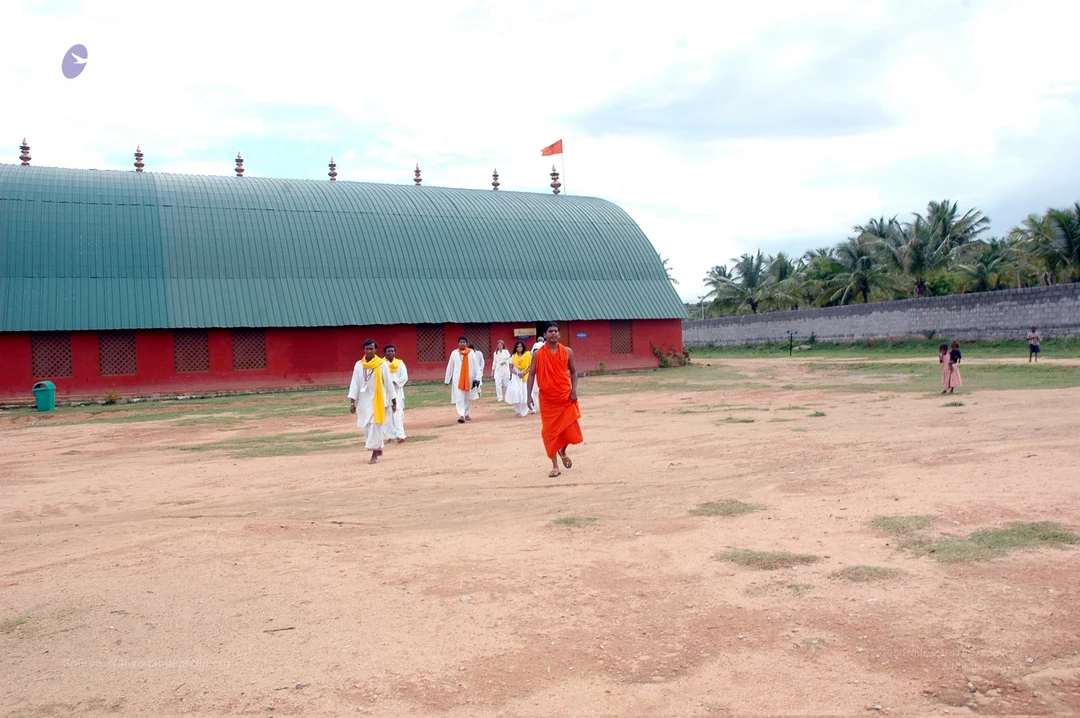
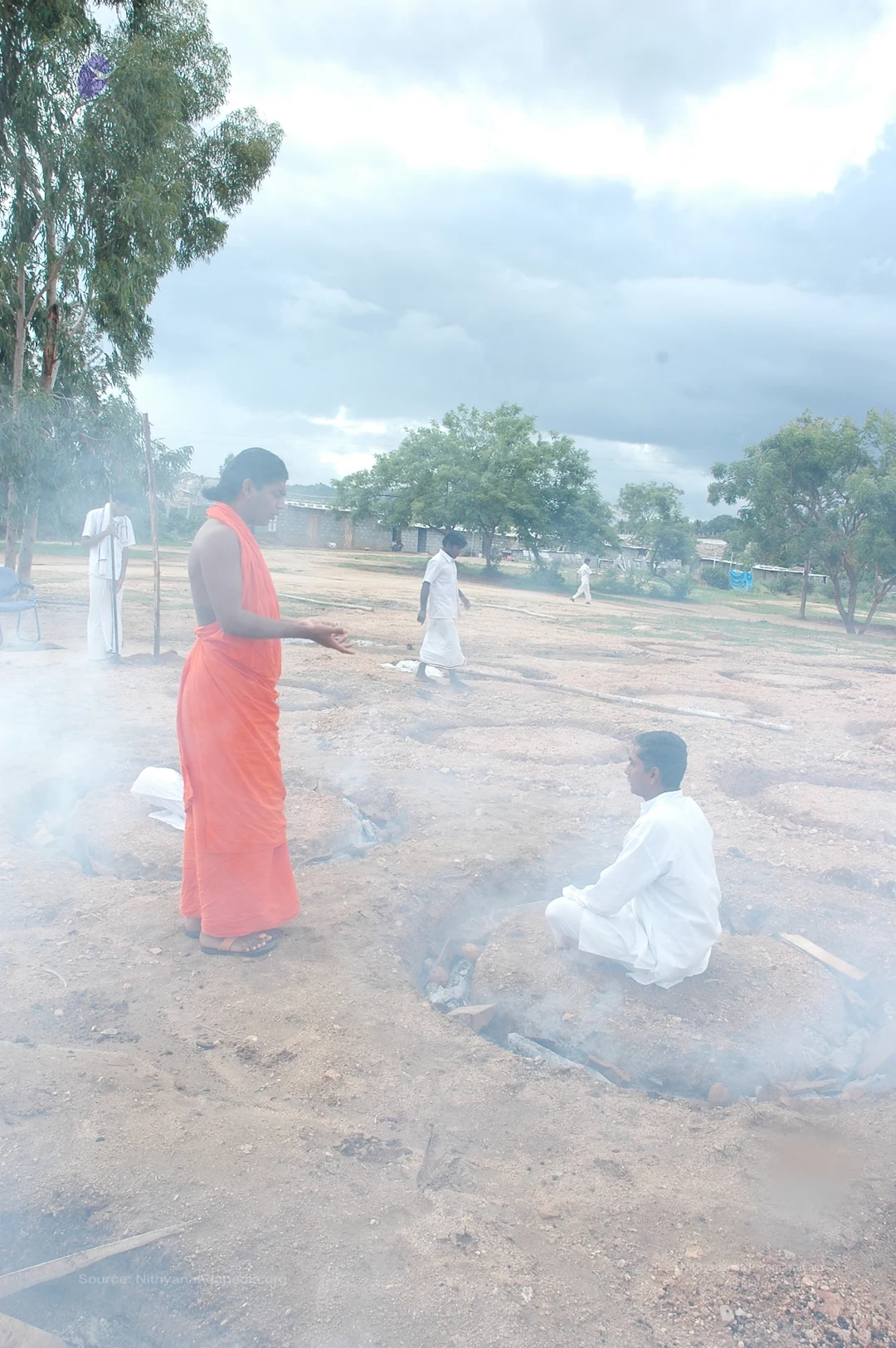
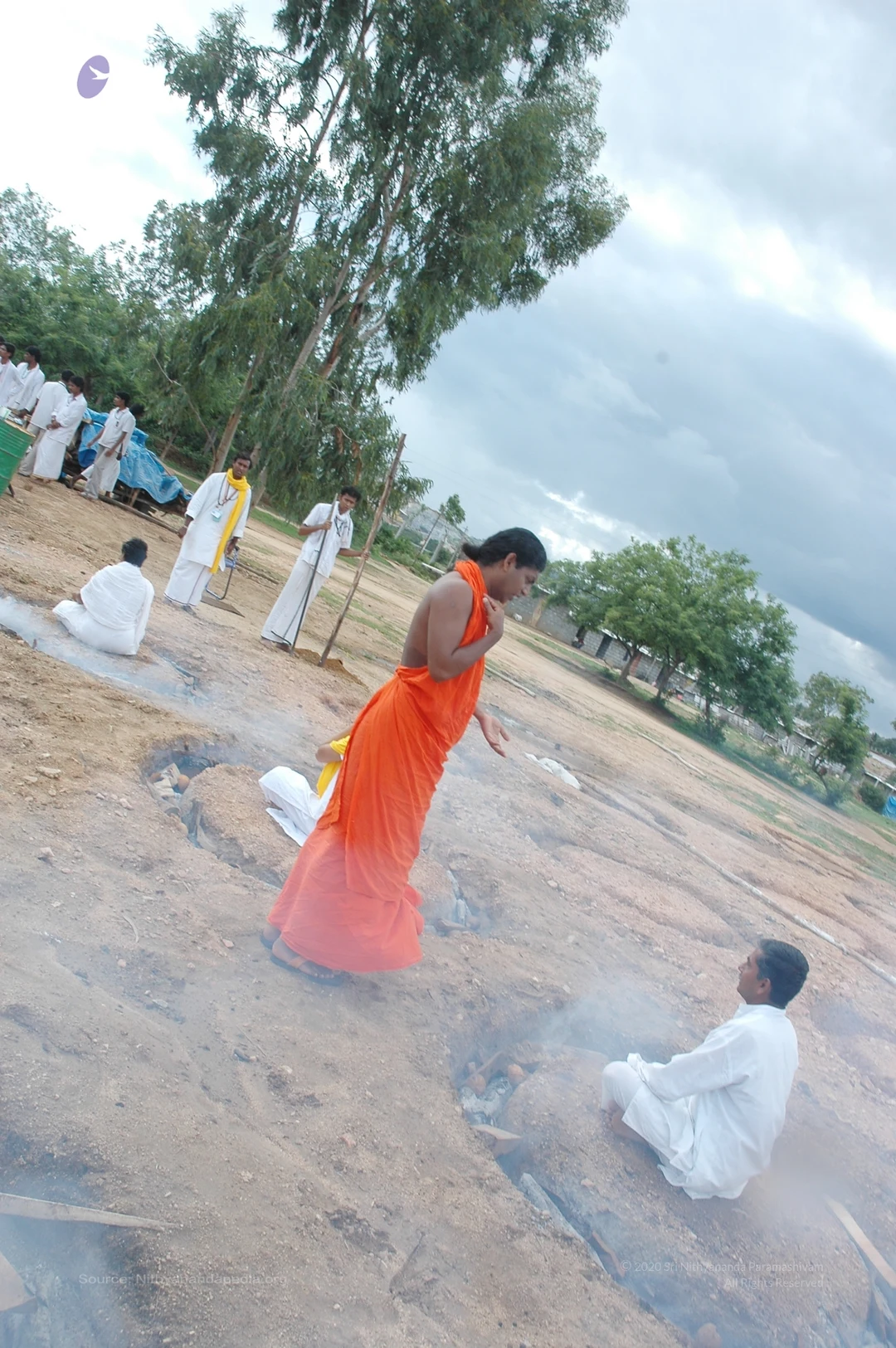
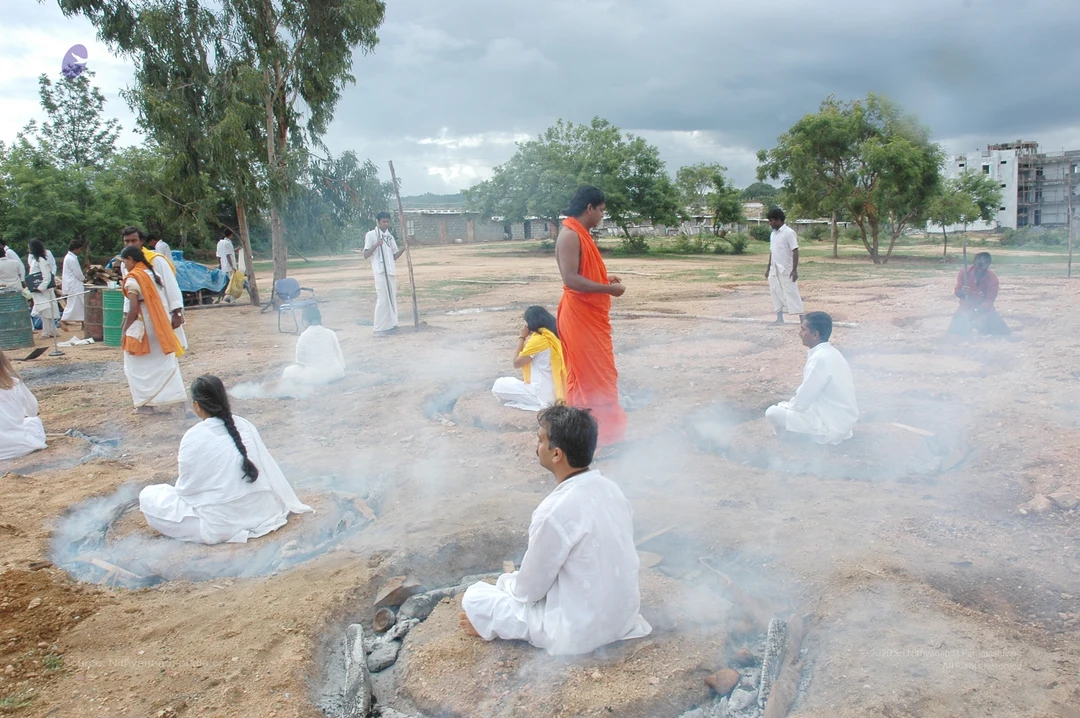
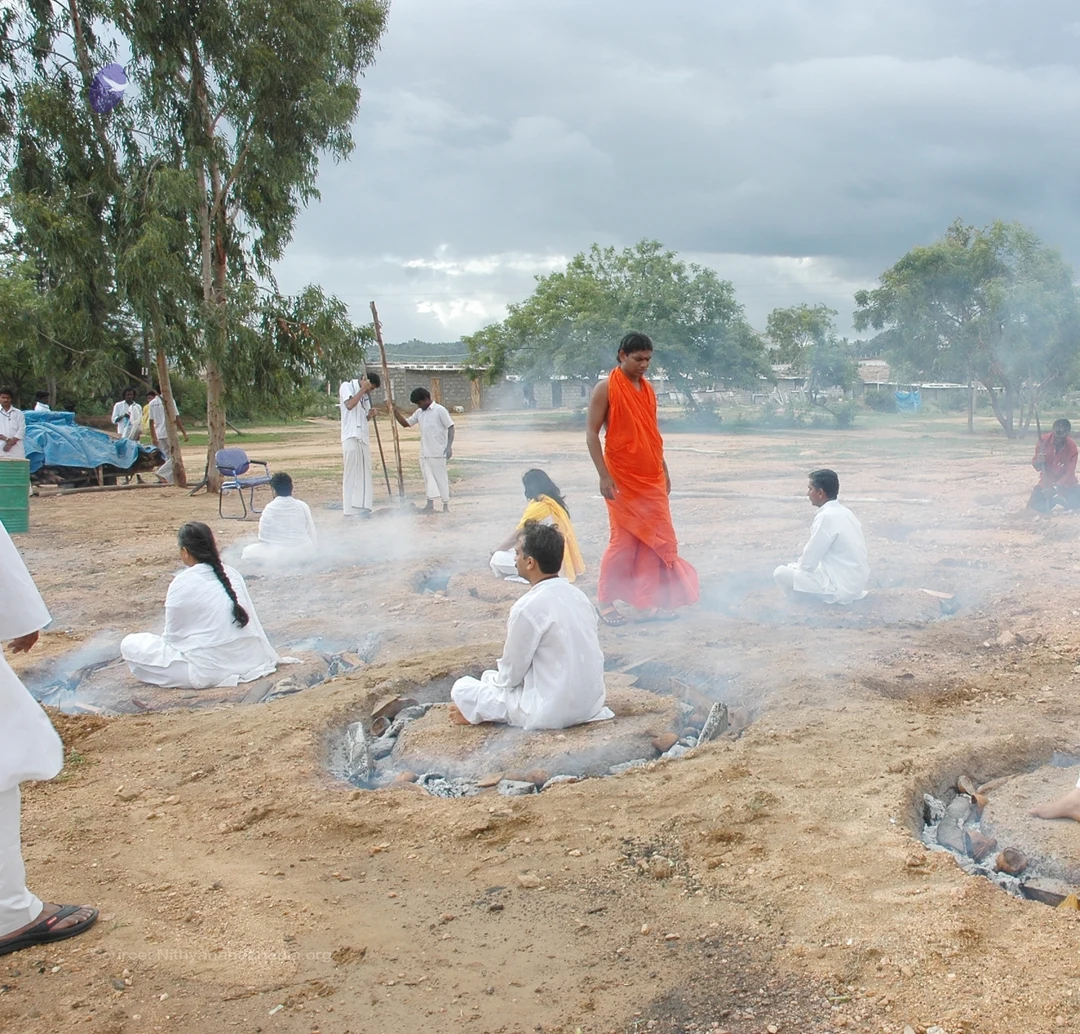
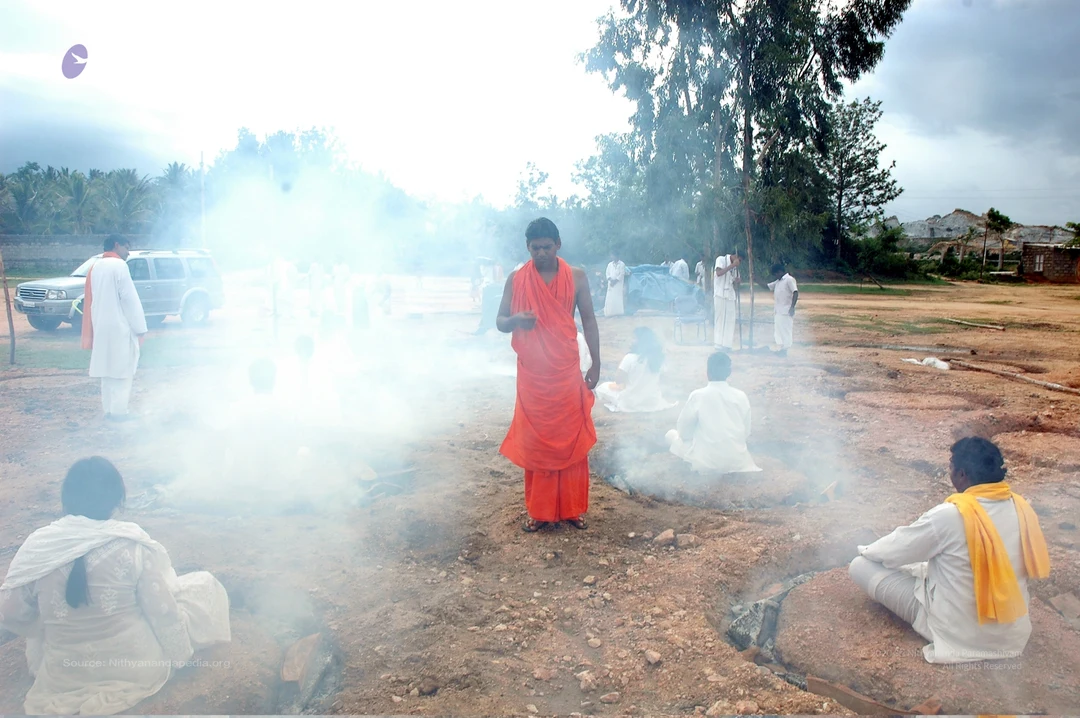
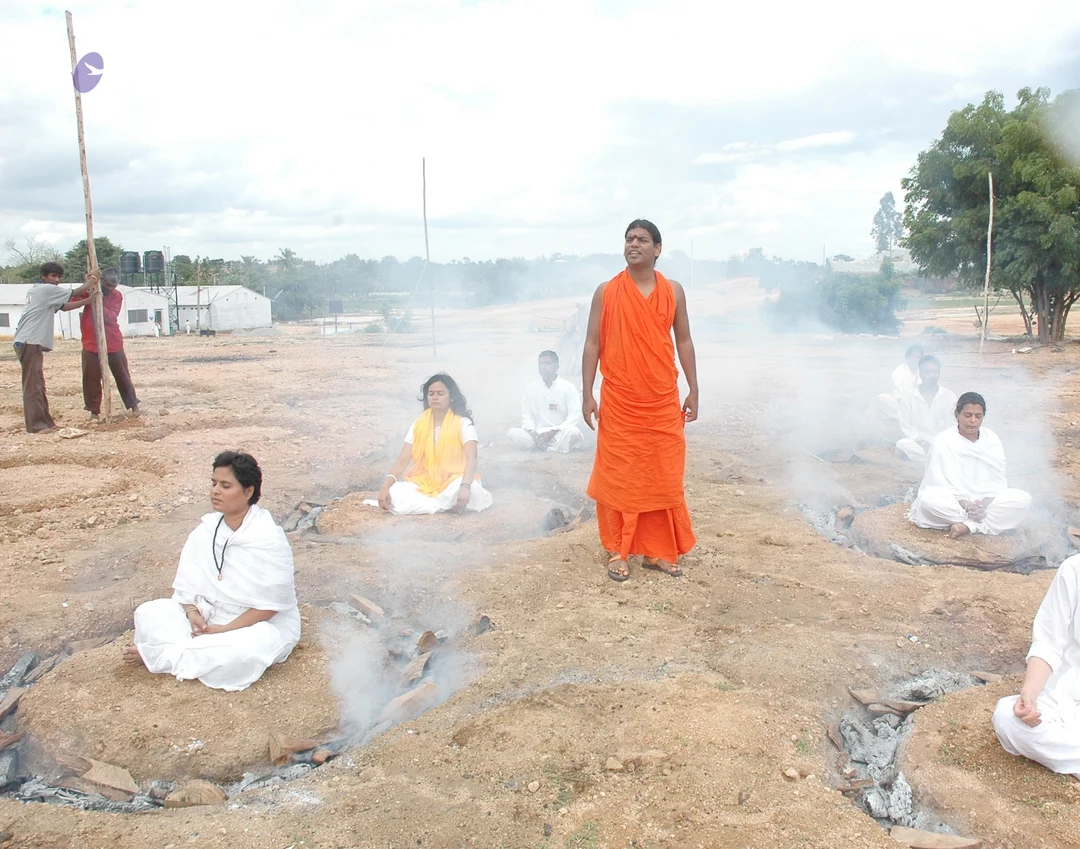
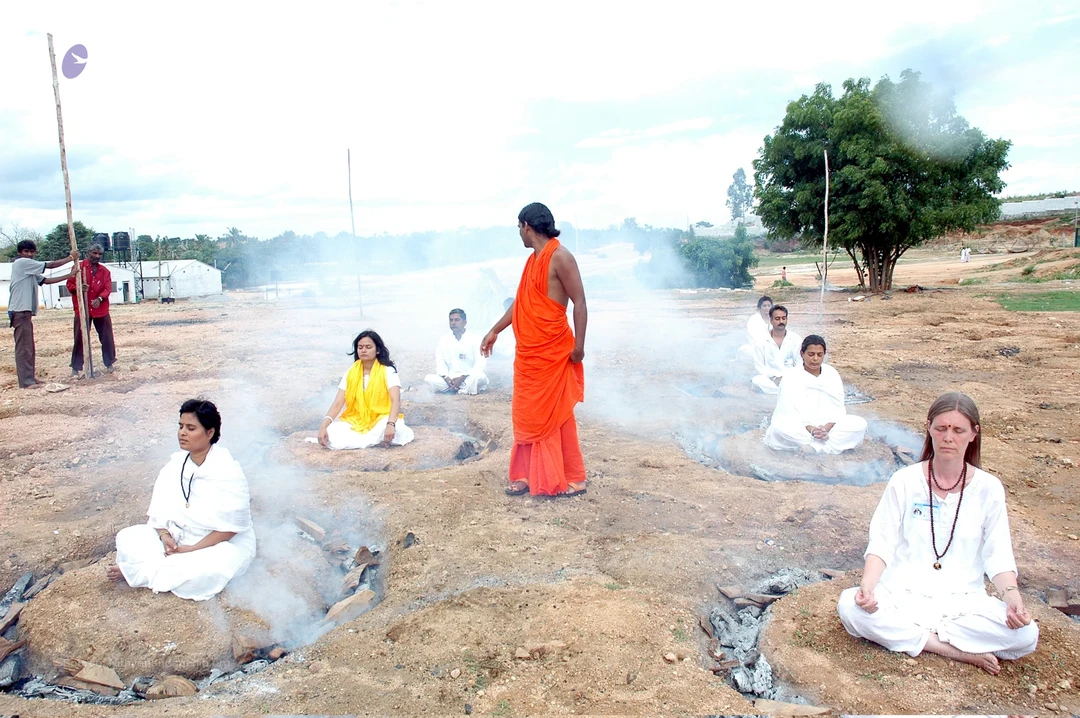
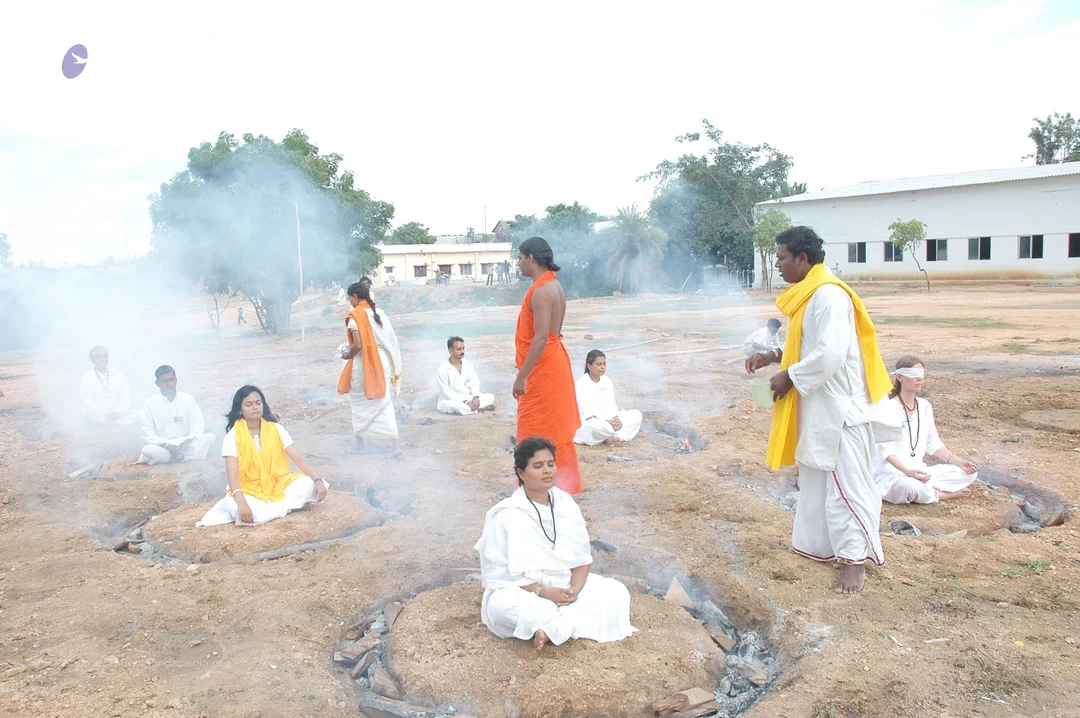
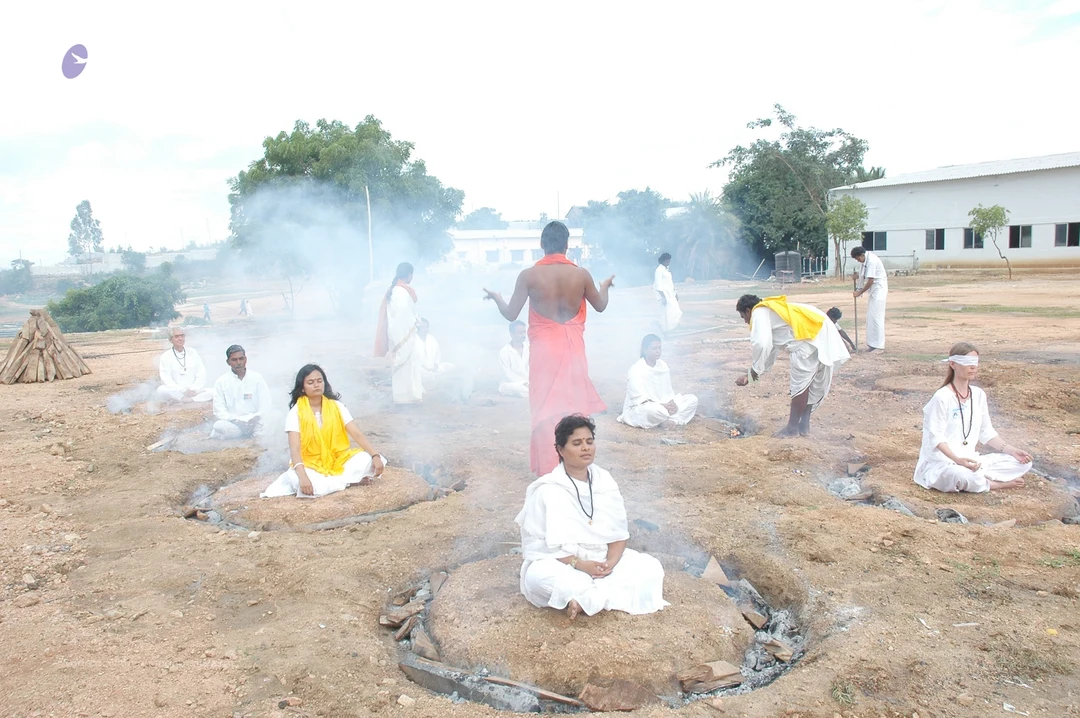
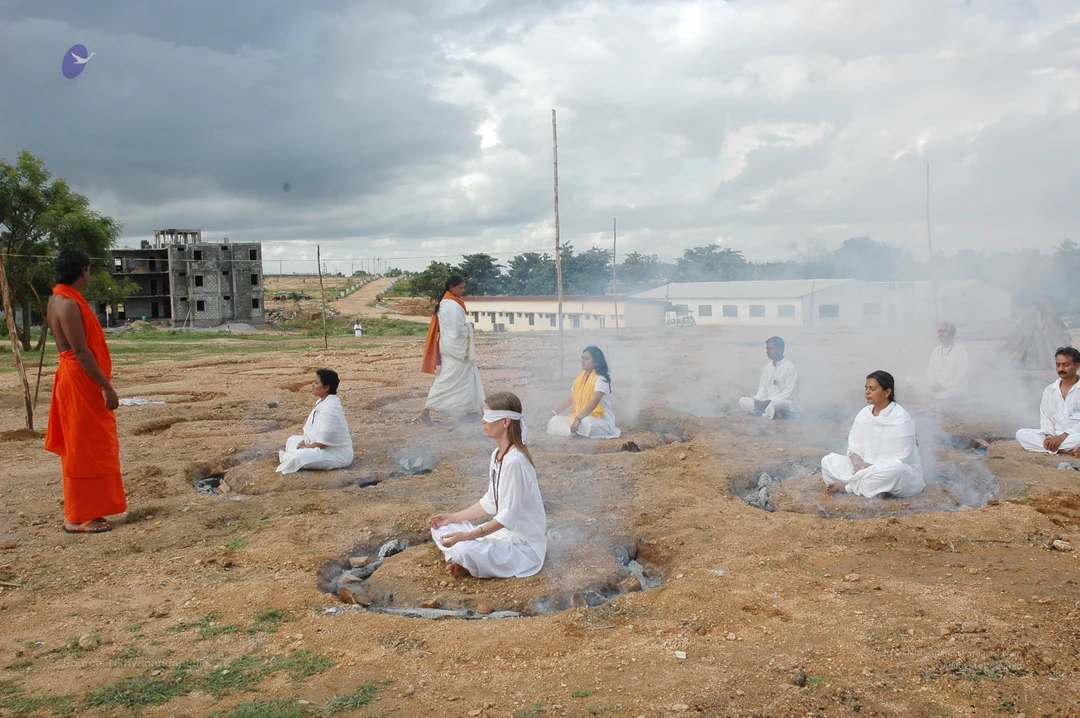
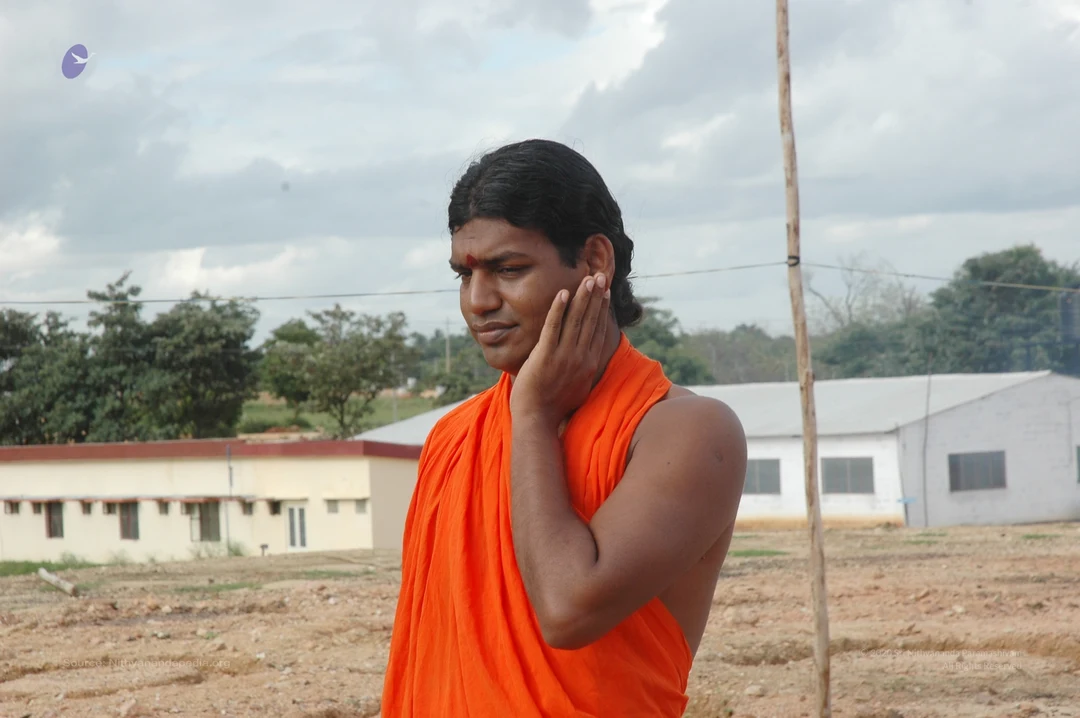
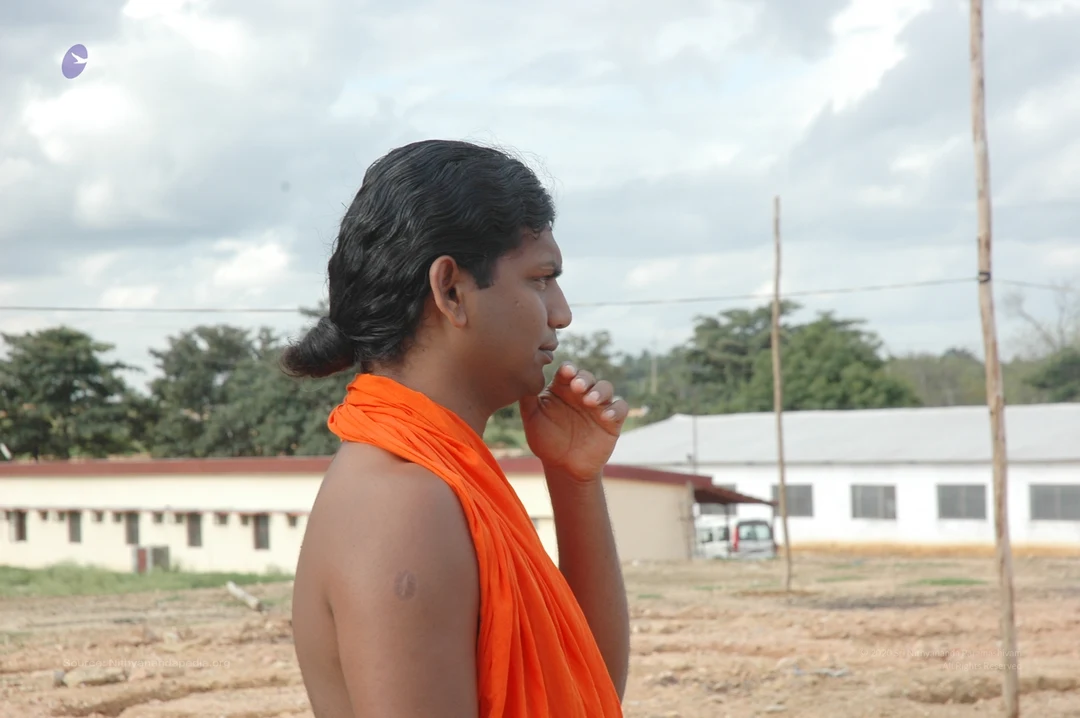
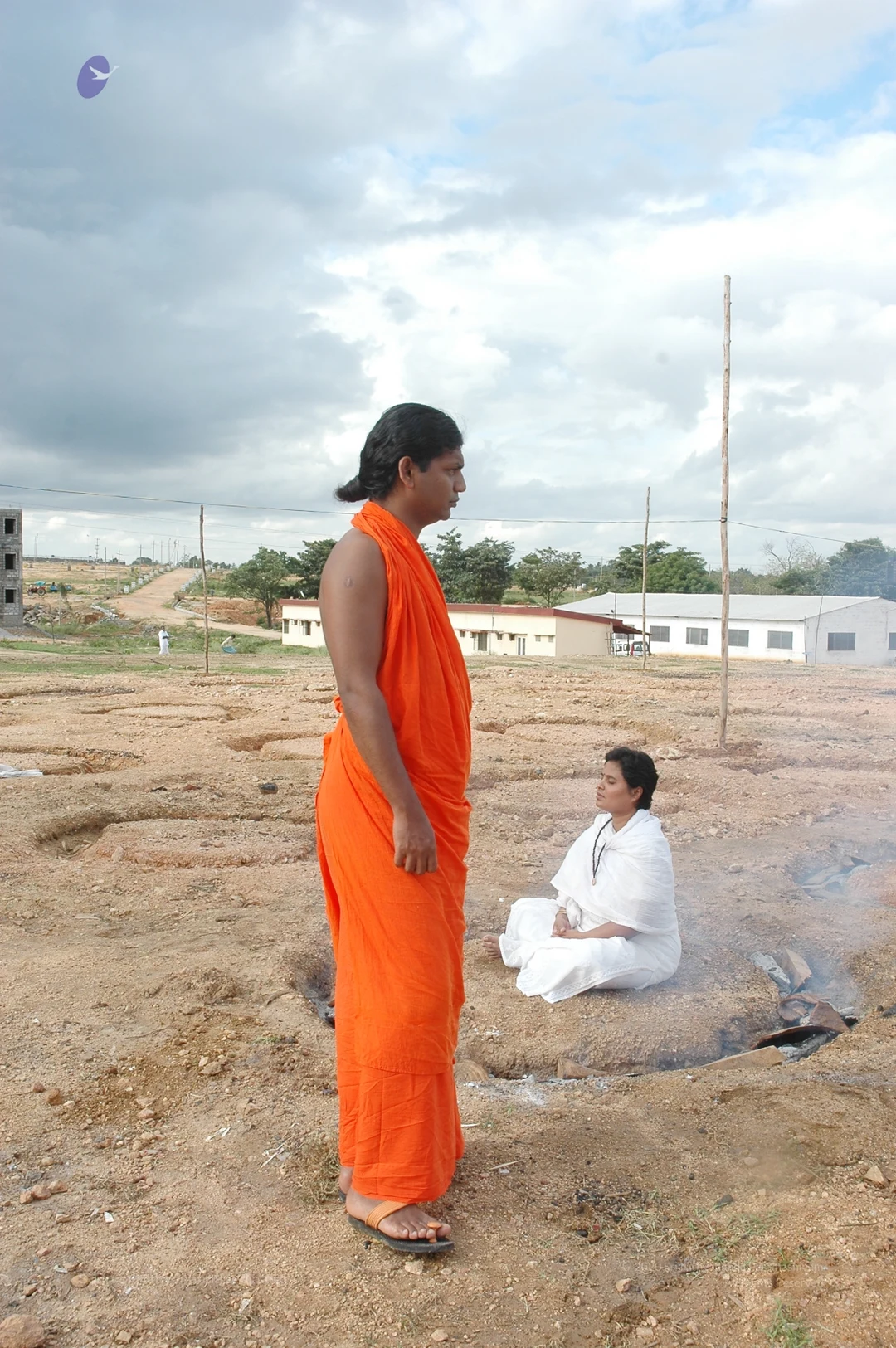
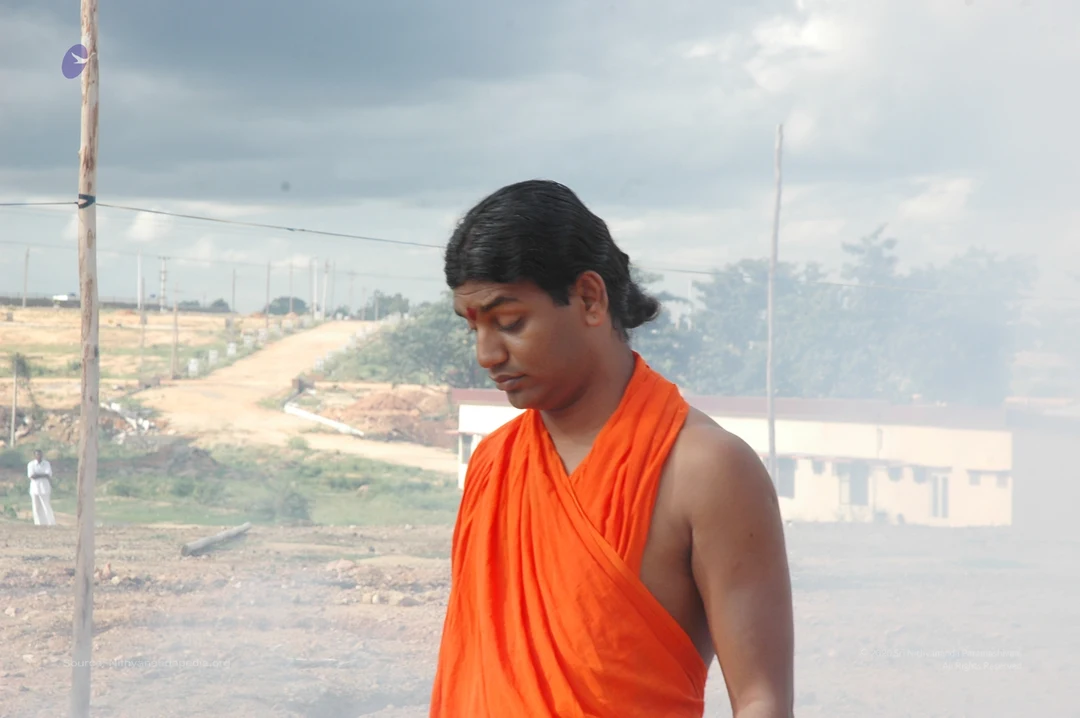
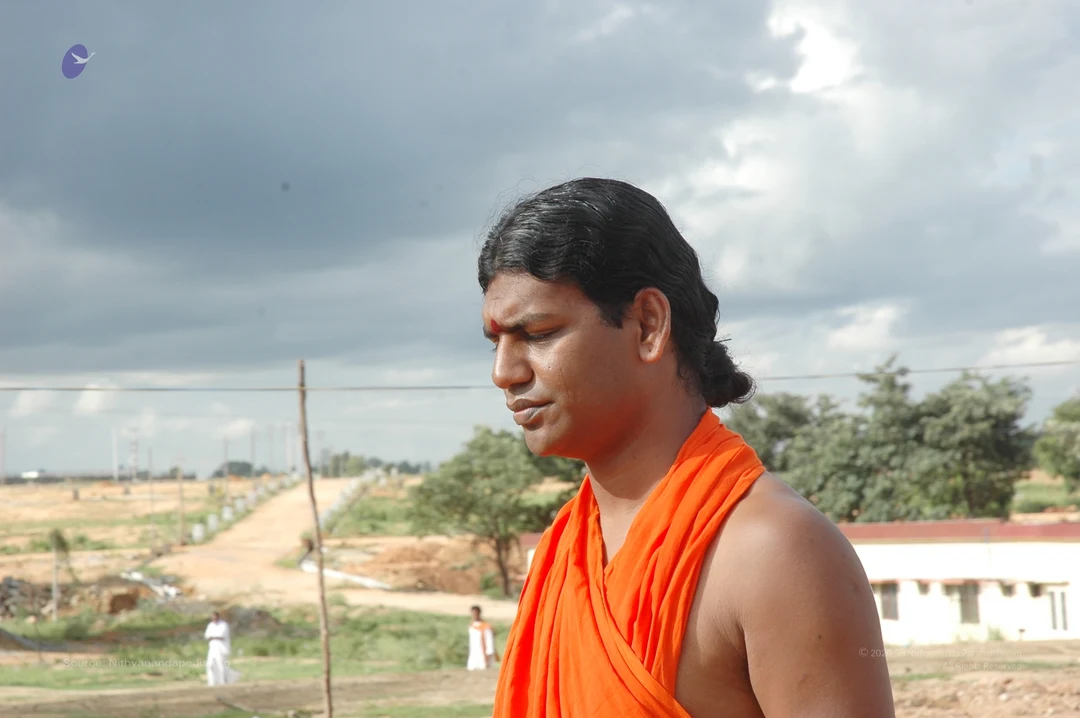
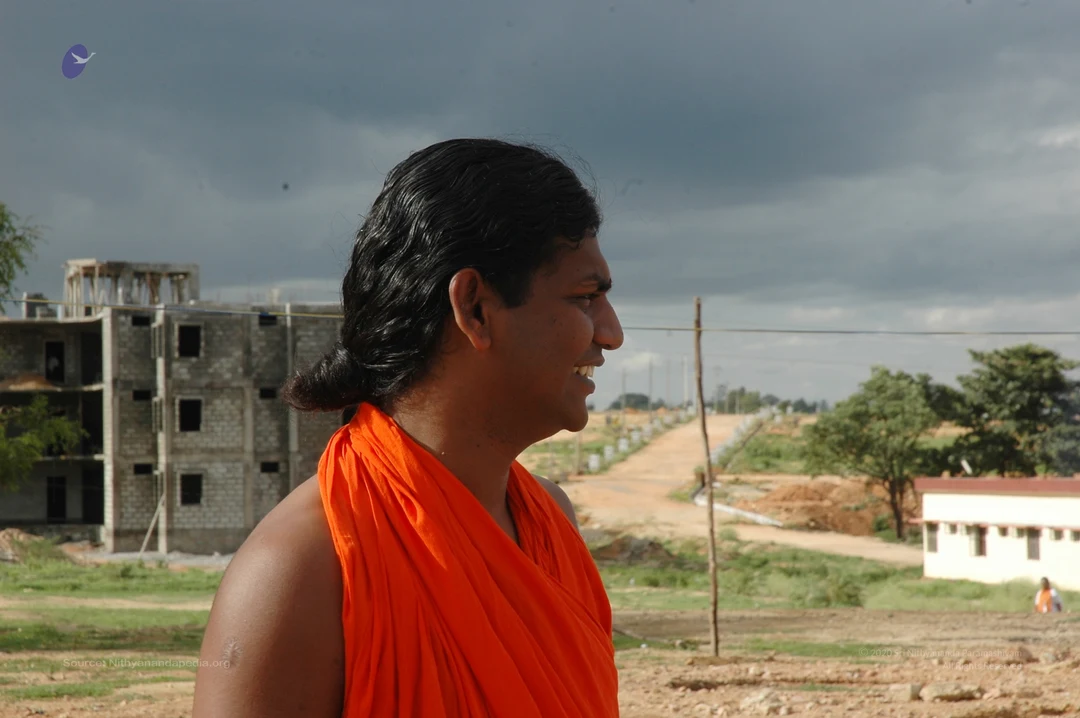
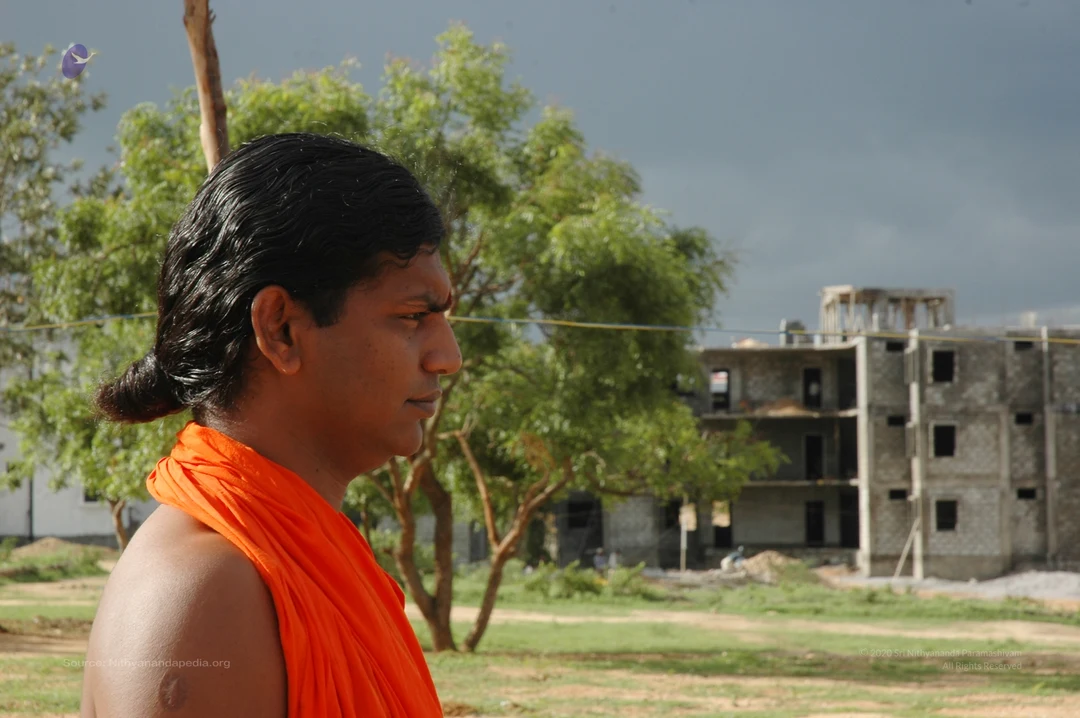
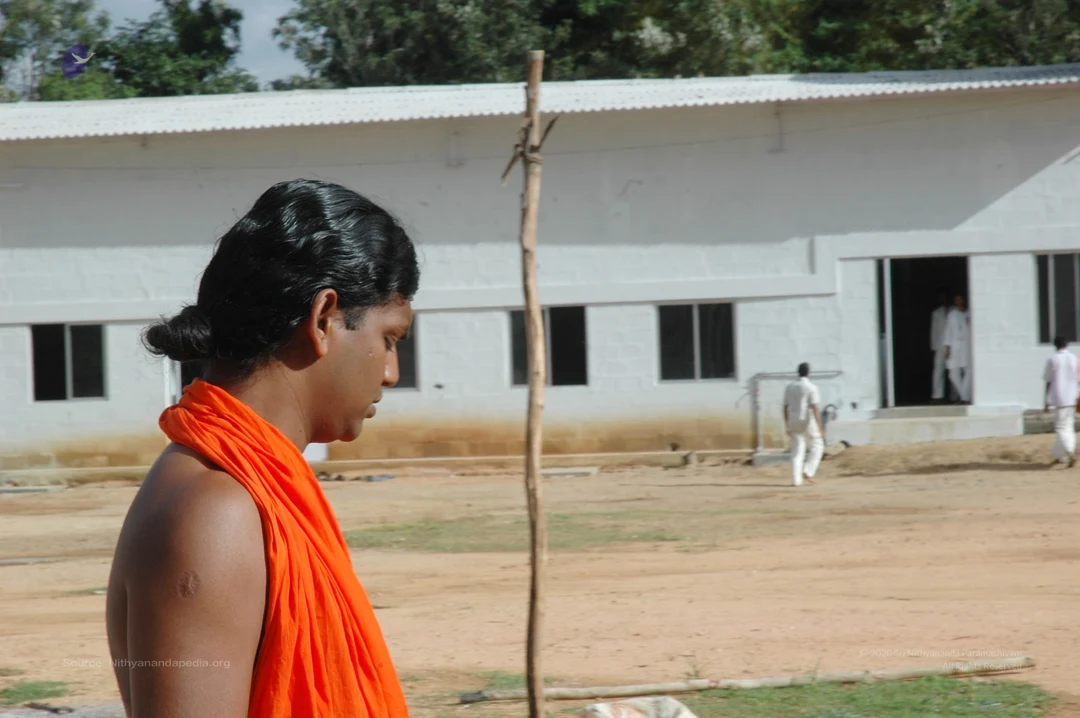
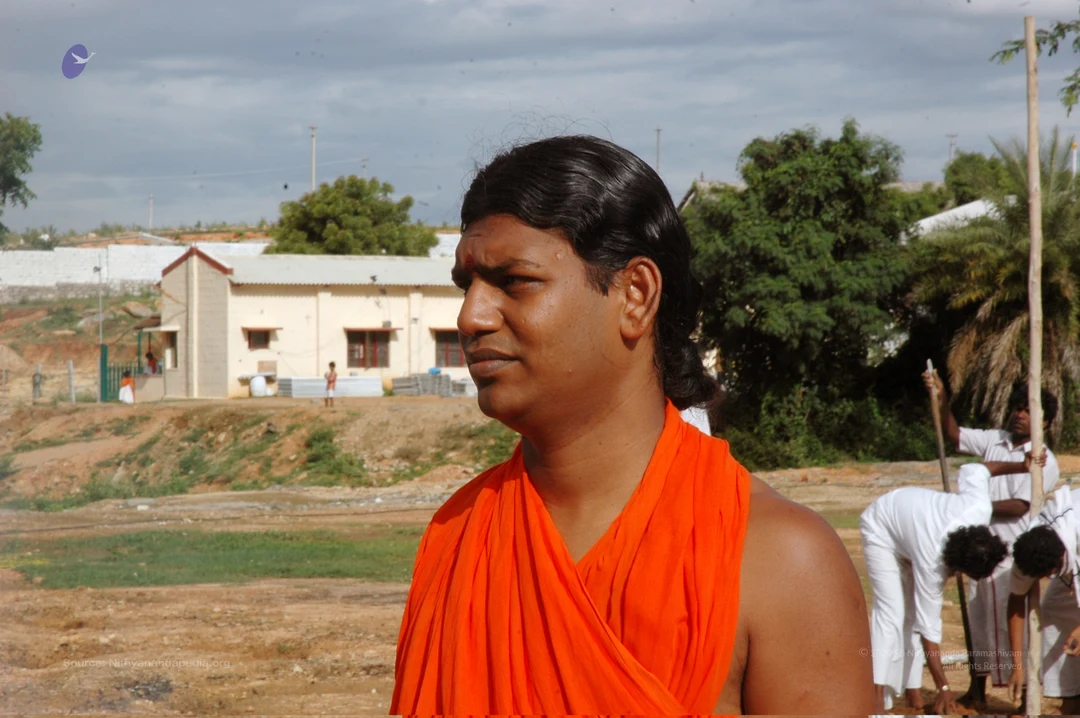
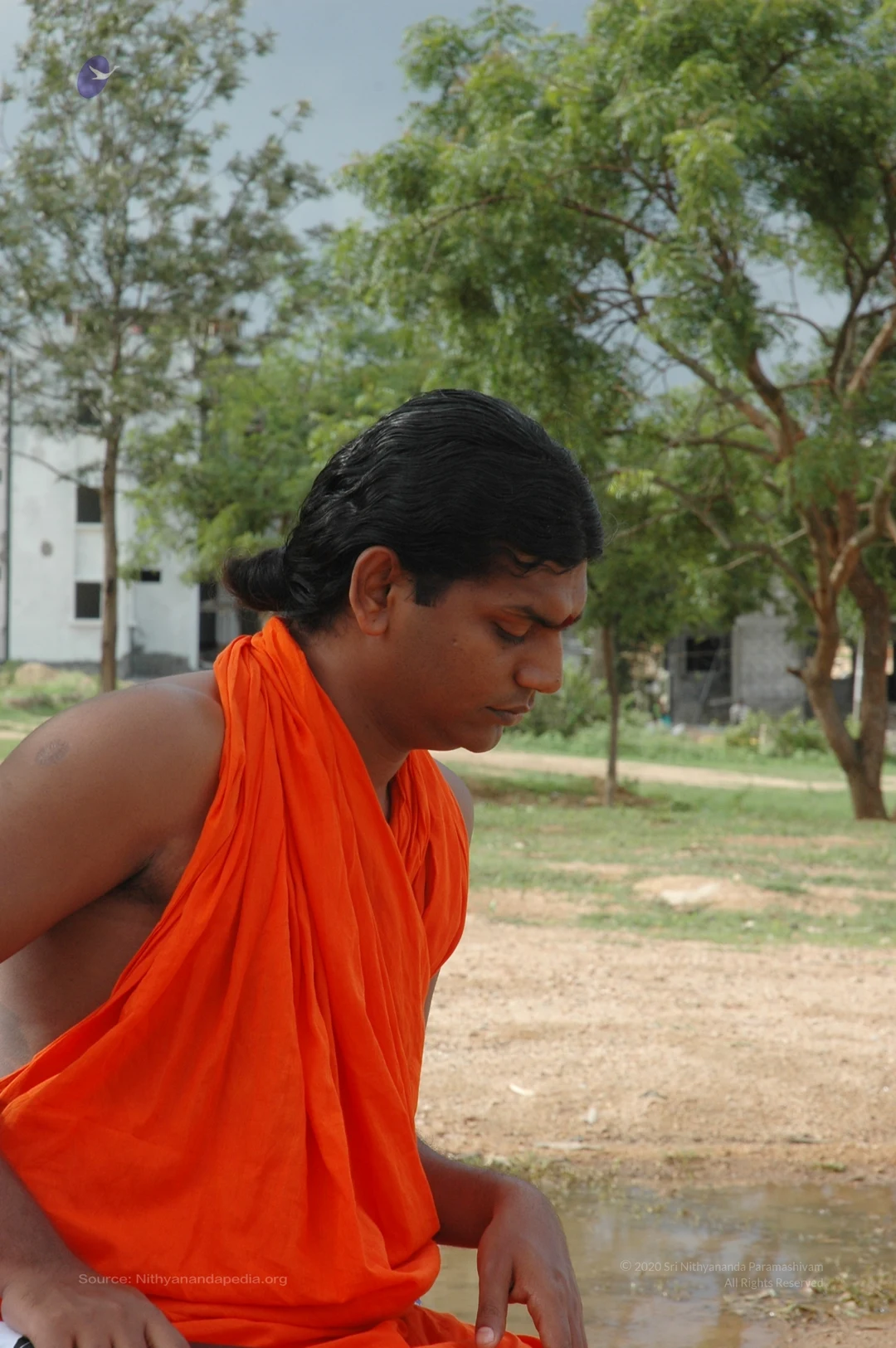
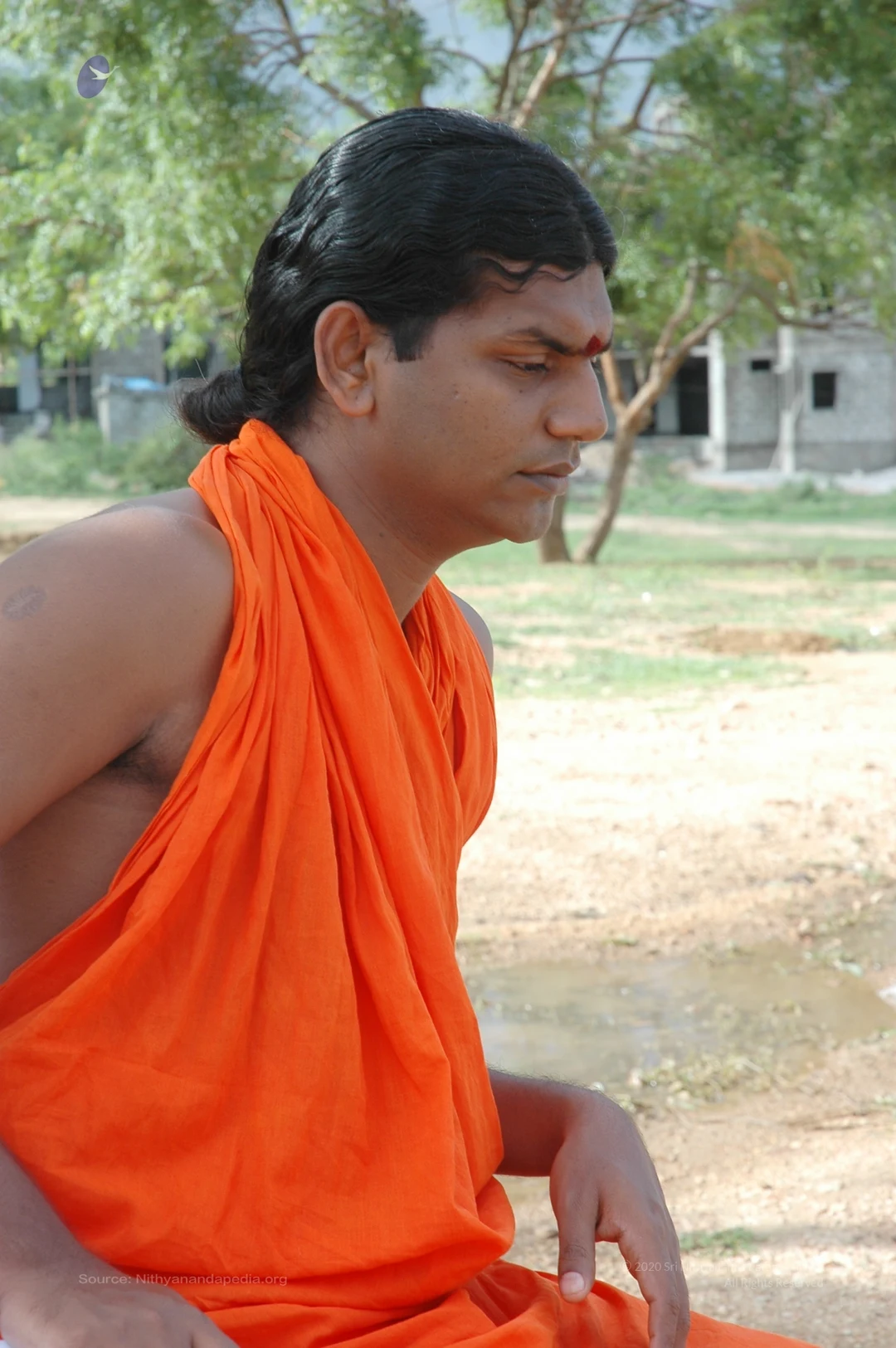
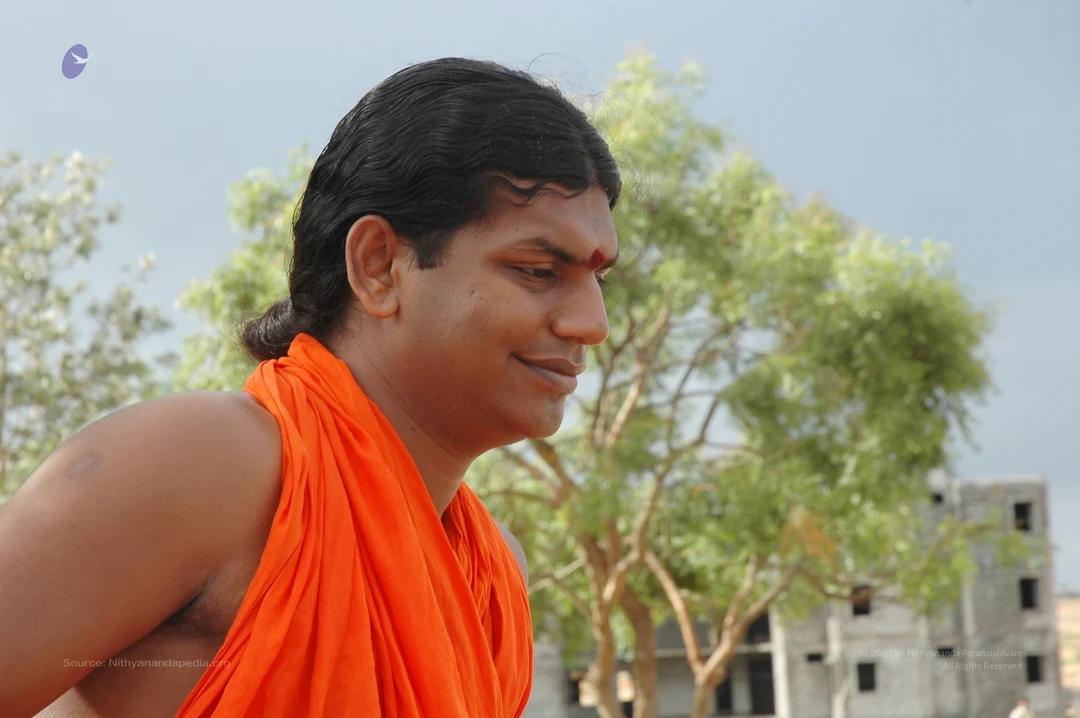
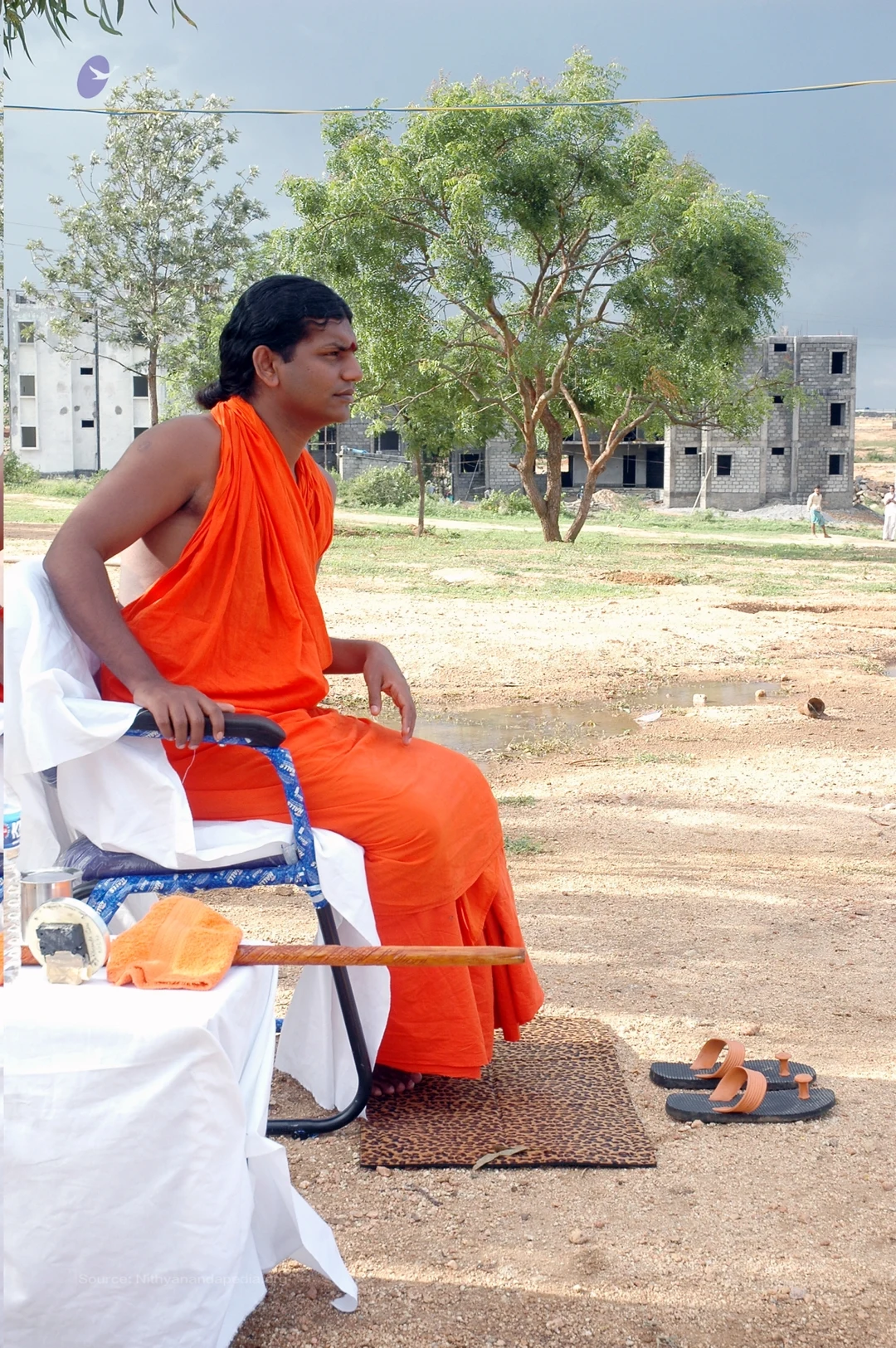
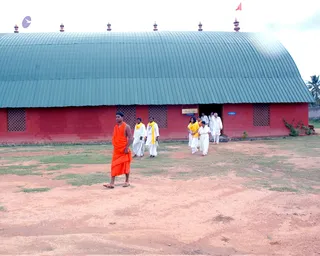
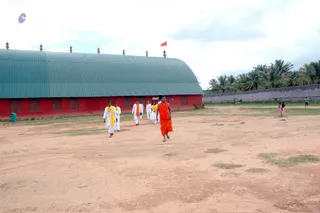
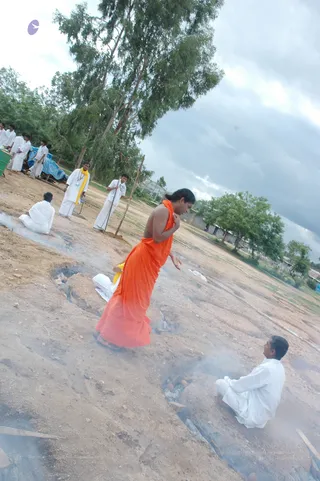
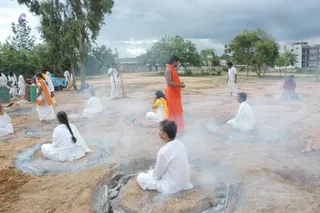
Ananda Tapas is an intense transformational program which deals with how to handle the 64 different fevers that happen in us. These 64 different fevers are caused by various emotions affecting us. The program was all about becoming centered without being affected by the fevers, about how not to be pushed from one fever to the next which is what happens with most of us normally.

The meditation techniques and the presence of the Master over this 12-day intensive program conducted between August 1st and 12th saw the participants going through tremendous inner transformation.

Photos of the Day:
Photos from this day

View all 32 photos
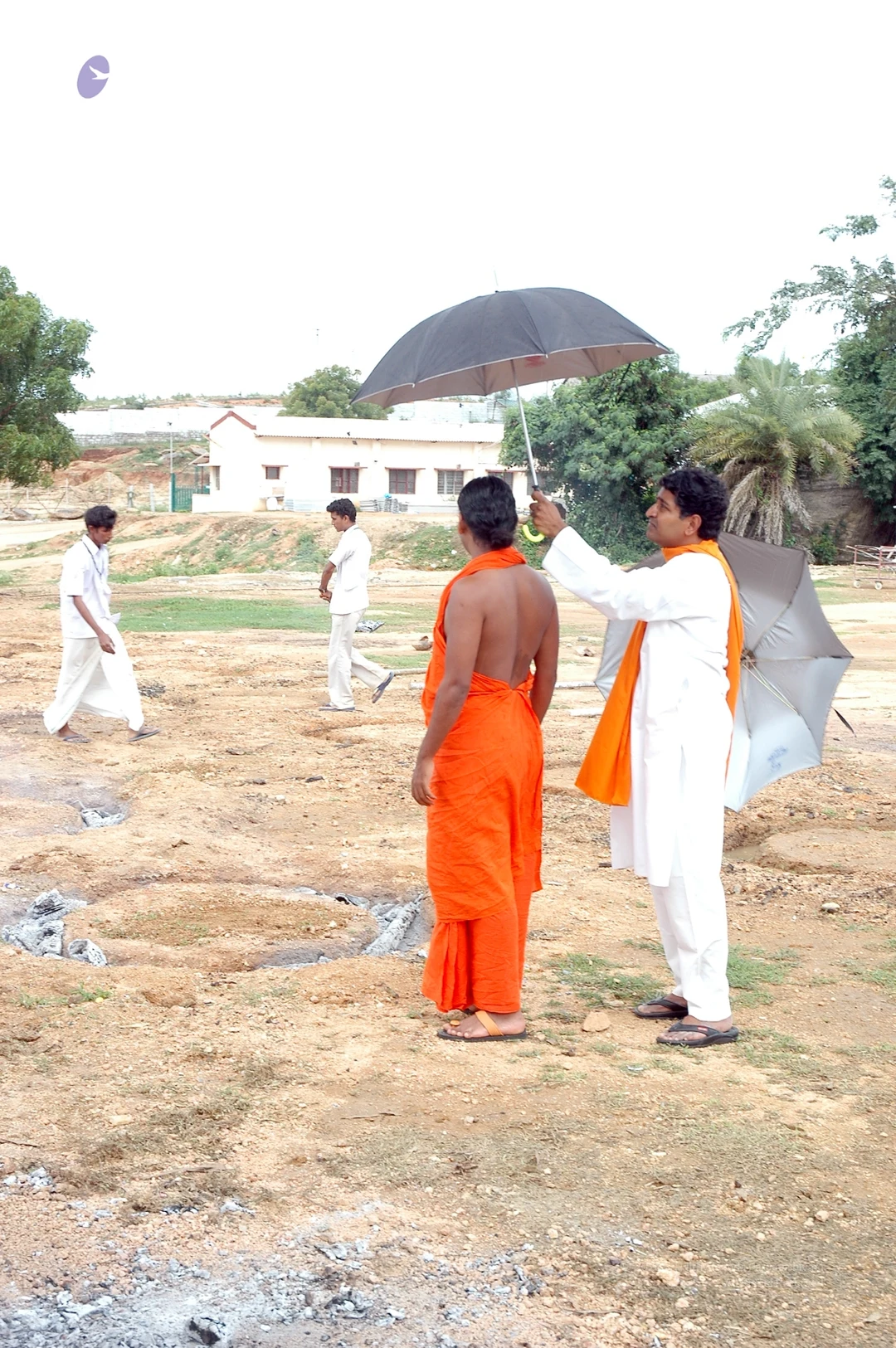
Outdoor photo of a dusty ground with ash-filled pits. In the centre a bare-backed man in a saffron-orange cloth wrap stands with his back to the camera, facing away. To the right a man in a white kurta and white dhoti, with an orange shawl over his shoulder, holds a black umbrella over the bare-backed man. Two men in white walk in the background at left. The pits and ashes suggest a ritual fire area, but no fire is visible.A seated man in orange saffron robes sits on a white-draped chair on a low dais, holding a handheld microphone on a metal stand in his right hand. He has short dark hair and his left hand rests on the chair arm, with an orange cloth folded beside him on the white fabric. Behind him stands an ornate gilded side table and a brass oil lamp with a tall stem. Above the table hangs a framed painted portrait of a seated figure in orange robes wearing a white bead necklace and dark rudraksha beads, which is a printed artwork rather than a physical person. The dais has a green and white striped cloth beneath it. The setting suggests a talk or satsang in a hall with a wall of patterned gold and maroon drapery.A man in a saffron-orange cloth wrapped over one shoulder sits cross-legged on a white cushioned seat speaking into a microphone on a stand, hands folded in his lap, barefoot on a woven mat on a red-painted platform. Behind him a framed photograph shows a smiling figure in orange robes with a white flower garland and a red-and-green bead garland, seated and gesturing. Golden lion-carved furniture, a brass oil lamp stand and a wall decorated with orange and red flowers surround him in a temple-like hall.A photograph of a man speaking into a handheld microphone during a seated session in an indoor hall. He wears a loose saffron-orange wrap over his bare shoulder and chest, has a red tilak mark on his forehead and long swept-back dark hair. Behind him hangs dark maroon drapery and a white industrial-style pedestal fan stands to the right. His appearance is consistent with the a person cues of saffron clothing, forehead marking and long hair, though the image alone leaves identity uncertain.A red brick building with a green corrugated metal roof and lattice side windows stands on a dry grassy yard. A man in an orange-saffron dhoti and shawl walks across the foreground toward the viewer. In the open doorway behind him, a woman in a yellow sari and several men in white clothes with yellow shawls stand on the step, while a person in white robes steps down. A small yellow sign with Tamil-script text and a blue sign with English lettering are mounted on the wall beside the door.A photograph of a red brick building with a curved green corrugated metal roof and small decorative finials along the ridge, with a red flag on a pole at the top right. A bare-chested man in saffron-orange cloth walks barefoot across dry ground in the foreground. Behind him, a group of about seven people in white dhotis and white clothes, several wearing yellow or golden shawls, walk out of the open doorway of the building. A small sign reads Ananda Ashram above the entrance. The ground is patchy grass and red earth with a palm tree at the right edge.Photograph of a dirt courtyard in front of a long red building with a green curved metal roof, small decorative finials along the ridge and an orange flag on a pole. A group of about seven people walks across the ground: in front, a man in an orange robe and bare feet strides forward, while behind him several people wear white clothes with yellow or orange shawls. Palm trees and a grey boundary wall stand at right, with two people in pink and a figure in the far background.Outdoor photo on a dusty open field with scattered trees and low buildings under a cloudy sky. A man in an orange-saffron wrap cloth stands barefoot on the left with long hair pulled back, hands extended toward a seated man in white clothes who sits cross-legged in a shallow pit with smoke rising around him. Other people in white dhotis and shirts walk or stand in the background; one stands near a tree at far left. The scene suggests an outdoor meditation or fire-based practice, with the saffron-clad figure appearing to guide the seated participant.Outdoor photograph of a fire-walking or ember-walking practice on dry, sandy ground under a cloudy sky, with tall eucalyptus trees and low buildings behind. In the centre, a bare-chested person in a long orange-saffron cloth wrapped around the body, with head bowed and hands near the chest, steps beside shallow pits of smoking embers. On the right, a seated man in white clothes watches the pit beside him. At left, a seated person in white sits near the ground, and several men in white dhotis and white shirts stand back, one wearing a yellow shawl and another holding a long wooden pole. No figure is clearly identifiable as a person from appearance cues, so the central person is described by role only.Outdoor fire-ritual scene on bare dry ground under trees, with smoke rising from several circular fire pits. Several people in white clothes sit cross-legged beside the pits, and a standing man in an orange-saffron robe draped over his shoulders stands centre-right with his hands together. A woman in a yellow wrap sits near the centre, and another man in orange stands at left. Behind them are white-clad helpers, a pole, buckets and a small blue cloth-covered table, with a partly built concrete building at the right edge. This appears to be a homa or yagna with fire pits.Outdoor photograph of a dusty open ground with smoke rising from several shallow circular fire pits. Seated participants in white clothes sit around the pits, with one woman in a yellow garment among them. A standing figure in an orange saffron robe with long dark hair walks between the pits; his appearance is uncertain, so he is described only as a sannyasi in saffron. Other people in white stand in the background beside eucalyptus trees, a blue tarpaulin and a plastic chair, under a cloudy sky. Visible people total about ten.Outdoors on bare reddish earth, smoke rises from a ring of small fire pits. A standing man in a saffron-orange robe stands centre, his hands together at his chest, with a short-haired head and no visible crown or mala. Around him seated and standing people in white clothing sit by the pits; one seated person on the right wears a yellow shawl. Trees, a white SUV and a blue car sit in the background under an overcast sky. The scene suggests a fire ritual, though the exact rite is not clear.