Skip to content
Thursday

10 November 2005

Dated photos
64
Source pages
1
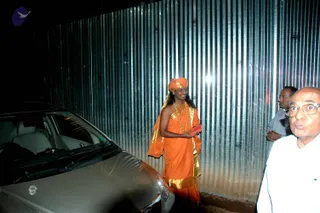
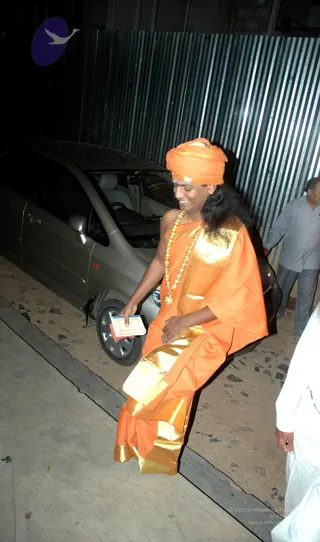
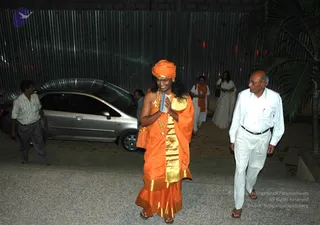
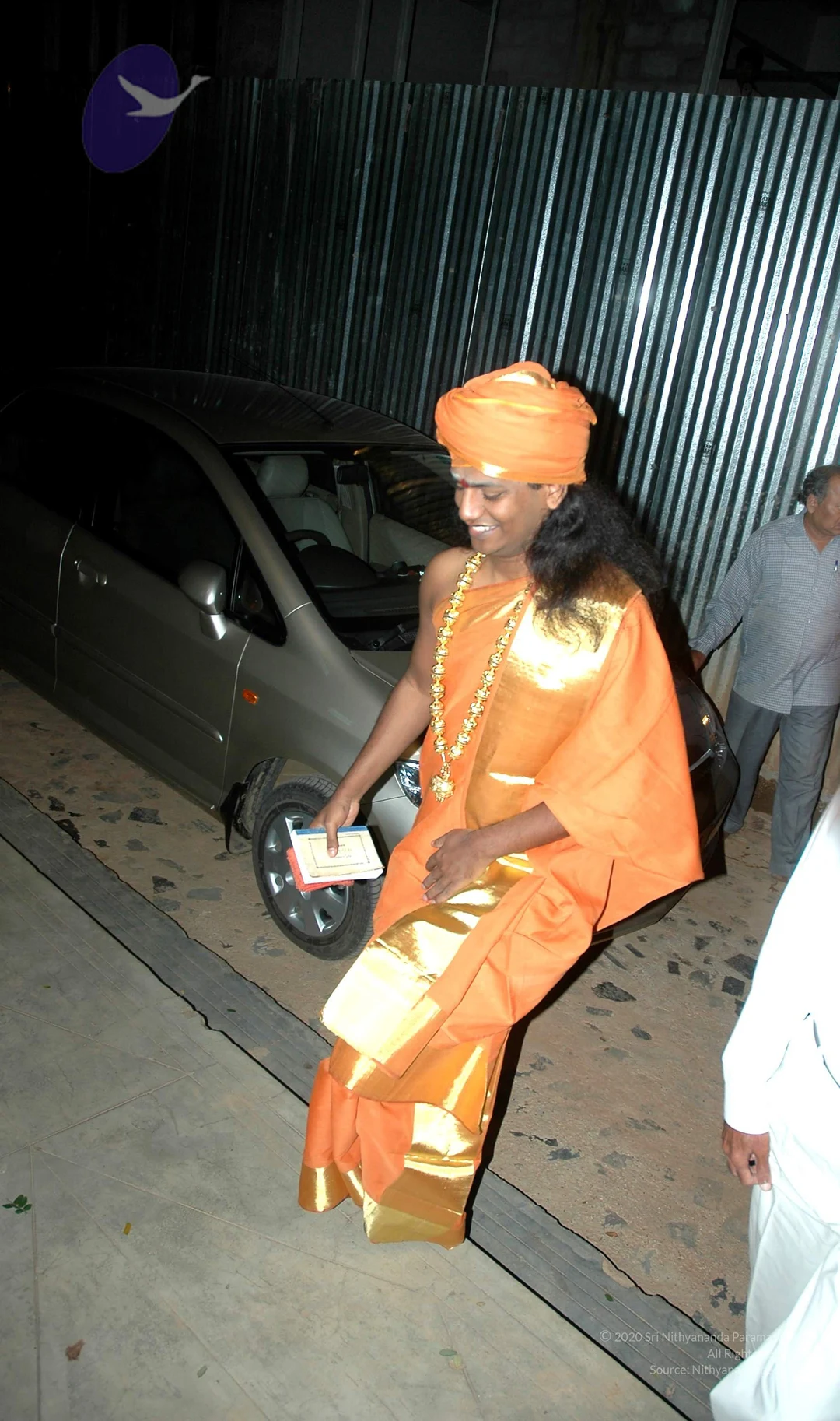
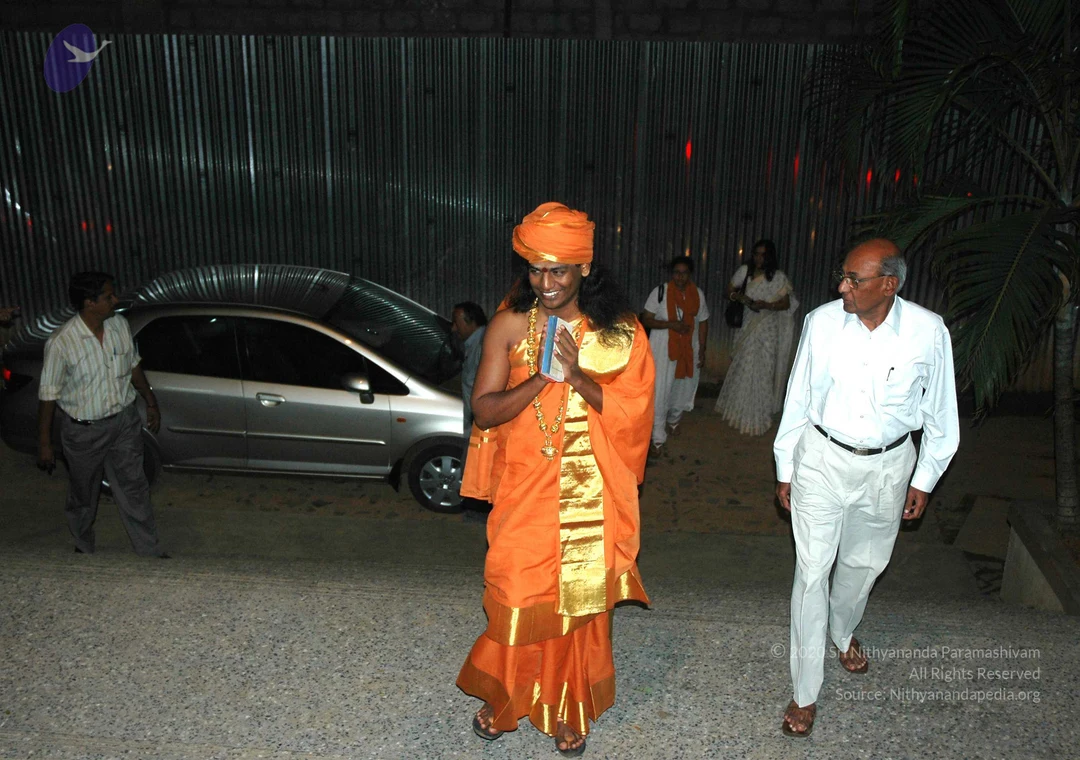
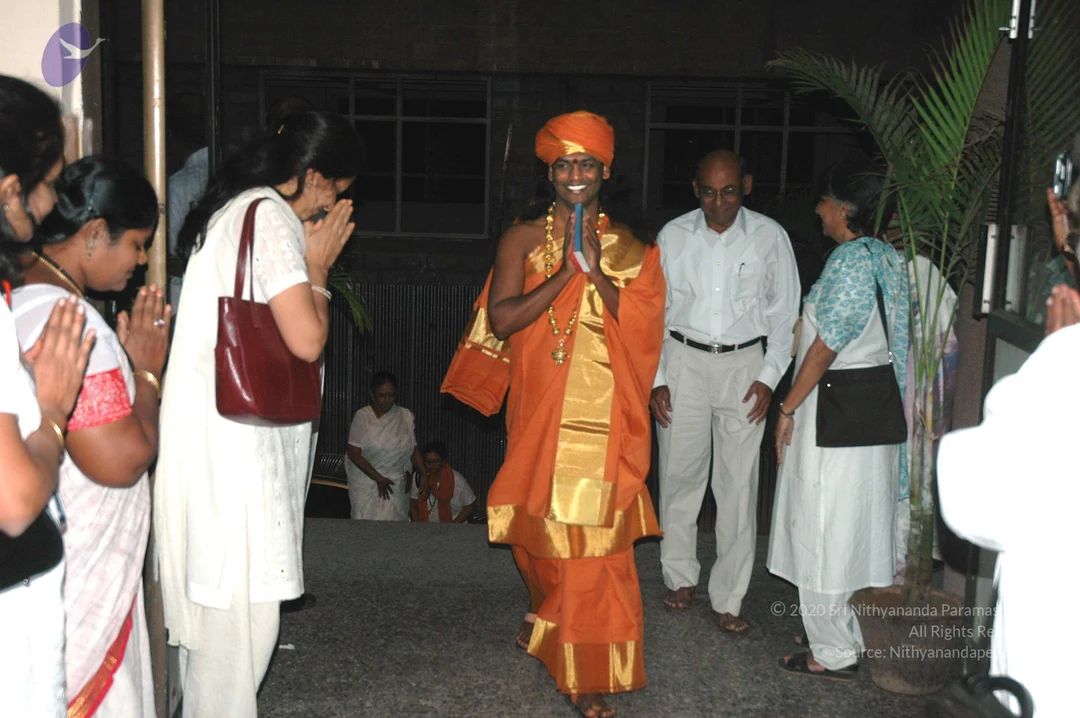
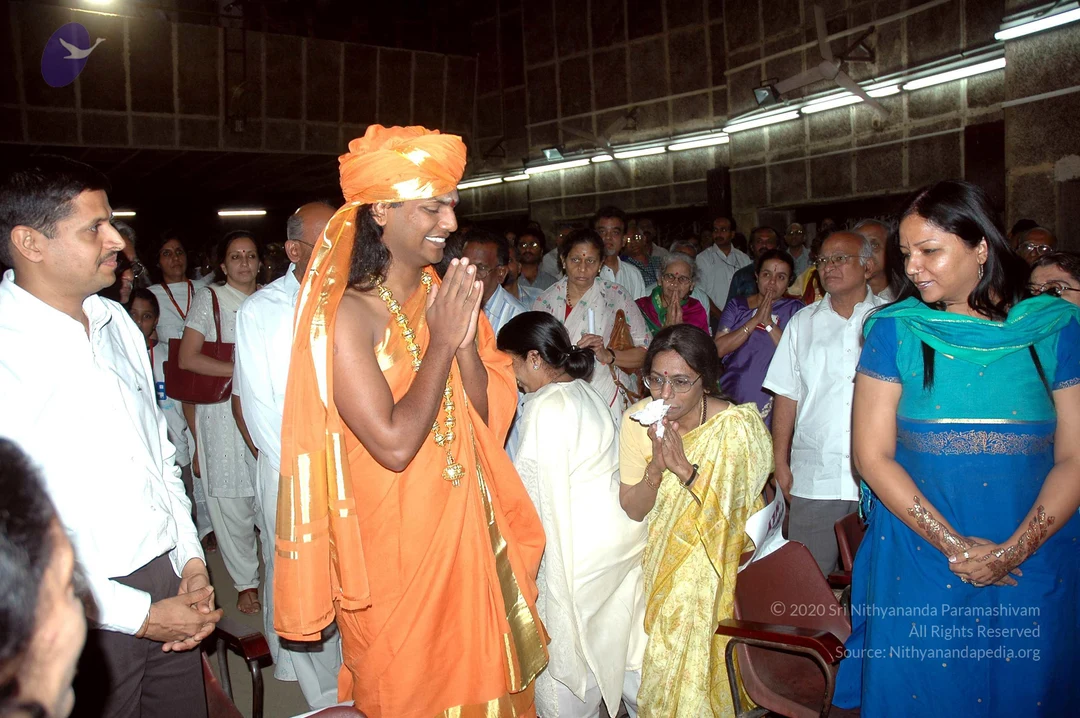
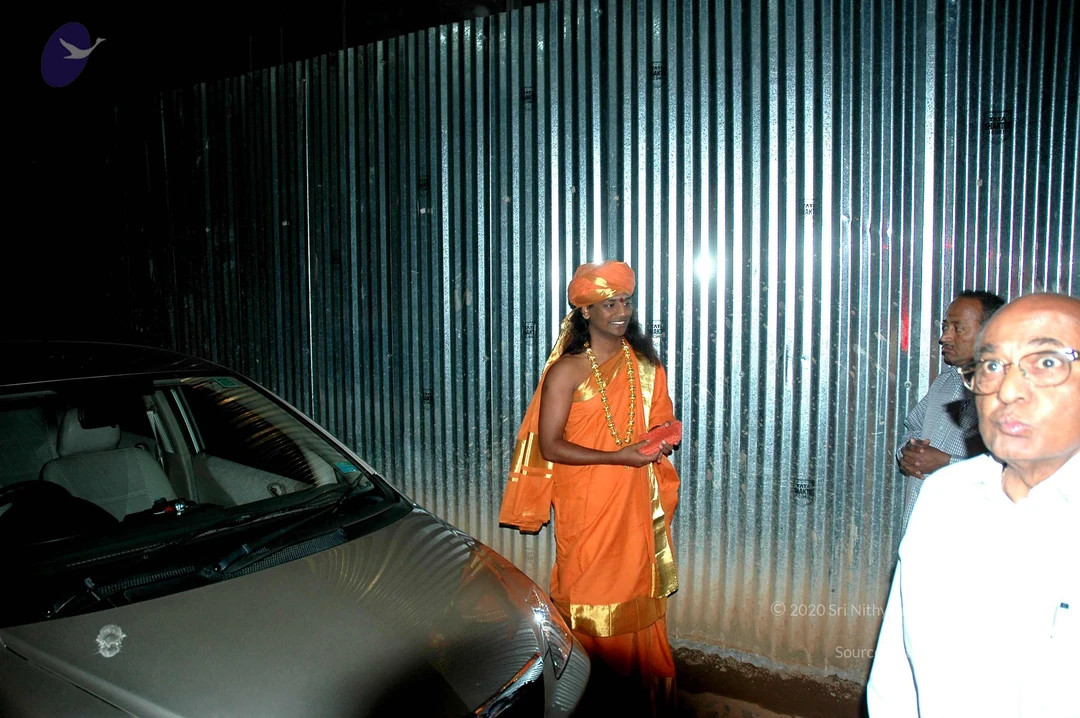
Night photograph beside a silver car at a corrugated metal wall. A man in saffron-orange robes with a matching orange turban and a long gold-bordered shawl stands in the centre, holding a small red object and wearing a long beaded necklace of gold-toned beads. He has long dark hair and a broad smile. To the right, an older bespectacled man in a white shirt faces toward him, and another man in a grey shirt stands behind. Appearance-based label: Swamiji (probable), given the saffron turban, long hair and ornate gold-bordered robes.Night photograph outside a building beside a silver-grey minivan parked against a corrugated metal wall. A man in an orange turban and orange-and-gold silk garment with a long gold ceremonial necklace and long dark hair smiles while holding small booklets or cards in one hand. A second man in a grey checked shirt stands at the right edge, and a partly visible person in white is at the lower right.Night photo outside a building with a corrugated metal wall and a palm tree at right. A central figure in an orange turban and orange robe with gold border, wearing layered gold-coloured necklaces, walks forward with palms pressed together in greeting and a smile. A man in a white shirt, white trousers and black belt walks beside him at right. Behind them, a few people in orange or white attire and a parked silver car are visible, with a man in a striped shirt at left.

November 10 2005

Original wiki page
Contents

Photos

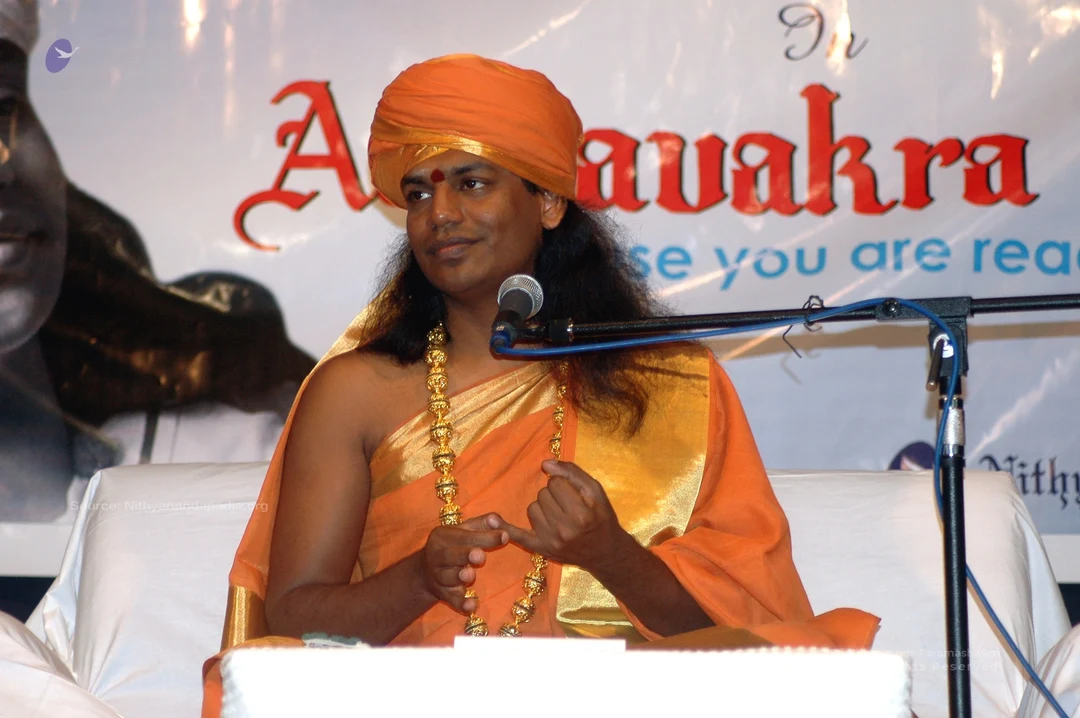
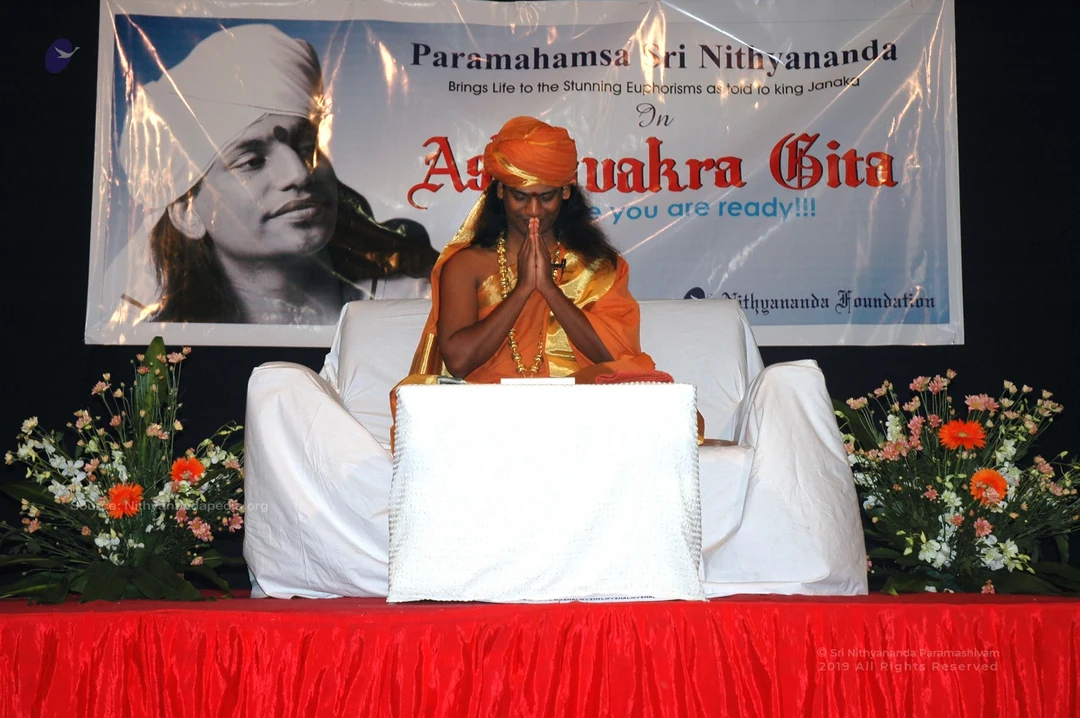
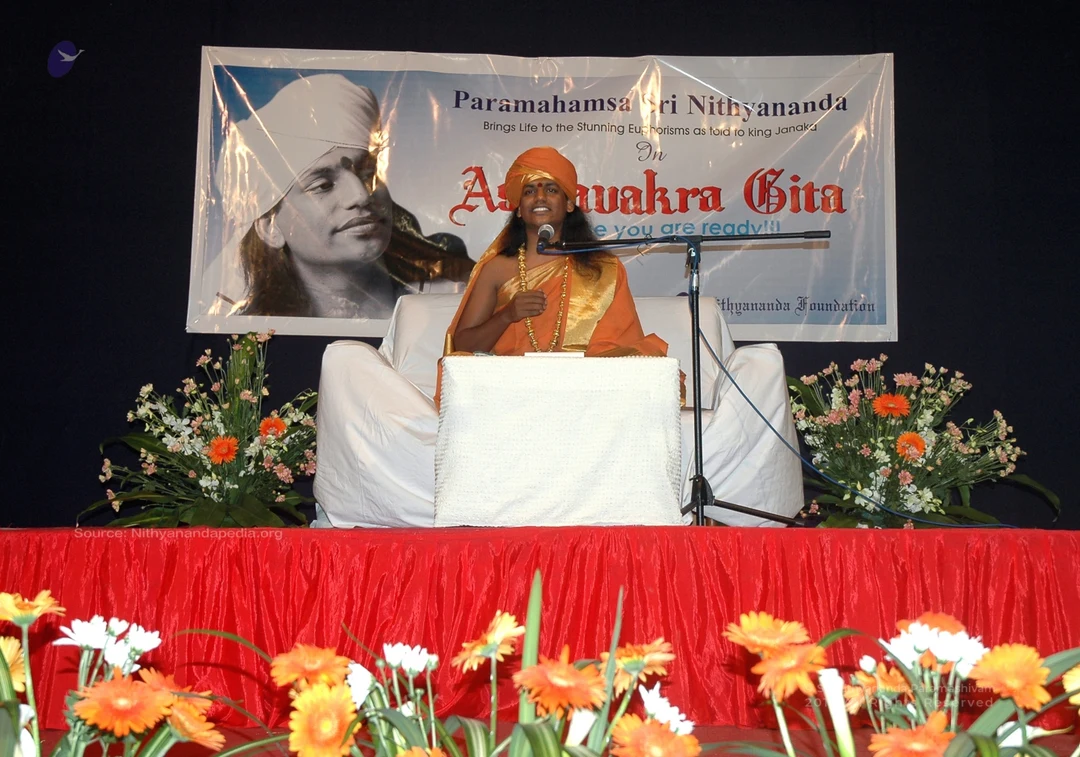
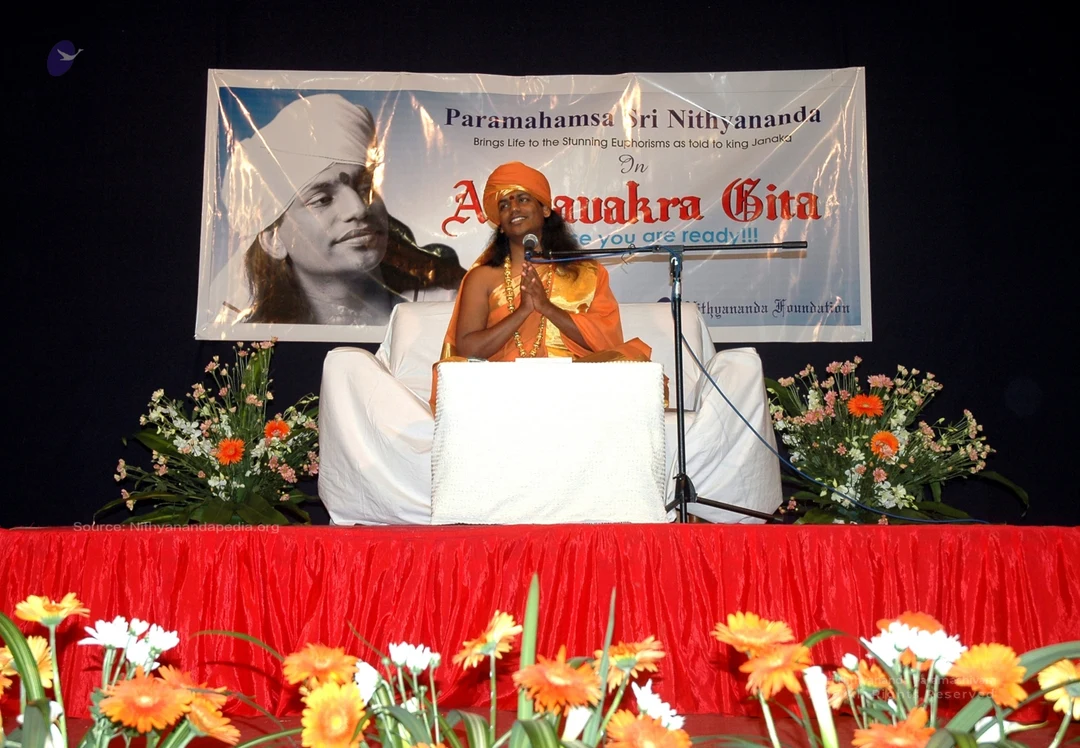
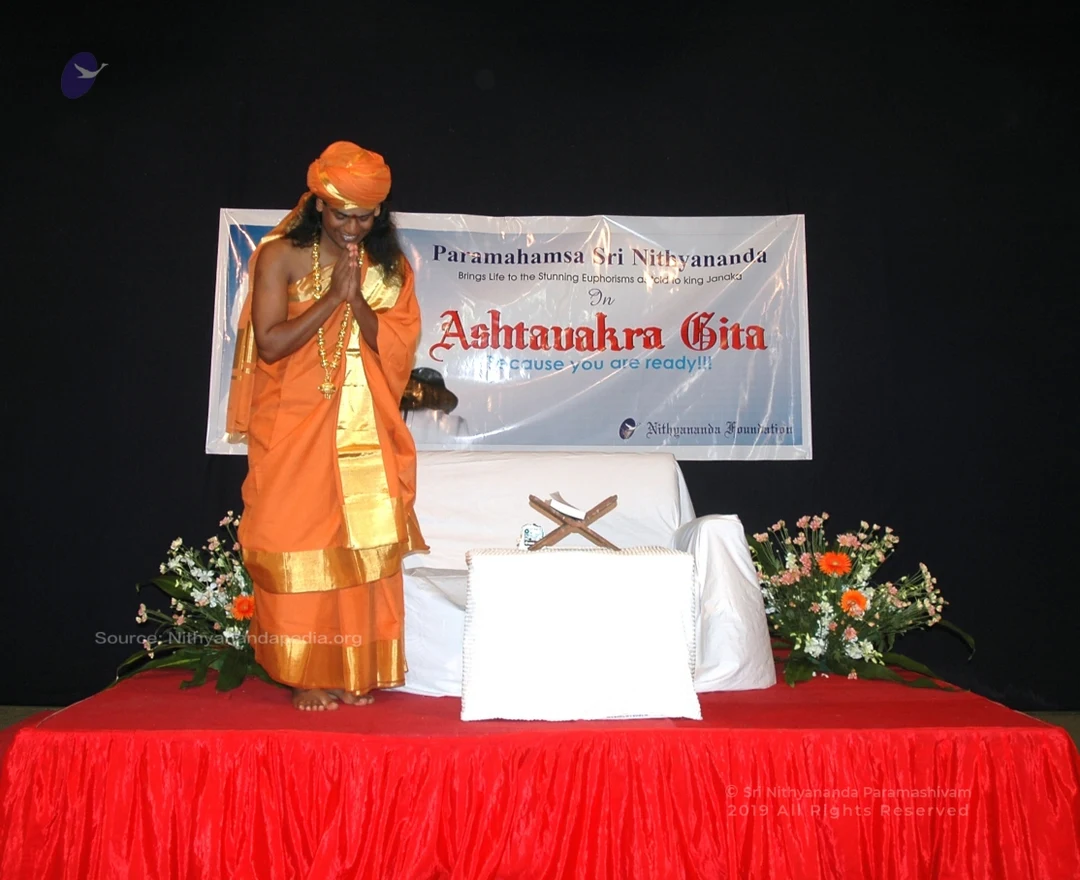
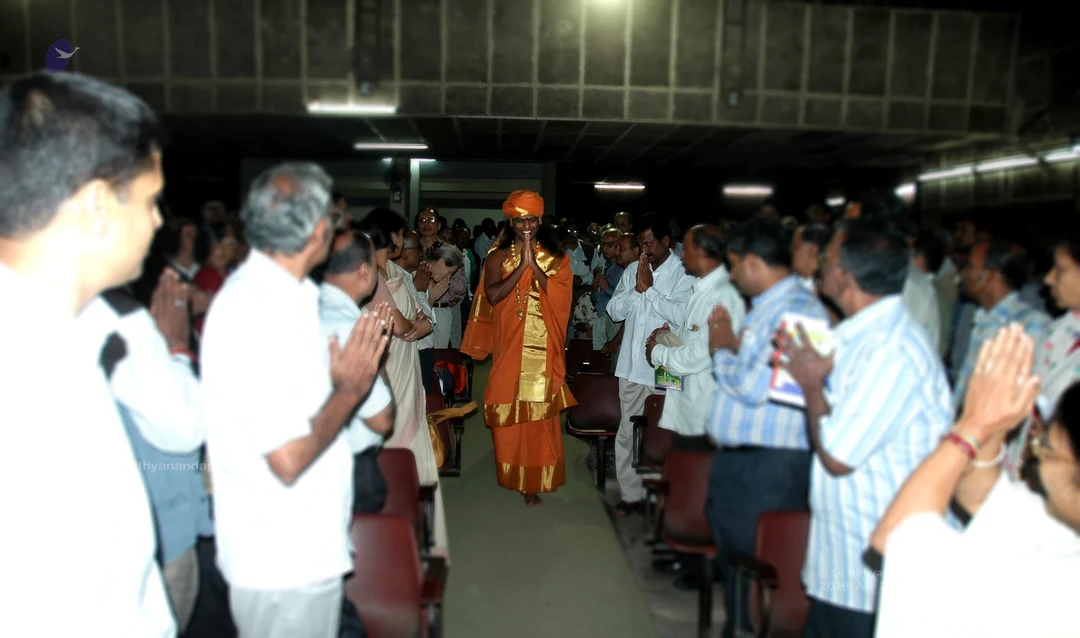
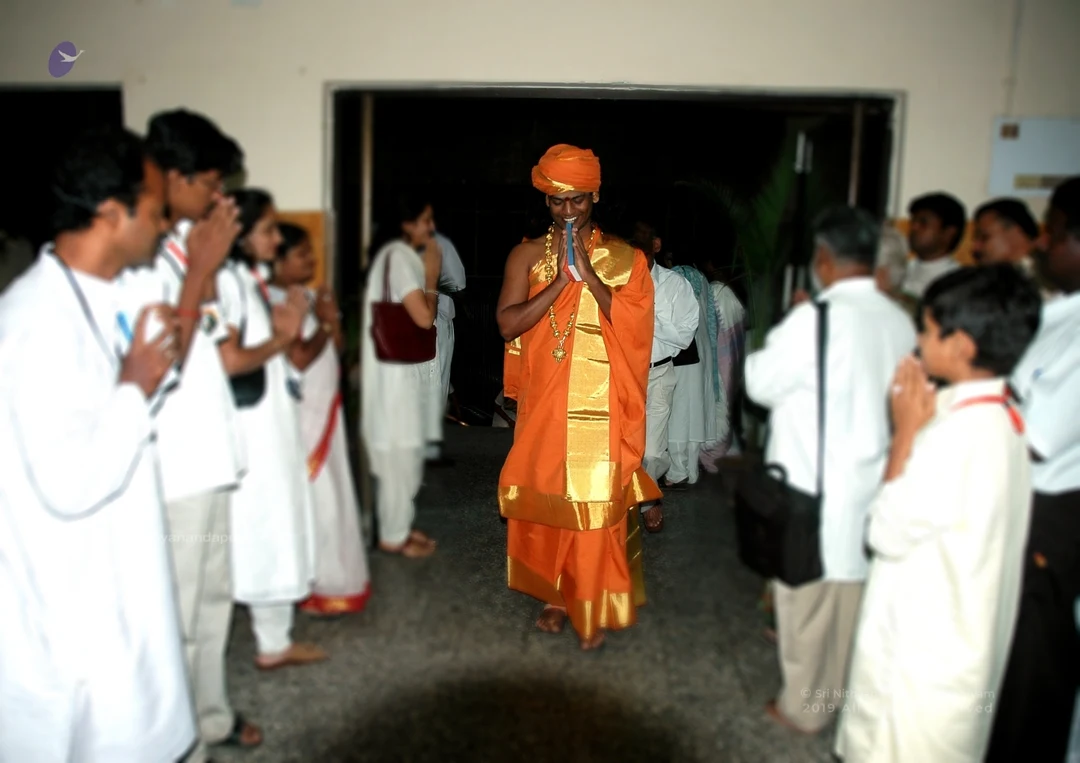
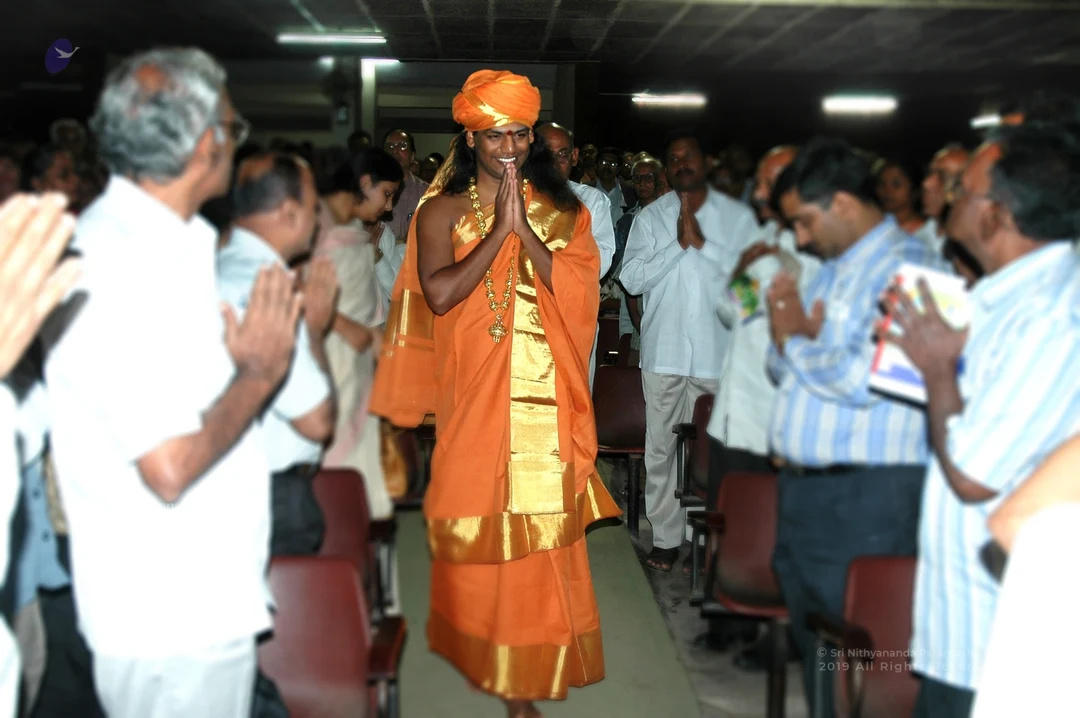
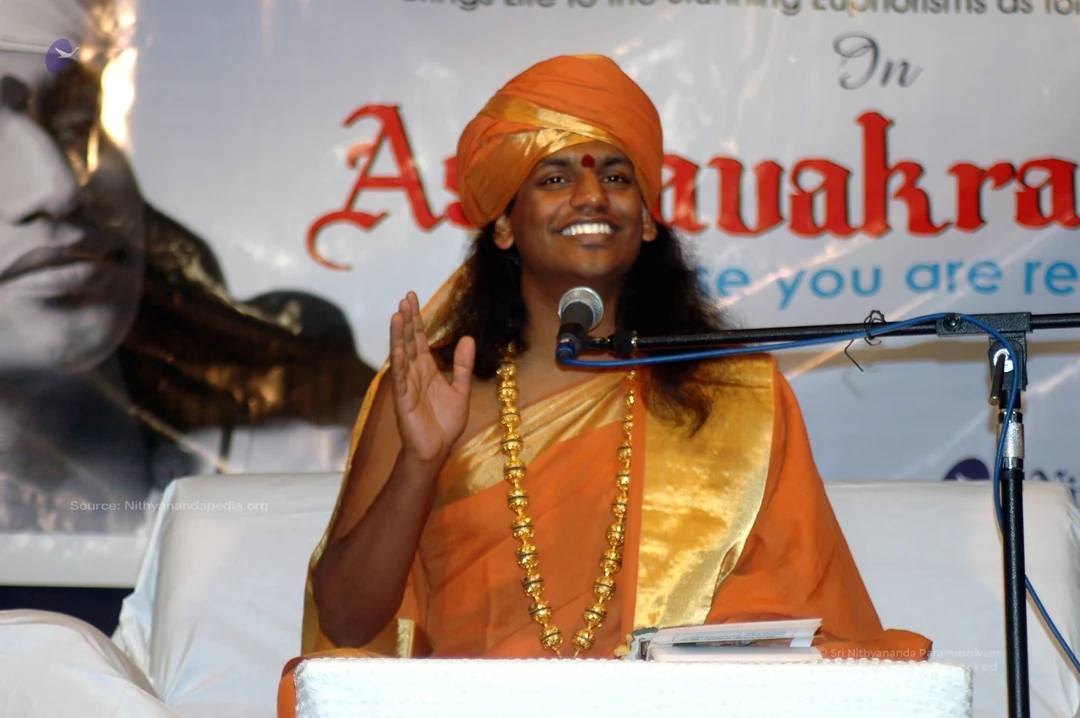
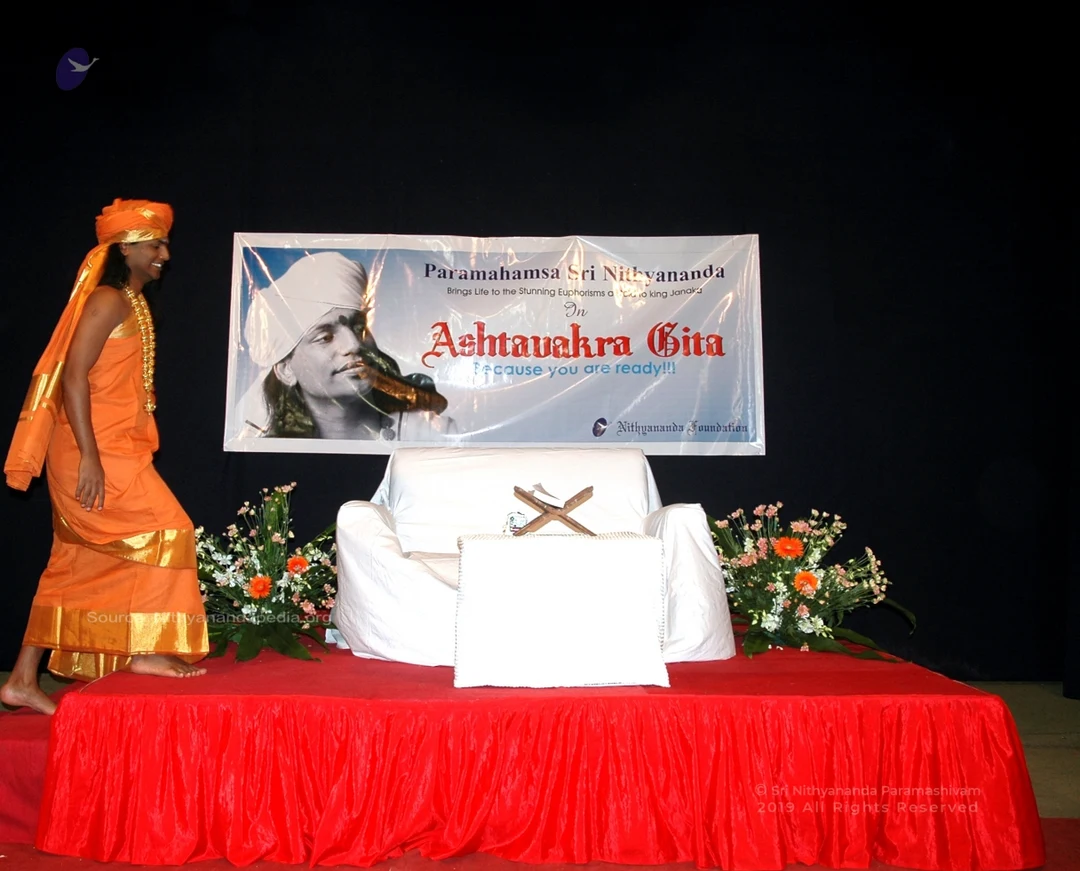
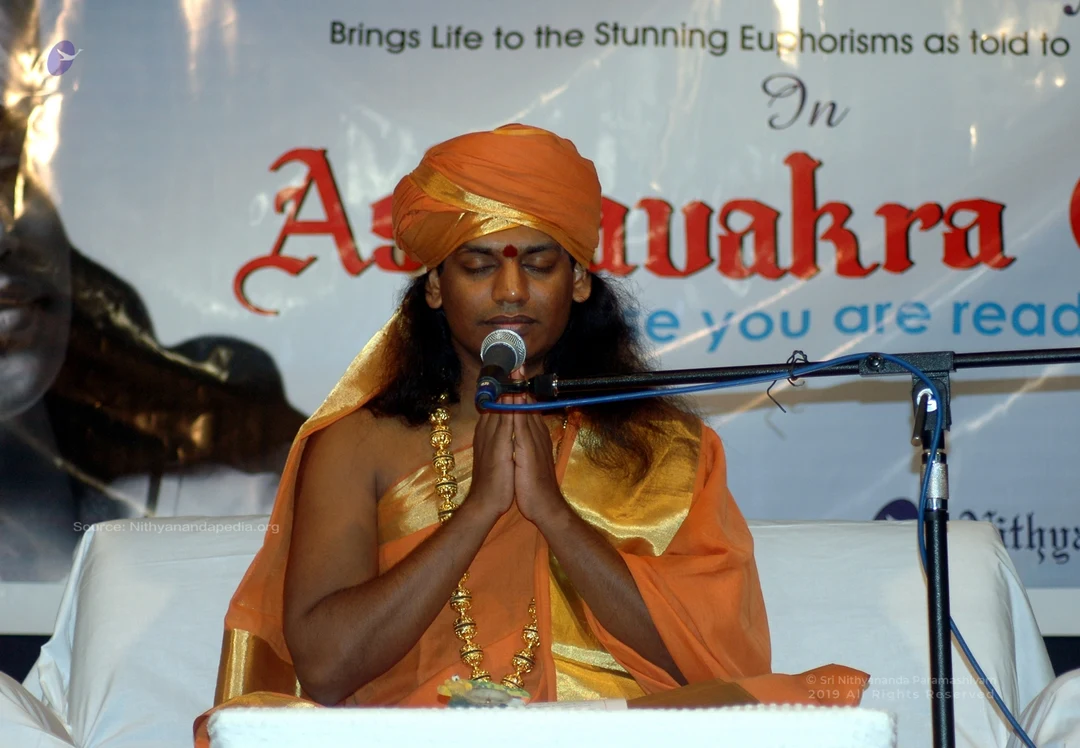
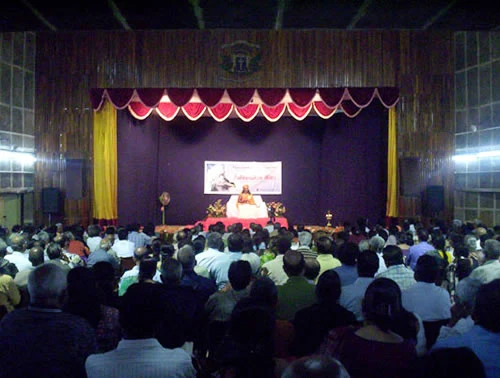
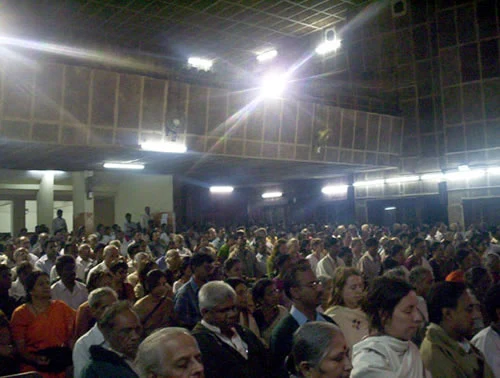
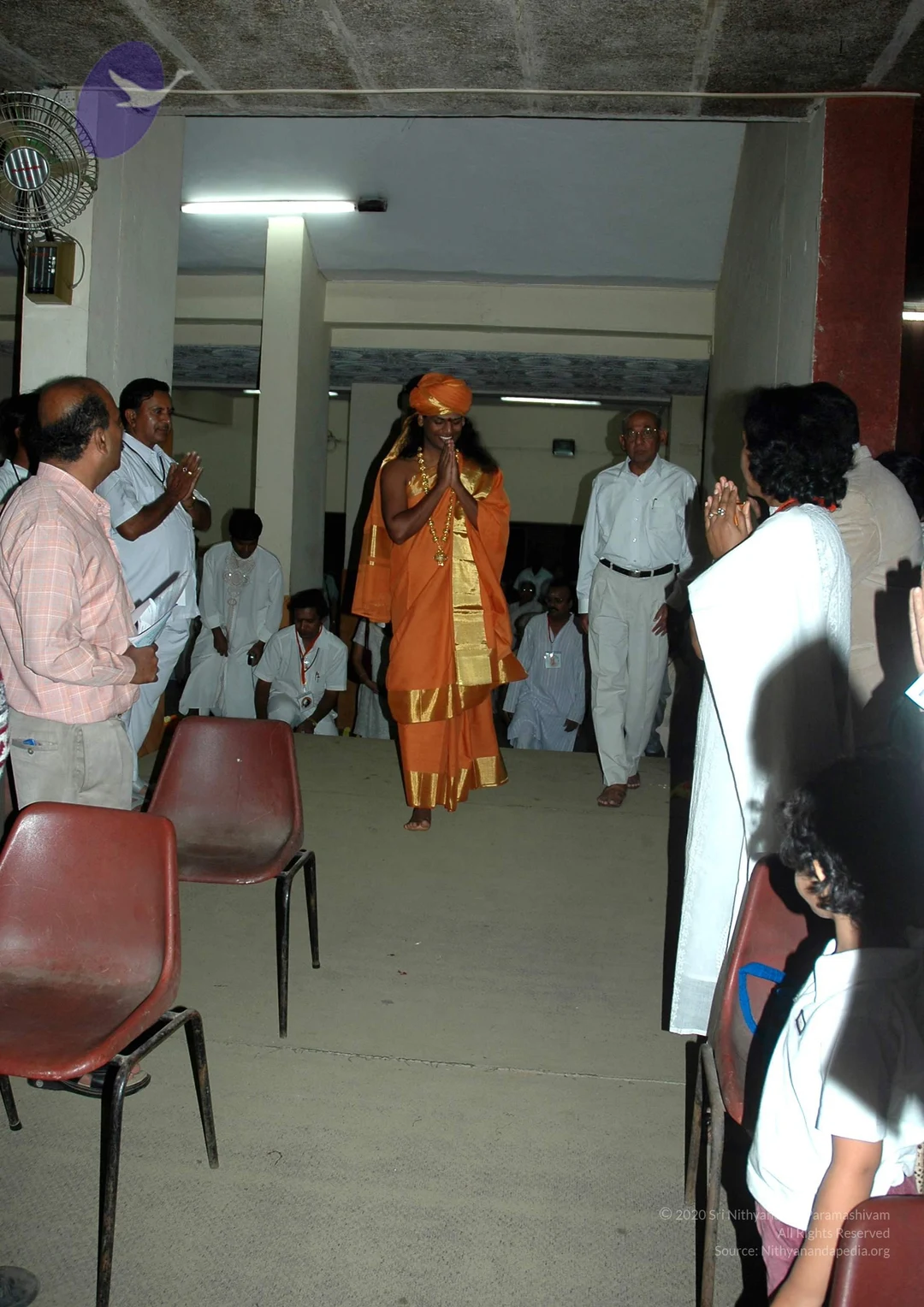
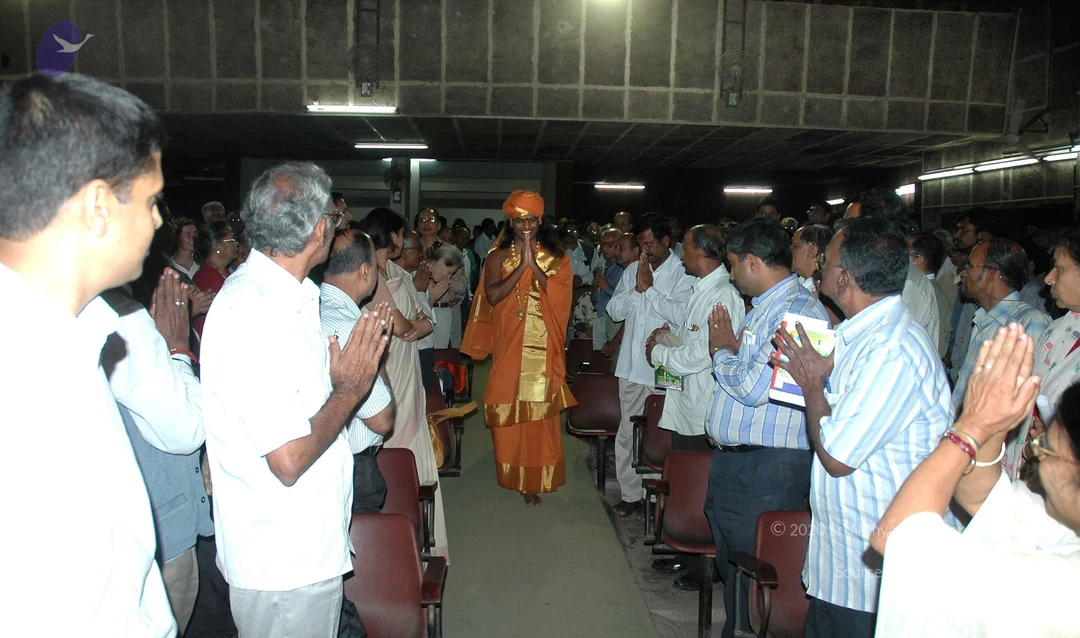
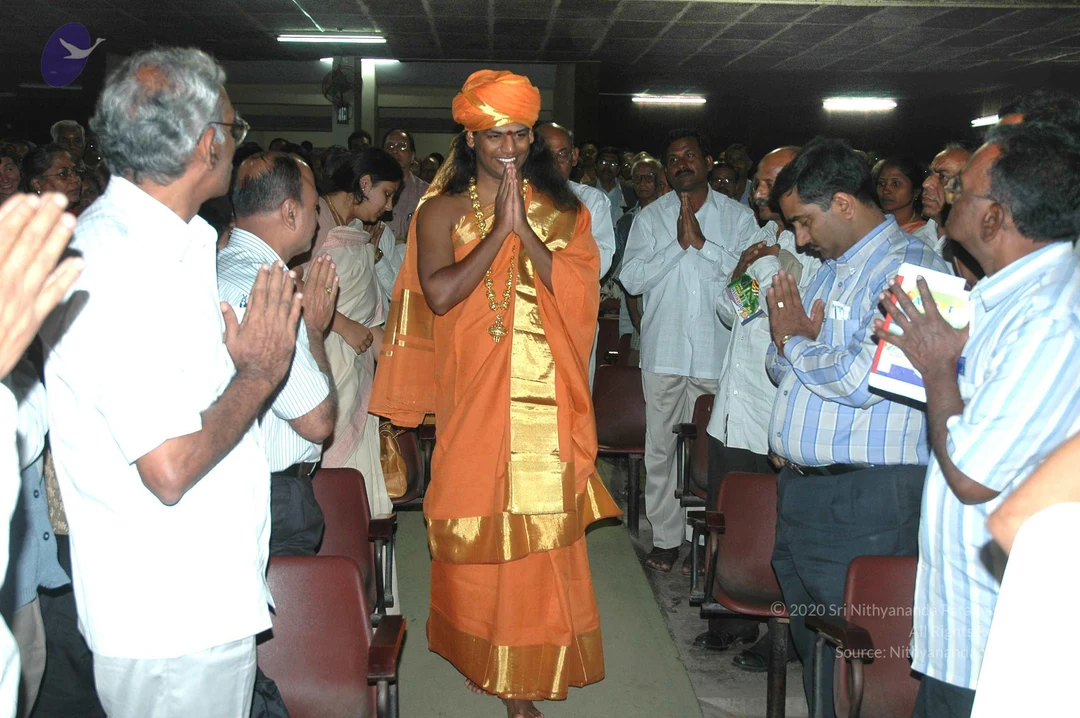
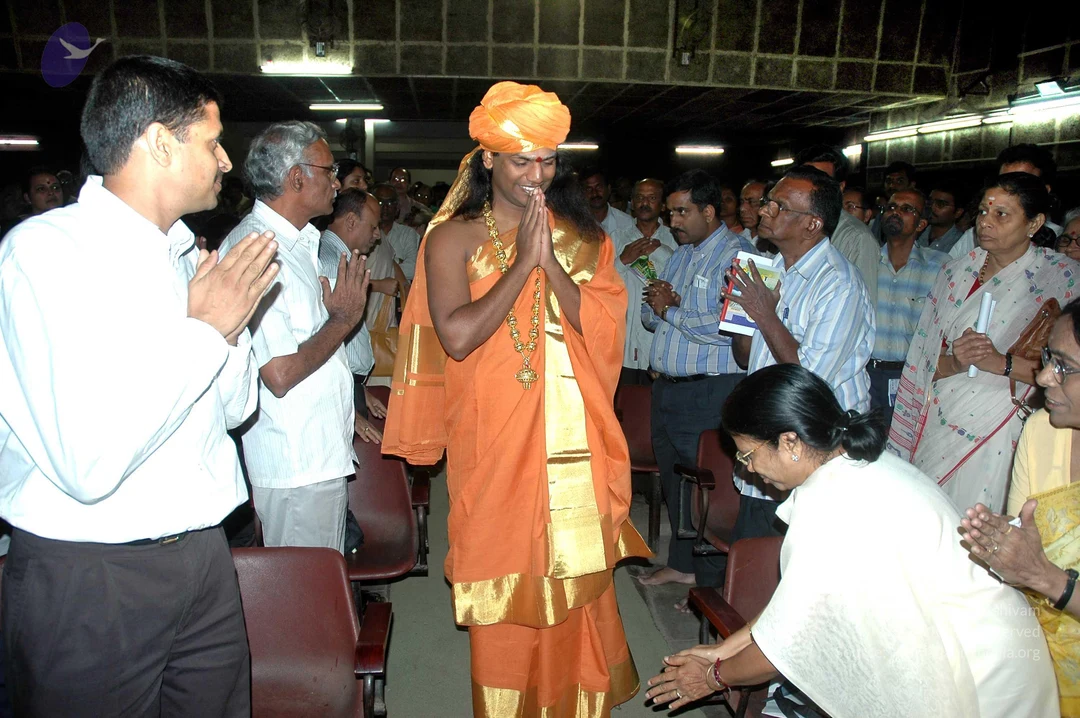
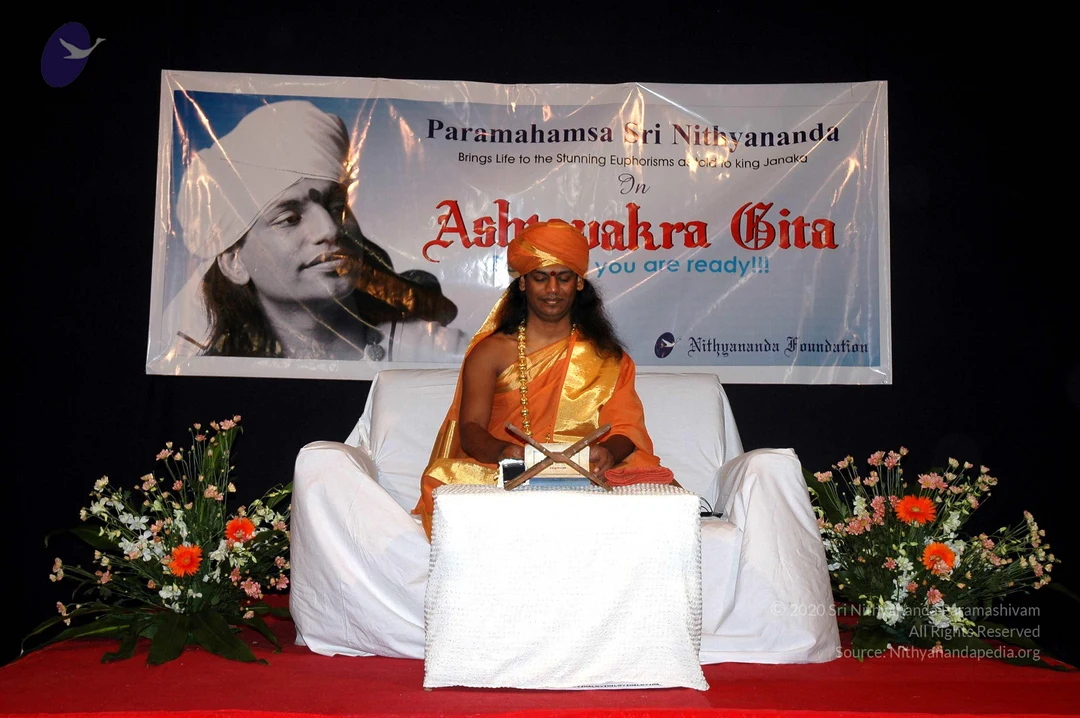
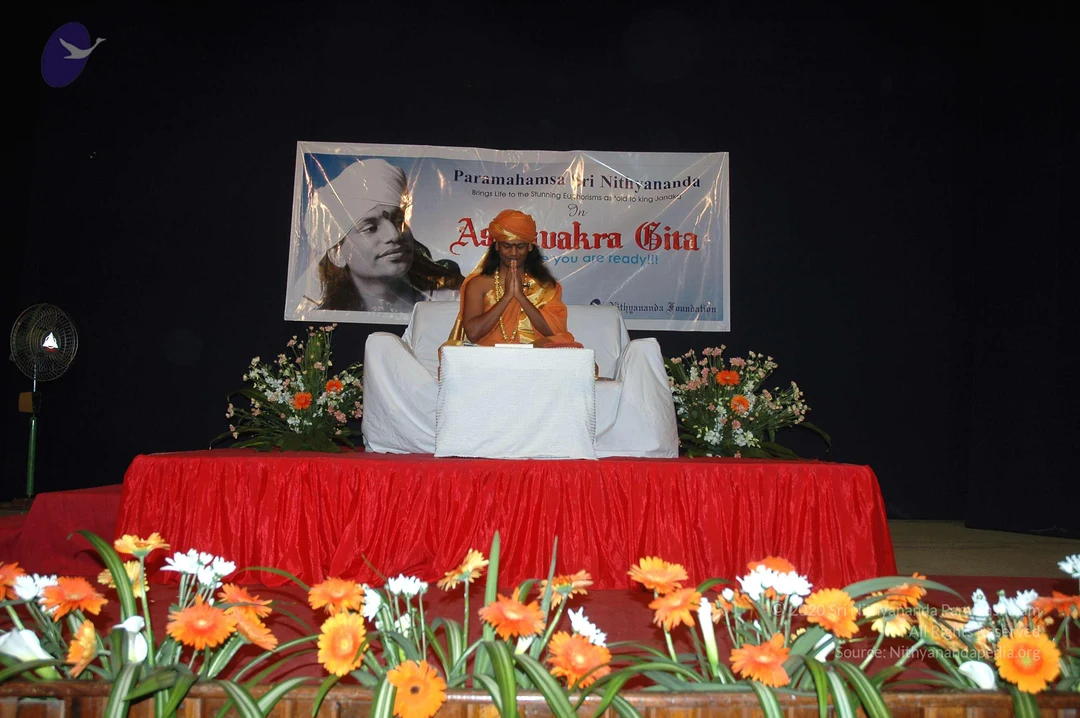
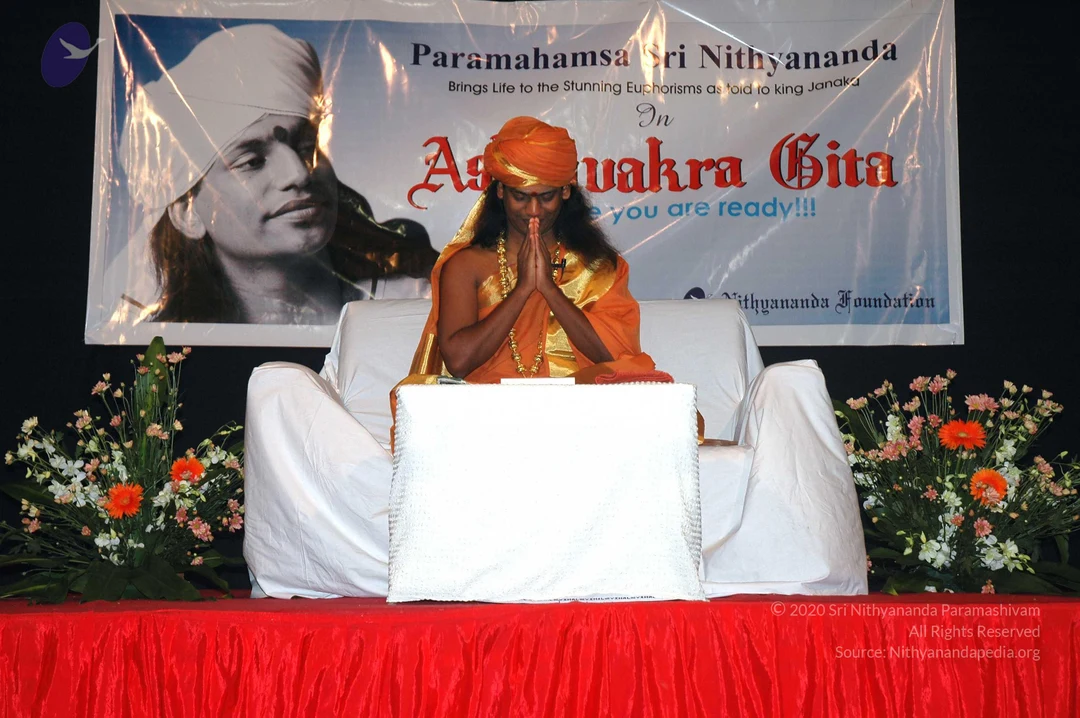
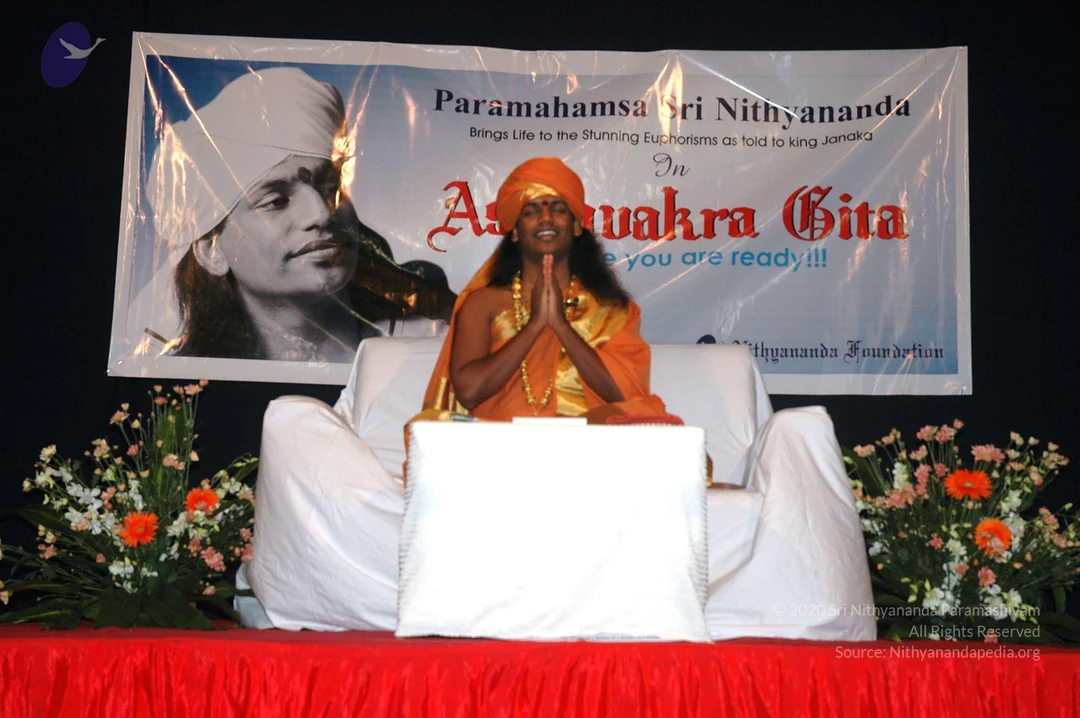
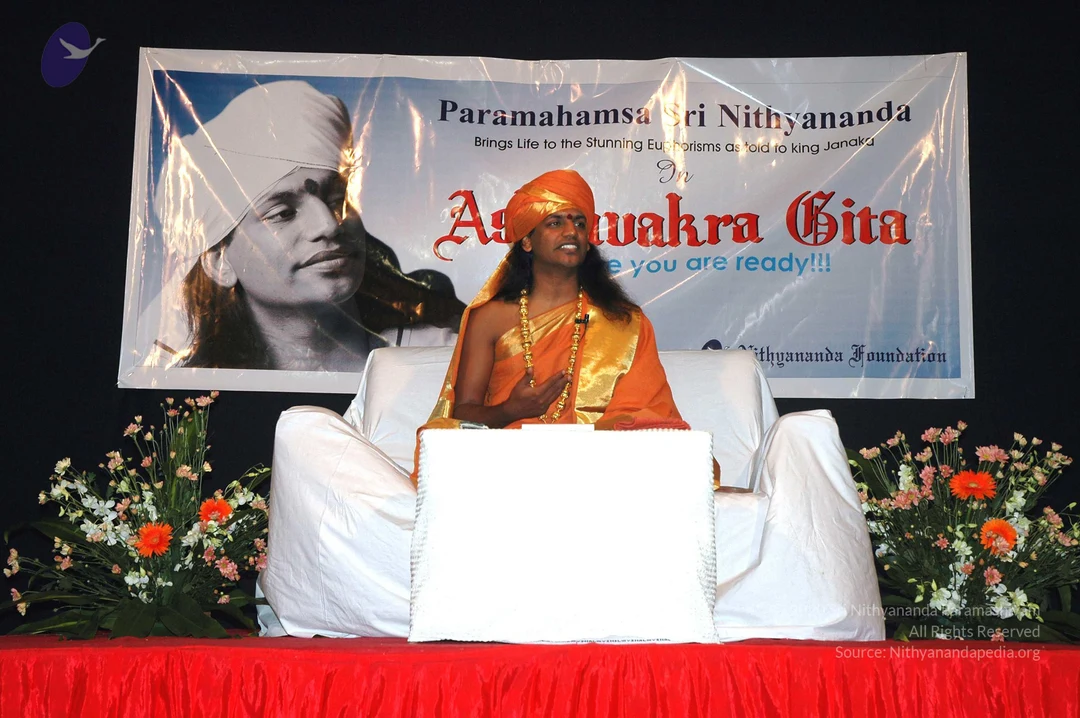
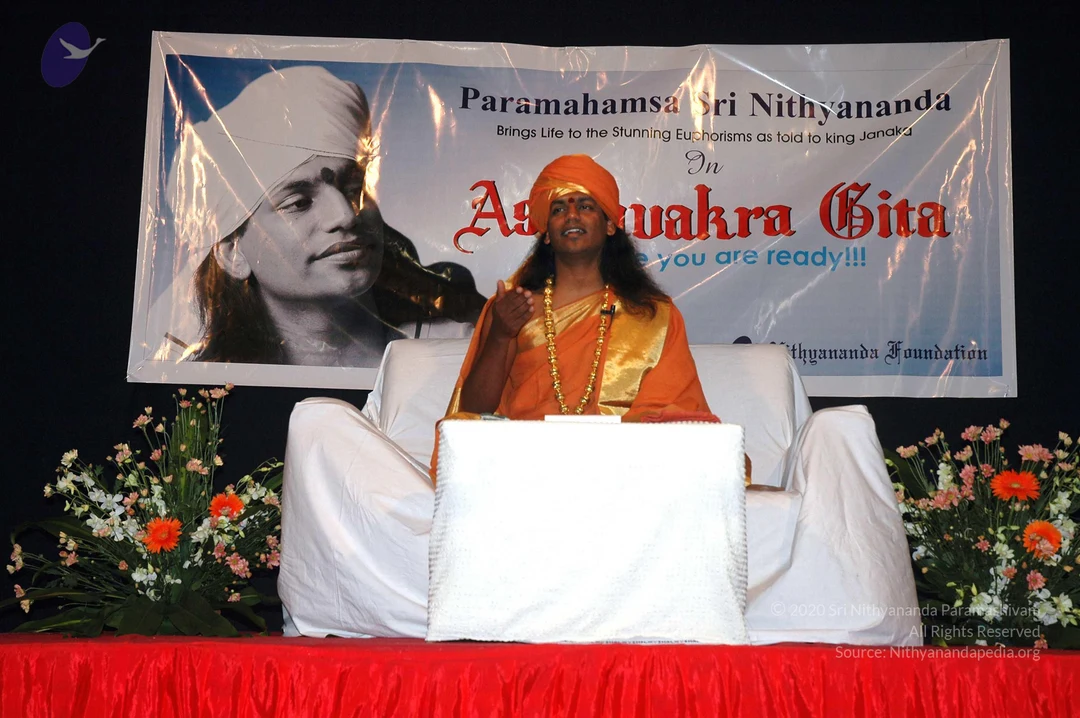
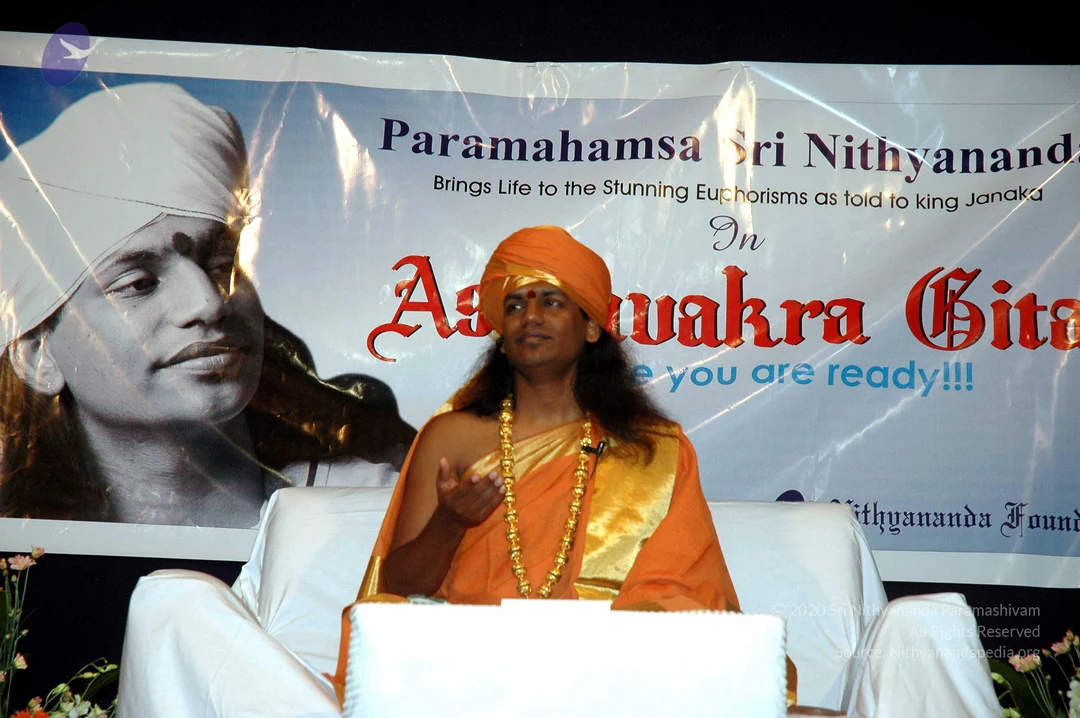
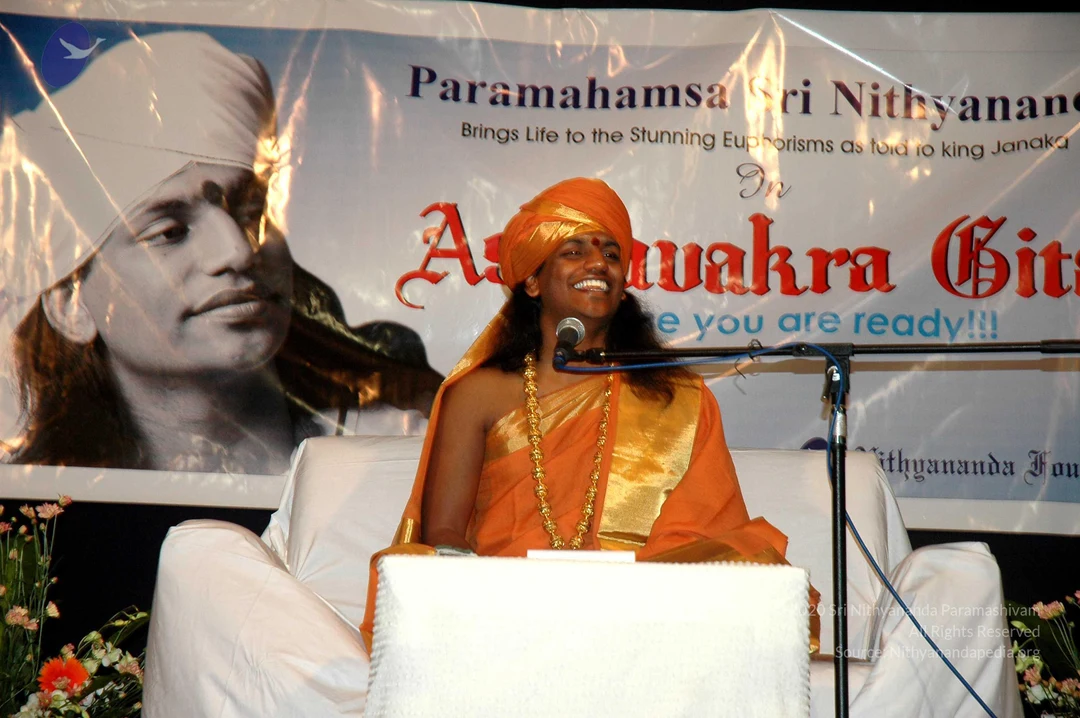
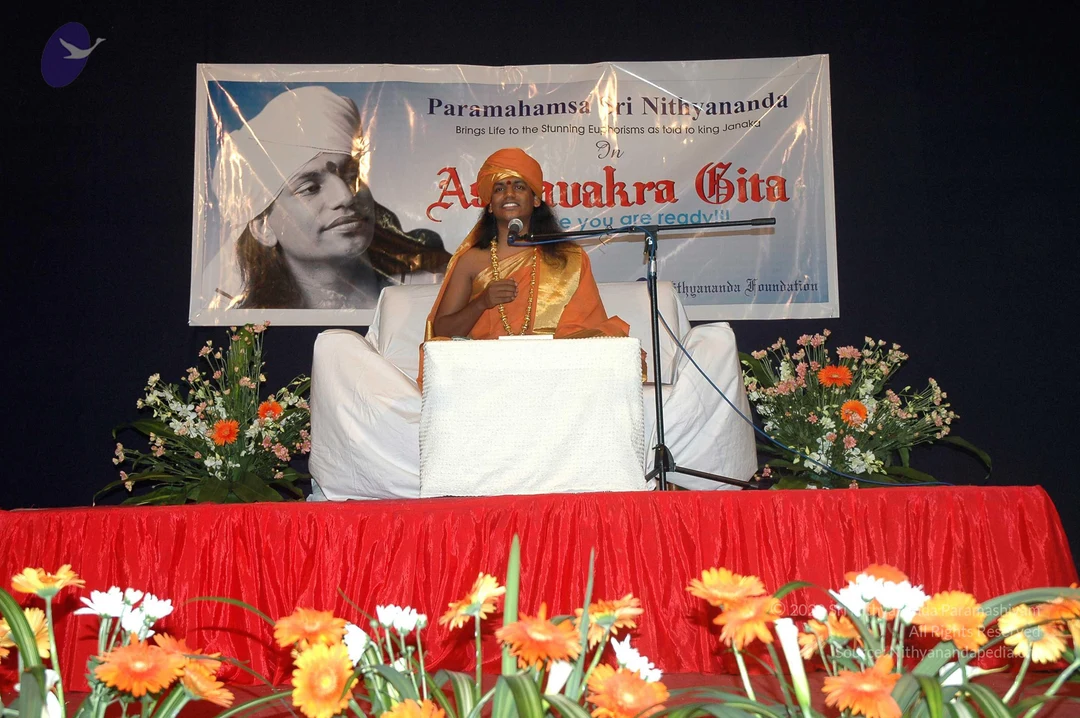
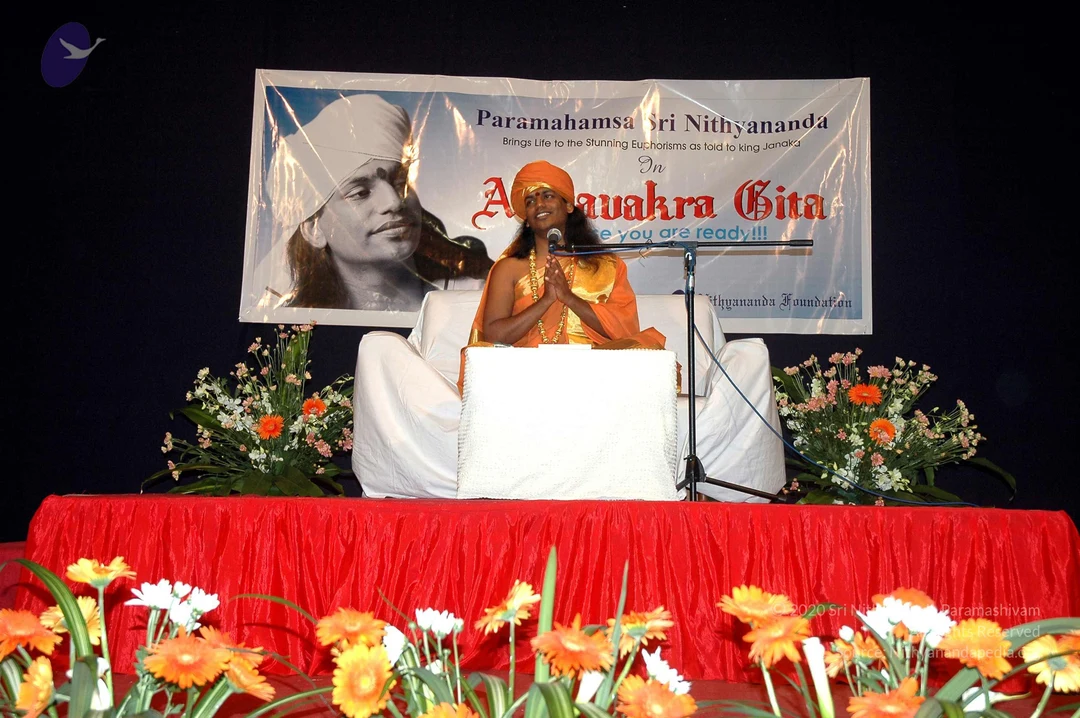
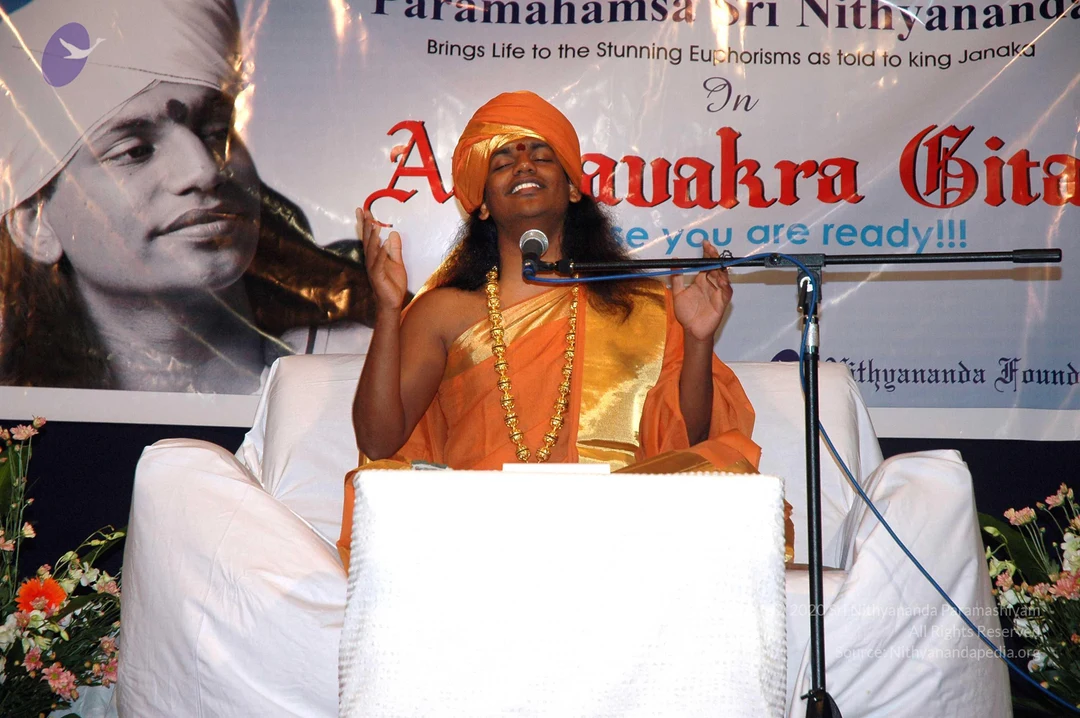
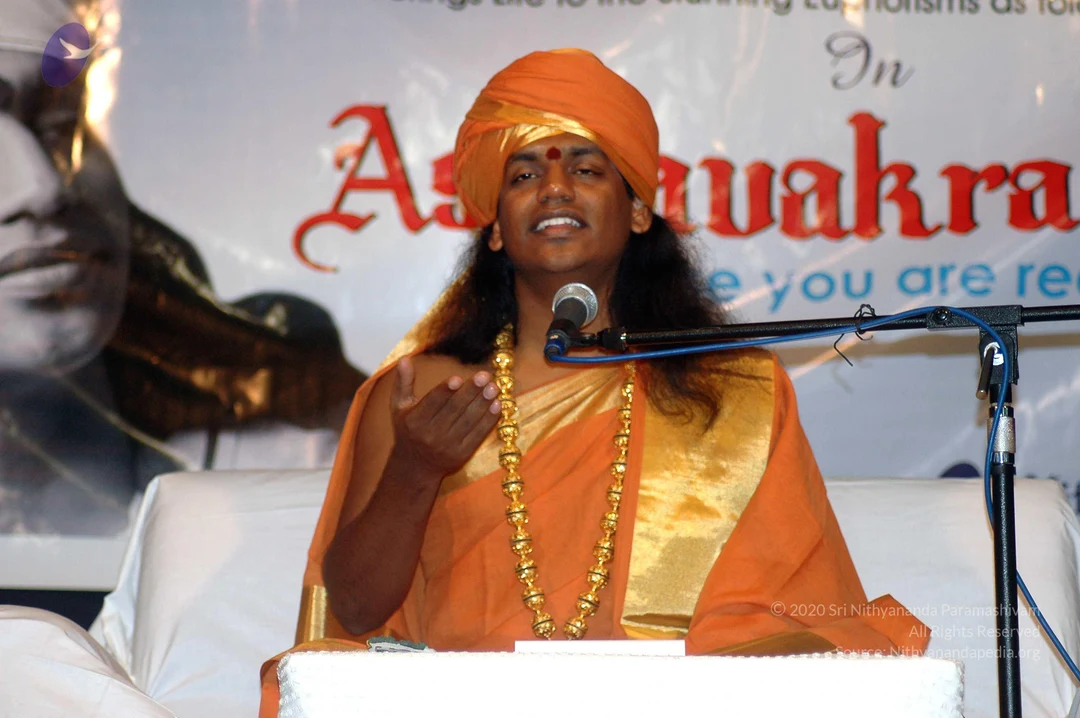
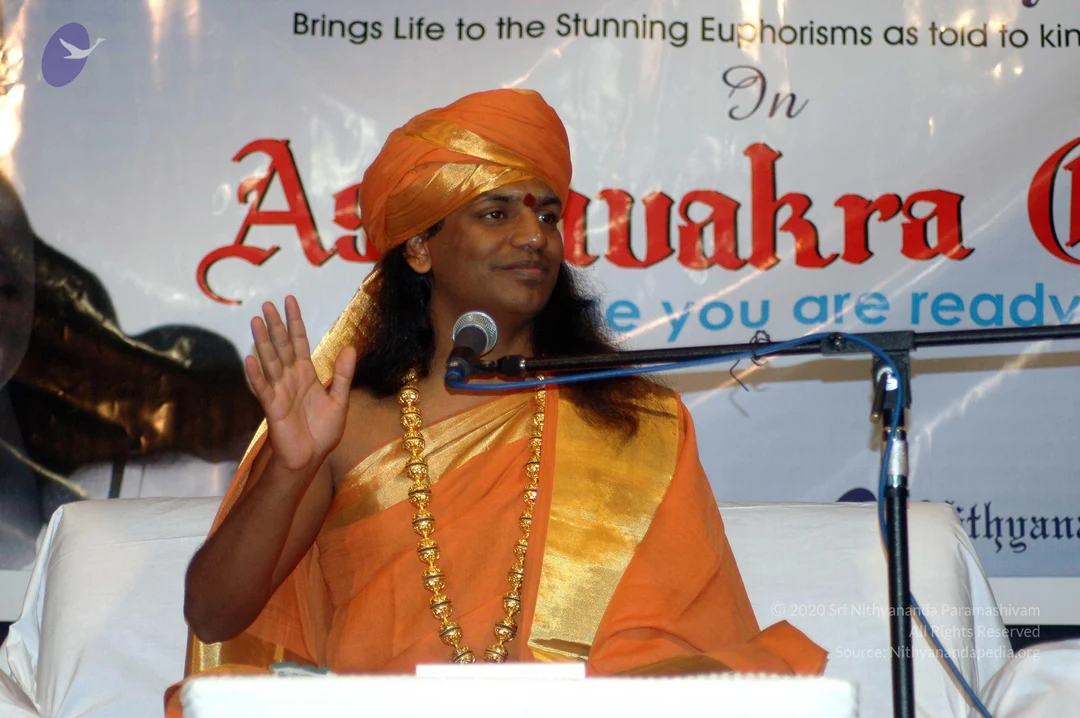
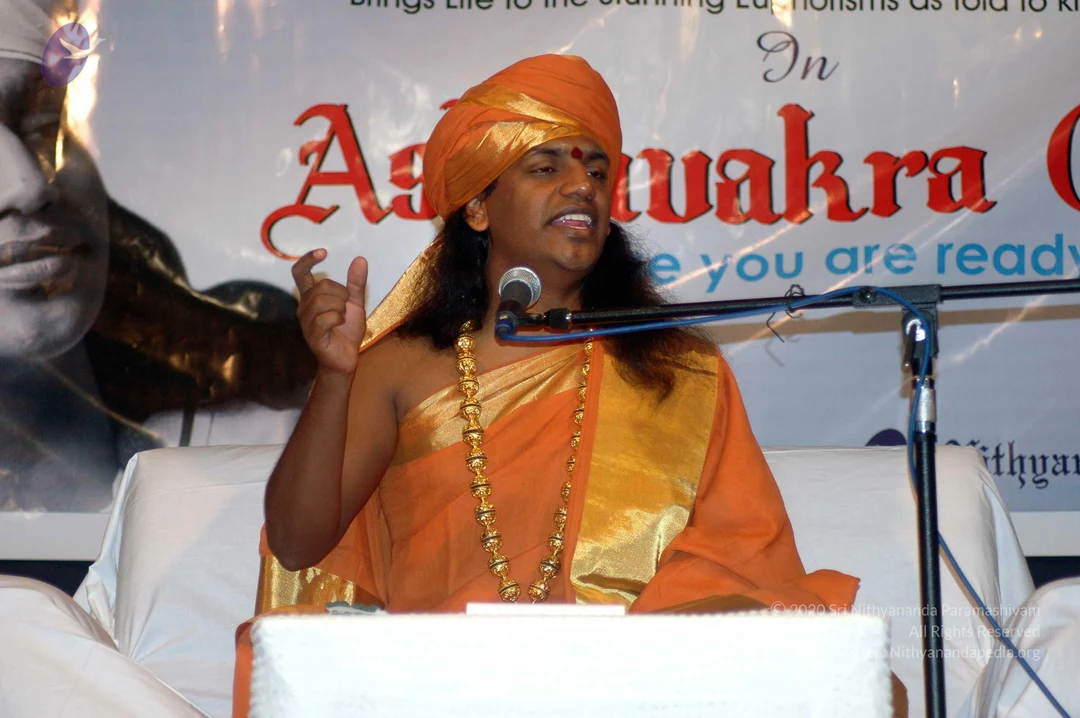
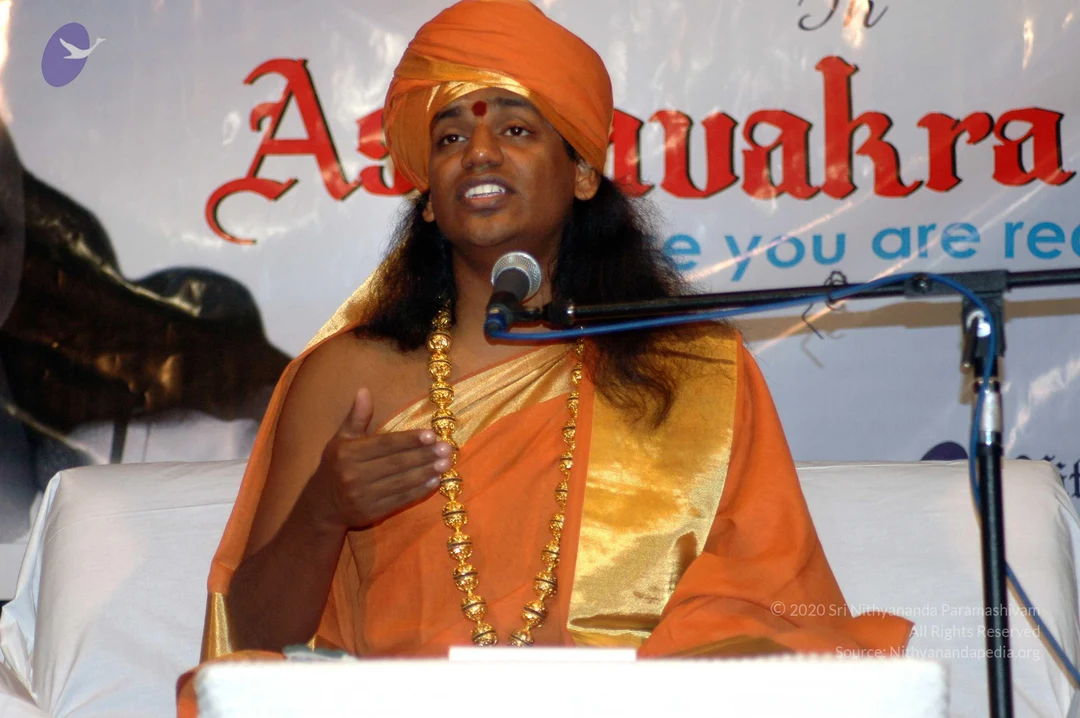
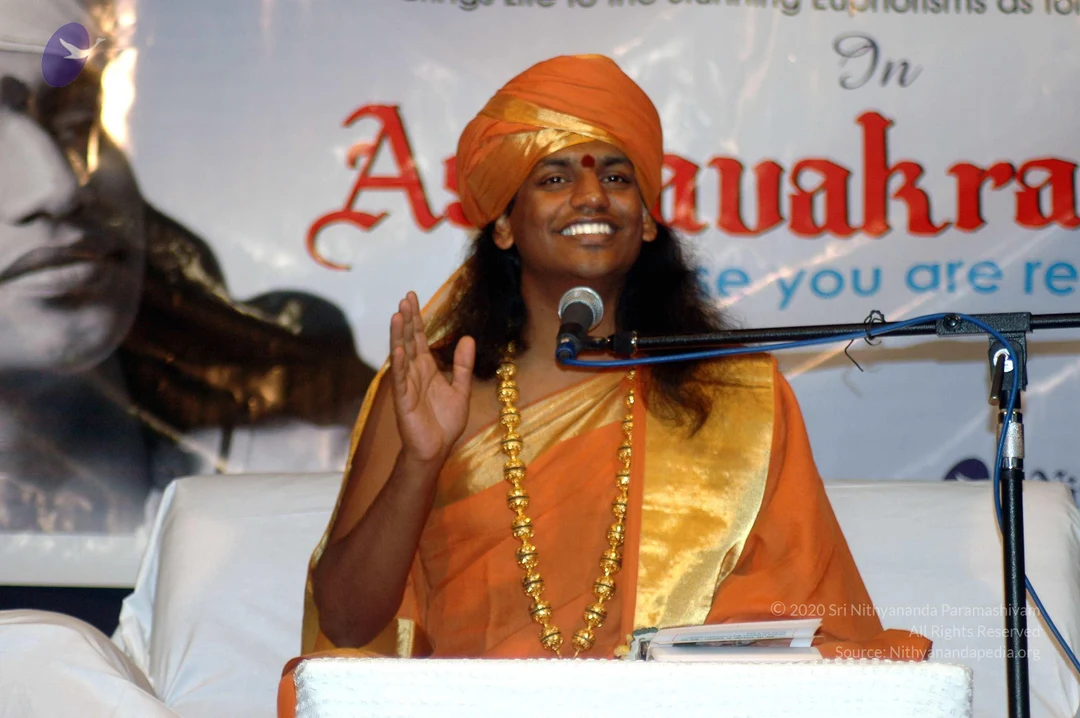
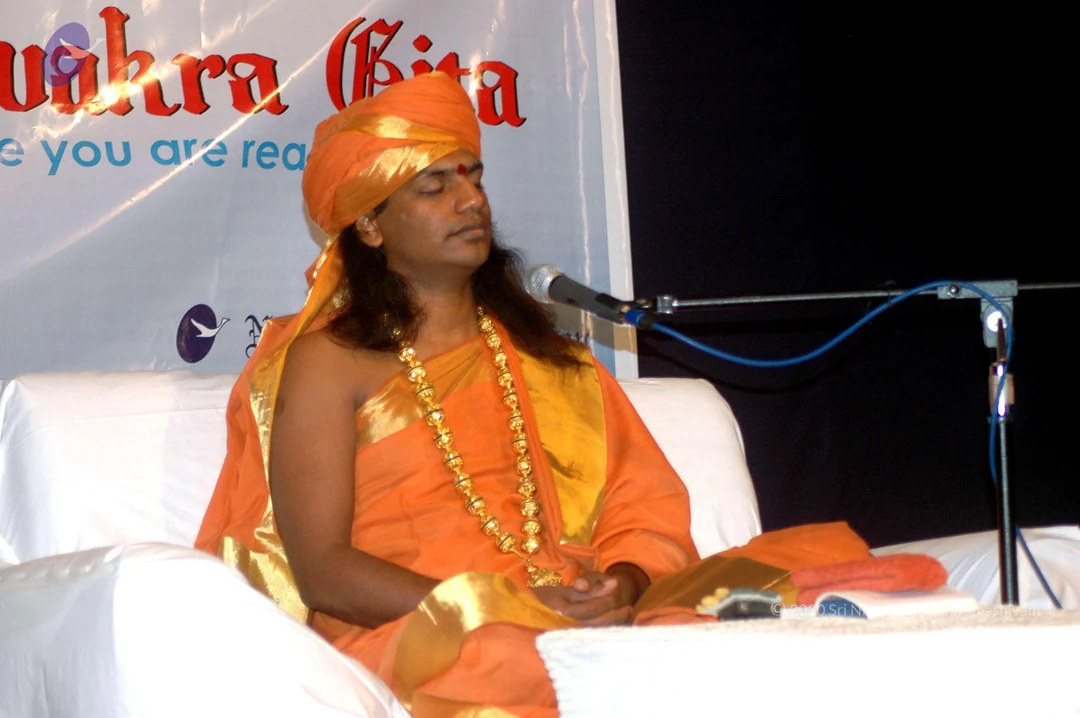
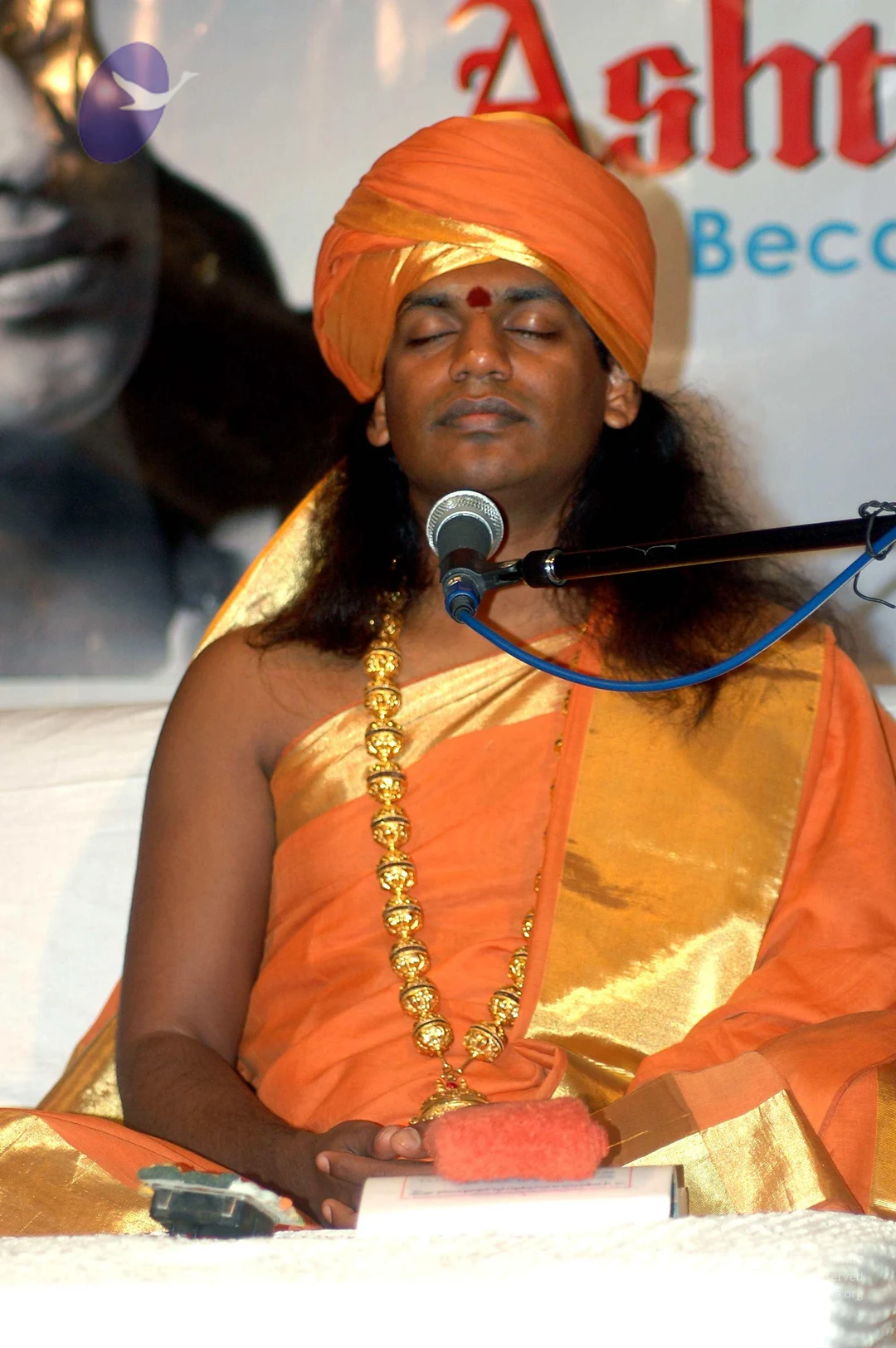
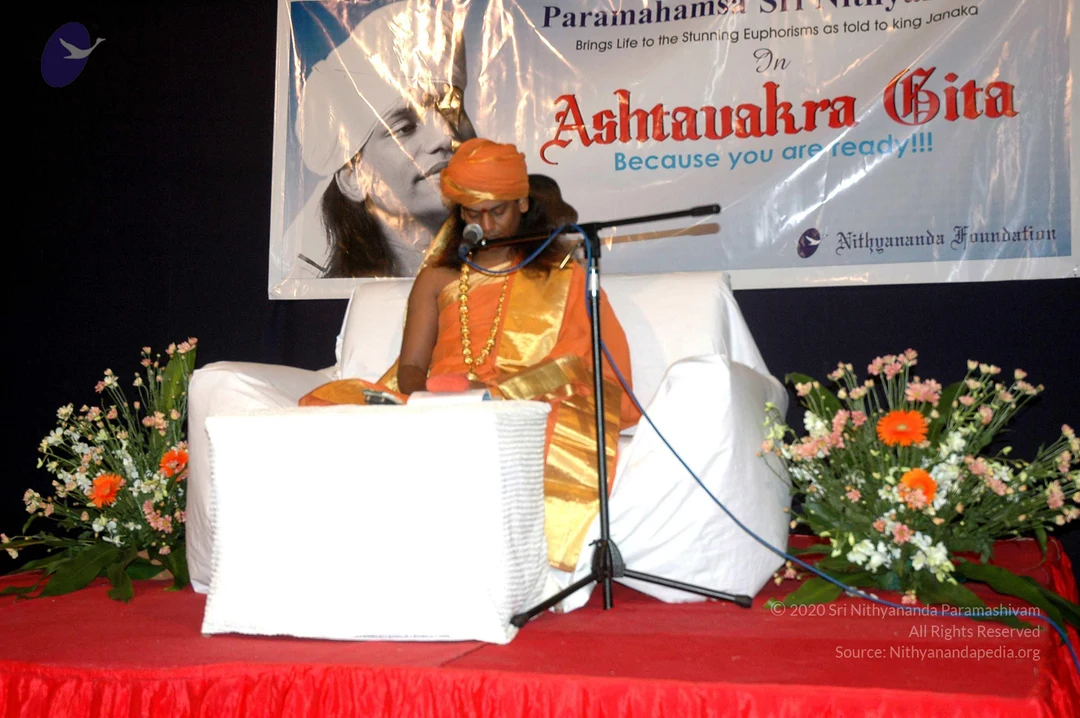
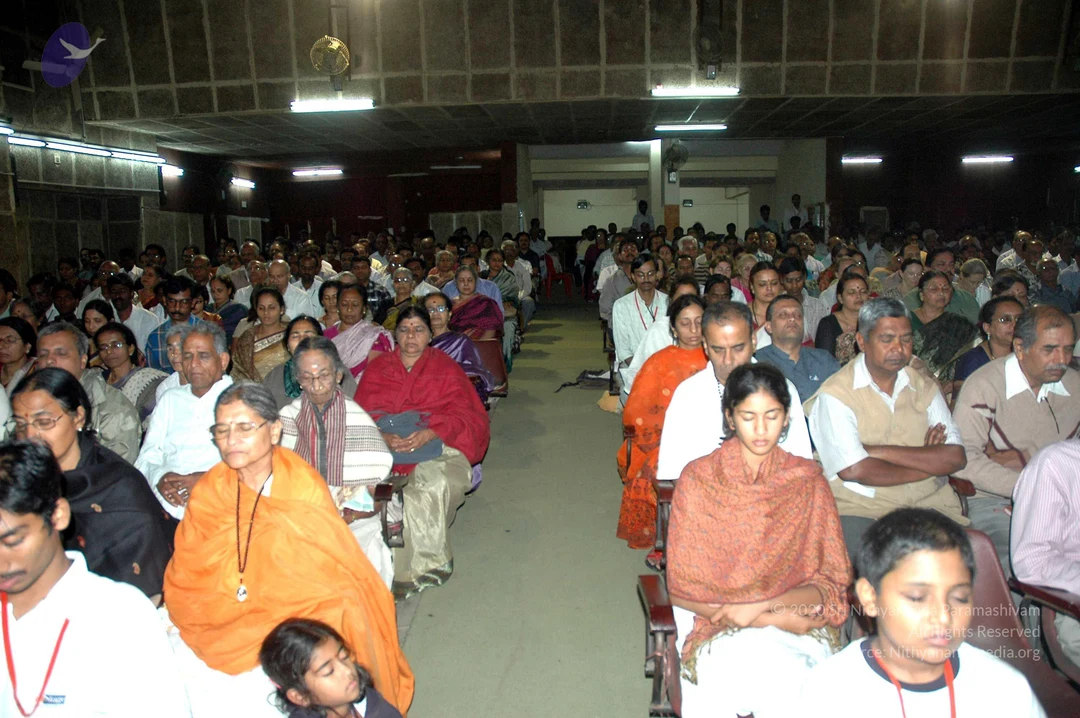
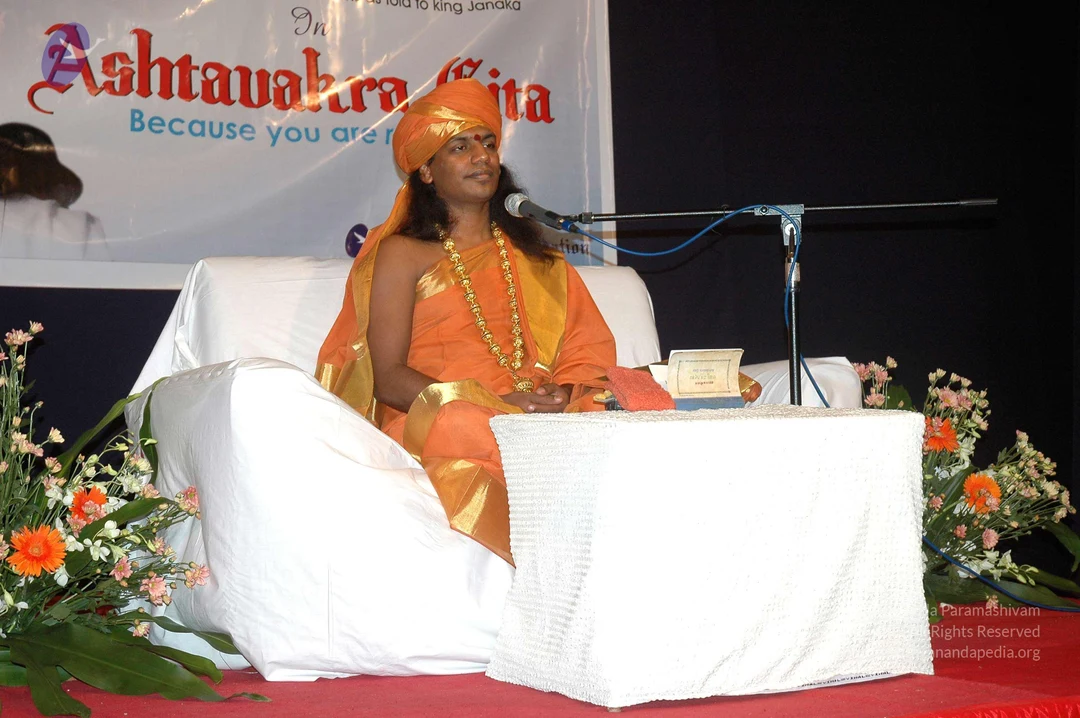
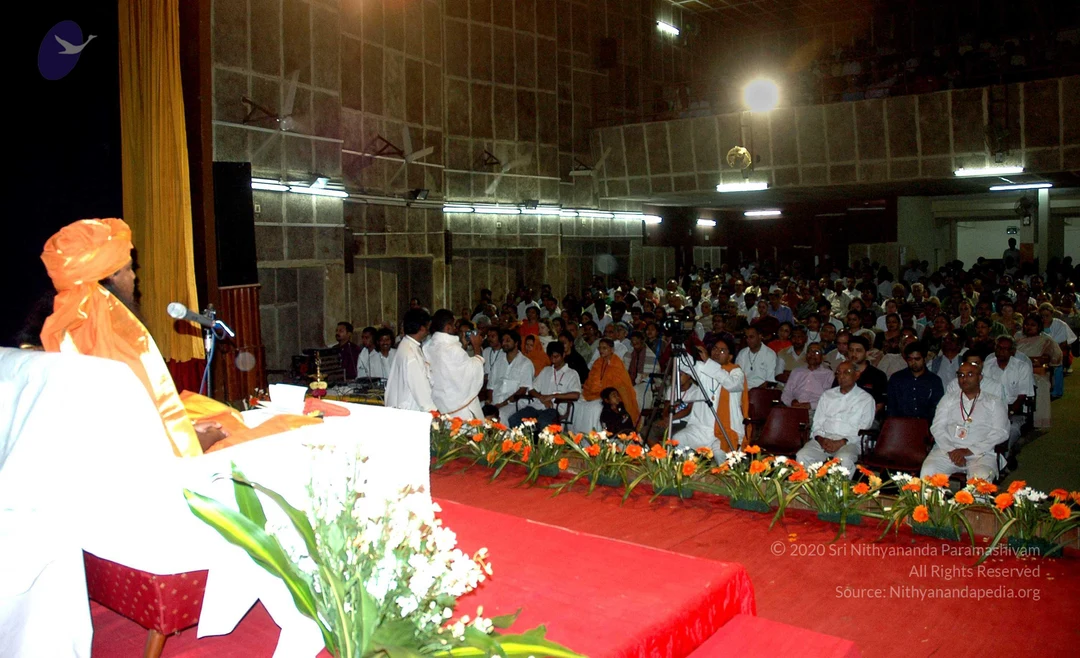
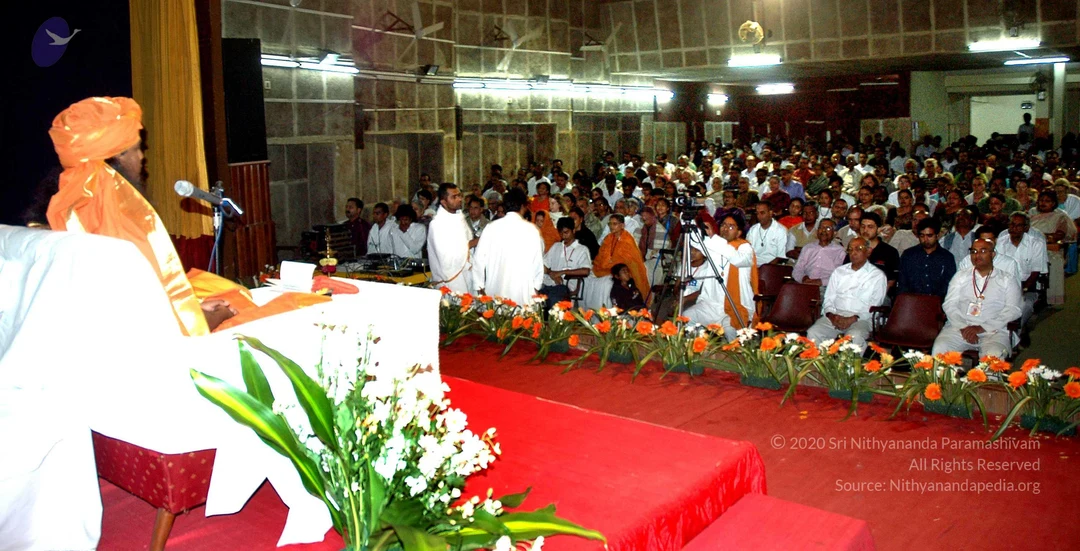
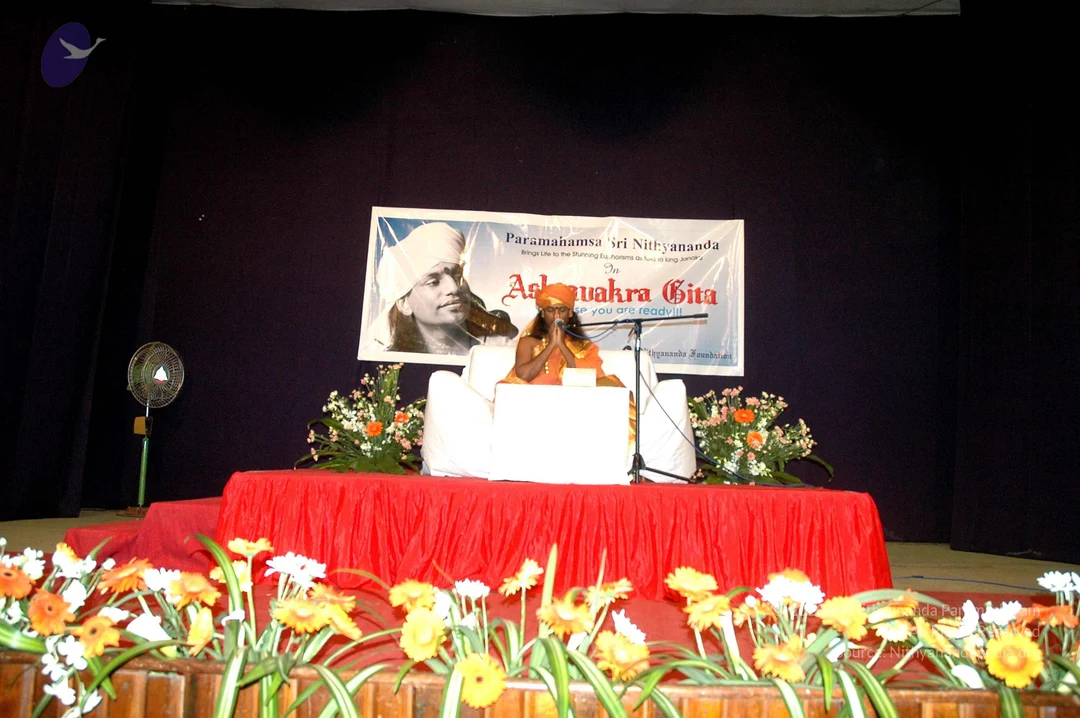
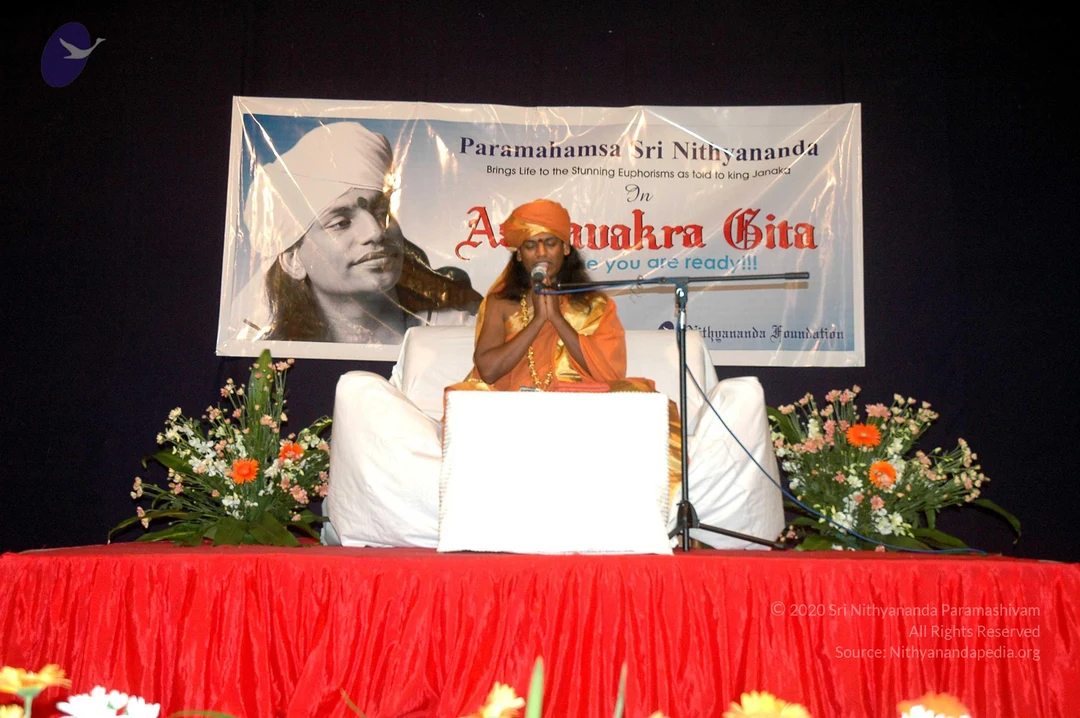
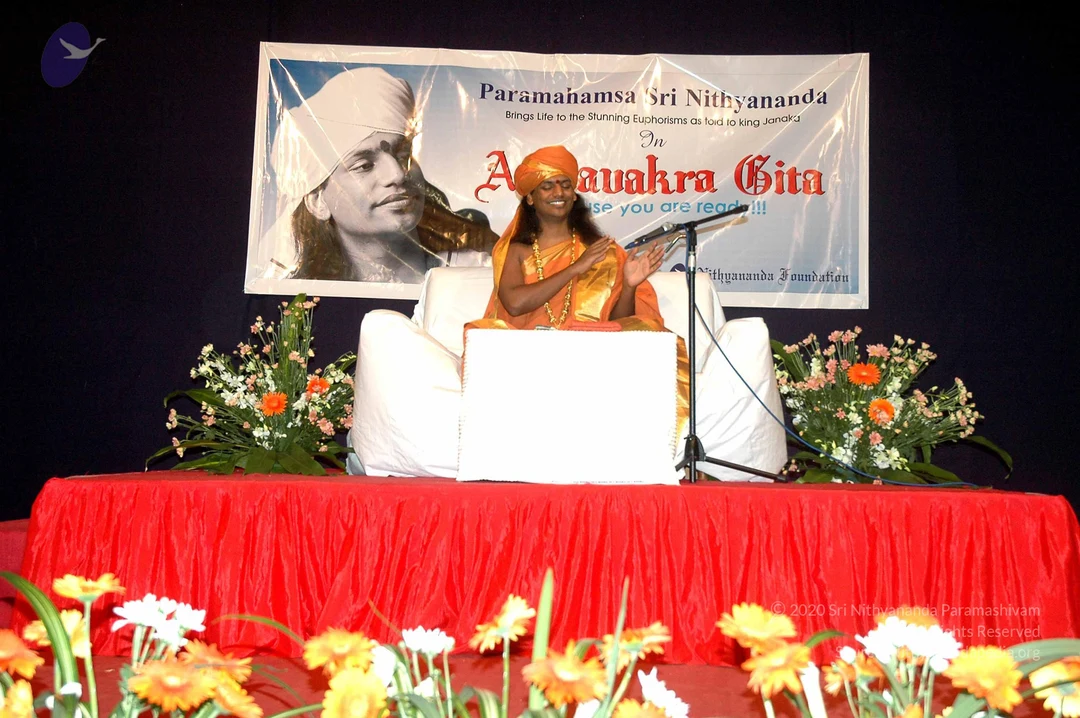
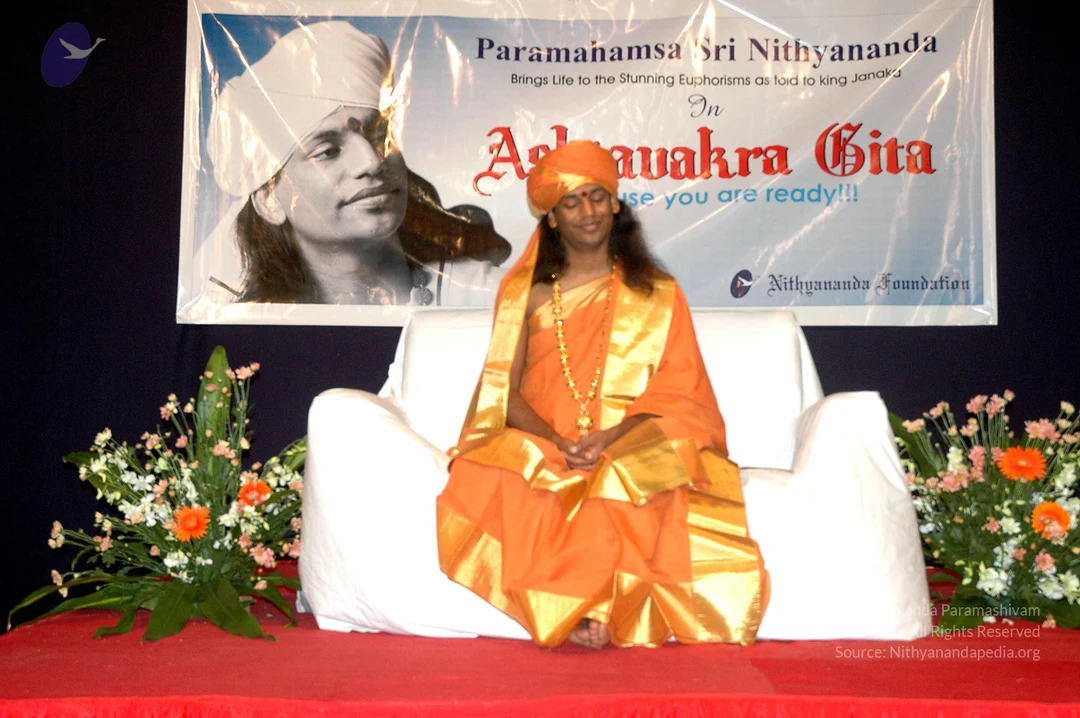
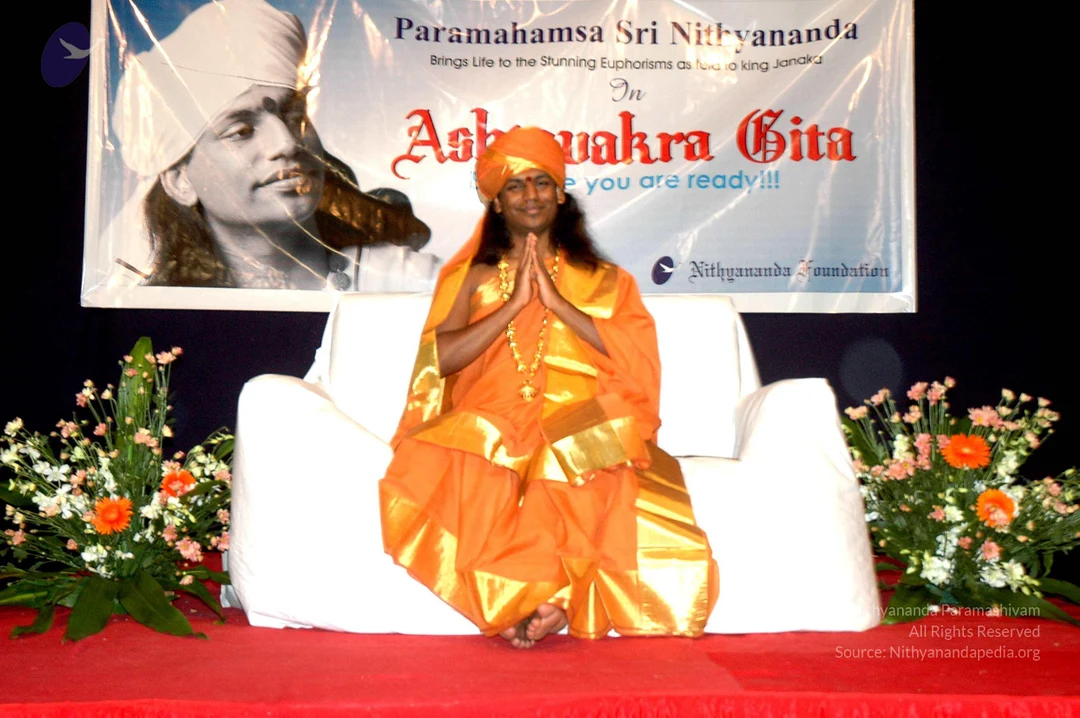
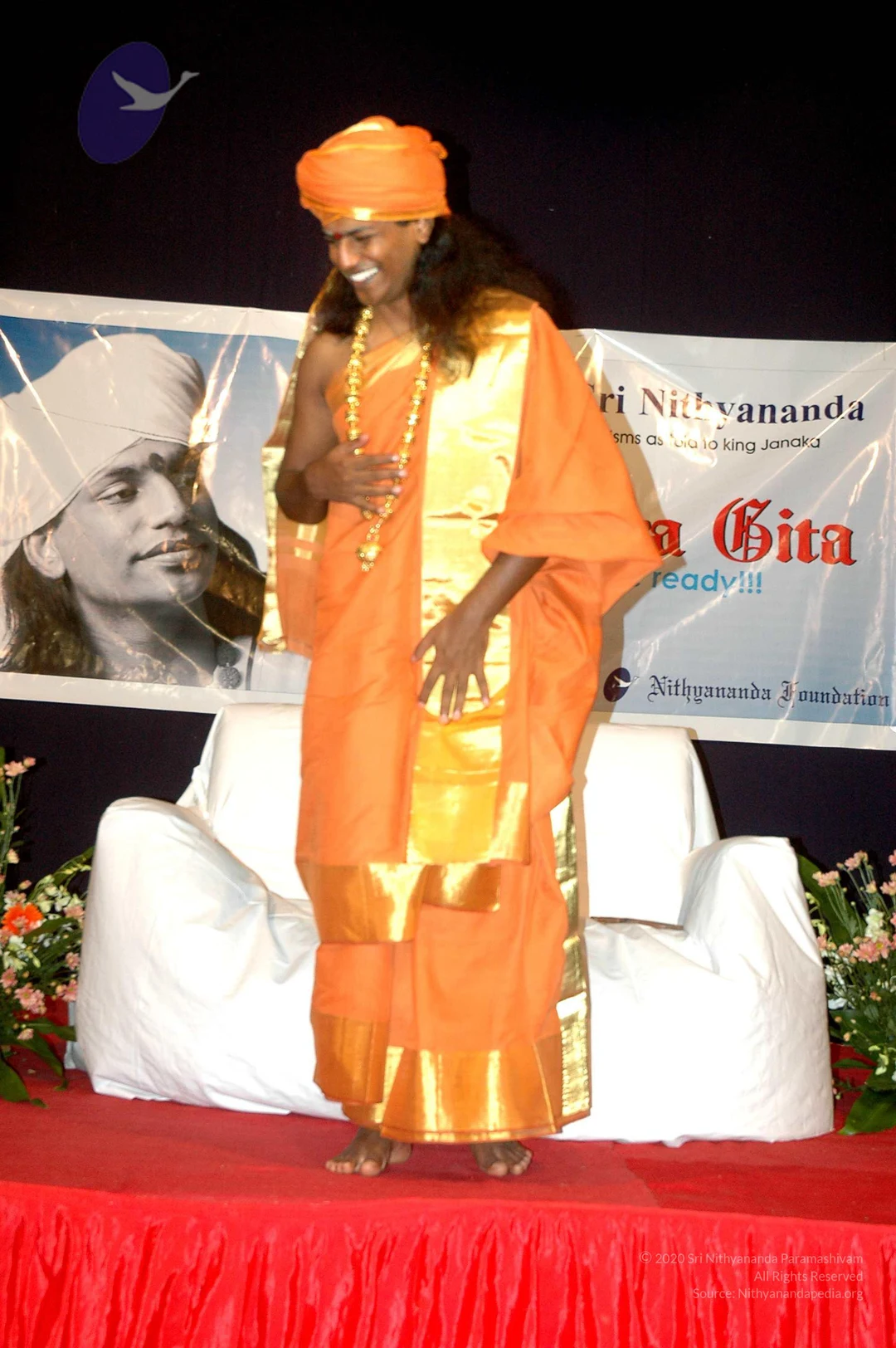
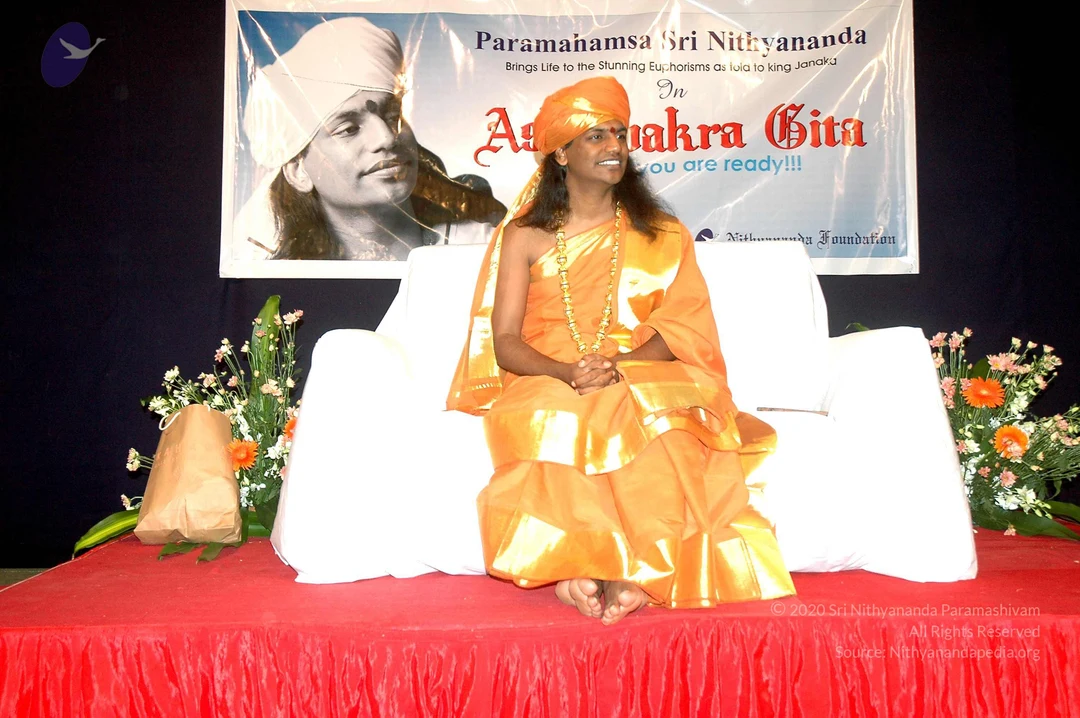
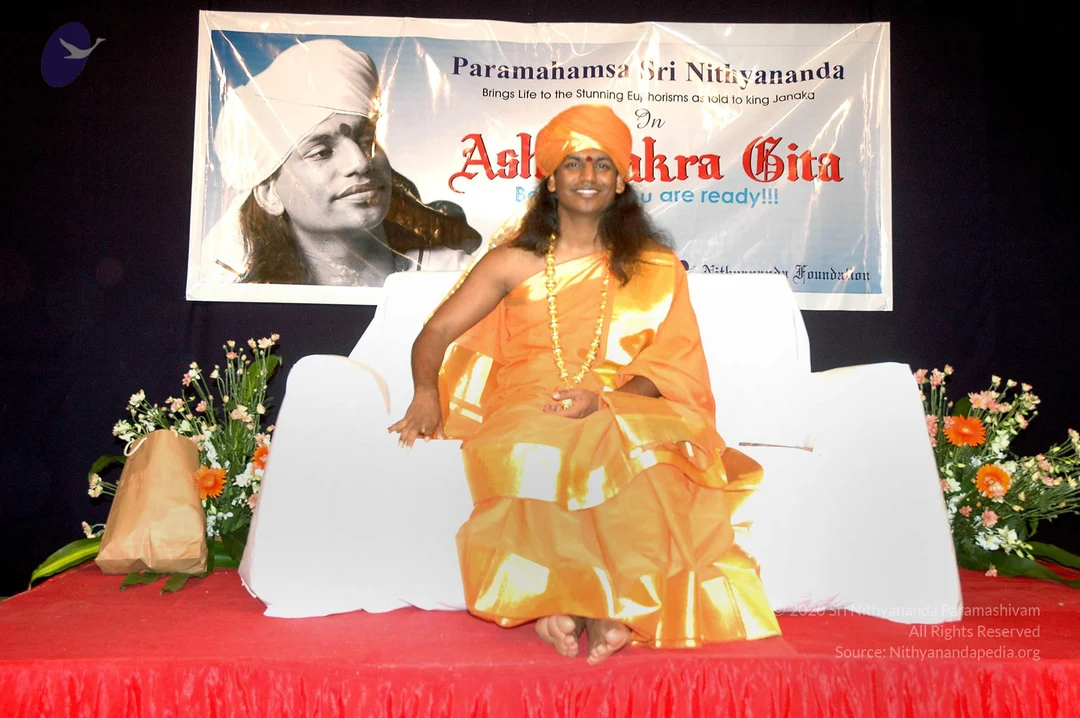
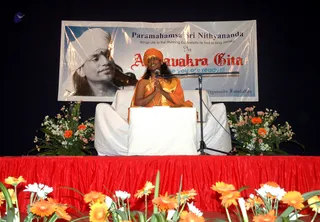
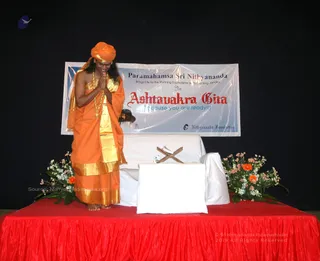
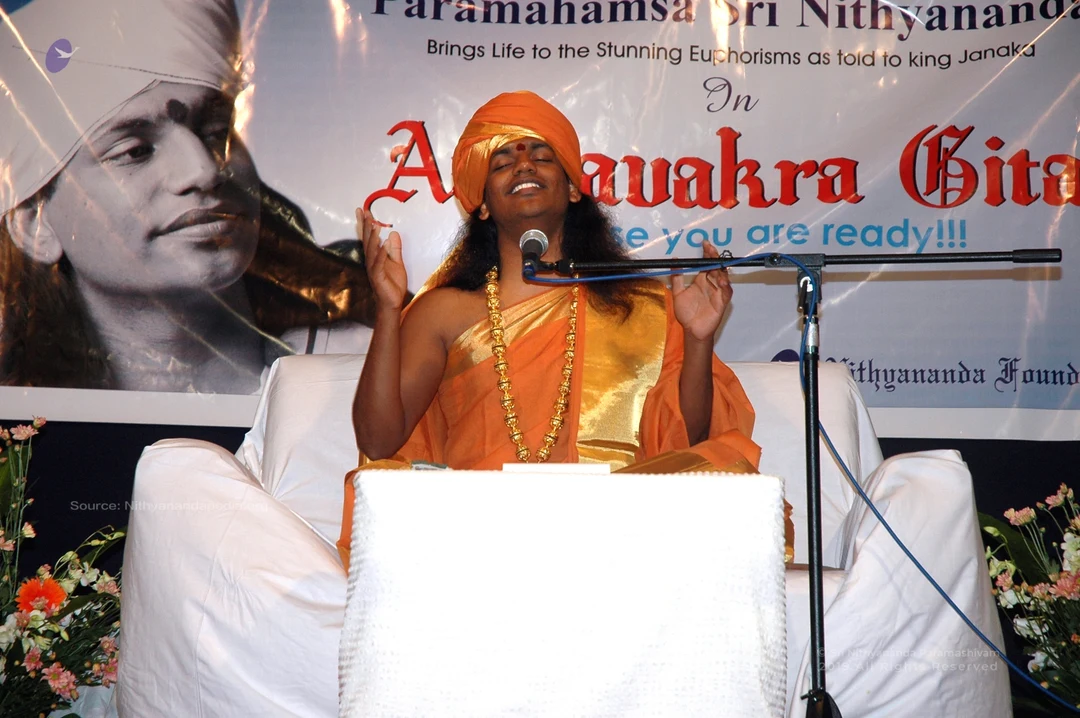
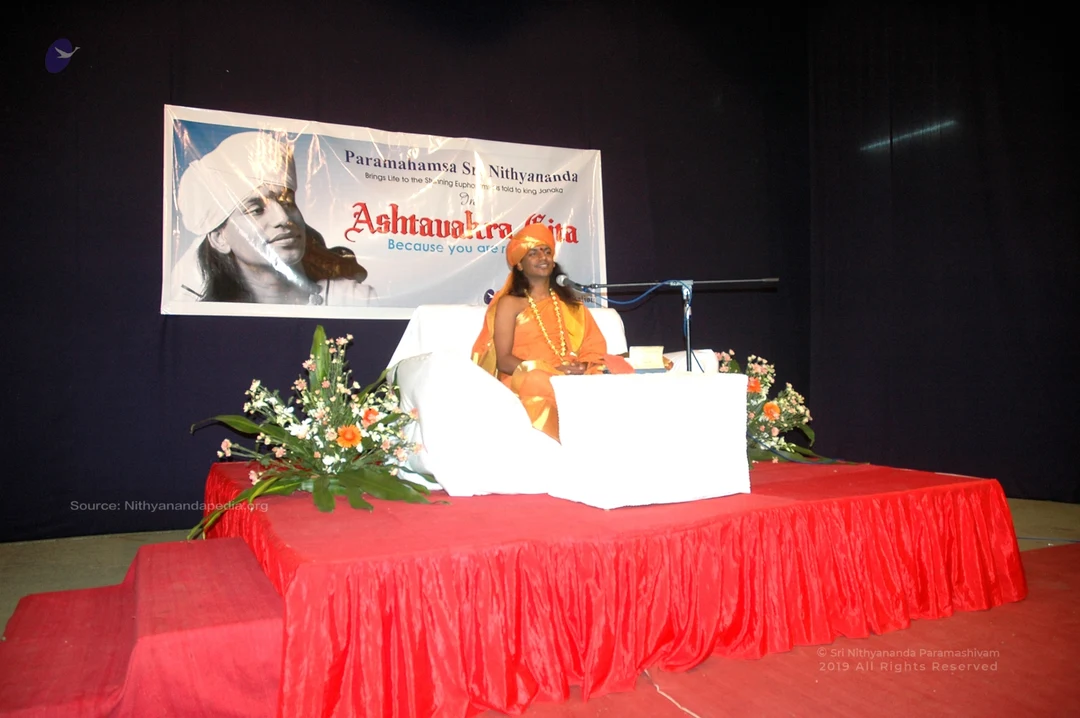
Through a 3-day discourse series, The Ashtavakra Gita exploded into the Consciousness of the people of Bangalore in India. With the sheer authority of His Enlightenment, Swamiji introduced the boy-sage, Ashtavakra, to a packed auditorium at the St. Joseph’s Indian Boys High School.

Not much is known about Ashtavakra. There is very little factual information on him. What we do know is that his existence on planet Earth is dated about 10,000 years ago during the rule of the great king, Janaka. It is said that while still in his mother’s womb, Ashtavakra was cursed by his father for daring to correct him on the faulty recitation of scriptures. So he was born with eight bends or deformities in his body. He was the laughing stock of the whole kingdom. It is said that once when Ashtavakra walked into King Janaka’s court, he was greeted by uproarious laughter. All the ministers, attendants, the town’s people and King Janaka himself could not help but laugh at the sight of the contorted figure. At this juncture Ashtavakra proved his enlightened state by the simple statement, ‘Oh, King! I thought your court was filled with wise men. But no, you are surrounded by cobblers and shoe-makers. It is filled with people who cannot see beyond my skin.’ When King Janaka heard that single statement he understood the spiritual stature of Ashtavakra. He fell at his feet, accepted him as his Guru and asked to be taught the Ultimate Truth. The Gita of Ashtavakra can be received only when you are ready for it. It can be given only when you ask for it. The whole Ashtavakra Gita is the conversation between the wise King Janaka and the twelve year old Enlightened Master, Ashtavakra. Take the Ashtavakra Gita in your hand and you will know that you are holding the purest, most uncontaminated, unpolluted and ultimate word on Enlightenment. This is because Ashtavakra was never worshiped. The moment we start worshipping a Master, we elevate them to the status of God and create a distance between us and him. It becomes convenient for us to then be content with mere worship and not with the teachings. In this way we convert all great Masters to God status and miss out on the teachings. By giving importance to Krishna, we have started doing puja to the Bhagavad Gita. If a glass of milk were to be kept in the puja room and worshipped instead of being consumed, what is the point? In the same way, the Gita is to be consumed, not worshipped. Though the Ashtavakra Gita predates the Bhagavad Gita by 5000 years, it is not as popular because it speaks directly about Enlightenment and how it is possible. Ashtavakra clearly explains to Janaka that in order to be liberated, he must be free of the lure of the sense objects and cultivate qualities like forgiveness, sincerity, kindness, contentment and truth. By shunning the objects of desire, Ashtavakra defines renunciation. This implies that a man has to lead a very disciplined life before he walks the path of Enlightenment. The updated version of renunciation states that you need to renounce only that you don’t have, like worry, depression, anger, hatred, greed and lust. Modern man has to be given the technique first. He has to experience at least one glimpse of bliss. Discipline automatically follows. If we can create the time and the space to follow these techniques of meditation, then Enlightenment is possible!

The people were kept spell-bound as deep Truths were unraveled with honesty of expression and the energy of an Enlightened Master who spoke from His own experiential understanding of the great Truths.
Photos Of The Day:

ashtavakra-gita-bangalore
Photos from this day

View all 64 photos

Photos

11 photosSource gallery
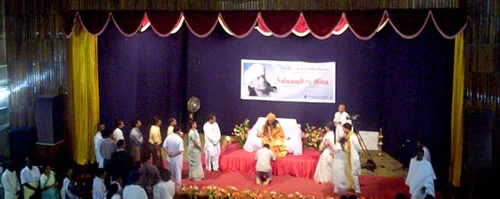
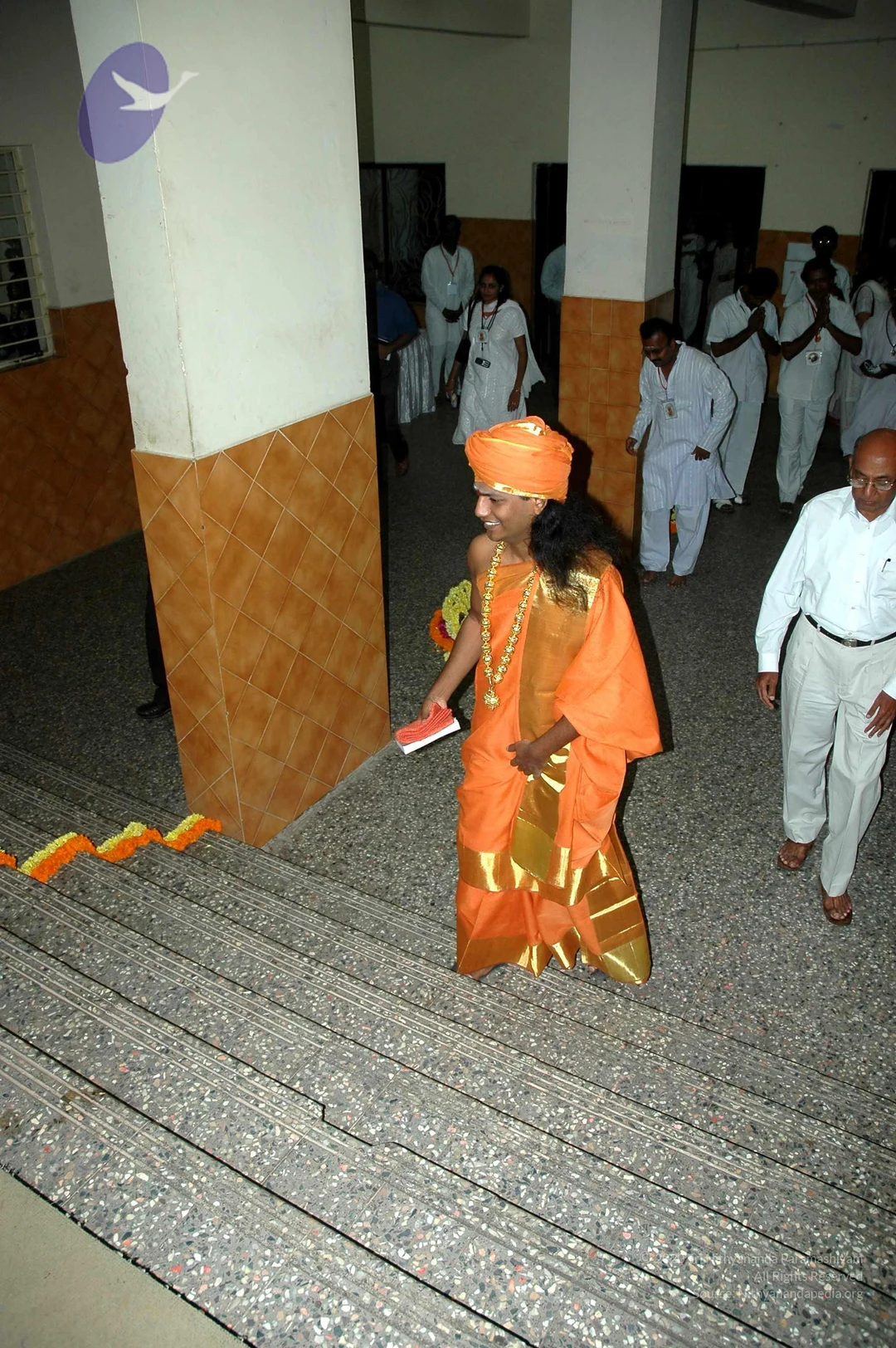
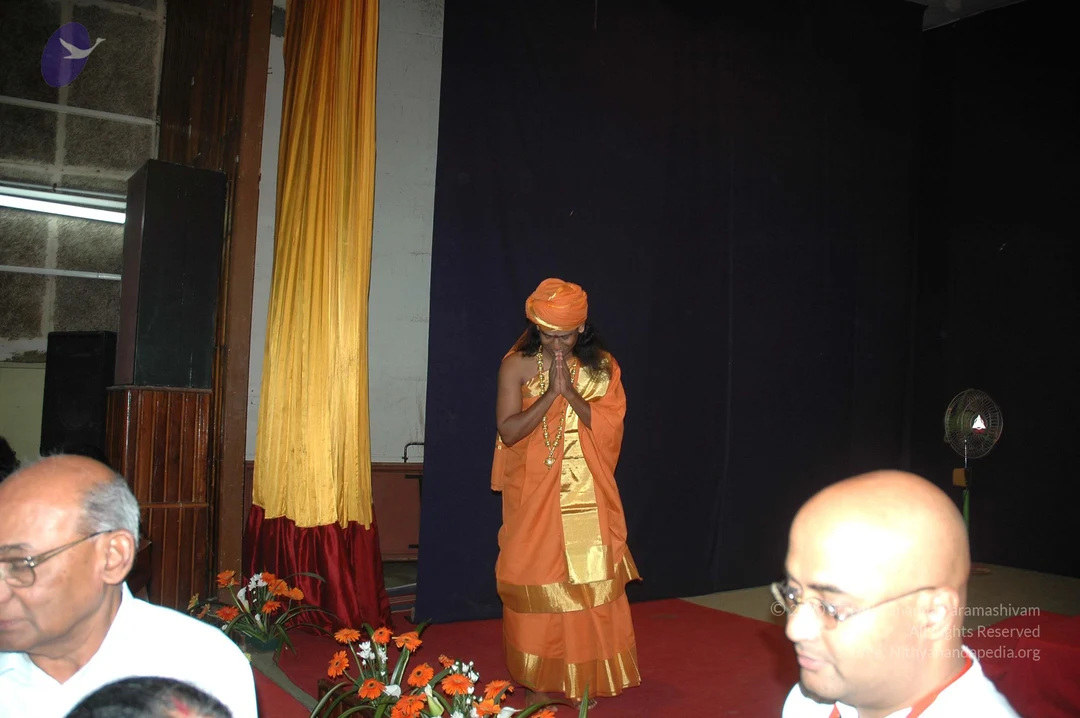
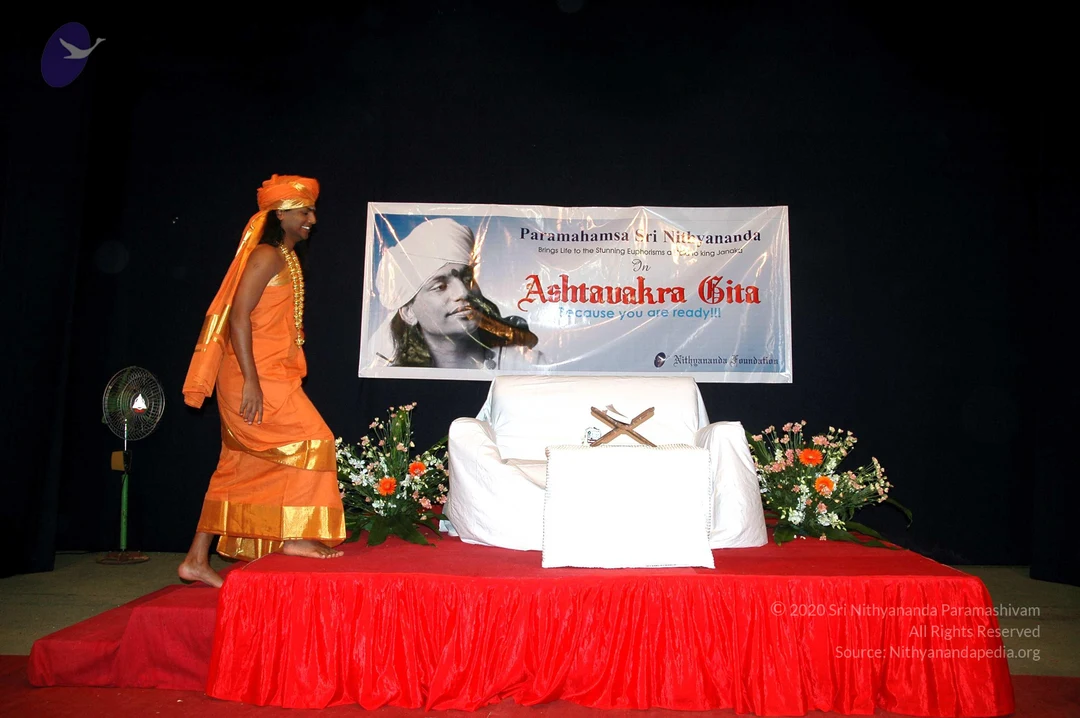
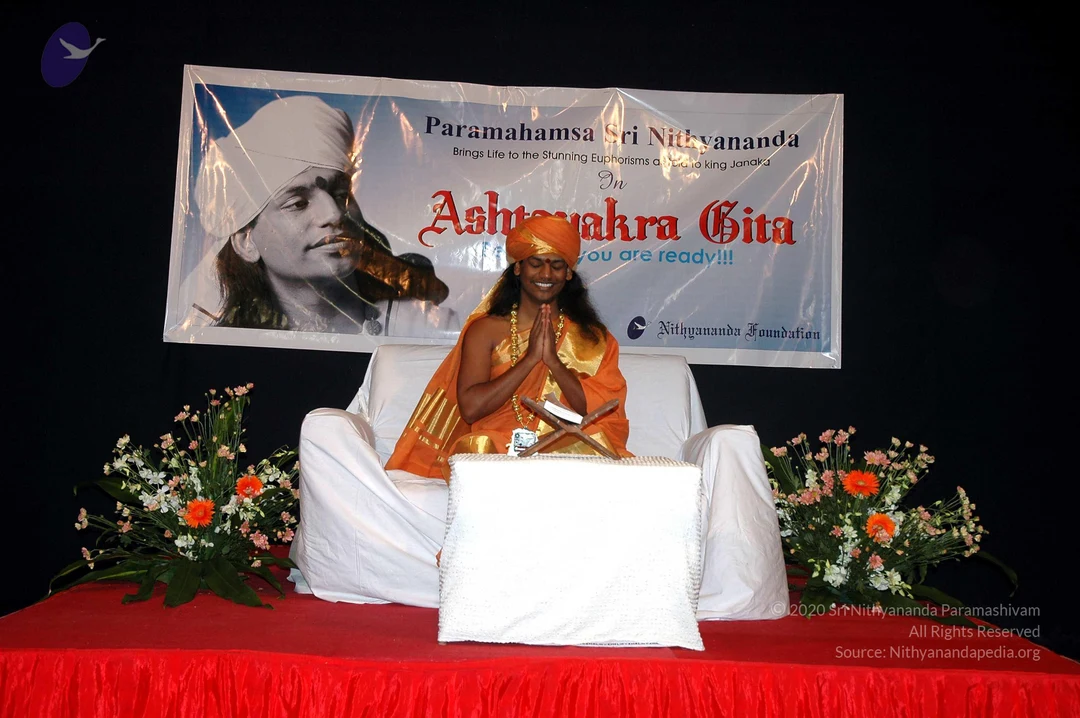
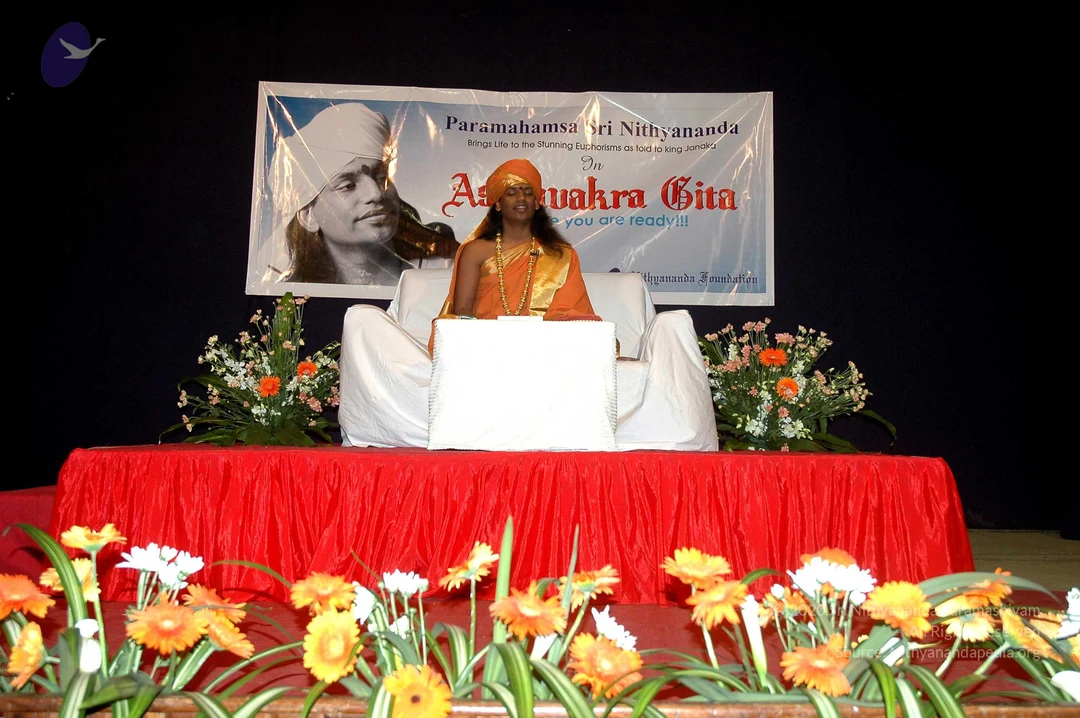
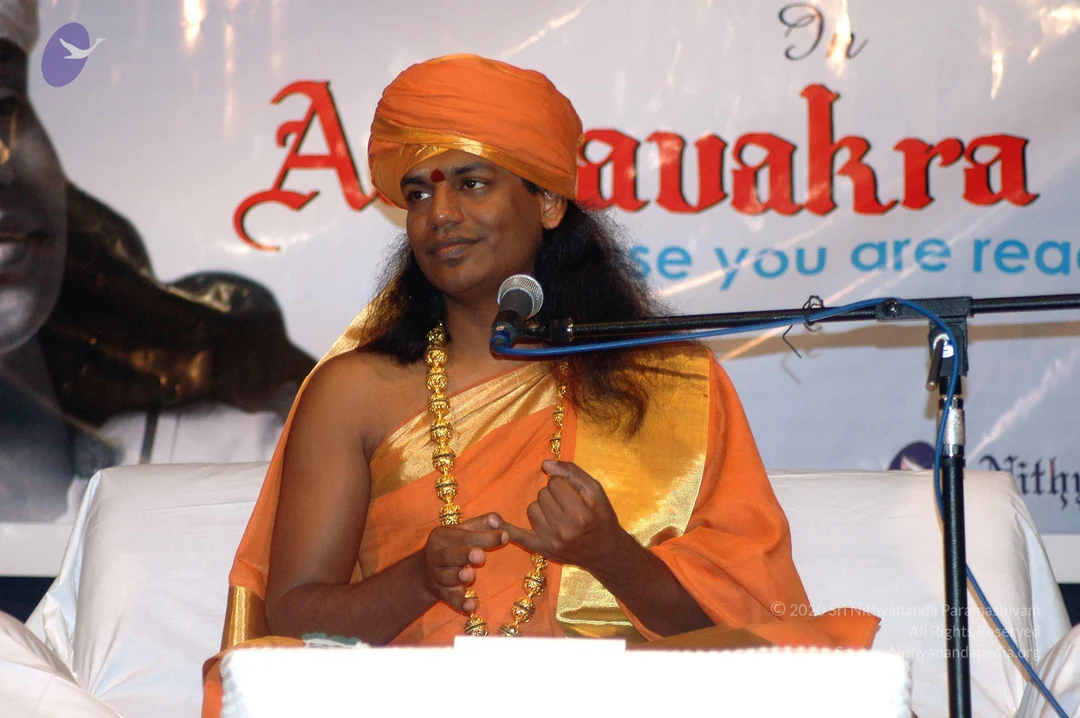
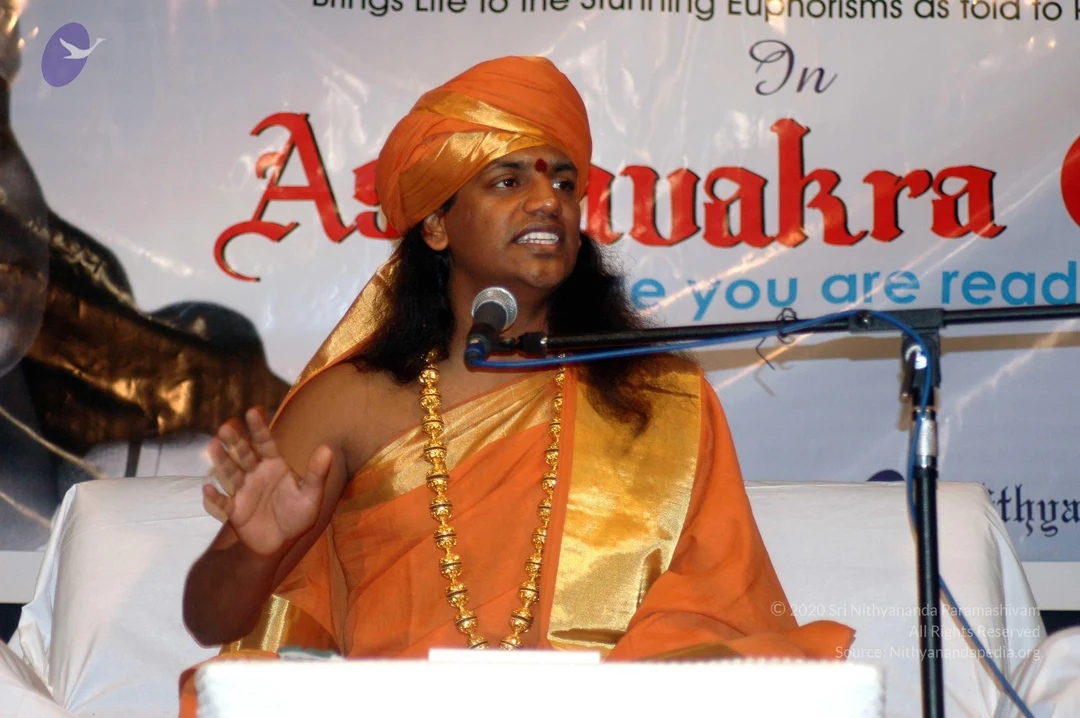
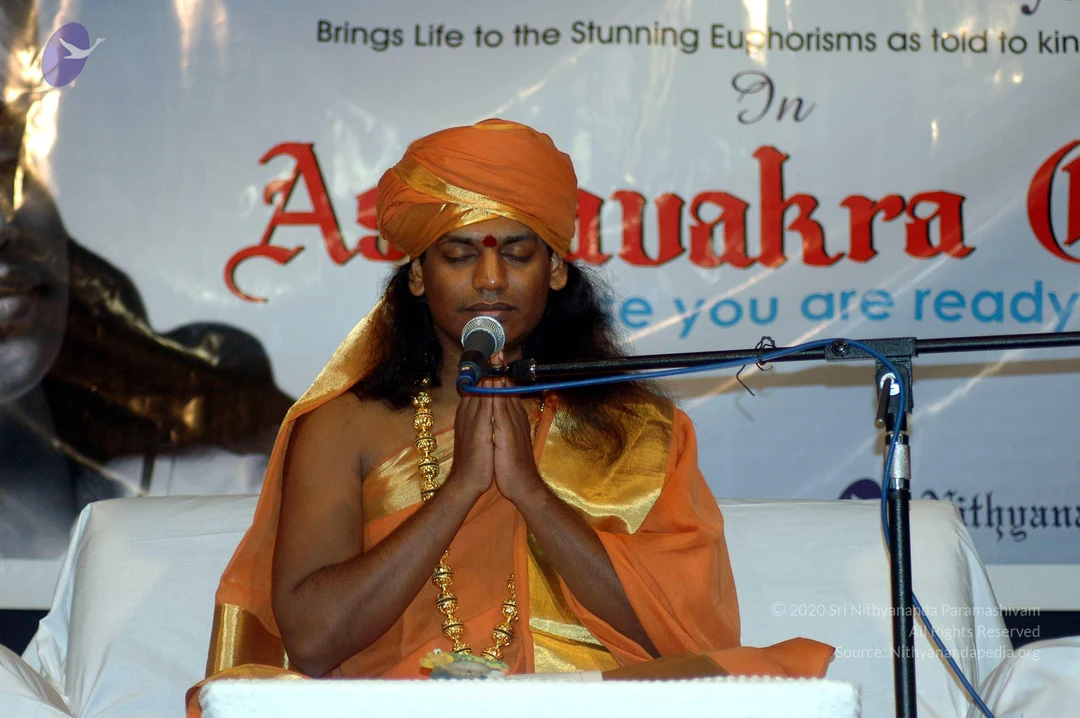
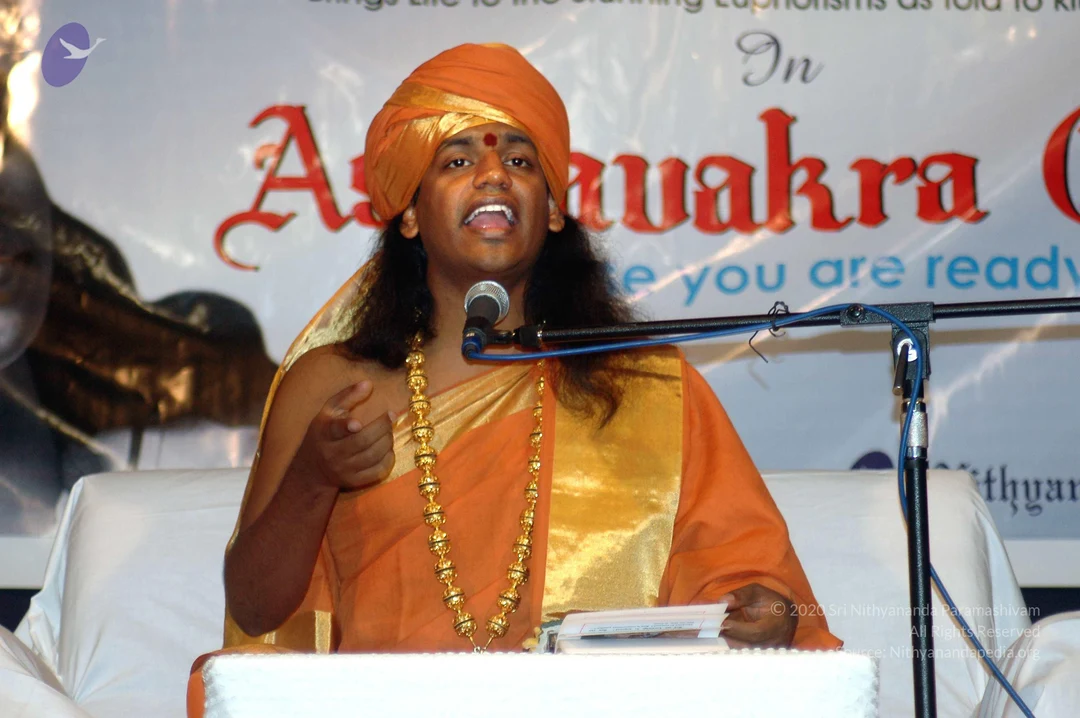
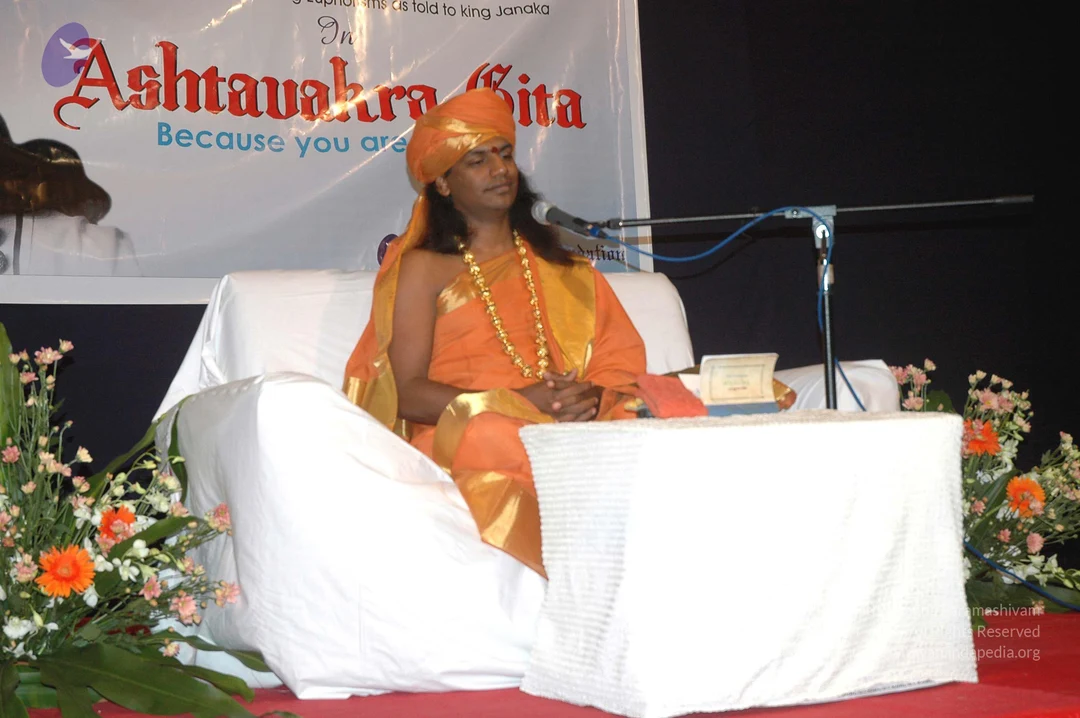
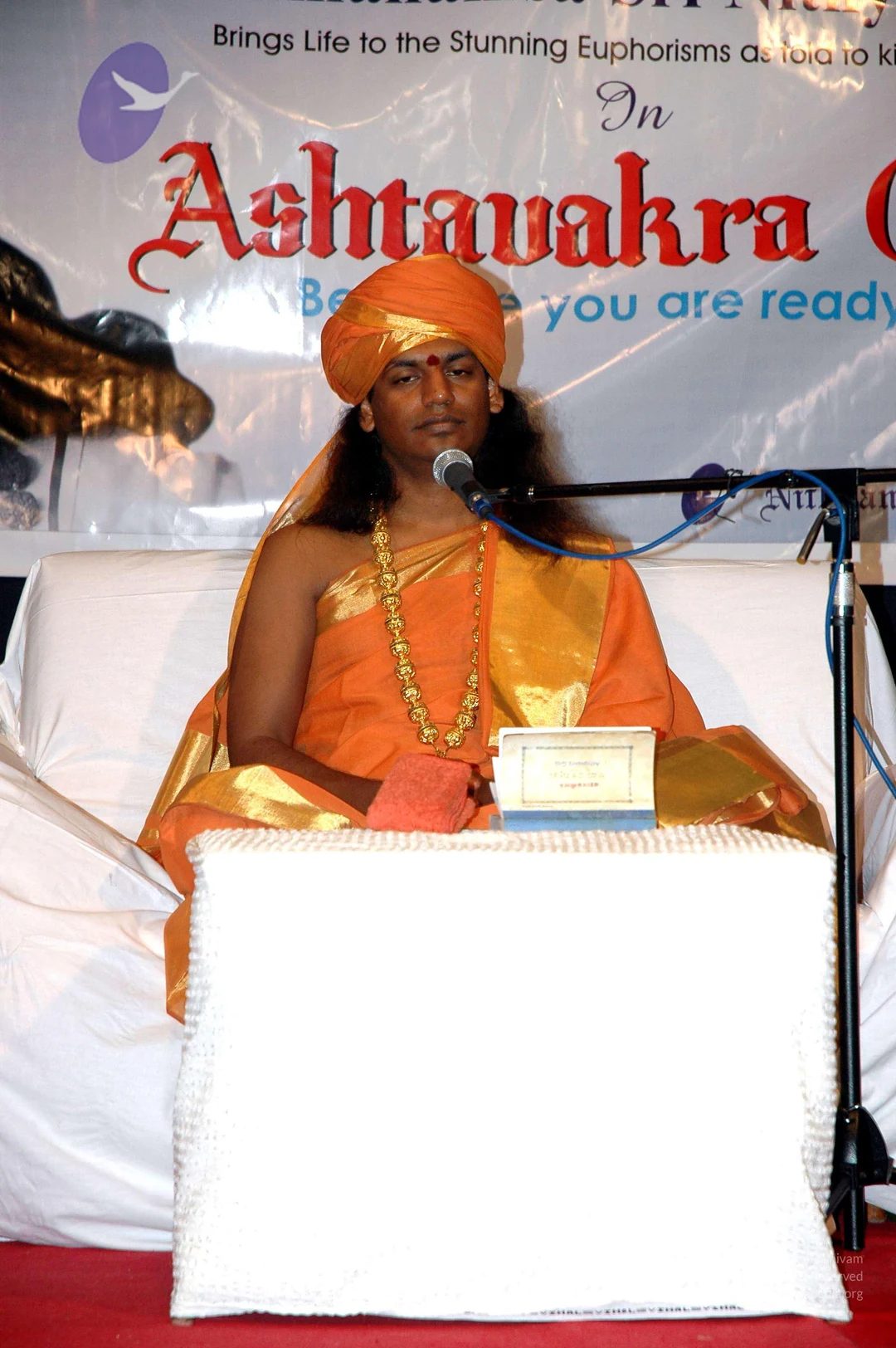
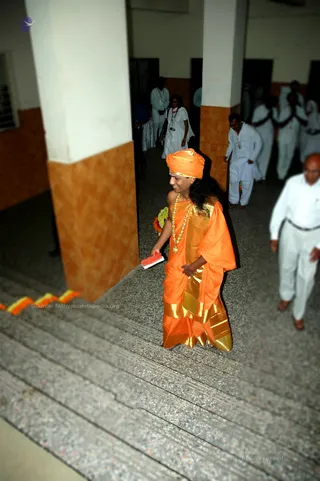
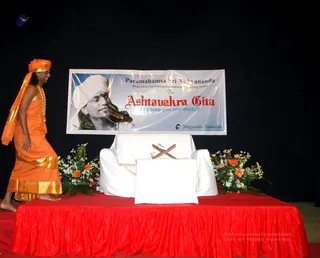
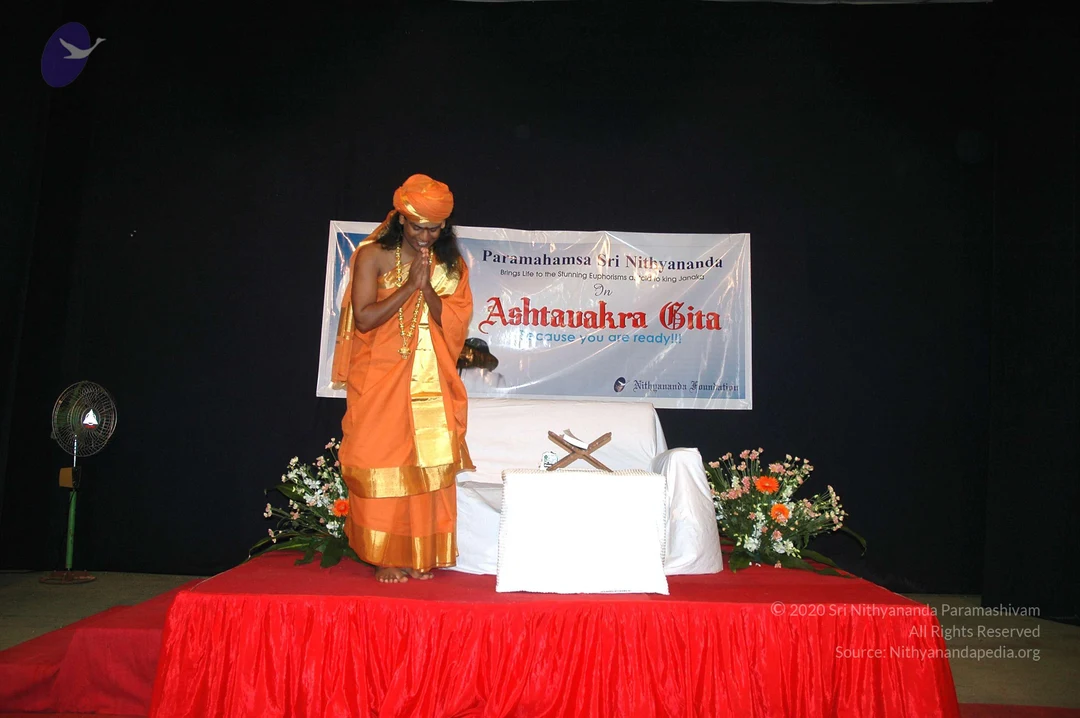
A seated speaker in orange-saffron robes and an orange head wrap sits on a white chair behind a red-draped stage with a microphone stand and flower arrangements. Behind them hangs a banner with a portrait labelled "Paramahamsa Sri Nithyananda" and the title "Ashtavakra Gita", with the tagline "Because you are...". The speaker wears an orange-beaded necklace and appears to be giving a discourse before an audience. a person: the speaker has long dark hair and orange clothing and jewelry, consistent with a discourse setting.A seated figure in saffron-orange robes and a matching orange head covering sits in a white armchair on a stage draped in red, speaking into a microphone on a stand. A gold-and-beaded necklace hangs on the chest and the figure gestures with one hand. Floral arrangements of orange gerbera daisies and white blooms sit at the stage edges. Behind is a banner with a black-and-white portrait of a bearded man in a white turban beside the title 'Ashtavakra Gita'. Printed on the banner, reading 'Paramahamsa Sri Nithyananda' is a caption, and a banner note reads 'Brings Life to the Stunning Euphorisms as told to king Janaka'. The seated speaker's identity is uncertain from appearance alone, so this is a discourse setting.A photograph of a discourse on a stage with a red draped table and orange and white flower arrangements in front. A seated figure in an orange robe and orange turban, with long dark hair and a gold-toned necklace, sits in a white upholstered chair behind a white cushion and a microphone stand, hands pressed together in anjali. Behind them a large white banner shows a black-and-white portrait of a man in a white turban beside the printed title 'Paramahamsa Sri Nithyananda', 'Brings Life to the Stunning Euphorisms as told to king Janaka', 'Ashtavakra Gita' and 'are you are ready!!!'. The seated speaker is labelled Swamiji (probable) by the page, with orange robes and turban as cues; the banner portrait is a depiction of a man in a white turban.A performer in an orange turban and orange-and-gold dhoti and shawl stands barefoot on a stage with palms joined in namaskar, wearing a gold-beaded necklace. Behind him a white banner reads "Paramahamsa Sri Nithyananda Brings Life to the Stunning Euphorisms ... in Ashtavakra Gita" with a Nithyananda Foundation logo. The stage has a red draped table, a white cushioned seat, a small wooden book stand, and orange and white flower arrangements on both sides. The visible figure is a single actor performing a role.Photograph of a figure in a saffron-orange turban and orange-and-gold draped robe with a long gold-toned garland, walking up a speckled stone staircase past orange and yellow marigold strands, holding a small bundle of flowers and a folded red-and-white cloth. Behind and to the right, men and women in white kurta and sari-style attire walk along a corridor between tall white pillars with orange tile bases. A bald man in white trousers and shirt stands at the right edge.A stage set for a discourse event: a white-covered armchair with a wooden cross-shaped object on a red draped platform, flanked by orange and white flower arrangements against a black backdrop. A banner behind reads "Paramahamsa Sri Nithyananda" and "Brings Life to the Stunning Euphorisms of a Boy-Sage to King Janaka" with "Ashtavakra Gita" and "Because you are ready!!!" and a black-and-white portrait of a bearded man in a white turban. On the left, a figure in saffron-orange robes with a gold-bordered dhoti, an orange turban and a beaded necklace walks across the stage edge.

ashtavakra-gita-bangalore
53 photosSource gallery
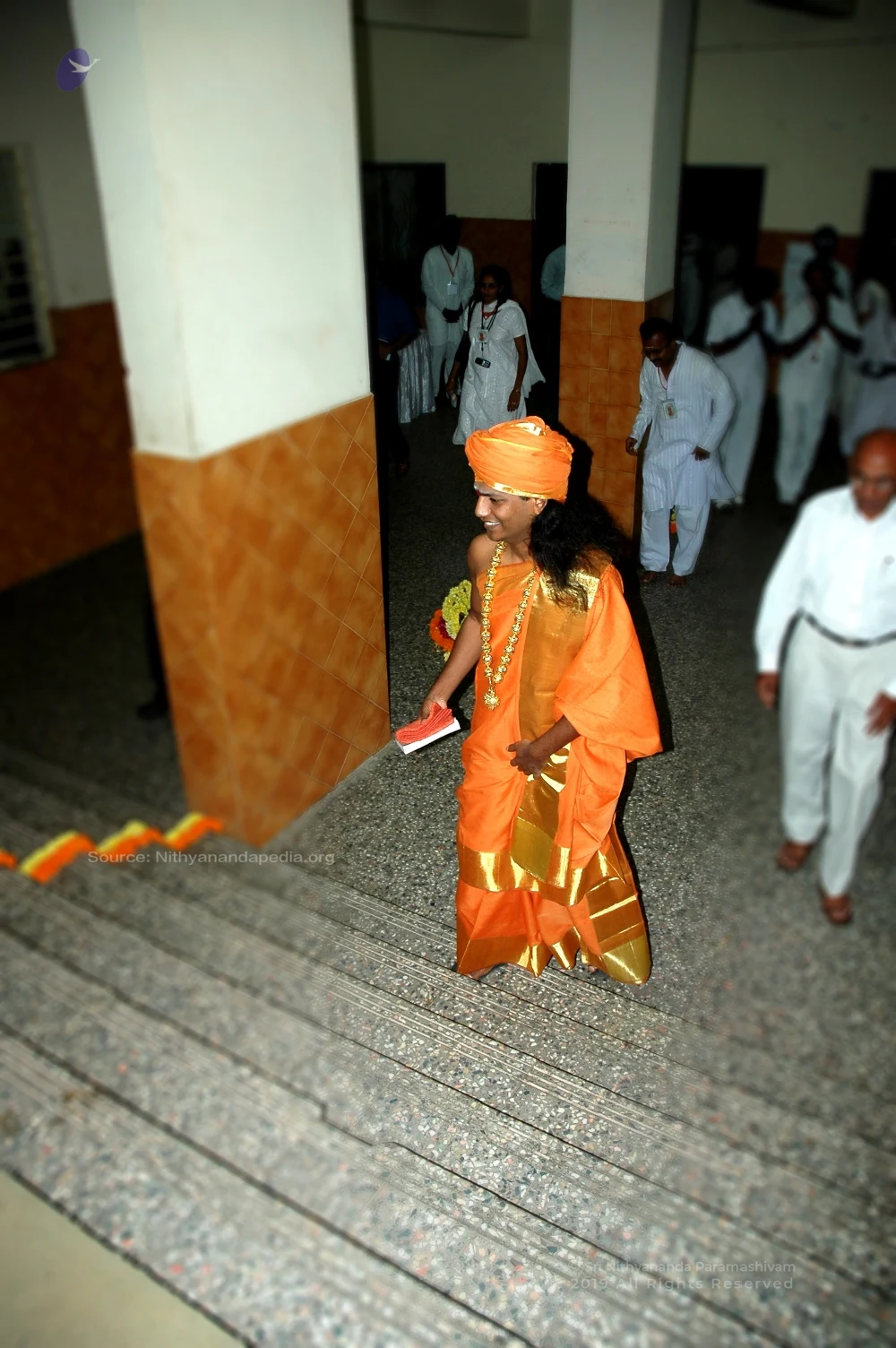
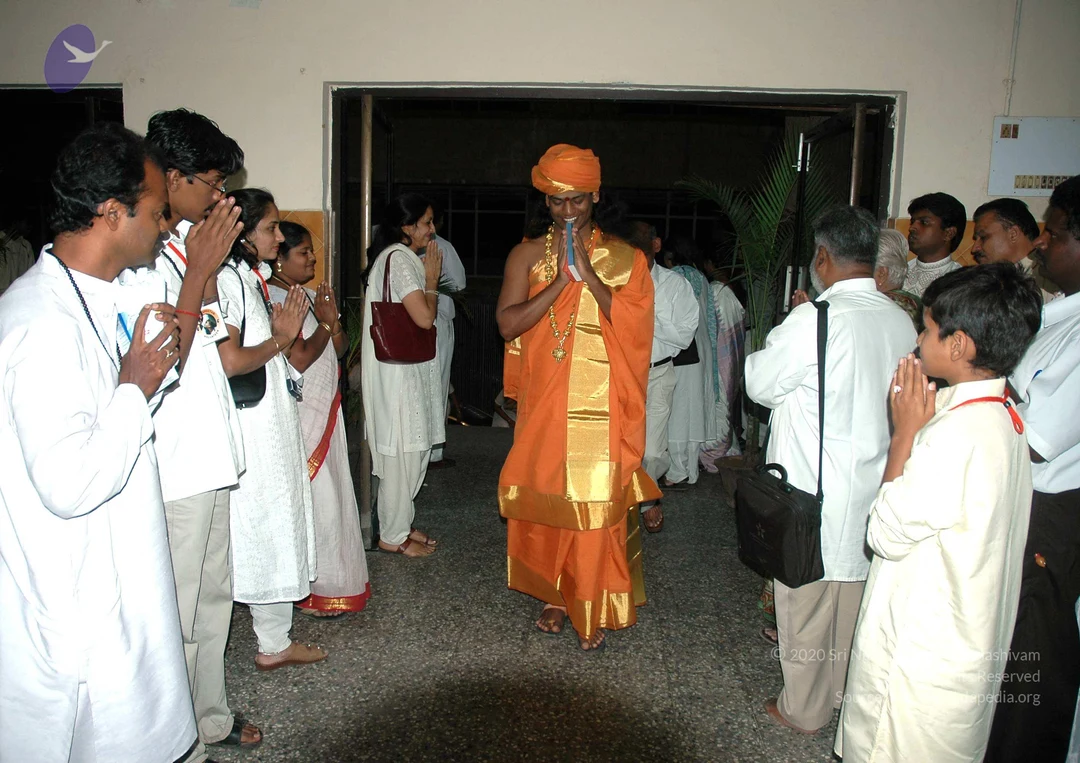
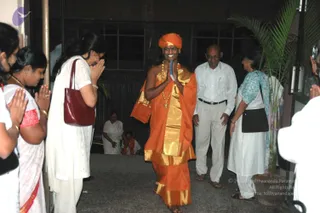
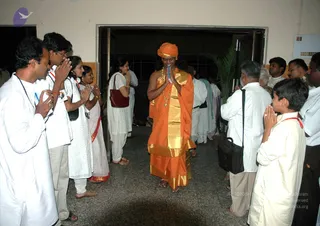
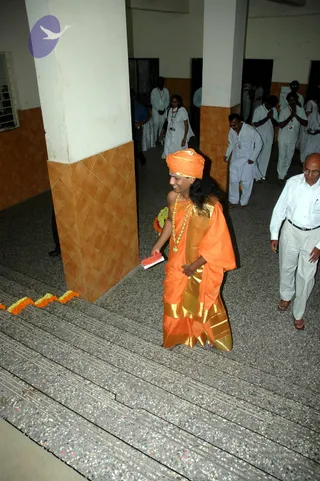
Night photograph beside a silver car at a corrugated metal wall. A man in saffron-orange robes with a matching orange turban and a long gold-bordered shawl stands in the centre, holding a small red object and wearing a long beaded necklace of gold-toned beads. He has long dark hair and a broad smile. To the right, an older bespectacled man in a white shirt faces toward him, and another man in a grey shirt stands behind. Appearance-based label: Swamiji (probable), given the saffron turban, long hair and ornate gold-bordered robes.Night photograph outside a building beside a silver-grey minivan parked against a corrugated metal wall. A man in an orange turban and orange-and-gold silk garment with a long gold ceremonial necklace and long dark hair smiles while holding small booklets or cards in one hand. A second man in a grey checked shirt stands at the right edge, and a partly visible person in white is at the lower right.Night photo outside a building with a corrugated metal wall and a palm tree at right. A central figure in an orange turban and orange robe with gold border, wearing layered gold-coloured necklaces, walks forward with palms pressed together in greeting and a smile. A man in a white shirt, white trousers and black belt walks beside him at right. Behind them, a few people in orange or white attire and a parked silver car are visible, with a man in a striped shirt at left.A photograph of an evening entrance where a man in a saffron-orange turban and saffron robe with gold borders walks forward with palms pressed together in greeting. He wears a gold-bead and pendant necklace and a rudraksha-style mala, and carries a saffron cloth bag. Around him, women in white and cream saris and salwar kameez stand with hands folded in namaste, one wearing a maroon handbag. A man in a white shirt and cream trousers stands beside him, and a woman in a teal-patterned top stands at right near a potted palm. The man in saffron has a distinctive turban, saffron robe and mala, but the appearance is not clear enough to confirm identity.A photograph of a man in saffron-orange robes with gold-bordered drape walking barefoot through an indoor doorway, hands joined in namaste at chest level, with an orange turban and a gold necklace. Along both sides, devotees in white kurtas and white salwar-style clothing stand with palms pressed together in greeting, including a young boy in white on the right and a woman in white with a maroon bag. Palm fronds and a tiled floor are visible beside the entrance.A photograph of a man in an orange turban and orange robe with gold borders walks up a tiled stairway, carrying a red-covered book in his left hand; a gold necklace hangs on his chest and a long dark hair falls behind. Strings of marigolds lie along the steps. Behind him, several people in white clothes with identity badges walk and fold their hands in greeting, and a man in a white shirt and cream trousers stands at the right edge. Tiled walls and white pillars frame the hall. a person: the man in orange with long hair, gold necklace and turban fits the page's presence claim, though the appearance is only partly distinctive.