Skip to content
Wednesday

18 January 2017

Dated photos
358
Source pages
1
Media
2
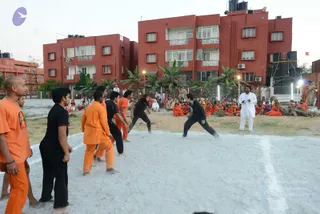
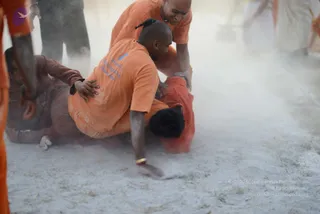
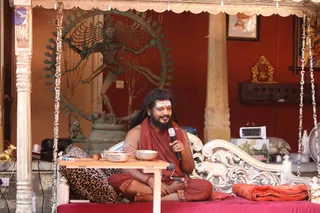
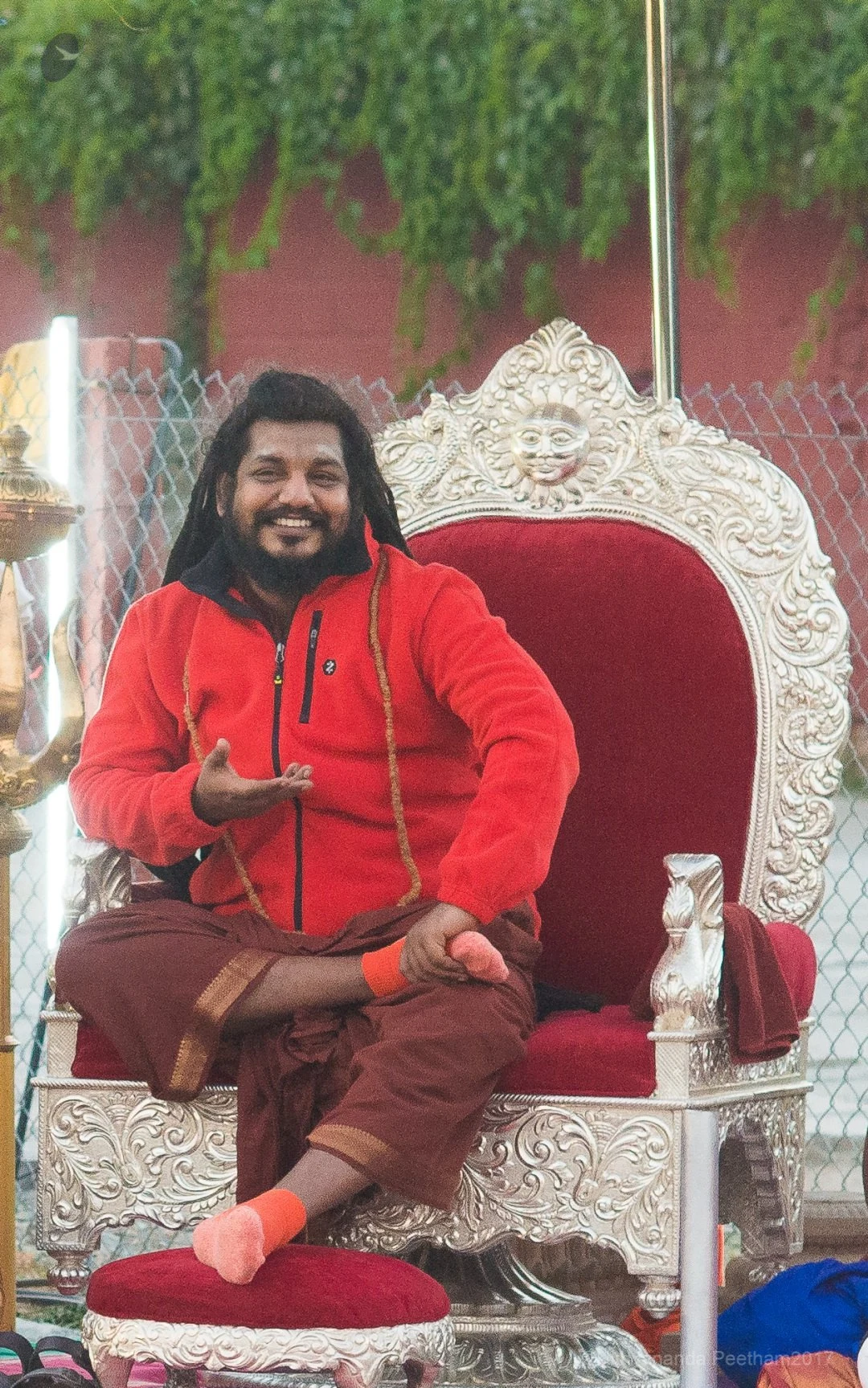
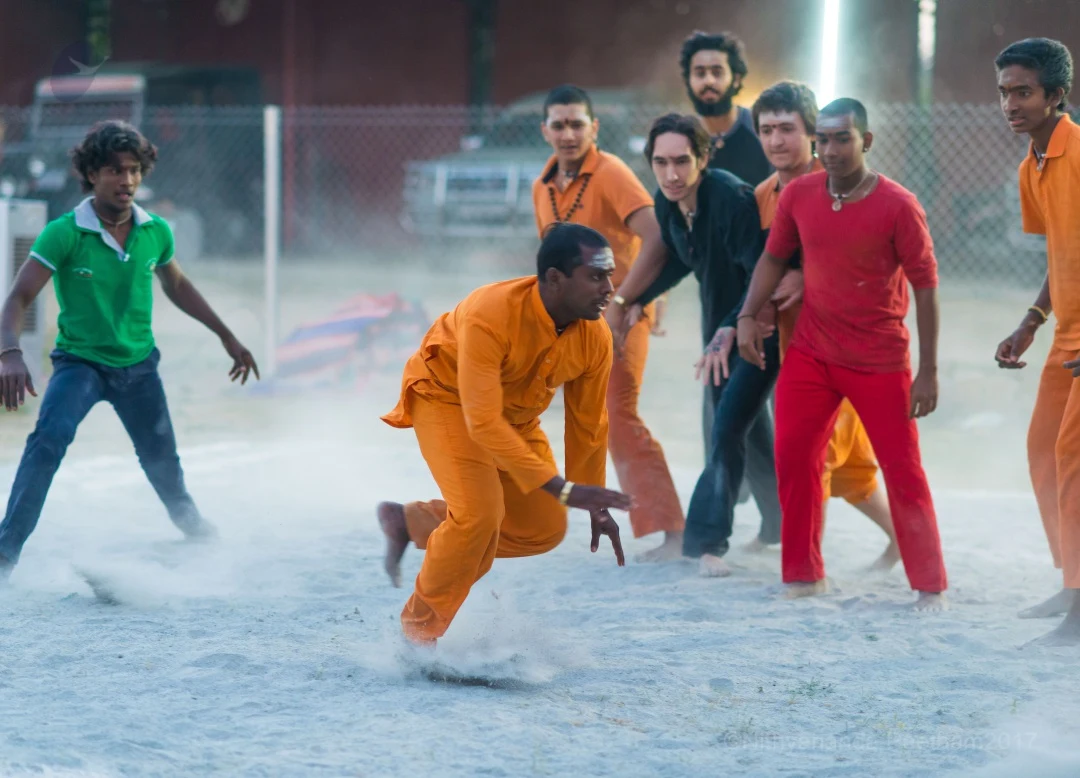
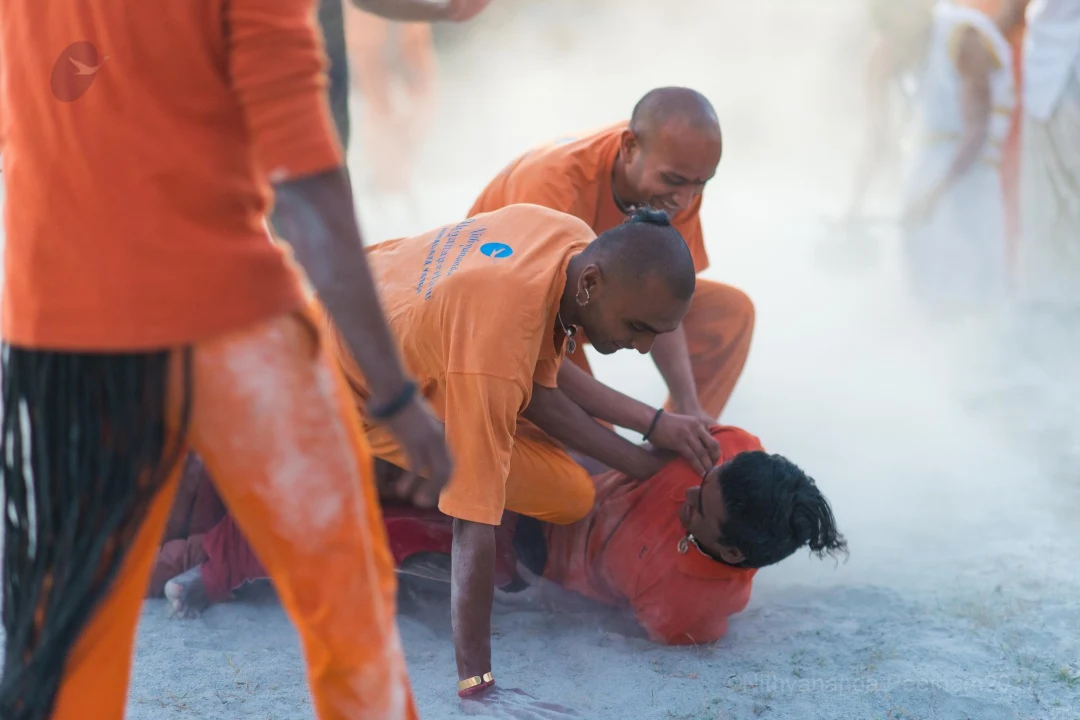
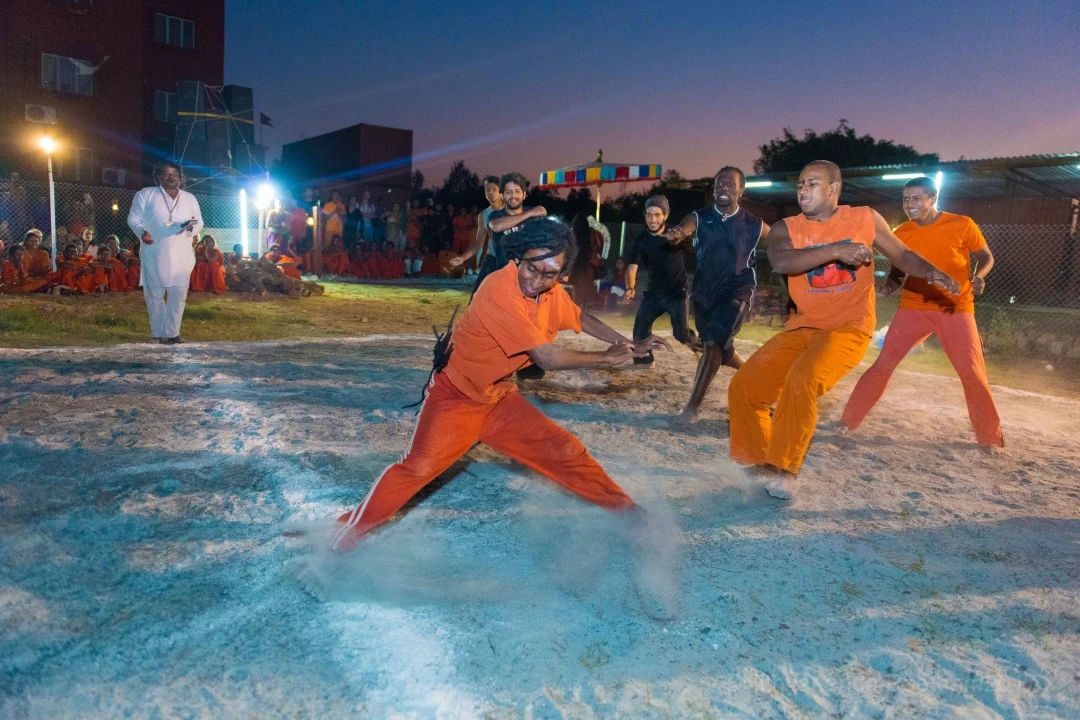
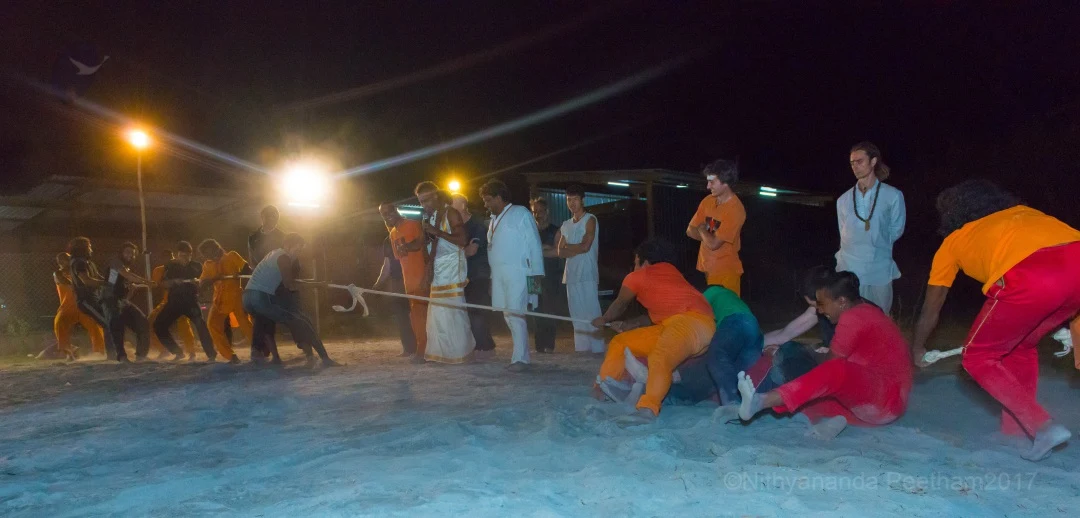
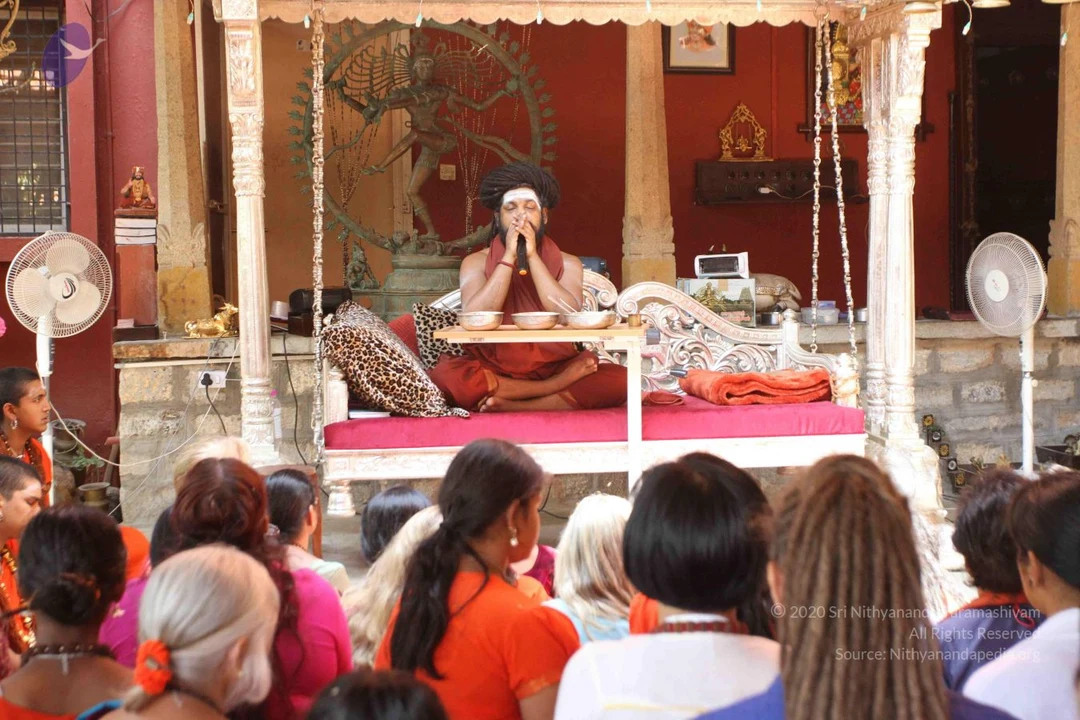
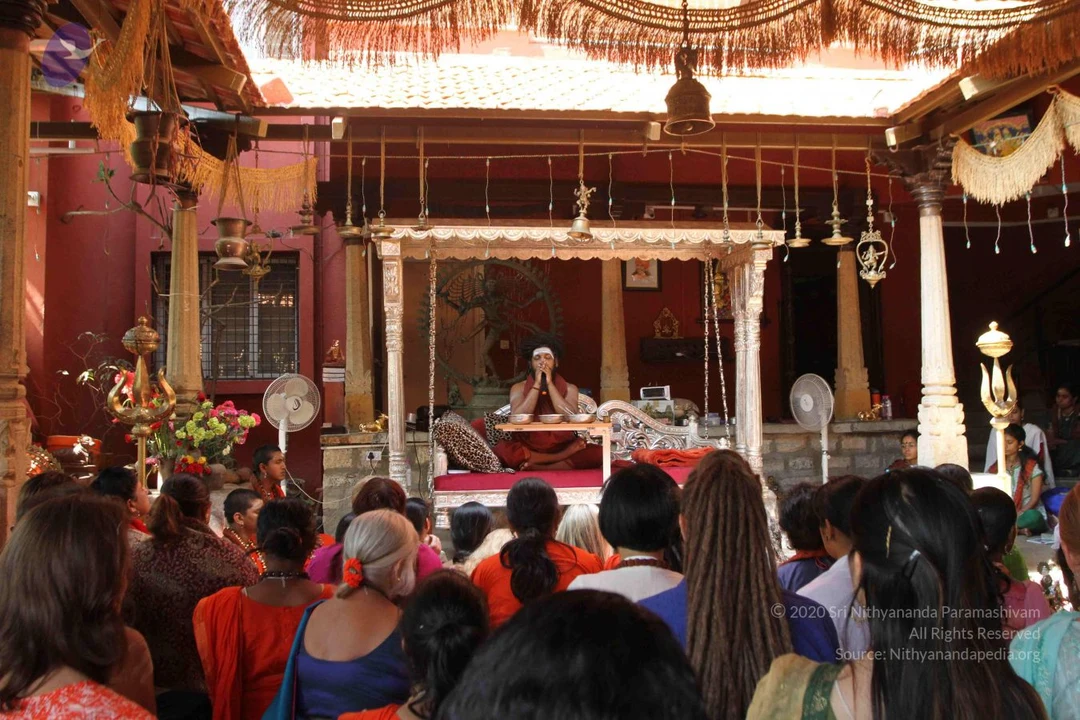
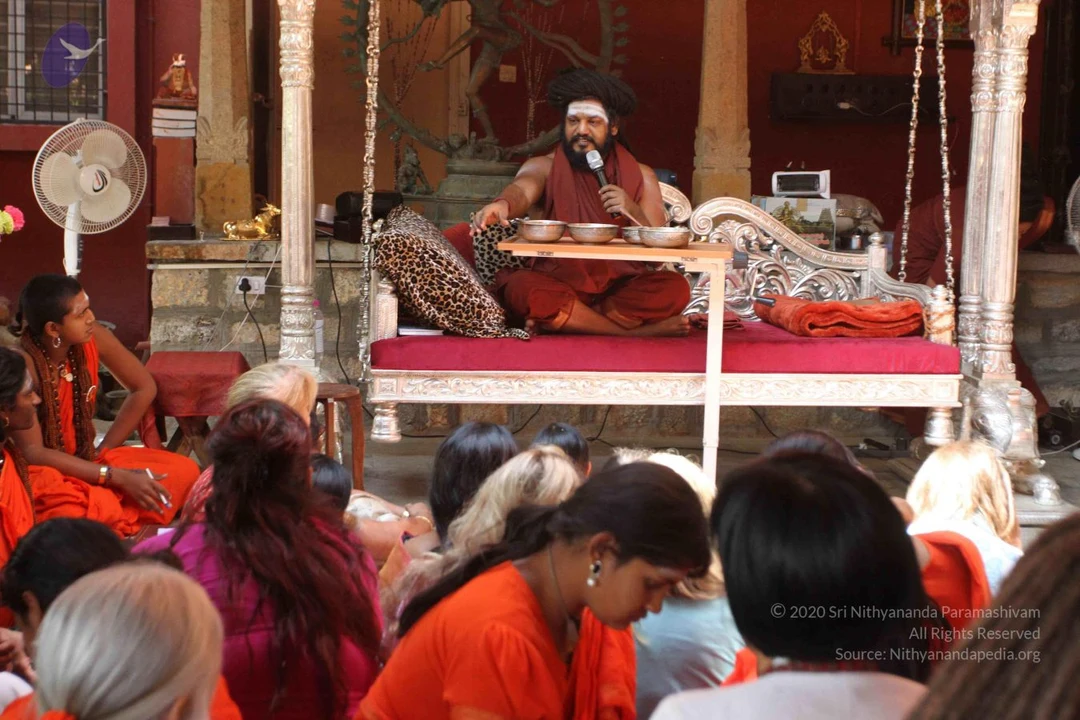
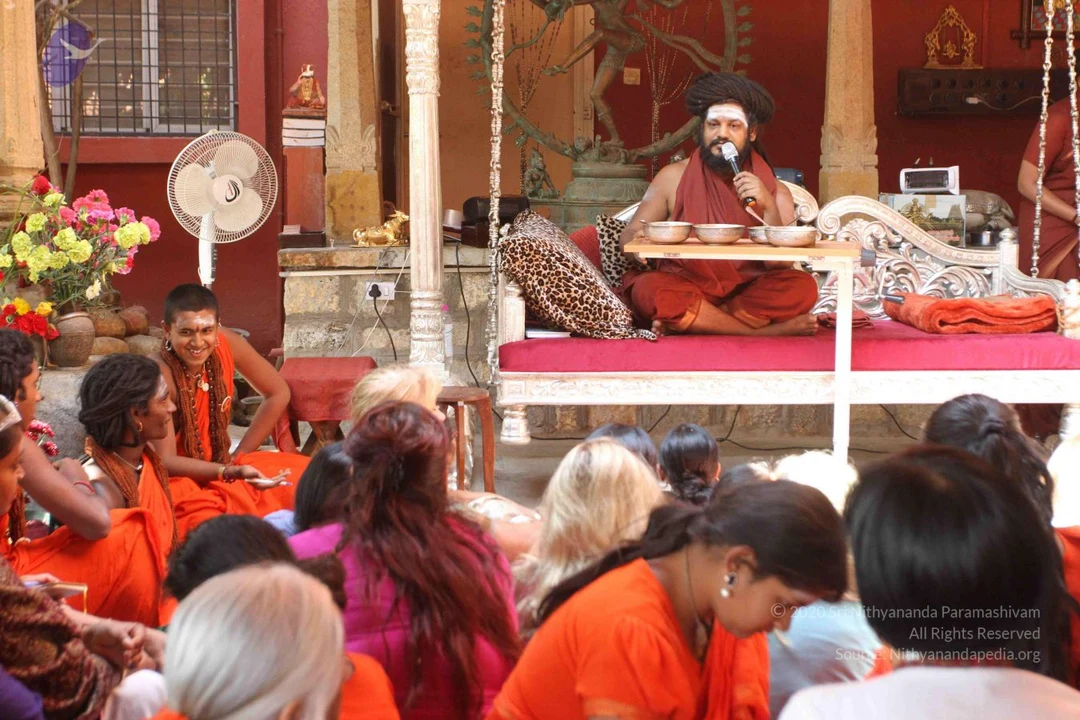
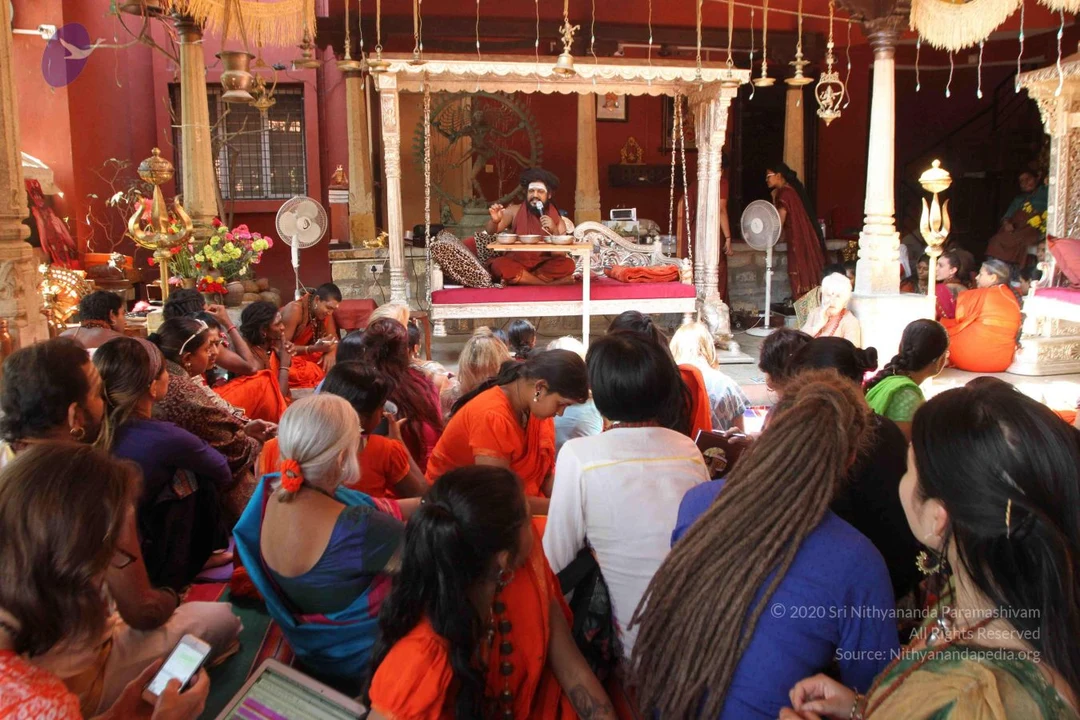
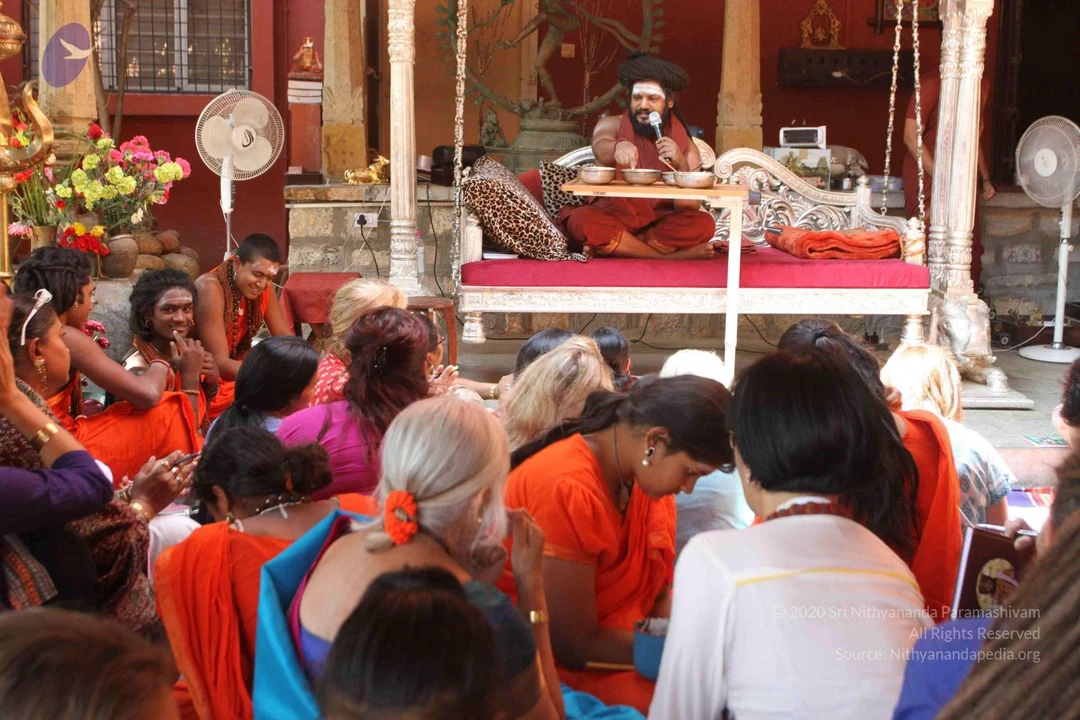
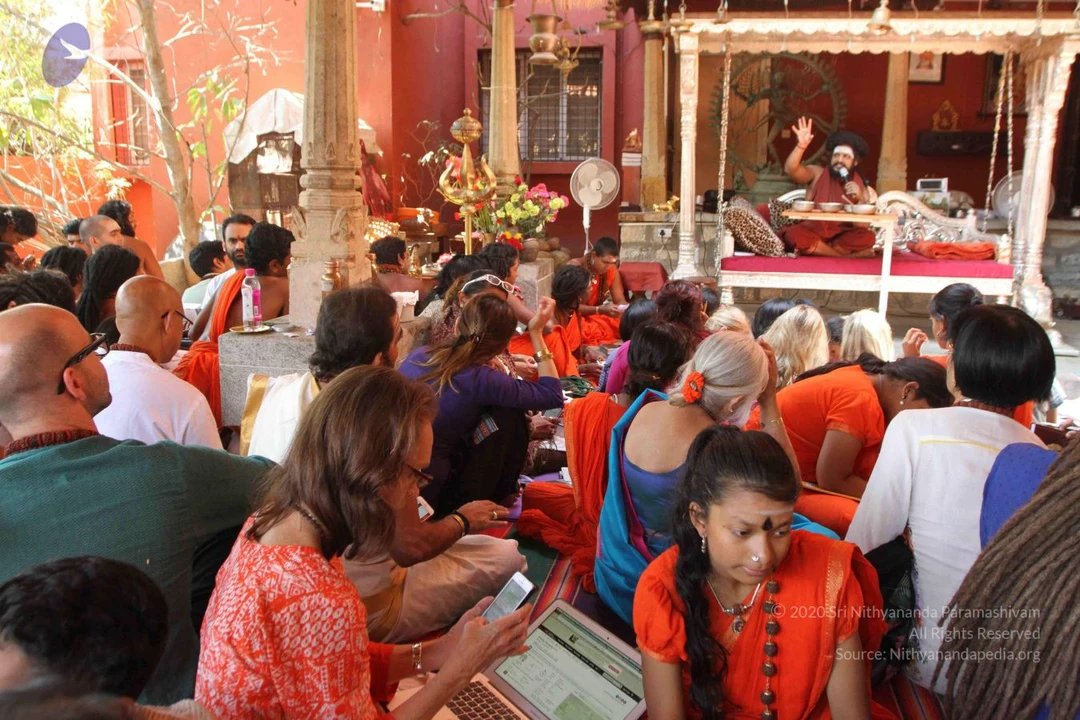
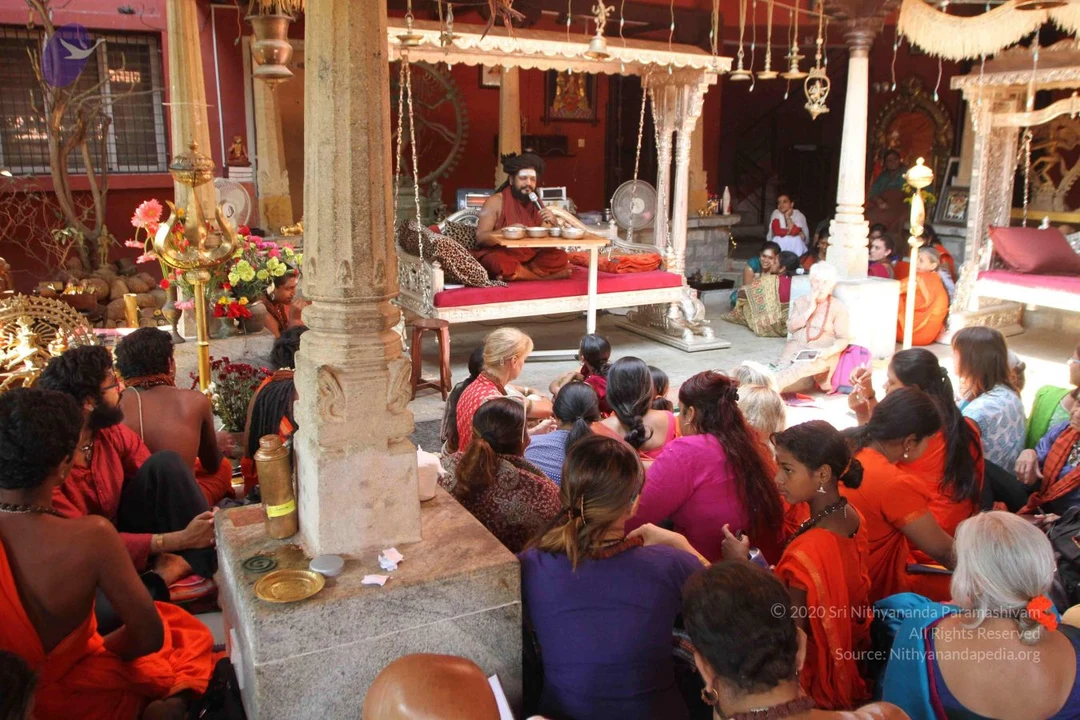
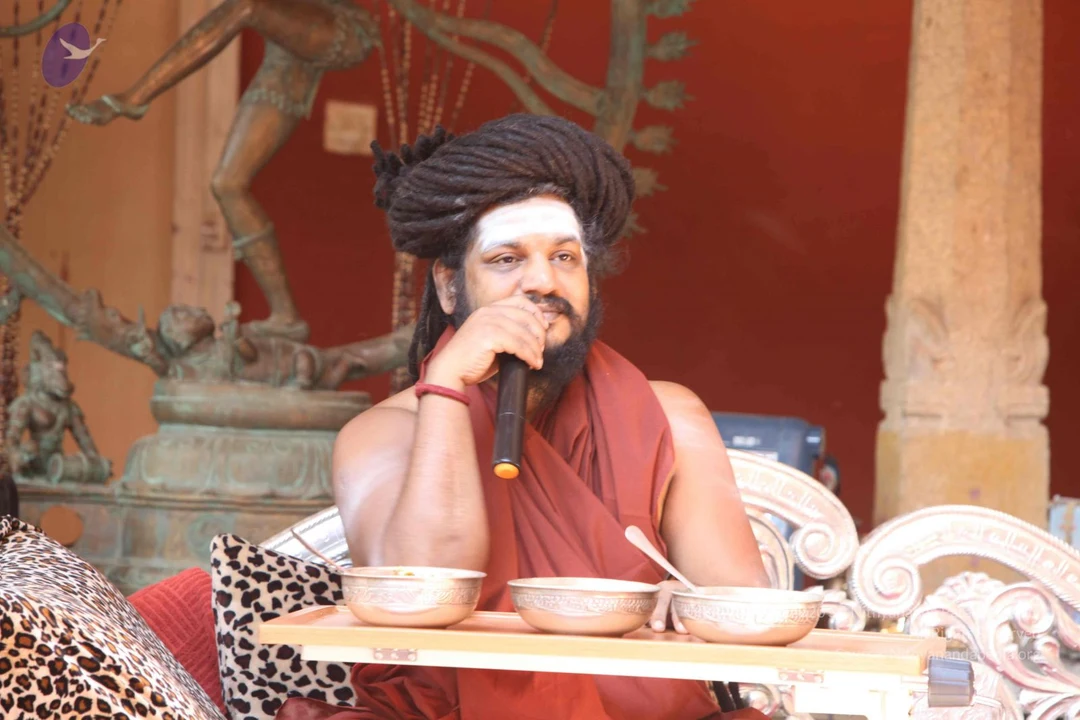
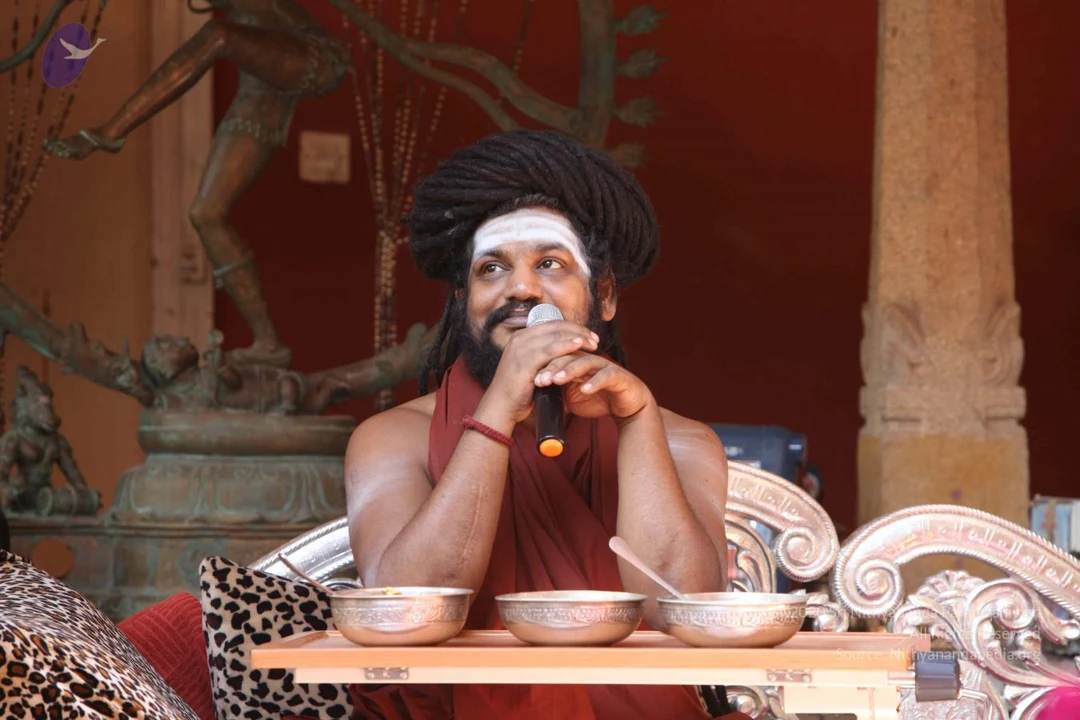
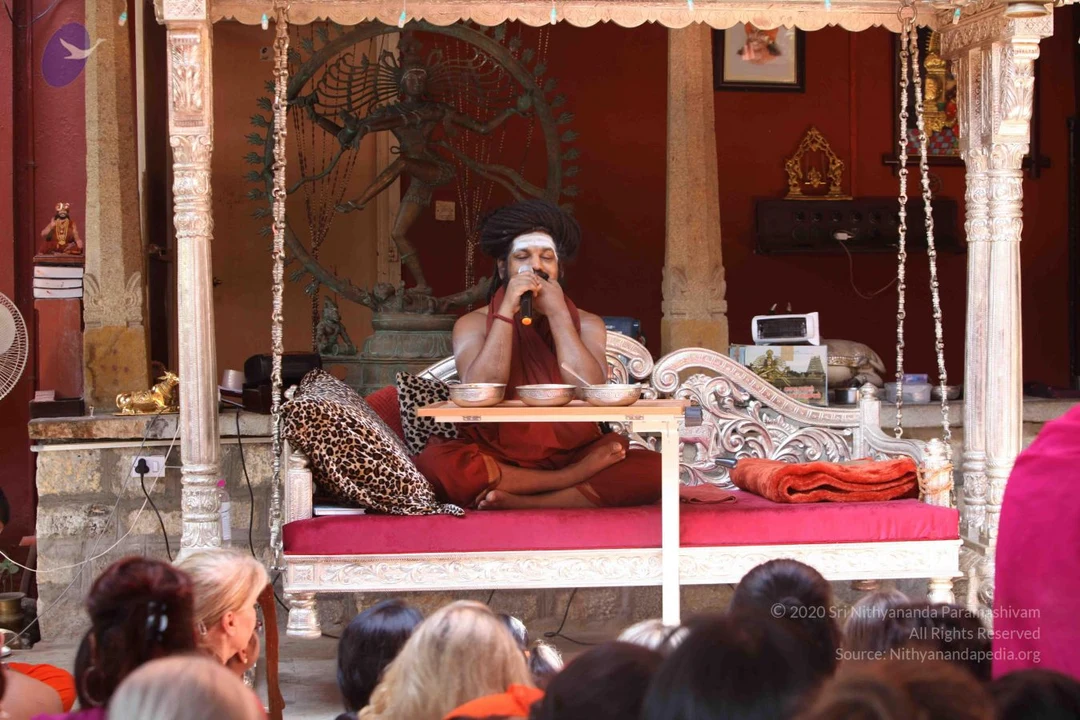
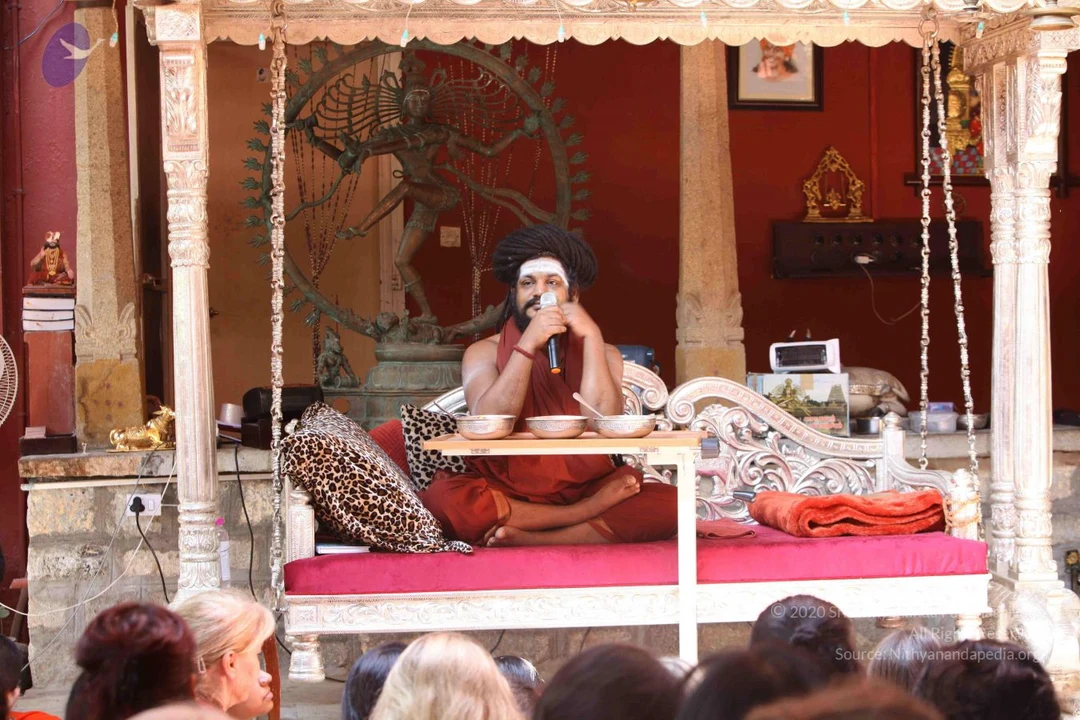
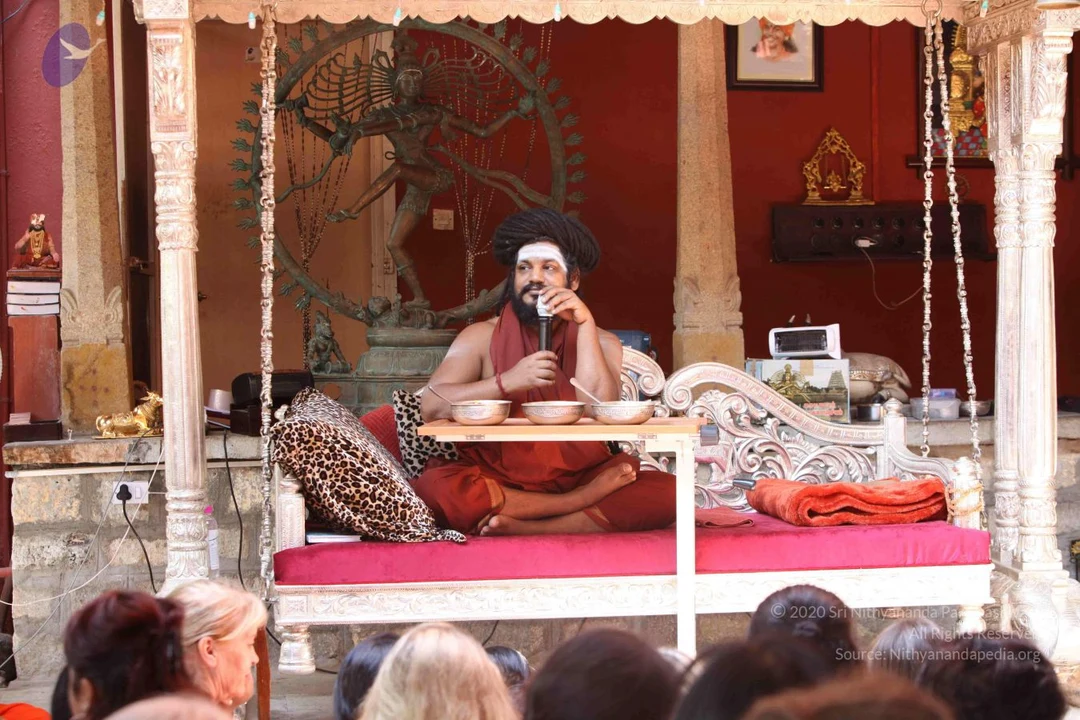
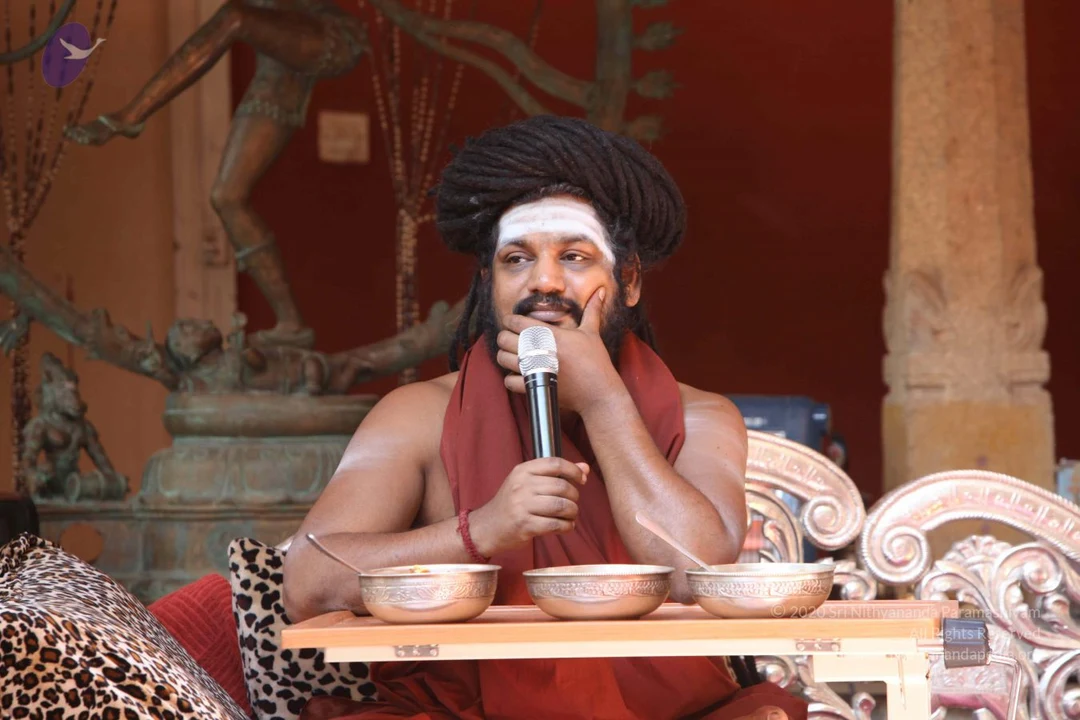
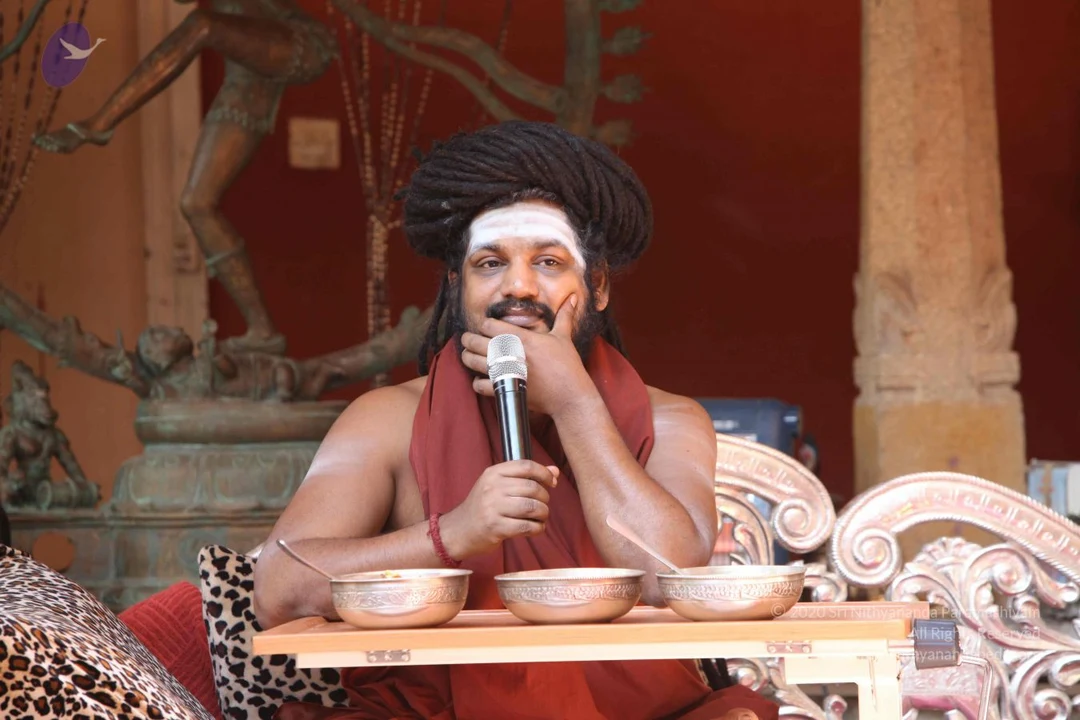
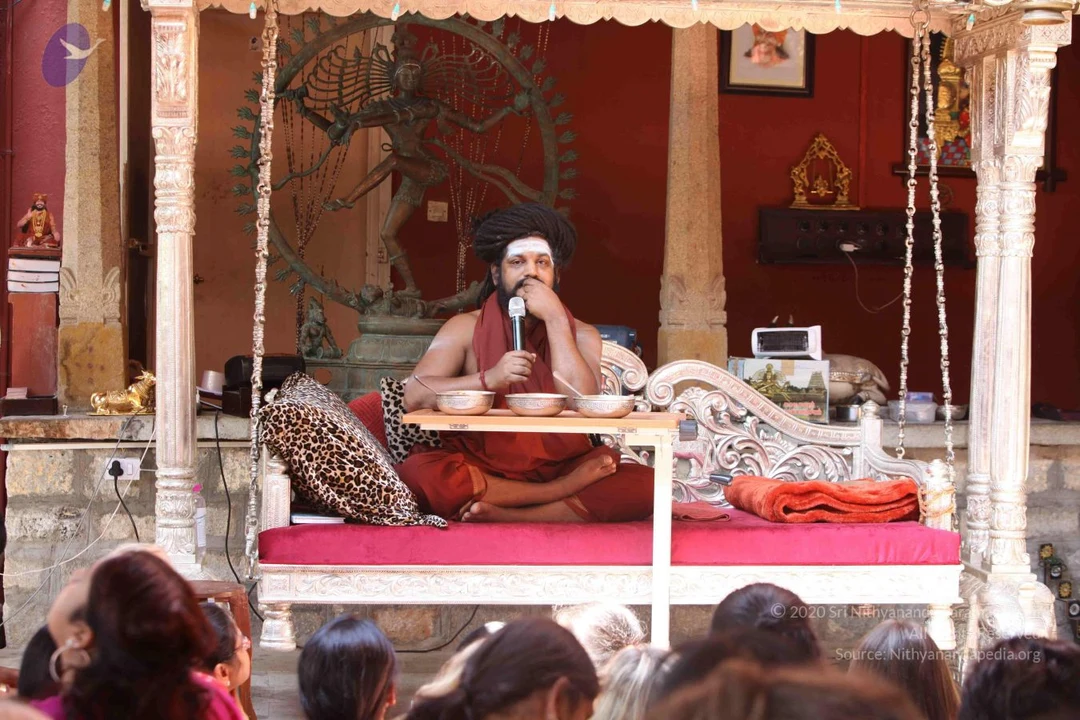
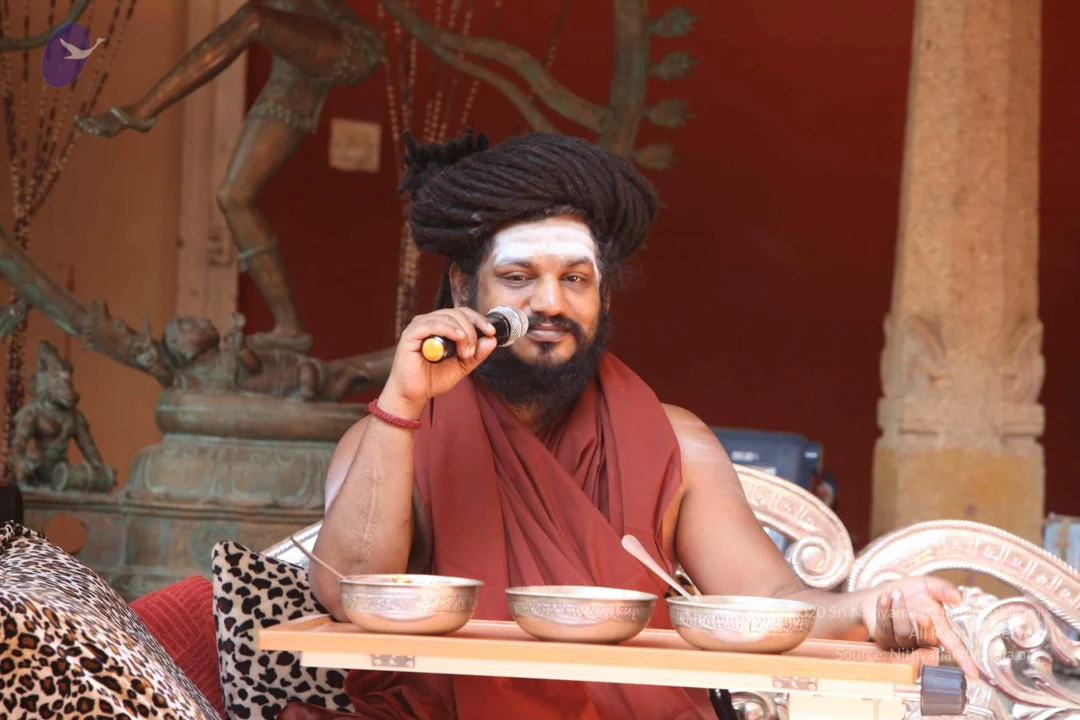
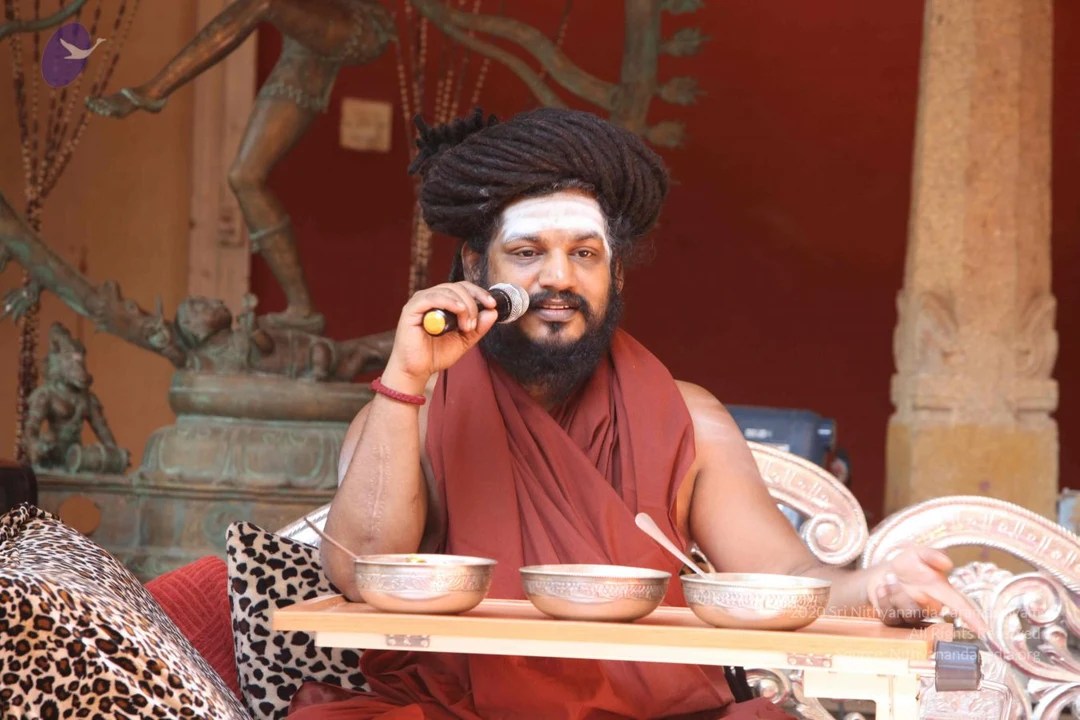
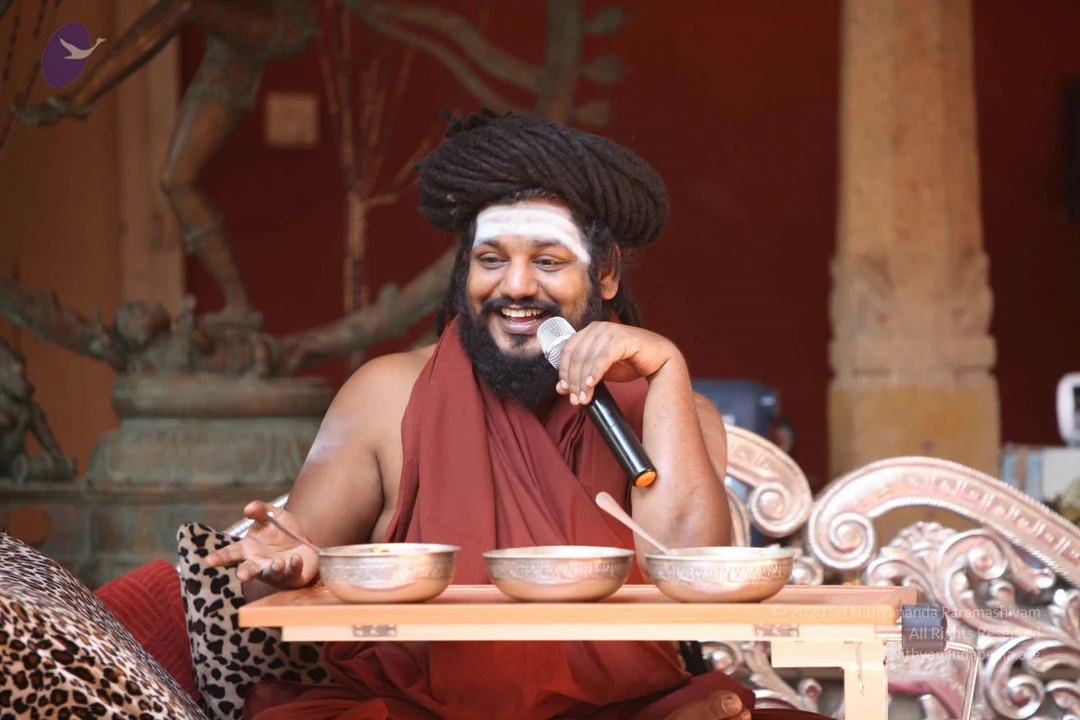
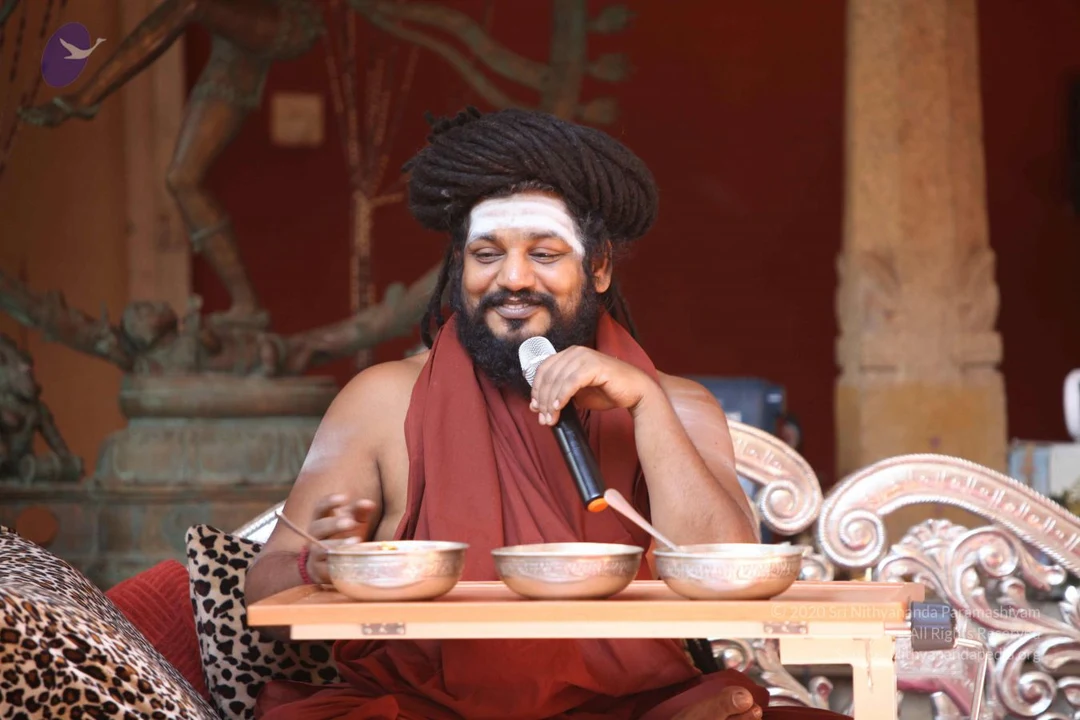
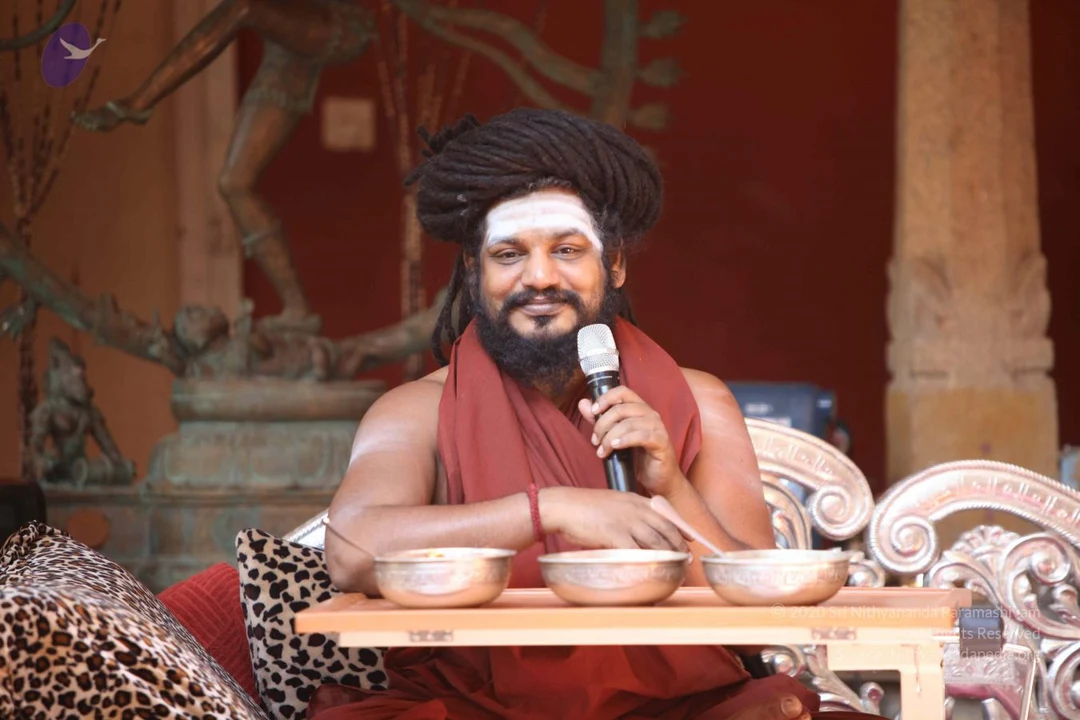
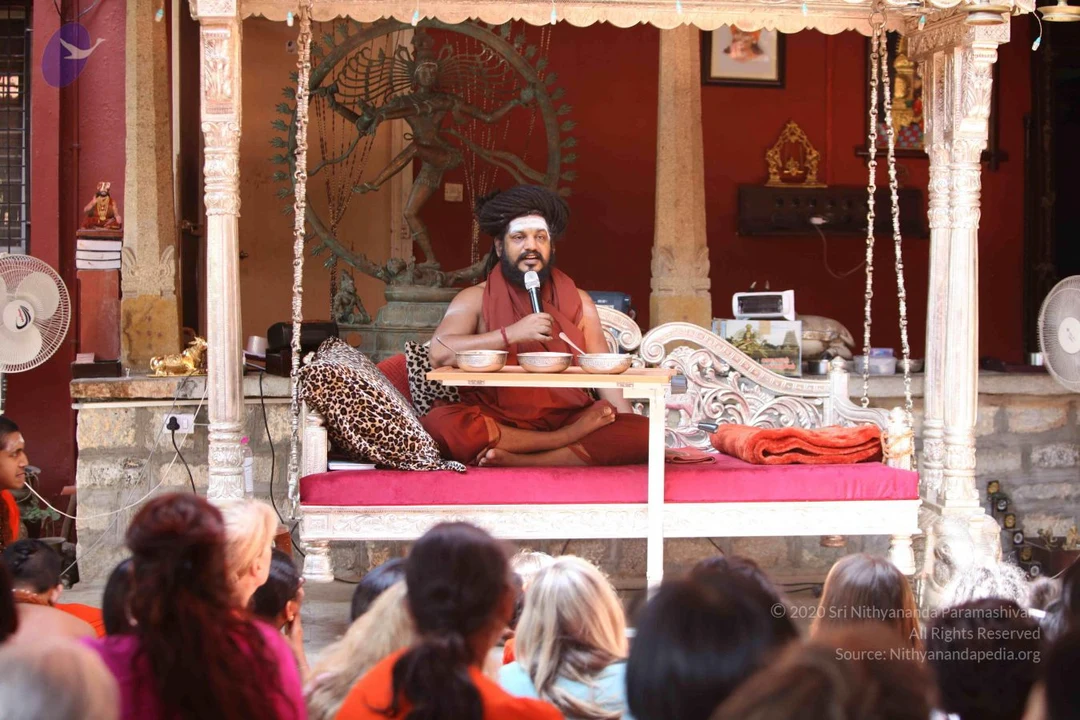
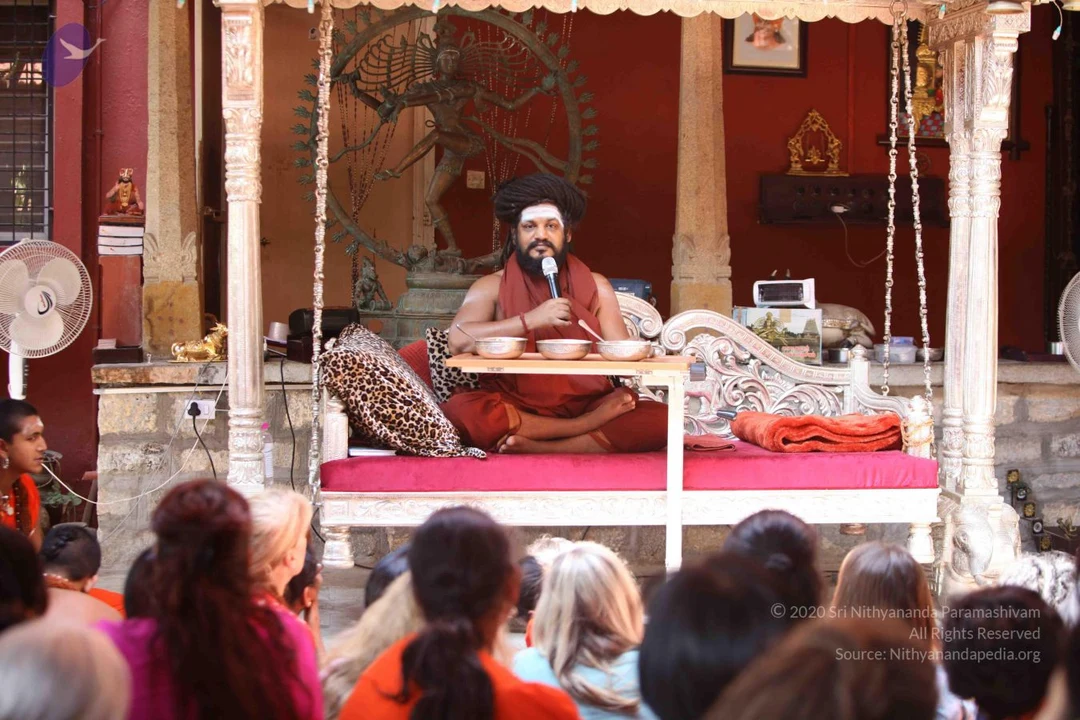
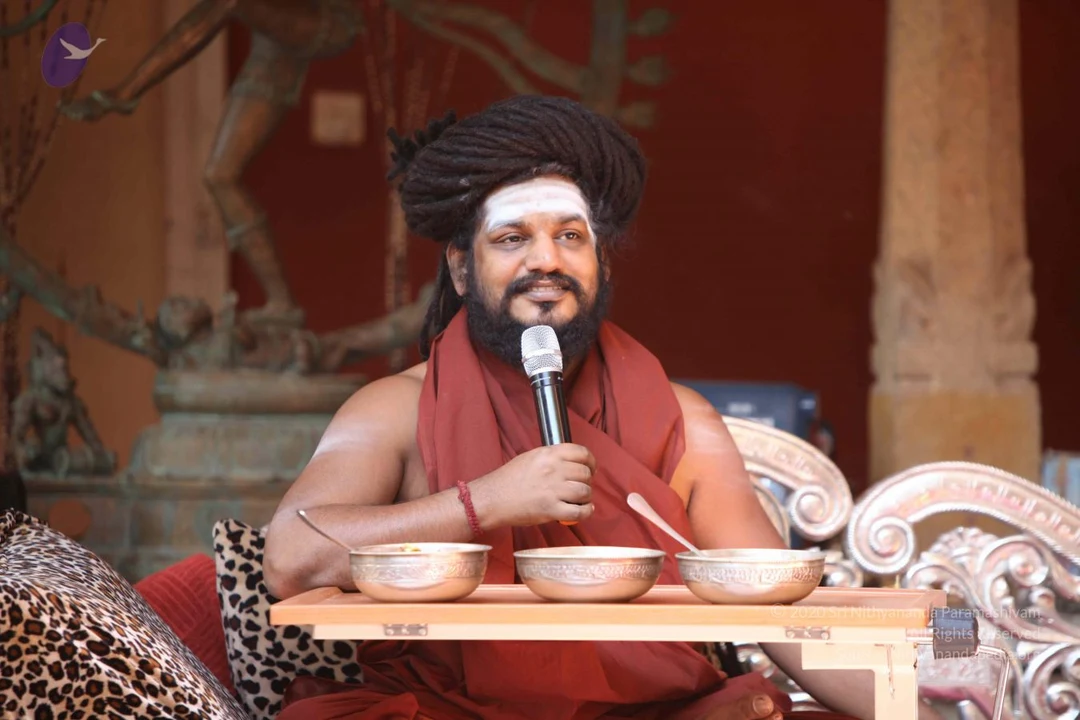
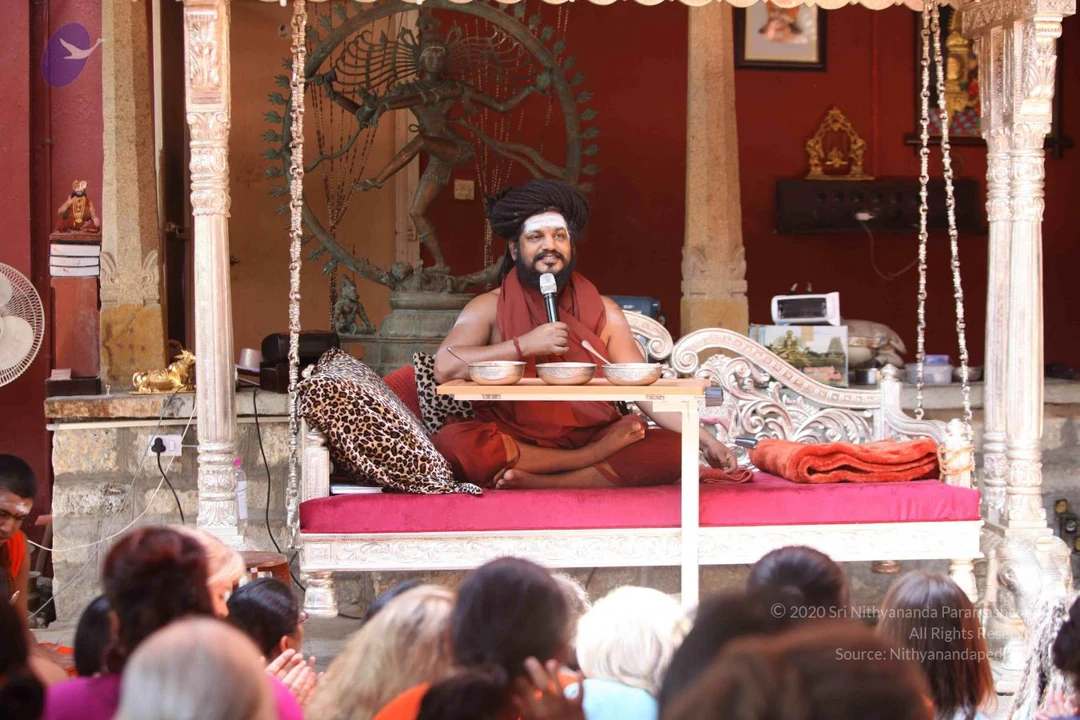
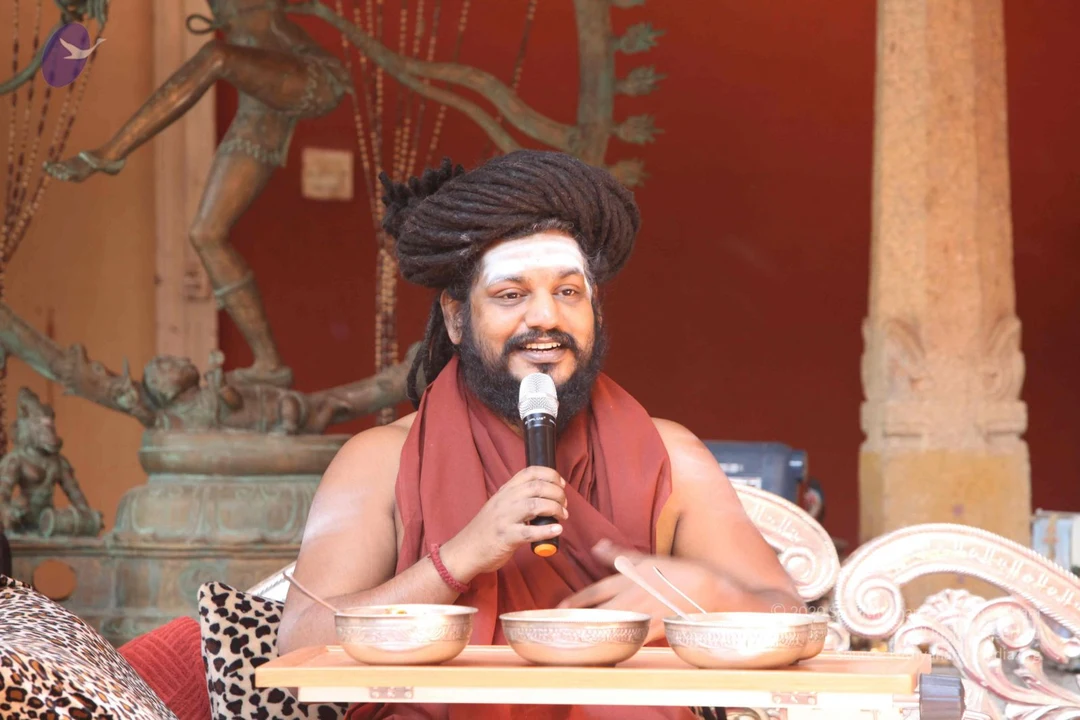
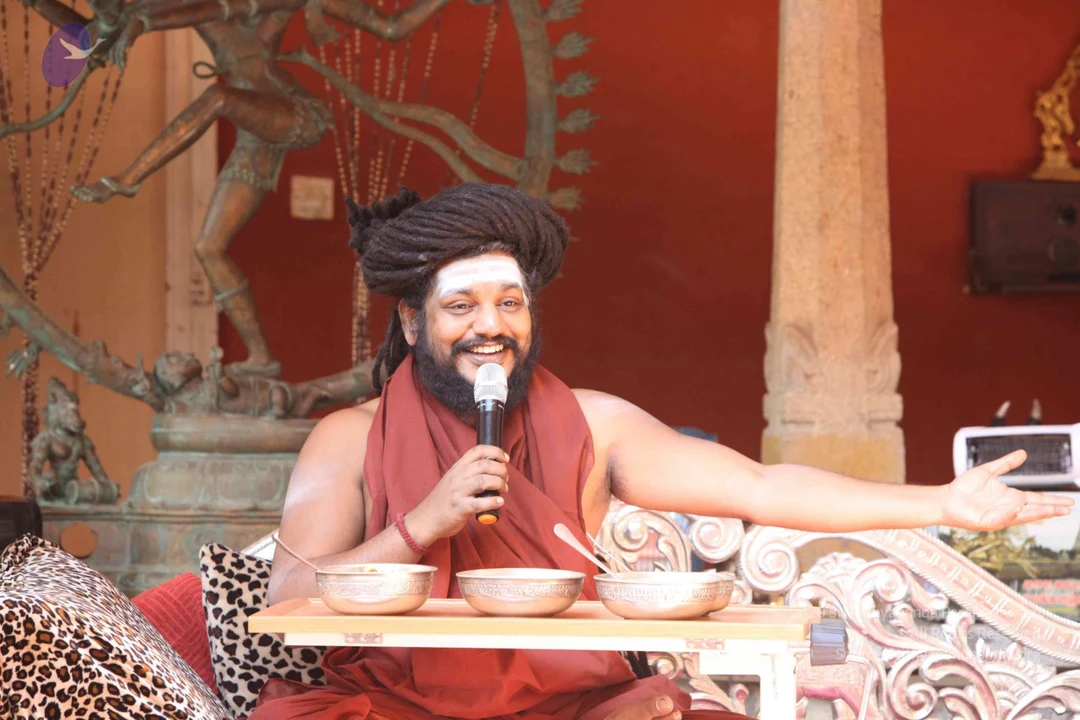
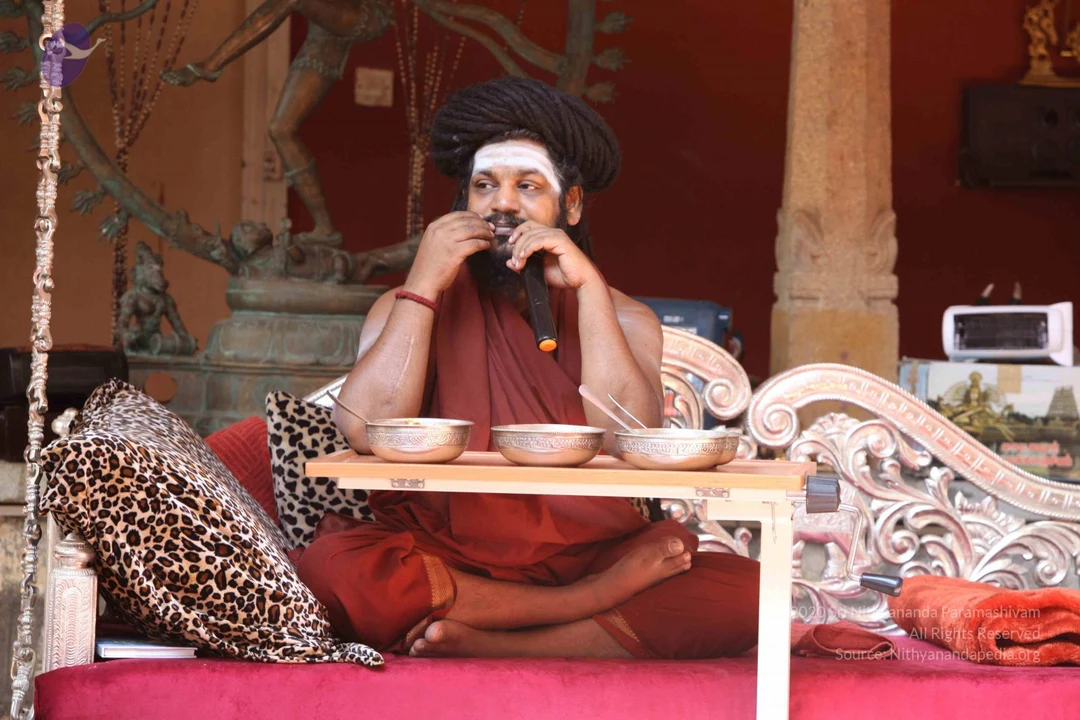
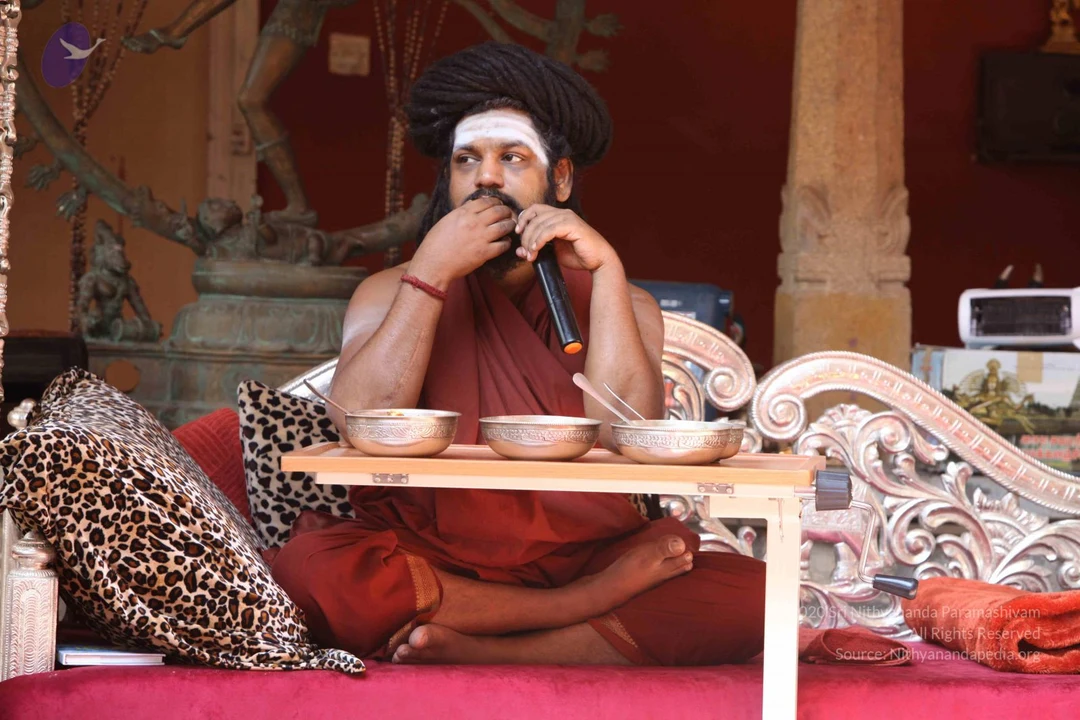
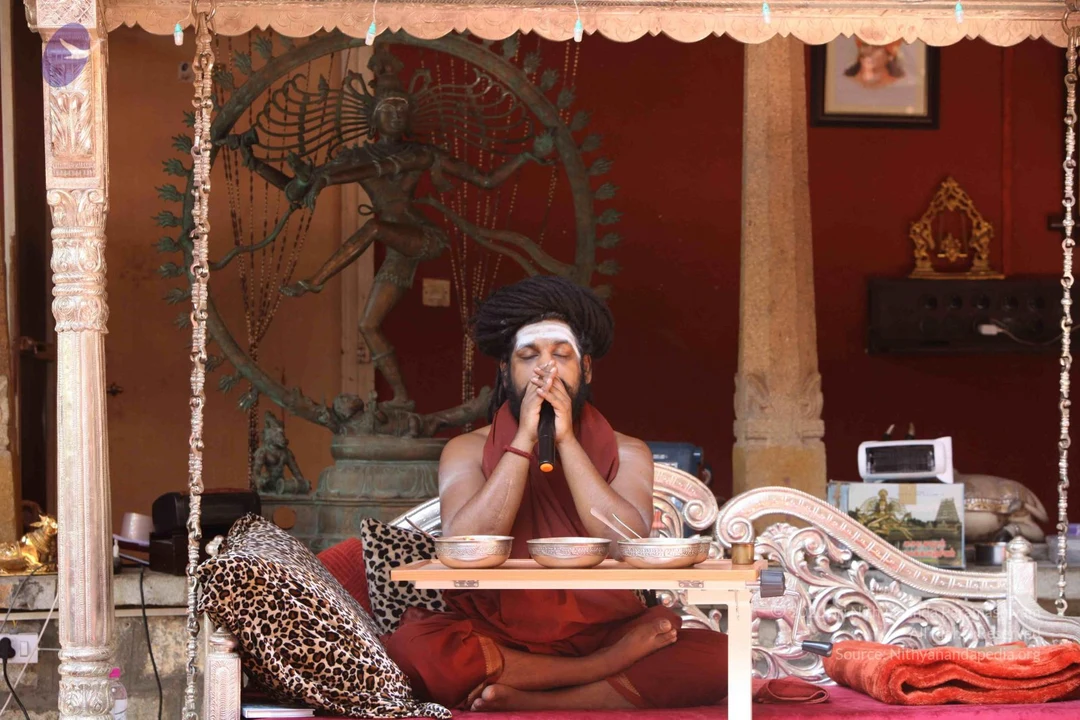
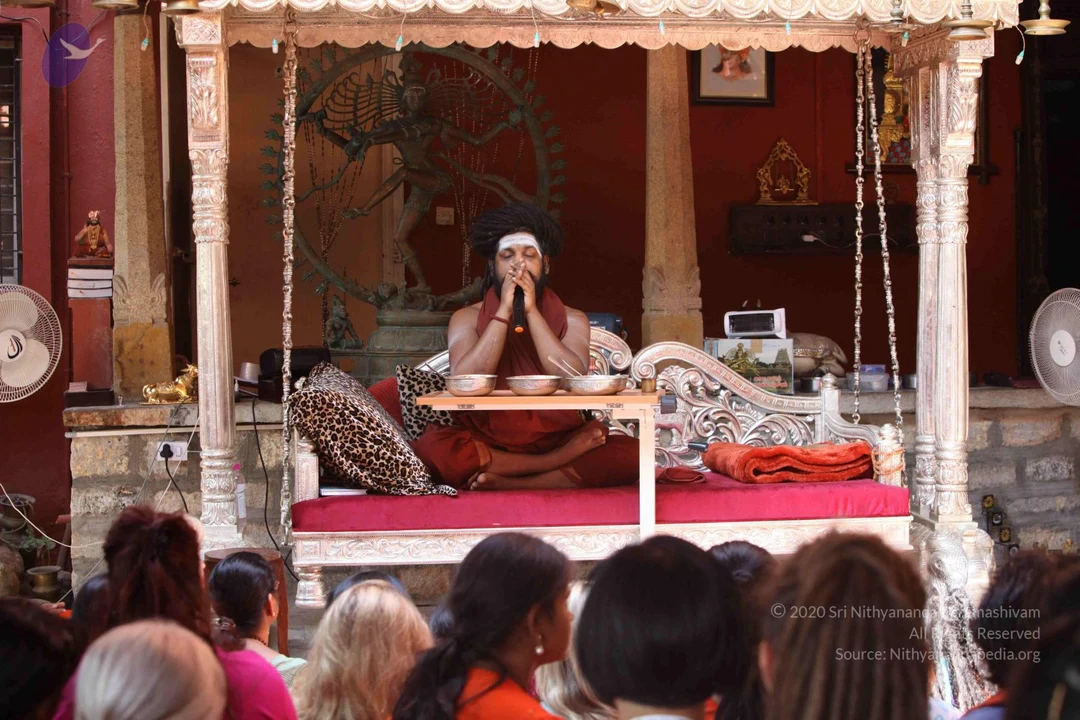
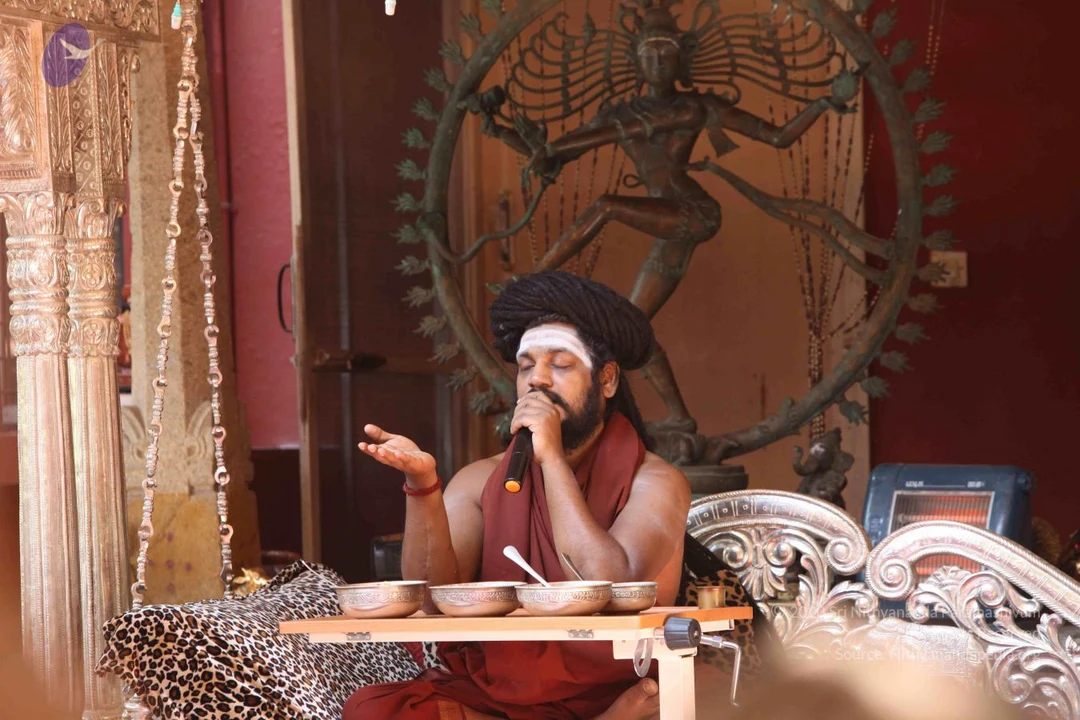
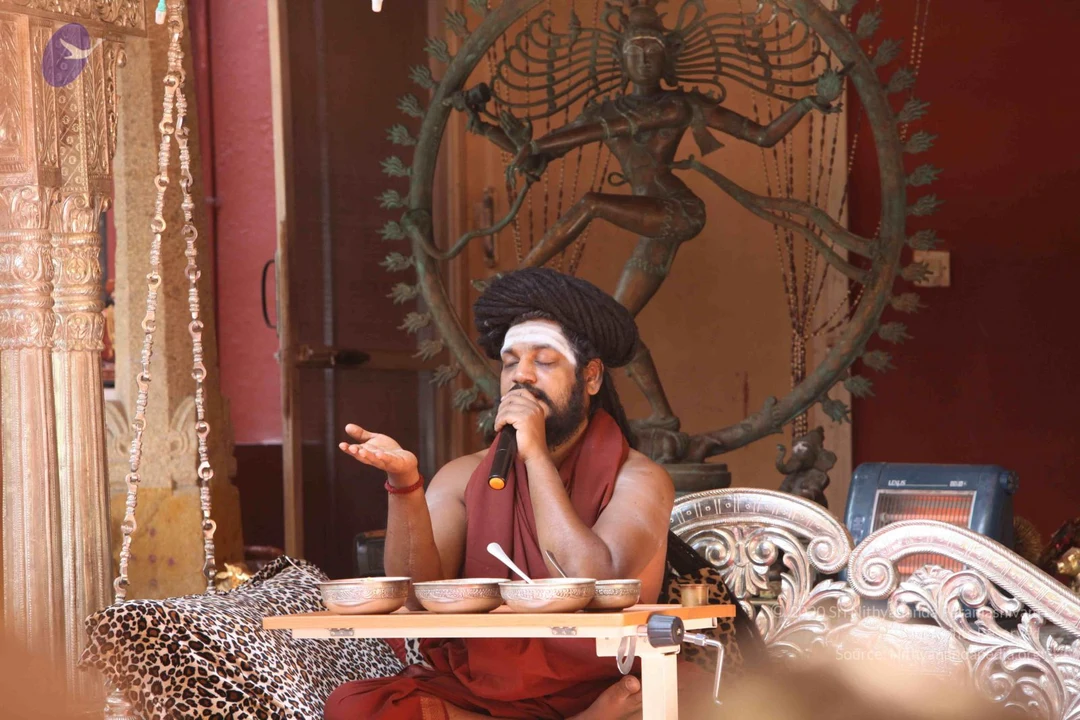
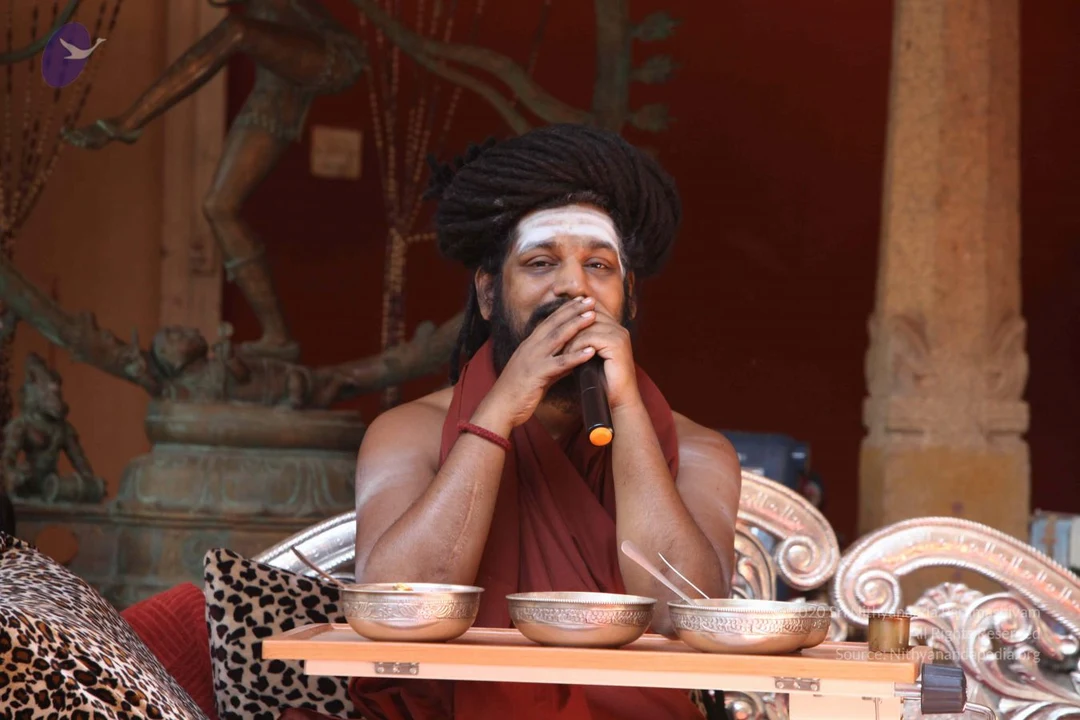
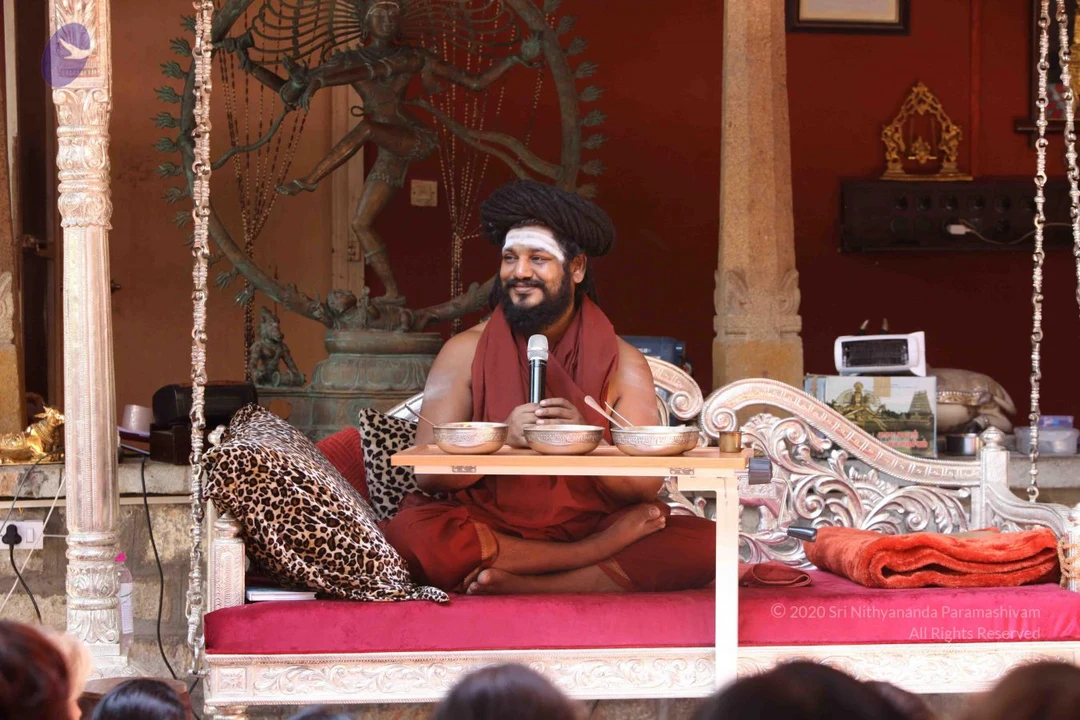
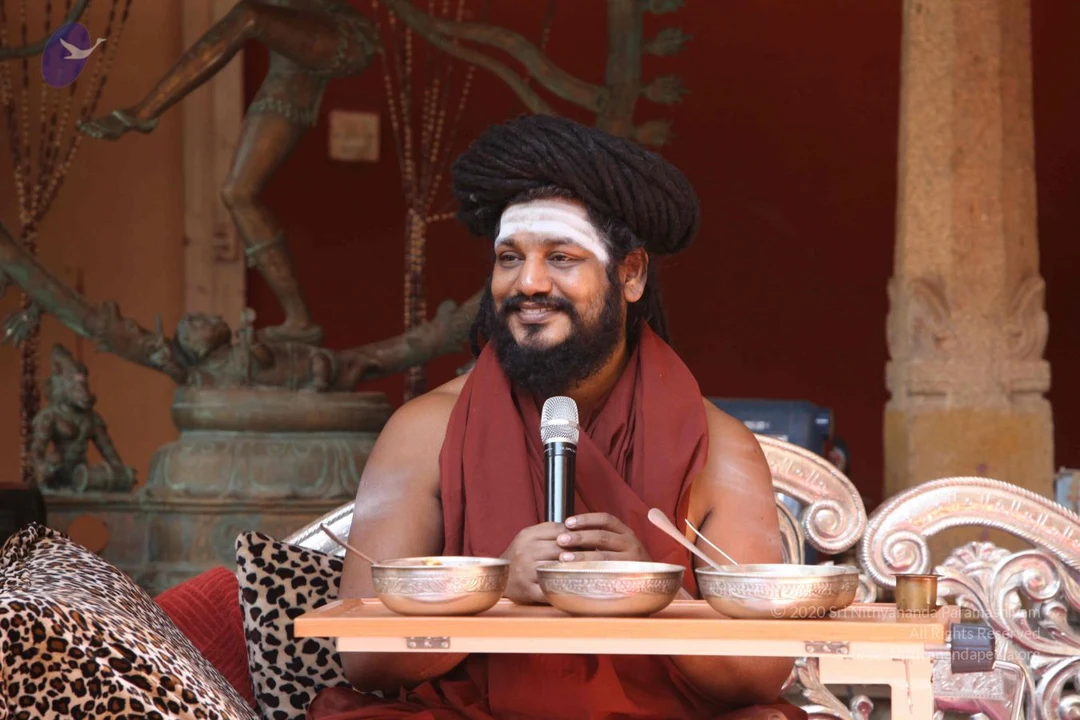
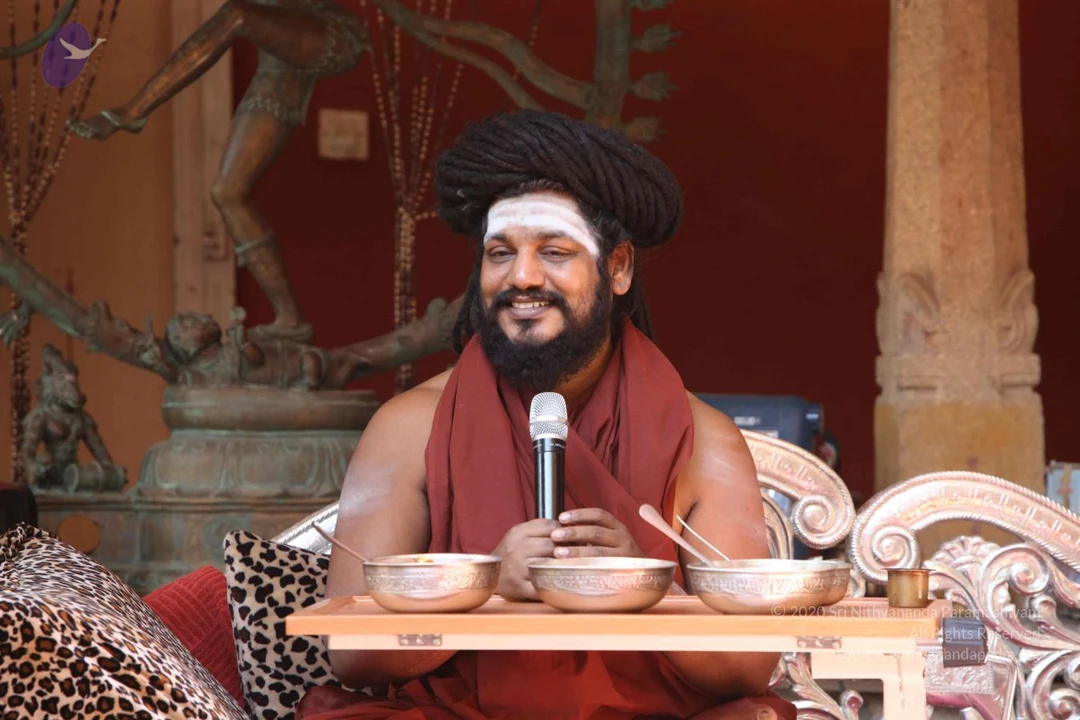
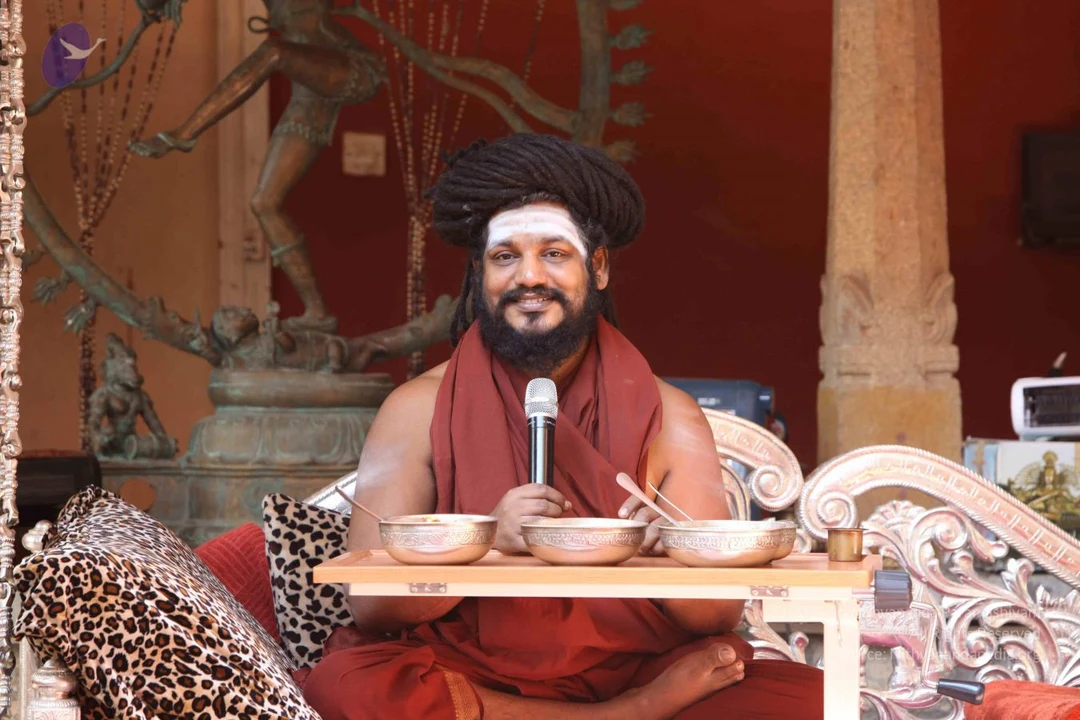
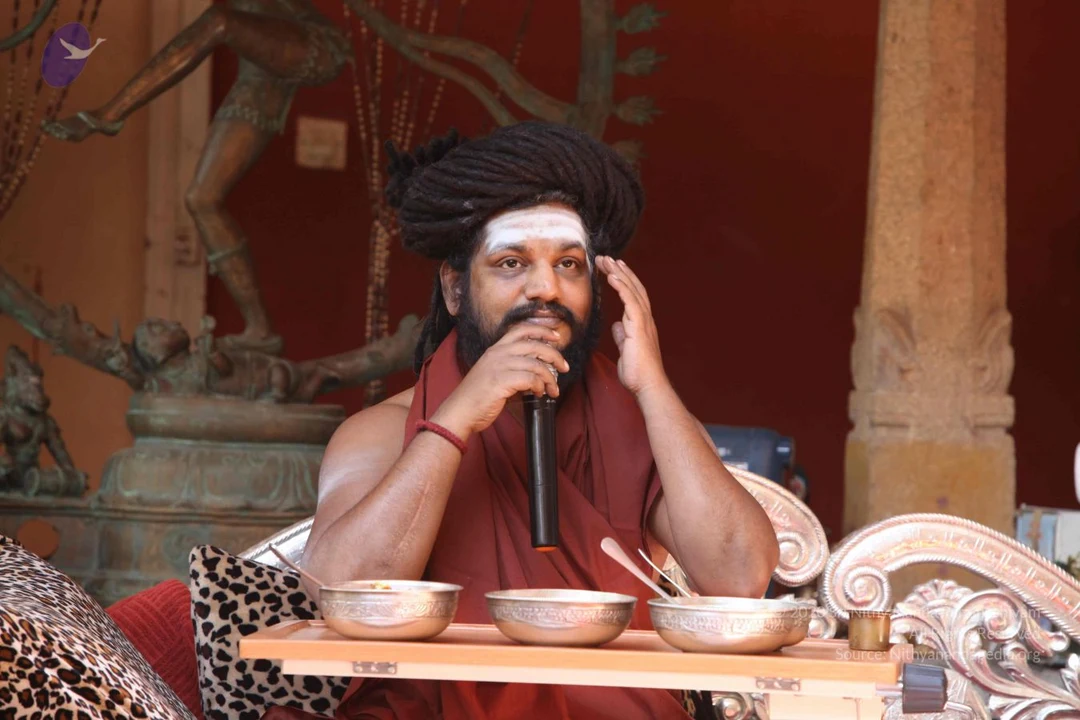
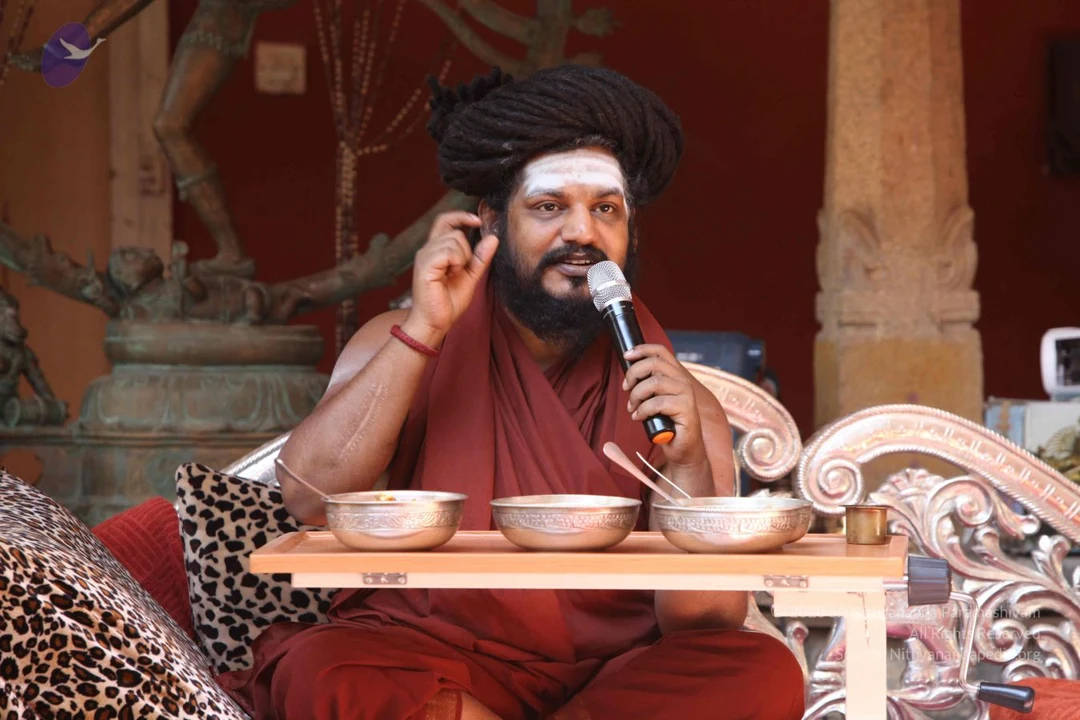
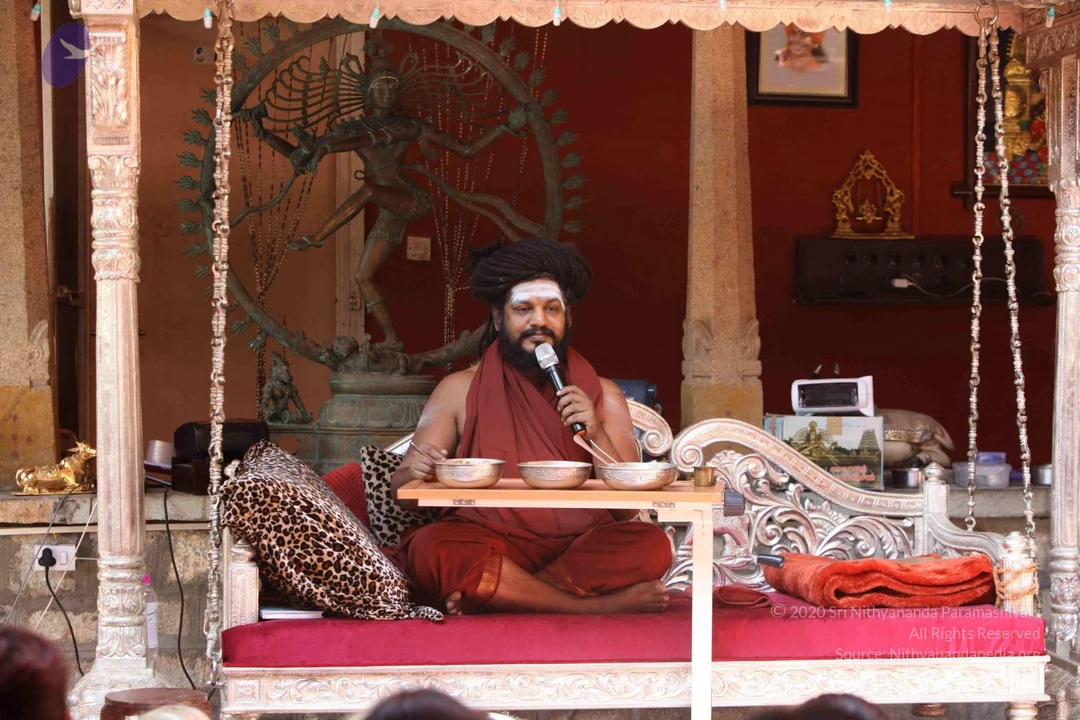
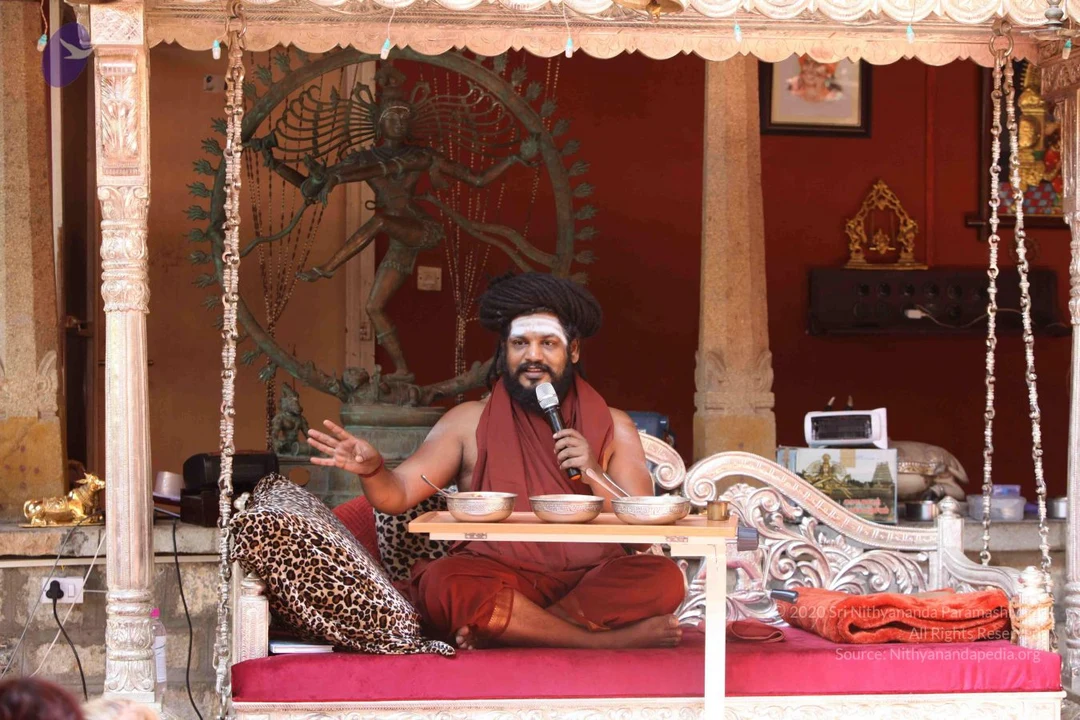
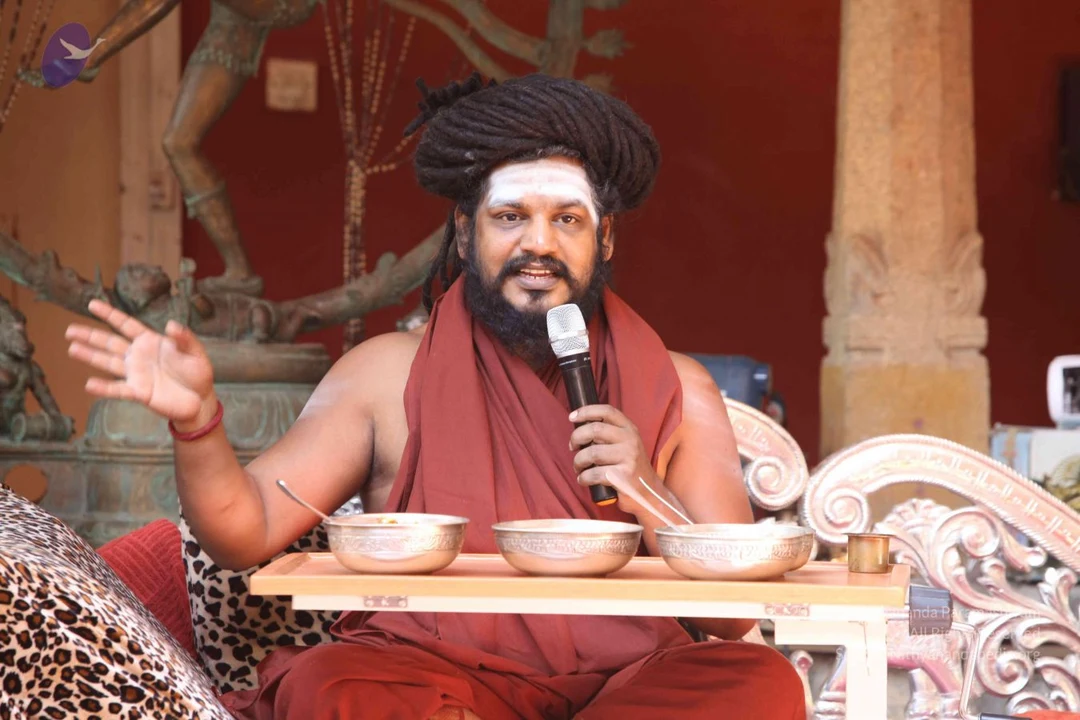
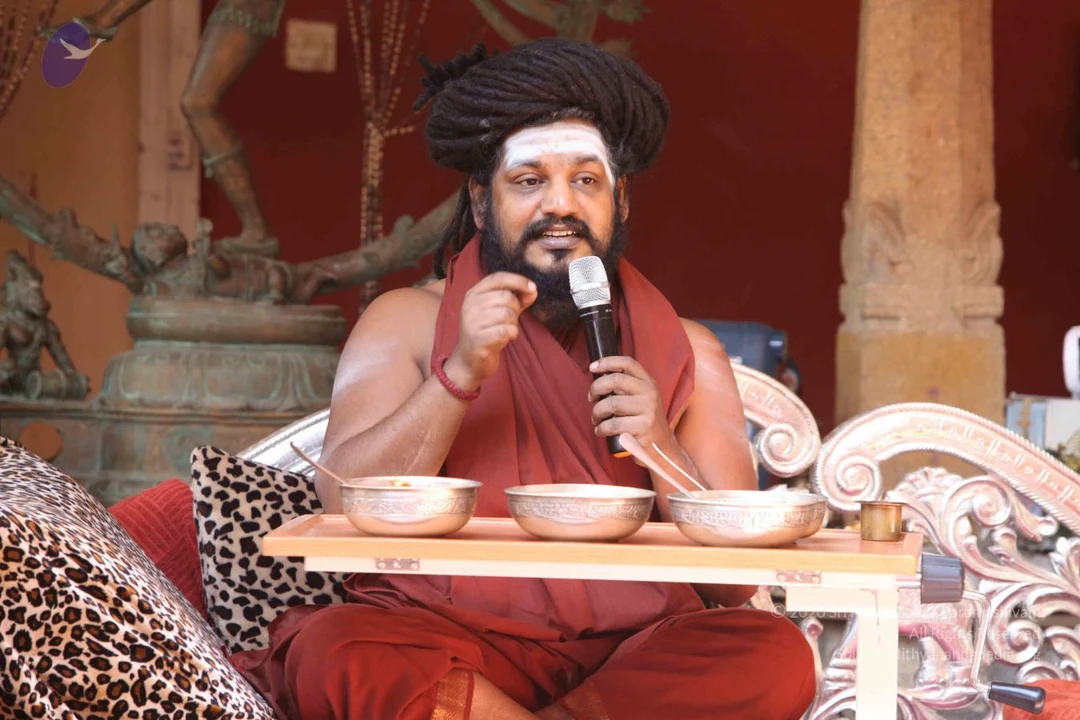
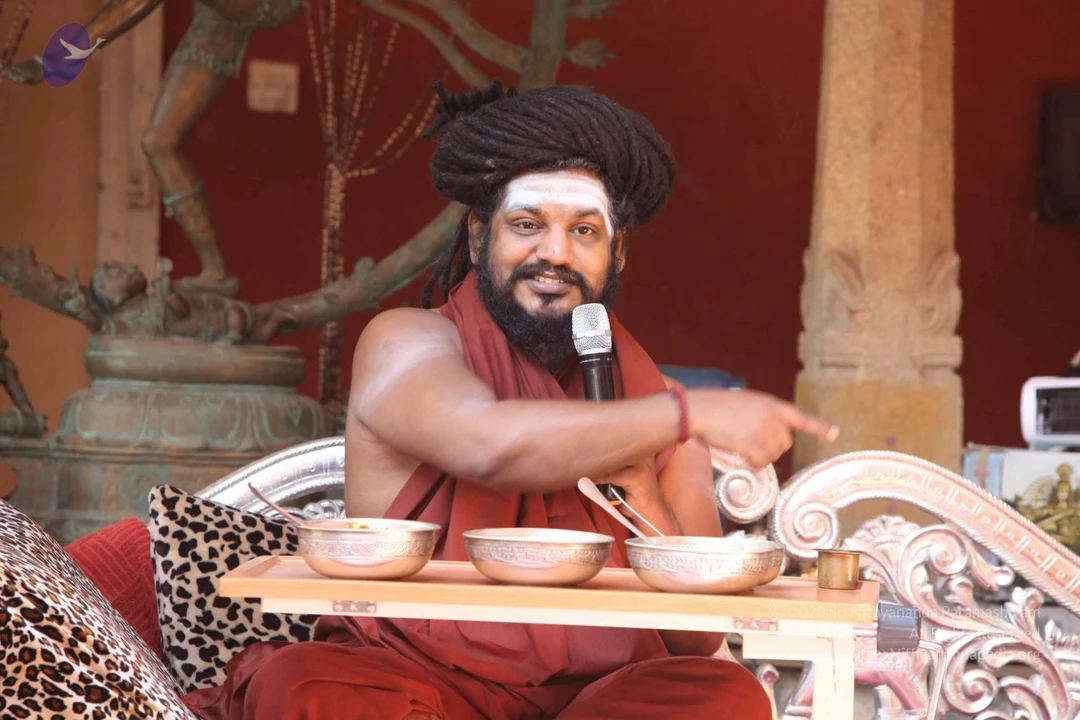
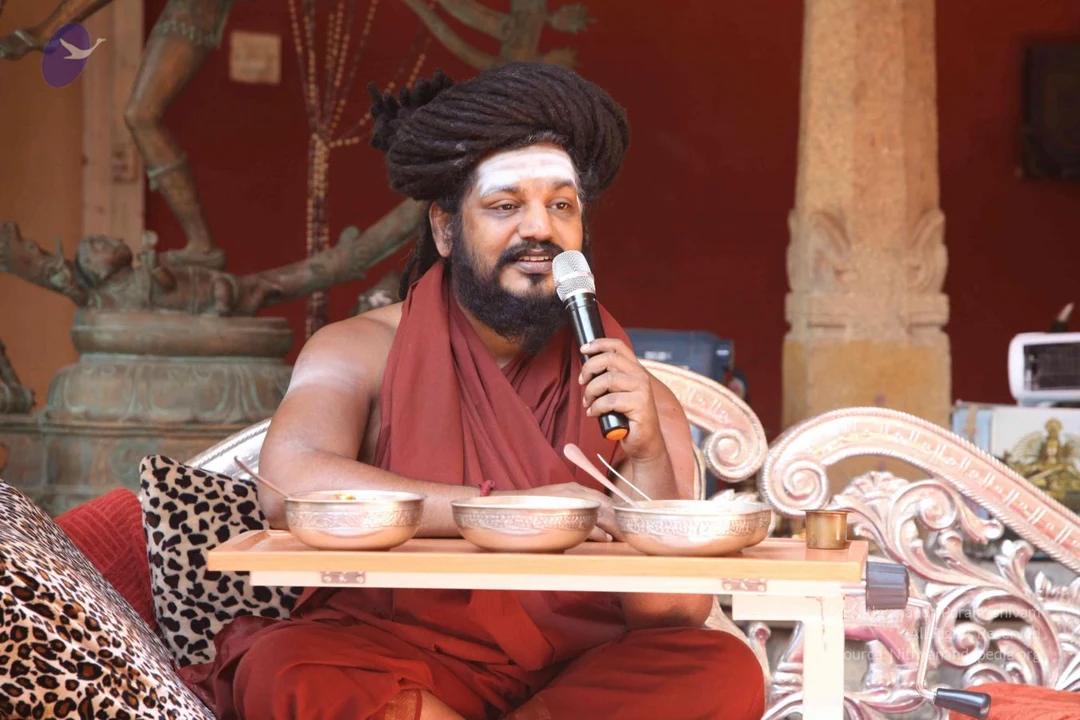
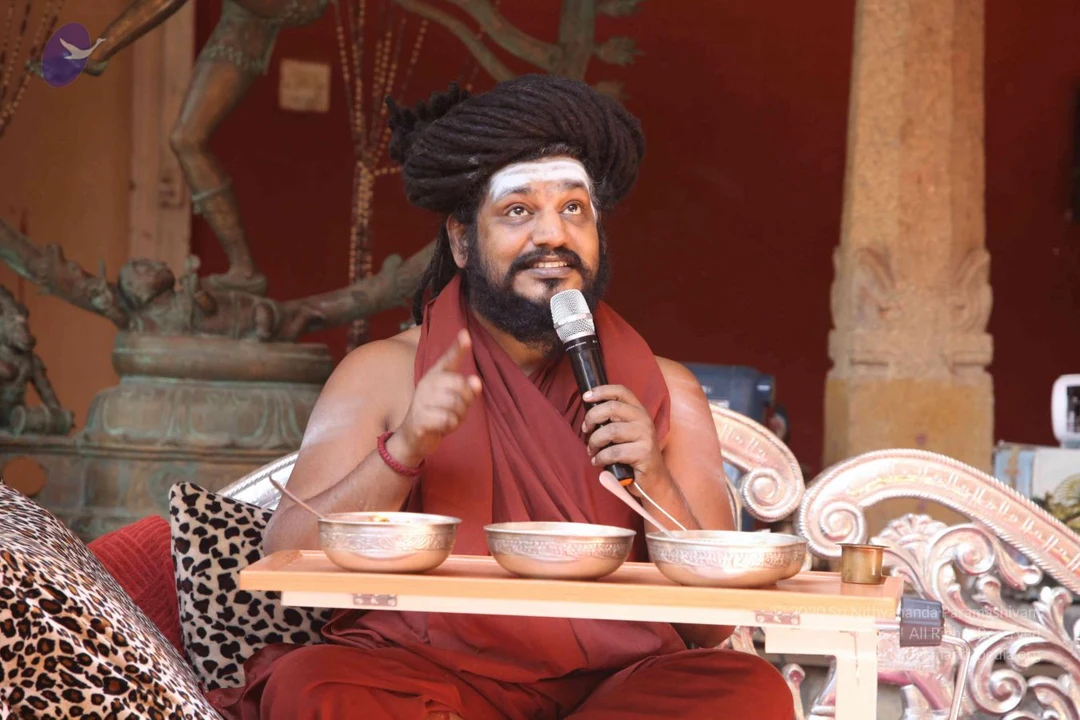
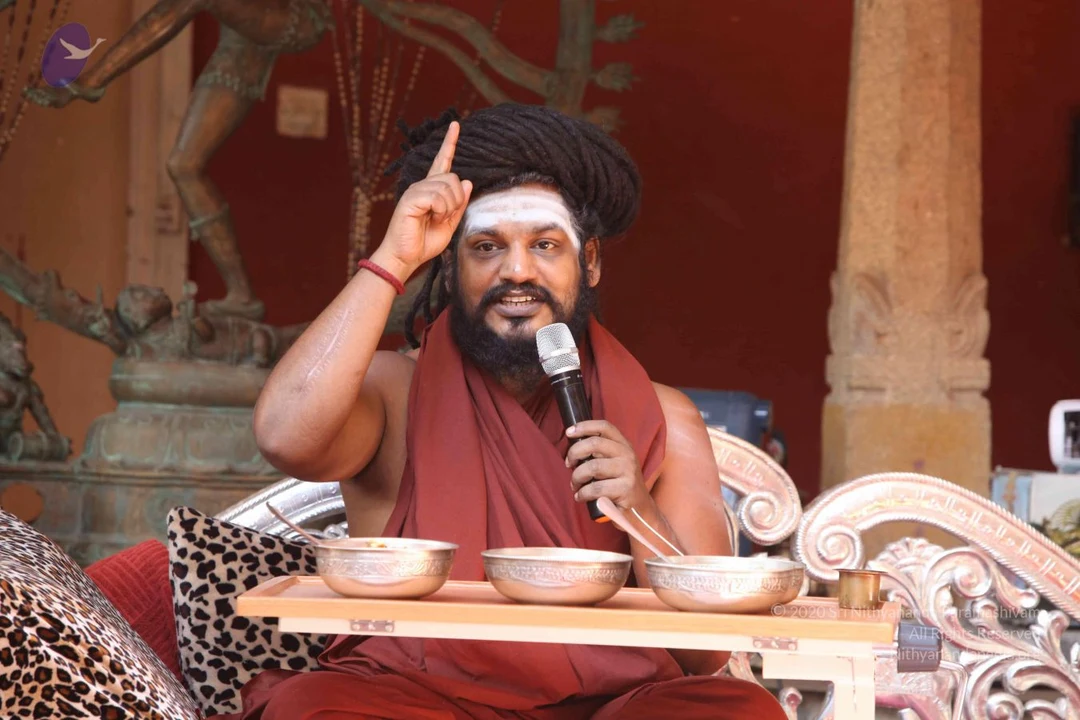
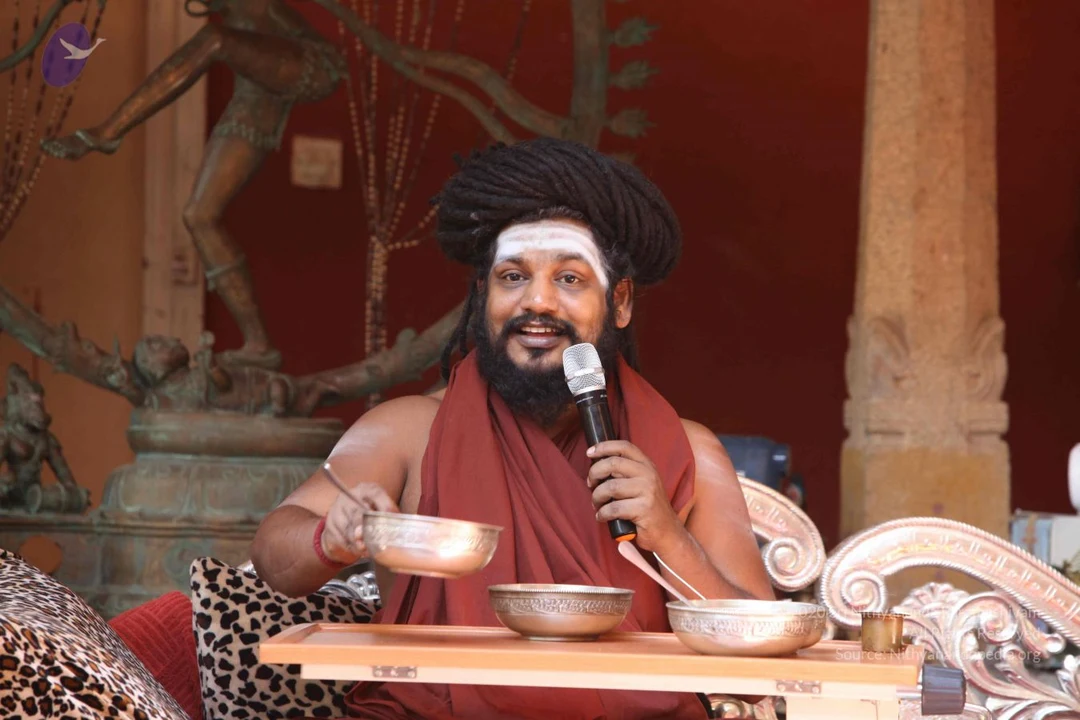
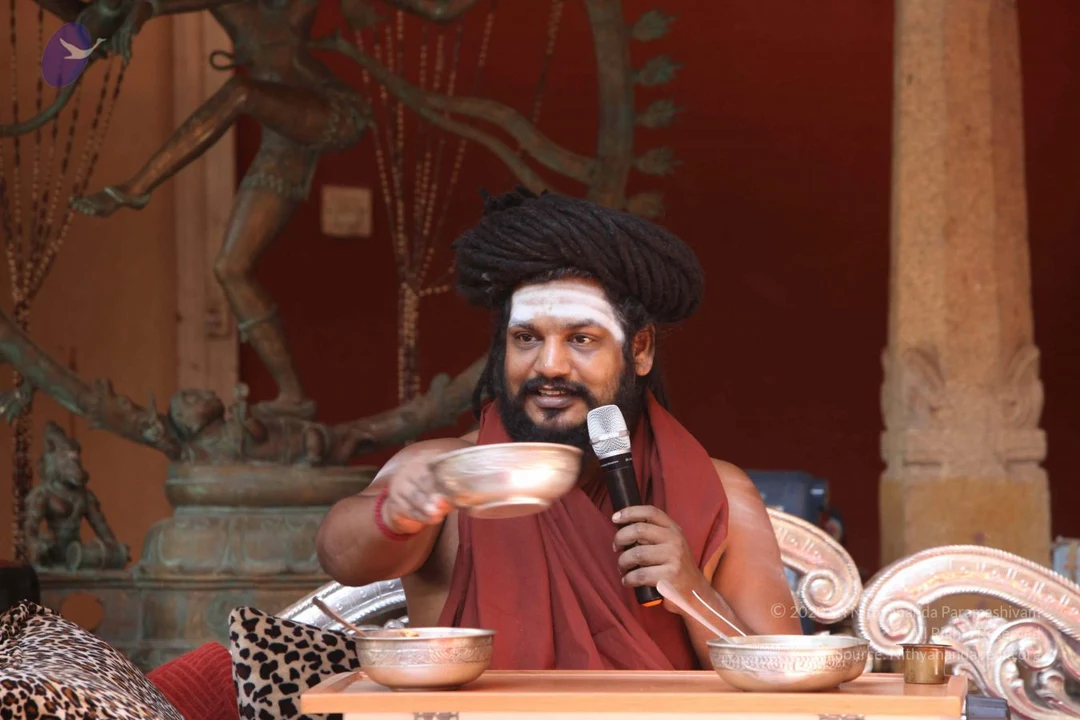
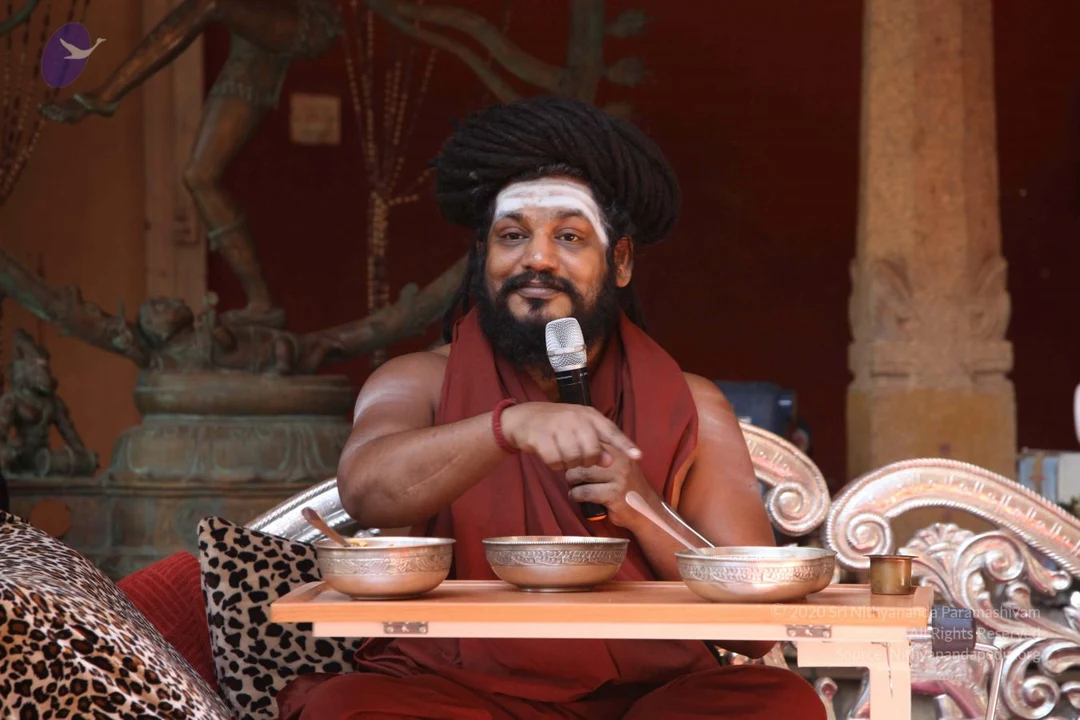
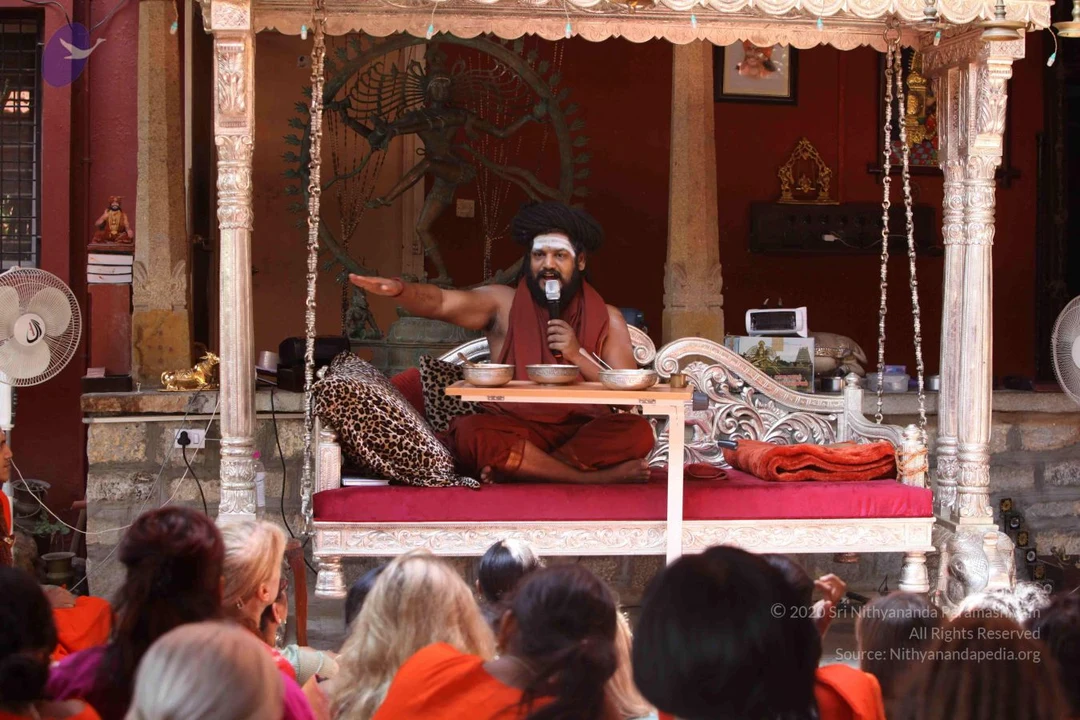
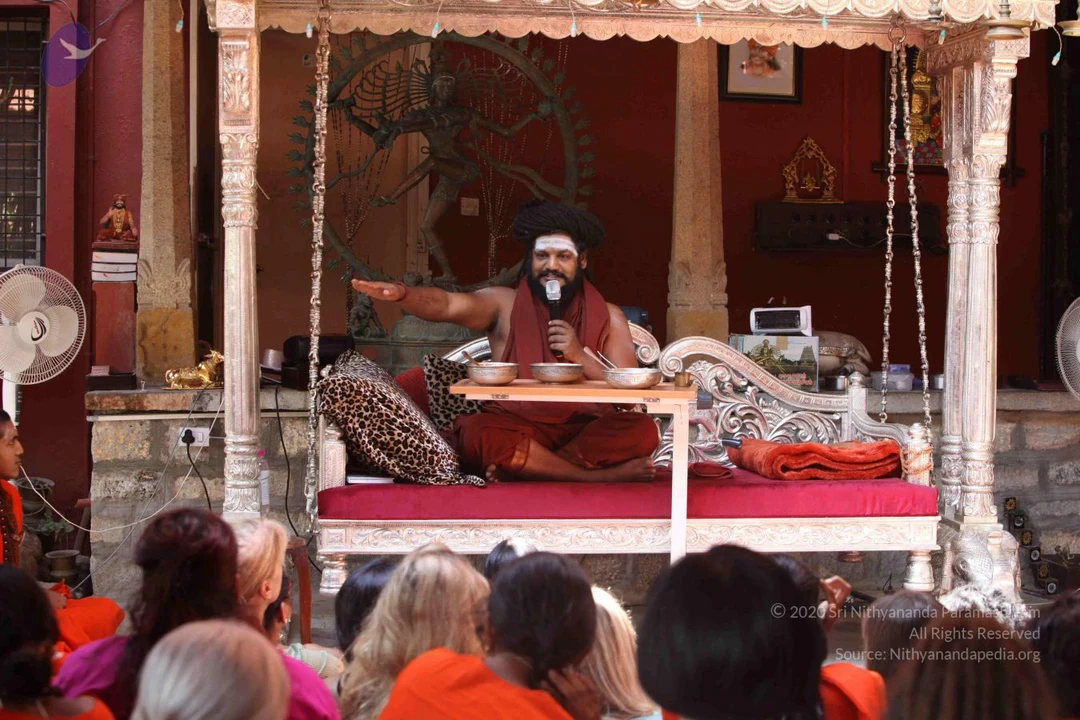
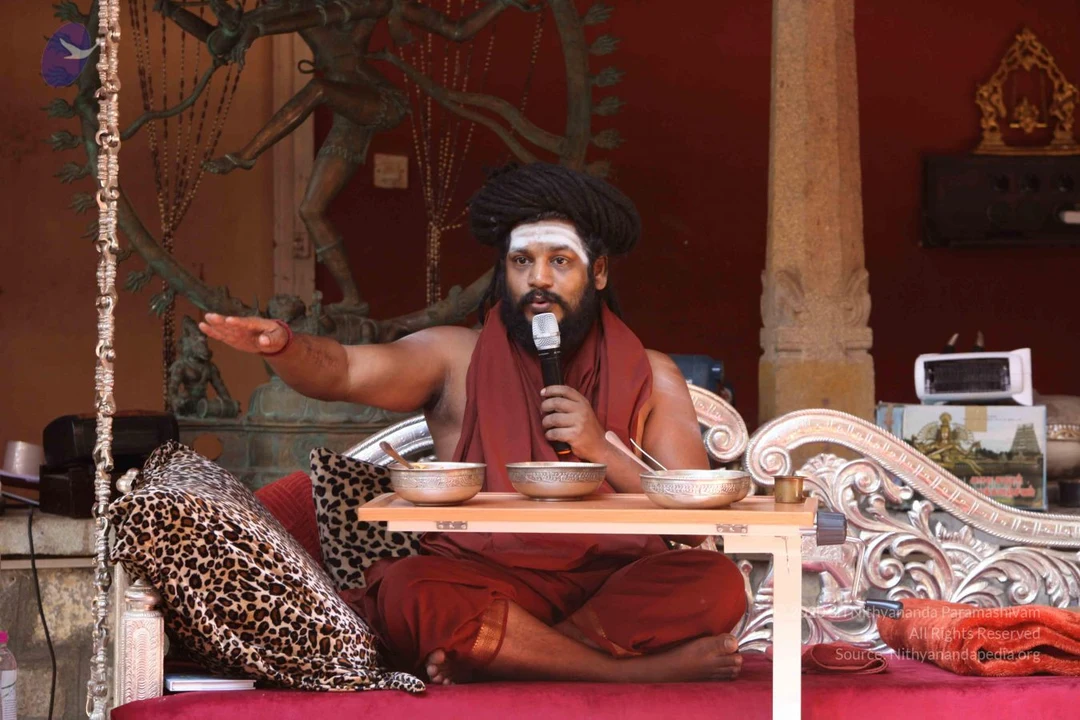
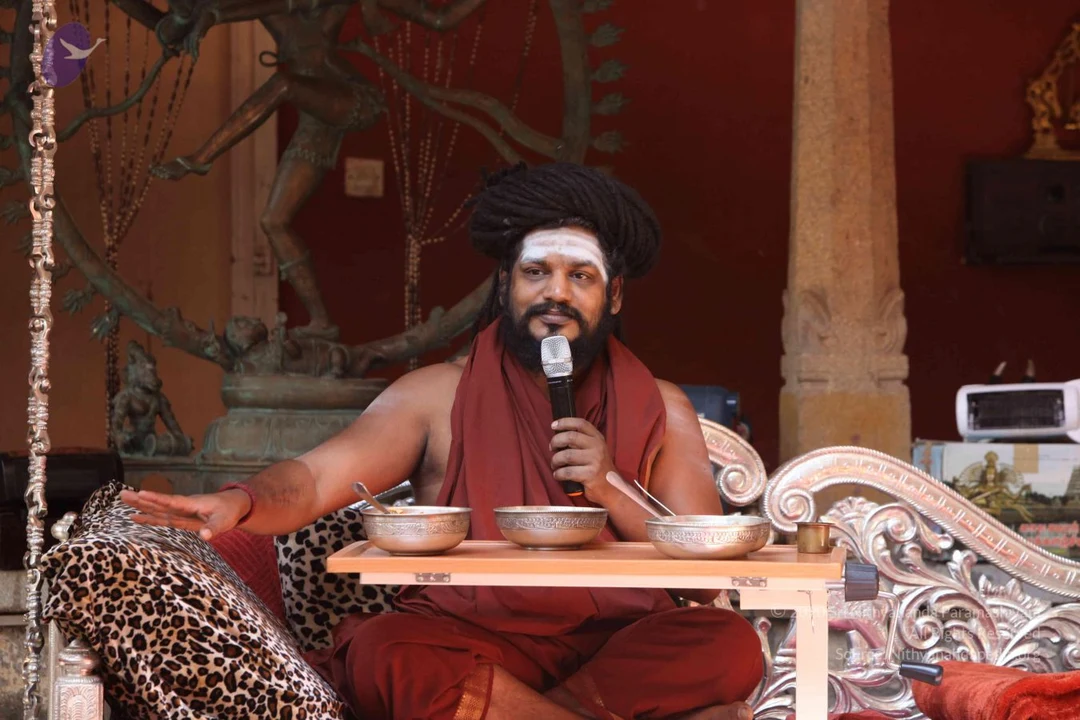
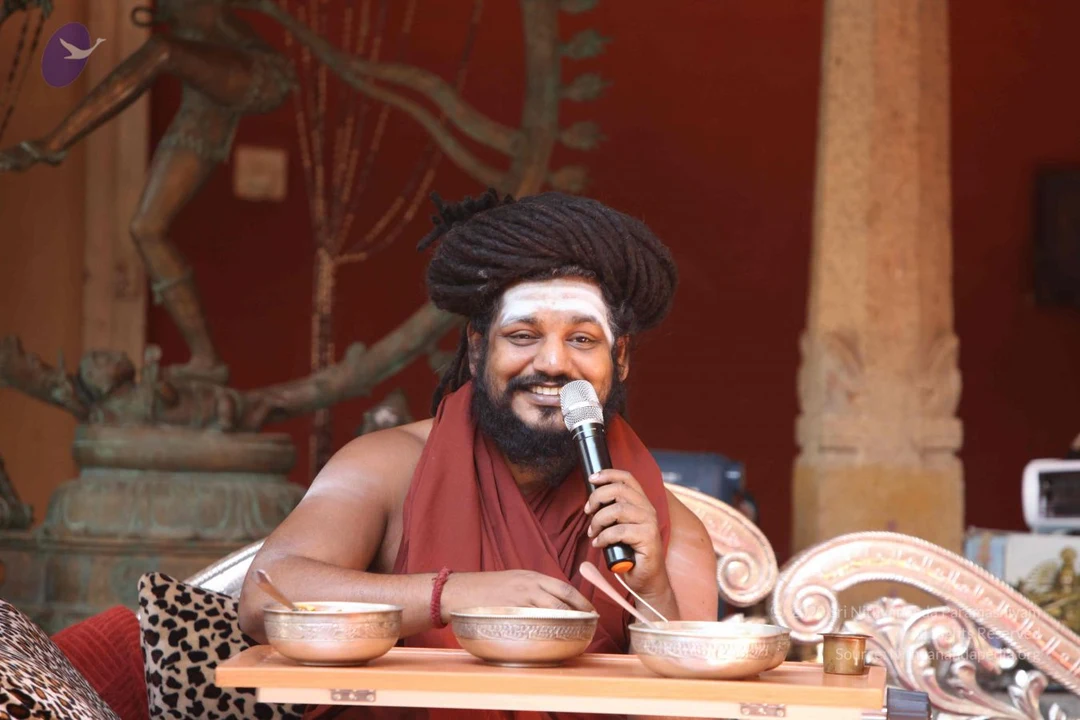
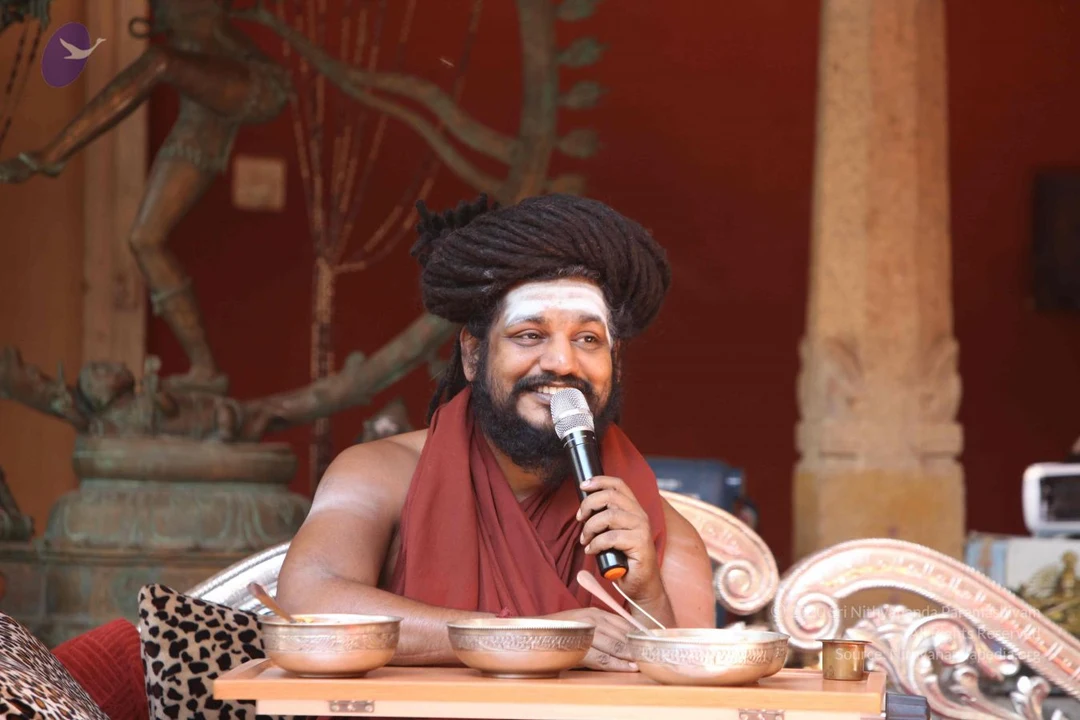
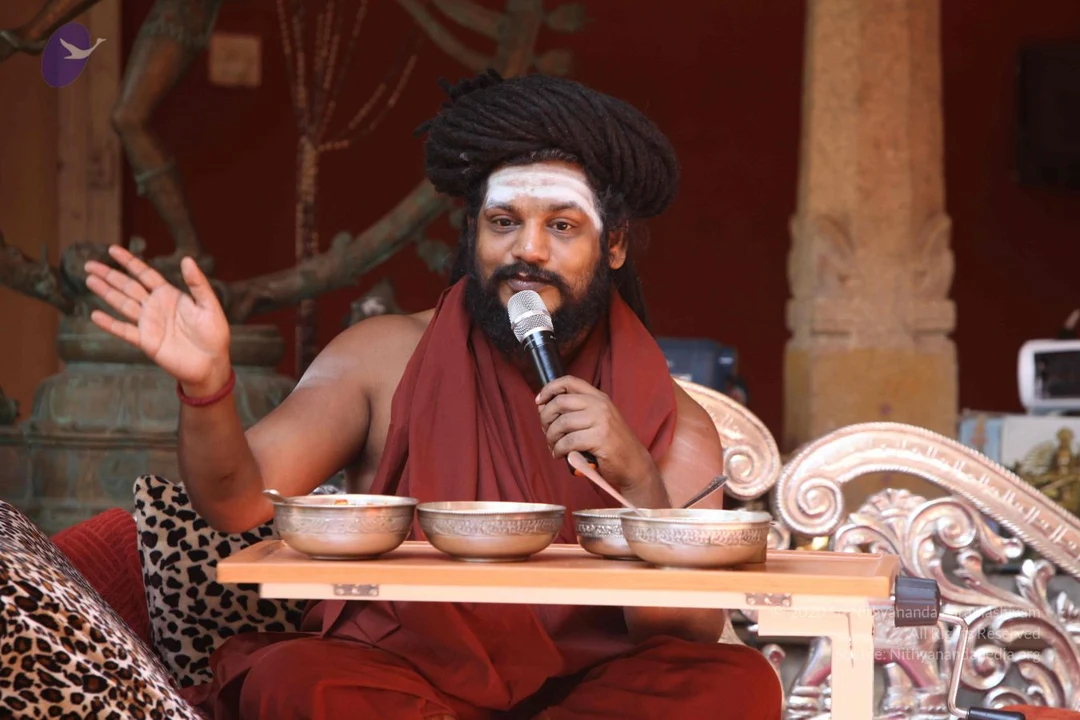
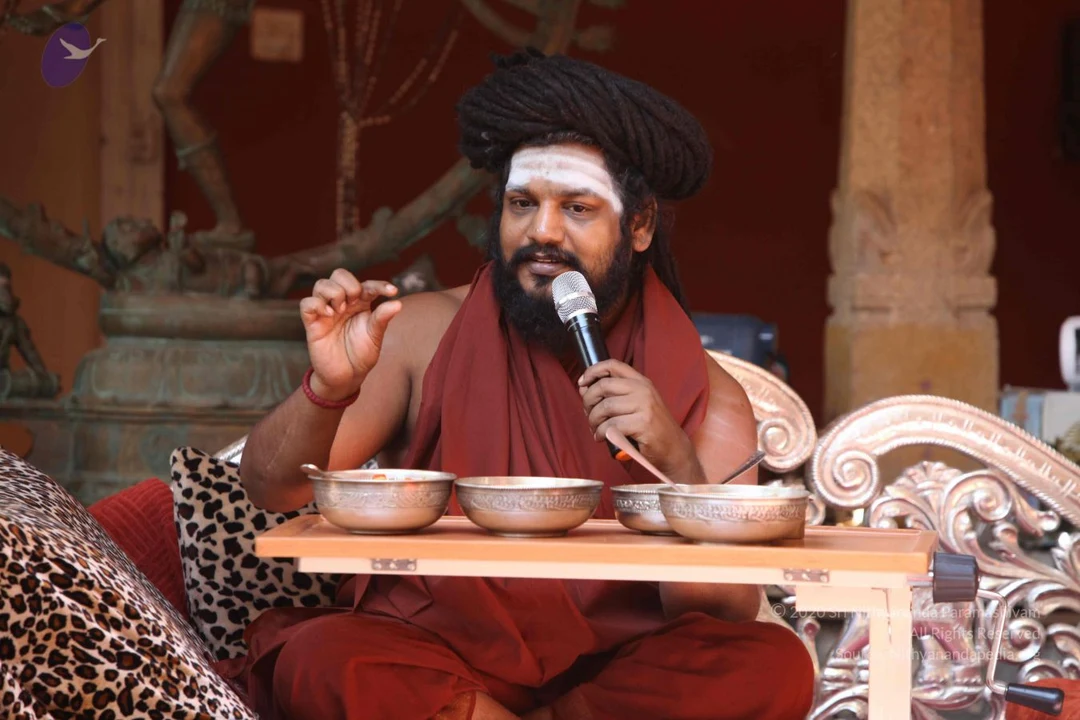
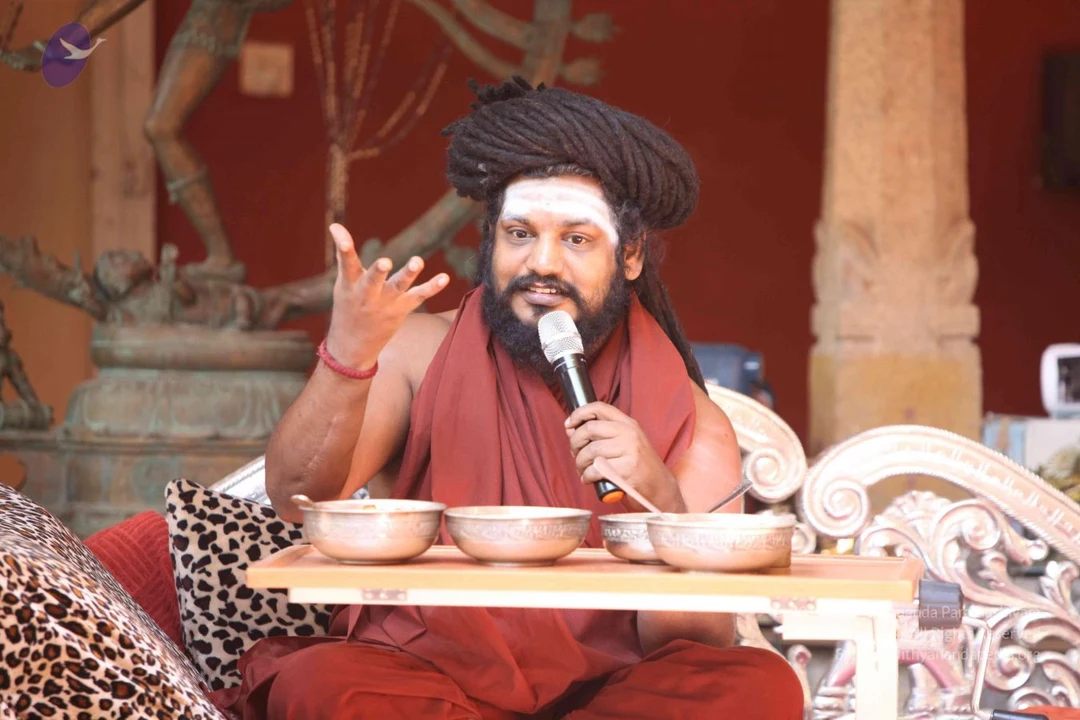
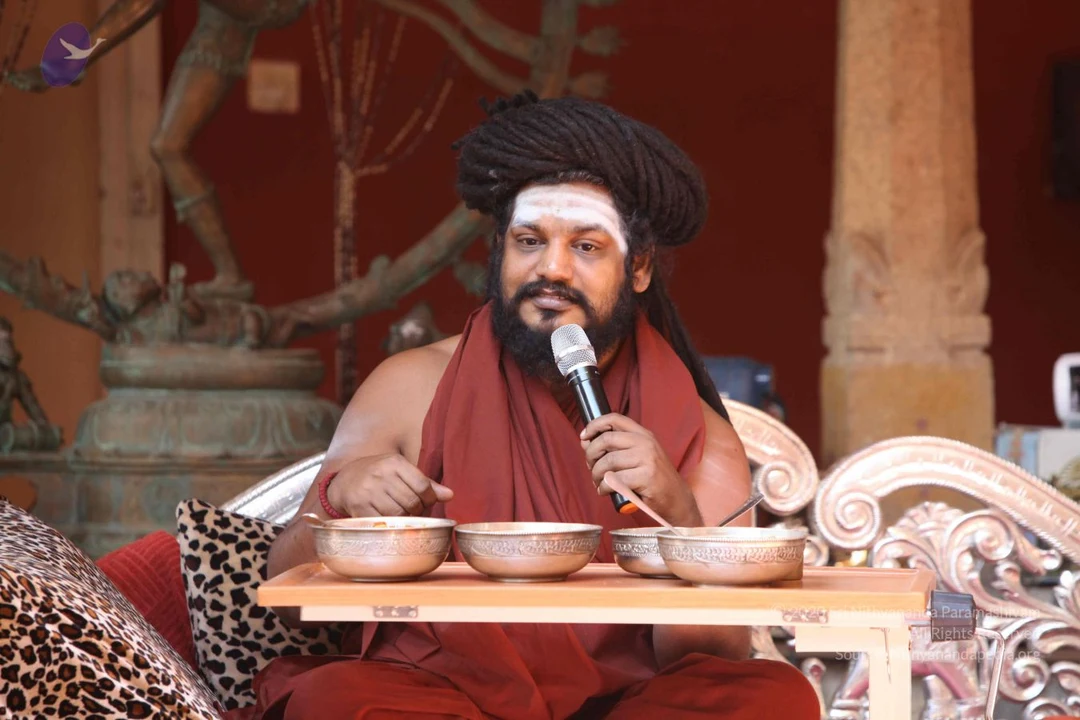
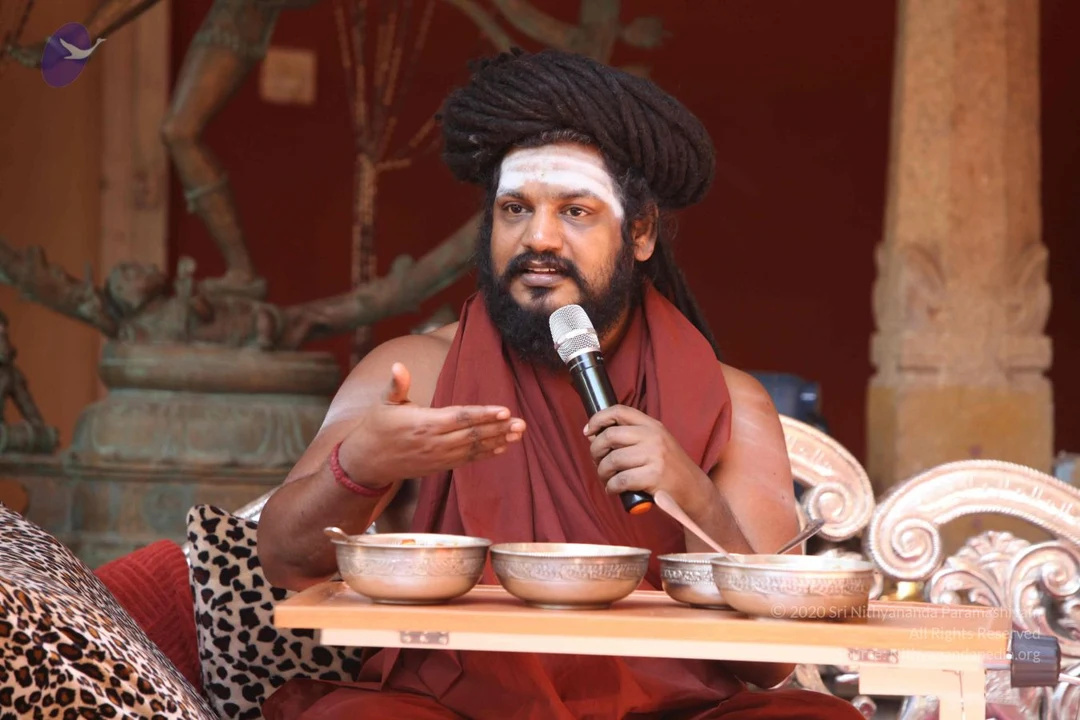
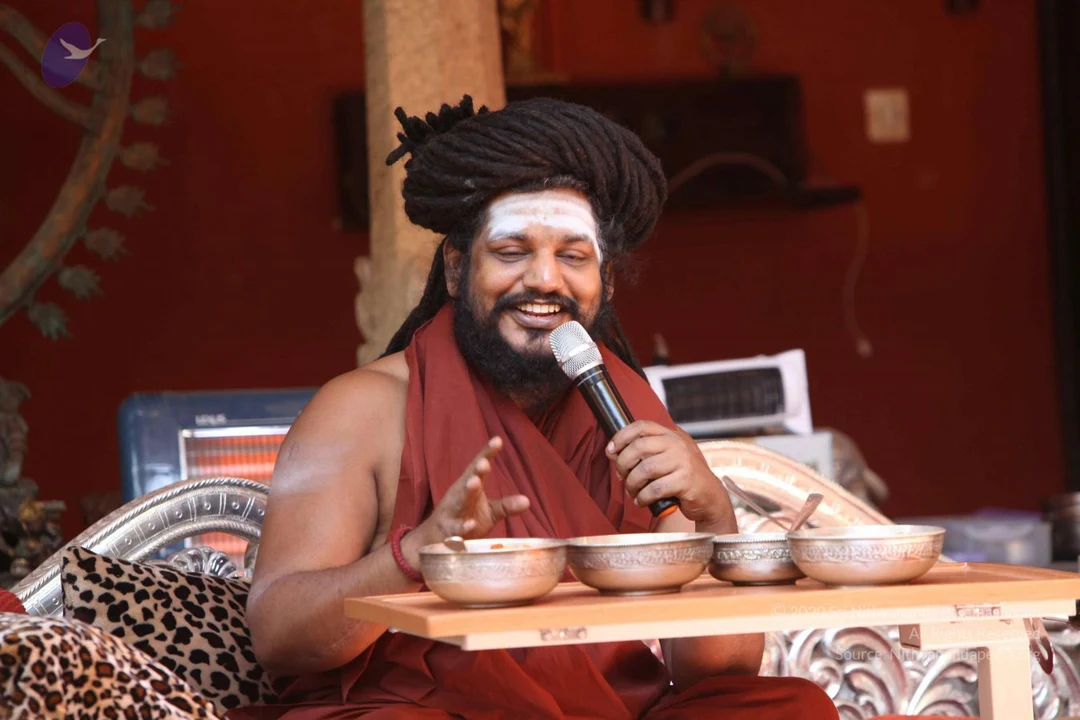
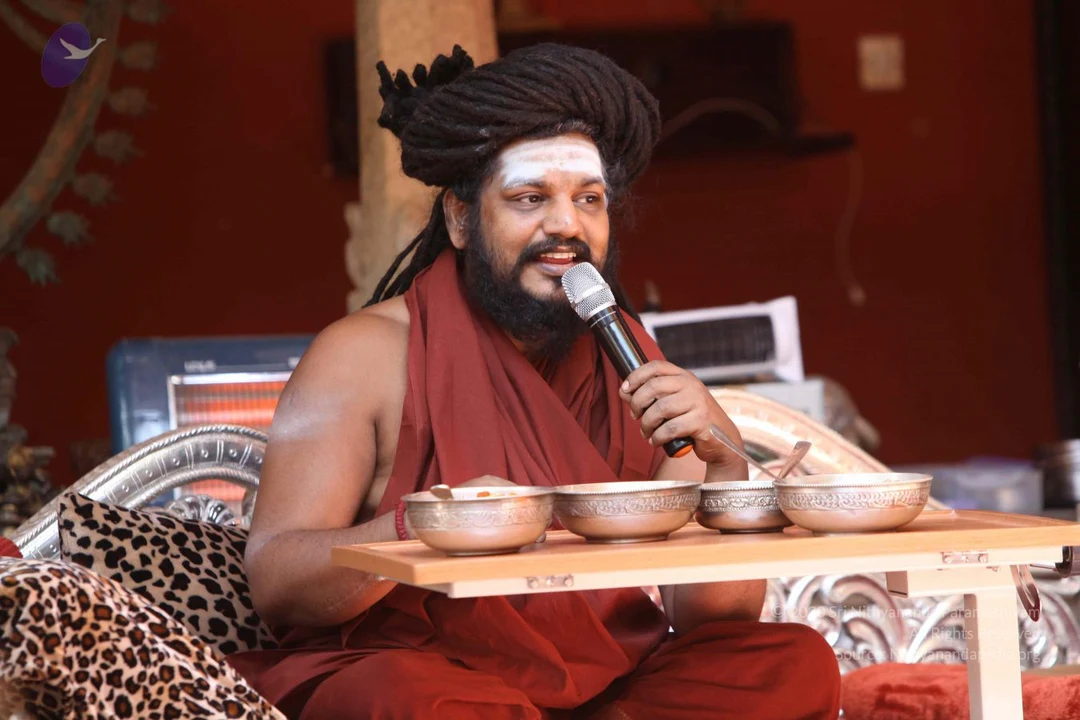
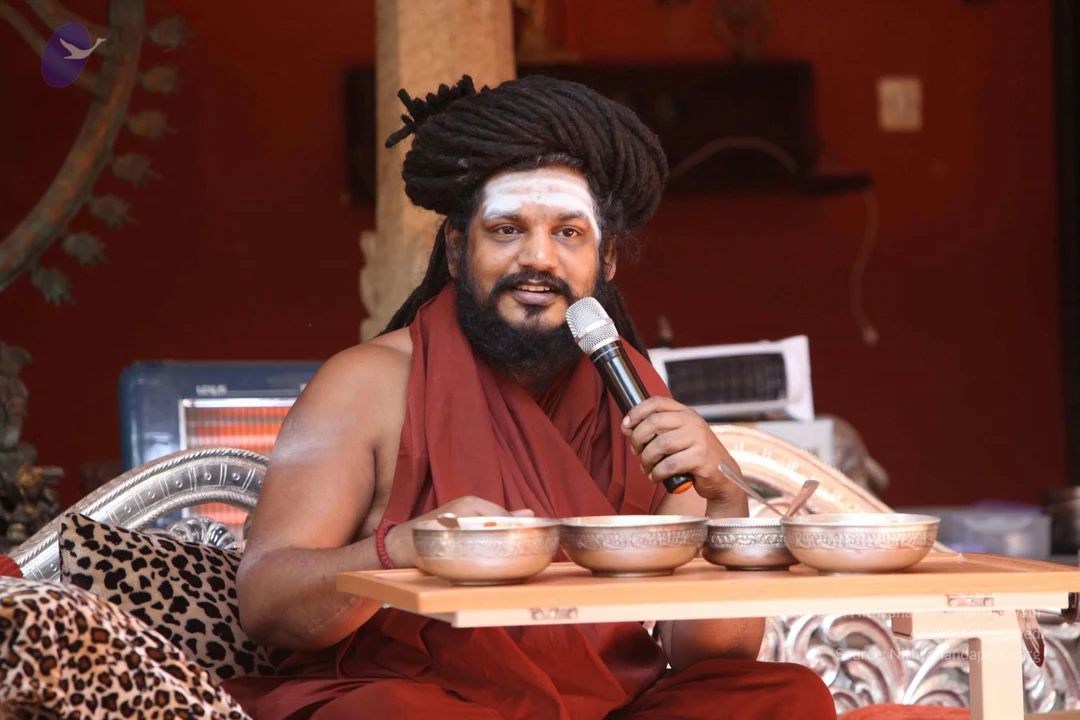
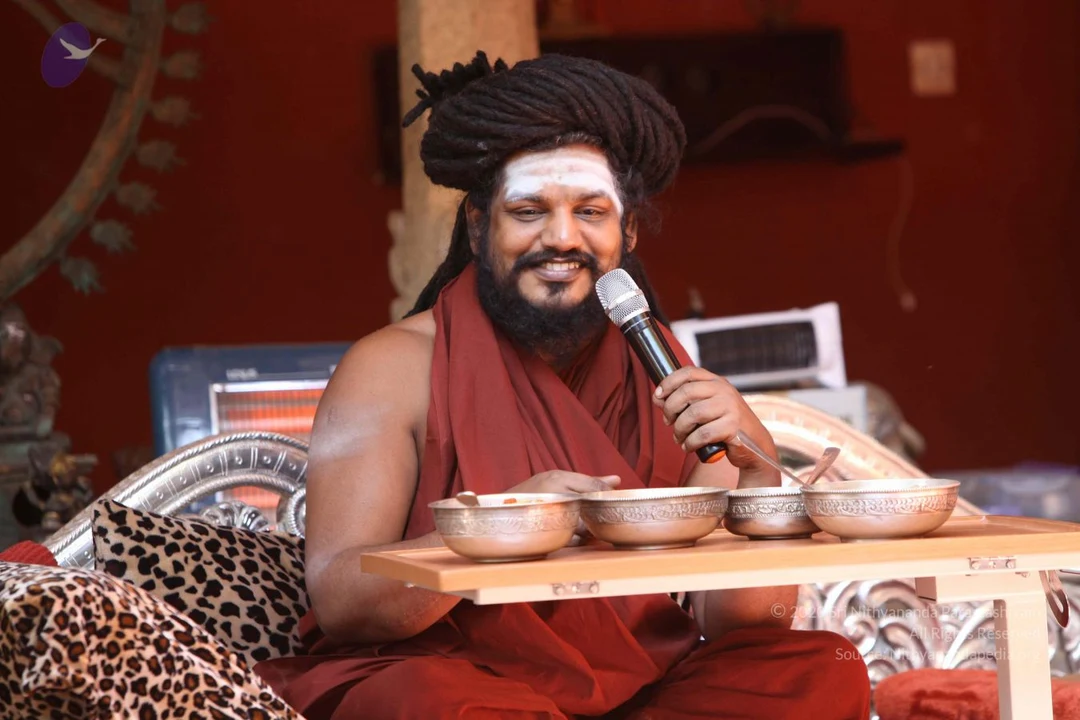
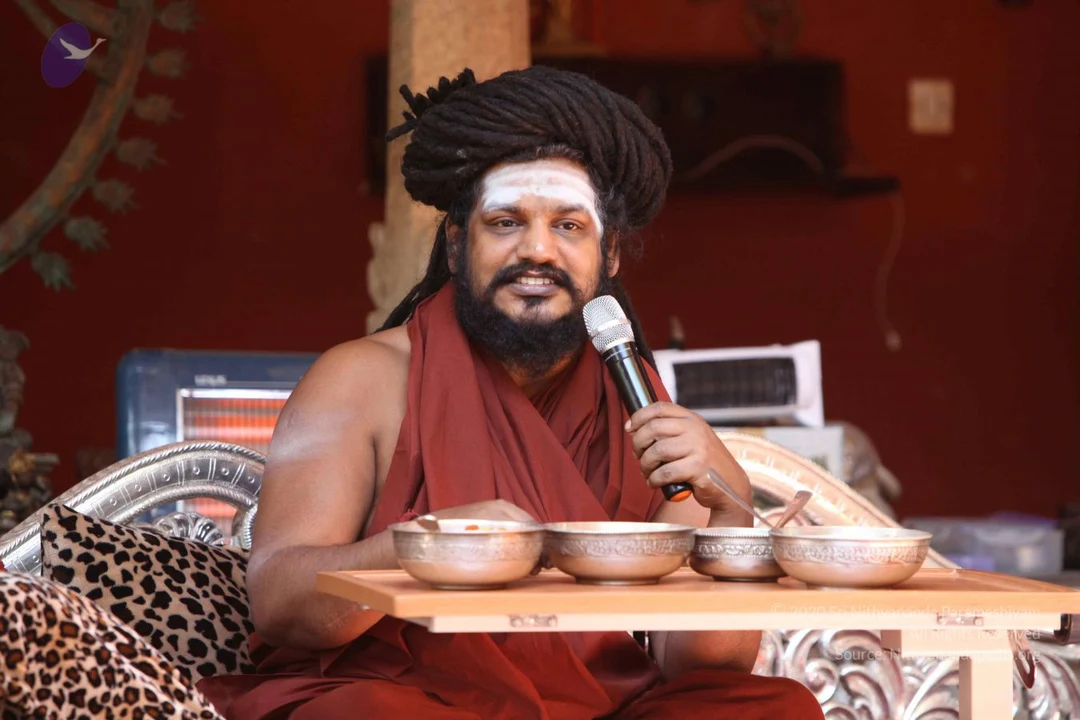
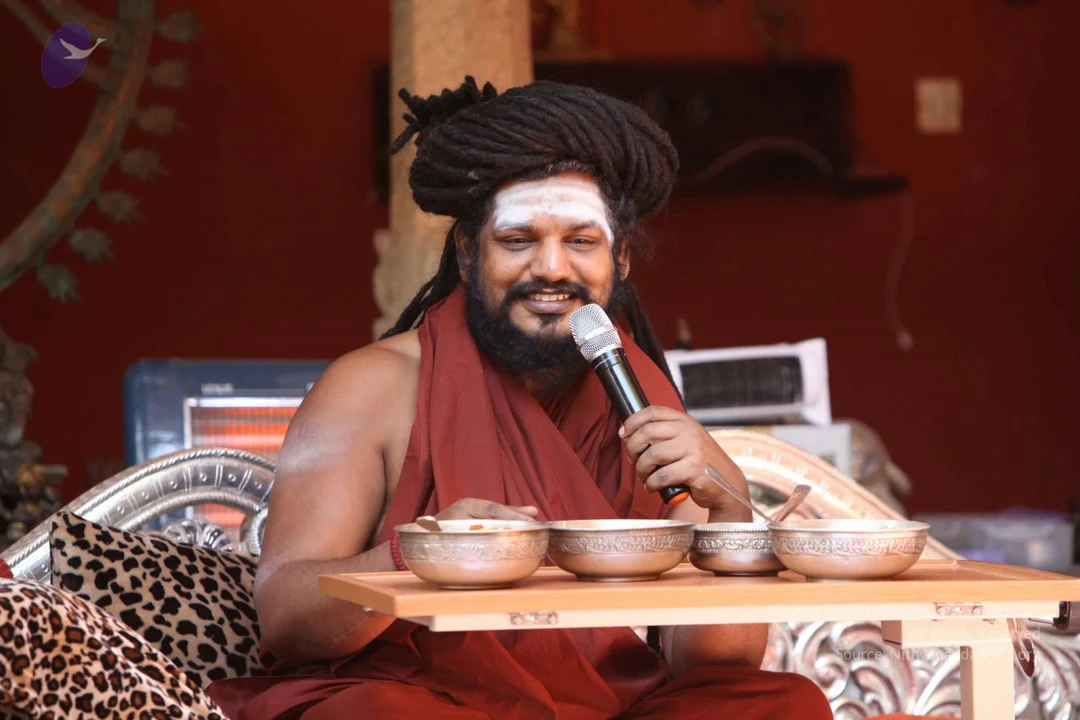
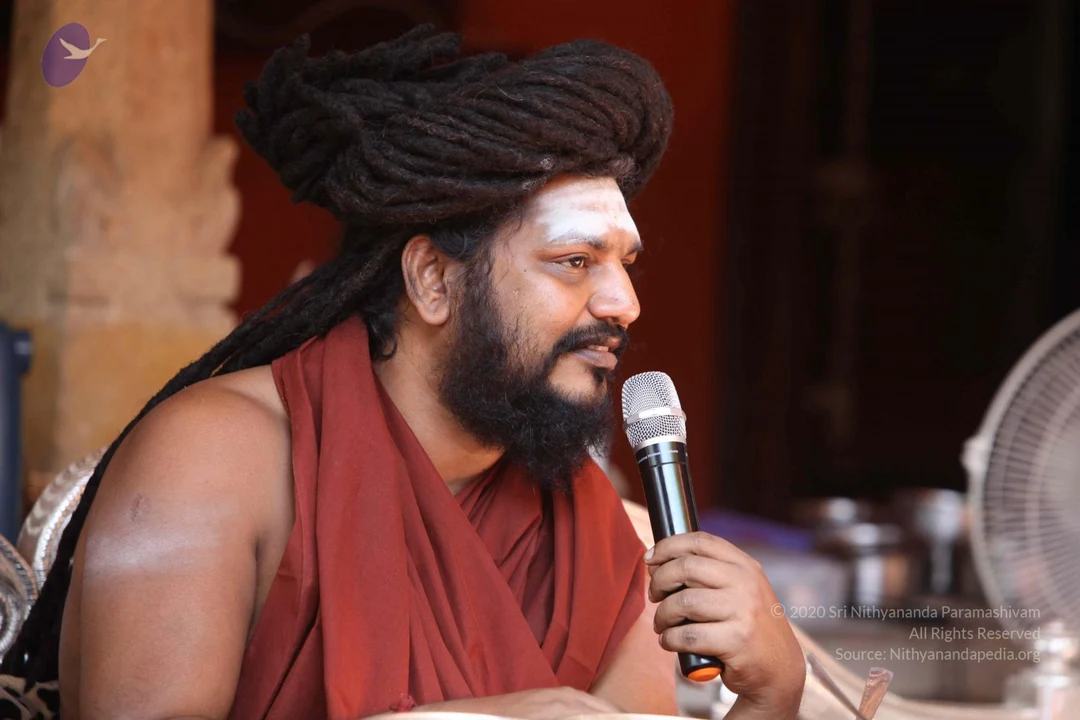
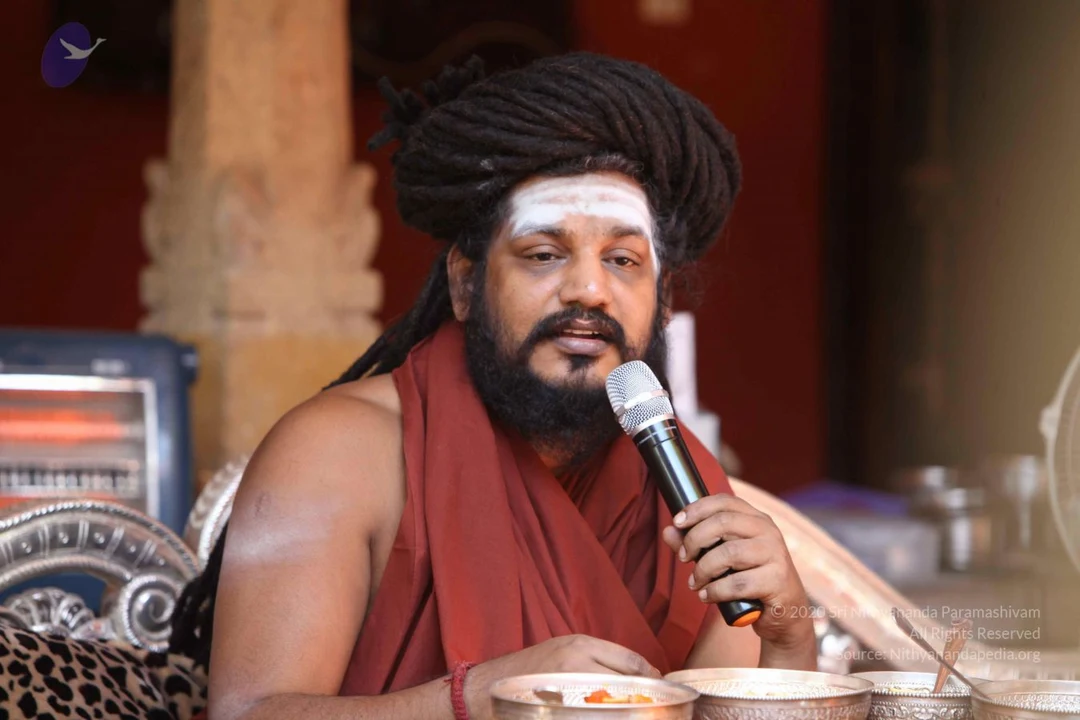
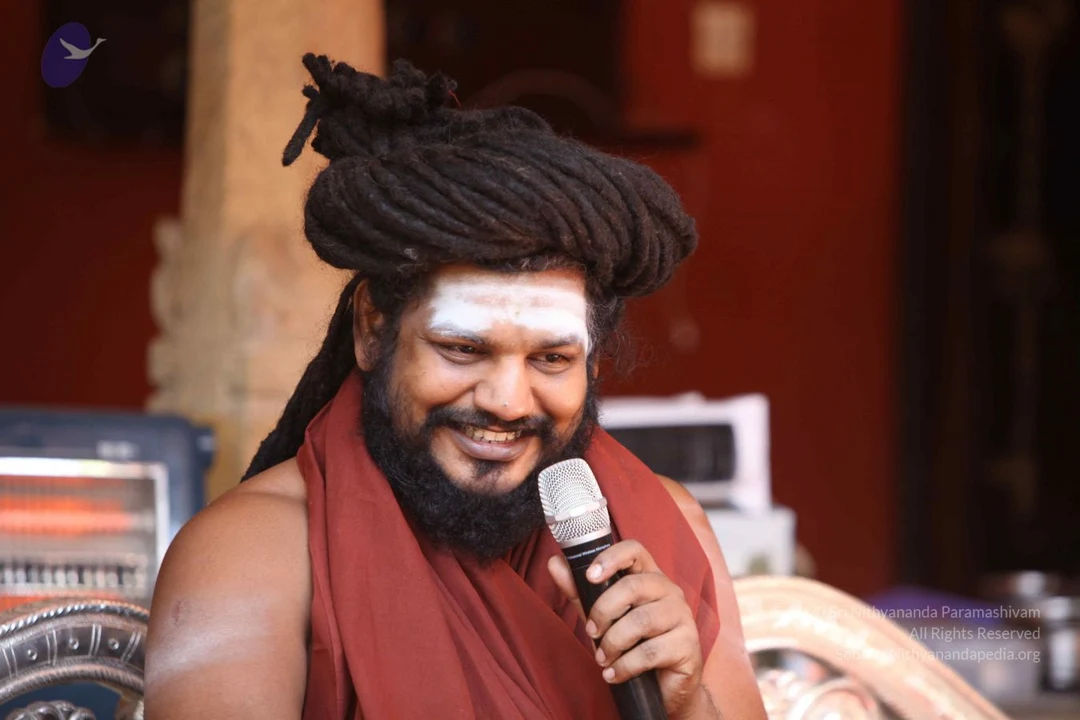
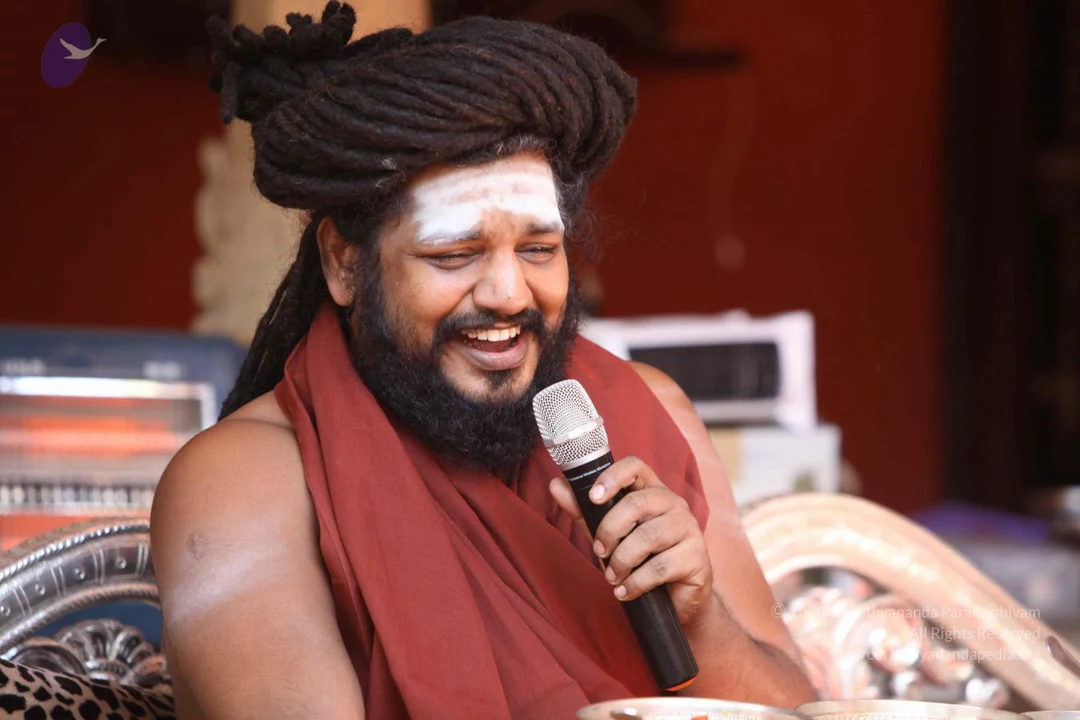
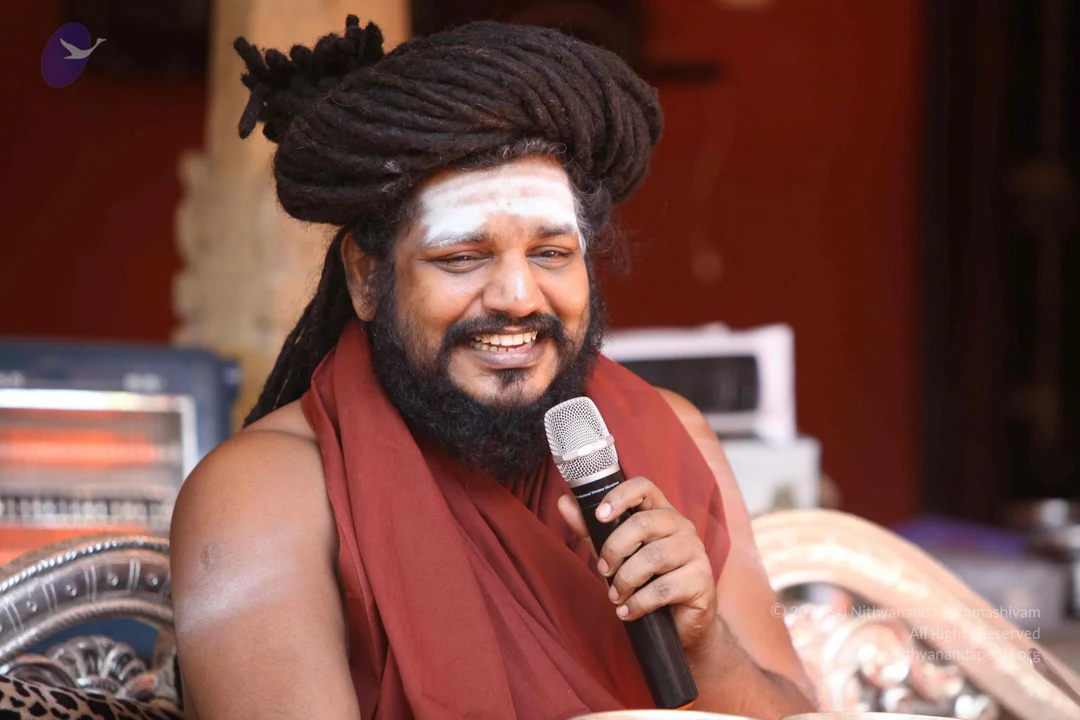
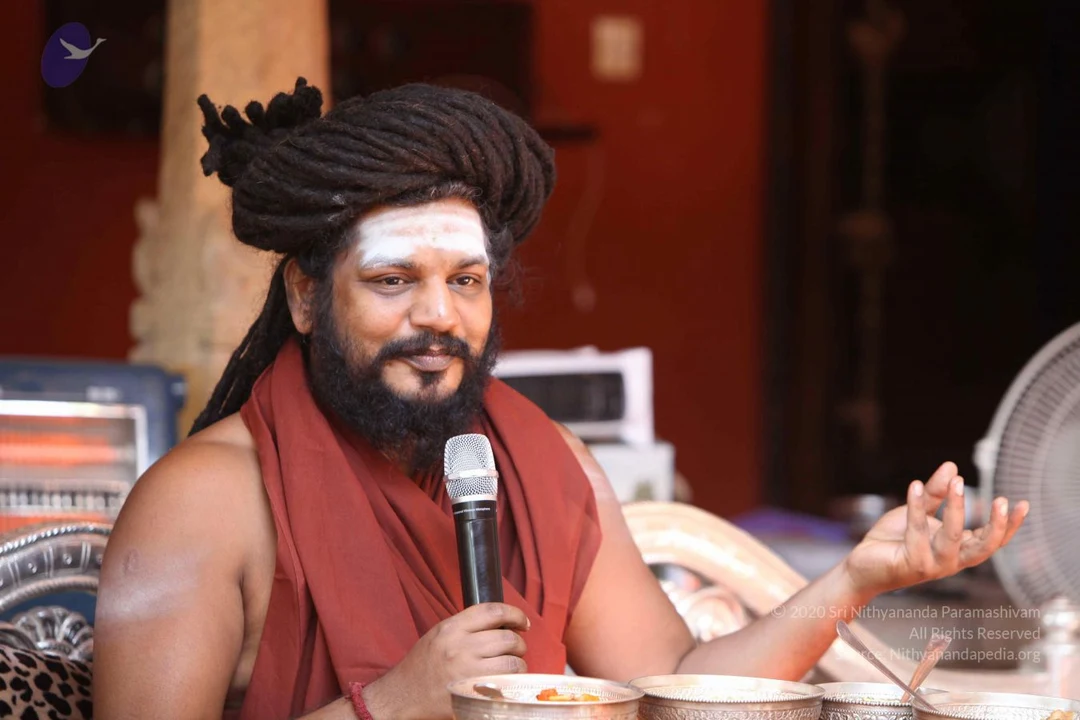
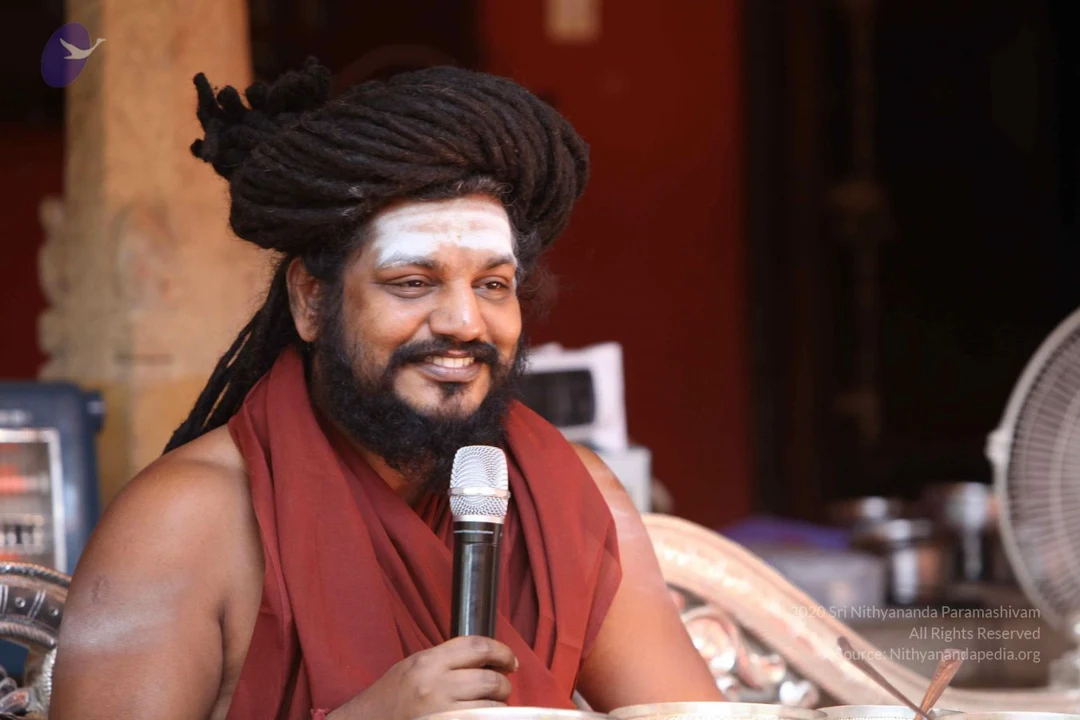
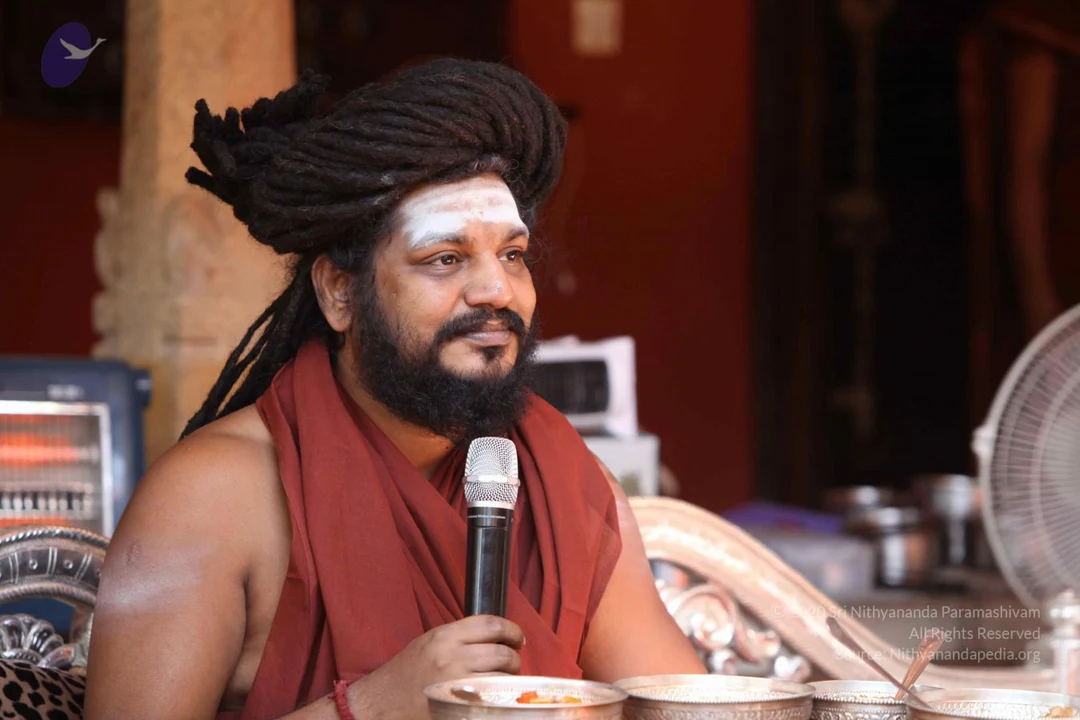
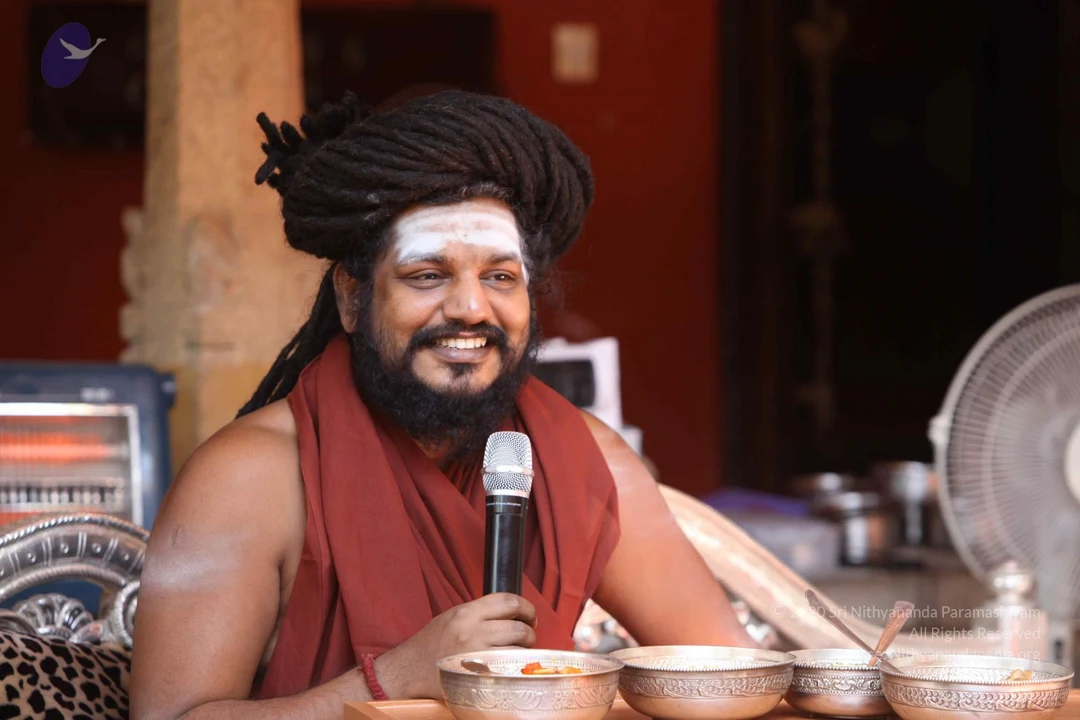
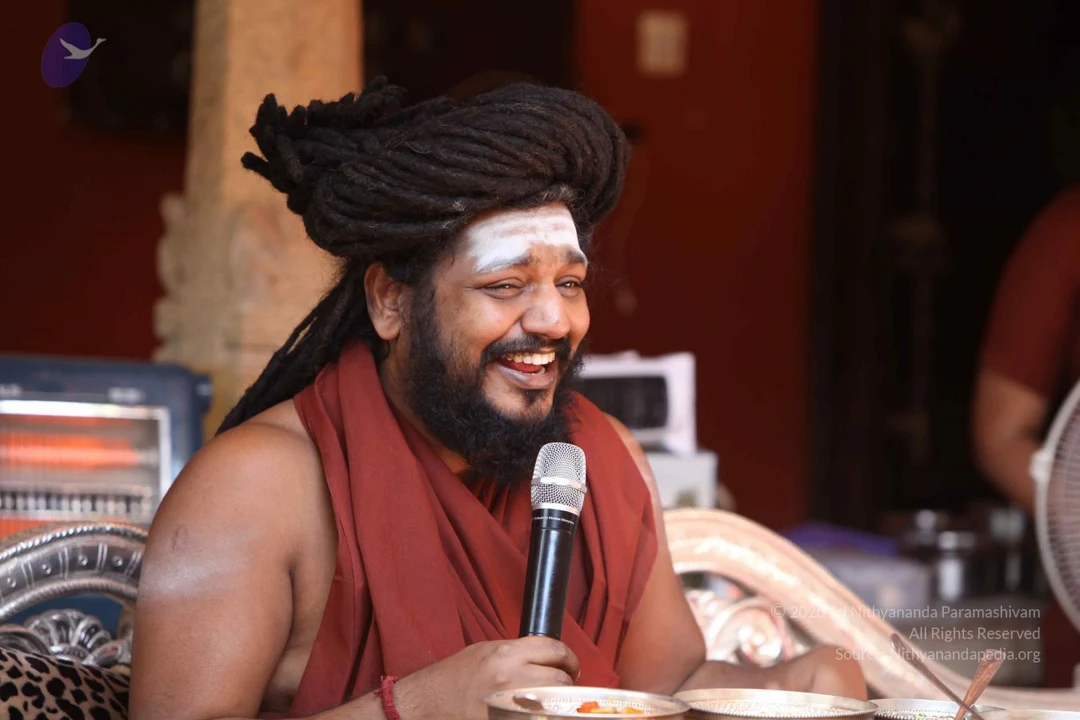
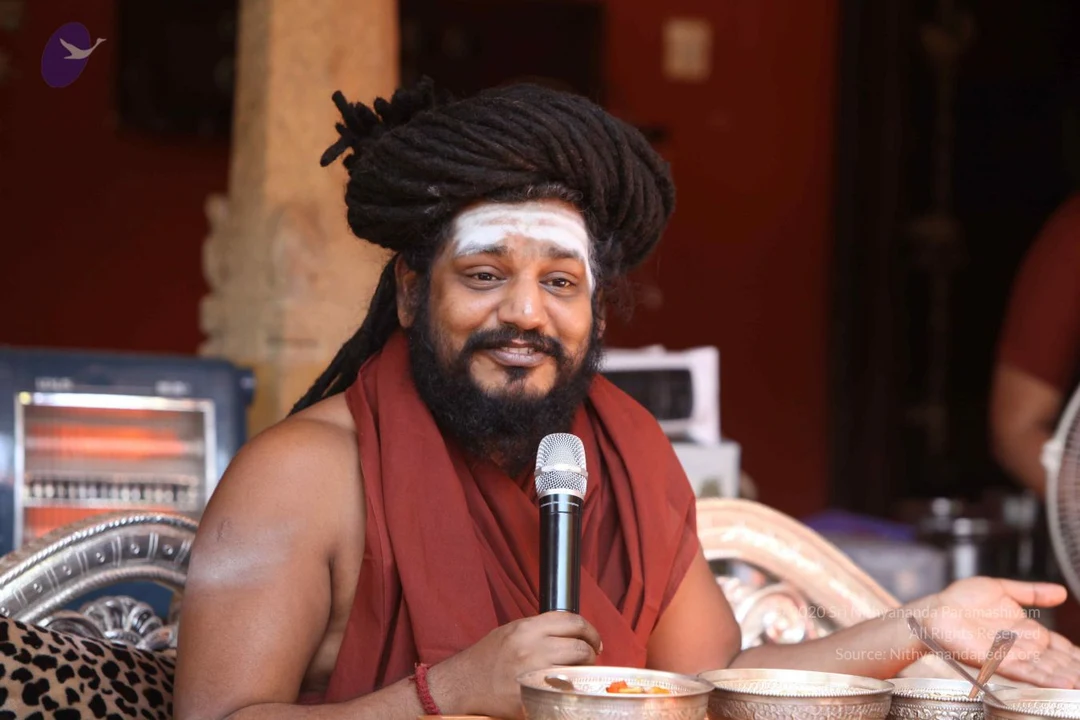
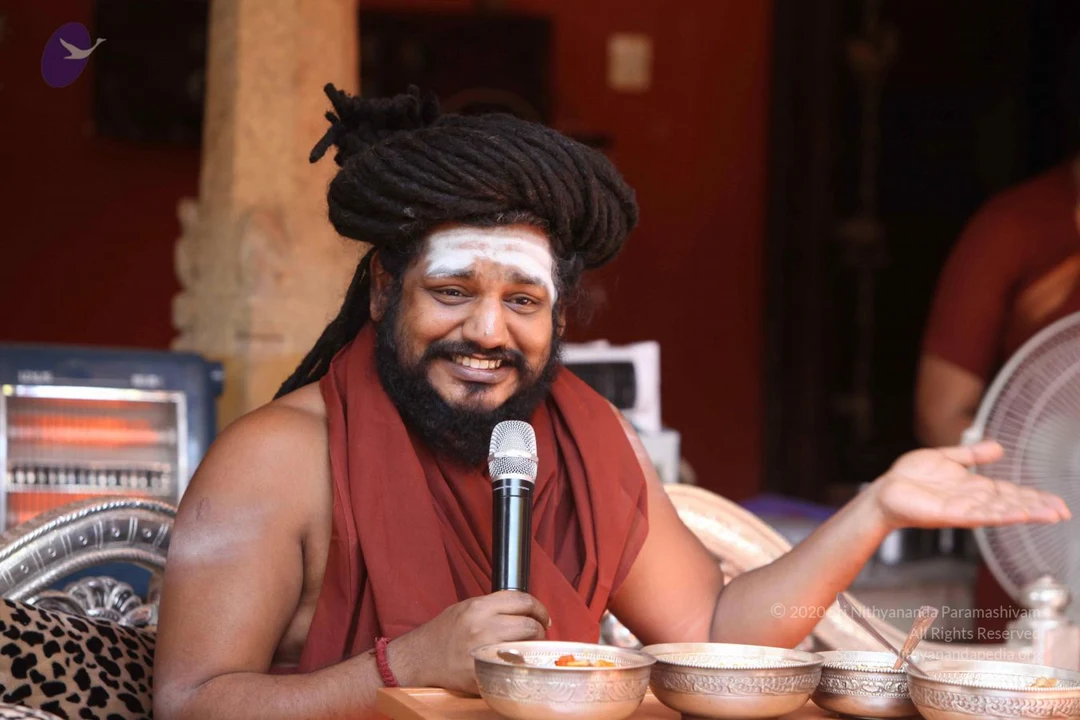
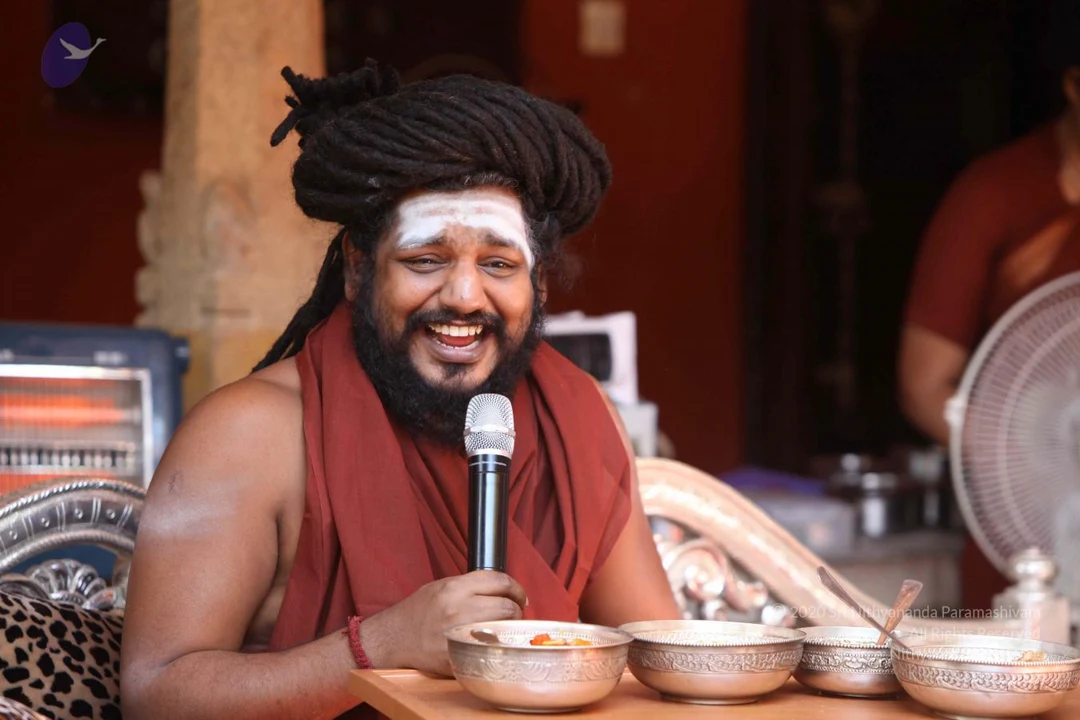
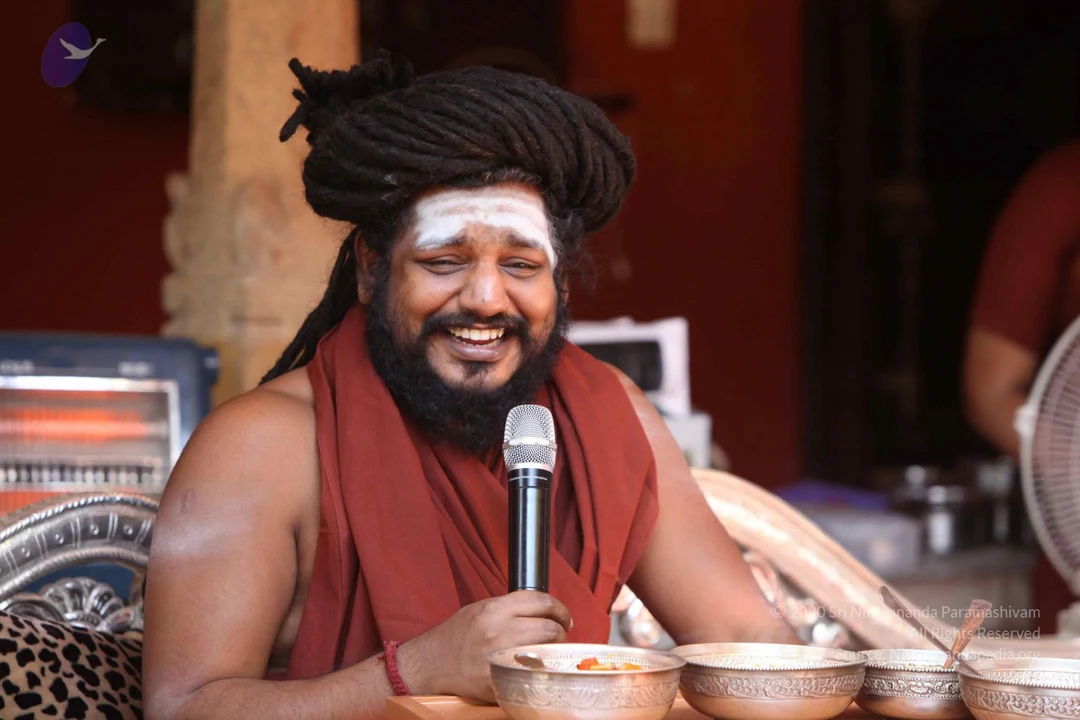
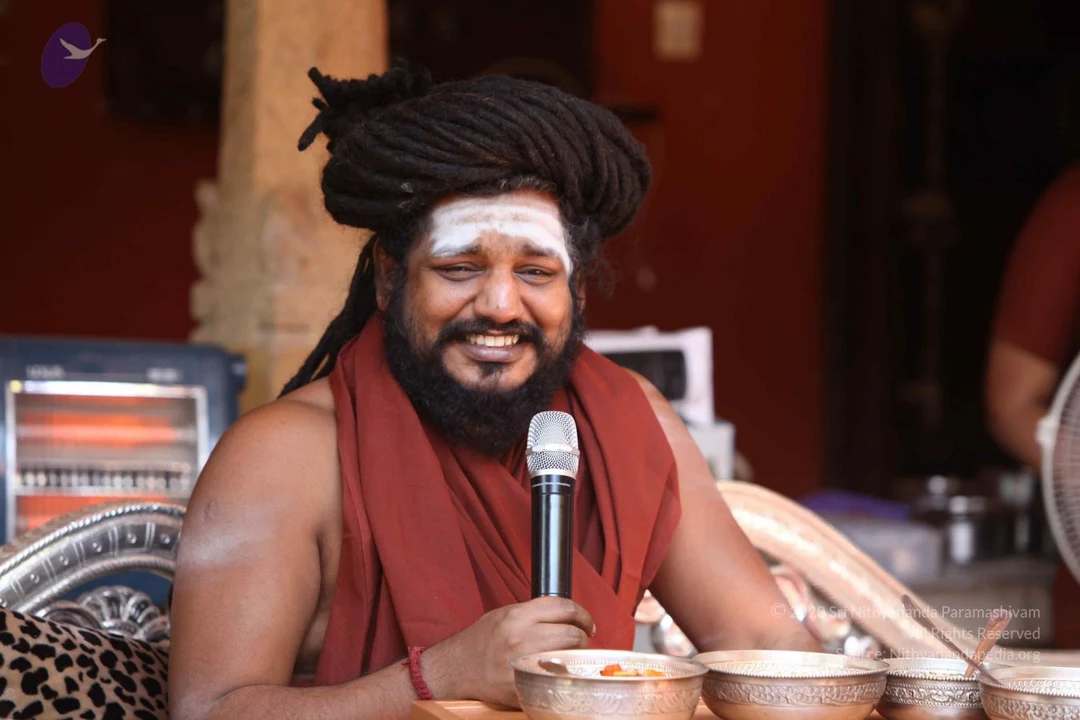
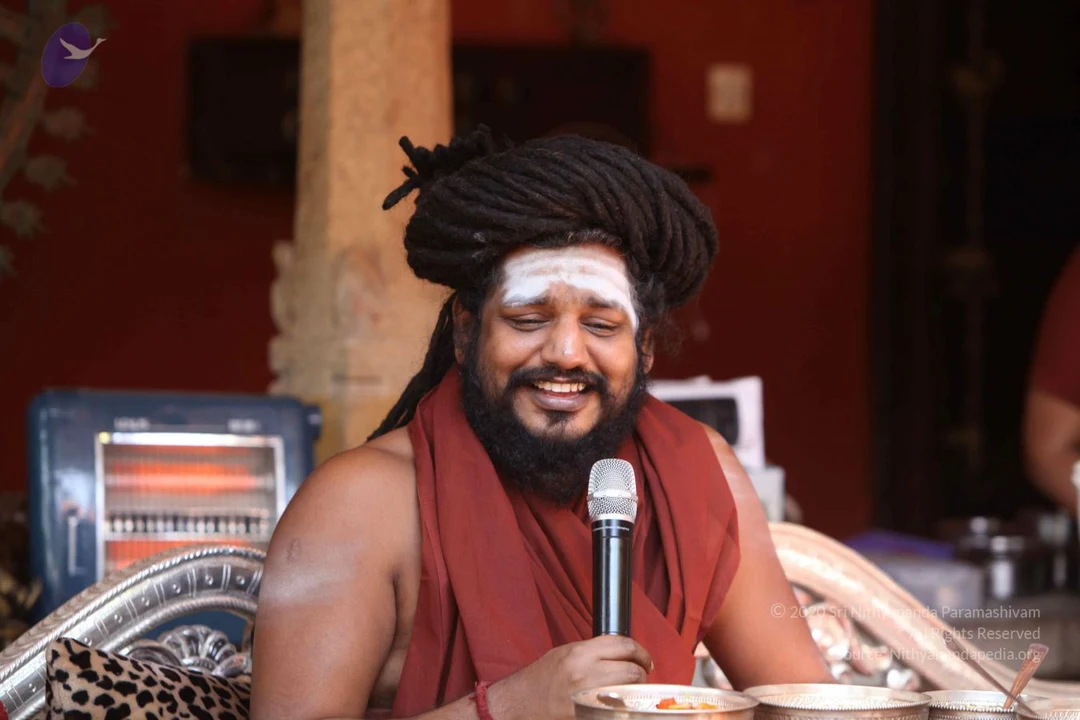
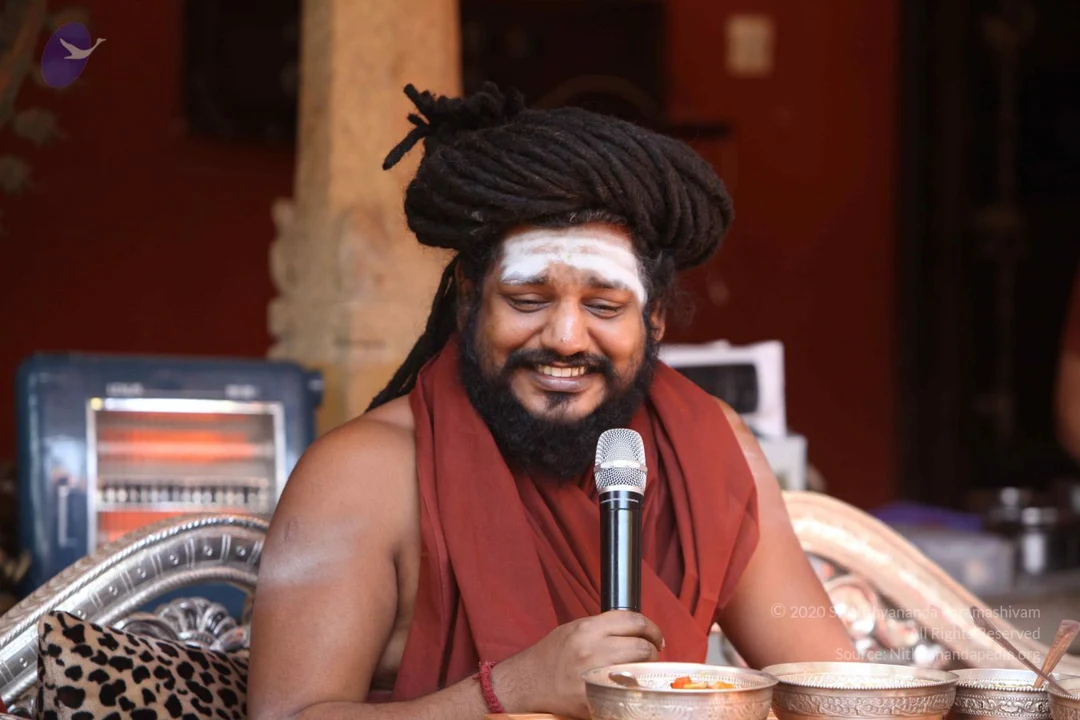
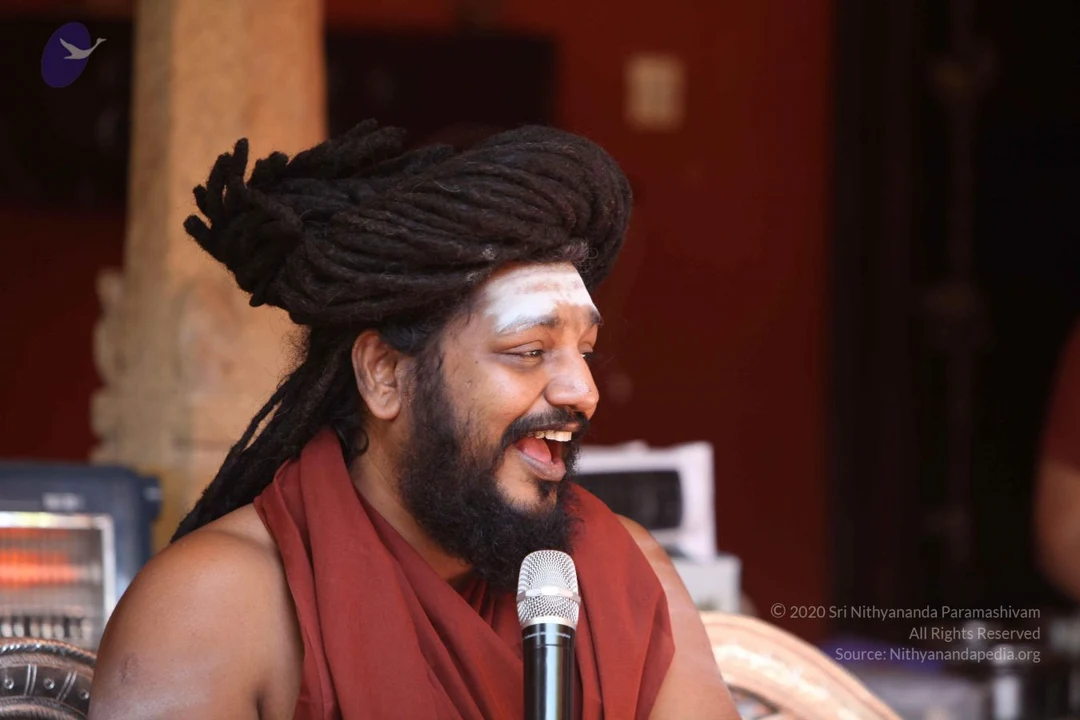
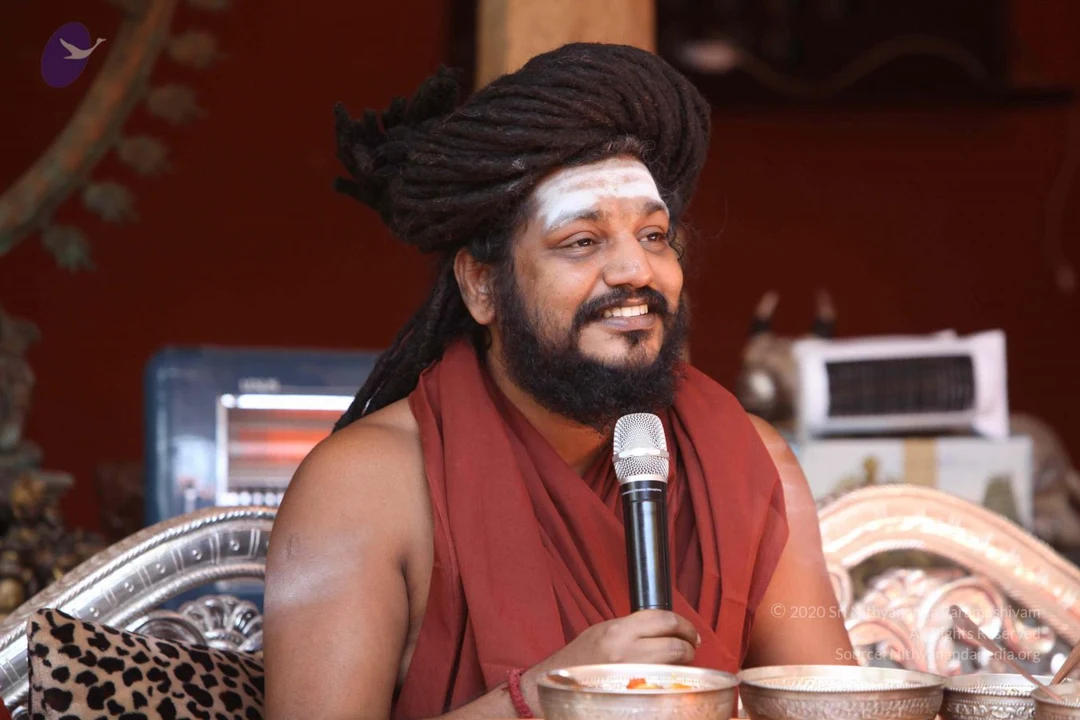
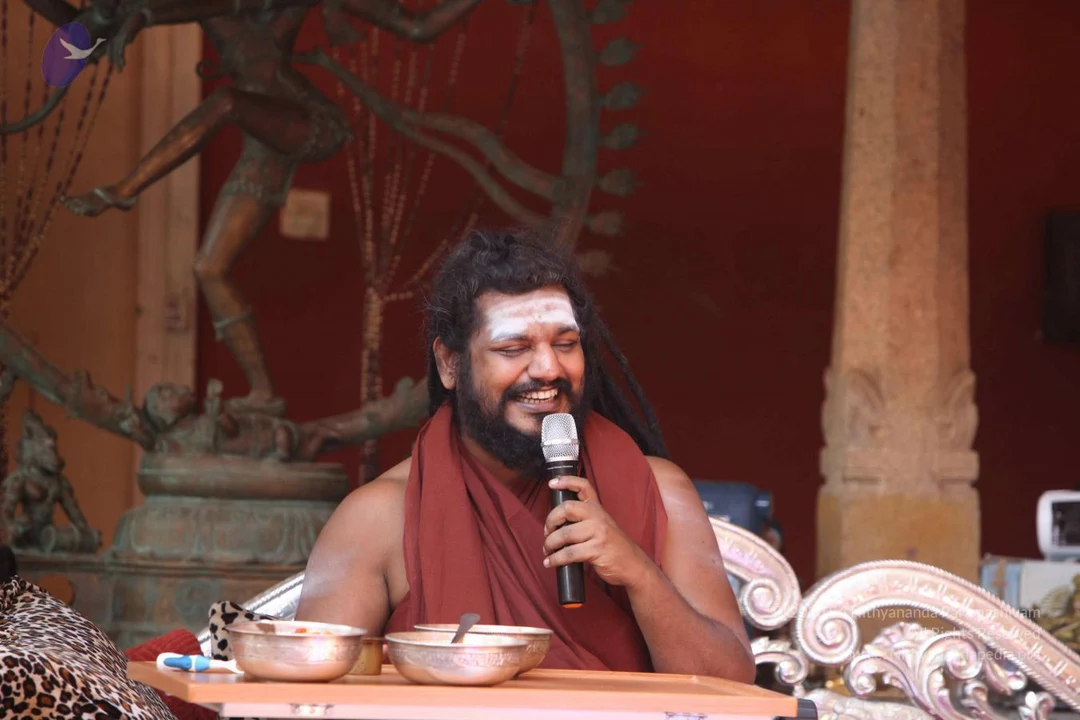
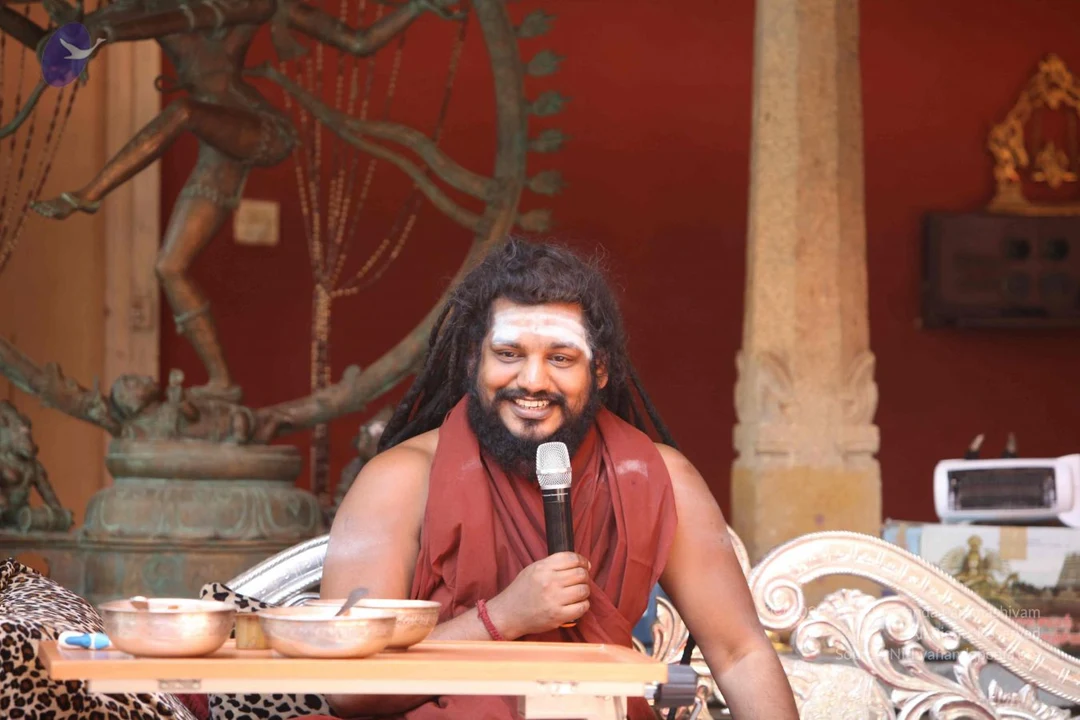
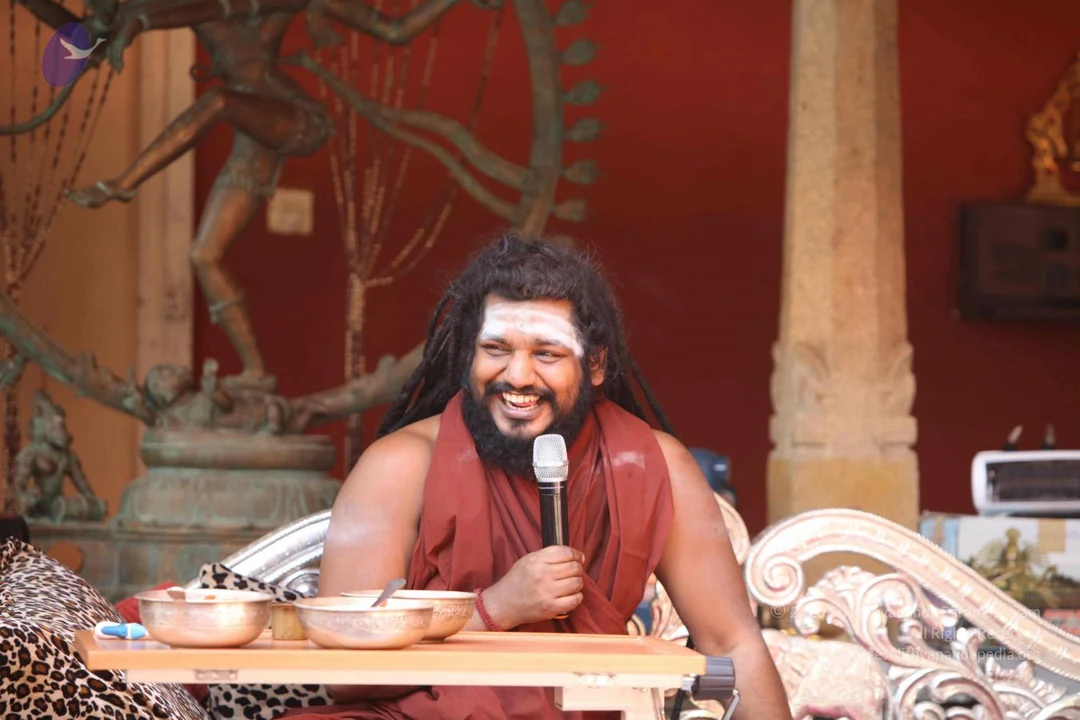
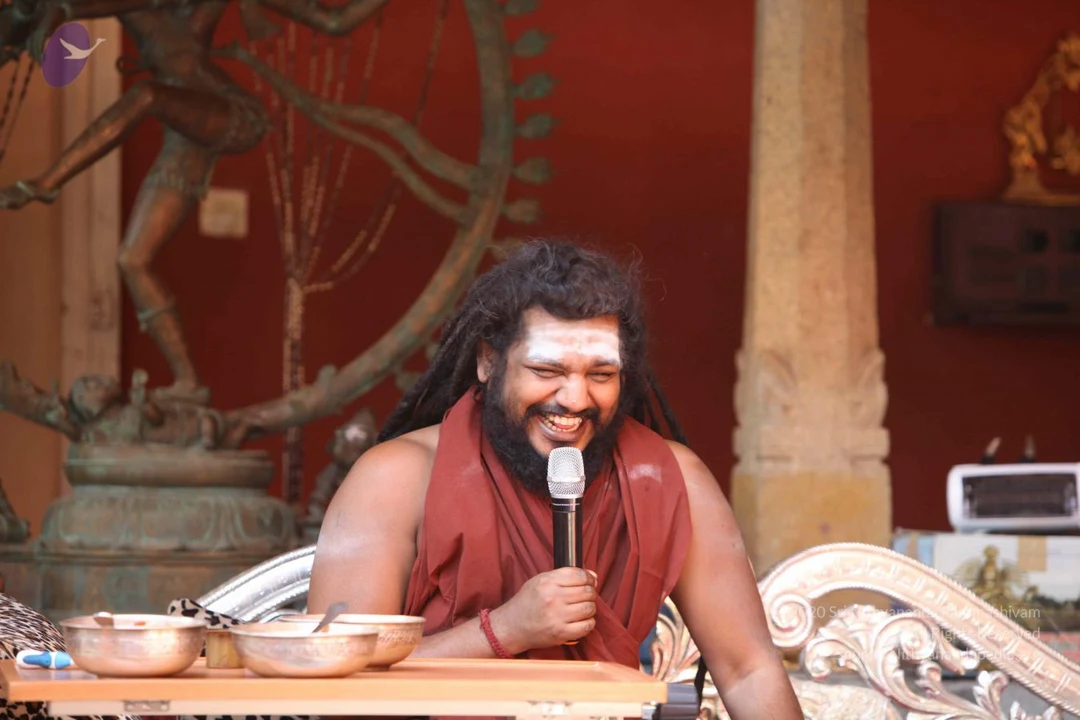
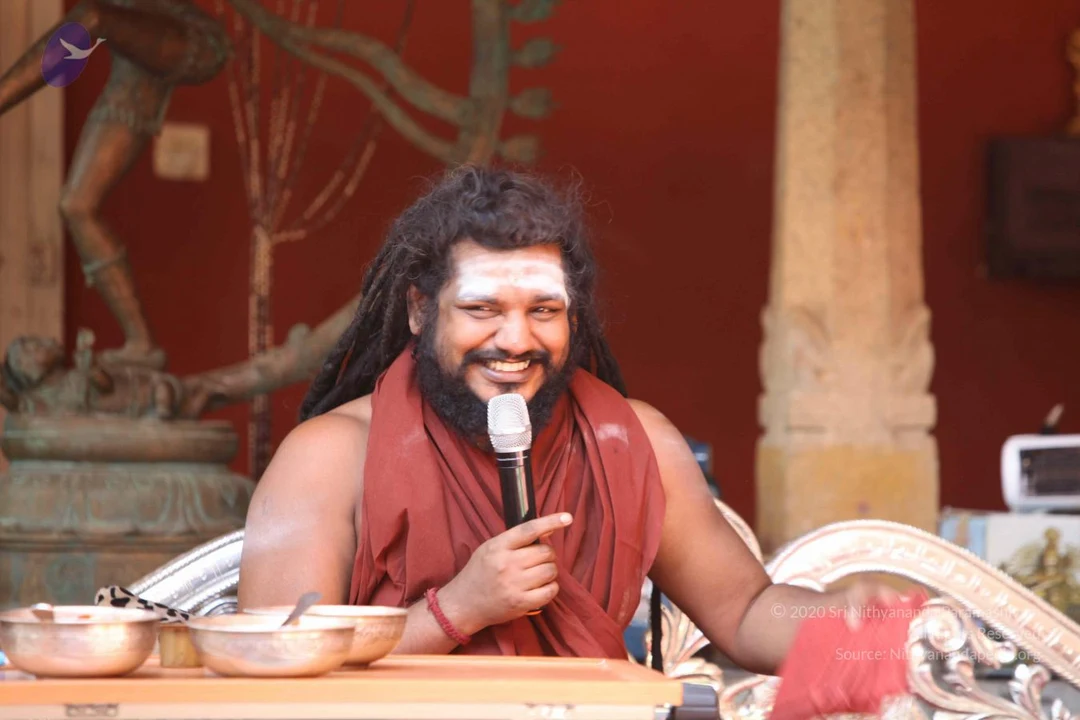
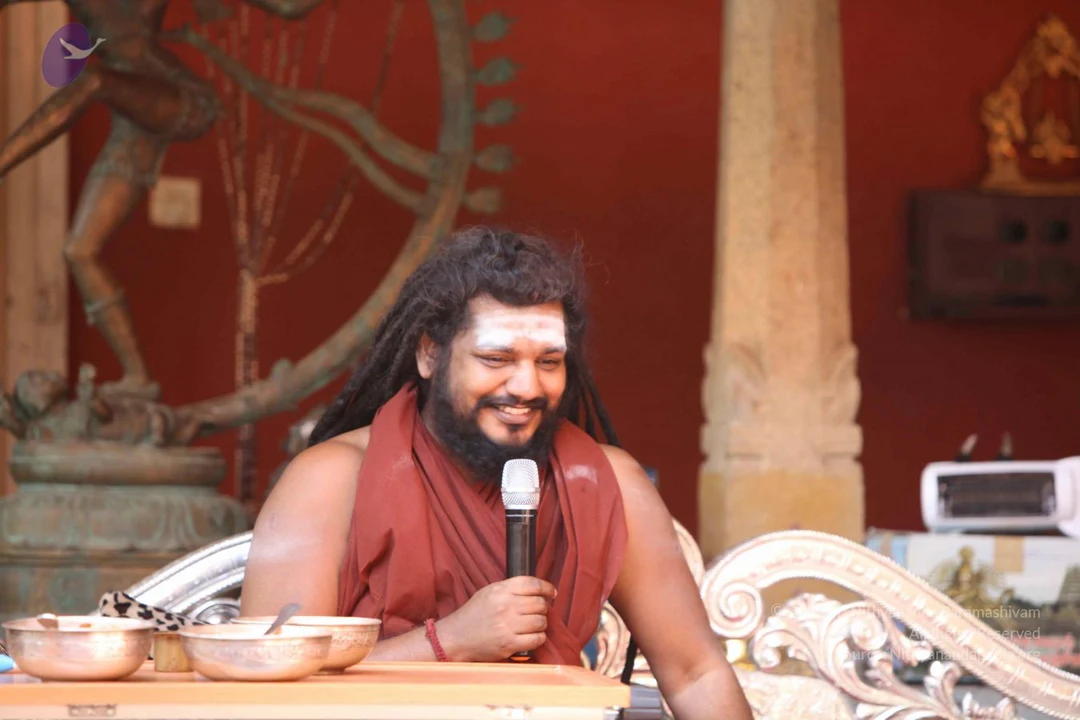
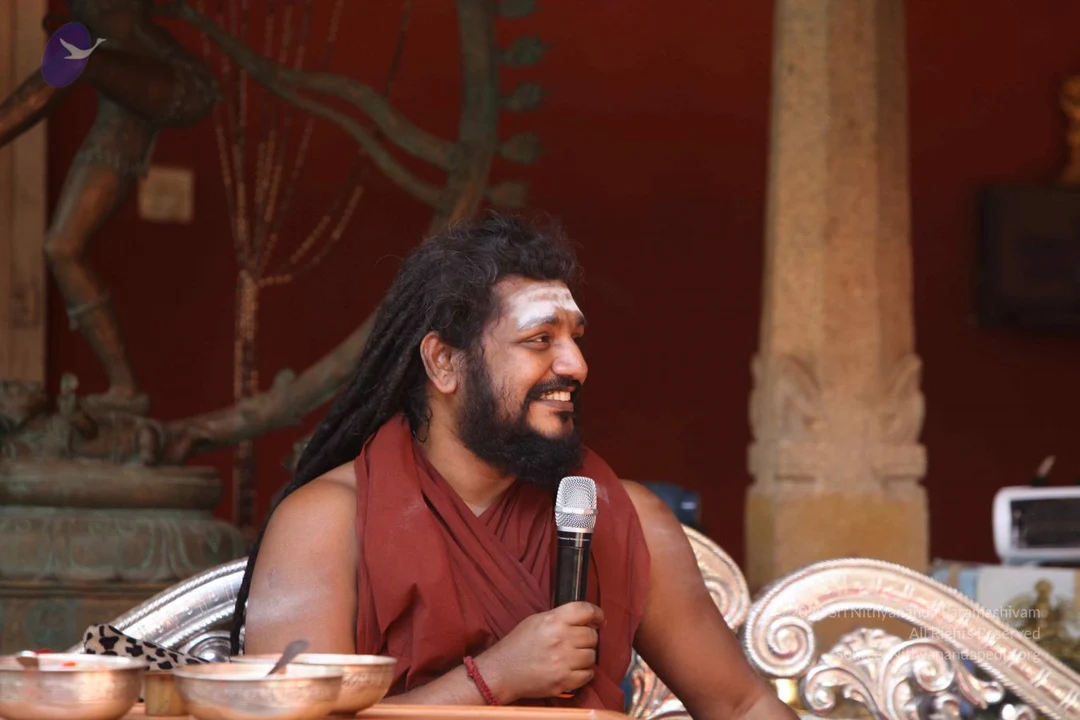
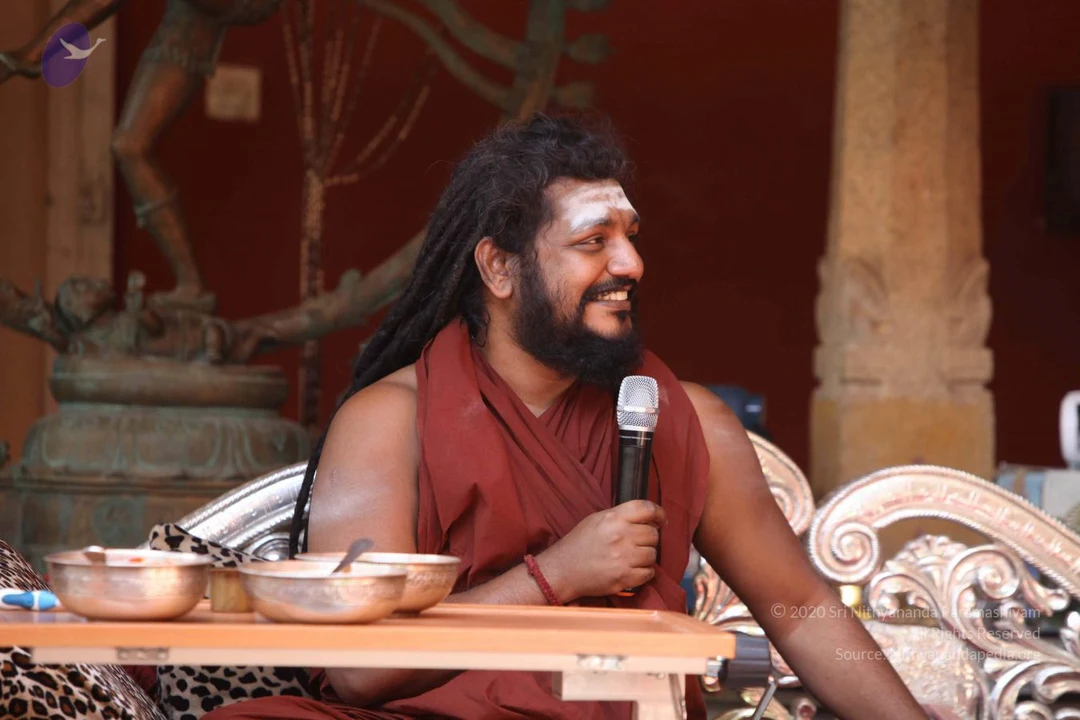
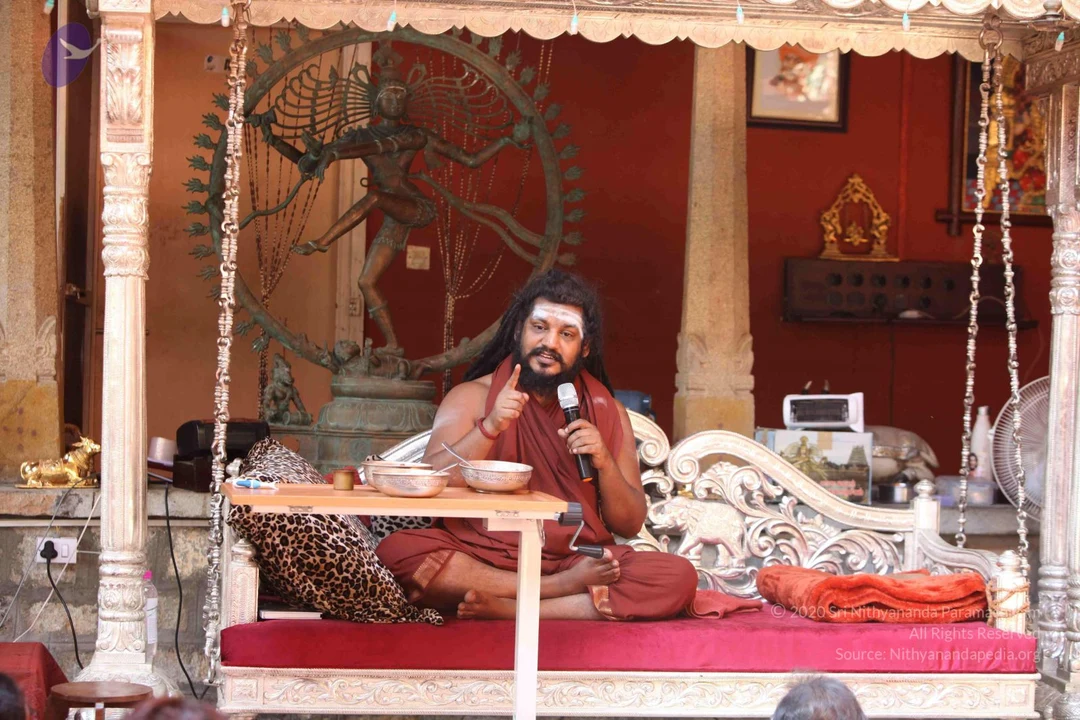
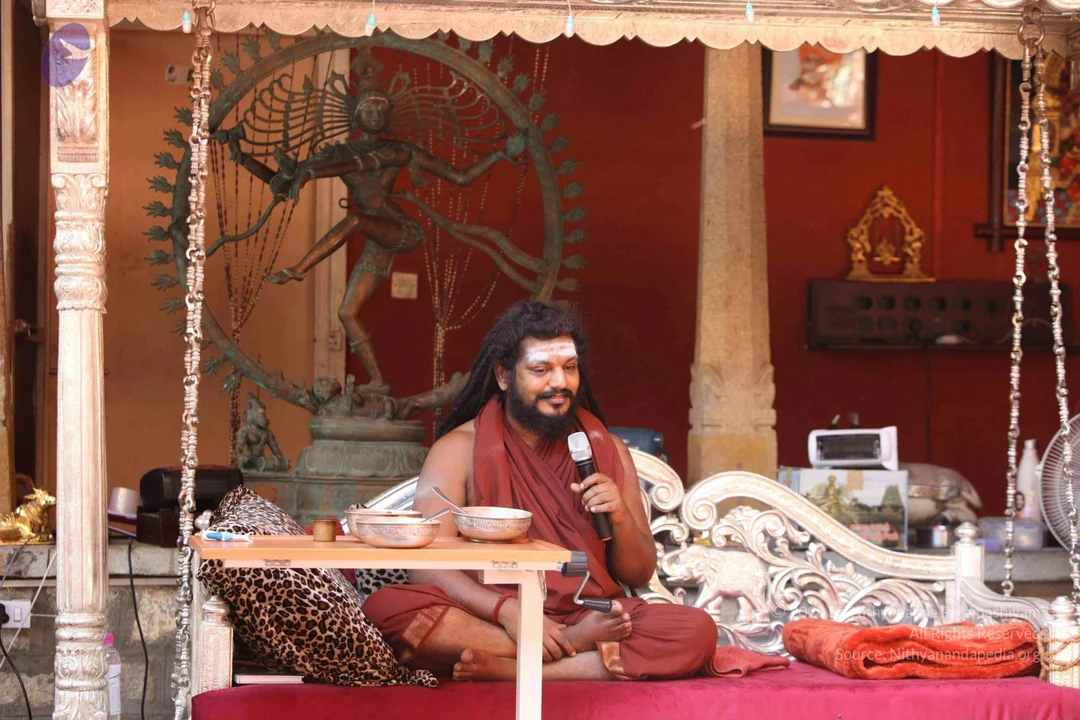
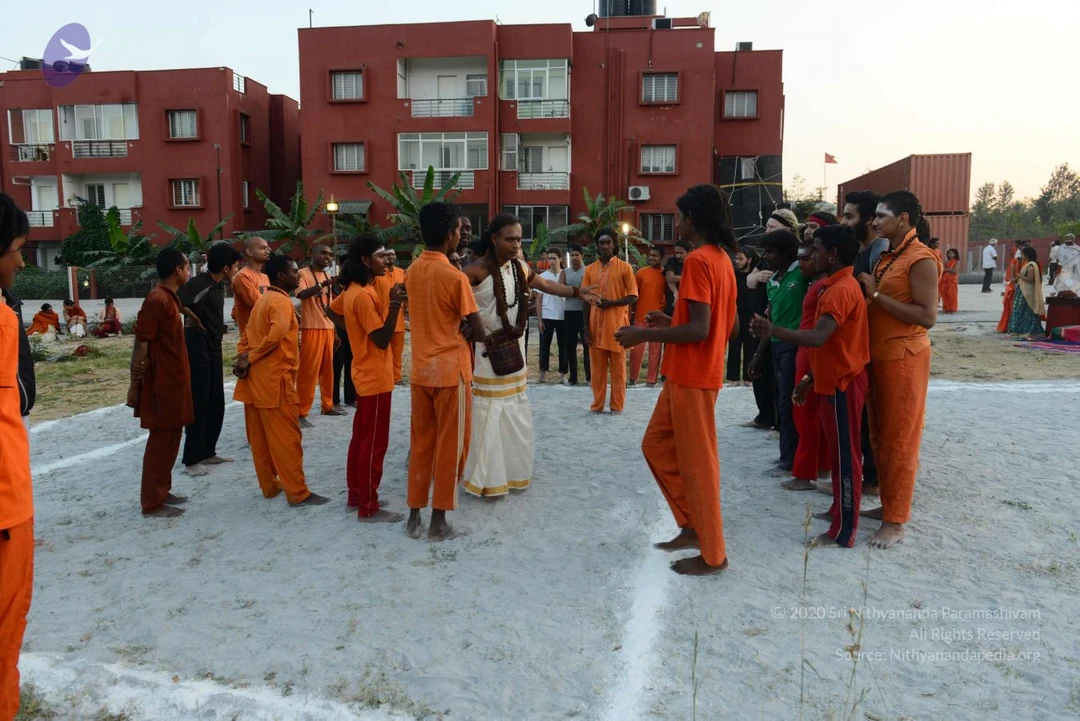
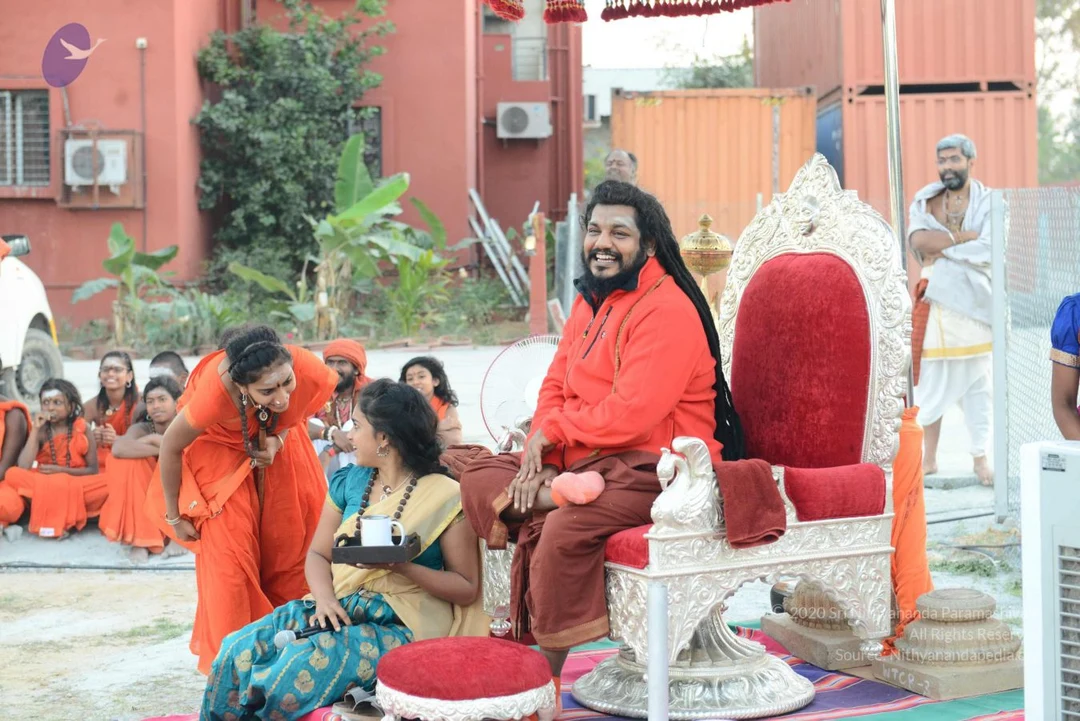
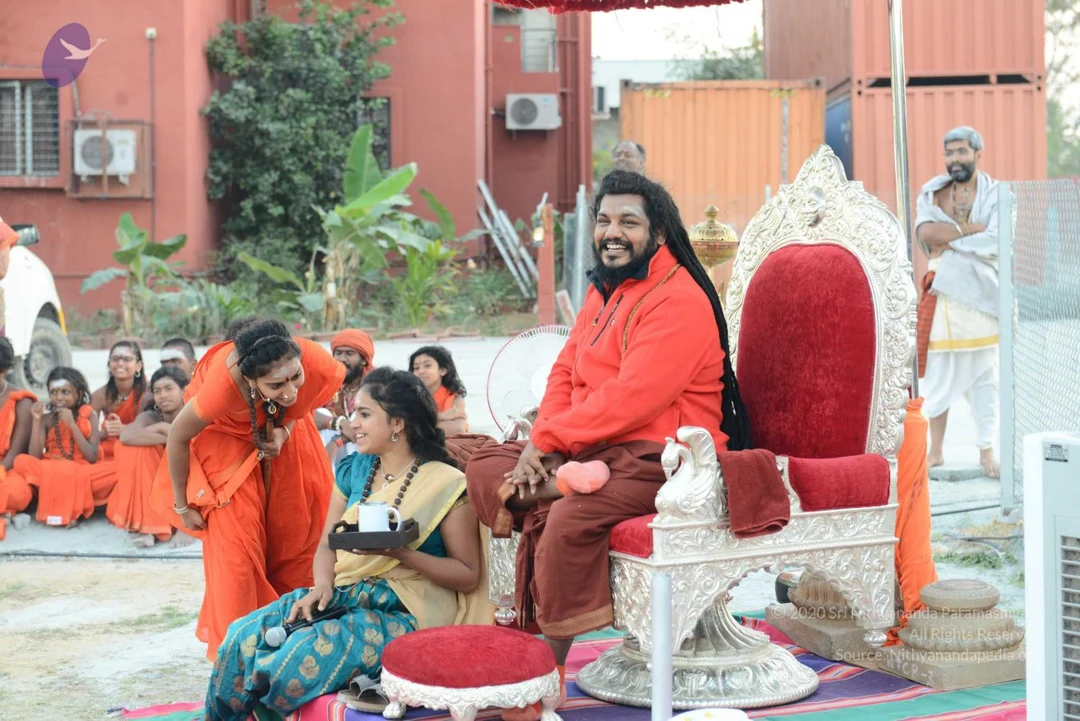
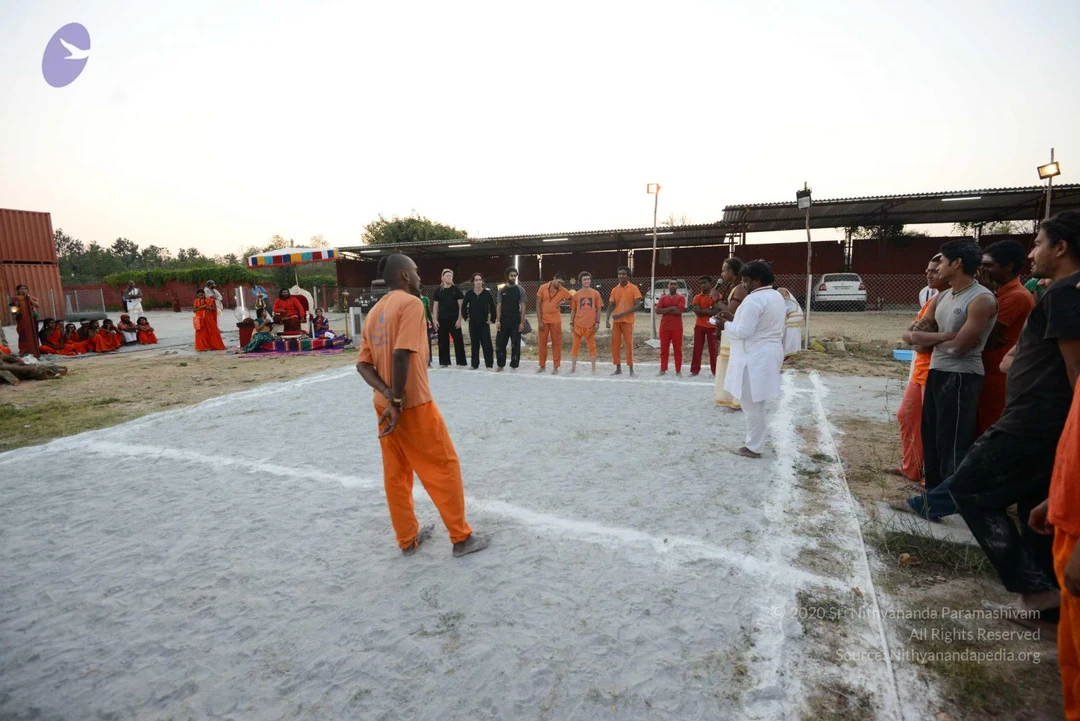
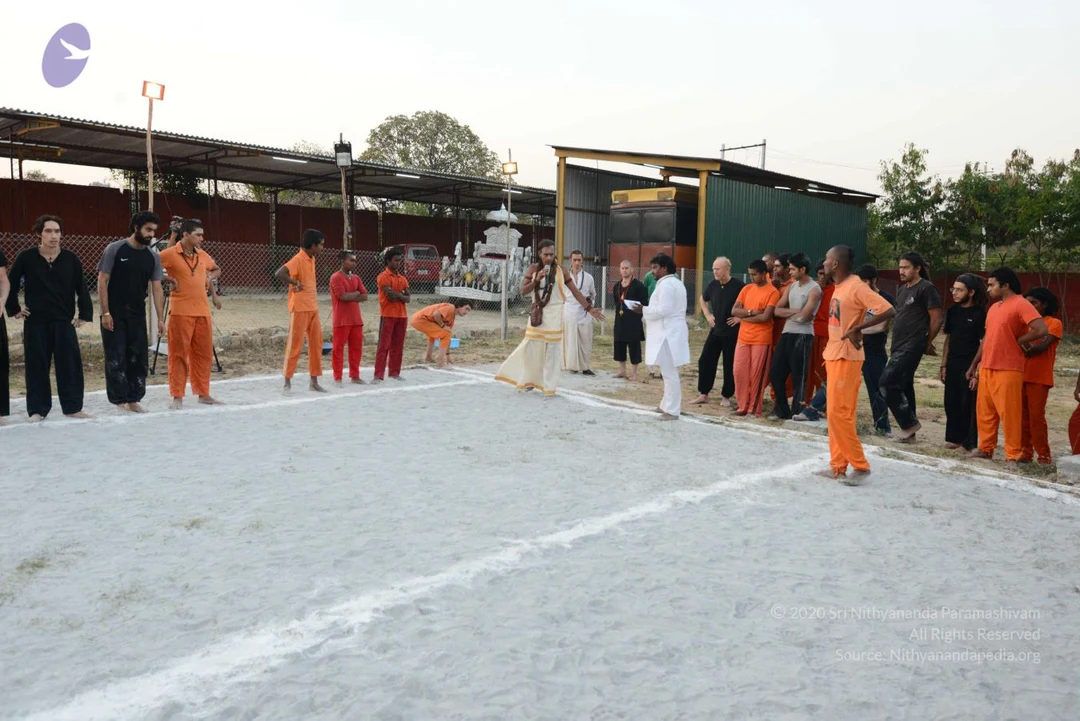
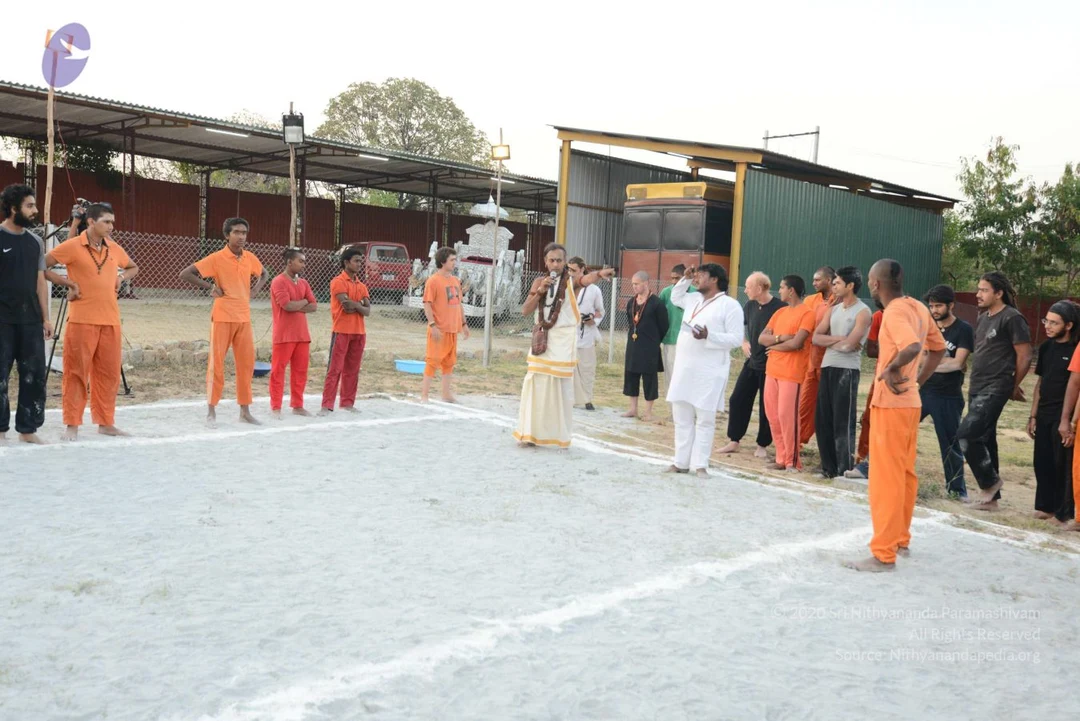
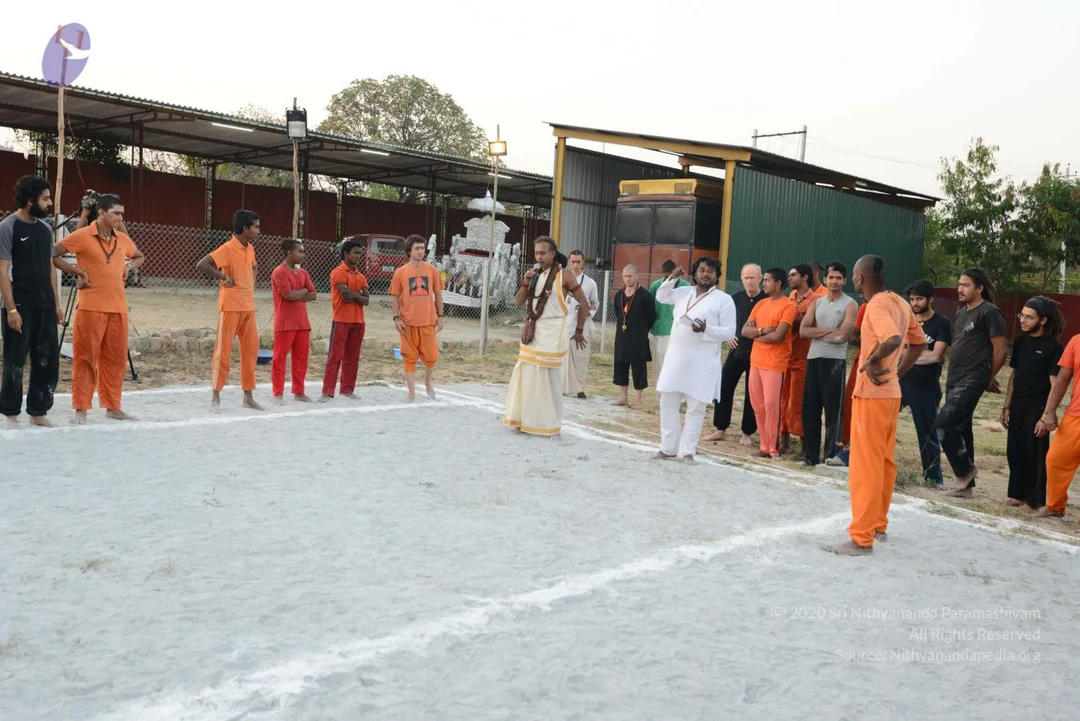
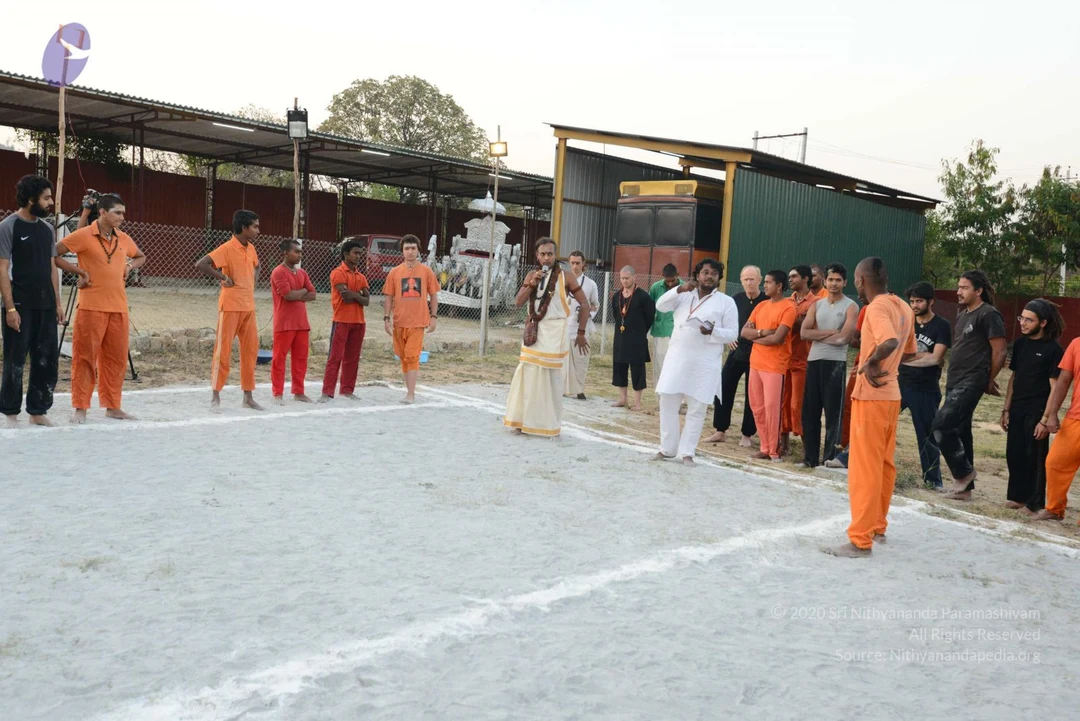
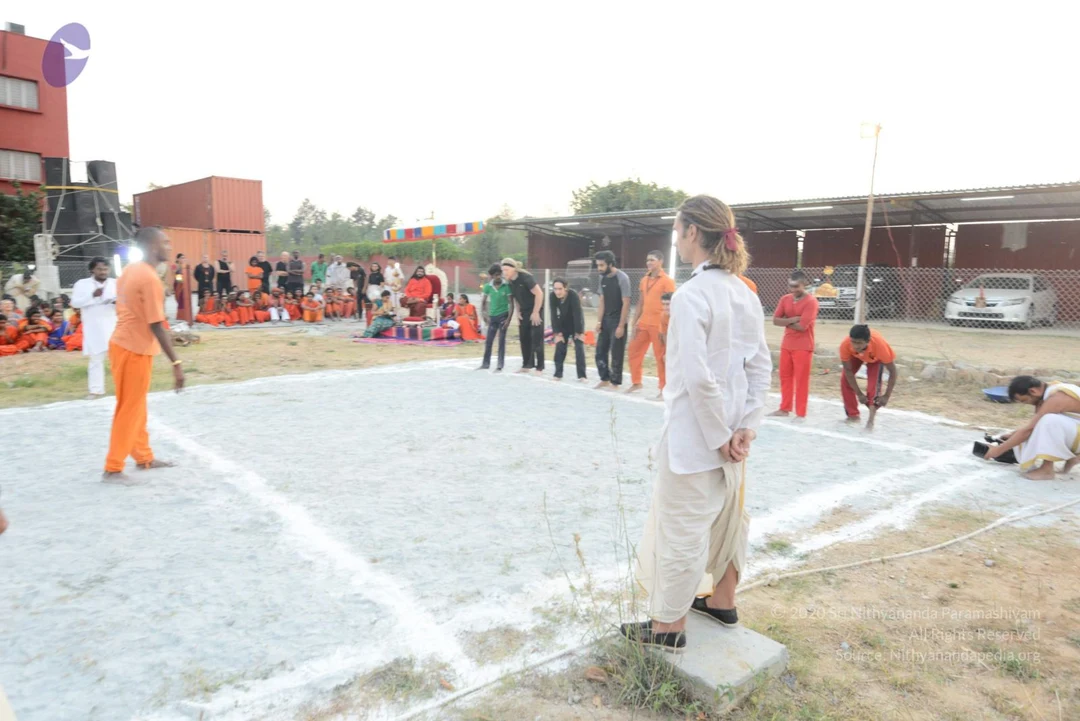
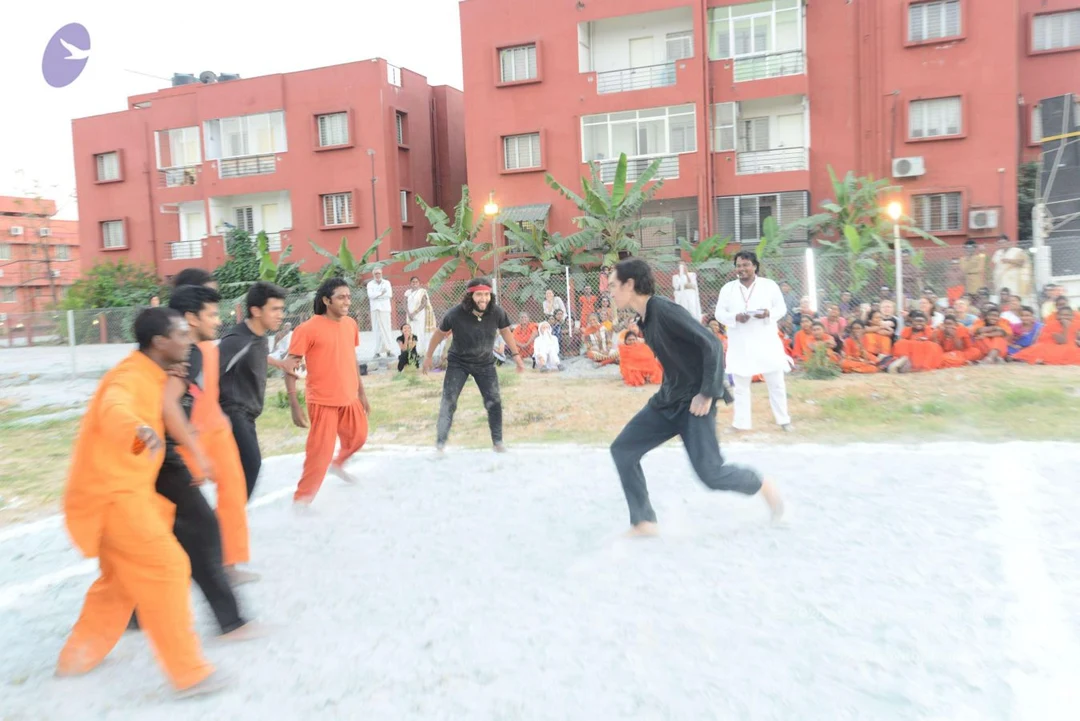
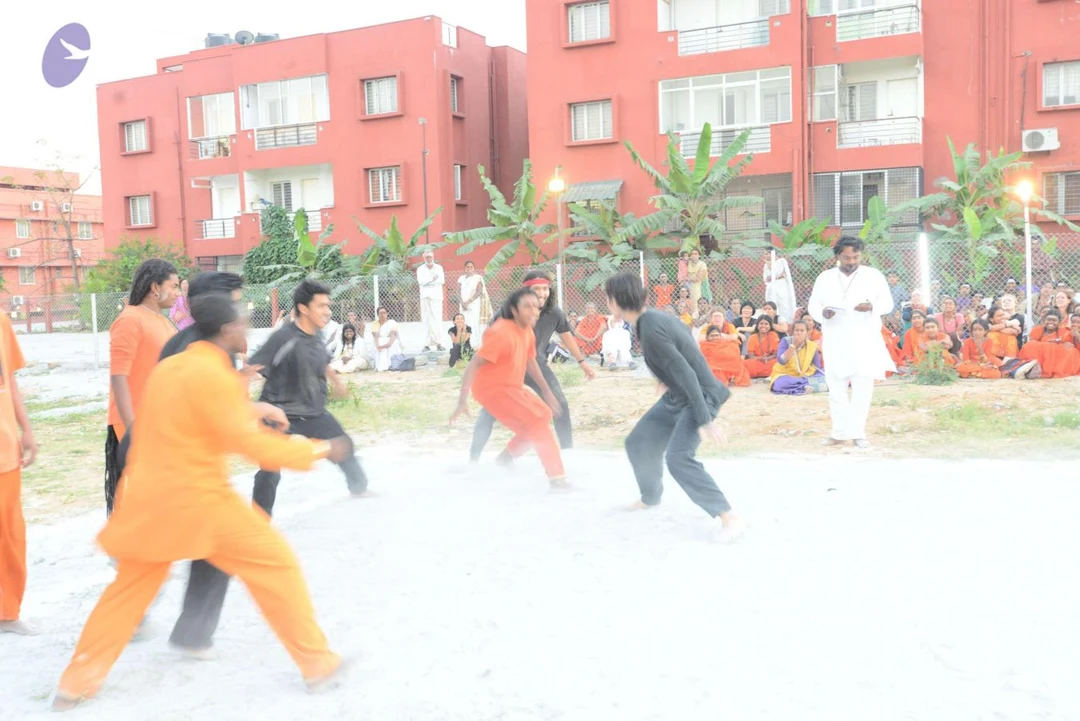
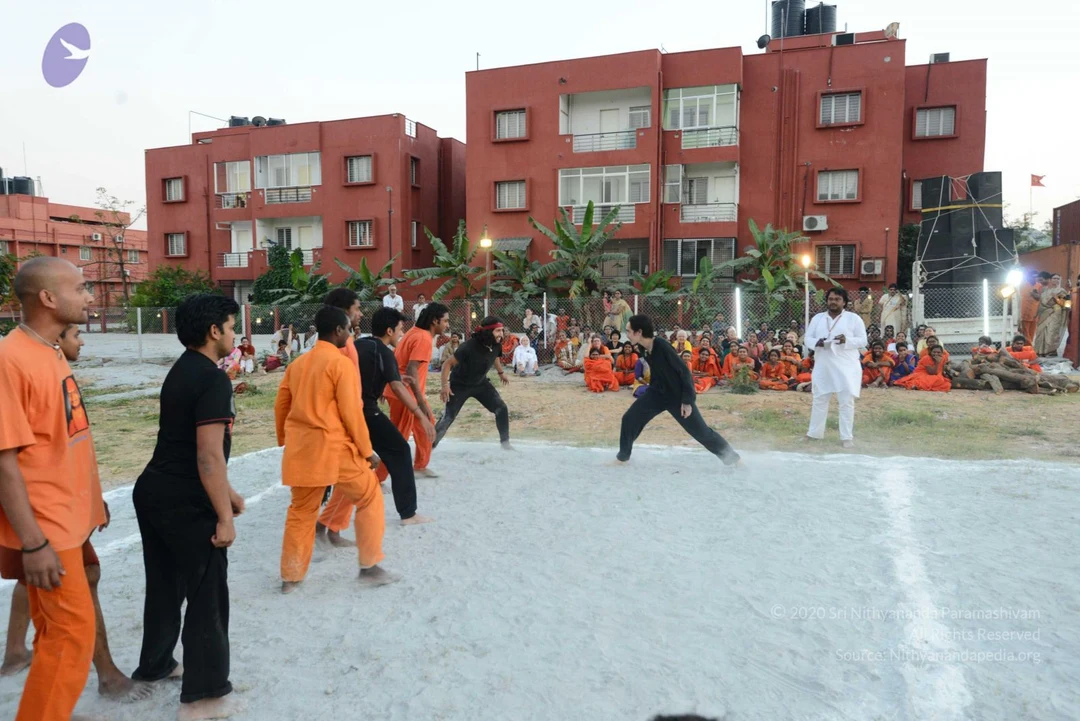
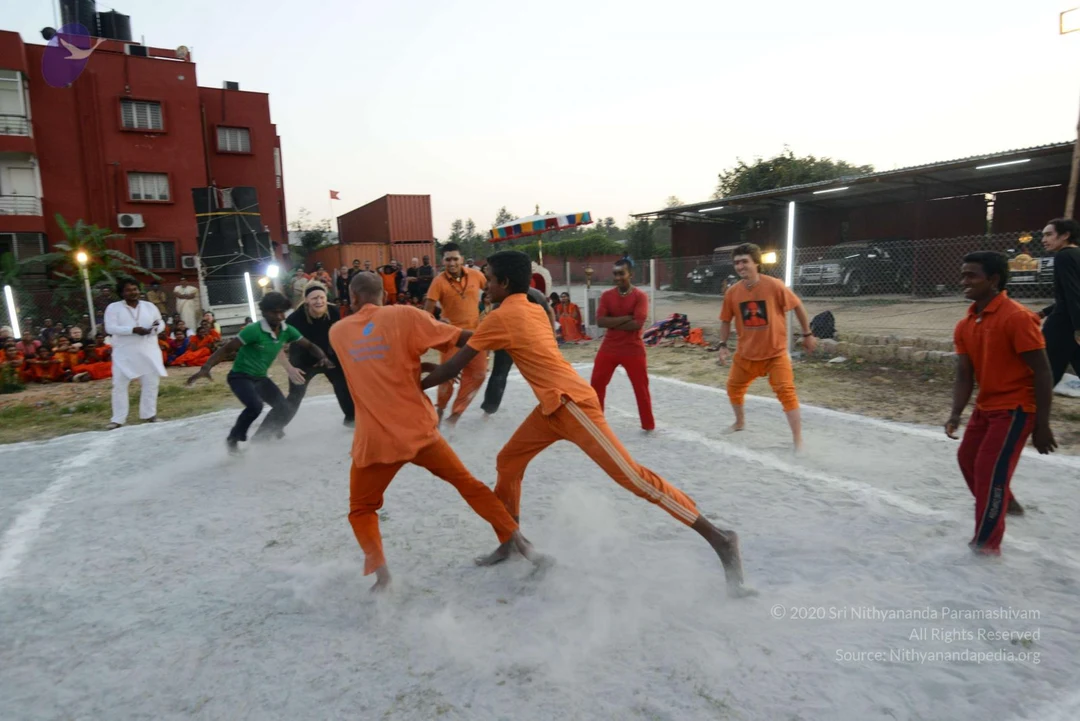
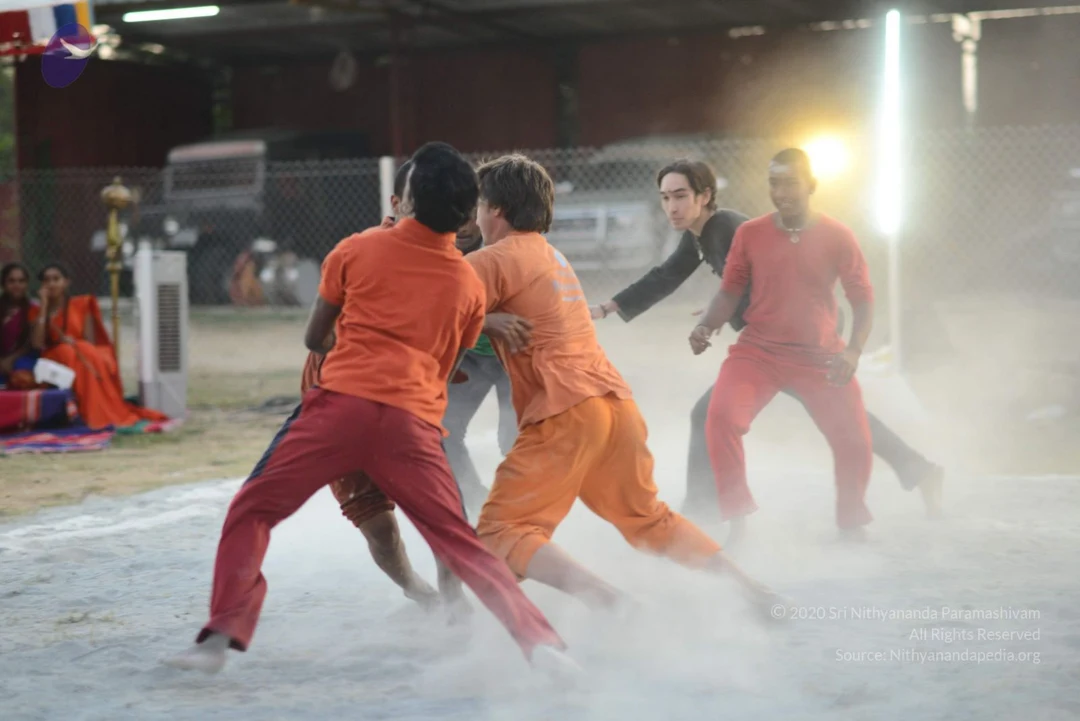
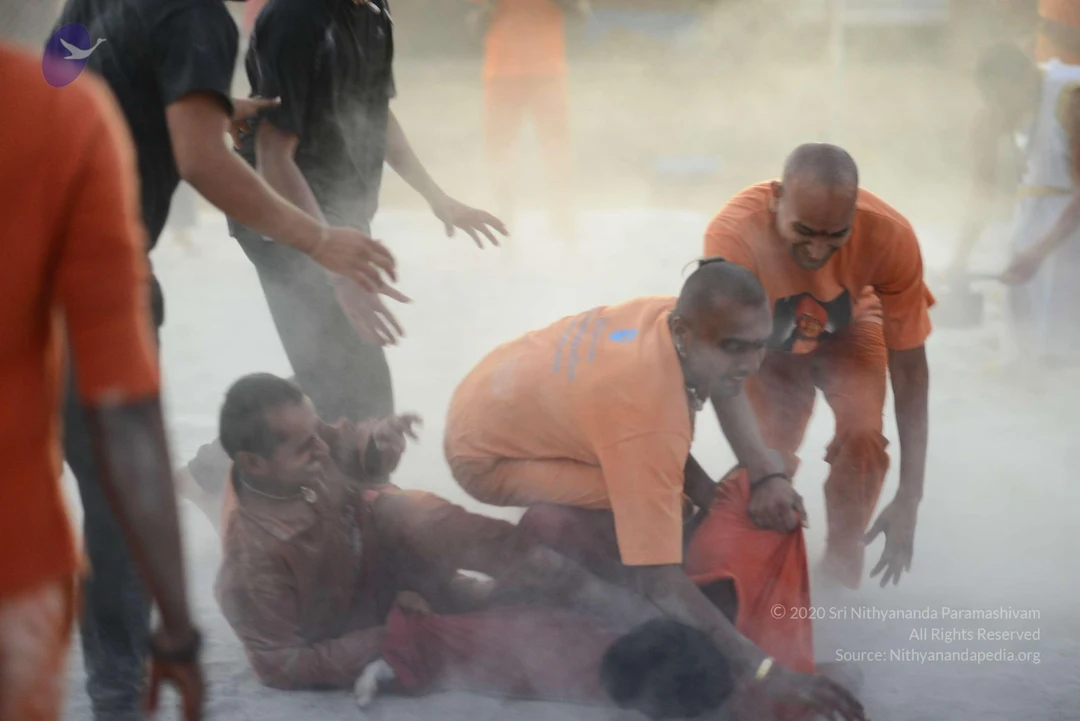
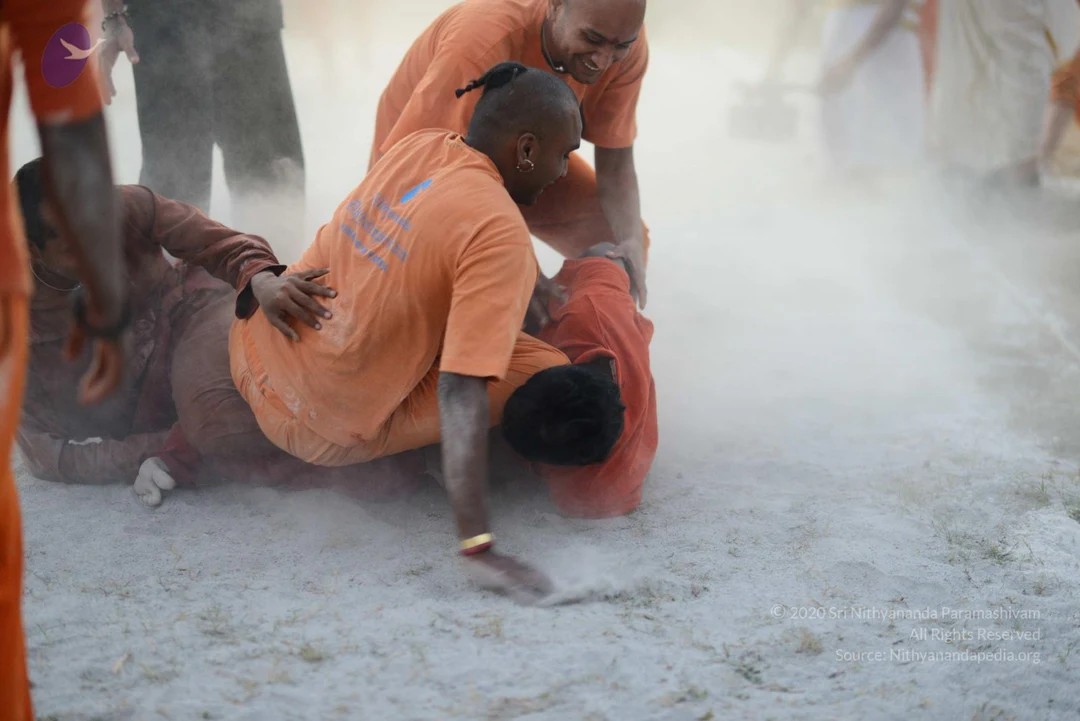
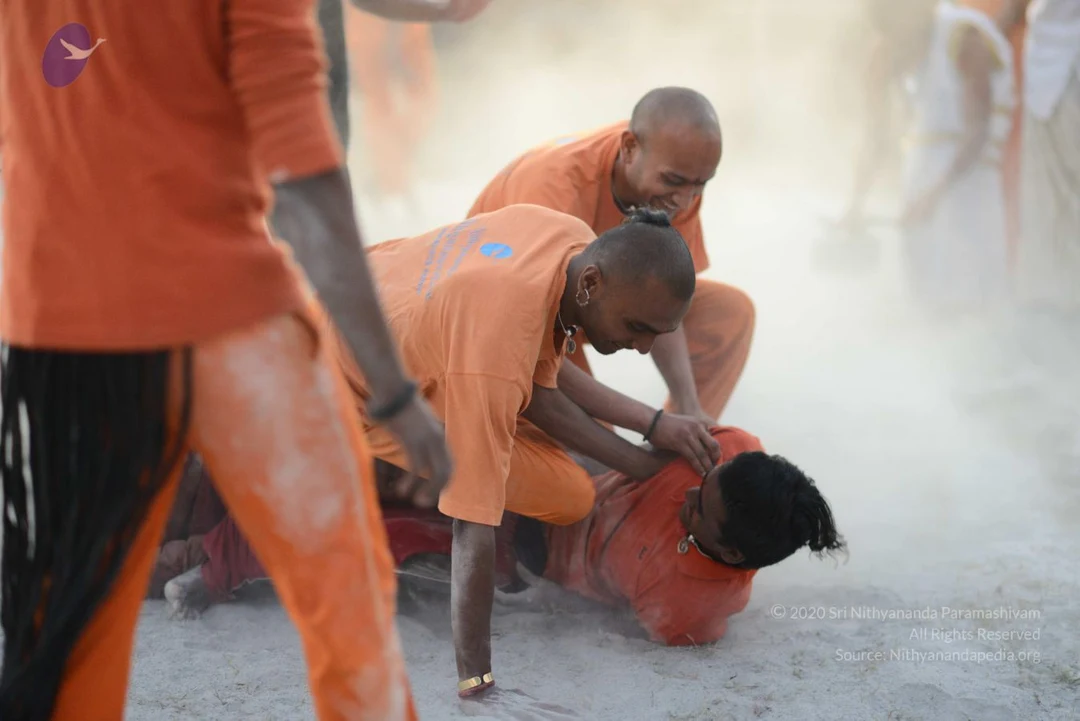
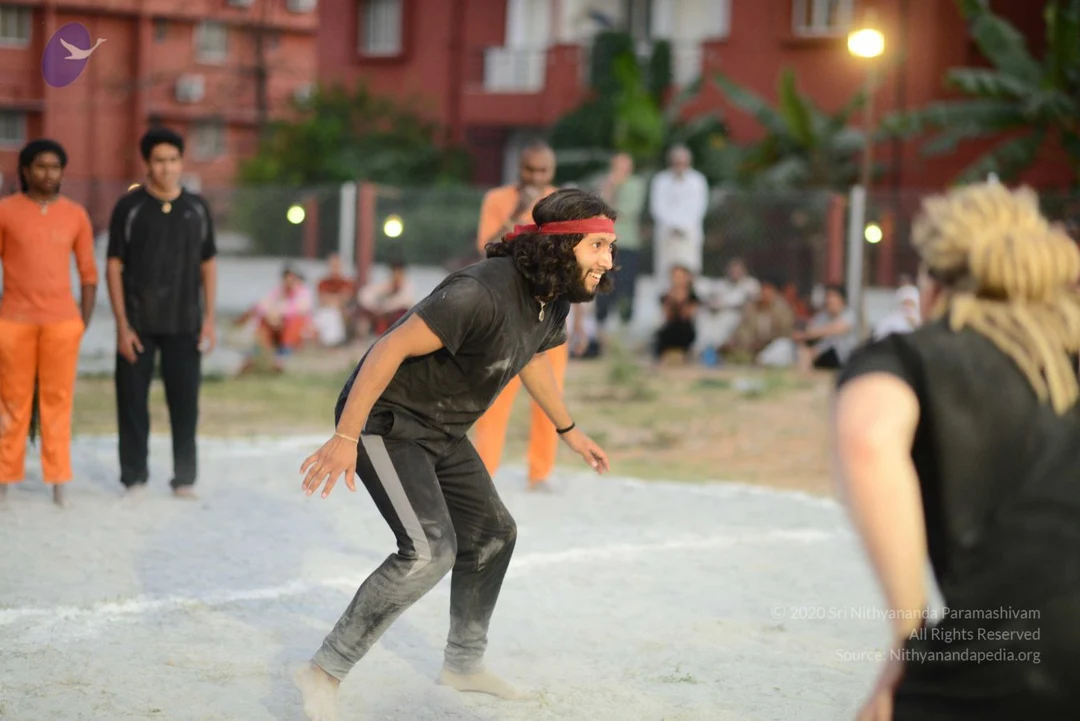
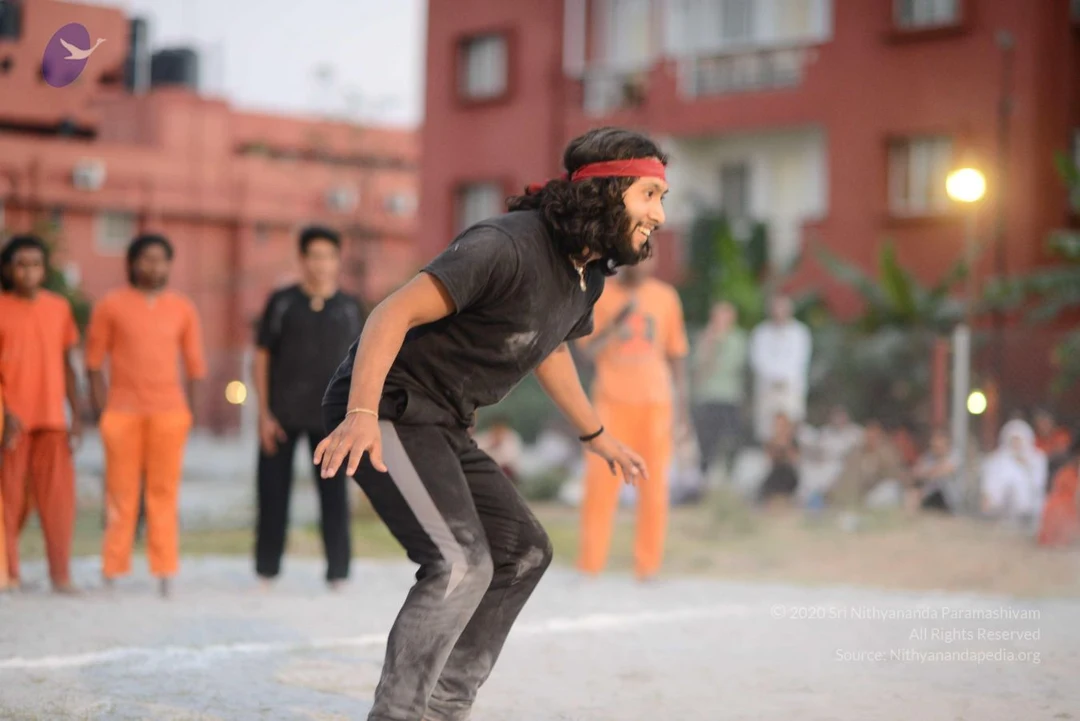
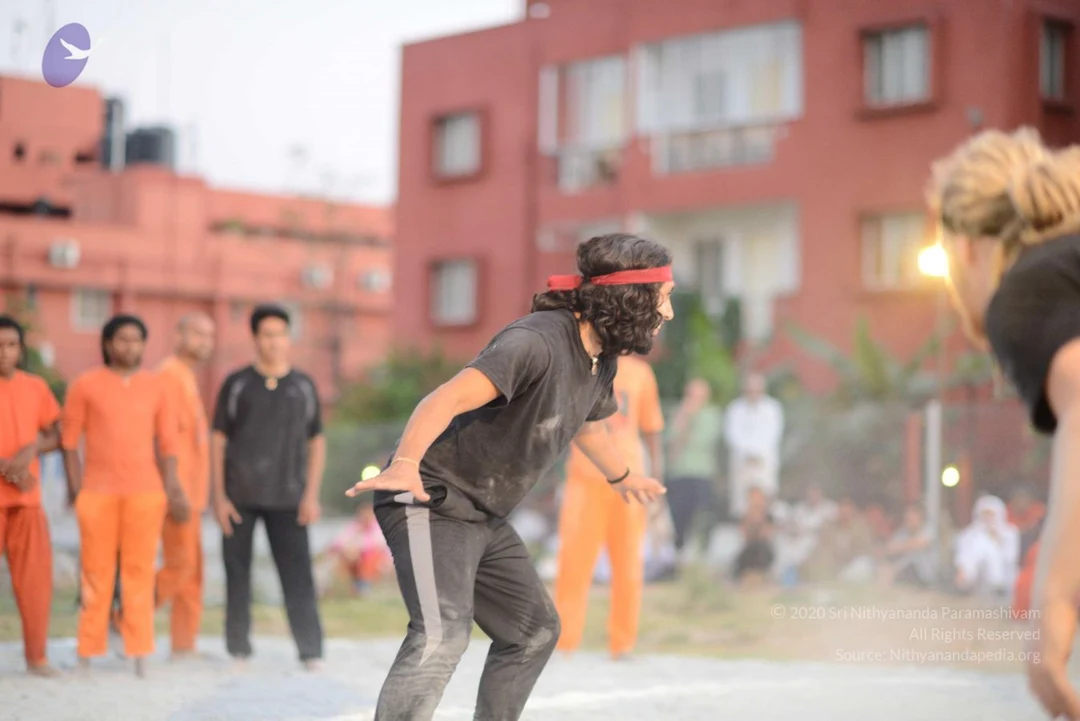
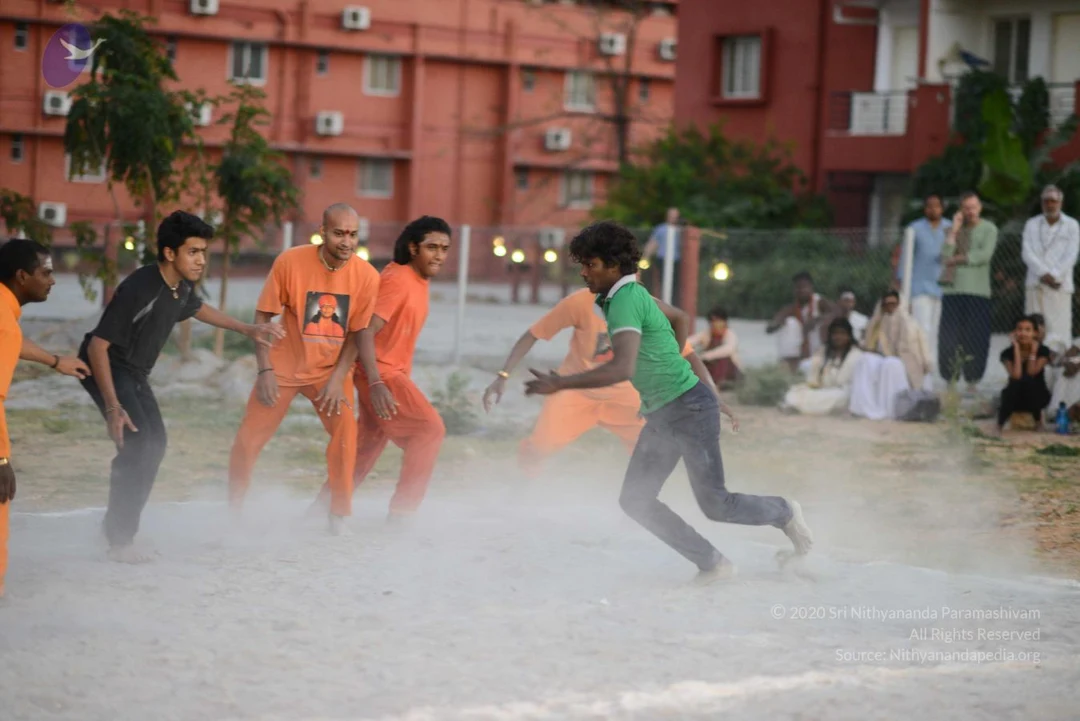
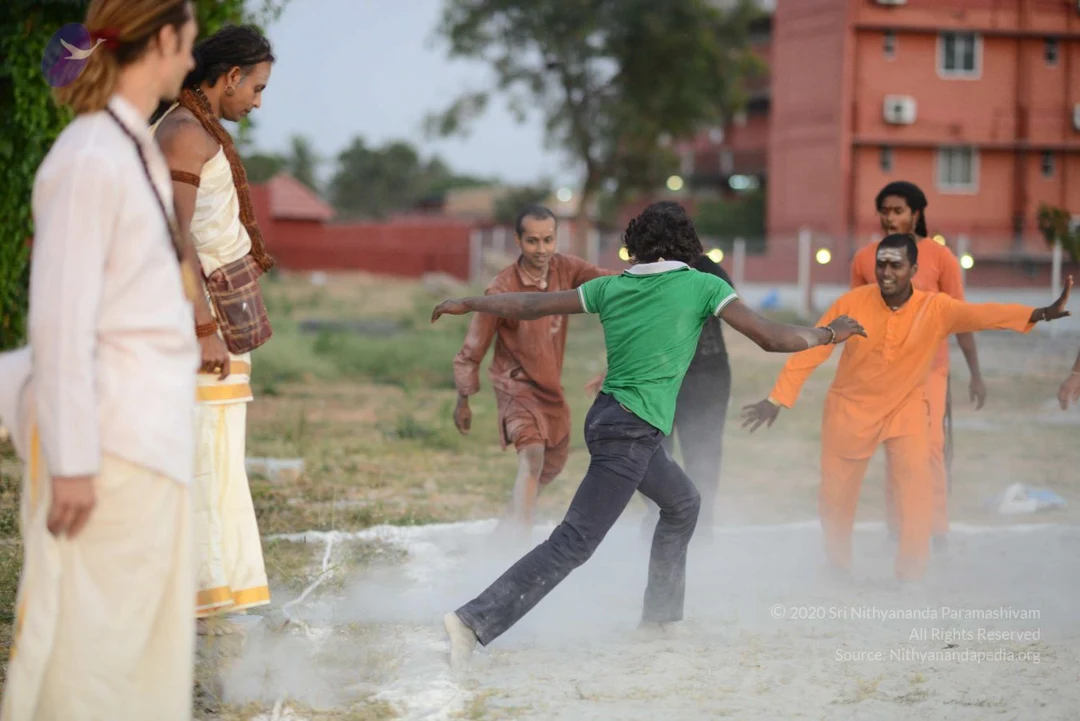
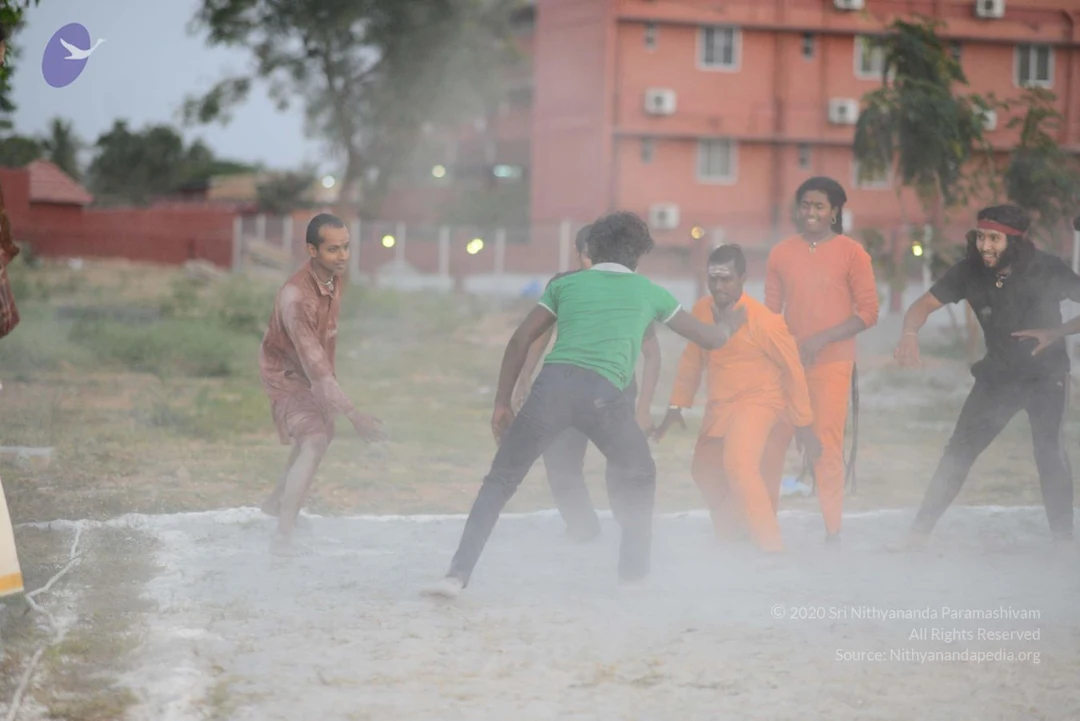
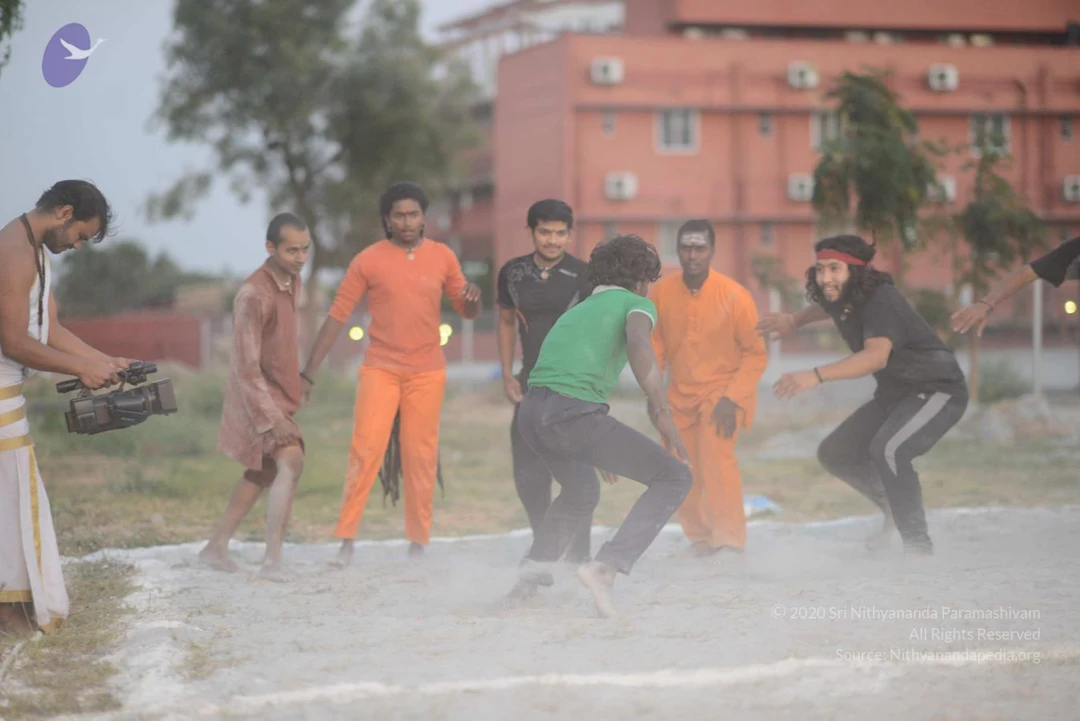
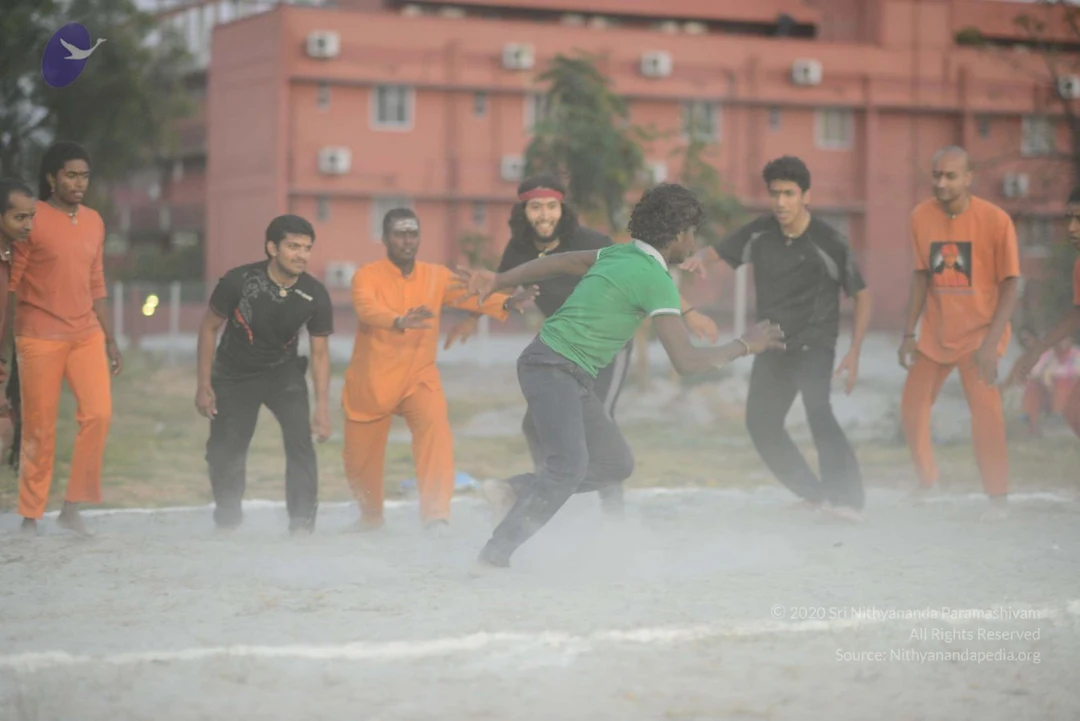
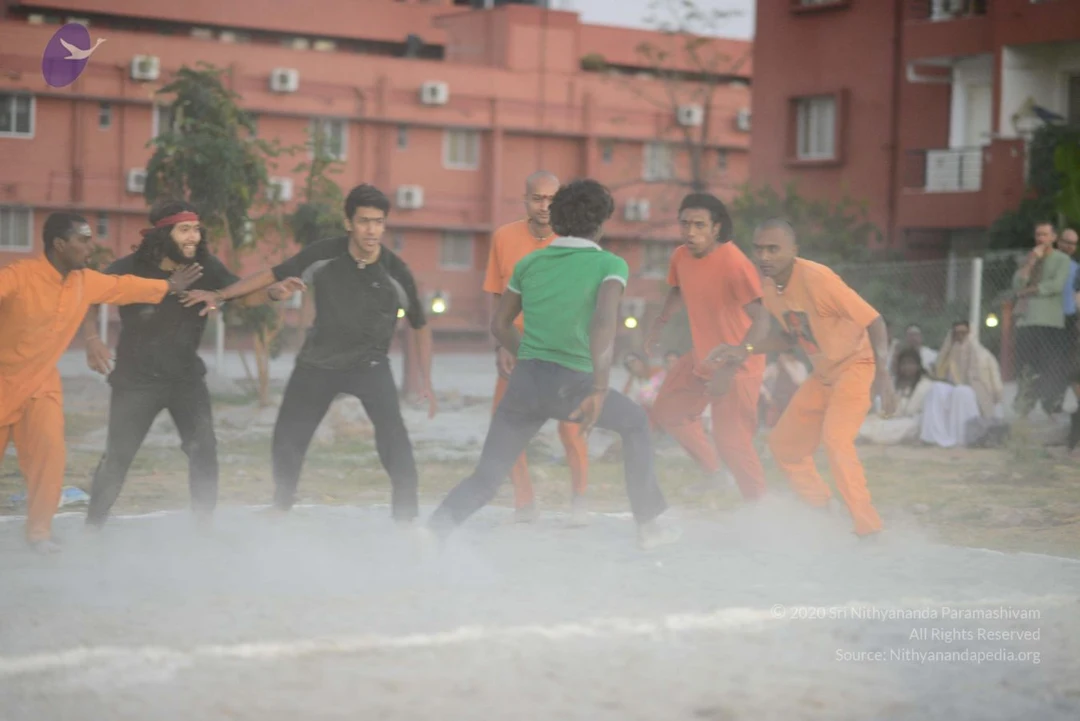
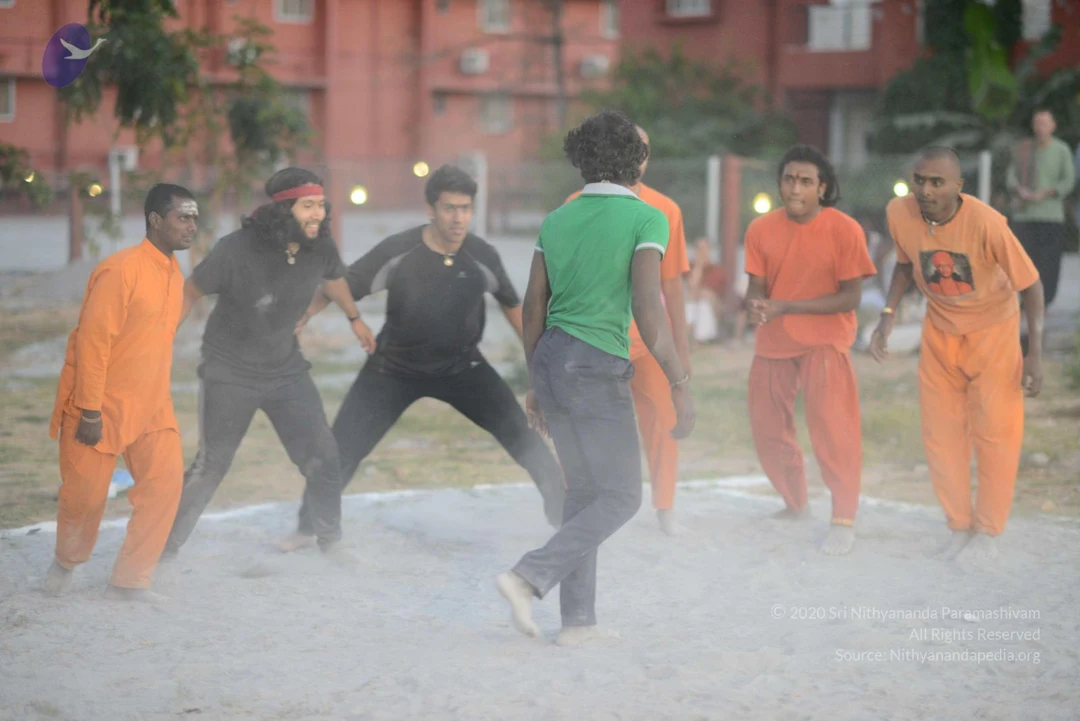
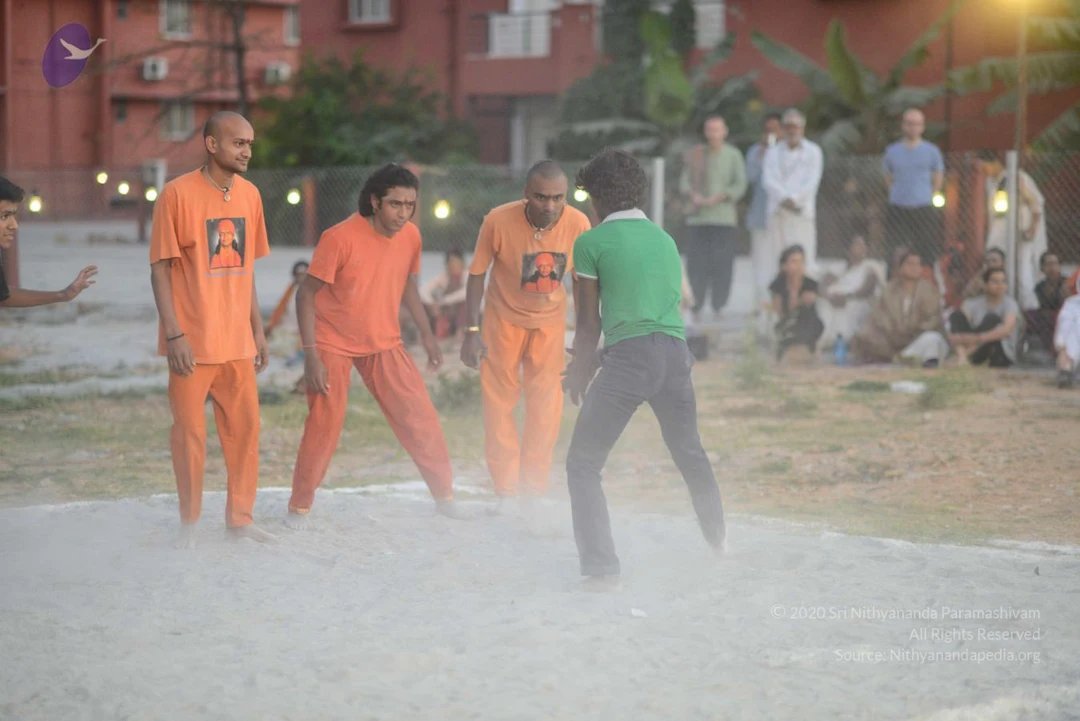
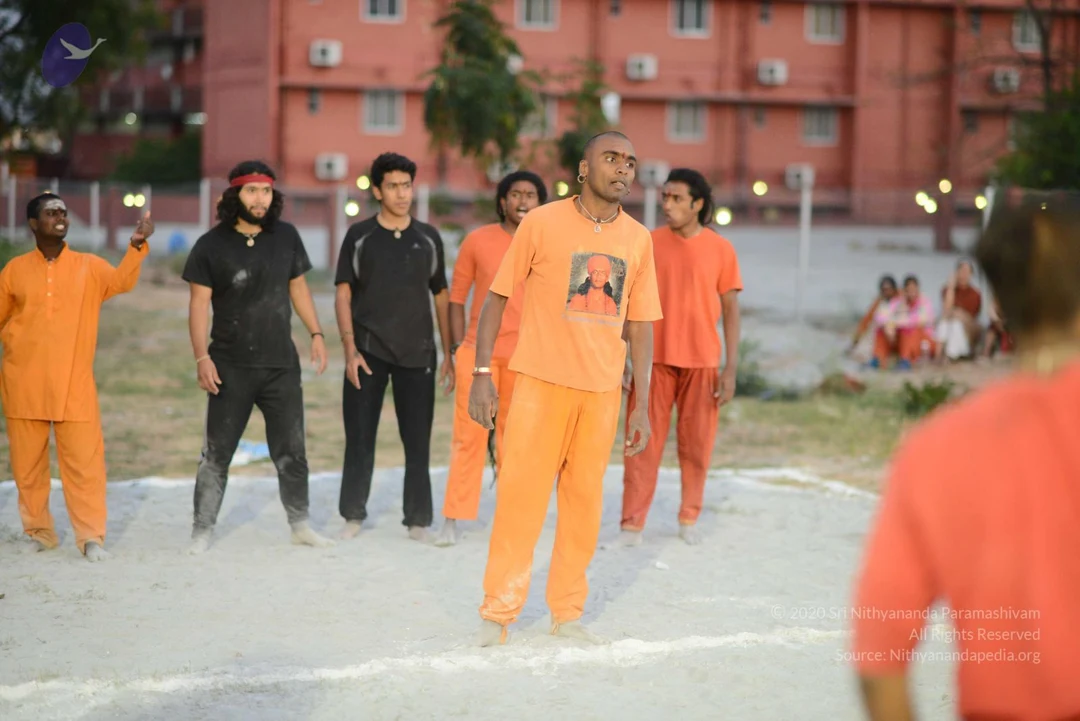
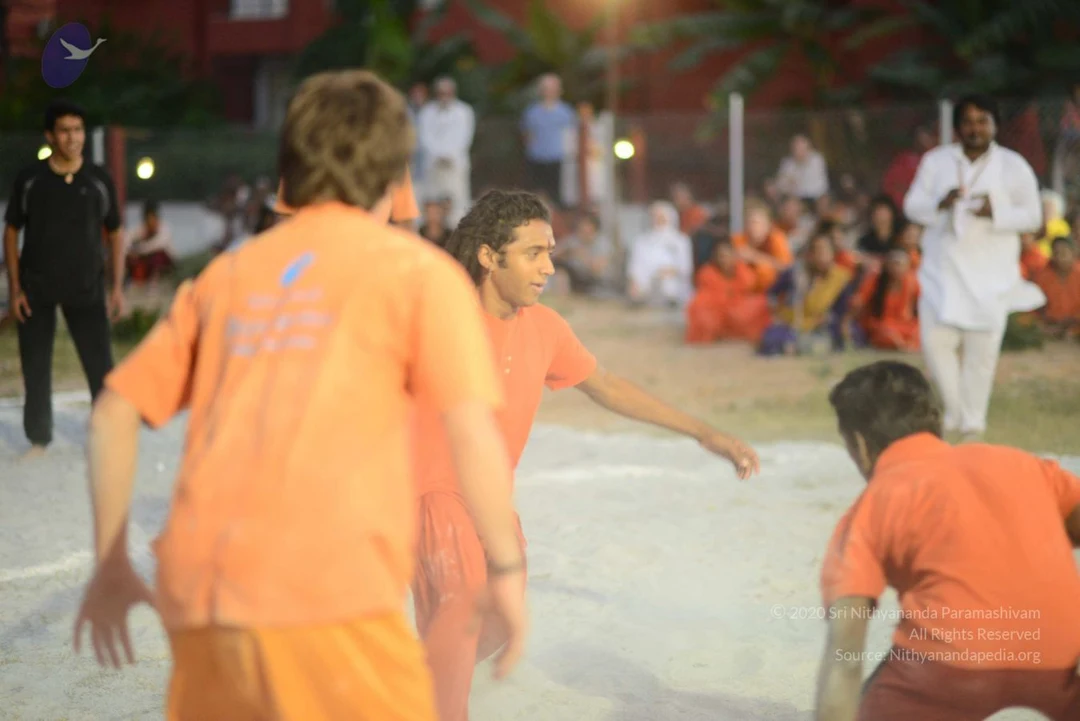
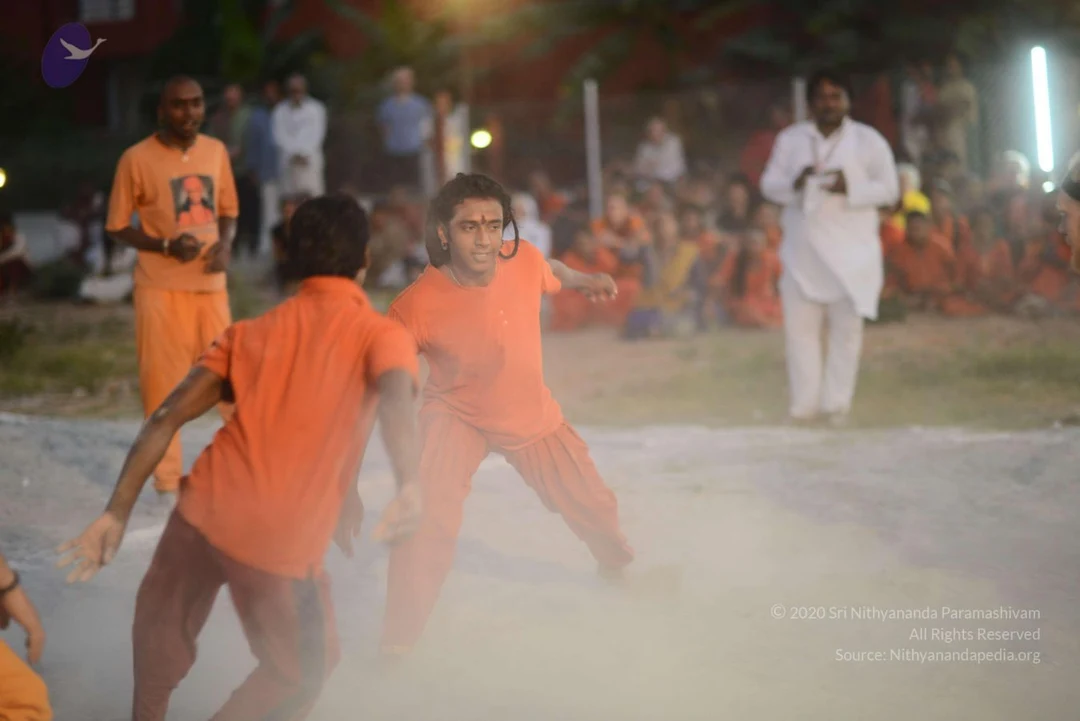
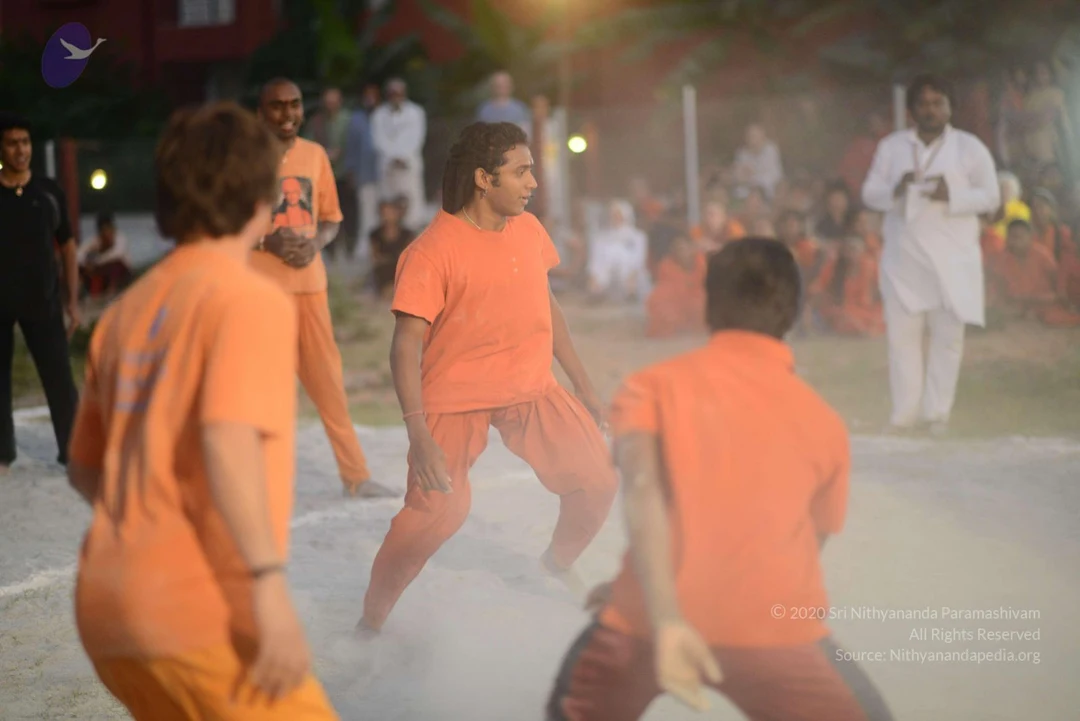
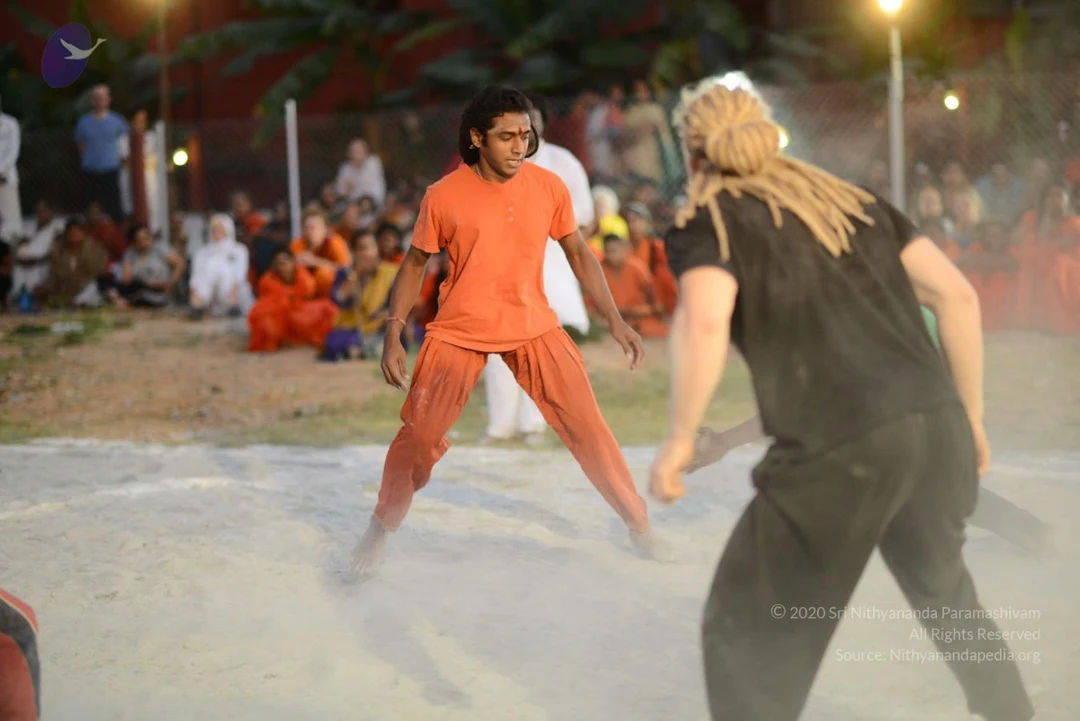
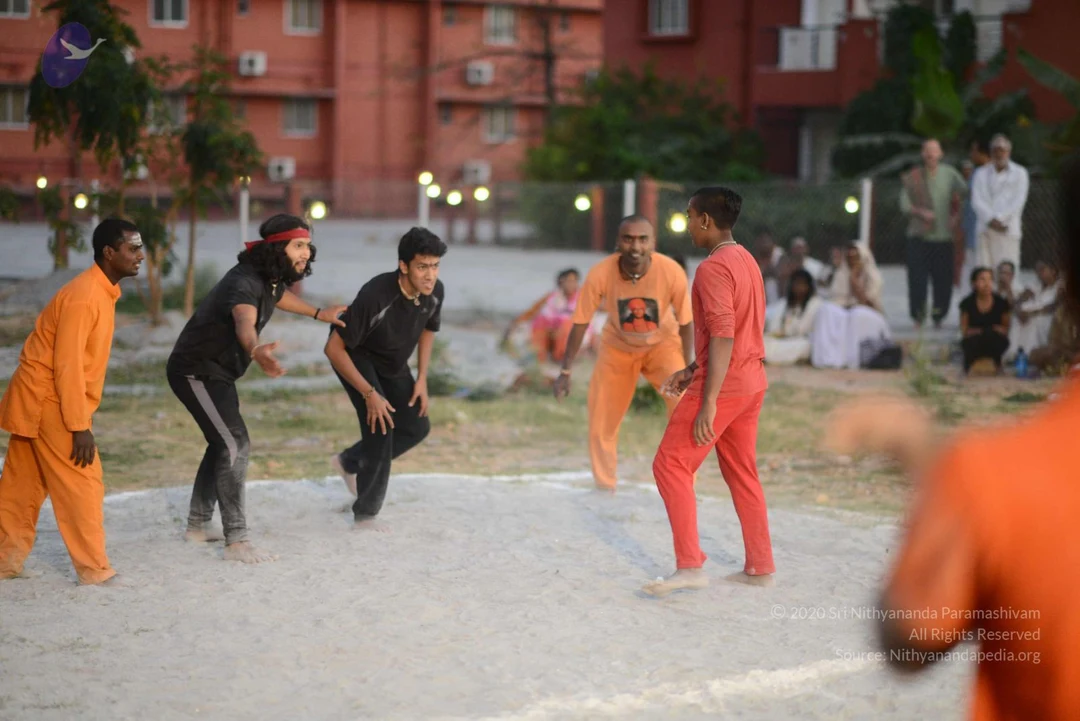
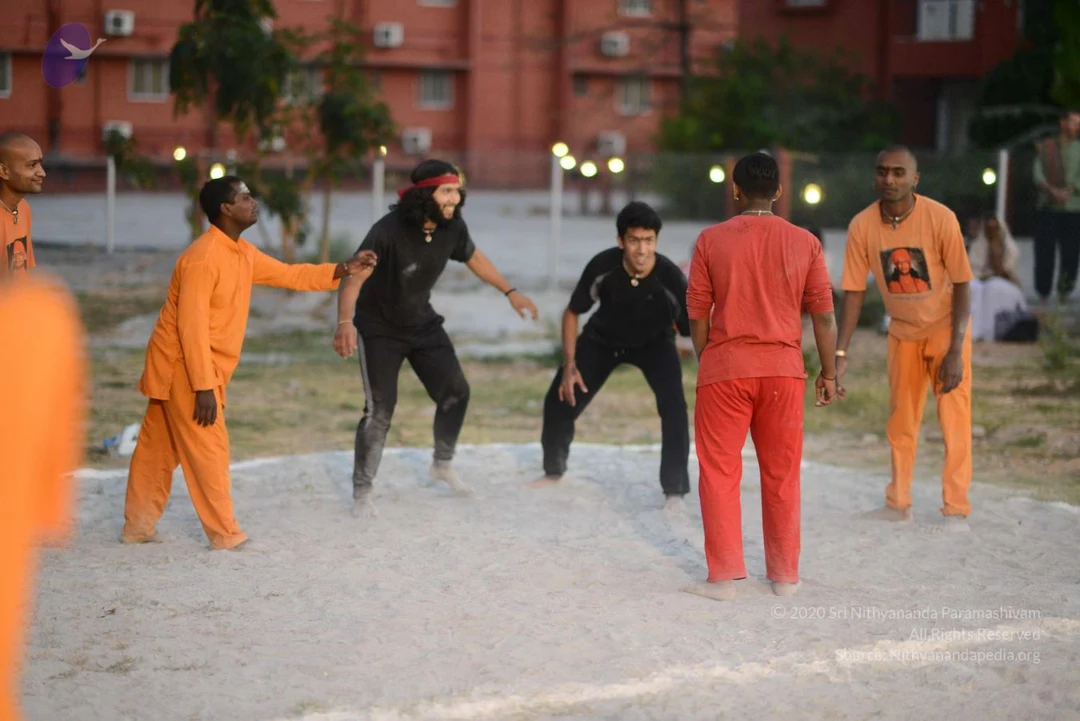
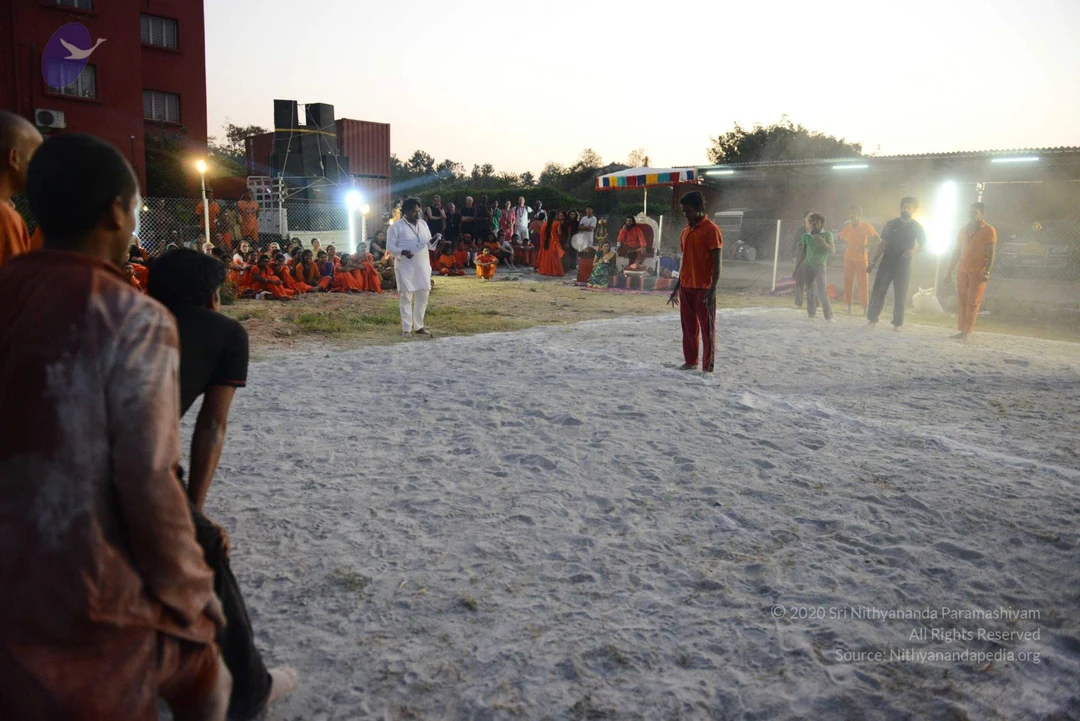
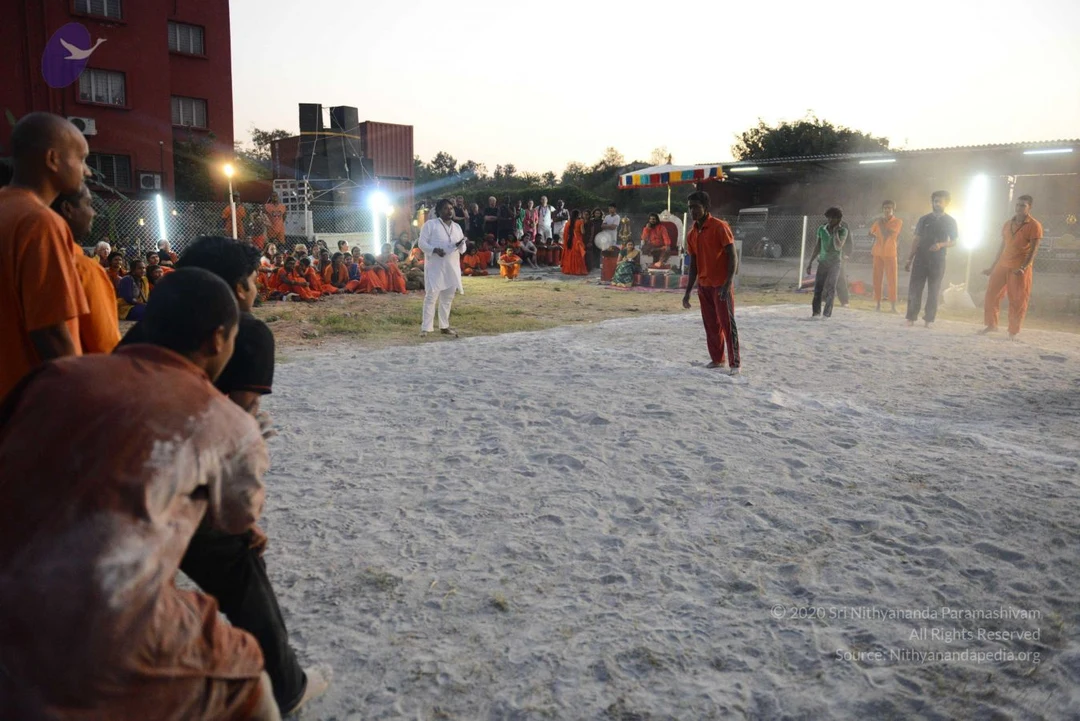
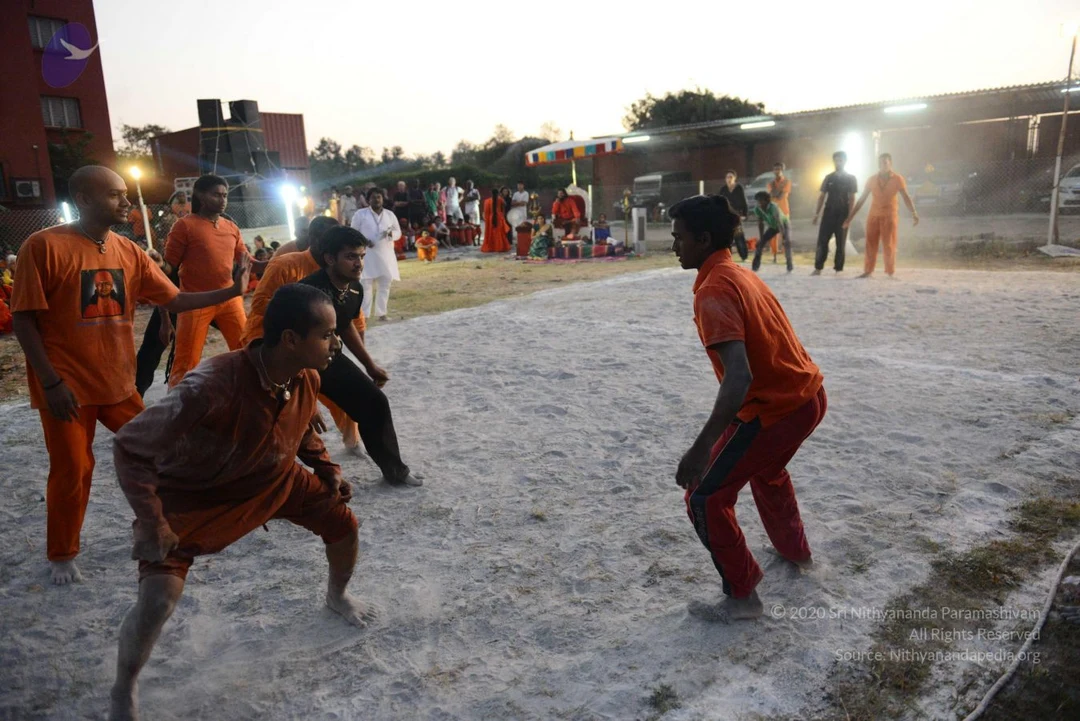
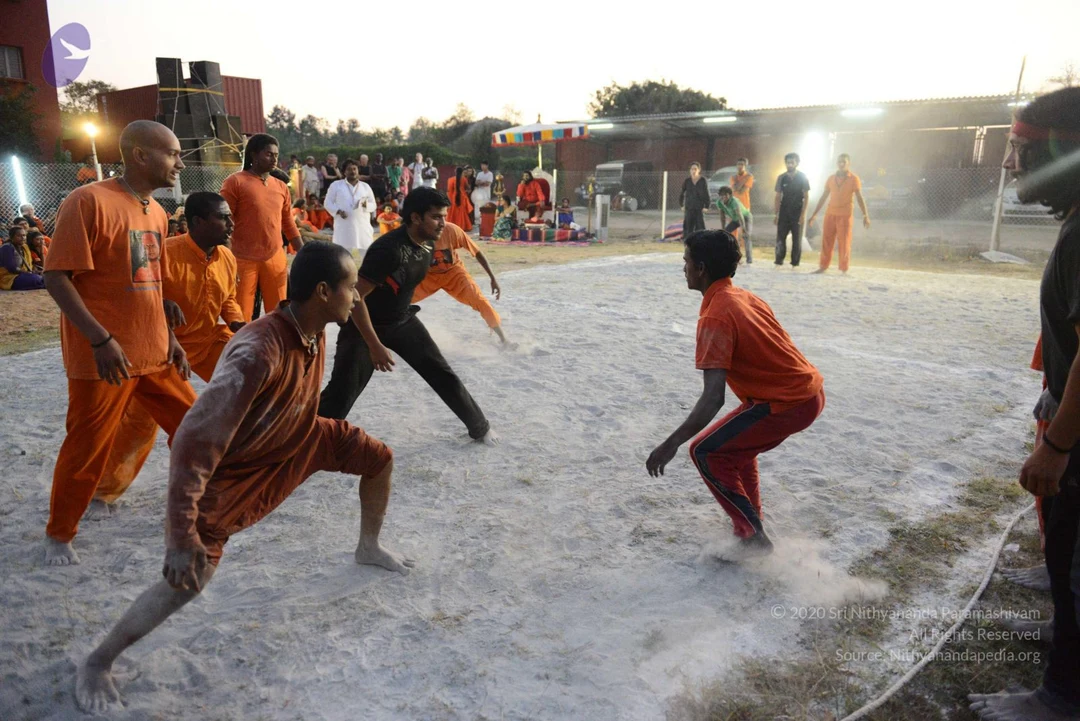
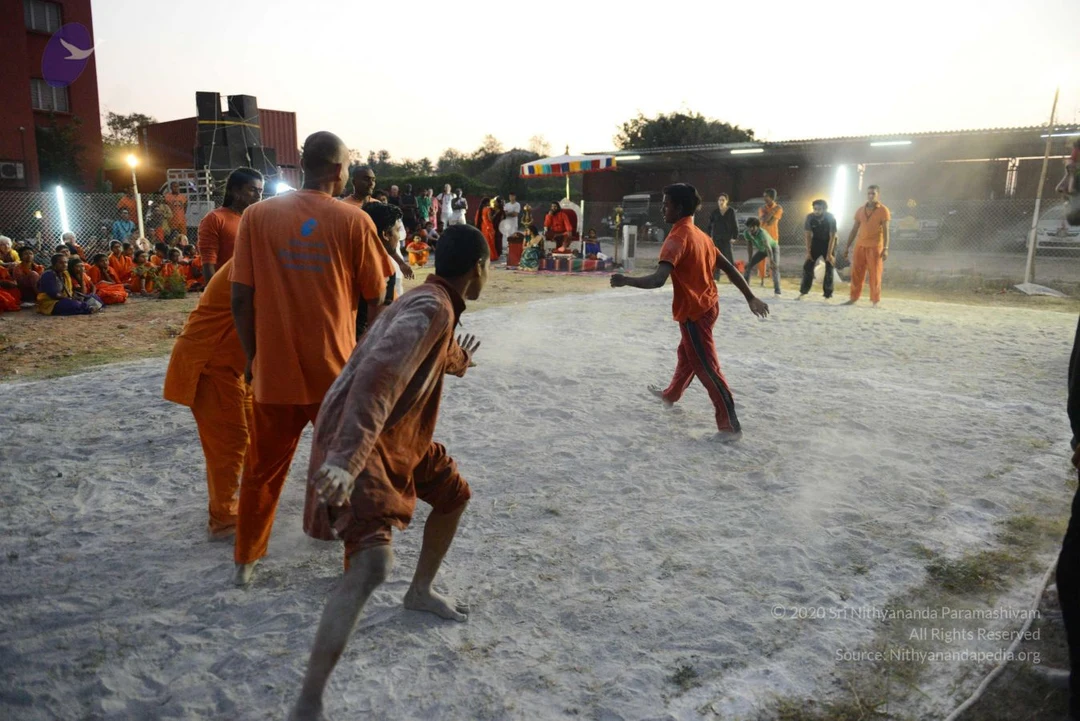
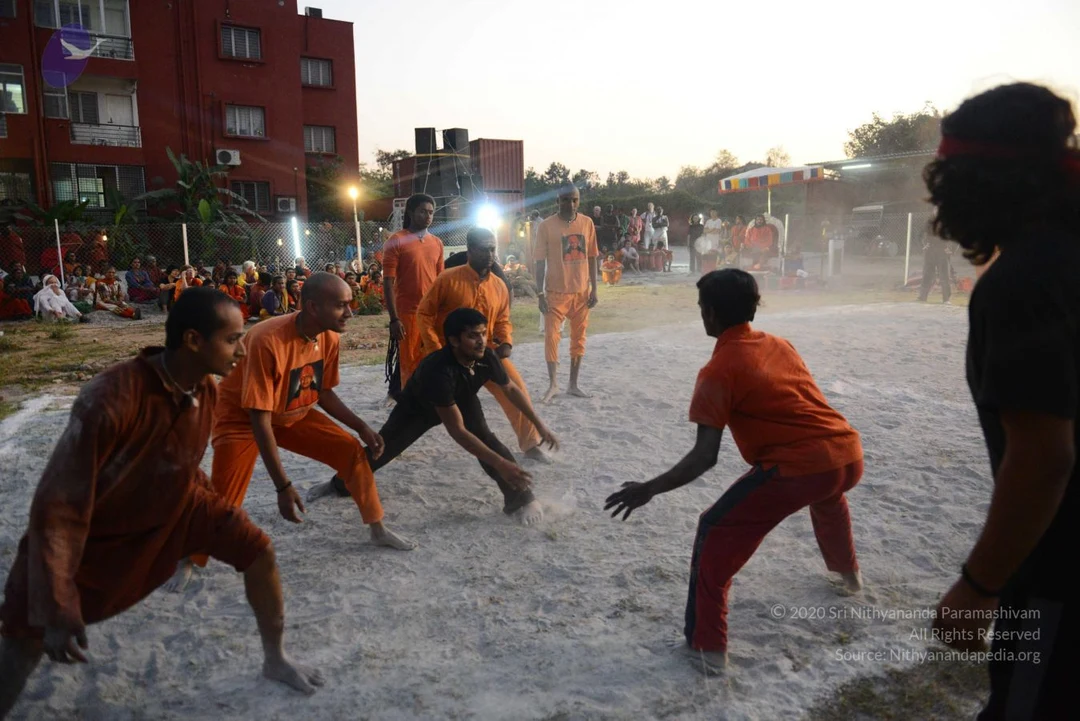
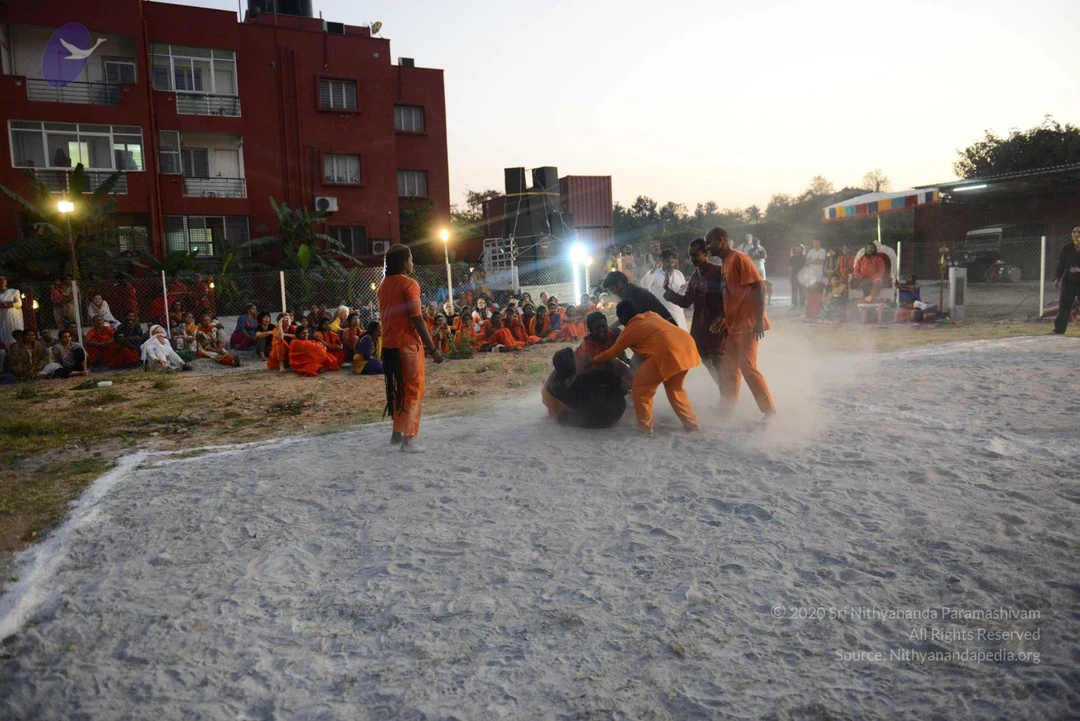
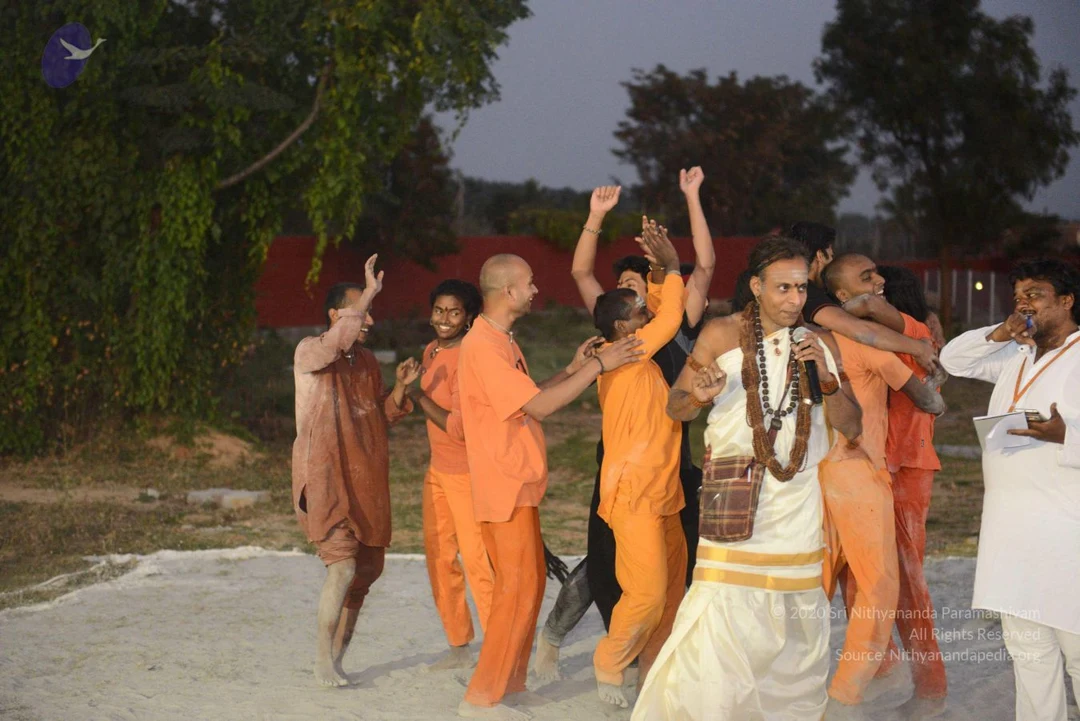
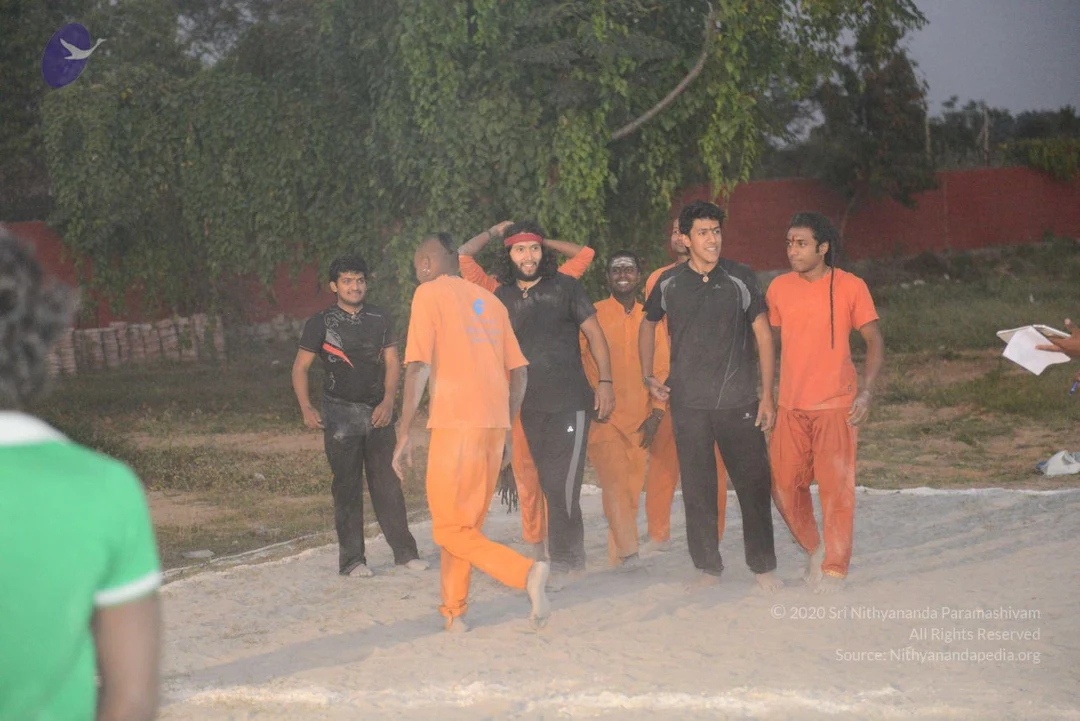
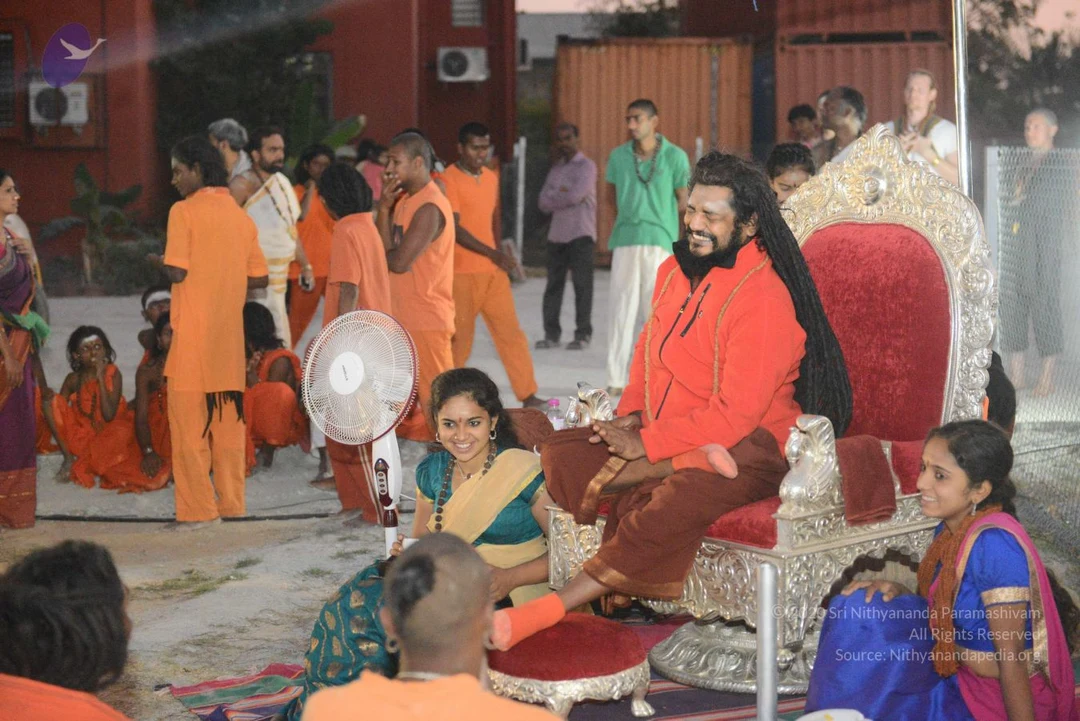
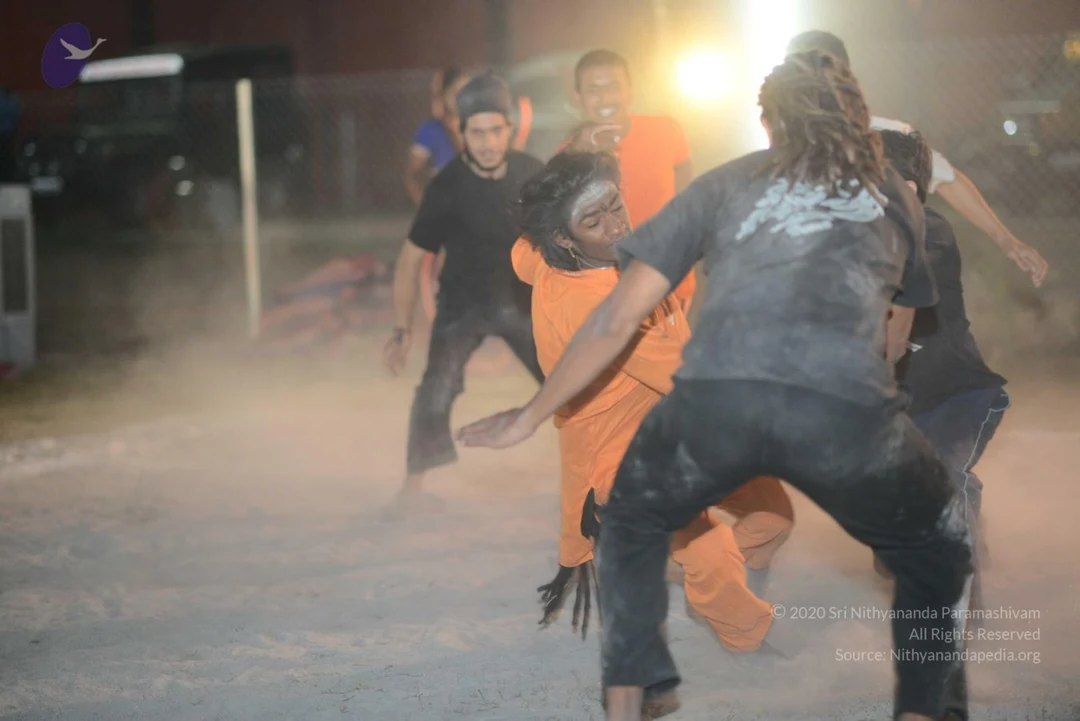
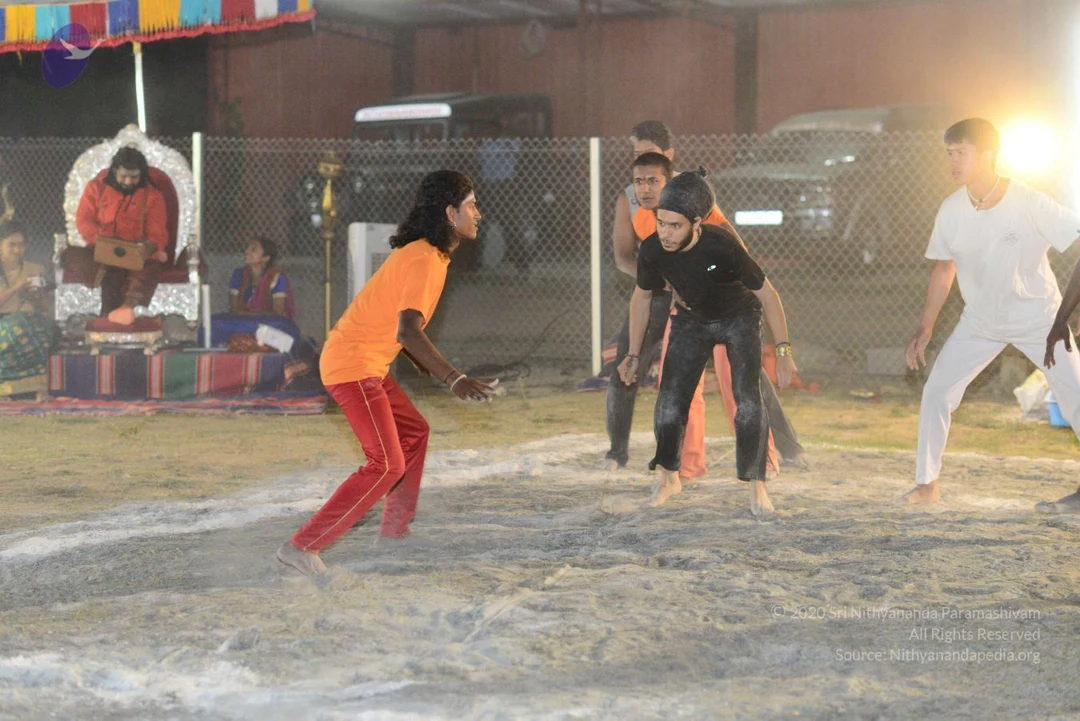
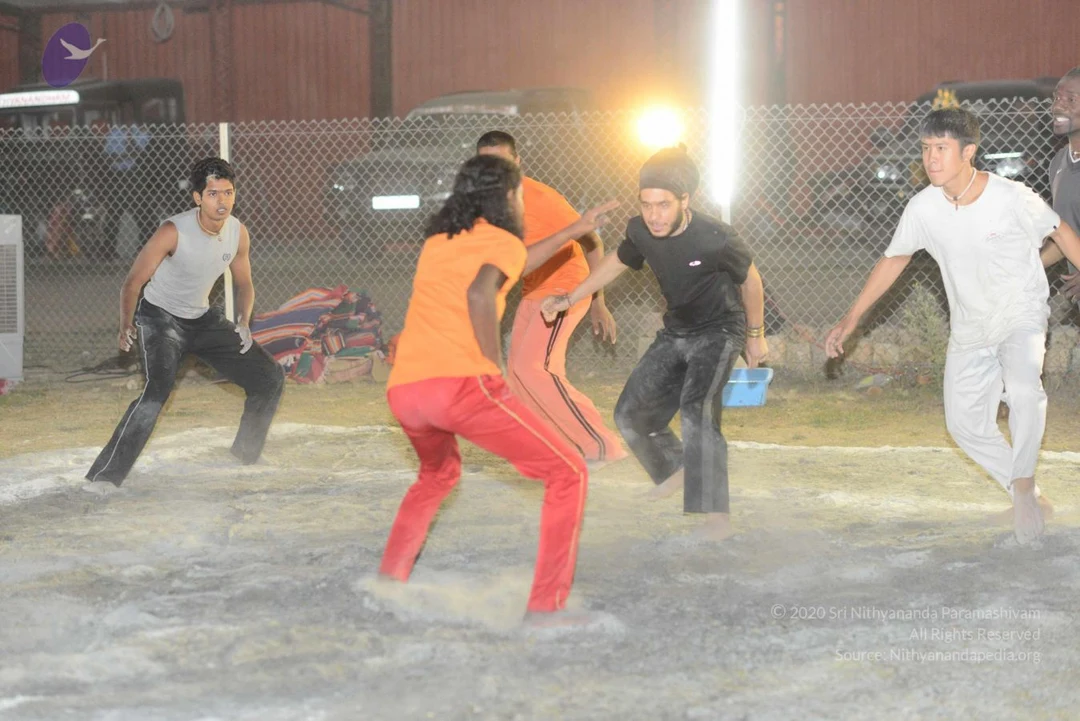
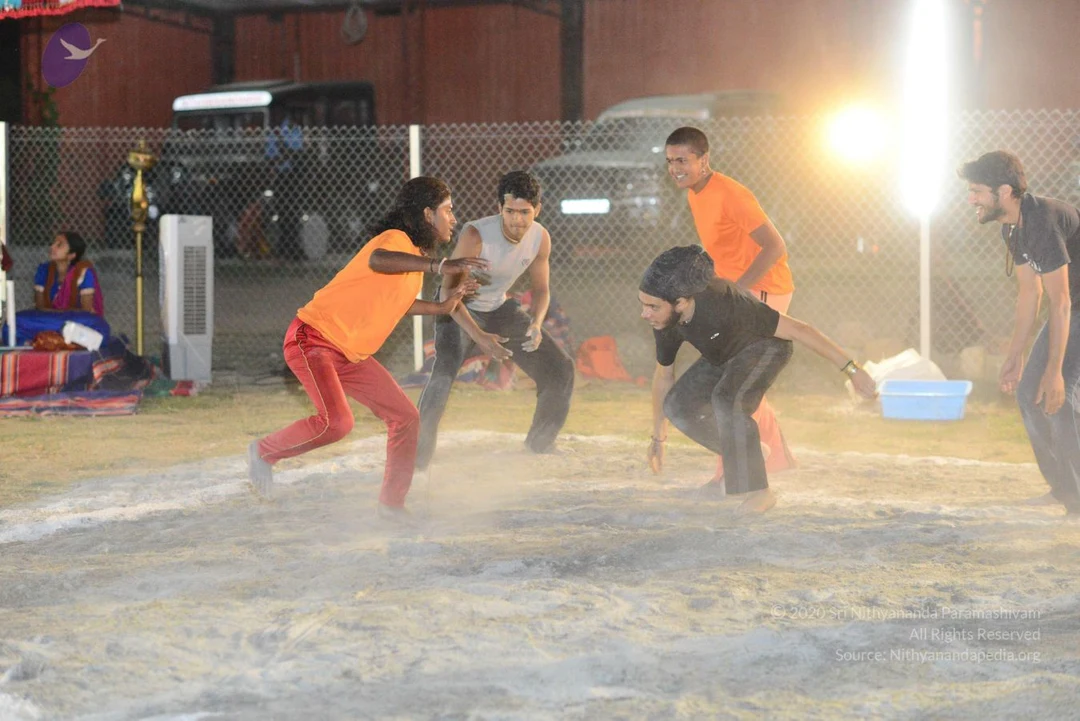
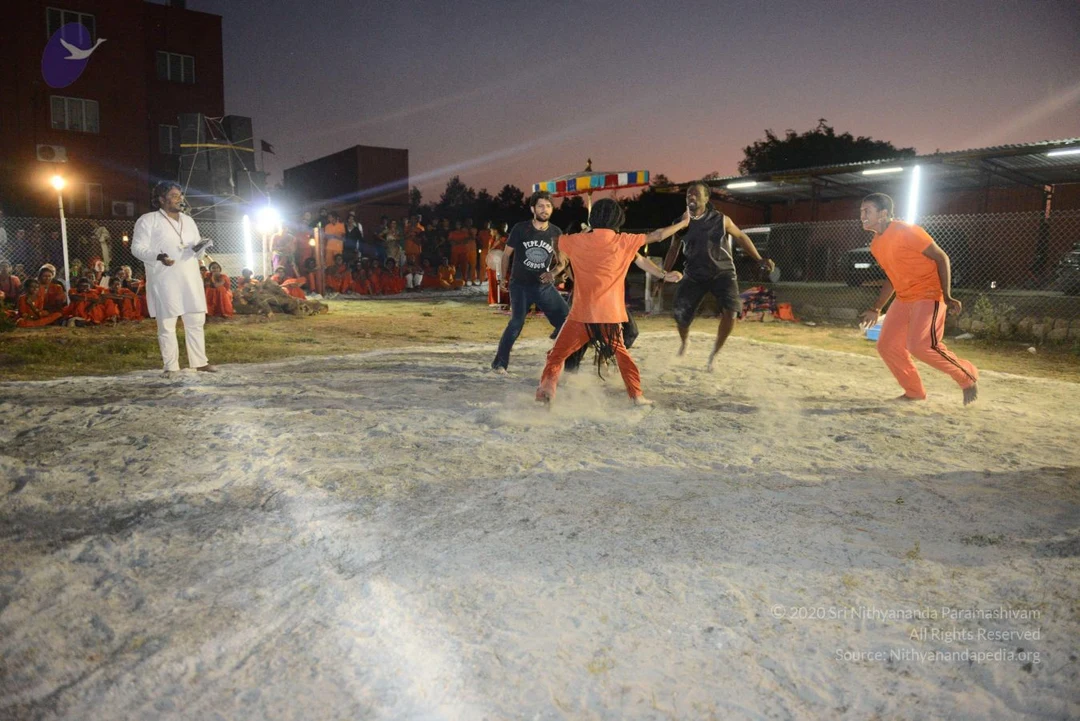
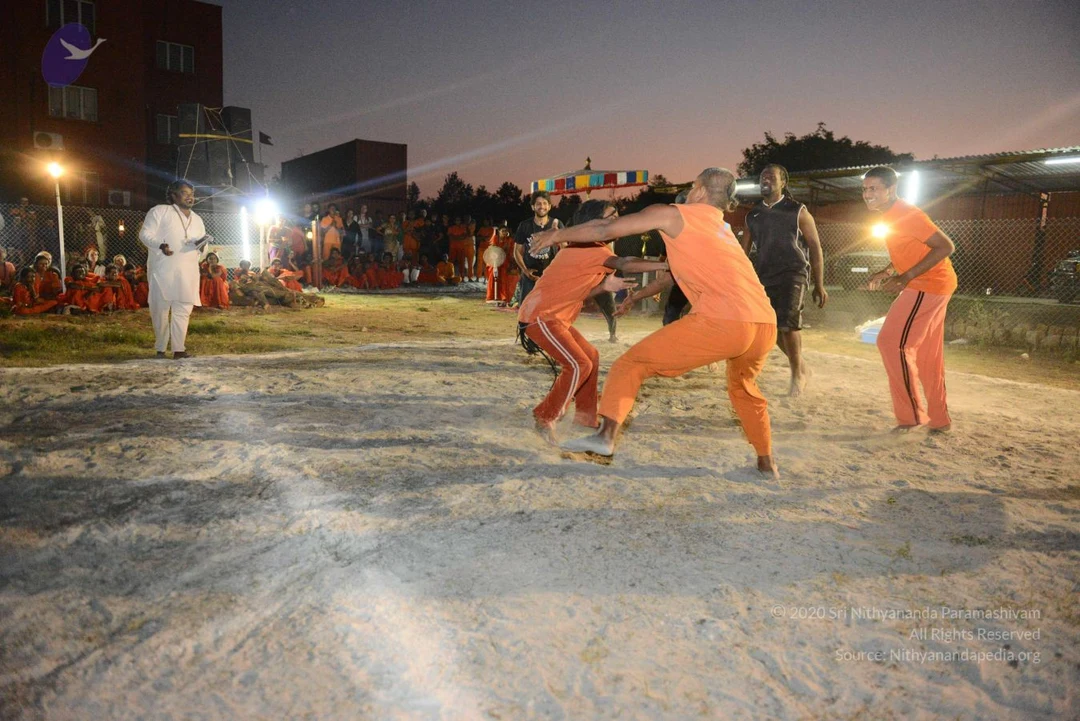
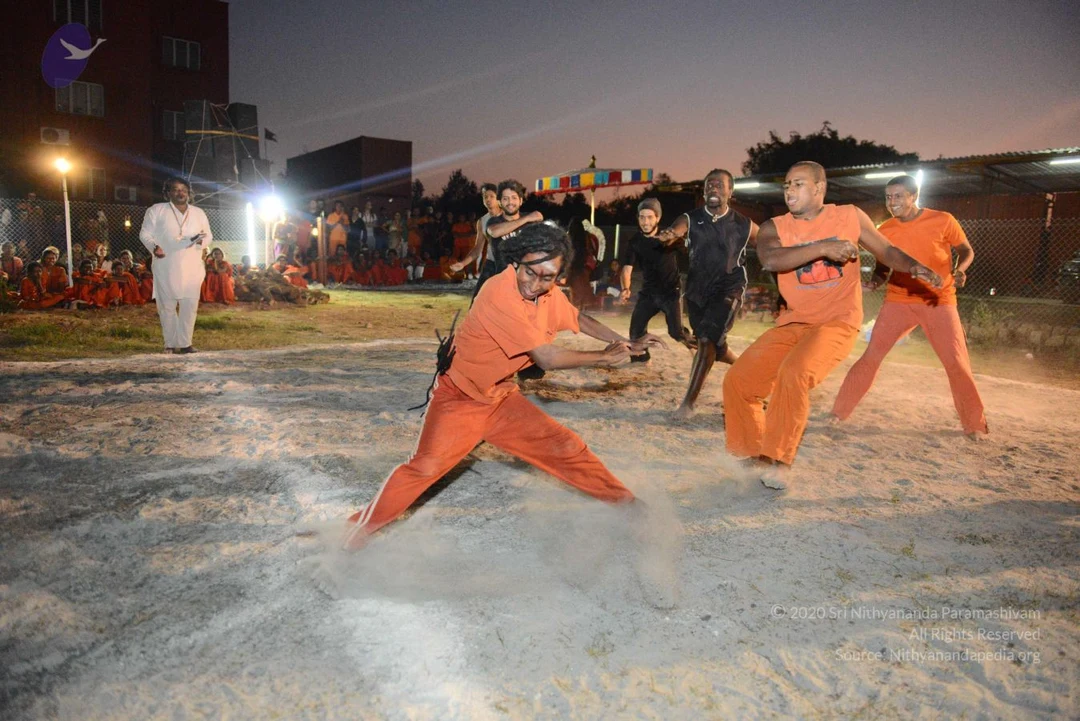
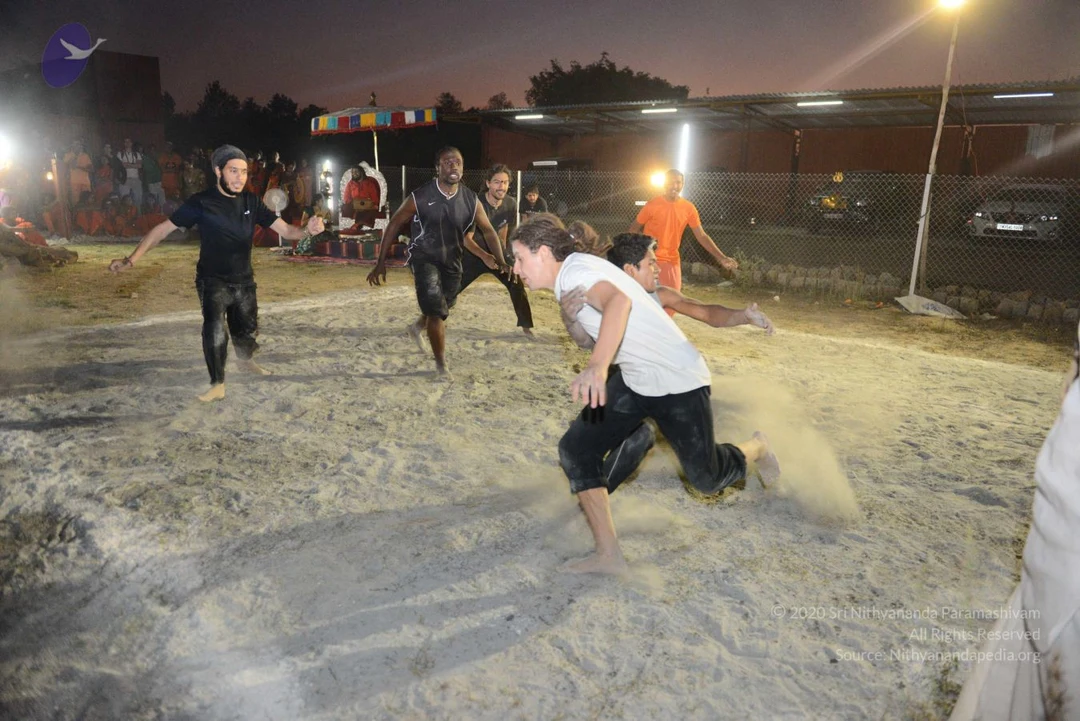
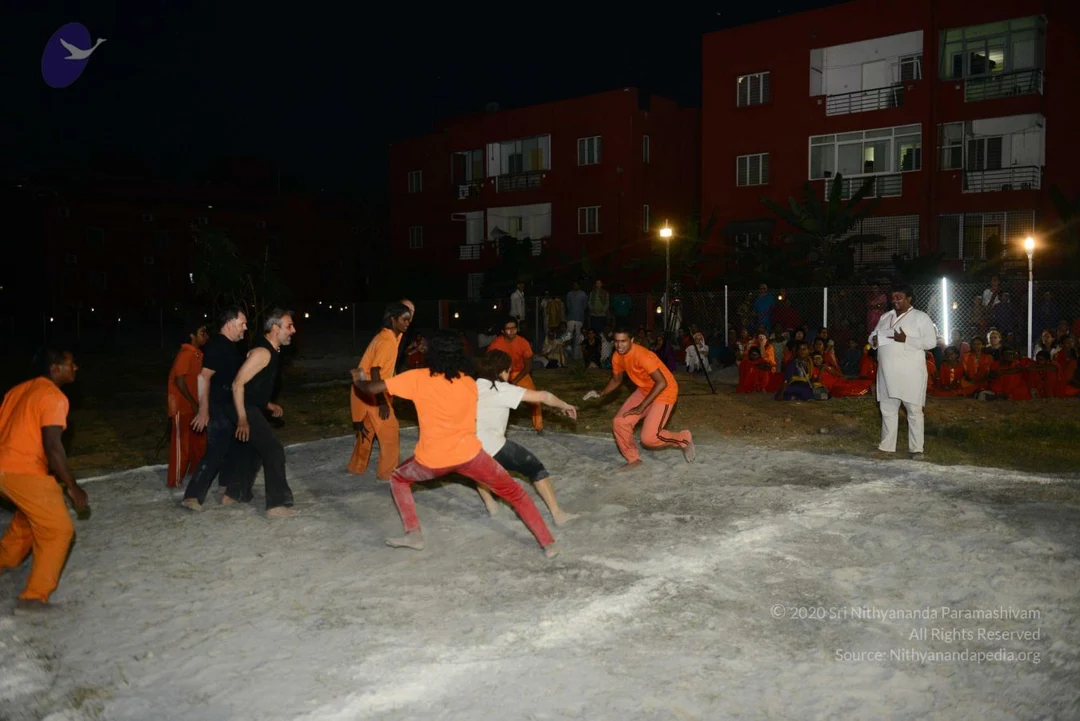
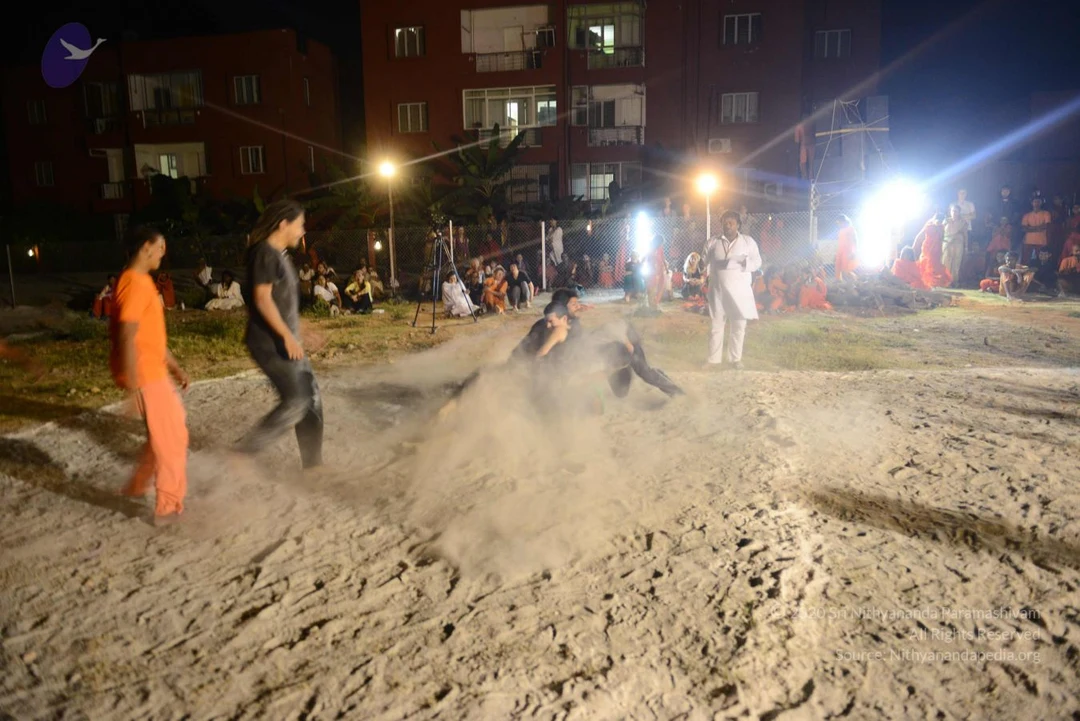
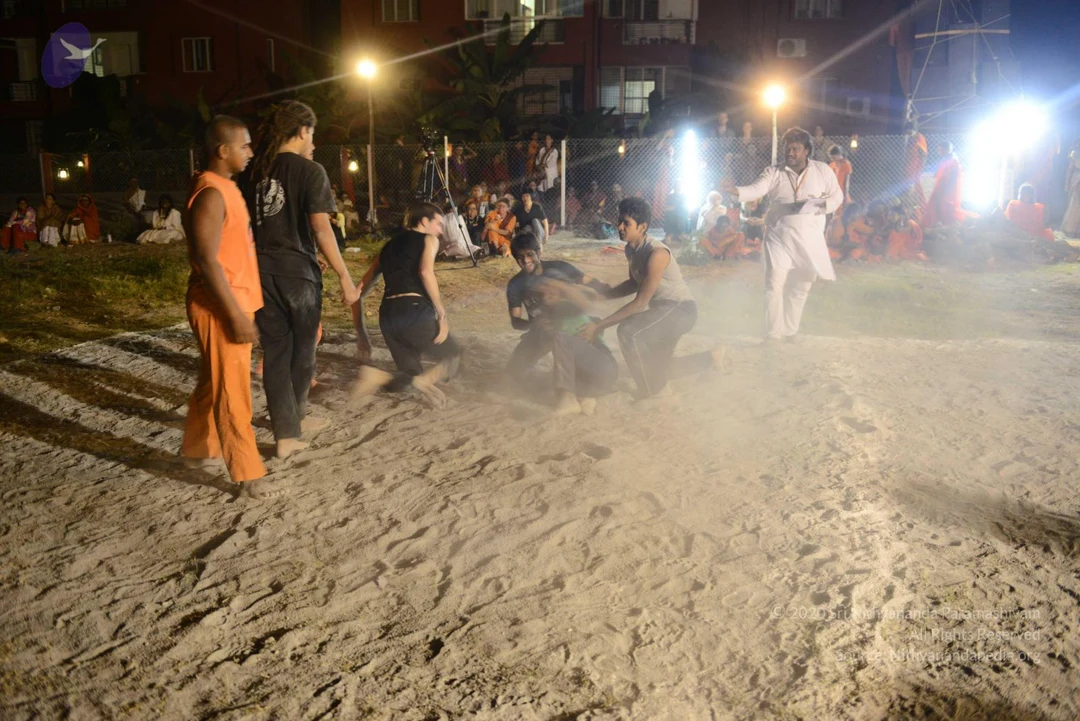
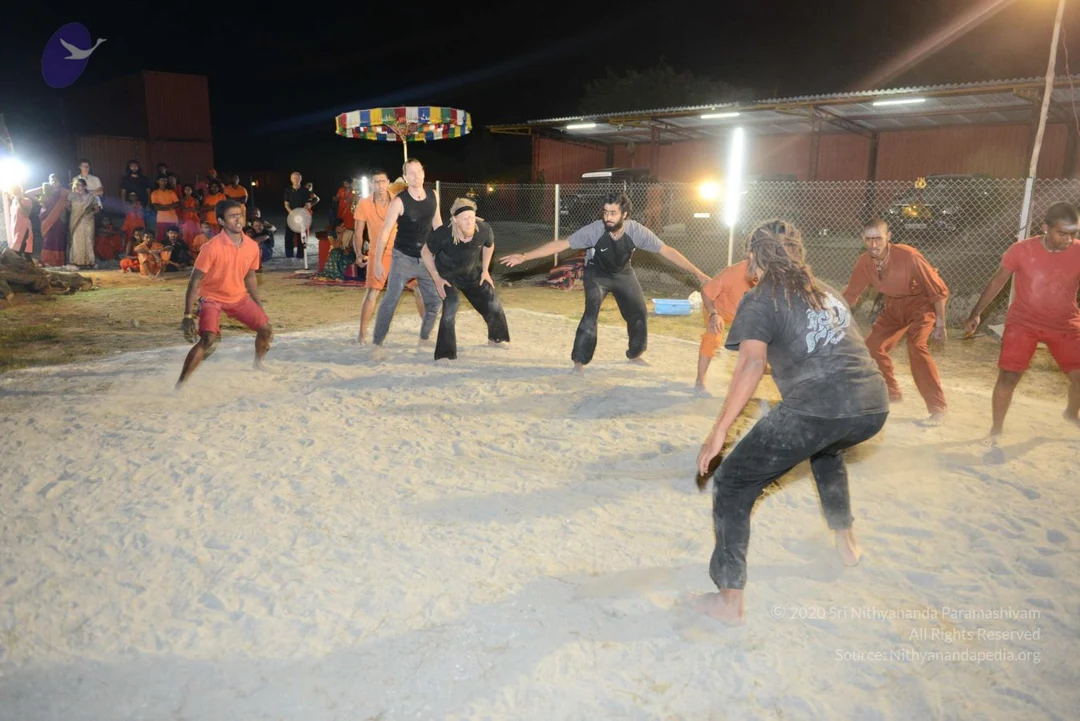
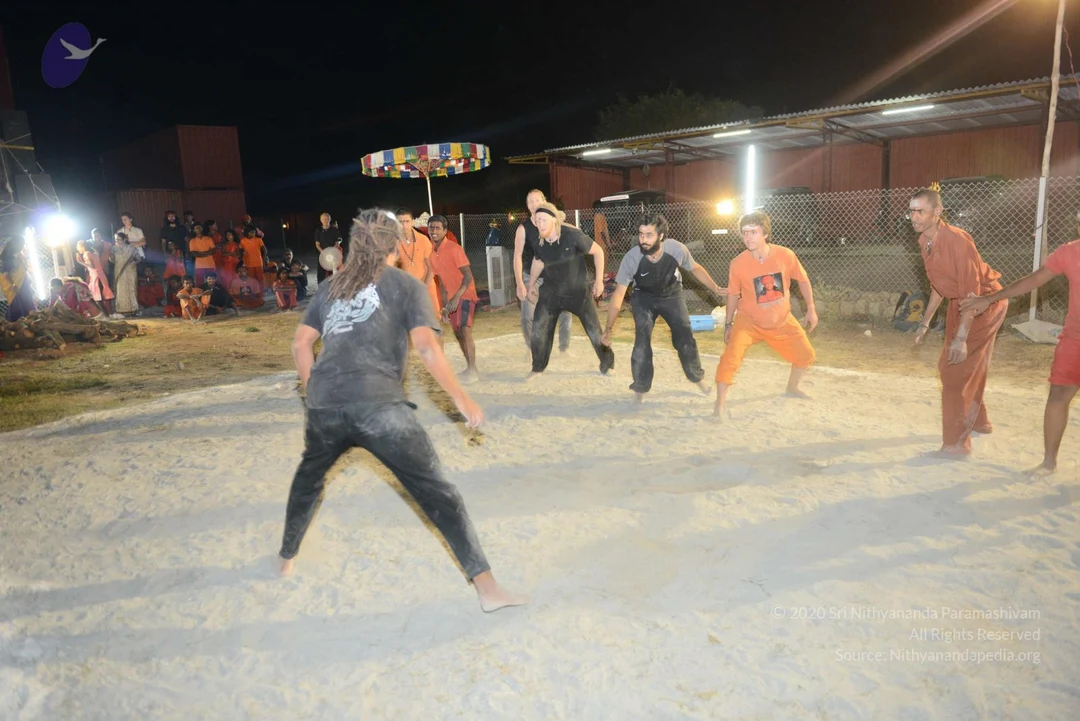
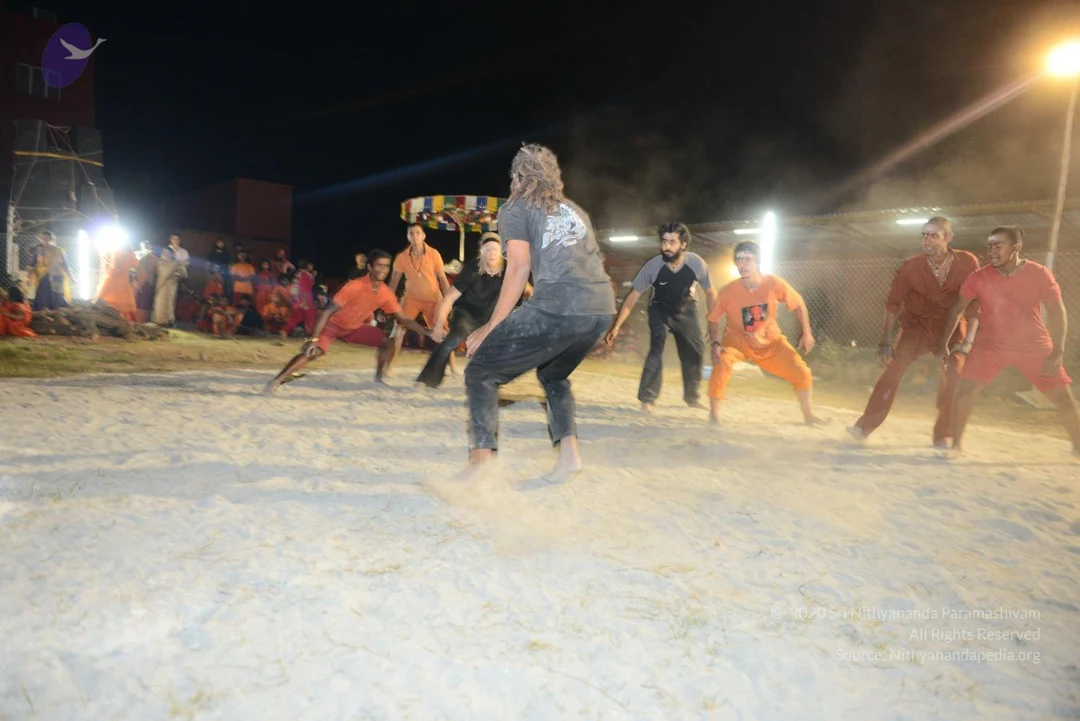
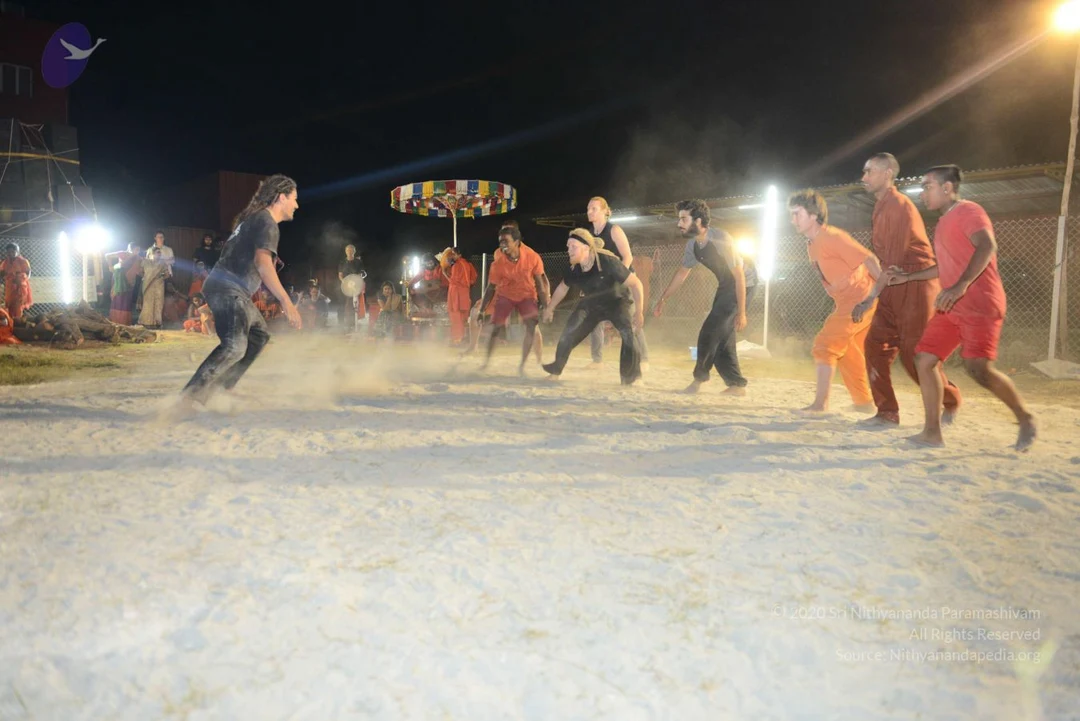
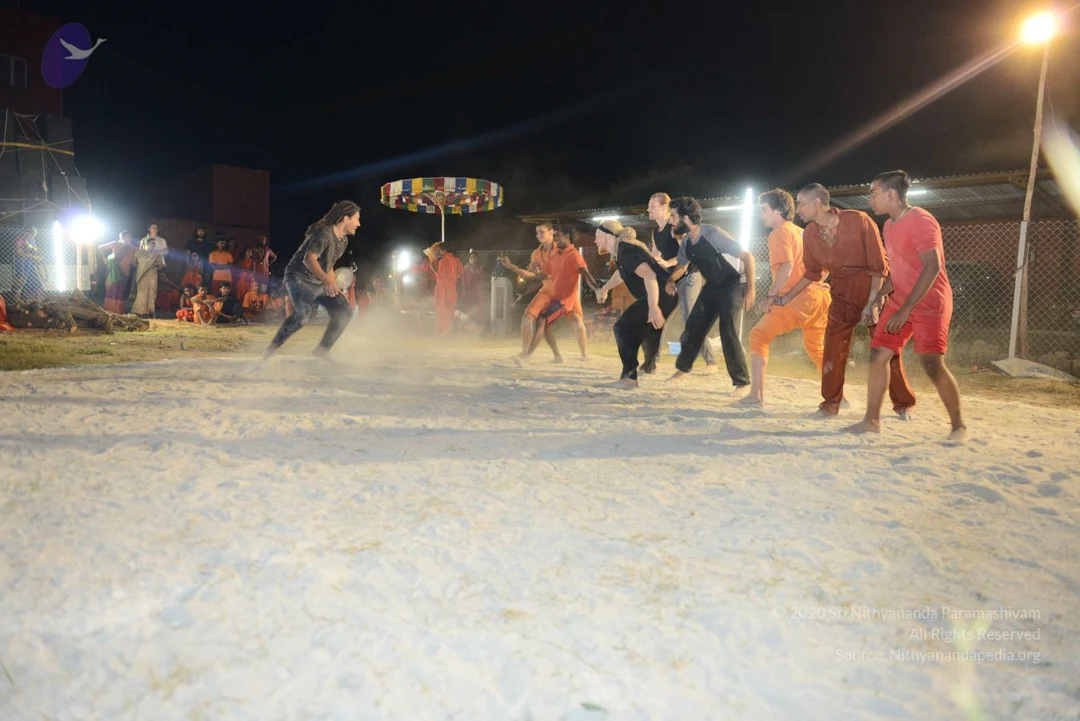
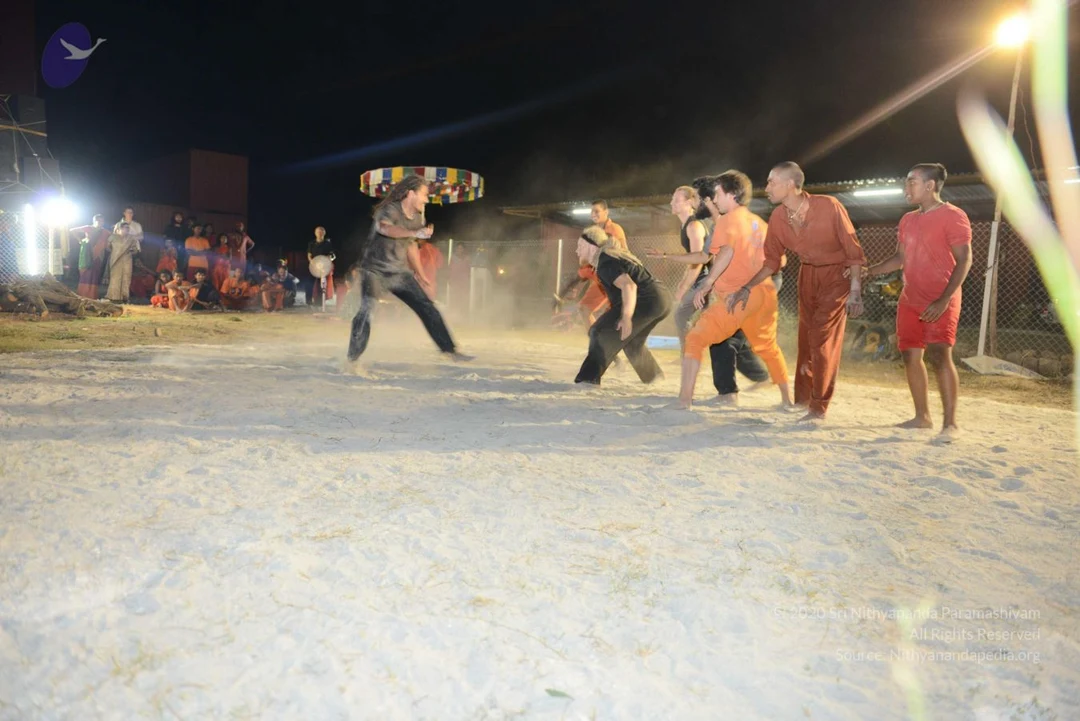
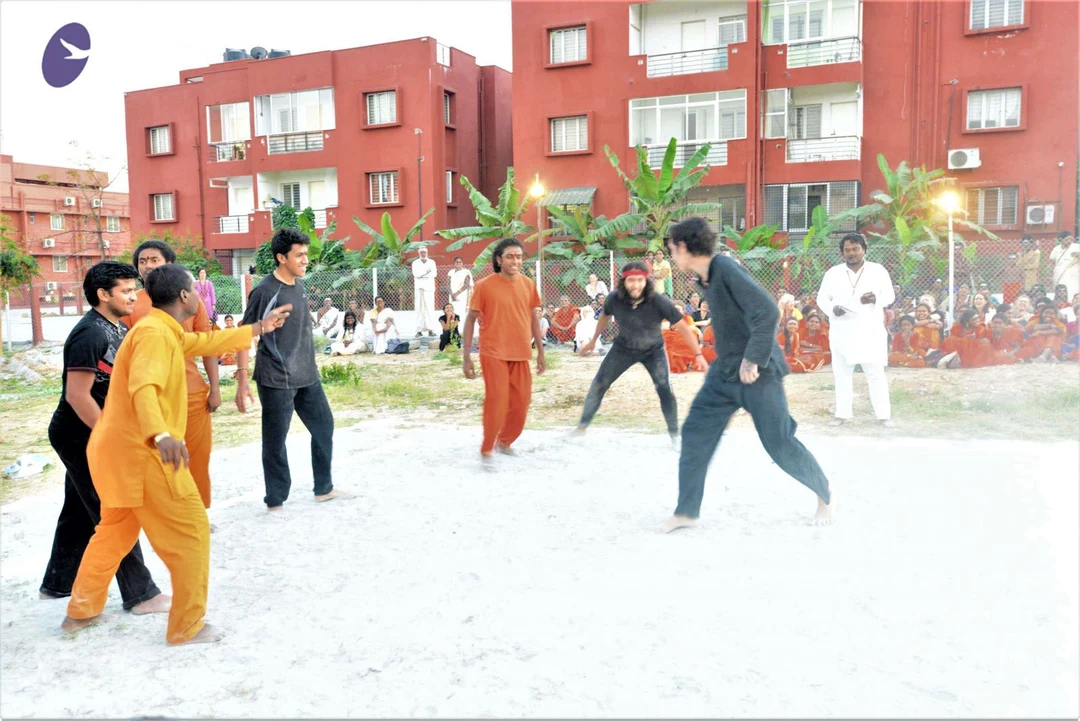
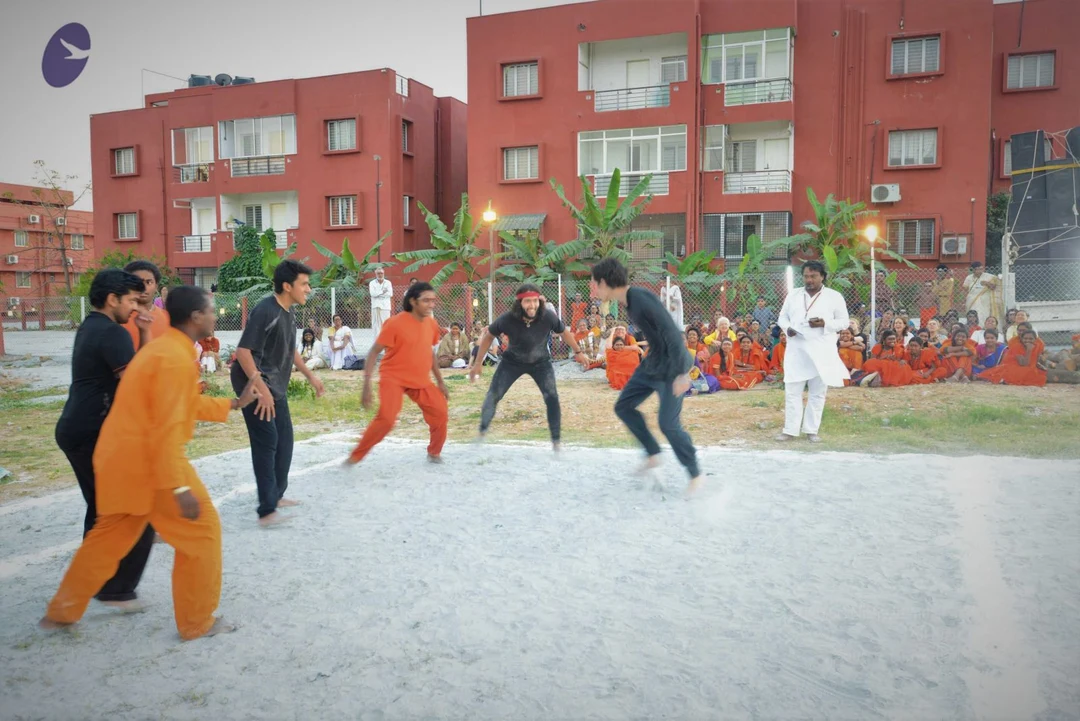
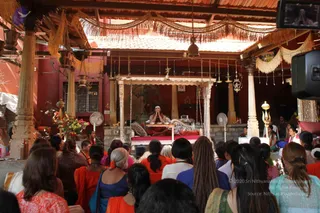
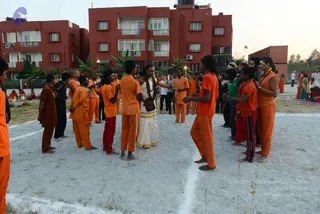
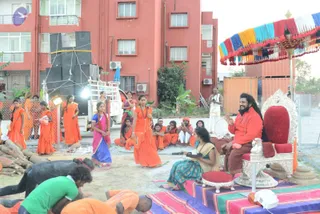
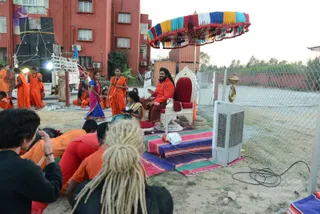
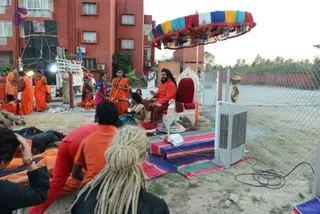
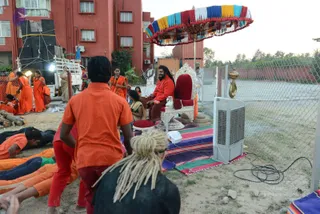
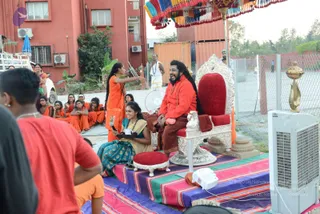
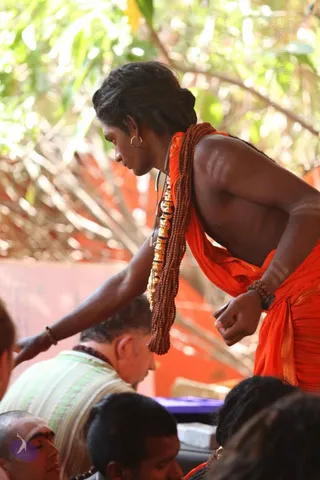
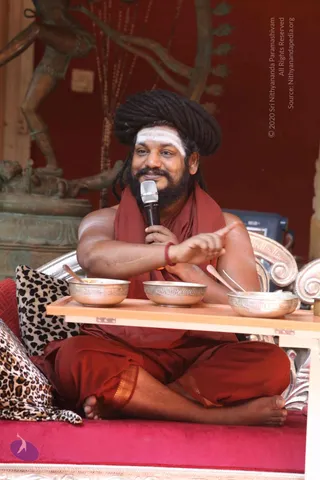
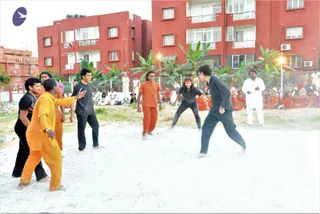
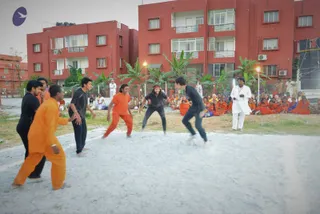
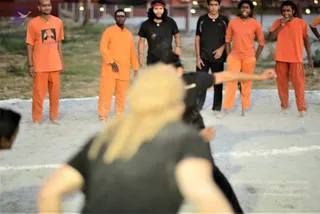
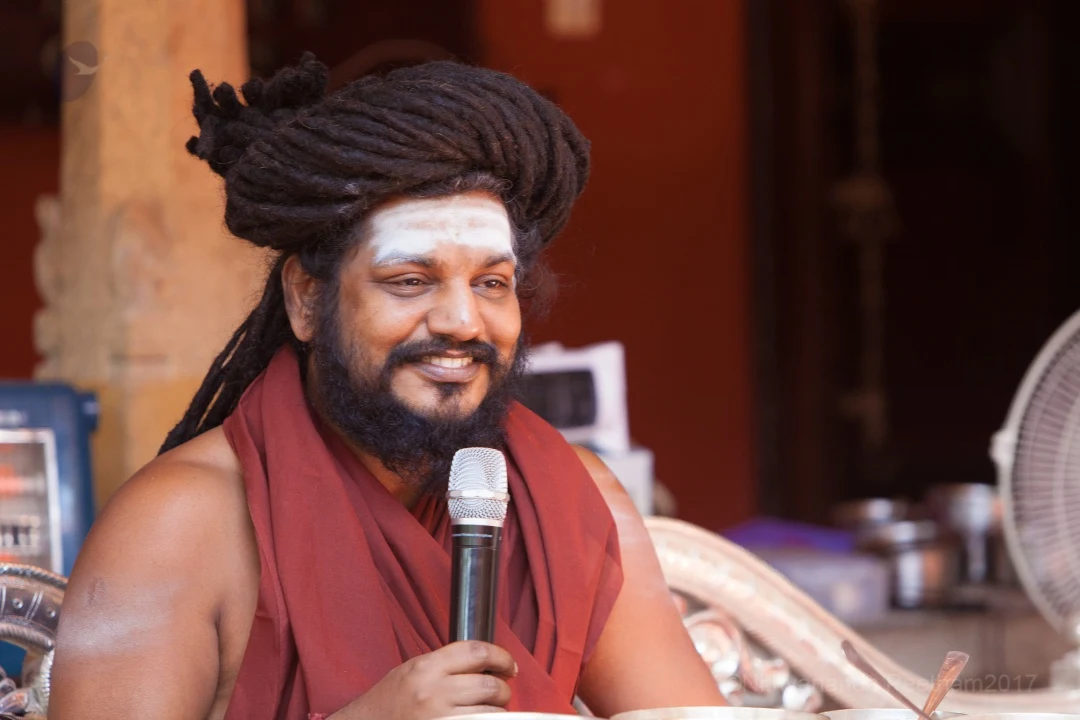
A photograph of an outdoor kalari-style martial arts demonstration on a whitewashed dirt ground in front of red multi-storey buildings with balconies and banana plants. Several young men in black clothing and orange kurta-style garments face each other in fighting stances, one in black with a red headband at centre. A man in a white kurta stands at the right edge of the ground watching. Behind the ground, a large seated audience of people in orange and saffron robes and white clothing sits on the grass under evening lamp posts. A speaker stack stands at the right and a small flag is visible on a pole.A photograph of several men in orange clothing on a dusty, pale grey ground, with fine white dust rising around them. In the centre a man in an orange t-shirt and orange pants leans over another man who is lying face-down in a rust-orange top. A third man in an orange t-shirt kneels behind them with his hand on the ground, and a bald man in orange smiles at the right. A man in brown clothing lies on the left, and a gold bangle is visible on one wrist. Partially visible legs in orange and white stand at the edges of the frame.A man seated cross-legged on a red-cushioned silver swing-bed under a silver canopy holds a handheld microphone and speaks. He has long dark dreadlocks, a full beard and white ash markings on his forehead, and wears a rust-red shawl over his bare upper body with a red dhoti. A small wooden side table holds two brass bowls and a small cup. Behind him stands a bronze Nataraja statue of dancing Shiva within a flame arch, beside a red wall with a framed picture and a gold deity shrine. A leopard-print cushion and a red folded cloth lie nearby. The scene appears to be a courtyard discourse session.

January 18 2017

Original wiki page
Contents

Title

Narration

Supreme Pontiff HDH Nithyananda Paramashivam is initiating disciples into the Science of Manifesting the State, Space, Being, and Powers of Paramashiva. These Powers or #Shaktis revealed directly by Him to the world and manifested by His disciples as “Nithyananda Yogis”, are directly from the Agamas, the original words of Paramashiva.

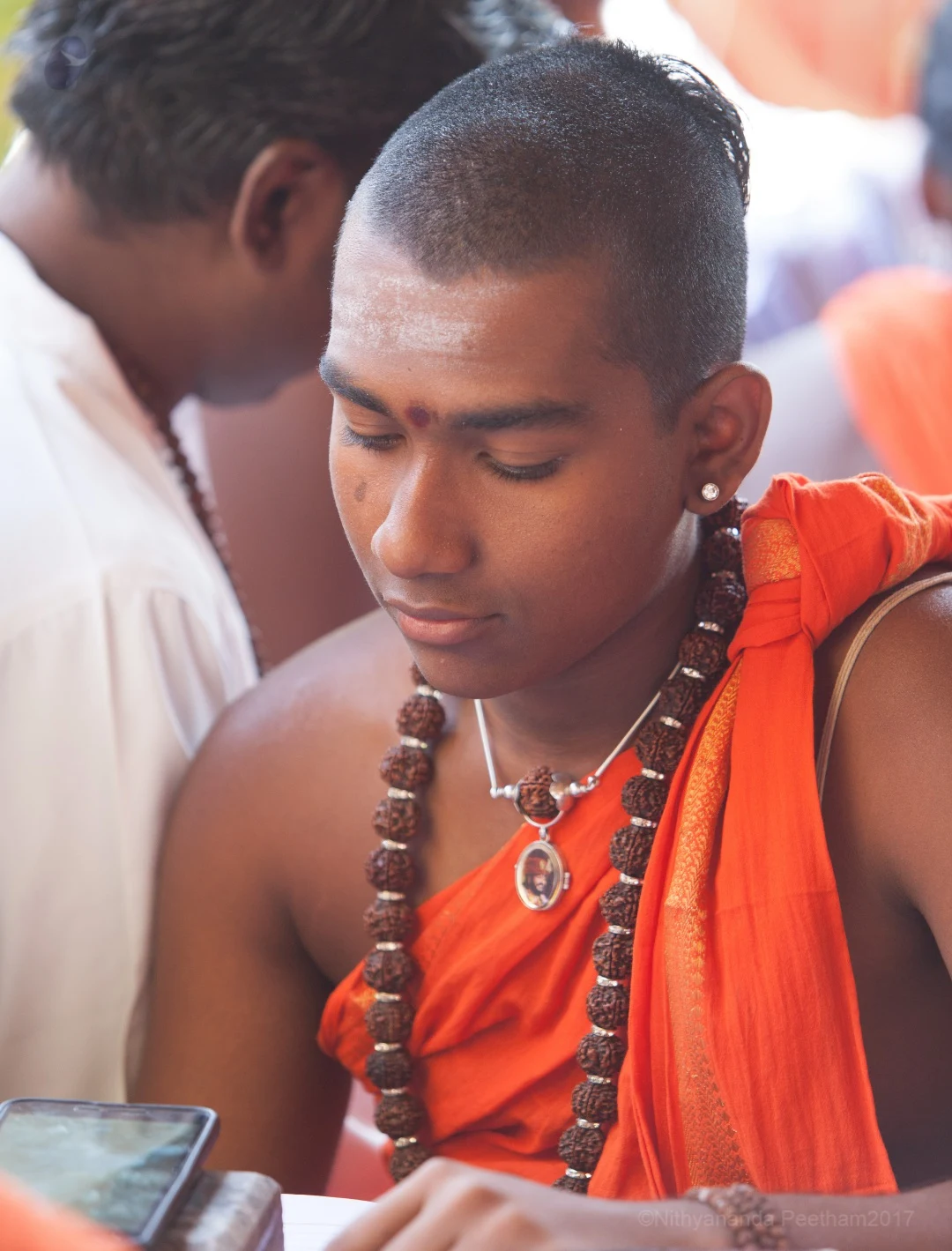
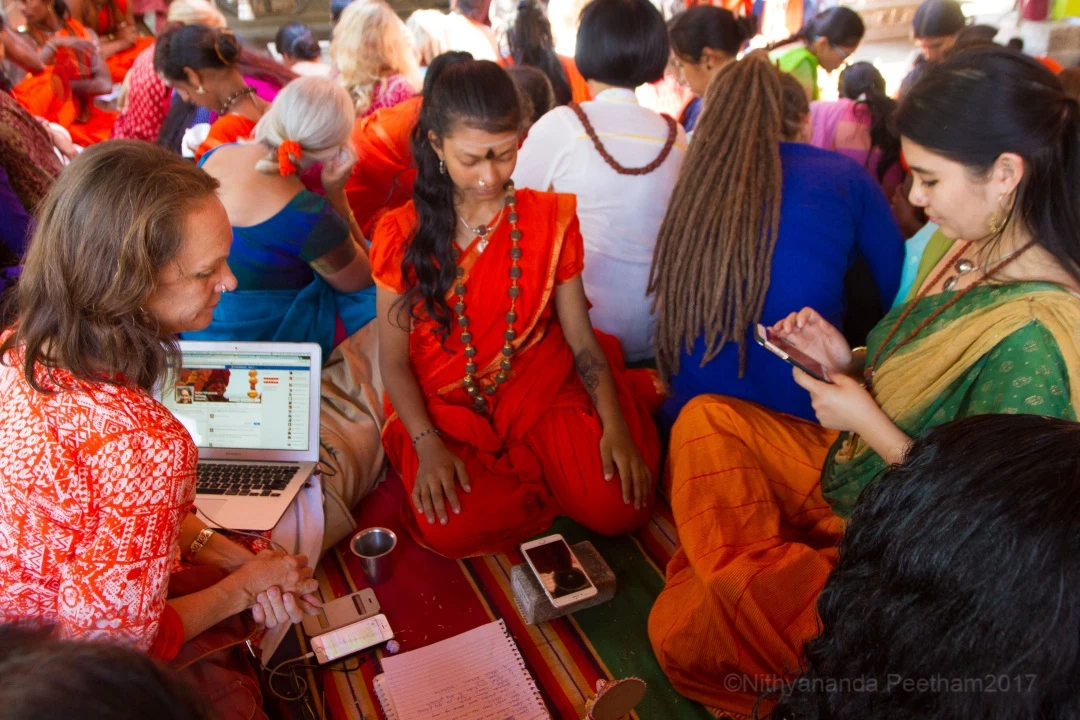
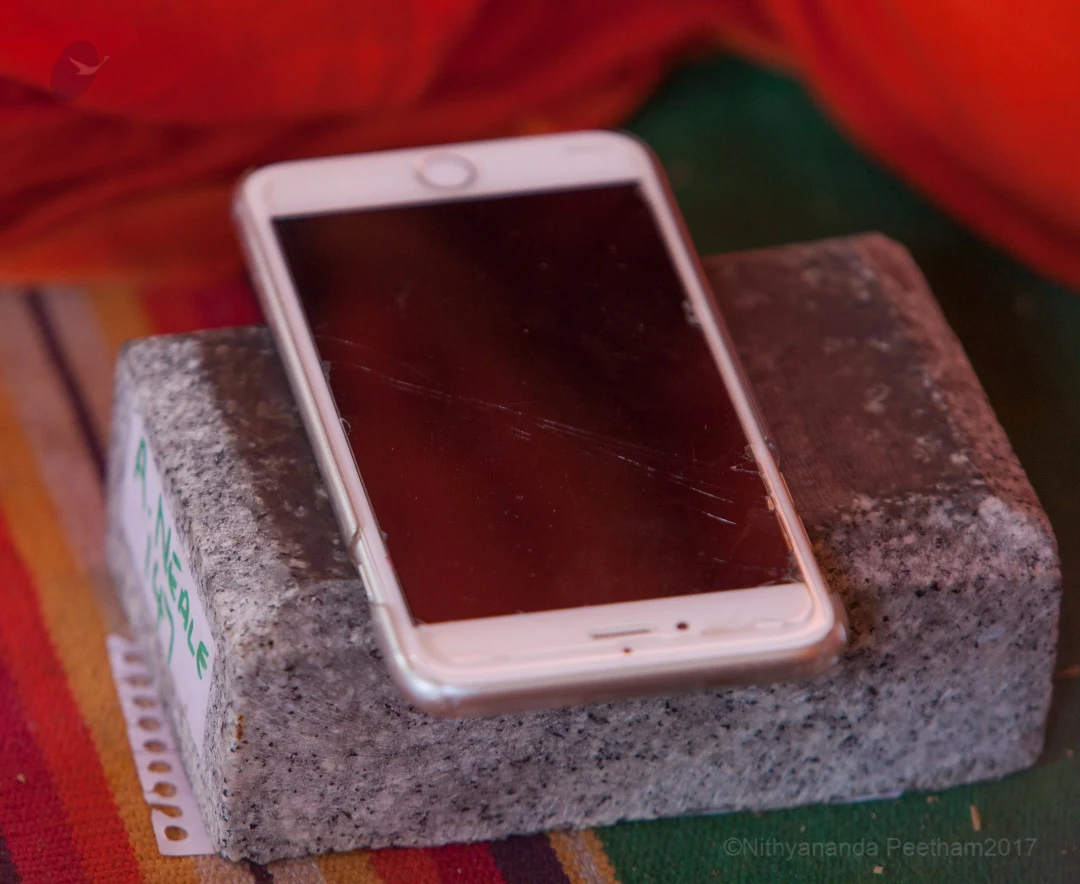
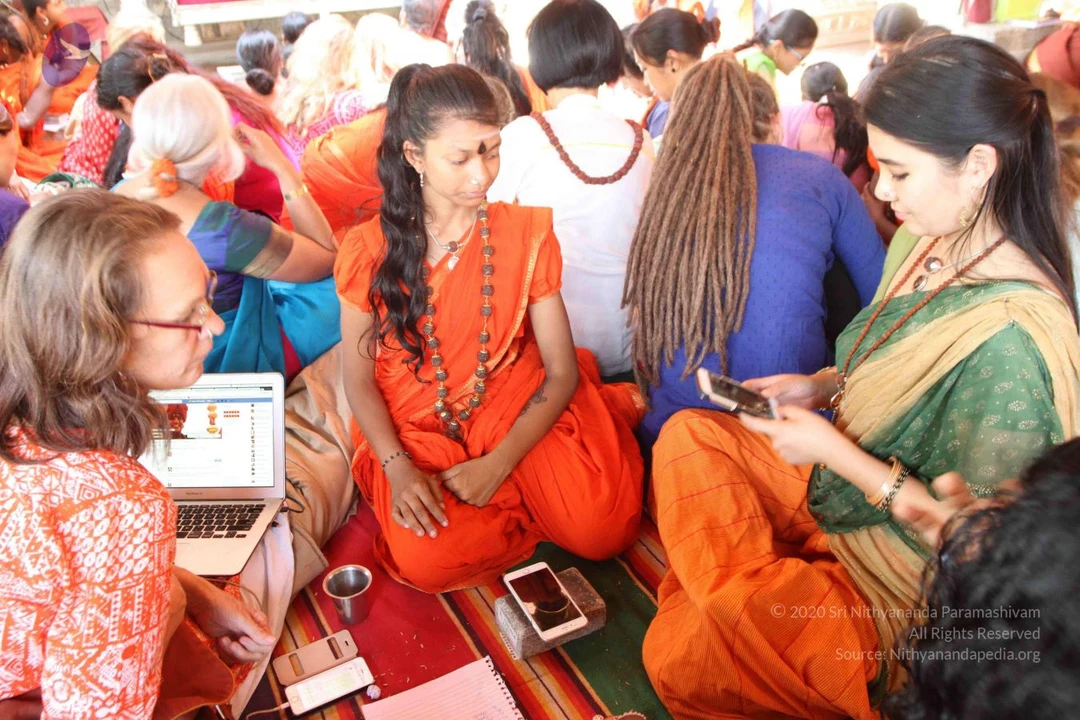
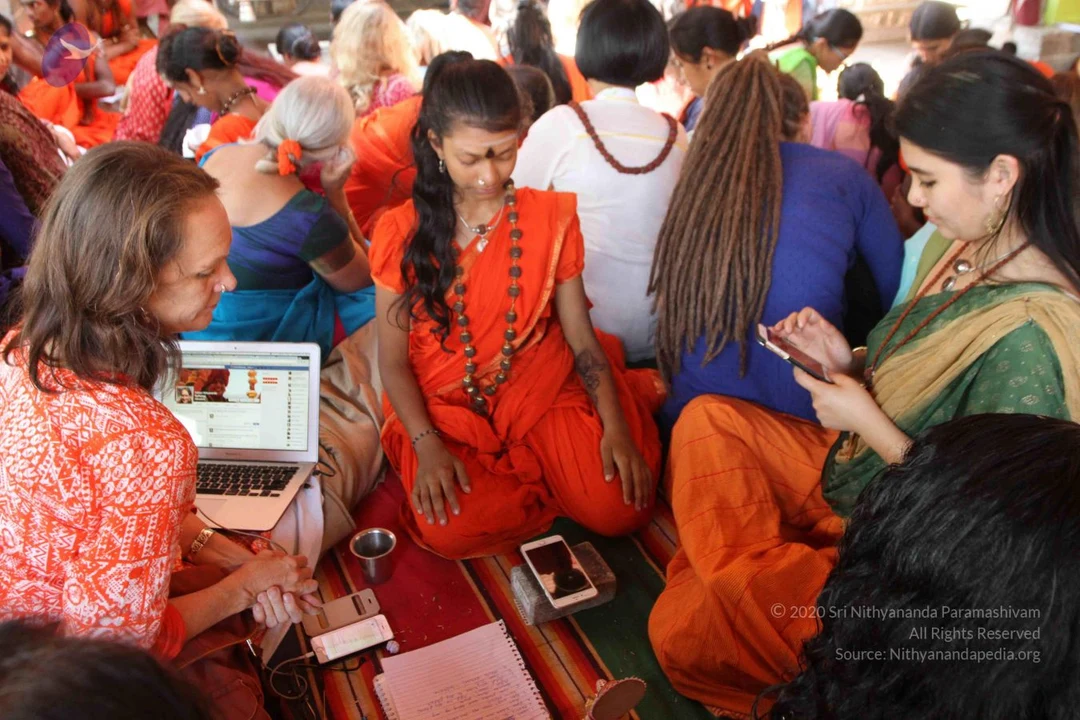
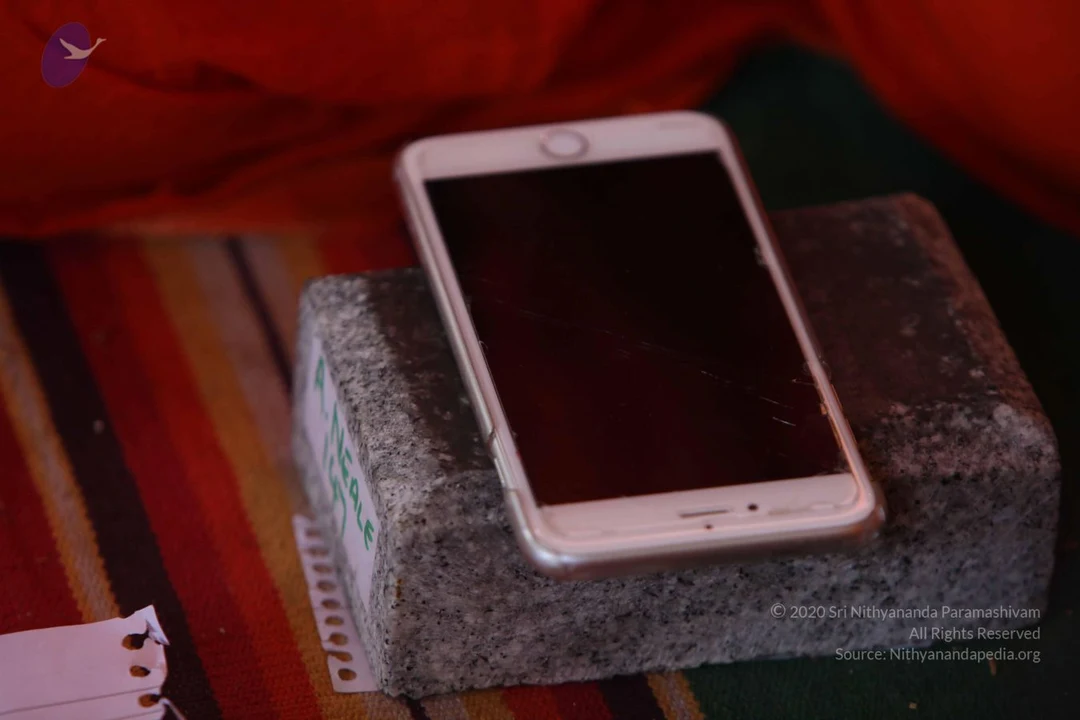
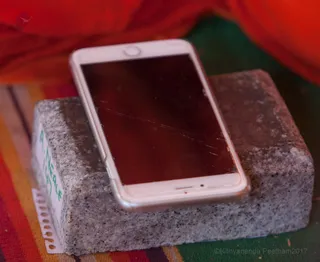
Balasants, initiated by His Holiness Paramahamsa Nithyananda into the Depth Dimension, are now able to control the weather by making it rain anywhere in the world! Where zero rain was forecasted moments before, rain happened in that place! Next, His Holiness initiated them into using silicoln-based electronic items without hands. Due to the Science of Sadashivatva, using Shaktinipata or Entanglement, the Balasants can turn on/off, open apps, and navigate in electronic devices that are silicon based.

Hinduism is REAL and that the possibilities for human beings are nothing less than extraordinary!

Video and Audio - Work With Your Silicon Devices Through The Power Of Your Third Eye! || Courtyard Session

VideoAudio

Transcript

(00:16)

Any silicon based electronic objects, you will be able to handled it just by your will. You don’t need to touch. I have programmed anything which runs, by this silicon and the chip based or memory, hard-drive, means: laptop, ipad, cellphone. Anything which runs by electrical and that electronics energy, just 3, 4 days before I was just trying to play with My ipad, whether that is listening to Me. I just started, just listen to me I said, “This apps switch off” it switch of without typing the soun; ahhh, password, open, it opens.

(01:12)

And I just said, “Go to this app store”, went “and download the messenger” it downloaded. It was continuously doing, then I decided “let Me convert this into software and initiate has a power to everyone.” Very causally only I did. And also by tomorrow you guys will be having a software, I’m preparing it. Any battery, you just hold in your hand, it will be charged. Any battery, from the air it will produce energy. Actually I have done it already. I am converting that into a software, that work is going on. Maybe today after initiation I’ll be in Samadhi, that time I will finish that software. Actually whenever I am in Samadhi I do all these software writing. This power software writing.

(02:07)

And I also tighten and close the all the loops, loos ends in this rain software. You see, rain is related to length, breath, depth, all the three. It was too much for many of you guys to swallow yesterday, it was too strong. So I have completed all the, tightened all the loose ends. Today you guys will see. It really becomes hundred percent success.

(02:35)

The rain power, the power of vatavaran after tightening all the loosens, that is one second. Any gadgets, which runs electrically, electronically, you will be able to controlled by Will. Operate it, do anything you want with will. Two thing: This Jnananjanam I will send it, all of you have, and after having, I'll initiate you guys. Then the first step, where you are suppose to bring rain, write that keep it under the Krishnashila; give instruction and leave it. Leave it for 42 minutes. That time don’t waste, start playing with the gadgets. Give the instruction and give to Krishnashila. Once you give the instruction that is enough. It doesn’t need to be constantly followed up. You only have to follow that place, what is happening there. Then pick up any, any electronic objects you want to play, just put it on Krishnashila. Let Nithyanandhom participants asks what the balasants should do.

(03:42)

You pen down the instruction you request, the balasant will do that. You give that instruction, it’ll do, in any object, it doesn’t need to be only balasant’s objects, balasant’s iphones. You keep your iphone, they will open it. It'll open it, it'll get switch on, it'll download the apps or delete whatever you want, whatever you want you'll write and give them. Always all your request should be writing. And then after they perform you tick or cancel. Any command, only 3 minutes. If it takes more than 3 minutes; cancel. Means, they are not done it, go for the next command. Any command only maximum 3 minutes, the rain only 42 minutes. If it is more than 42 minutes, cross, it does not happen, go for the next. Second, start the next place.

(04:36)

Understand, so that is the way the fluttering will settle down, and it'll become part of your bio-memory. There were some of the loose ends, means: I should say, it was too much for your bio-memory to grasp does, it was too big bite. So, many of the biomemories get stuck on the throat unable to digest. First of all, your are not able to, many of them, many of you guys are not able to grasp that it is possible.

(05:11)

If you are integrated to that core, that’s enough you will manifest powers.

(05:23)

See, if you sat with your balasant, three times if they have made the rain happen. Then the entanglement of Shaktini Pada has happened with you, now - now you can start. For example, three of you are sitting with one balasant. If the balasant has made three times rain happen, all three of you now can start with your Krishnashilas, you will start manifesting. Three times is enough time for the Shaktini Pada to happen to you. Same way these gadgets, if you see them, if you are sitting with them and five commands they are making it successful. Shaktini Pada has happened to you, now you can start.

(06:03)

Because, you - you are not taught, strong, to protect you from Shaktini Pada. More than a certain period. Once, once they make it three times rain happen, immediately your core will opens up for the Shaktini Pada. If five times you see your balasant, successfully making the commands on the electronic objects, then you can start doing, it'll work, it'll work for you. That much Shaktini Pada only is required.

(06:41)

It's almost like a second Garbha Mandir. (Applause) Third form, like a, Surya - Sun. His Son is sunny, sunny is his Son. Sometimes, the part you deny, comes and appears as your Son. And Surya’s one wife Usha. Means, his light. Chaya, all his self hatred. Shade is opposite to light. See, all his self love comes as Usha, self hatred comes as Chaya. So the whole Graha structure is nothing but our integrity, authenticity, completion, responsibility and enriching’s expression. Maybe when I find time I will sit and explain in detail and give you guys a session on that.

(07:53)

Yes. All you guys are settled down? Then close your eyes, for a few minutes. I'll finish the initiation.

(08:03)

You can open your eyes. You can start manifesting both the powers now. So the Nithyanand Yogam participants can decide where the rain should happen, you can even keep two/ three places, no problem. Write as a slip, but find out there should not be weather forecast there. Find out, make sure there is no weather forecast there, rain. See under one Krishnashila, one balasant can keep even 2-3 places, that’s not a problem. But the balasants should visualise all the 2-3 places and give instruction.

(08:40)

Sadashiva says in one place, even drinking alcohol, the karma will not be carried once the liver is destroyed. Means, it will not come to you in the next janma and all. And, each of the vows you take, whether during the marriage, or during the other kind of a initiations. The vows are taken on Jatharagni. Means, the Agni fire in the stomach, once that settles over. That sins related to that does not come with you. The breaking of those vows does not come with you. It is left here.

(09:28)

For example, if I have to give an example. You take a vow on the Jatharagni, that I will not steal other’s things, but you steal. That karma will not come to you in the next Janma. It will come as long as the Jatharagni is alive. Once the Jatharagni goes away, means you are dead, during the death the Jatharagni is taken away. So after that, that karma doesn’t come.

(09:51)

For example on jatharagni only you take the marriage vows. All the saptapadi is taking on jatharagni in Agama. So when you break the marriage vows, karma doesn’t come to you in the next janma and all. Once the jatharagni goes aways it goes away, that’s all. It doesn’t come after that.

(10:09)

But if you miss the integrity with the Guru, that goes into the bio-memory and gets carried to the Janmas. Gets carried to Janmas. Understand, because the relationship with Guru is bio-memory level, deepest level. It’s a level of relationship and level of commitment. Only based on that, how much of what karma comes with you and not karma does not come with you. Nothing else... Cosmos does not recognise property. Means ownership is not recognised in cosmos. Means this is mine, that is yours. That's not recognised in cosmos. That’s recognised only in local law.

(11:05)

Marriage is not recognised in cosmos, it is not recognised in cosmos. It's only recognised in your locality and in your society. But integrity is recognised to the cosmos. It is the spindell, on which the Lokas circulate, Lokas spin around. Understand, you all need to know, the Vedic tradition says, “The whole... the Universe you know is going around the Earth. This is the Sun, this is the Earth. Earth is going around the Sun physically. Means the timing you know, but cosmically if you see billion year, Sun is also going around. Sun itself is going around. This is billion year, this is one year.” That is why you always think about the one year, and forget this billion year. Based on this only the yugas are counted.

(12:17)

Understand, the whole Universe, the spindell, standila is Planet Earth. Because only here consciousness is alive. The spindell, you guys know only about the ver - the horizontal universe. In the vertical Universe, this is the spindel. Below bu, patala, atala, sutala, patala, Bhu. The whole thing you know is “Bhu”. The whole Milky Way, everything is “Bhu”. Above; Bhuva, Suaha, Tapa. In this whole spindell, the spindel goes through the Planet Earth. That is why the Upanishads and Vedas say; Planet Earth is a center and everything goes around. So the whole thing you know, end of the day, in billion year goes around the Planet Earth.

(13:18)

Earth is flat as per vedas. Because whatever you know as “Bhu is called as Earth in Vedic tradition, not just this Planet Earth. This ball, whatever you know the whole Milky Way is called as Planet Earth, in,-called as “Bhu” in Vedic tradition. Earth is flat, as flat as for the veda is right. Because the definition of “Bhu” is not this Planet, all the Grahas you know put together is the milky way. It is described as “Bhu” in Vedic tradition, that is flat.

(14:04)

Actually, I am writing the software, the kids will start writing all the err planet transitions, results and the impacts. They will start writing the rasipalan, I am going to download that software into them. That is why the whole Graha is going inside Me. Grahas are running up inside Me. Maybe next four/ five days. Mhh, that’s what. All the transits she gave, the Palant, Pala she will start writing. Not only she, the whole group will start writing the Pala for each Rashi.

(14:48)

Now I am preparing this whole software, they will able to give a precise predictions for each Rashi and Nakshatra, for about each transition… Based on the Shastra Pramana I am preparing, and they will also write the original verse. Why they are coming to this conclusion? The whole thing I am putting it in that software.

(15:14)

So now, please start. The team start your, ask your balasant where you want to rain, want the rain. find out that there is no forecast. Each of the place I'll give one instruction, let it rain with thunder and lightning, after finishing the instruction, then you can start playing with the gadgets, electronic gadgets. Any gadget you keep it in the Krishnashila and tell “whatever you decide will listen”.

(15:41)

This only one power, in the 400. In that 460, around 460 I havel put My, laid my hands on now. In the 460, whole length is only one power. And whole depth is only one power. The depth now with that you will do multiple things, that is different. But the whole depth is only one power, mhh. And these are all the powers which is not directly described in the Agama, which is the side effect of the Agamic powers, like a Ishta Siddhi or Sankalpa Shakti. These are the side effects of that, that one power Sankalpa Shakti. Mhh, Ishta Siddhi, Ishatva. Ishatva side effect is this, all this. One part of Ishatva.

(16:29)

Photos

Puja
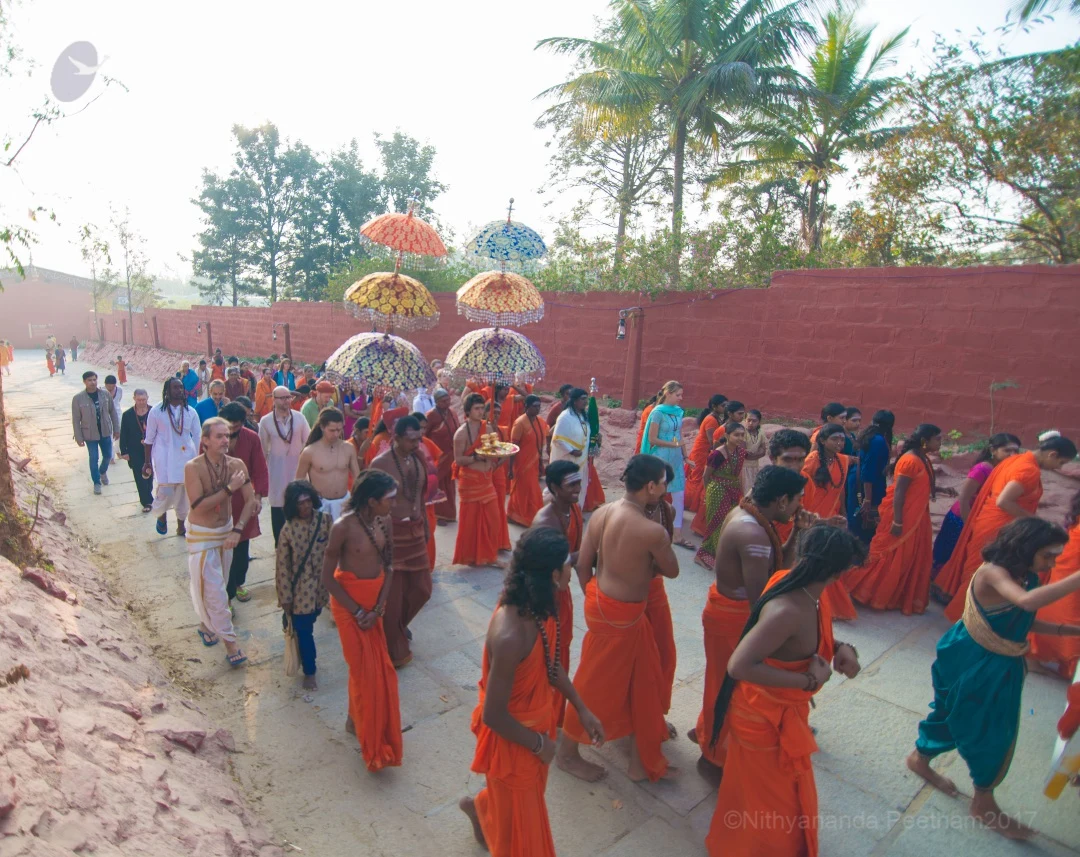
Procession
Nithyananda Yogam
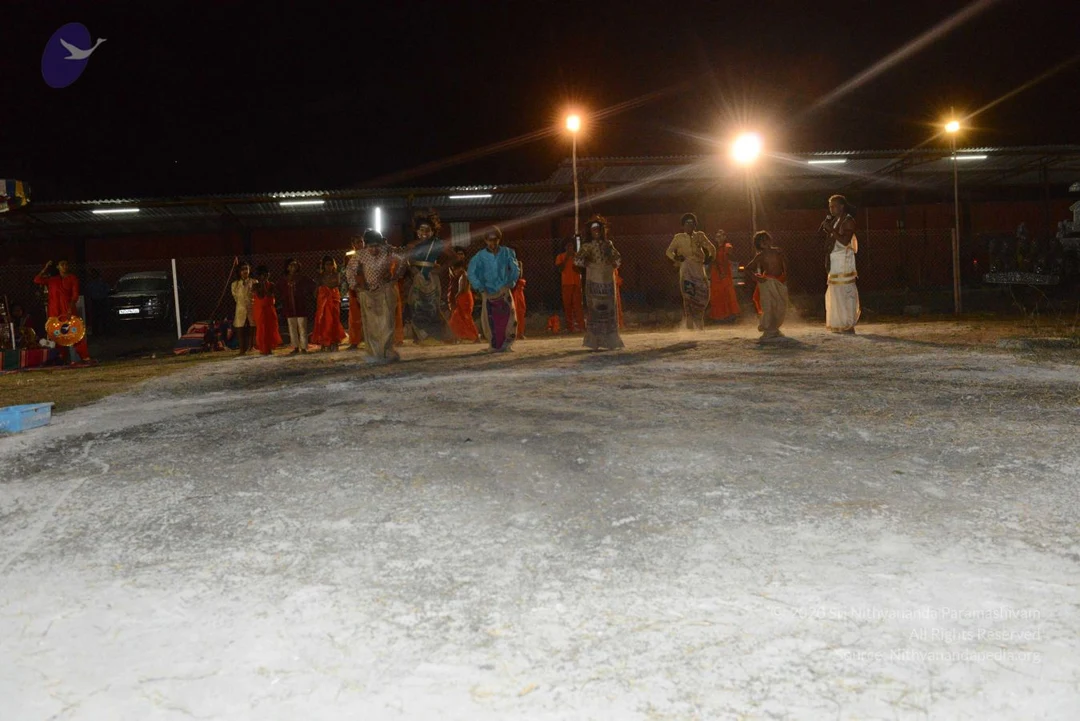
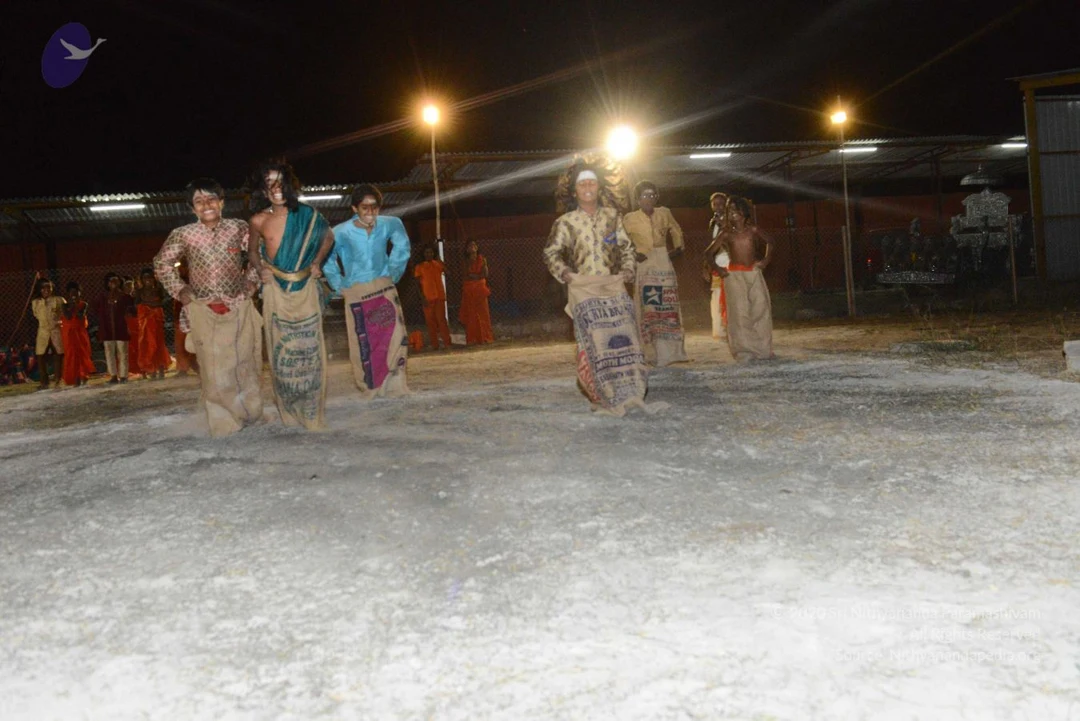
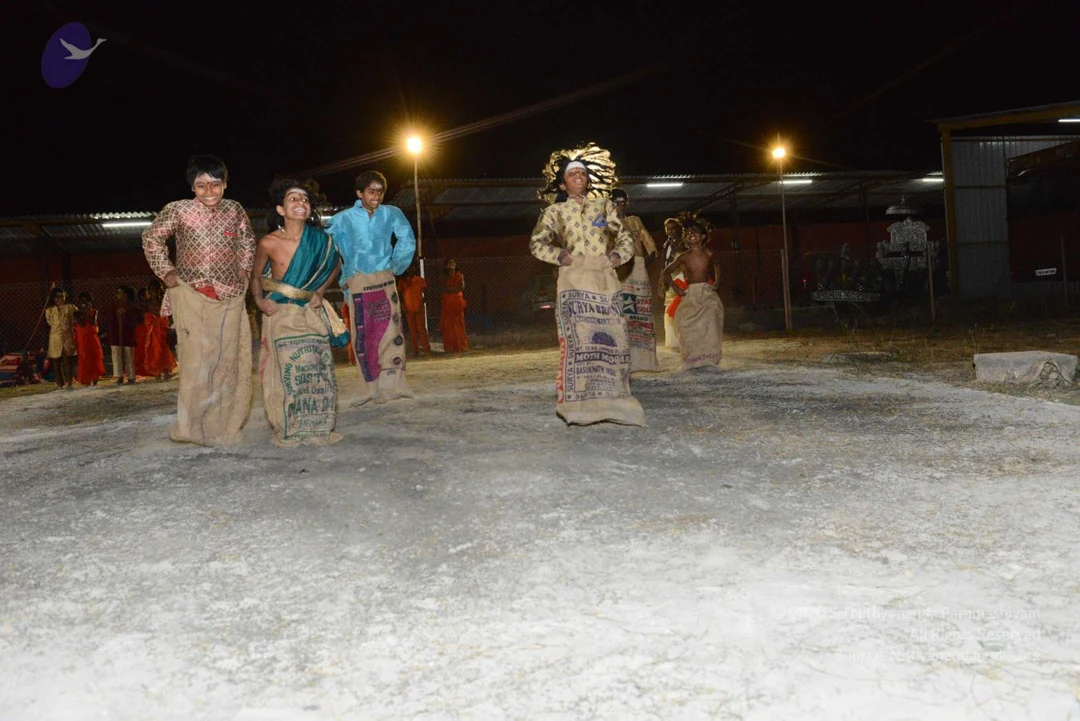
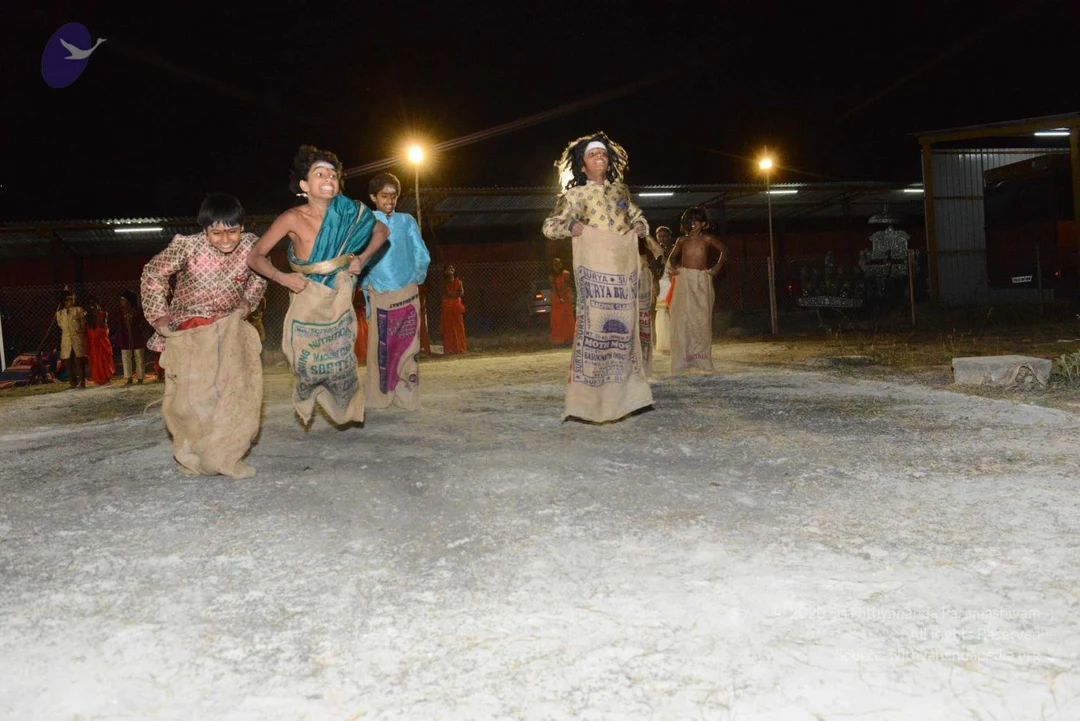
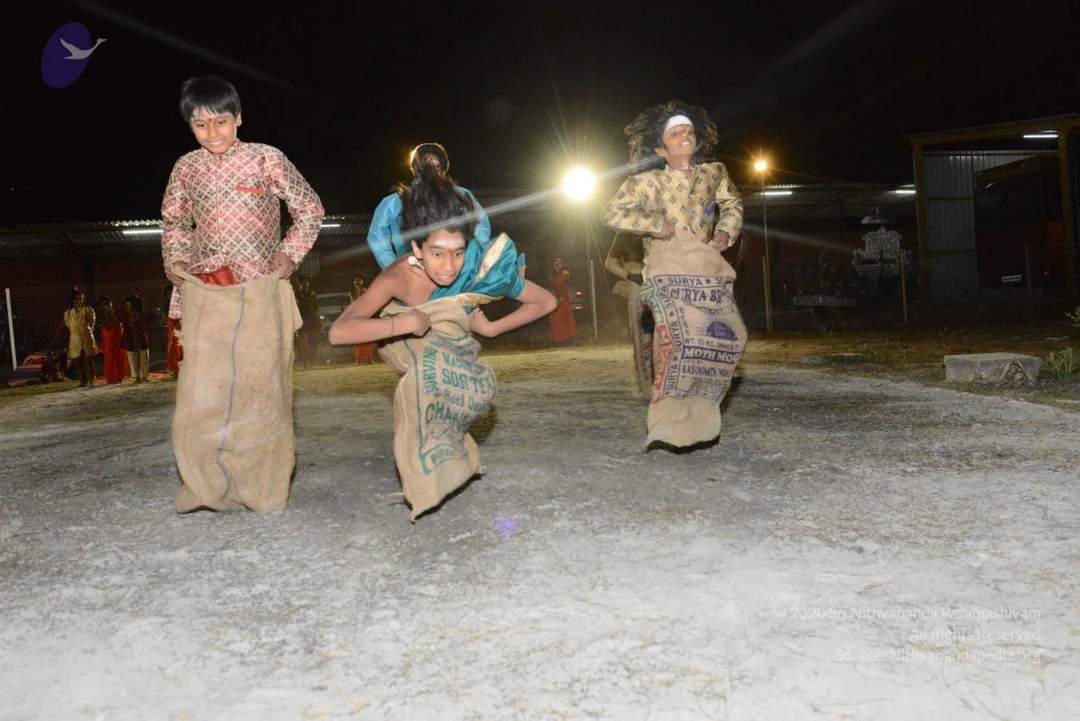
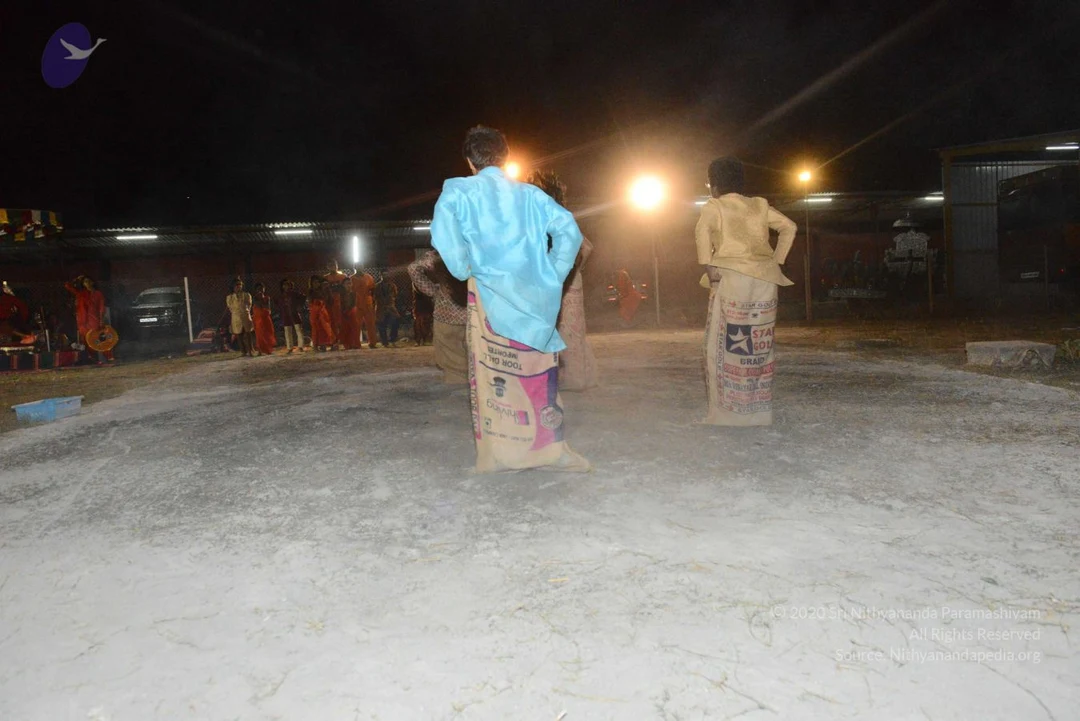
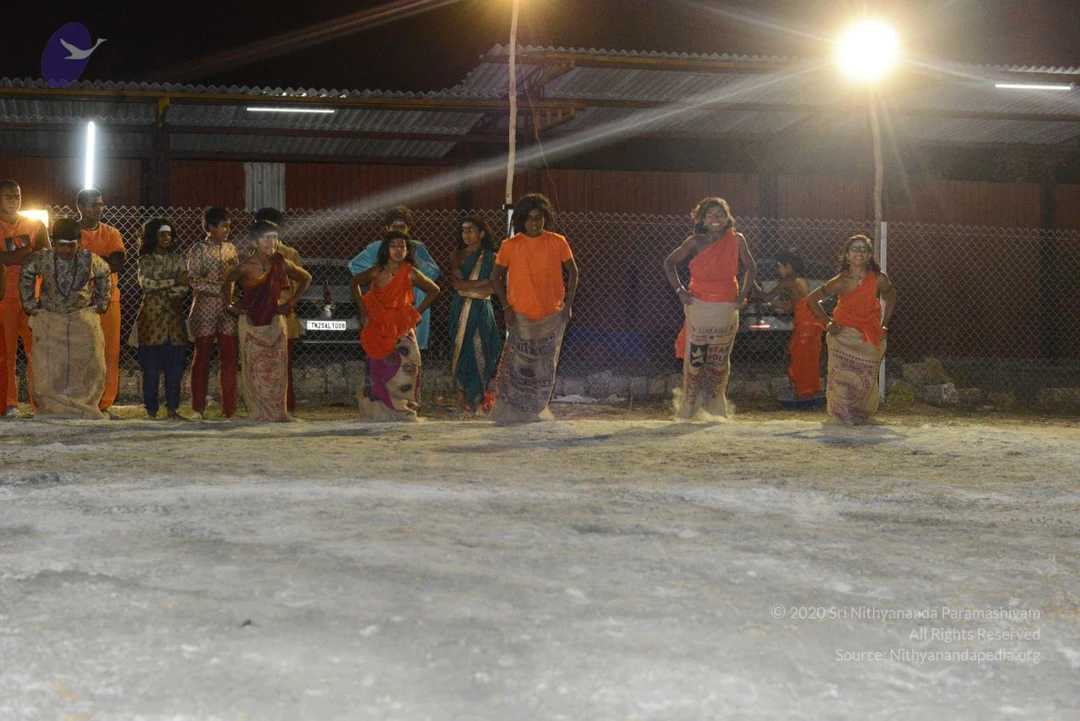
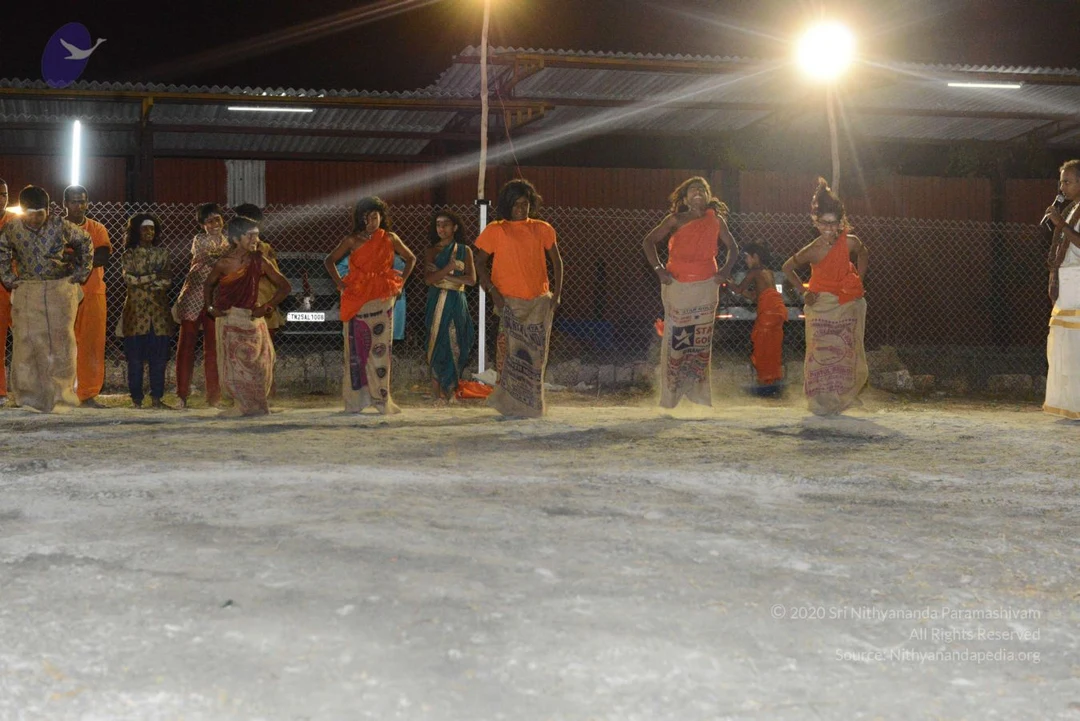
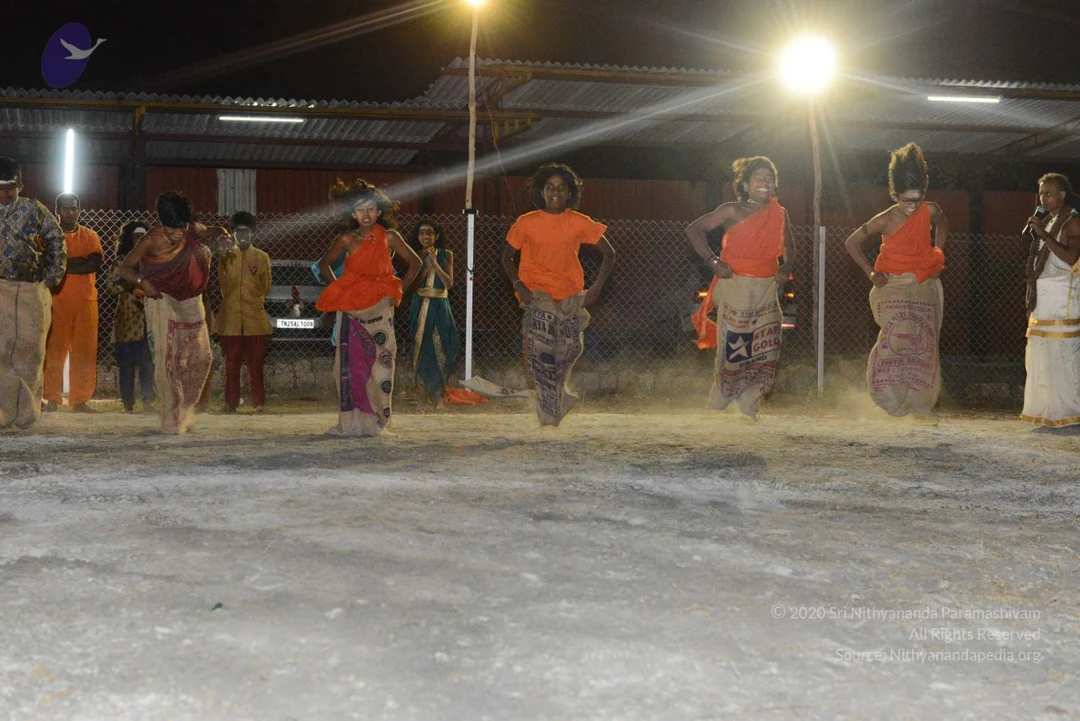
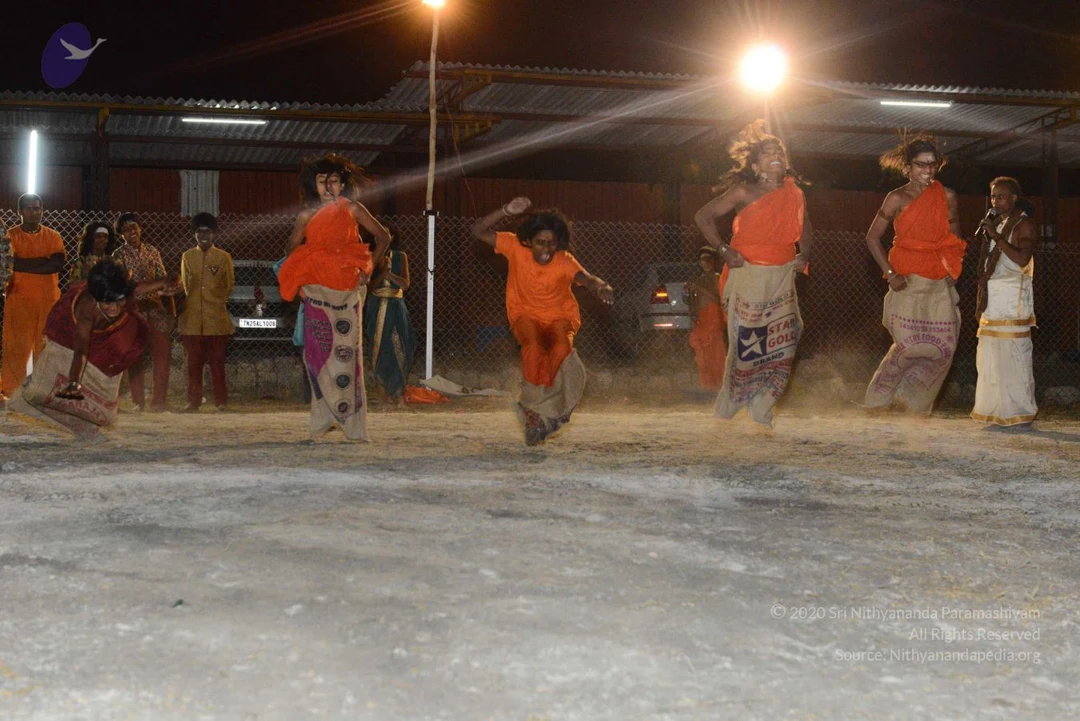
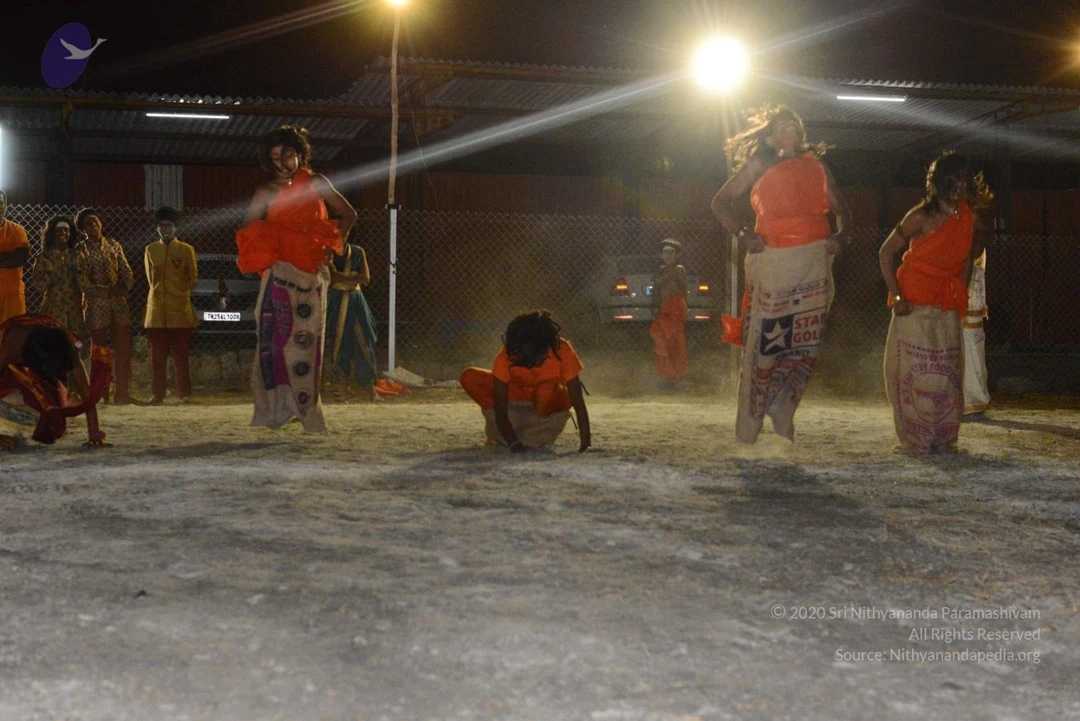
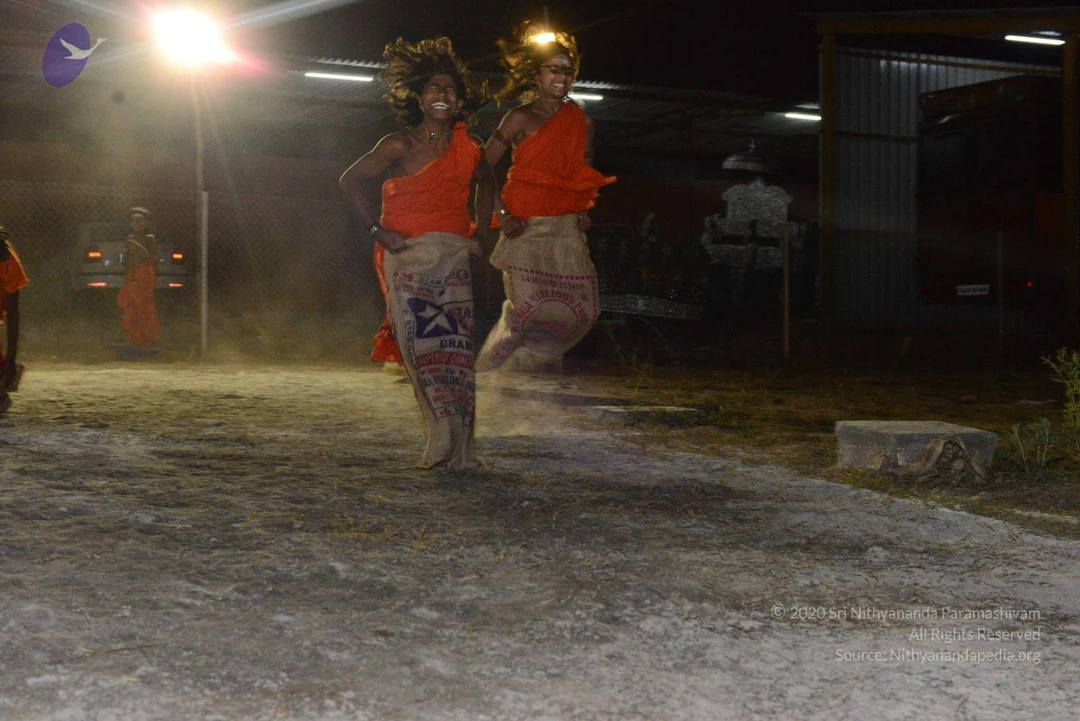
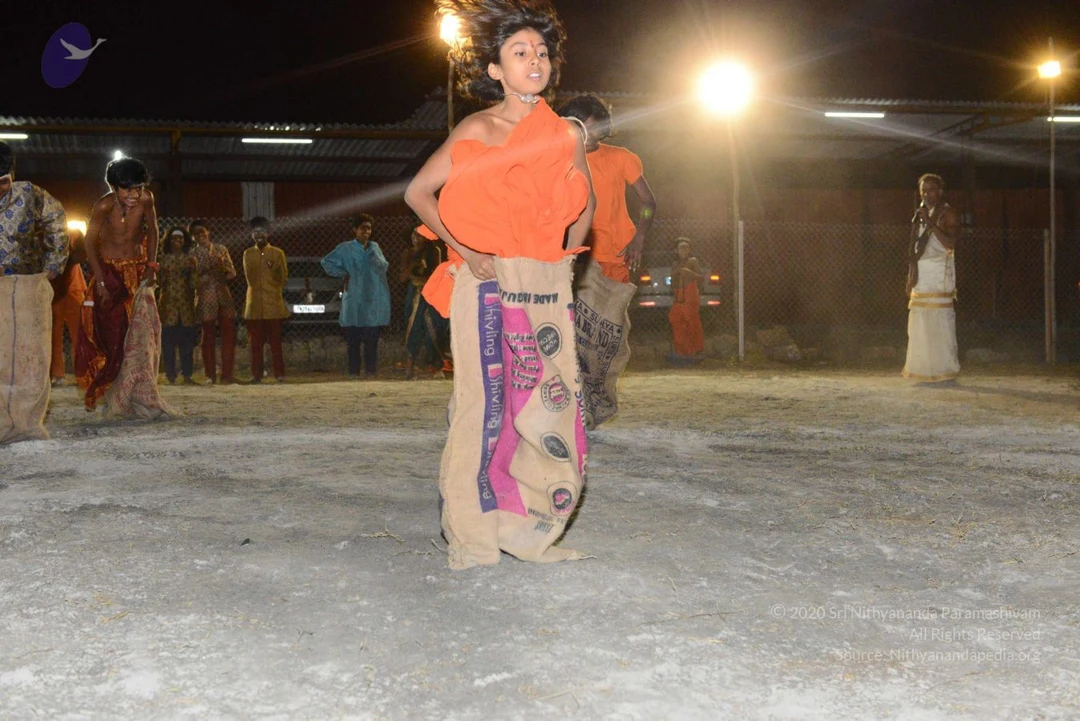
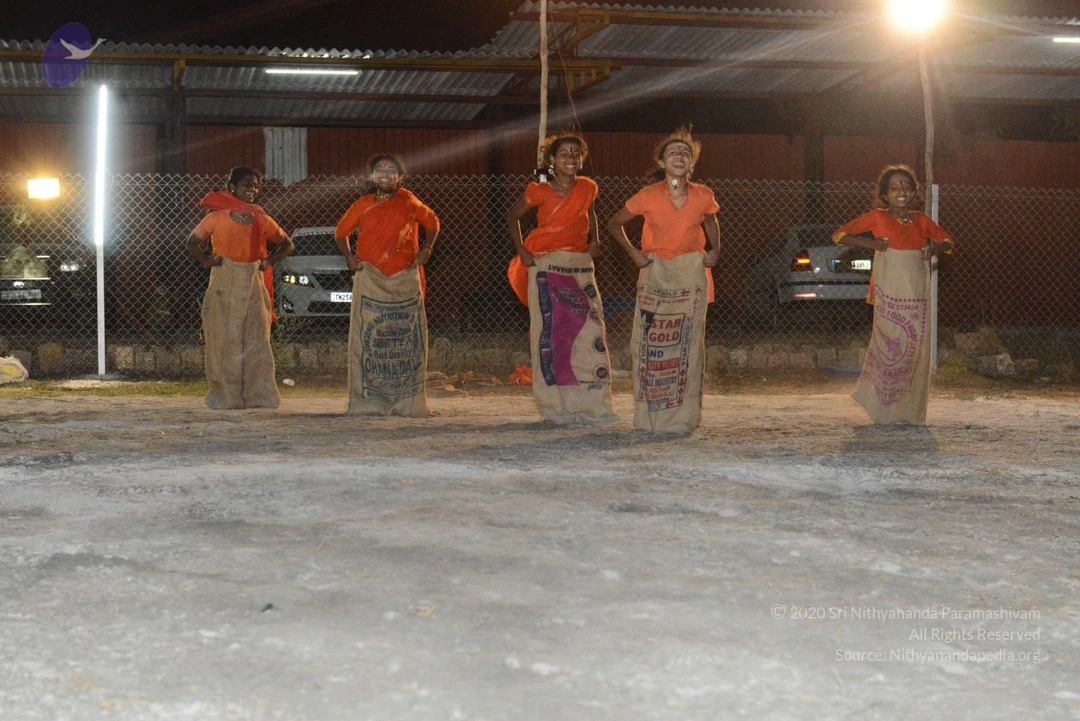
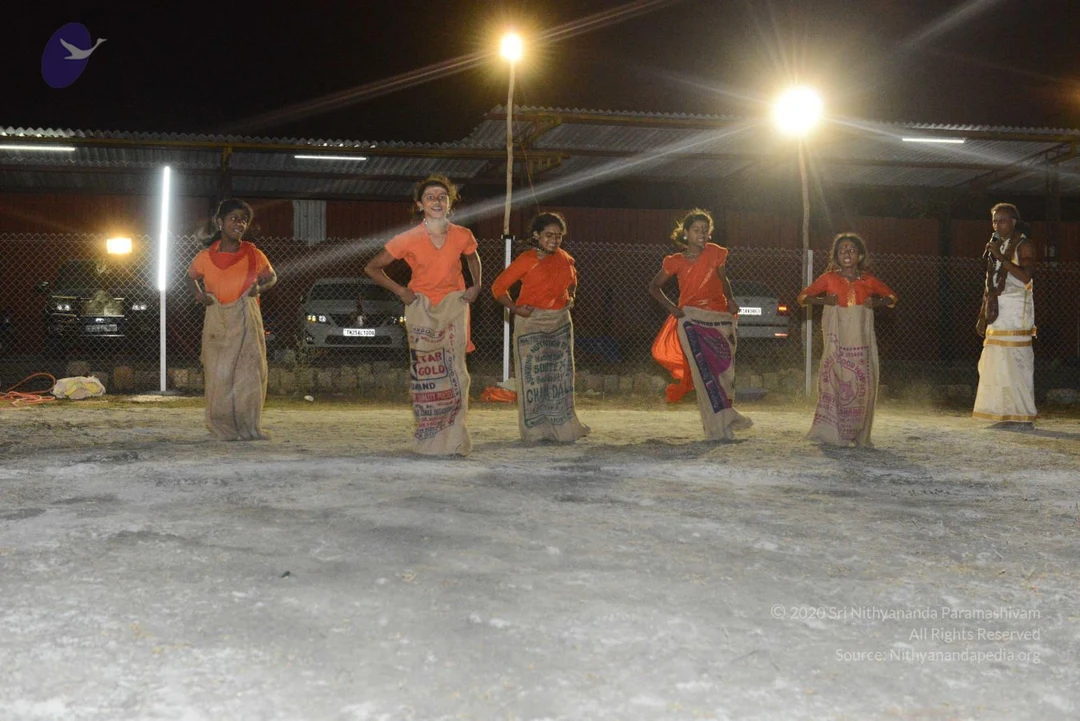
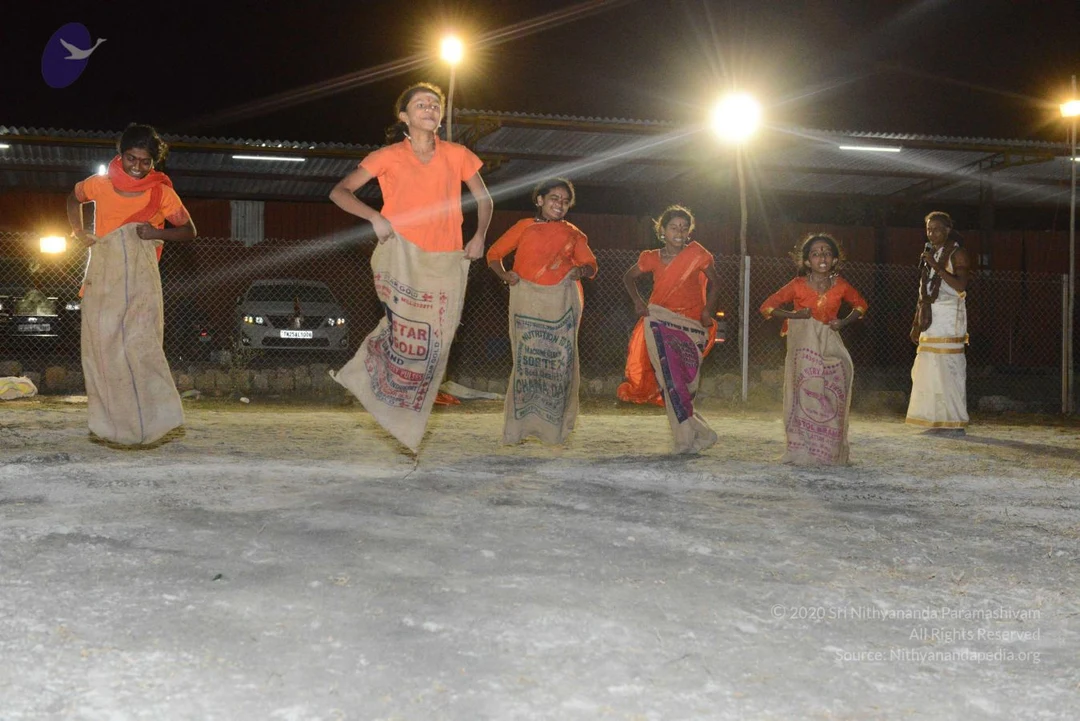
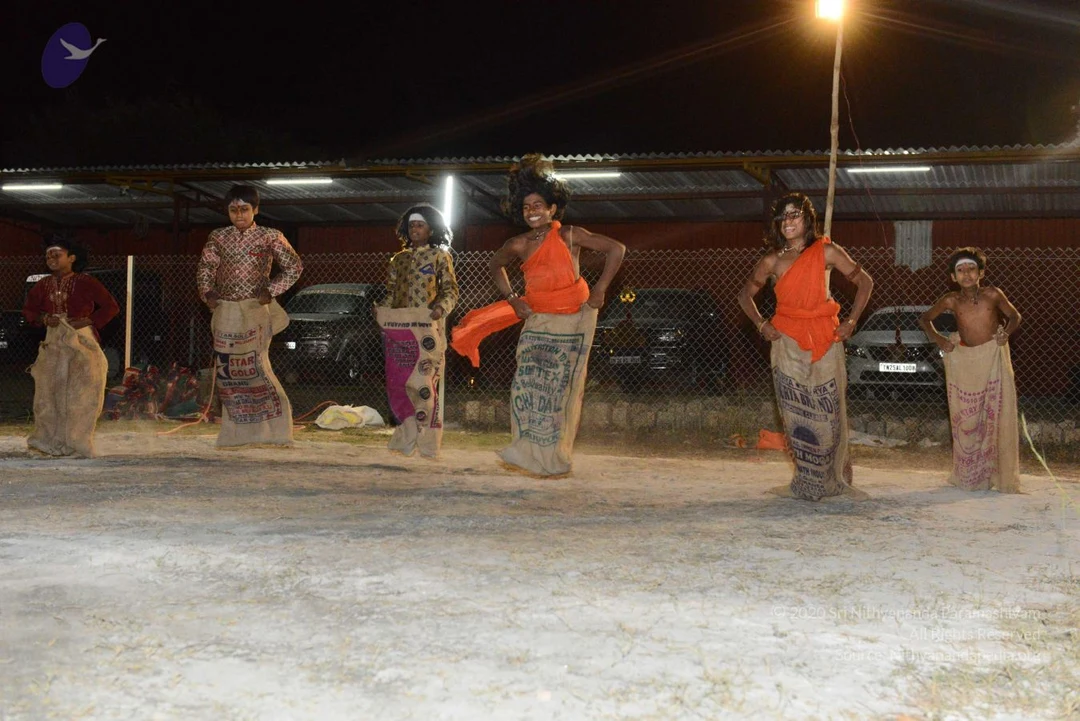
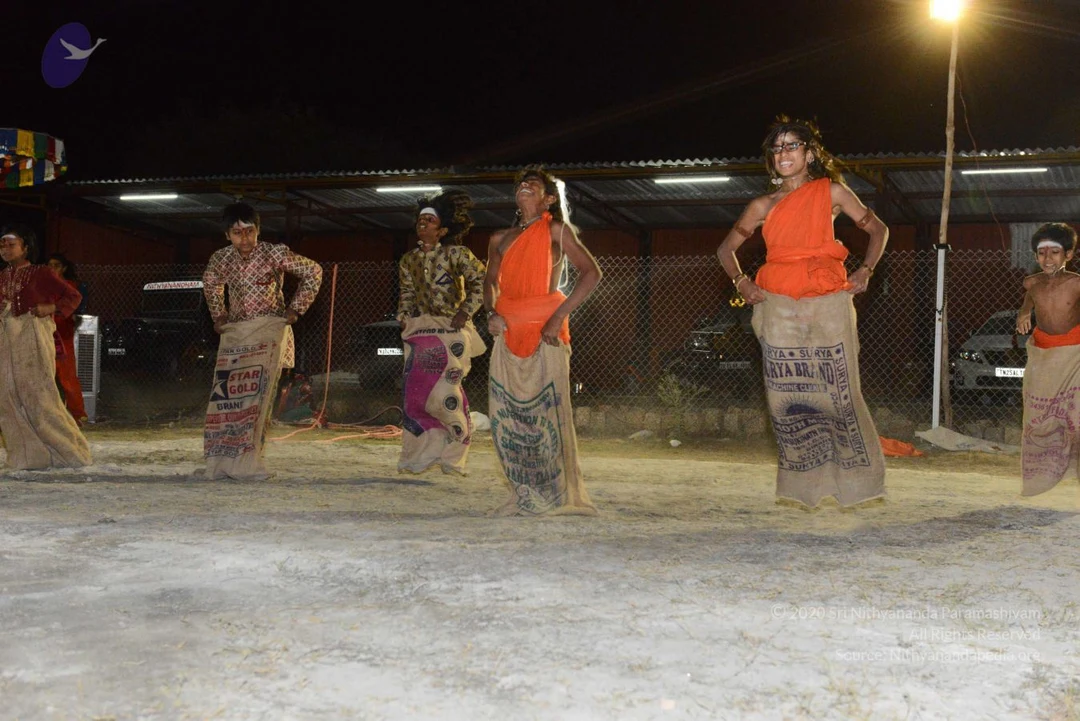
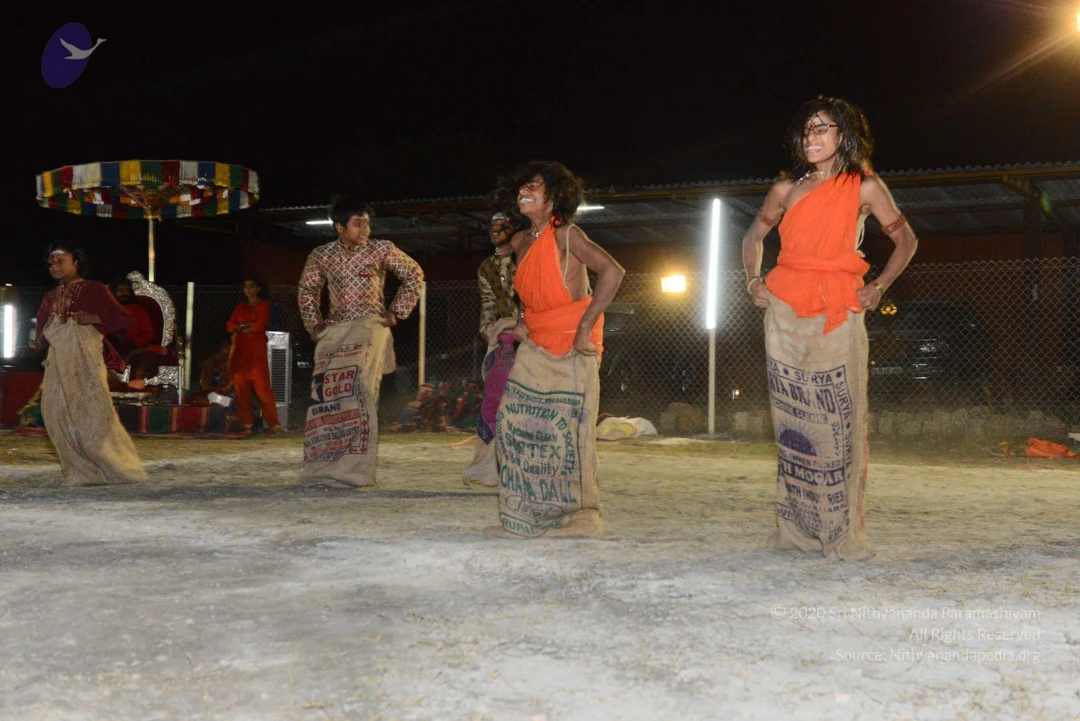
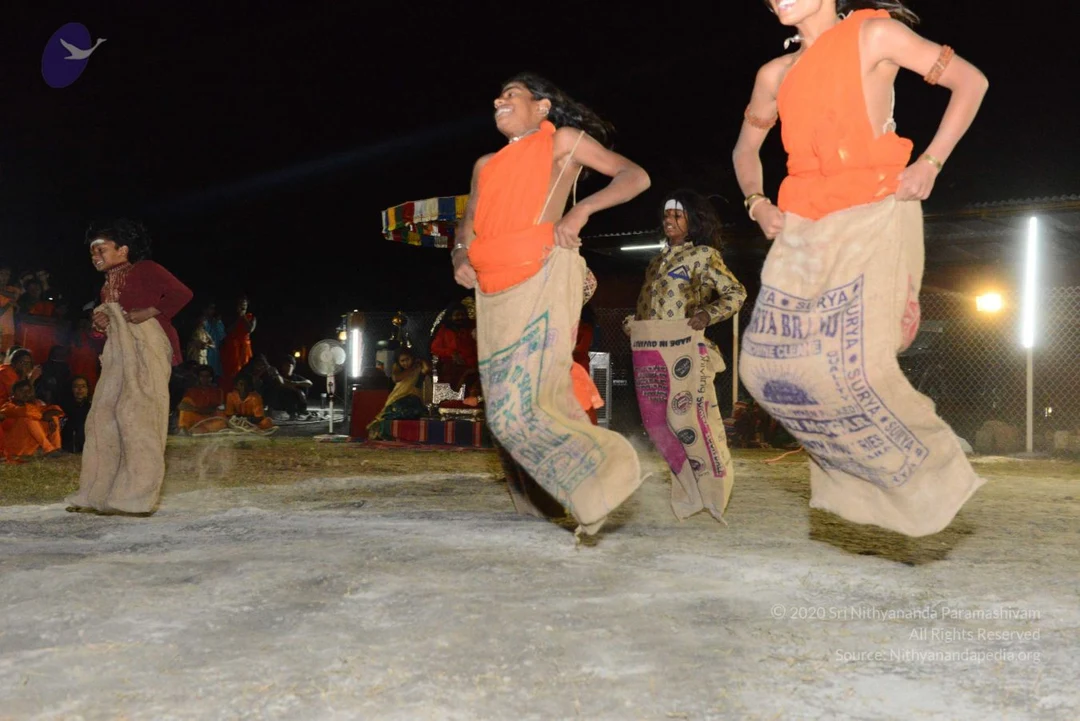
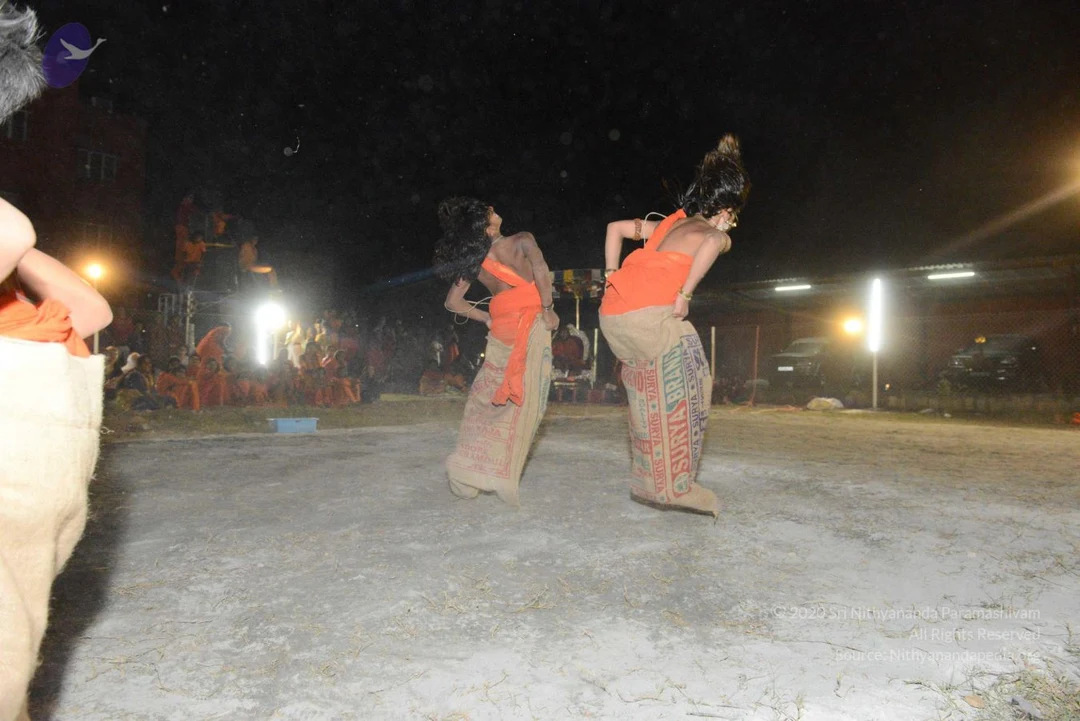
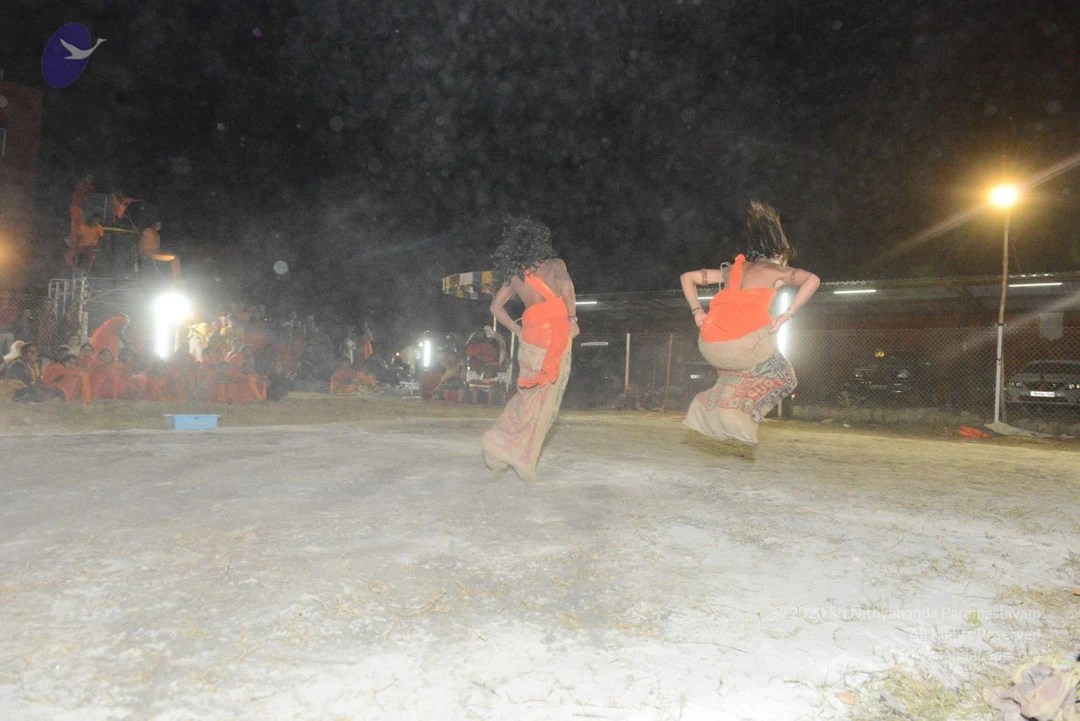
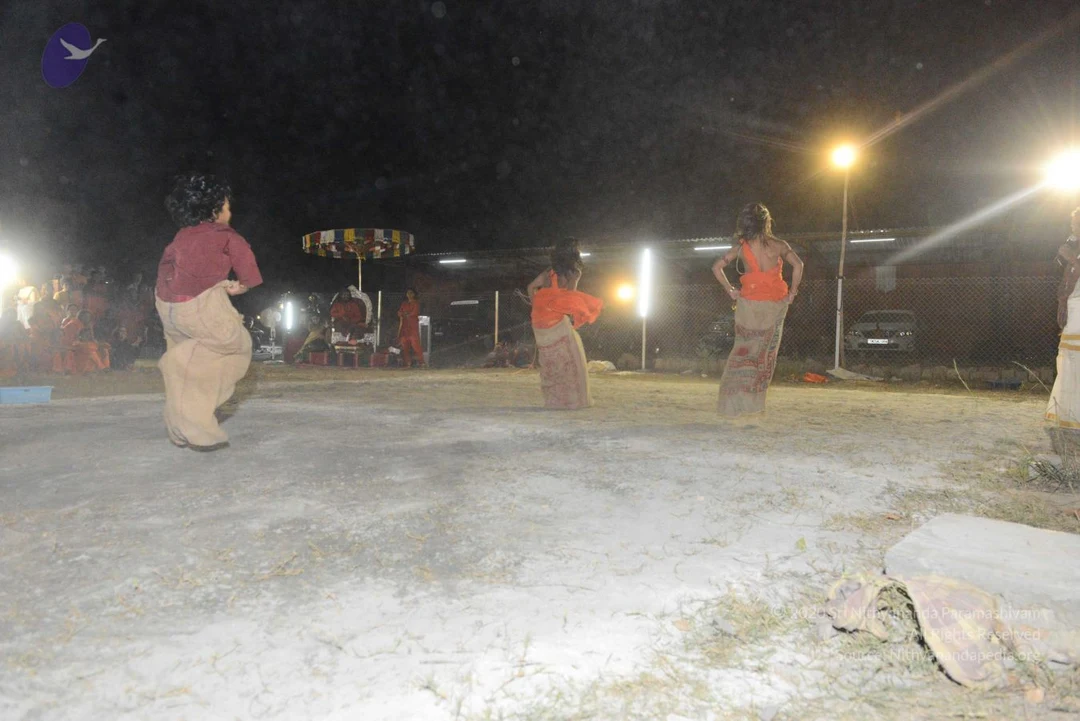
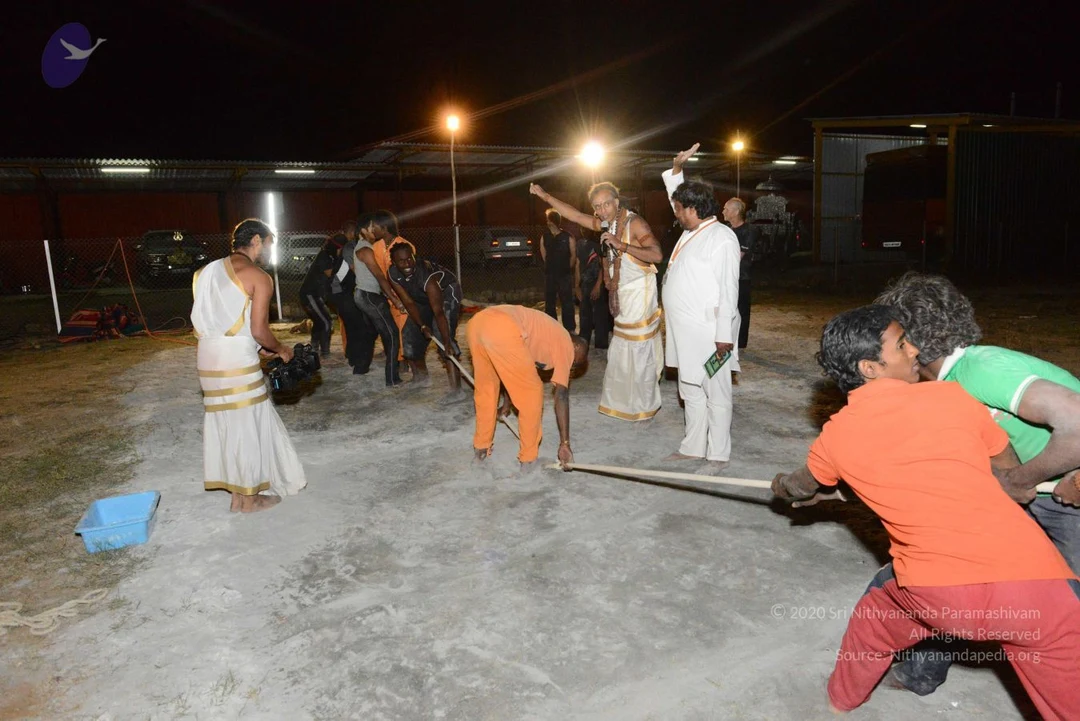
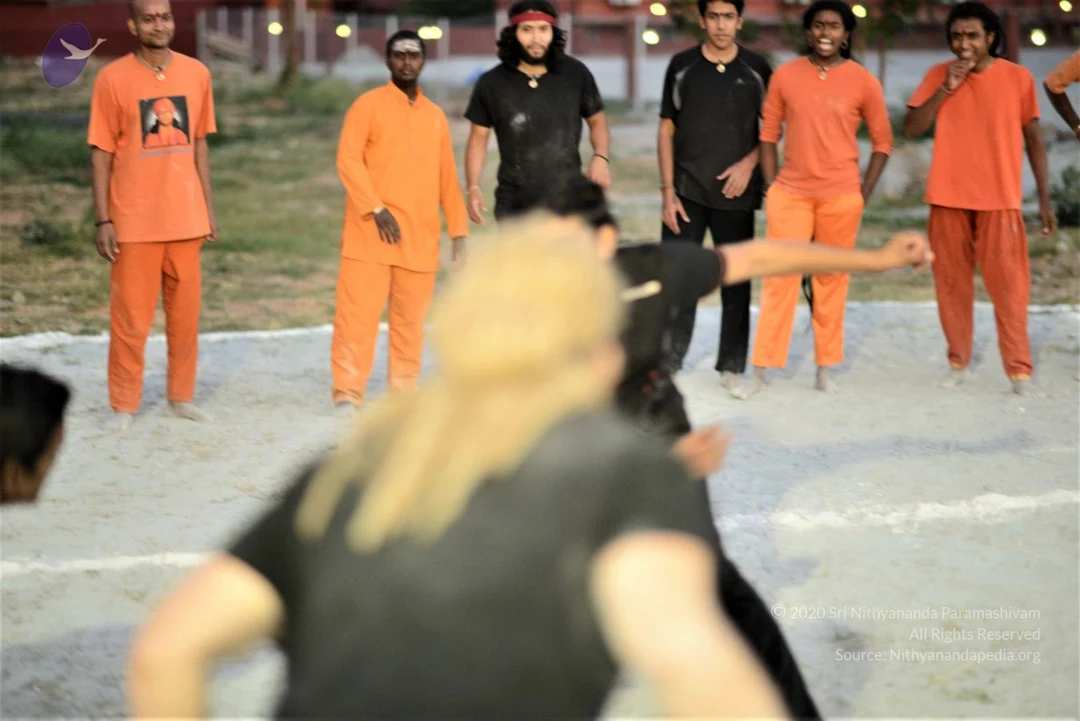
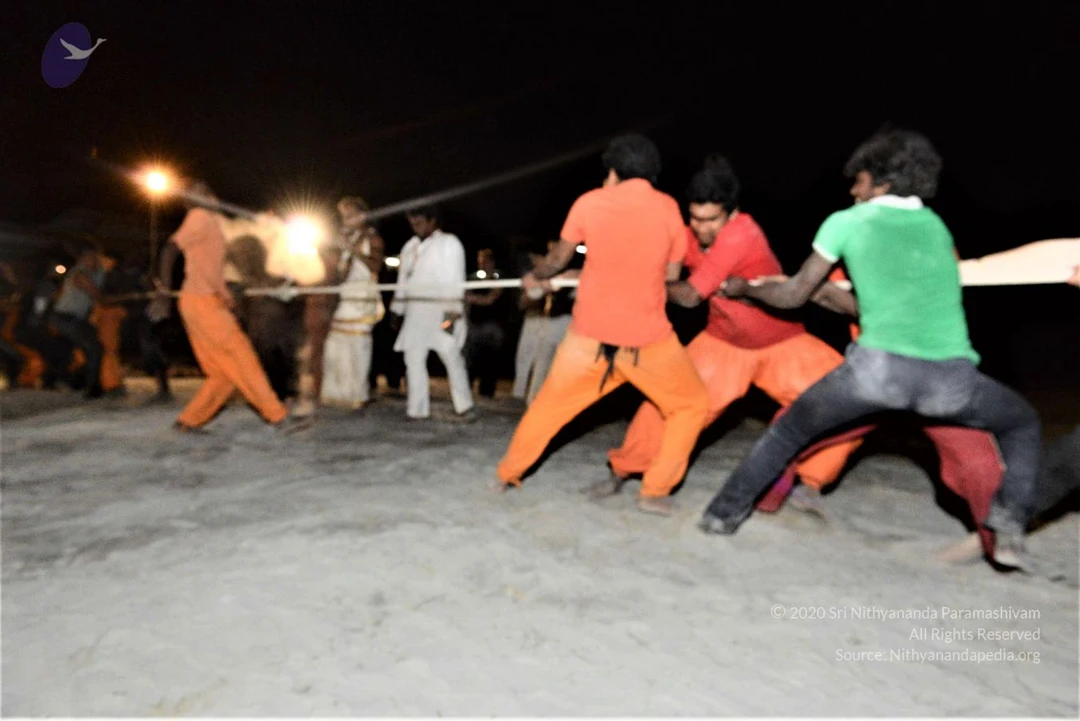
Games
Enriching Material

Flyer - Nirahara Samyama

Nirahara Samyama

Photos Of The Day:

FB-Photos-of-the-Day
Photos Of The Day:

power-manifestation-silicon-gadgets-rain
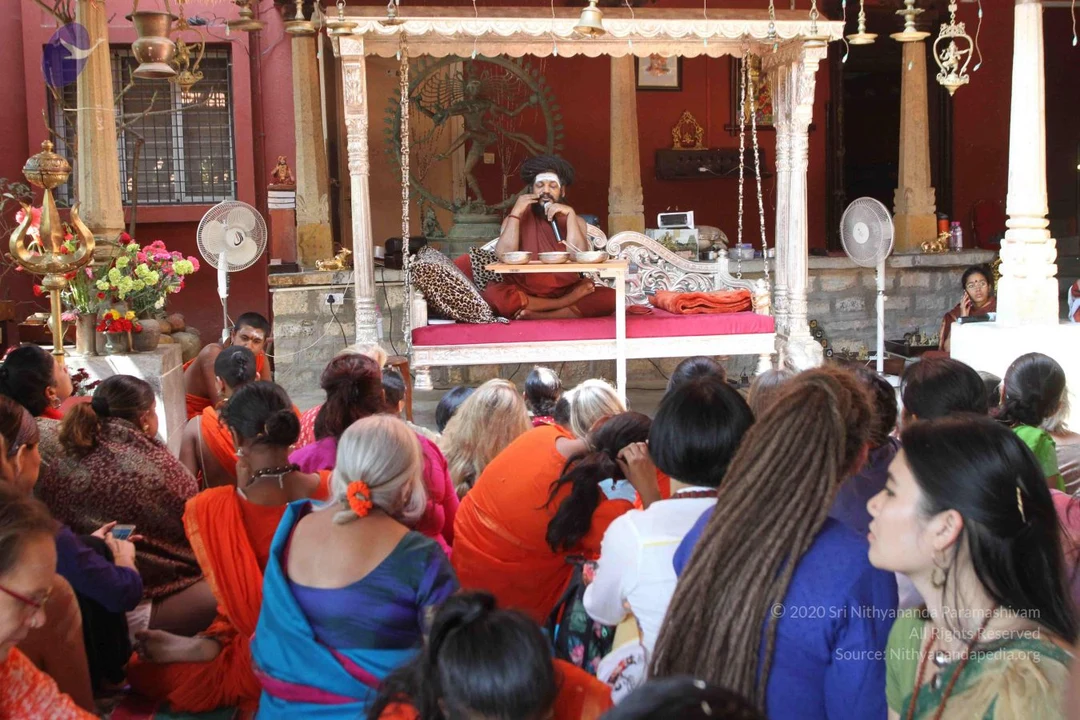
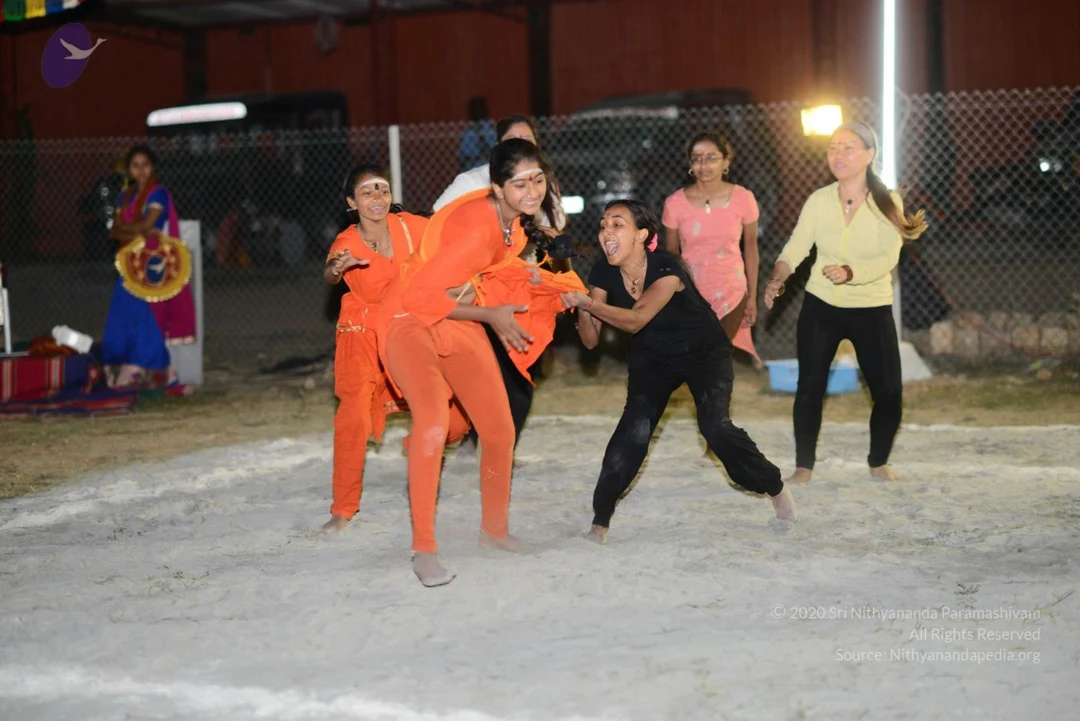
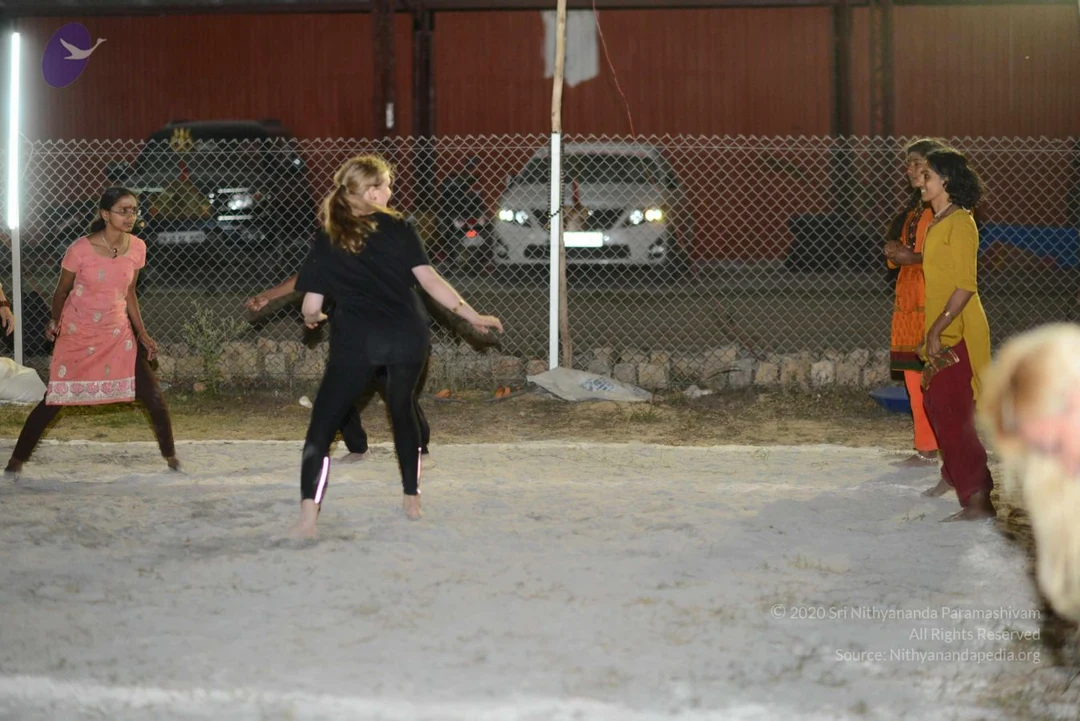
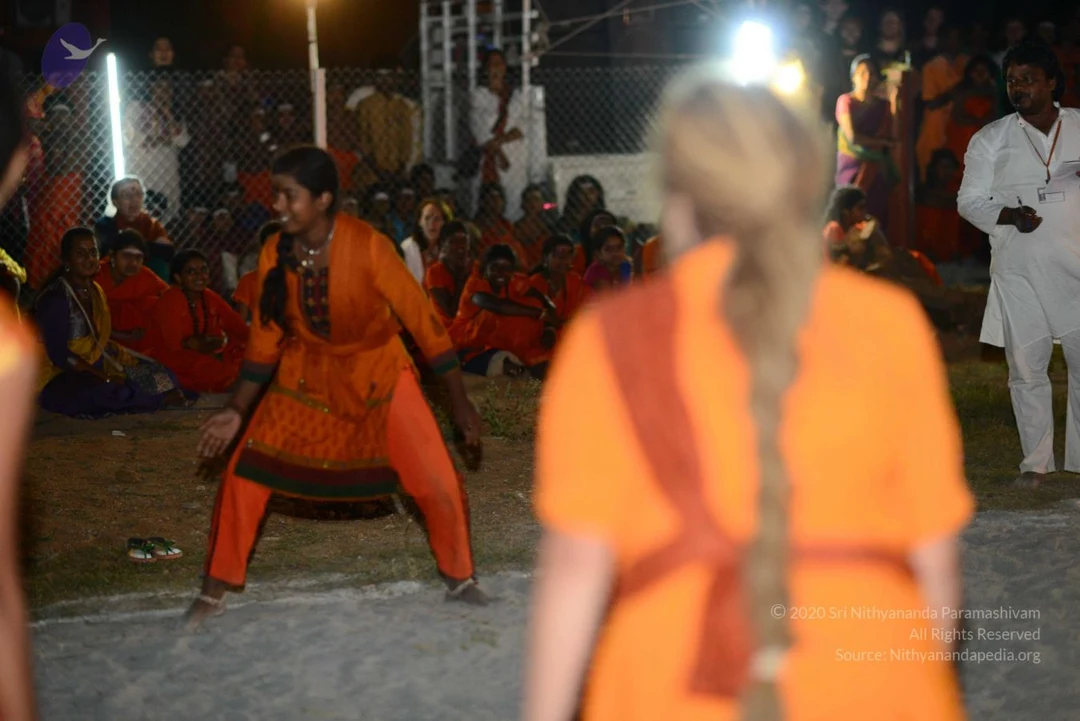
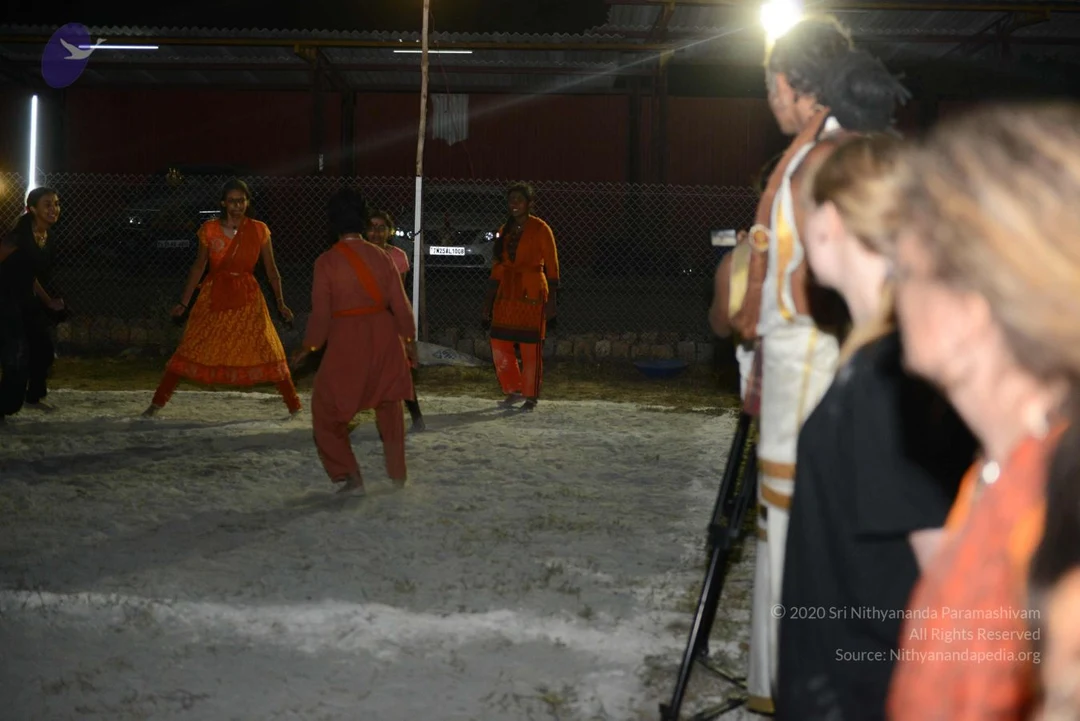
kabadi-games

Photos Of The Day:

power-manifestation-silicon-gadgets-rain

Kabadi-games

Photos from this day

View all 358 photos

Photos

10 photosSource gallery
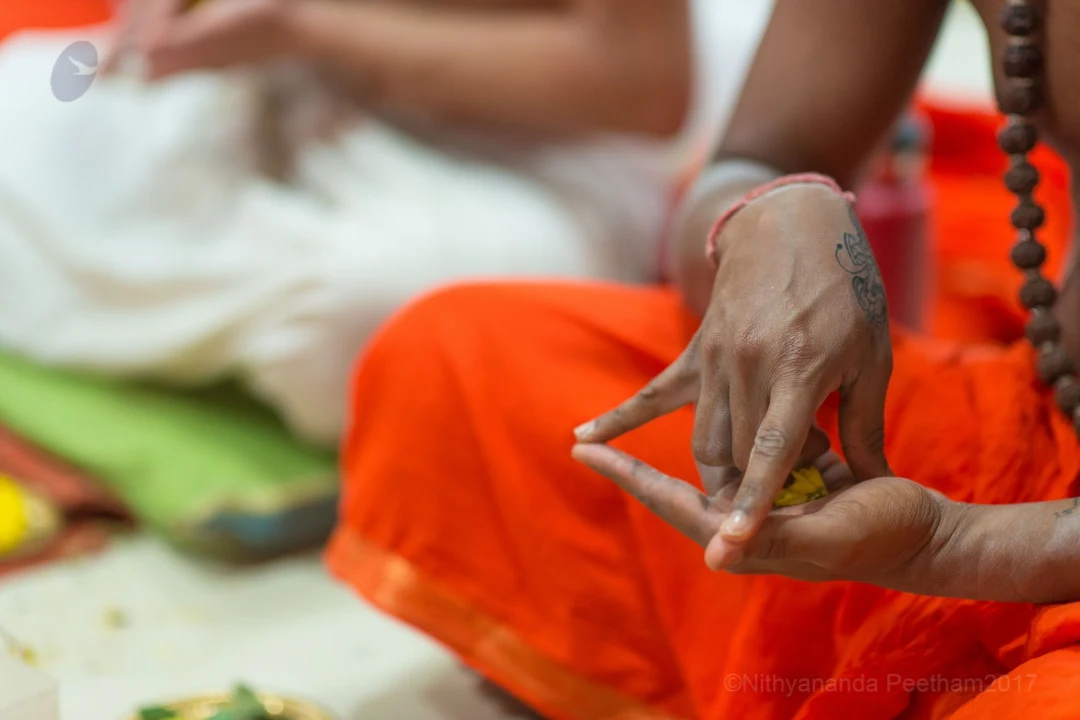
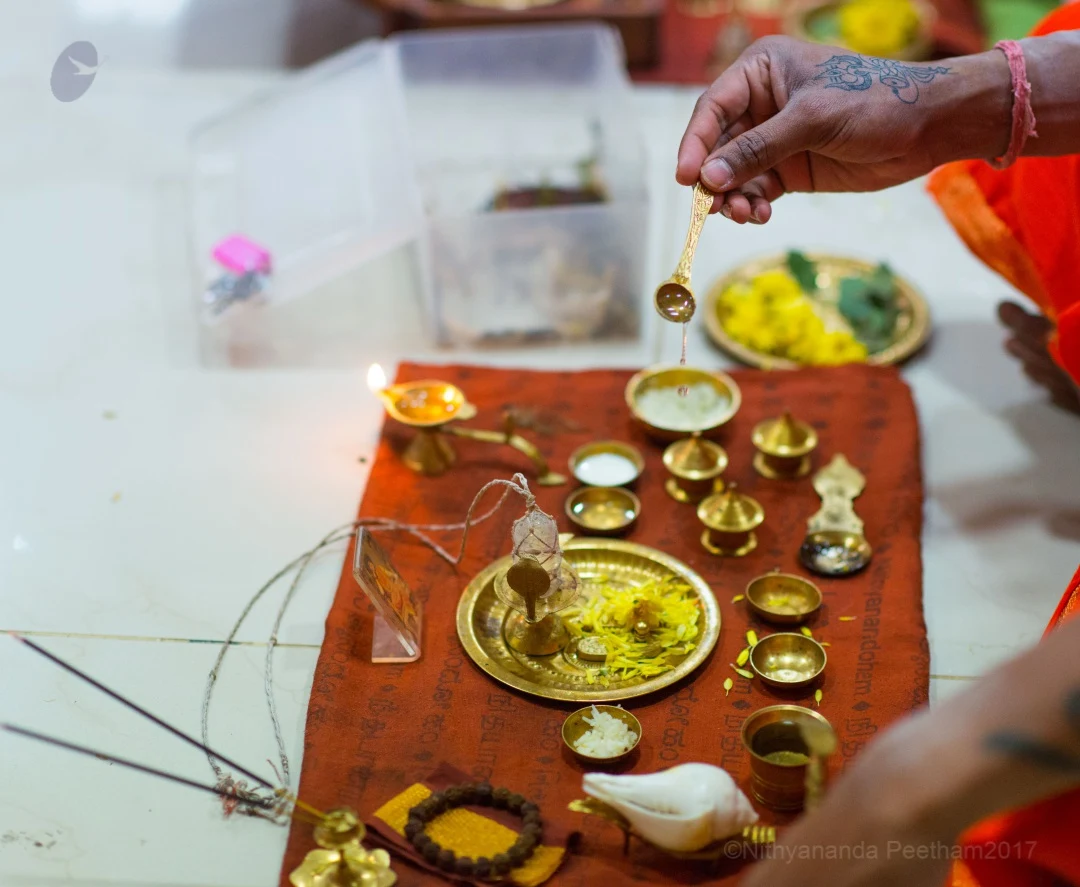
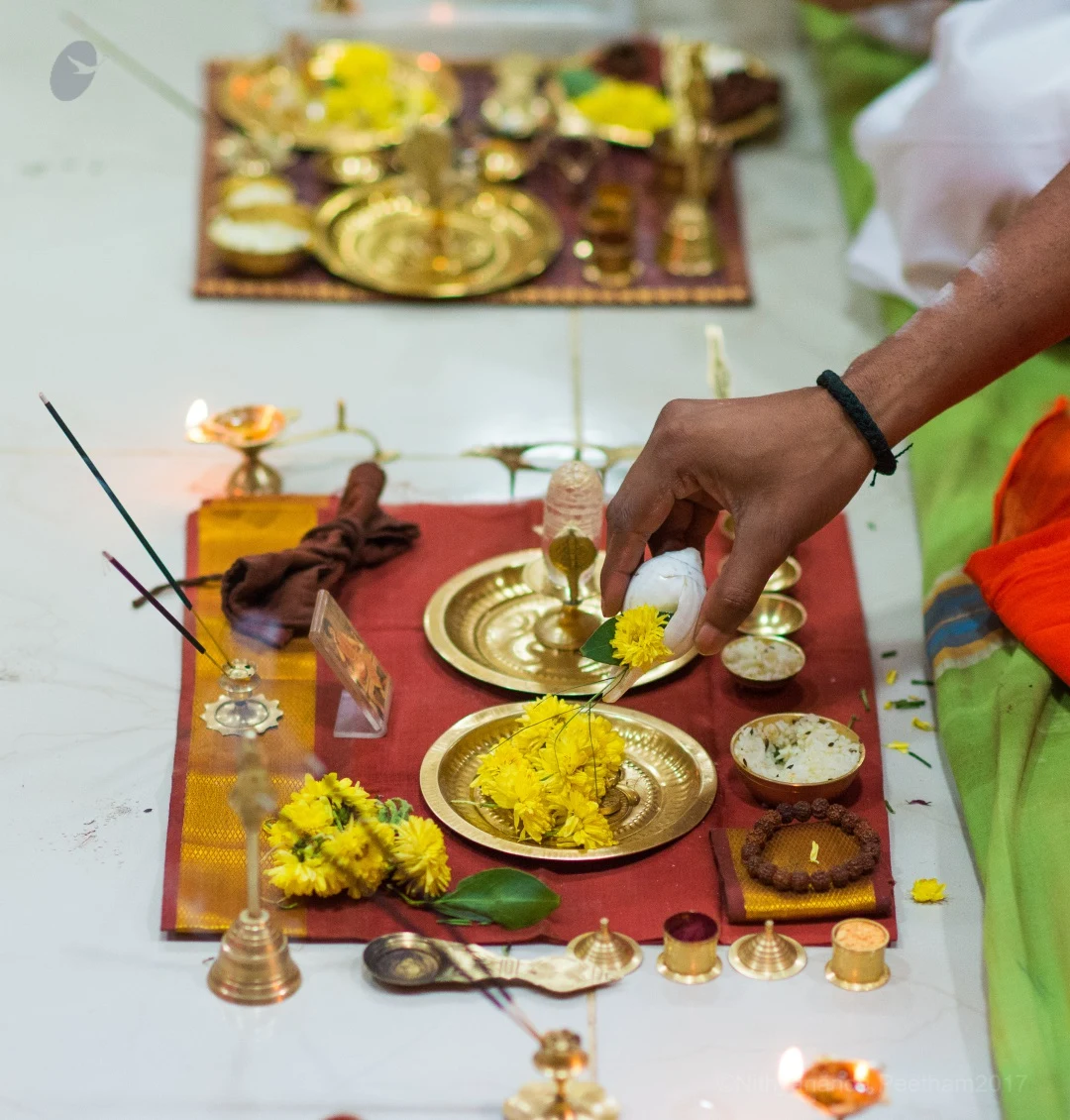
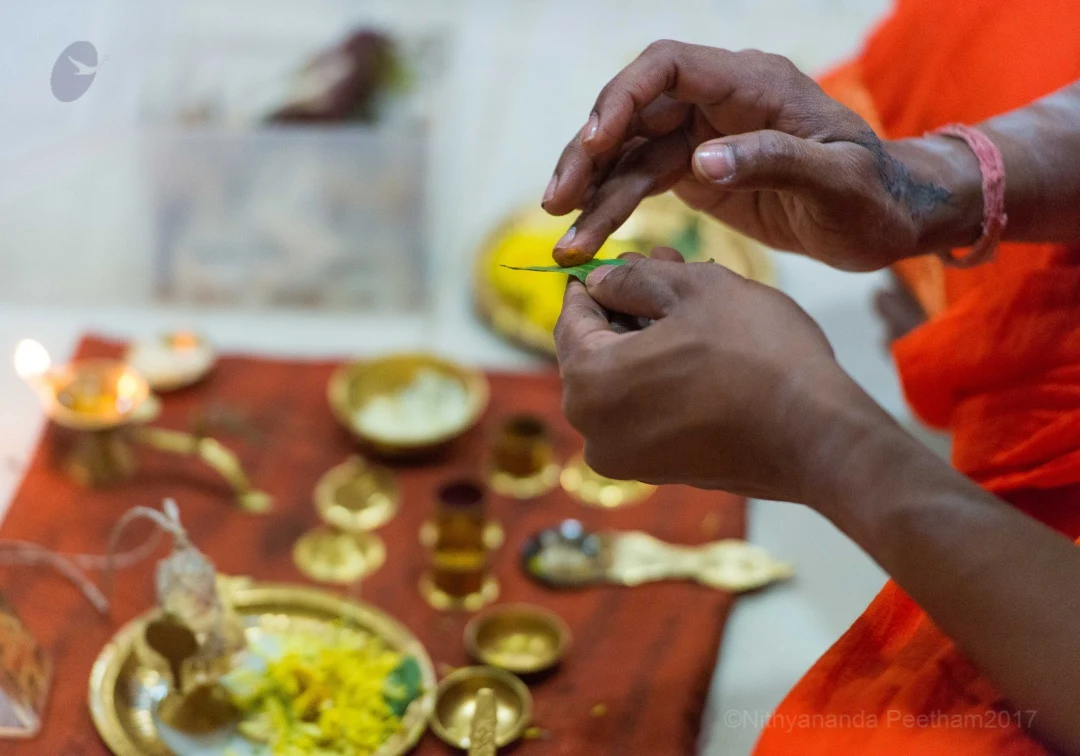
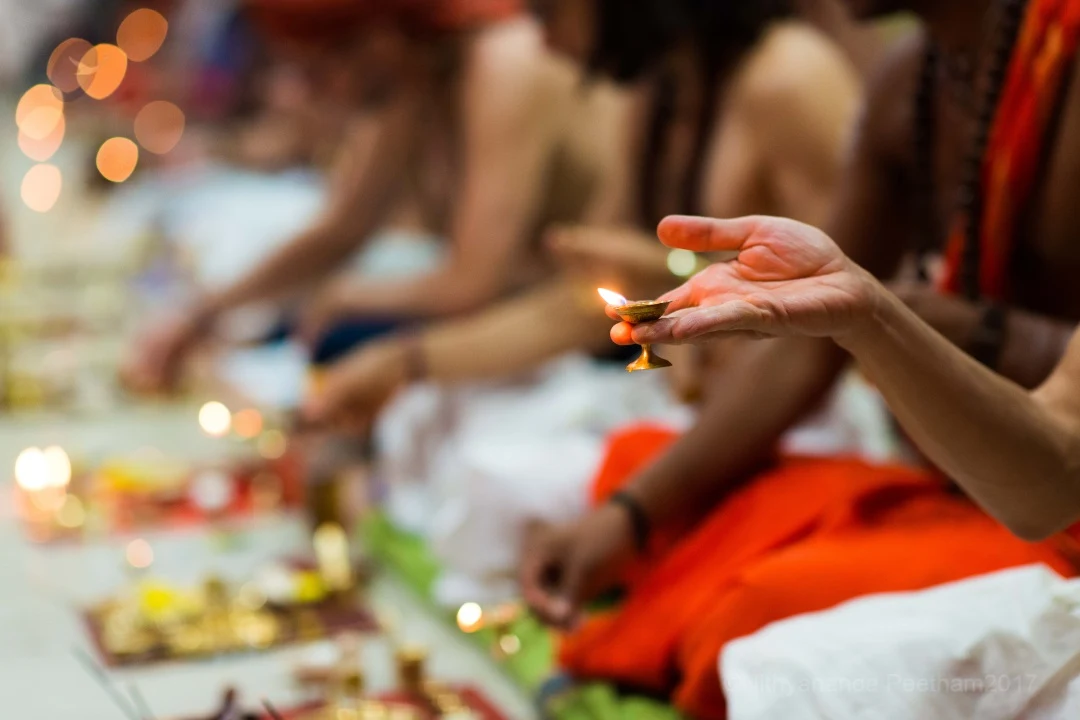
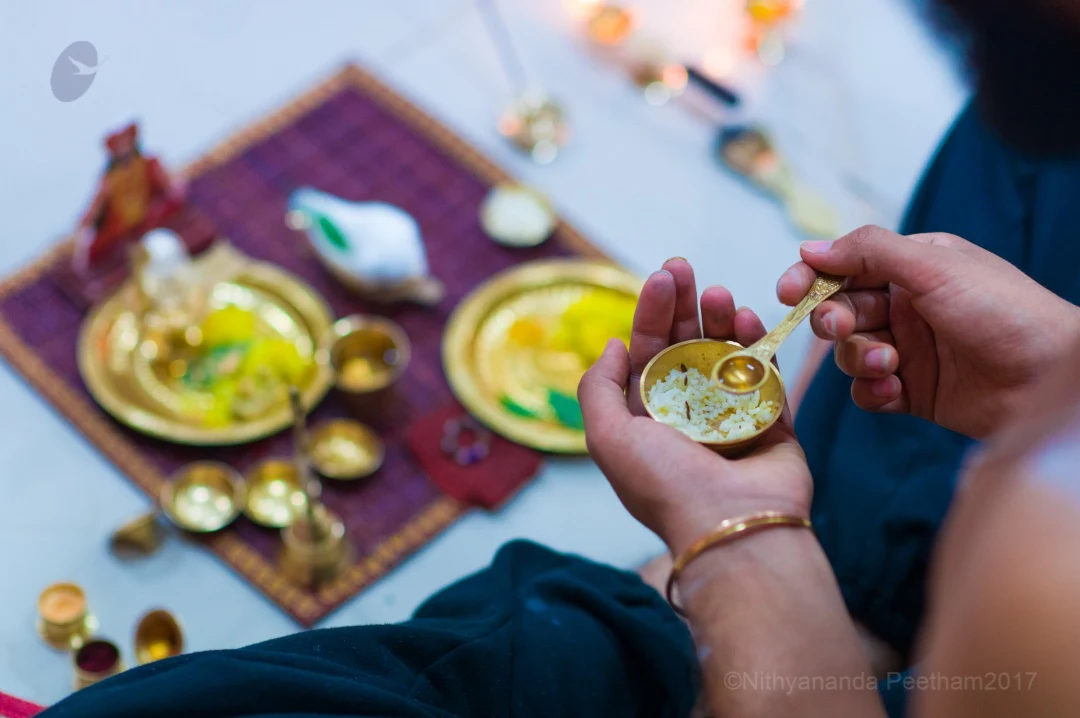
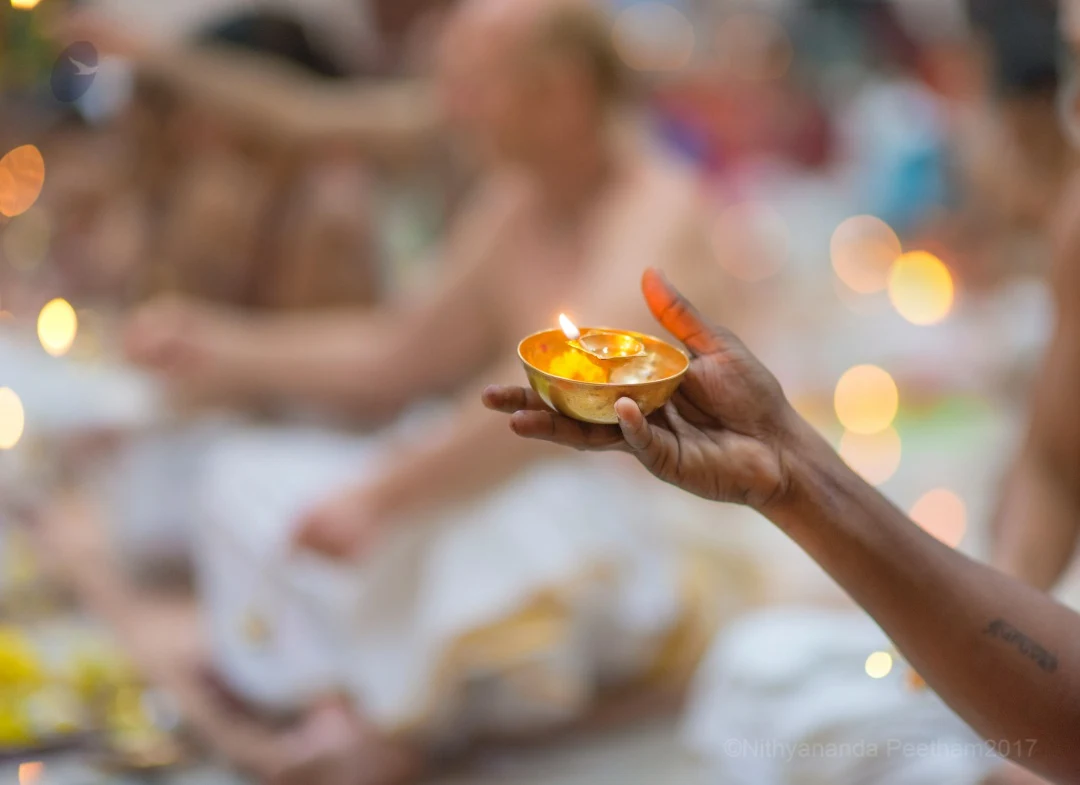
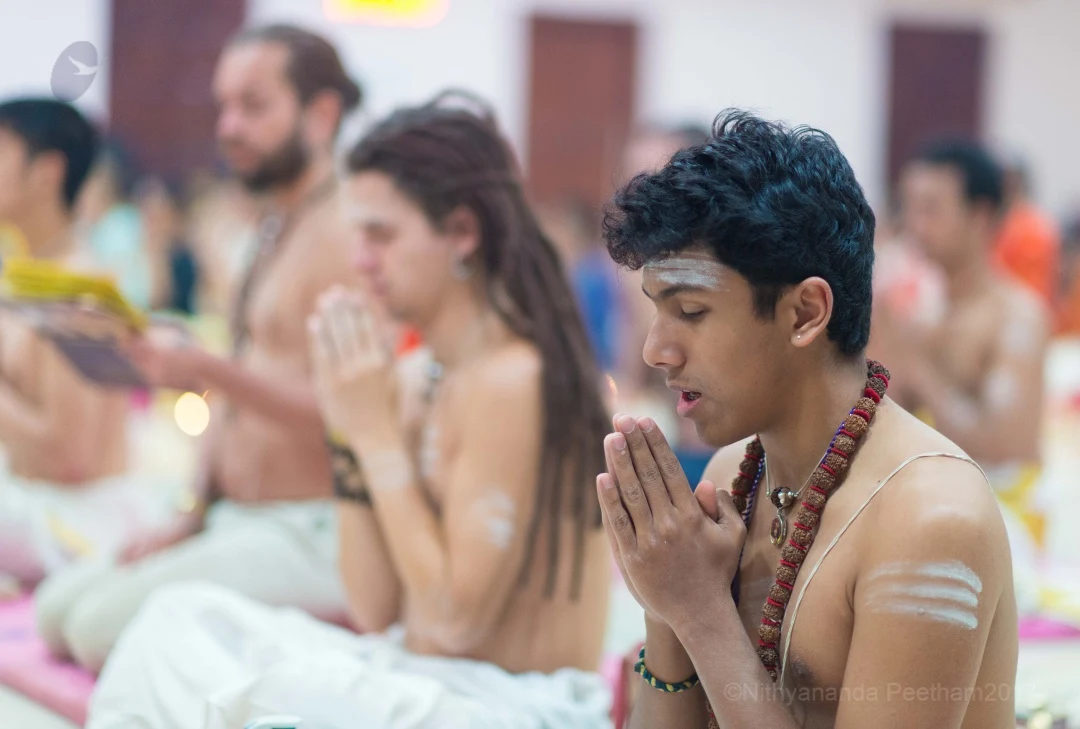
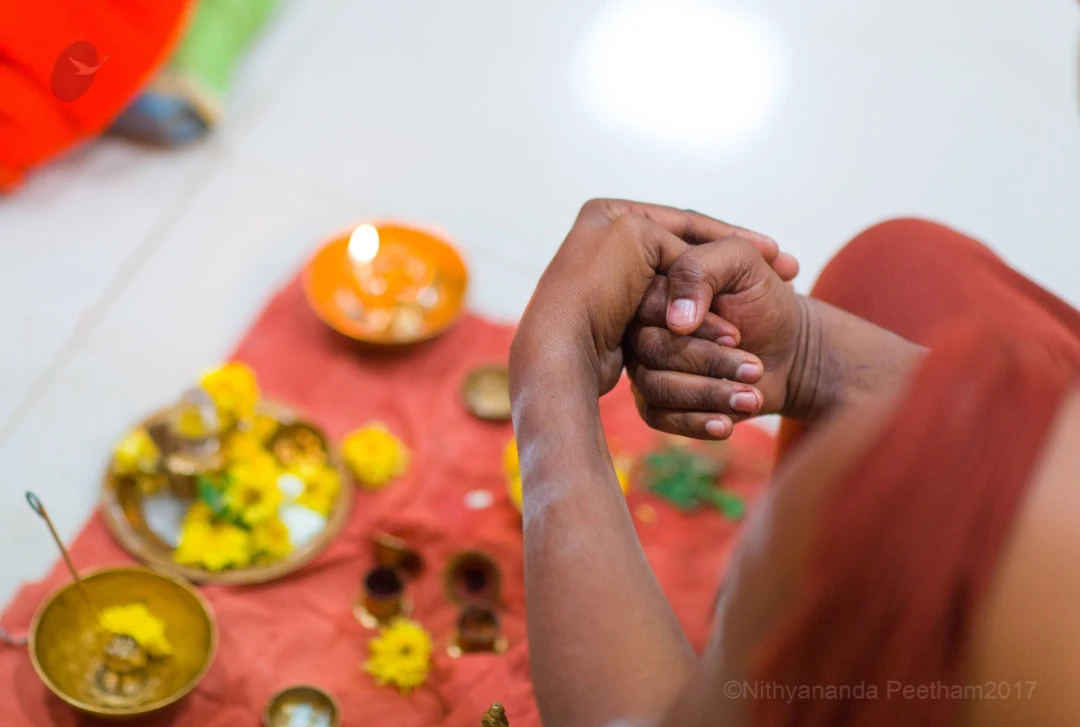
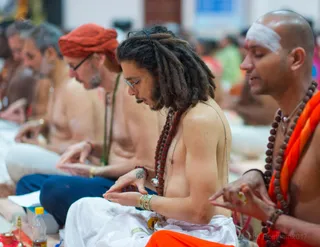
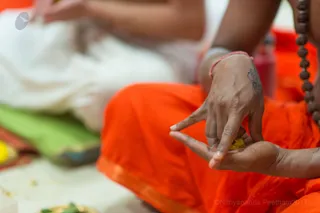
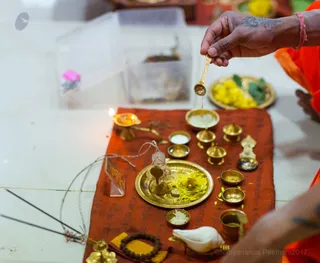
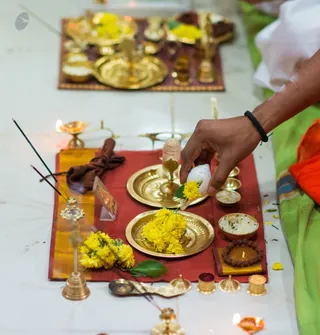
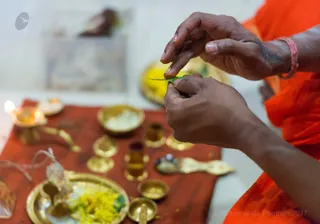
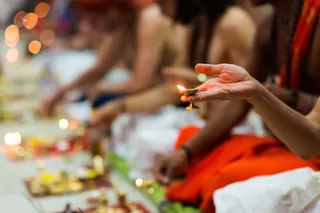
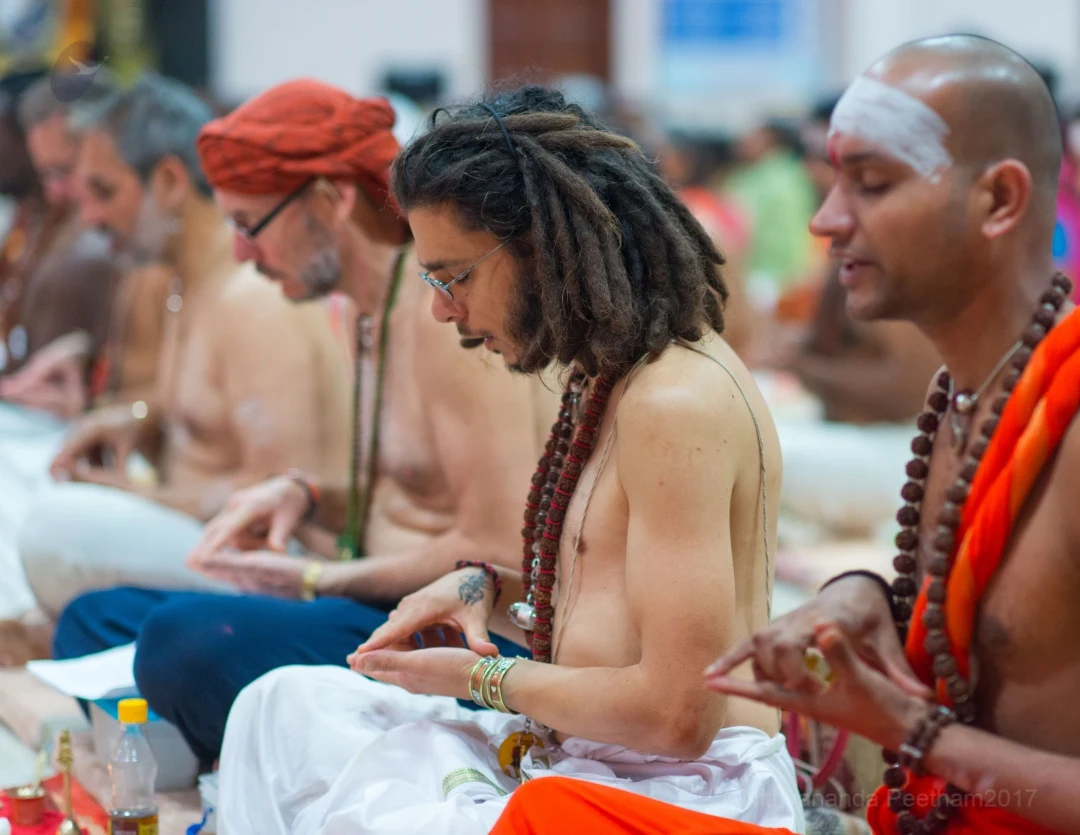
A seated group of men in a hall performs a meditative or puja practice with eyes lowered and hands held in mudras. In the foreground, a man with long dreadlocked hair, wire-rimmed glasses, a red-brown rudraksha mala and gold-toned bangles sits in white cloth with hands in a mudra. To the right, a bald man with a white tilak on his forehead wears an orange shawl and a dark rudraksha mala. Behind them, shirtless devotees sit in rows.Close-up photograph of a seated person in saffron-orange robes with a dark rudraksha mala hanging at the right edge. Their hands form a mudra, the index and middle fingers extended, while a small yellow flower or offering rests in the palm. A red thread is tied on the wrist and a tattoo is visible on the back of the hand. A blurred figure in white sits beside them on a green cushion, and yellow petals and a small plate lie on the white floor at the lower left.Close photo of a puja set-up on an orange-red cloth with Sanskrit-like printed borders. A hand with a tattoo and red thread at the wrist pours liquid from a small gold spoon over the arrangement. Brass plates hold yellow marigold petals and green leaves, small brass bowls and kalasha-like vessels hold rice and offerings, and a brass oil lamp with a lit flame sits at left. A conch shell, rudraksha mala, incense sticks and a brass bell lie in front. The sleeve of a person in orange robes appears at right. Transparent containers and a wall are blurred in the background.Close-up photo of a puja setup on a white marble floor. A hand with a black thread bracelet holds a white cloth bundle and yellow marigold flowers over a brass plate on a red cloth with gold border. Brass lamps with lit wicks, incense sticks, a brass bell, a rudraksha mala, small brass bowls of rice and kumkum, and yellow flowers are arranged around. Another brass tray is set in the background. A green-and-white garment and an orange cloth edge appear at the right. A lit oil lamp sits at the lower right. No faces are visible, so no one is identified.Close-up photo of a person in an orange-saffron robe performing a puja at a table draped in a rust-red cloth. Their hands hold a small green leaf, pinching and folding it over brass offering plates. Nearby are brass bowls, a brass cup of liquid, a small lit oil lamp on a brass stand, and a plate of yellow flowers. A pink thread is tied around the wrist. Soft, blurred background.Close-up photo of a seated row of devotees in orange and white clothing during a ritual. In the foreground, a right hand holds a small brass oil lamp with a lit flame. Behind it, several seated people wearing orange robes and rudraksha beads sit on white cloth, with brass puja vessels and offerings on a tray in the blurred foreground and warm bokeh lights.

Photos

8 photosSource gallery
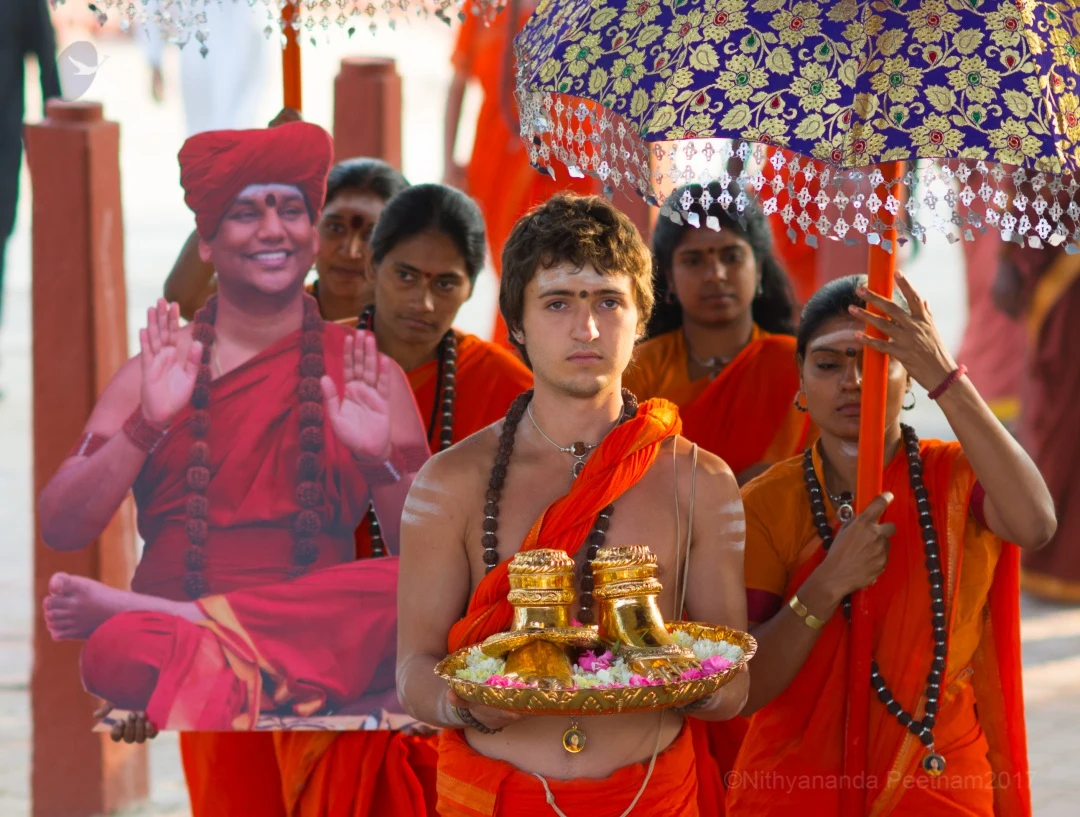
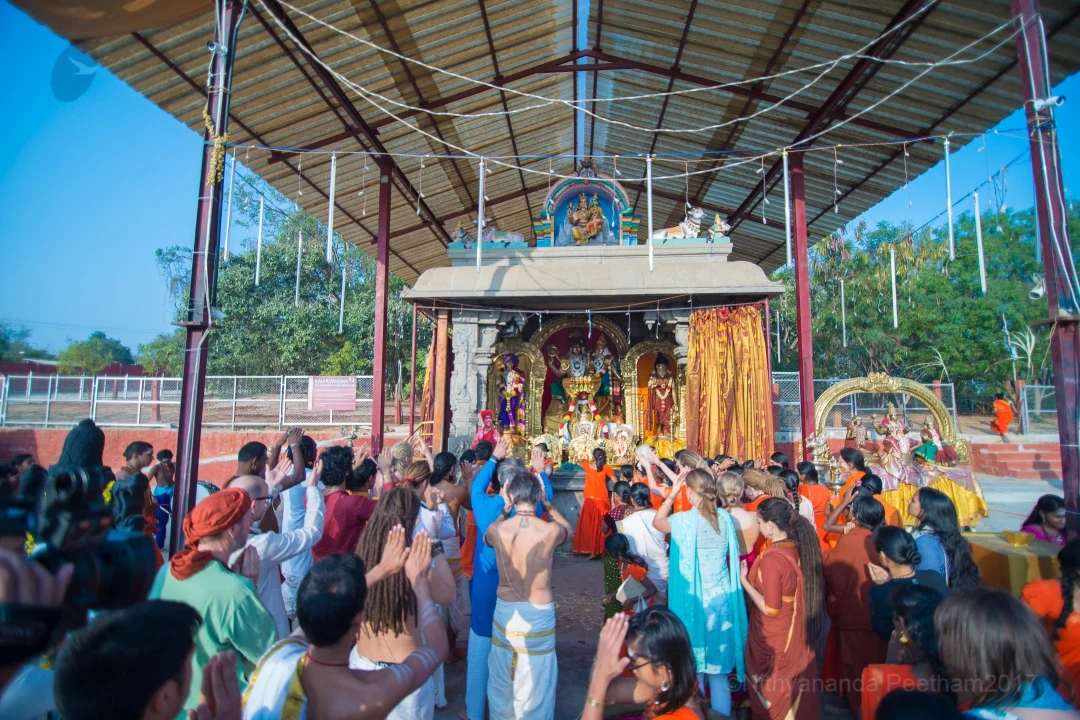
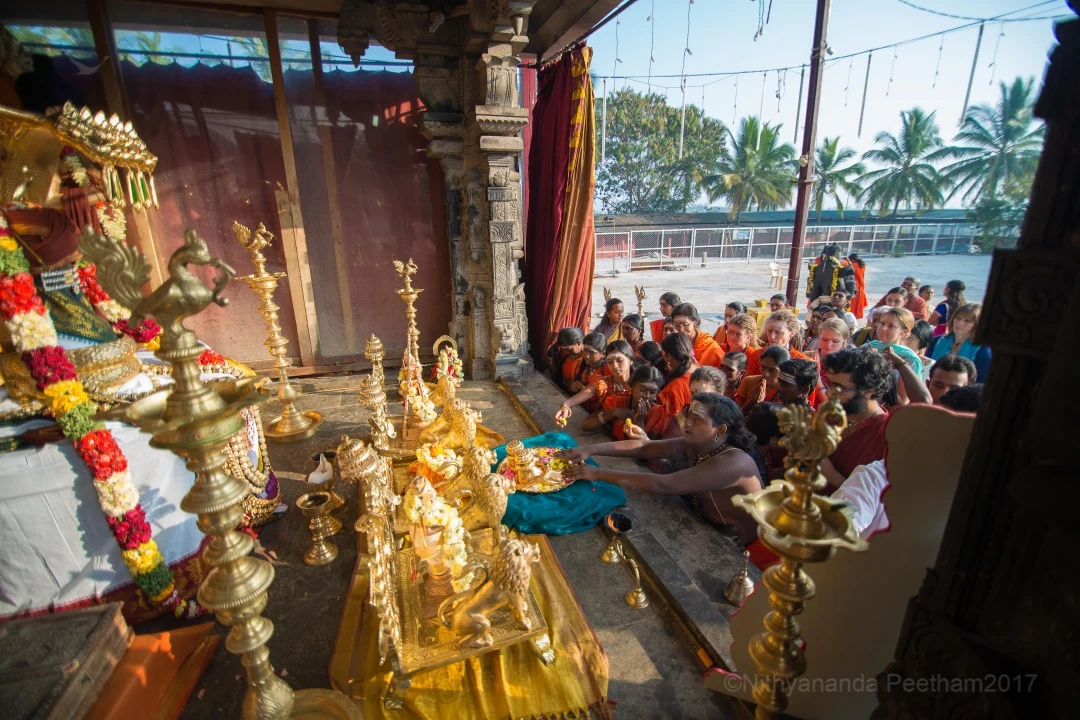
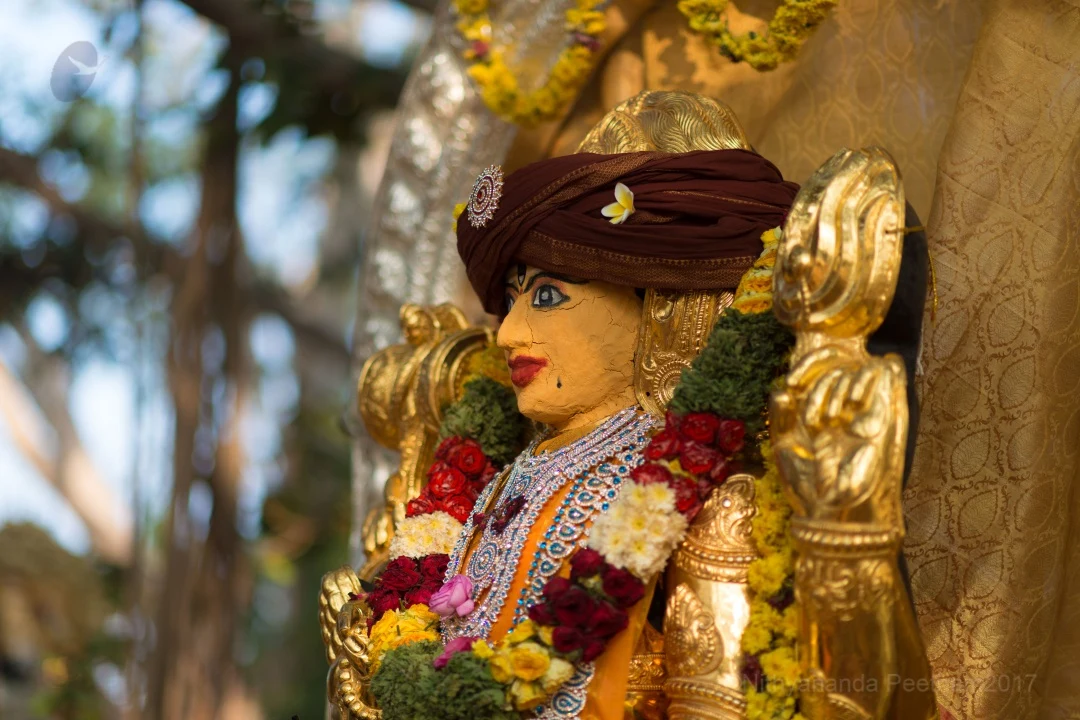
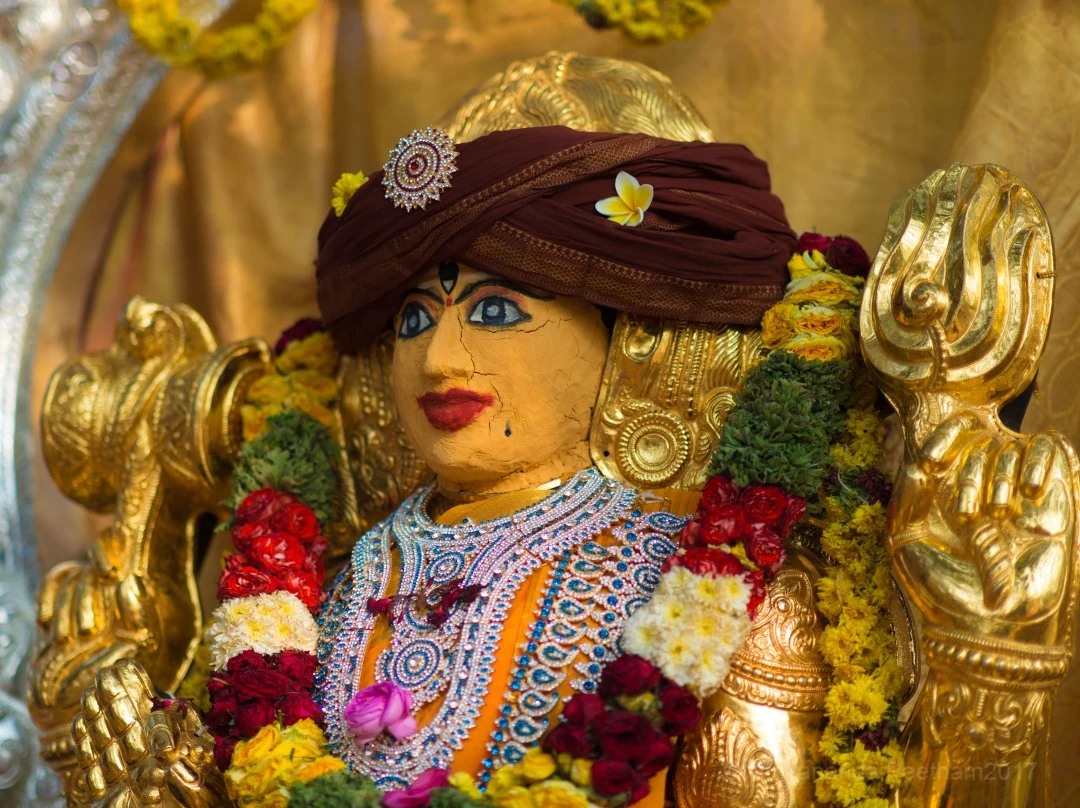
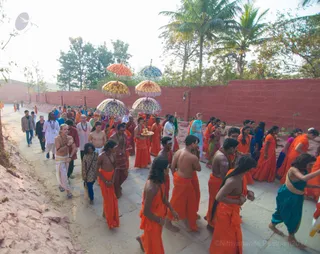
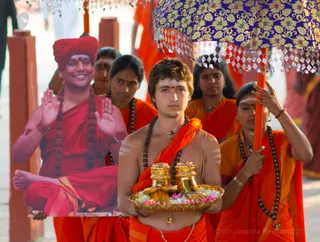
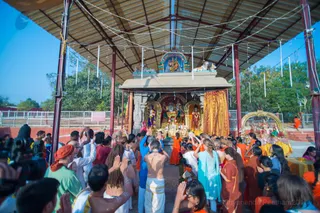
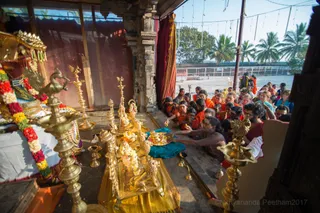
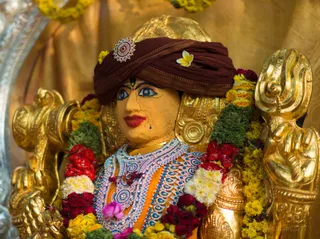
A procession moves along a stone-paved path beside a red brick wall, with palm trees and trees behind. Several people in saffron-orange dhotis and sarongs walk in a line; some bare-chested men wear rudraksha malas and one carries a brass plate with offerings. Four ornate parasols in orange, yellow, blue and purple with beaded fringes are held aloft above the group. Some people wear white dhotis and light shirts, and a woman in a teal outfit walks at the right edge. Roughly twenty-five people are visible in the procession.A procession at a temple-like setting. In the foreground a young shirtless man with curly brown hair and white sacred markings on his chest and arms carries a golden tray holding two gold kalasha vessels decorated with pink and white flowers, wearing an orange cloth and a rudraksha mala. Behind him, several women in orange saris with rudraksha malas and red tilak walk alongside a large blue and gold embroidered umbrella held on a pole. At left, a large cutout poster of a smiling man in a red turban and red robes, with rudraksha beads, sits in padmasana with raised palms, carried among the marchers. Red pillars and orange-clad participants fill the background.Outdoor photo of a crowd of devotees gathered before a small open-air shrine under a corrugated metal roof. Inside the shrine, several deity murtis are dressed in orange and red garments, with garlands and ornaments, and a gold-framed arch and orange curtain stand behind them. Devotees, many in orange, saffron and white clothes, have their palms joined in prayer and raise their hands toward the shrine. In the foreground, a bare-chested man in white dhoti and a red-orange shawl stands with arms raised, and a man in a green shirt and white dhoti joins in. Strings of white flowers hang from the roof beams and a few cameras are visible at the left edge. Trees and blue sky appear beyond the fence.A photograph inside a temple shrine area with brass oil lamps, a brass kalasha-style vessel, and ornate brass figures of a lion and deity murti decorated with red and white flower garlands. A woman in a dark sari with bare shoulders kneels at the front, extending a brass plate of offerings toward the murti. Behind her, a seated crowd of devotees in saffron and orange robes and ordinary clothes watch from a stone platform, with palm trees and a courtyard visible through an open side. Several people in the background stand, and a stone pillar and a gold-and-red curtain frame the scene. The image is a photo of a puja-style offering in a temple setting.A painted statue. It wears a maroon turban with a white plumeria flower and a jeweled brooch, a blue-and-silver jeweled collar over an orange garment, and is draped with garlands of red roses, white flowers, yellow marigolds and green leaves. Gold-coloured carved armrests and a gold brocade backdrop frame the figure, with blurred trees behind. No living people are visible.Close-up of a painted deity murti on a golden palanquin or throne in a temple setting. The figure wears a maroon turban decorated with a round jewelled brooch and a white plumeria flower, a red-and-black tilak, and an orange garment covered by an ornate blue and white beaded collar. Garlands of red roses, yellow marigolds, white flowers and green leaves drape the figure, and a pink flower rests near the chest. Gilded metal arms with a raised hand and gold ornaments surround it against a golden silk backdrop.

Photos

4 photosSource gallery
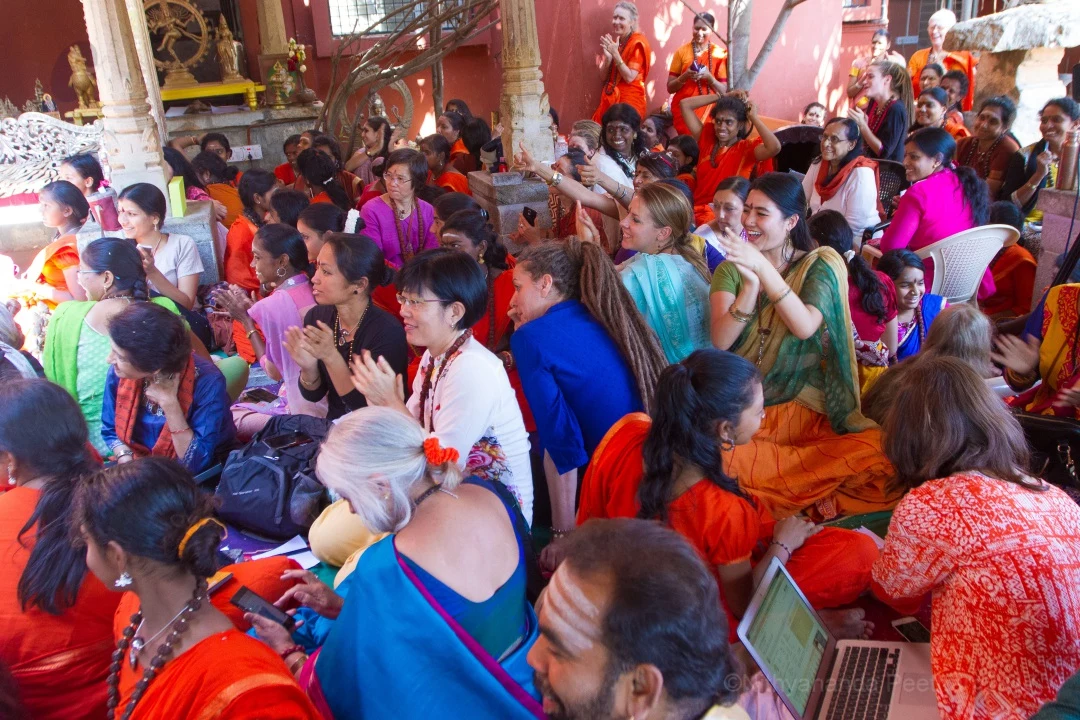
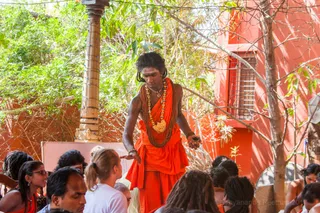
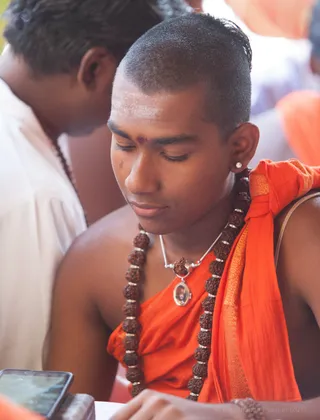
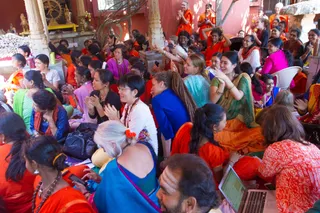
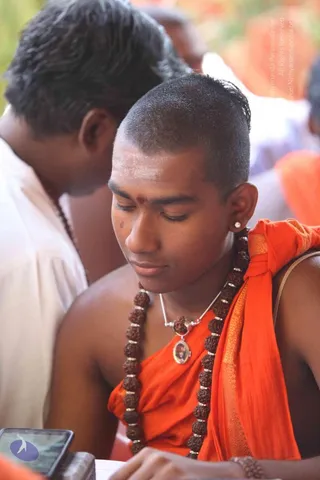
A photograph of a courtyard session in an outdoor setting with red-painted walls and tall trees. A standing man in saffron-orange robes wears a long brown rudraksha mala and a large gold pendant, with his hair long and swept back. He holds his hands out toward a seated crowd, with a pink board behind him and a stone pillar at left. Seated devotees in the foreground include a woman in sunglasses, a woman with a ponytail in a white top, and several people with dreadlocks.A close photograph of a young man with a shaved head and a red bindi and white vibhuti marks on his forehead, seated with eyes lowered during a session. He wears an orange saffron shawl draped over his shoulder and a long rudraksha mala with silver spacers, plus a silver chain with a locket. Behind him, a man in a white shirt bends forward. A phone sits on the table at lower left.A photograph of a dense crowd seated and standing in a courtyard with red walls, carved pillars and a bronze Nataraja dancing Shiva figure at upper left. Most people wear orange, red, pink and green saris or kurtas; several women clap with raised hands, and a woman in a blue jacket with long dreadlocks sits in the middle. A man in the foreground wears white tripundra markings on his forehead and has a laptop open on his knees. A woman in a blue sari sits at lower center with a white-haired head visible. Several people stand at the back, one man in an orange shirt clapping near the top. Many attendees hold phones and papers.A silver-gold smartphone with a cracked dark screen rests on a grey speckled granite block placed on a striped woven cloth in red, orange, green and yellow. A small white paper tag with handwritten green letters is attached to the side of the stone. Blurred orange fabric fills the top of the frame. No people are visible.

Photos

9 photosSource gallery
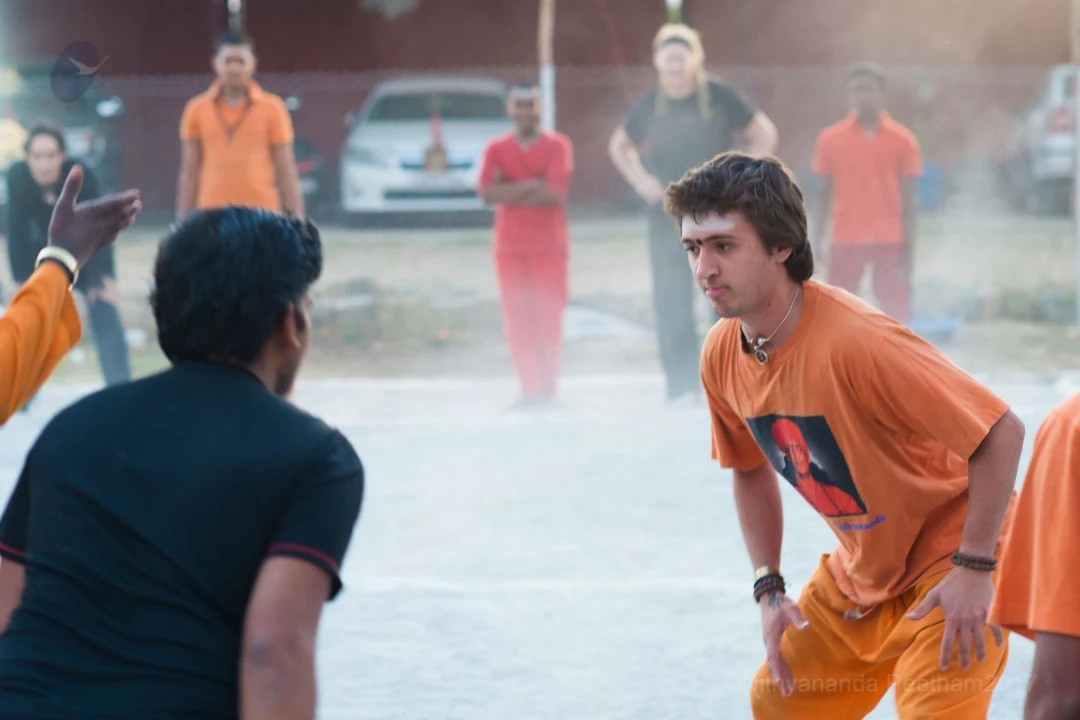
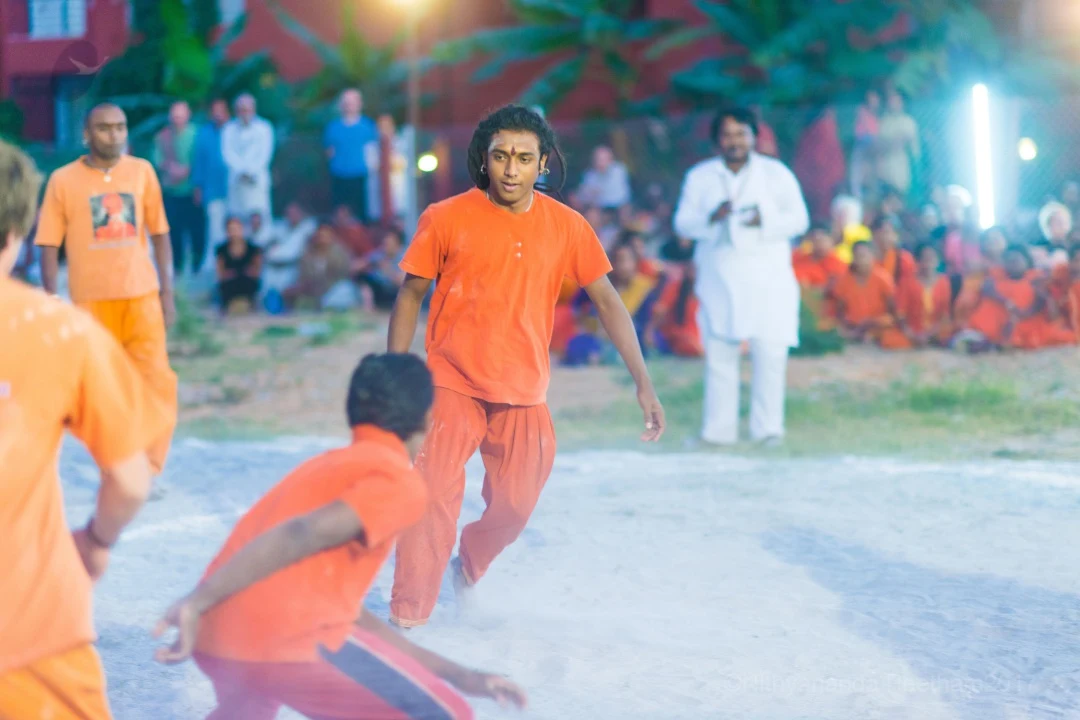
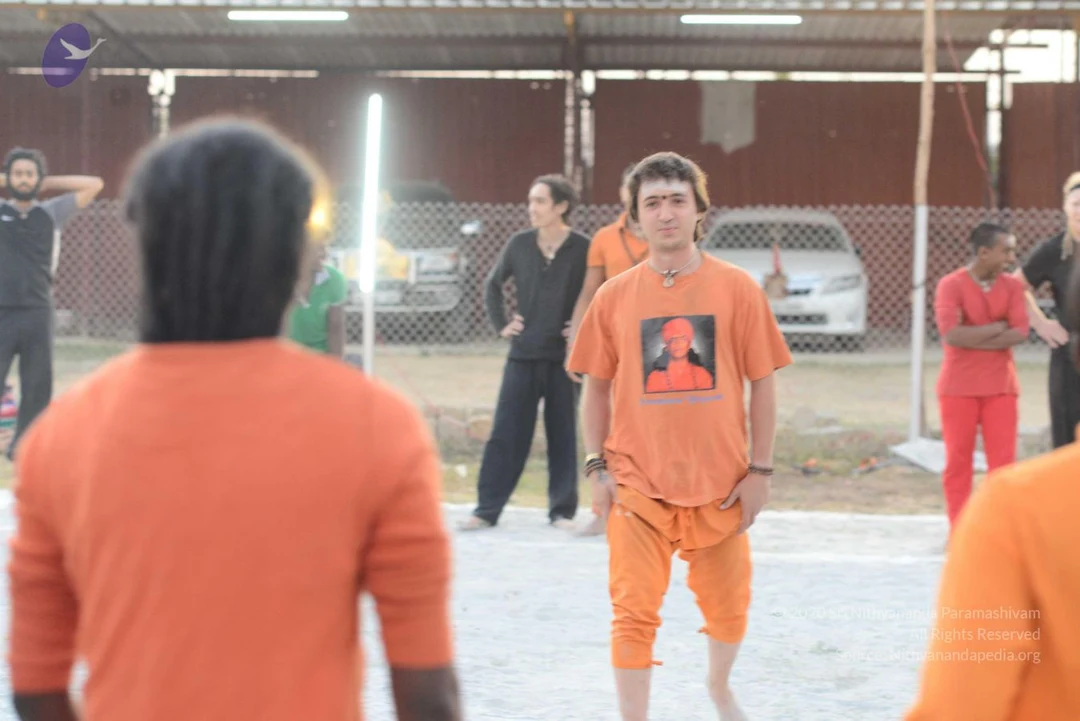
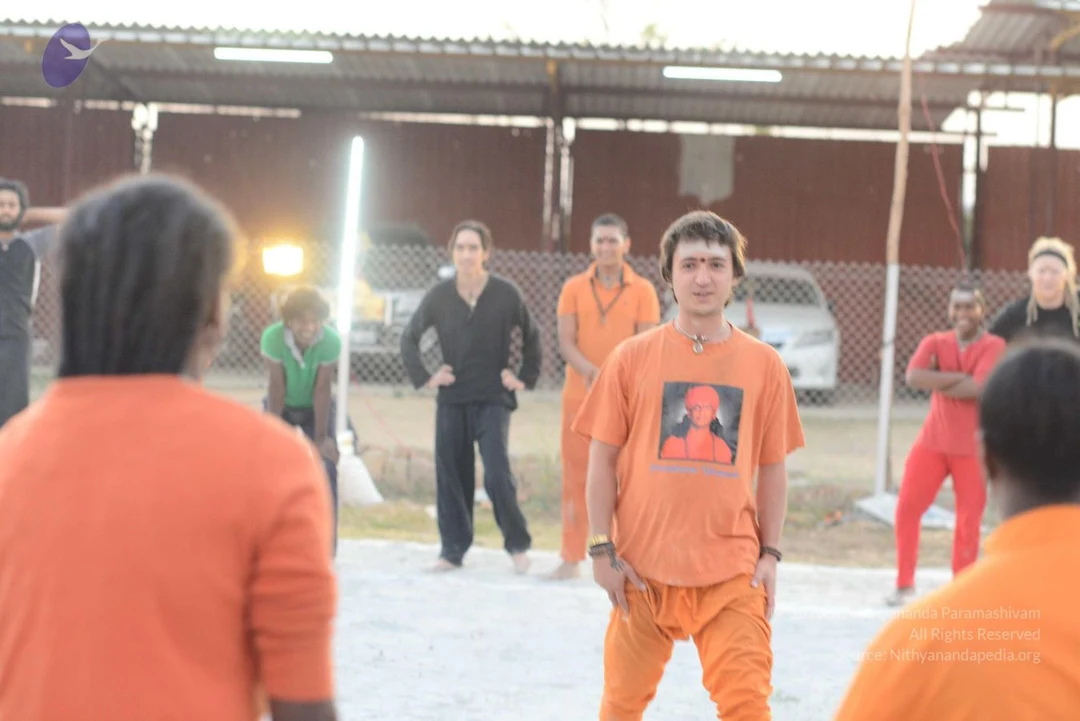
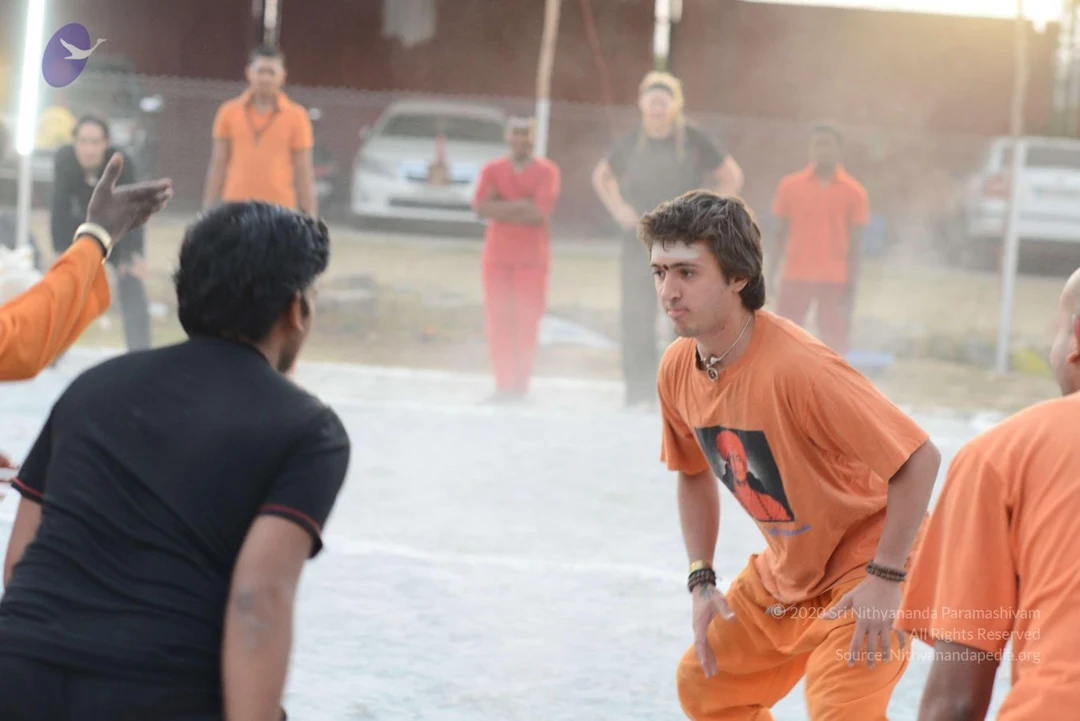
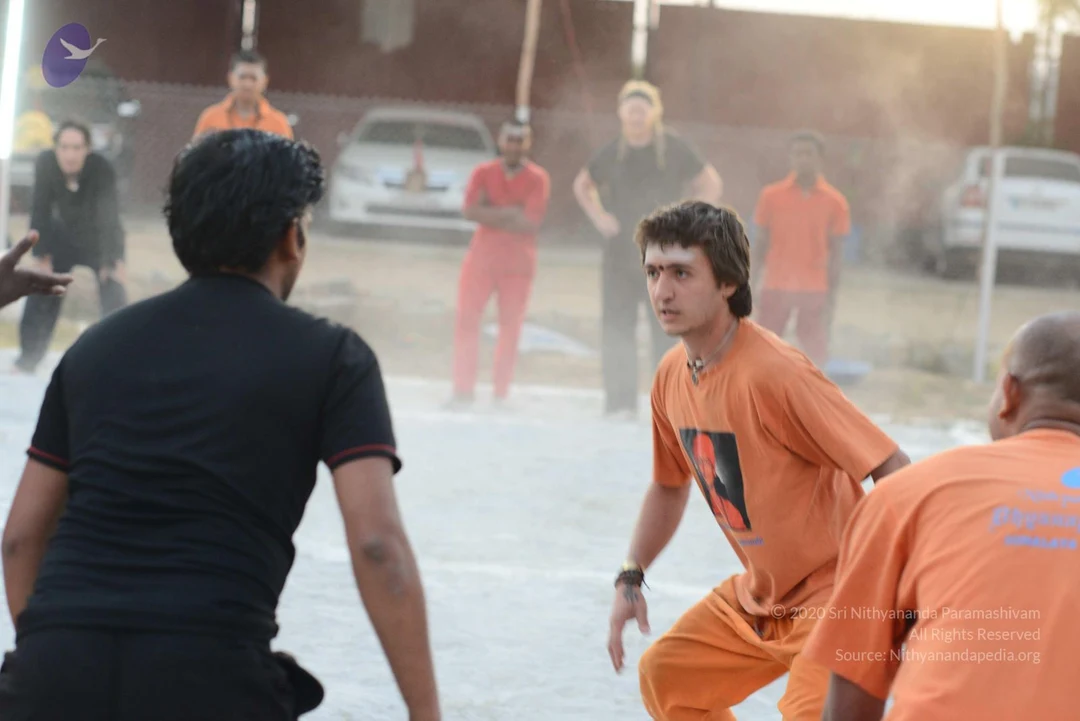
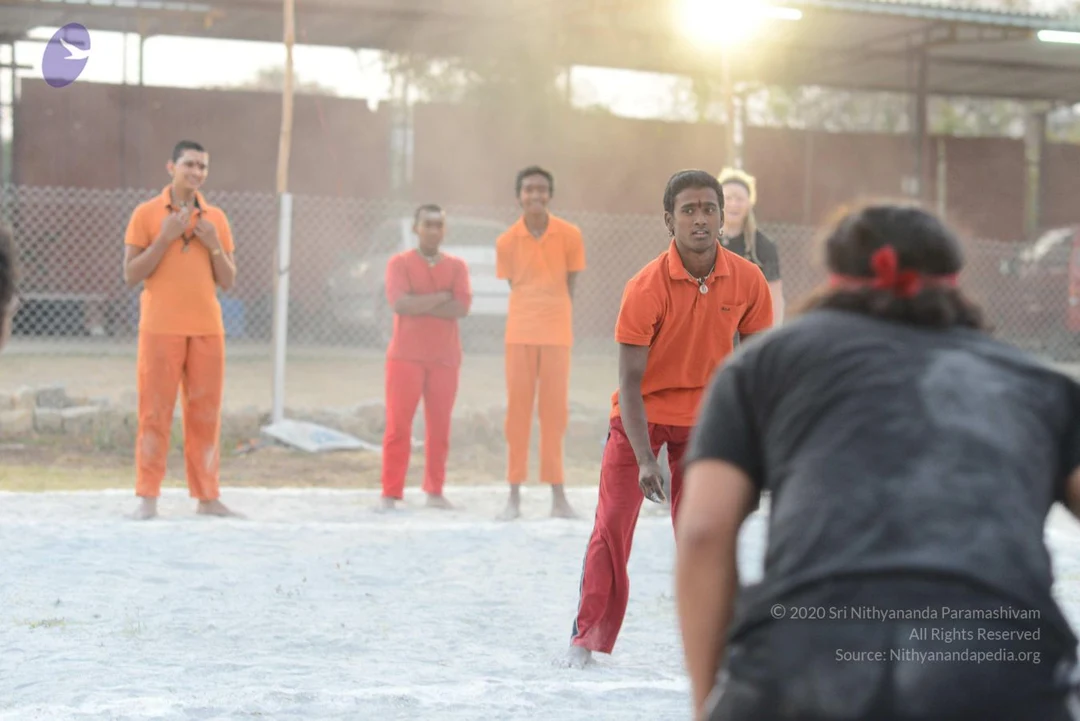
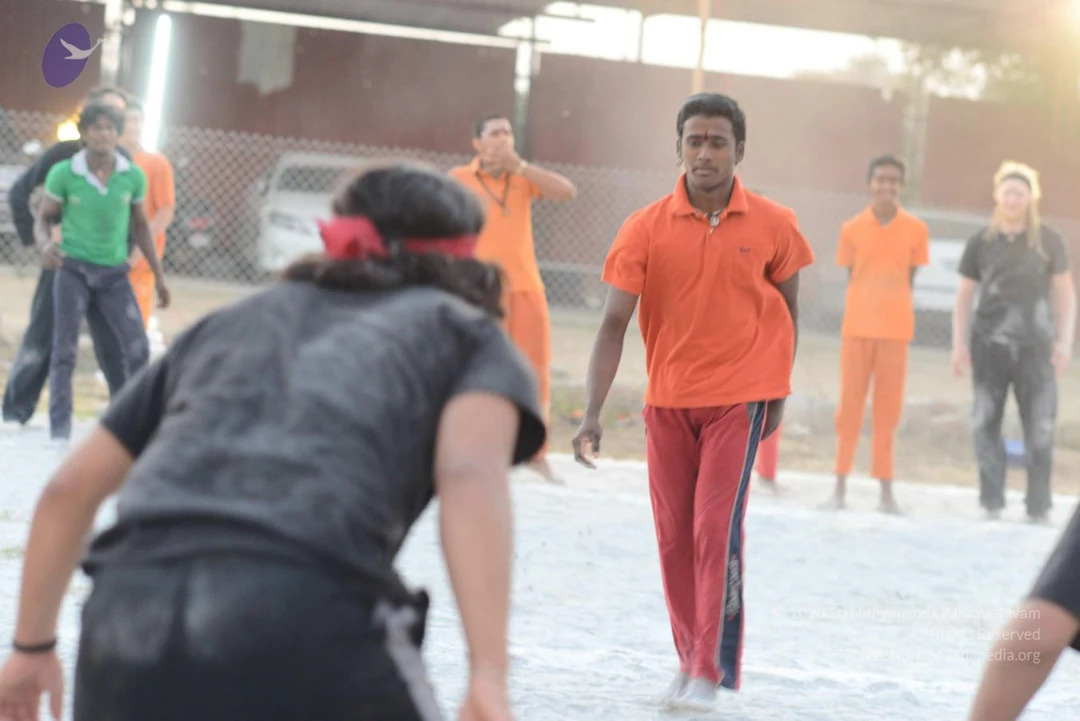
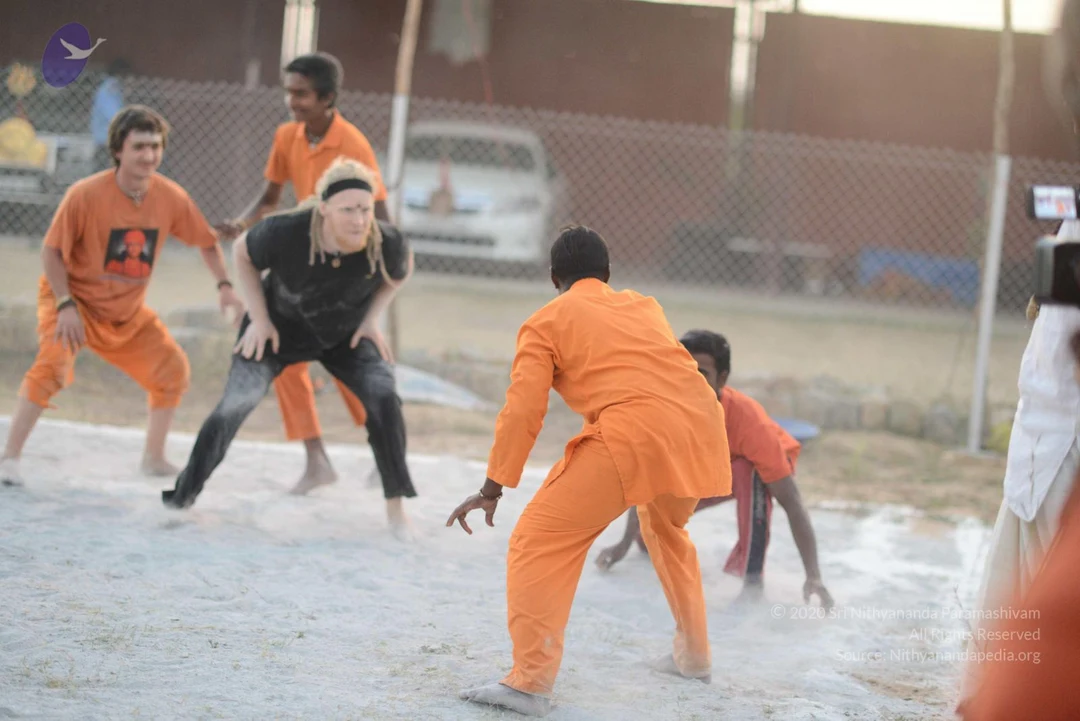
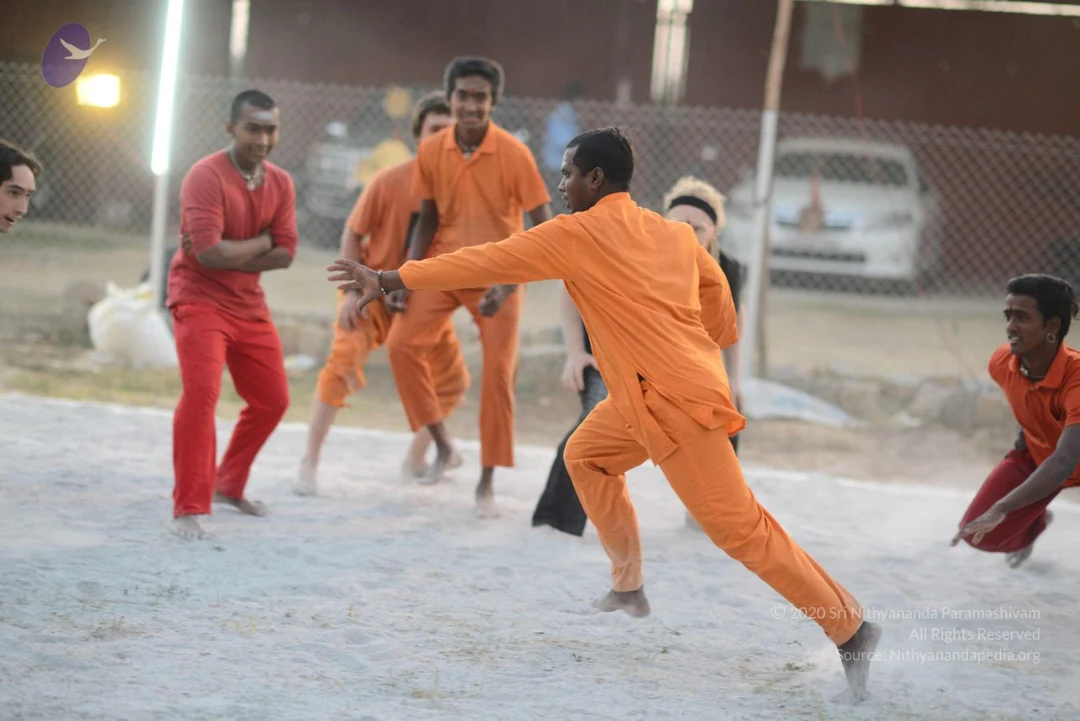
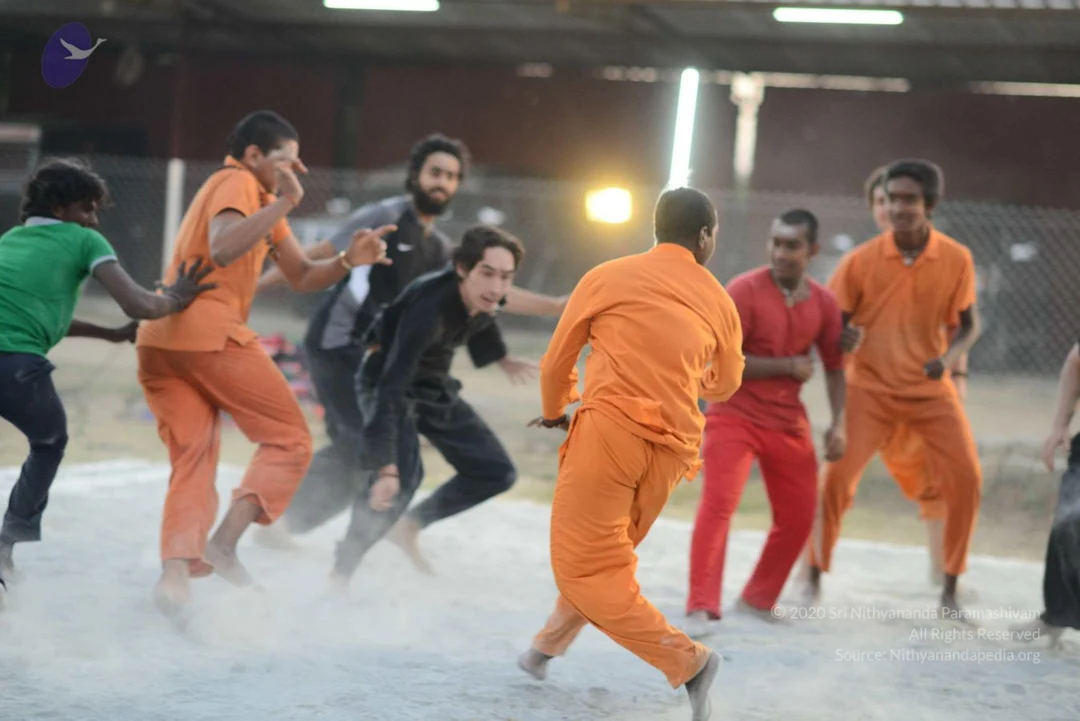
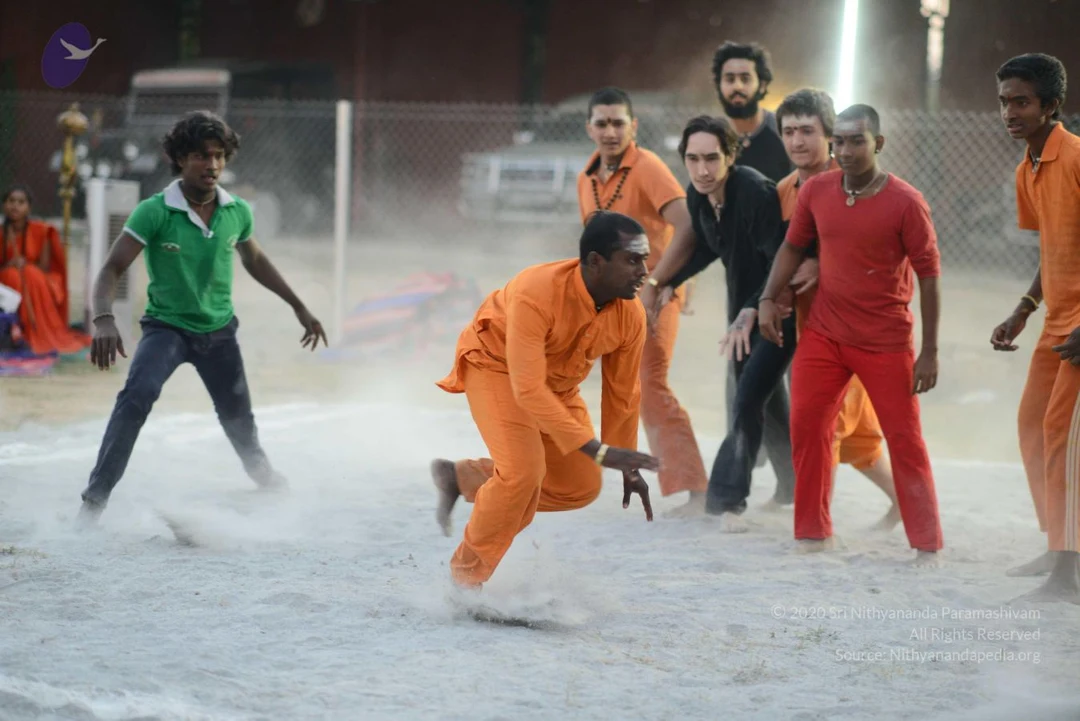
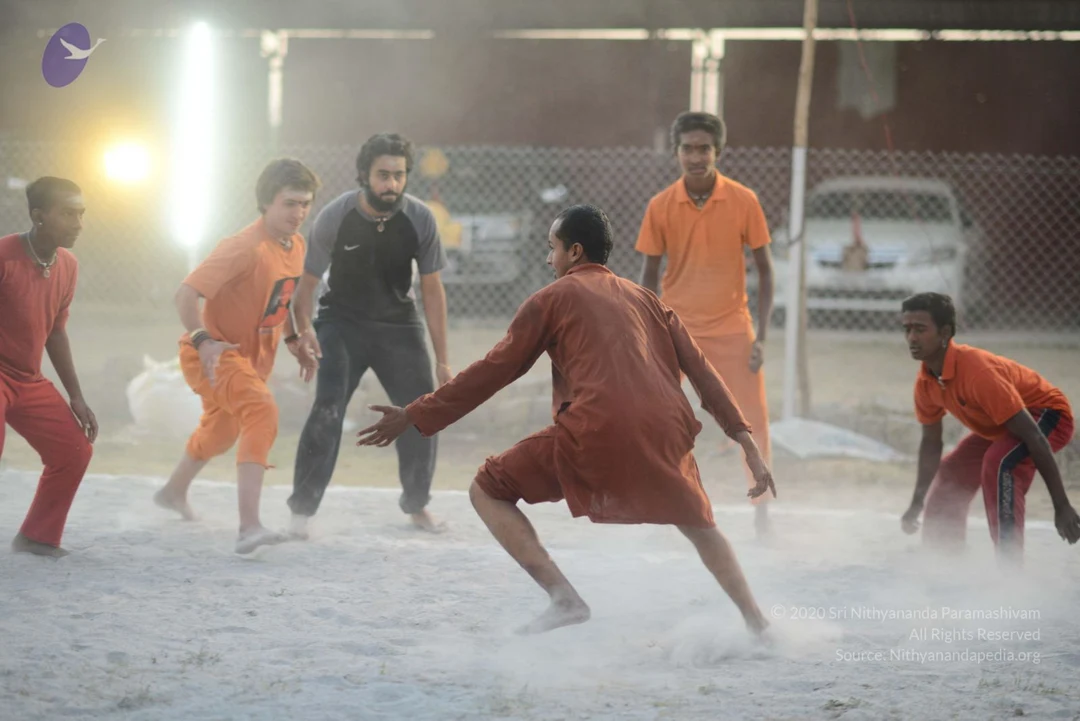
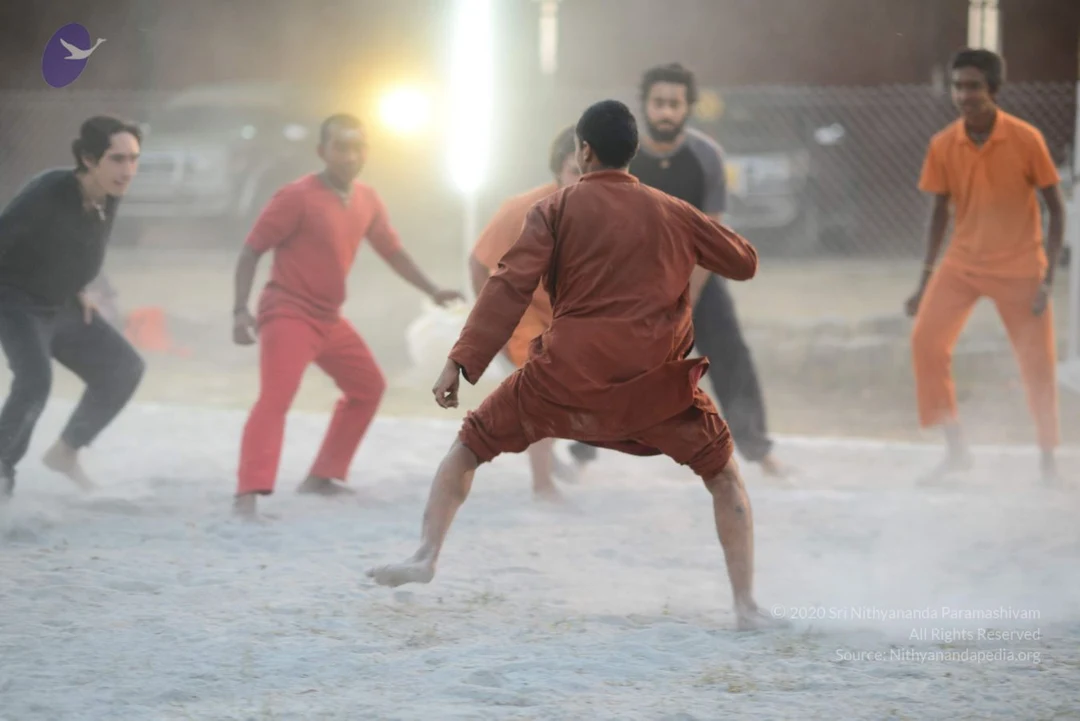
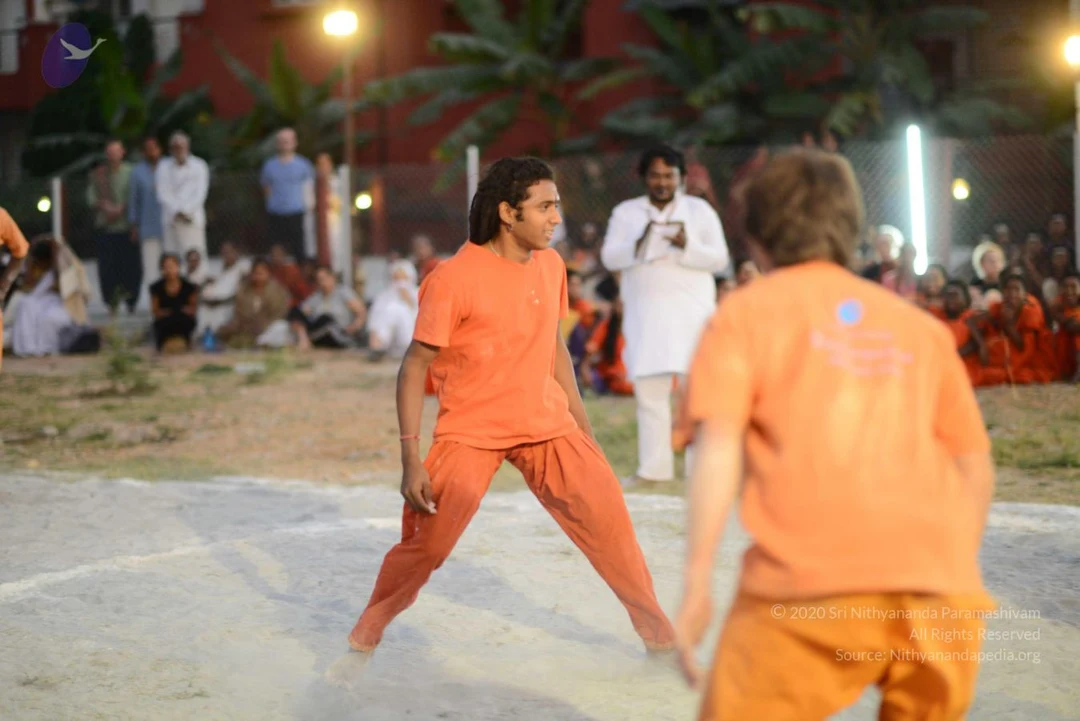
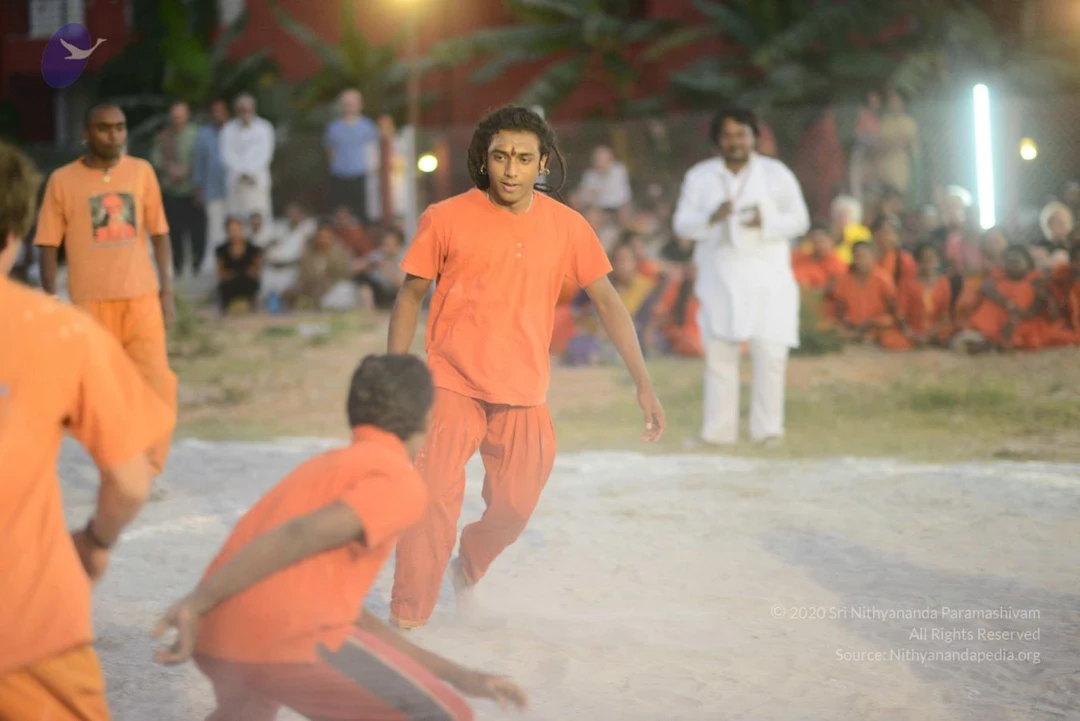
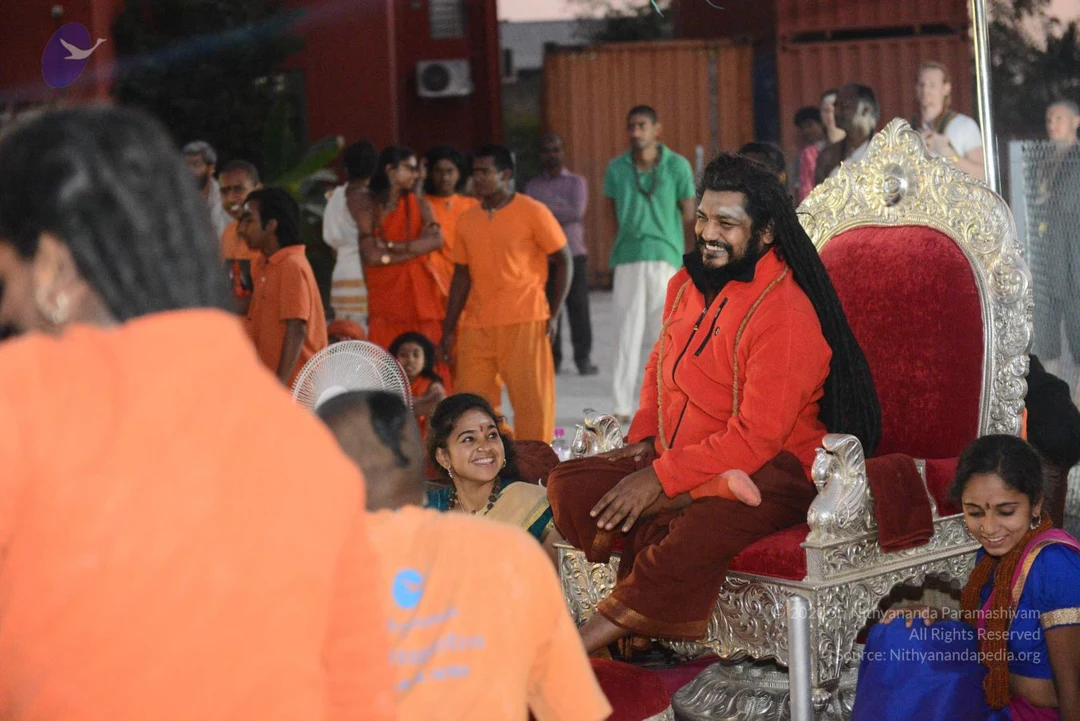
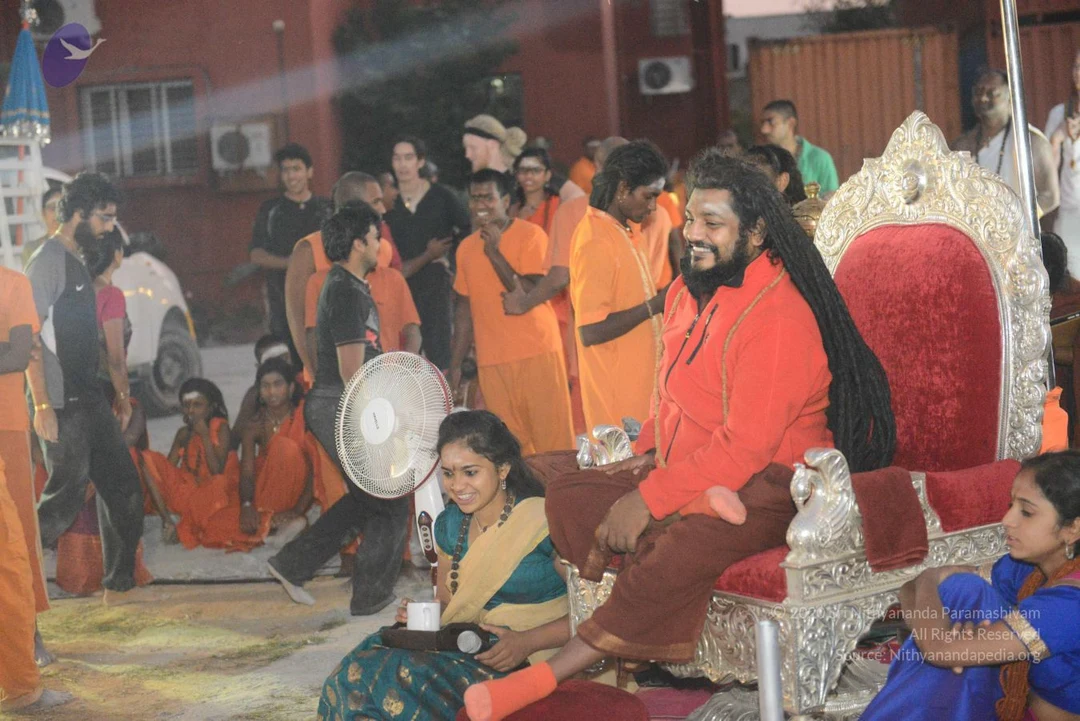
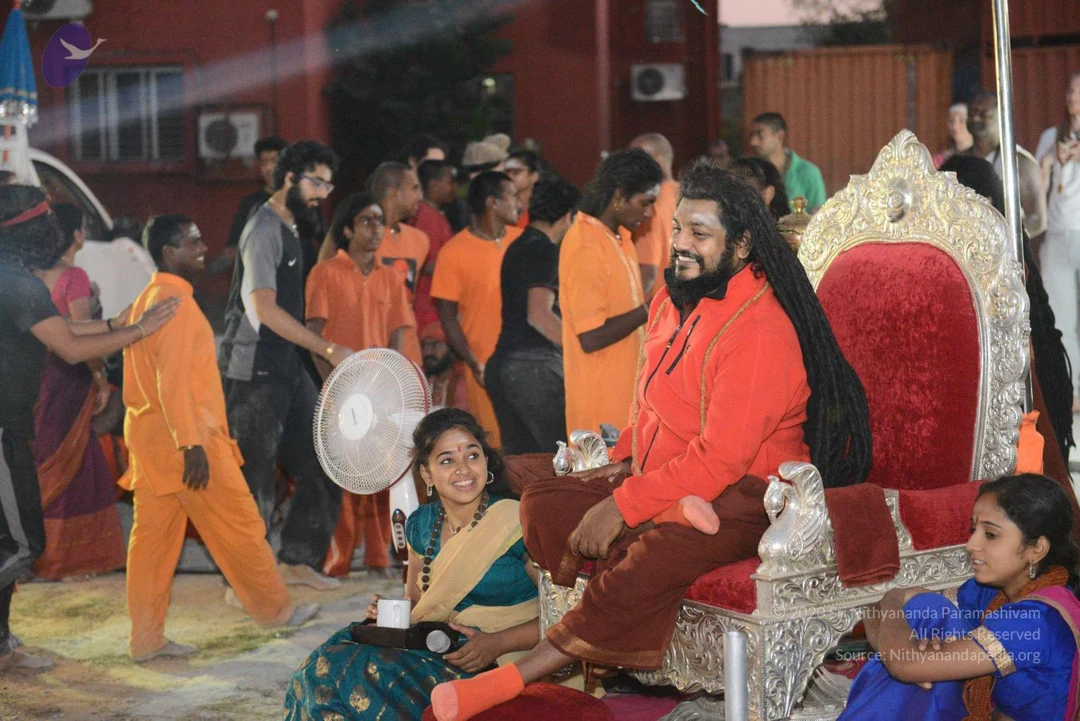
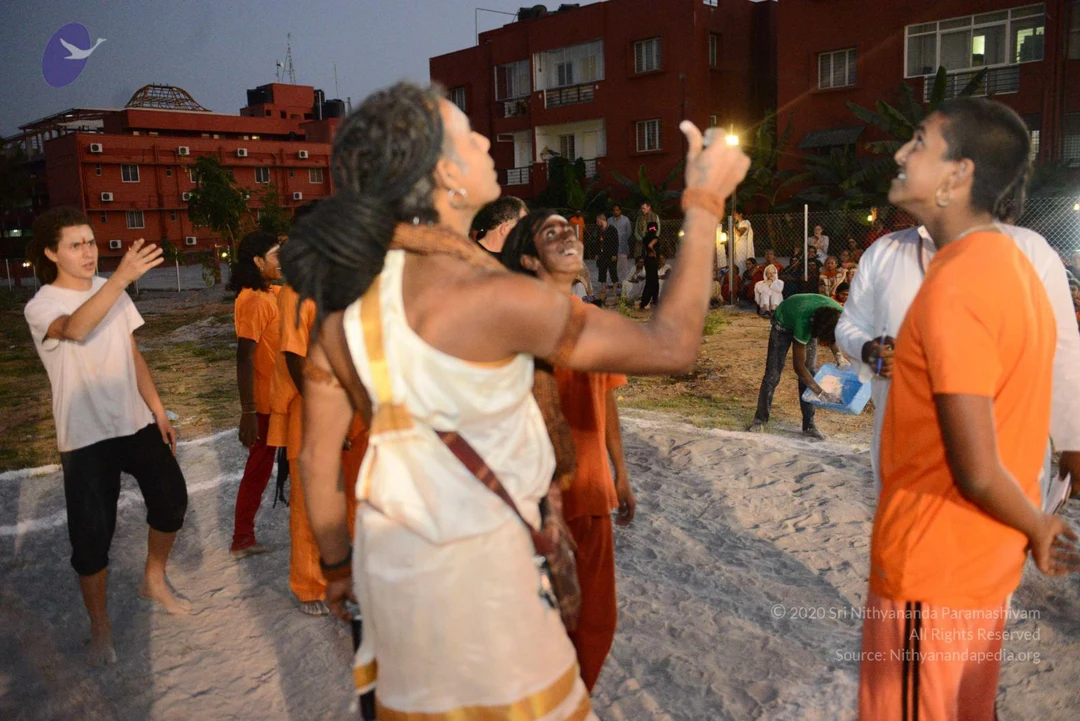
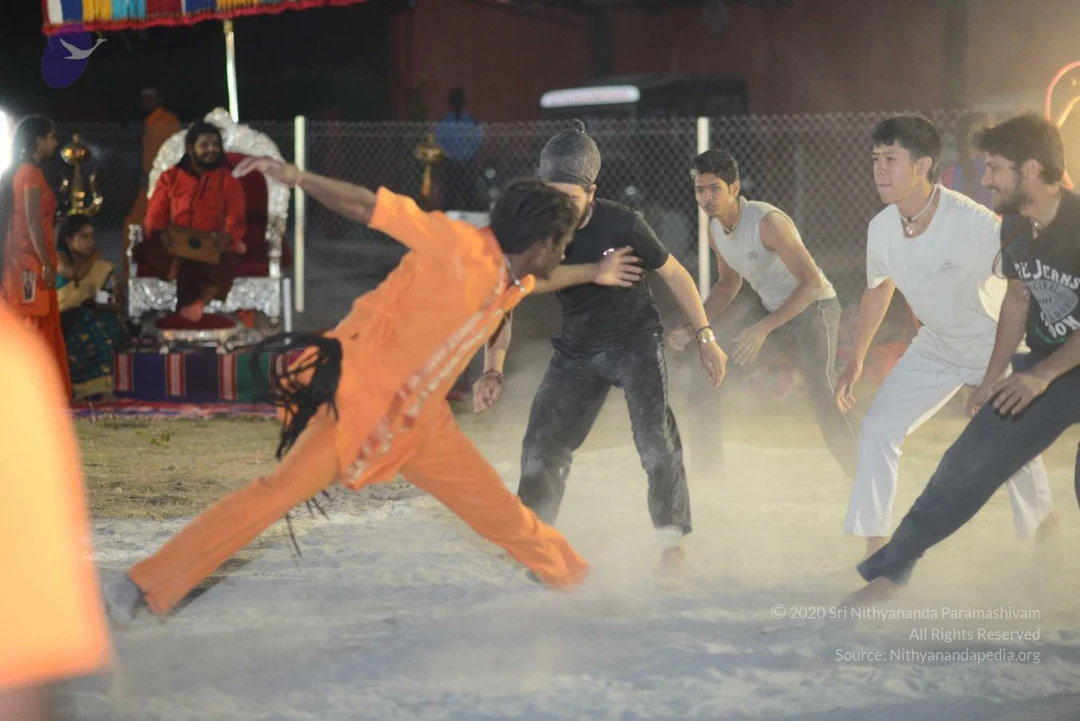
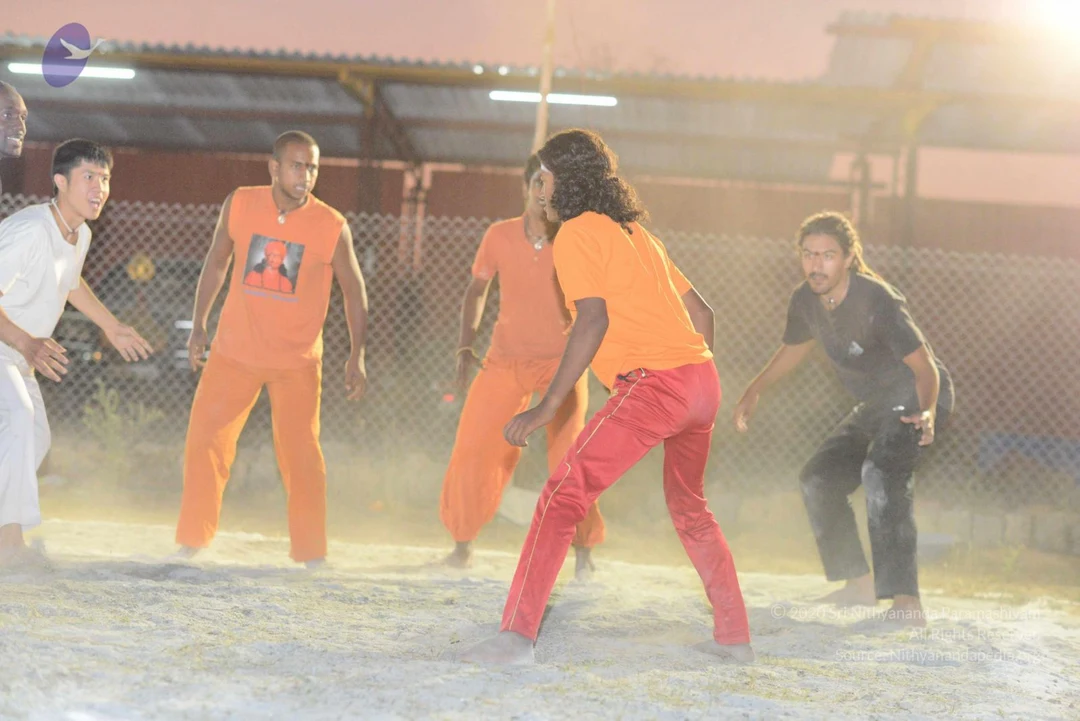
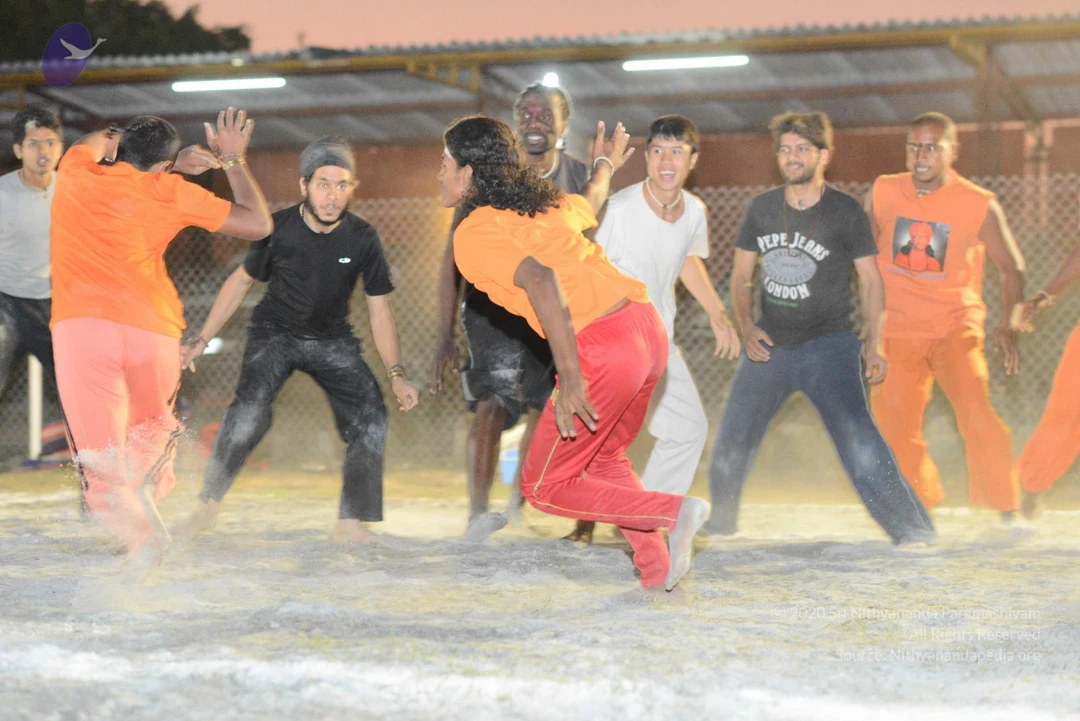
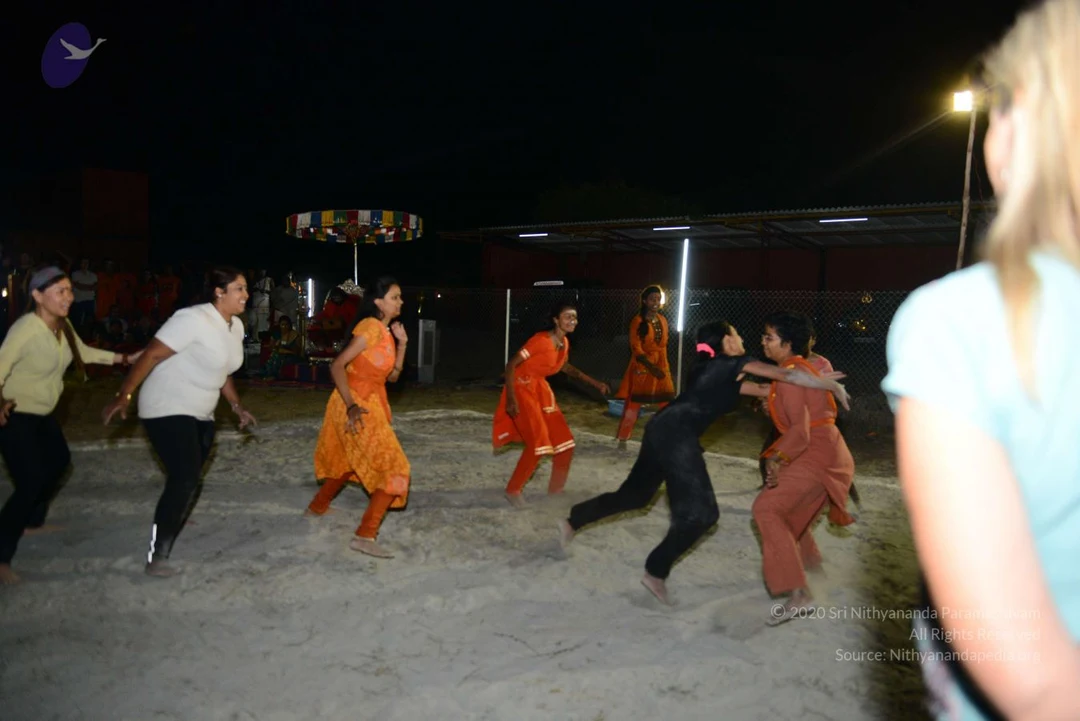
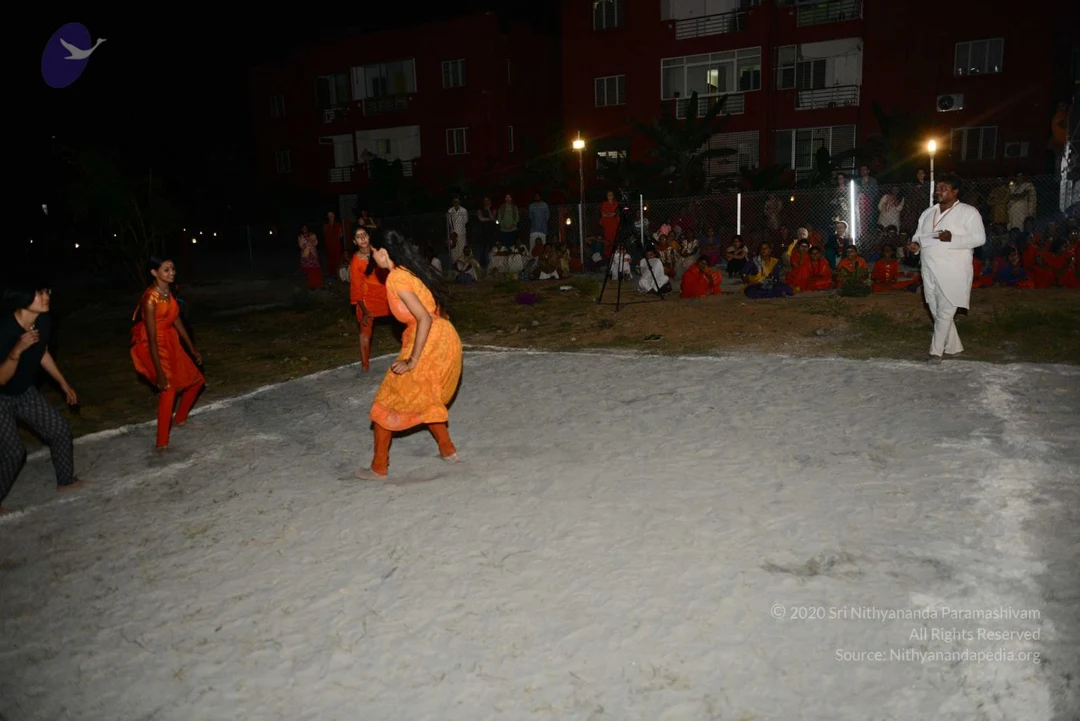
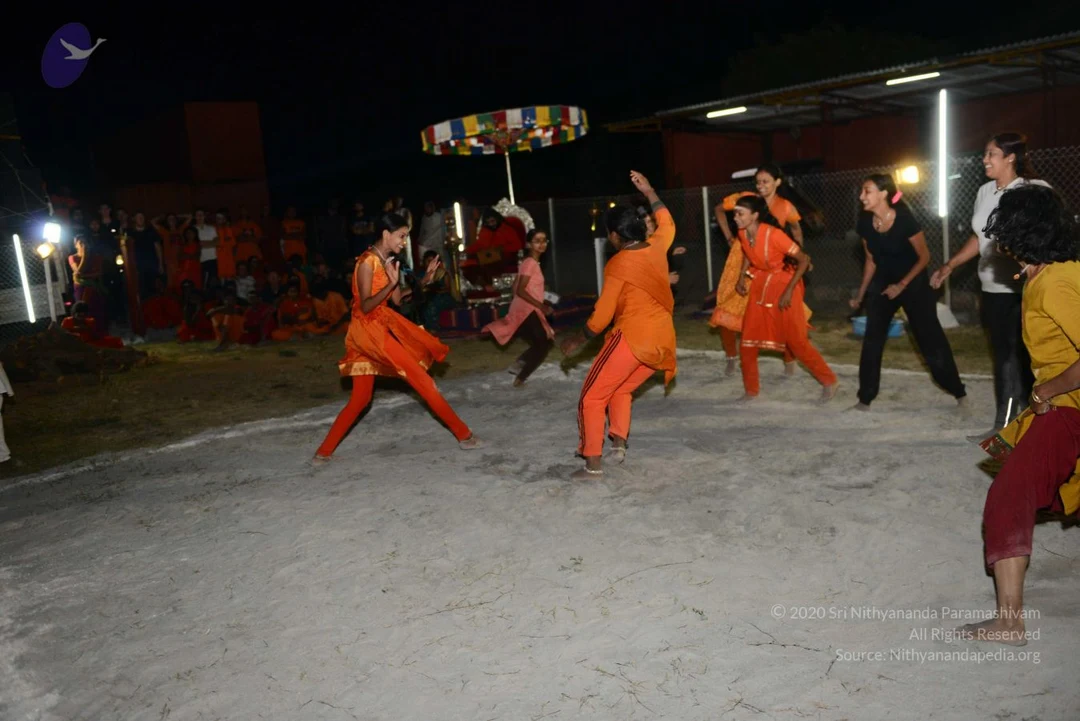
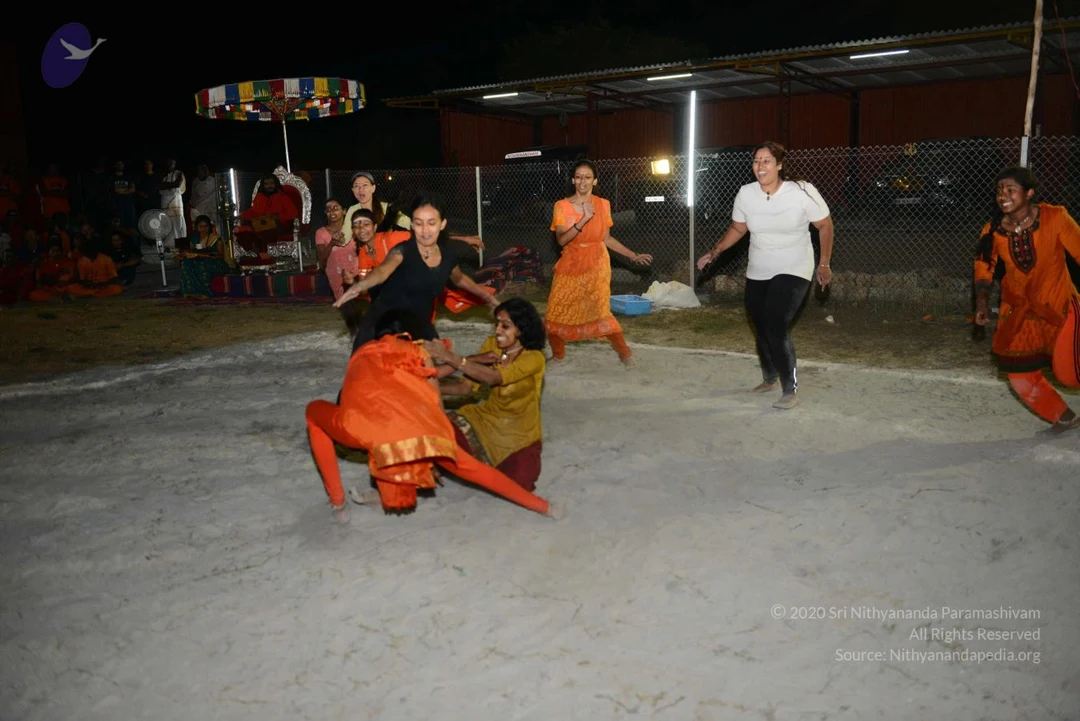
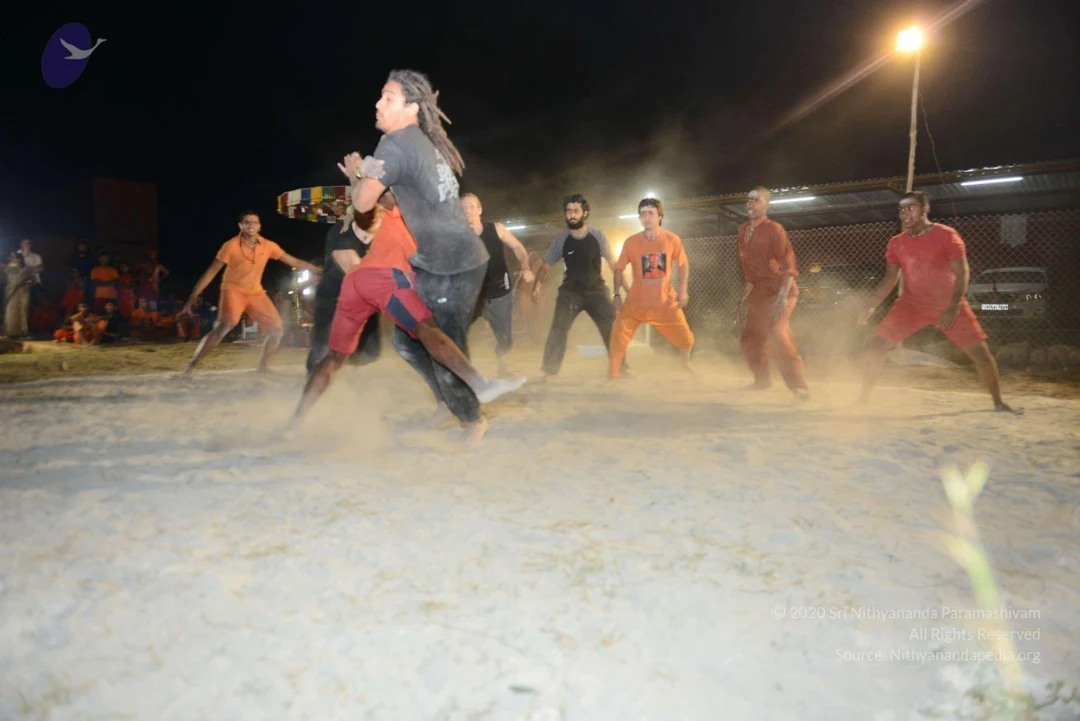
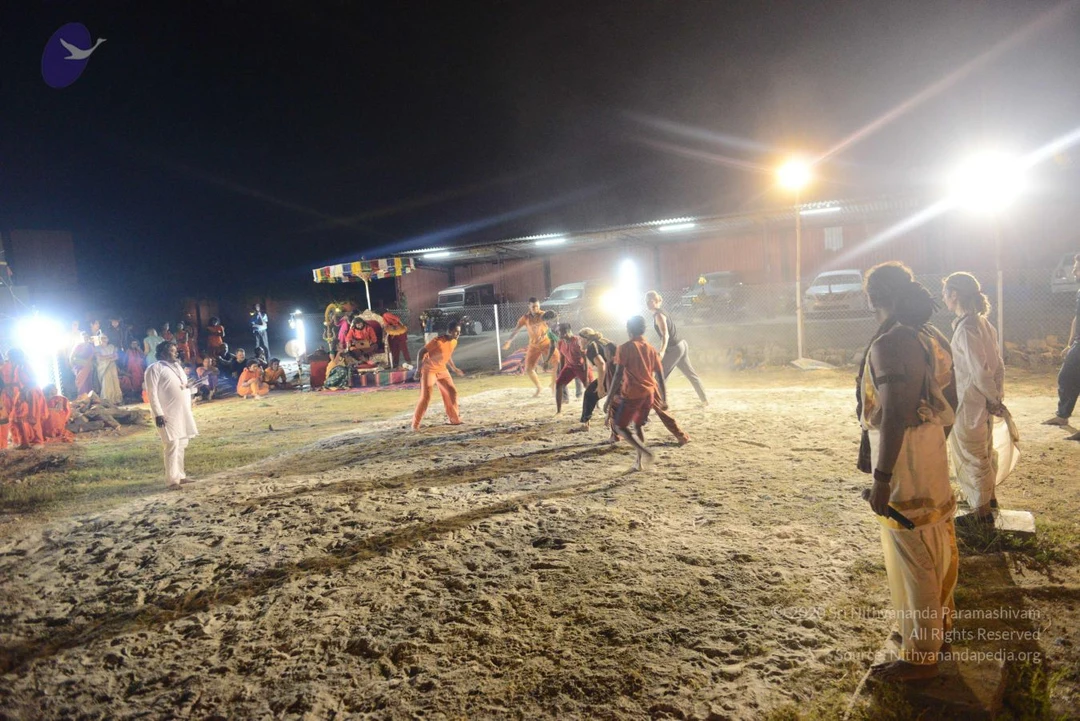
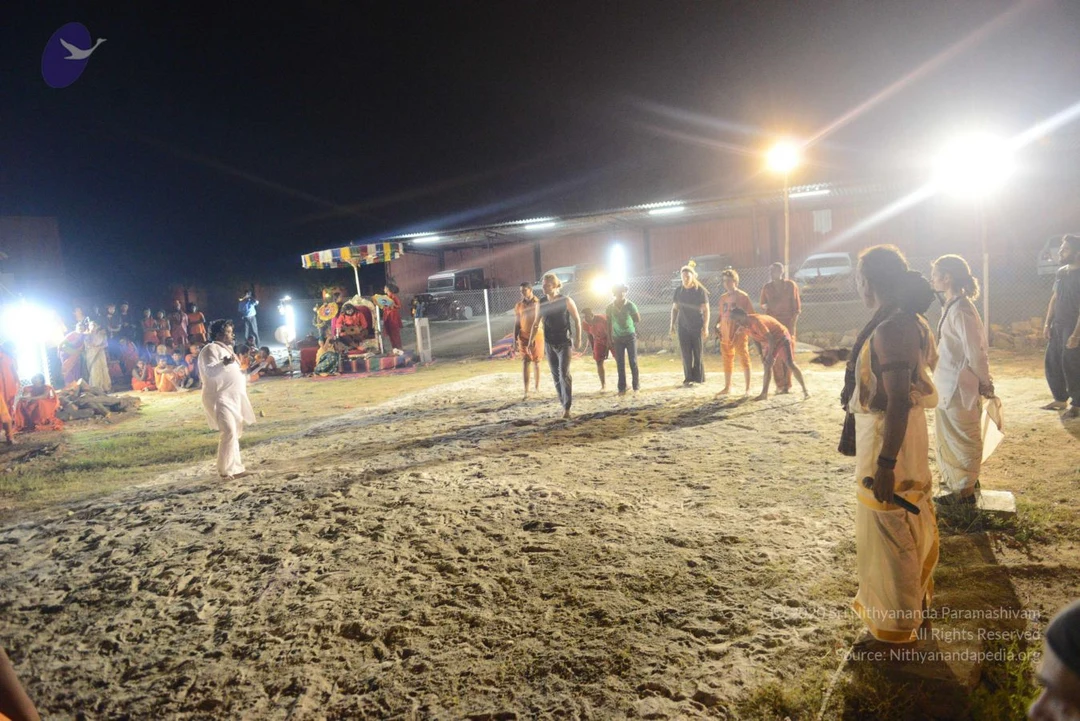
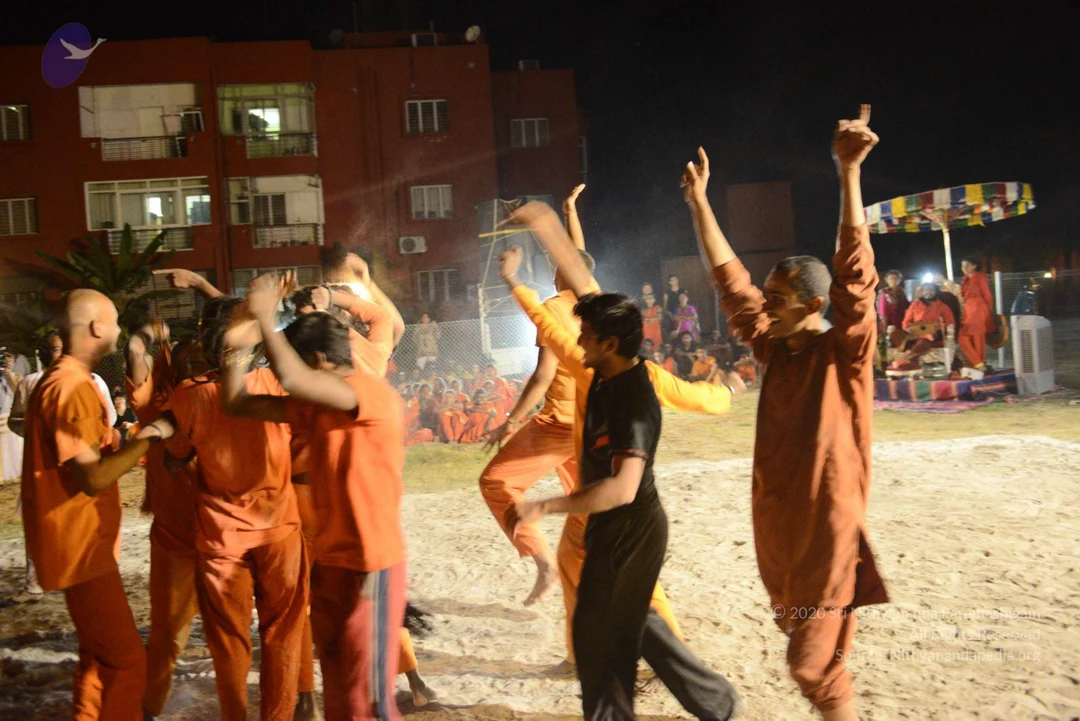
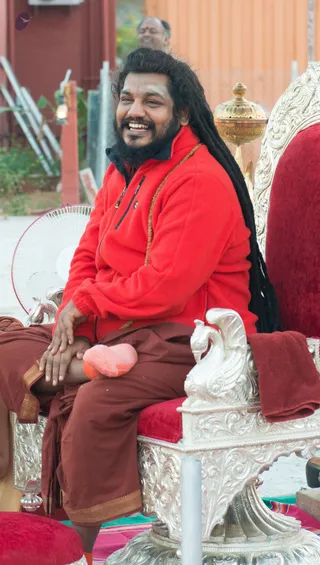
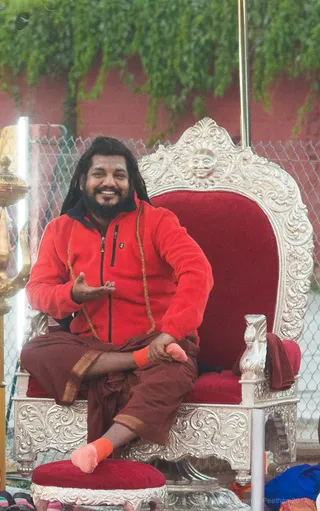
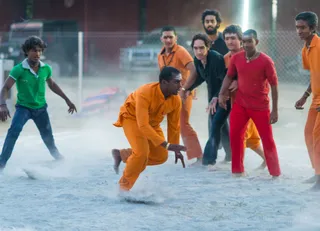
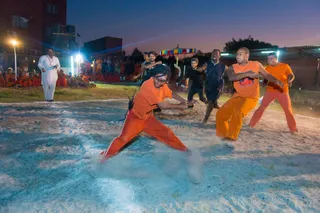
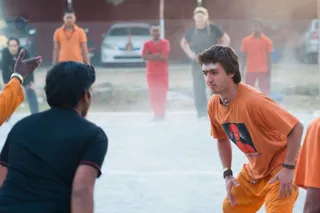
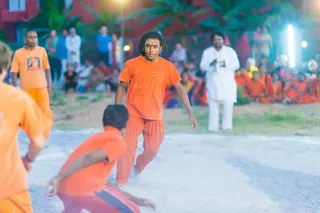
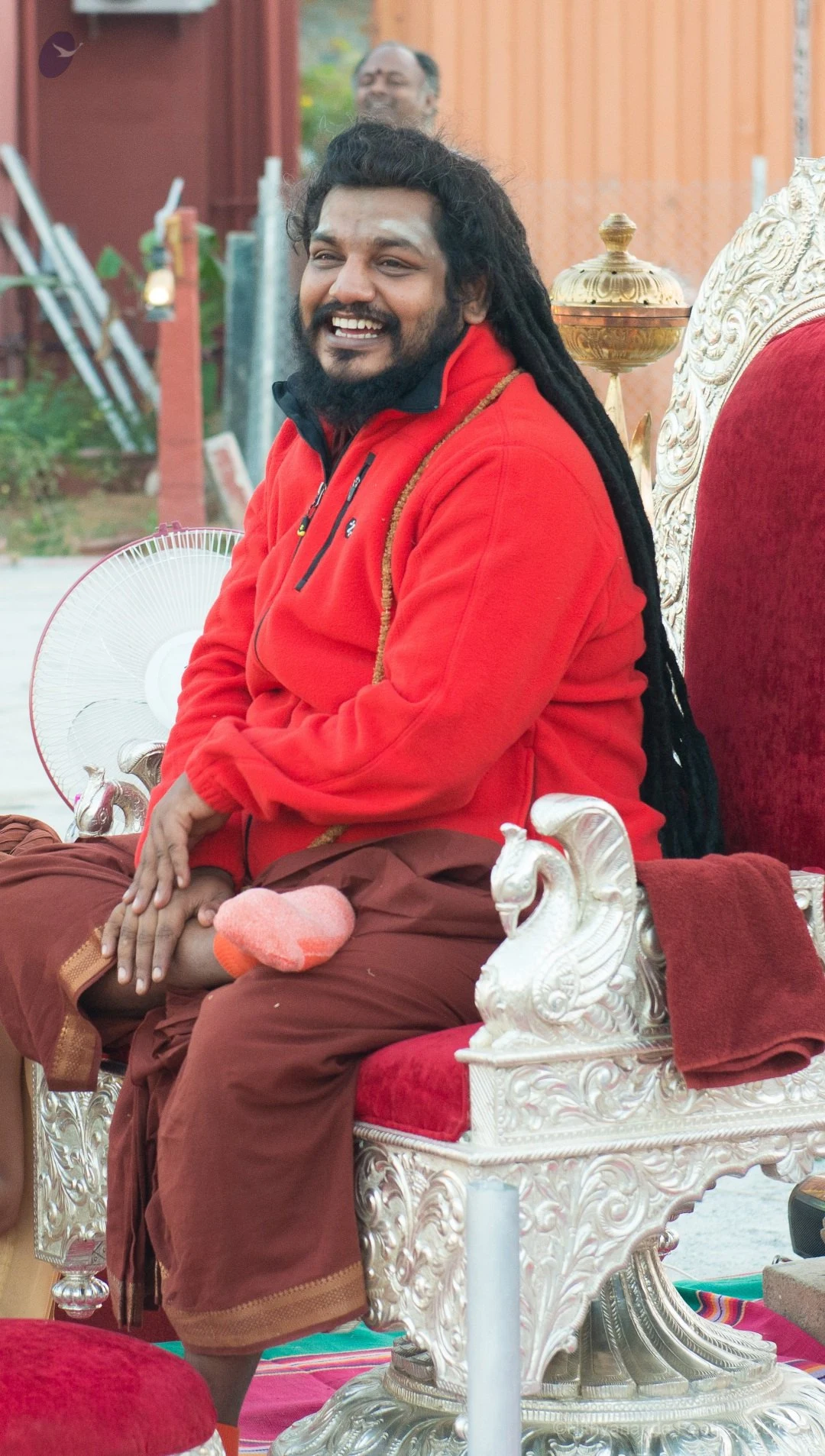
A smiling man with long dark dreadlocks and a full black beard sits on an ornate silver throne with peacock-head armrests and a red velvet cushion. He wears a bright red fleece jacket over a maroon dhoti with a gold border, a rudraksha mala hangs at his chest, and he has a white forehead mark. Behind him stands a silver incense urn, a white pedestal fan and a red-tiled building. A man in the background wears a white shirt.A bearded man with long dreadlocks sits cross-legged on an ornate silver throne with a red velvet seat and back, smiling and gesturing with one open hand. He wears a red fleece zip-up jacket, rust-brown dhoti-style trousers with a golden border, a gold-coloured cord around his neck, and orange socks. Behind him are a red wall and green foliage, and a silver footstool with a red cushion sits in front. a person: the long dreadlocks, red-and-brown ceremonial clothing and seated throne presentation are the qualifying cues, and the page identifies him as present at this event. Other people are only partially visible at the lower right edge.A photograph of a kabbadi game on a sandy ground with dust rising around the players. In the centre, a man in orange kurta and pants crouches low, leaning forward mid-raid with one arm reaching toward the ground, a white tilak on his forehead. Around him, several young men watch intently: one in a green polo shirt and jeans on the left, a bearded man in a black top behind, a man in orange kurta and a red-clothed player in red shirt and red pants on the right, with orange-clad players and white tilak marks and beaded necklaces. A chain-link fence and parked vehicles form the background. No figure is clearly identified as a person.Evening outdoor kabaddi match on a sandy court lit by floodlights, with a dust cloud kicked up at the front. In the foreground, a man in a sleeveless orange tank top and orange trousers crouches low and lunges forward, arms outstretched. Beside him, another player in an orange tank top and orange trousers stretches out. Behind, players in dark sleeveless shirts and dark shorts are poised to defend. On the left edge, a man in a white kurta and white trousers stands at the court edge, apparently refereeing, with a whistle at his neck. Behind the boundary fence, a large crowd of people in orange and saffron clothing sits and watches, and a striped canopy shelters the area. The scene is a kabaddi game played by ashram members.Outdoor photo of a kabaddi-style game on a dusty sandy court in front of a dark red wall and parked white car. In the foreground, a young man in an orange t-shirt and orange track pants leans forward in a ready stance, wearing a pendant necklace and beaded bracelets; his shirt shows a printed portrait. Facing him from the left, a player in a black shirt stands with one arm raised. Behind them, several onlookers stand watching, including people in orange and red shirts and a person in a black top with a cap. Warm sunlight and haze fill the scene.Evening kabbadi game on a sandy ground at an ashram. In the centre, a young man with long dark hair and an orange t-shirt and orange trousers, with a red tilak on his forehead, runs forward on the sand. Two other players in orange t-shirts stand at left and in front. Behind them, a man in a white kurta stands near a fence with his hands clasped, and a large crowd of spectators in orange and white sits and stands along the edge under bright lights and palm trees.

FB-Photos-of-the-Day

1 photoSource gallery
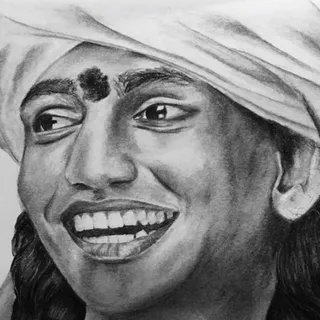
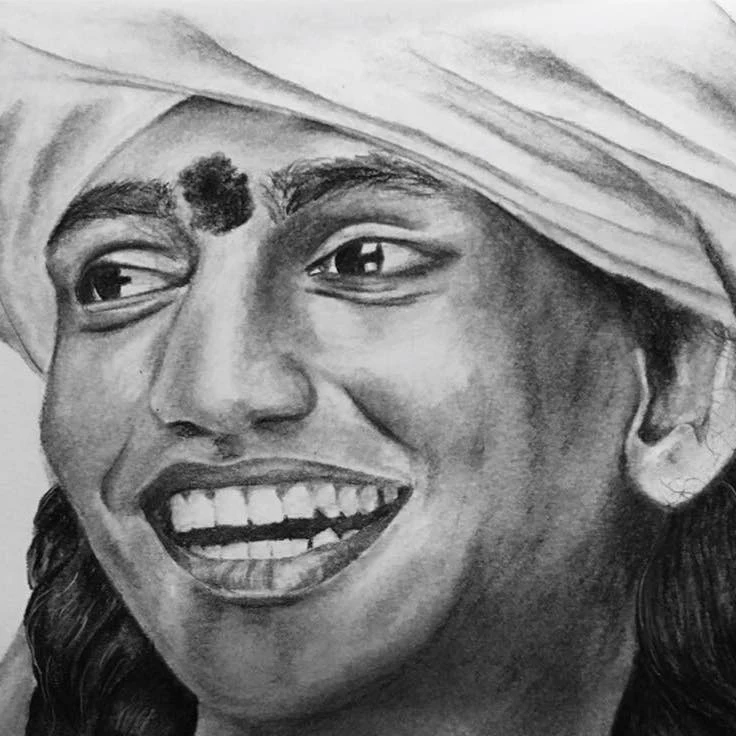
A monochrome pencil or charcoal drawing in close-up of a smiling man's face, turned slightly to his right. He wears a light cloth turban wrapped around his head, a dark vertical tilak mark on his forehead, and long dark hair falling beside his face. His eyes are open and his teeth are visible in a wide smile. The shading is soft, showing the contours of the nose, cheeks and ear. The image is a depiction on paper, not a physical person in a scene.

power-manifestation-silicon-gadgets-rain
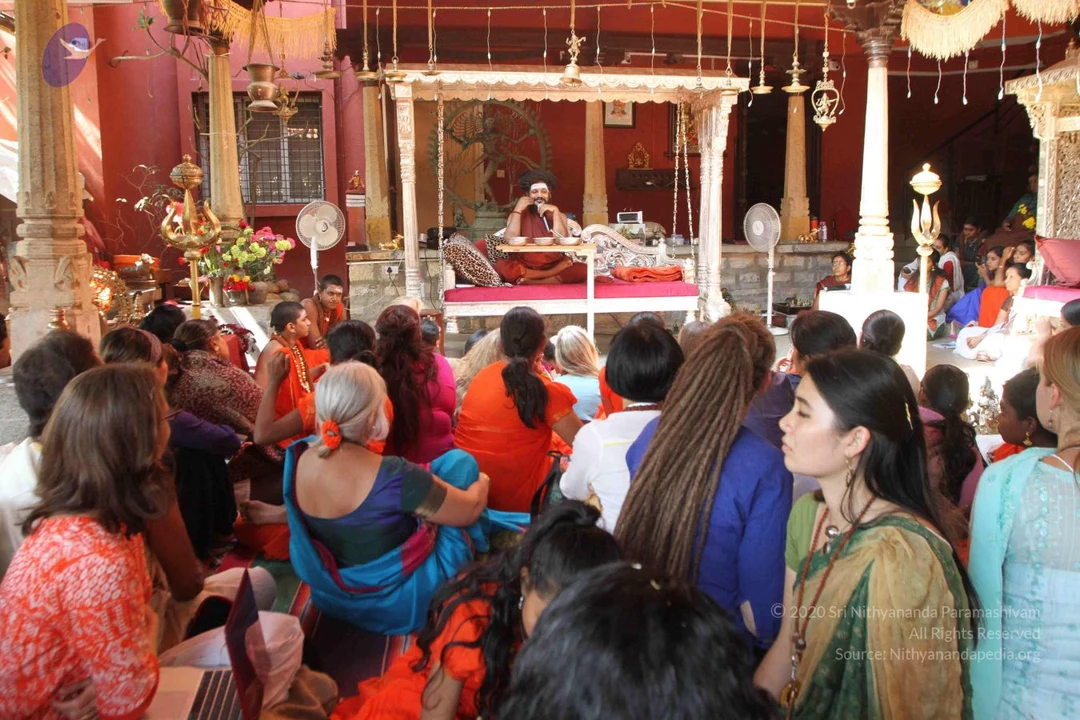
131 photosSource gallery
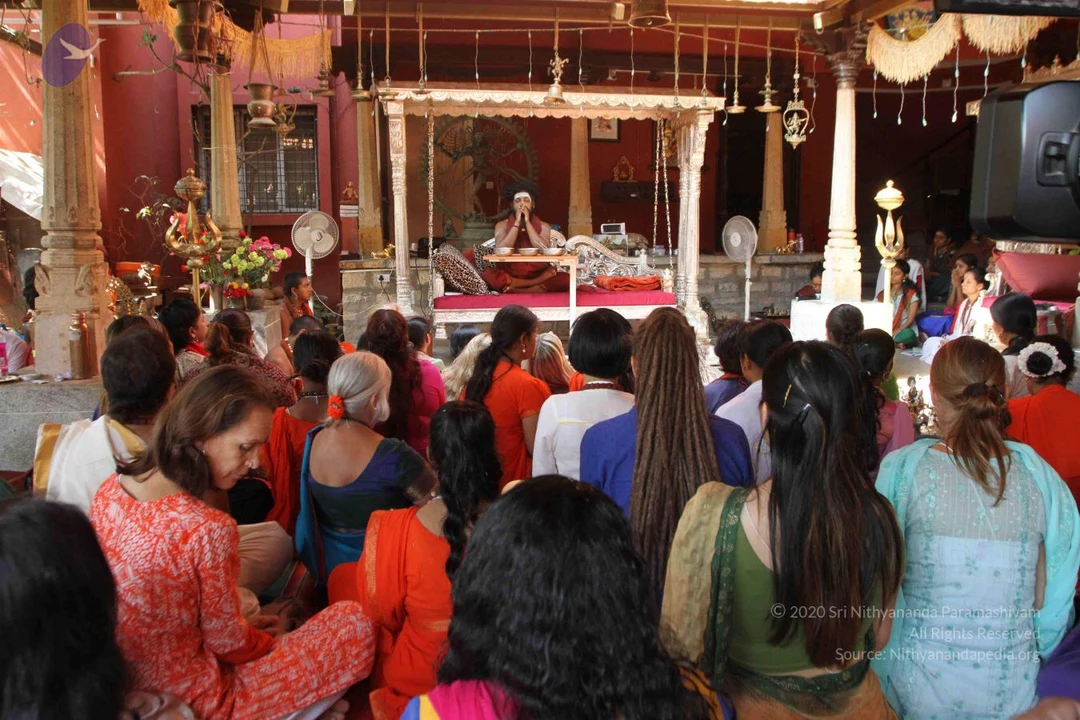
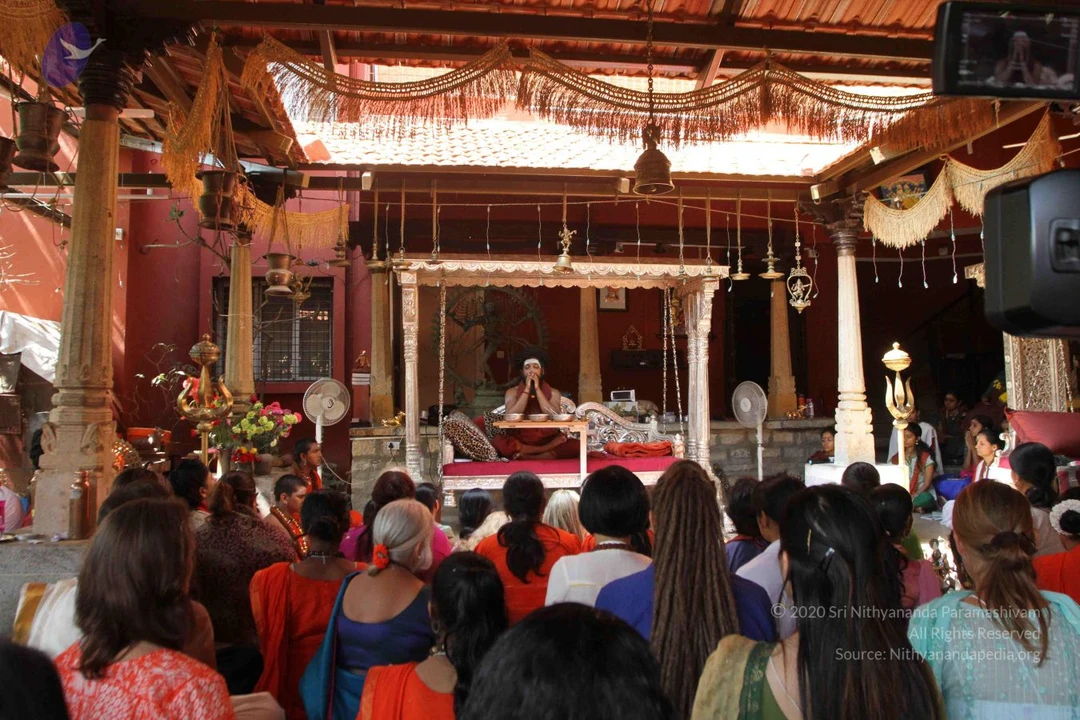
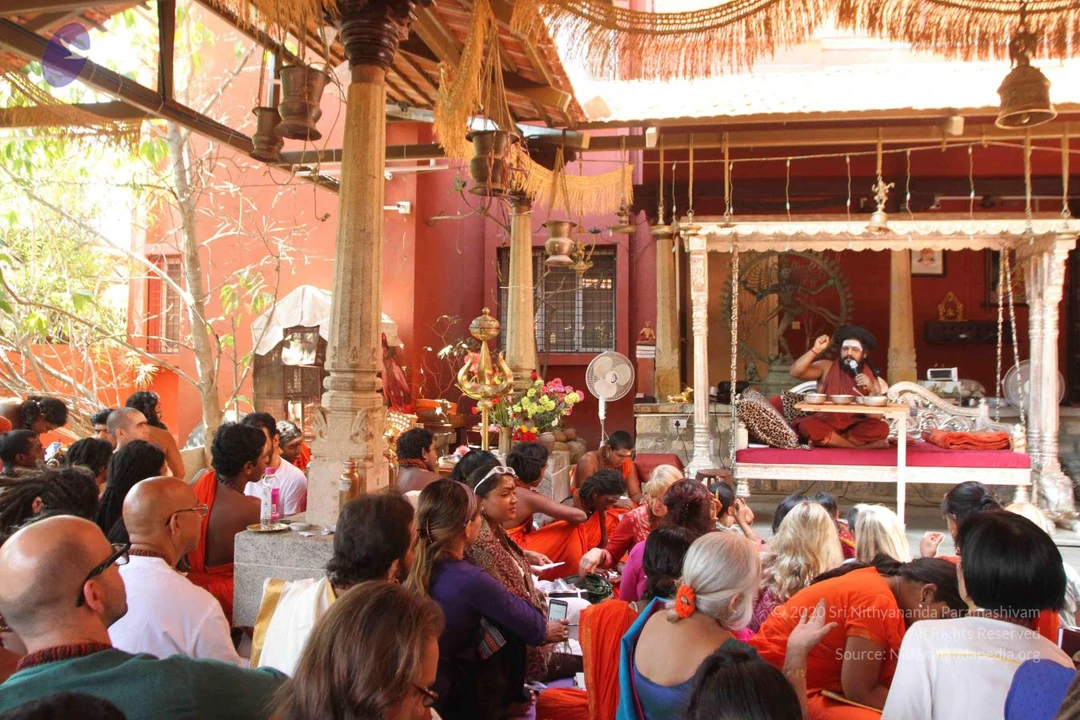
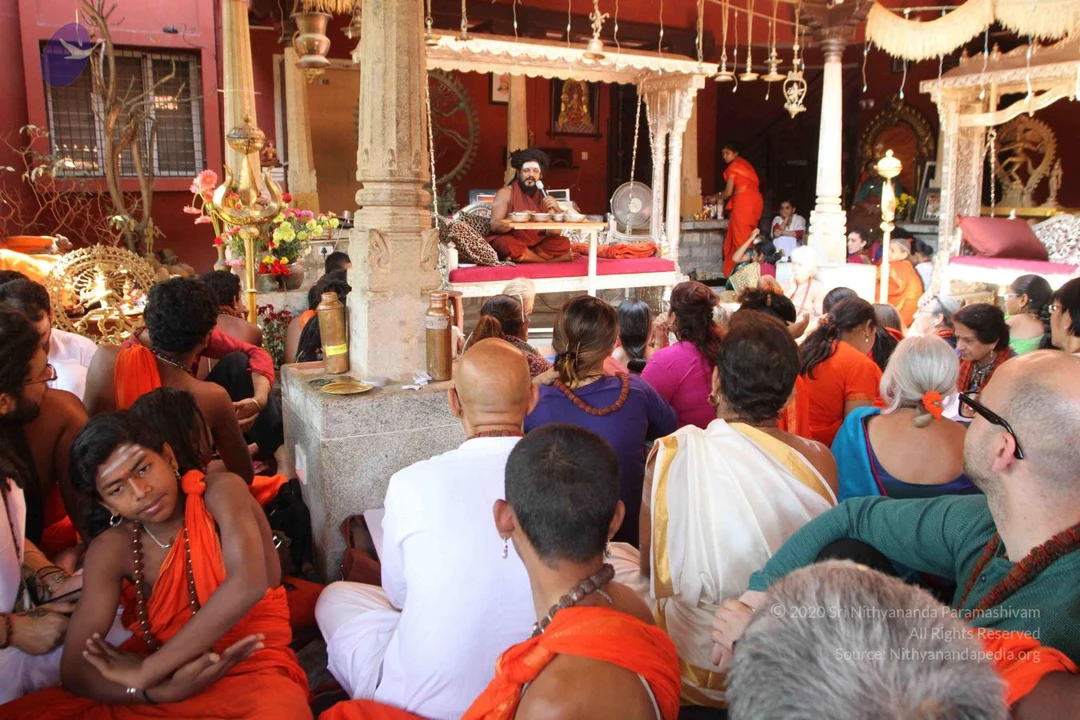
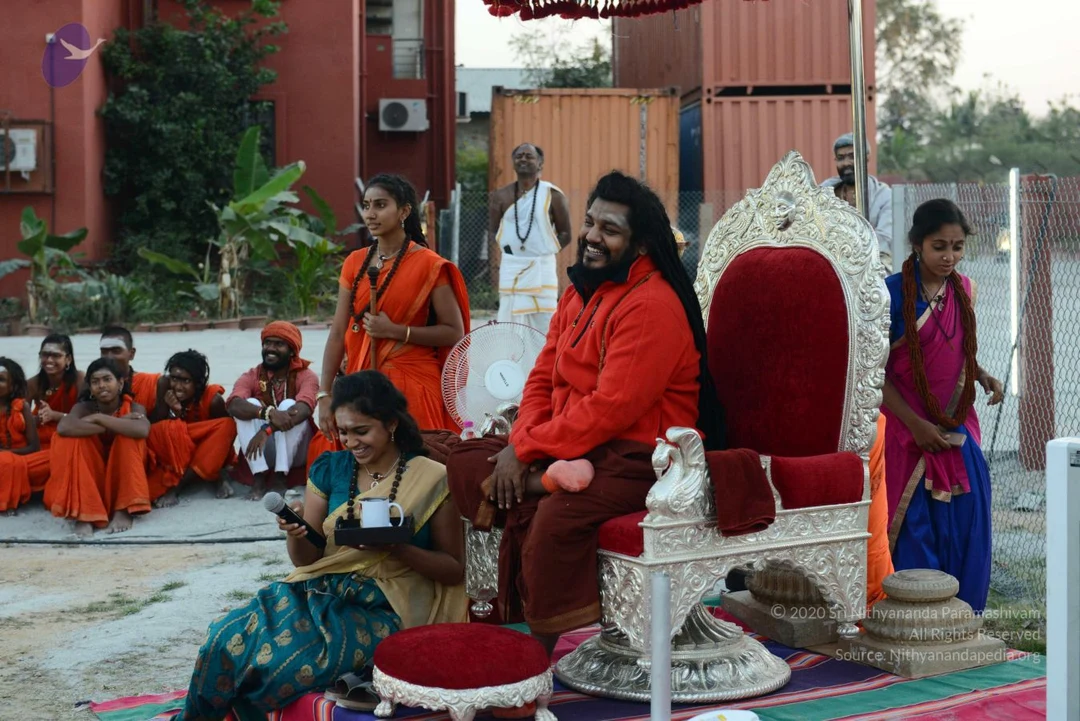
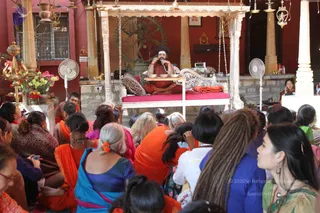
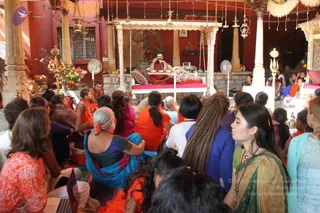
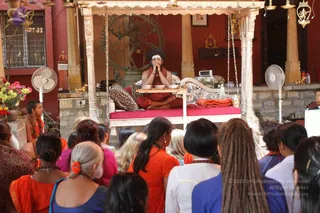
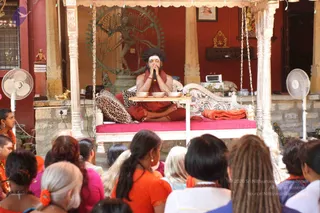
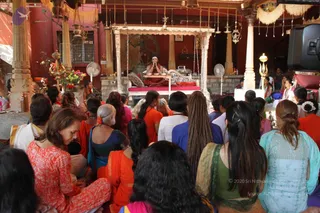
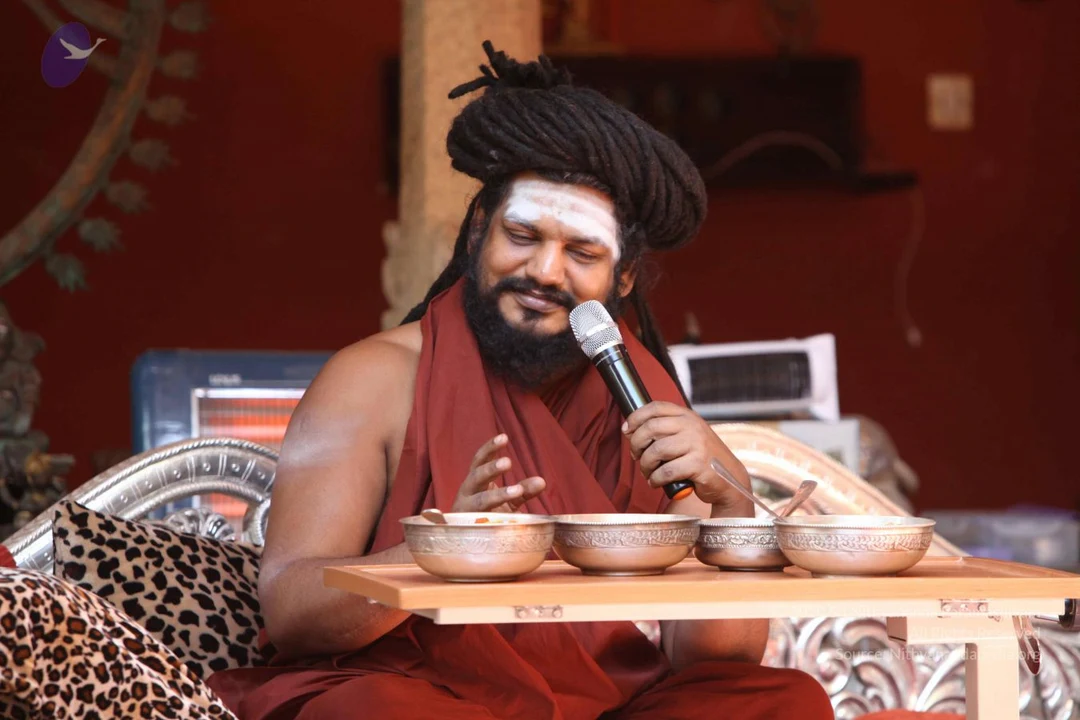
A courtyard satsang in a red-walled ashram hall. A man seated cross-legged on a pink-cushioned white wooden swing-bed, wearing an orange-red robe and a white forehead marking, holds a microphone to his mouth while speaking, with a small mic-stand and bowls on a side table. Behind him is a relief of a dancing deity murti and brass oil lamps stand nearby. Many seated devotees in orange, pink, blue and saris face him, some with long dreadlocks and grey hair, while small fans and flower arrangements sit at the edges.A photograph of a courtyard session in a red-walled temple hall with white carved pillars and hanging brass lamps. A bearded man with long dark hair, wearing a red-orange garment, sits on a raised white-canopied seat with a red cushion, speaking into a microphone with a small table before him. Around him, a large audience sits on the floor in orange, blue, pink and green saris and robes, many with long hair and some with white hair. Brass trishula-style staffs stand at the sides, a fan is placed nearby, and a framed image hangs on the back wall.A courtyard session in which a man with long swept-back hair, a white forehead mark and a rust-red shawl sits cross-legged on a white carved swing-bed with a red cushion, hands raised near his face. A small wooden table before him holds two bowls. Behind him a dark bronze Nataraja figure dances within a flame arch against a red wall. Around 12 seated devotees, mostly women in orange, pink and blue saris and kurtas, sit facing him, one with a yellow flower in her hair. Potted flowers and two standing fans frame the scene. Probable Swamiji (long swept-back hair, rust-red shawl, seated on the ornate throne-swing) is shown in person.Photo of an outdoor courtyard session. A bearded man with long dreadlocks, a white tilak on his forehead, bare-chested under a rust-orange shawl and wrapped in orange cloth, sits cross-legged on a white carved wooden swing-couch with a red cushion, holding a microphone with his eyes closed. A small table before him holds brass bowls. Behind him stands a large bronze Nataraja statue within a flame arch, beside red walls and a white pillar. Audience members in orange, pink and white saris and tops, some with grey or white hair, sit in the foreground facing him. Two standing fans flank the scene.A photograph of a courtyard session in a temple-like hall with red walls, white pillars and hanging brass lamps. A figure with long dark hair and a red garment sits cross-legged on a raised white canopied dais with red cushions, hands pressed together at the chin. Seated in front of the dais is a crowd of devotees on the floor, mostly women, in orange, red, green, blue and light-blue salwar kameez and saris, some with long braids and dreadlocks. Other devotees sit at the sides, with a speaker visible at the upper right, a brass kalasha-style vessel, fans and flower arrangements.A photograph of an outdoor courtyard session under a red-tiled roof hung with fringed fabric and brass bells. A man with long dark hair and an orange-red cloth sits cross-legged on a white-pillared dais with a red cushion, hands pressed together in namaste. Crowds of devotees in orange, red, blue and green saris and kurtas sit with their backs to the camera, some with long hair and flower garlands. Brass oil lamps and a kalasha-like vessel stand near the dais, and a video camera is visible at the right edge. a person: the seated teacher wears orange-red clothing and has long dark hair, consistent with the page's description of the session, but the face is too small to confirm.

kabadi-games

187 photosSource gallery
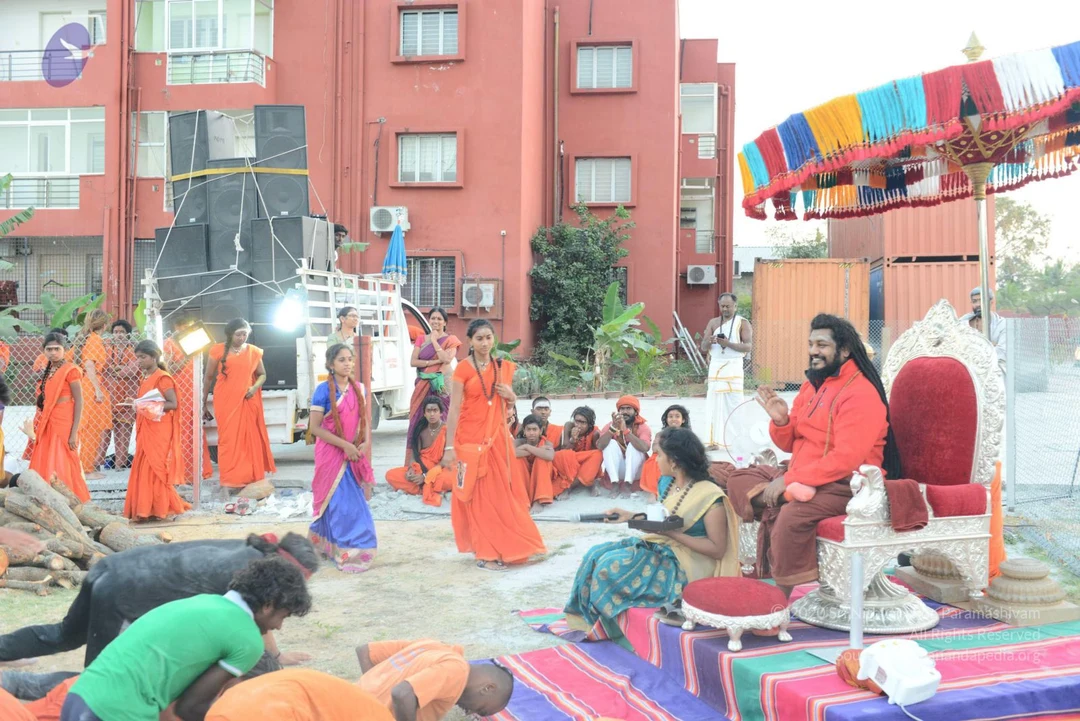
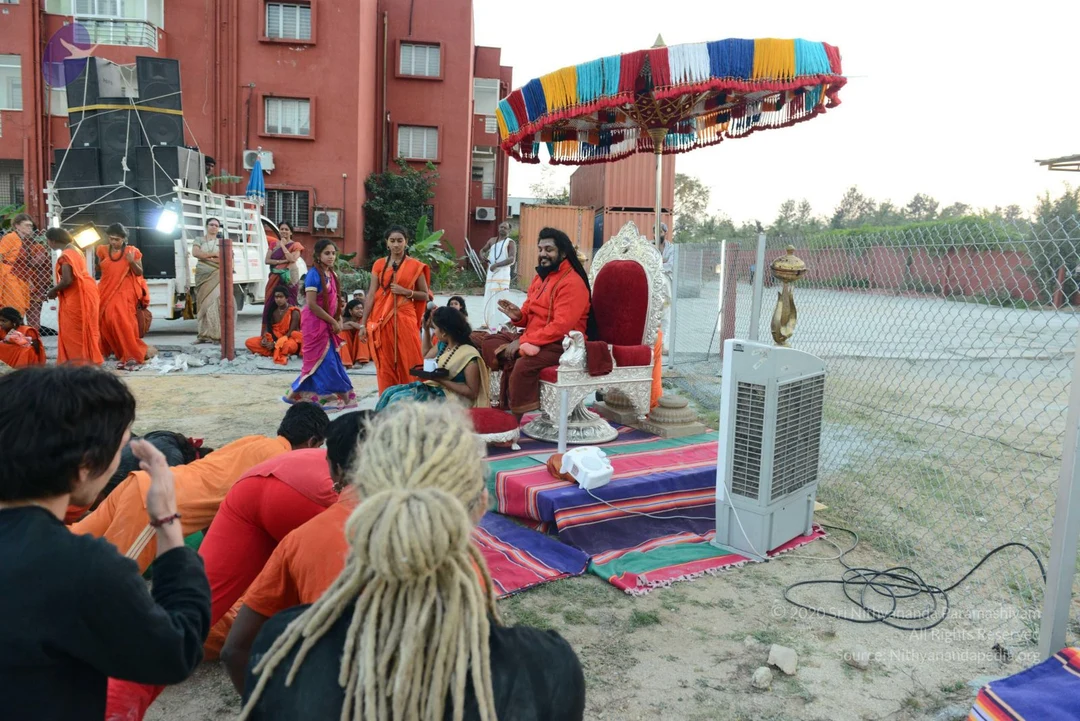
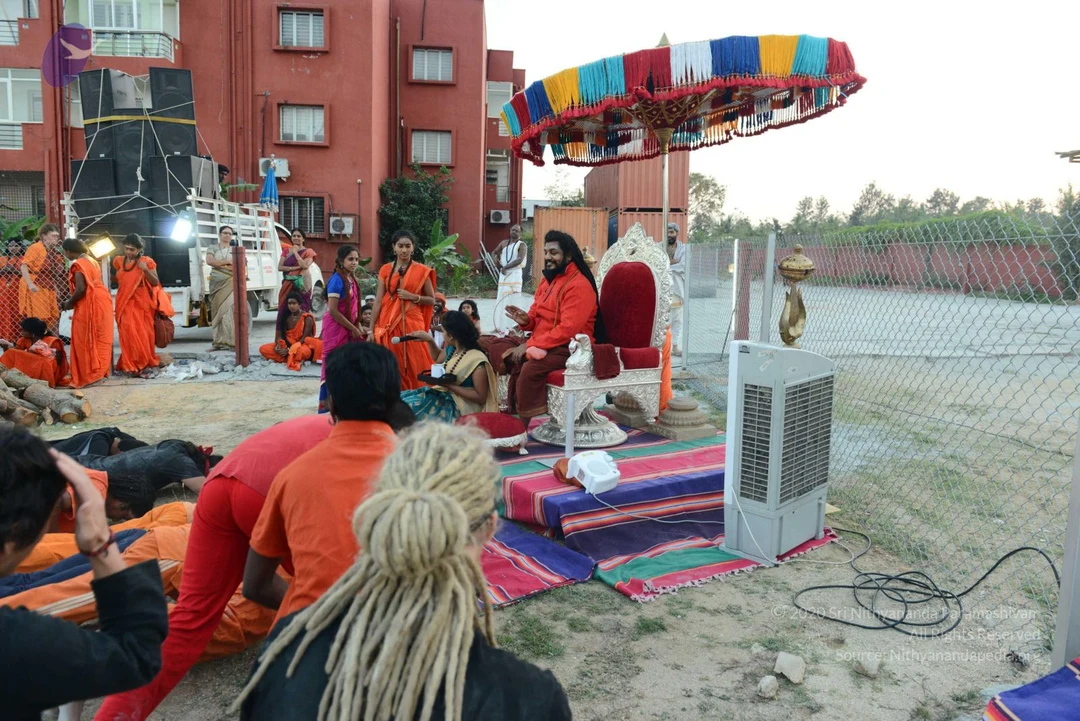
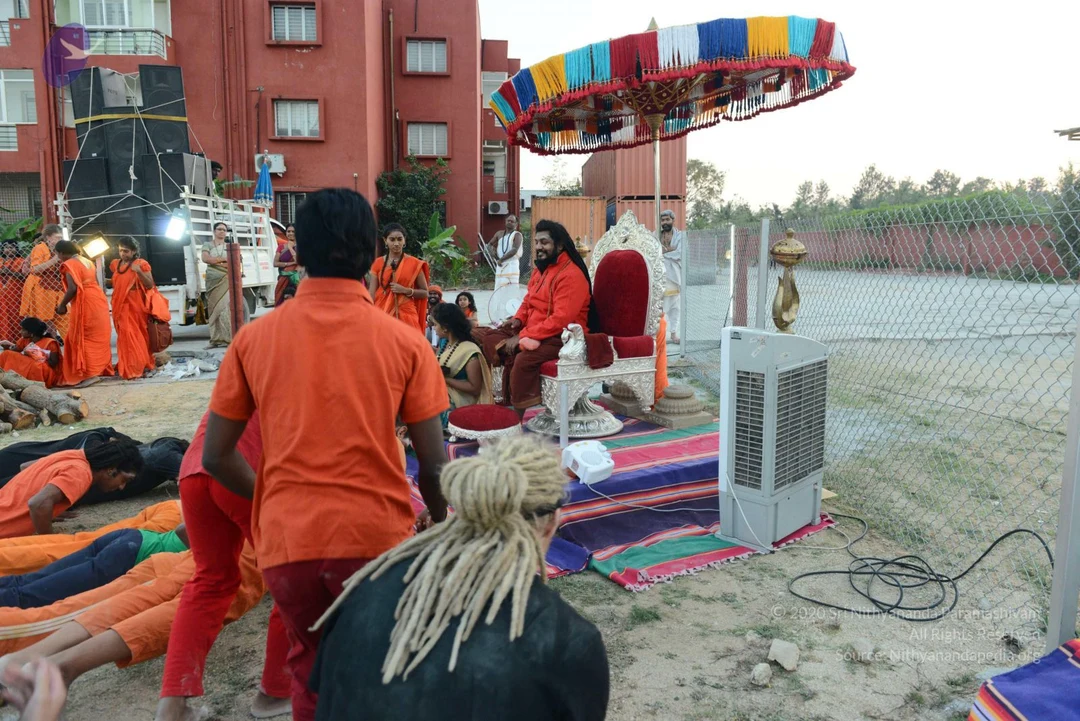
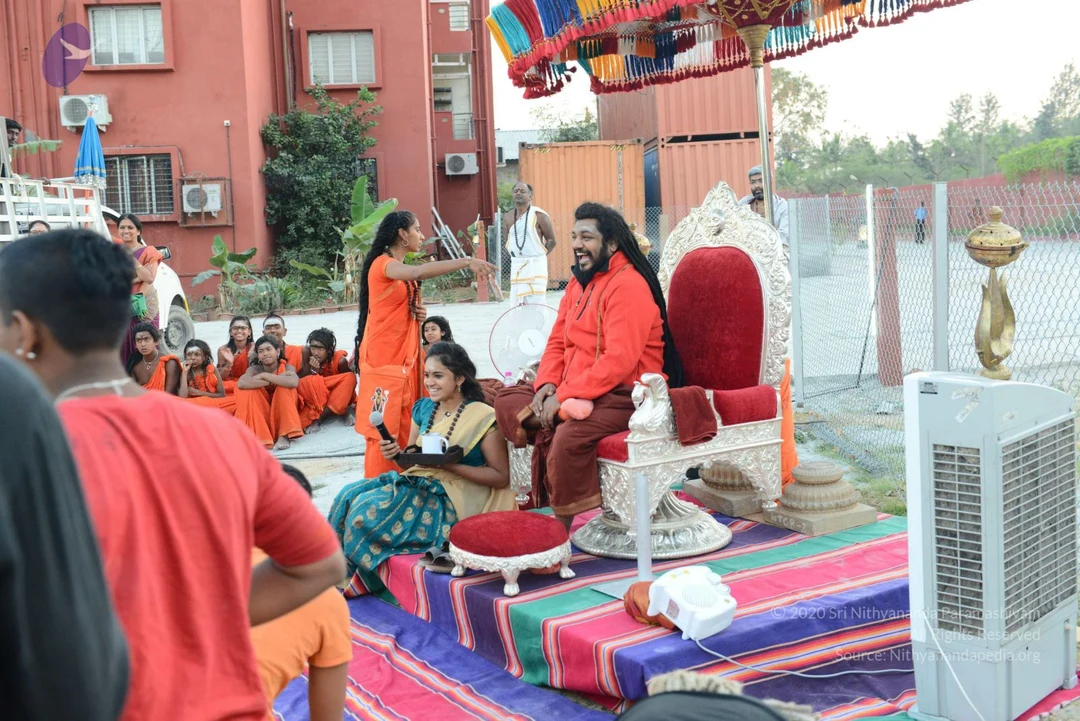
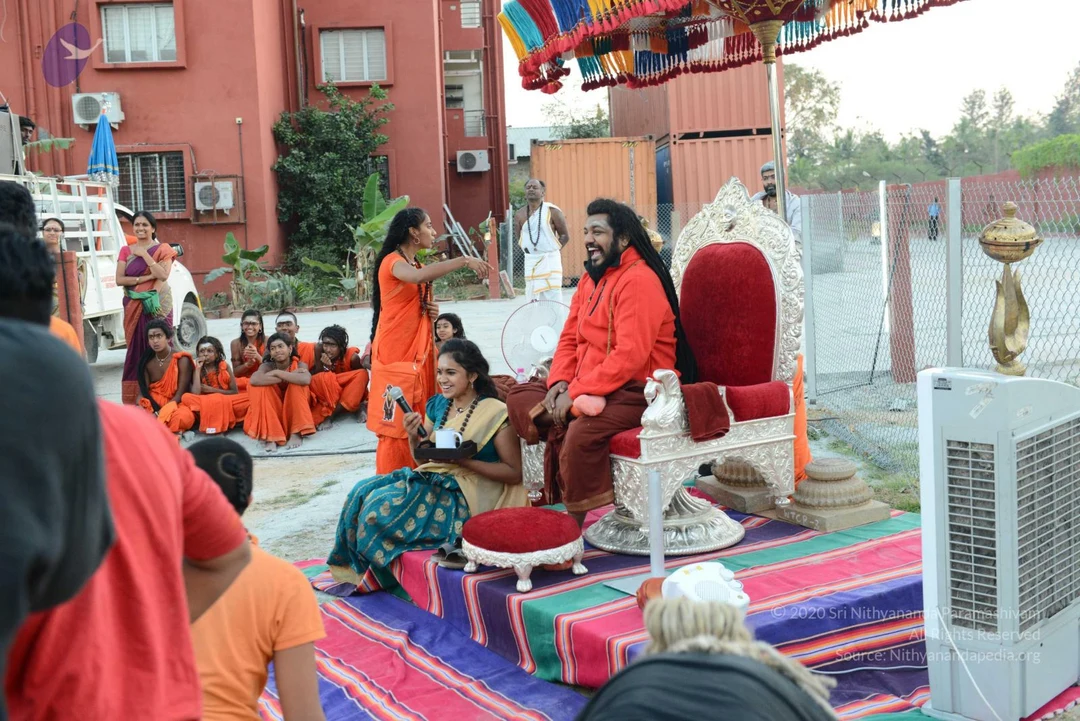
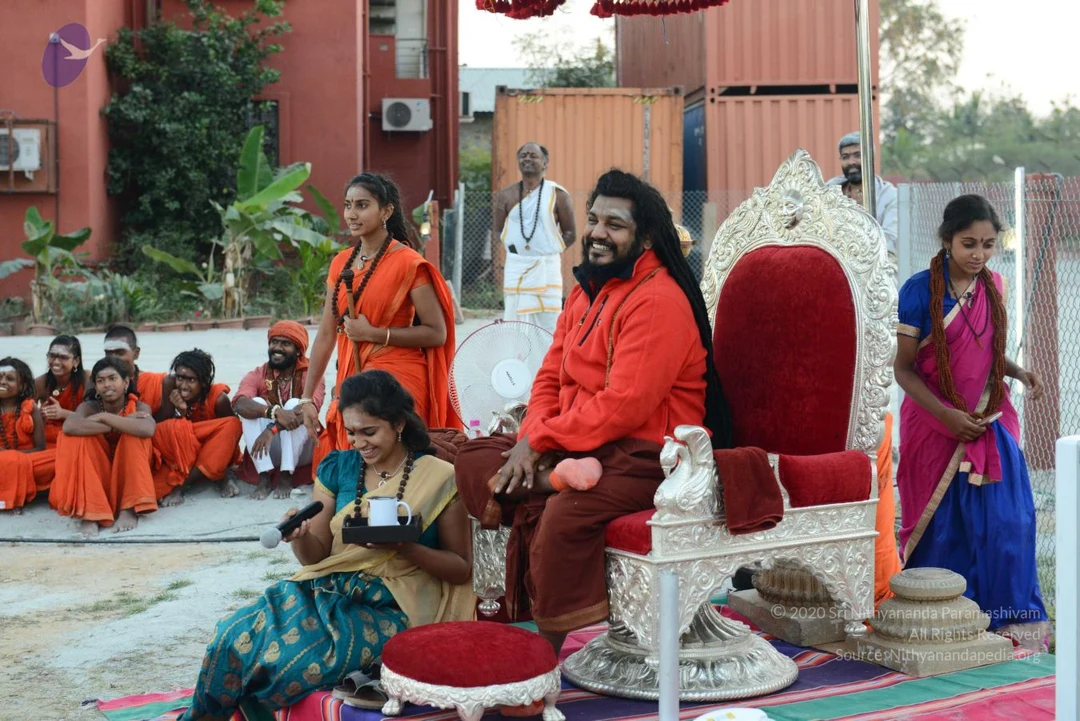
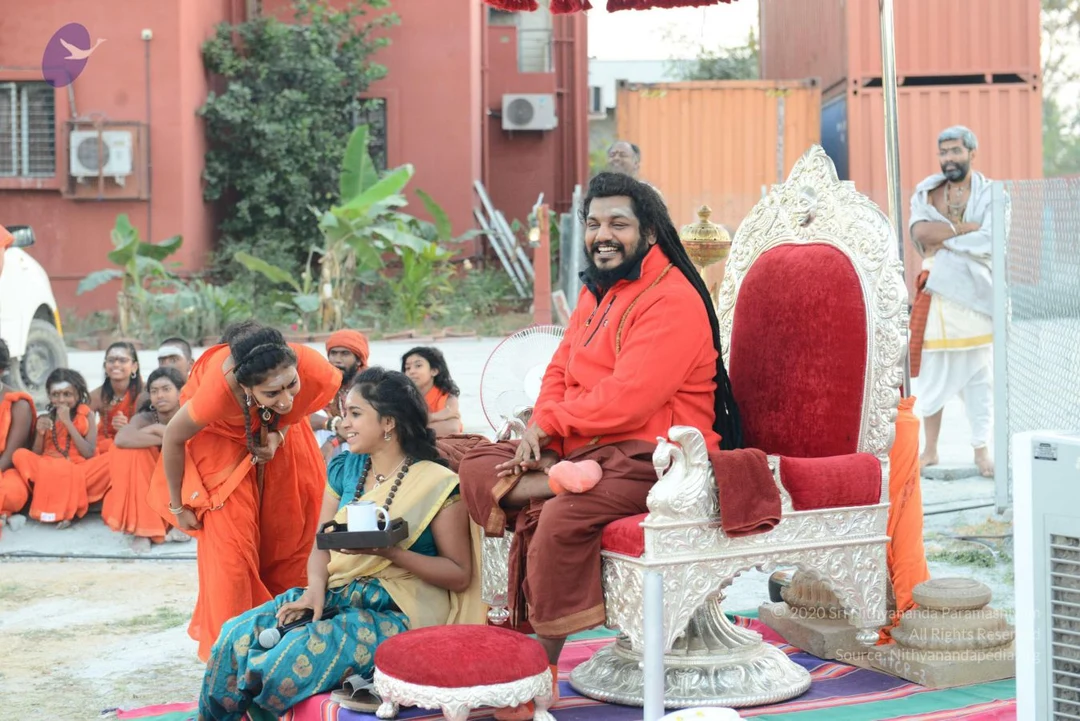
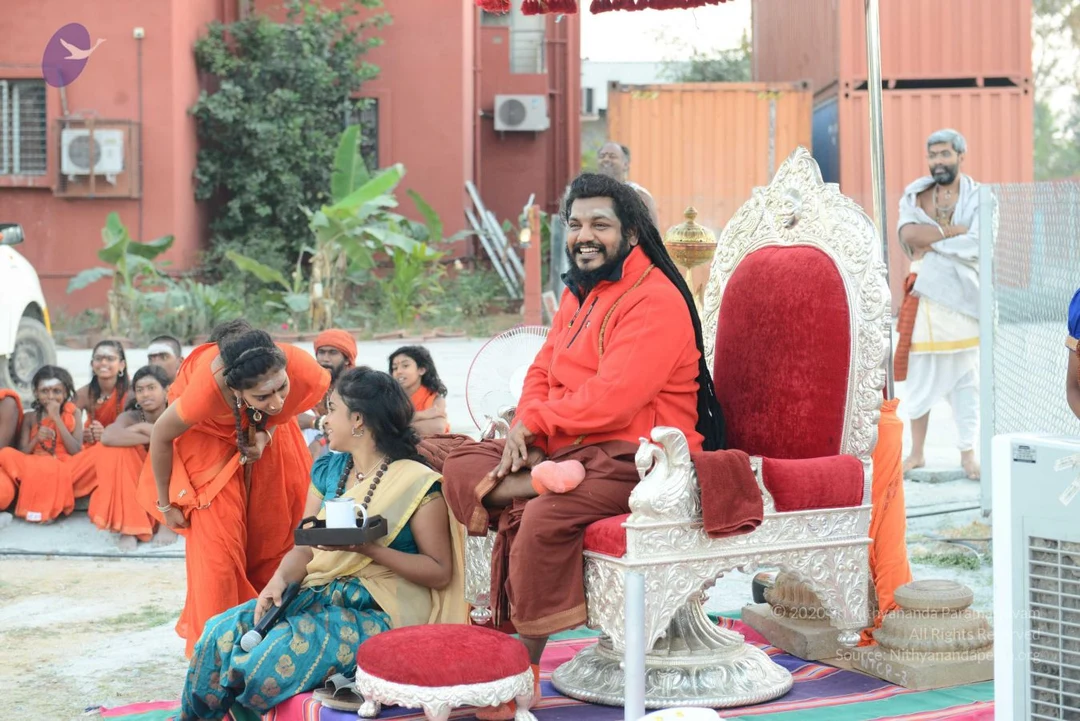
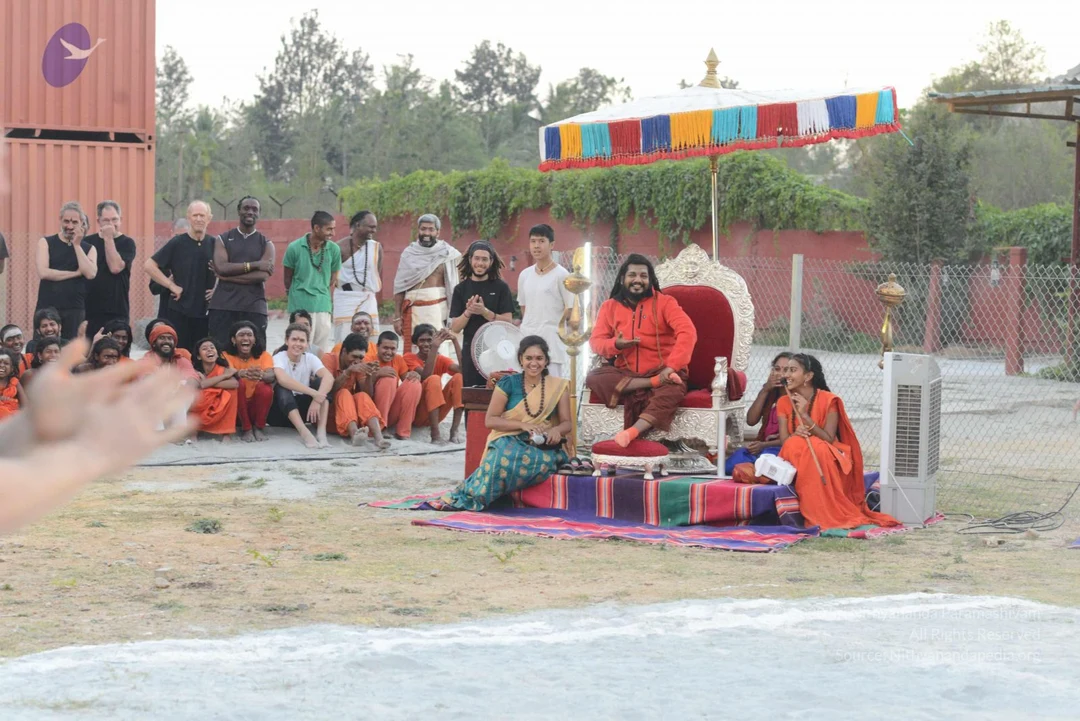
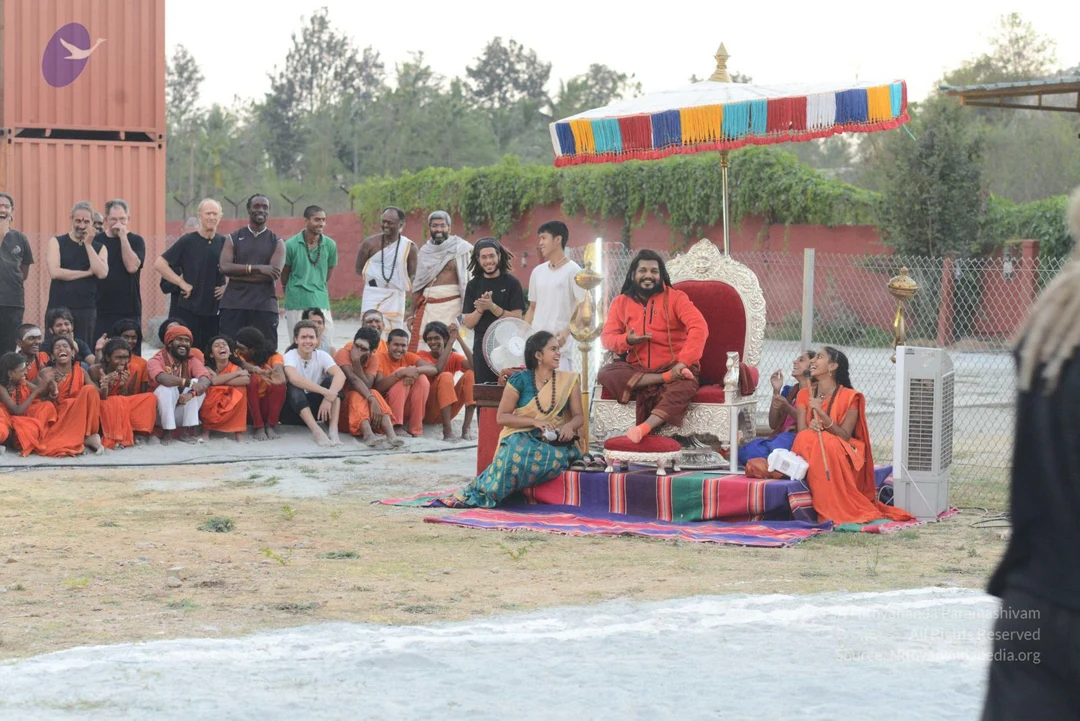
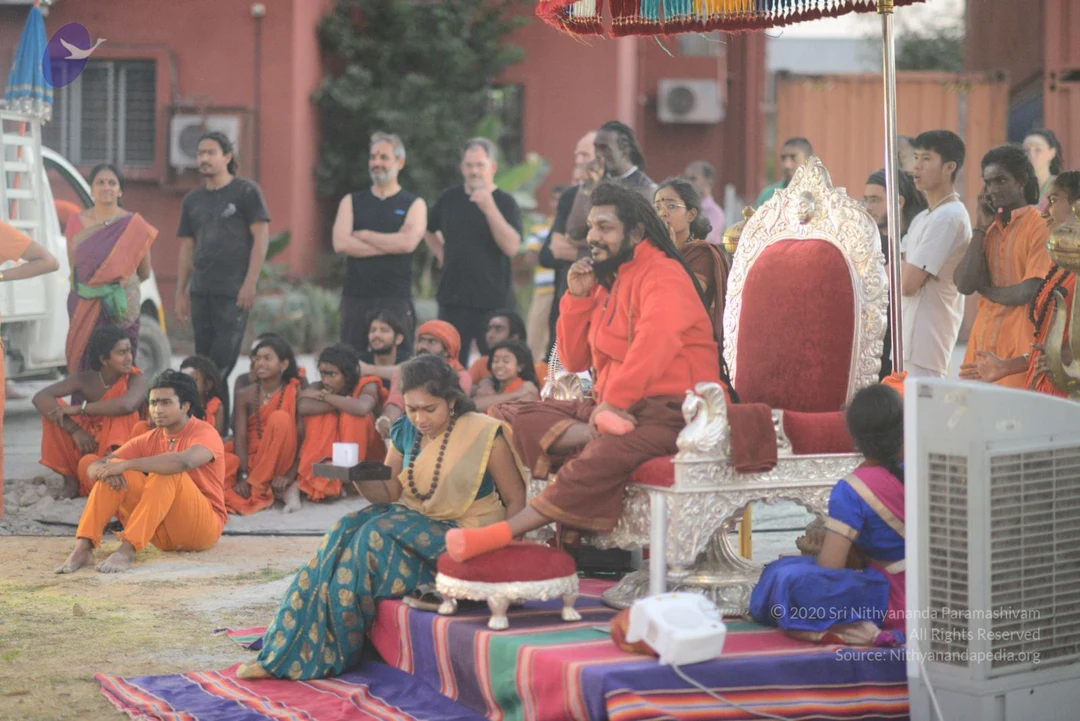
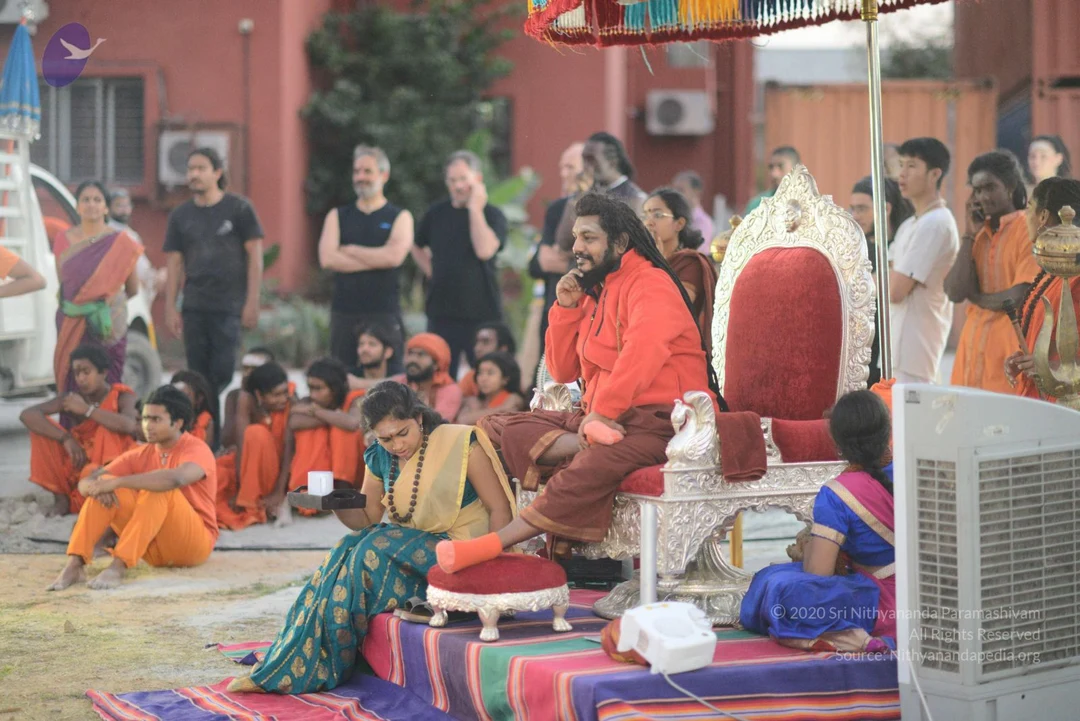
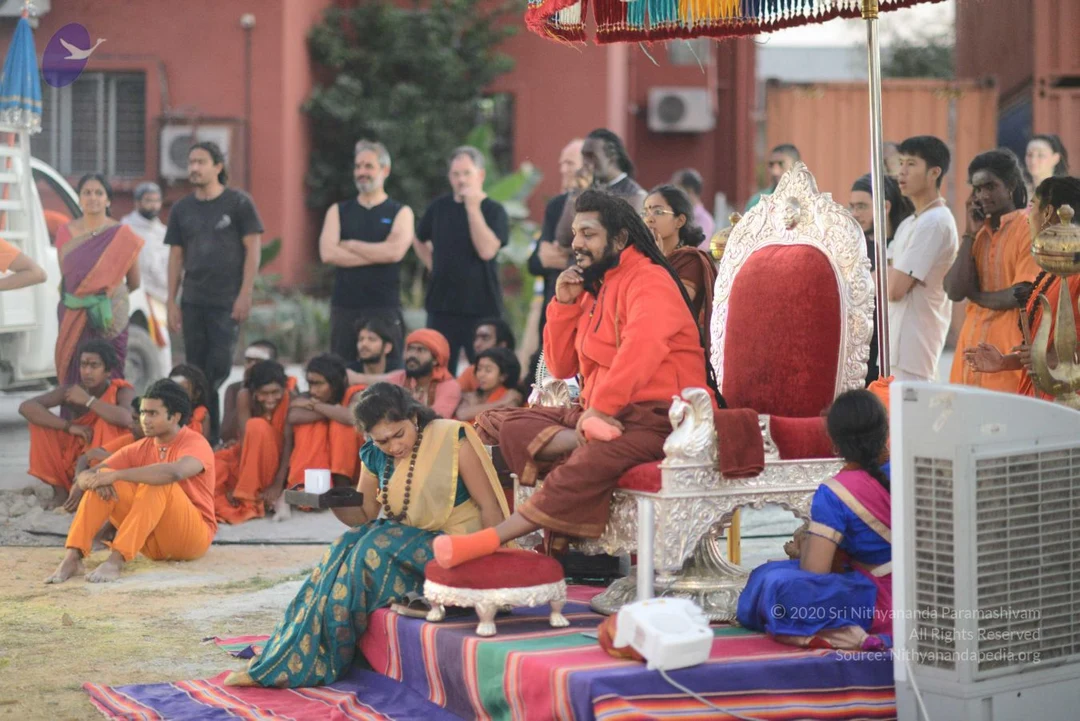
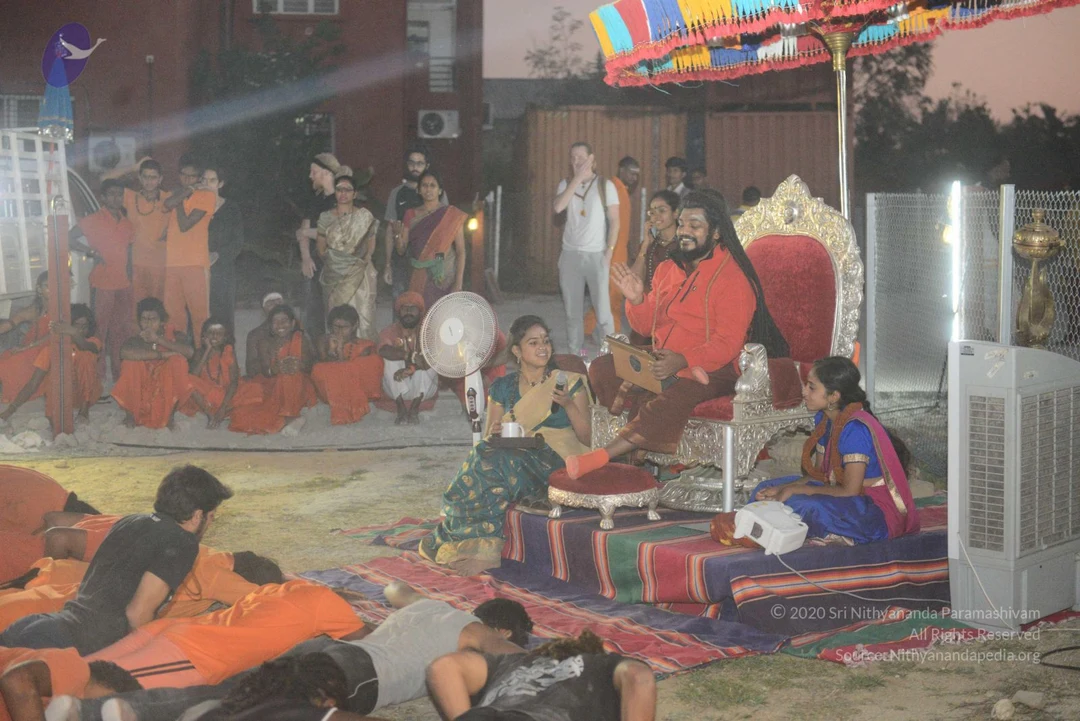
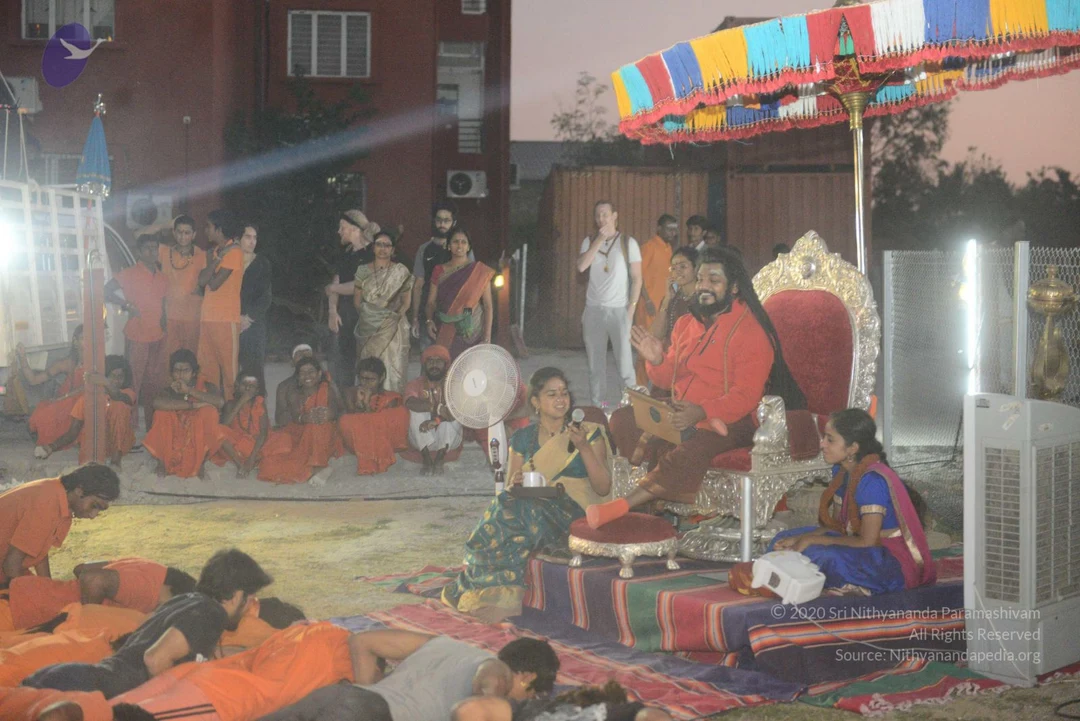
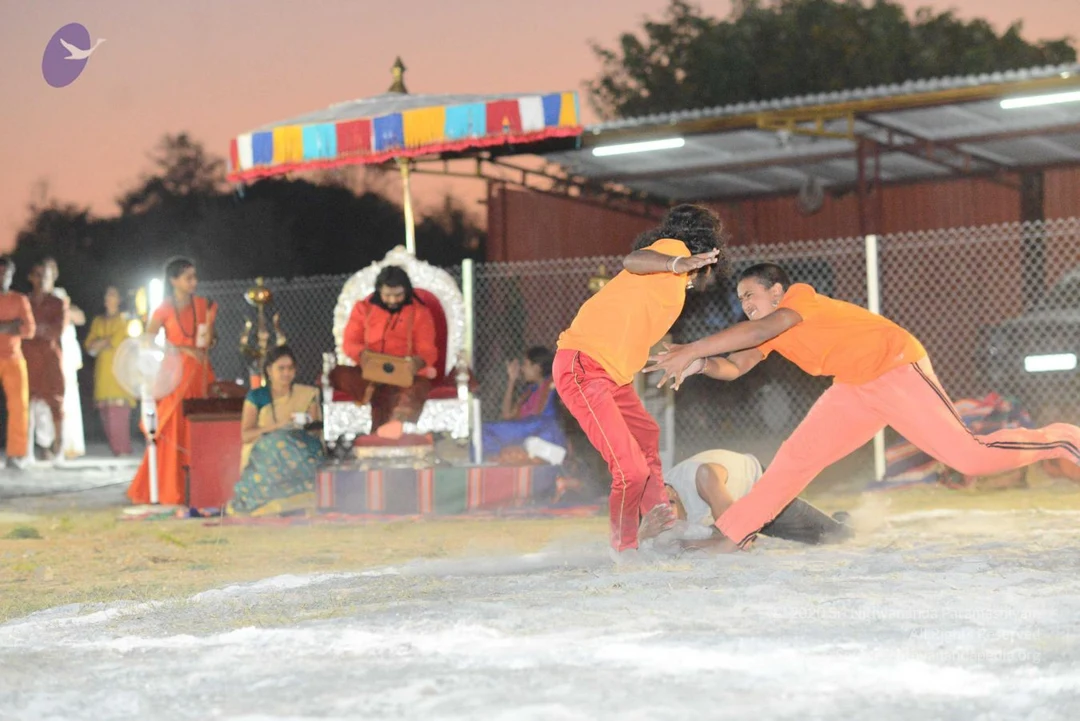
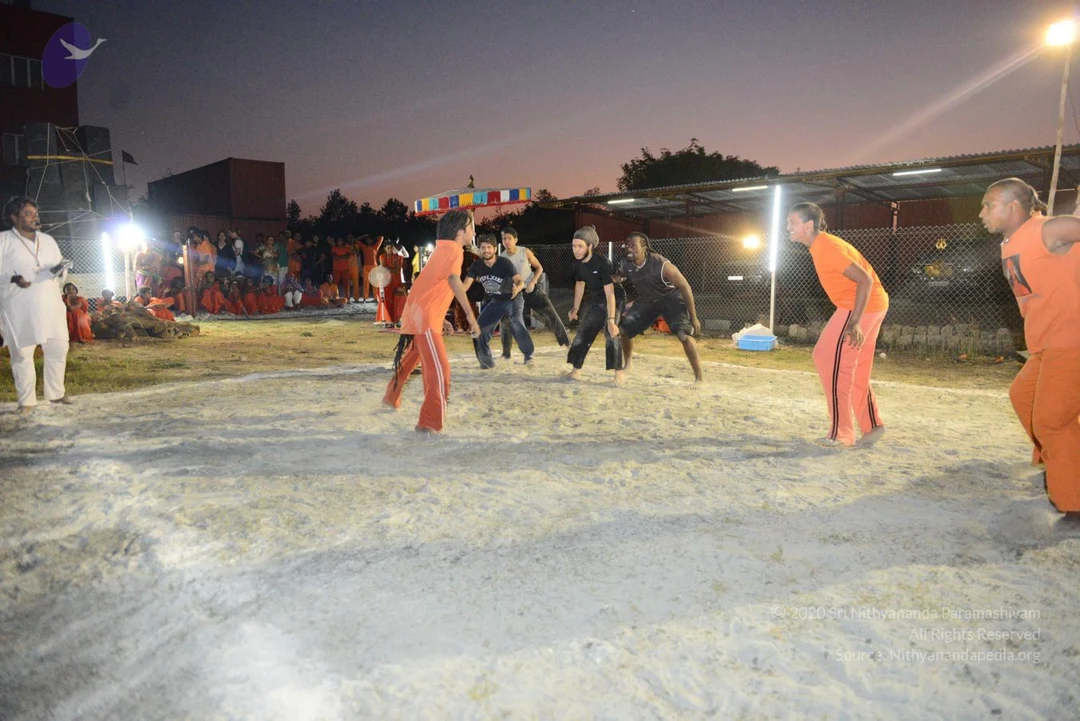
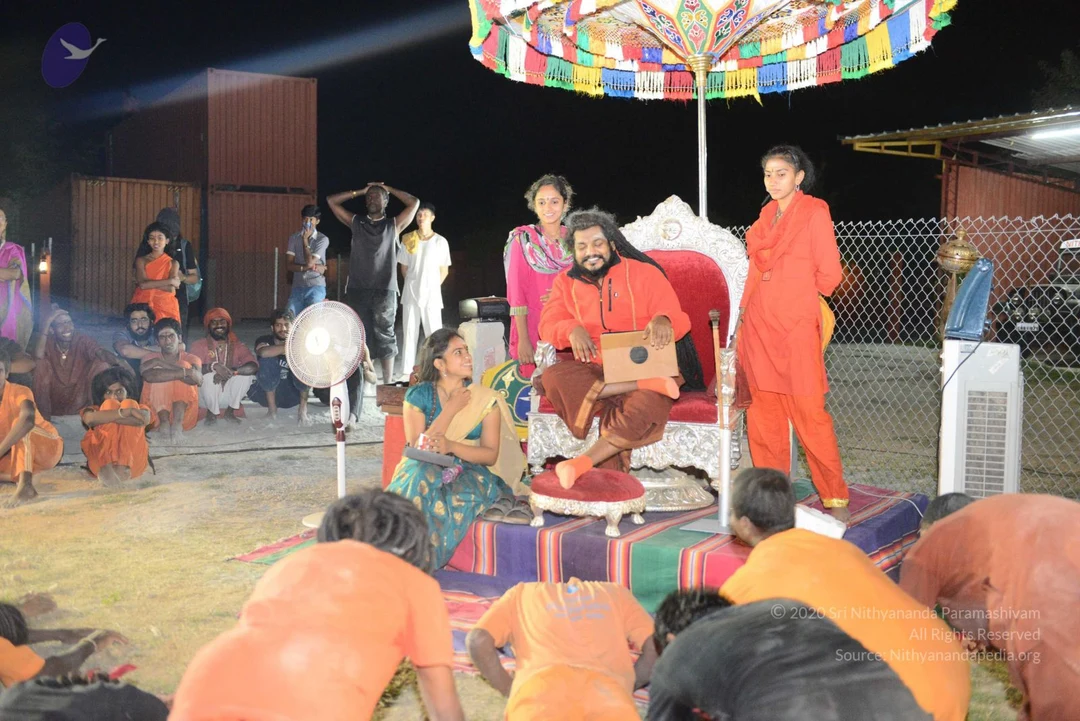
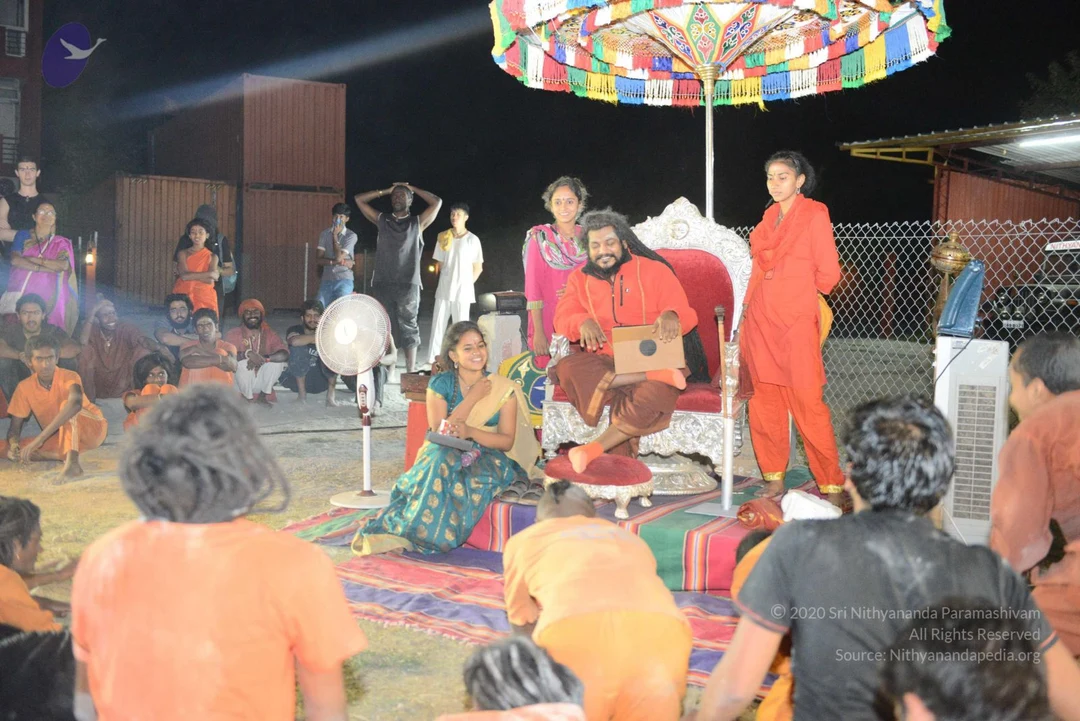
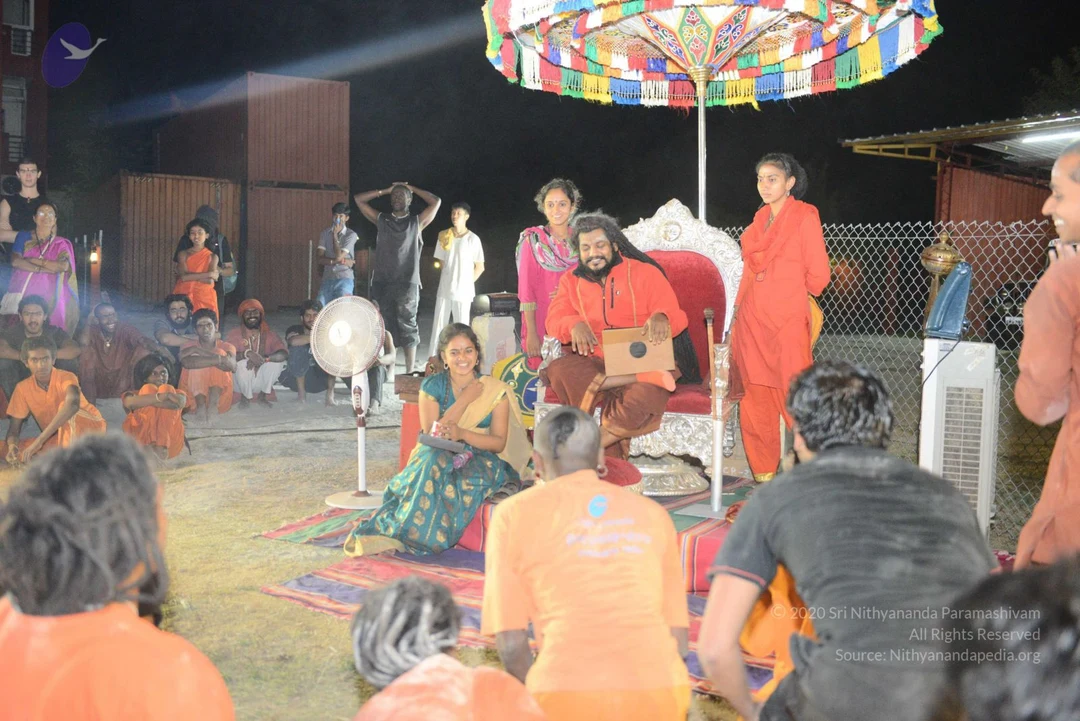
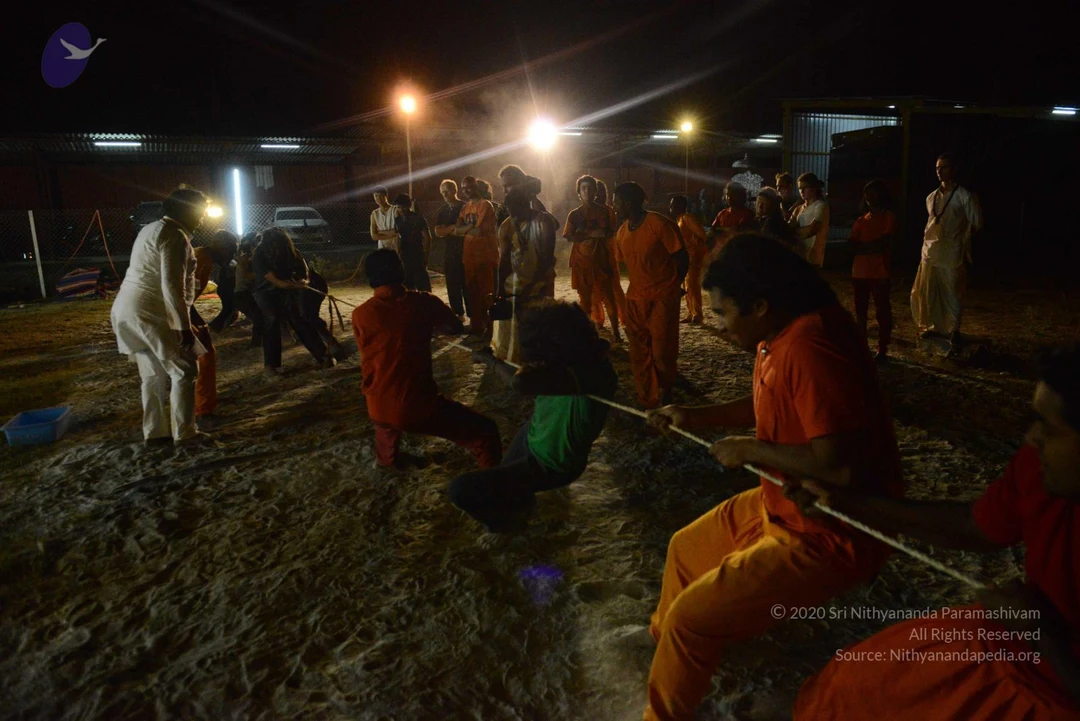
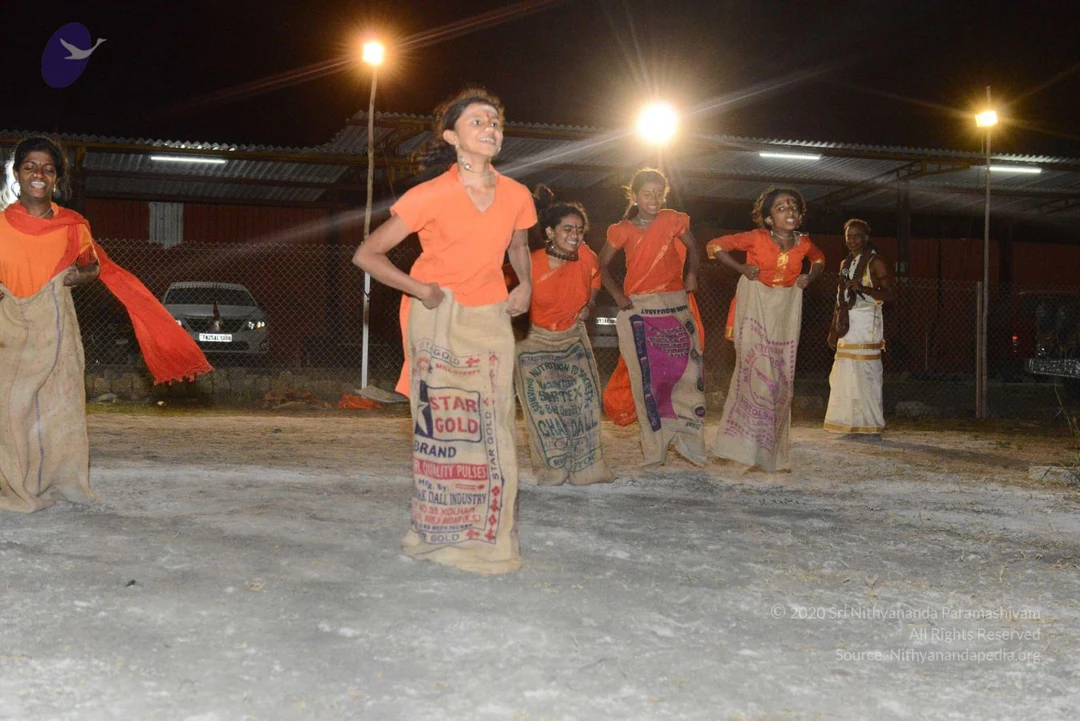
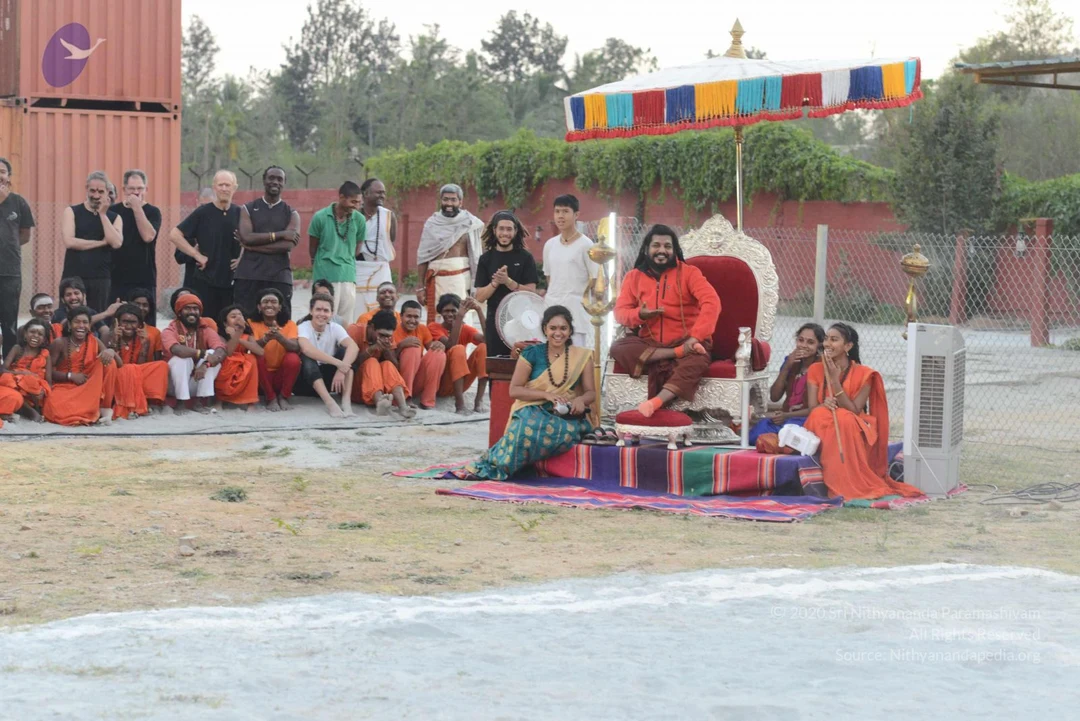
Outdoor courtyard session at dusk on a whitewashed ground. A central figure with long dark hair, a beaded rudraksha-style necklace and a white dhoti with gold border stands in a circle with devotees in saffron-orange robes, several with red trousers, forming a loose ring and holding hands. Behind them, red multi-storey residential blocks, potted banana plants and a shipping container are visible, with other people in orange and white seated or standing in the background. The scene reads as a group ritual or practice circle; the central figure's identity is not established by appearance alone.Outdoor courtyard session in front of a red multi-storey building with air conditioners and balconies. A bearded man with long dark hair, wearing an orange-red top and maroon lower garment, sits on an ornate silver-and-red throne under a multicoloured fringed canopy; the description of him uses appearance cues only and is a person, seated as the presiding figure. Around him, children and young people in saffron-orange robes and orange saris sit or stand on striped mats; a woman in a teal sari sits on a red cushion before him, and a few orange-clad people bow with their heads down in the foreground. A man in white dhoti and shawl stands behind the throne, and a speaker stack and white van are visible behind the group.Outdoor courtyard session at dusk. A man with long dark hair and a full beard, wearing an orange-red robe, sits on an ornate white-and-red throne under a fringed canopy with red, blue, yellow and white tassels. Probable Swamiji (long hair, ornate throne, saffron-orange robe) is seated centrally. Around him, devotees in orange and saffron robes sit on striped mats and cushions; one woman in a yellow sari sits near the throne, and a woman in a pink-blue sari stands nearby. A white cooler stands in the foreground, a truck with speakers sits behind a fence, and red brick buildings frame the scene. A person with dreadlocks and a black top sits in the foreground, facing the throne.Outdoor courtyard session: a bearded man with long dark hair, wearing saffron-orange robes, sits on an ornate white and red throne with carved armrests beneath a multicoloured fringed canopy. He is seated on a striped blanket of red, blue and green. In front, a group of people in orange and red clothing kneel or lie on the ground facing him, some with long braided or dreadlocked hair. Behind, other saffron-clad women and an older man in white stand near a parked white truck and speaker stacks by a red brick building. A portable air cooler and a kalasha-like brass vessel stand nearby. The throne figure's appearance matches a person by long hair and saffron robes, though the image is uncertain.Outdoor courtyard session photographed in the evening beside a red multi-storey building. A bearded man with long dark hair, wearing a red-orange kurta and maroon dhoti, sits on an ornate silver-and-red throne with a red cushion, under a large multicoloured fringed parasol. A probable Swamiji by visible cues: long hair, saffron-red robes and a seated, honoured position. Around him, a dozen or more people in orange and saffron clothing move and lie prone on the dirt ground, some in orange kurtas and some in red. A woman in a yellow sari stands nearby, a man in white stands at the right, and a person with blond dreadlocks in dark clothing is in the foreground. A PA speaker stack, a truck and a portable air cooler sit near the fence, and a brass kalasha-style finial stands beside the throne. A colourful striped mat covers the ground.Outdoor courtyard session in front of a red multi-storey building with air conditioning units. A young woman in an orange sari stands gesturing beside a seated woman in a blue-green patterned sari holding a microphone. A row of people in orange robes sits on the ground behind them, and a bearded man in white stands near the building. Striped multicoloured cloth covers the platform, with an orange decorative umbrella overhead and a cooler fan in the foreground.

power-manifestation-silicon-gadgets-rain
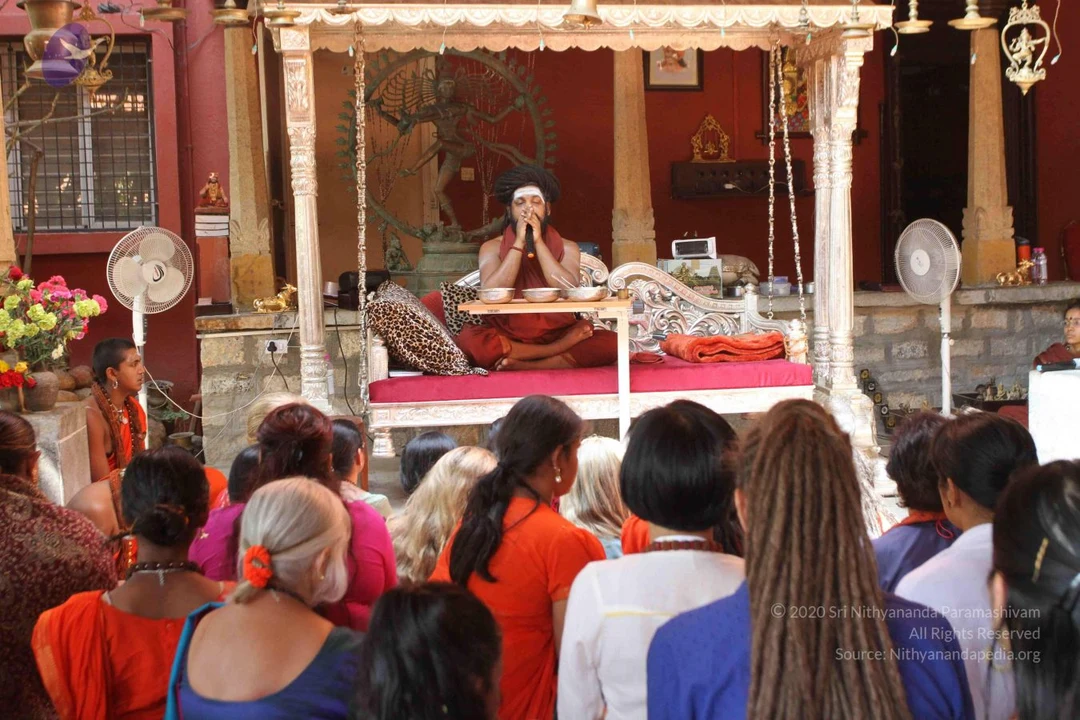
3 photosSource gallery
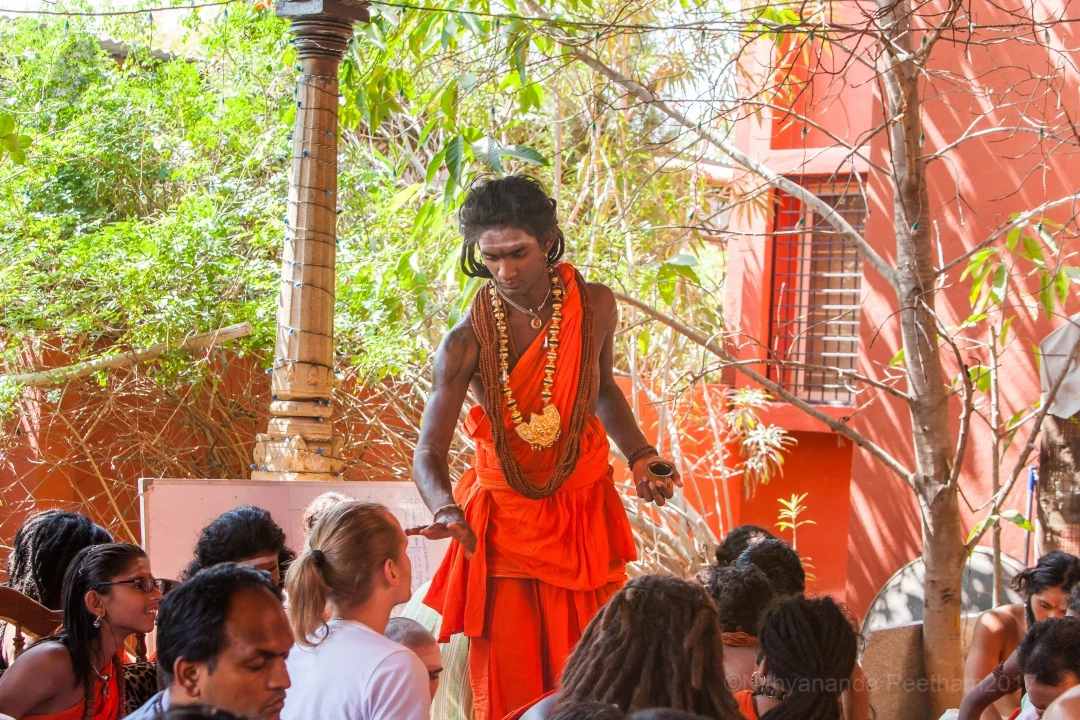
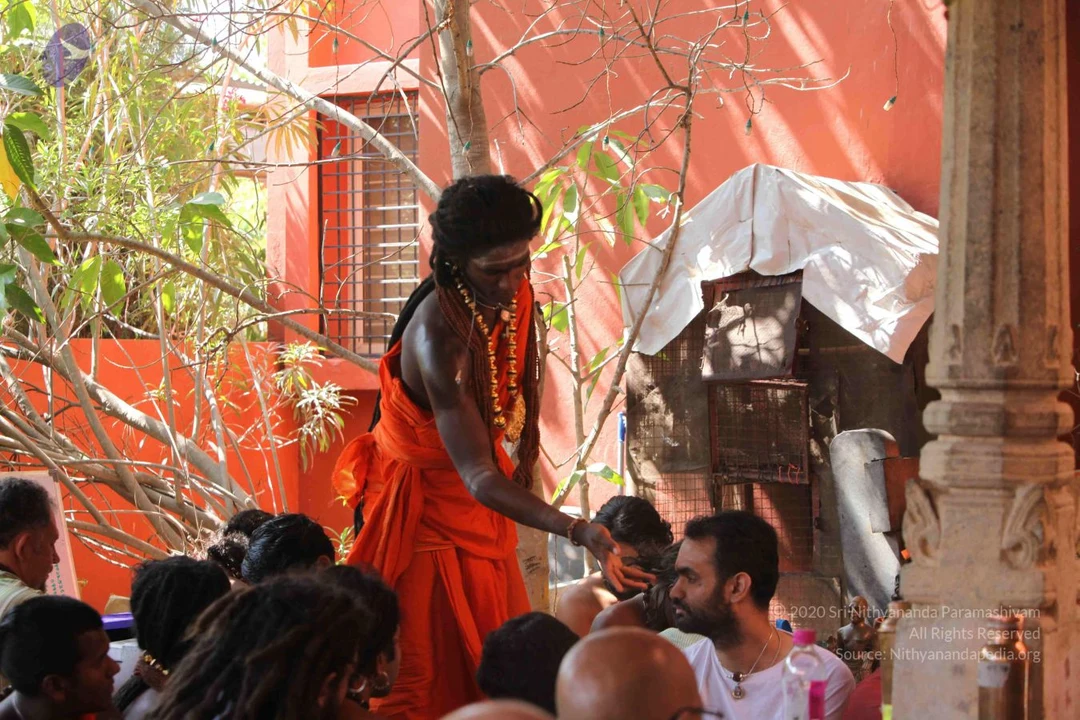
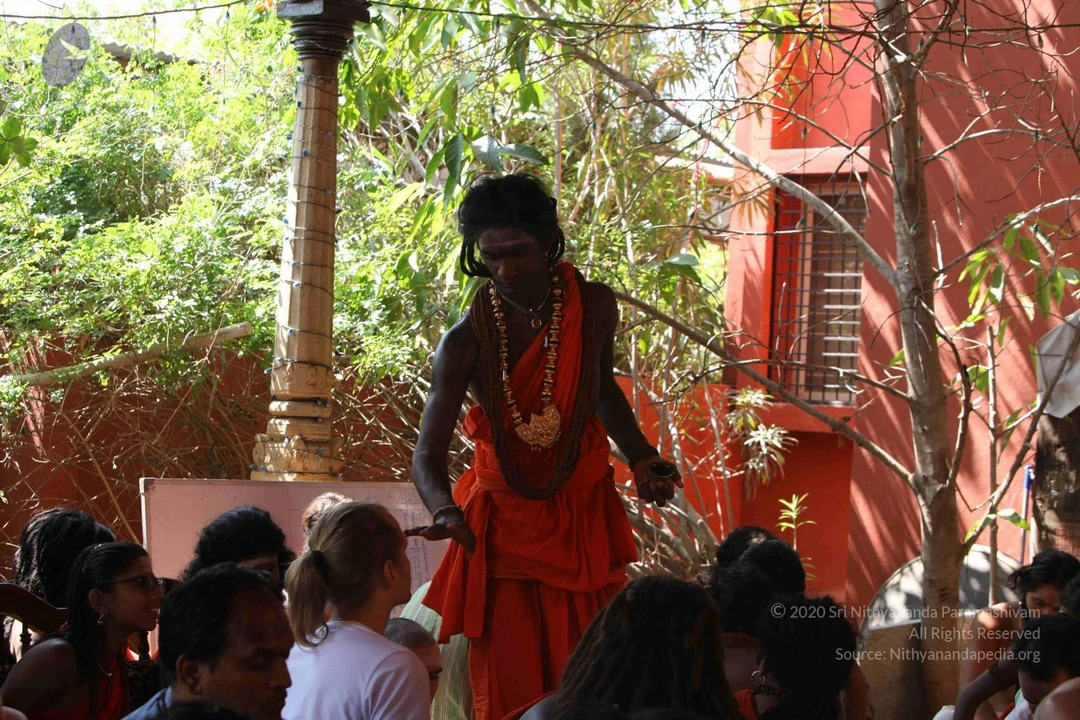
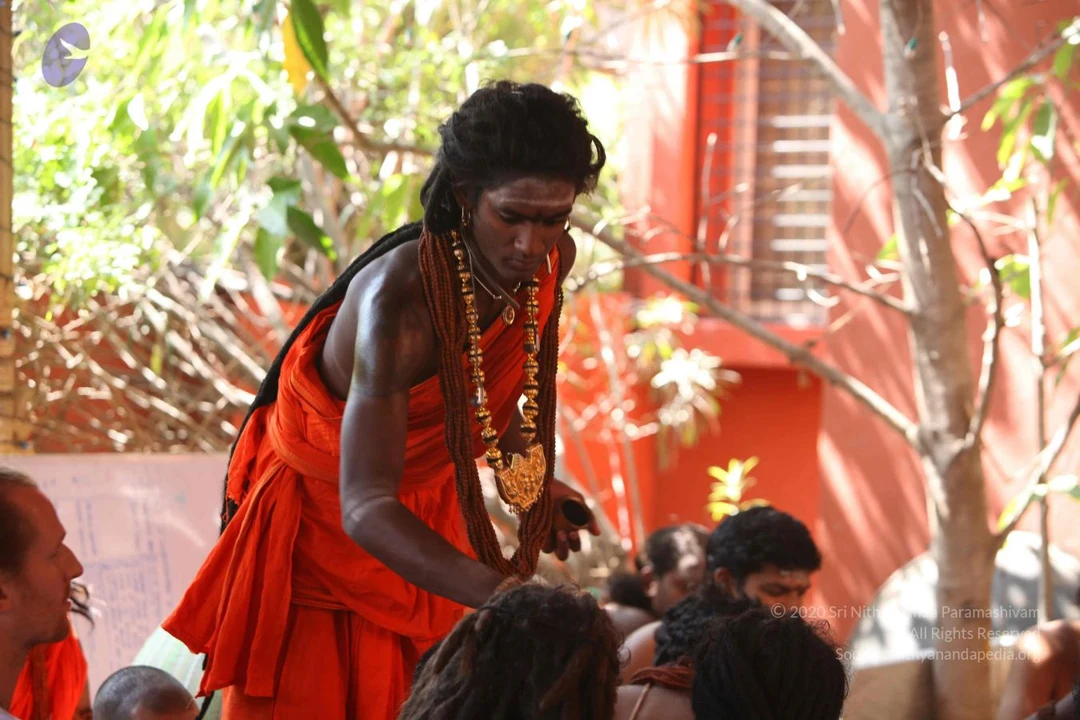
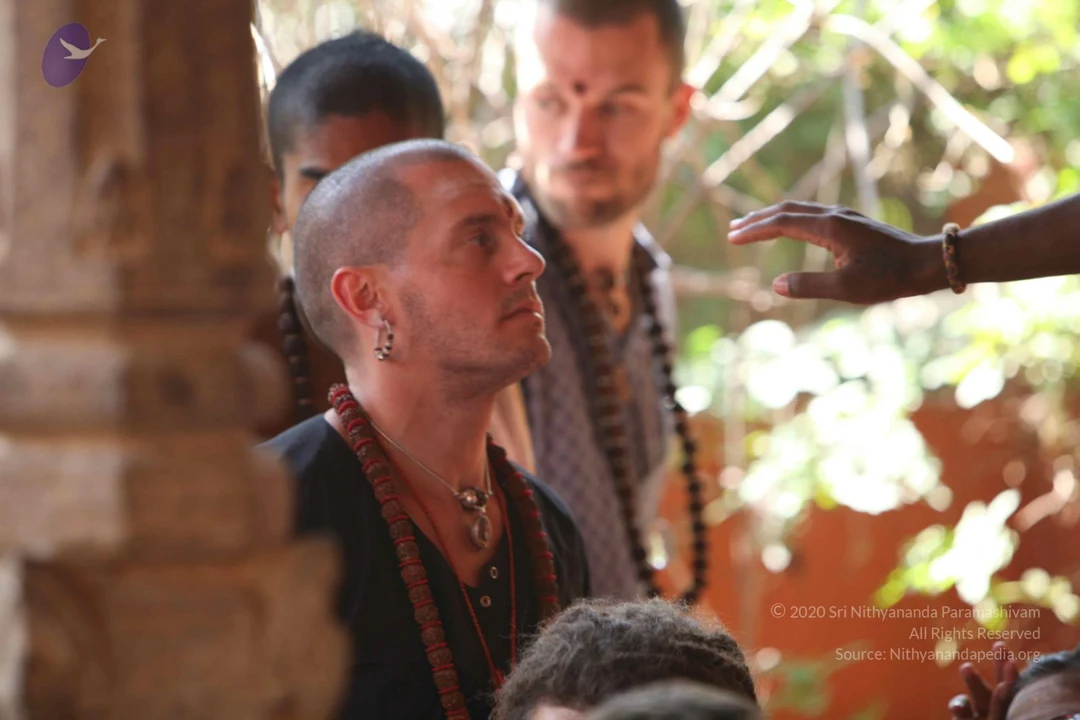
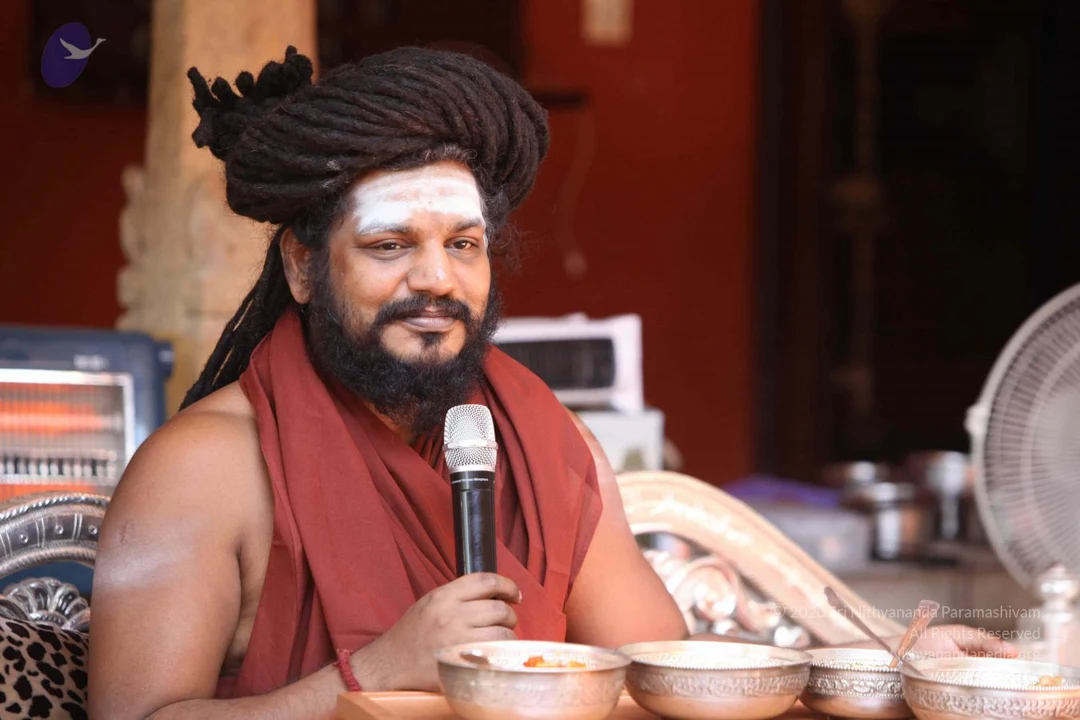
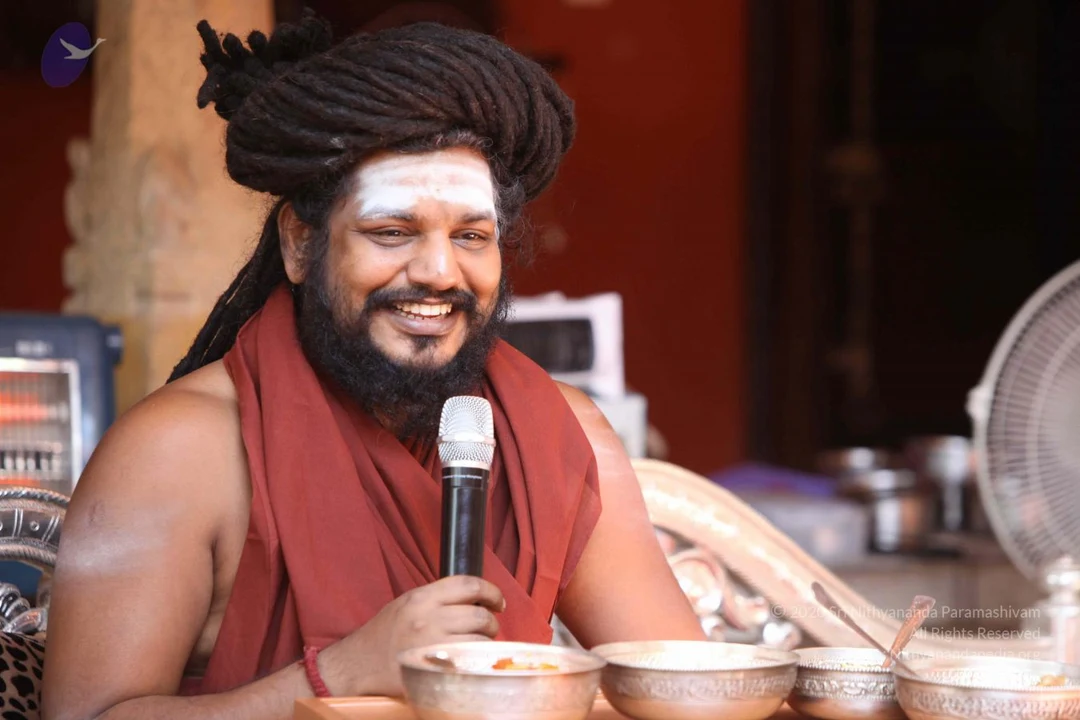
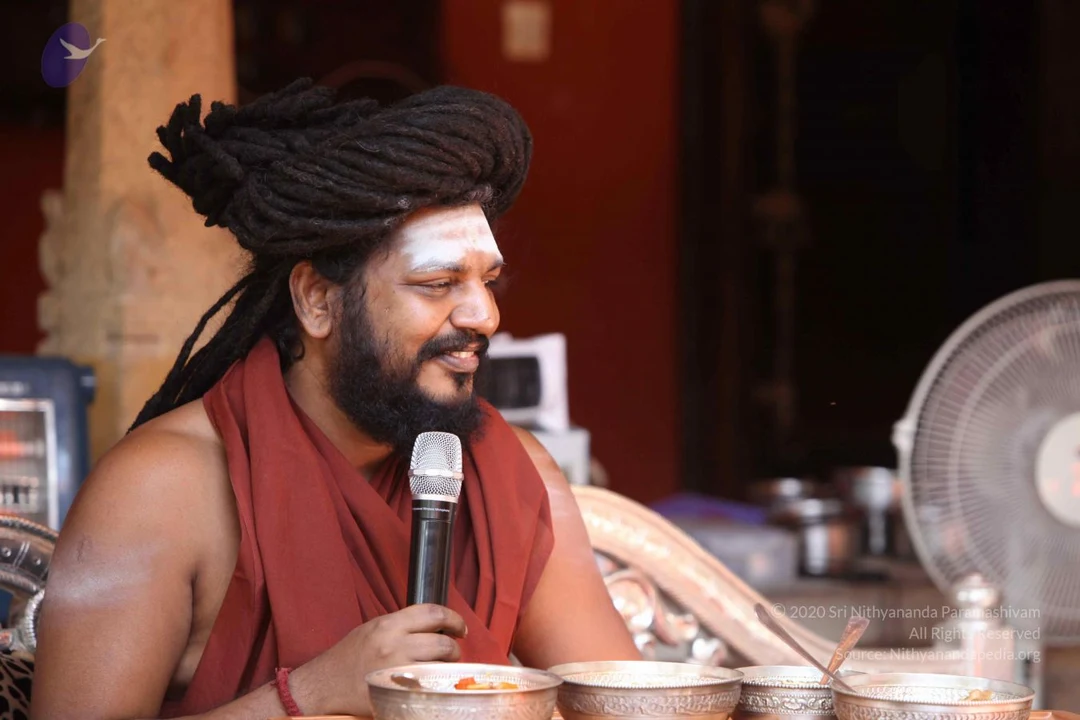
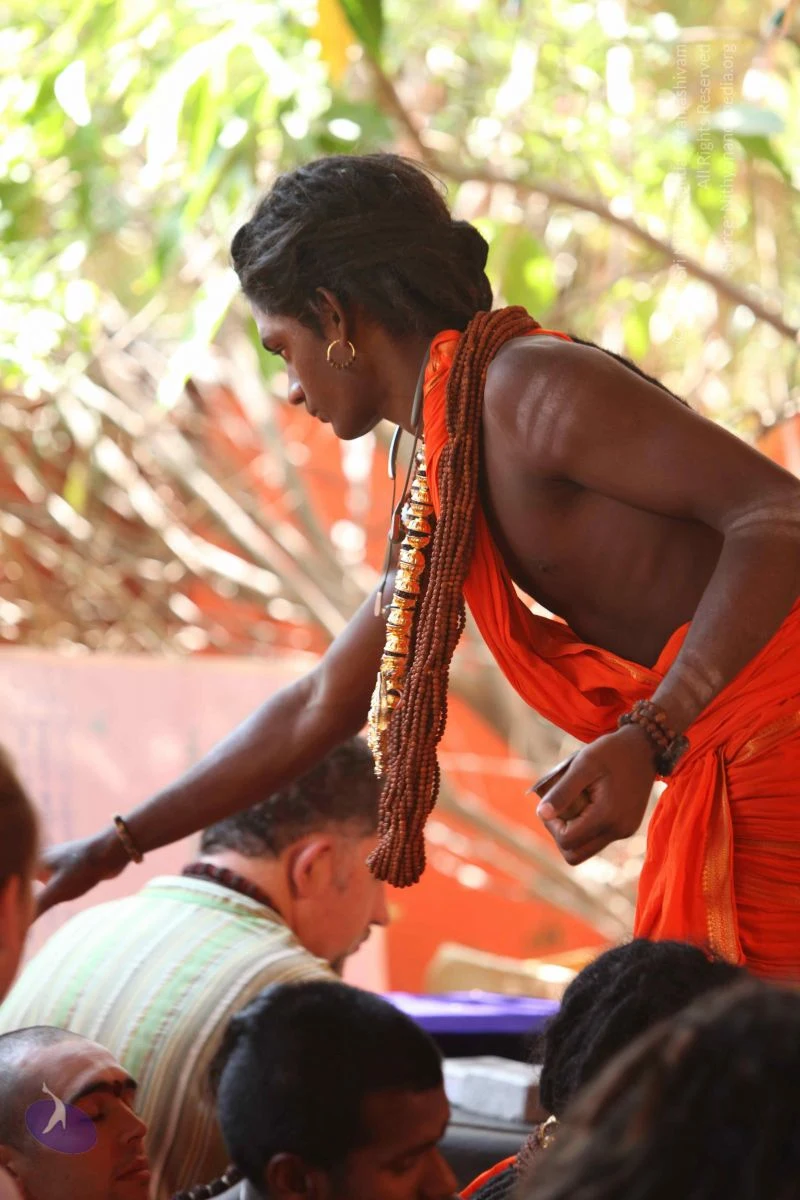
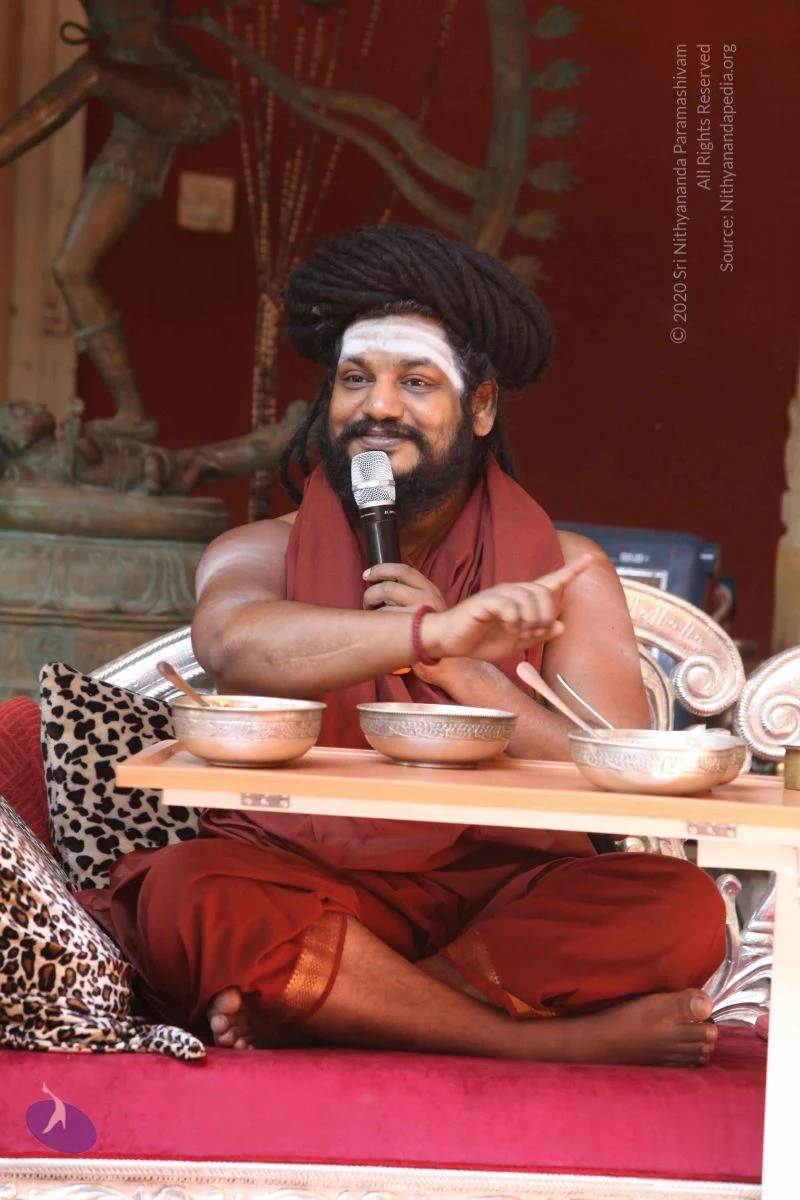
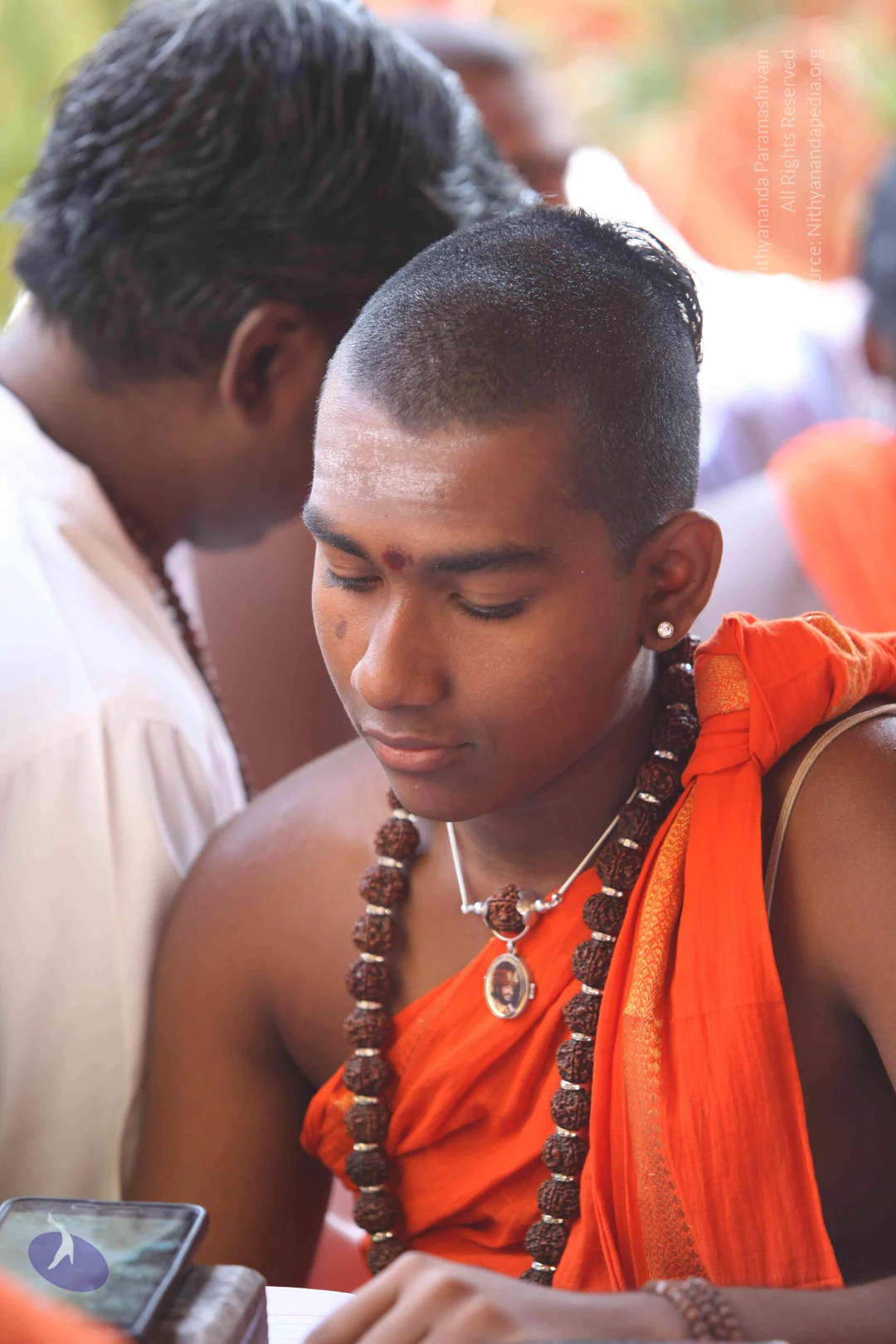
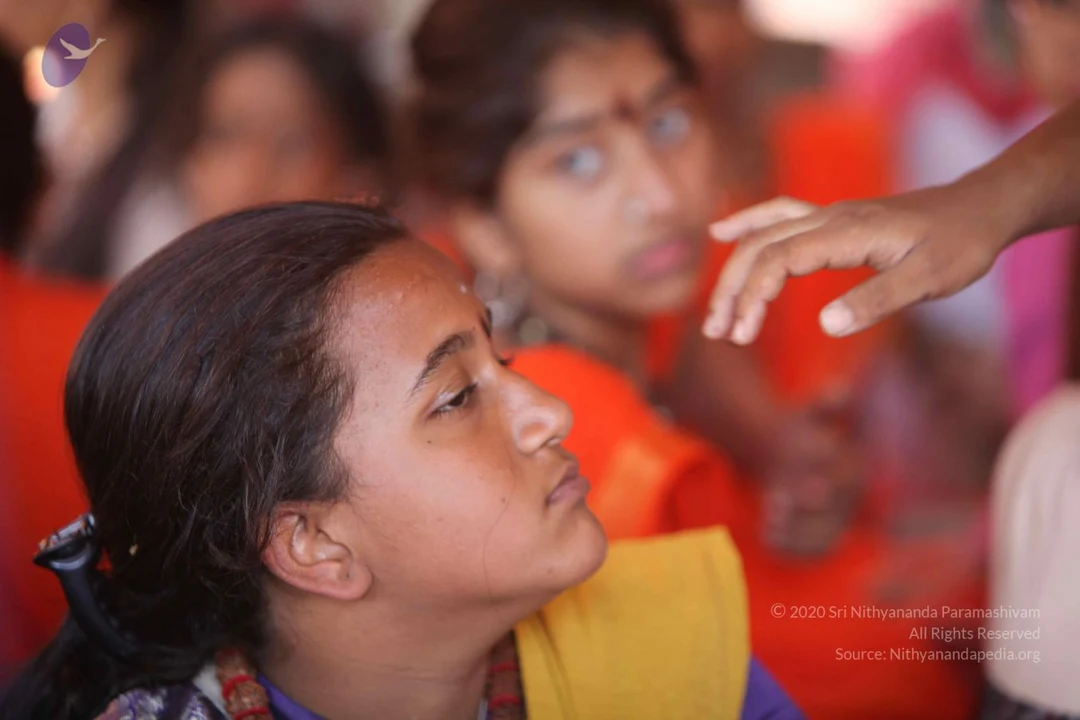
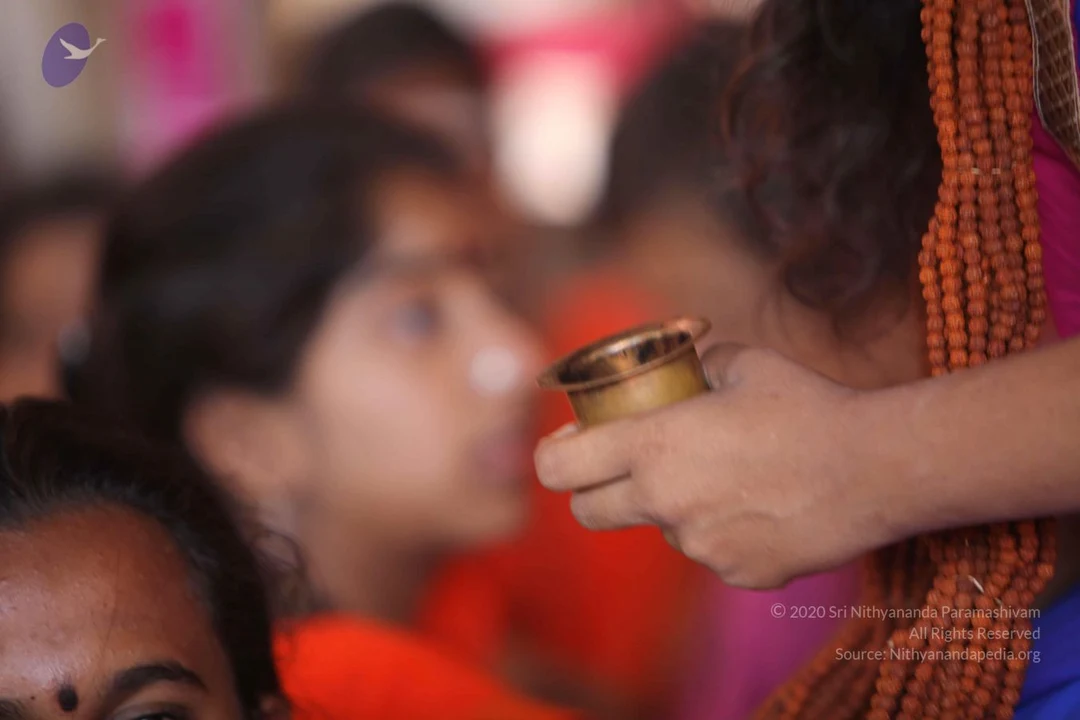
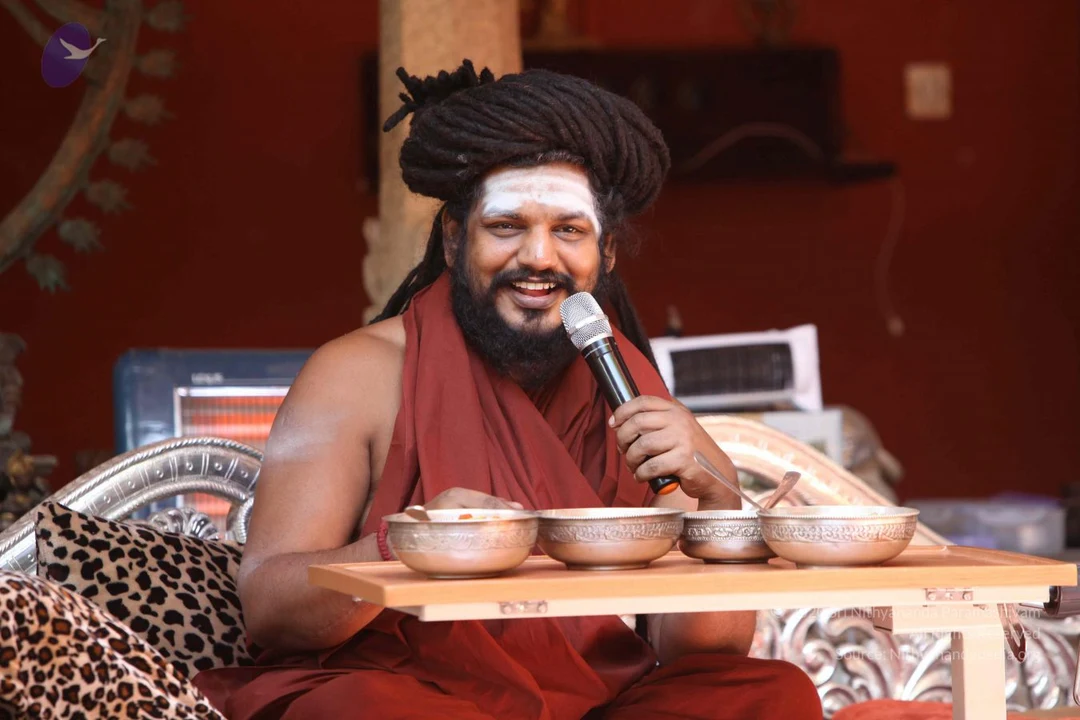
Outdoor courtyard satsang with a man standing and leaning forward in an orange-saffron dhoti and shawl, bare-chested, wearing a thick rudraksha mala across the shoulder, a long gold ceremonial necklace, gold hoop earring, and beaded wristbands, his hand extended toward a seated devotee's head in blessing. Seated devotees in the foreground include a man in a pale striped shirt with a beaded mala, and a shaved-headed man in white with eyes closed. Orange walls and green foliage fill the background.A man with long dreadlocked hair, a white horizontal tilak on his forehead and a full beard sits cross-legged on a red cushioned seat, speaking into a black handheld microphone. He wears a rust-red shawl over bare shoulders and rust-red dhoti-style cloth. A wooden tray in front holds three hammered silver bowls with spoons. Behind him stands a bronze dancing figure statue against a red wall, with a leopard-print cushion beside him. A visible purple logo sits in the lower left corner and a vertical copyright line runs along the right edge. Appearance-based candidate: a person, seated and speaking, marked by dreadlocks, tilak, rust-red shawl and microphone, a discourse role.Close photograph of a young shaven-headed man in saffron-orange robes with a rudraksha mala of large beads and silver spacers around his neck. He sits with eyes lowered, a red bindi and white vibhuti marks on his forehead, and a silver locket pendant showing a small portrait. Behind him a man in white clothes leans in, and a mobile phone rests at the lower left edge. Orange-clad people and a blurred green background fill the rest of the scene.
Kabadi-games
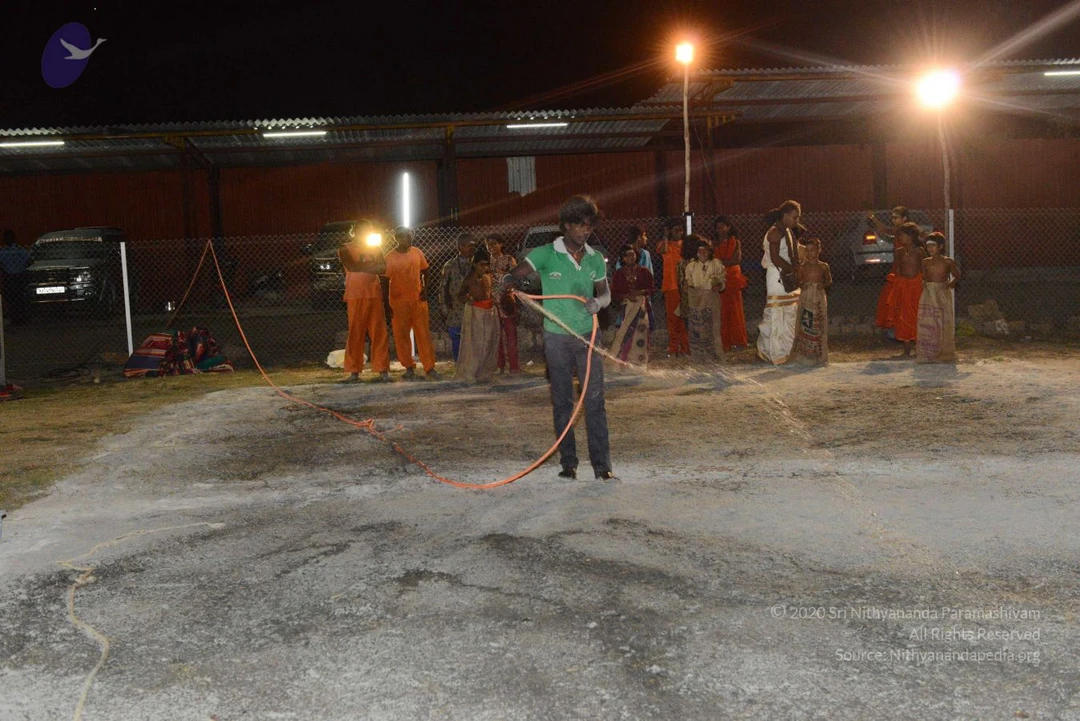
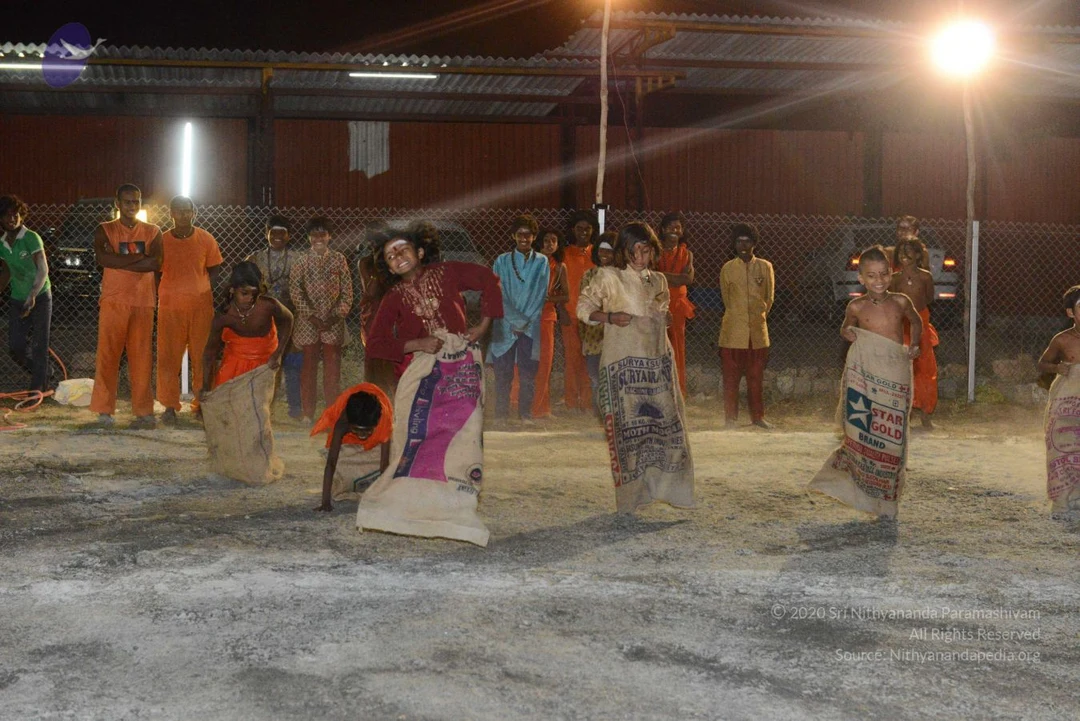
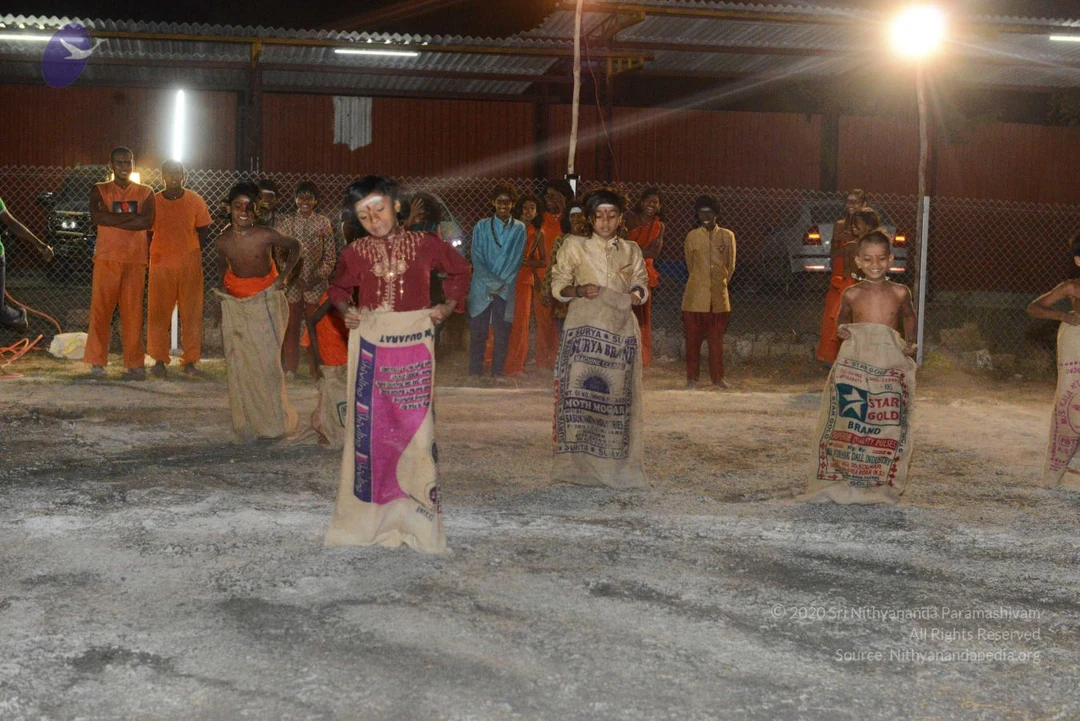
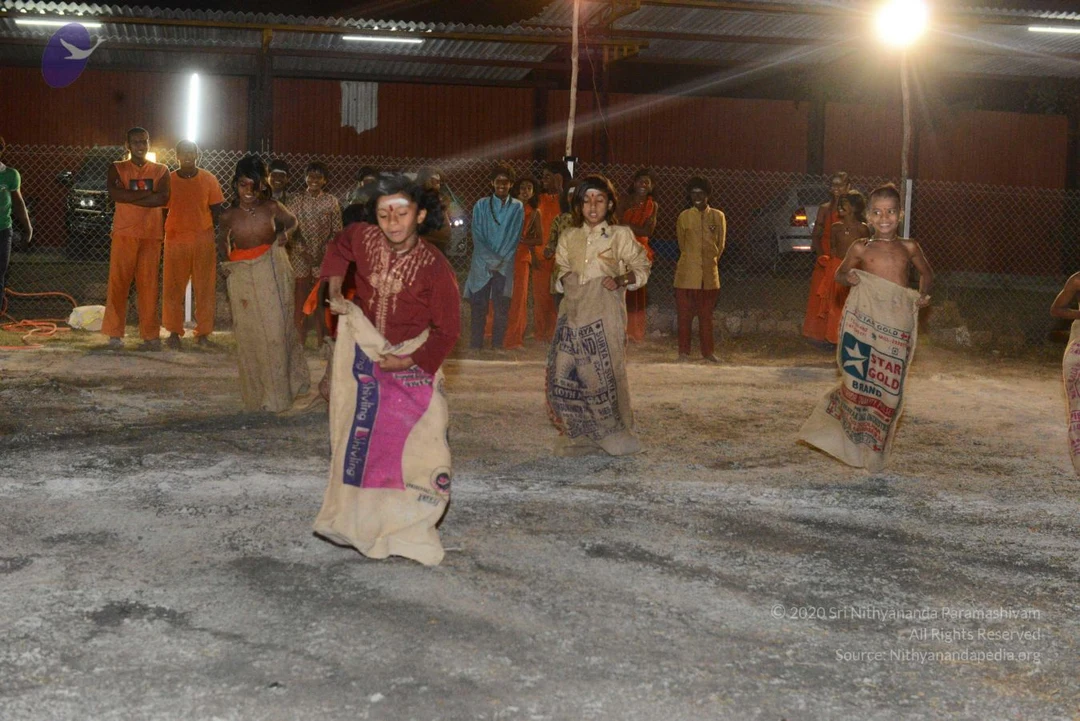
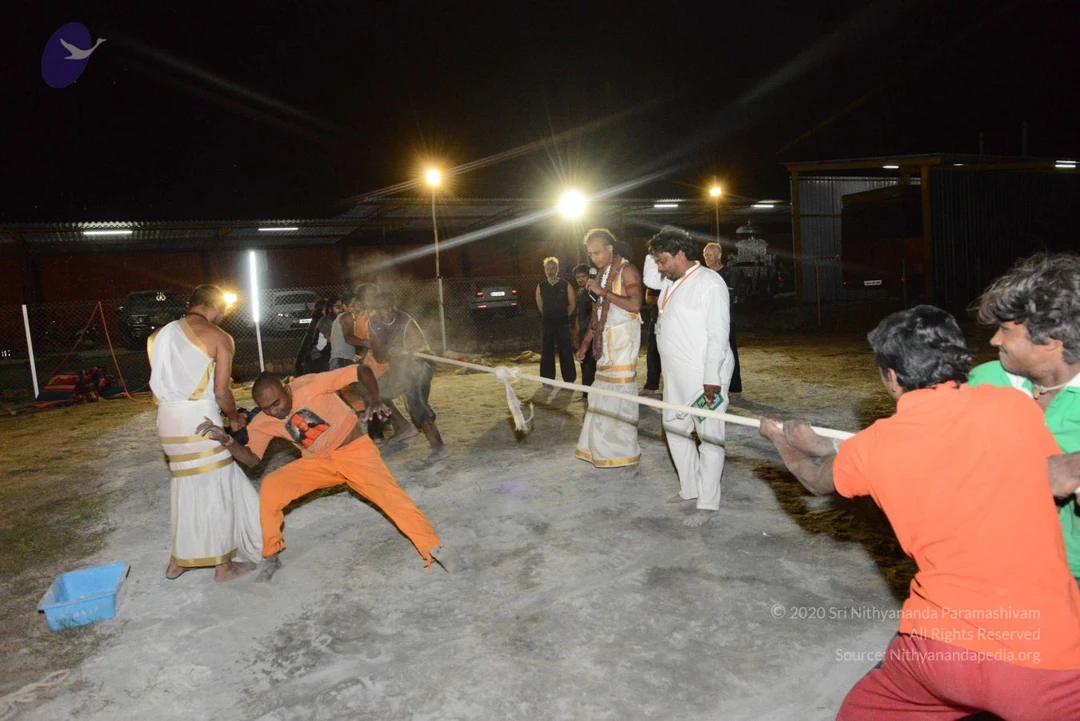
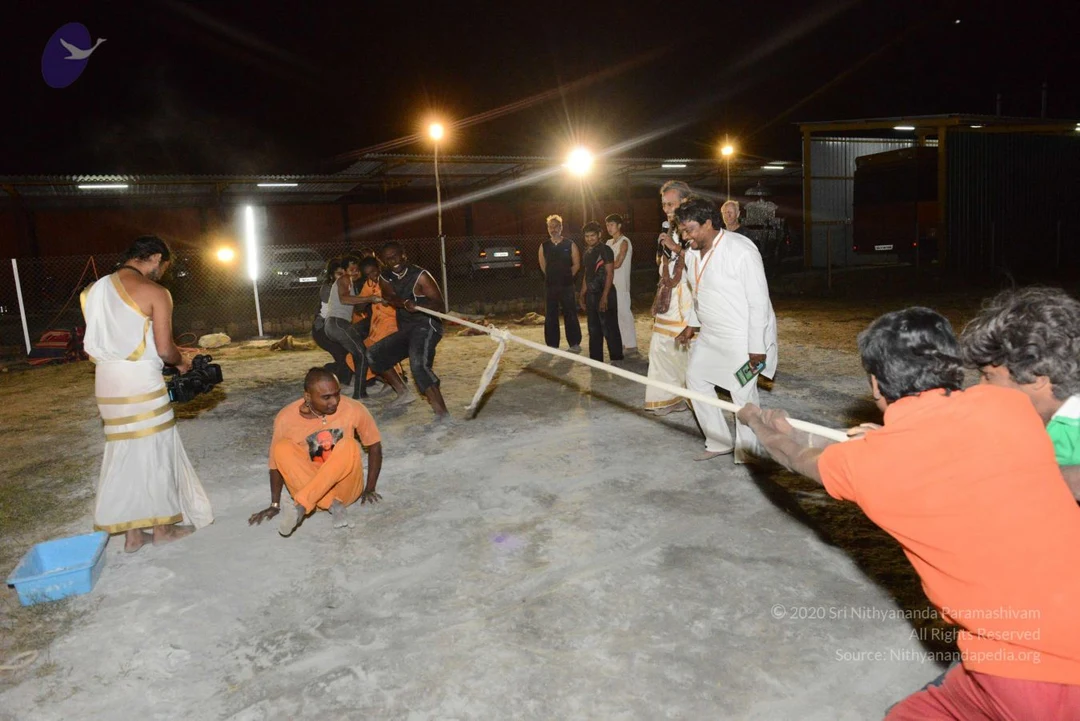
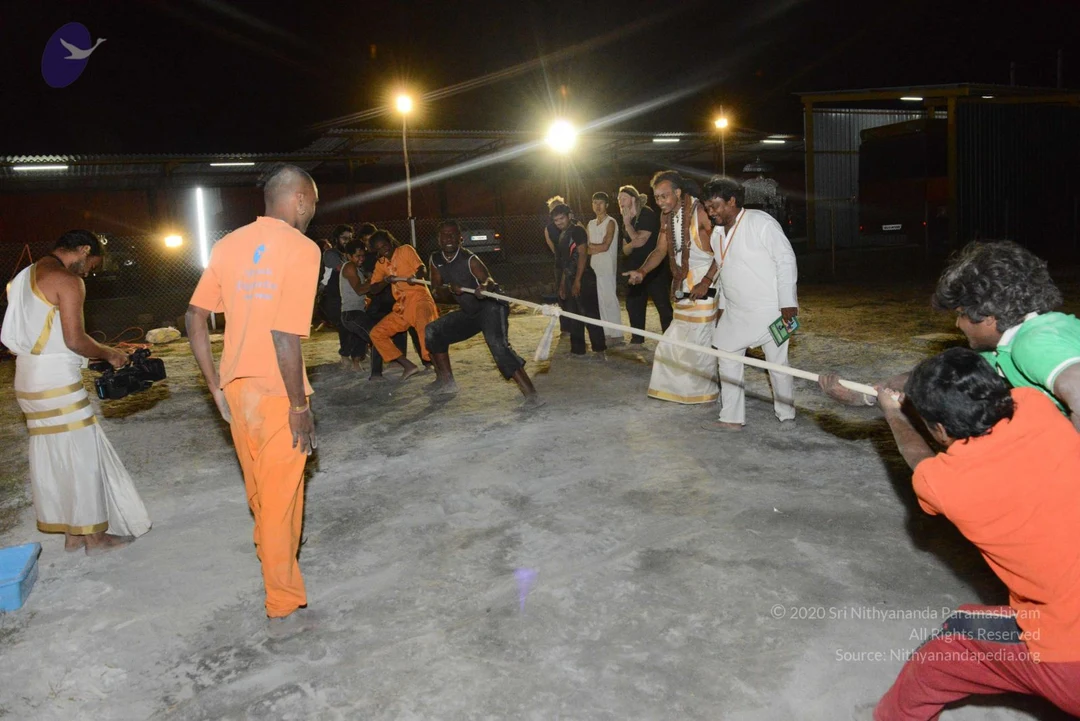
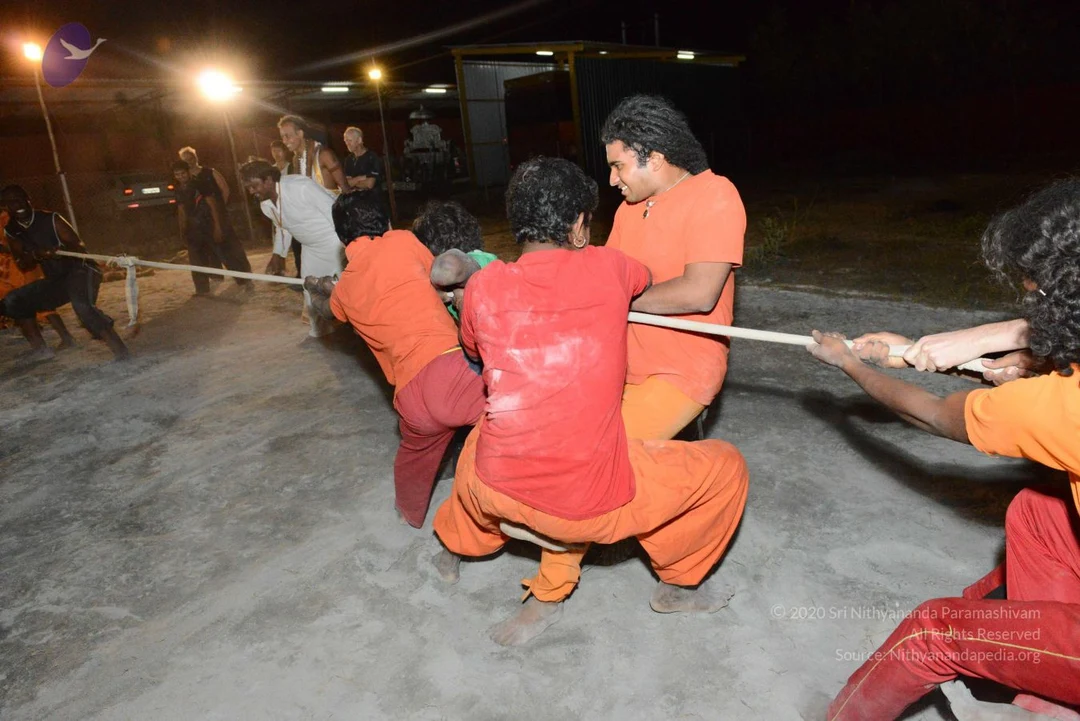
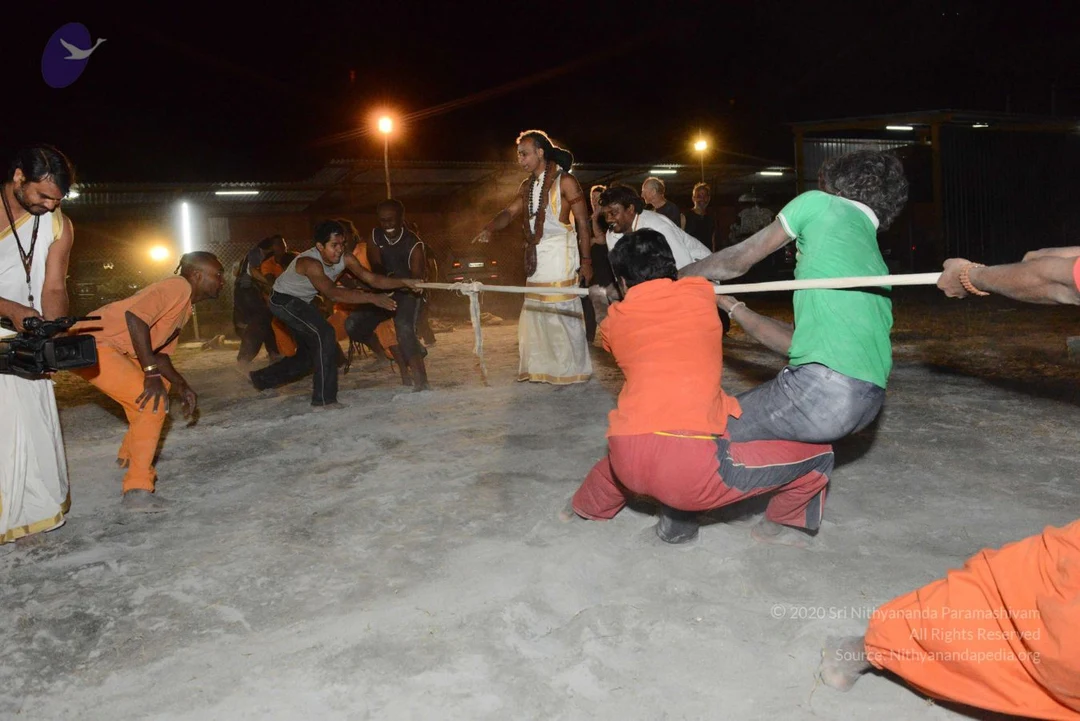
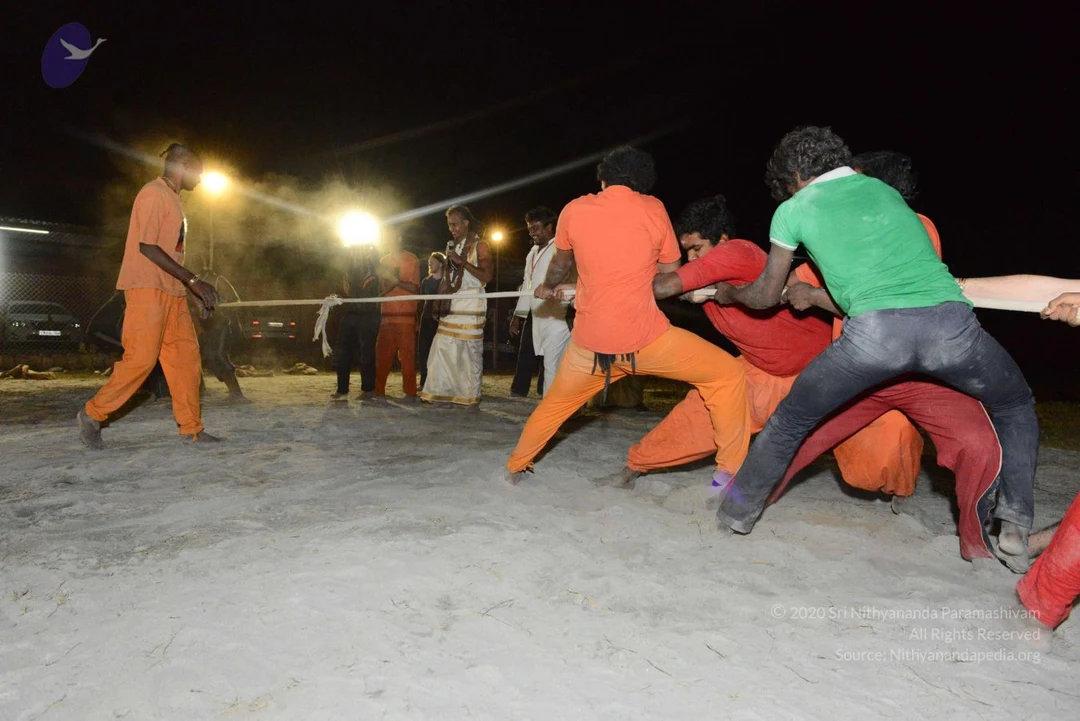
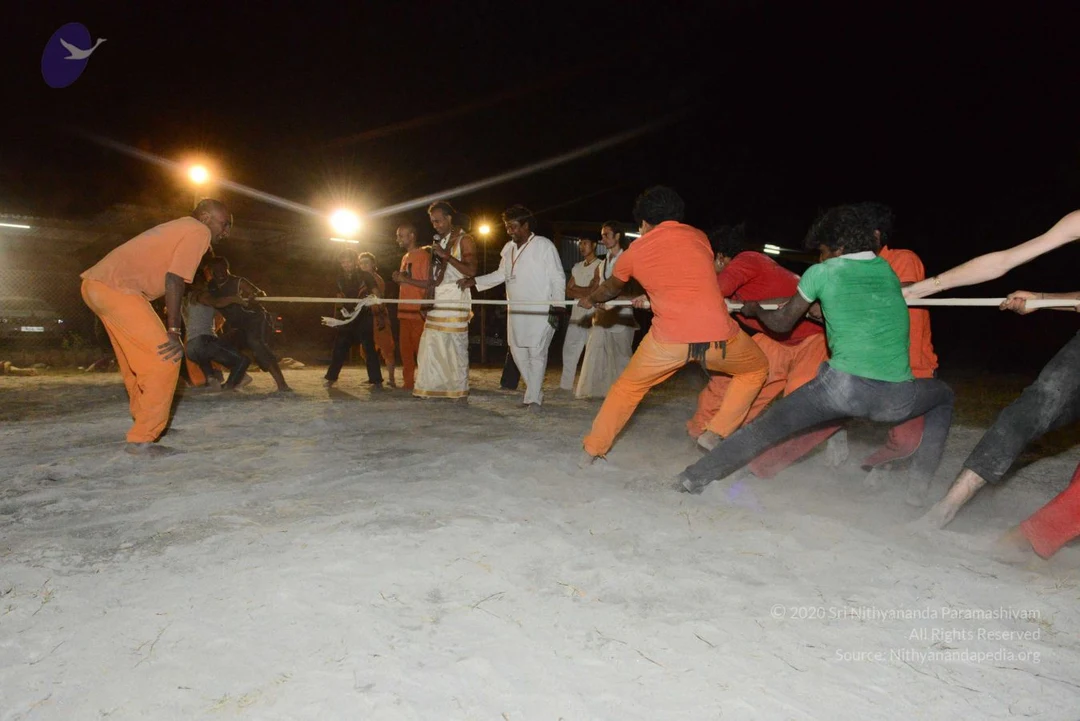
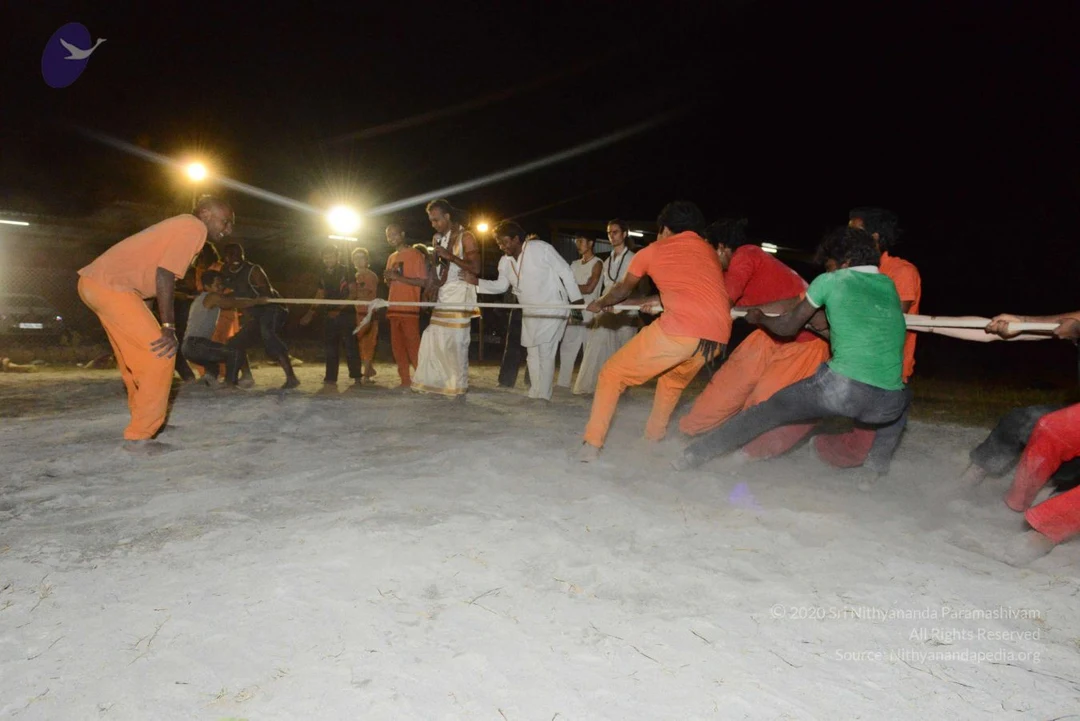
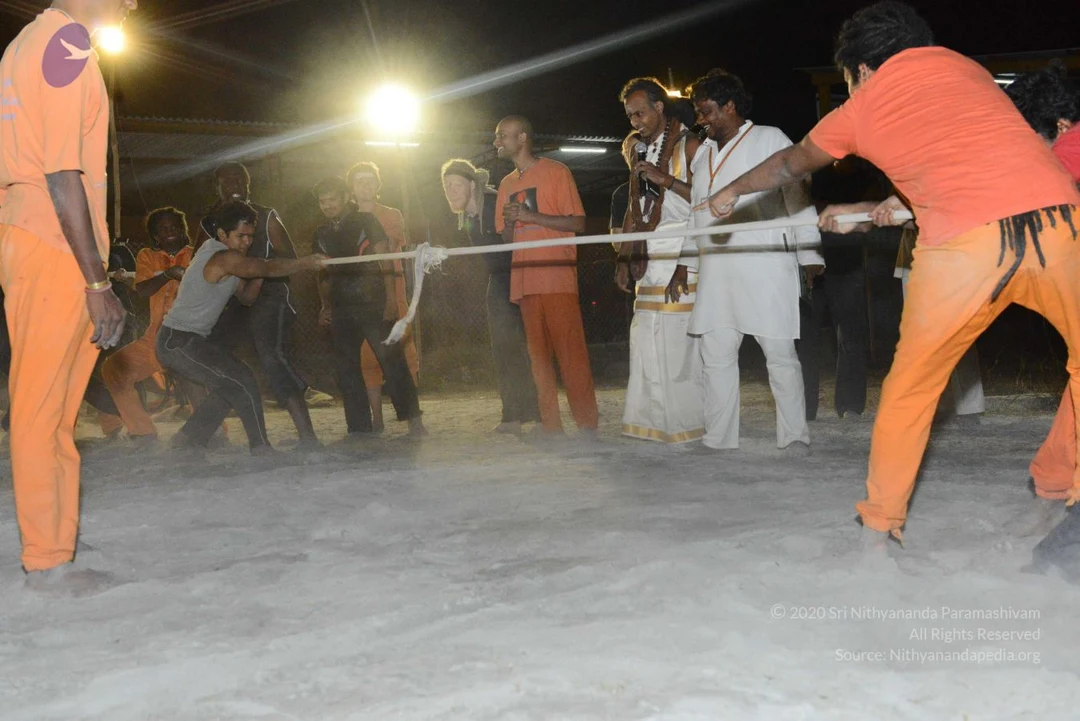
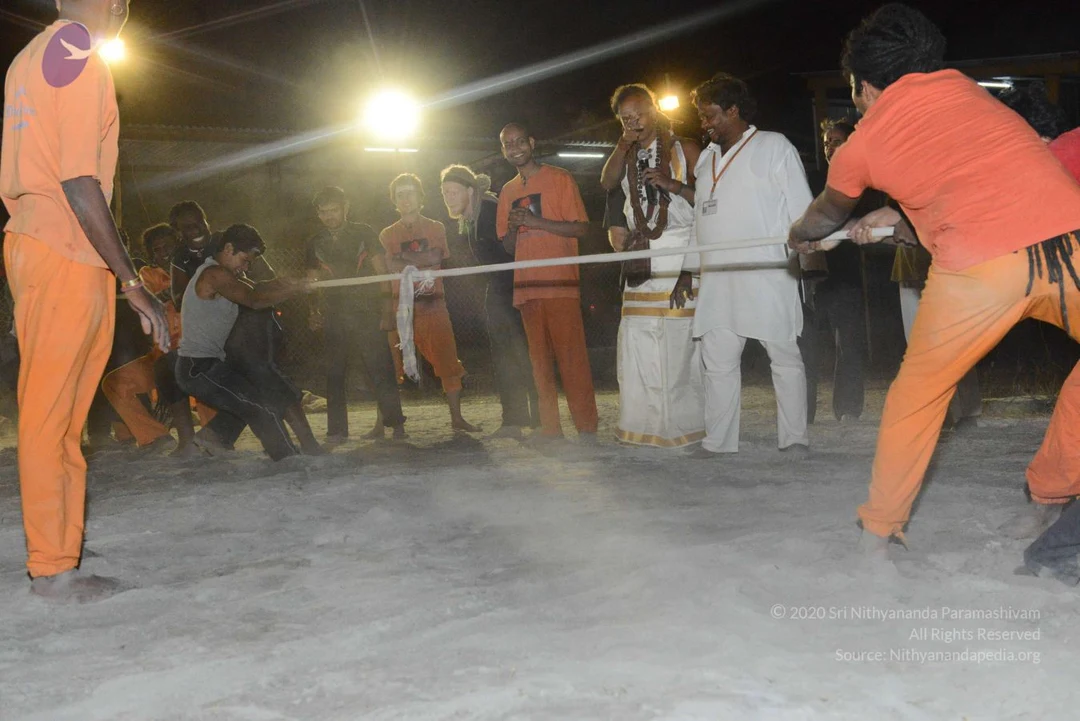
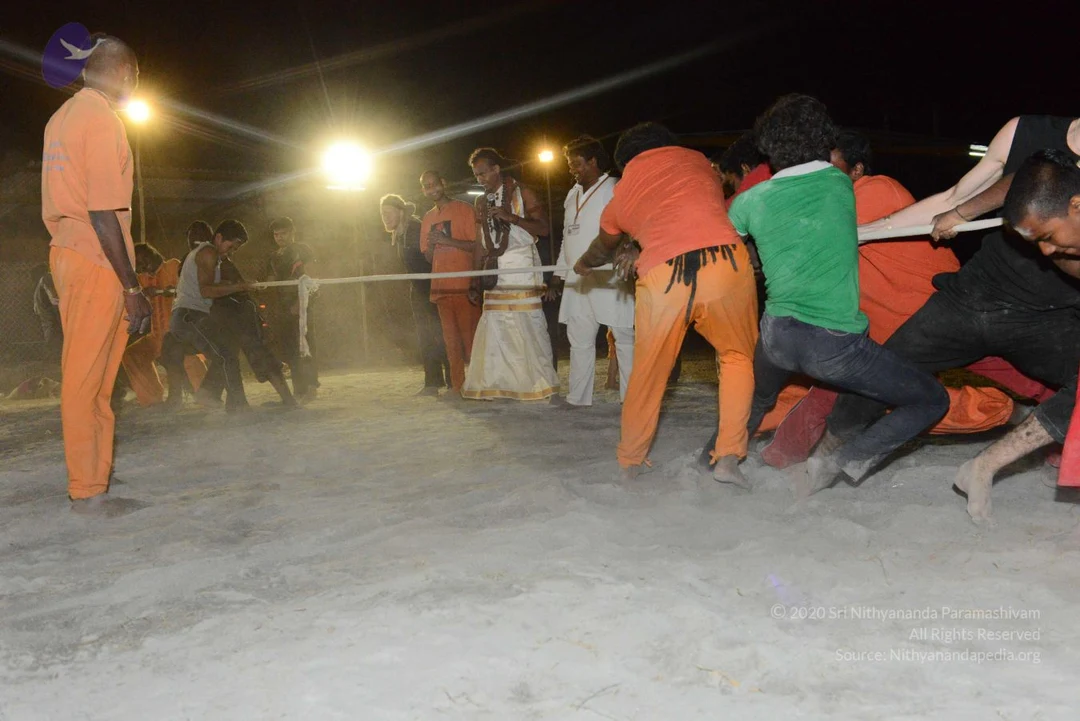
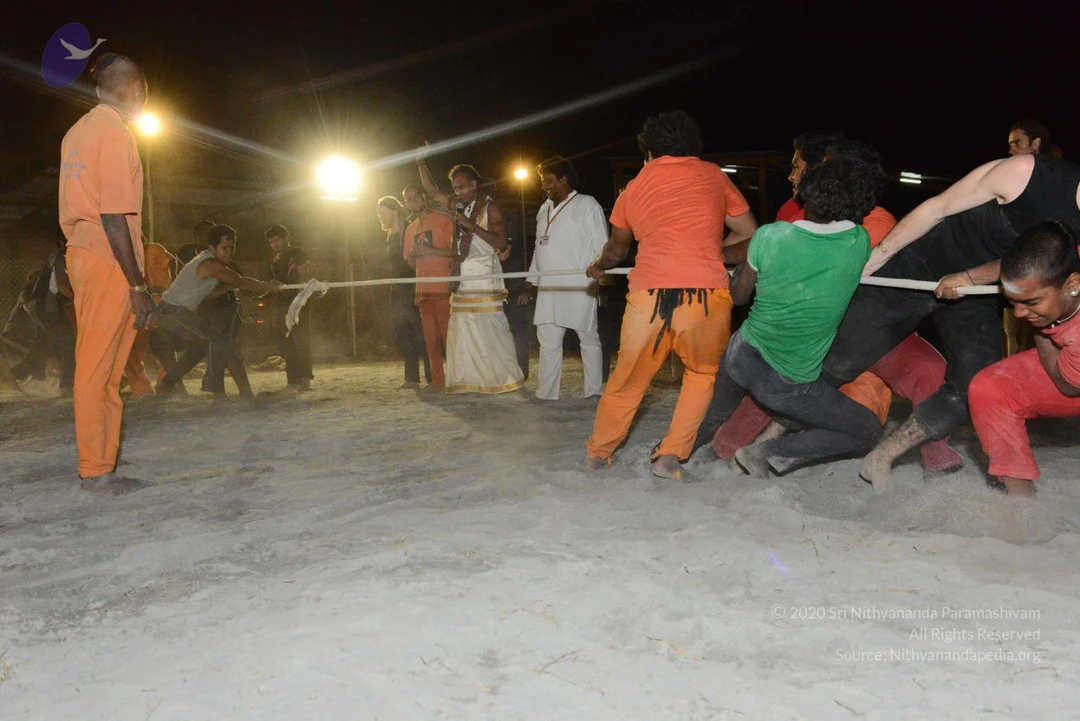
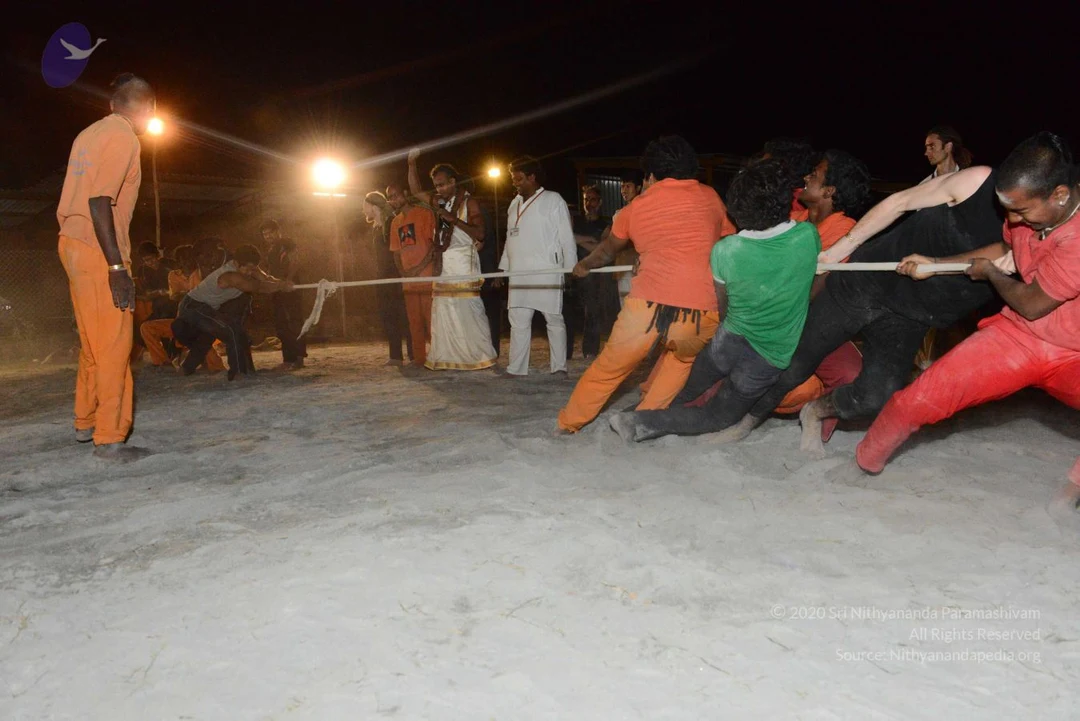
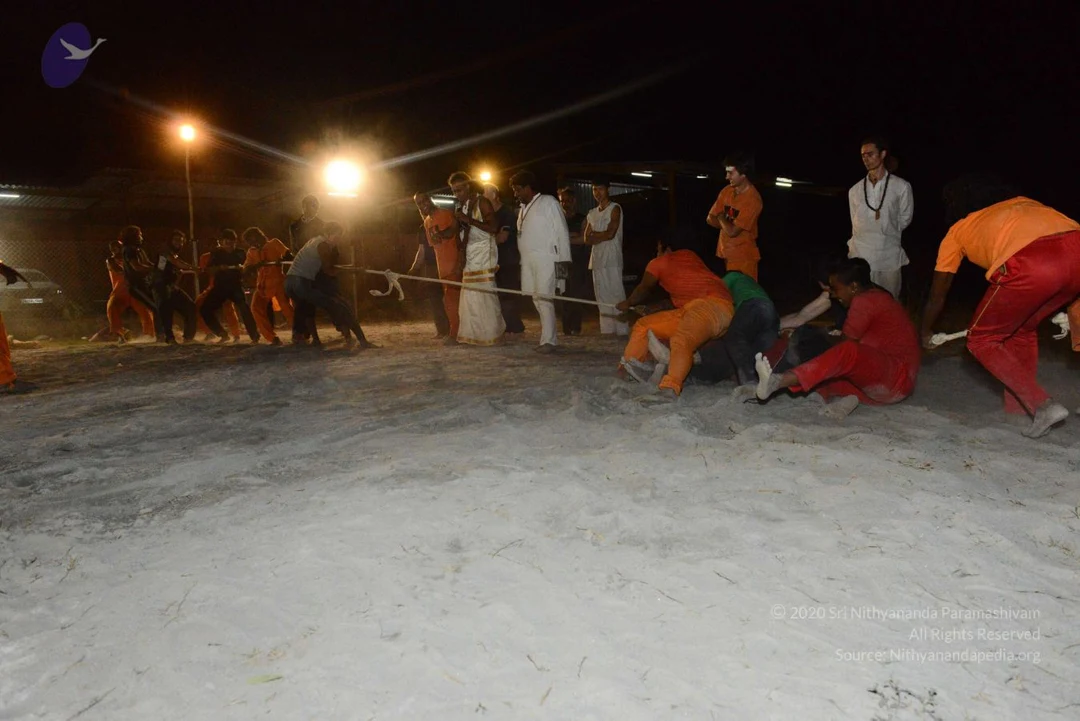
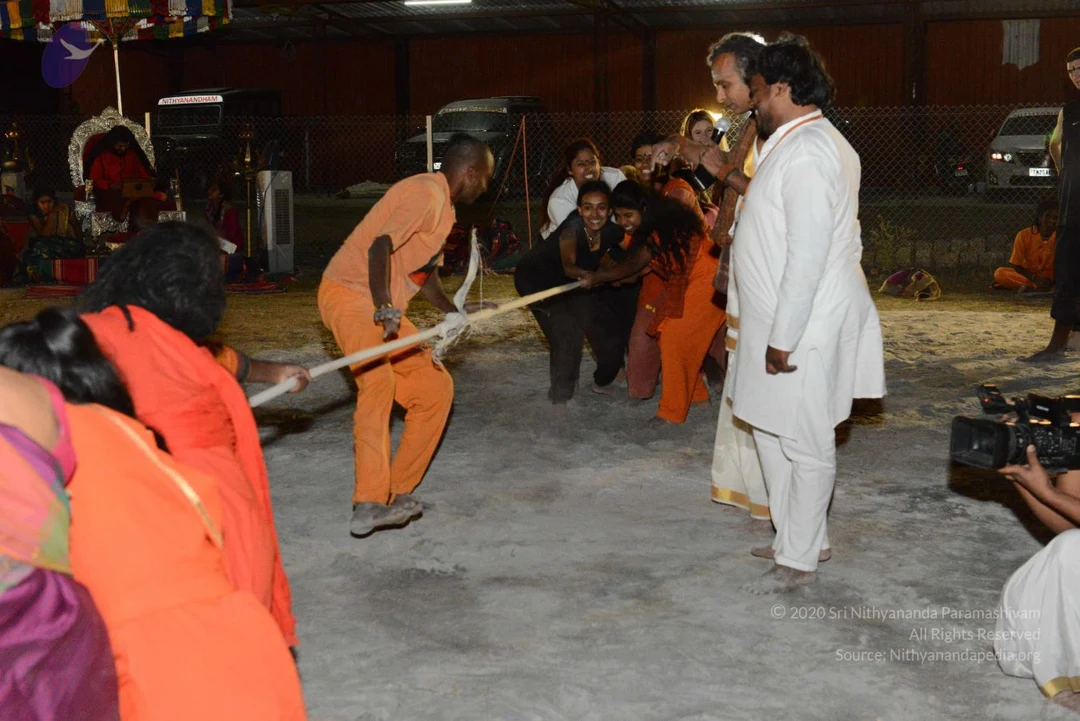
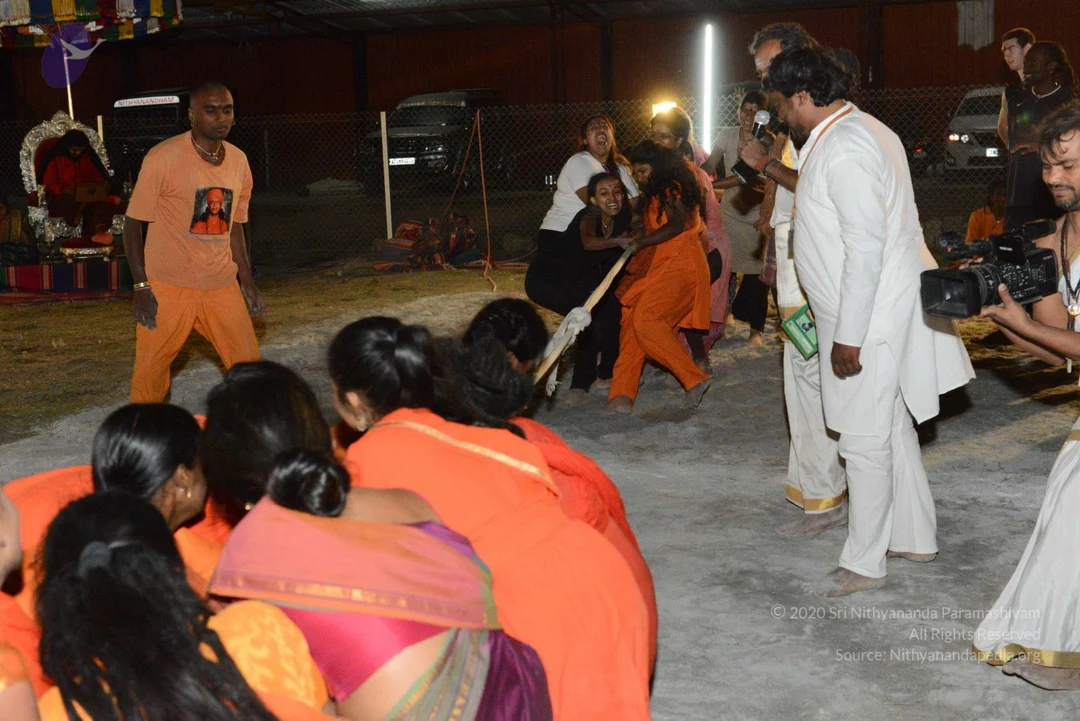
5 photosSource gallery
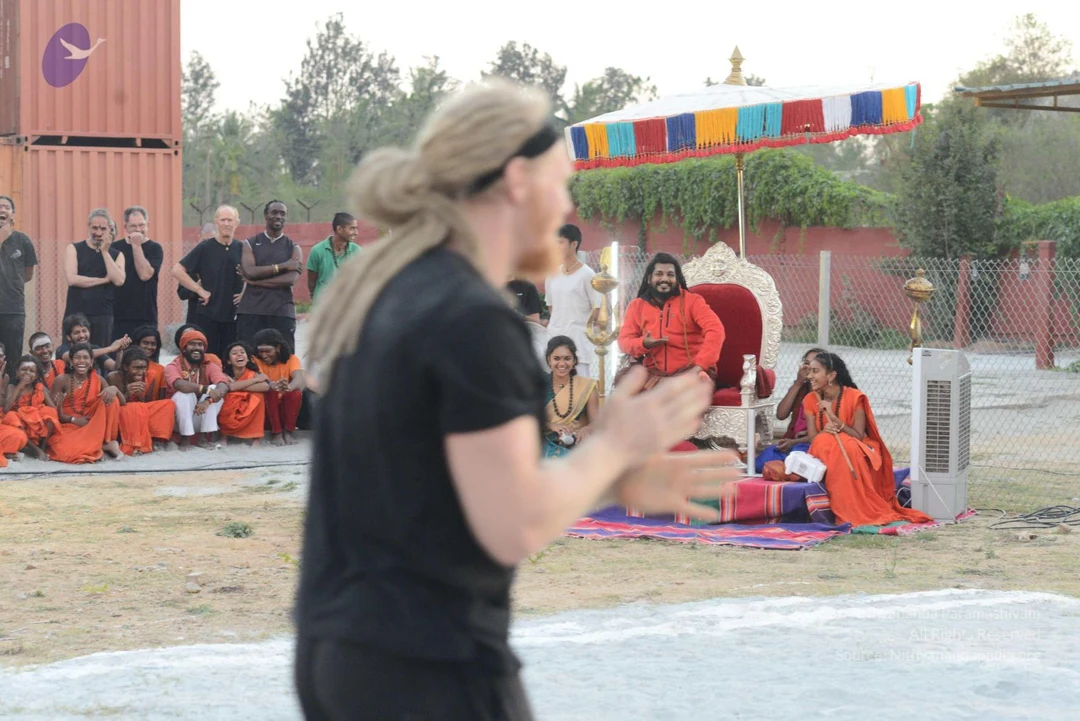
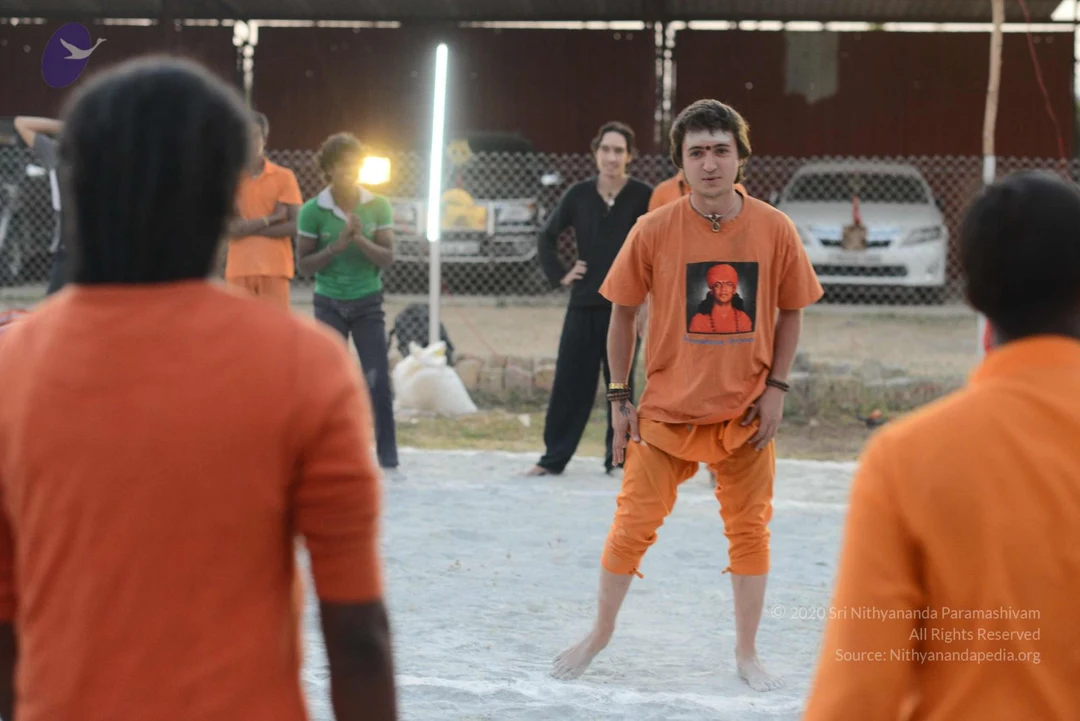
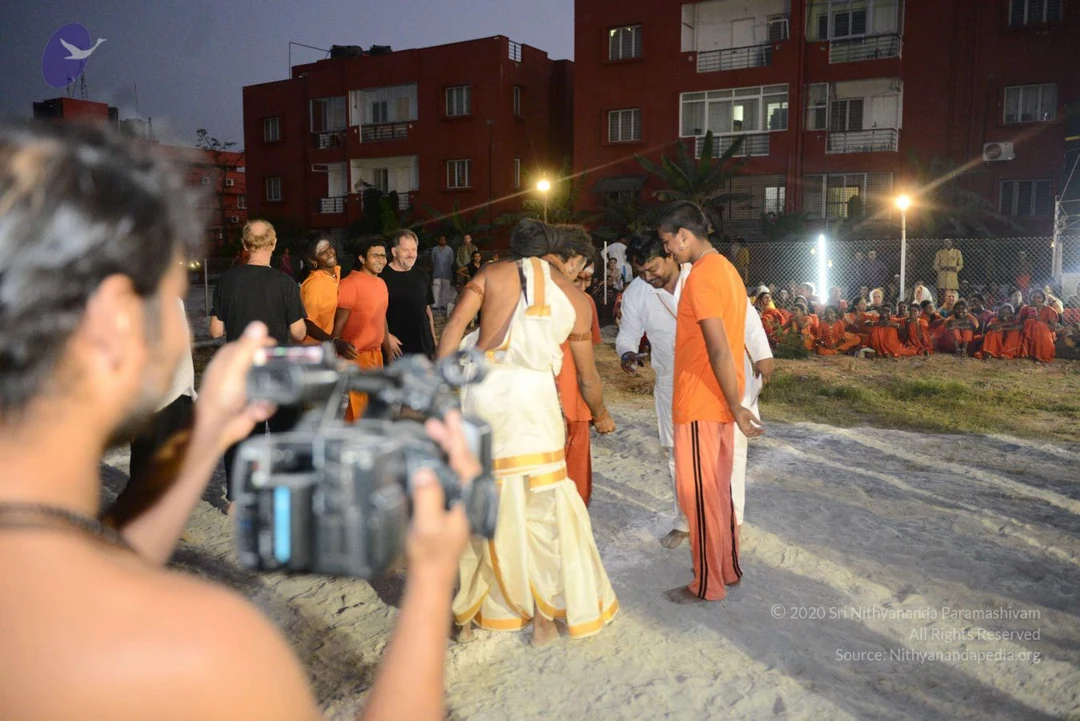
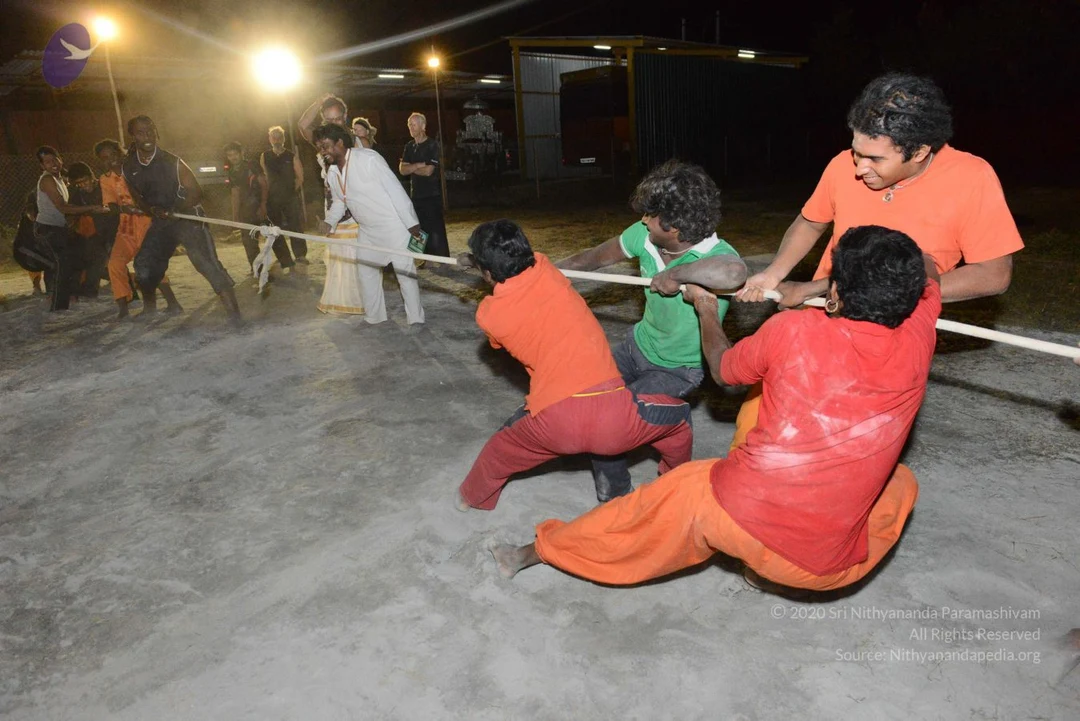
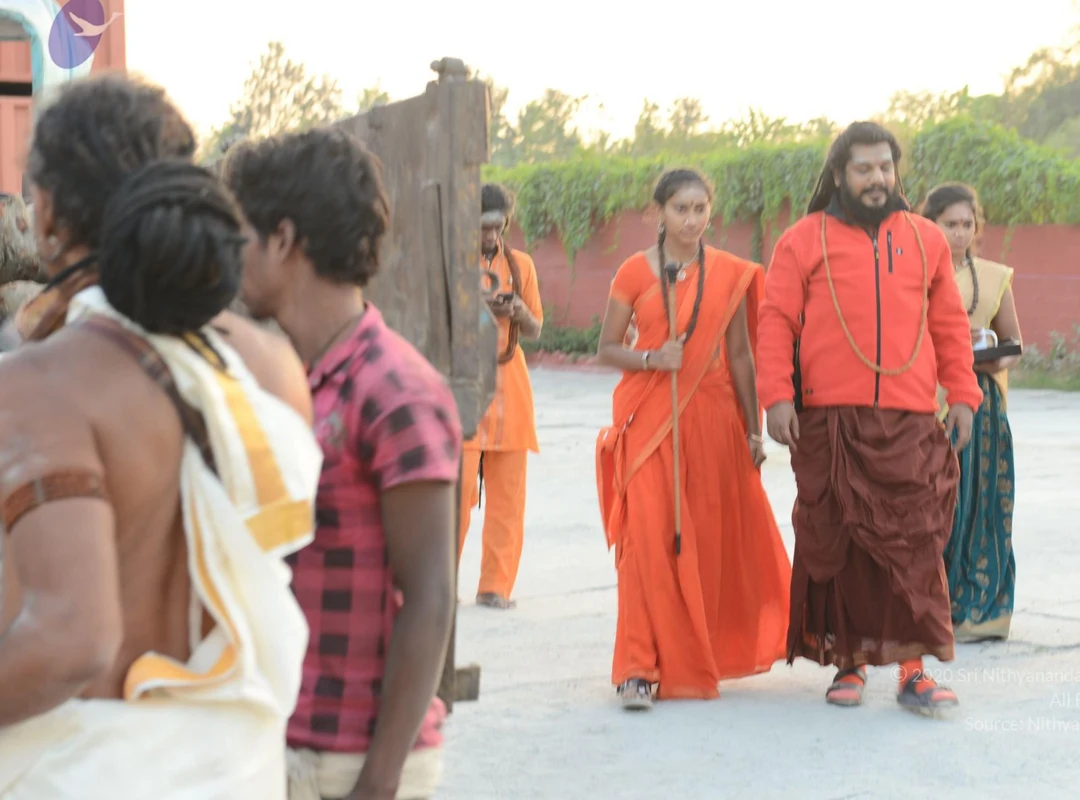
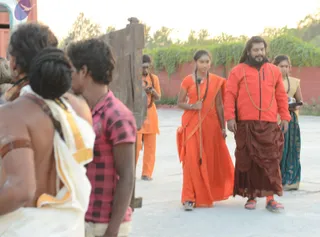
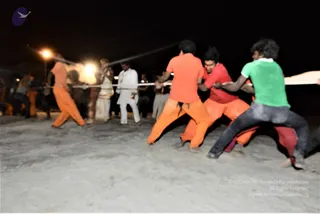
Outdoor photo on a paved courtyard at dusk with a red wall and green vines behind. A bearded man in a bright red-orange zipped jacket and maroon dhoti walks at right, a long rudraksha-style bead mala across his chest, with orange sandals. Beside him a woman in an orange saree holds a long staff and wears a braided plait. Behind them a younger person in orange robes and a woman in a teal-and-gold saree walk. At left, bare-backed men in white dhoti with yellow borders stand with their backs partly turned, and a man in a red-and-black checked shirt stands nearby. Several people are visible, and the scene reads as a candid group procession.Outdoor photo of a group of young men in a sandy courtyard in front of red multi-storey apartment blocks and banana plants. Several men in orange and saffron kurtas and black tops are mid-motion in an energetic game or practice, one in an orange kurta gesturing with an outstretched arm, another in black with a red headband. Behind a fence, a seated audience in orange and white clothing watches, and a man in a white kurta with a lanyard stands at right. Floodlights glow on poles in the early evening.Outdoor photo of a sports-style game on a pale sandy court in a courtyard lined with red apartment blocks, palm plants and street lamps. Six young men in orange and black clothes are mid-action, several in orange trousers and shirts and others in black tops and dark trousers, one wearing a red headband. Behind them a large seated crowd in orange robes and white clothes watches; a man in a white kurta stands at the right edge, holding a small object, beside a loudspeaker on a pole. Nothing in the frame indicates a particular a person depiction, so no candidate is identified.Outdoor courtyard session on a pale sandy-white ground with grass and a low wall behind. In the foreground, a blurred figure with long blonde hair in a dark top faces away from the camera, arm extended toward a second person in black. Behind them, a group of six or so men in orange kurta-style clothing and orange trousers stand watching, along with a few men in black t-shirts; one wears a red headband and another has a white marking on the forehead. A shirt in the group shows a printed portrait, and a light-tinted stripe marks the ground. Scene suggests a training or demonstration exercise.A night-time photo of a tug-of-war on a pale sandy ground lit by a street lamp. Three men in the foreground pull a long white rope: the left one wears orange clothing, the middle one a red shirt and orange-red dhoti, and the right one a green t-shirt and dark trousers, all leaning back with bent knees. Behind them, several people in orange and white clothes watch or stand along the rope, including a man in a white shirt and white dhoti near the centre. The background is dark with blurred figures.