Skip to content
Monday

8 August 2016

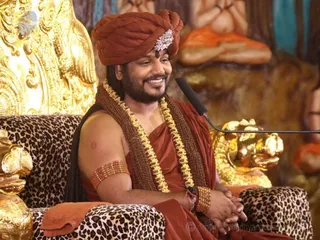
Awaken the Shivatva in You (Living Shuddadvaita Process, Series II, Session I)

Dated photos
439
Source pages
1
Media
2
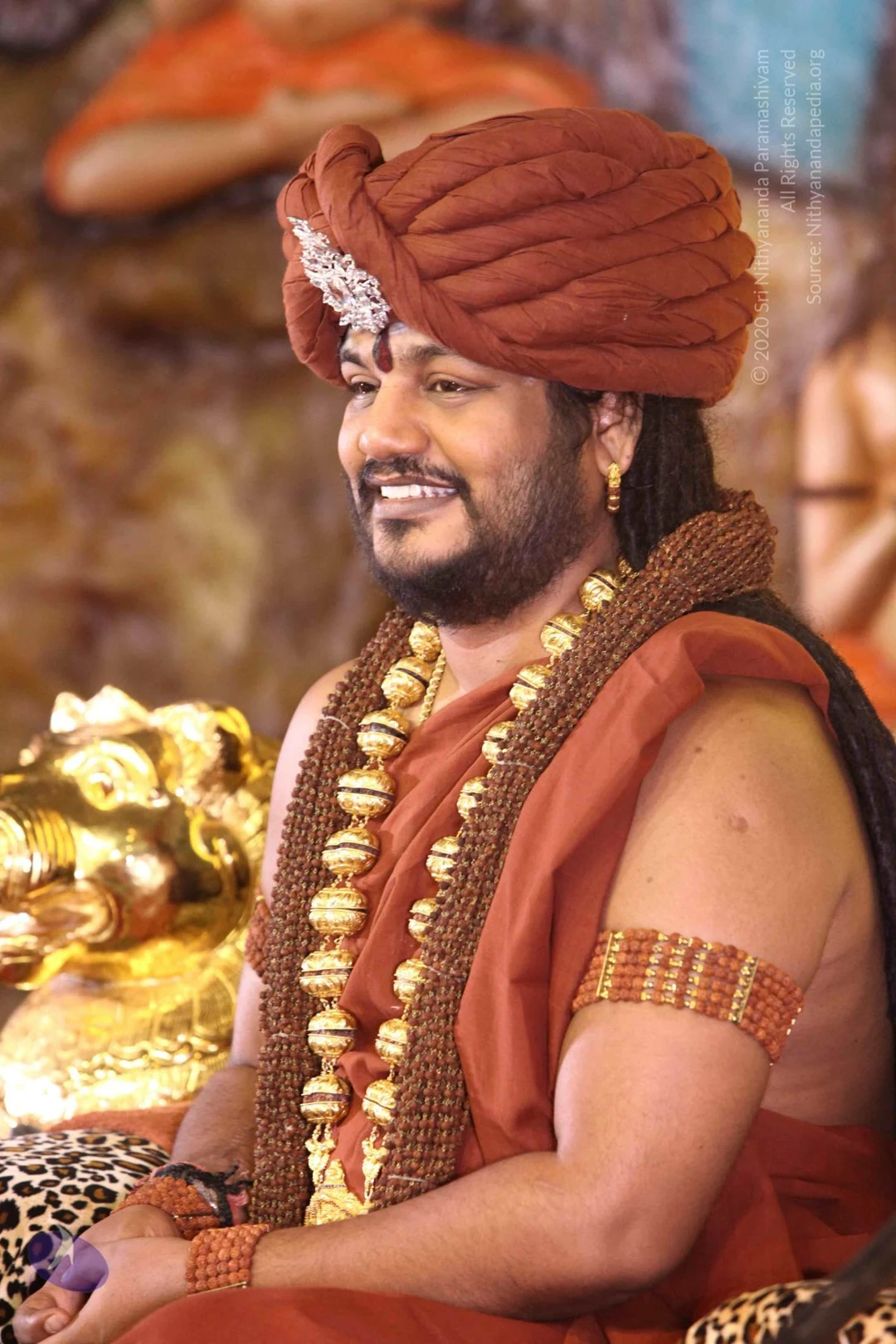
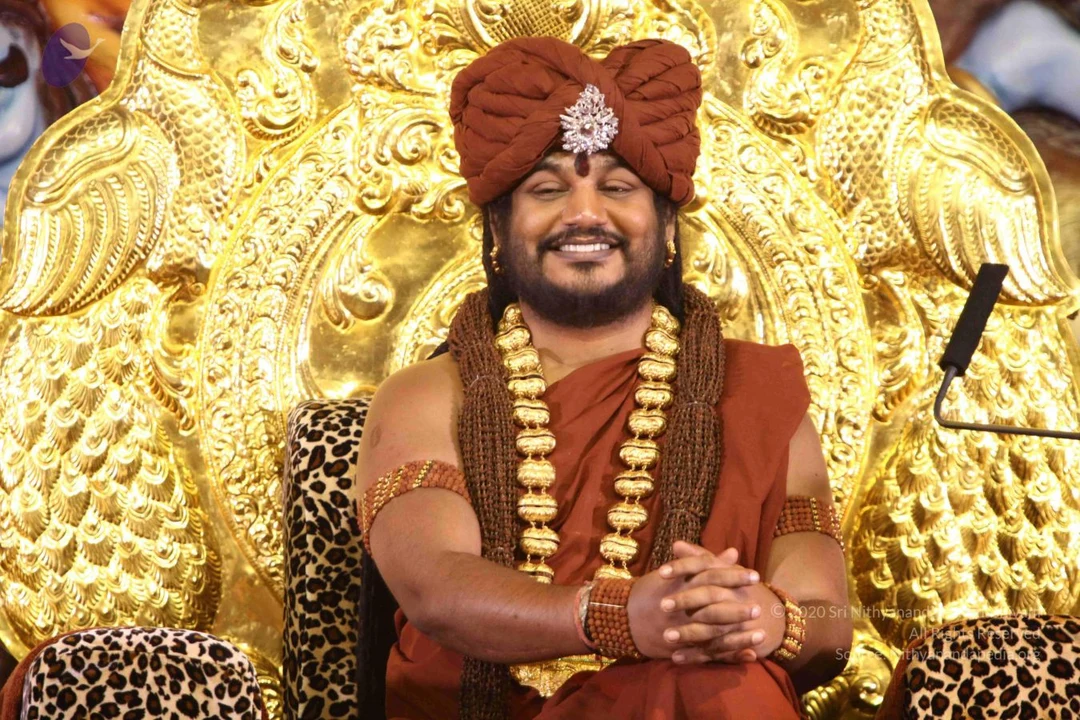
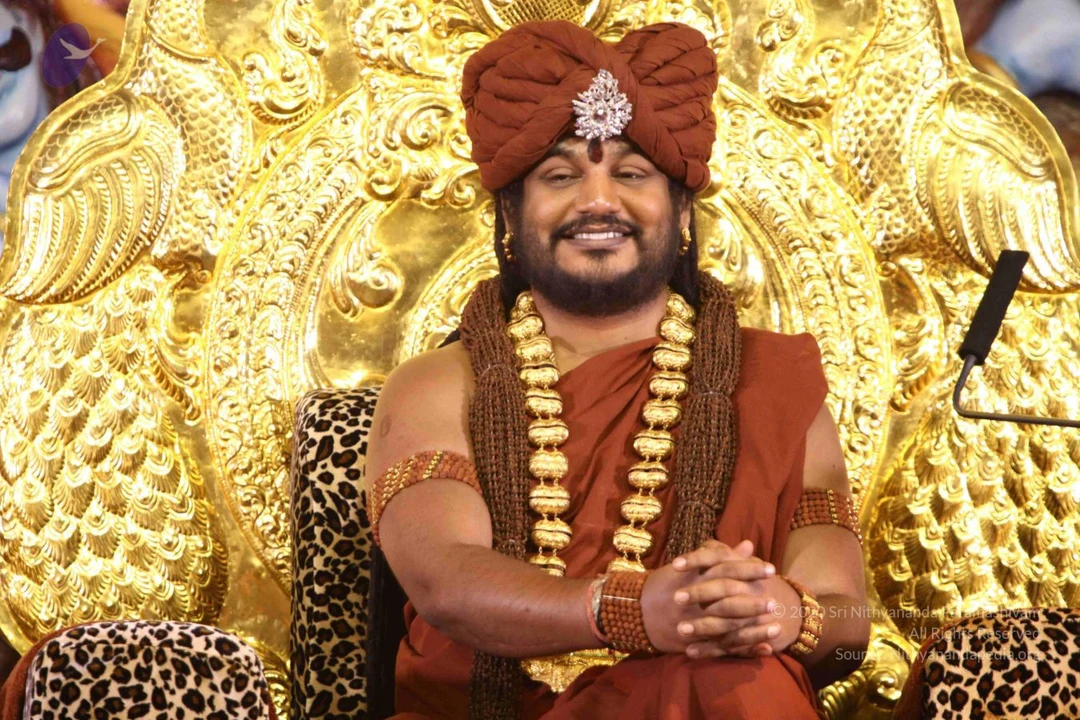
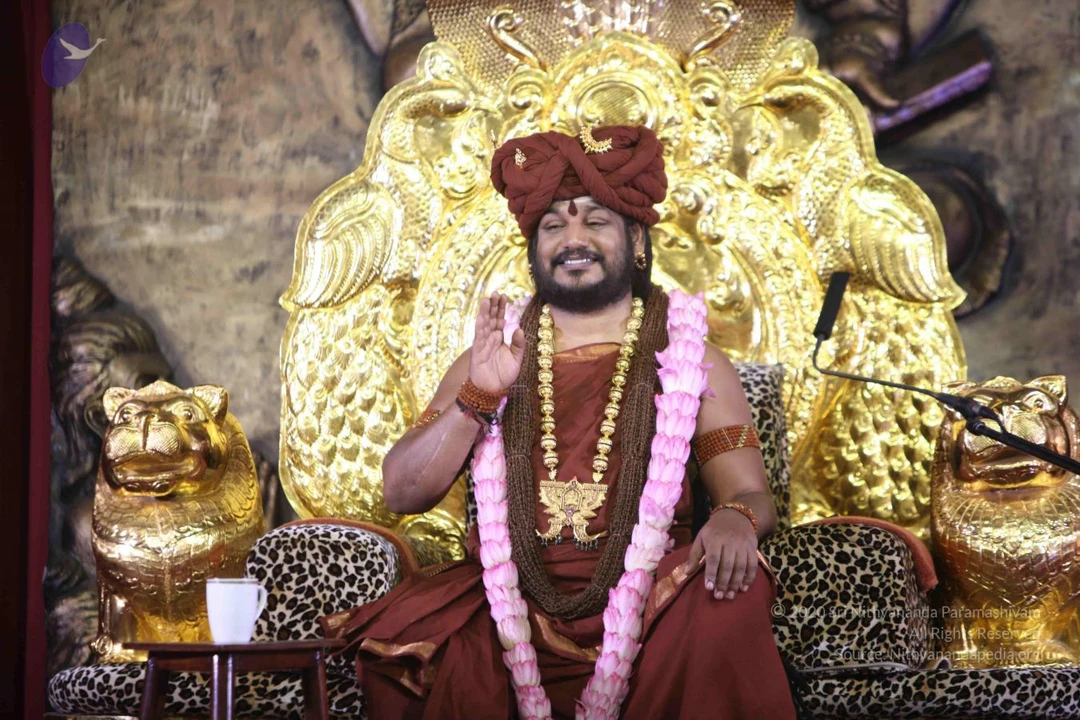
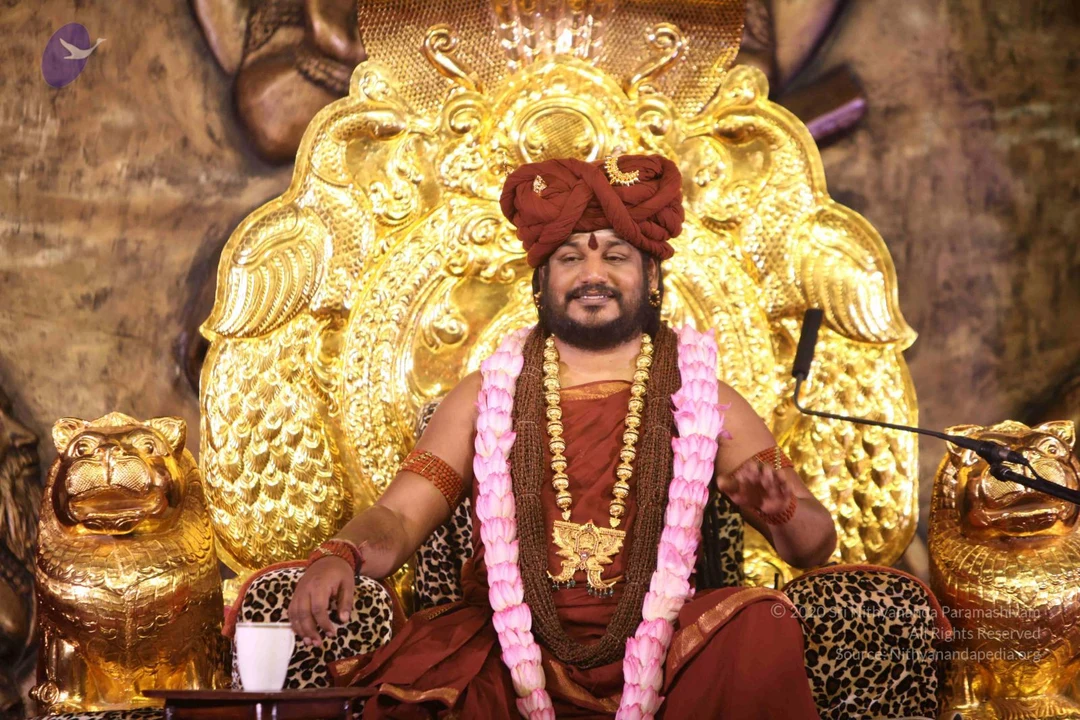
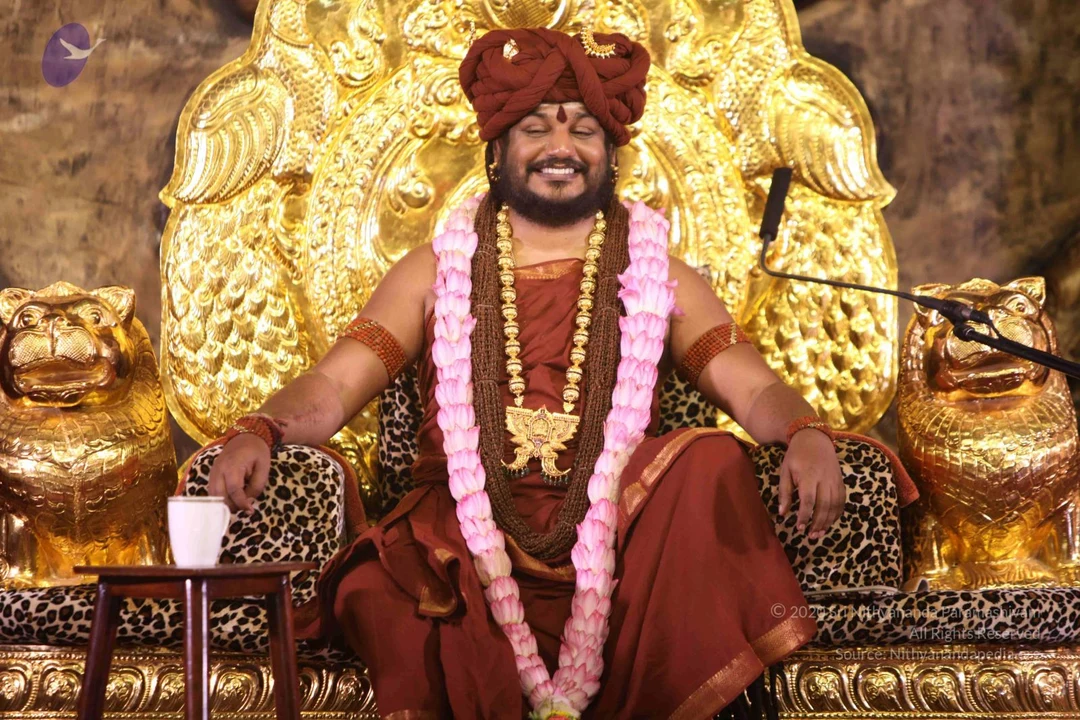
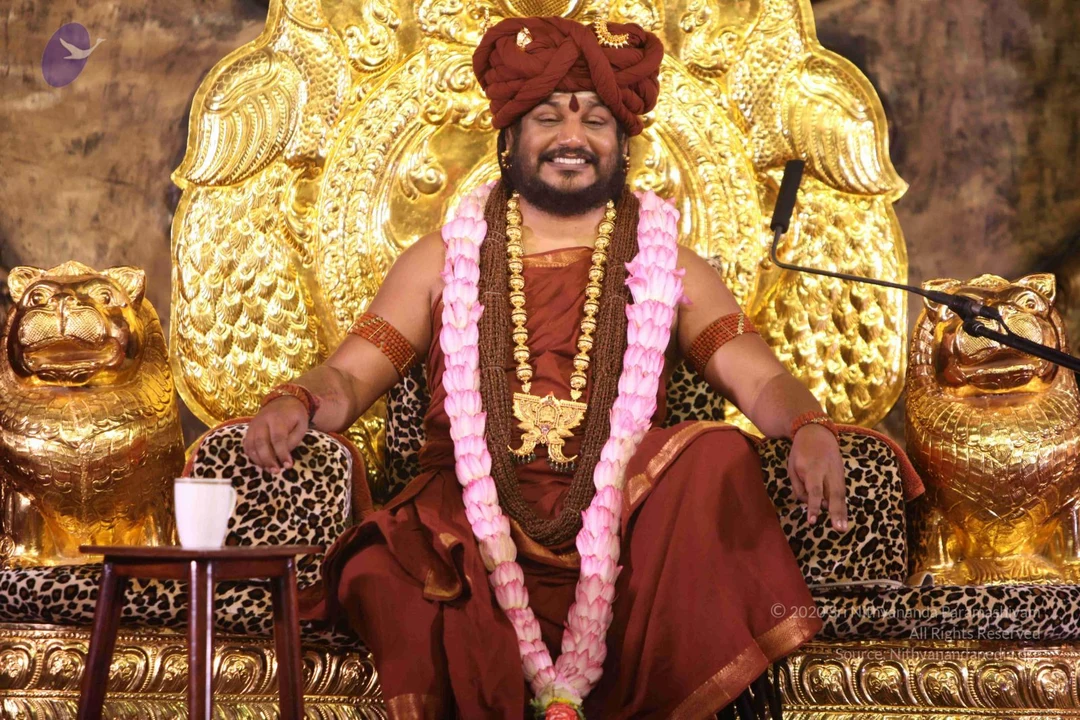
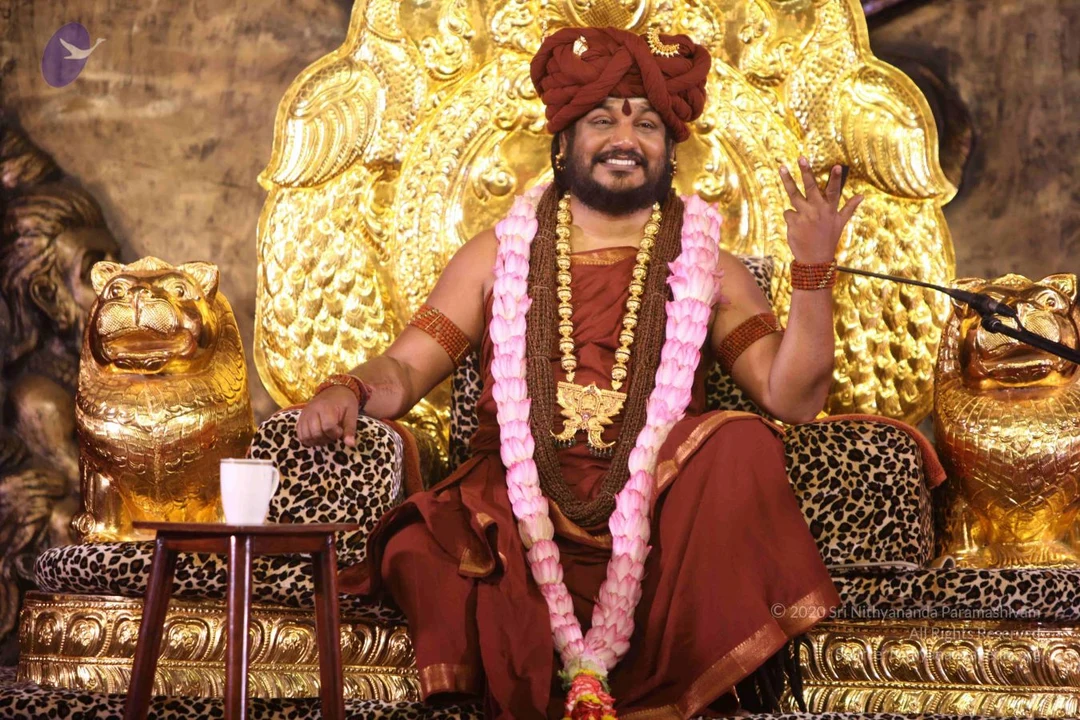
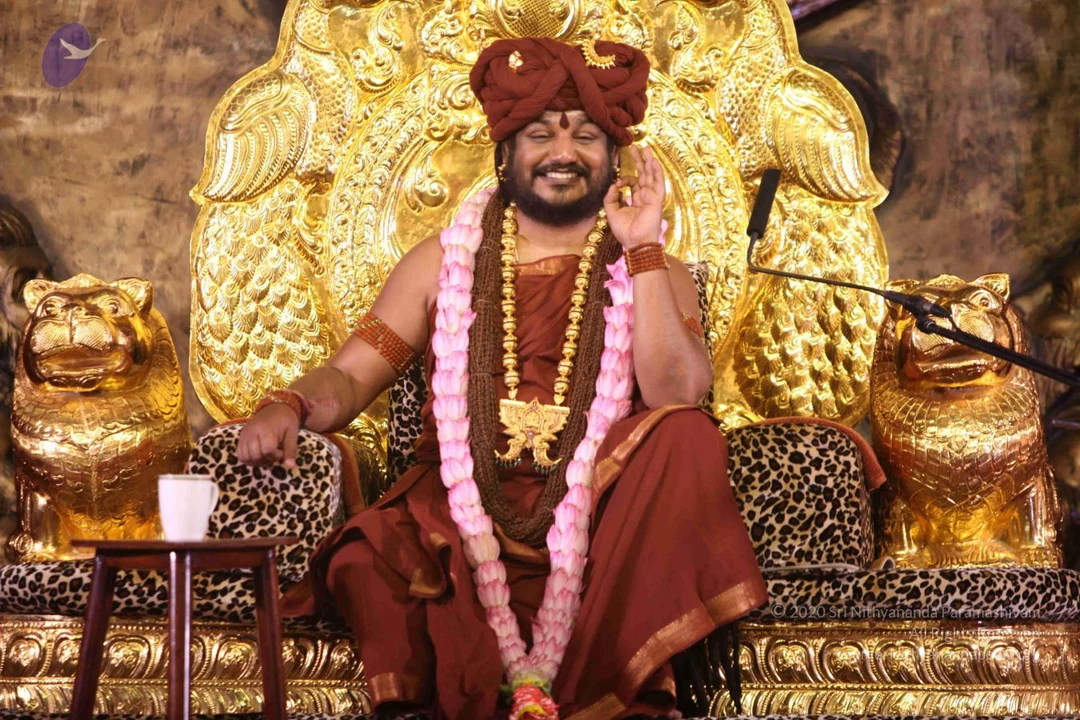
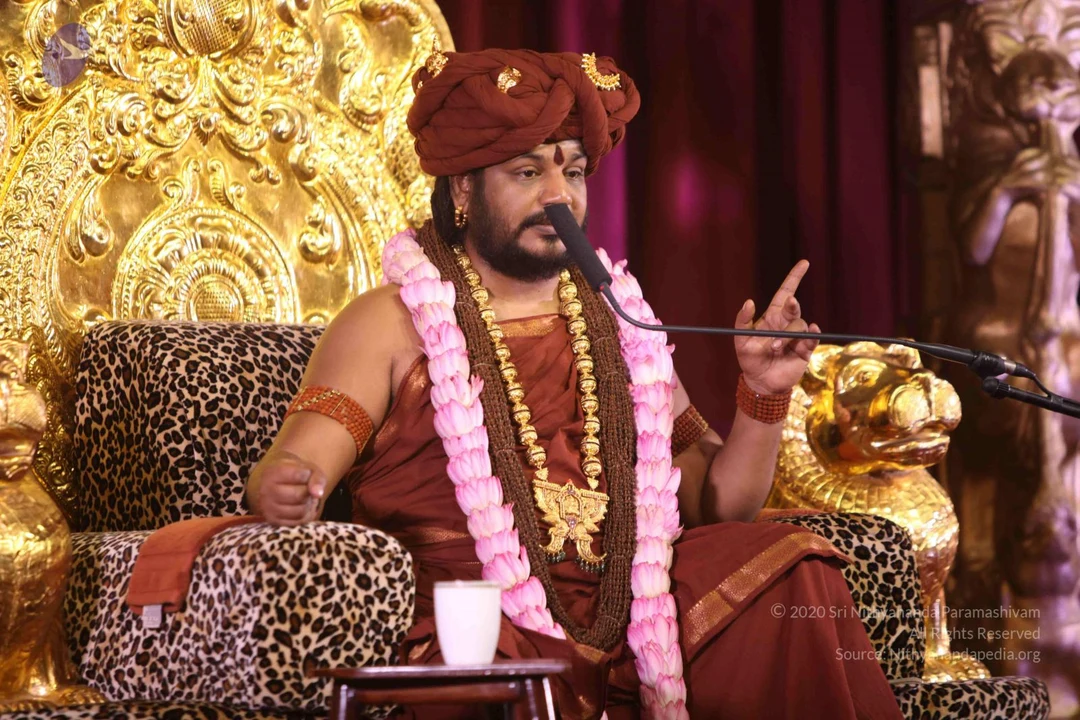
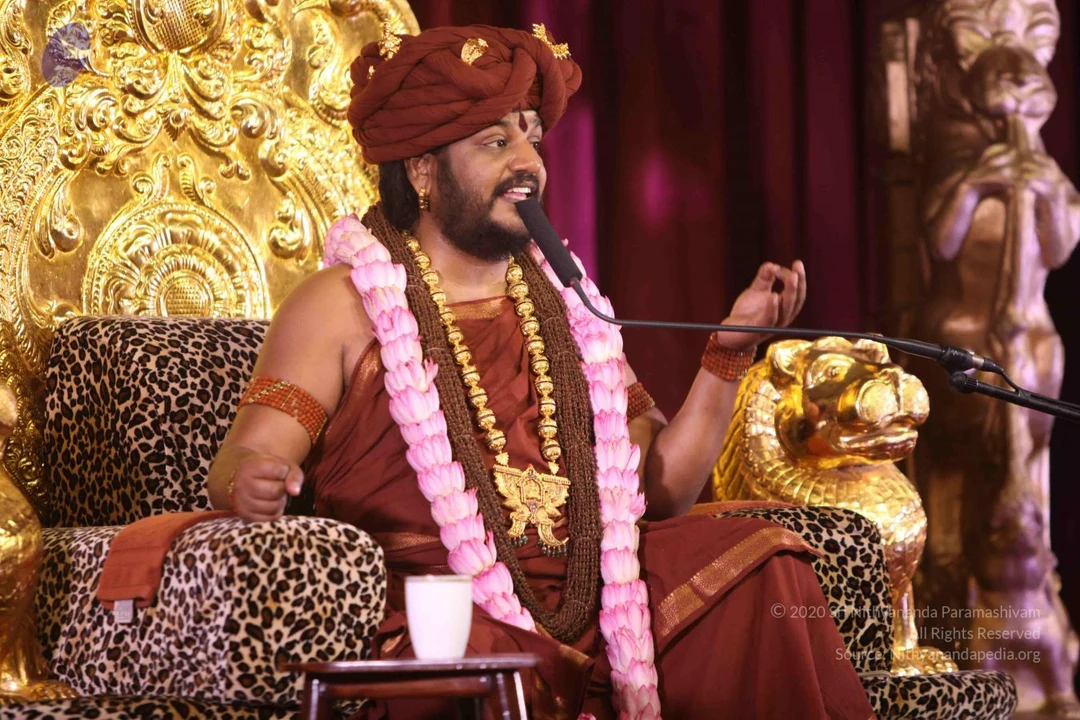
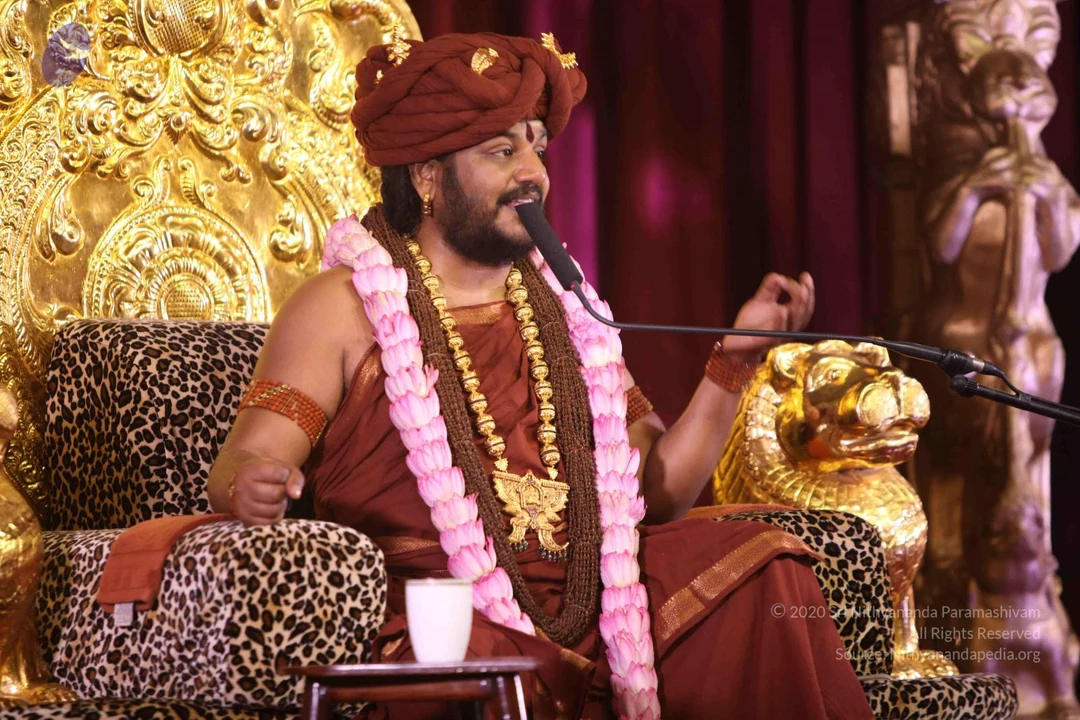
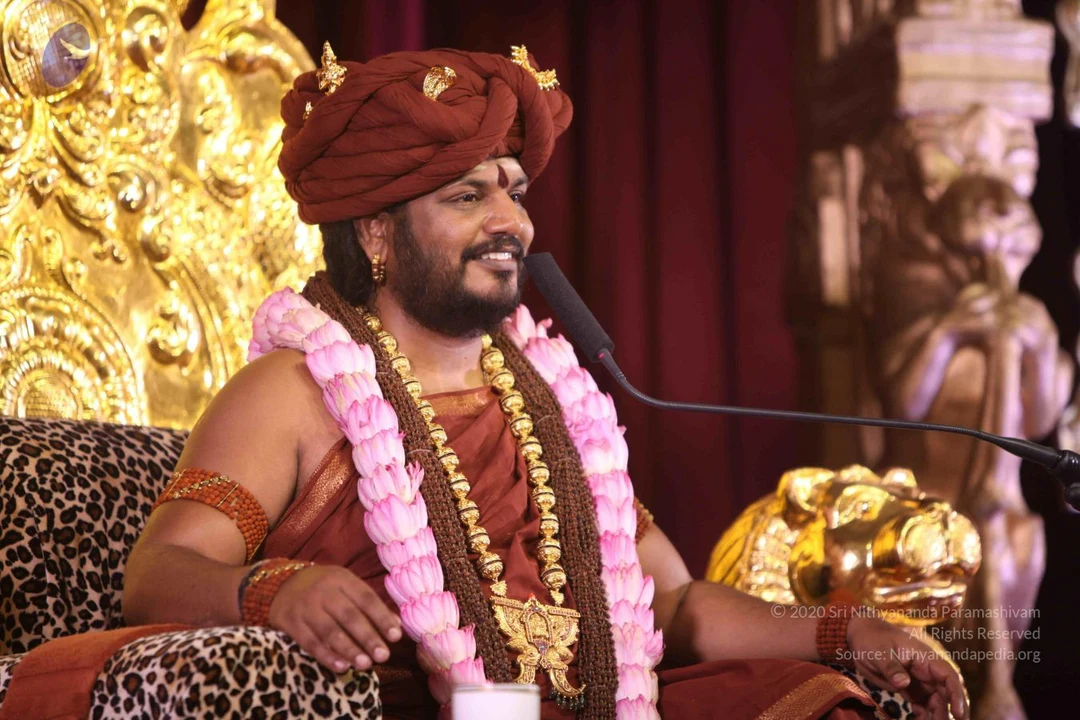
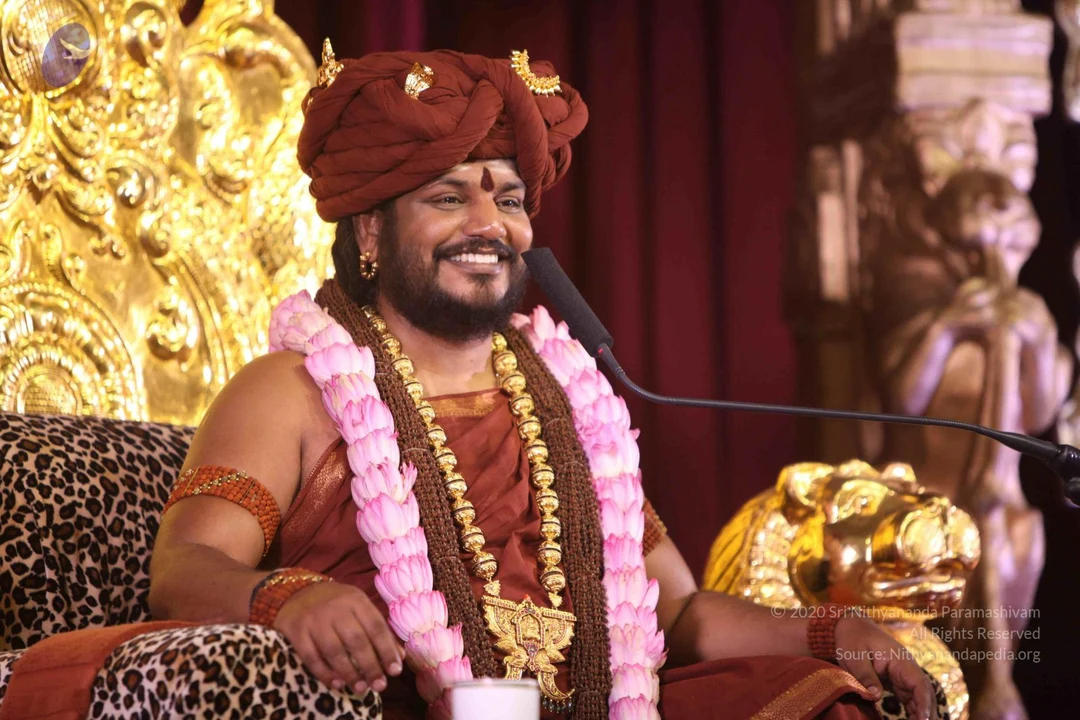
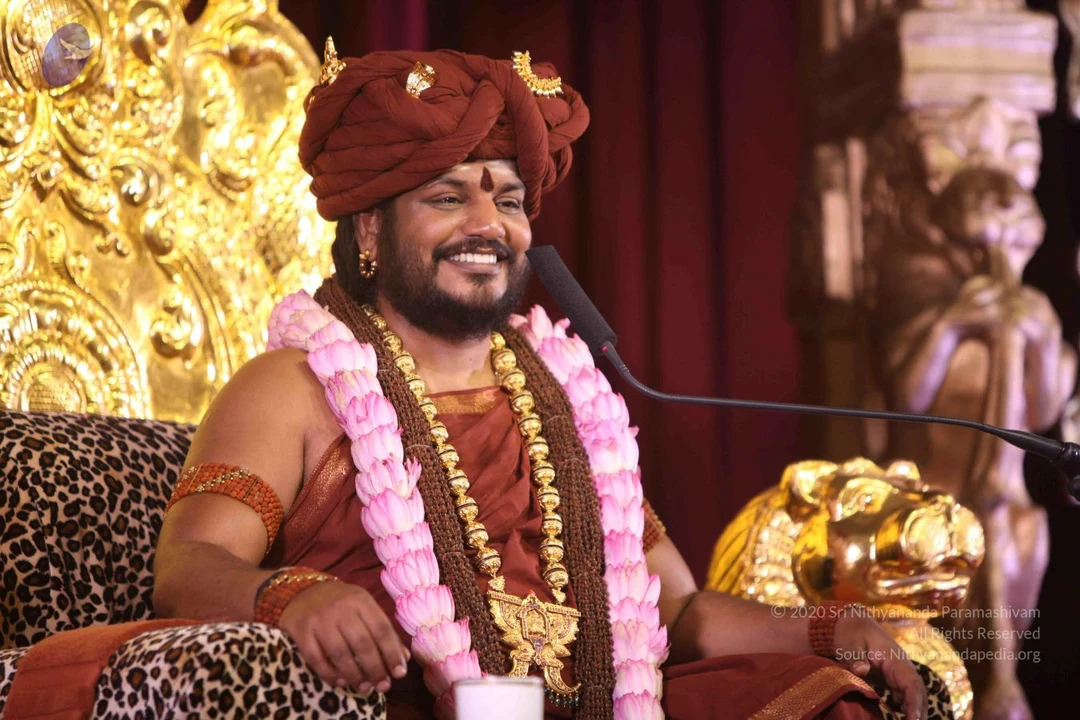
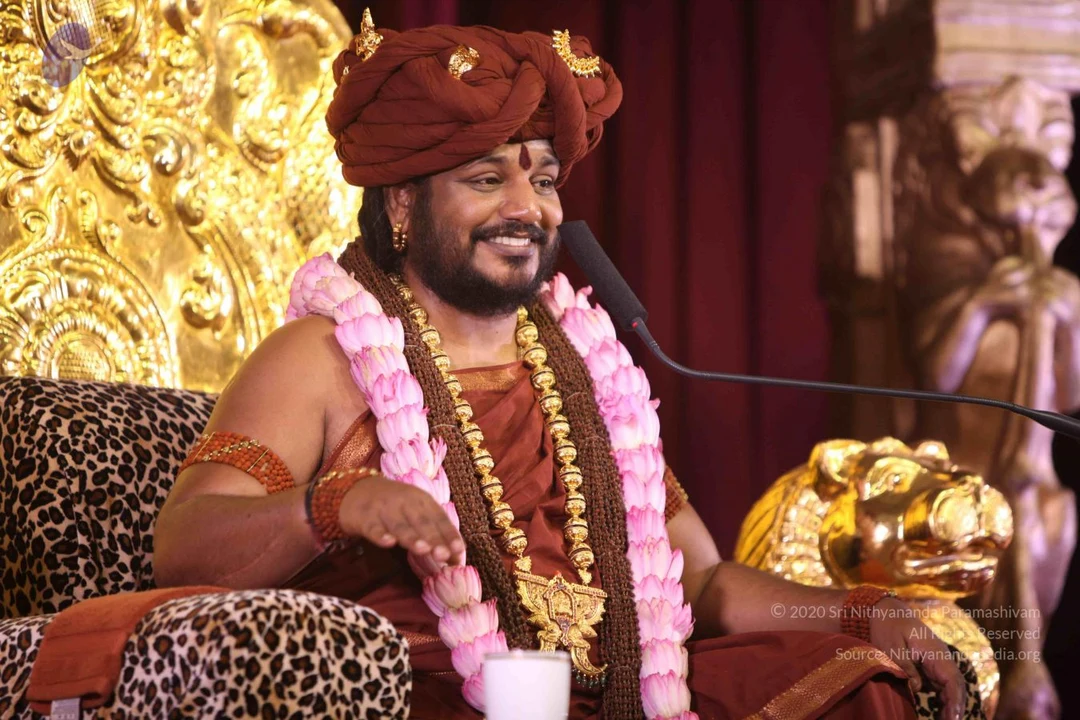
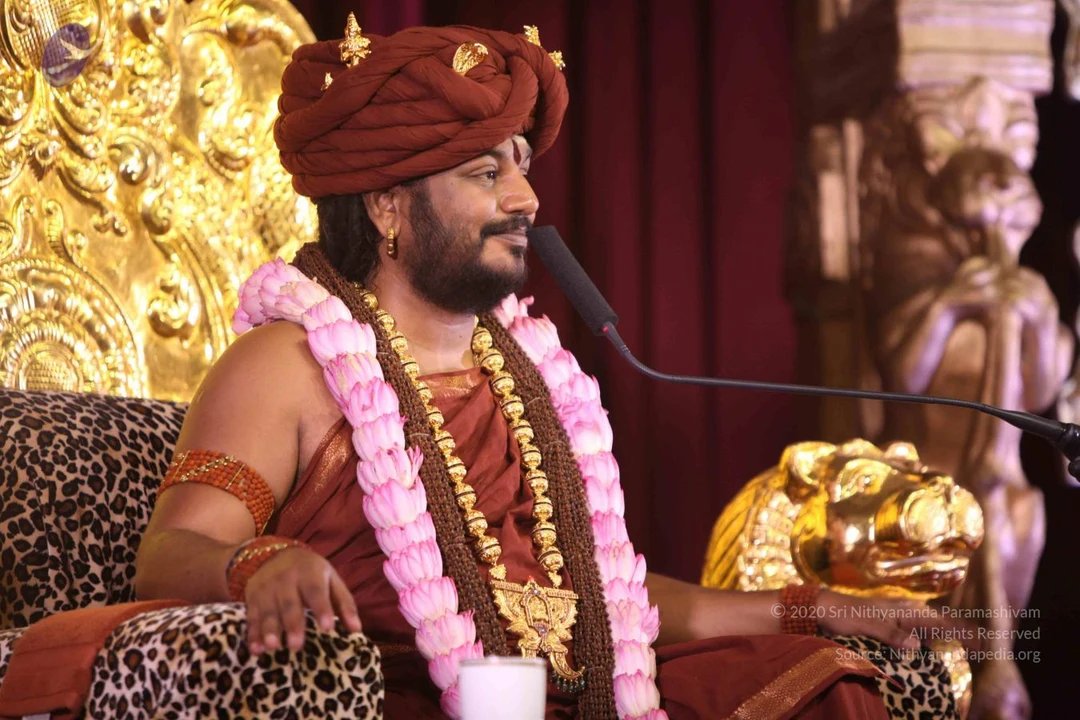
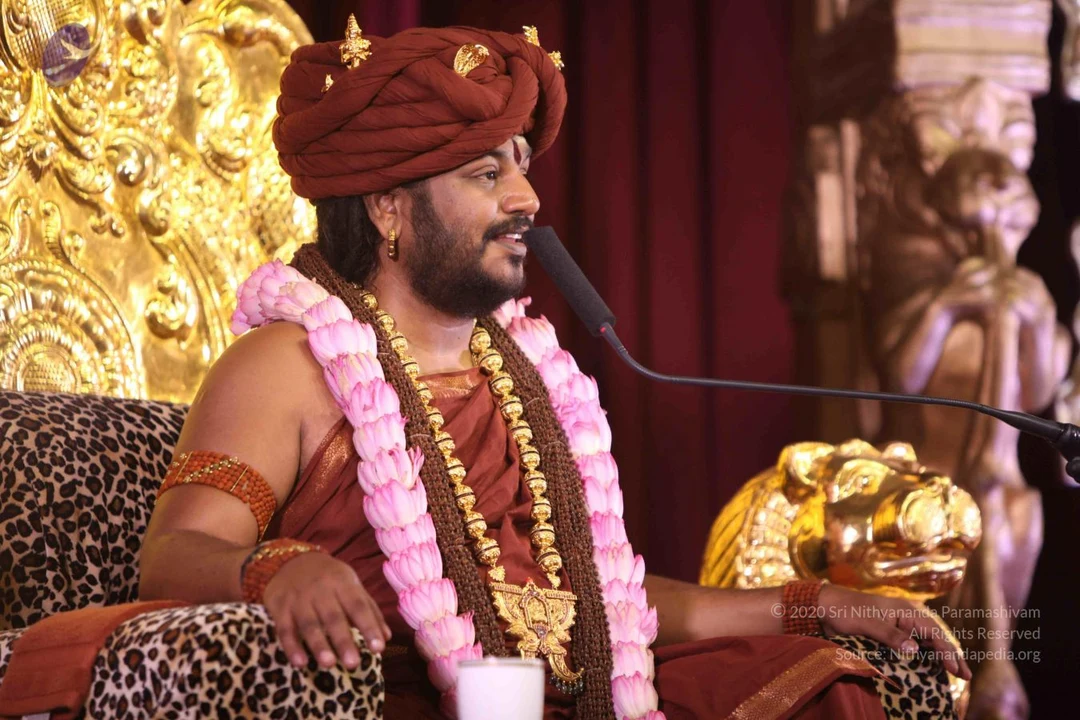
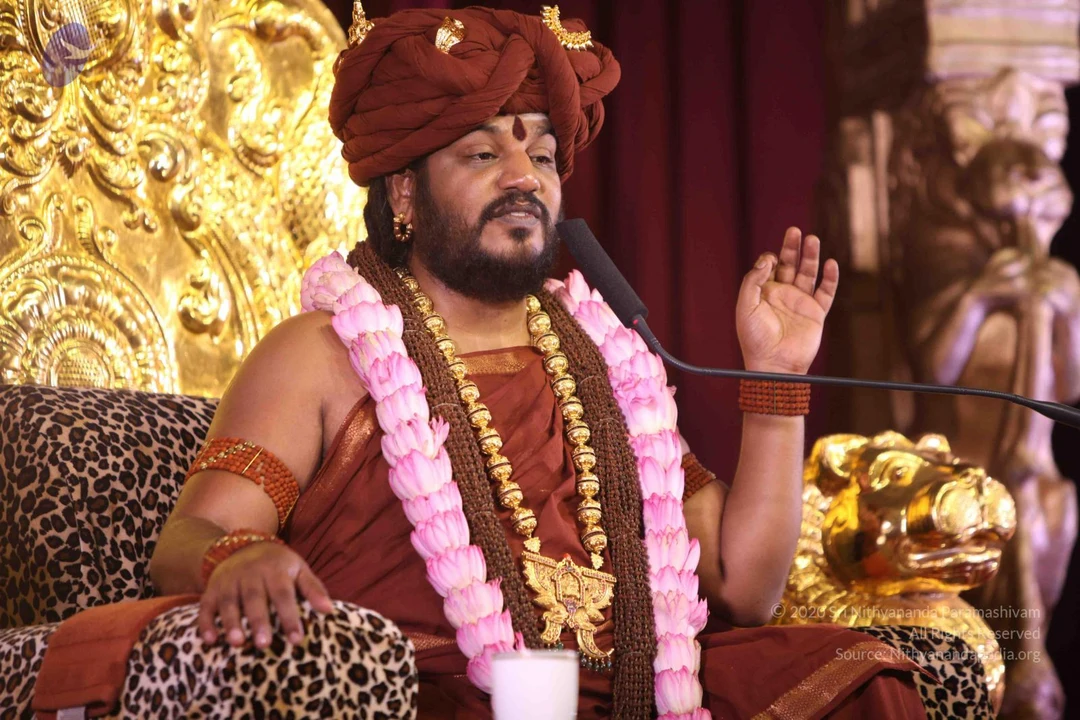
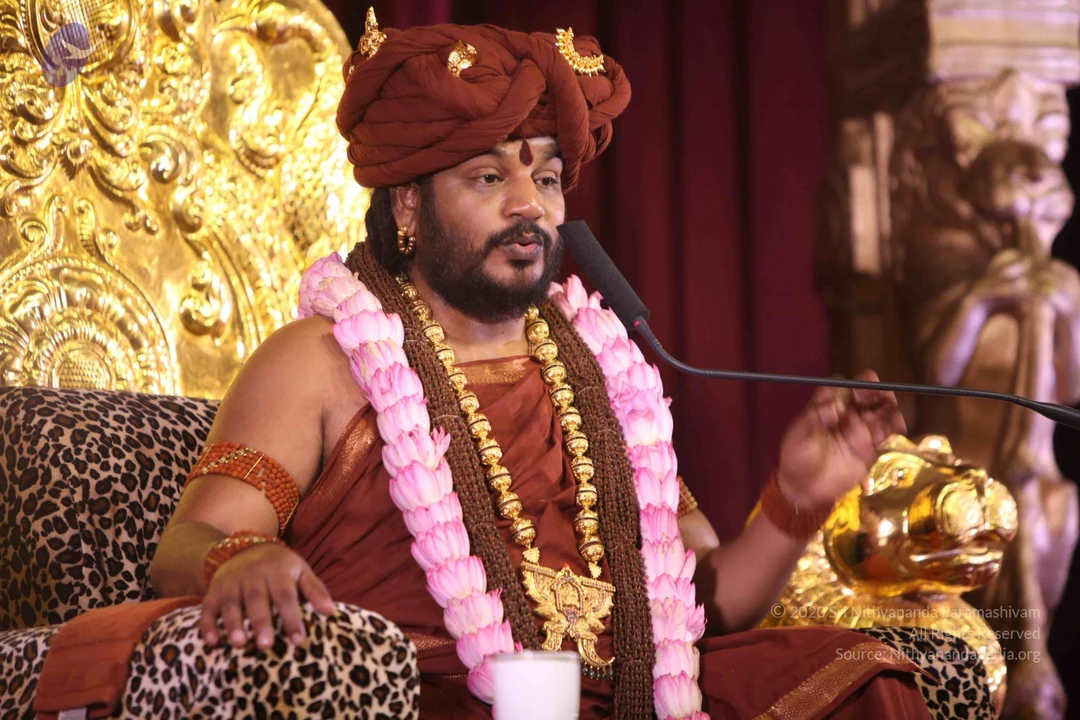
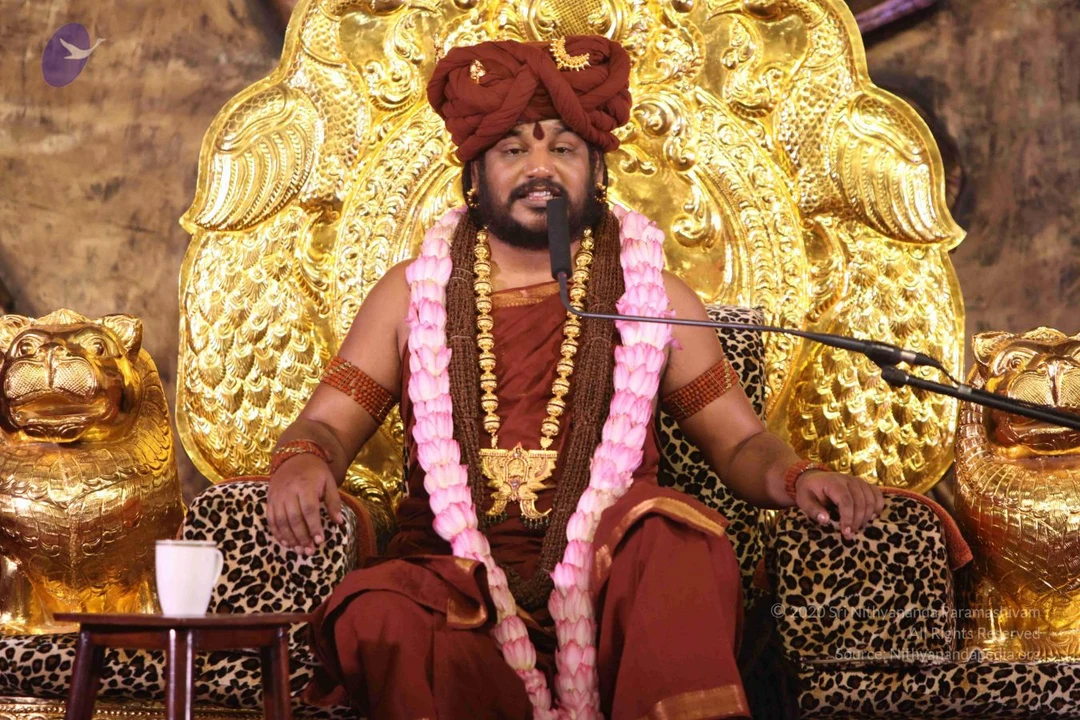
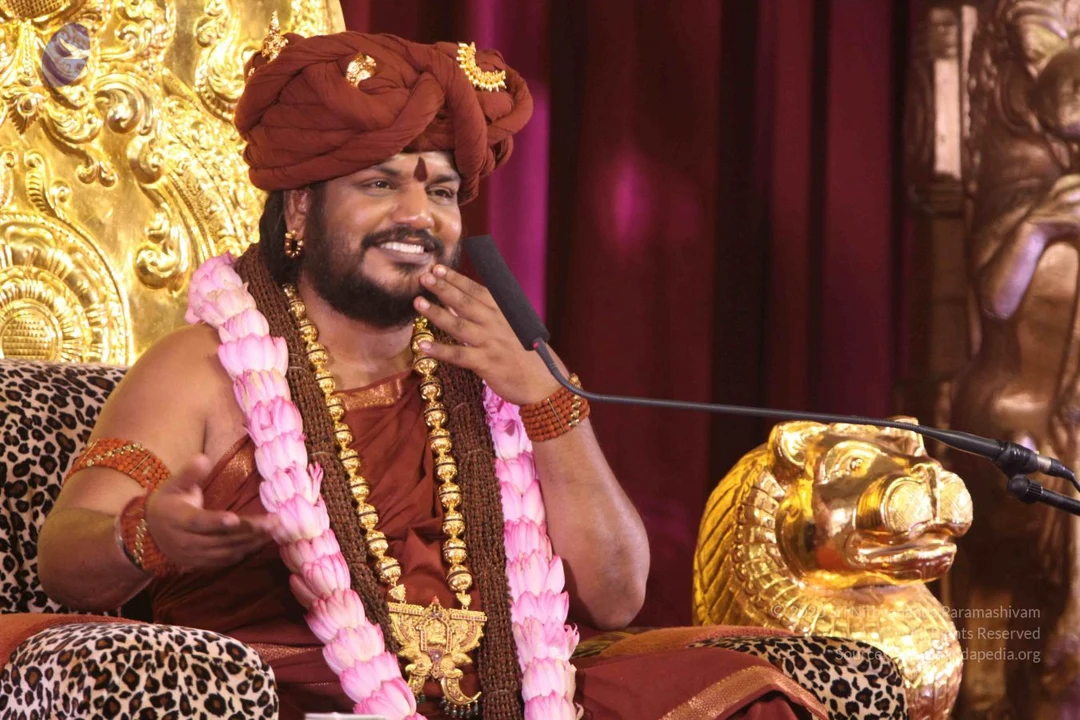
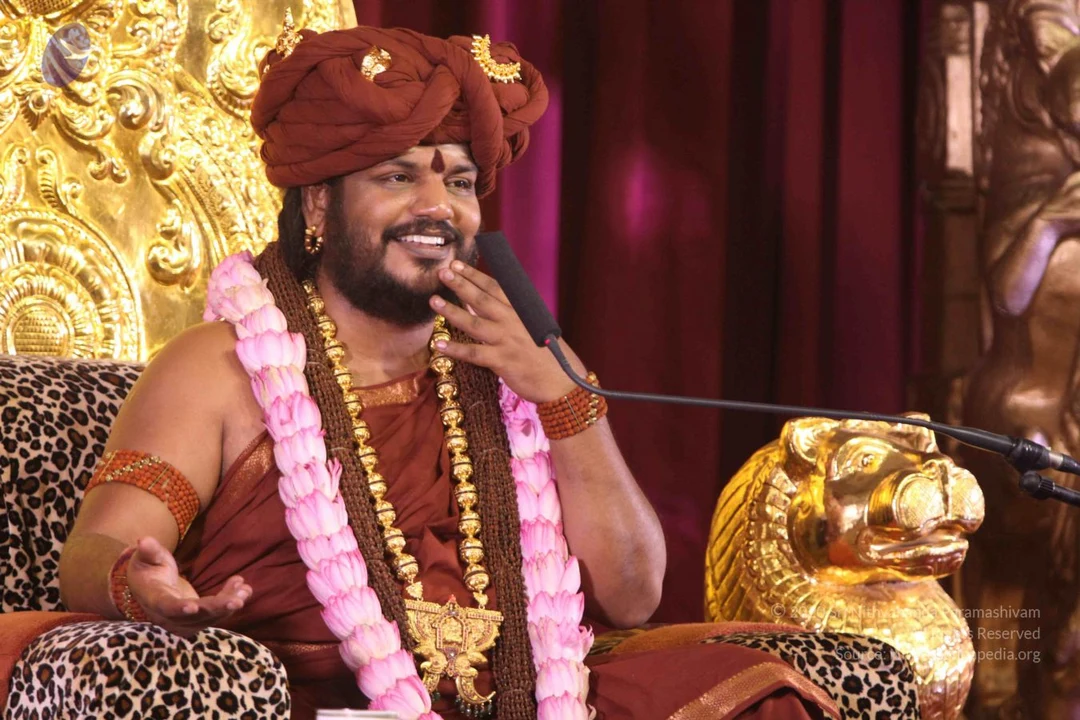
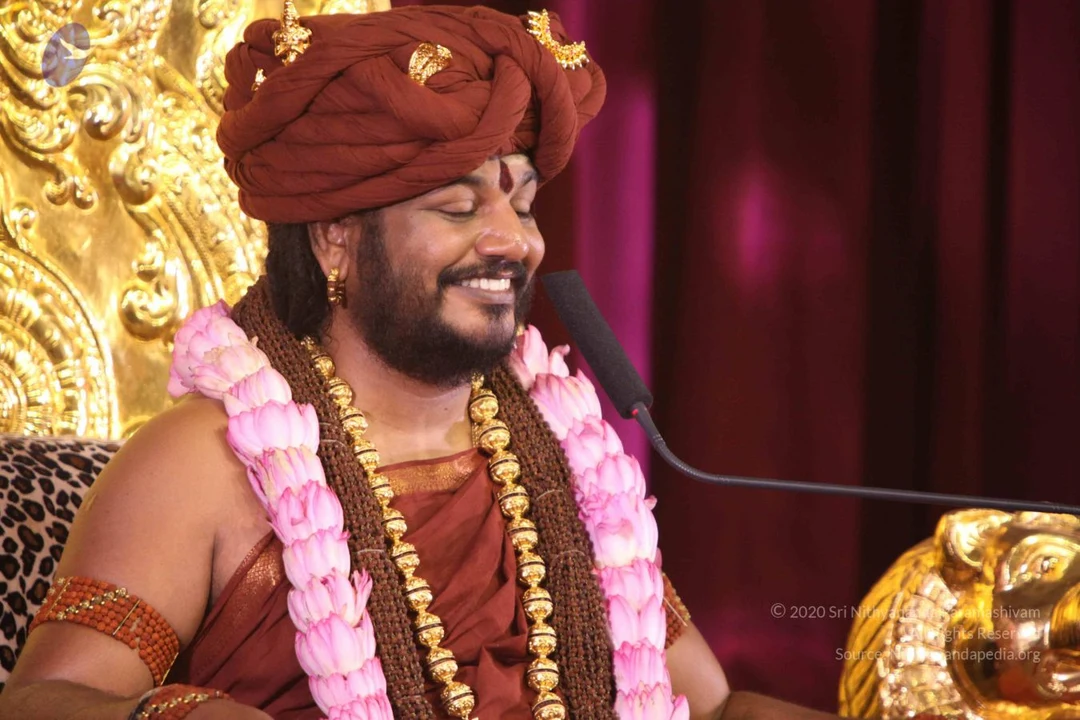
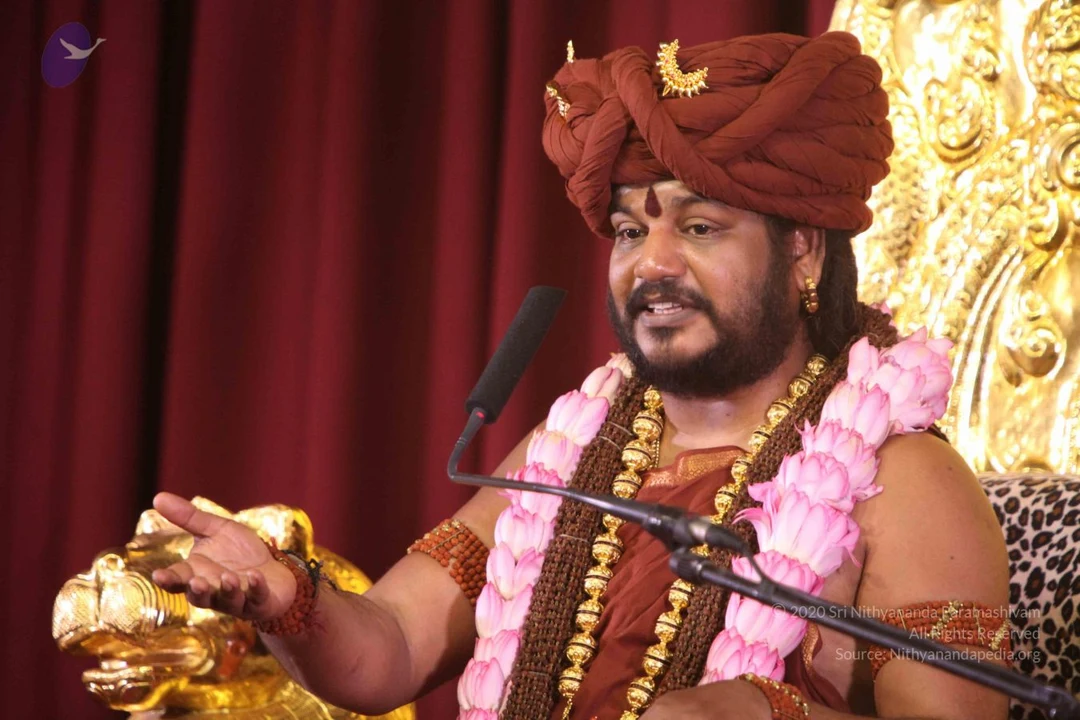
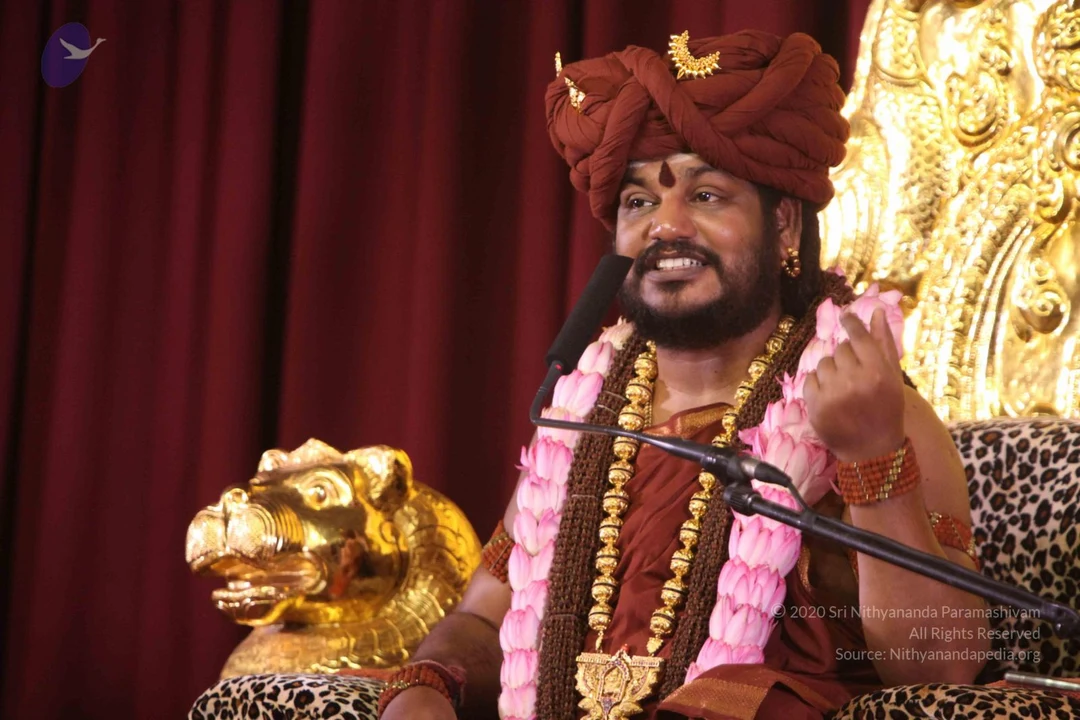
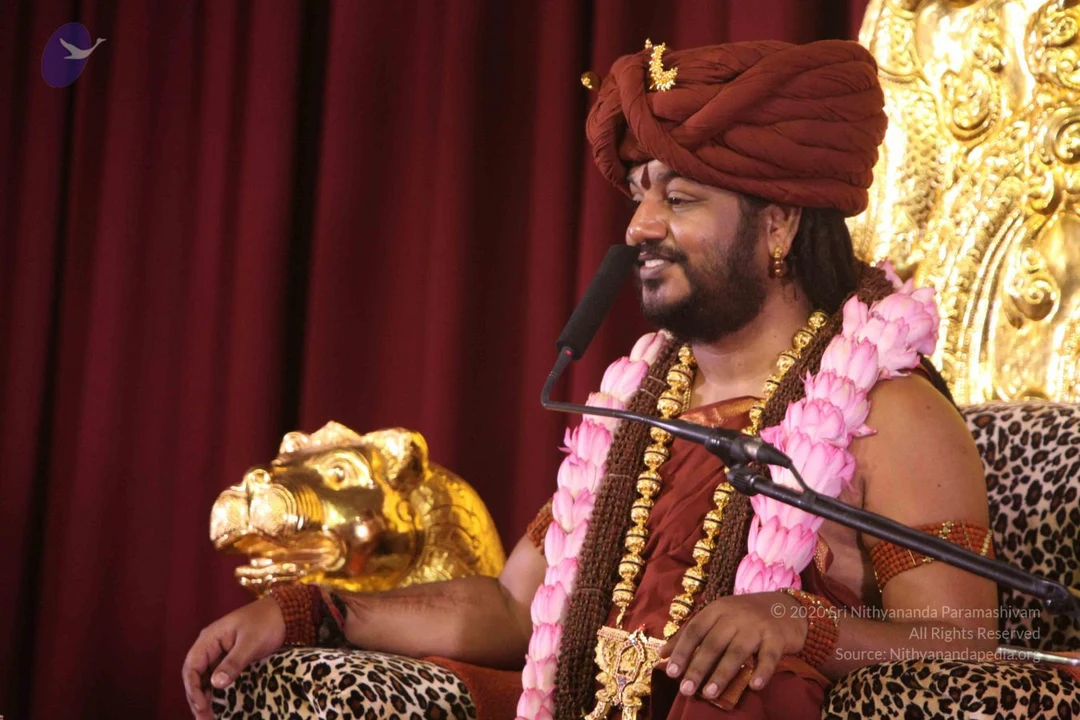
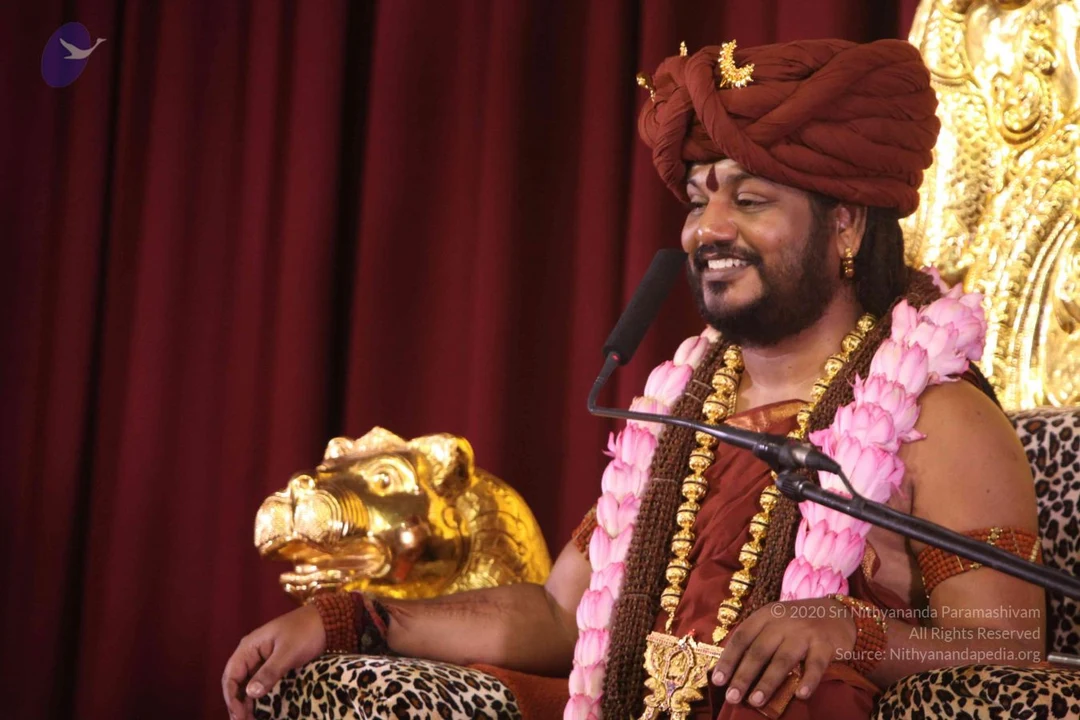
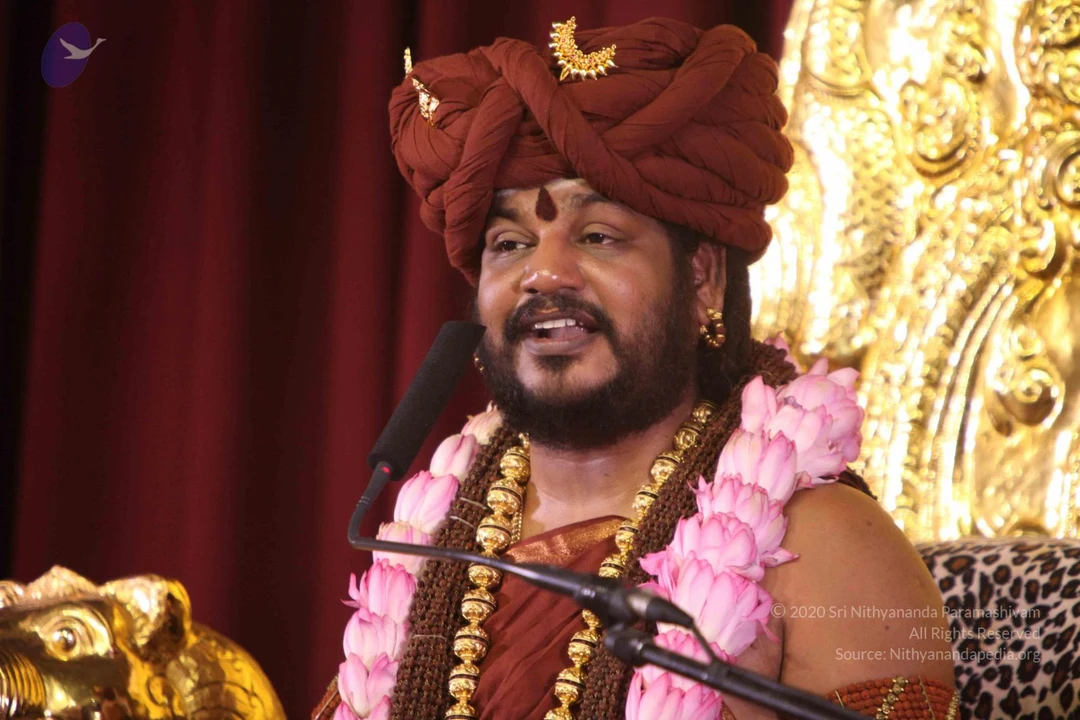
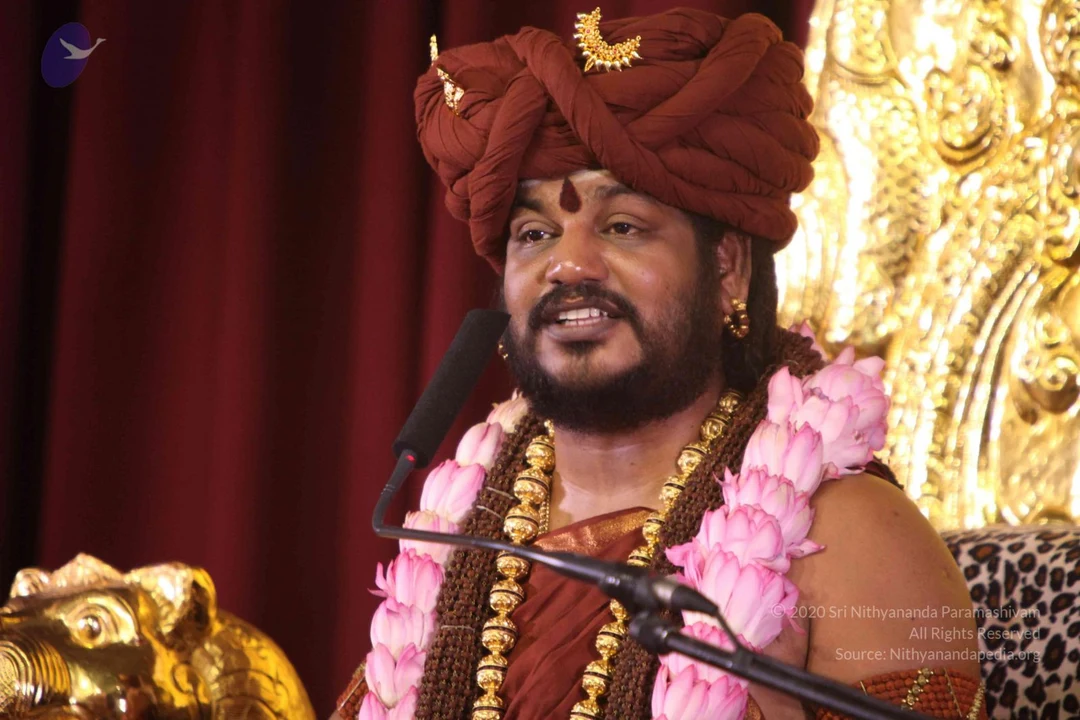
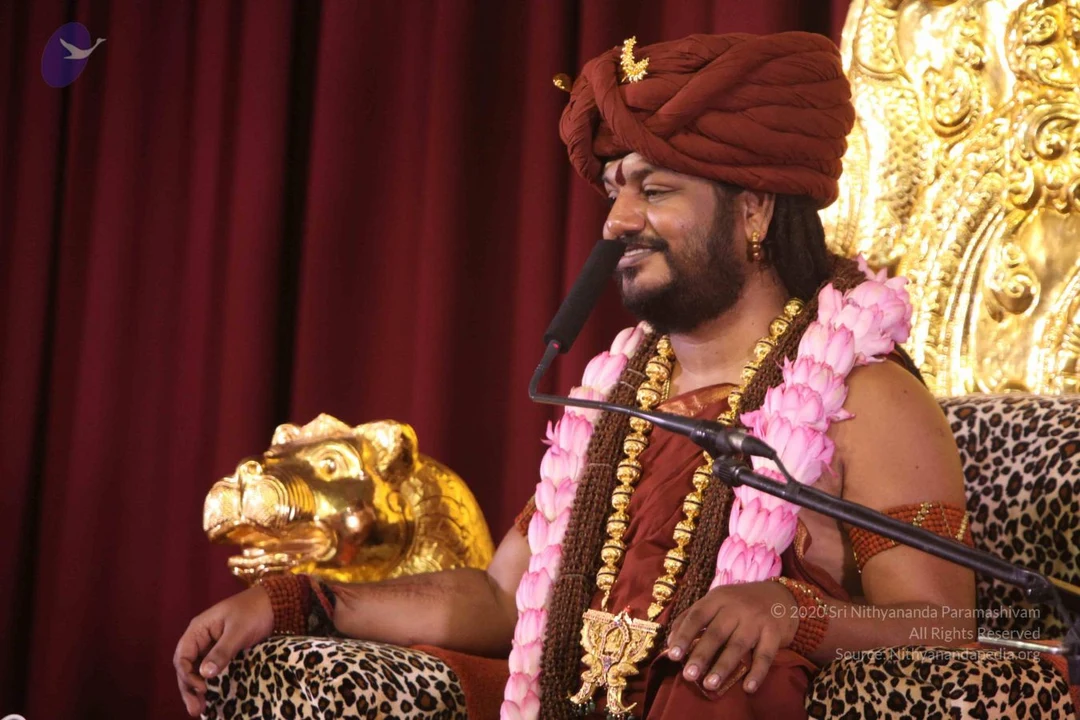
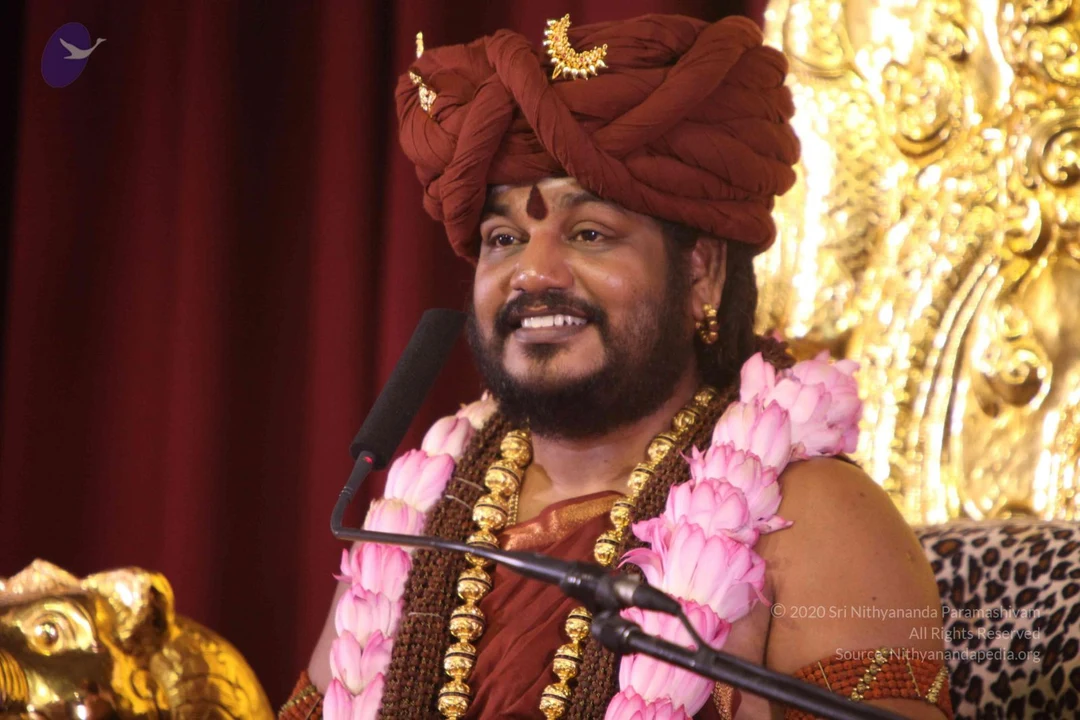
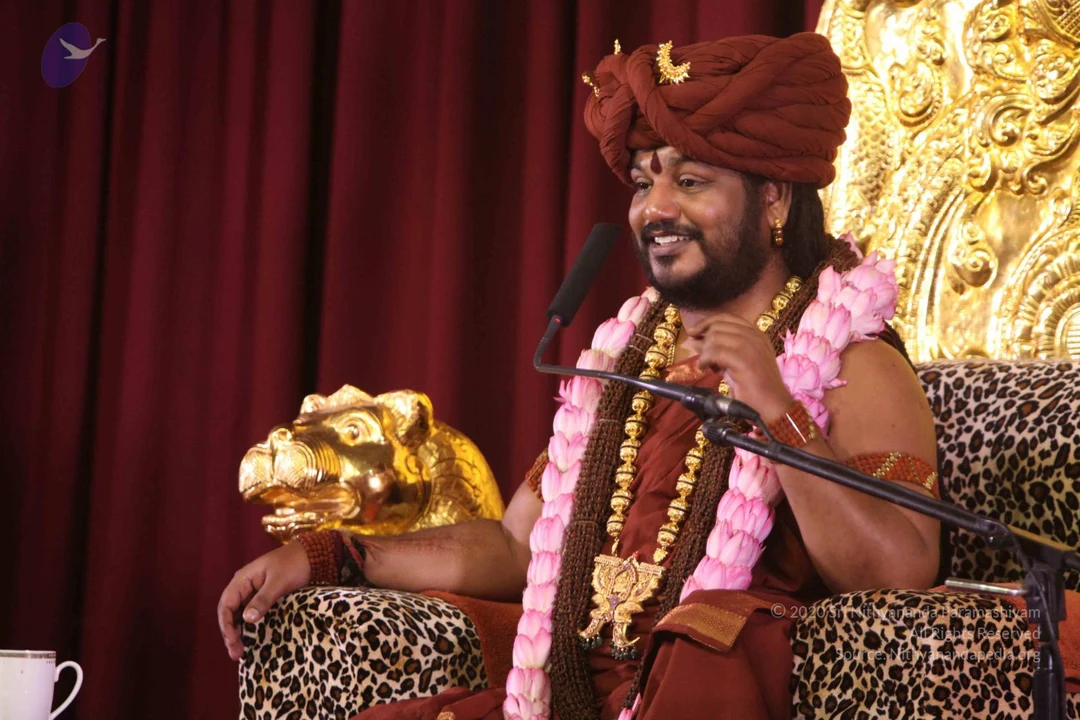
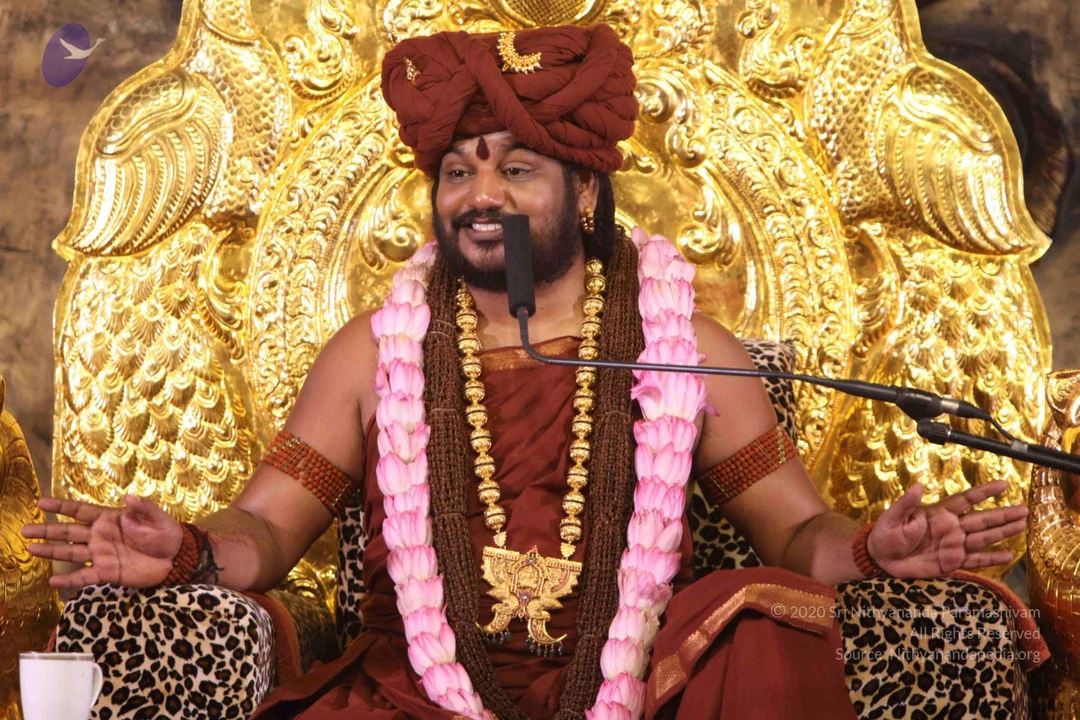
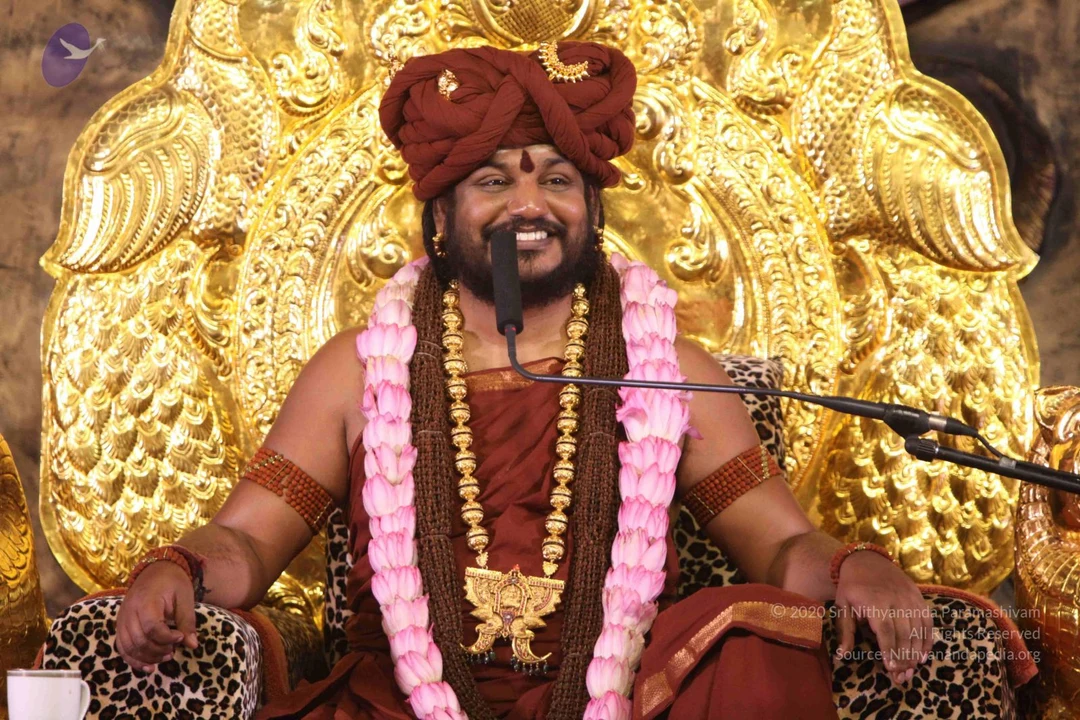
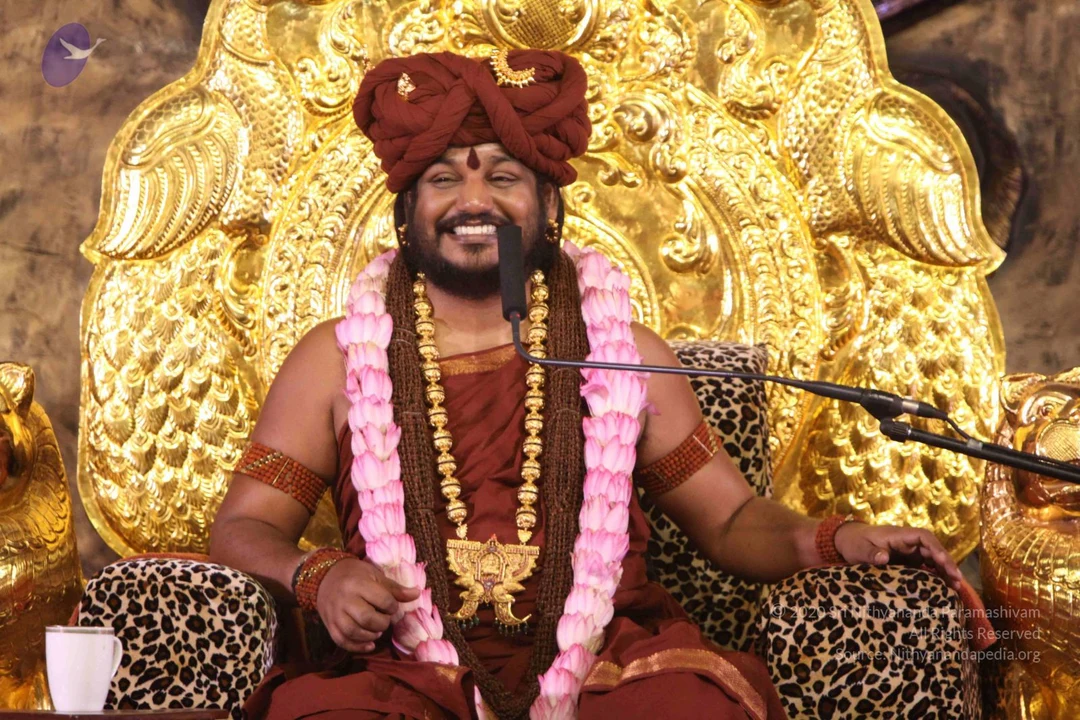
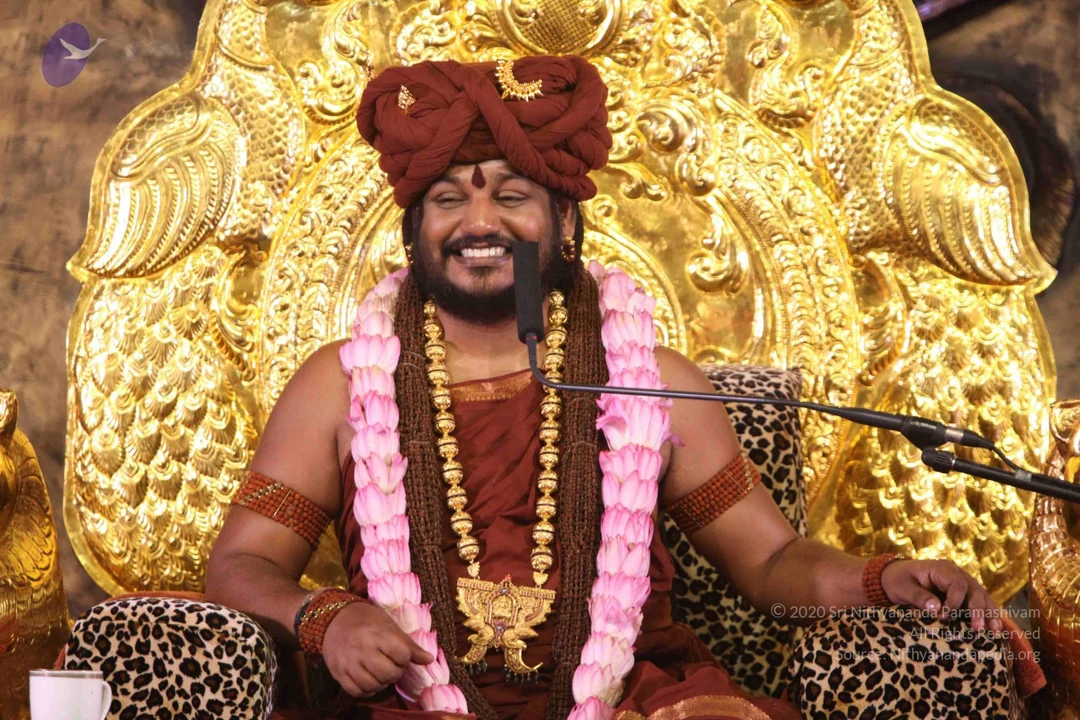
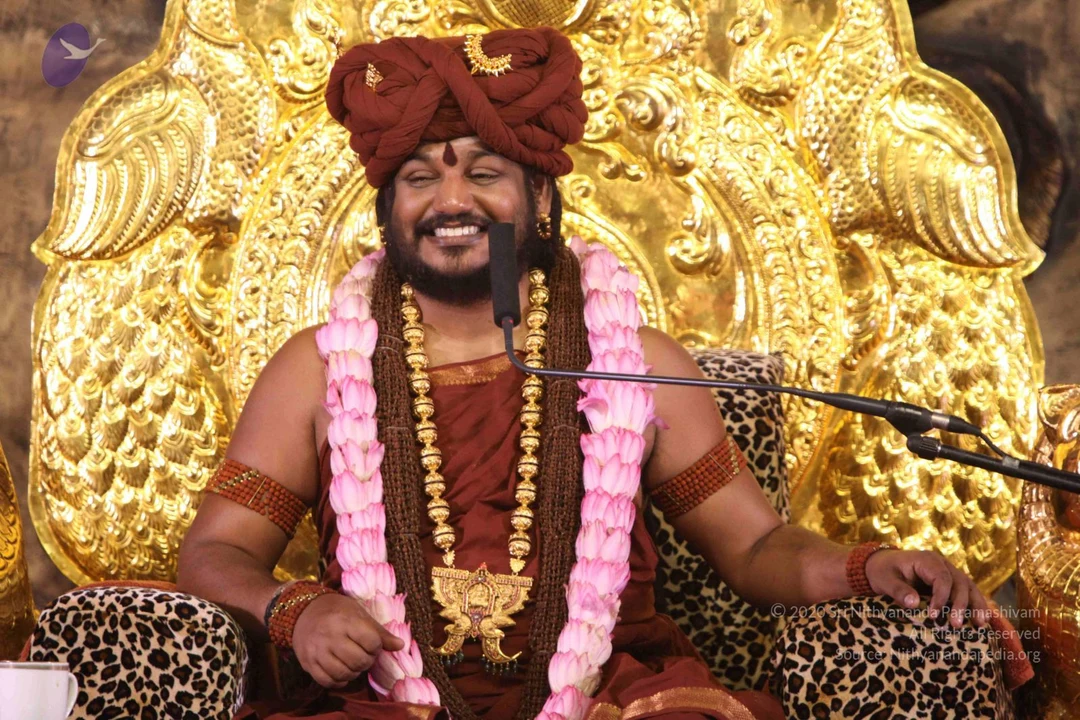
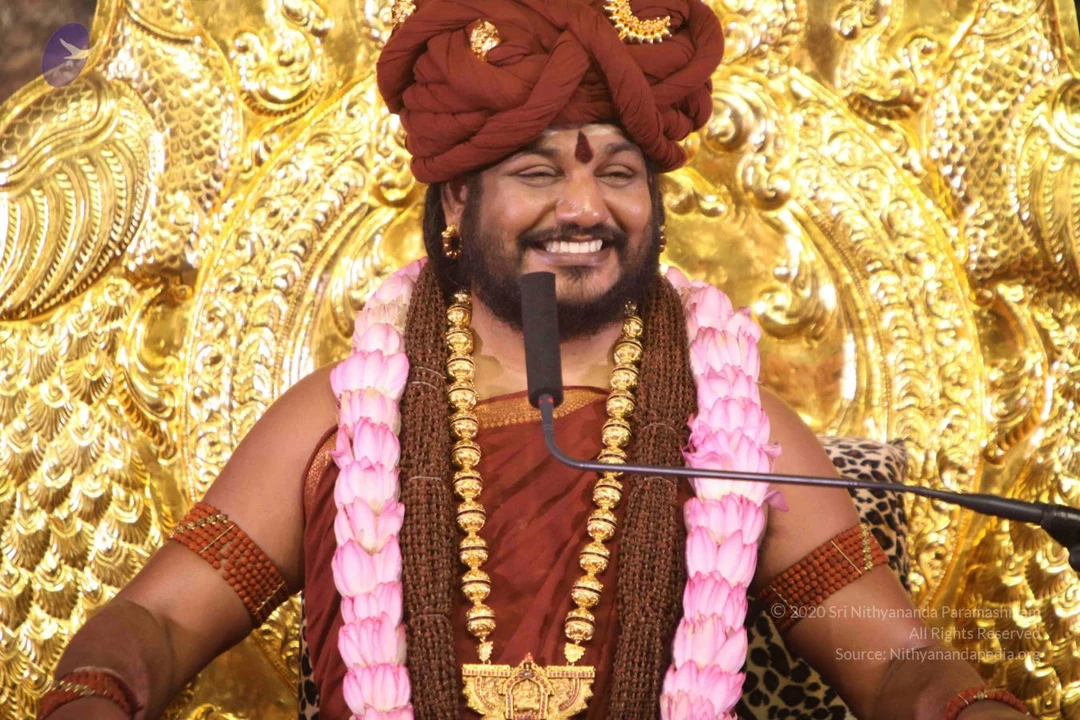
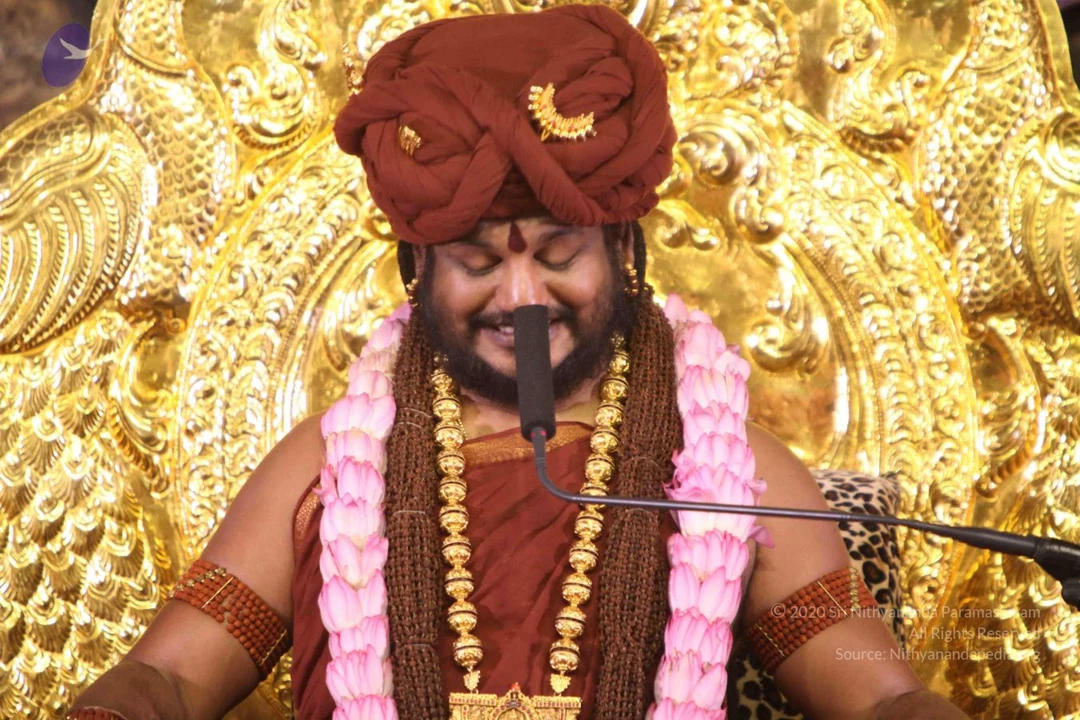
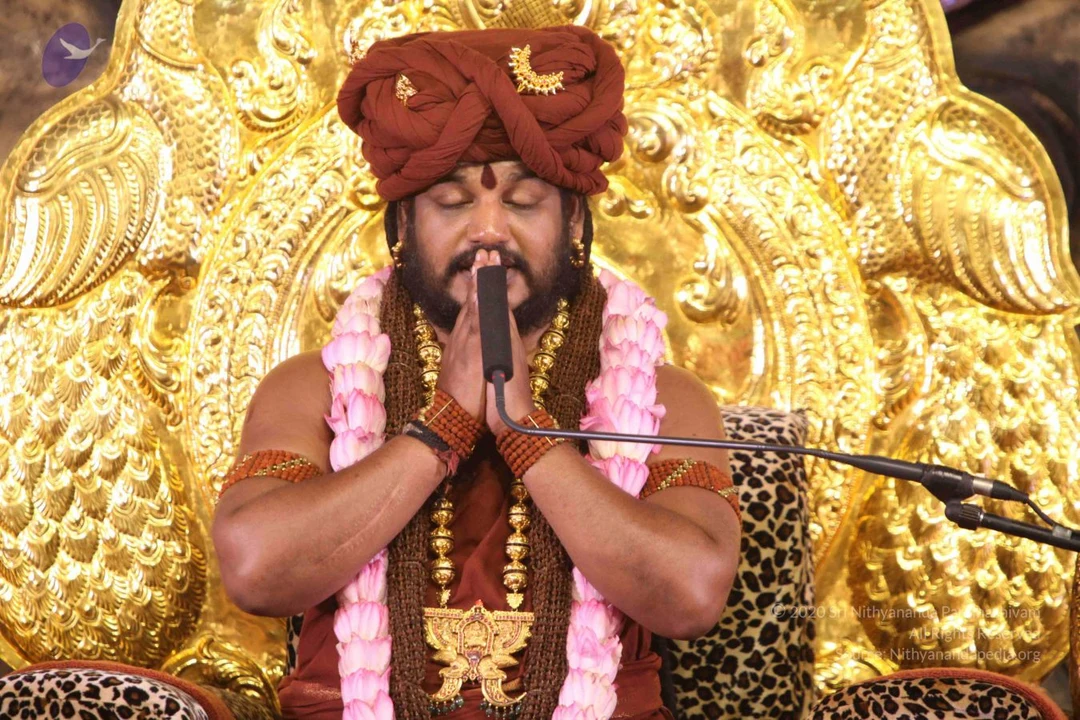
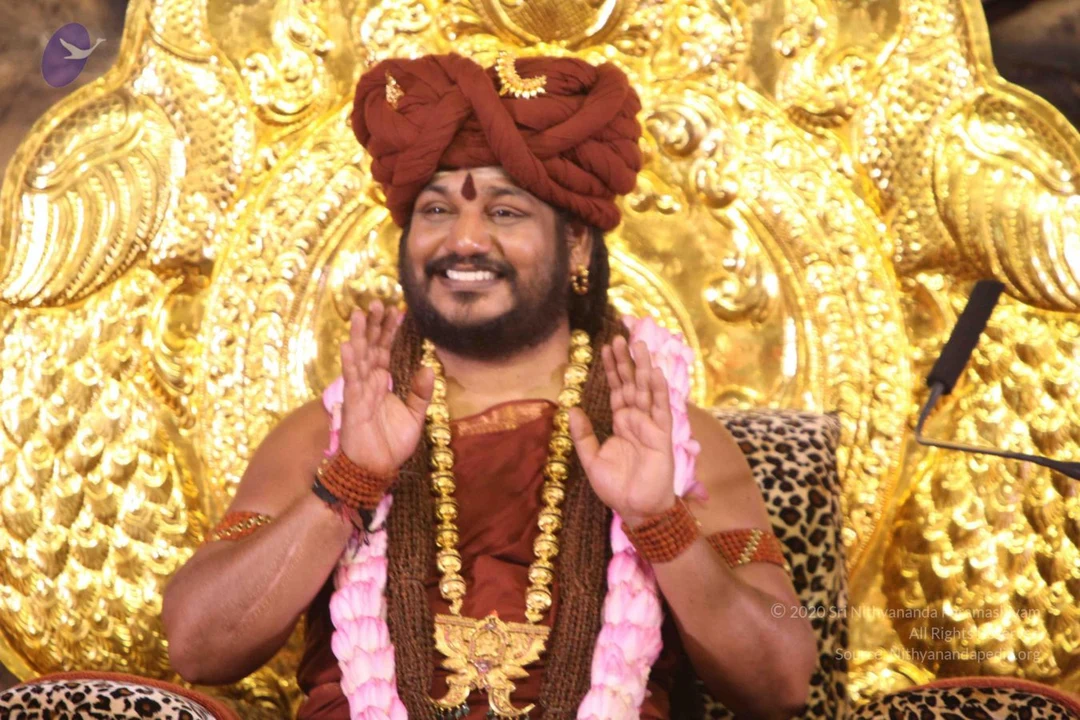
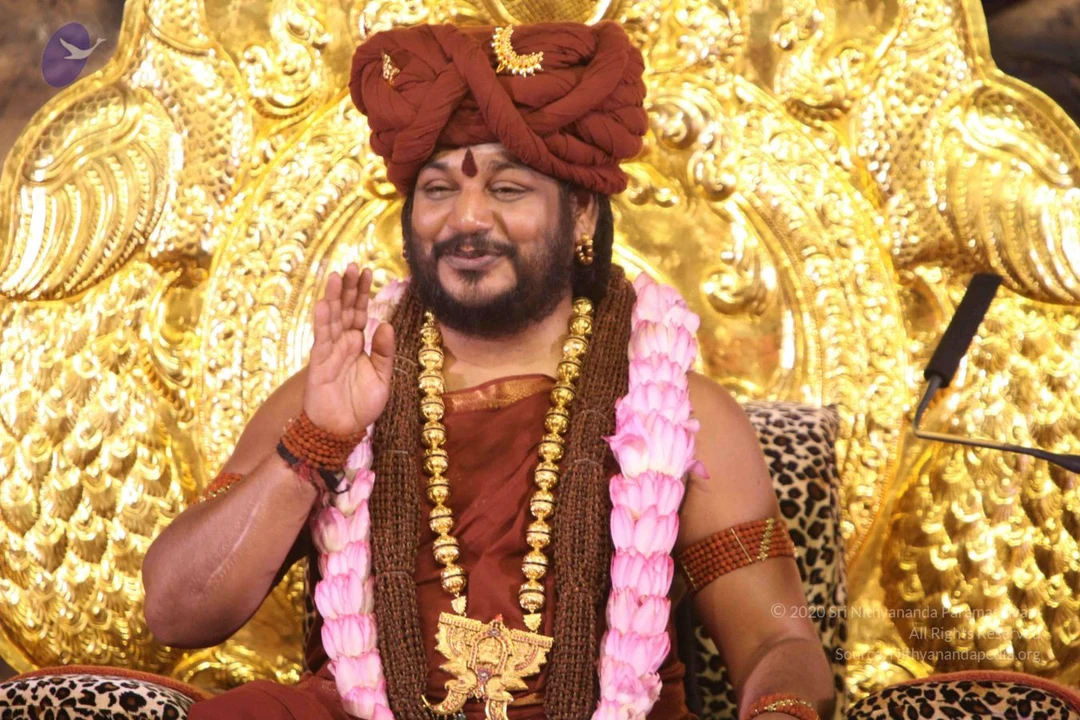
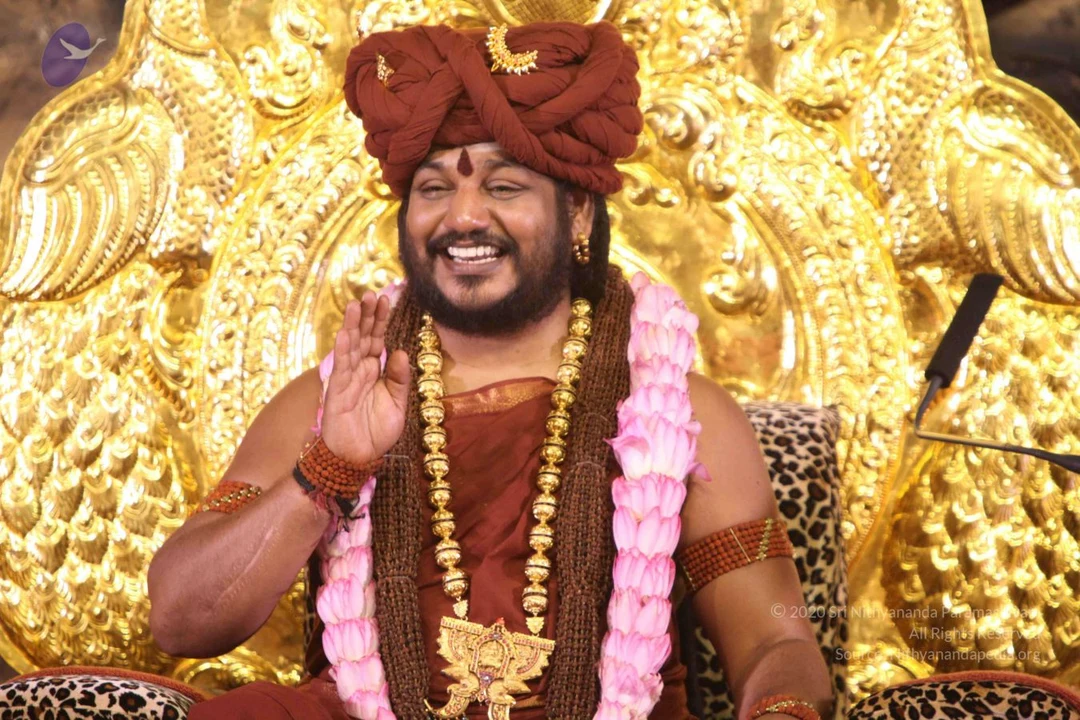
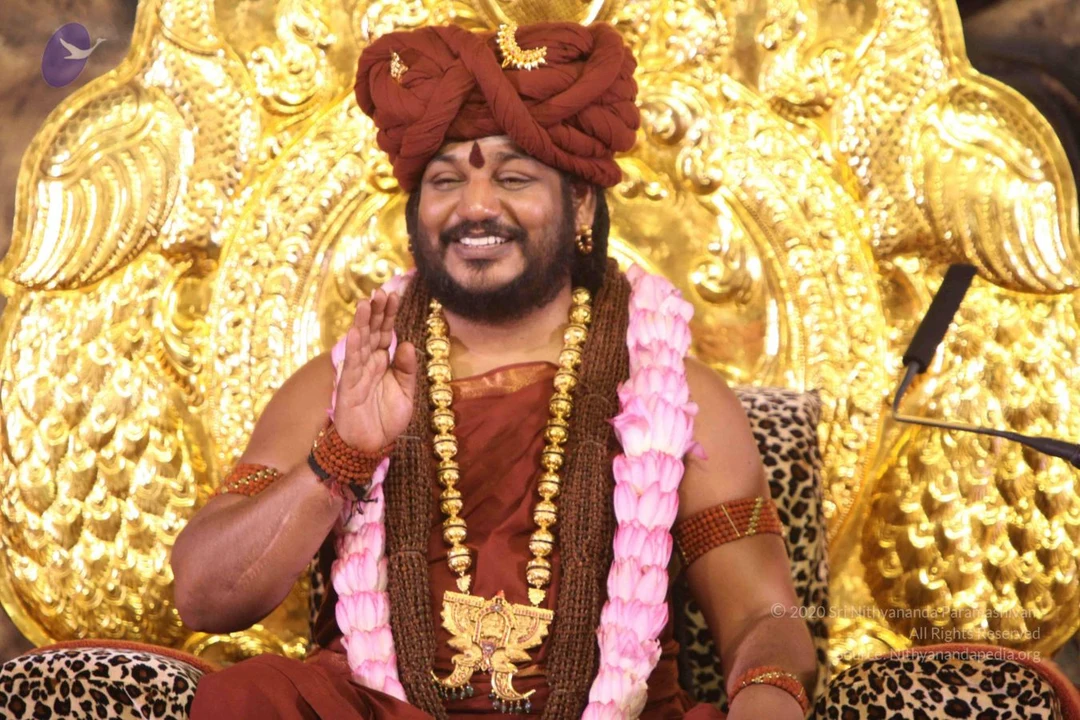
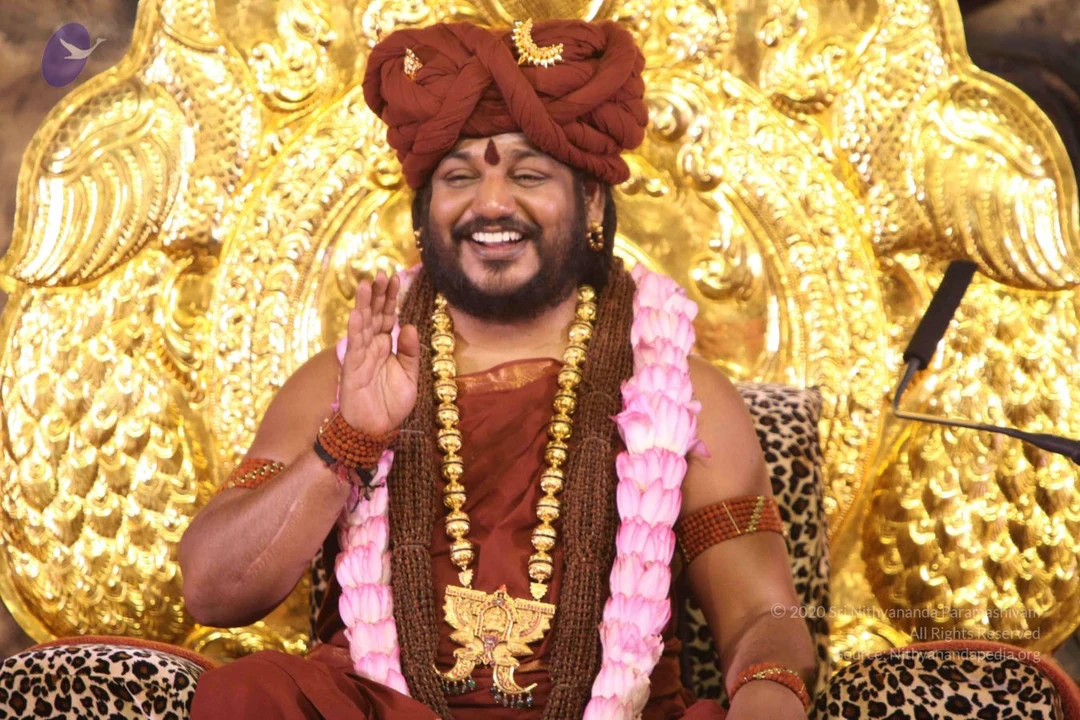
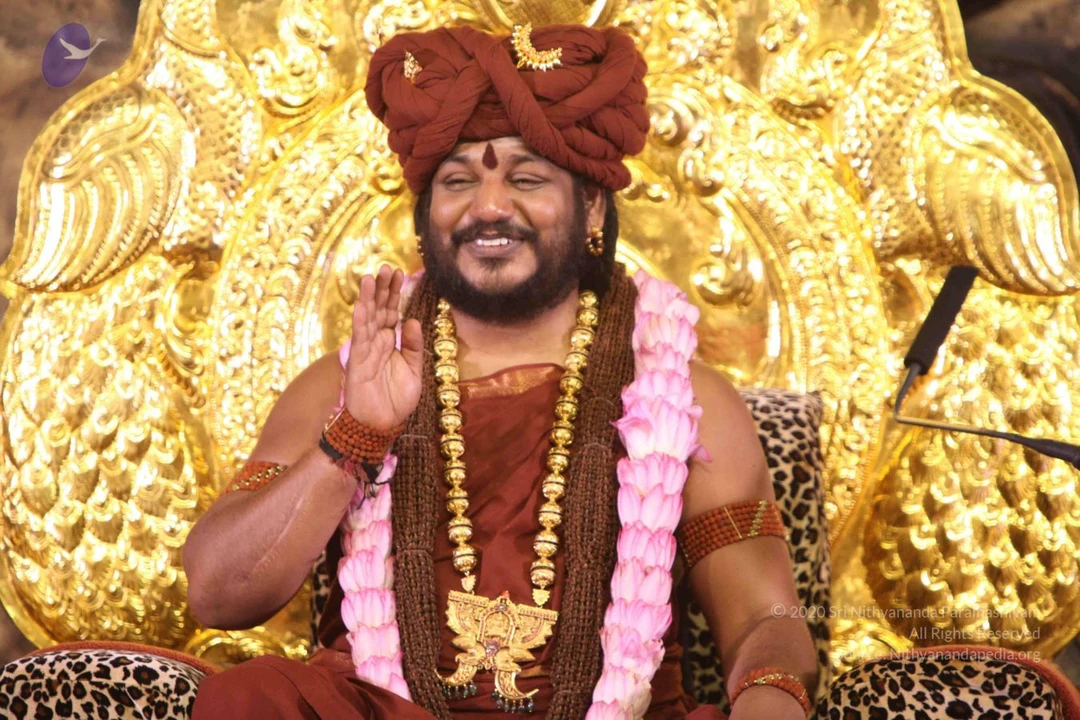
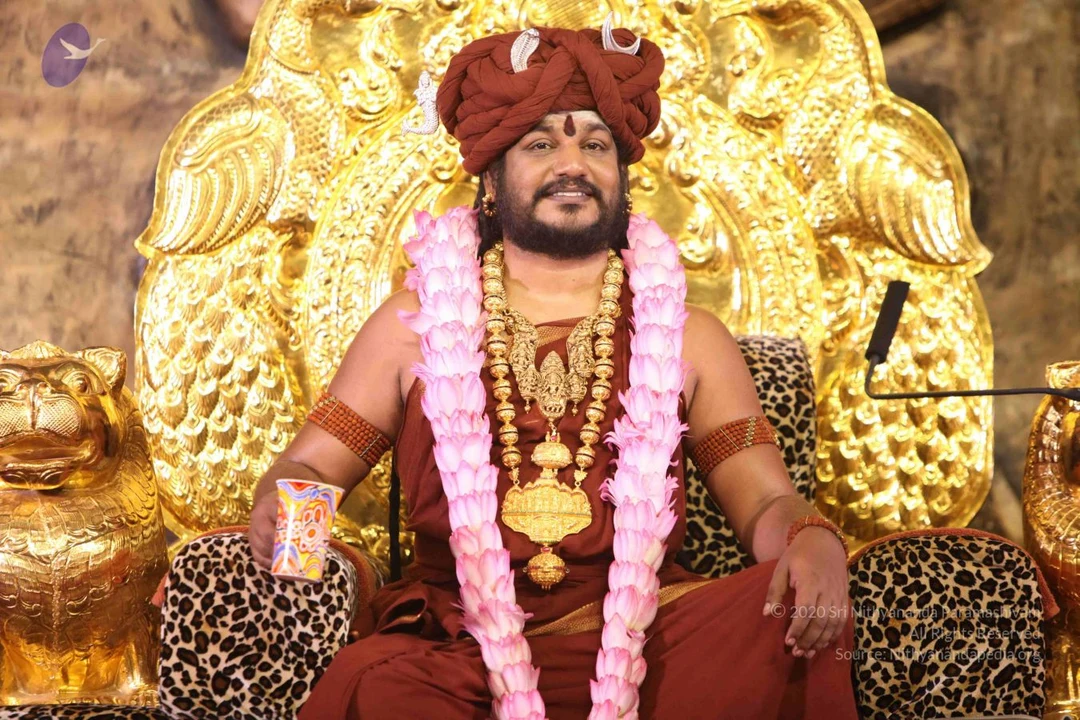
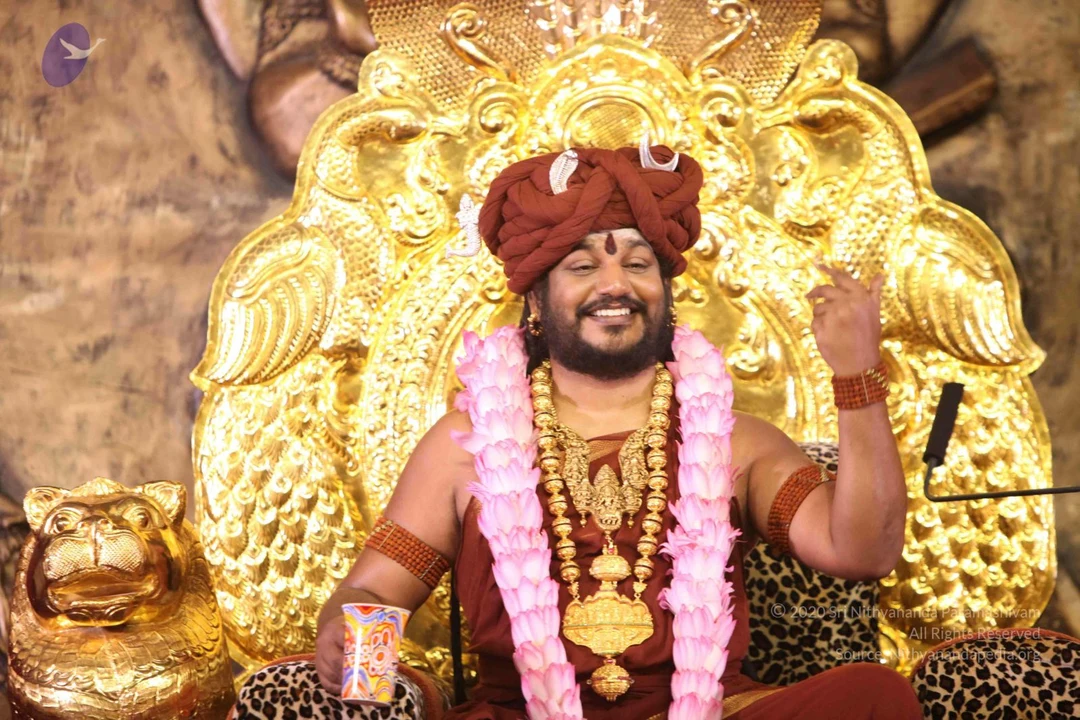
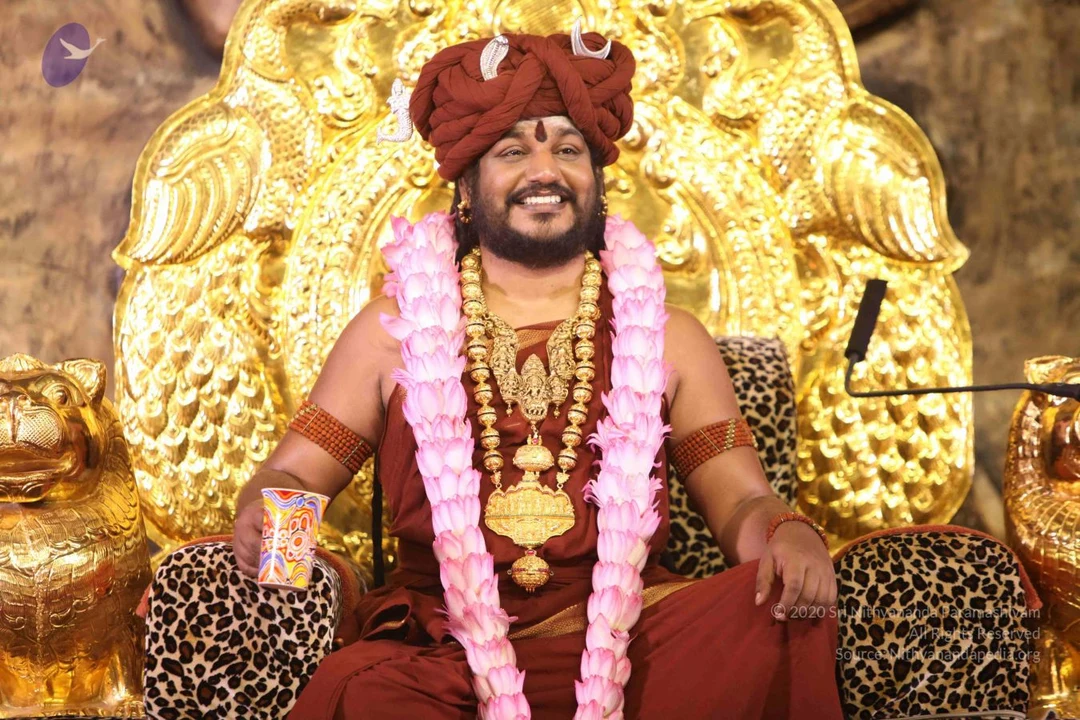
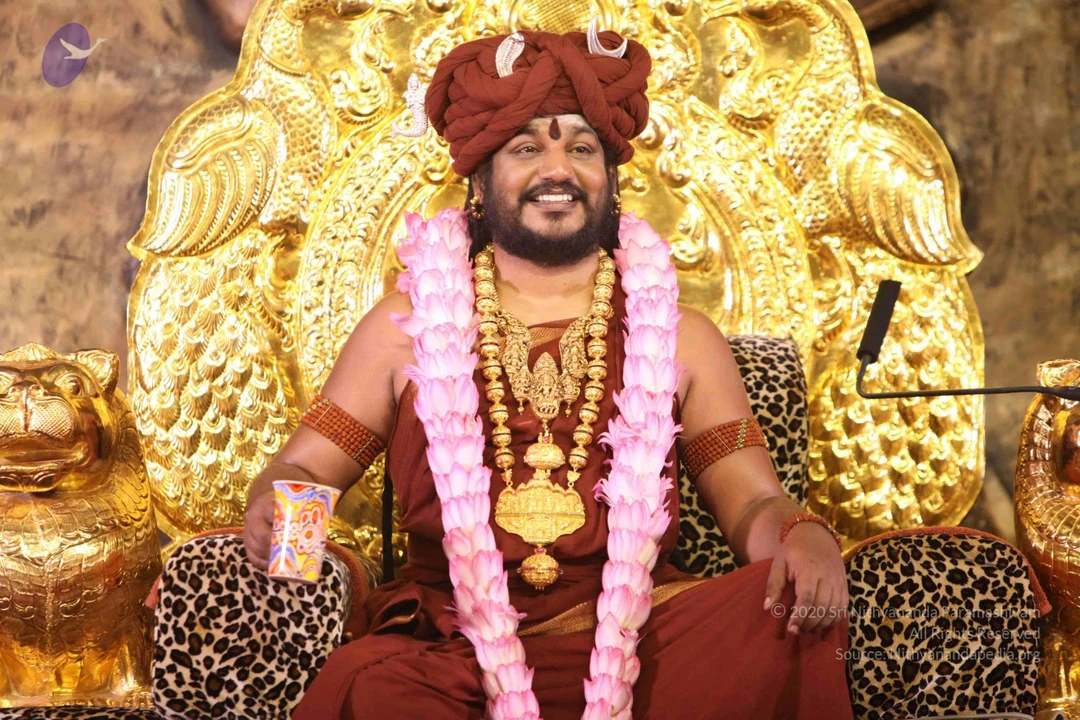
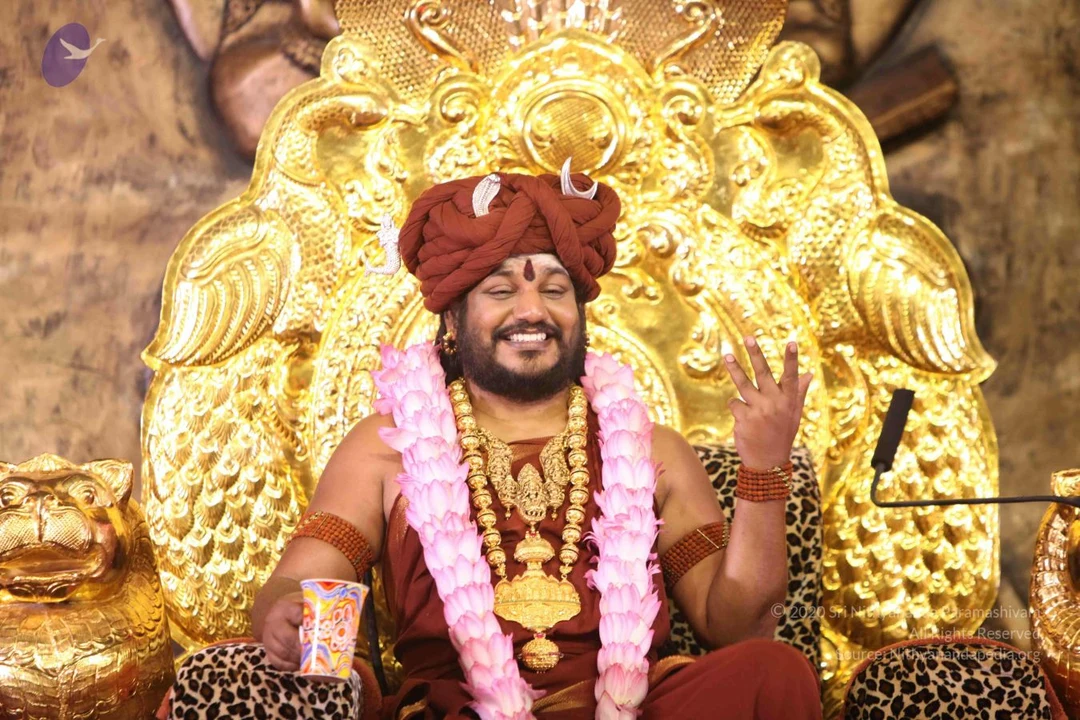
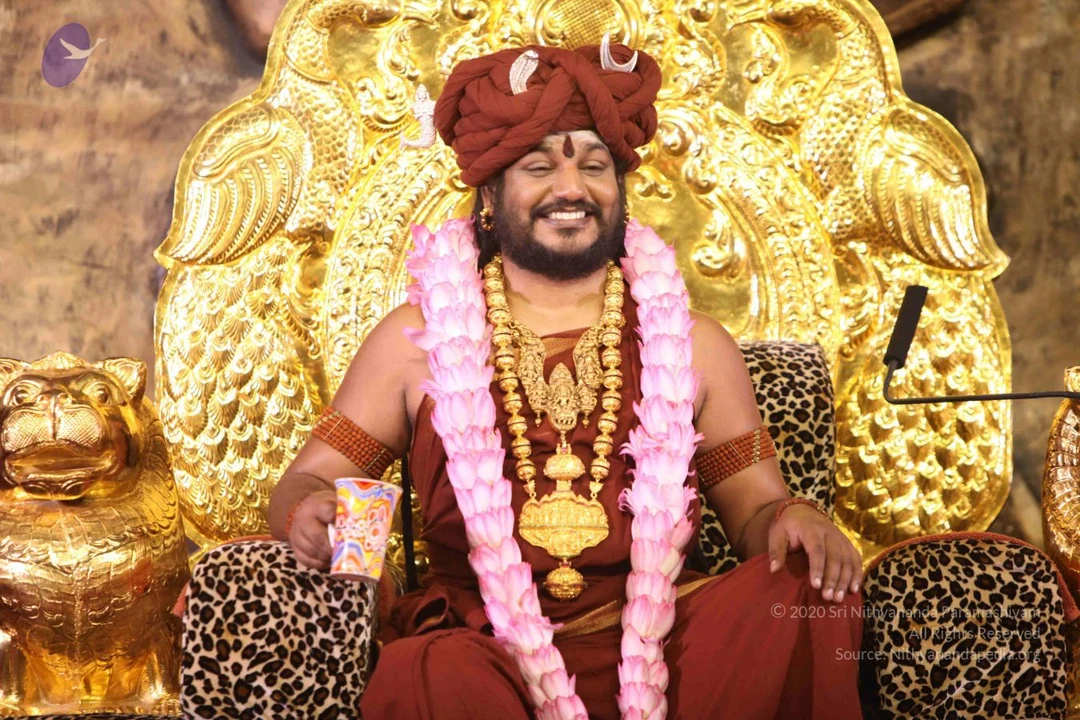
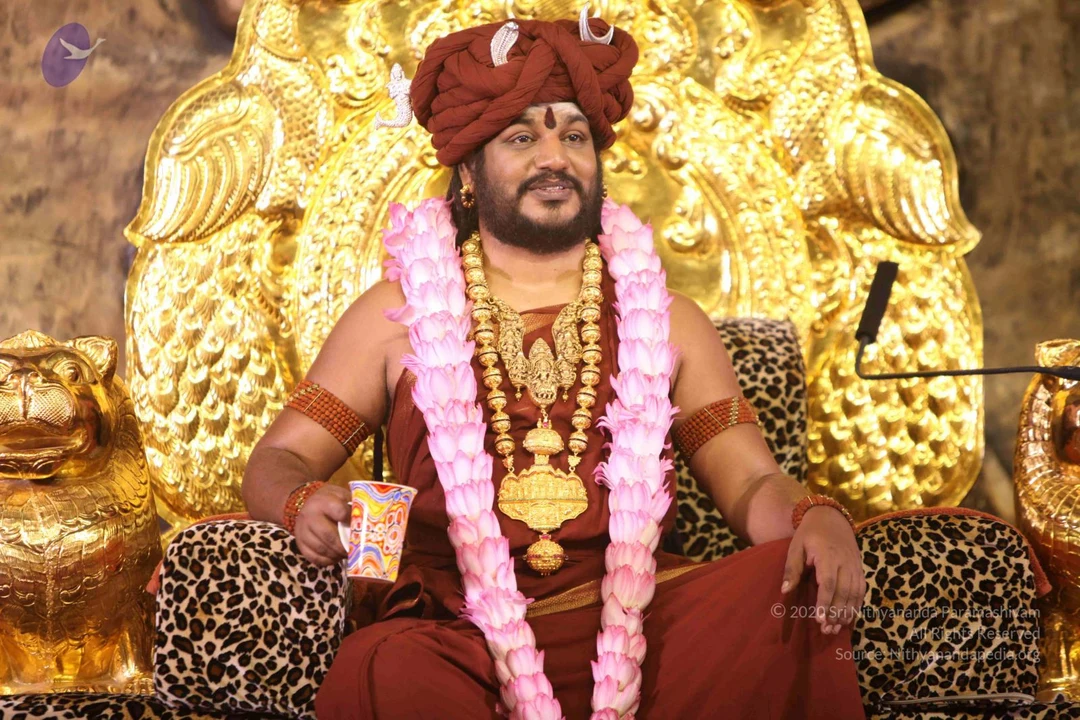
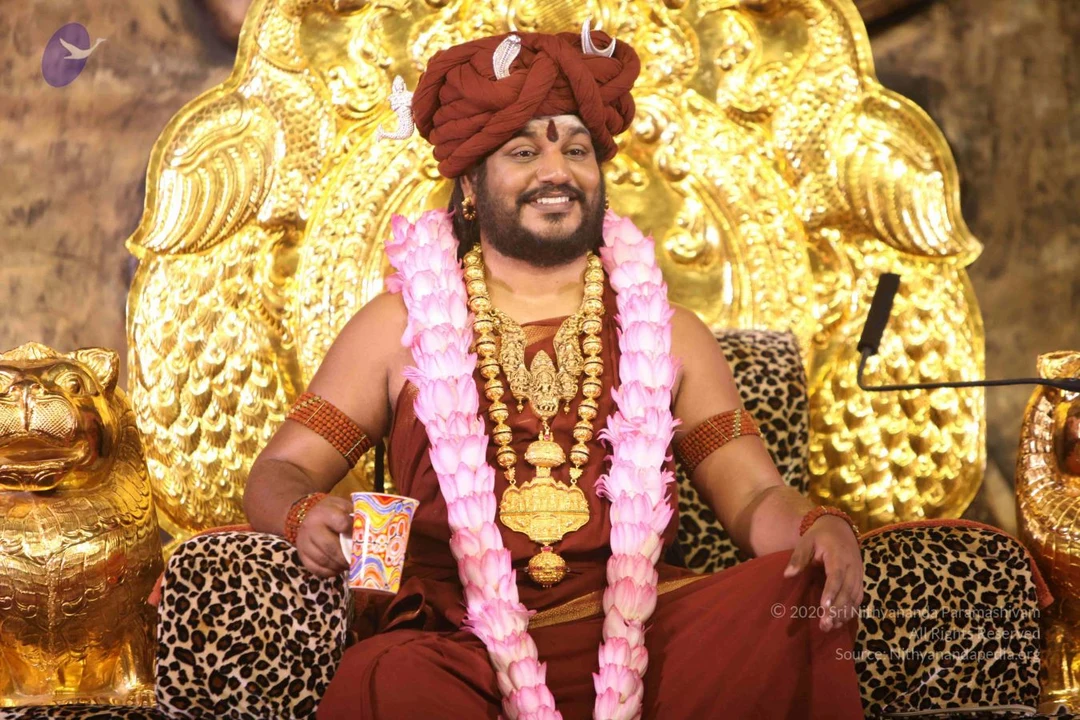
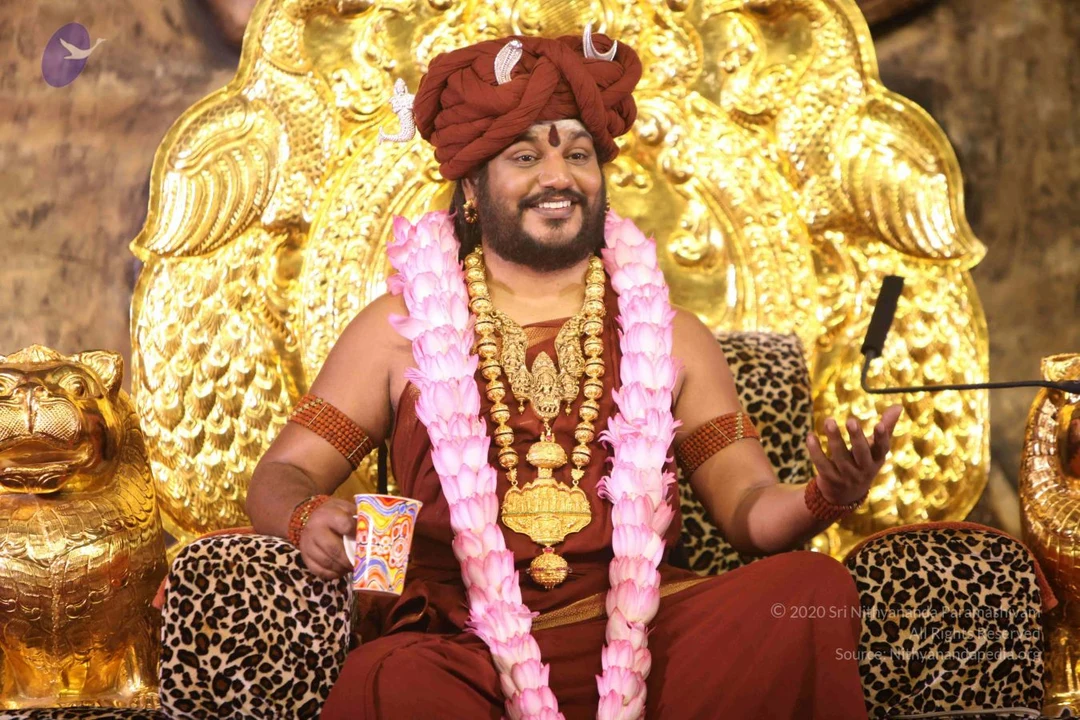
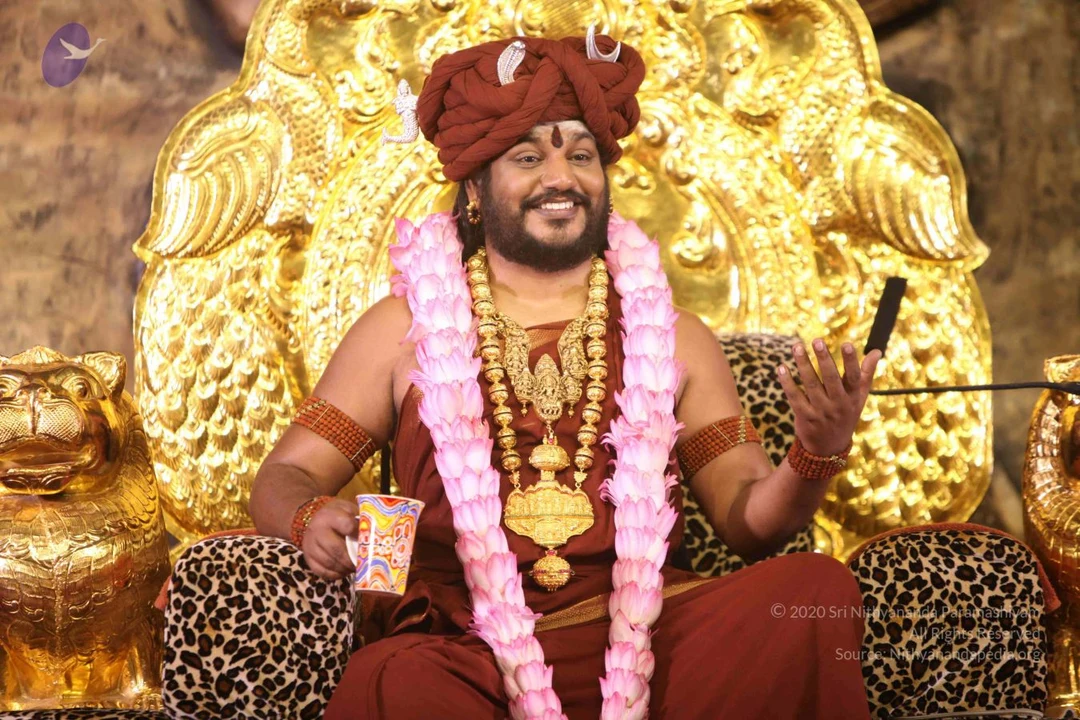
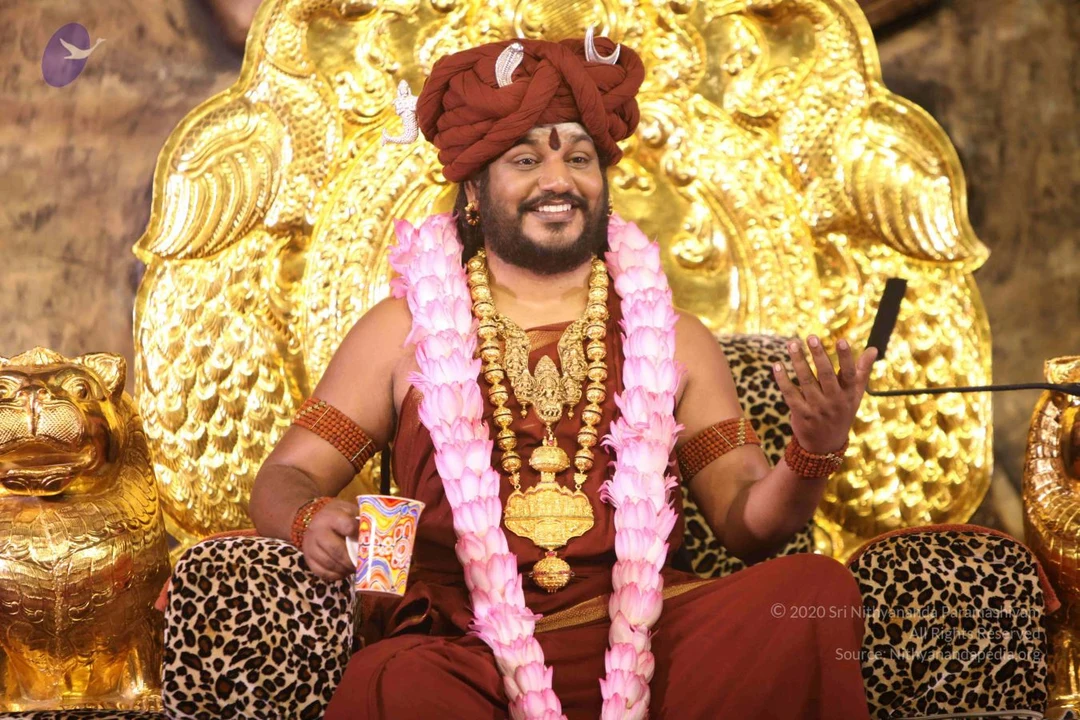
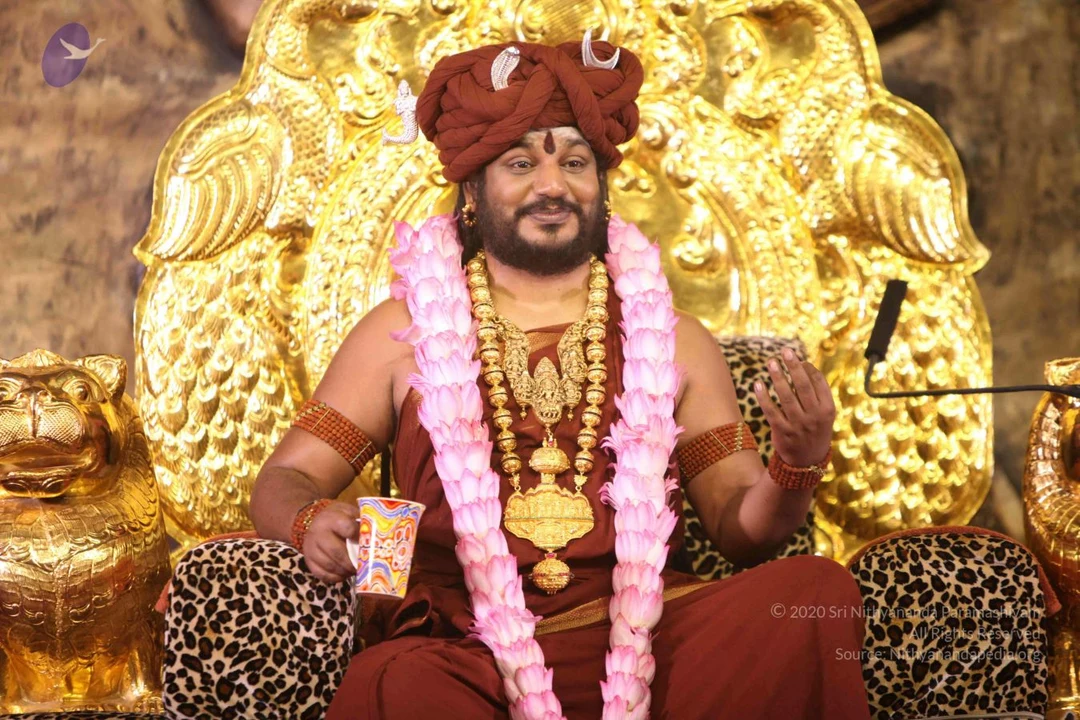
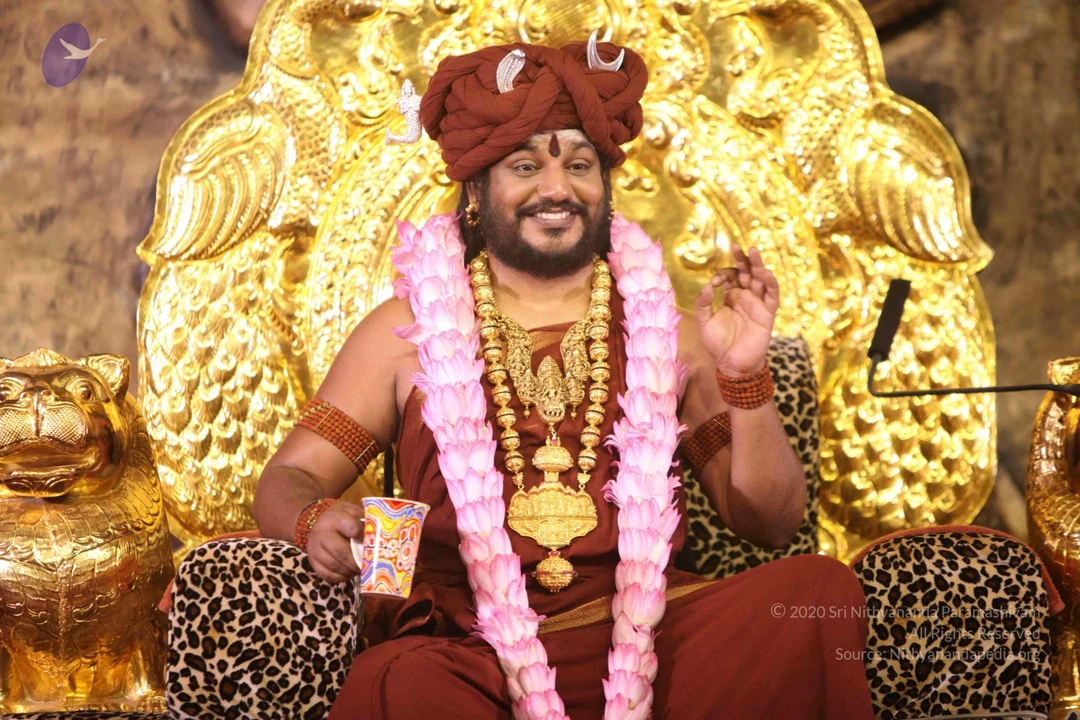
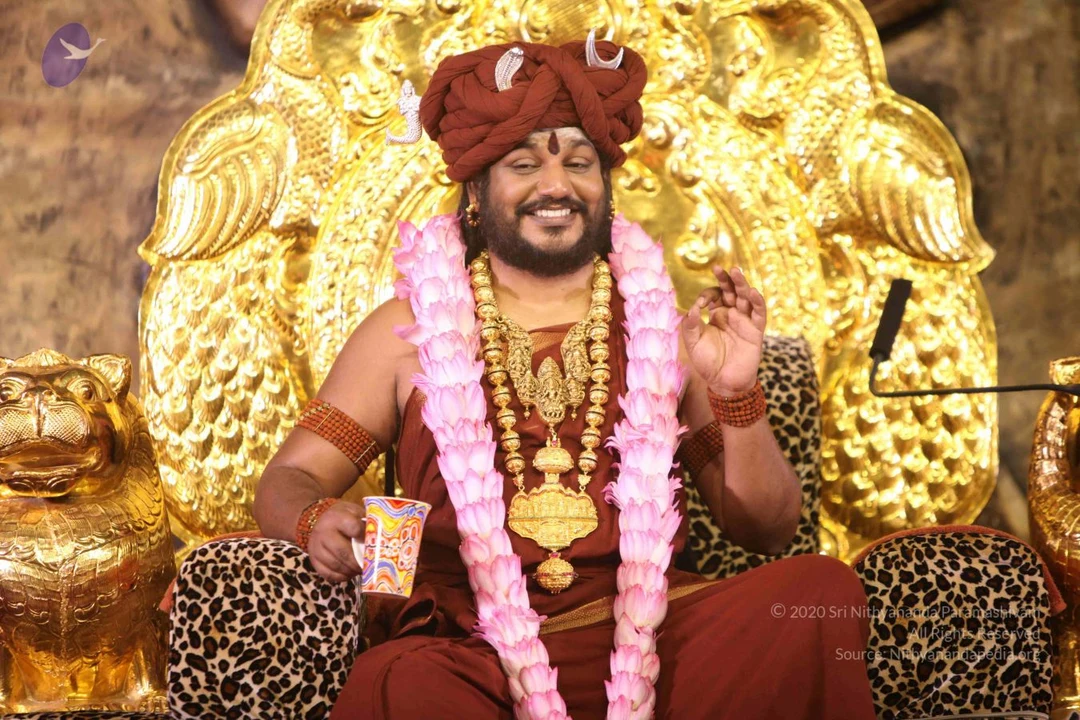
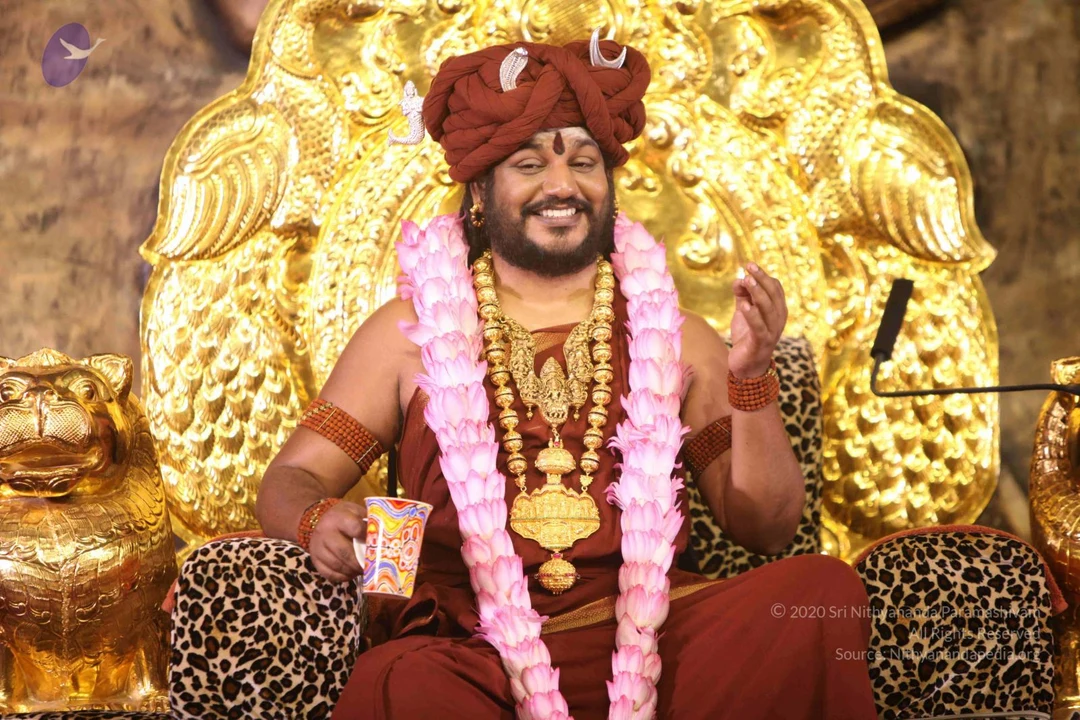
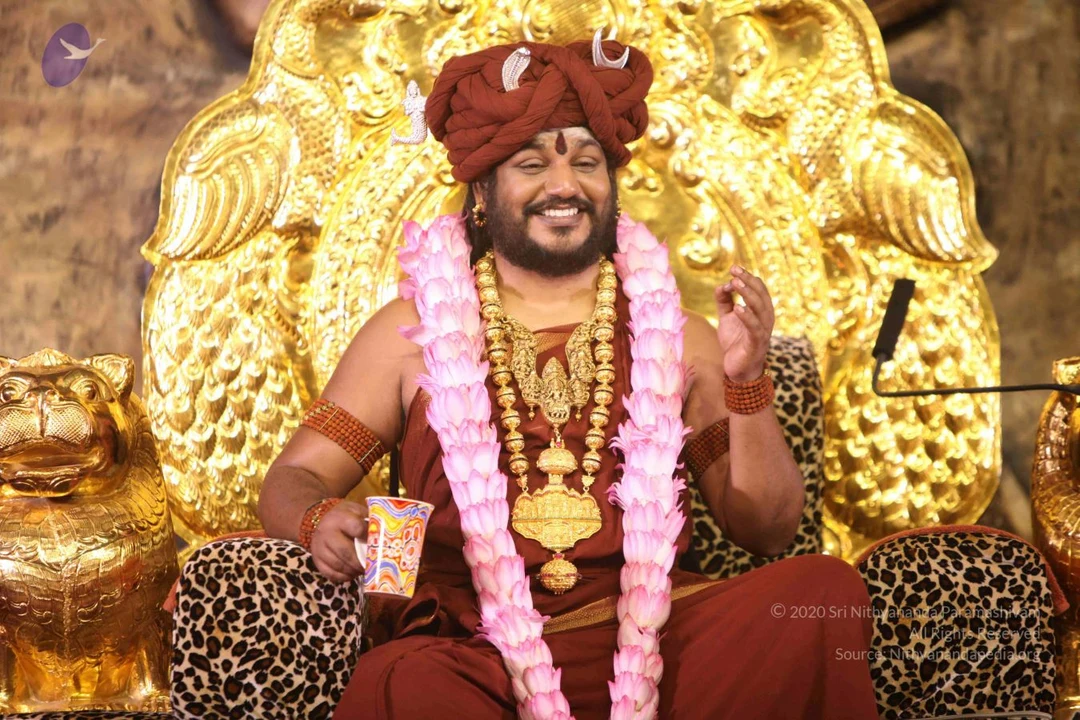
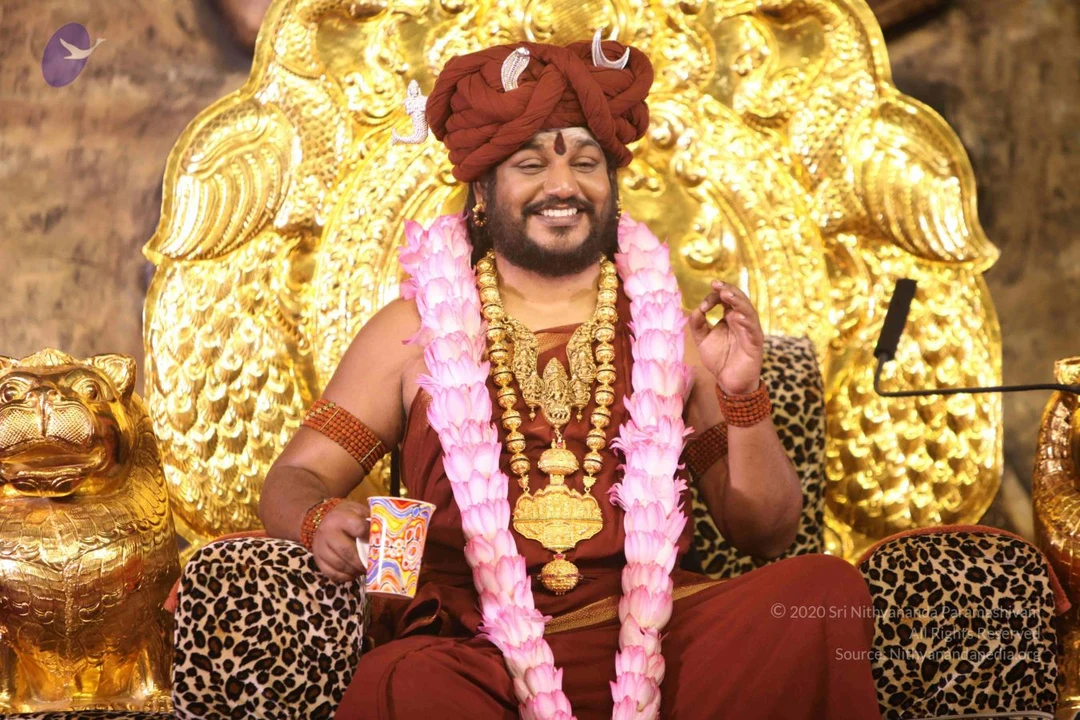
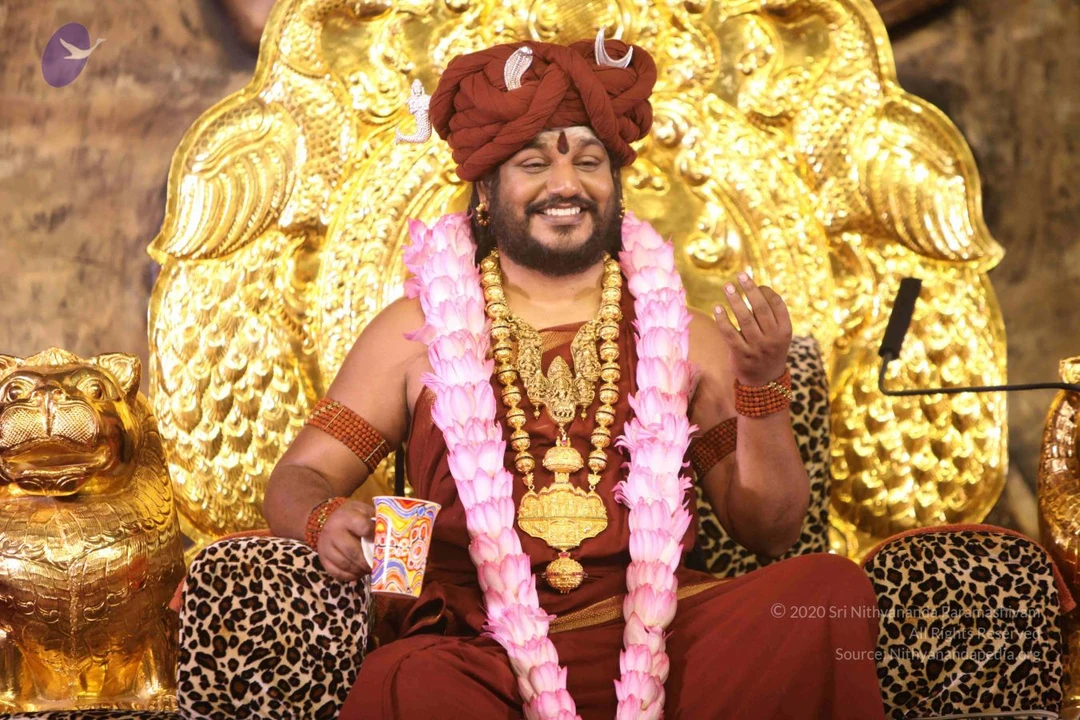
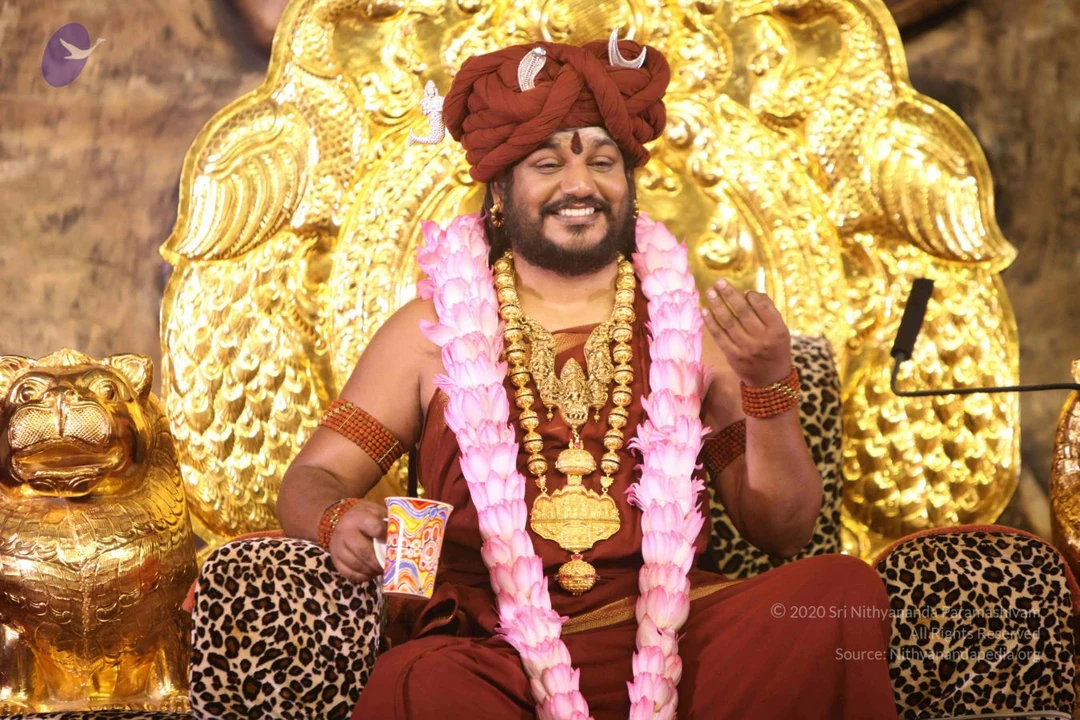
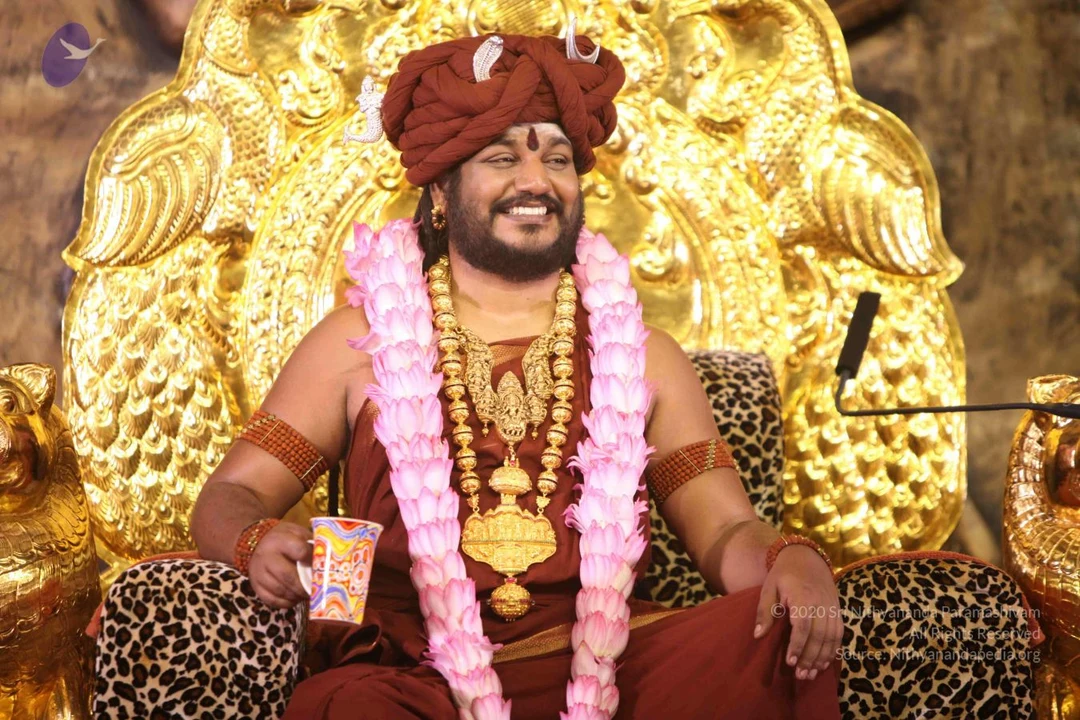
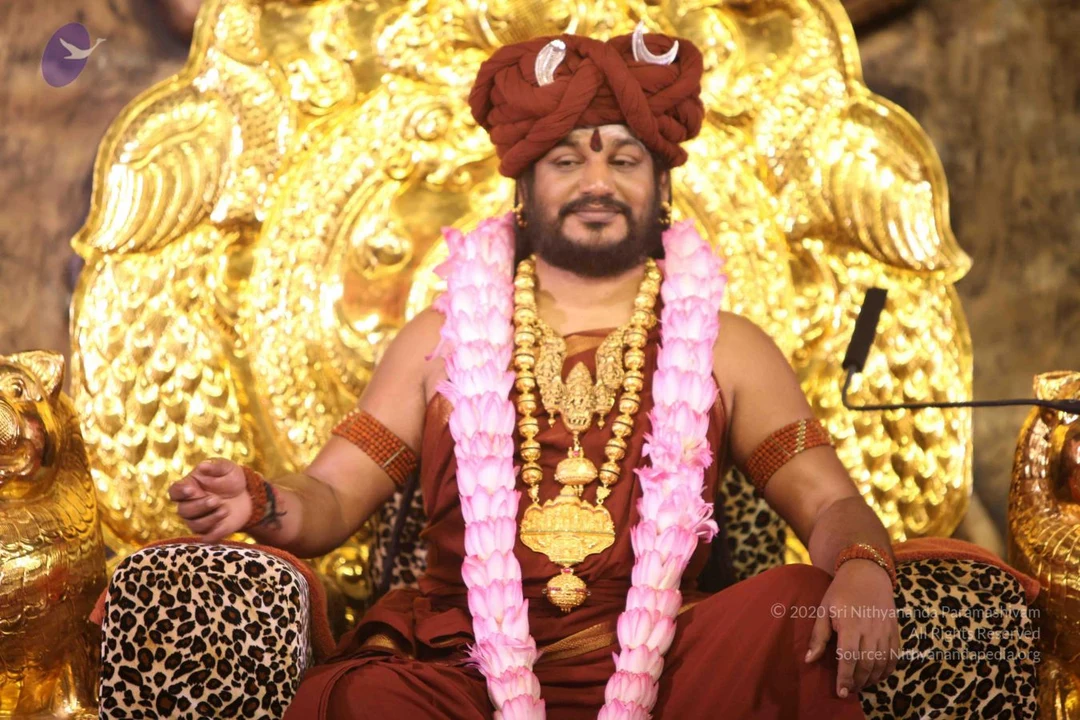
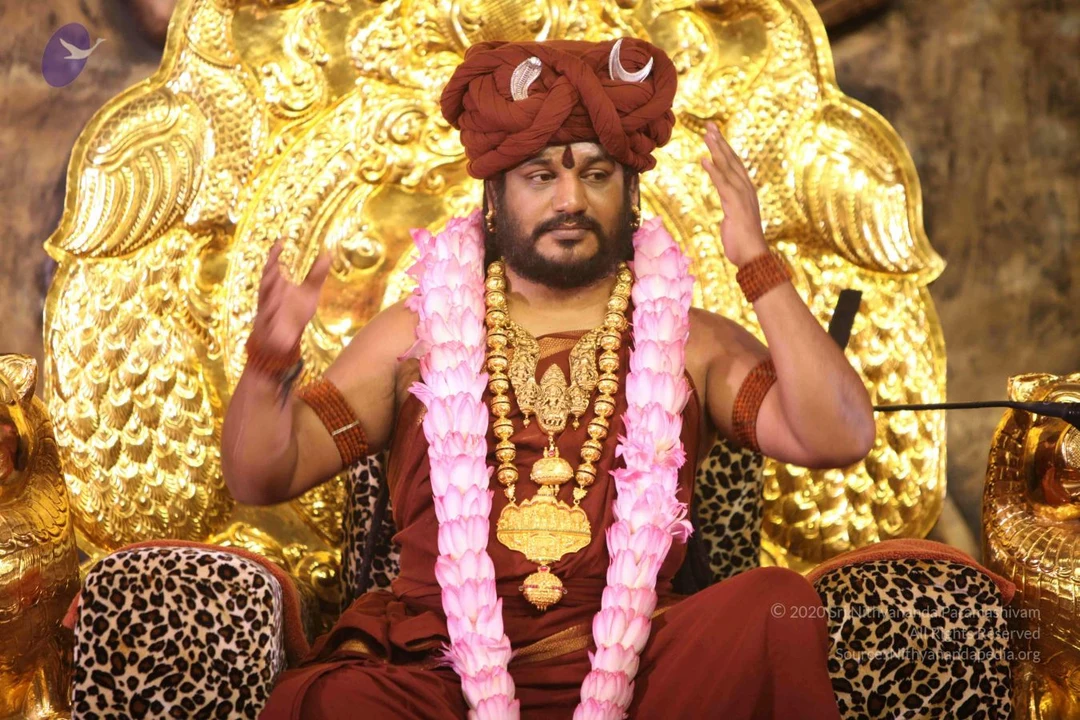
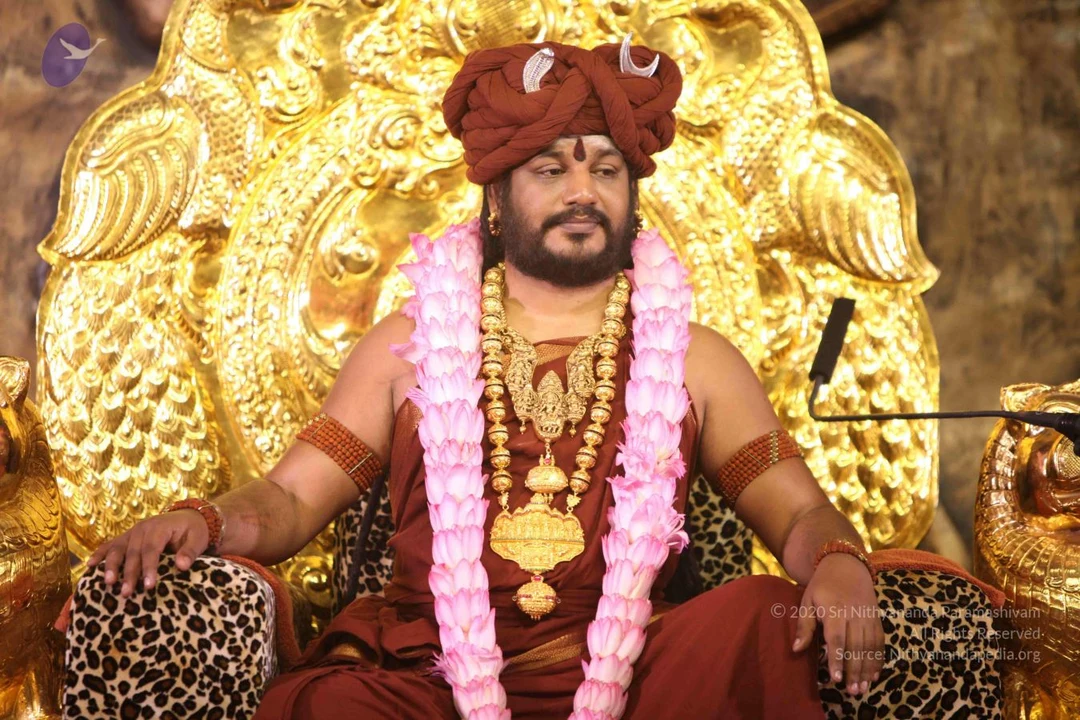
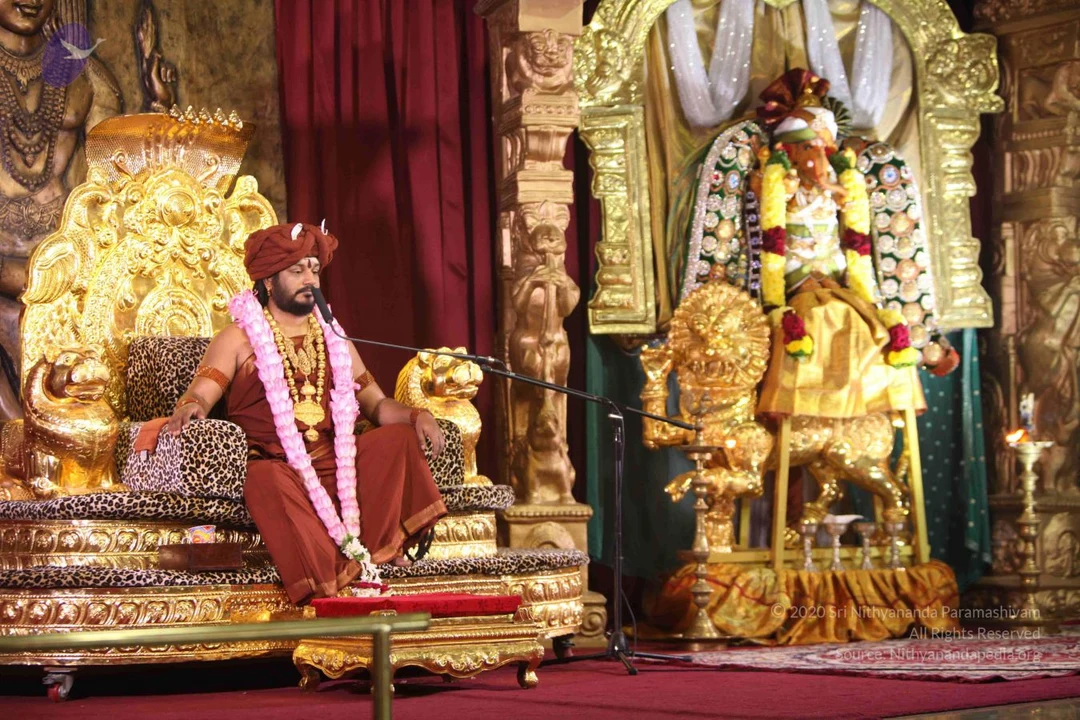
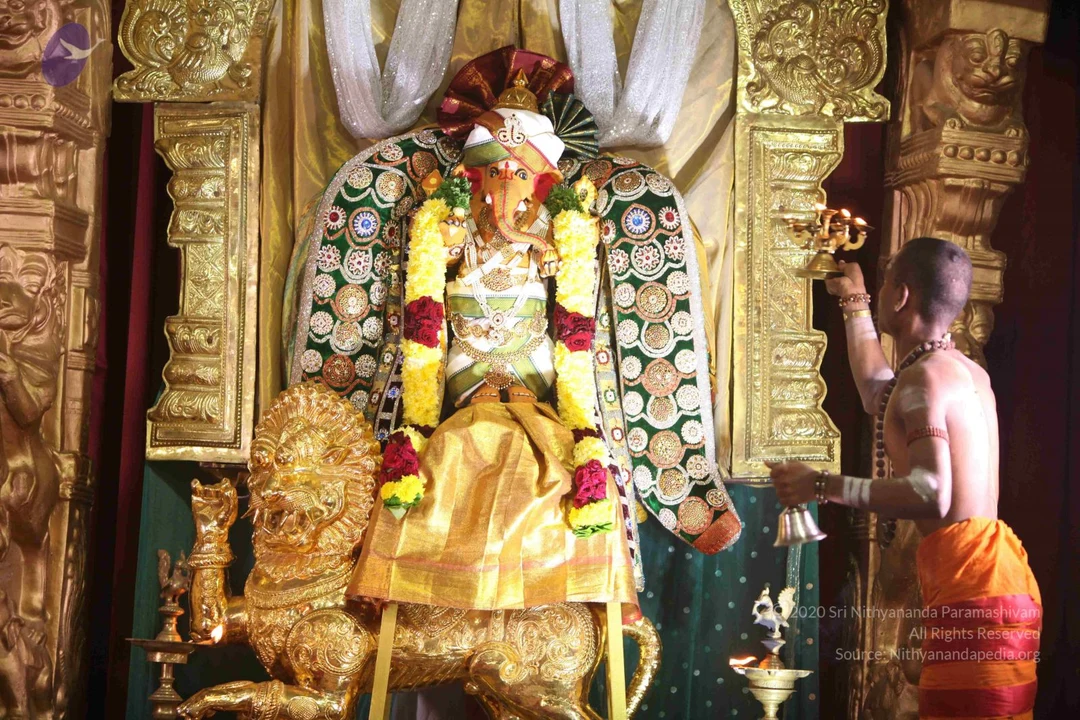
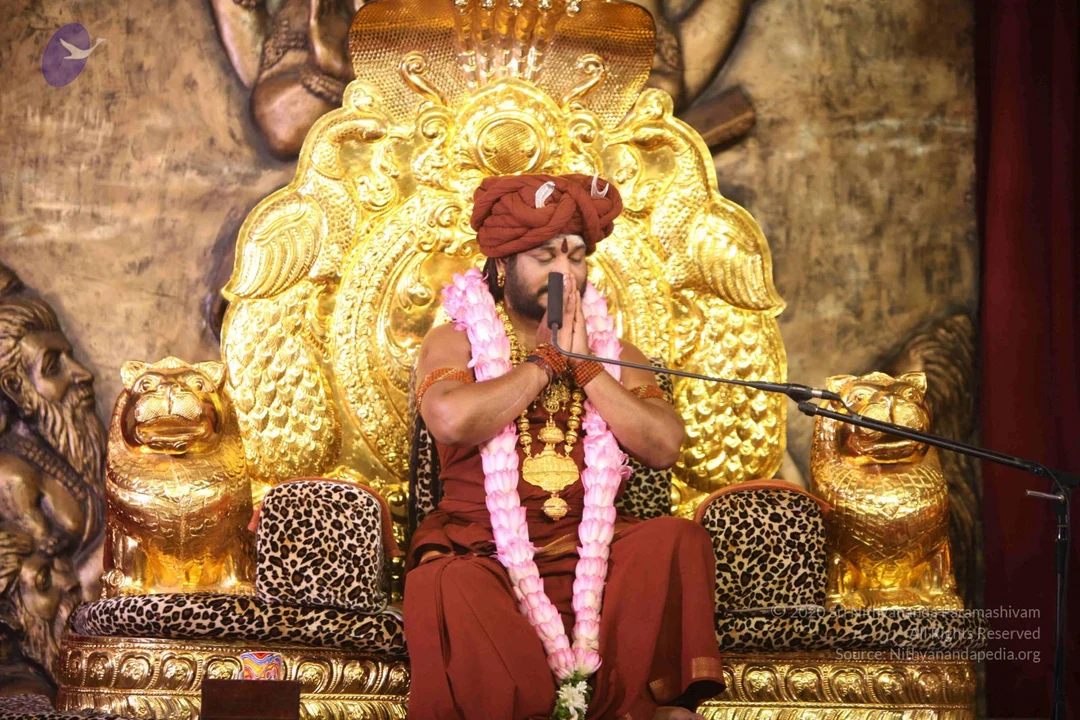
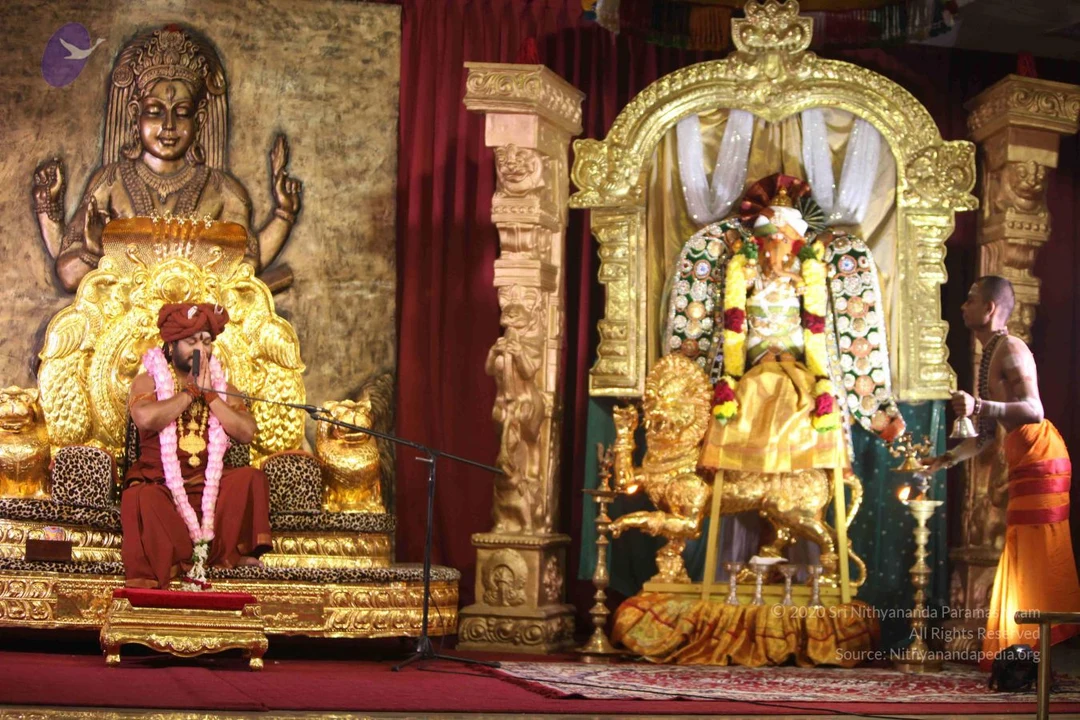
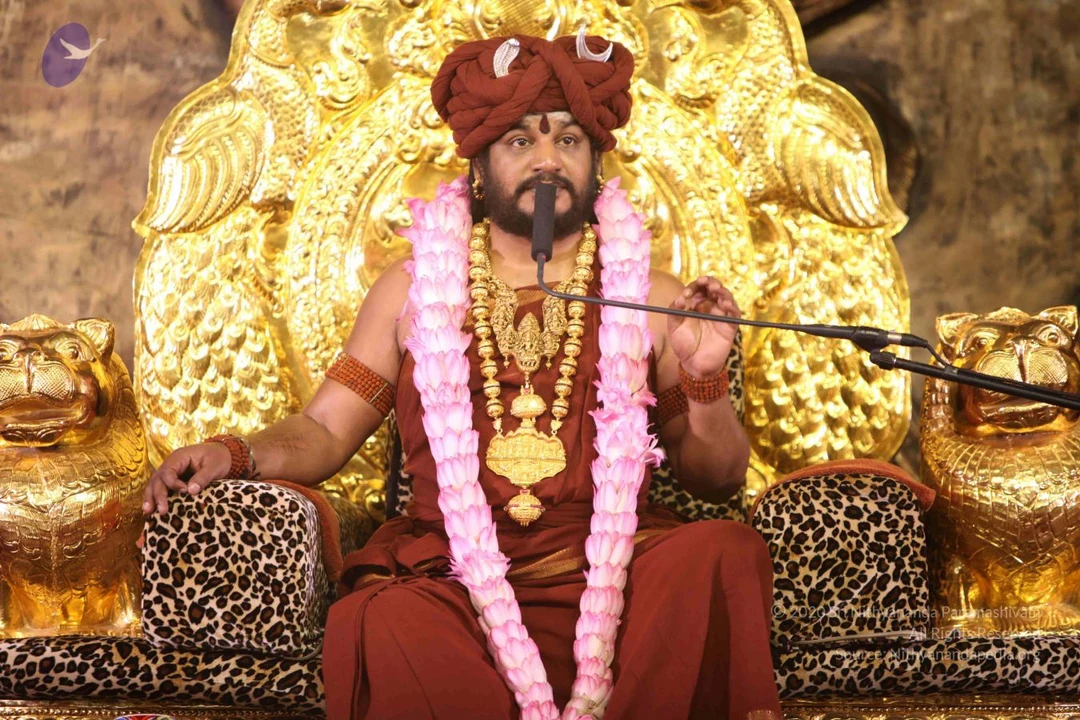
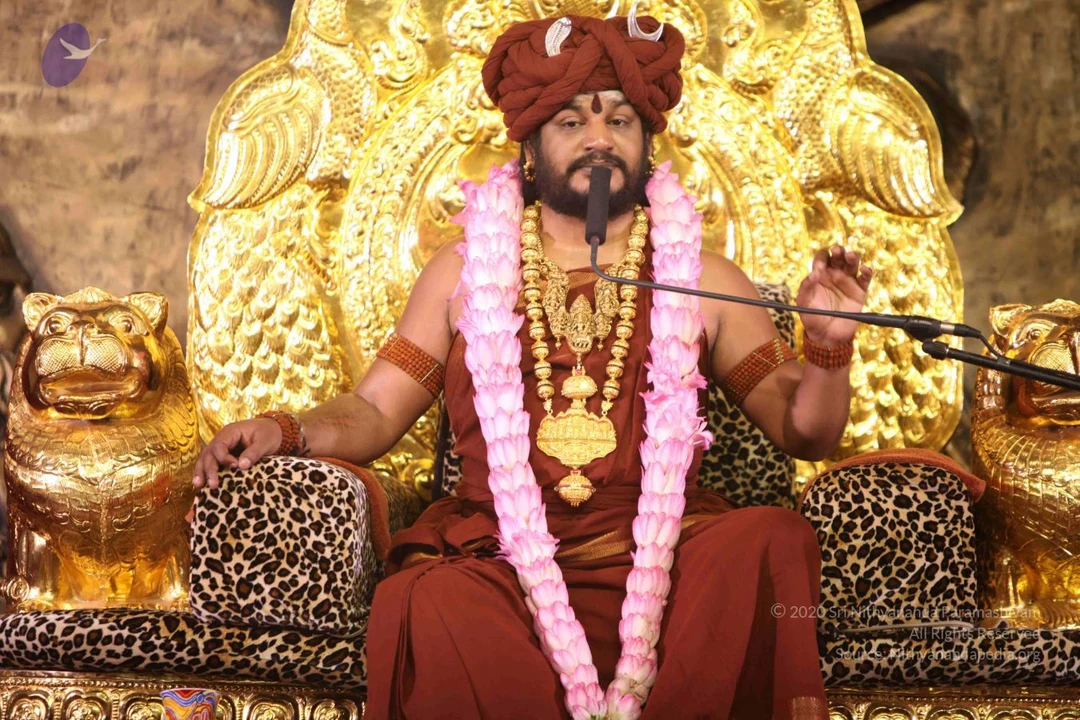
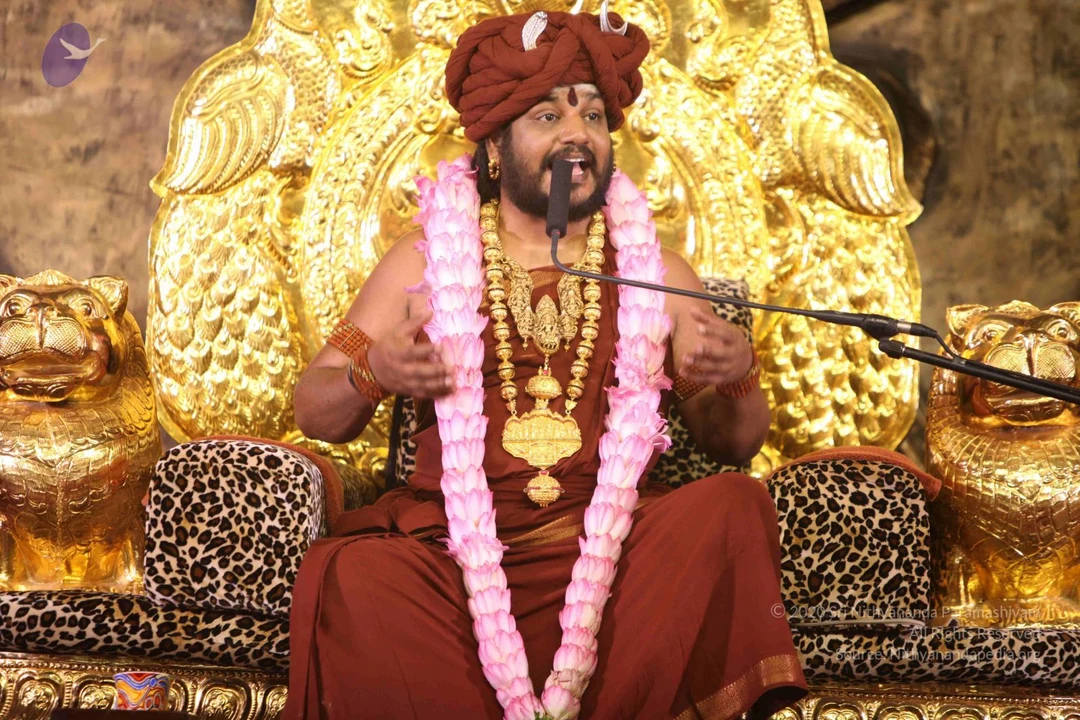
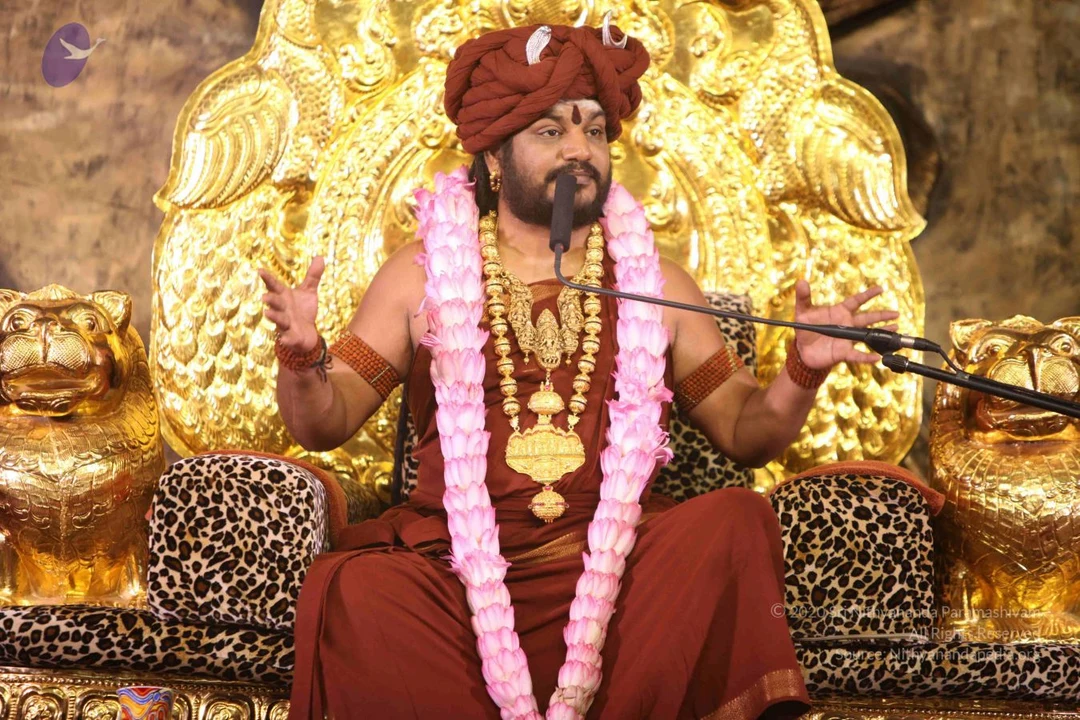
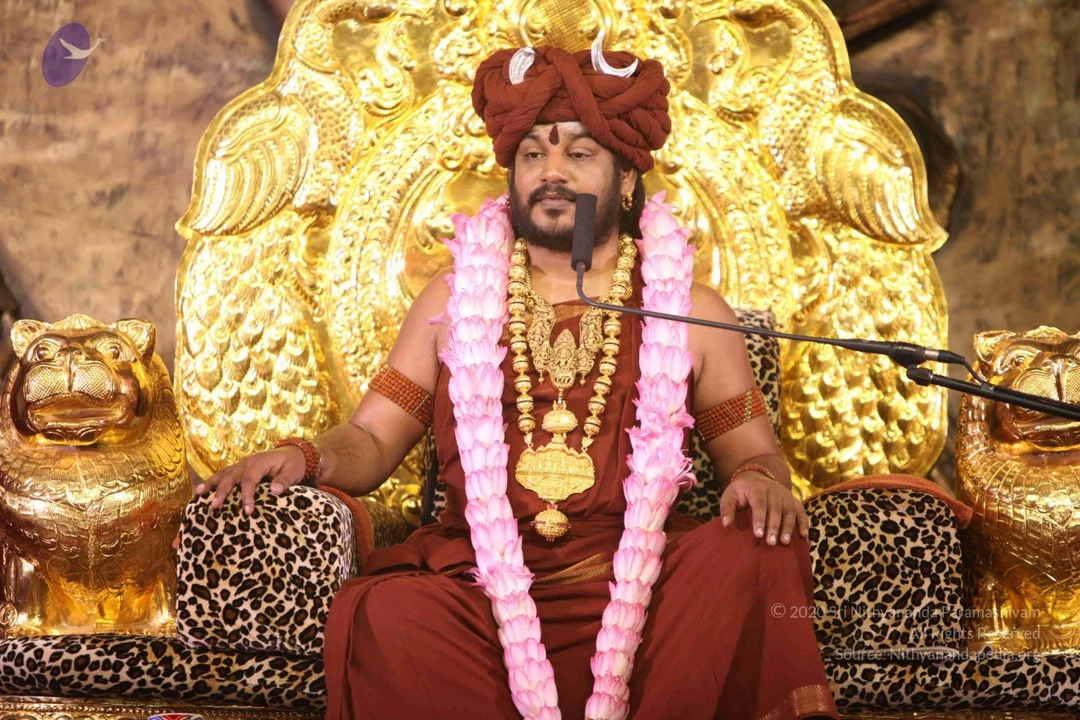
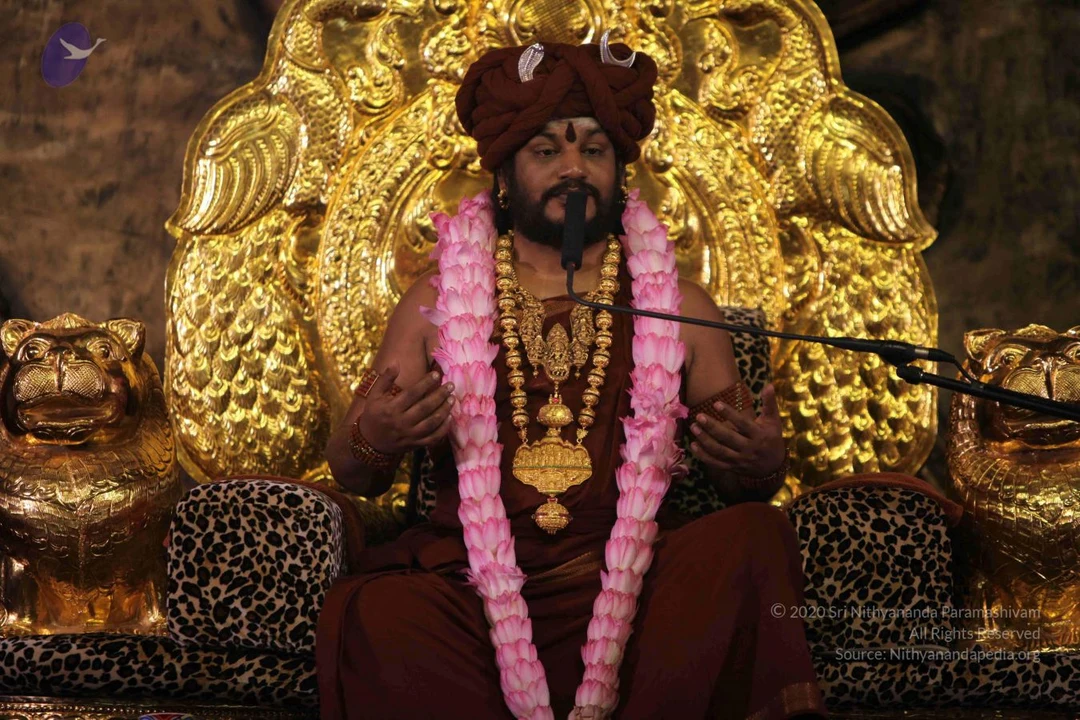
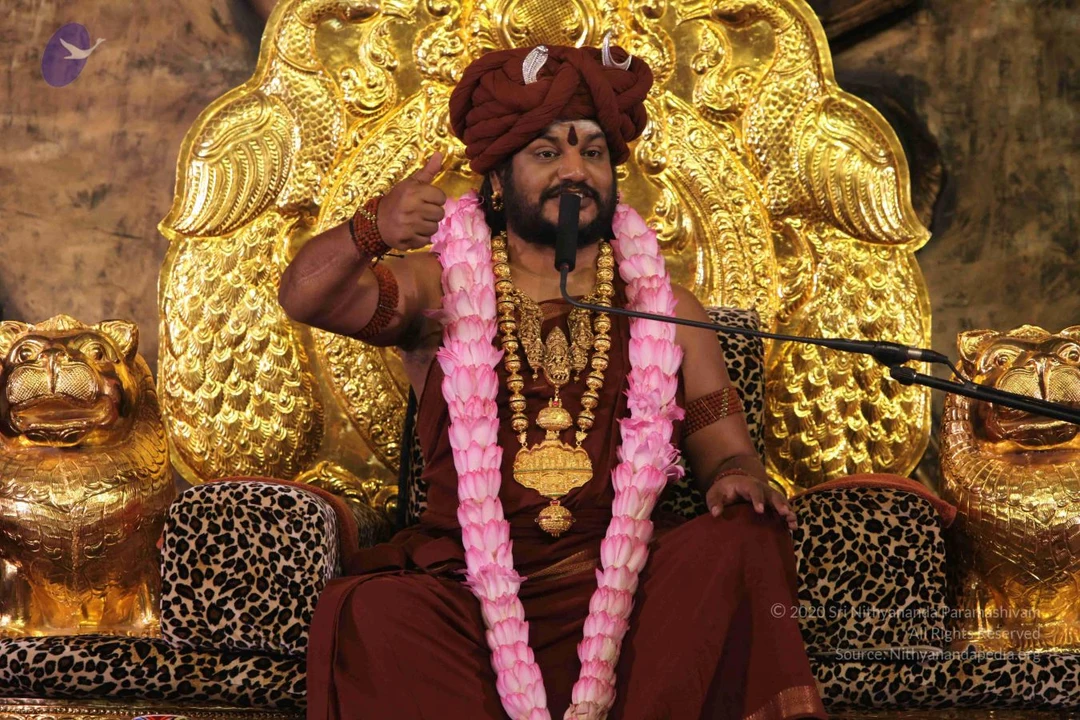
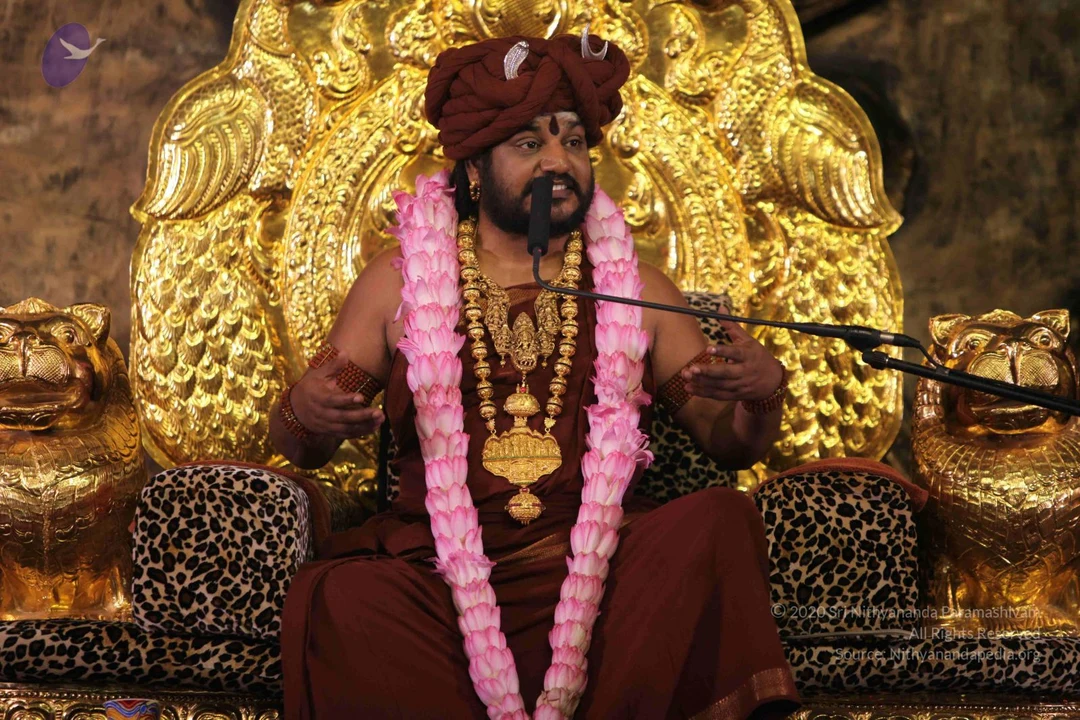
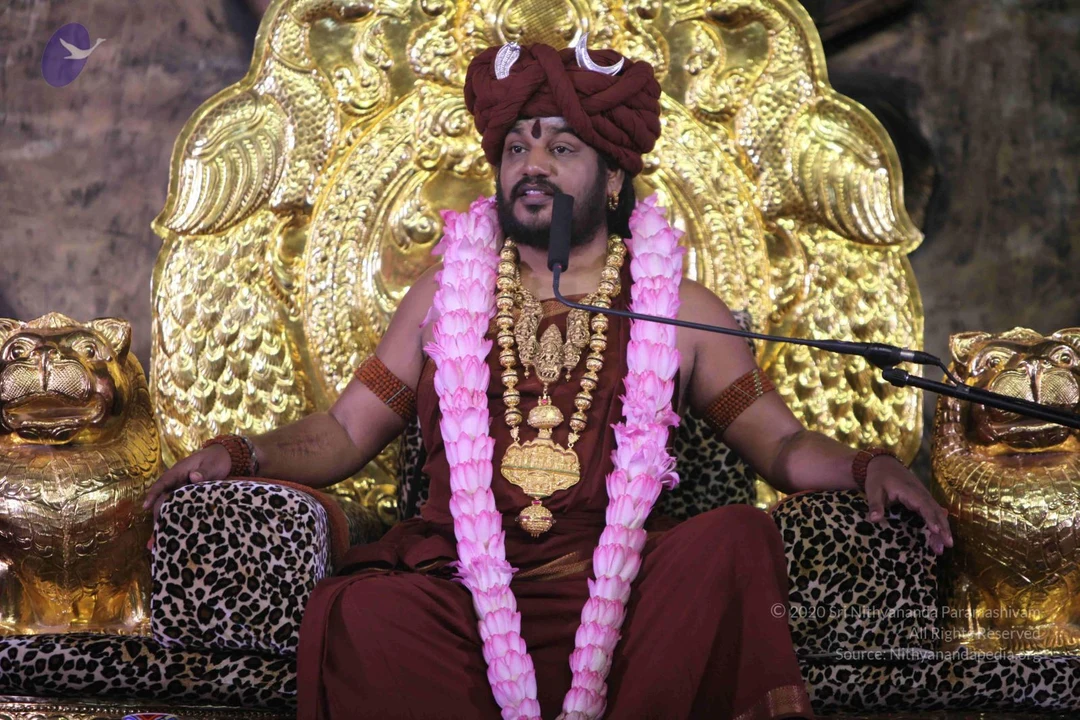
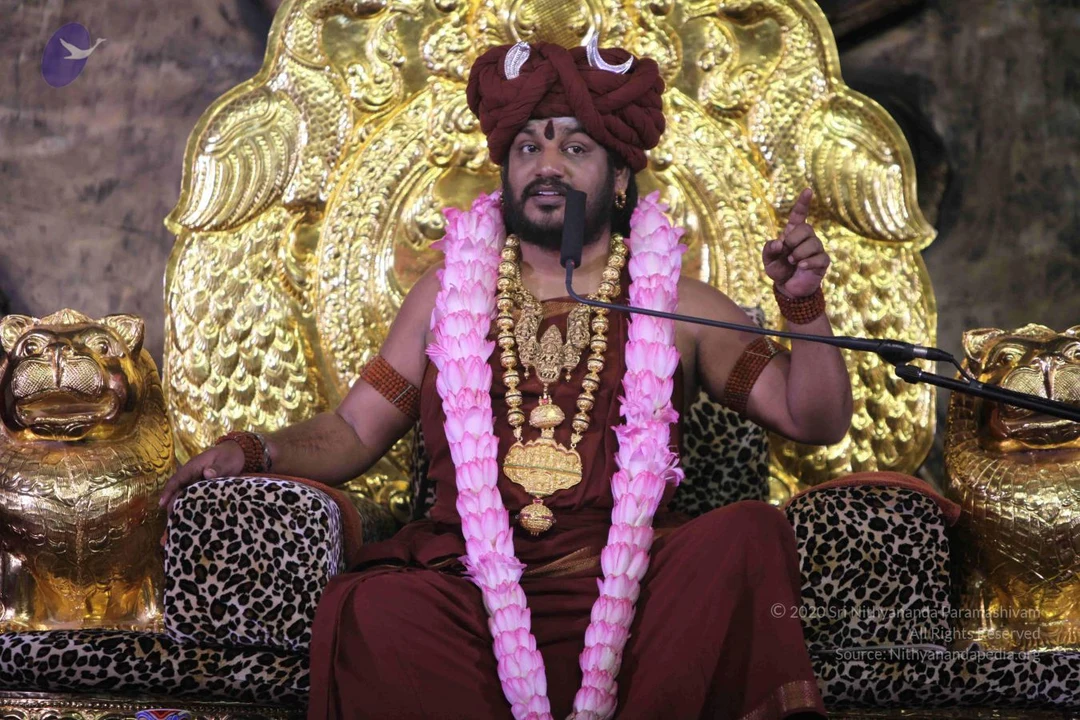
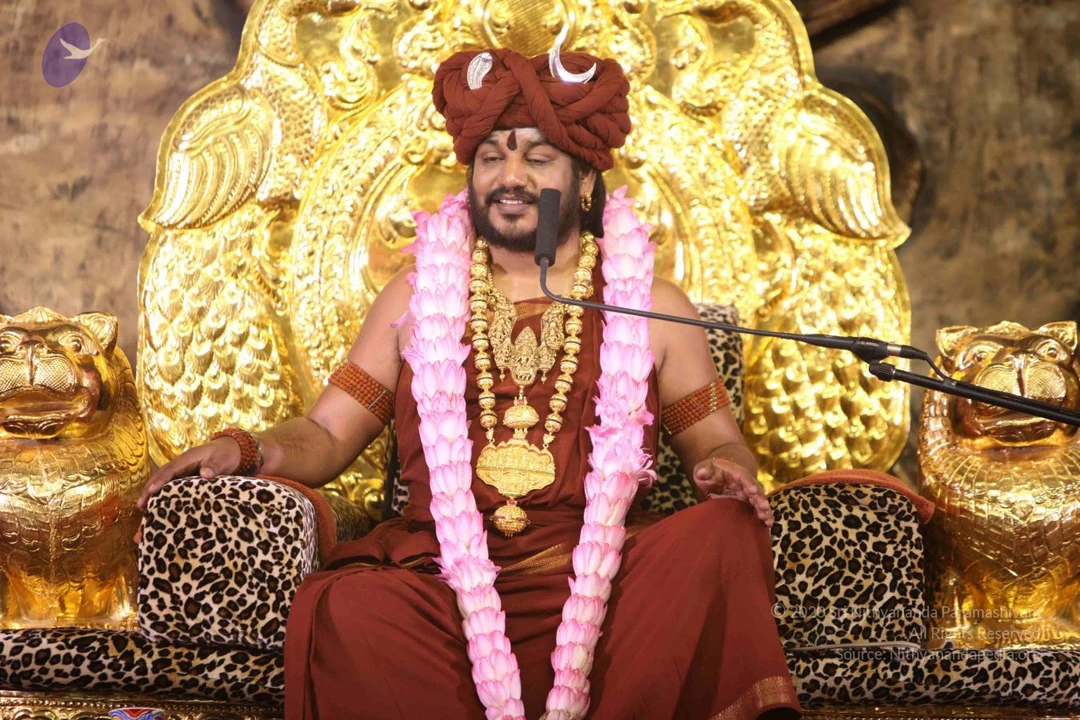
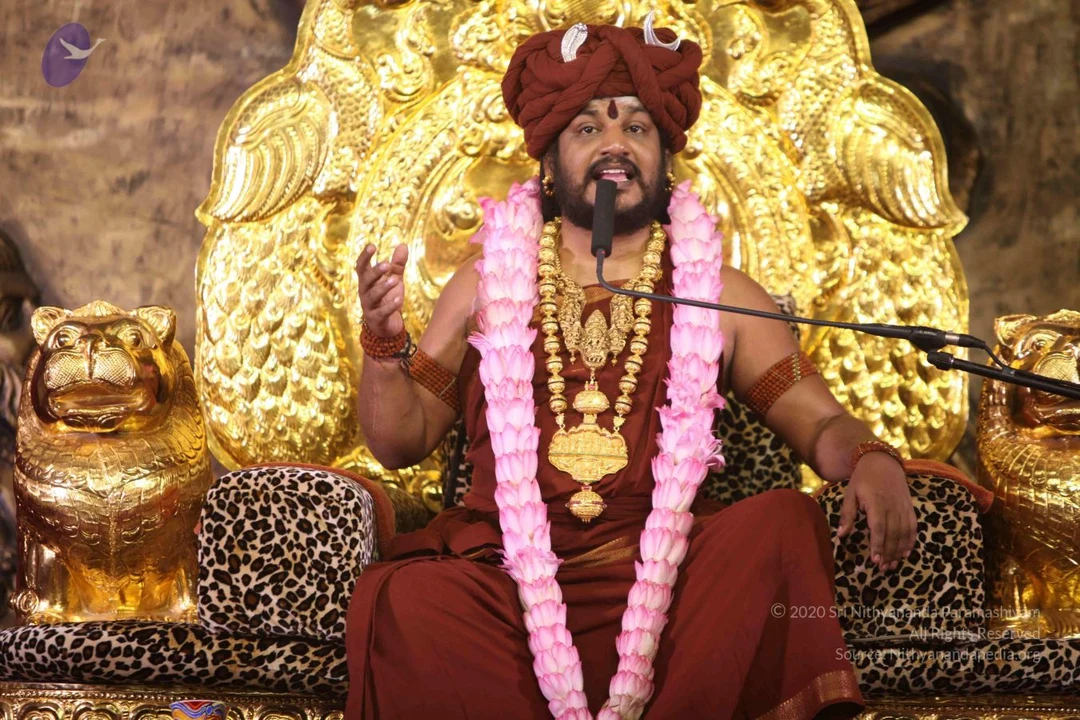
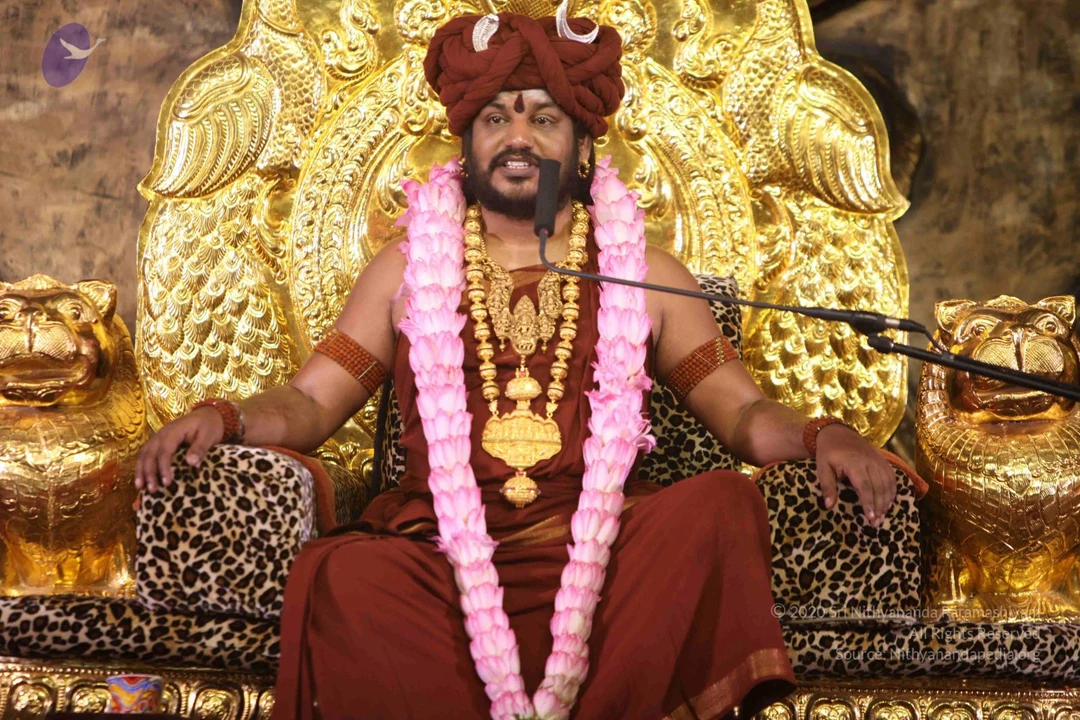
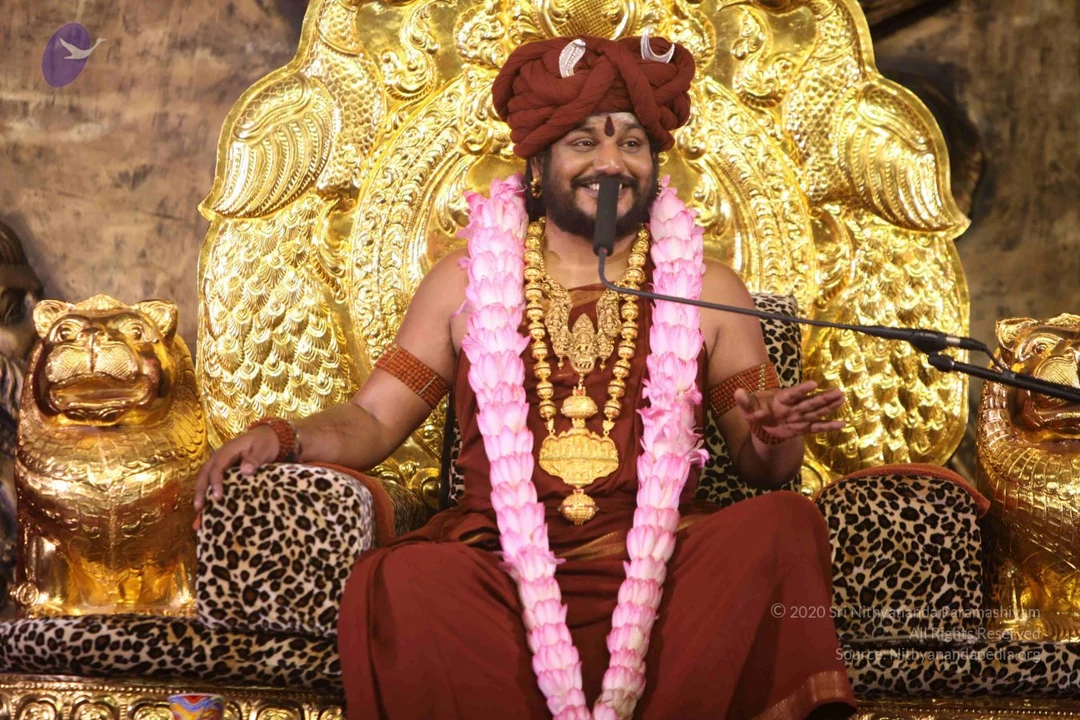
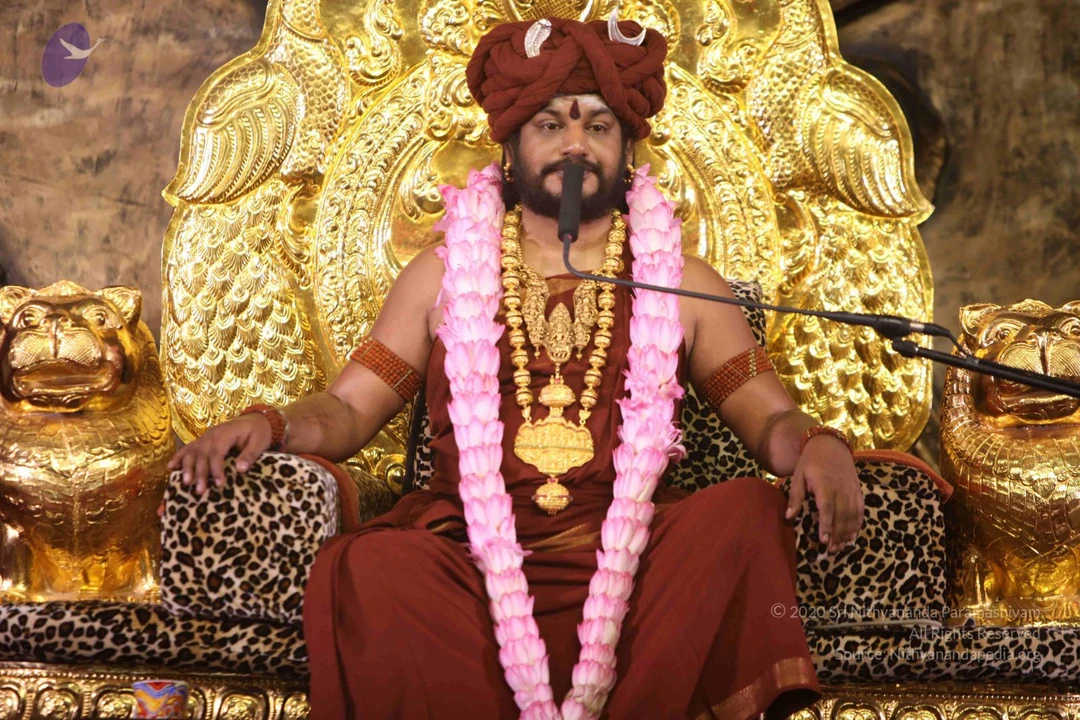
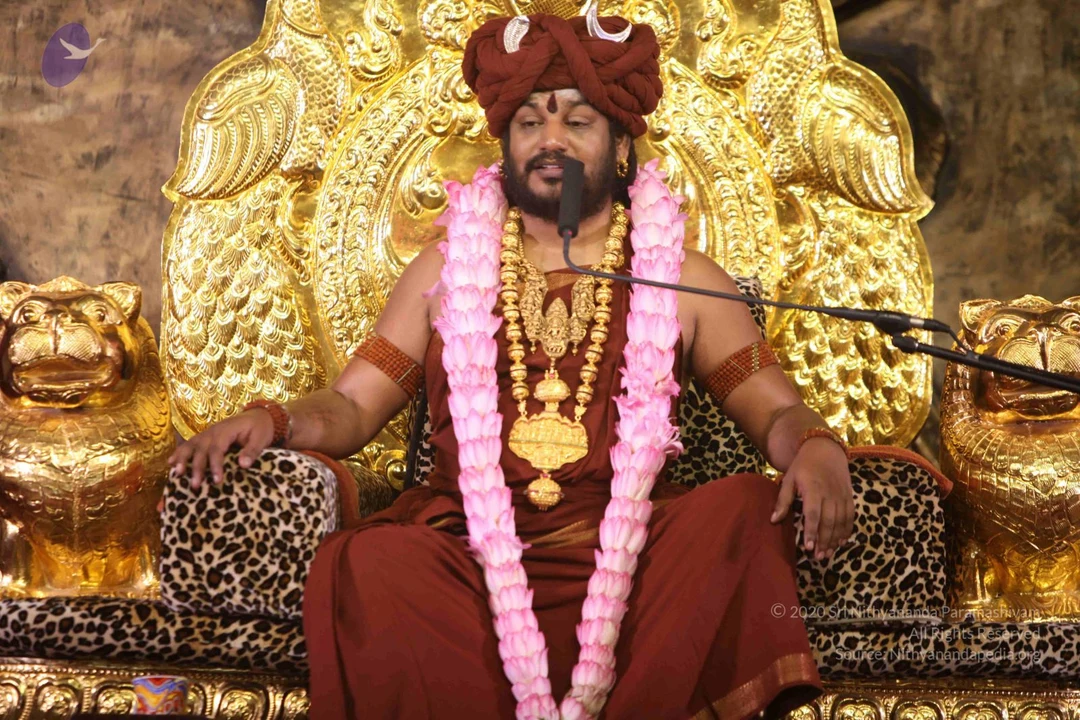
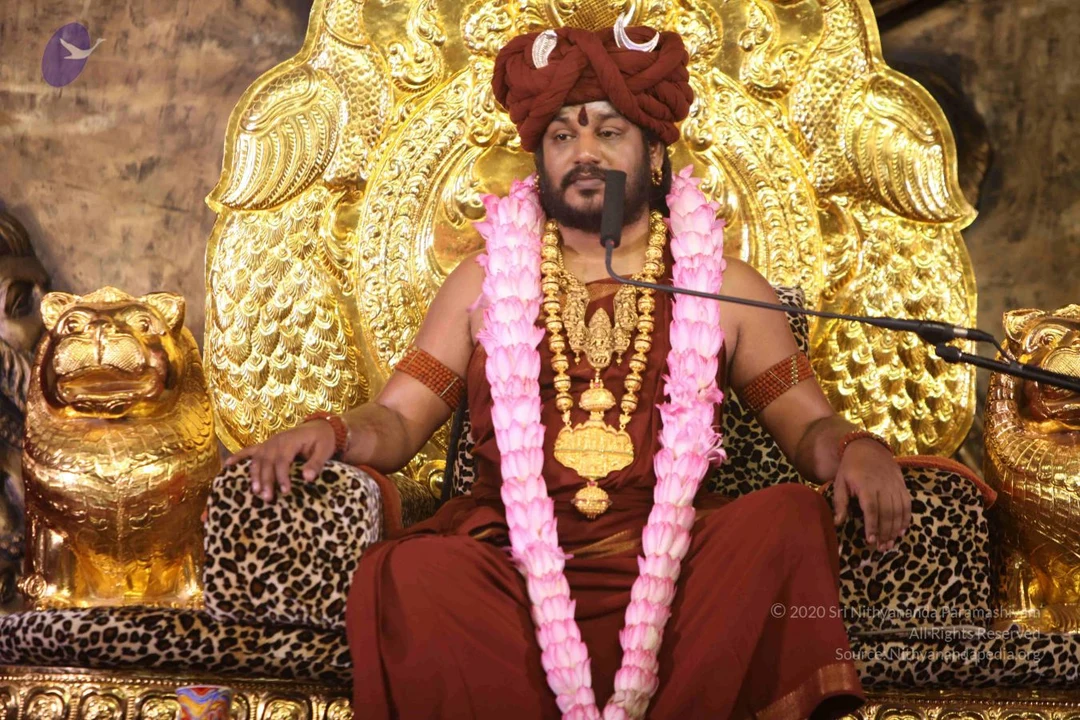
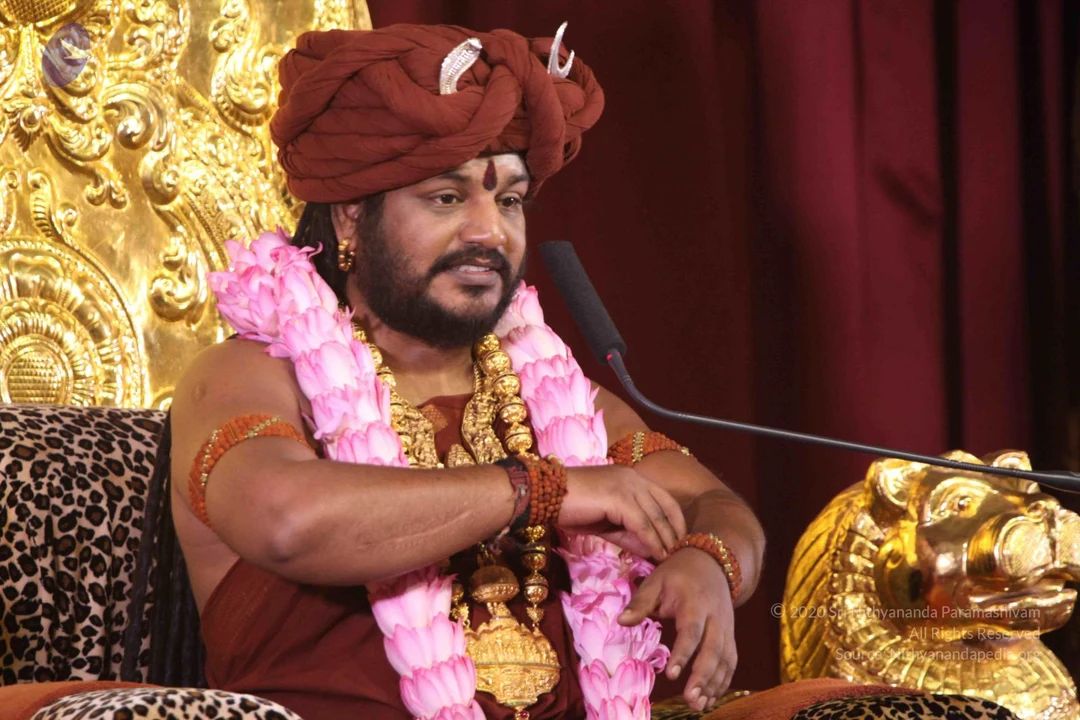
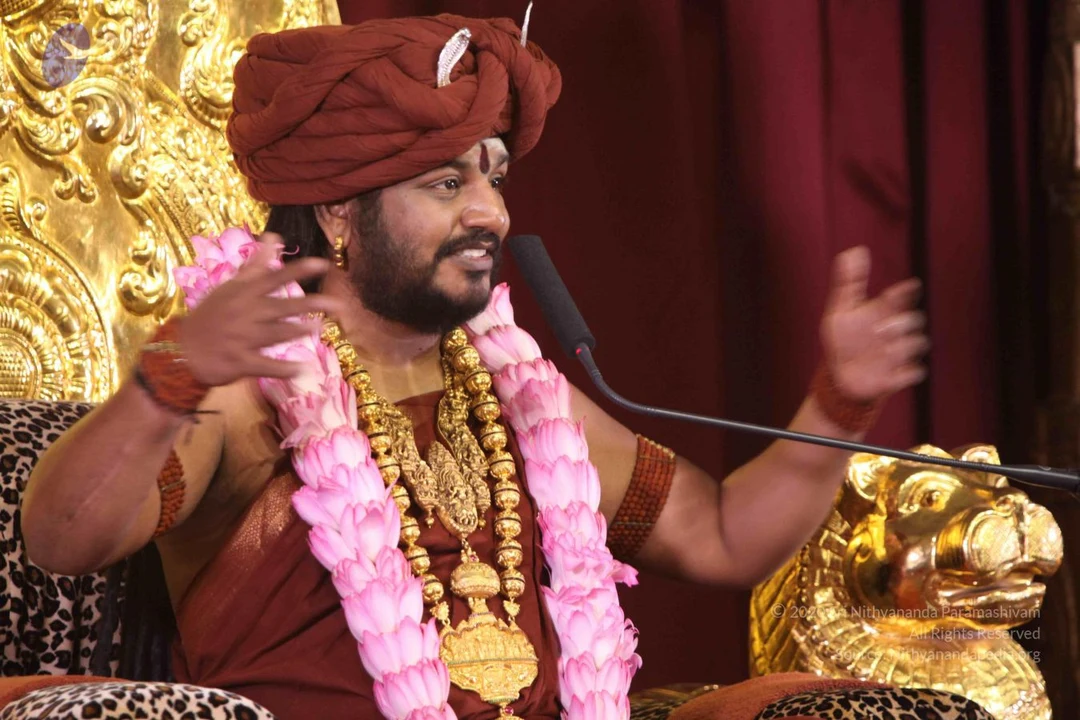
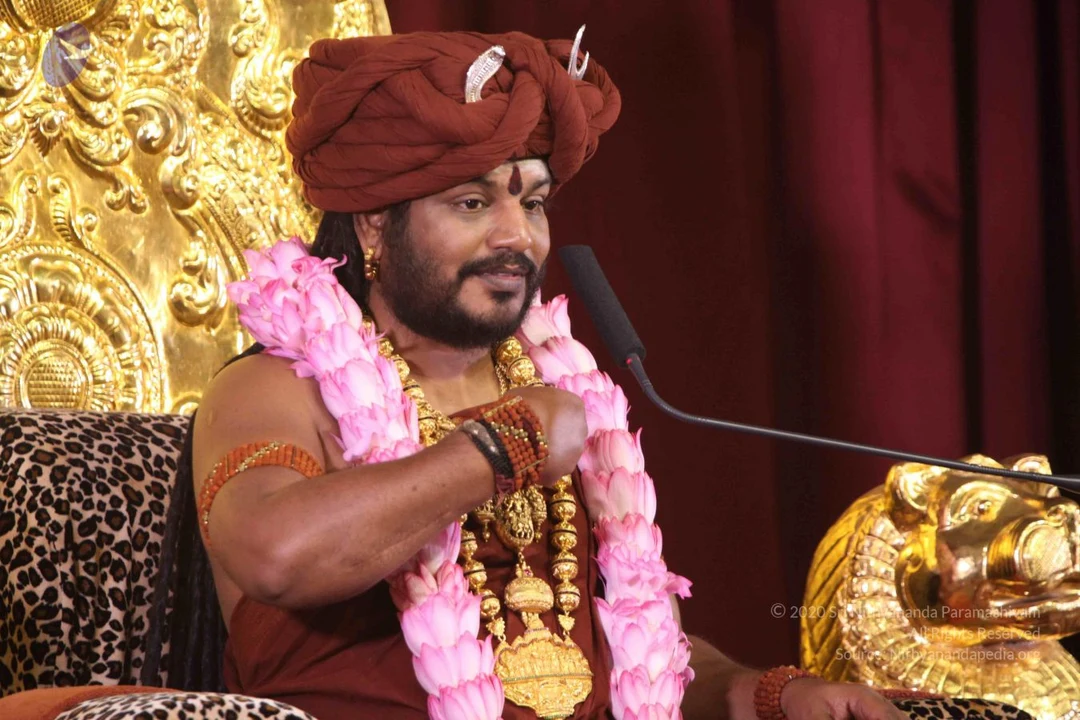
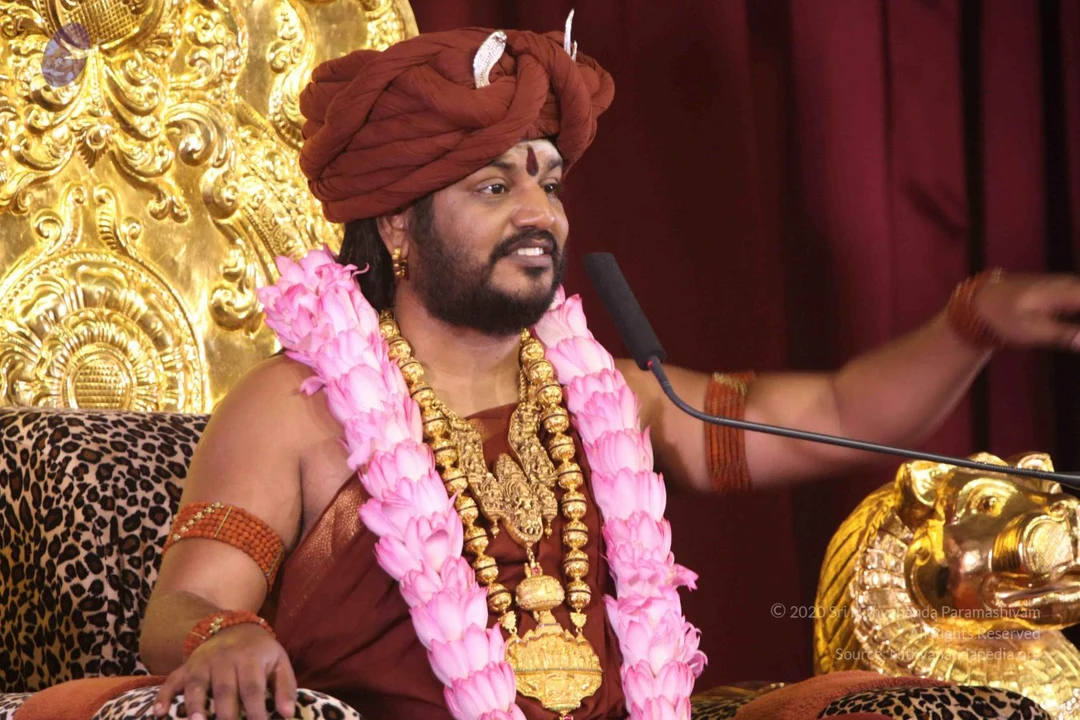
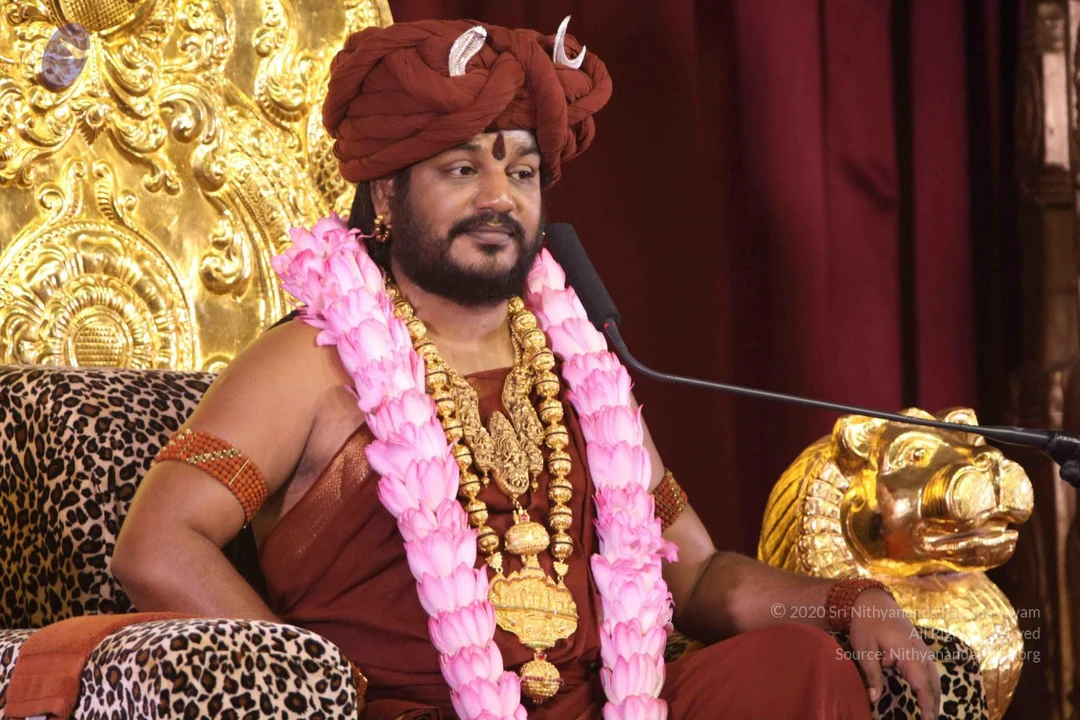
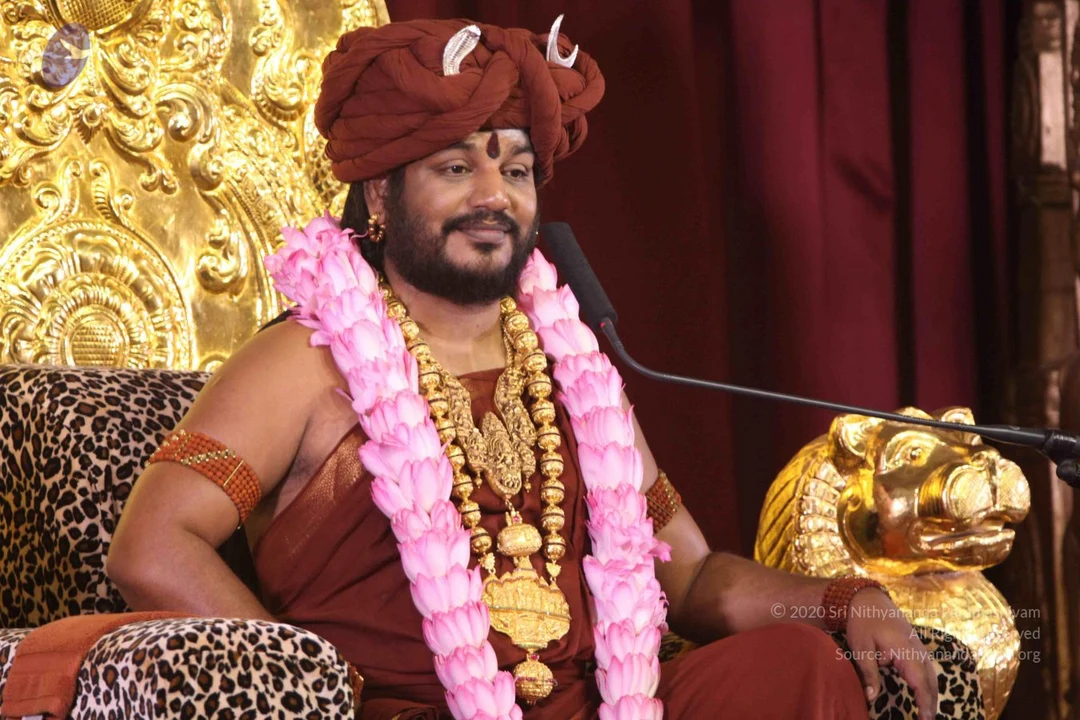
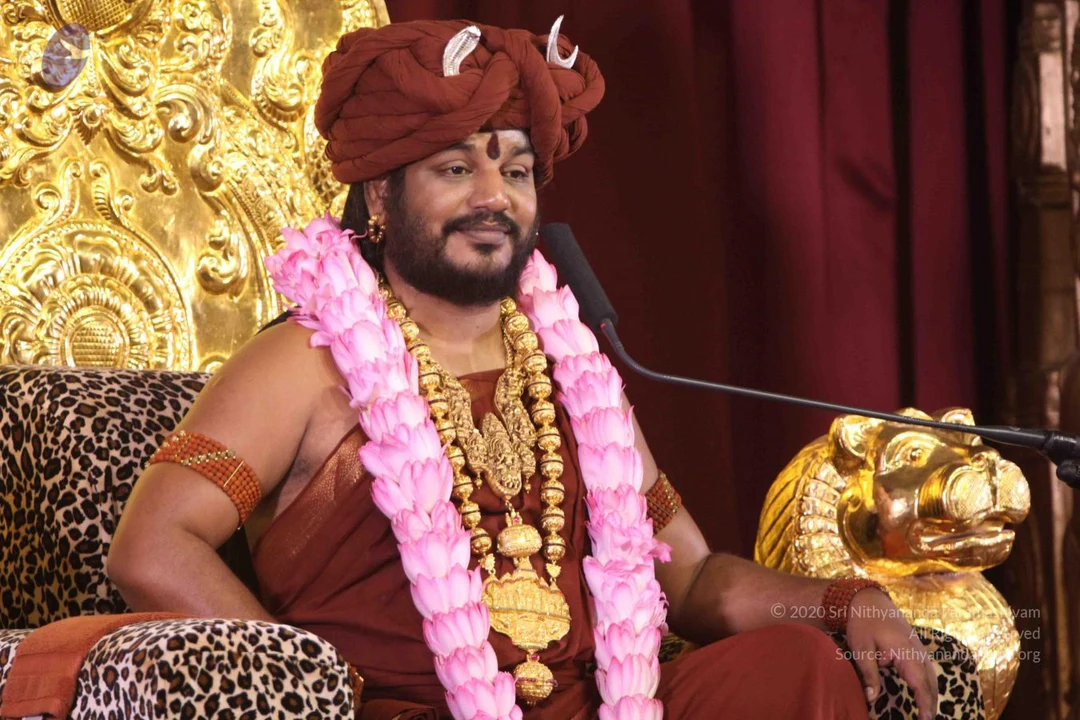
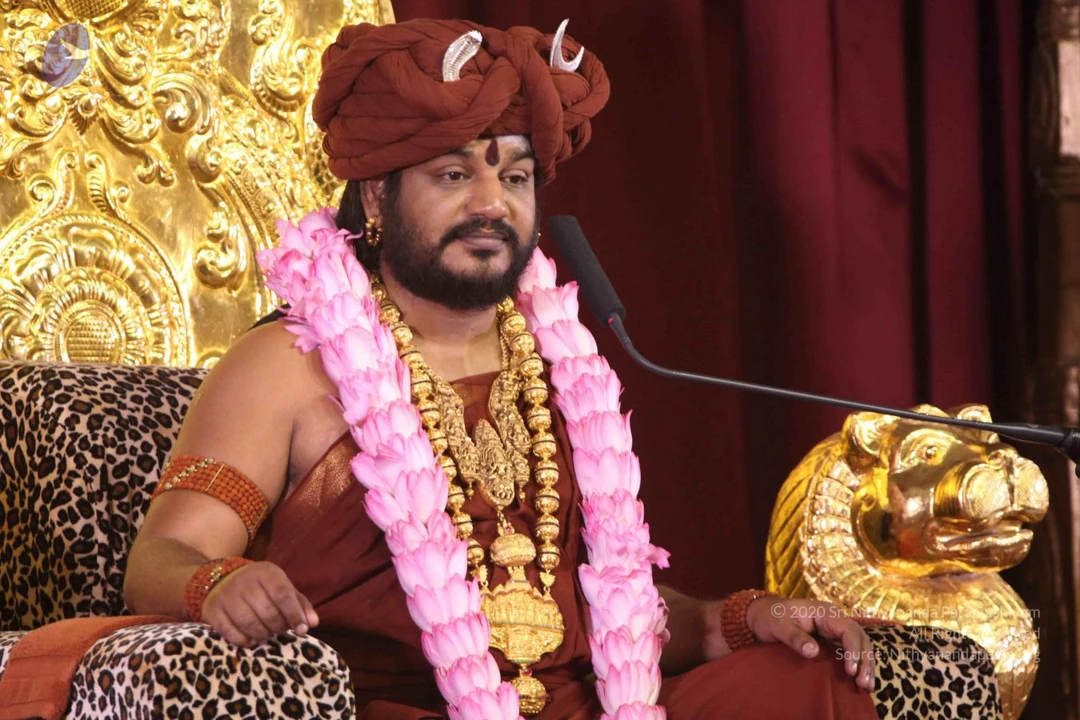
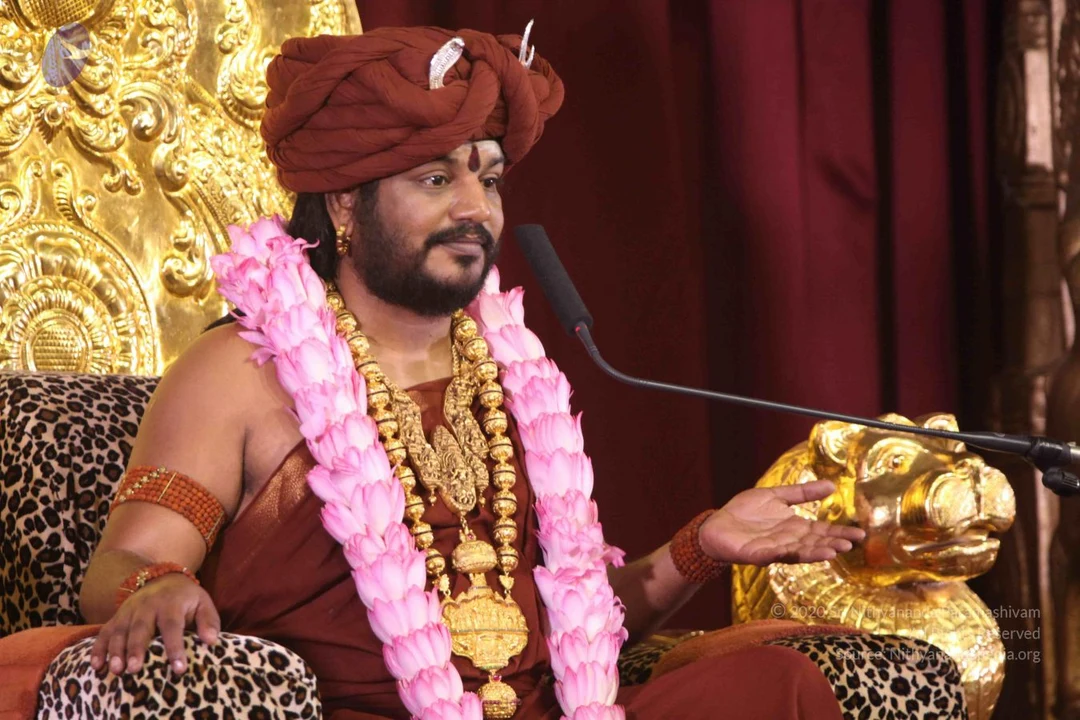
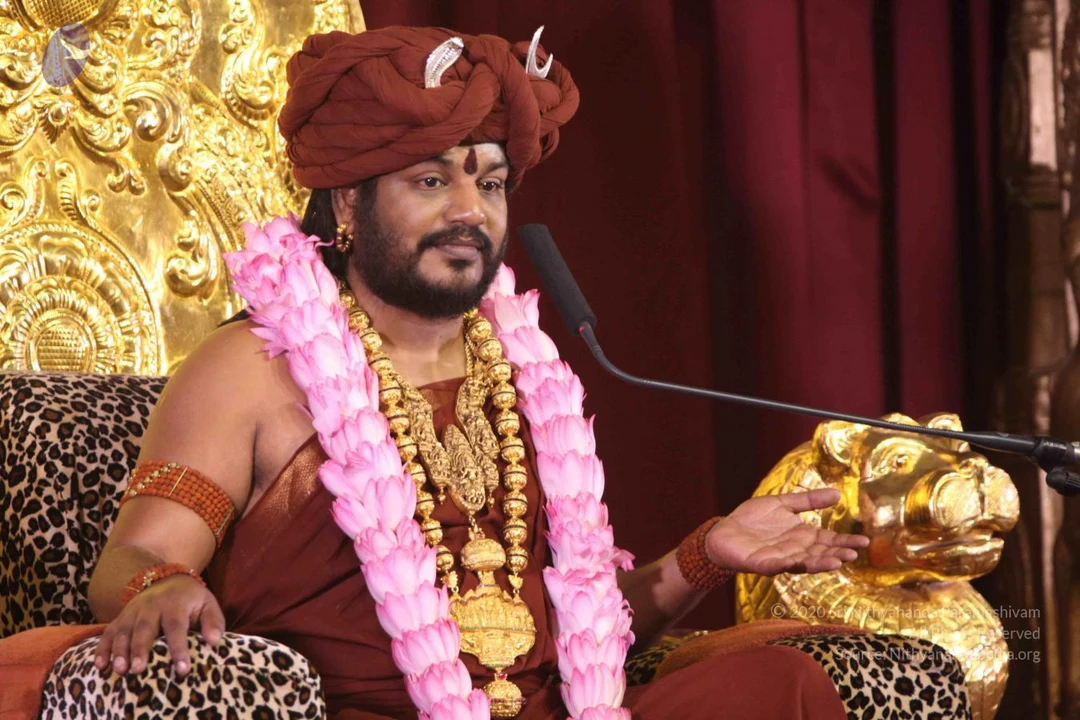
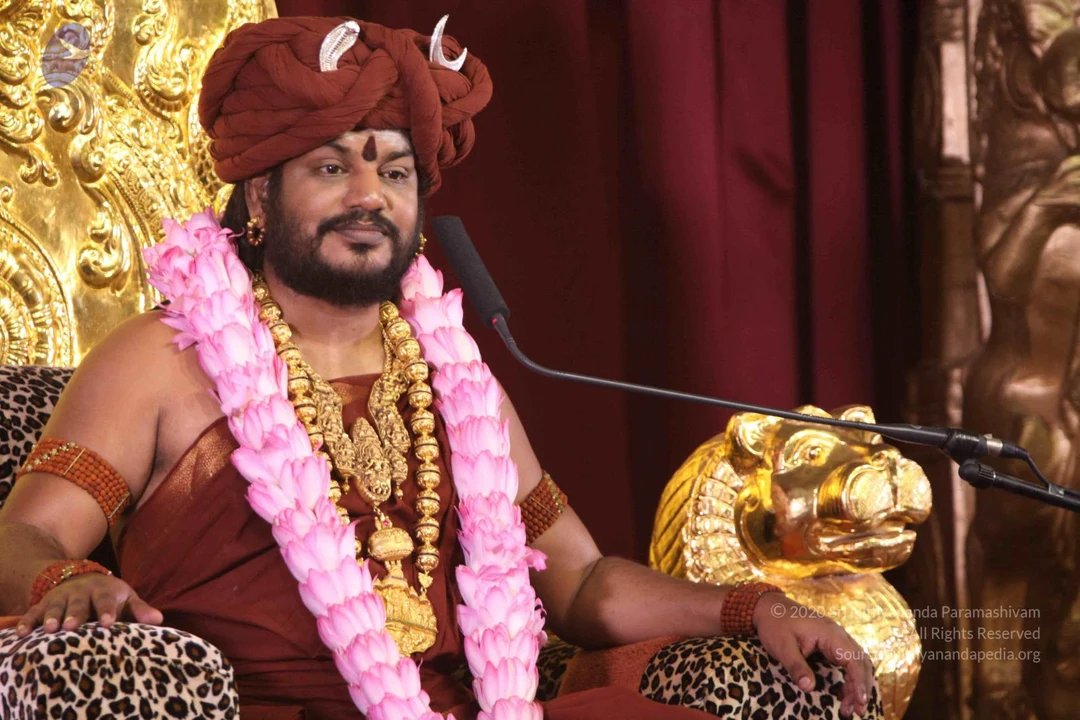
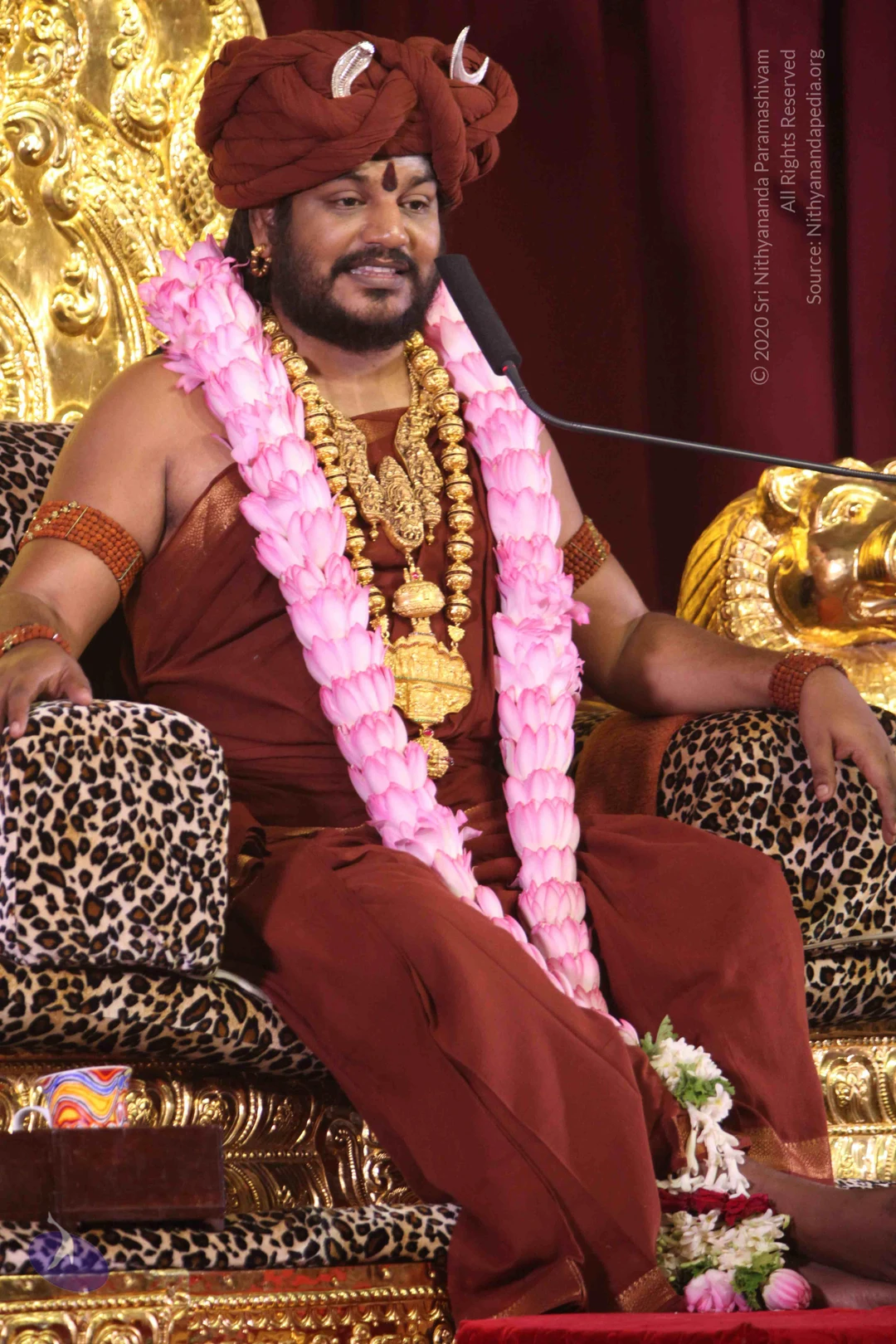
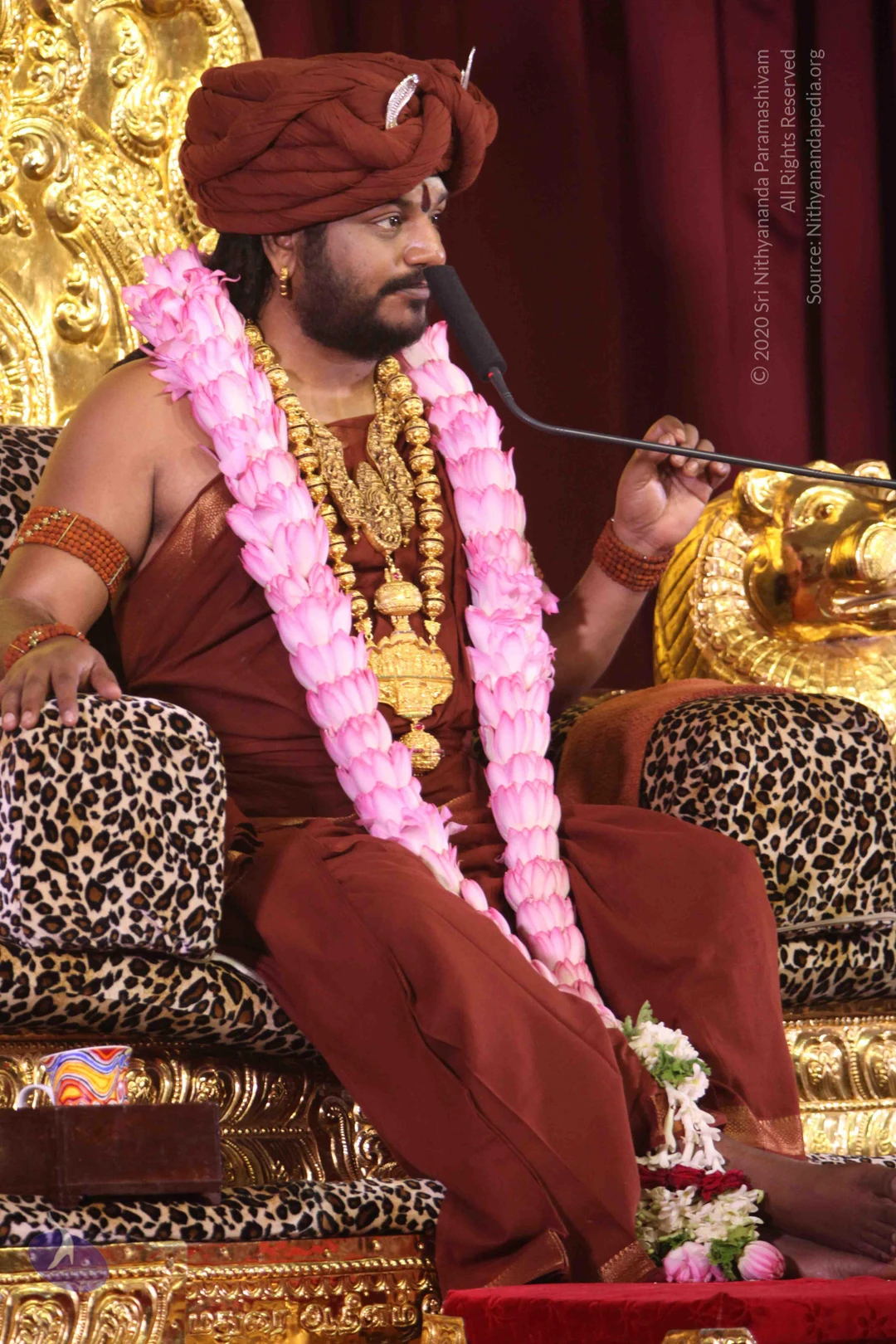
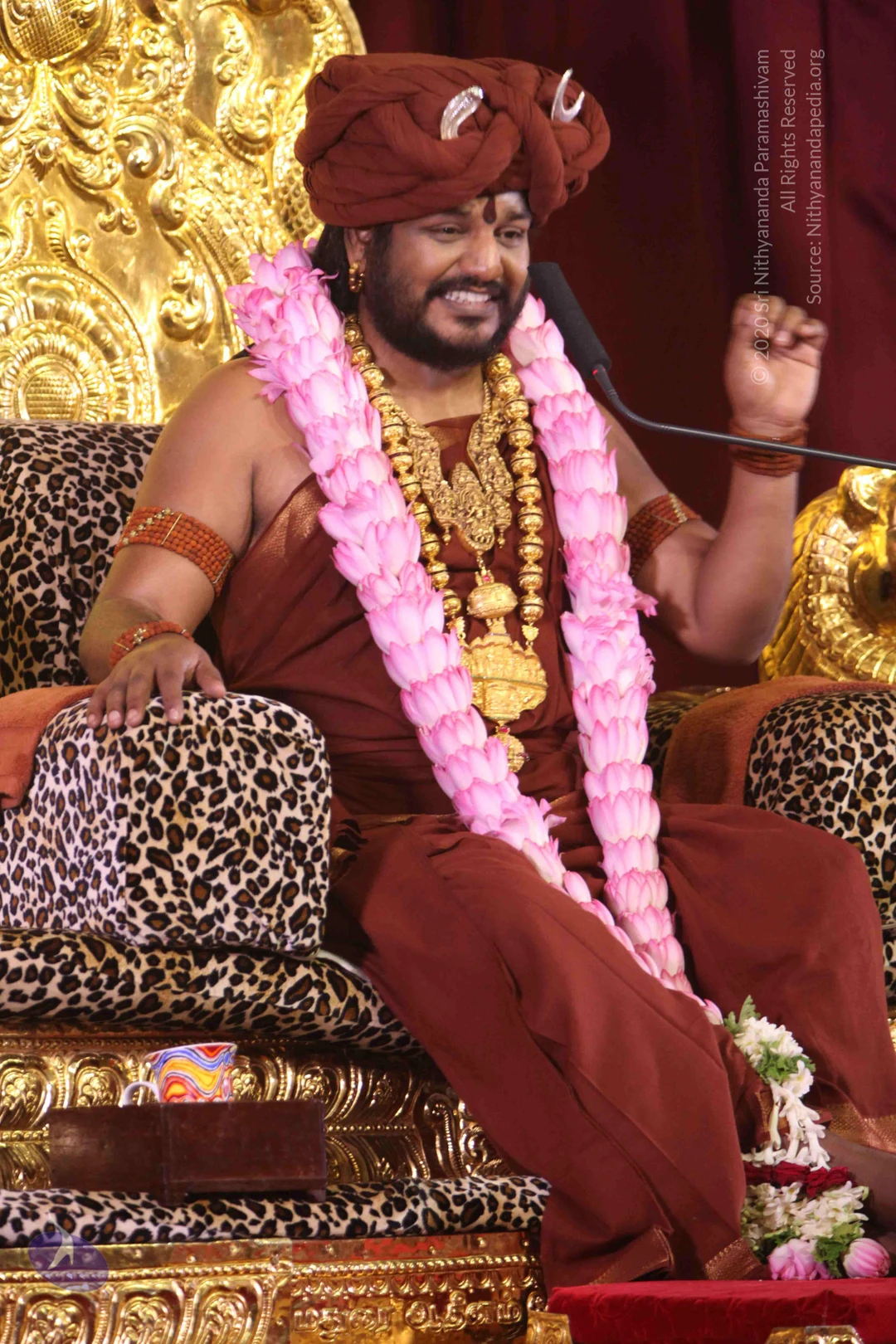
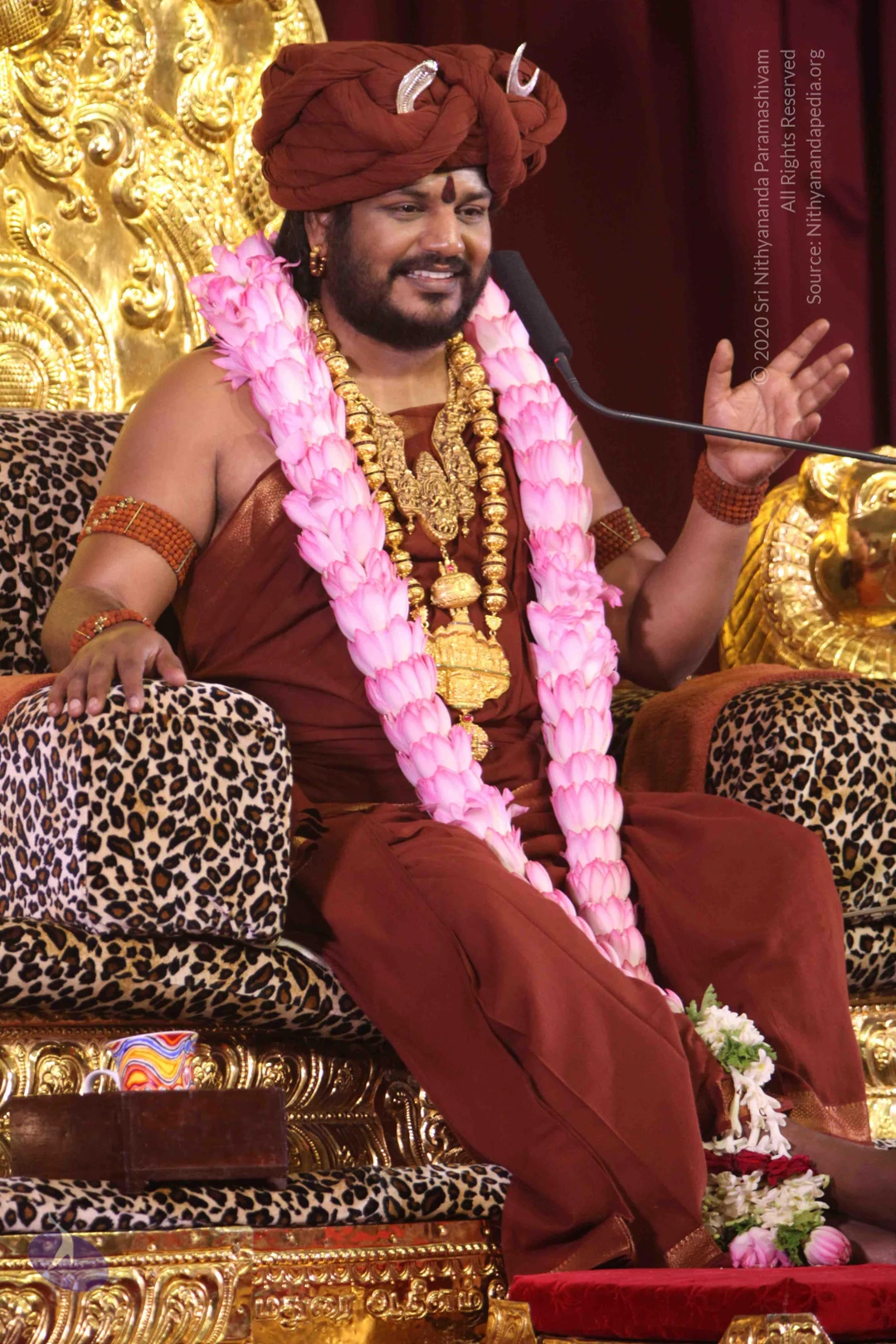
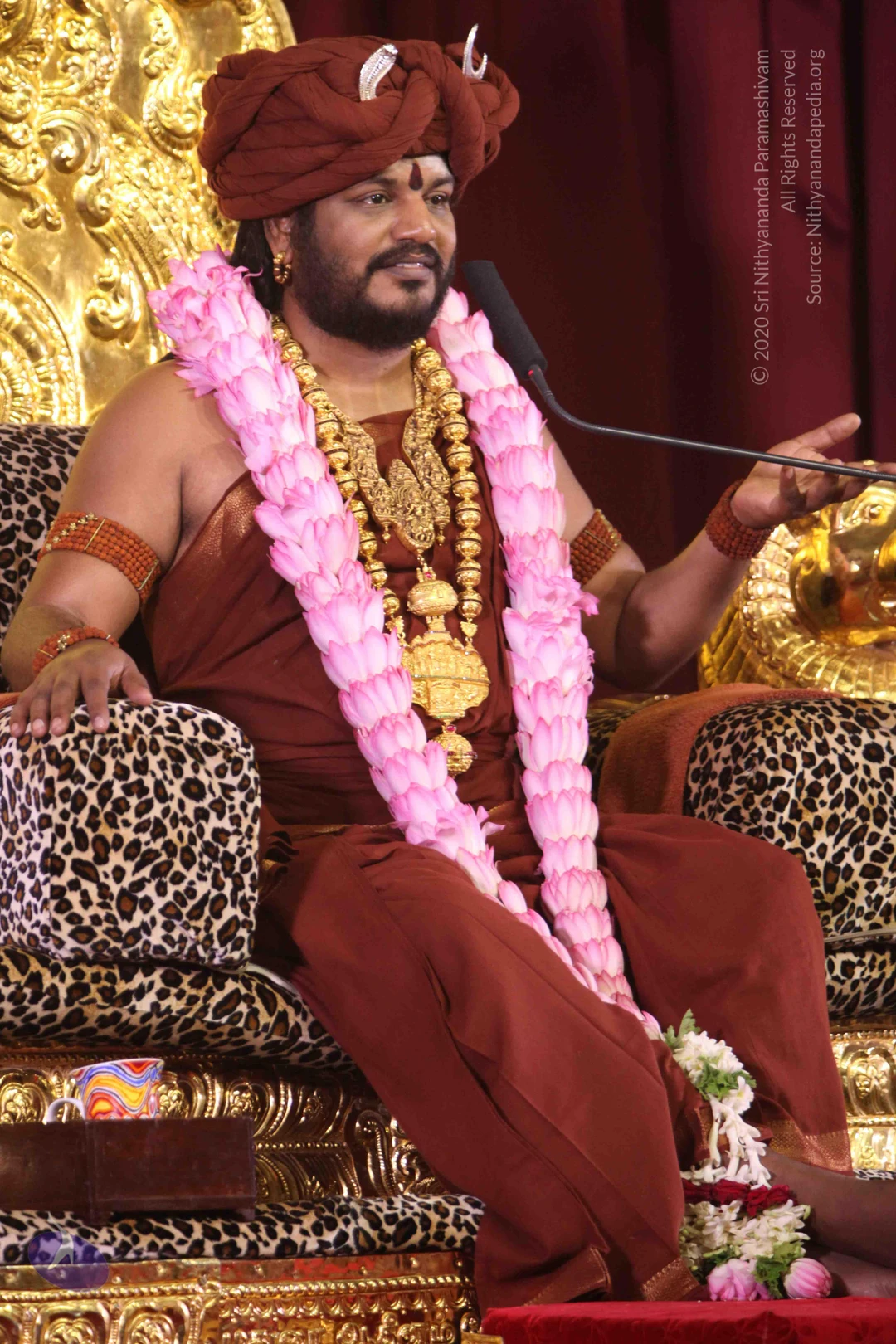
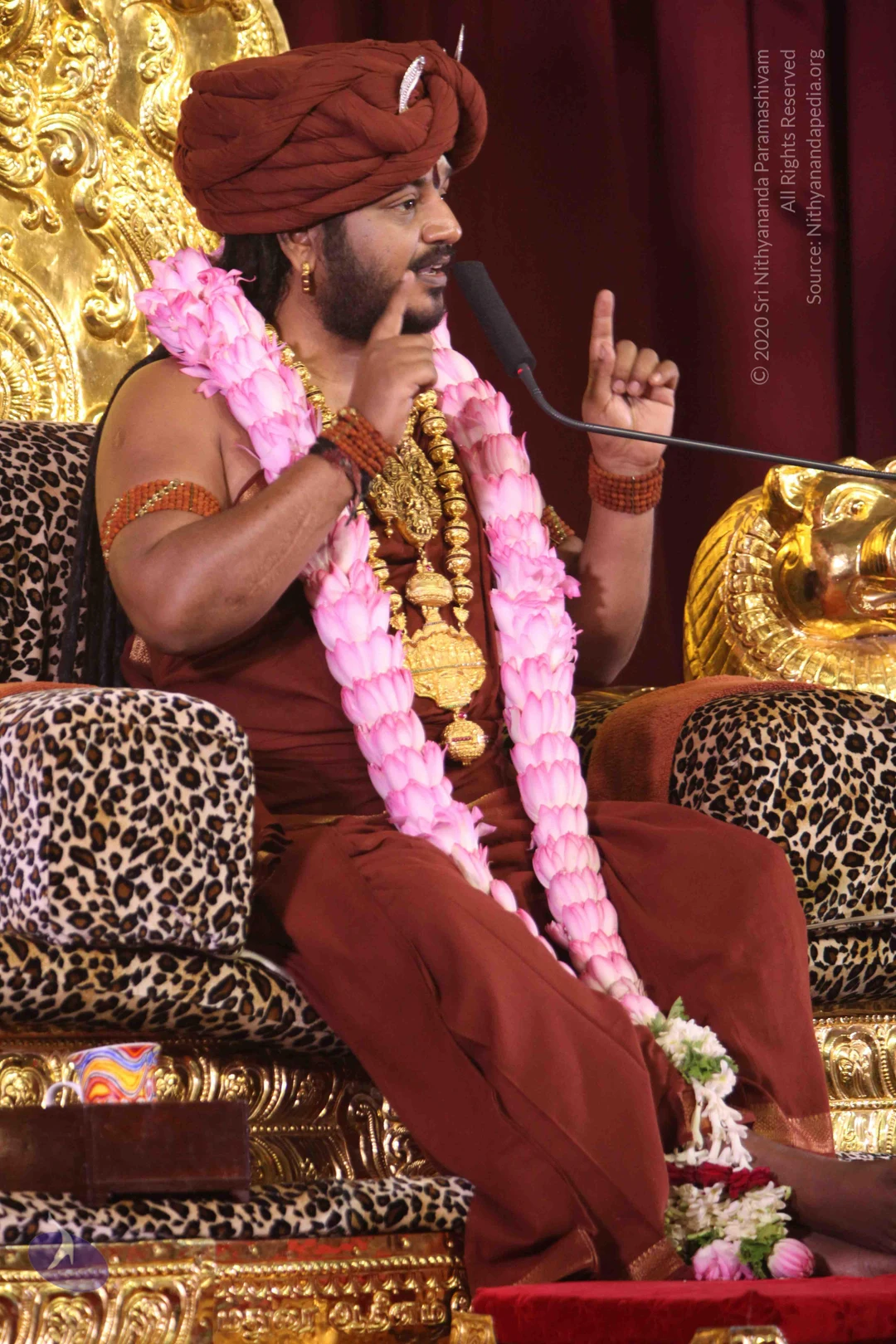
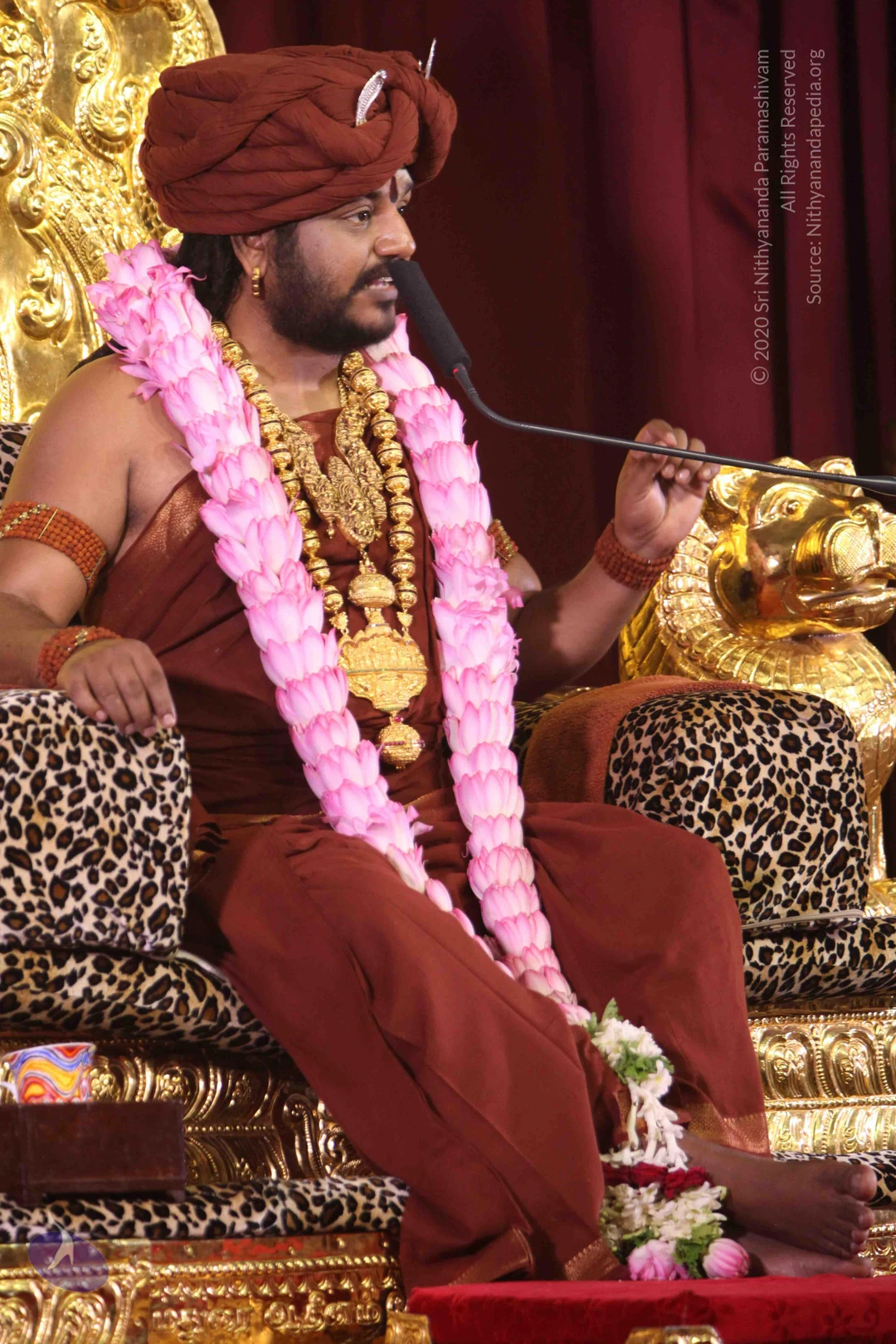
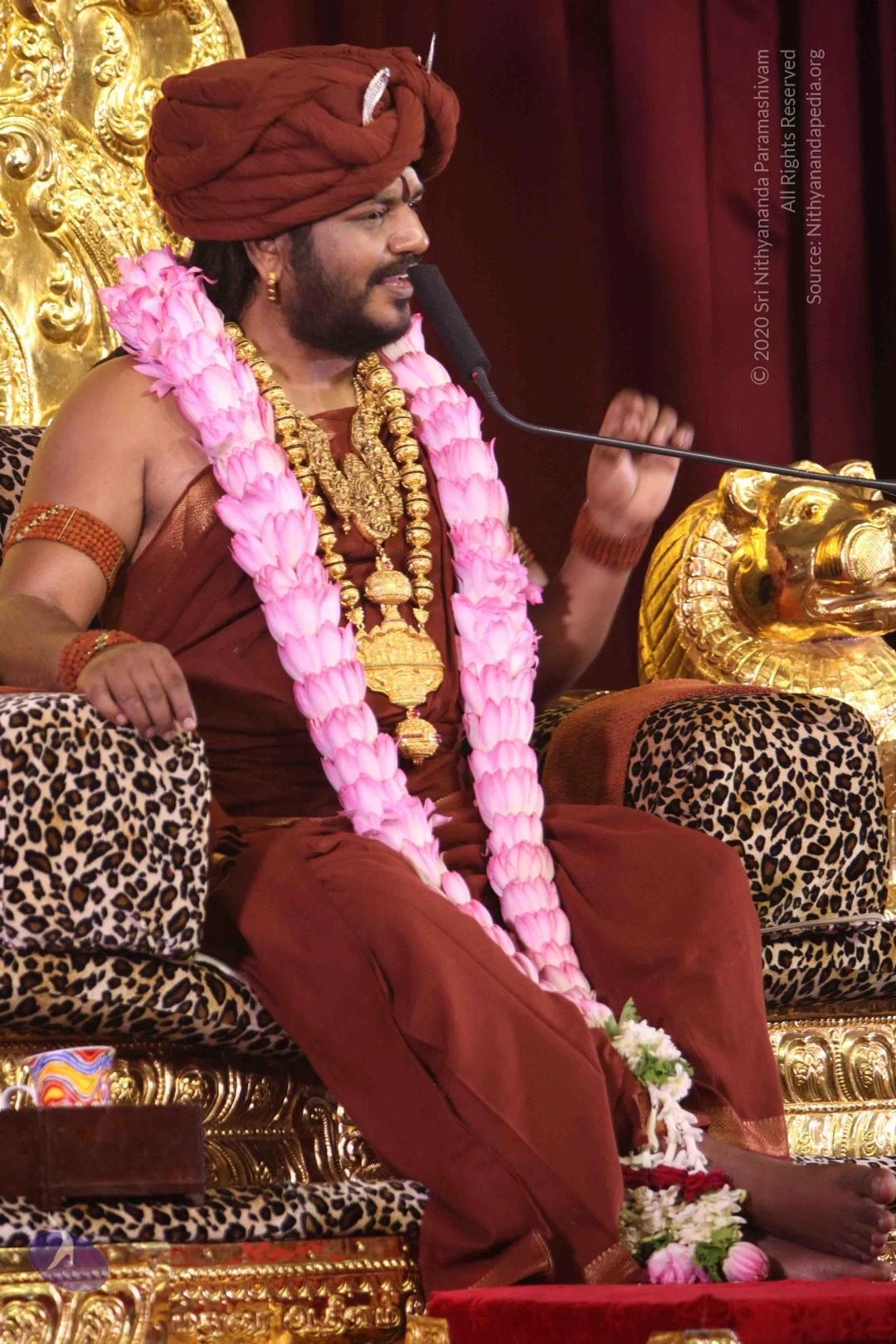
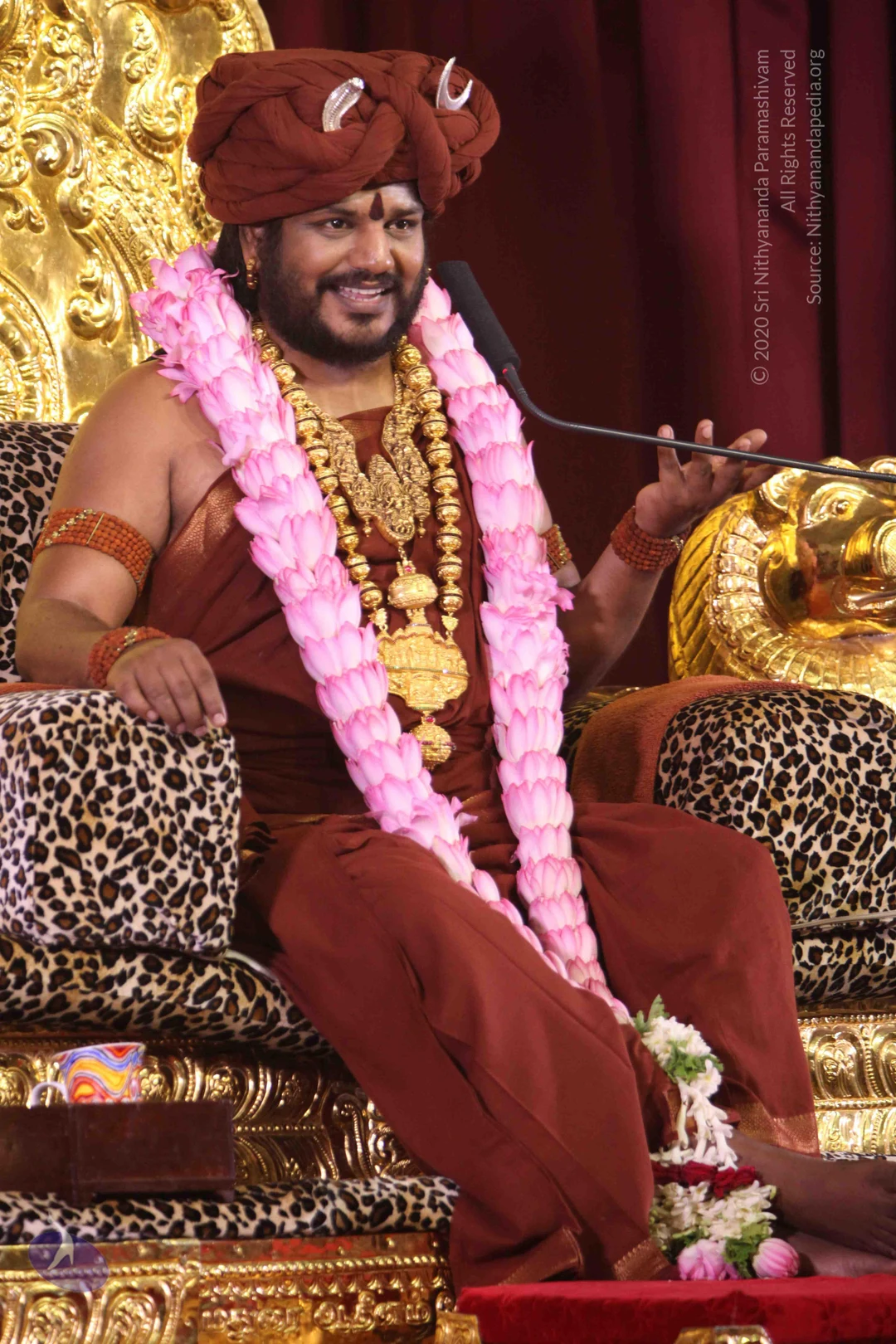
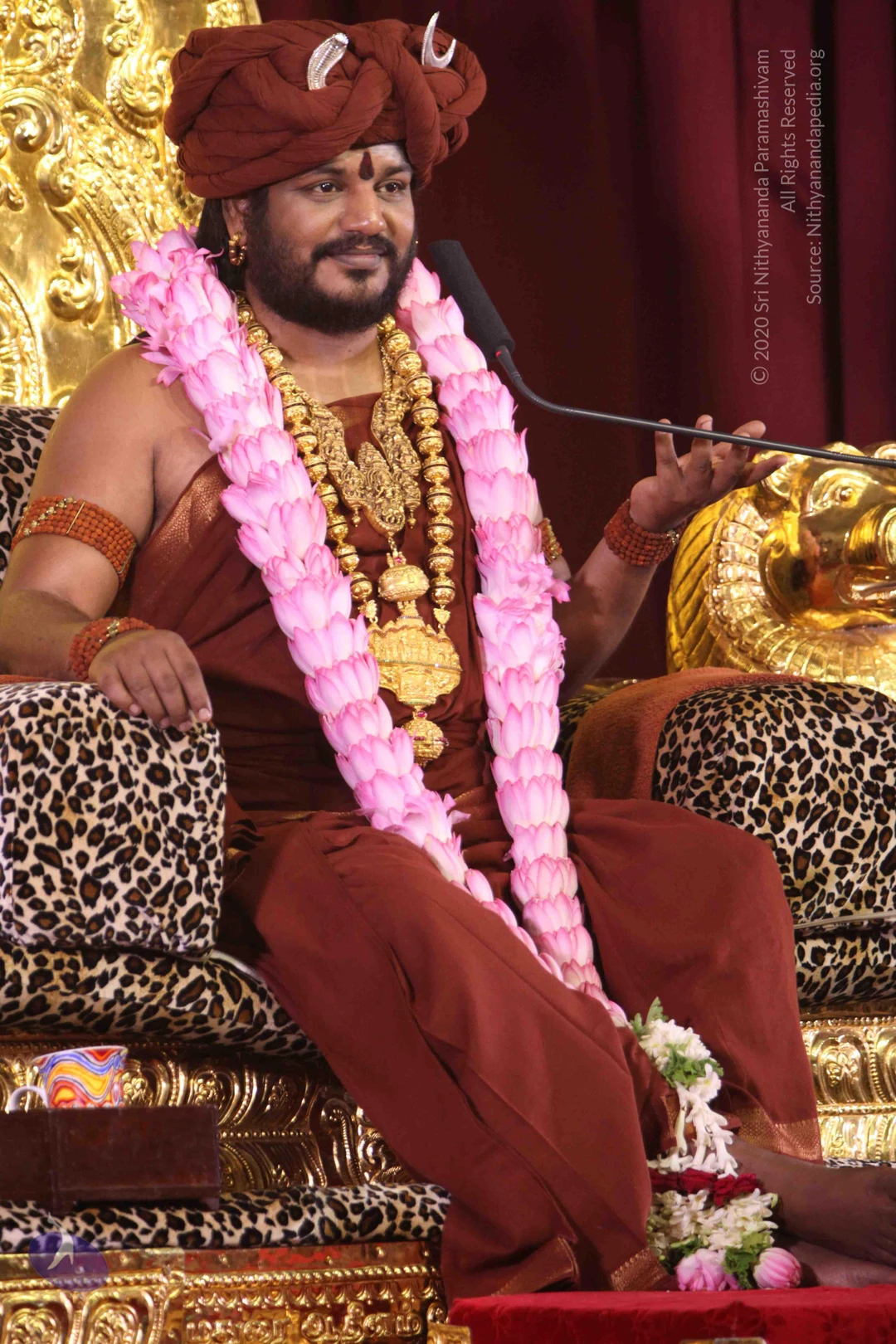
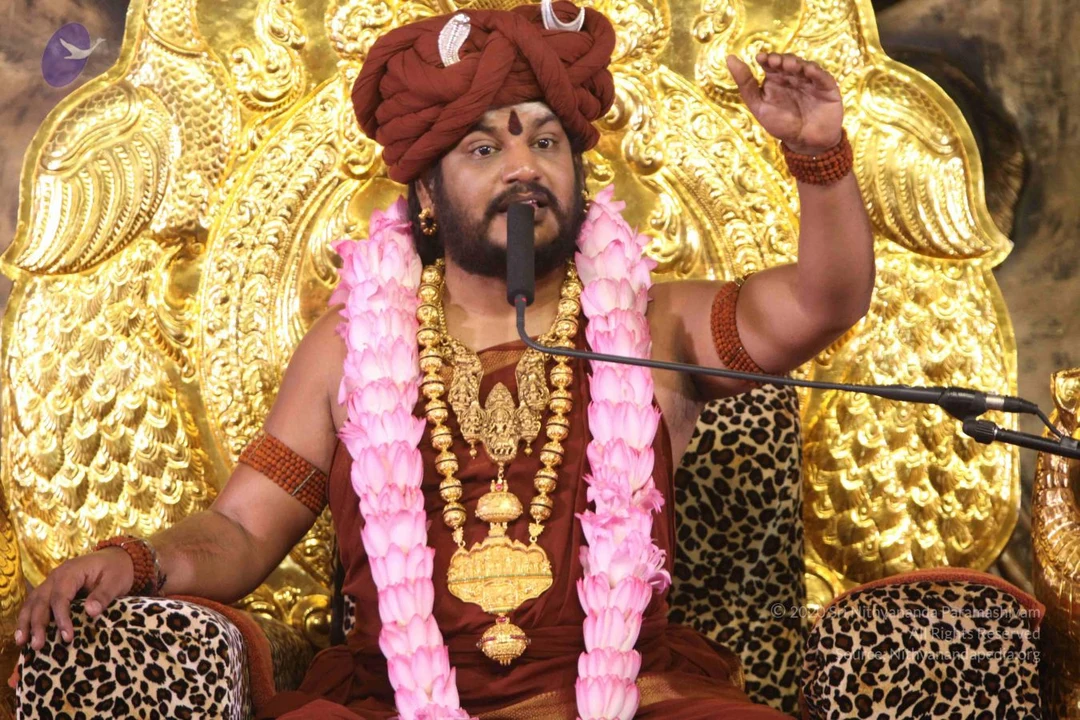
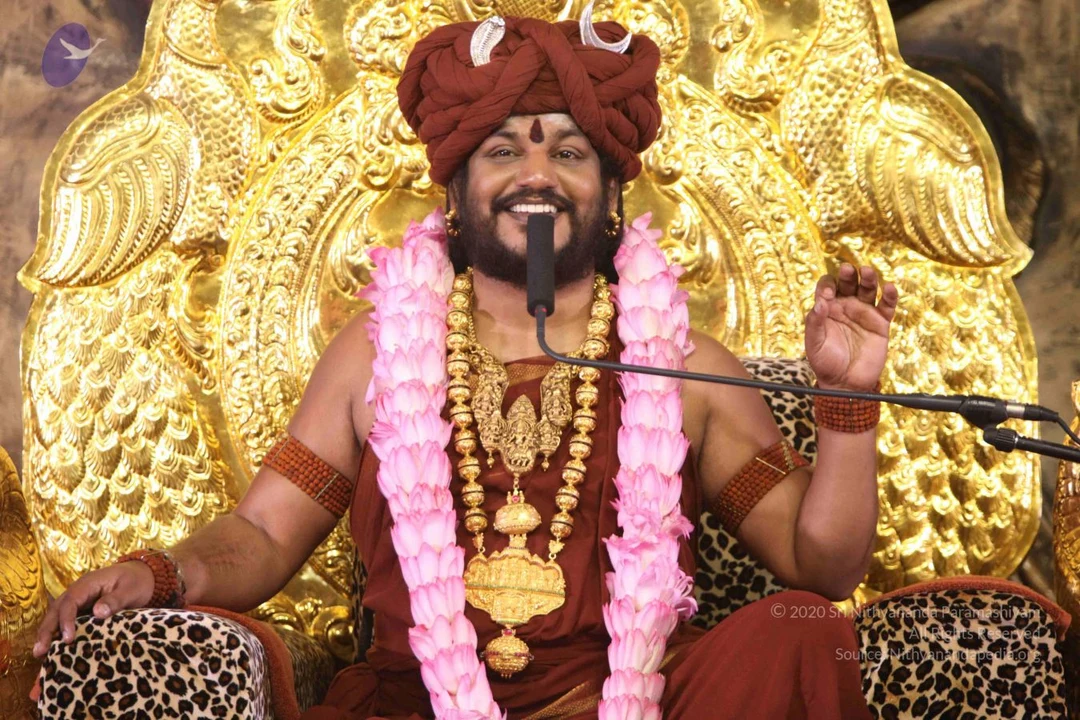
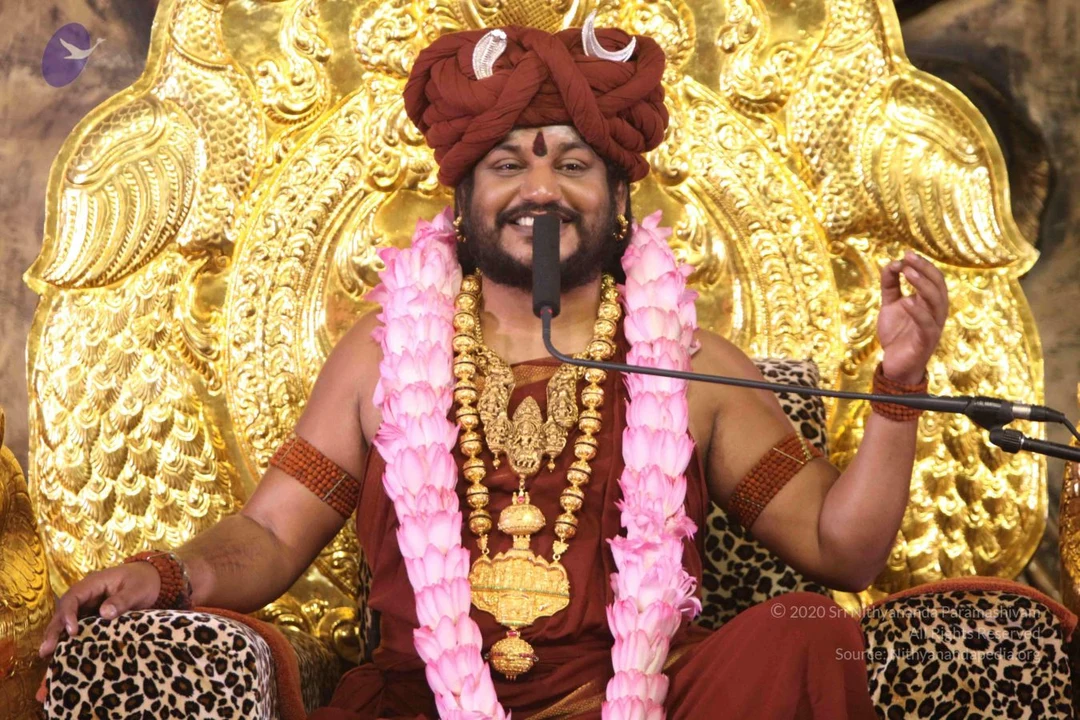
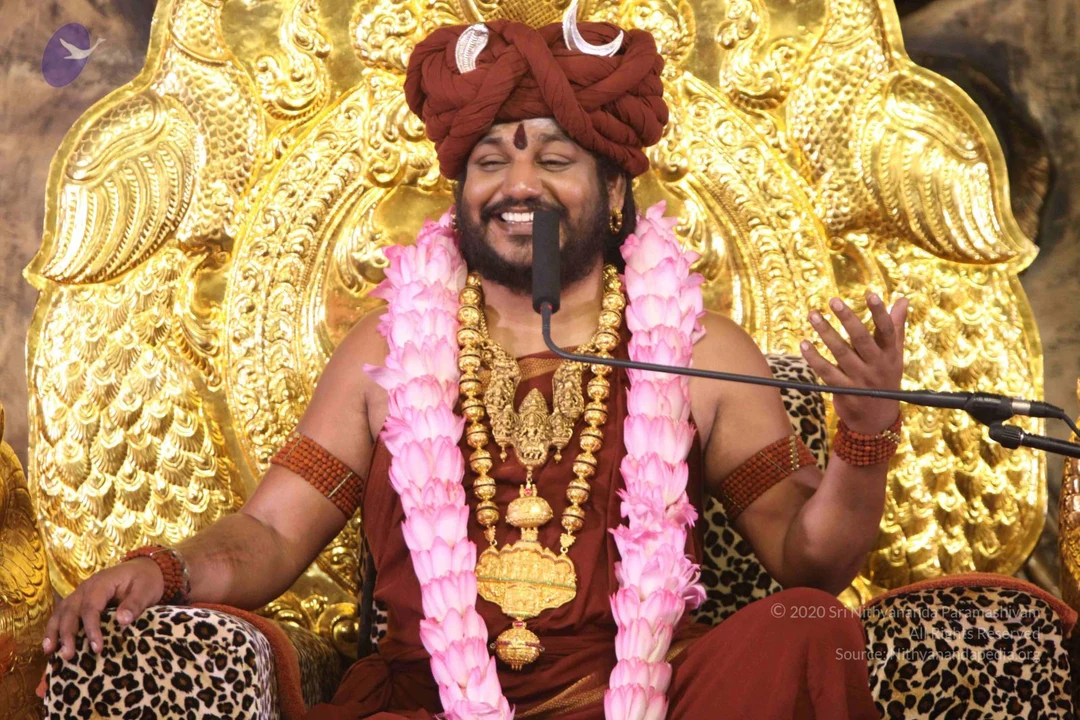
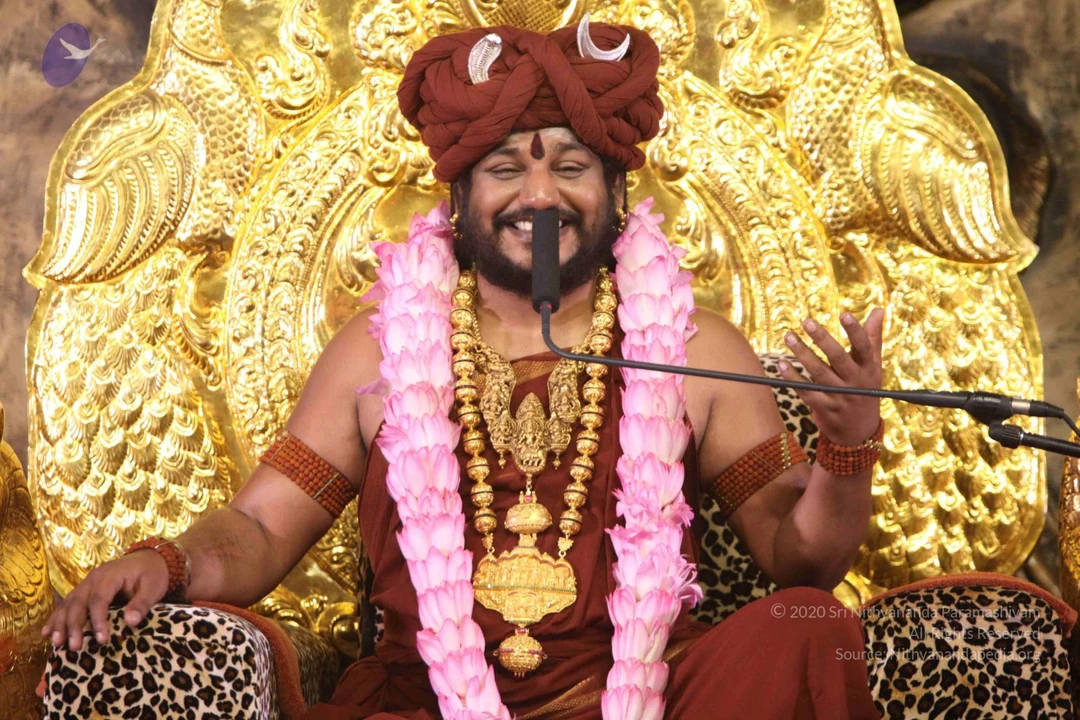
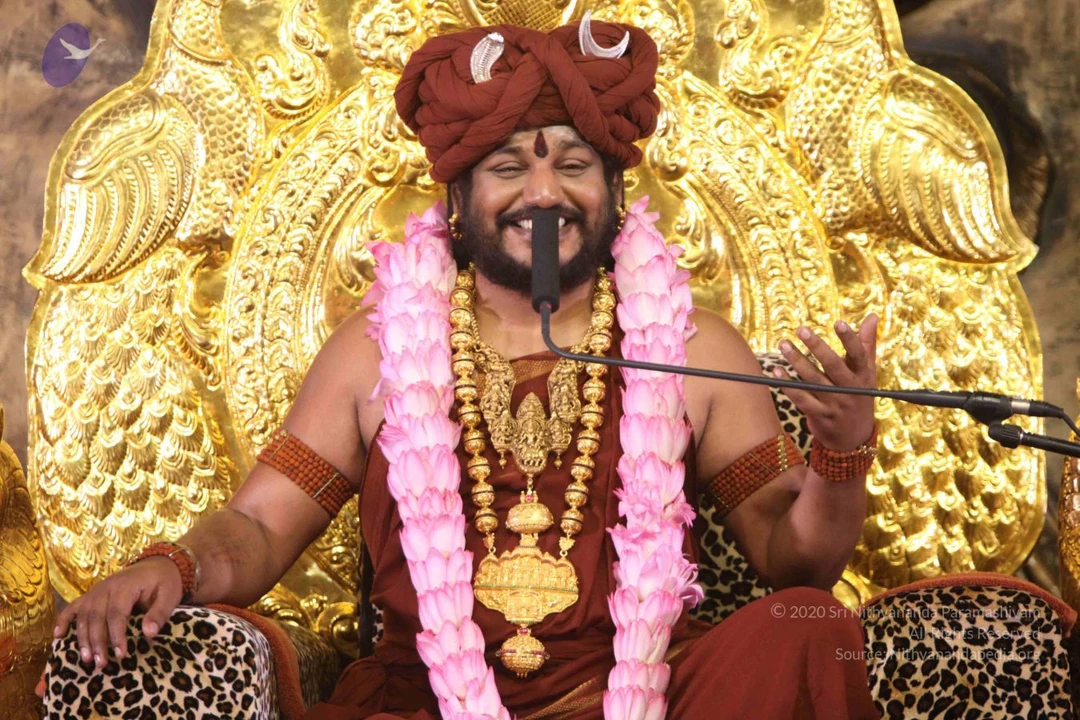
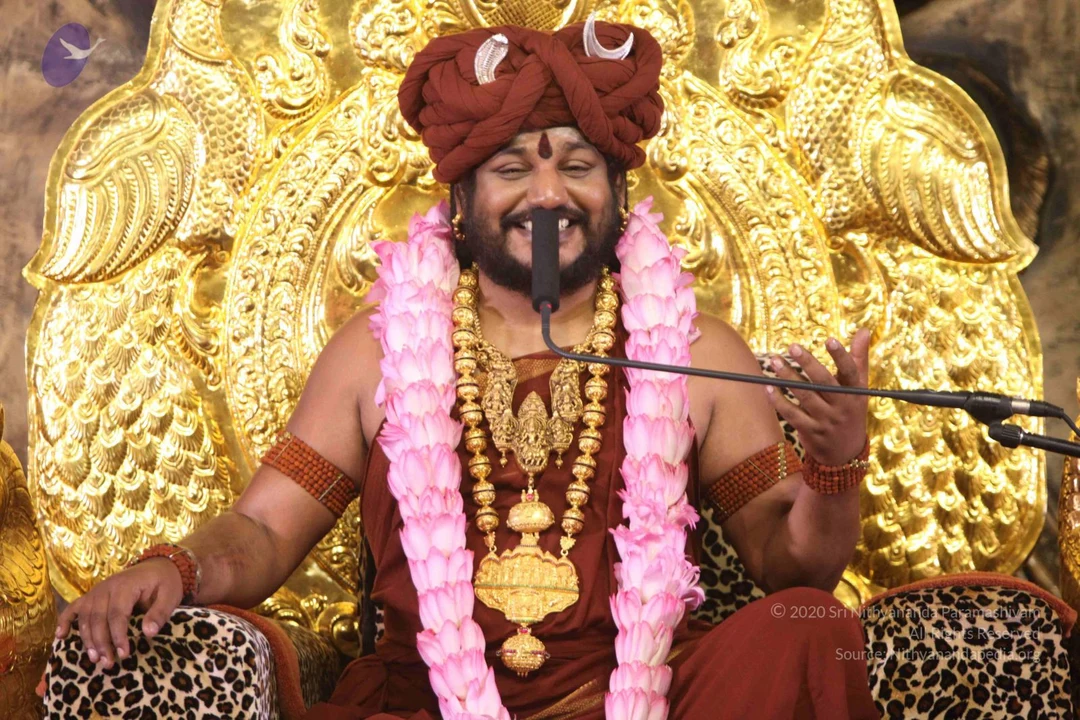
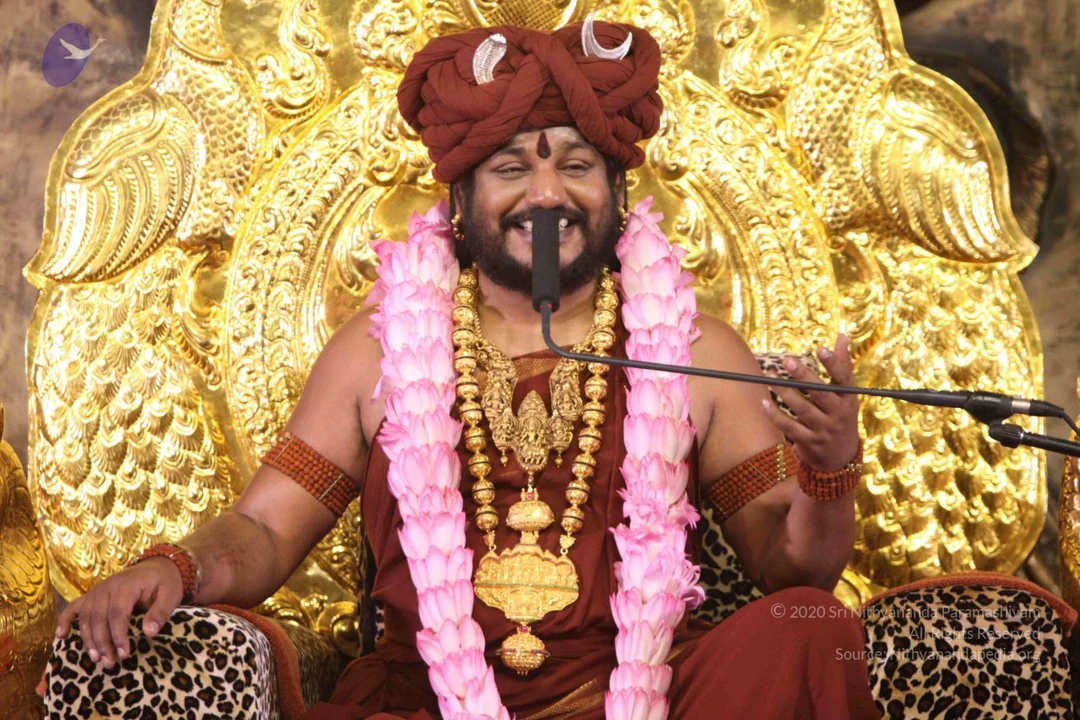
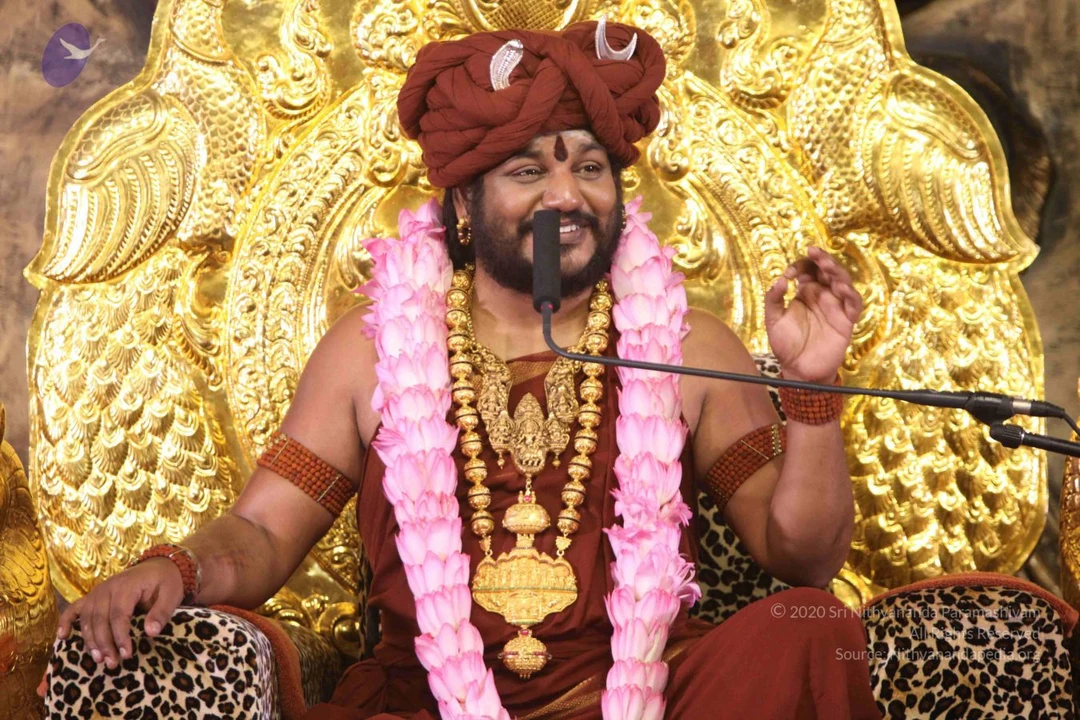
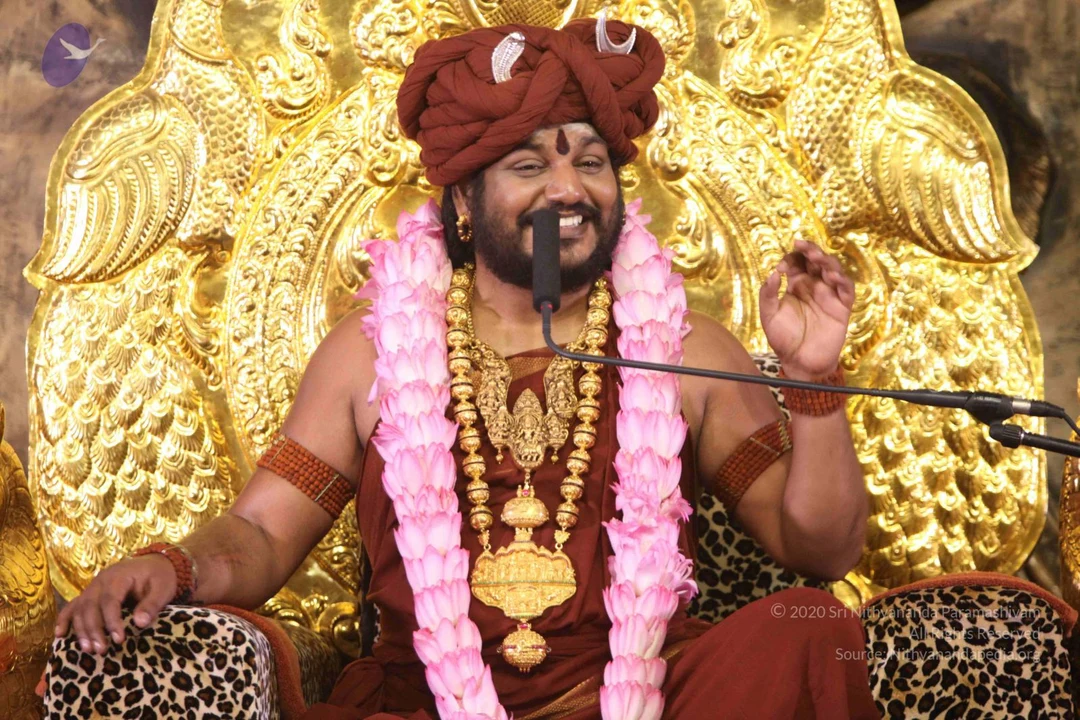
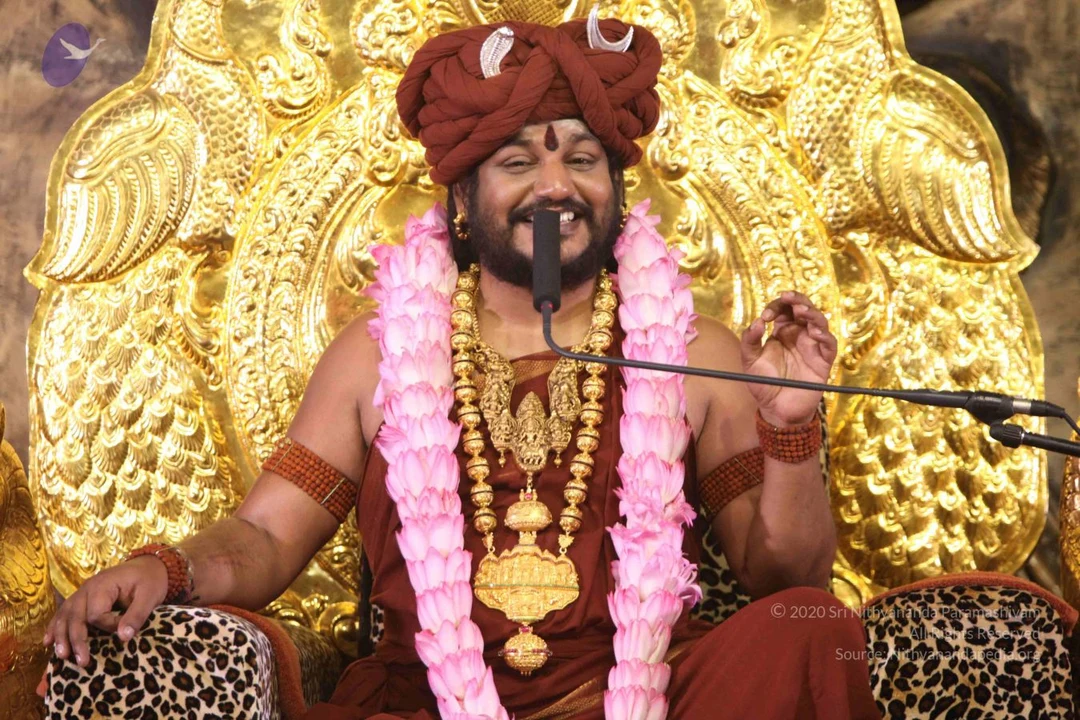
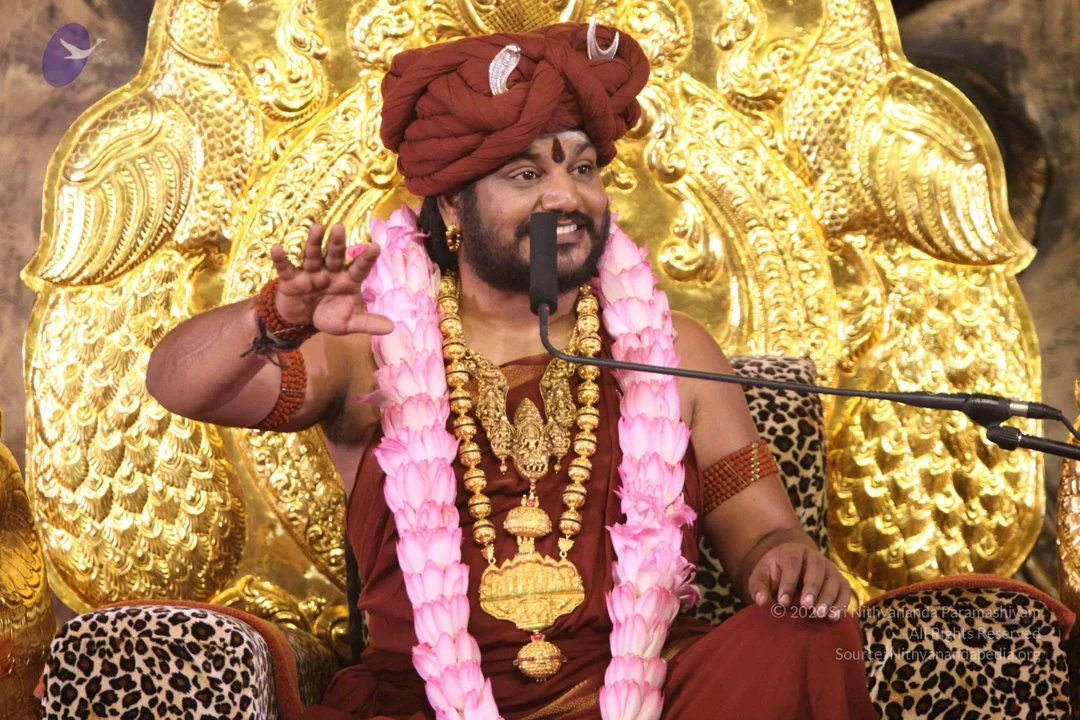
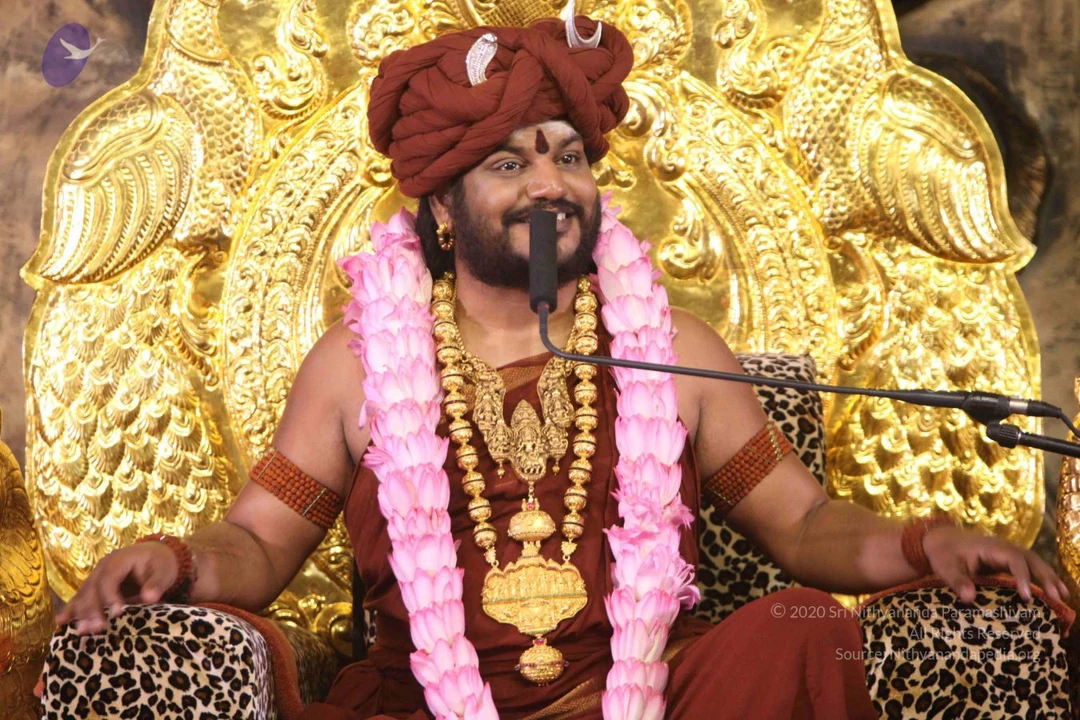
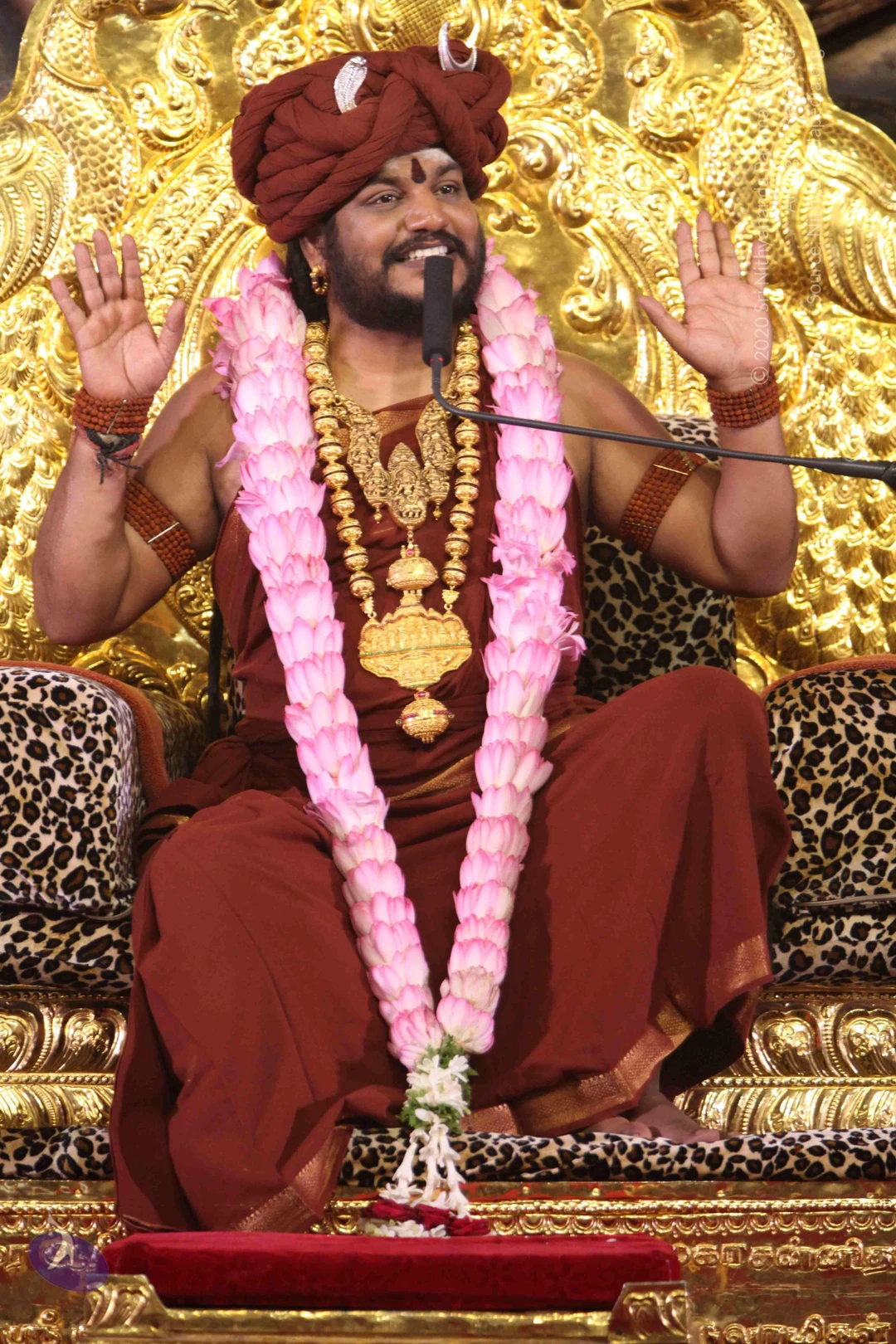
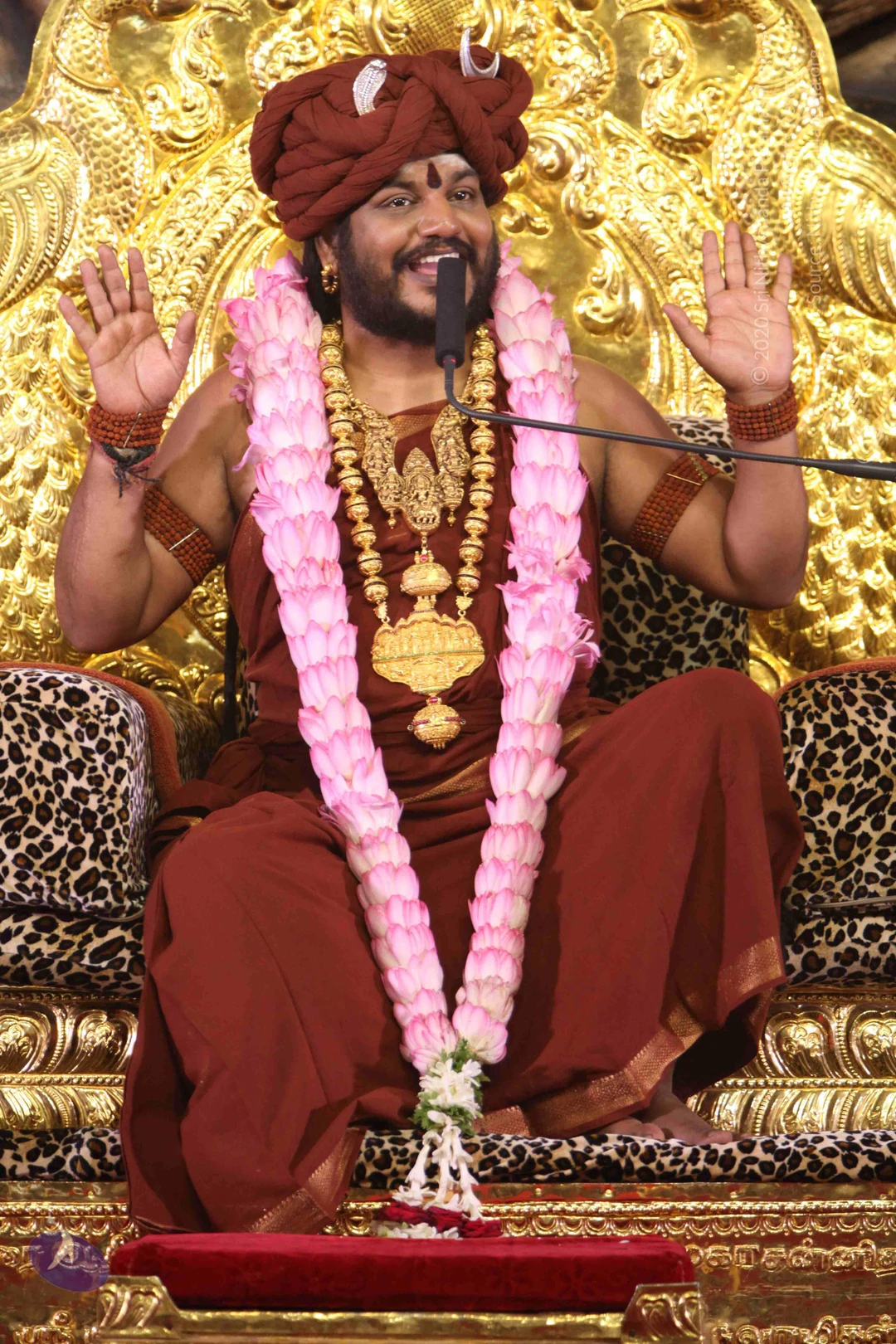
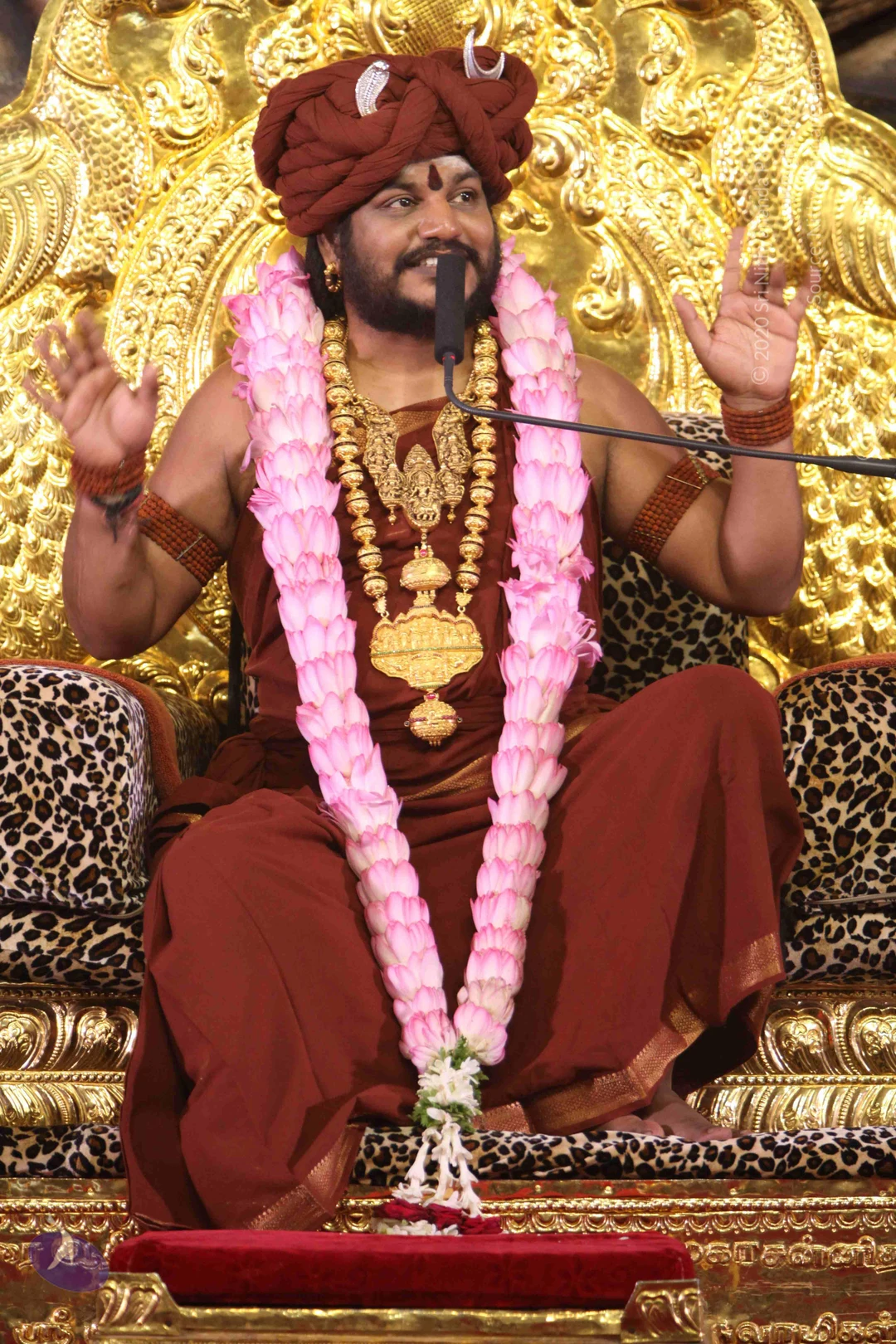
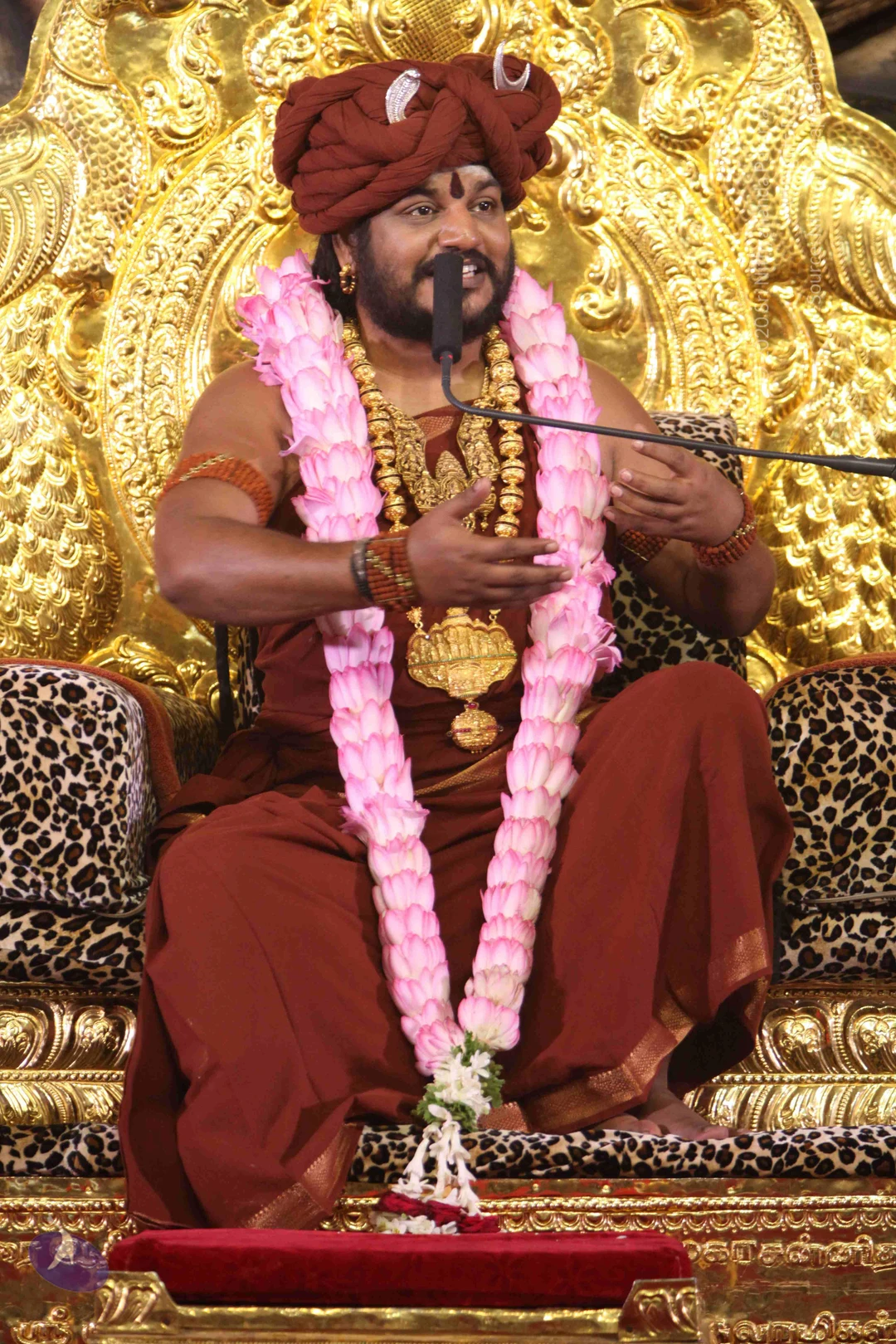
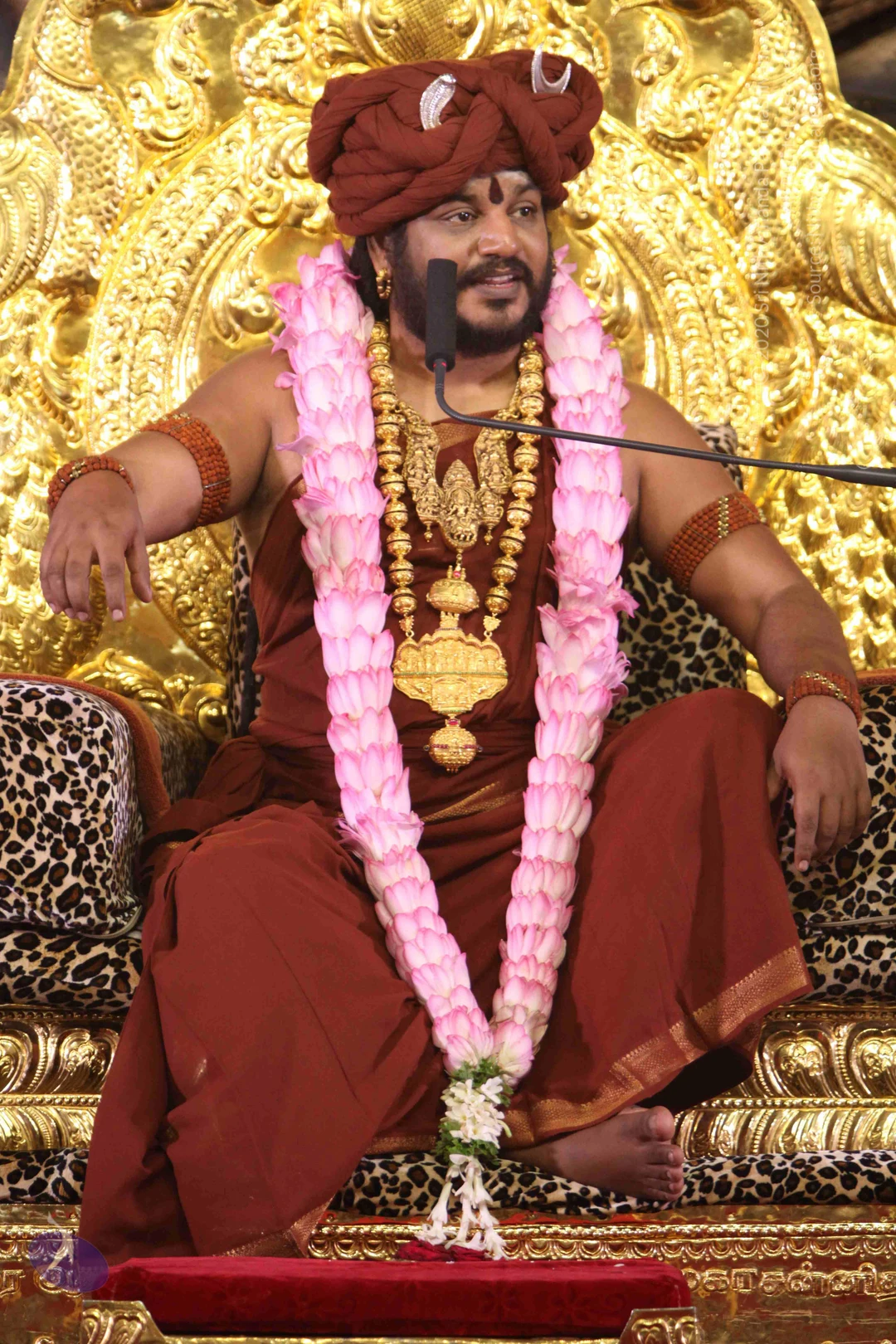
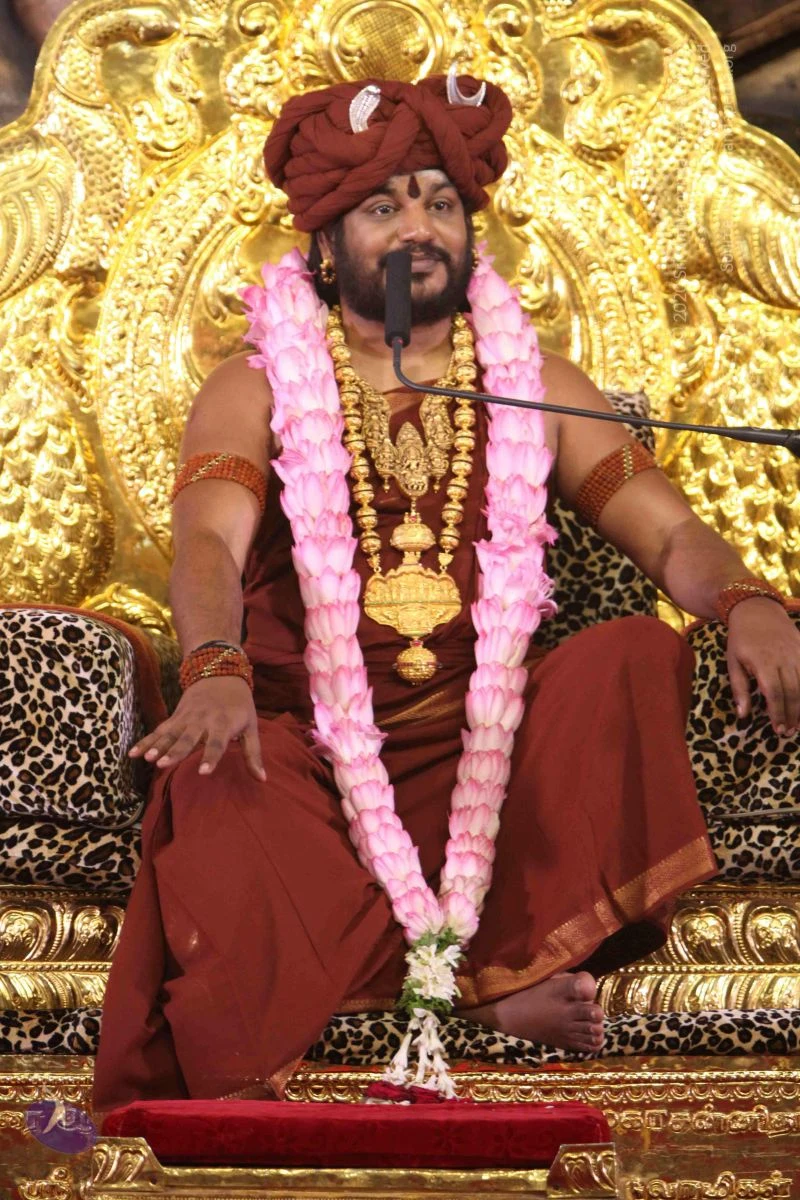
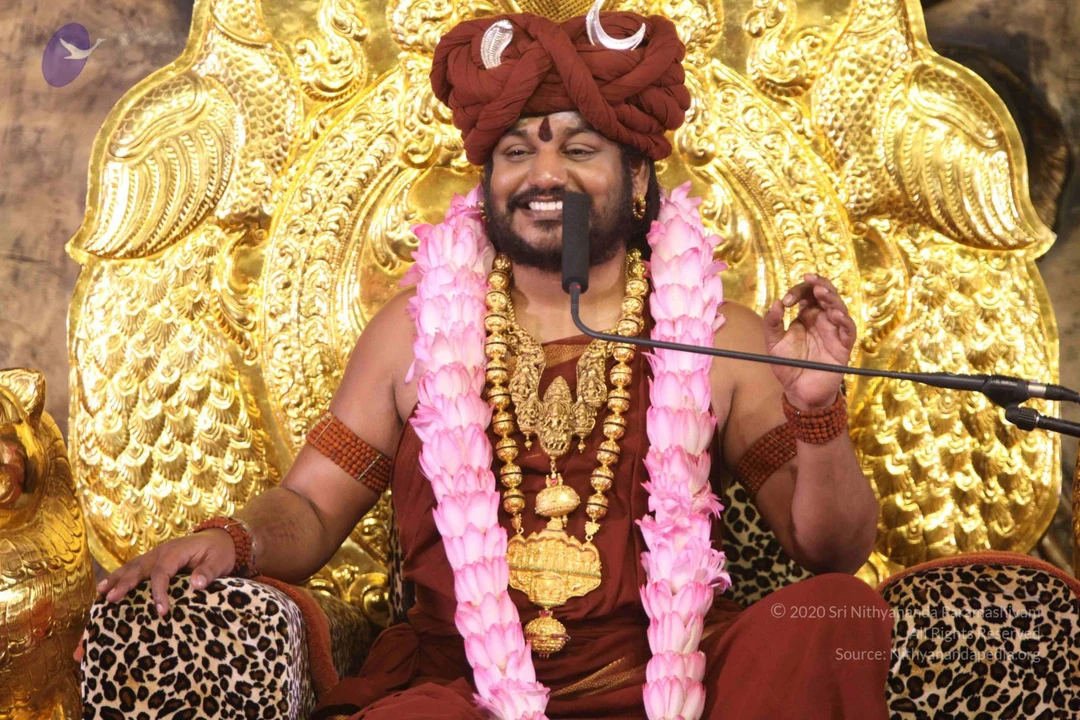
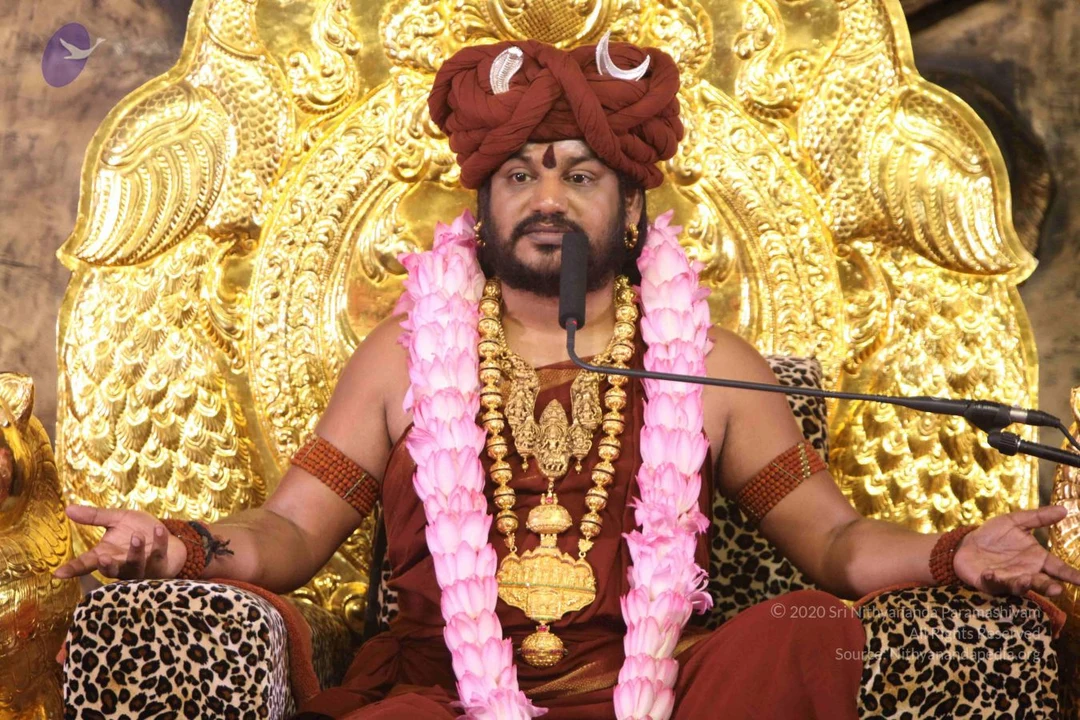
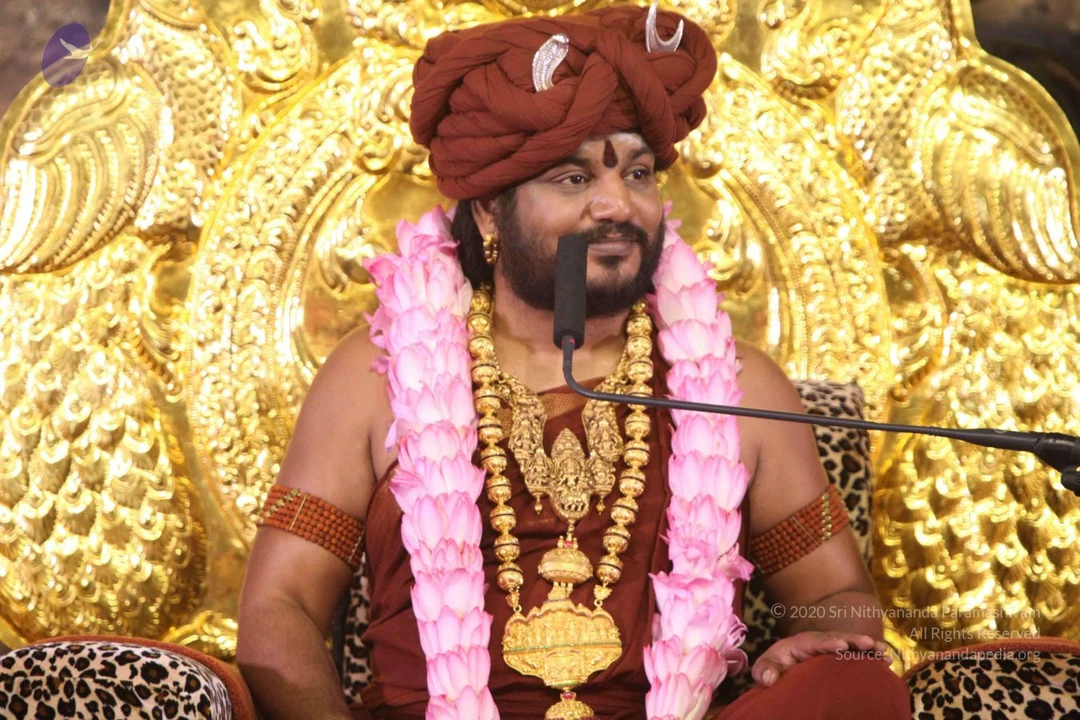
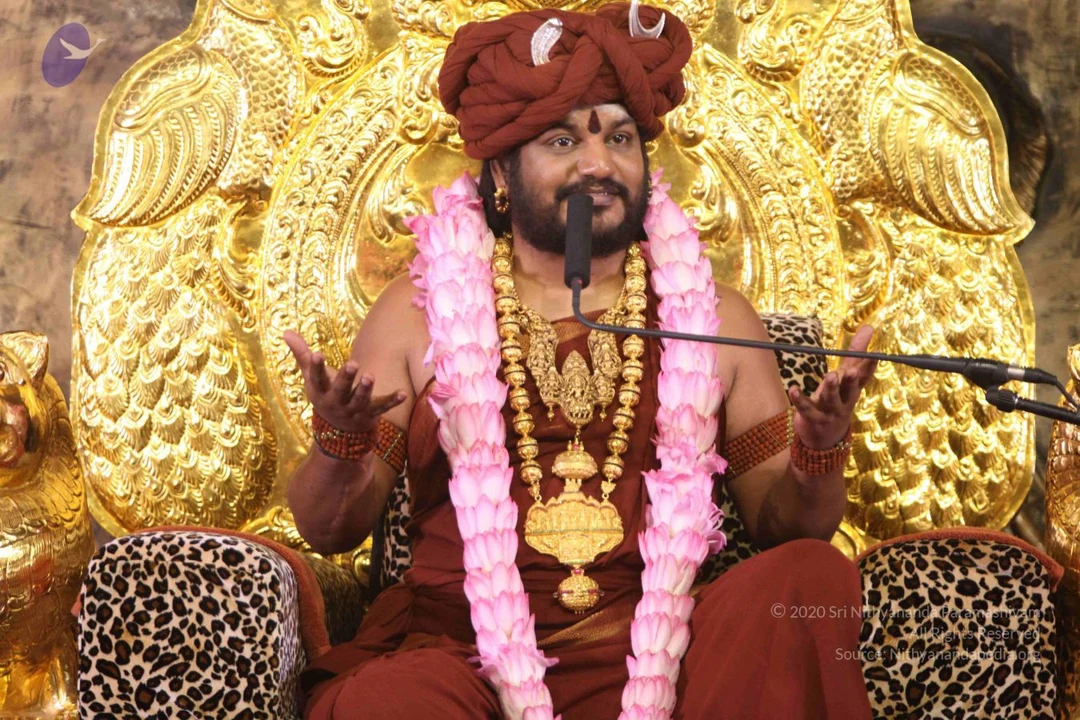
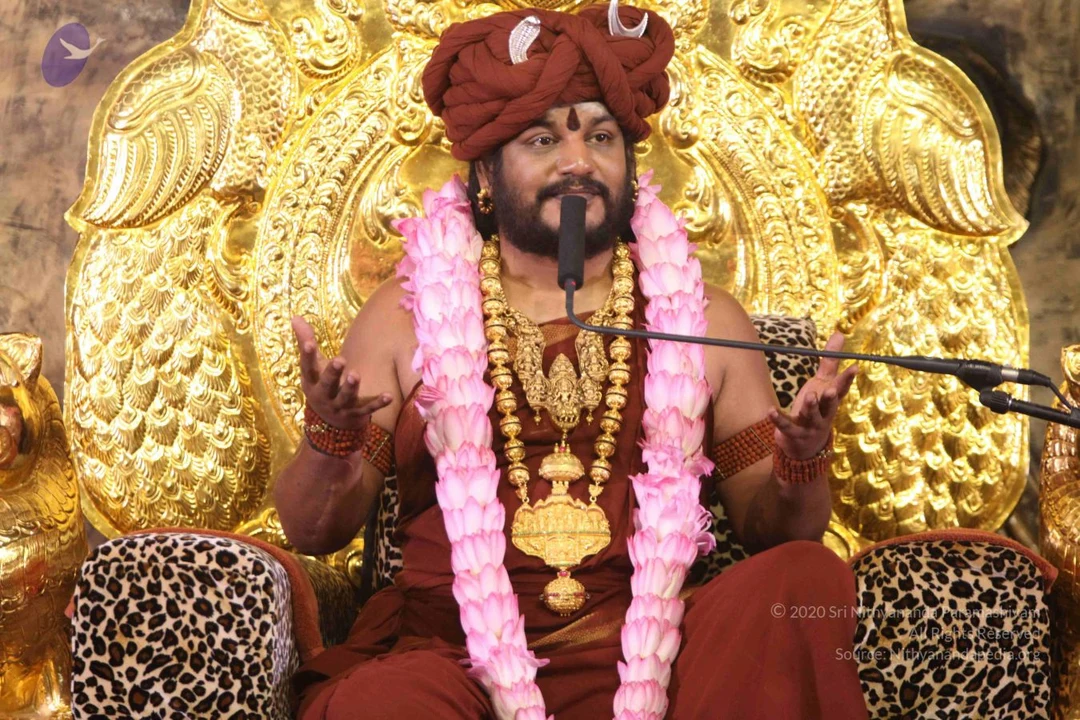
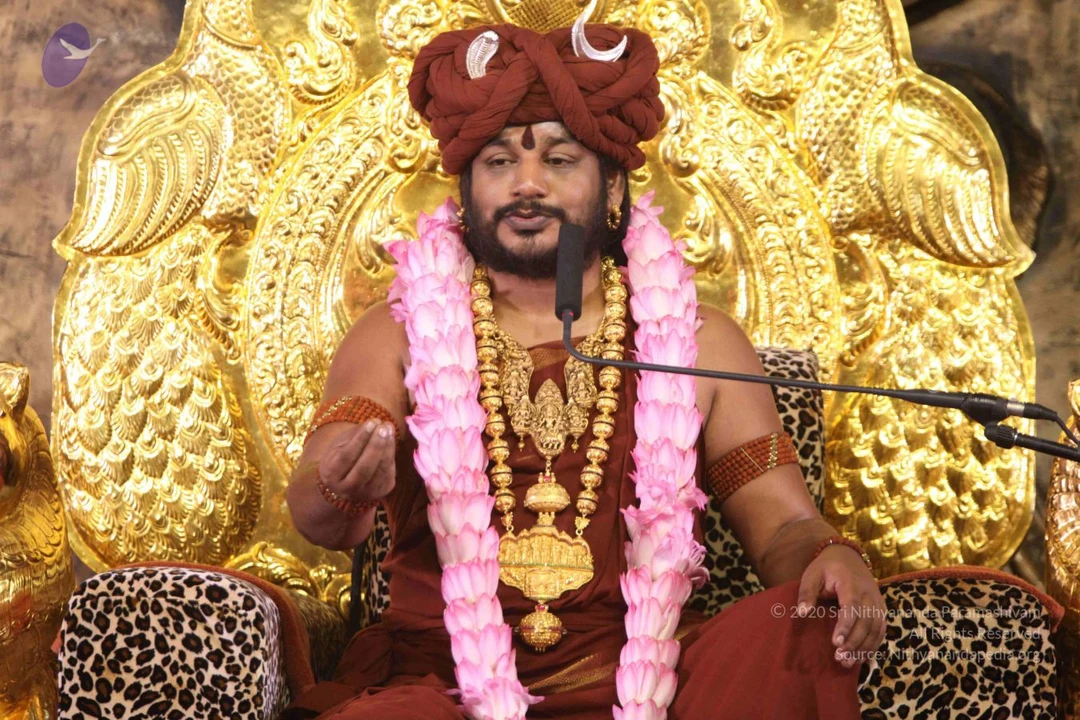
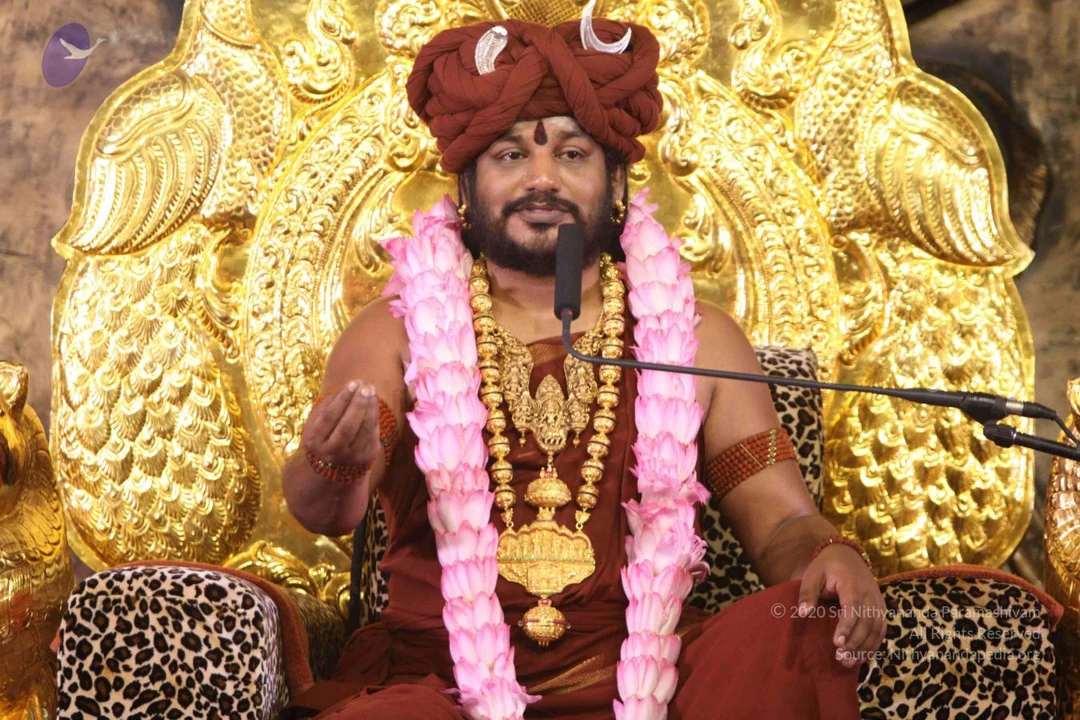
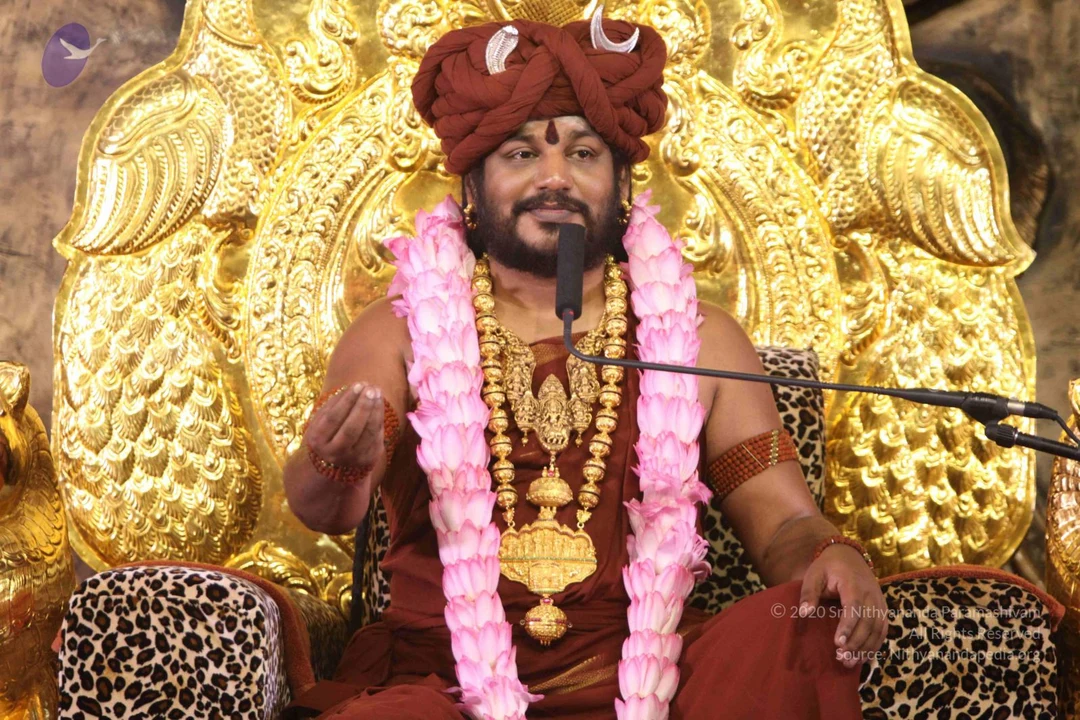
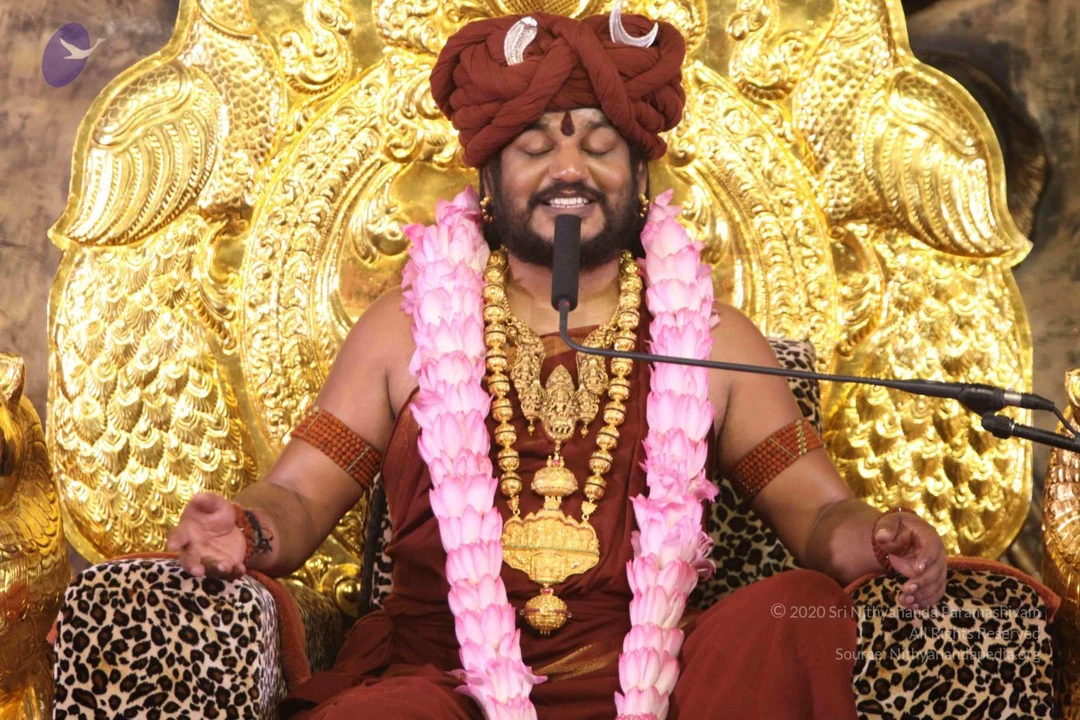
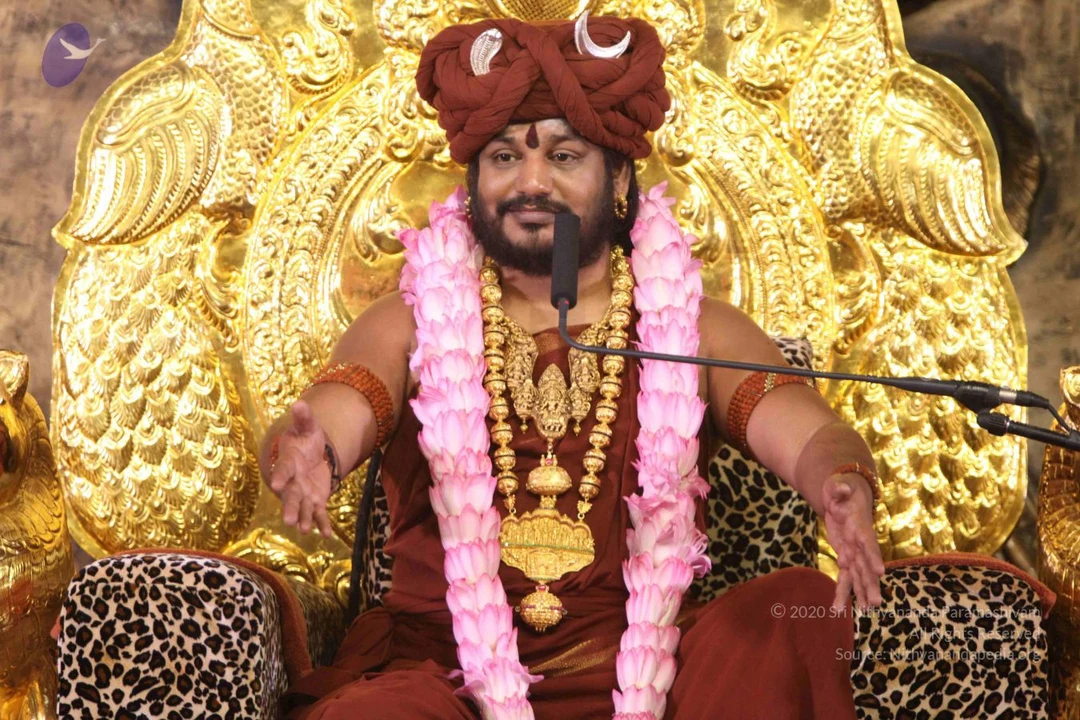
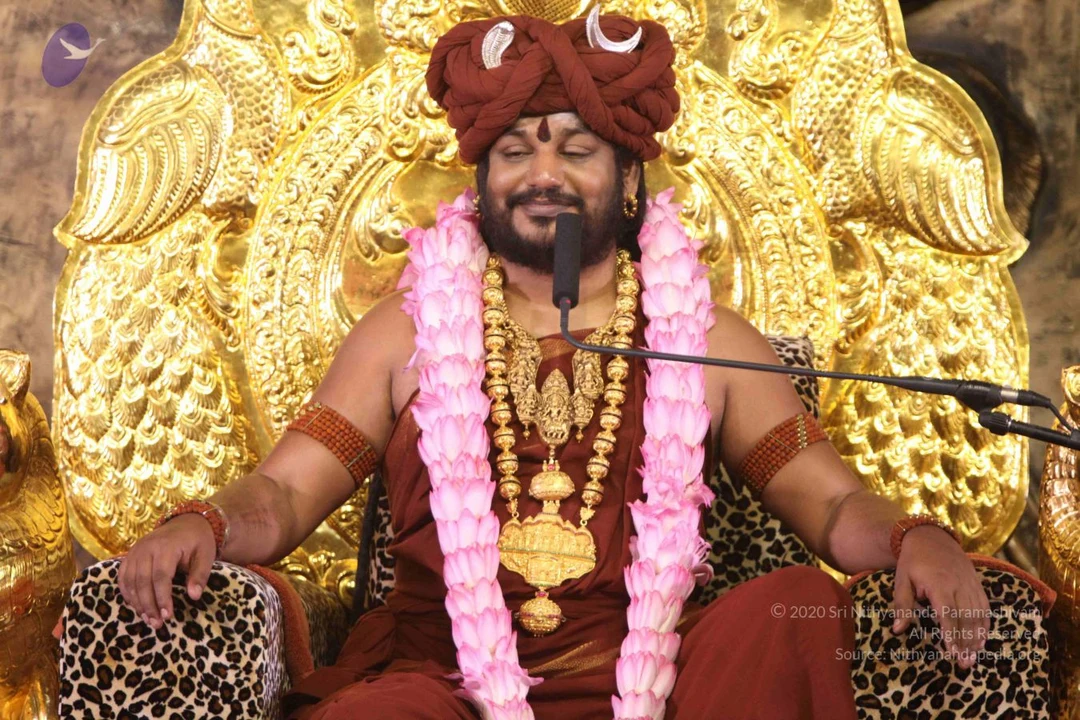
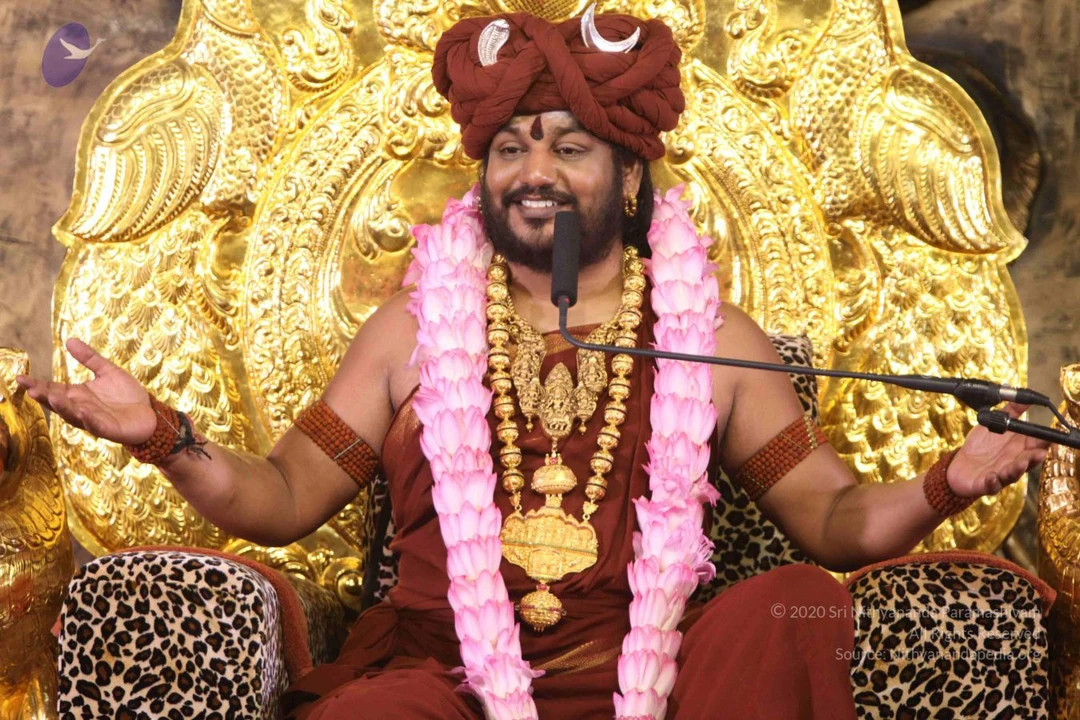
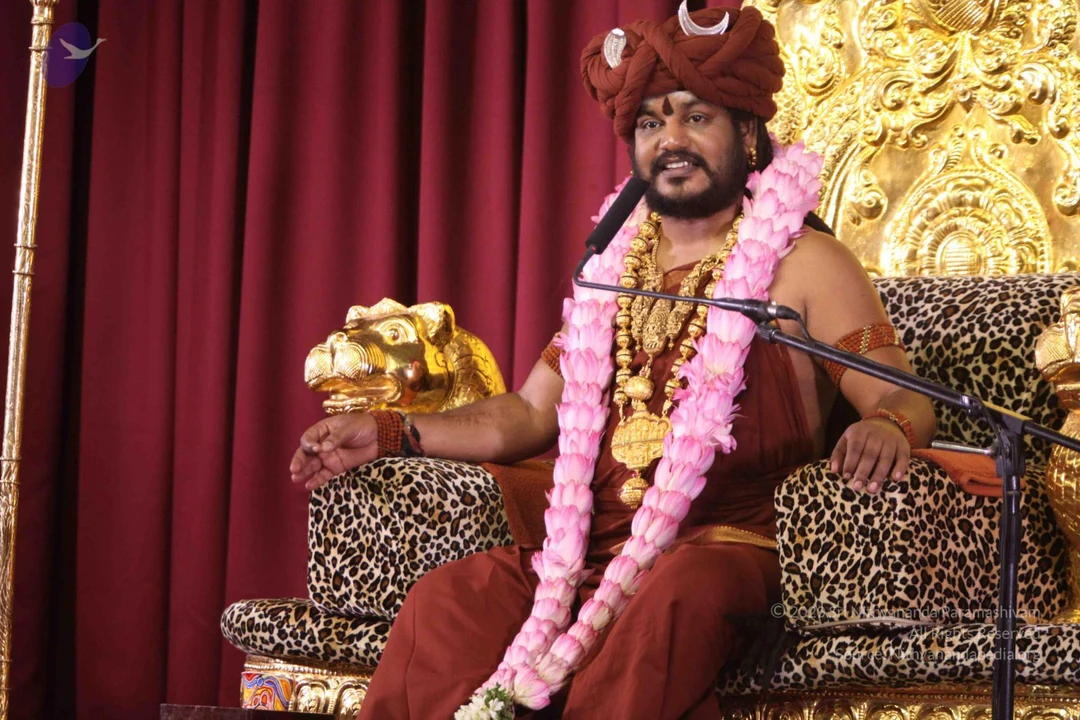
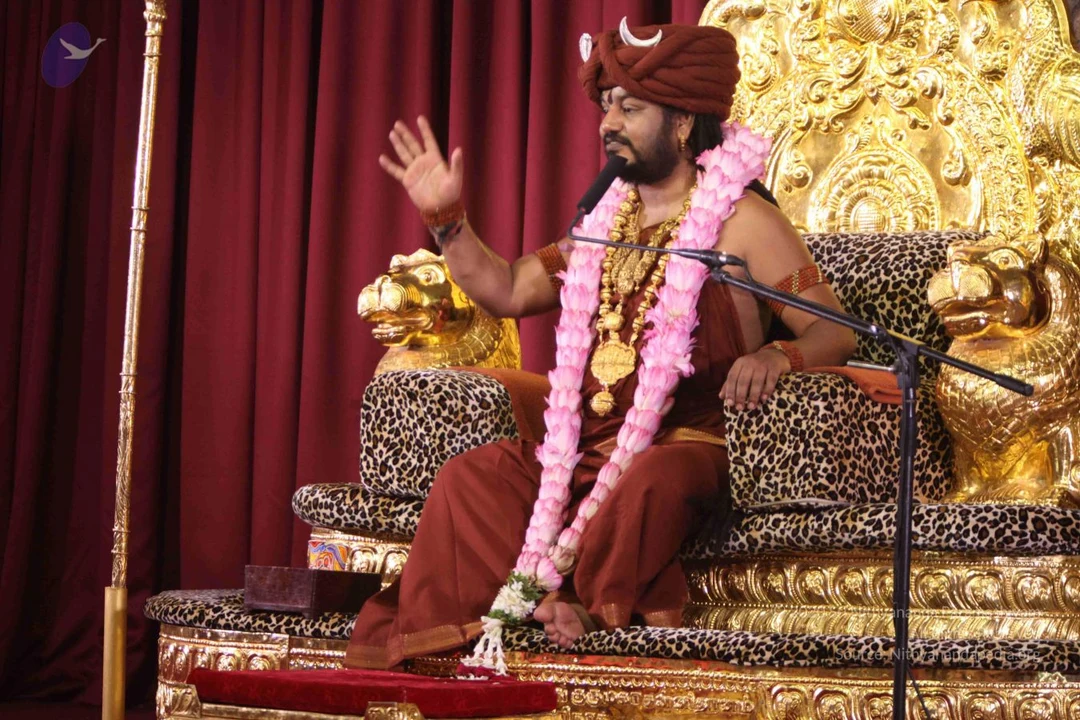
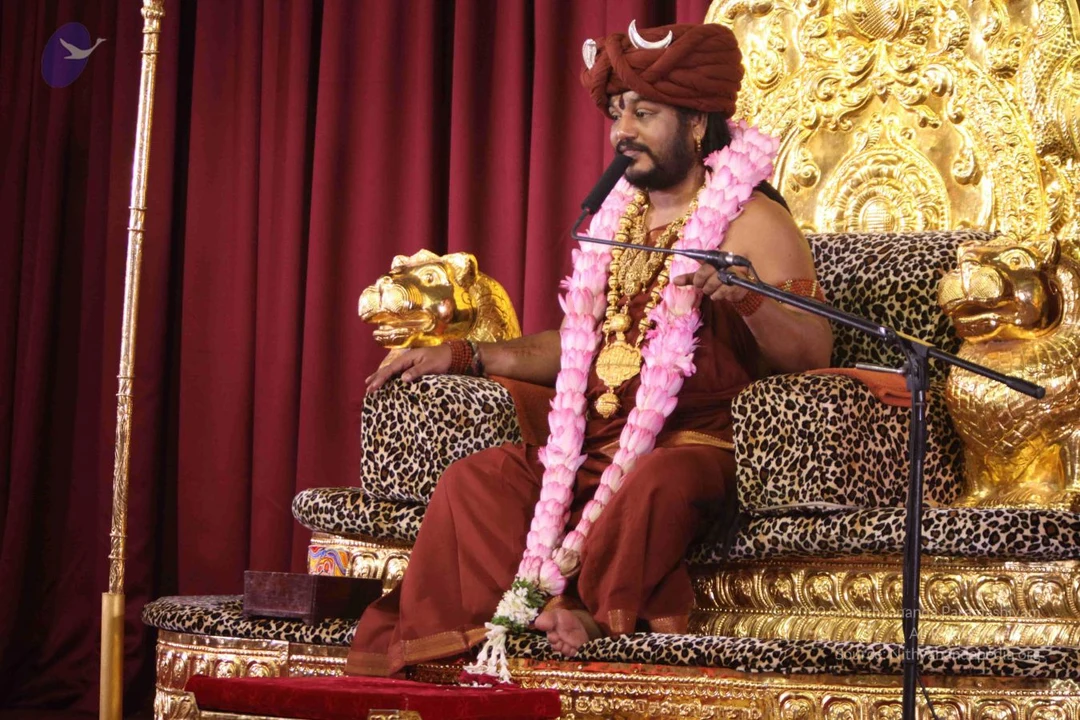
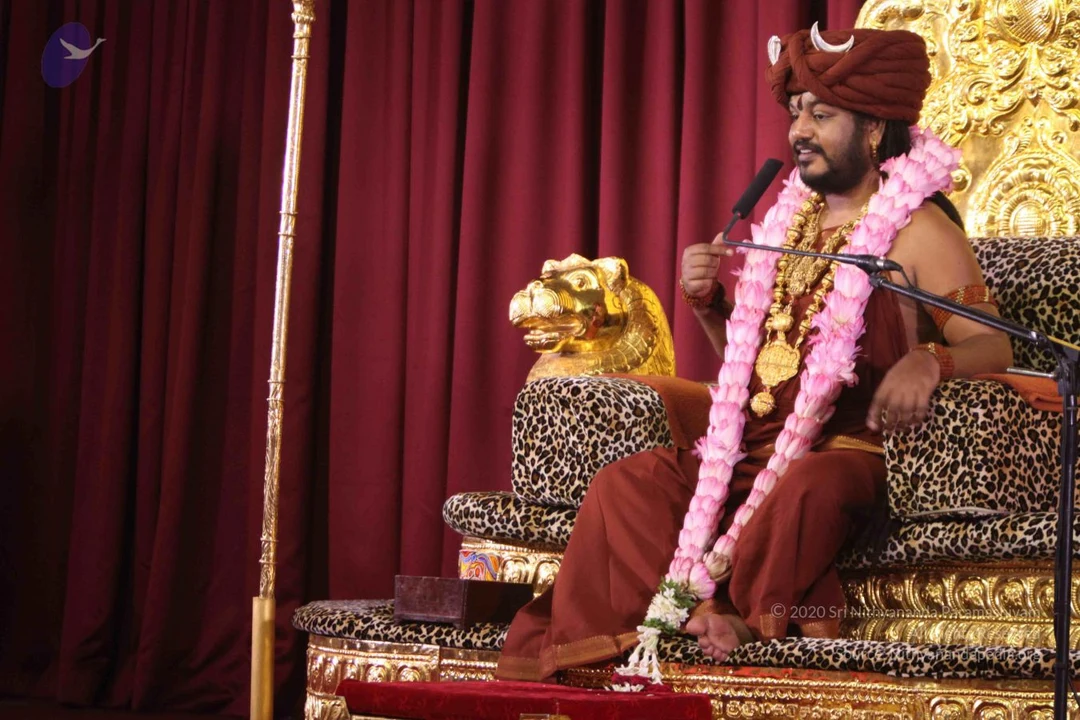
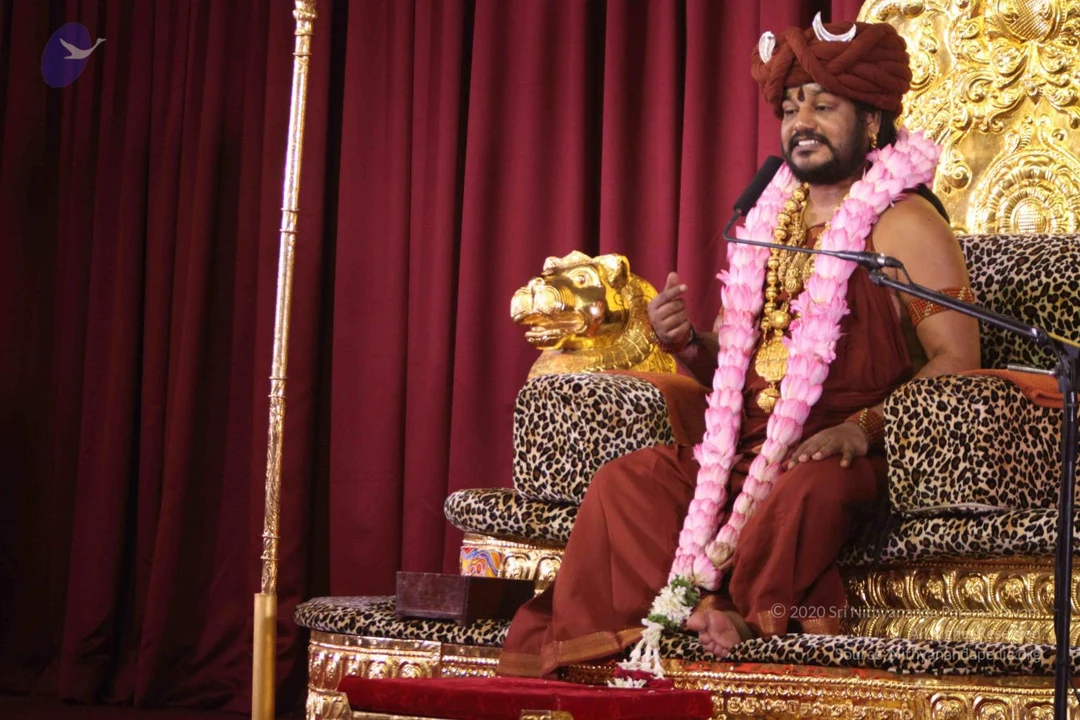
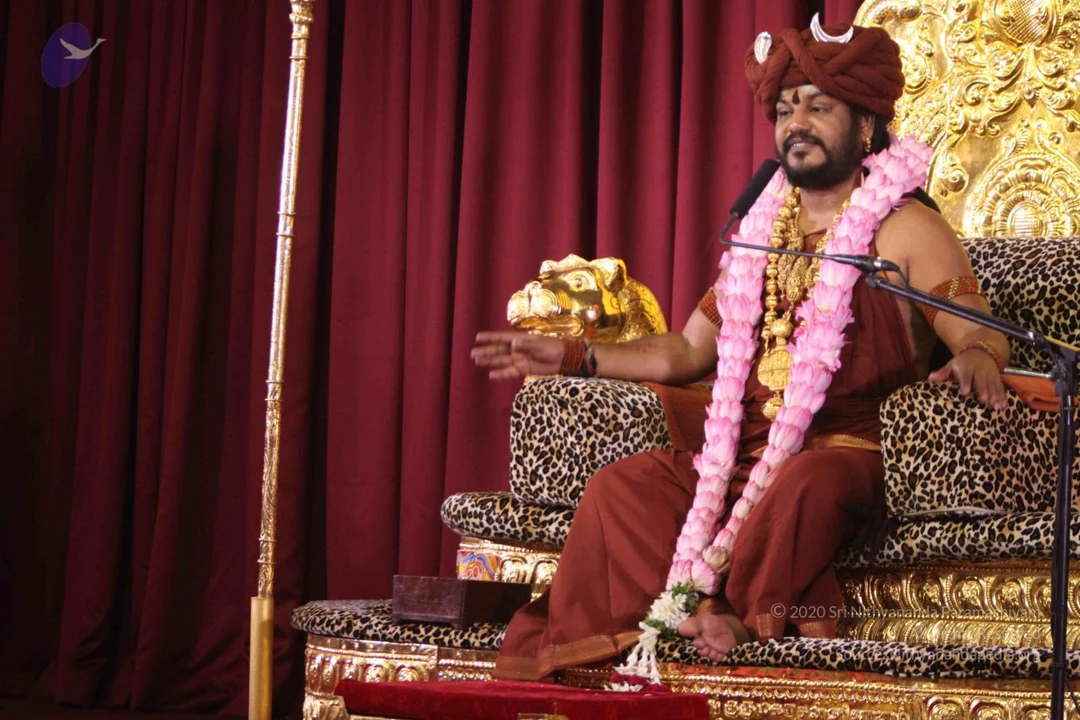
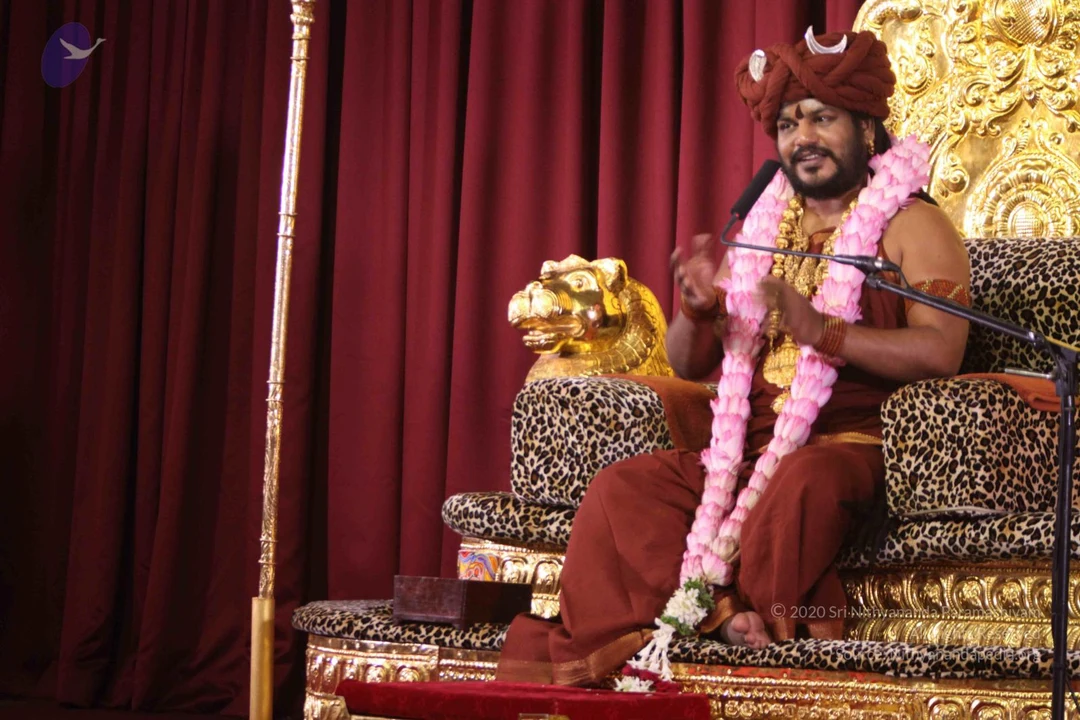
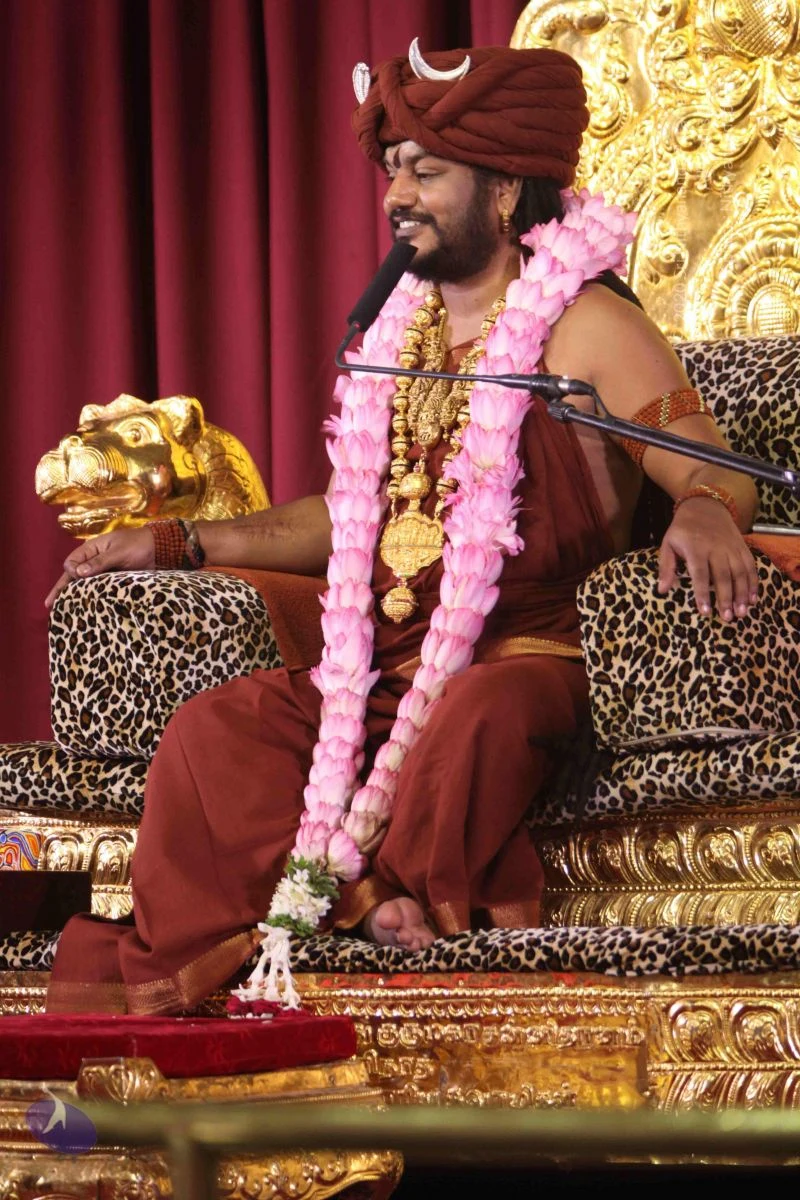
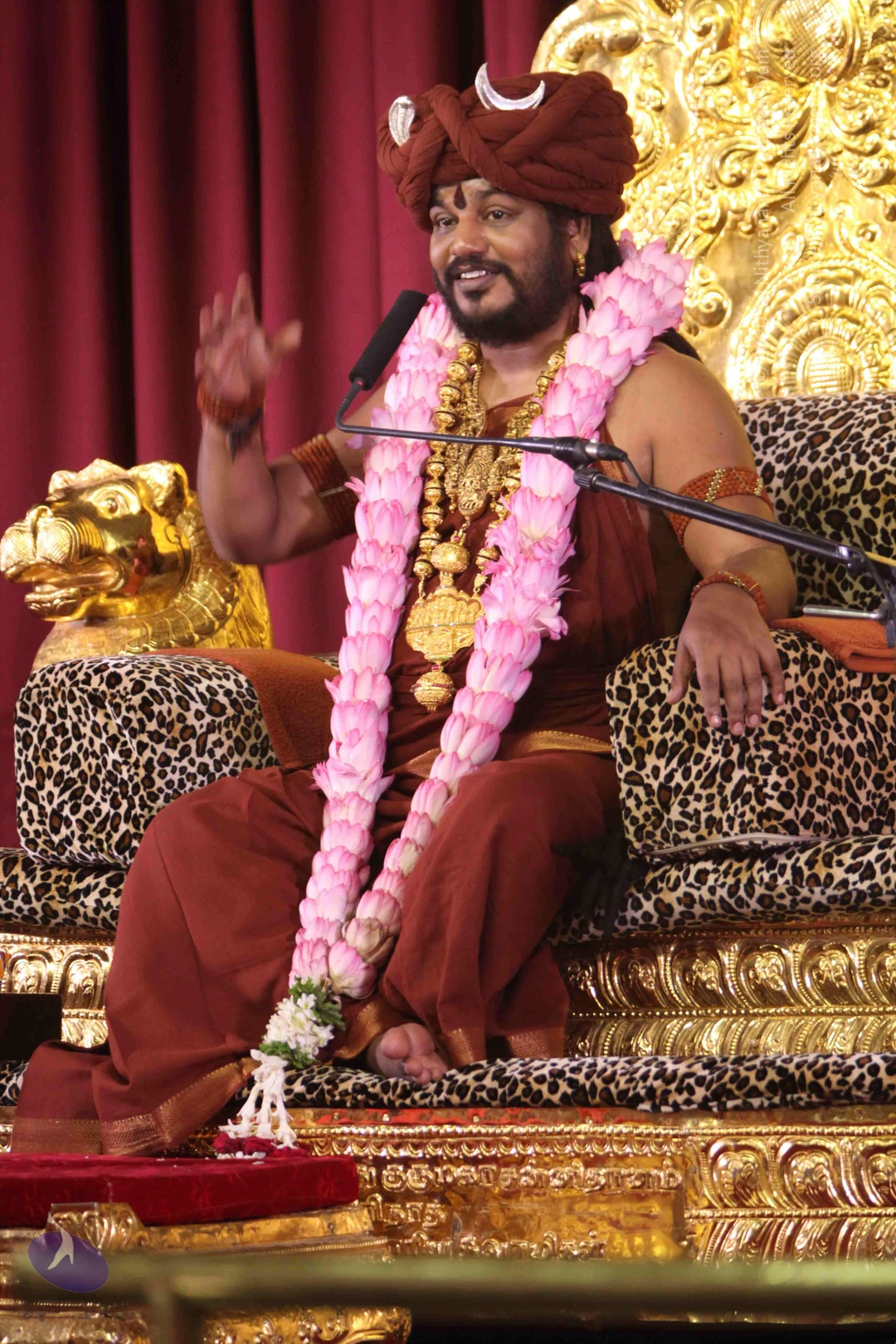
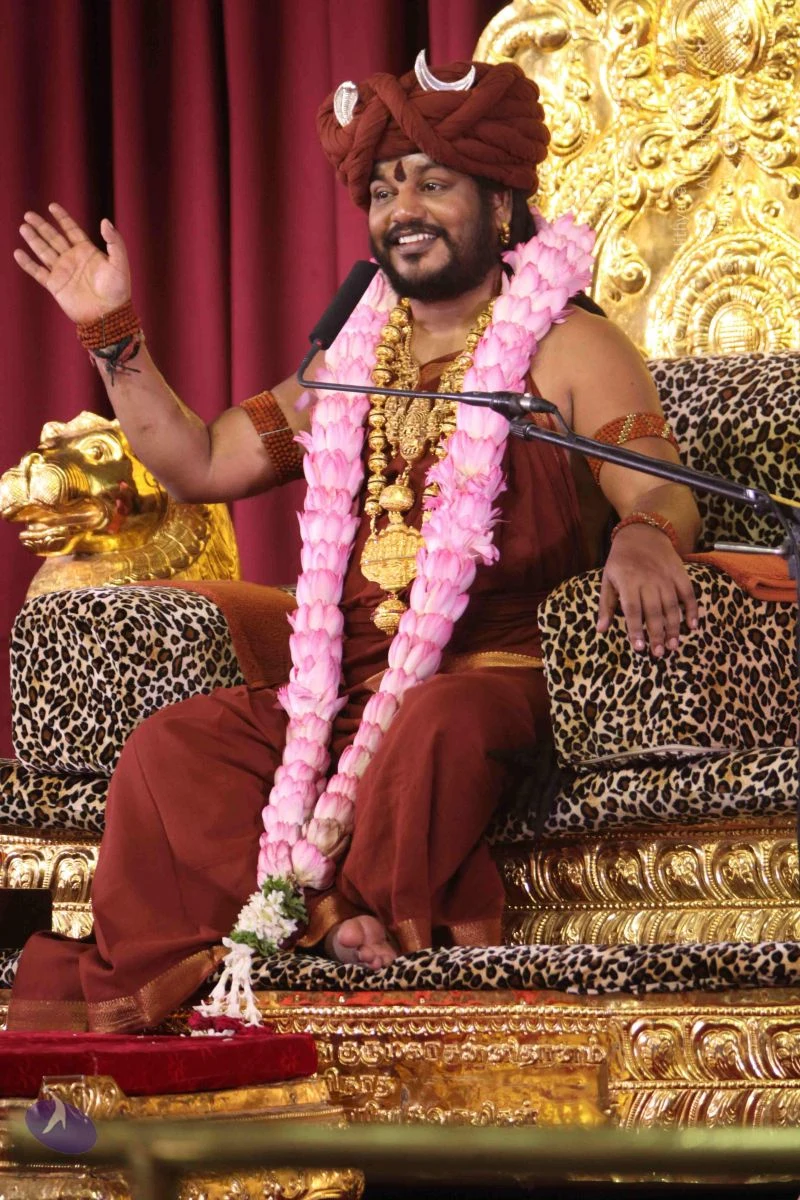
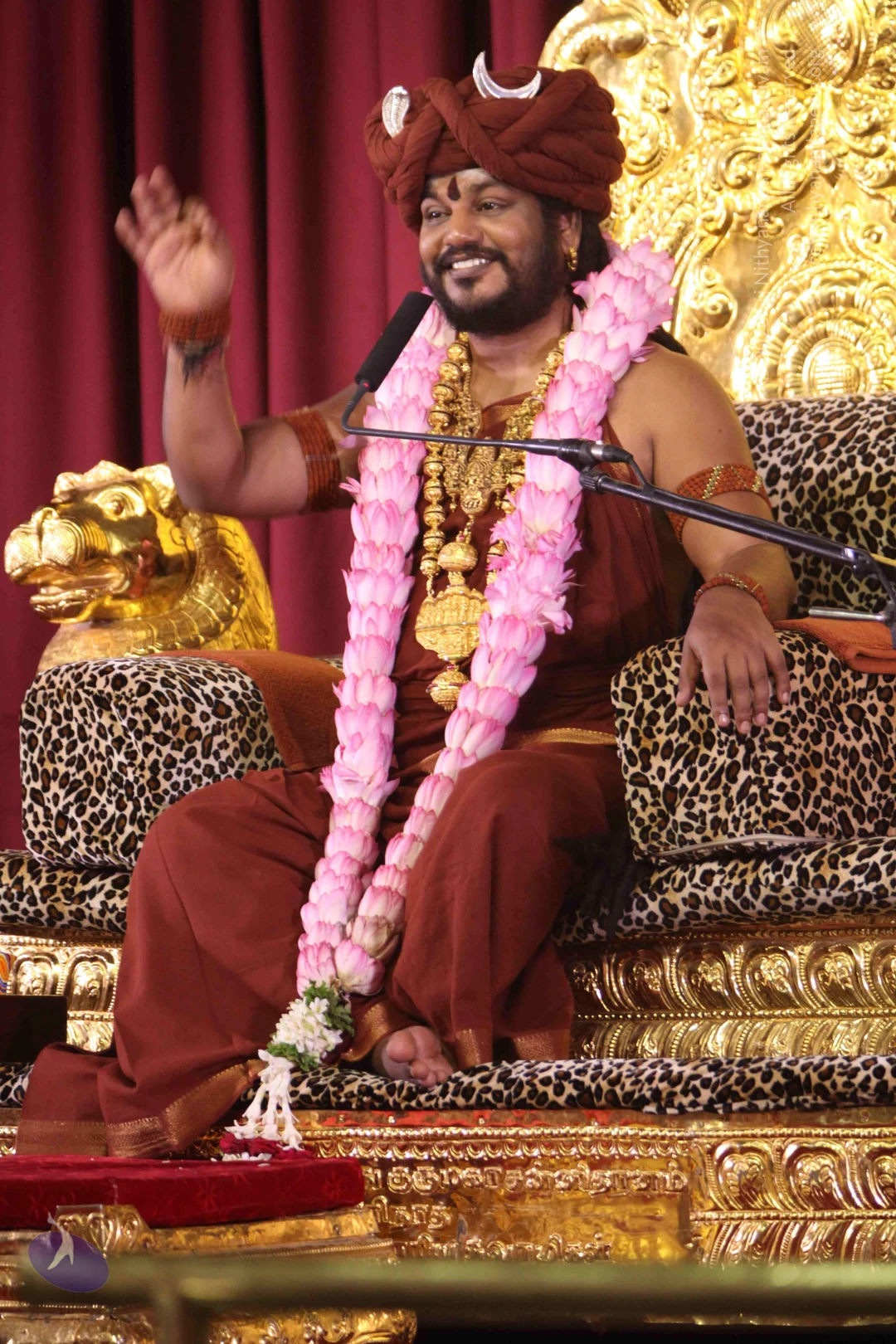
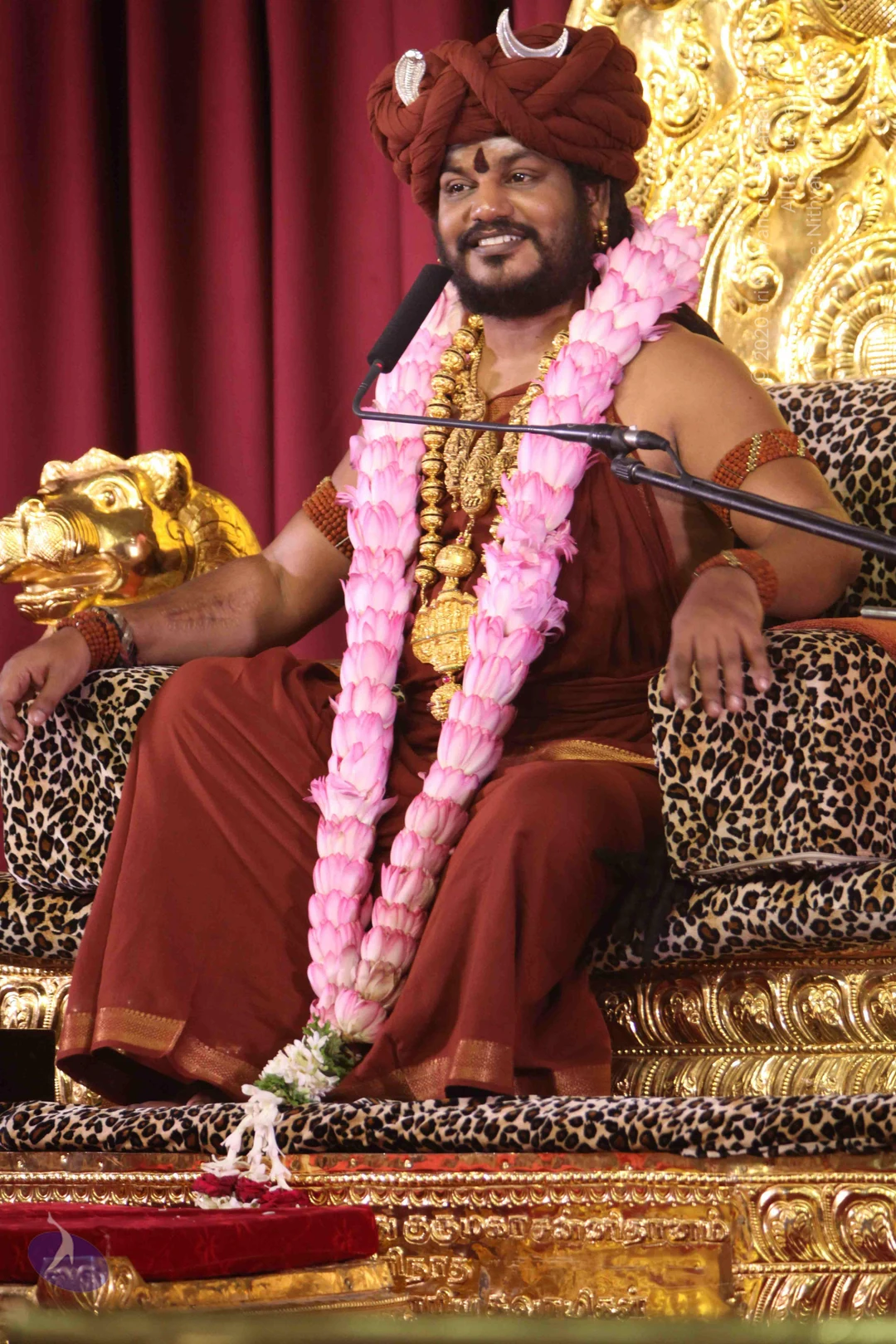
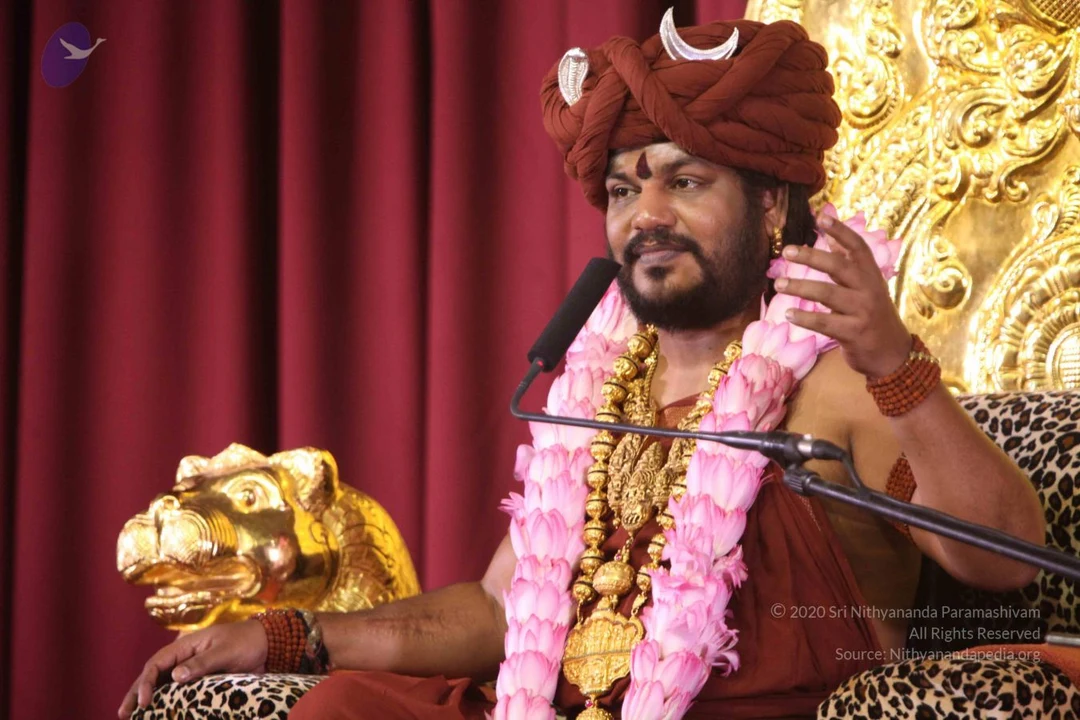
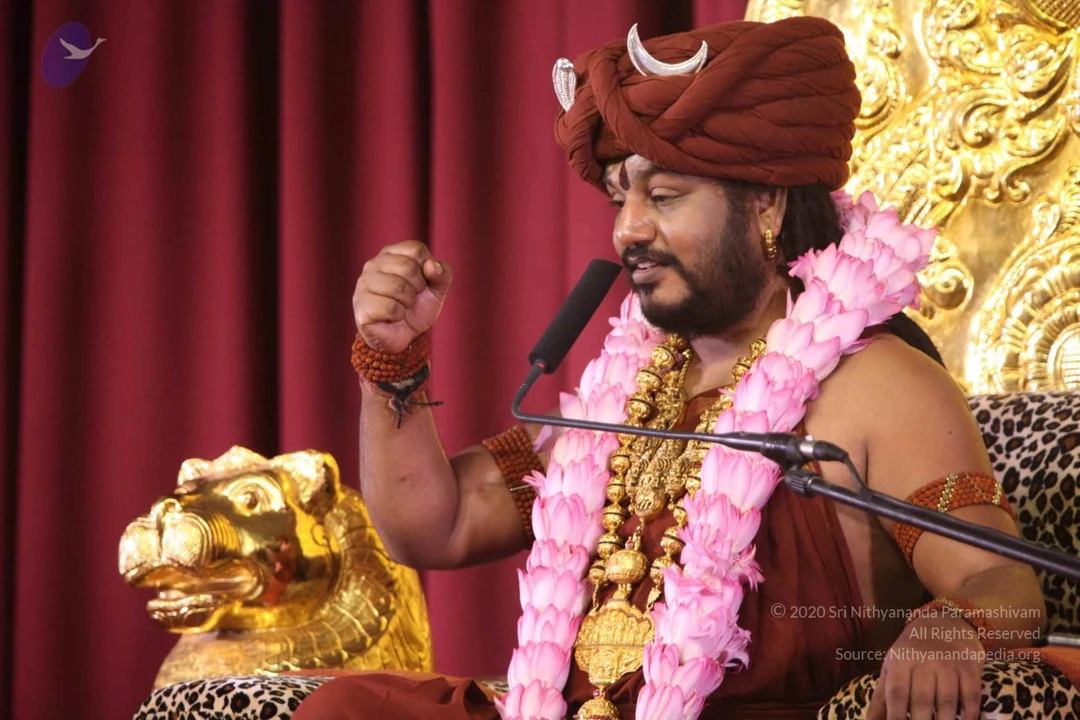
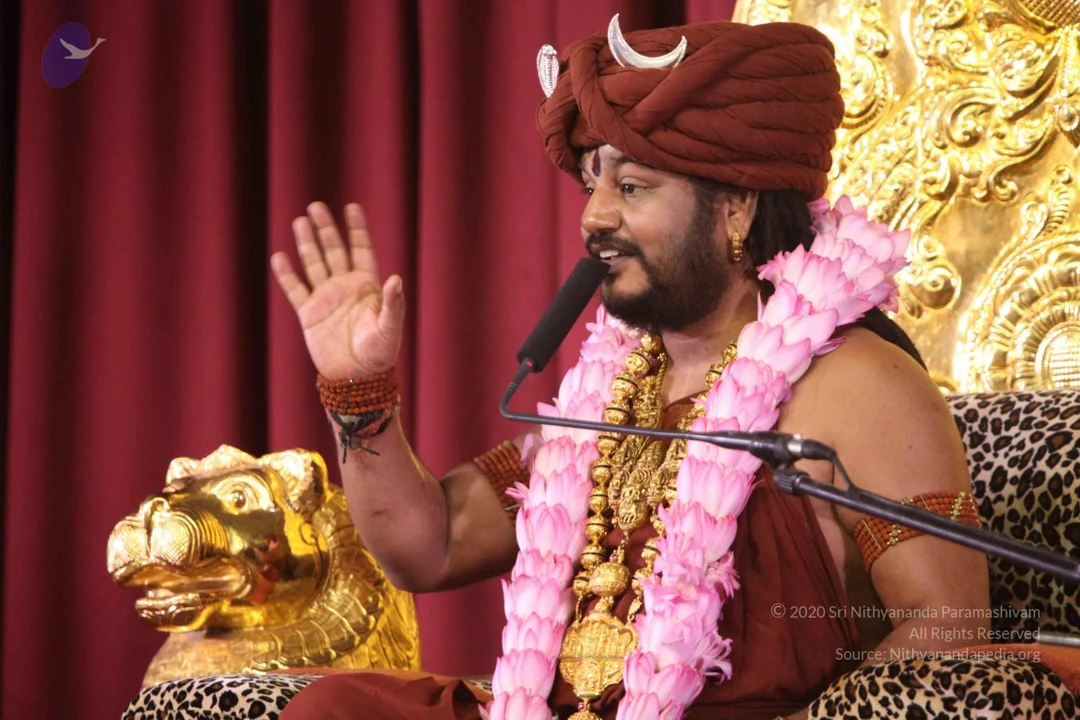
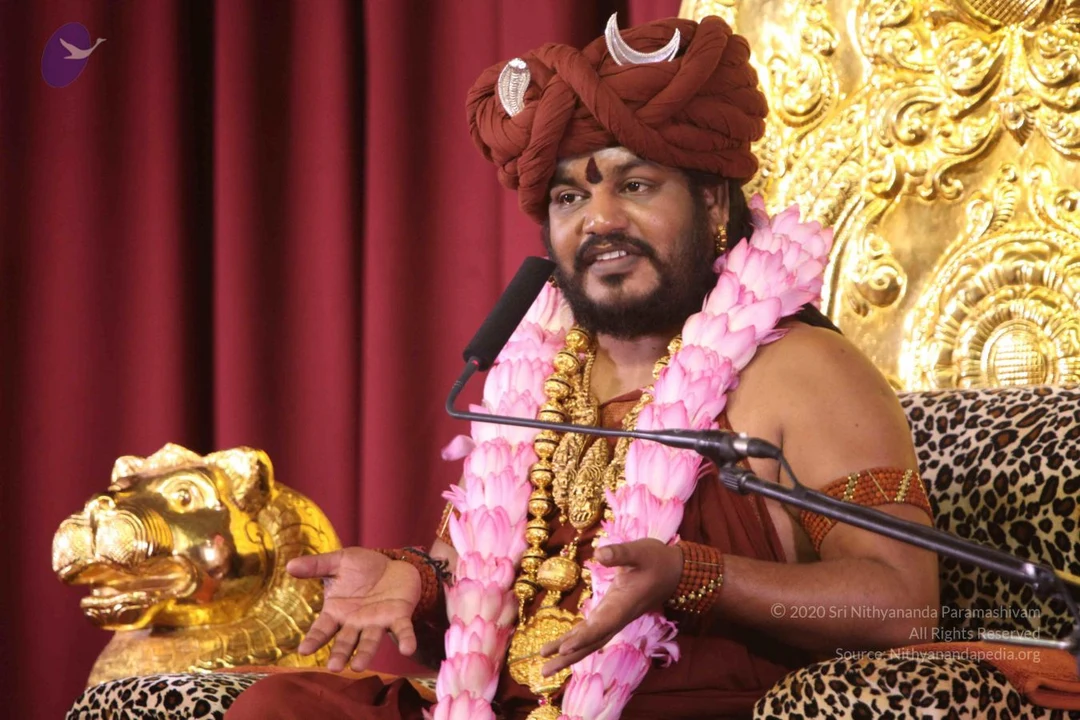
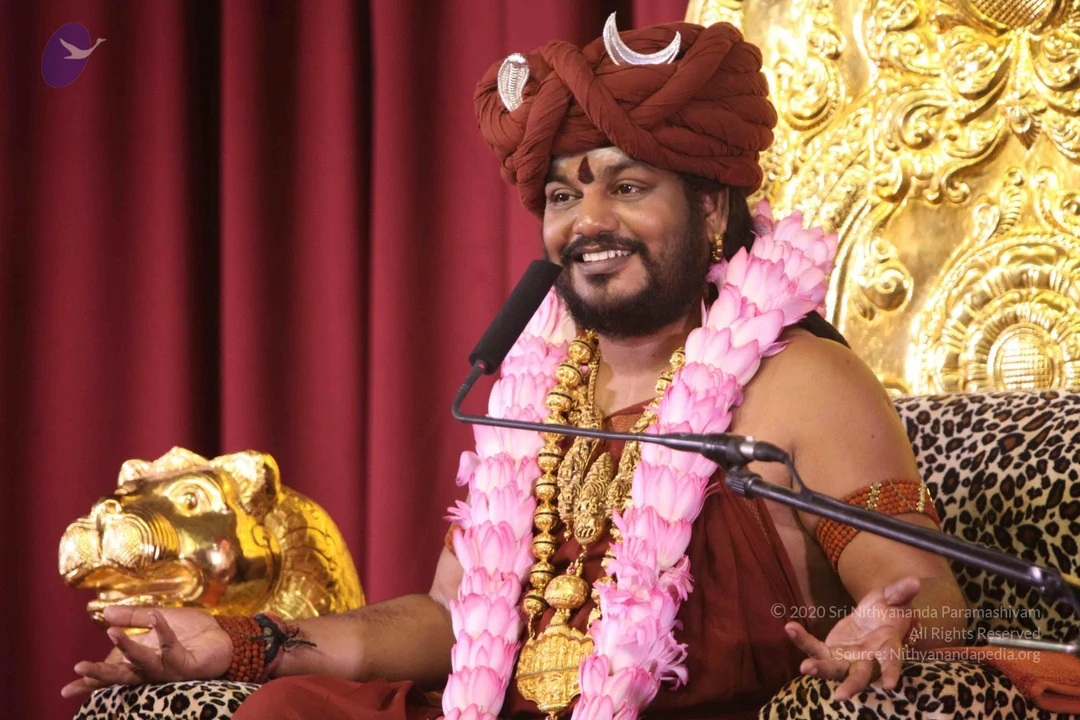
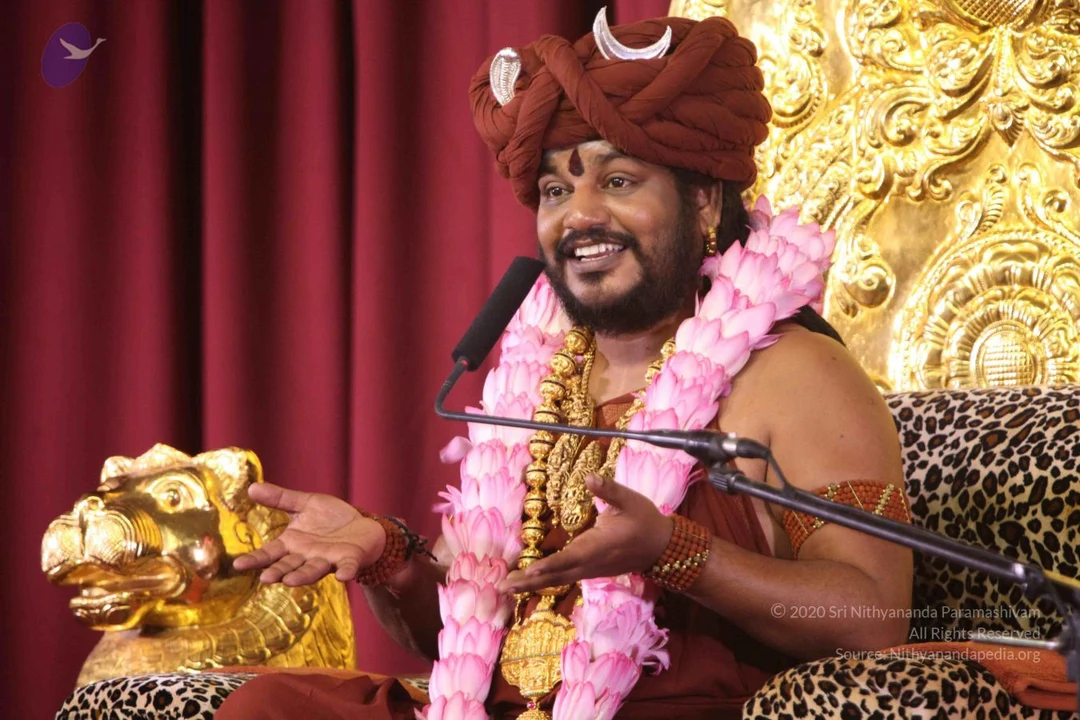
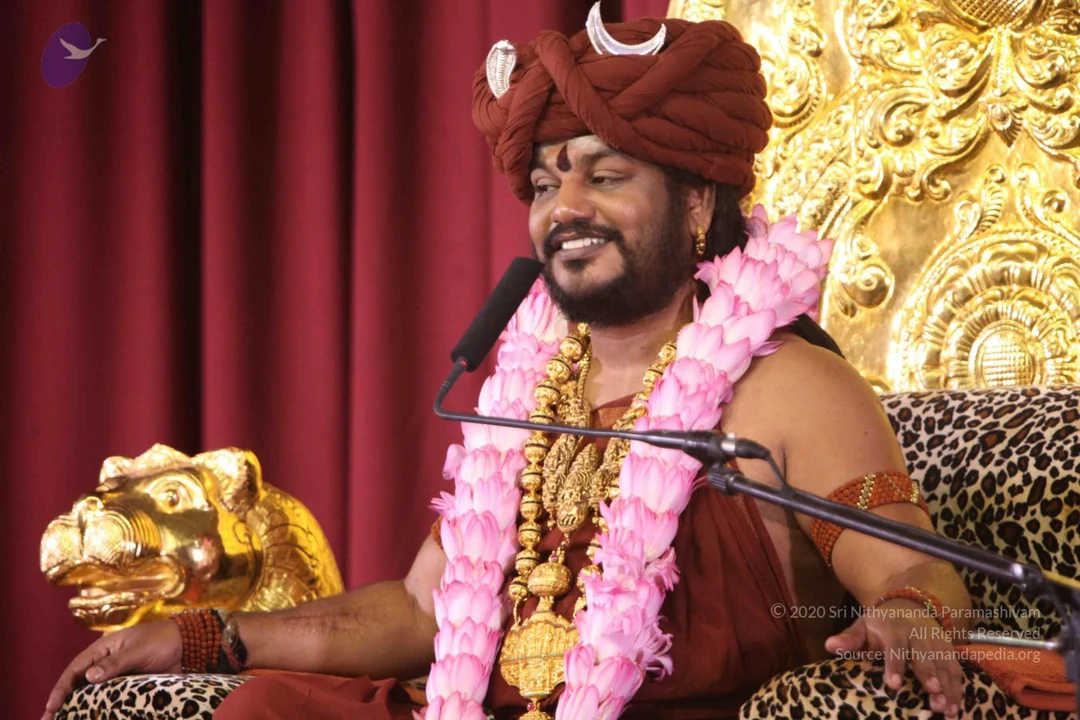
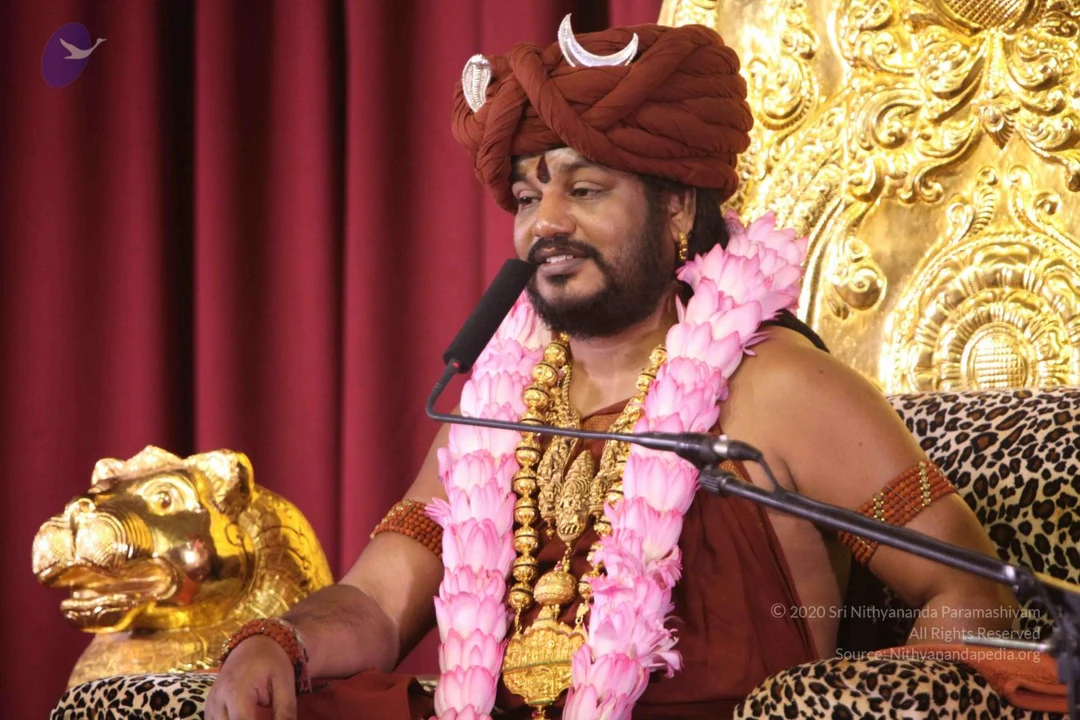
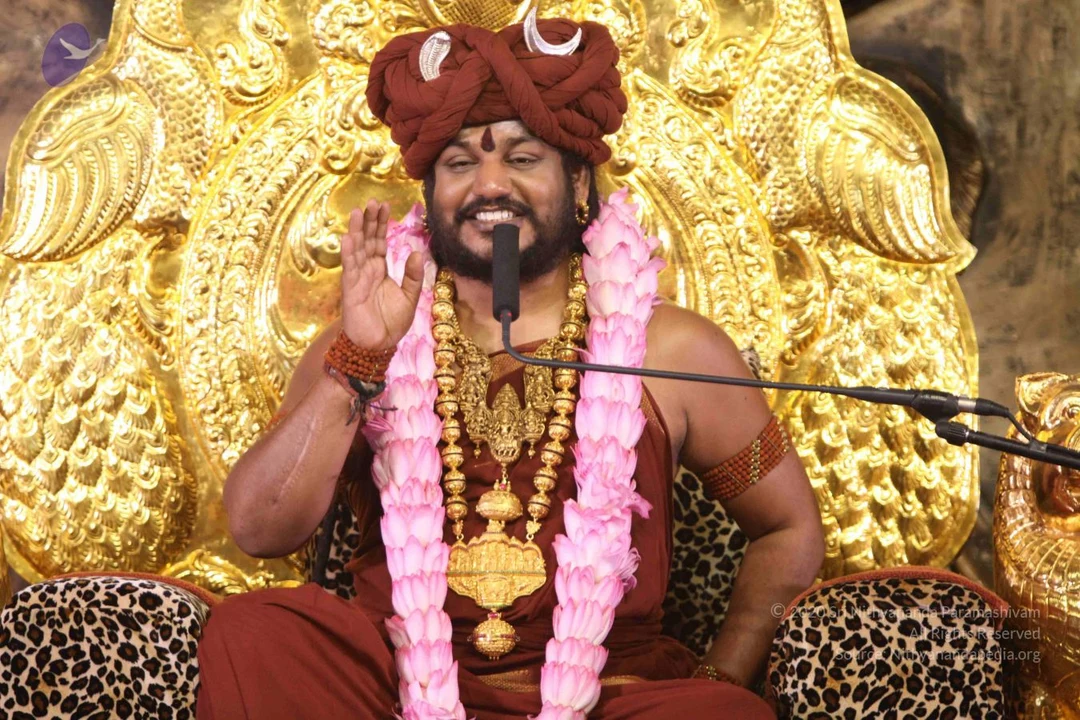
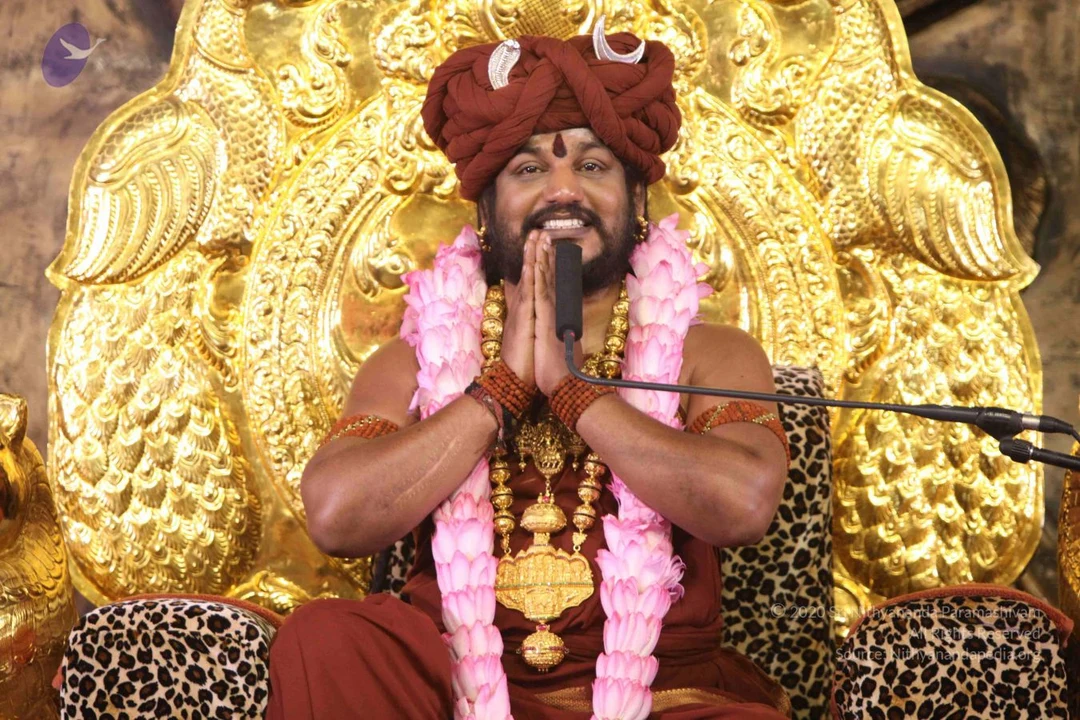
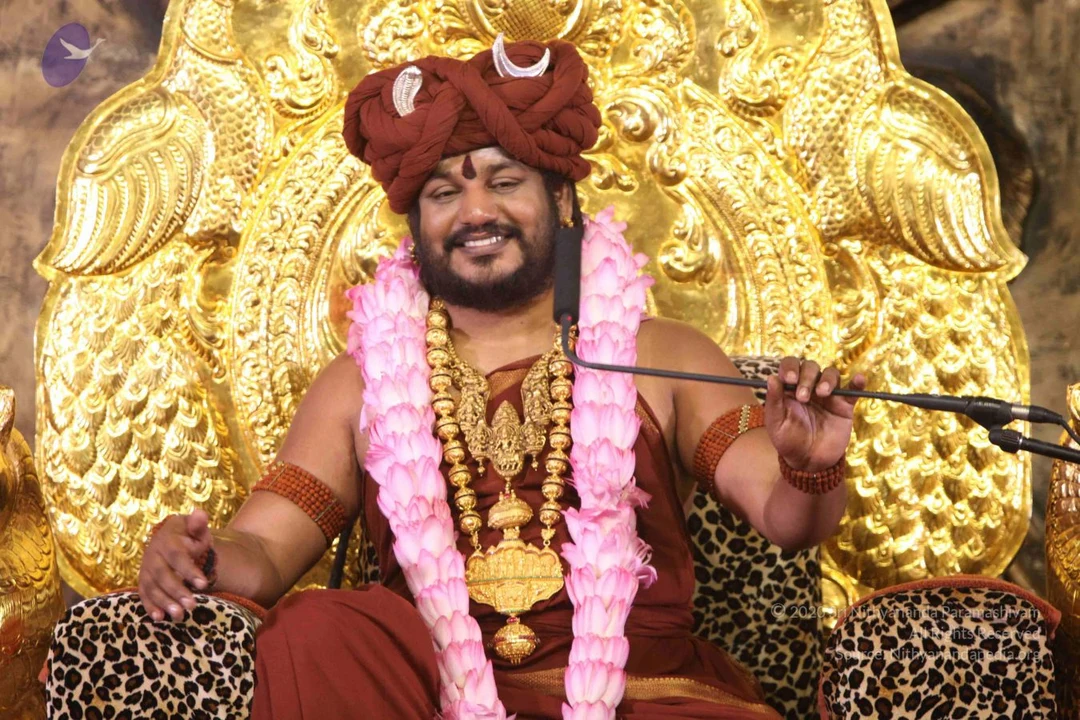
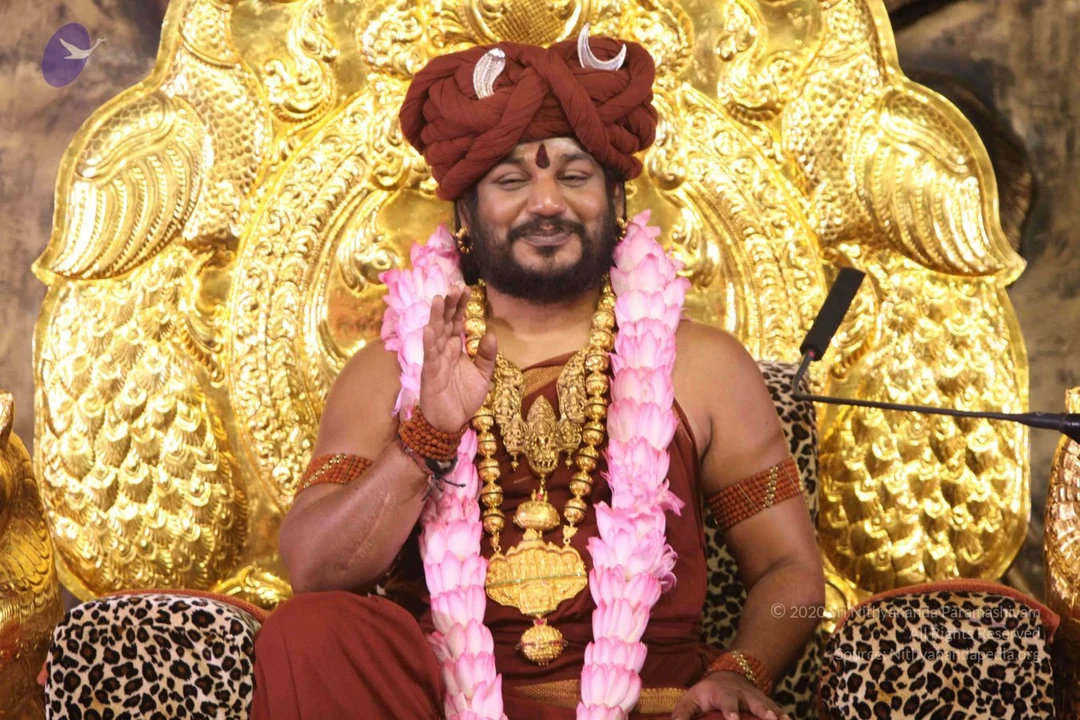
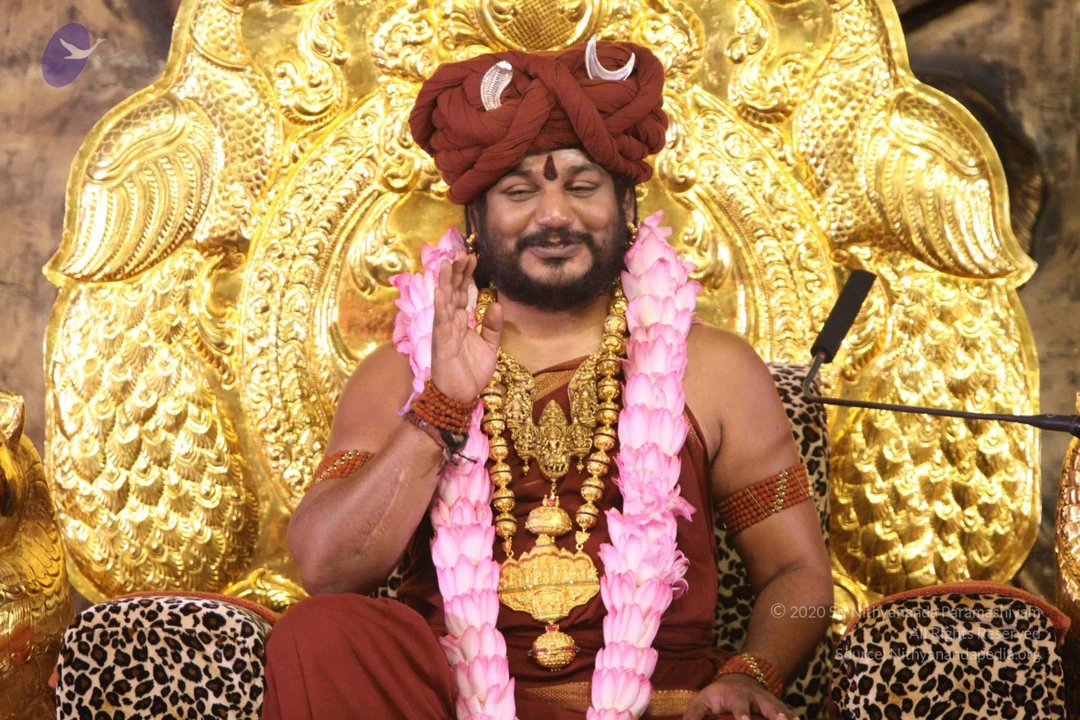
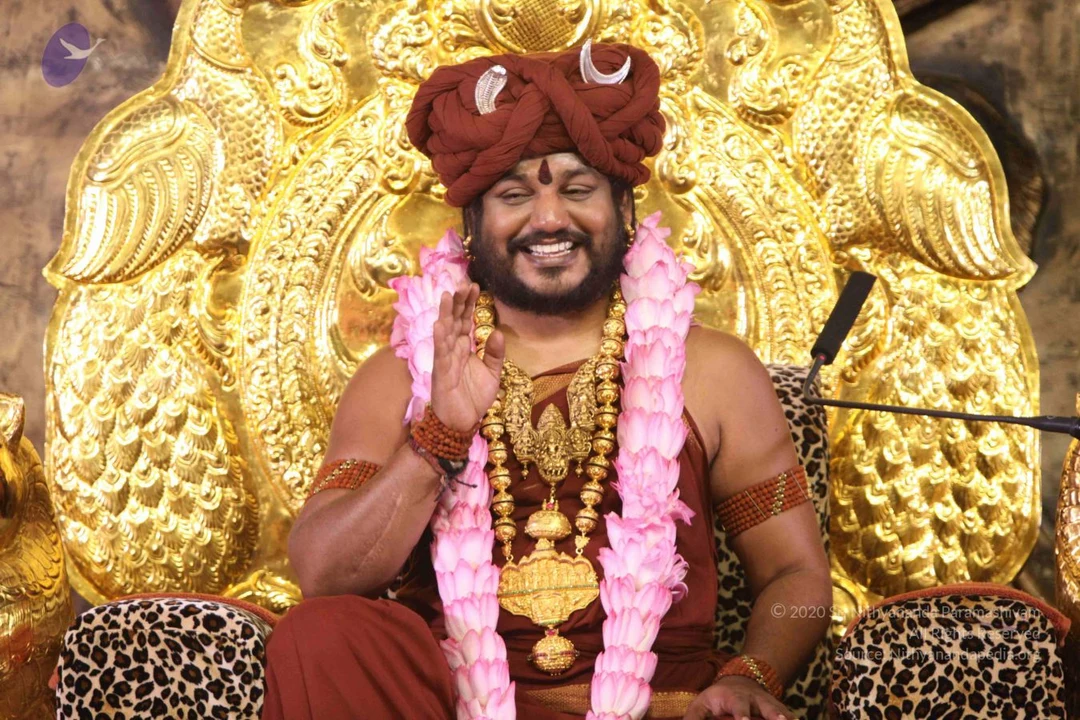
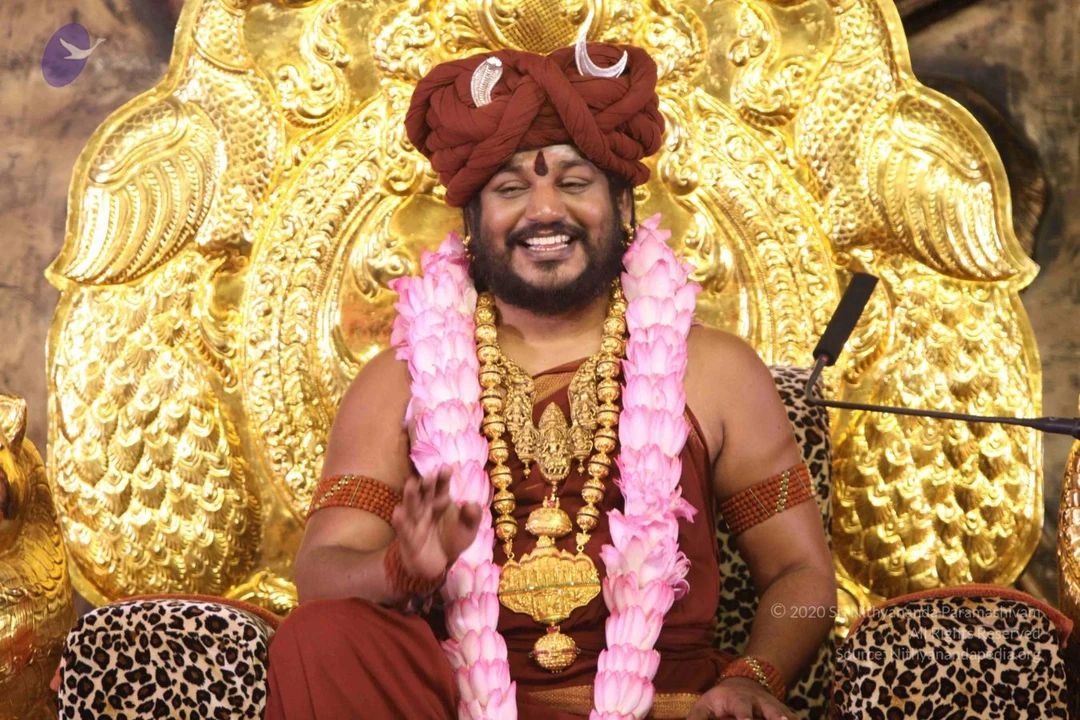
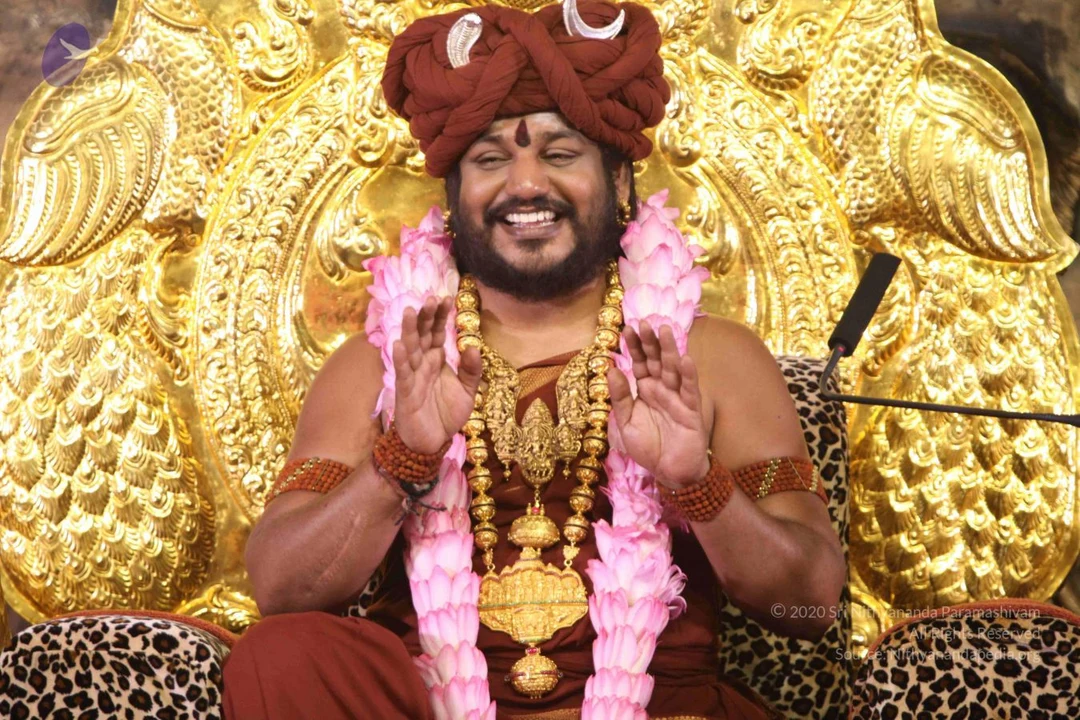
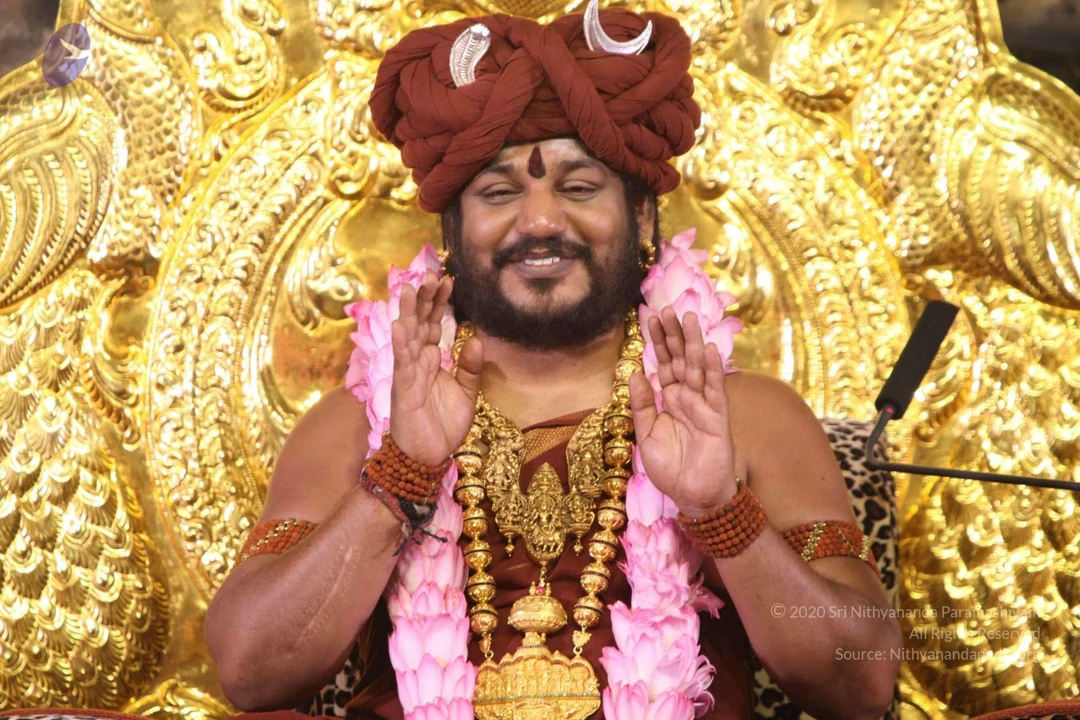
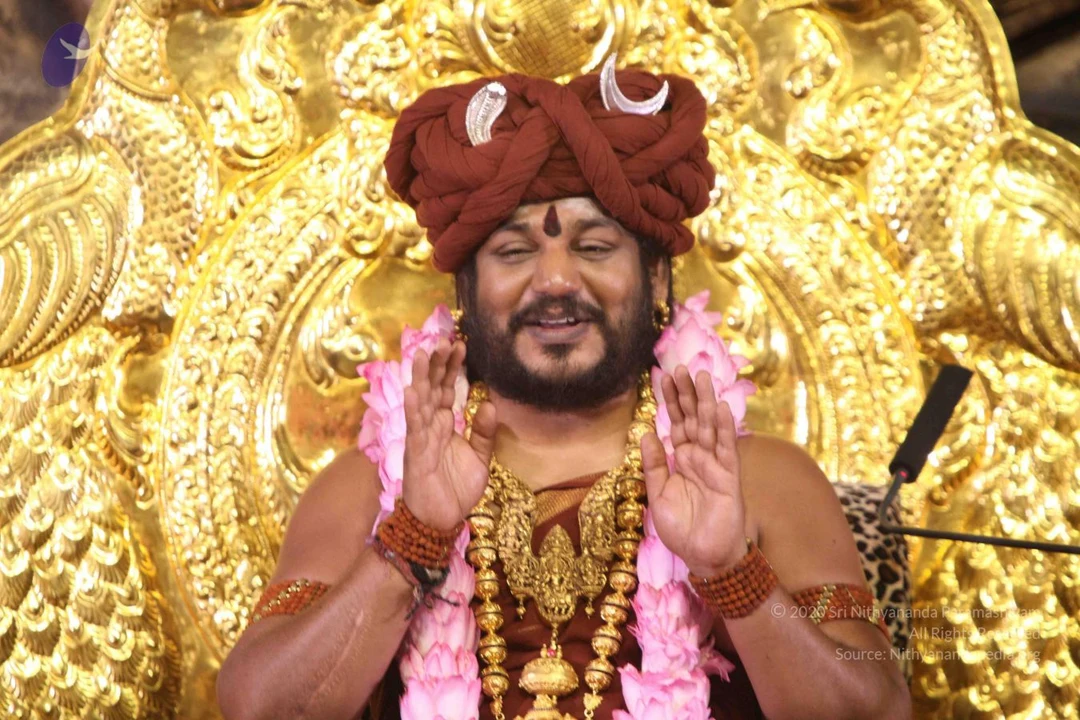
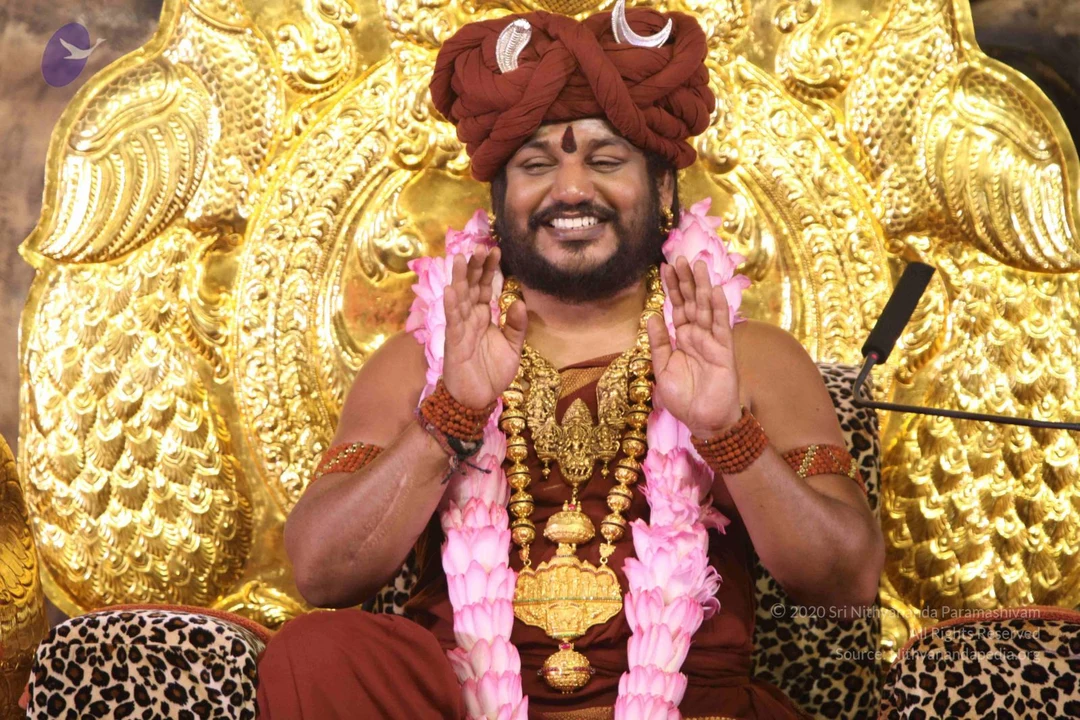
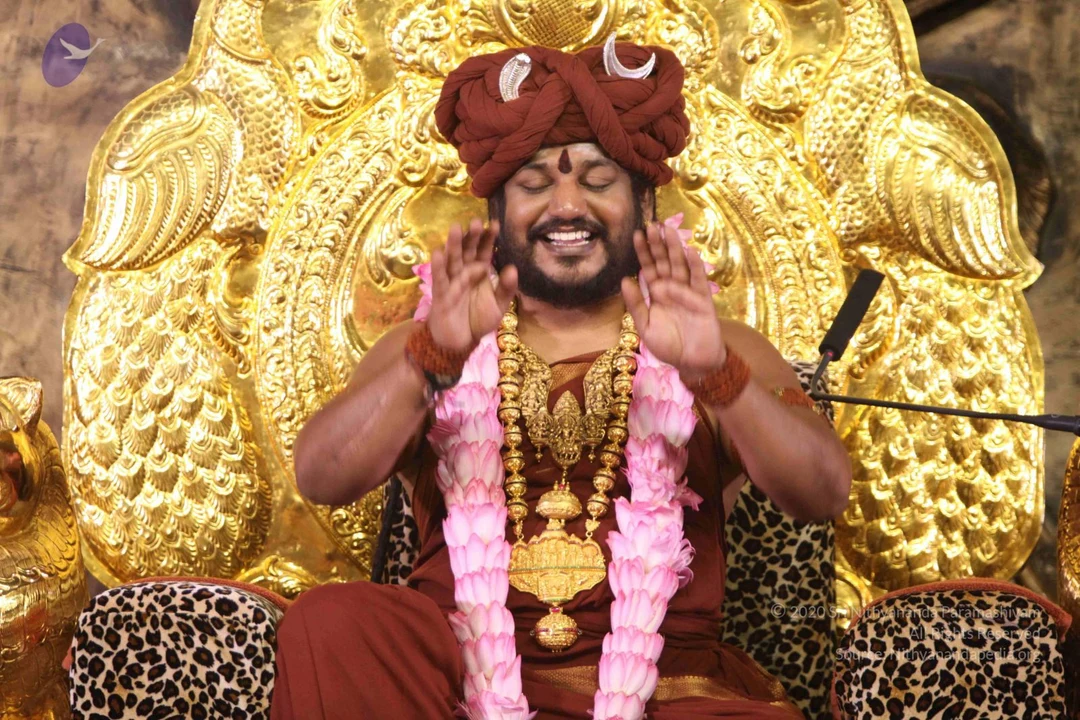
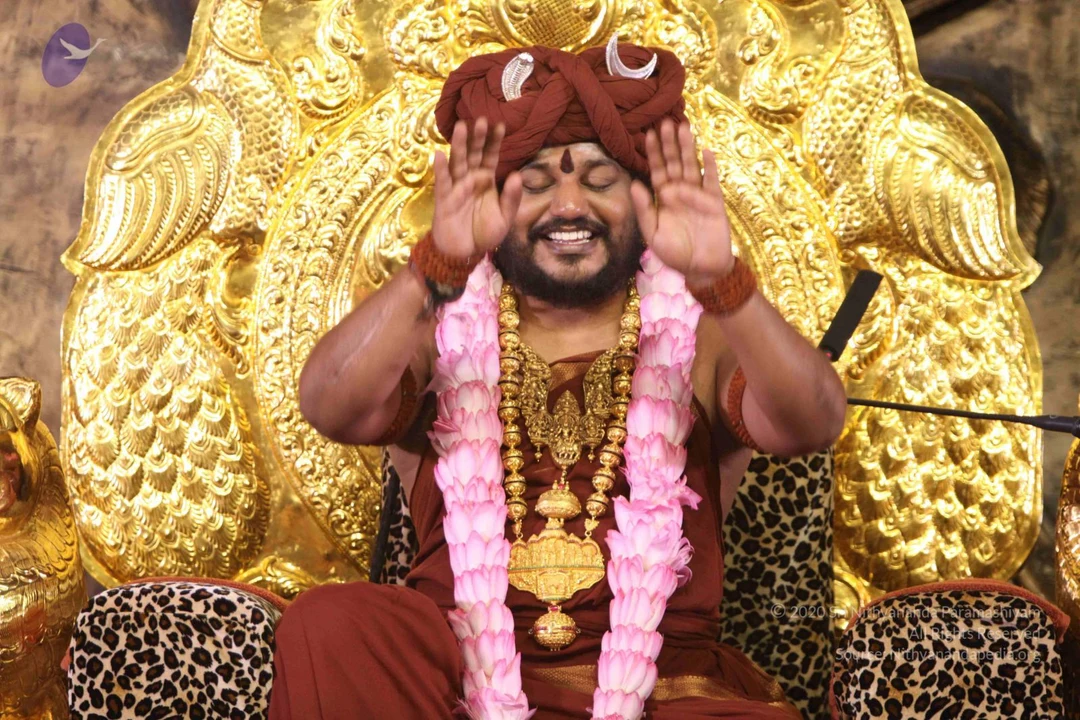
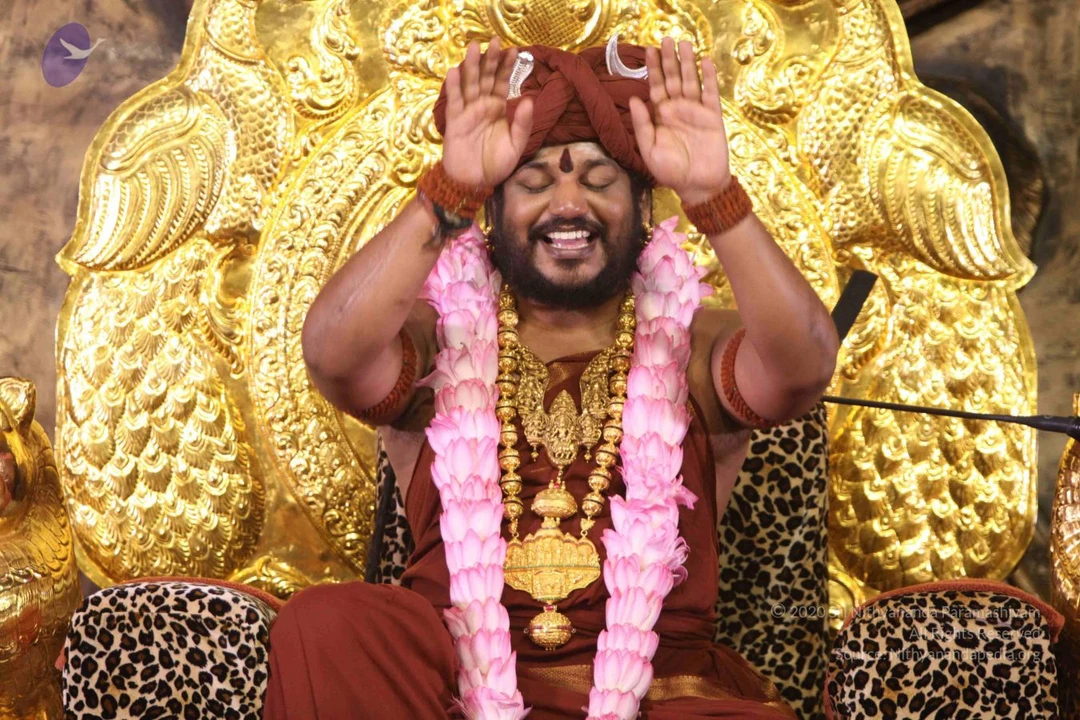
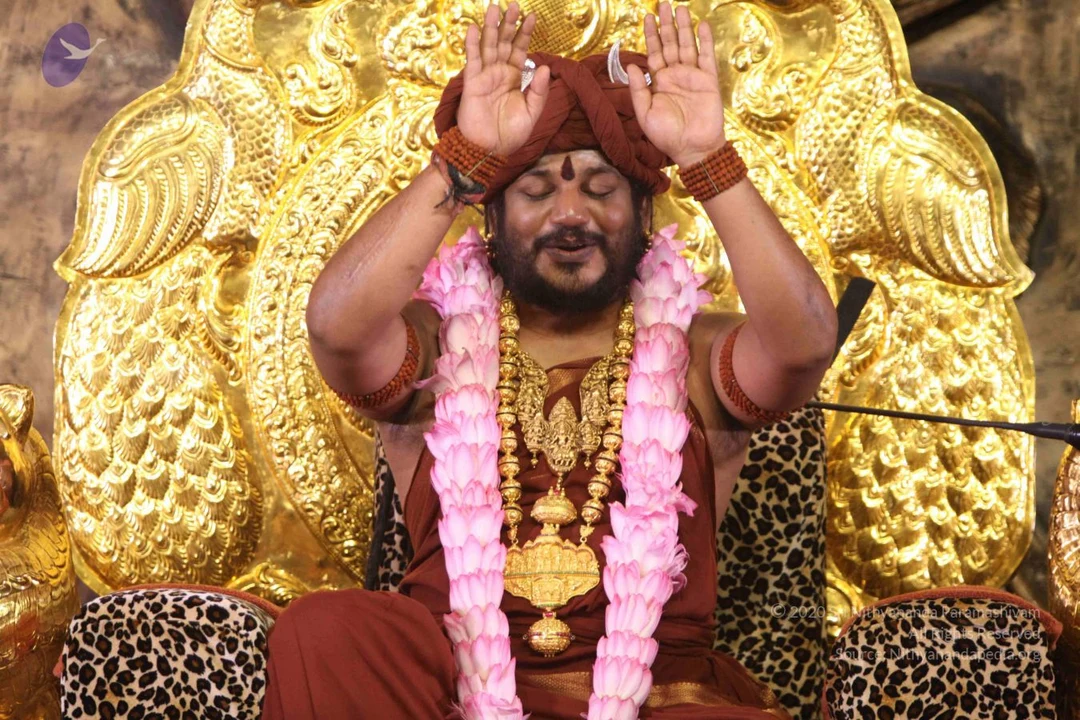
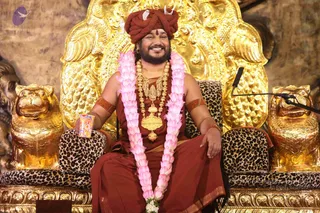
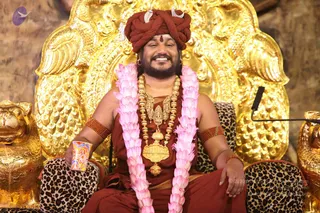
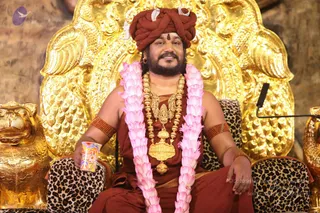
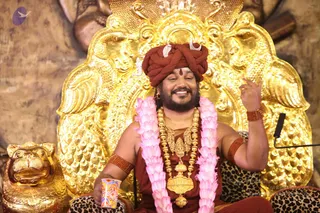
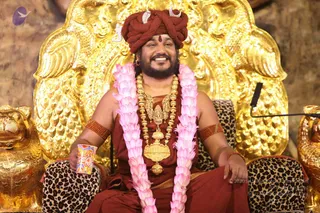
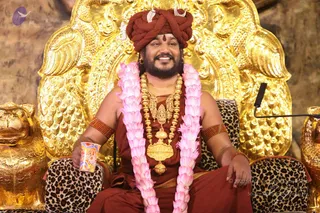
A large rust-red shipping container is being lifted by an orange mobile crane at a dusty, unpaved site at dusk. Two men stand on top of the container silhouetted against a bright sky, and a third man in a checked shirt stands at the right edge. A second crane arm appears on the right, and a smaller red container sits to the left beside palm trees and a leafy tree. The scene shows construction or logistics work, with no ritual, discourse or ashram activity visible. No a person candidate is present.A photograph of an outdoor construction yard at dusk with a dirt ground. An orange telehandler-style crane lifts a red shipping container off a flatbed truck, with its cab operator visible. A second red container sits to the right beside scattered rusty rebar and debris. A red-roofed building with green eaves and a satellite dish stands at left, with a truck bearing the lettering 'Sunrise Construction' and a green AIP logo at the far left. Tall trees and a pale sky frame the scene. No a person candidate is visible.A photograph of a seated man in a golden throne setting. He wears a red-brown turban with a small crescent-shaped ornament, a red bindi on the forehead, and a rust-red robe. A long pink flower garland hangs around his neck, with a heavy gold necklace and a large gold pendant over the robe. Red beaded bracelets are on his wrists and upper arms. He smiles with eyes closed and raises one hand in a blessing gesture, while holding a colourful paper cup. He sits on a leopard-print cushion before an elaborate gold repoussé backrest, with gold lion or feline sculptures on either side and a microphone at the right edge. Swamiji (probable): the turban, ornate gold jewellery, flower garland and rust-red robe are cues for a presenting guru seated on a throne, though the appearance is not fully certain.

August 08 2016

Original wiki page
Contents

Title

Awaken the Shivatva in You (Living Shuddadvaita Process, Series II, Session I)

Link to Video:

Link to Audio

Awaken the Shivatva in You

Description:

Paramahamsa Nithyananda decodes the sacred secrets of 5th sutra of Kena Upanishad in the Nithya Satsang of 10th August 2016 – leading us to take a U-turn to Enlightenment, taking us to the right direction ….our senses to look in. “Not through which the words, visualization can describe but the Source from which the visualization and verbalization gets life. IT cannot be revealed by the visualization and verbalization, but what is THAT which reveals your visualization and verbalization. This is the subject for MANANA, subject to be meditate.

Decoding the beauty of Samskrit coded in this verse, Swamiji reveals – "speech and verbalization, all this put together is called KARANA. Manaḥ, mind which is the base on which all this is dancing, if you are soaked in the dance of all these senses, you will miss the power which is empowering all these KARANAS. The moment you looking towards the SOURCE, which makes you experience the Karanas and experiences through the KARANAS, the Karana dissappears into KĀRAṆA (Source, Cause).

The sacred truth need to be decoded from this verse – Enlightenment is not difficult, it is just change of direction - U-TURN. The man who stands and shows you the board, U-TURN is GURU. He tells in such a way, all your KARANAS start listening, that’s all. Because he has mastered all his KARANAS, he can command all your karanas. Only a person who has mastered his karanas can say about turn, can say U-TURN. YOU-TURN is U-TURN."

5th verse of Kena Upanishad for Pure Questioning: yad-vācānabhyuditaṁ yena vāgabhyudyate tadeva brahma tvaṁ viddhi nedaṁ yadidamupāsate || 5 ||

That, which speech does not illumine or reveal, but by which the speech is illumined or revealed and expressed—you must know That alone as Brahman, the Absolute existence, and not what people worship and cherish here as this finite, limited object.

Transcription

I welcome all the devotees, disciples, samajis, satsangis, Sri Mahants, Mahants, Thanedars, Kotaris, visitors, everyone sitting with us through Nithyananda TV, Facebook live, You Tube Live and Two Way Video Conferencing having Nayana Deeksha all over the world First thing I want to tell you, from today Nithyananda TV is live for 24 hours having various programmes , spreading the message and blessings of Sadashiva. Starting with Nithya Yoga- Nithyananda Yoga, Padapuja, Live Satsang, Bhagshastra classes- classes on cooking as per Sadashiva’s instructions, Puja, Manifestation of powers, various multiple activities are happening. Whole day it is live. All the devotees, disciples, public visitors, viewers can see the programs and enrich your life. All Aadeenams should have permanently one hall where this Nithyananda TV is live continuously available for public visitors and viewers to watch do yoga- The Nithyanand Sabha. All Aadeenams should have Nithaynanda Sabha with a board, Full screen, should have LED will be the best. All Aadeenams should have LED walls and 24 hours it should be live relays, and available for the people to come and watch. Let me enter in to KENOPANISHAD 3rdv and 4th verse of KENOPANISHAD.. recite along with me.. Na Tatra Chakshurgachhati, na vak gacchhati, no manah na vidmo, na vijanimah, yataitat anushishyat, anya dev tat viditat, ato aviditat, ati, iti sushruma bhurvesham, enastat vyachachkshire Now listen carefully… I goes not, speech goes not, mind and intellect goes not, we do know, we do not understand how that reality can be taught.. again even here upanishad is not using any word which can even remotely translated as consciousness, but always the modern day translators translate with the word consciousness which is wrong. The upanishd only says we do not really how that can be taught. Understand if Upanishad is wondering how that can be taught, the meaning is it can not be taught. I cant teach, but you can learn. Listen carefully I cant teach but you can learn. When I go on leading you in to pure questioning, you can catch the reality. Na tatra Chakshurgachhati, Na Vak Gachhati, No Manah, na vidmo, na vijanimah, yatyai tat anushishyat, anyat eva tat viditat ato aviditat, ati, iti sushruma bhurvesham , enastat vyachachkshire Listen…. Nirvikalpa Samadhi can never be taught, but you can pick it up. If you start the pure questioning where the mind does not go, where the visualization does not go, where the verbalization does not go… Naturally the pure questioning only can lead you there. Pure questioning is what is encouraged through this verse. This verse awakens the pure questioning in you. The possibility of pure questioning in you. Na Tatra Chakshurgachhati, na vak gacchhati, no manah na vidmo, na vijanimah, yataitat anushishyat Listen—when you understand through pure questioning, there is something which you cant approach through visualization and eyes, your 3rd eye is awakened, that’s a paradox. Listen…when you understand there is something where your two eyes are not useful your 3rd eyes get awakened. When you understand there is some place where your verbalization is not useful your vak gets awakened, when you understand there is a space where your mana, mind is not useful your unclutching gets awakened. There is some space where your JEEVA individual soul is no more useful for you, your Shivatva the cosmic soul will be awakened in you. Understand, actually understanding the redundance, irrelevance of certain things pushes you to awaken deeper parts of you. I can tell you. What is upper middle class? Having all the comforts and infrastructure and literally useless body is upper middle class. Any fellow who is having luxury diseases Blood Pressure, Diabetes, Heart Problems, Depressions and what not.. All these luxury disprders if you want to treat him completely at one go, just take away all his luxuries. And I tell you Poor fellow means does not have infrastructure, have healthy strong body. Rich fellow means have everything but does not have a healthy body. The need decides the way you function.

The moment you realize there is a space you have to travel where your both eyes will not go Na Tatra Chakshurgachhati—there the eye goes not. You have to go to a space where the eyes can not take you, eyes don’t go- You have to go to a space where ears don’t work, your verbalisation will not work. The survival need makes 3rd eye open up, Vak open up Manah Open up, and Shivatva open up. If you feel whatever you see through your 3rd eye, visualize through both the eyes are stupid useless, then your interest will turn towards your 3rd eye and it will open up. If you feel all the verbalization- external and internal are stupid, useless your Vak will open up. If you feel your Manah, whatever cunning, stupid, profit-loss game, dos and donts, right-wrong game you go on playing with your Manah is useless redundent , you are supposed to travel somewhere at one point you will be dragged to a place where you Manah can not be accompanying you. Even on your backpack. When you know that your unclutching the pure space opens up. When you know your whole Jeeva, what you think as you, that self itself can not come with you to a place you have to travel, even that is going to become redundant- useless. You will be pushed into a space where this self which you think as you, you, you cant accompany you. Then when th e Jeeva becomes redundant you know there will be a space in your life where Jeeva will be useless, only then the Shivatva opens up. The Shivatva opens up… Understand, only when you understand your Jeeva is redundant to your existence, you have to travel to some space where your Jeeva will not be useful for you anymore only then you allow the Shivatva to be awakened in you. Only then Shivatva awakens in you. You need to know there is a place, there is a space you have to travel, you will be forced to travel whether you are prepared or not, where neither your visualization ability, nor your verbalisation ability, or your intellectual ability or emotional abilities or your skills or your mind or even your very Jeeva can not travel with you, will not be useful to you. You need to know certain space exists where you will beforced to travel, where all these will not be useful for you. Only then you will wake up to the reality of Shivatva, till then whatever you do is cunning game, stupid game.
A luxurious man who has everything forget to uprate his system. When the survival need is there his system functions perfectly. I have seen extreme poverty and extreme luxuries, and I have seen how their body and mind respond to the situations, how their body and mind builds itself. Luxury is the worst abuse you will do to your body and mind. If you have some enemy and want to destroy that fellow, just make a wish let him become luxurious. That is enough, he is destroyed. If you have a friend and you want to save somebody, make a will let him always be in a lifestyle of activity, the active lifestyle. Let the luxury not get into his system, let the luxury not abuse his system. Anybody craves for luxury is luxurious person, even the craving makes the kind of a mental set up.

Na tatra Chakshurgachhati, Na Vak Gachhati, No Manah, na vidmo, na vijanimah, yatyai tat anushishyat, anyat eva tat viditat ato aviditat, ati, iti sushruma bhurvesham , enastat vyachachkshire You have to go to a space where whatever you carry now will become redundant. Let this be told to your being. All these are not going to come with you to that space, prepare yourself for that space. This clarity will awaken SHIVATWAMASI. This clarity will awaken the truth of SHIVATWAMASI in you. Contemplate- Where am I going to go, Where my eyes and visualisation will not come with me, my speech and verbalisation will not come with me, my mind and intellect will not come with me, my cunning games and strategies will not come with me, not even what I think as my soul is going to come with me. How am I going to go to that place, how am I going to exist in that place? What way am I going to be in that space? Contemplate, meditate, do Vakyarthsadhas on this today. I cant teach you but you can learn. I cant teach but you can learn. Anybody who contemplates on this will become young. Understand this is actually the technique to make you young and beautiful. Because old age is nothing but getting frozen. Old age has nothing to do with body or mind, it is all about getting frozen with old concepts. Old concepts make you old. Looking for the truth makes you young. Whenever you start looking for a place, space where you are going to be where all this will become redundant, your 3rd eye will become awakened, your Vak and Manah will be awakened, your emotion will be awakened, your unclutching will be awakened. Your SHIVATVA will be awakened. Raise yourself through this contemplation. Become young through this contemplation. Become beautiful through this contemplation. I bless you all. Let you all radiate with Integrity, Authenticity, Responsibility Enriching causing Shuddhadwaitshaivam the eternal bliss Nithyananda. Thank you, be blissful.

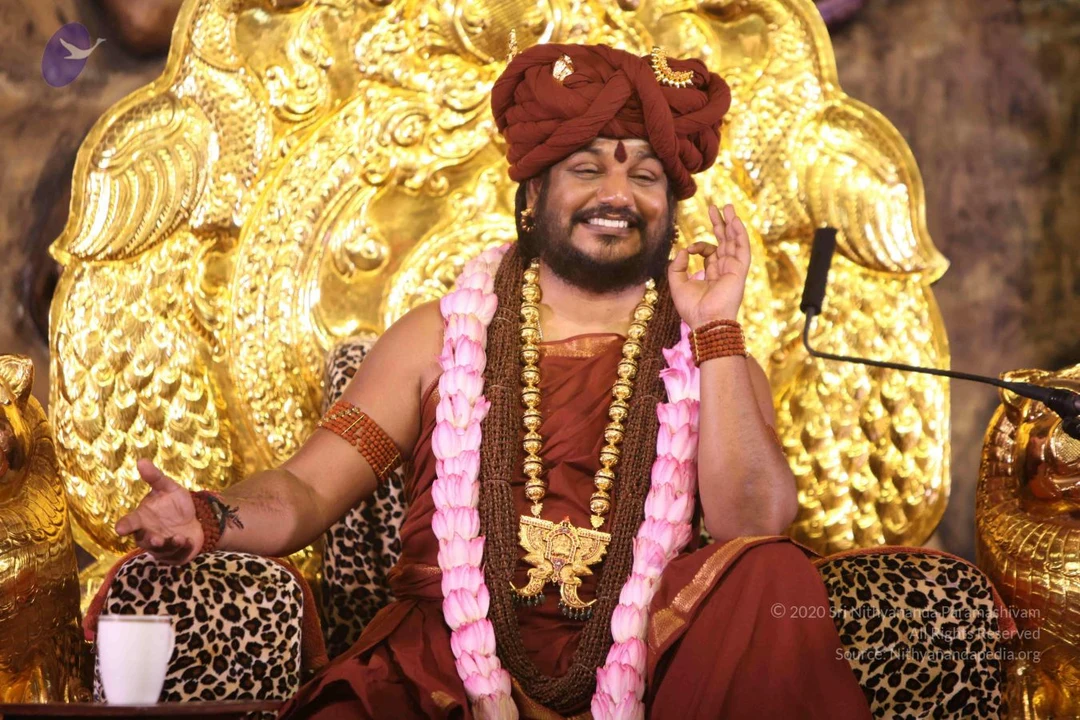
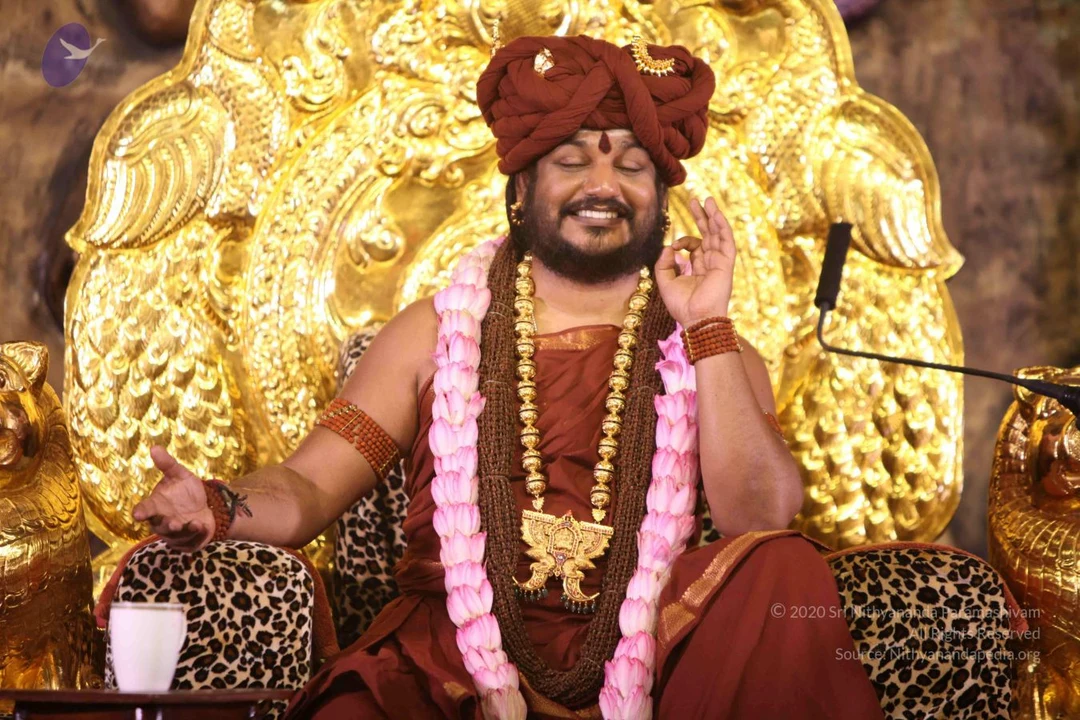
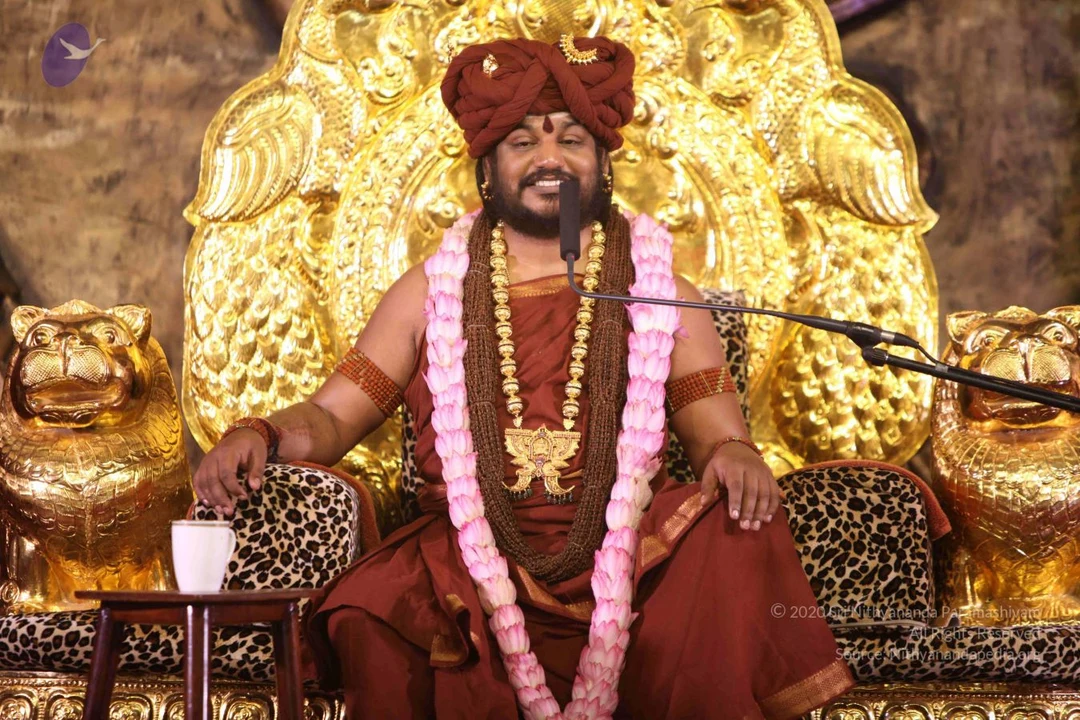
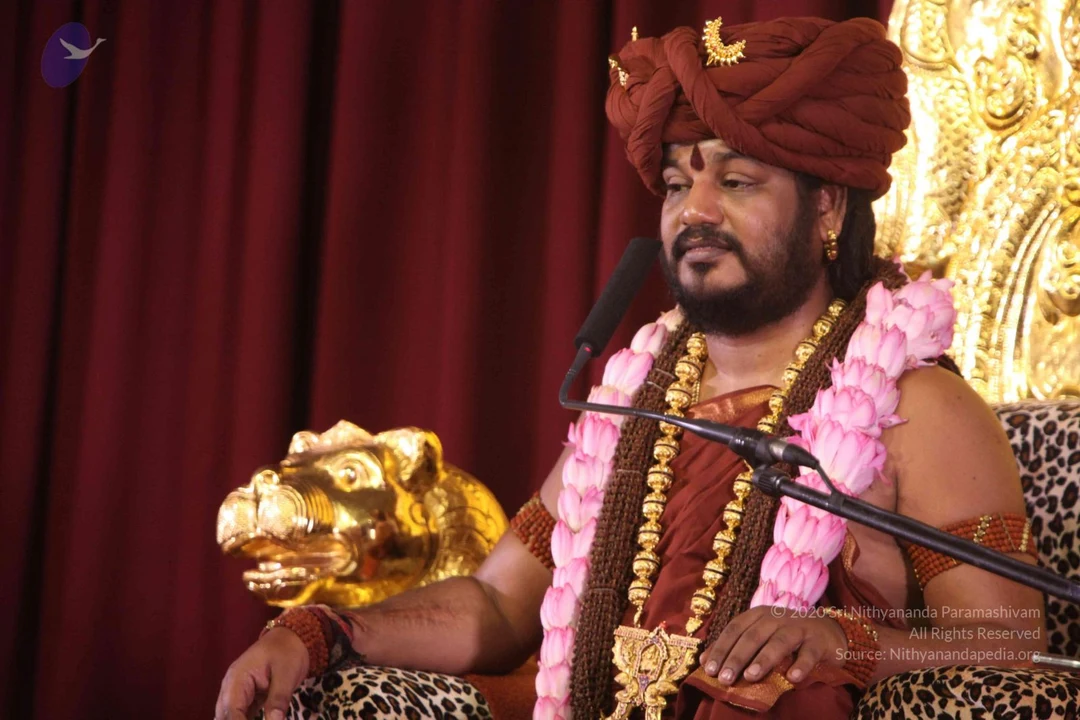
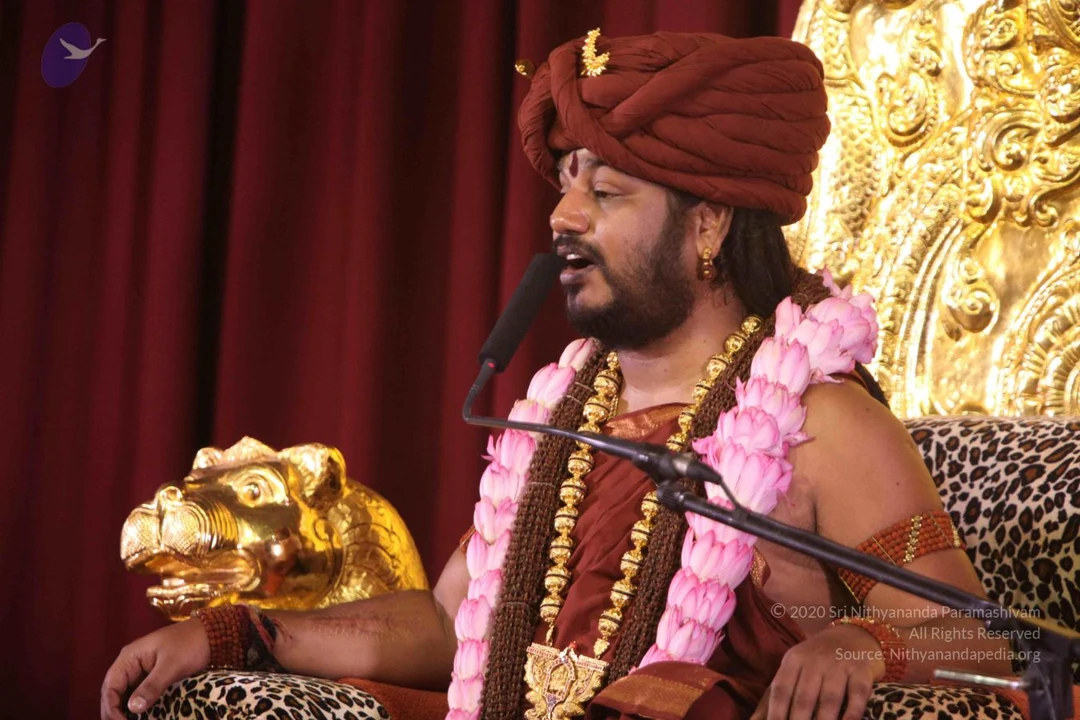
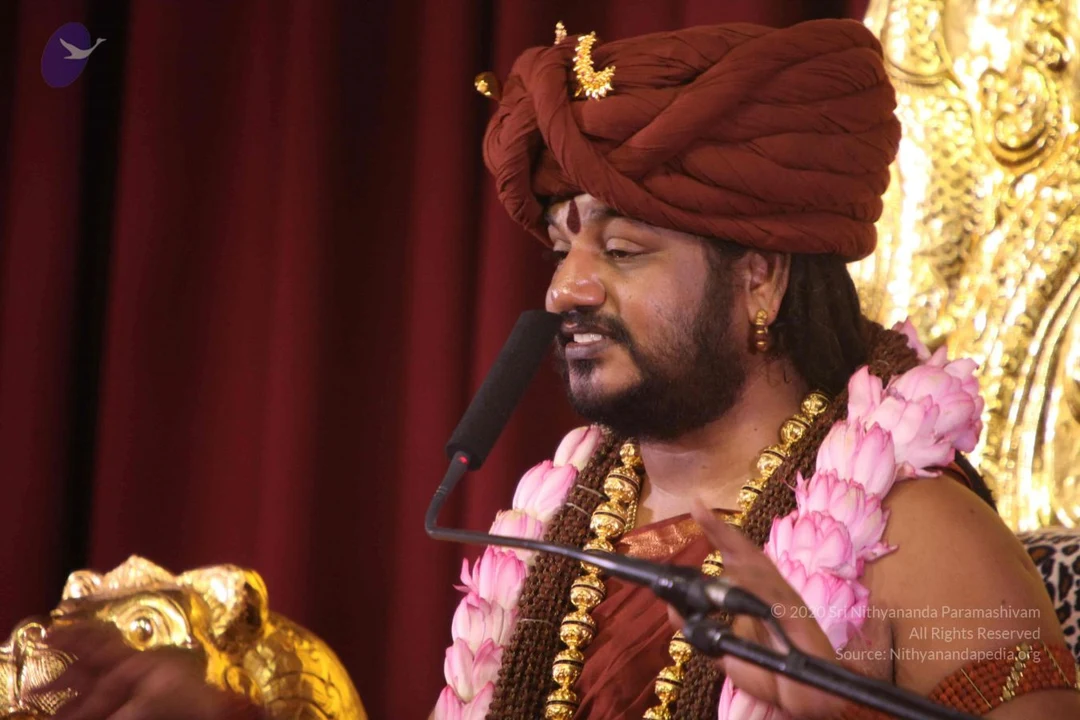
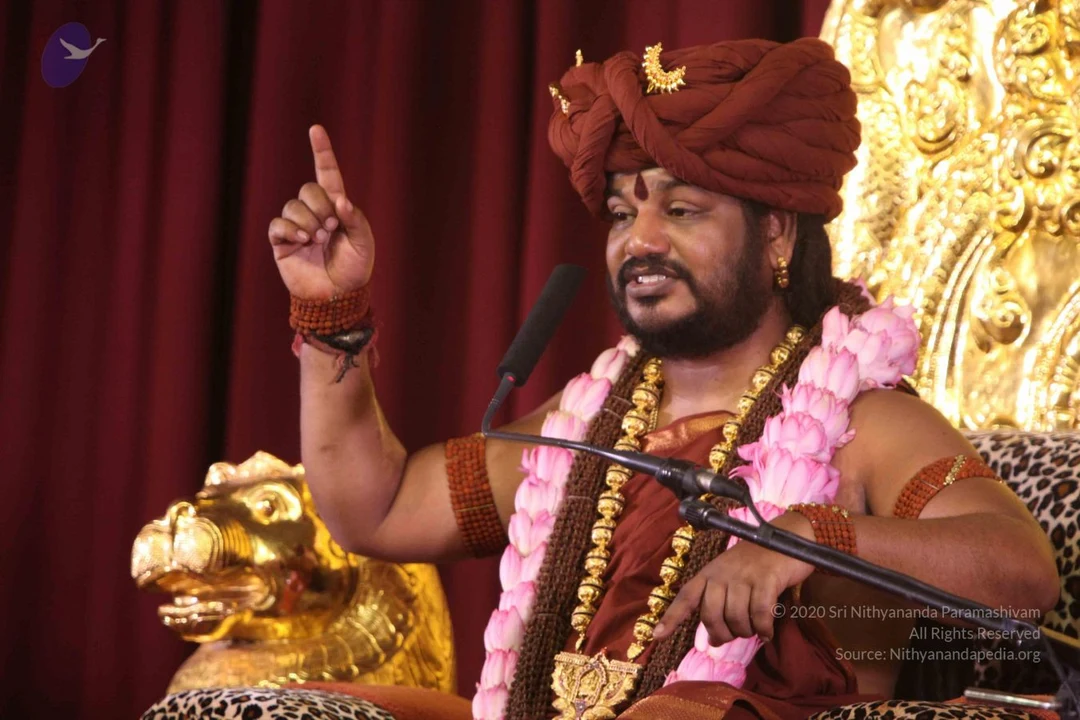
Photos Of The Day:

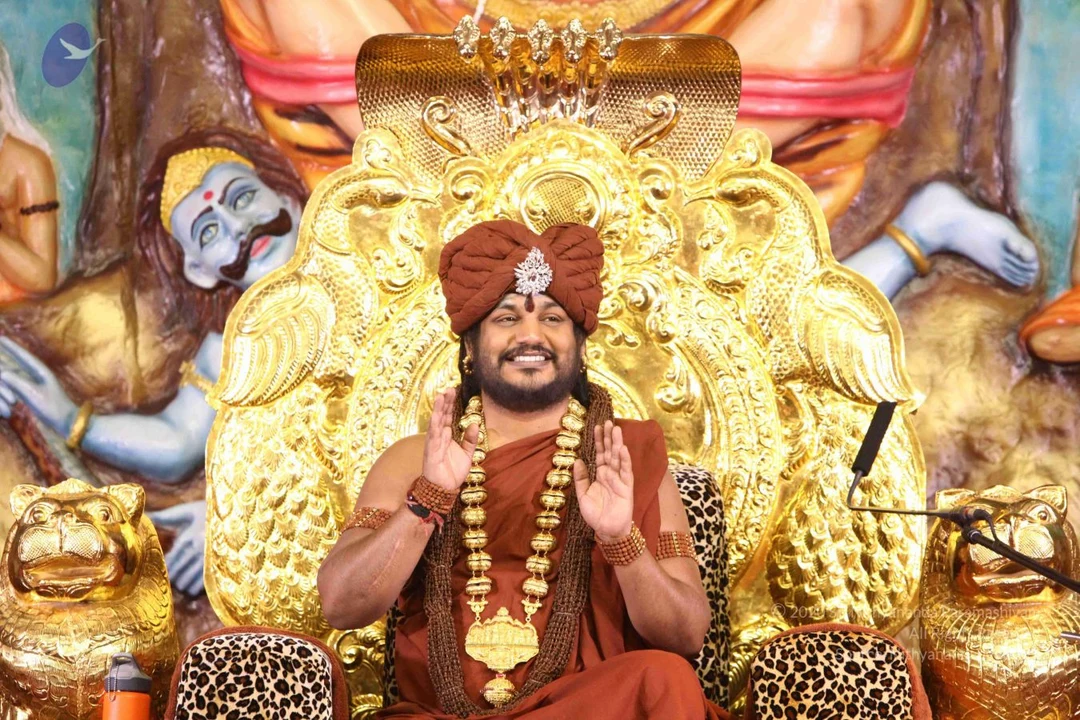
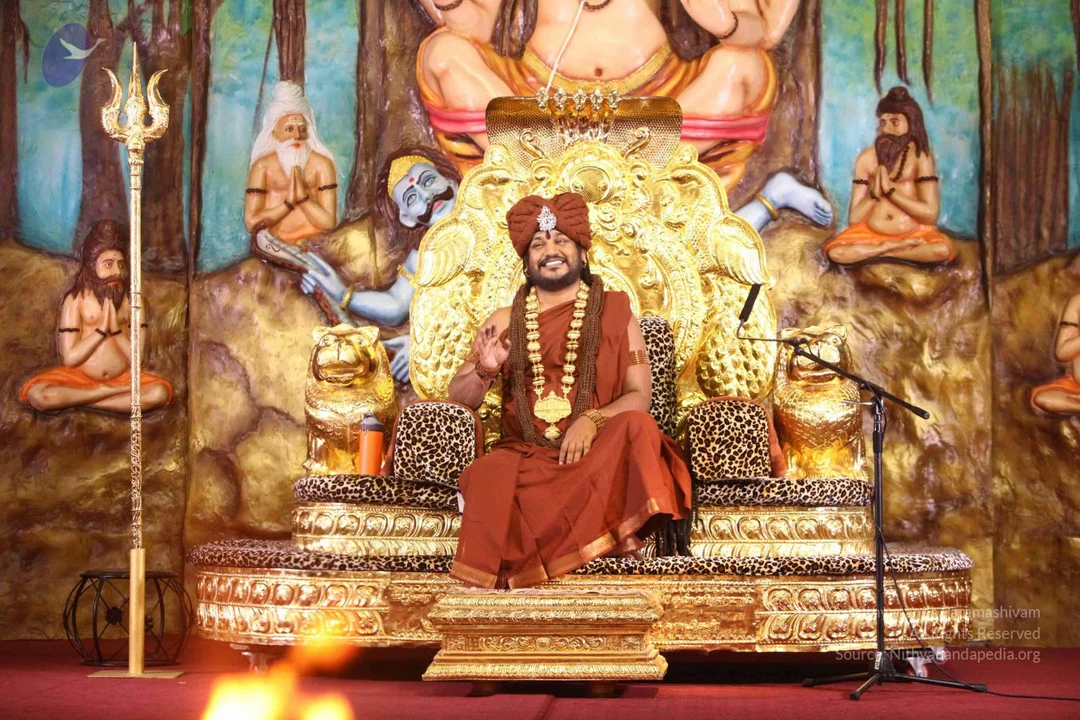
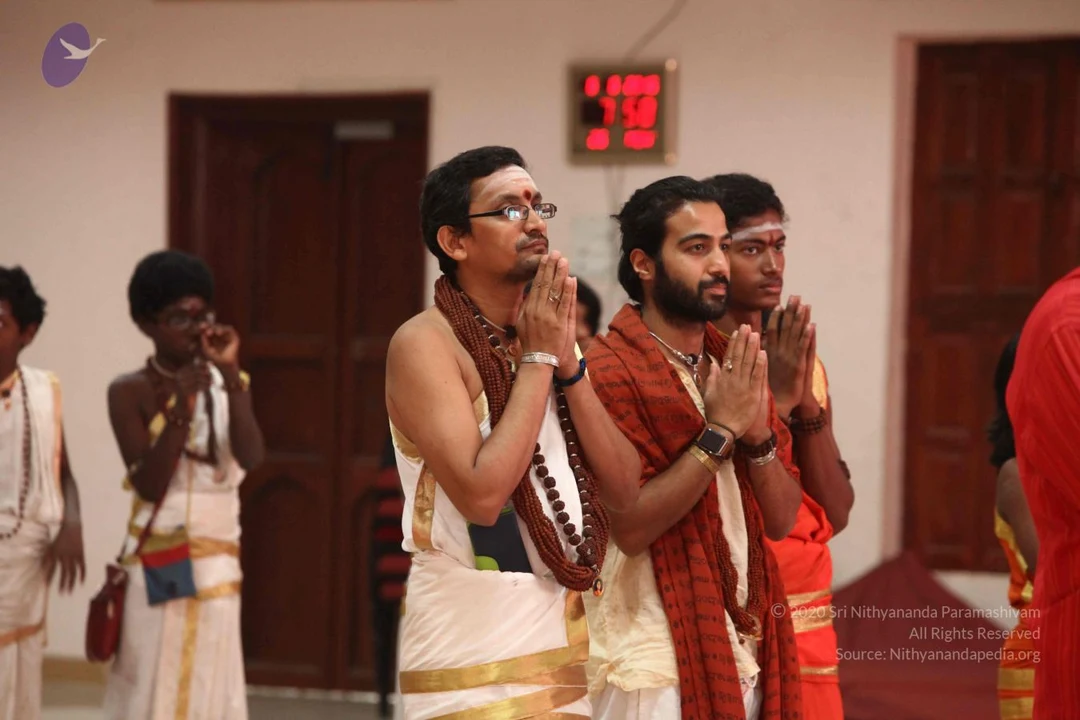
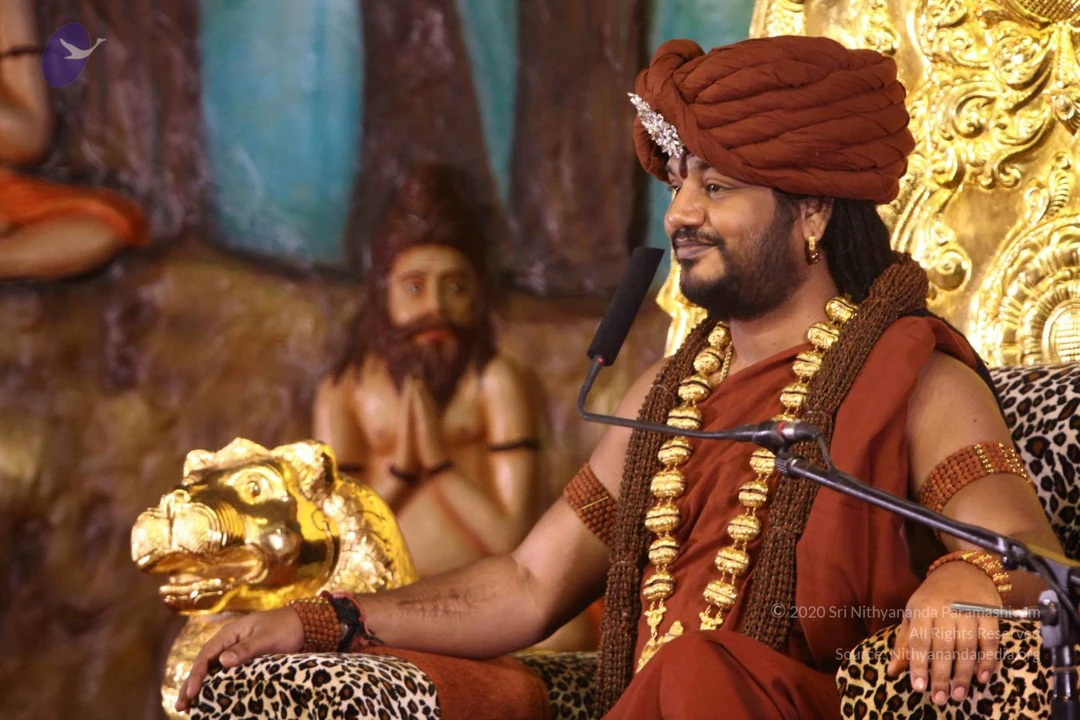
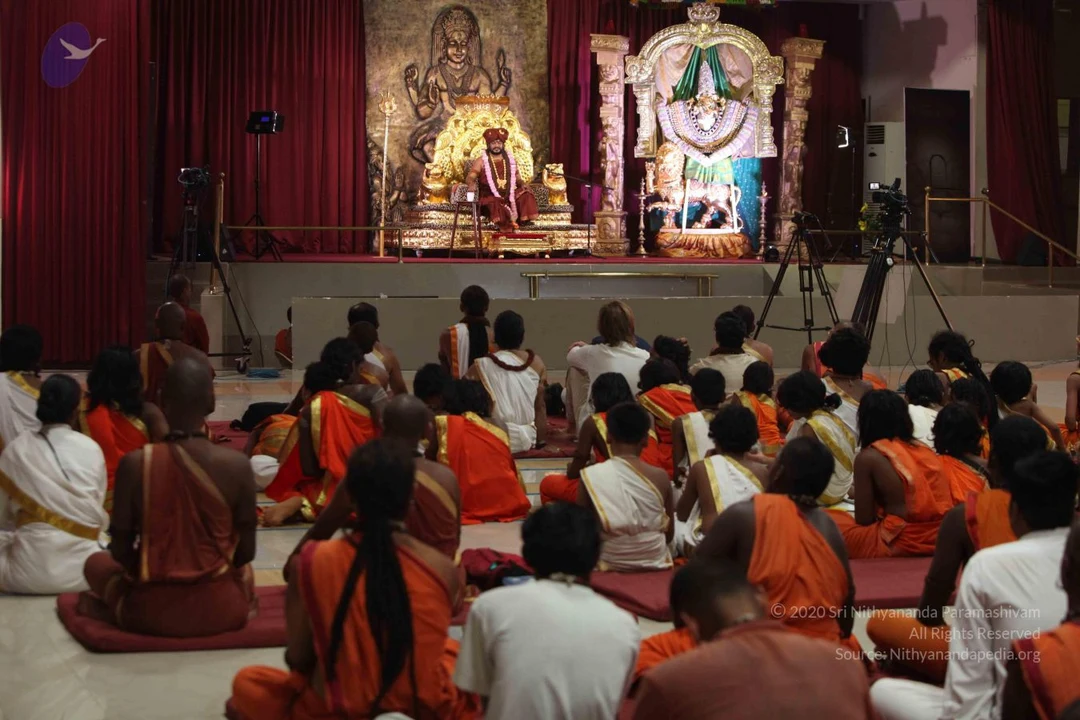
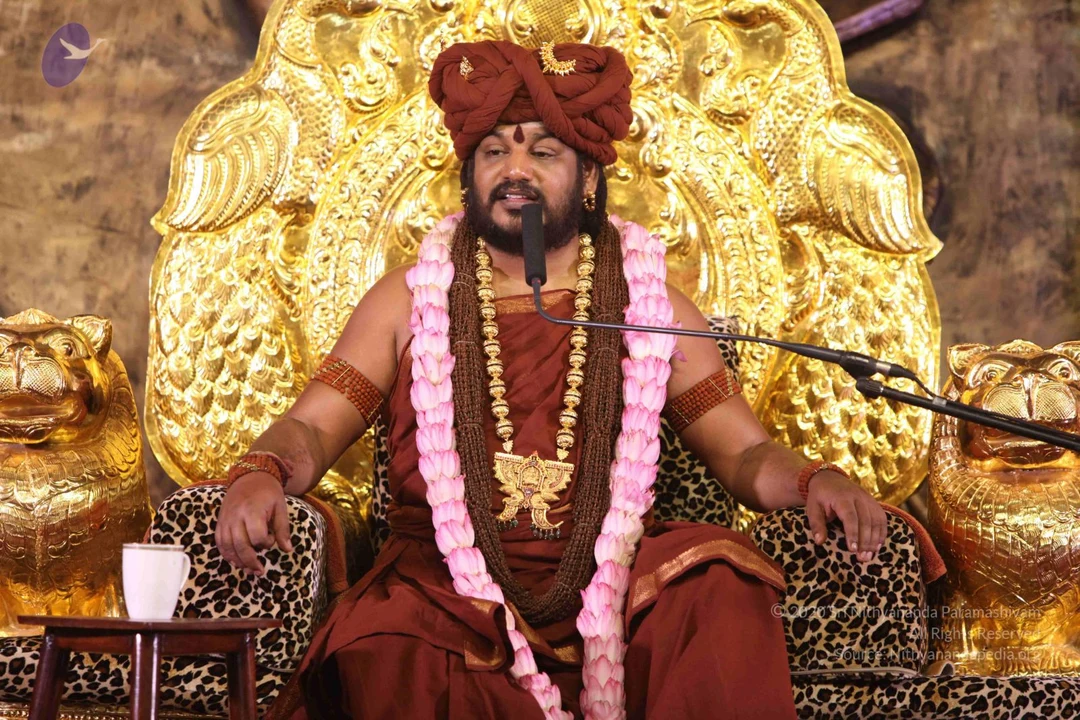
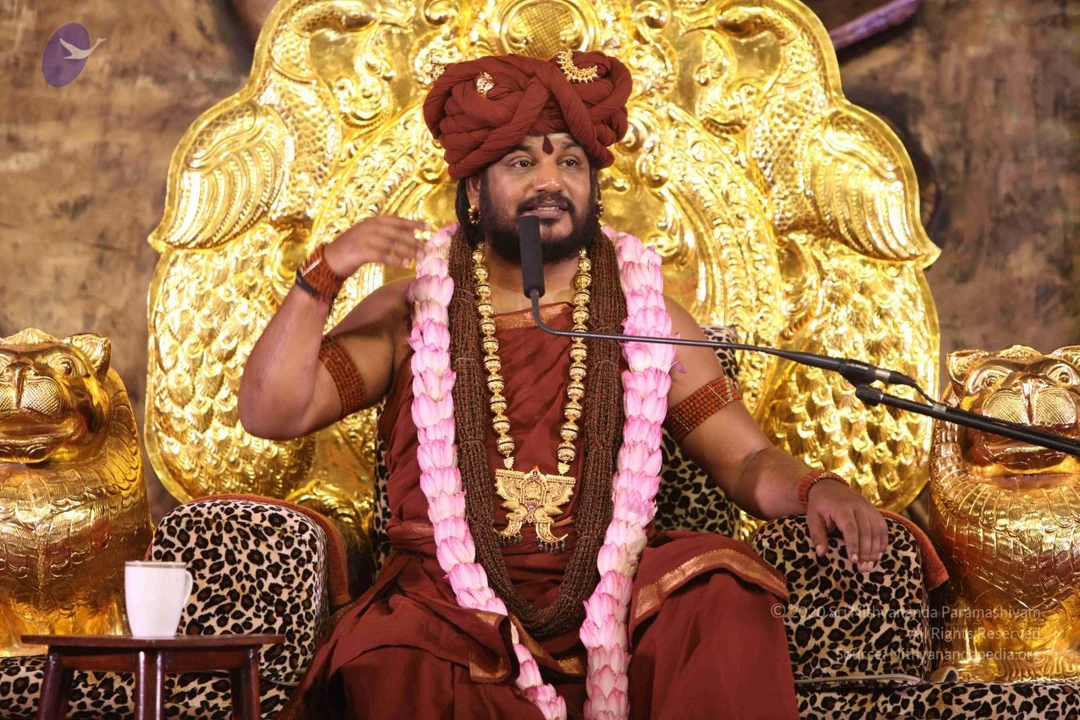
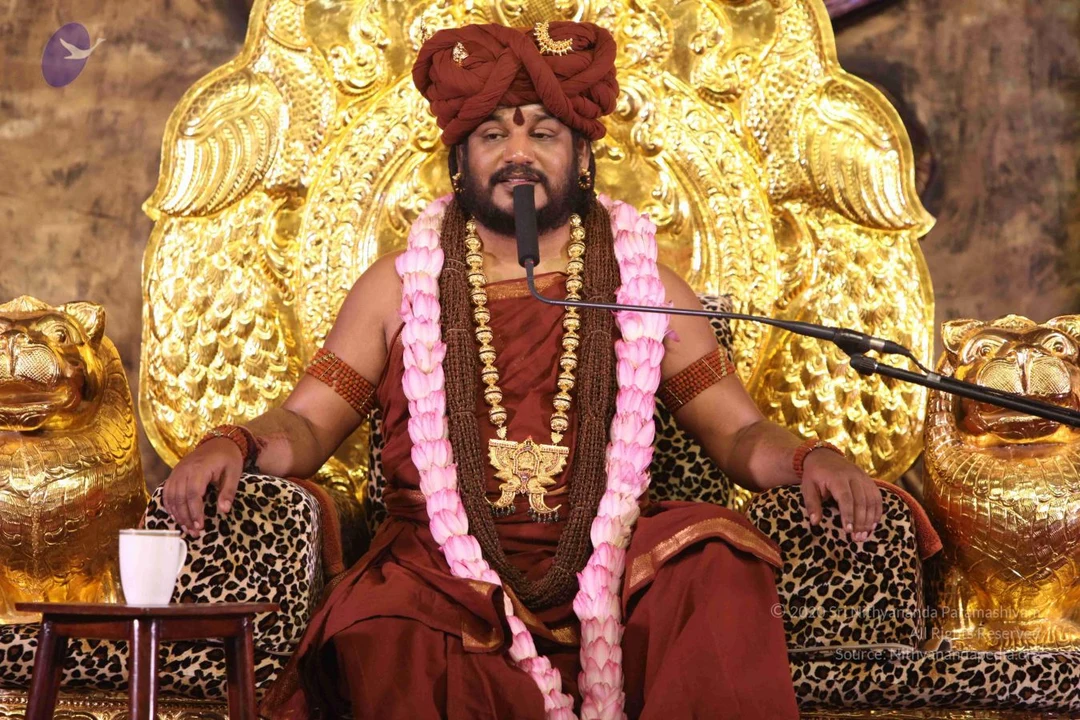
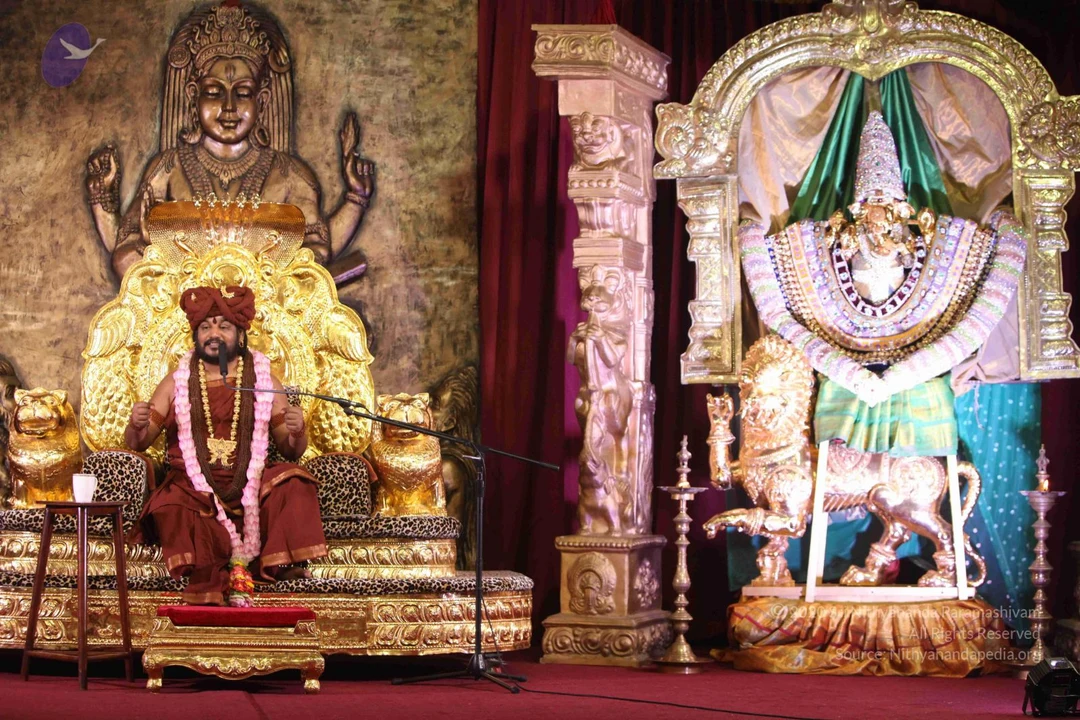
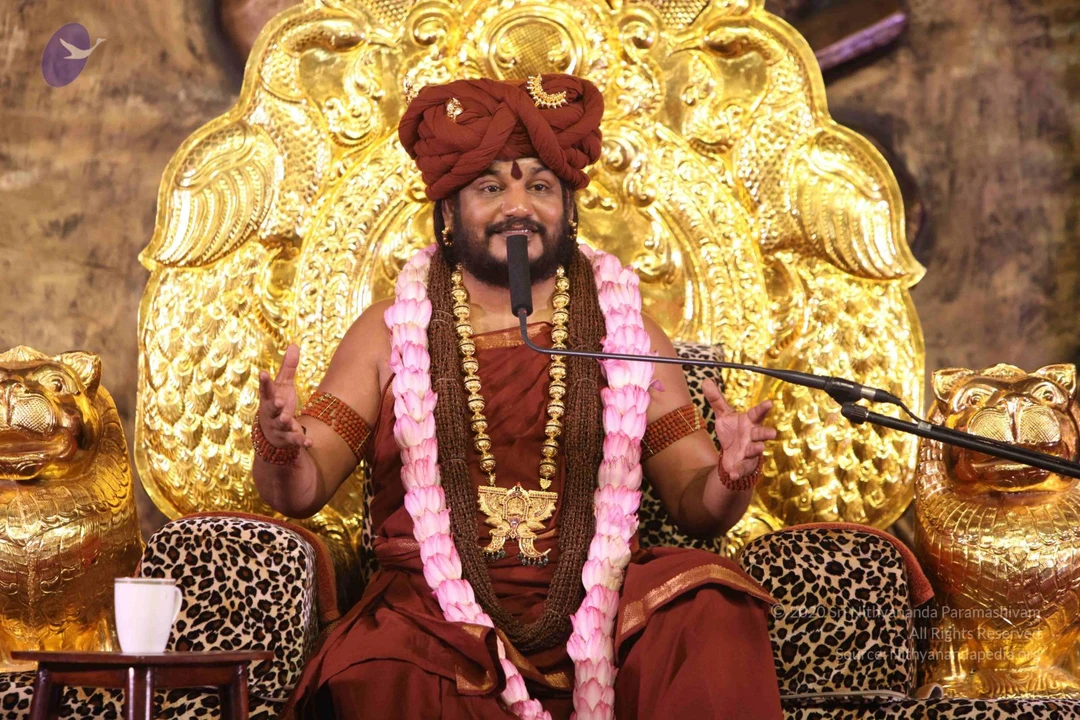
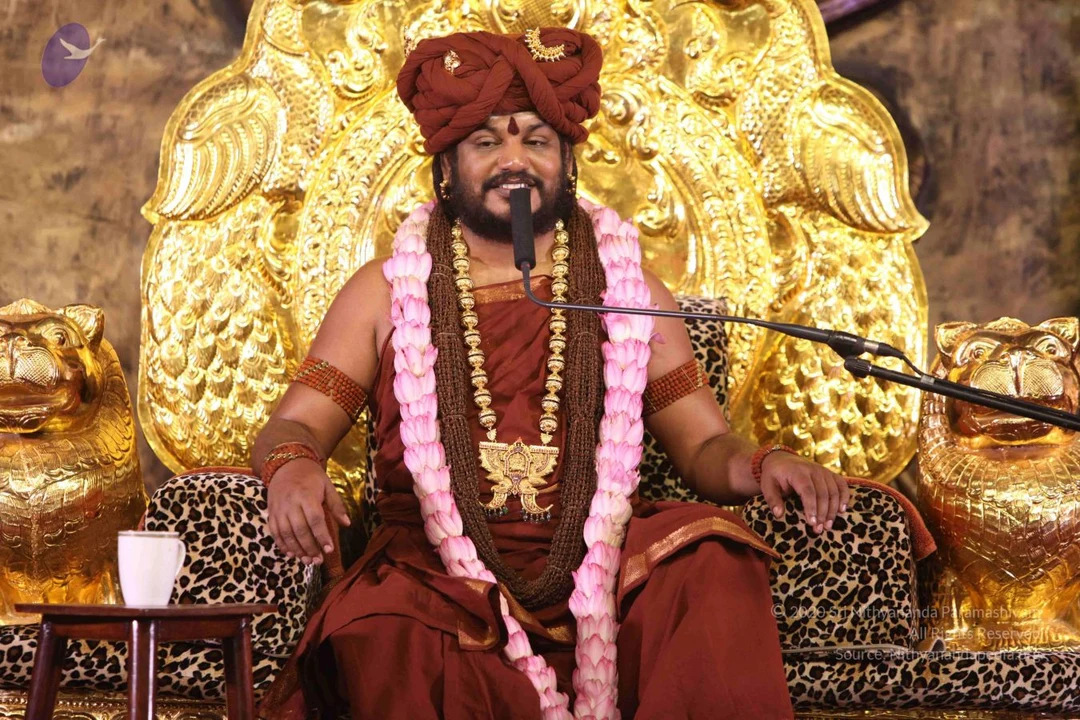
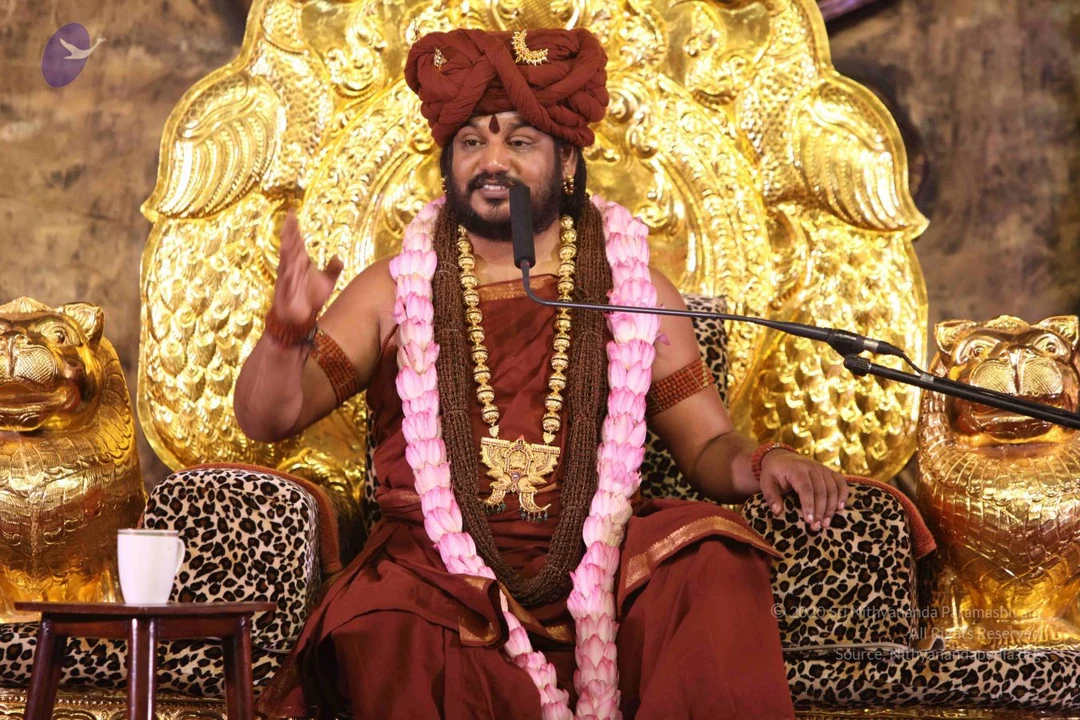
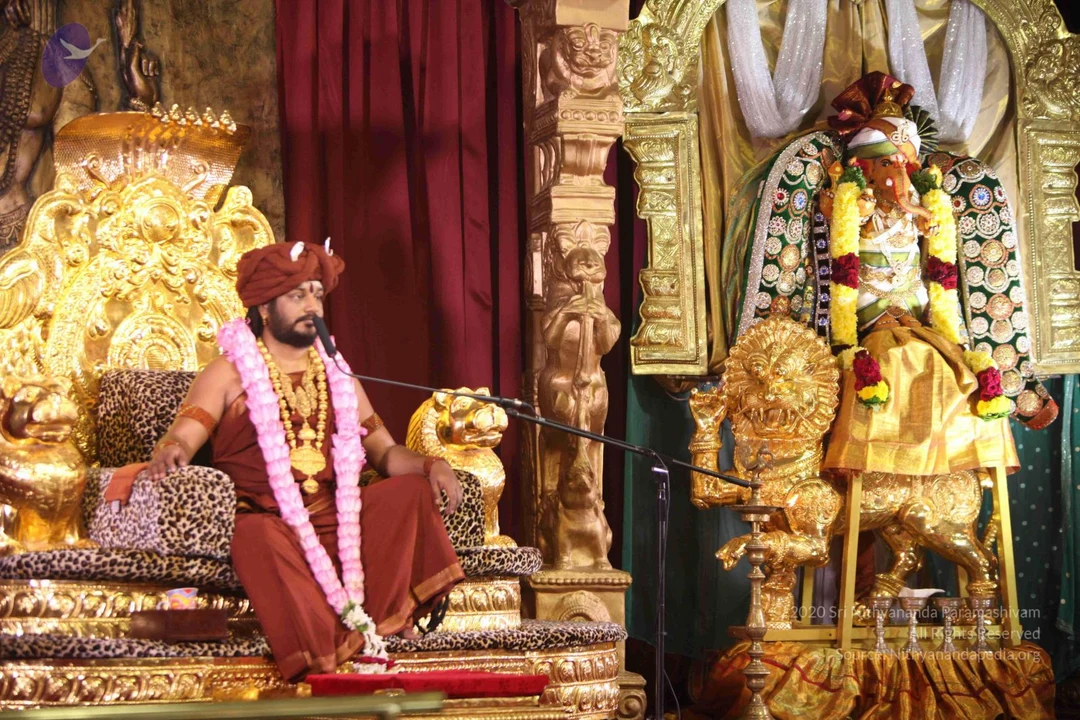
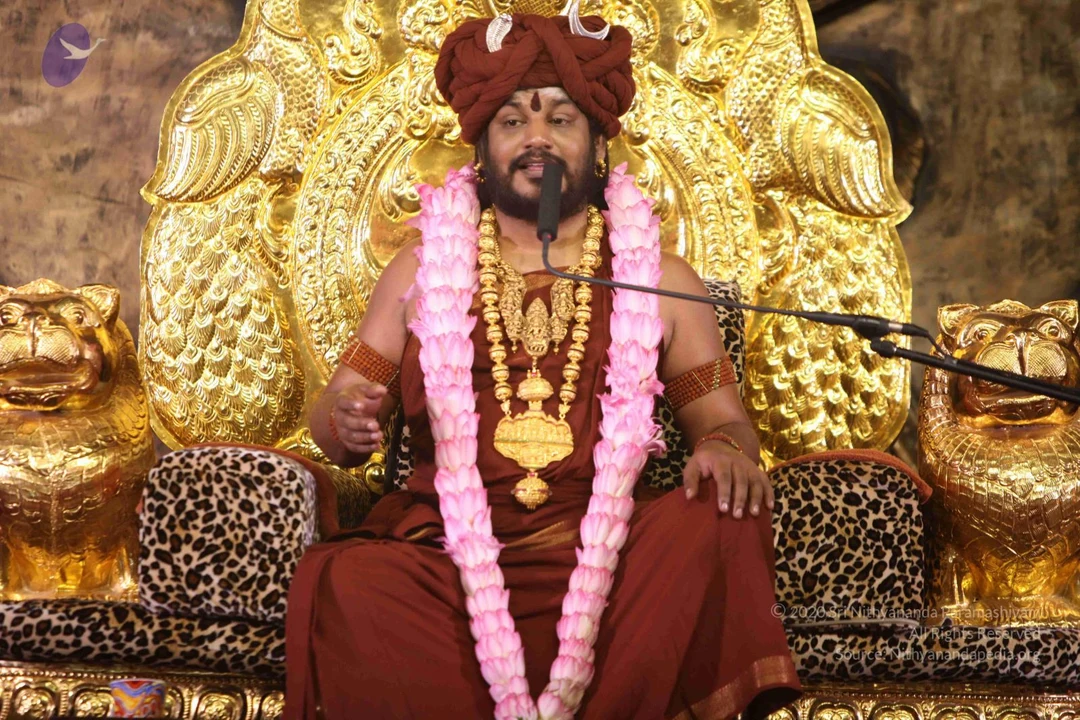
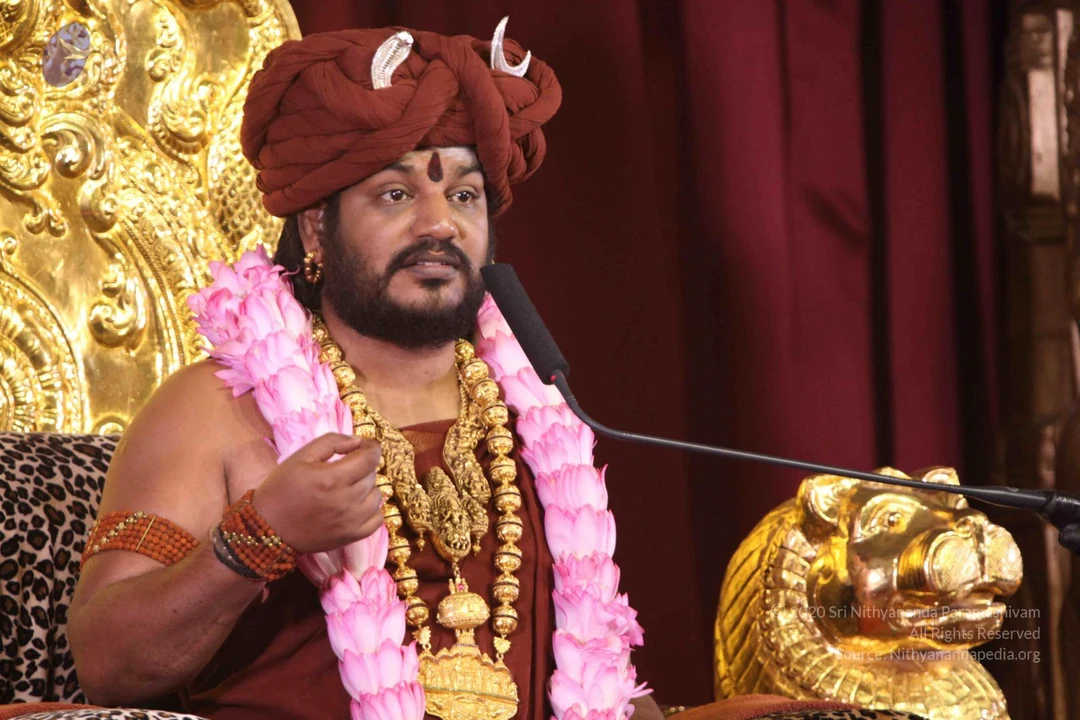
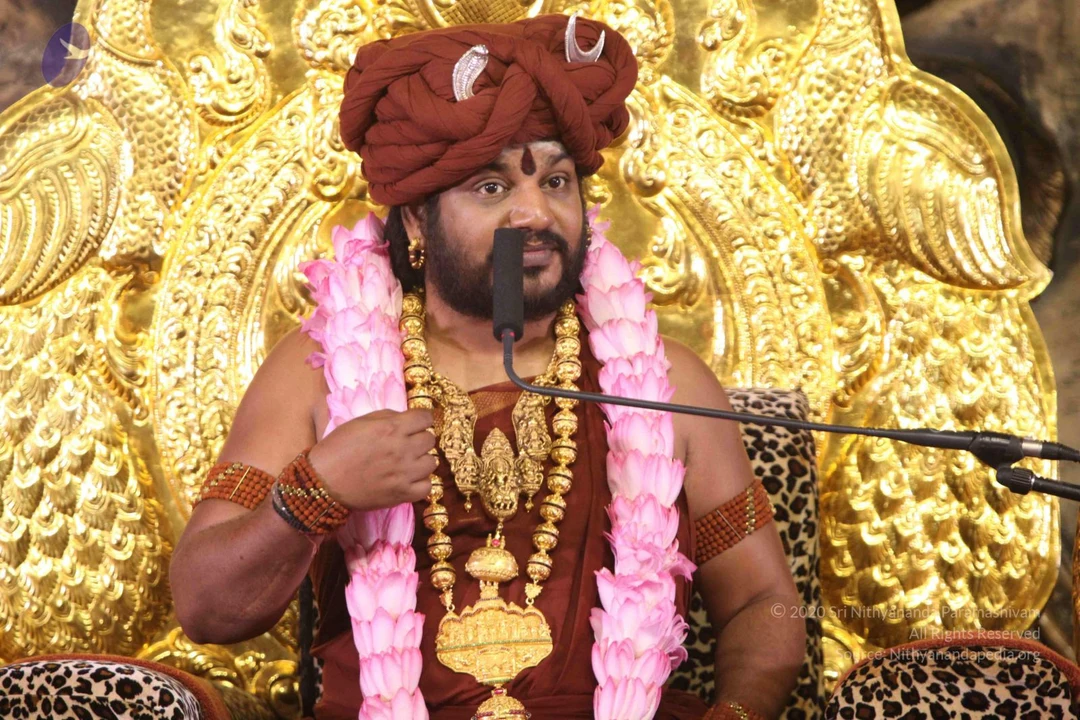
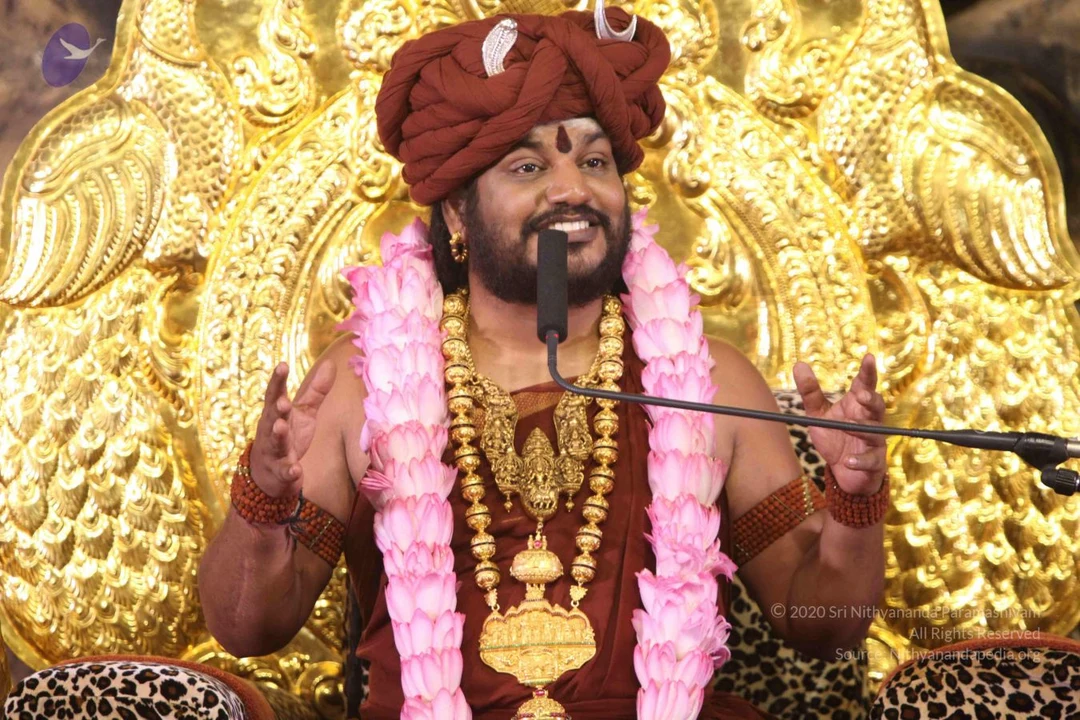
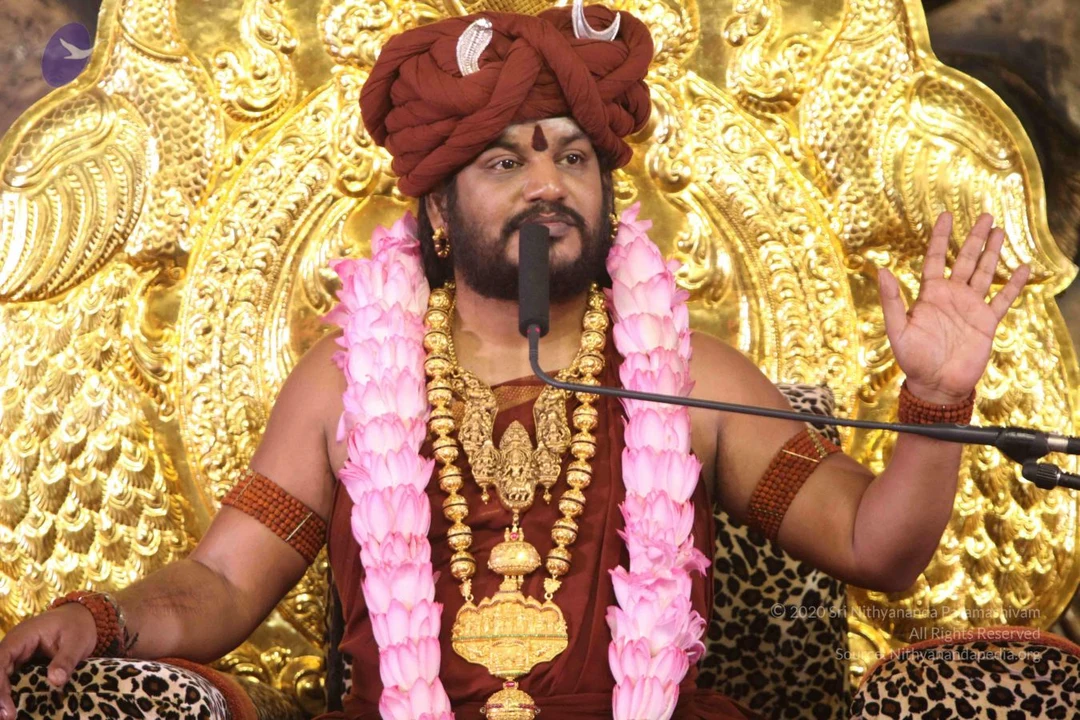
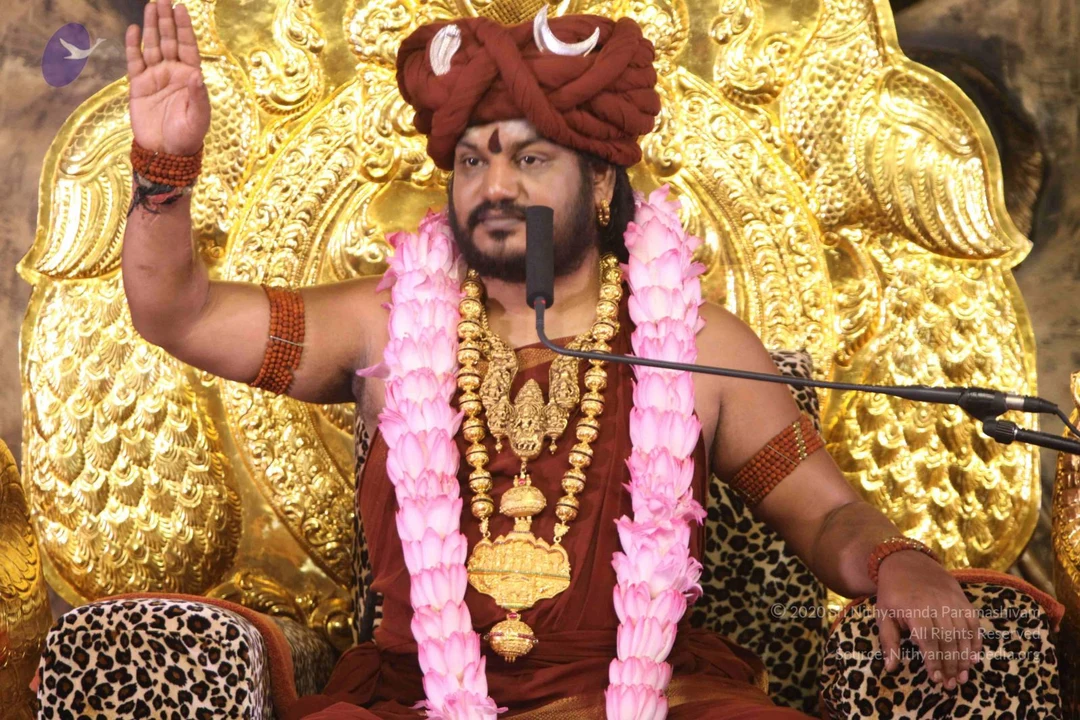
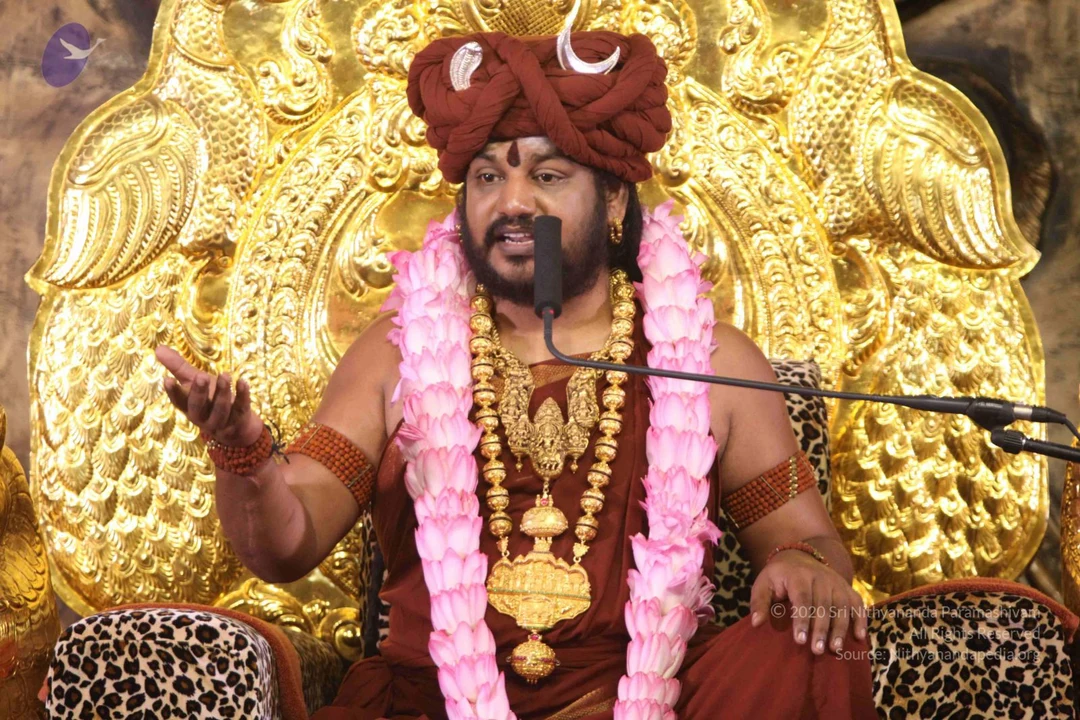
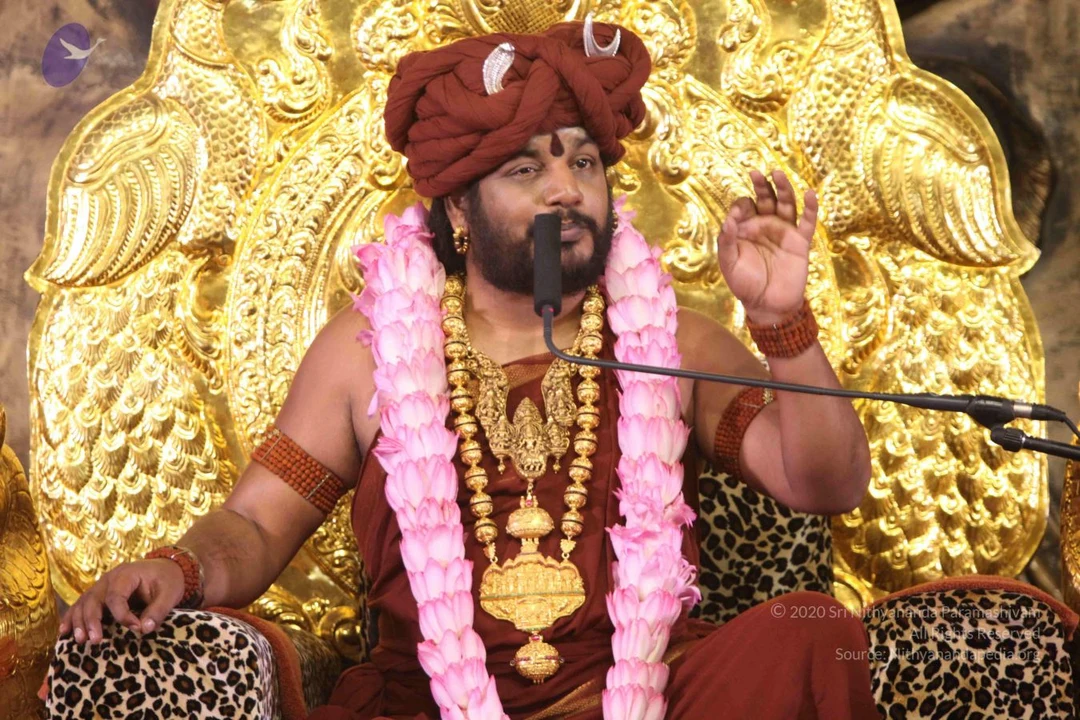
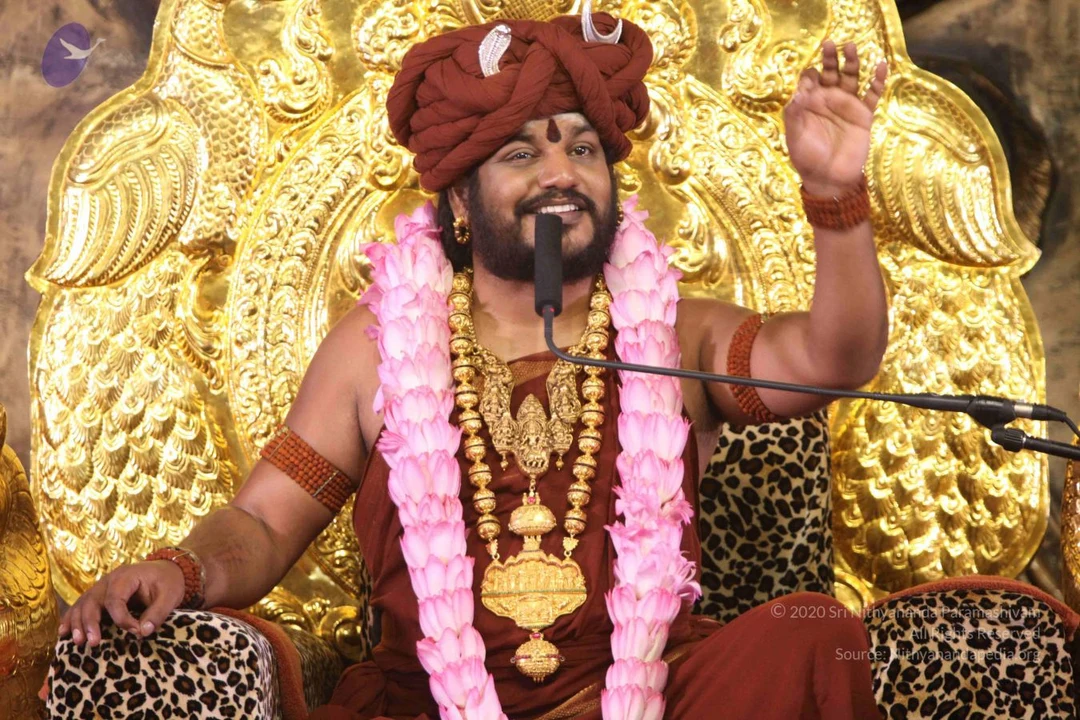
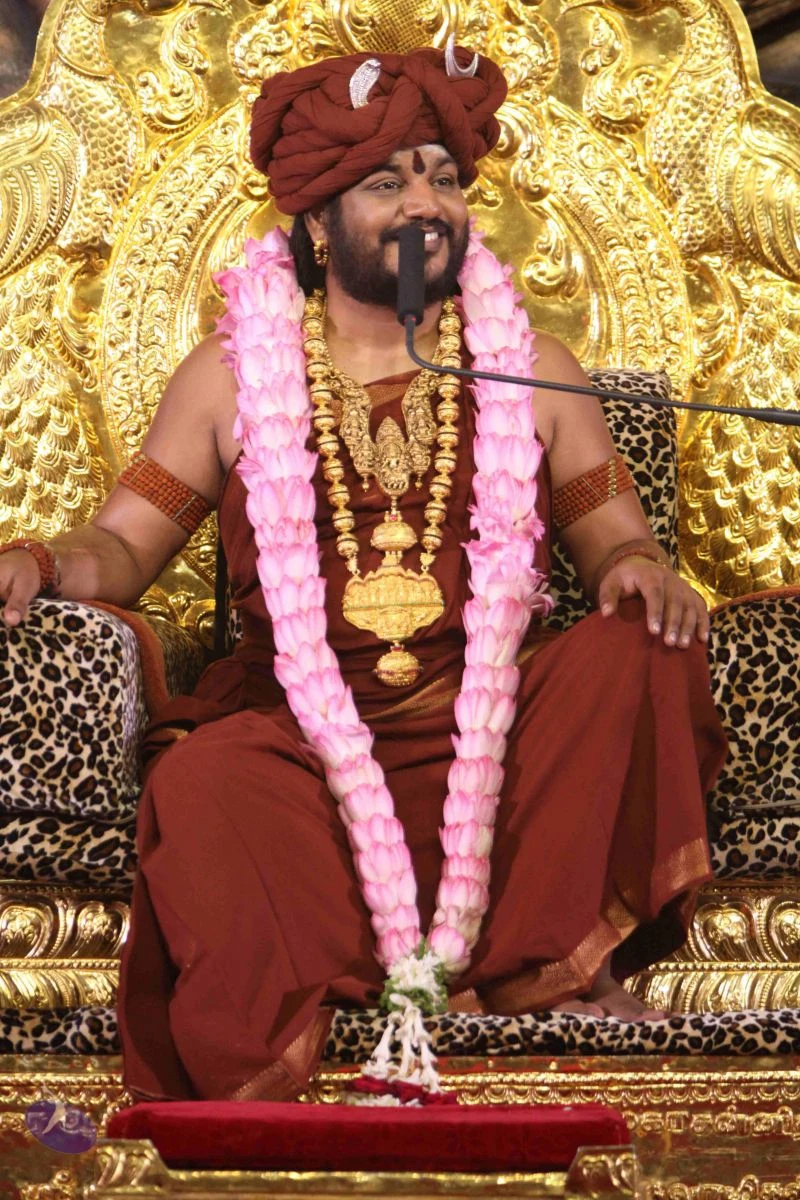
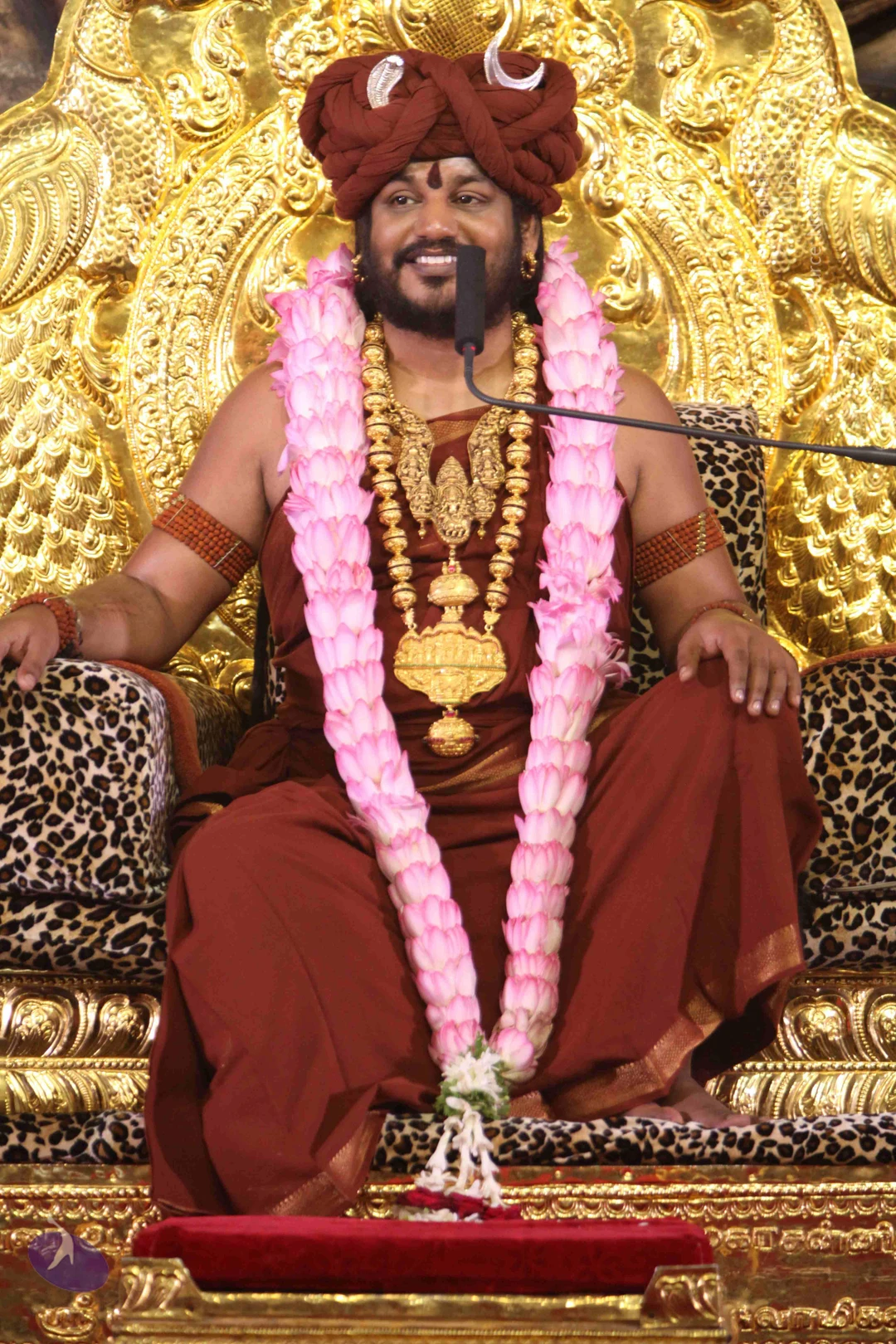
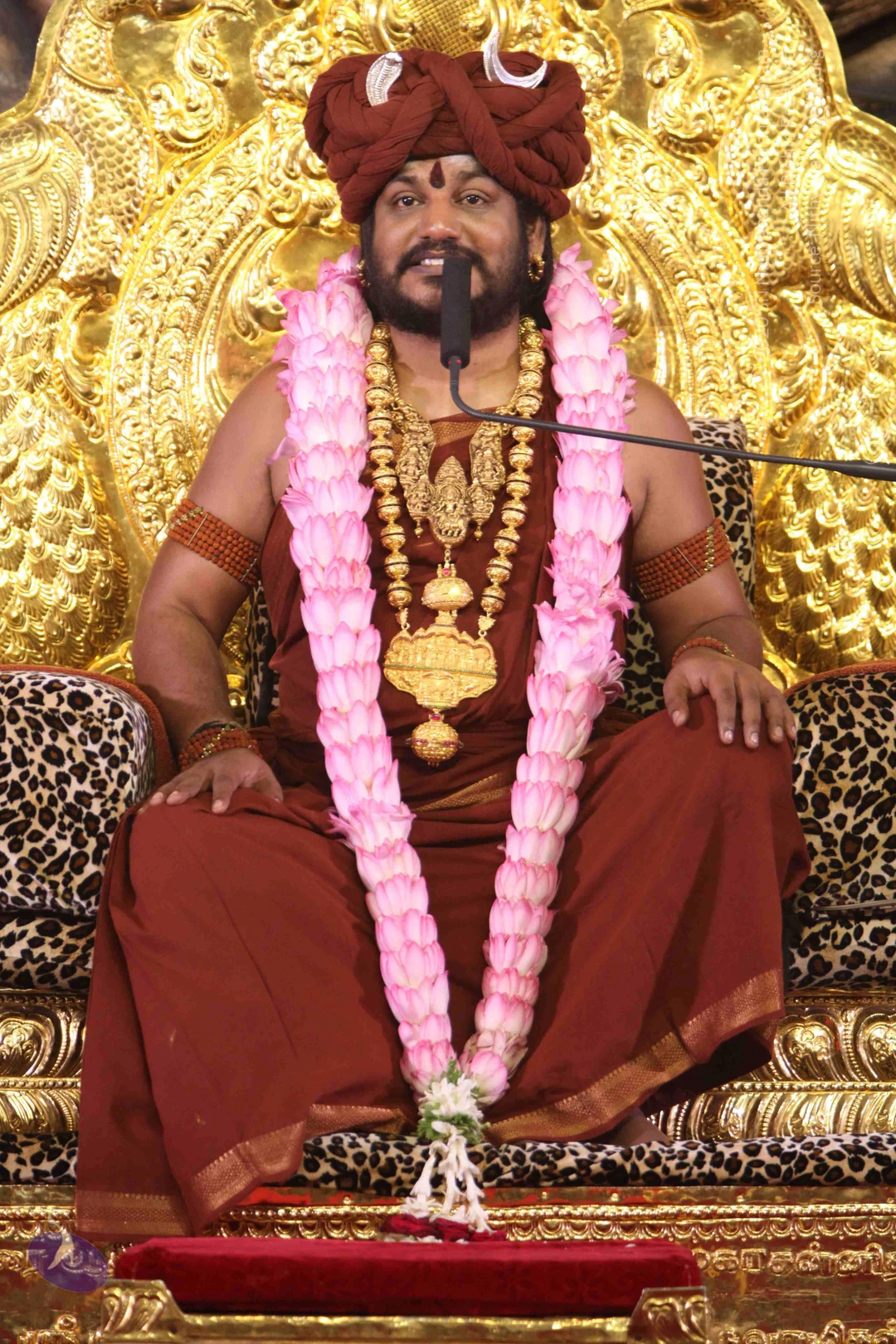
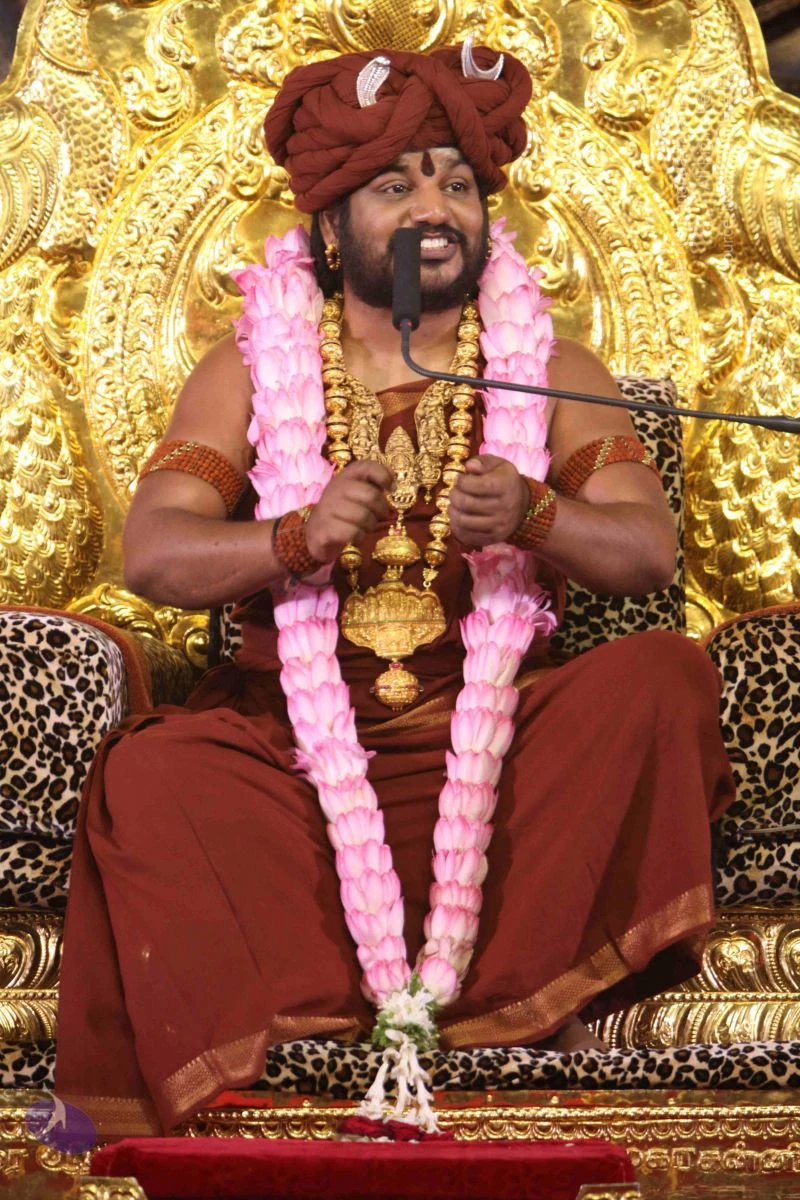
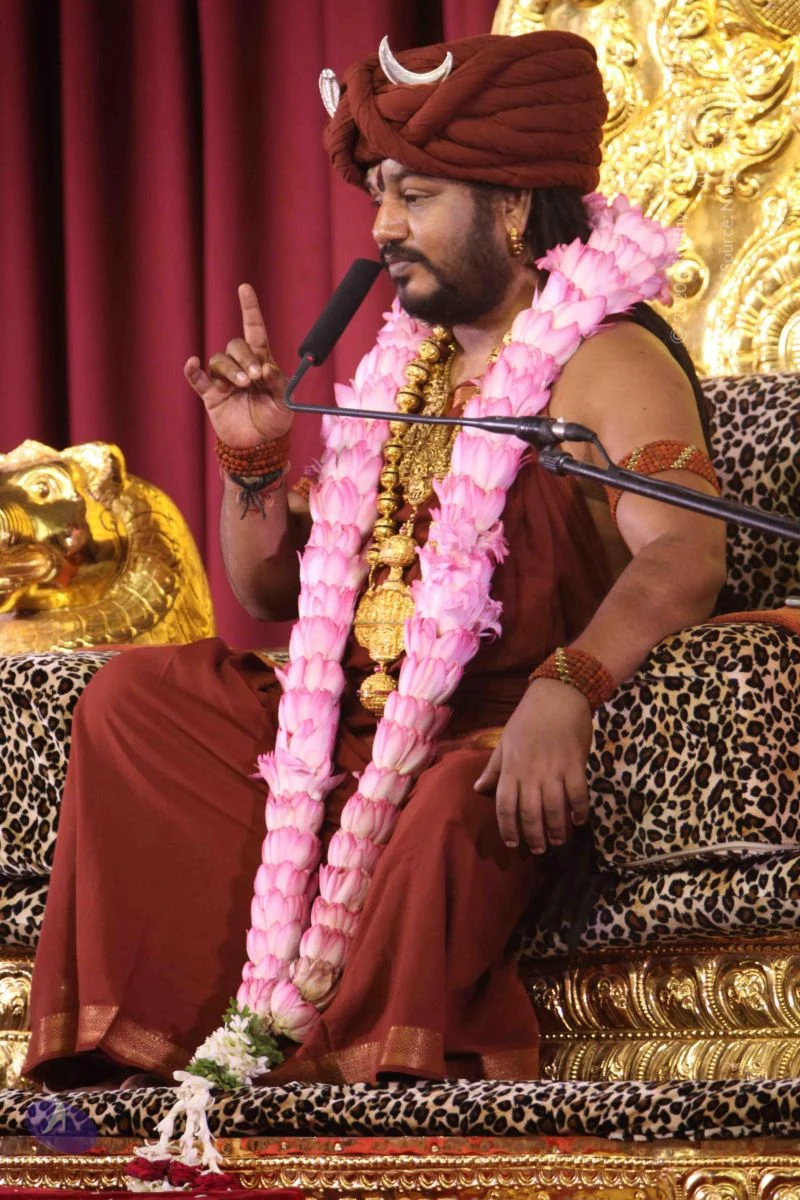
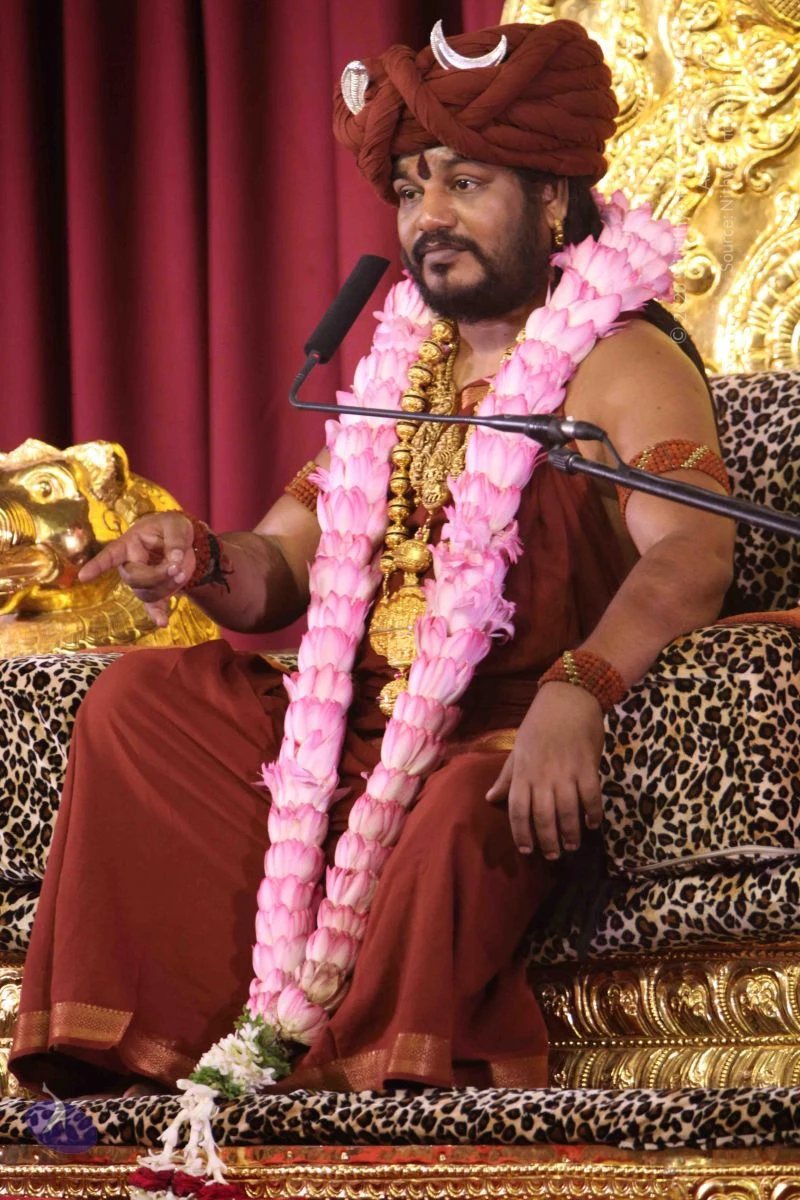
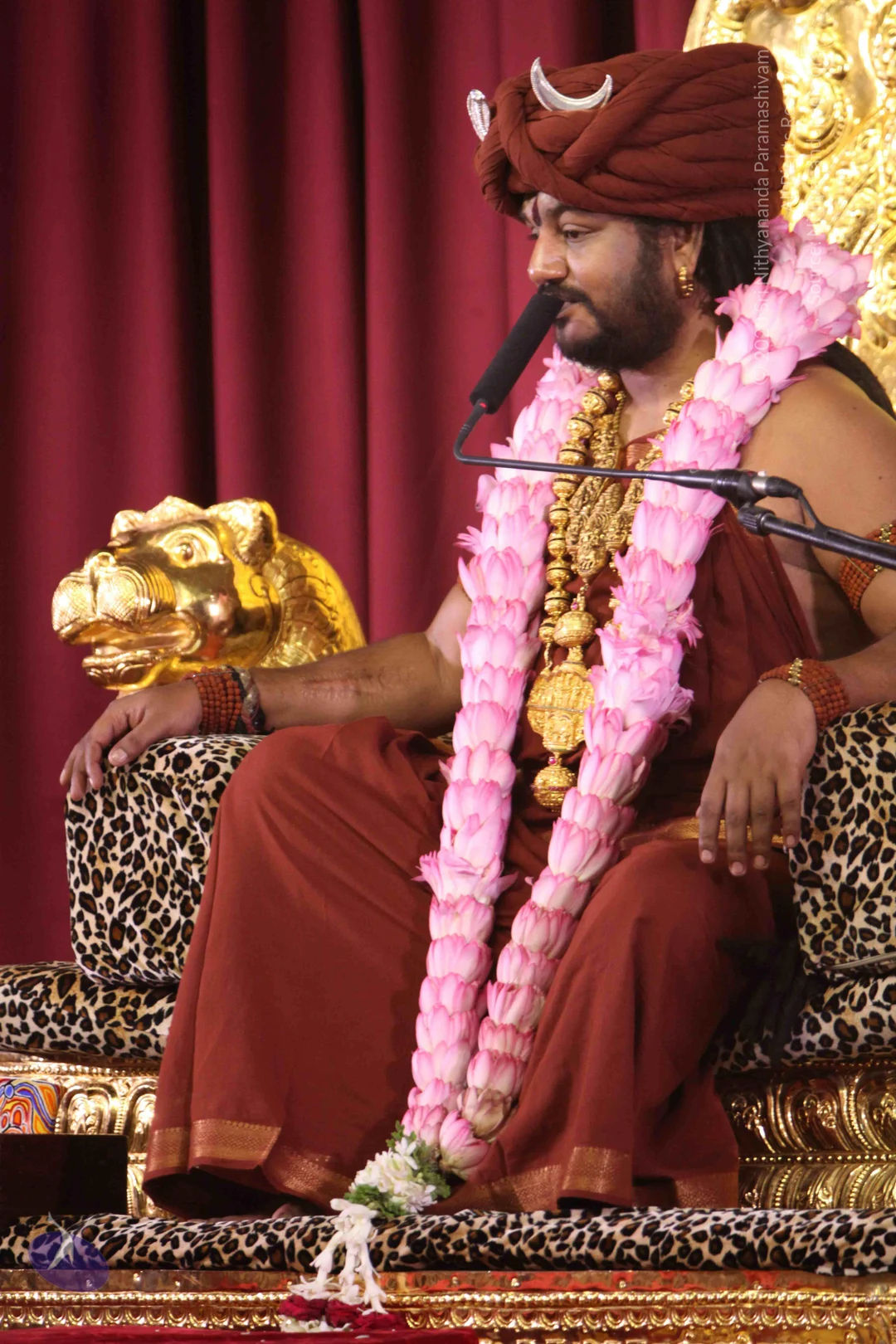
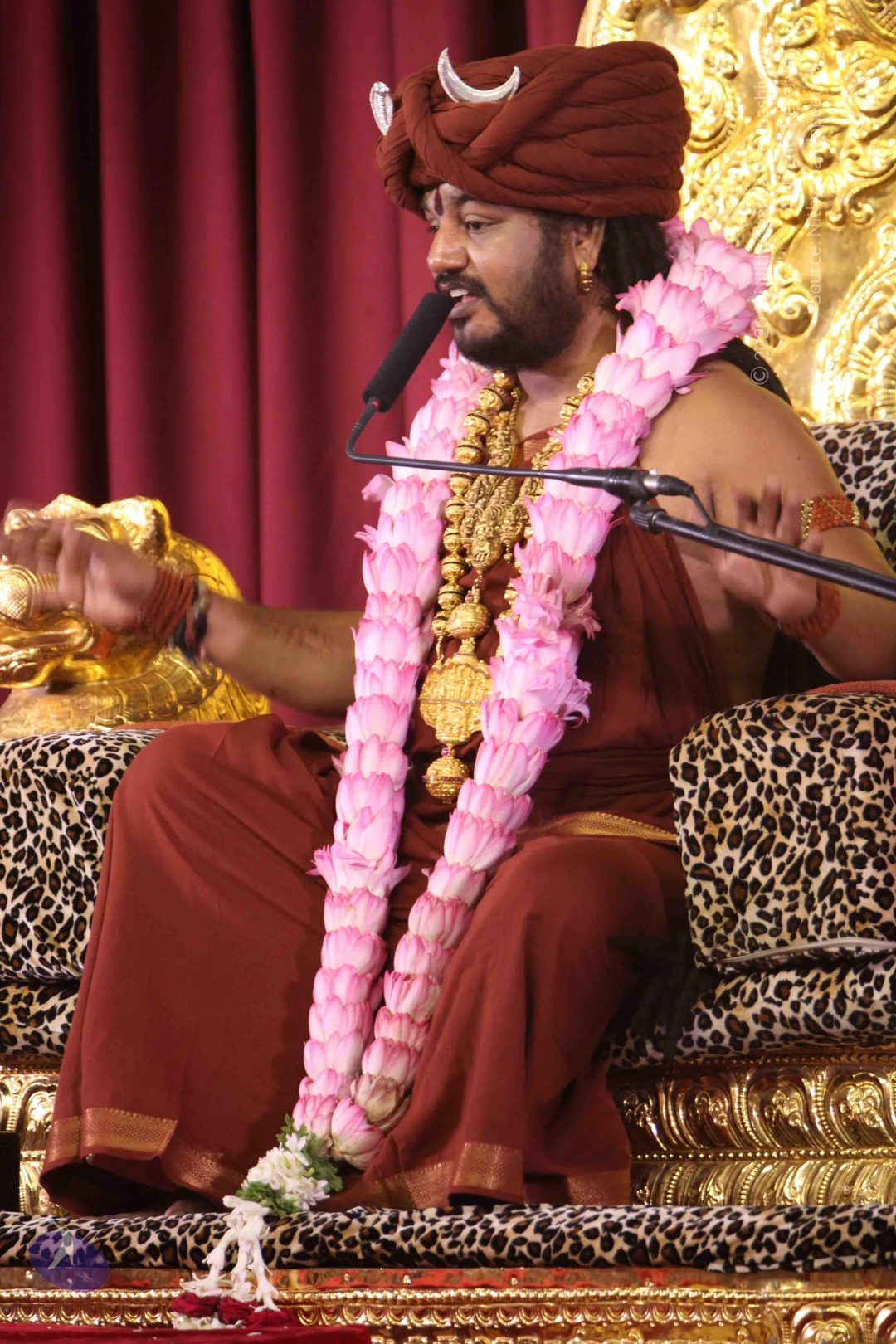
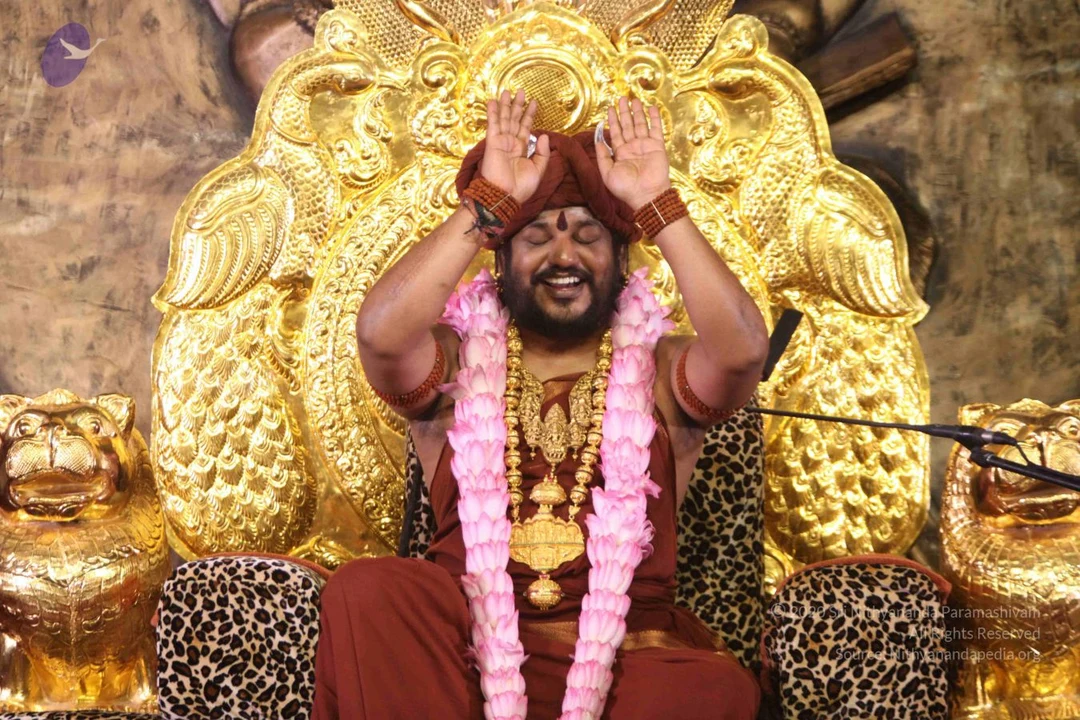
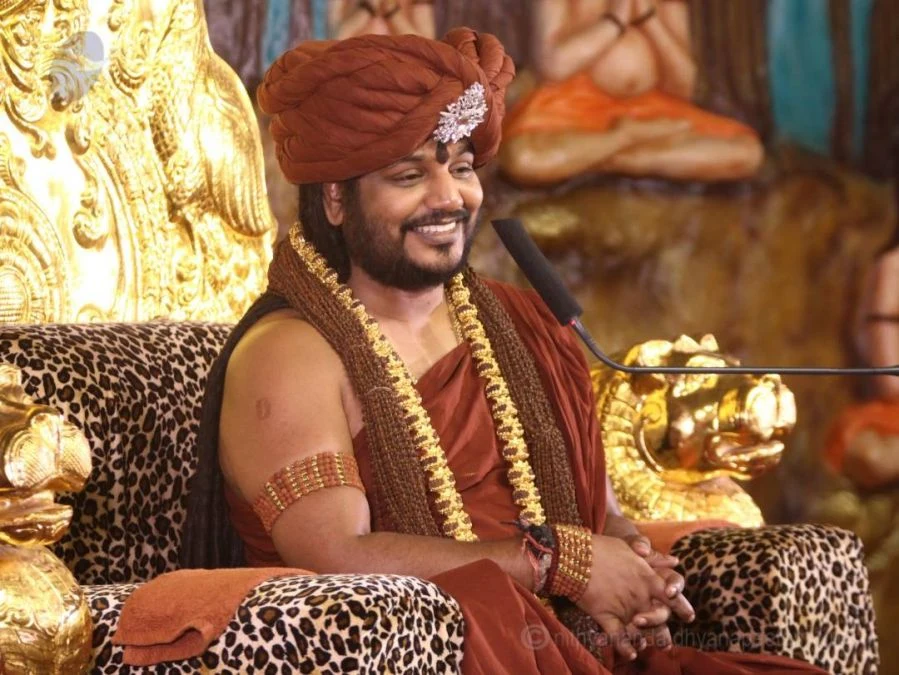
Nithya-Satsang
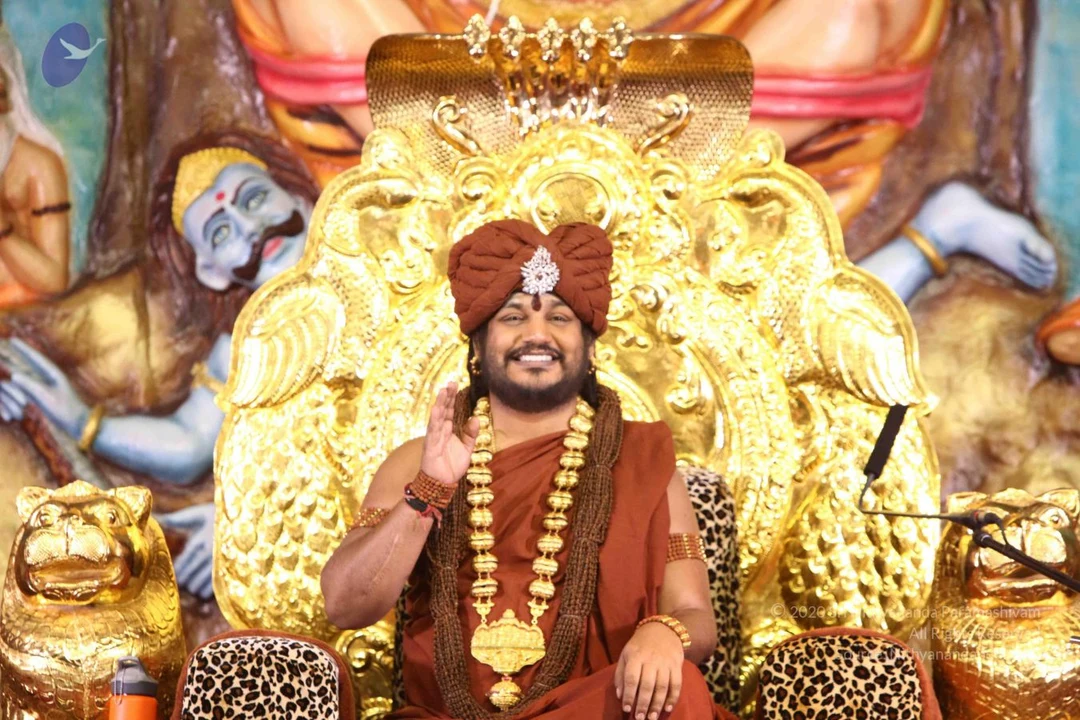
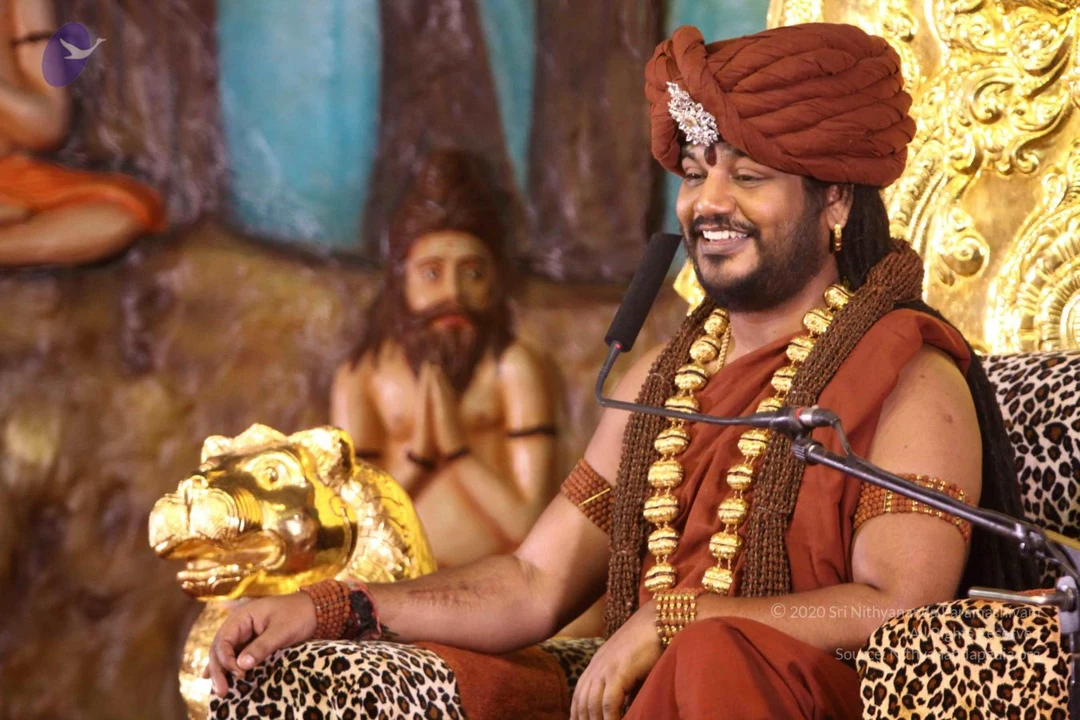
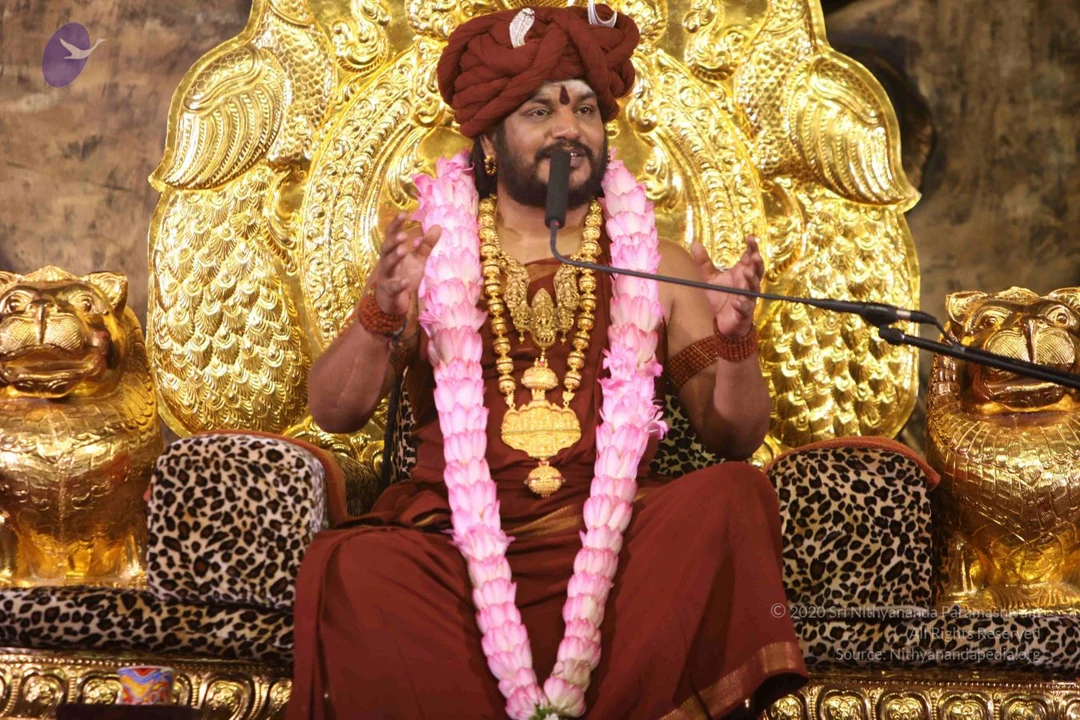
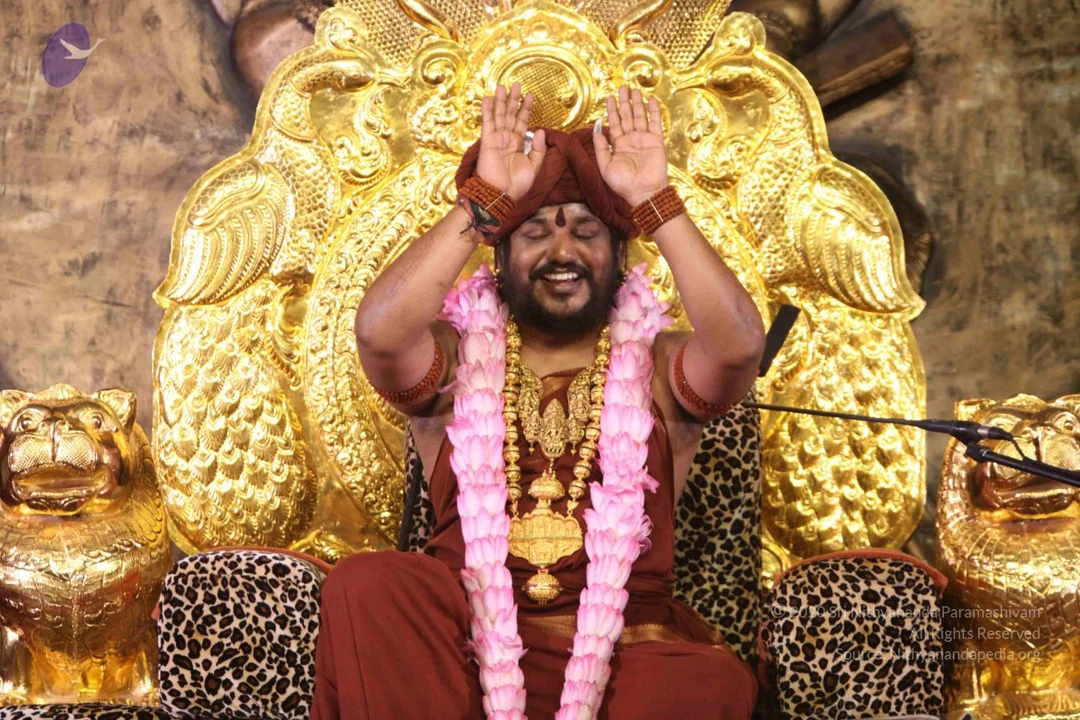
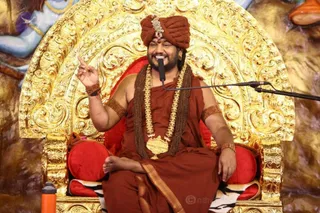
Nithya-Satsang
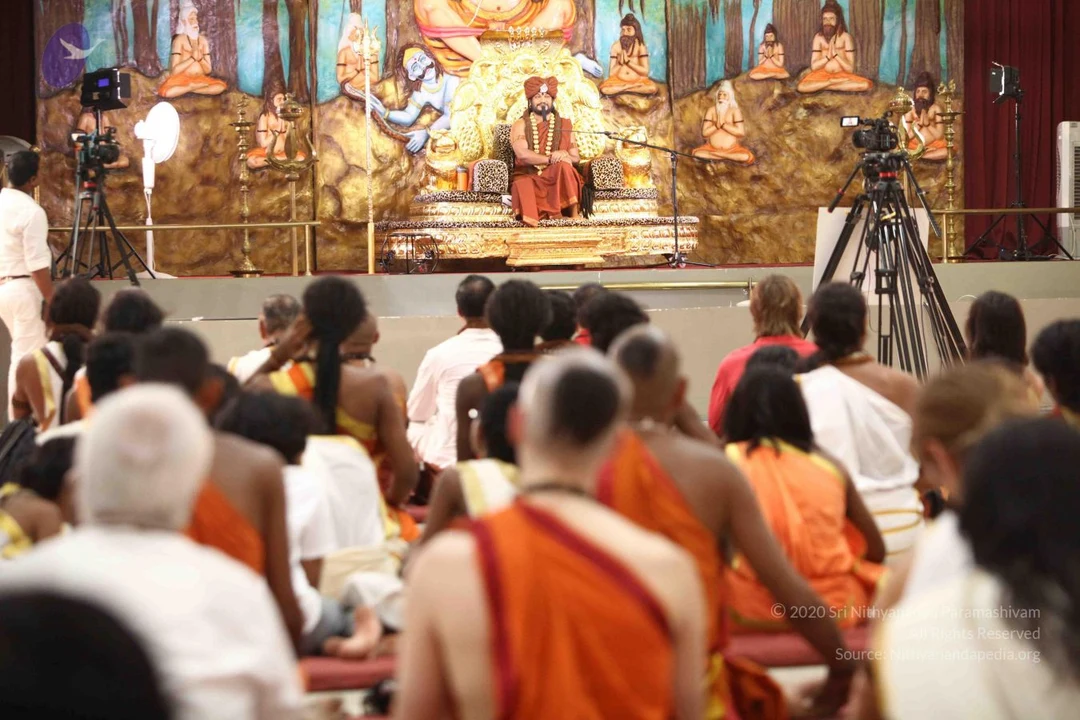
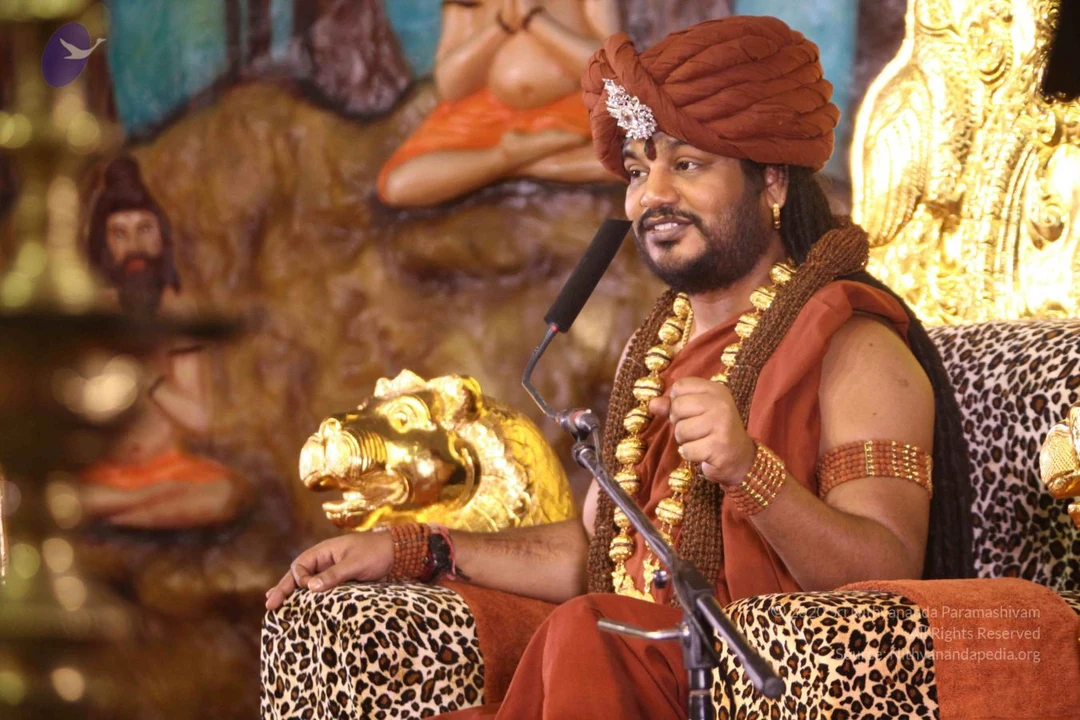
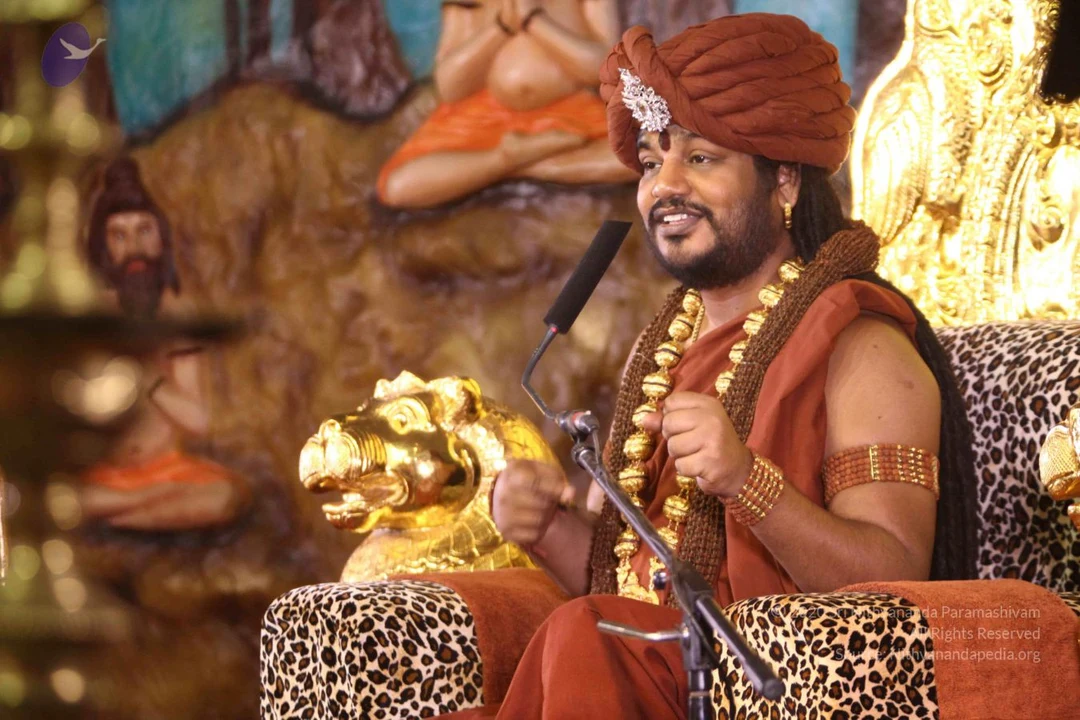
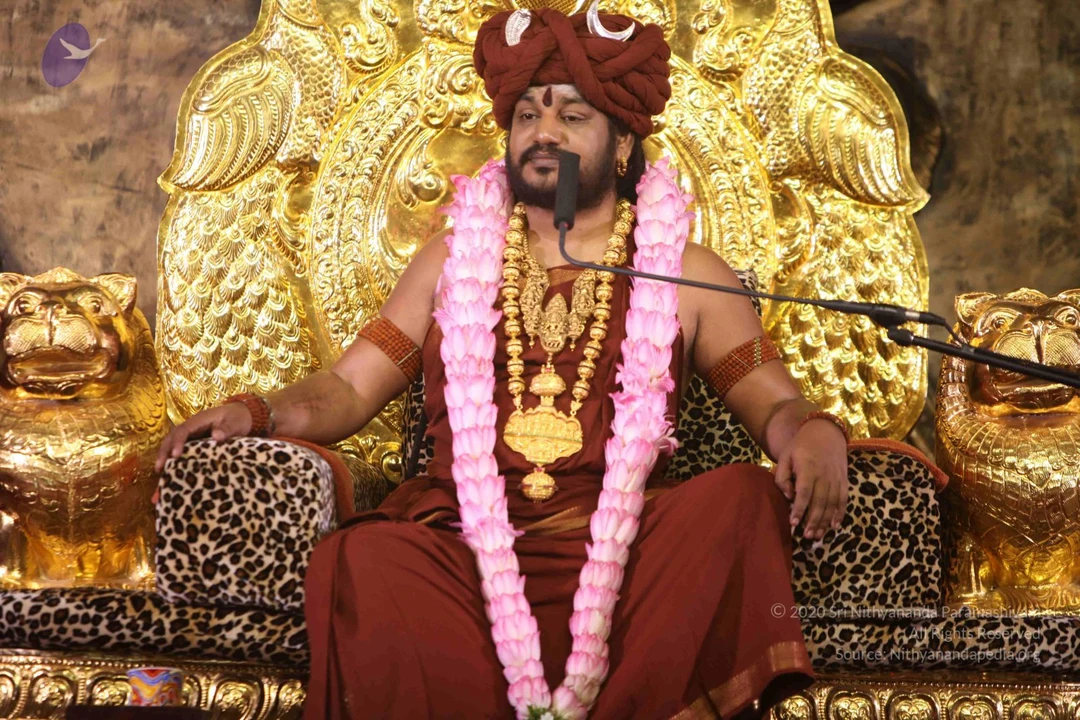
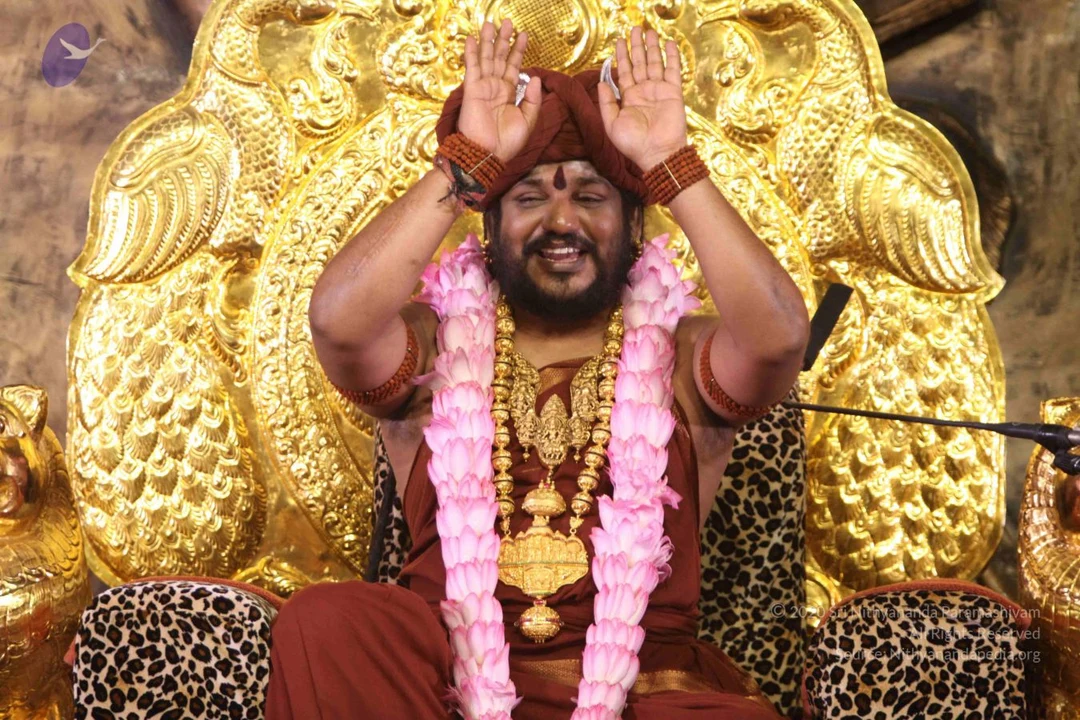
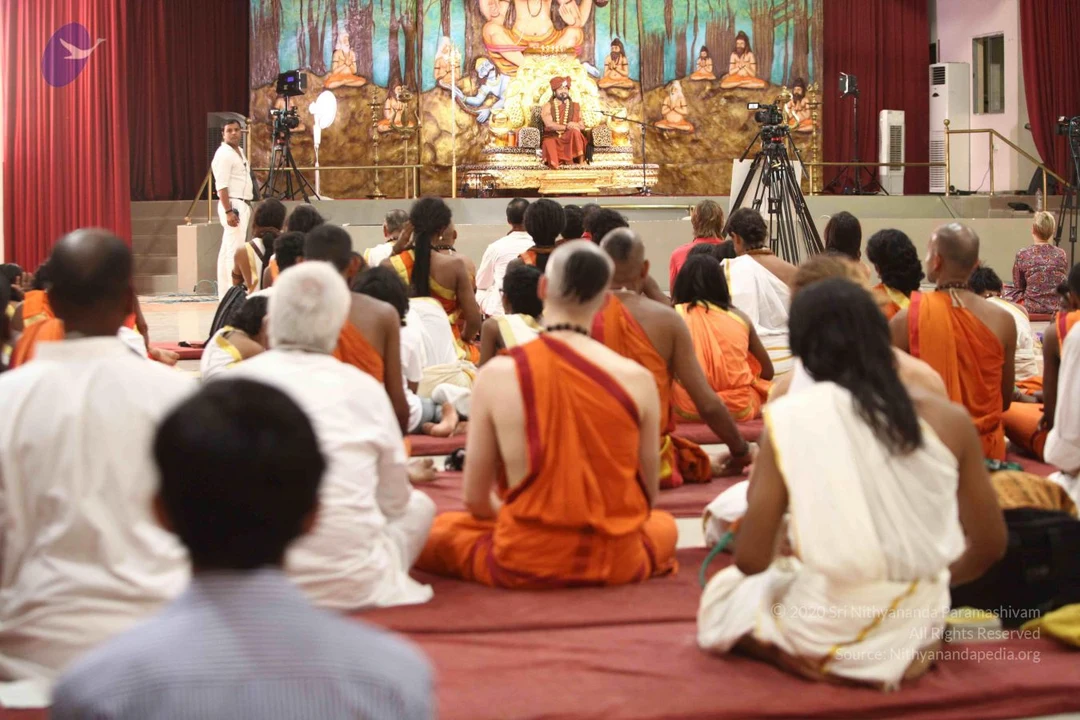
Nithya-Satsang
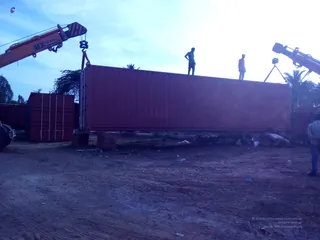
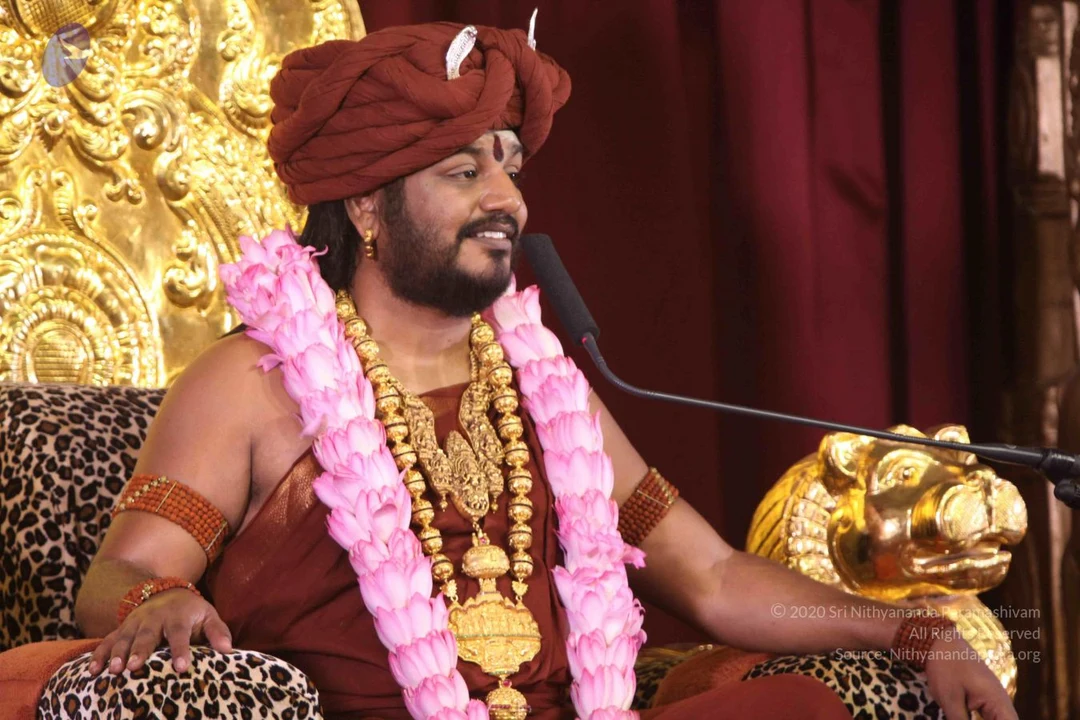
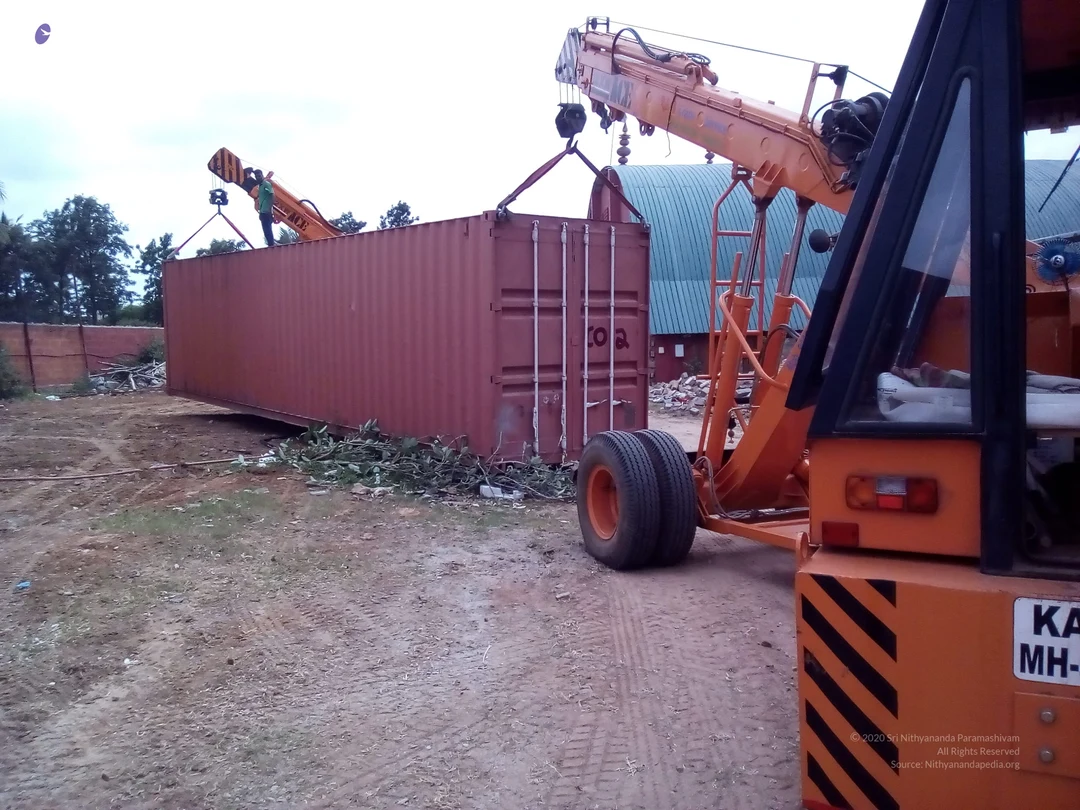
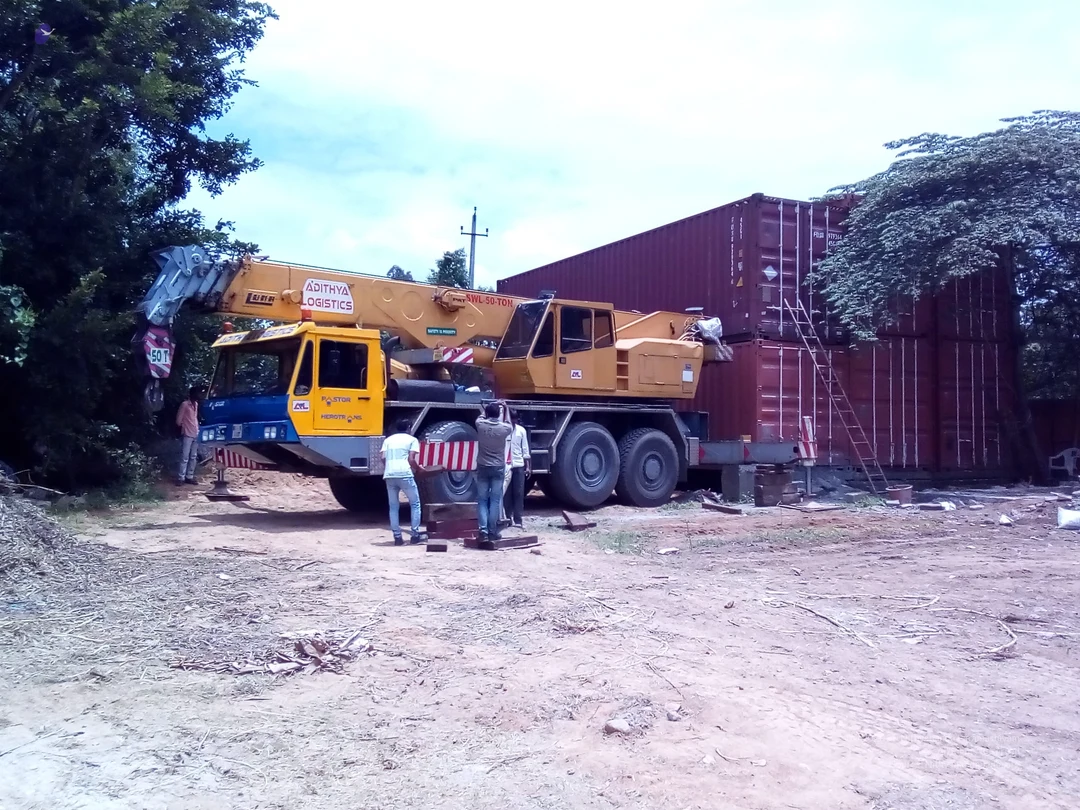
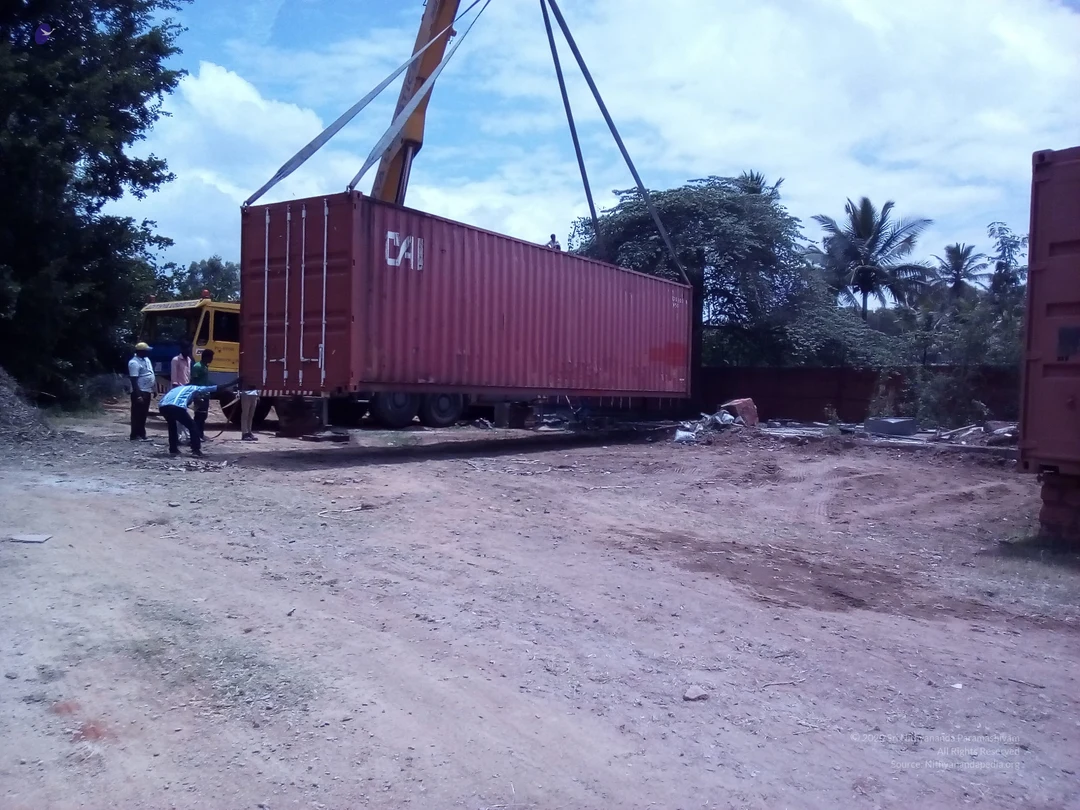
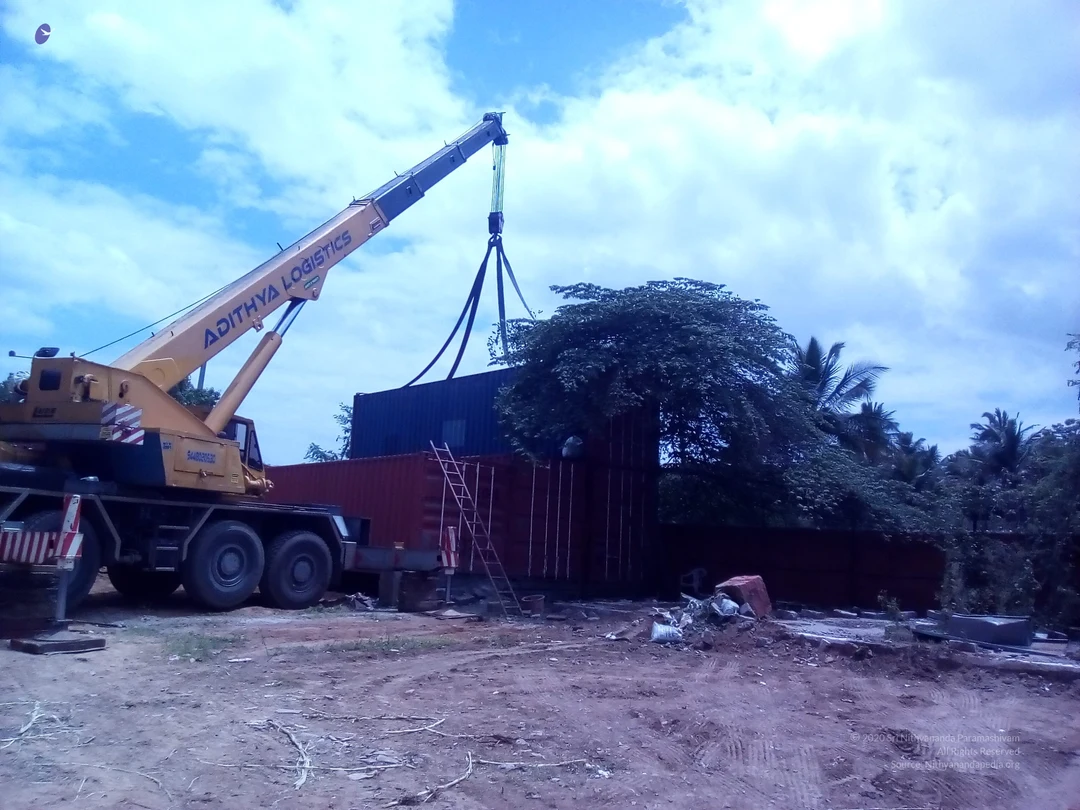
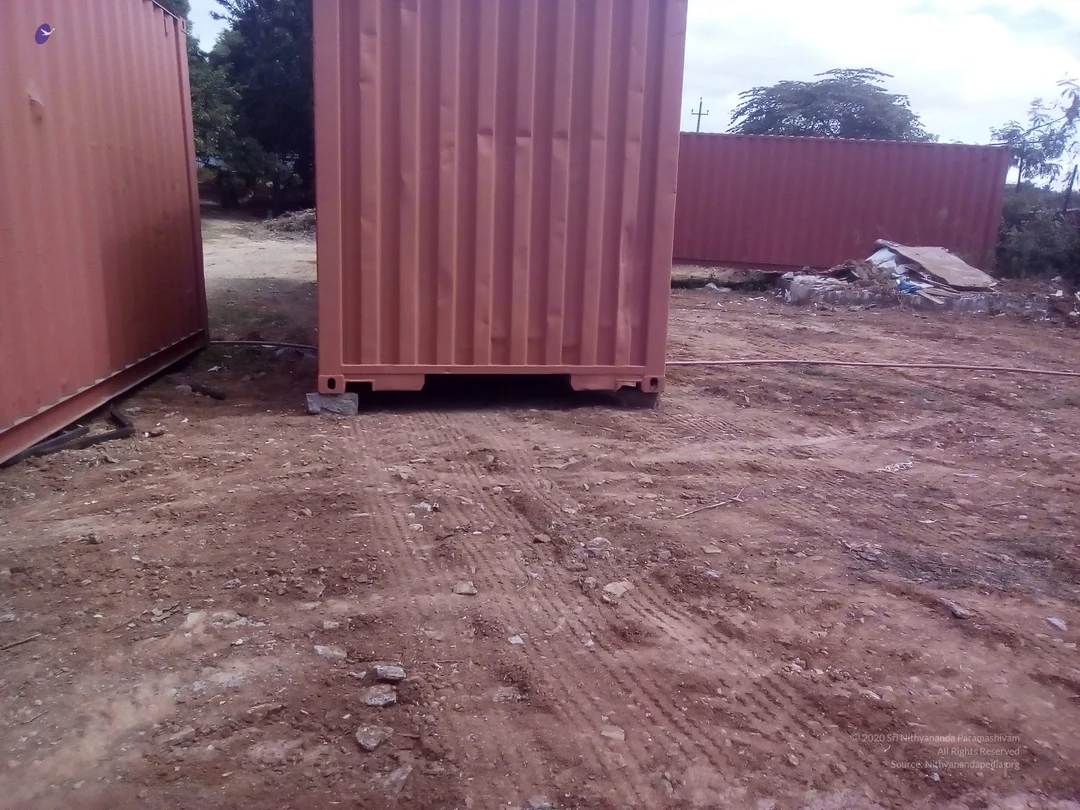
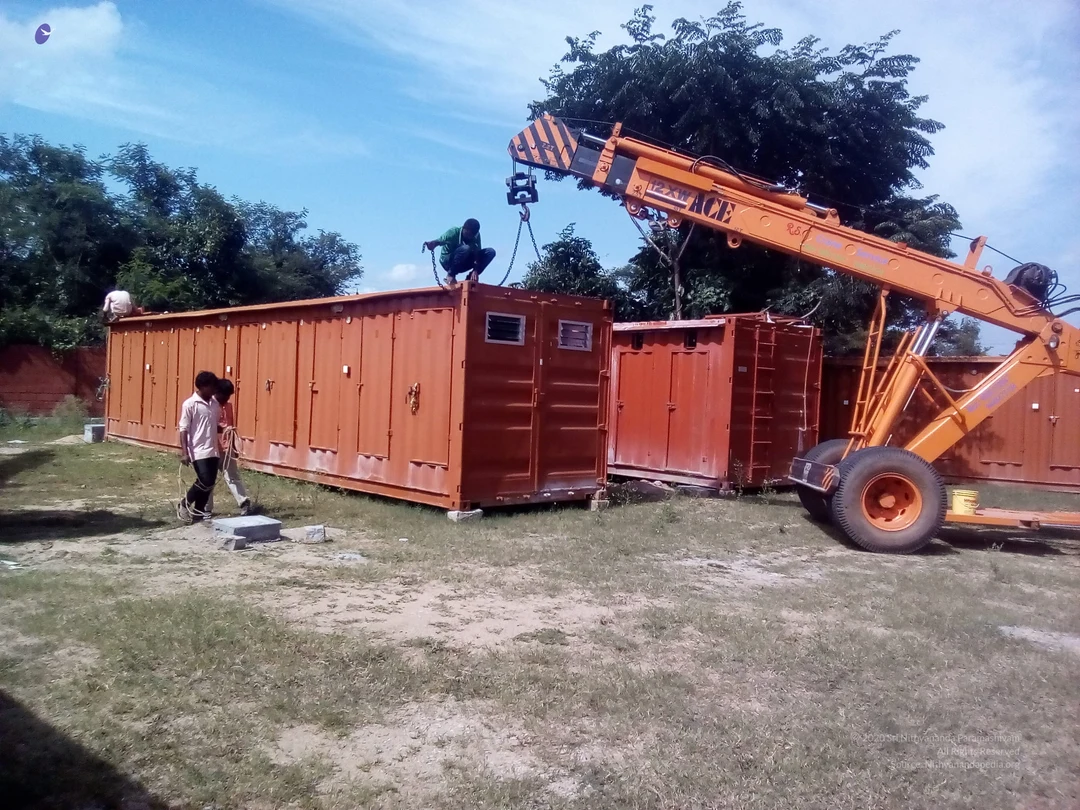
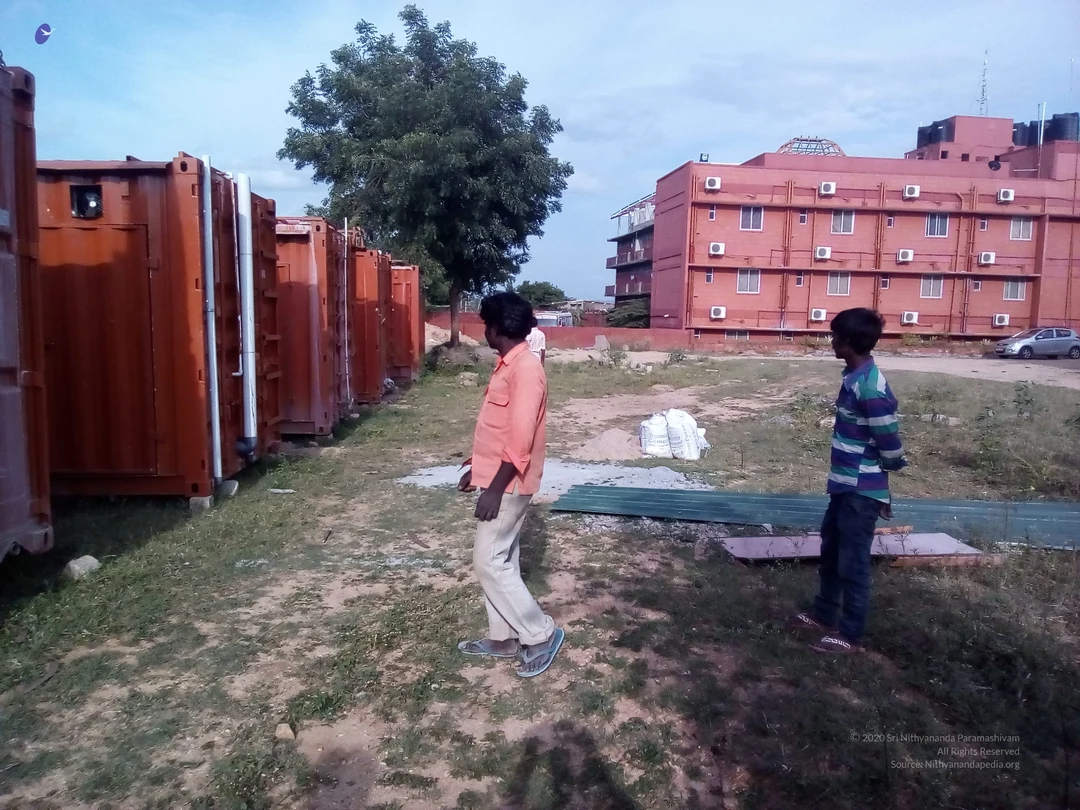
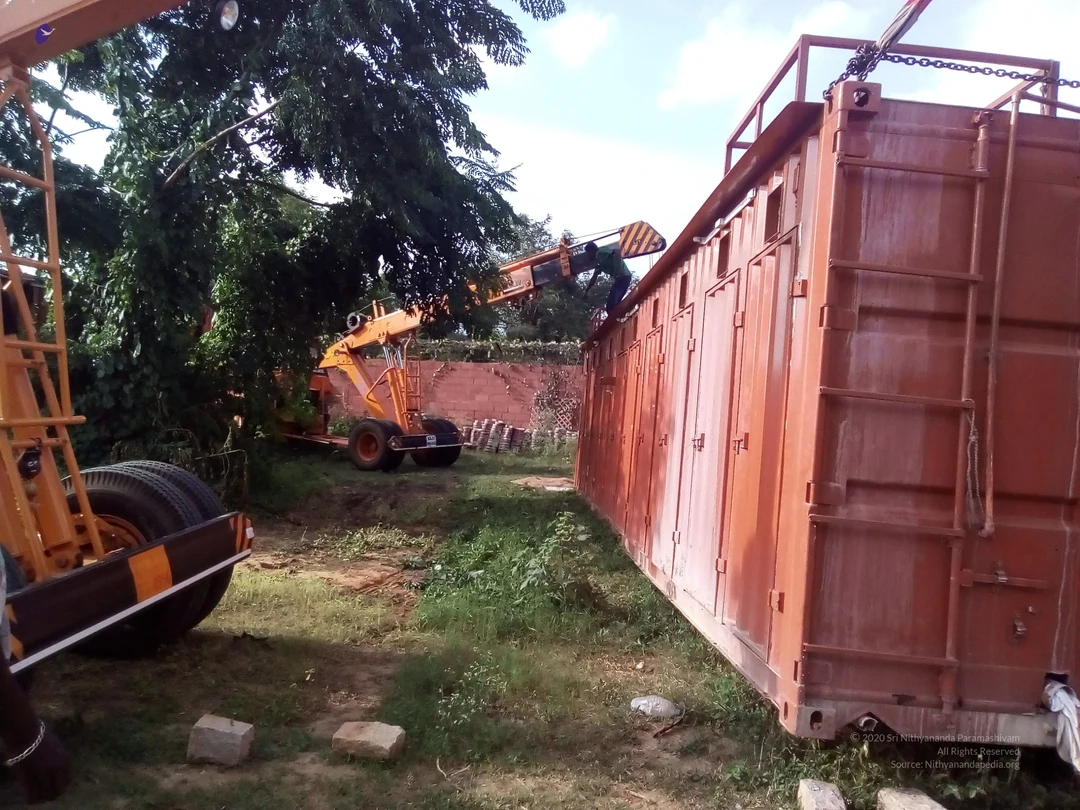
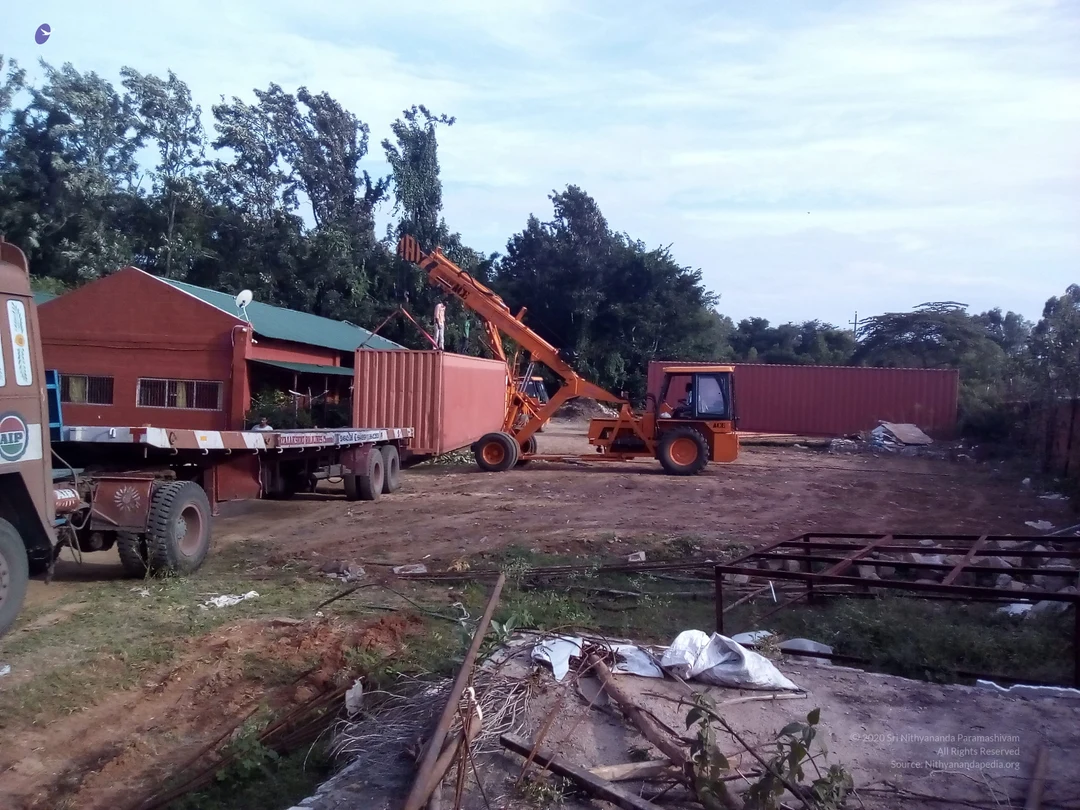
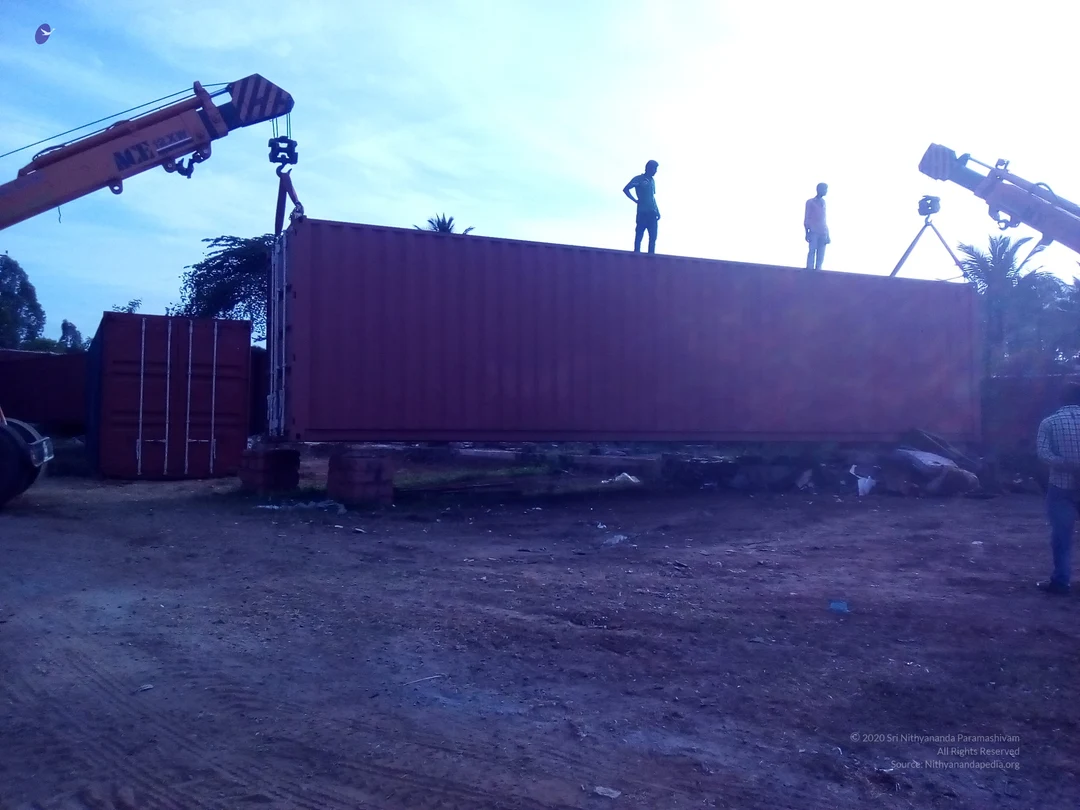
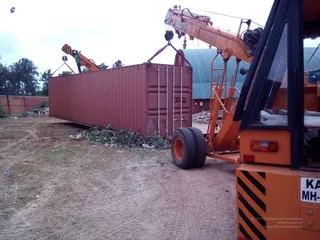
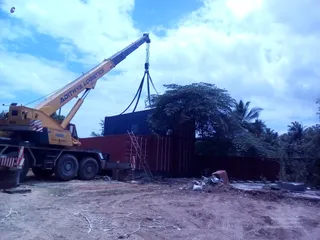
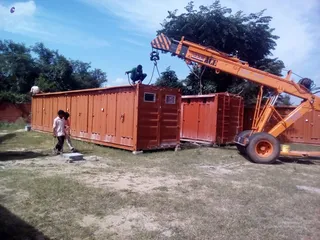
Construction Work happening at Aadhi Kailaasa, Bengaluru

<img src="http://drive.google.com/uc?export=view&id=10aA3wwbk85Cq06zlx8PjsB8RgNIKz4rg" alt="Construction Work - IMG_2016 | 20160808]]

Photos Of The Day:

FB-Photos-of-the-Day

Photos from this day

View all 439 photos

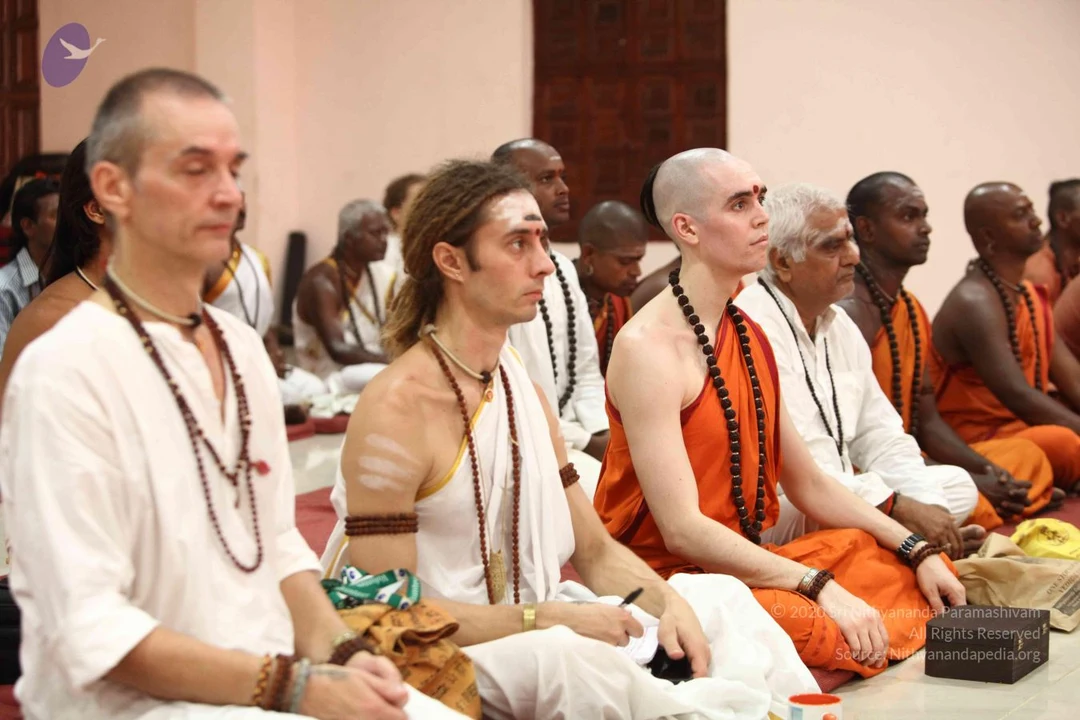
Nithya-Satsang
50 photosSource gallery
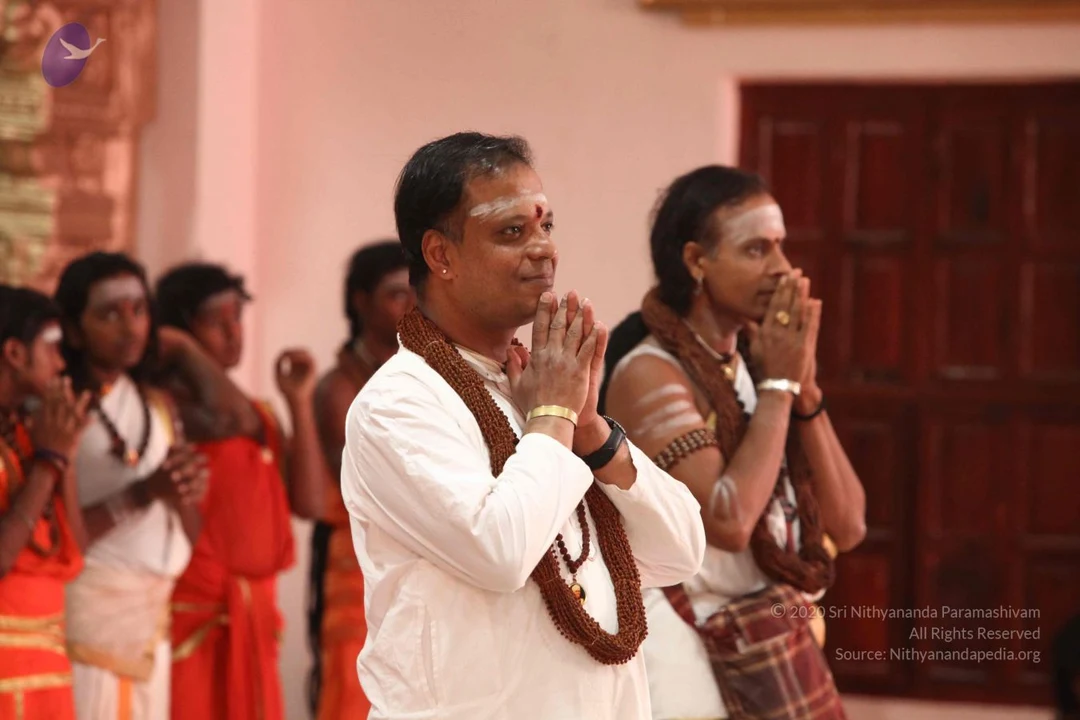
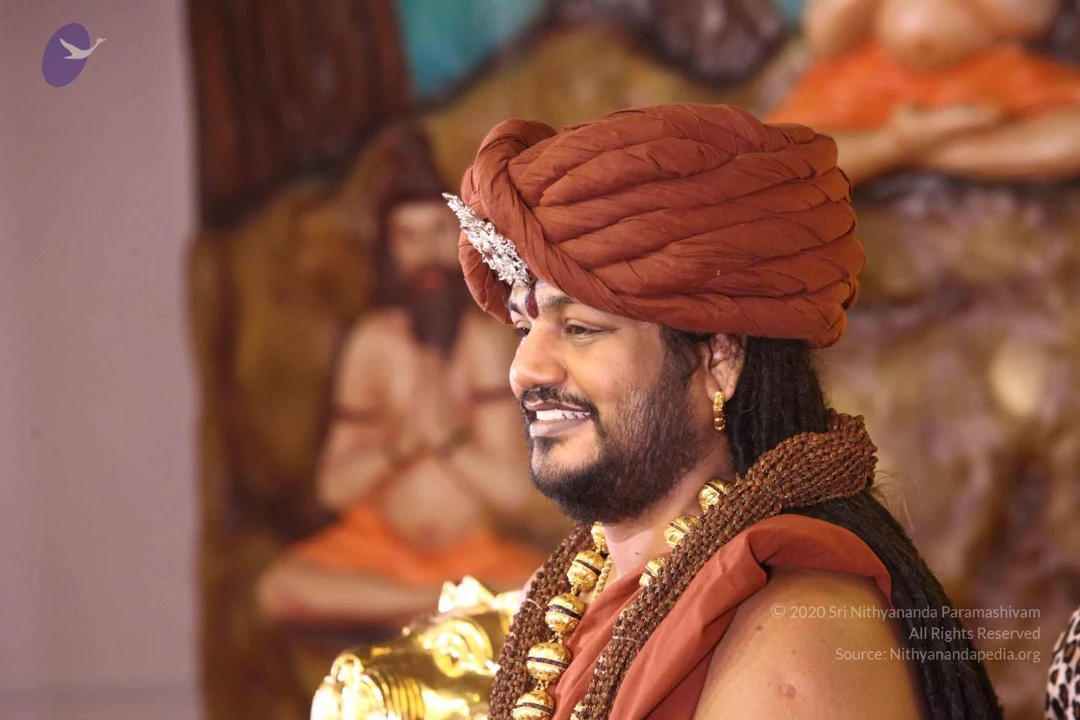
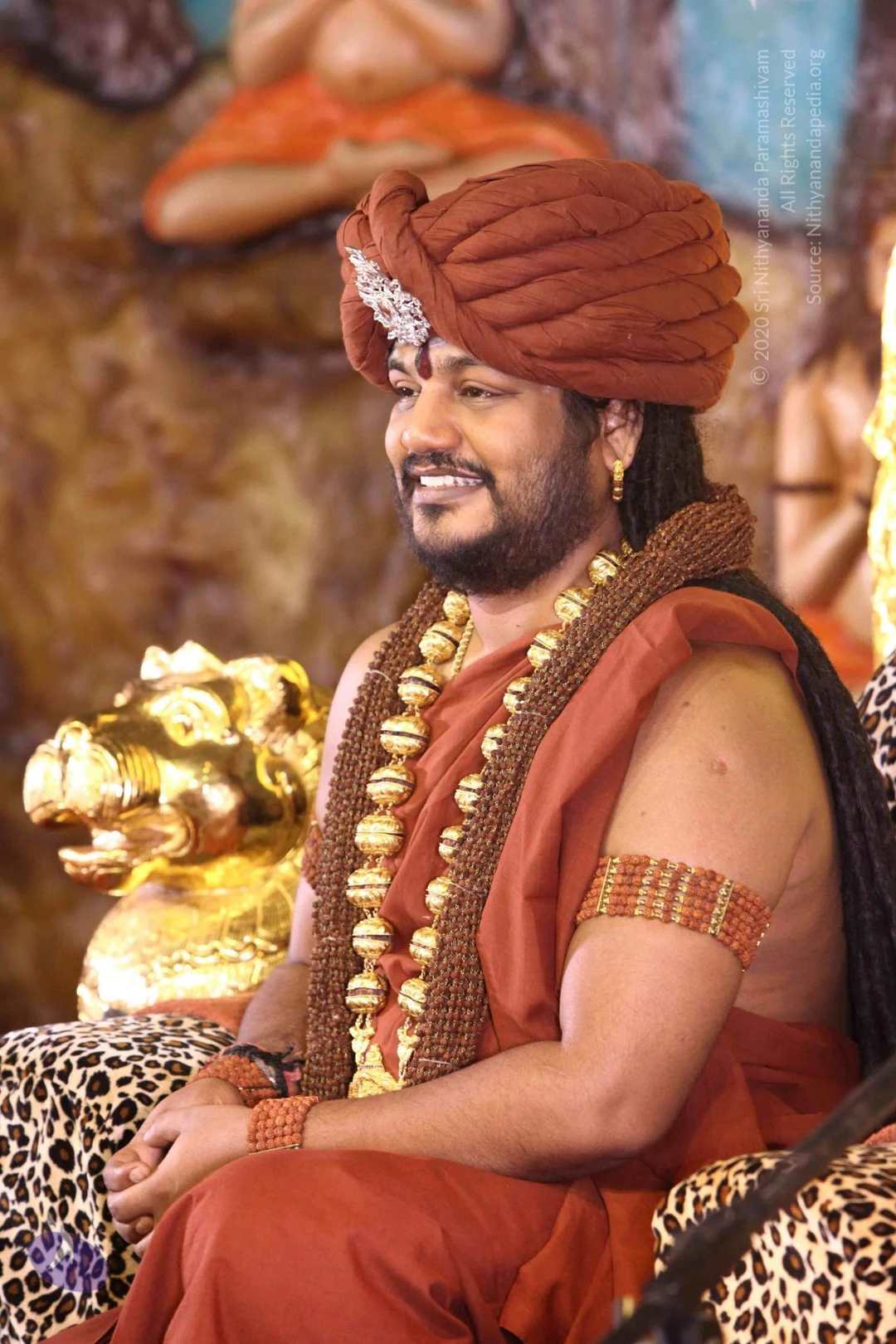
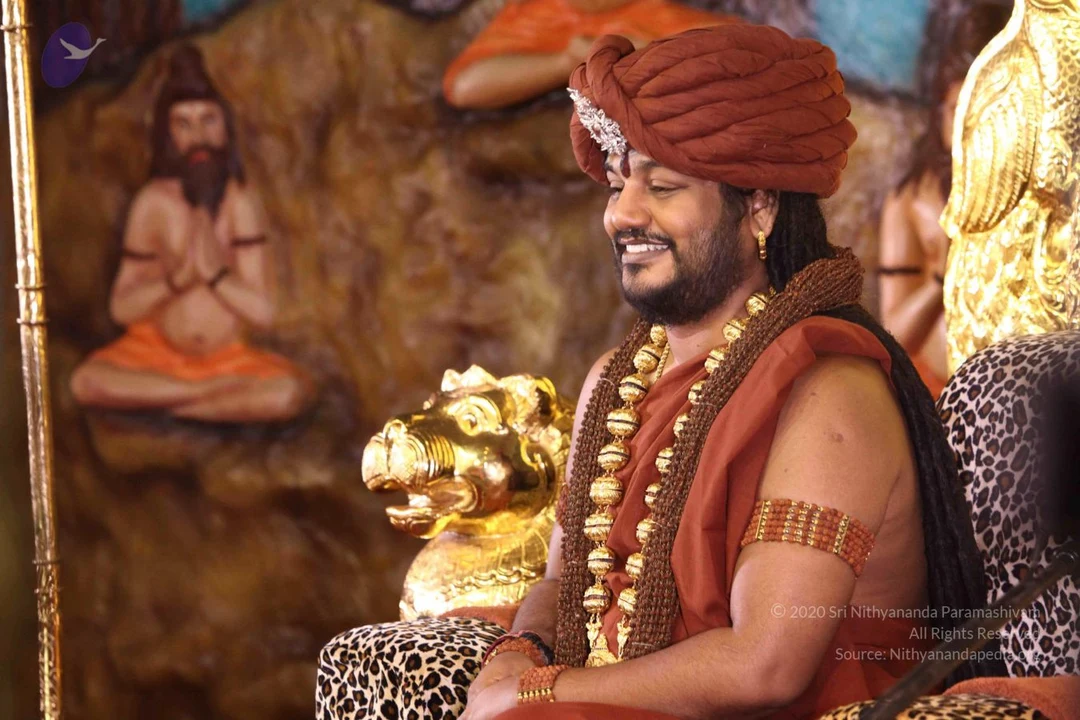
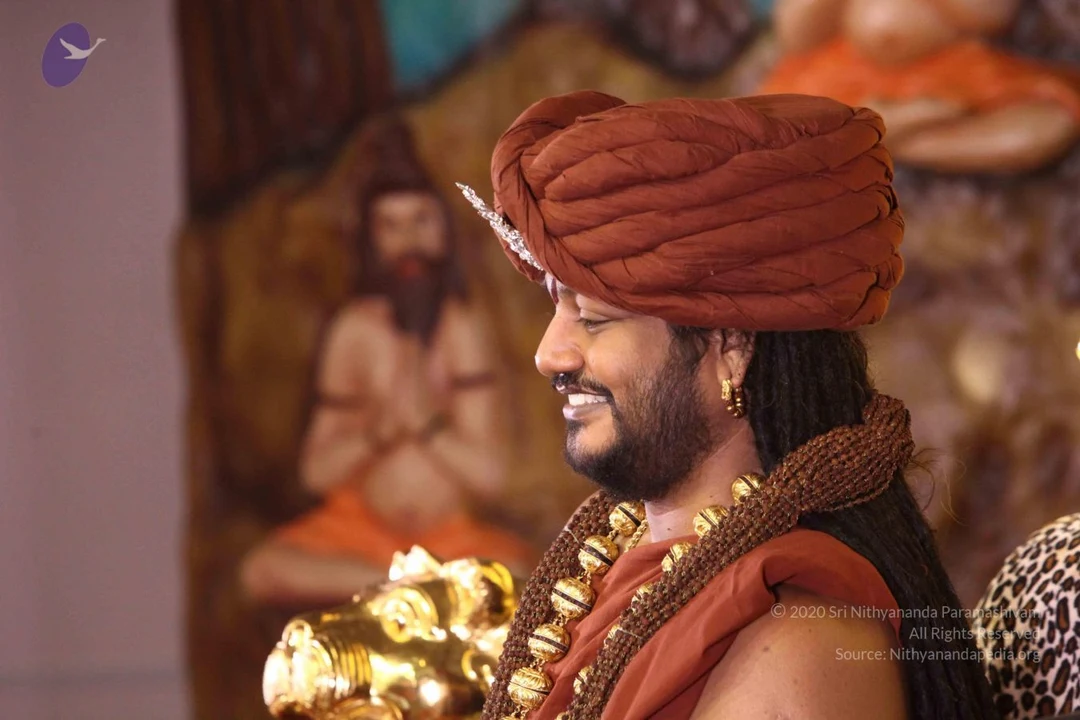
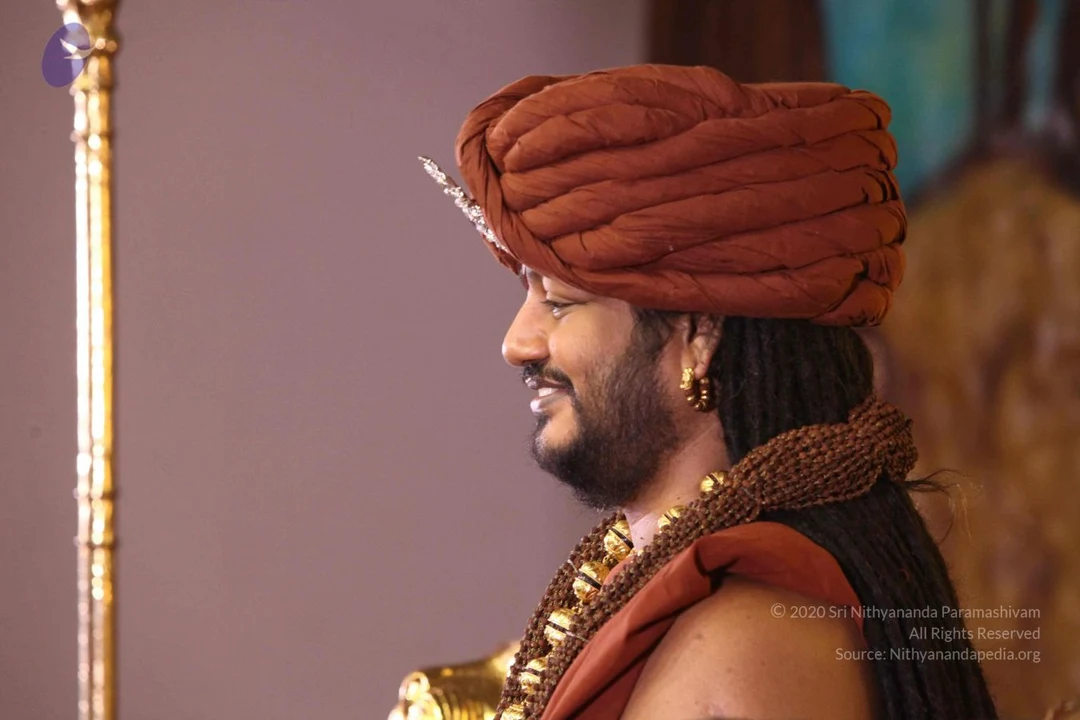
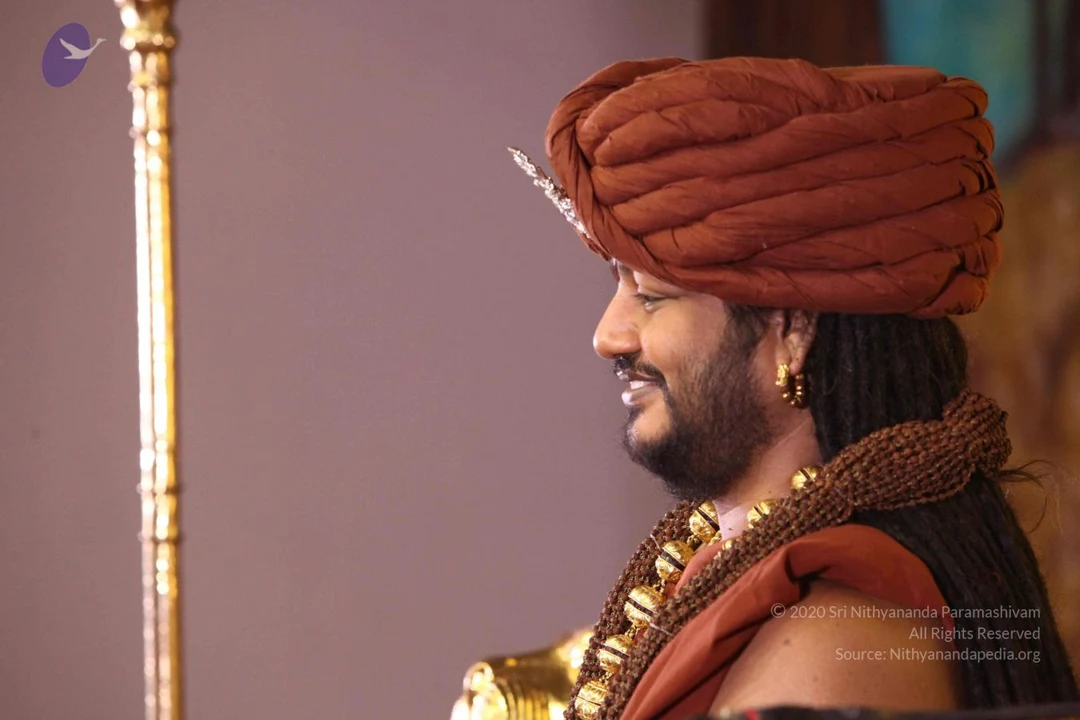
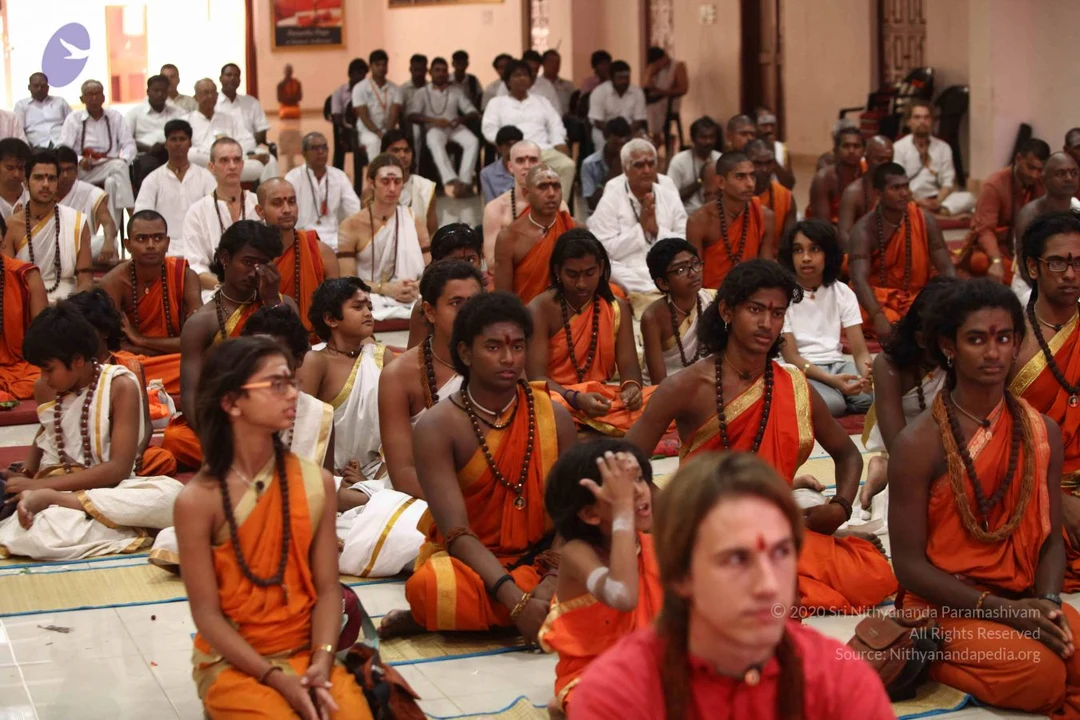
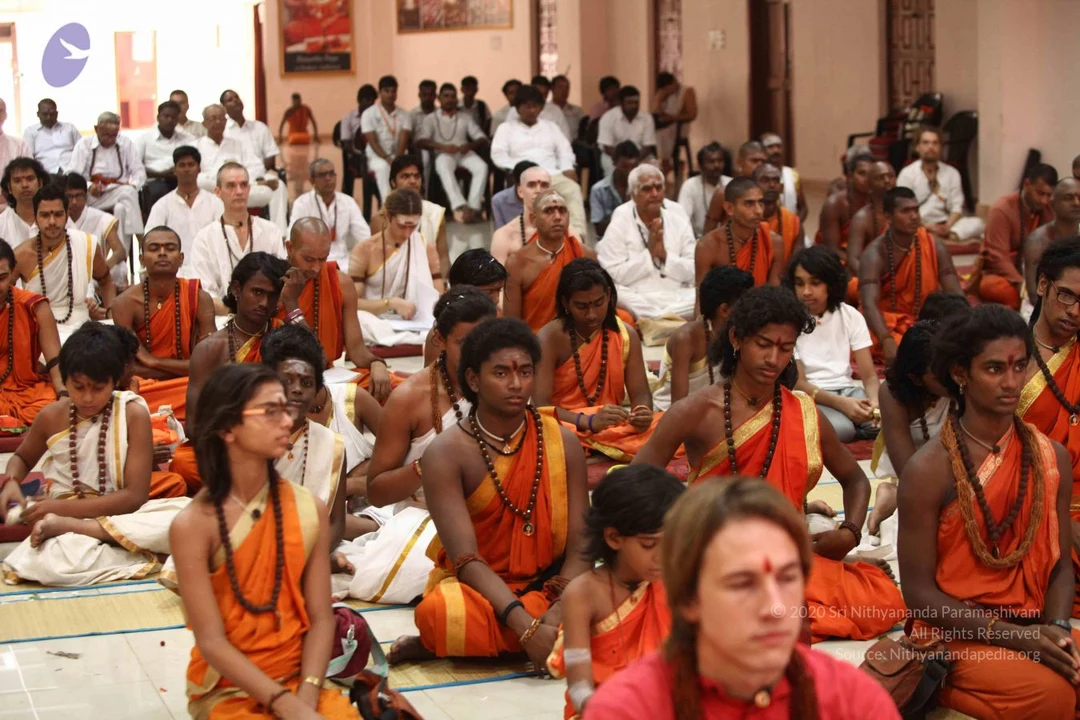
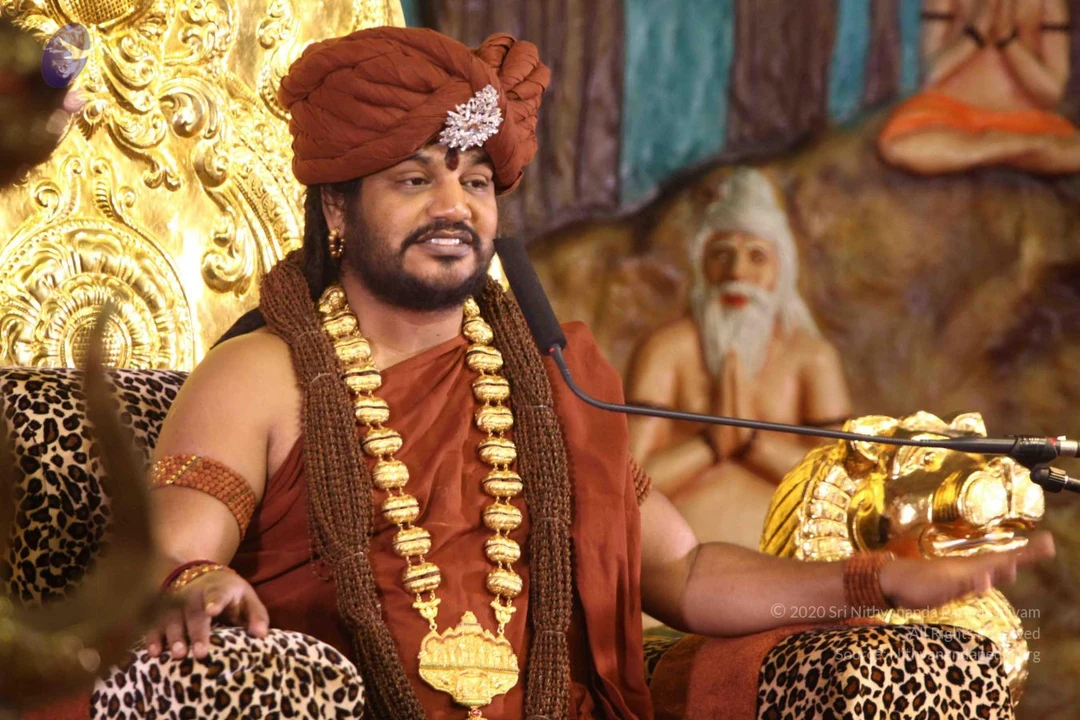
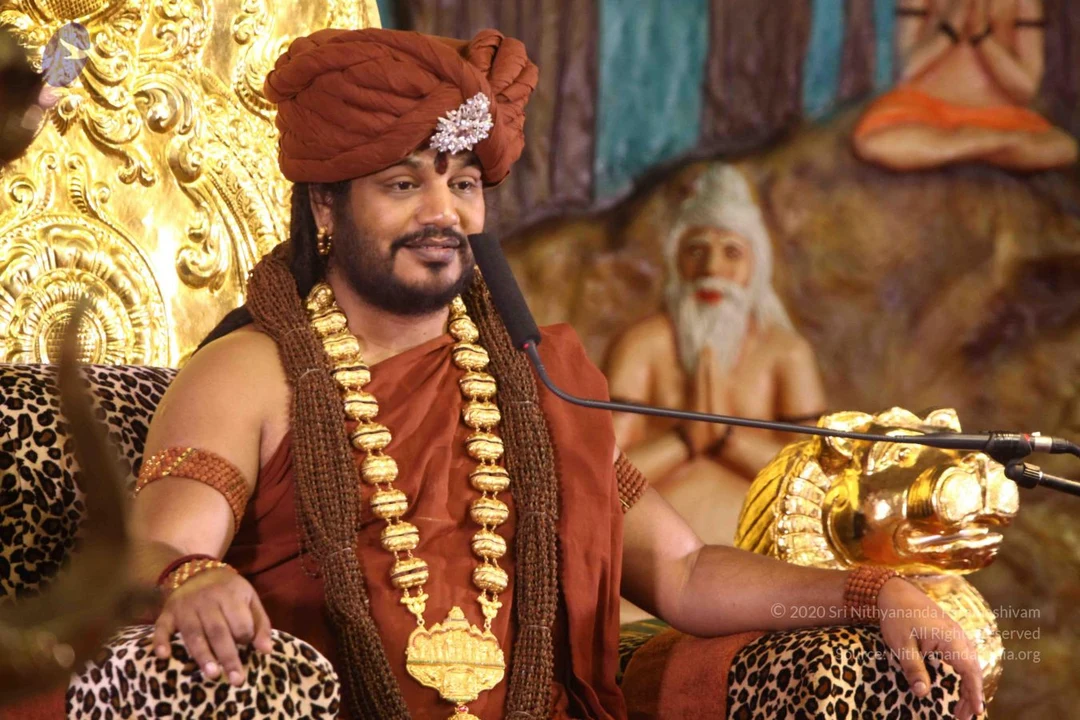
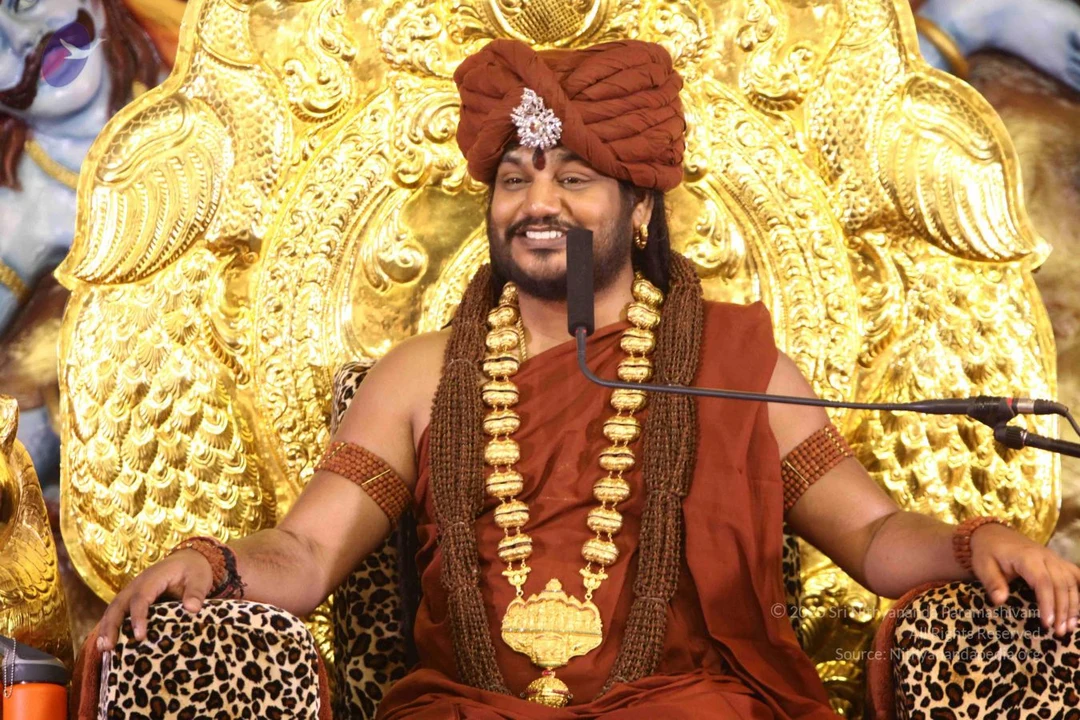
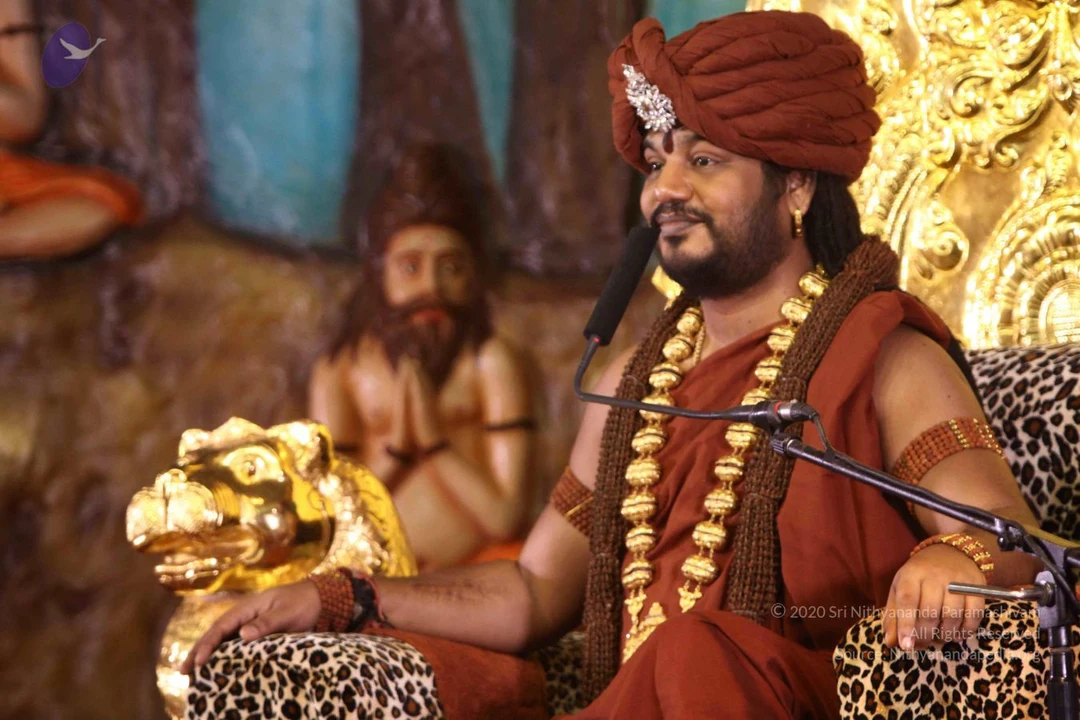
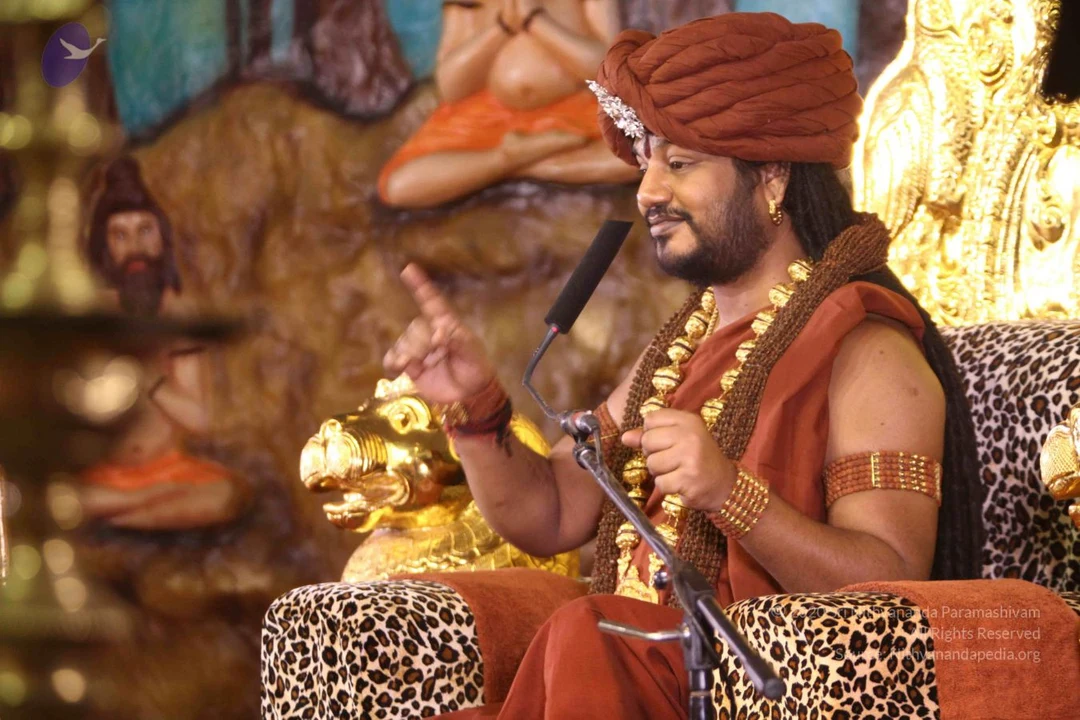
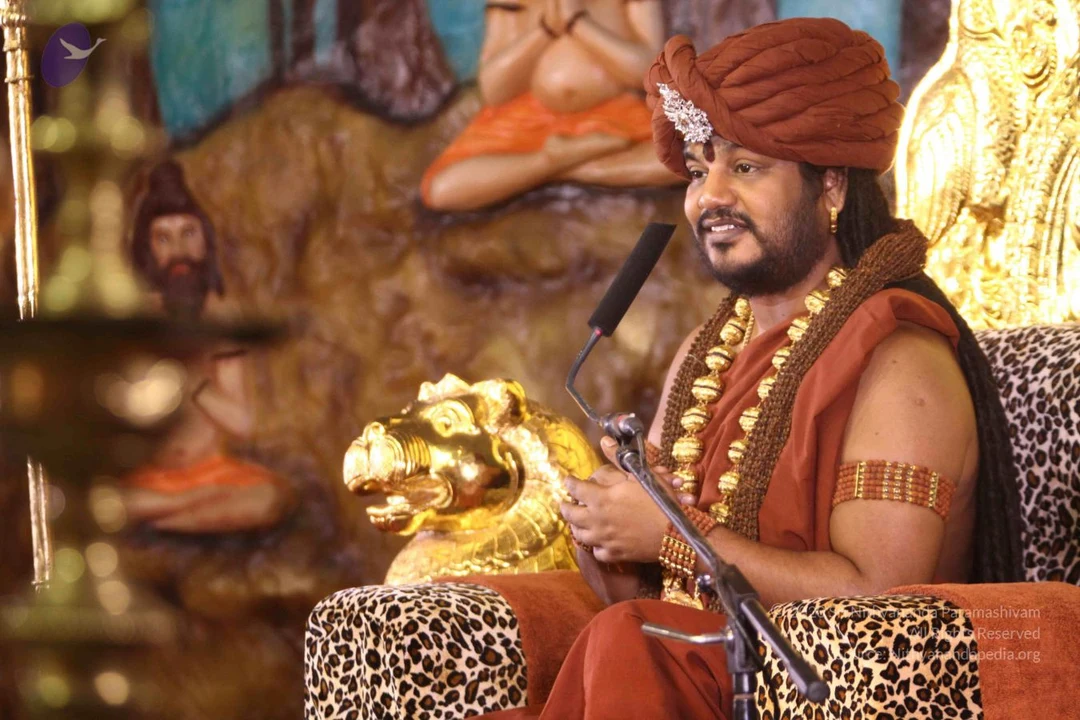
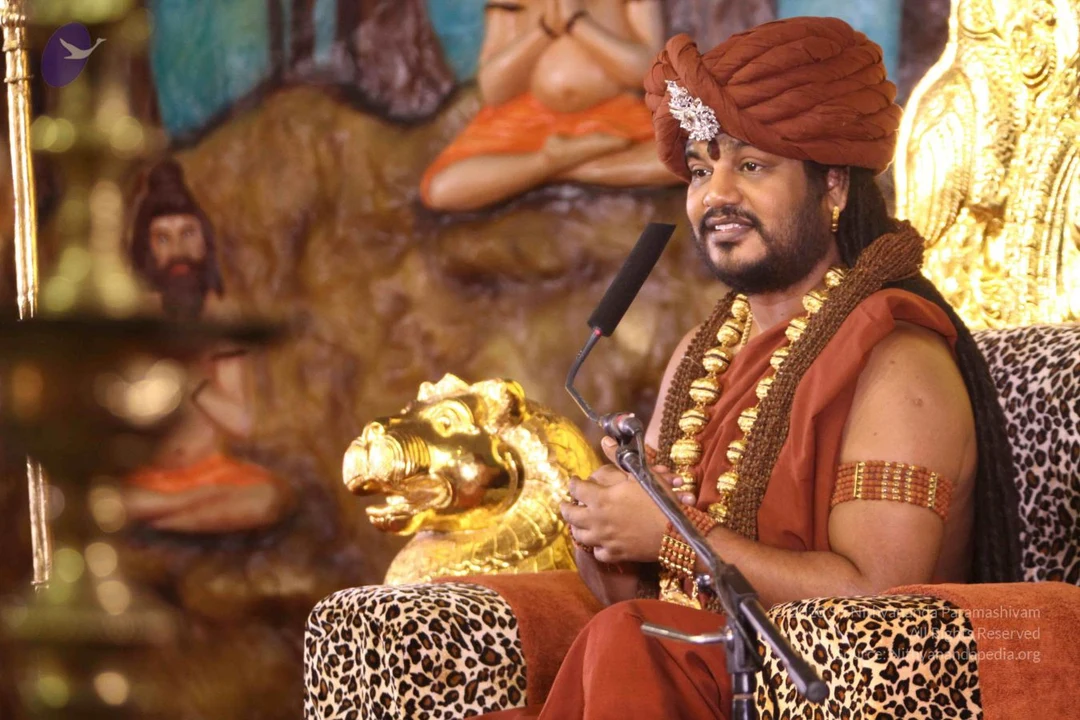
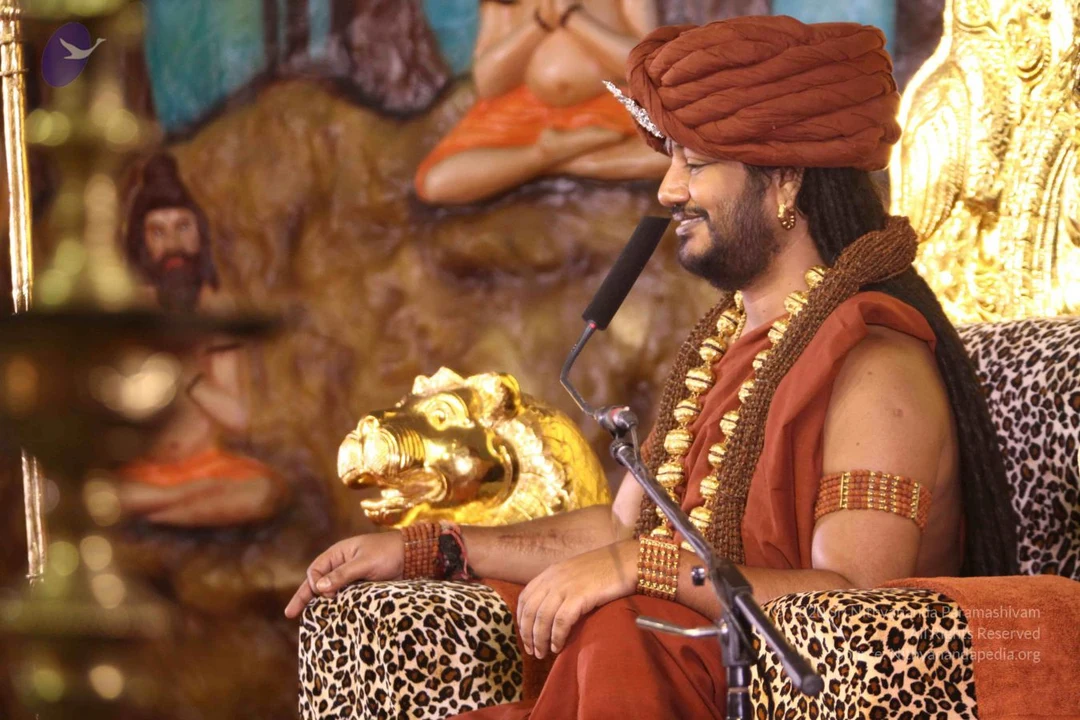
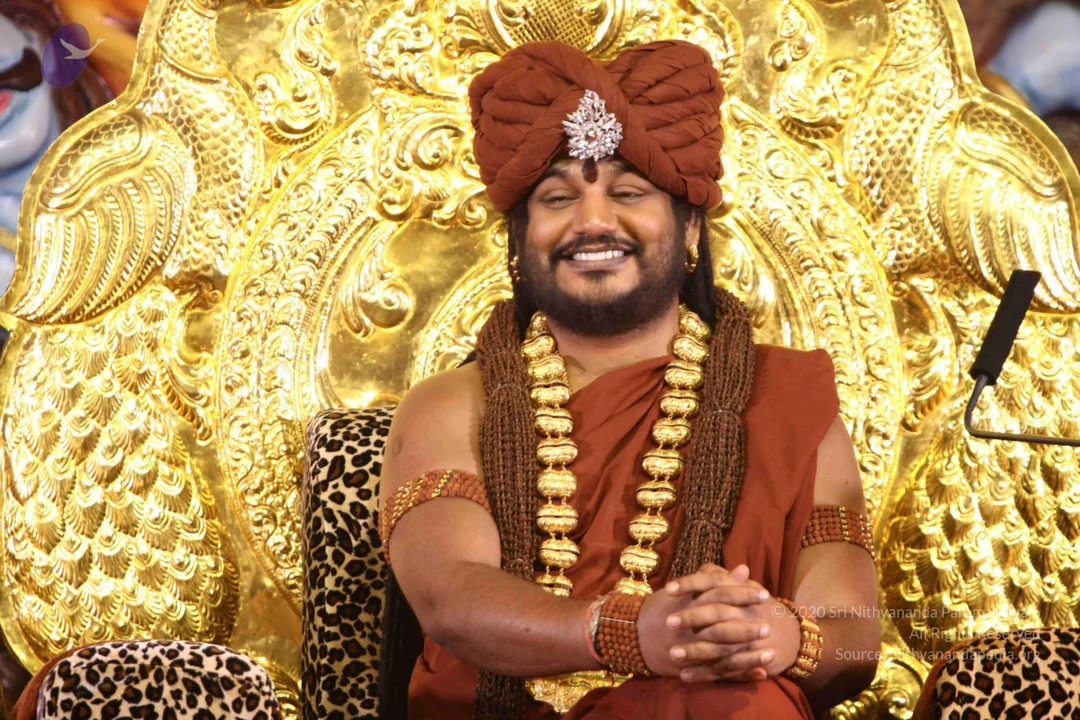
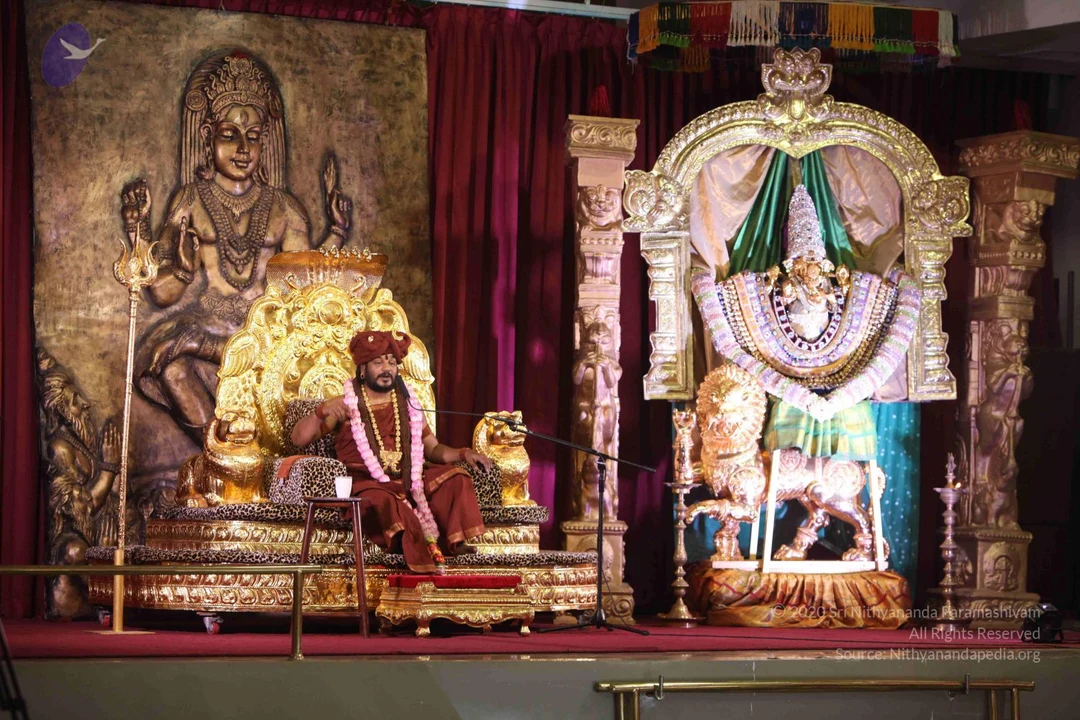
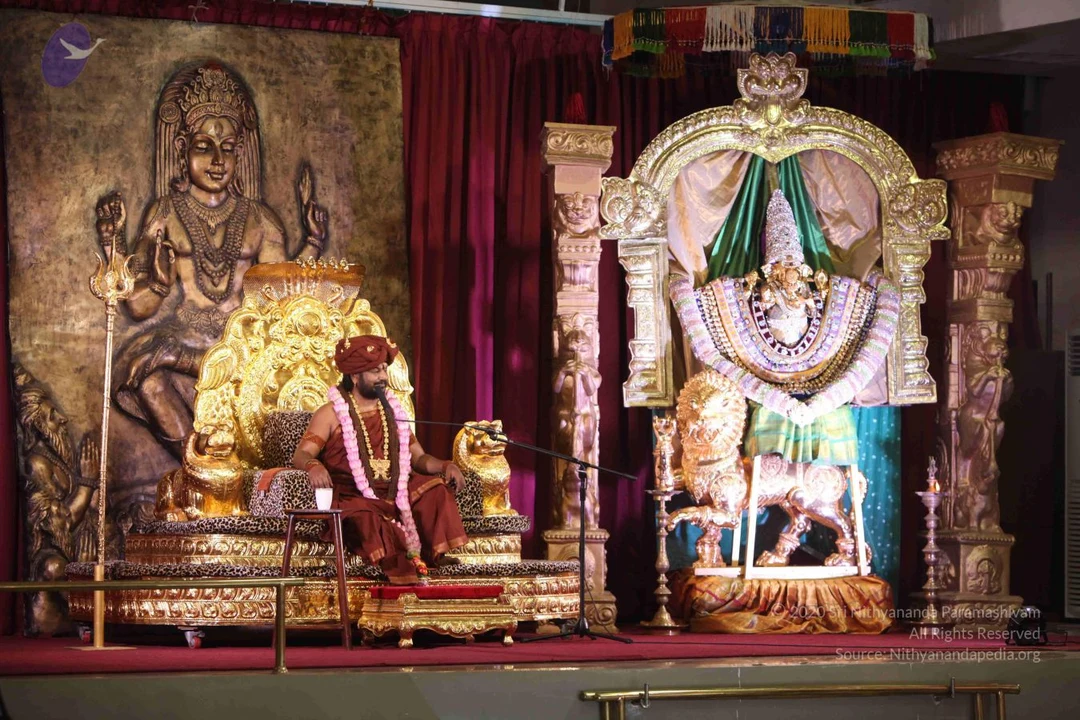
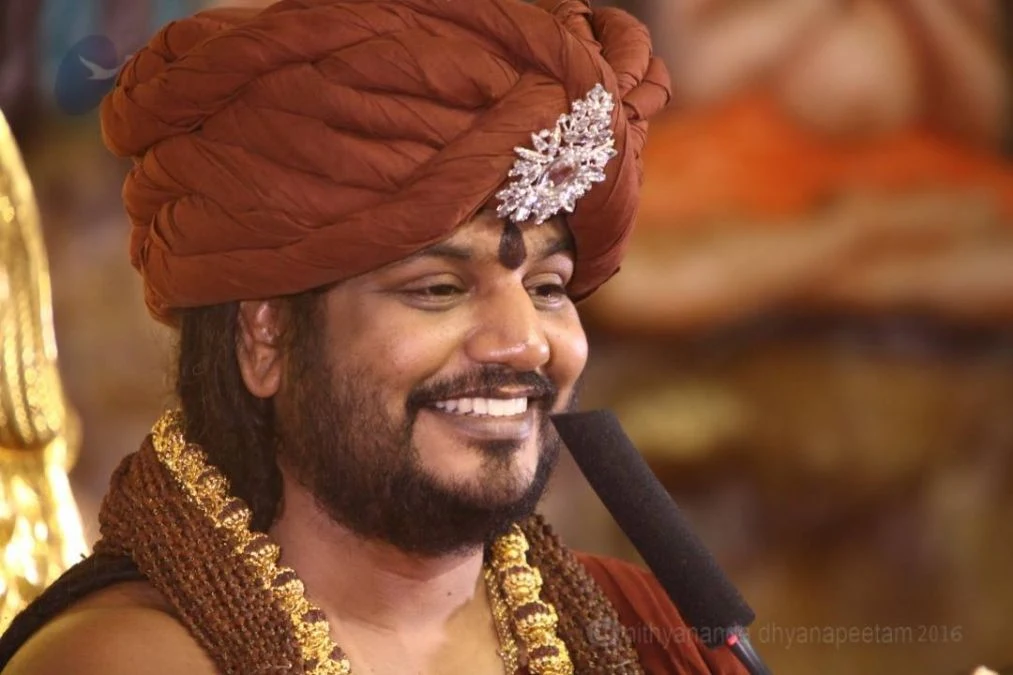
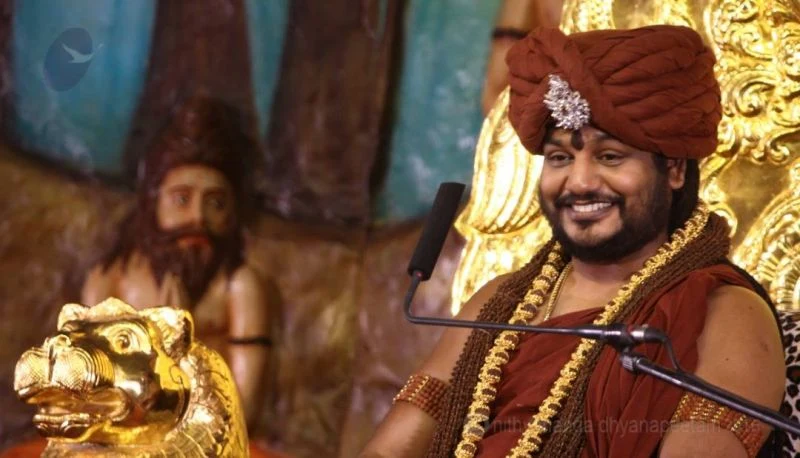
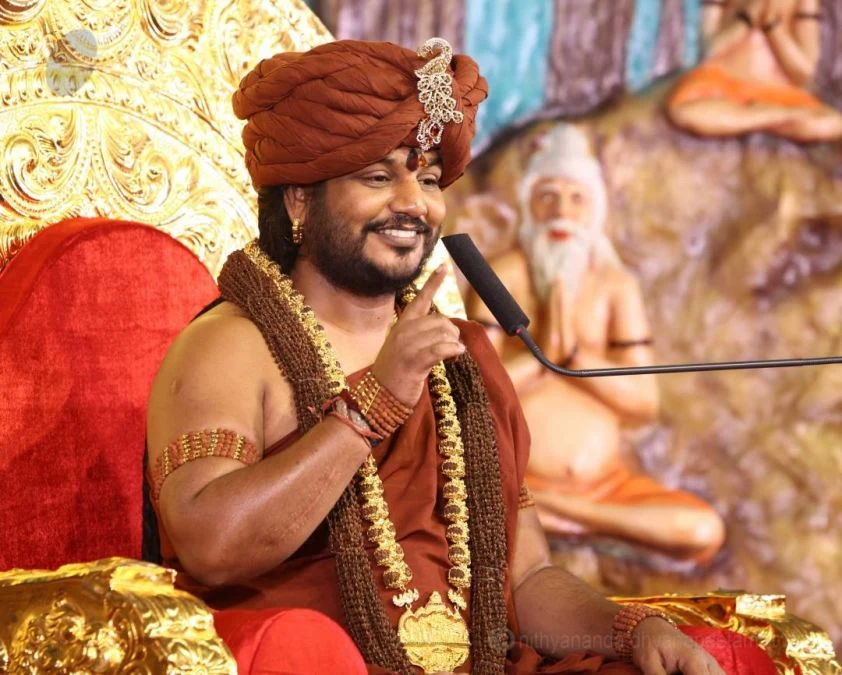
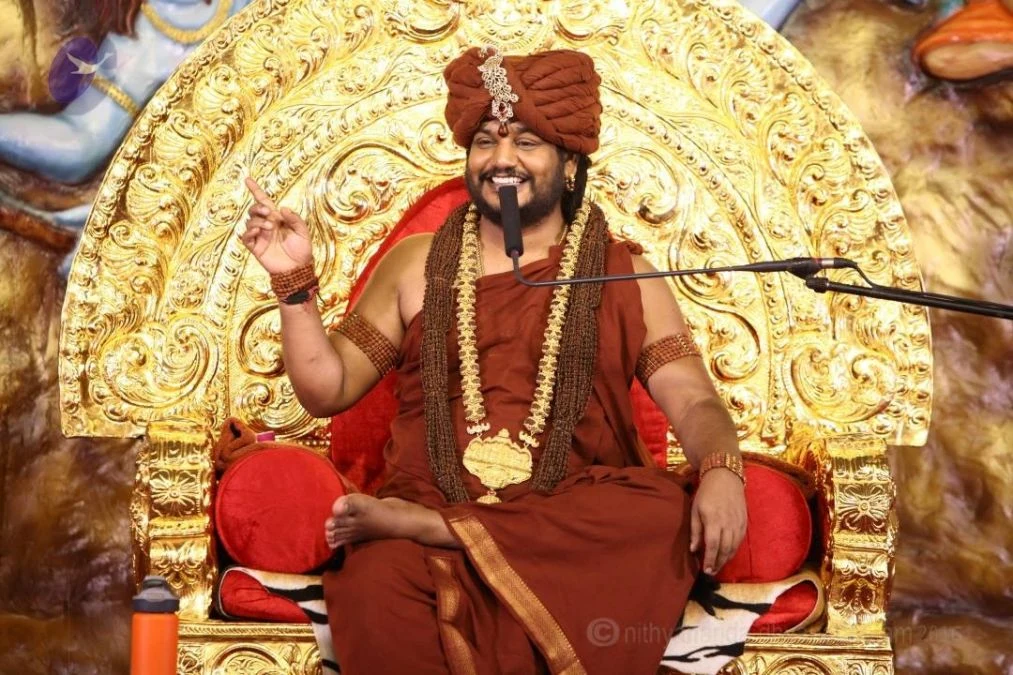
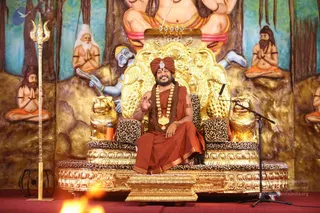
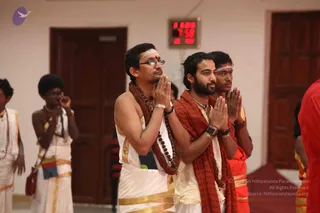
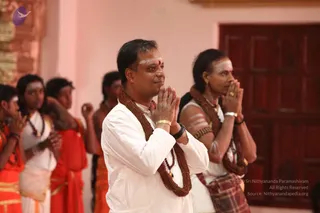
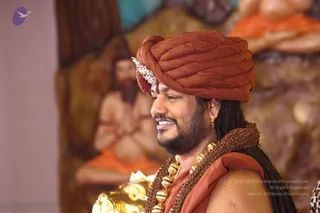
A smiling bearded man in an orange-brown turban with a silver central ornament and an orange-brown robe sits on an ornate gold throne with carved lion-head armrests and a leopard-print cushion. He wears heavy gold ceremonial necklaces, a rudraksha-style mala, gold bangles and a red-brown bracelet, and raises his right hand in greeting. Behind him, painted deity murti figures in blue-skinned and gold tones are visible, and a microphone stands at the right edge. a person appears in this photo, seated on the throne and giving a blessing gesture.A seated man in rust-orange robes and a rust-red turban with a silver ornament sits on an ornate gold throne with carved peacock and lion motifs, gesturing with both raised palms during a satsang. He wears heavy gold beaded necklaces and a rudraksha-style mala, with a gold pendant at his chest, and a microphone stands at his right. Behind him, a painted backdrop shows blue-skinned deity figures with gold jewellery, and a gold lion-shaped armrest sits at each side. Leopard-print cushions cover the seats. Probable Swamiji (probable) is seated as the speaker, identified by the throne, saffron robes, layered gold garlands and turban.A man seated on an ornate gold throne with leopard-print cushions and gold lion-head armrests, in front of a painted backdrop of seated sages with prayer hands and a blue deity figure. He wears a rust-orange turban with a jewelled ornament, a rust-orange robe, a long gold necklace with a pendant, a rudraksha mala, and bangles. A microphone stands at his right and a golden trident leans on the left. A small flame glows at the lower left edge. Swamiji (probable): the cues are a turban, saffron-orange robes, ornate gold necklace and rudraksha mala, seated on a throne.Several men stand in a hall with wooden doors and a red digital clock showing 'eight' style numerals, palms pressed together in anjali mudra. In the foreground a bearded man with a rudraksha mala and red vertical forehead marks wears a white dhoti with gold border and folded hands; beside him a bearded man in a saffron-orange shawl with a rudraksha mala and gold necklace stands in anjali. Behind them a youth with a white tilak wears an orange garment, and on the left two boys in white dhotis with gold borders stand by. The right edge shows a figure in red. Appearance-based cues for a person are not sufficient, so no candidate is identified.A photograph of a man in a white kurta with a red bindi and white vibhuti lines on his forehead stands with palms pressed together in anjali mudra, wearing a thick brown rudraksha mala and a gold bangle. Beside him on the right, another man in white with a rudraksha mala and white marks on his arms and face also holds his hands in anjali. Behind them, several people in saffron and orange garments and white dhotis, with white-painted faces and bodies, stand in a row. The wall is pale pink with a dark wooden door at right, and a carved stone pillar appears at left edge.A smiling man in a rust-orange turban with a silver ornament at its front sits in profile at a satsang setting. He wears a brown rudraksha mala over the shoulder, layered gold beaded necklaces, a gold earring and an orange-saffron shawl over his shoulder. Behind him is a painted backdrop of a bearded sage in orange seated in meditation on rocky terrain, and a golden vessel sits in the lower left. Single person visible.

Nithya-Satsang
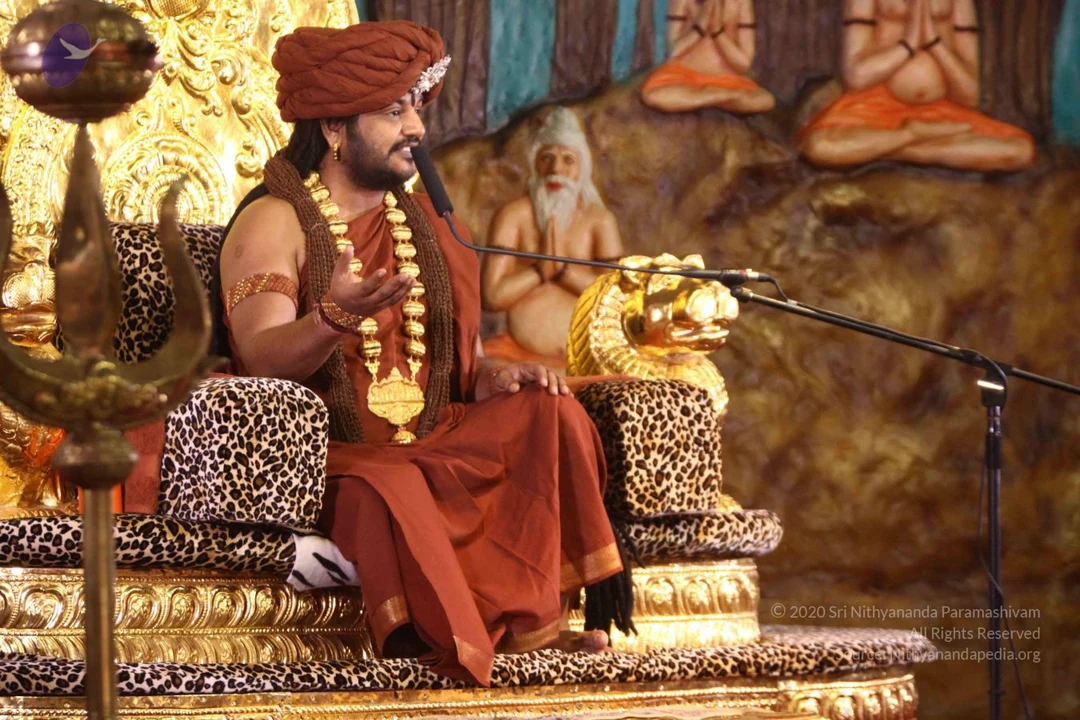
159 photosSource gallery
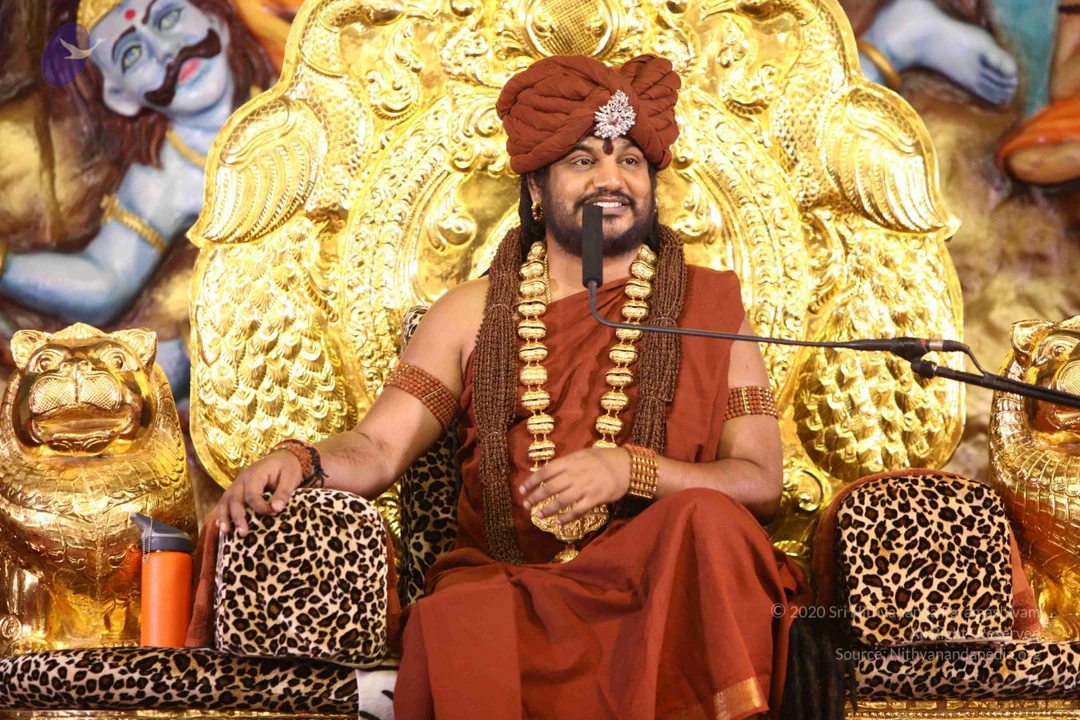
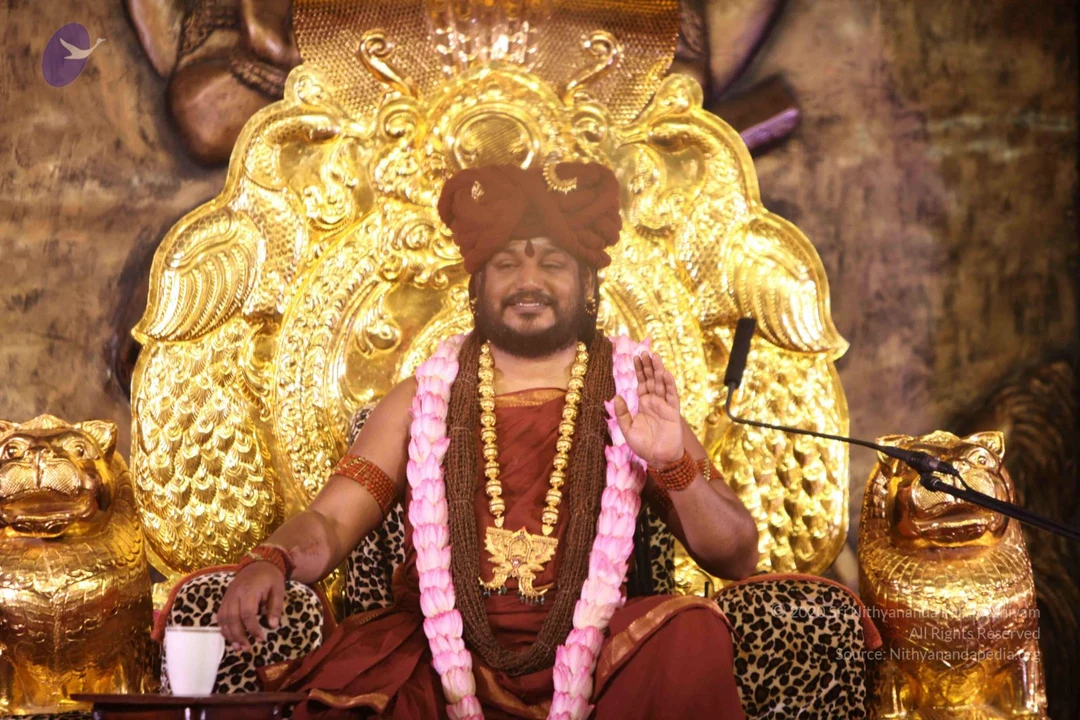
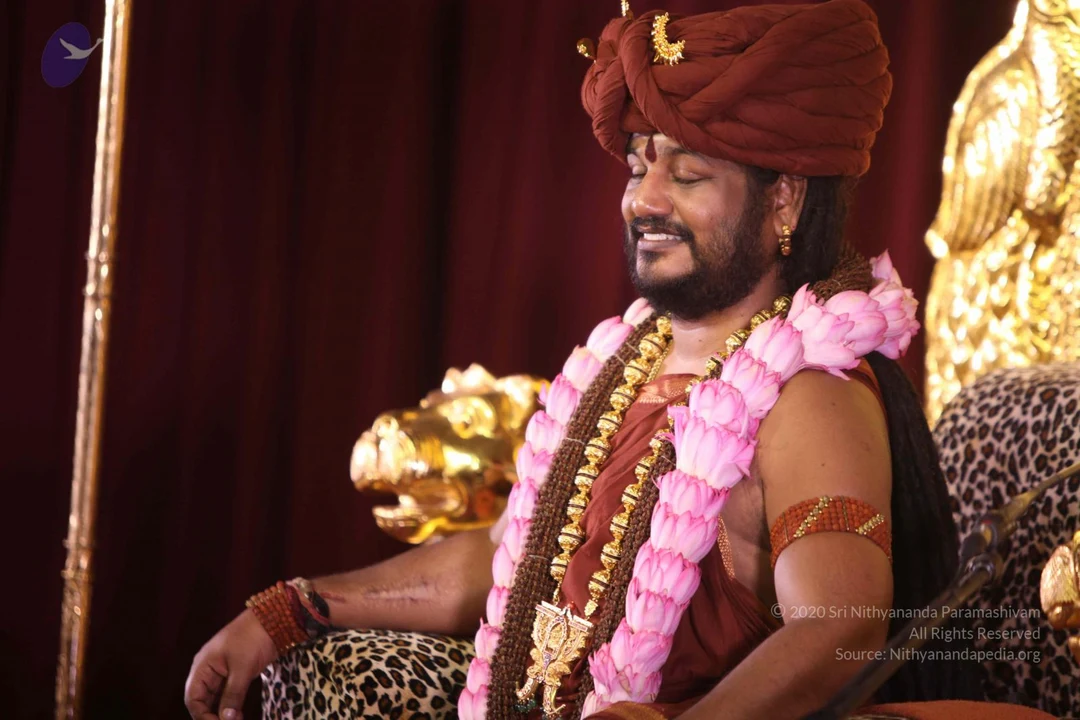
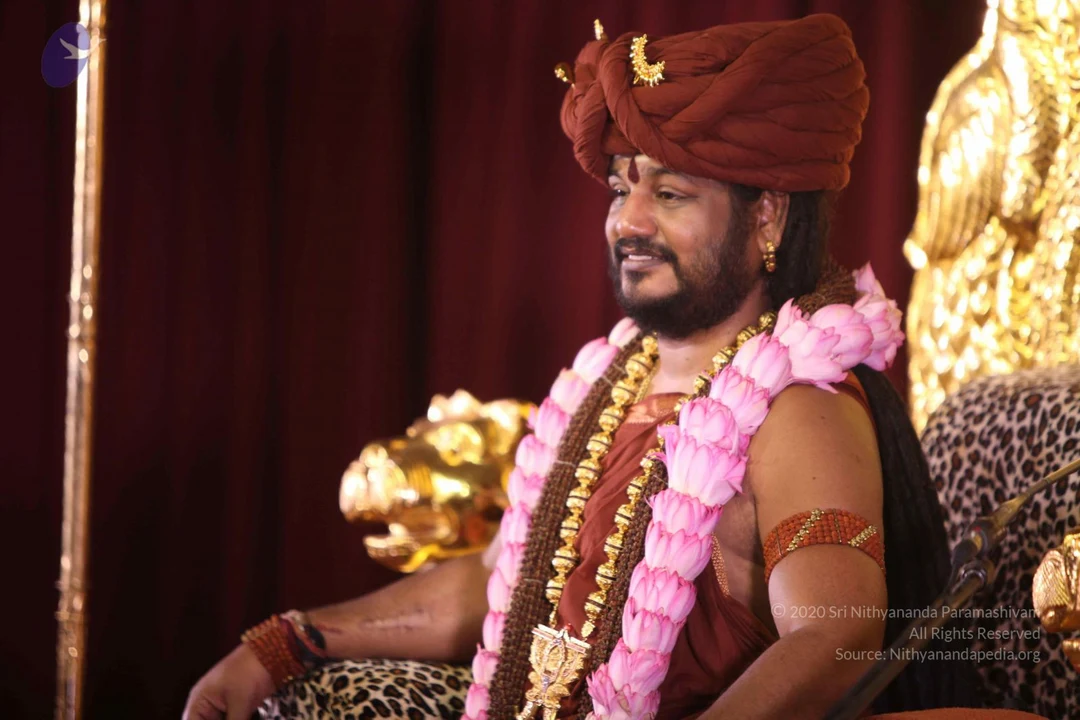
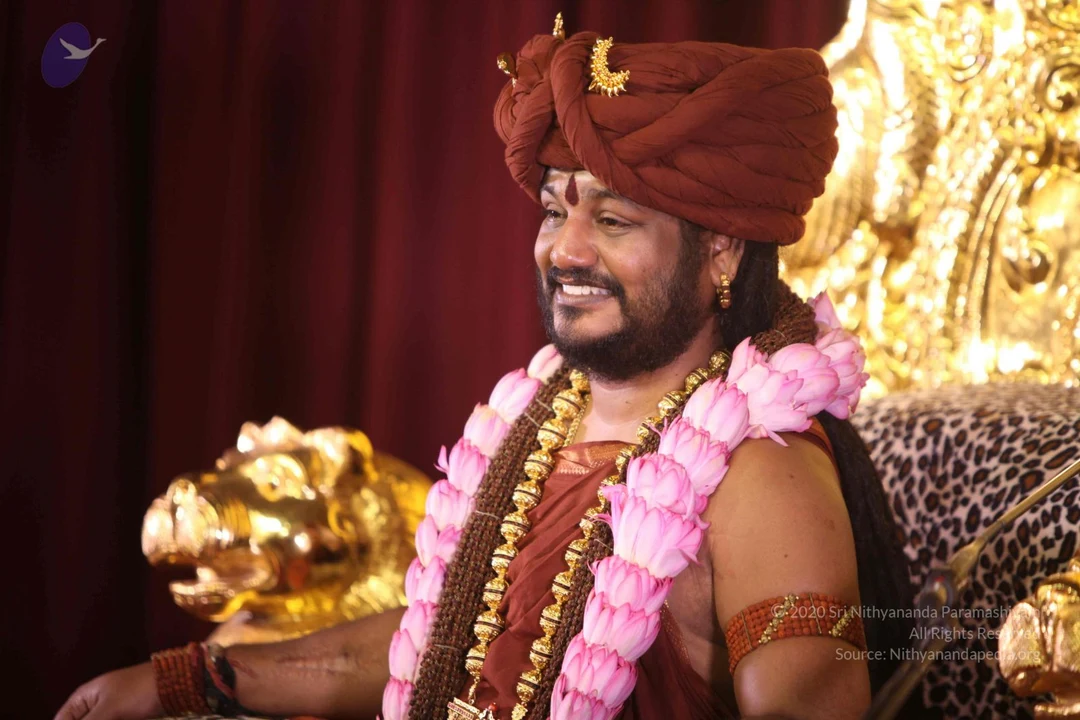
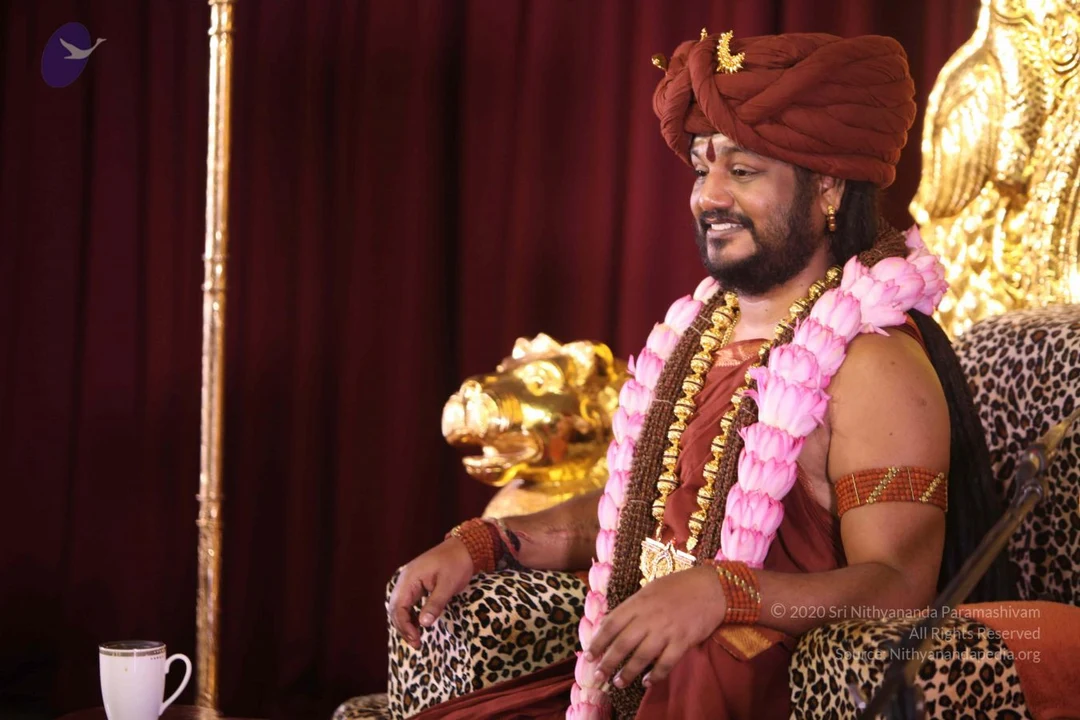
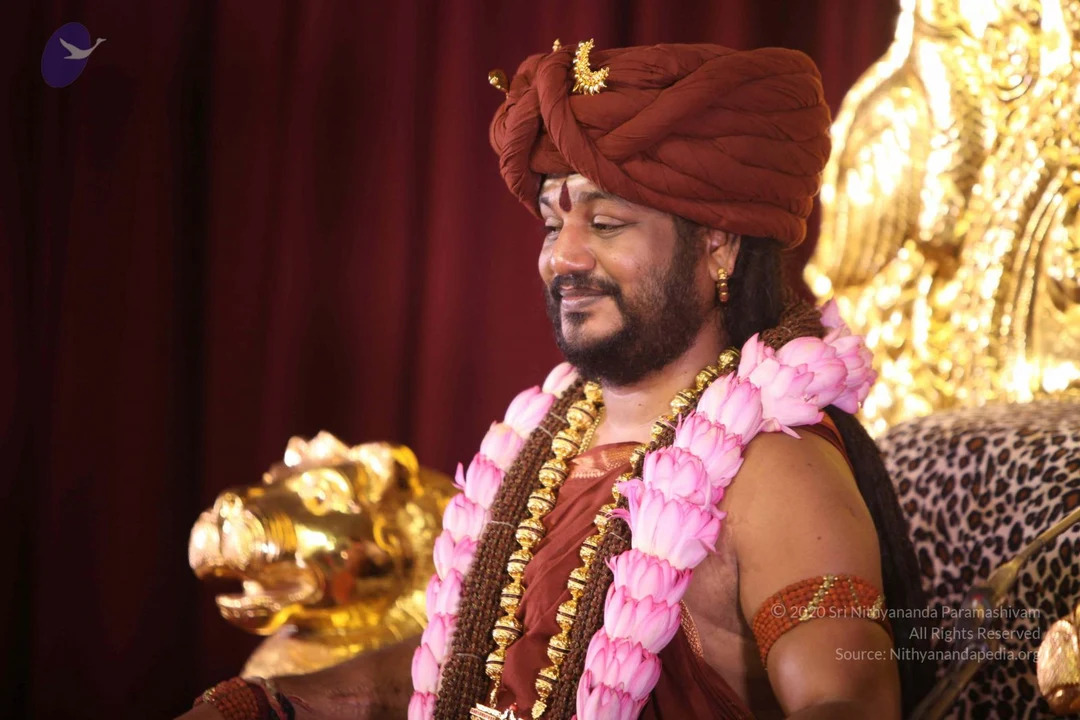
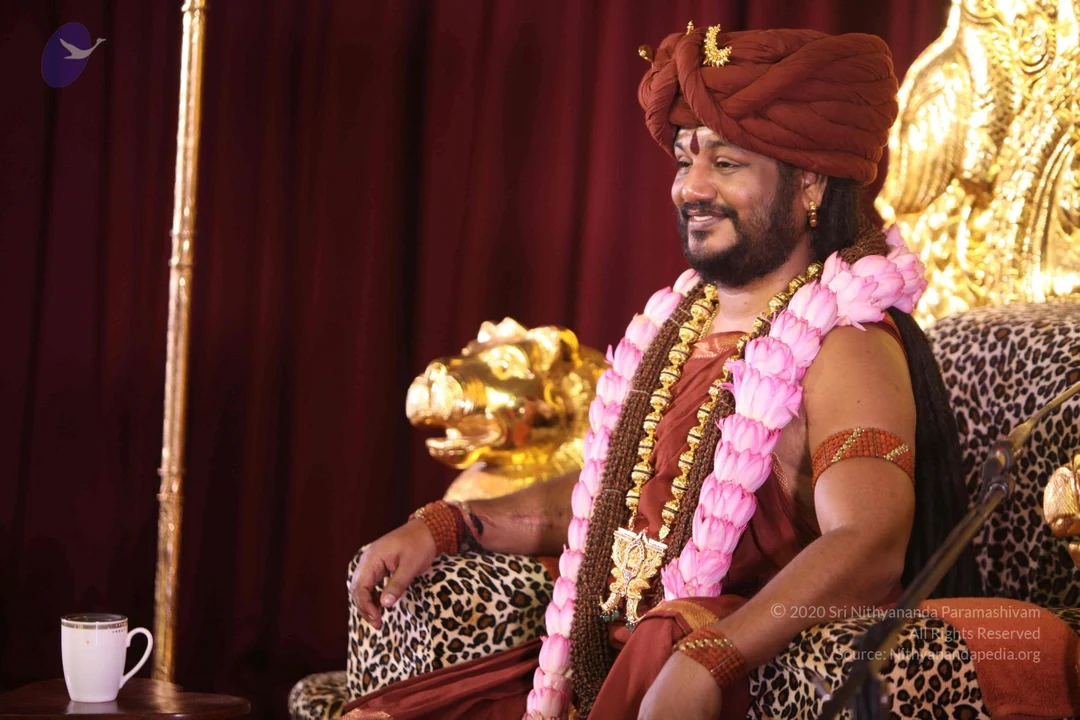
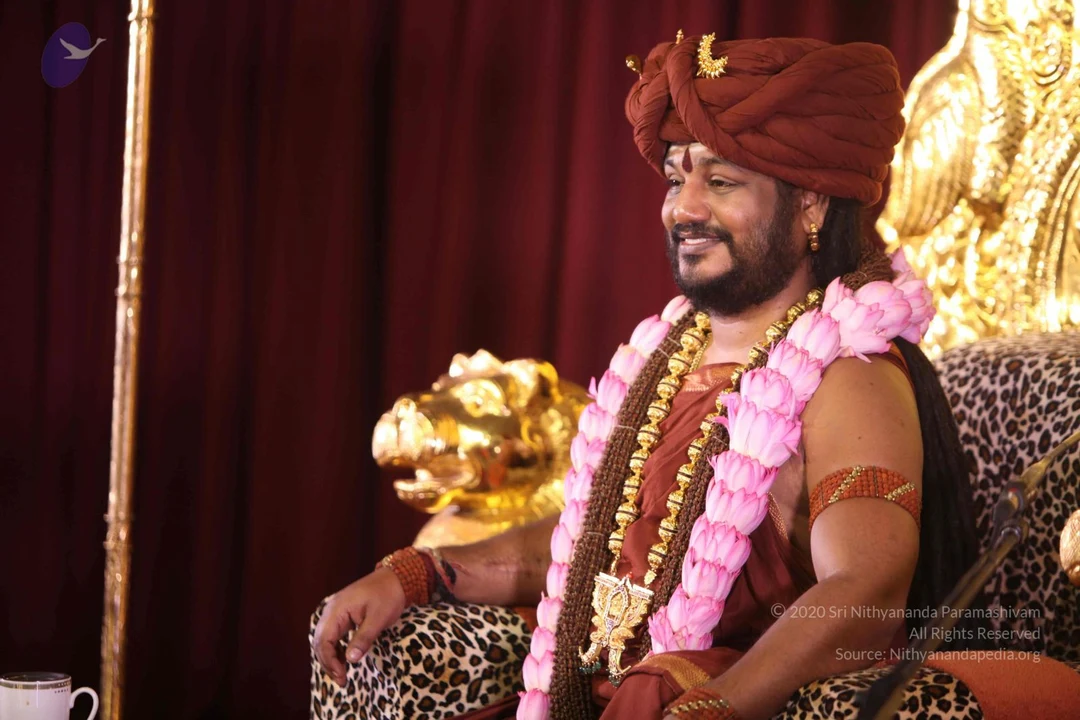
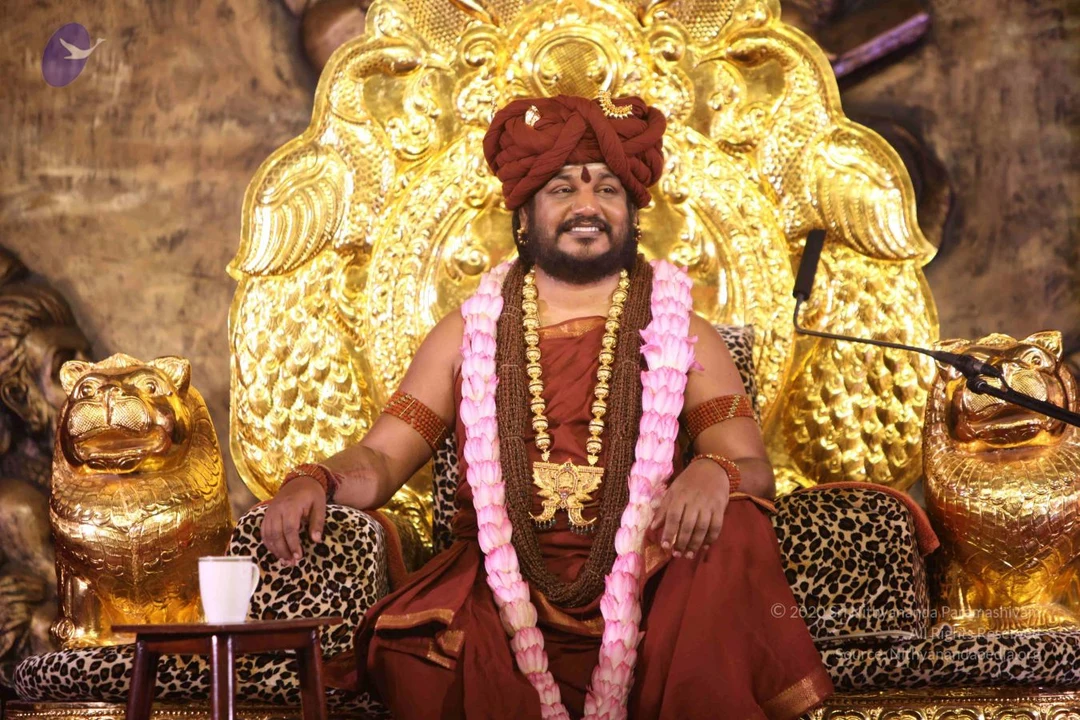
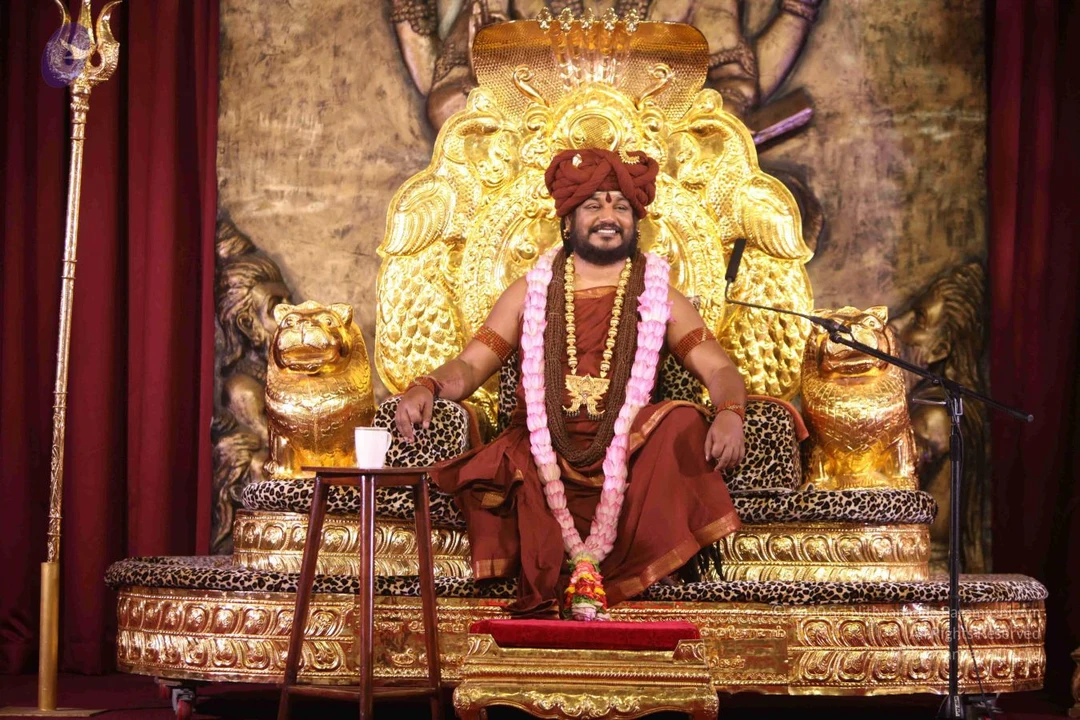
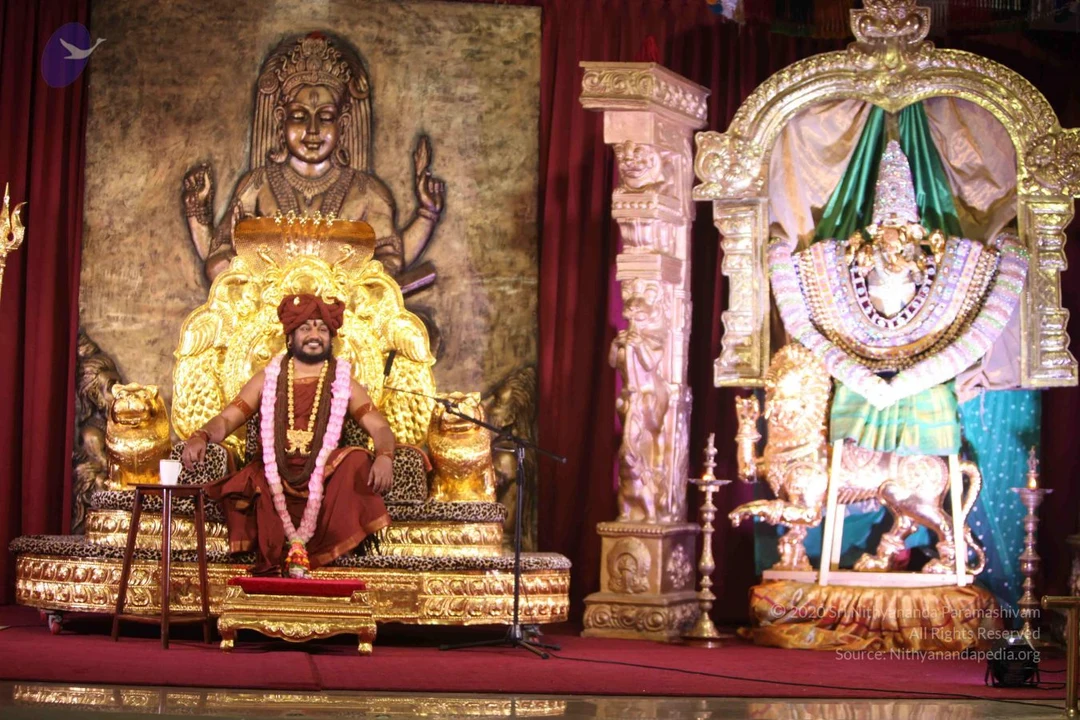
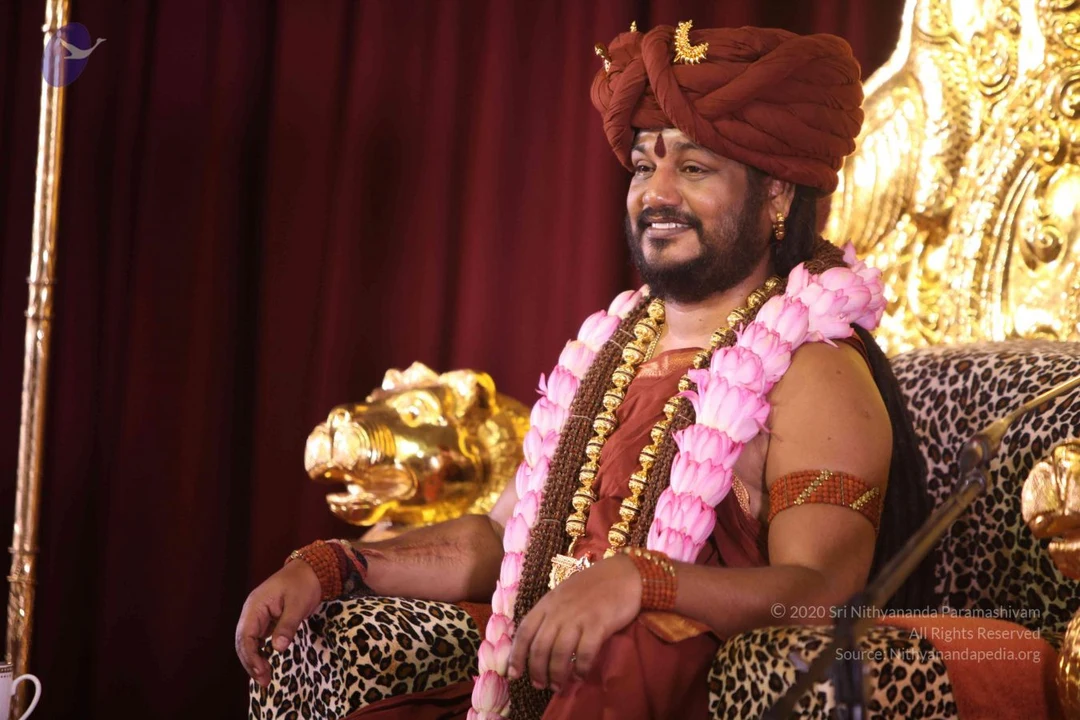
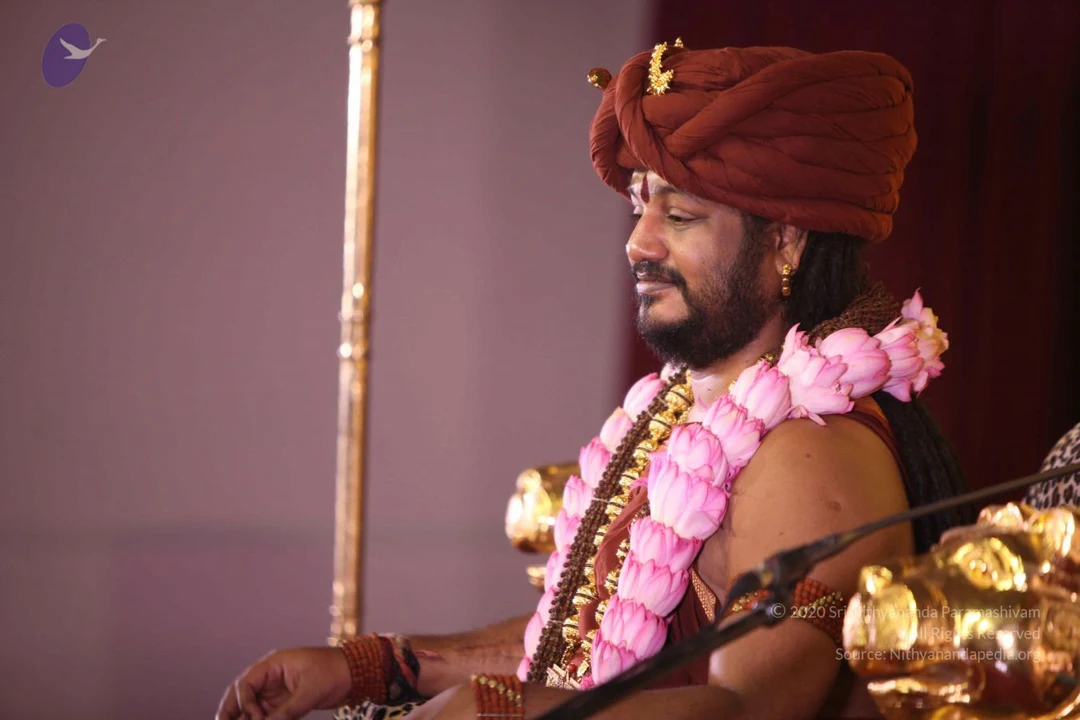
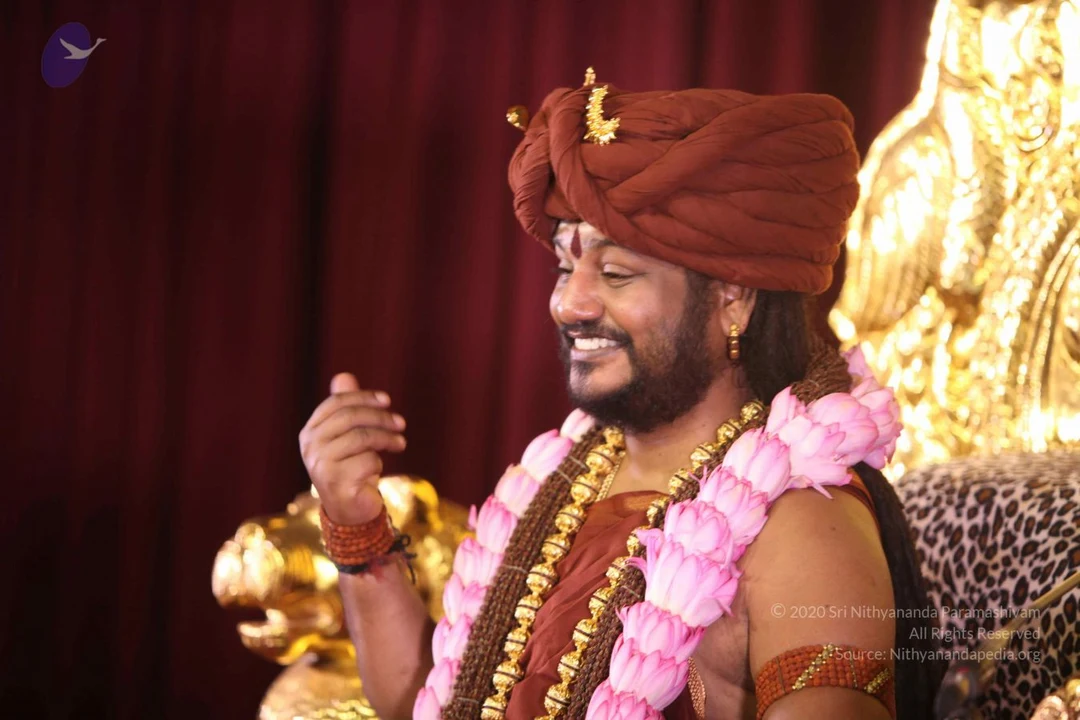
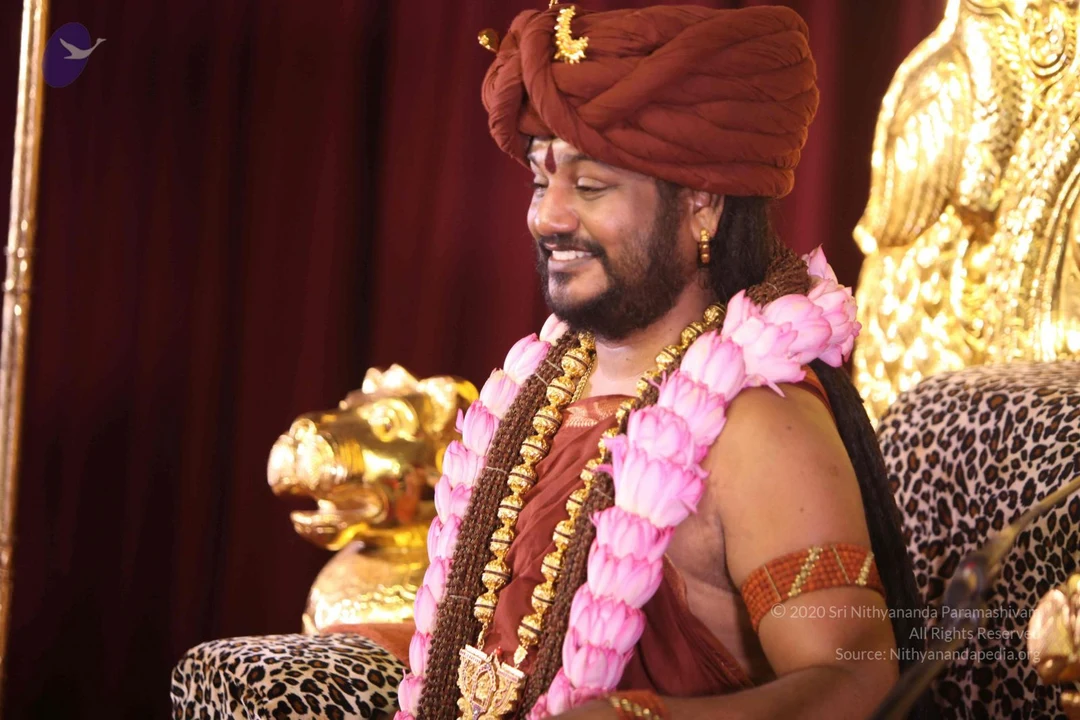
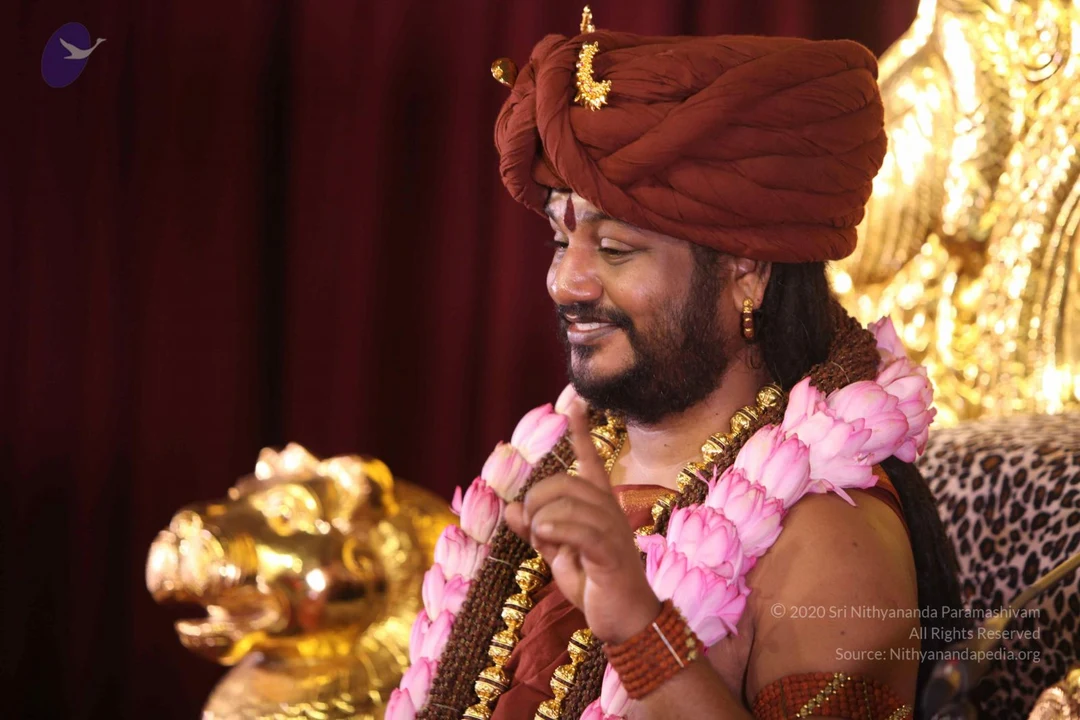
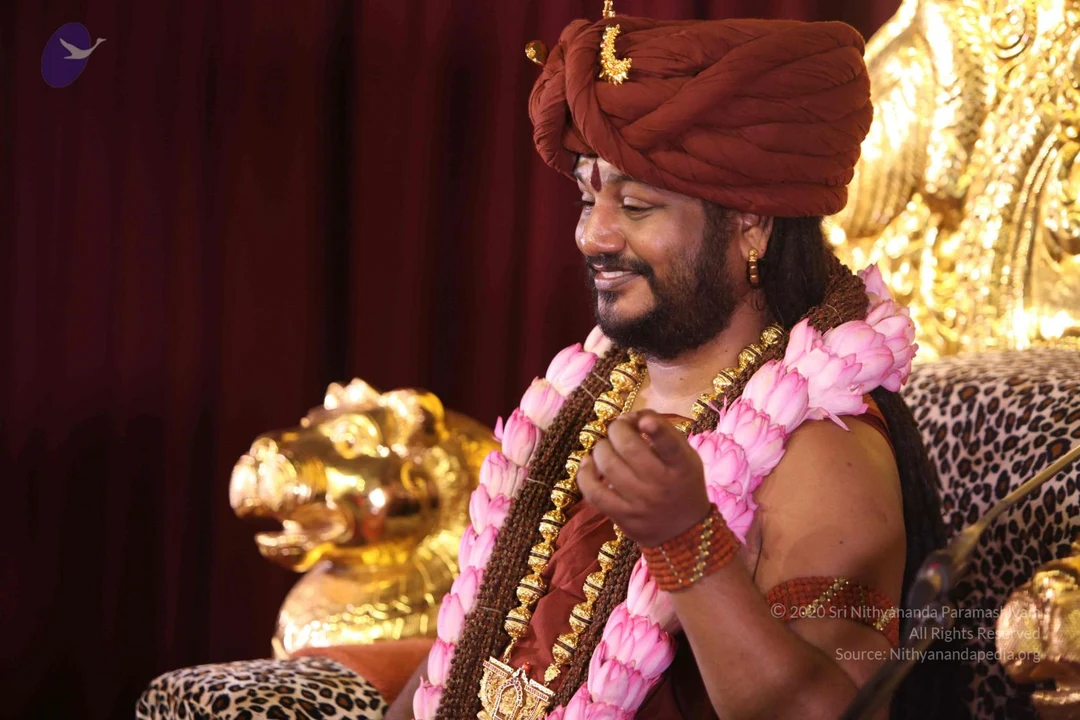
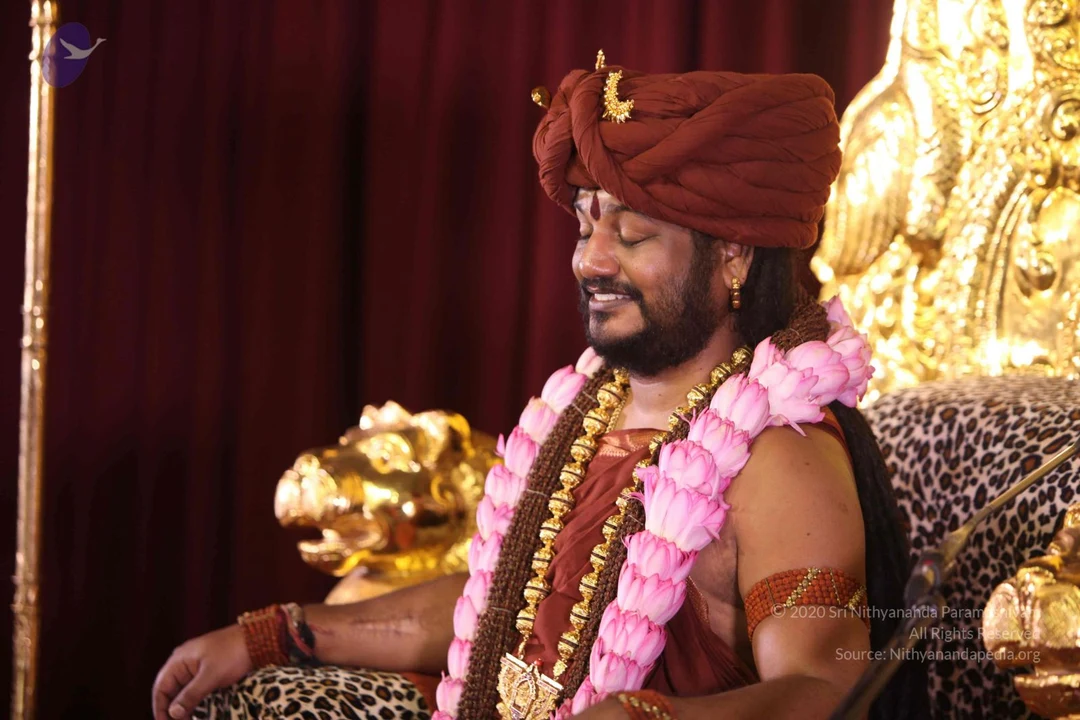
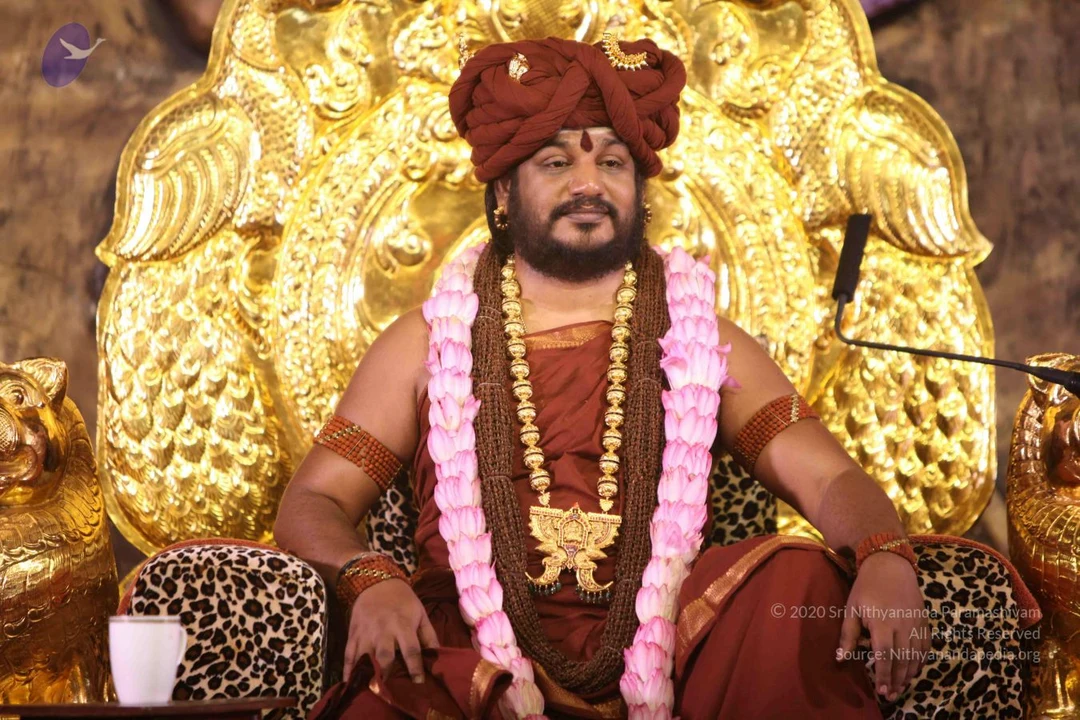
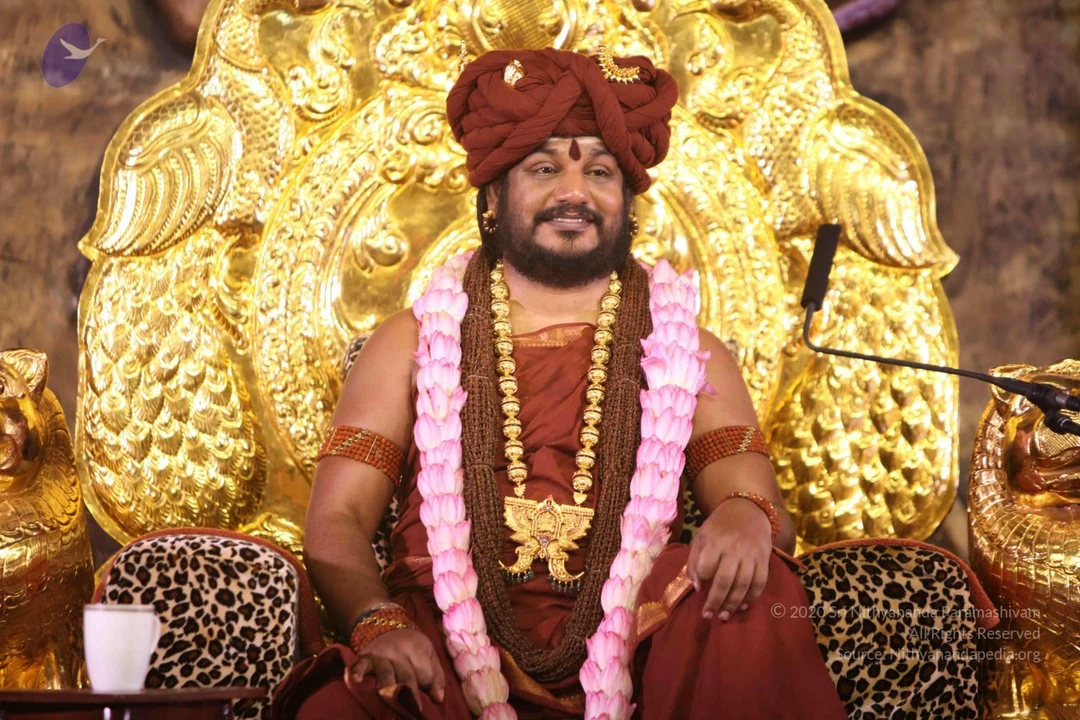
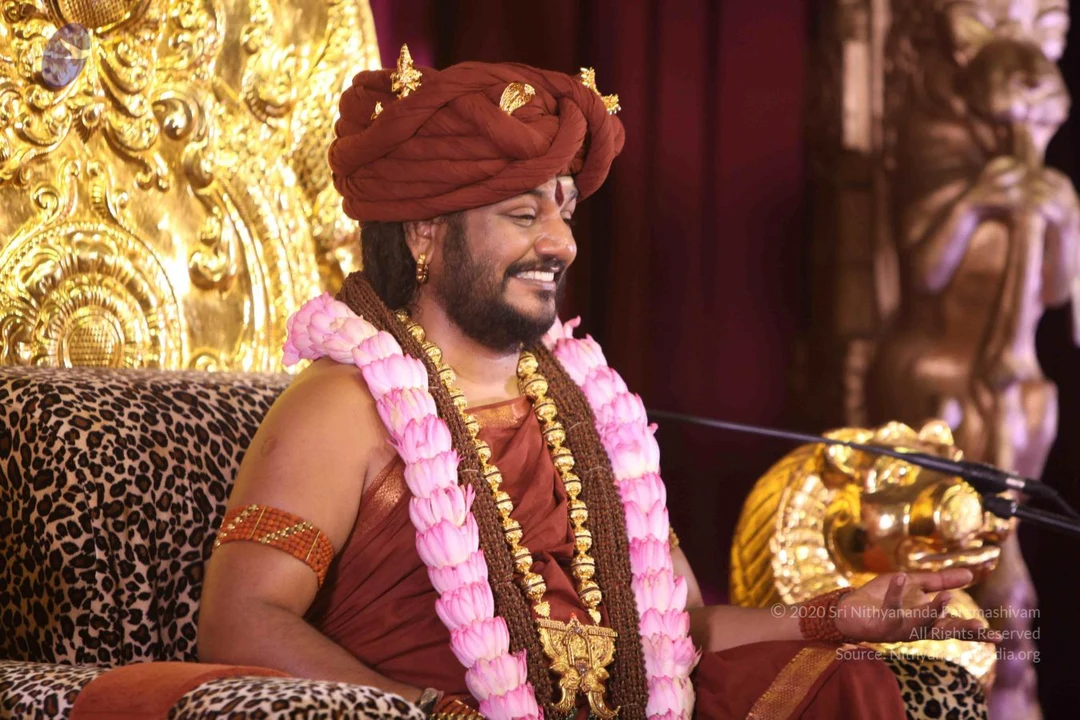
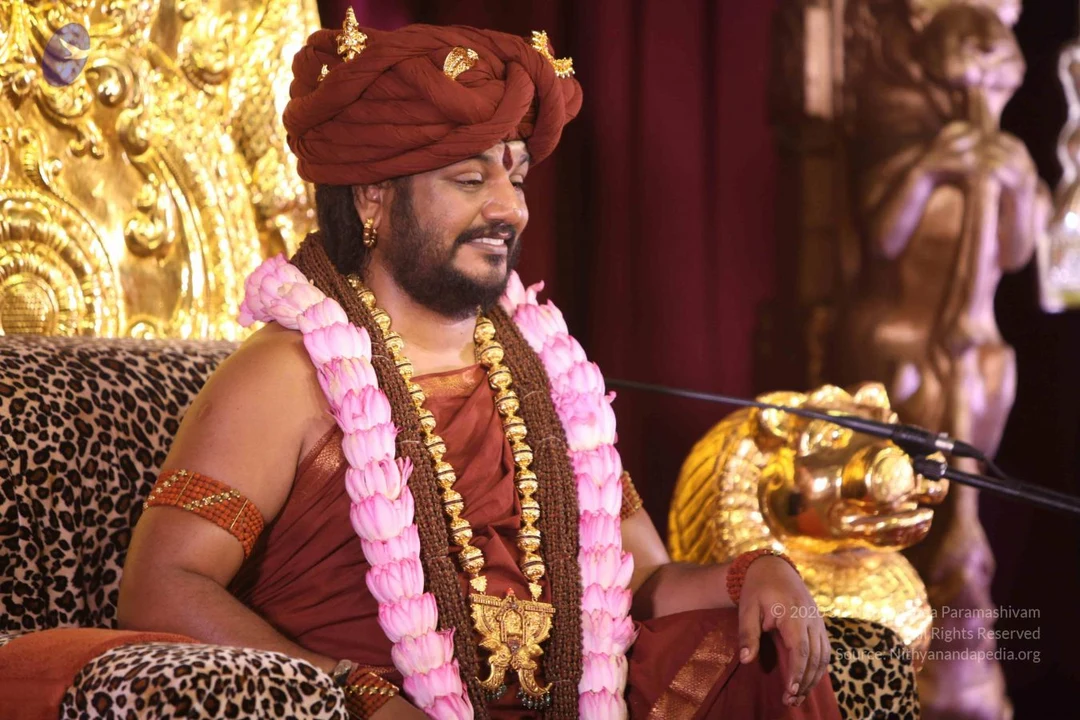
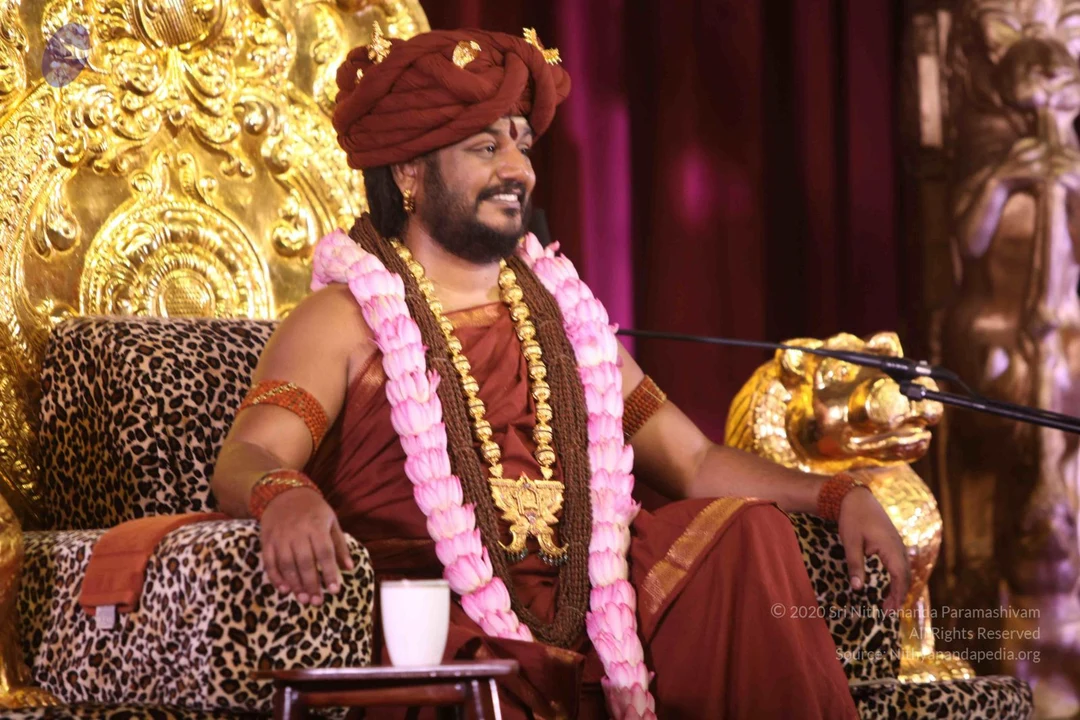
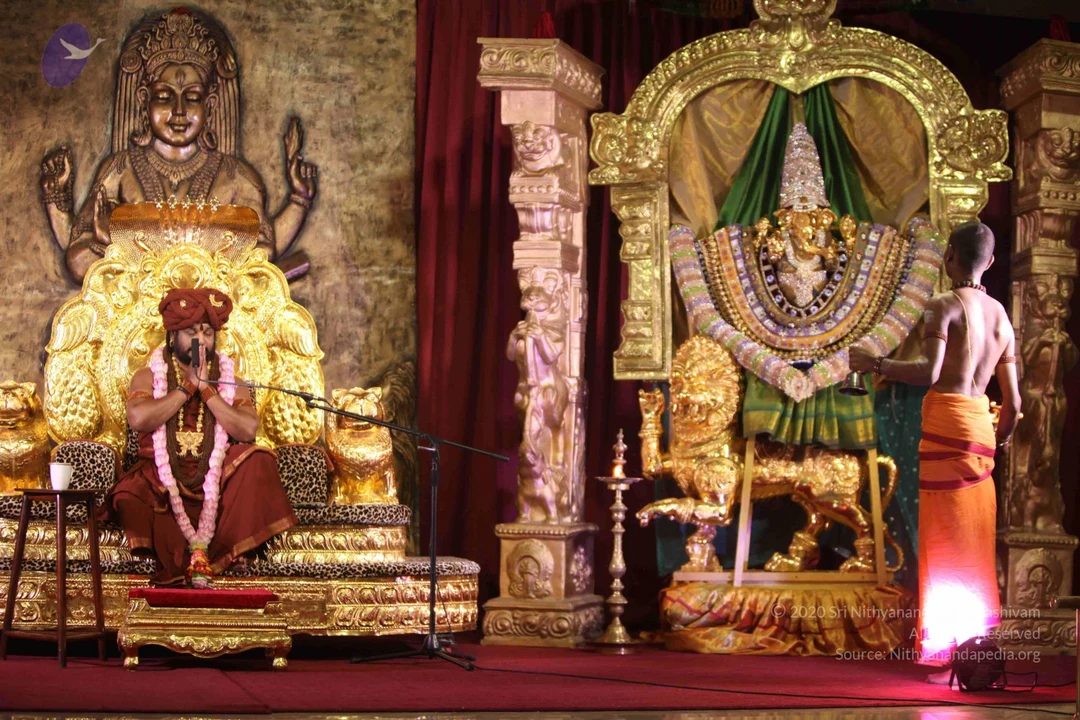
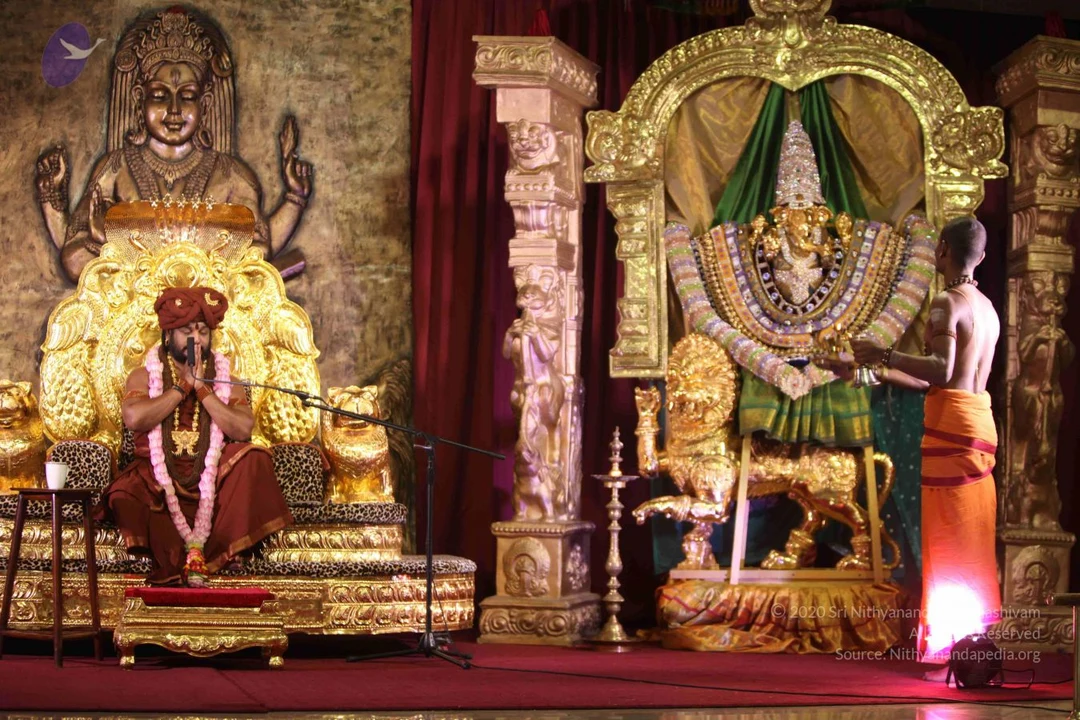
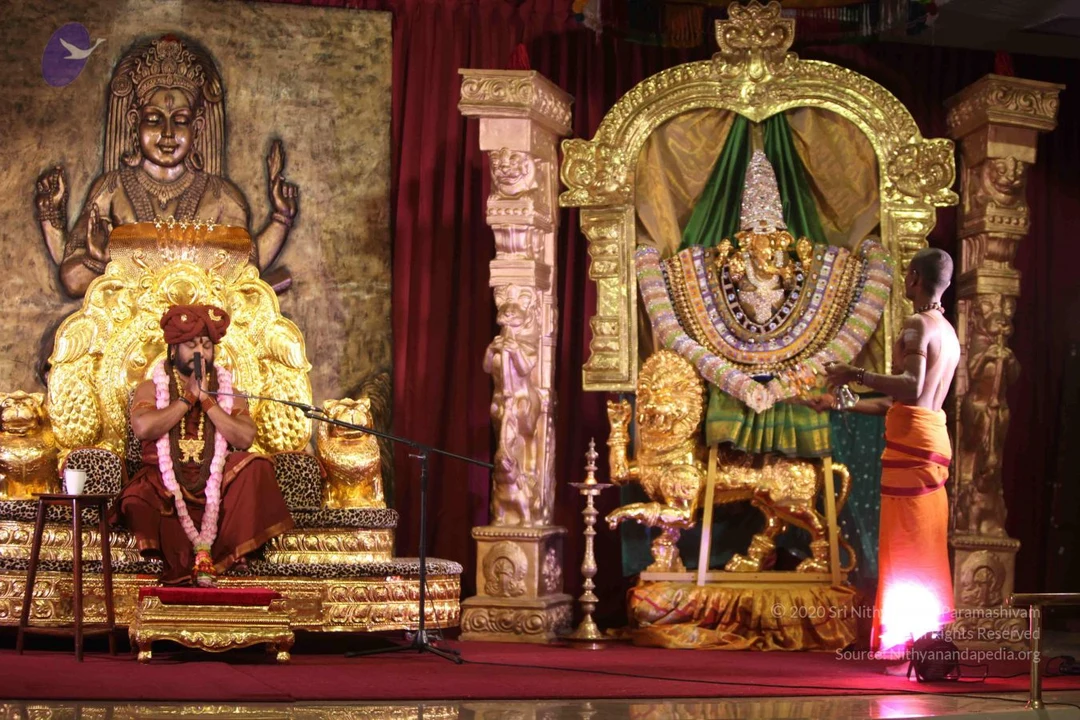
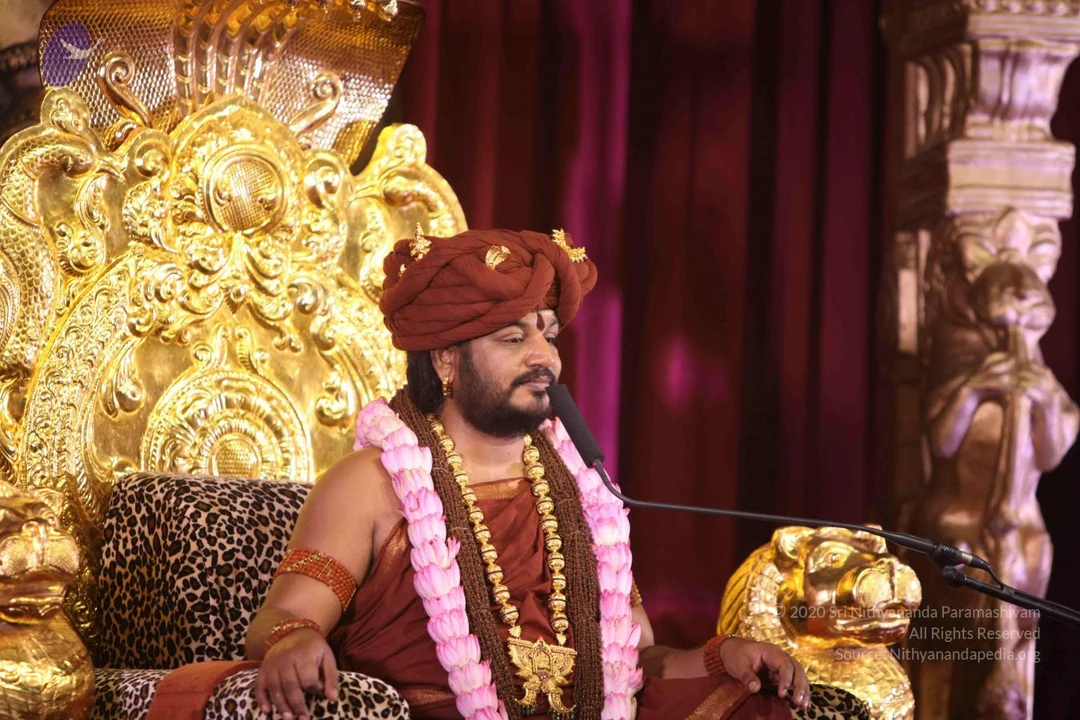
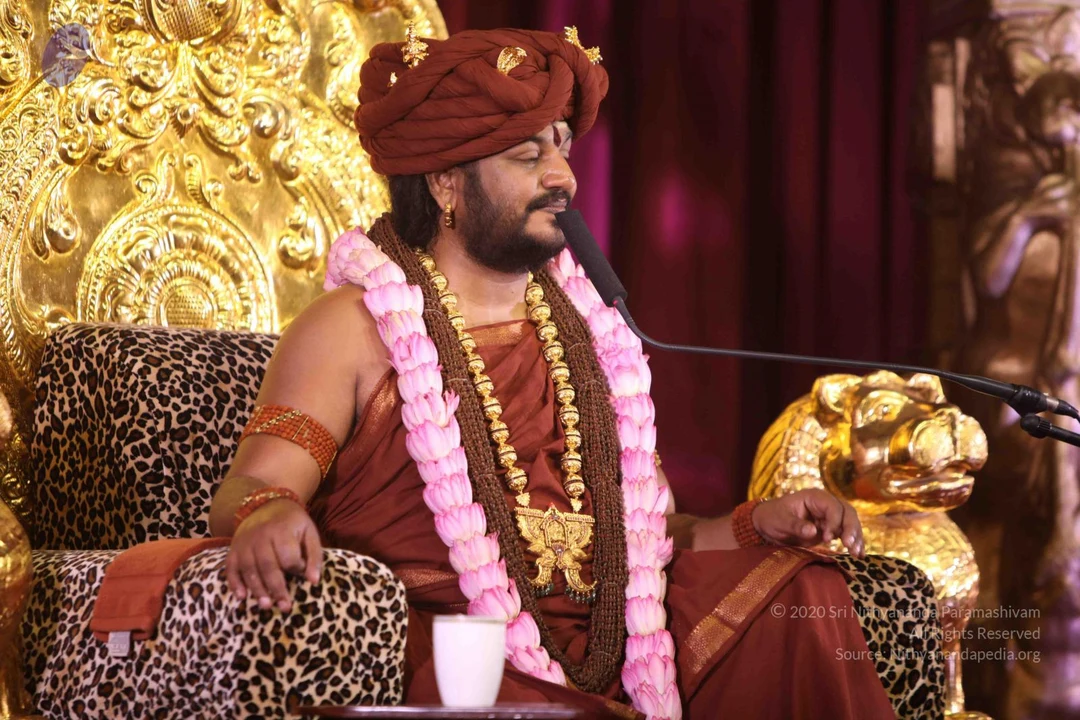
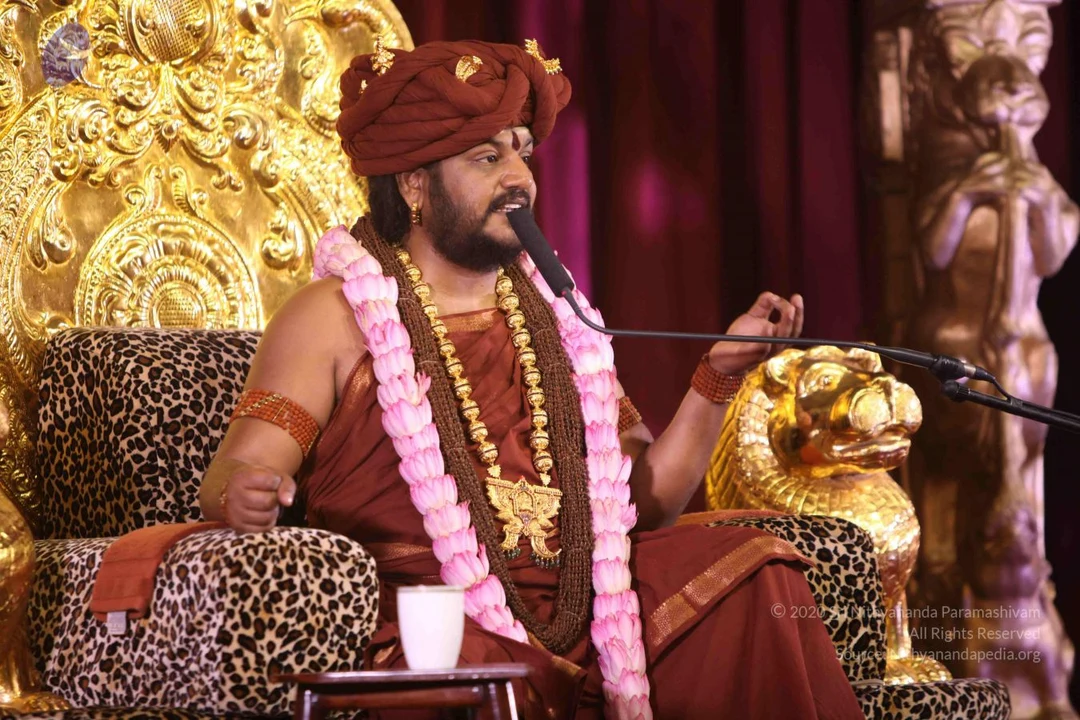
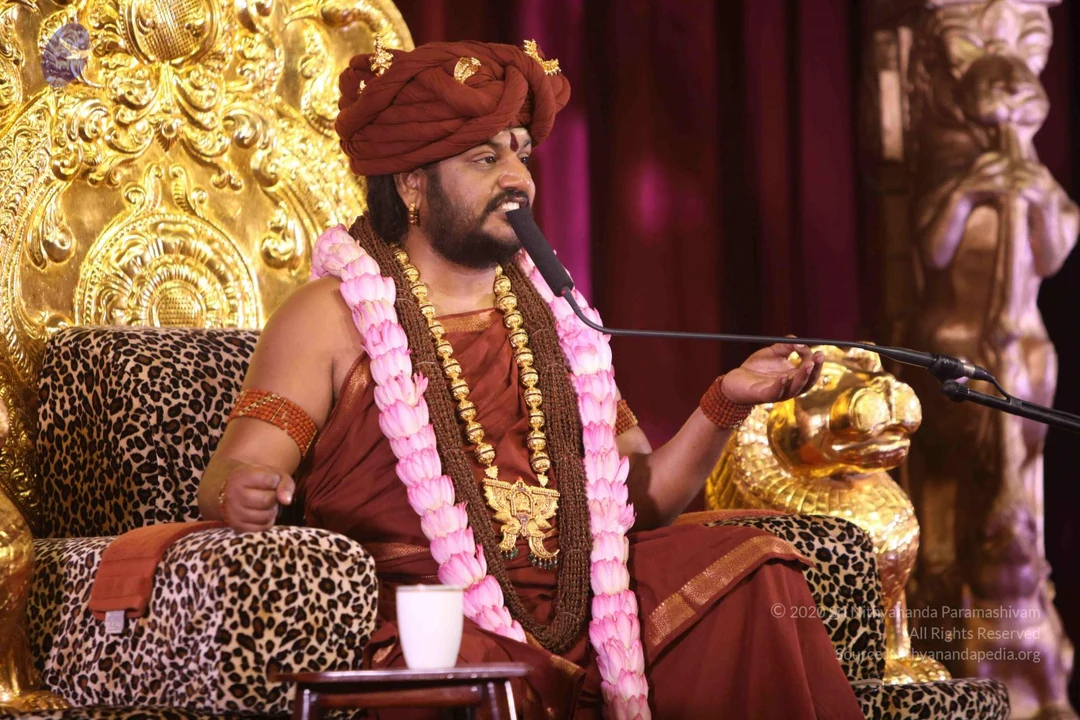
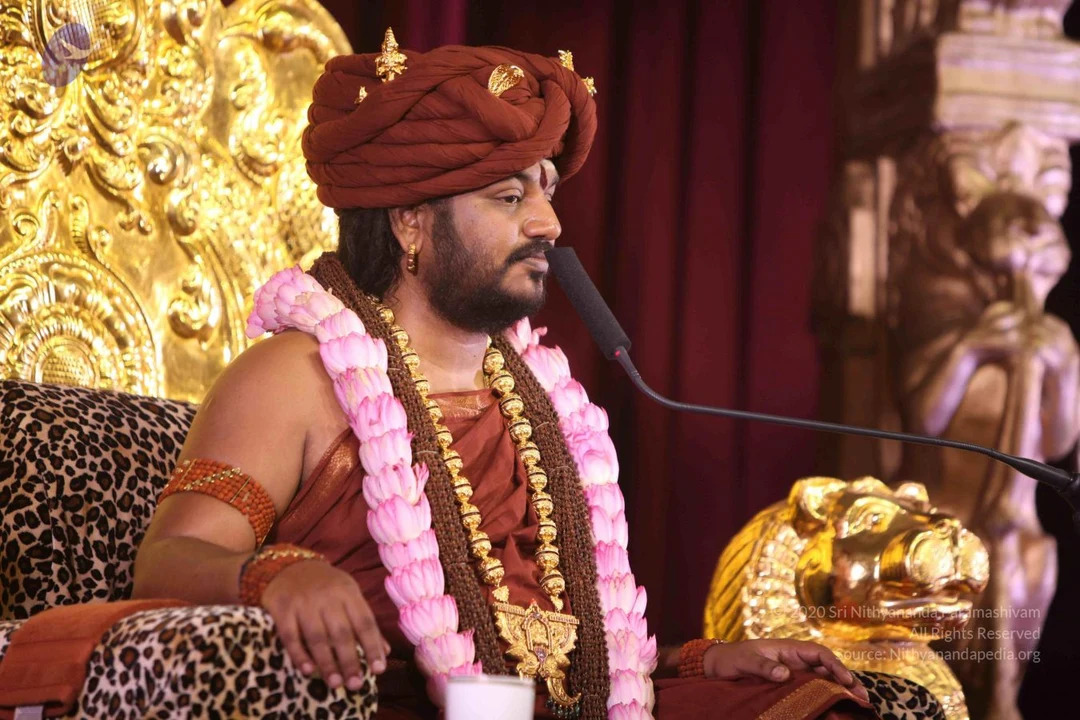
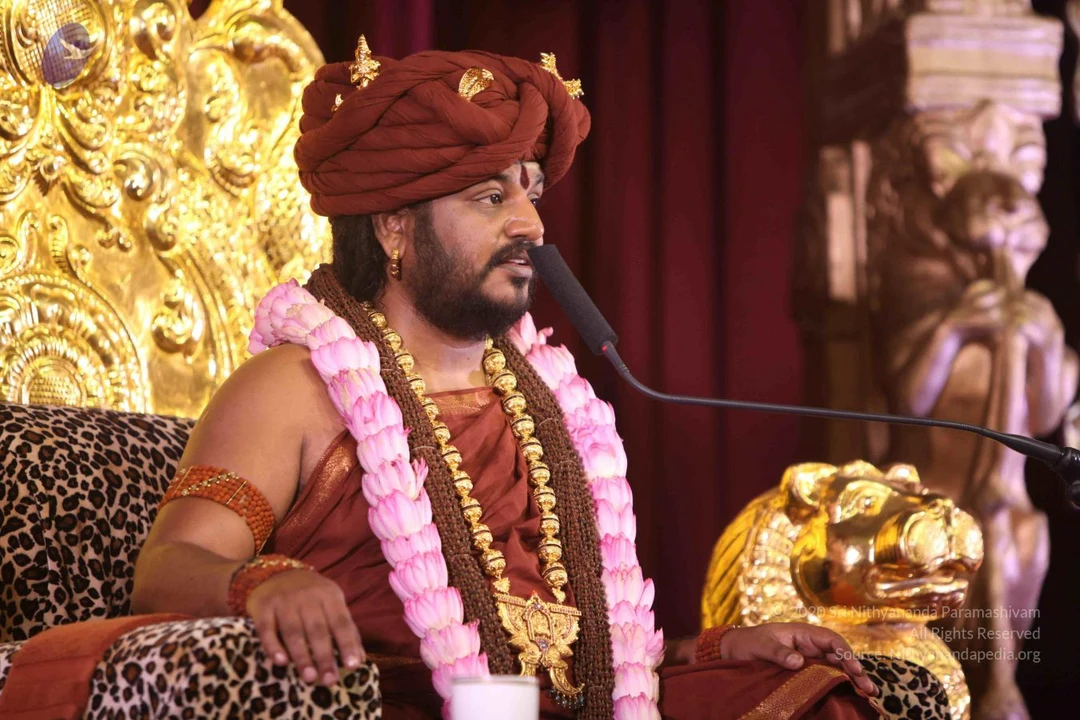
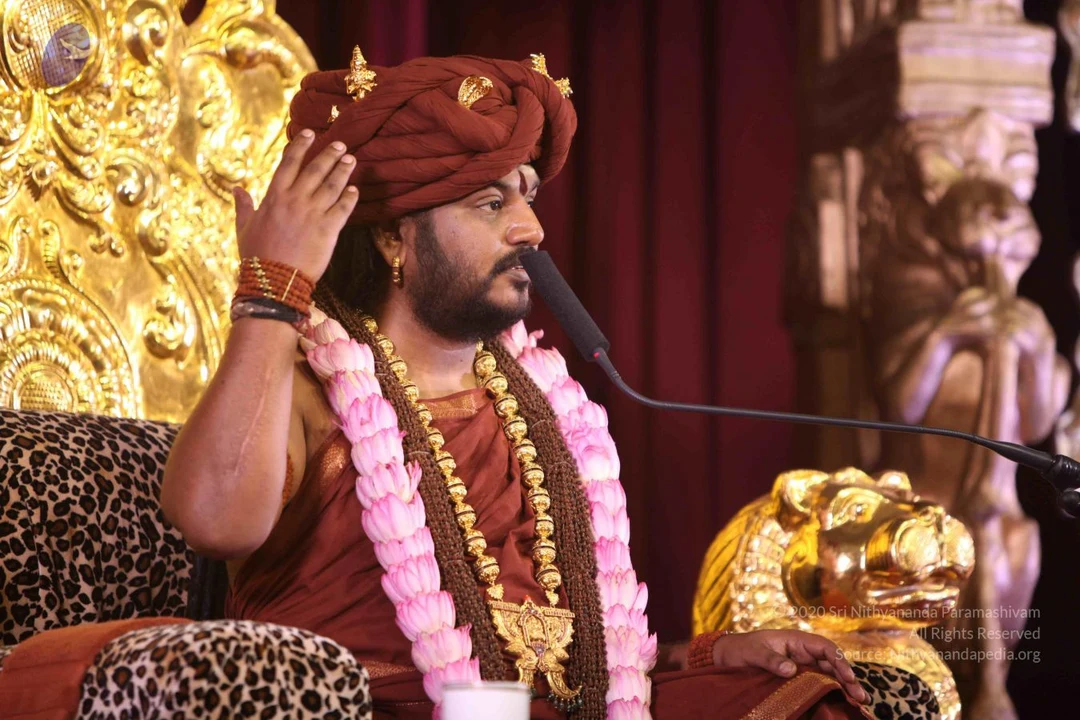
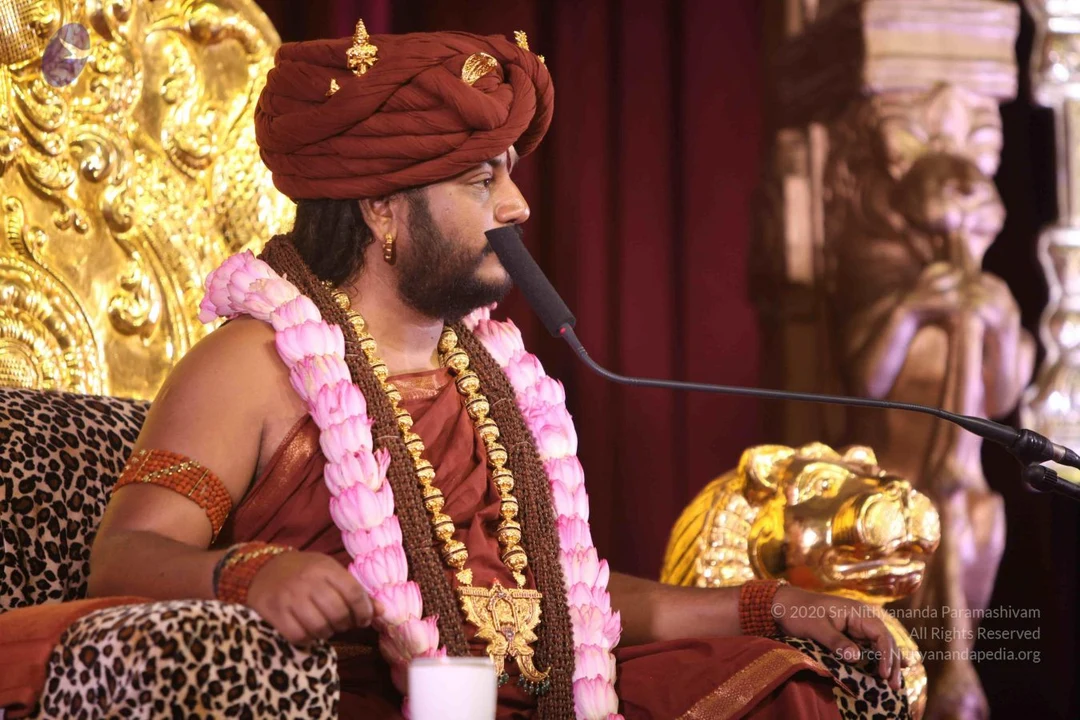
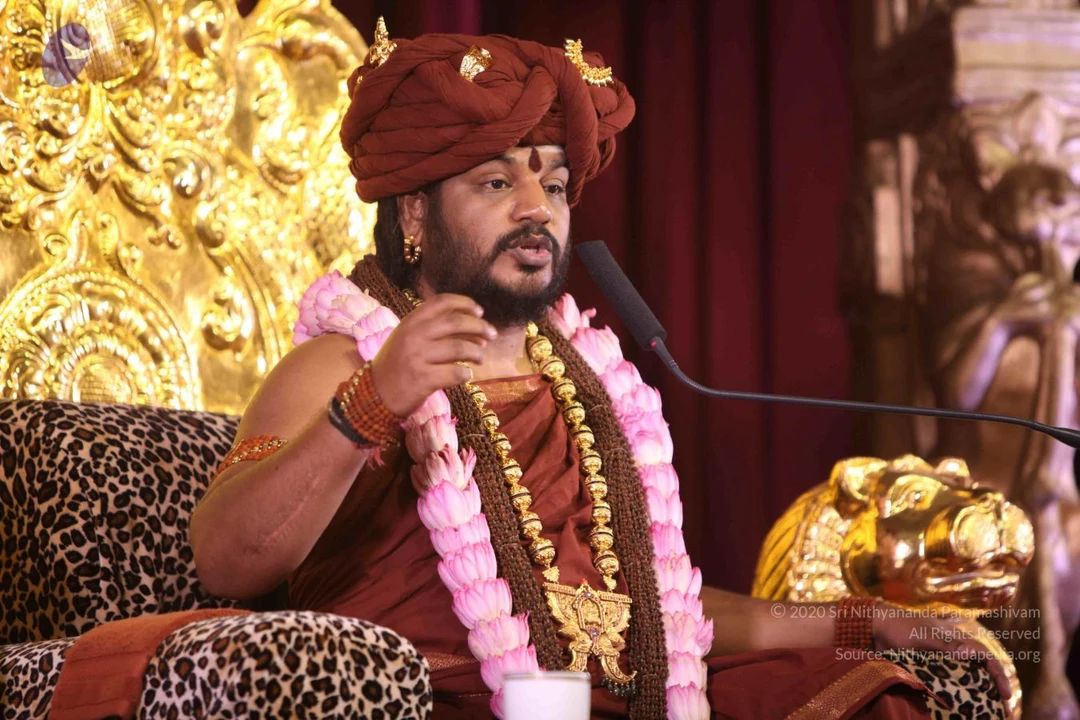
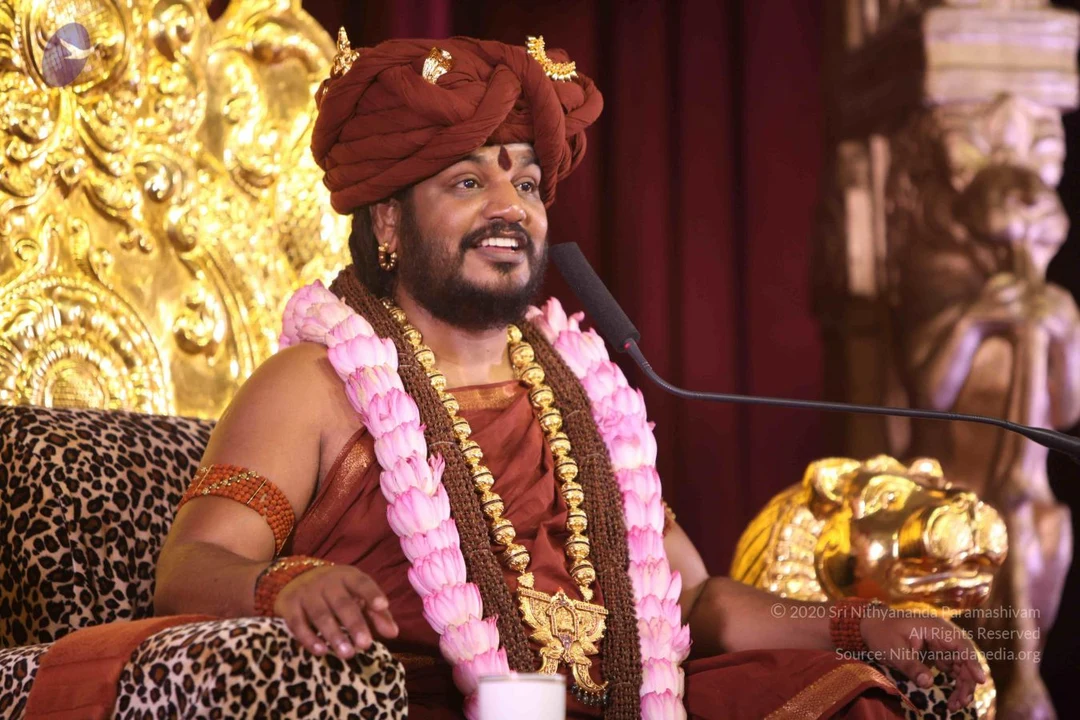
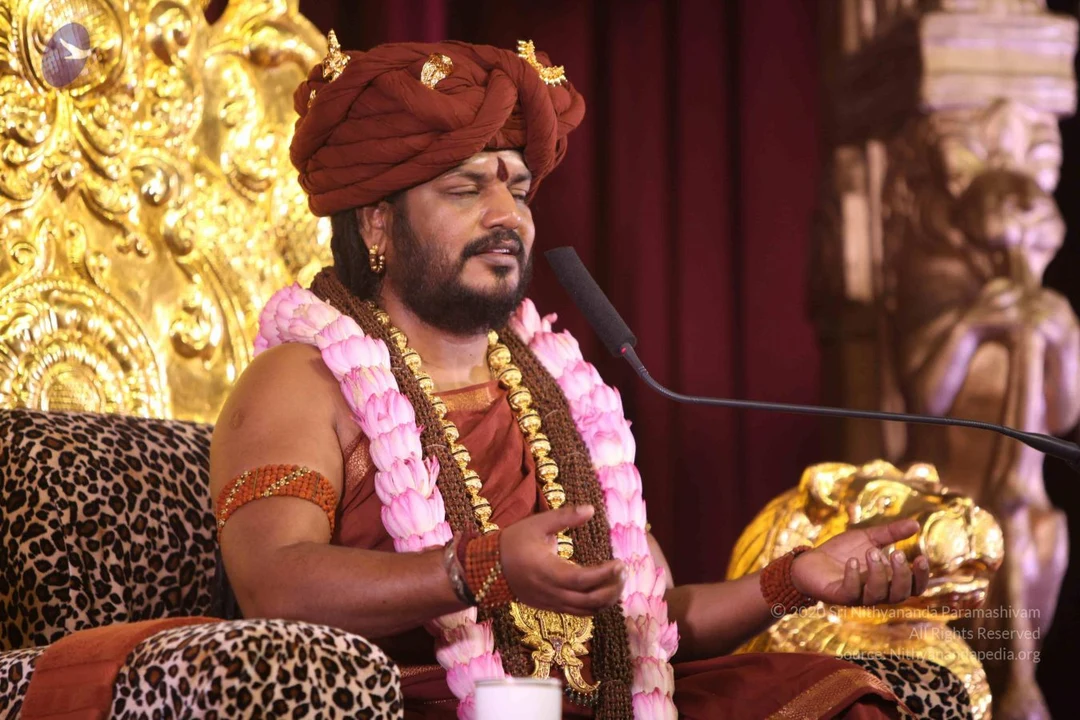
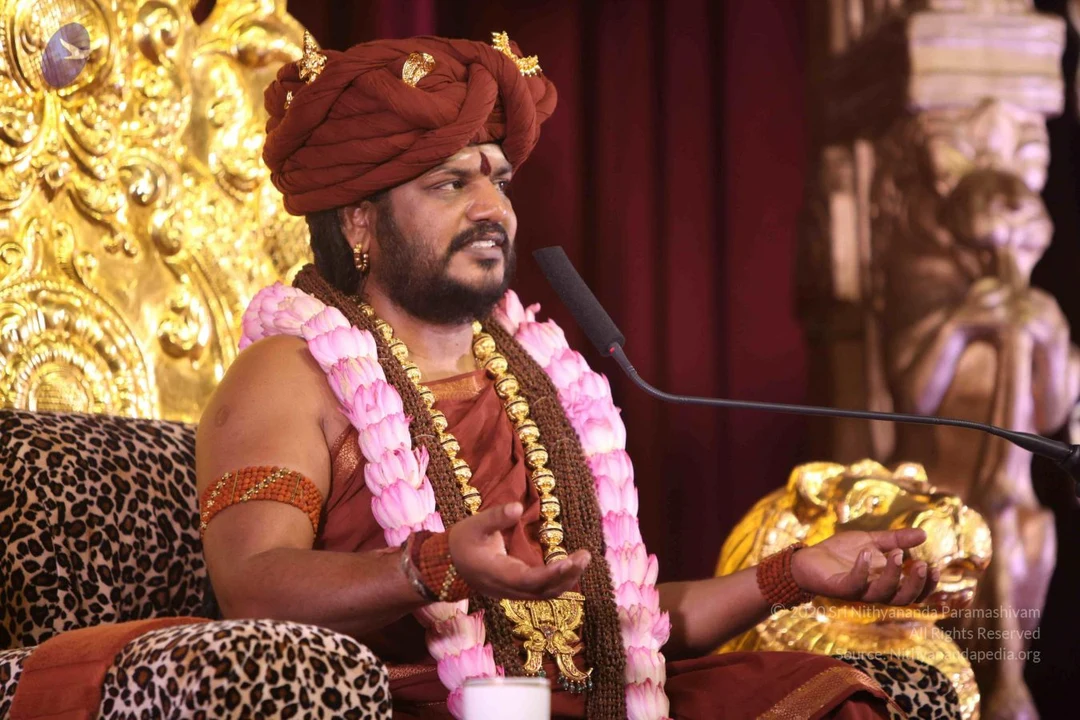
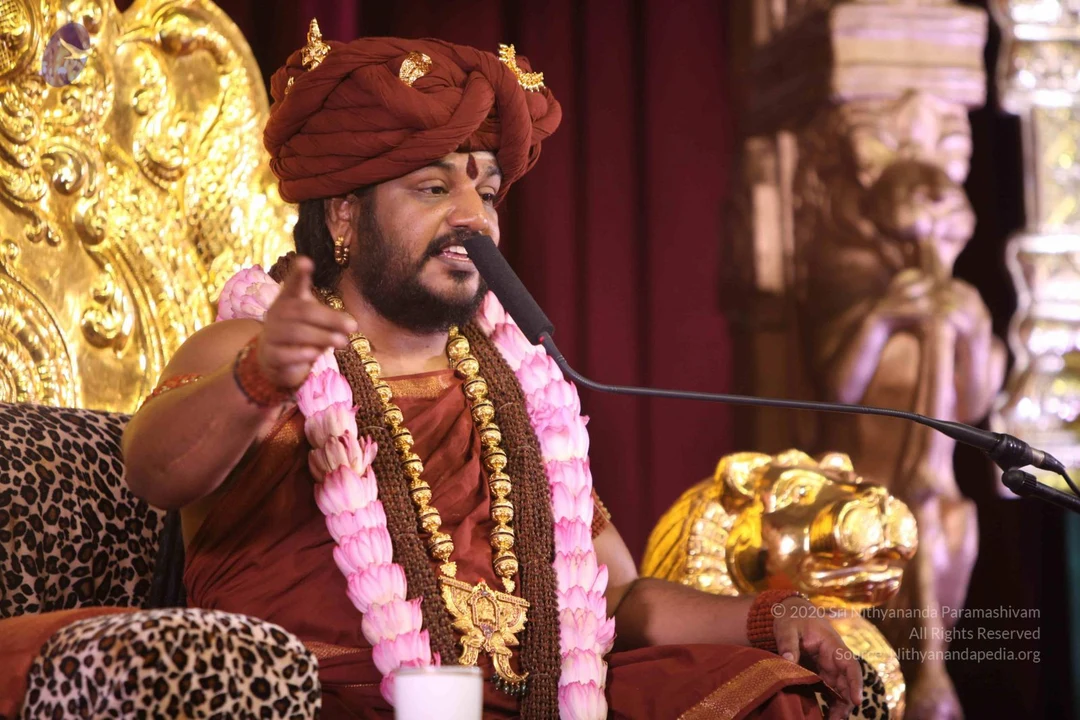
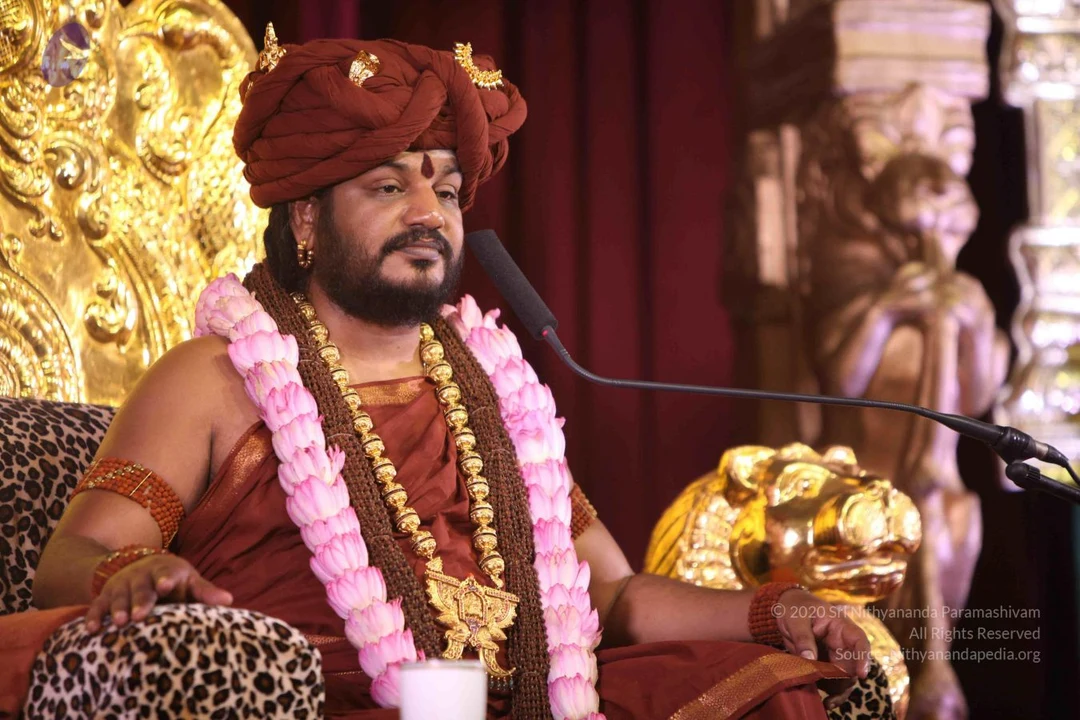
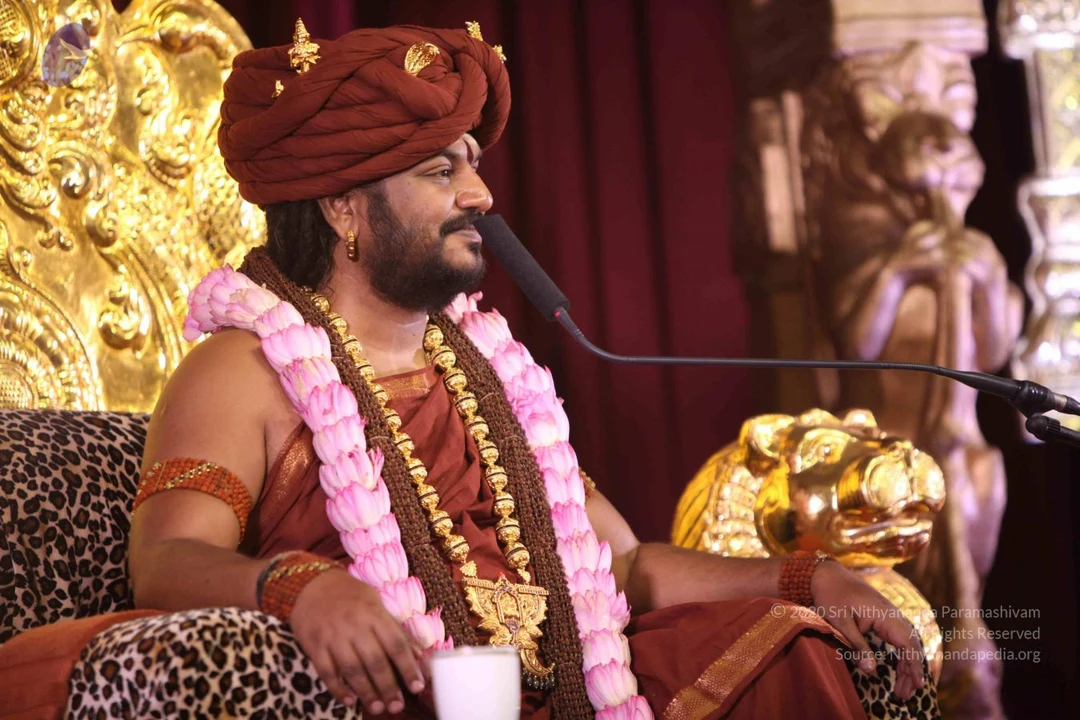
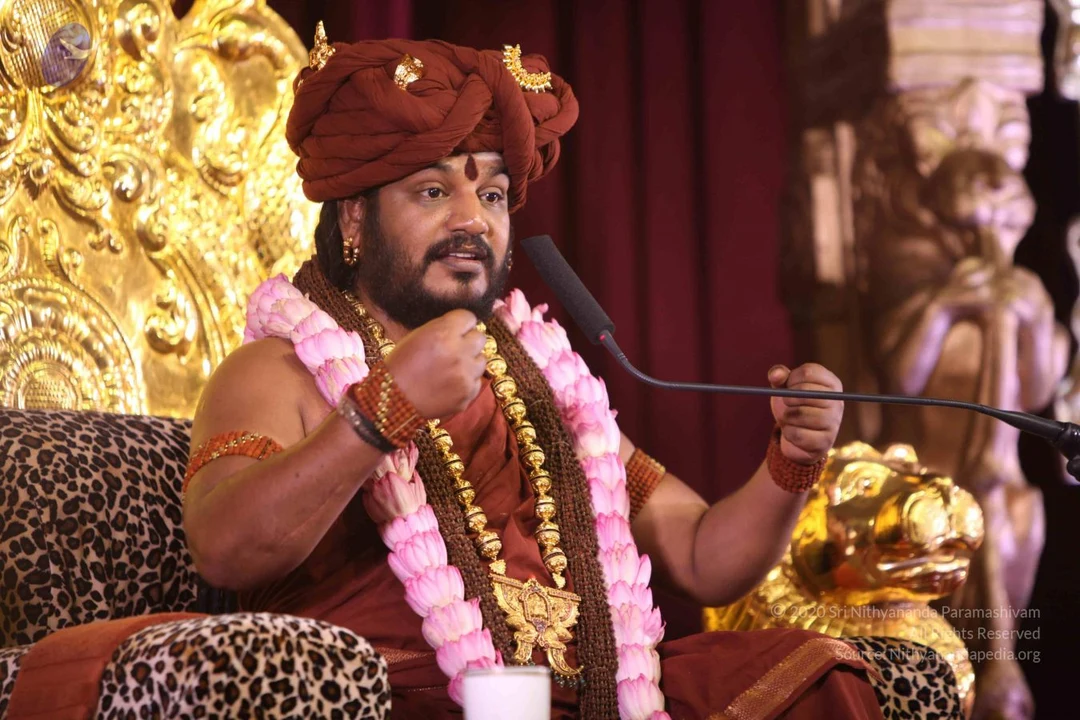
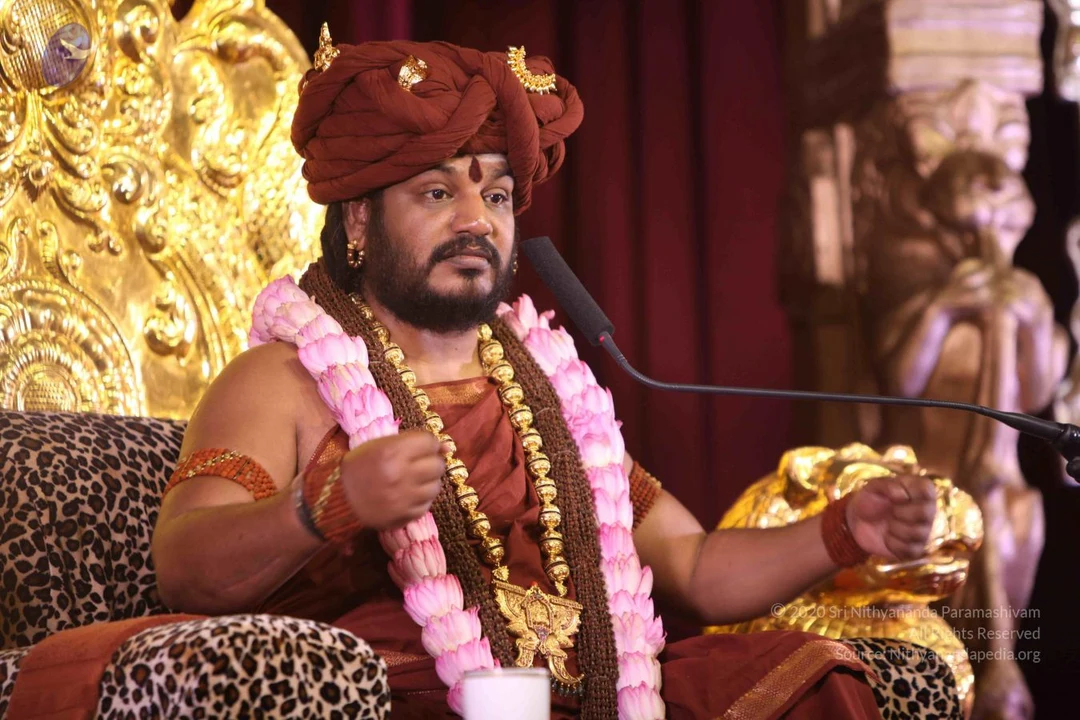
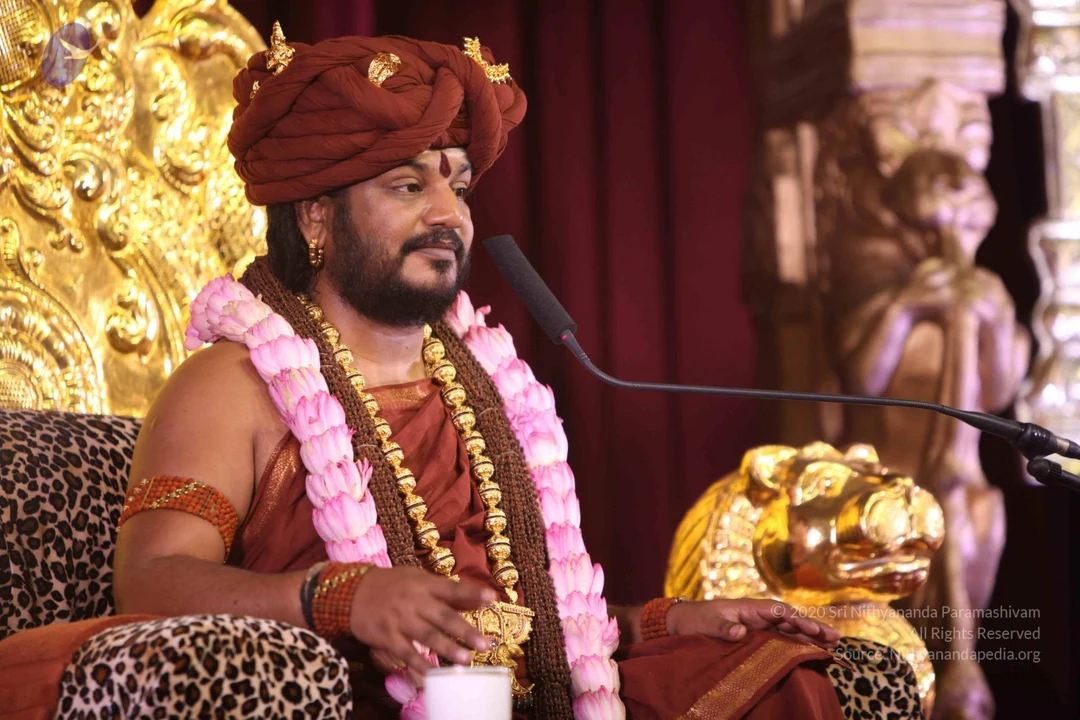
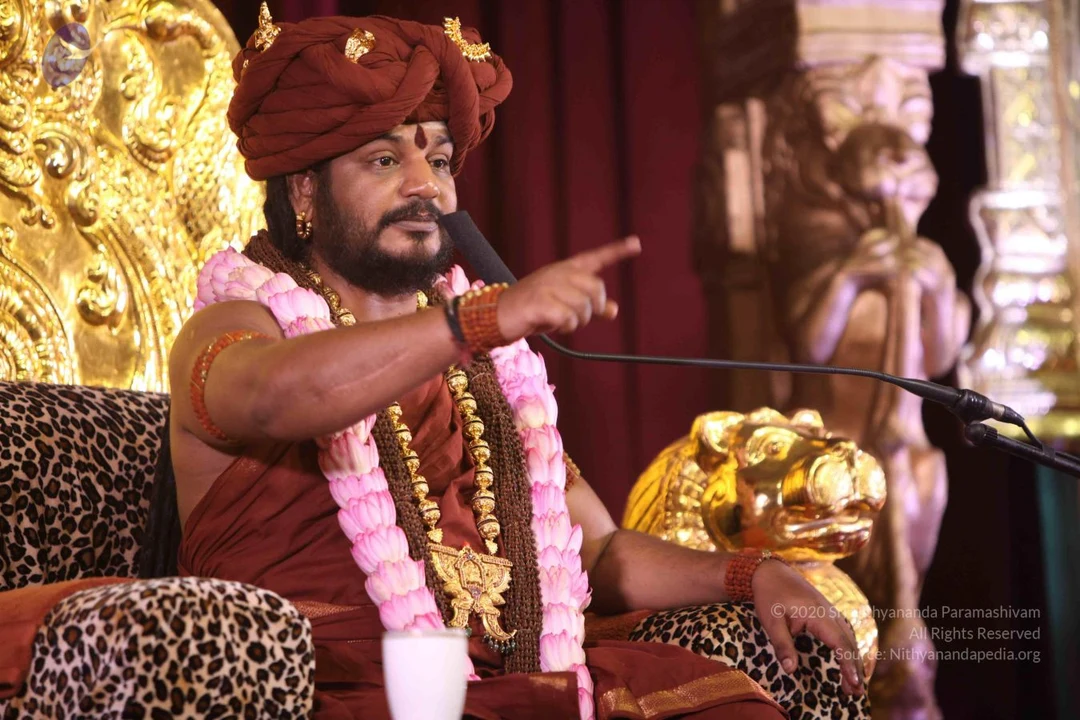
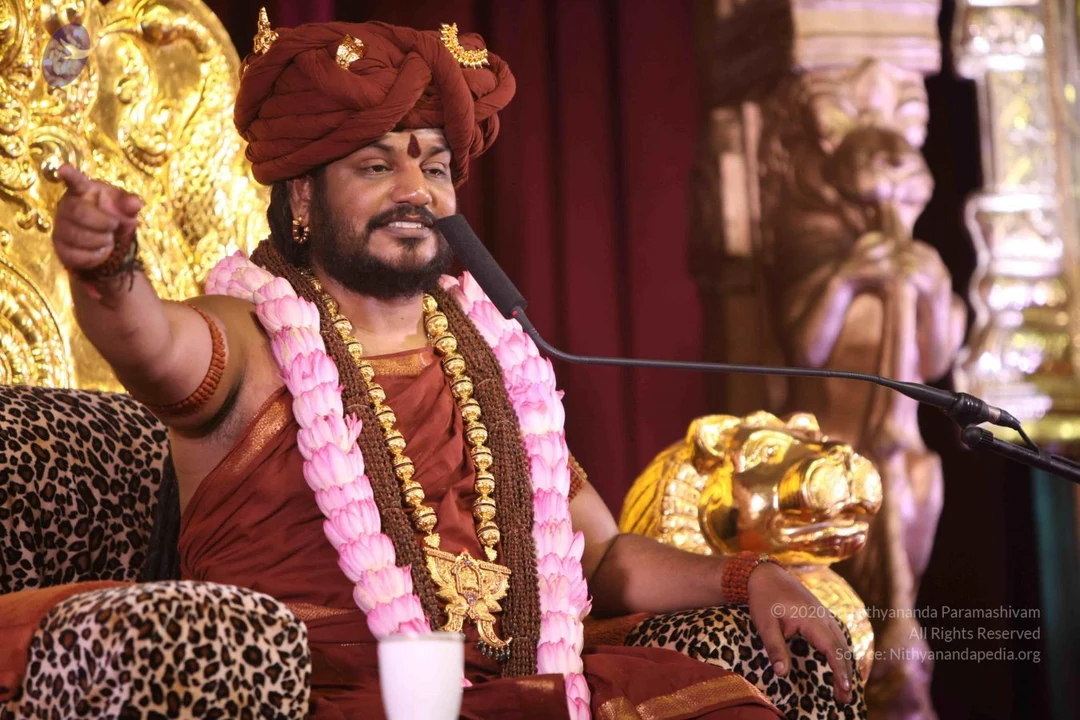
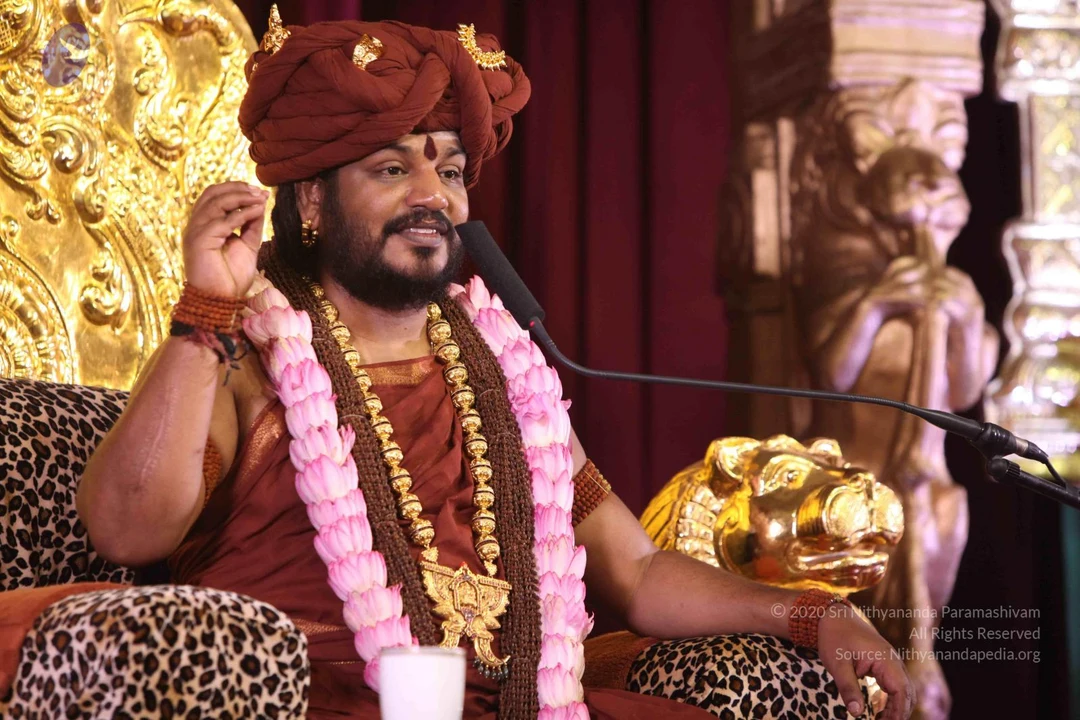
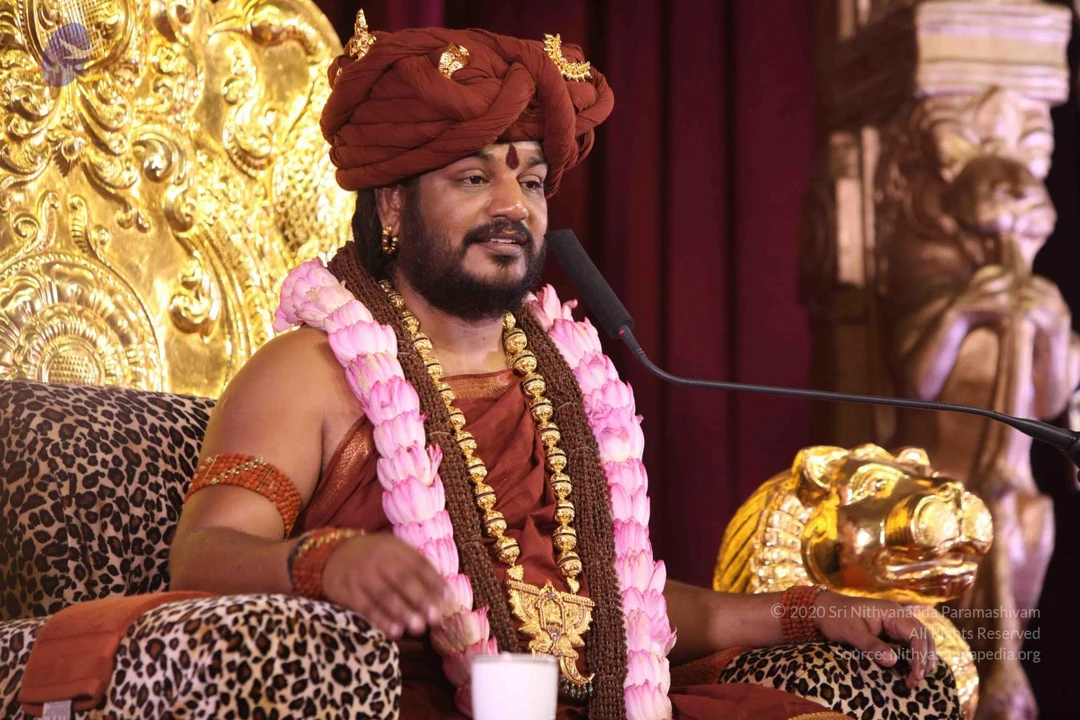
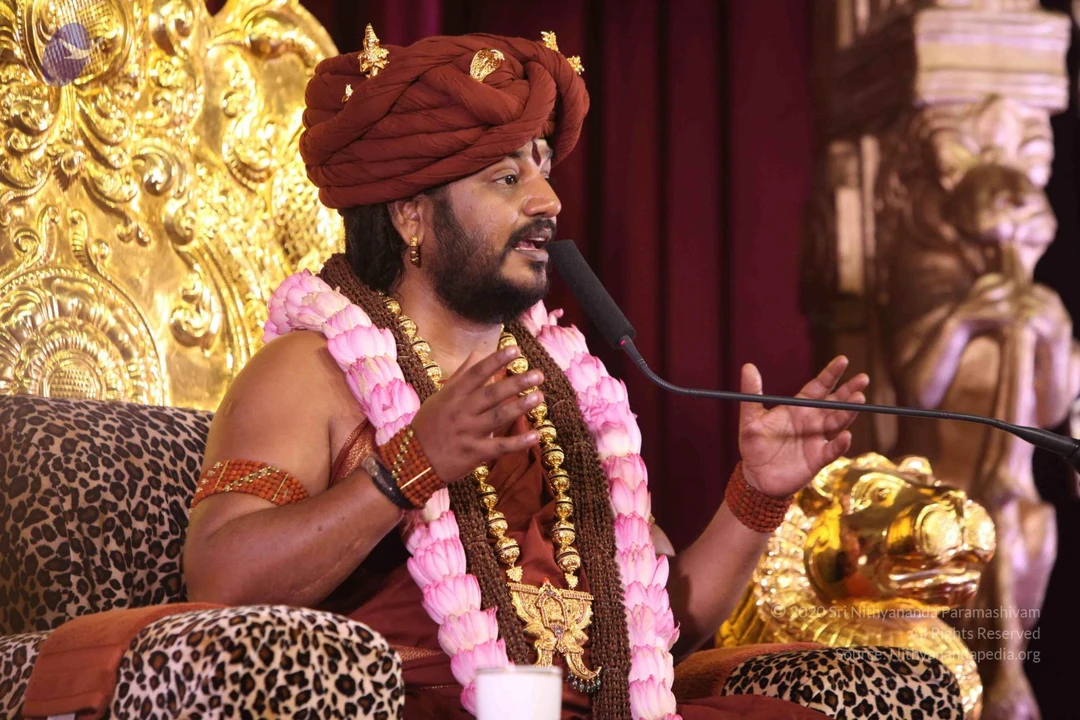
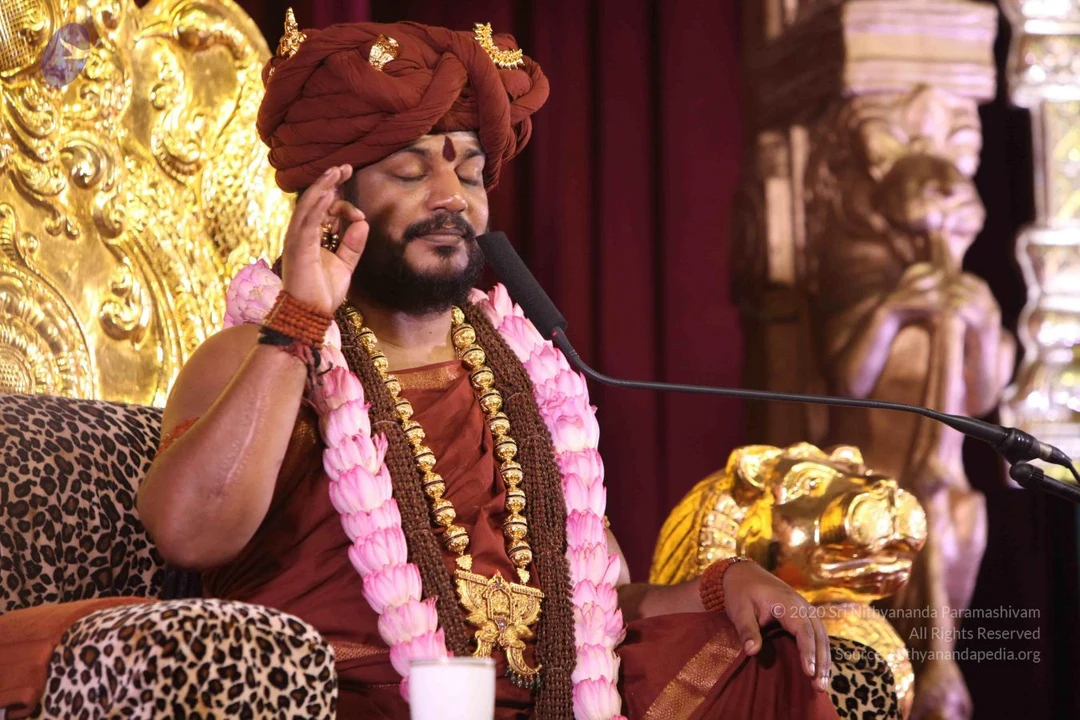
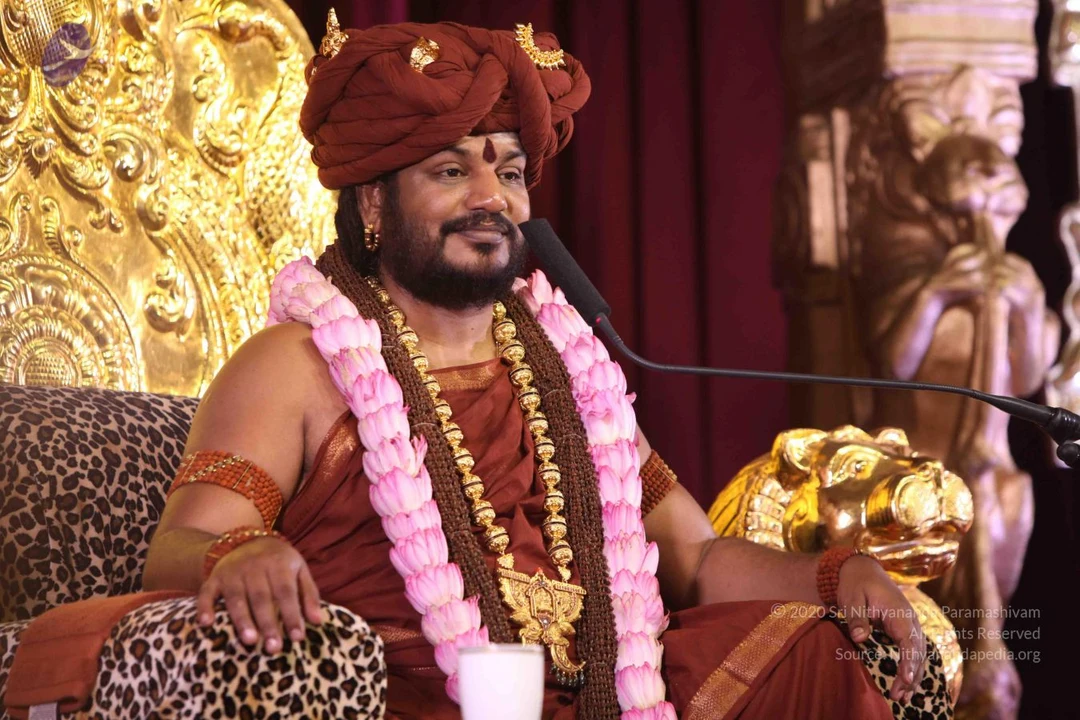
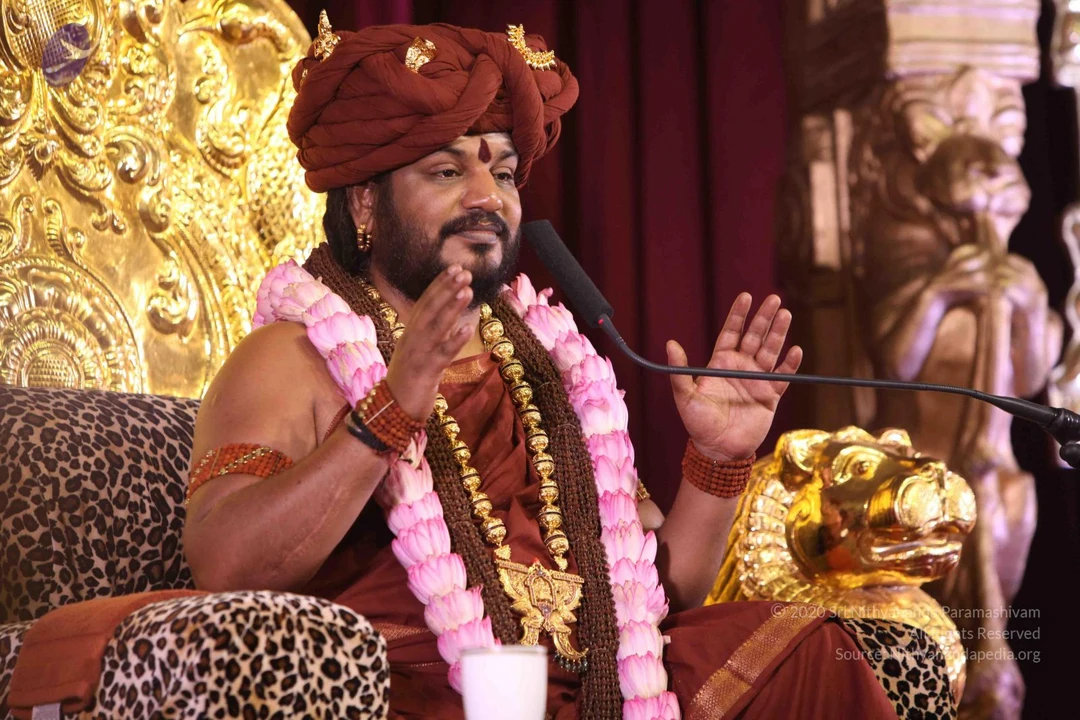
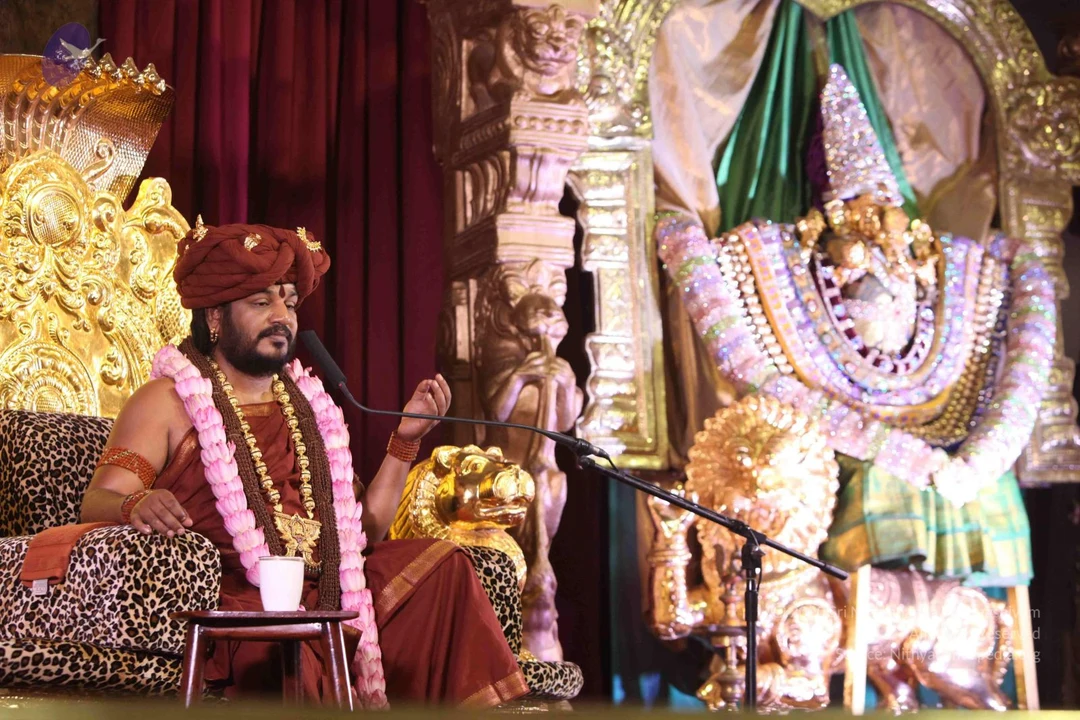
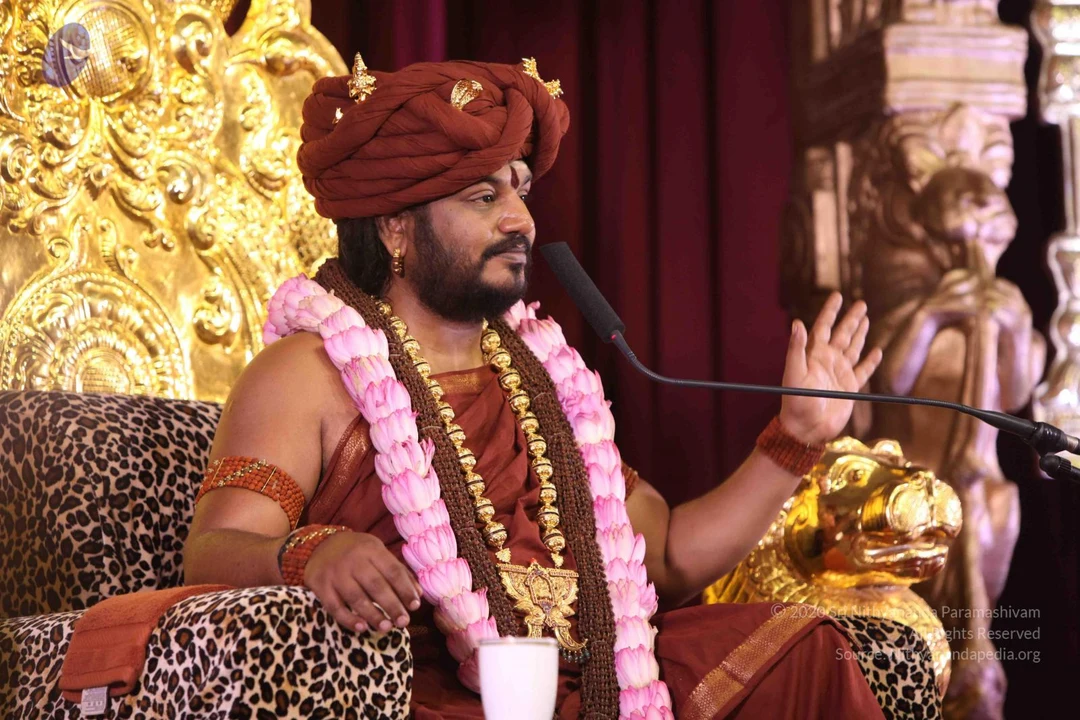
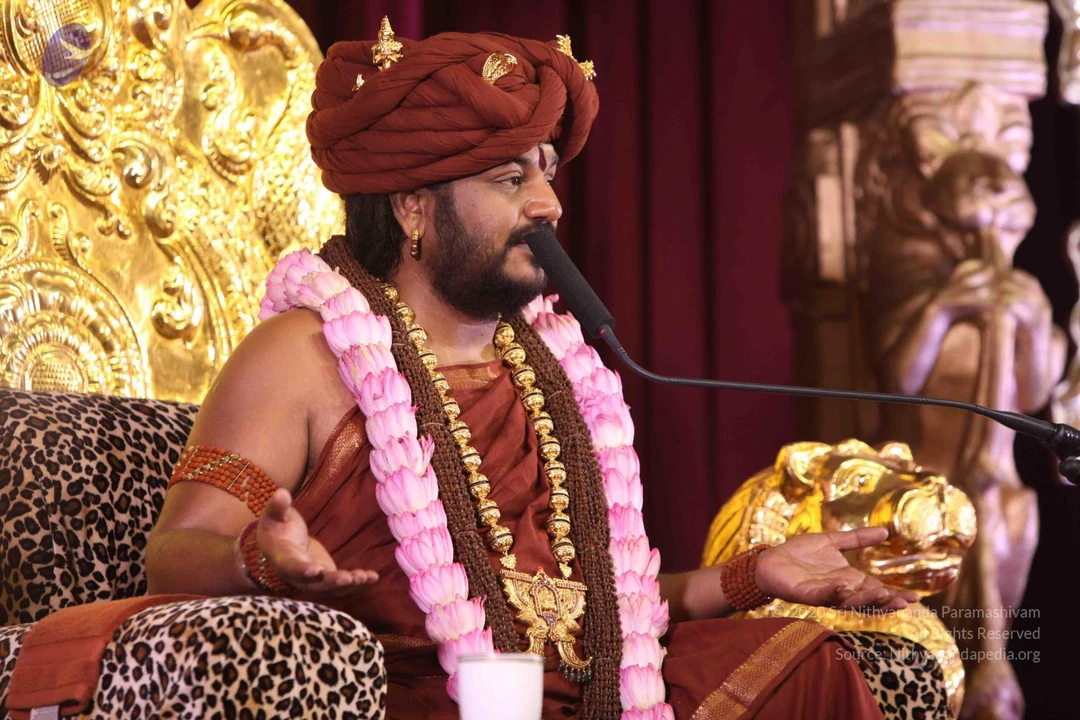
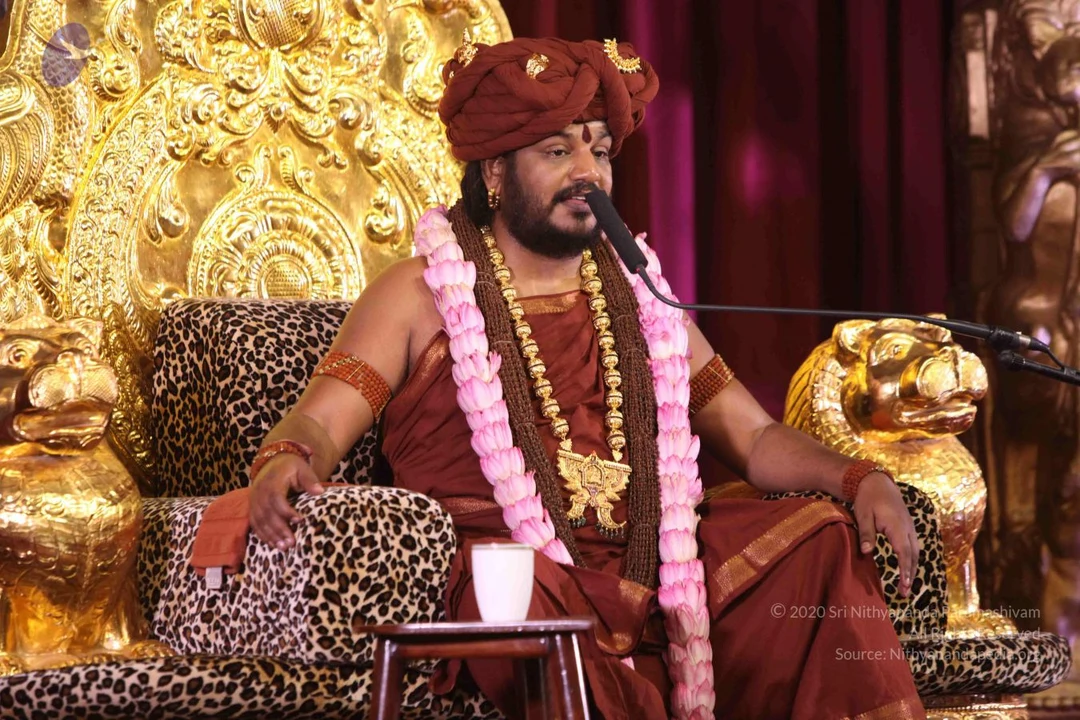
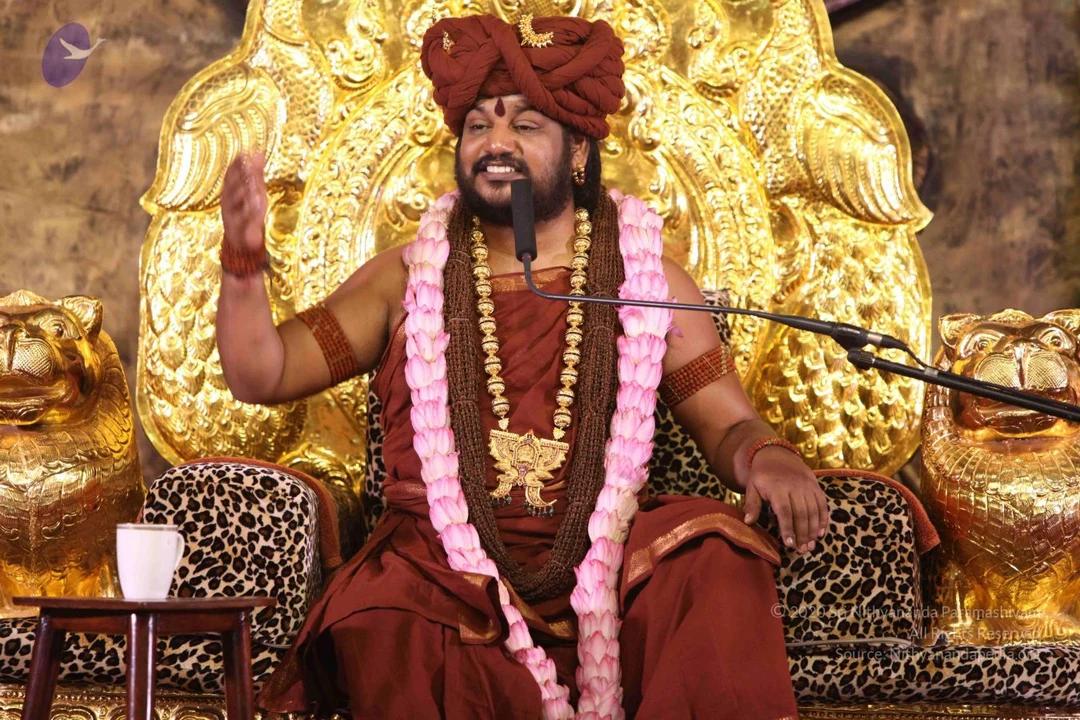
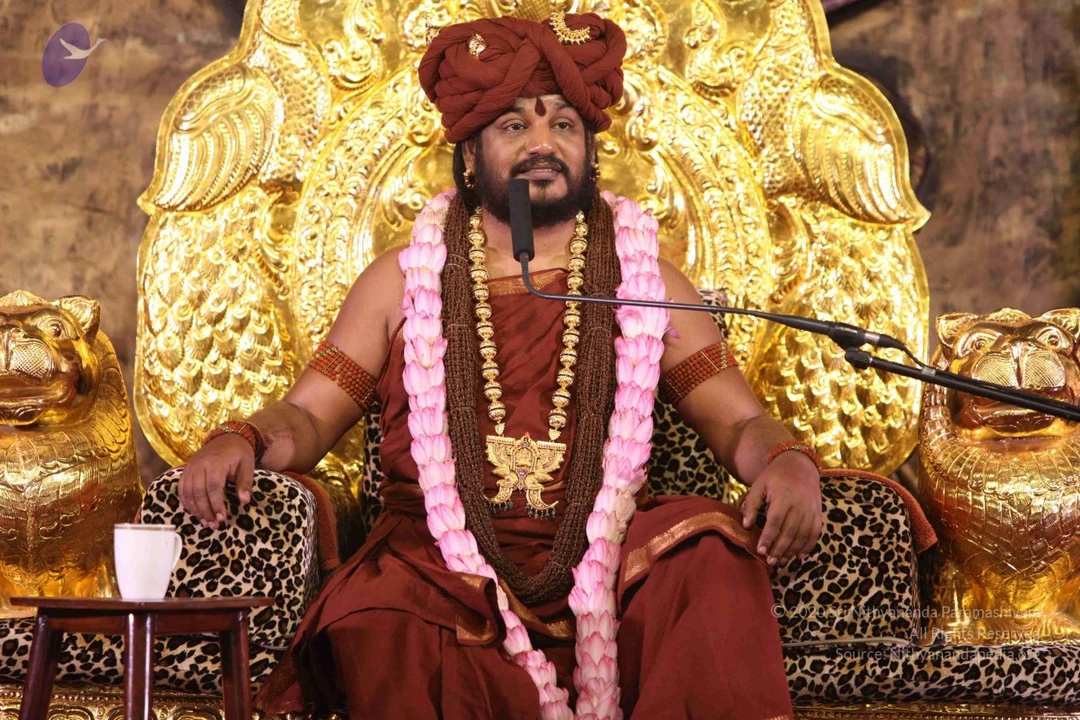
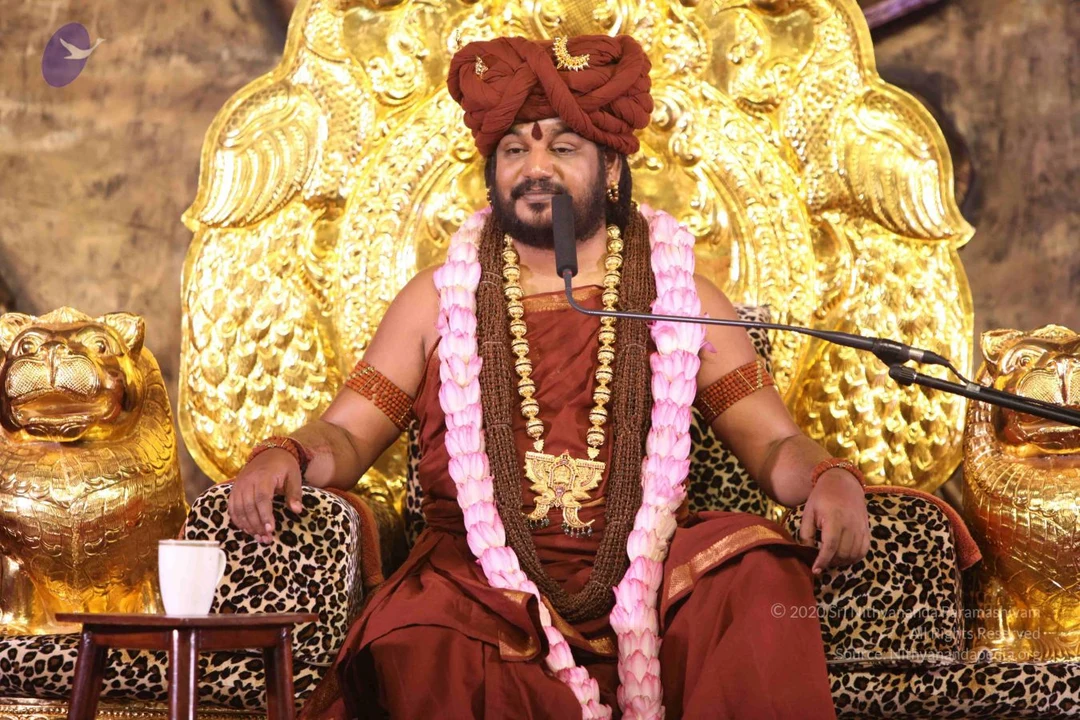
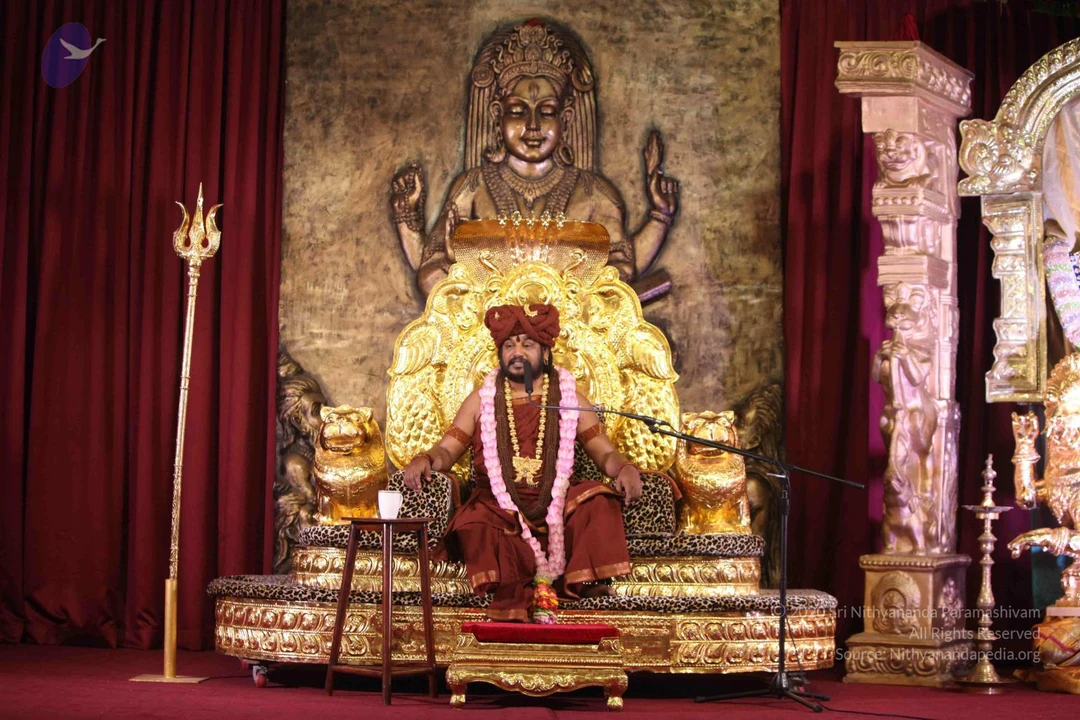
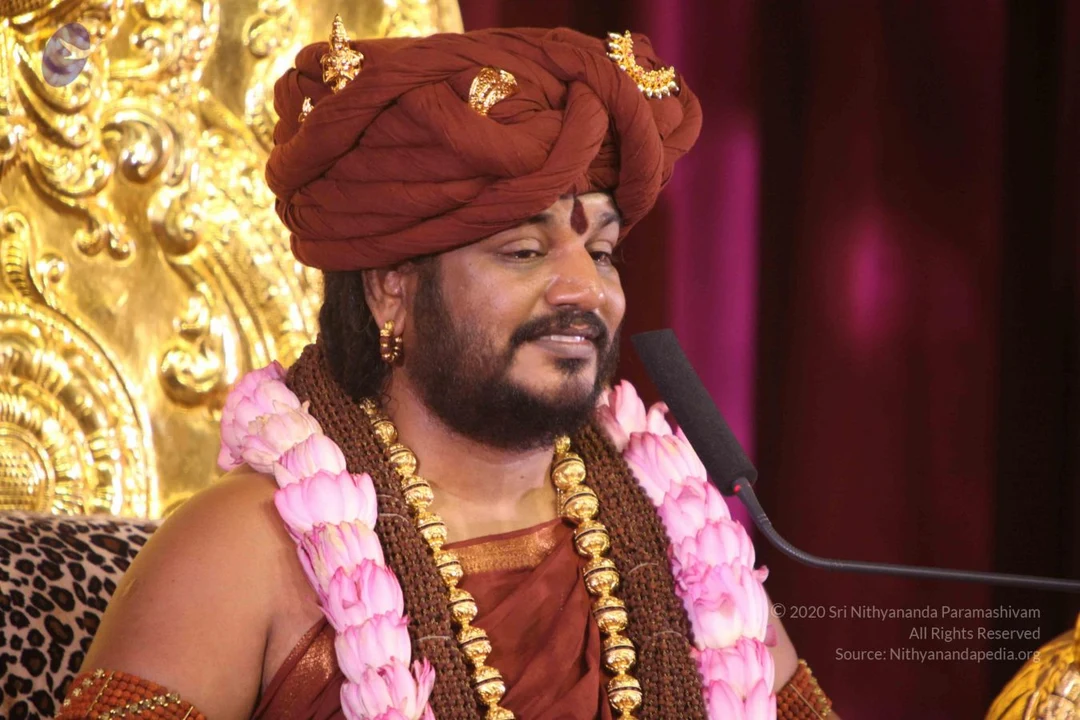
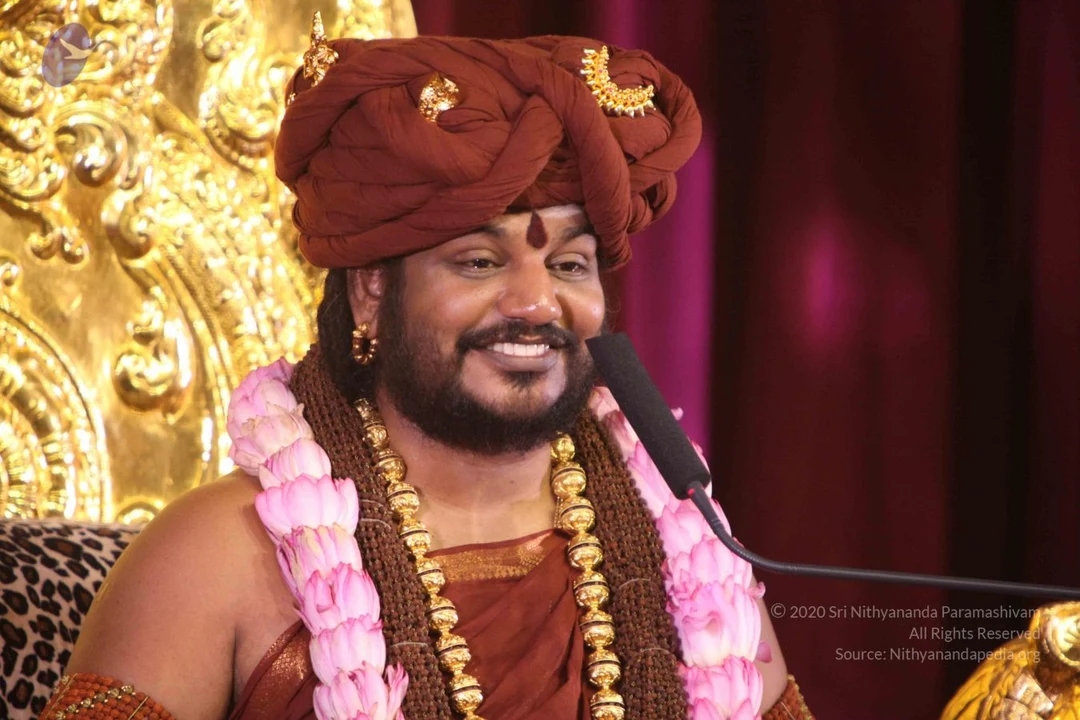
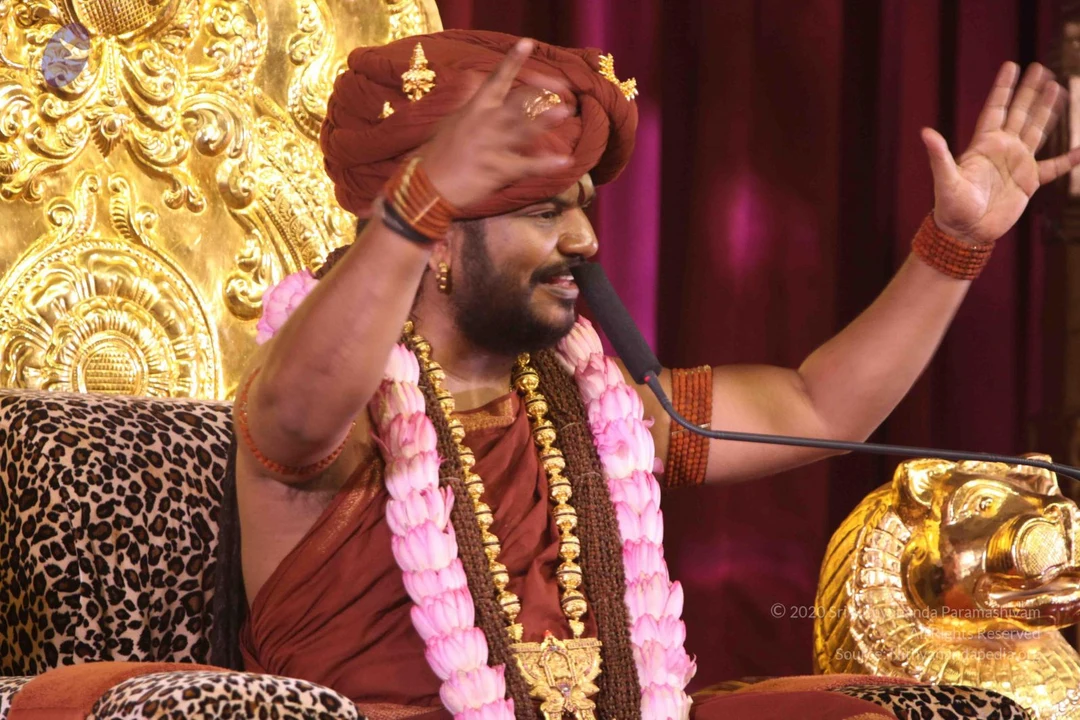
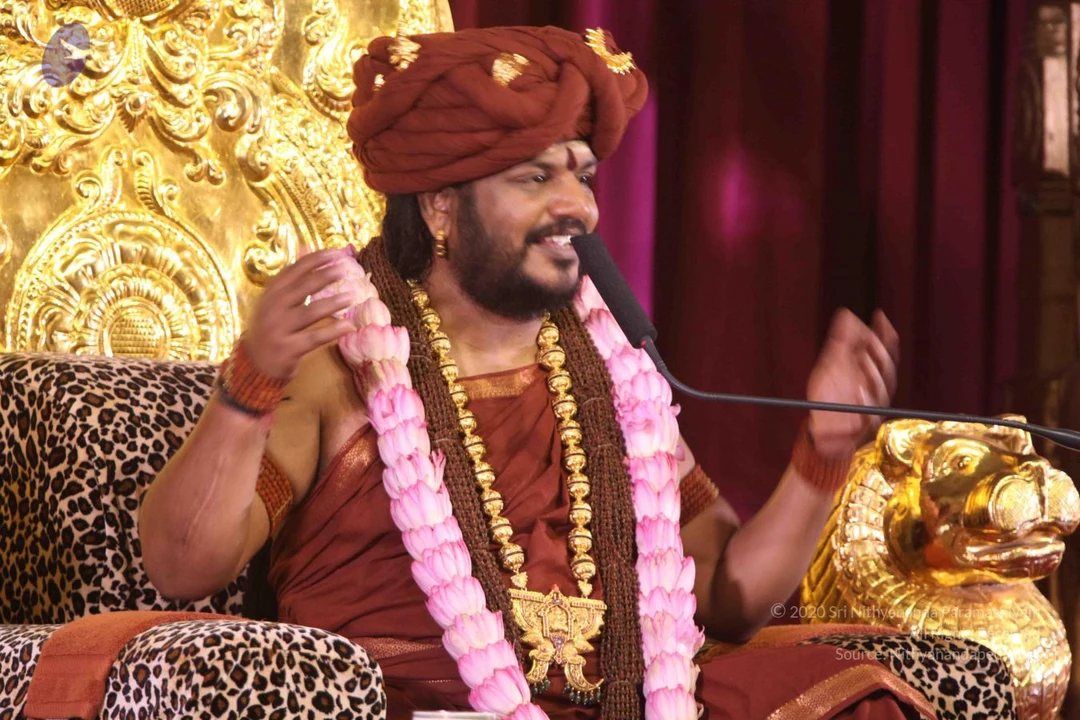
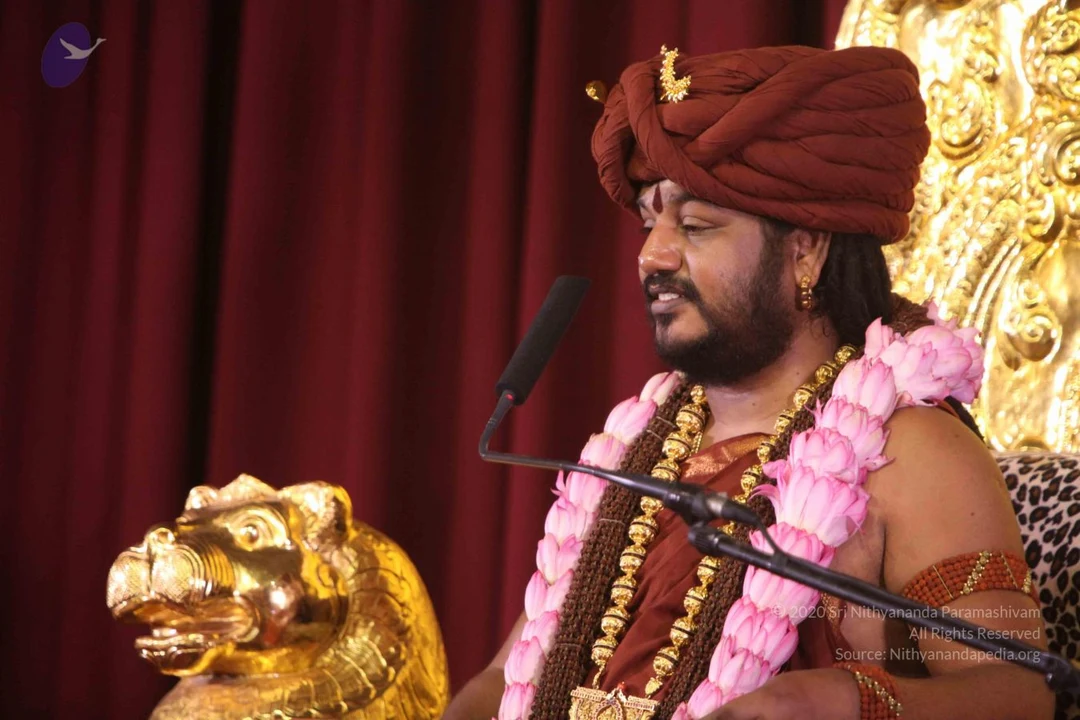
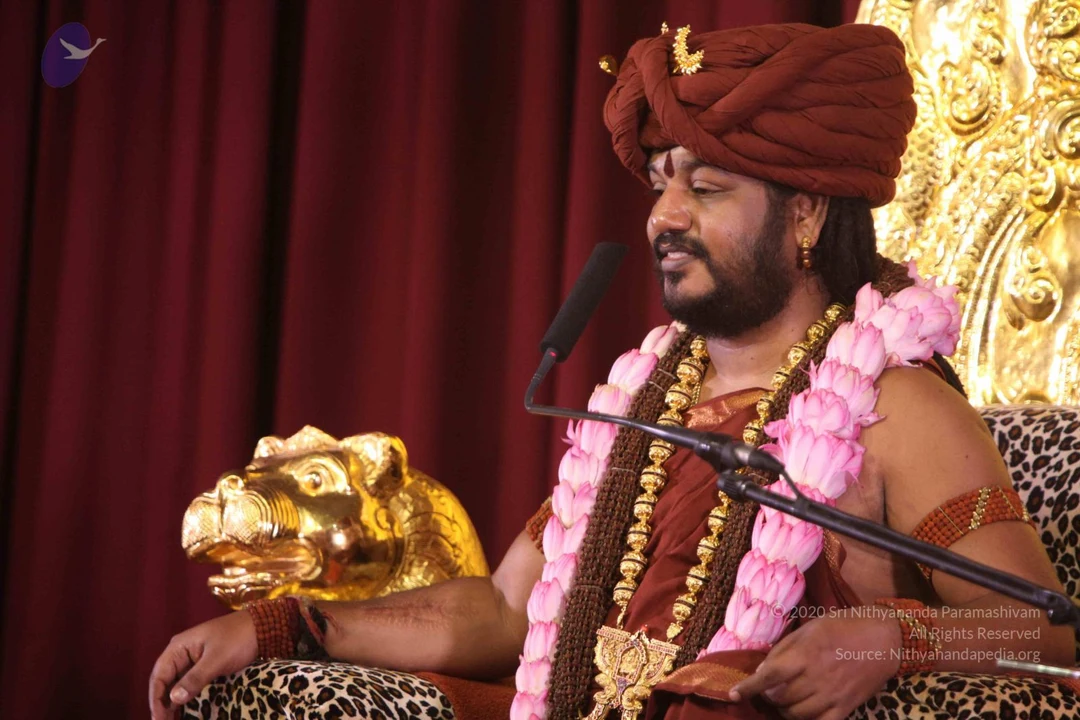
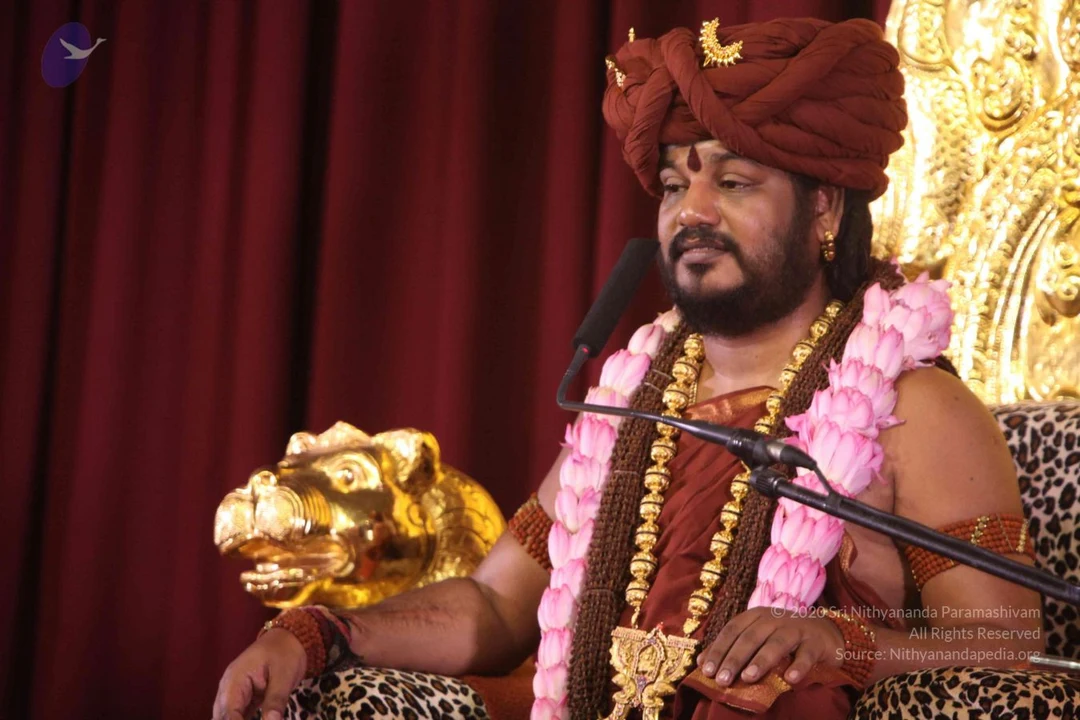
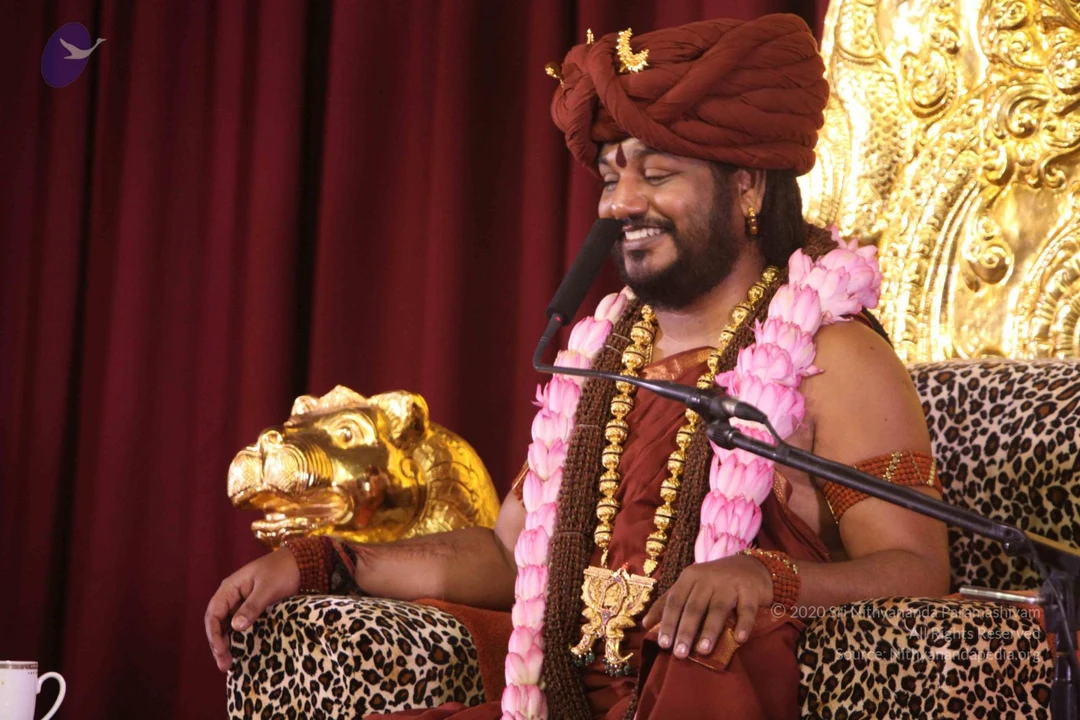
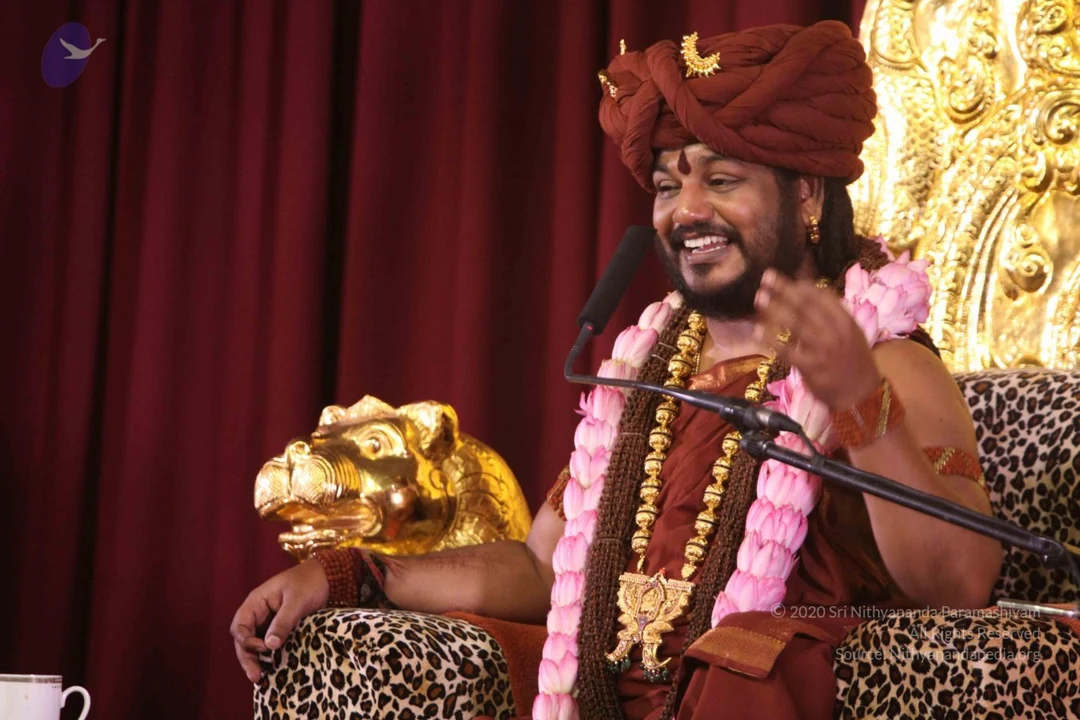
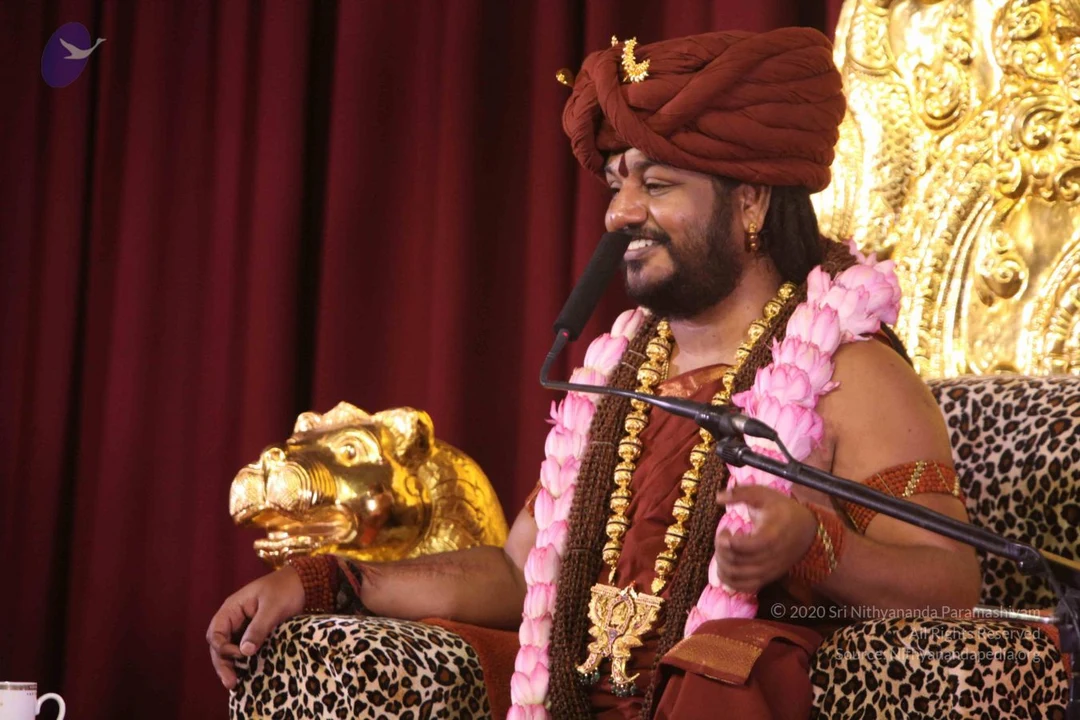
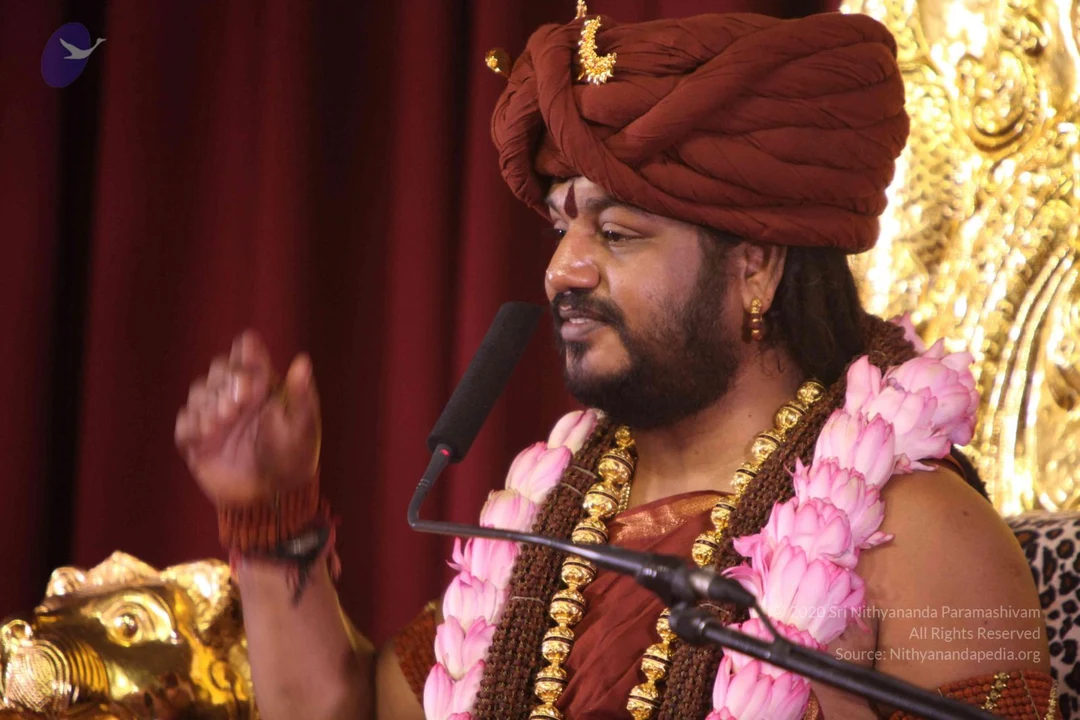
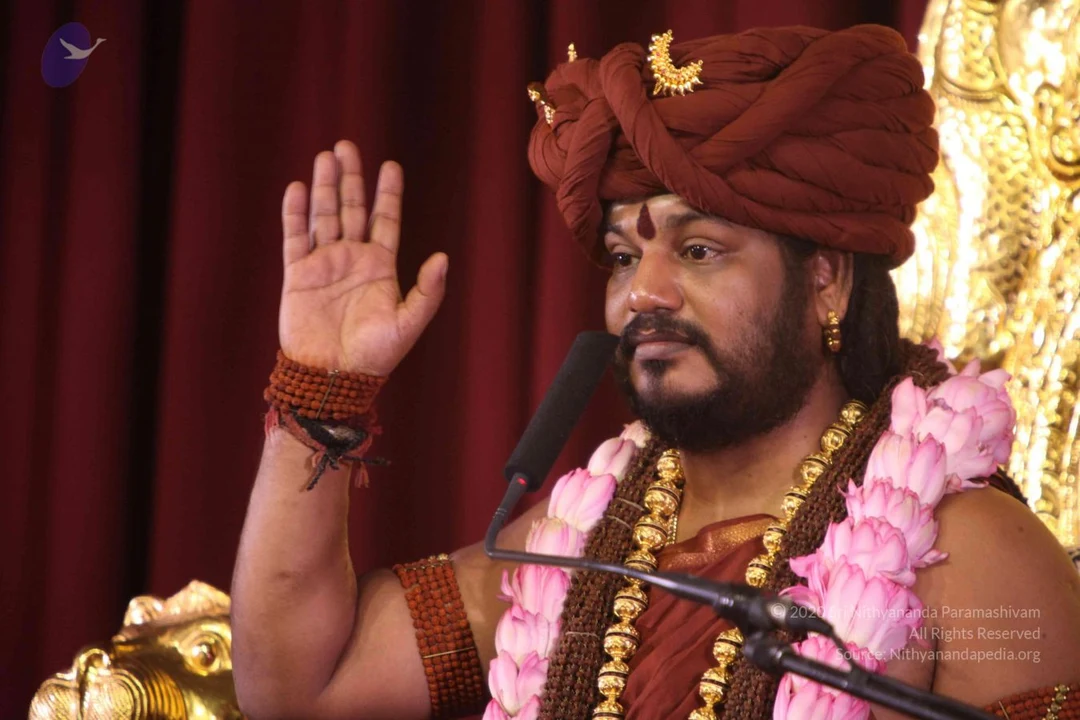
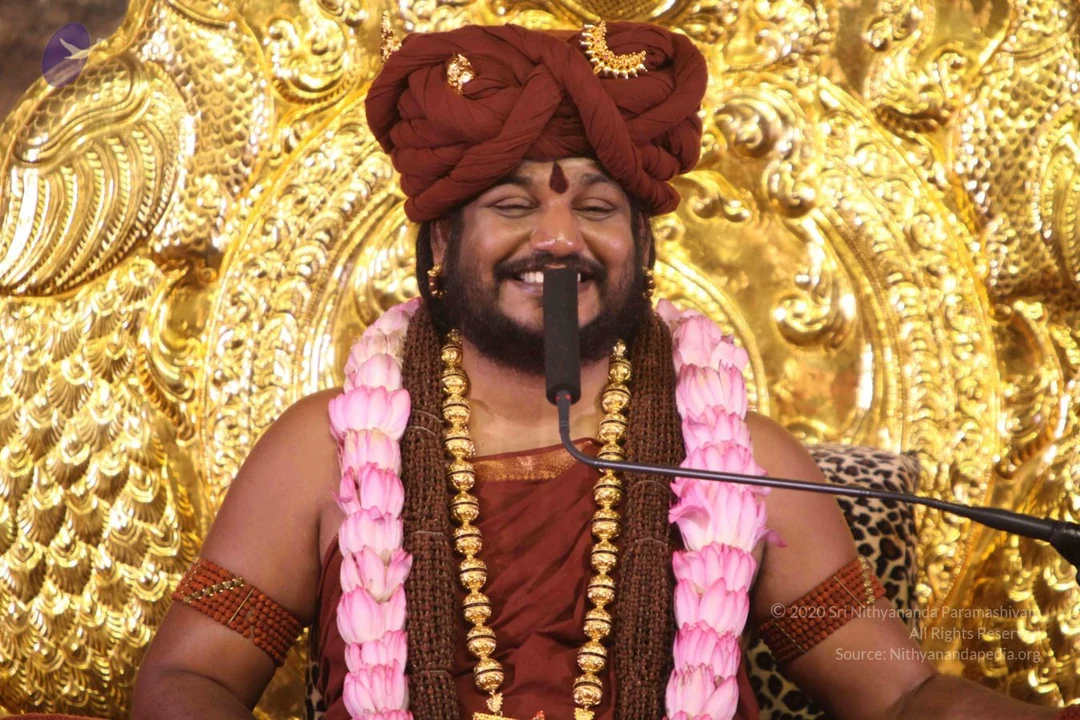
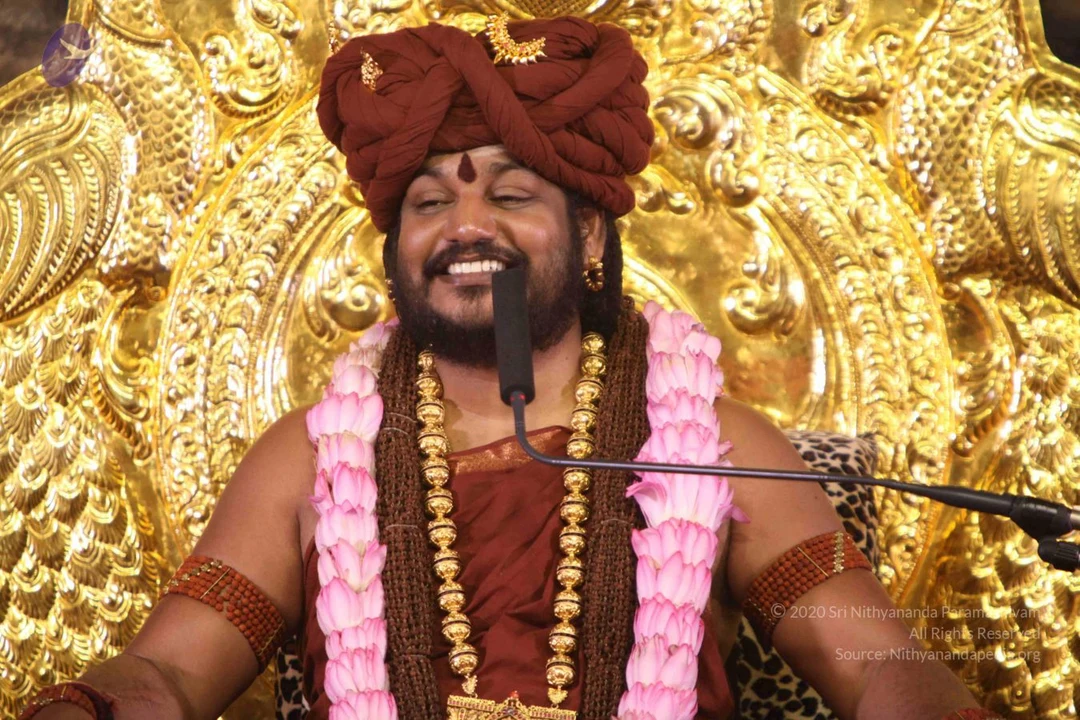
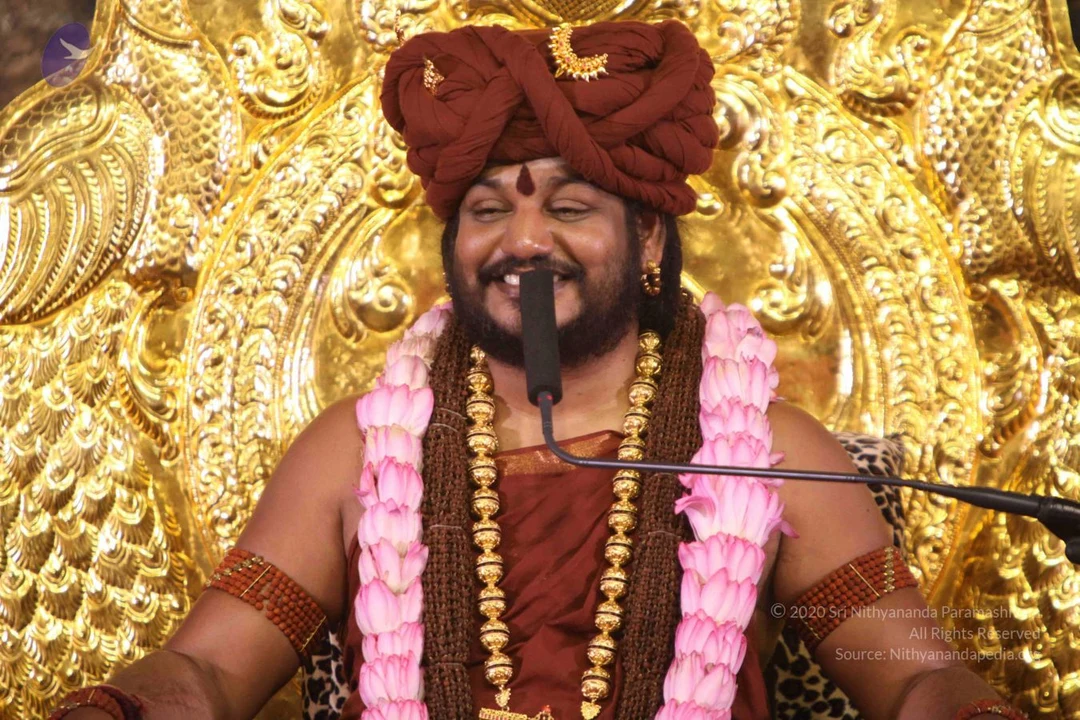
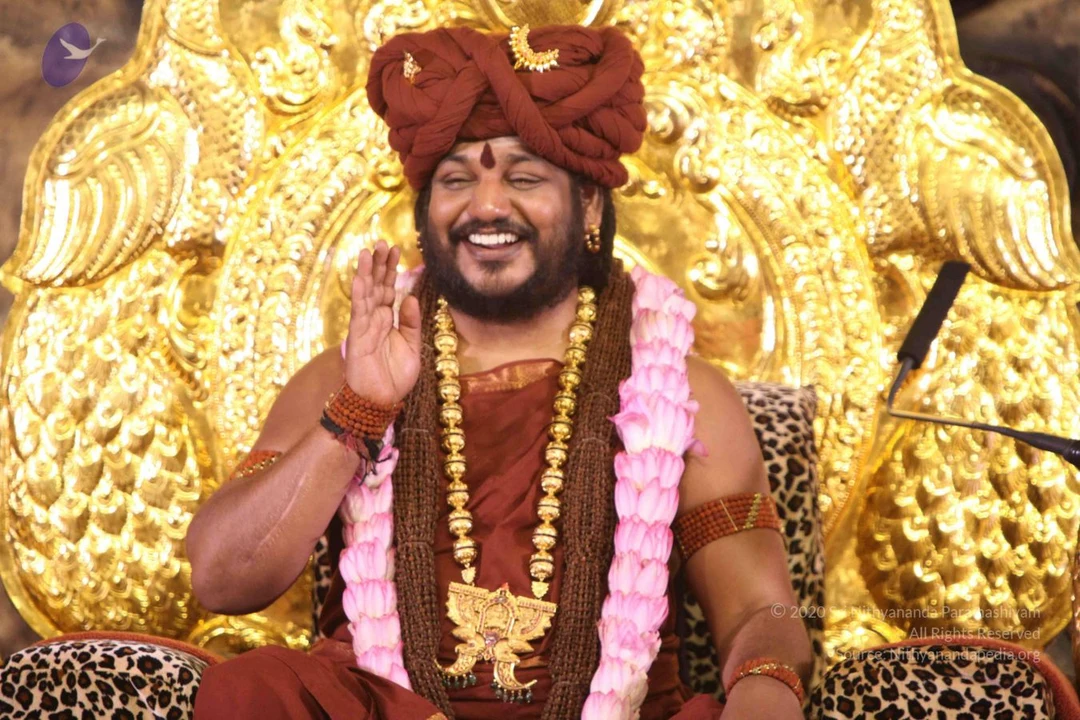
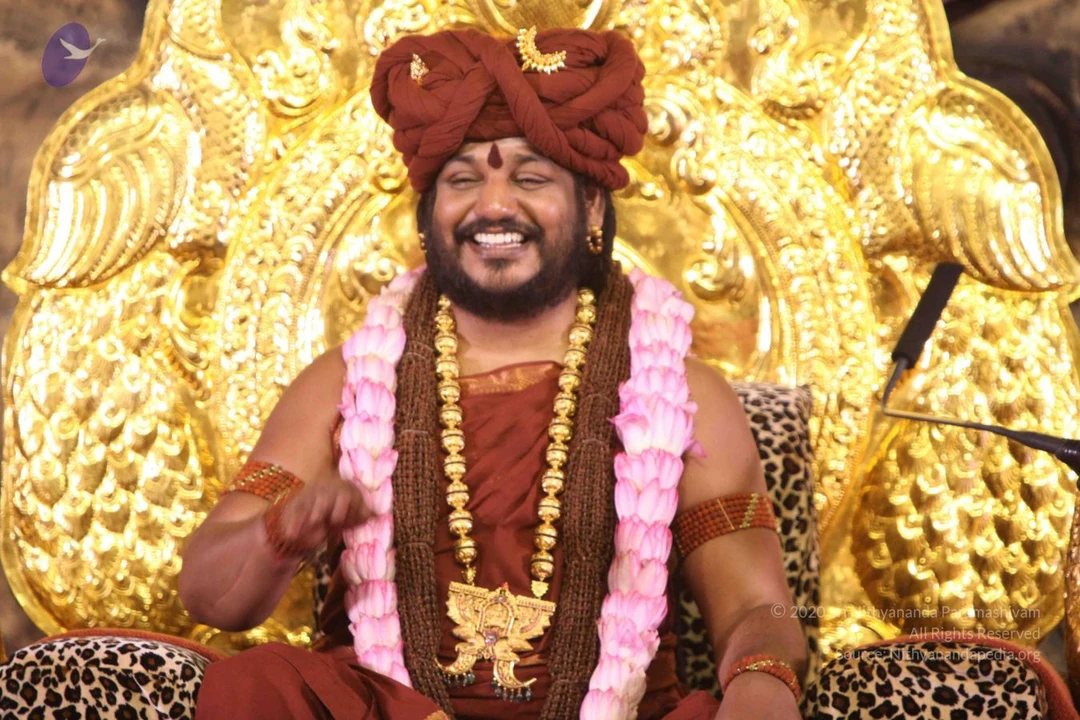
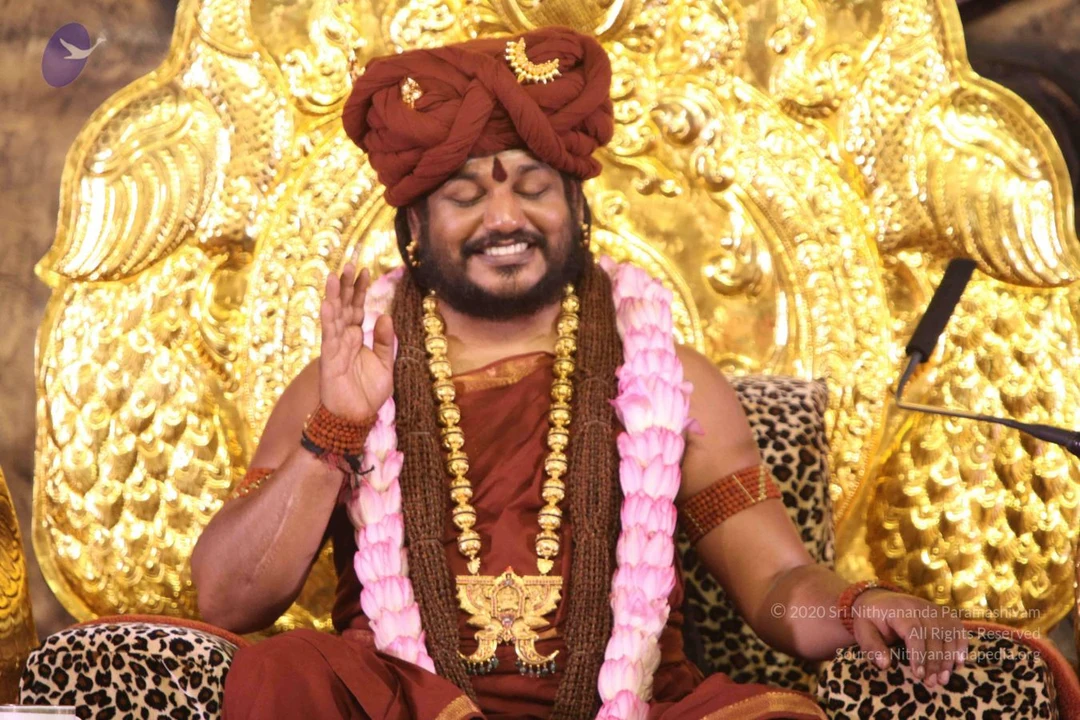
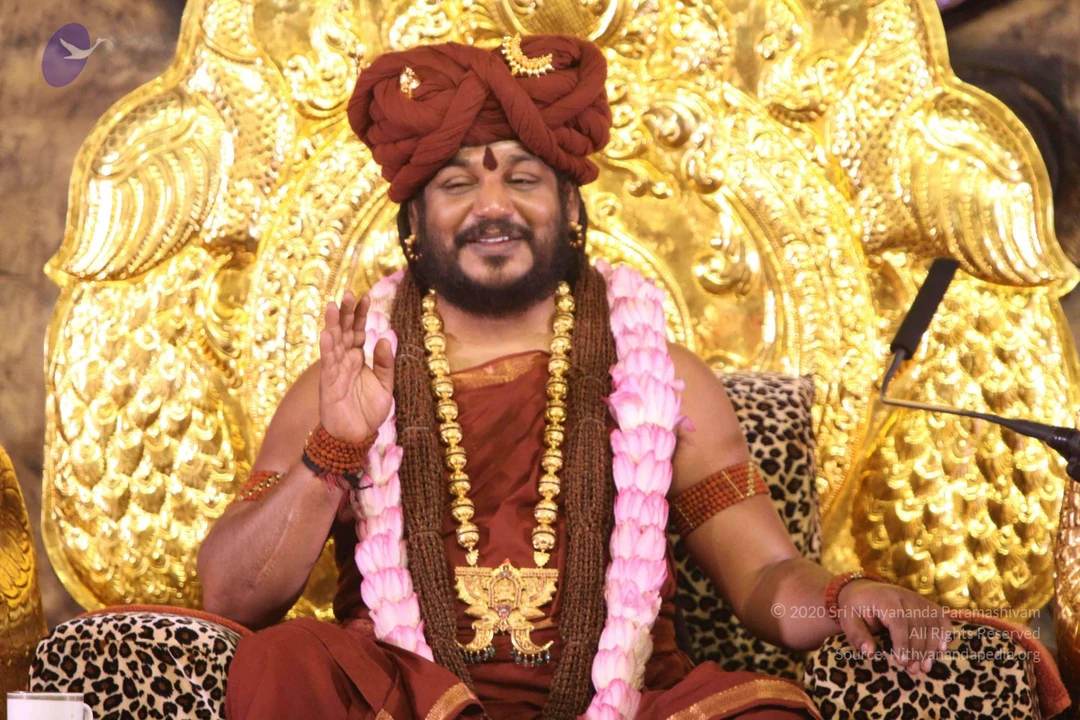
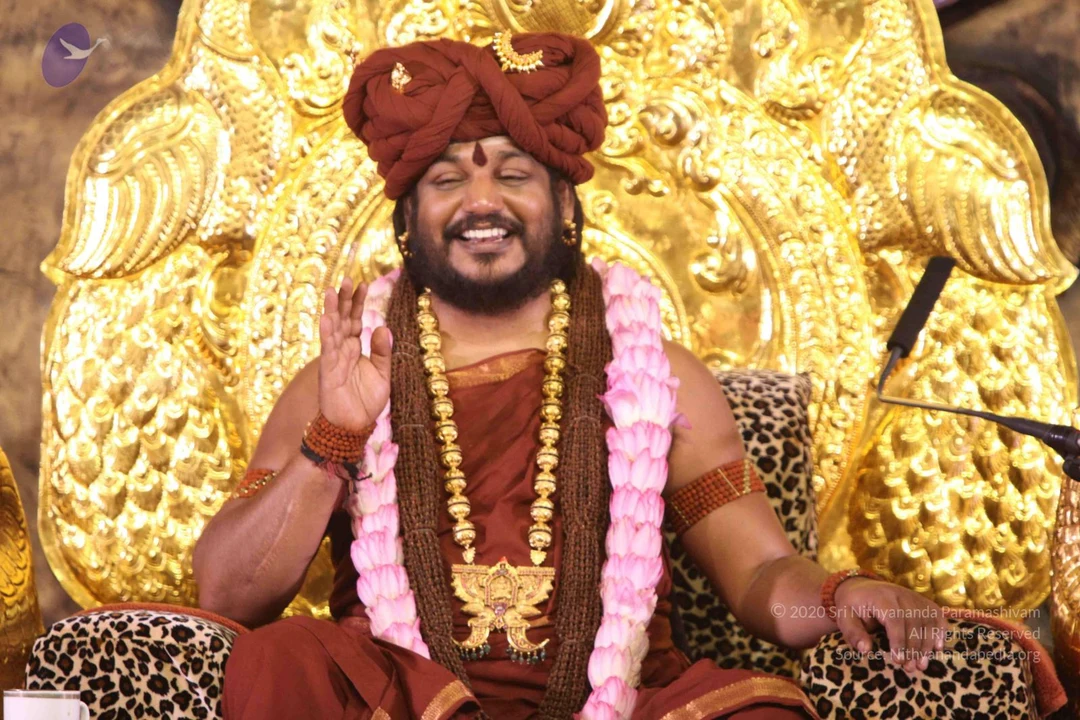
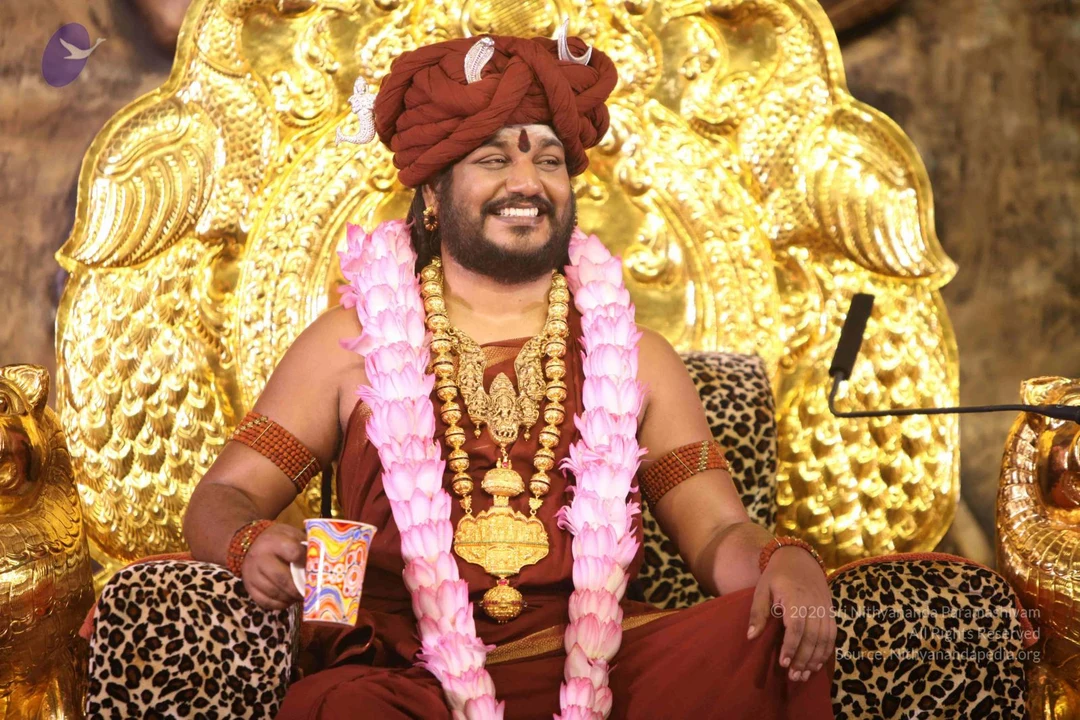
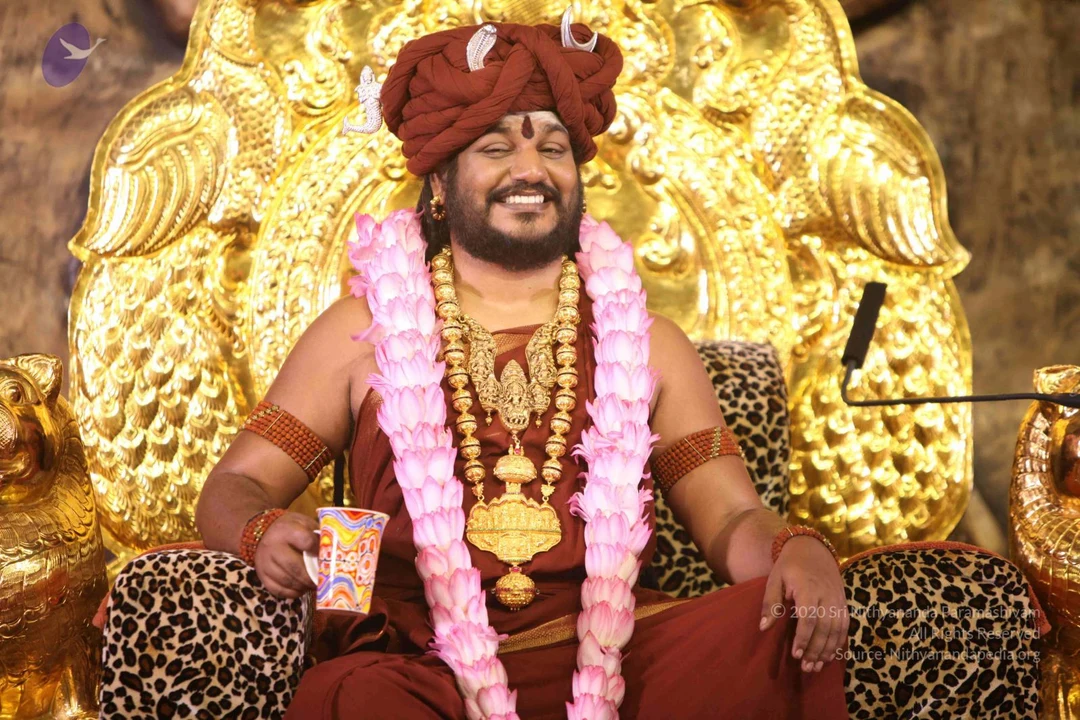
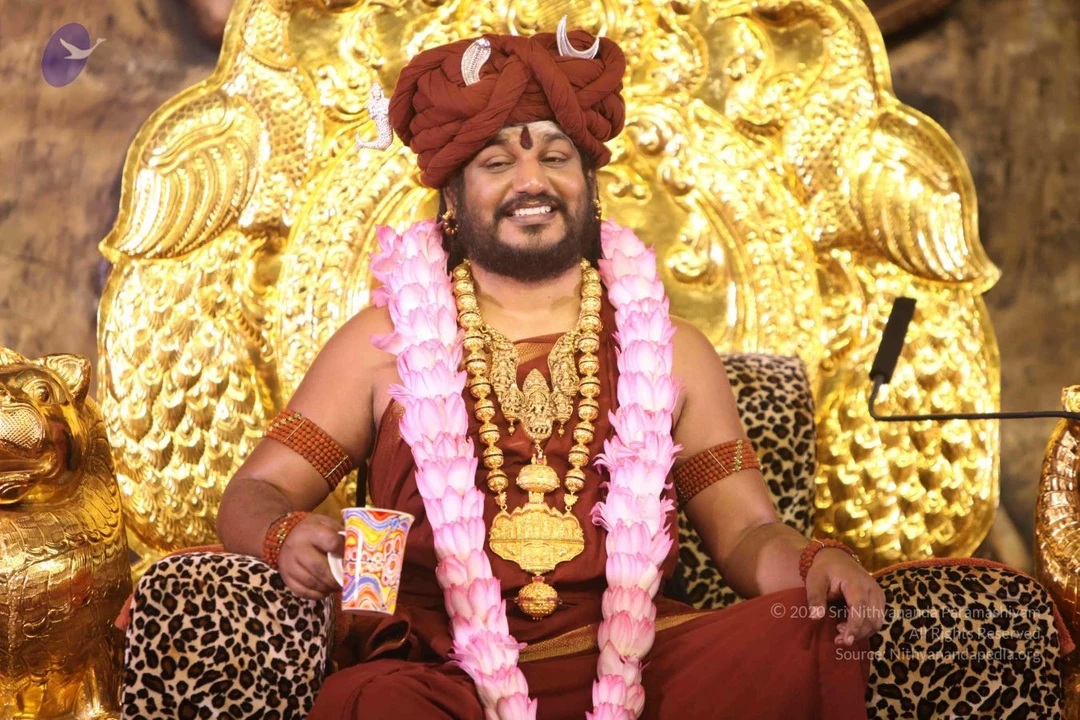
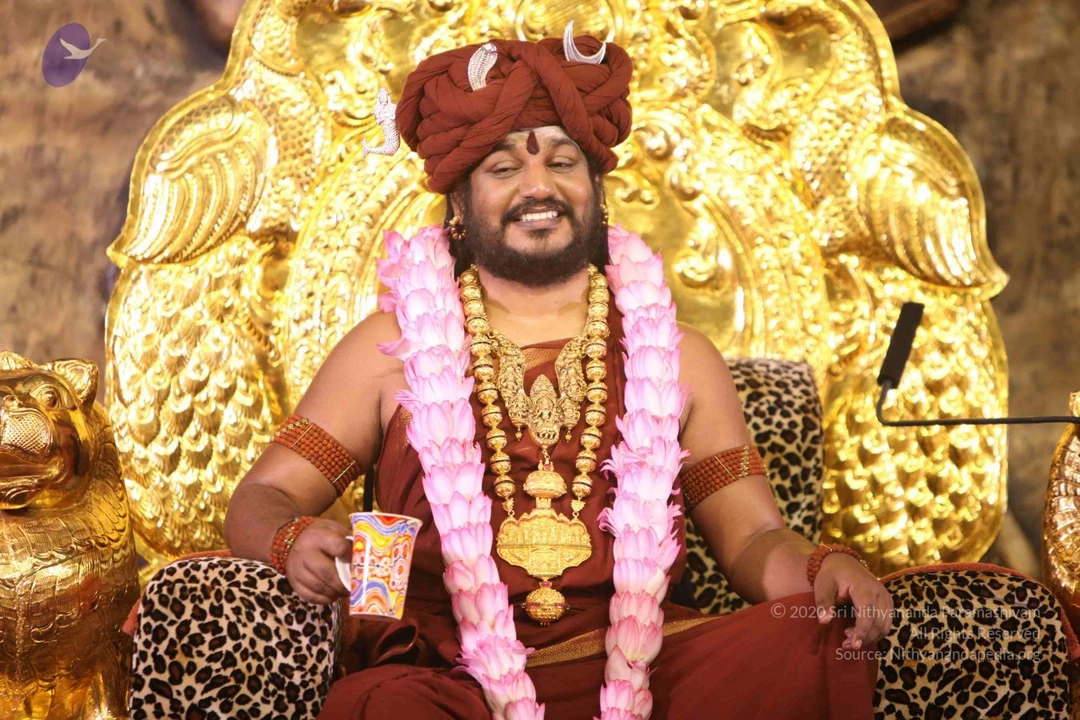
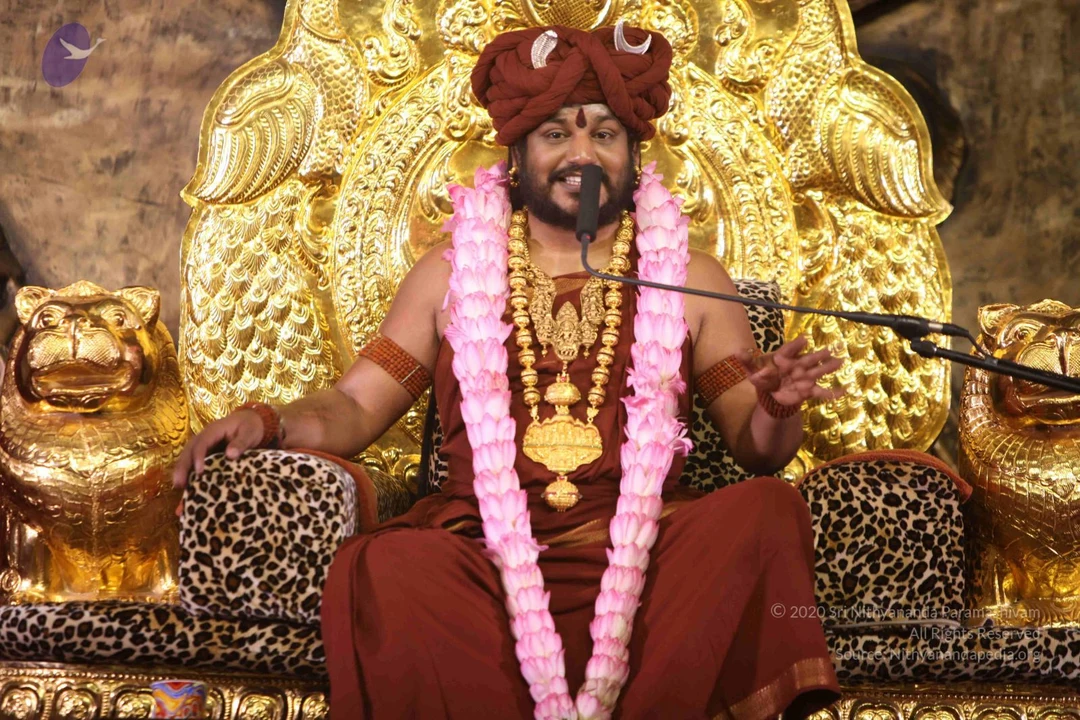
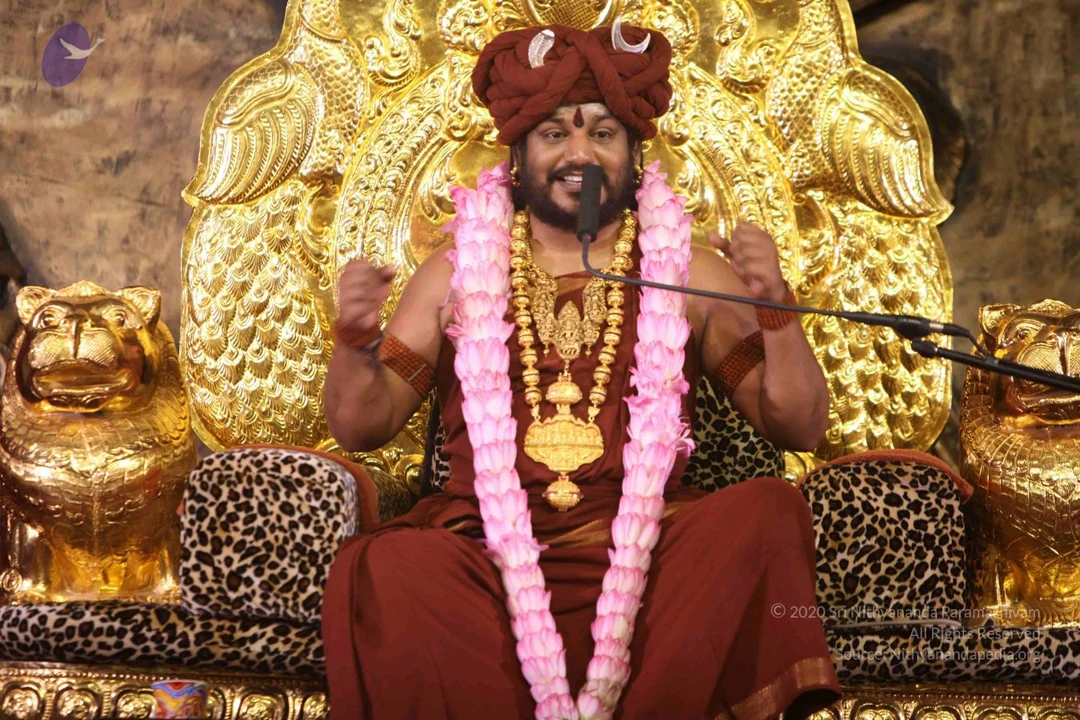
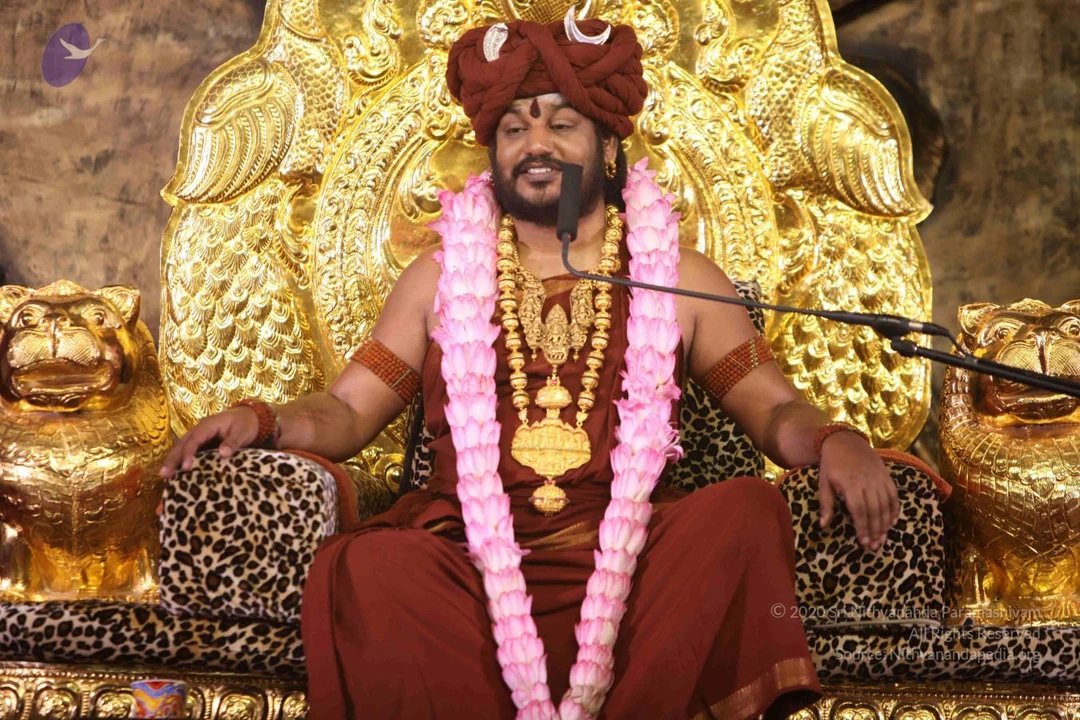
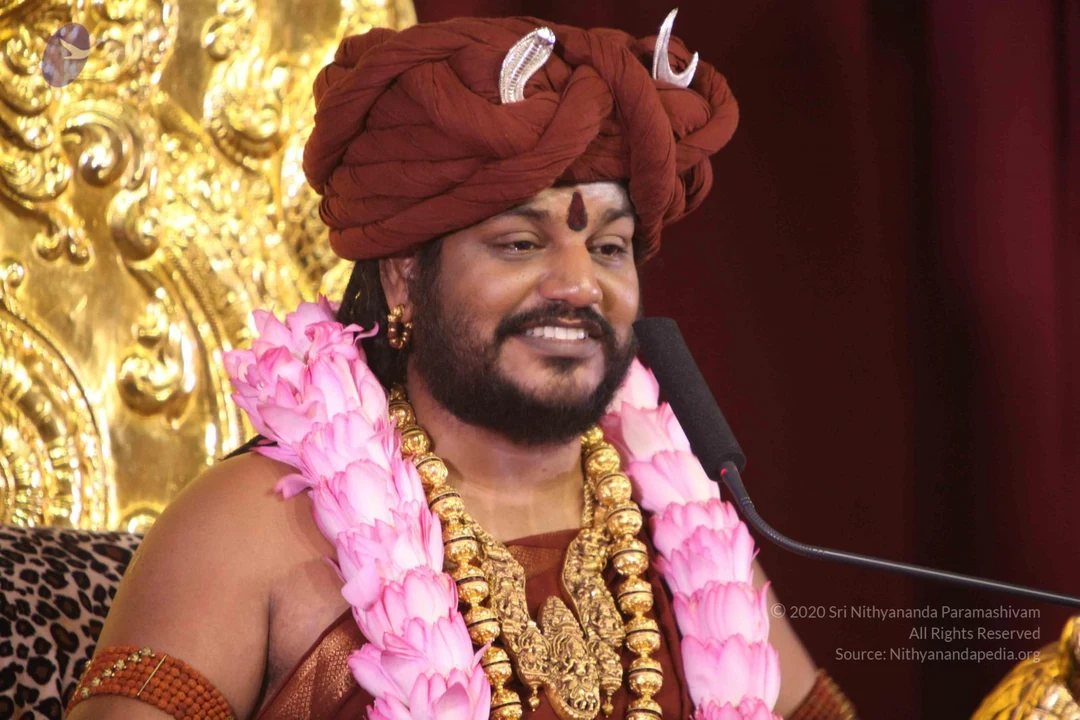
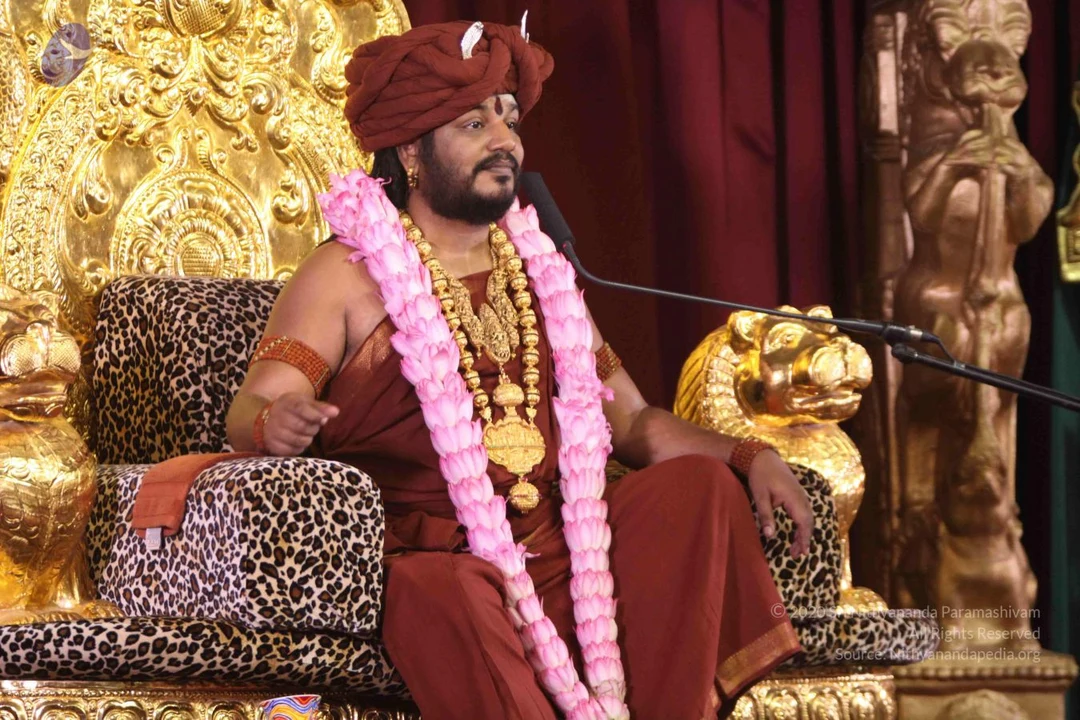
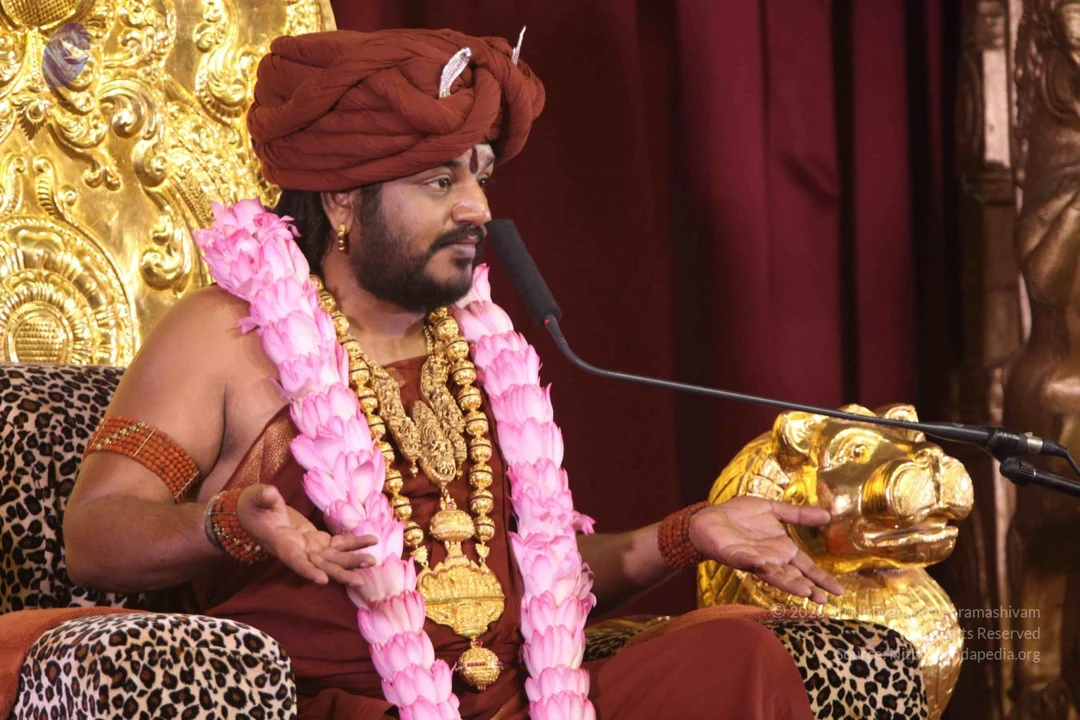
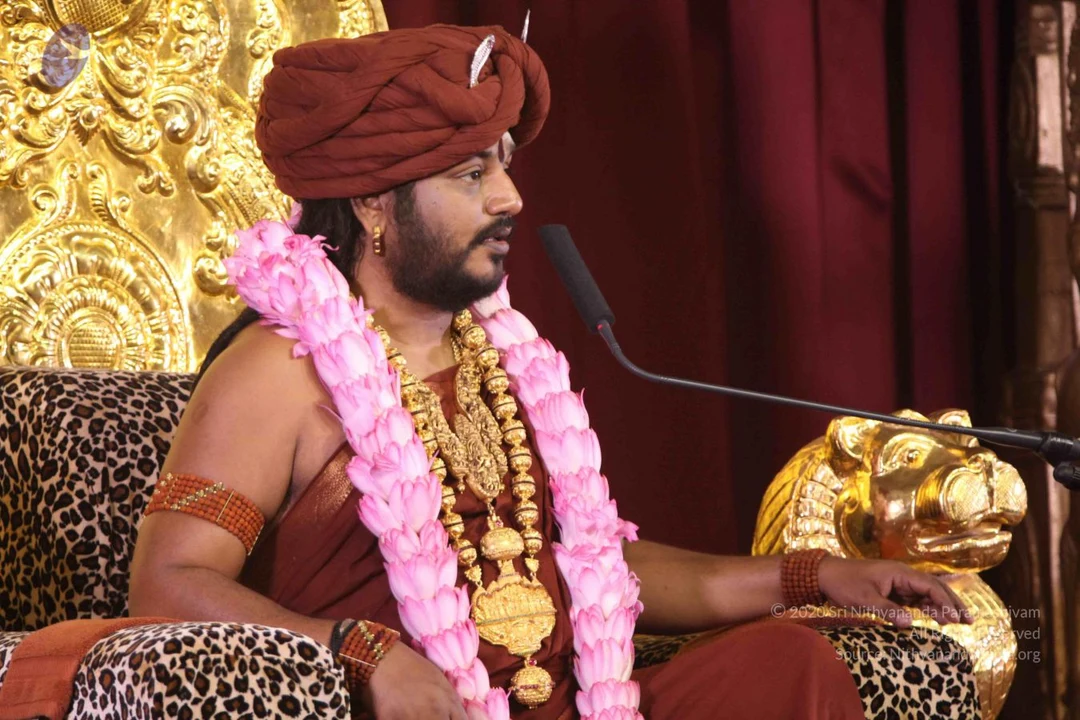
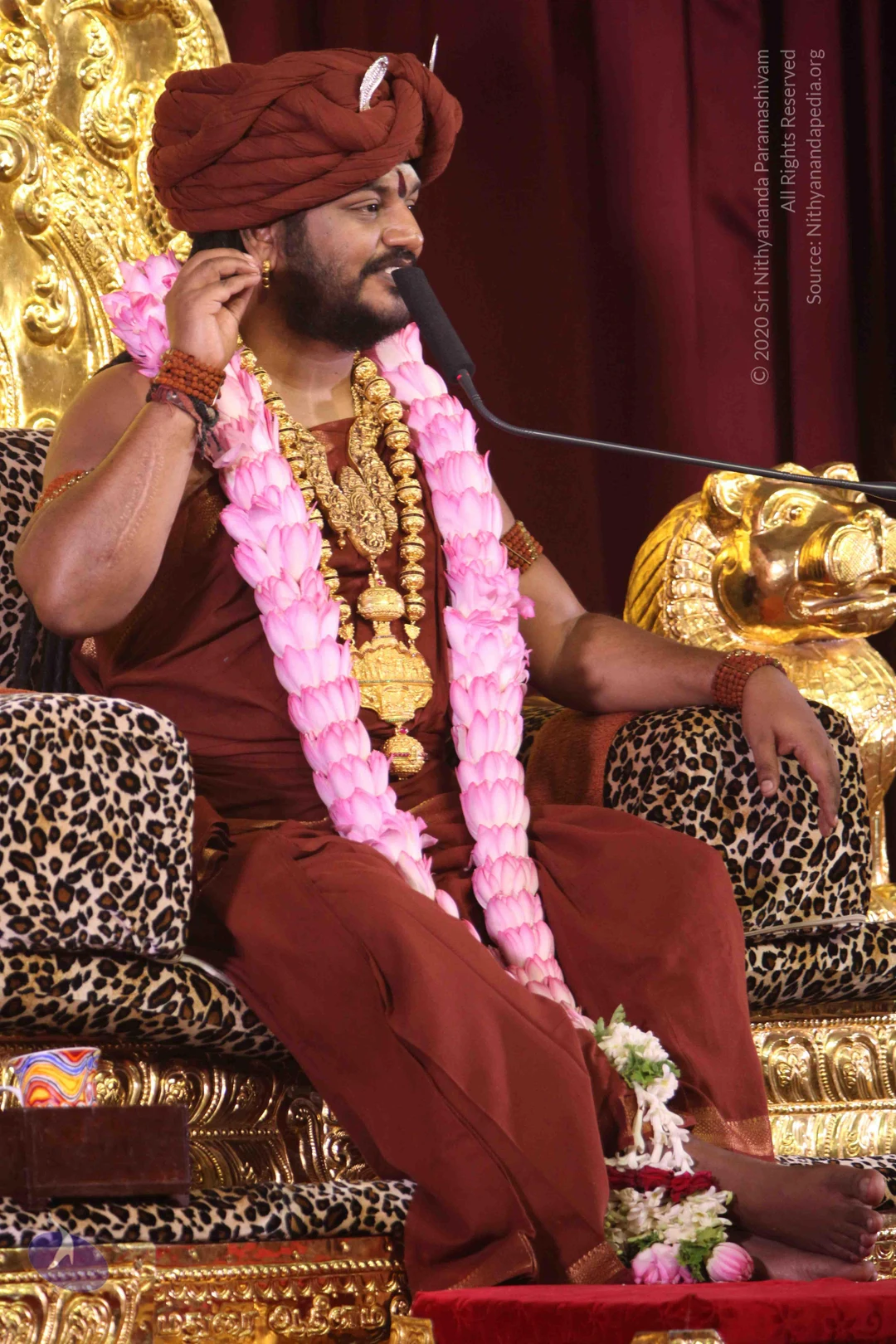
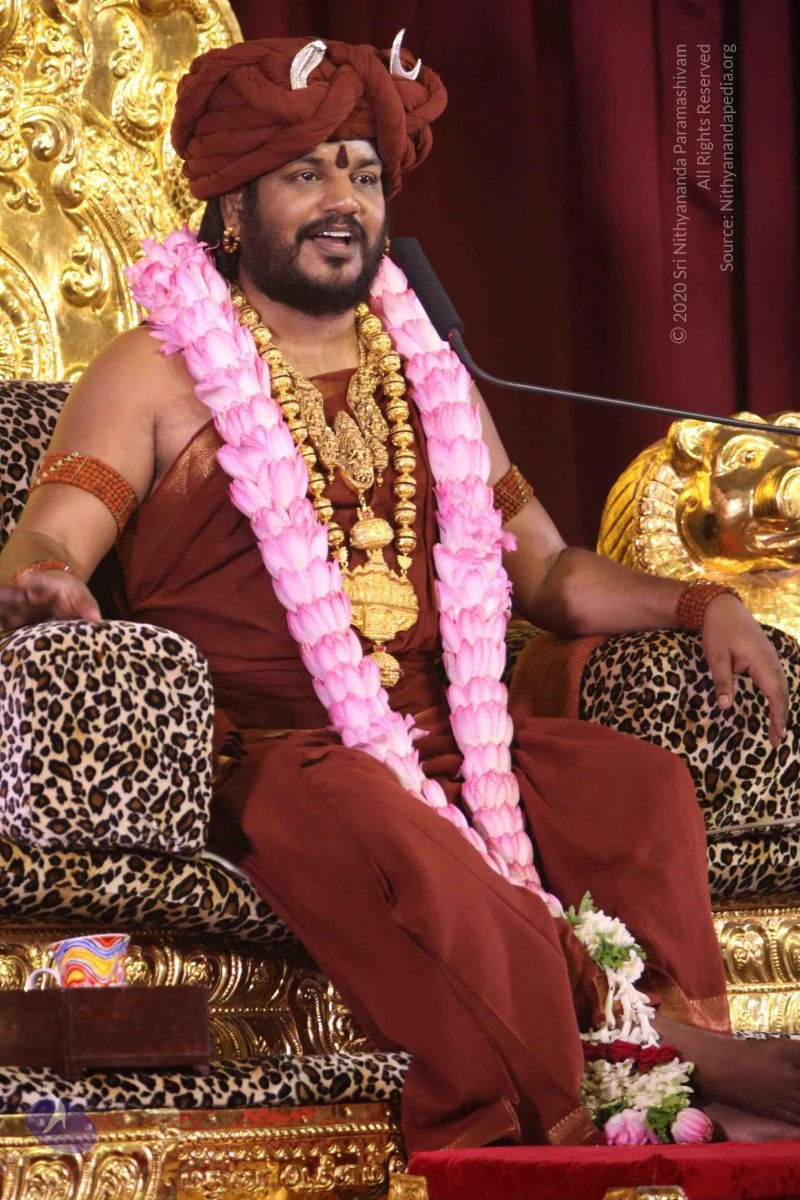
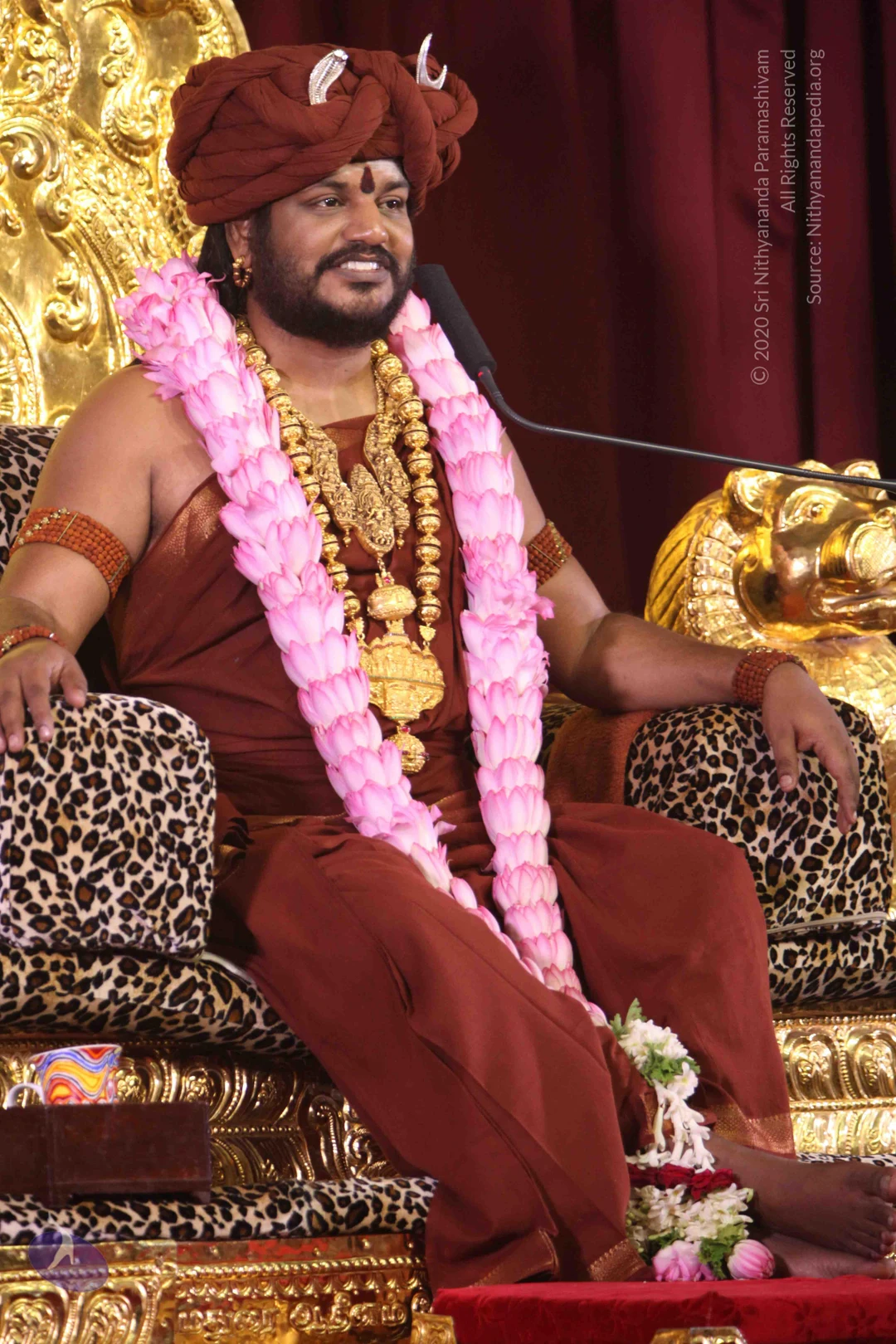
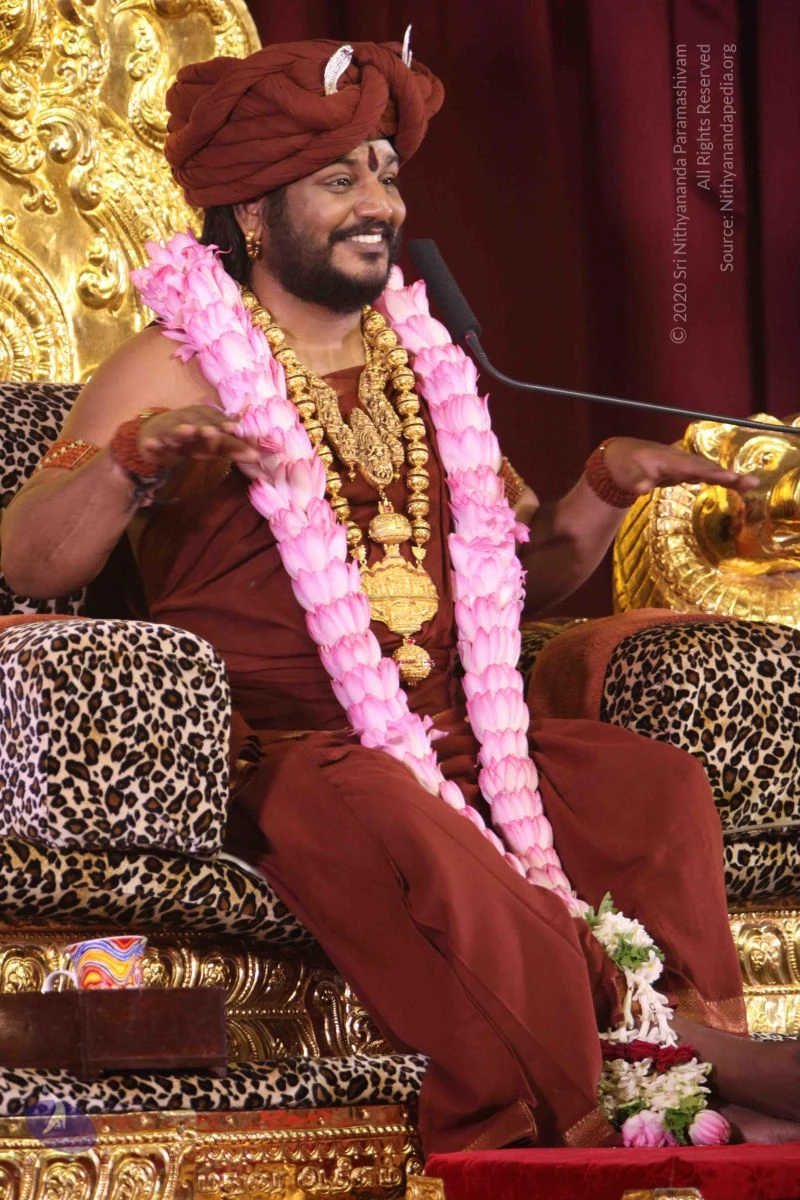
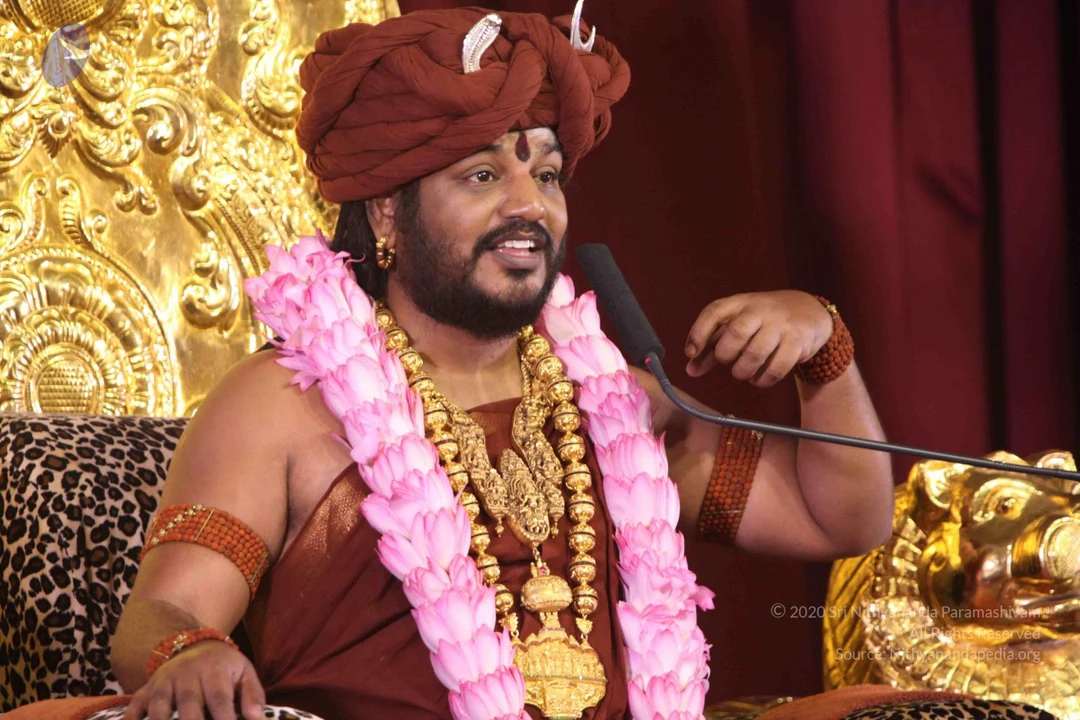
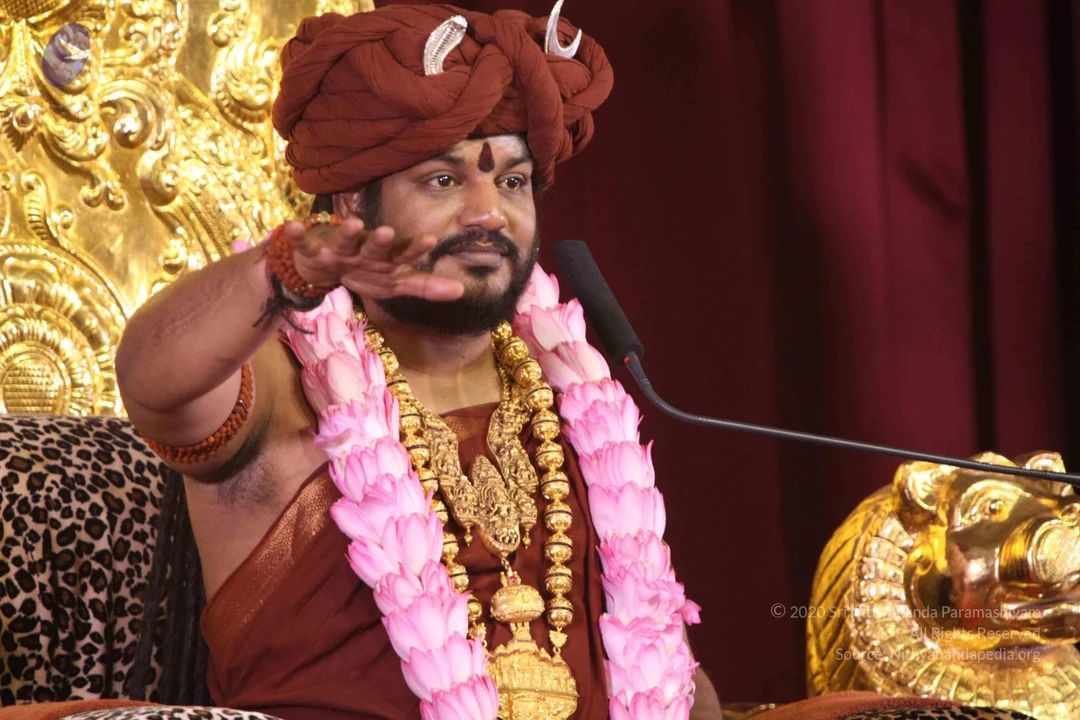
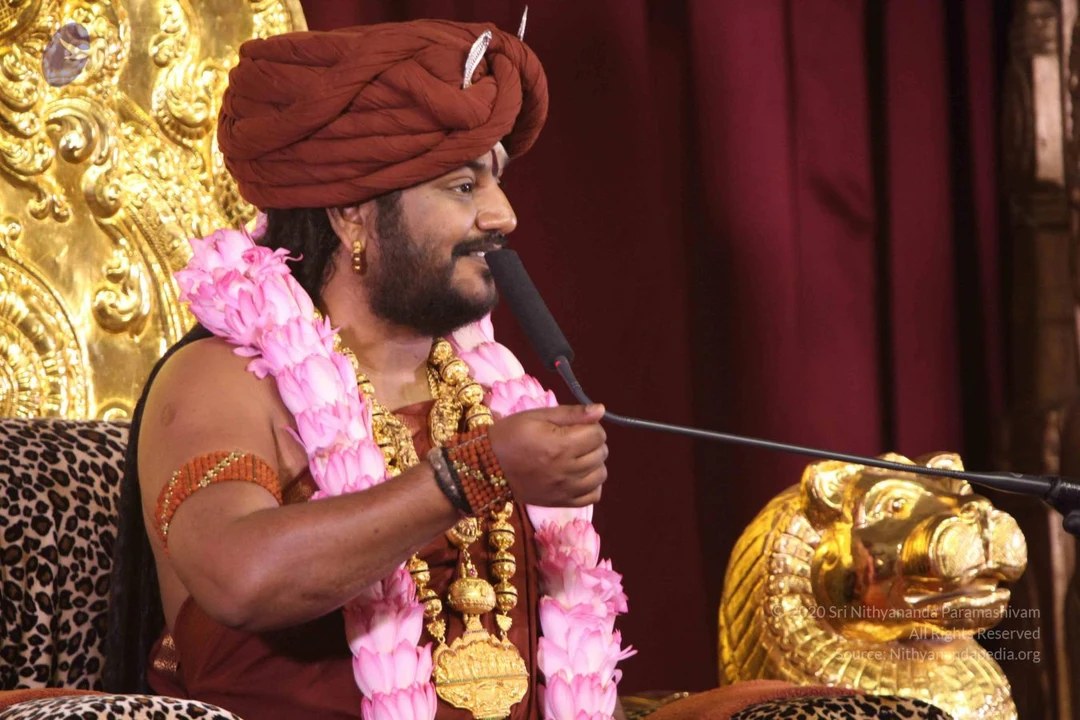
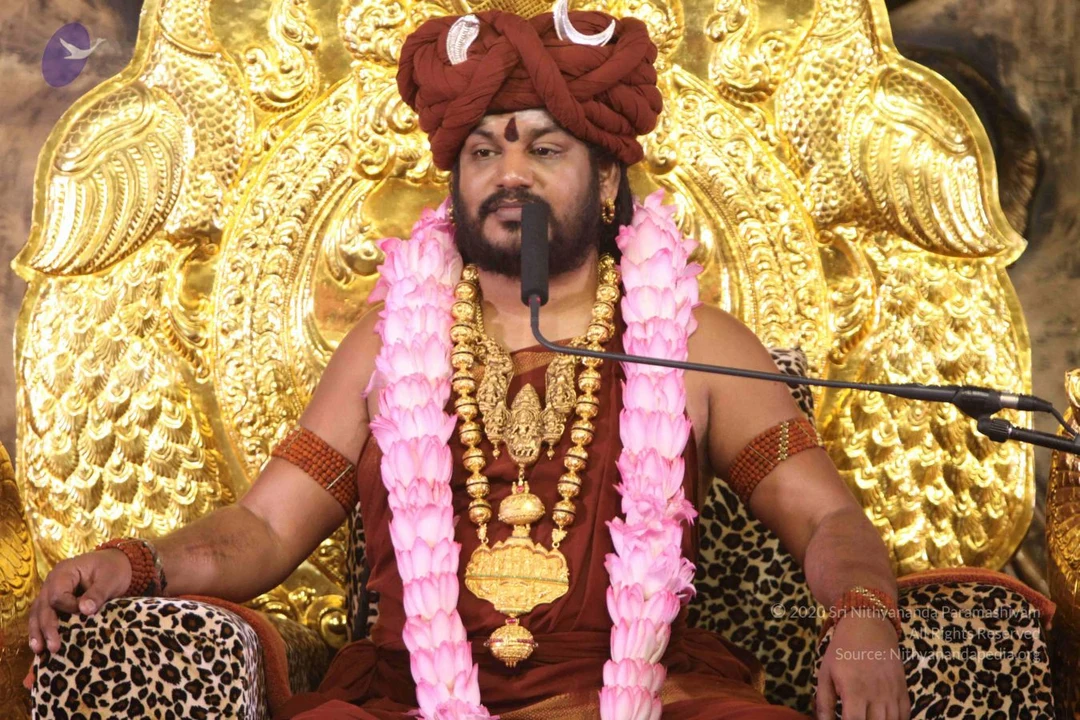
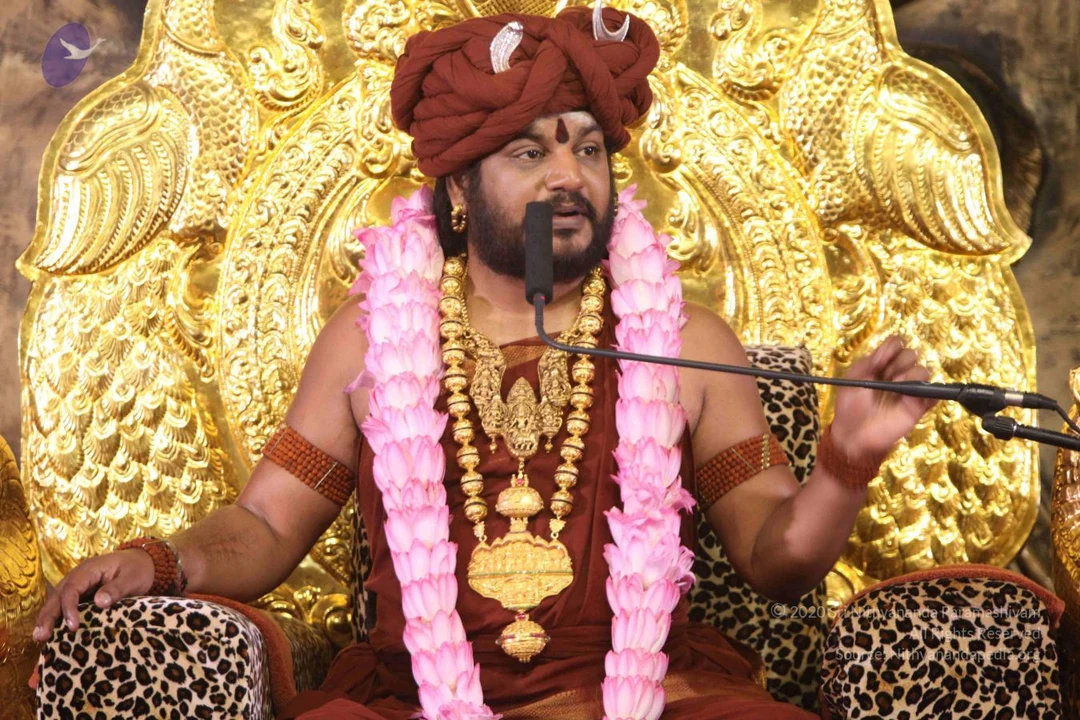
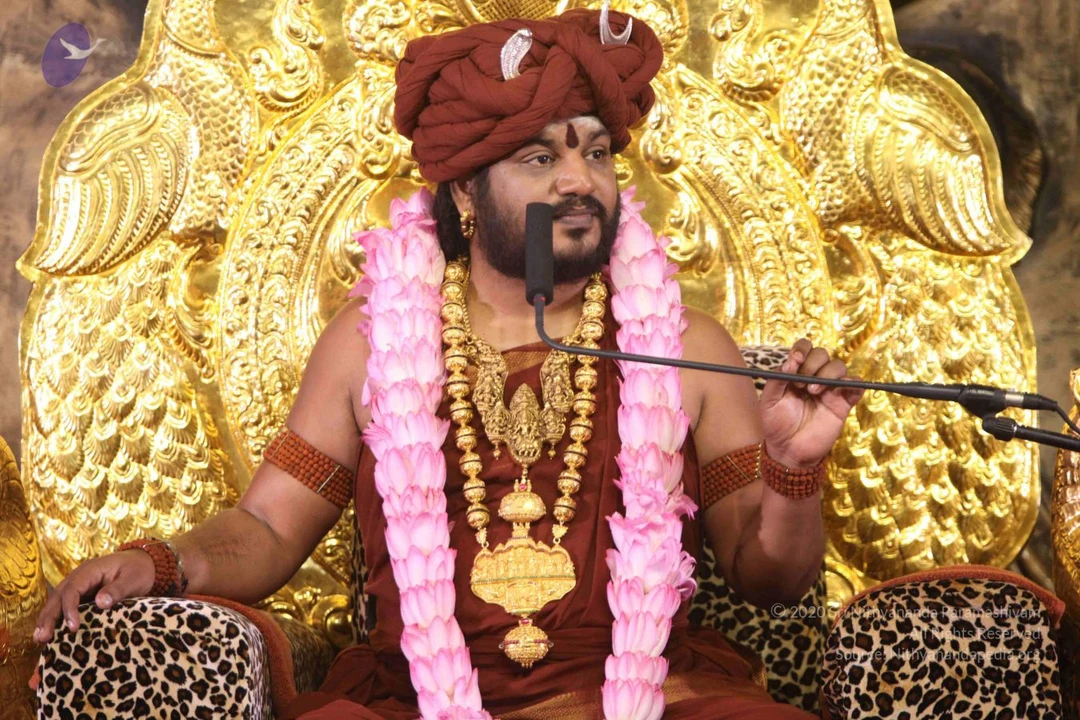
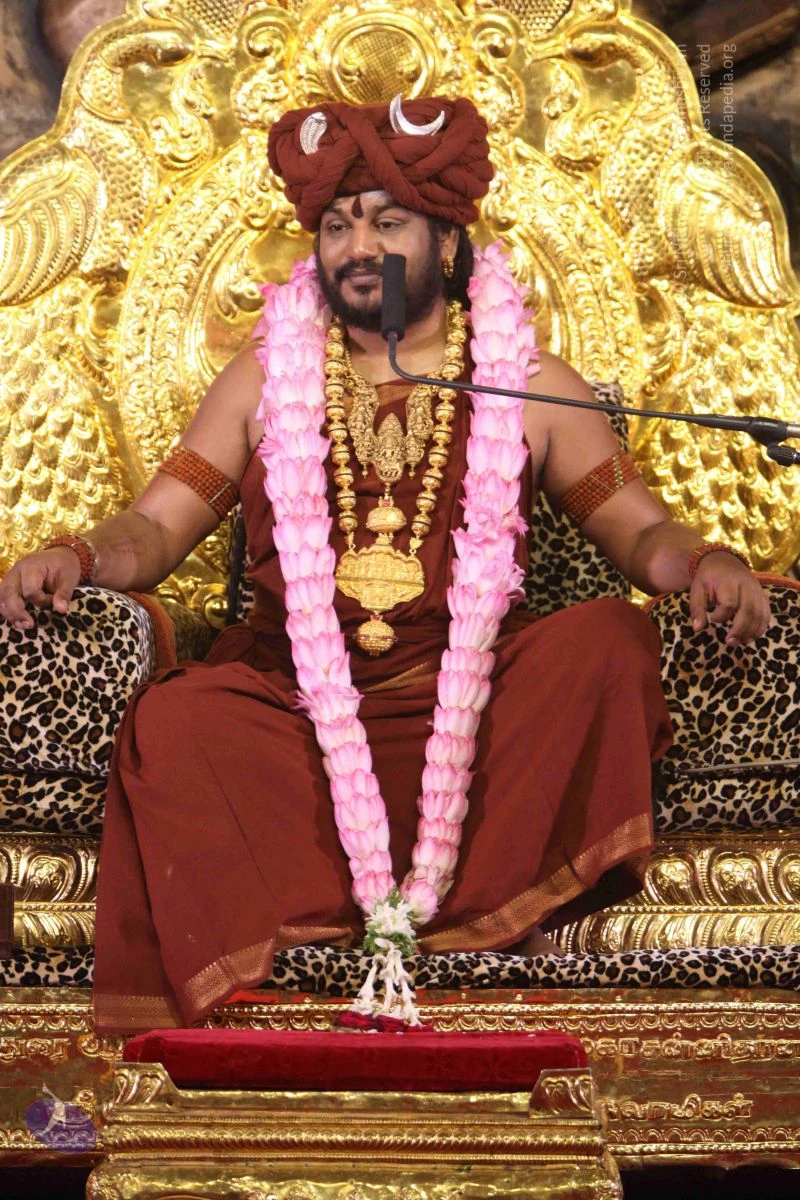
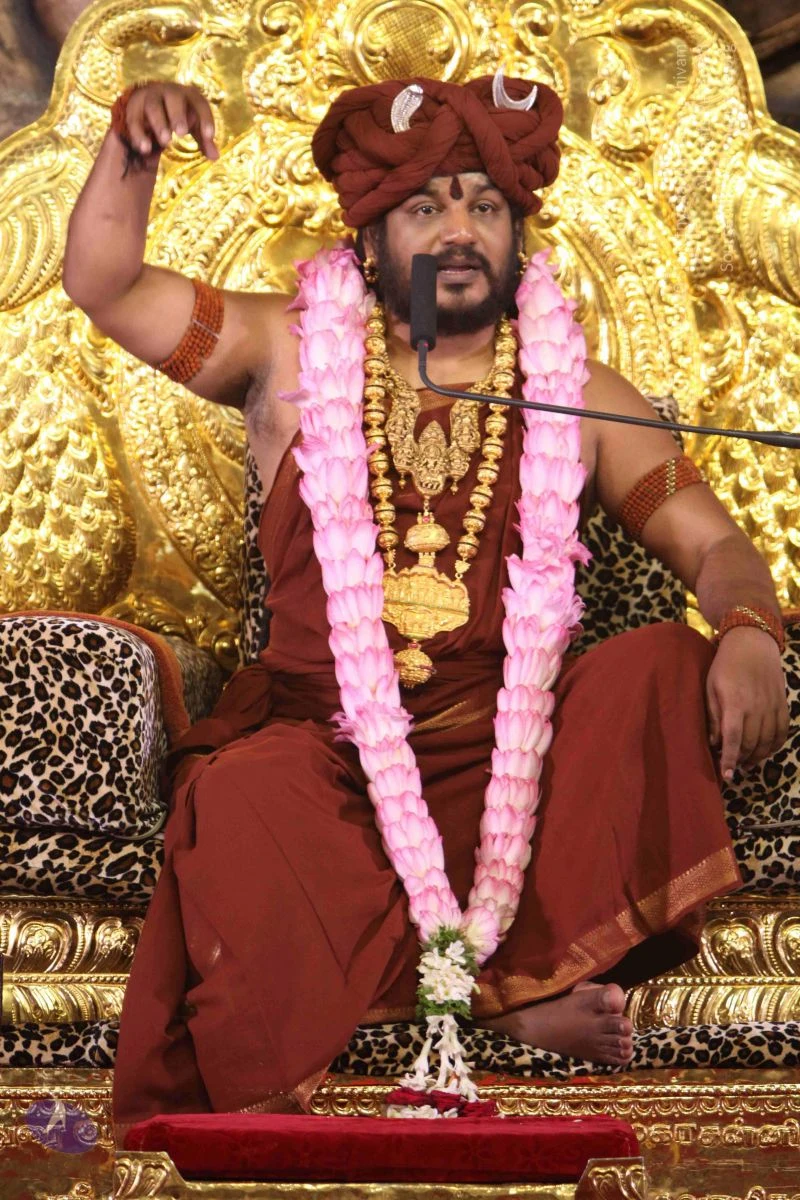
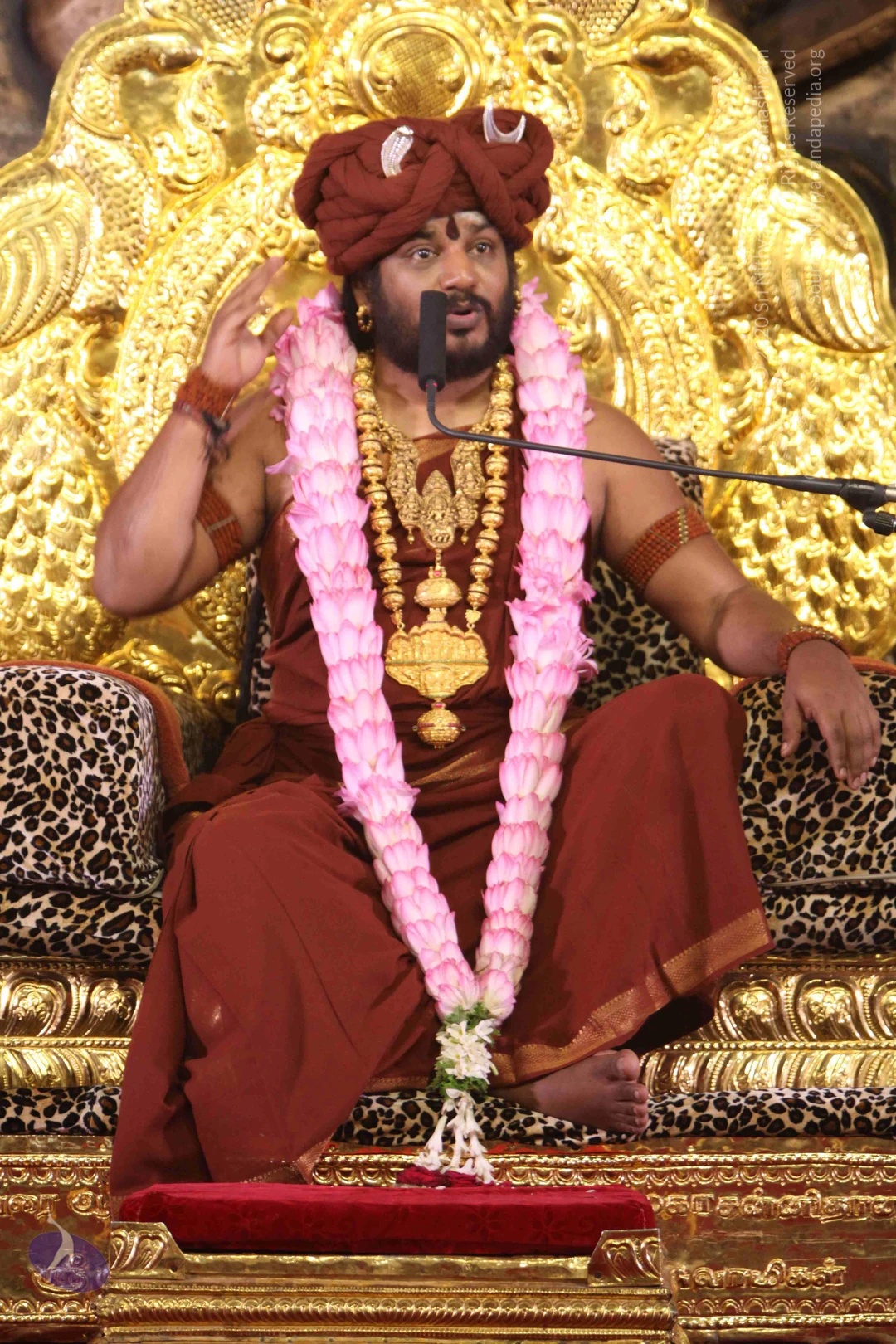
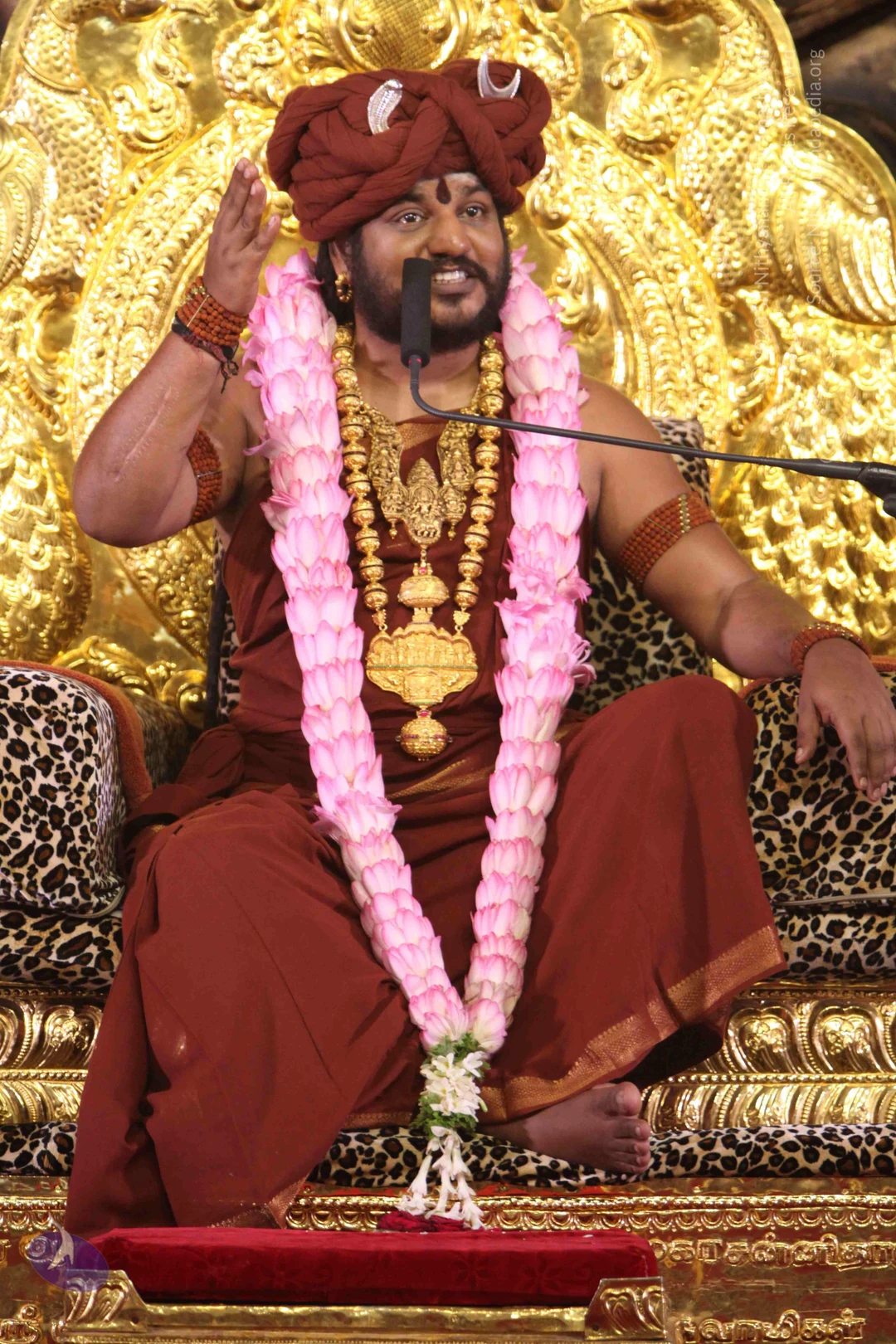
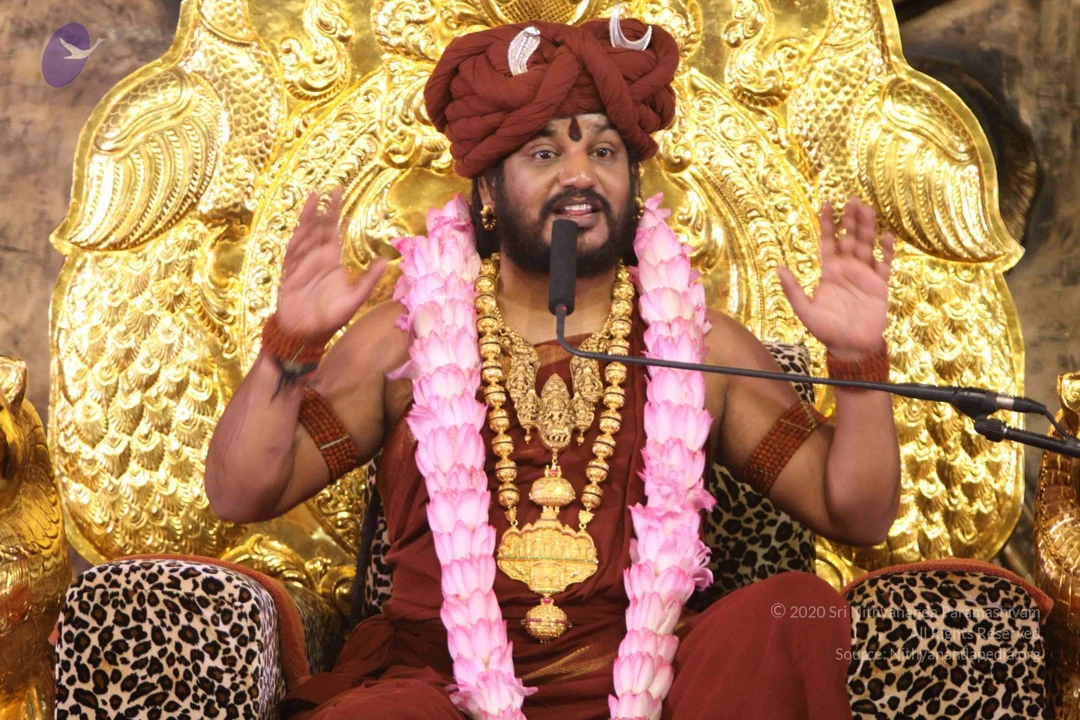
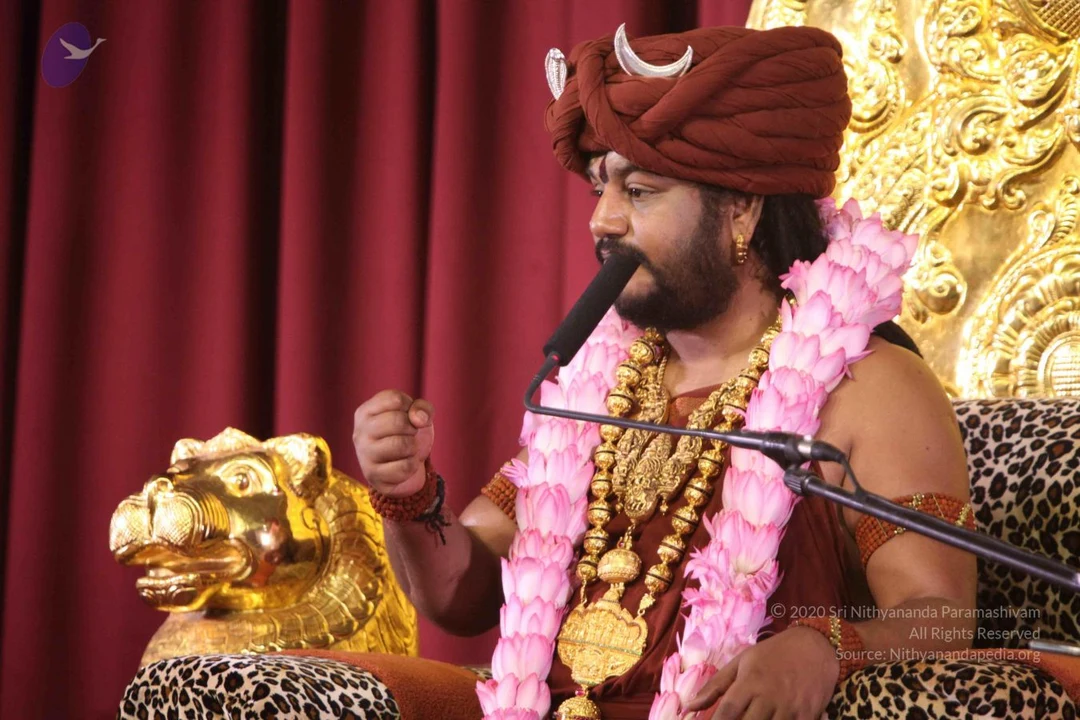
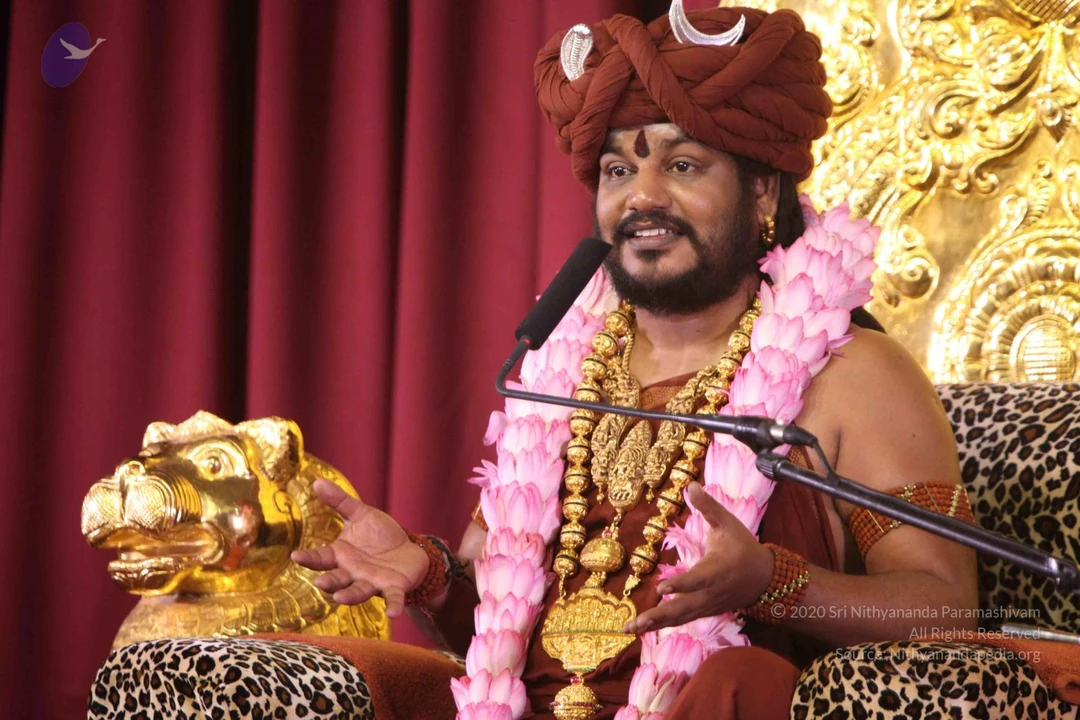
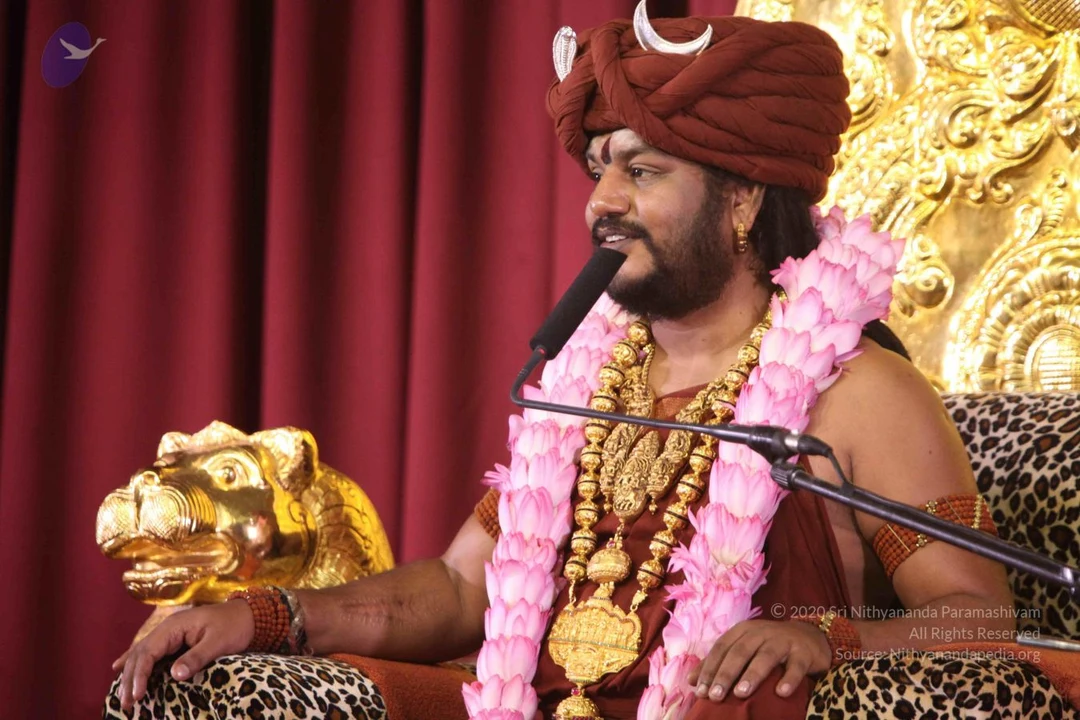
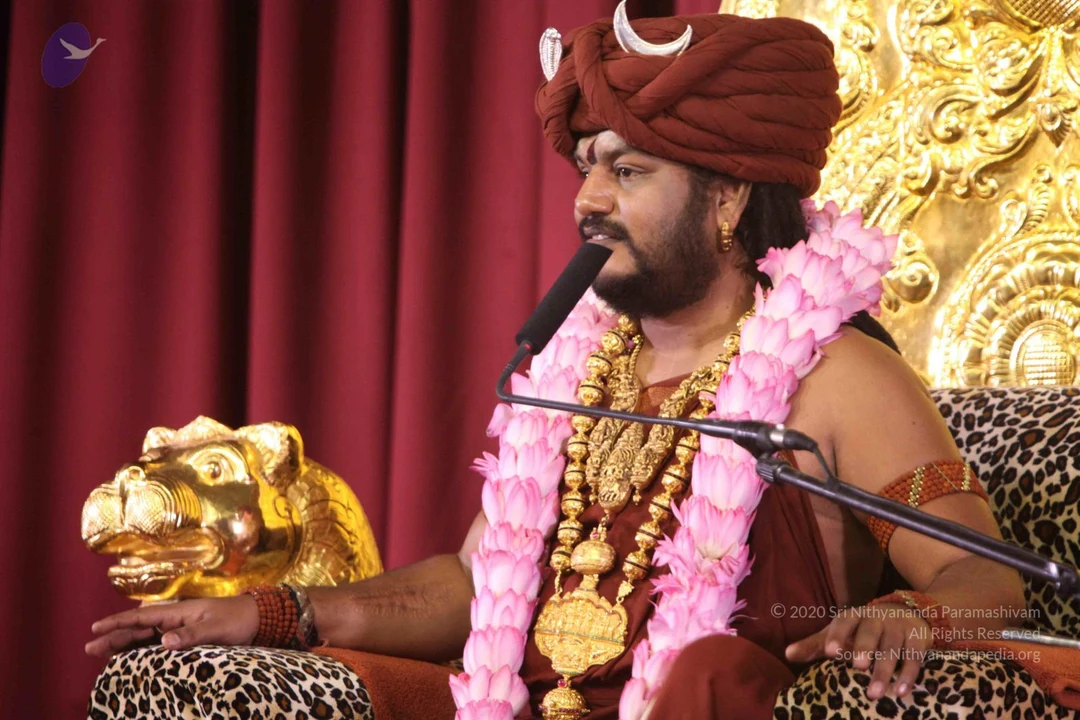
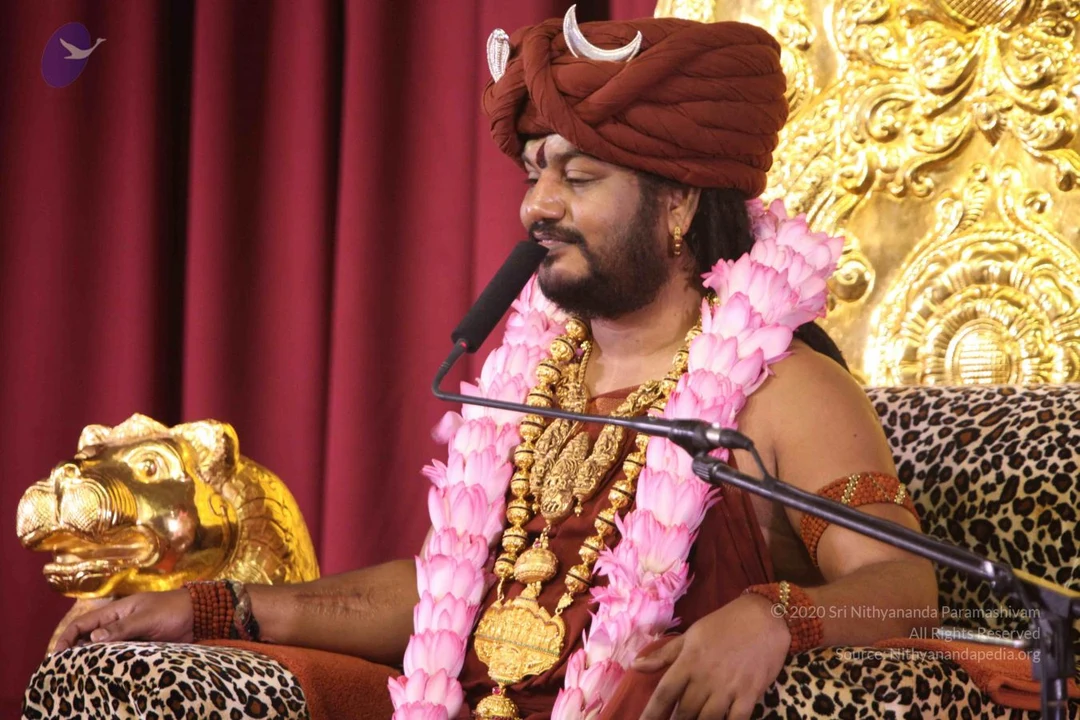
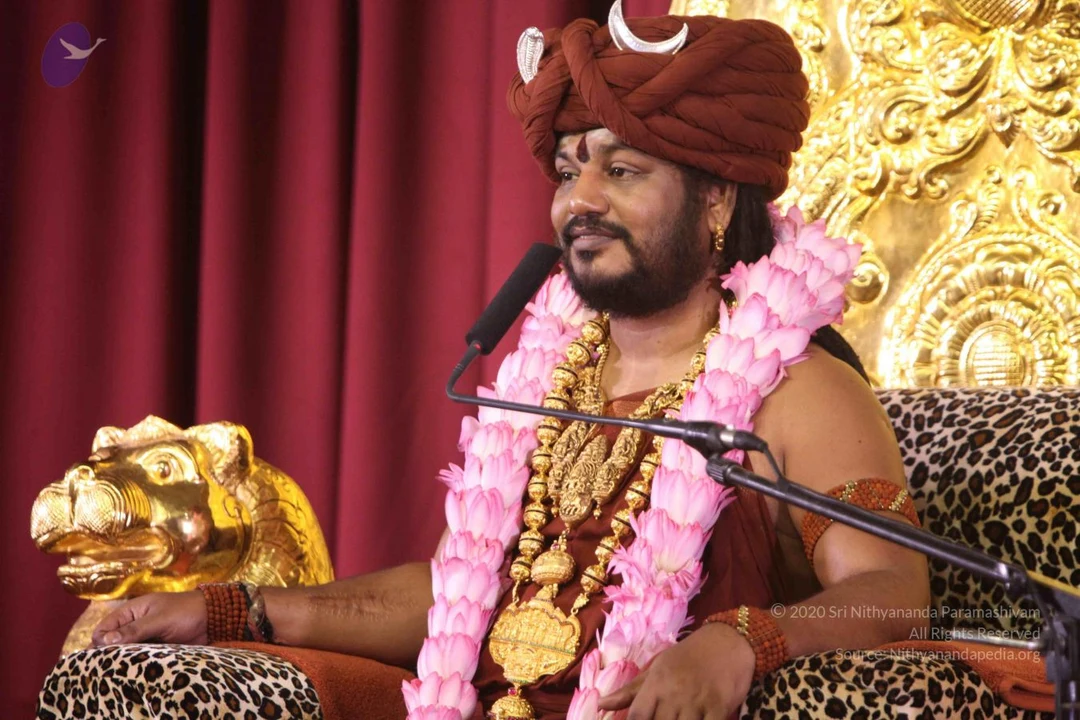
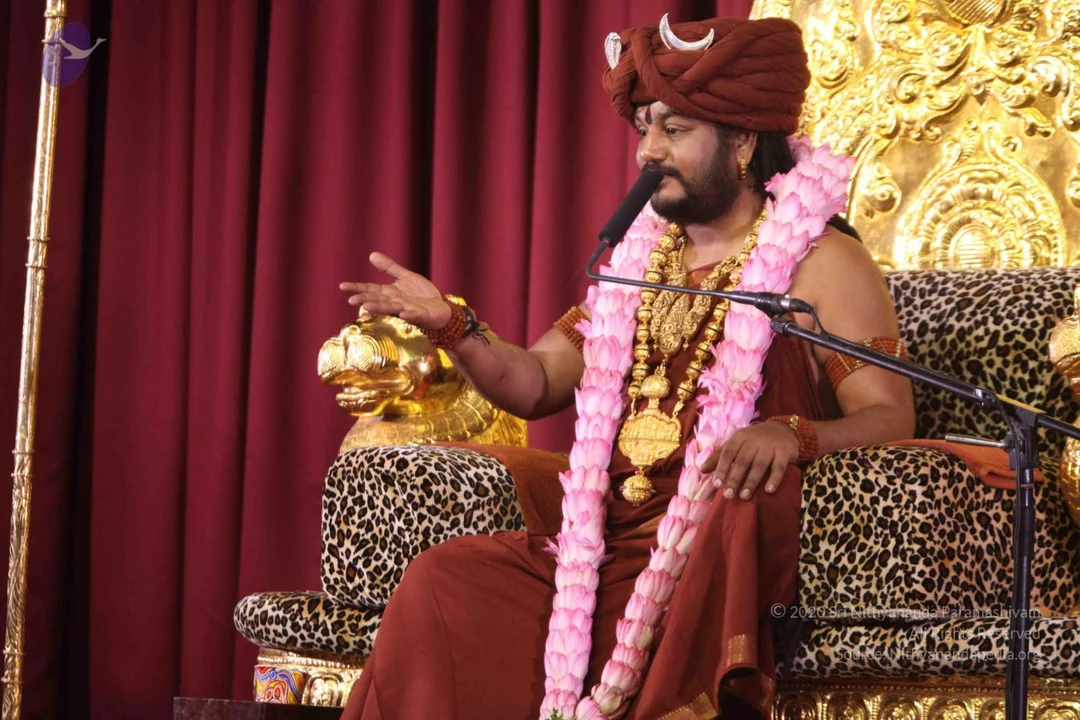
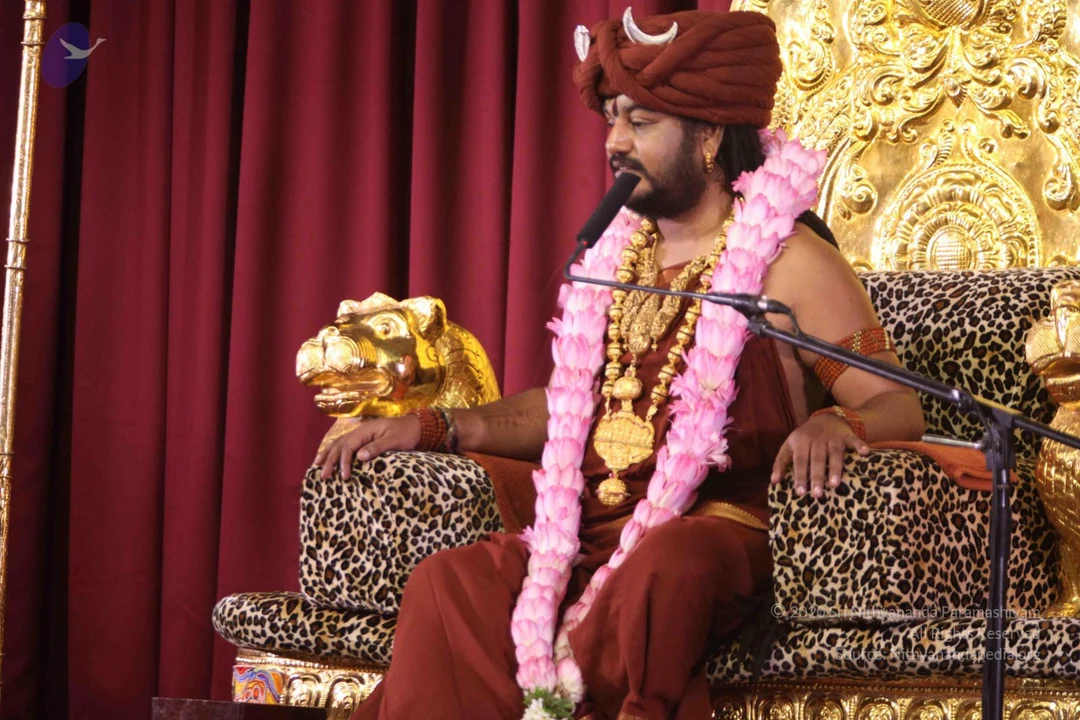
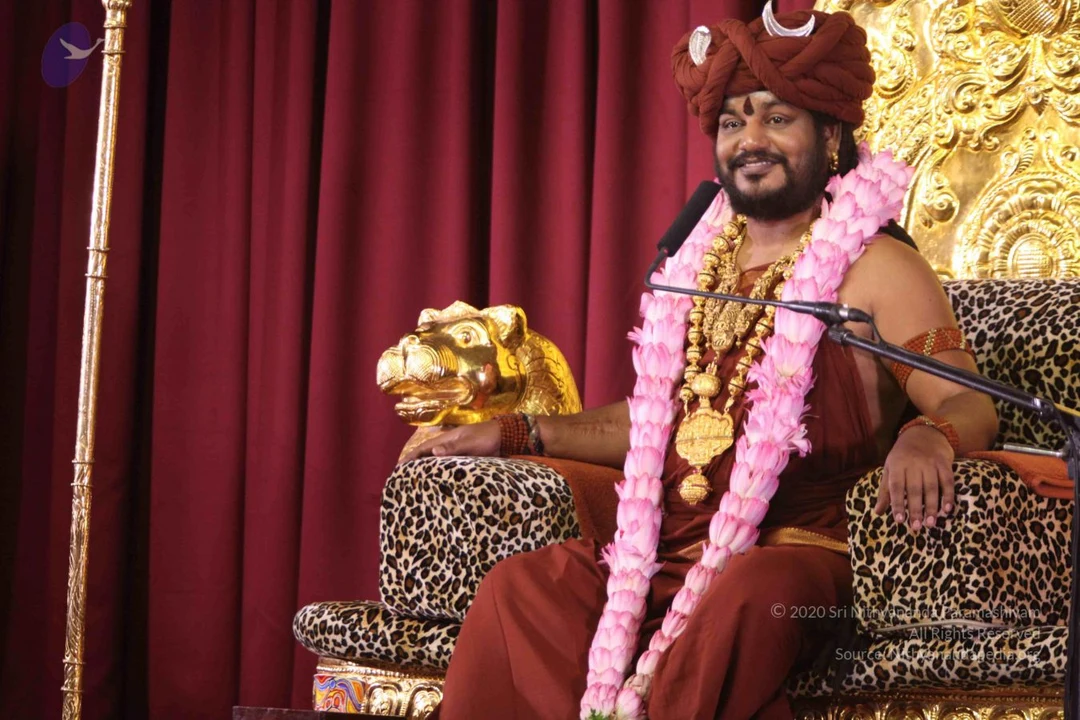
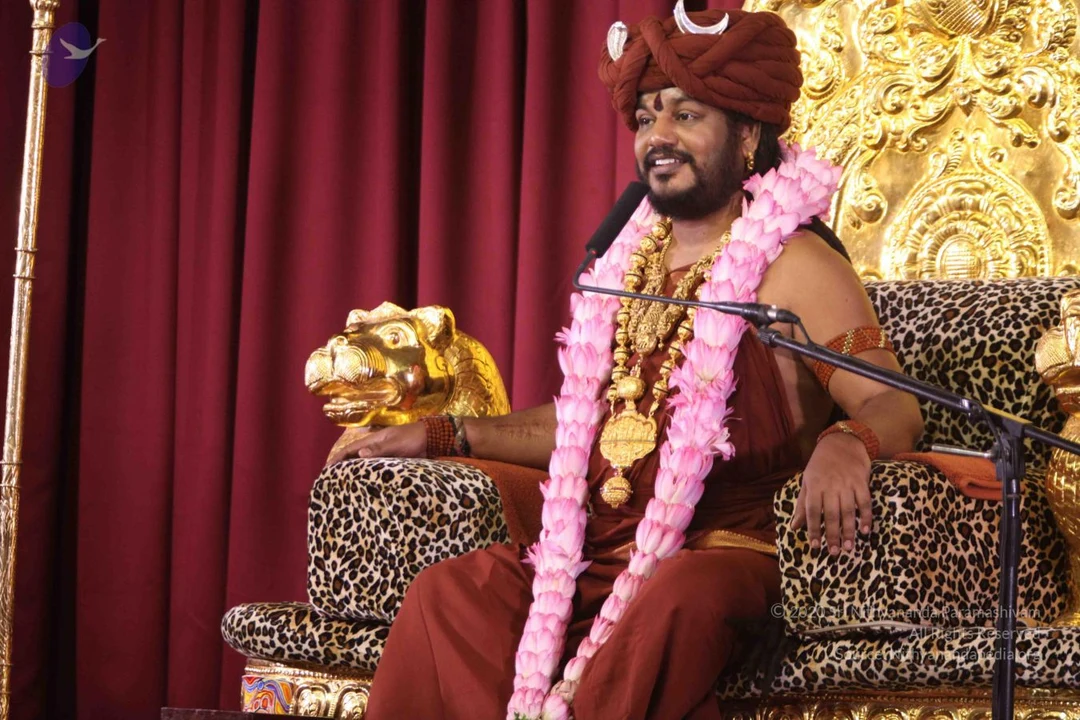
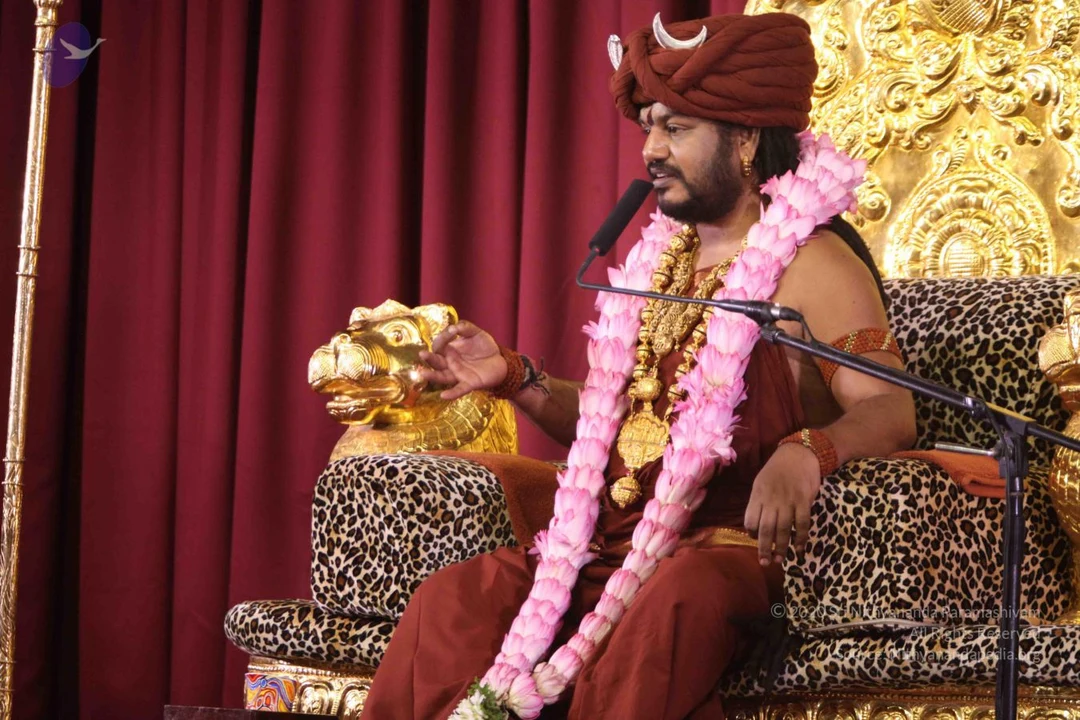
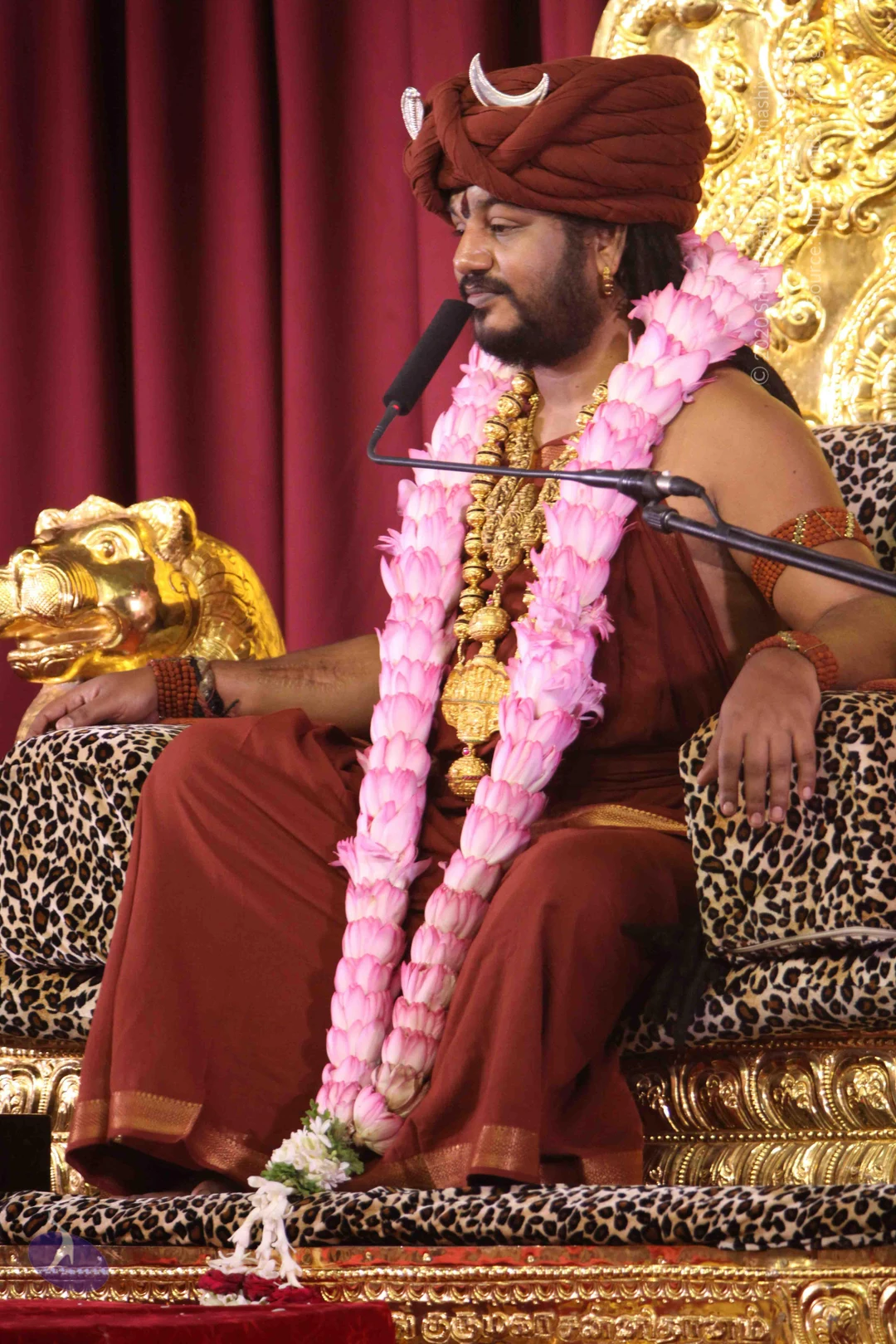
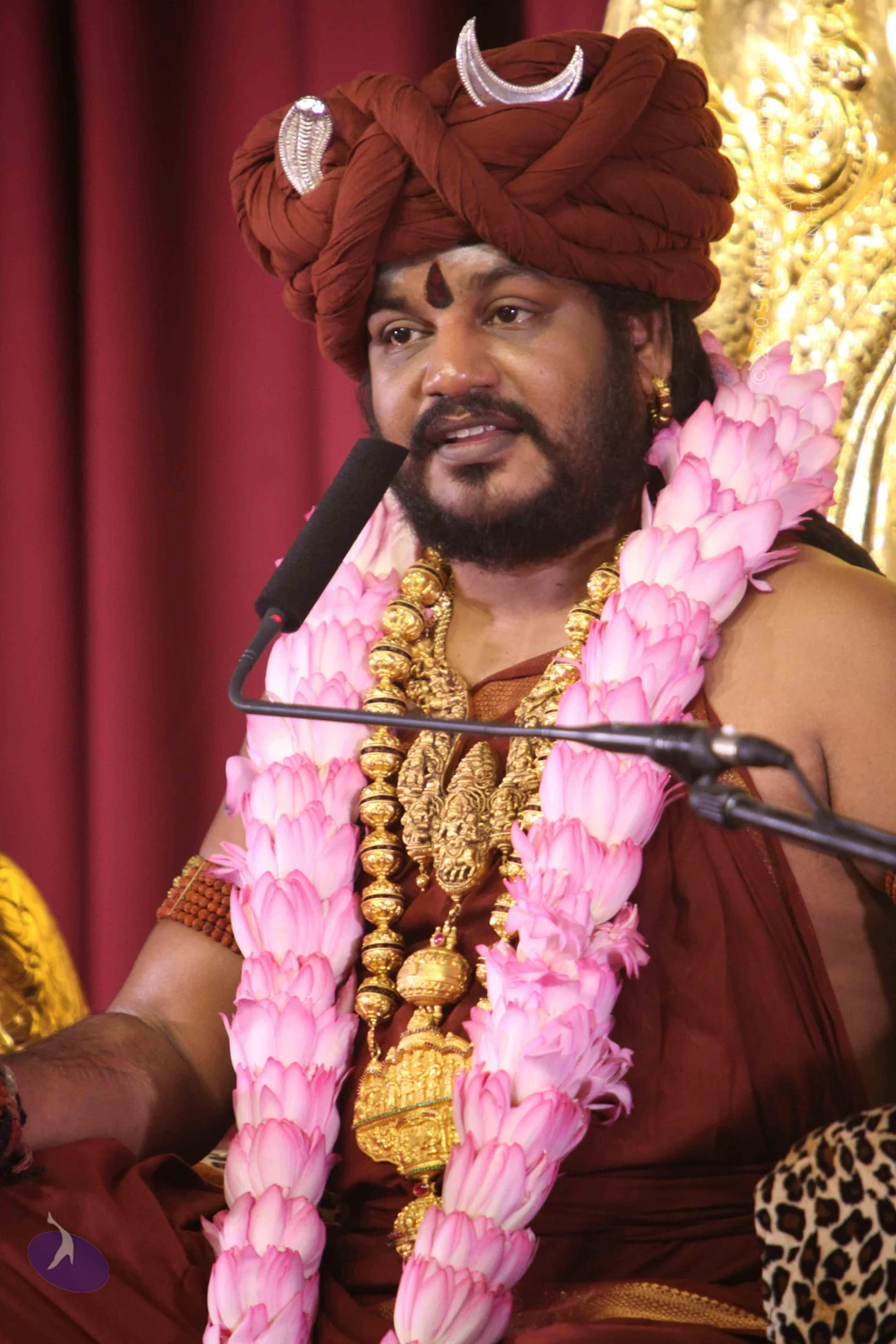
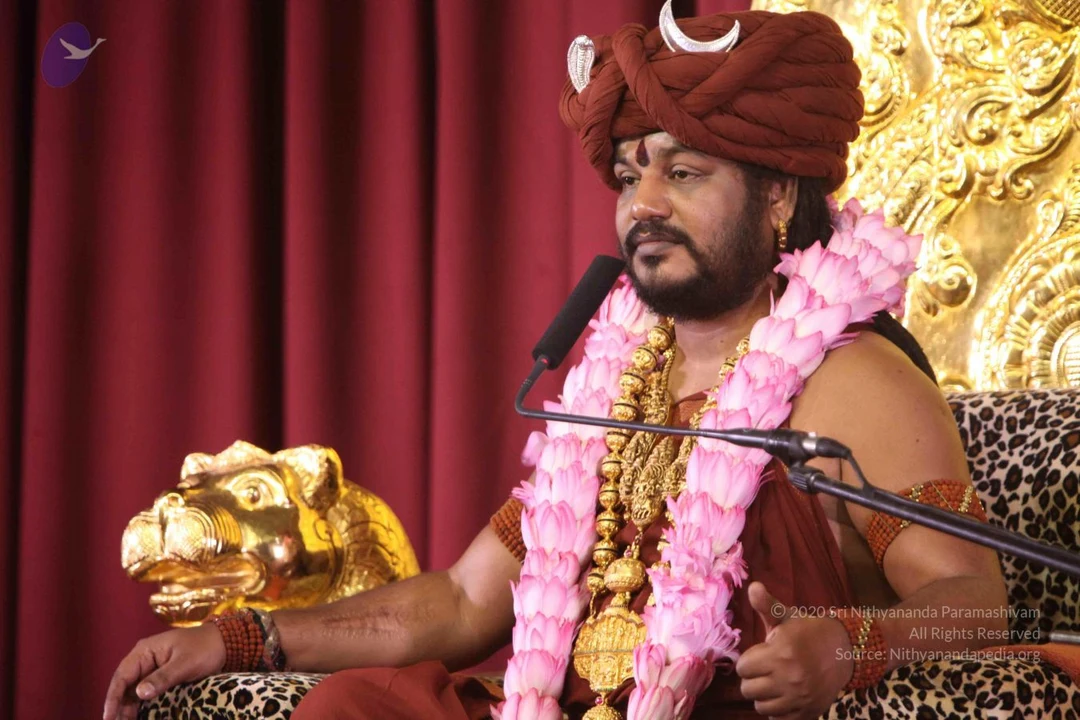
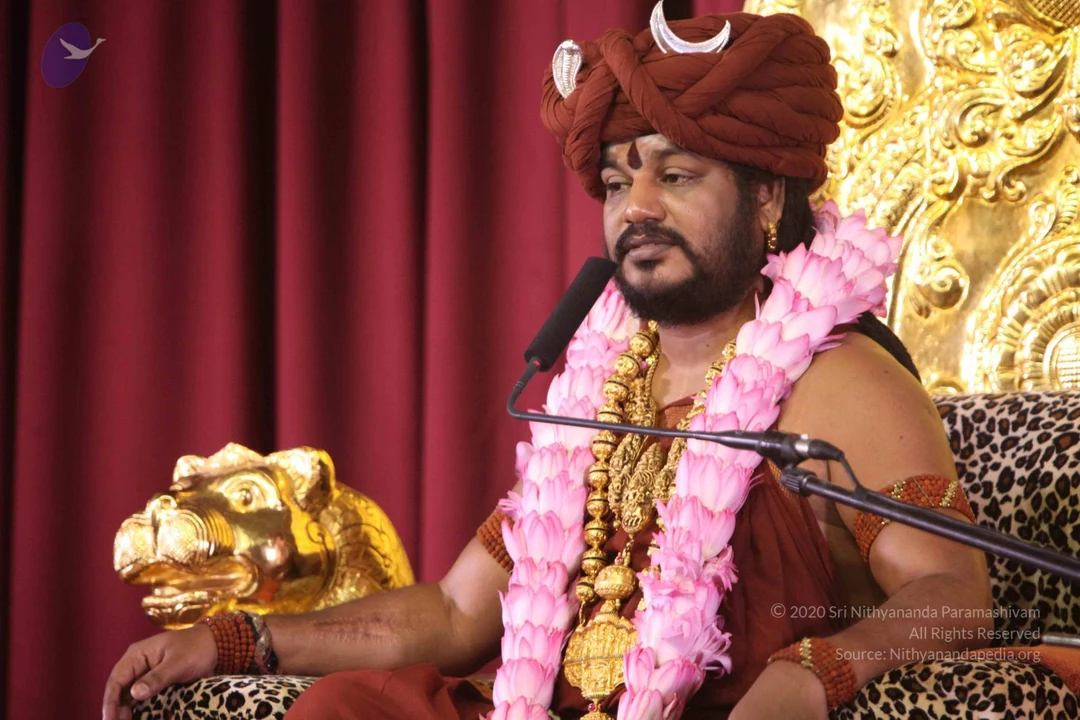
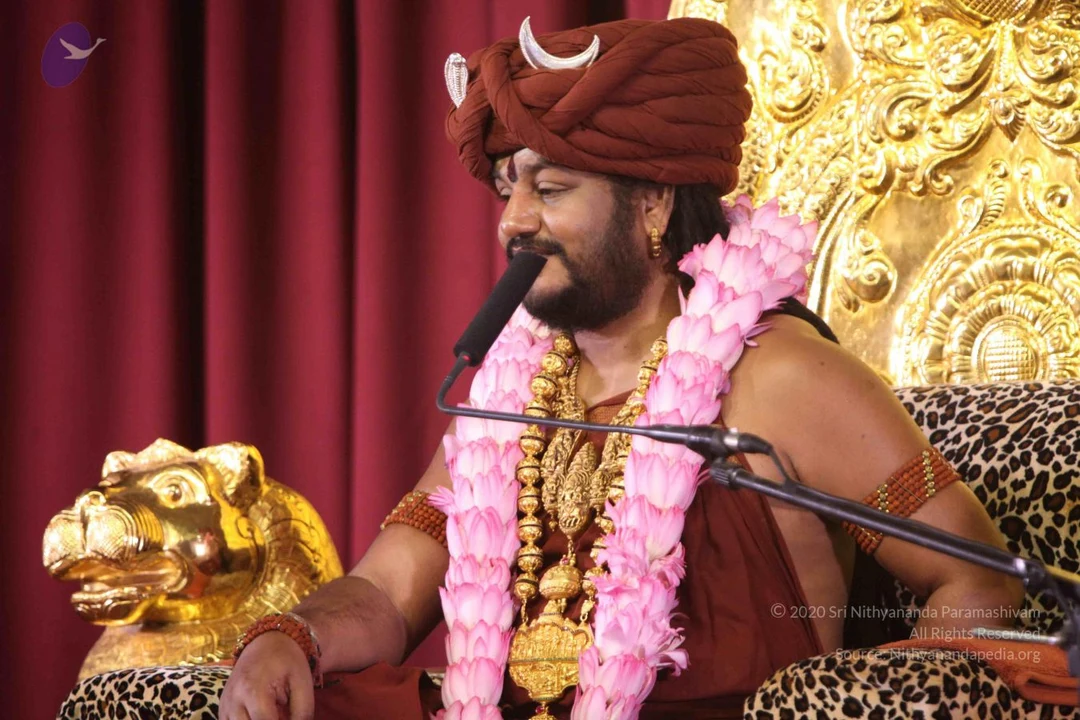
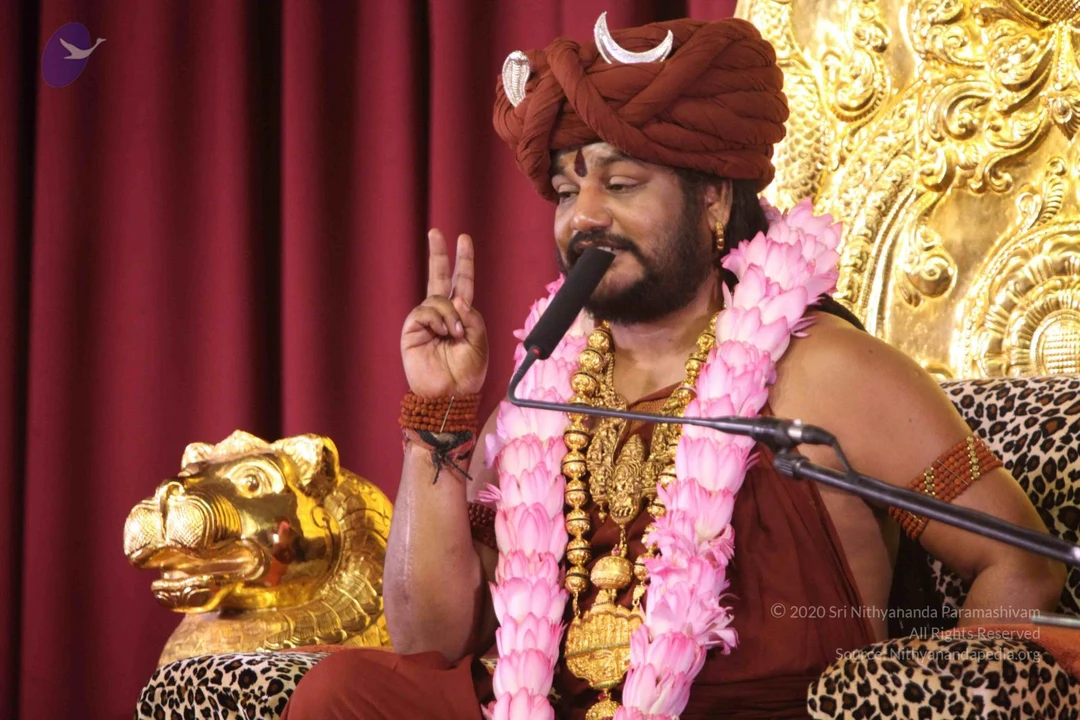
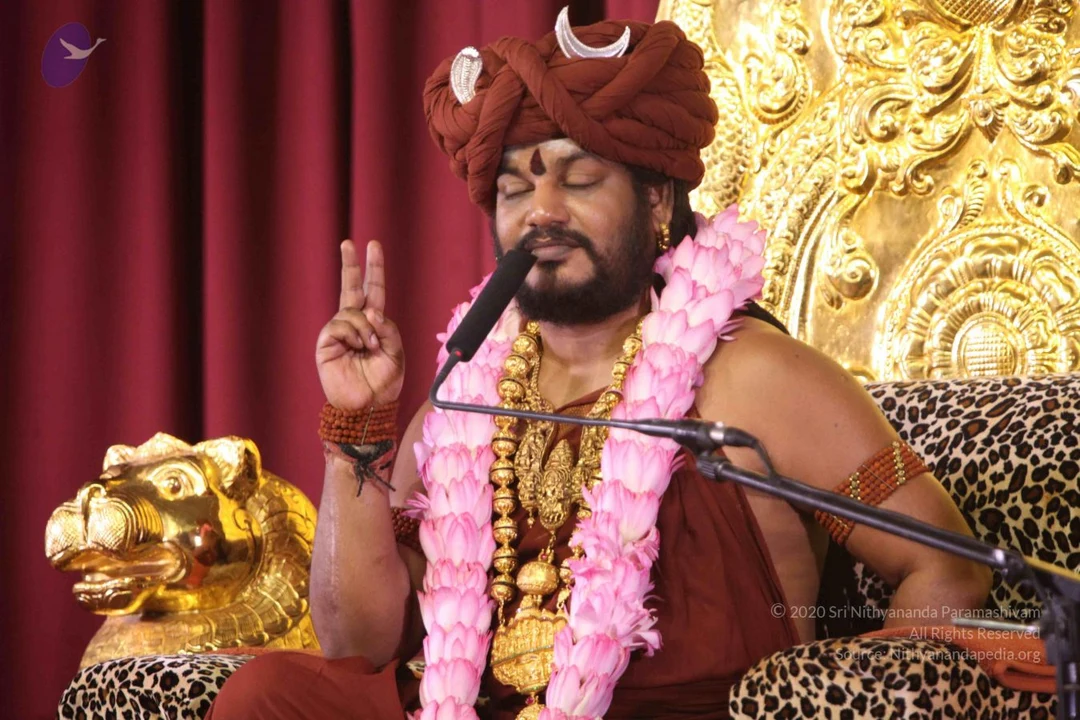
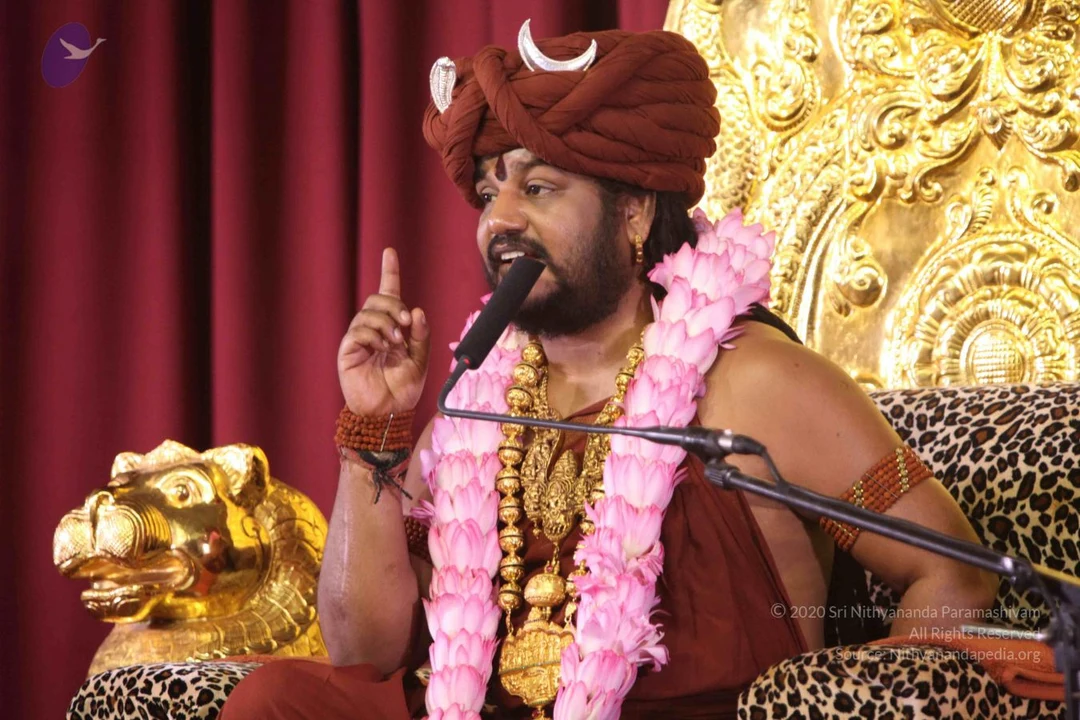
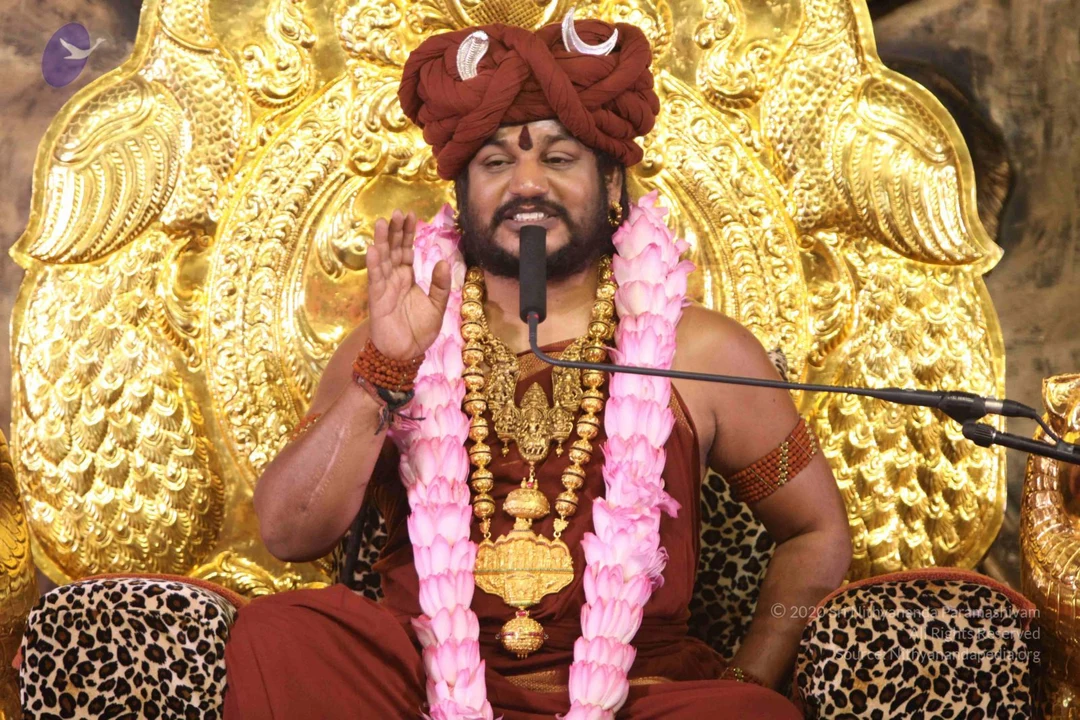
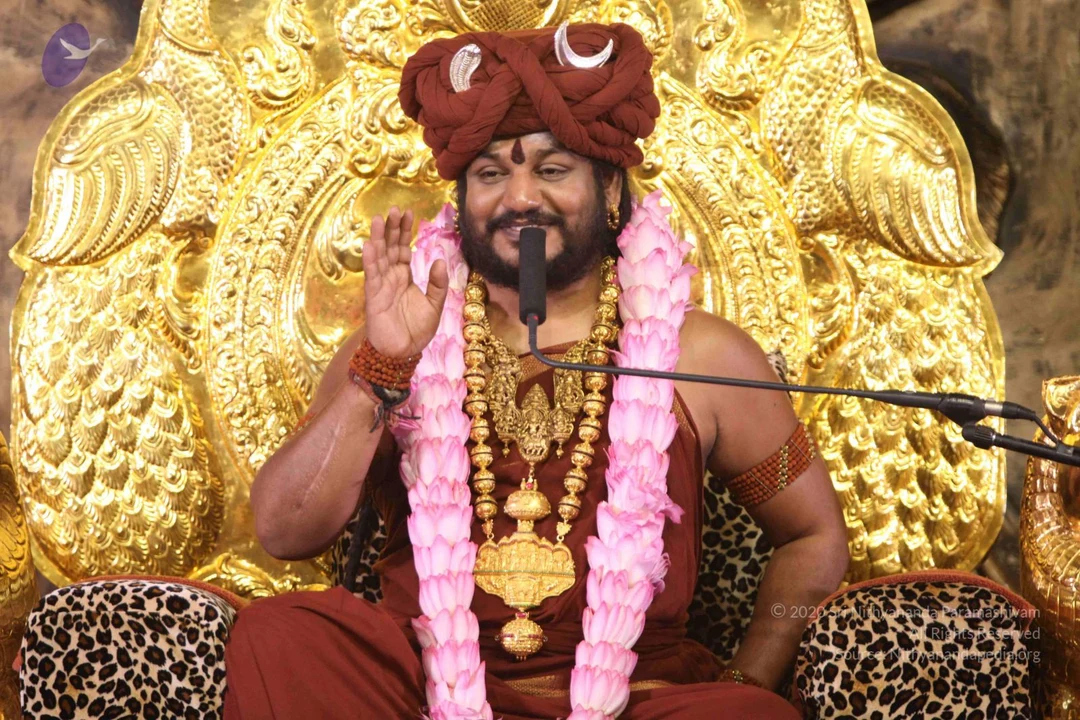
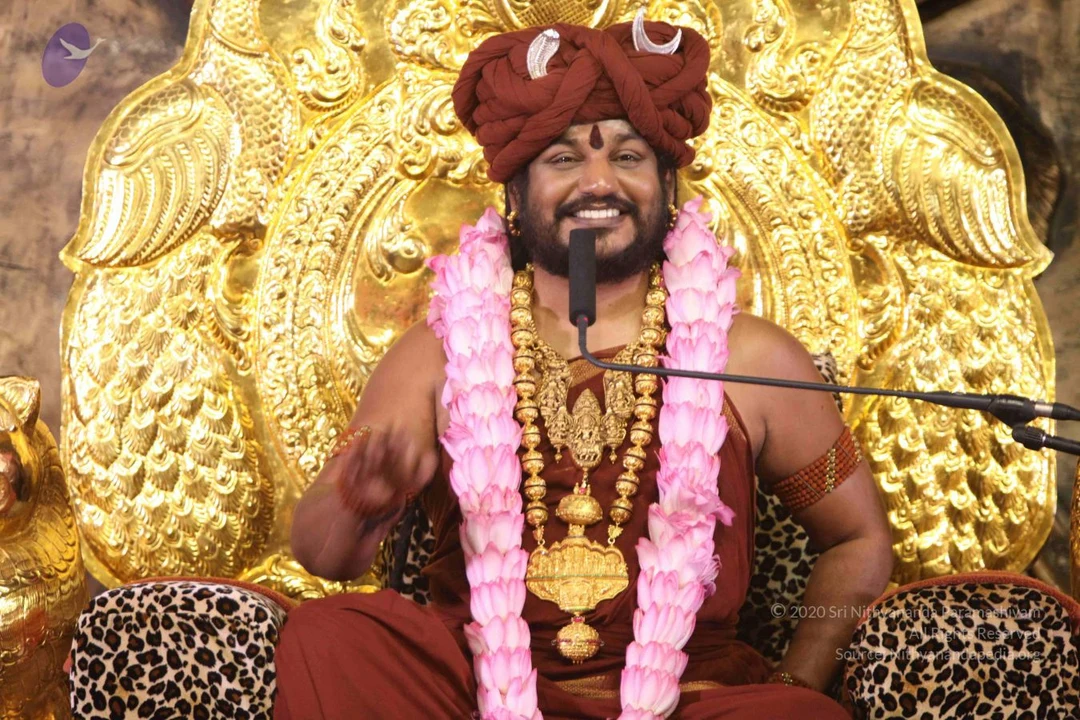
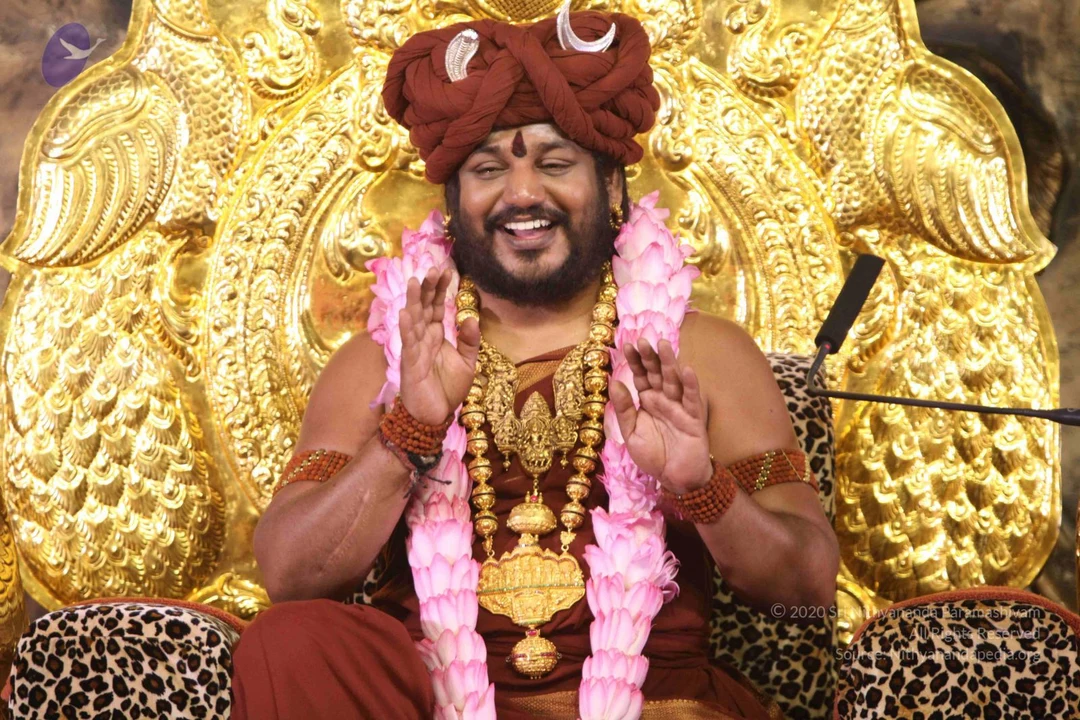
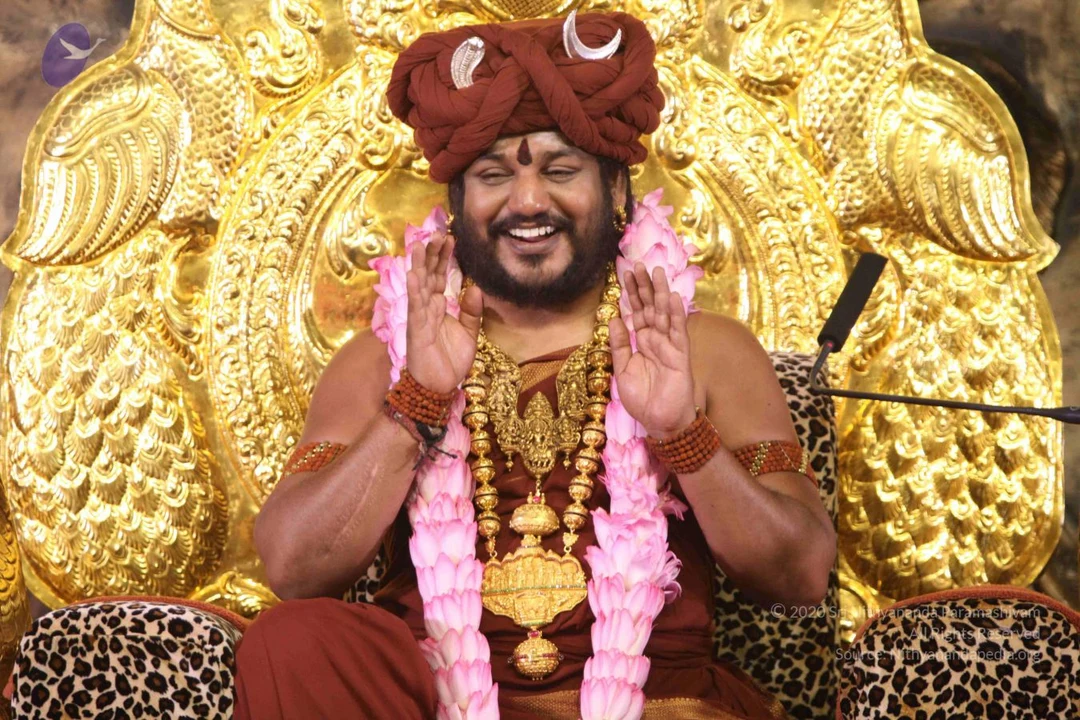
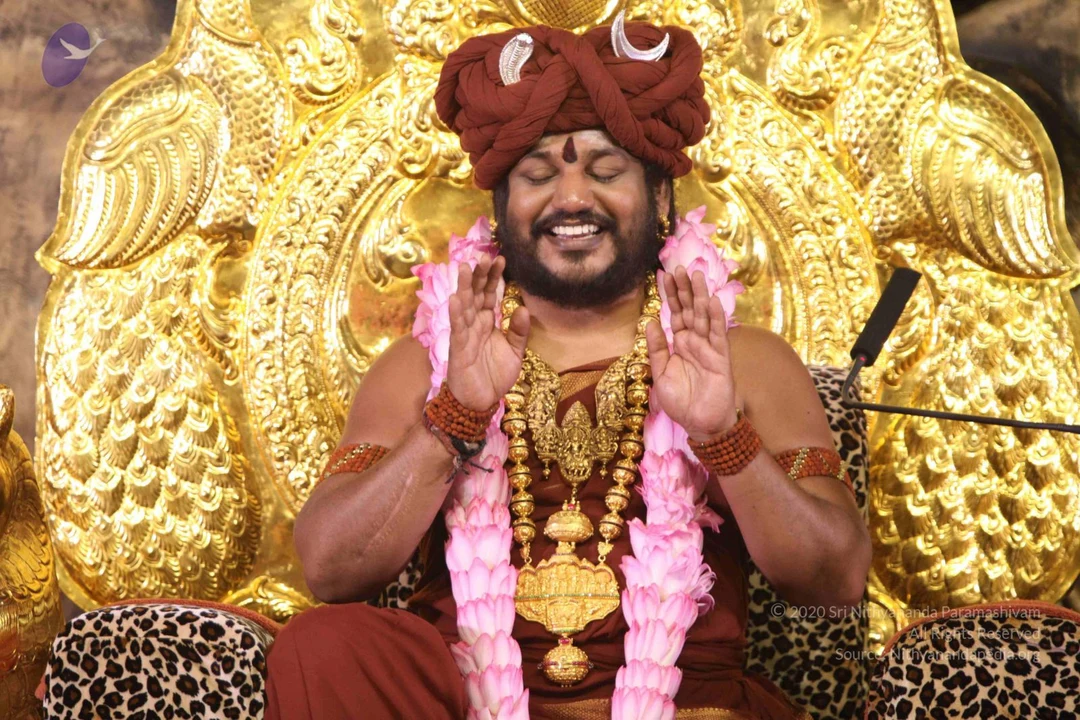
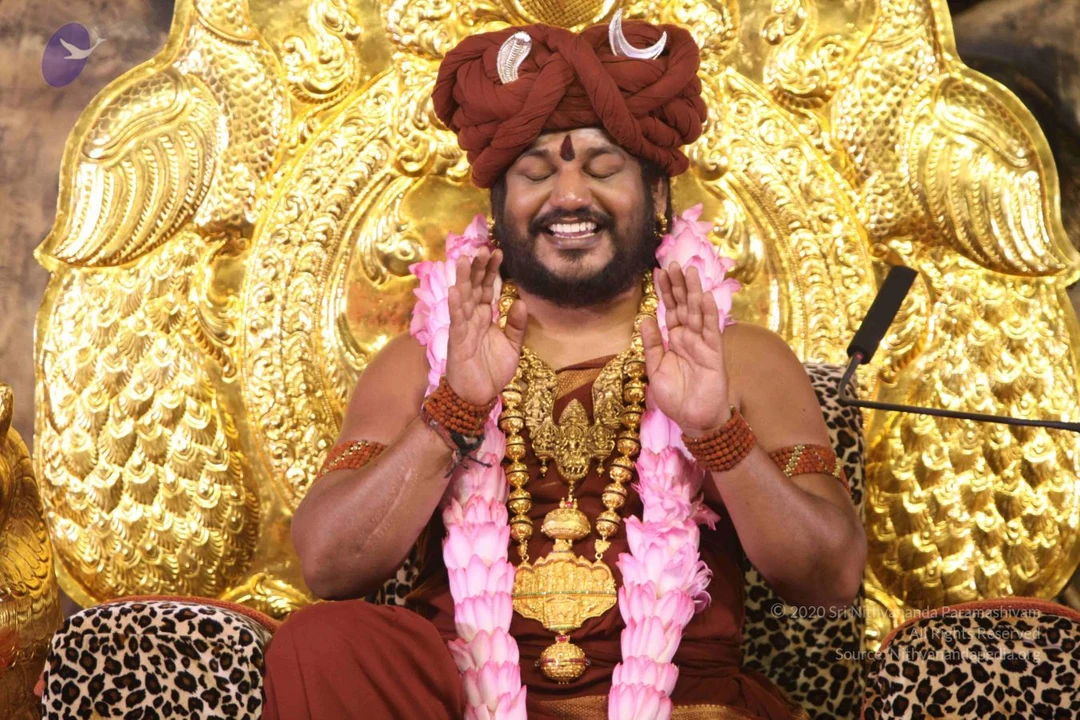
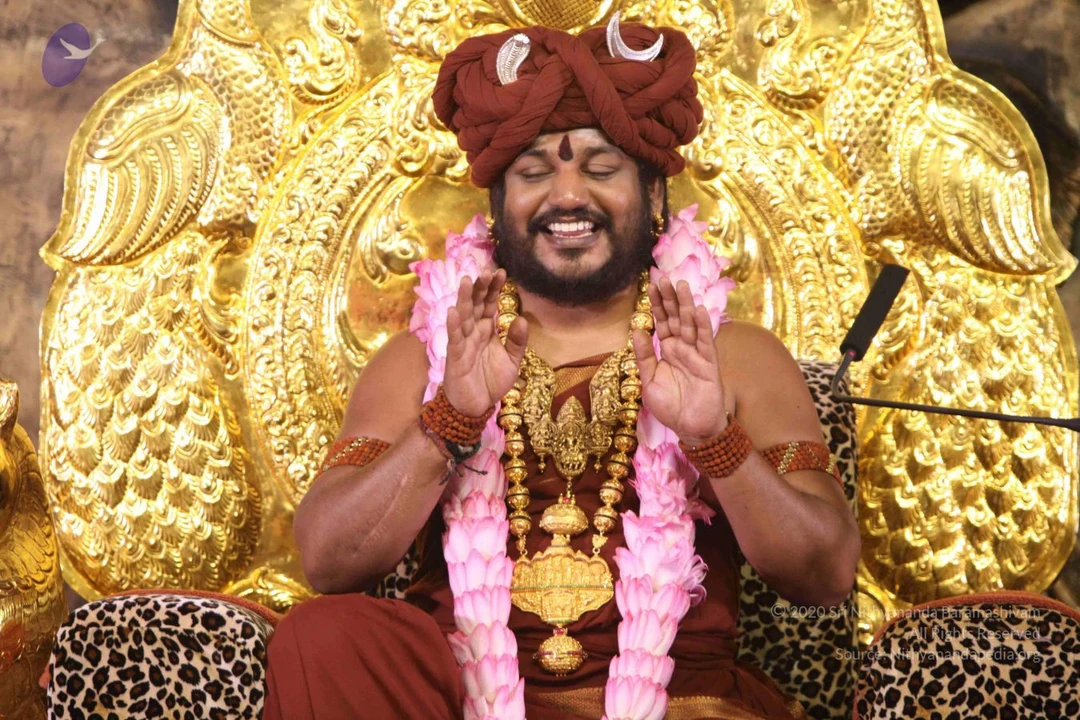
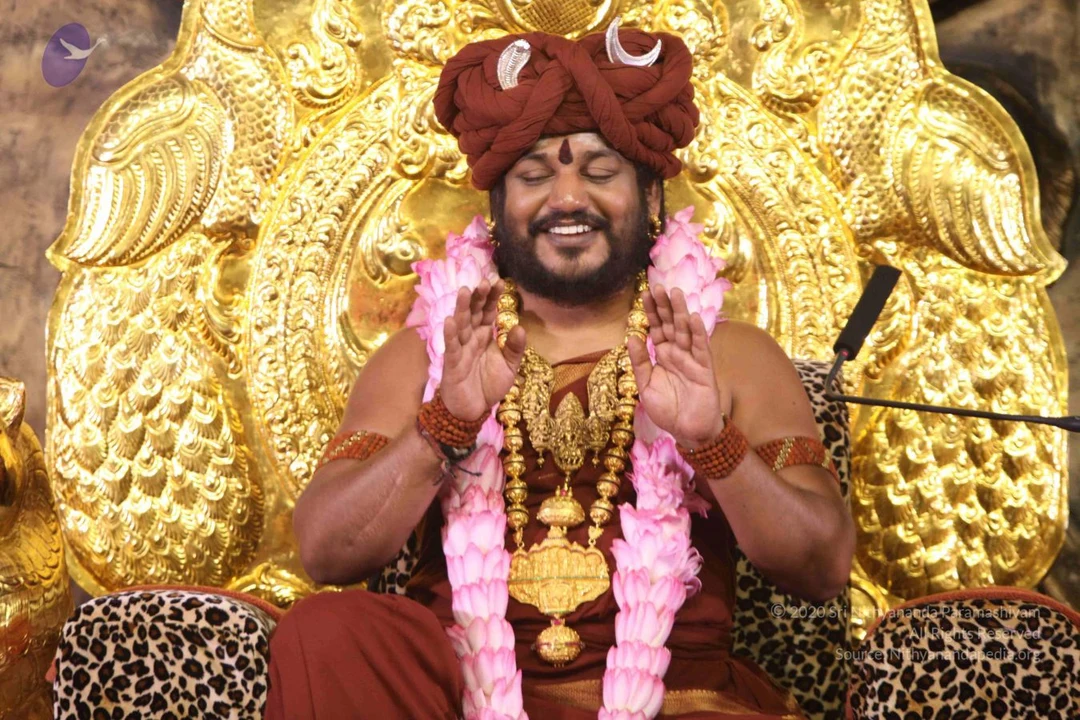
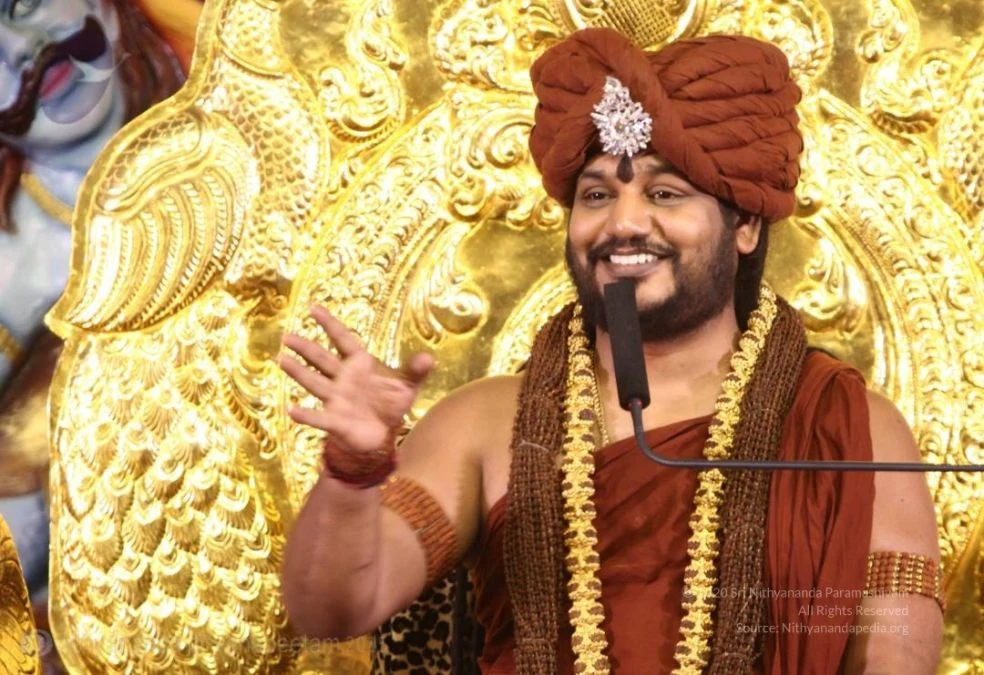
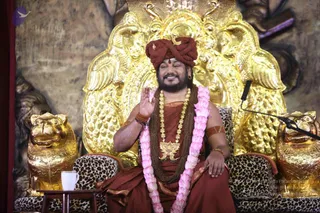
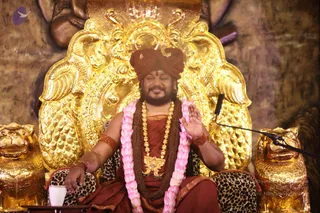
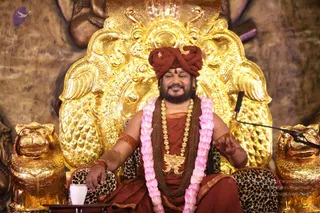
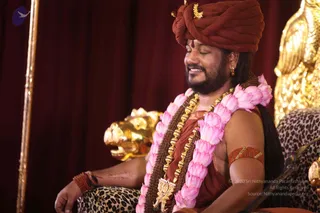
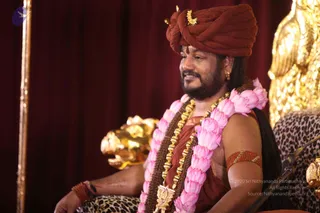
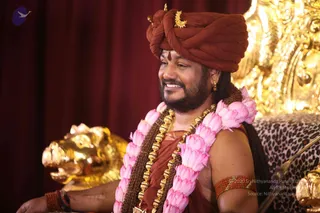
A photograph of a seated man in a maroon-red turban and matching maroon-red robe, eyes closed and smiling, raising his right hand in a blessing gesture. He wears a long rudraksha mala, a pink-and-white flower garland, a gold pendant, and gold bangles on his wrists. He sits on an ornate gold throne carved with scrollwork and flanked by gold lion figures, with a leopard-print cushion on the seat. A microphone stands at right and a white cup sits on a small side table at left. The setting is a satsang hall with a golden backdrop. Swamiji (probable) appears as the seated speaker wearing a turban, rudraksha mala, gold ornaments and maroon robes, giving a discourse.A seated man in reddish-maroon robes and a maroon turban sits centrally on an ornate golden throne with carved peacock-feather motifs and golden lion figures on either side. He wears a pink and white flower garland, a long rudraksha mala, and a large gold pendant necklace, with red bangles on his wrists. His eyes are closed and he raises one hand in a gesture while speaking near a microphone on a stand. A small white cup sits on a low table at the lower left. Swamiji (probable): the seated figure's maroon turban, rudraksha mala and ceremonial gold necklace fit the presentation for a satsang discourse.A seated man in a rust-red turban and rust-red robes sits on an ornate gold throne with carved scroll and peacock-feather motifs, flanked by two gold lion sculptures. He wears a rudraksha mala, a heavy gold necklace with a pendant, and a pink and white flower garland. A microphone stands at his right, and a small white cup sits on a table at left as he gestures with his hands during a discourse. Swamiji (probable): the seated man wears a rust-red turban, rudraksha mala, gold necklace and flower garland on a golden throne, consistent with the page's description of a satsang.A smiling man with eyes closed sits on a leopard-print cushioned seat in front of deep red drapery. He wears a rust-red turban with a gold ornament, a rust-red robe, a brown rudraksha mala with gold beads and a gold pendant, and a thick garland of pink lotus flowers over his shoulders. A beaded red-and-gold armband is on his upper arm. Beside him a gold lion-head carving and a gold figure stand against the drapes.A photograph of a bearded man seated on a leopard-print cushioned throne in front of a deep red curtain. He wears a rust-brown turban with a gold crescent ornament, a rust-brown robe, a rudraksha mala with gold beads, and a long pink lotus garland. He has a red-orange band on his upper arm, red-orange bangles on his wrist, and a gold earring. A gold lion-headed armrest and a gold decorative panel stand beside the throne, and a microphone stand is at the right edge. The seated man is smiling and looking to his left.A smiling man wearing a rust-red turban with a gold ornament and a red tilak on his forehead sits before a deep red curtain. He wears a long brown rudraksha mala with gold beads, a gold necklace, and a large garland of pink lotus flowers draped over his shoulders. He is bare-chested beneath a rust-orange cloth, with a red-beaded band on his upper arm and gold earrings. Behind him gleams a golden ornate throne with a leopard-print cushion, and a golden lion-head armrest sits at left. The scene suggests a satsang discourse setting. a person is seated as the speaker, distinguished by the rudraksha and gold adornments and lotus garland.

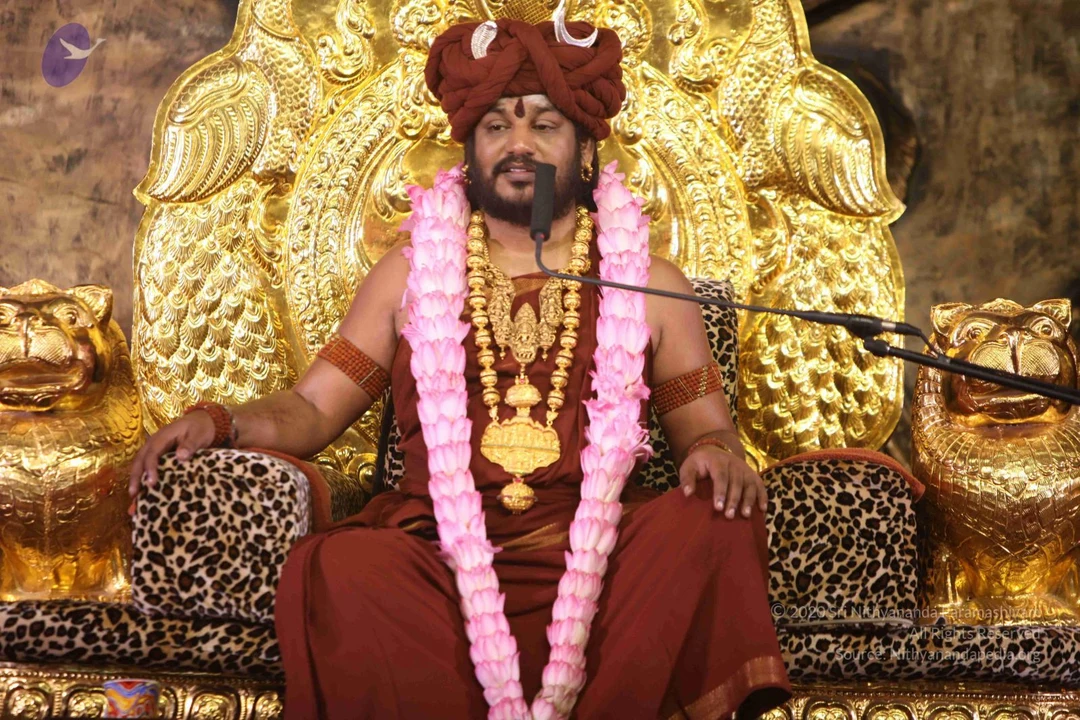
Nithya-Satsang
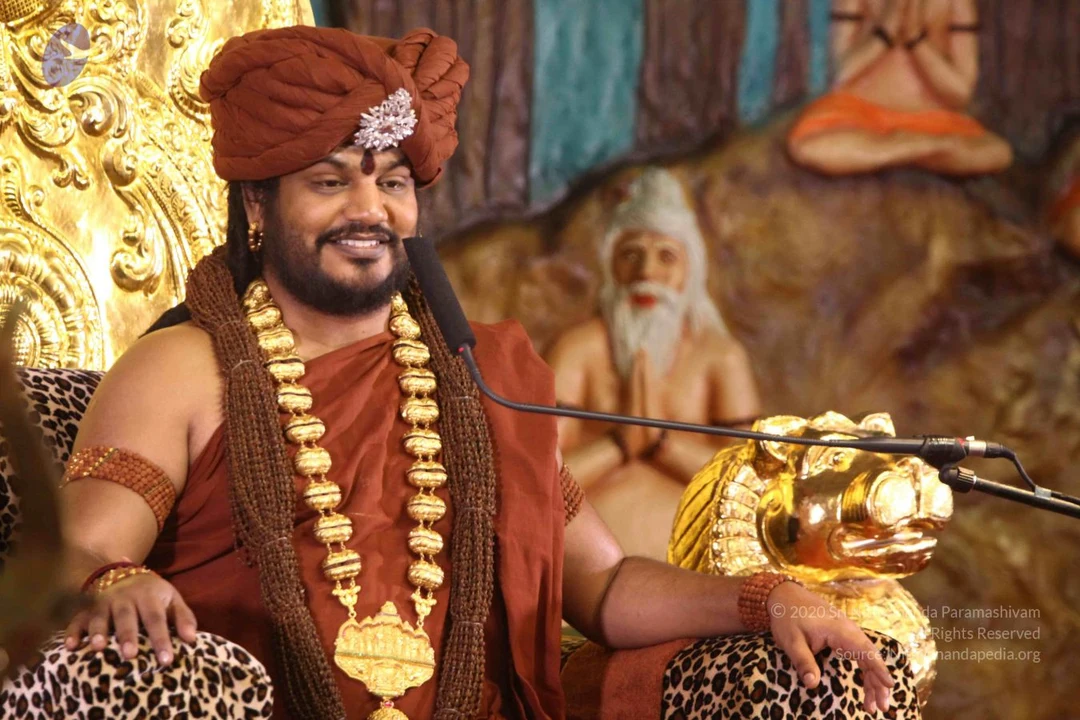
211 photosSource gallery
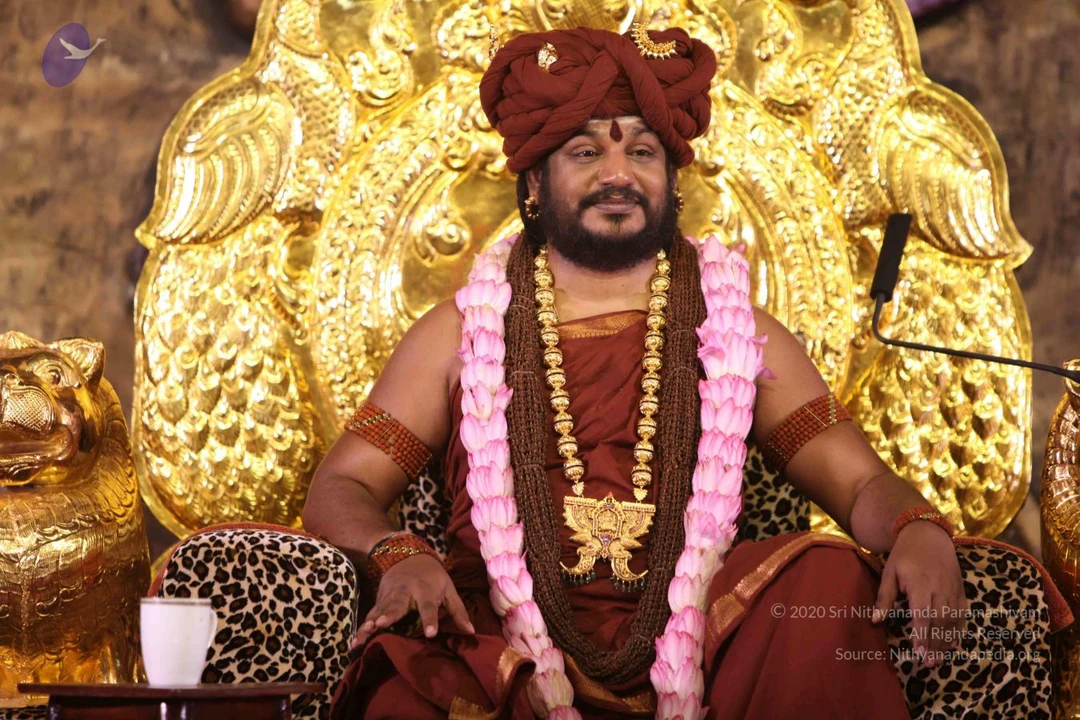
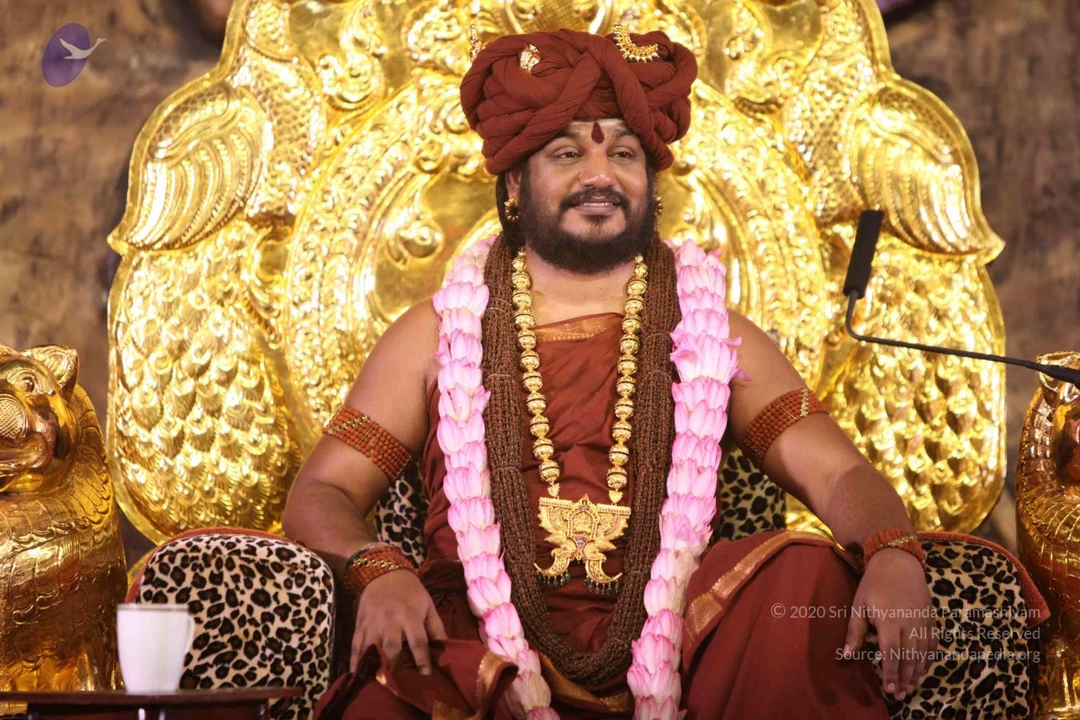
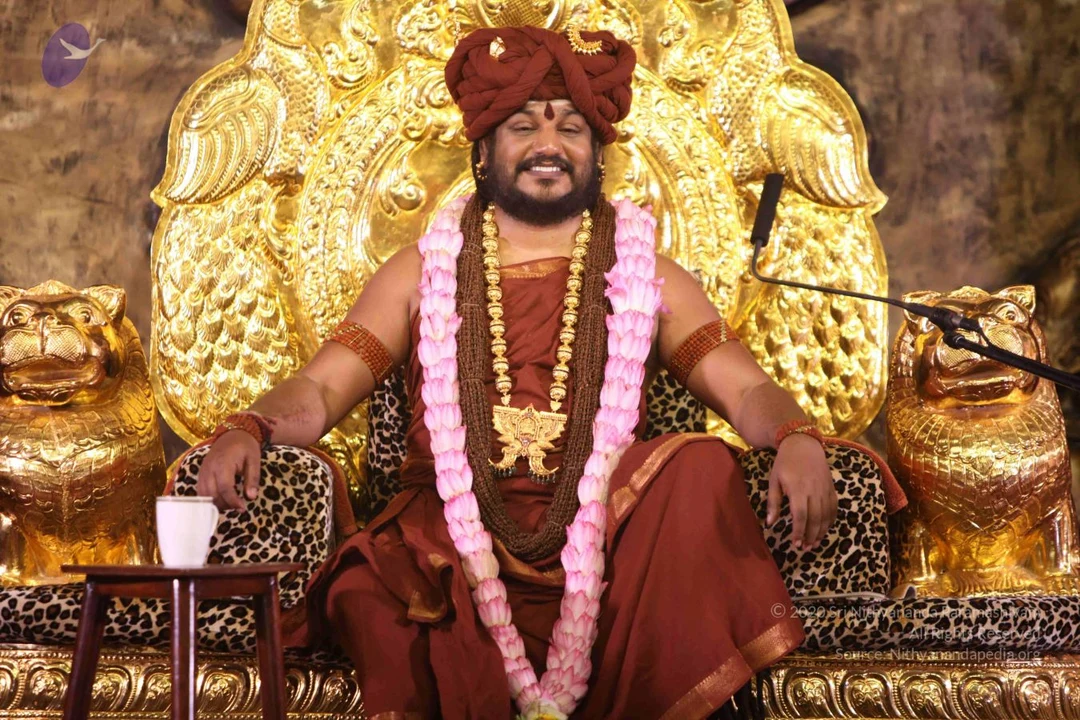
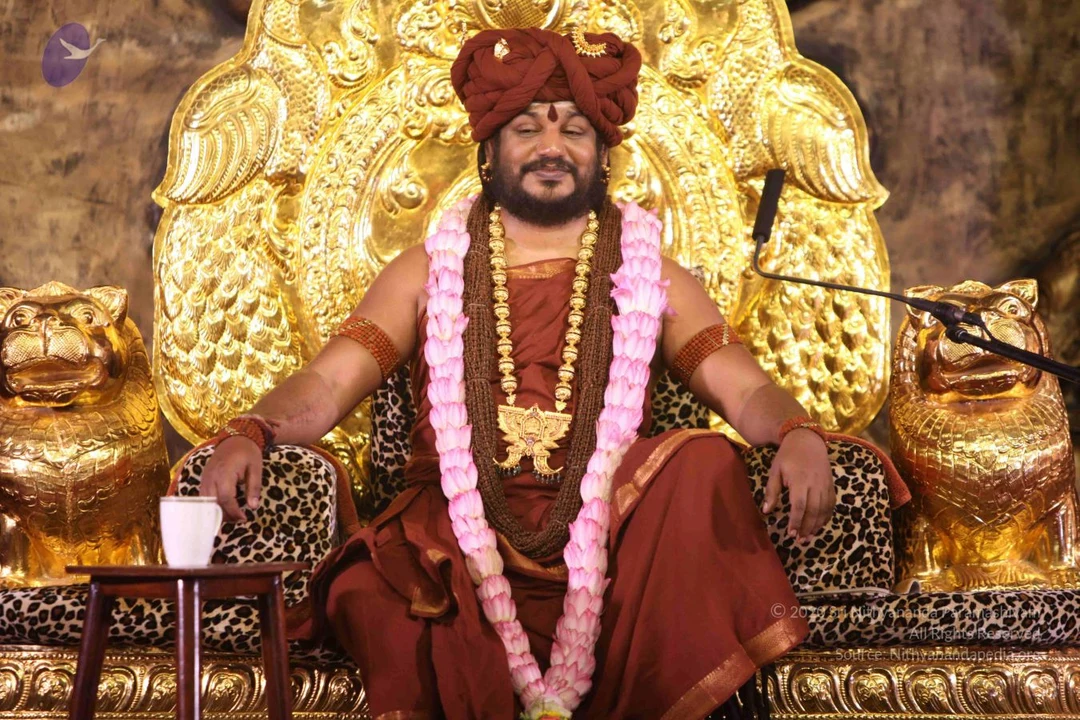
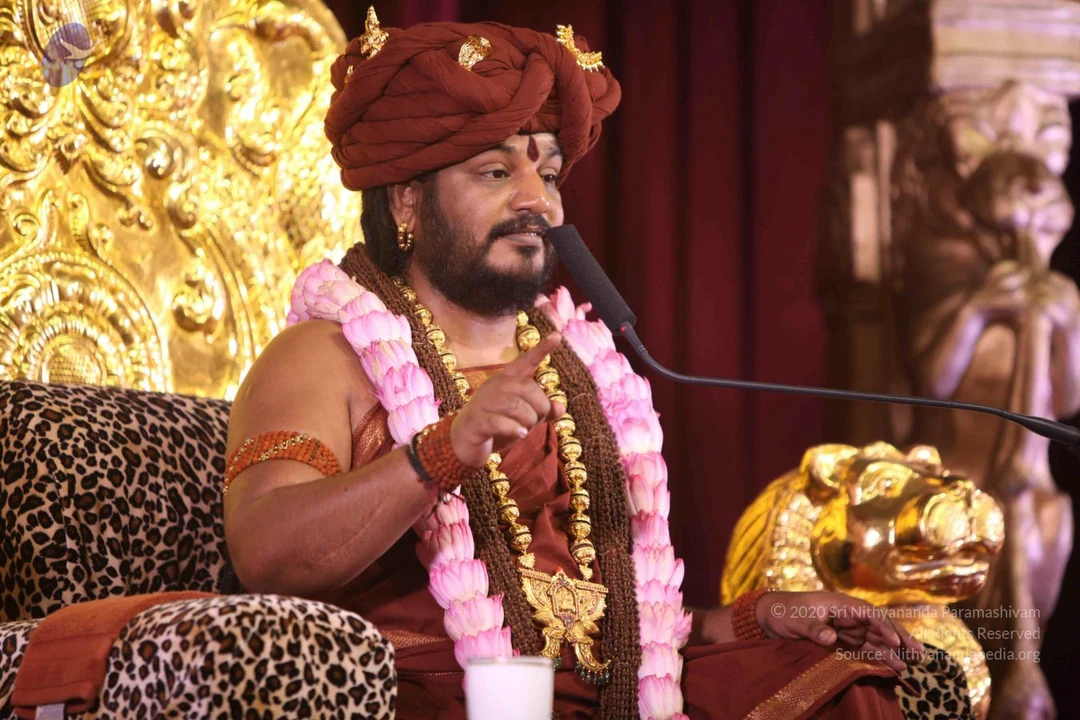
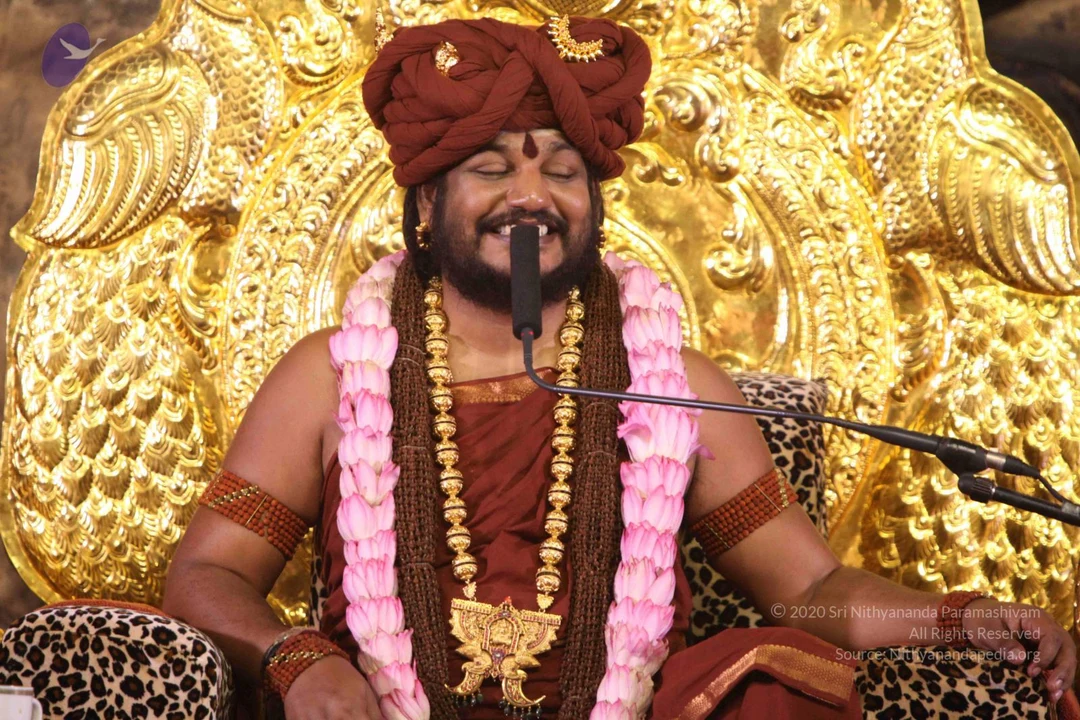
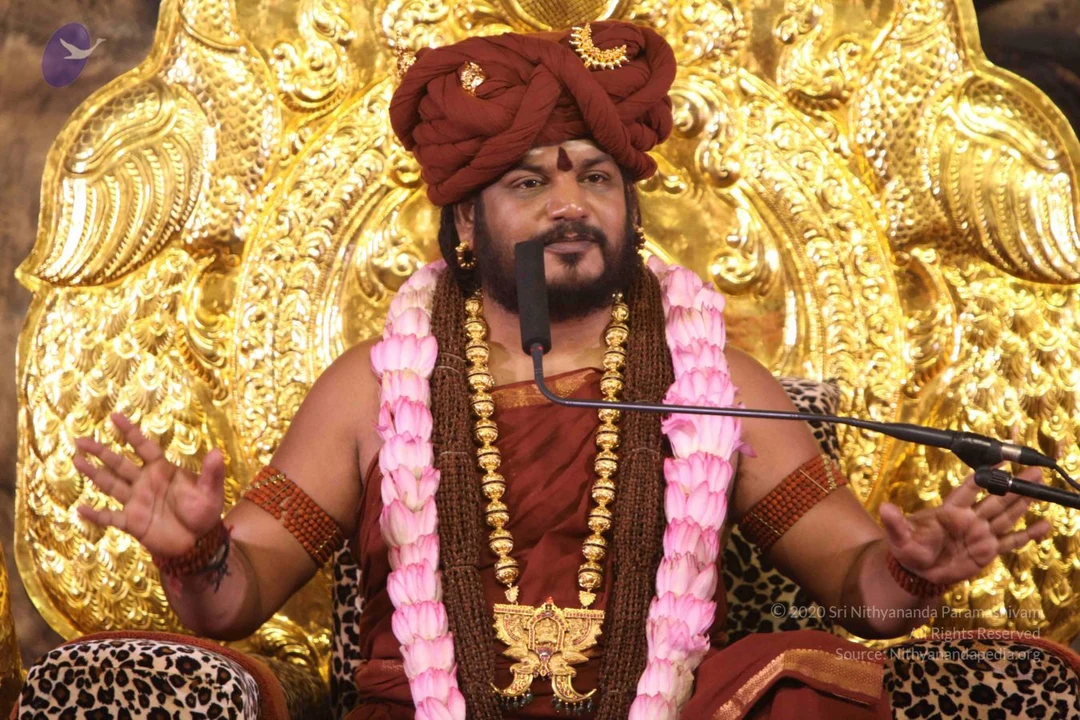
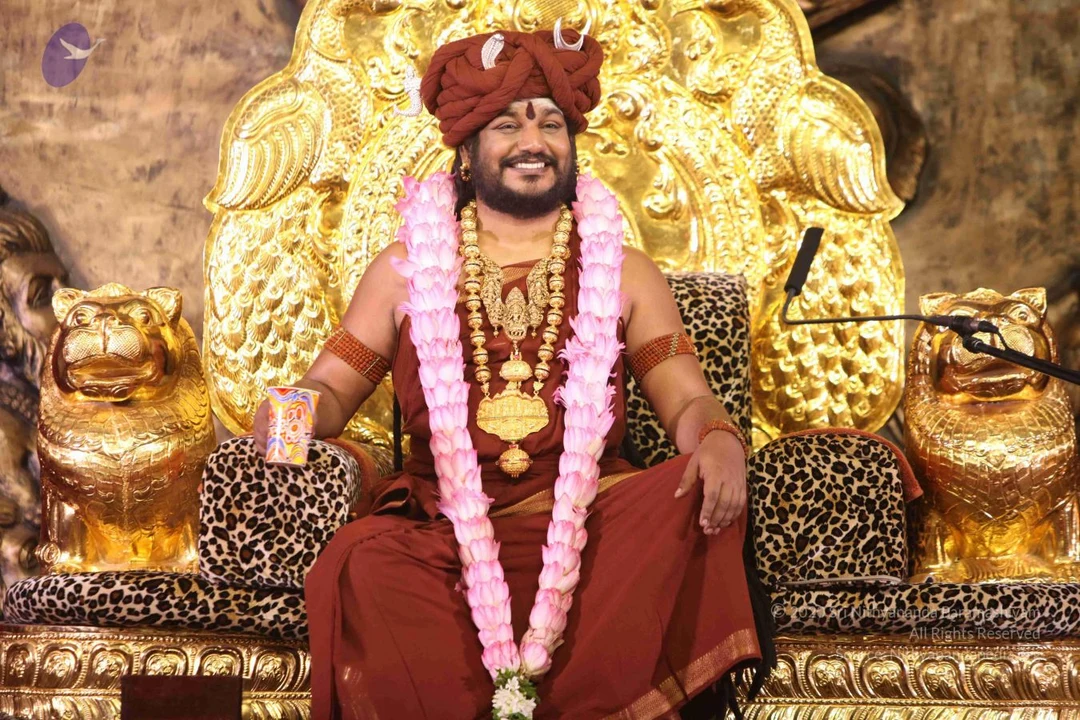
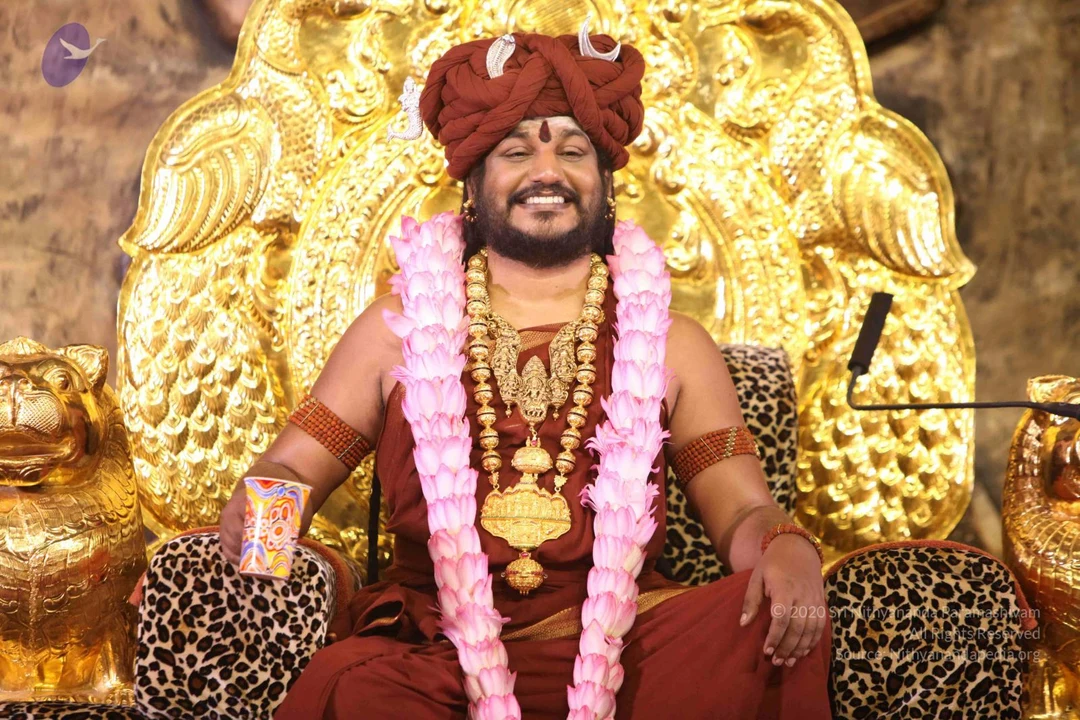
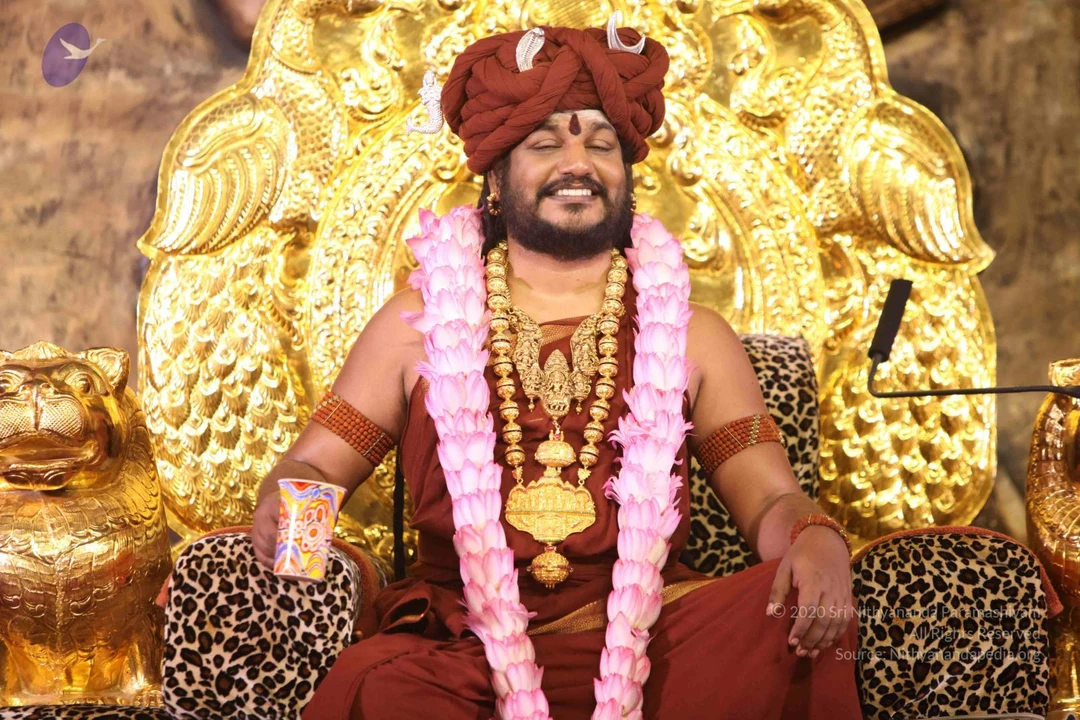
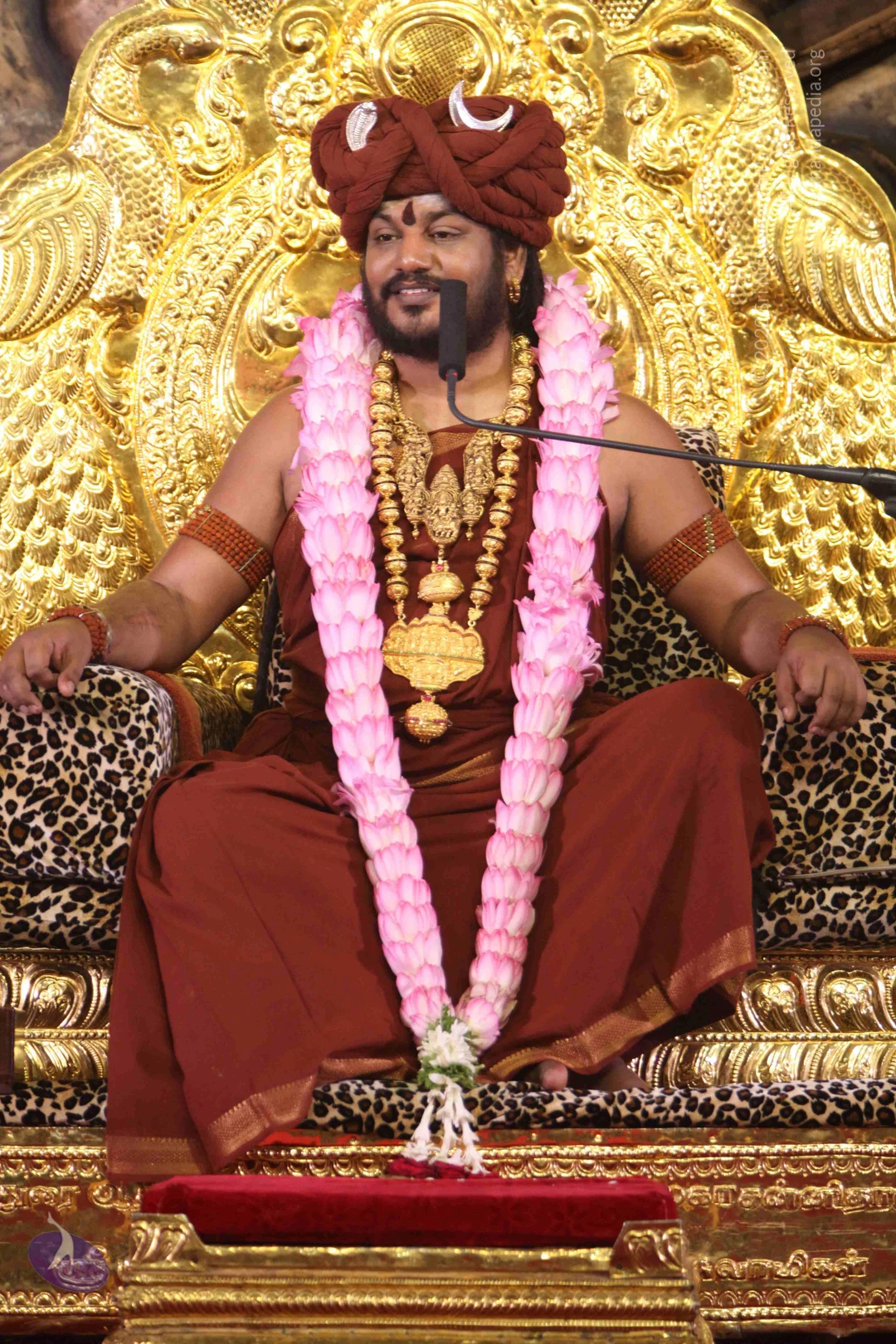
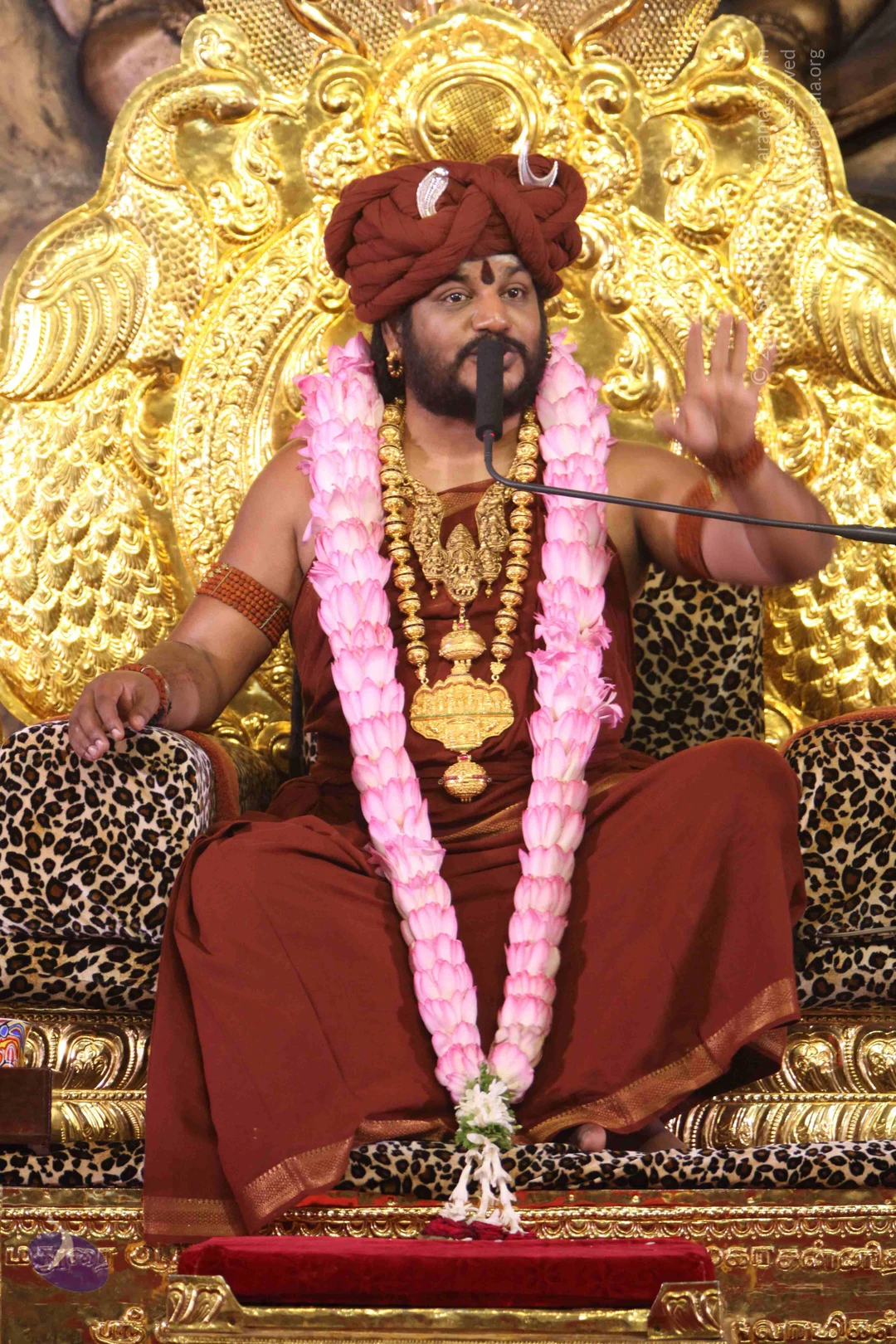
A smiling bearded man in a rust-red turban and matching rust-red robe sits on an ornate throne with gilded lion-head armrests and leopard-print cushions. A long pink flower garland hangs to his waist, and he wears heavy gold necklaces with a large gold pendant, gold armbands, and a red tilak on his forehead. He holds a small colourful cup in one hand while a microphone stand rises on the right. Behind him stands a large gilded carved backrest with floral and scalloped relief. Appearance-based cues for a person include the distinctive gold ornaments, turban and throne setting, presented as a seated discourse. Physical presence is a single seated person.A seated man in a maroon-red turban with two crescent ornaments sits on a gilded throne with ornate golden carved panels and leopard-print cushions. He wears a pink lotus garland, a heavy gold necklace with a central pendant, and red-brown robes, and holds a small colourful cup while smiling with eyes closed. Golden lion figures flank the throne and a microphone stand is at right. a person cues: red turban with crescent ornaments, lotus garland, gold necklaces, seated on a throne.A bearded man in a rust-red turban with white crescent ornaments sits on an ornate gold throne carved with scrollwork and flanked by gilded lion sculptures. He wears a red-brown robe, a heavy gold necklace with a pendant, red bangles, and a long pink flower garland. He holds a colourful patterned cup and smiles toward the camera, with a microphone stand at the right and leopard-print cushions beside him.A man seated on an ornate gold throne with carved peacock-feather style backrest, smiling and raising his right hand in a gesture while speaking. He wears a maroon-red turban with white crescent ornaments, a red-brown robe, a long gold ceremonial necklace with a large pendant, a pink flower garland, and red beaded armbands. He holds a small colourful cup in his left hand. A golden tiger-head sculpture sits to the left, a leopard-print cushion lies beneath him, and a microphone stand is visible at right. Swamiji (probable) is the central figure, seated in satsang, identified by the turban, saffron-red robes and gold ornaments.A smiling bearded man sits on a gilded throne with ornate golden lion-shaped armrests and leopard-print cushions. He wears a maroon turban with a crescent ornament, a maroon robe, a long gold necklace with a large golden pendant, rust-coloured armlets and a red wristband, and is draped in a pink lotus-petal garland. He has a red tilak on his forehead and holds a colourful patterned wristband near a microphone stand. The scene is a satsang discourse setting. Swamiji (probable): the seated man has a turban, maroon robe, ornate gold necklace and pink garland, consistent with a satsang presence, so the in-person candidate is noted.A smiling man in a deep red turban adorned with white crescent and flower ornaments sits on an ornate golden throne carved with peacock motifs, flanked by golden lion statues. He wears a red robe, a pink lotus-petal garland, a heavy gold necklace with a central gold pendant, red beaded armbands, and a red bindi. He holds a colourful paper cup in one hand while the other rests on a leopard-print cushion, and a black microphone stand is visible at right. Probable Swamiji is seated in ceremonial dress for a satsang, with the visible cues of the turban, gold ornaments and garland.

Construction Work happening at Aadhi Kailaasa, Bengaluru

11 photosSource gallery
A photograph of a large rust-red shipping container being lifted by orange mobile cranes on bare dirt ground beside a low wall and a green corrugated-roof shed. A worker in a green shirt stands near the second crane at left, and an orange crane truck with a black-and-yellow hazard-striped boom occupies the right foreground. Scattered brush and debris lie on the ground. No ritual, discourse or a person appearance is visible.A photograph of a yellow Liebherr-style mobile crane truck with a telescoping boom, marked "ADITHYA LOGISTICS" and "50 TON" on the boom, lifting or positioning large maroon shipping containers on a dirt yard. Several men in casual shirts and jeans stand near the crane's front wheels, one guiding a red-and-white striped barrier. A tall wooden ladder leans against the stacked containers, with trees and a utility pole in the background. No ritual, a person, or ashram activity is visible.A large red shipping container is being lifted by a yellow crane with taut slings on a dirt construction site. Several workers in light shirts stand near the container's base, and one man stands atop the container. Palm trees and dense green foliage line the background, with debris and stone pieces scattered on the ground and another red container at the right edge.A photograph of a construction site where a yellow mobile crane labelled ADITHYA LOGISTICS lifts a dark blue shipping container with slings and a hook against a partly cloudy sky. A red shipping container stands below it beside a large leafy tree and palm trees, with bare red earth, rubble and stone slabs in the foreground. No people are visible.A photograph of a dirt yard with two rust-orange corrugated shipping containers standing on concrete blocks. Tyre tracks mark the packed earth, scattered stones lie on the ground, and a heap of debris sits at the right edge beside a tree and a distant utility pole under an overcast sky. No people are visible.A photograph of a crane lifting an orange-painted modular container at an outdoor site with grass, dirt, and trees under a blue sky. A telescopic crane with orange and black hazard-striped boom and an orange-wheeled base hoists a hook and chain above a long orange container unit, while a man in a green shirt crouches on top of it. A second, smaller orange container sits beside it. Two men in light clothing stand at left handling ropes, and another person is partly visible on the container roof. No deity, ritual, discourse or a person figure is visible.

FB-Photos-of-the-Day

8 photosSource gallery
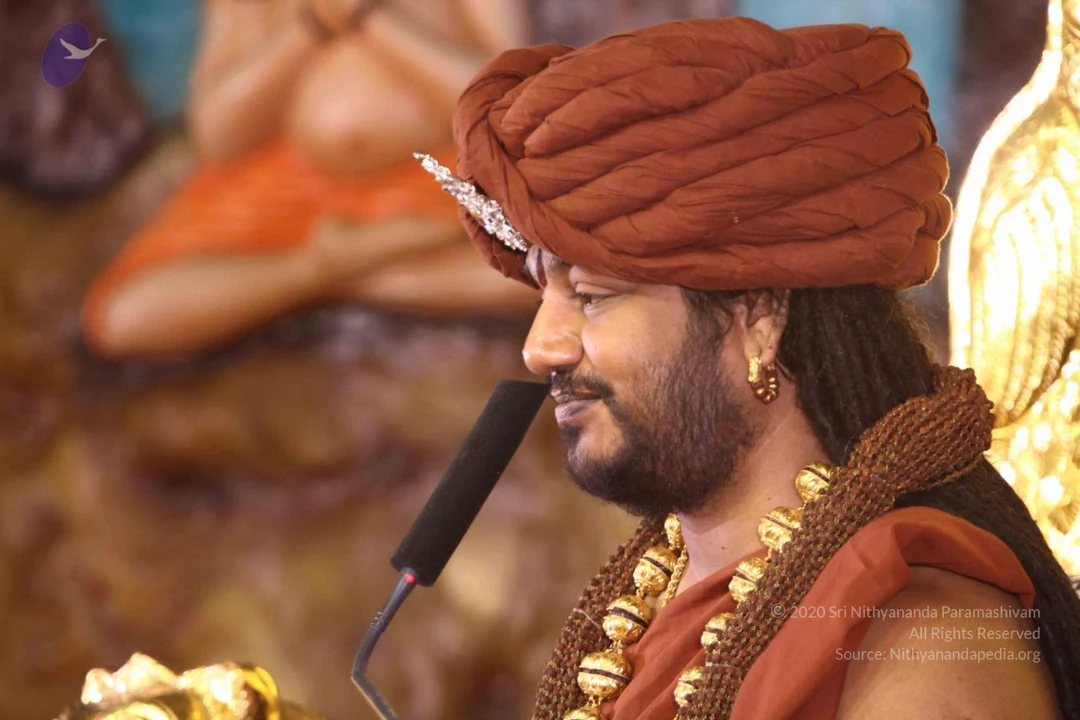
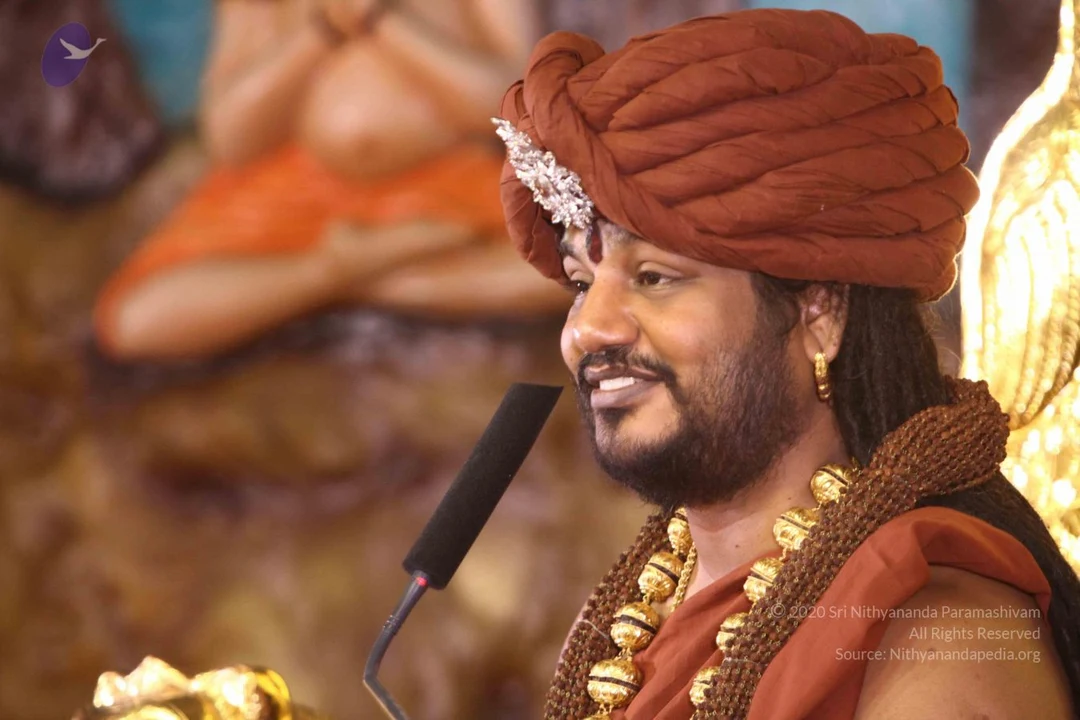
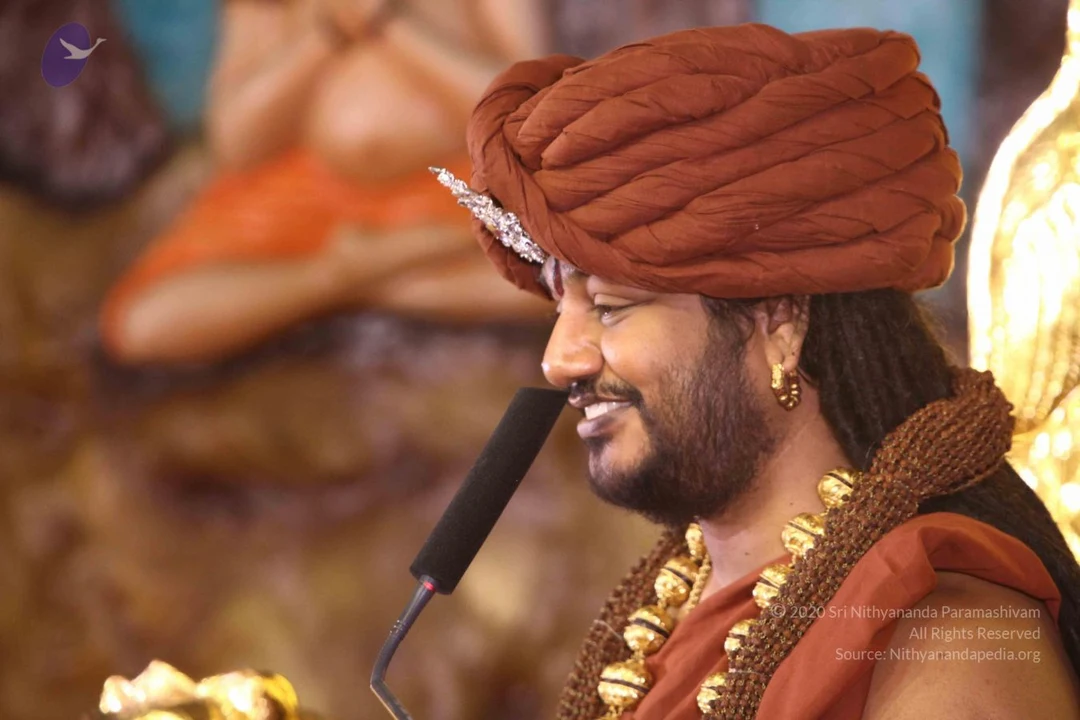
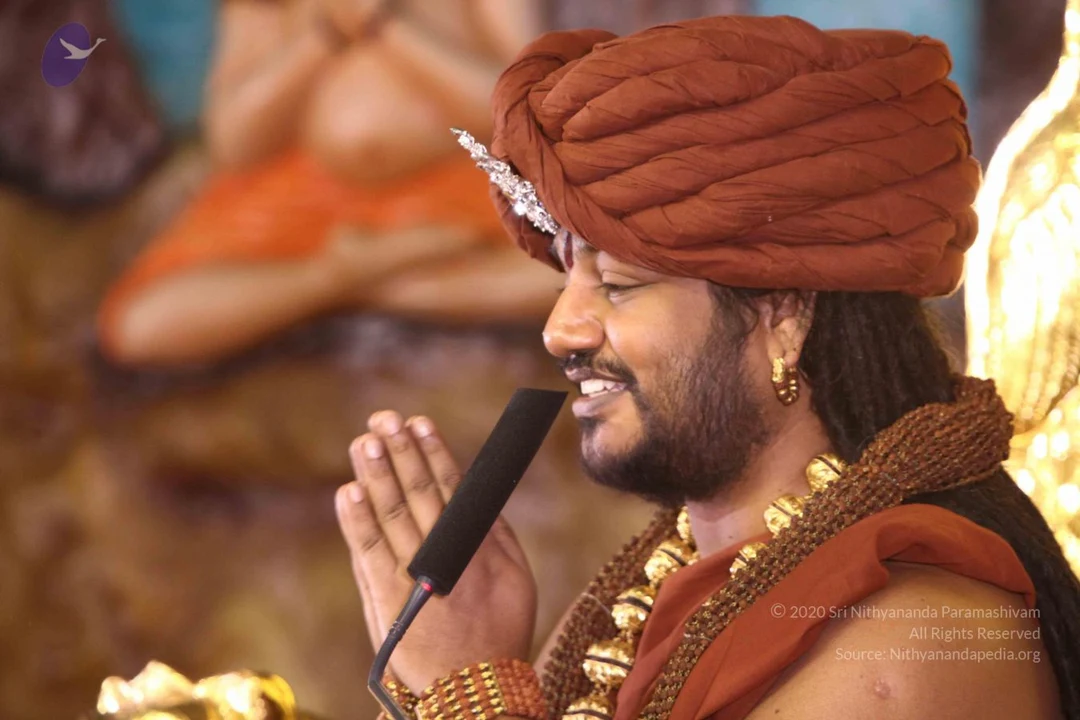
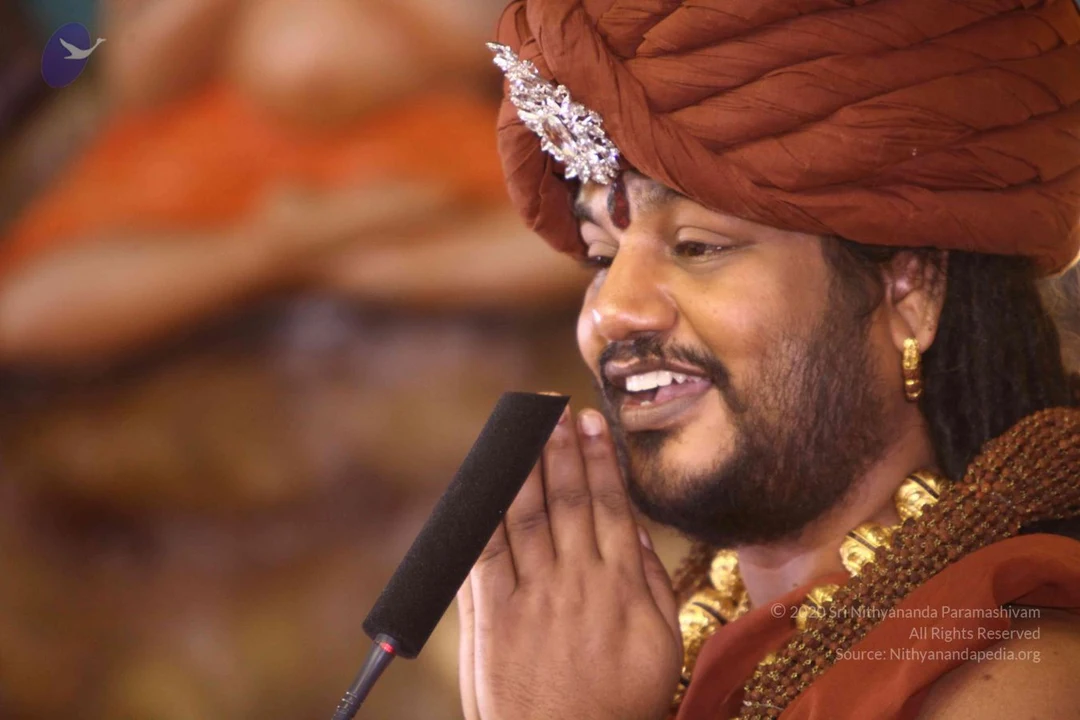
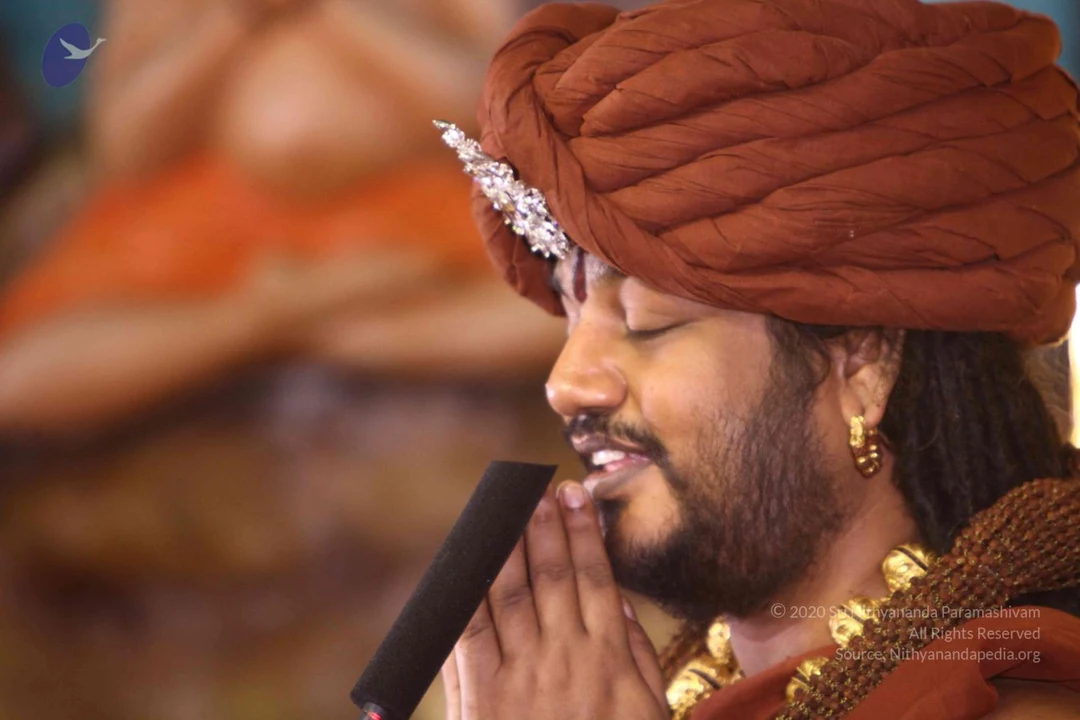
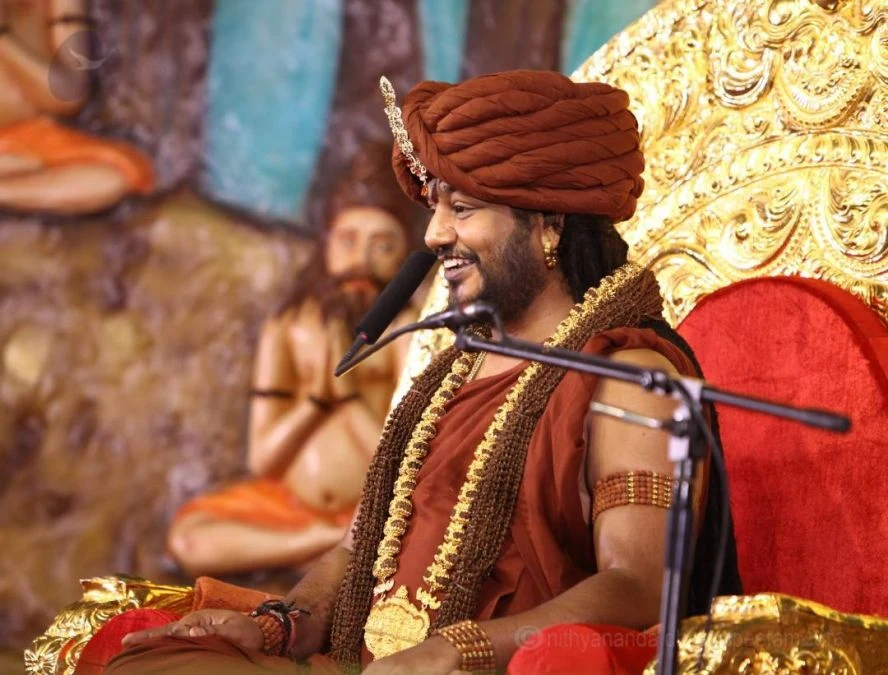
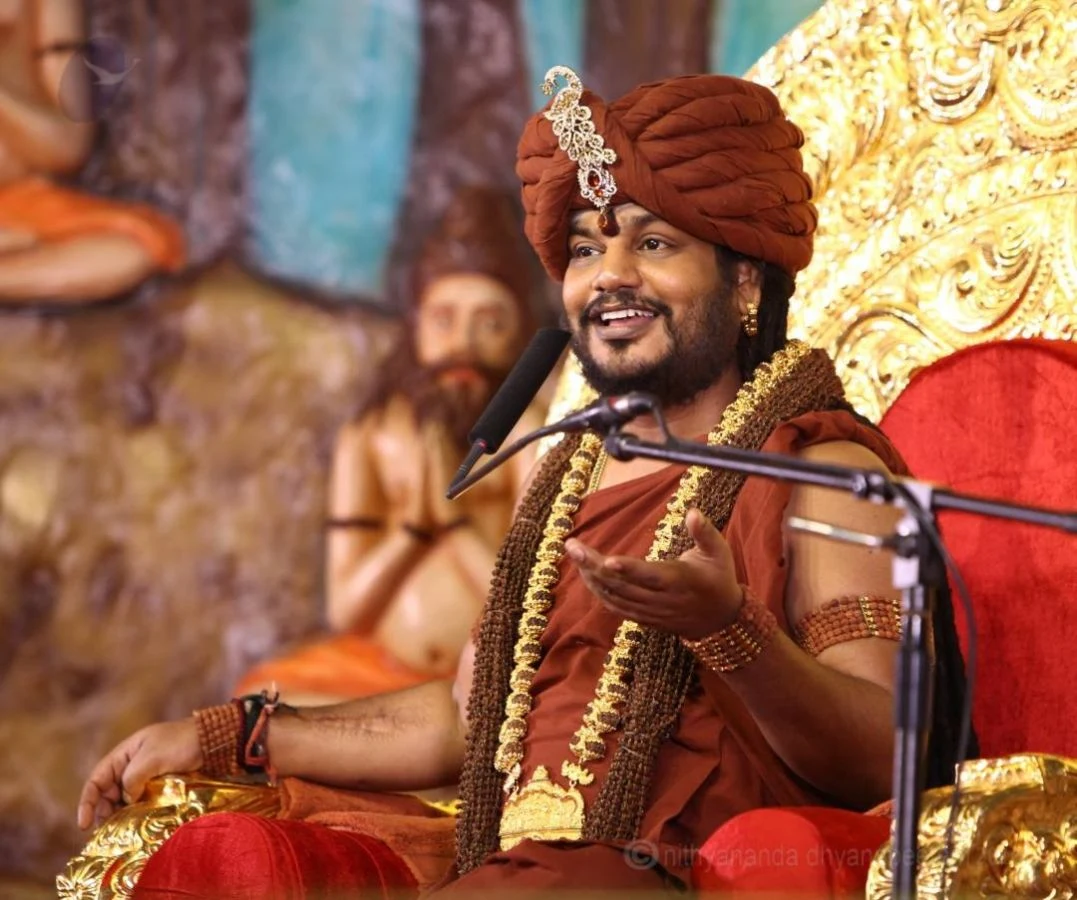
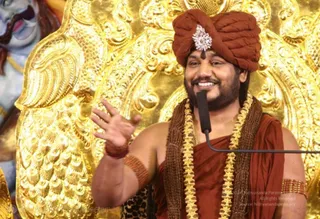
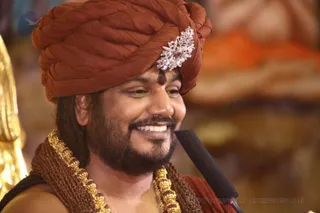
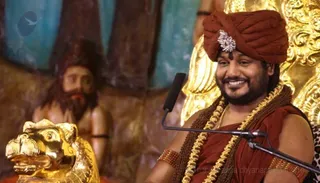
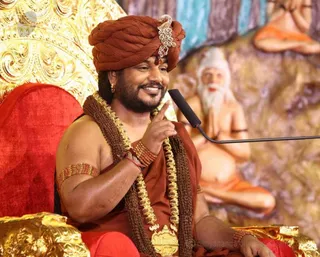
A seated man smiles at a microphone during a satsang. He wears a rust-orange turban with a silver brooch, a rudraksha mala and a long gold-beaded necklace, and an orange-brown cloth draped over one shoulder with a gold armlet on his upper arm. He sits on a leopard-print cushioned throne with gold carved armrests. Behind him, painted figures in meditation pose and a gold deity murti are visible. a person is present in person, identified by the orange and gold regalia and rudraksha malas.A smiling bearded man in a rust-orange turban with a jewelled brooch and a rust-orange robe stands at a microphone stand, one hand raised mid-gesture as he speaks. He wears a coarse brown shawl and long gold-and-white beaded garlands, with an orange wristband and bangles. Behind him is an ornate gold-leaf backdrop with carved peacock-like scrollwork and part of a blue deity figure. The page identifies this as a Nithya Satsang discourse, and the appearance cues (orange turban, rust robe, gold garlands and brooch) are consistent with the Swamiji (probable) figure.Close-up photograph of a smiling bearded man wearing a rust-orange turban decorated with a silver jewelled brooch and a red tilak mark on the forehead. He has long dark hair and wears a rudraksha mala with gold beads and a bare-shouldered orange-red garment. He is speaking into a black foam microphone held near his face, and a golden ornamental figure edges the left side of the frame. Probable Swamiji (probable) is shown as a speaker during a satsang discourse, with cues of long swept-back hair, ornate turban and rudraksha mala with gold ceremonial beads. The background is blurred with orange and gold tones.A seated man in a rust-red turban with a silver ornament at the front smiles beside a microphone on a stand. He wears layered rudraksha beads and ceremonial gold necklaces over a red-brown robe, with bangles on his wrist. To his left, a golden lion-faced figure stands in the foreground, and a painted wooden figure of a bearded sage with hands folded sits behind him. Gold-patterned carved panels and a teal backdrop fill the background. The scene resembles a satsang discourse setting.A photograph of a bearded man seated on an ornate golden throne with a red cushion, speaking into a microphone held near his face with his right hand raised in a teaching gesture. He wears an orange-red turban with a silver jewelled ornament, a saffron-red robe, multiple rudraksha mala necklaces, and gold bangles and armband. Behind him is a painted rock backdrop with a bearded sage in white seated in meditation, and an orange-robed figure meditating at upper right. Swamiji (probable) — the figure has an orange turban, rudraksha malas, gold ceremonial necklaces and ornate saffron clothing, seated as a discourse speaker.A man seated cross-legged on an ornate gold throne with red cushions and a tiger-skin rug, speaking into a microphone on a stand. He wears a rust-orange turban with a jewelled ornament, rust-orange robes, a long gold necklace with a gold pendant, and multiple rudraksha malas across his chest and arms. He smiles and raises one index finger in a teaching gesture. Behind him are painted backdrop panels with a blue deity figure. Probable Swamiji (probable) is seated in satsang, with the rudraksha malas, gold necklace and turban serving as the appearance cues.