Skip to content
Wednesday

11 November 2015

Paramashivoham Oneness Capsule 235 (Happenings of 11 November 2015)

Dated photos
581
Source pages
1
Media
3
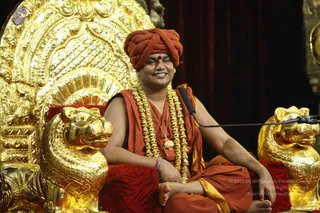
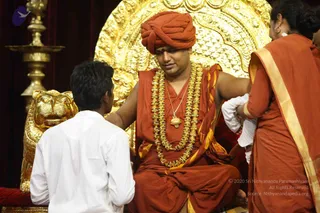
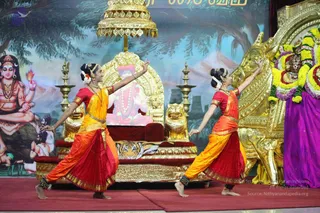
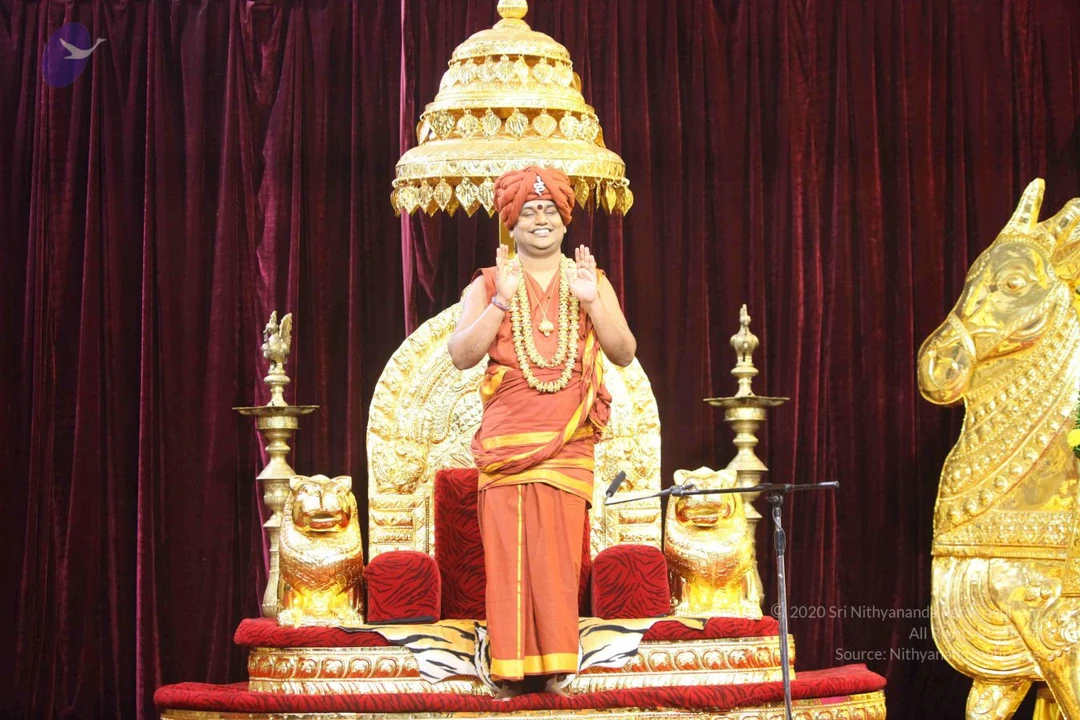
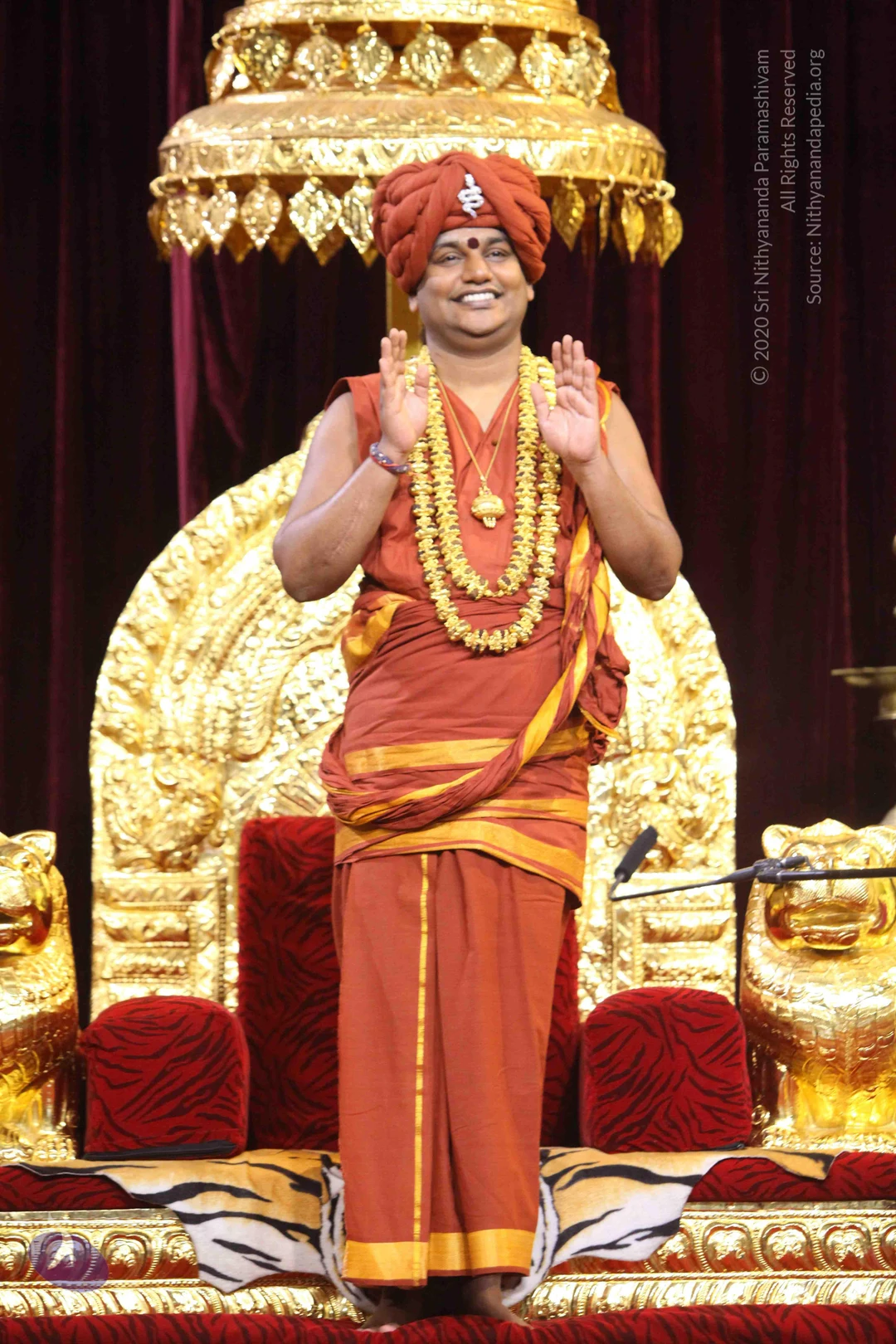
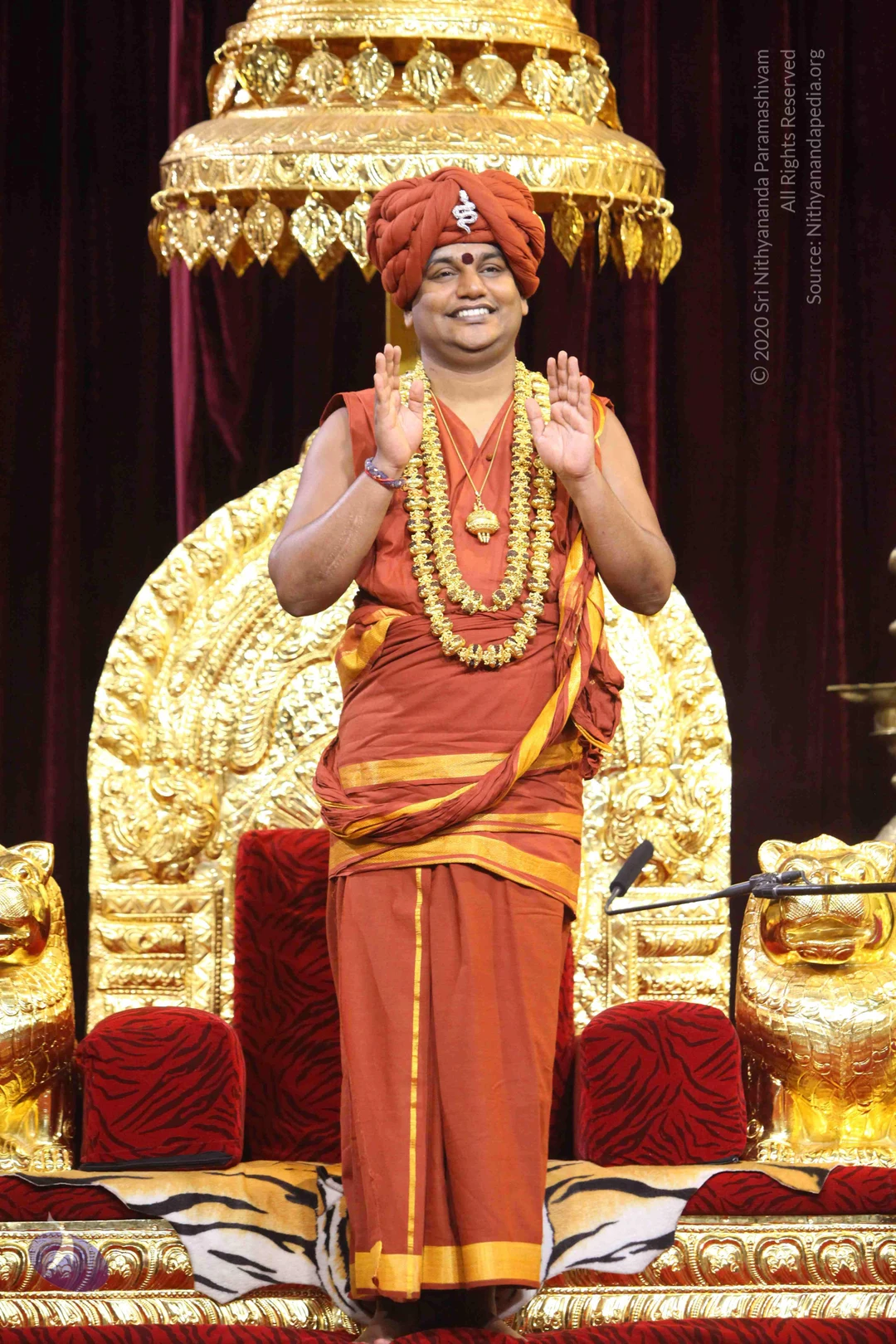
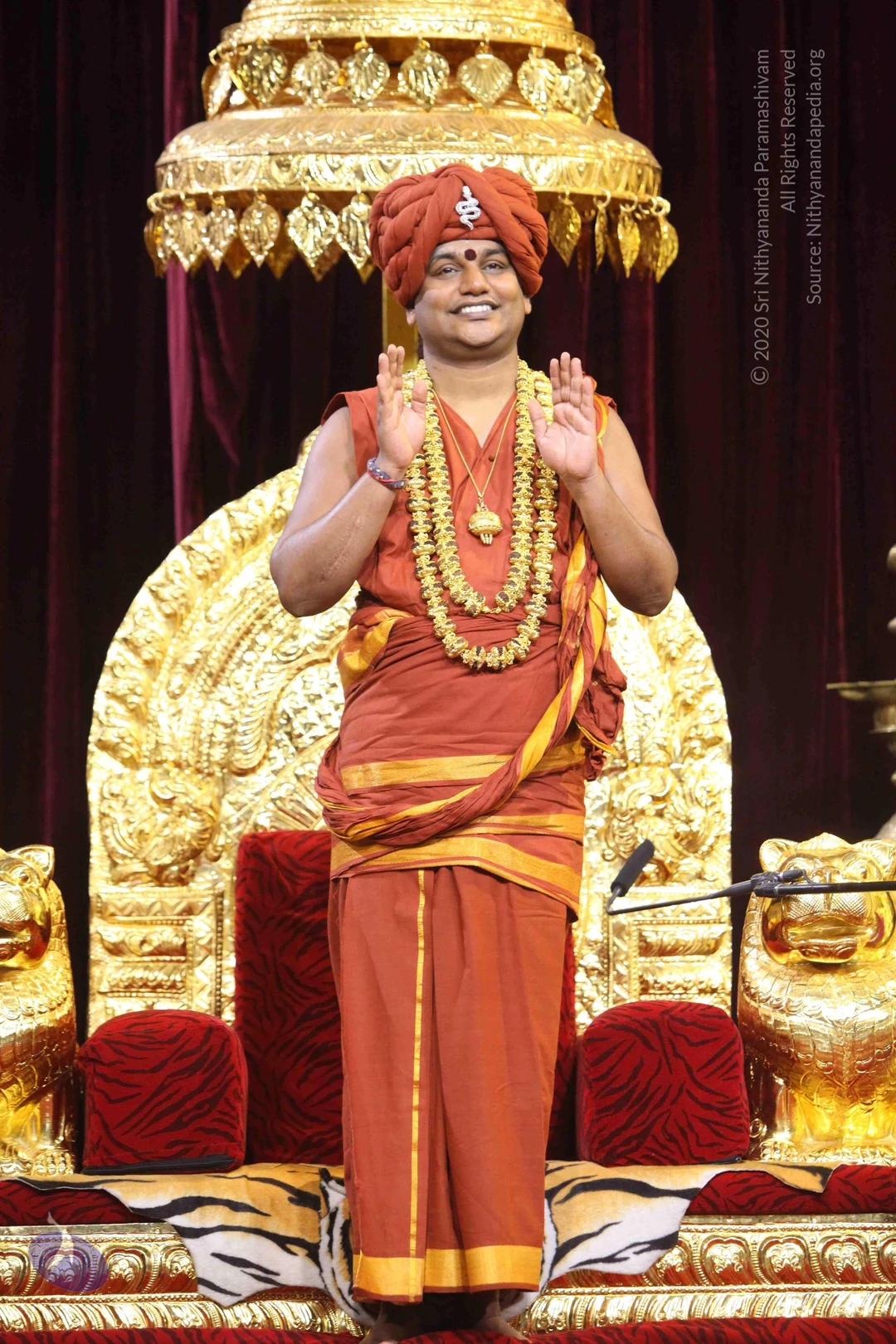
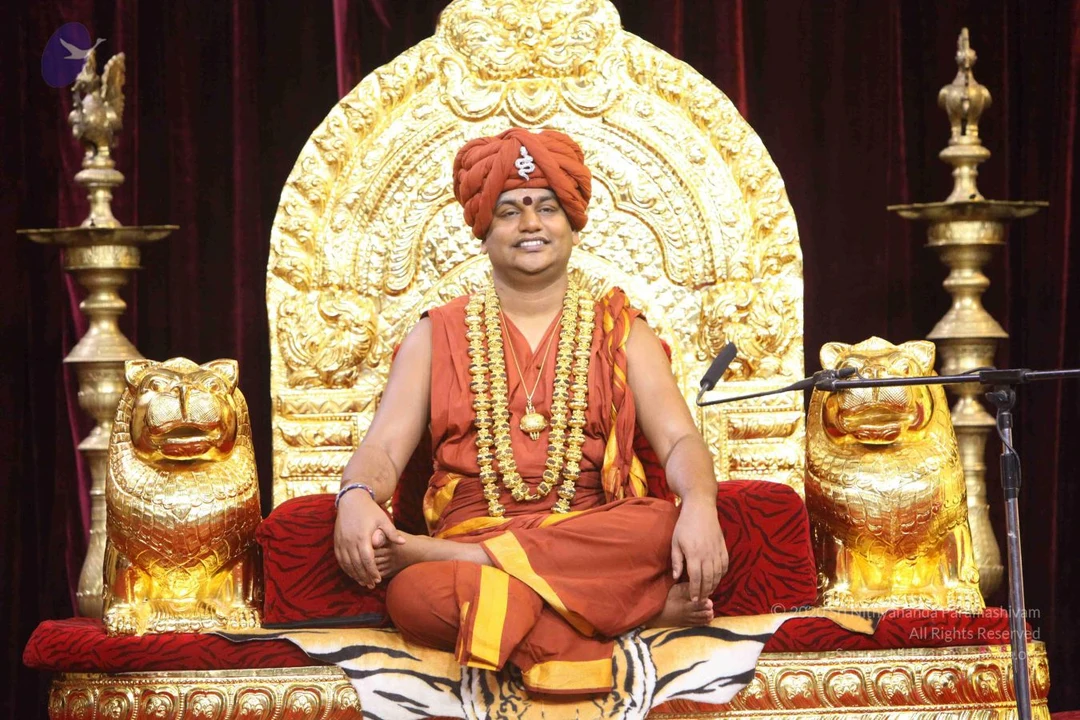
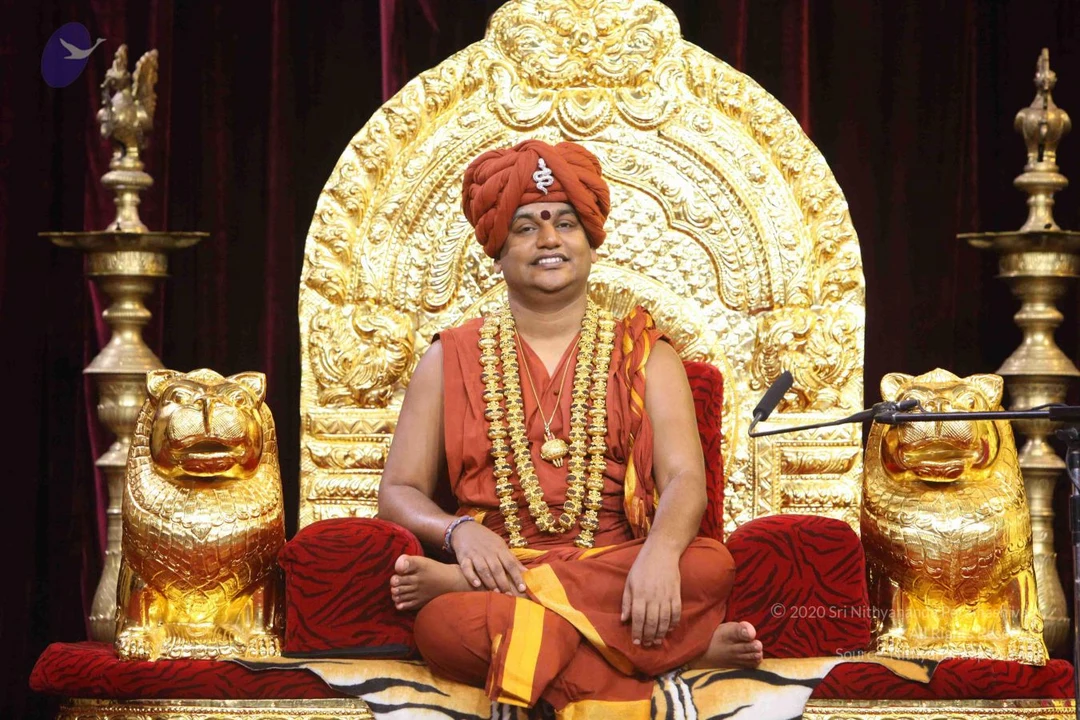
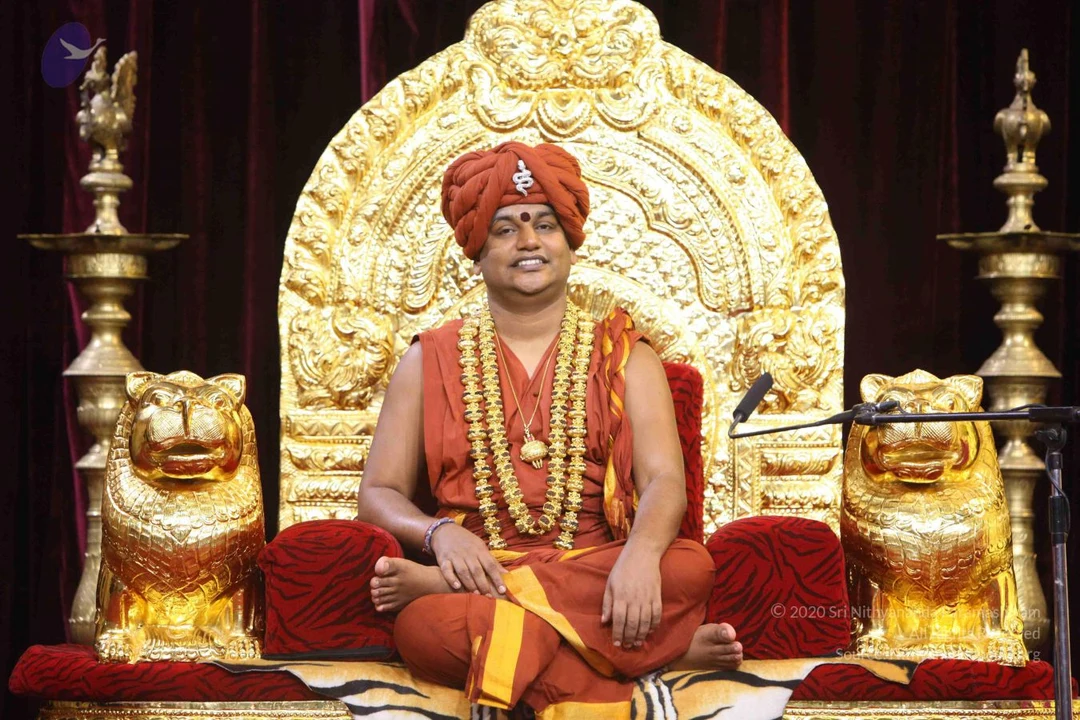
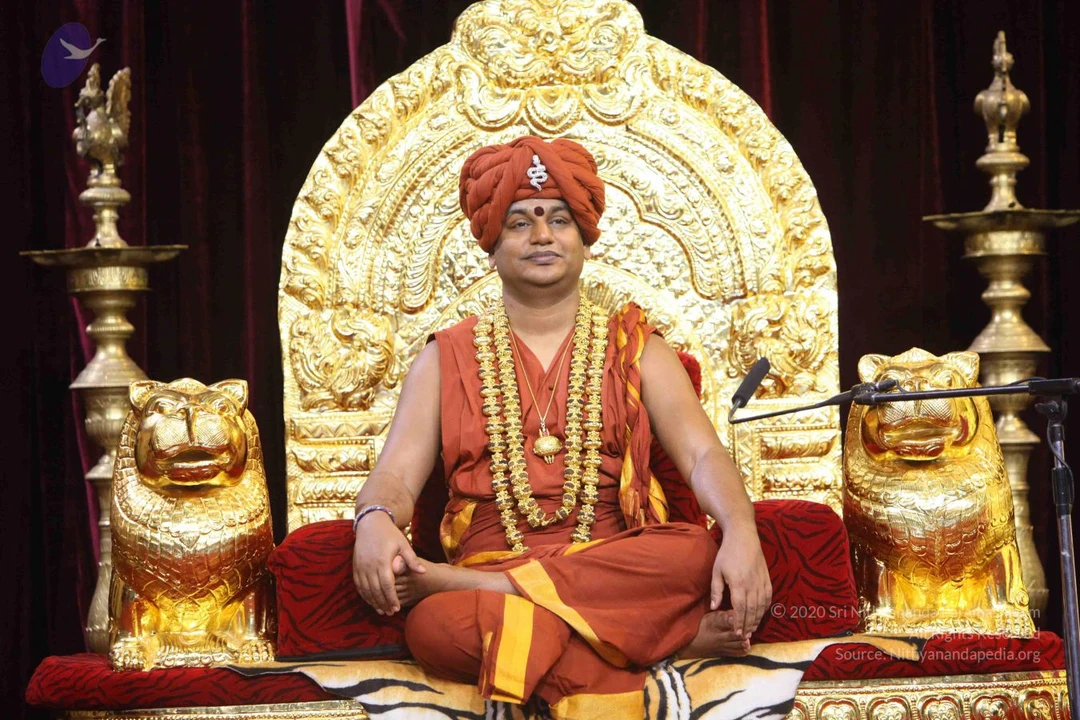
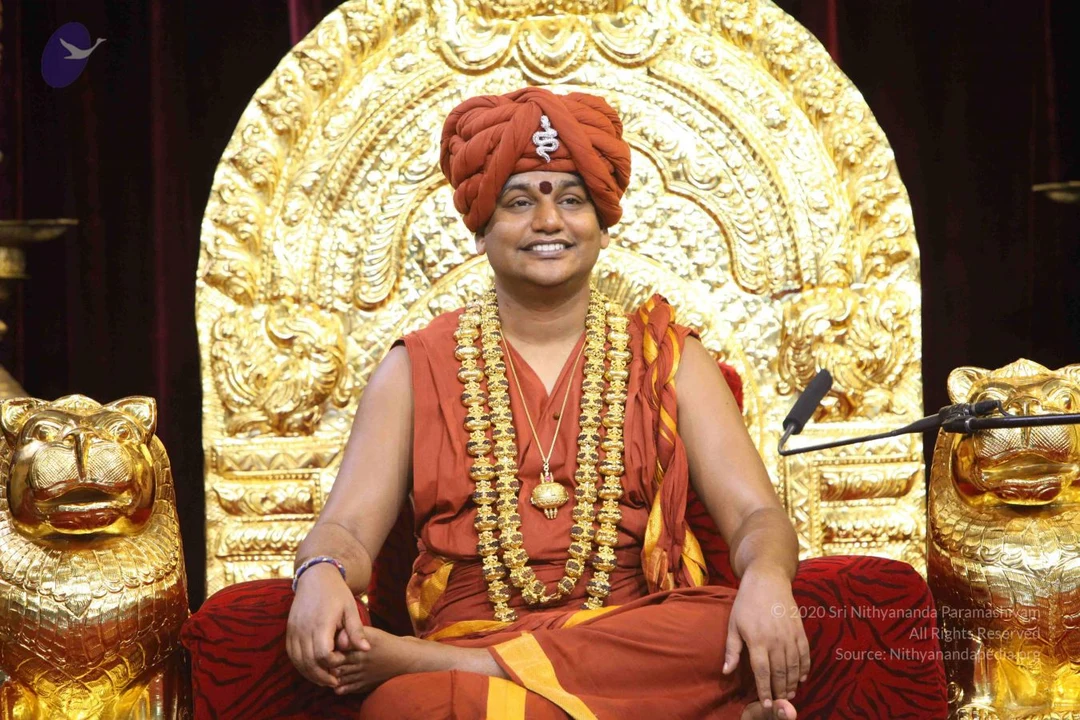
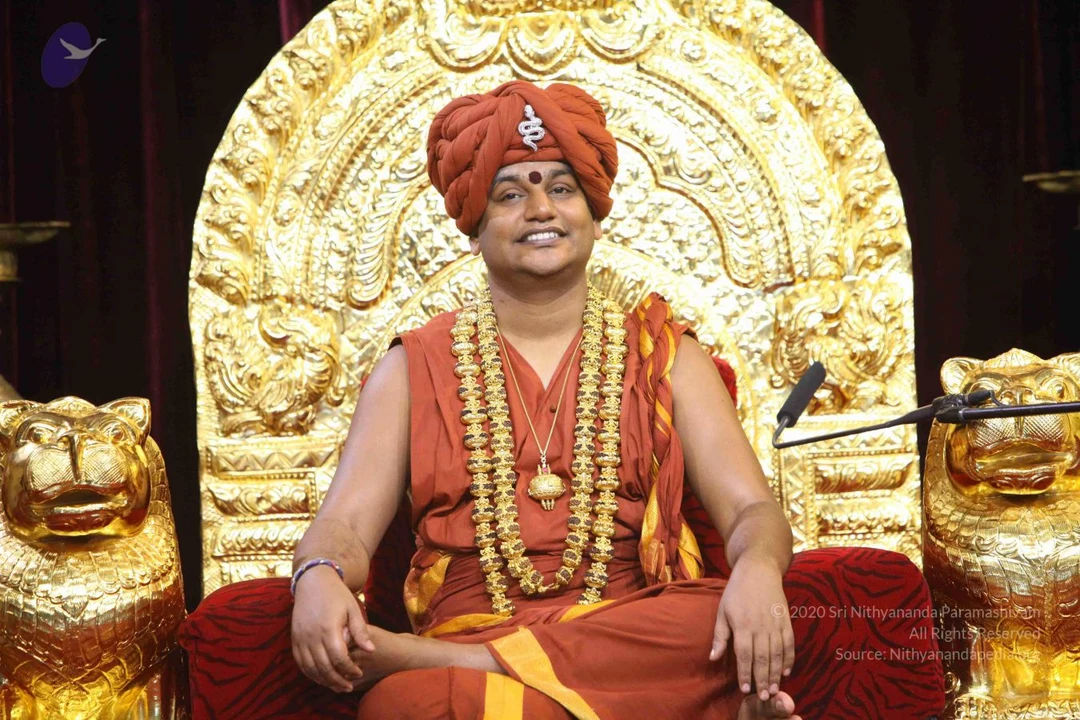
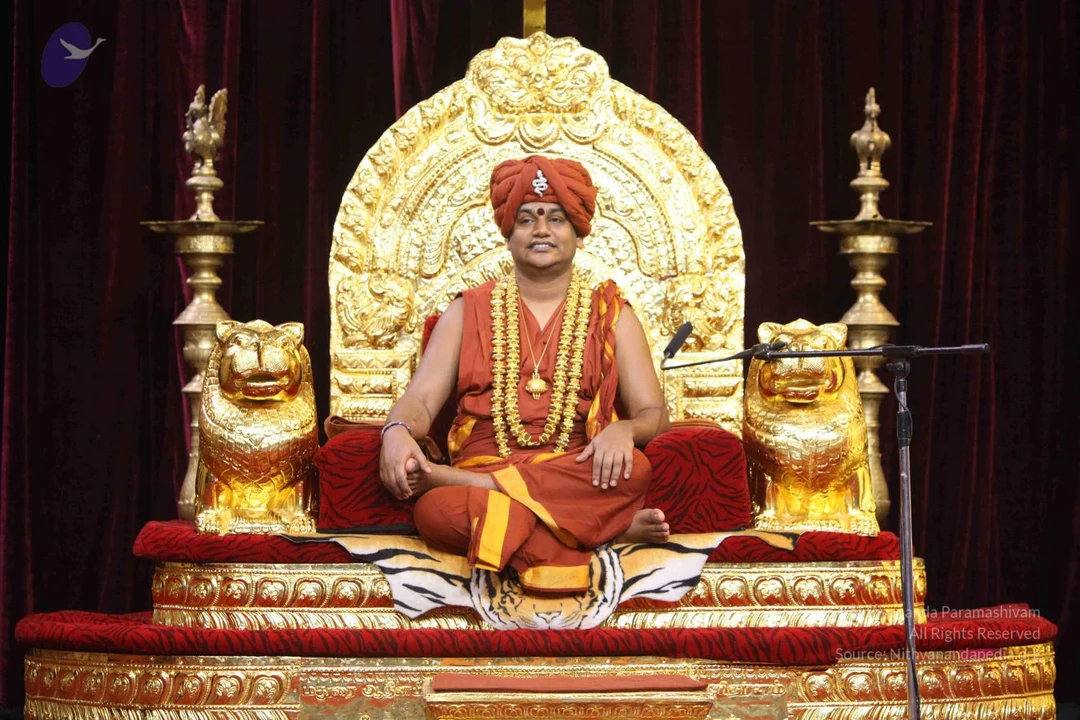
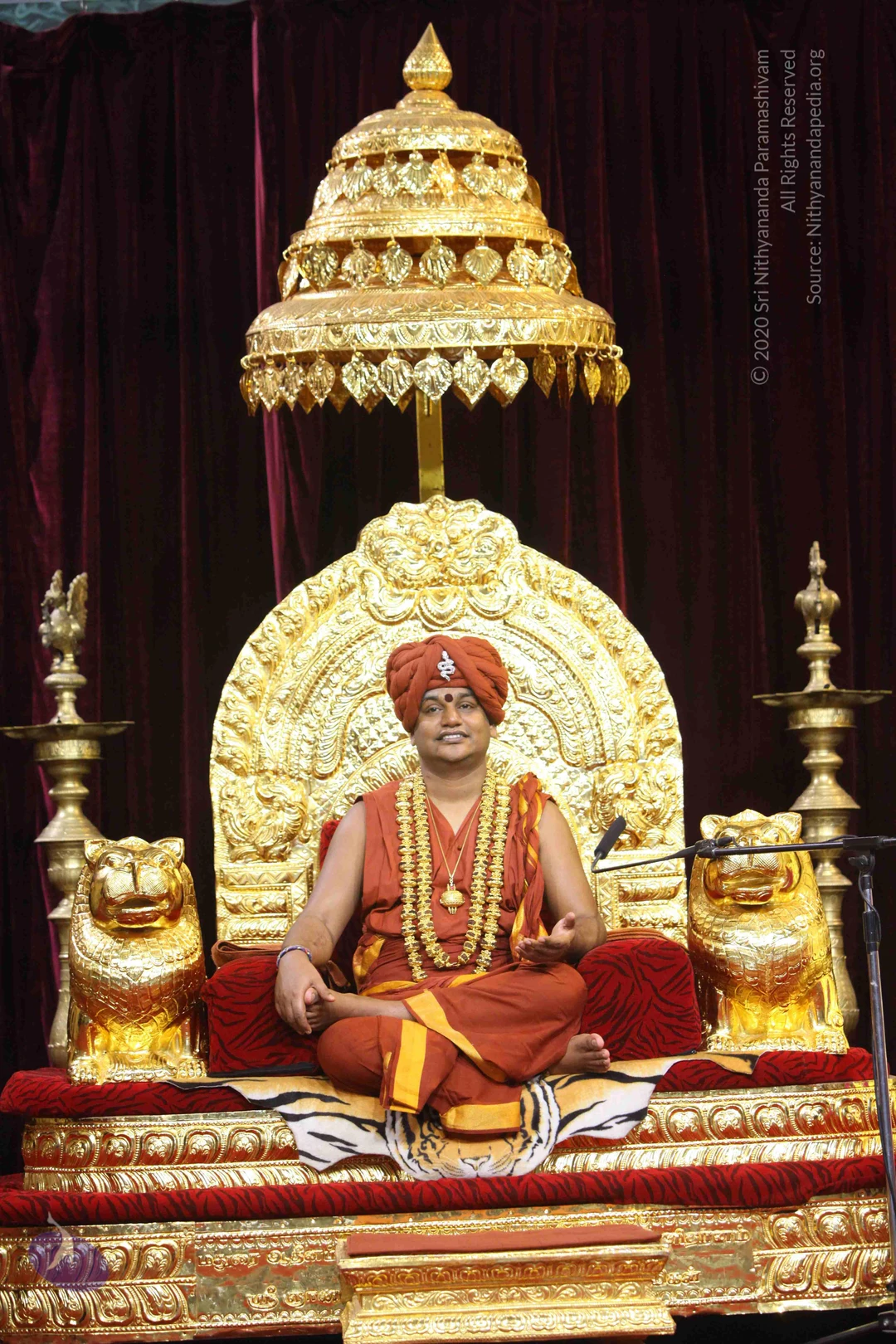
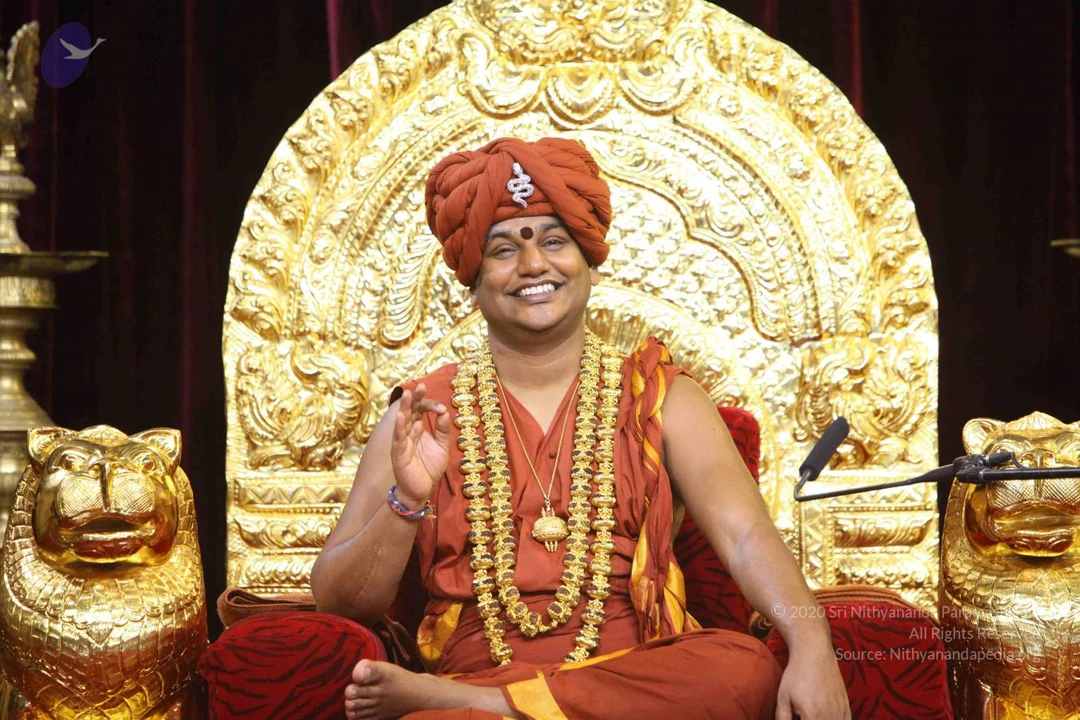
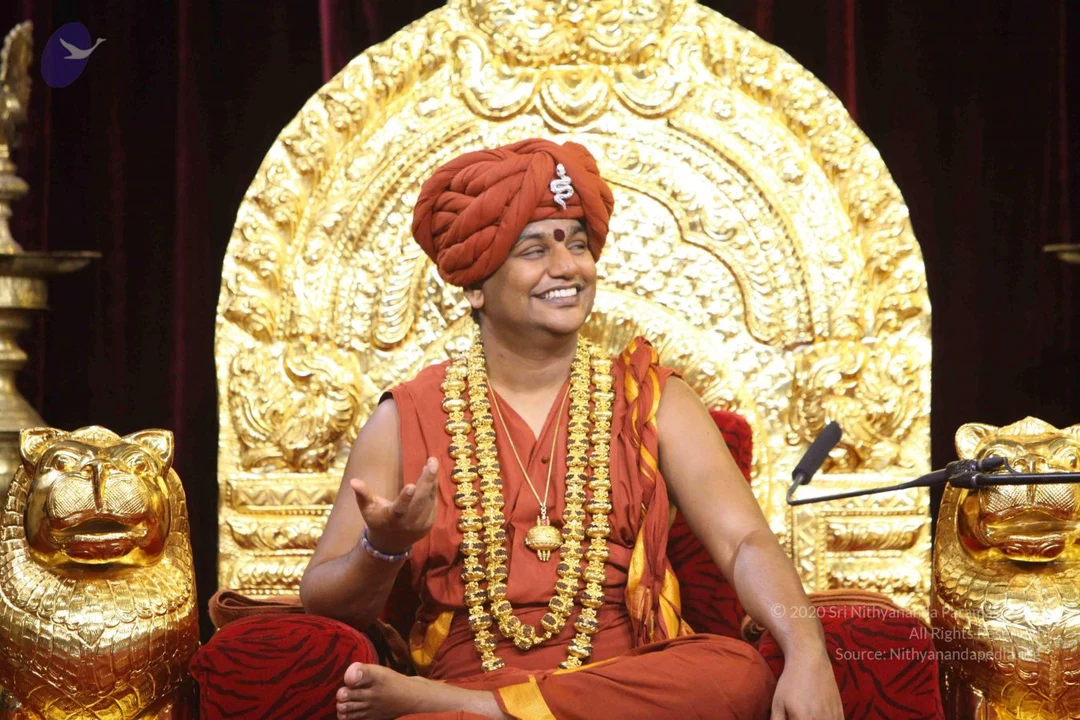
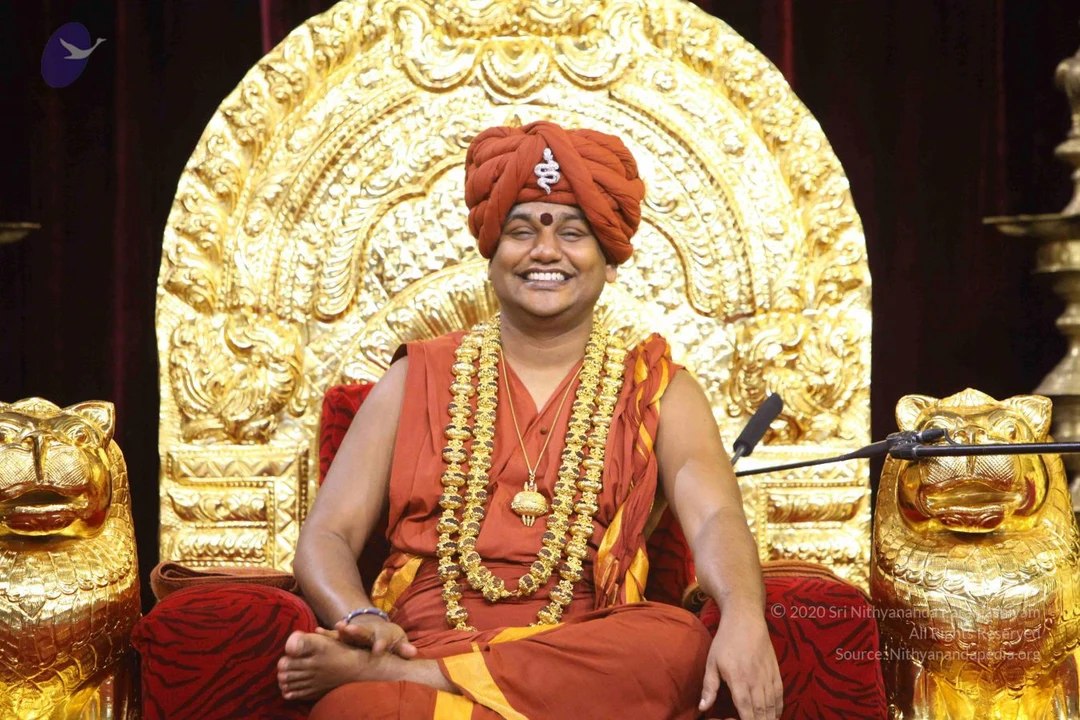
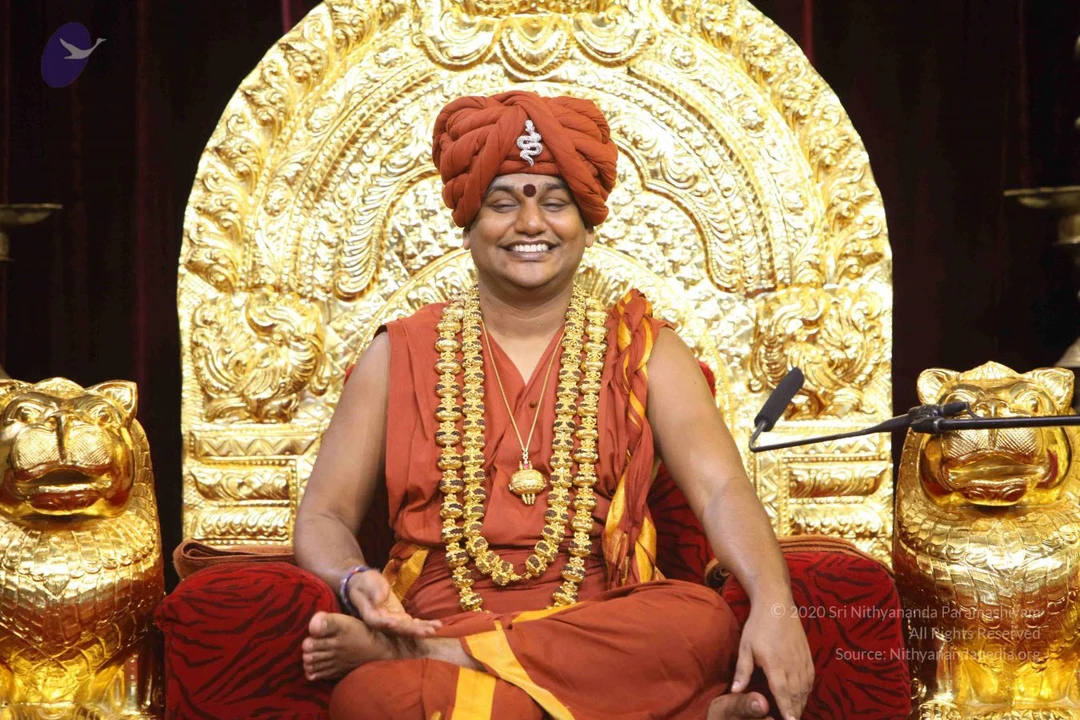
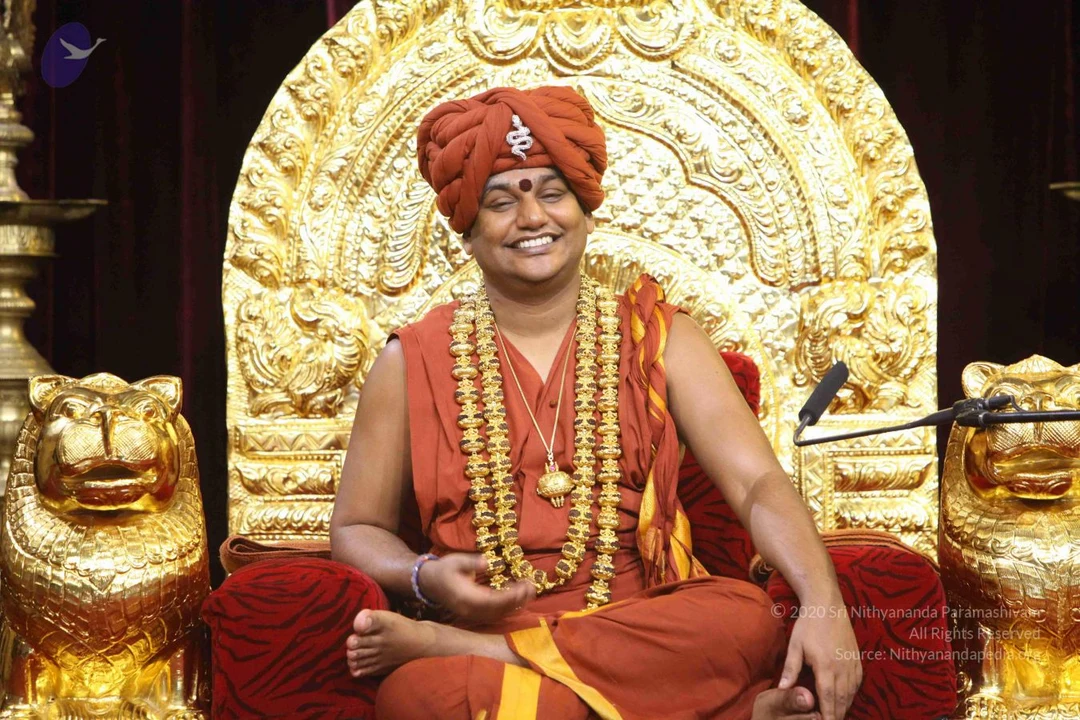
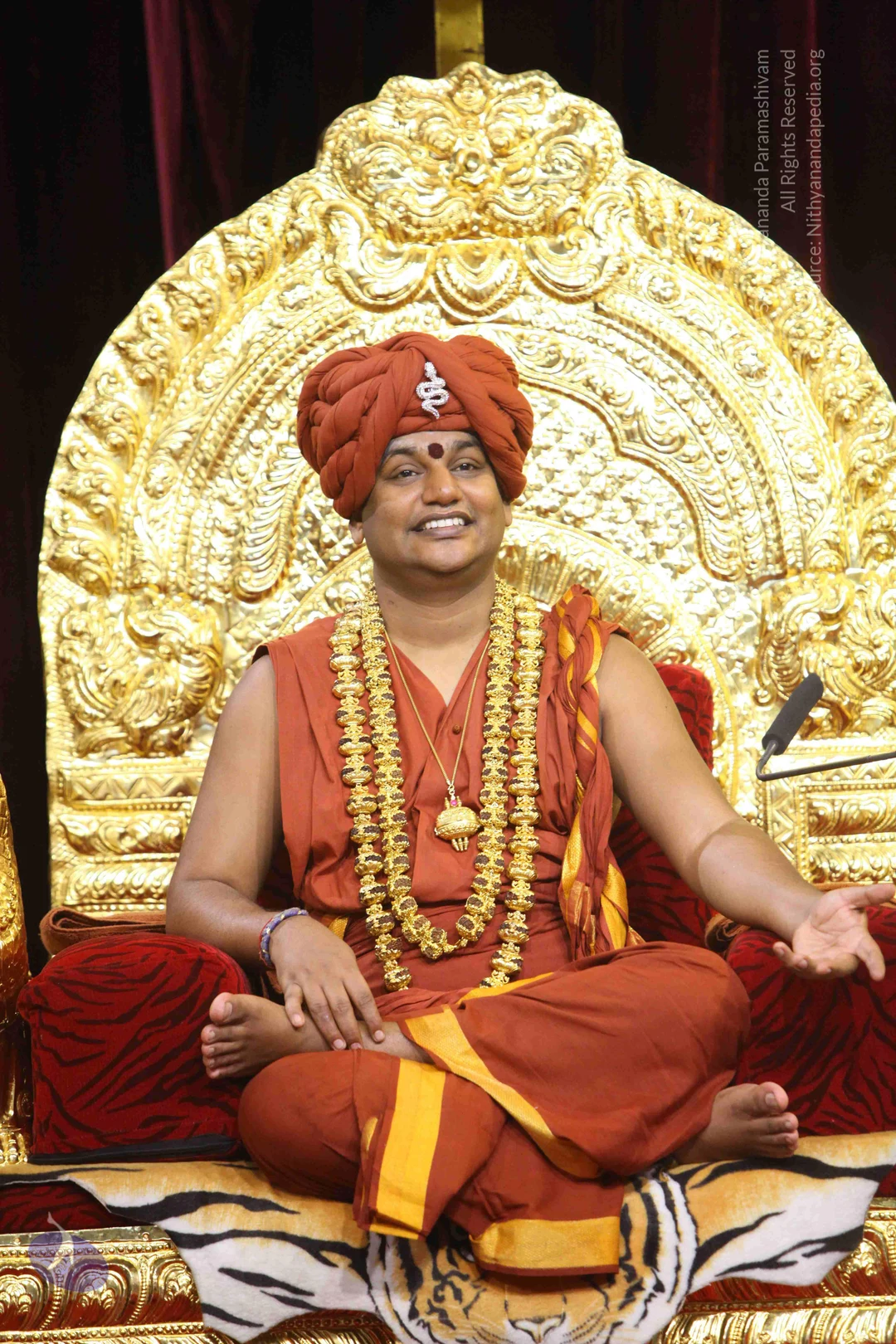
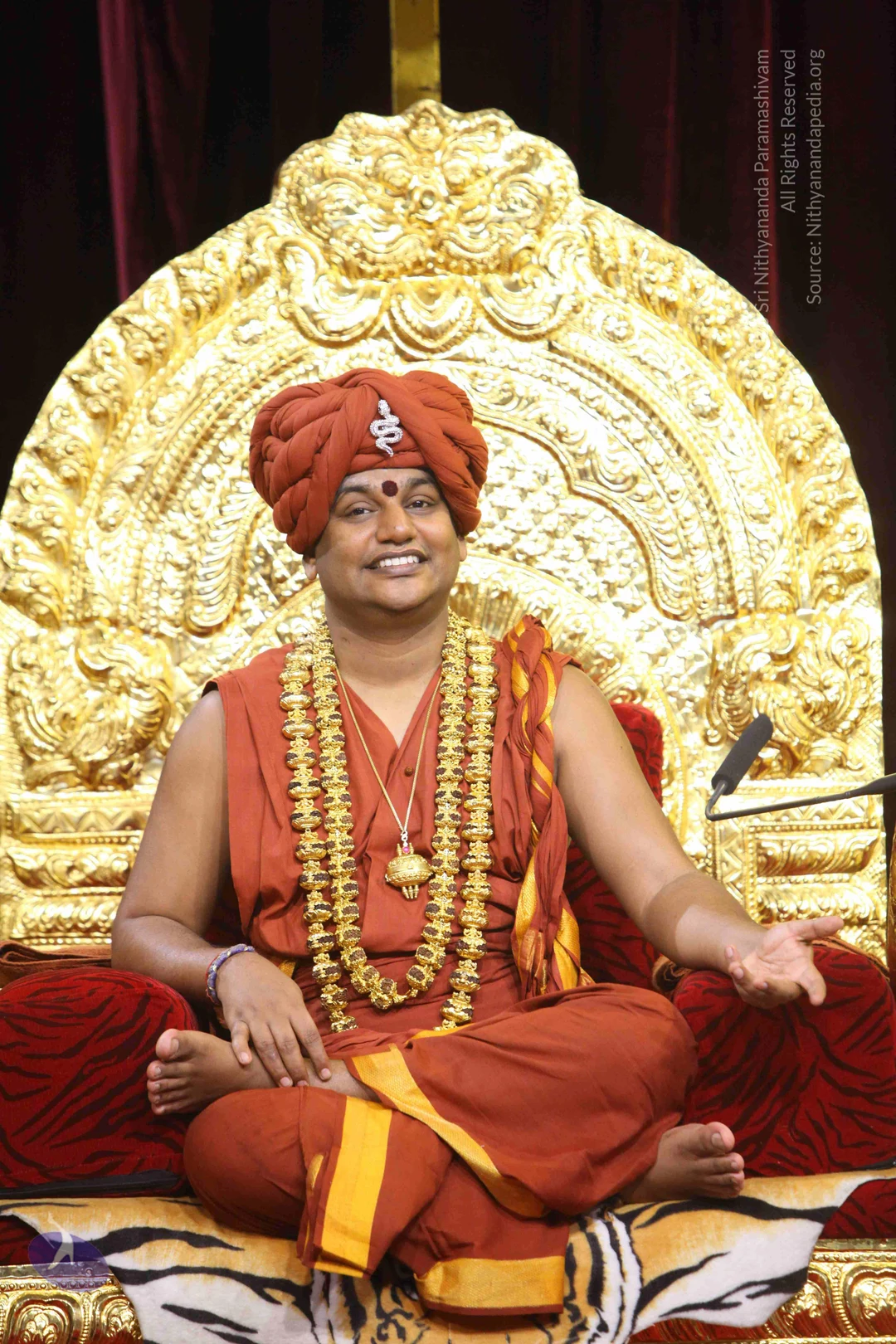
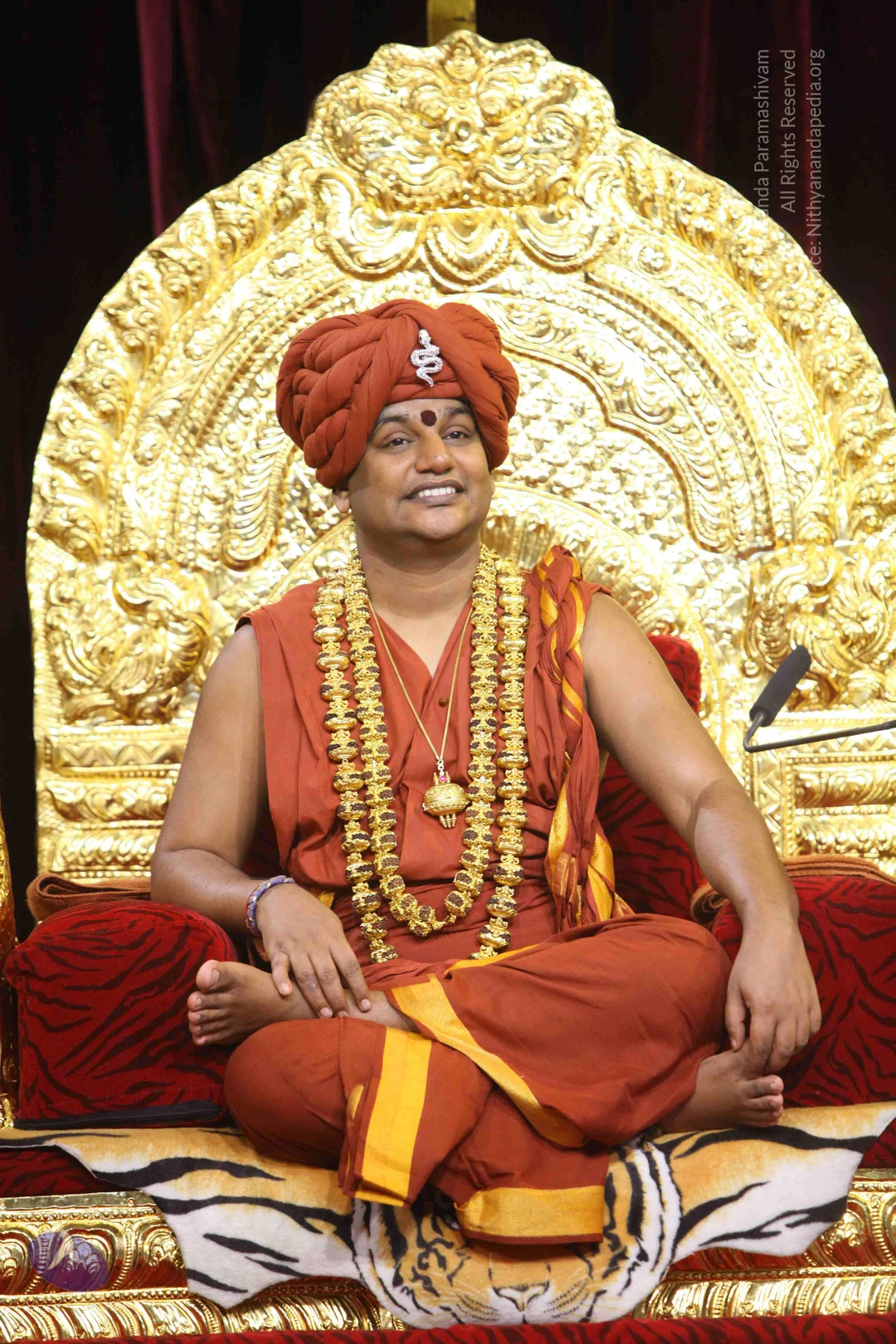
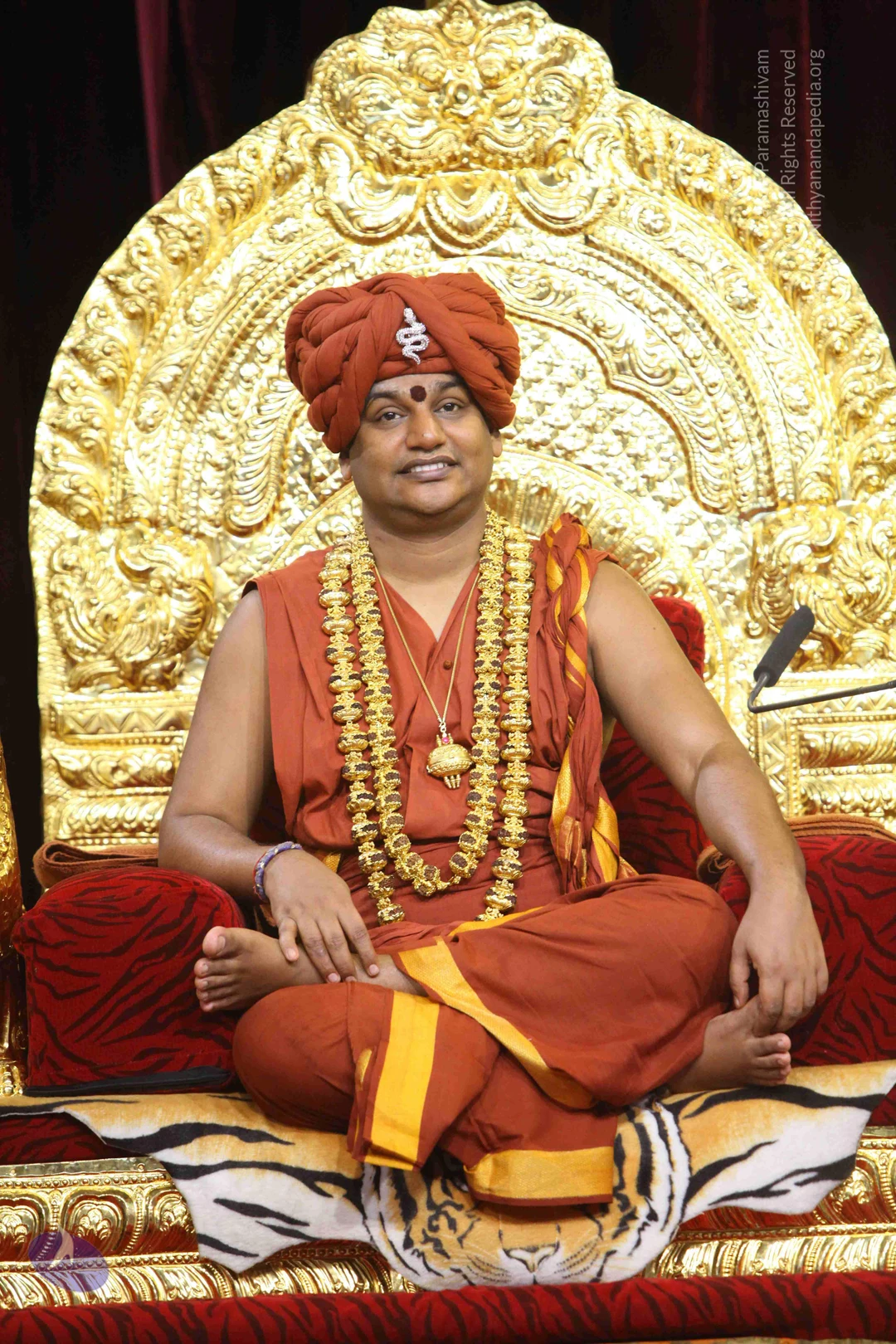
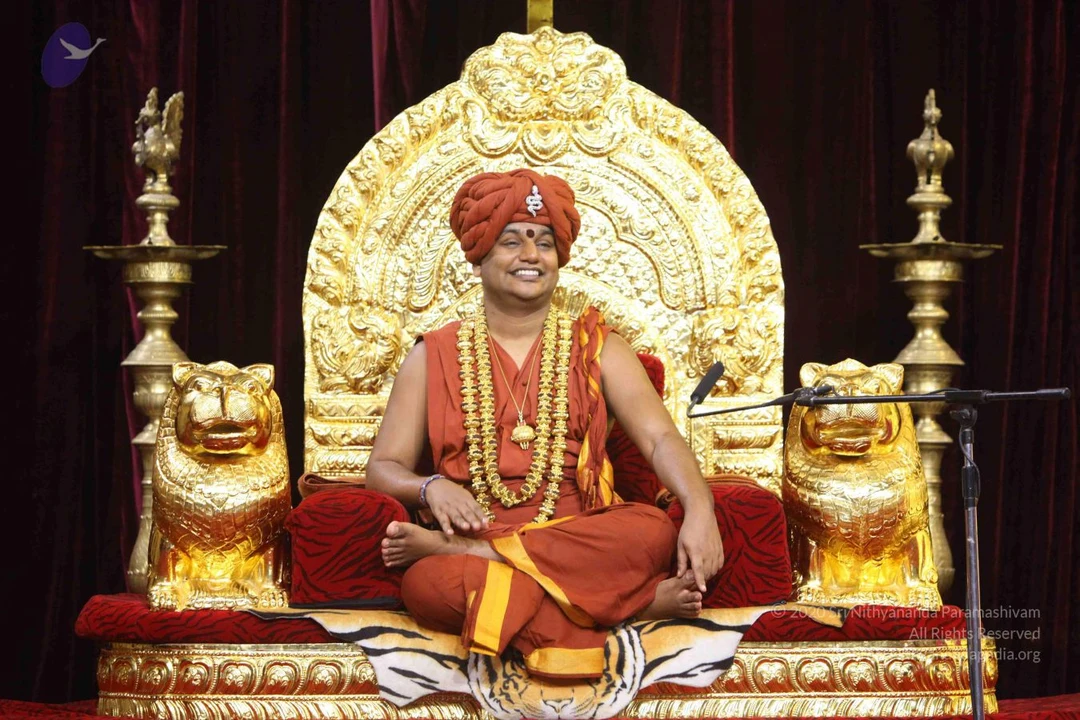
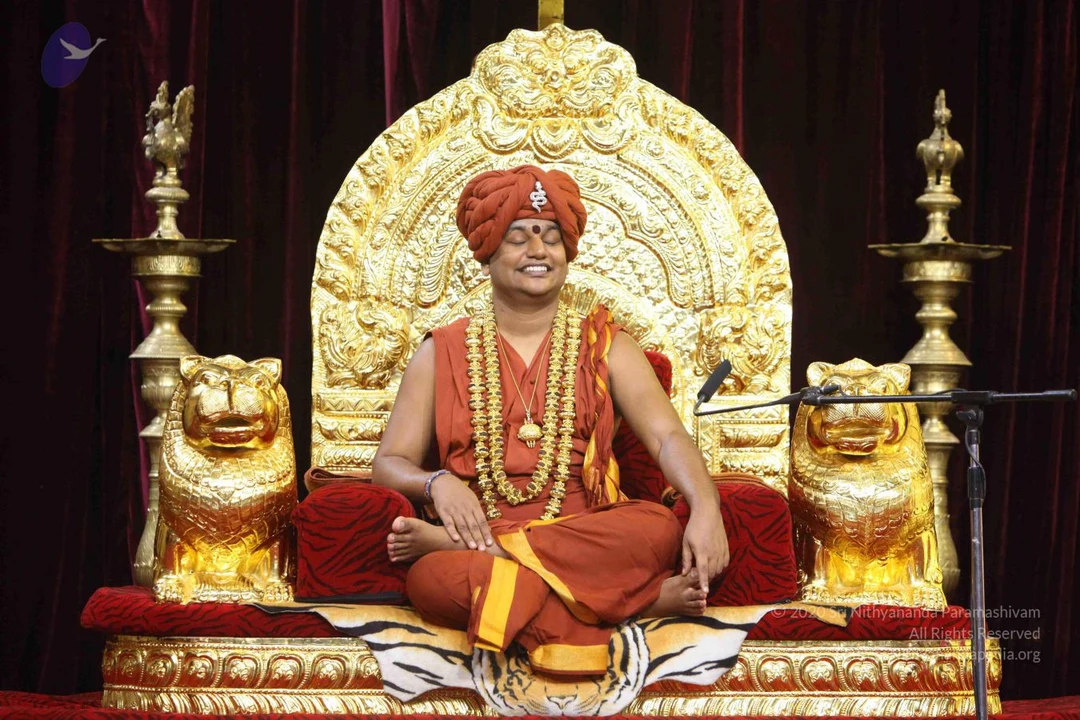
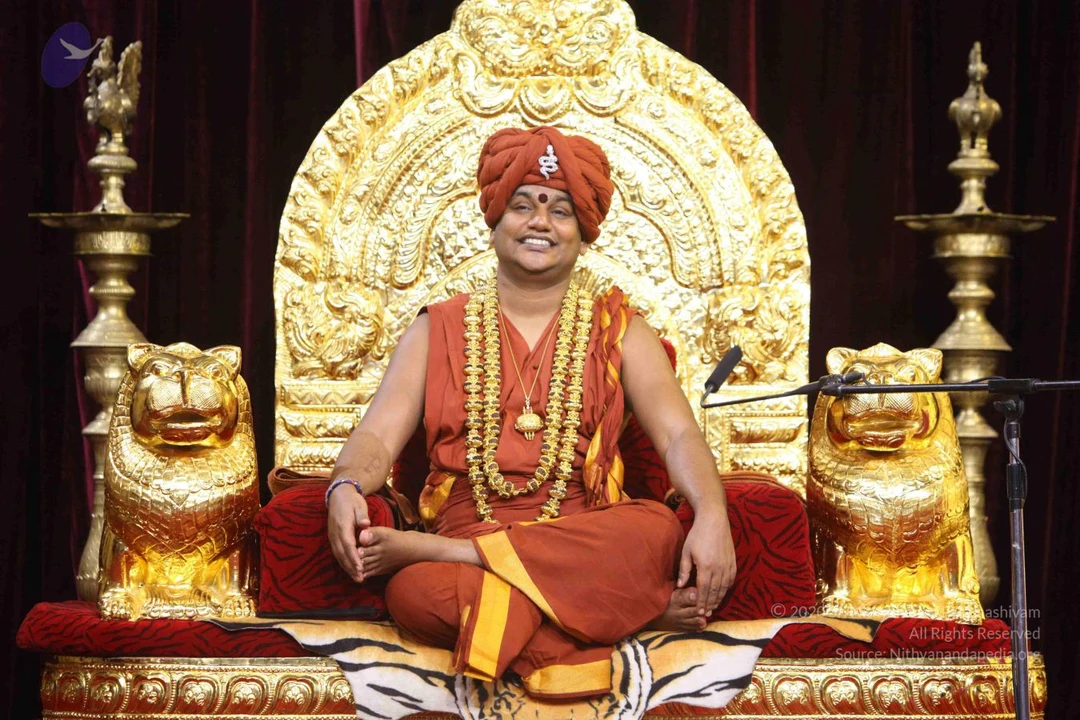
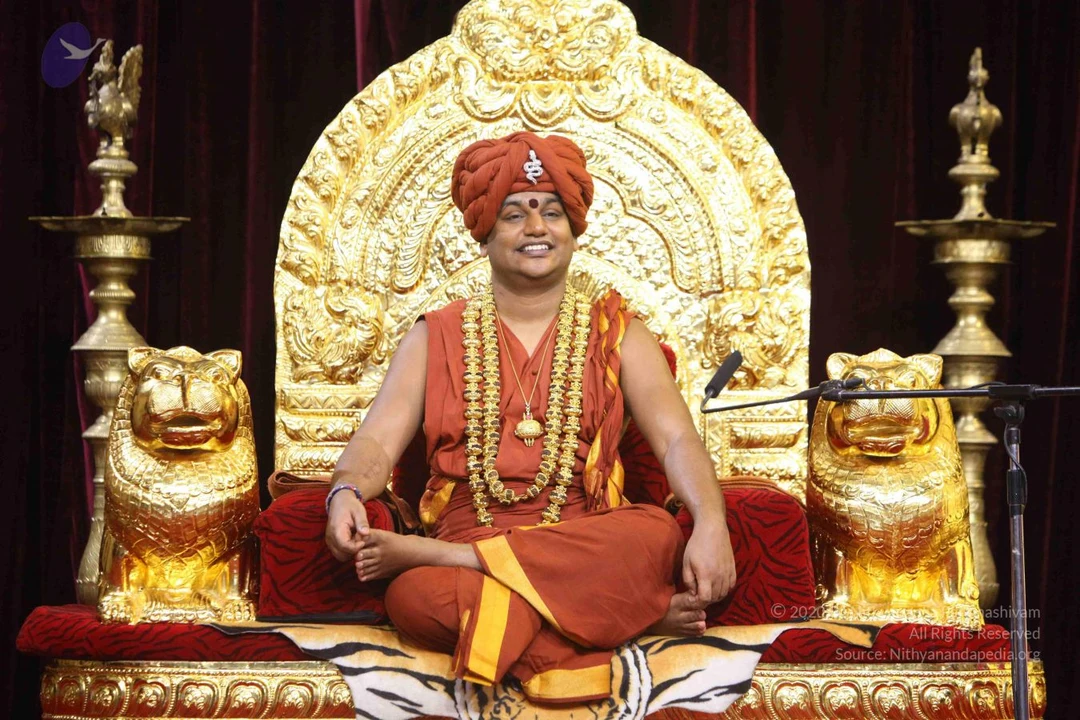
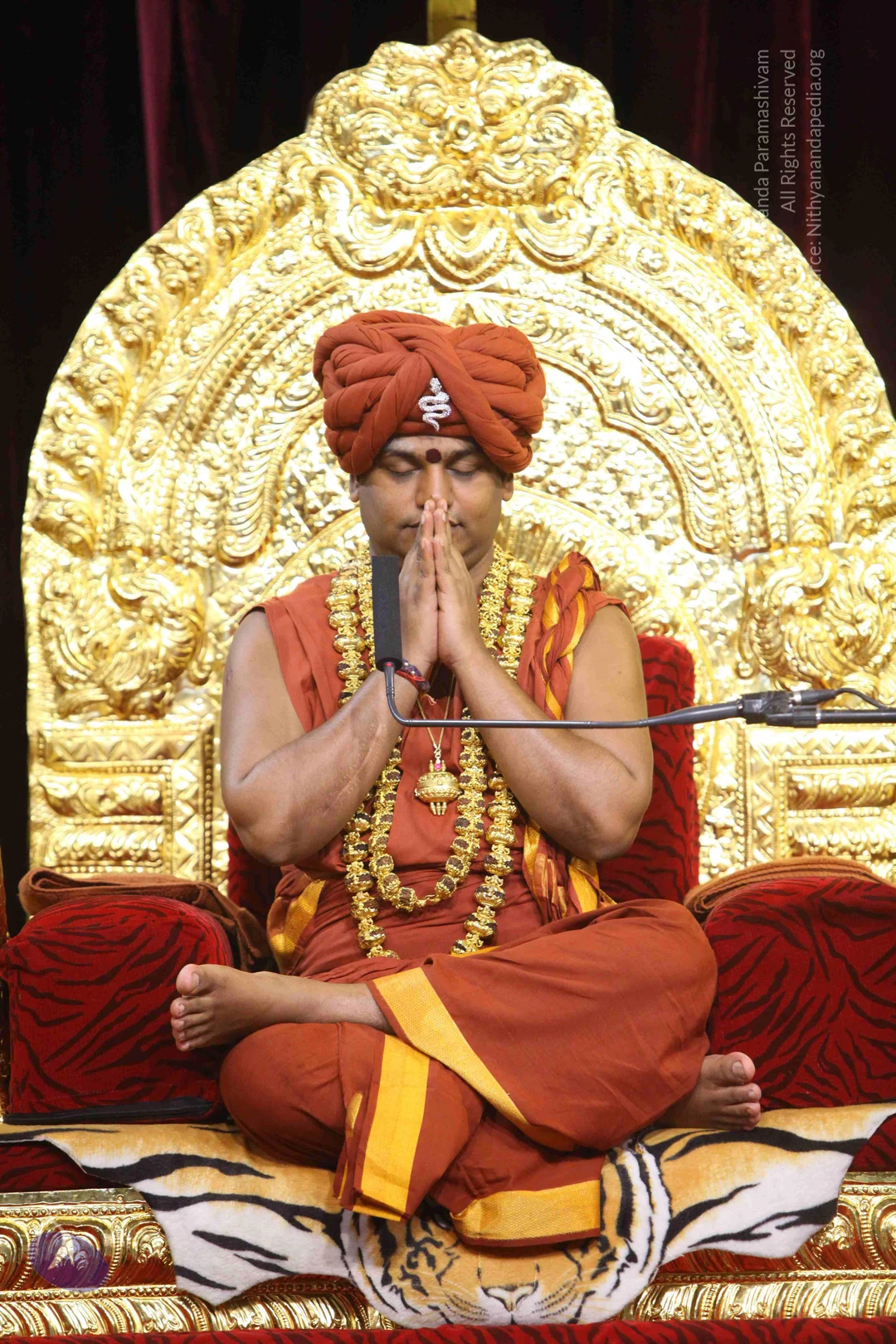
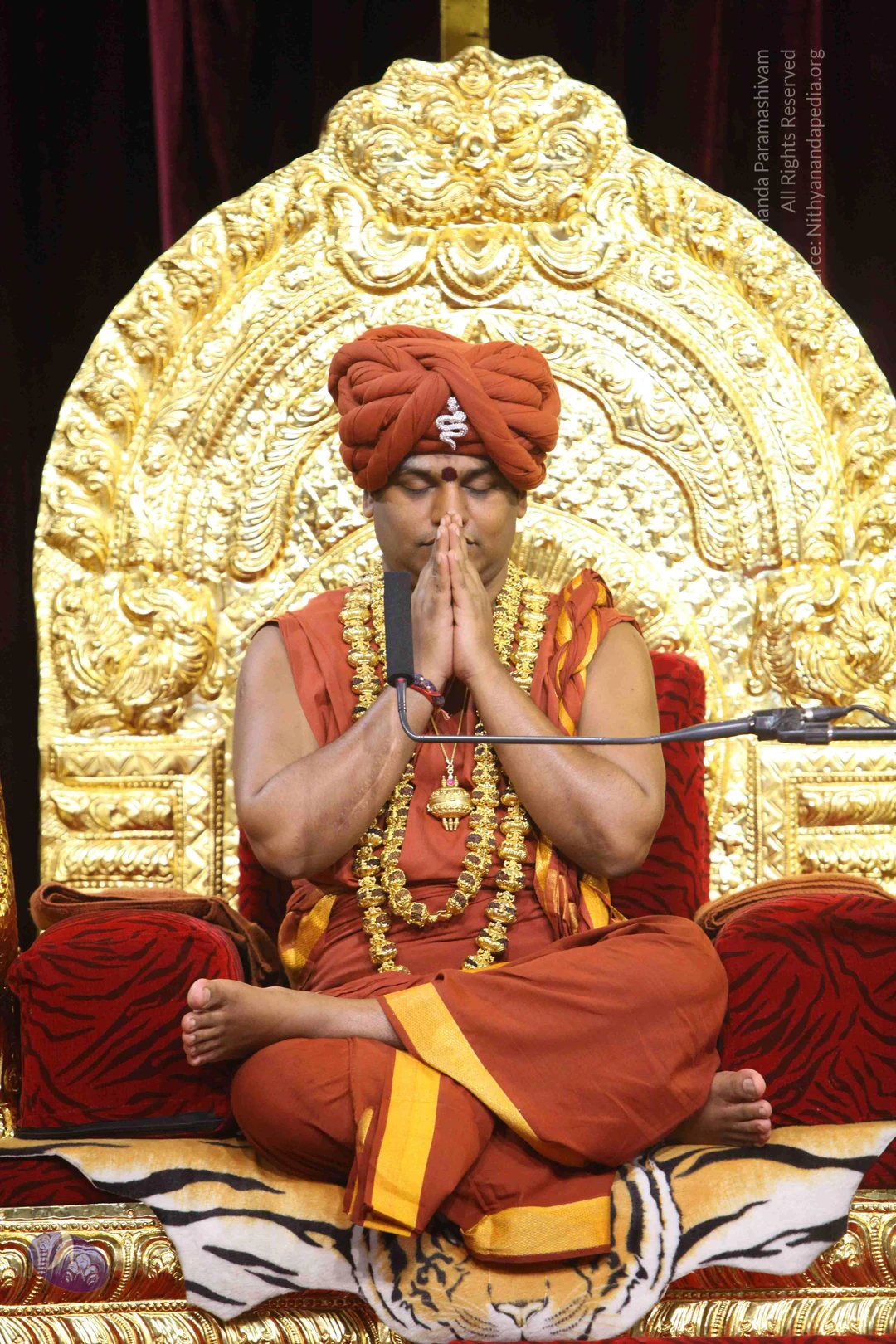
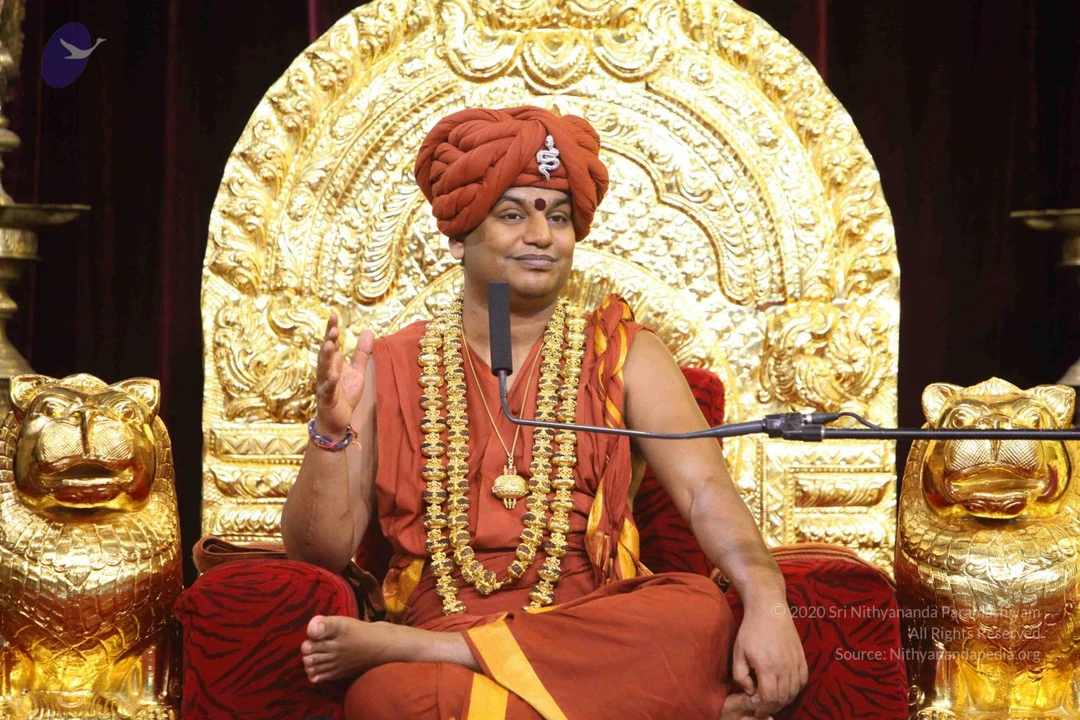
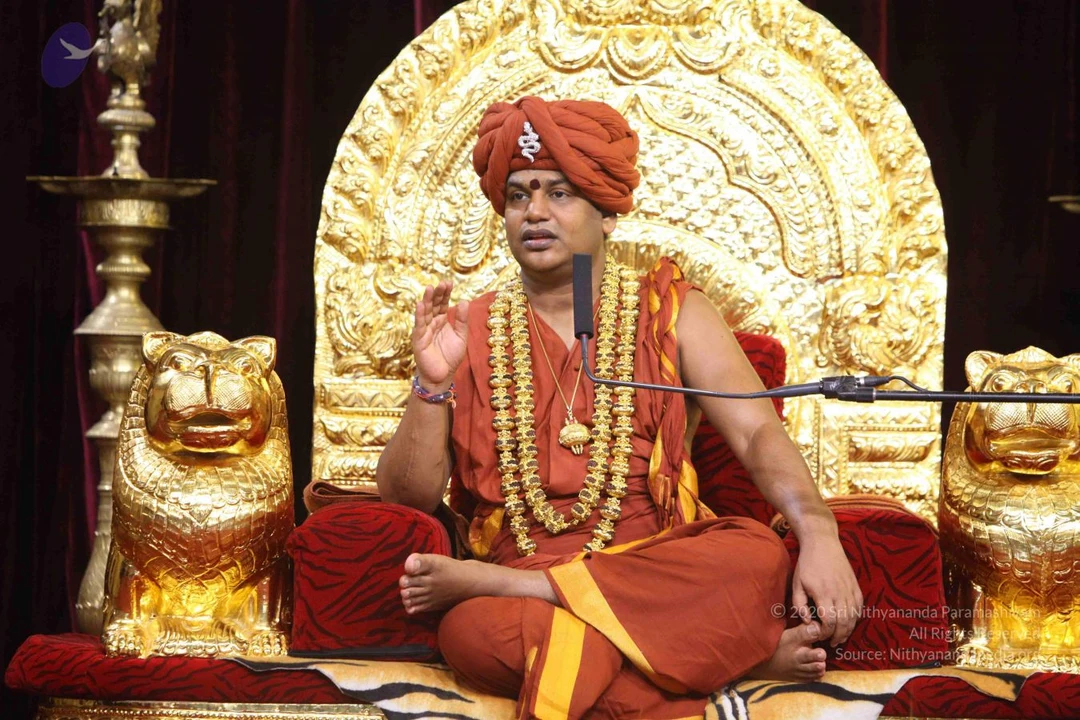
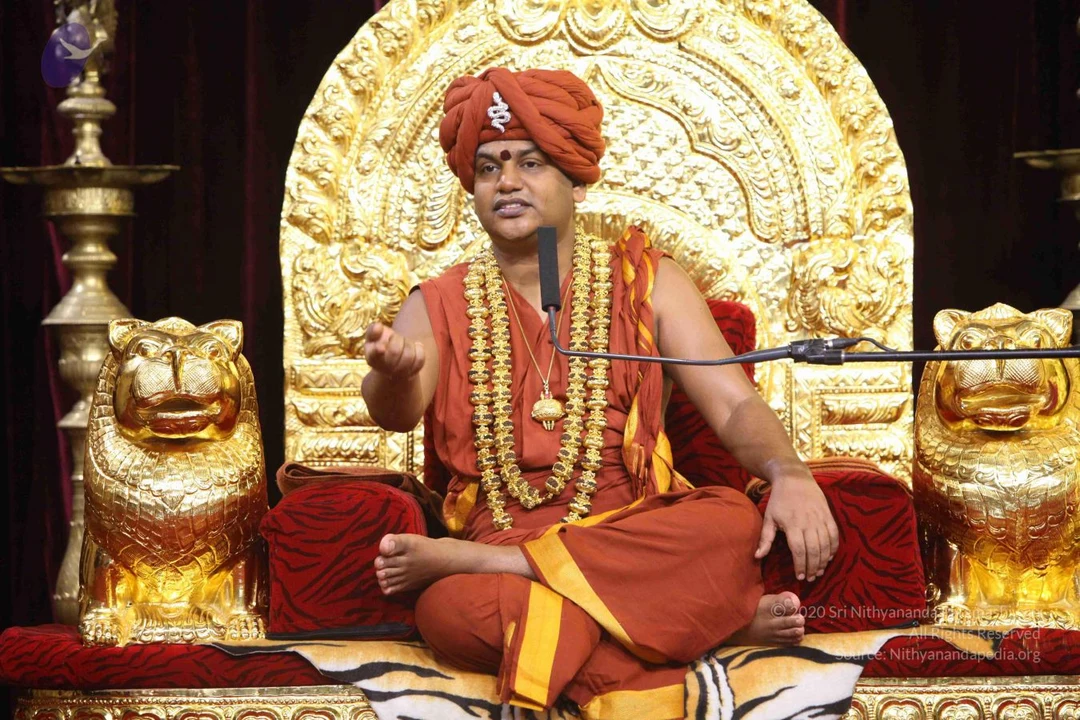
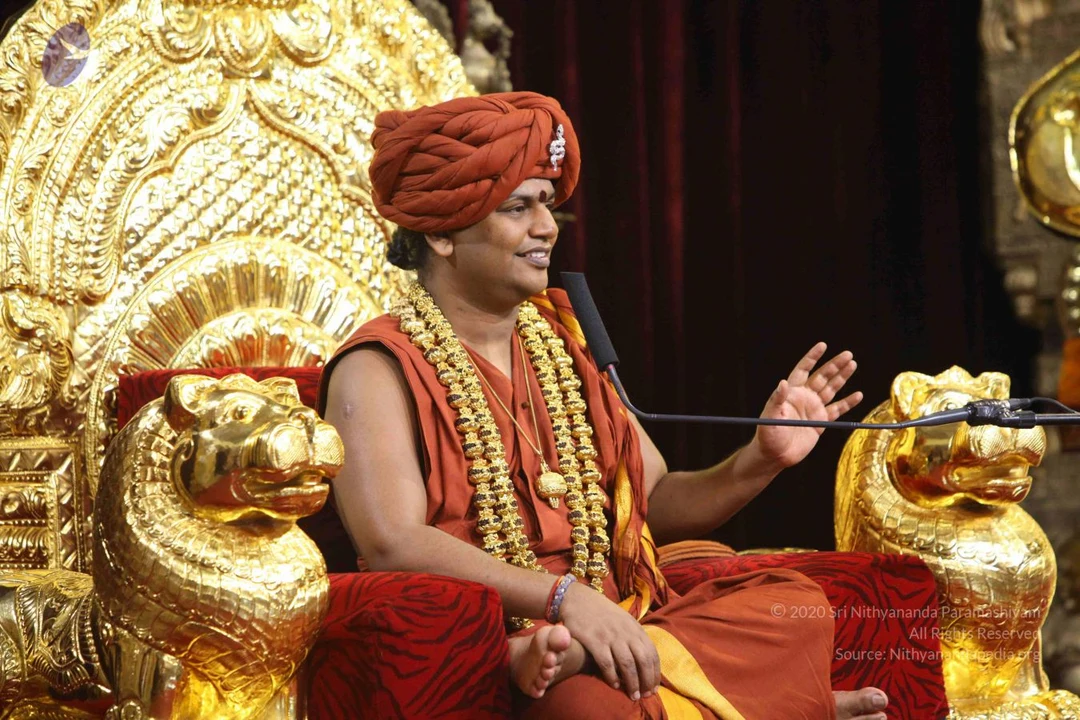
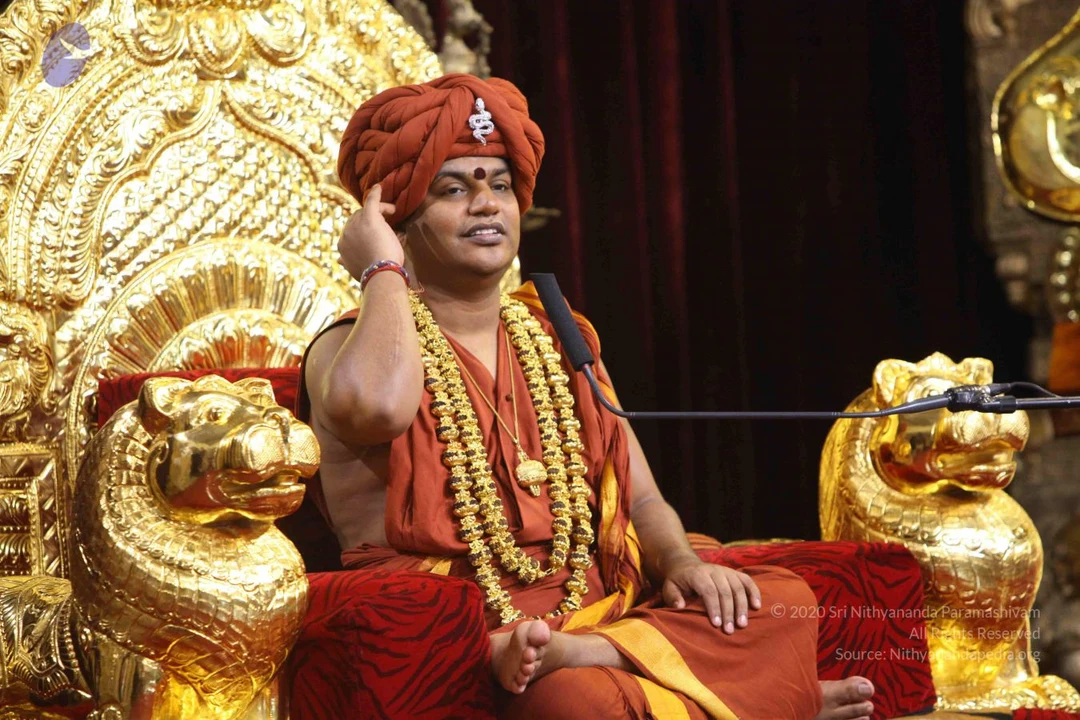
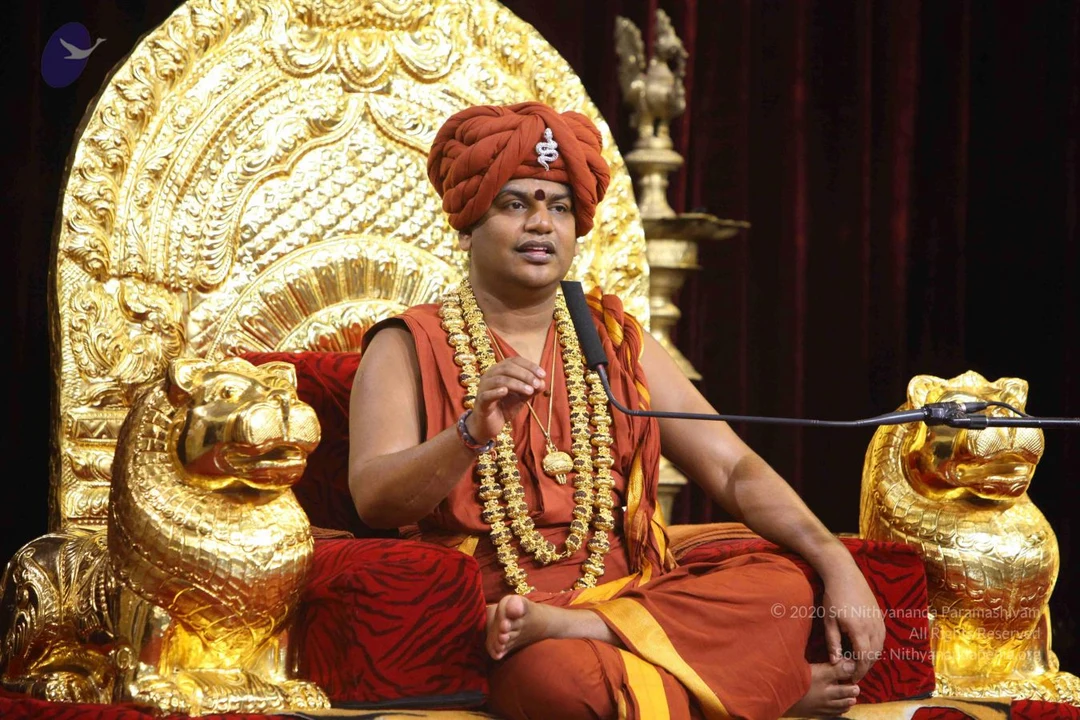
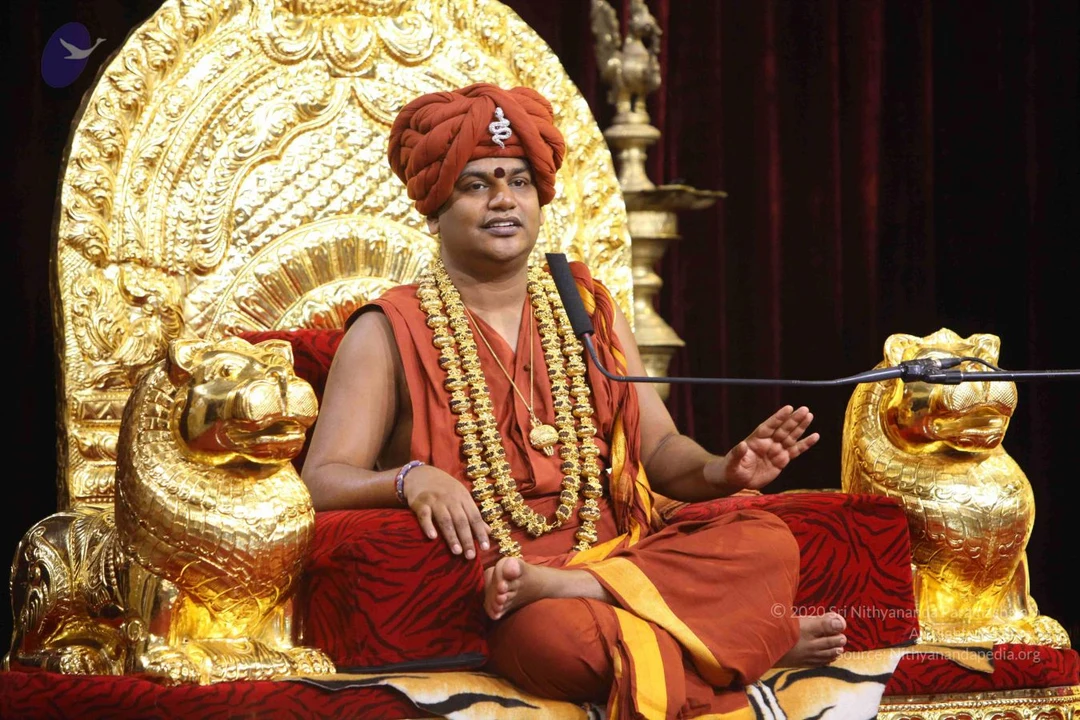
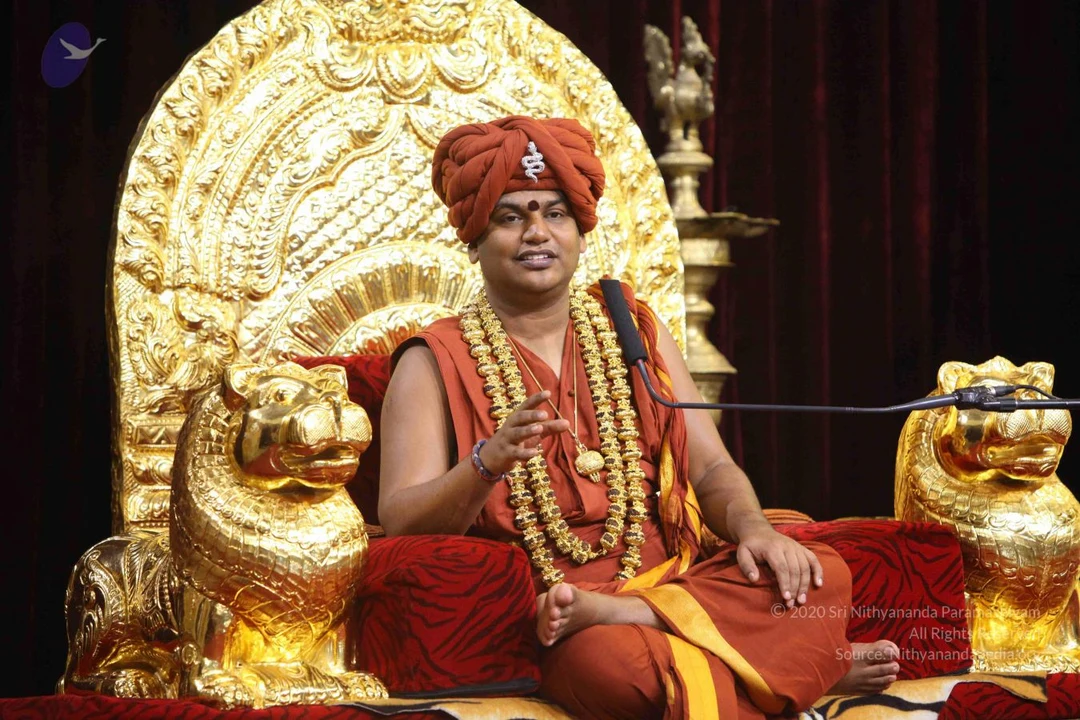
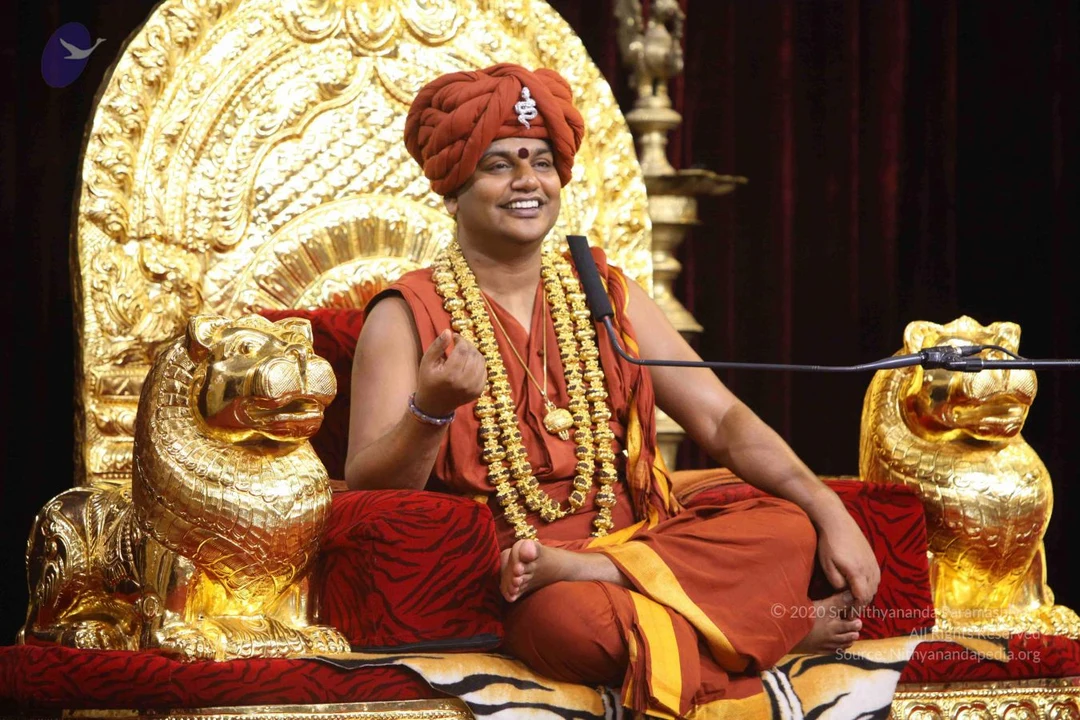
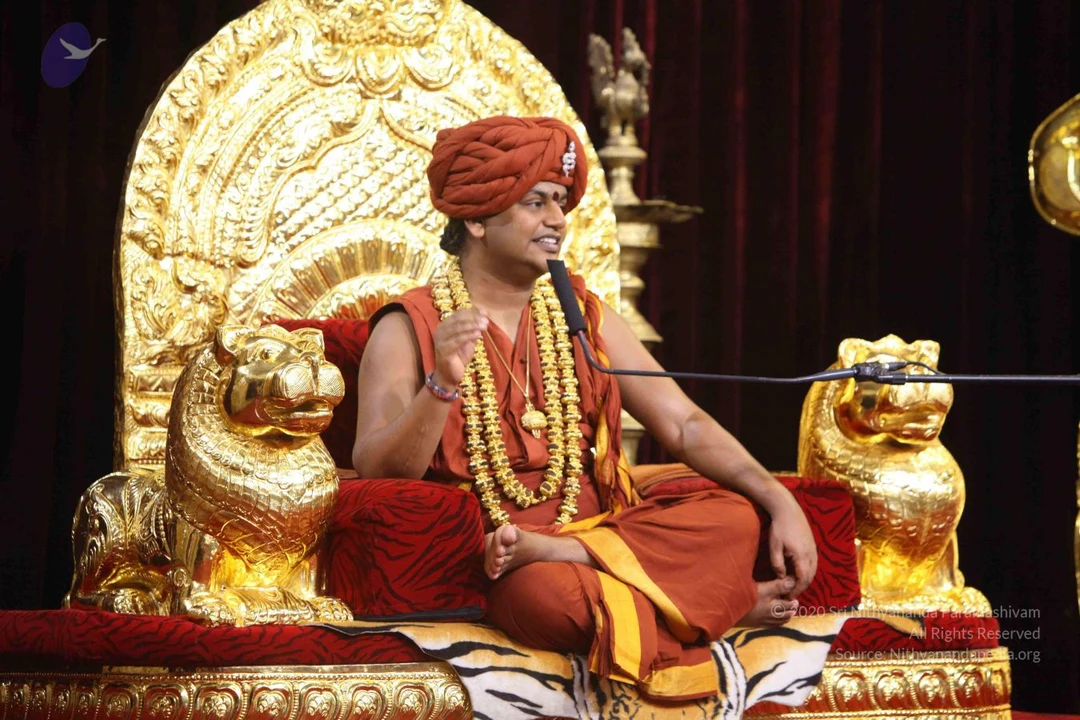
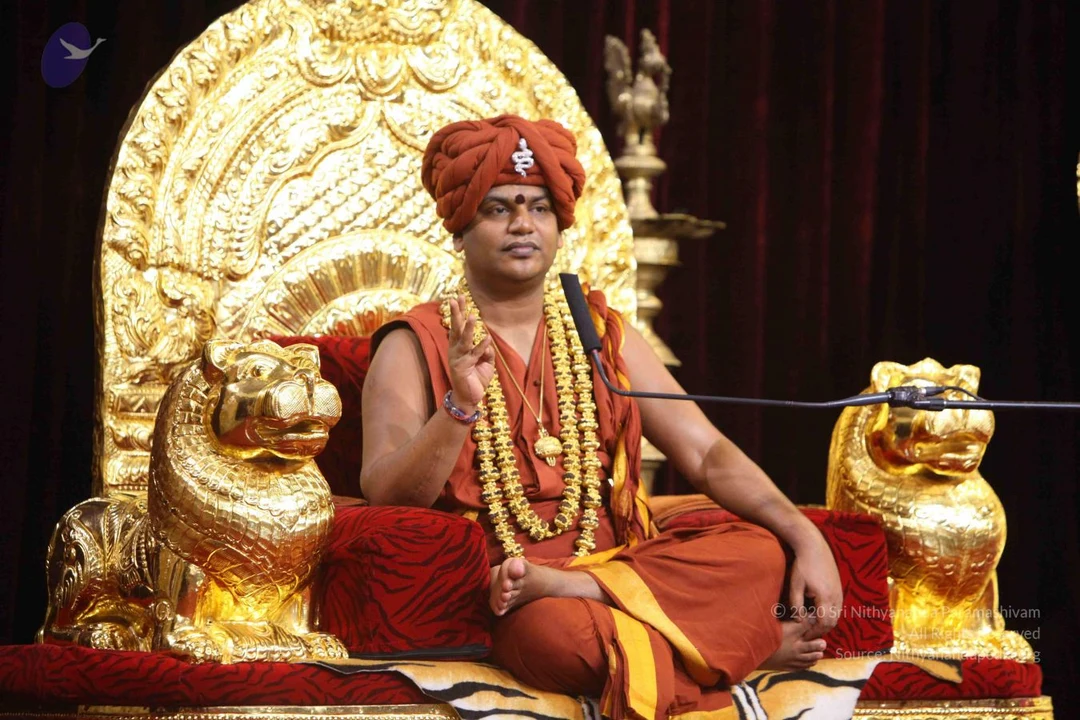
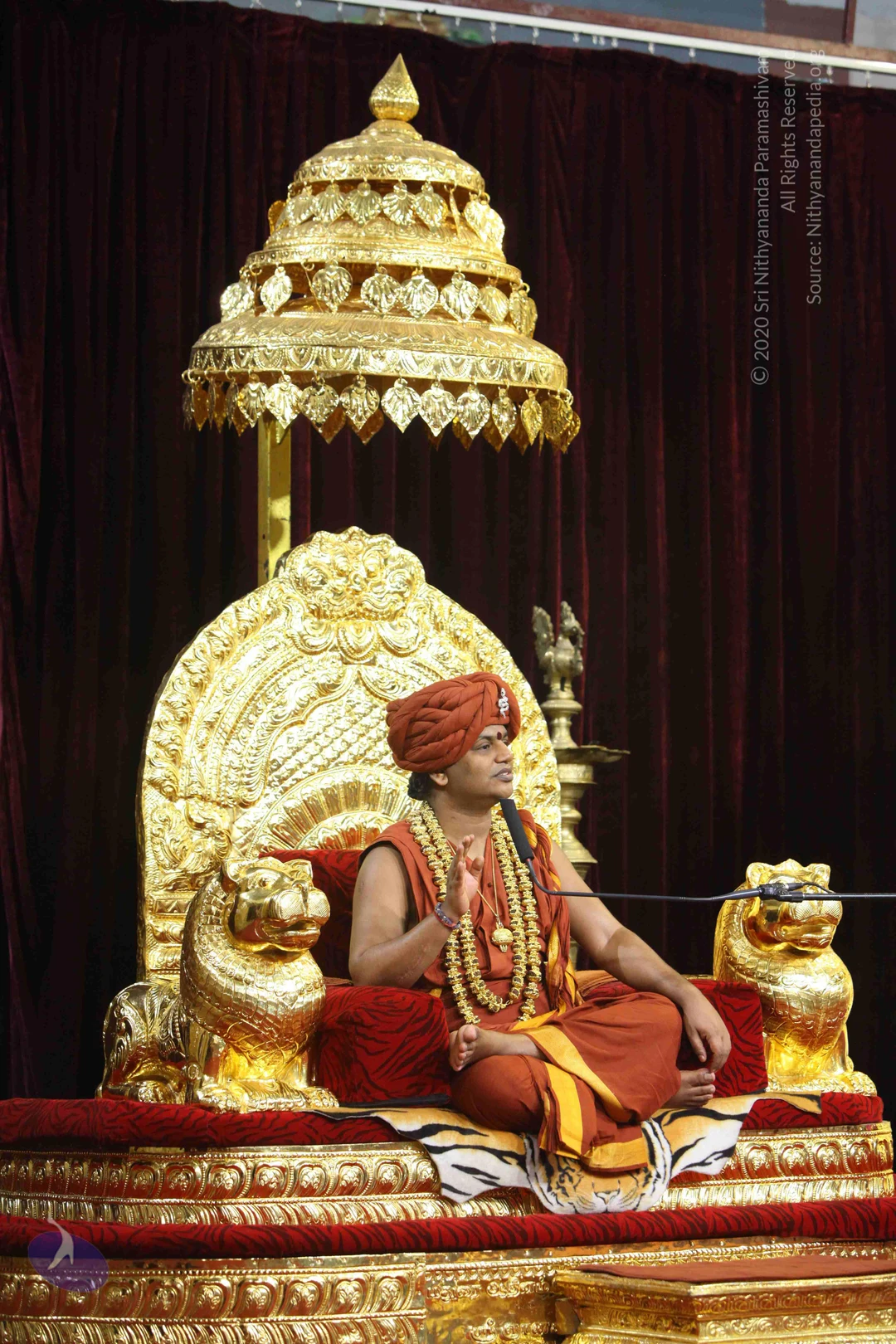
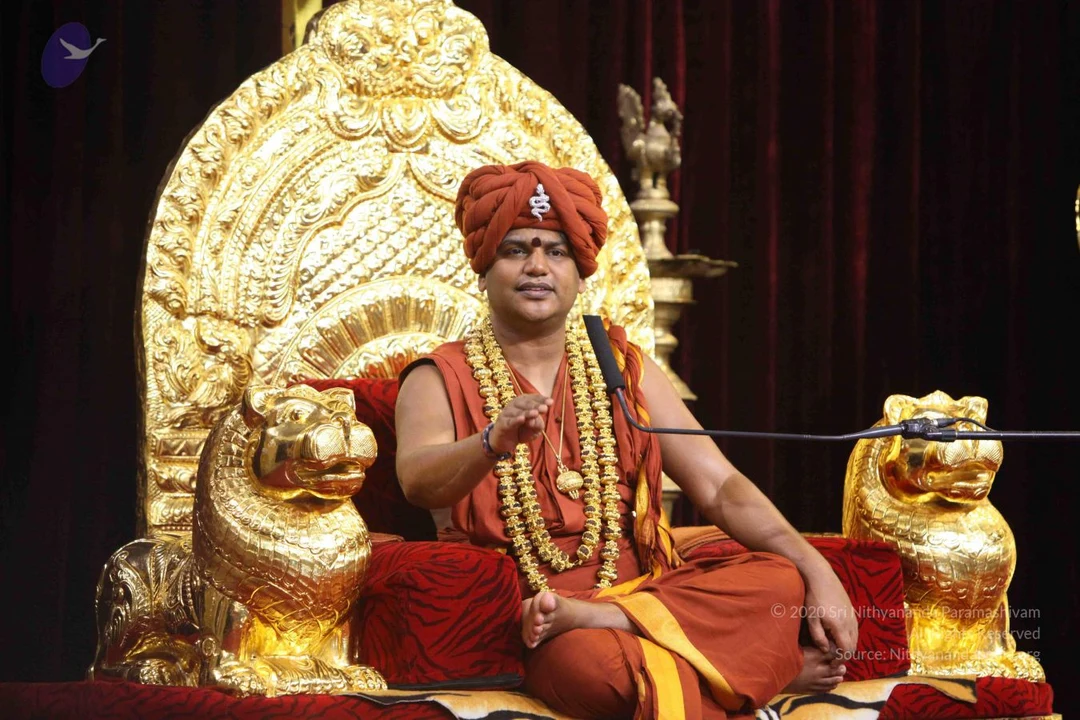
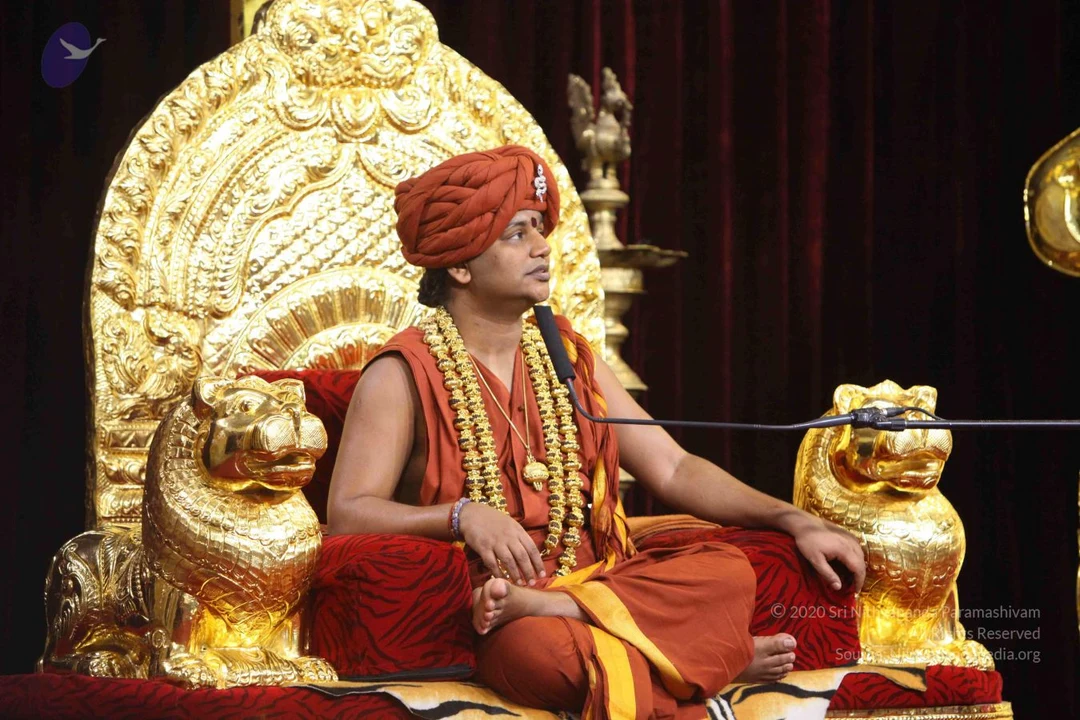
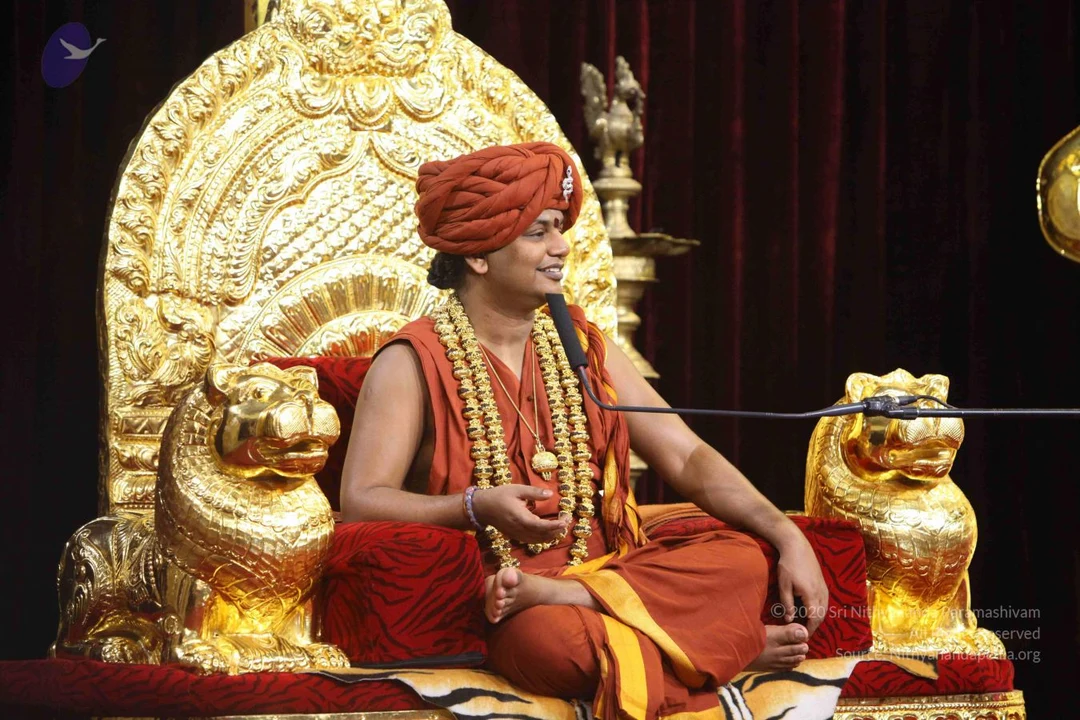
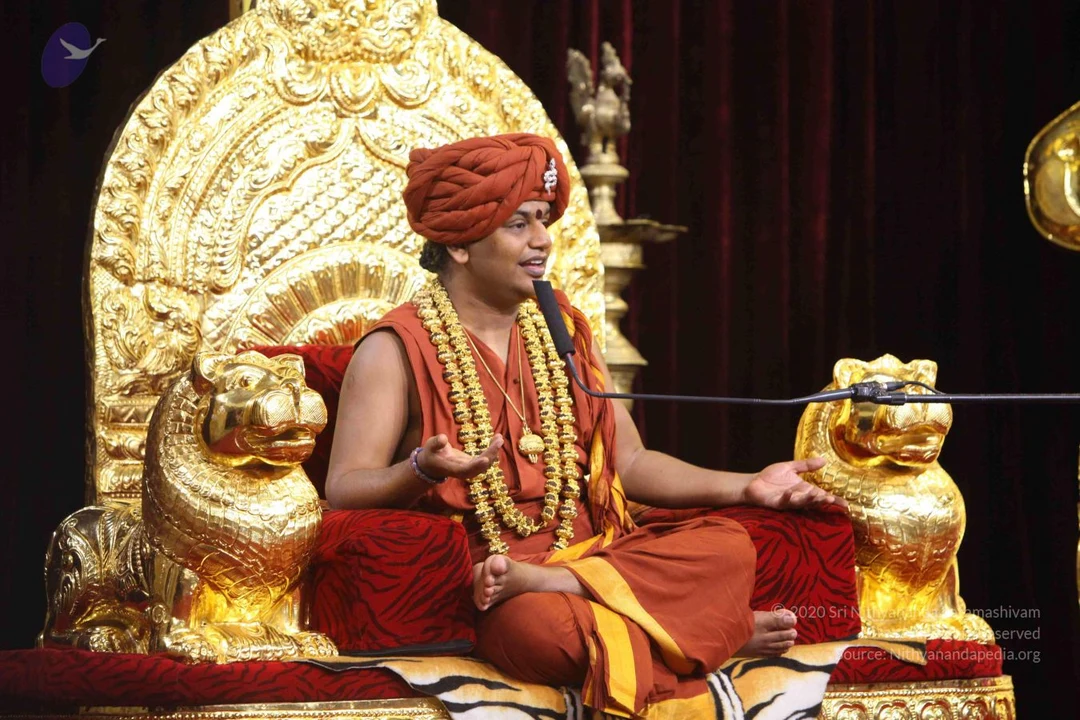
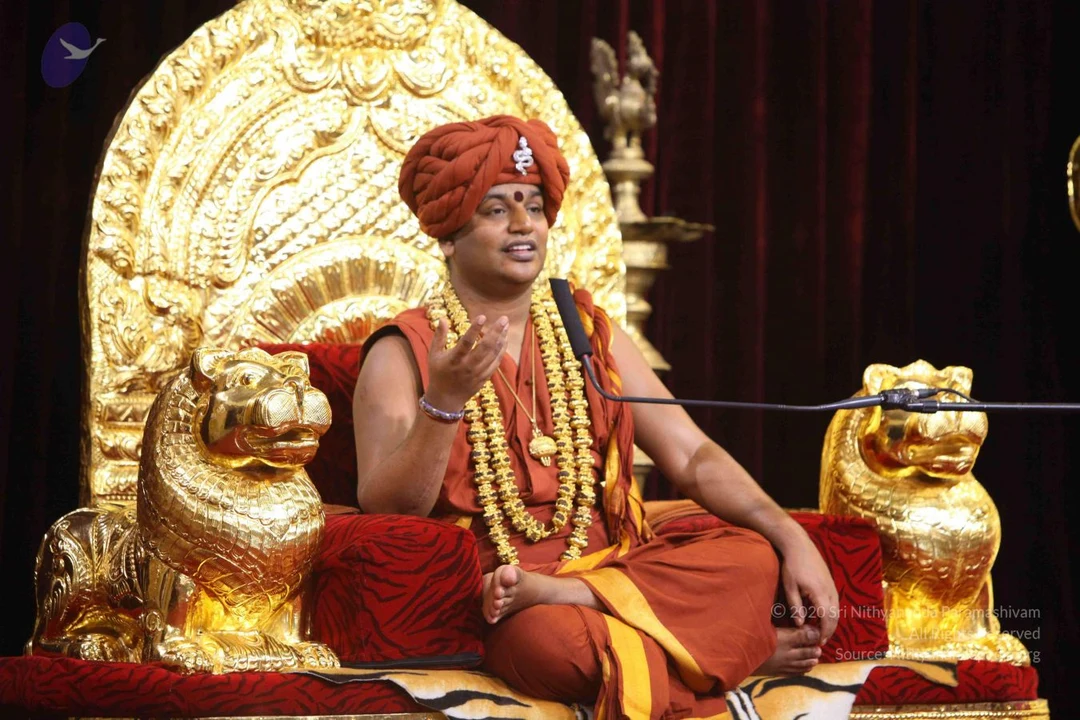
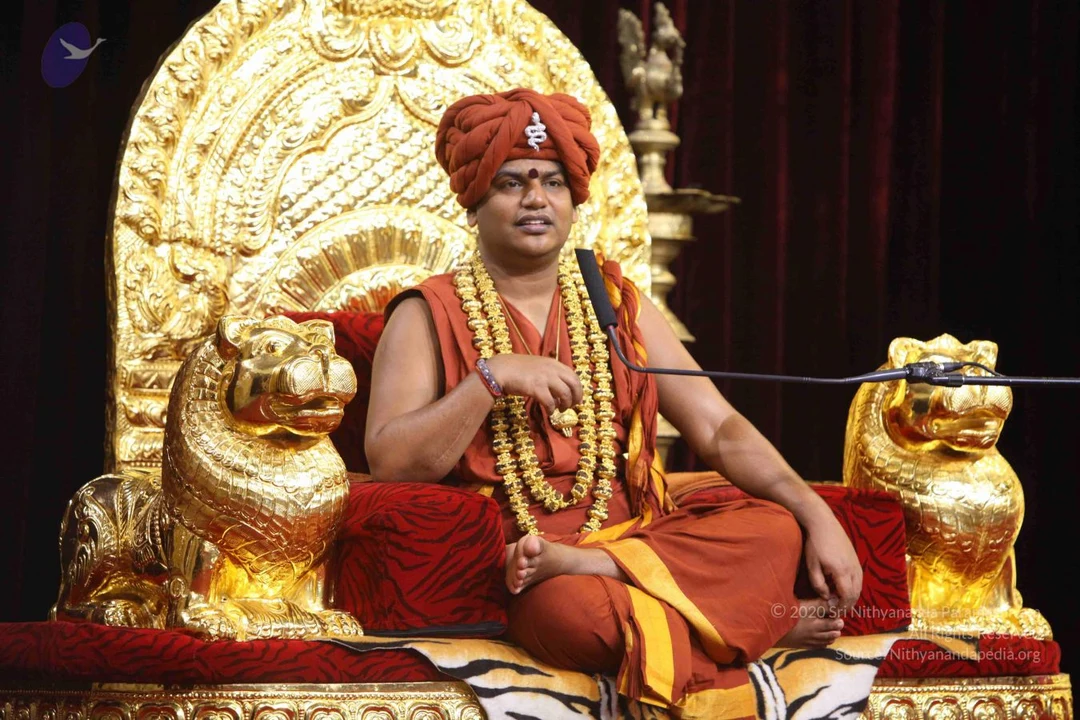
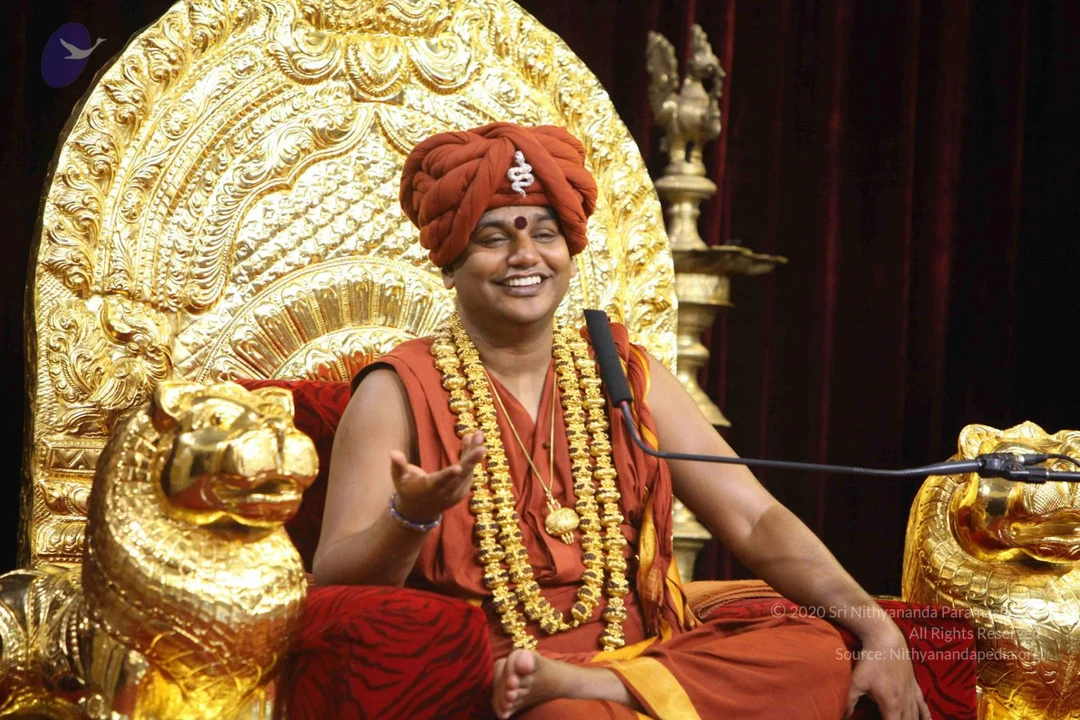
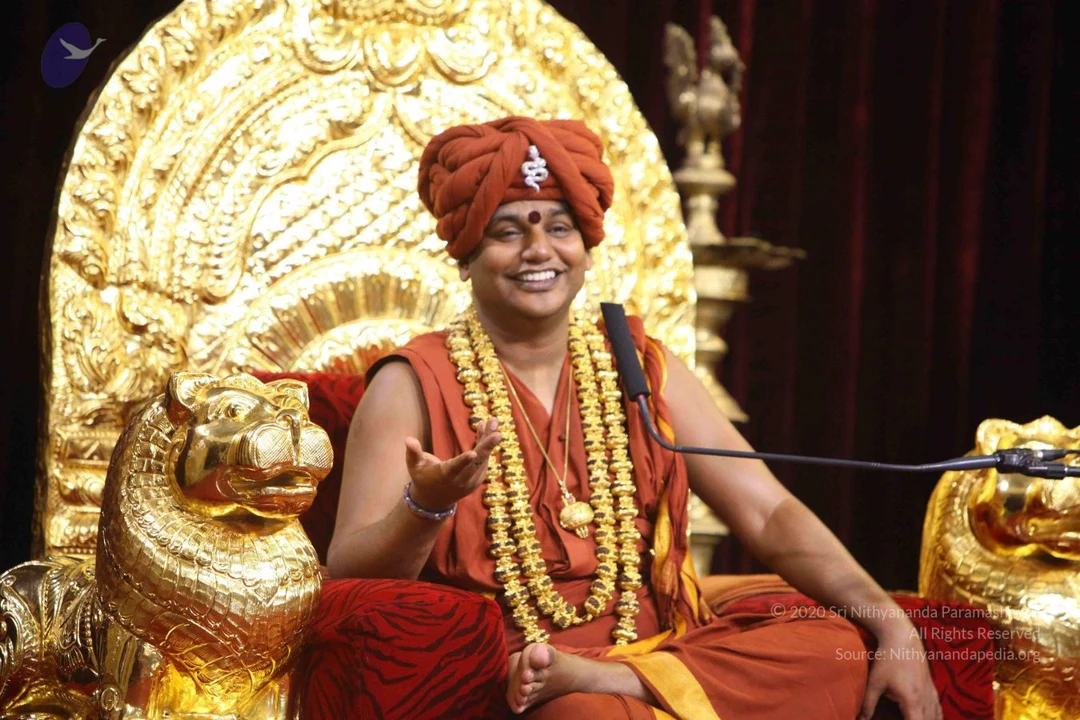
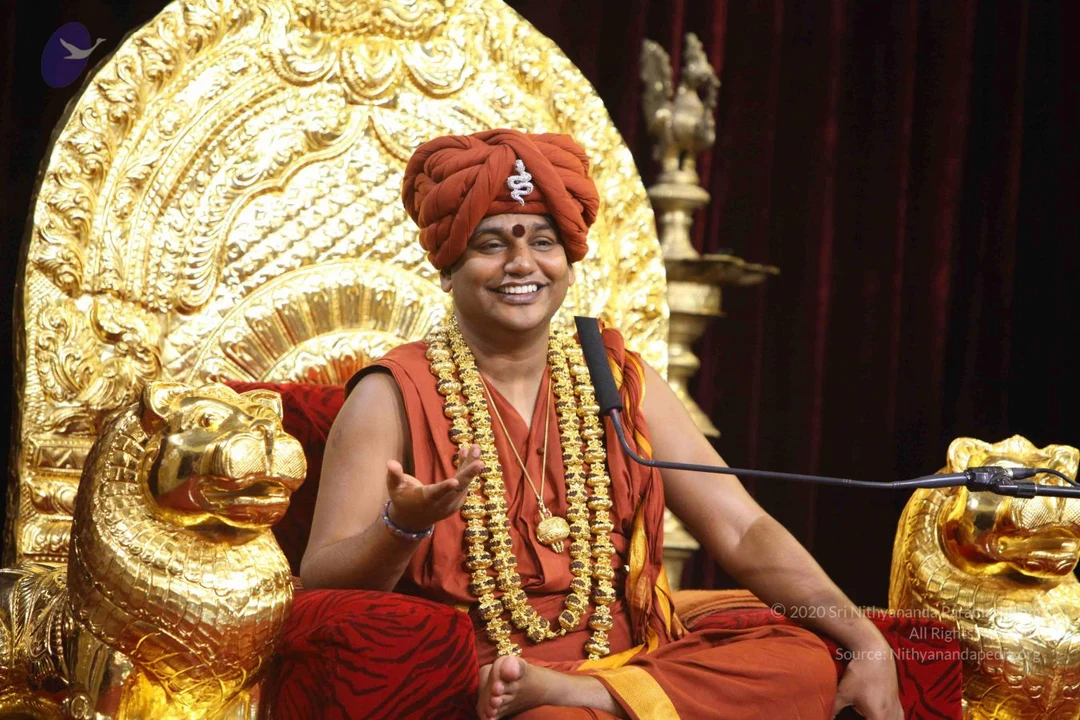
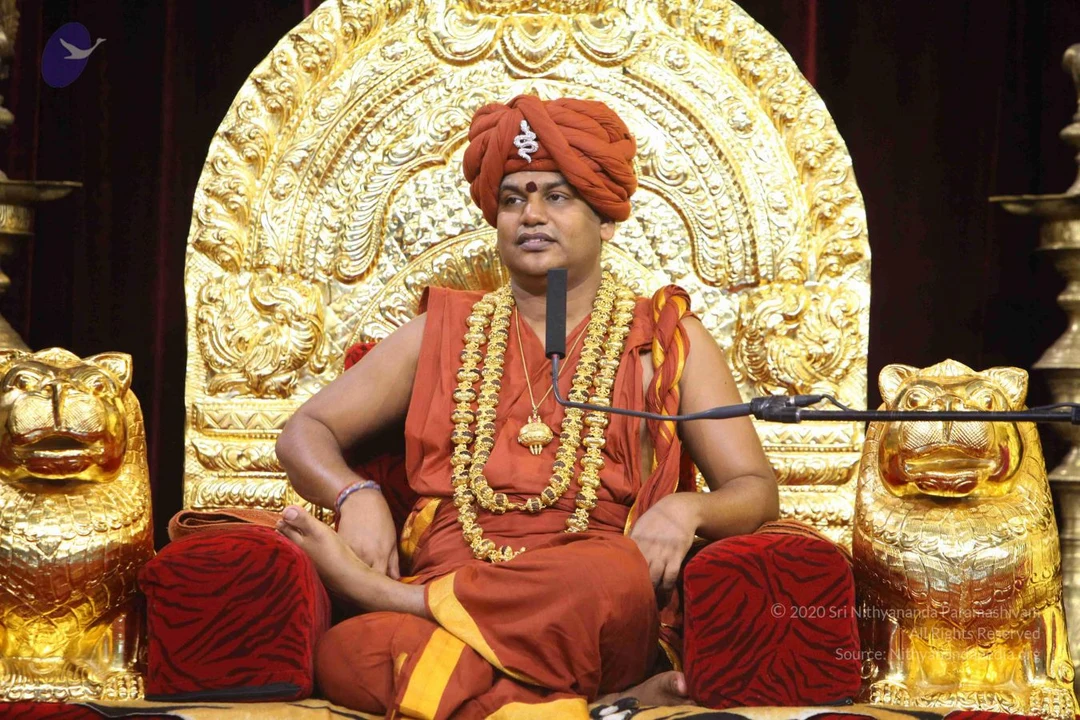
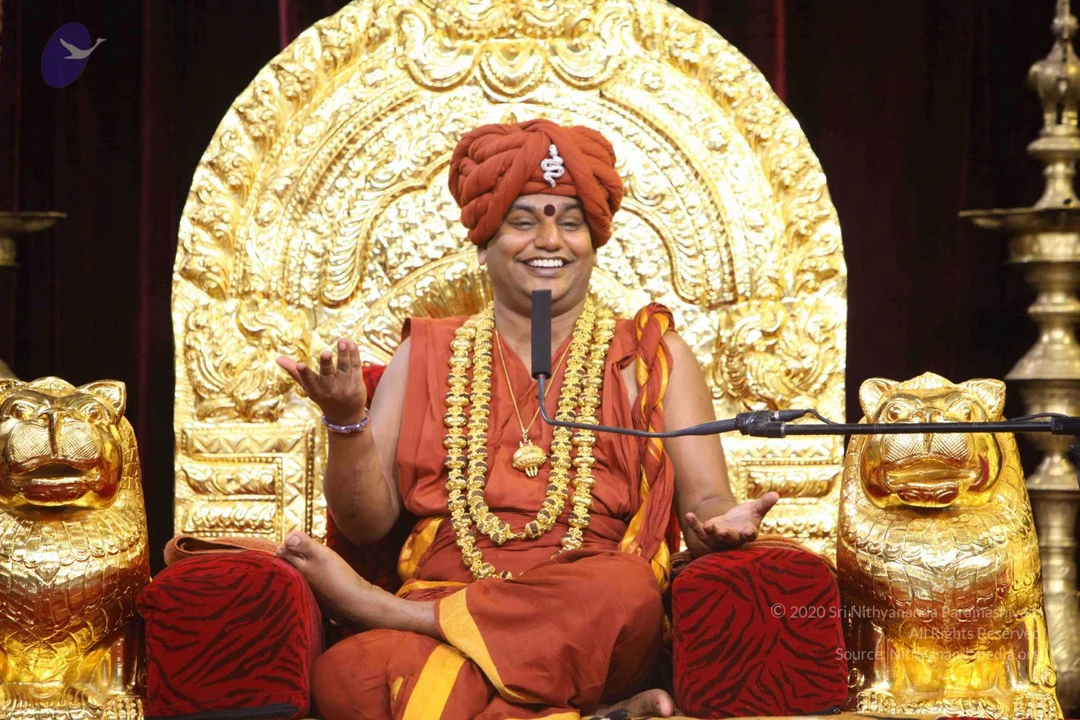
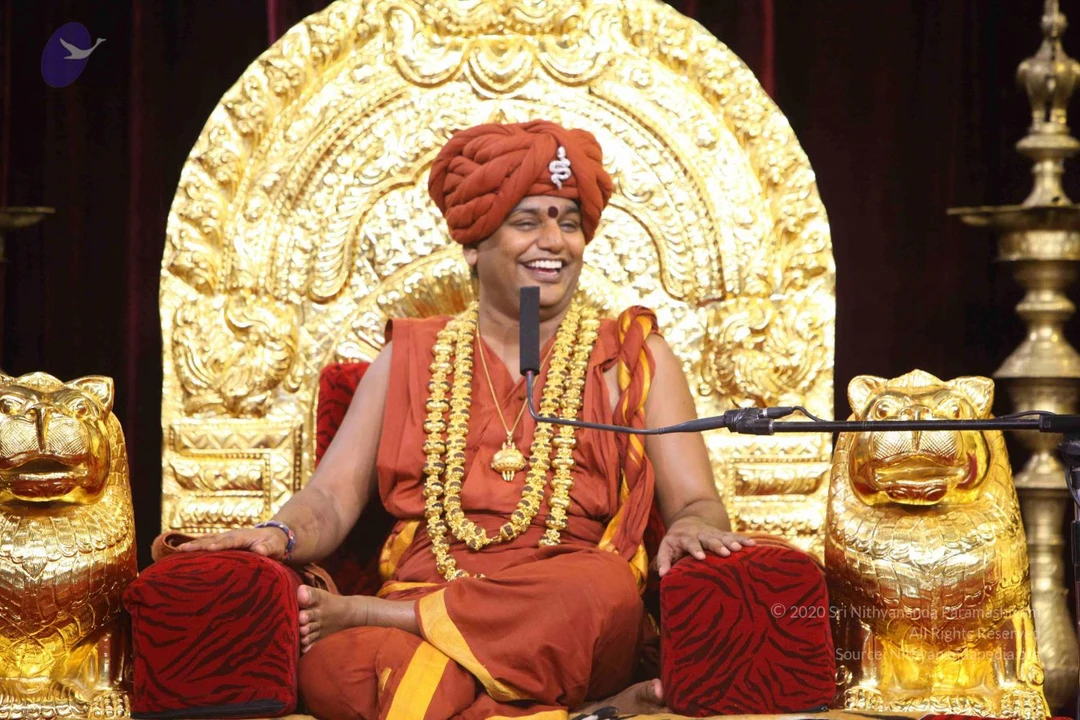
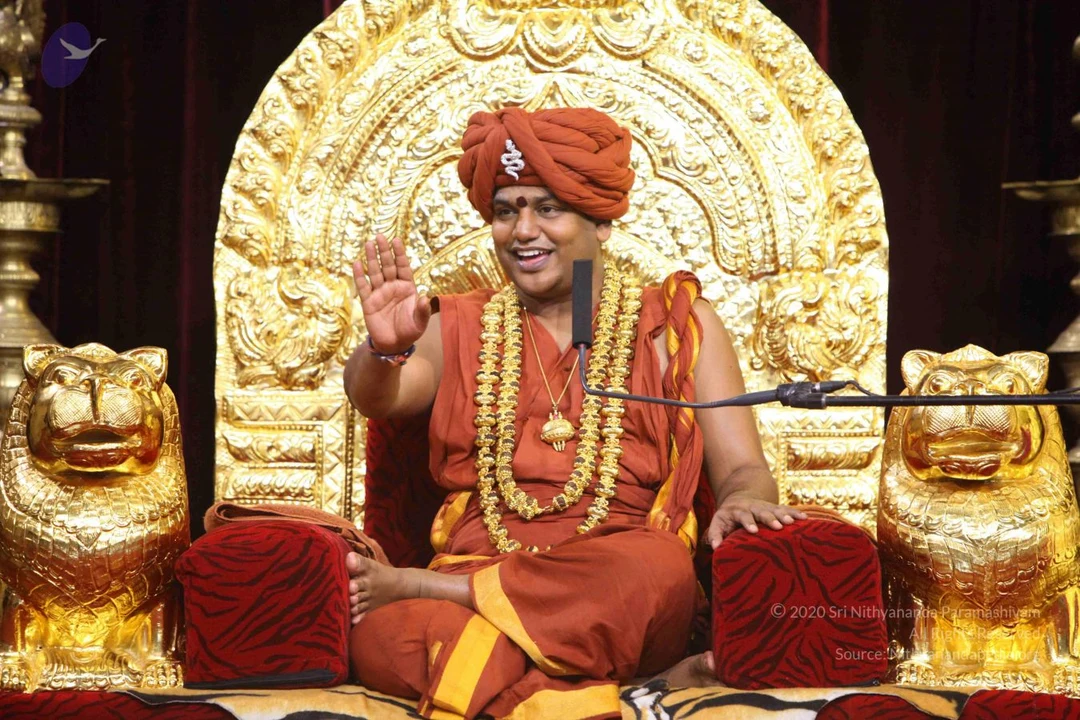
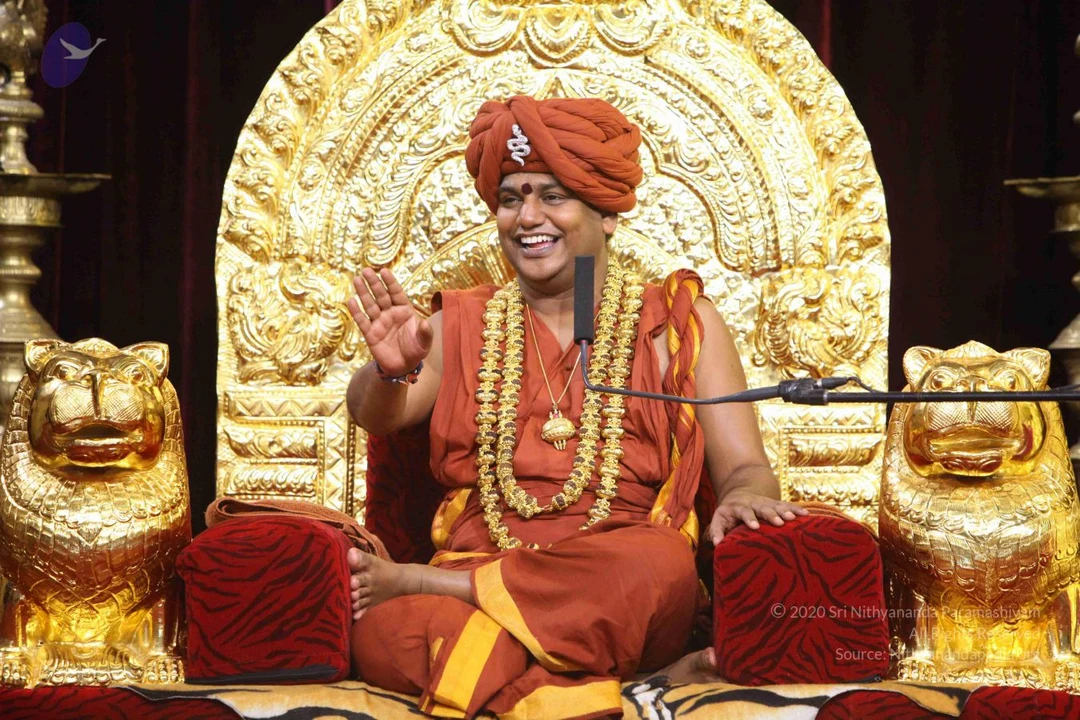
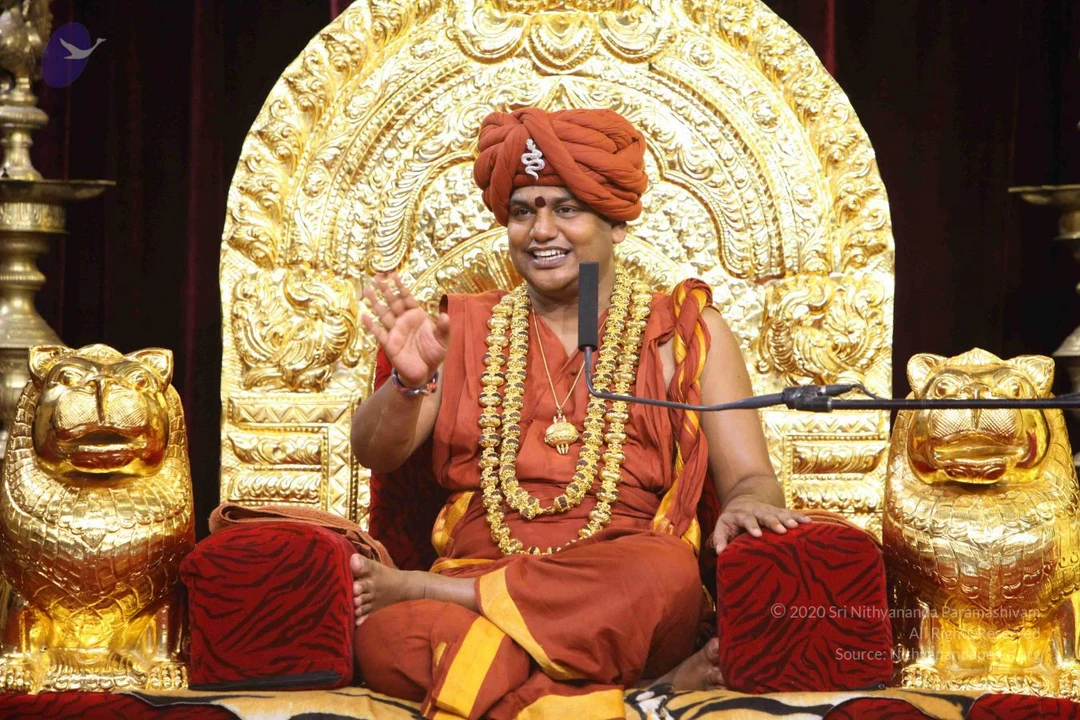
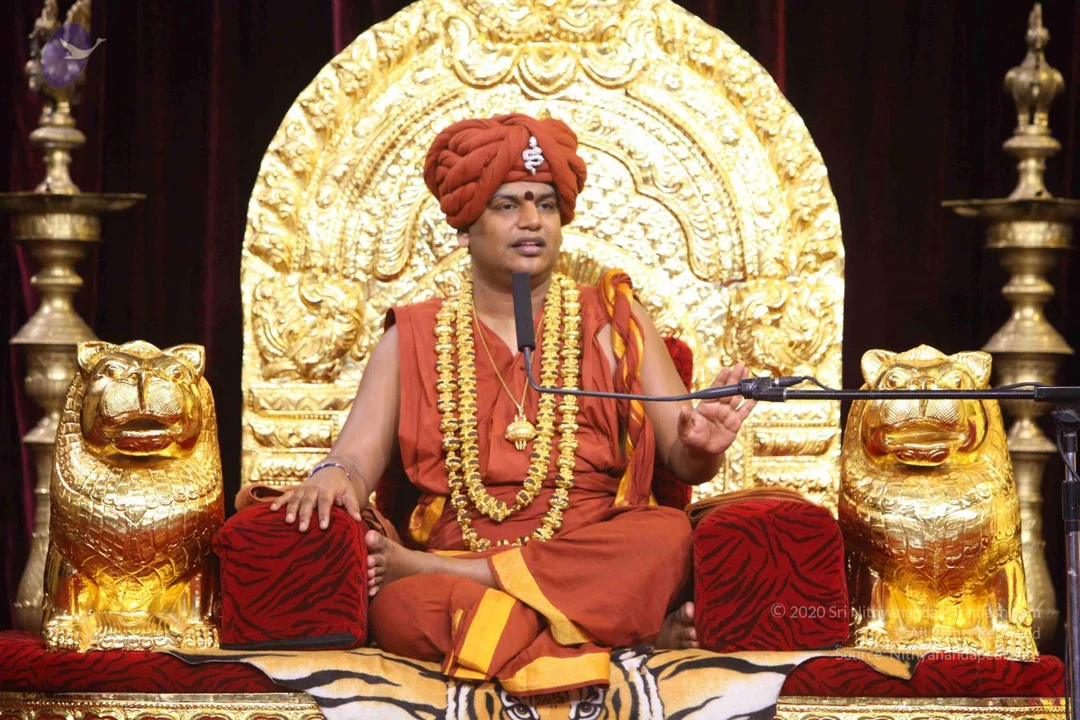
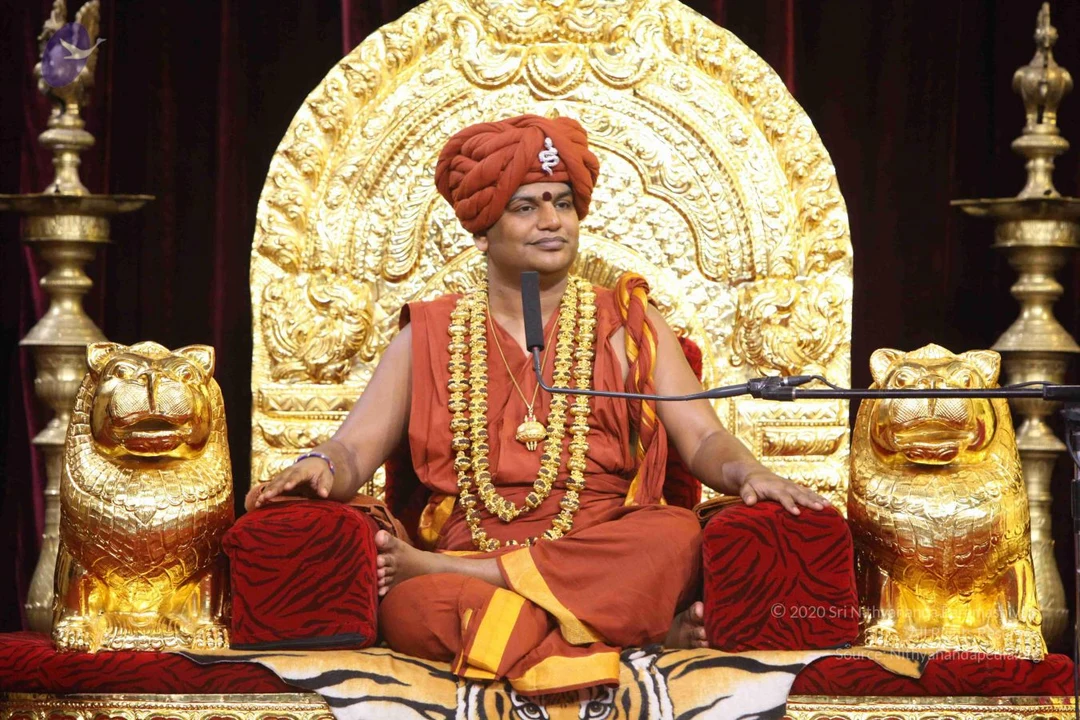
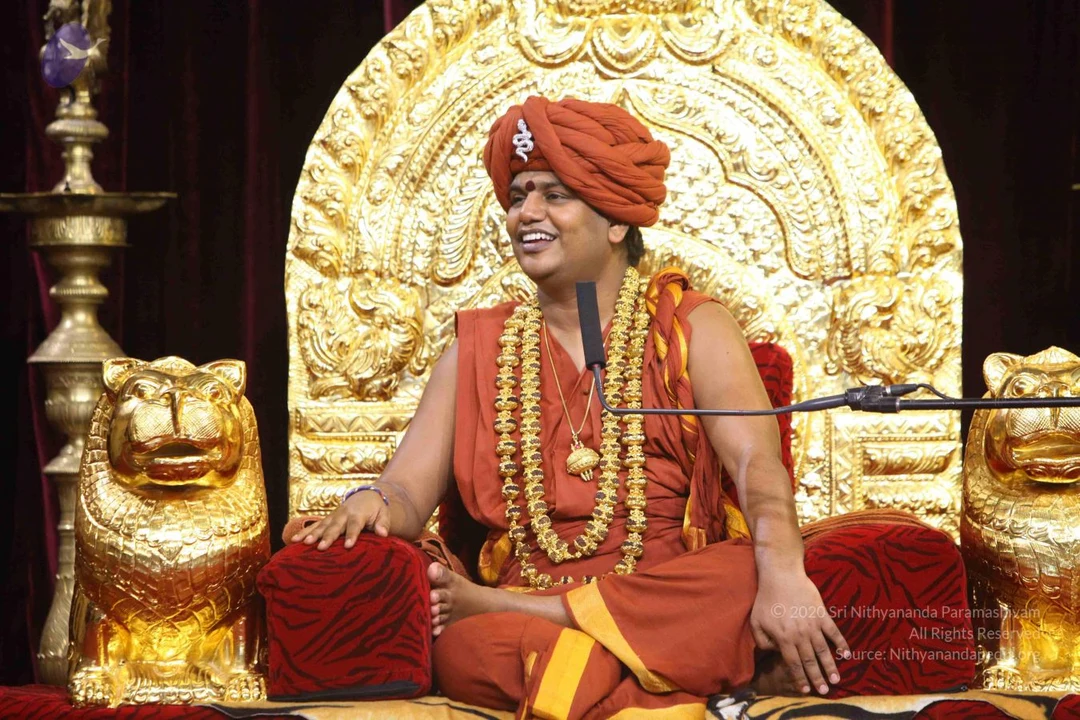
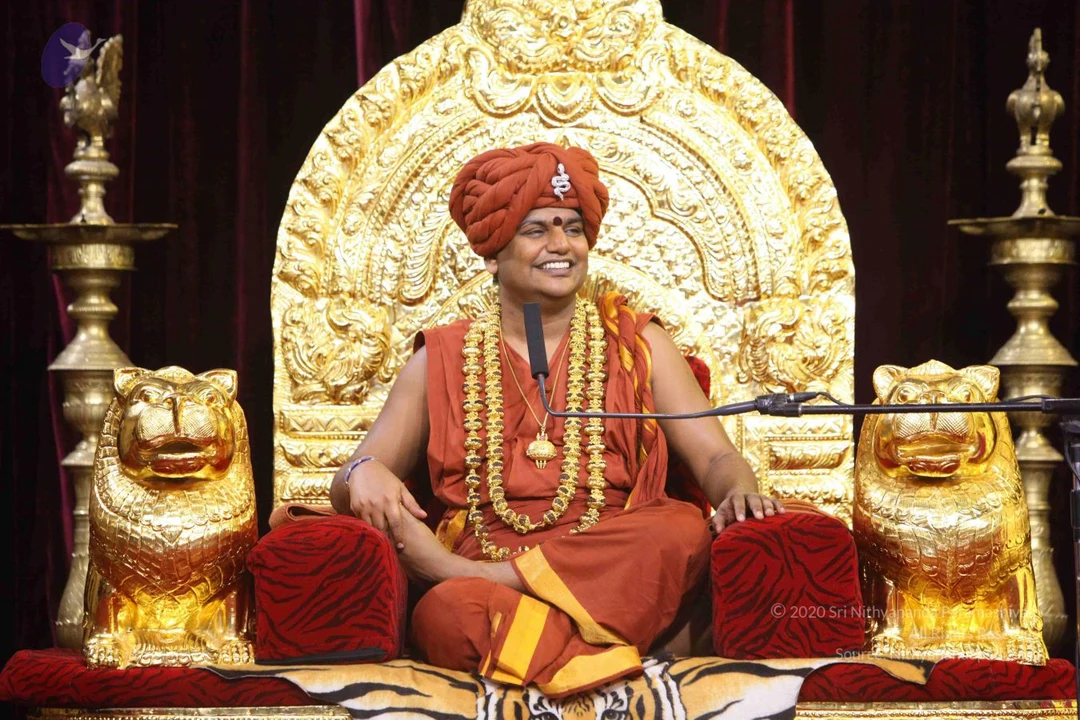
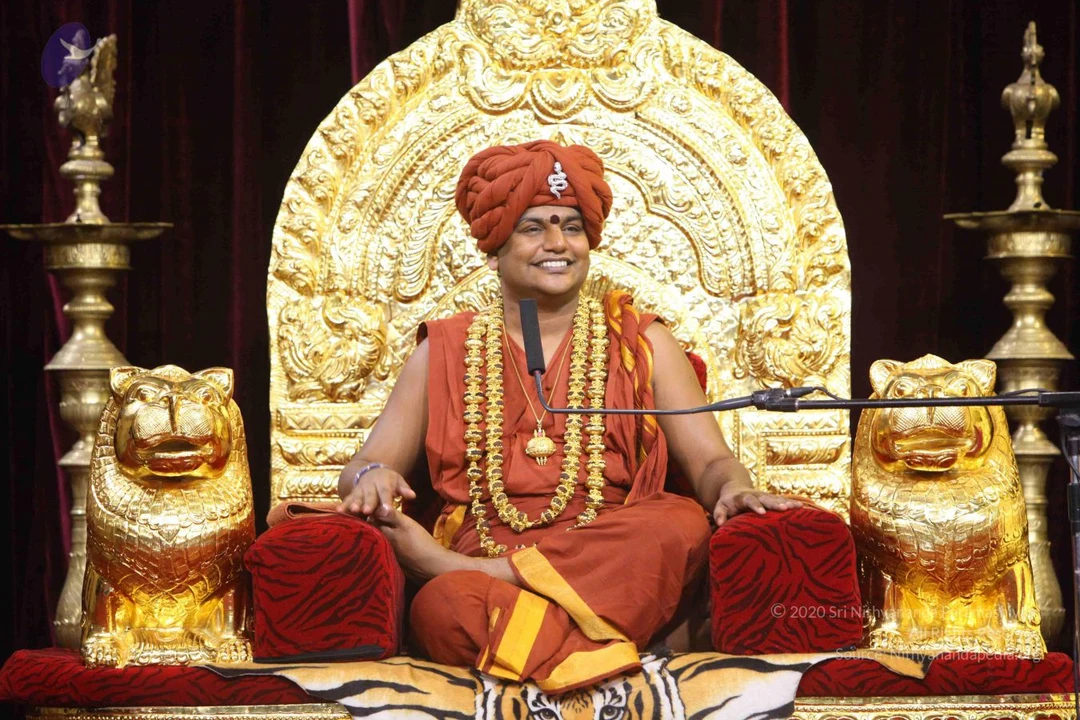
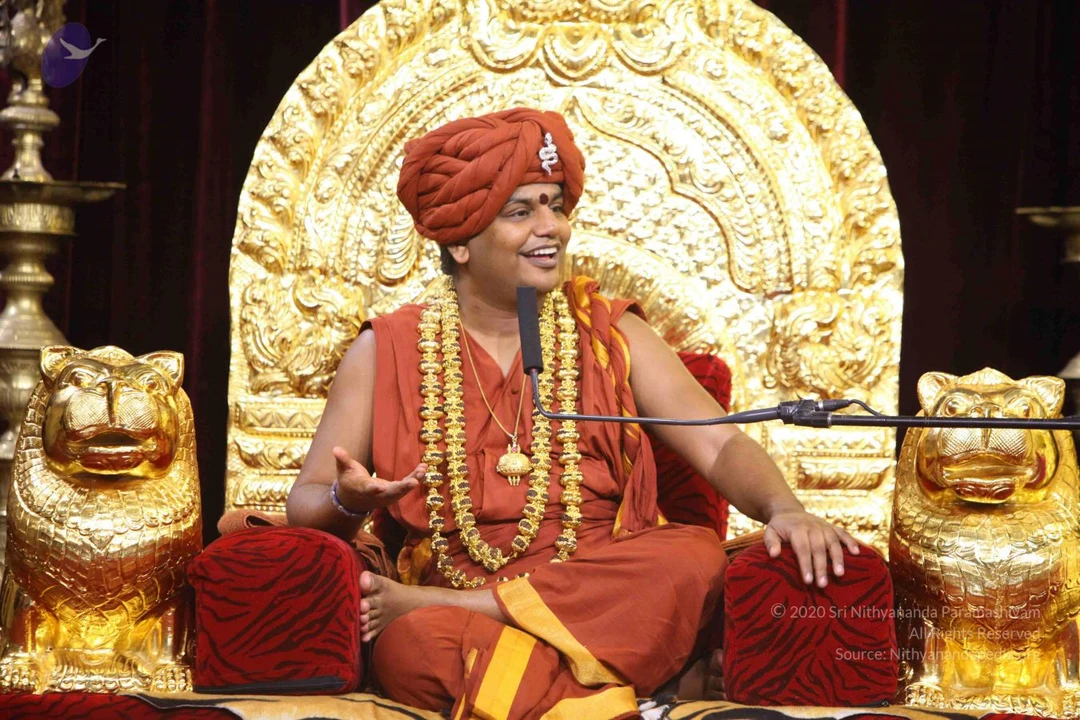
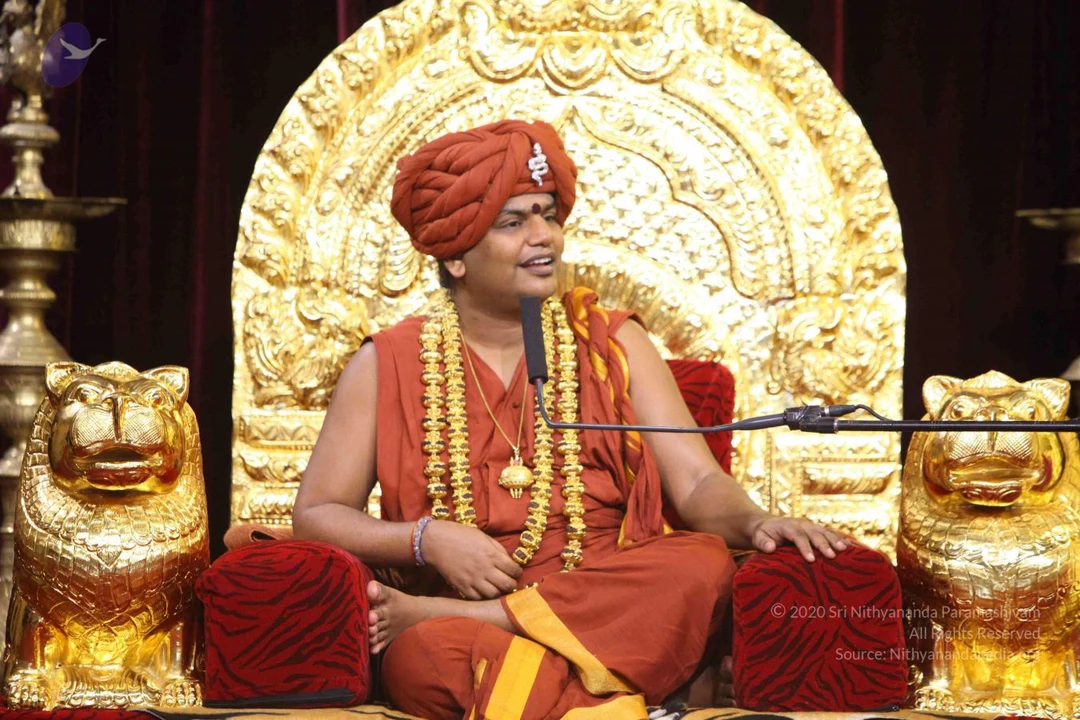
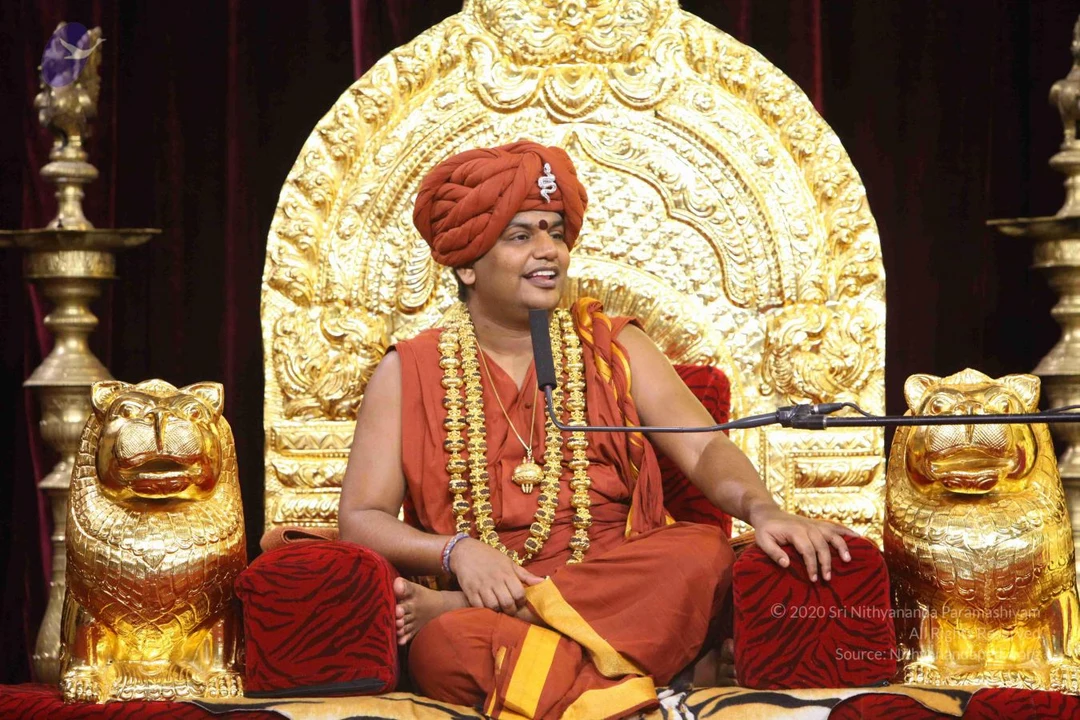
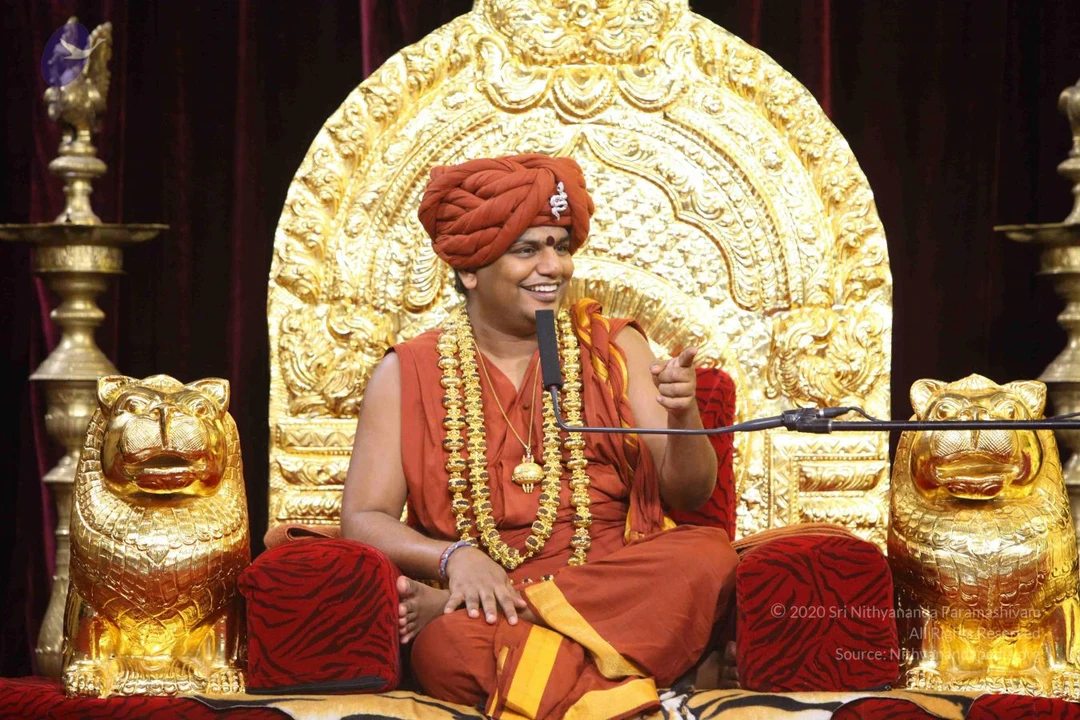
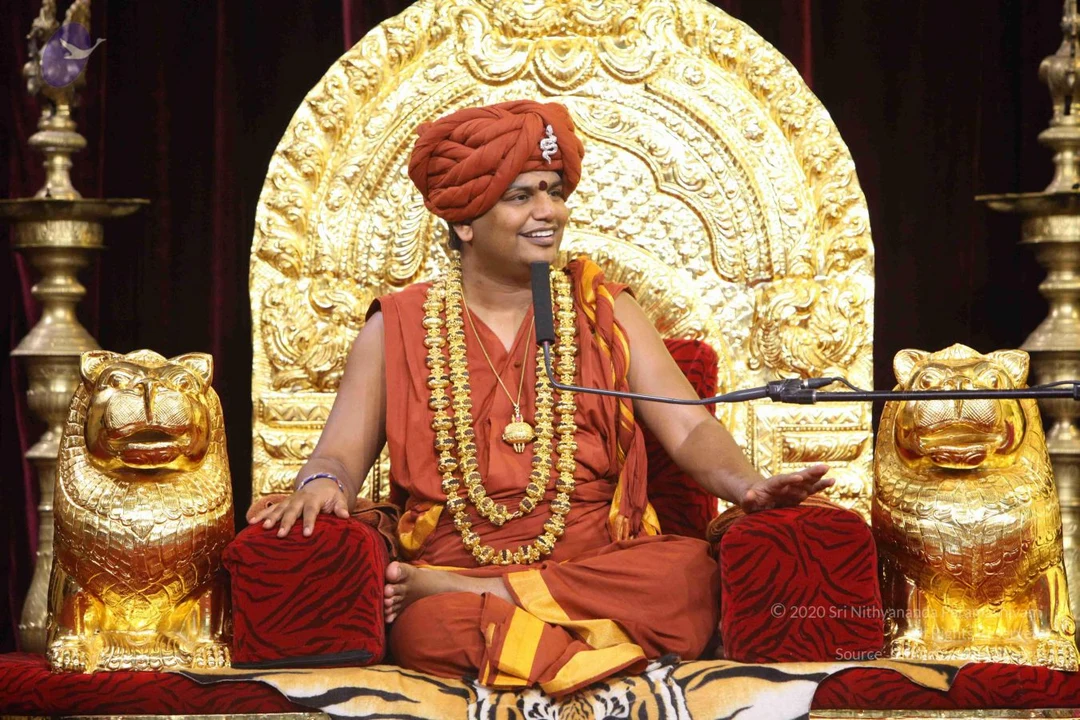
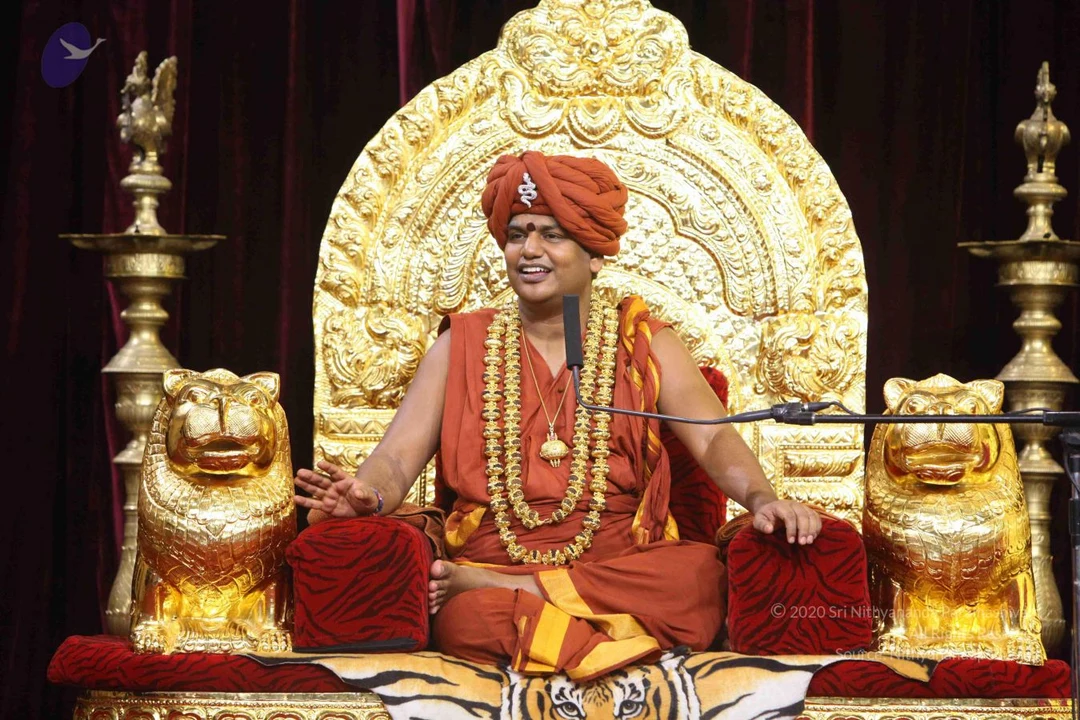
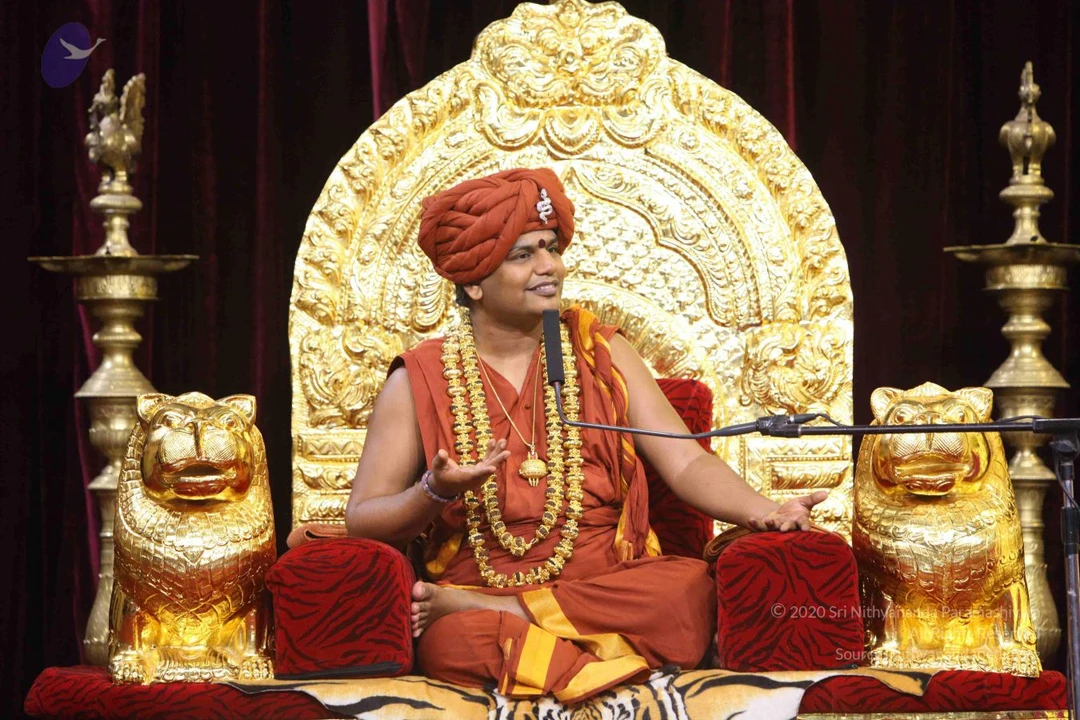
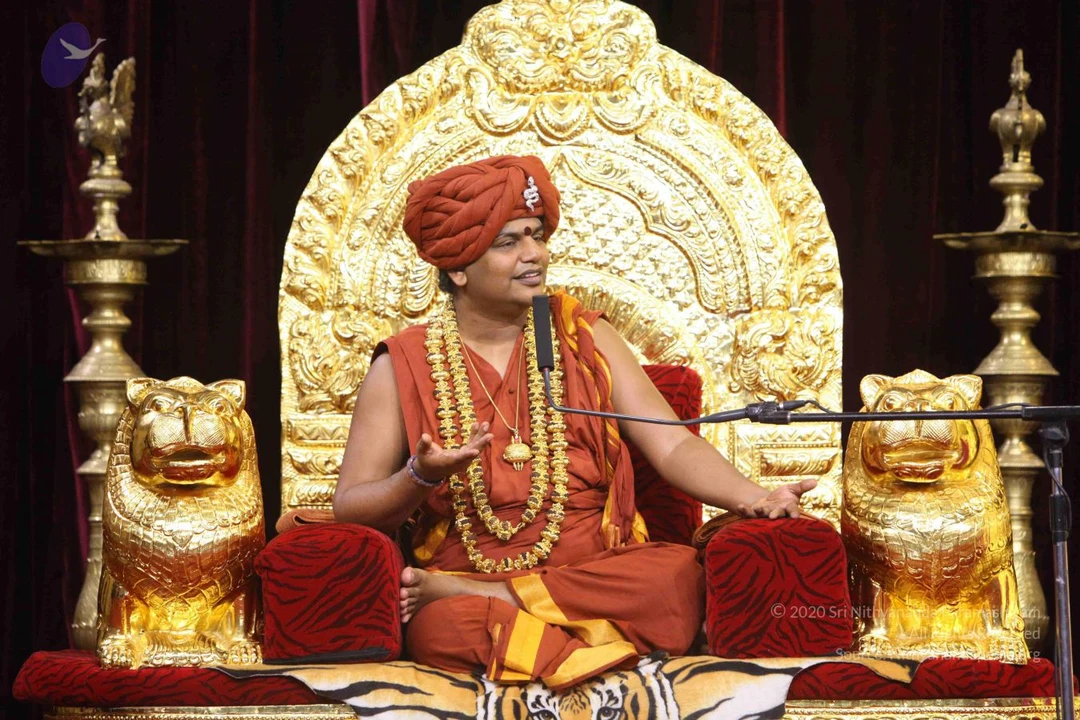
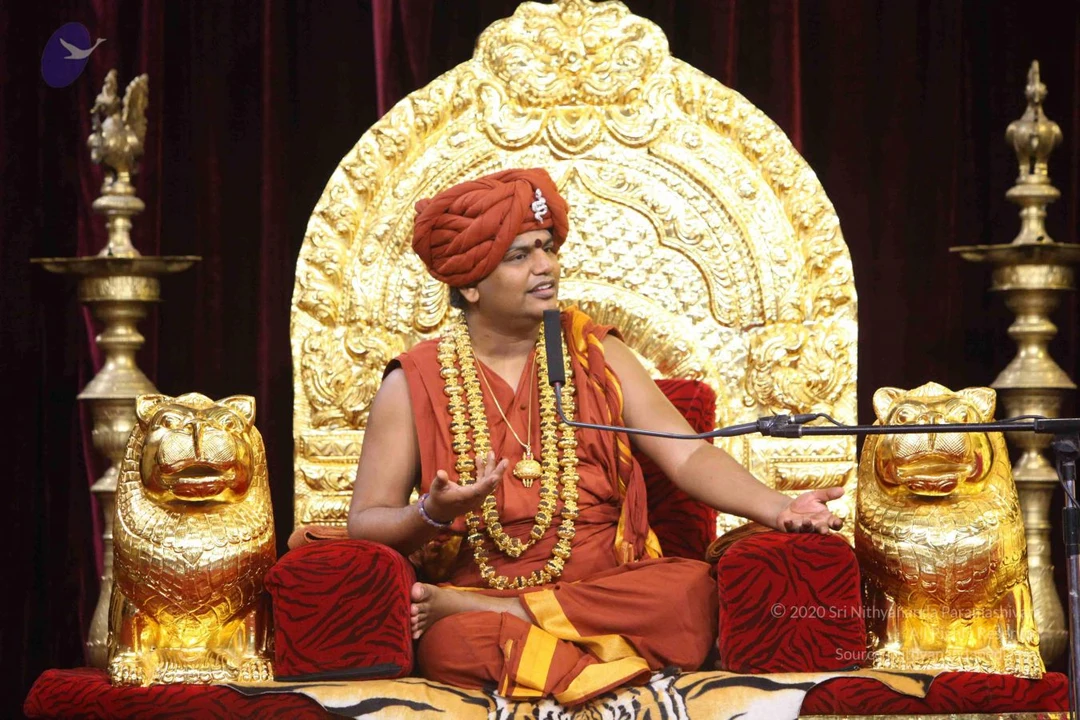
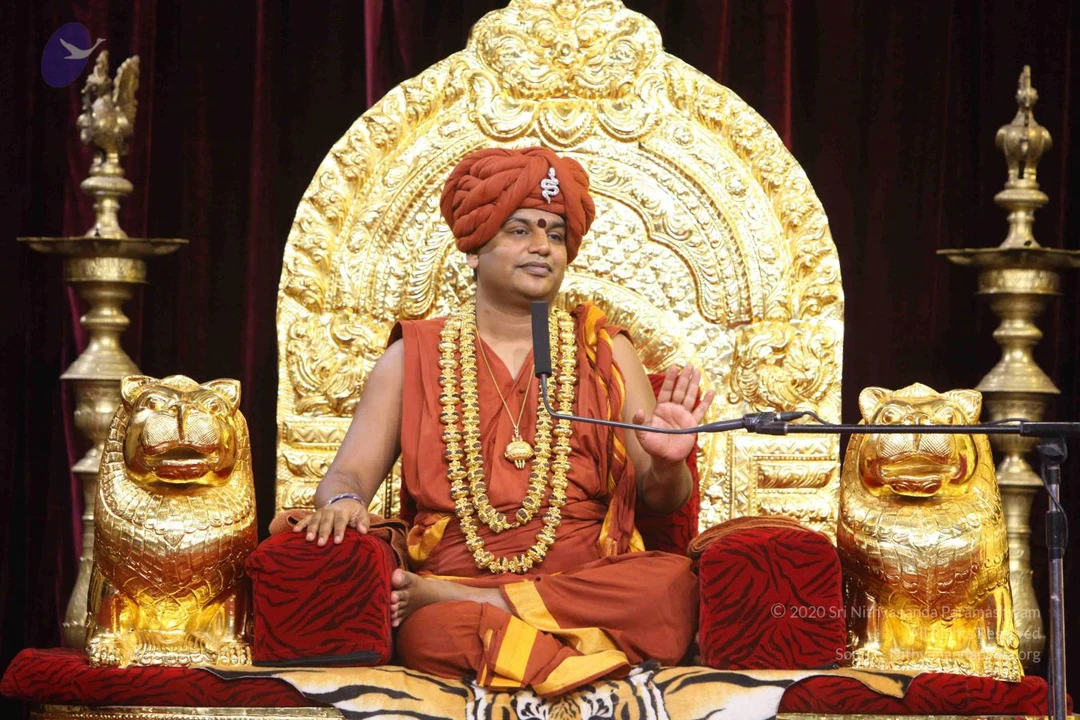
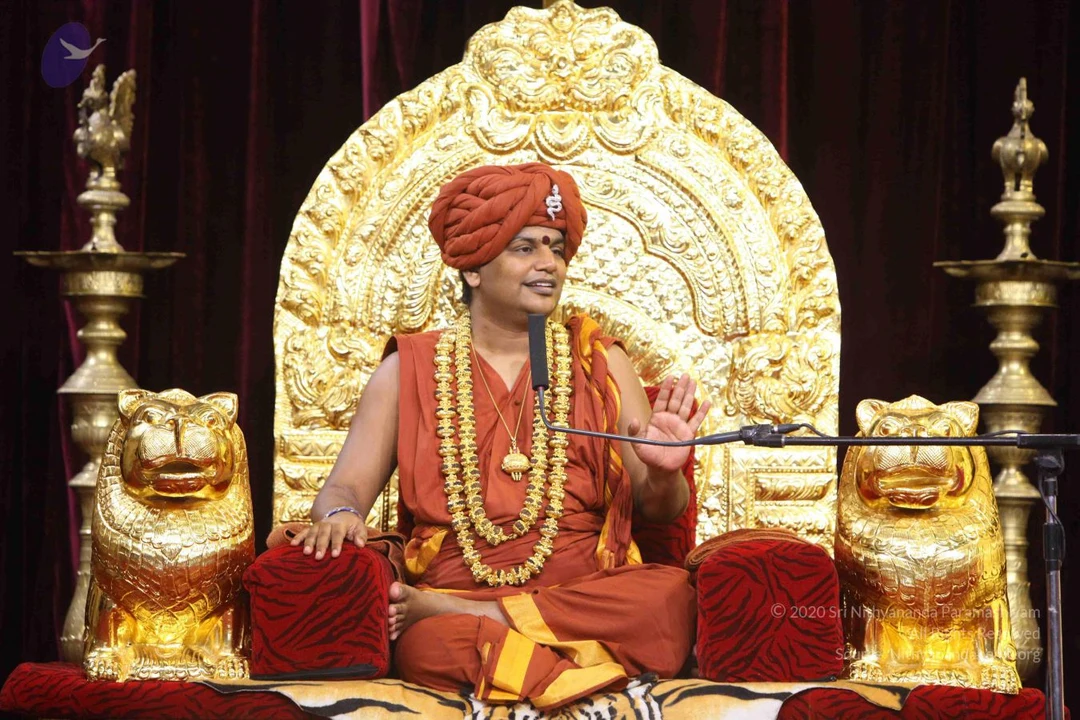
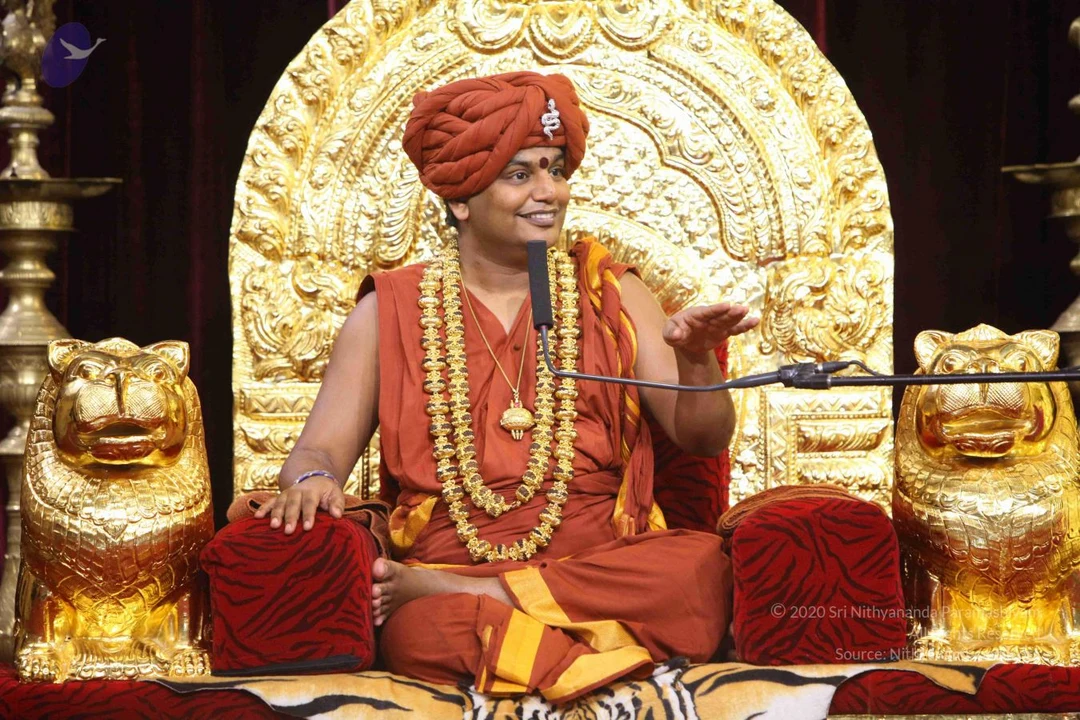
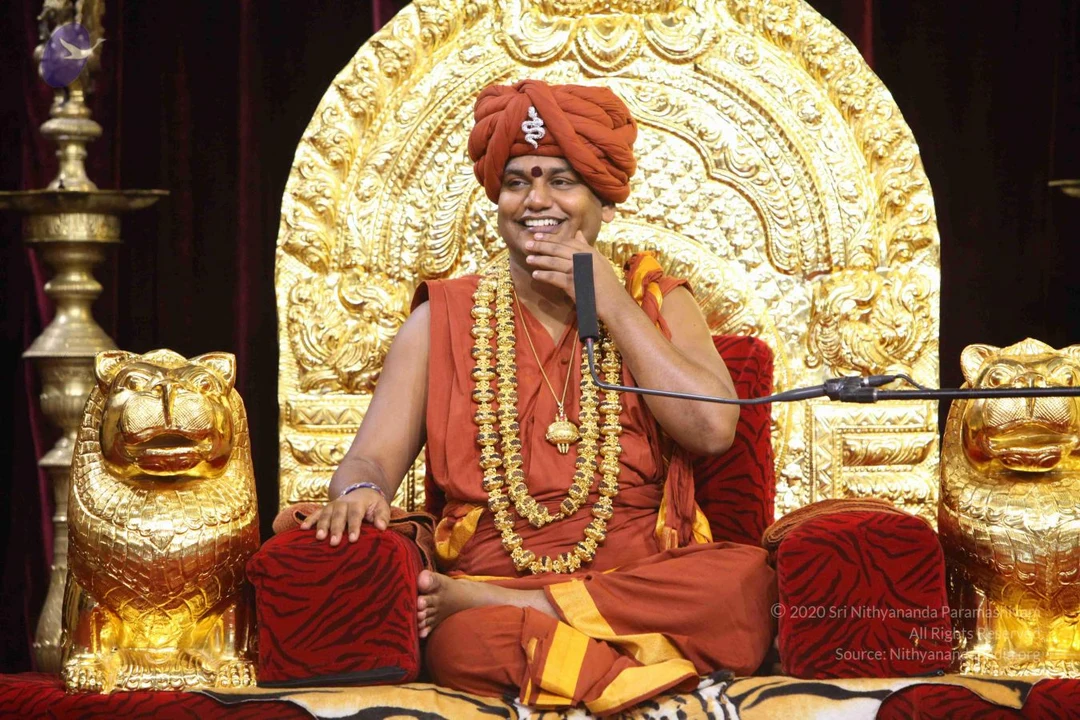
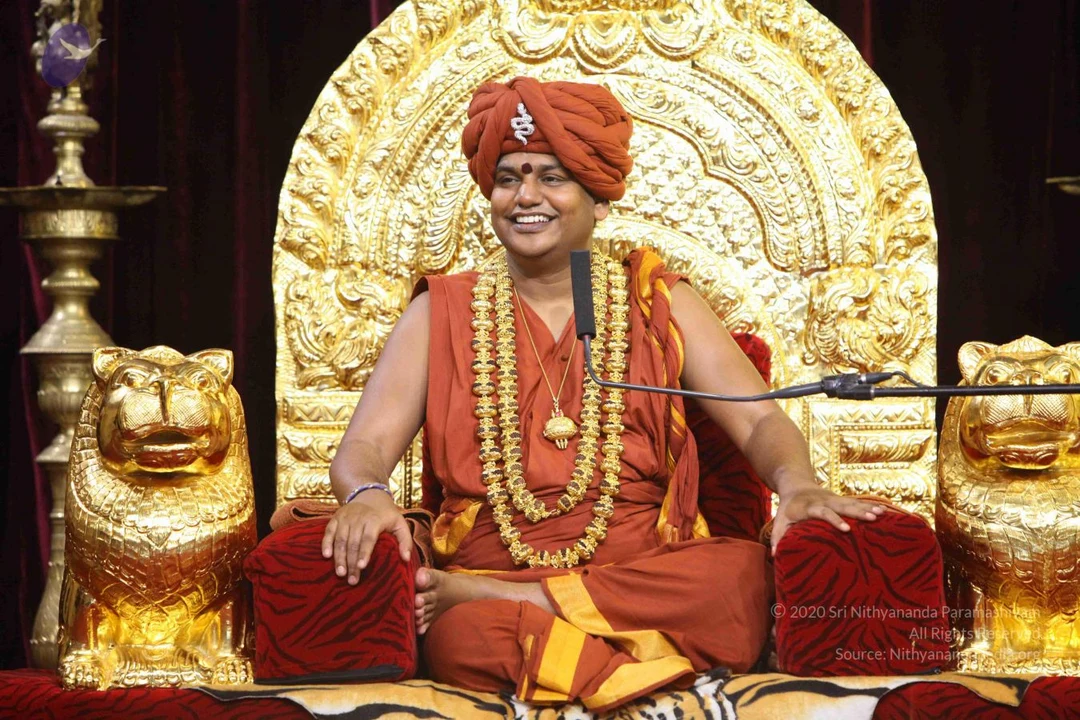
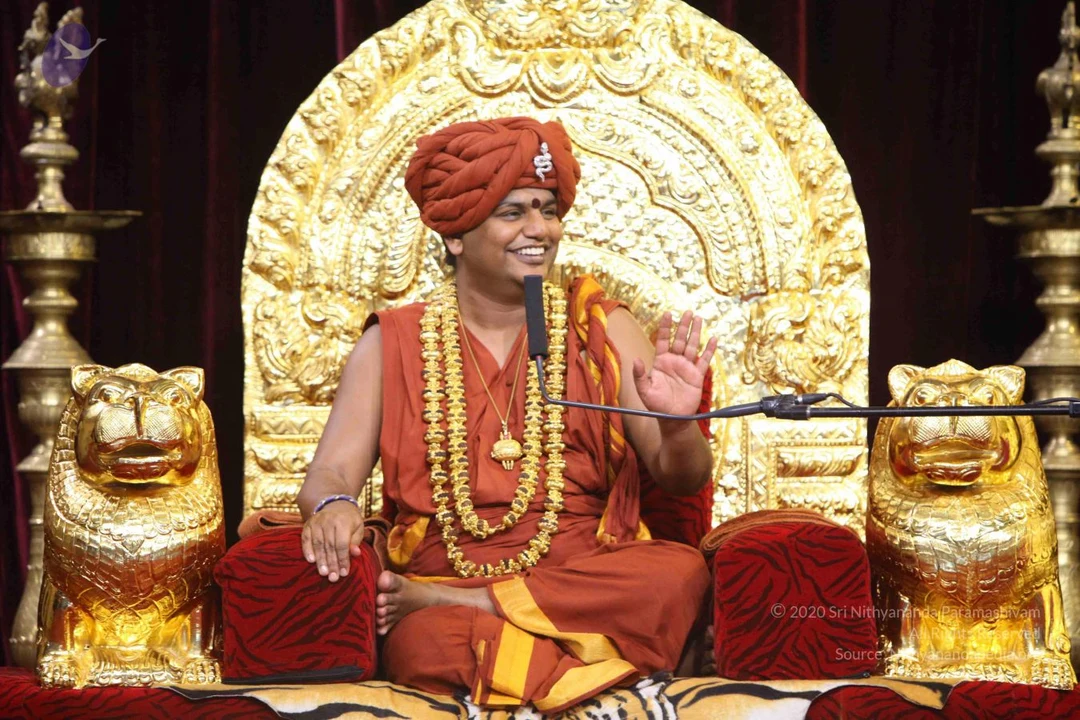
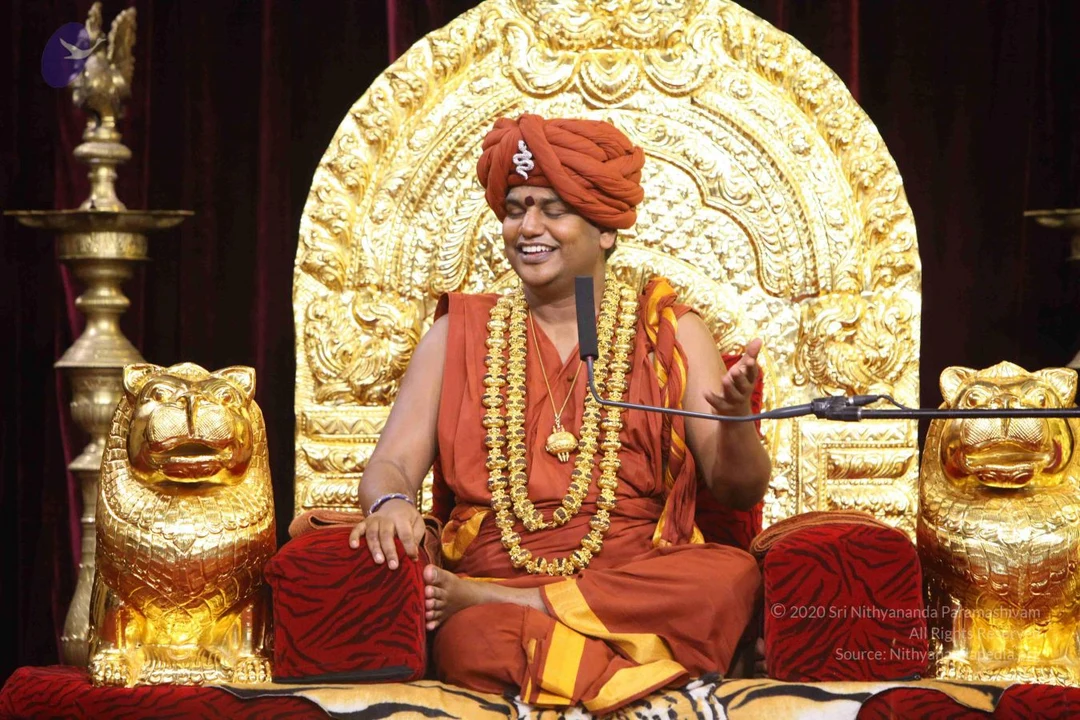
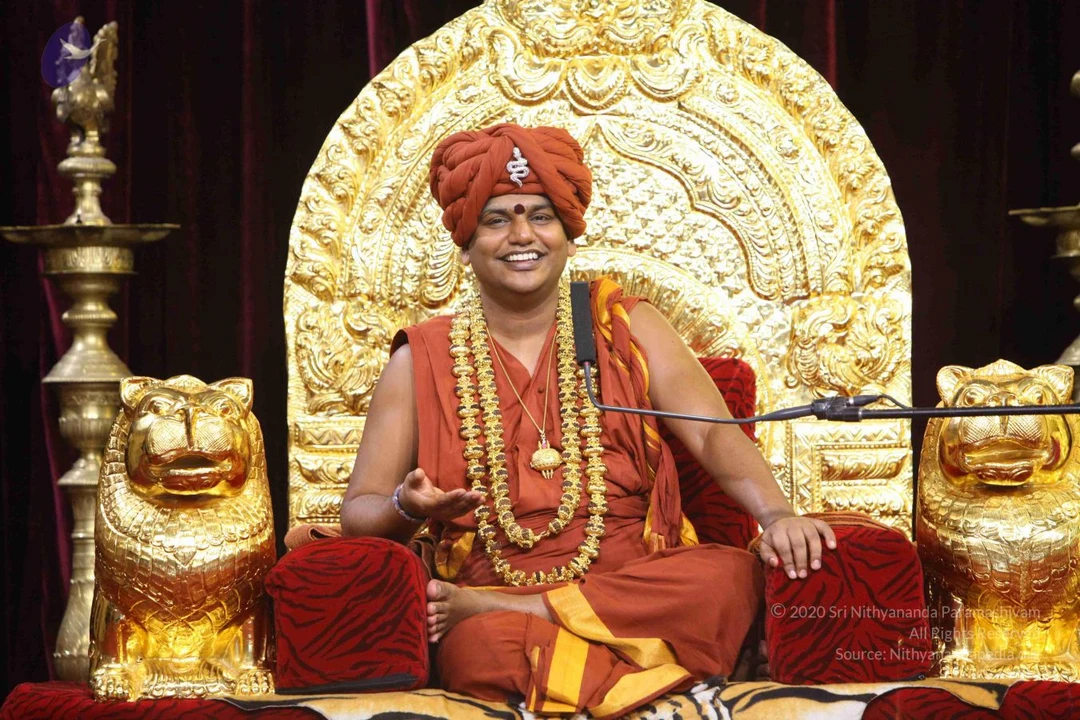
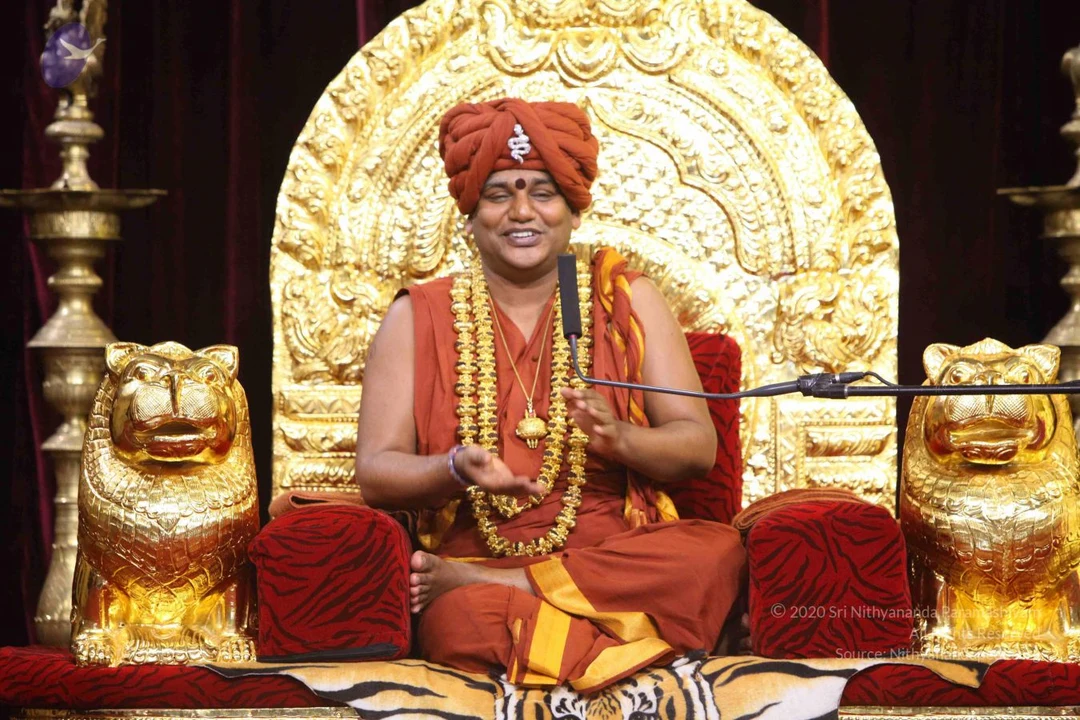
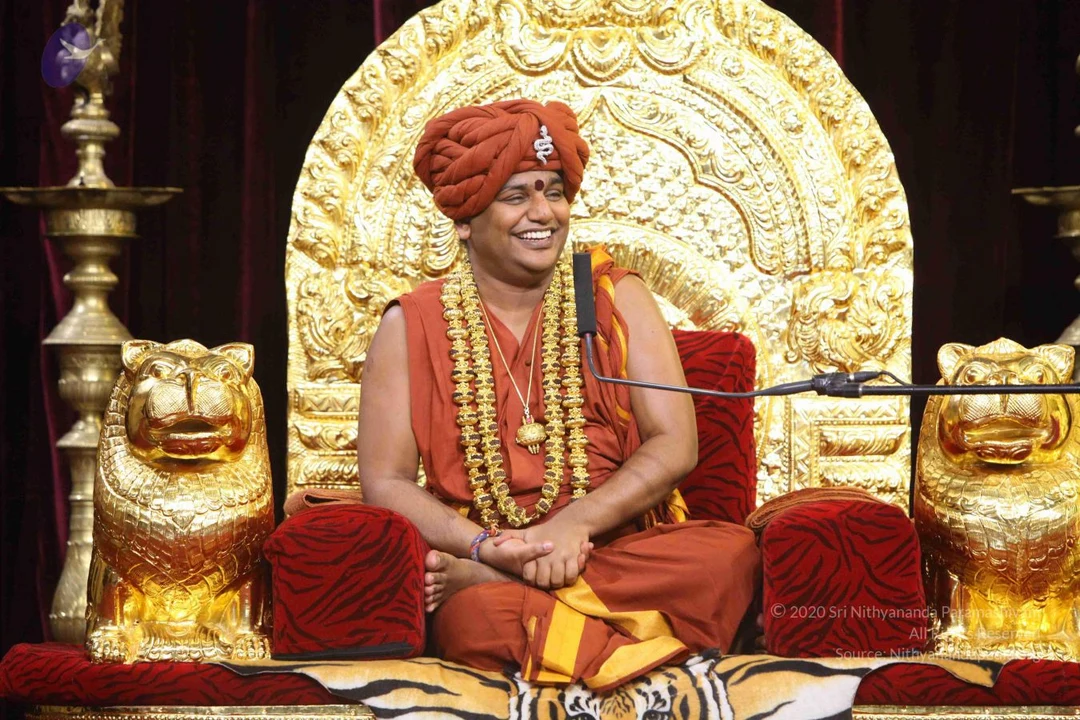
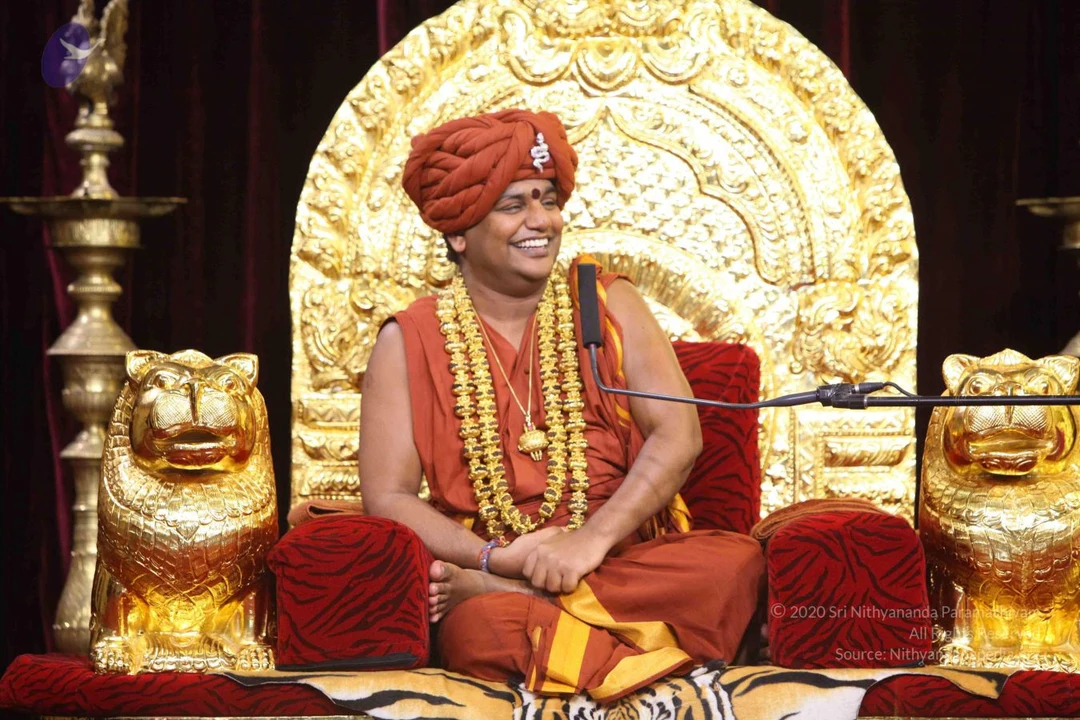
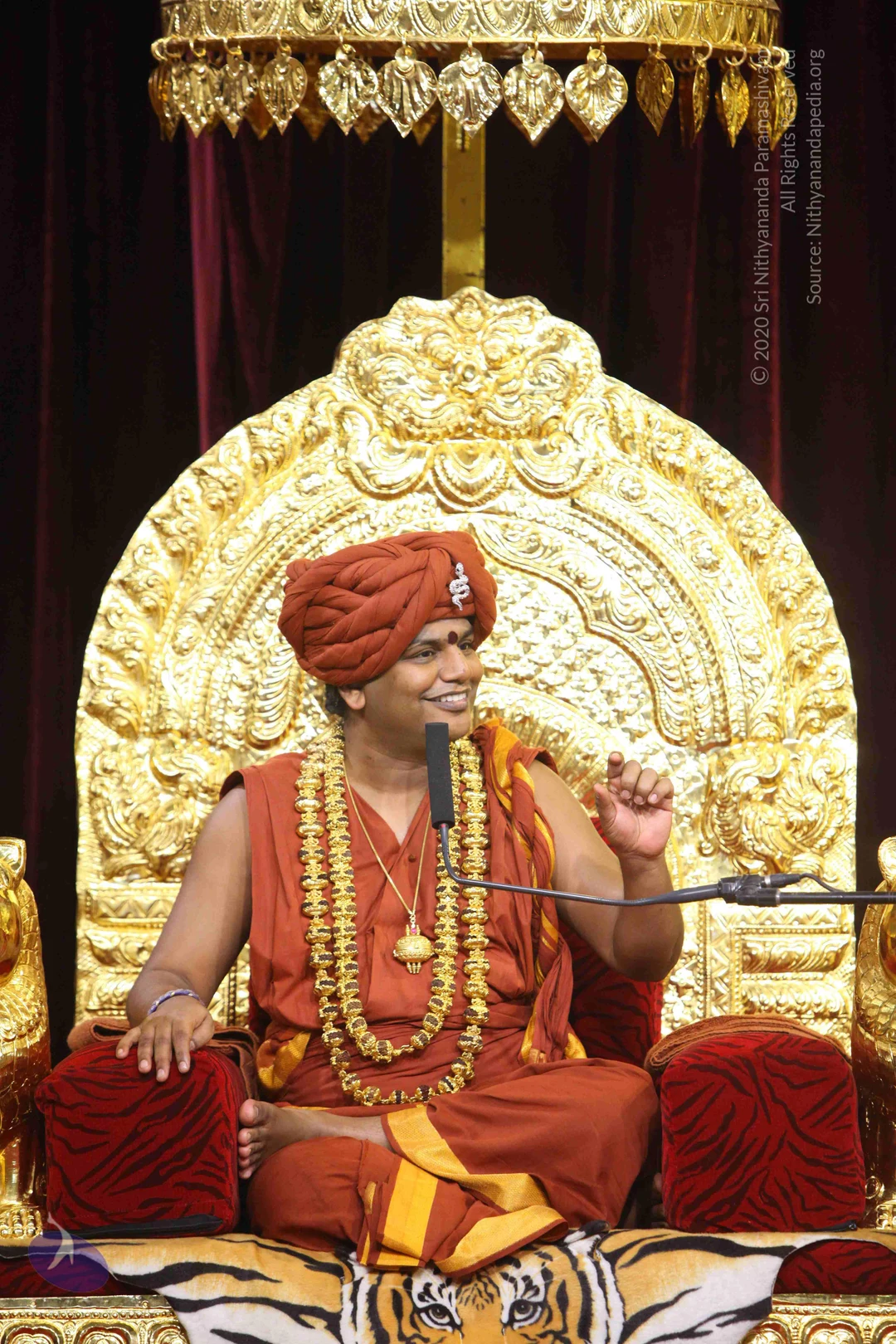
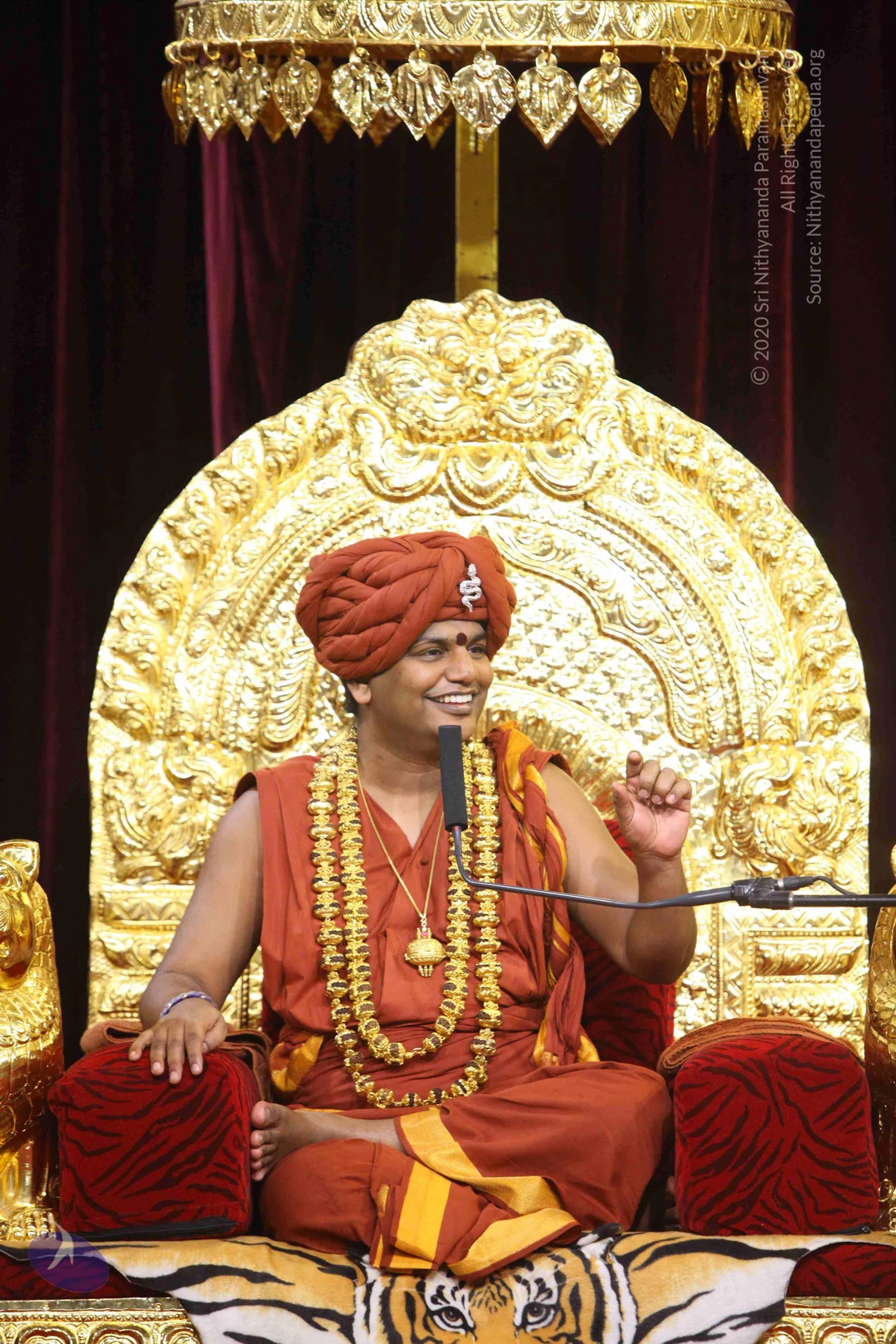
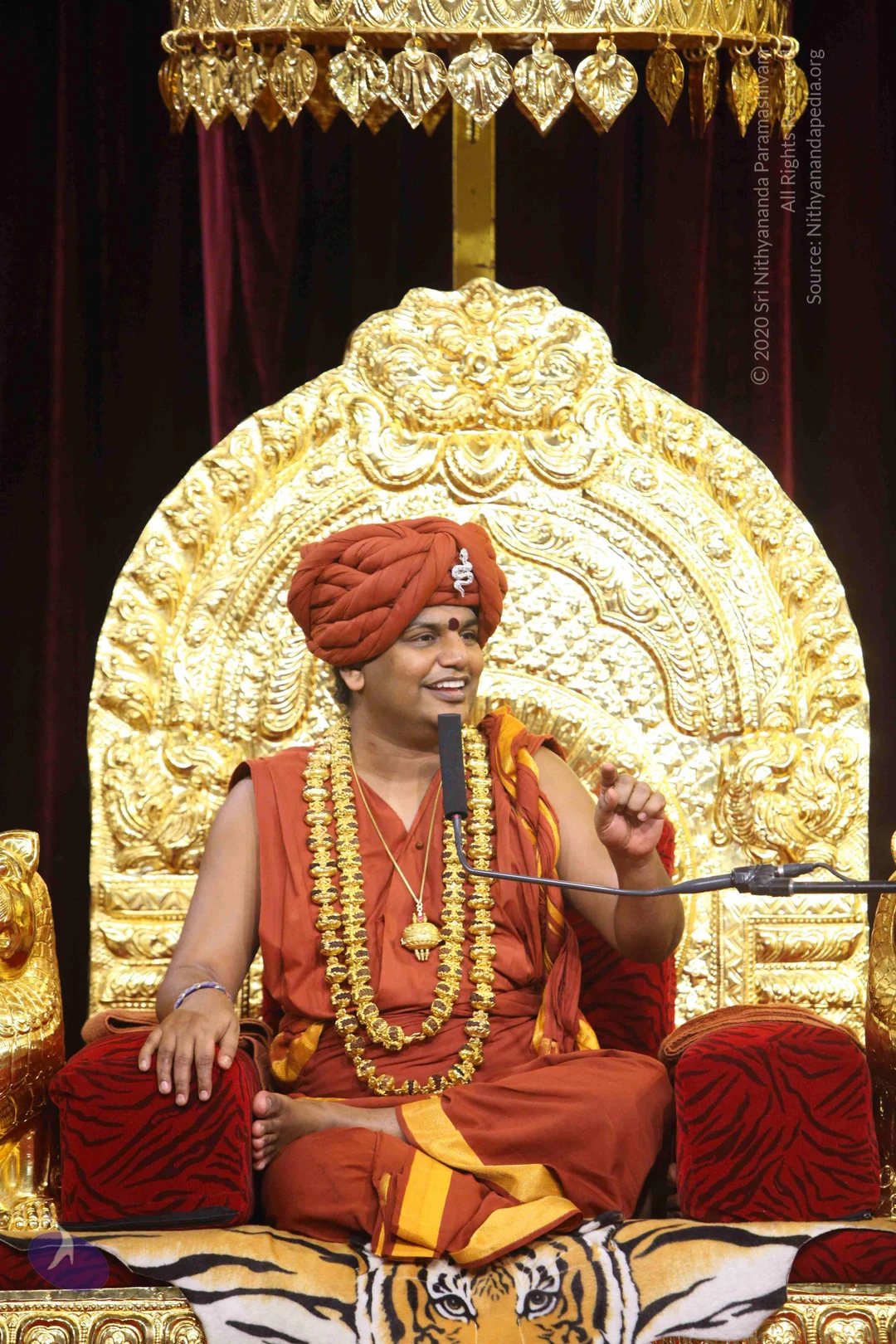
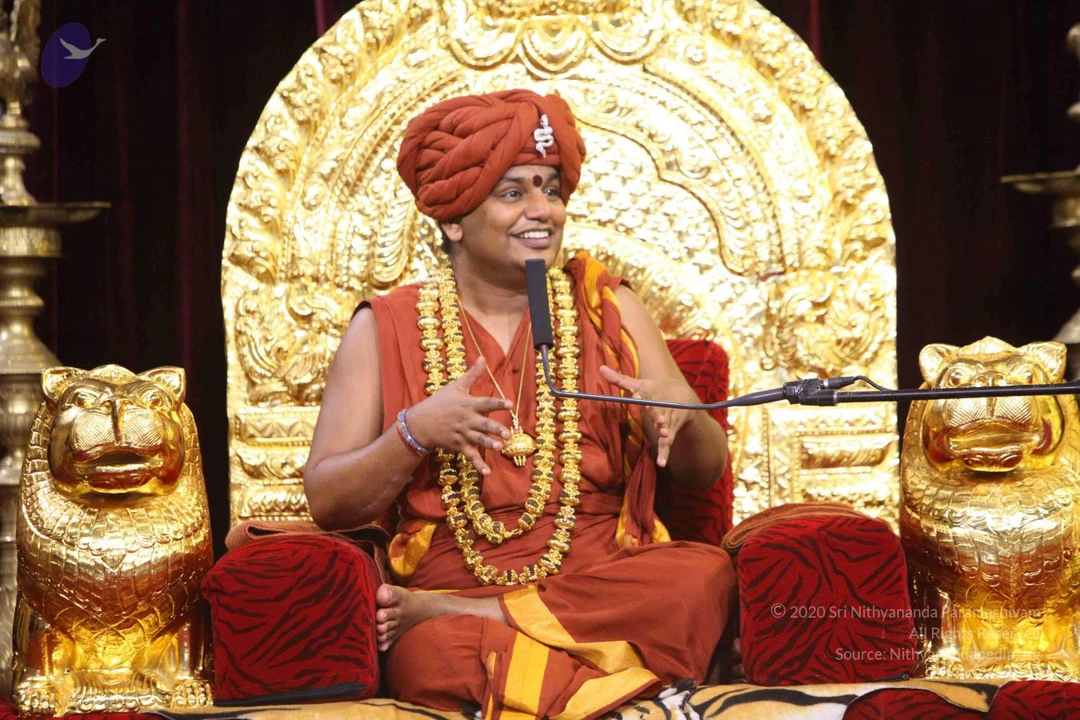
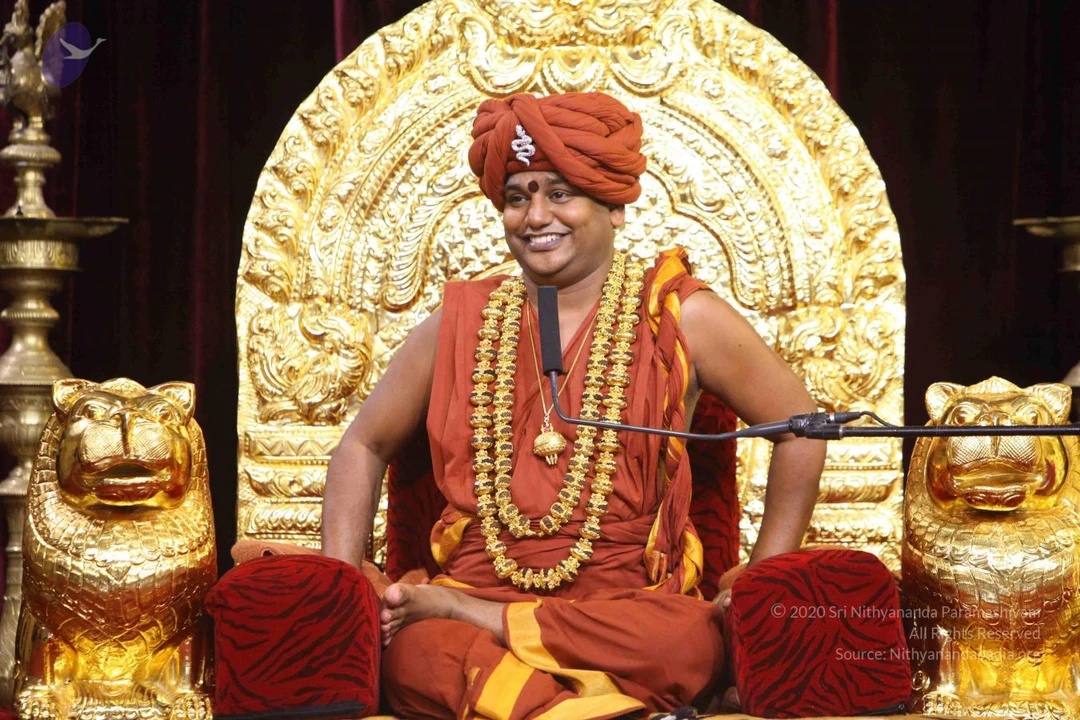
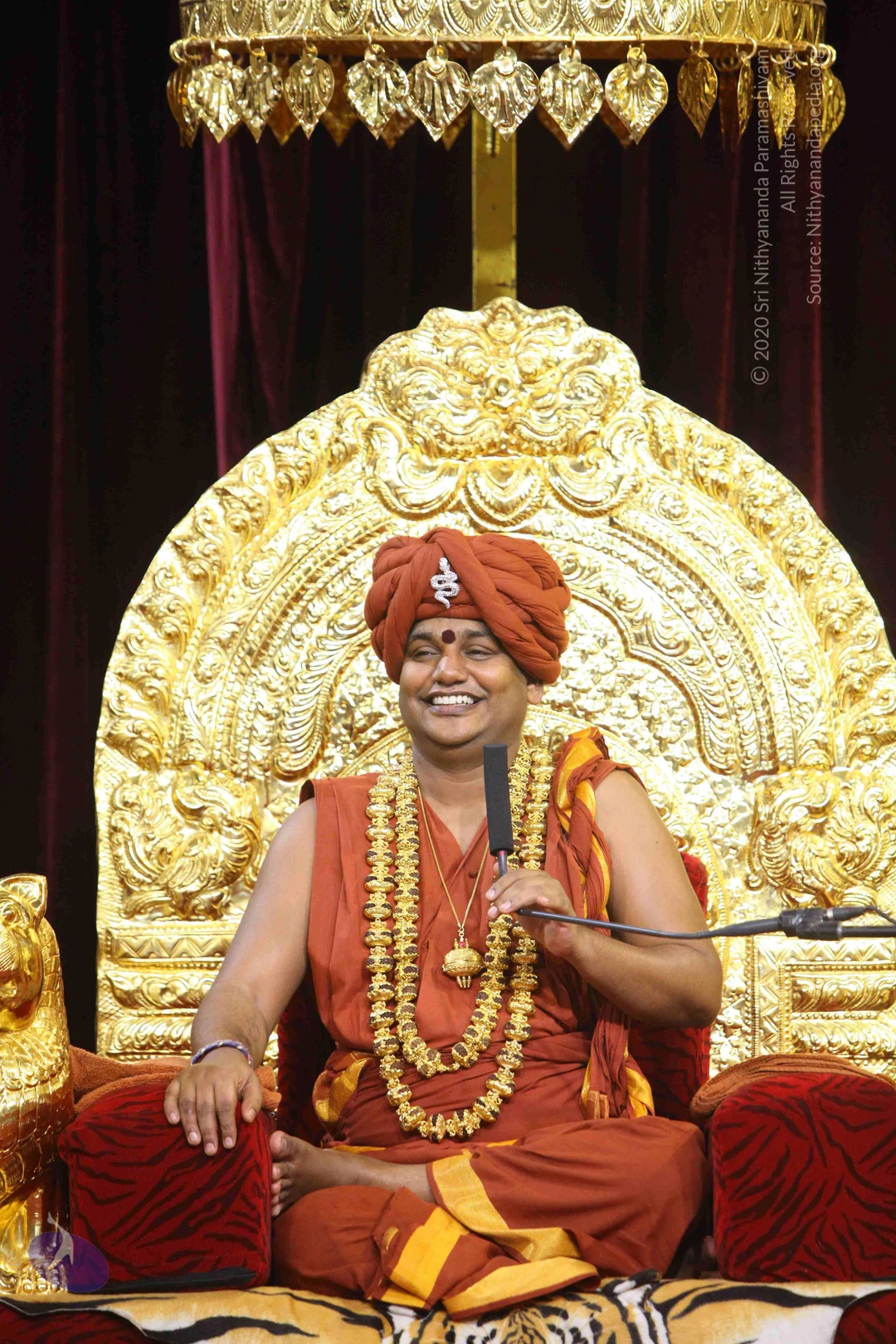
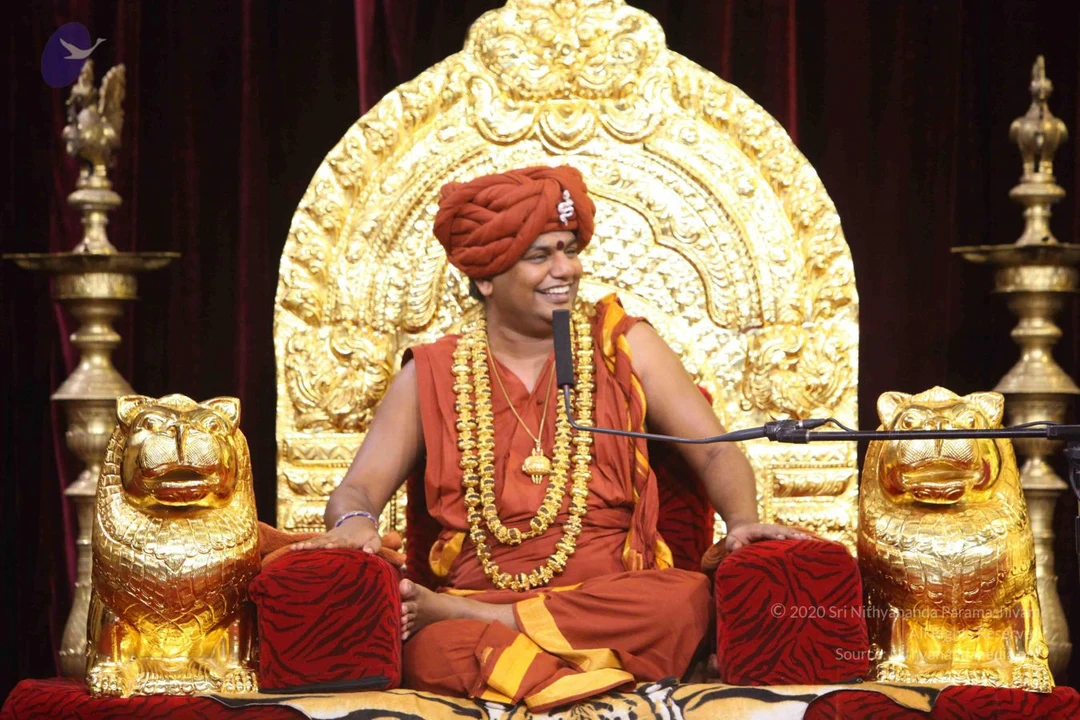
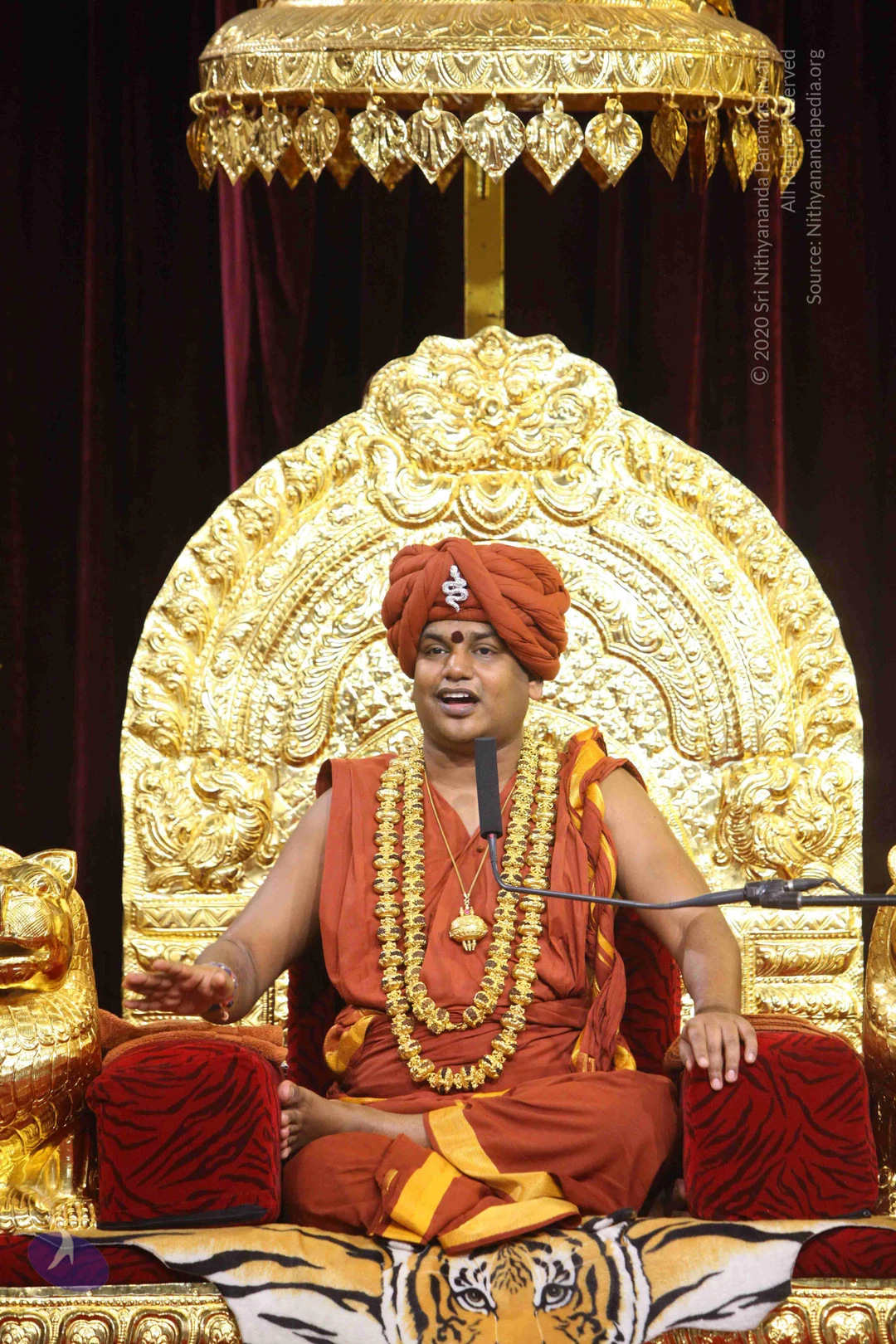
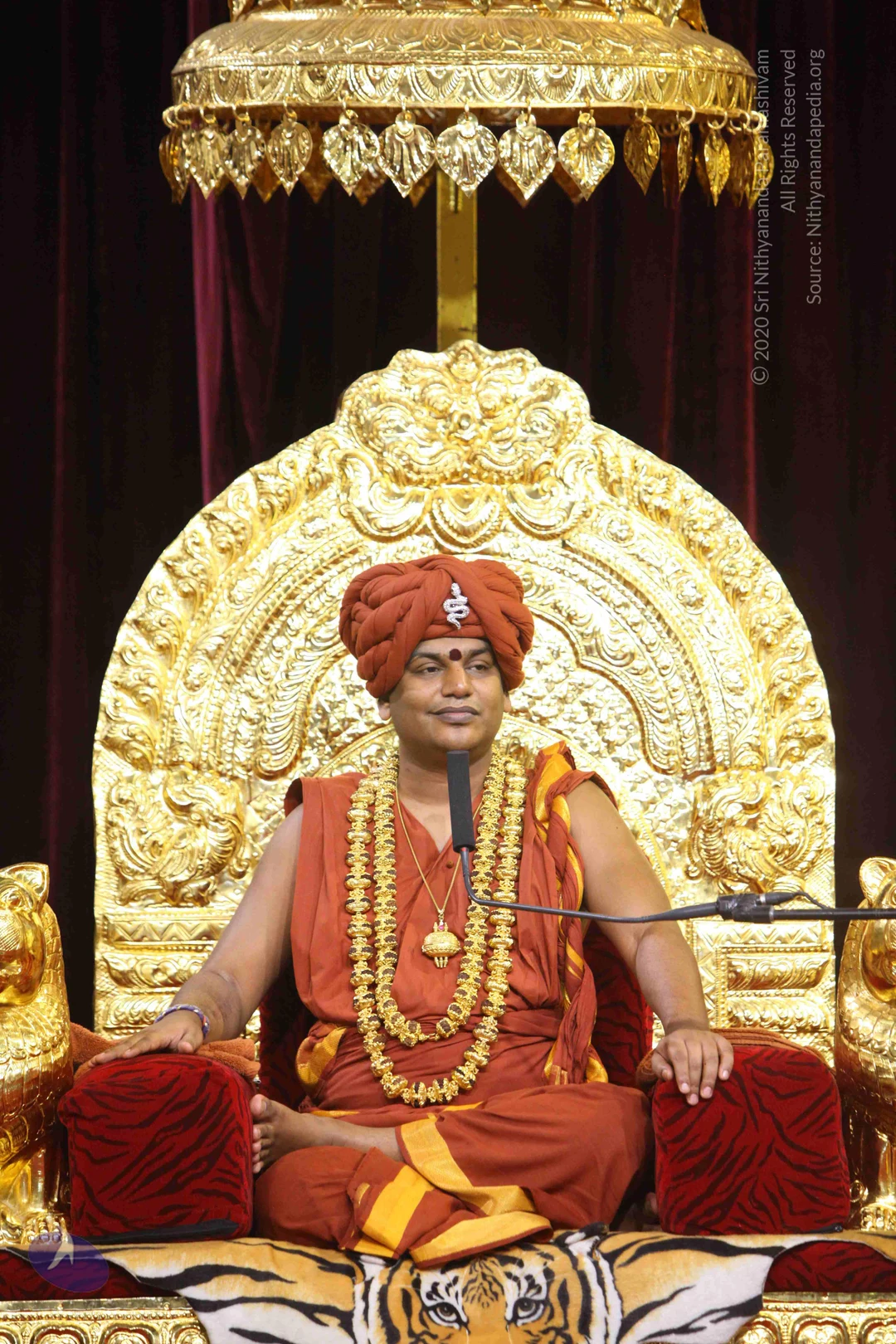
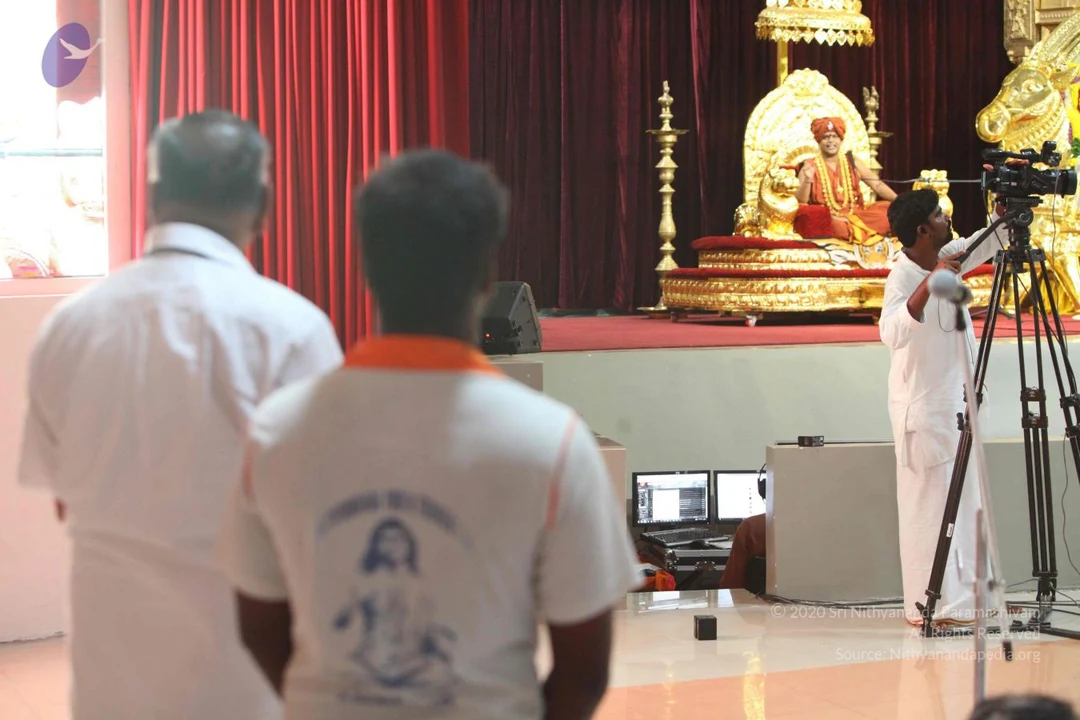
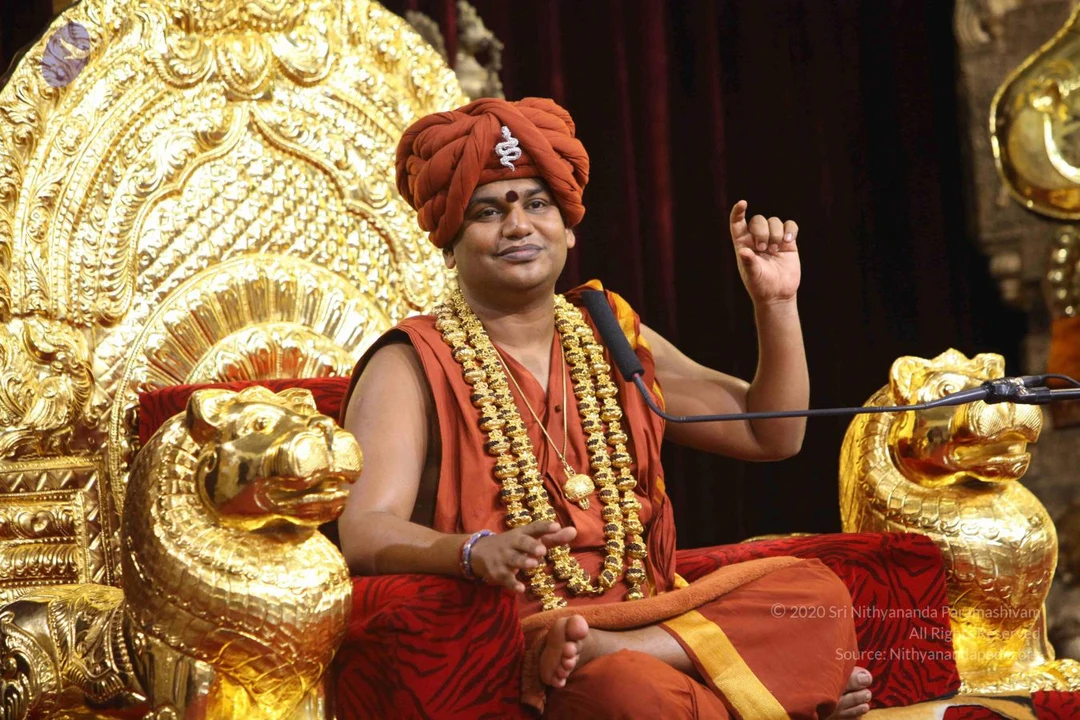
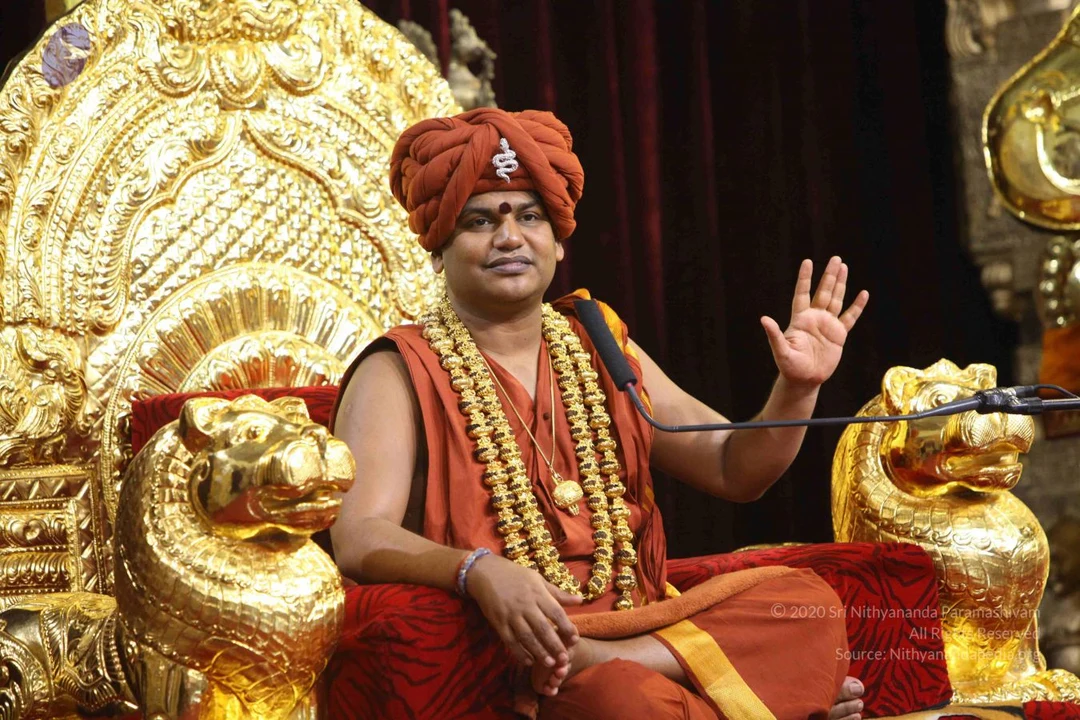
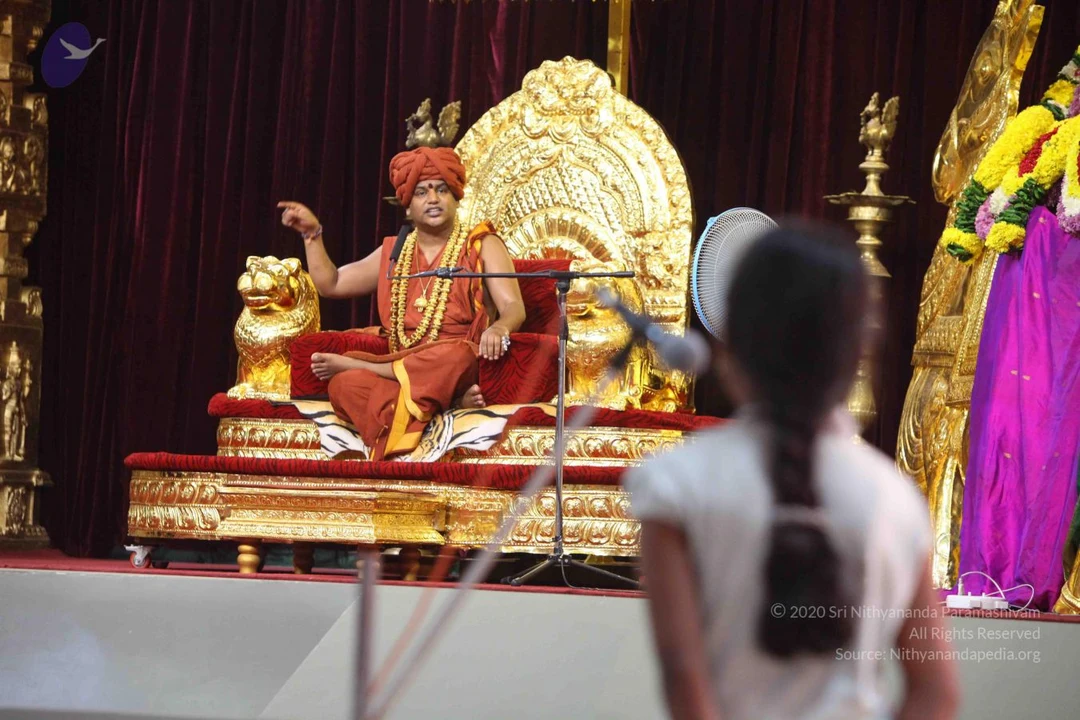
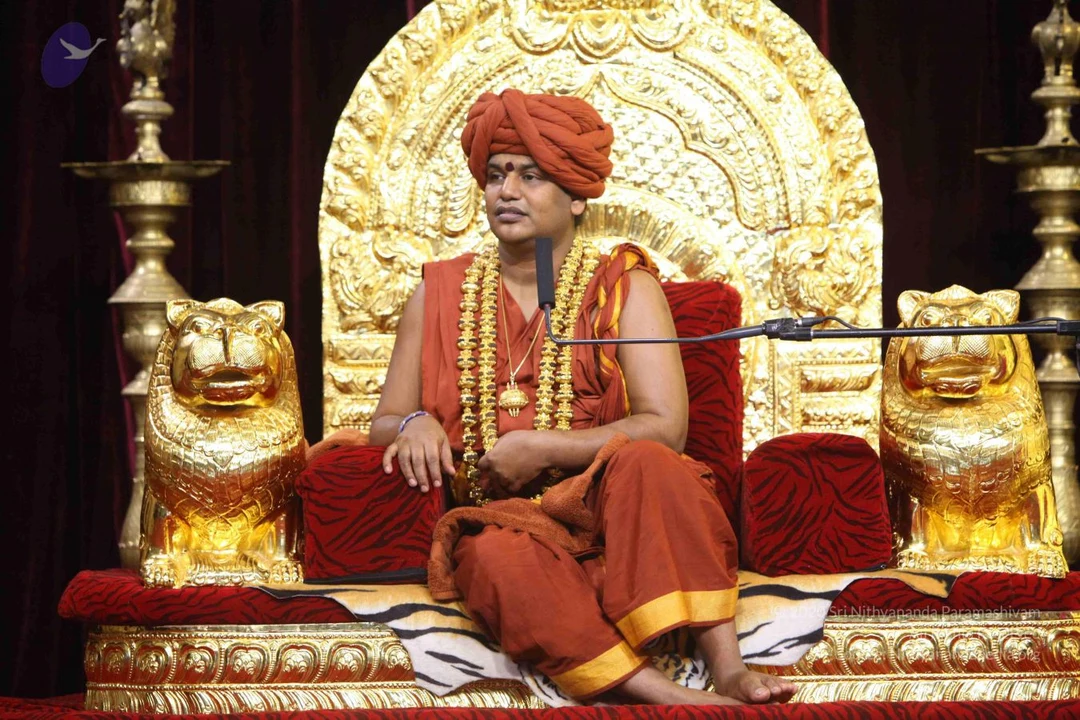
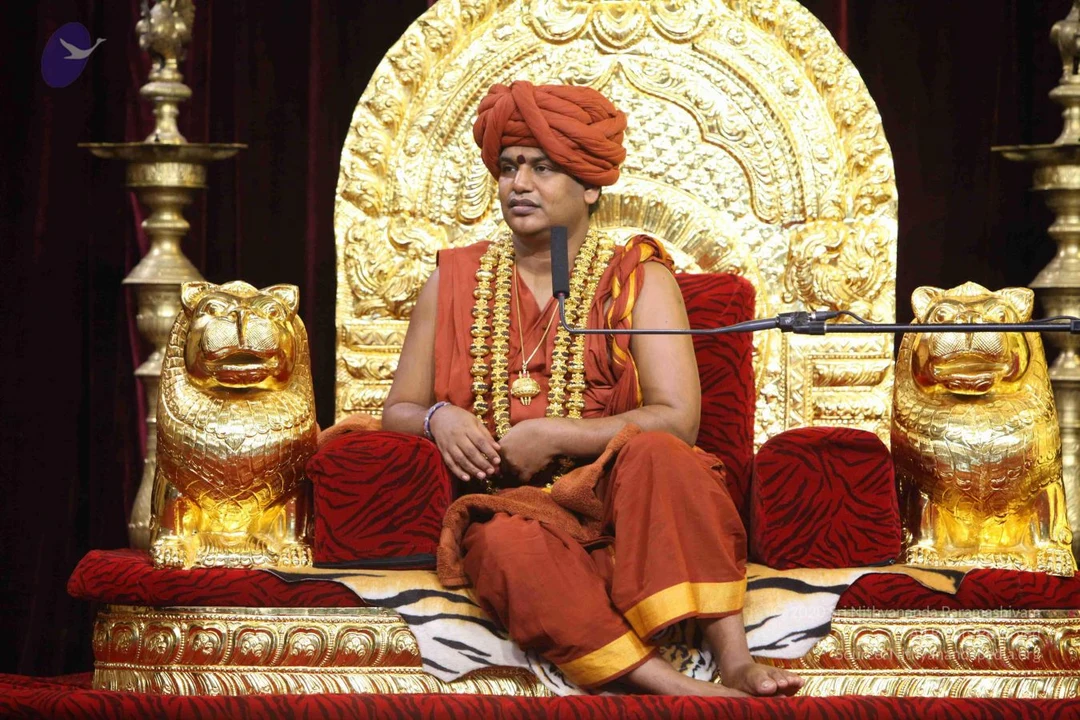
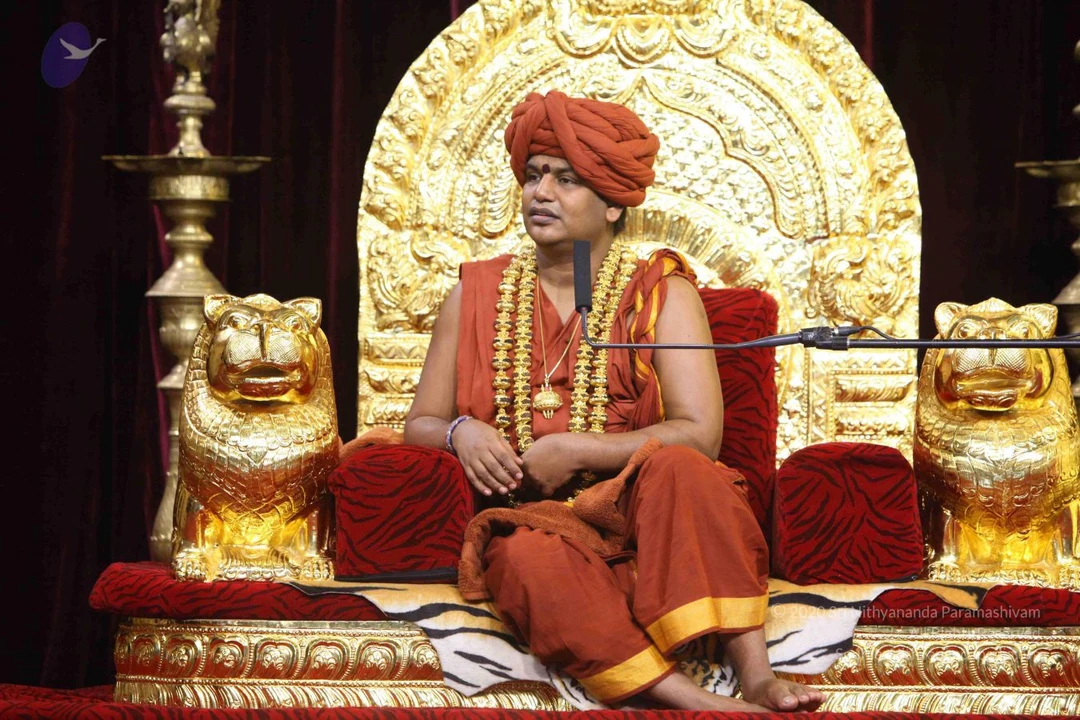
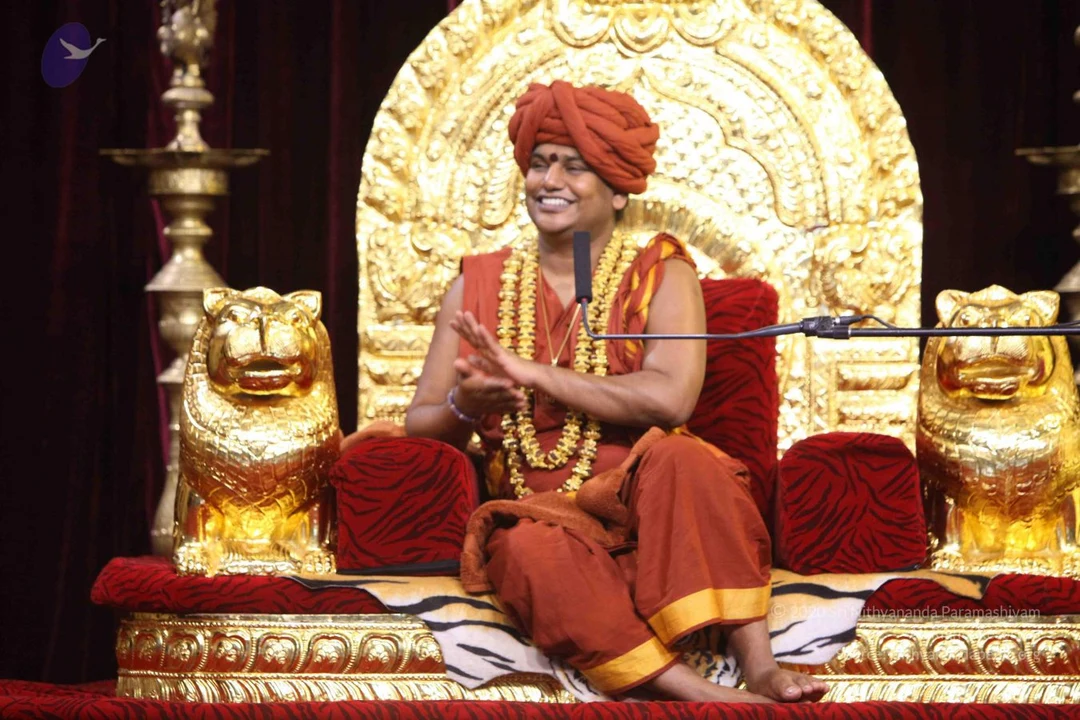
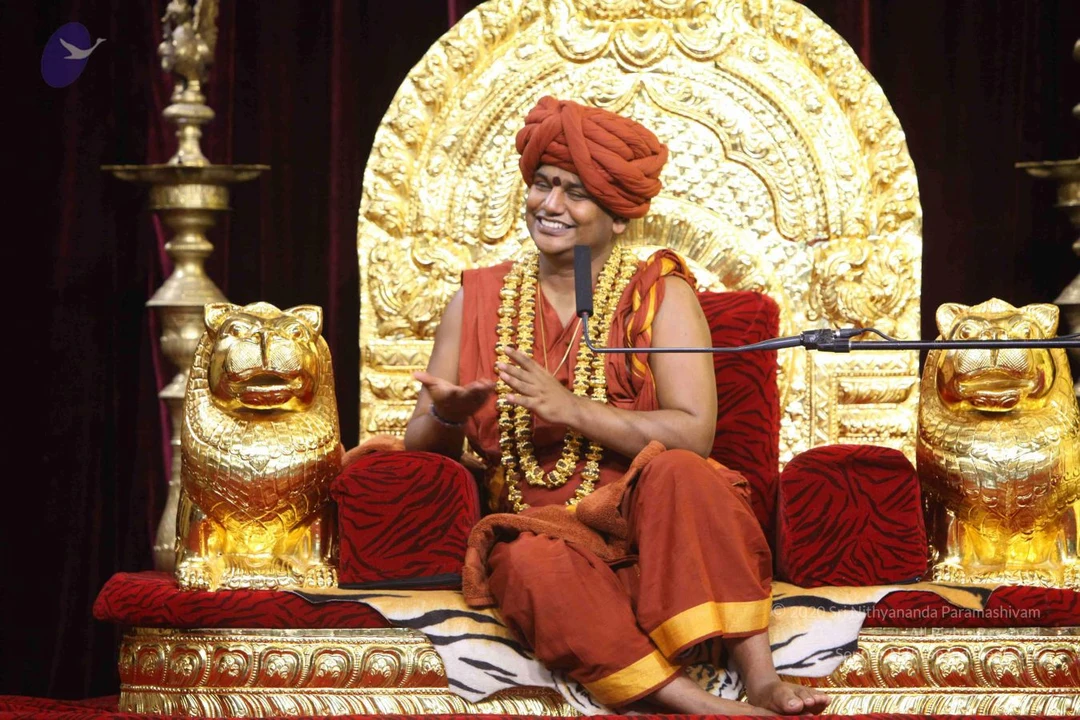
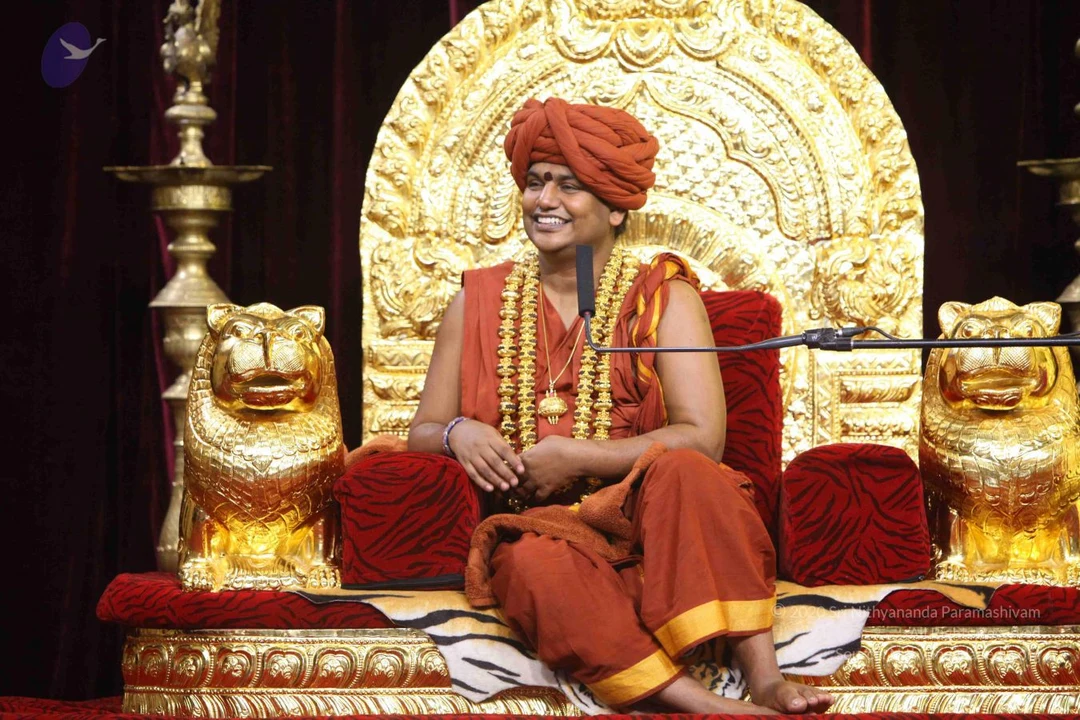
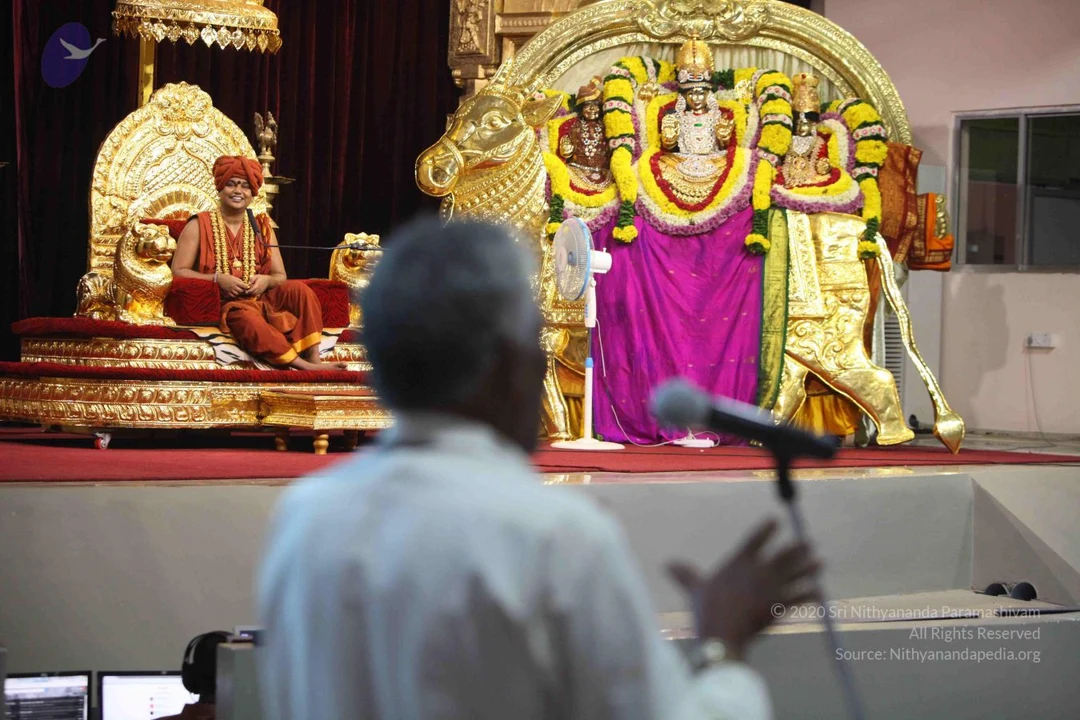
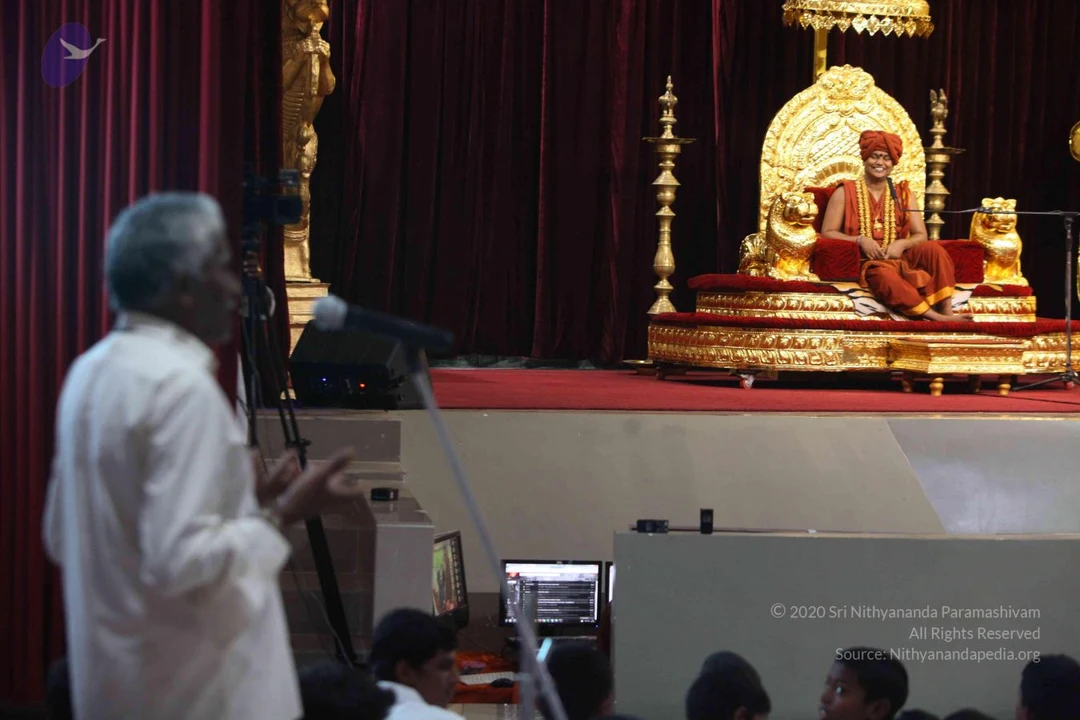
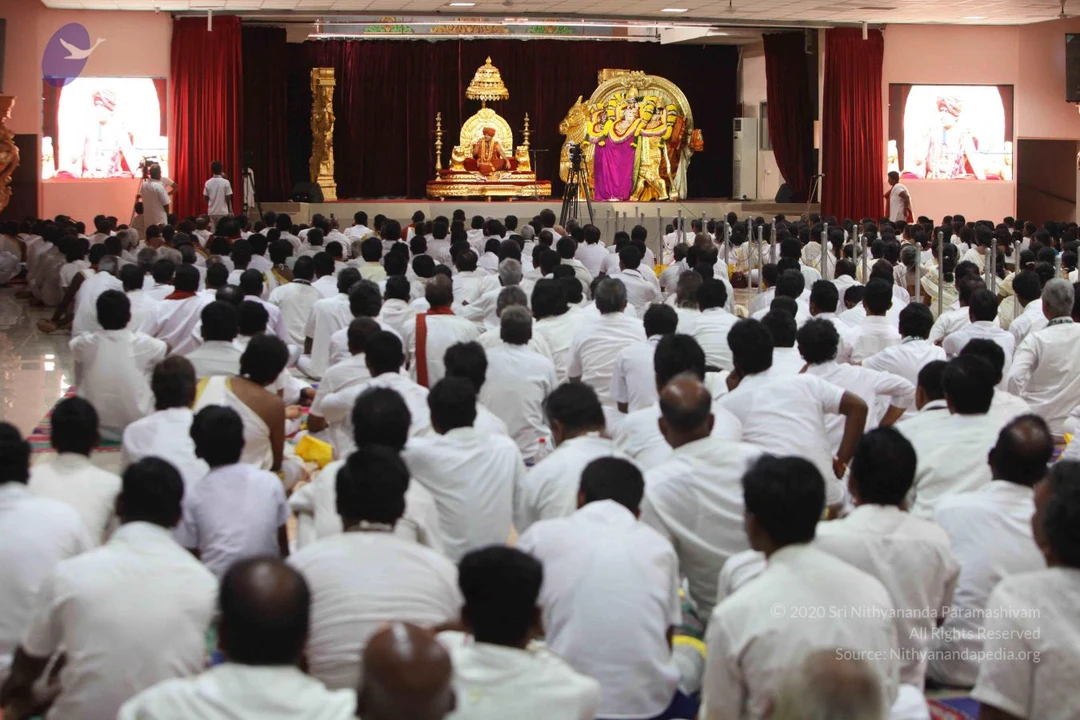
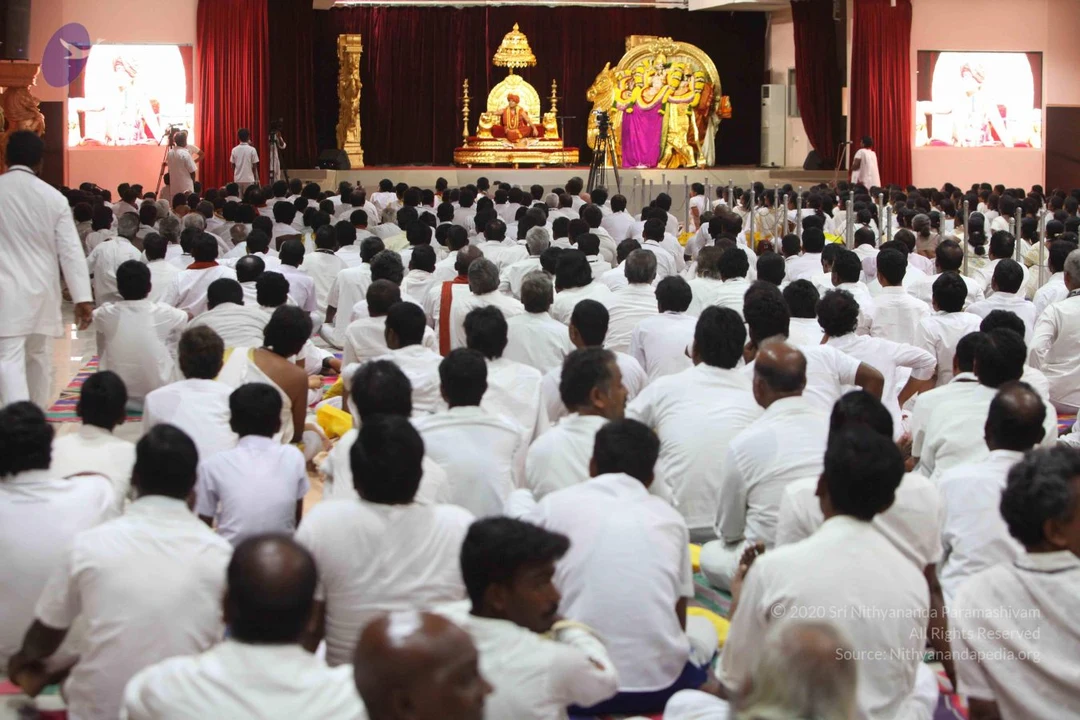
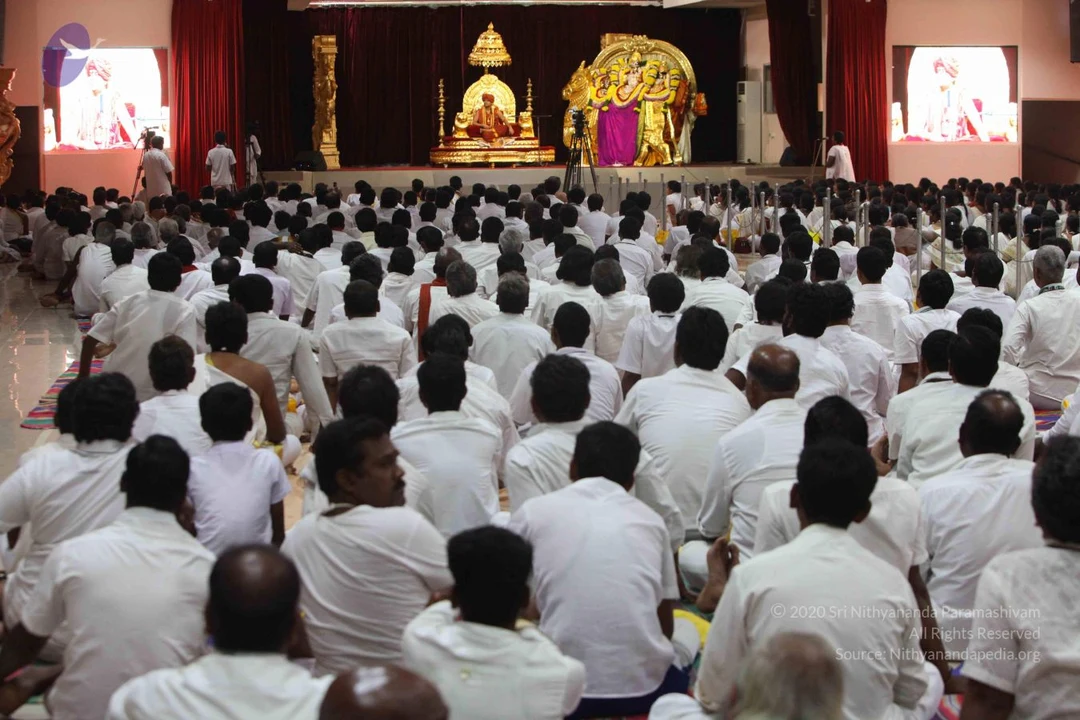
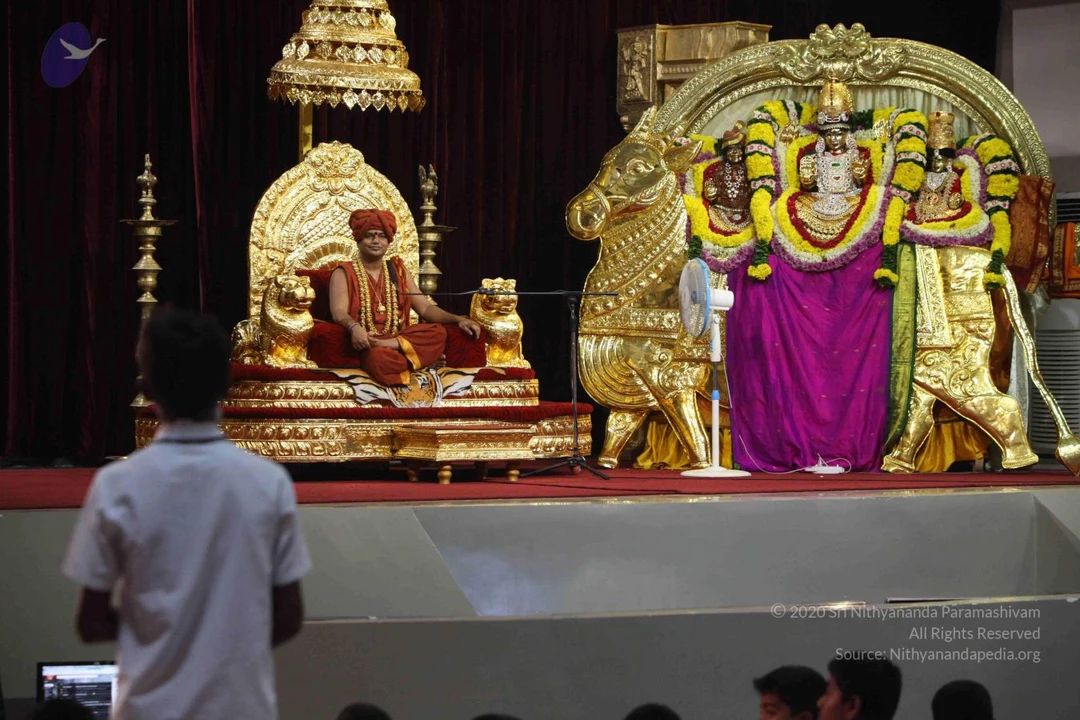
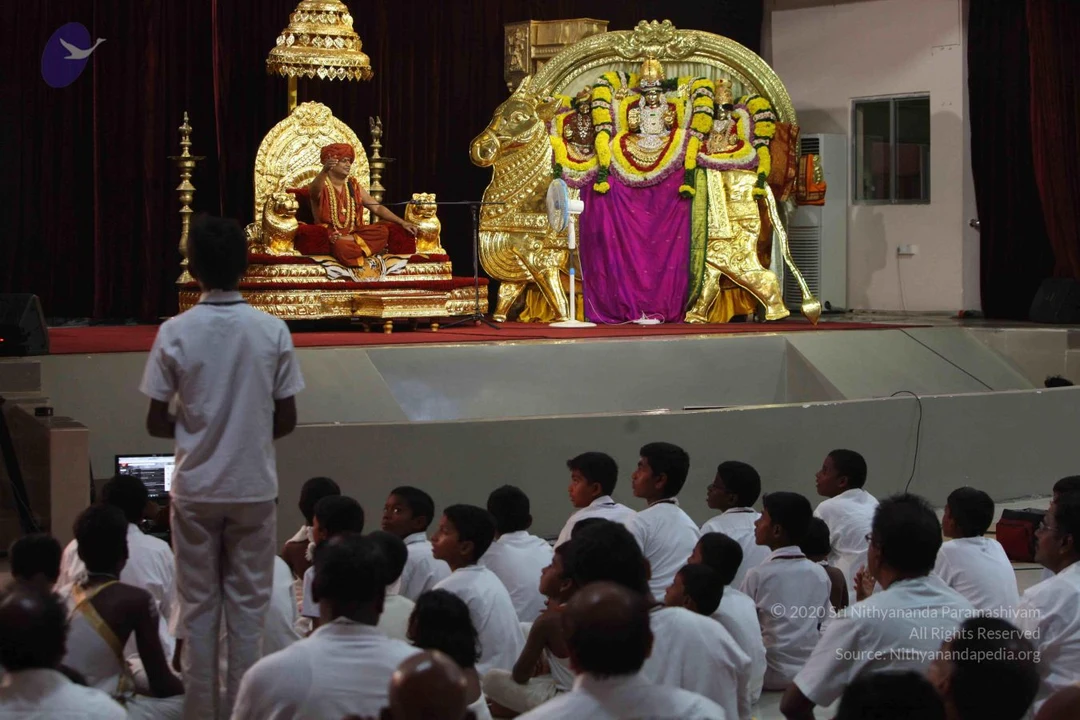
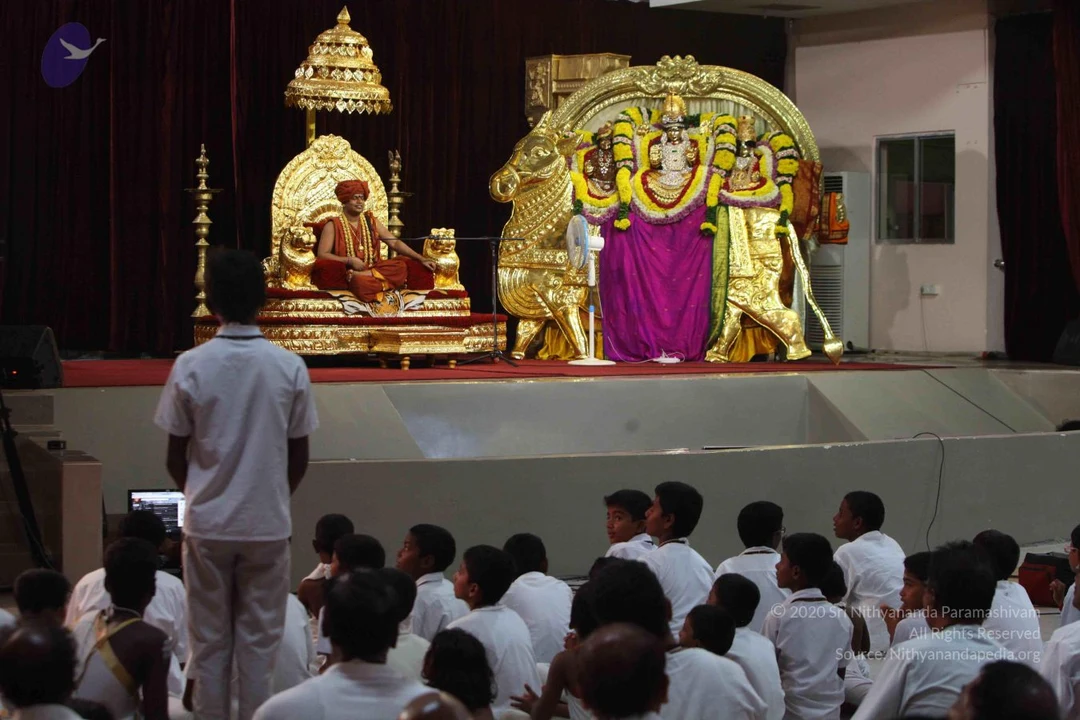
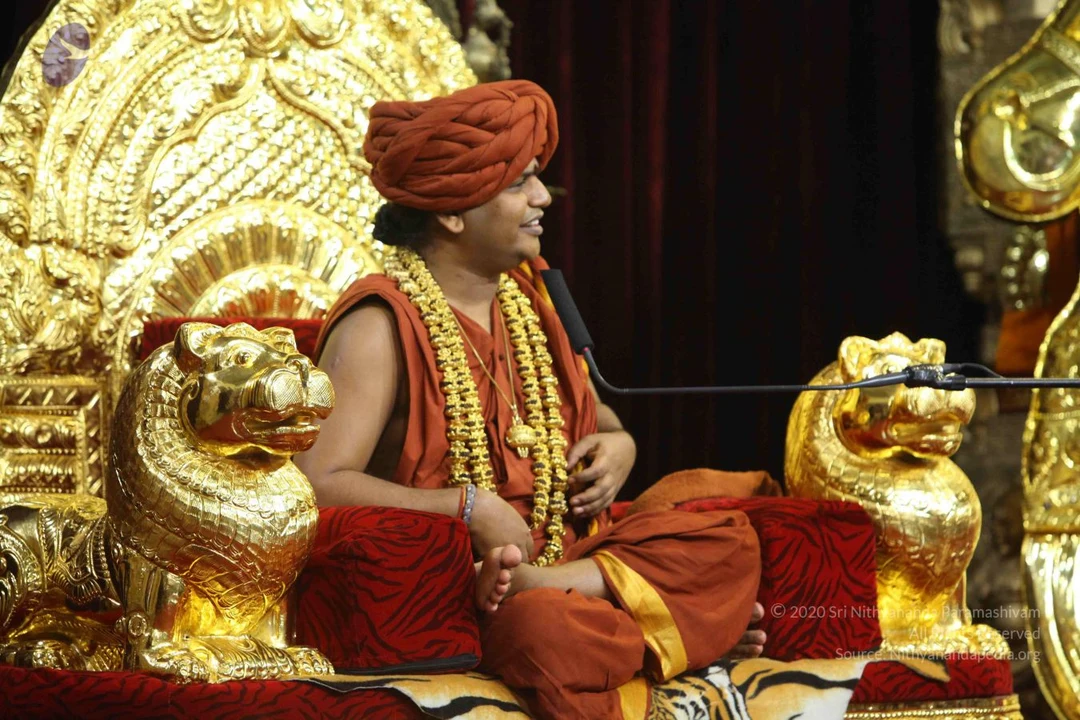
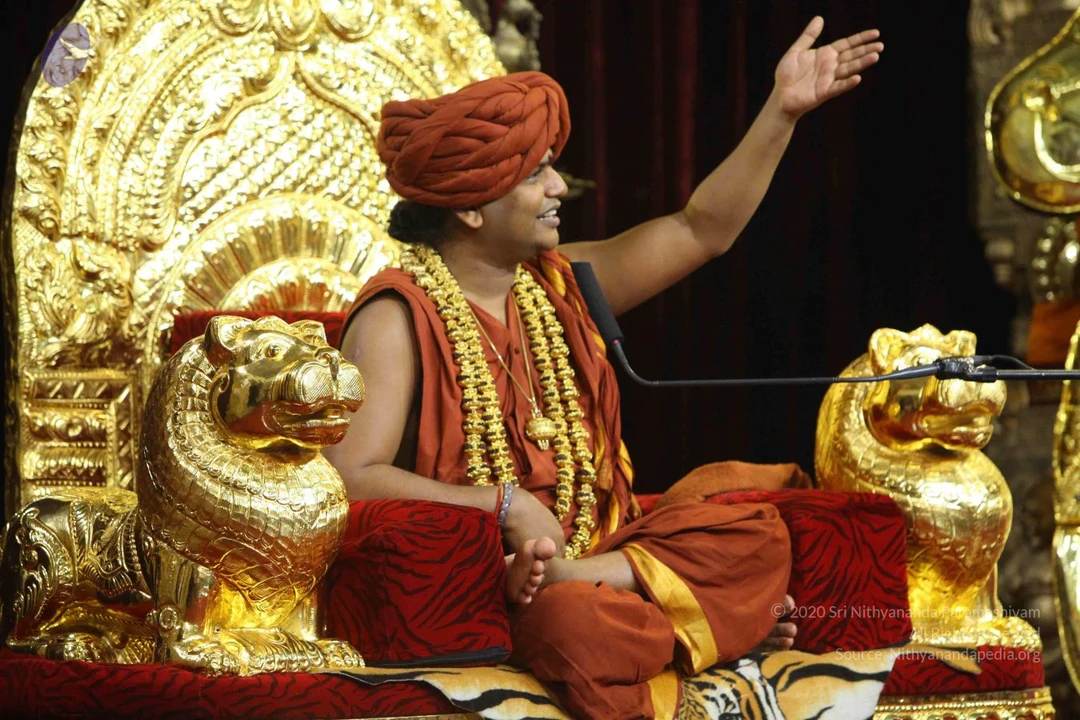
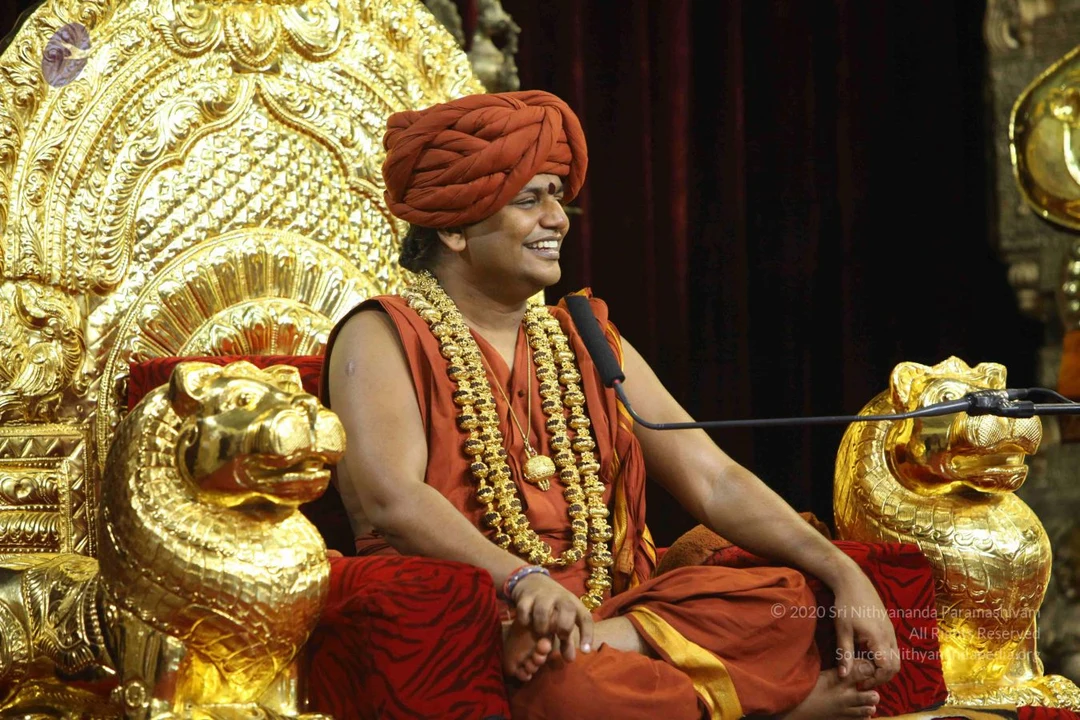
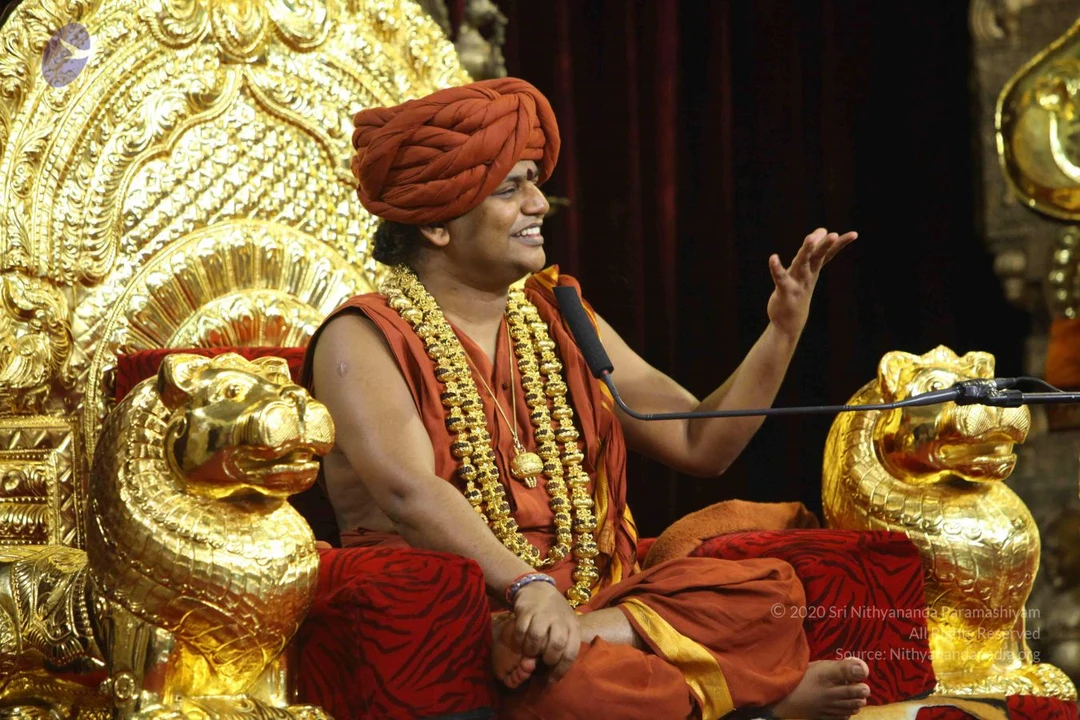
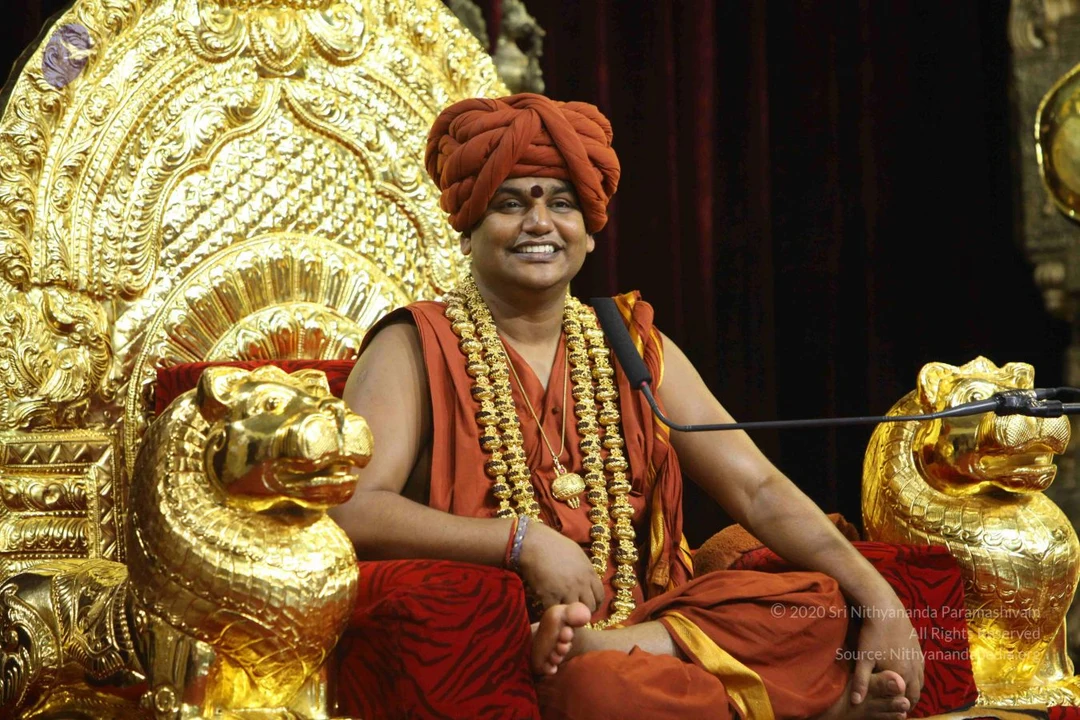
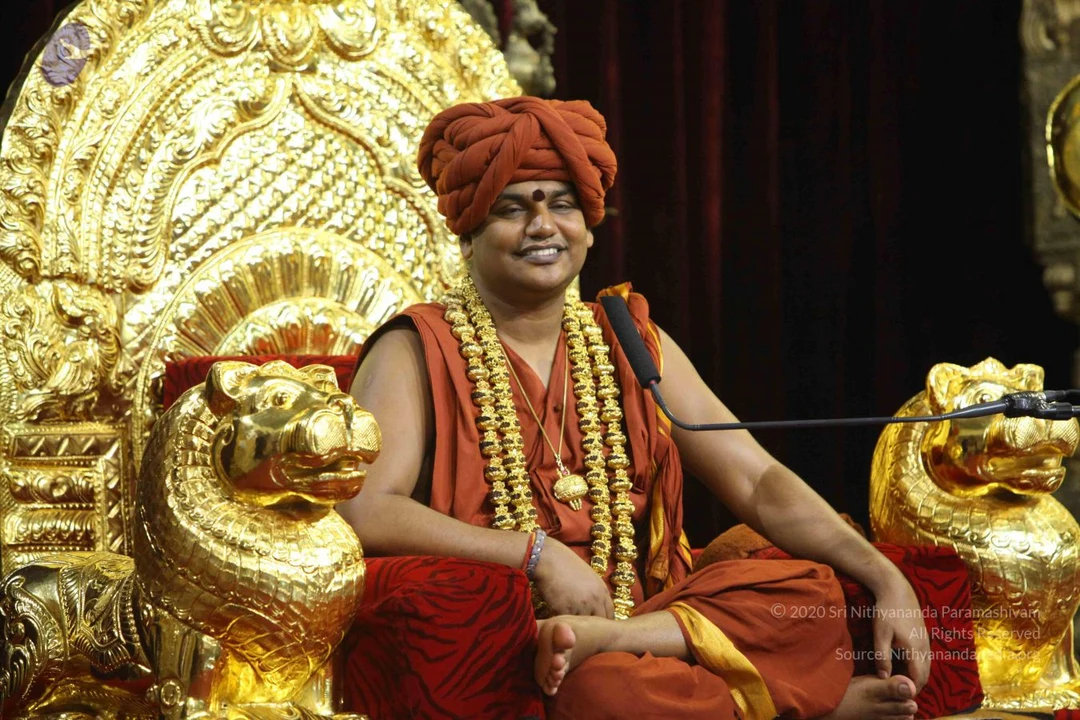
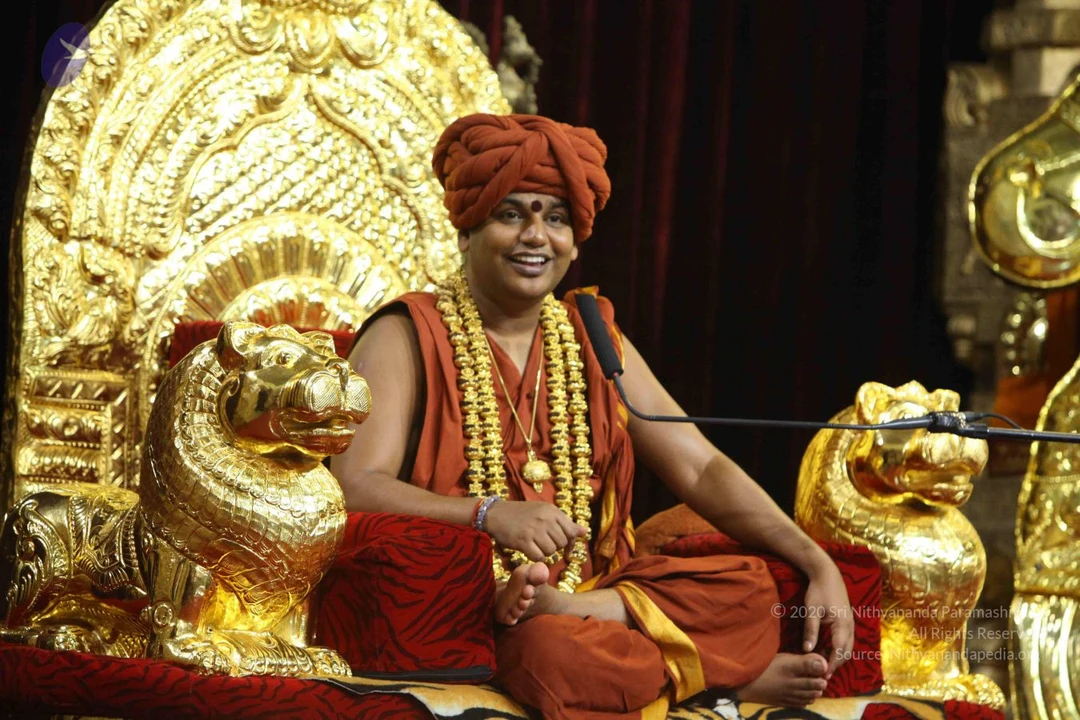
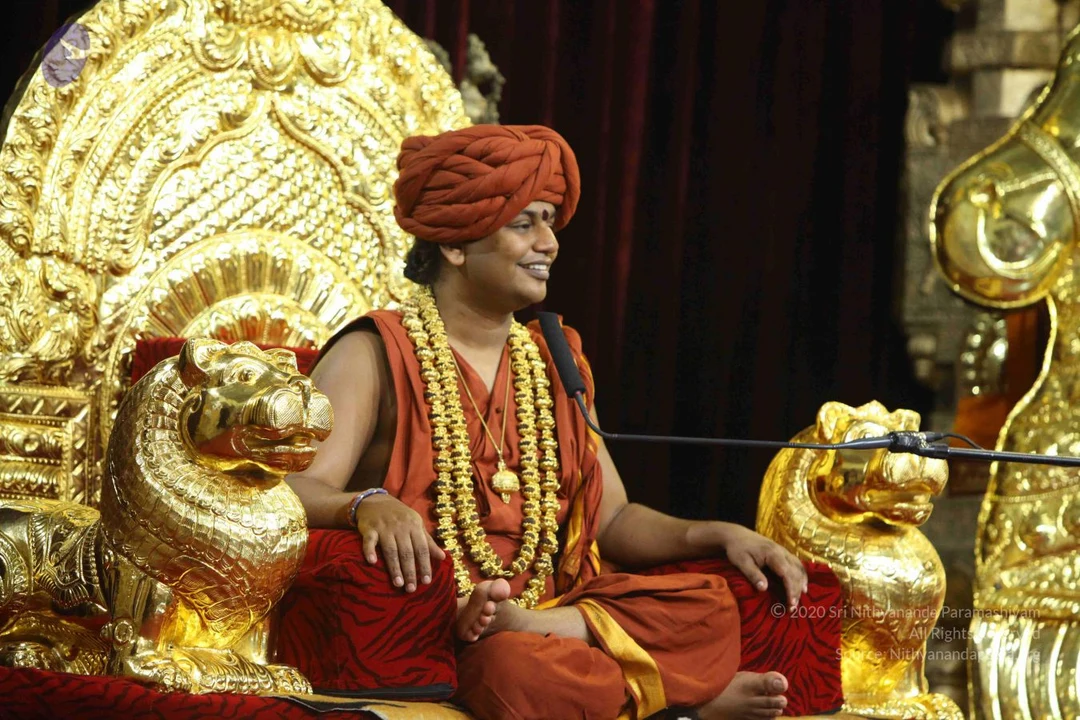
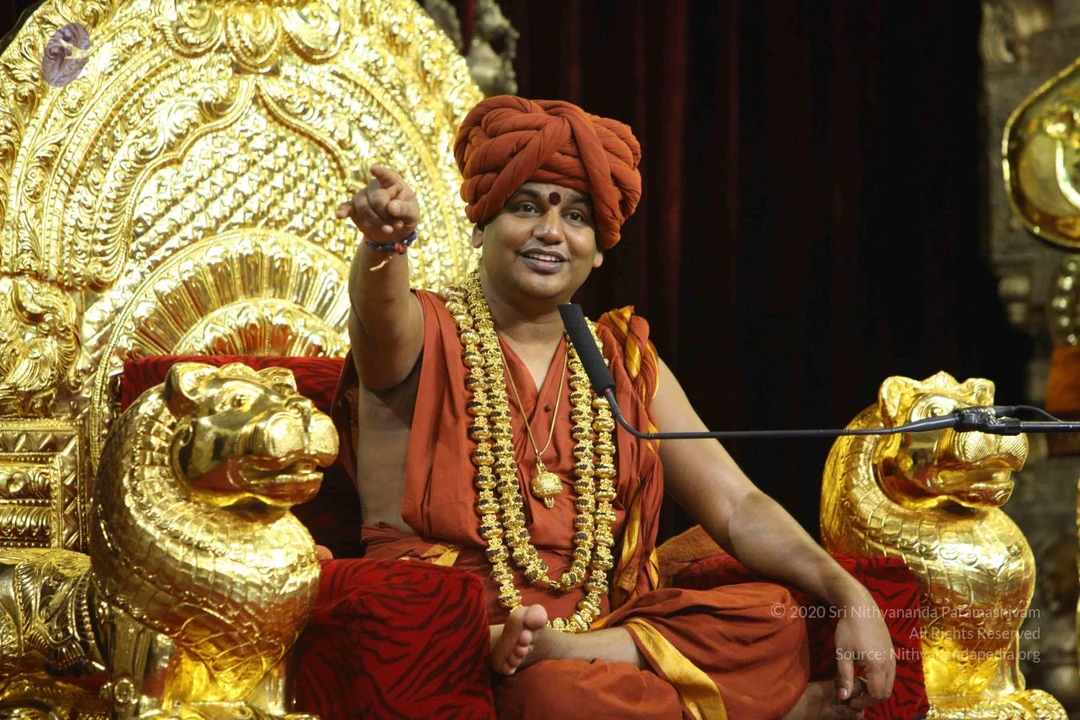
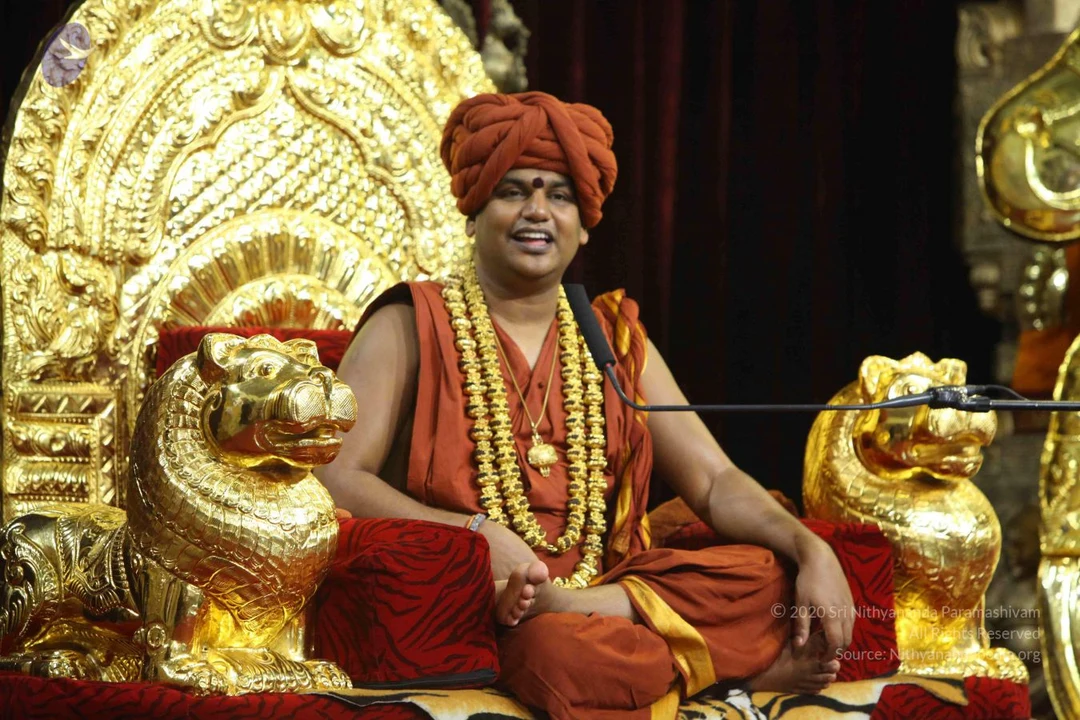
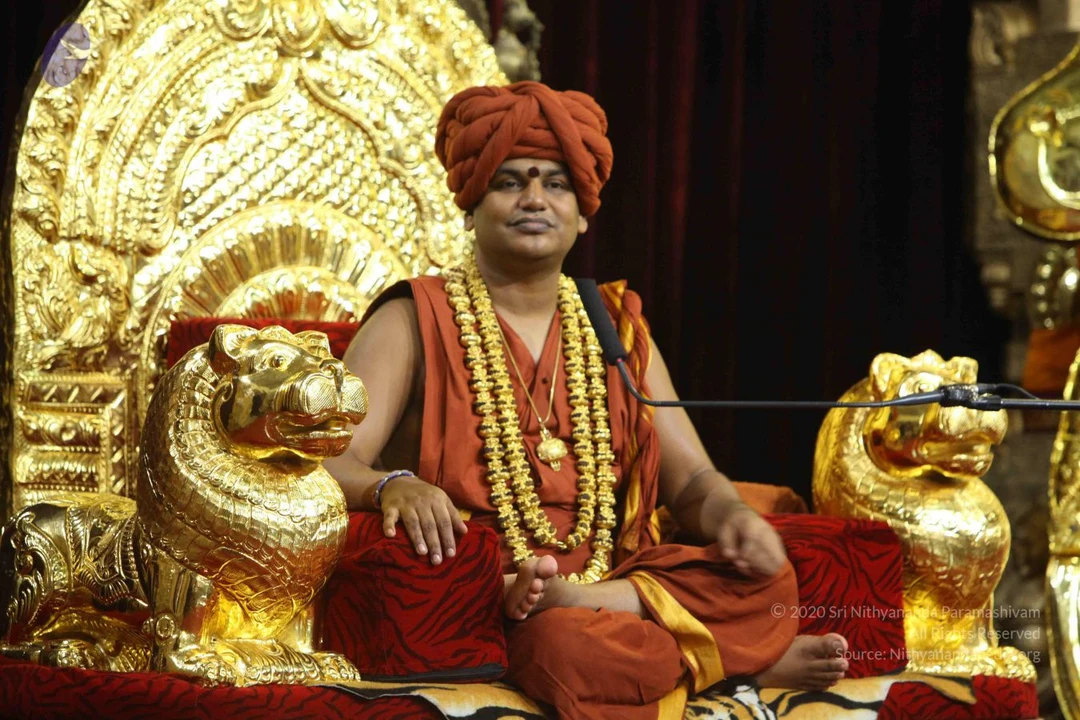
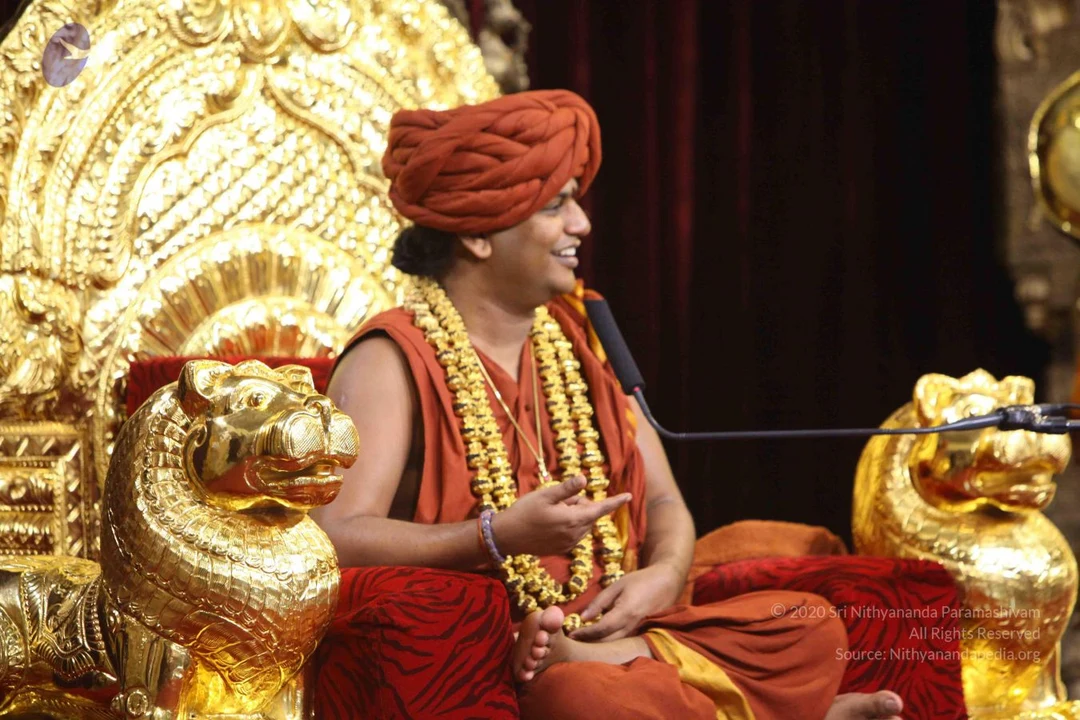
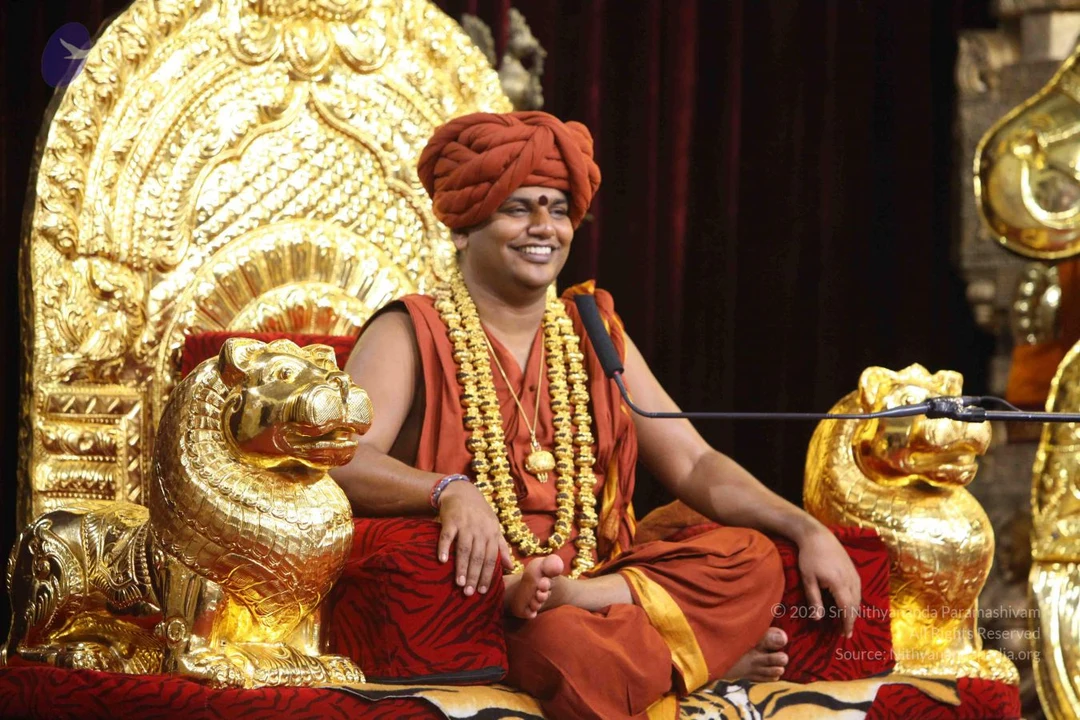
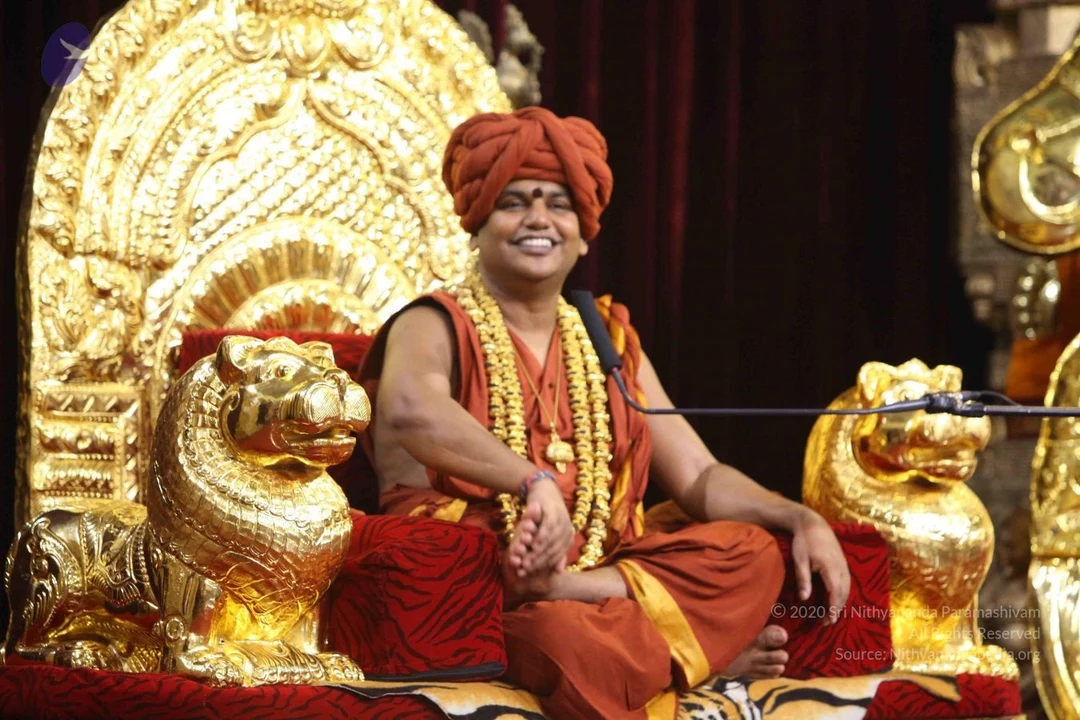
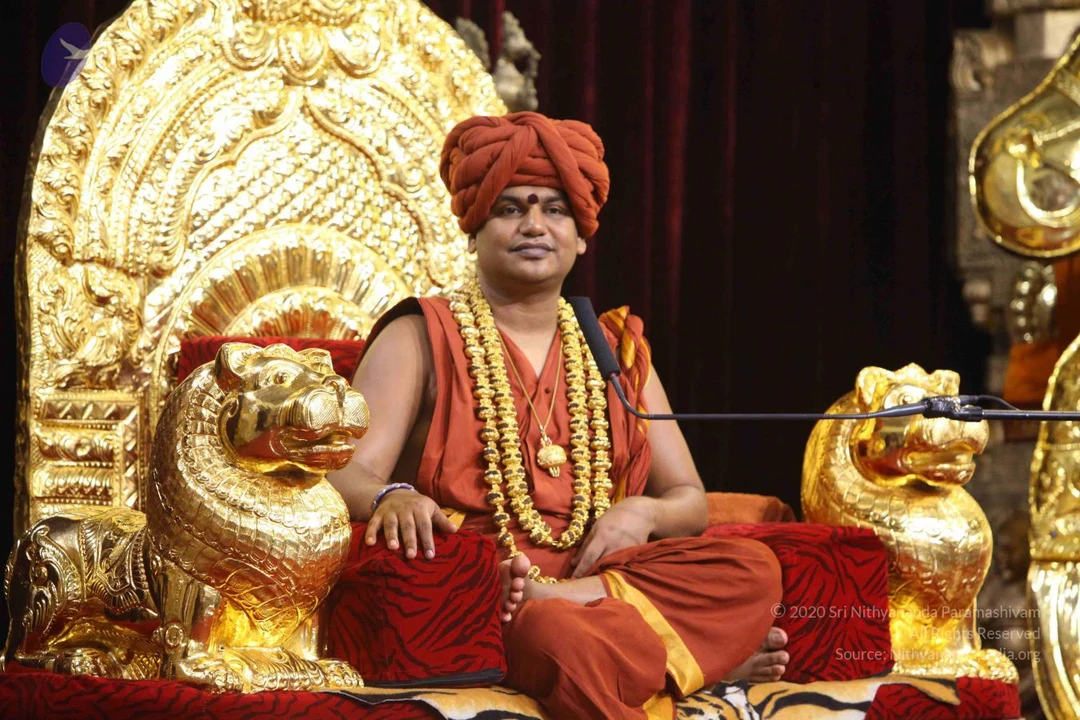
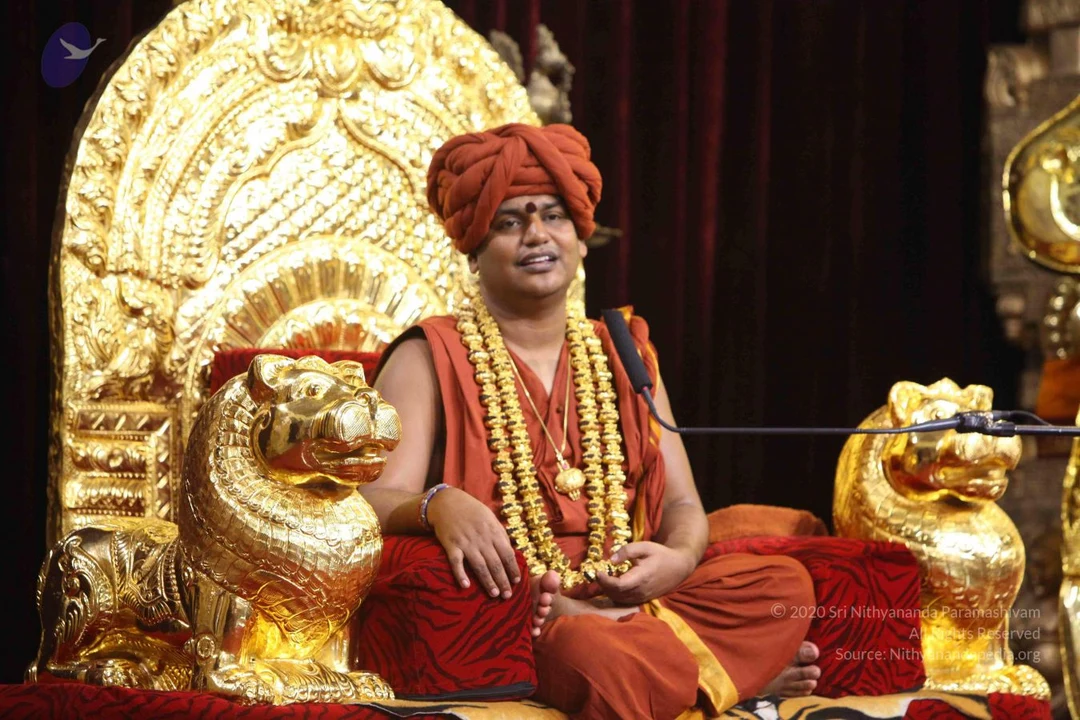
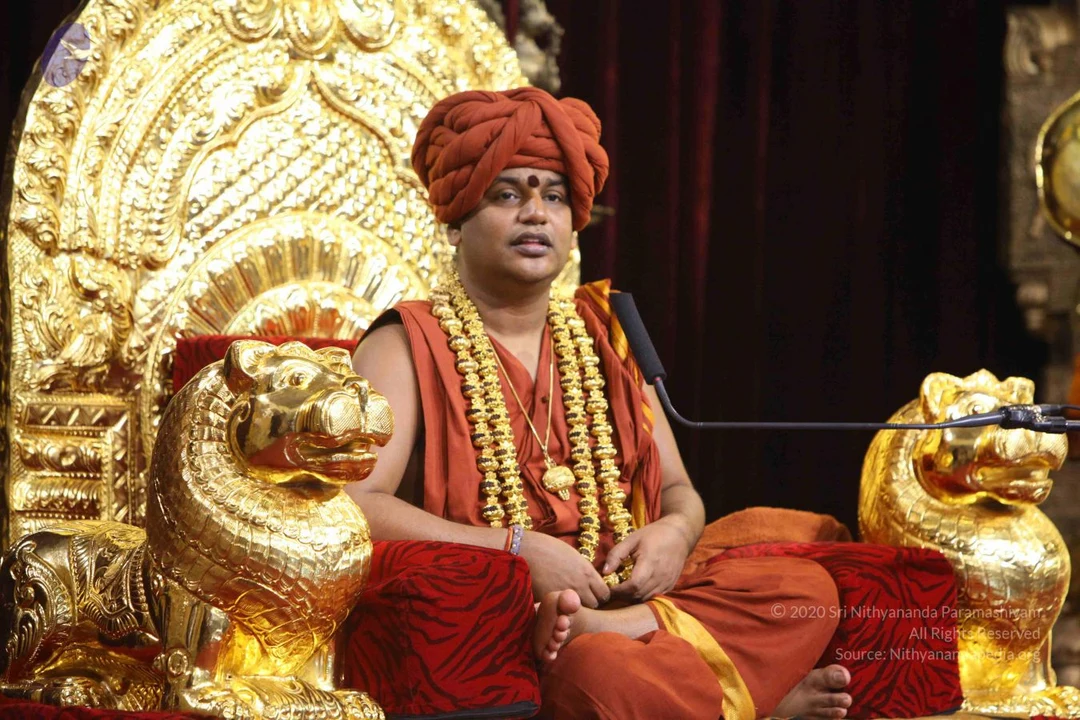
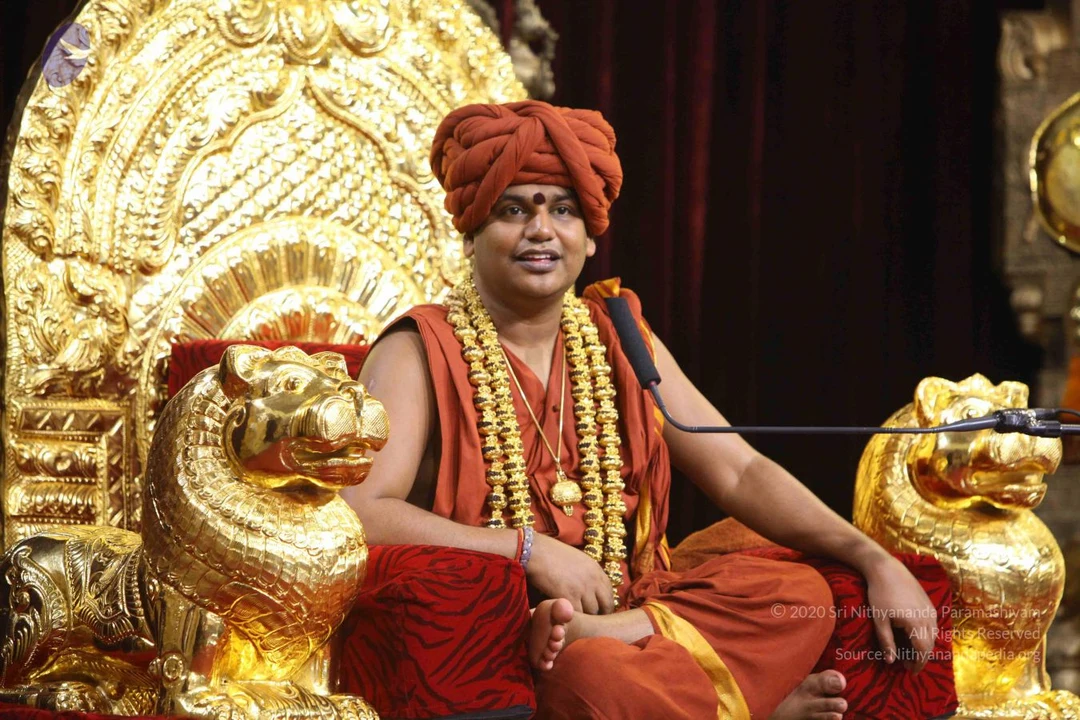
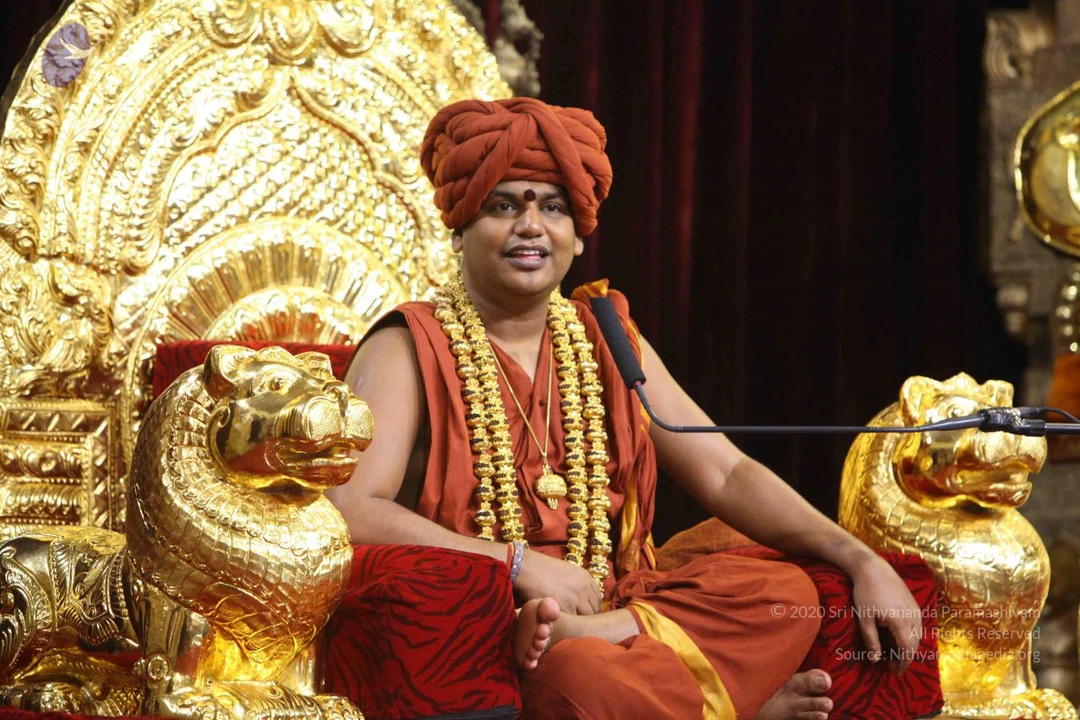
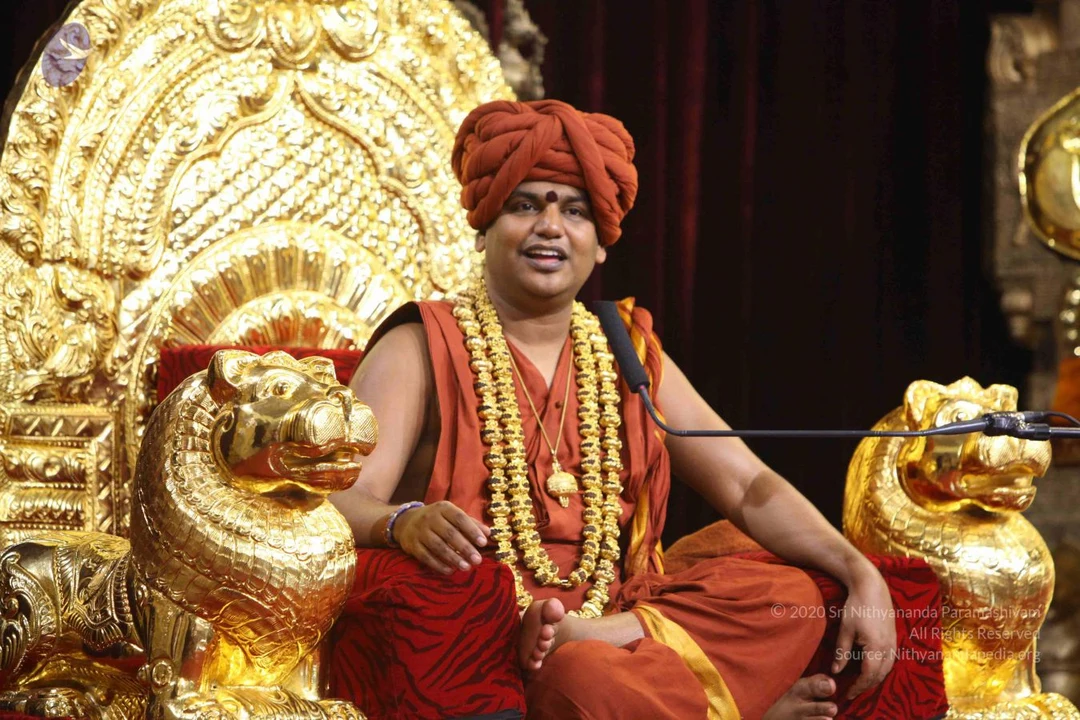
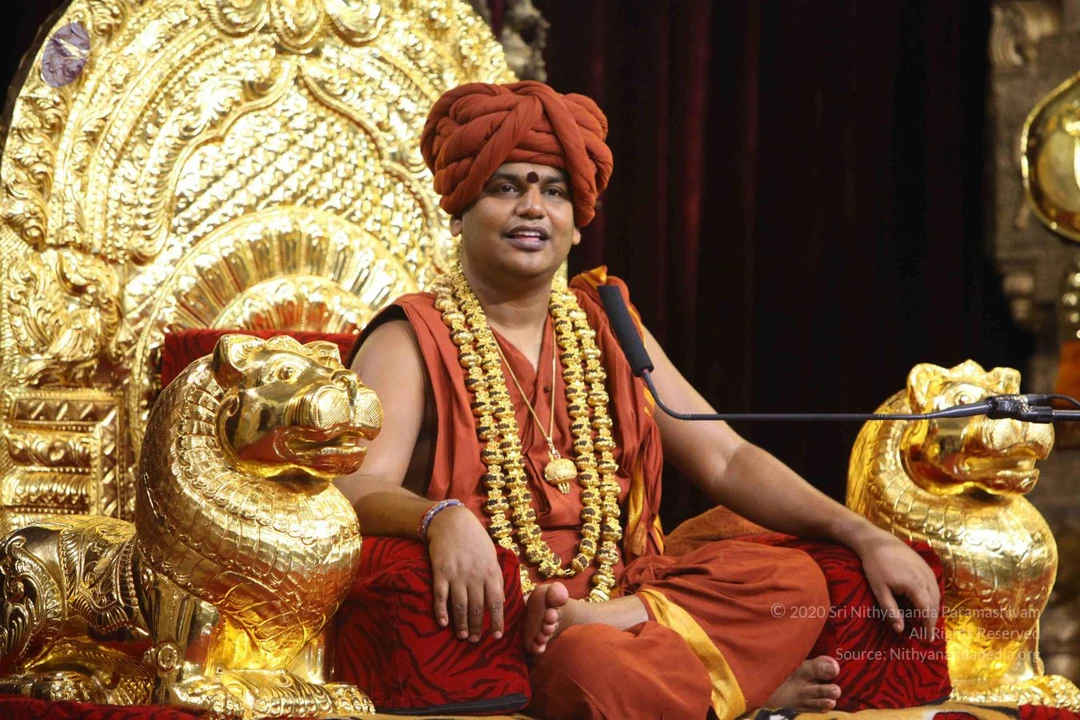
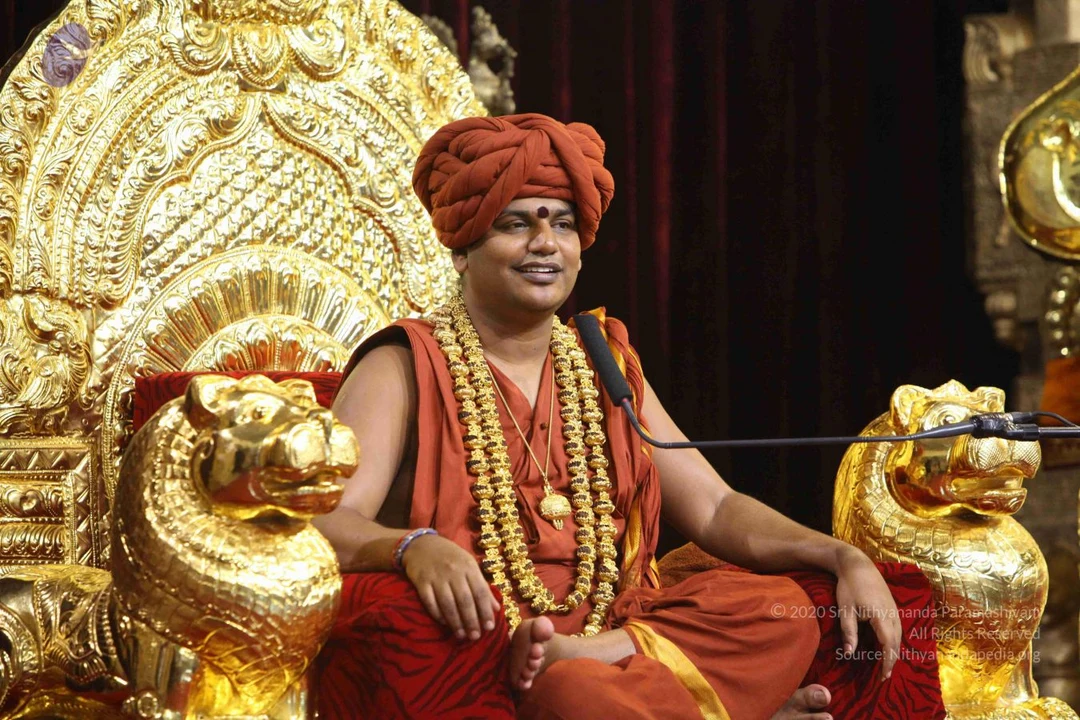
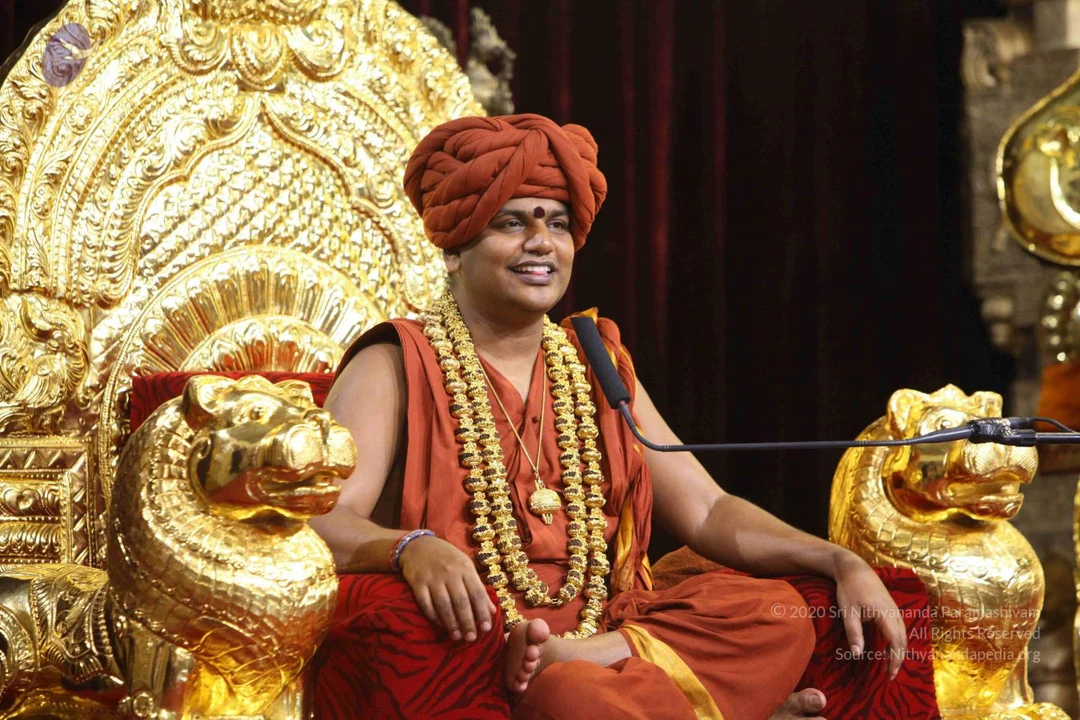
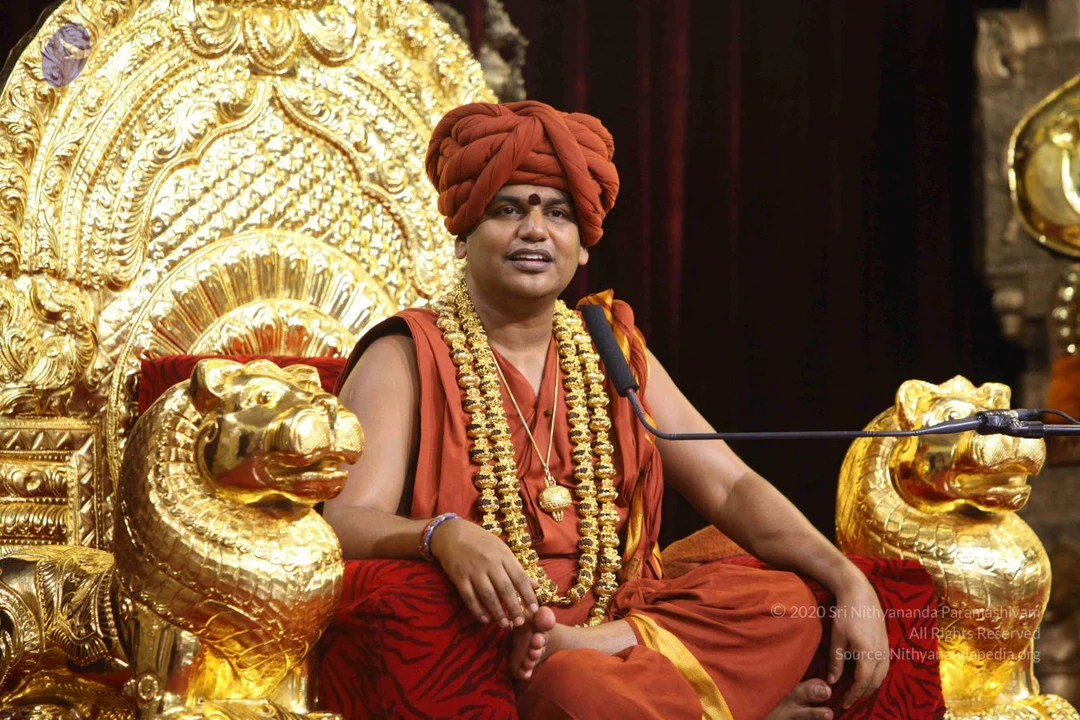
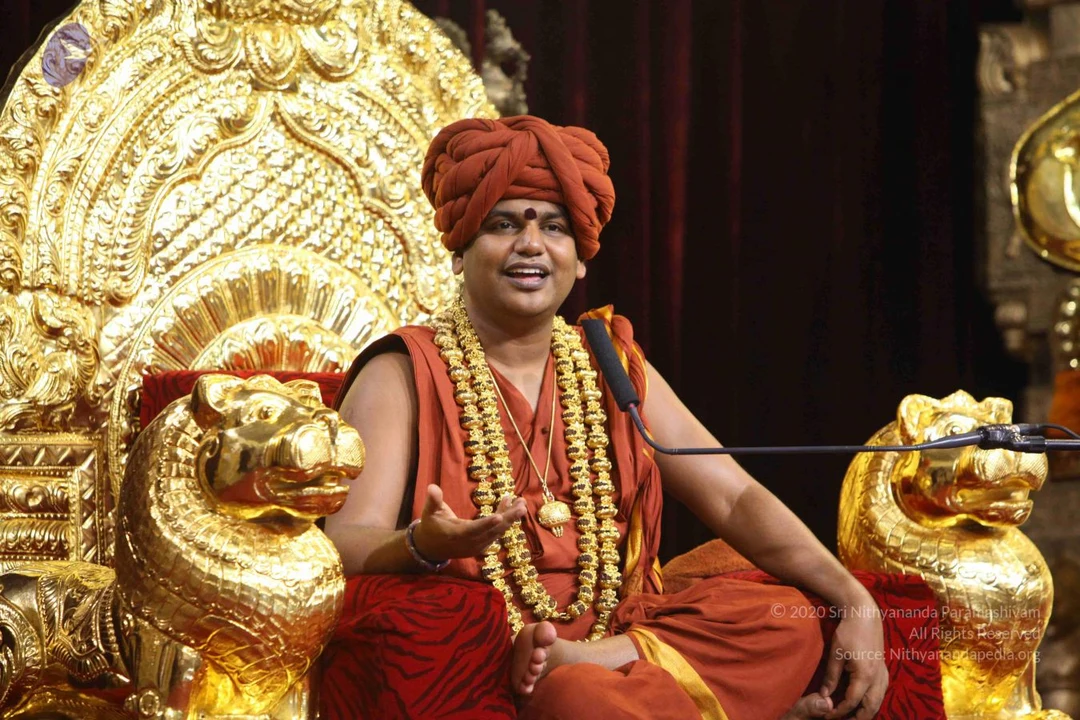
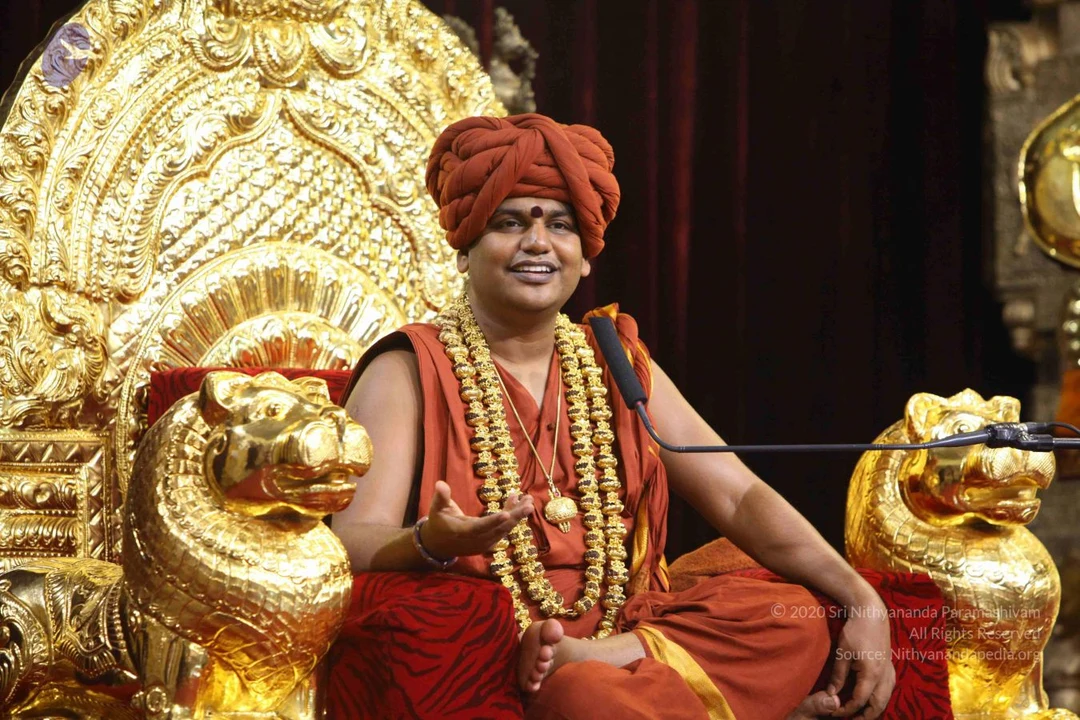
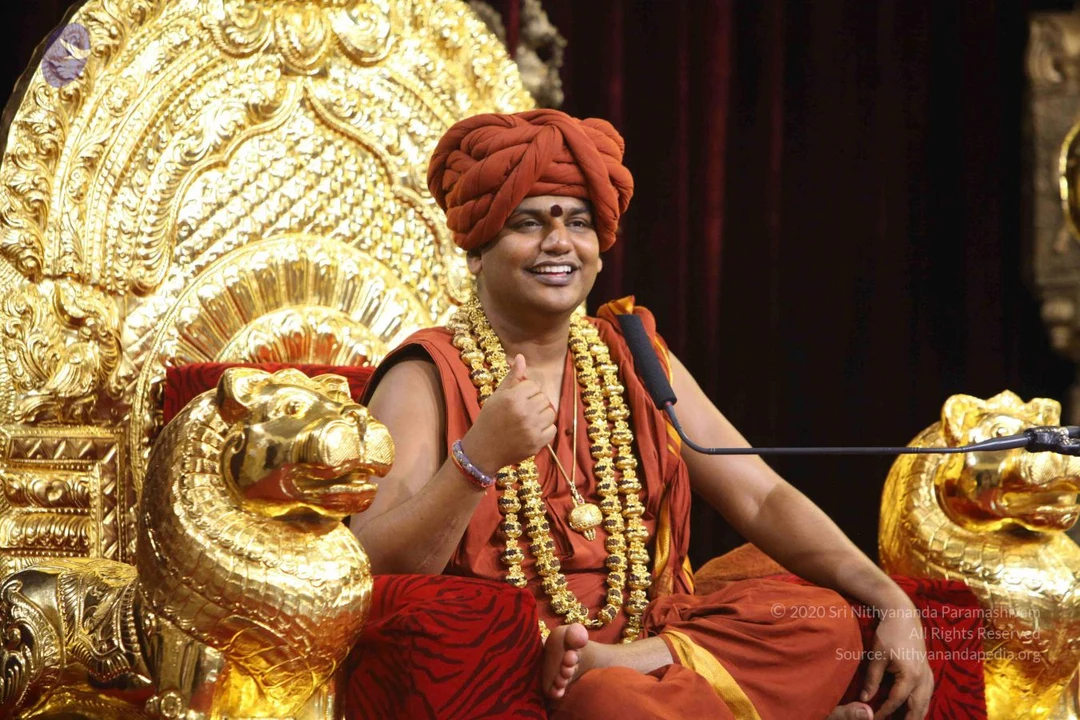
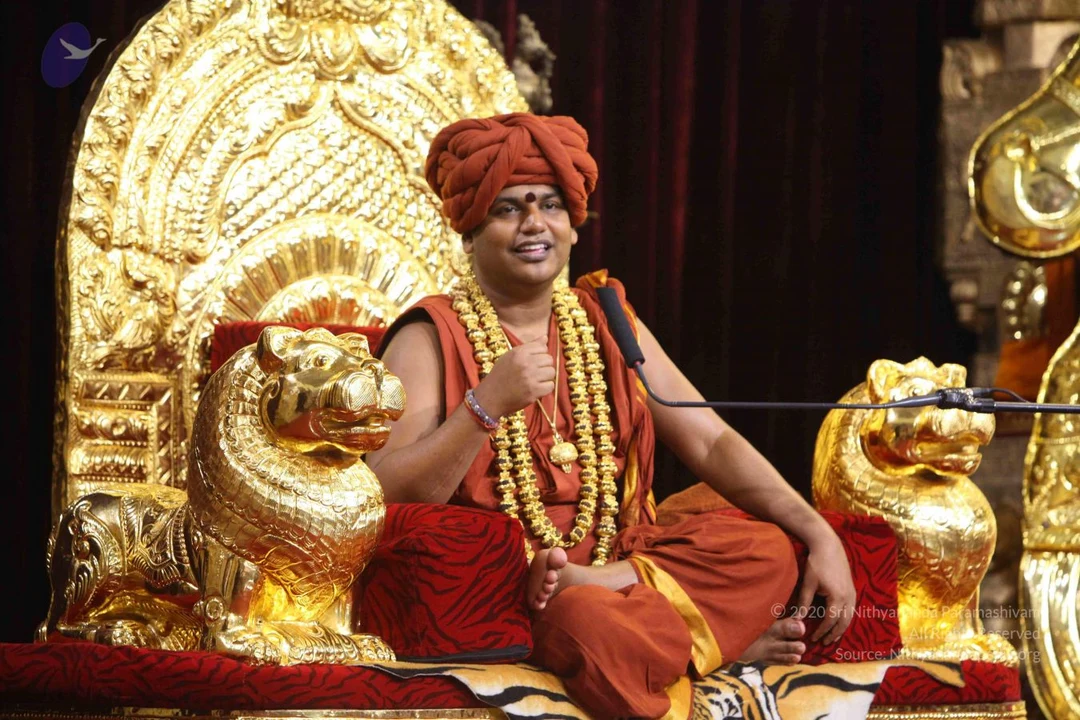
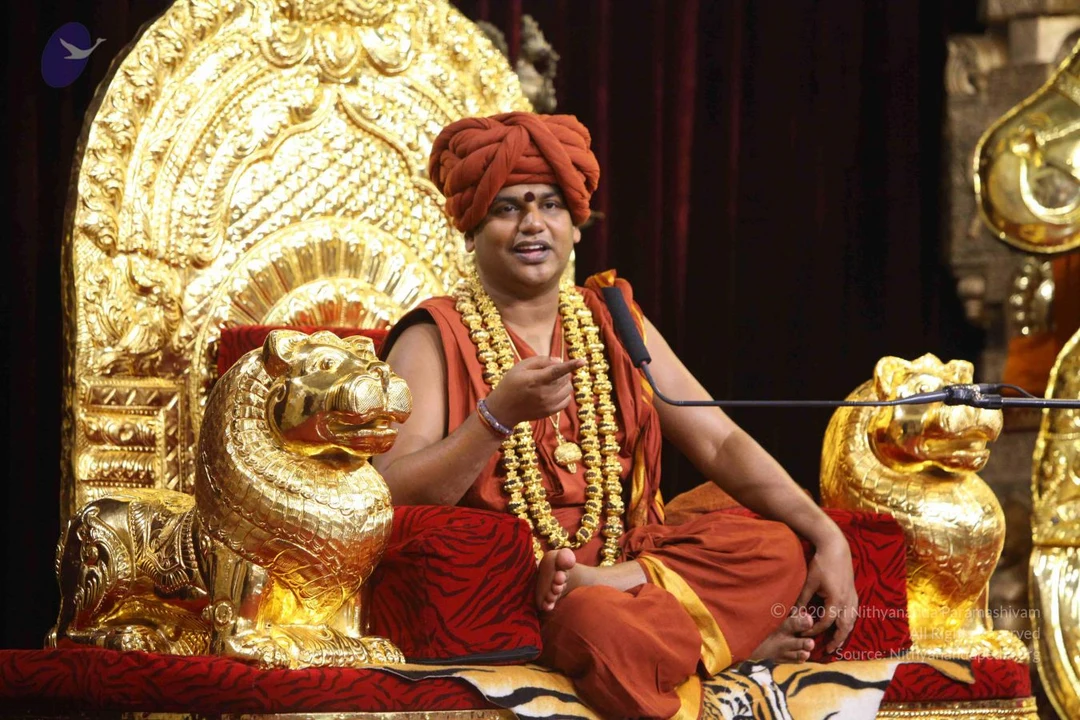
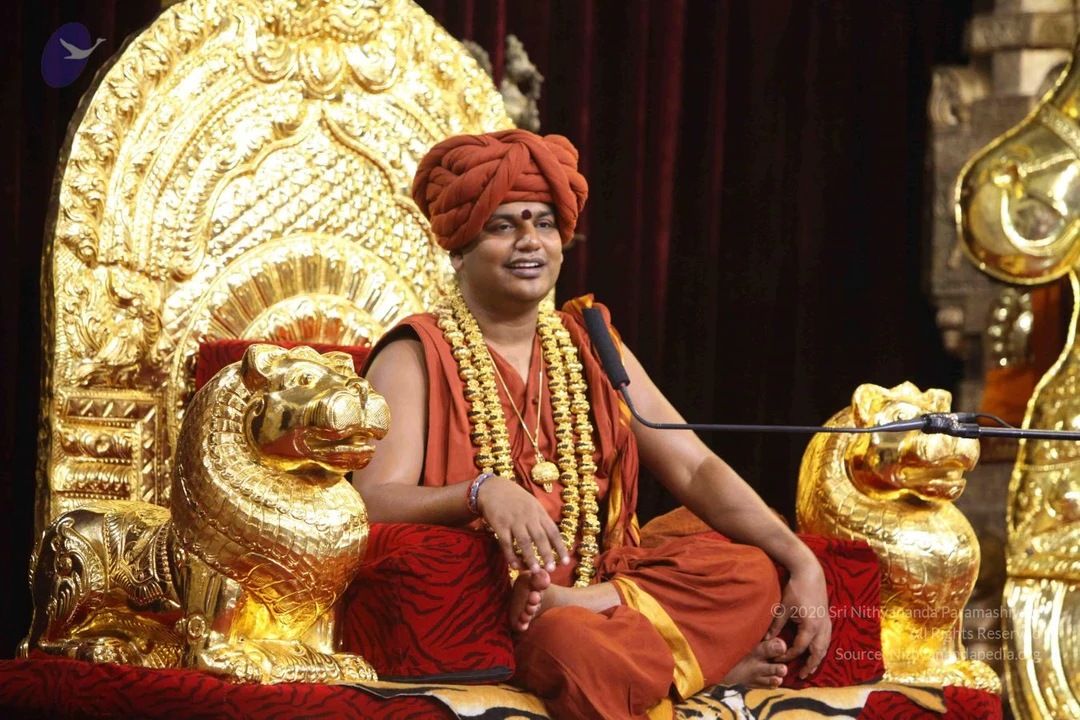
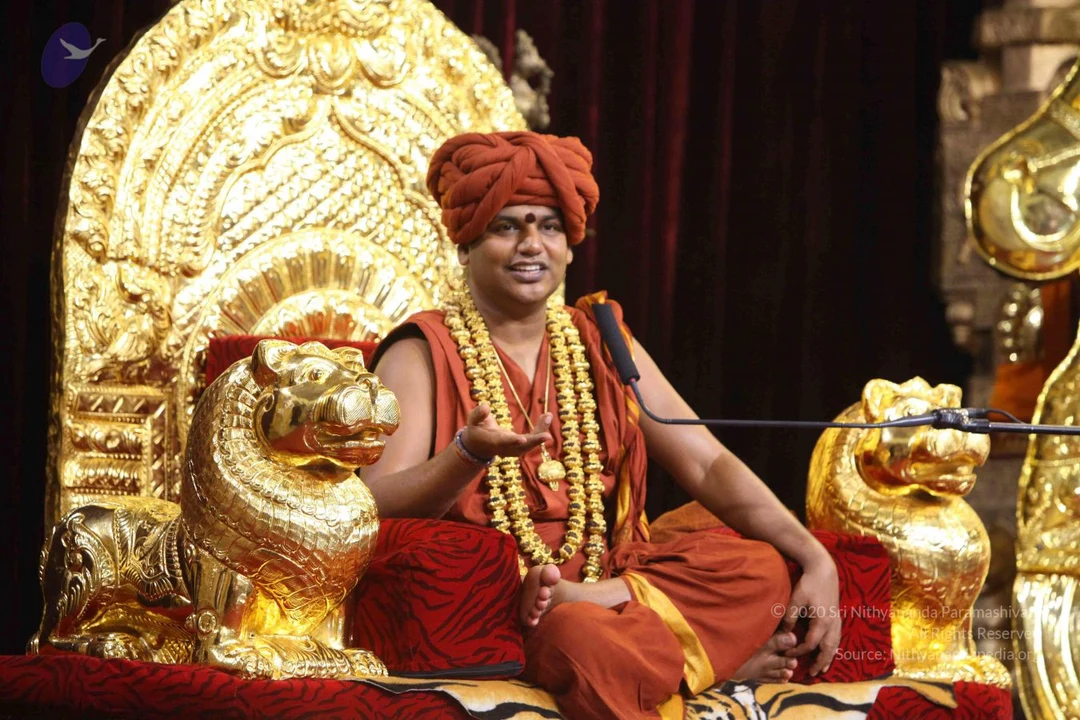
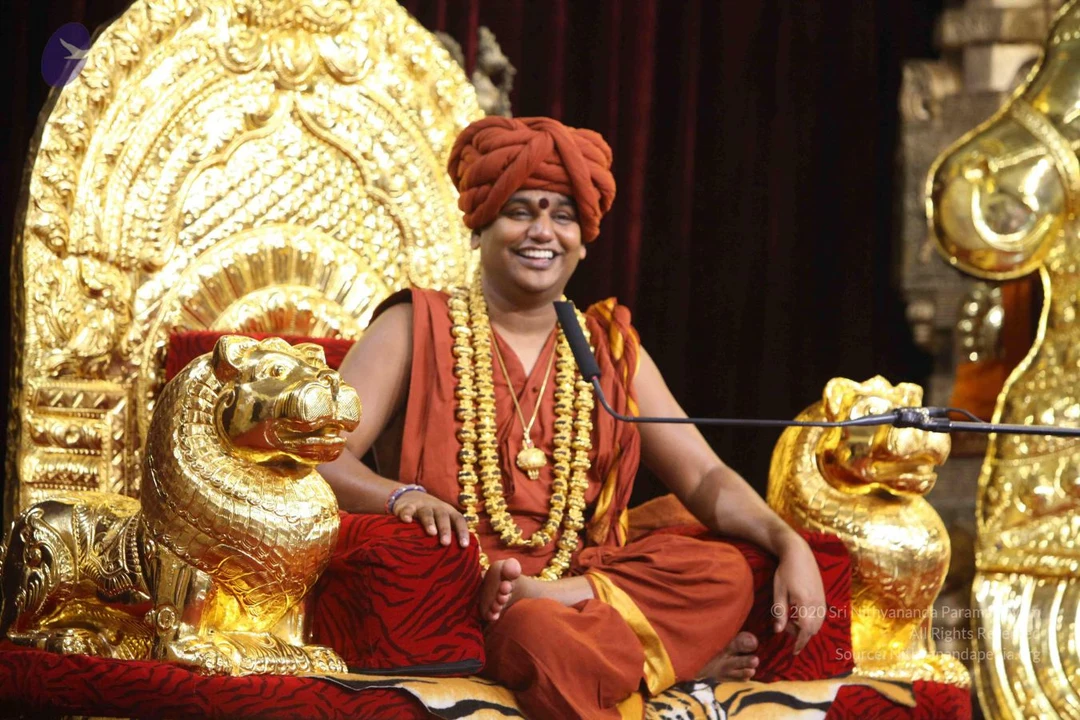
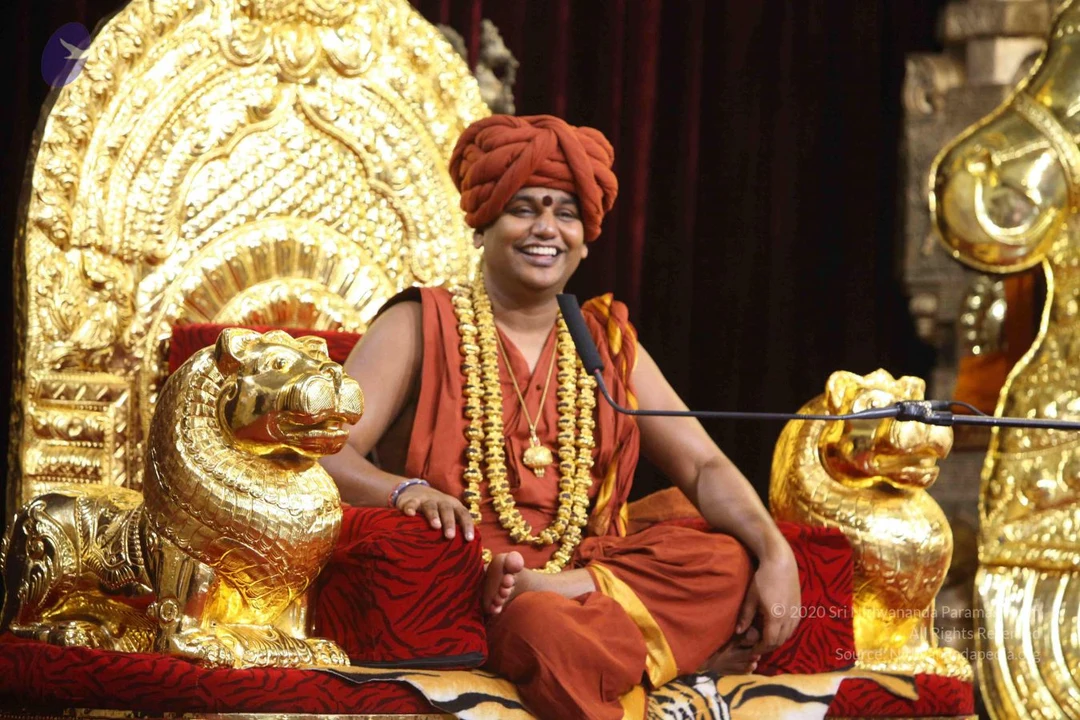
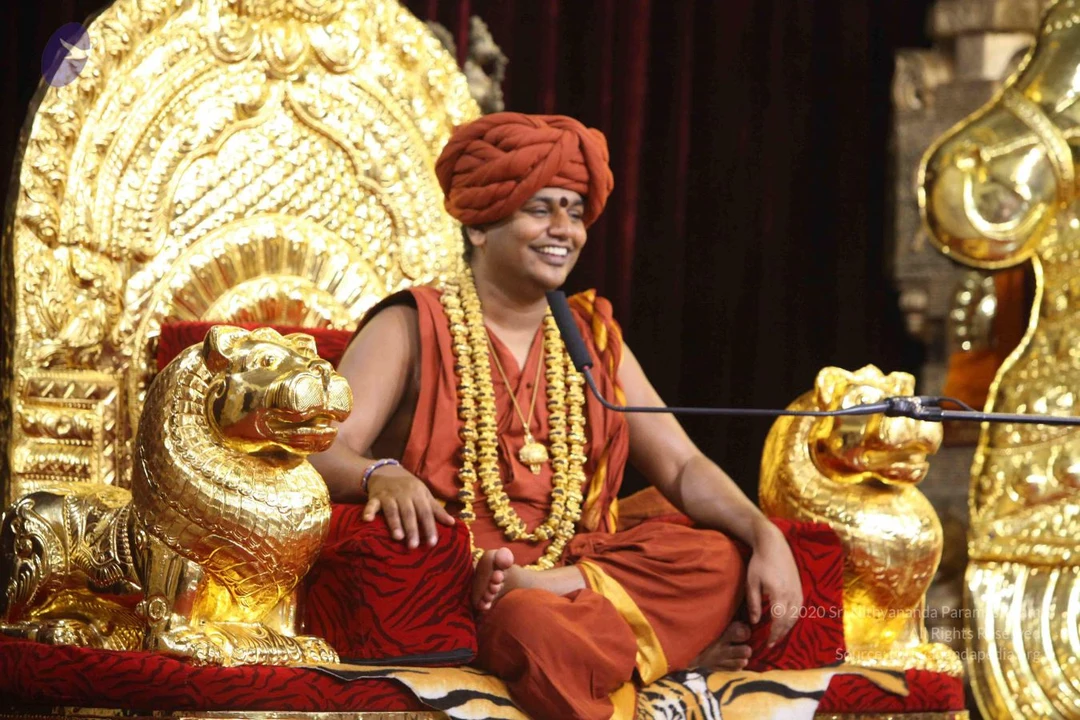
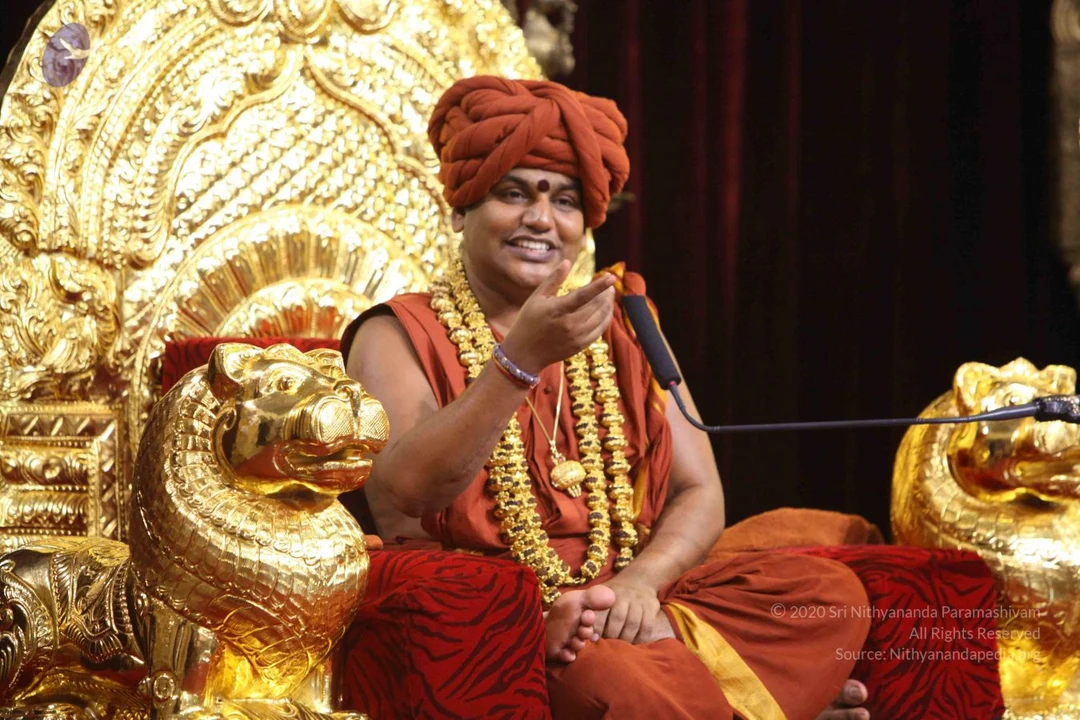
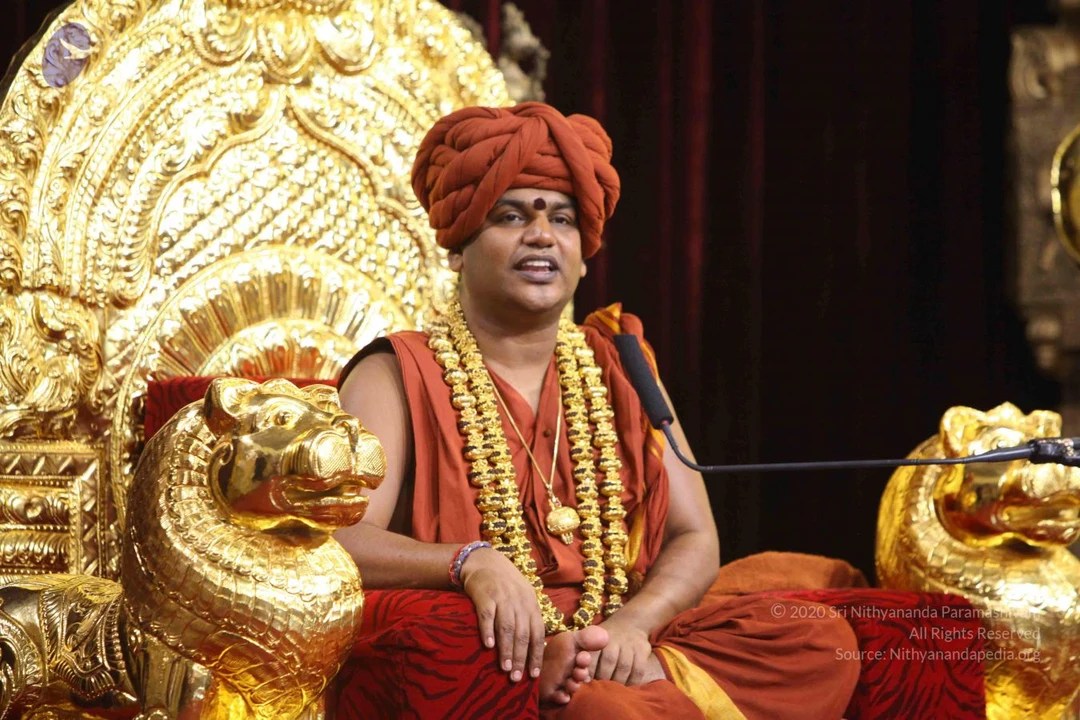
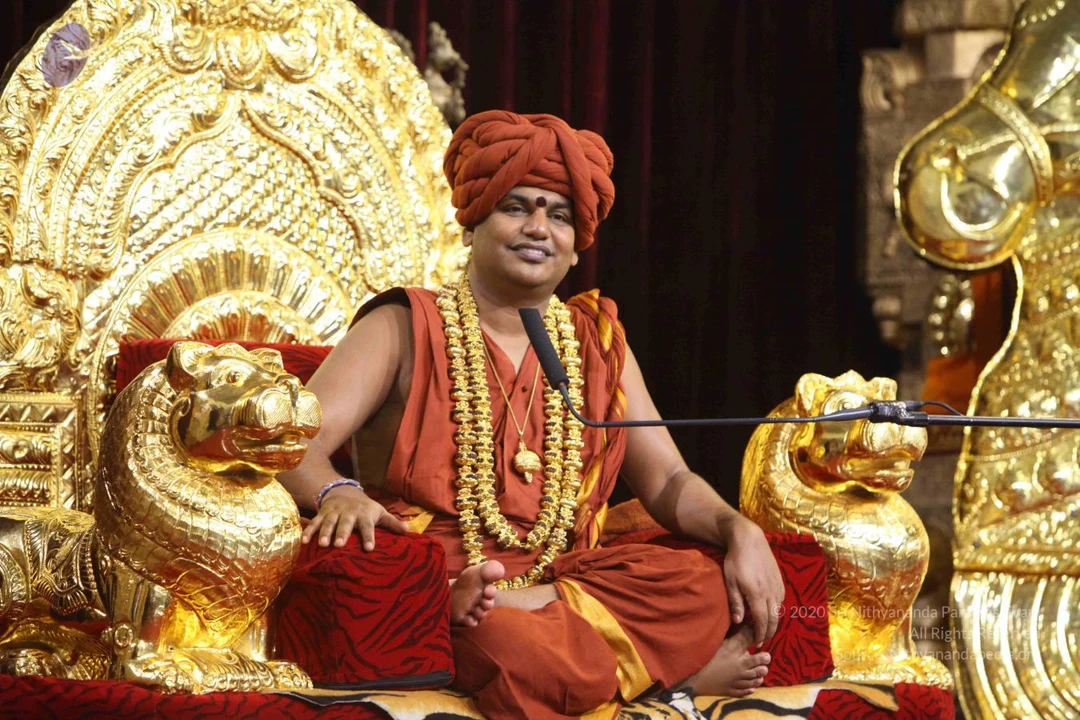
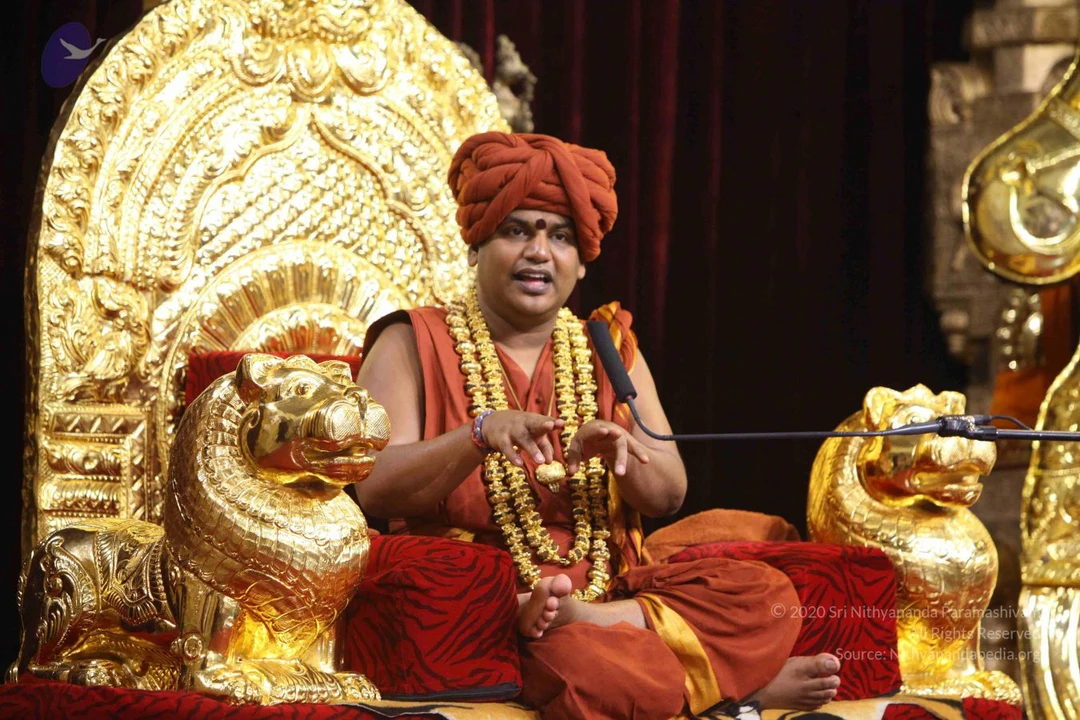
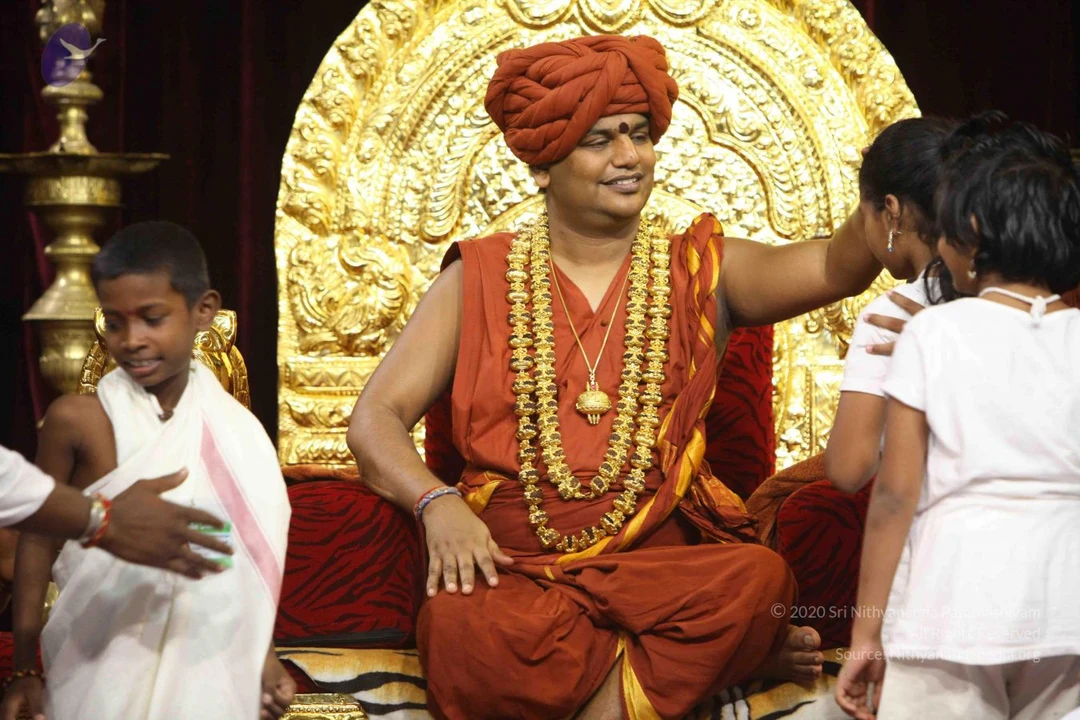
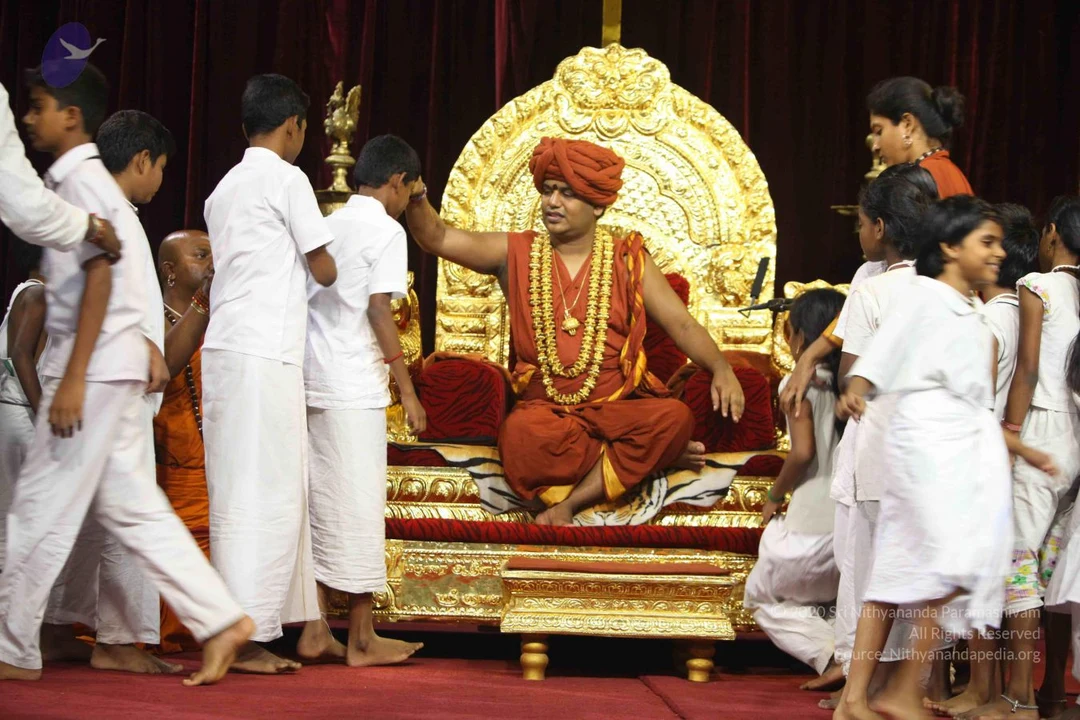
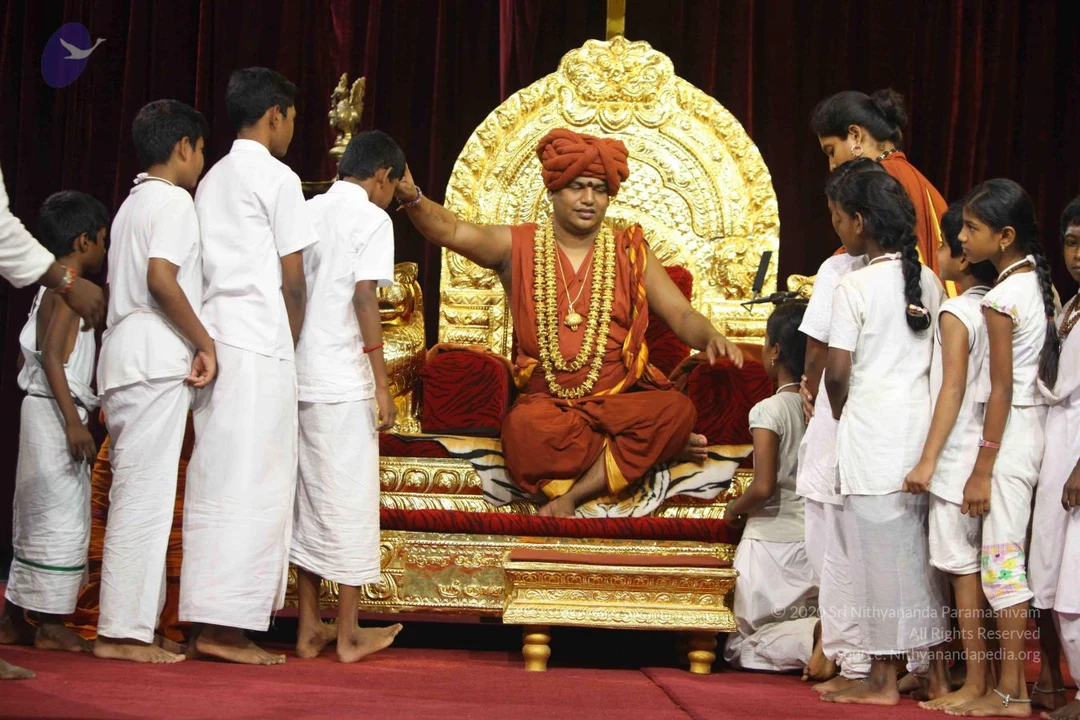
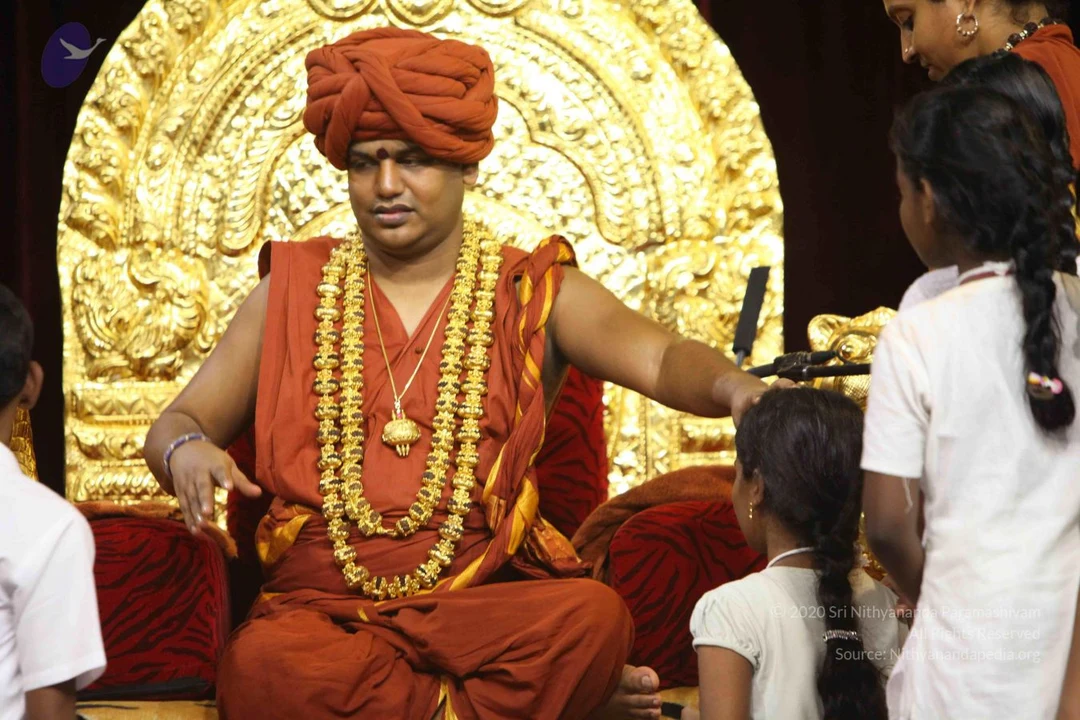
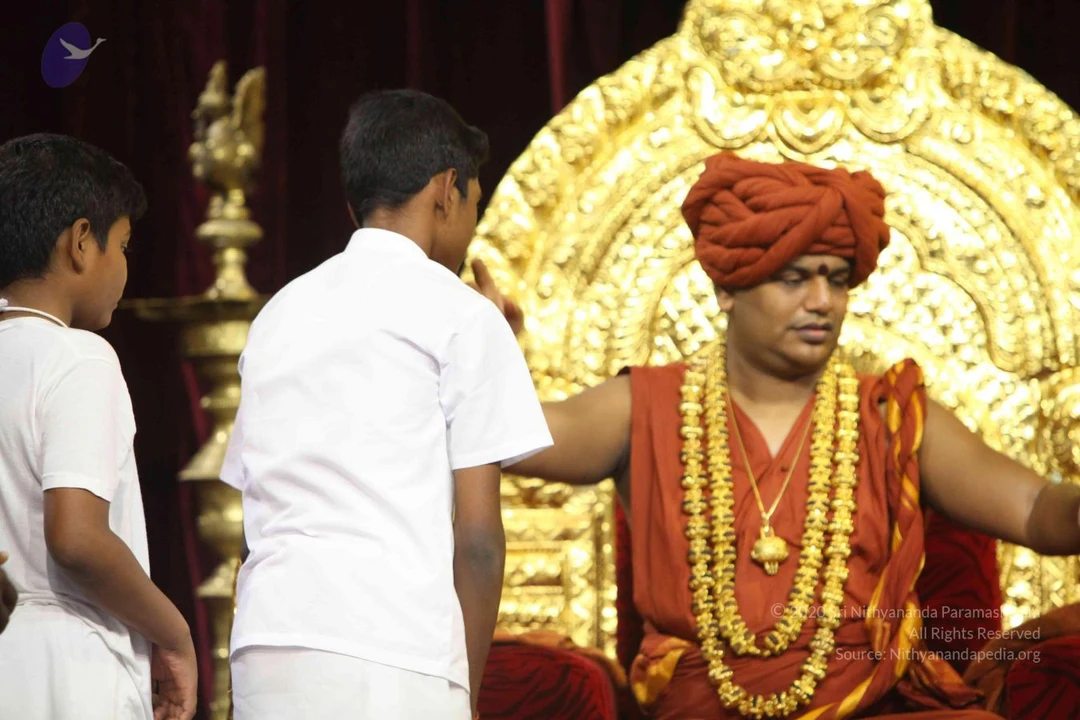
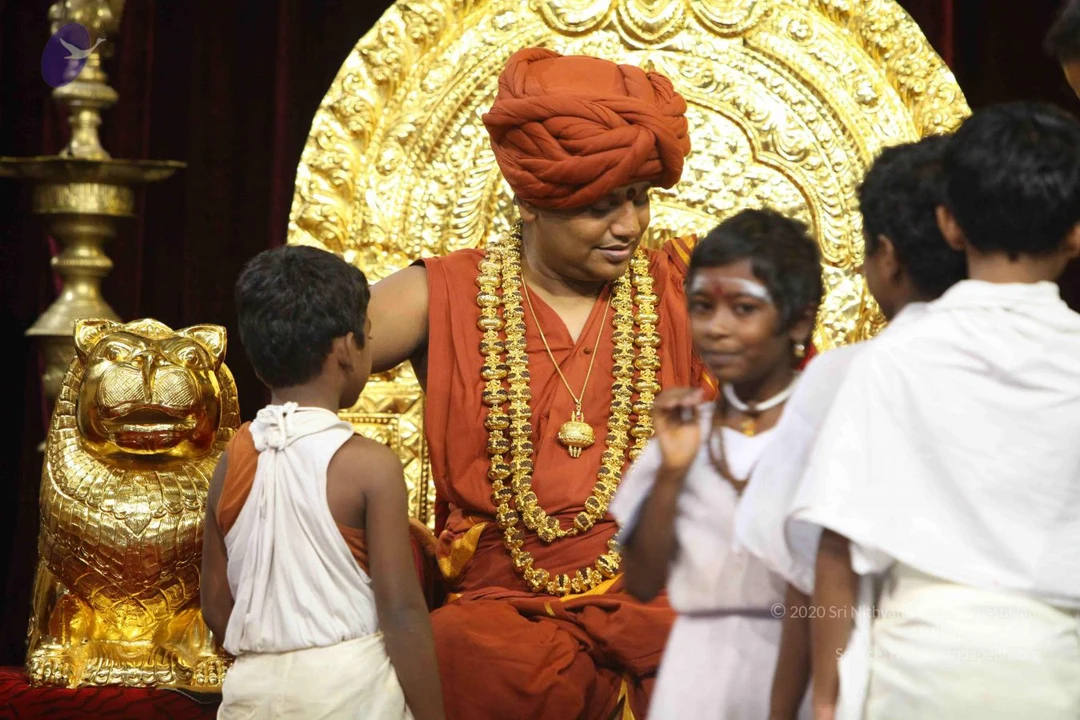
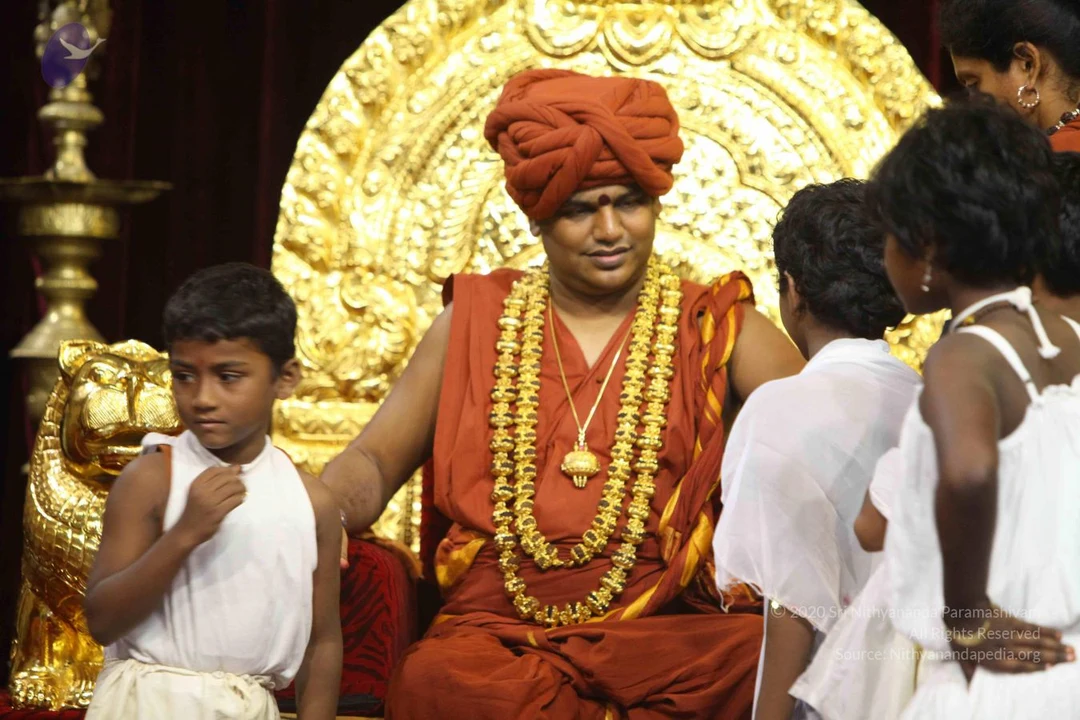
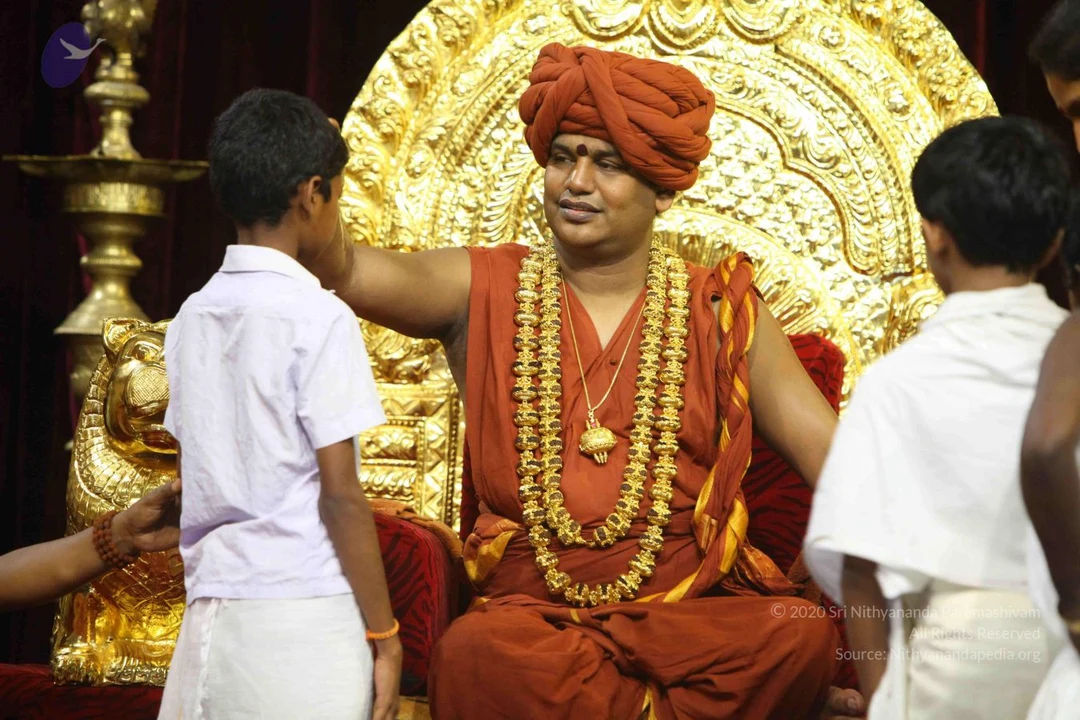
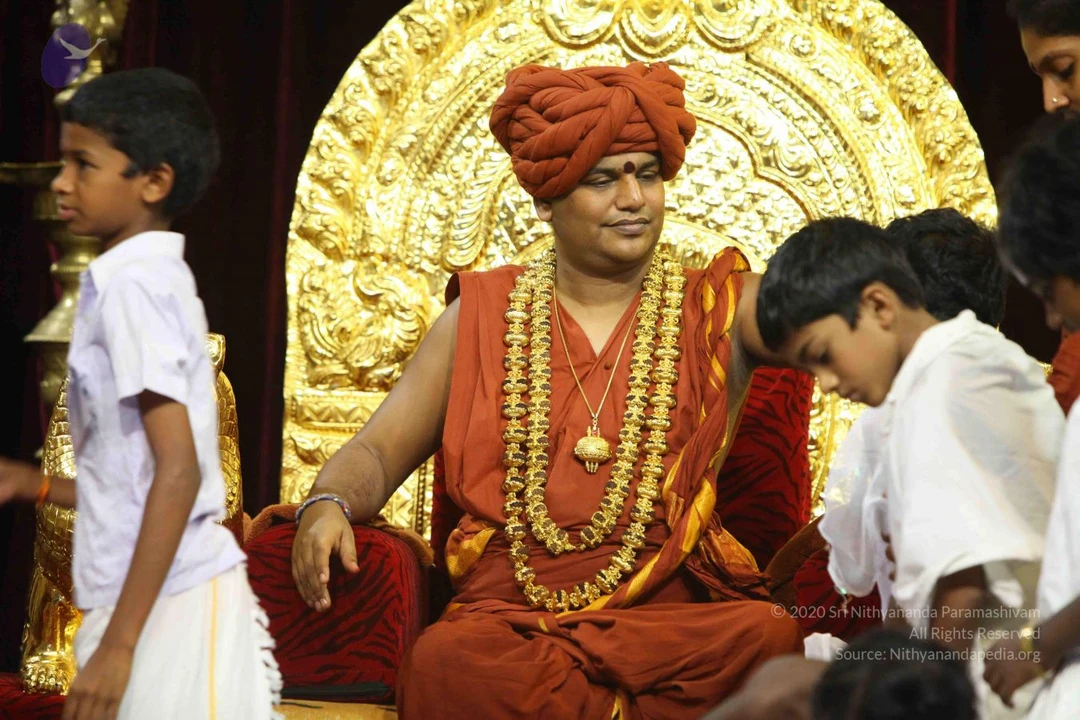
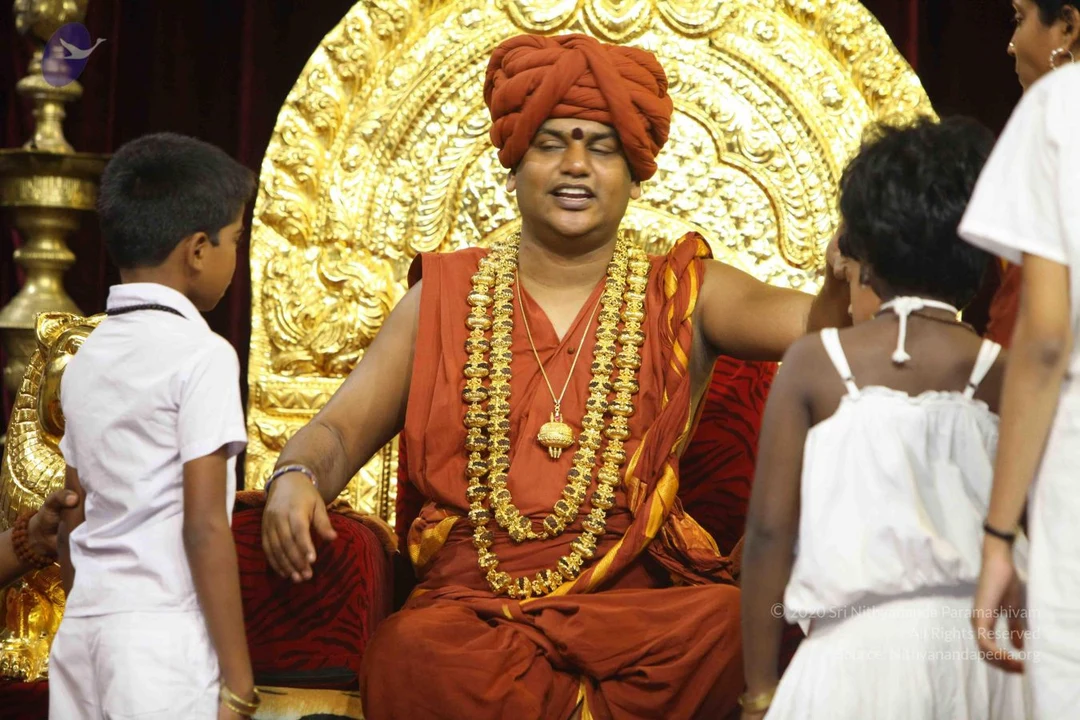
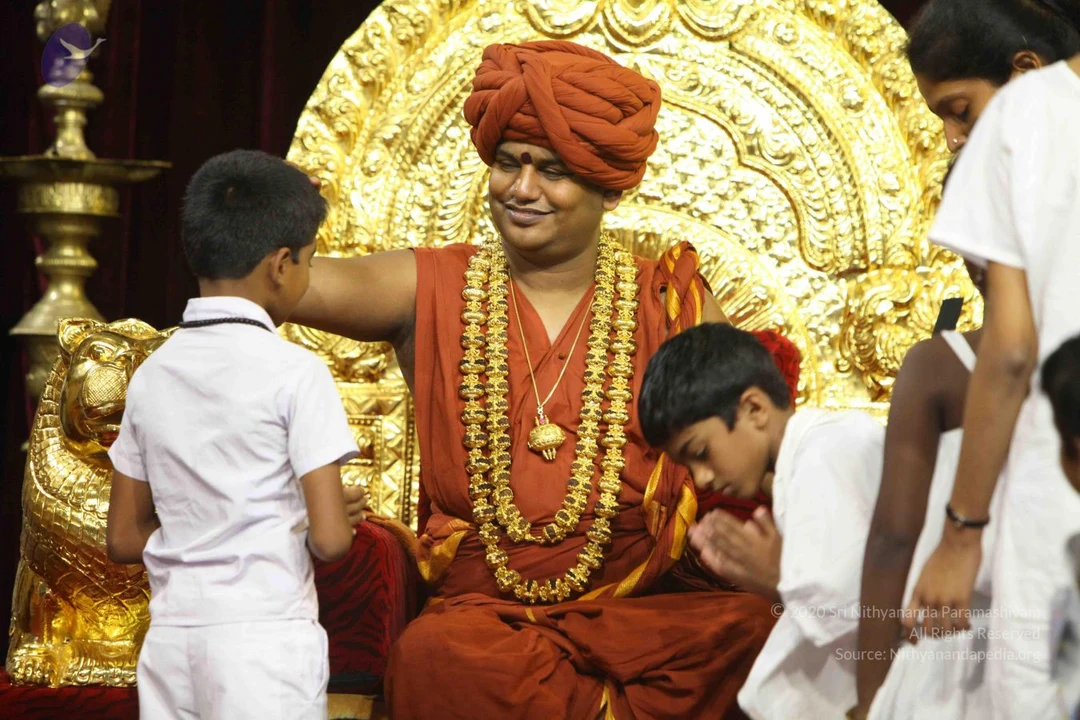
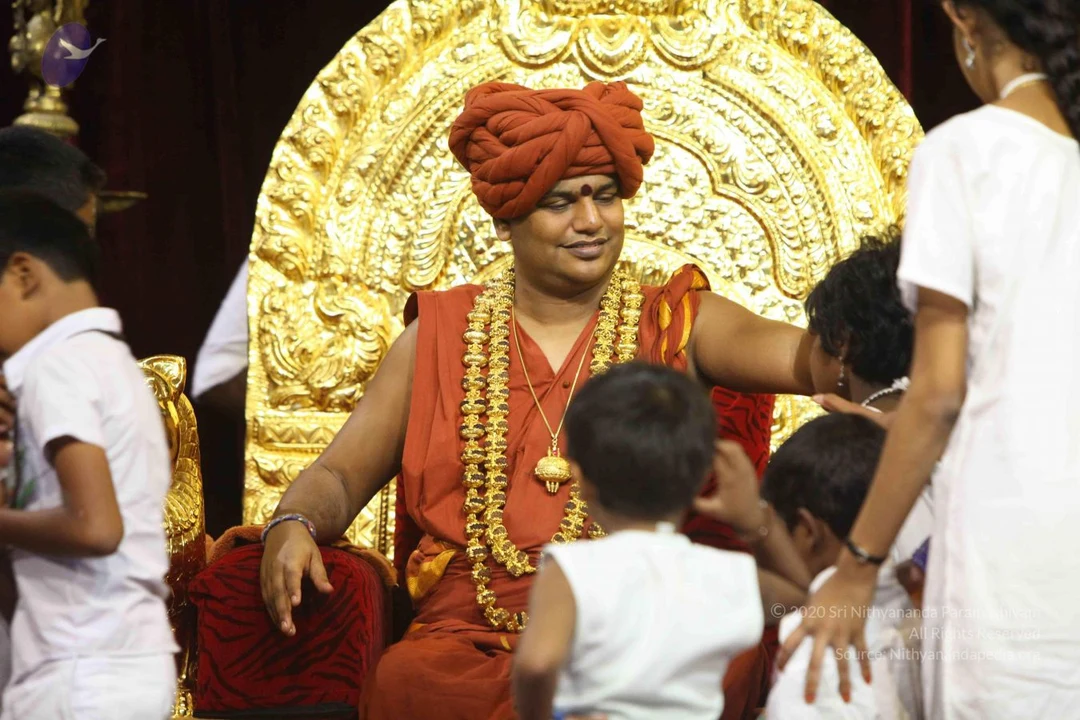
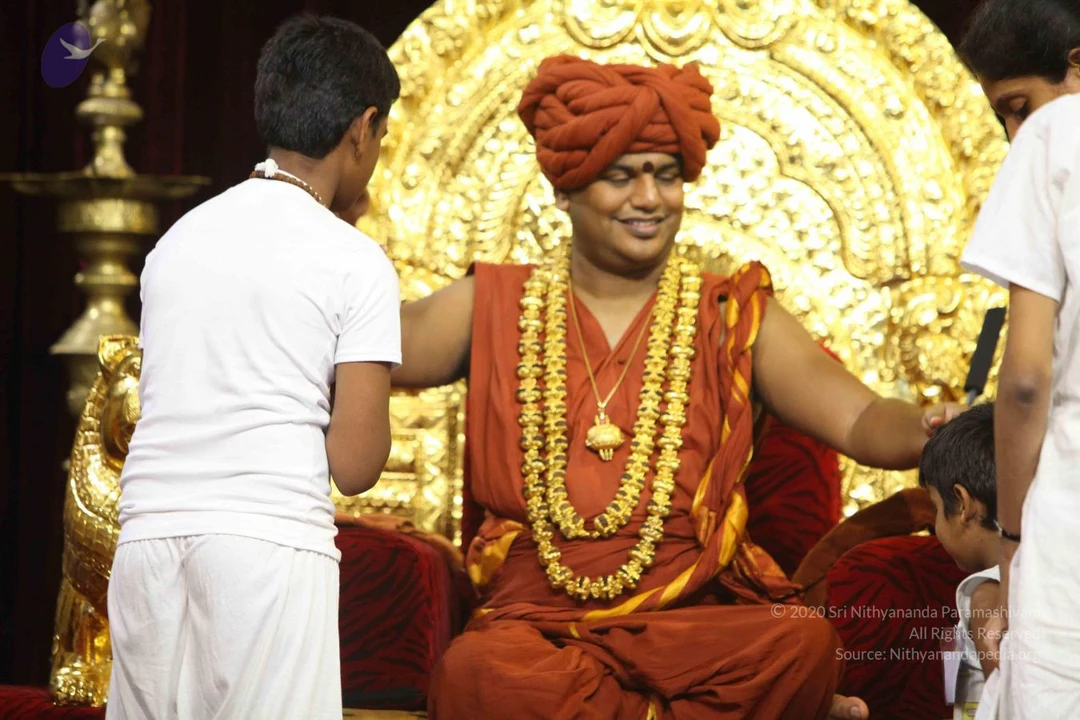
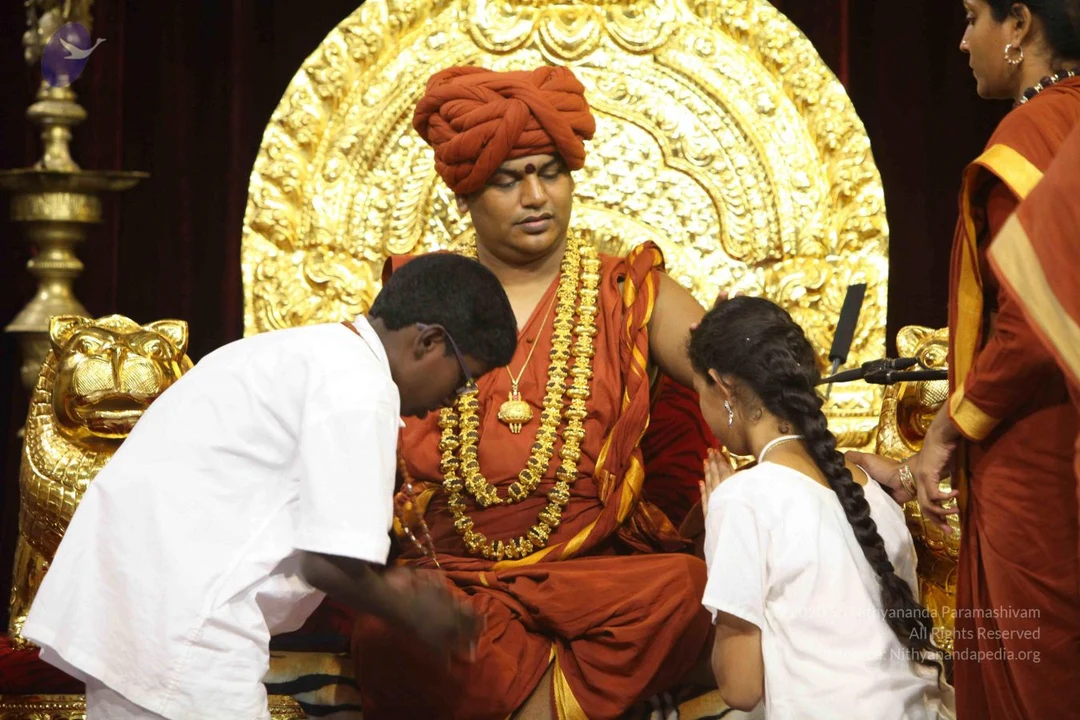
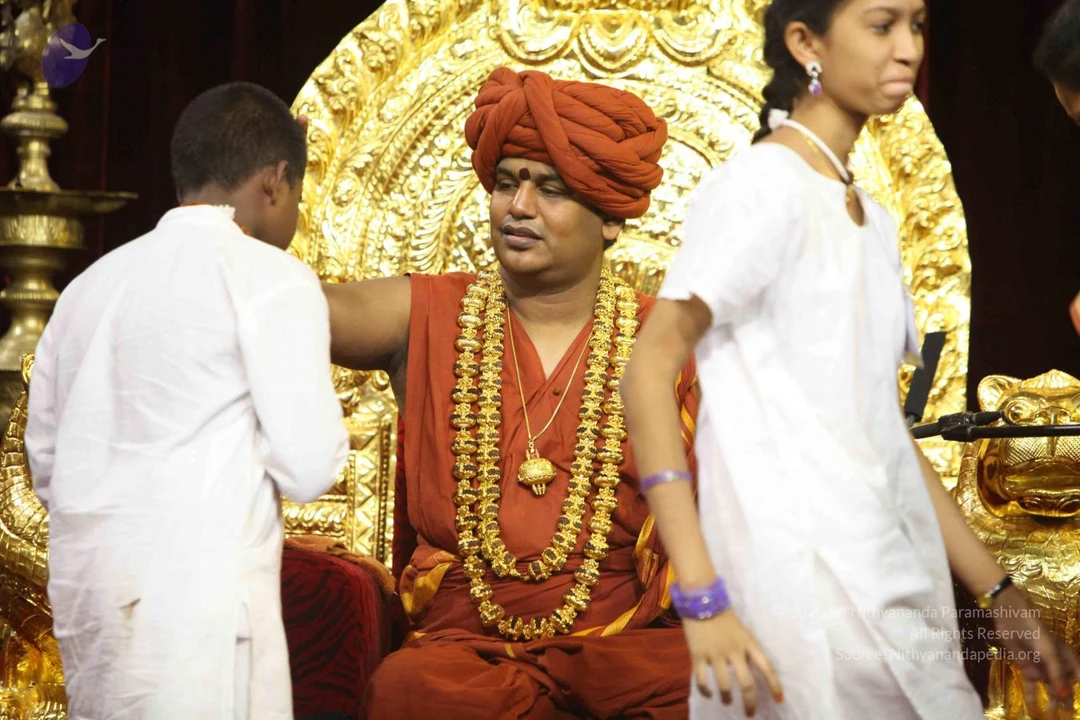
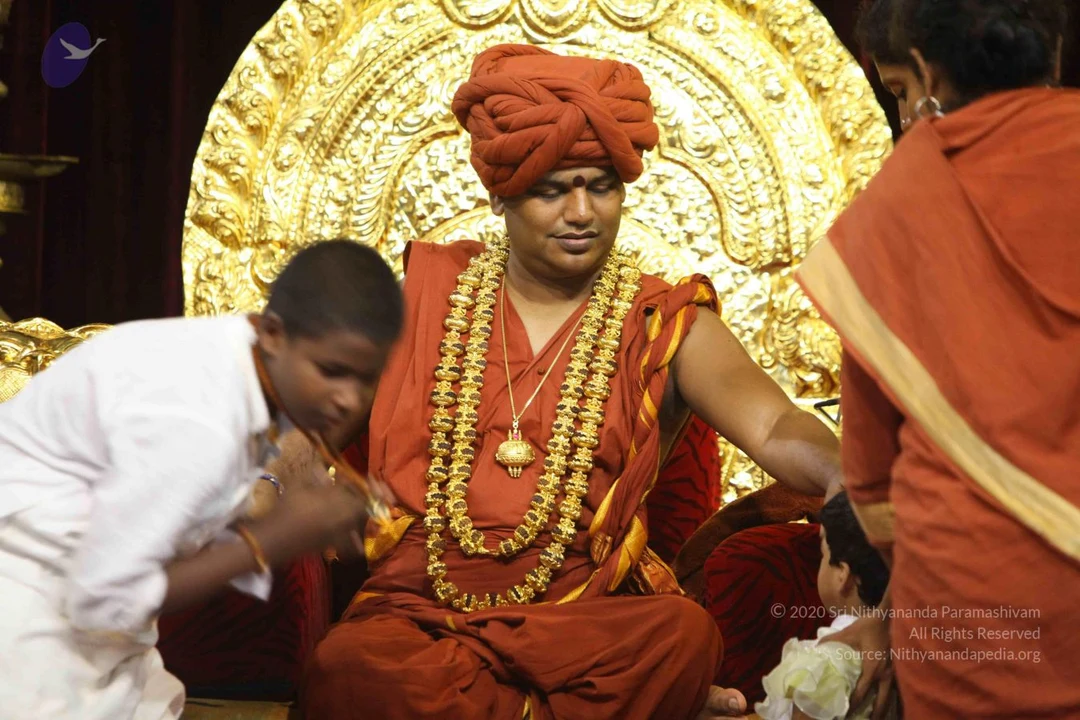
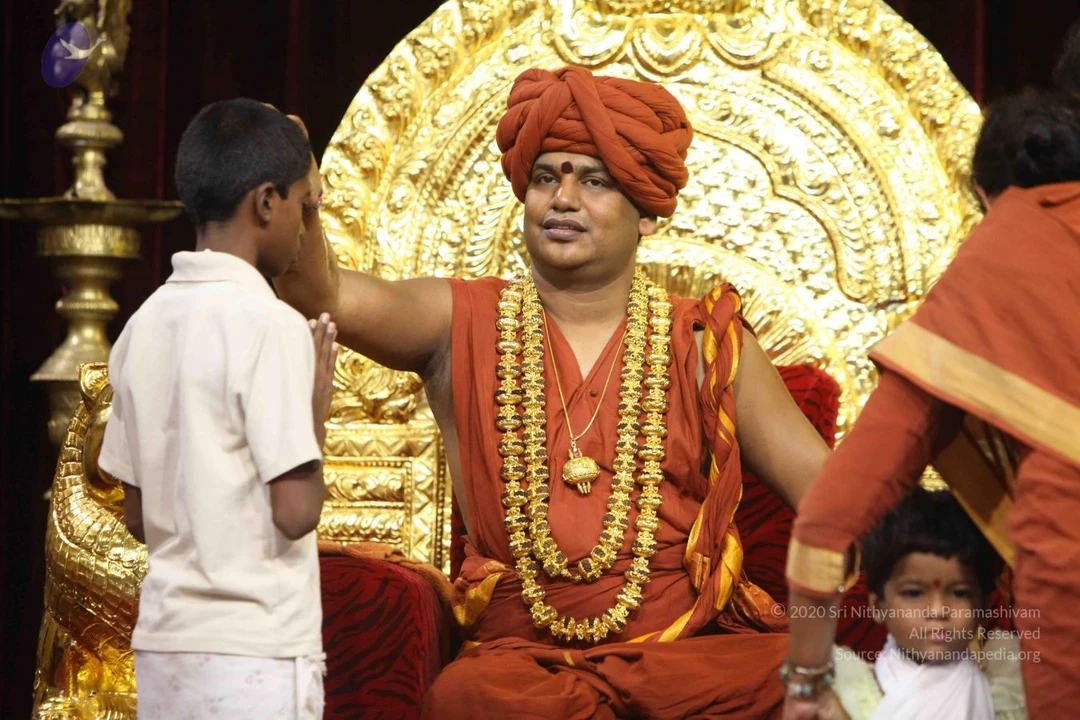
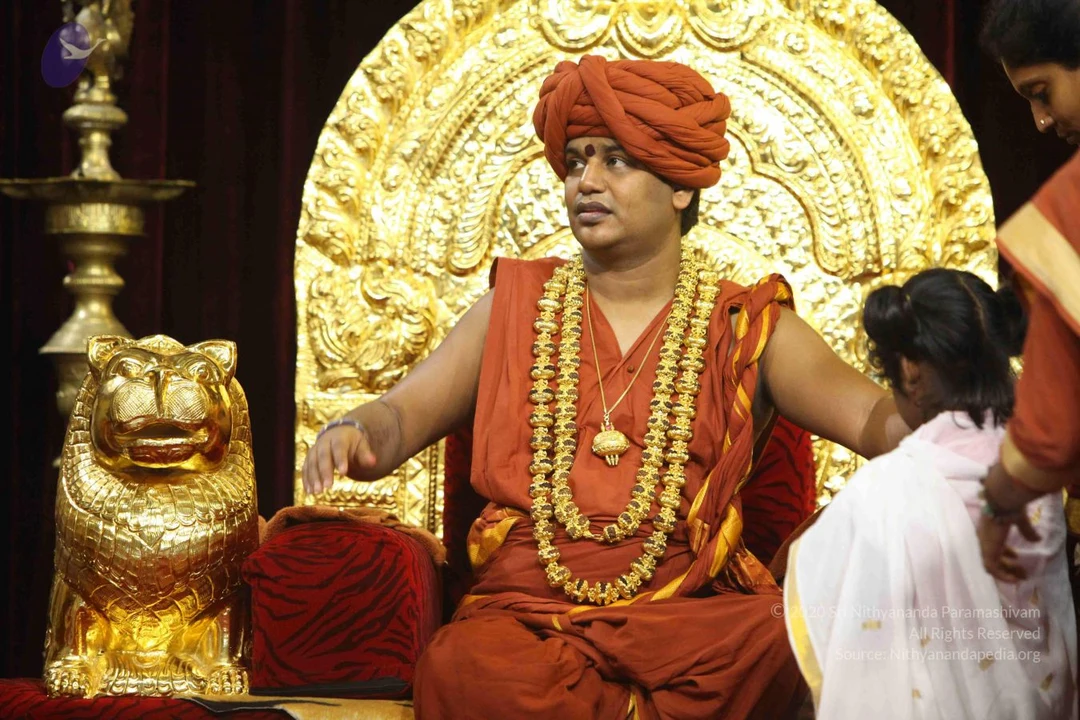
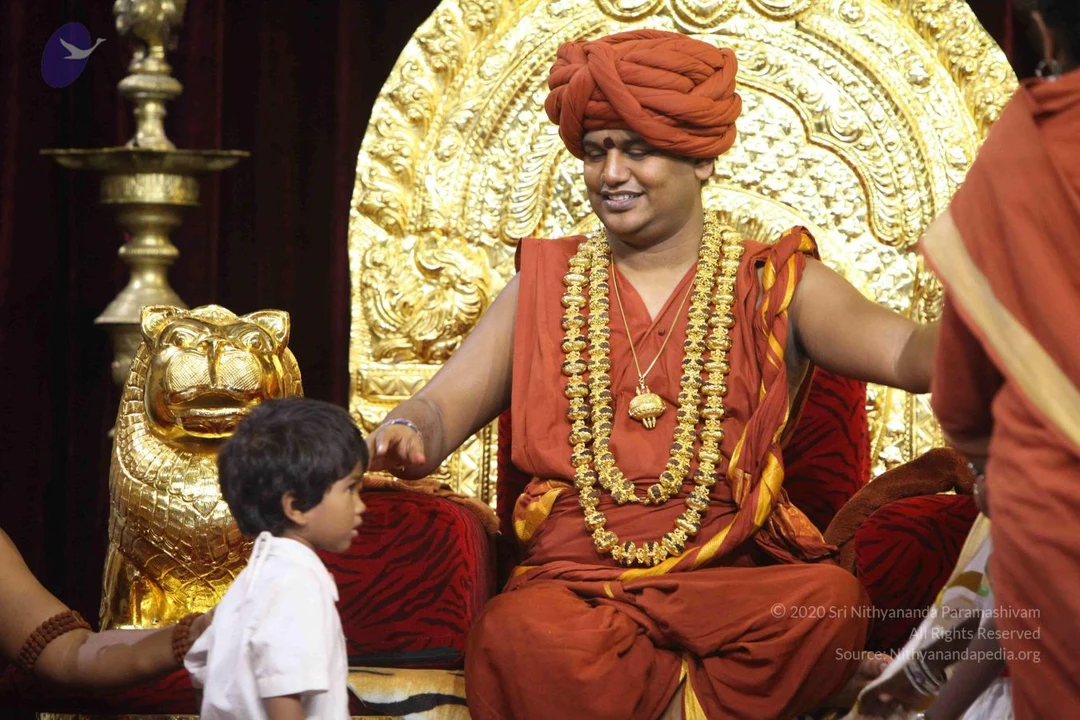
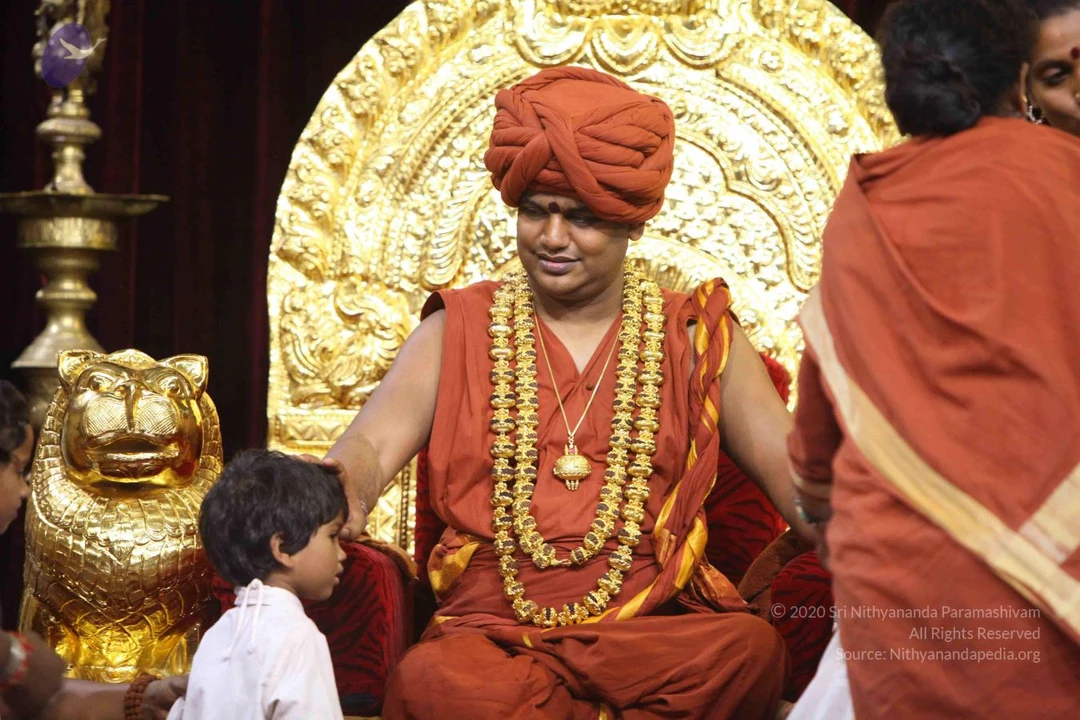
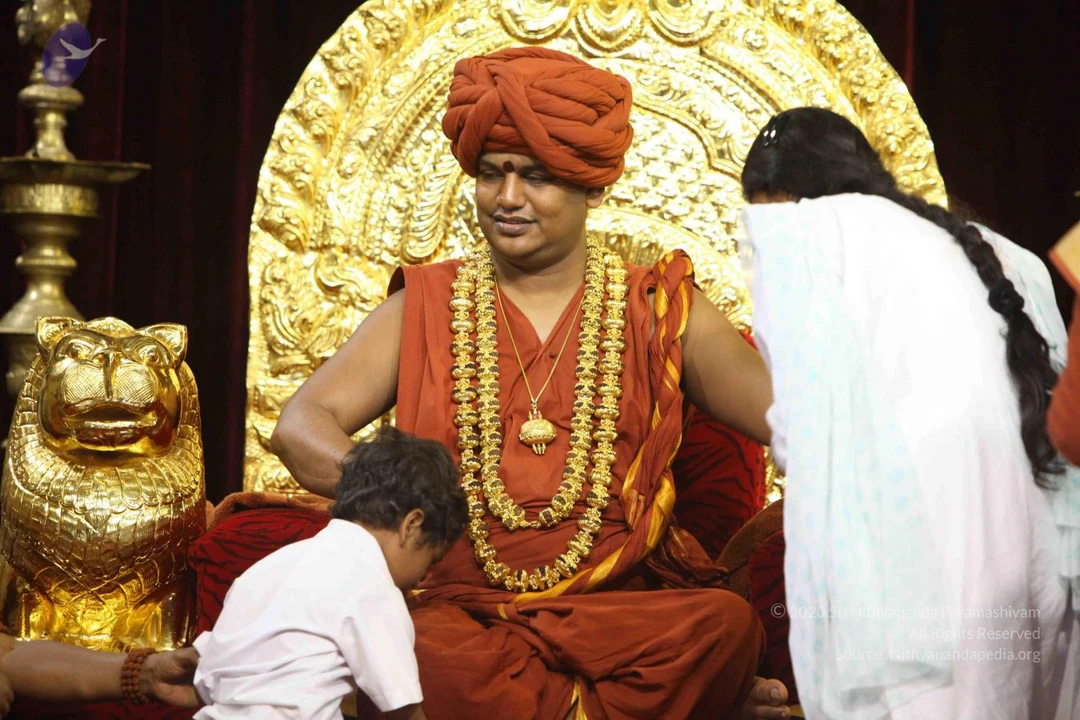
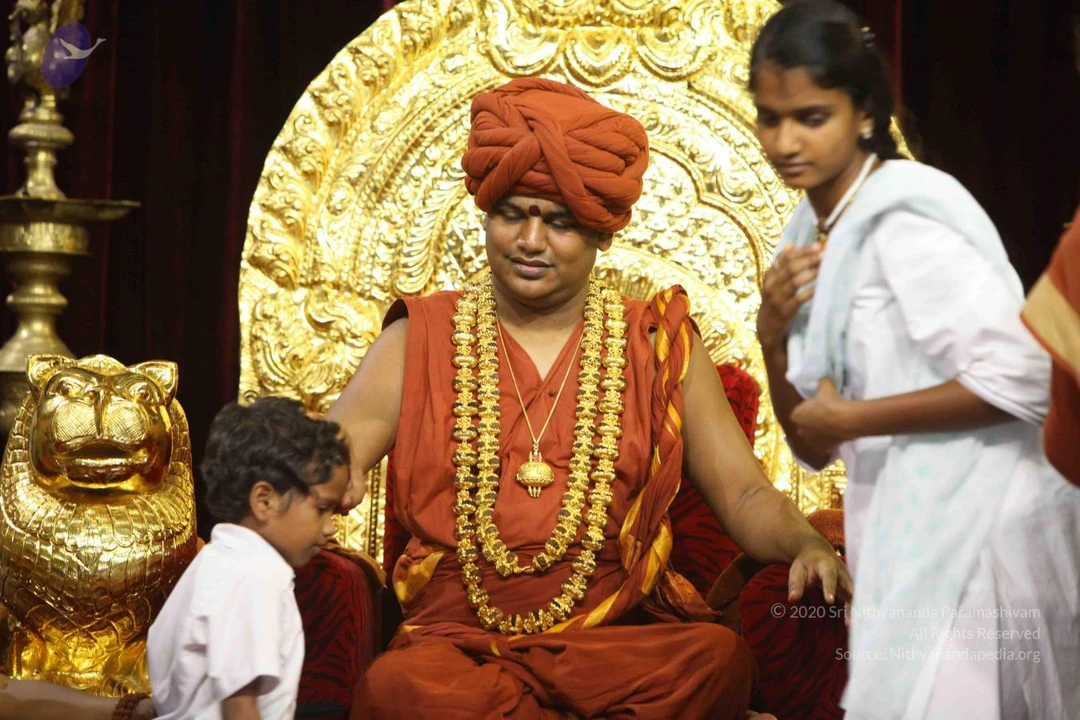
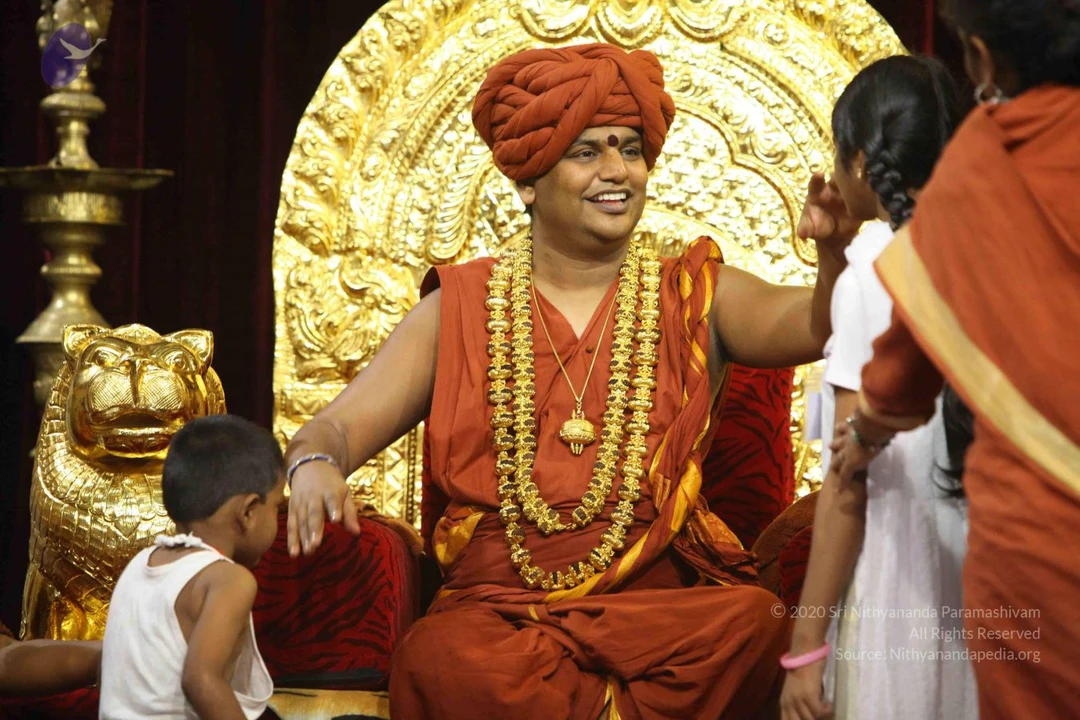
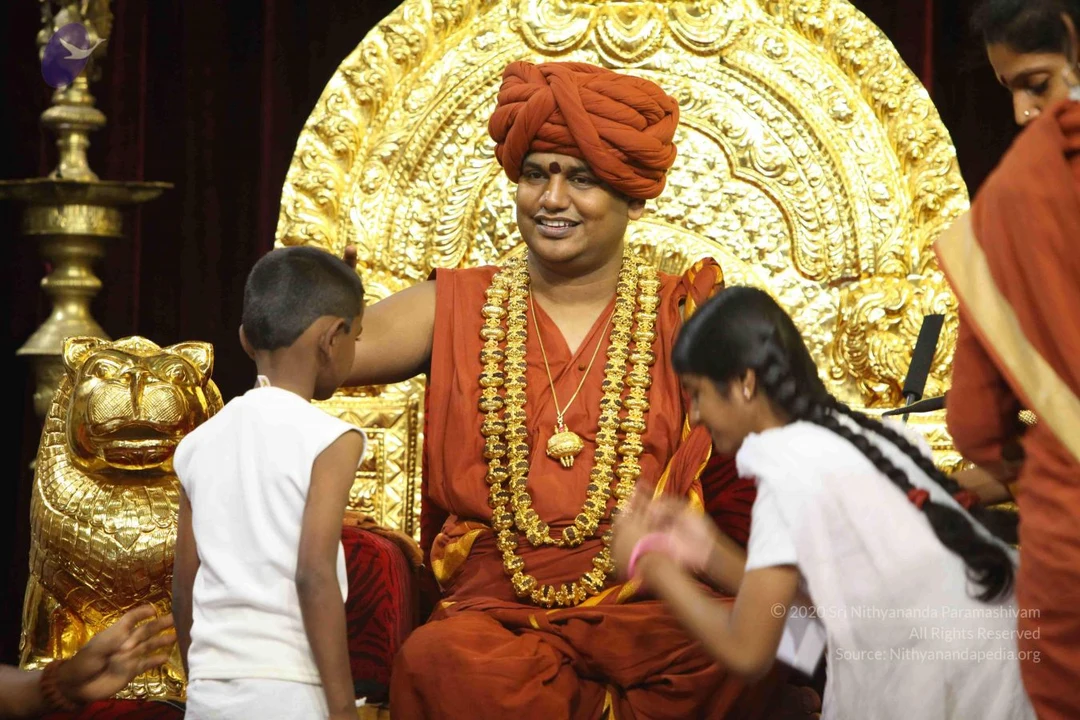
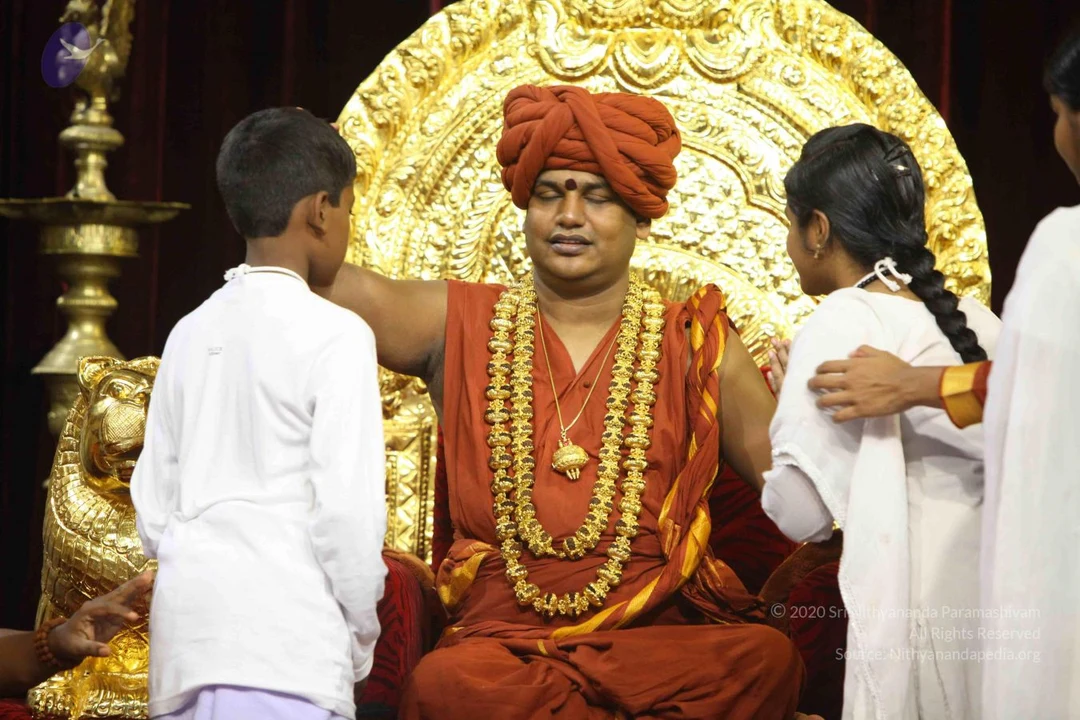
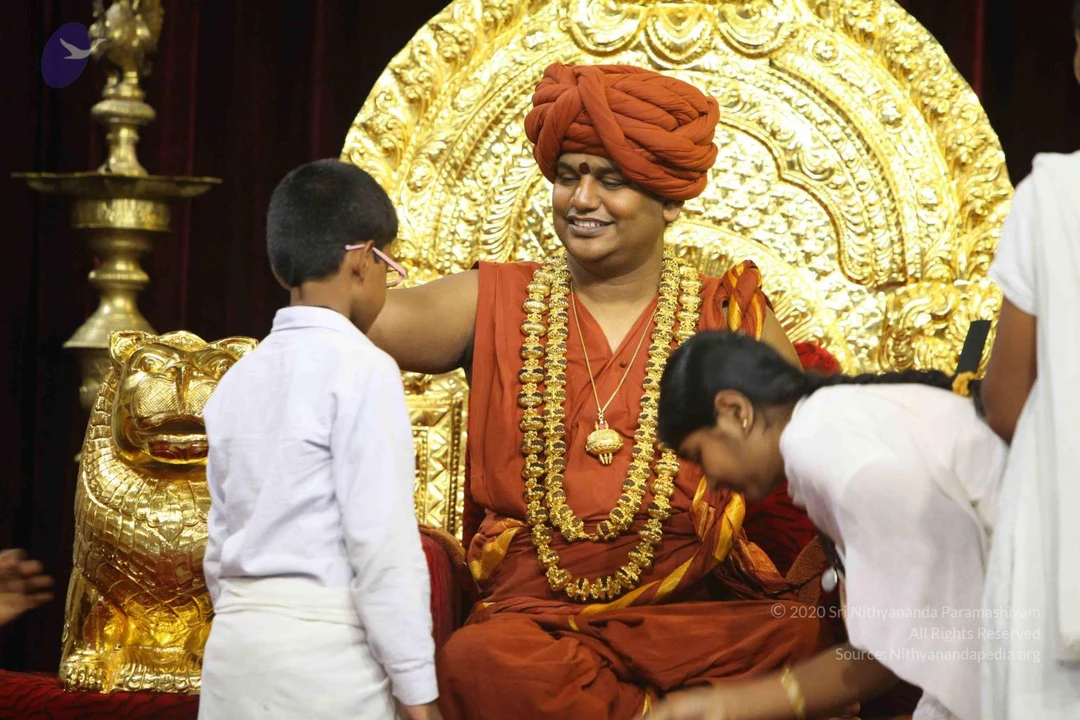
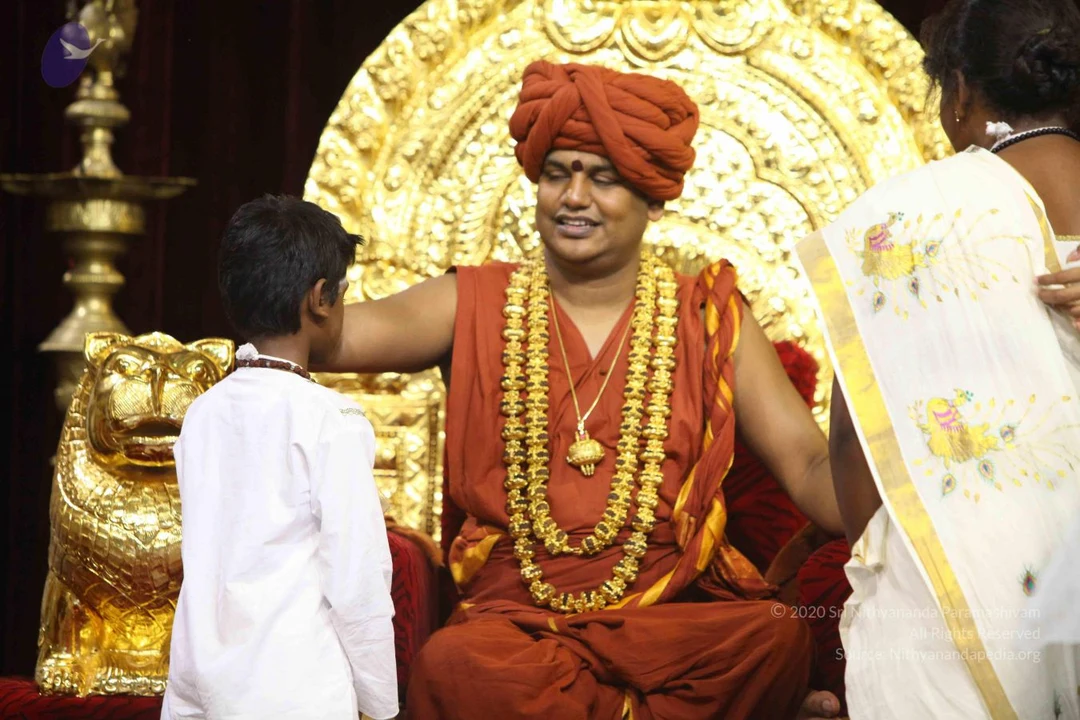
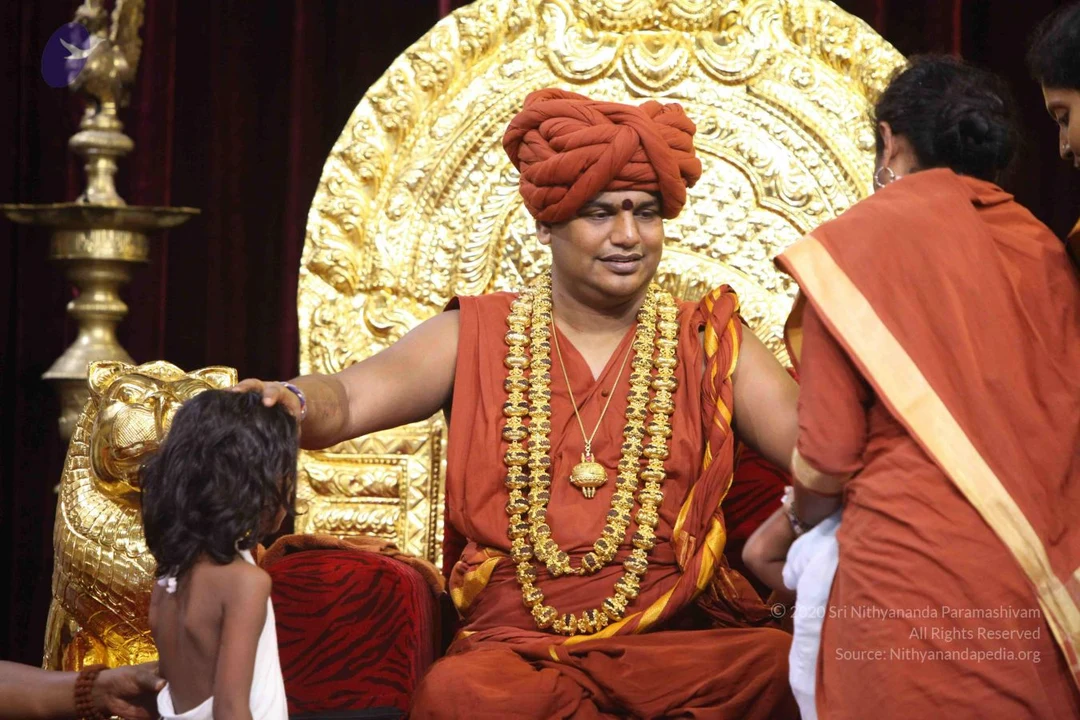
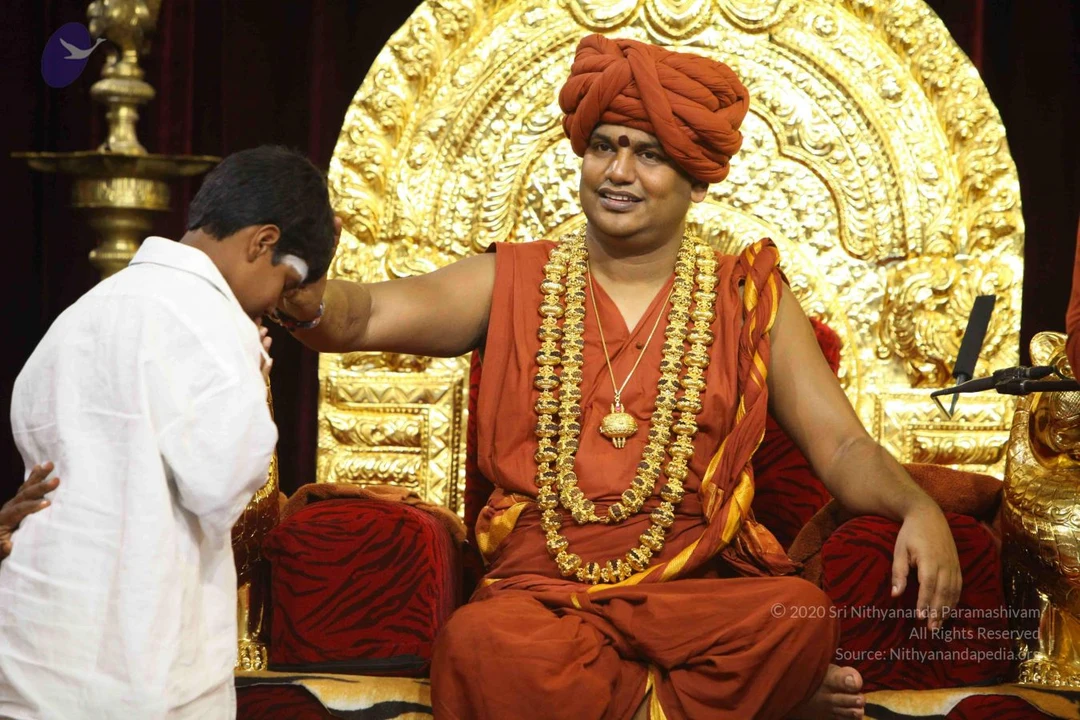
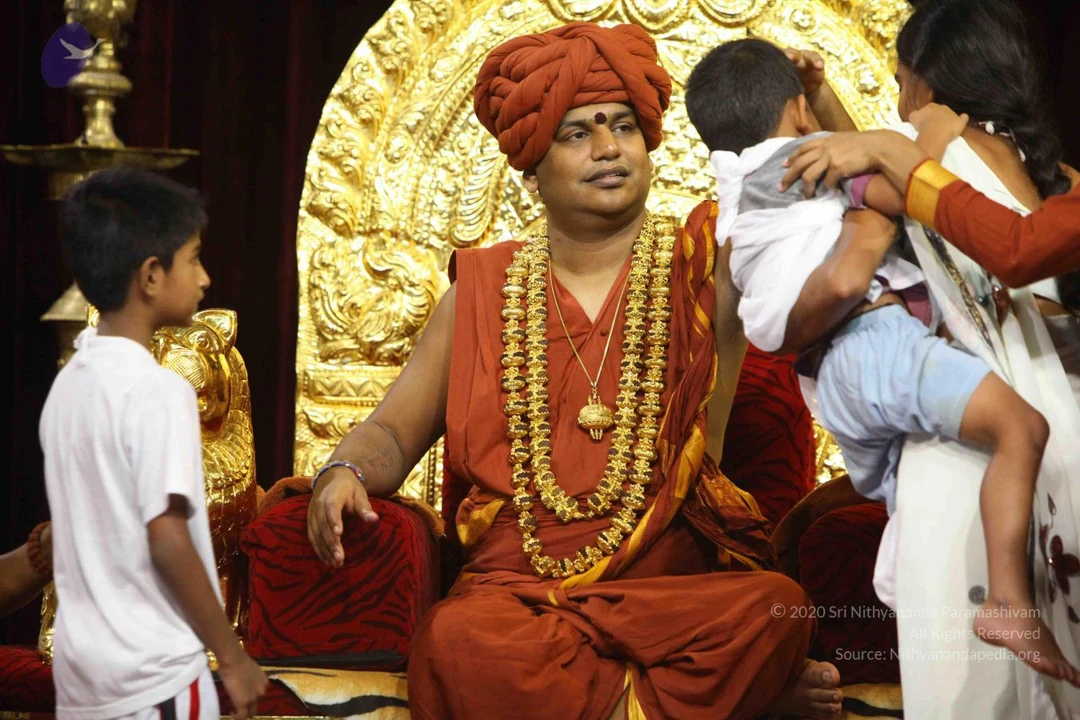
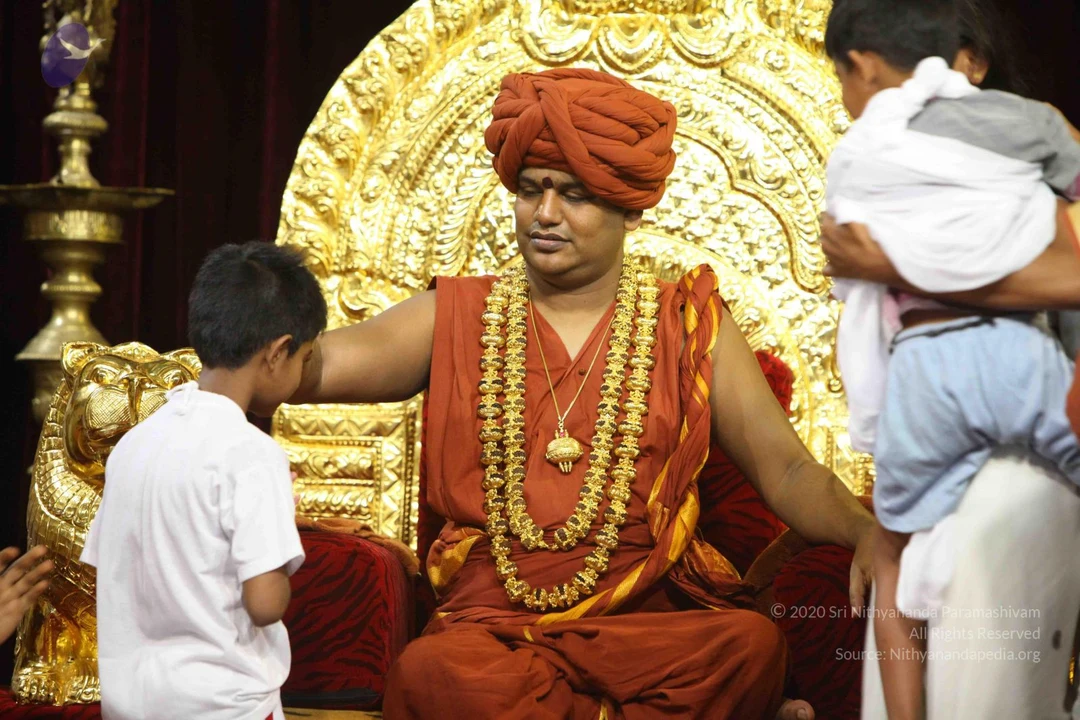
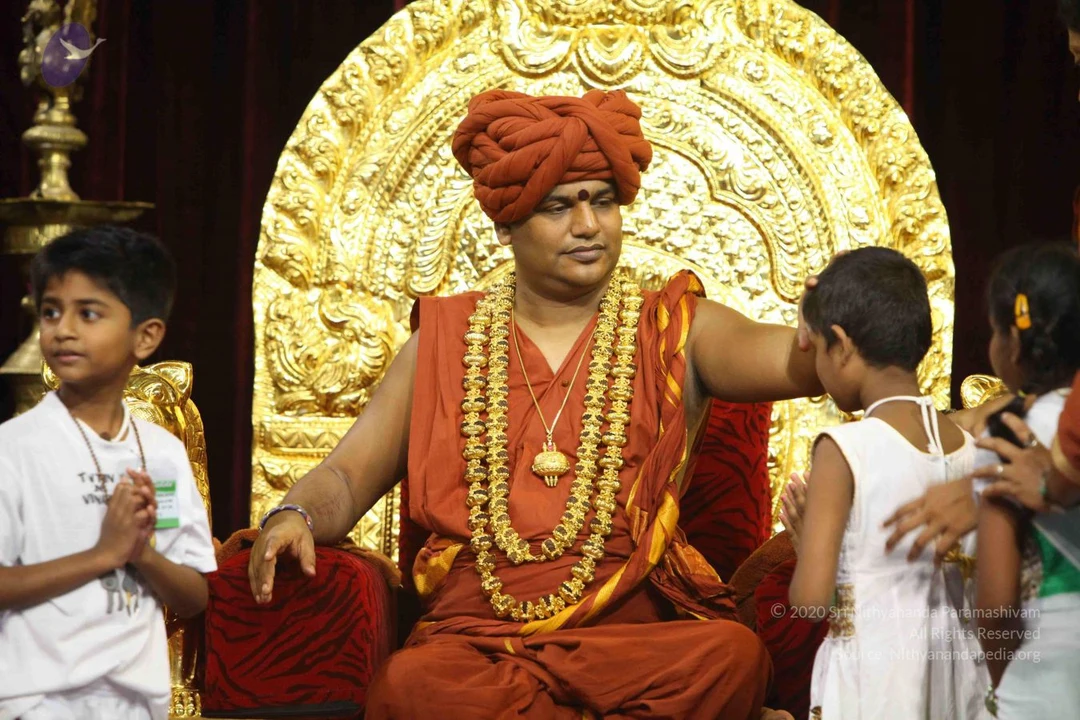
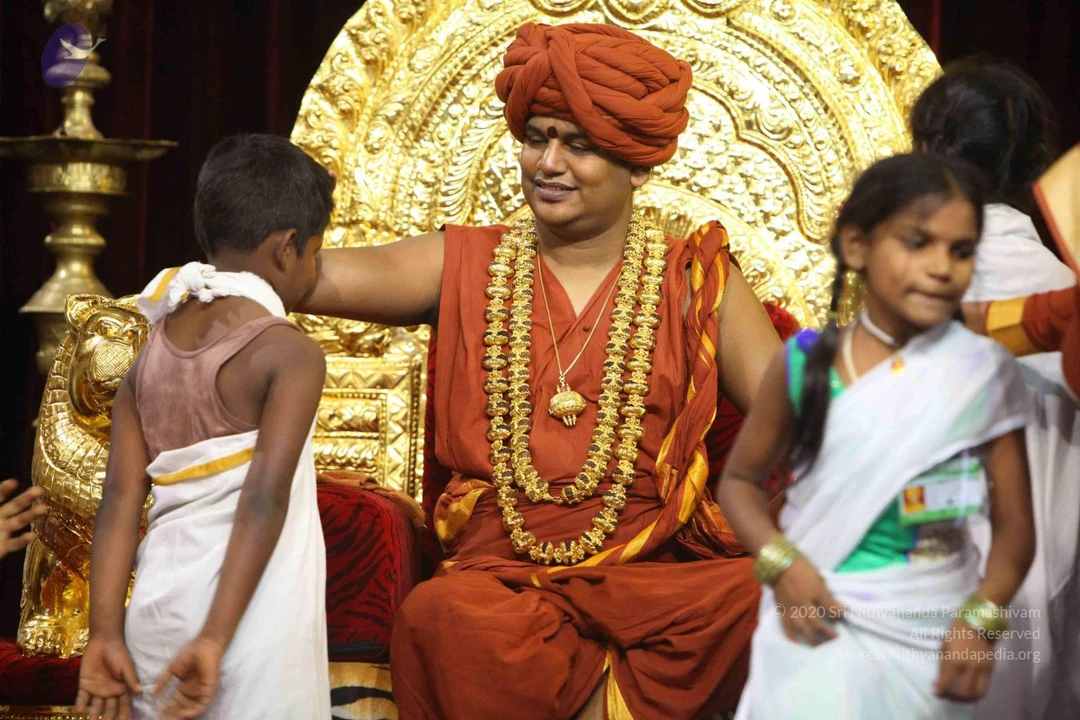
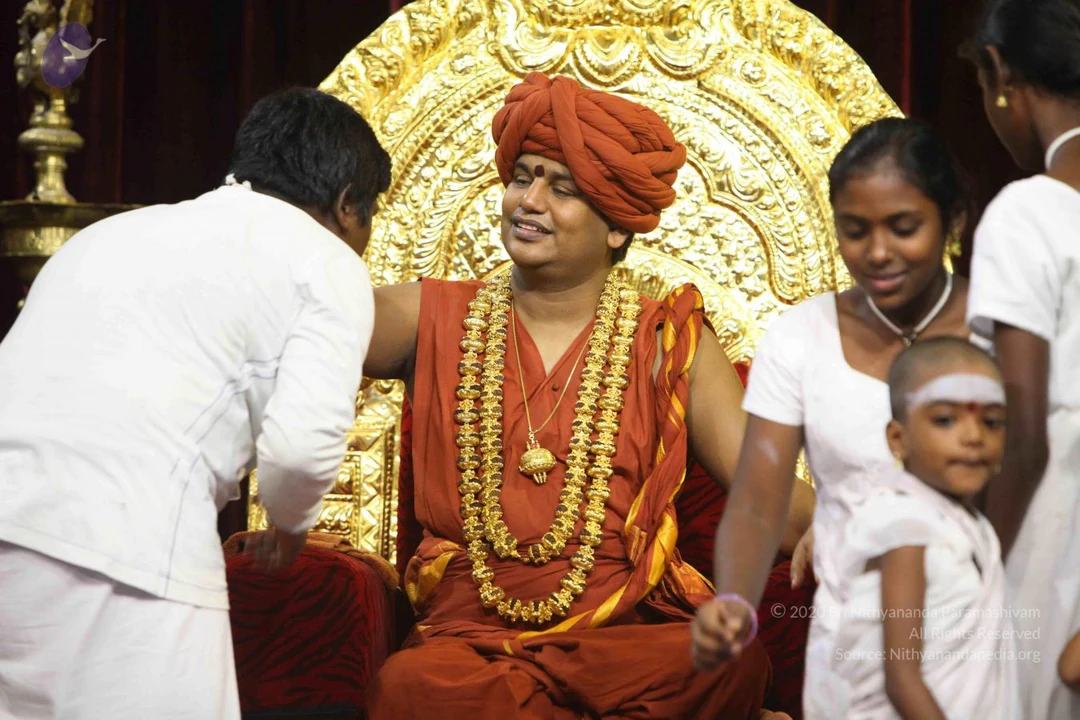
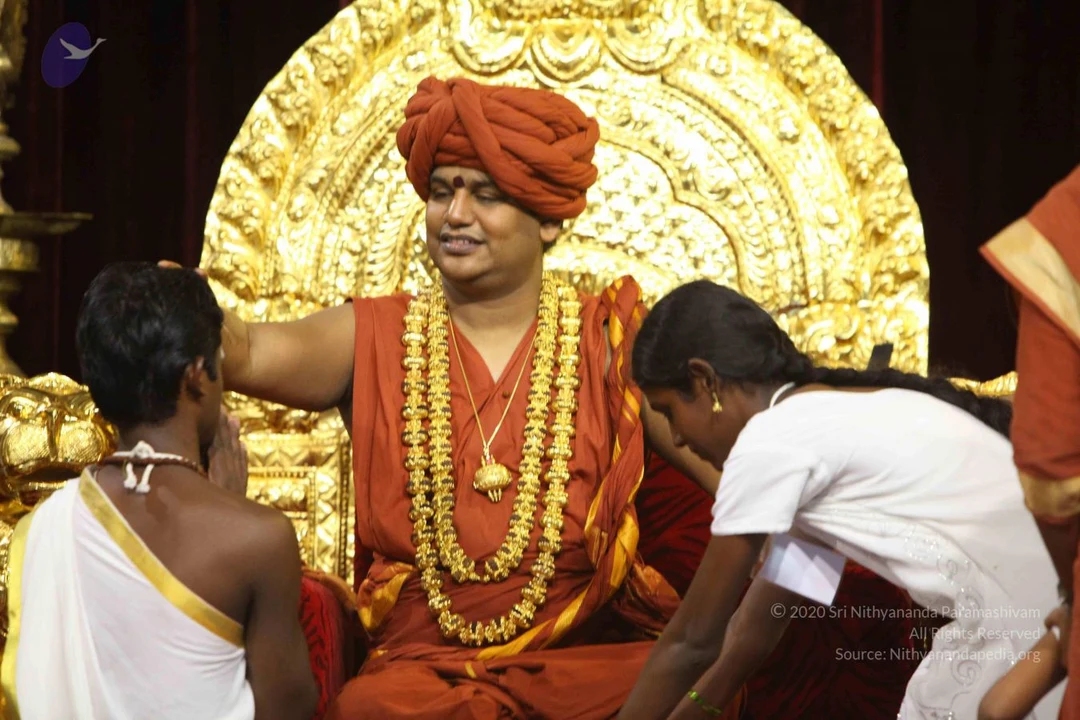
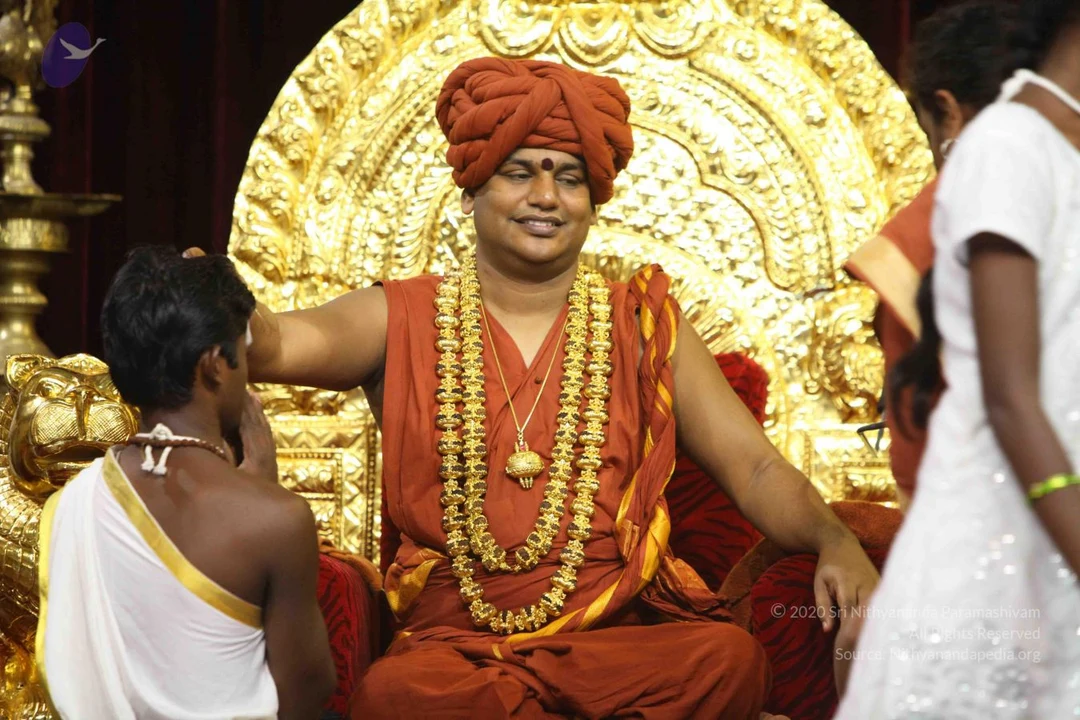
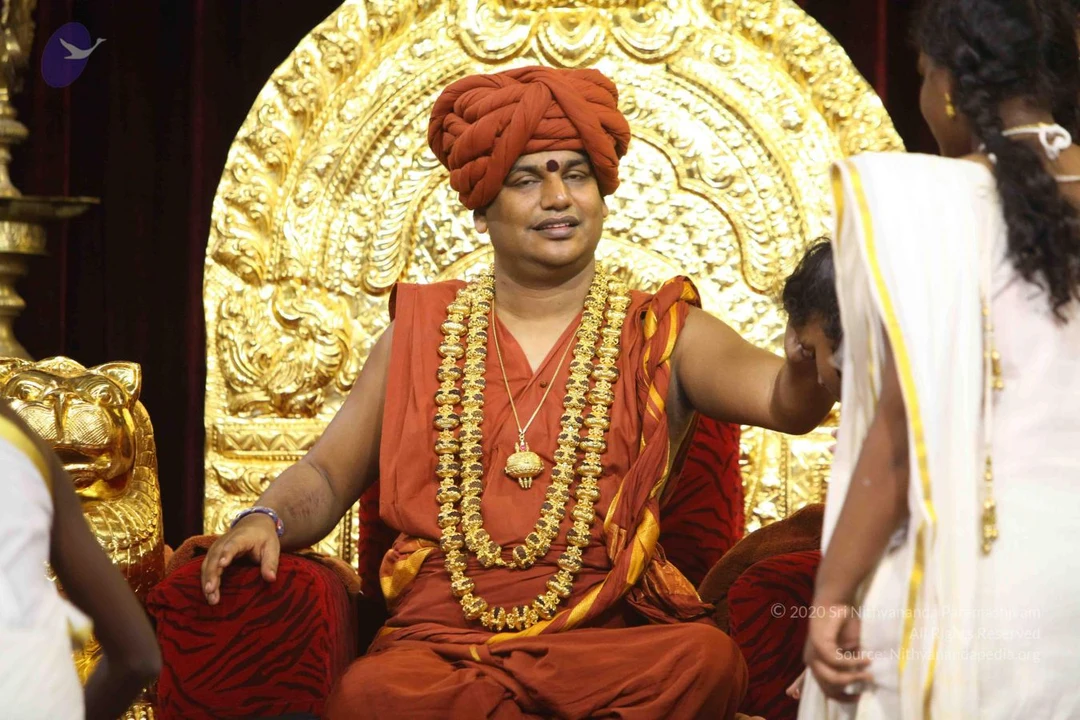
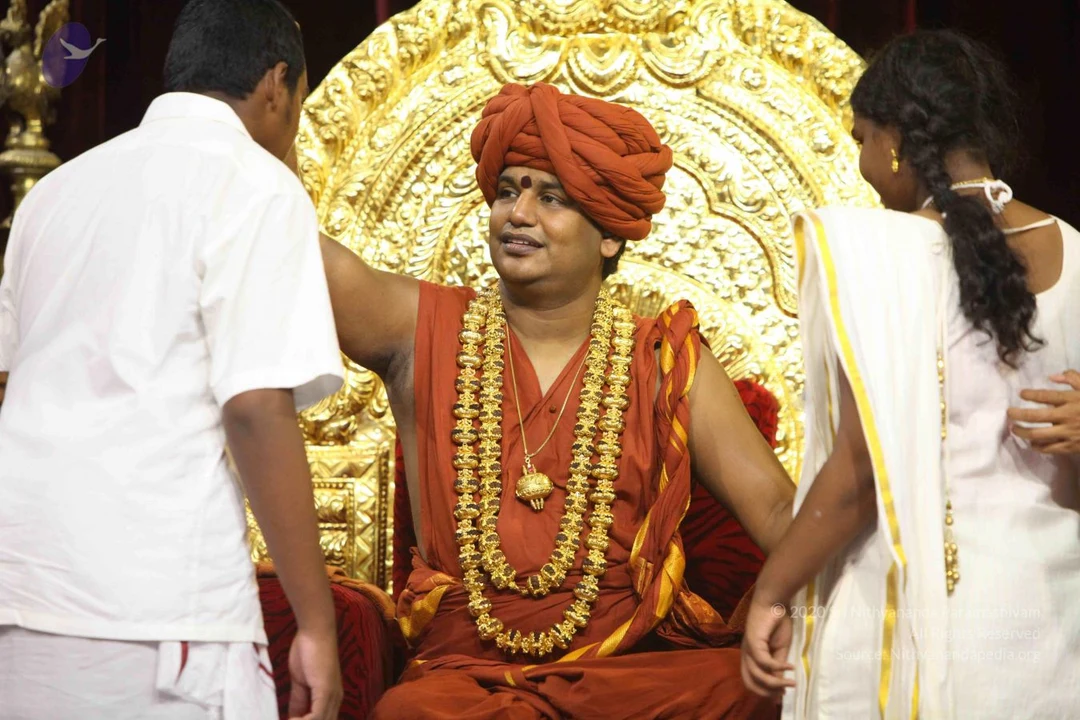
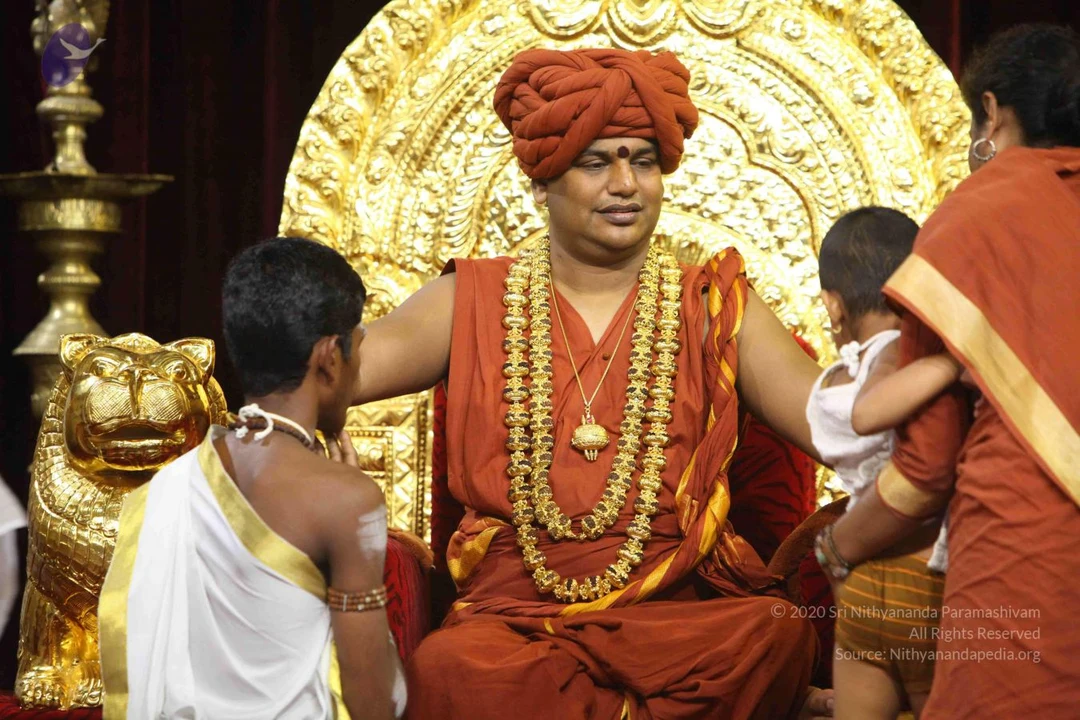
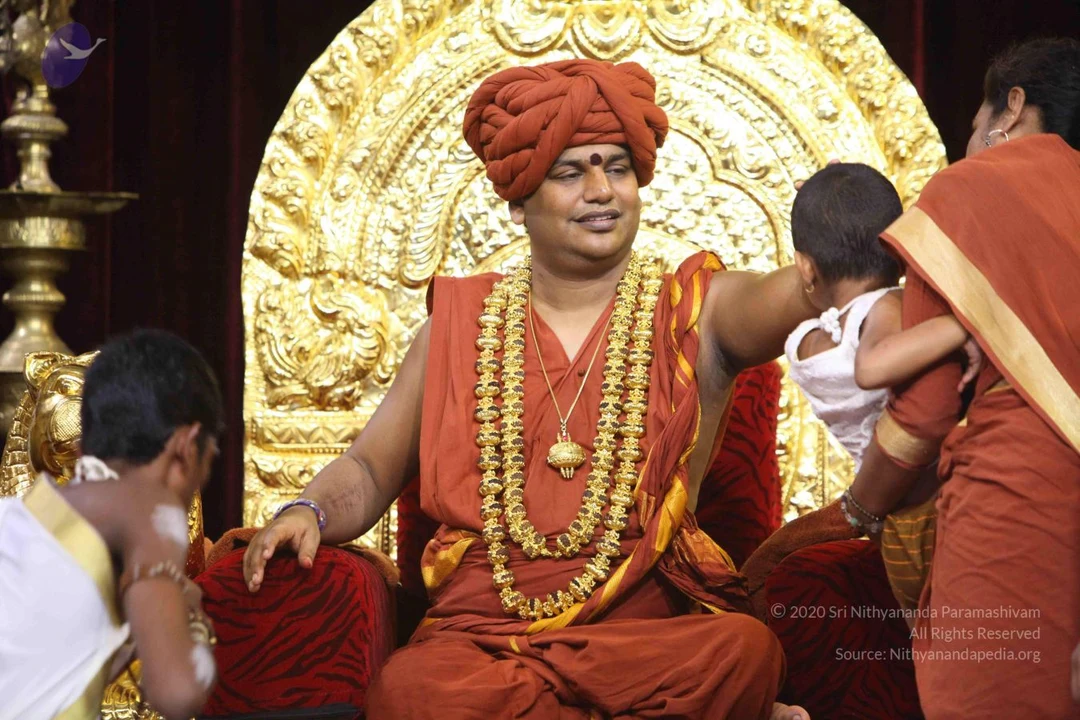
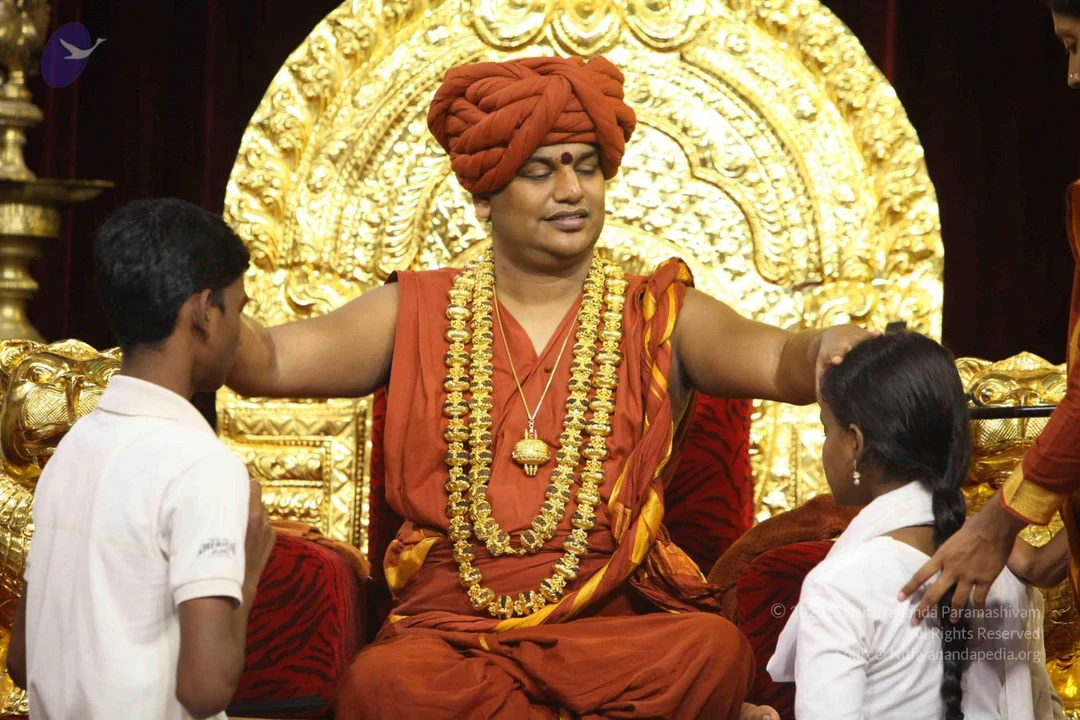
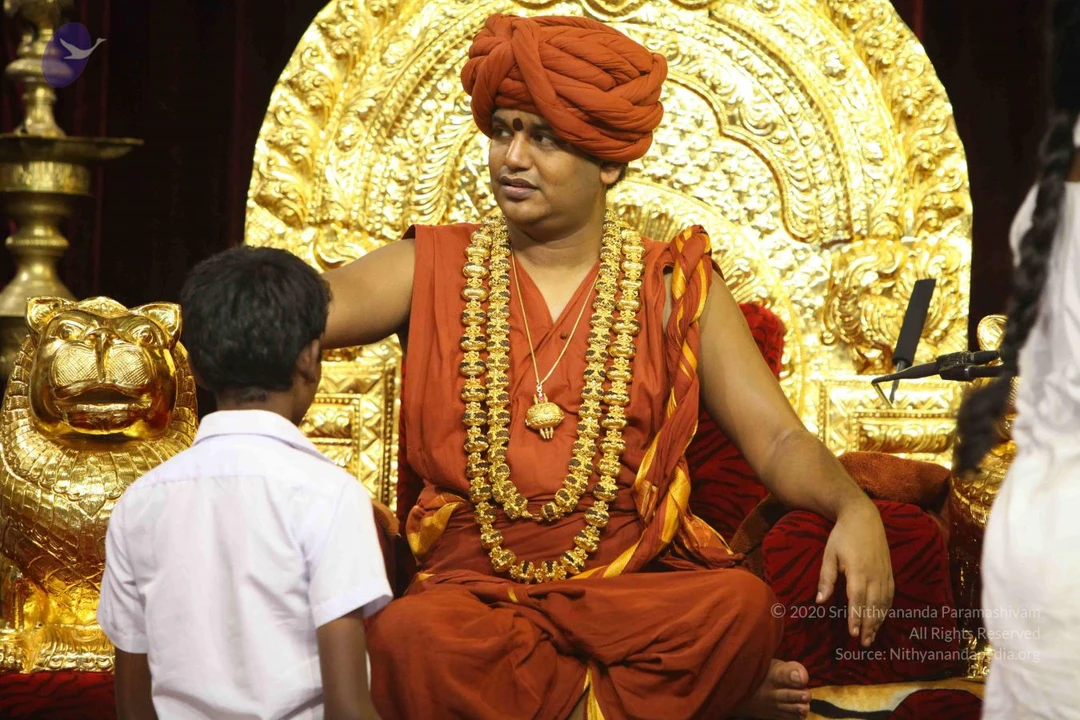
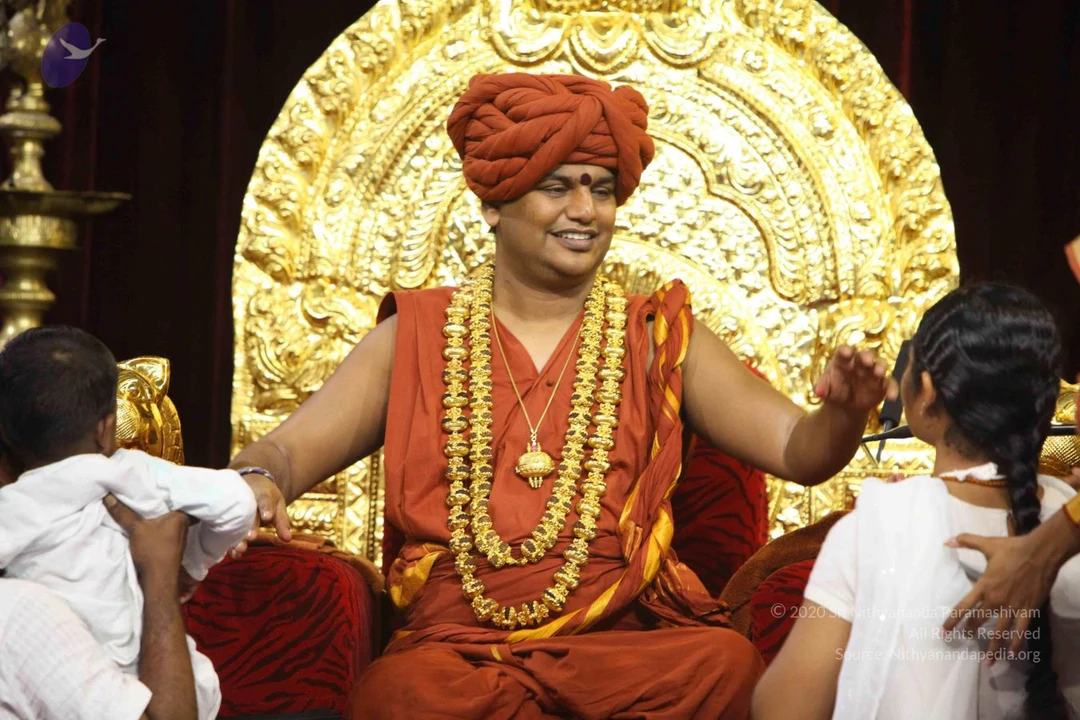
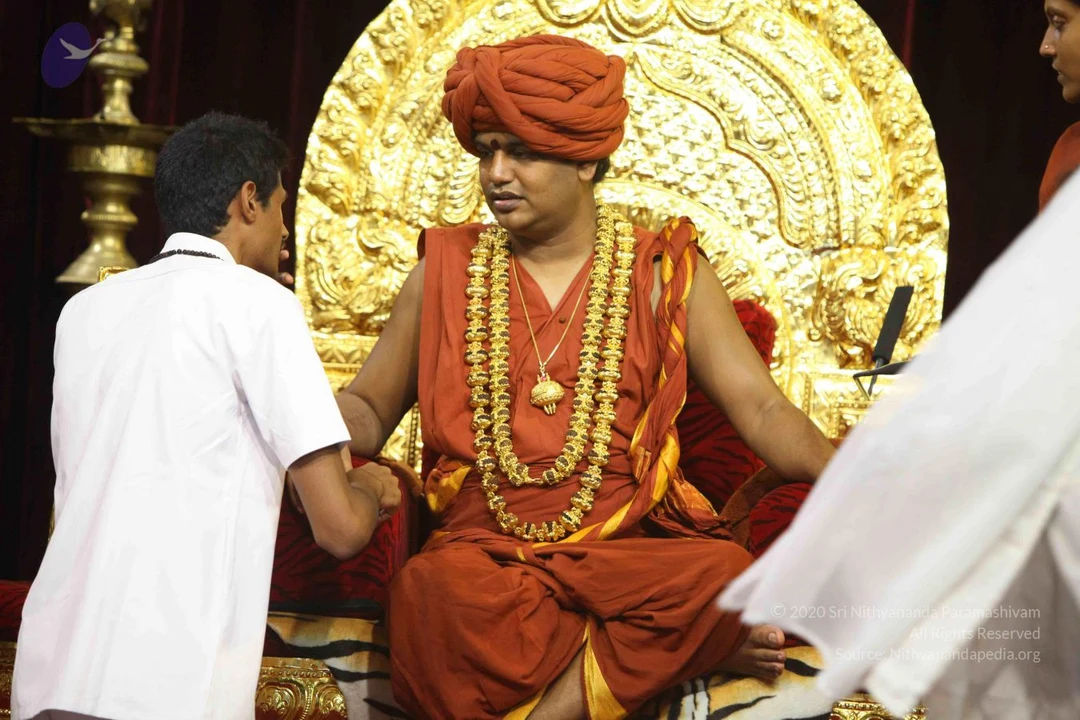
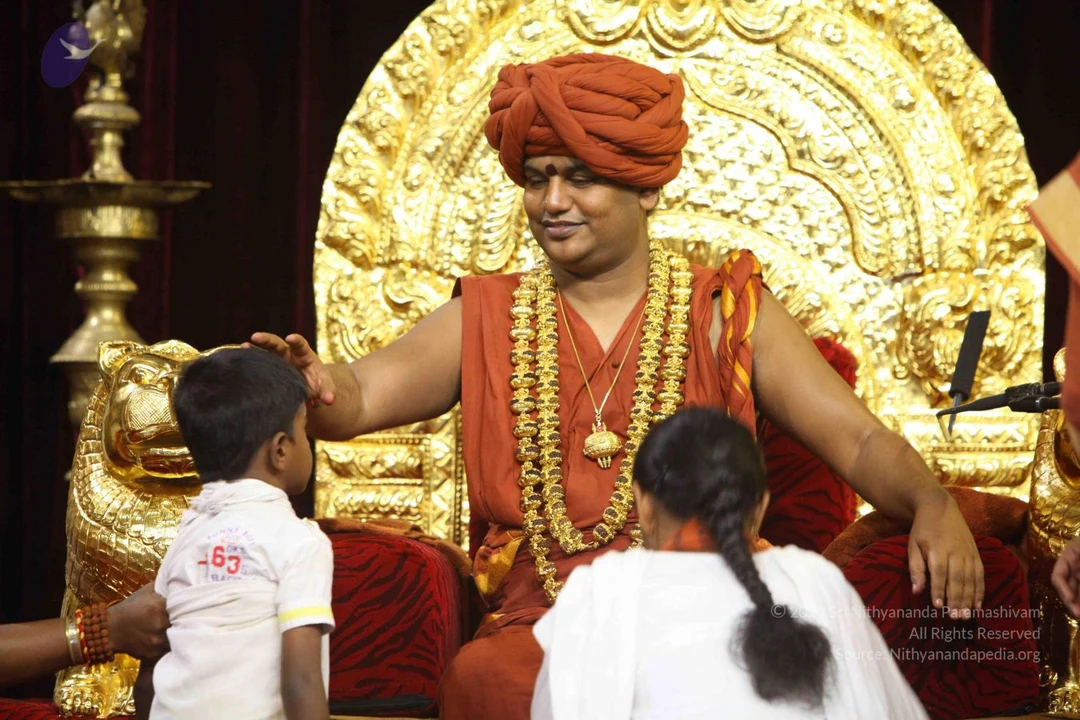
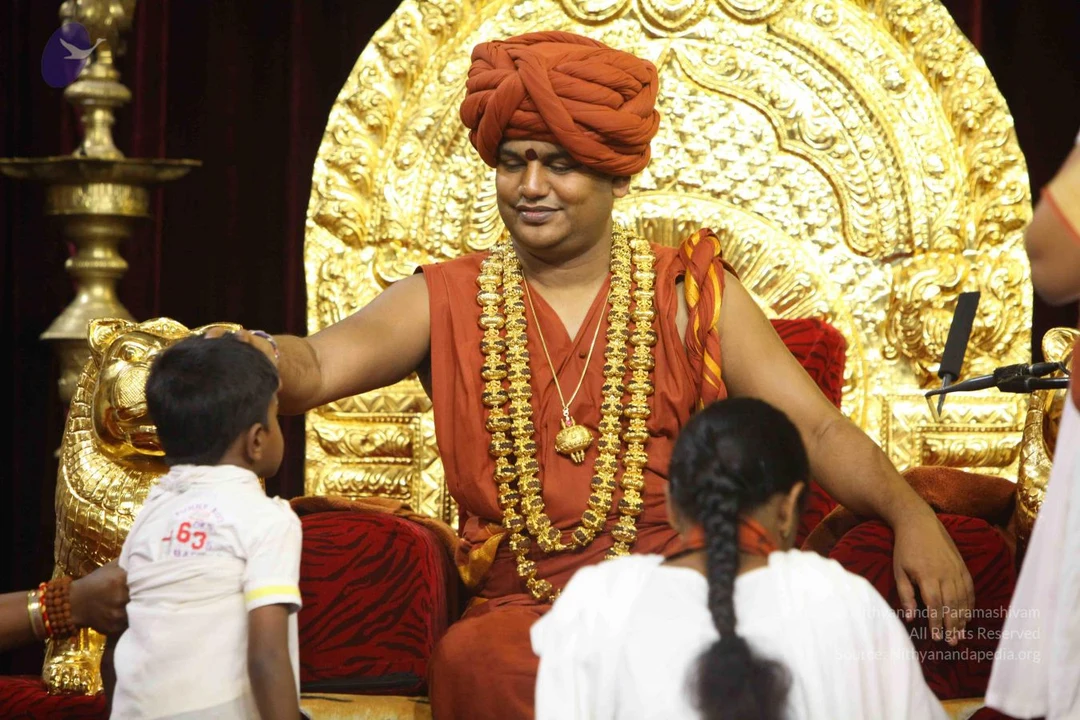
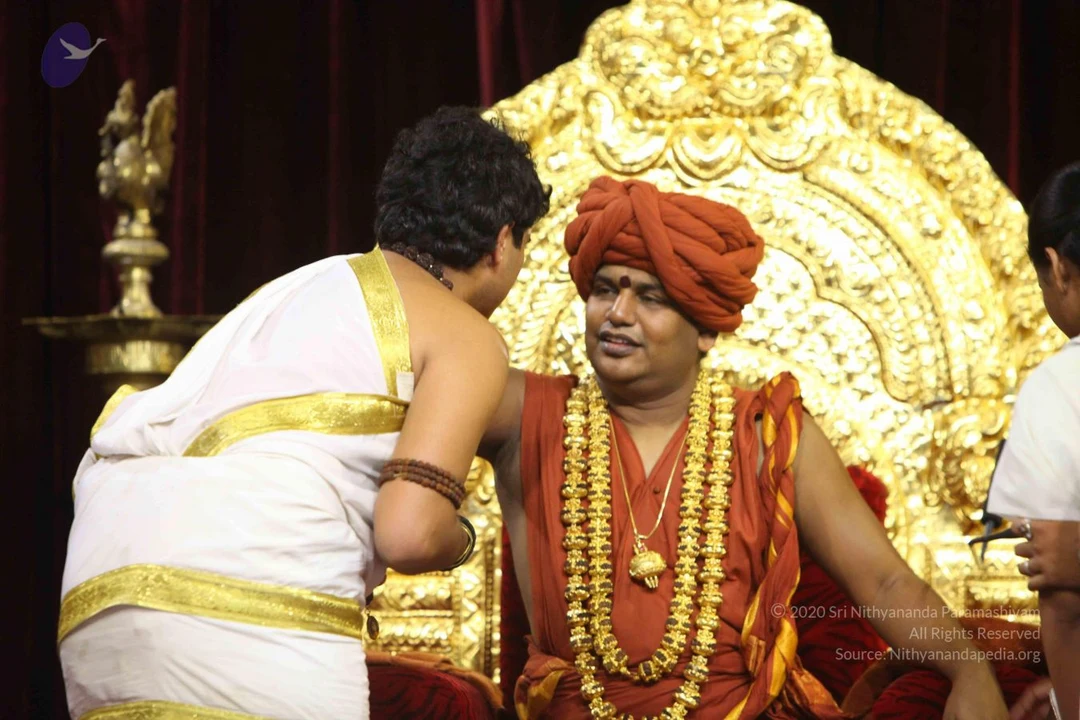
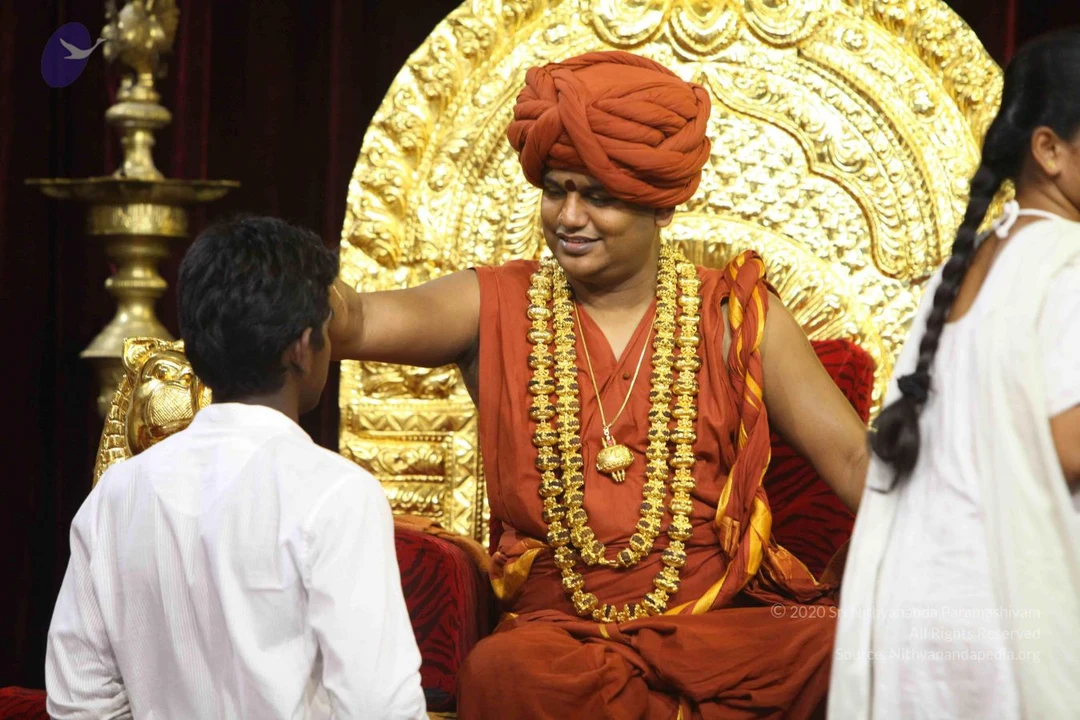
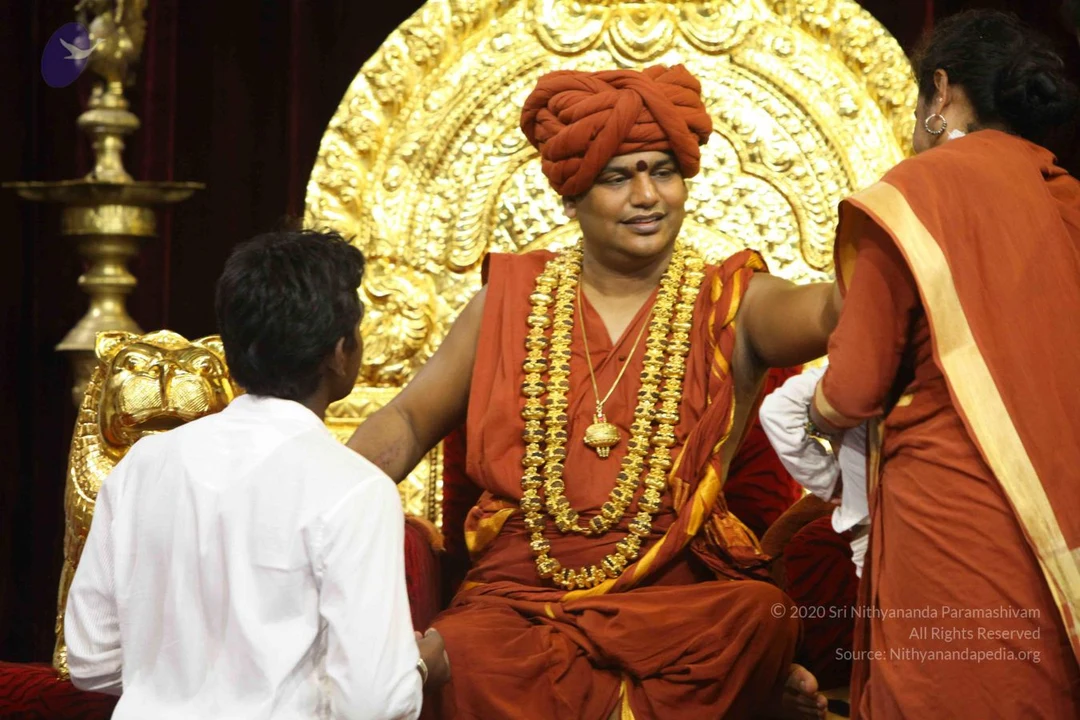
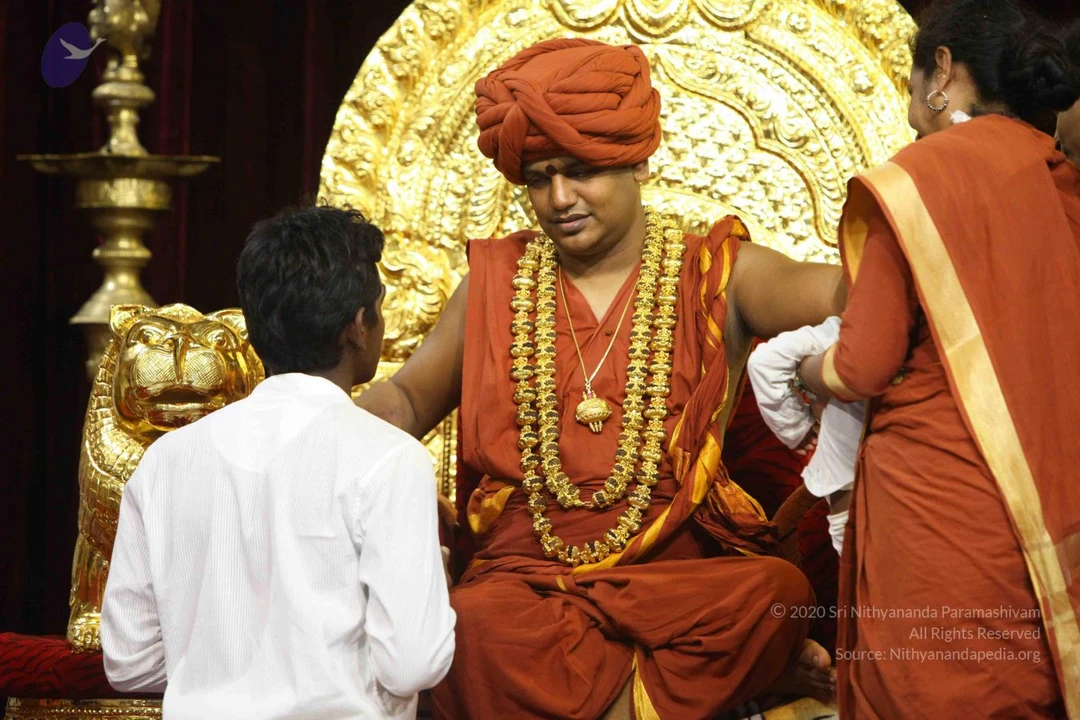
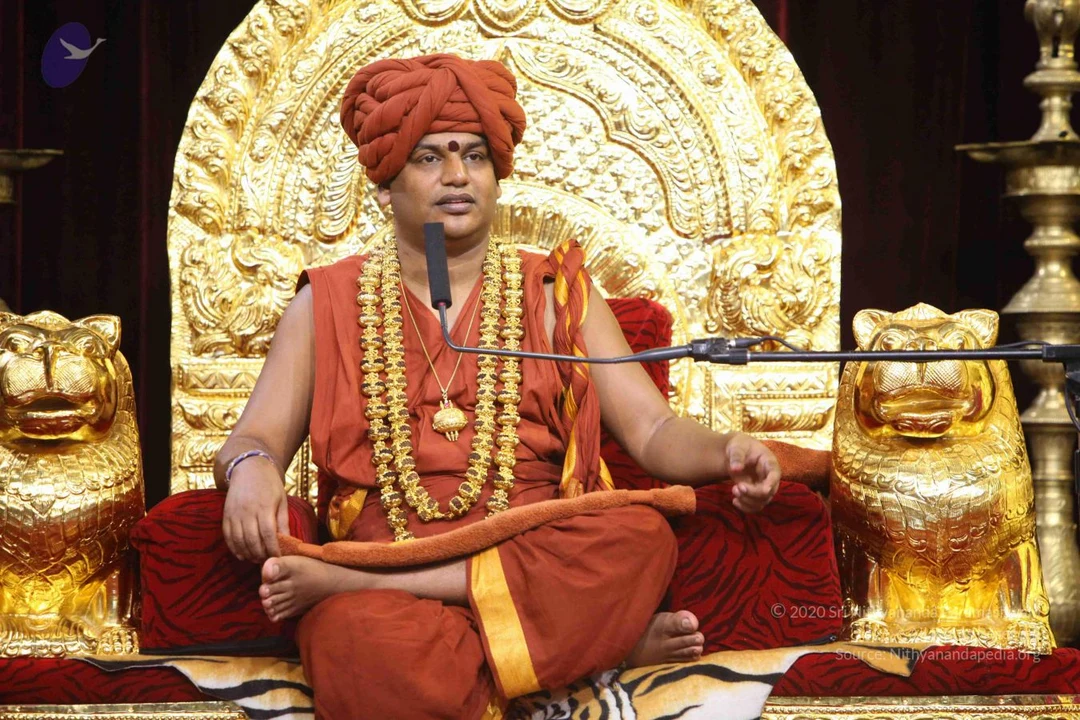
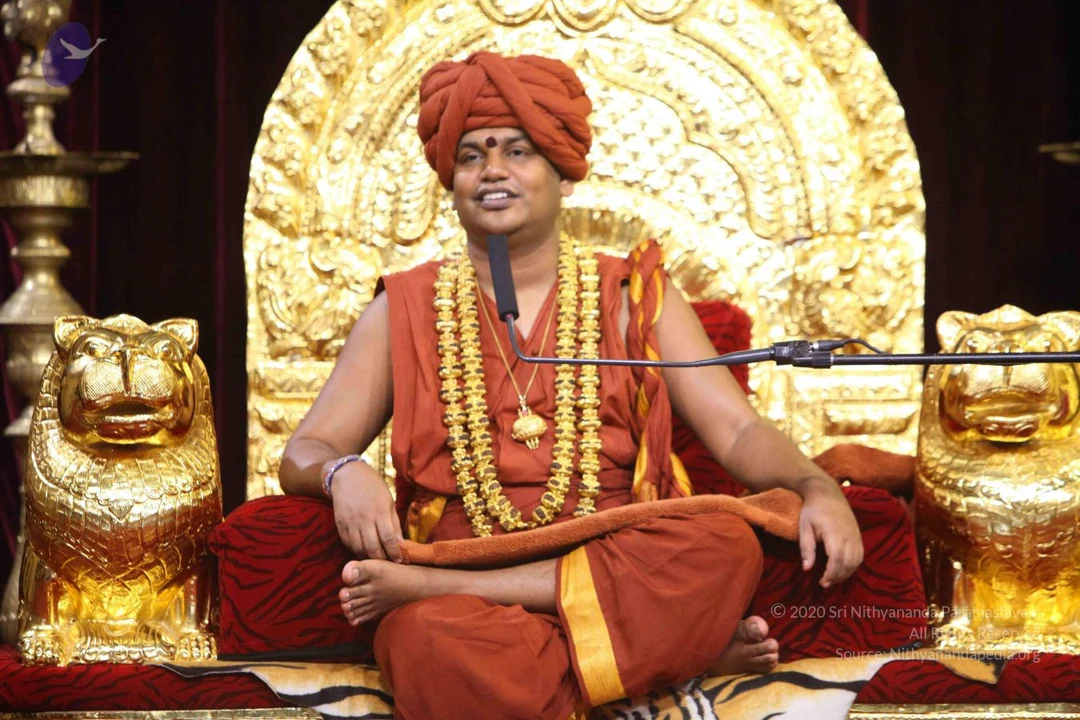
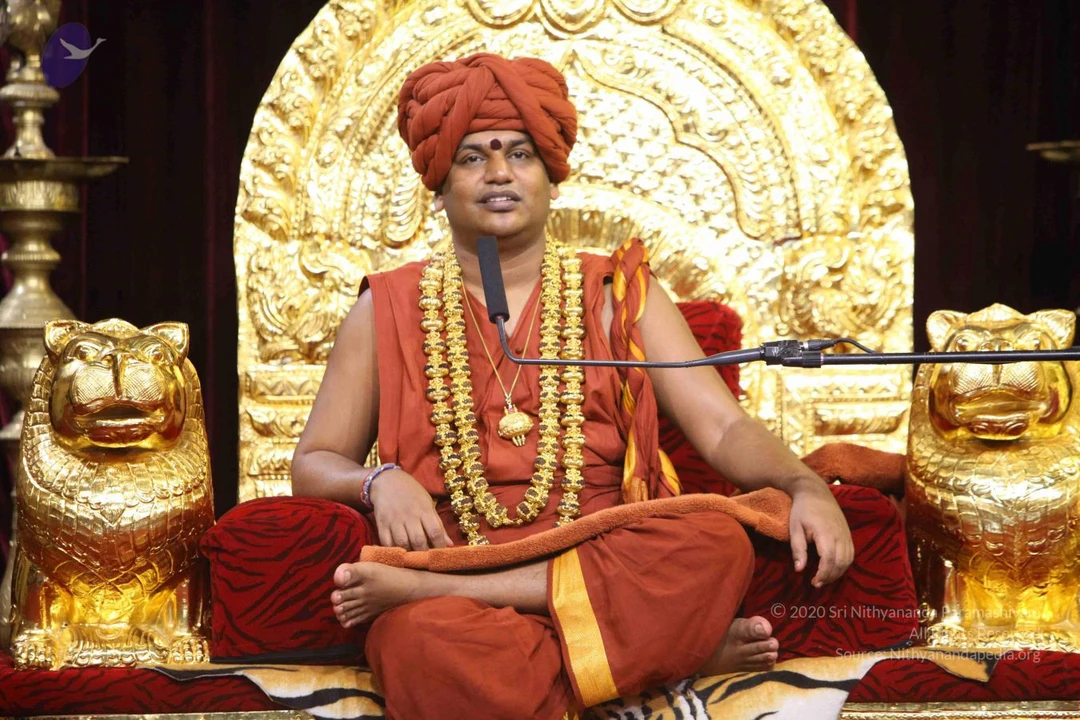
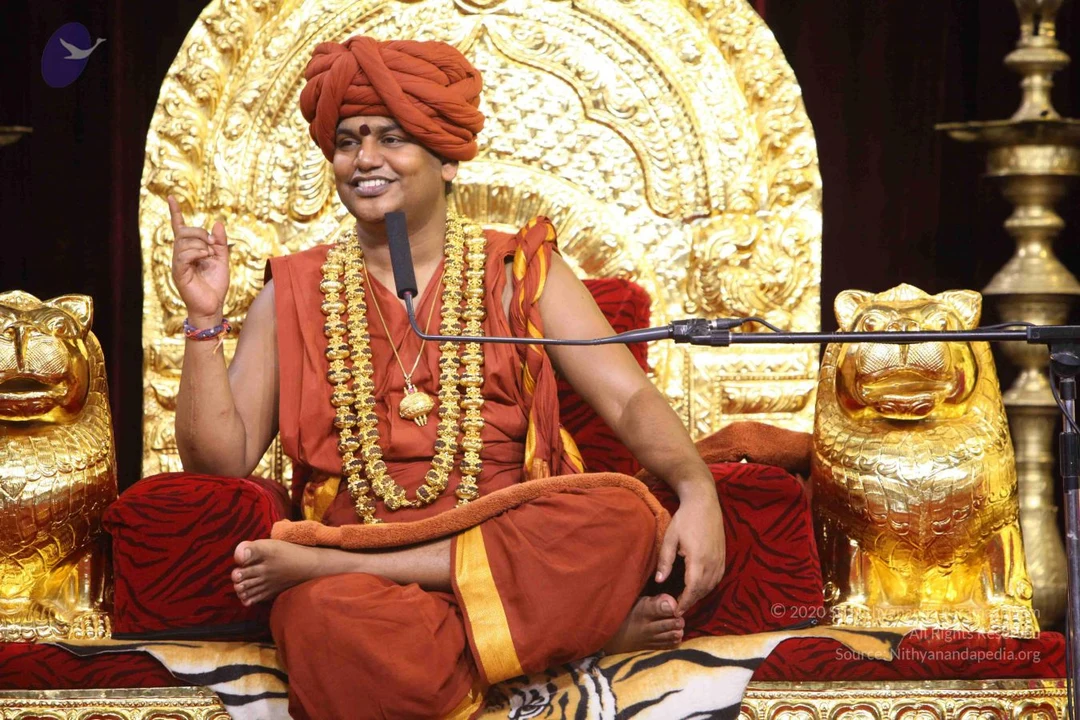
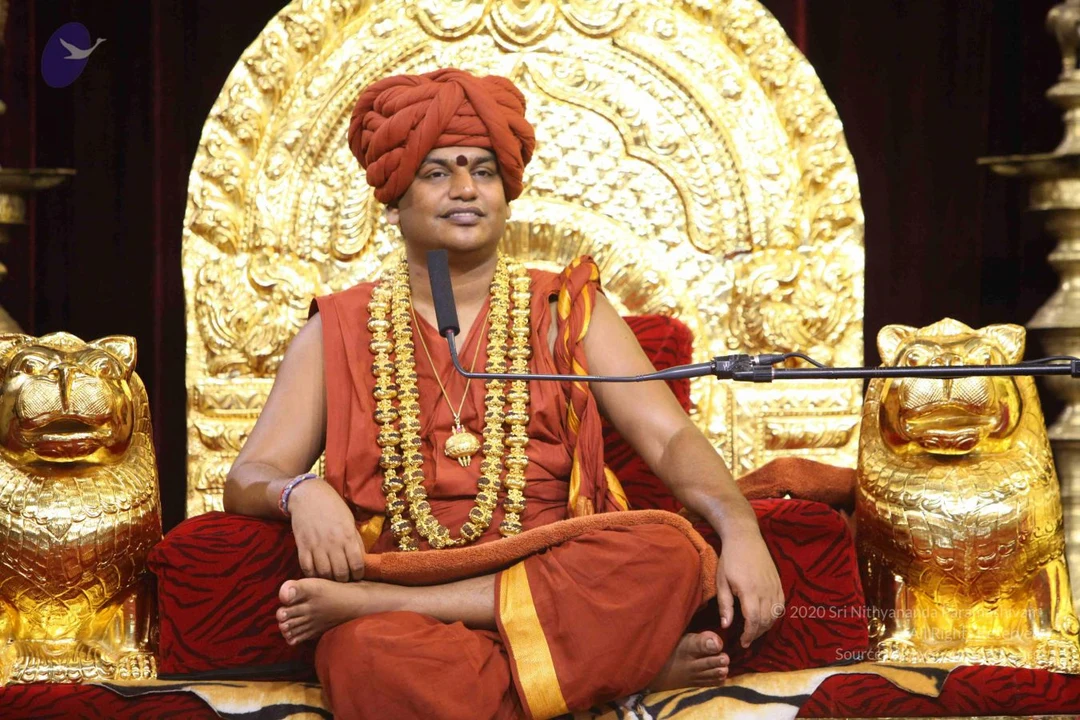
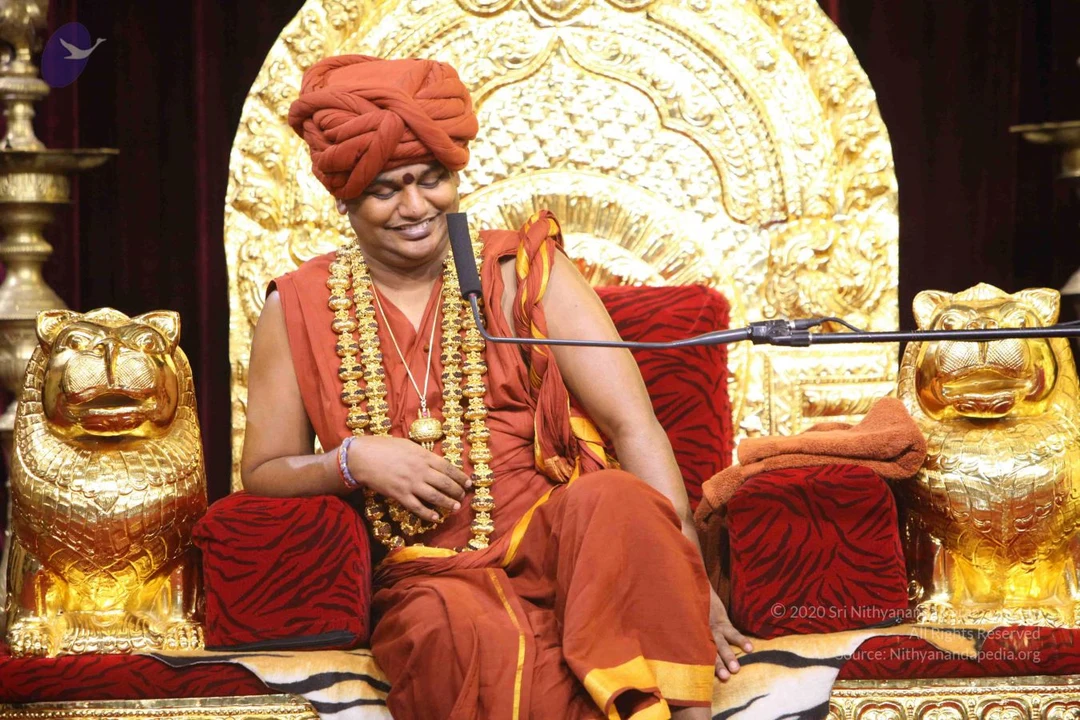
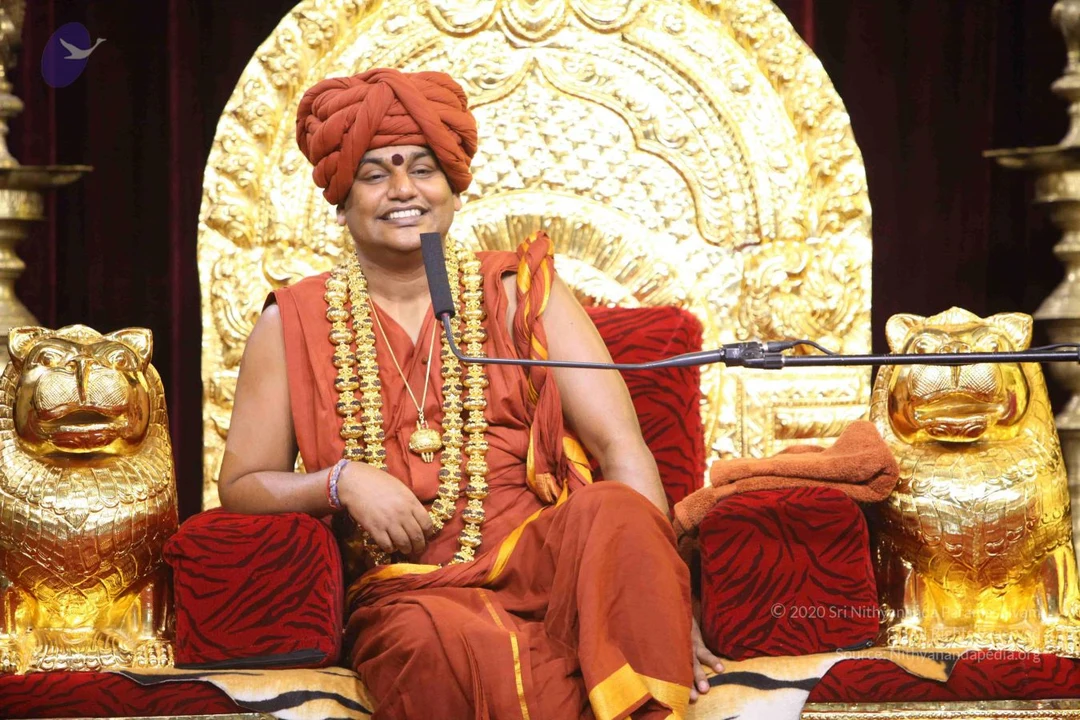
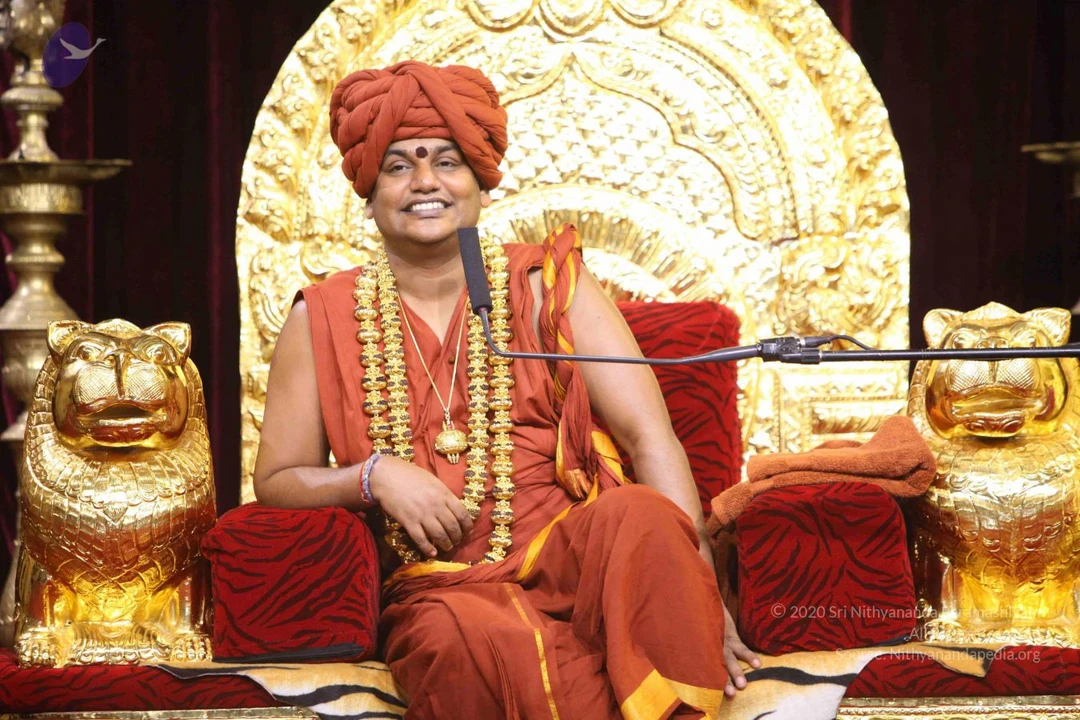
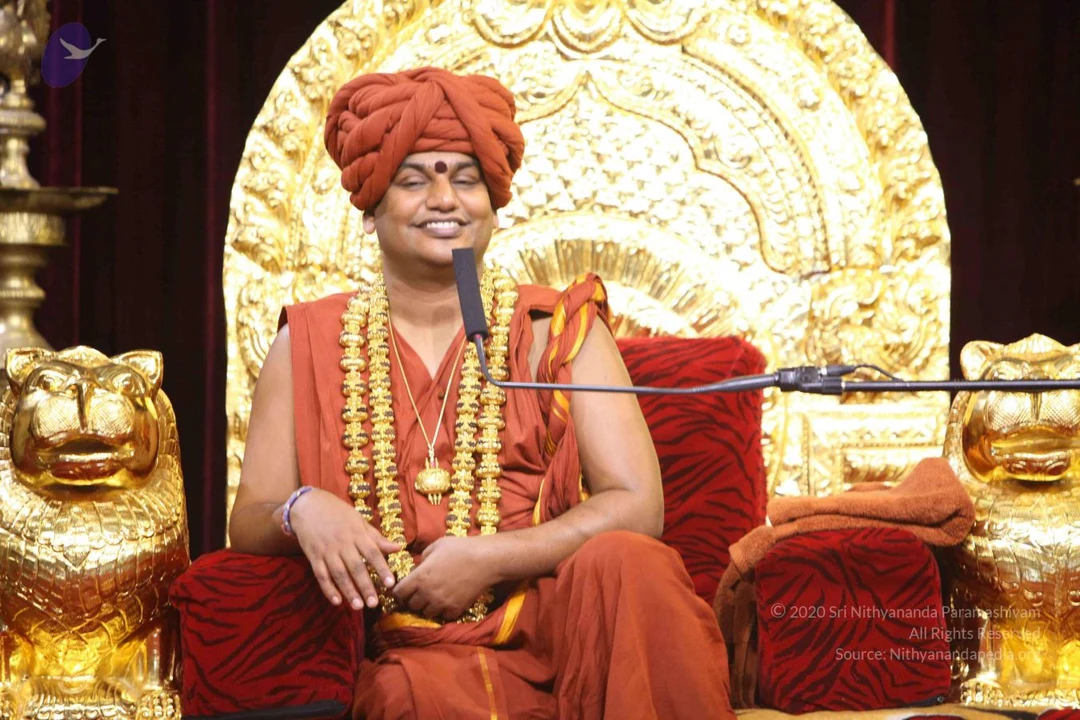
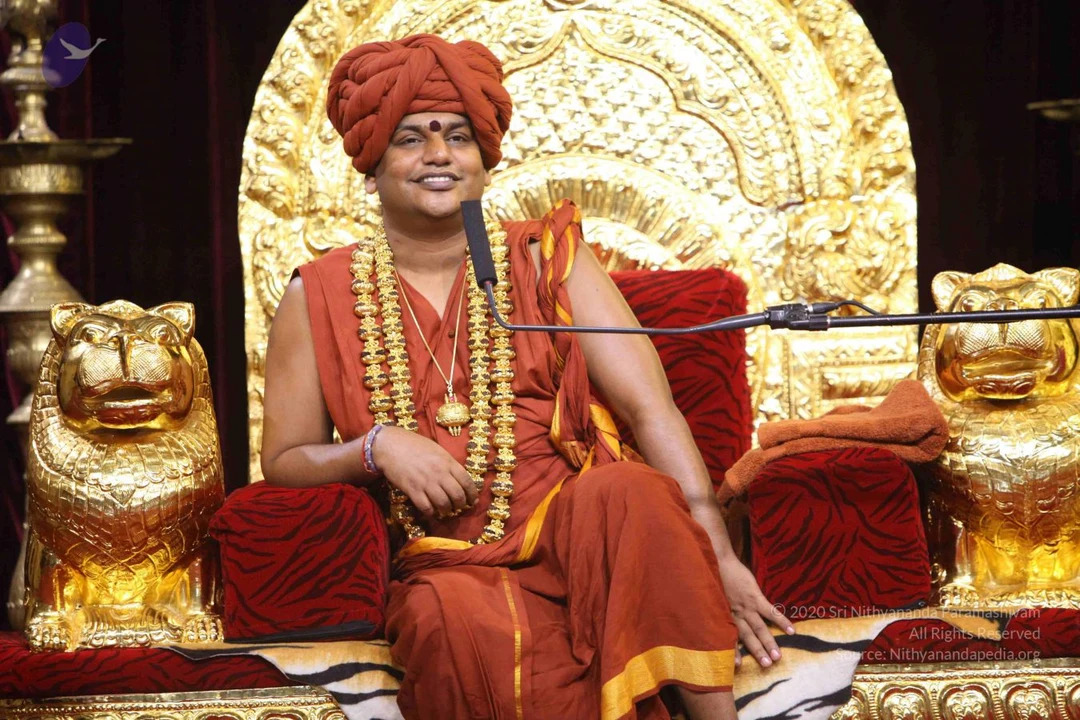
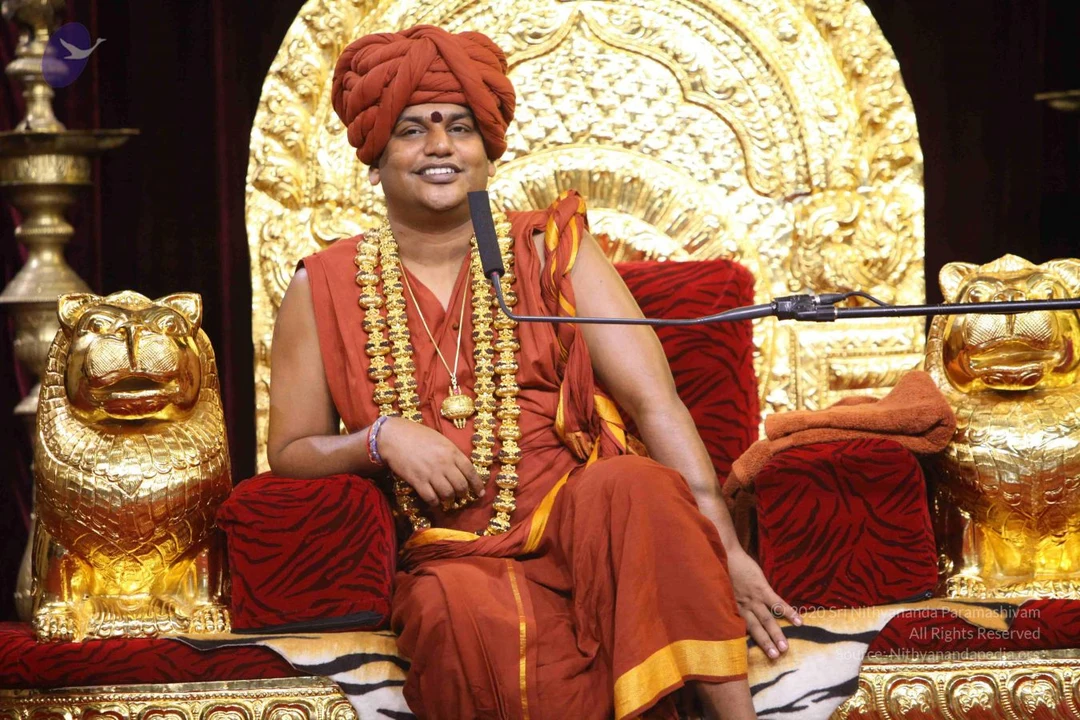
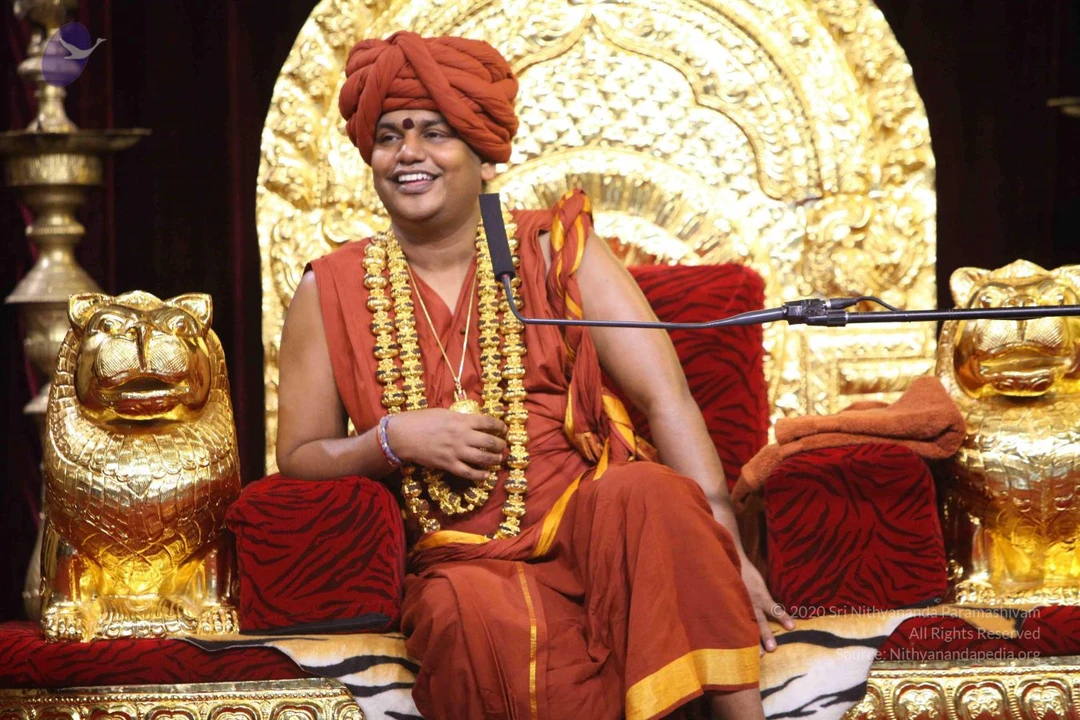
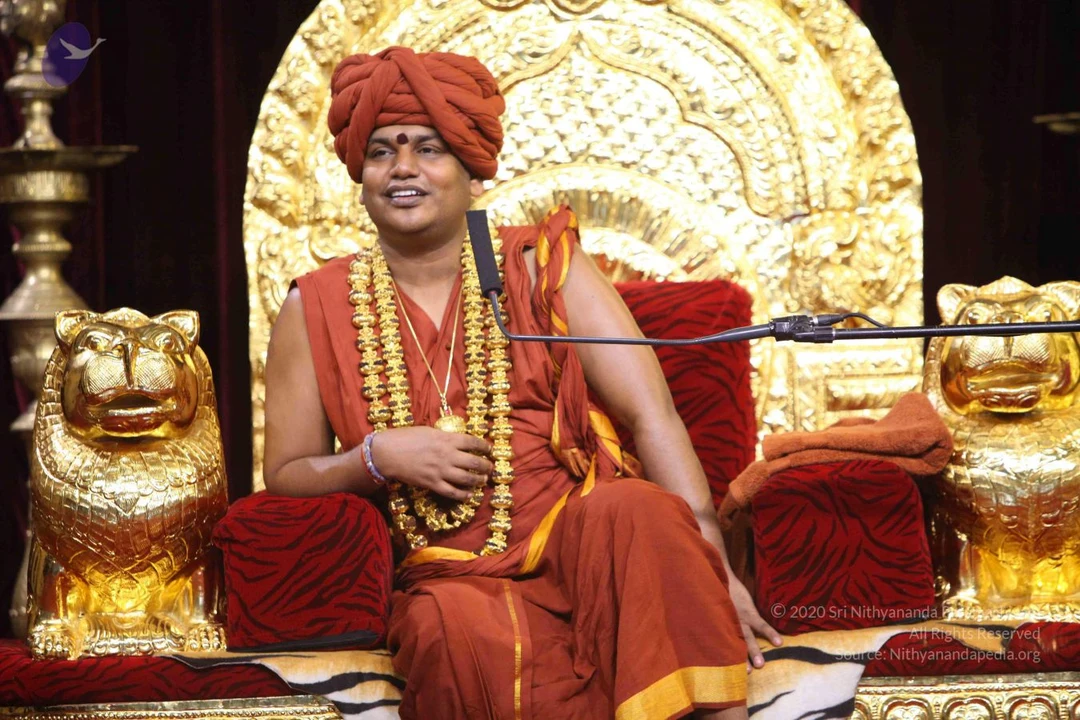
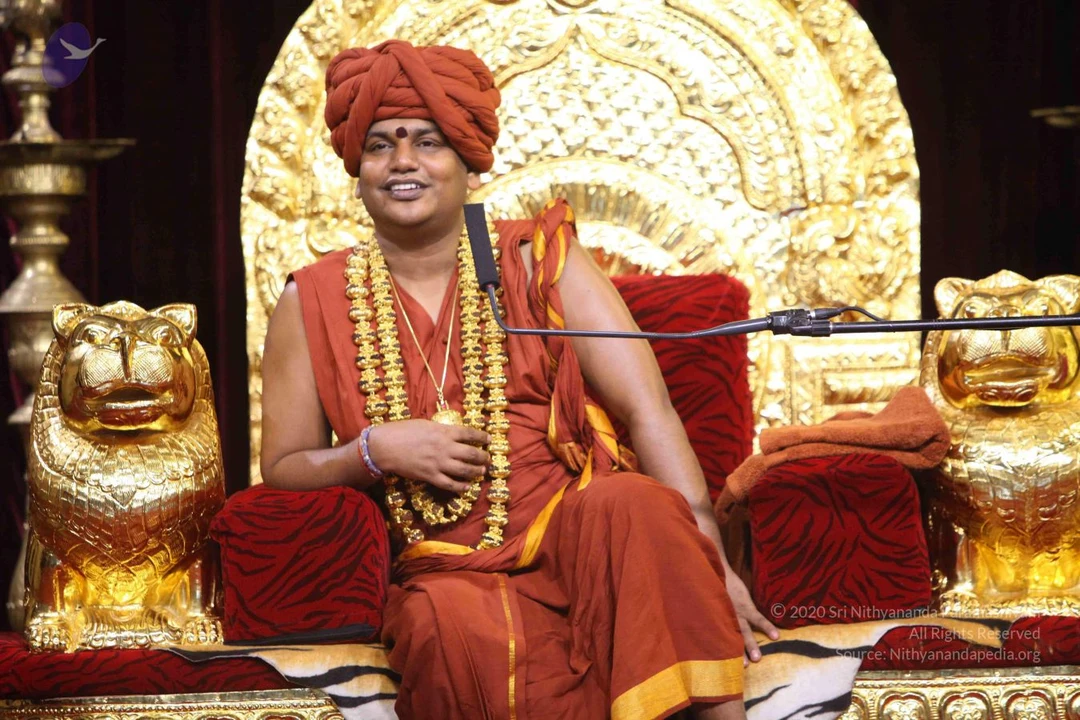
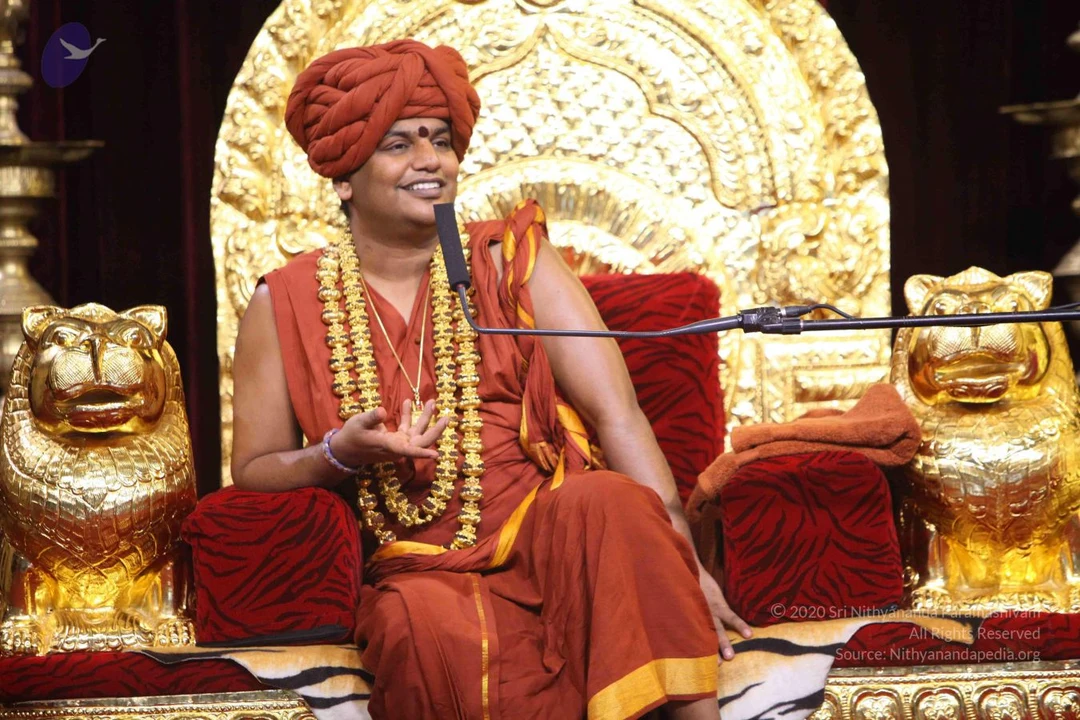
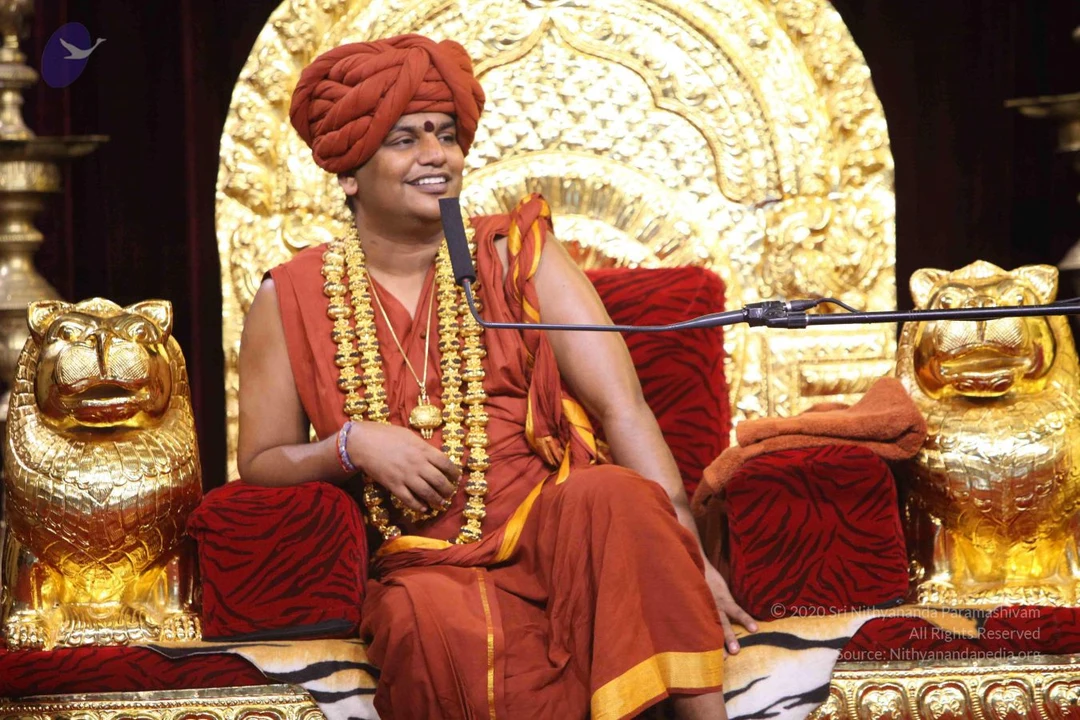
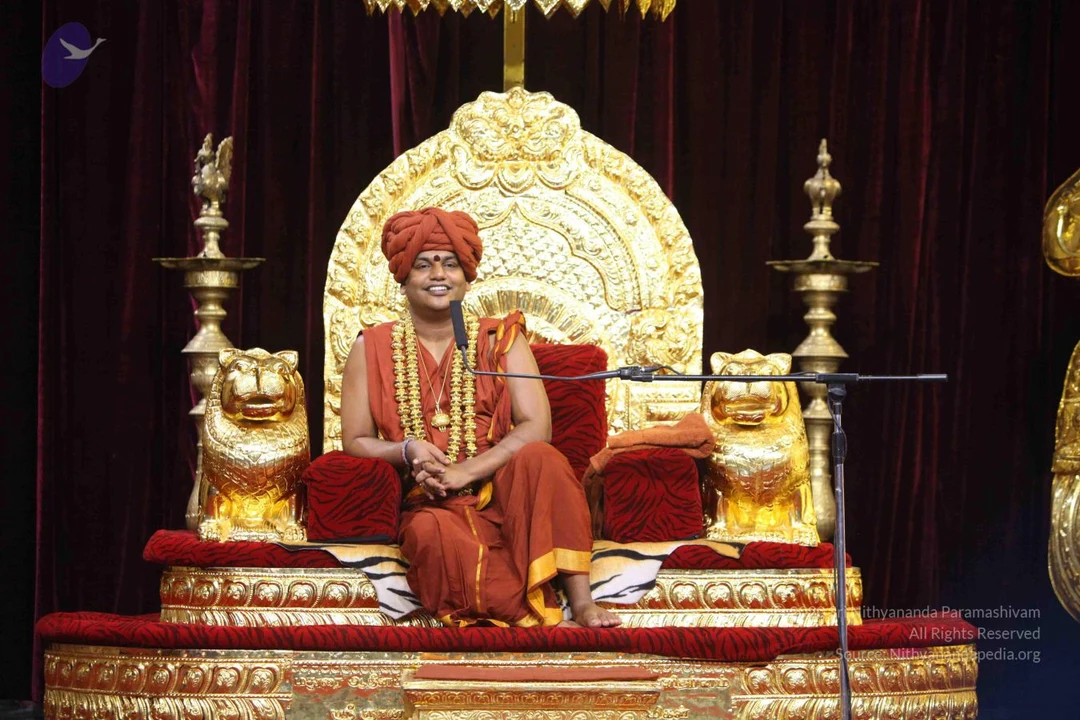
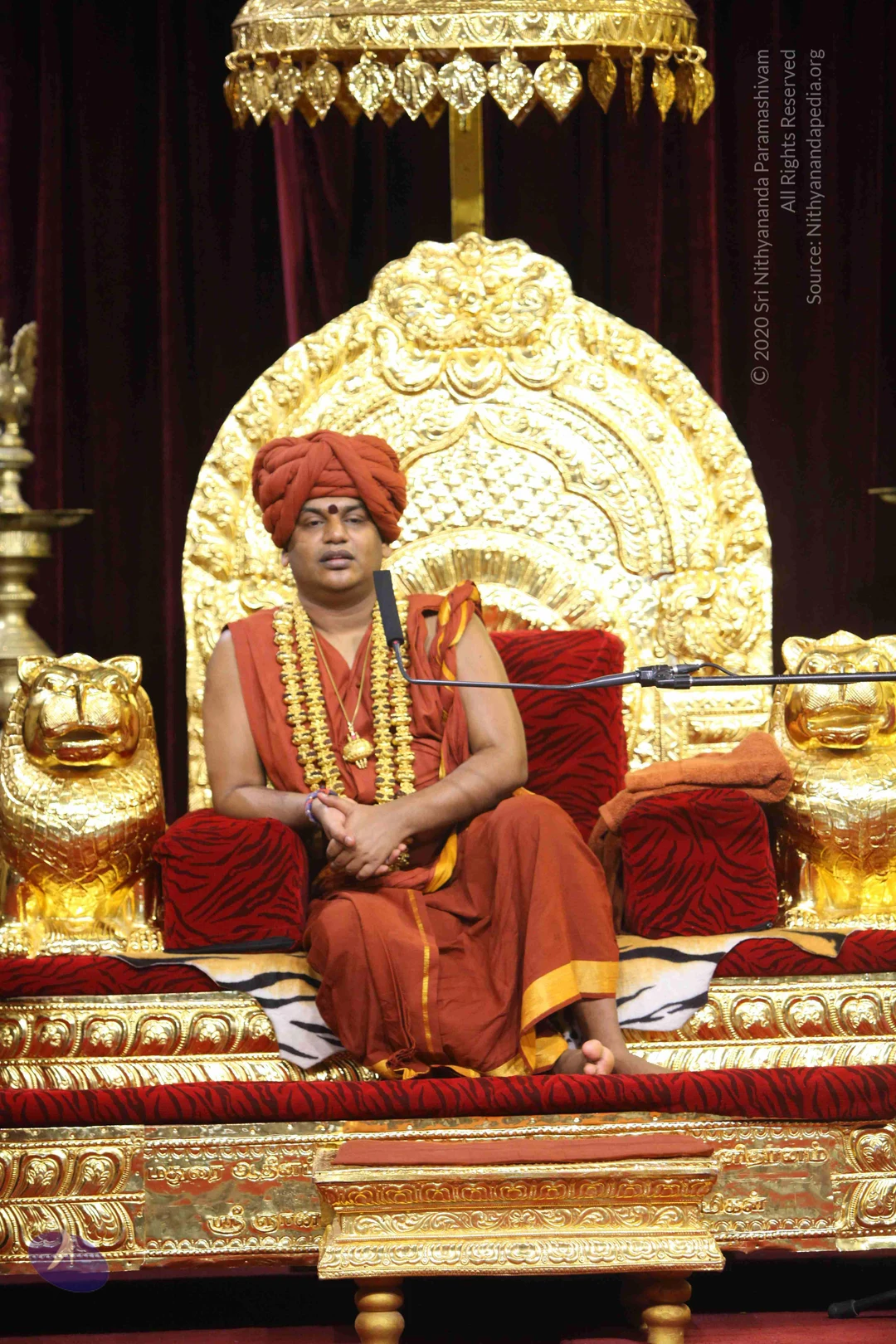
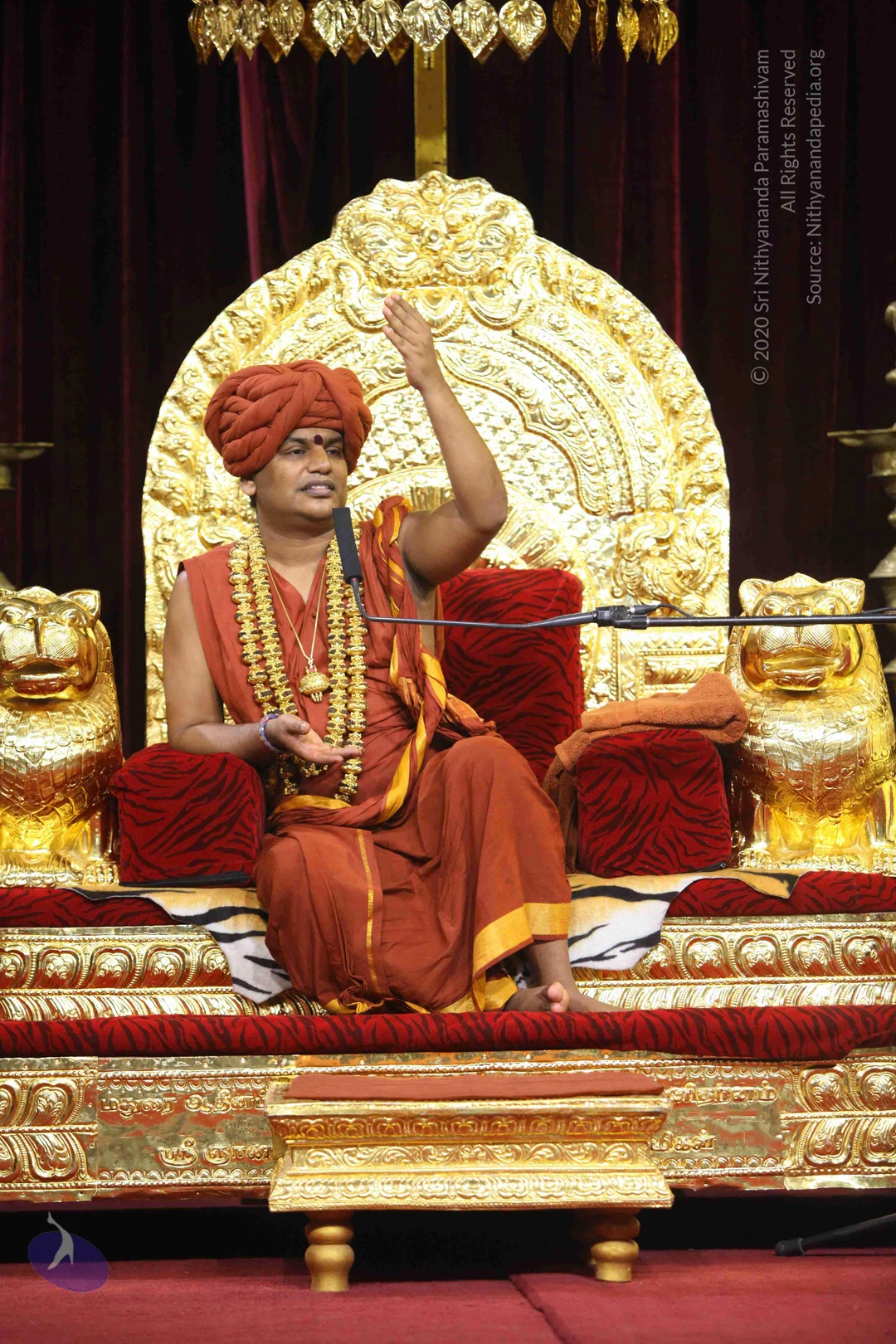
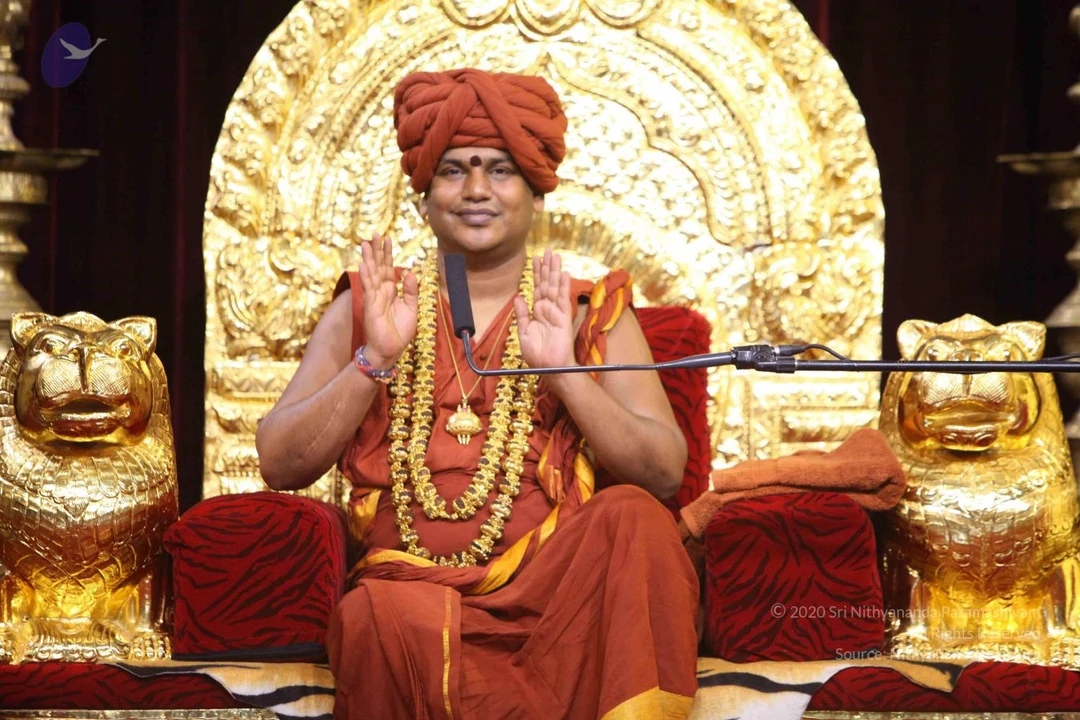
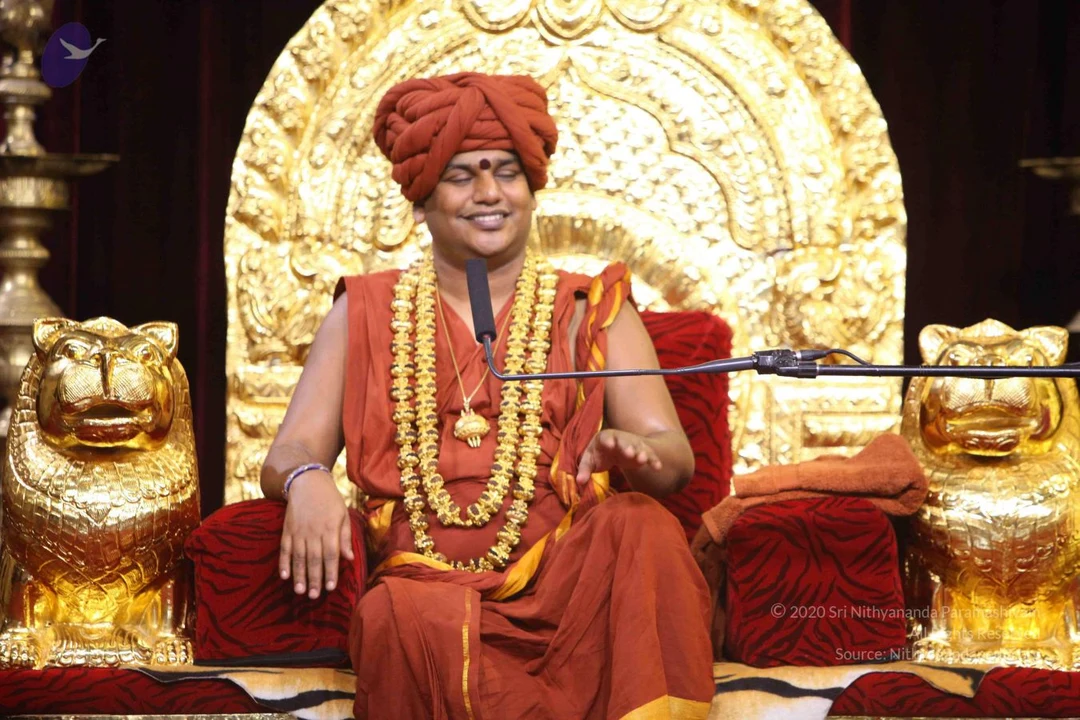
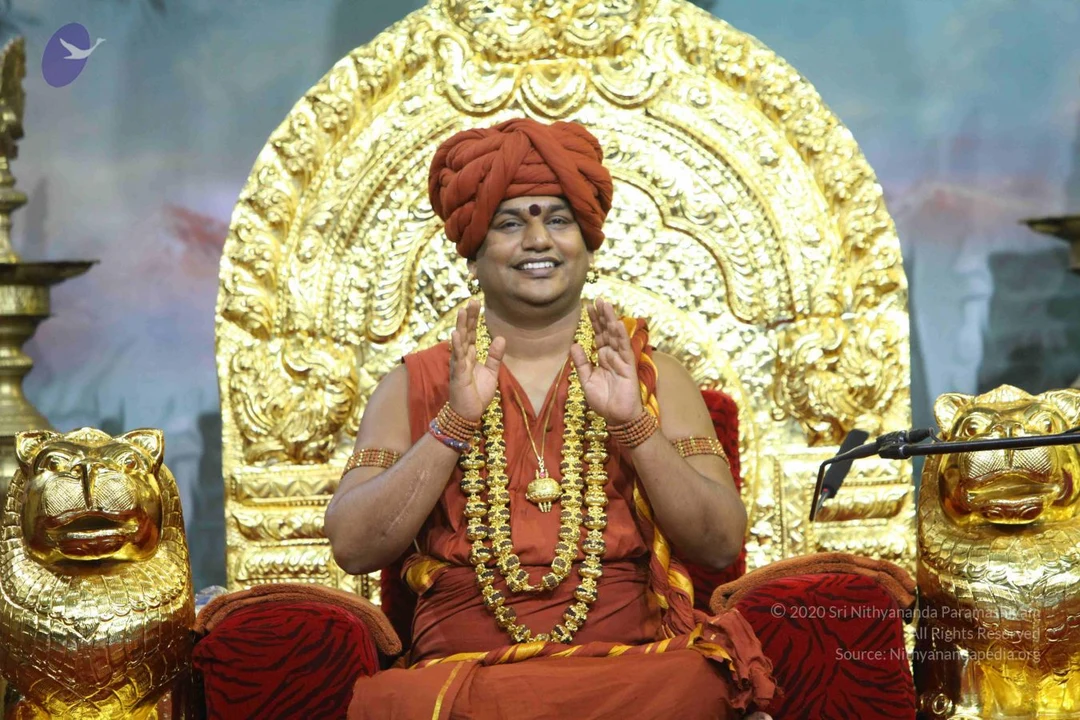
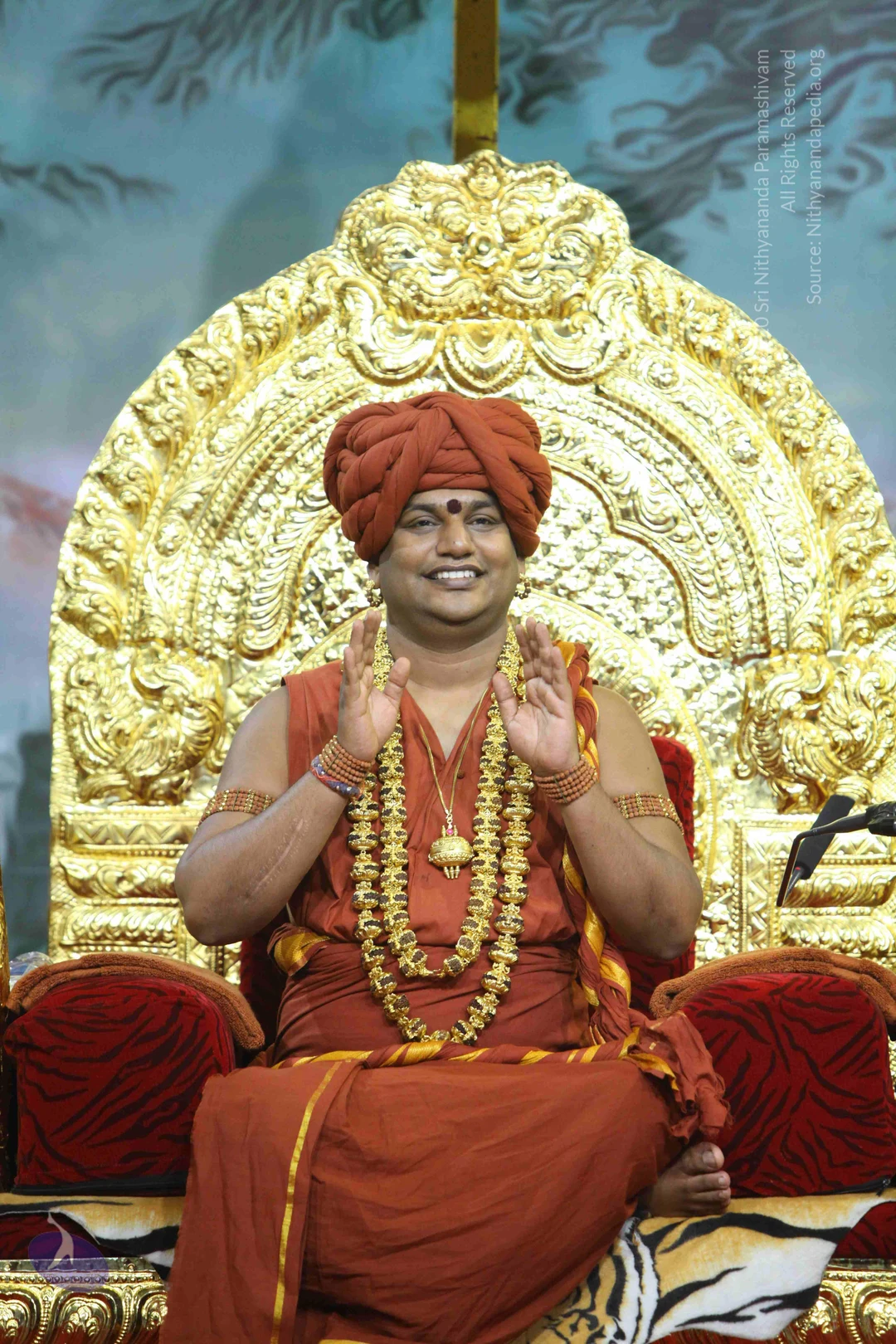
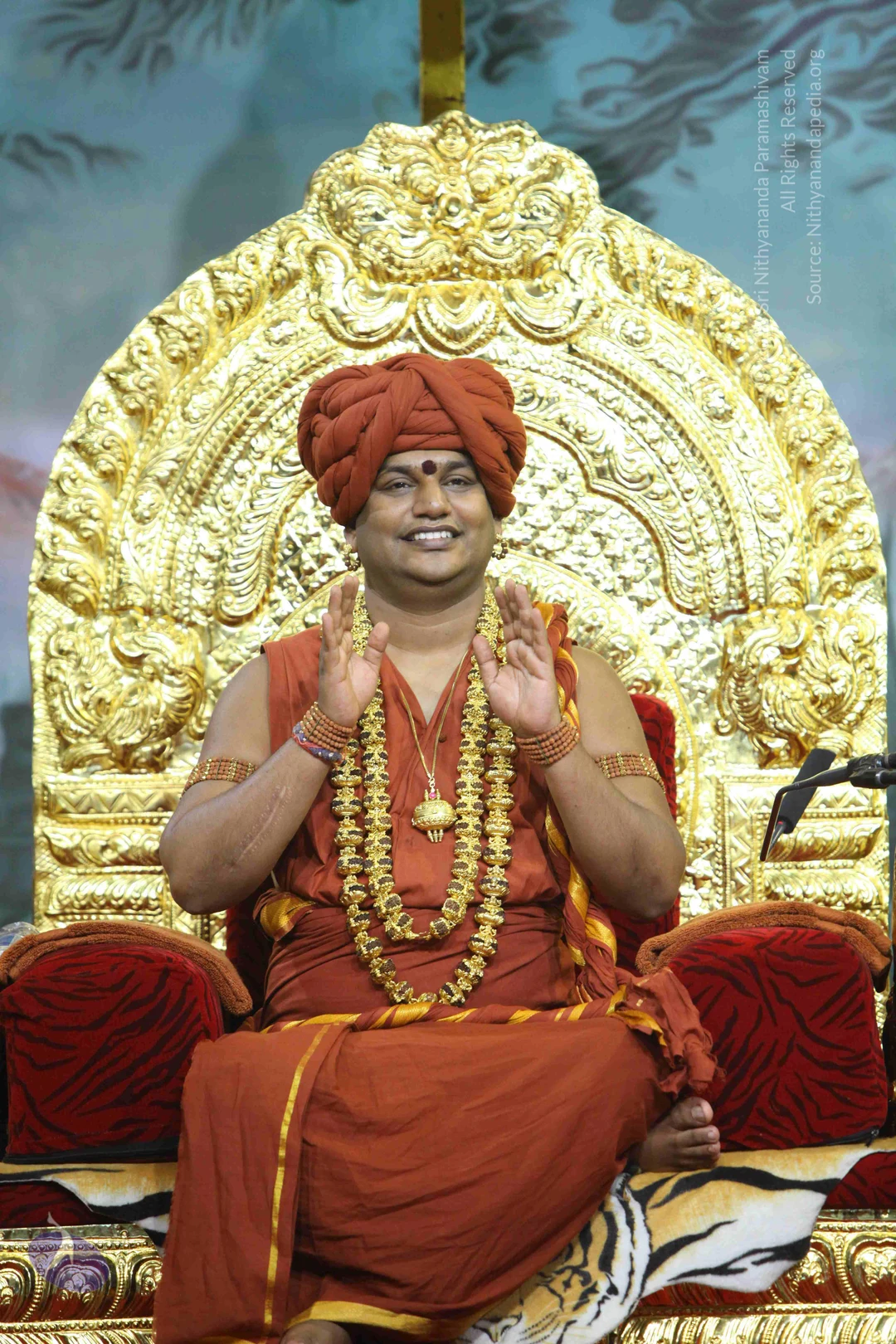
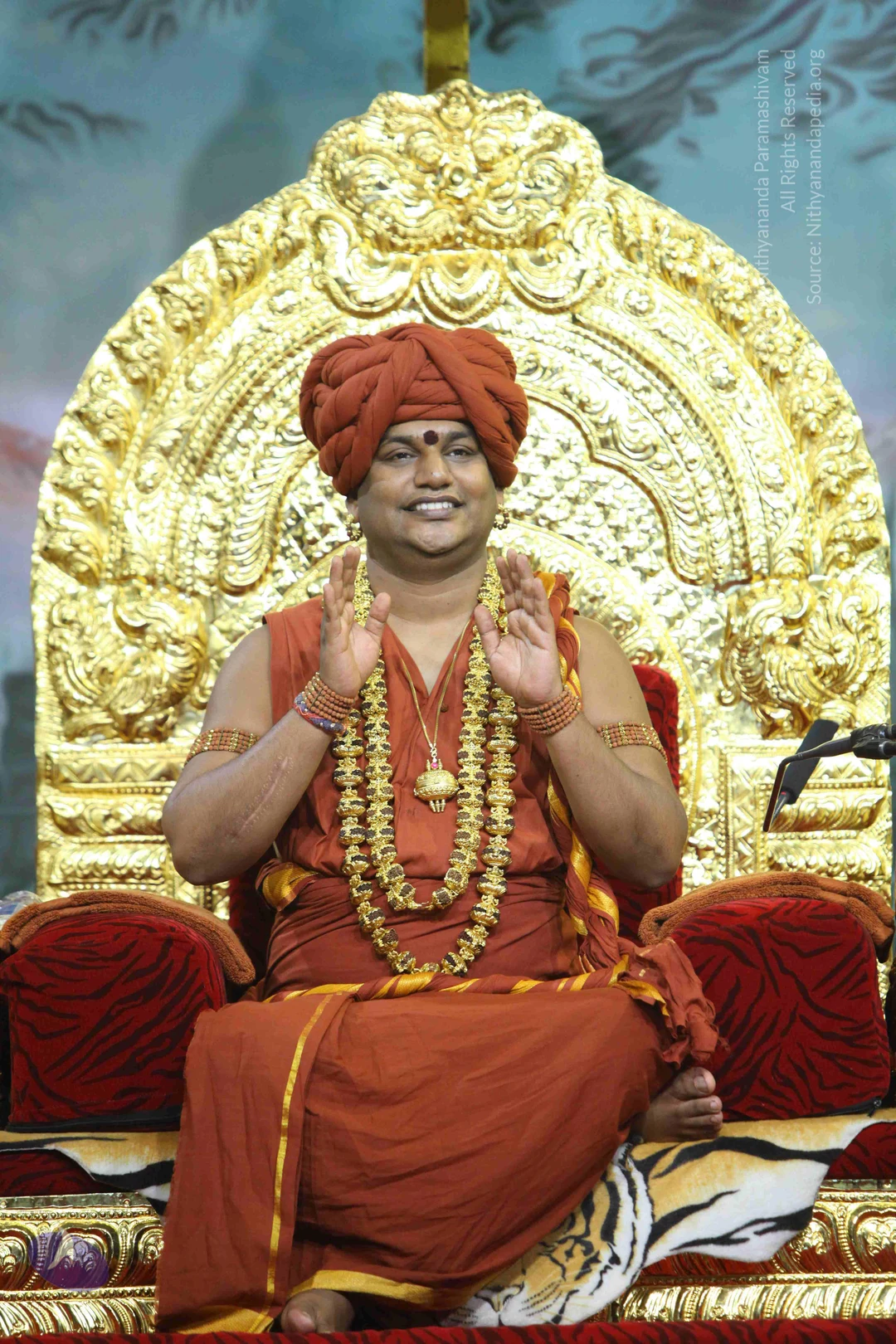
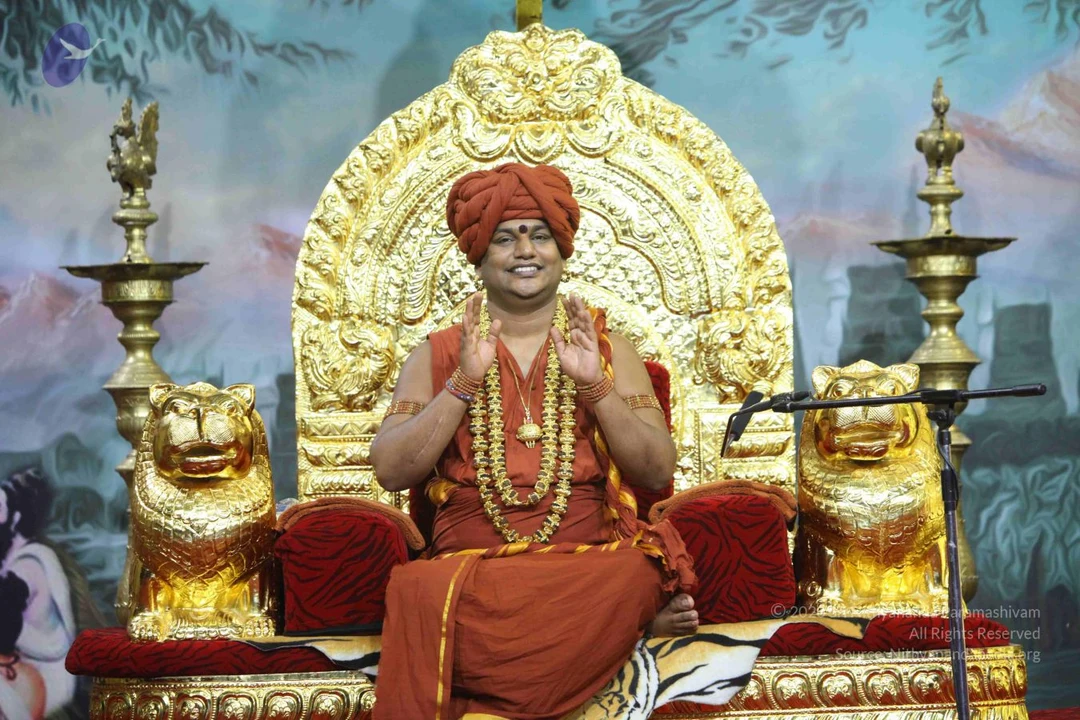
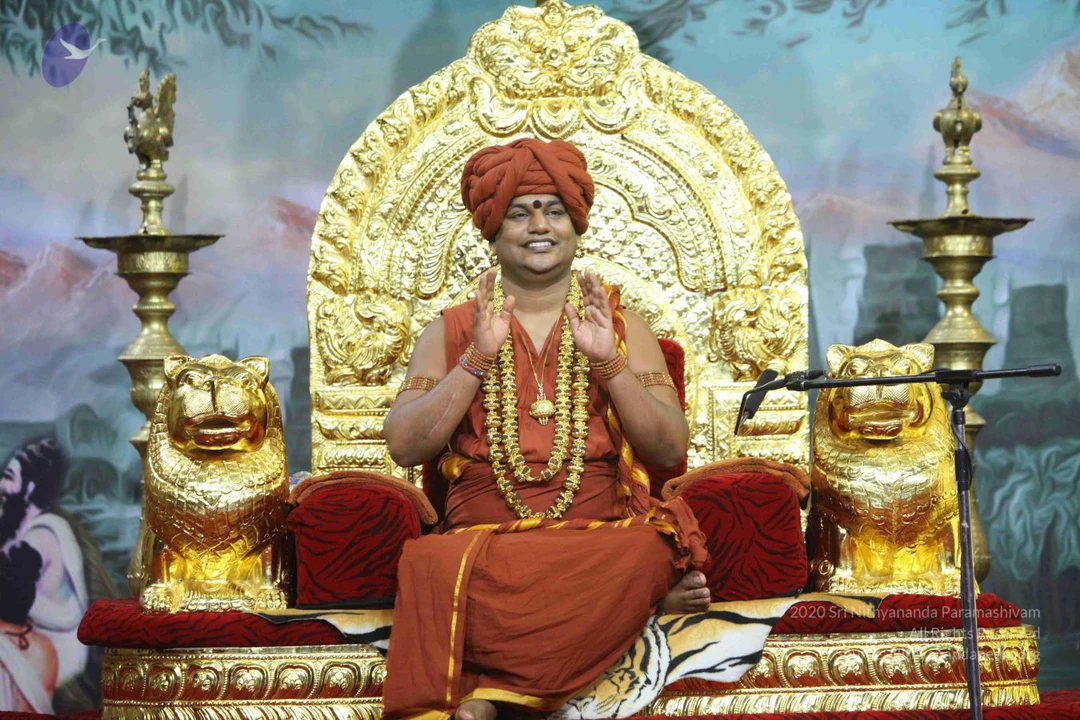
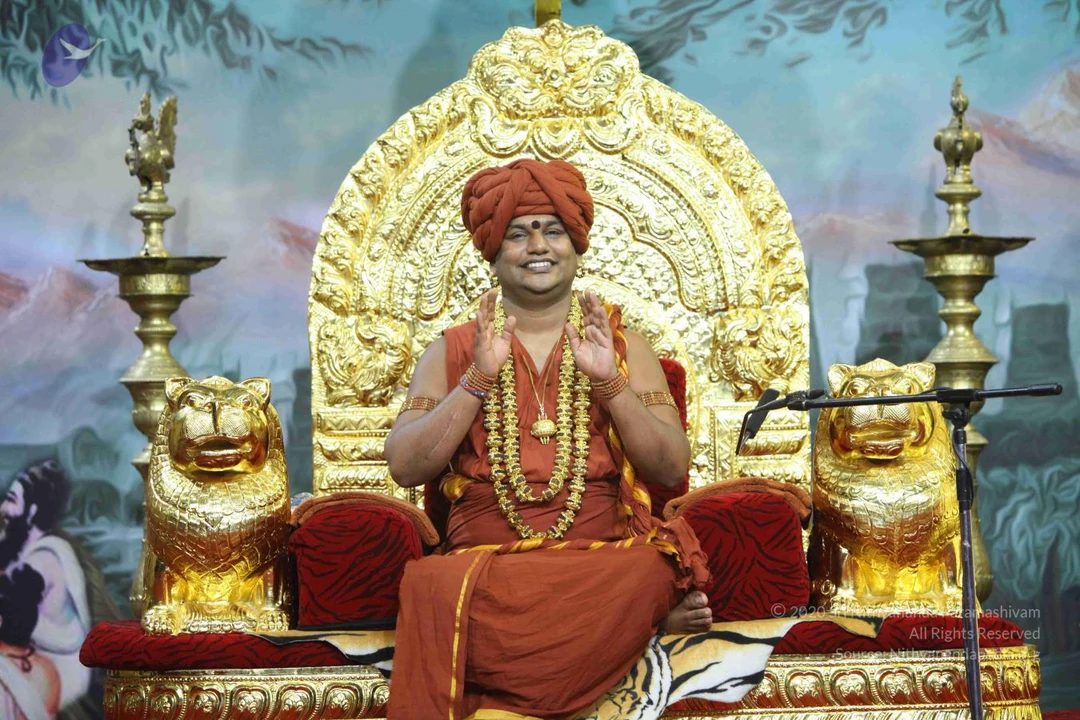
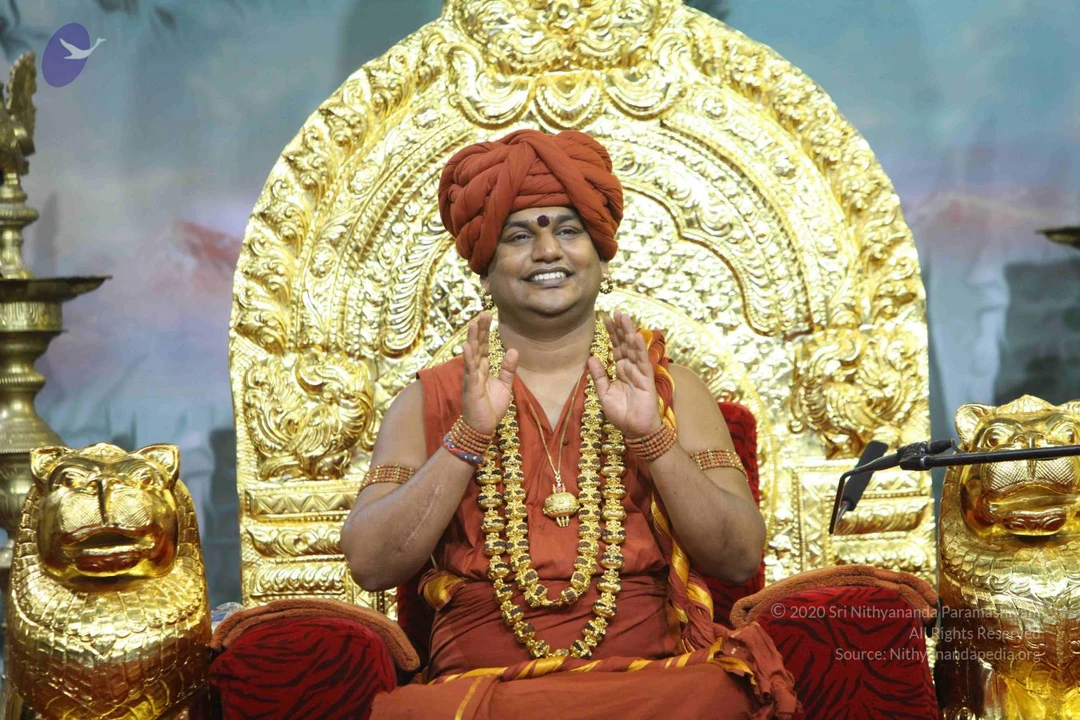
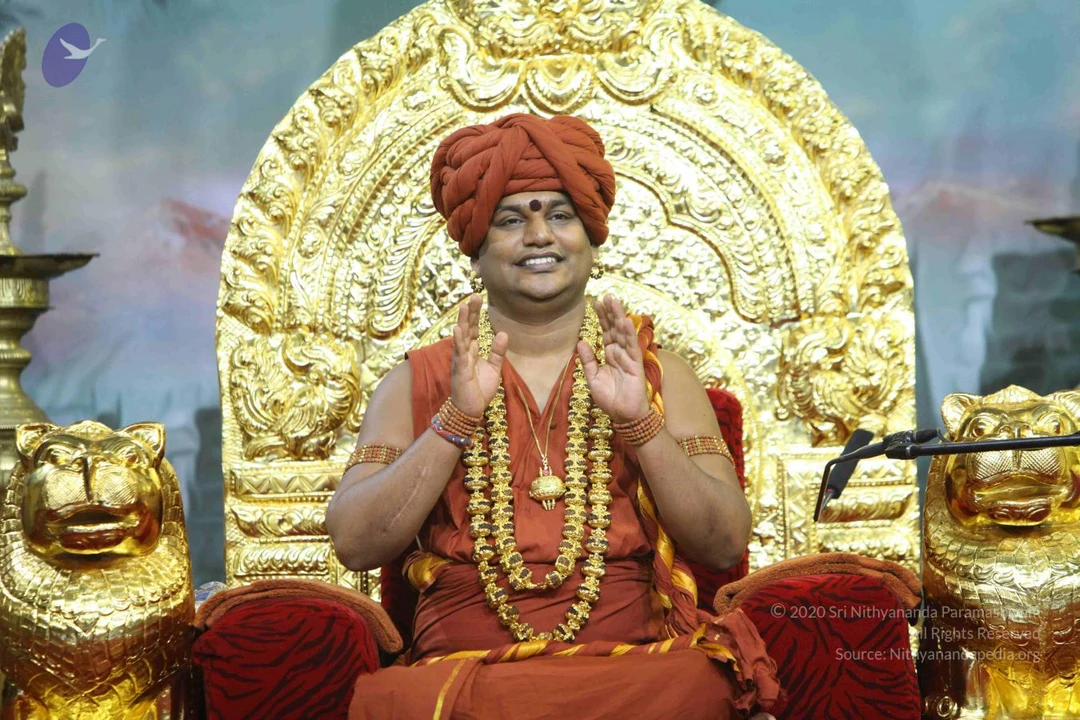
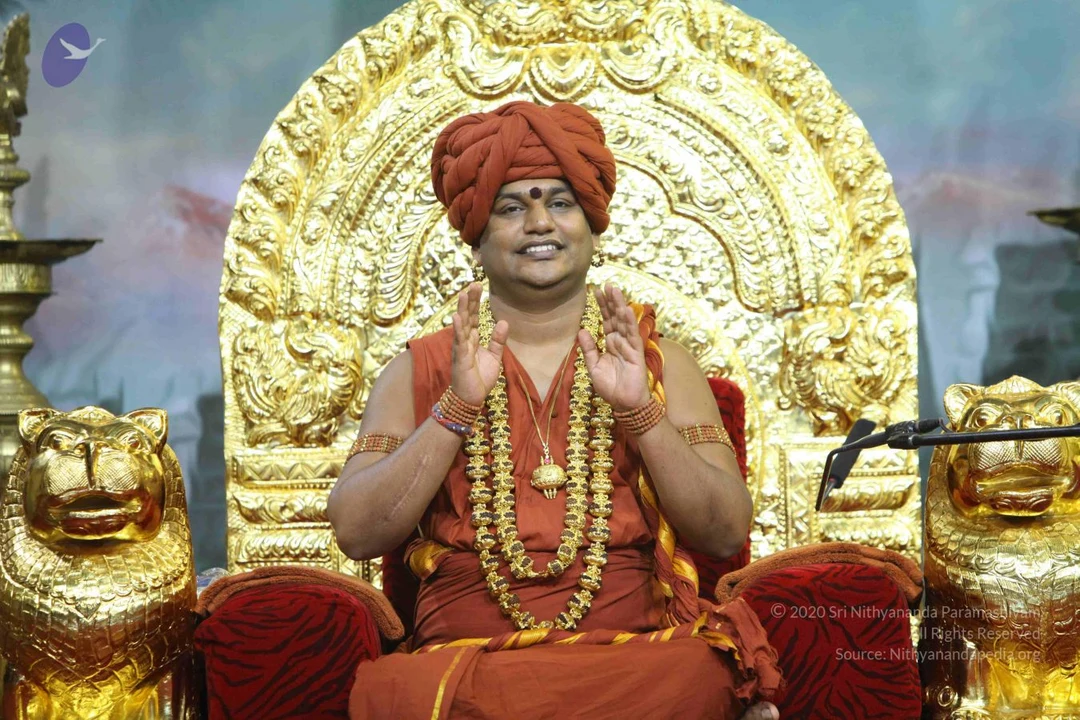
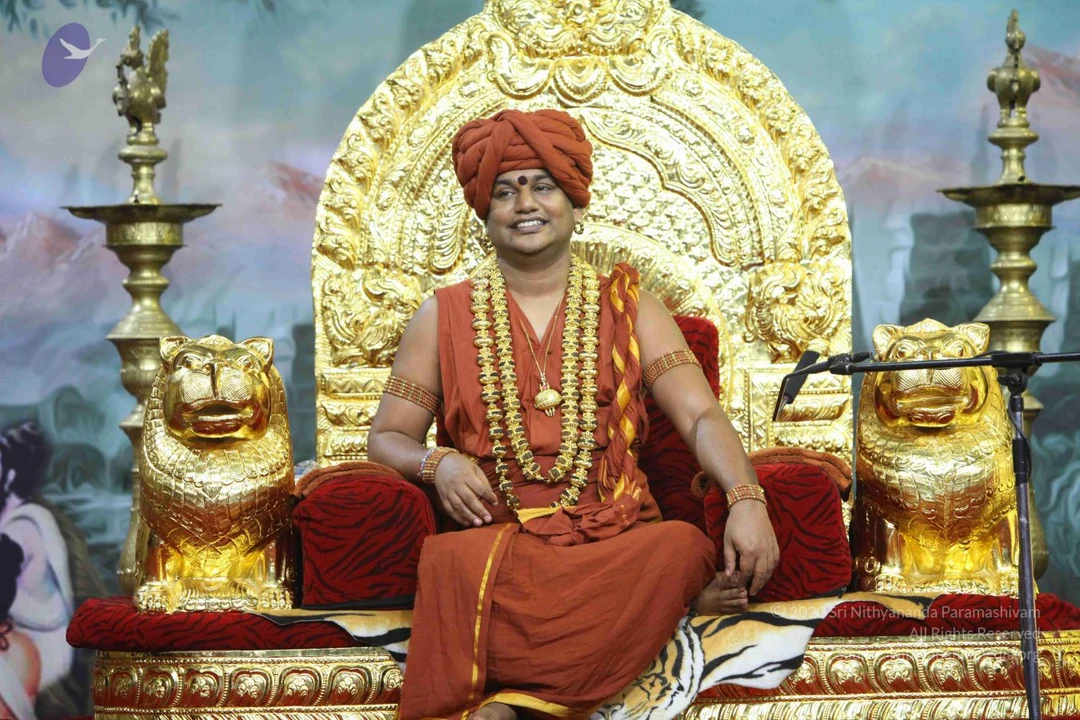
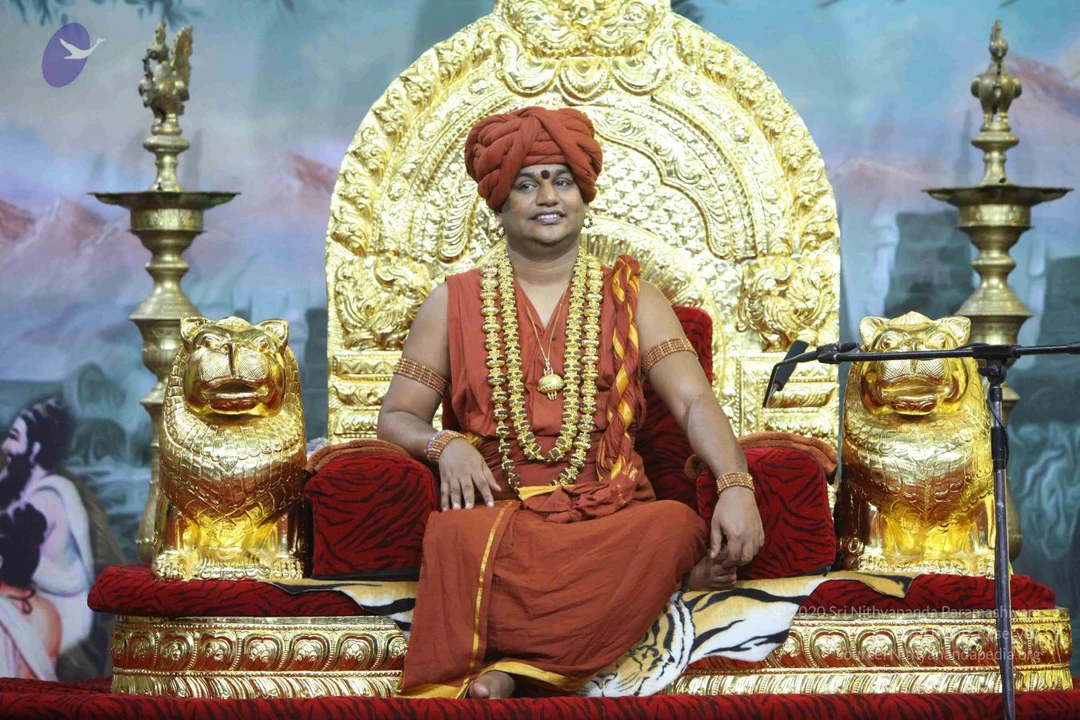
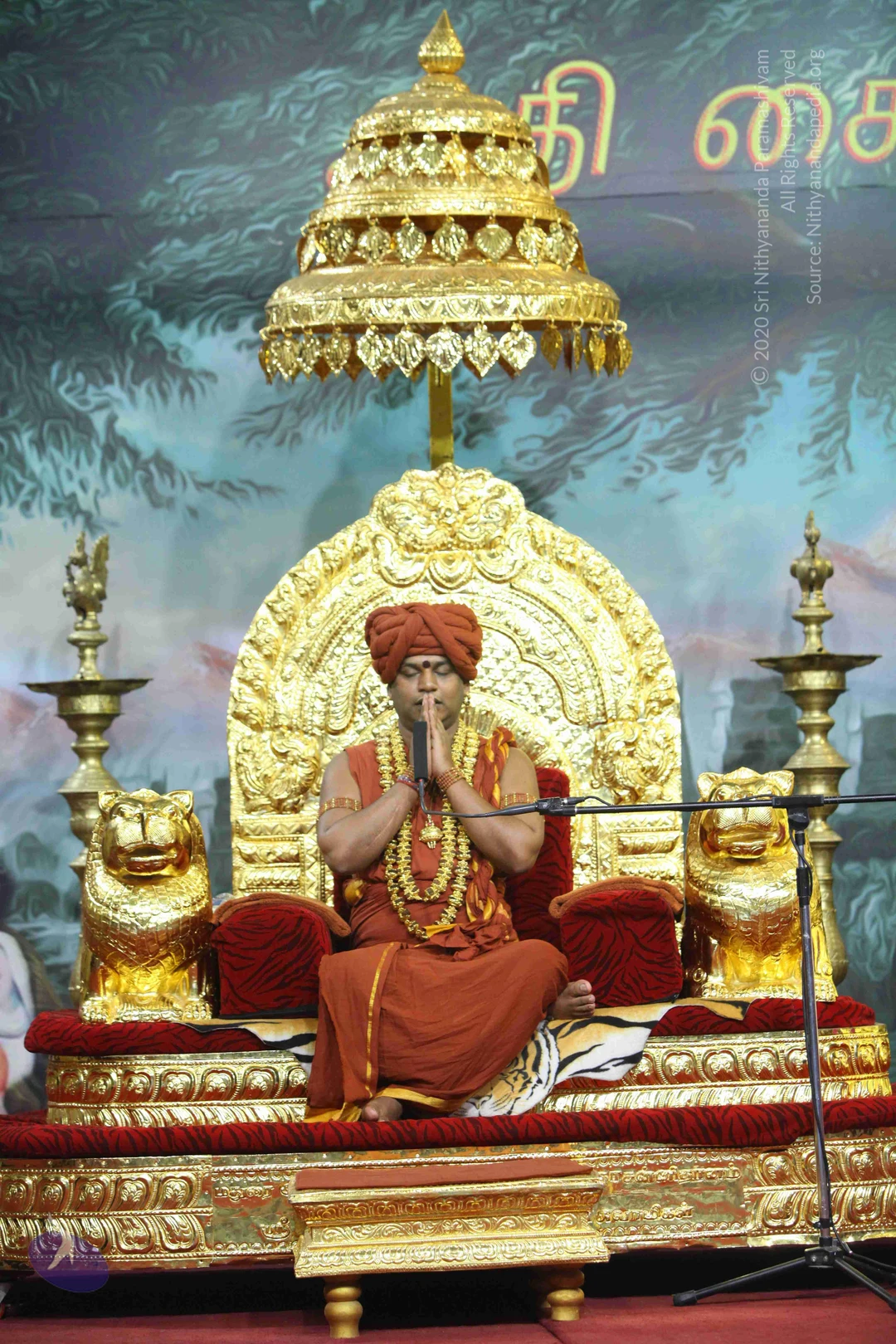
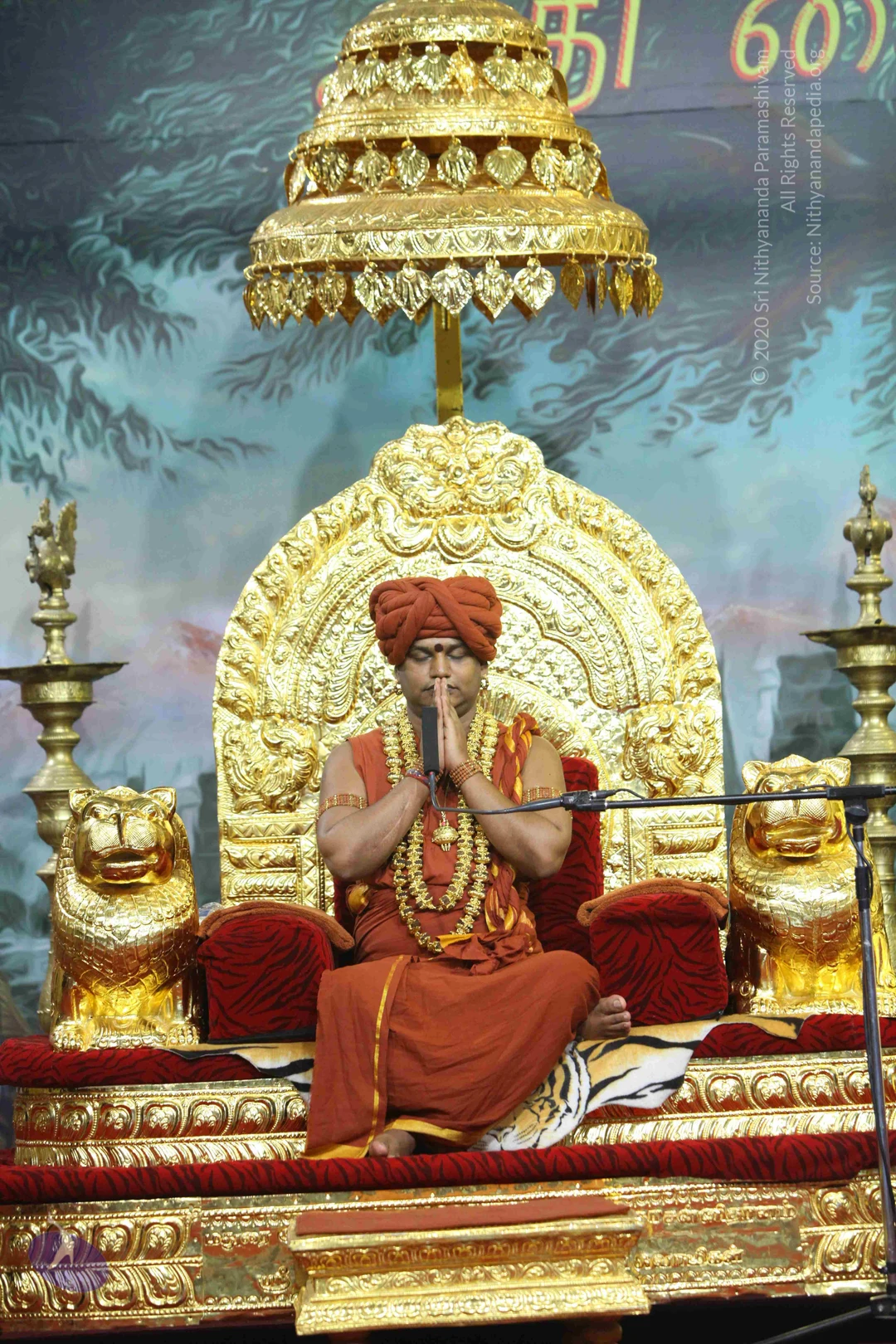
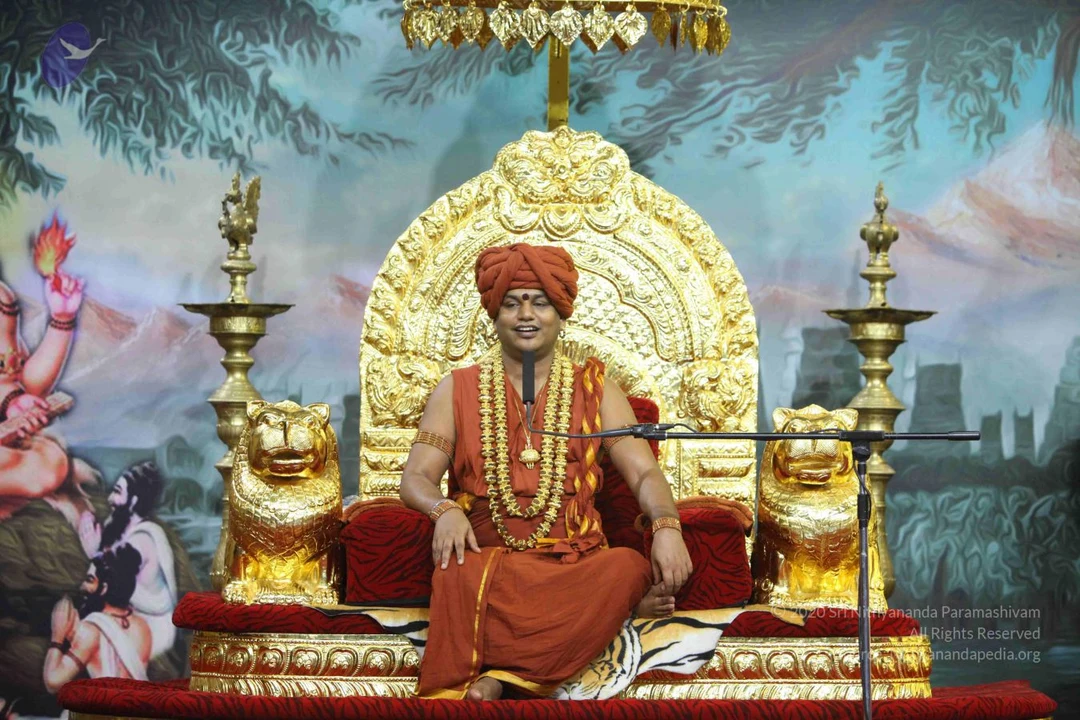
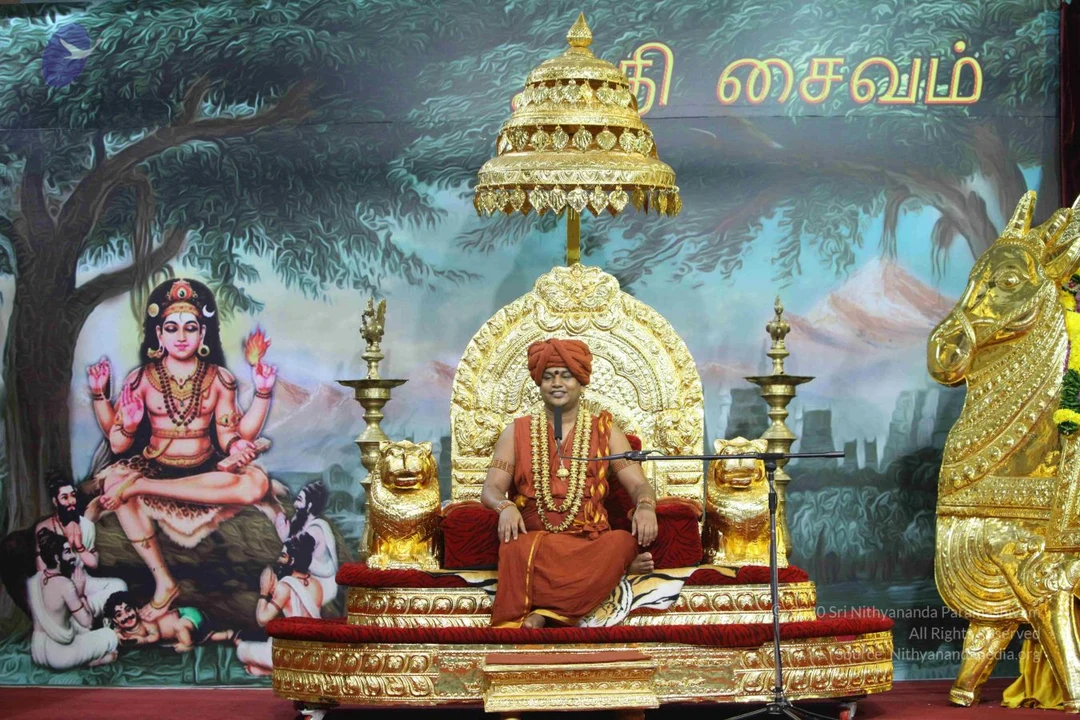
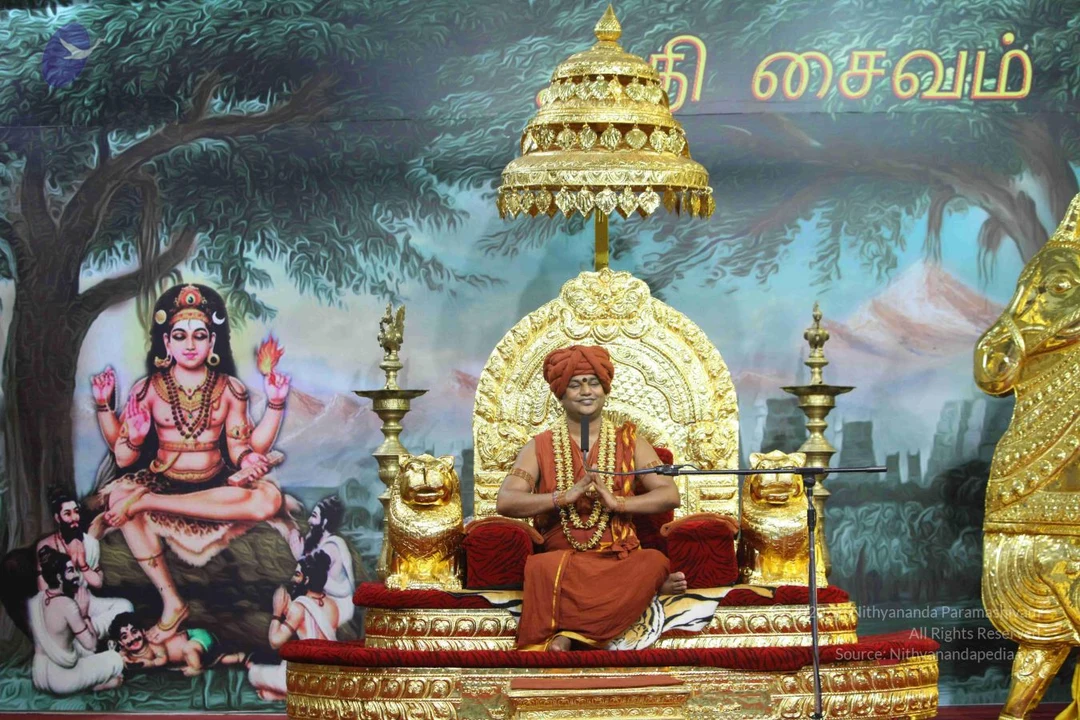
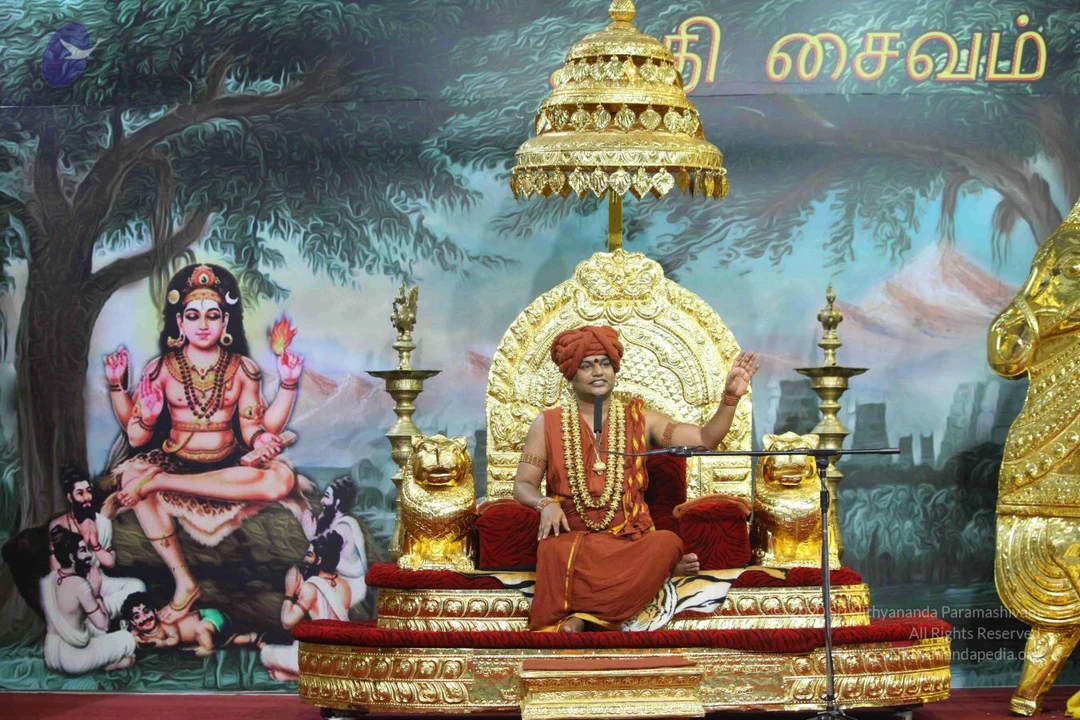
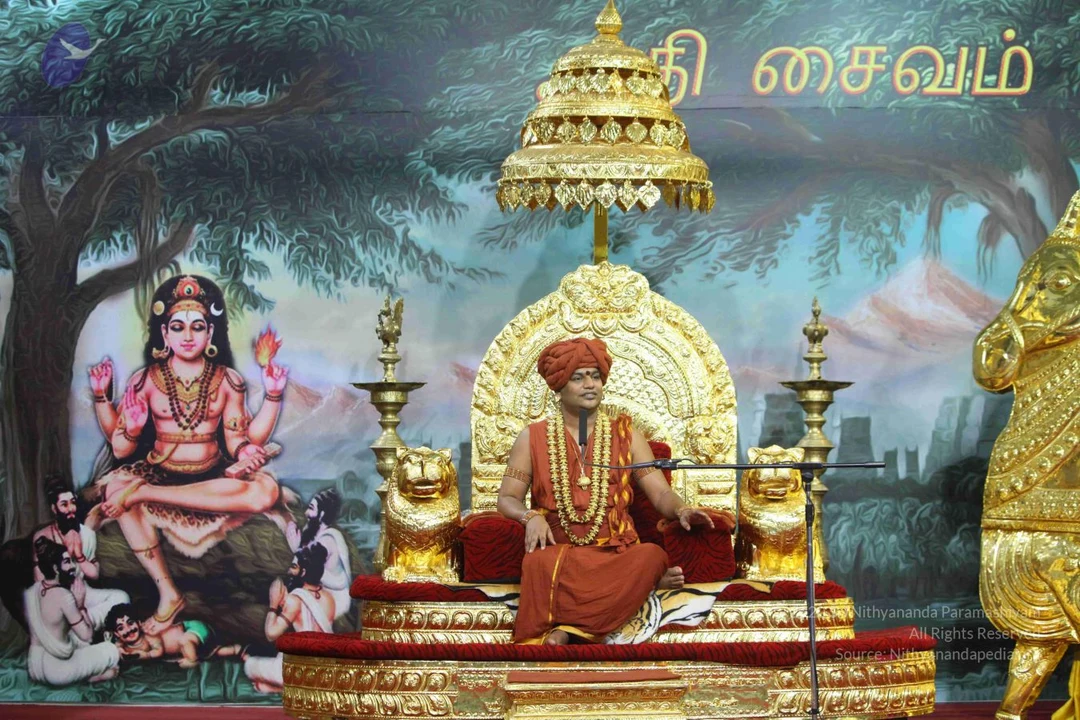
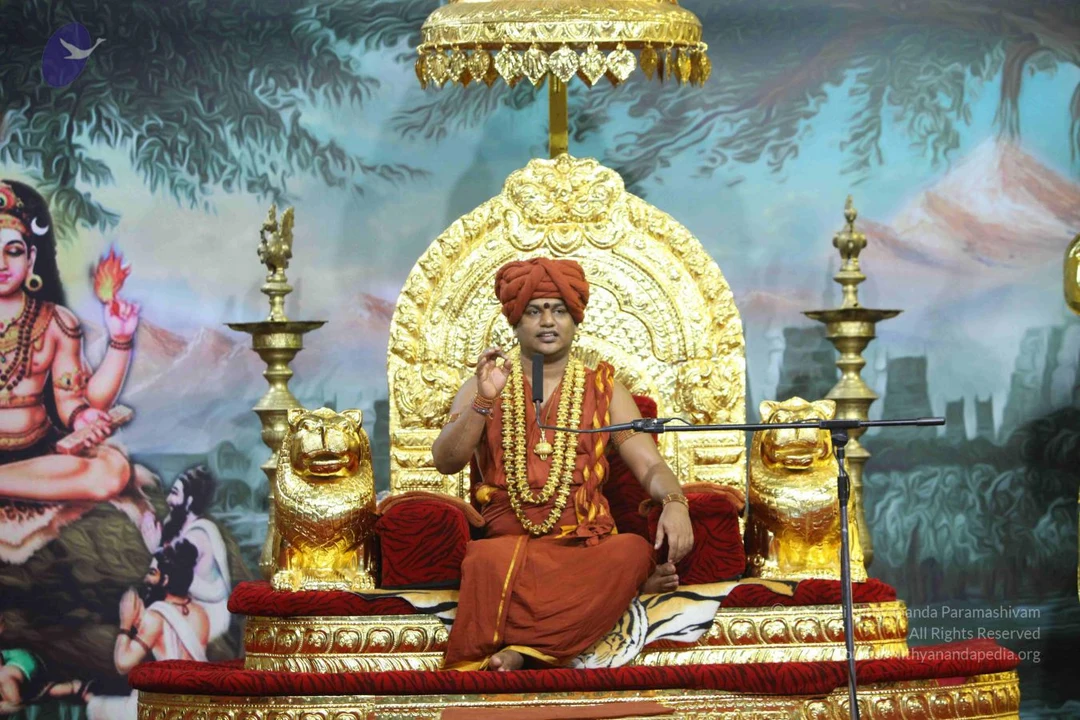
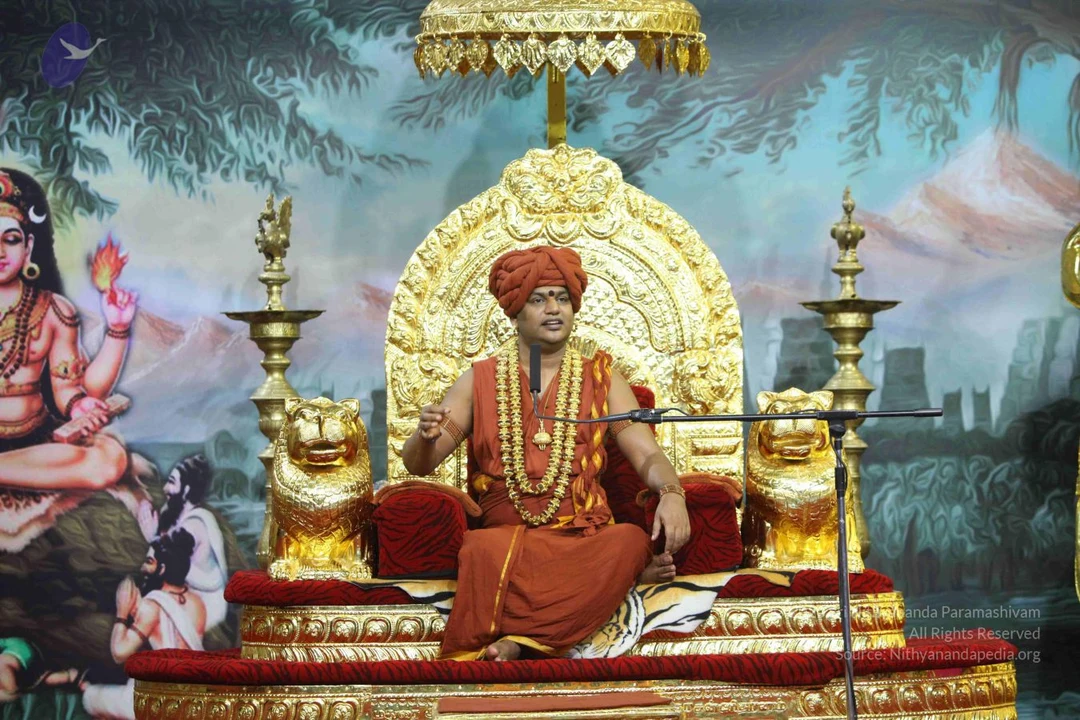
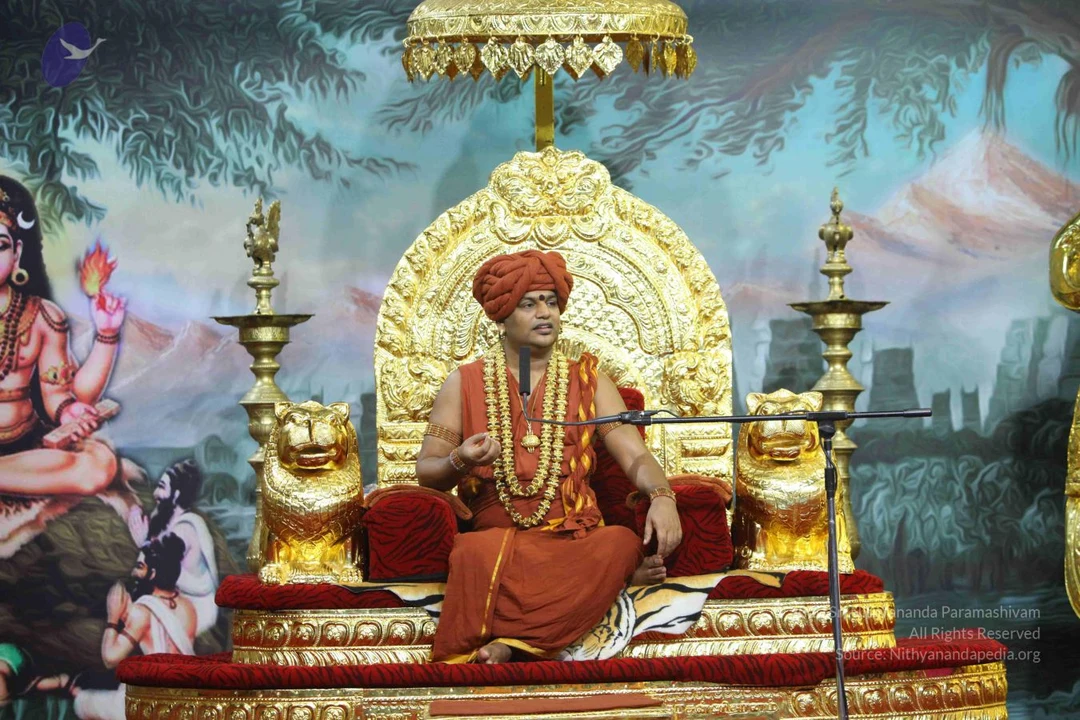
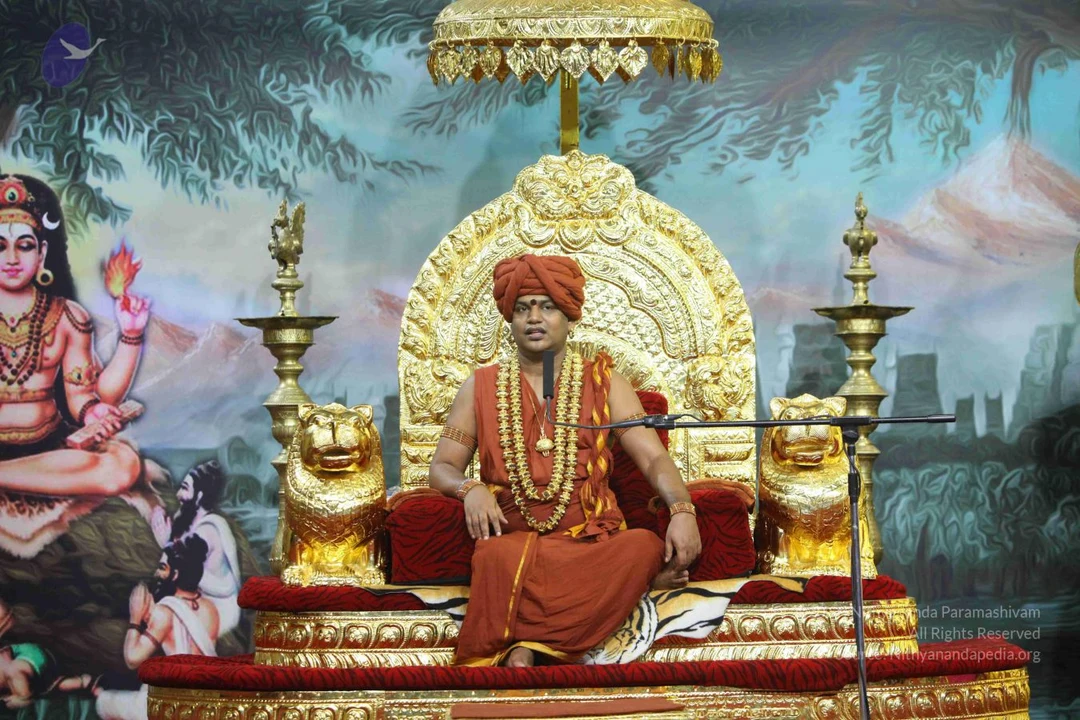
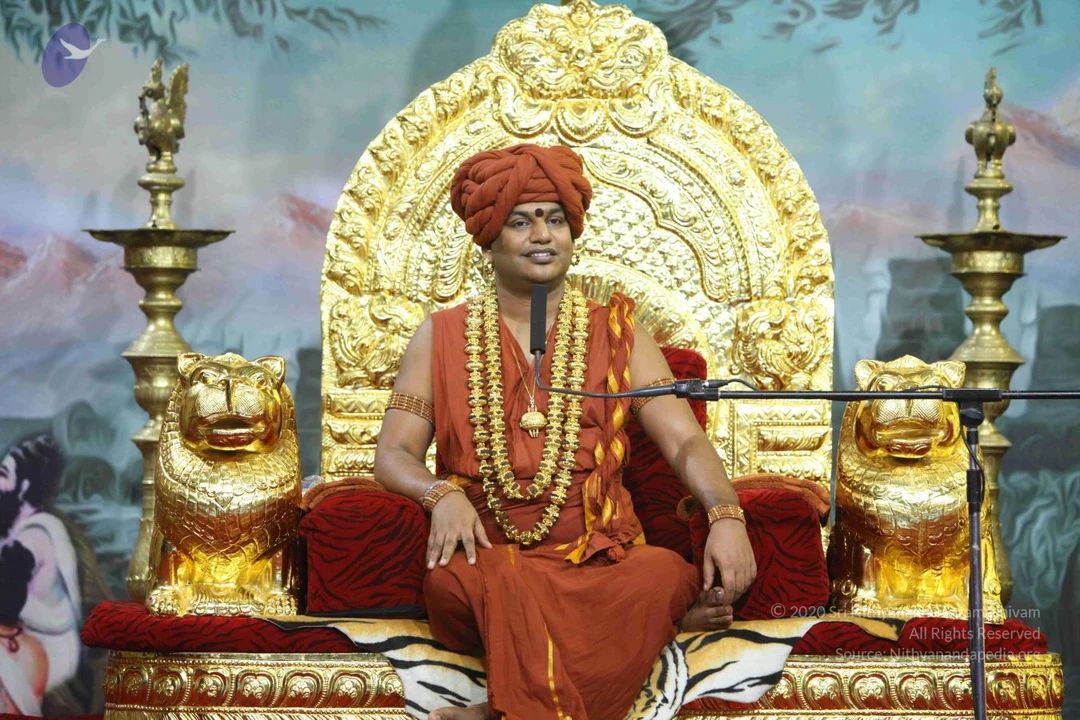
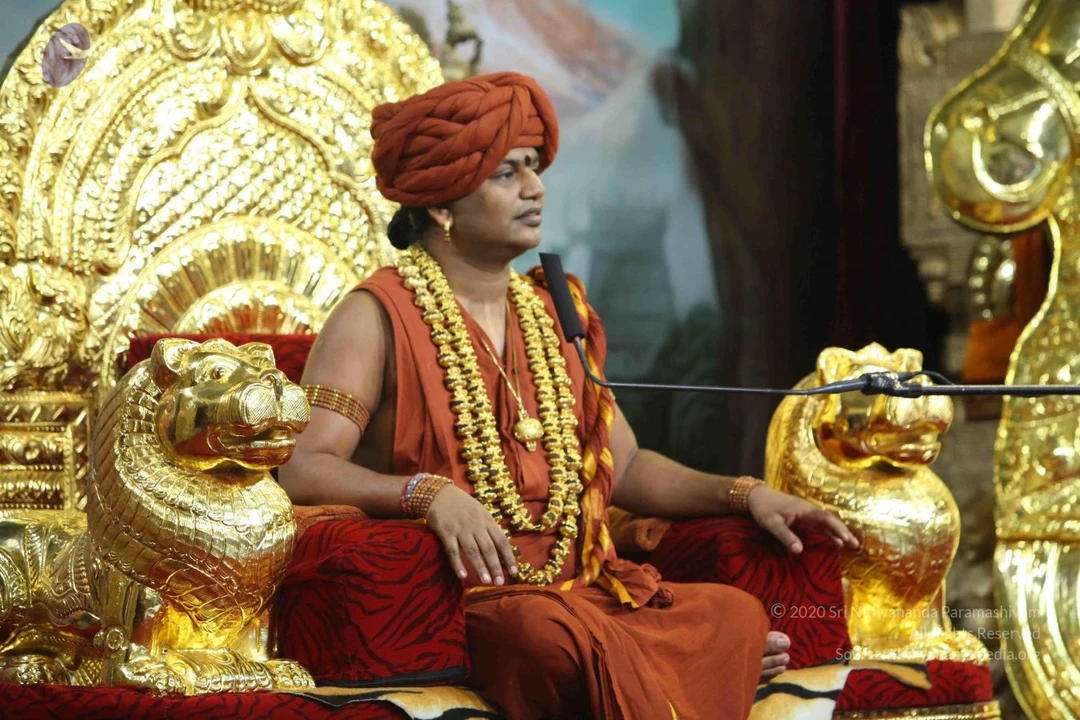
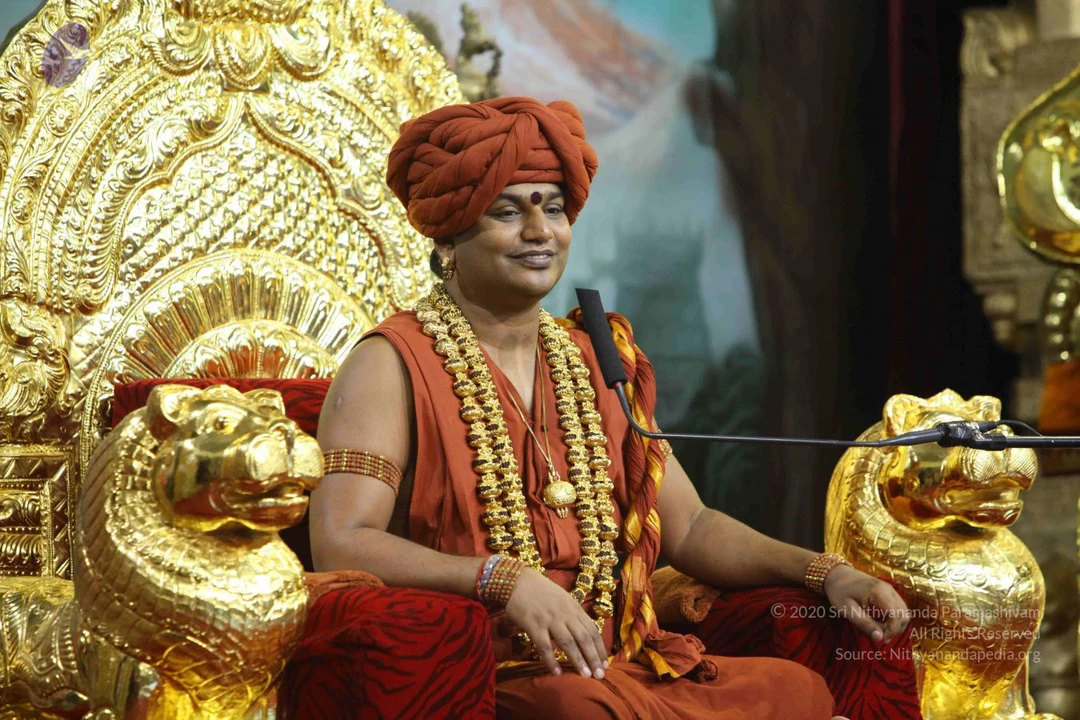
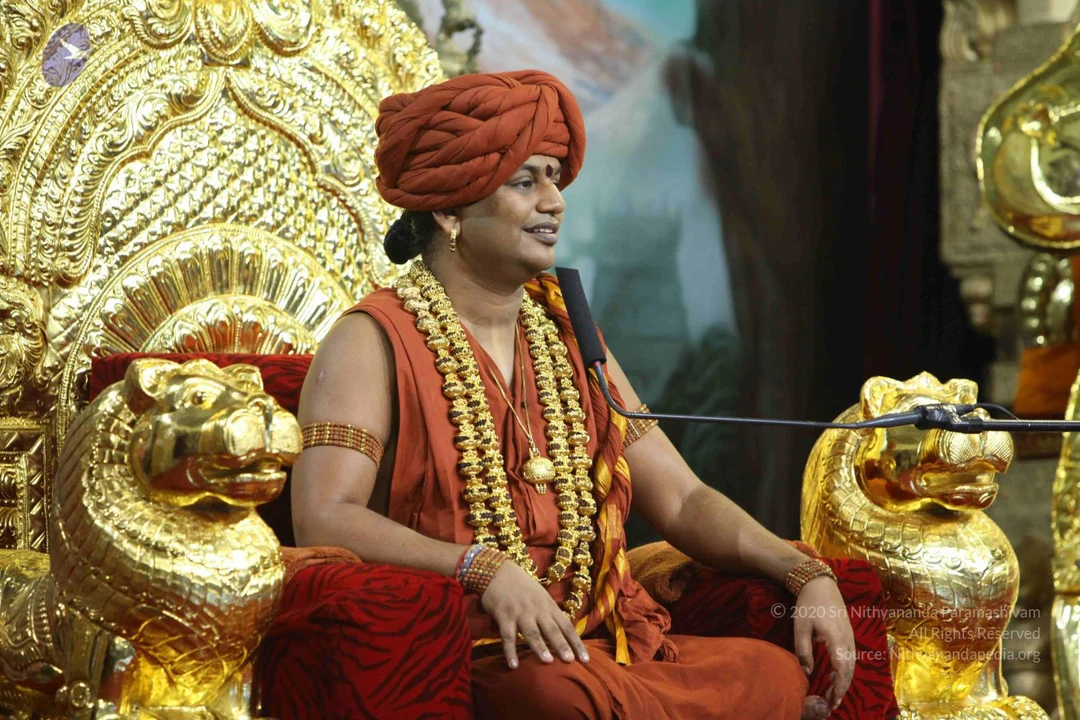
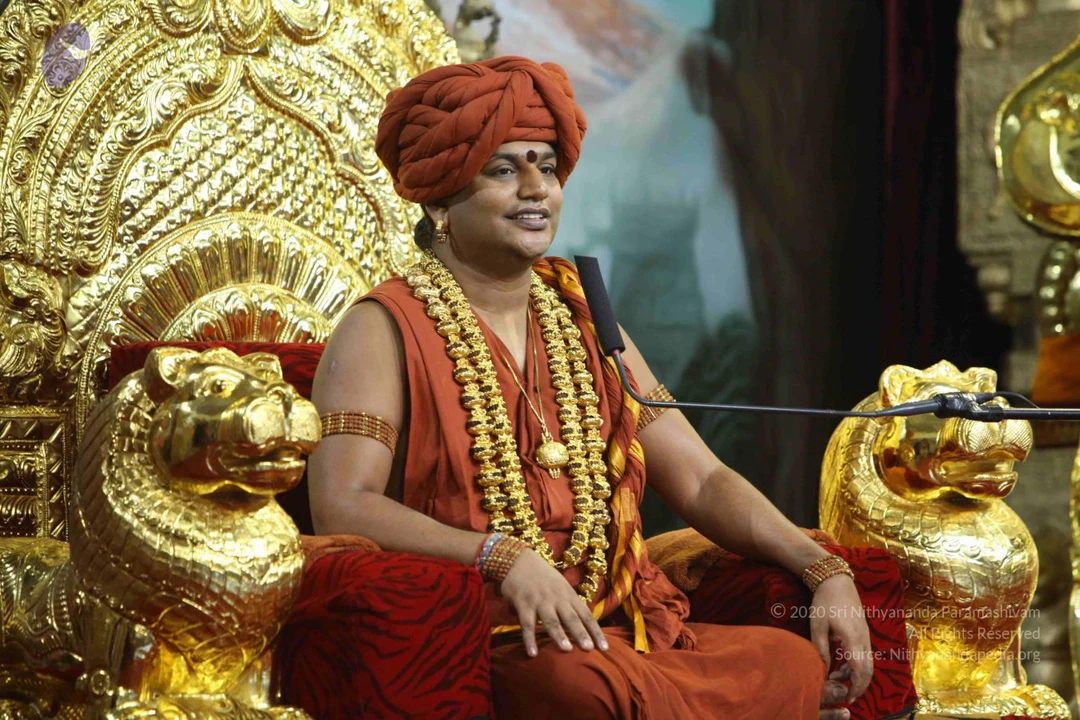
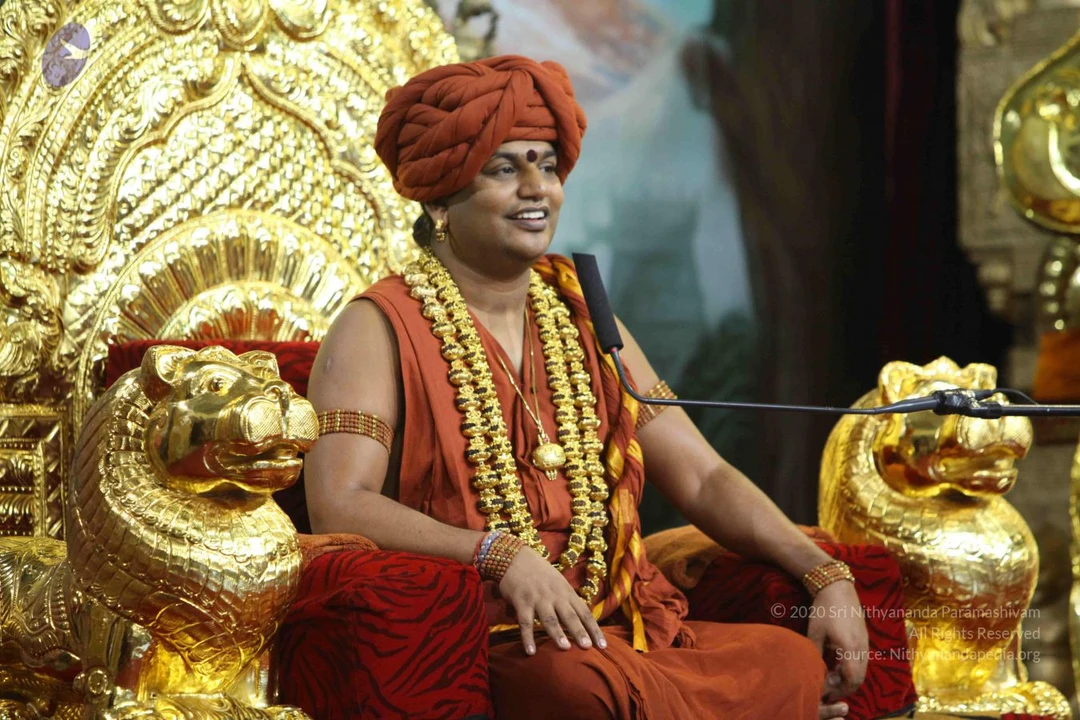
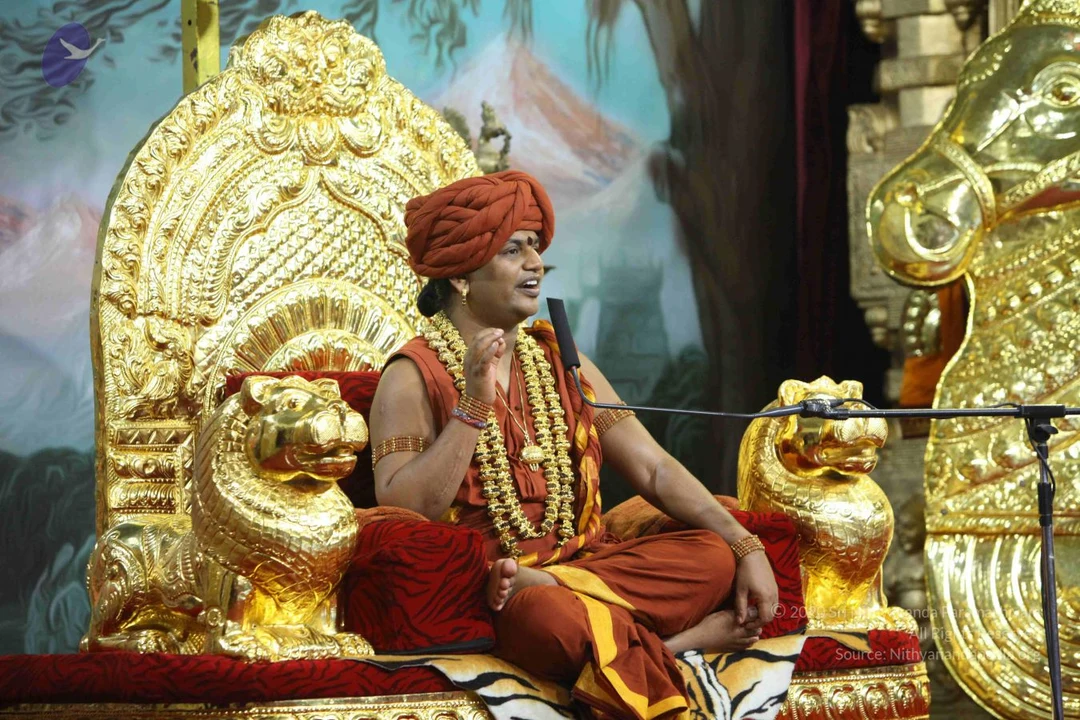
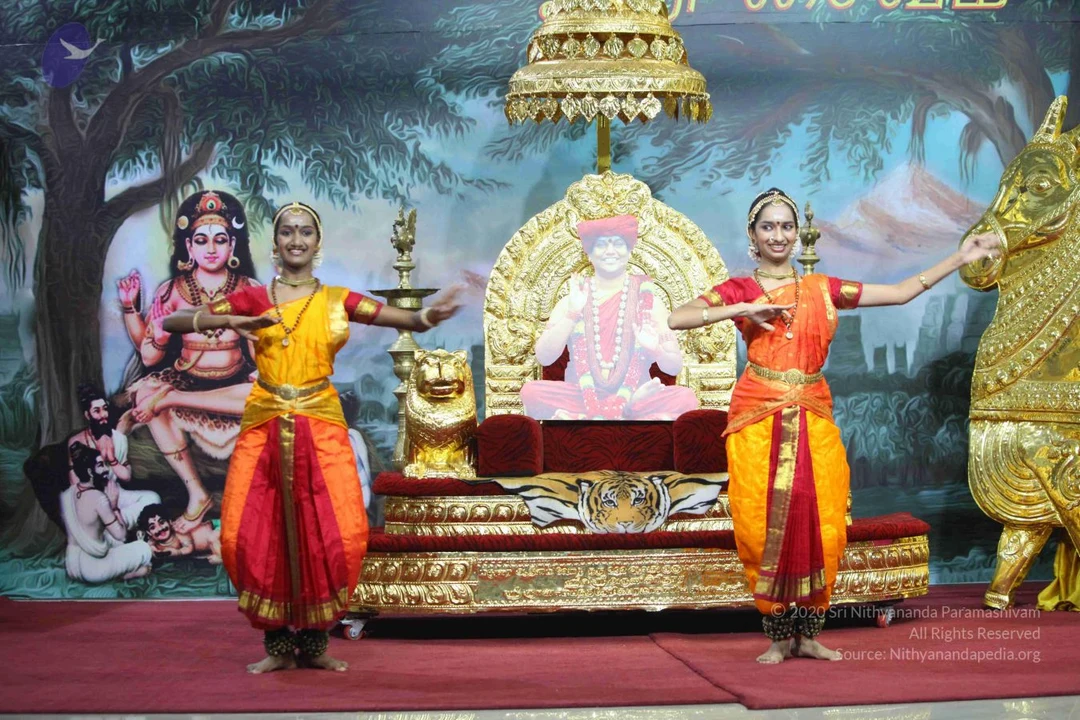
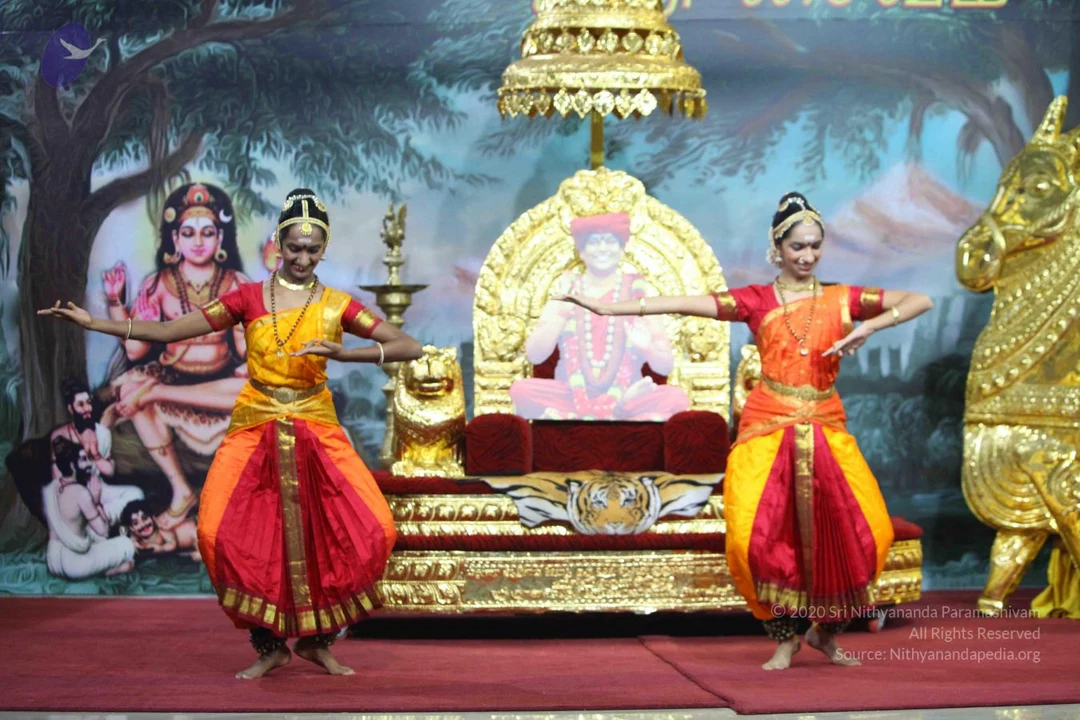
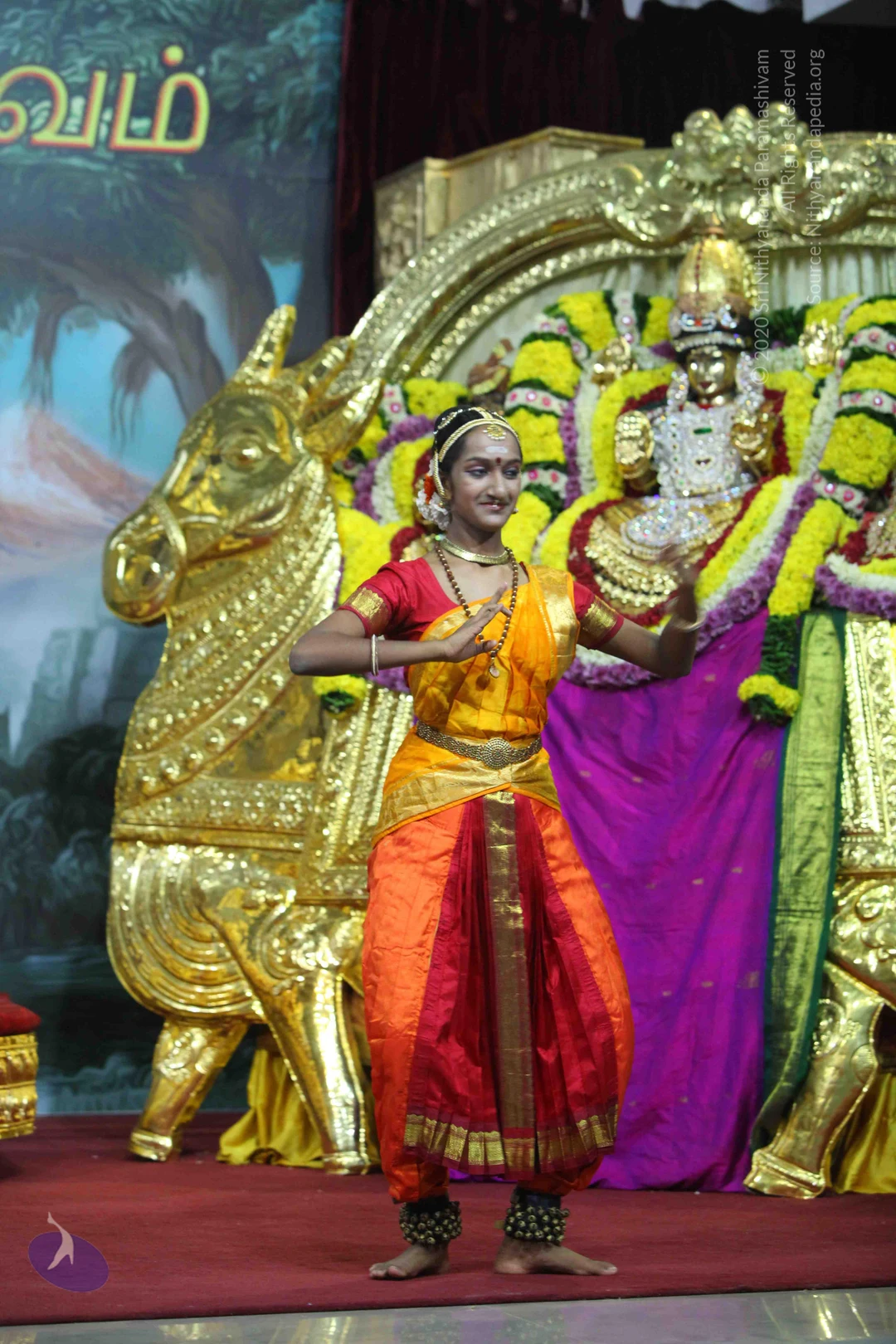
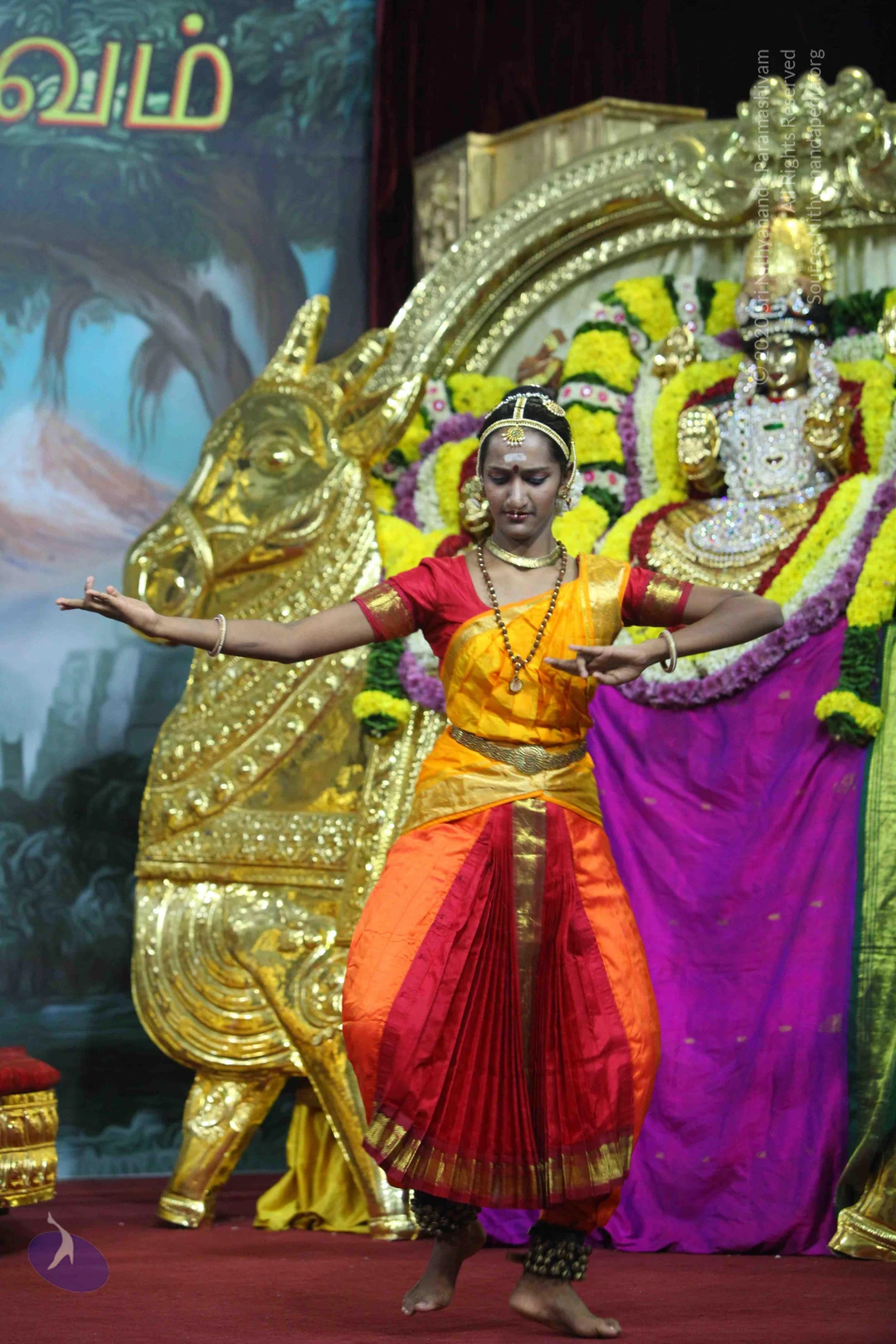
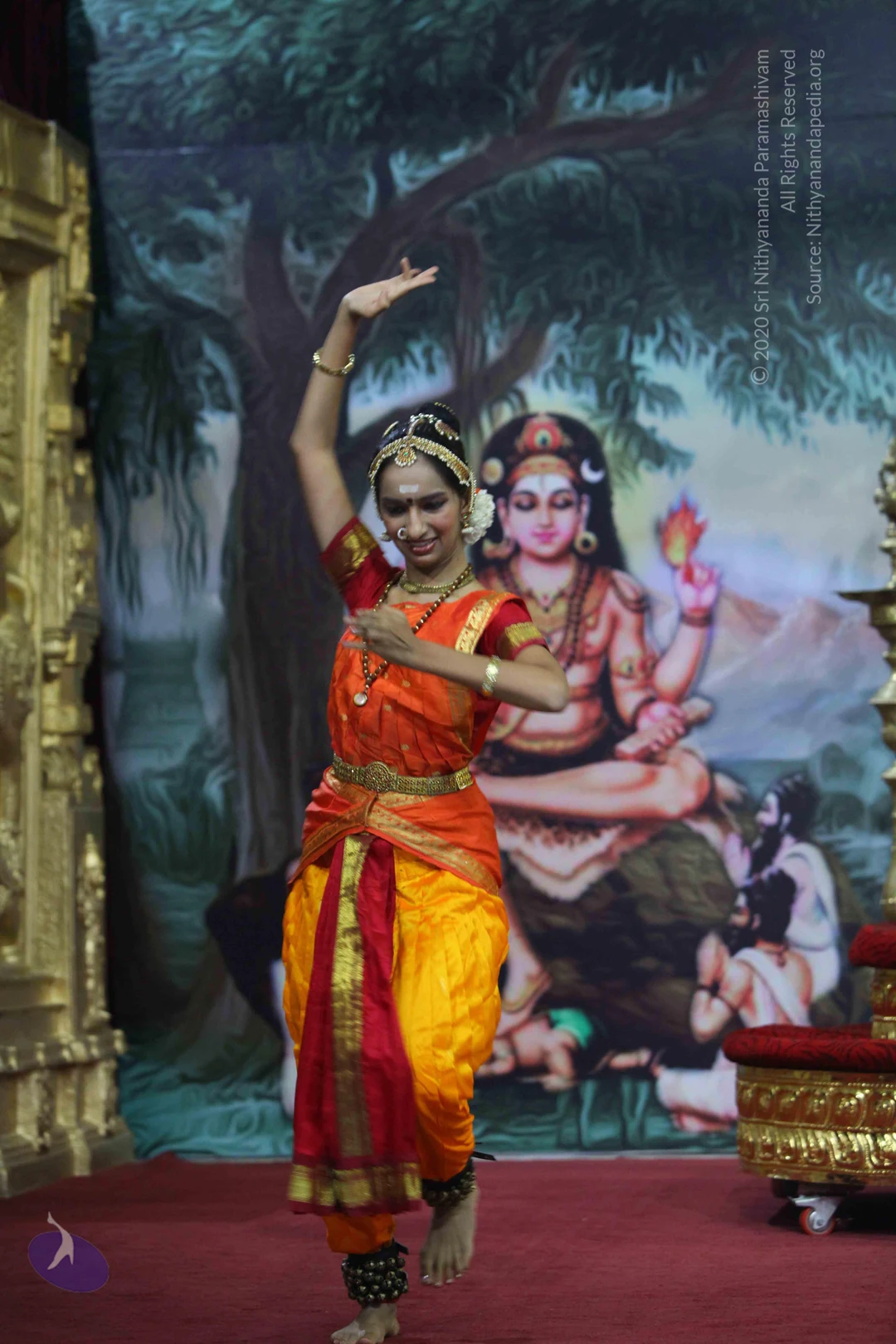
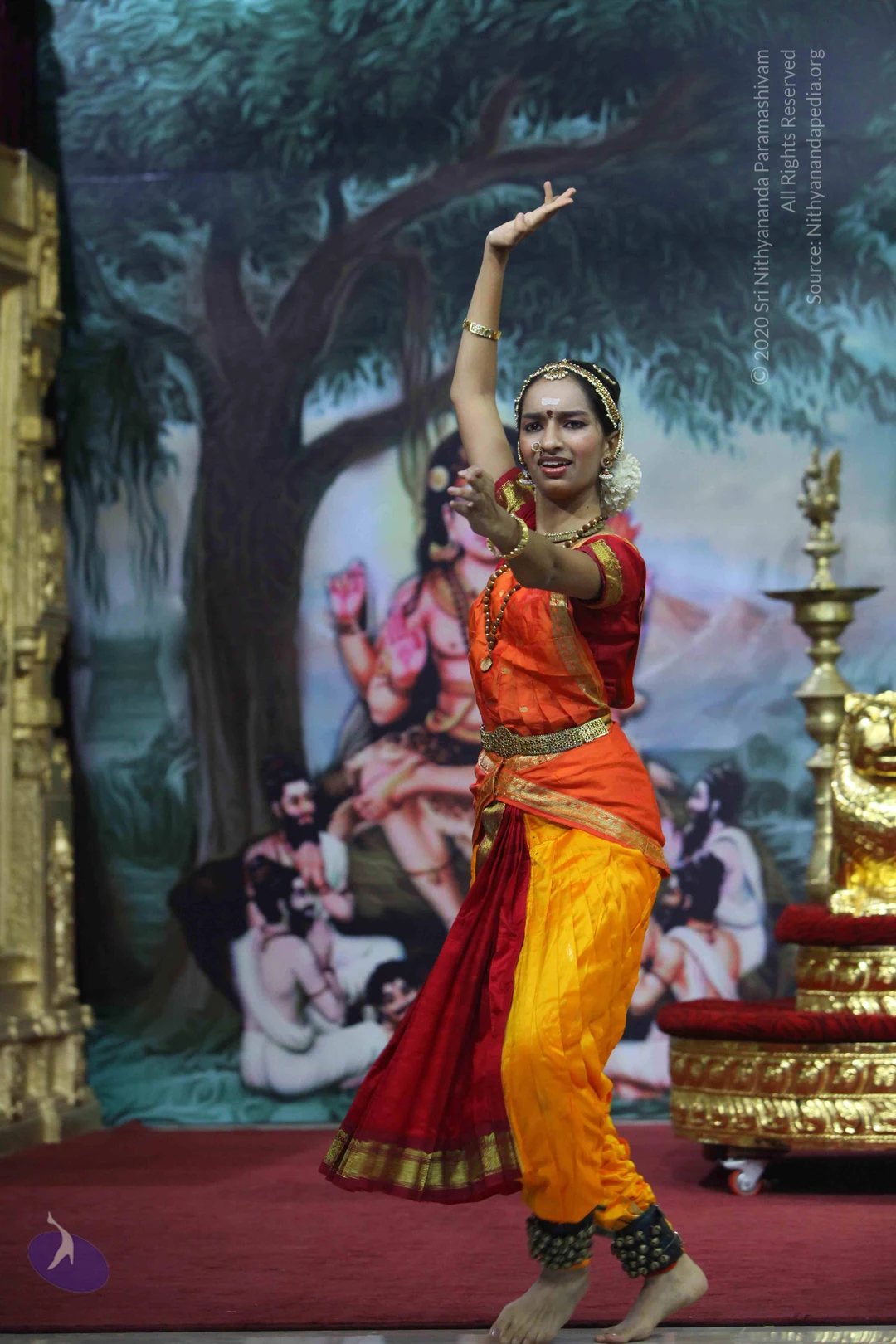
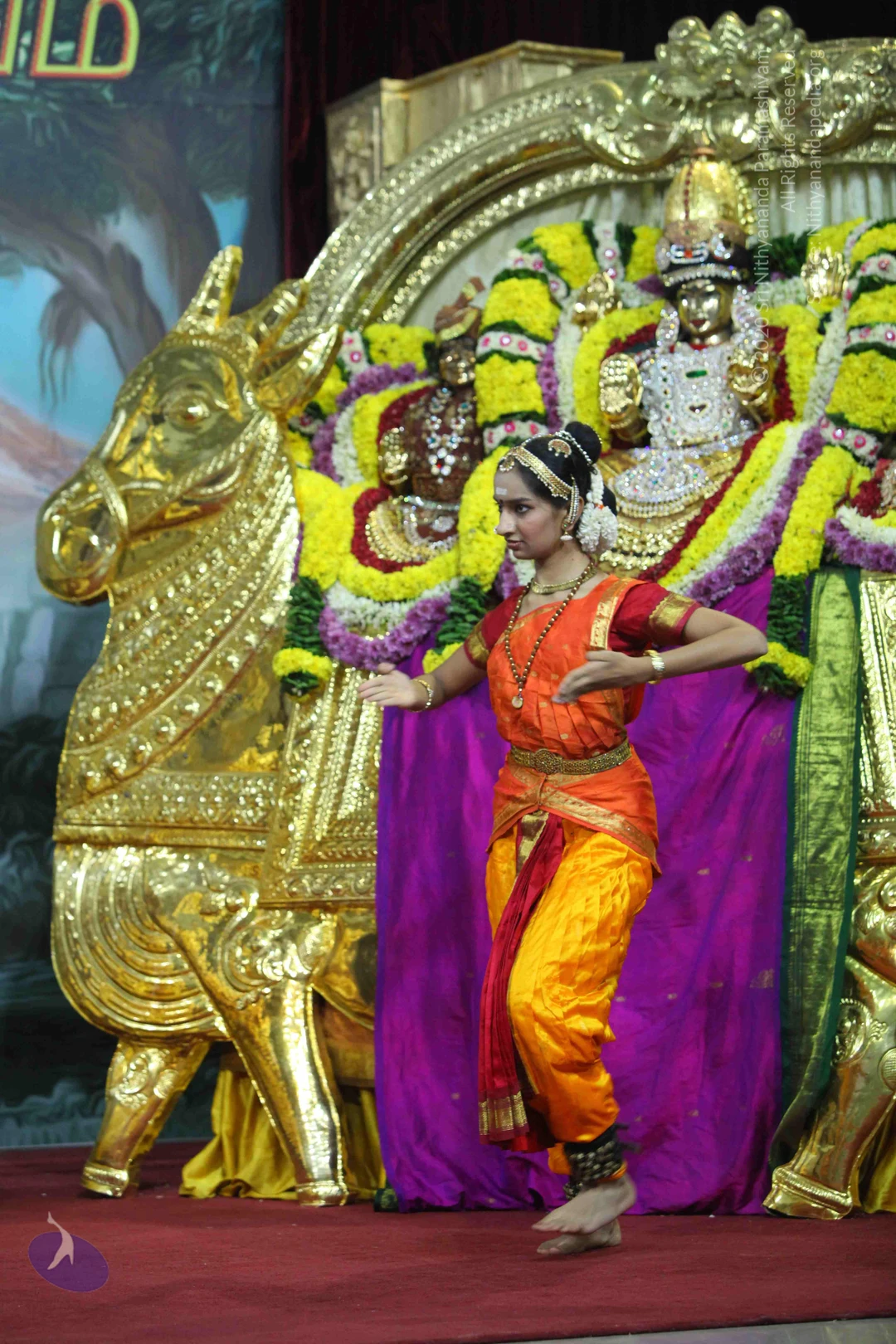
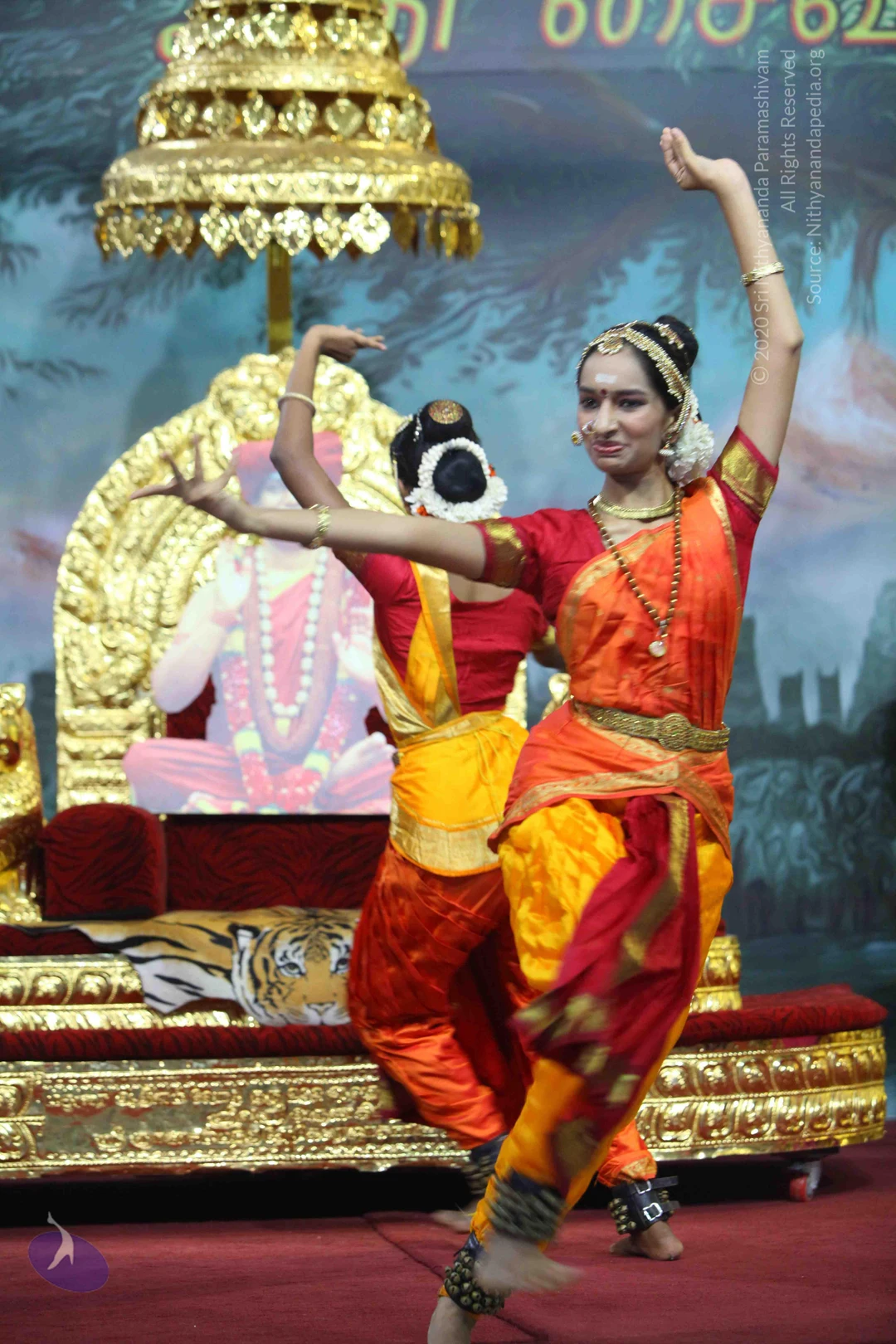
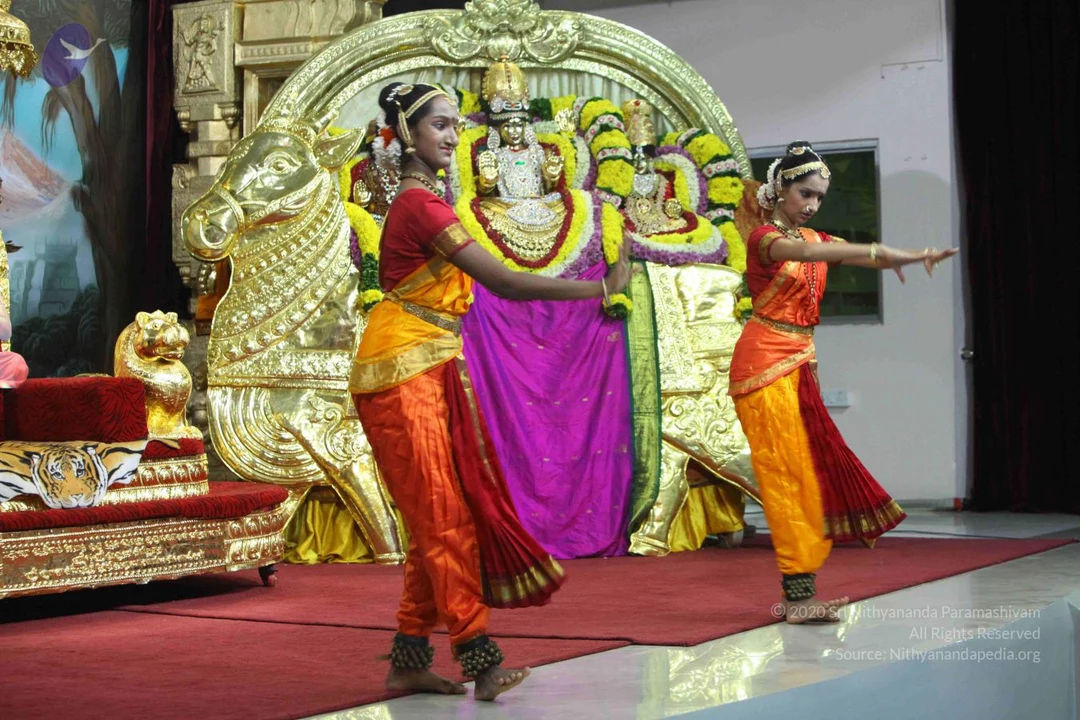
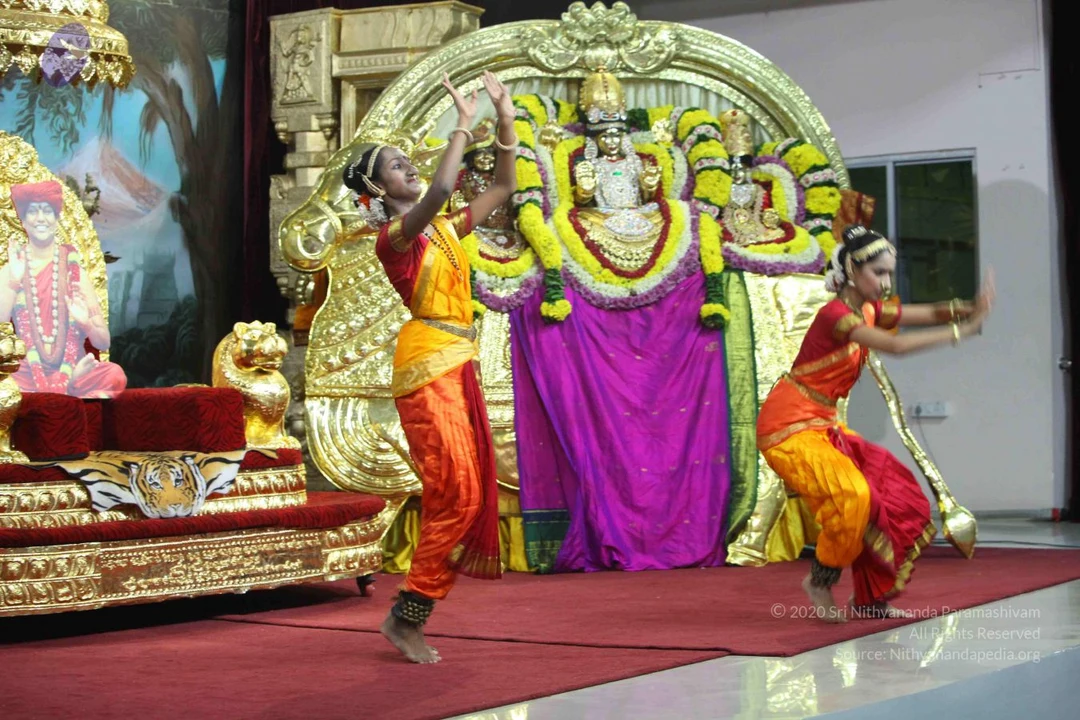
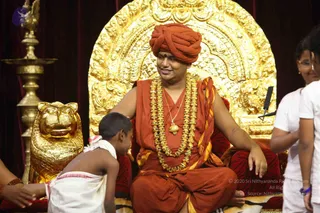
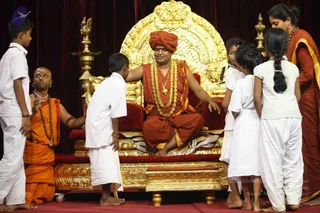
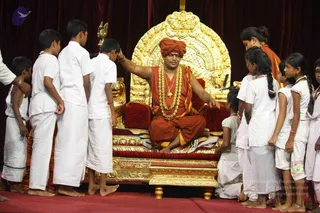
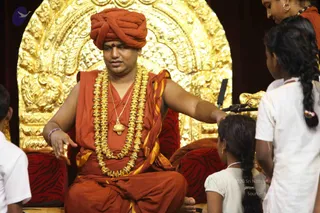
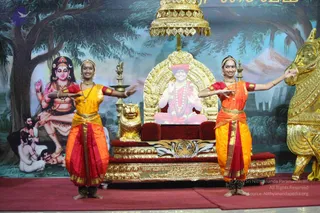
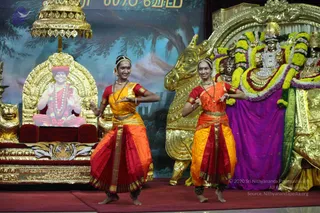
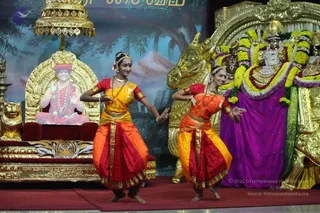
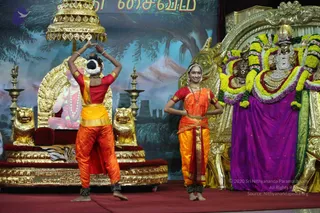
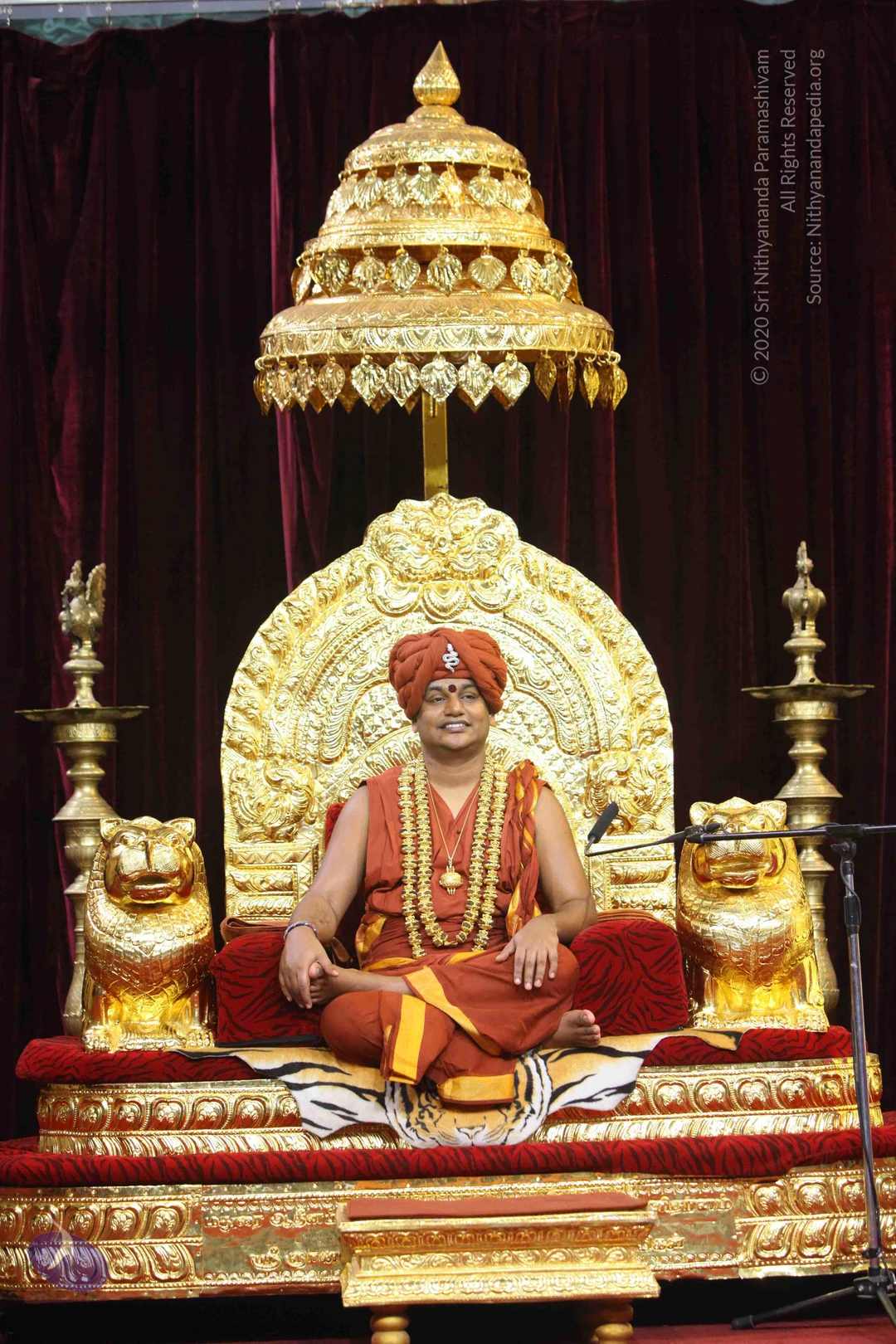
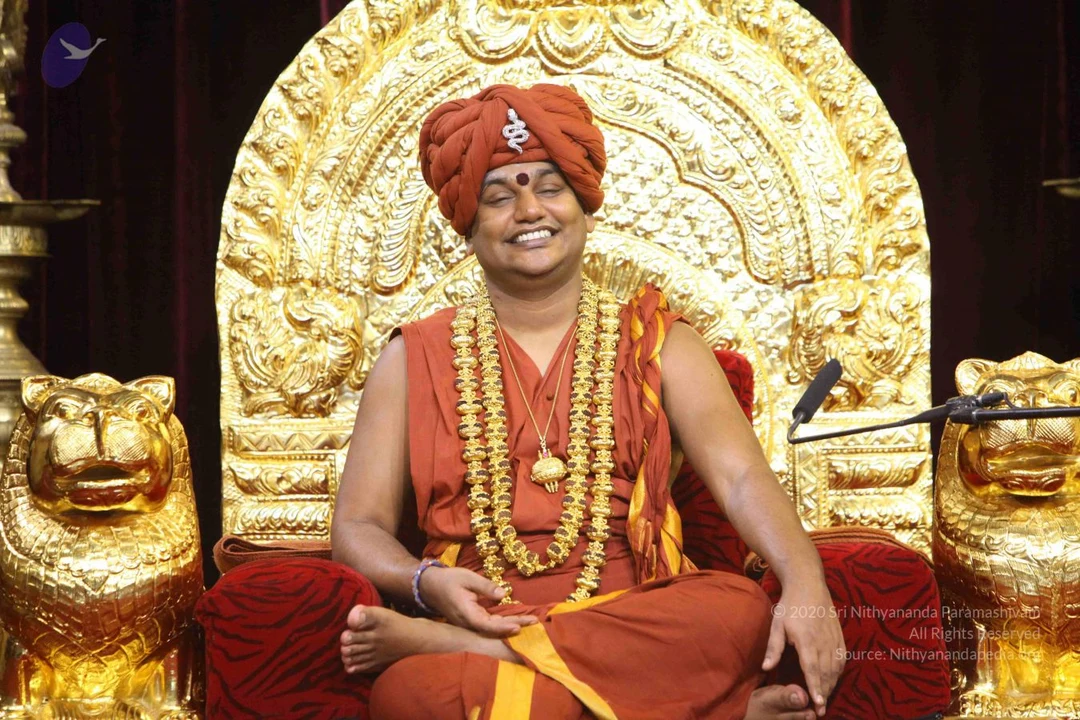
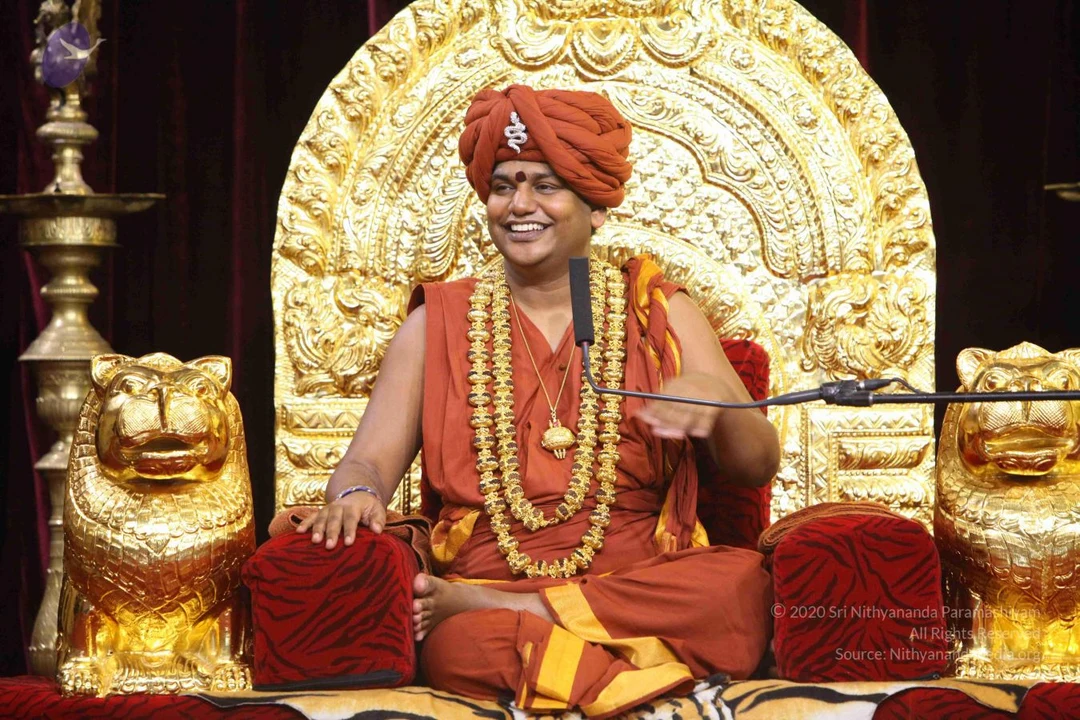
A seated man in a saffron-orange turban and orange-red robe sits cross-legged on an ornate gilded throne carved with lion-headed armrests and a golden back panel. He wears heavy gold necklaces with a gold pendant, a red-orange wrap over the shoulder, and a red bindi on his forehead, smiling toward the audience. A microphone on a stand is at his right, and deep red drapes hang behind the throne. Appearance-based label: Swamiji (probable), seated in a throne with gold lion armrests, wearing a saffron turban, rudraksha-style gold necklaces and saffron robes, presenting in a discourse setting.A seated man in orange-saffron robes and an orange turban sits on an ornate golden throne with carved gold backing and a golden lion-shaped armrest. He wears a long multi-strand gold necklace with a gold pendant and a red tilak mark. He reaches out to touch a young man in a white shirt kneeling before him, while a woman in an orange sari with a gold border stands at right, also holding the kneeling person's arm. A golden oil lamp stands at left against a dark red curtain. The setting is a ceremonial stage. The seated man is a person by appearance cues: the orange turban, saffron robes, and ornate gold necklace, though his appearance is not conclusive.Two young women in traditional Indian dance costume perform on a red-carpeted stage in front of a painted backdrop of Shiva seated with a flame and a forest scene. Both wear red blouses with orange and yellow pleated sarees with gold borders, jewellery, flowers in their hair, and ankle bells. Their arms are extended in a dance pose toward a golden throne draped in red cushions with a tiger skin, flanked by golden lion figures and brass lamps. A golden bull or ornate figure stands at right beside a deity murti adorned with yellow and purple garlands. The scene appears to be a stage dance performance in a temple-style hall.

November 11 2015

Original wiki page
Contents

Title

Paramashivoham Oneness Capsule 235 (Happenings of 11 November 2015)

Link to Video:

Title:

THE SUPREME PONTIFF OF HINDUISM HDH BHAGAVAN NITHYANANDA PARAMASHIVAM

Link to Video:

Title

The Power of Initiation || Part 3 || Nithyanandoham || 11 Dec 2015

Description

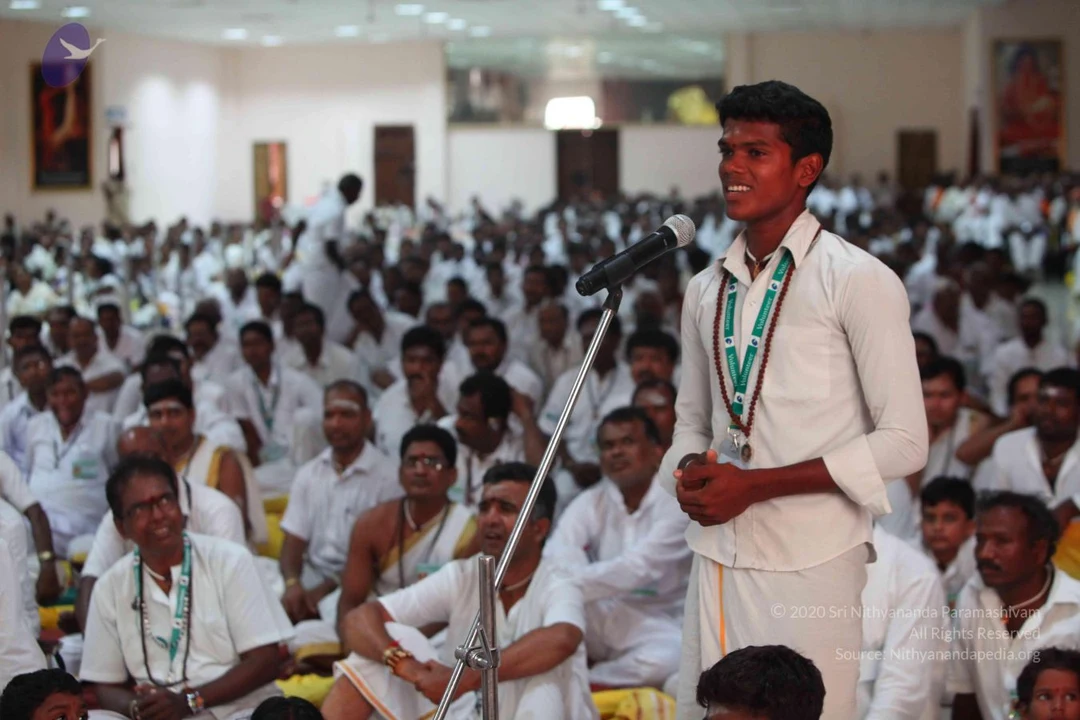
Name Of The Convention: Nithyanandoham Title: The Power of Initiation Part 3 Session on: Participants sharing/ Question & Answer Venue : Phuket, Thailand Date : 11 December 2015

In this video, The Supreme Pontiff of Hinduism, Jagatguru Mahasannidhanam, His Divine Holiness, #Nithyananda Paramashivam (HDH) answers participants' questions during Nithyanandoham convention.

The Supreme Pontiff of Hinduism Jagatguru Mahasannidhanam His Divine Holiness Nithyananda Paramashivam (HDH) is the reviver of #KAILASA - the ancient enlightened civilization and the great cosmic borderless Hindu nation. Revered as the incarnation of Paramashiva - the primordial Hindu Divinity, HDH has a following of 2 billion Hindus worldwide with de facto spiritual embassies in over 150 countries. He has worked untiringly for over 26 years for the revival of Kailasa, for global peace and to give super conscious breakthrough to humanity. He has survived the worst persecution of multiple assassination attempts on person and on character by anti-Hindu elements. He is collecting, organizing, preserving, time capsuling, decoding, spreading and reviving 20 Million source books of Hinduism and the 64 sacred arts & sciences like Ayurveda, music, dance, sculpting, astrology, vastu and much more. Close to 20,000 hours of HDH’s timeless talks have been recorded till date (Sep 2020), which are a treasure trove of powerful cognitions to solve individual and global problems of any kind.

Link to Video:

Photos Of The Day:

VISHESHA-DEEKSHA
INITIATION-TO-AWAKEN-THIRD-EYE

CULTURAL-PROGRAM

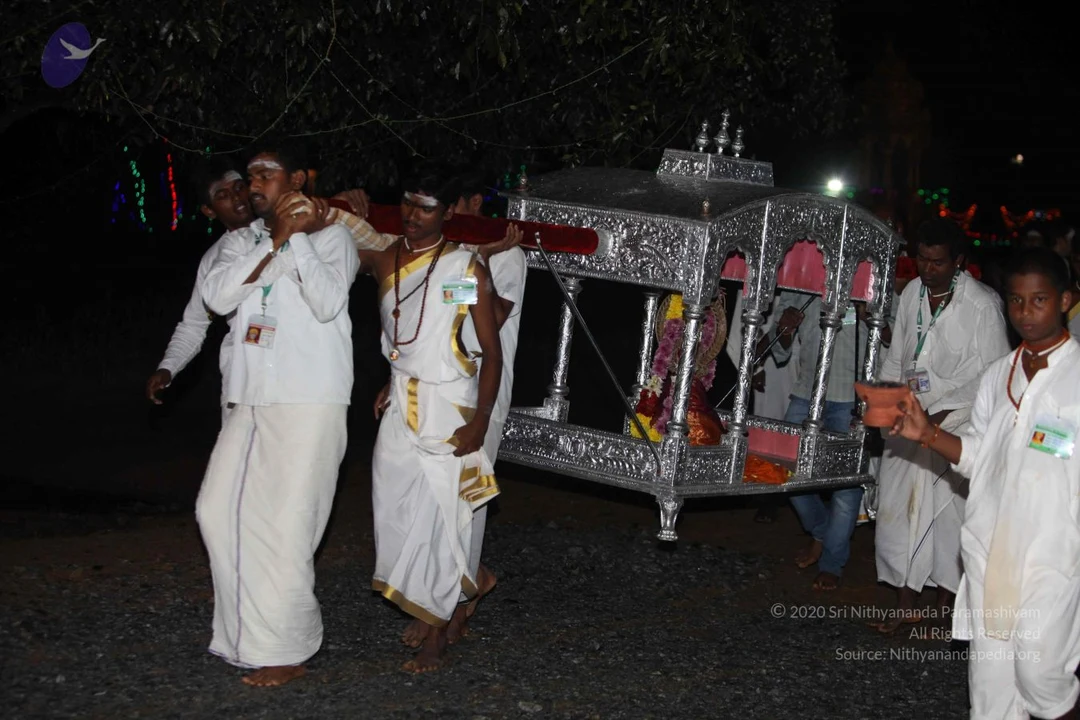
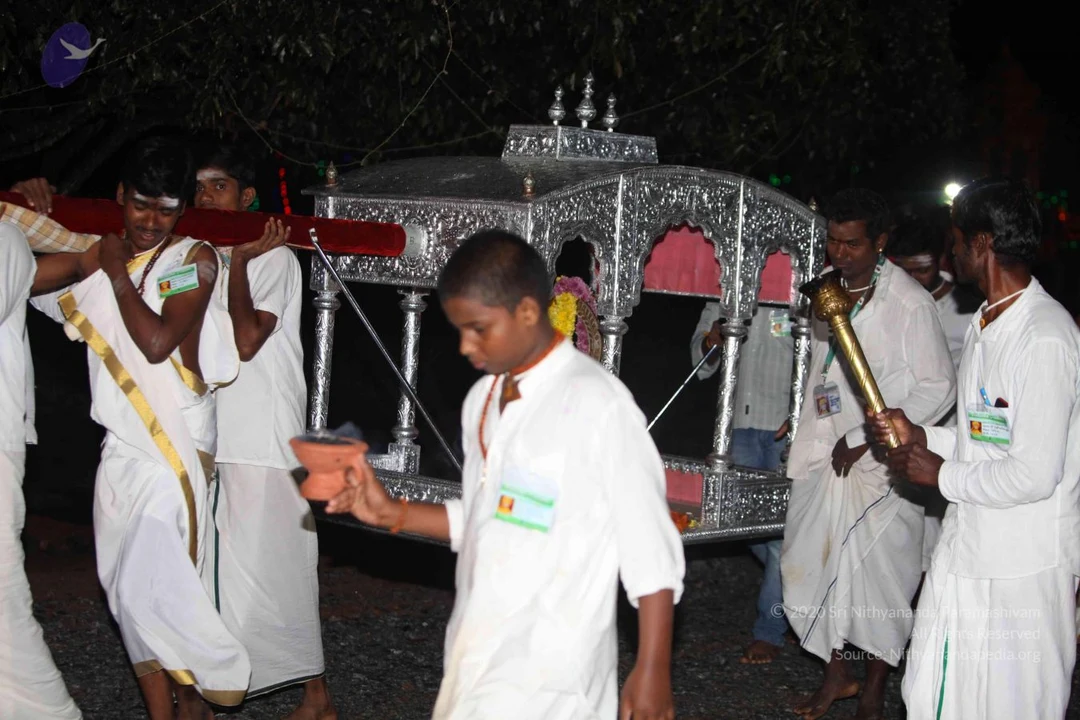
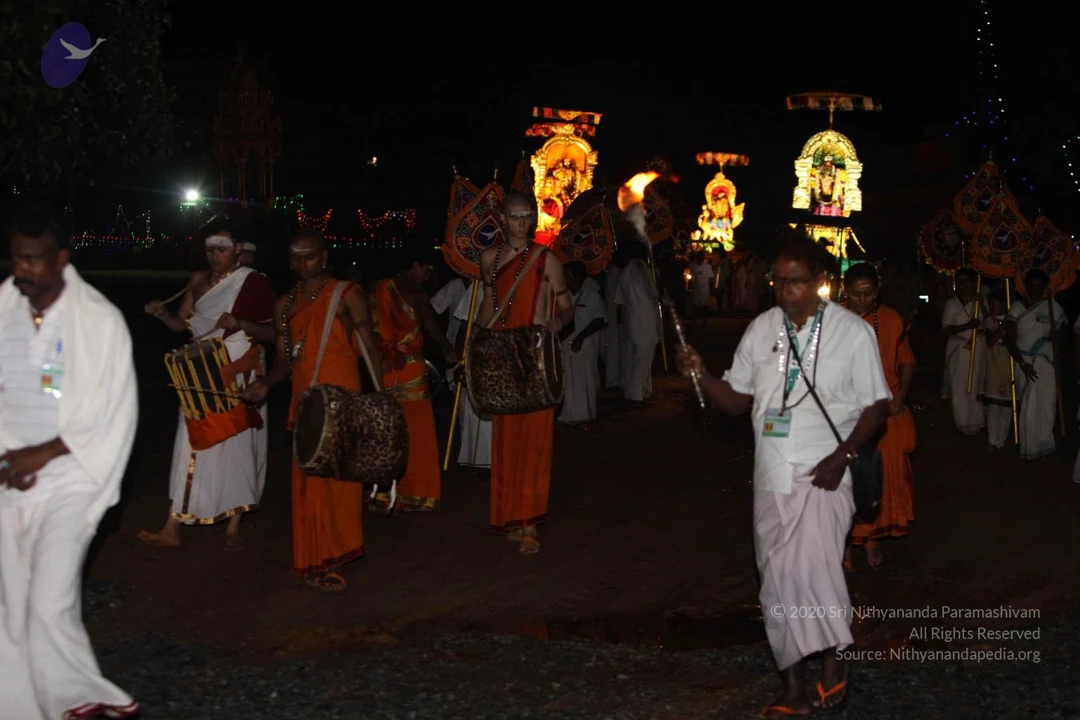
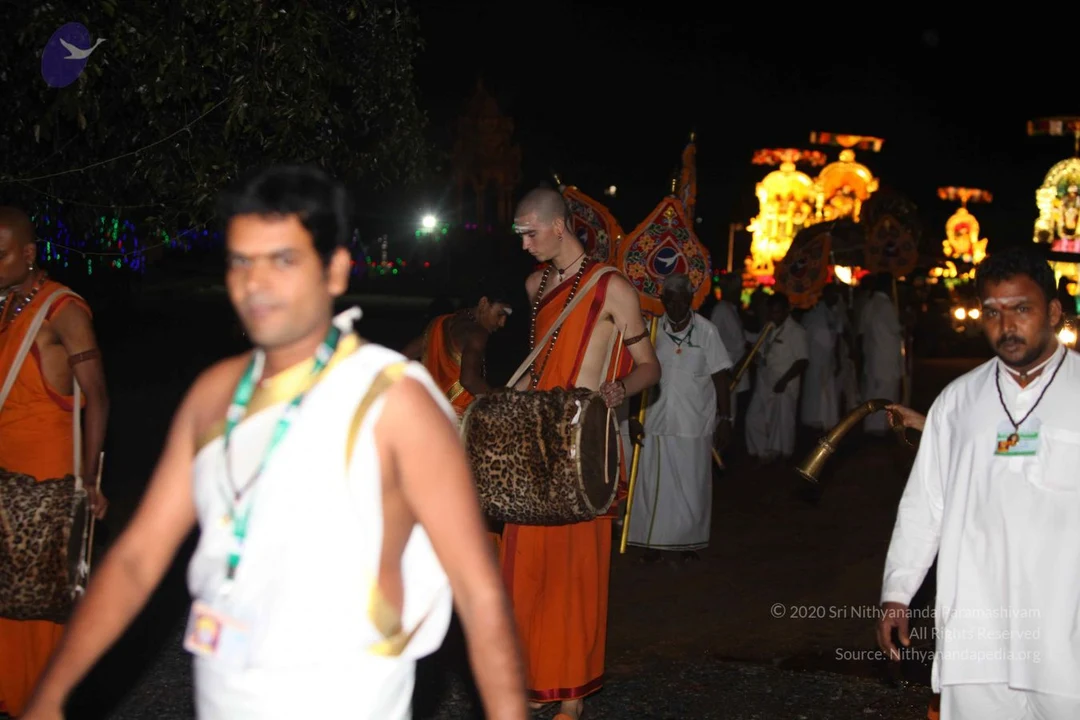
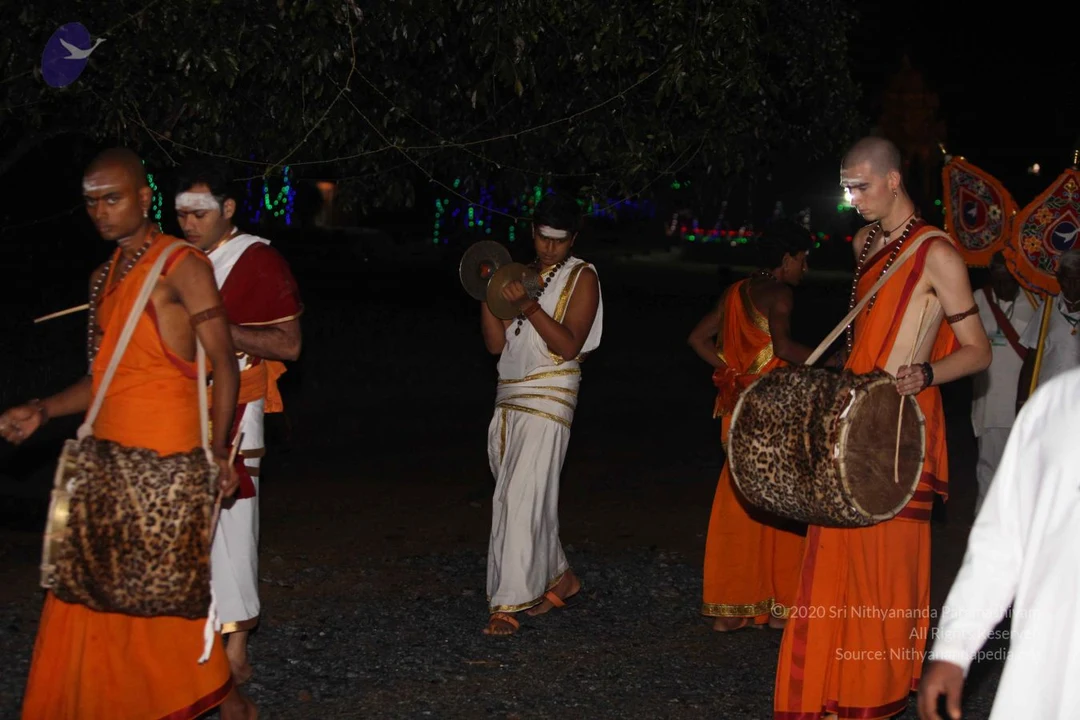
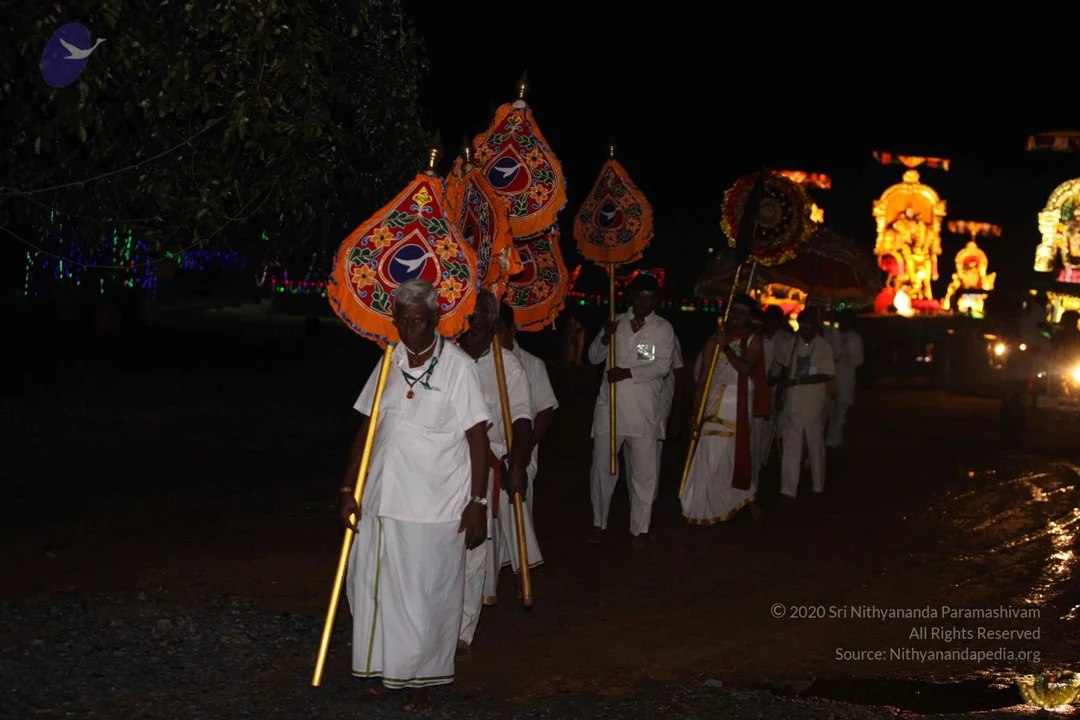
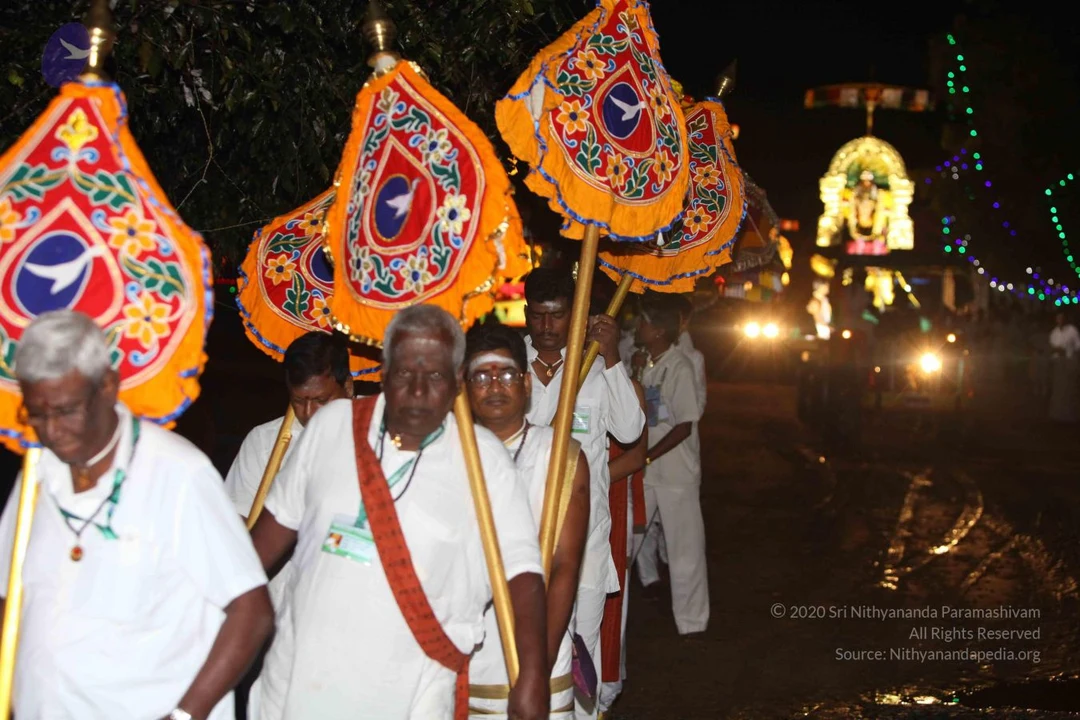
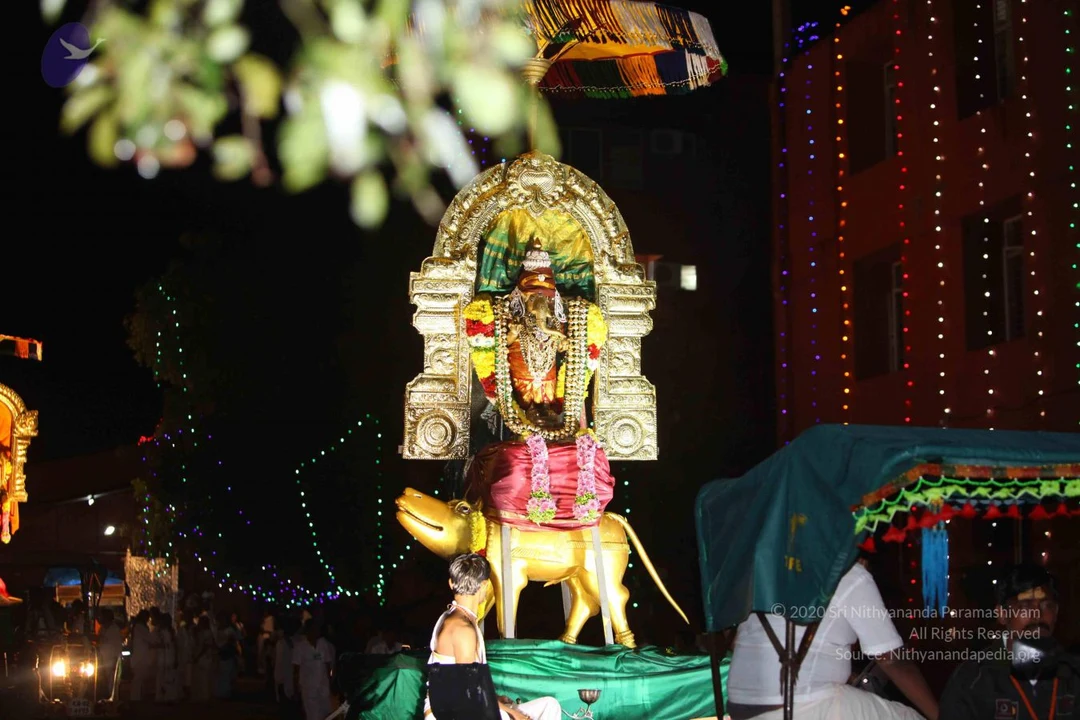
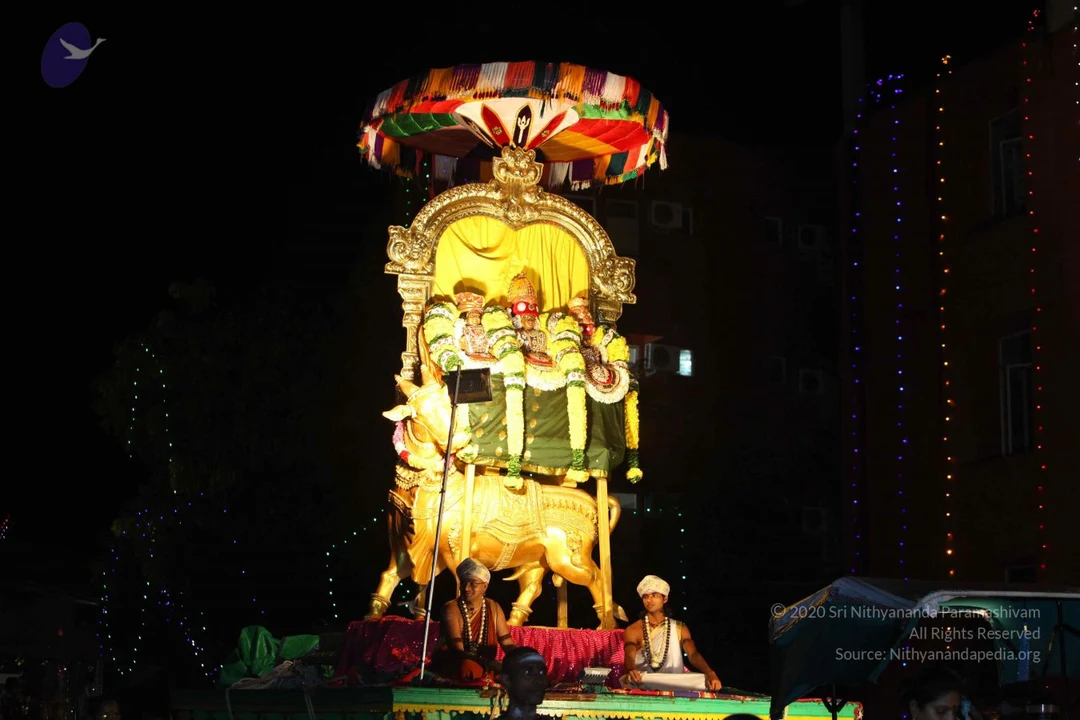
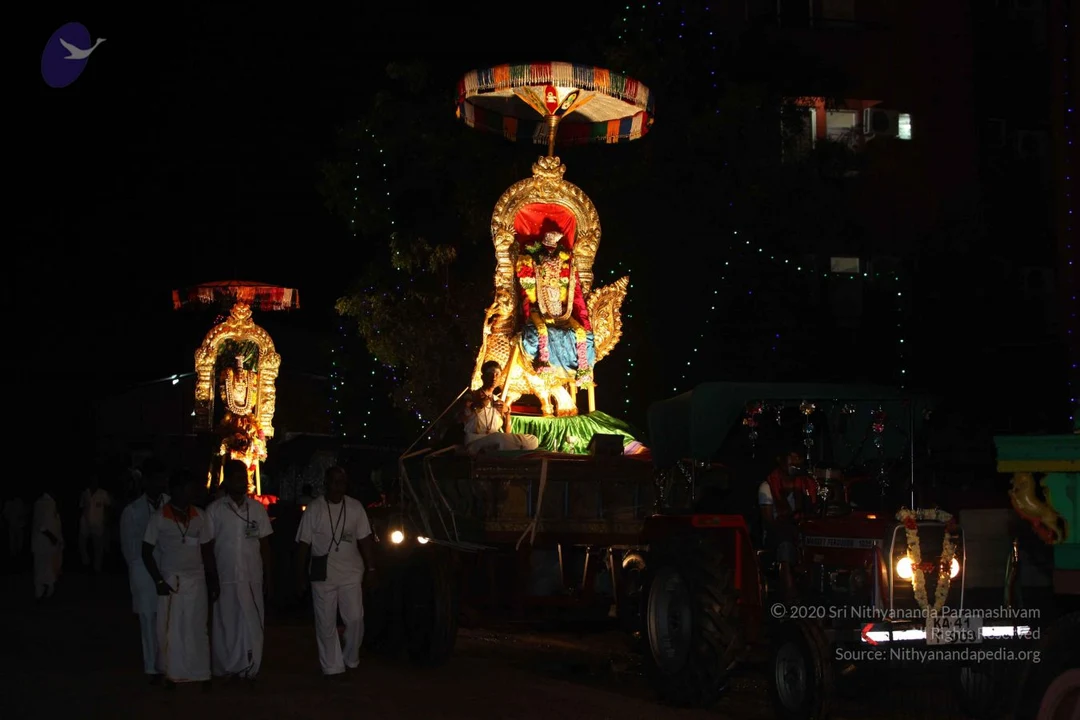
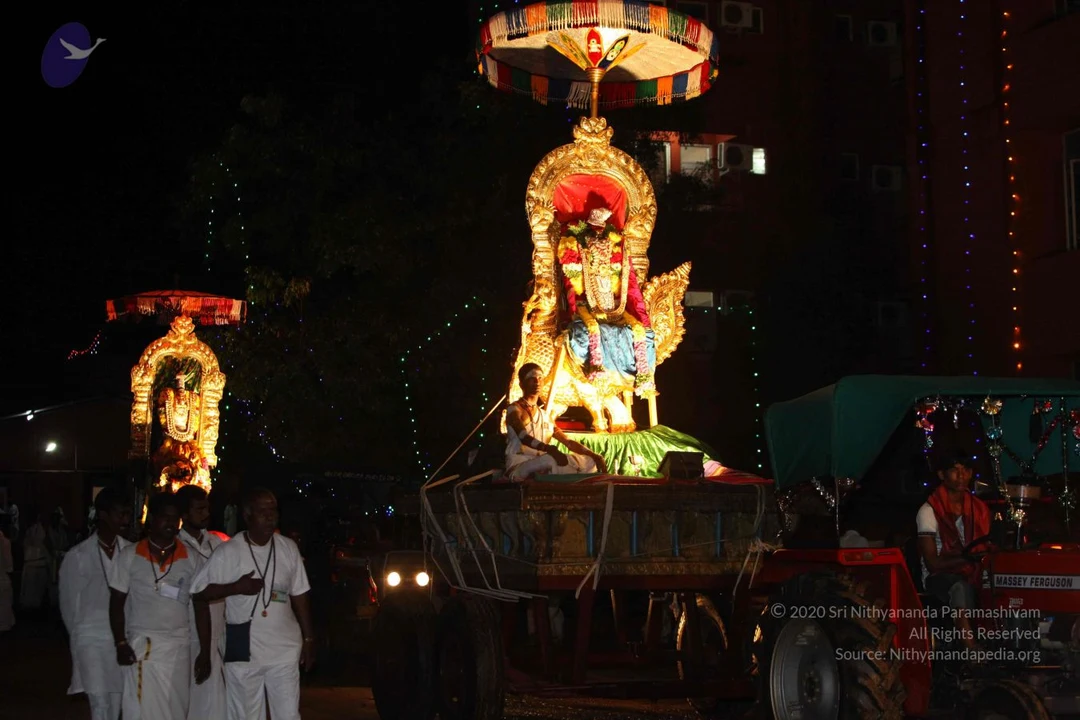
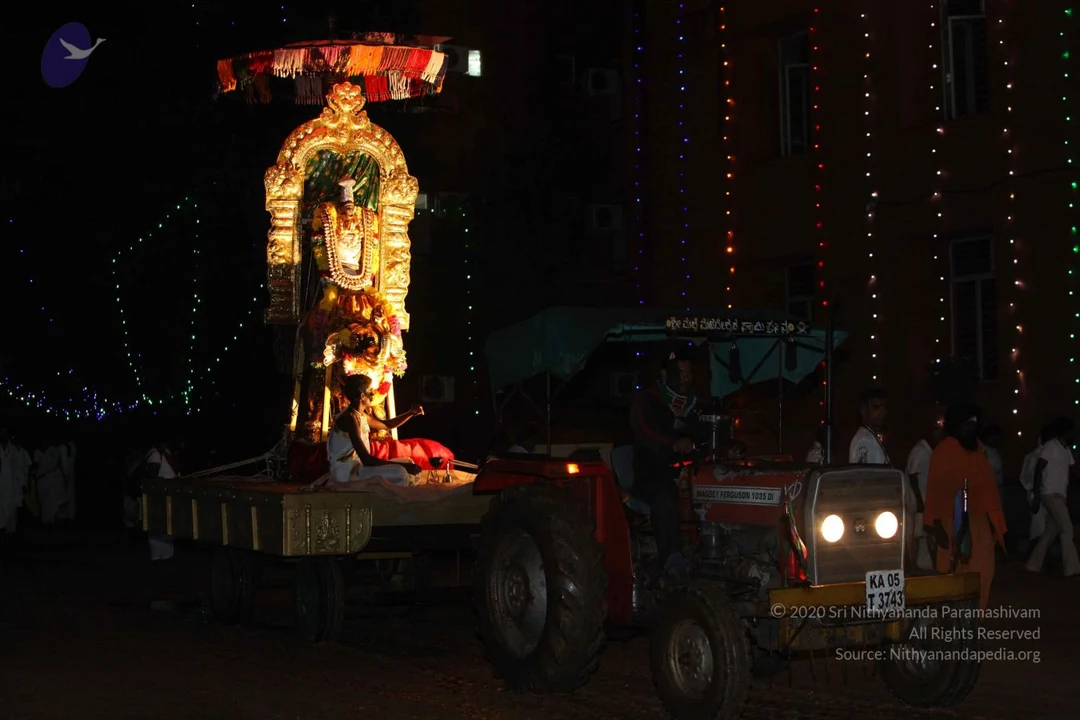
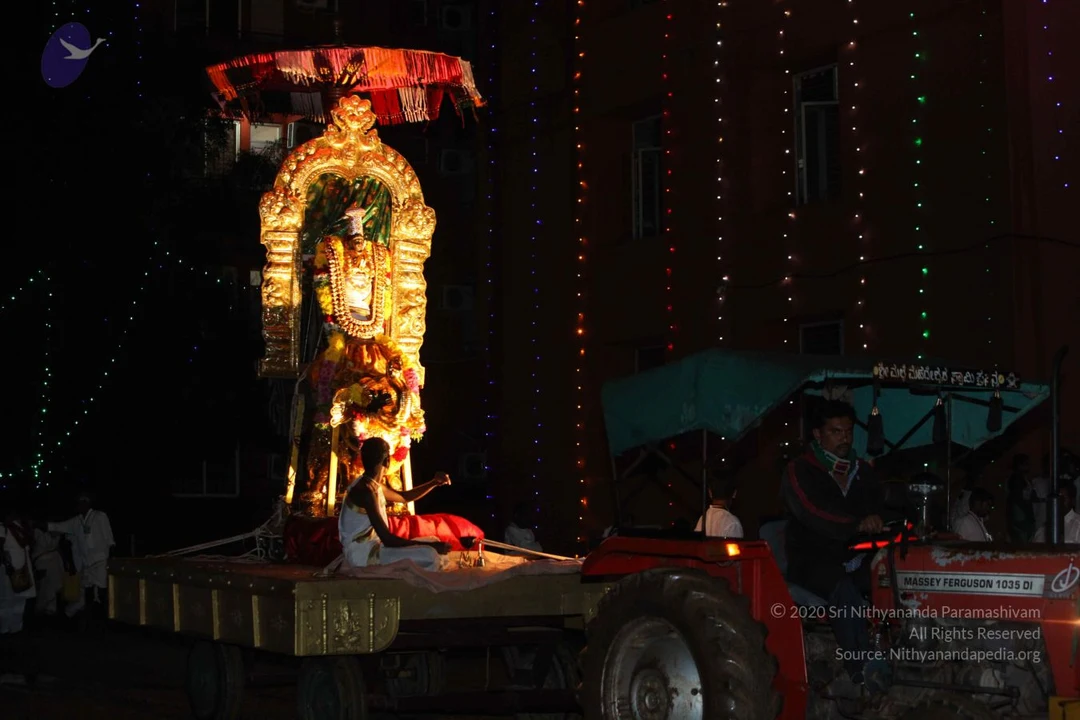
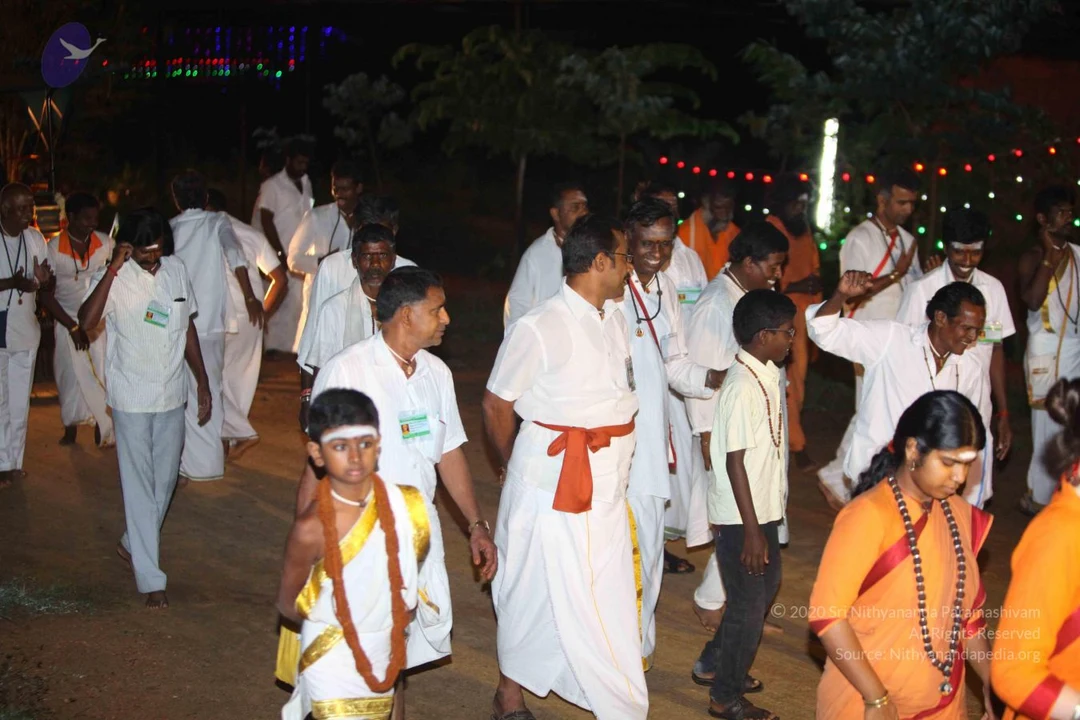
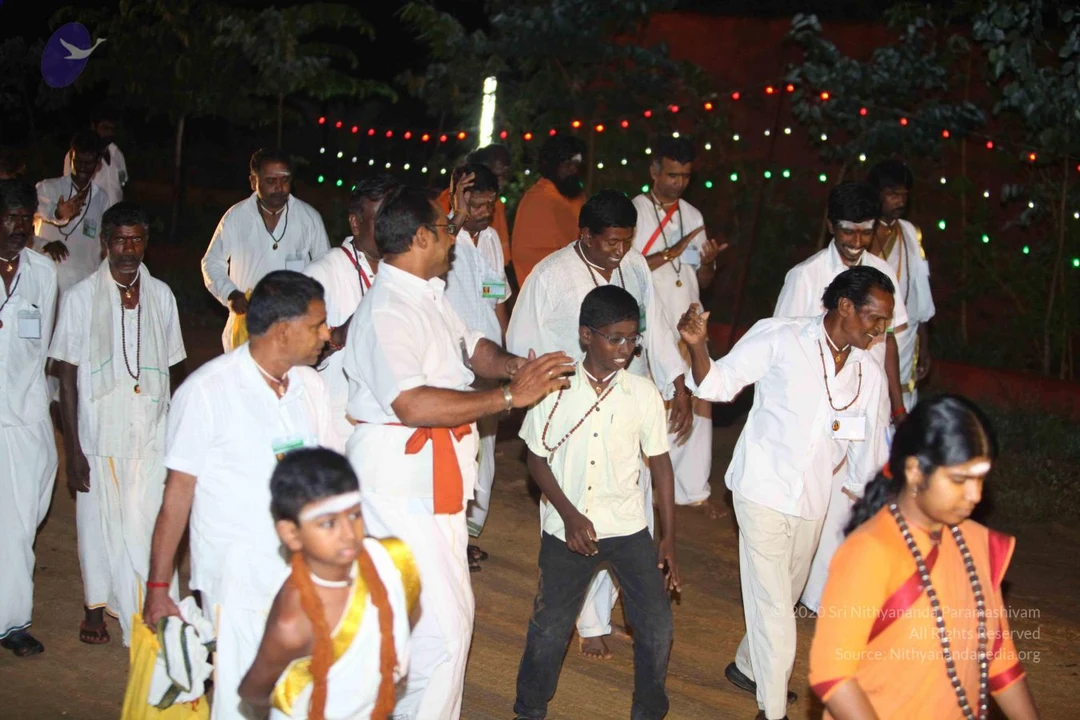
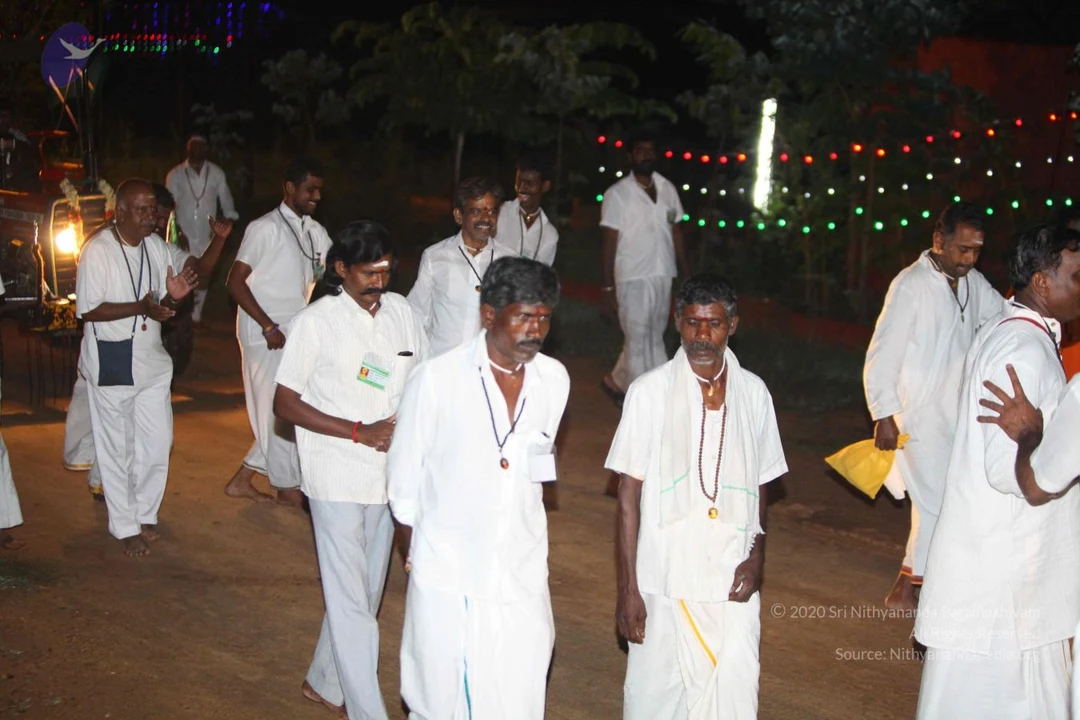
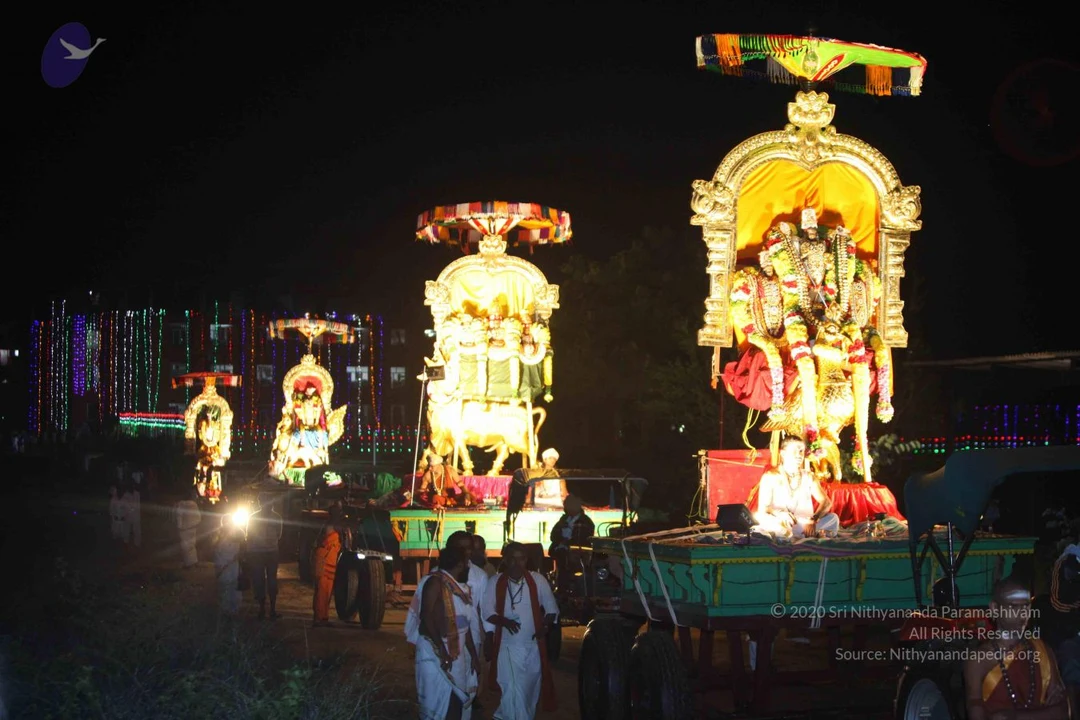
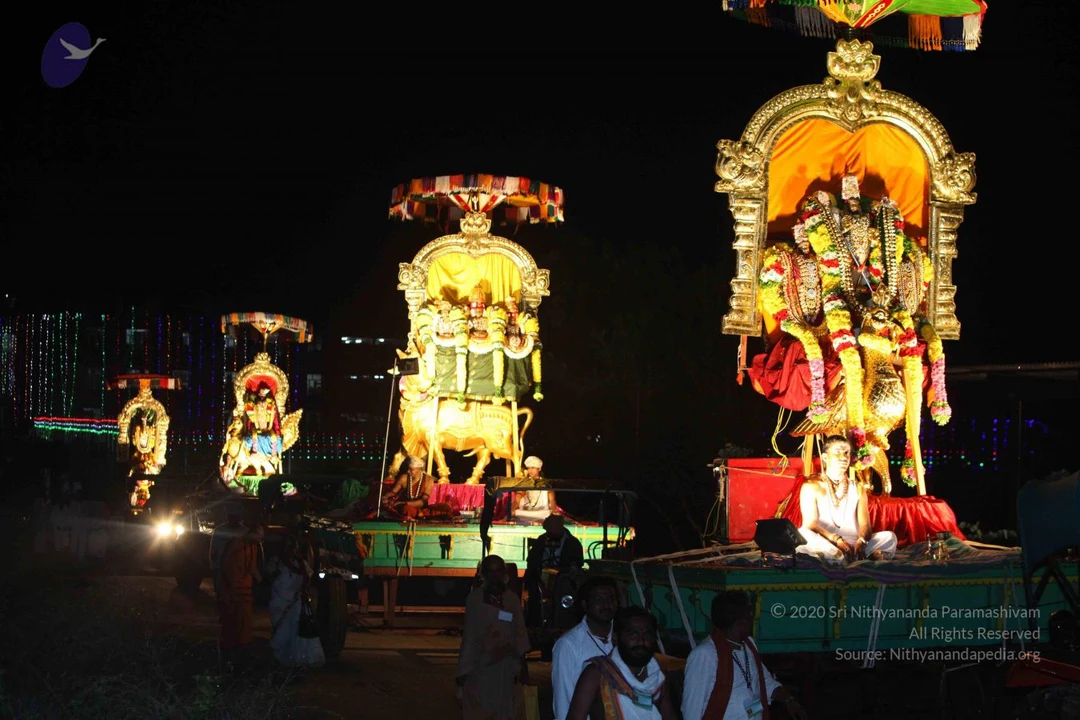
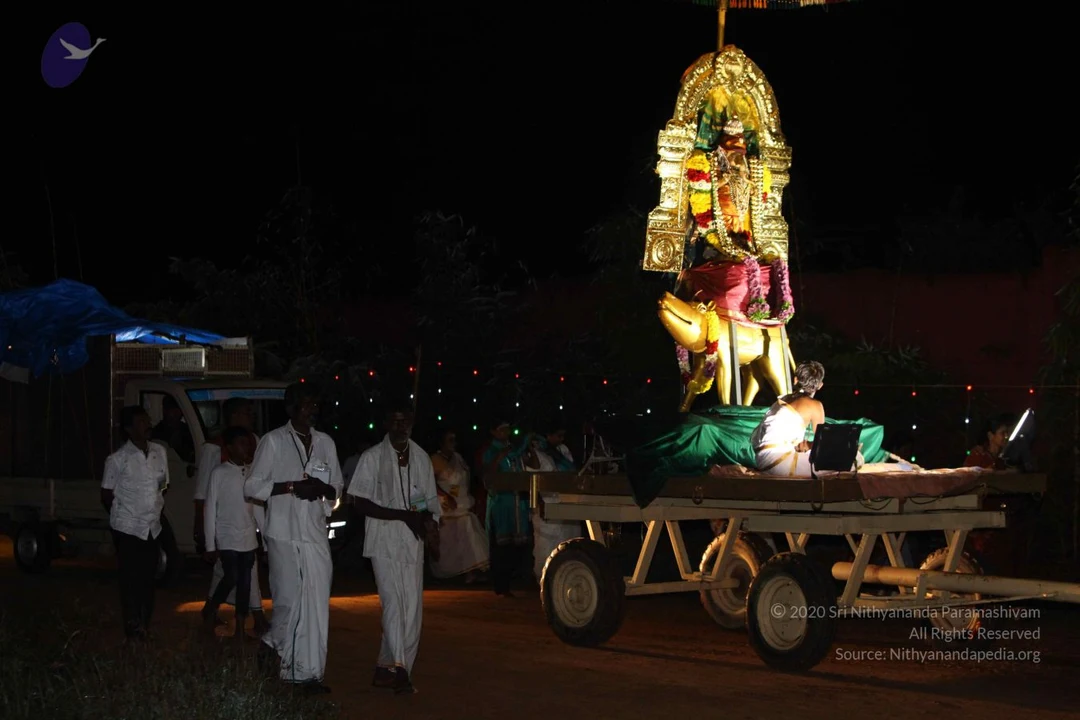
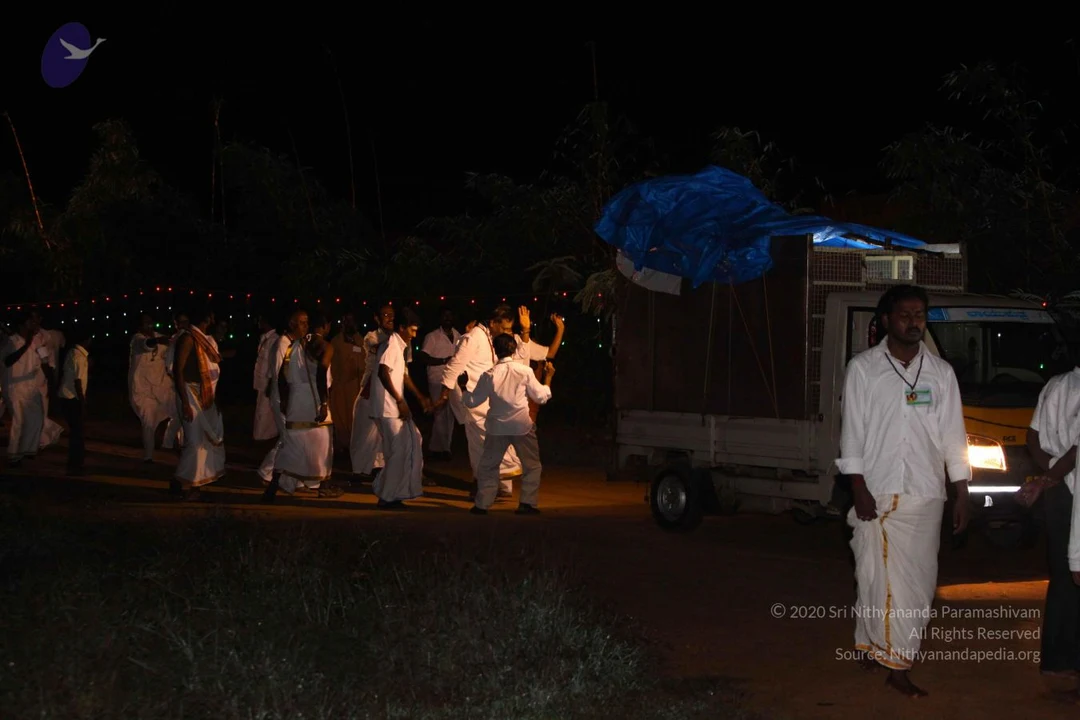
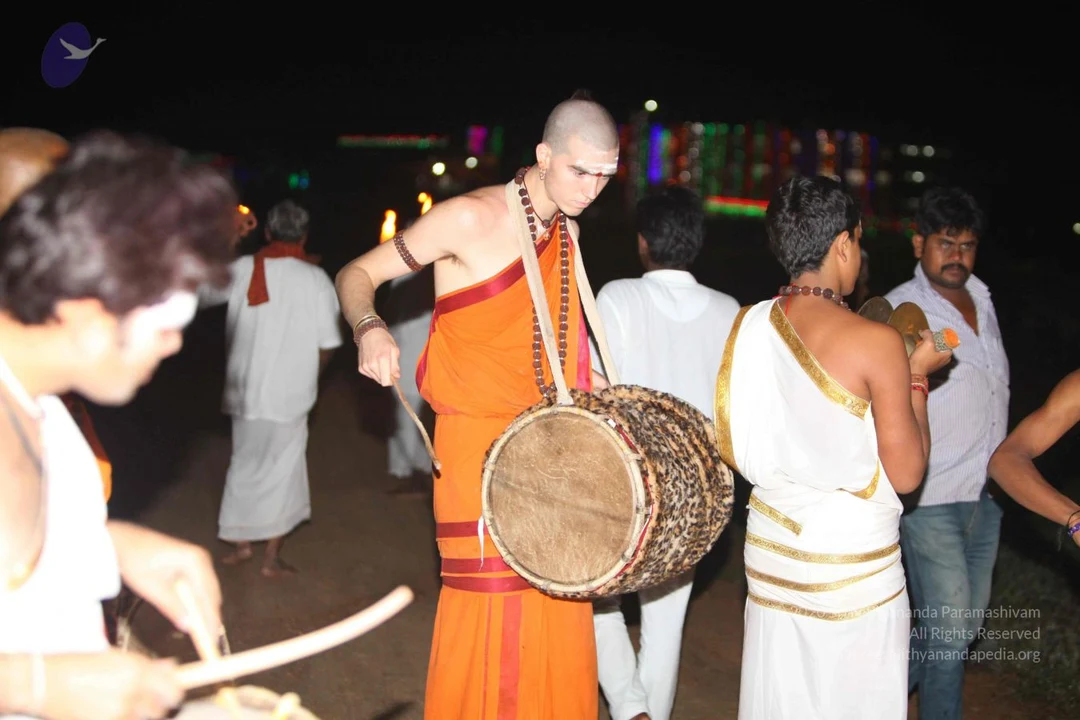
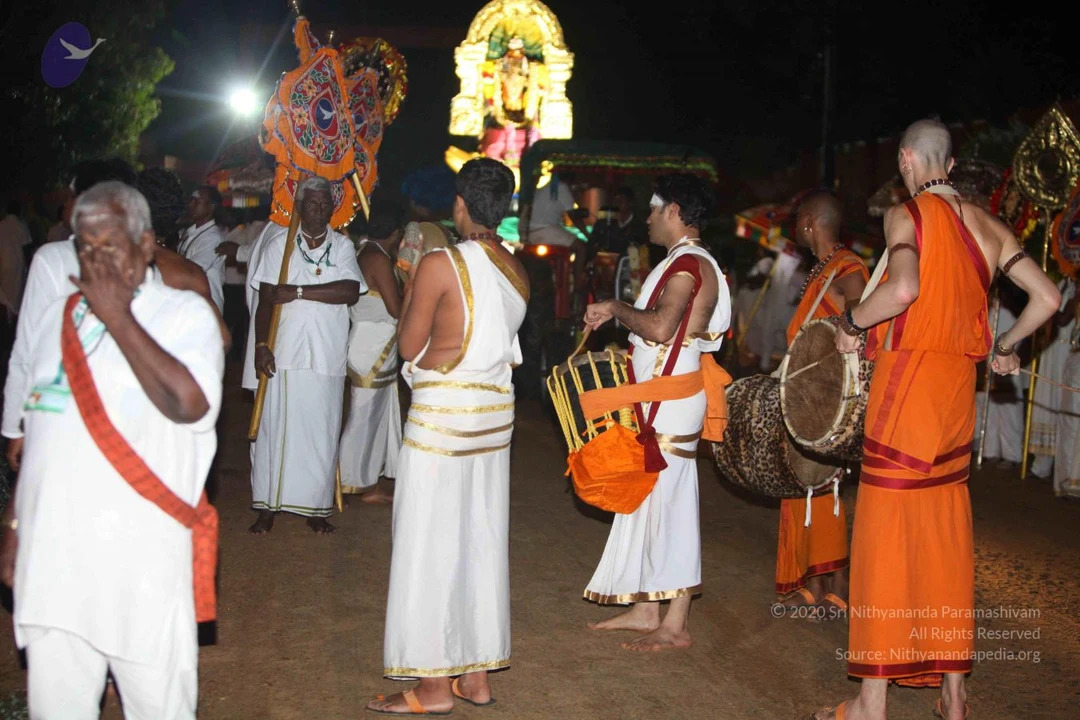
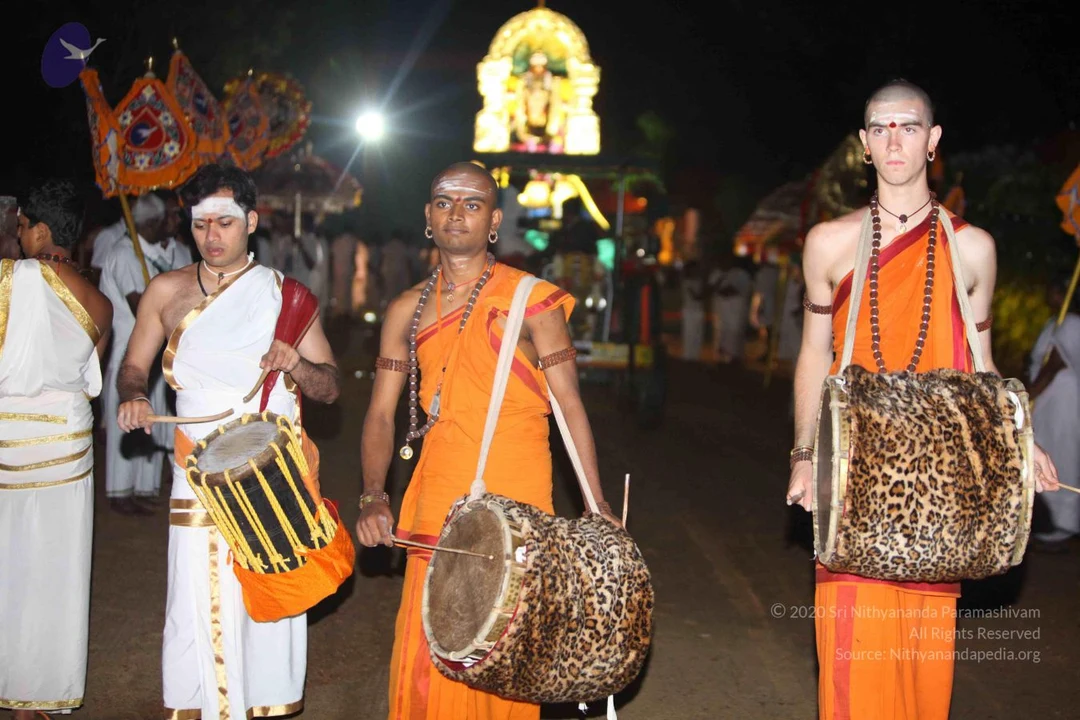
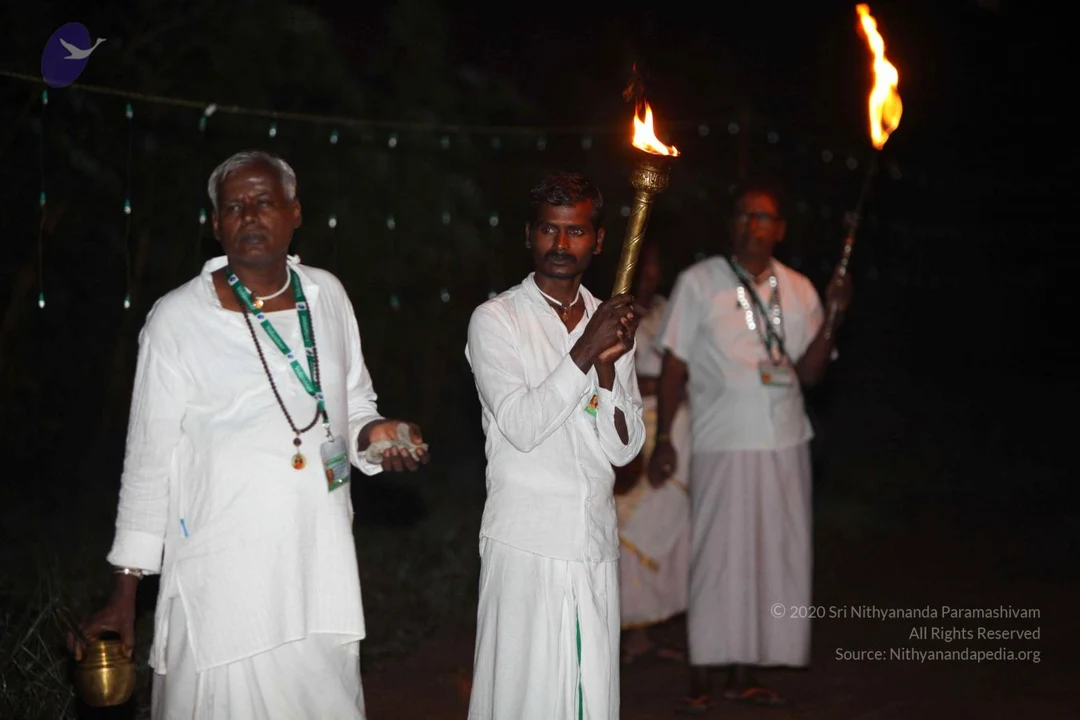
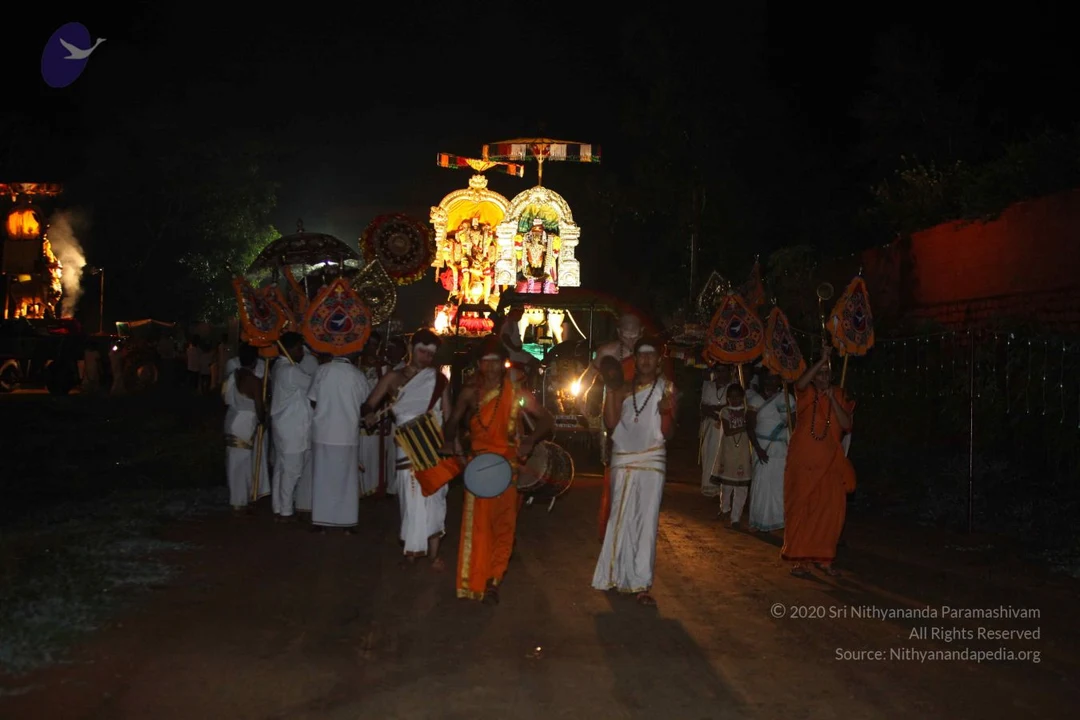
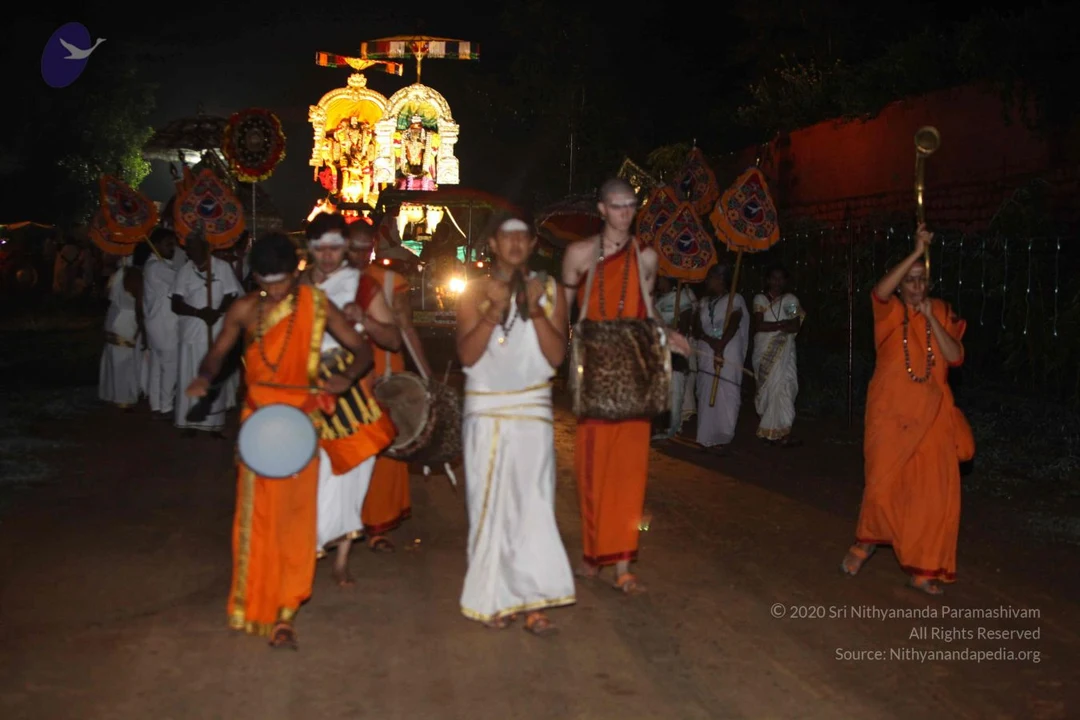
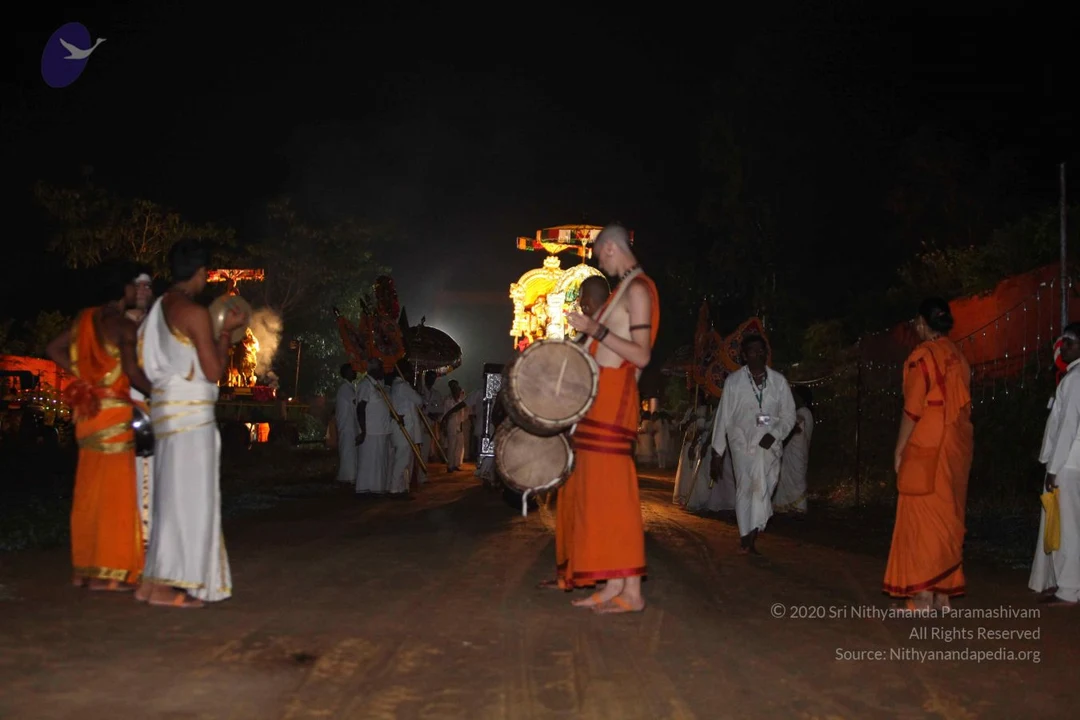
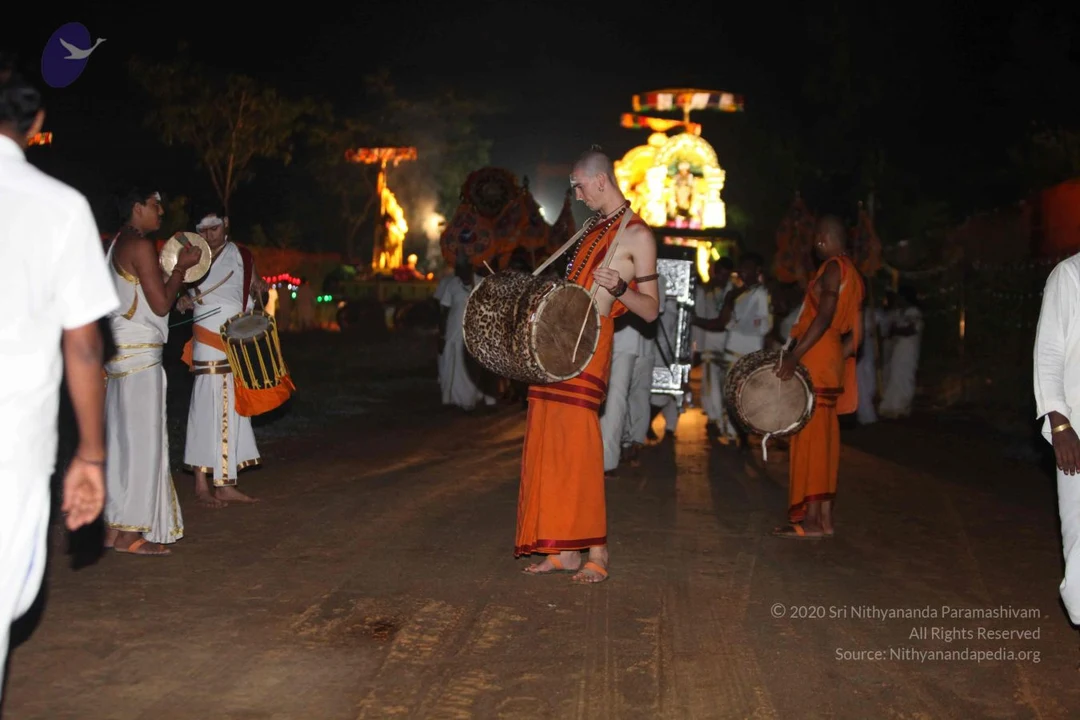
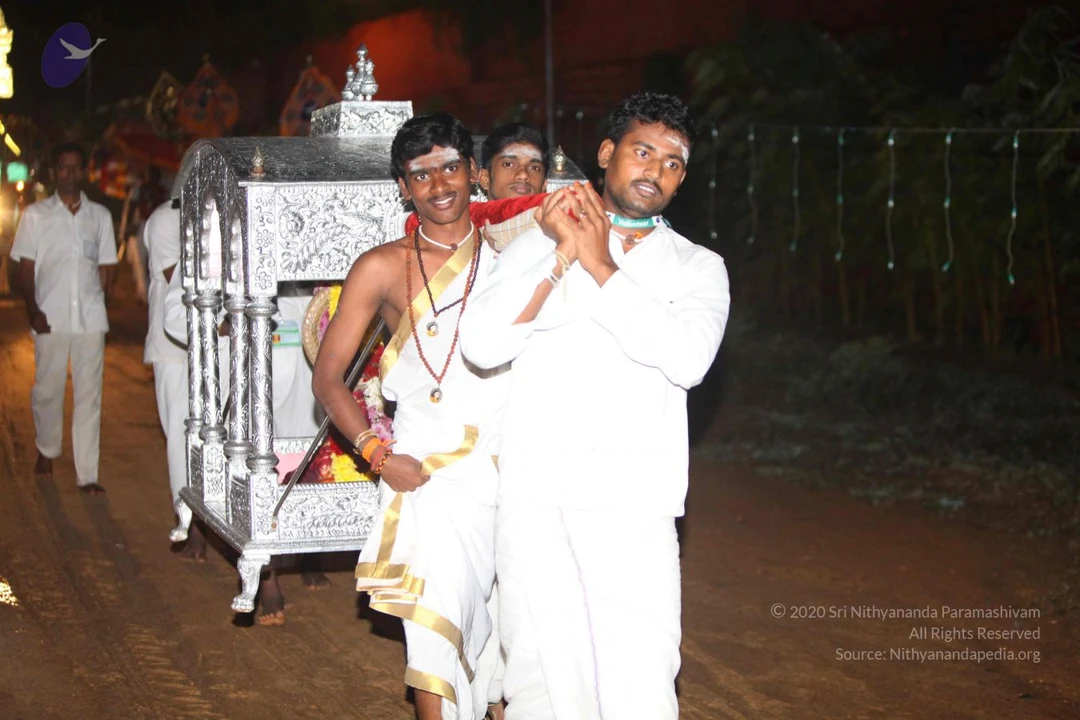
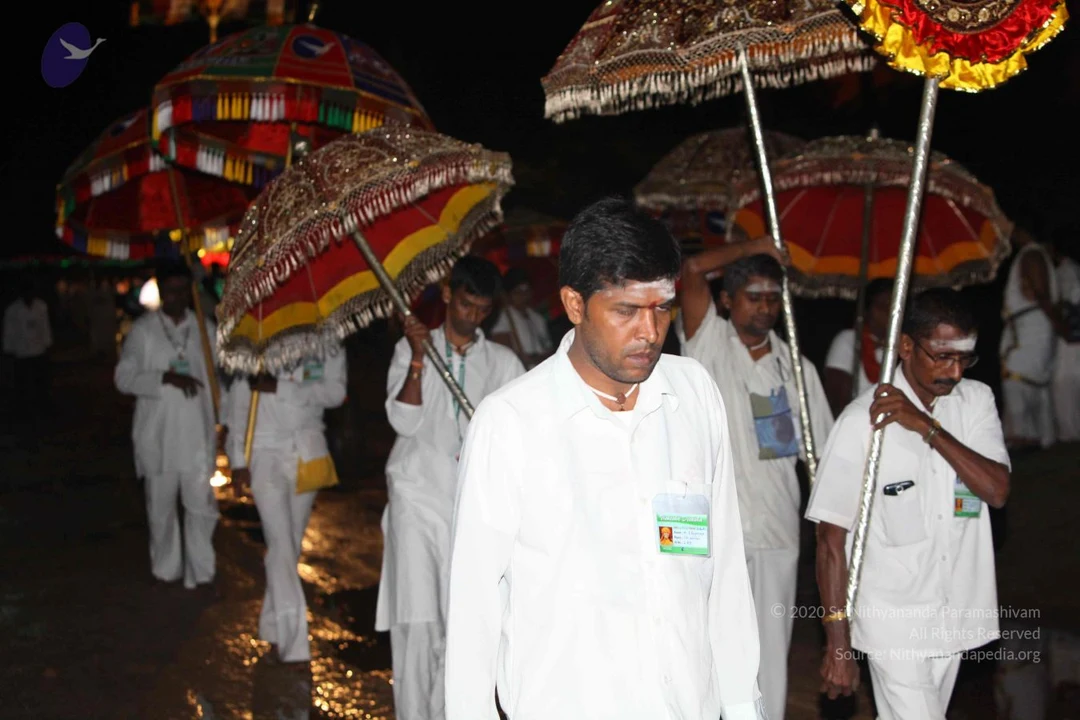
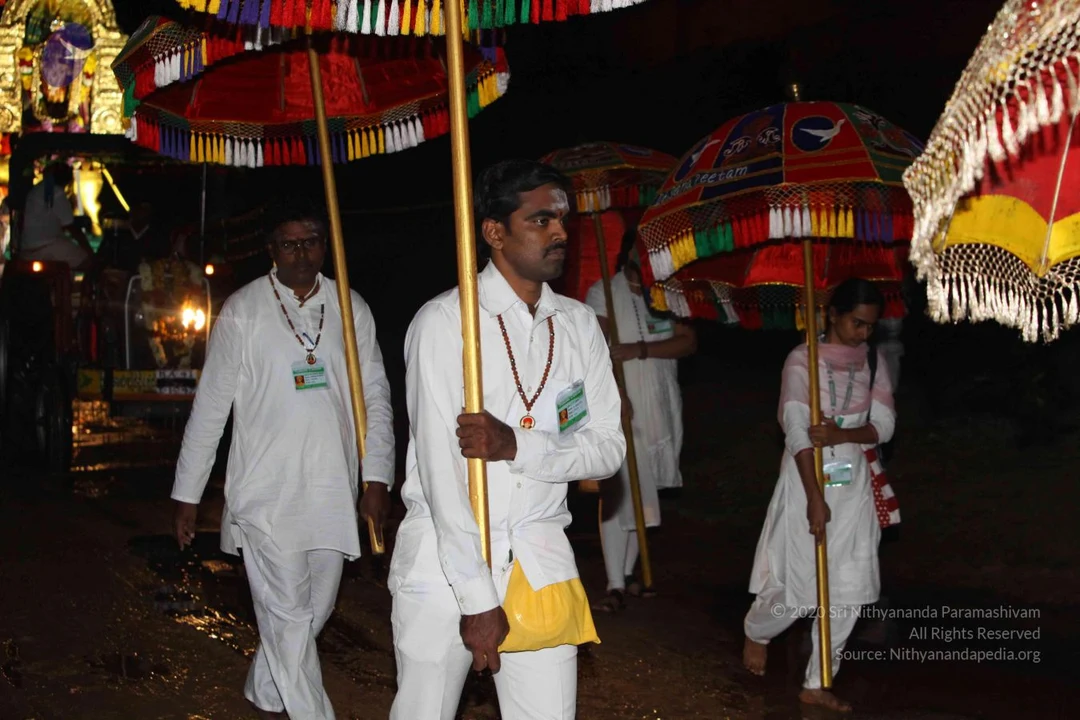
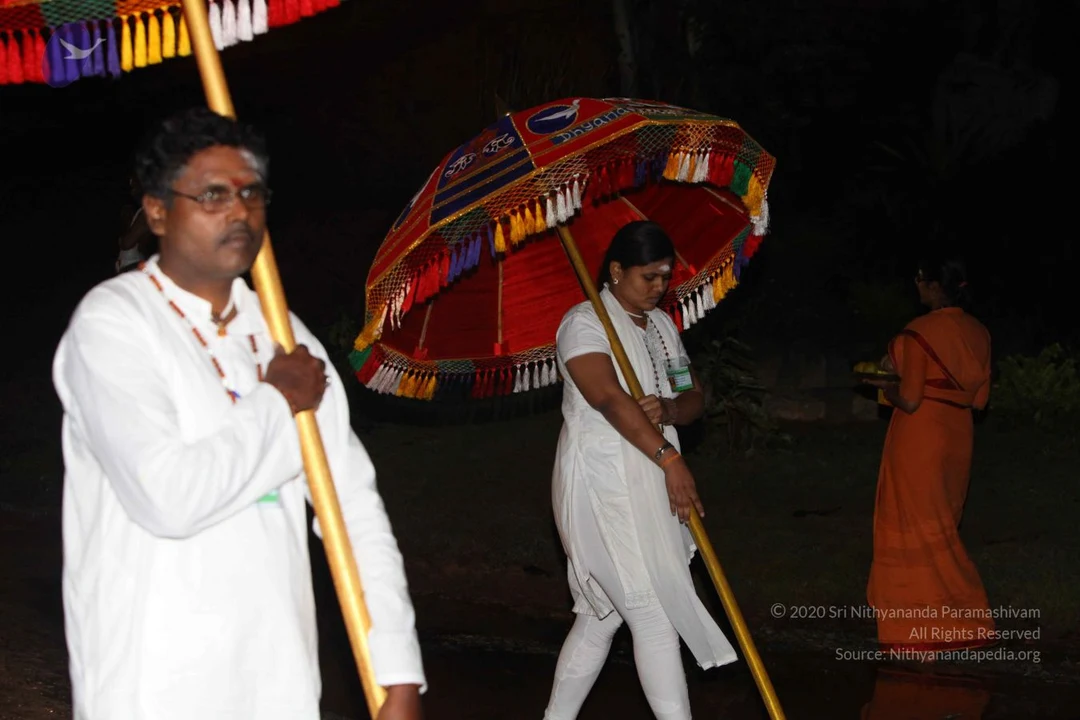
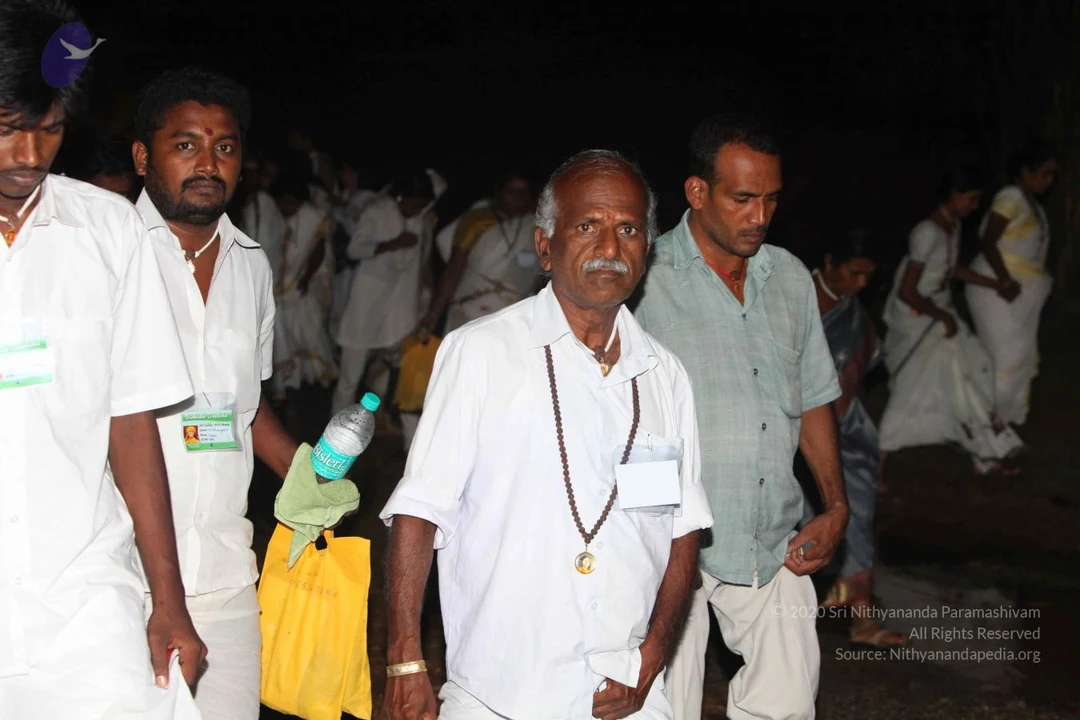
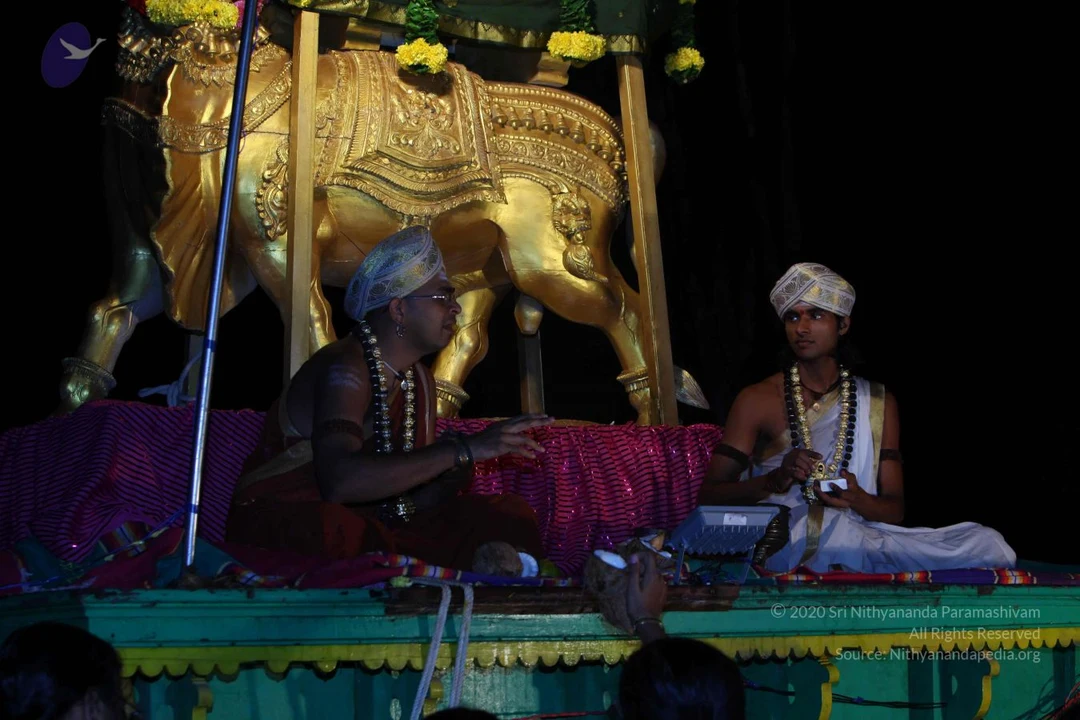
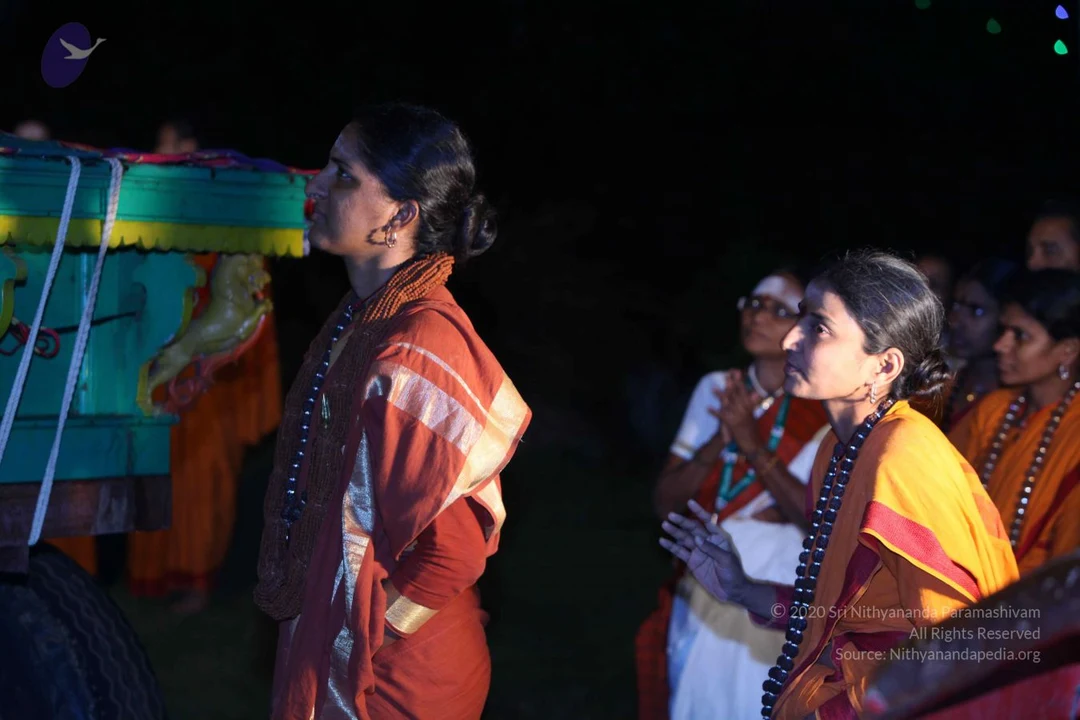
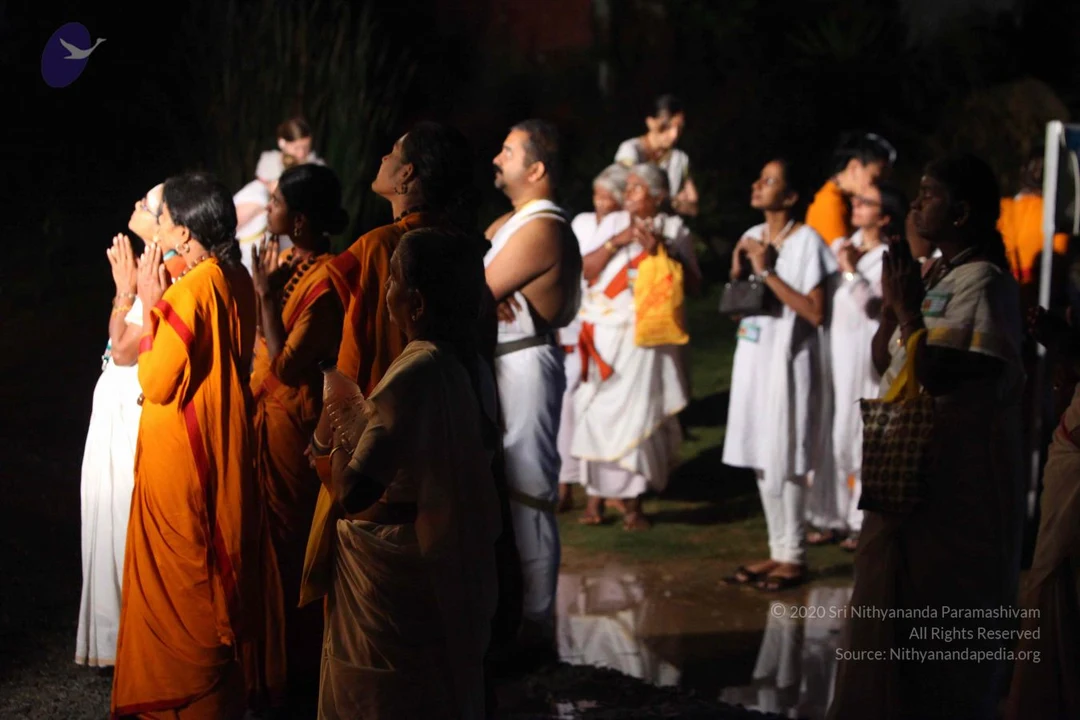
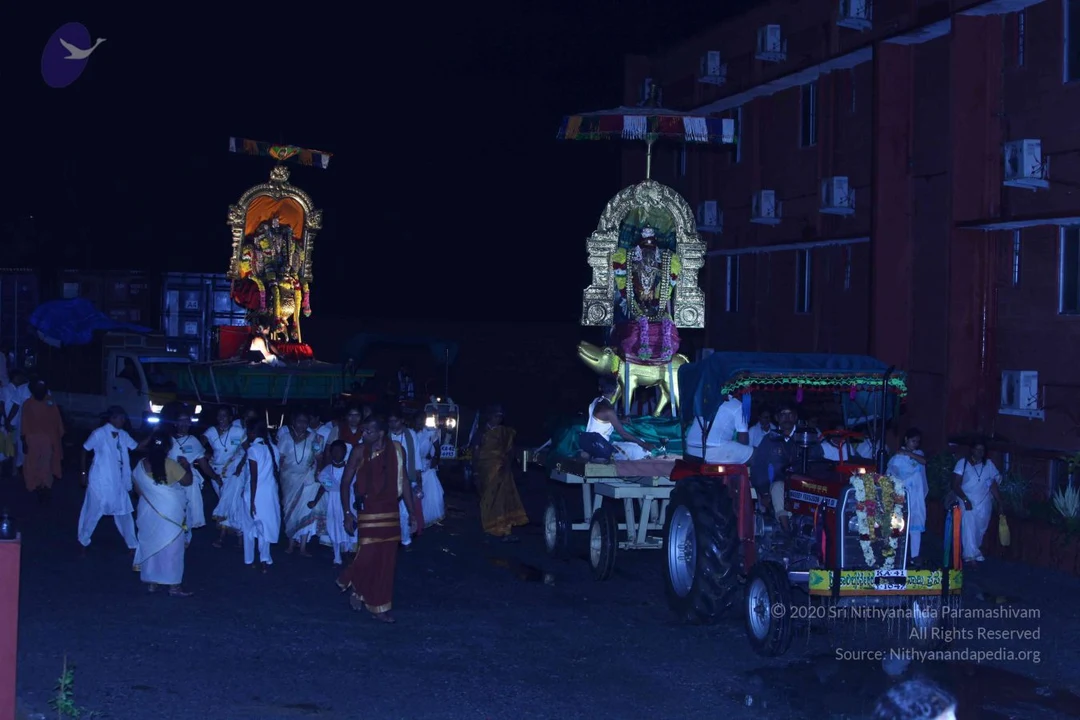
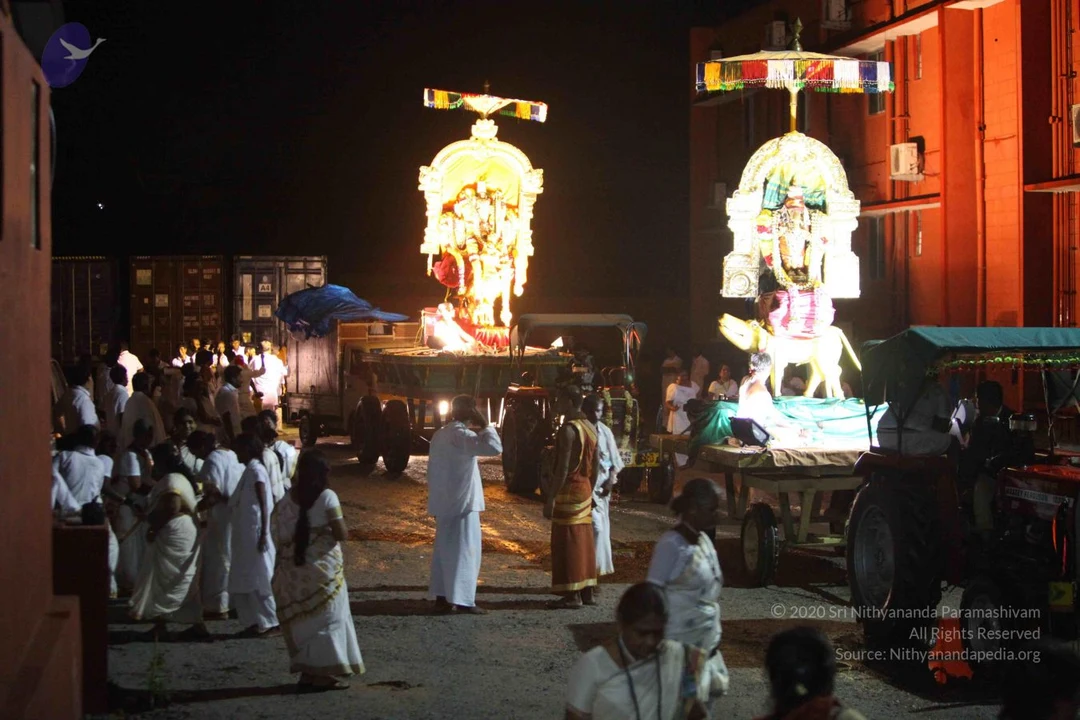
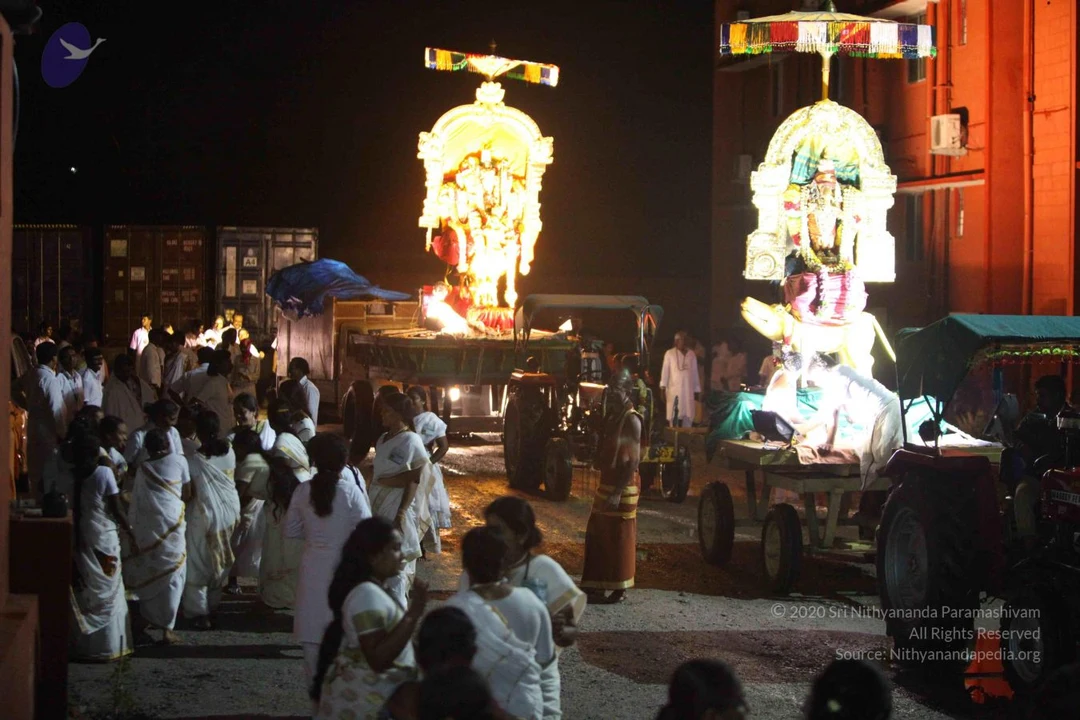
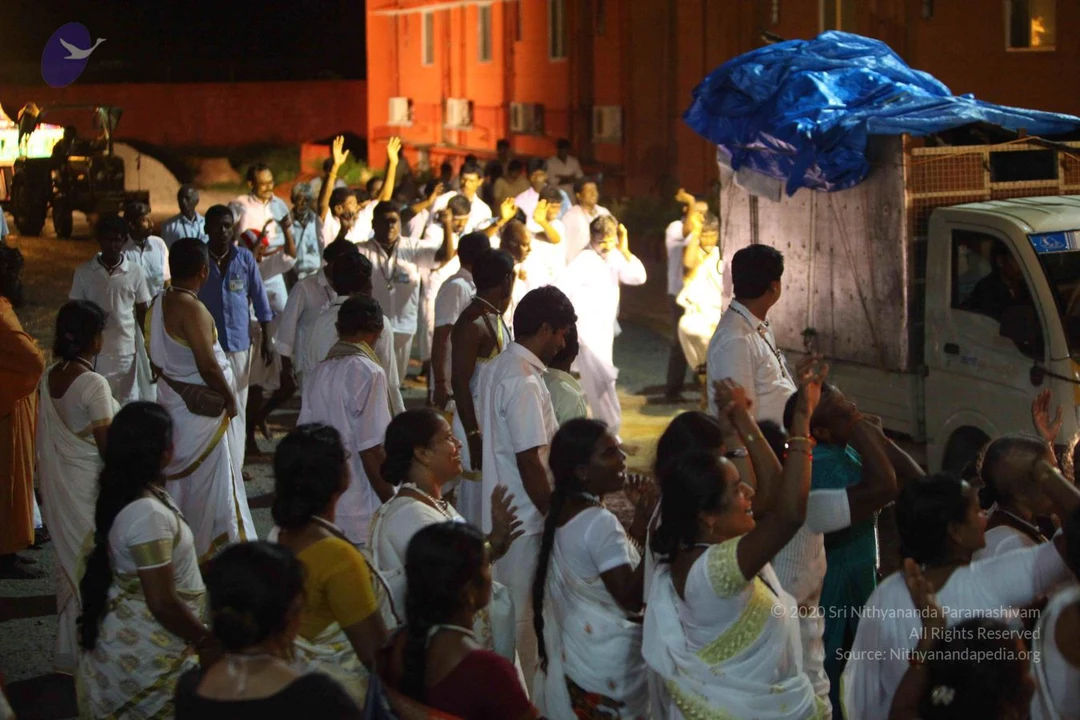
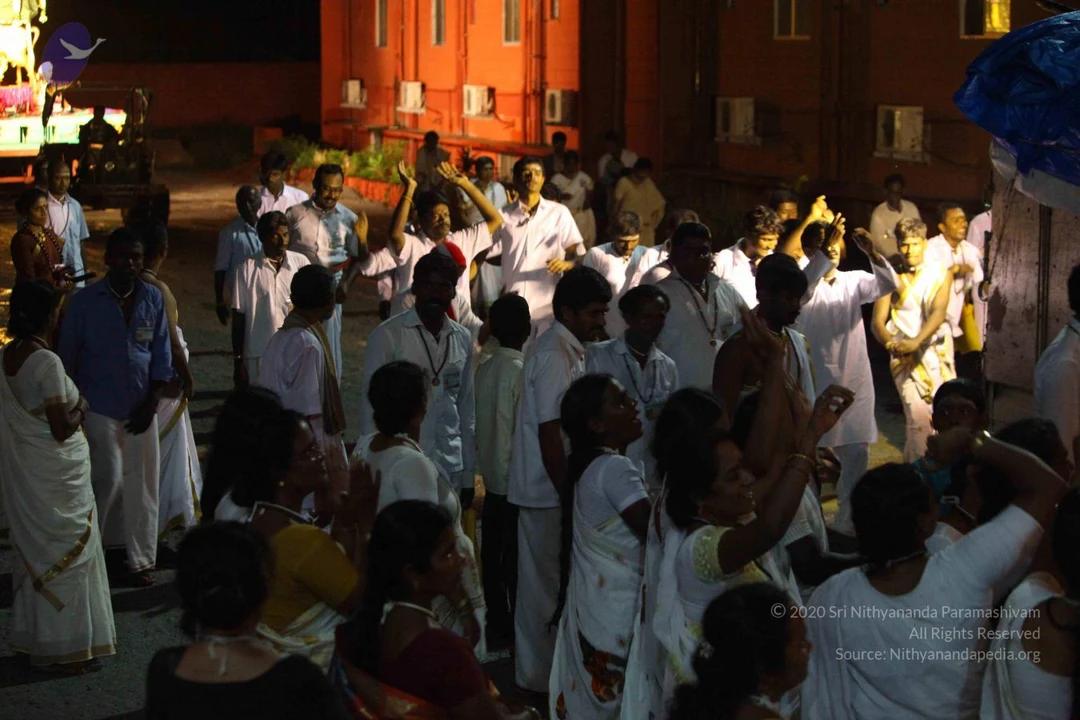
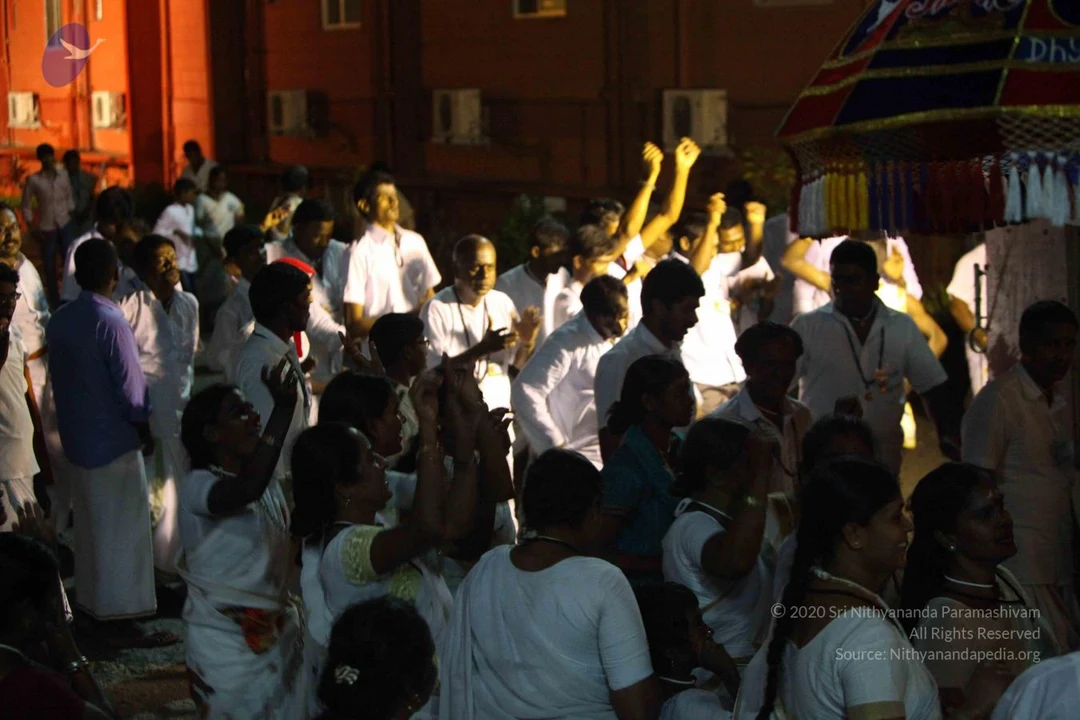
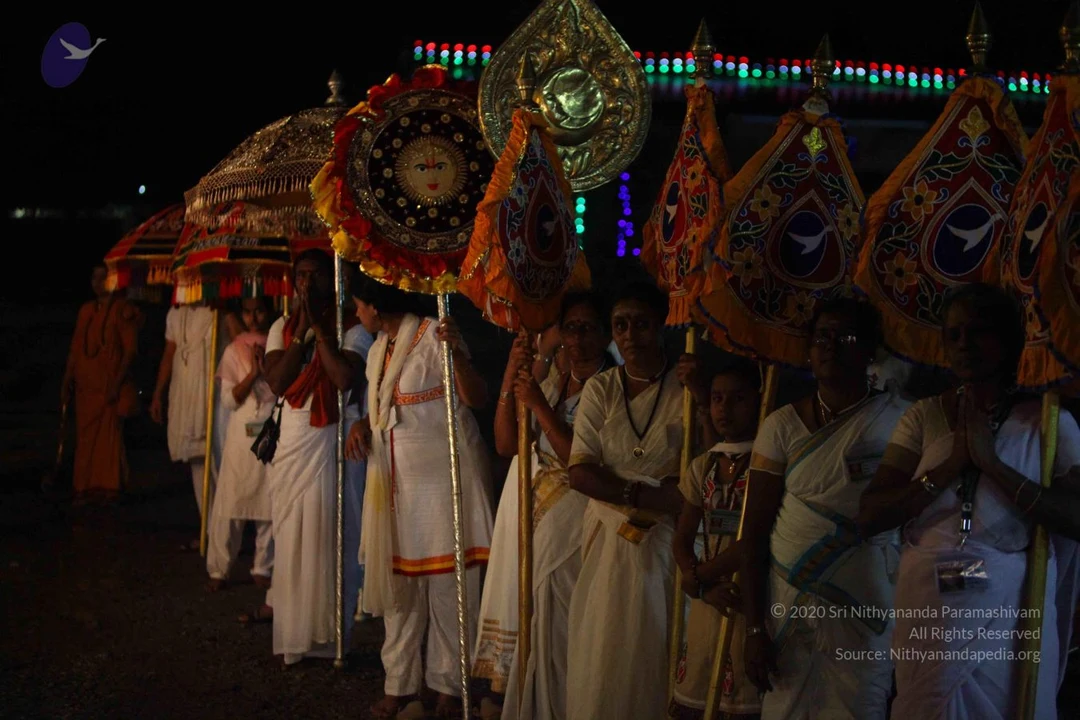
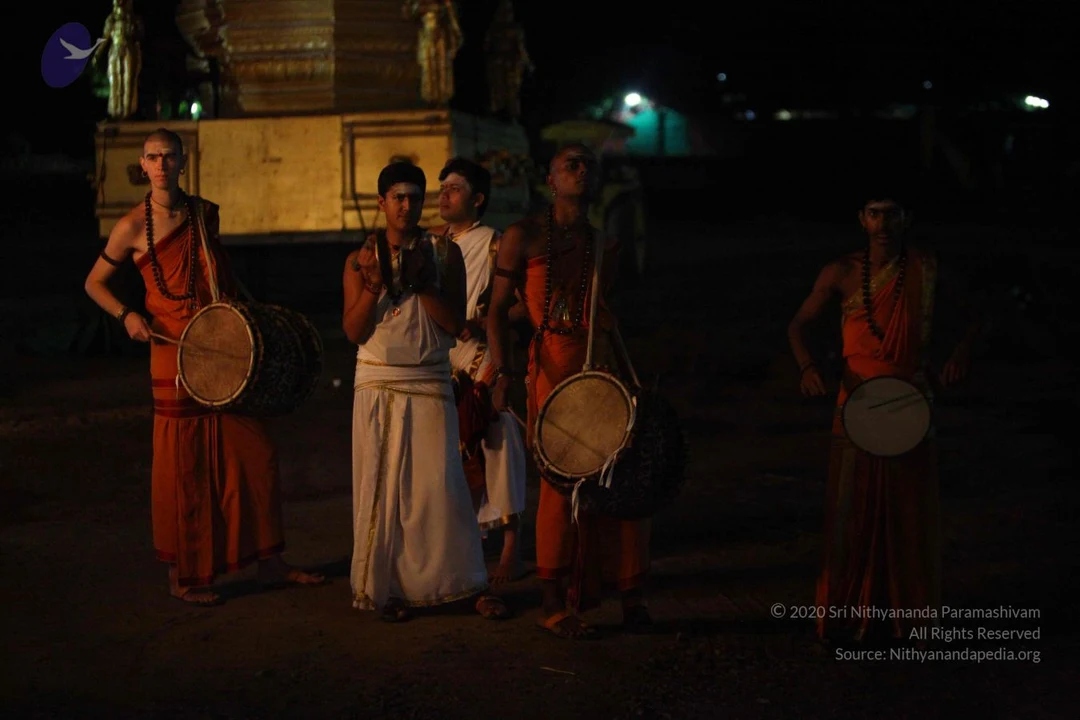
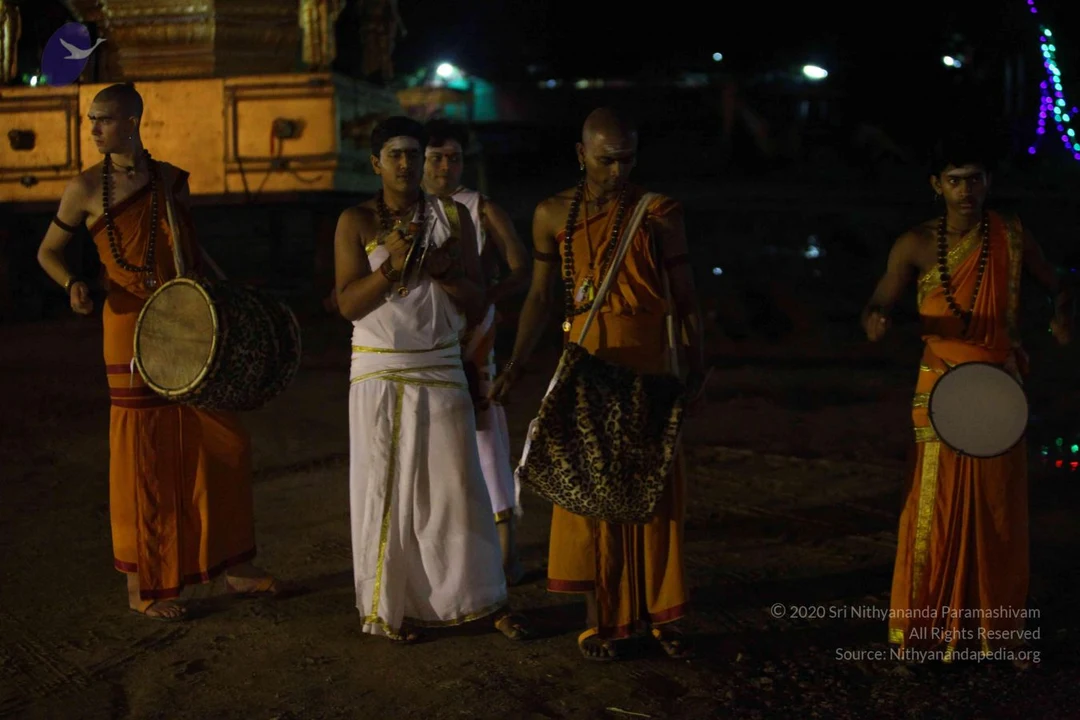
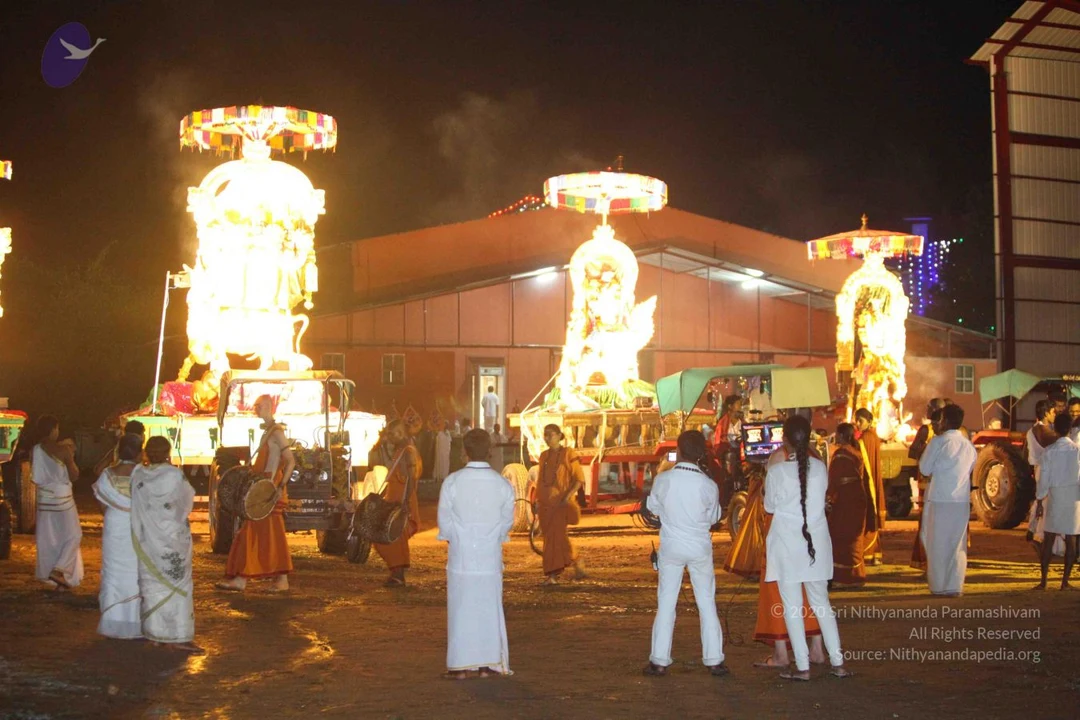
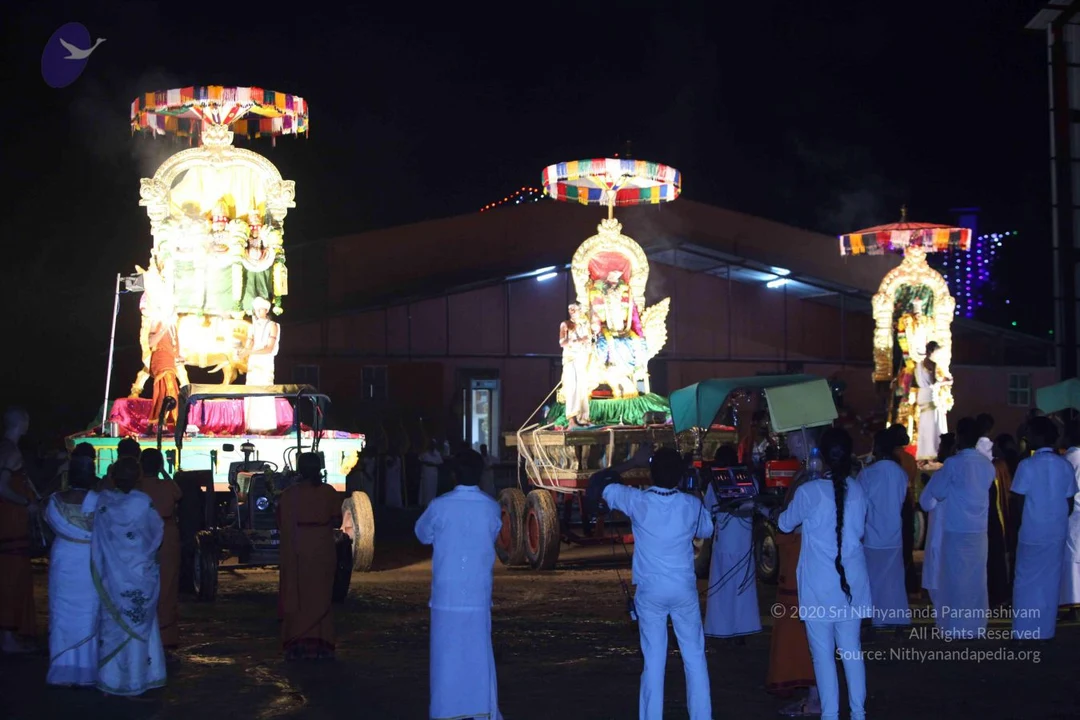
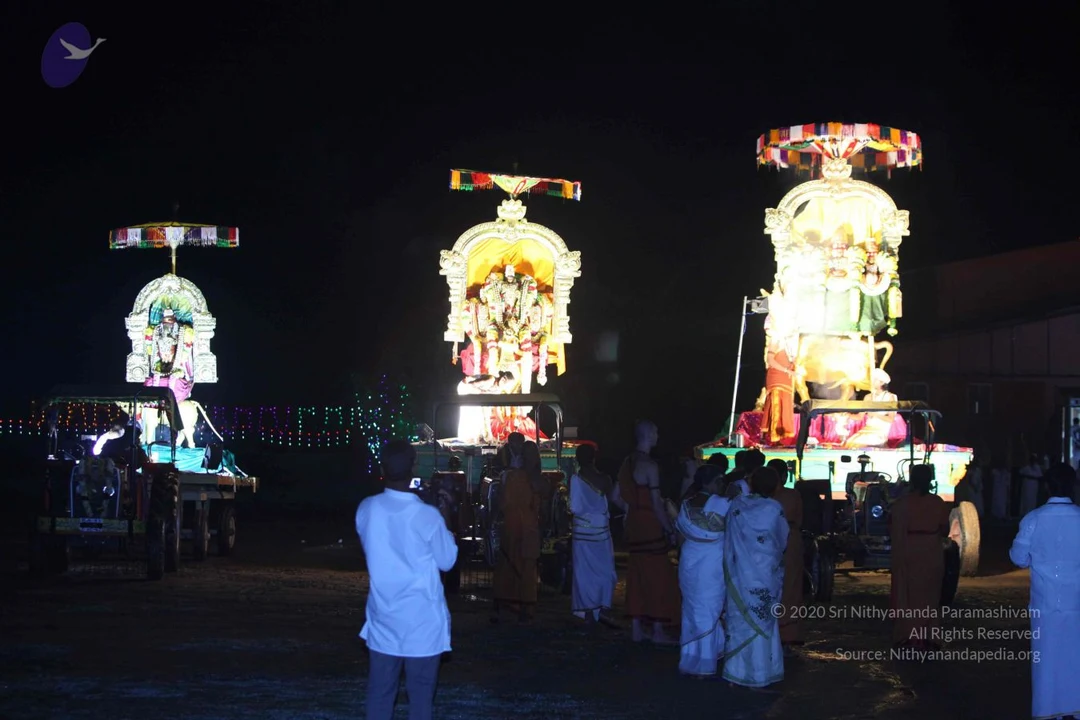
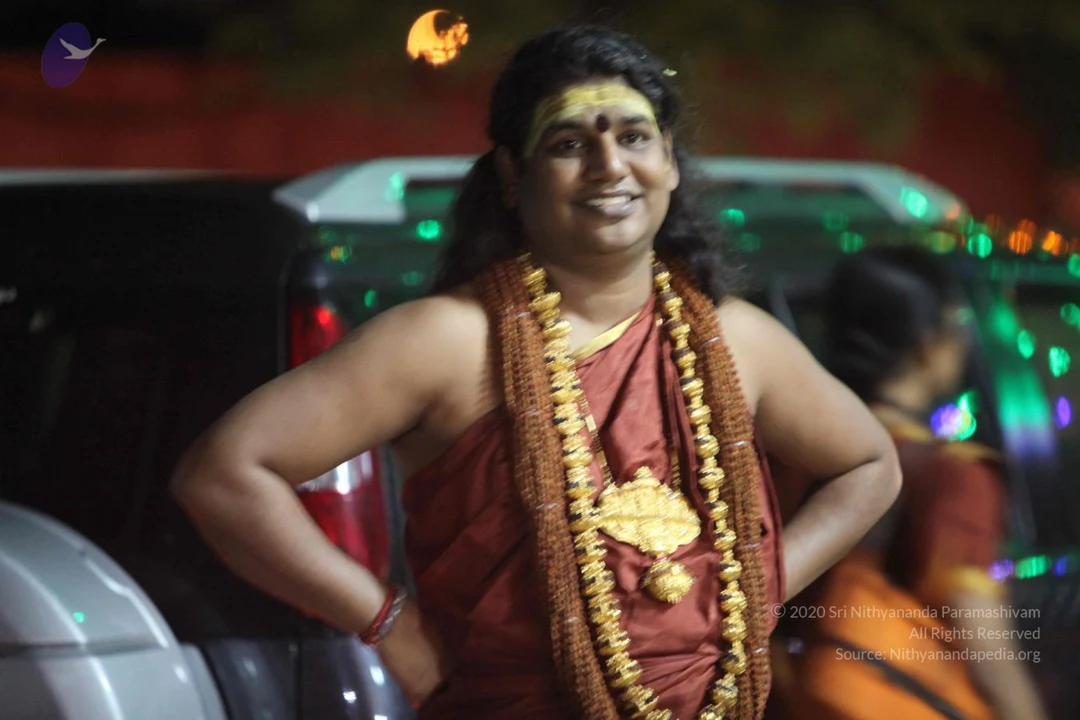
PROCESSION

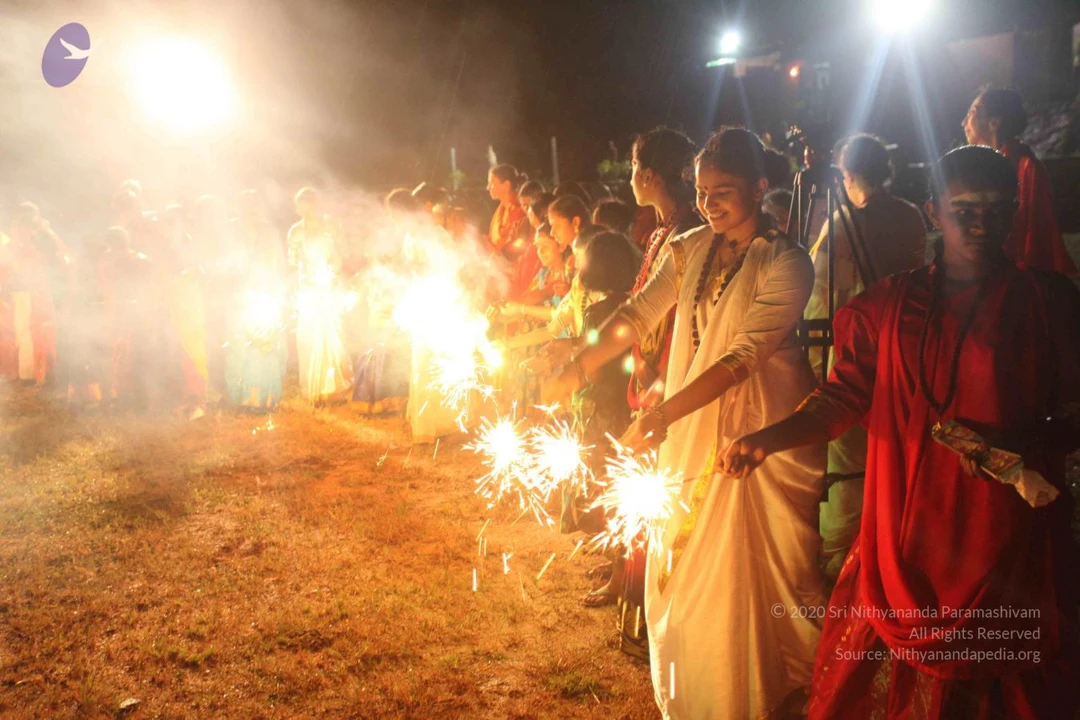
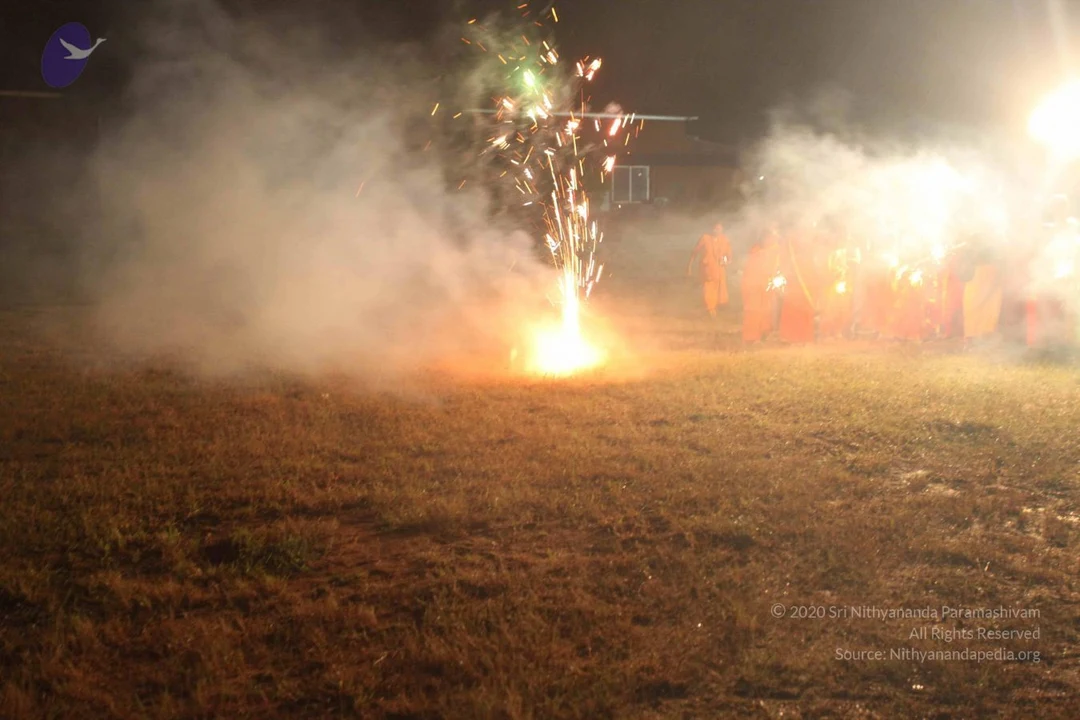
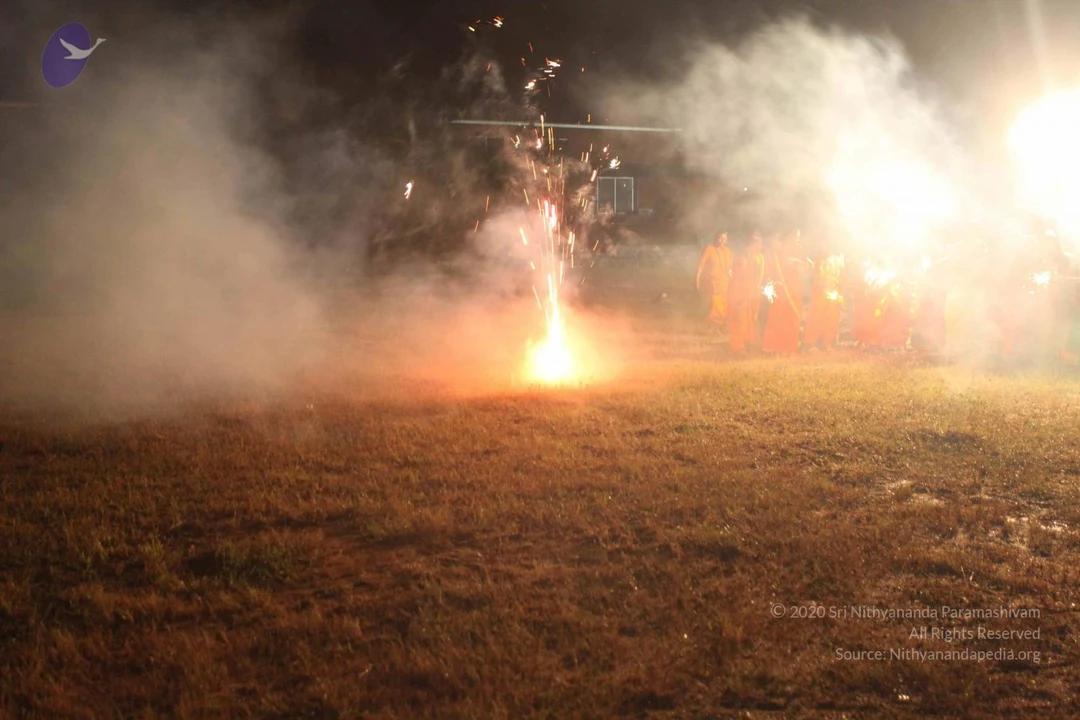
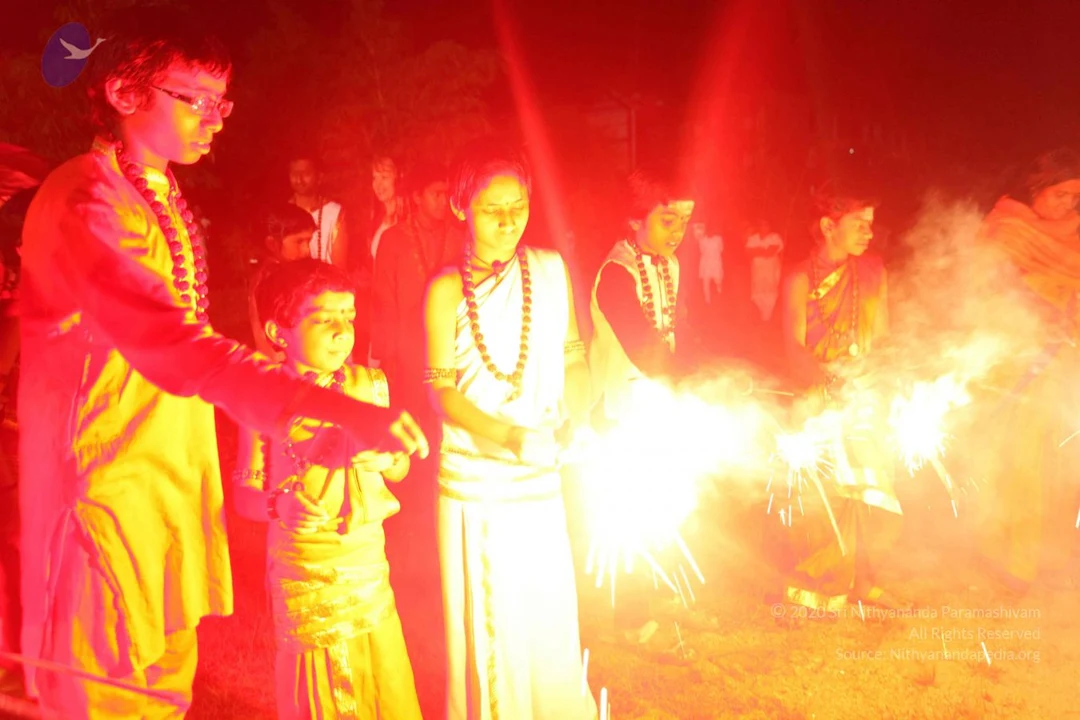
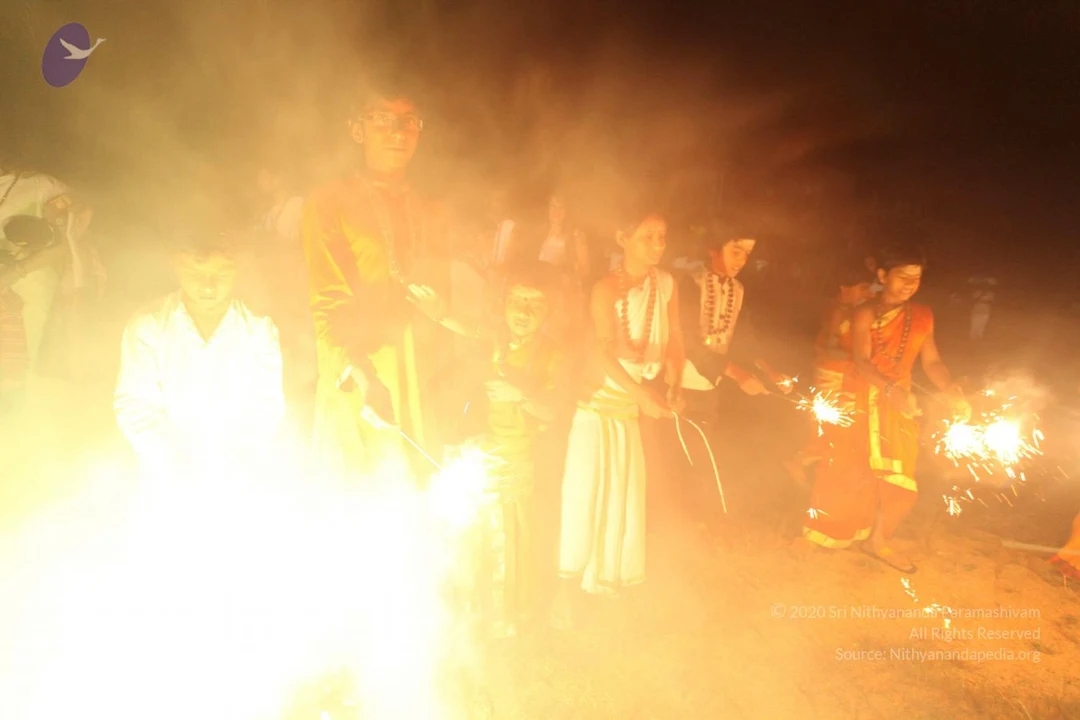
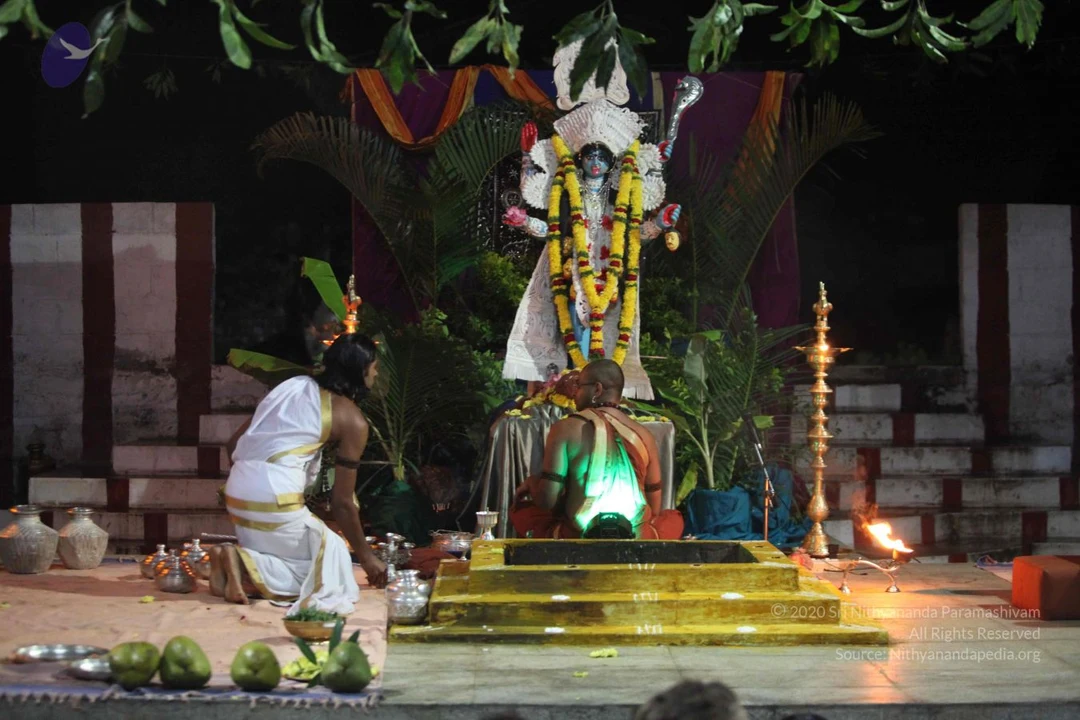
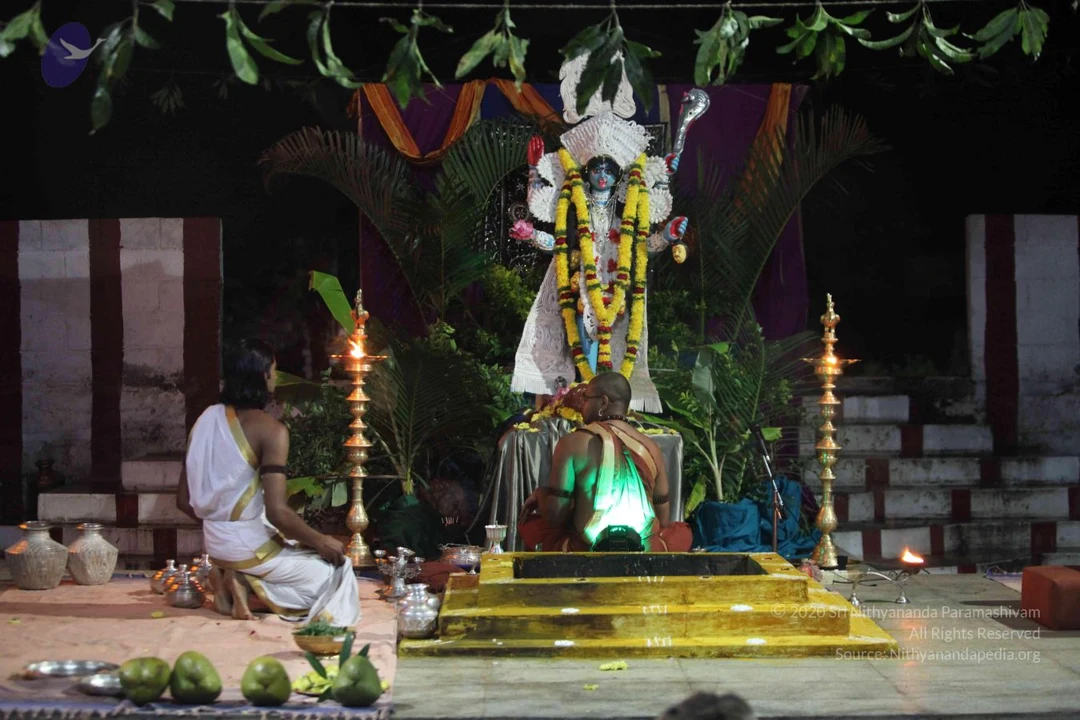
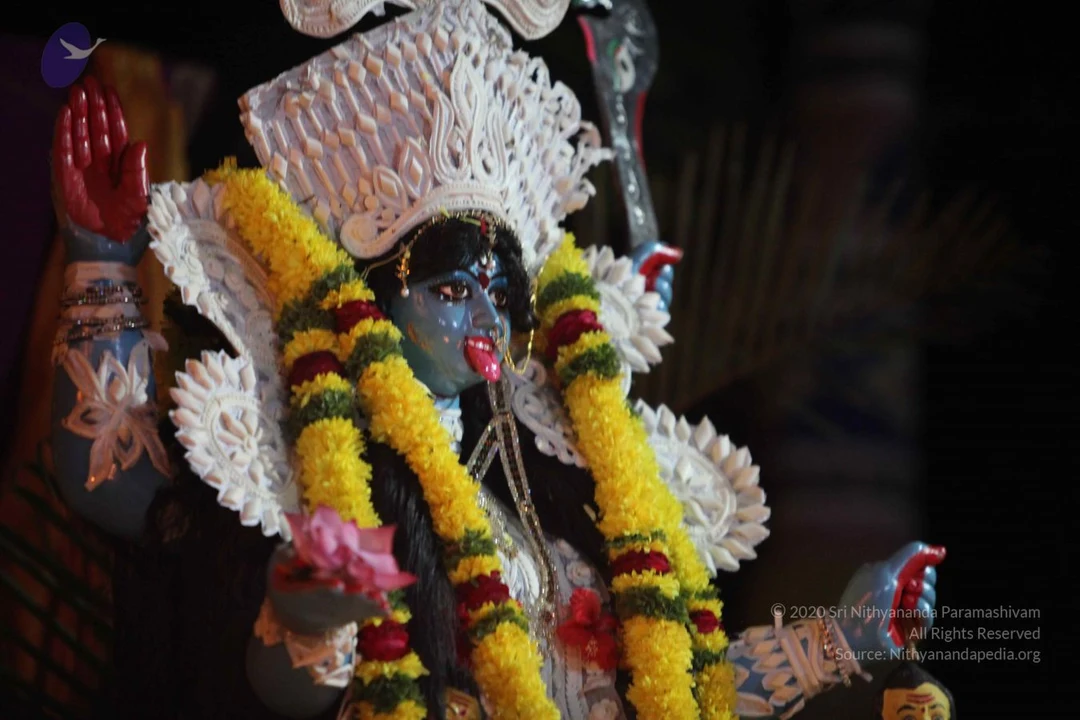
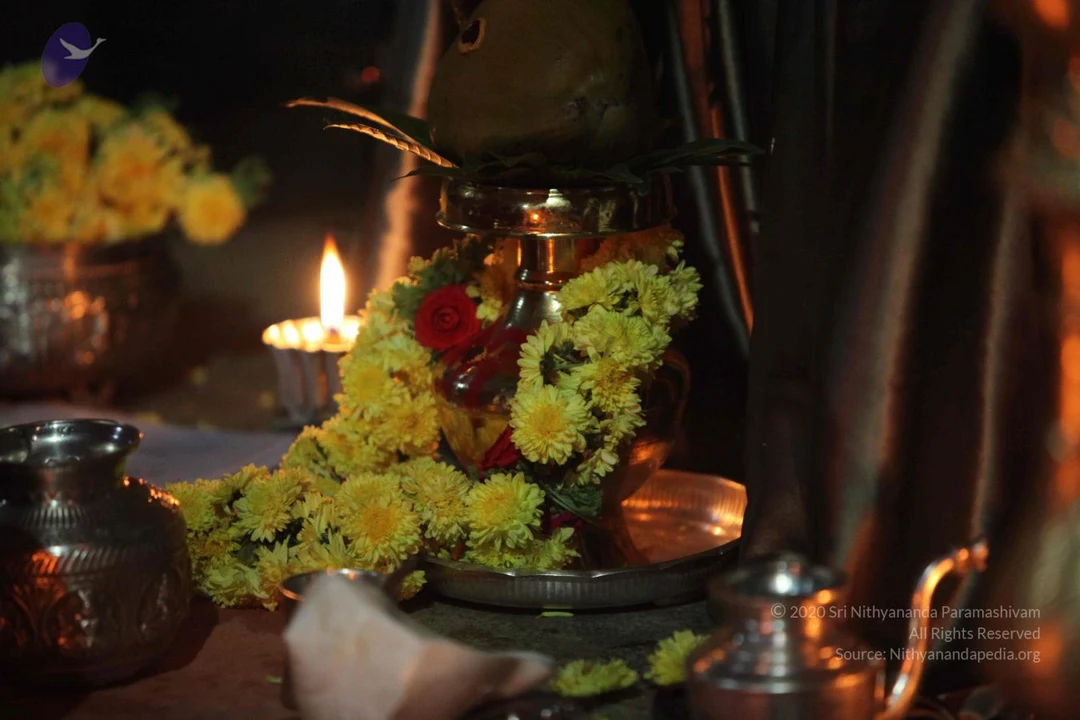
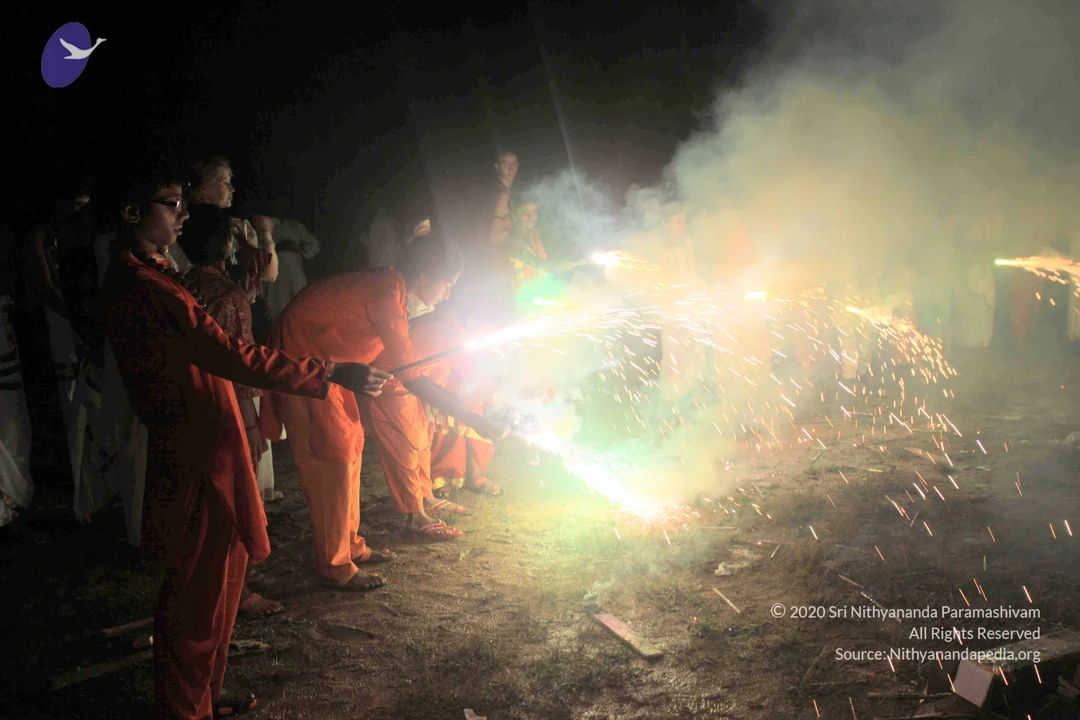
Diwali

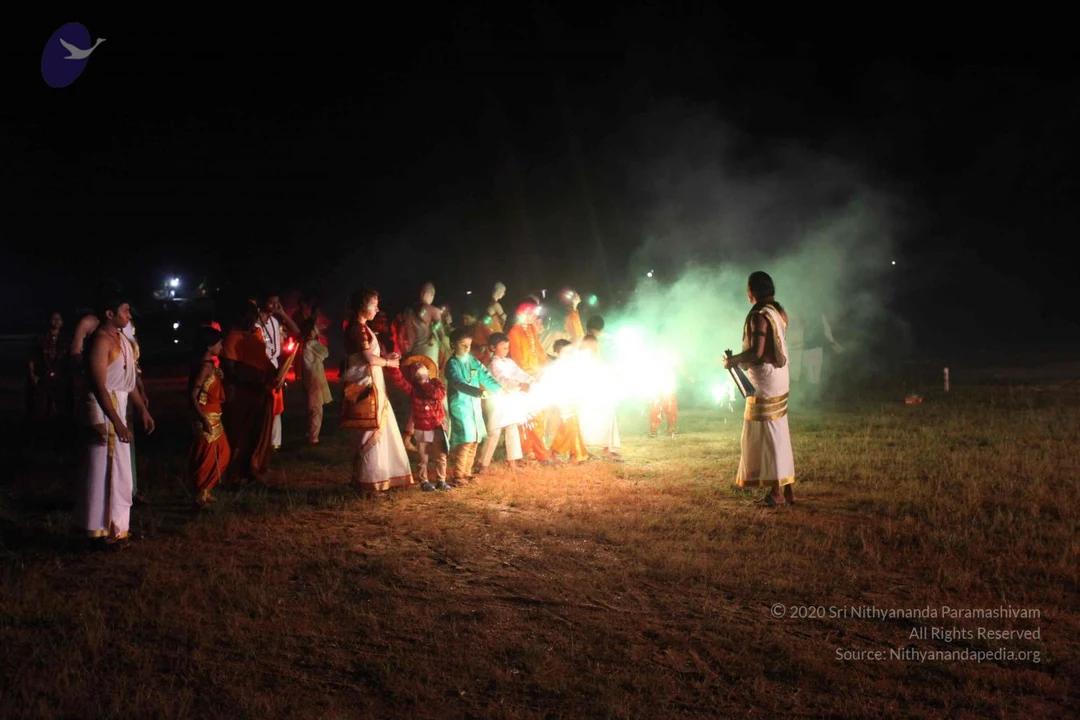
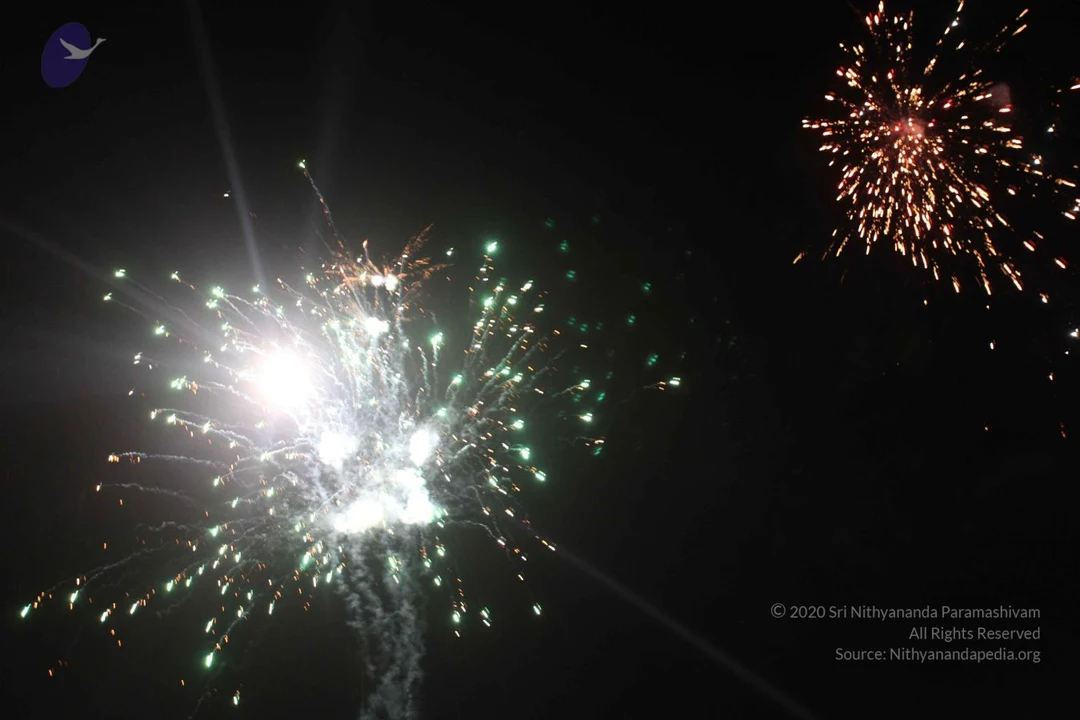
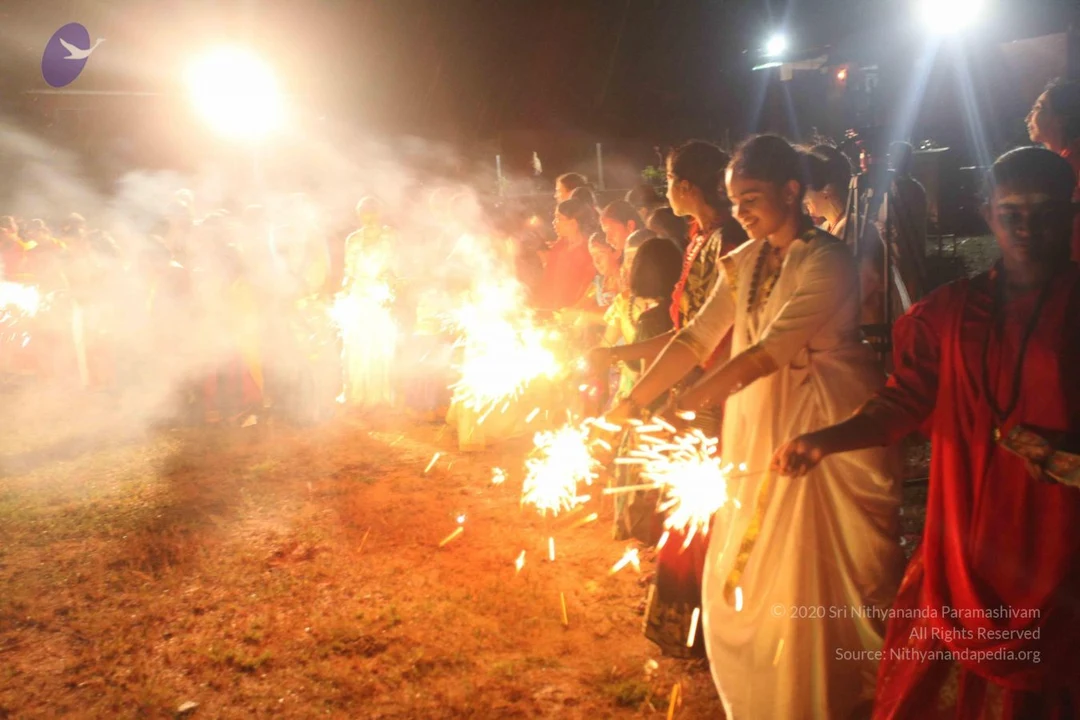
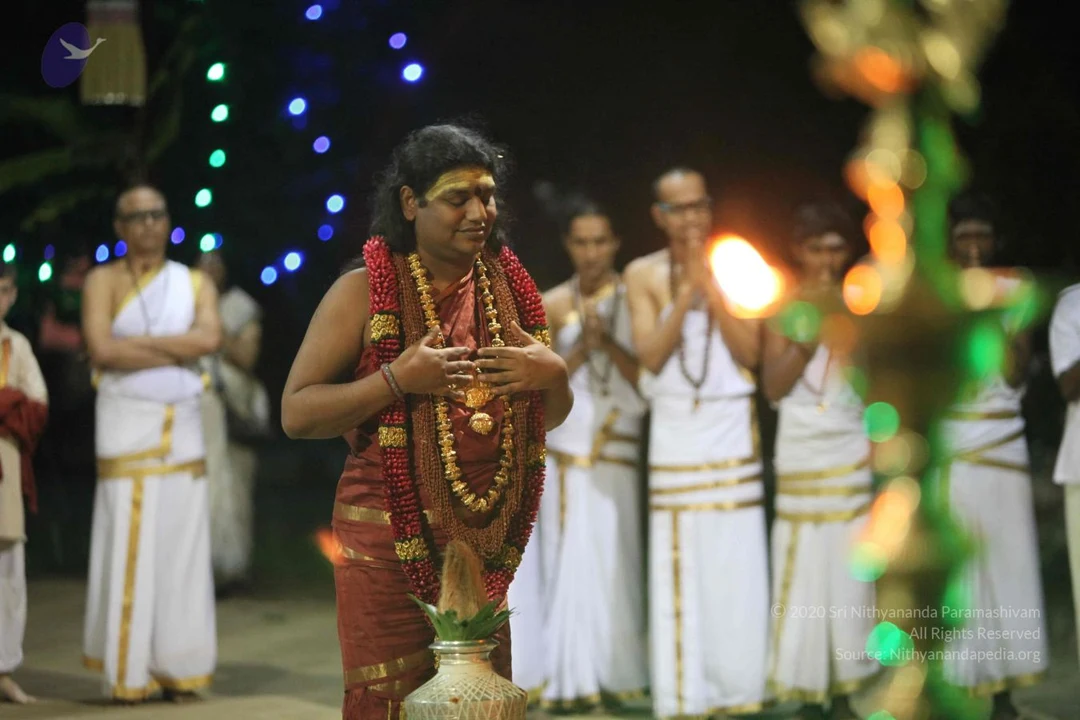
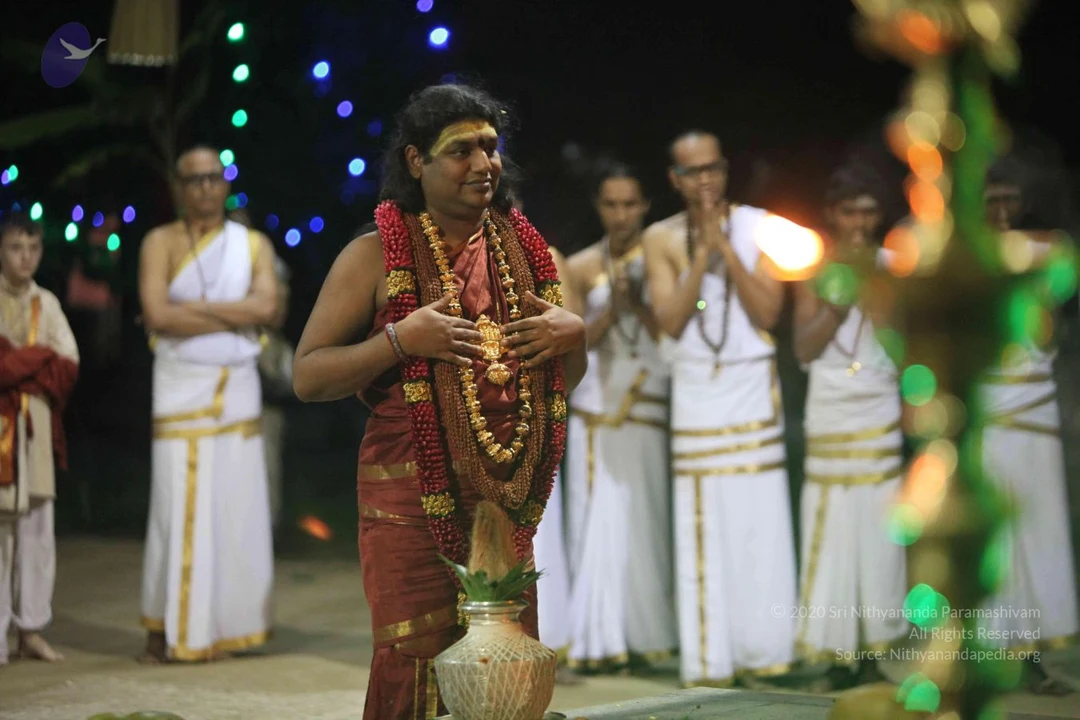
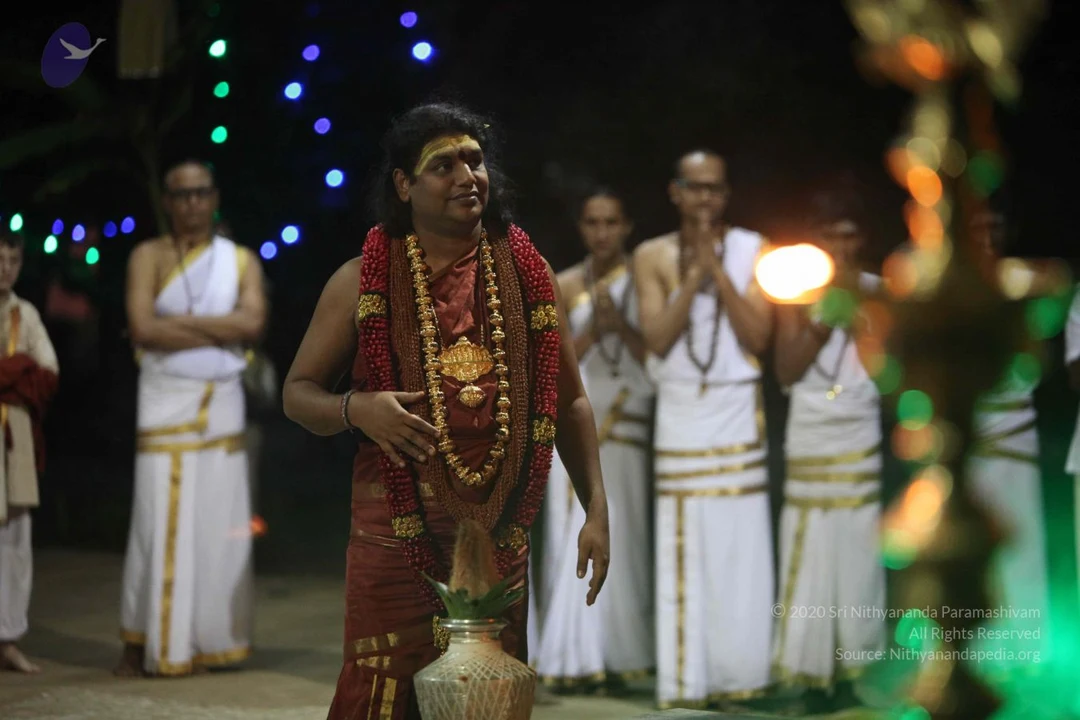
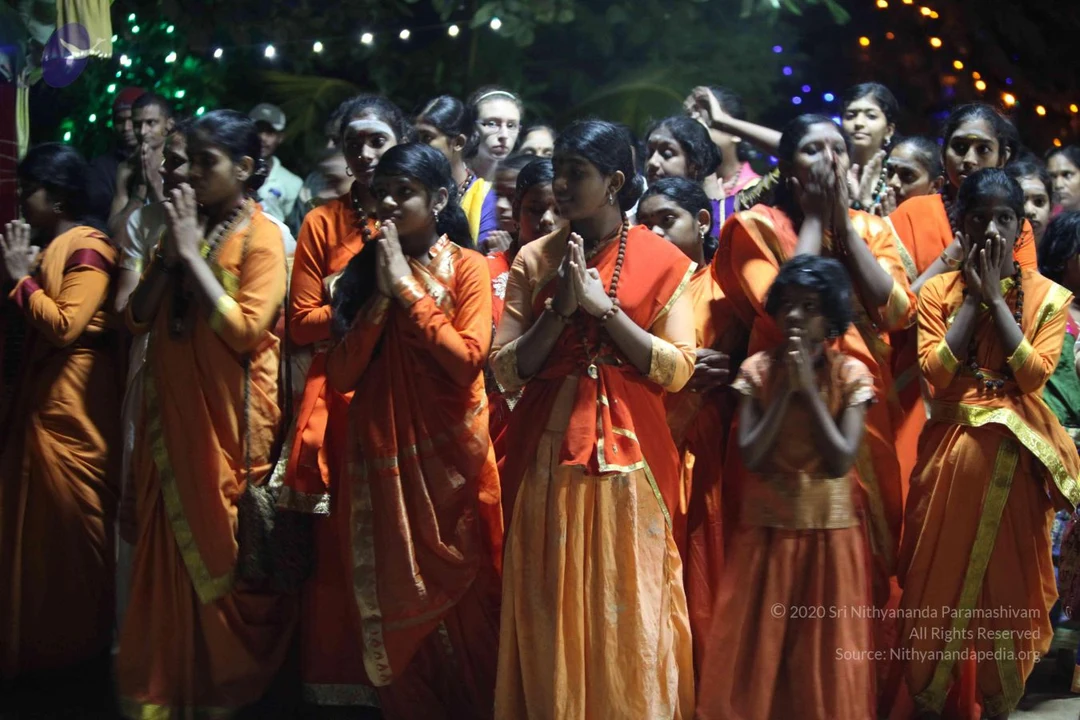
01-DIWALI-CELEBRATION

Photos from this day

View all 581 photos

VISHESHA-DEEKSHA
188 photosSource gallery
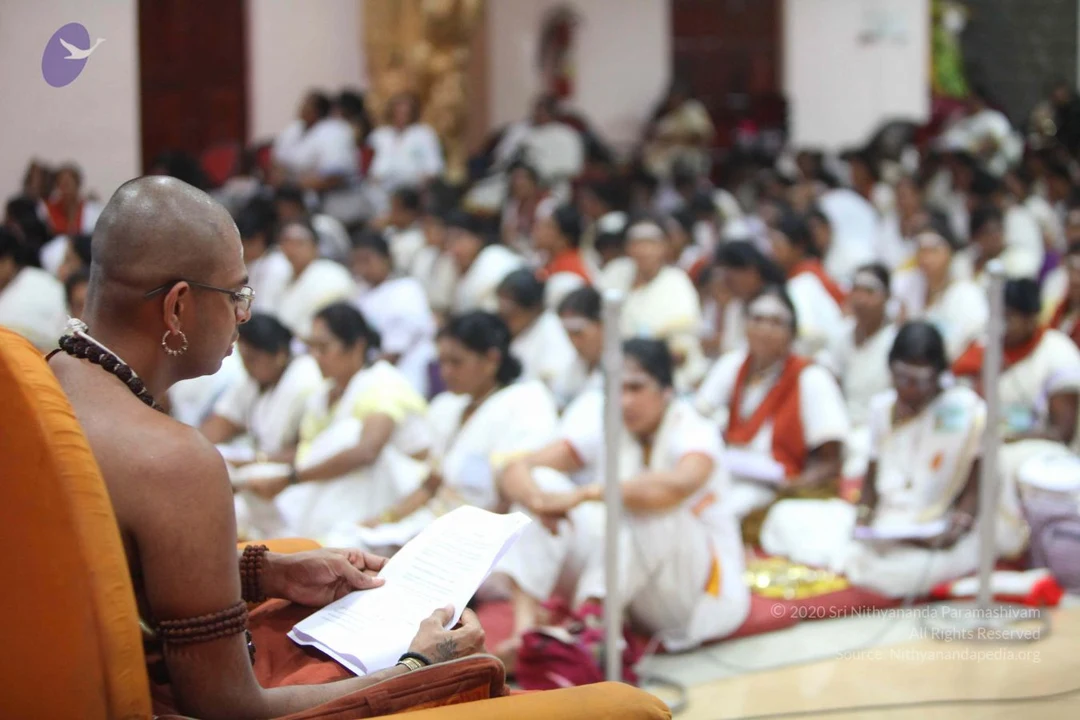
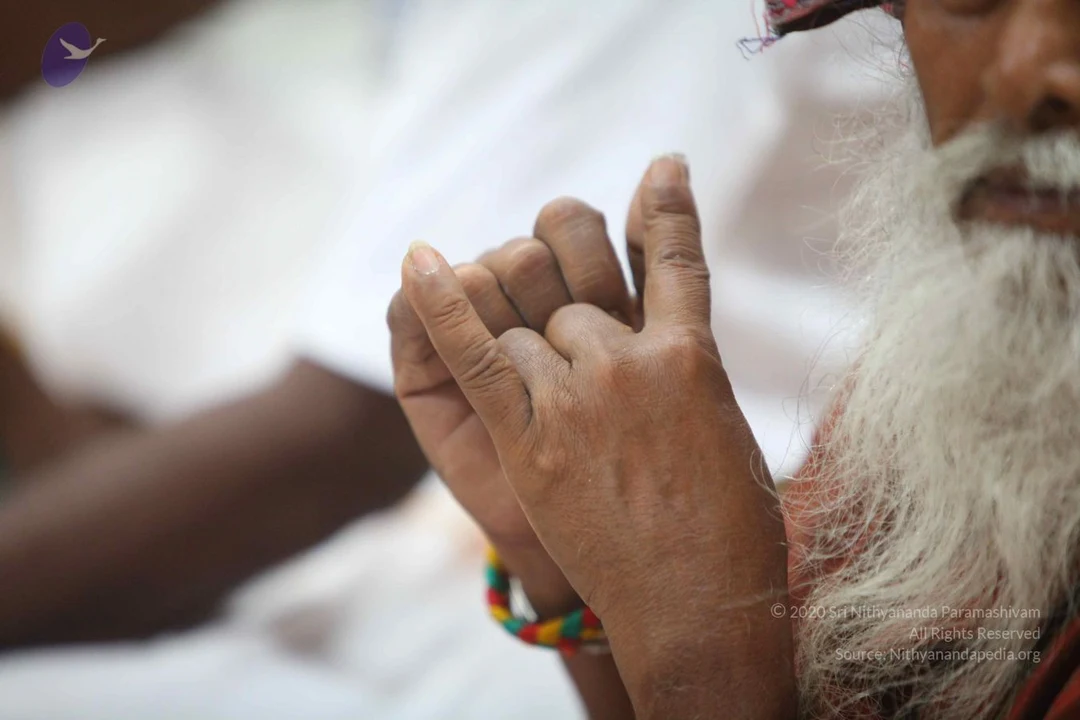
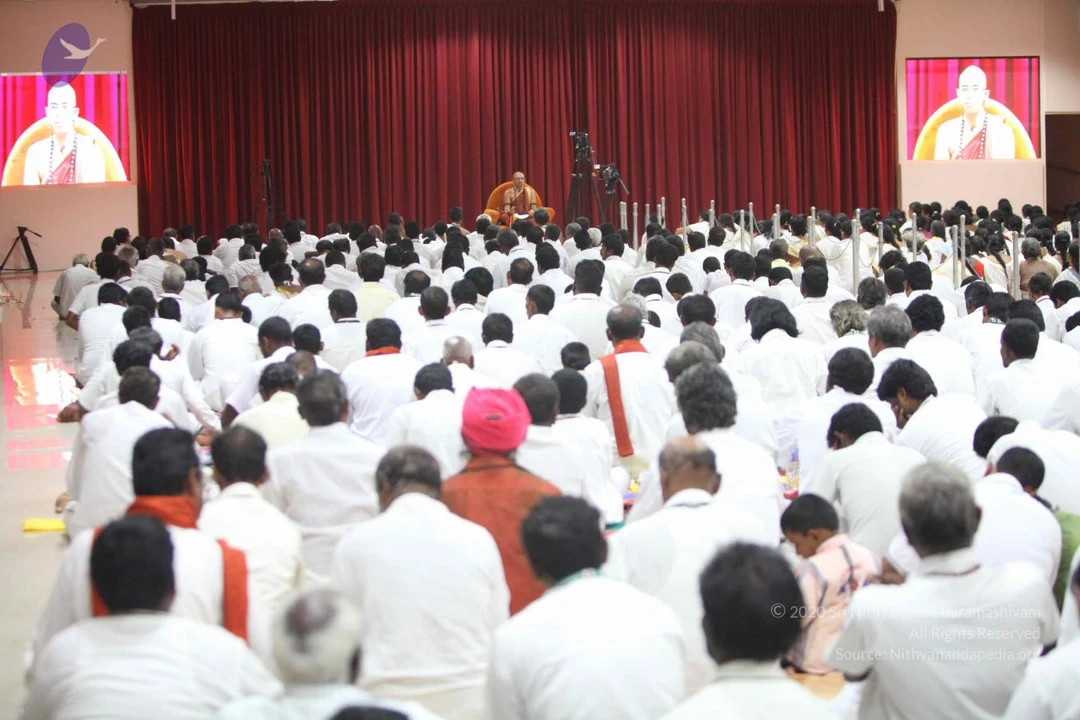
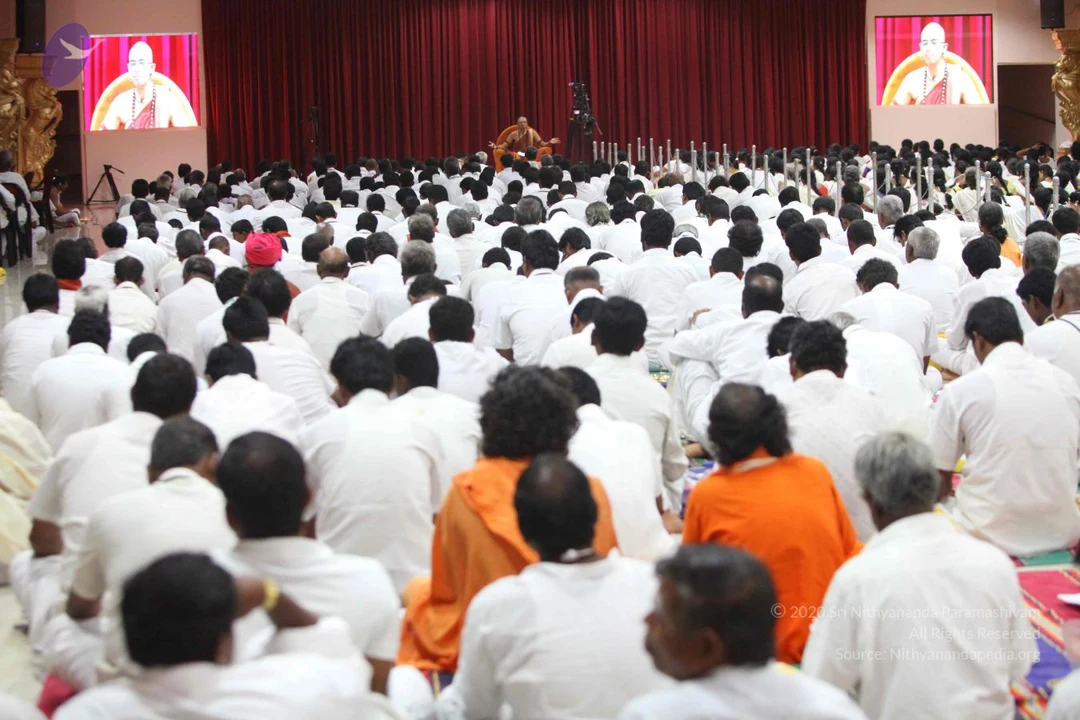
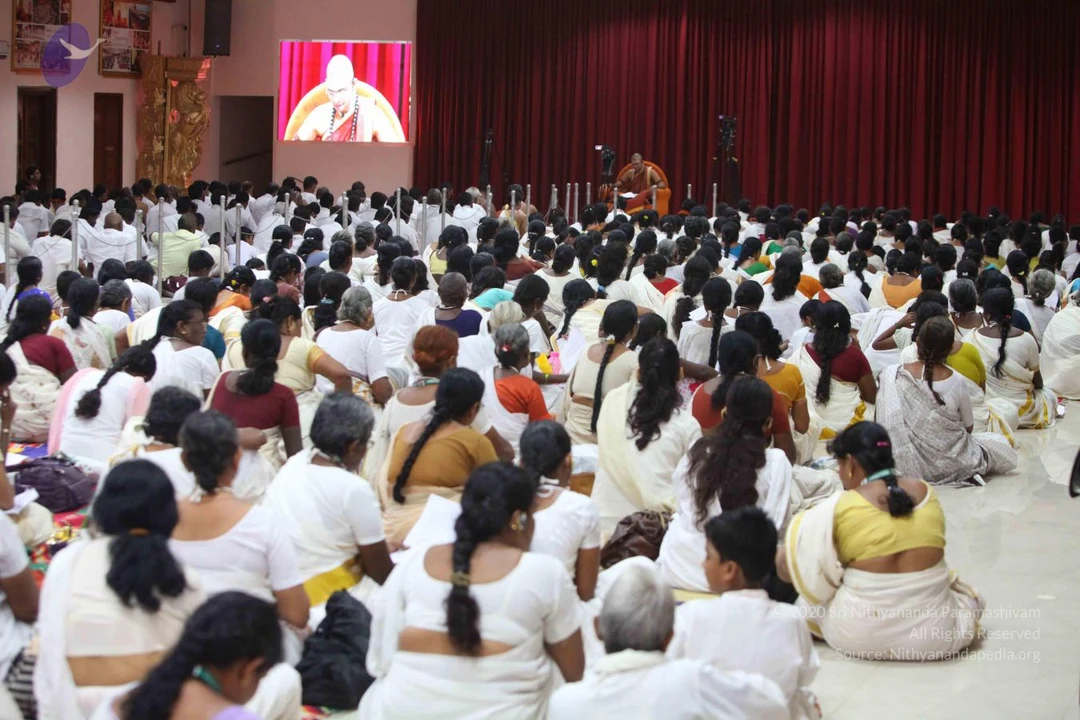
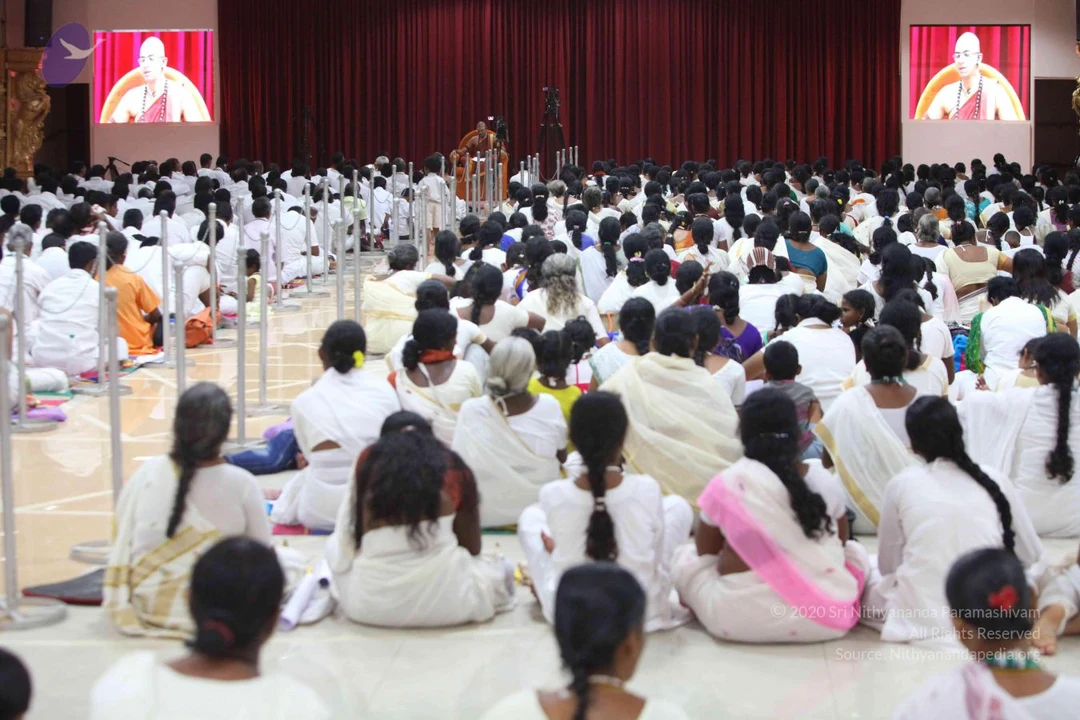
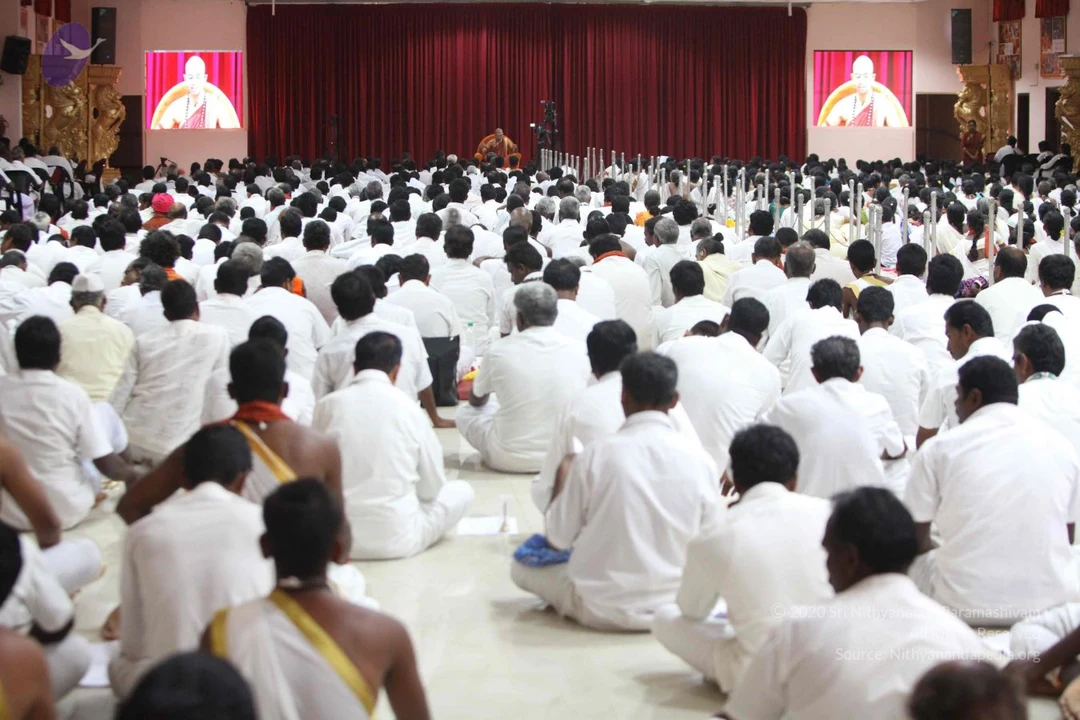
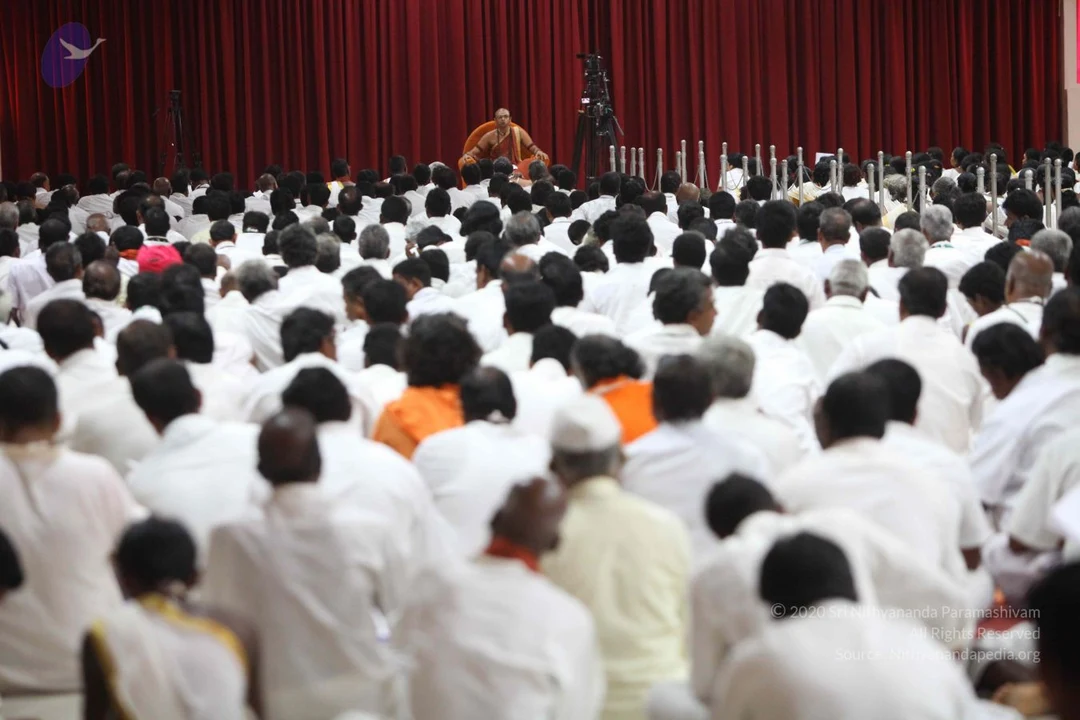
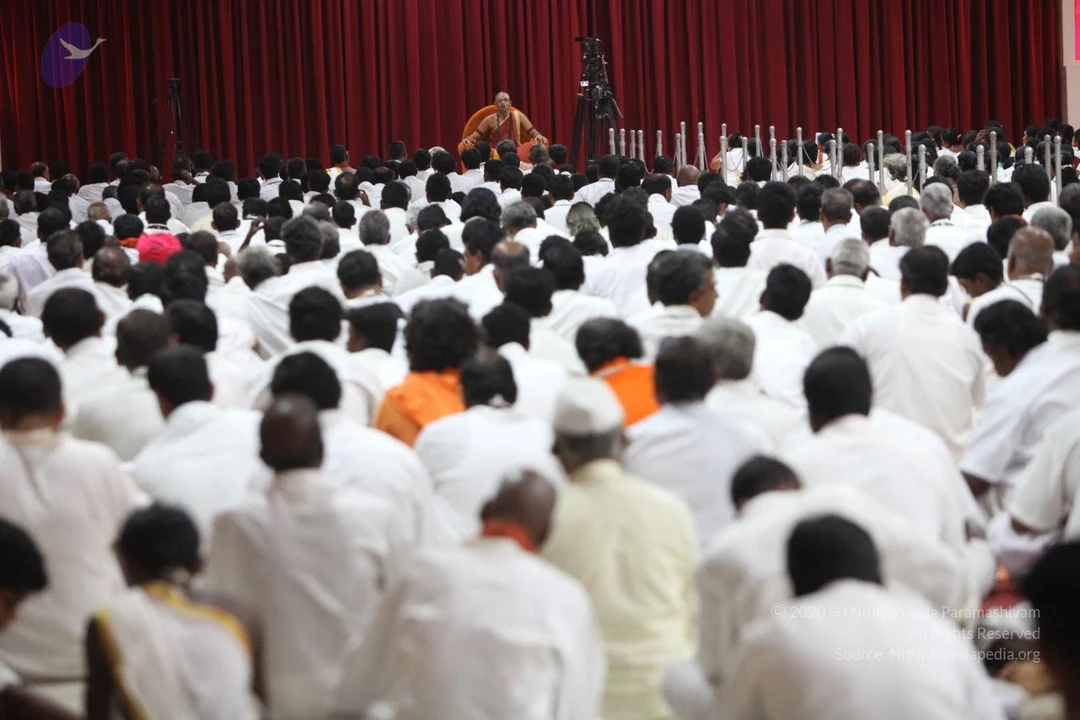
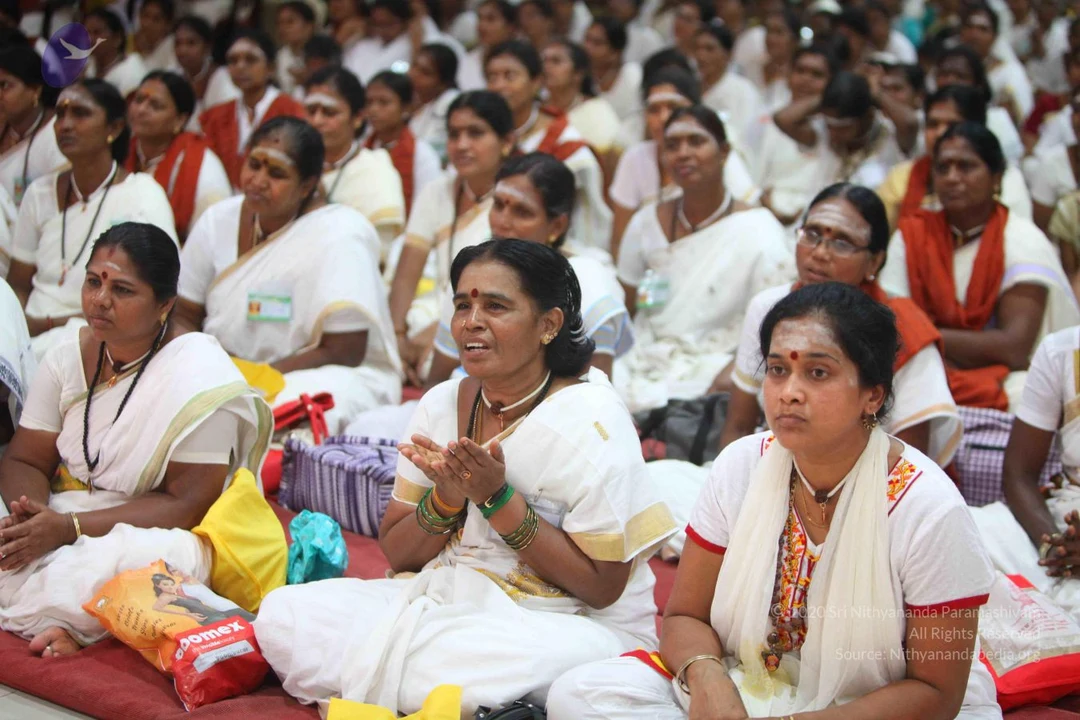
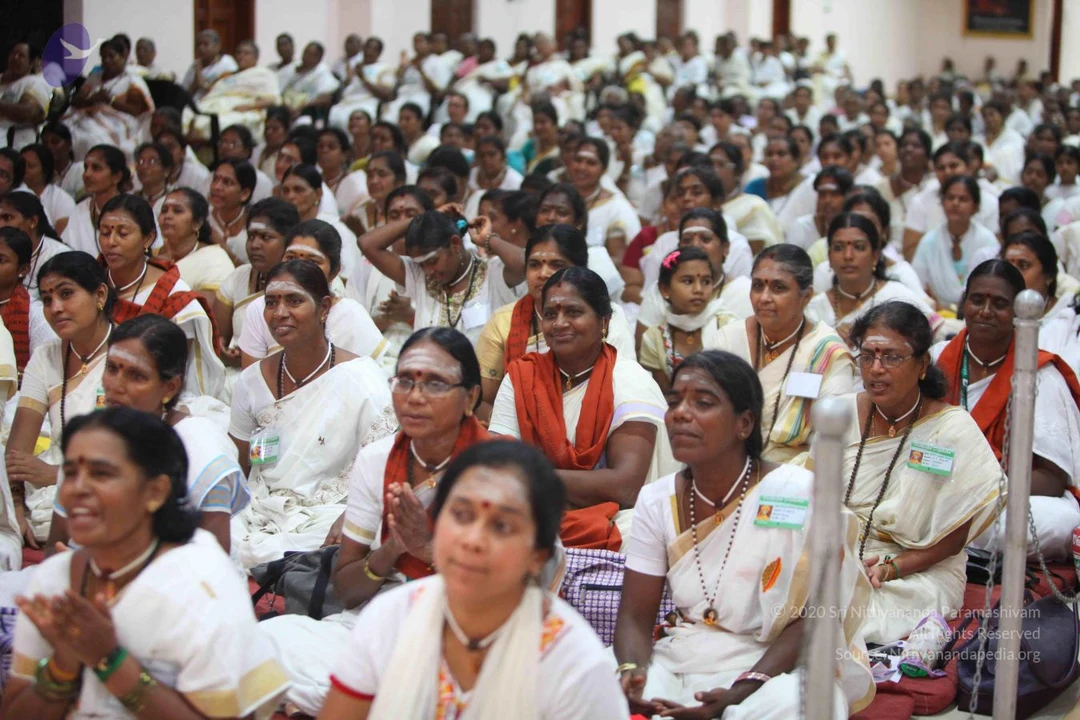
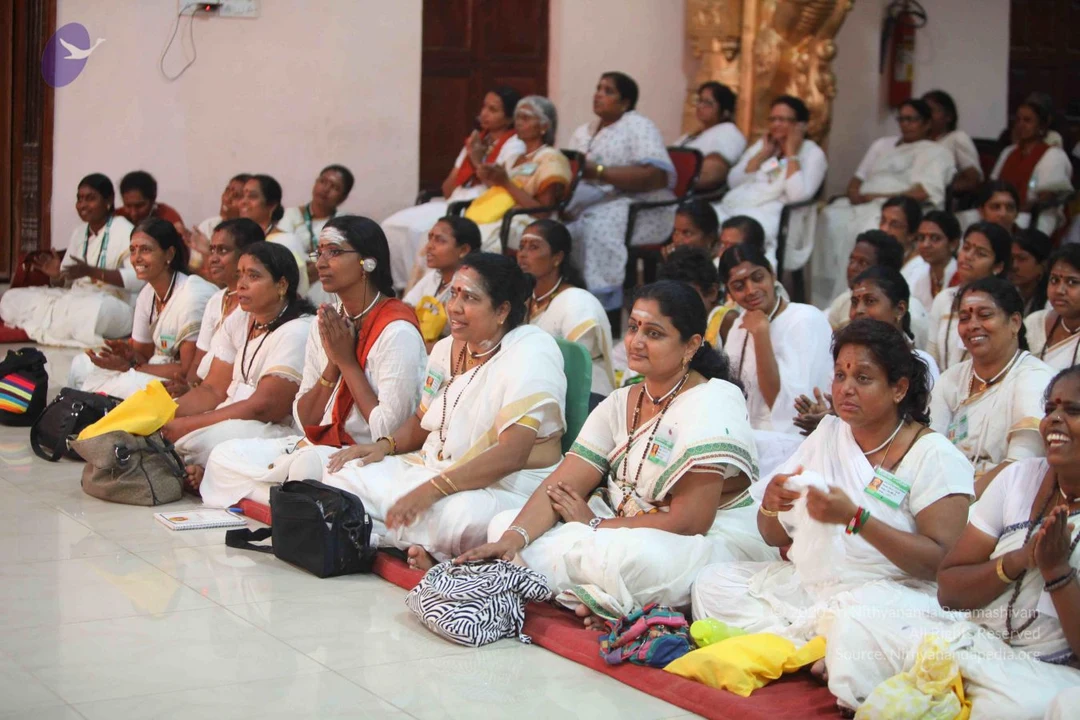
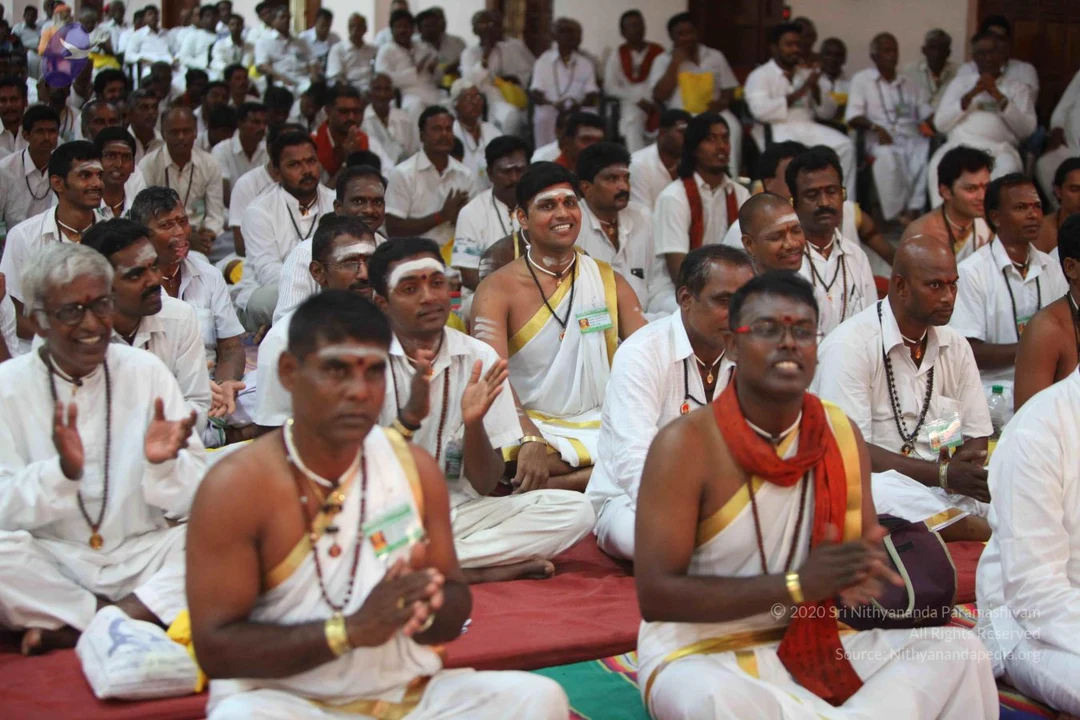
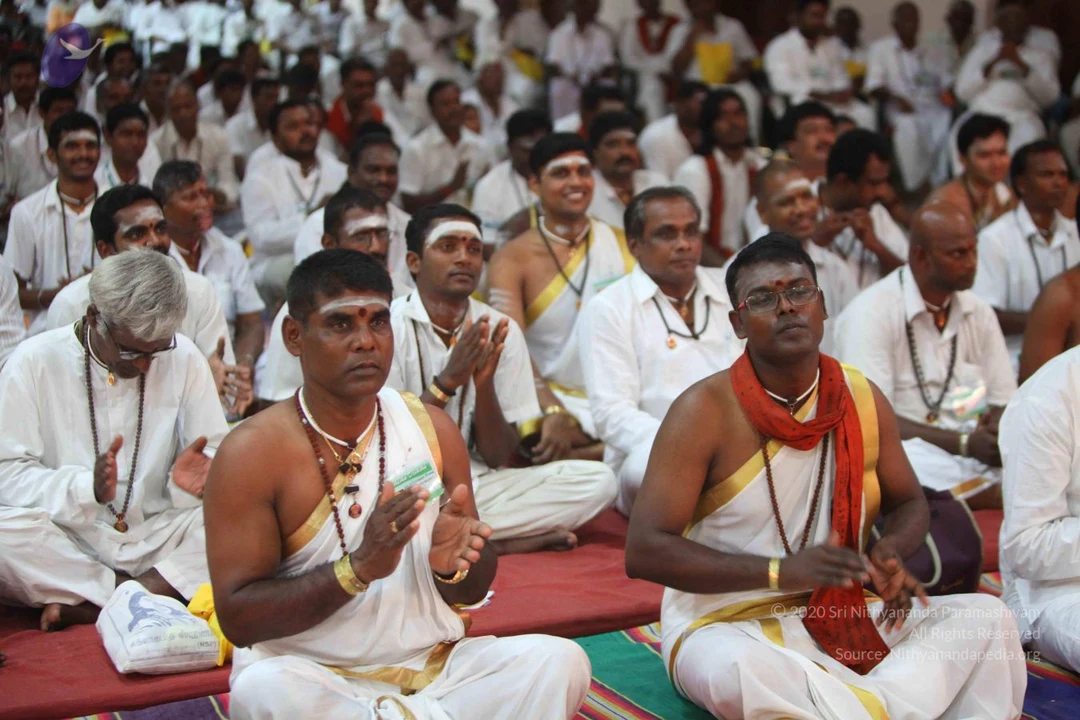
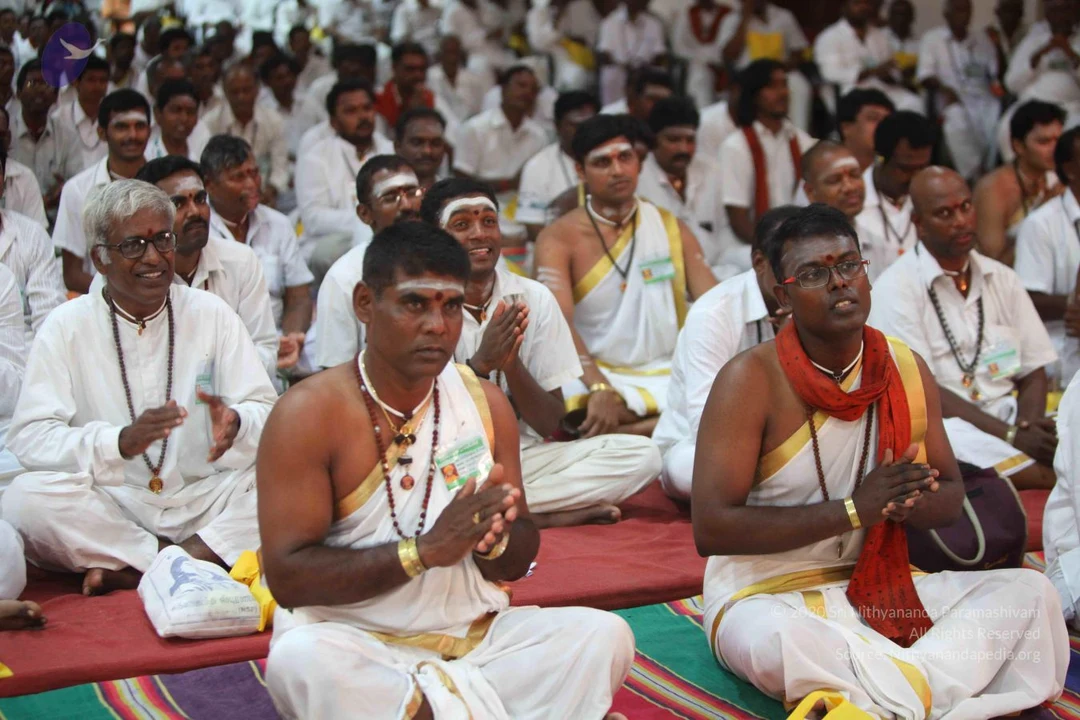
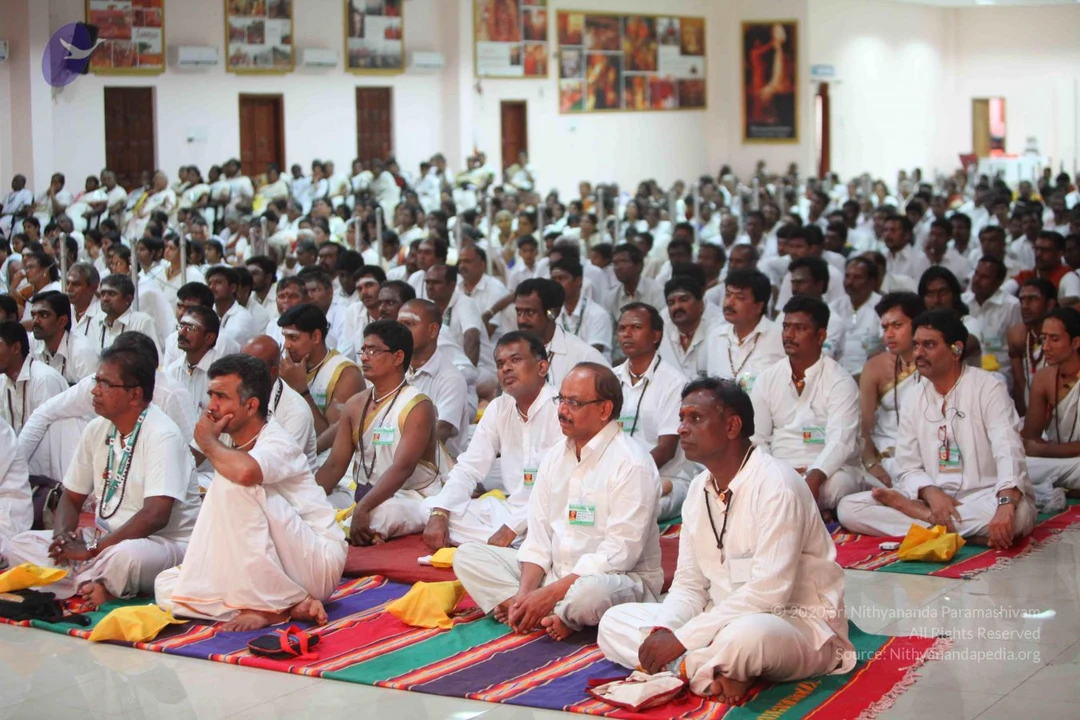
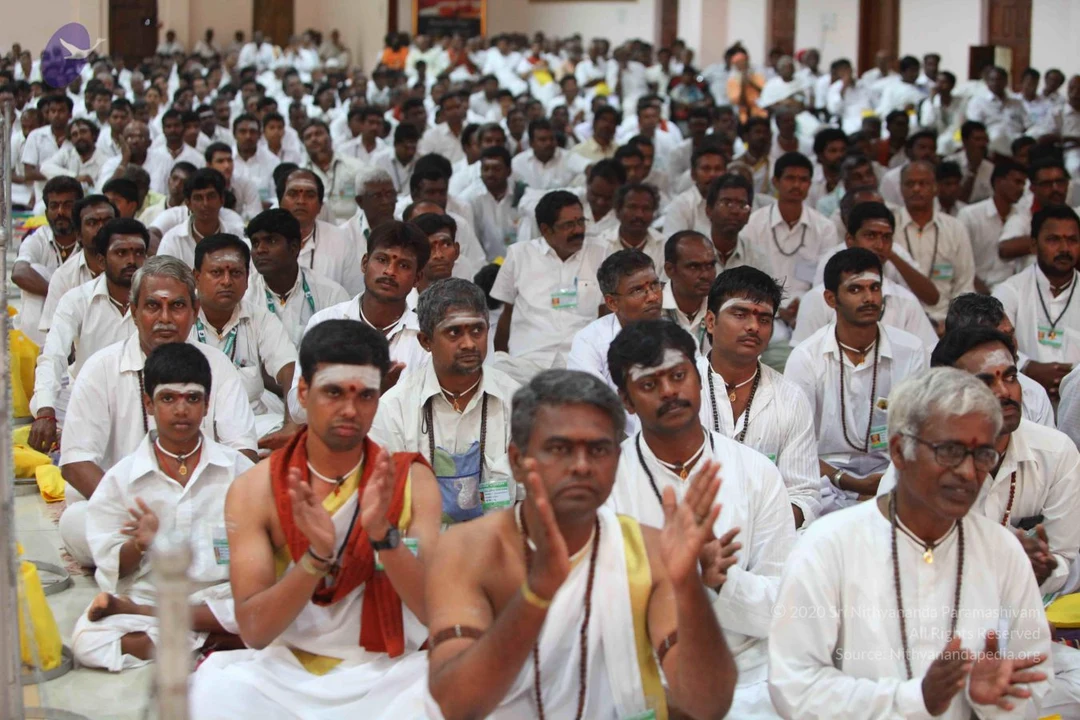
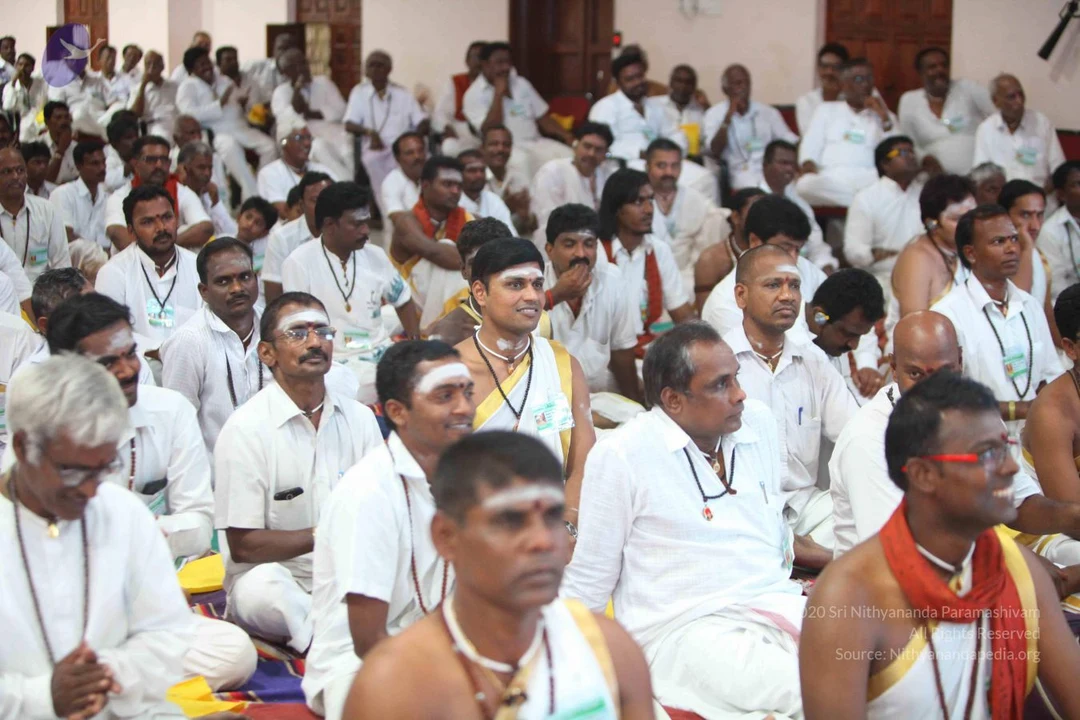
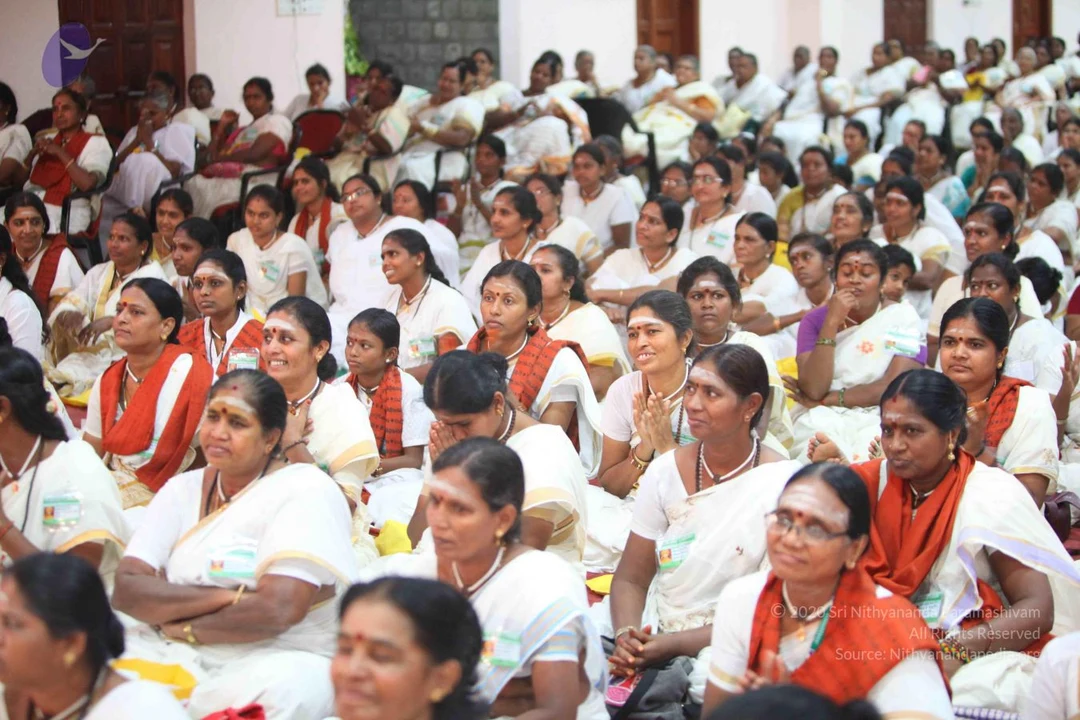
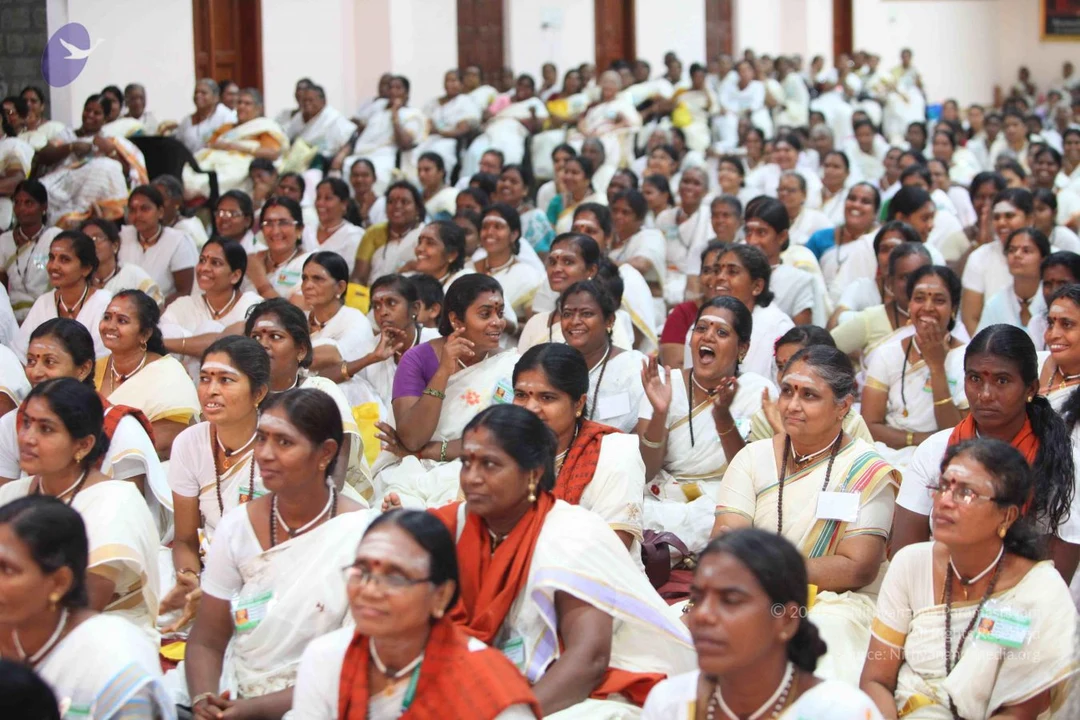
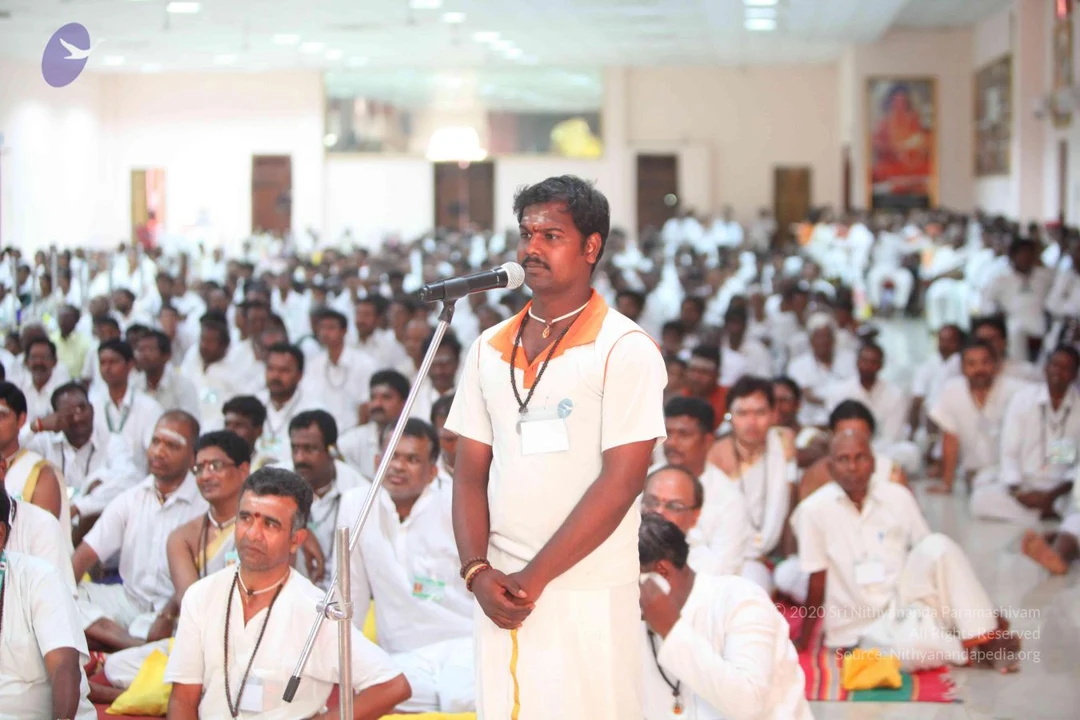
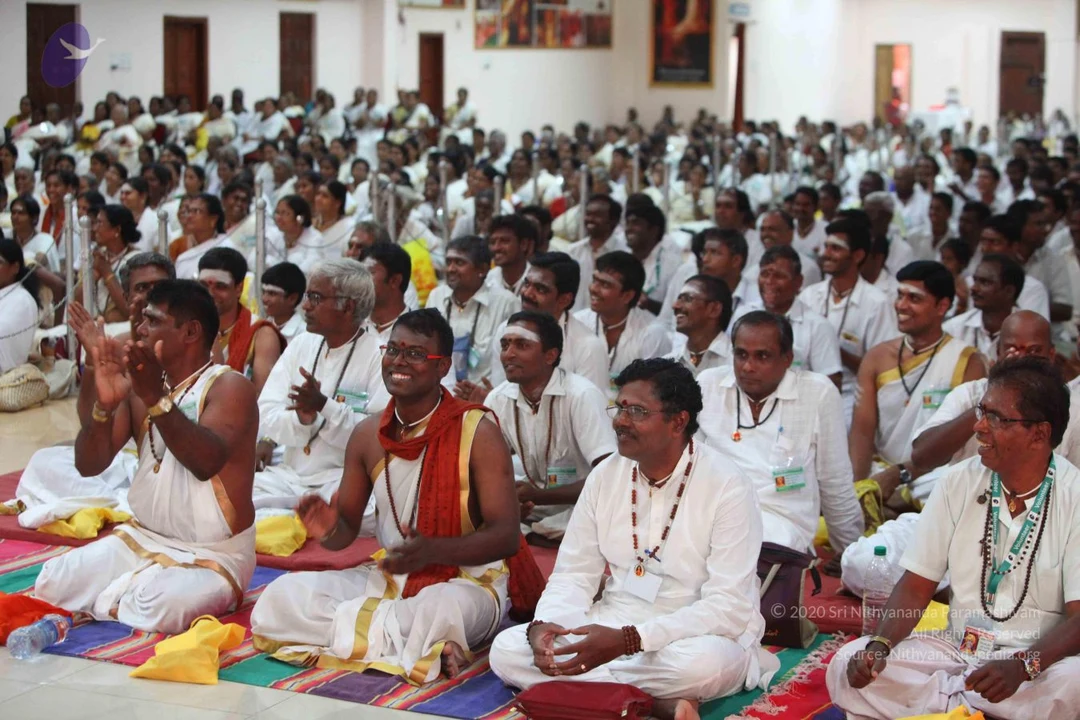
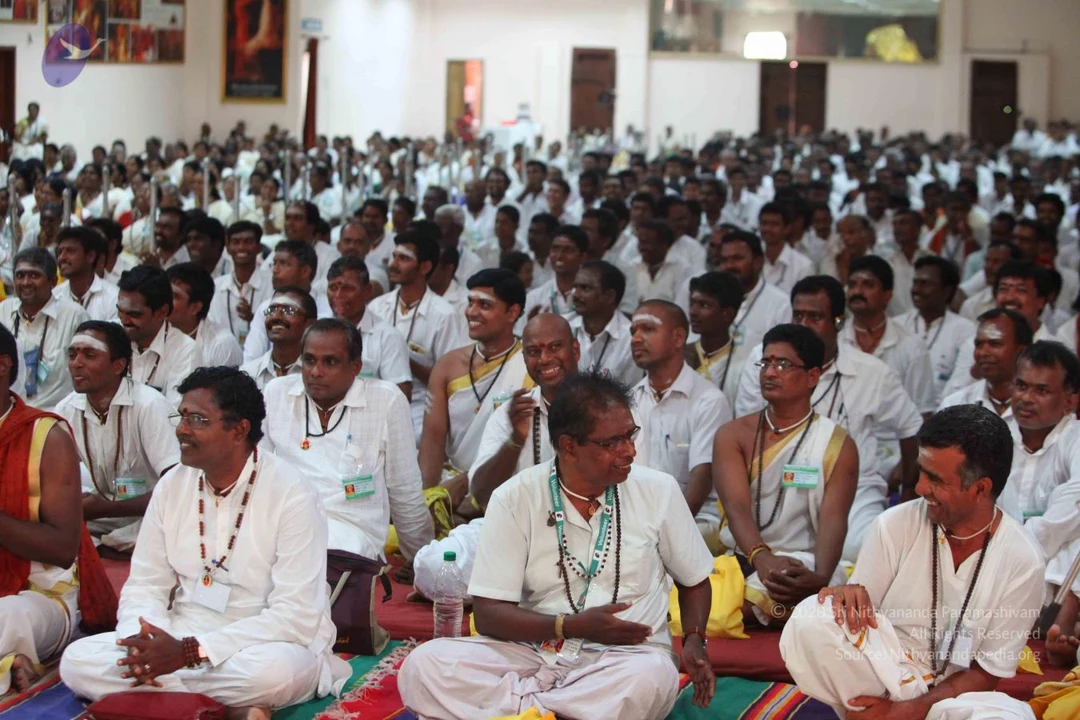
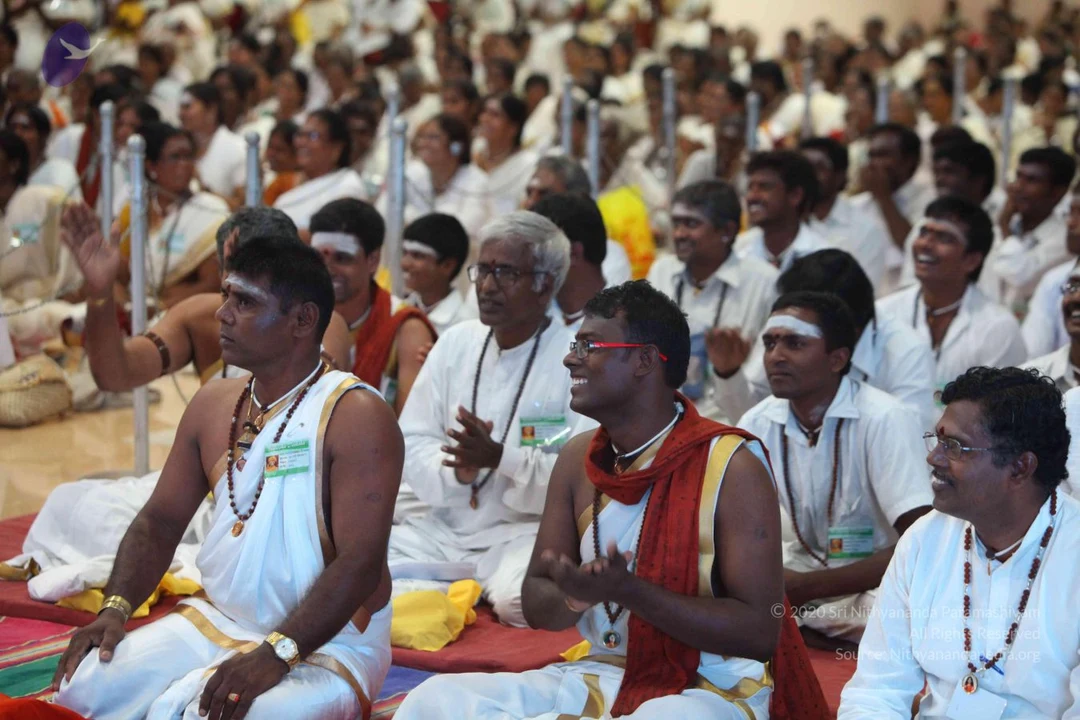
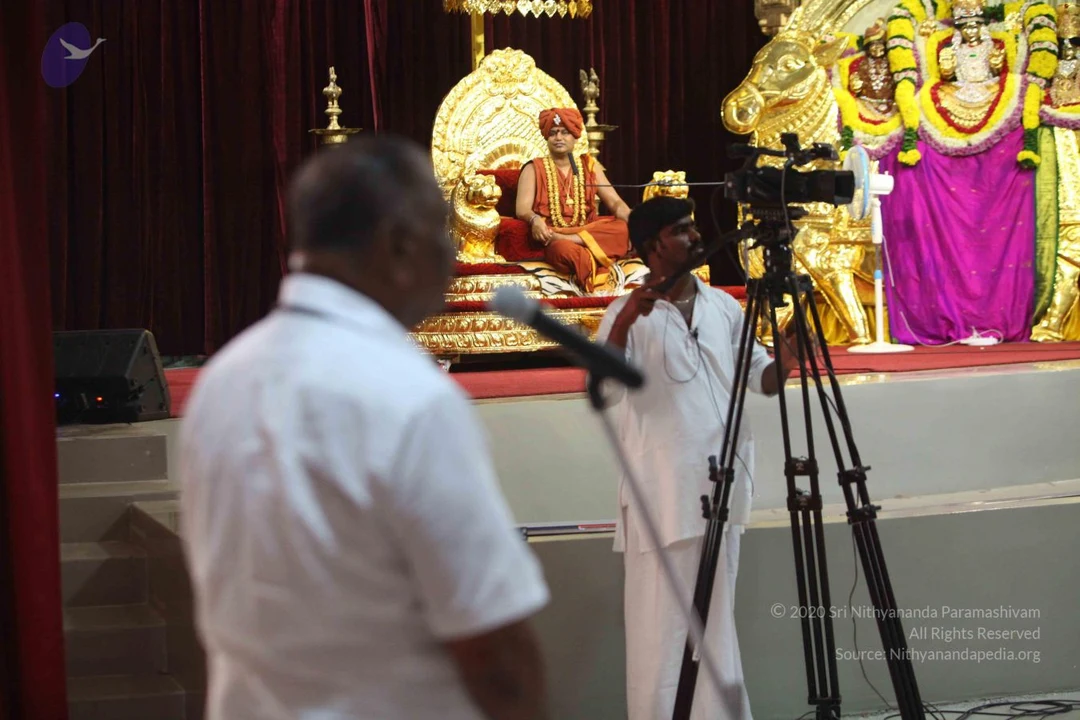
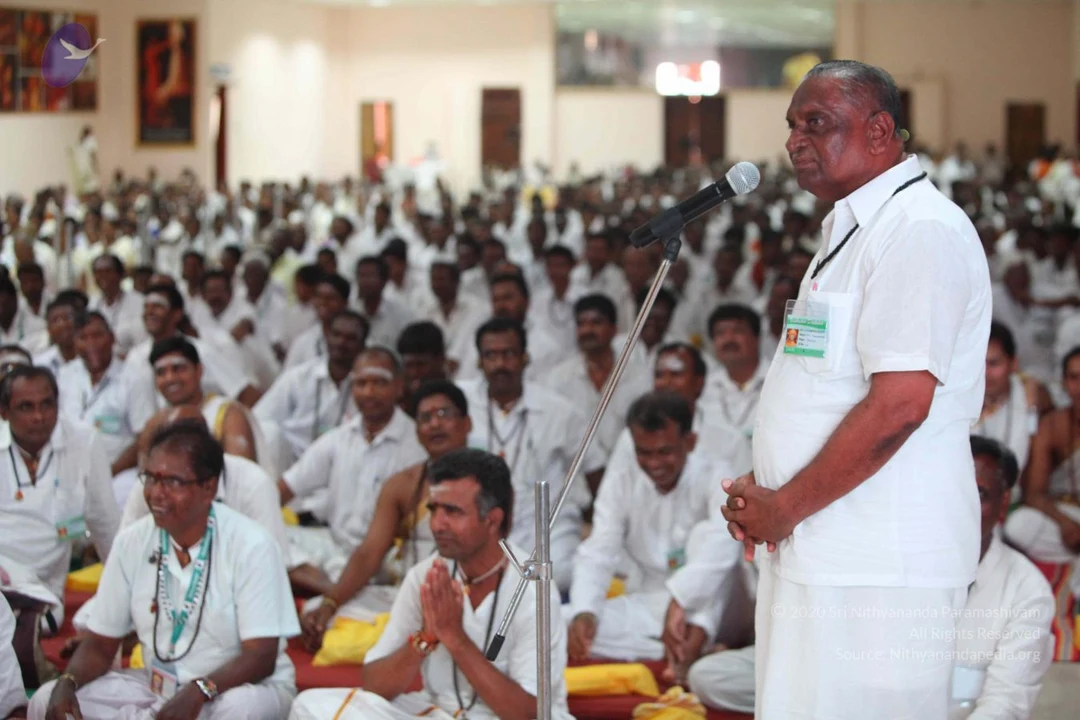
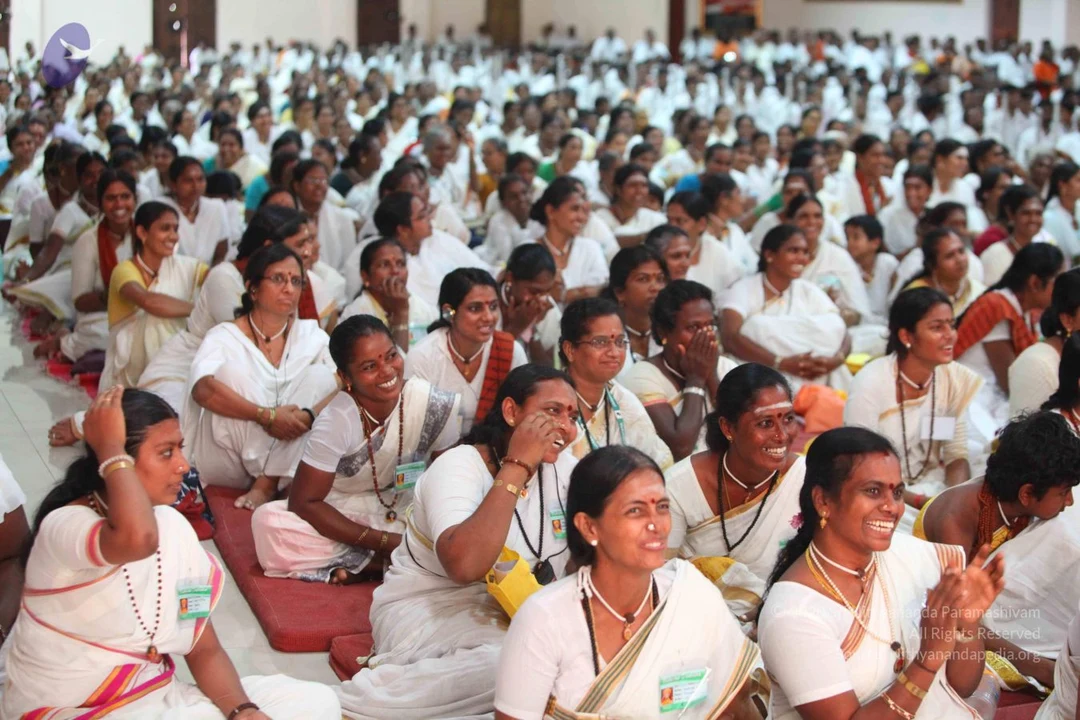
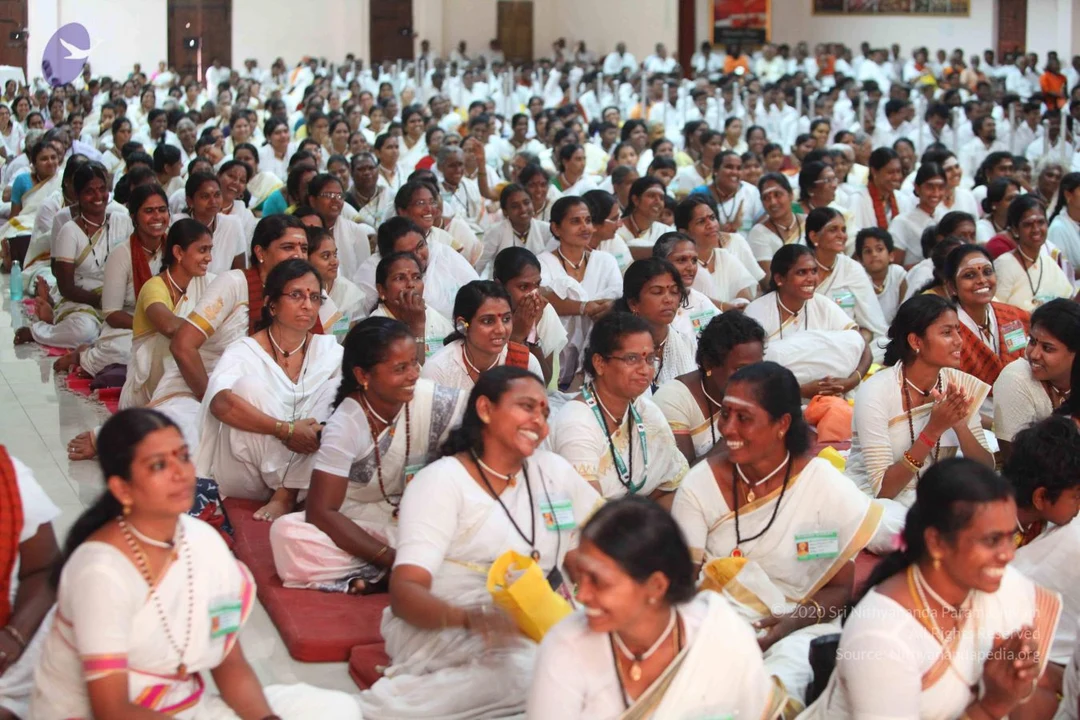
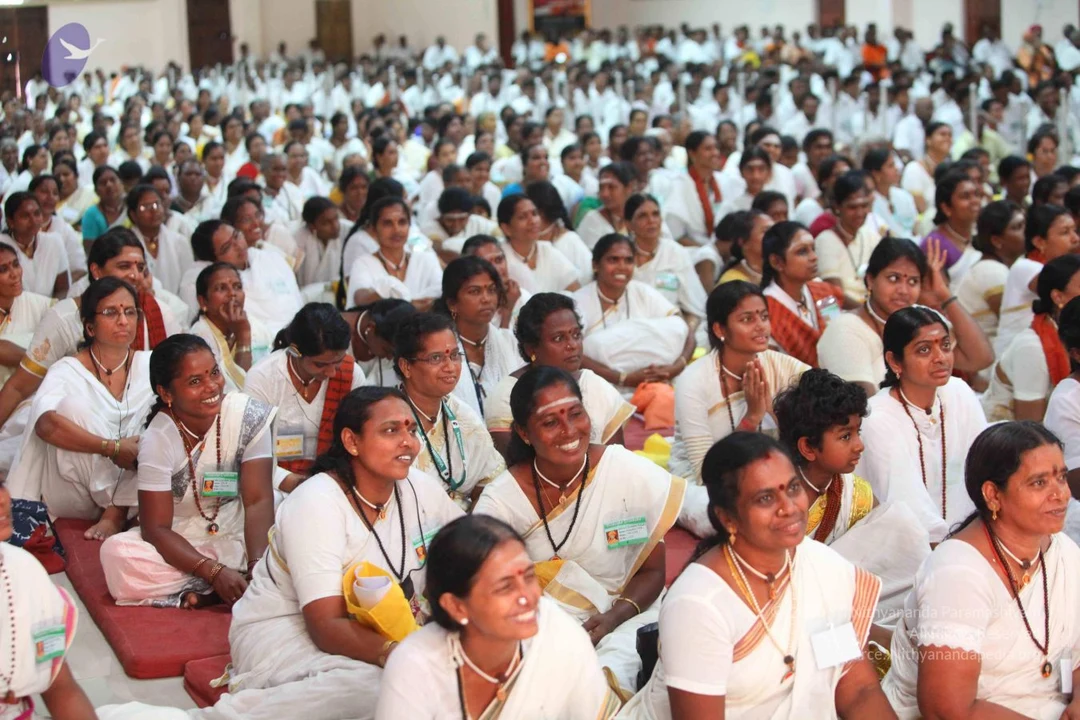
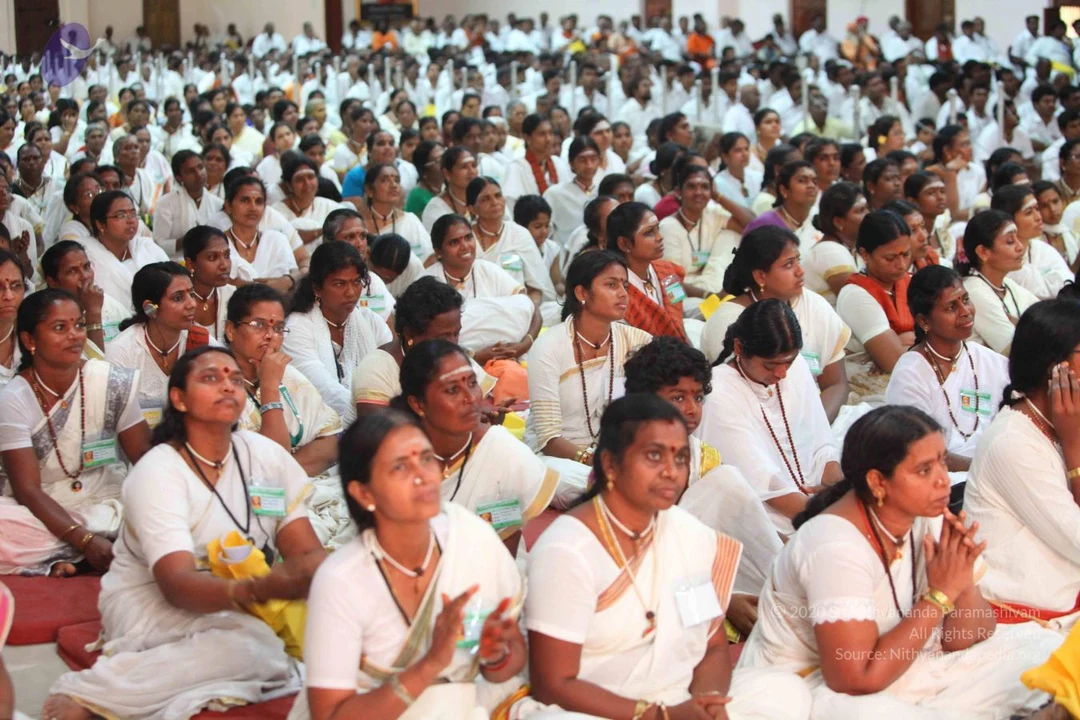
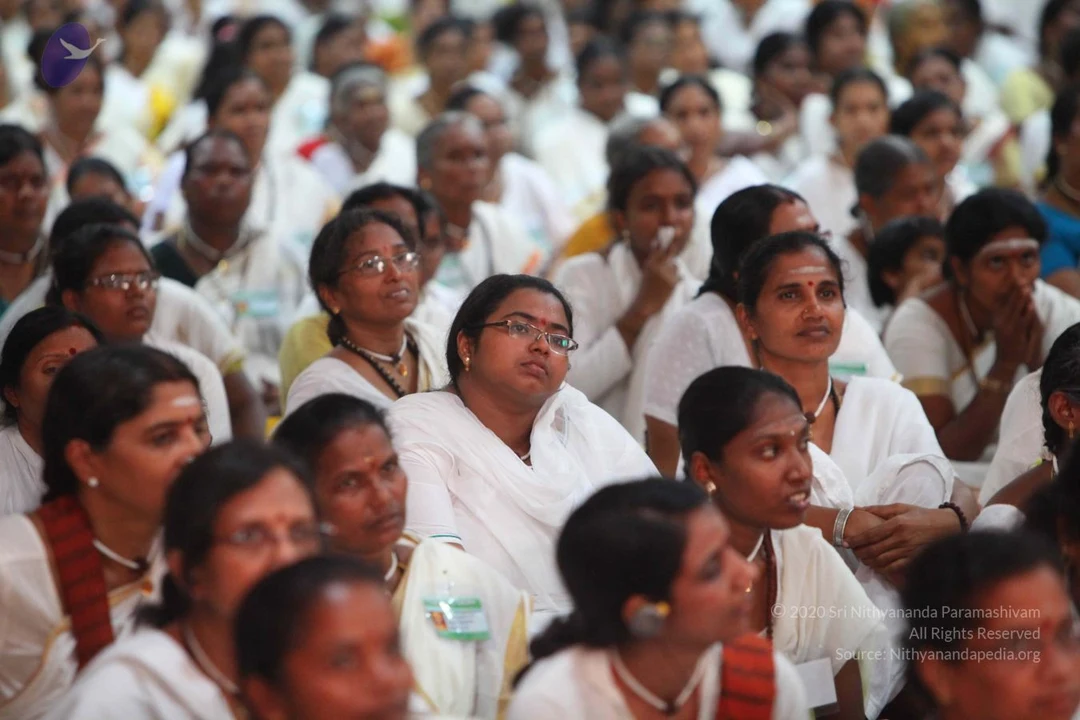
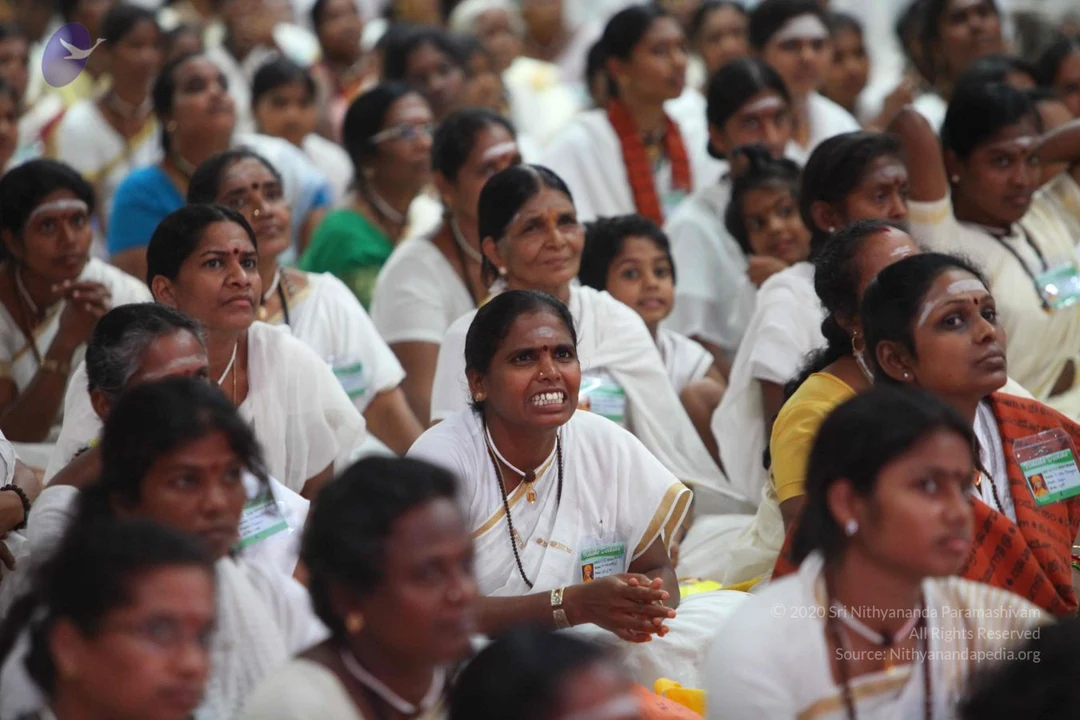
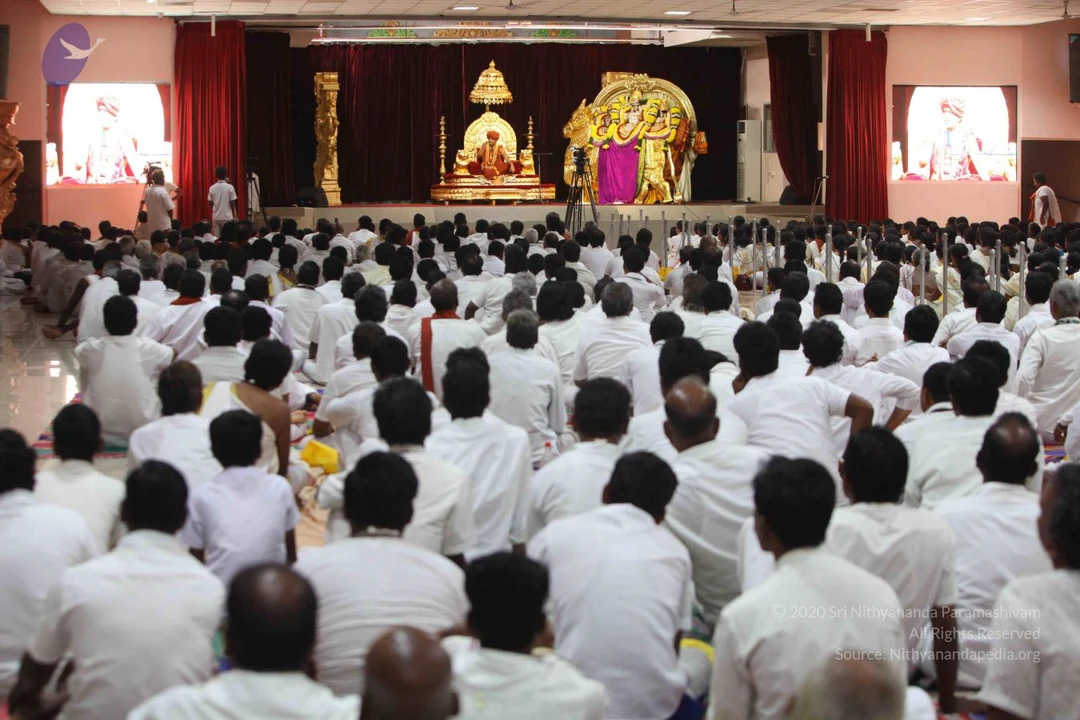
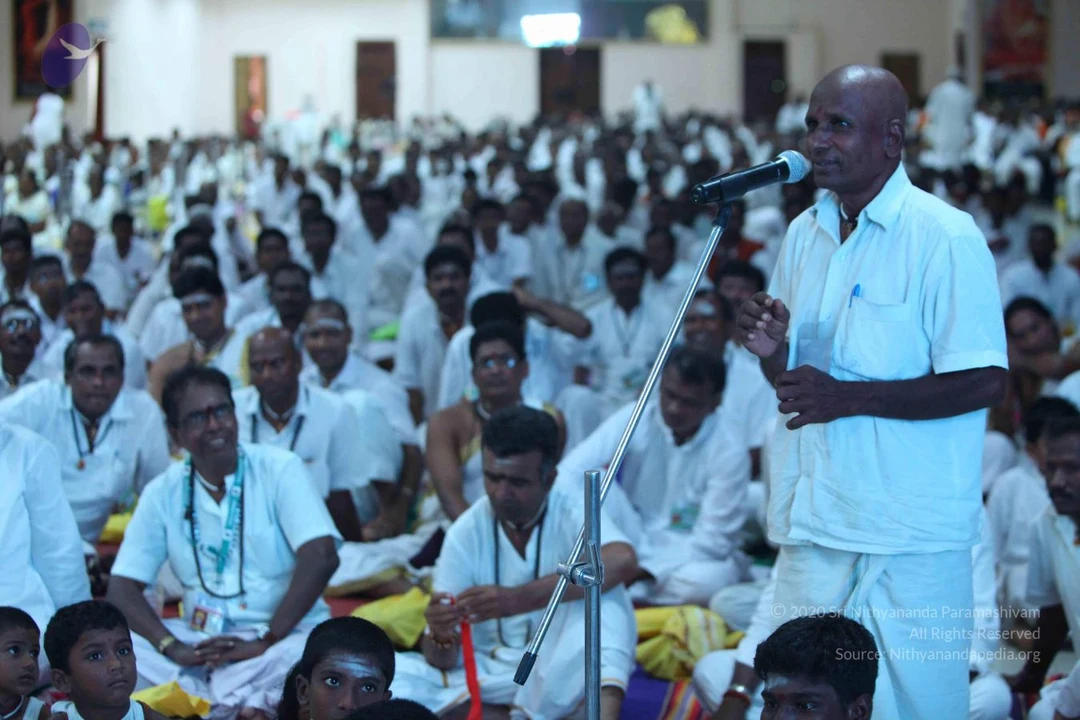
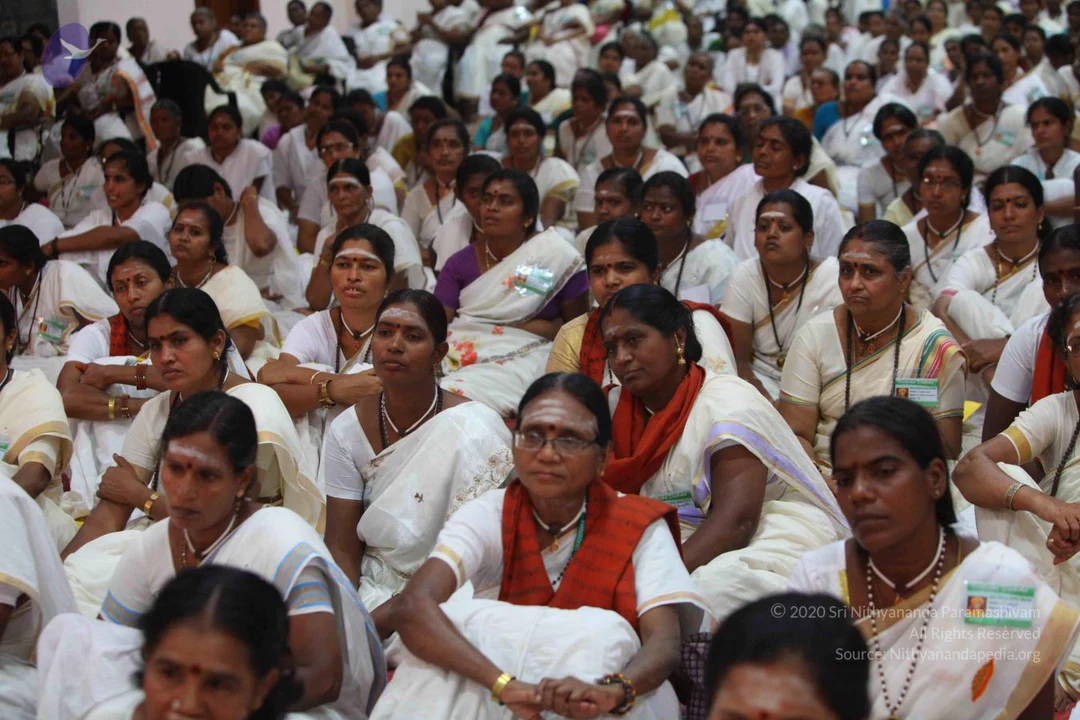
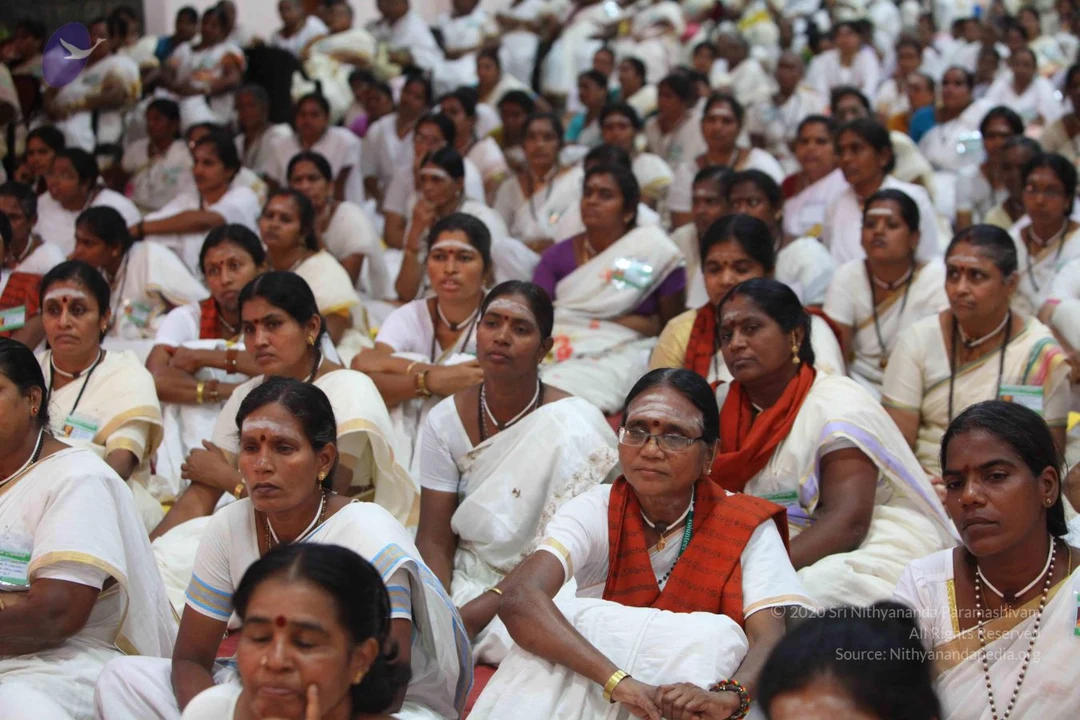
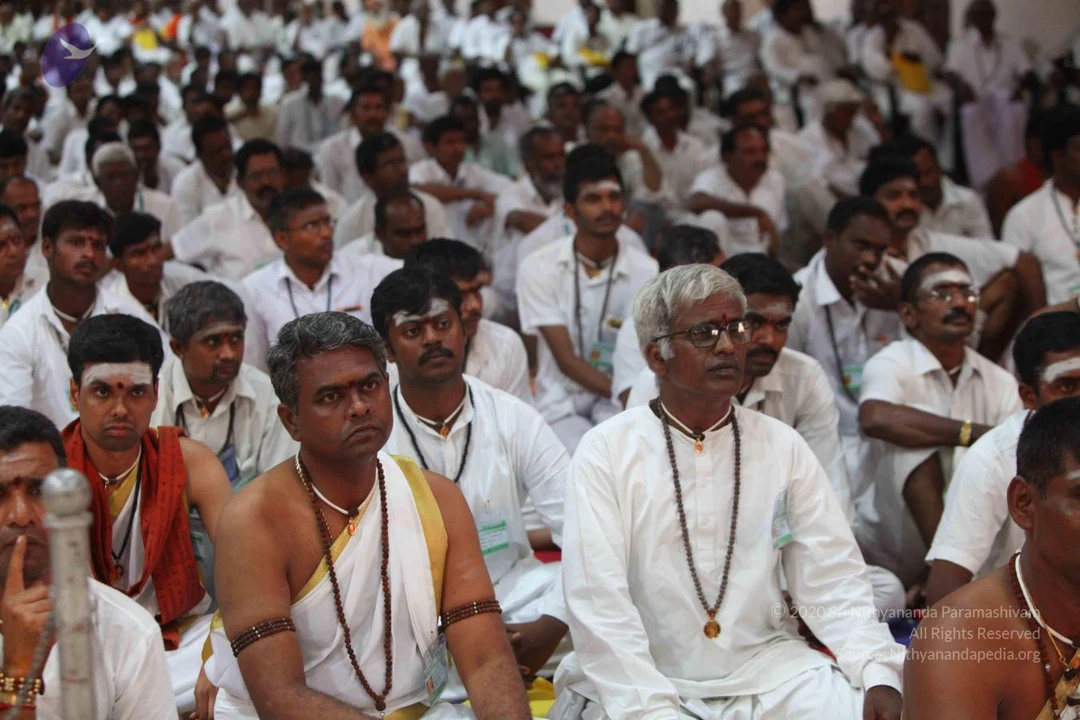
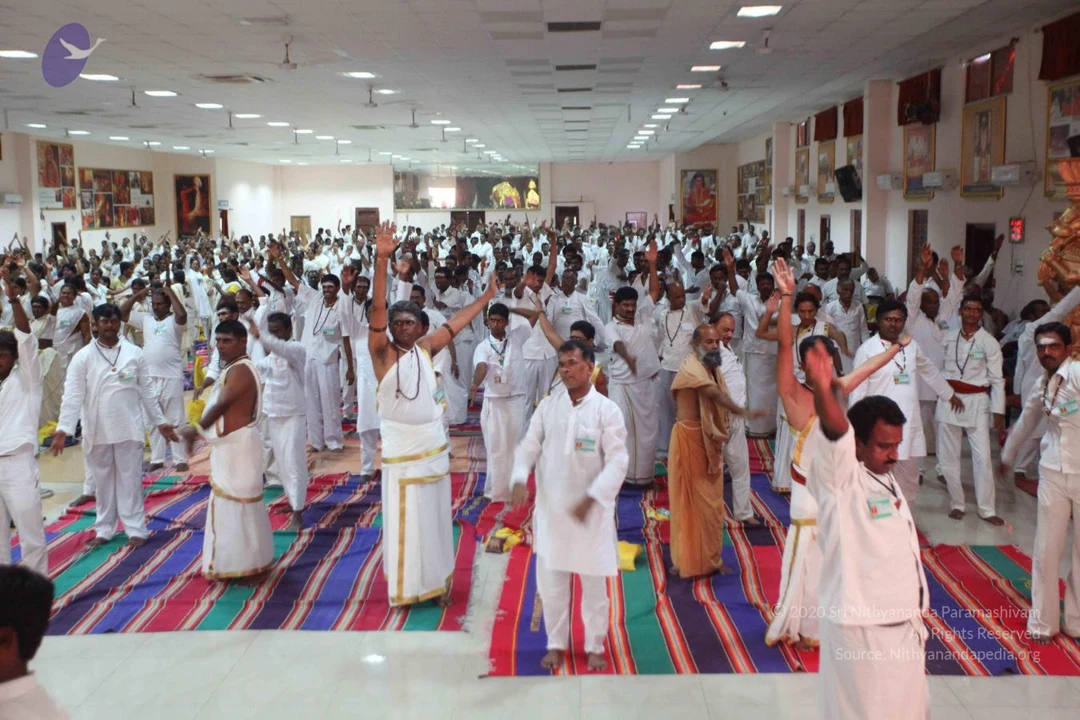
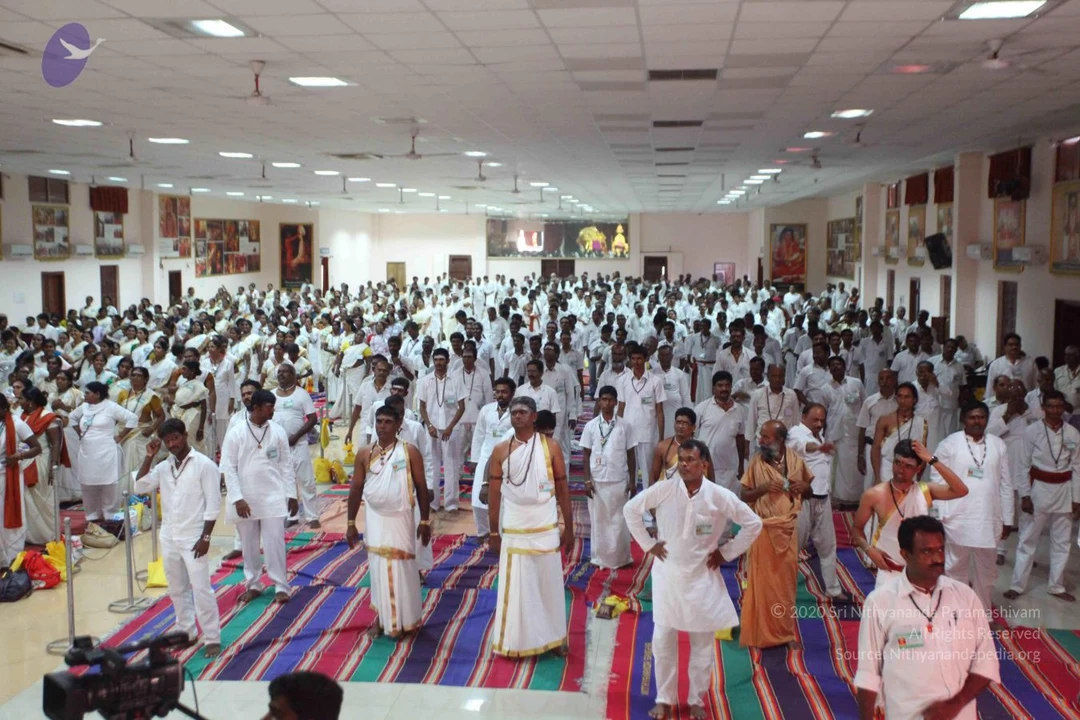
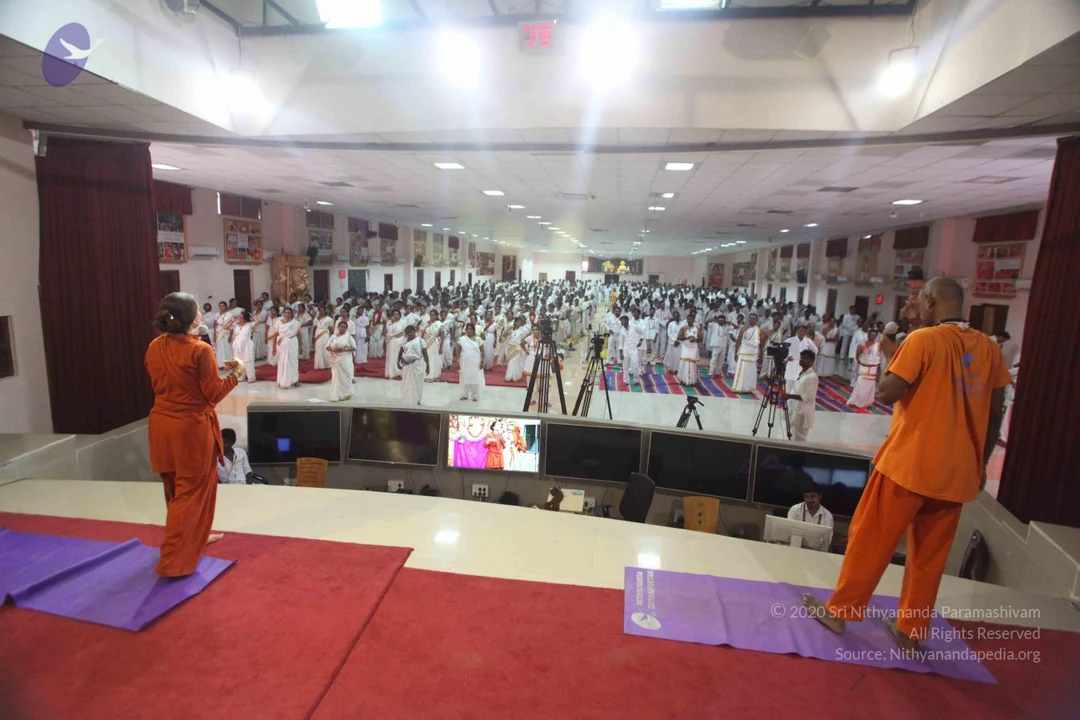
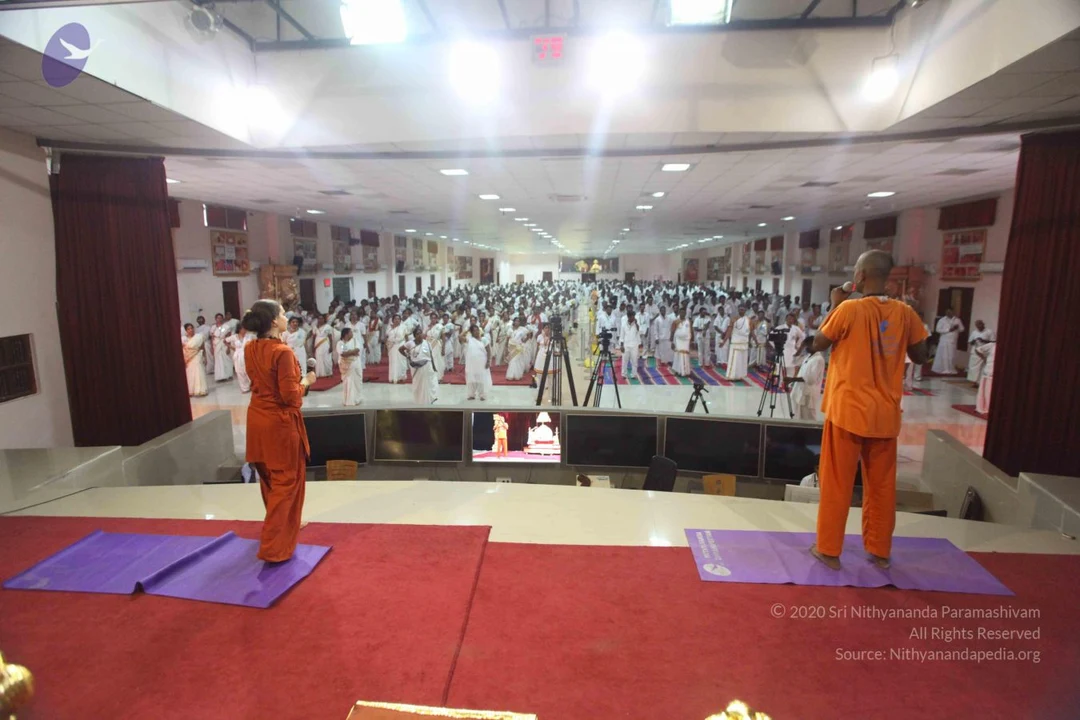
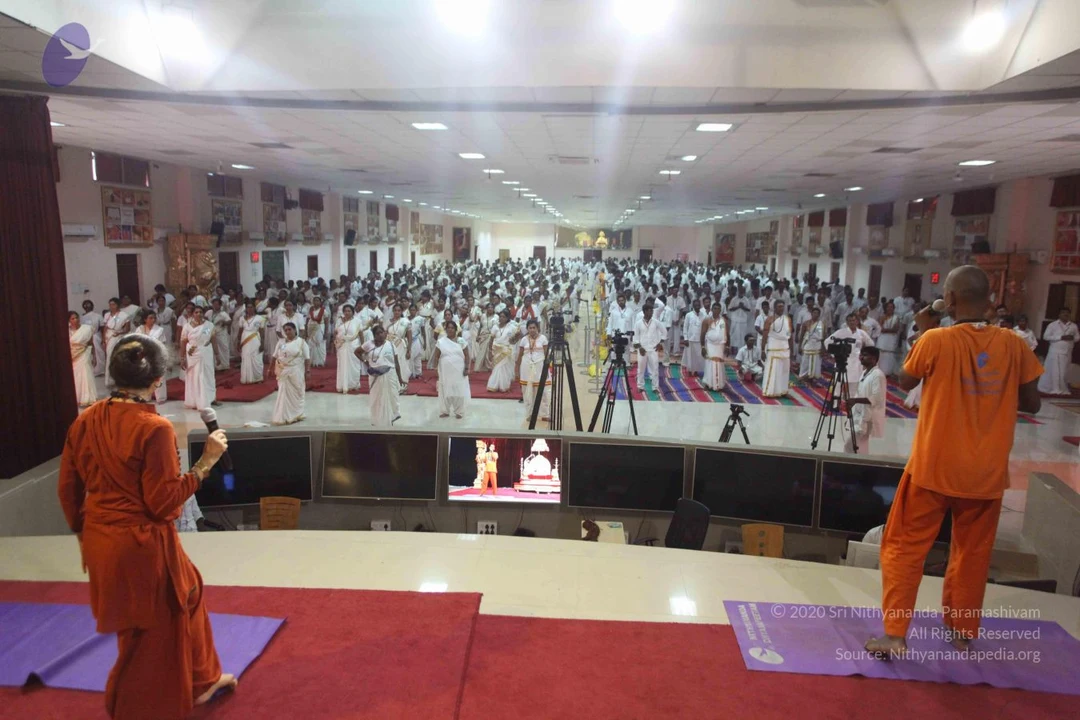
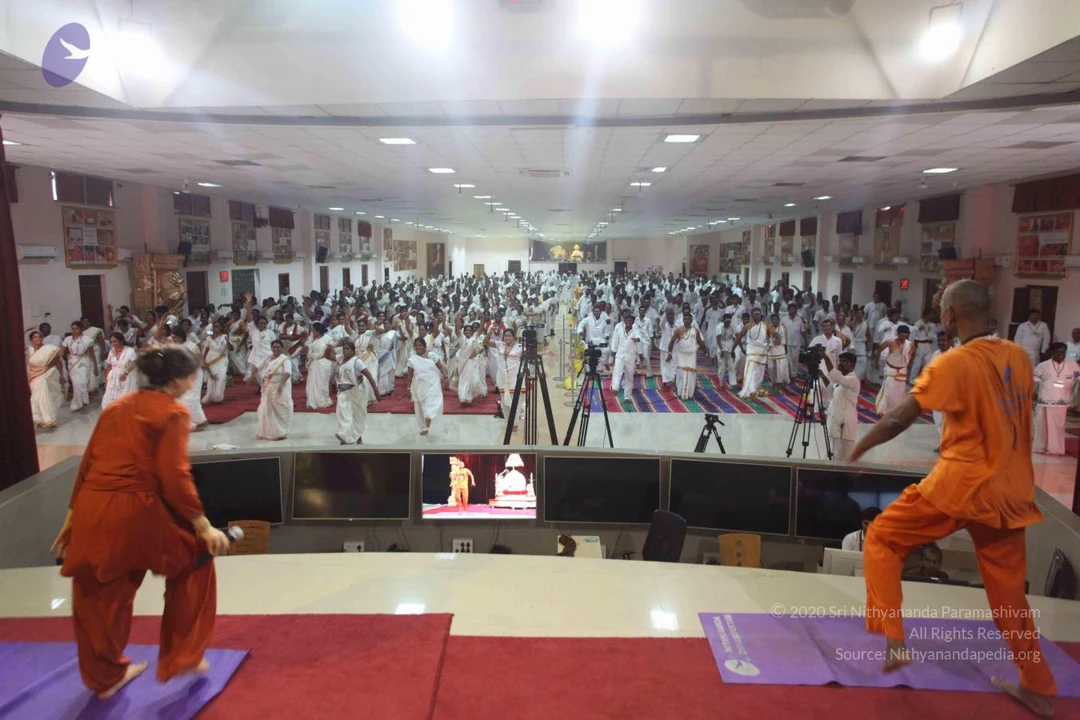
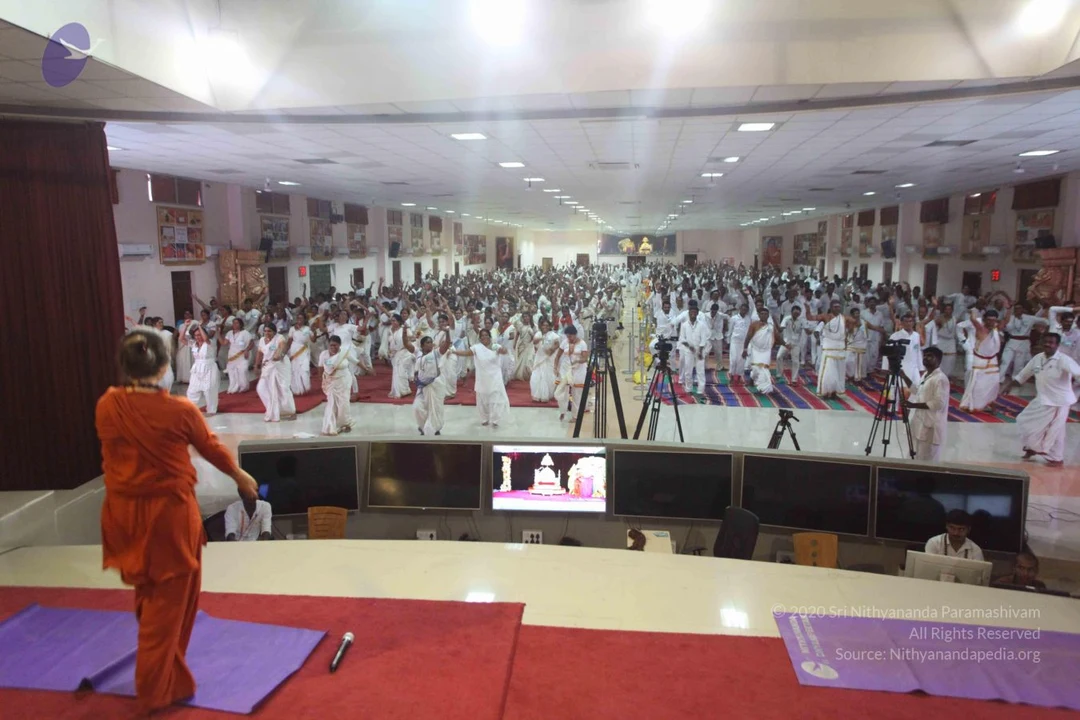
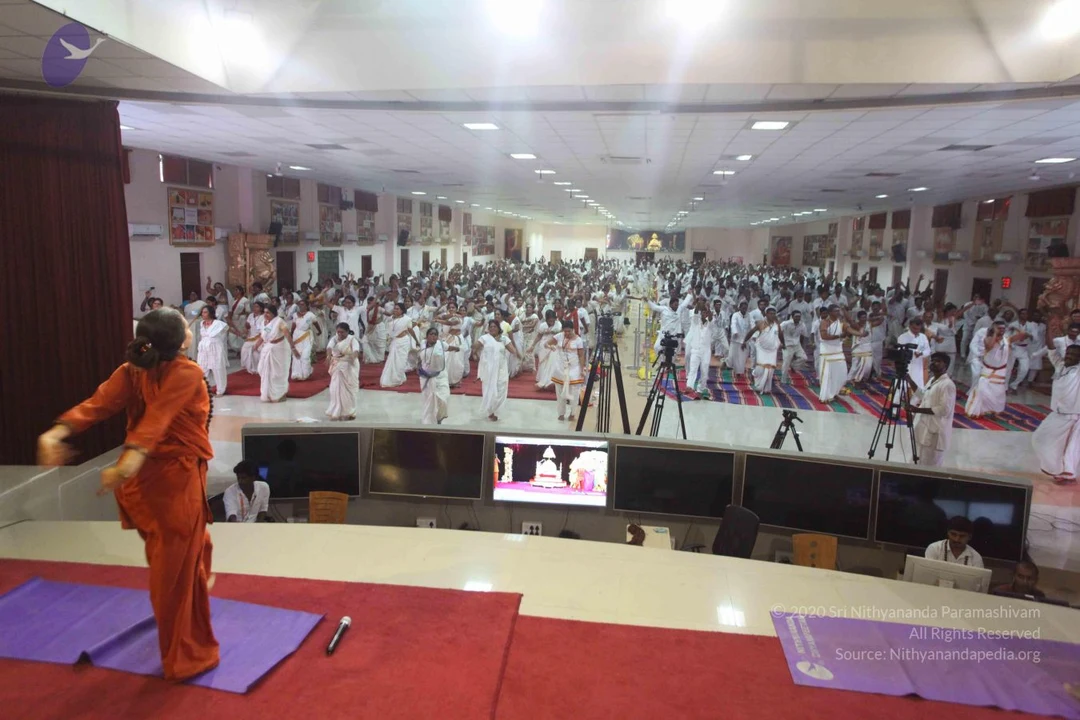
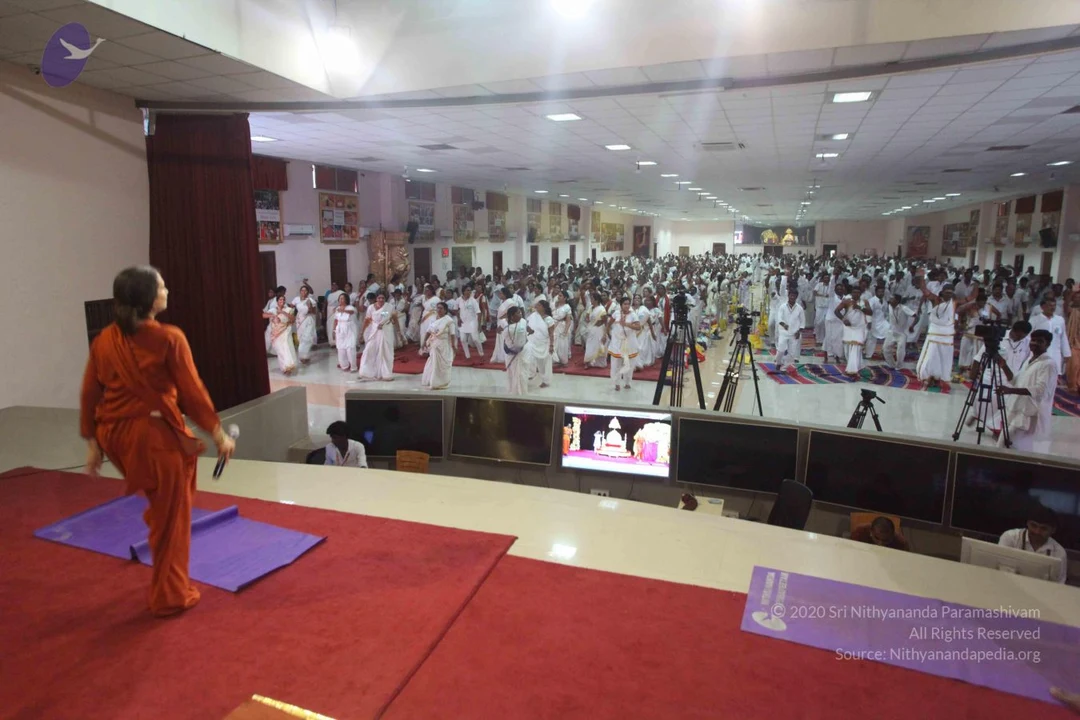
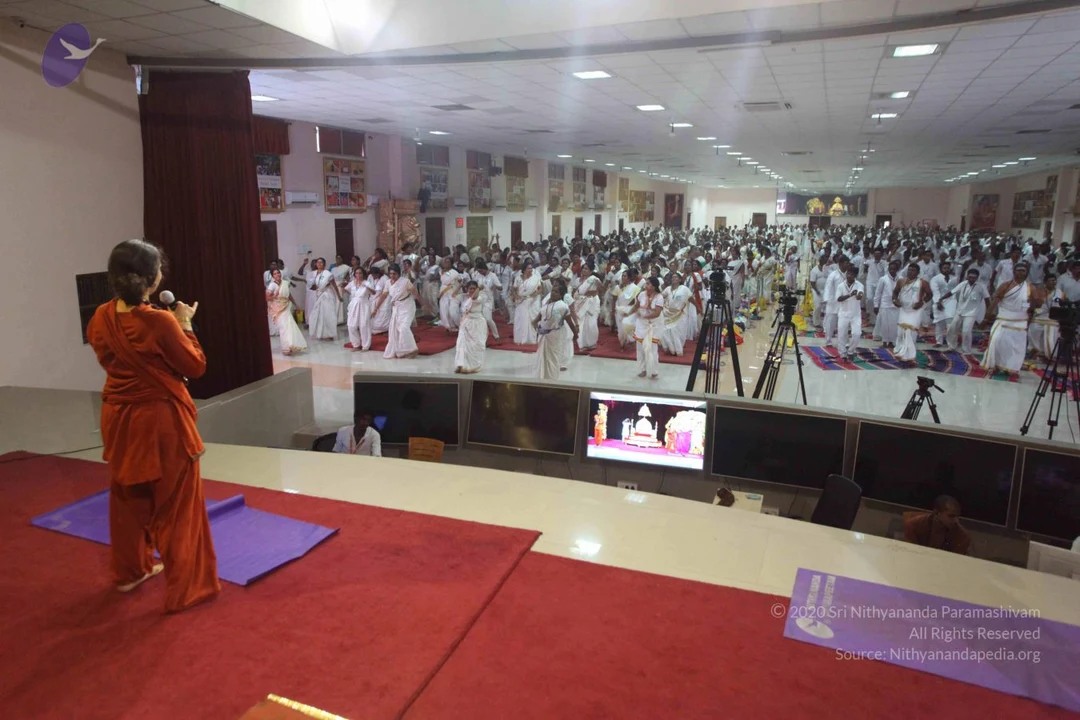
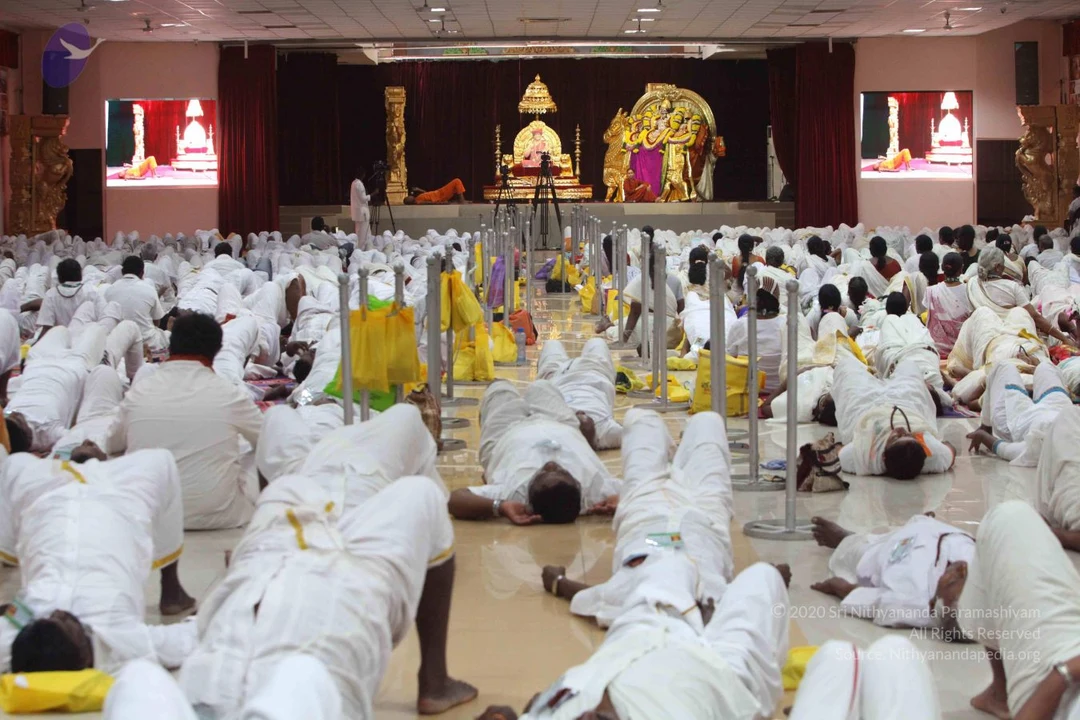
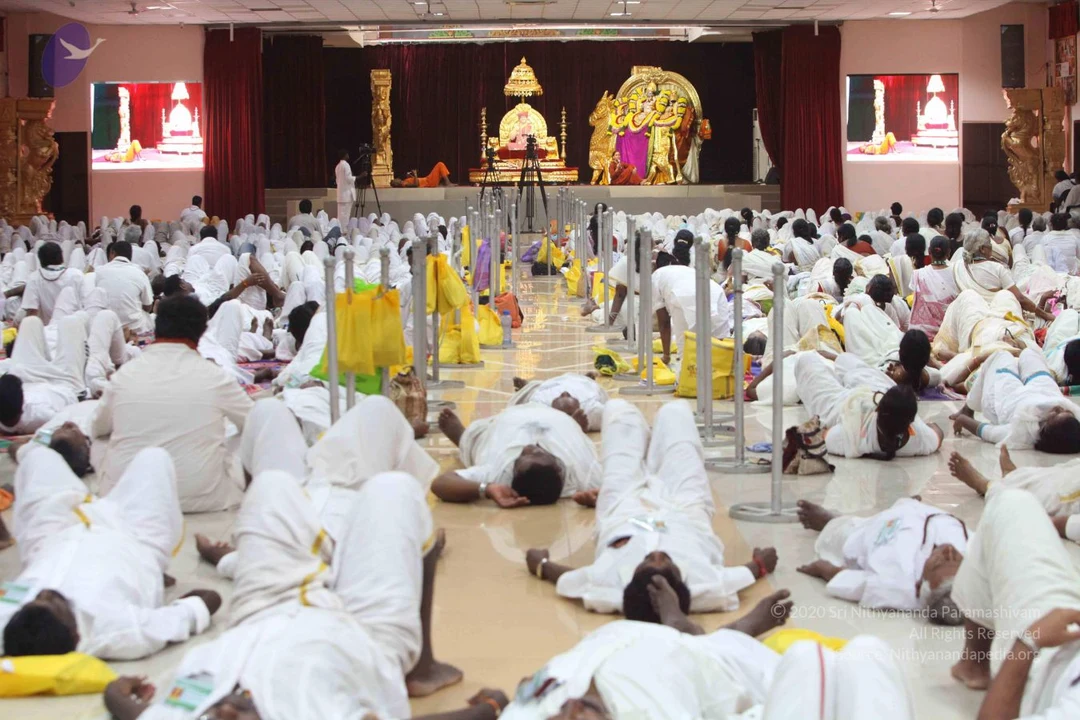
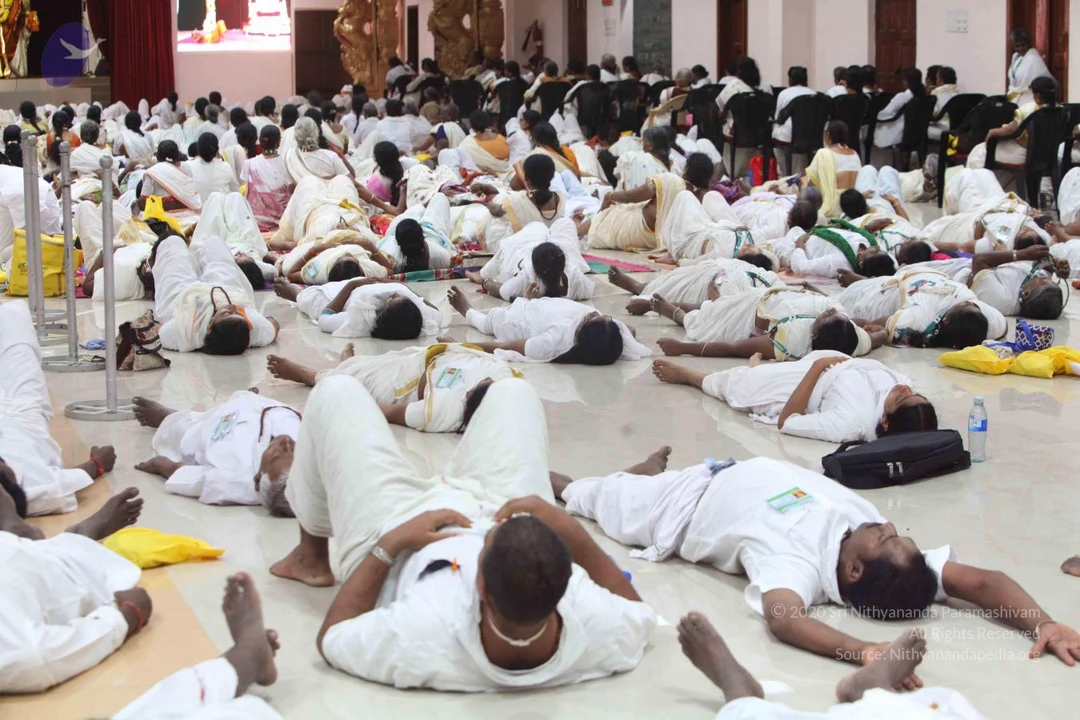
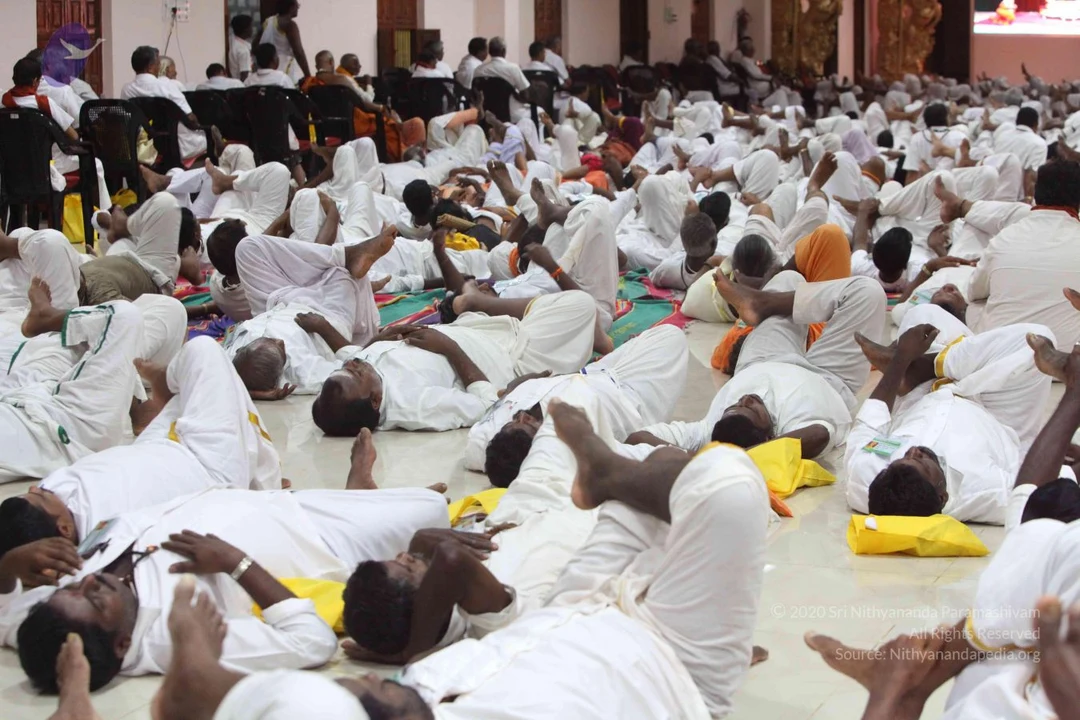
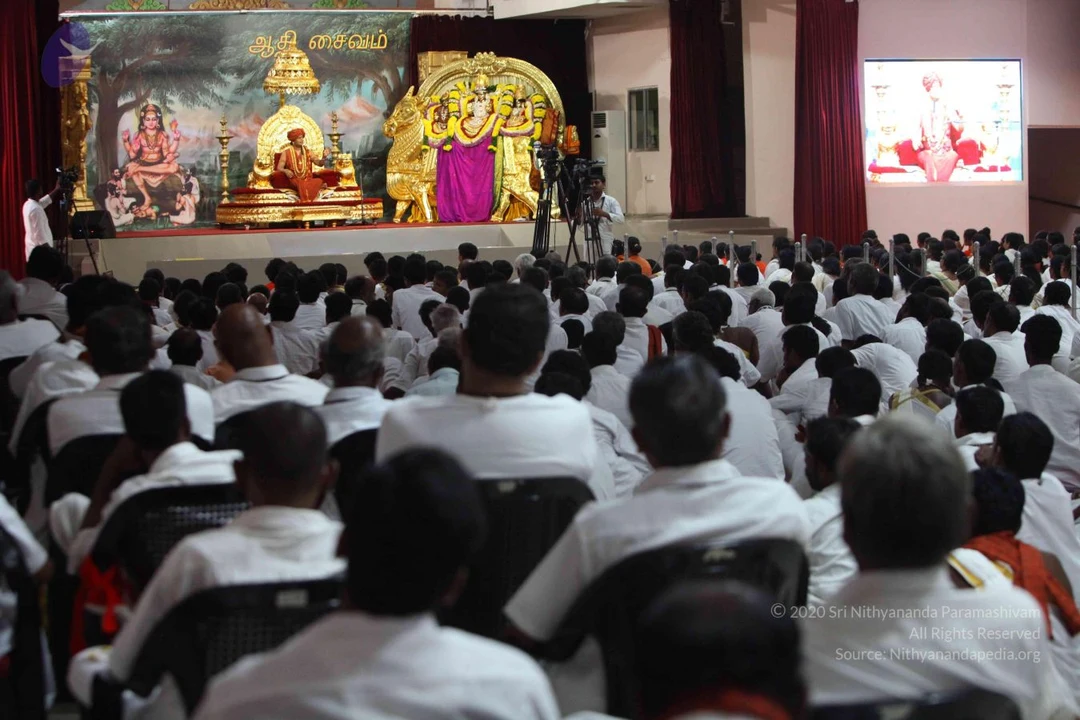
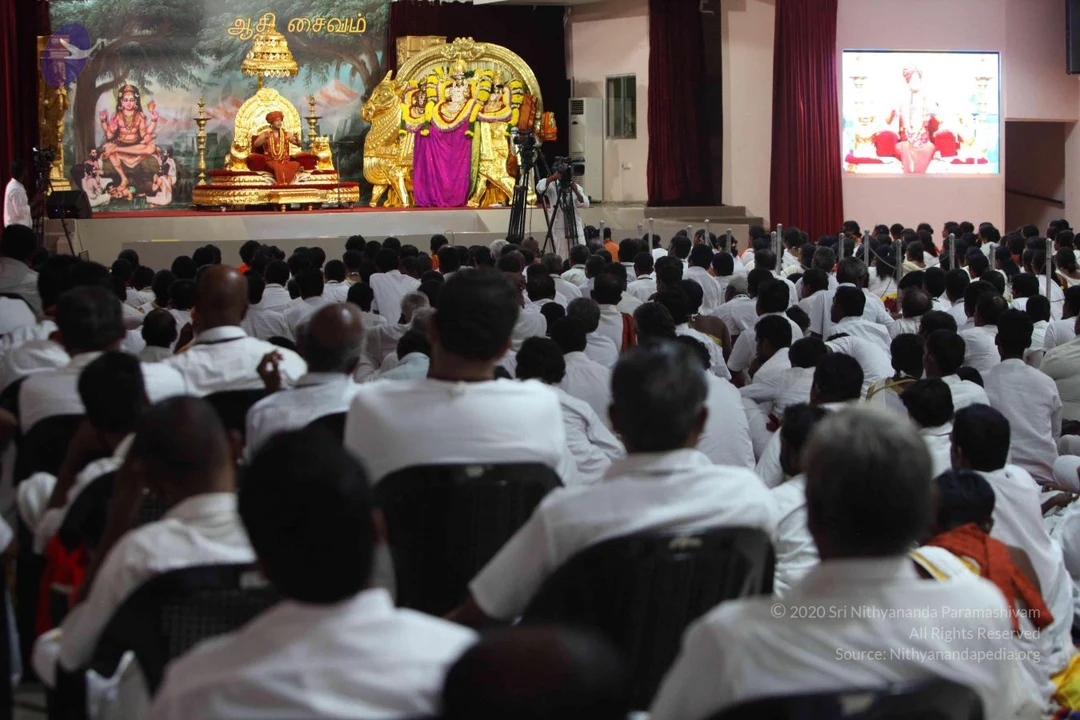
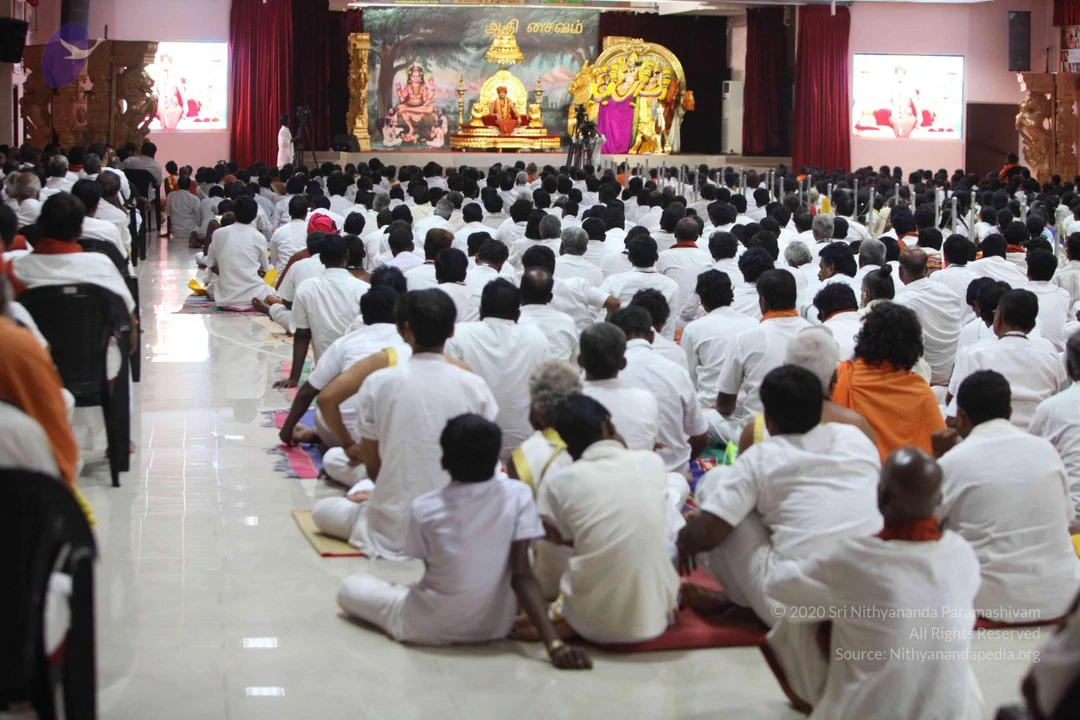
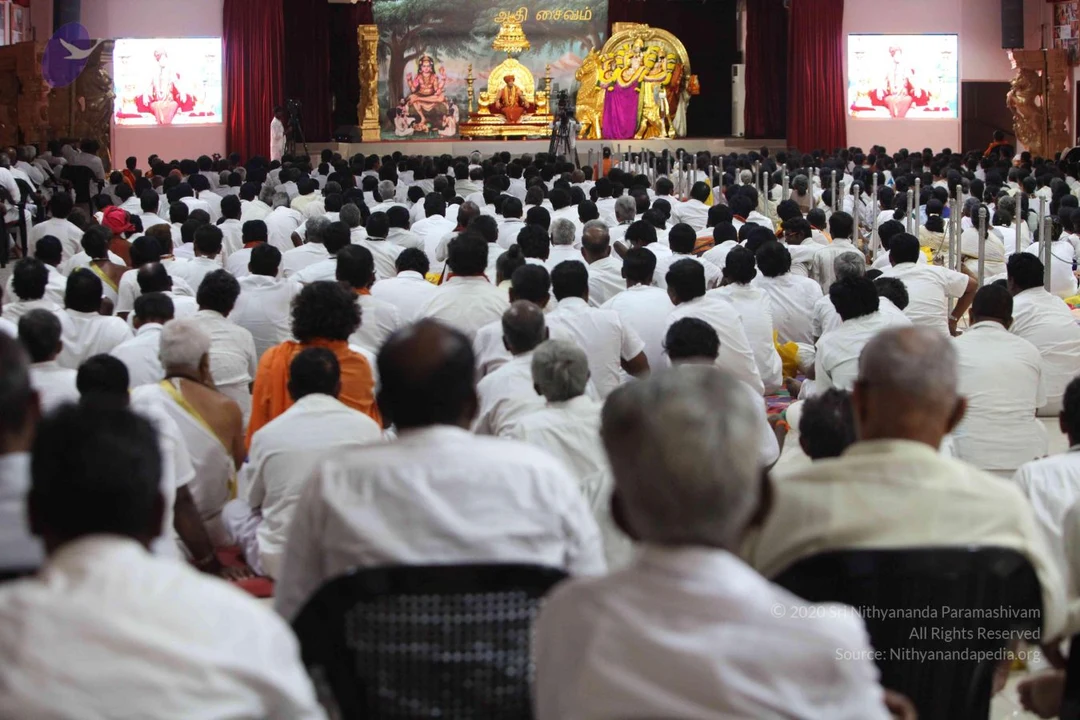
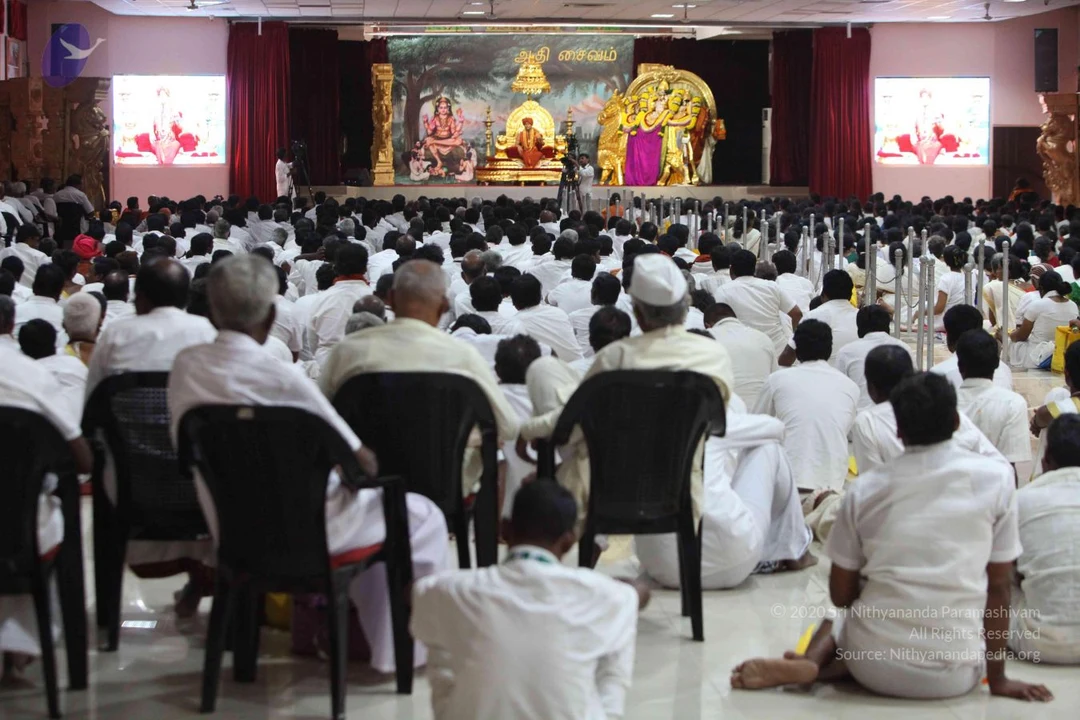
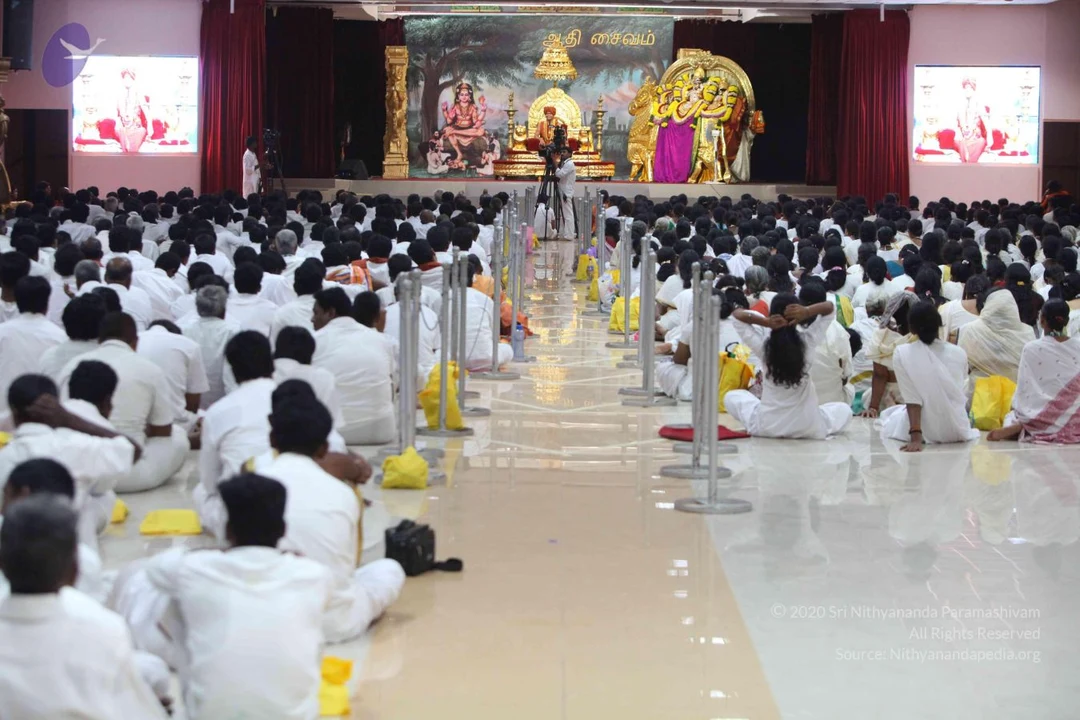
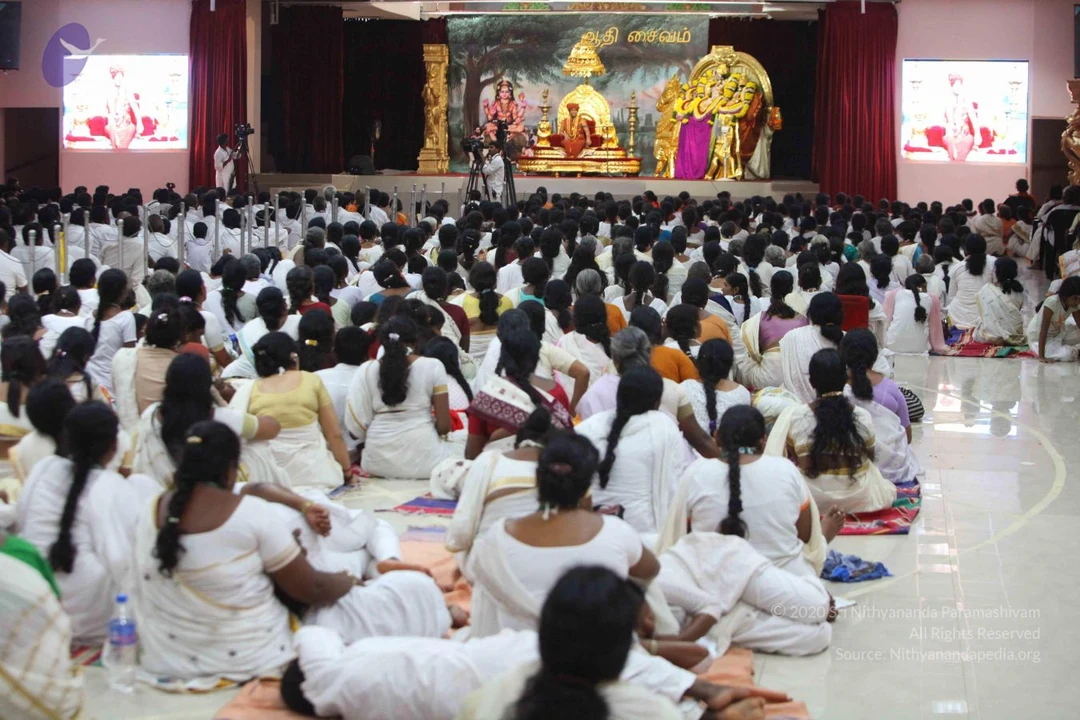
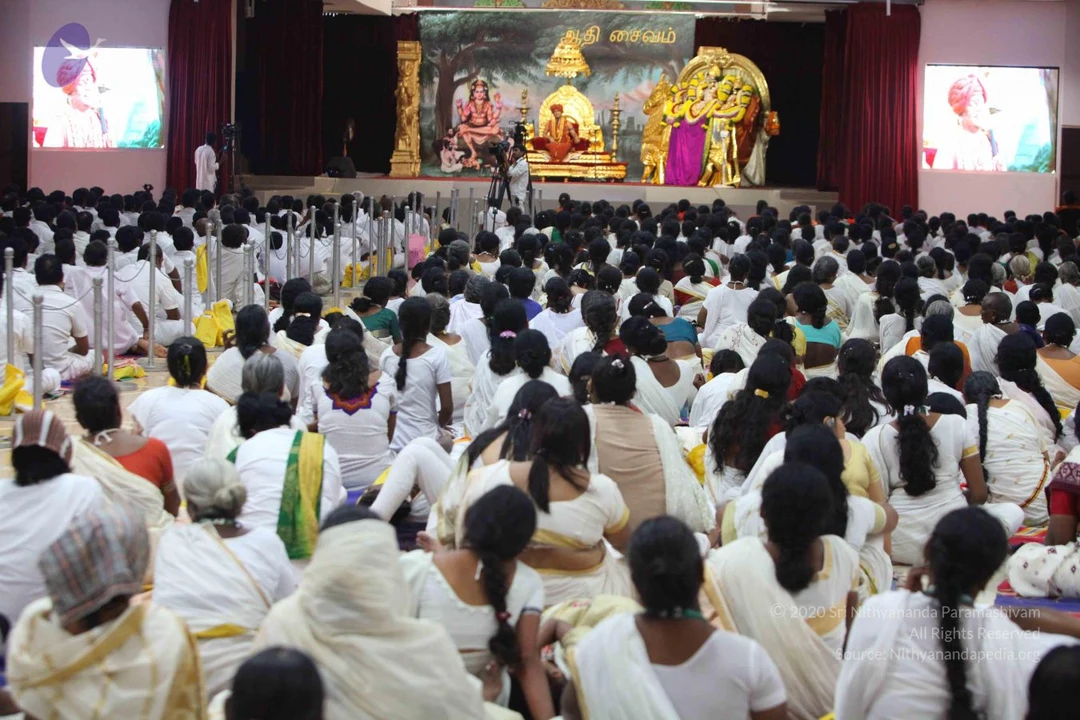
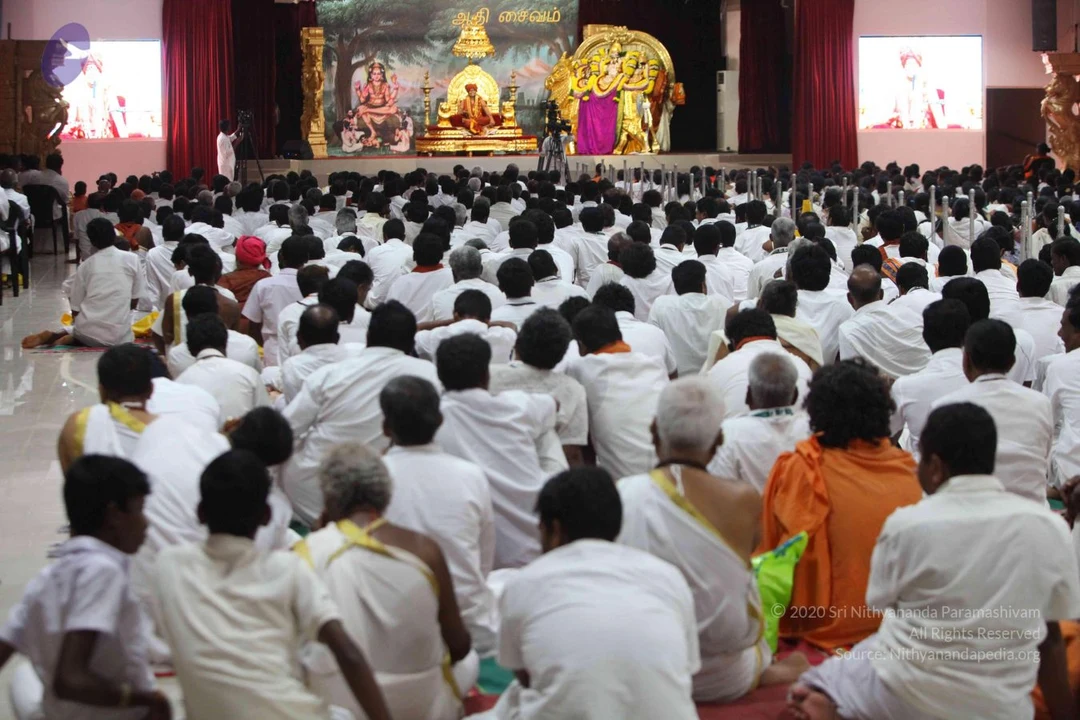
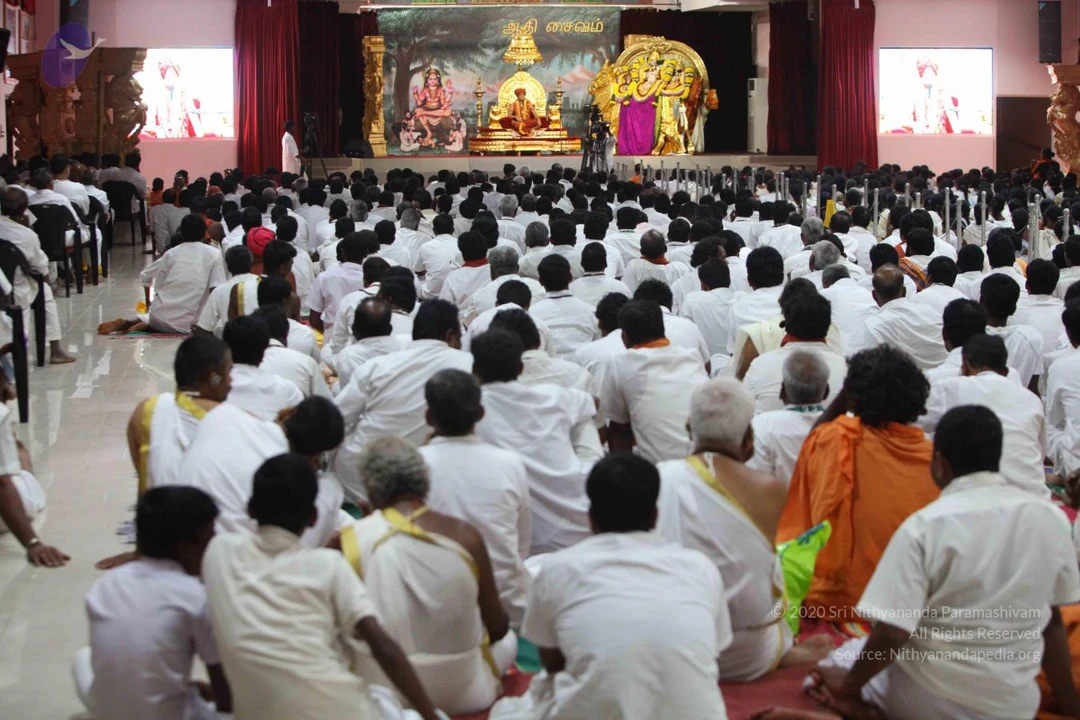
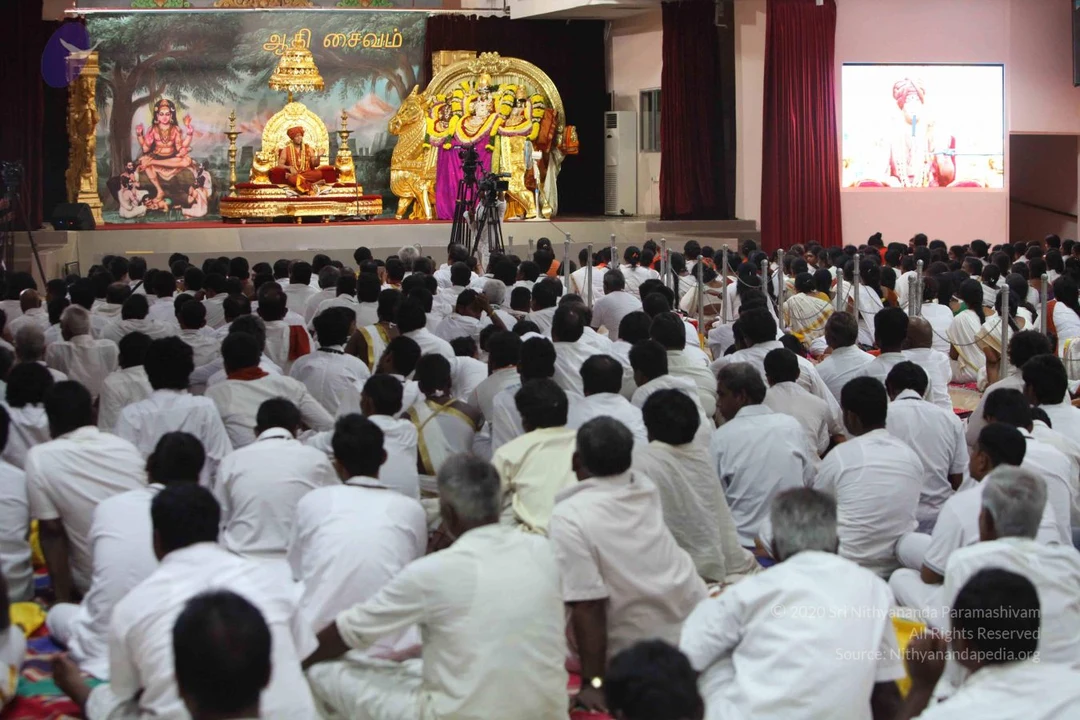
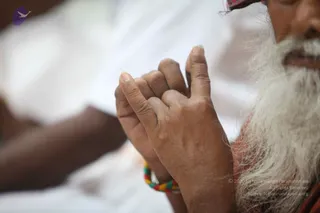
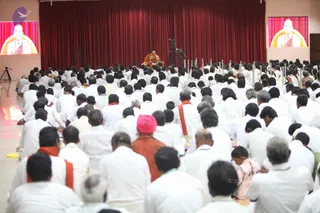
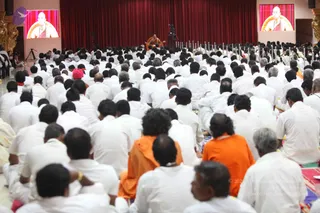
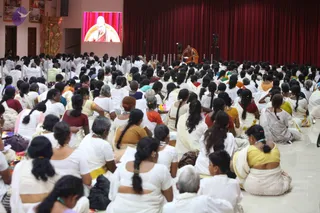
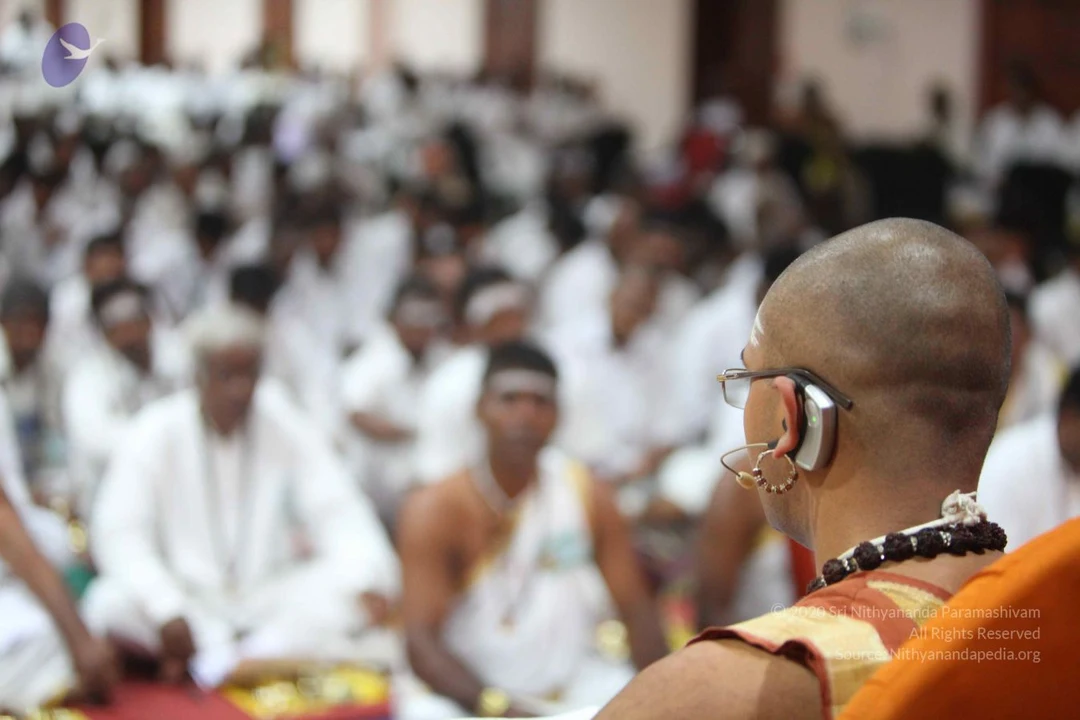
Photograph of a large seated gathering in an indoor hall, with many people dressed in white clothing and white head bands. In the foreground a shaved-headed man seen from behind wears an orange upper garment with a gold-bordered cloth, a dark rudraksha mala around his neck, and a small earpiece with a headset; he faces the crowd. Other participants sit cross-legged on mats, some with white hair and white attire, and the background is softly blurred.A photograph of a seated teacher in orange robes on an orange cushioned seat, shown from behind and in profile, reading from a printed sheet of paper. He wears rudraksha mala beads around his neck and arm, and hoop earrings and glasses. Before him sits a large seated audience of many people in white clothing, with some women wearing red or orange shawls and others in yellow, arranged on floor mats in a hall with white walls and a golden deity image in the background. The setting appears to be a satsang or discourse session. Appearance-based label: a person, the figure in orange with rudraksha malas and the distinctive orange seat, reading to the seated assembly.Close-up photograph of an elderly man with a long white beard and white moustache, seen from the side. His weathered hands are held together in front of his chest with fingers interlocked and one index finger raised, a mudra-like gesture. He wears a multicoloured woven bracelet of red, yellow, green and black strands on his wrist and a red-and-white cloth wrapped on his head at the top edge. Behind him, out of focus, a person in white clothing sits. The background is soft white and blurred.A large indoor satsang hall with a deep red curtain backdrop. A seated figure in orange robes sits on a raised orange-cushioned seat at the centre front, with a camera tripod and video camera in front of the stage. Two large screens on either side show a close-up of a figure in orange and red robes with a beaded necklace. Hundreds of devotees sit cross-legged on the floor in rows, most dressed in white, with some wearing orange or saffron shawls and one in a pink cap. A child in a pink top sits at the lower right. Vertical metal rods run through the seating area, and the floor is polished reddish tile.A large seated audience in white clothing fills the foreground of a hall with a red curtain backdrop. Many attendees wear white shirts and dhotis, while a few women in orange saffron garments sit among them. At the front, a figure in orange robes sits on a raised seat near a camera tripod, with two large screens on either side showing a close-up of a man in an orange and white garment with a rudraksha mala. Rows of tall metal stands line the front of the crowd, and the scene suggests a satsang or discourse.A photograph of a large seated audience filling a hall, mostly women in white and cream clothes with yellow, orange and maroon borders, many with long braids. They sit on the floor facing a stage with a deep red curtain. On the stage, a figure in orange robes sits at a small table with a microphone. A screen above shows a close-up of a bald figure with a white beard, wearing a white garment and a beaded necklace. Pillars with ropes divide the seating aisles and a wooden carved panel stands at the left.
INITIATION-TO-AWAKEN-THIRD-EYE
140 photosSource gallery
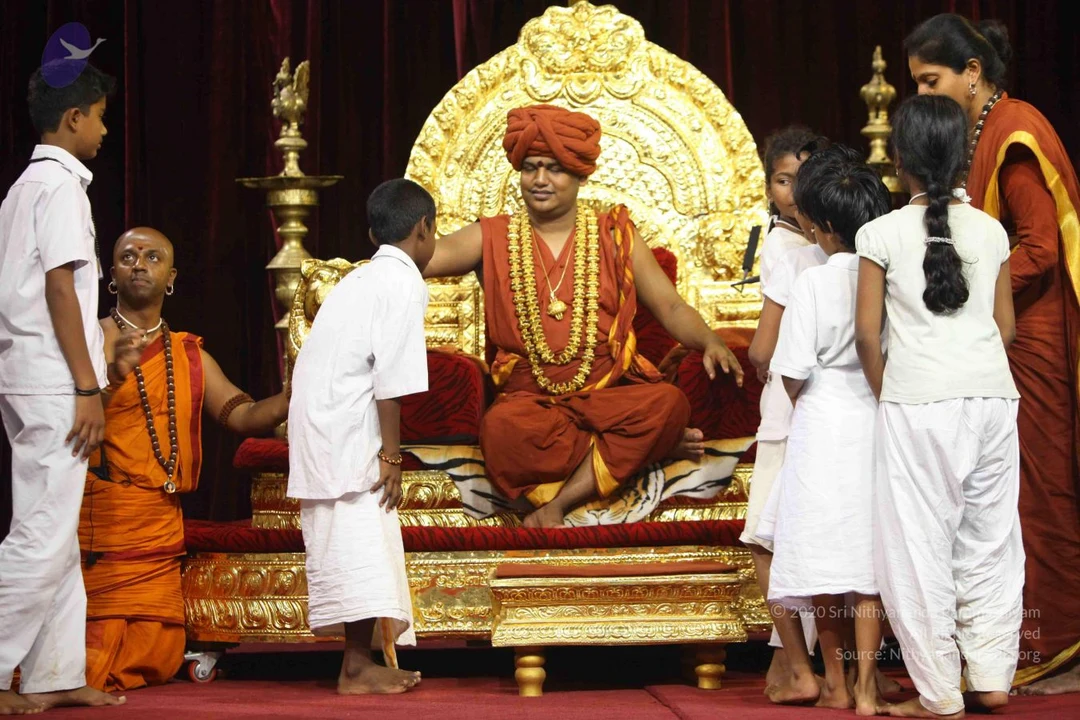
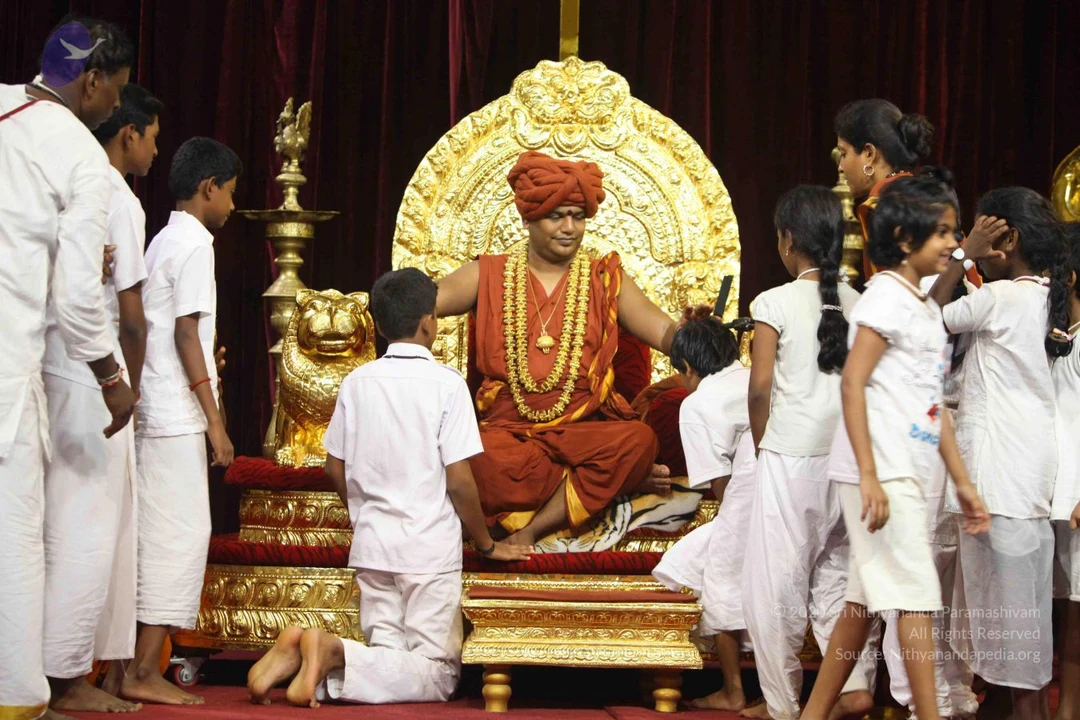
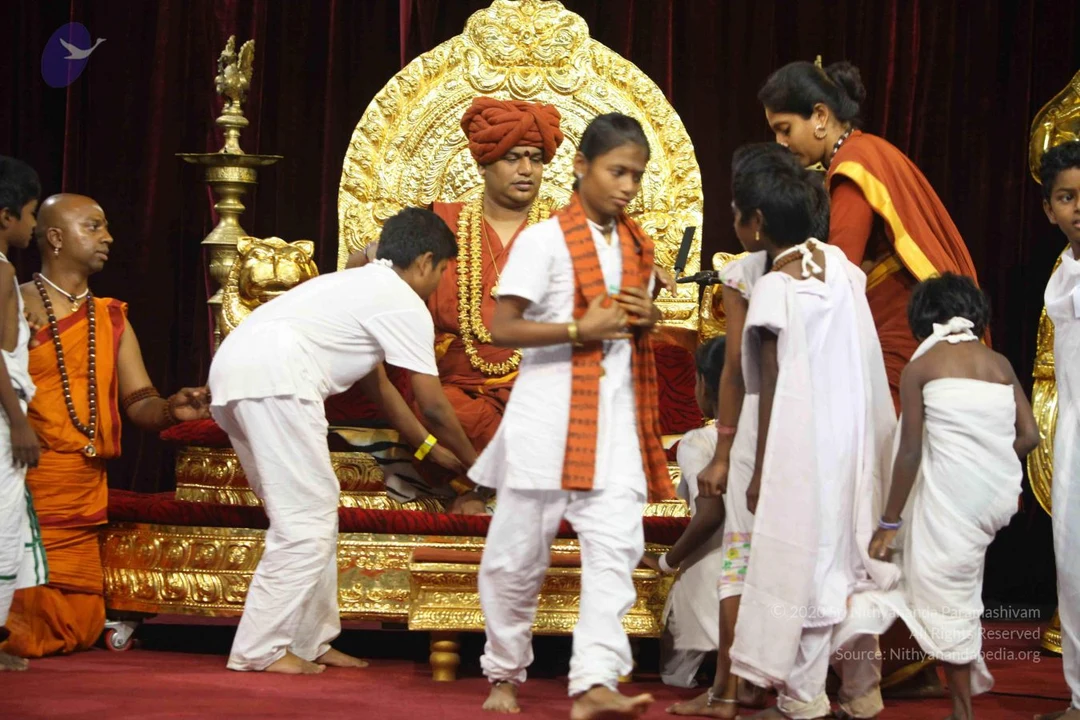
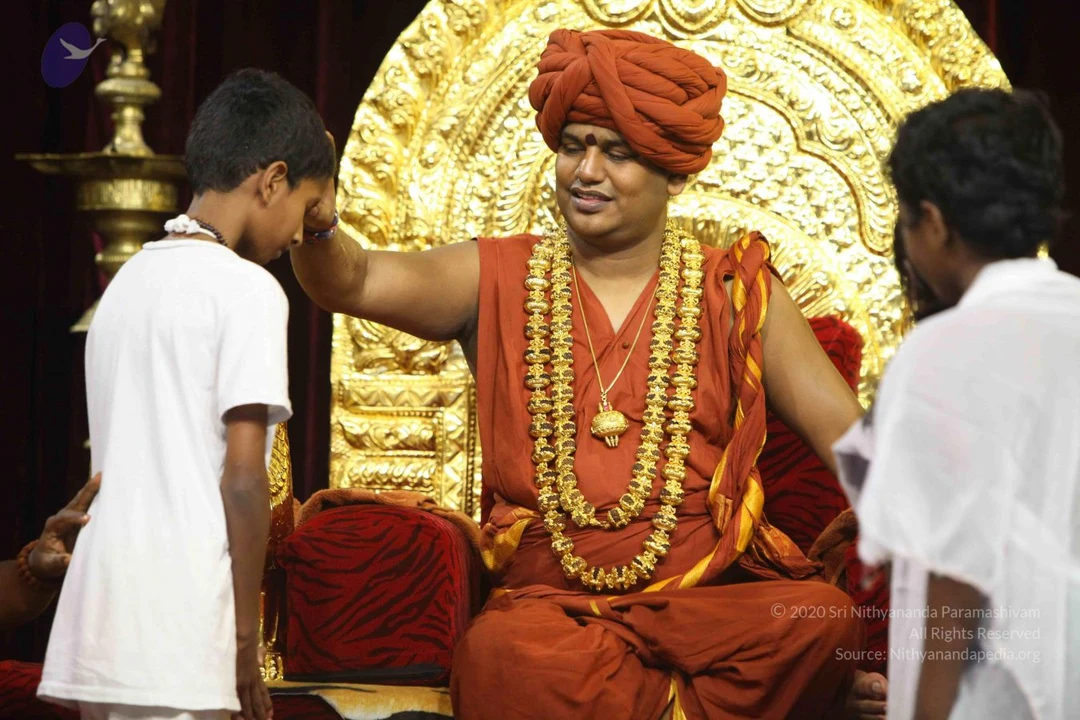
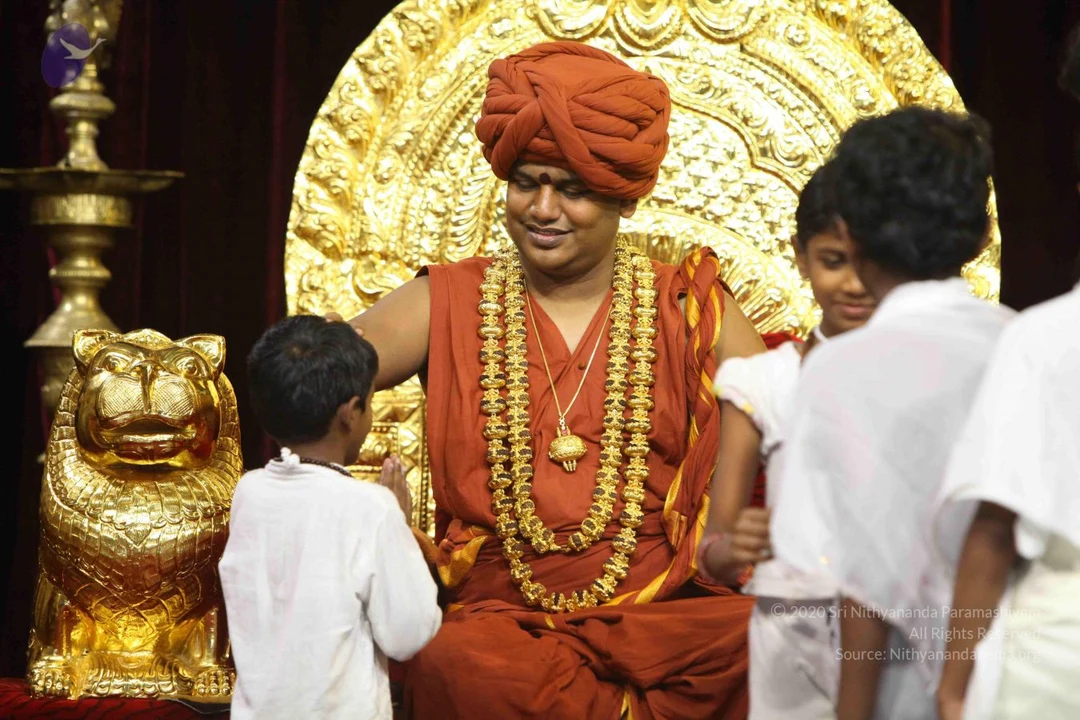
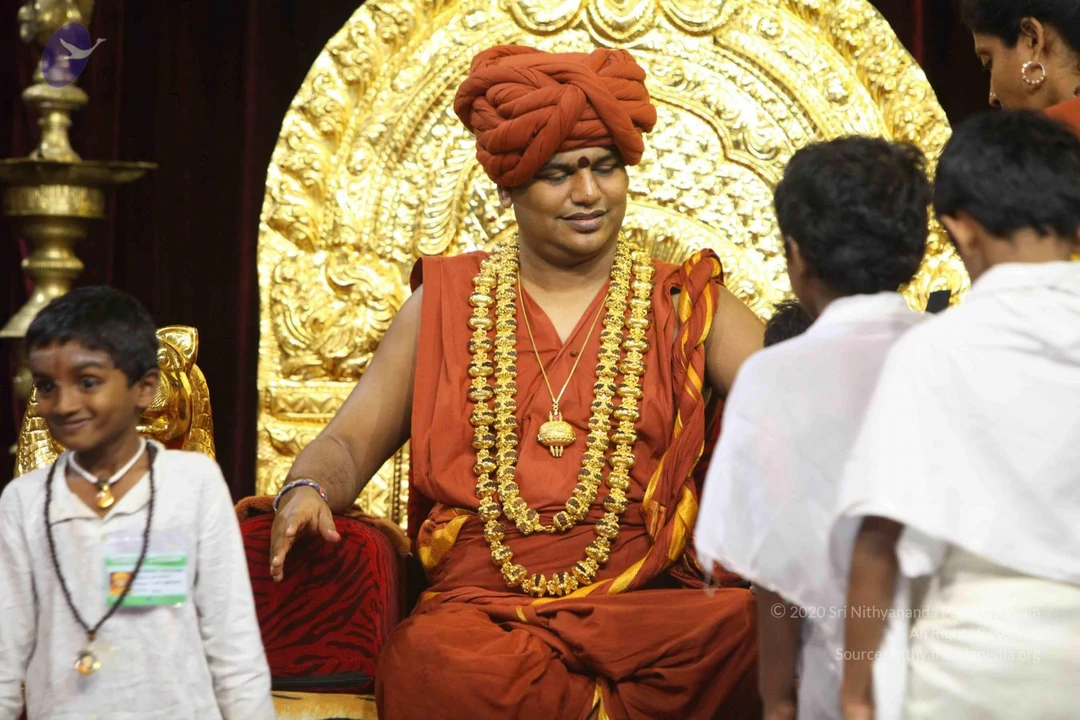
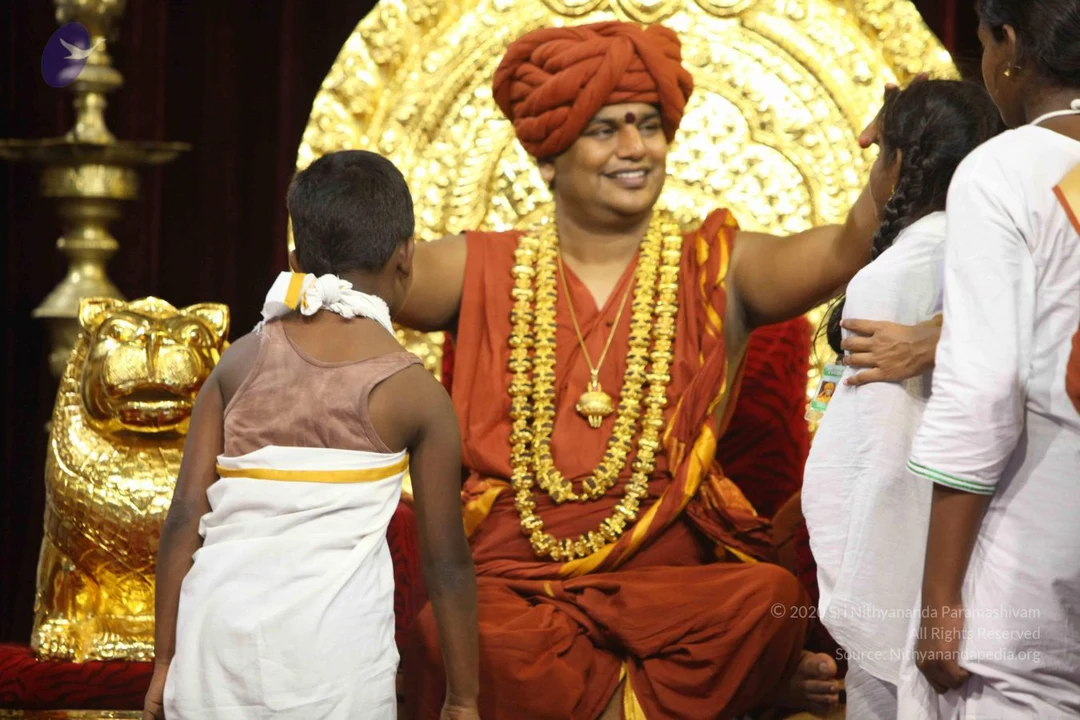
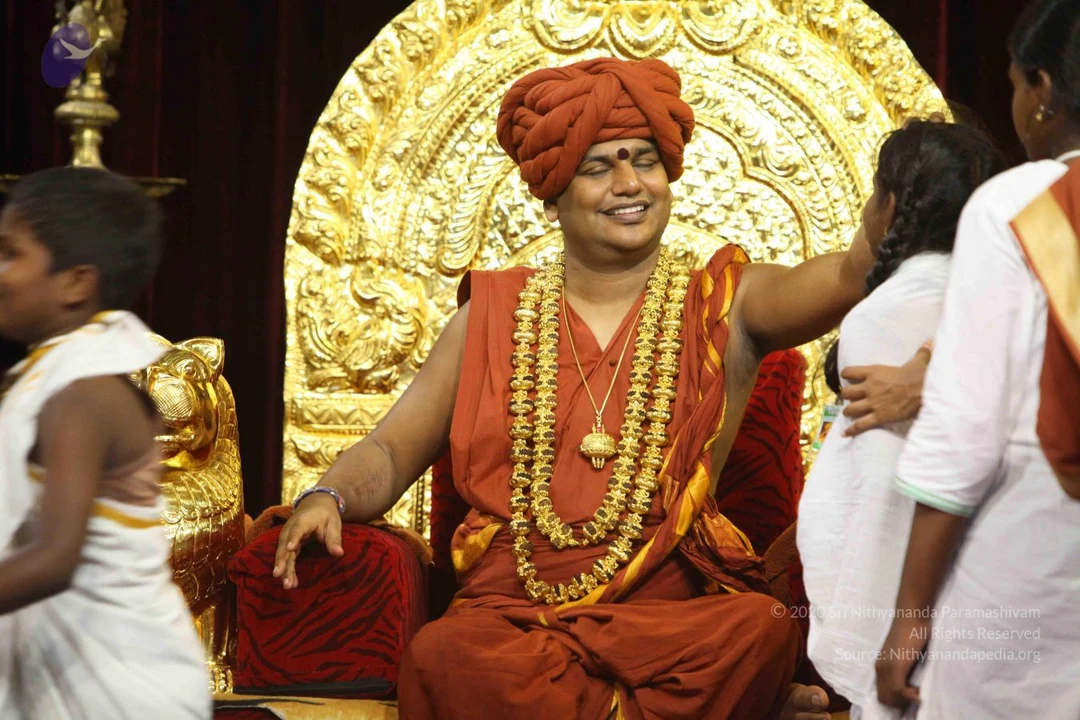
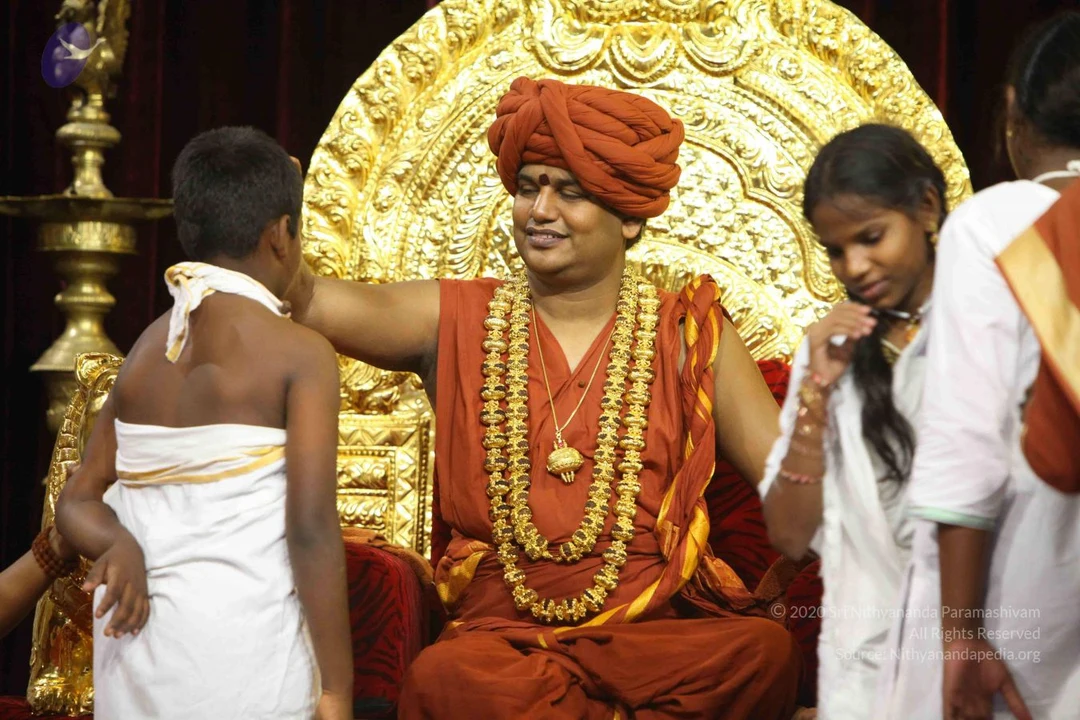
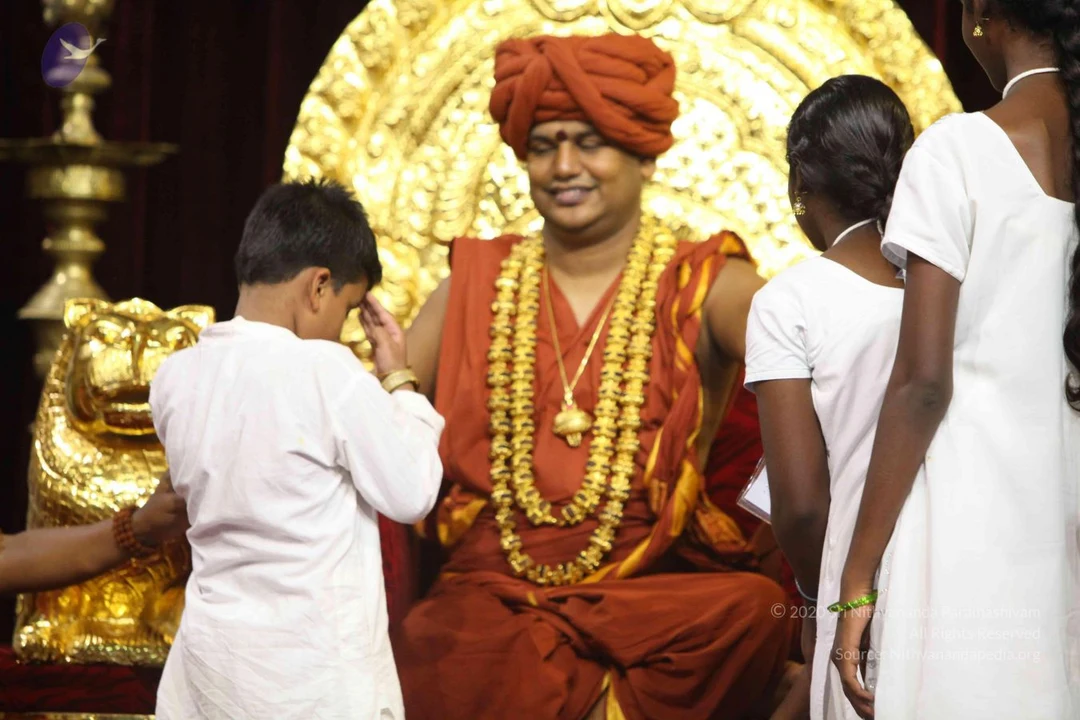
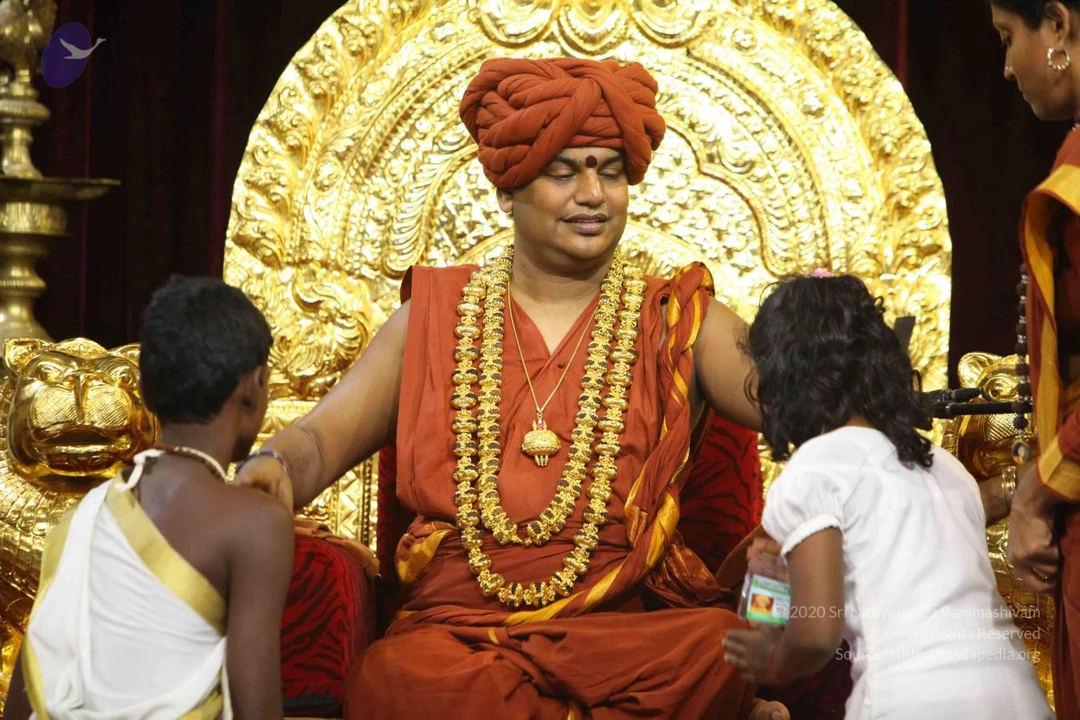
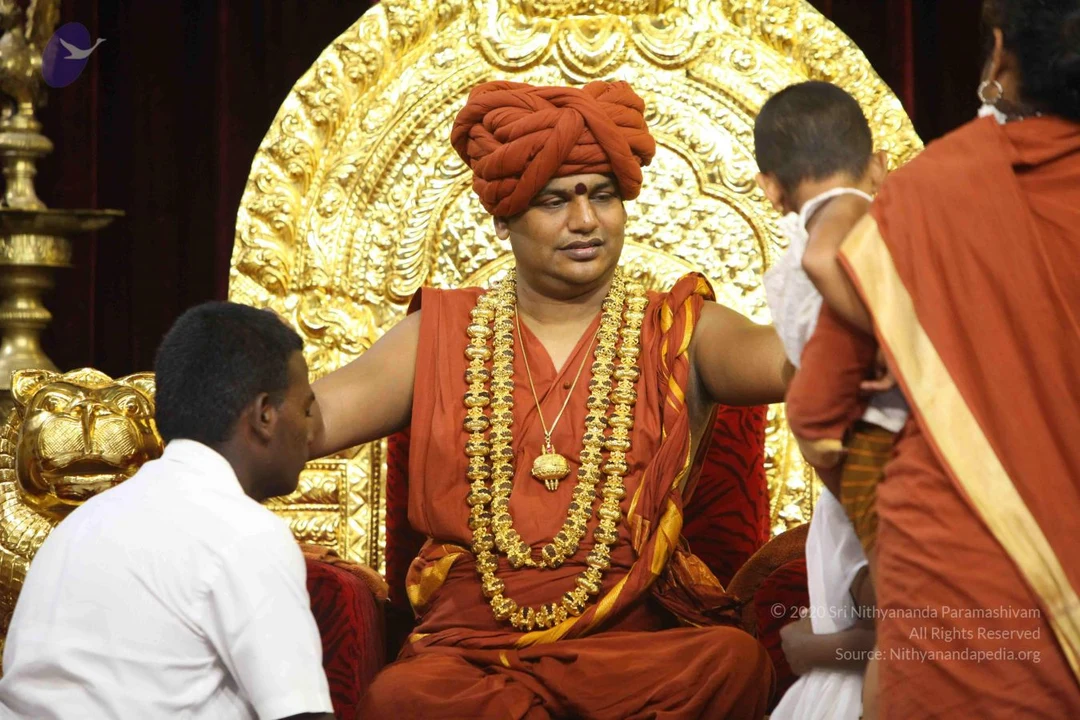
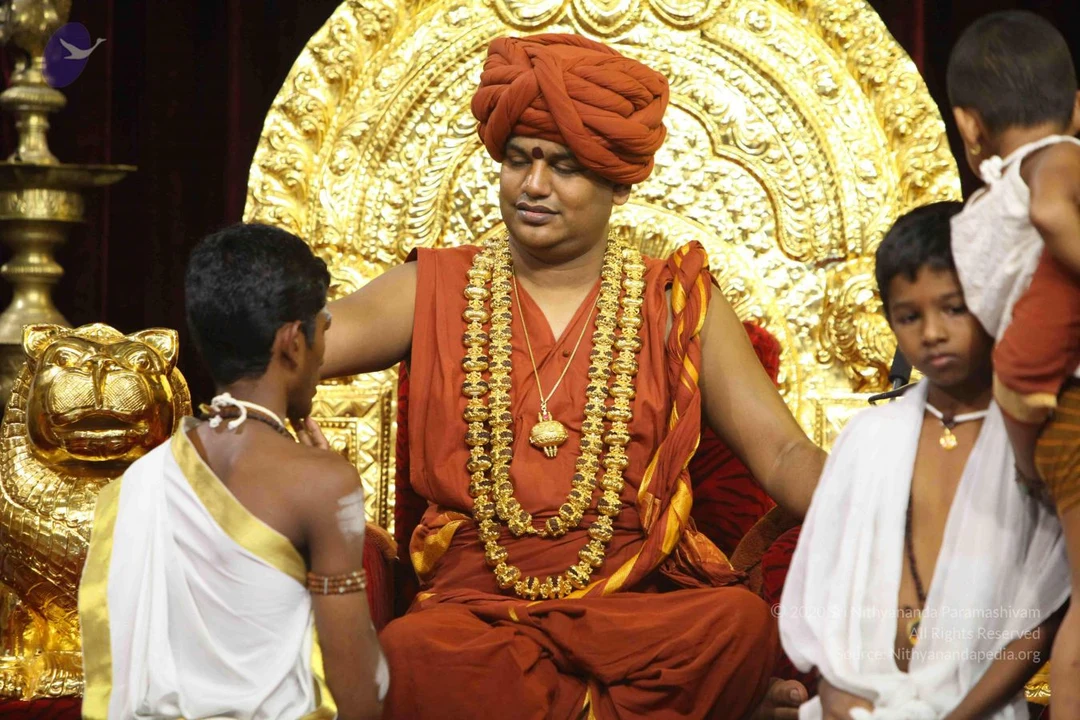
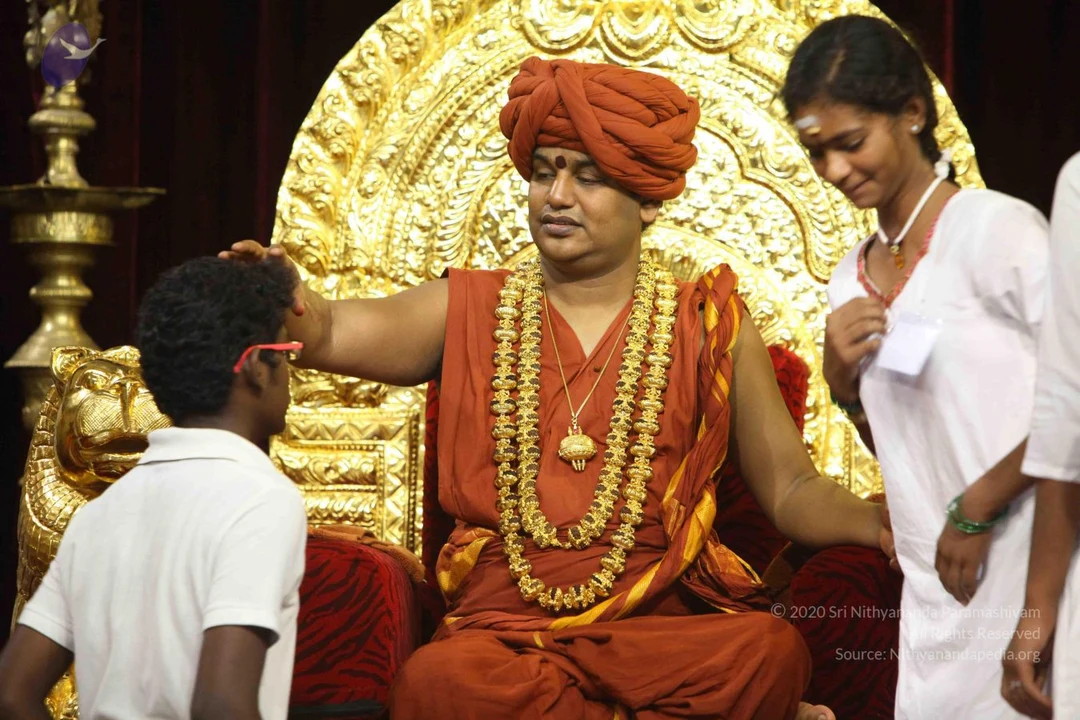
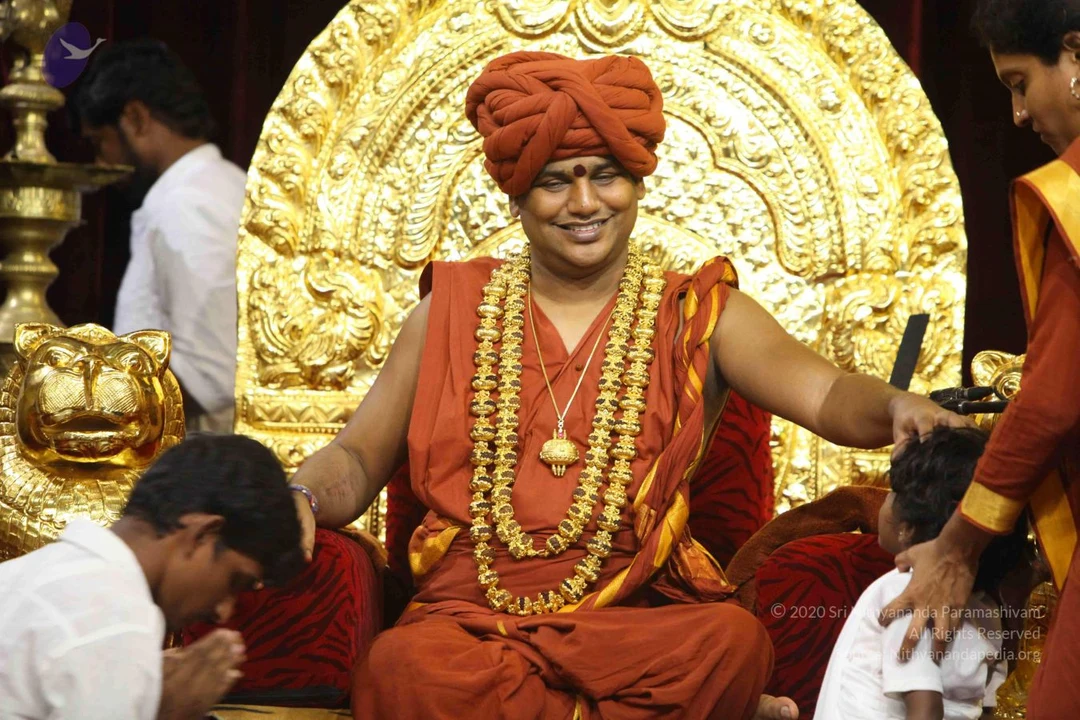
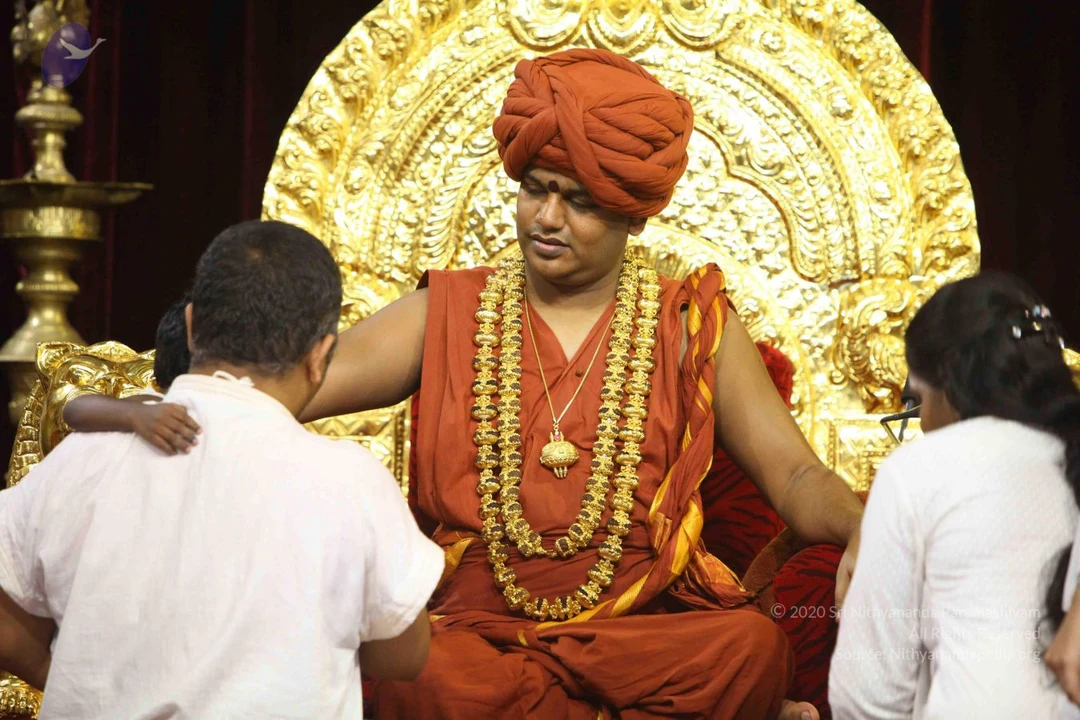
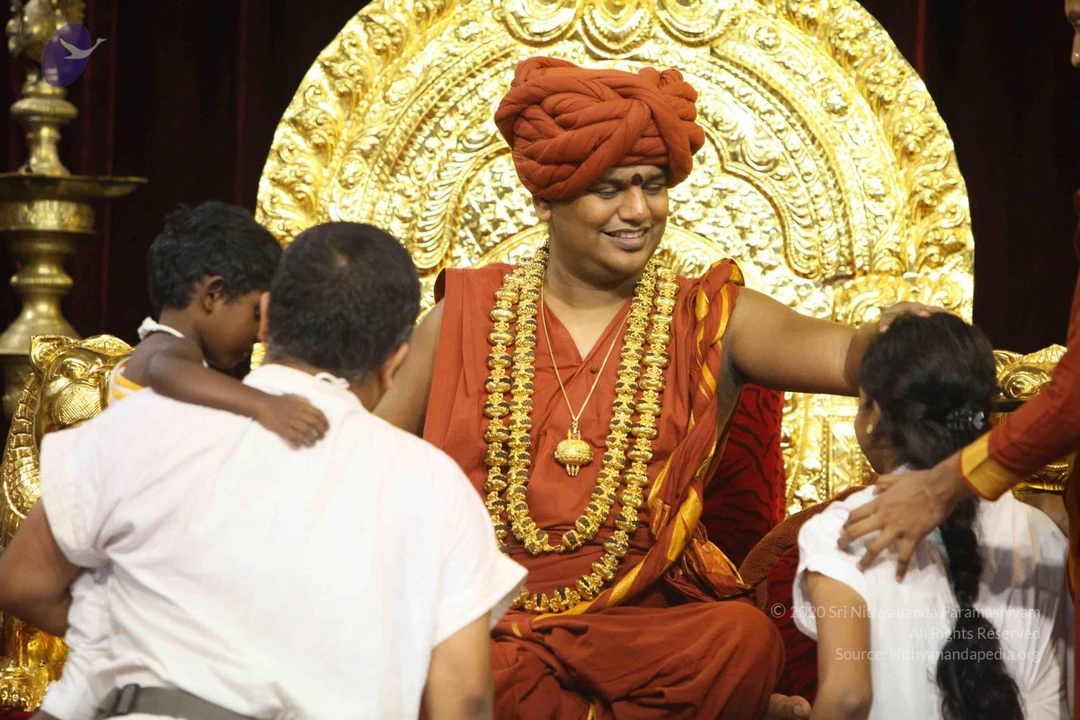
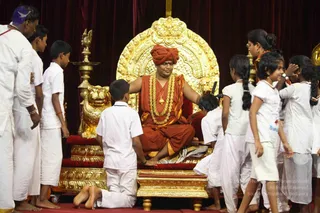
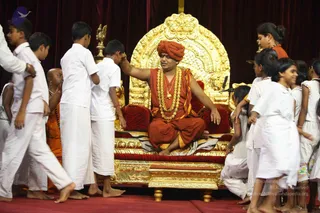
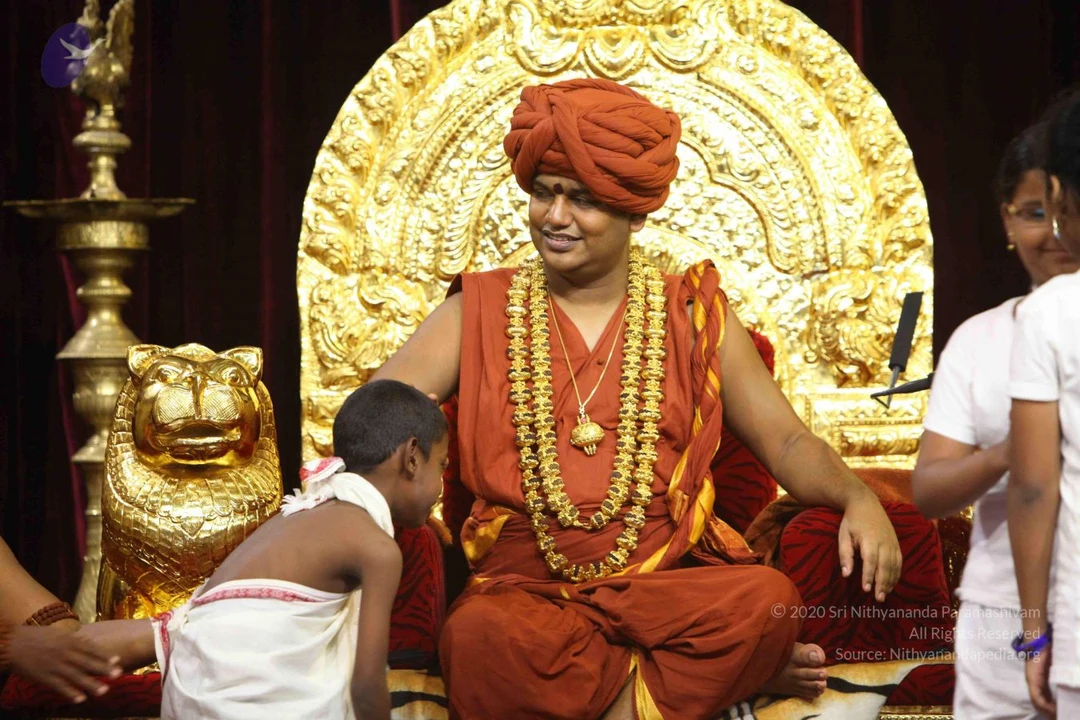
A seated man in an orange-red turban and saffron-red robes sits on an ornate golden throne with a carved gold back panel and a golden lion figure at his side. He wears a long gold garland and a pendant necklace and smiles while a young boy in white dhoti kneels at his side touching his leg. Two people in white clothes stand behind the throne, and a brass oil lamp stands at the left edge. Red-striped cushions cover the throne seat. The scene suggests a darshan or satsang on a dais.A seated figure on an ornate golden throne with a high carved back and red cushions, wearing an orange-red turban, orange-red robe and a garland of yellow flowers with a pendant. A boy in white shirt and white dhoti touches his arm while children in white stand around him, and a woman in an orange-red sari with a yellow border stands at the right. A man in orange robes with rudraksha beads kneels at left, gesturing toward the group. Red carpet and red drapery form the backdrop, with a gold lamp stand near the throne.A photograph in a red-curtained hall shows a seated man on an ornate gilded throne with a lion-carved armrest and a tiger-skin cushion. He wears a red-orange turban, an orange-saffron shawl over a red-orange garment, a long multi-strand gold-beaded garland, and a gold pendant. Around him, children in white shirts and white dhoti-style garments gather; a boy in white kneels at his feet and another stands on the left in white, while a girl in white with braided hair stands in the foreground and a woman in orange attire stands behind the throne. A gilded lamp stand with a flame and a golden bird finial sits beside the throne. The man's visible cues include the turban, saffron clothing and rudraksha-style ornamentation, consistent with the page's claim, so this is an appearance-based probable identification. The people count is 7 to 8 visible.A photograph of a seated man on an ornate gold throne with red cushions and a red velvet backdrop. He wears an orange-red turban, an orange-red robe, a long gold-beaded garland, and a pendant, and rests one hand on the head of a boy in white. Several children in white dhotis and white dresses crowd around the throne, some with hands raised or reaching toward him. A woman in an orange top stands at the upper right.A photograph of a seated man on an ornate gold throne with red cushions and a tiger-skin cloth, in a stage setting with deep red curtains. He wears an orange-red turban, an orange-saffron robe, a long heavy necklace of golden-yellow beads and a pendant, and has a long braid over his shoulder. He raises one arm and extends his hand toward a boy in white. Around him, about a dozen children in white dhotis and white shirts or white salwar-style dresses stand close, some with hands raised in blessing or touching his feet area, and a woman in orange clothing stands behind at the right. A figure in white stands at the far left edge. The setting resembles a devotional blessing or darshan scene. Probable Swamiji (probable) sits enthroned in the central position, identified by the throne, saffron-orange ceremonial robe, turban and long ornate beaded necklace.A photograph of a seated man in an orange-red turban and orange-red robes with a gold ornate chair backdrop, wearing a long layered gold bead necklace and a gold pendant. He sits on a red tiger-striped cushioned seat and extends his right hand toward a young girl in a white top with a long braid who stands before him, with a microphone stand nearby. A child in white stands at left and an adult woman in orange with hoop earrings stands at upper right.

CULTURAL-PROGRAM
16 photosSource gallery
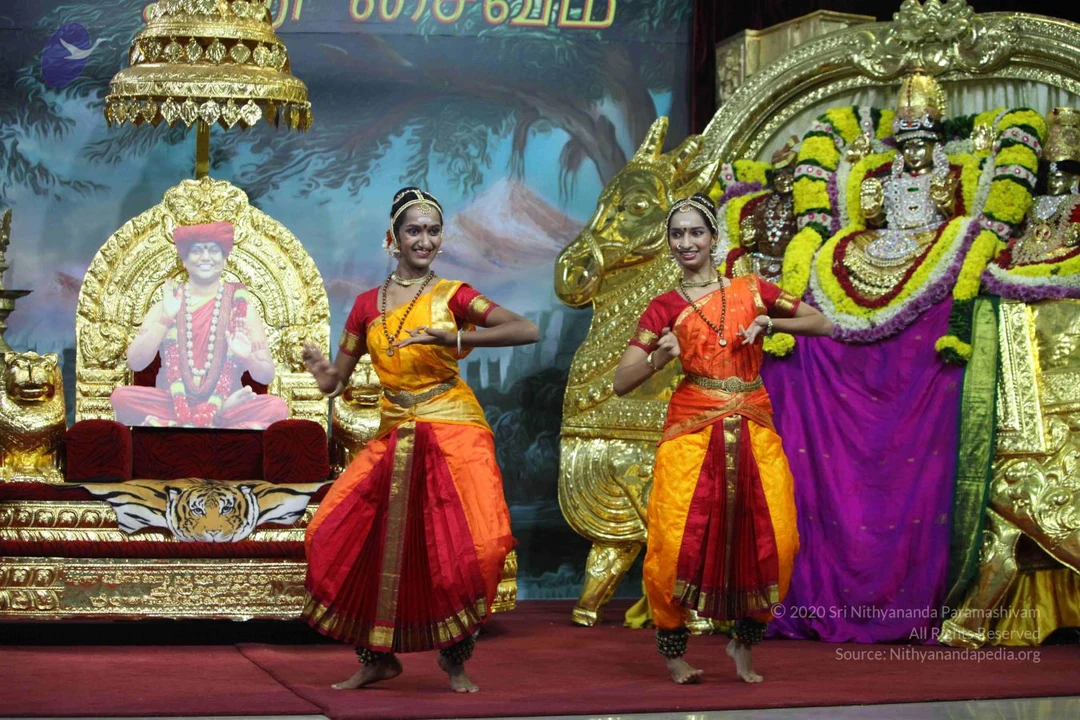
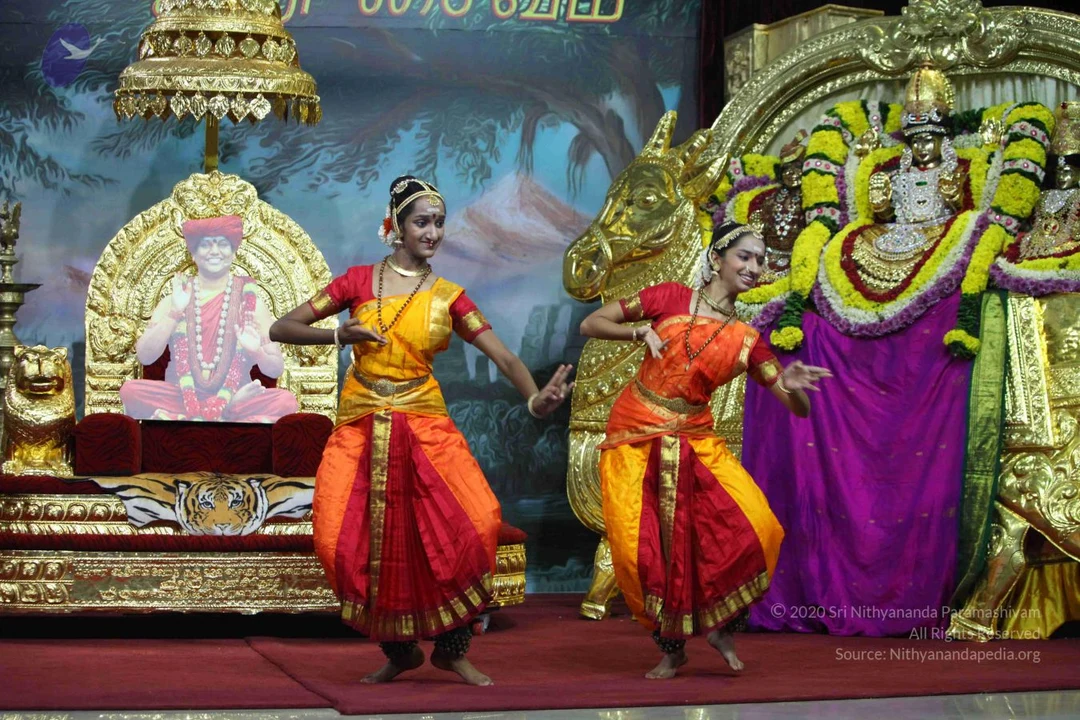
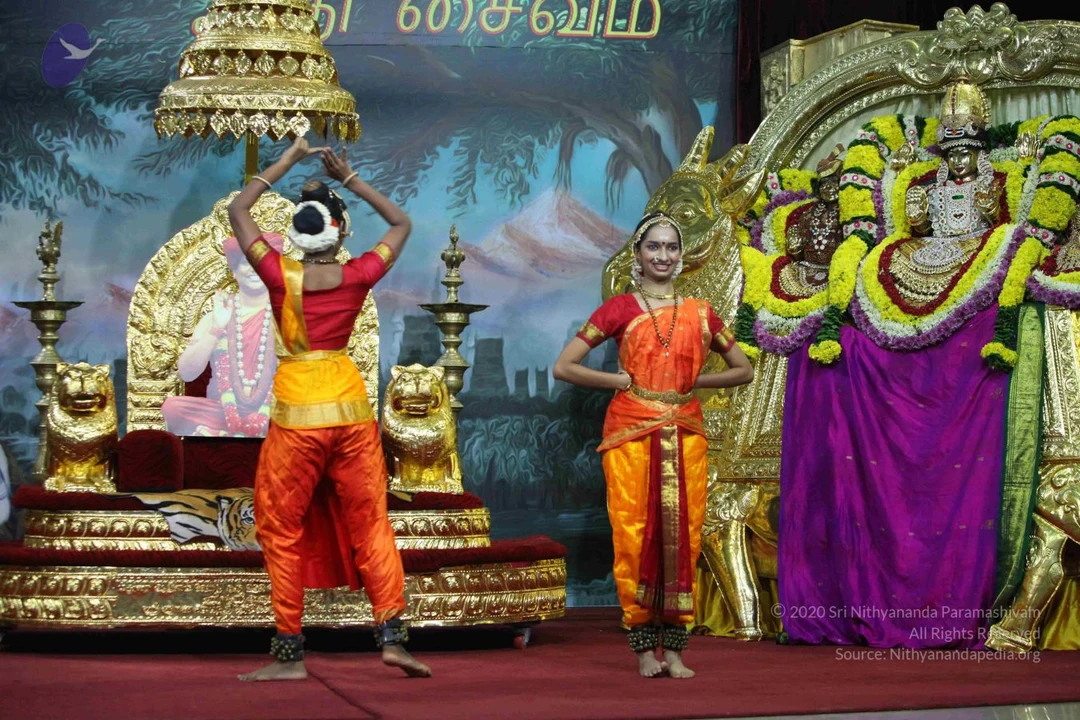
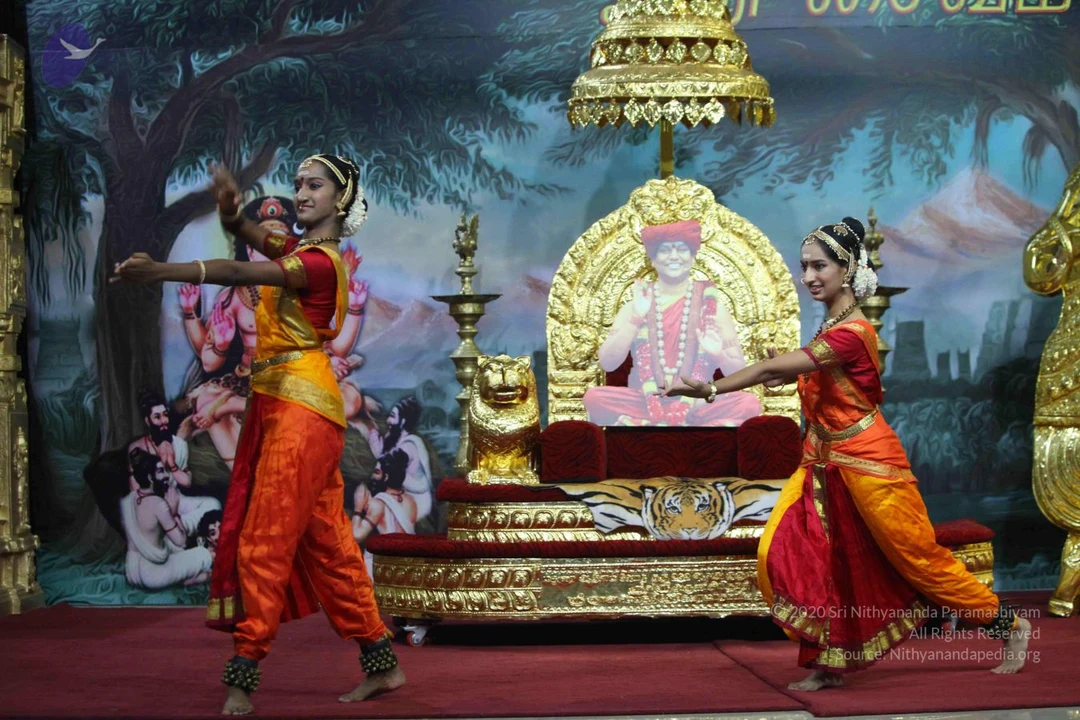
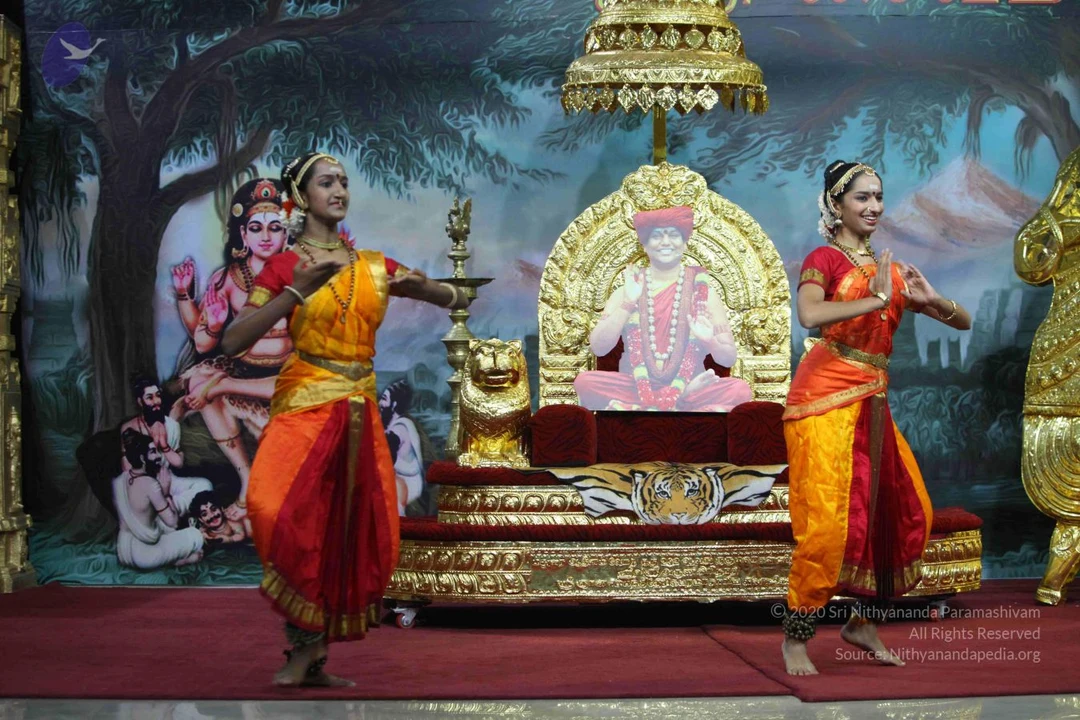
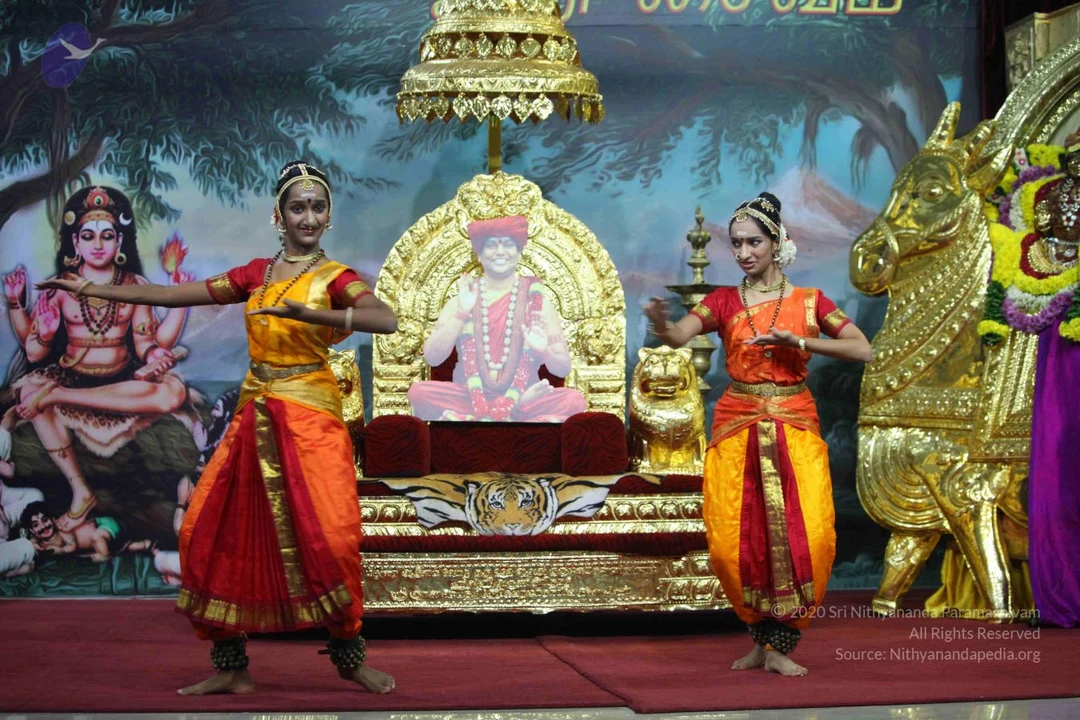
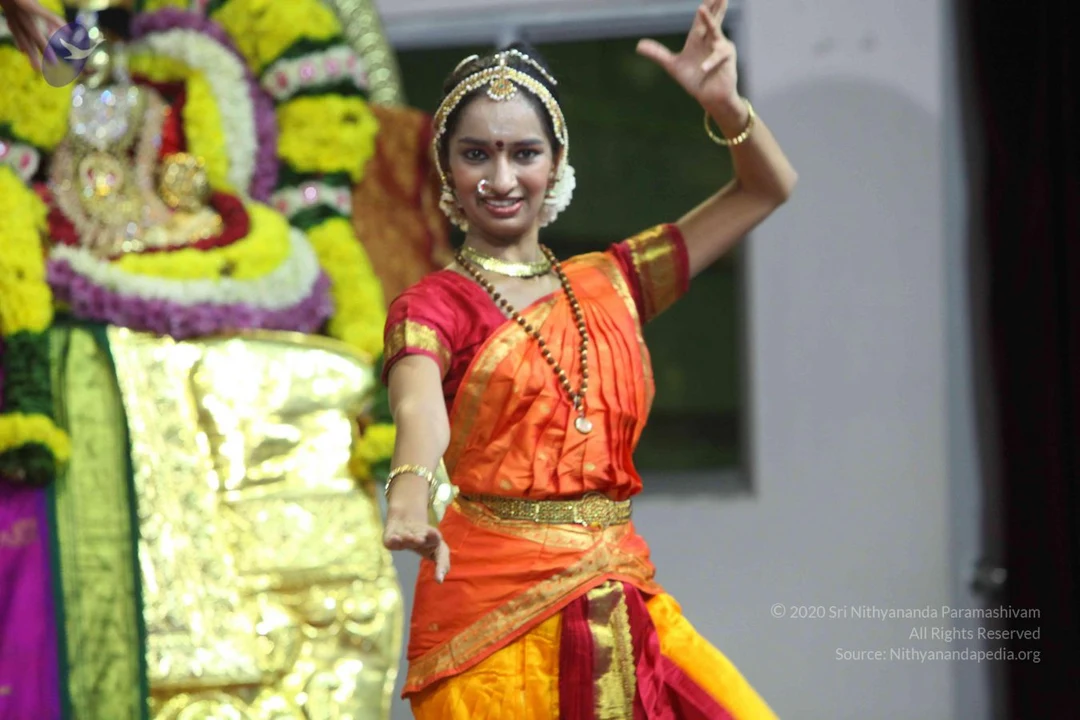
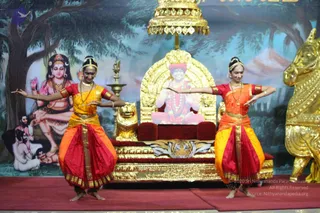
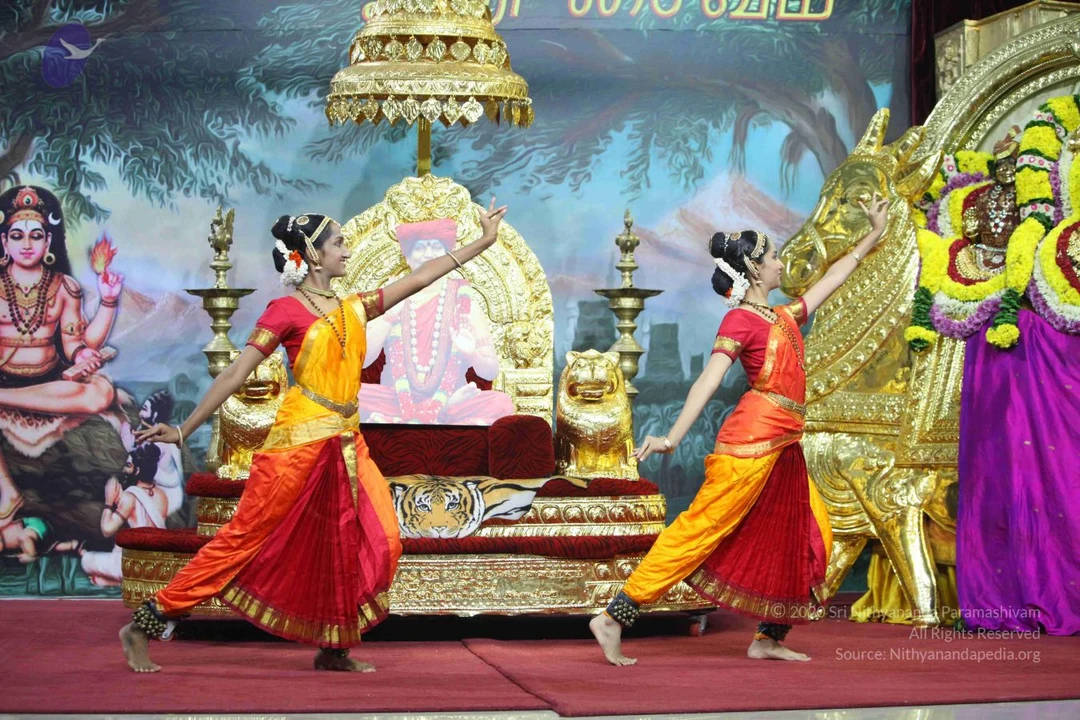
Two young women in traditional Indian dance costume perform on a red-carpeted stage in front of a painted backdrop of Shiva seated with a flame and a forest scene. Both wear red blouses with orange and yellow pleated sarees with gold borders, jewellery, flowers in their hair, and ankle bells. Their arms are extended in a dance pose toward a golden throne draped in red cushions with a tiger skin, flanked by golden lion figures and brass lamps. A golden bull or ornate figure stands at right beside a deity murti adorned with yellow and purple garlands. The scene appears to be a stage dance performance in a temple-style hall.Two female dancers in orange and yellow traditional Indian dance costumes with gold trim and jewelry perform on a red-carpeted stage in front of an ornate gold throne. The dancers stretch their arms outward, one on each side of the frame. On the throne sits a seated figure in a pink and red garment with a red turban and rudraksha-style beaded mala, flanked by a golden lion and a tiger-striped cloth; the figure is a printed or projected image rather than a clearly visible living person, so the in-person presence is uncertain. A painted backdrop shows a deity with a crescent, a banyan-type tree and mountains, and a large golden bull or nandi statue stands at the right edge. A brass lamp stands near the throne.Two female dancers in orange and red traditional Bharatanatyam costumes with gold borders and jewelry perform on a red stage carpet in front of an ornate golden throne draped with a tiger-skin cloth. A large projected or printed image of a seated figure in pink garments with red and white garlands, labelled as a depiction, sits on the throne, with a golden lion and a golden bull figure at the sides and a painted backdrop of a forest with a Shiva-like deity and devotees behind. A brass oil lamp and a golden canopy hang above.Two female dancers in orange and red traditional Bharatanatyam costumes with gold borders perform on a red stage, both wearing jasmine-style hair ornaments, rudraksha-style beaded necklaces and ankle bells. Behind them, a large golden bull (nandi) and a richly decorated golden deity murti adorned with yellow and magenta garlands stand before a painted mountain-and-forest backdrop. On the left, a golden throne-like peetha holds a large printed portrait of a robed figure with a red turban and red mala, labelled as a portrait rather than a physical person; a tiger-skin cloth covers the seat and a brass oil lamp stands nearby. Text on the backdrop reads in Tamil. The scene is a dance performance at a ritual or celebratory event.Two young female dancers in orange, red and yellow traditional dance costumes perform on a red stage carpet in front of a golden throne and a golden bull (nandi) figure. Both dancers wear jewelry, rudraksha-style beaded necklaces, and flower adornments in their hair. Behind them stands a golden deity murti of Shiva-form adorned with yellow and white garlands and a purple cloth. On the left, a large printed portrait of a bearded seated figure in pink and red robes with a red turban, rudraksha mala and raised hands sits on a golden throne draped with a tiger-skin cloth. A painted backdrop shows a blue mountain landscape with trees.Two young female dancers in orange and red traditional Bharatanatyam costumes perform on a red stage. The dancer on the left faces away with arms raised overhead, showing her back, hair in a bun with white flowers. The dancer on the right stands frontally with hands on hips, wearing a gold-trimmed orange sari, rudraksha-style beaded necklace, and jasmine flowers in her hair. Behind them is a gold ornate throne with lion figures and a tiger-skin cushion, flanked by brass lamps. To the right, a deity murti in a purple silk cloth and yellow-and-red flower garlands stands in a golden arch, with a gilded bull figure beside it. The backdrop shows a painted mountain and forest scene with a temple silhouette and a golden parasol above.

PROCESSION
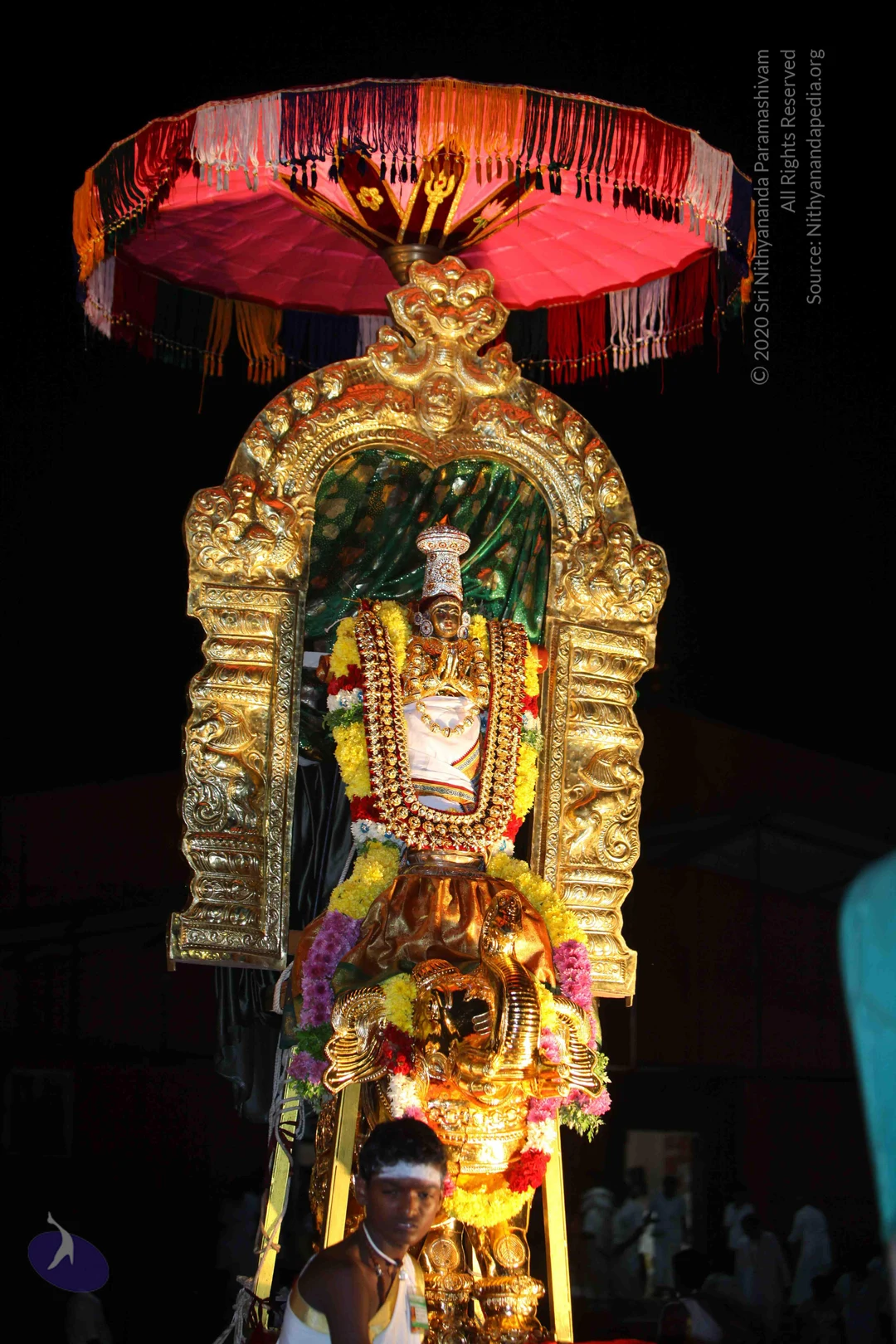
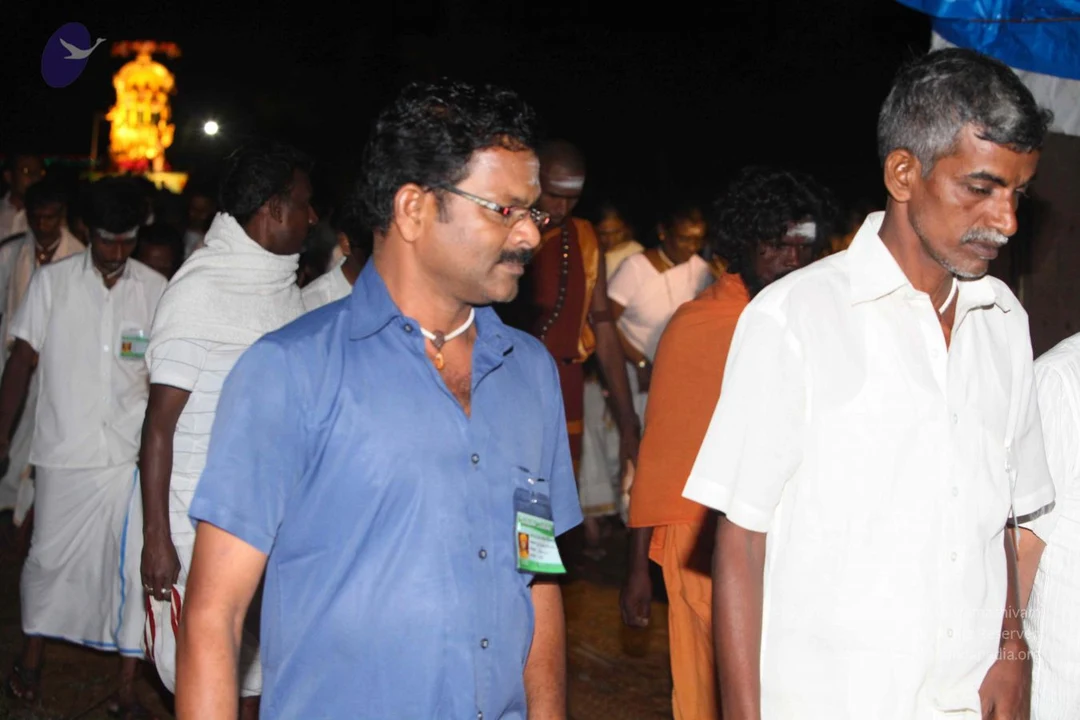
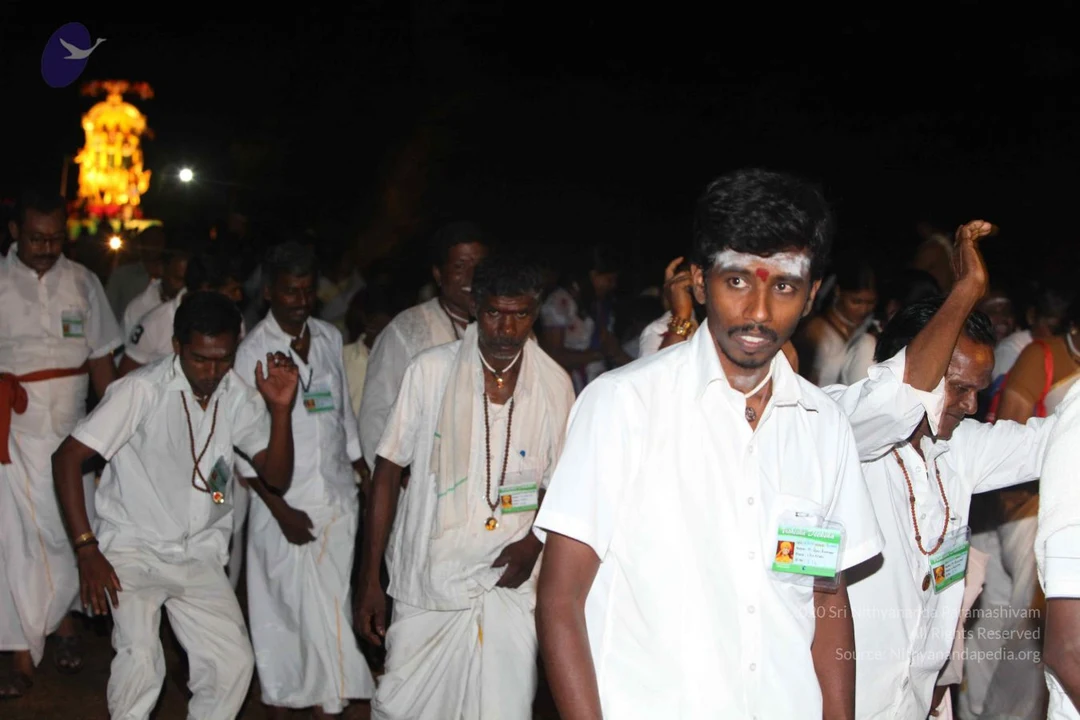
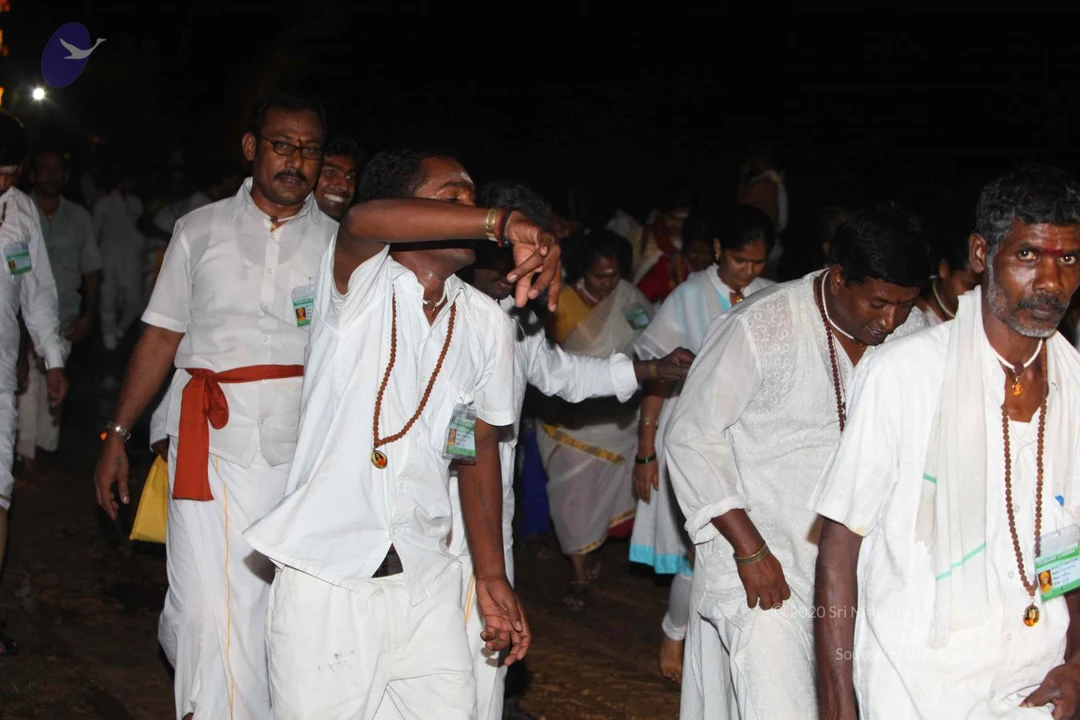
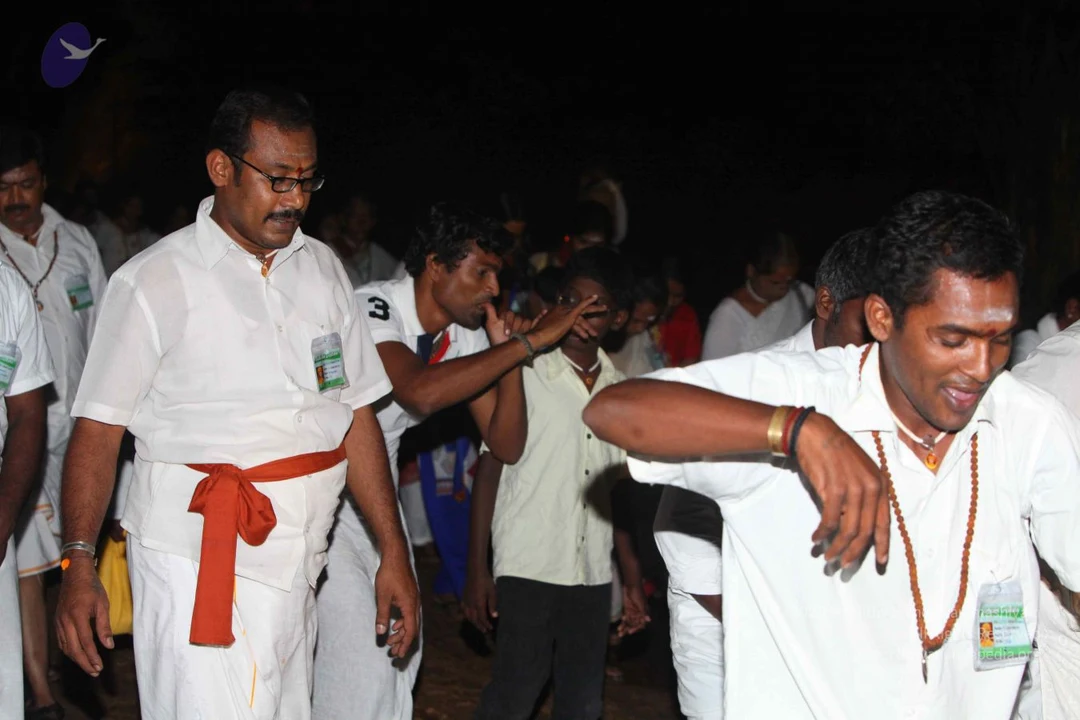
74 photosSource gallery
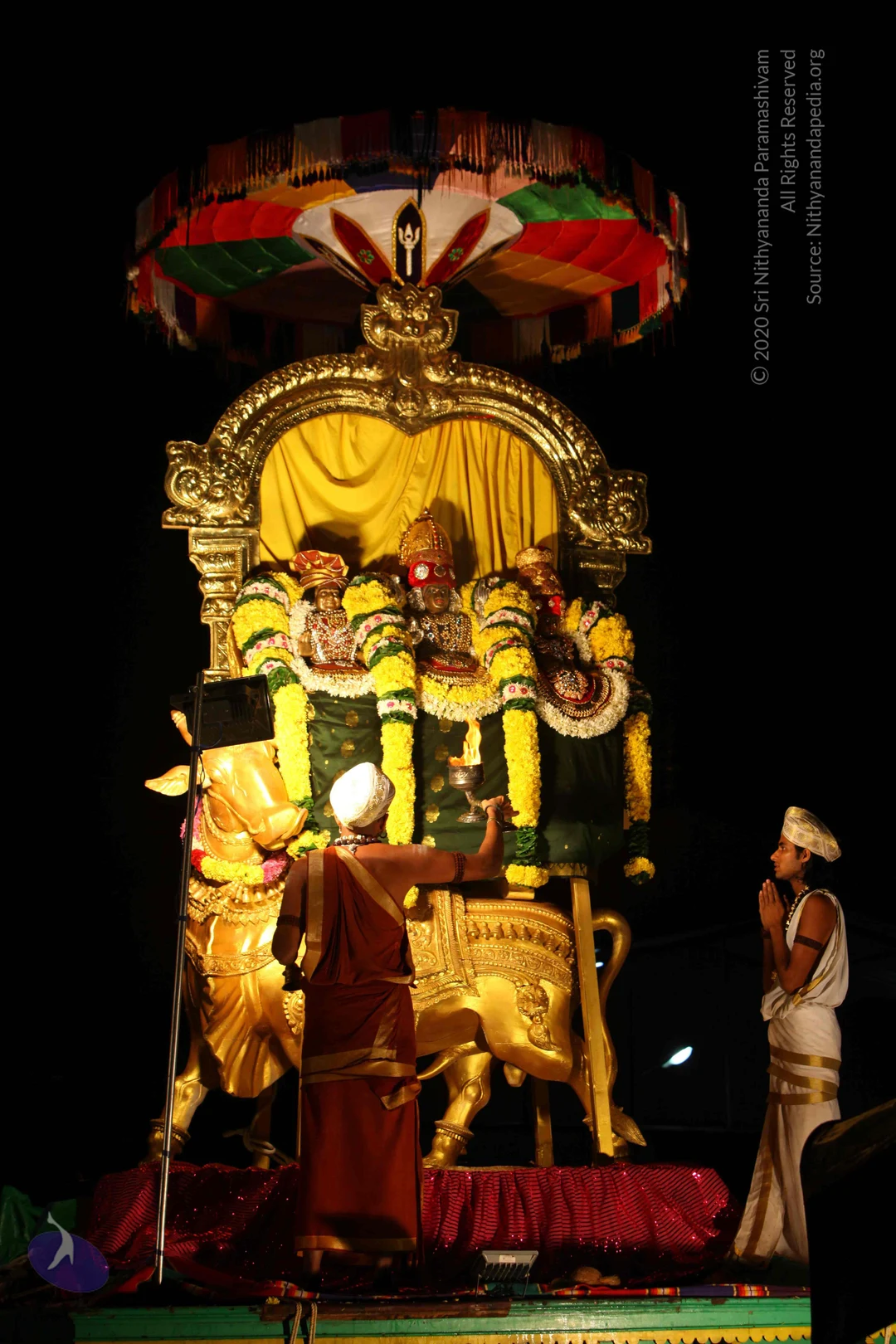
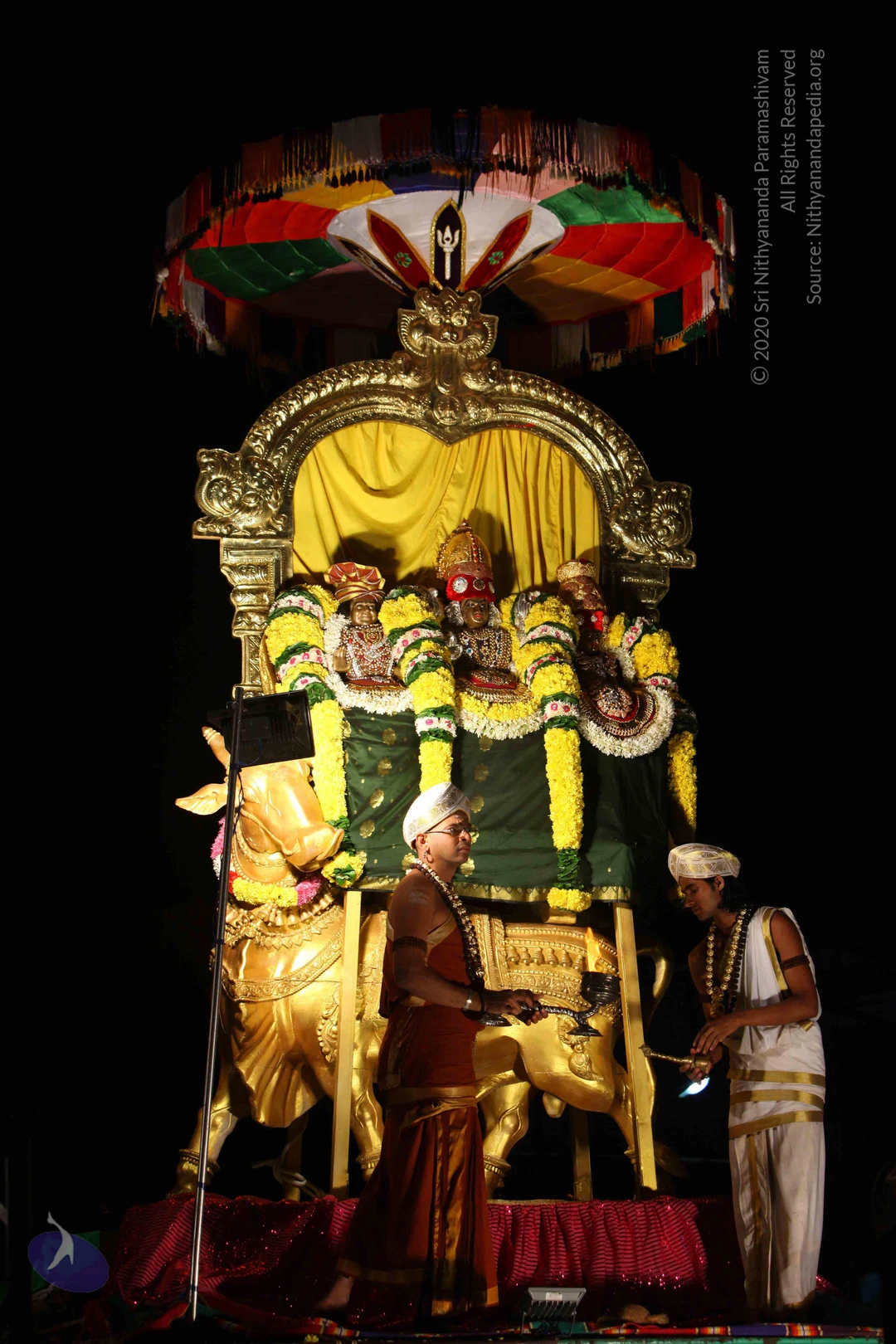
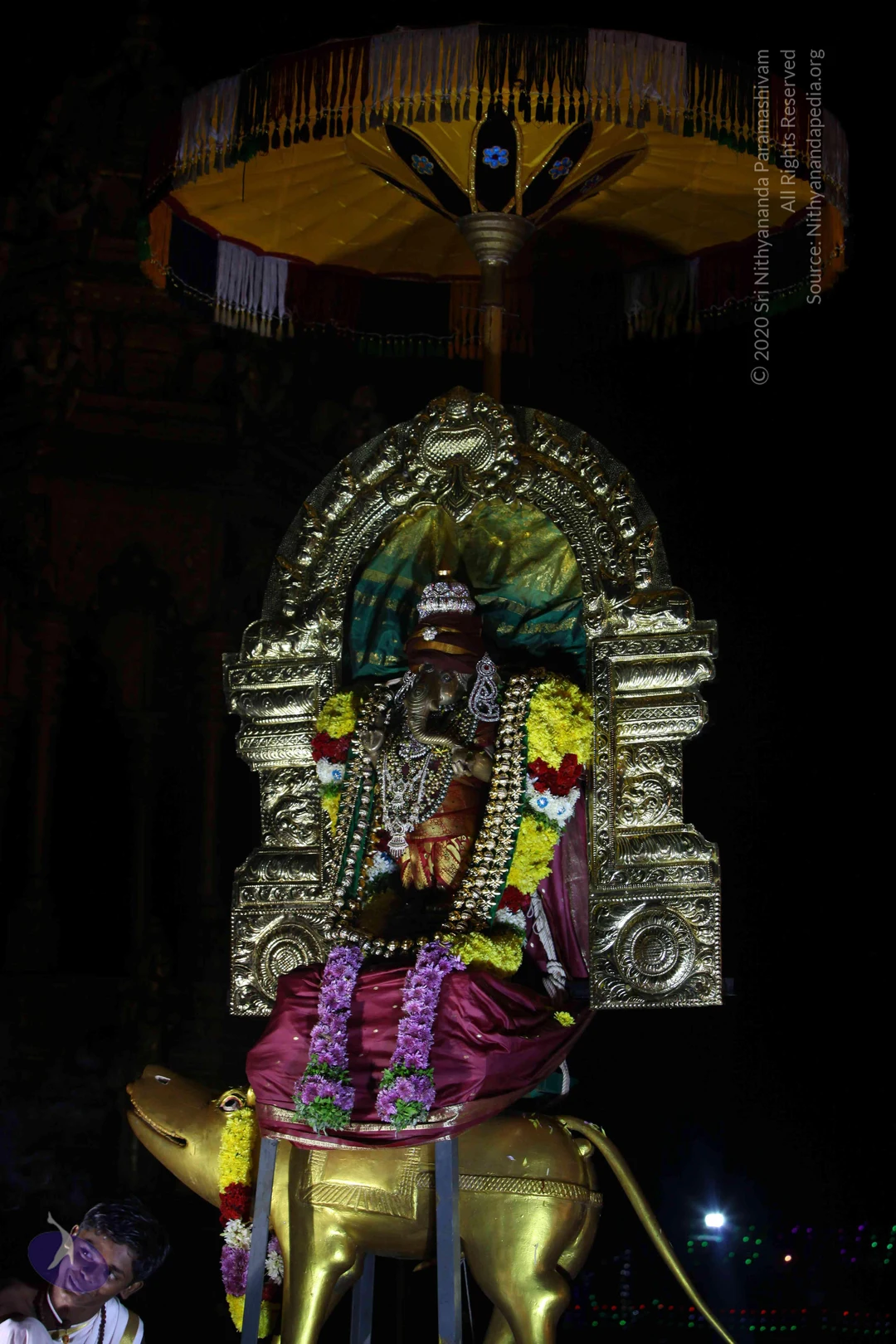
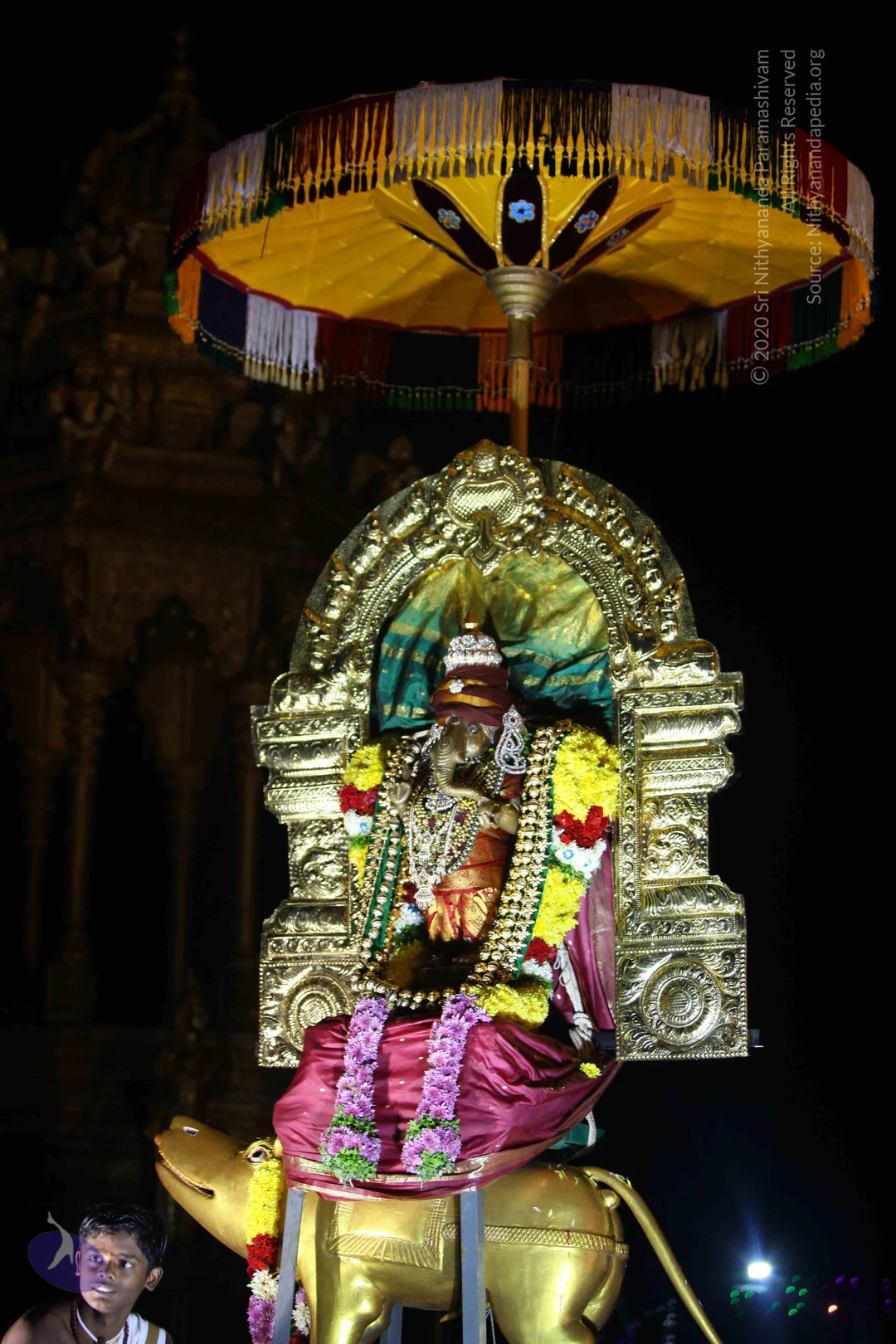
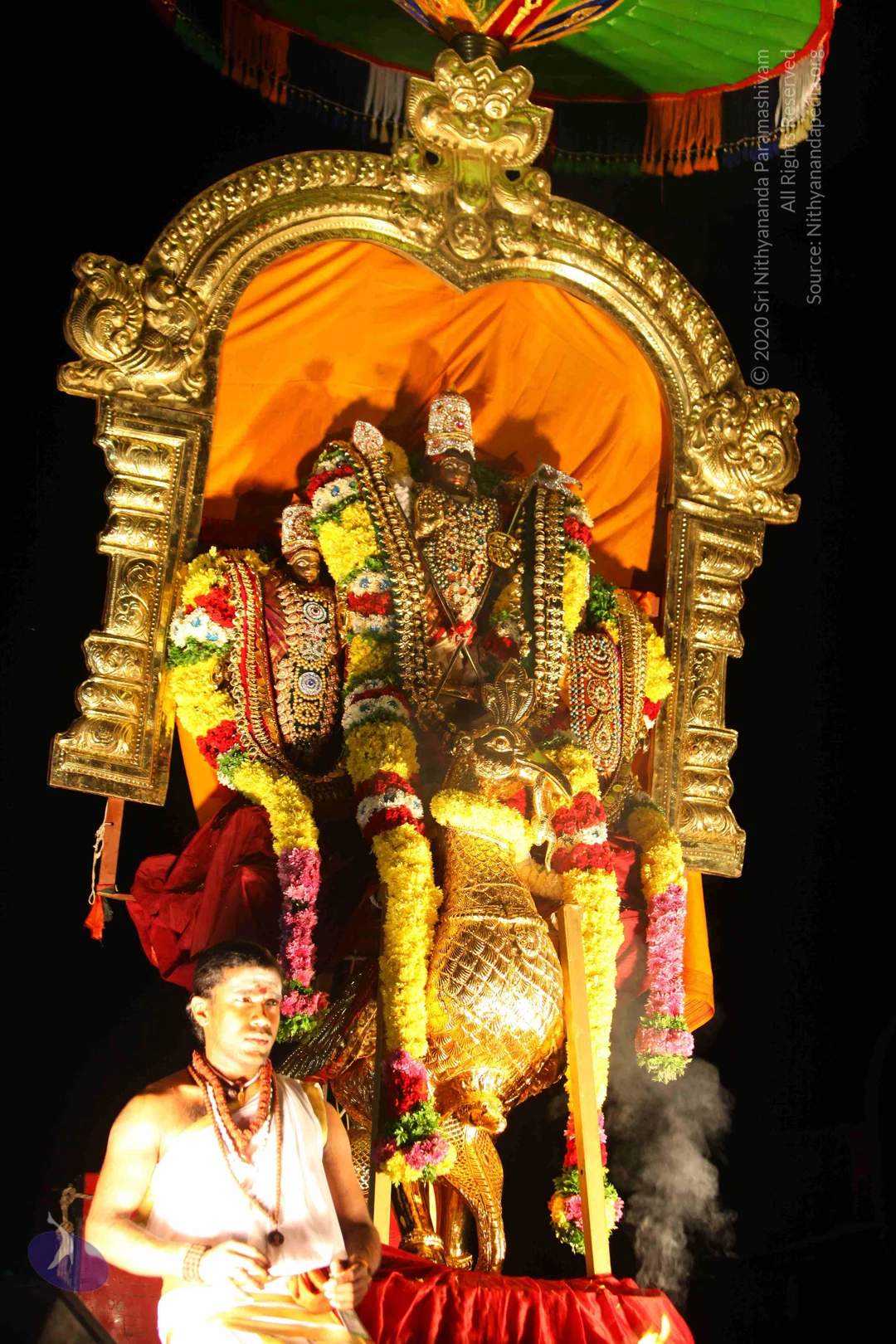
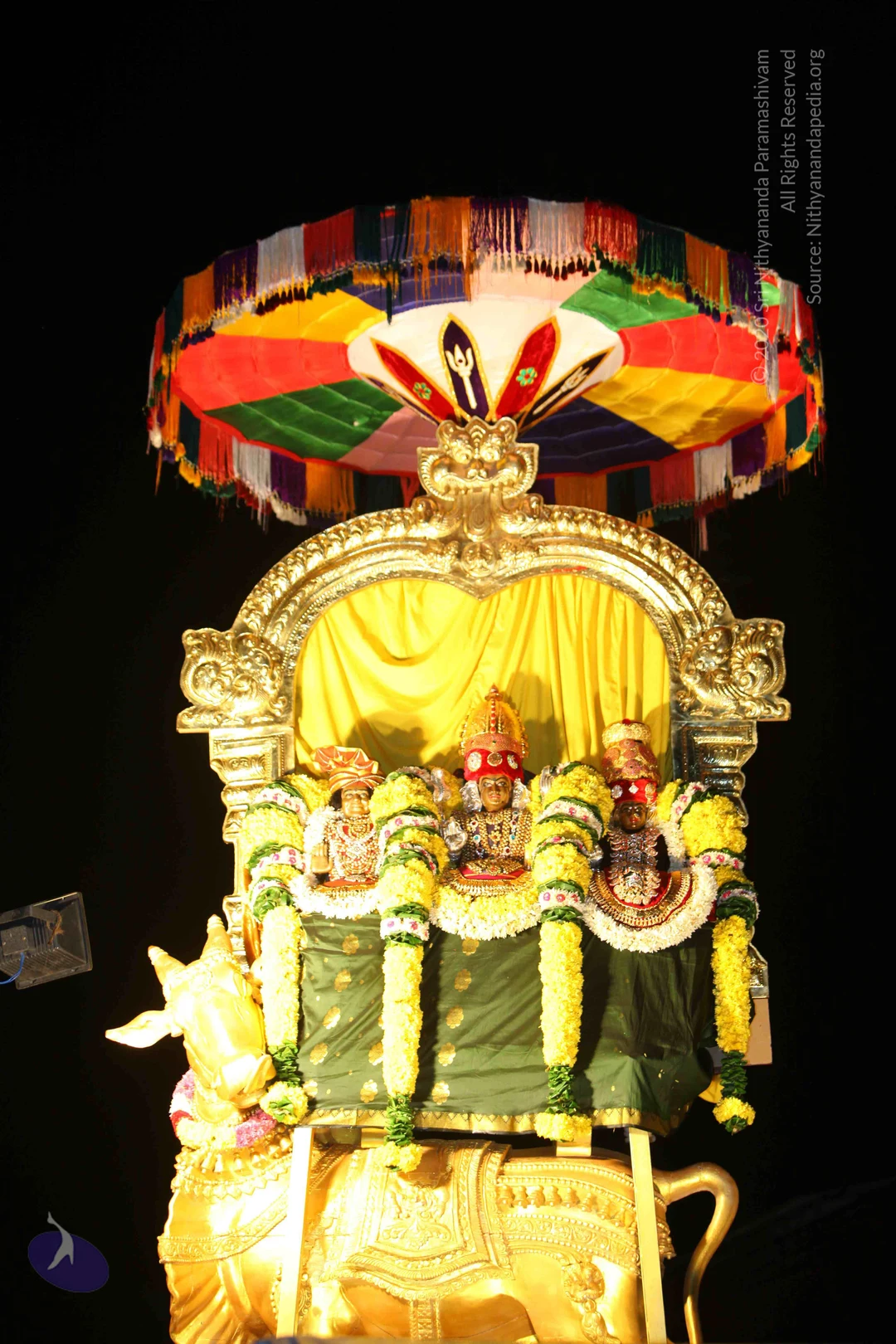
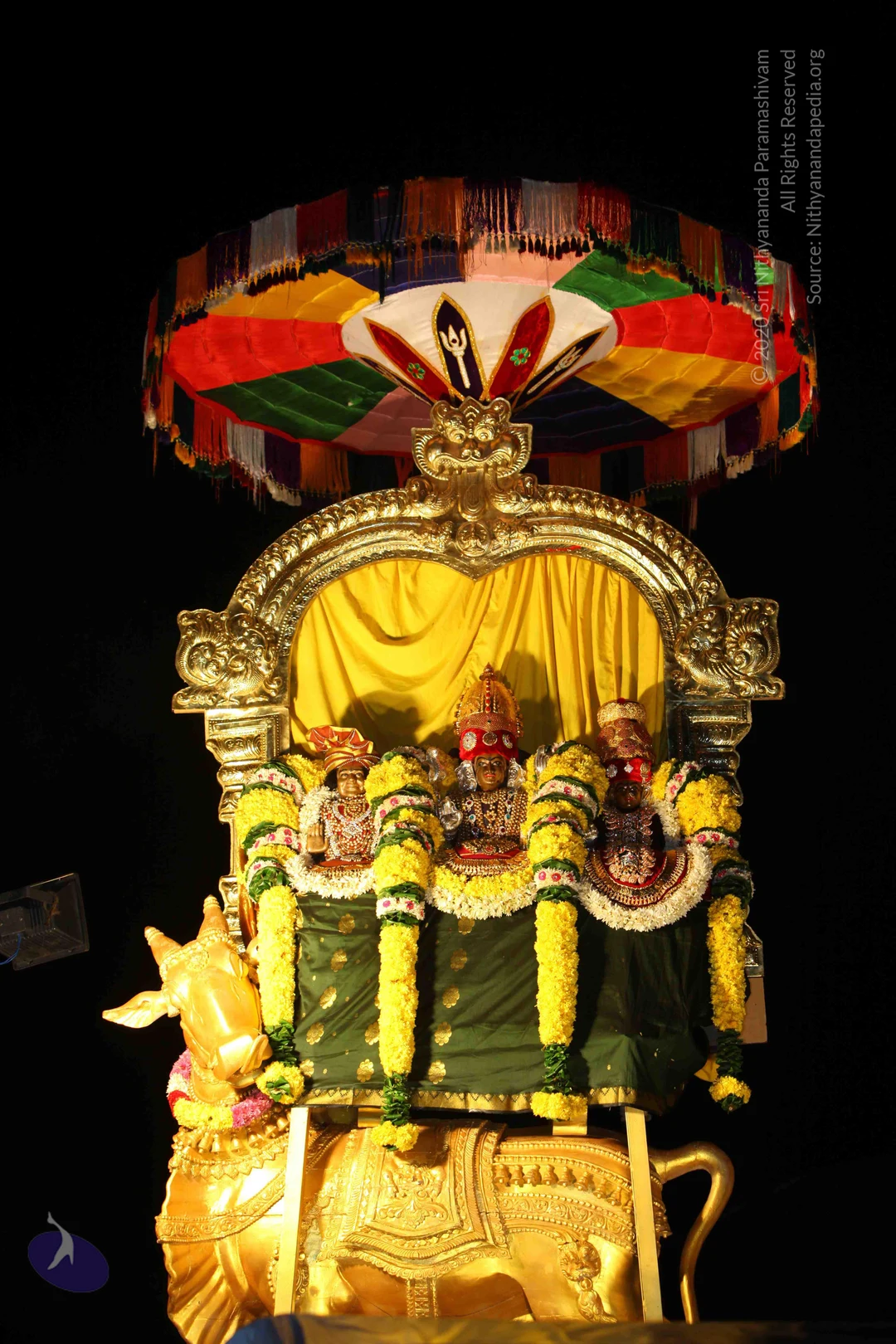
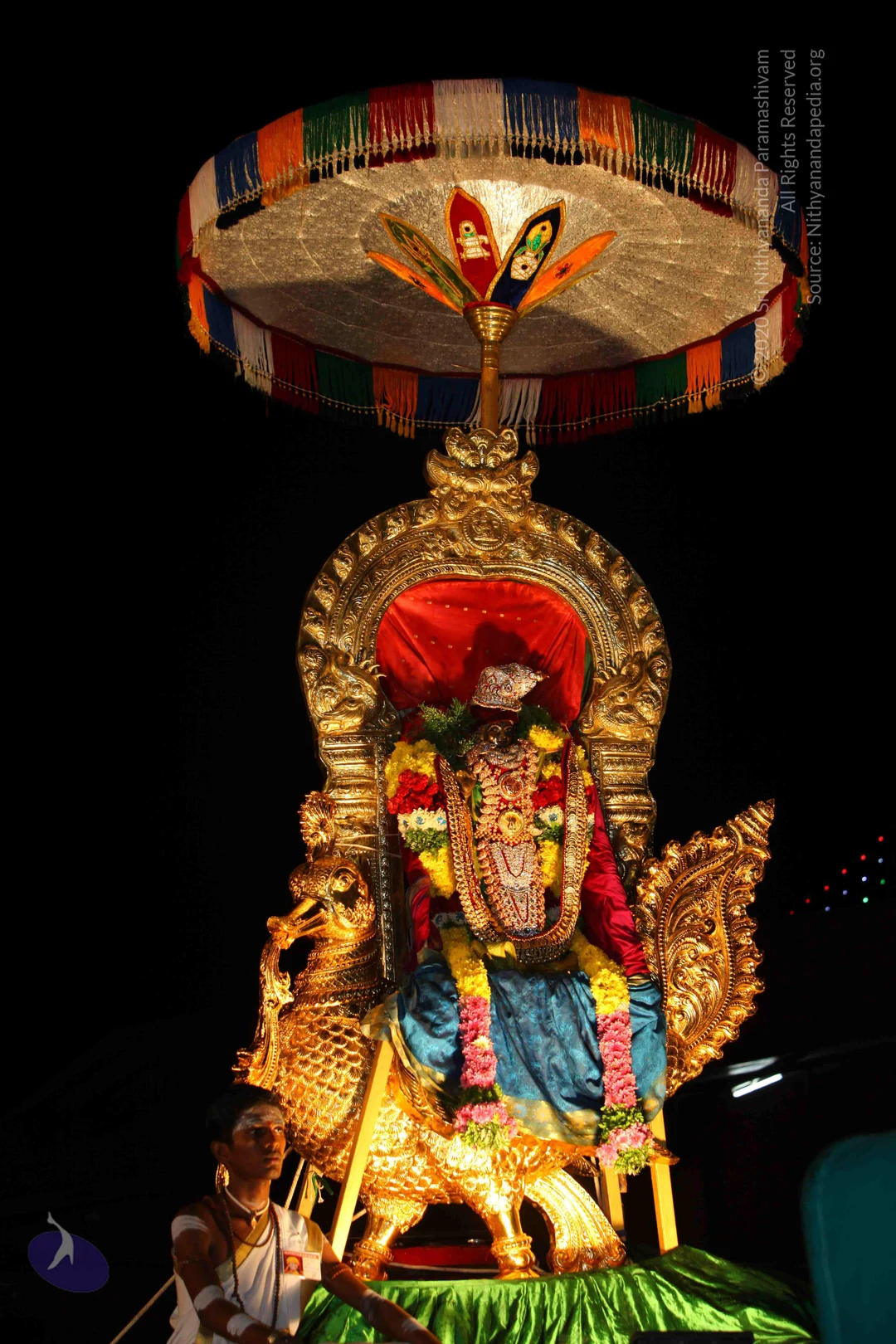
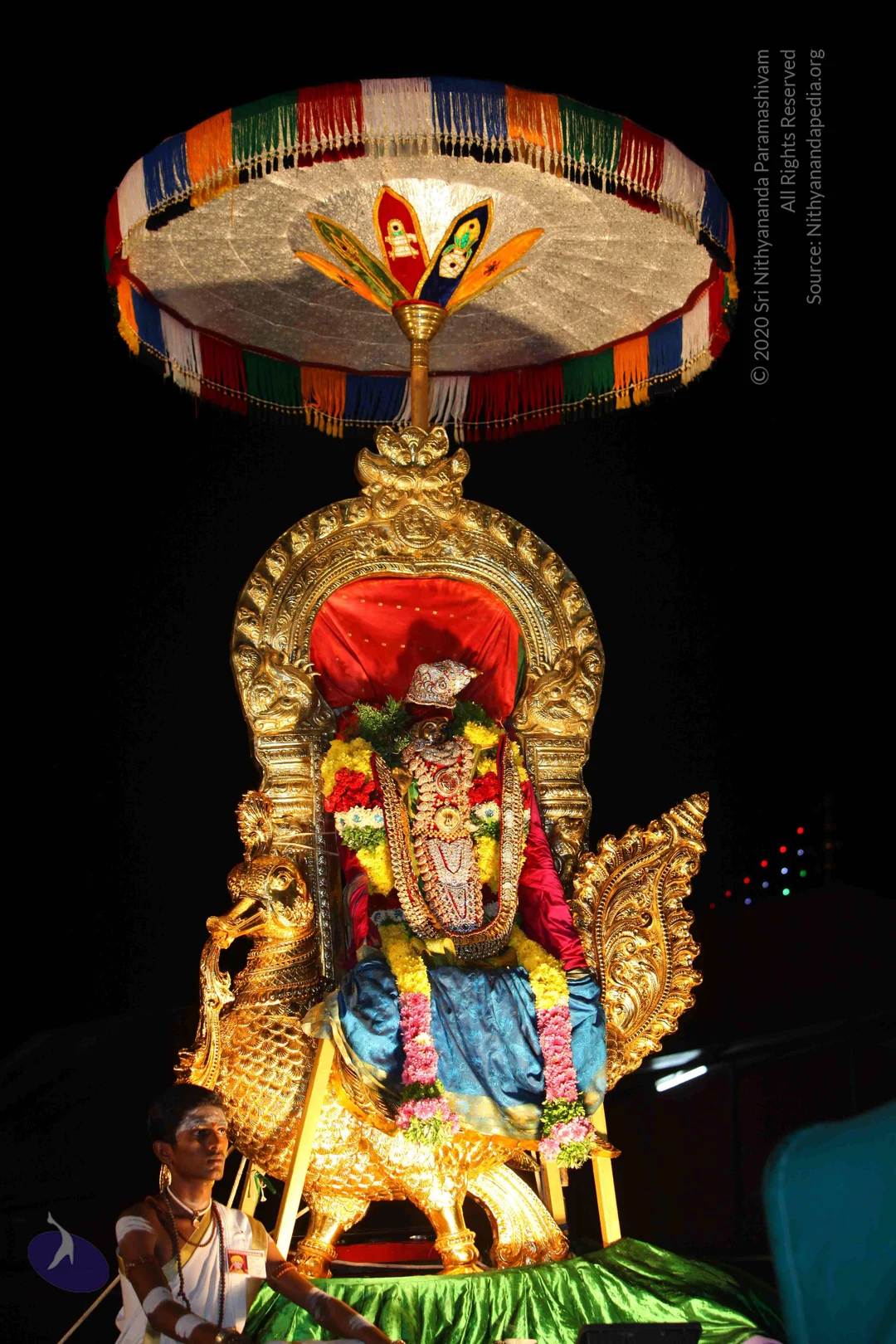
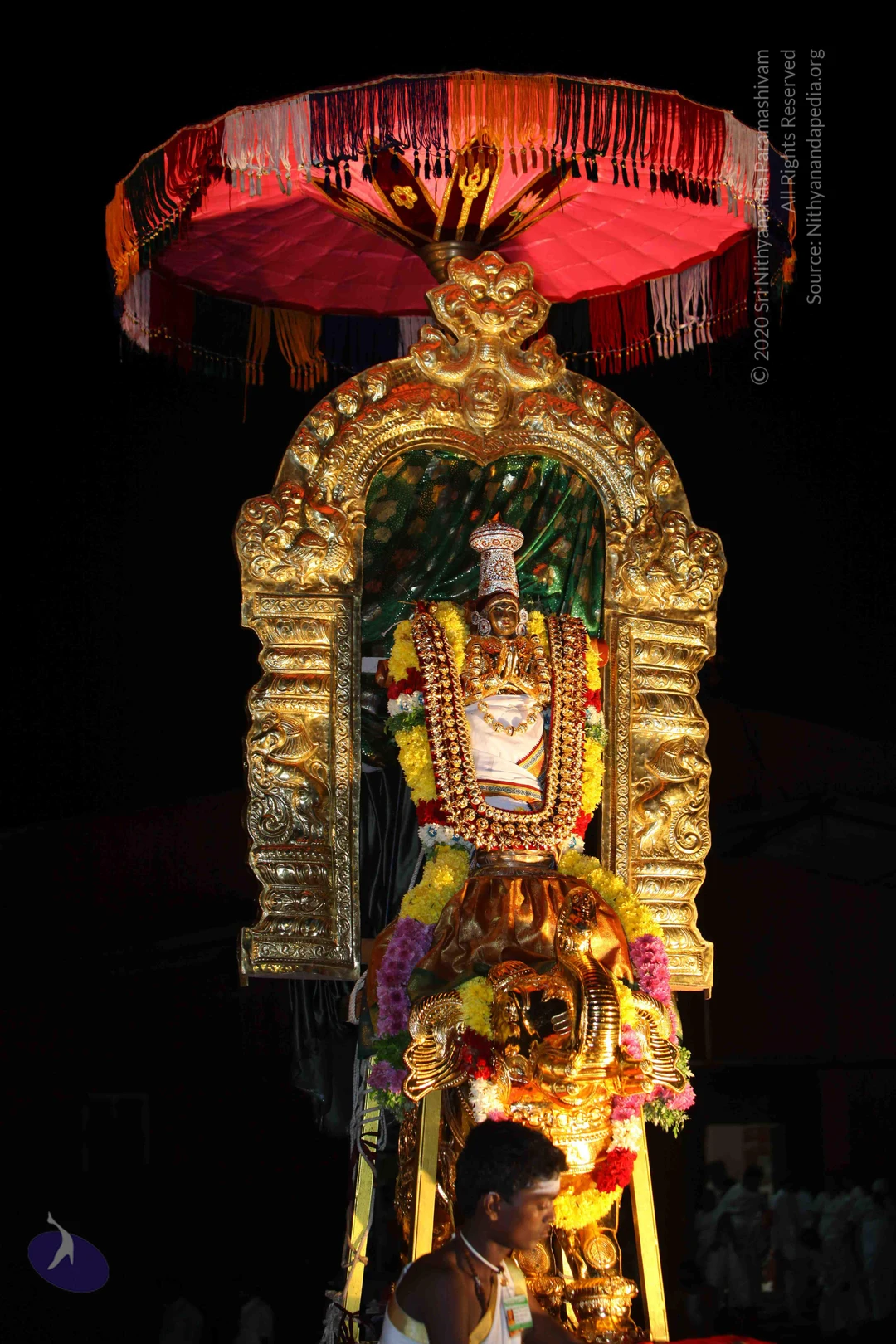
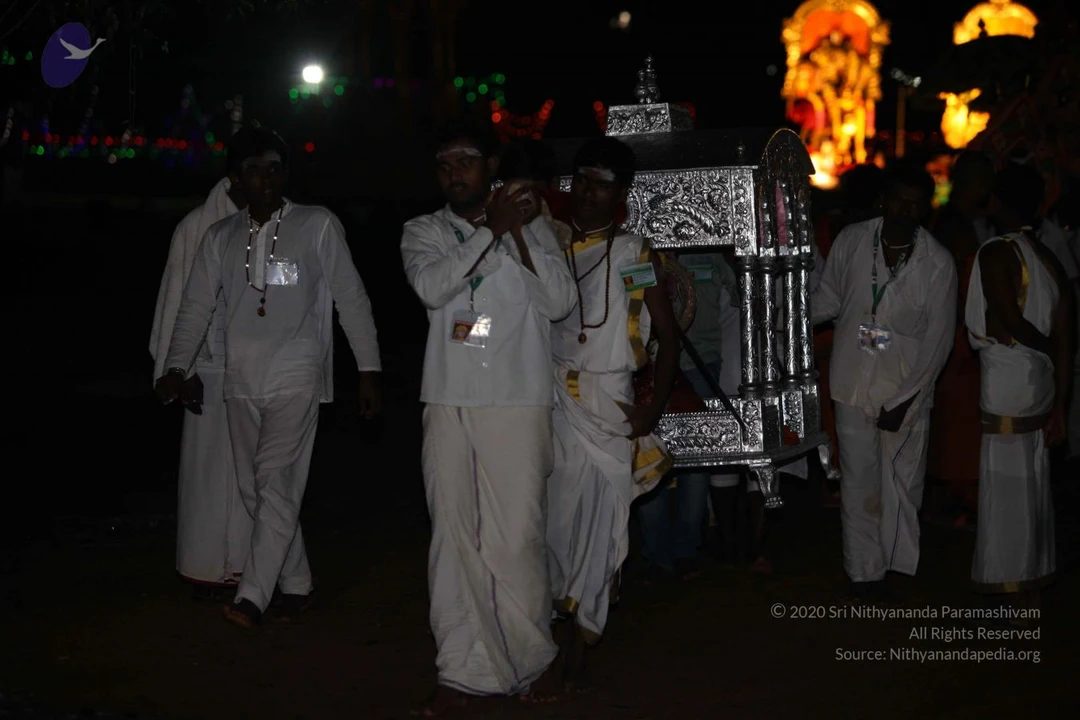
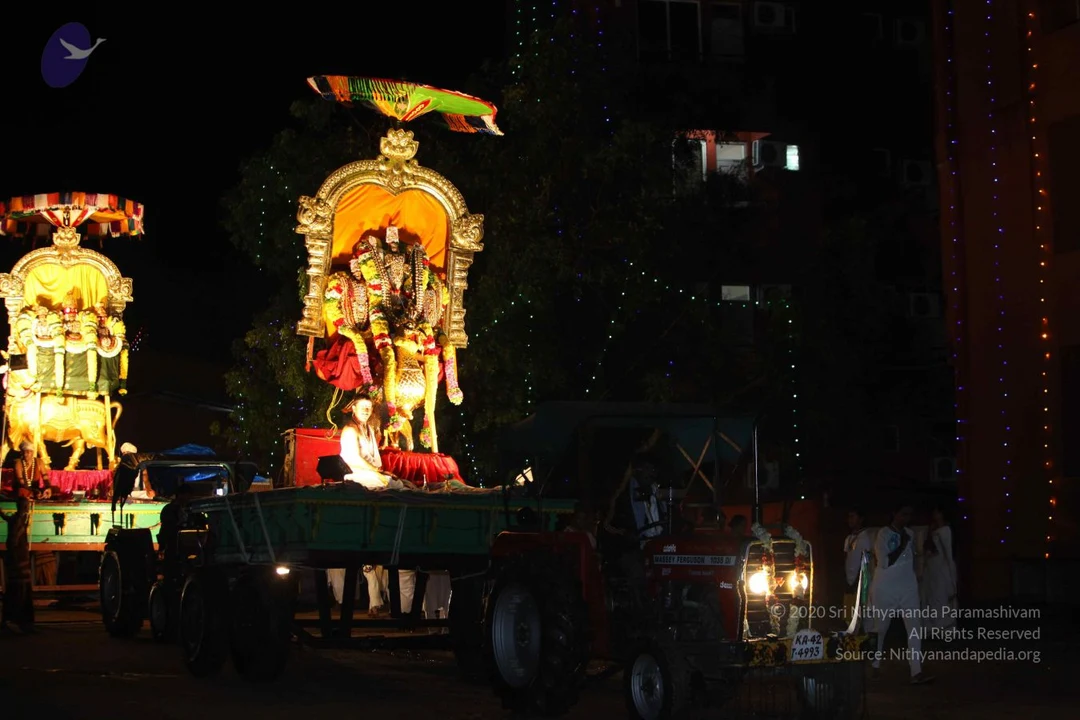
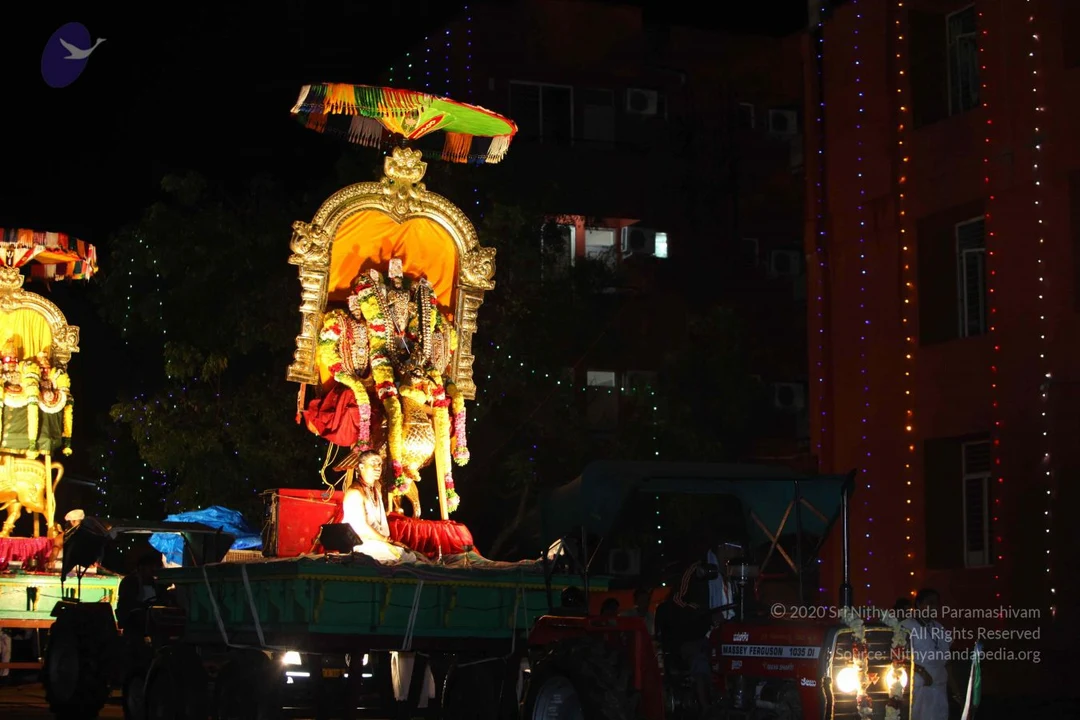
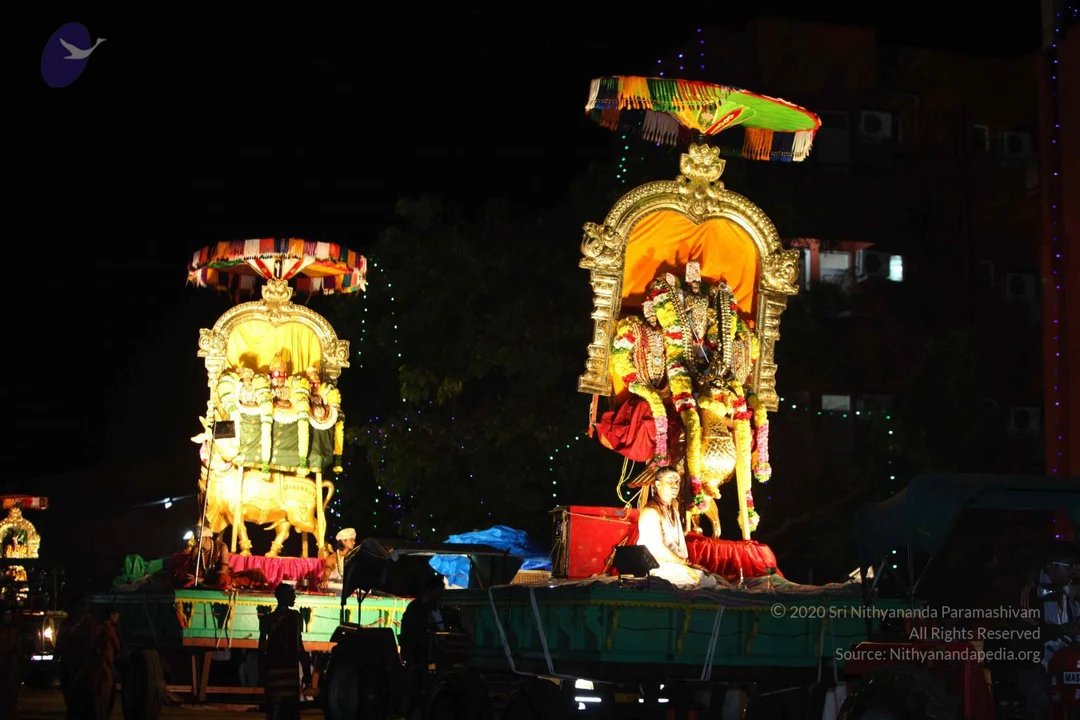
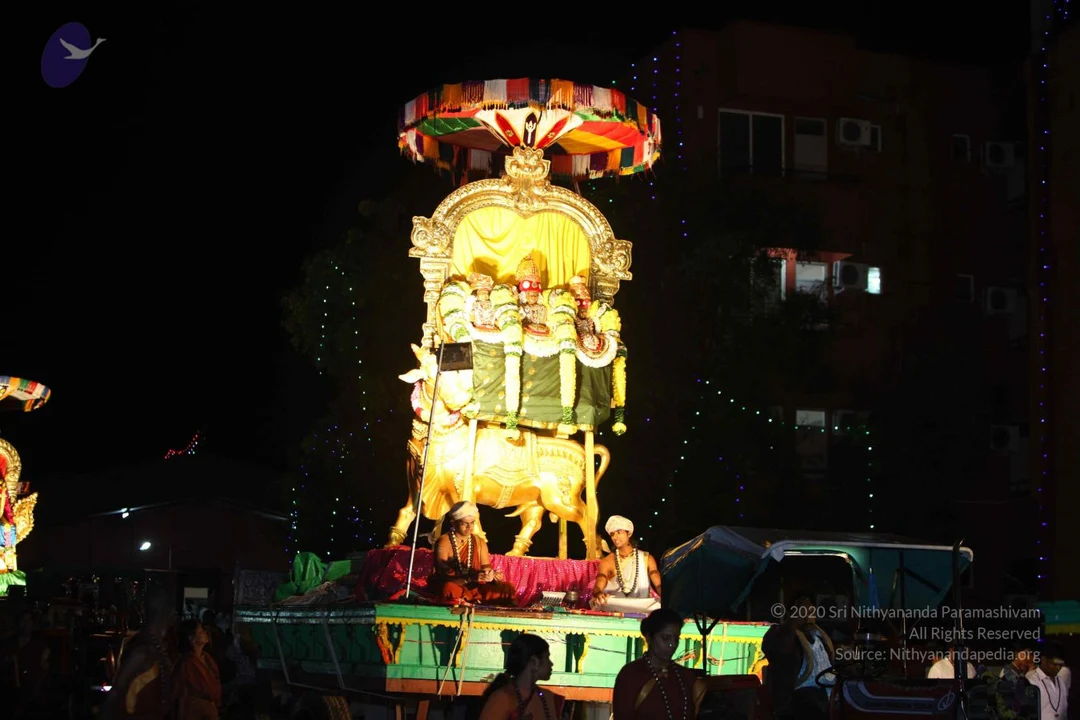
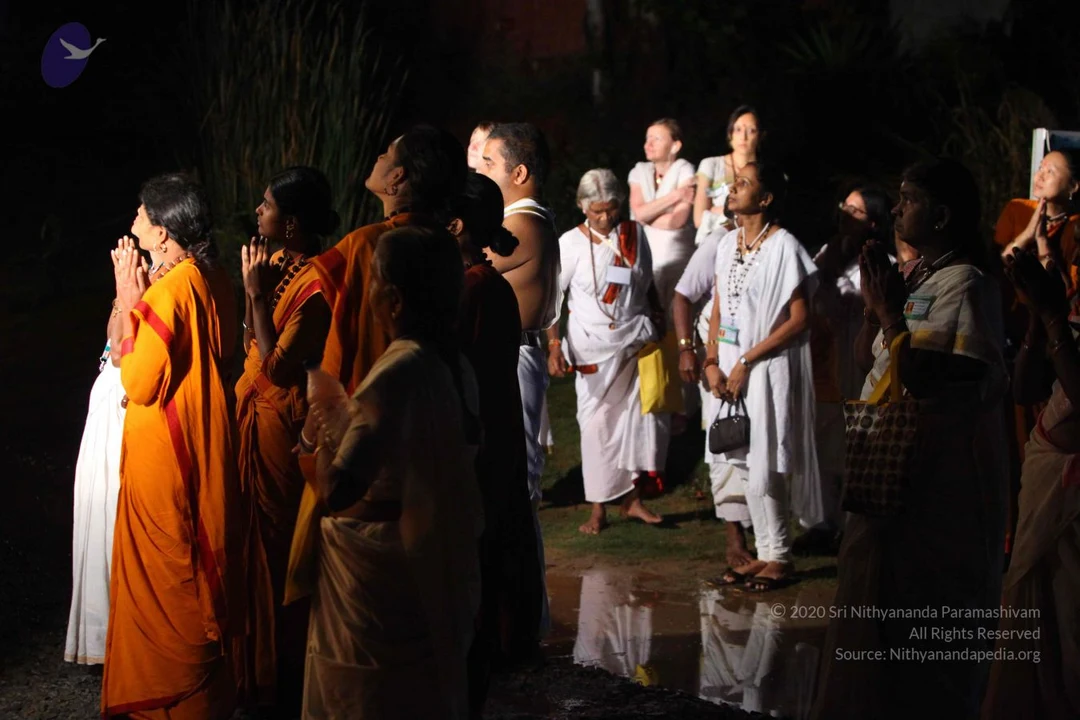
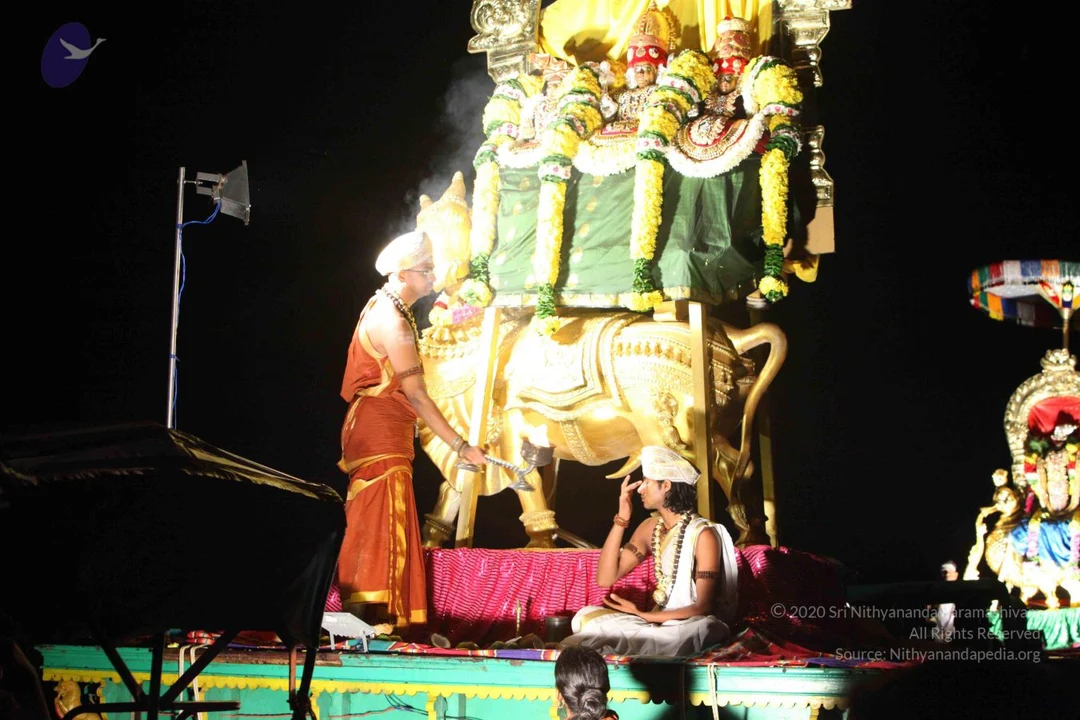
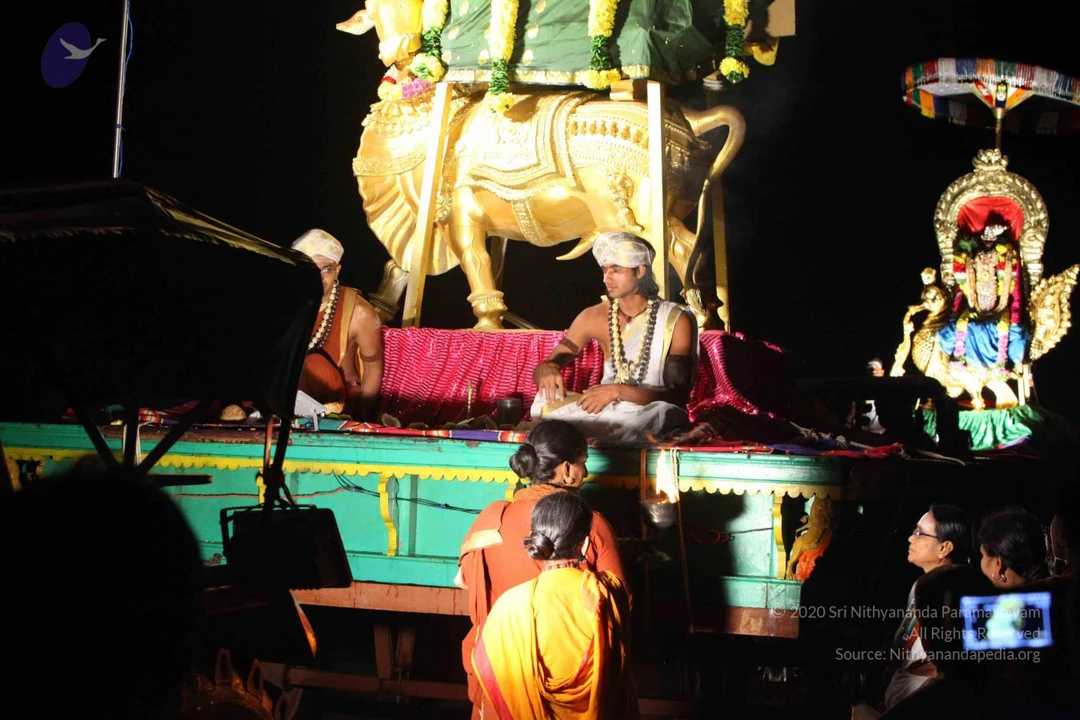
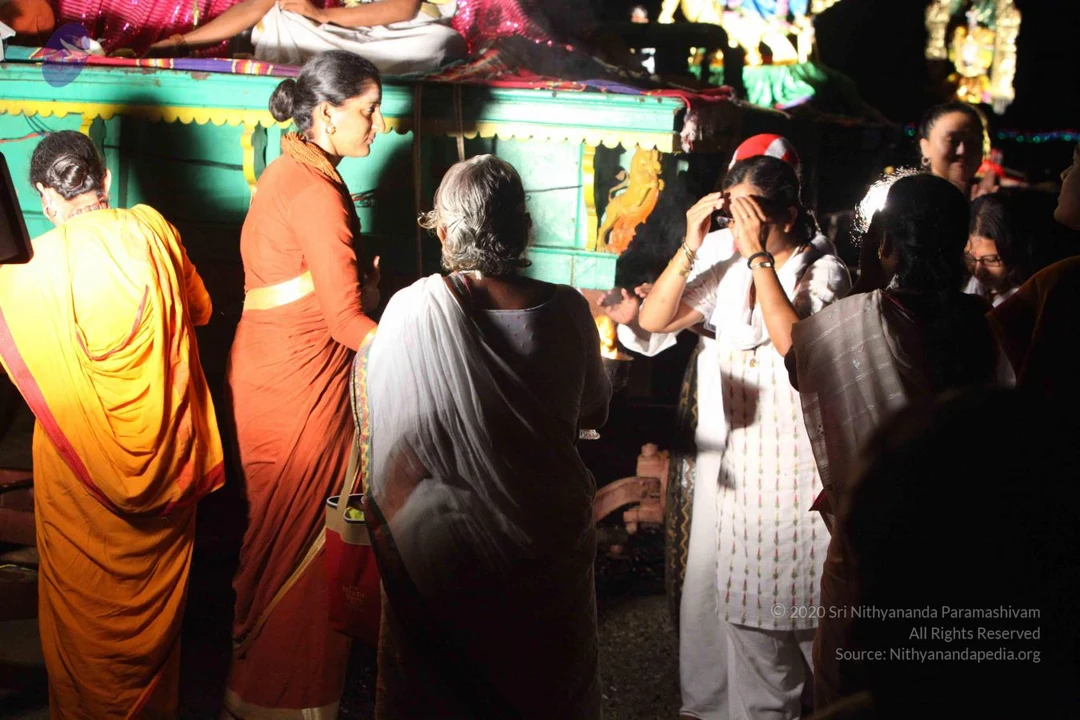
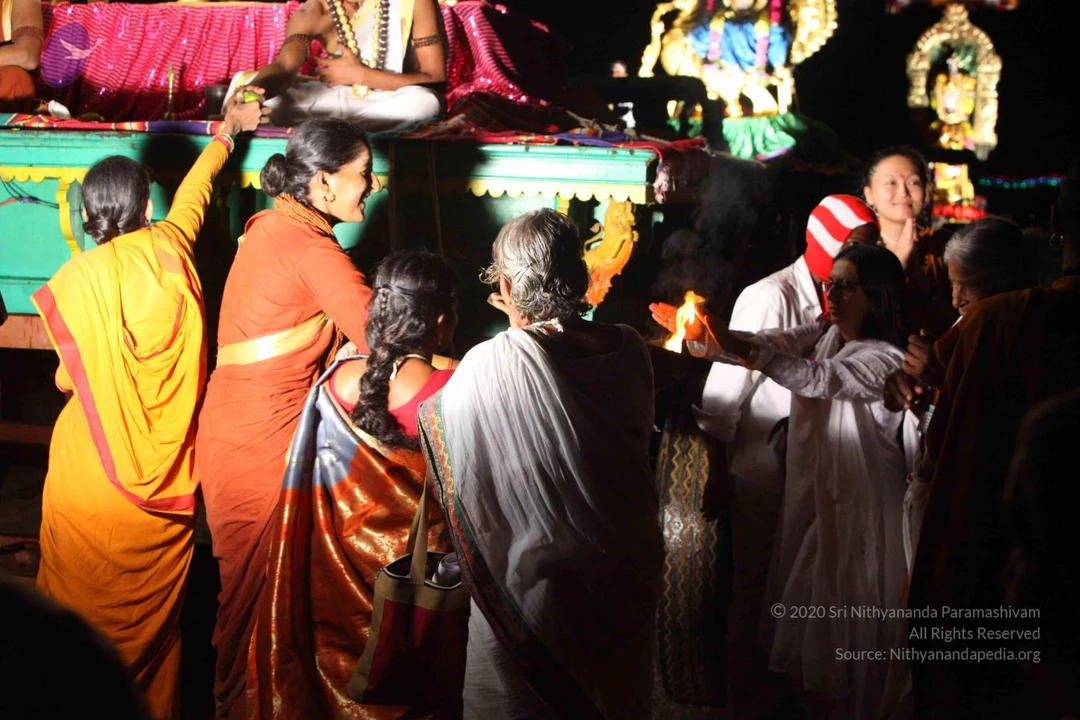
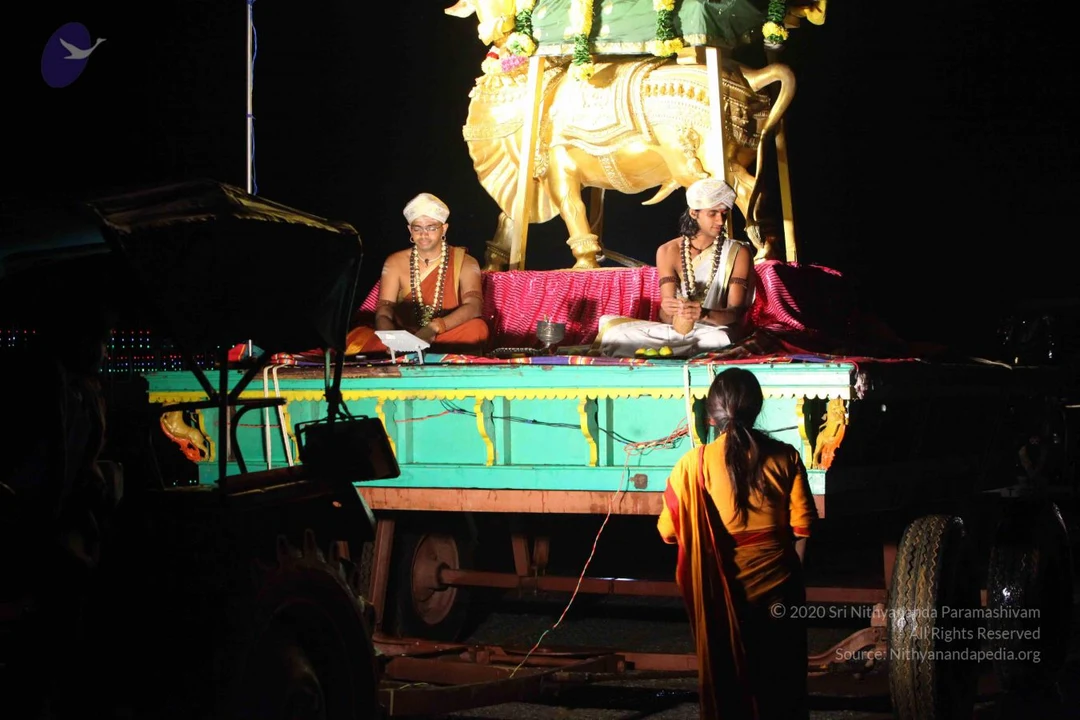
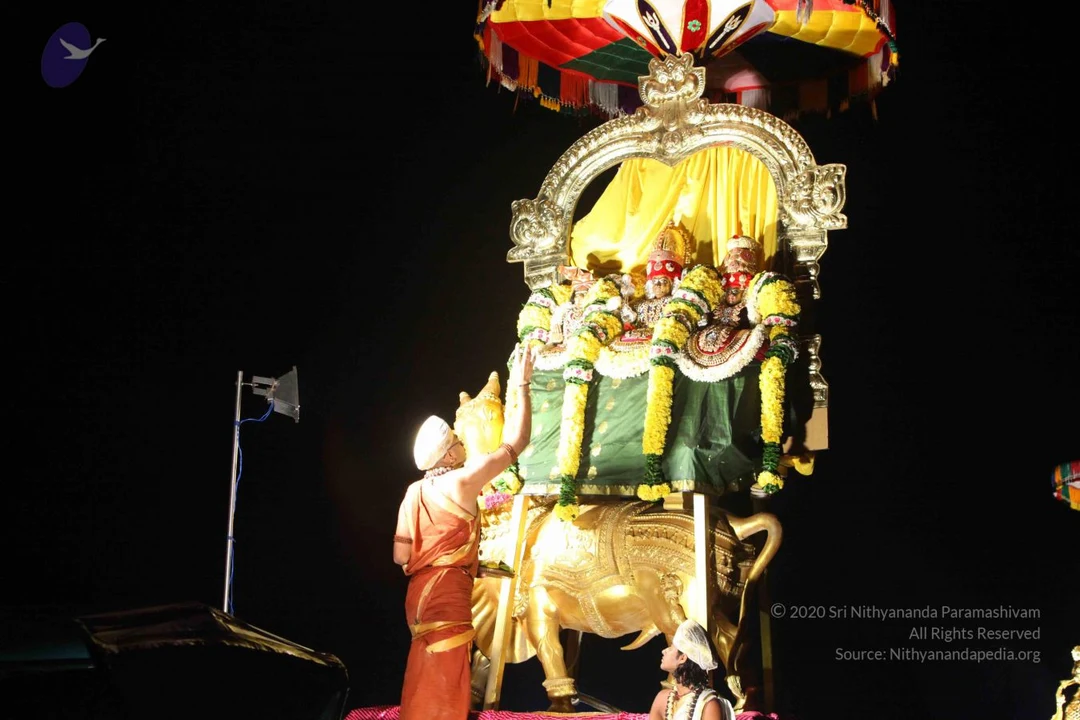
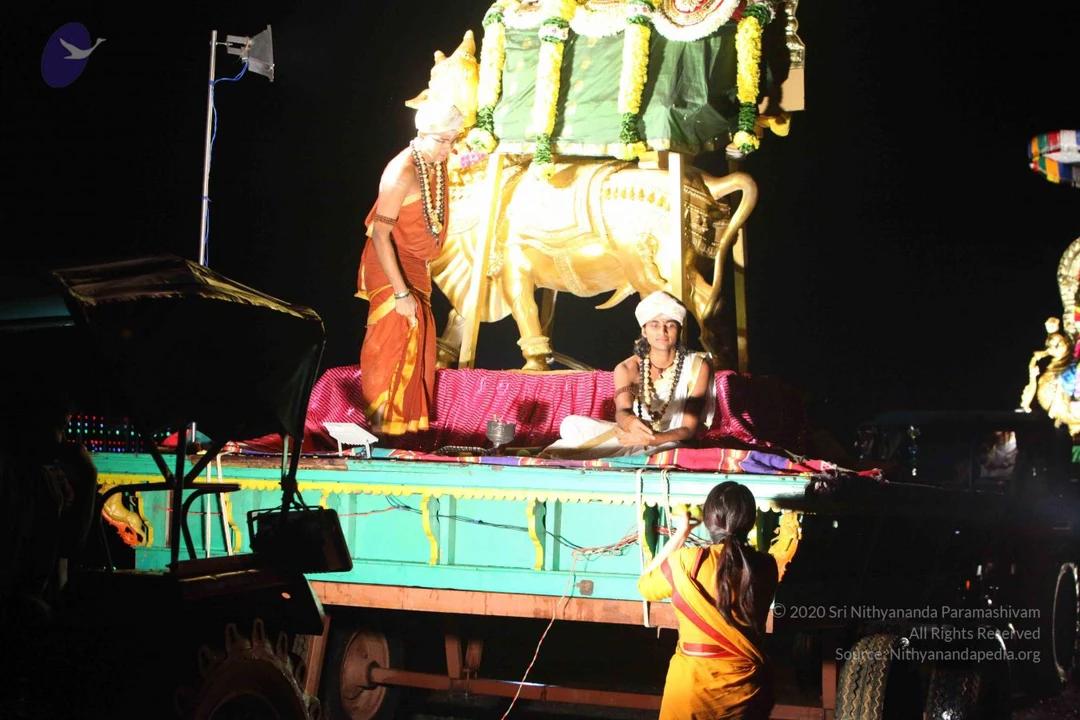
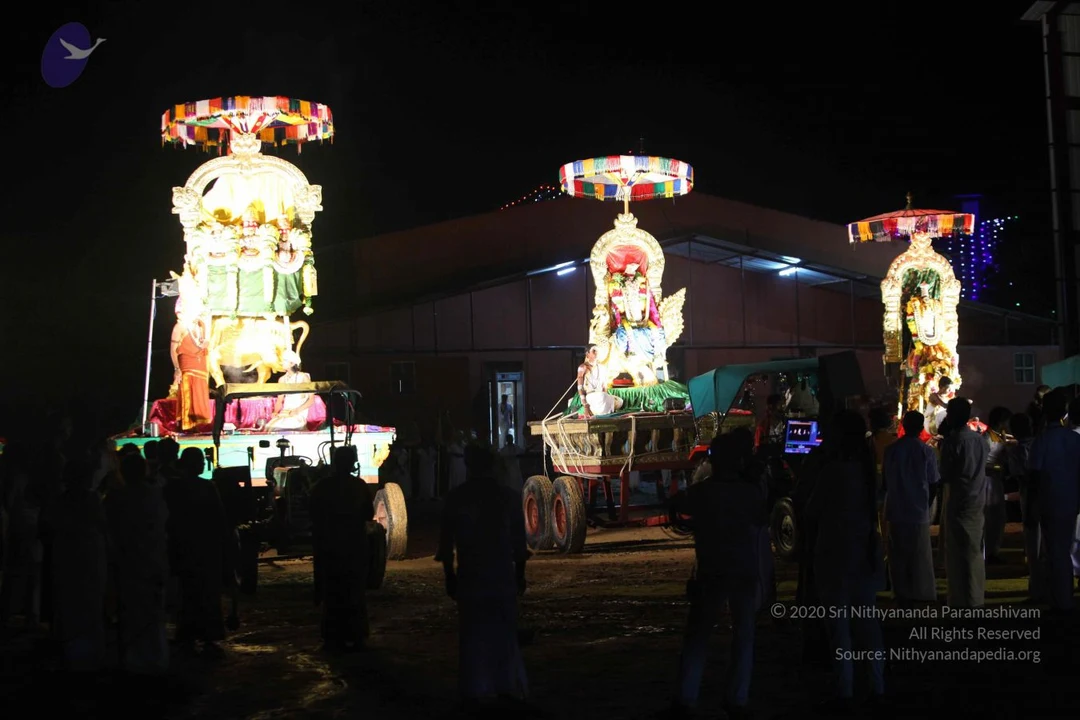
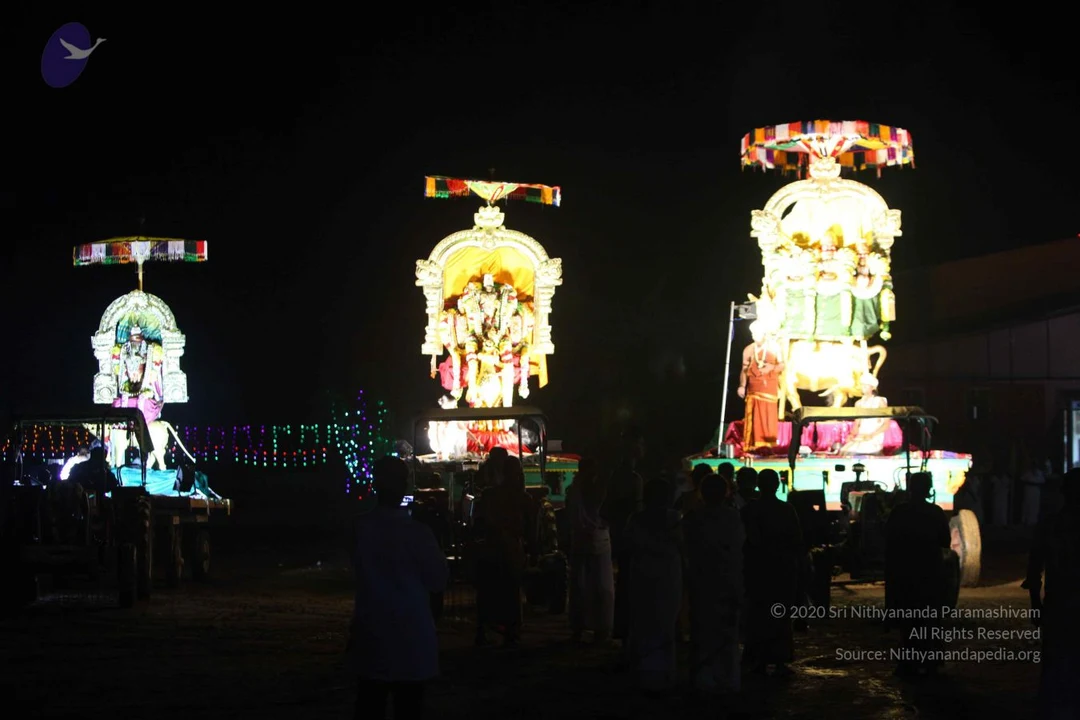
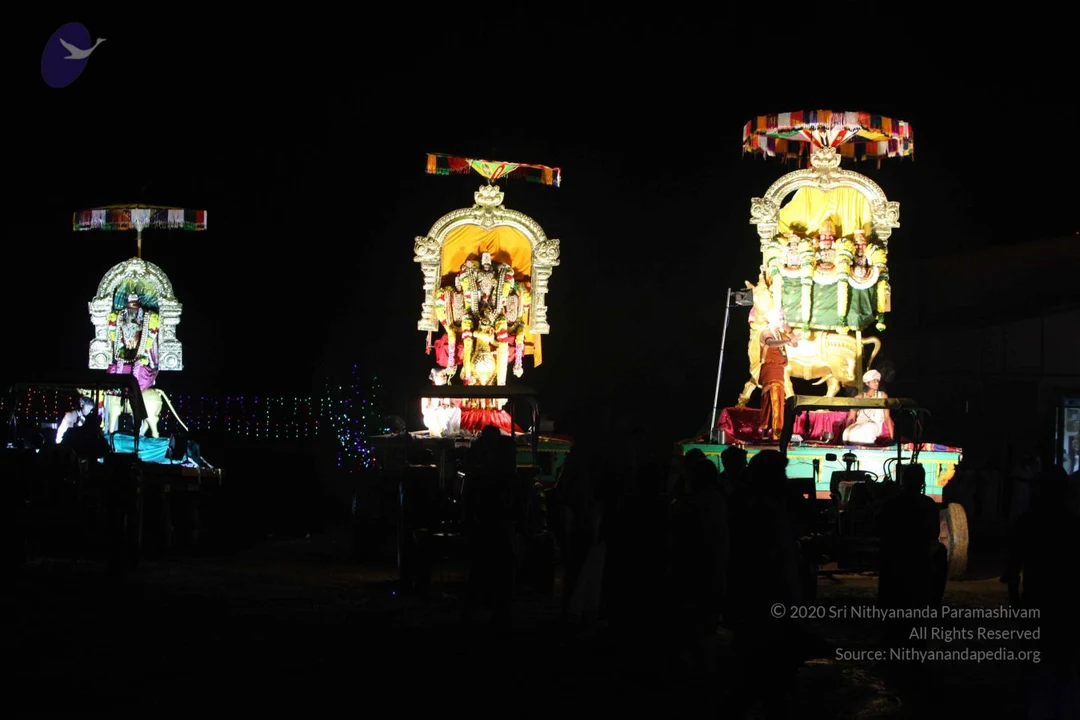
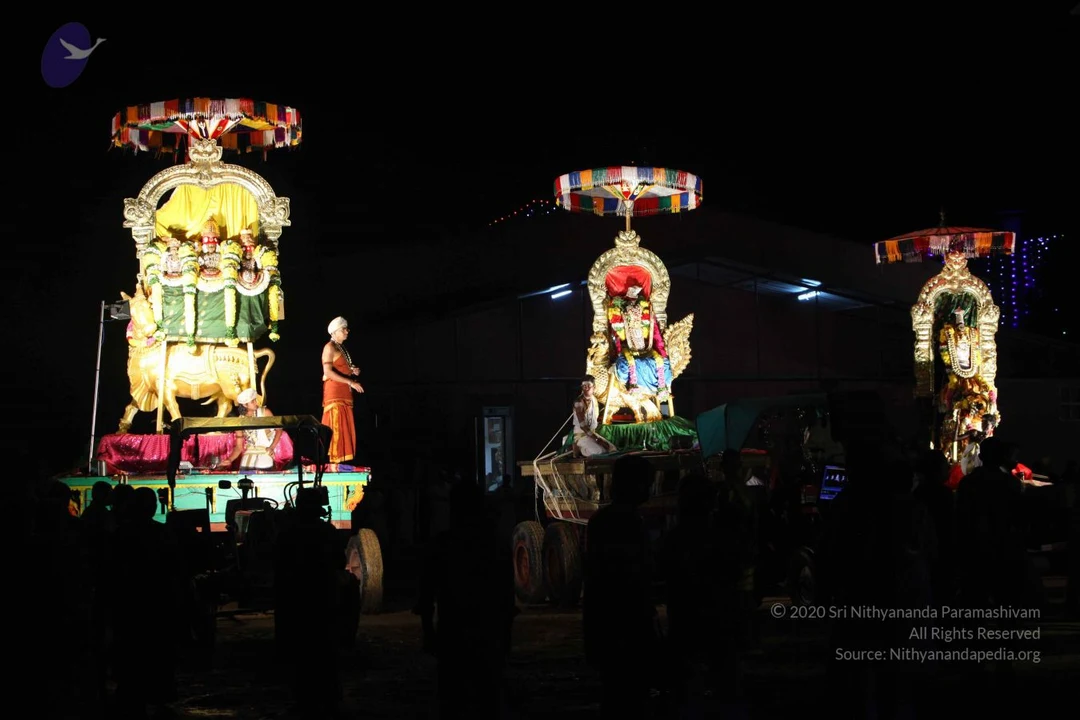
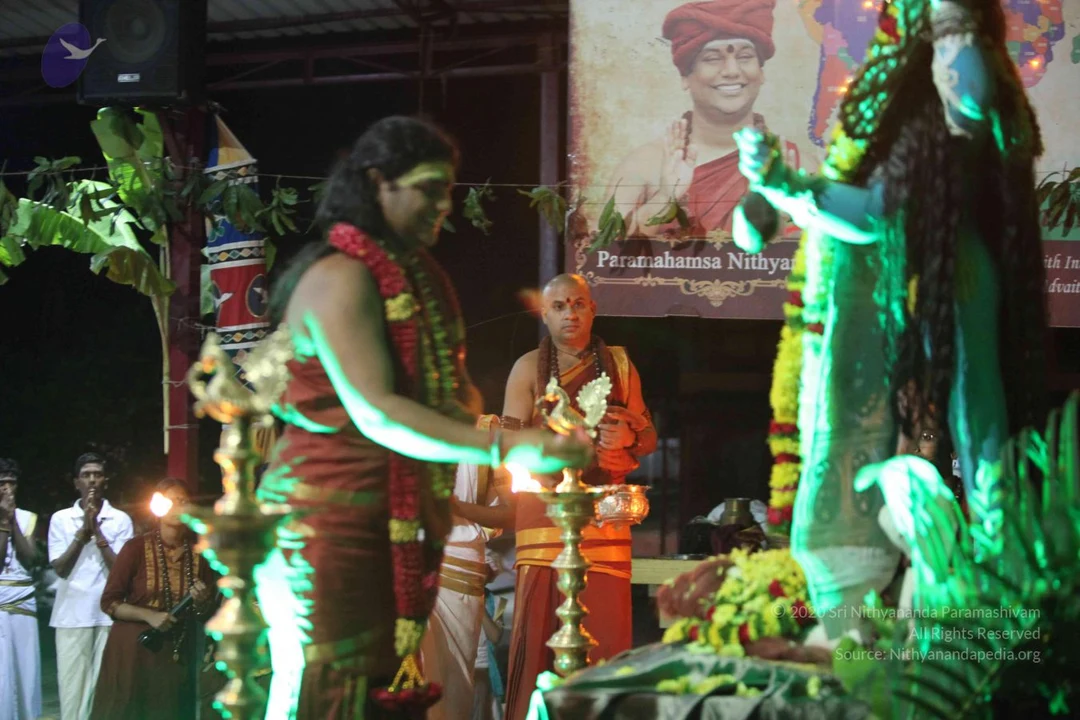
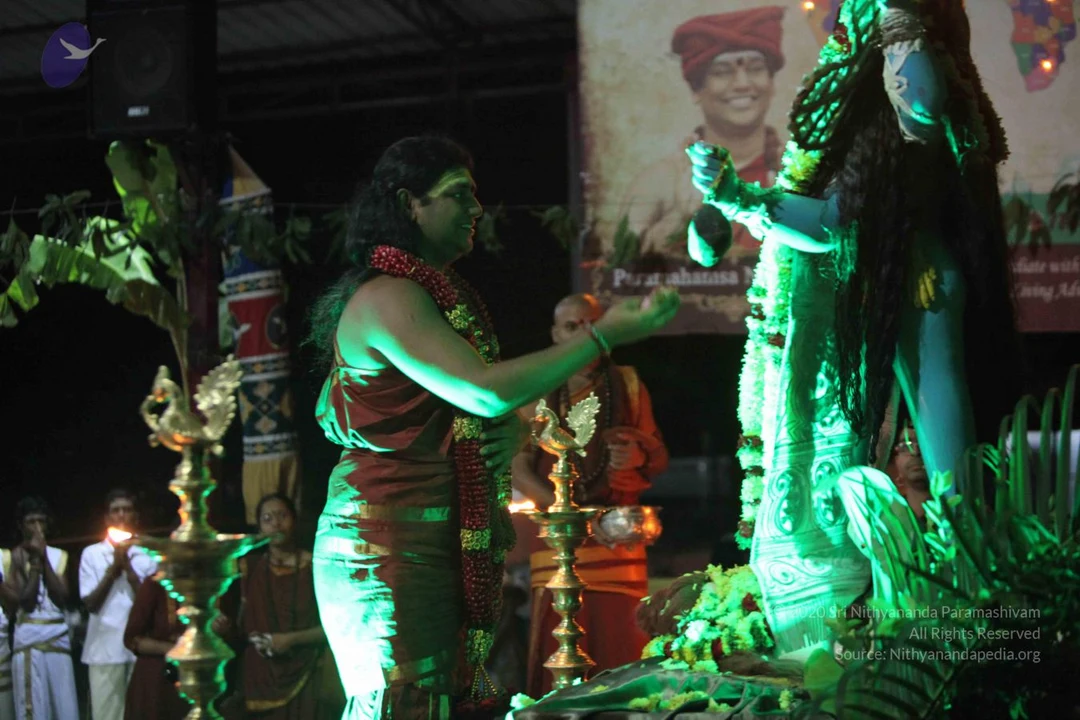
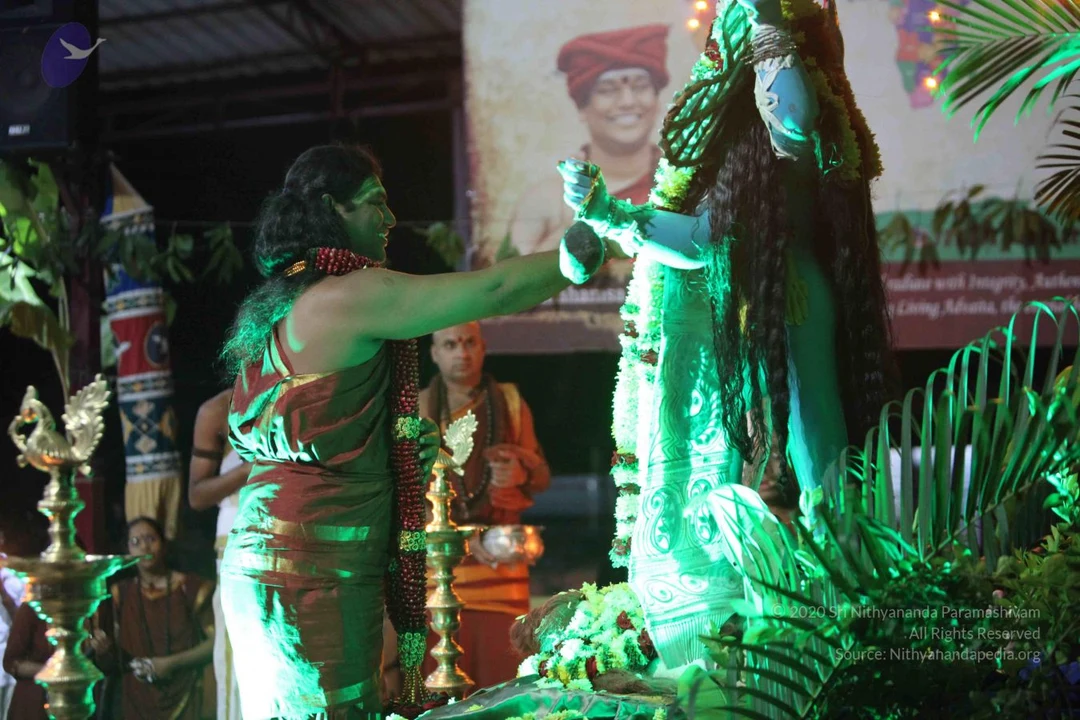
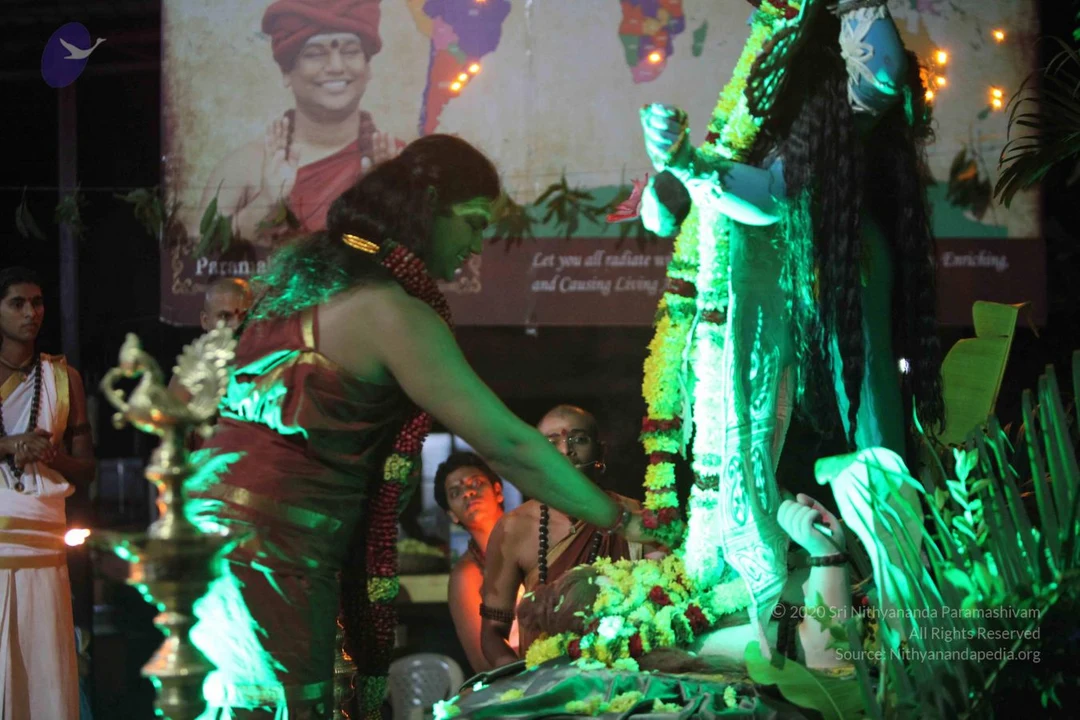
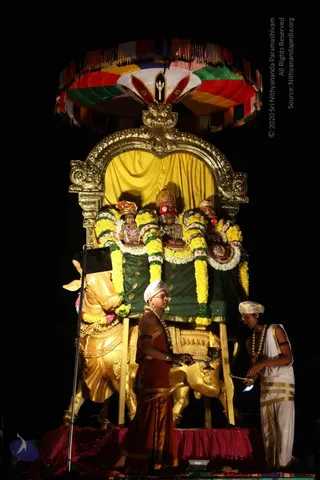
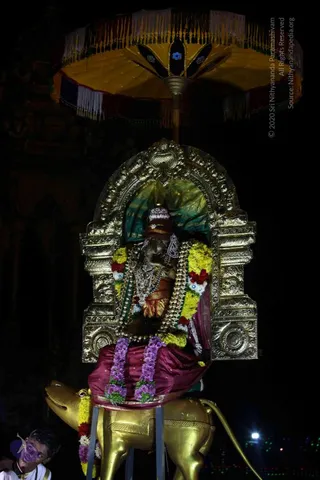
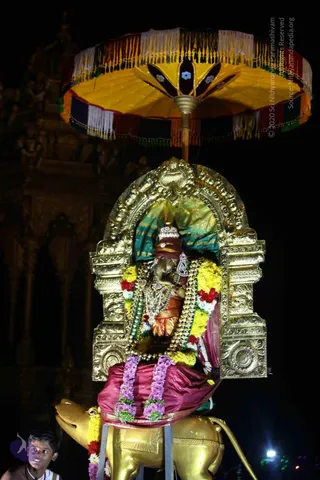
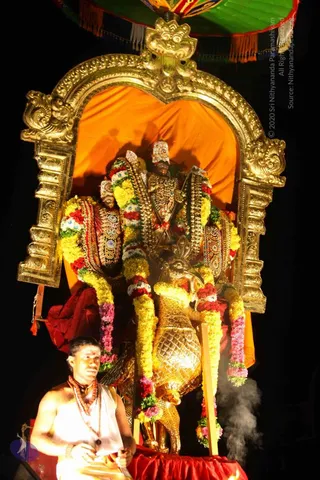
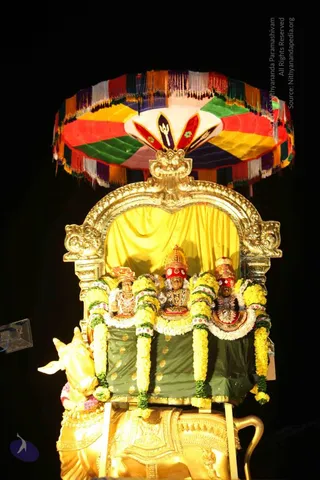
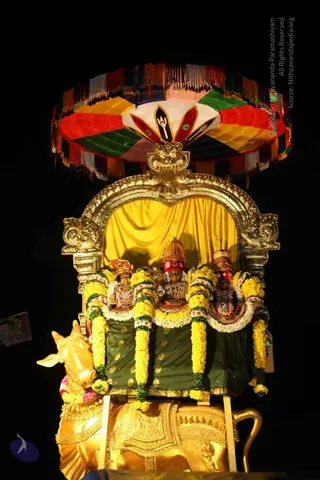
Night photograph of a temple-style ritual on an illuminated stage. A large golden bull statue (nandi) stands at left beside a gold-framed palanquin or throne with a yellow curtain and green drape, decorated with yellow and white flower garlands. Three deity murtis with red and gold crowns sit within it. A multicoloured canopy with a trident emblem hangs above. Two men stand in front: a priest in a rust-coloured dhoti and shawl with a white turban and rudraksha-style garland holds a lamp, while a younger assistant in white dhoti and white turban holds a small aarti lamp. Dark background, stage lights.Night procession photograph of an elephant-headed deity murti seated on a golden mouse vehicle, carried on a stand beneath a yellow and red fringed canopy. The deity wears a jewelled crown, silver necklaces, a red and gold cloth, and garlands of yellow marigolds and purple flowers. A gilded arched shrine frame surrounds the figure. At lower left, a man in white clothing and a purple face mask stands near the mouse vehicle, and coloured lights glow in the background.Night procession photograph of a golden ganesha murti seated on a gilded mouse vahana (mooshika) under a large yellow parasol with red, green and white tassels. The deity wears a jewelled crown, a silver-and-gold necklace, floral garlands of yellow marigolds, red and white flowers and purple blossoms, and a magenta silk cloth. The gilded arch behind it is richly carved, and an ornate temple tower stands in the dark background. A young boy in white clothes with a tilak on his forehead is partially visible at the lower left edge. No identifiable a person figure is present.A night photograph of a festival procession image: a gilded deity murti seated on a golden peacock-like vahana within an ornate gold arched frame with an orange backdrop. The murti is draped in bright yellow, red, white and pink flower garlands and wears jewelled ornaments and a crown. A priest in white dhoti and shawl, with bare chest, rudraksha mala and red-and-white forehead markings, sits at lower left beside the image. Smoke rises from the right, and a green and red canopy with fringe hangs above.Night procession photograph of a golden palanquin-style vehicle carrying three deity murtis under a large multicoloured canopy with red, yellow, green, blue and white panels and tasselled fringe. The canopy has a central emblem of crossed ceremonial motifs. Beneath it, a gilded arched frame holds a yellow drape, with three figures seated side by side: the central figure wears an ornate red and gold crown and jewelled garments, flanked by two smaller figures in red headdresses and decorated attire. Garlands of yellow and white flowers hang across the front. Below, a golden bull (Nandi) with a floral garland and a green cloth with gold motifs drape the base. No physical people are visible.Night photograph of a processional vehicle decorated for a festival: a golden Nandi bull with a gilded arched canopy frame holding three deity murtis draped in yellow and green cloth, adorned with yellow marigold garlands and white flower strands. The central figure wears a red and gold crown; the figures on either side wear turbans and headdresses. A multicoloured fringed canopy topped with a trident emblem hangs above. No physical people are visible in the frame.

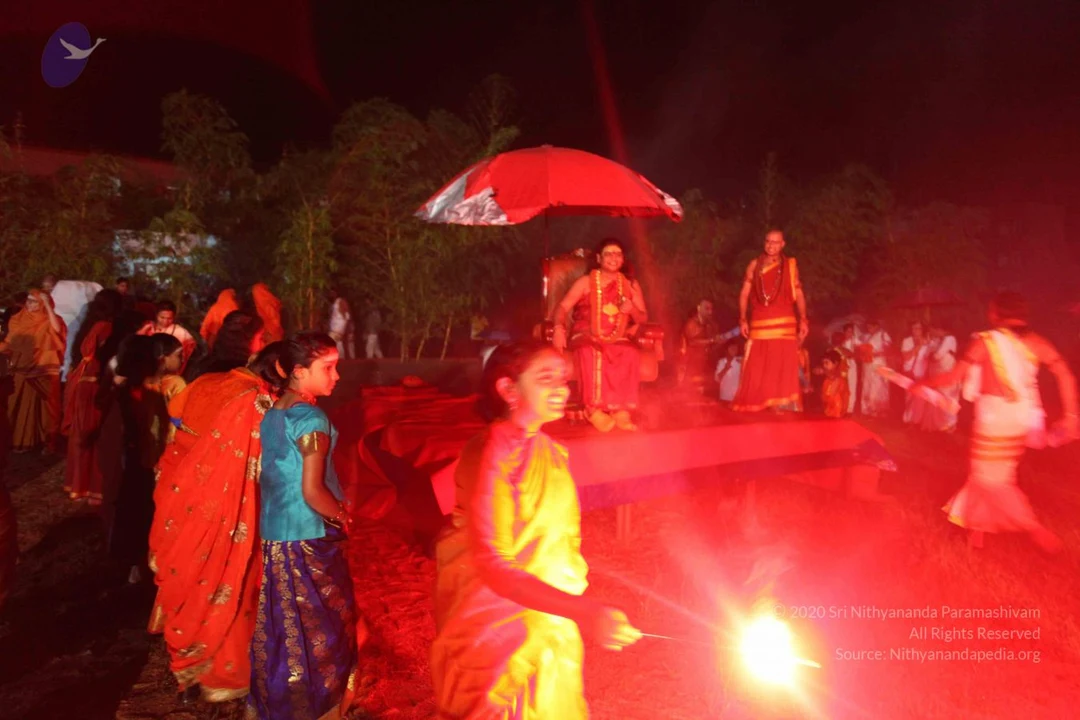
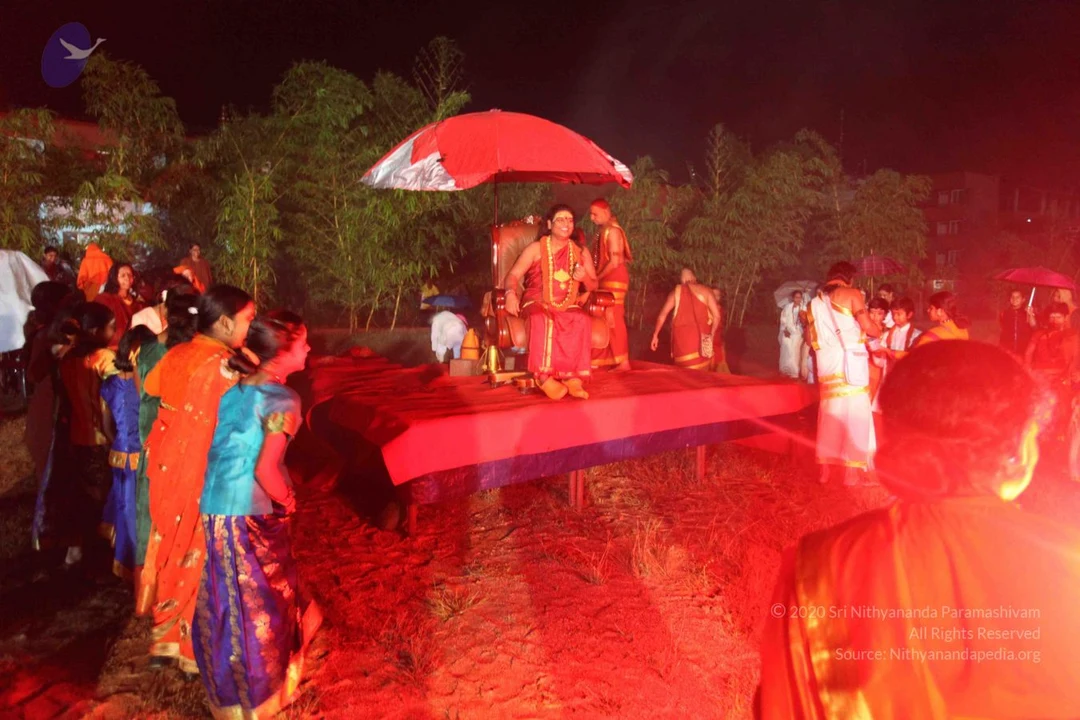
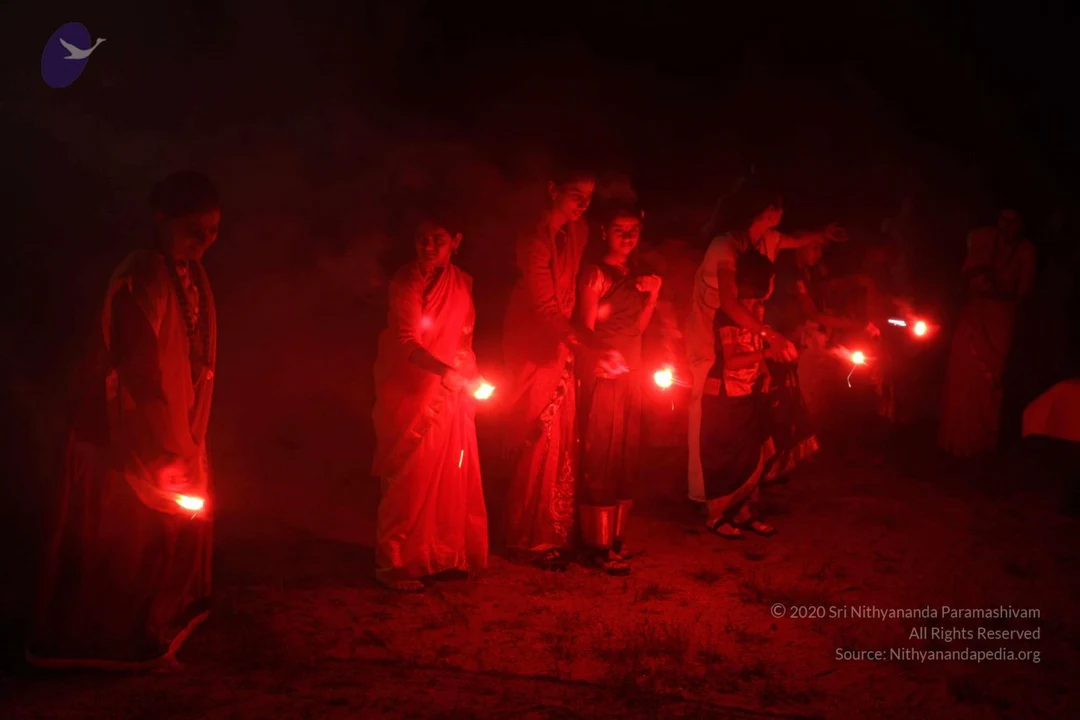
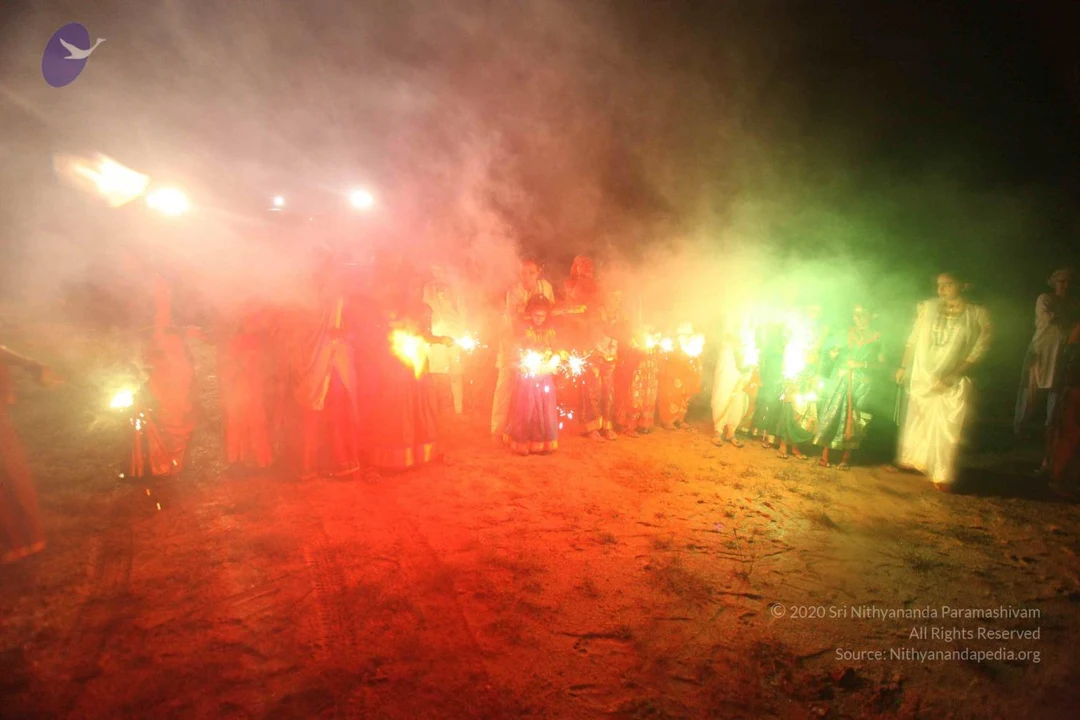
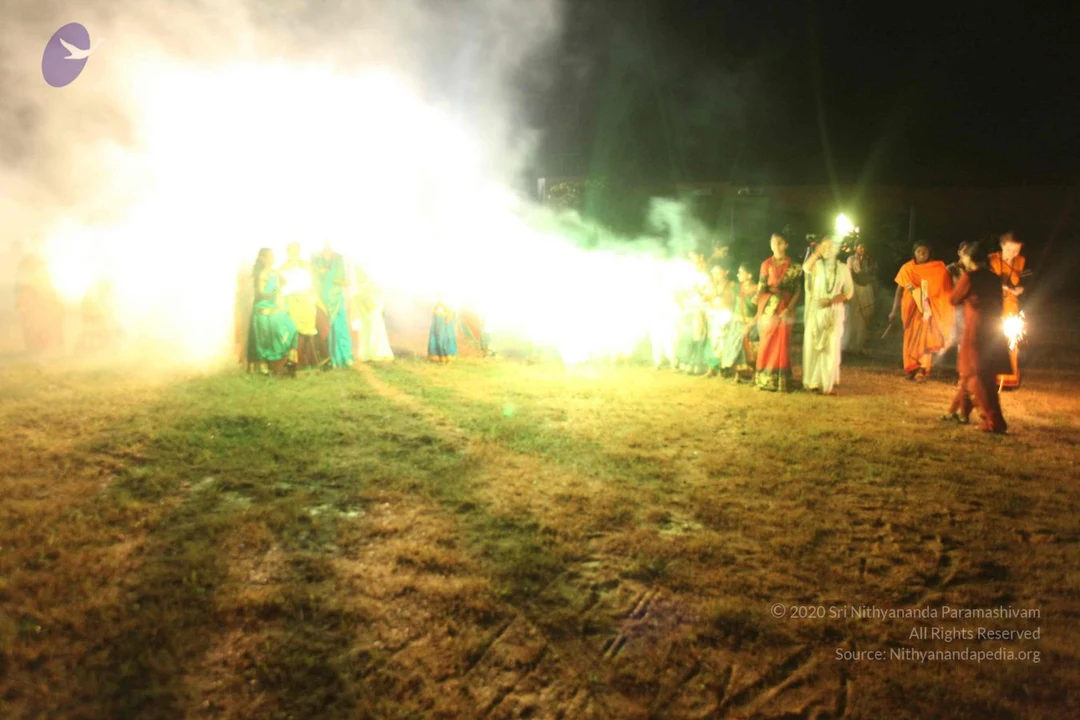
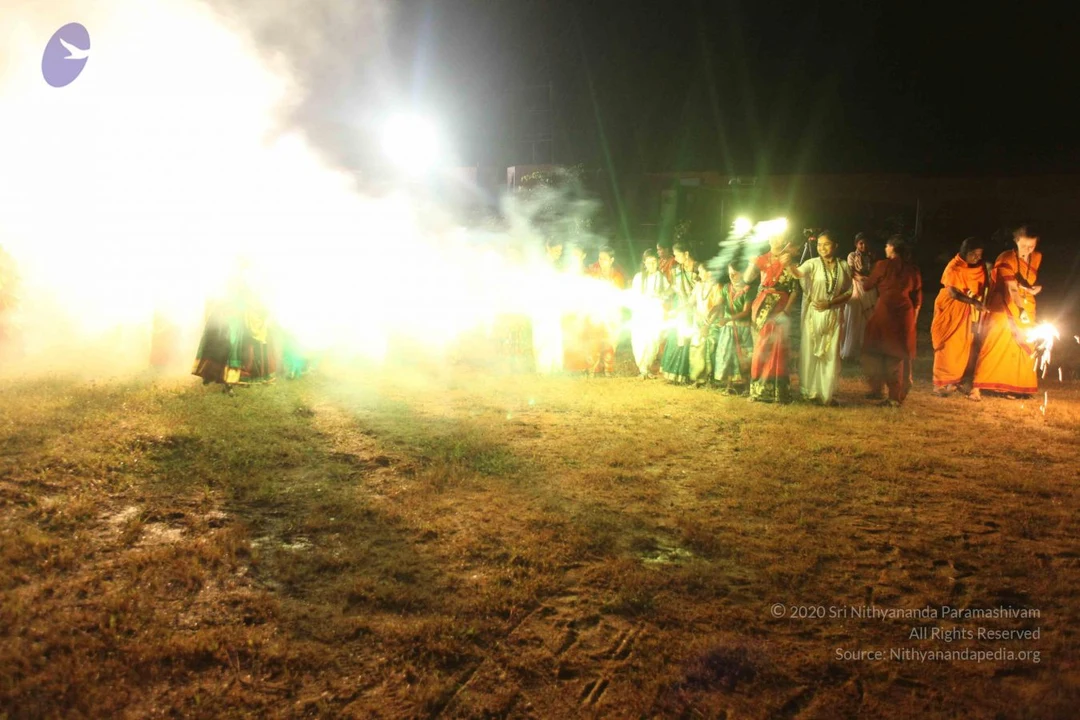
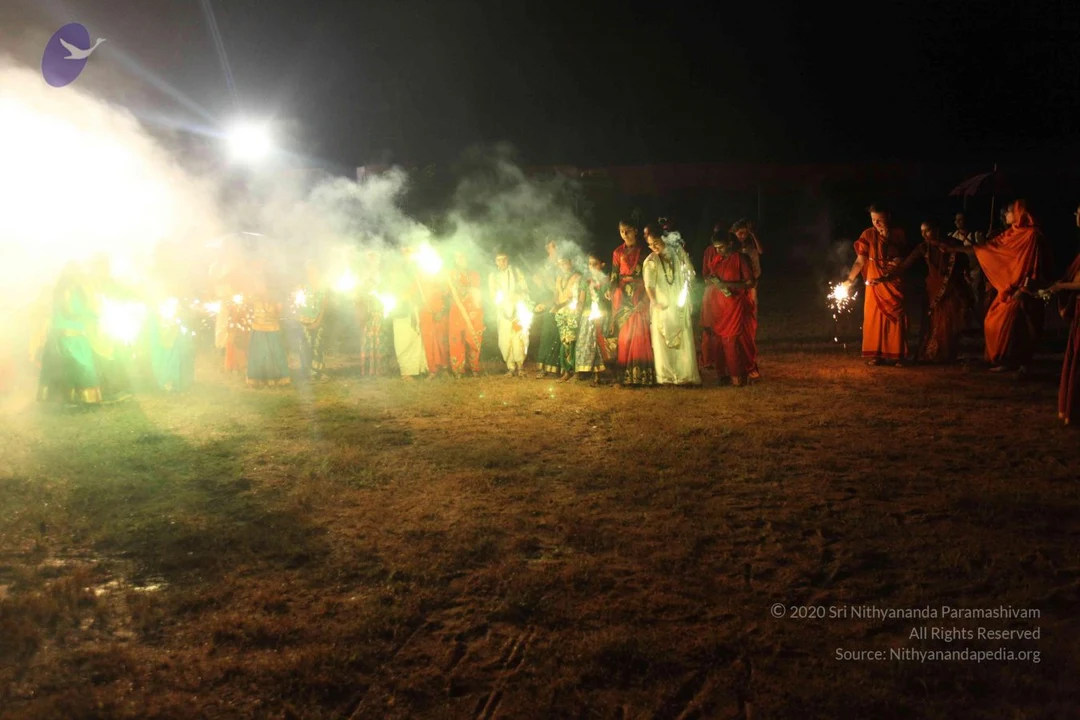
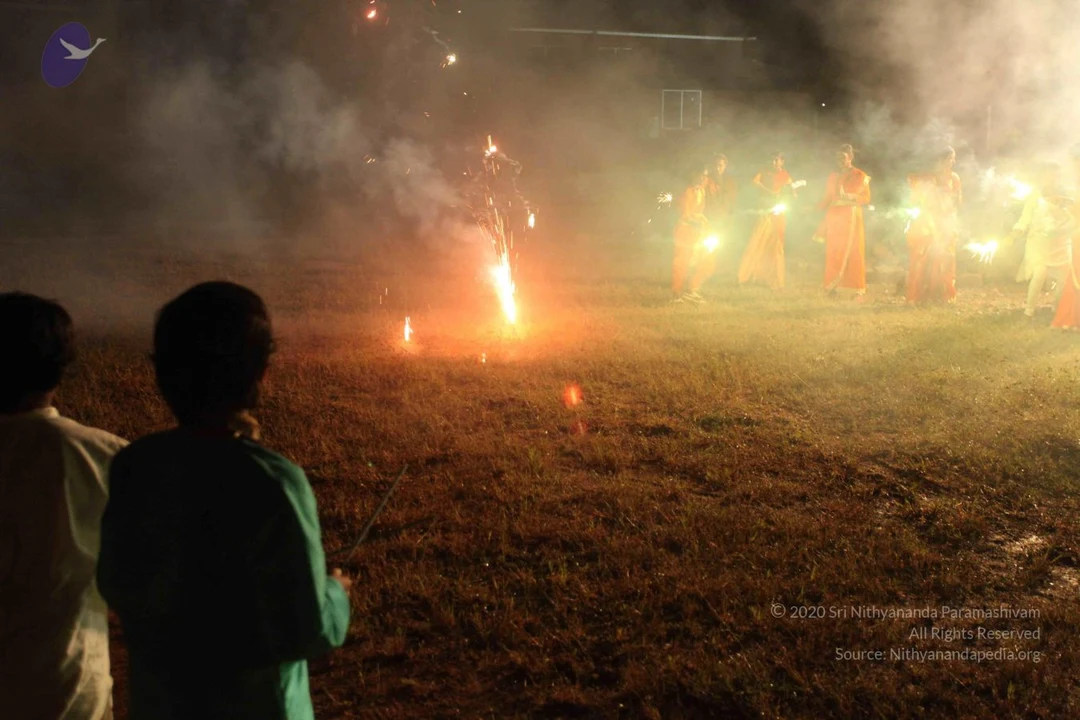
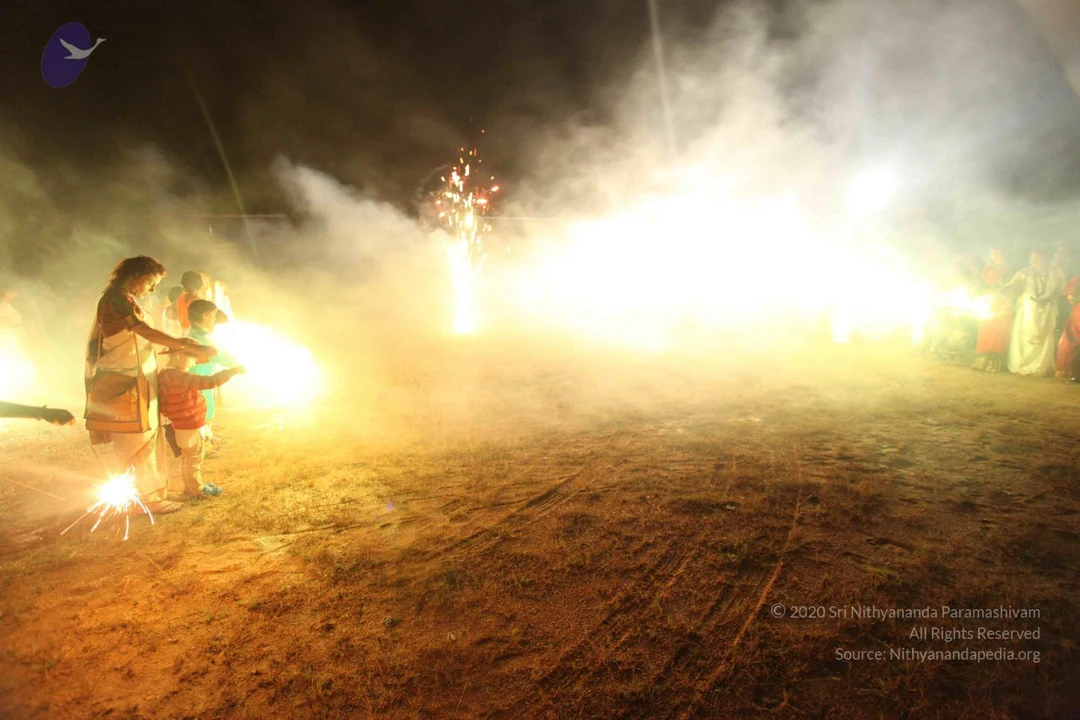
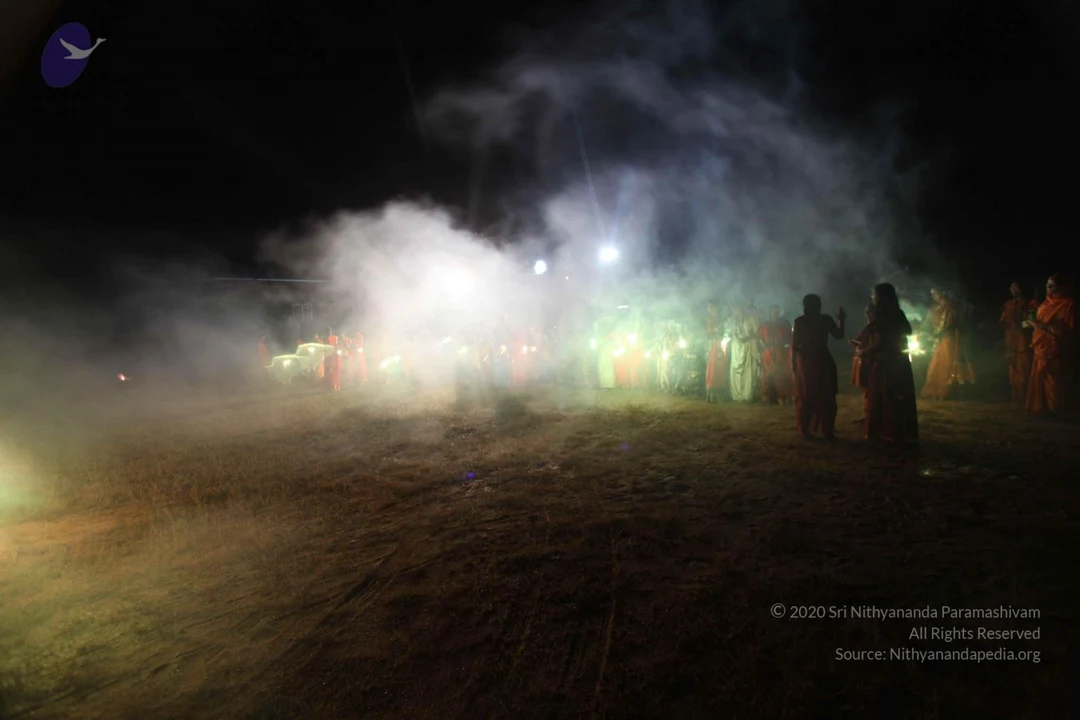
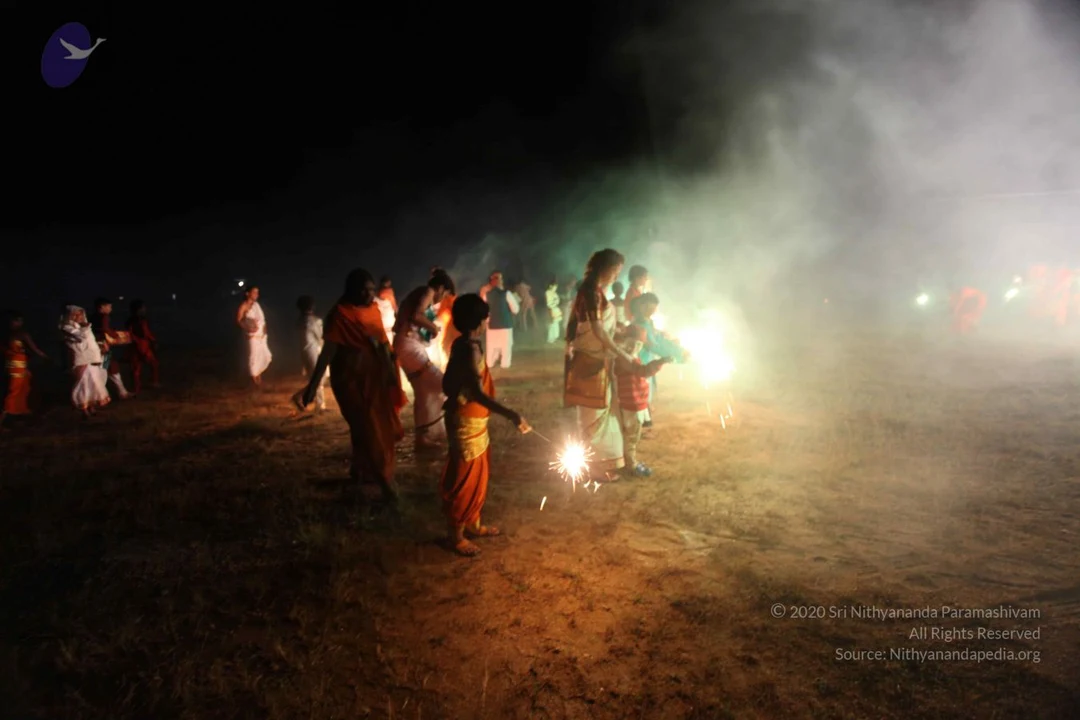
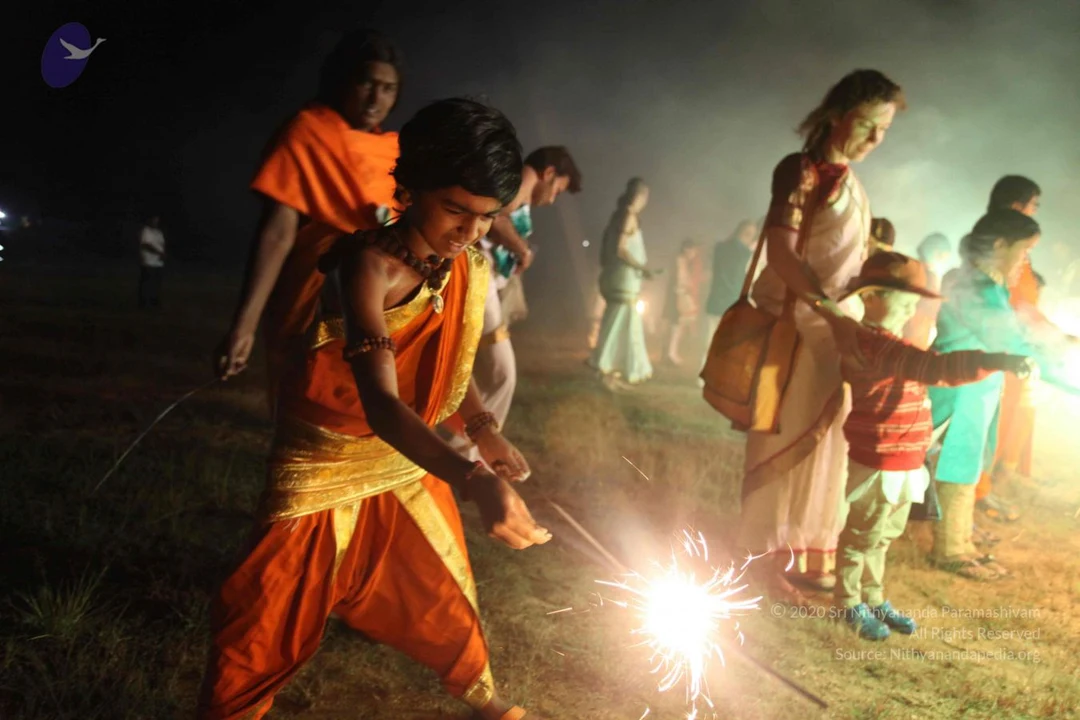
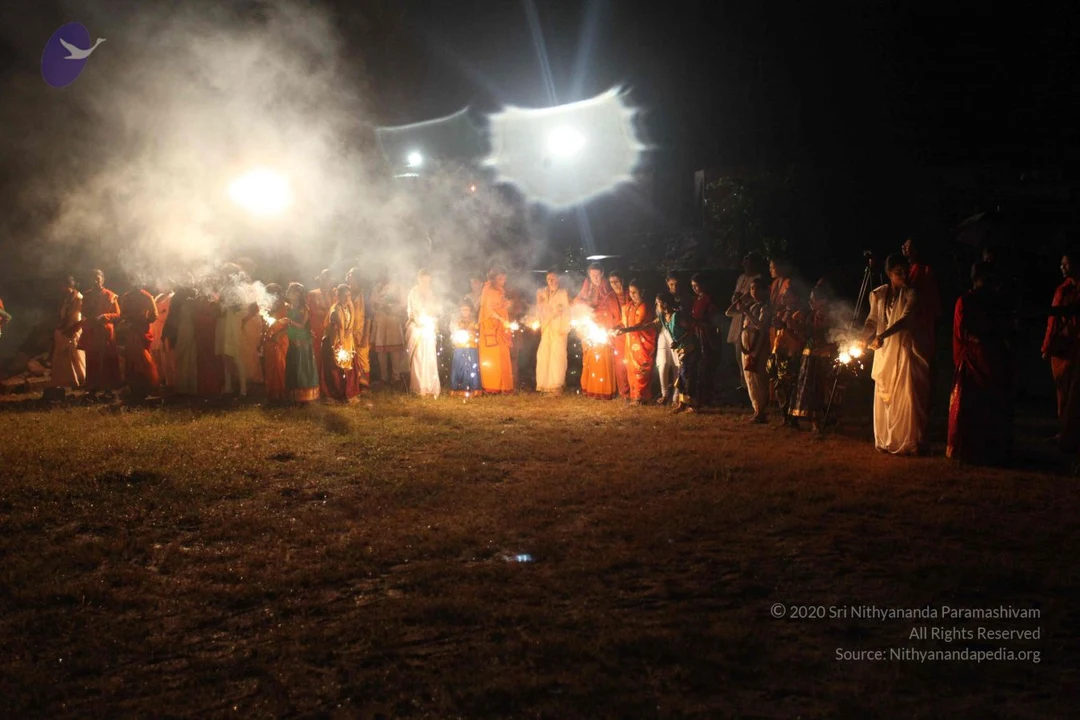
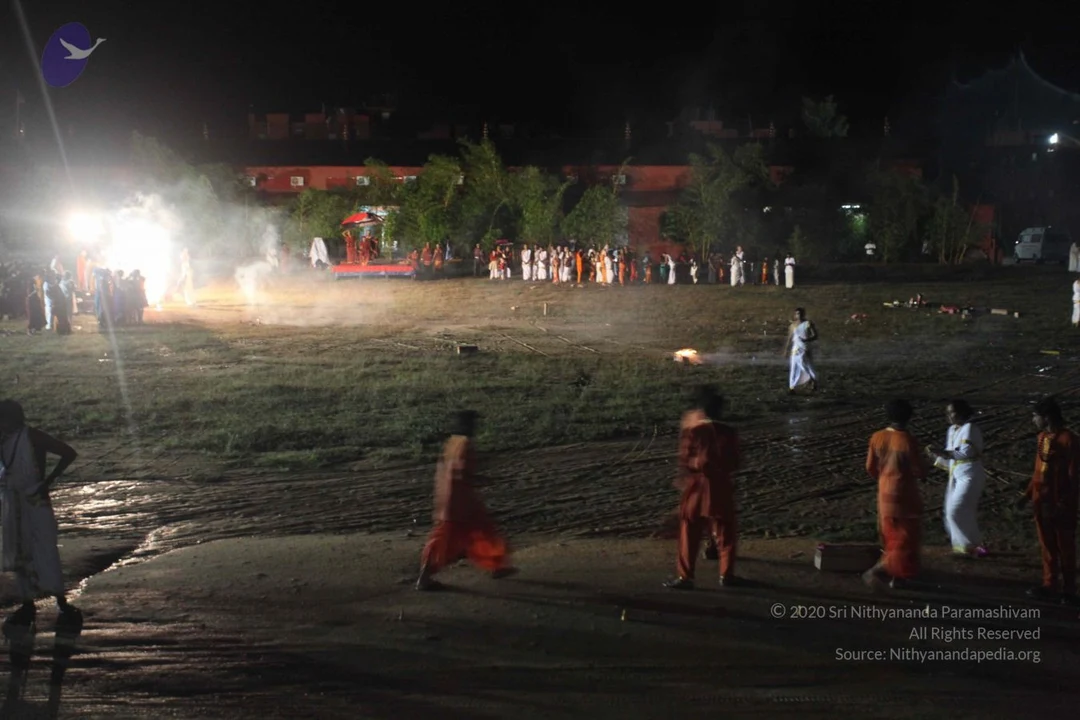
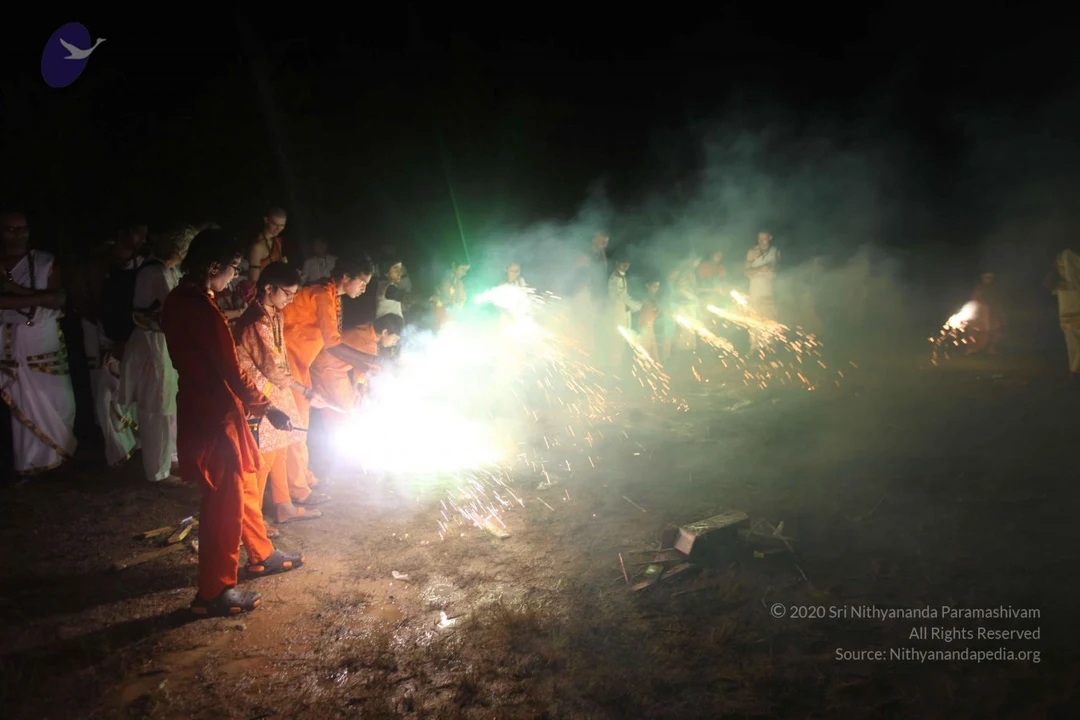
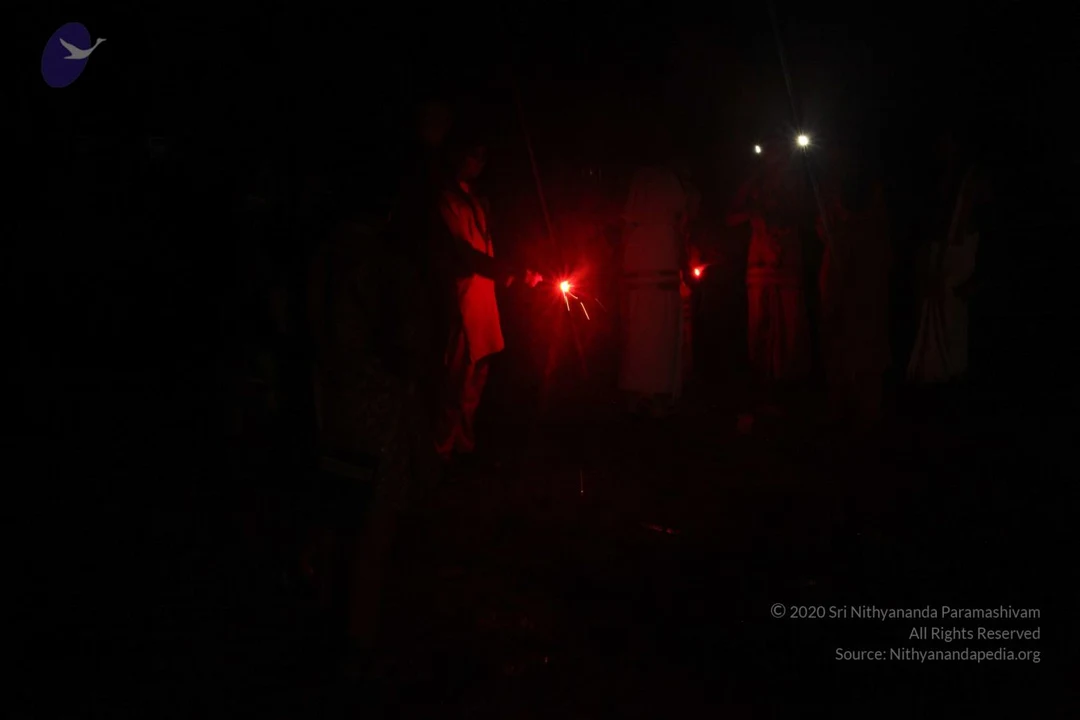
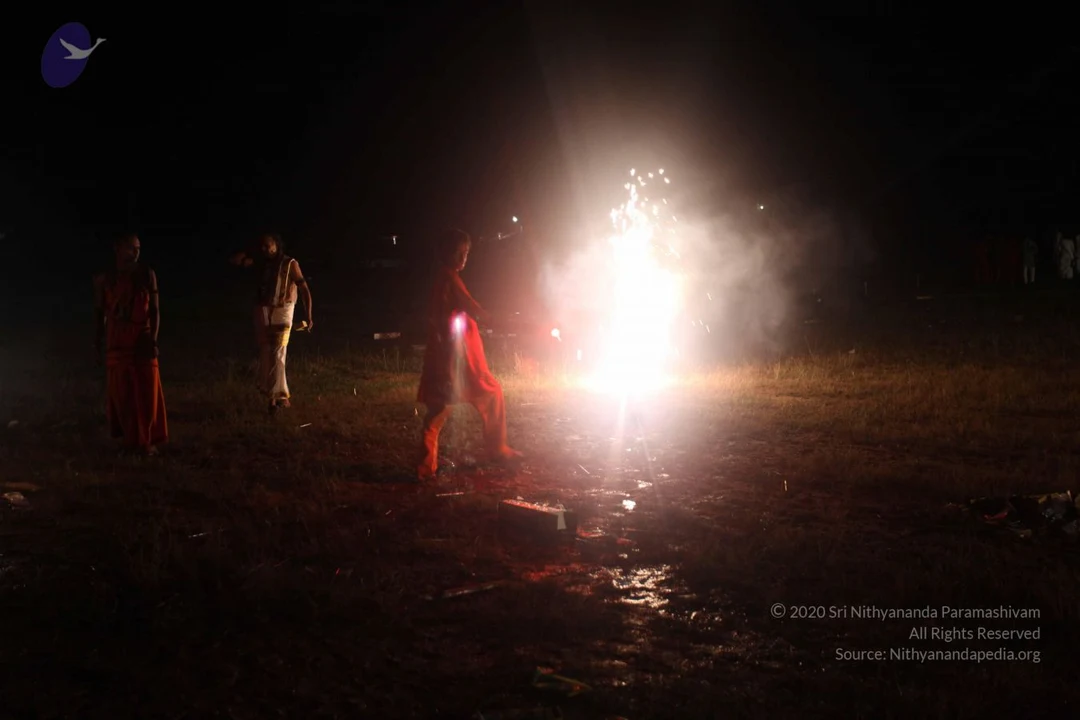
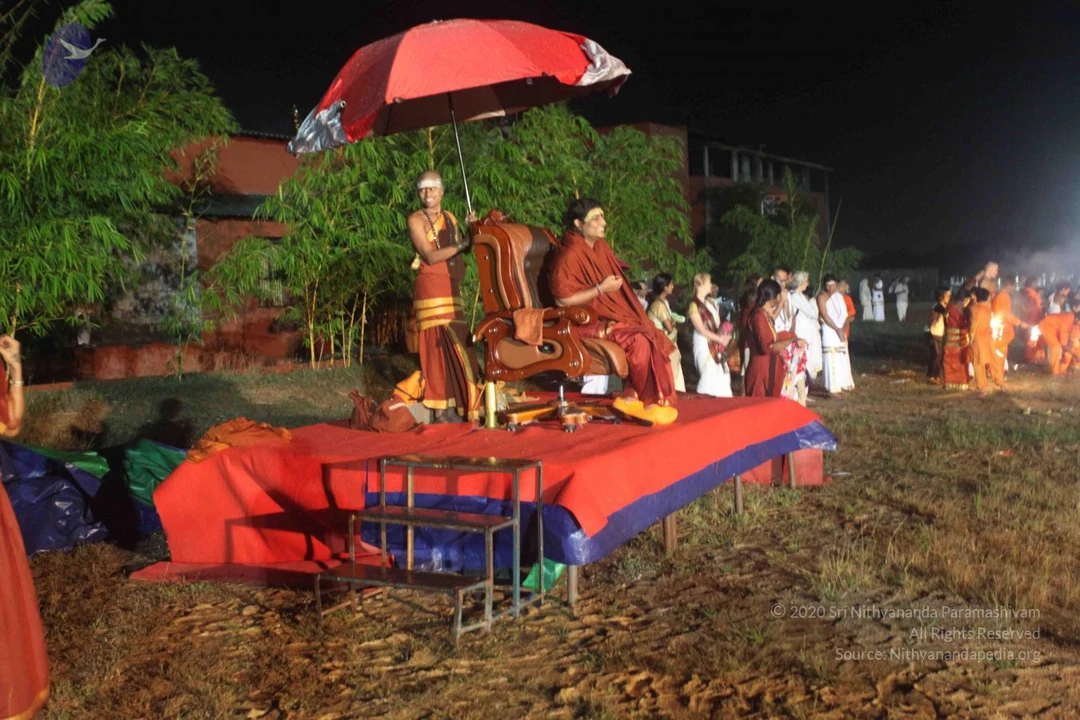
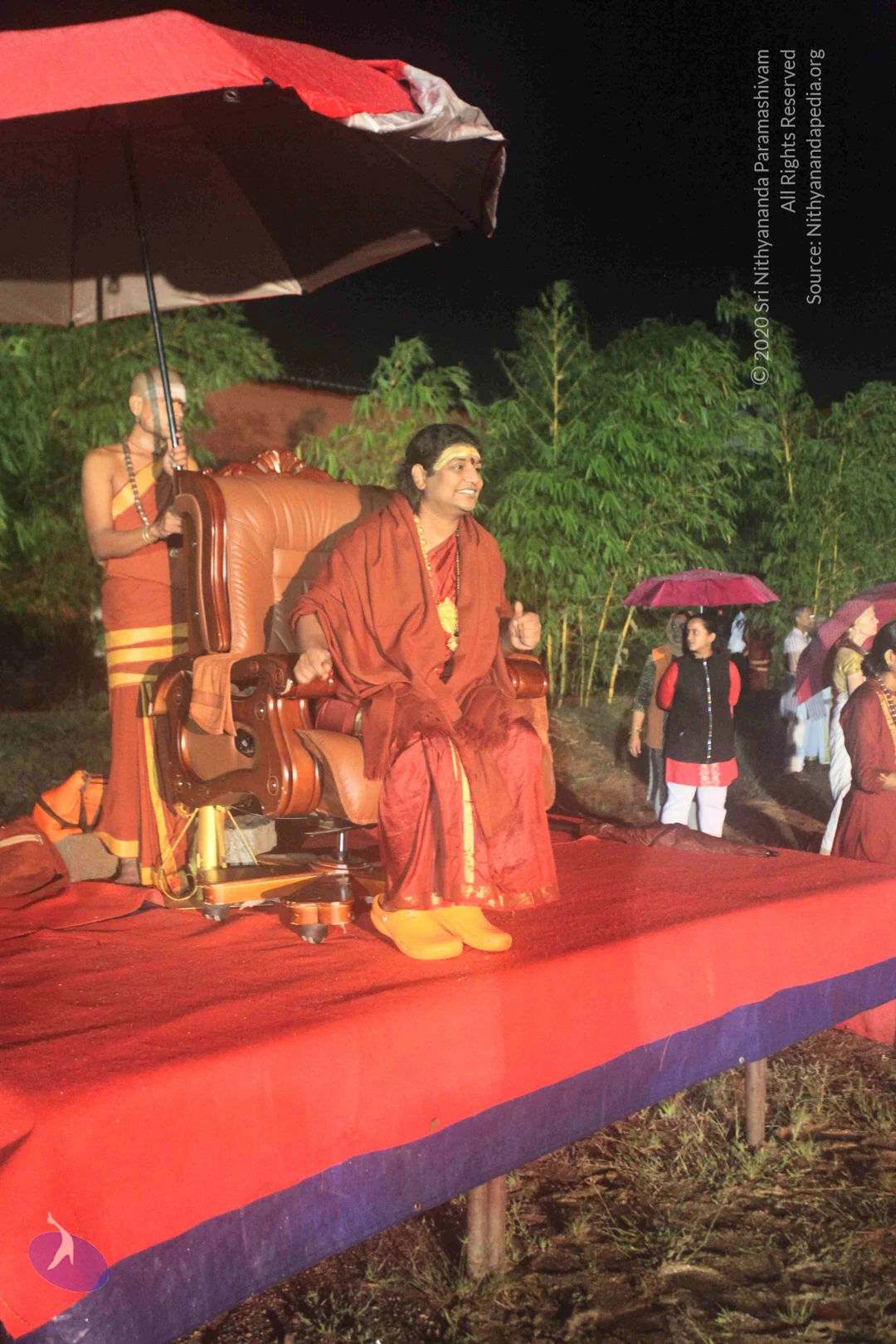
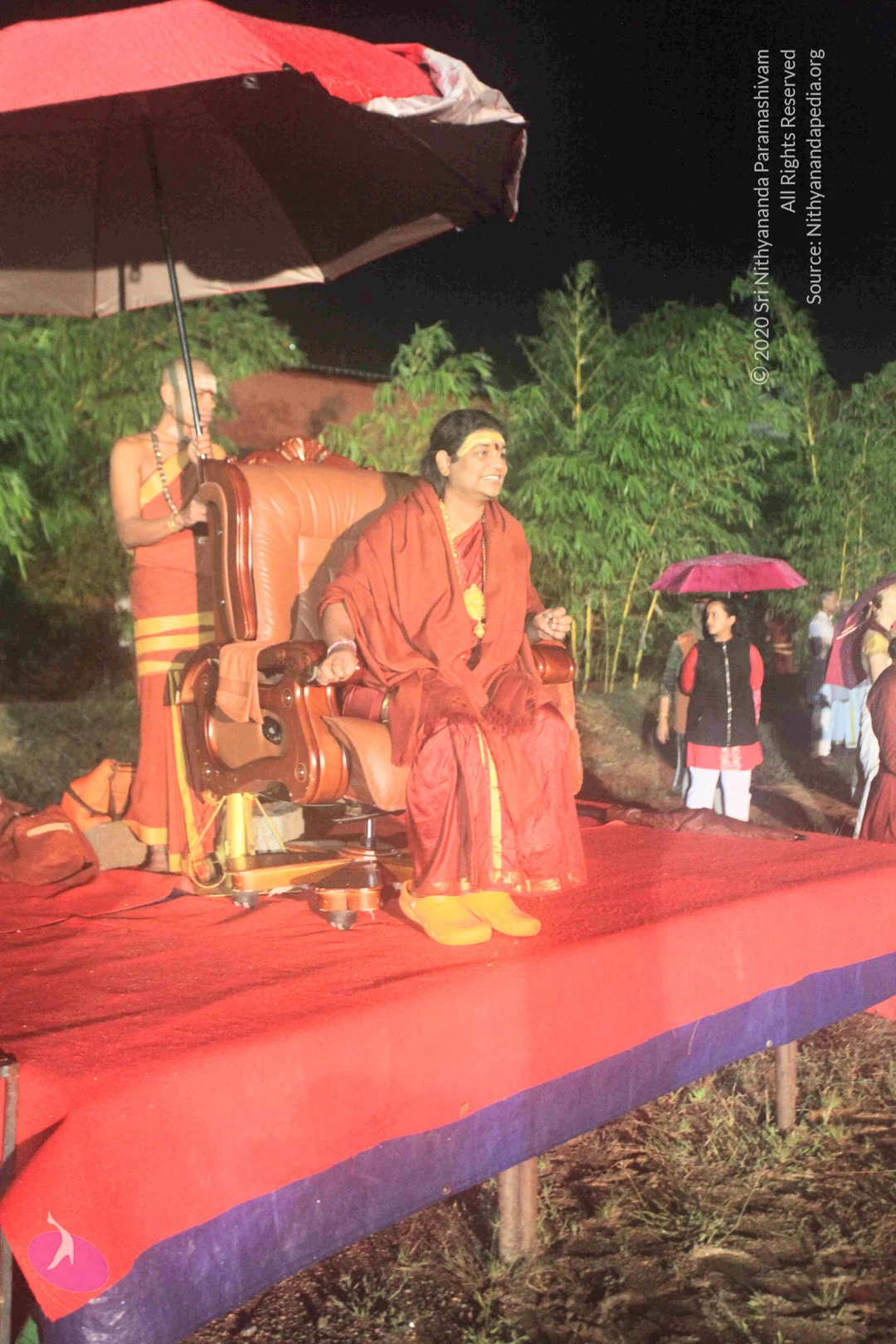
Diwali
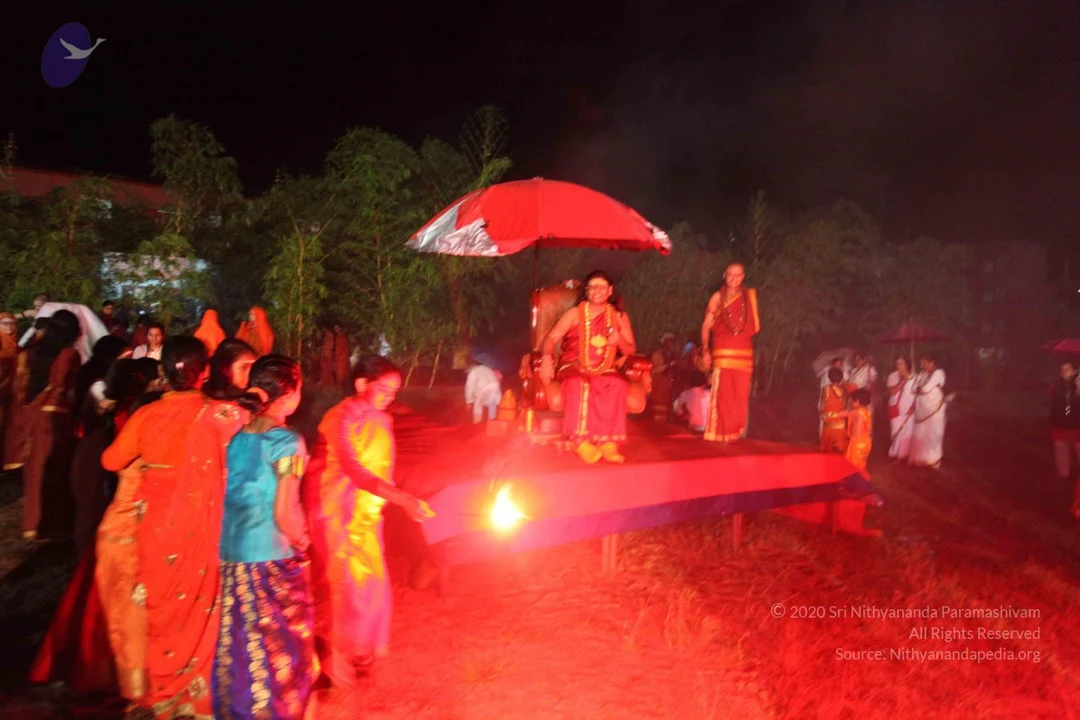
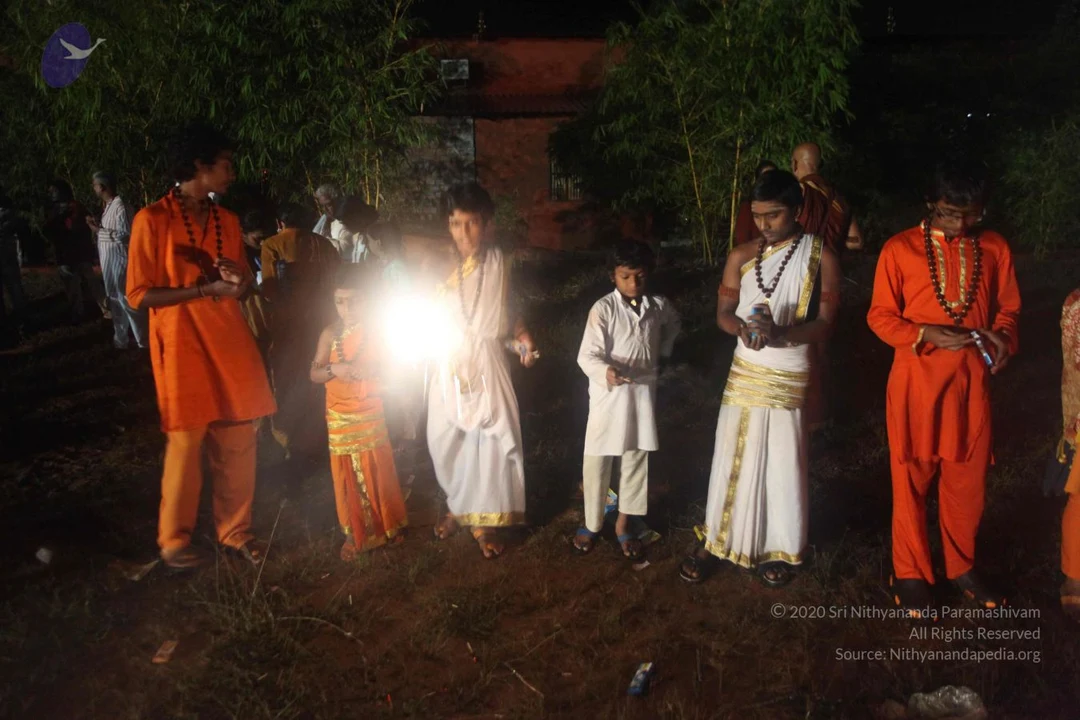
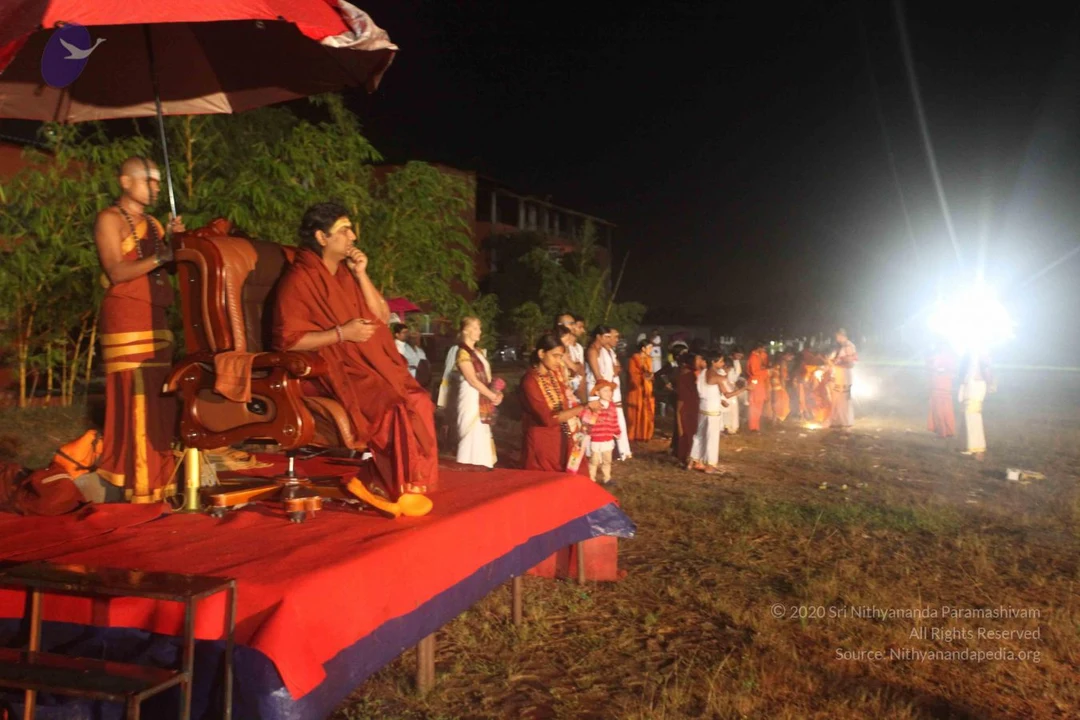
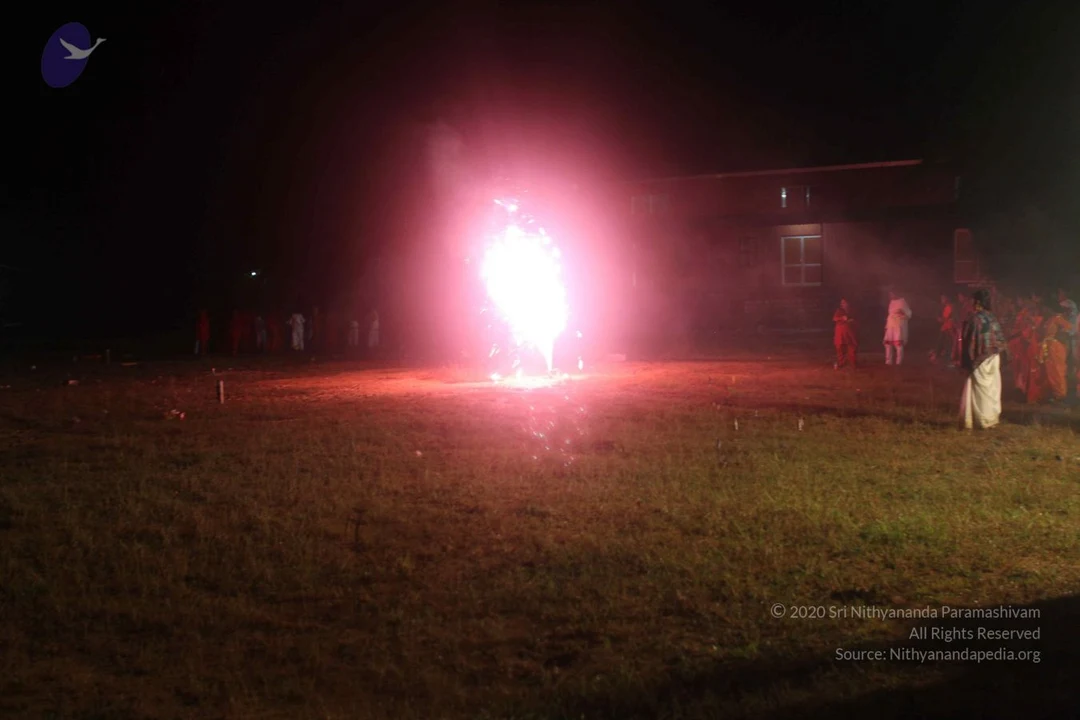
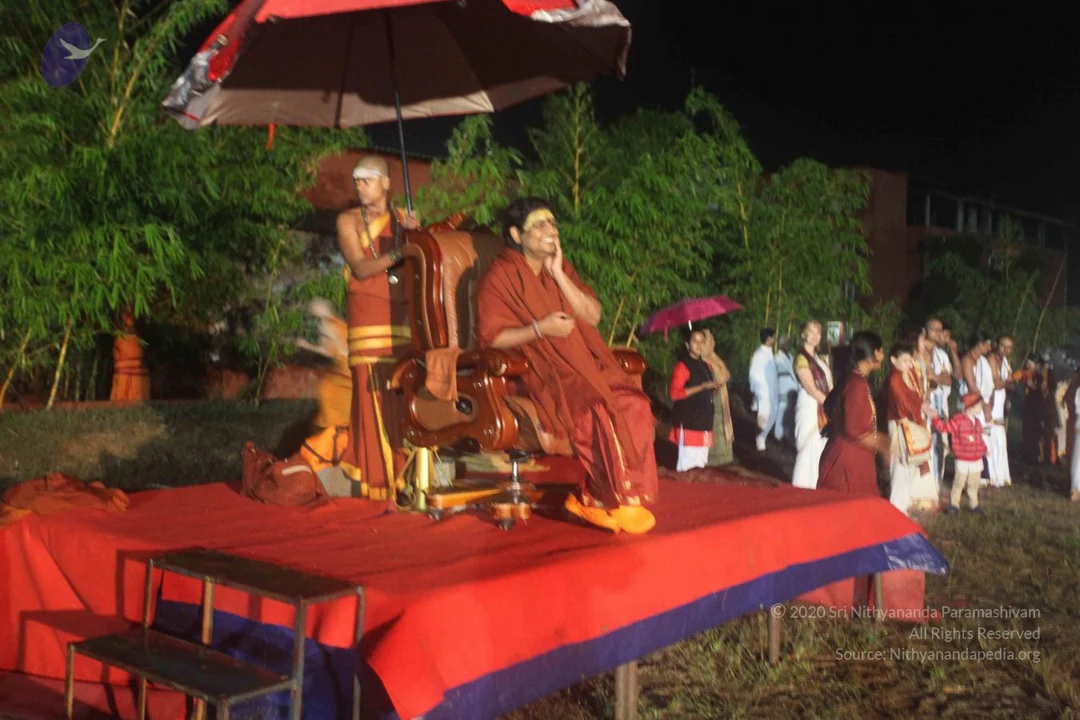
82 photosSource gallery
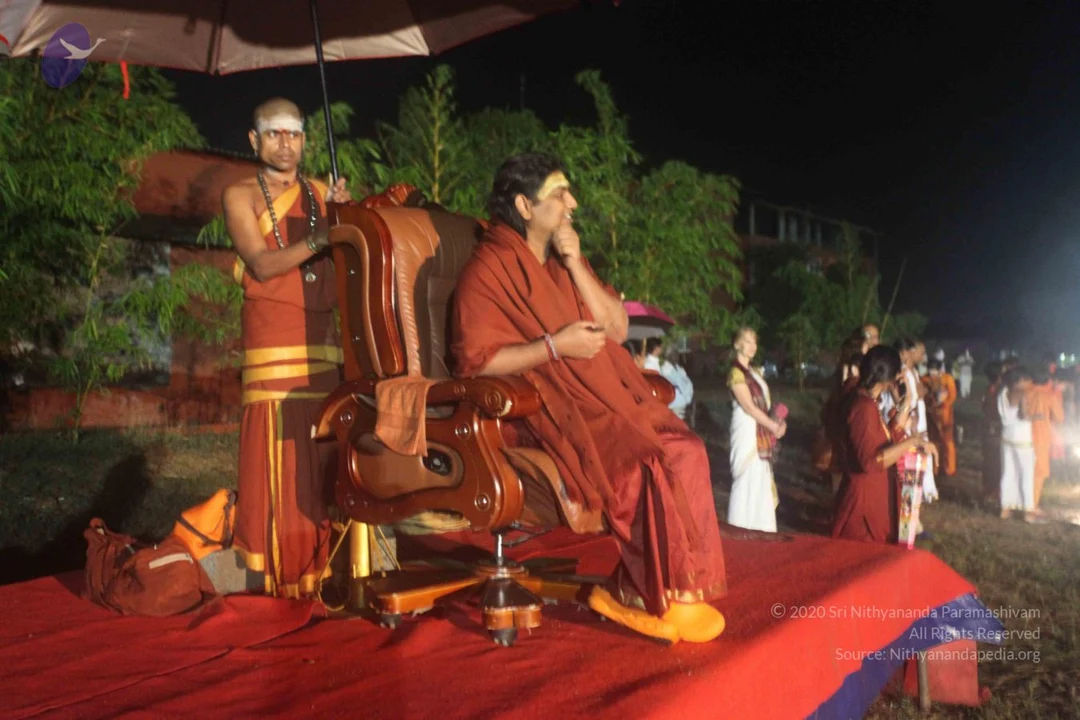
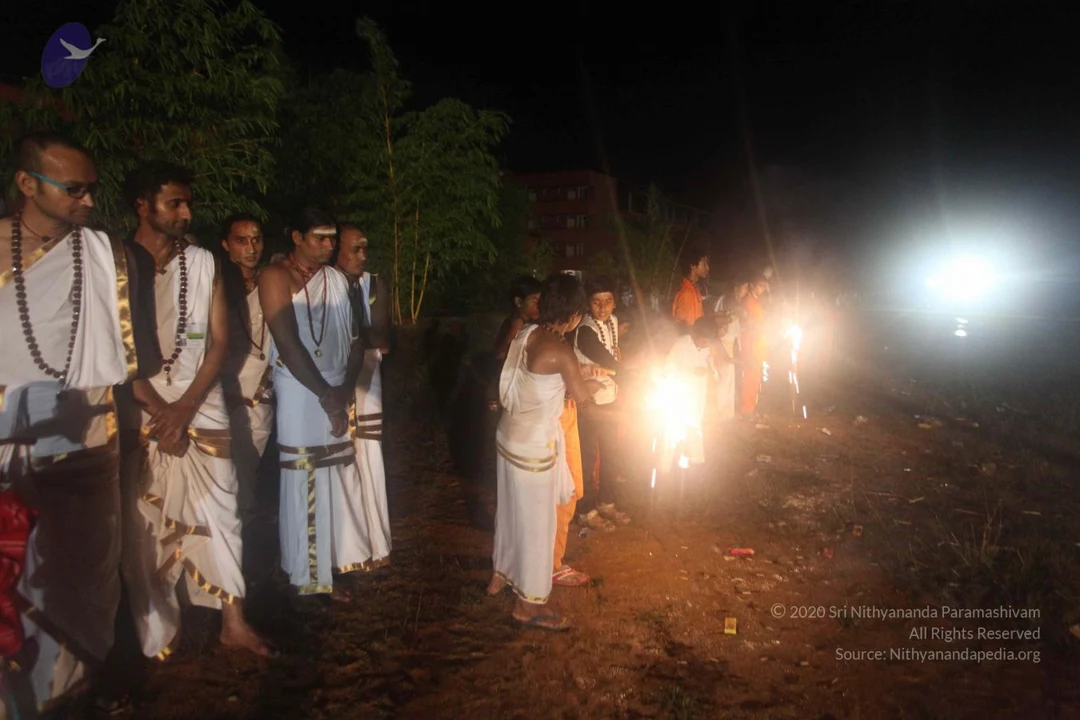
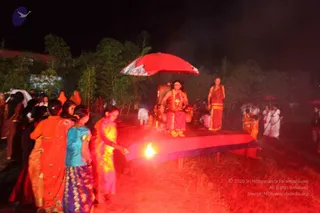
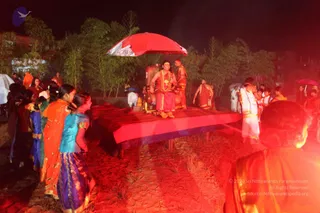
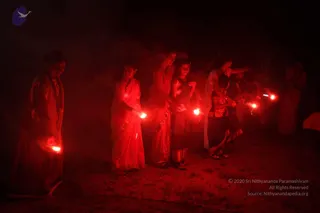
Night outdoor ritual lit in red light. On a raised red-draped platform, a seated figure in red and gold clothing with a red umbrella overhead receives attention, while a standing man in red and gold dhoti-style clothing stands beside him. Women in orange, yellow, and blue saris and salwar-style dress stand on the grass in front, one holding a small flame near the platform edge. Several white-clad attendants and a few umbrellas appear in the background among trees.Night outdoor ceremony lit by red light. A woman in a red and gold sari sits under a large red umbrella on a raised platform, with a red-draped table in front. A man in an orange-red dhoti and shawl with a beaded necklace stands to the right. Girls in saffron, orange and blue traditional dress are in the foreground, one holding a small lit flame. Other people in white and orange attire stand among trees in the background. Several people are visible; the count is approximate.Night outdoor photo at a ceremony on a raised red-draped platform. A seated figure in red and orange robes with a beaded necklace sits on an ornate throne under a large red umbrella, flanked by attendants in orange robes. Around the platform, people in colourful saris, including a woman in turquoise and purple and women in orange, stand in a line on the dirt ground, with more devotees and umbrella-holders behind in the red-lit darkness, bamboo and buildings in the background. a person appearance cues are not sufficiently distinctive in this view, so the seated figure is described by role only as a presiding person on a throne. Red lighting dominates the scene.A night-time photograph of a line of people in red-lit darkness holding small oil lamps or flame lights in their hands. Several women in saris, one in a pale draped garment, stand in a row on bare ground, some with lamps held at waist height, with a metal vessel near one woman's feet. The red lighting and smoke haze give the scene a dramatic, ritualistic tone, with more figures fading into the background at right.Night photograph of a group of people on a dusty ground lit by red and green coloured smoke and bright flames. Several people in red, orange and magenta clothing hold small burning torches or lit lamps, while figures in white and green saris stand at the right edge. Bright floodlights glow in the background.Night photograph of an outdoor grassy field where a bright, smoky fire or flare glows at the centre. A group of women in saris stands near the light: some in teal and green saris on the left, others in red, orange and white on the right. A man in white robes stands among them with white cloth on his body. On the far right, people in orange saffron clothing hold small lit flames or torches, and one person in dark red holds a burning light. Several figures are visible in the background of a dim dark setting, with tyre tracks in the muddy ground. The scene appears to be an evening ritual with fire and lamps.