Skip to content
Tuesday

21 July 2015

THE SUPREME PONTIFF OF HINDUISM HDH BHAGAVAN NITHYANANDA PARAMASHIVAM

Dated photos
508
Source pages
1
Media
1
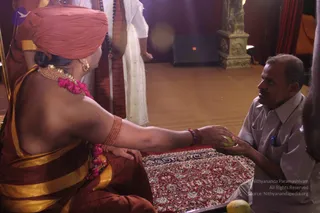
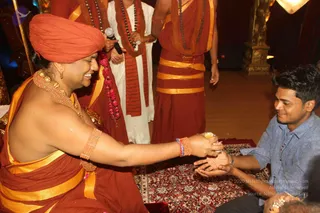
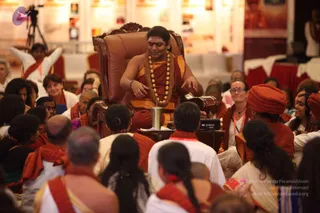
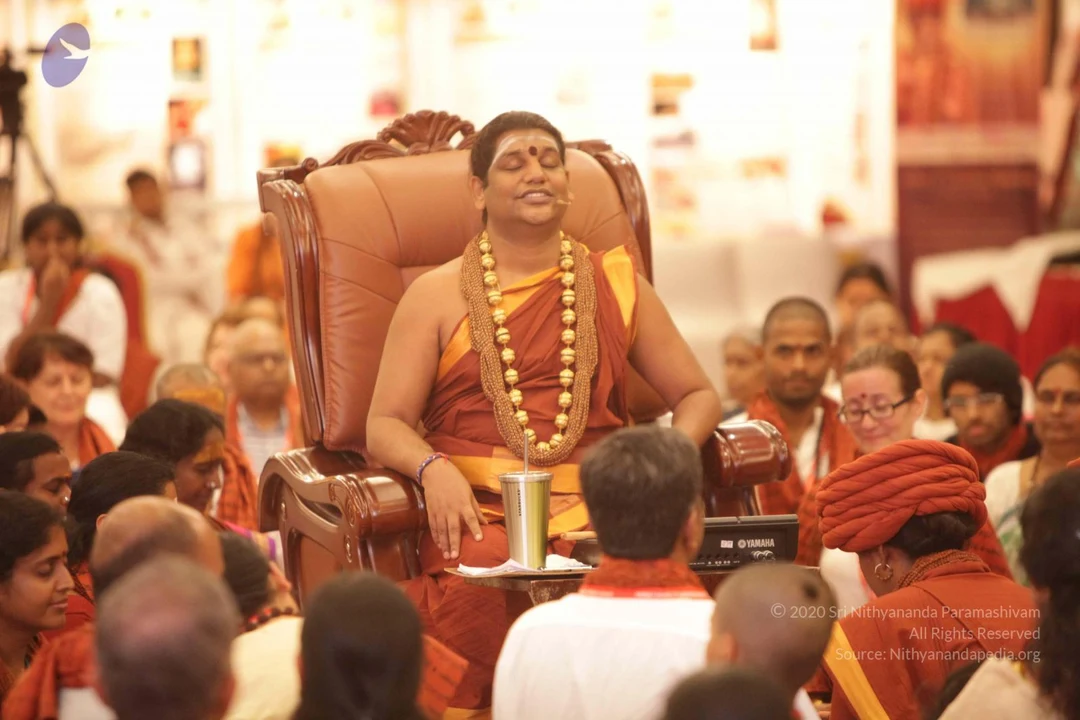
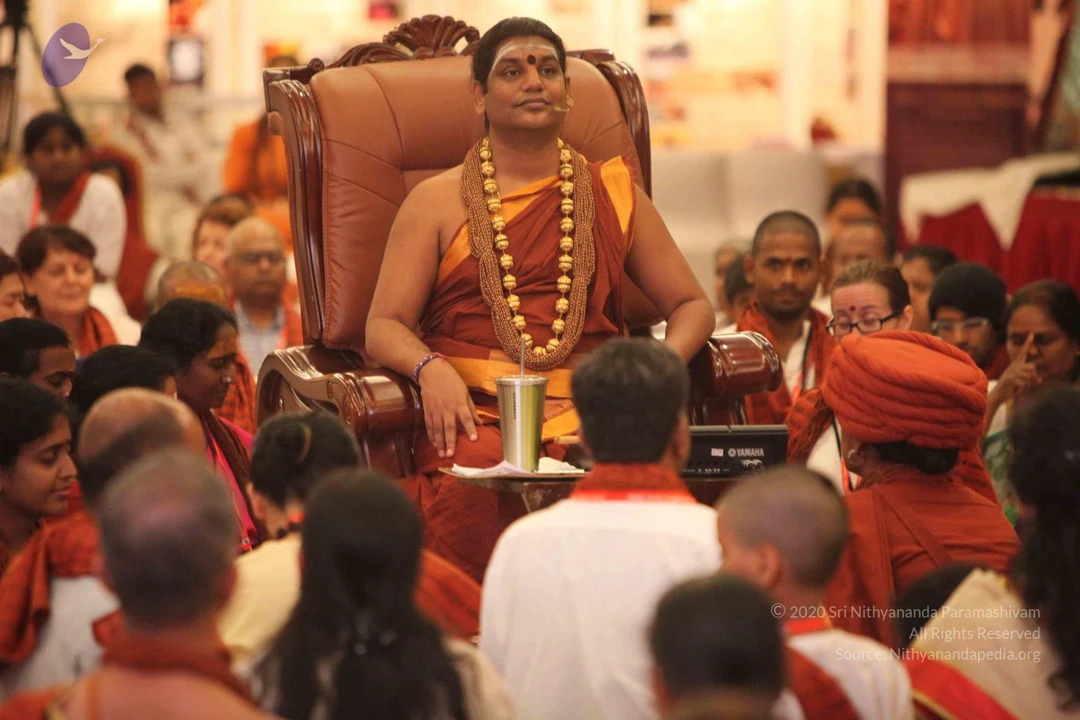
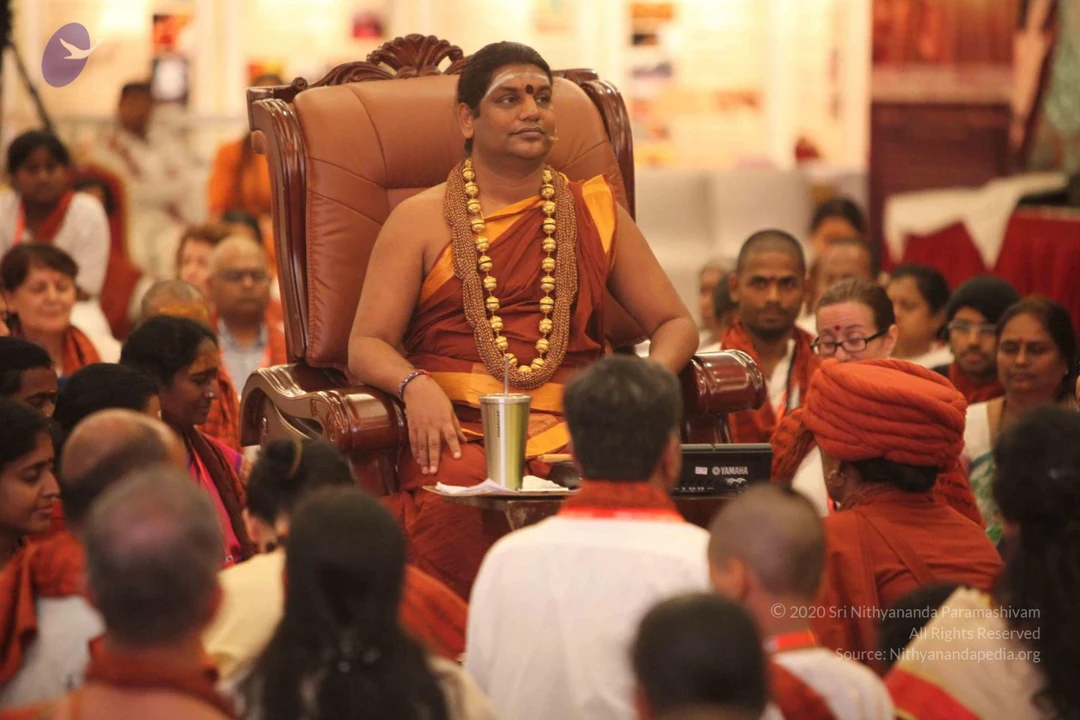
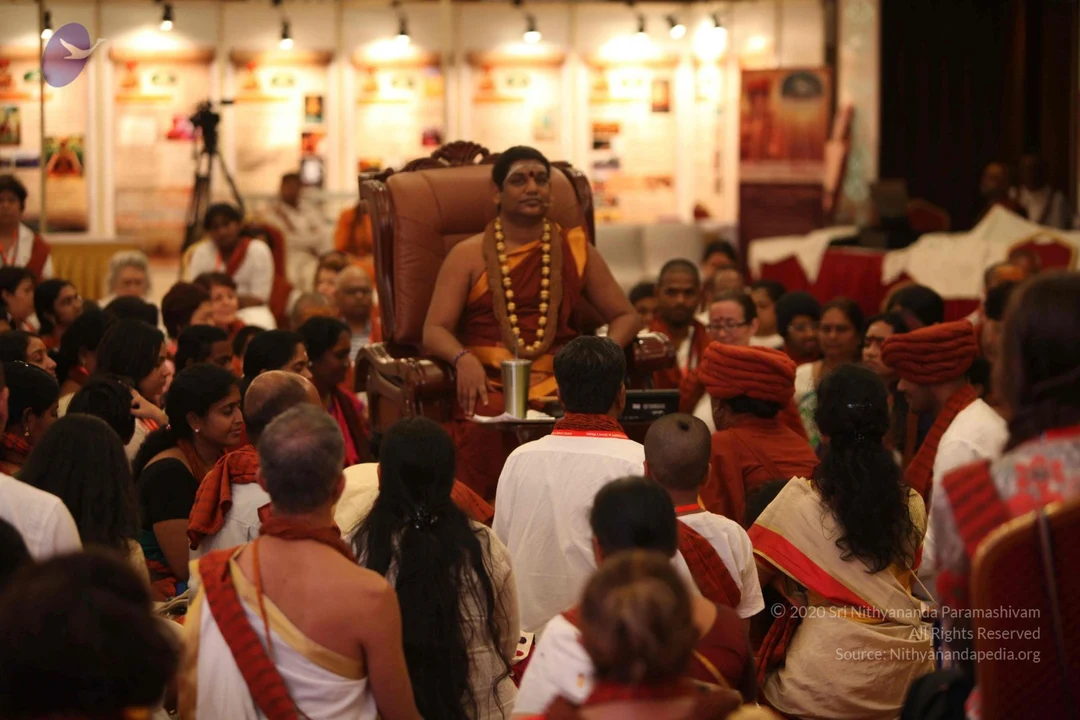
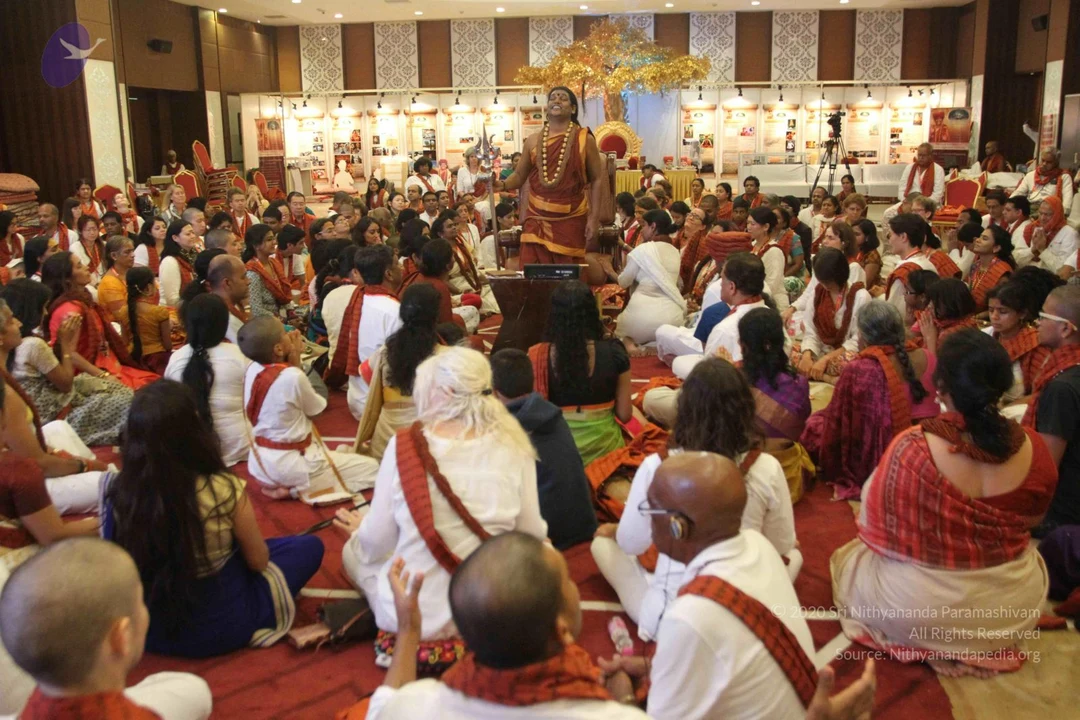
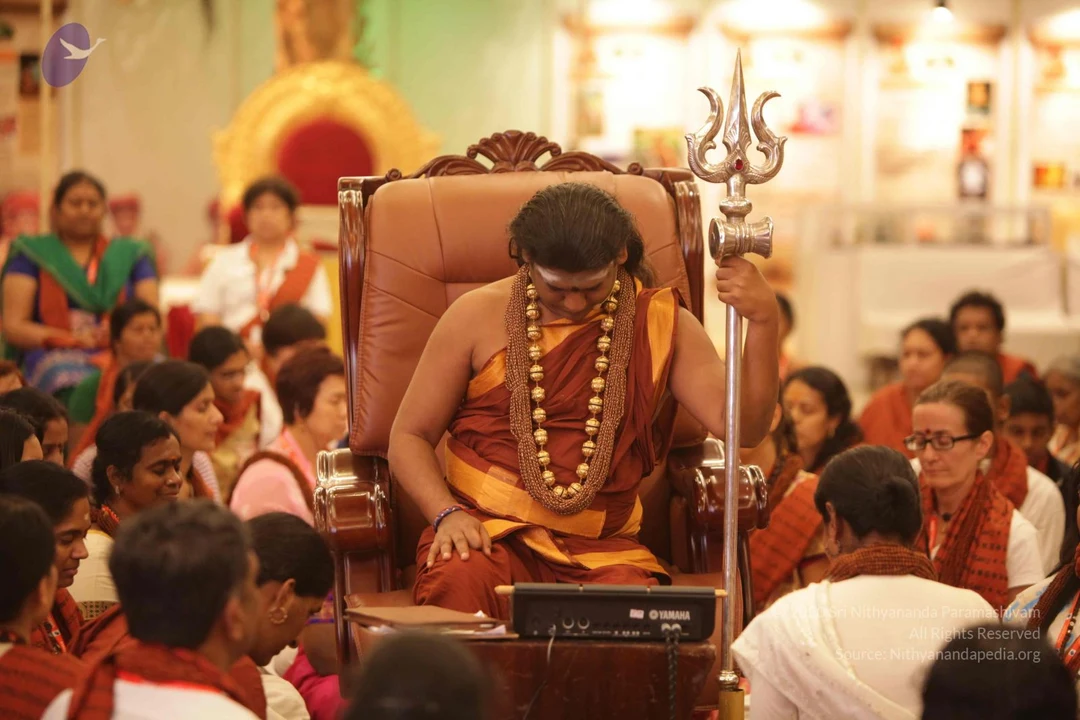
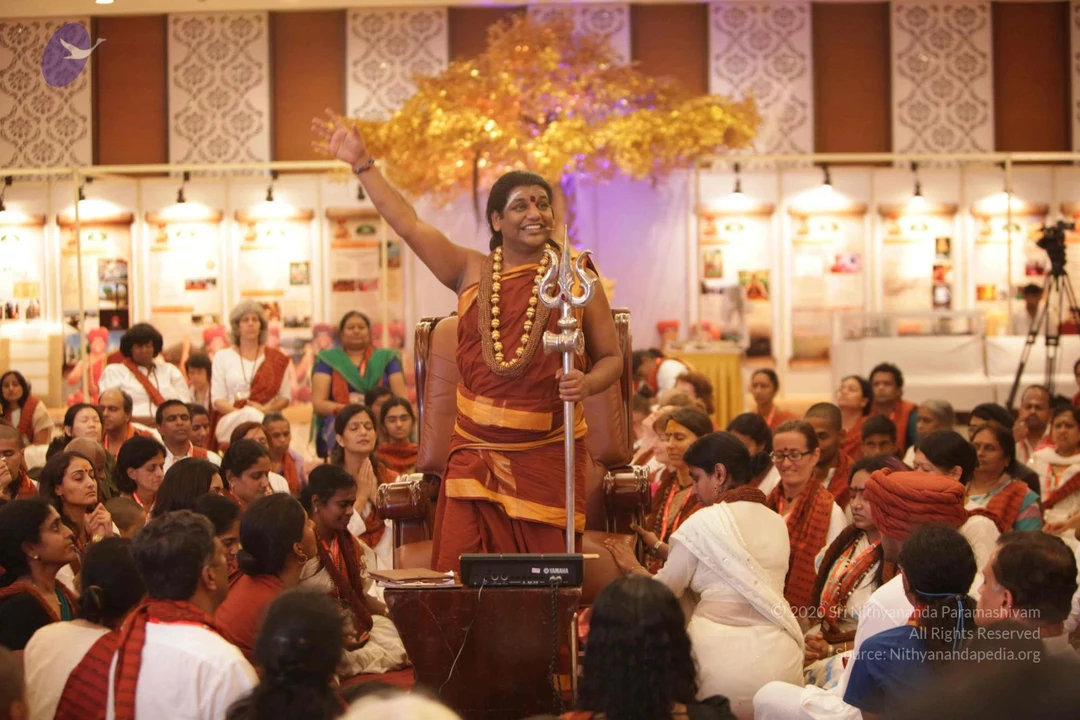
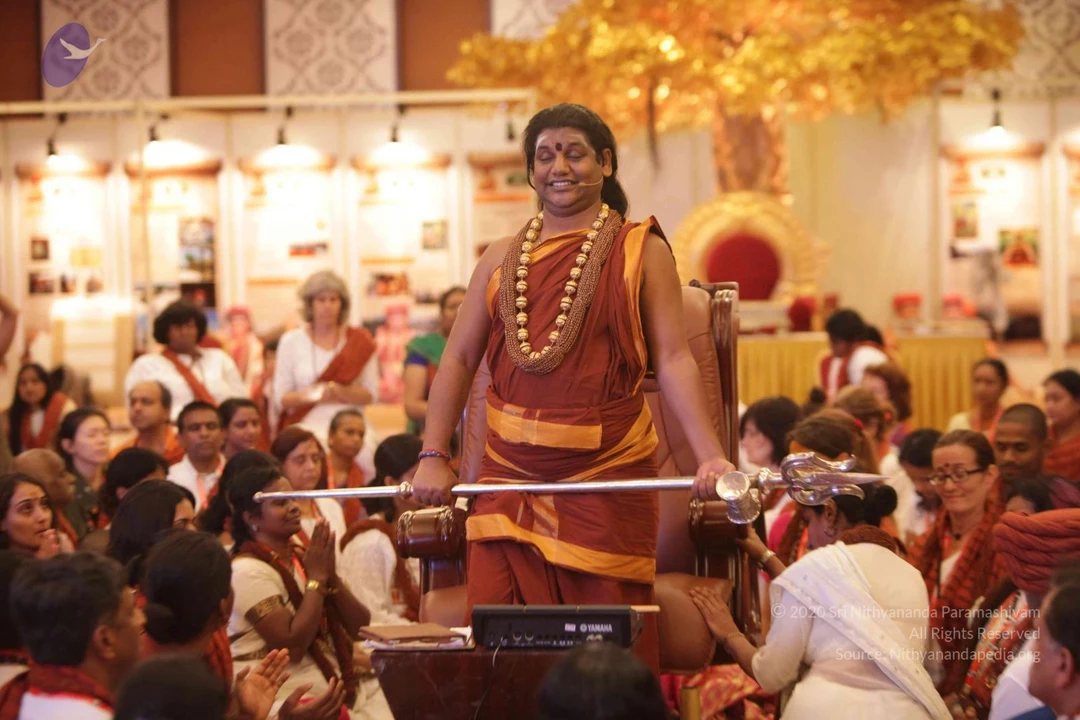
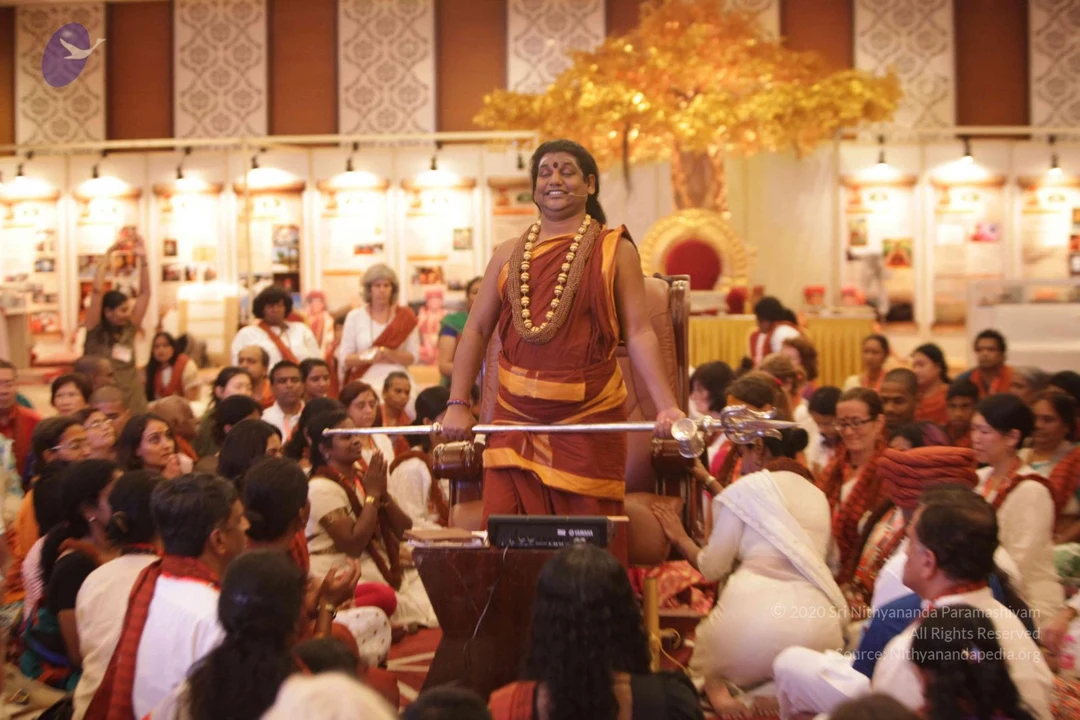
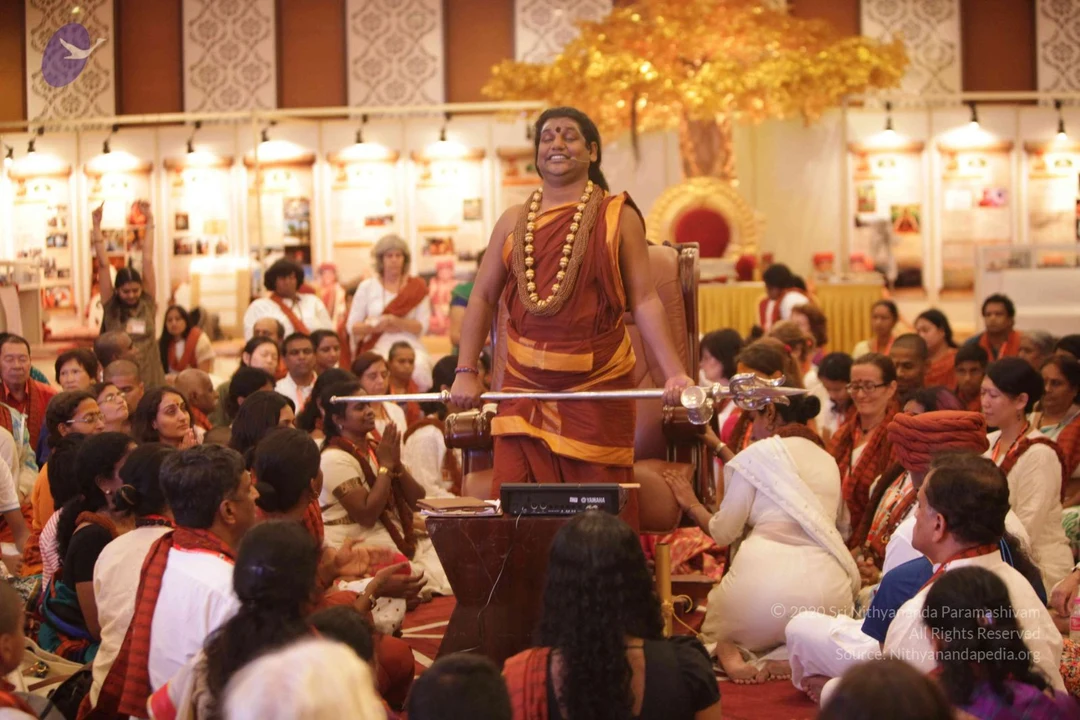
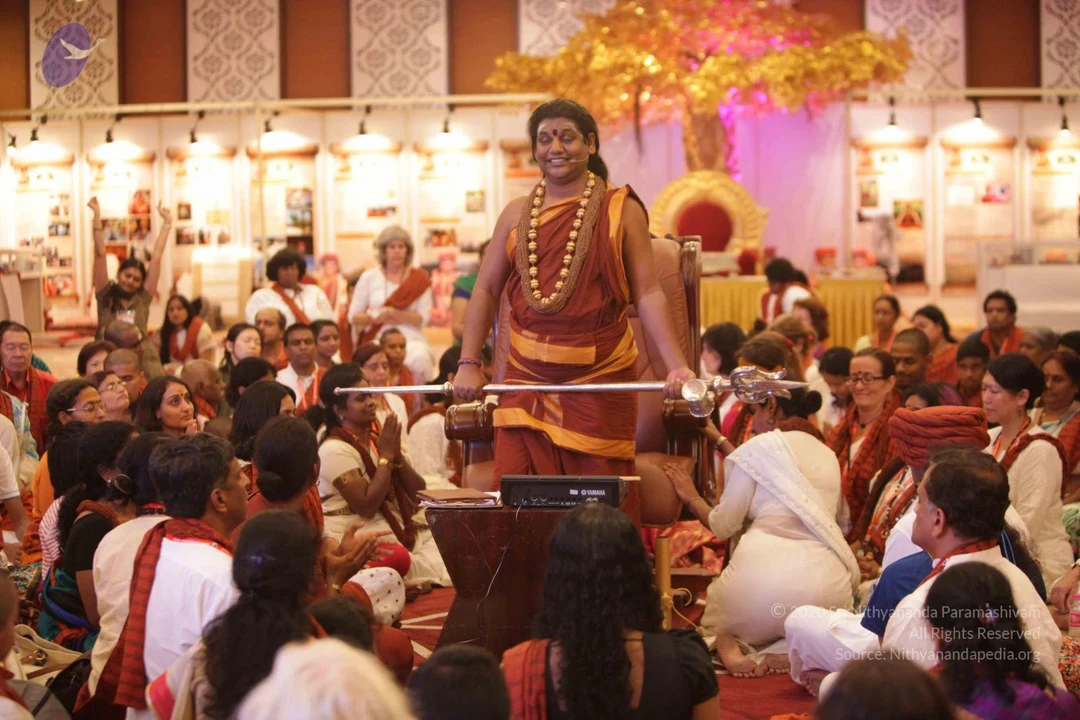
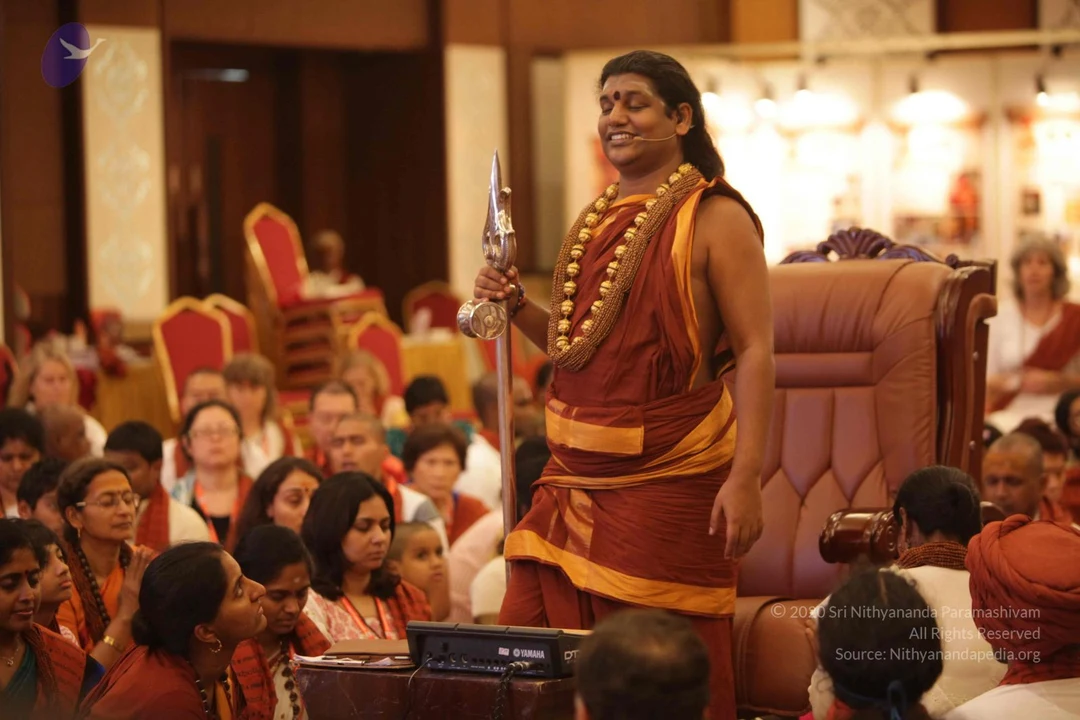
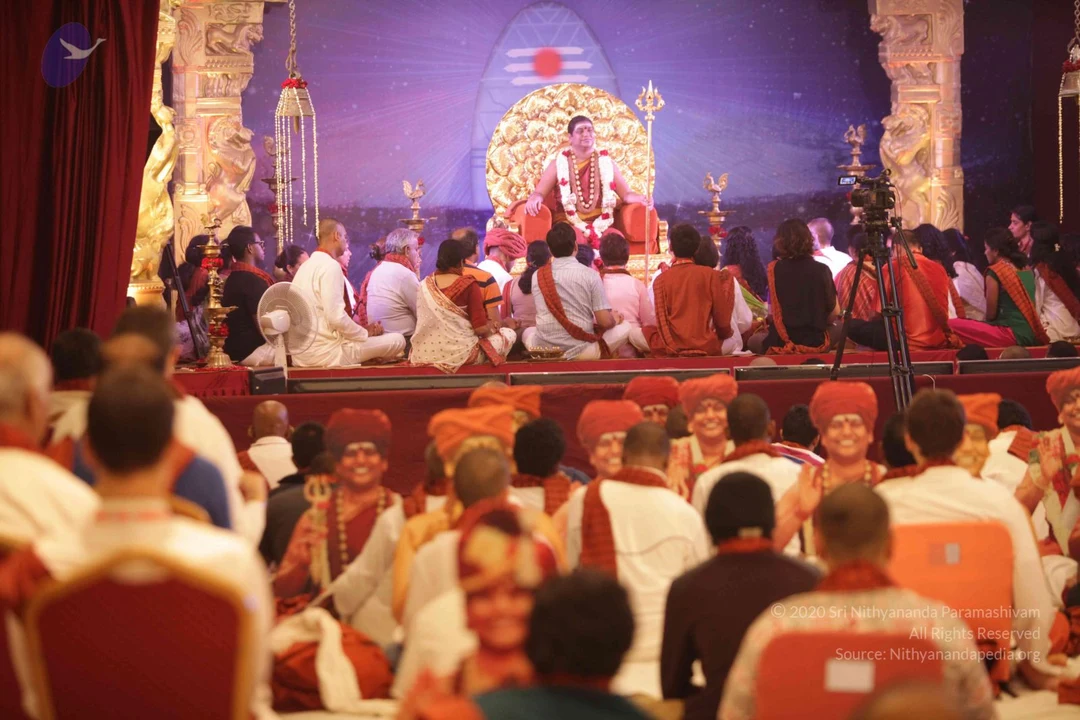
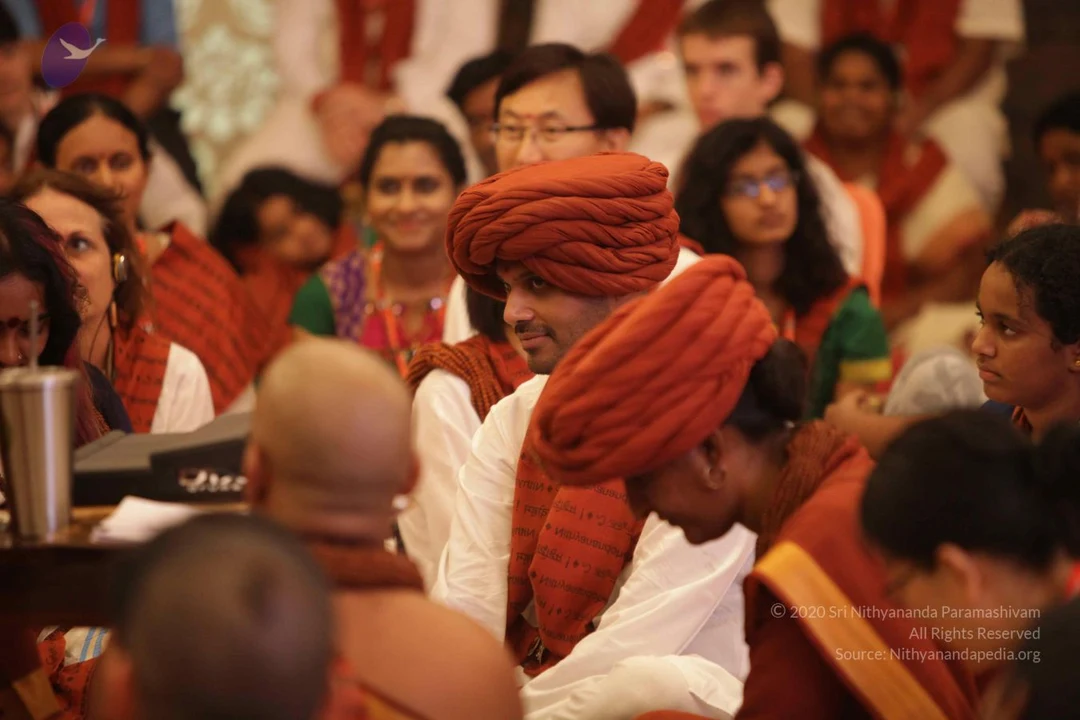
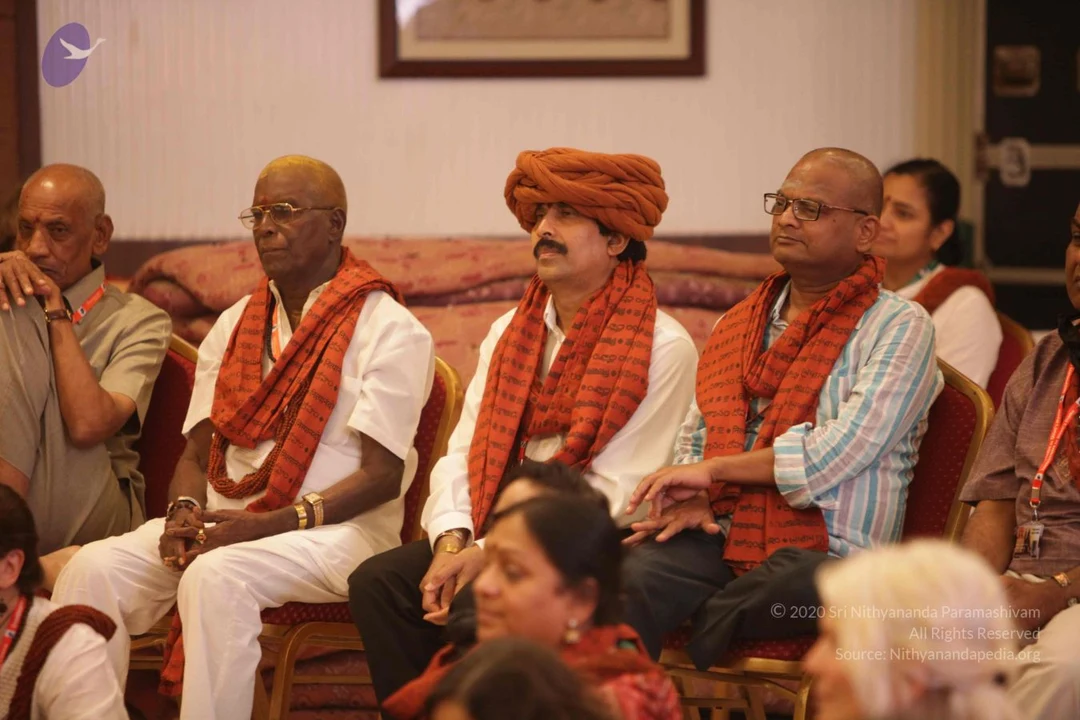
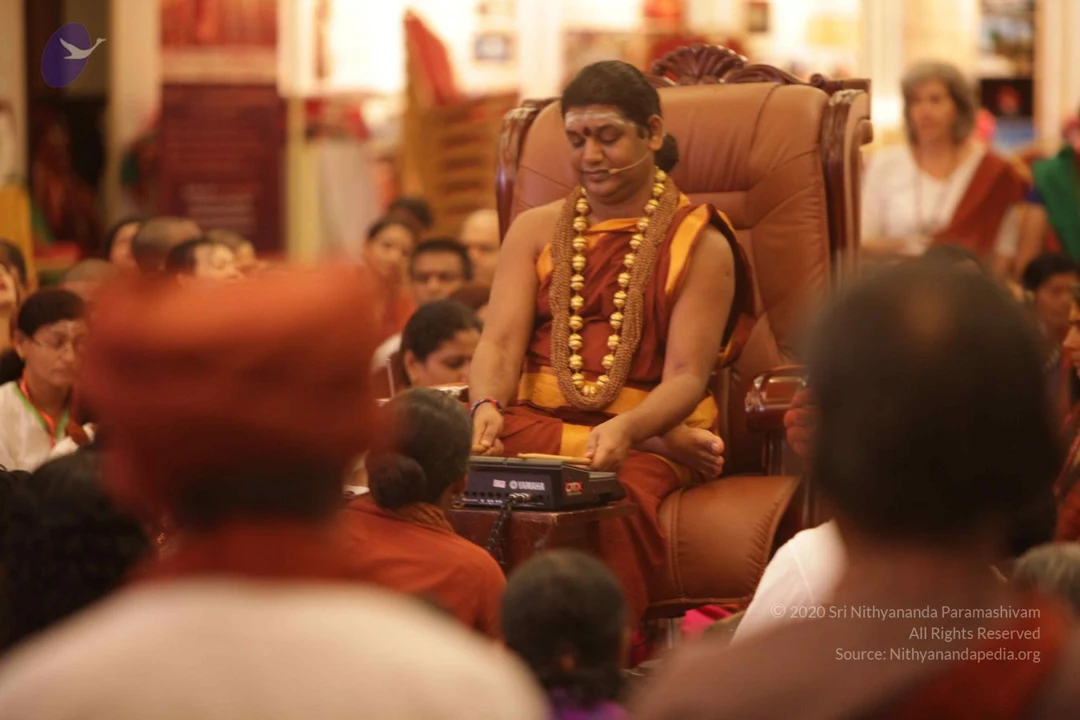
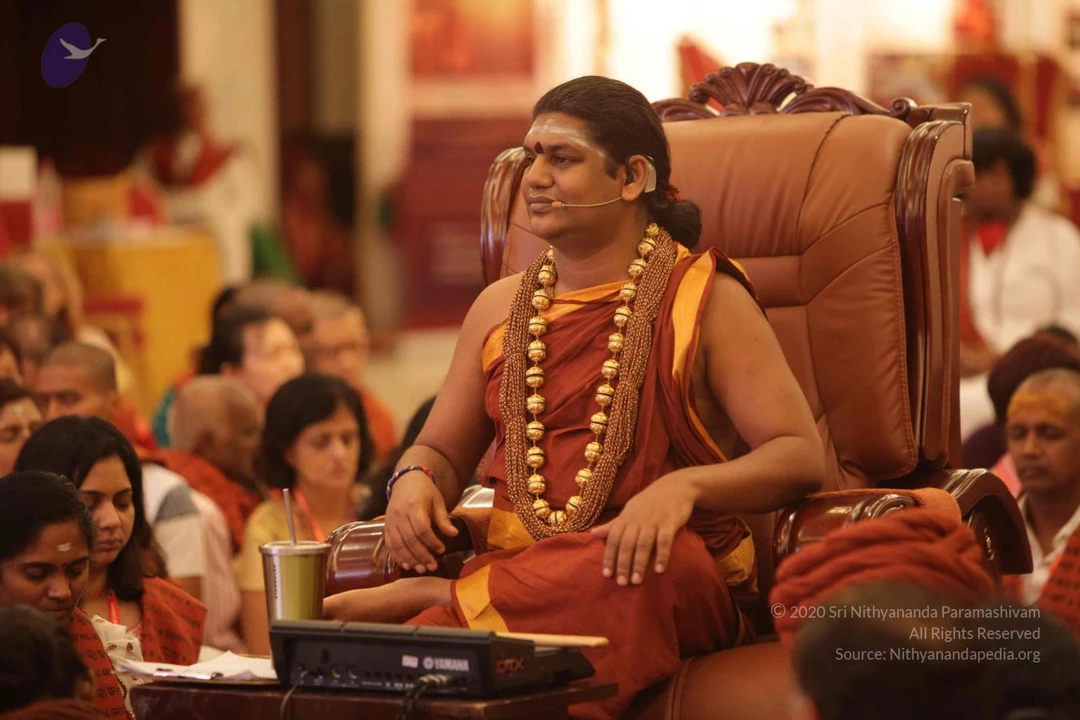
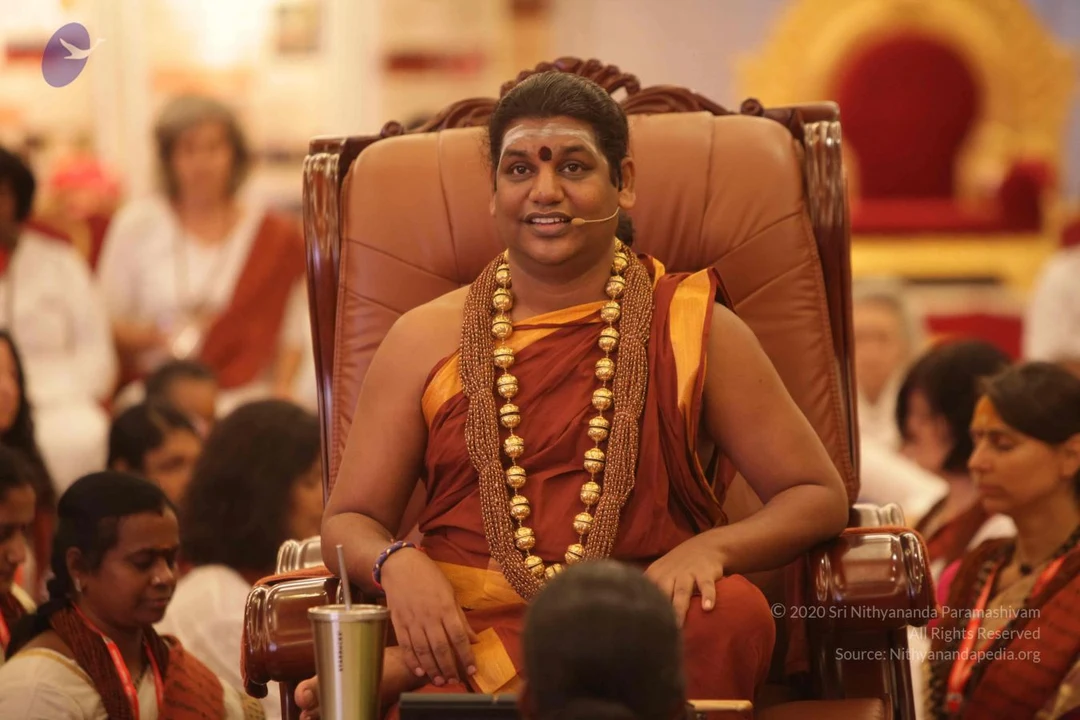
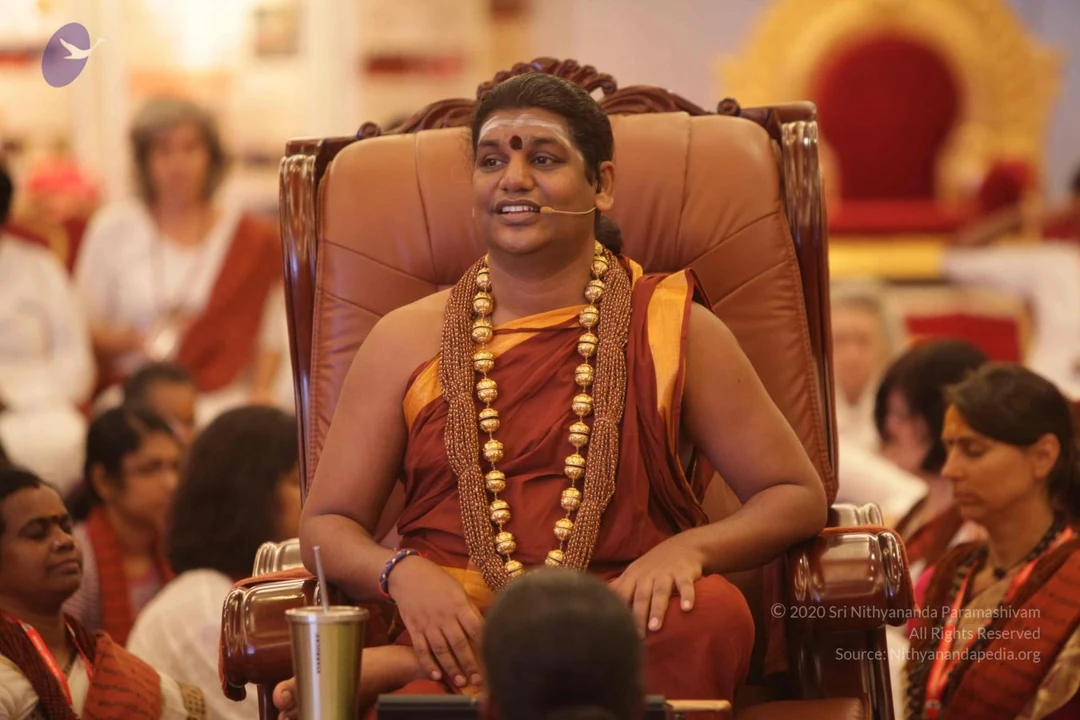
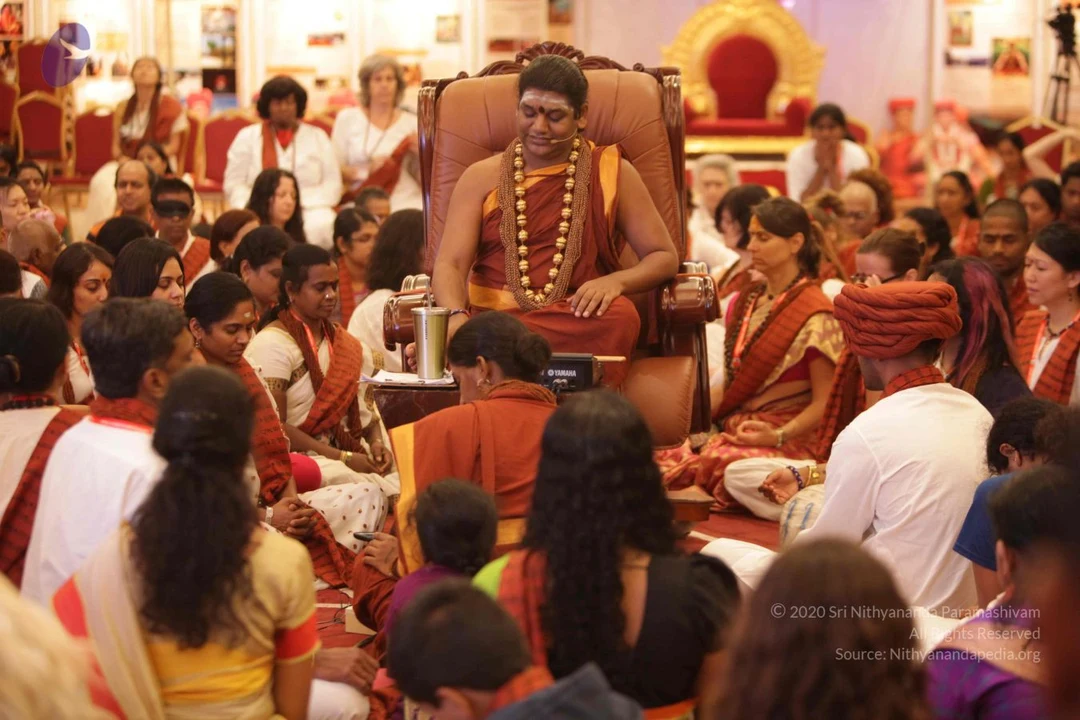
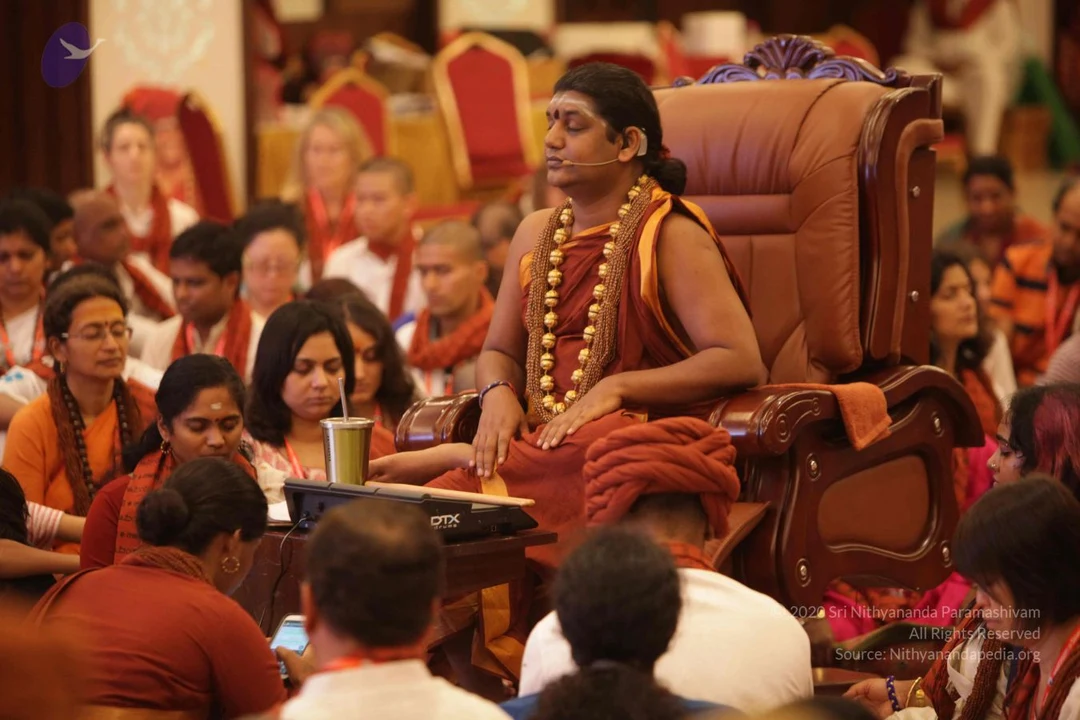
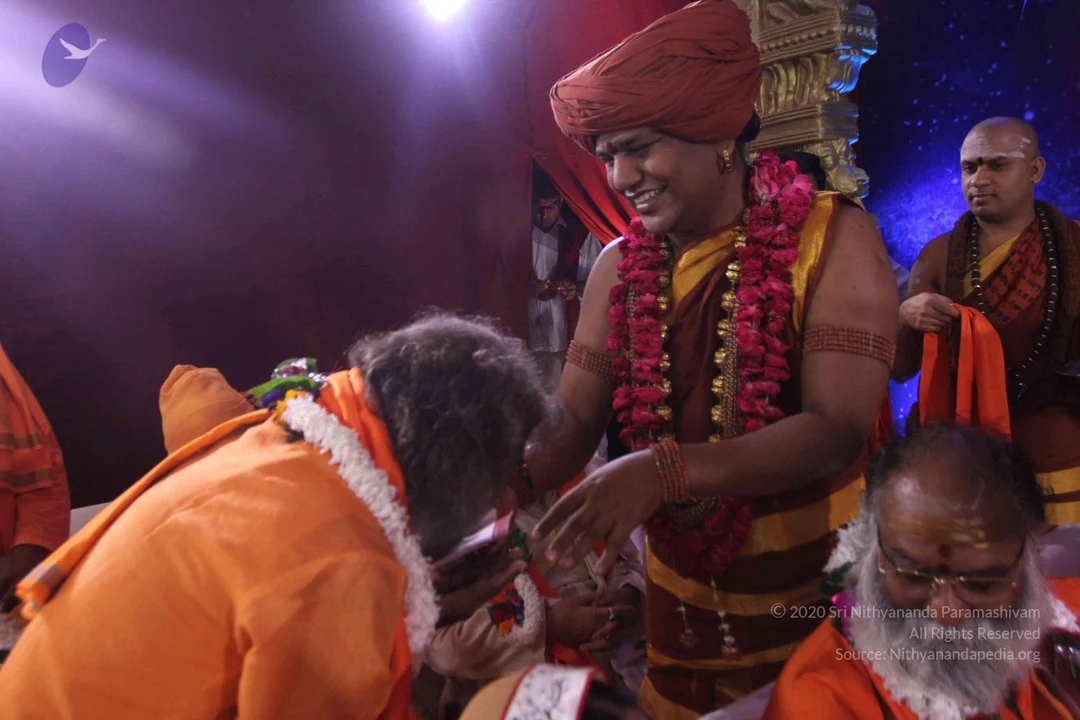
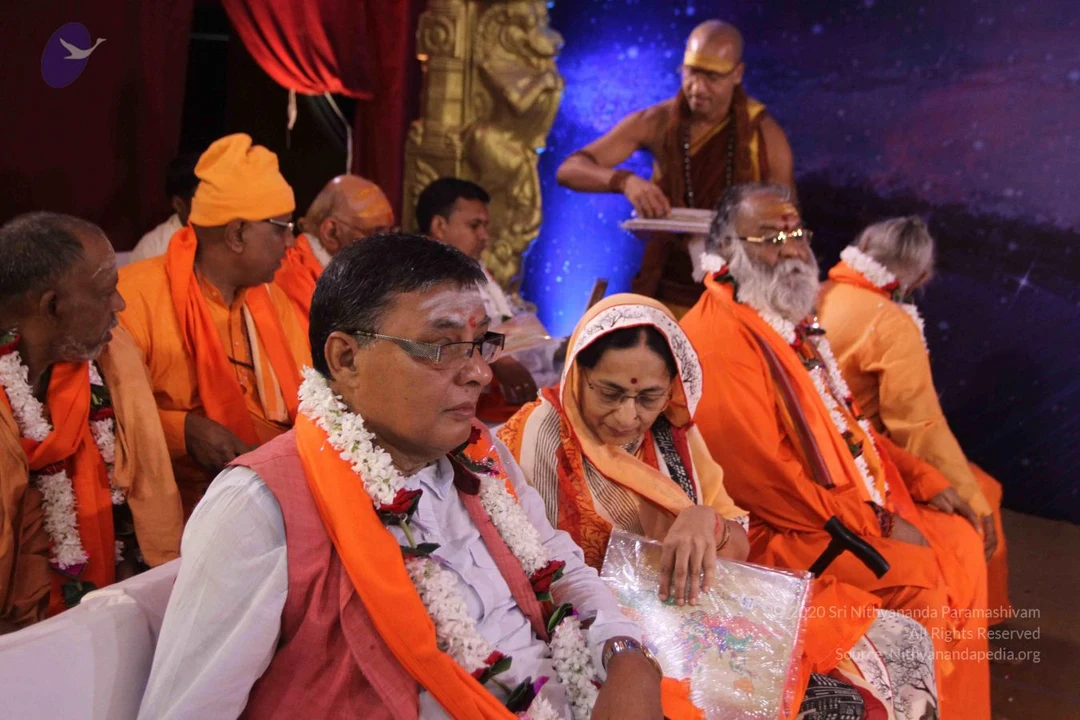
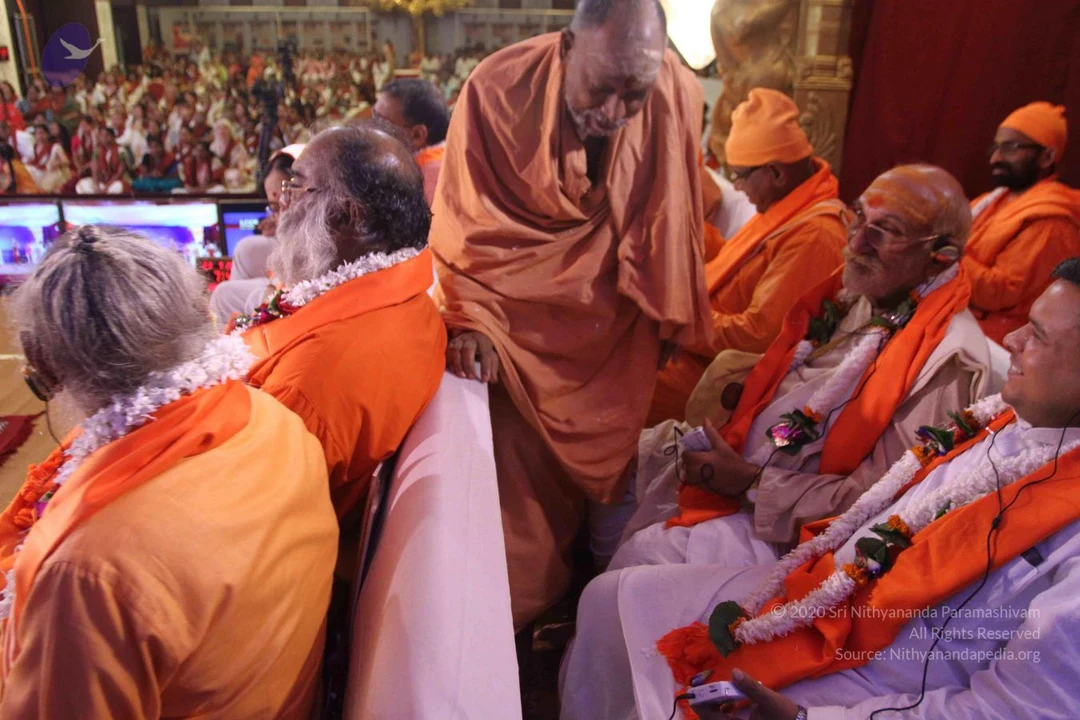
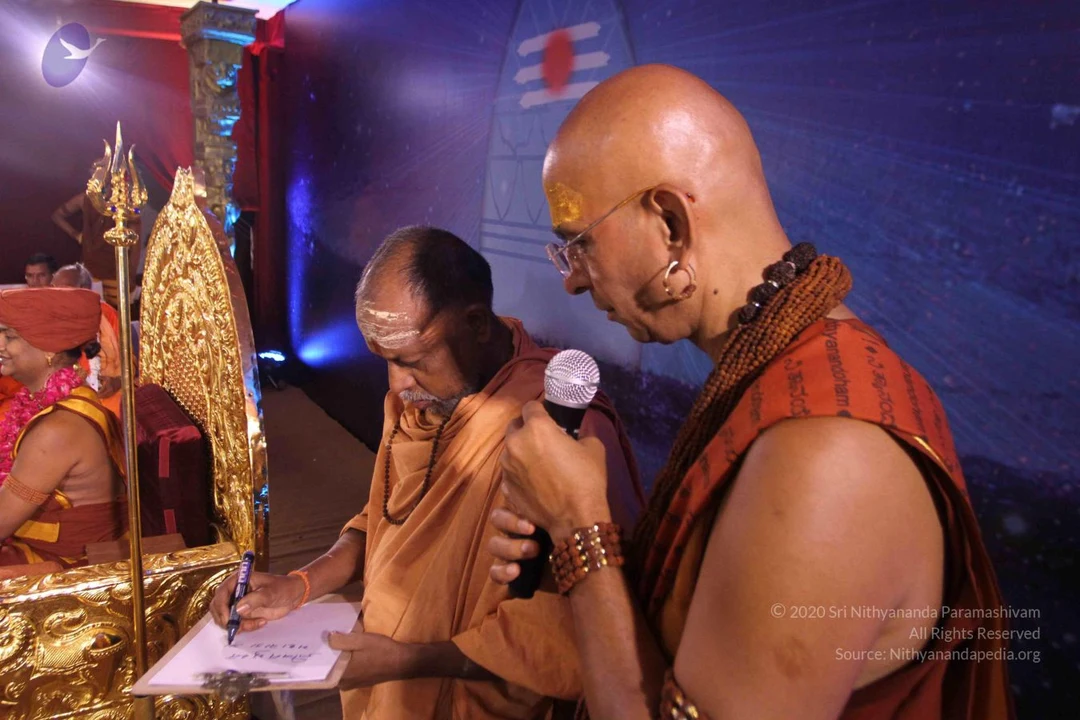
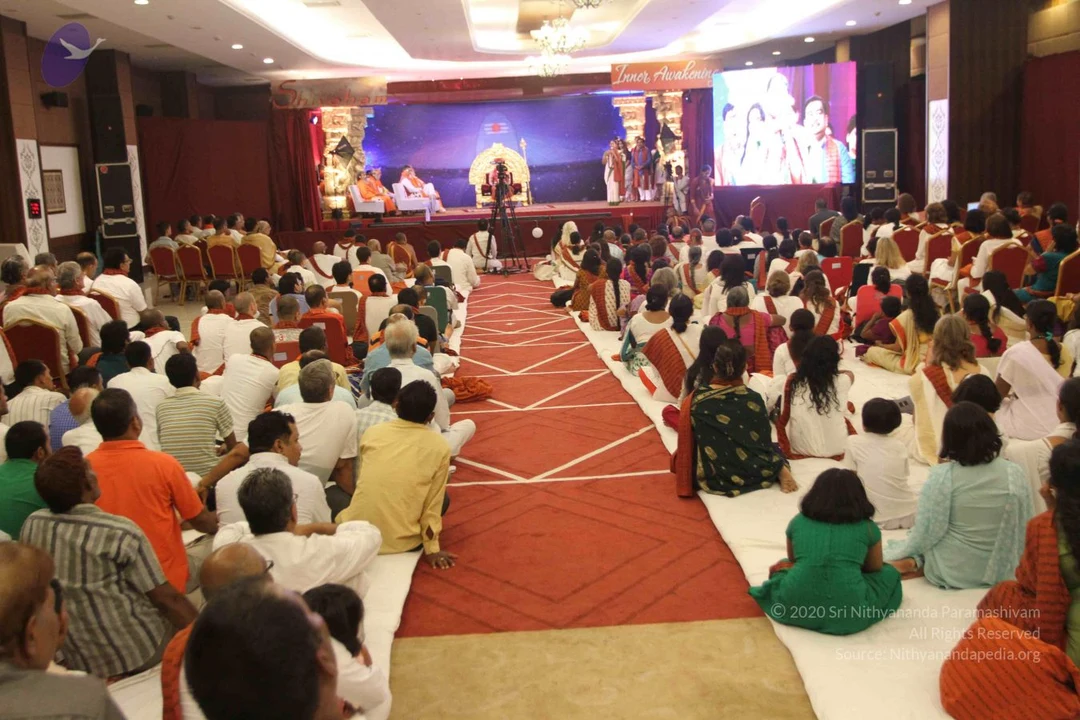
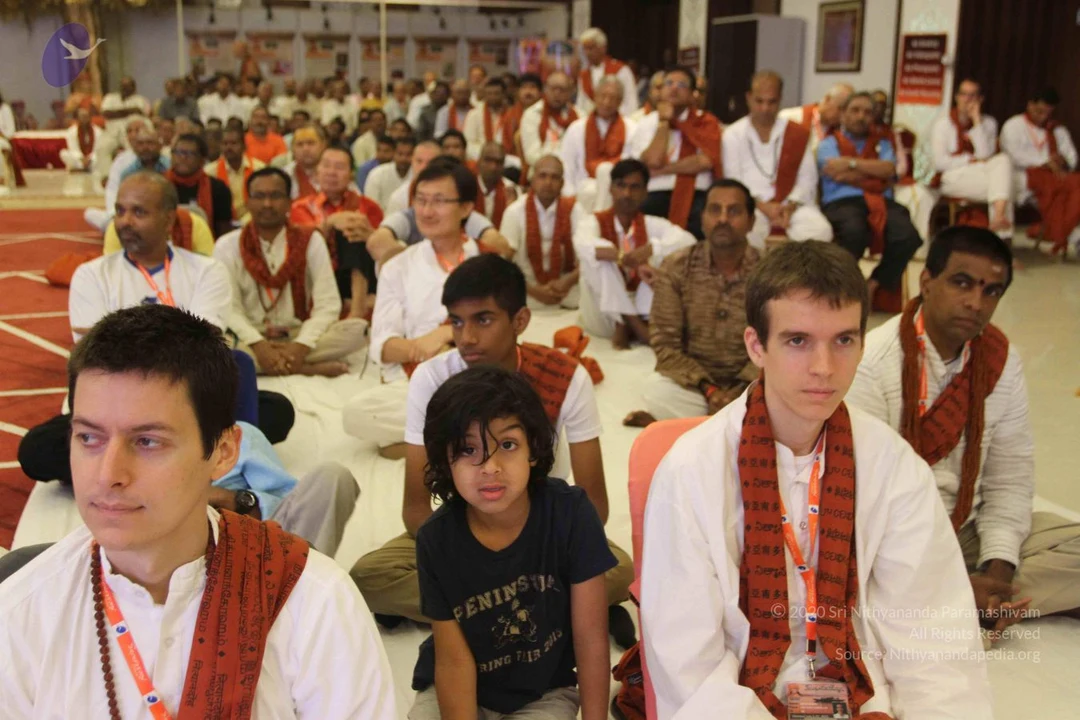
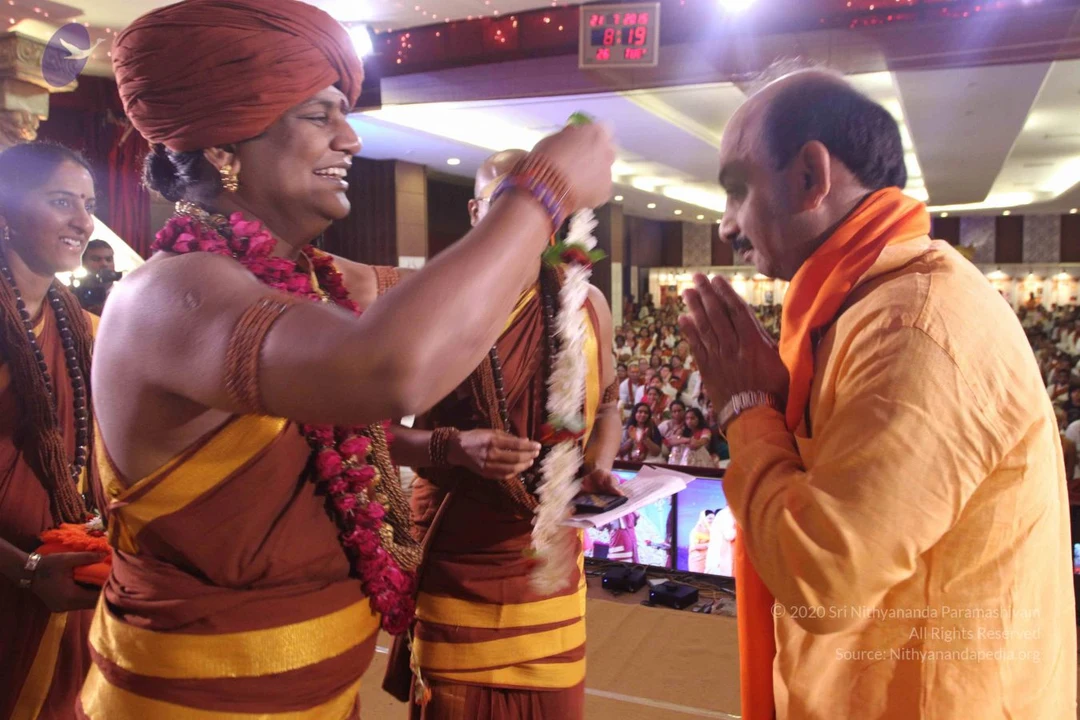
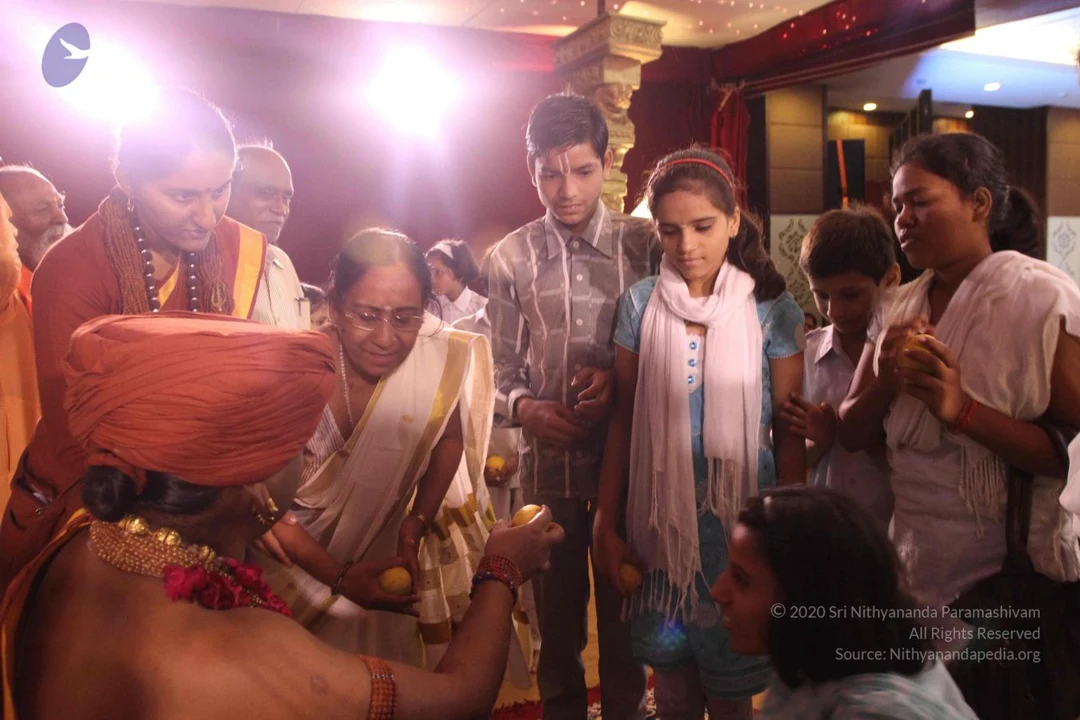
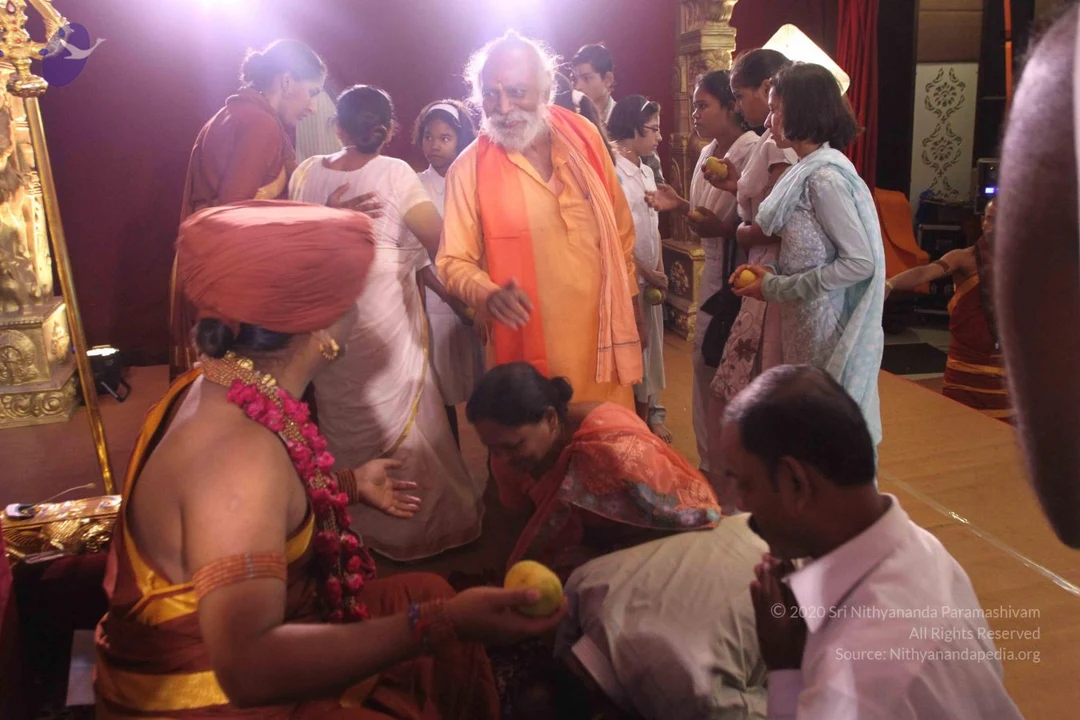
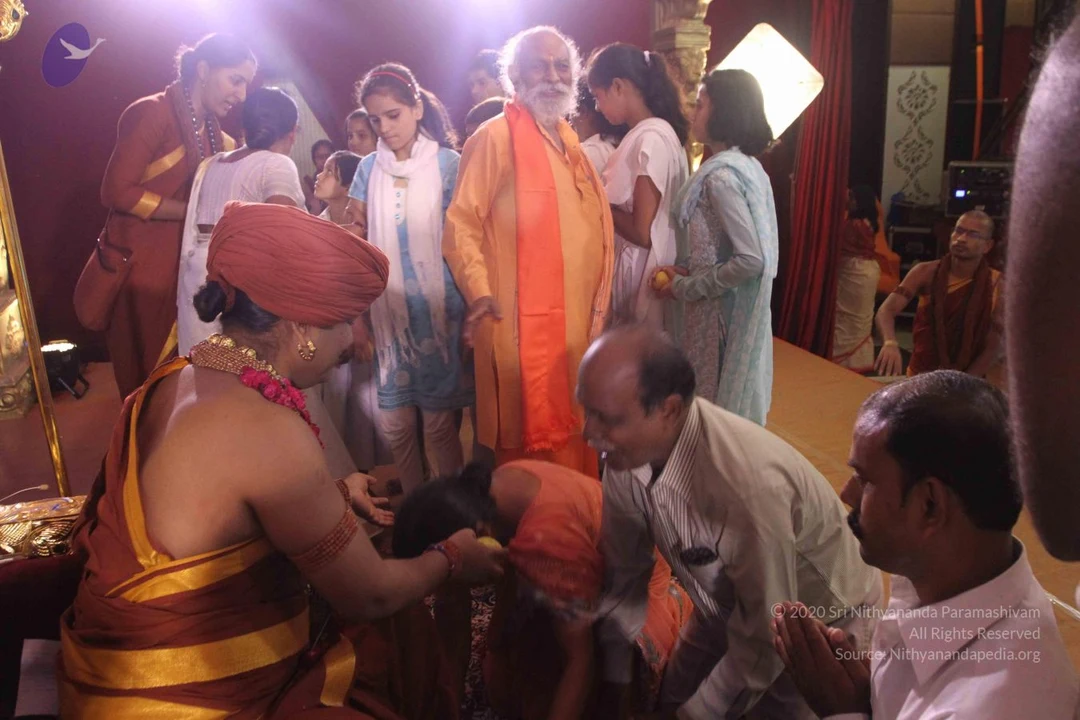
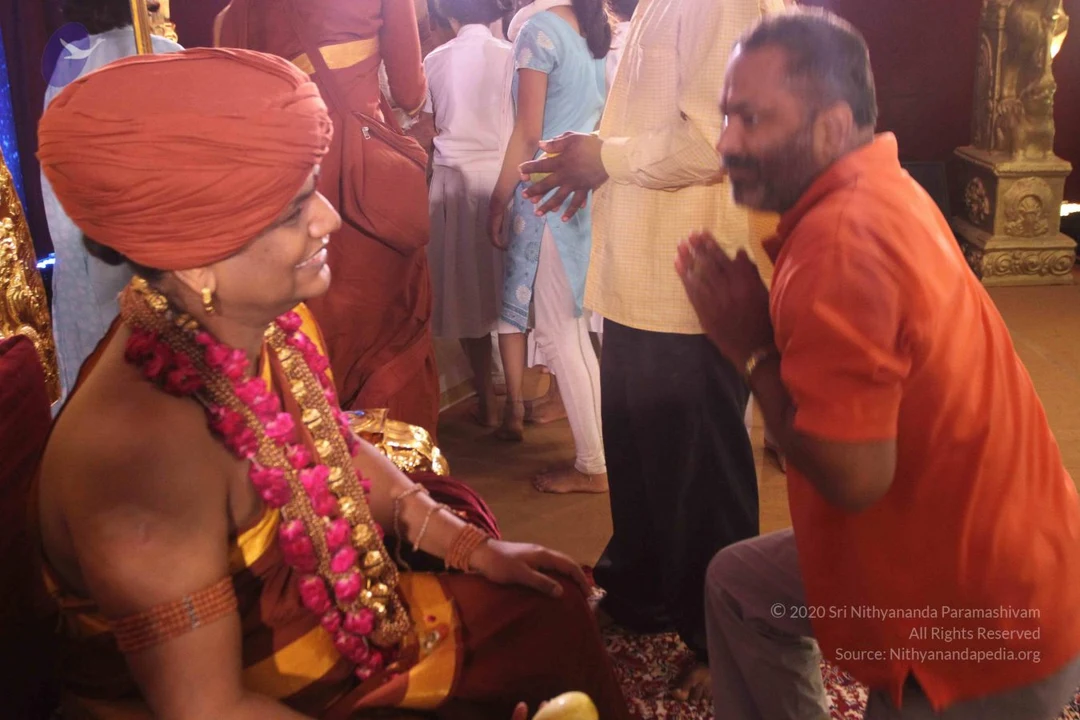
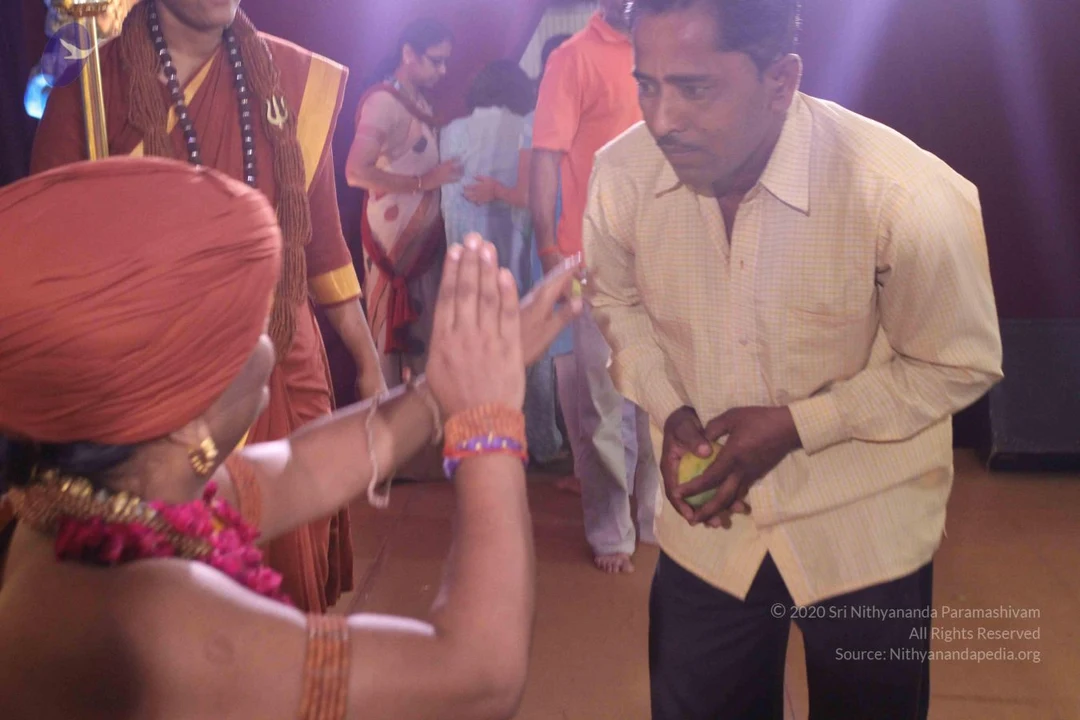
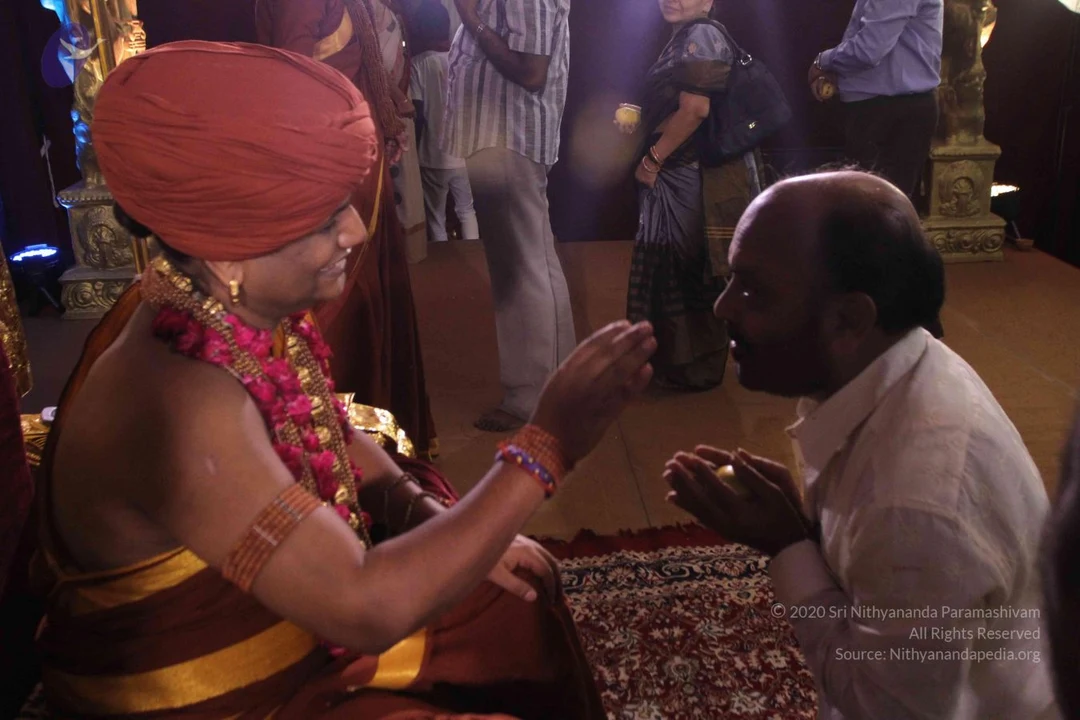
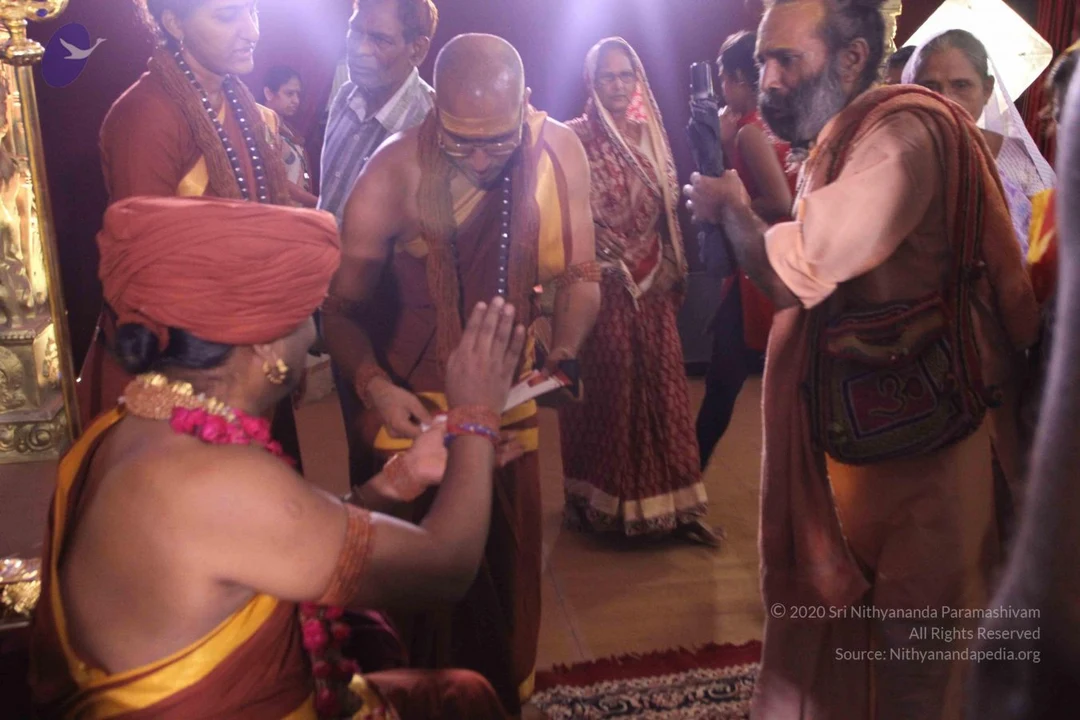
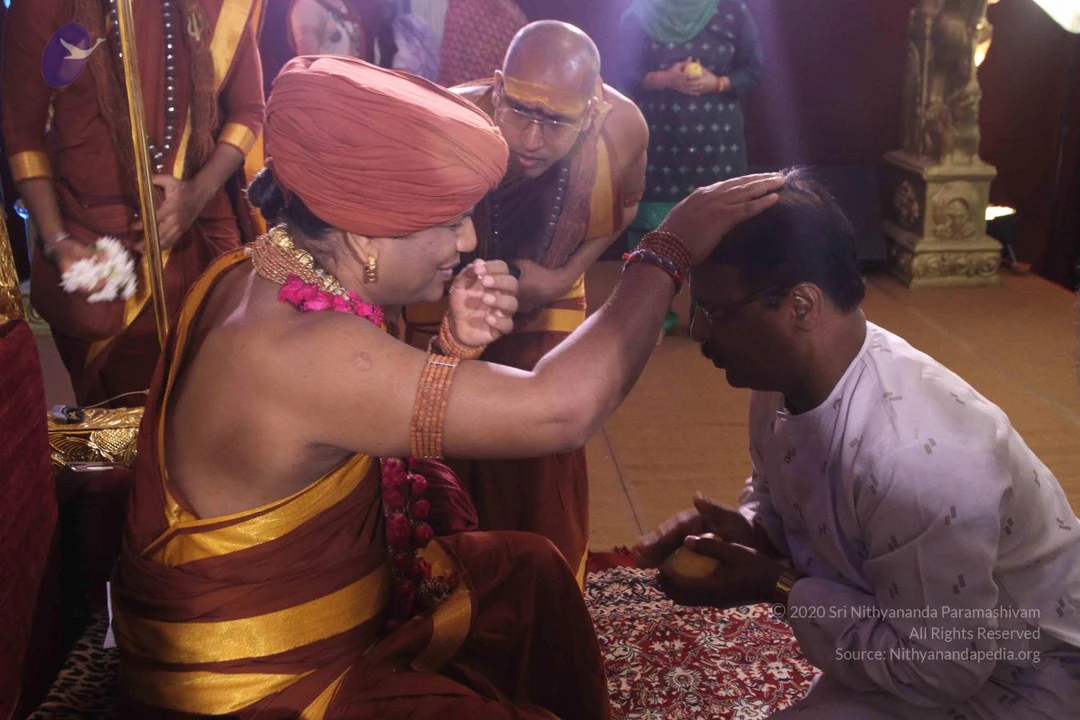
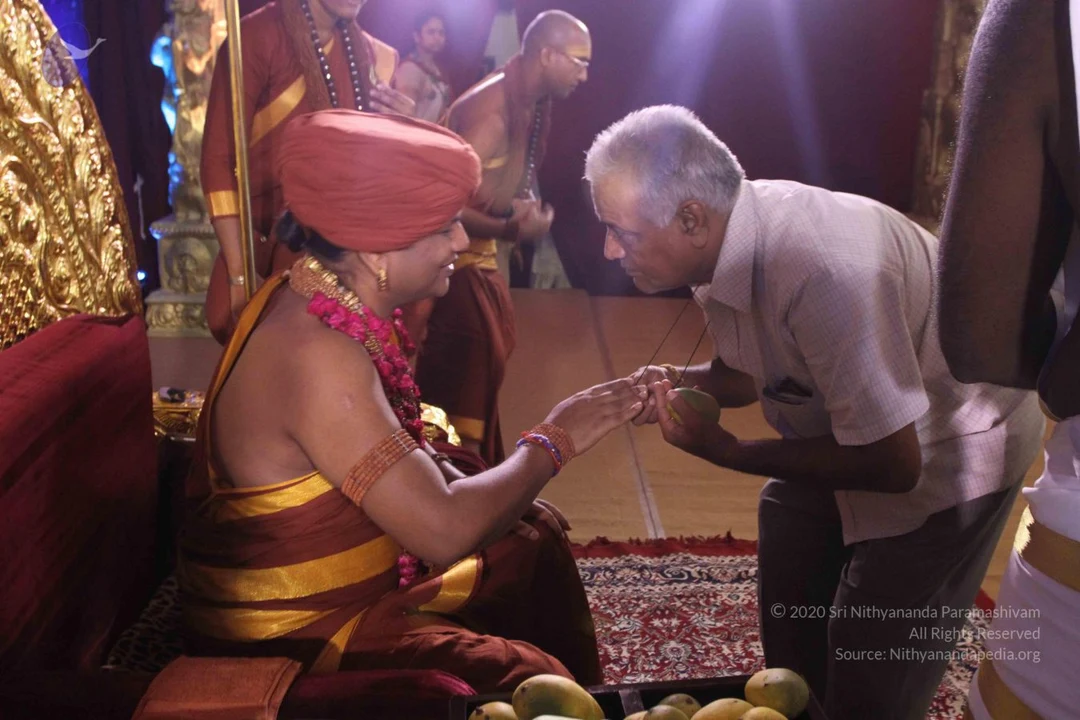
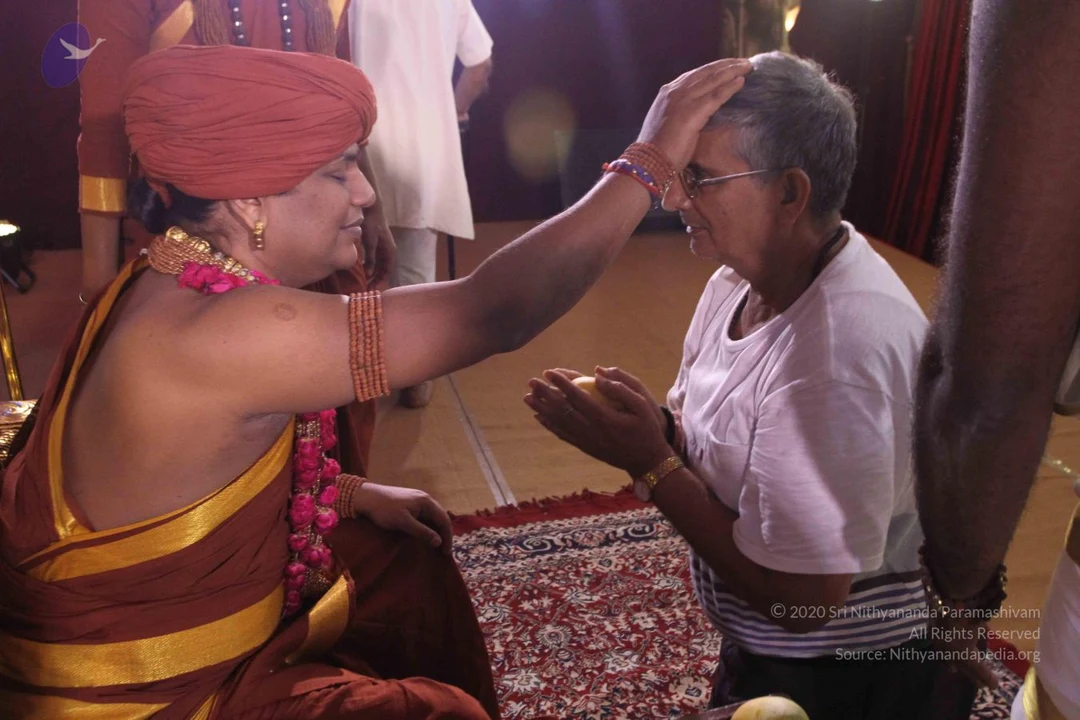
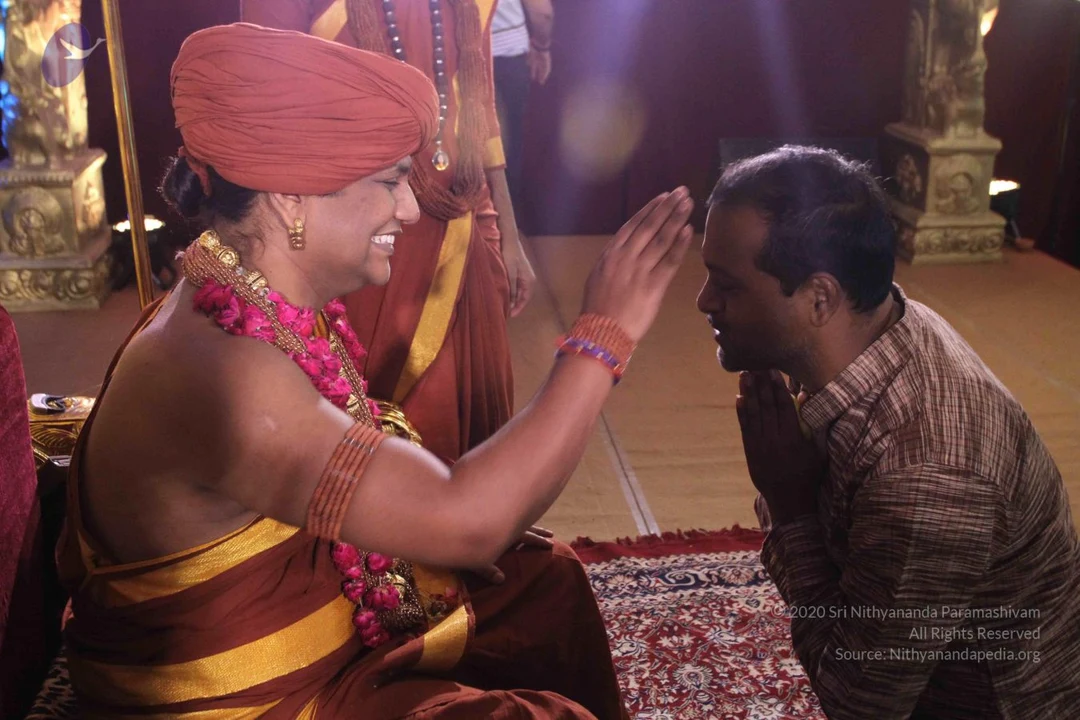
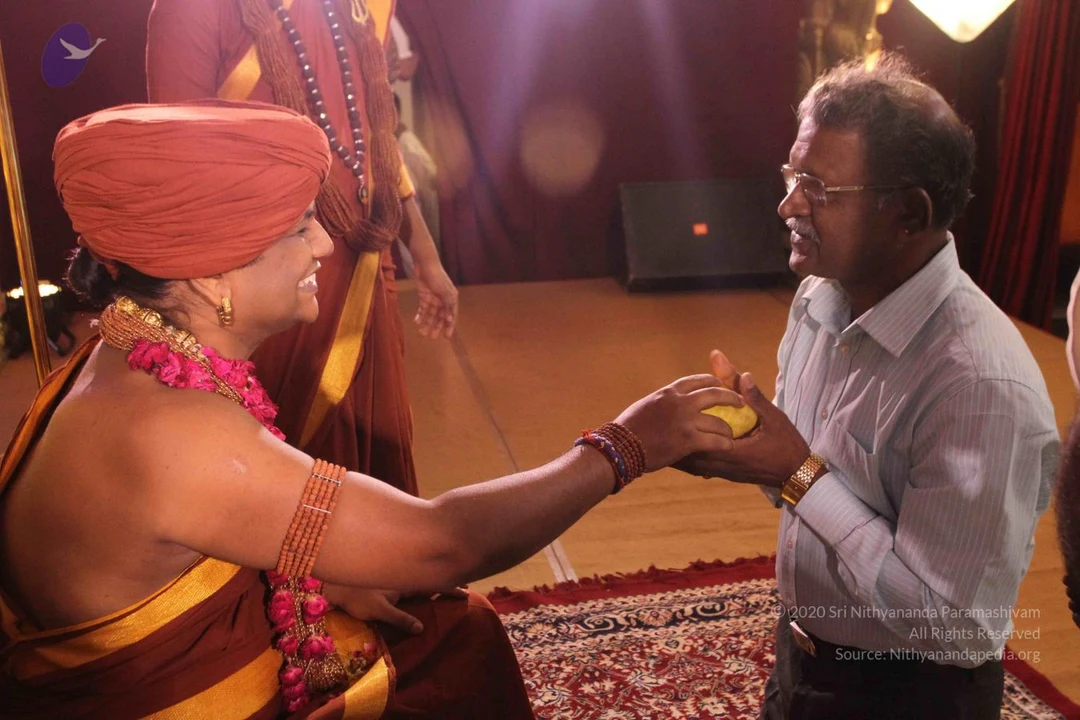
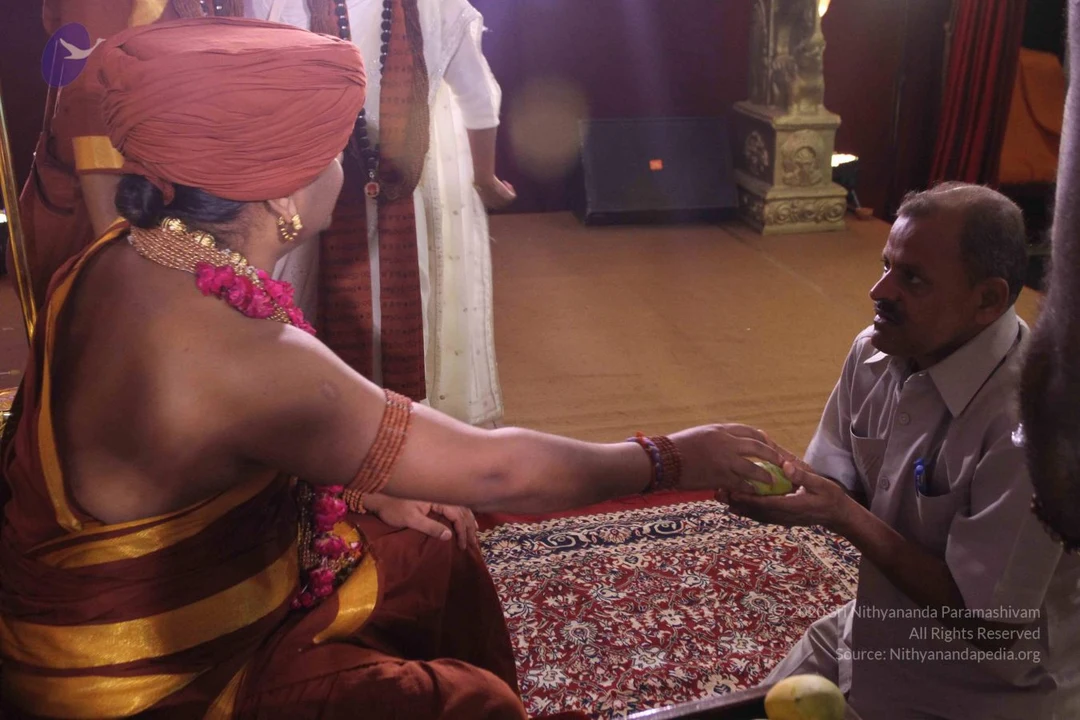
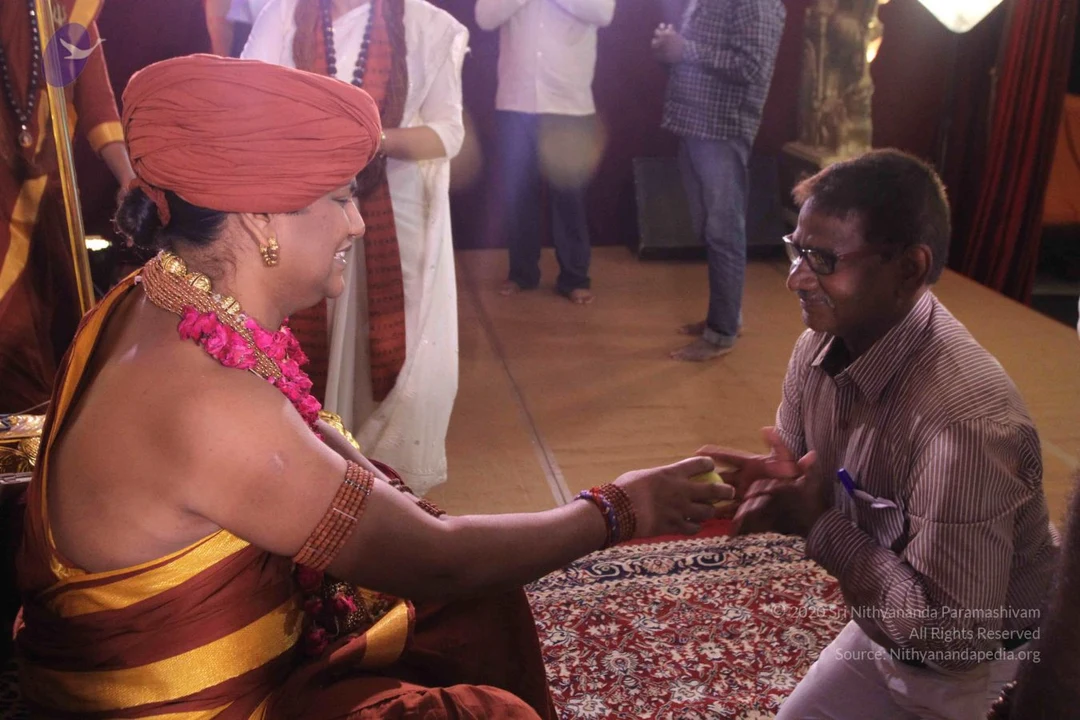
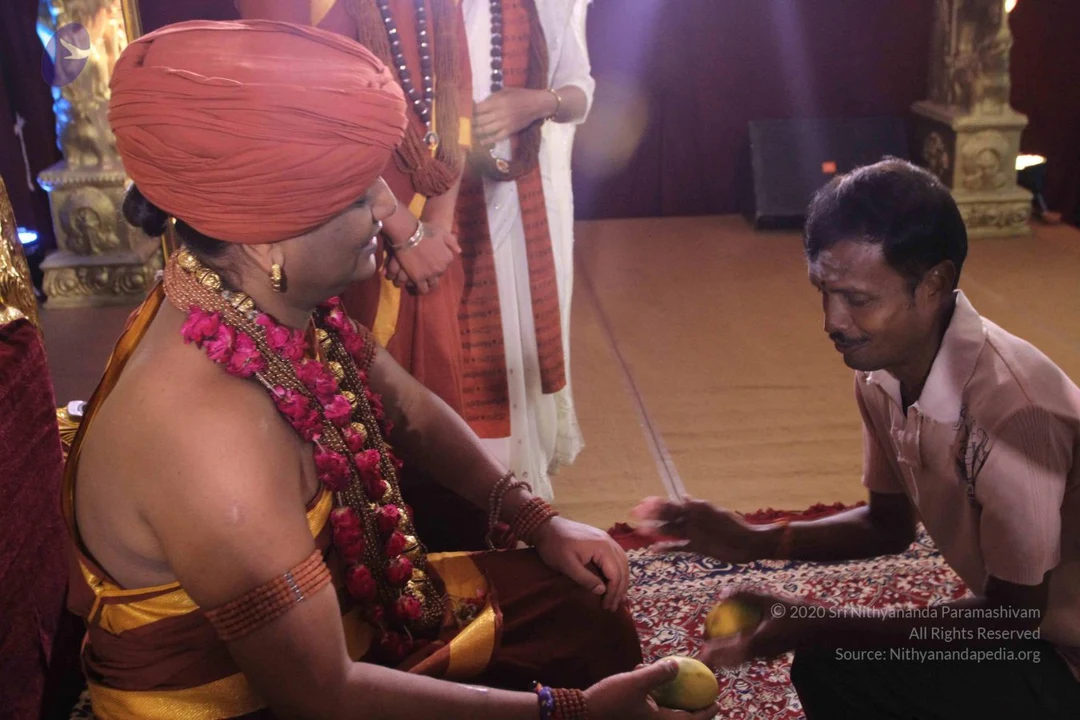
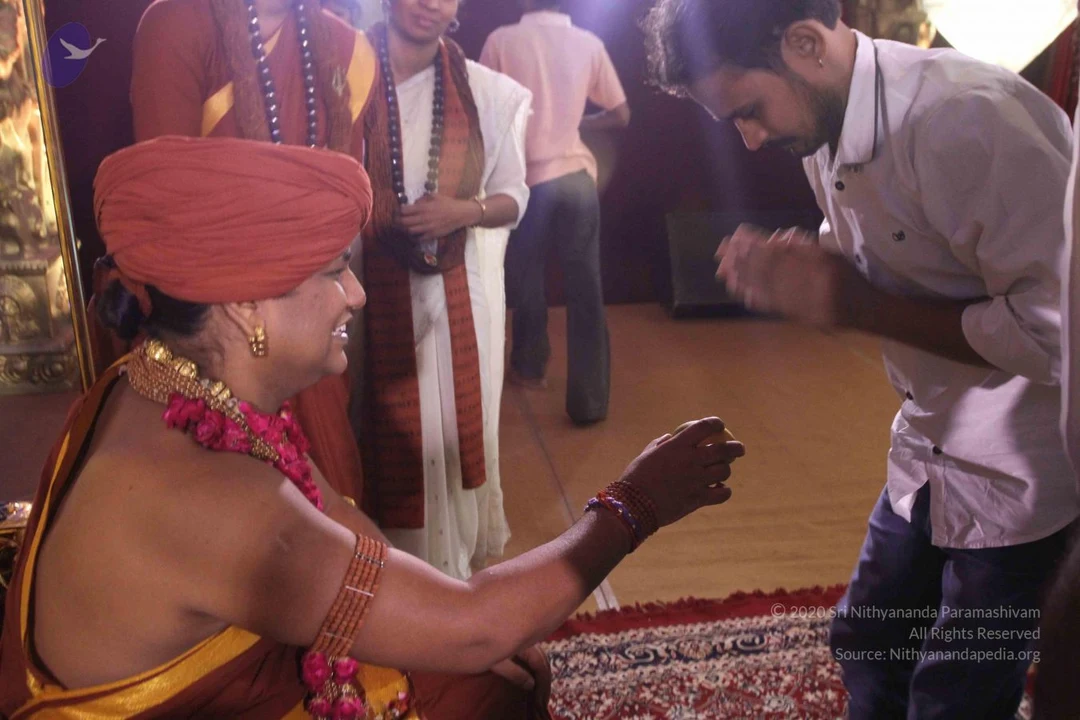
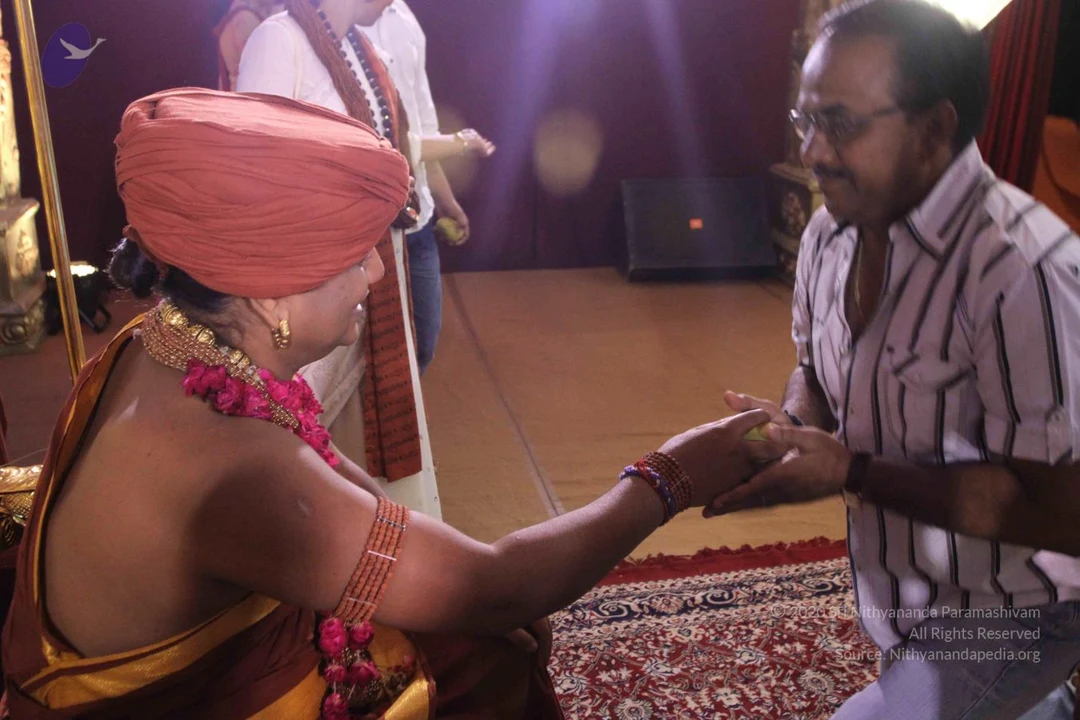
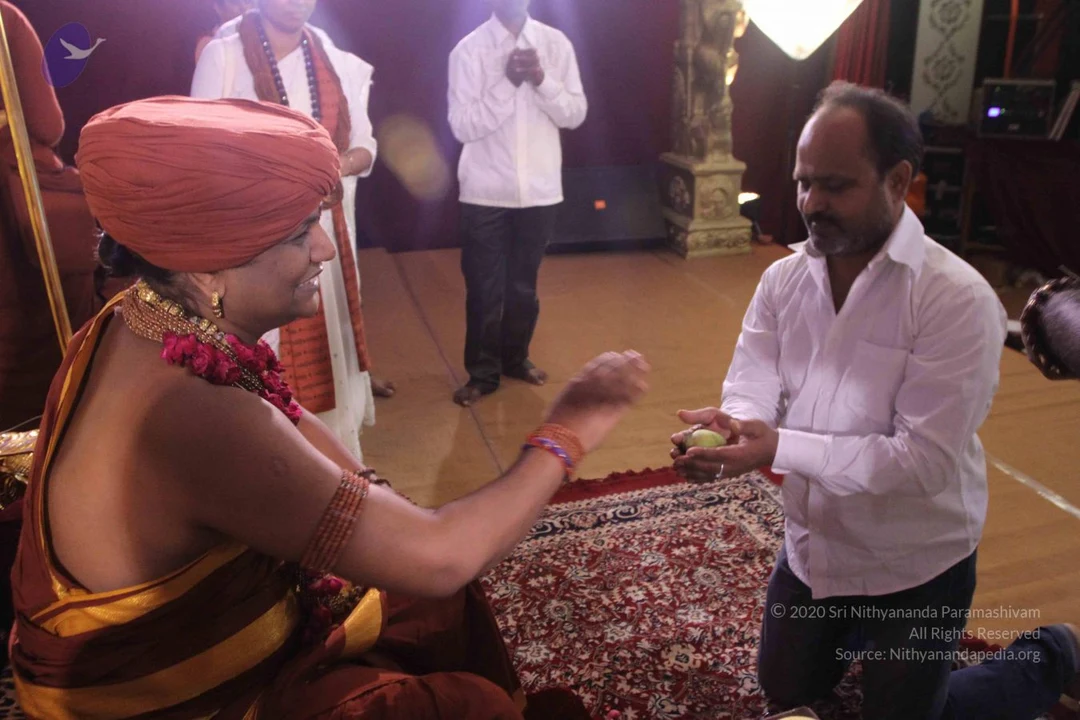
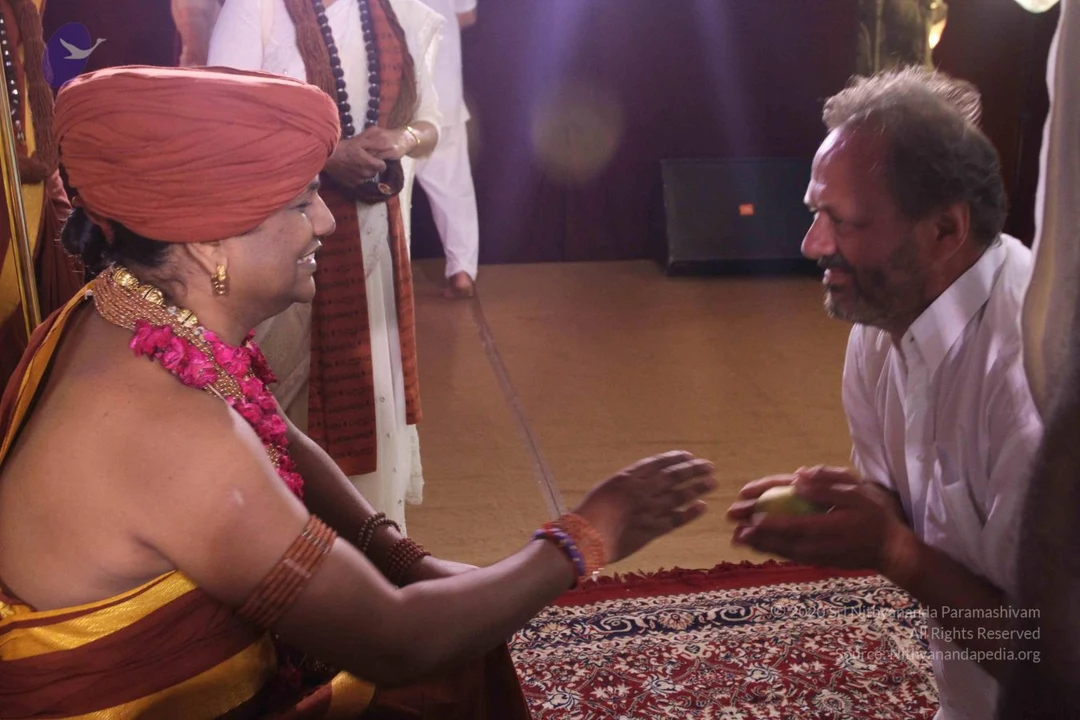
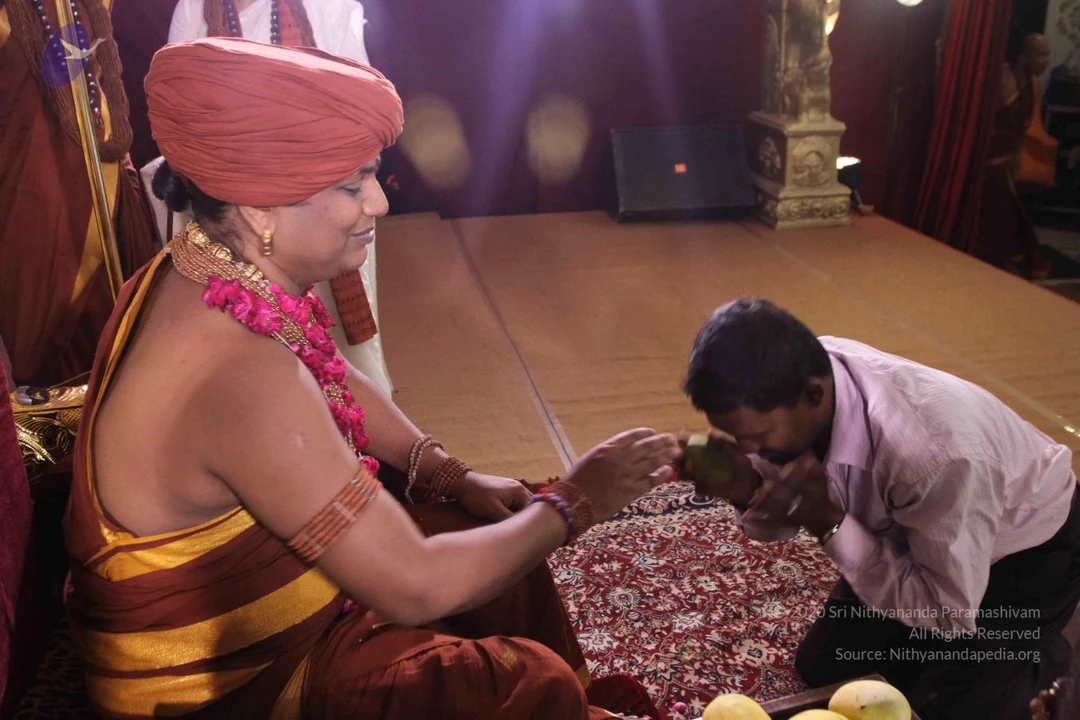
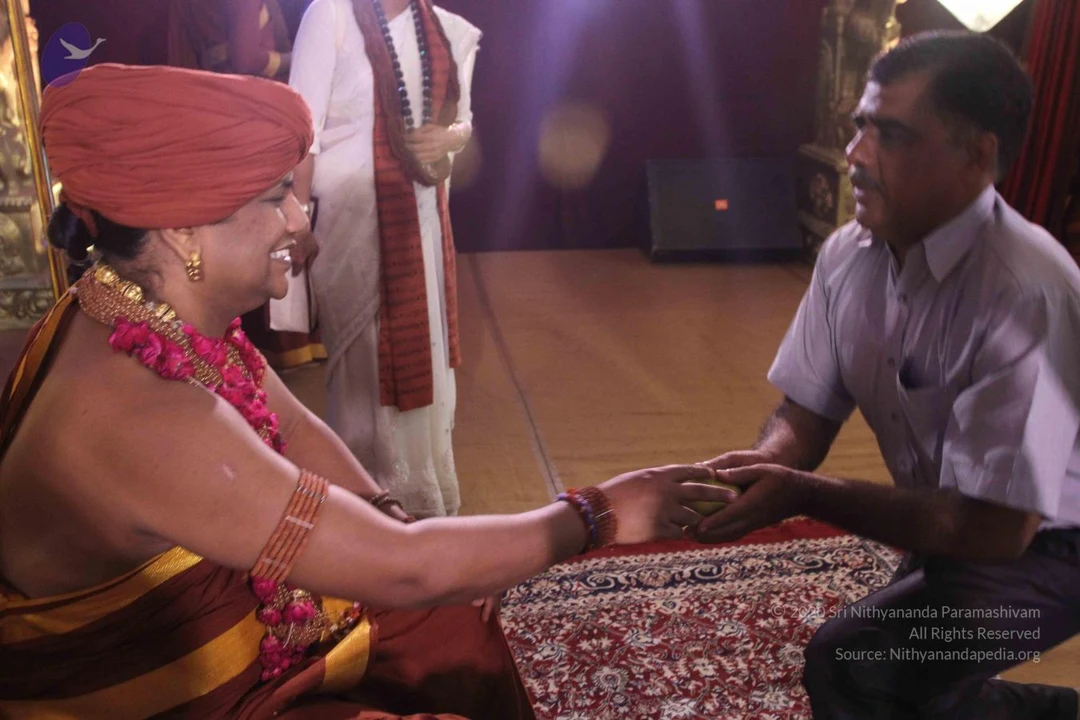
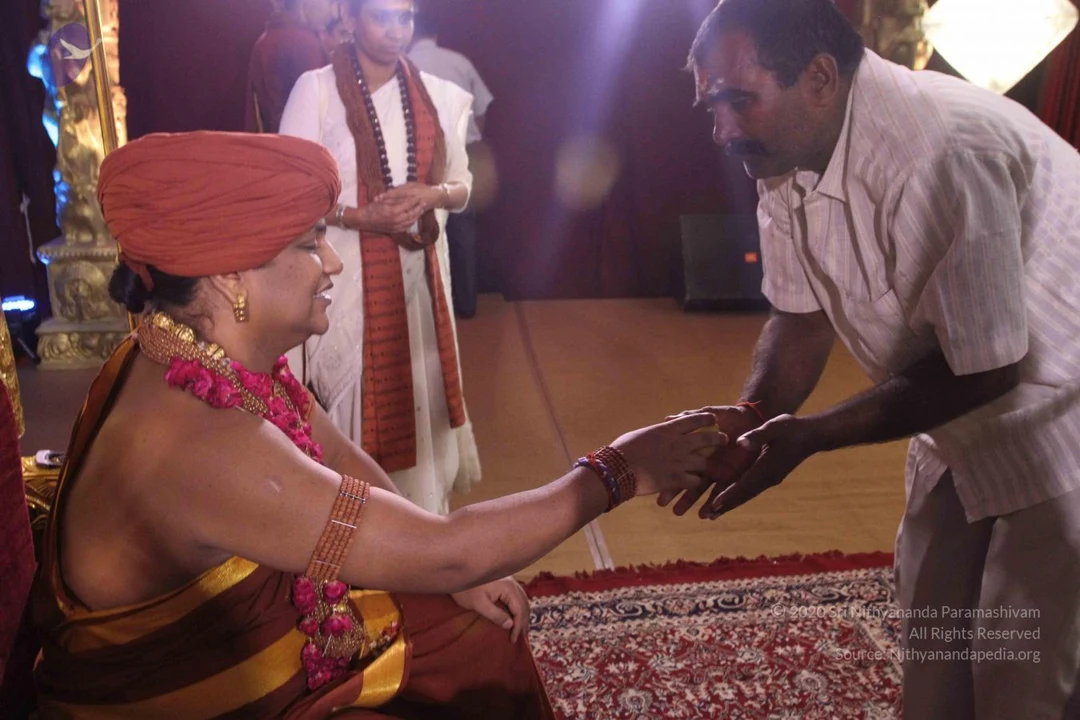
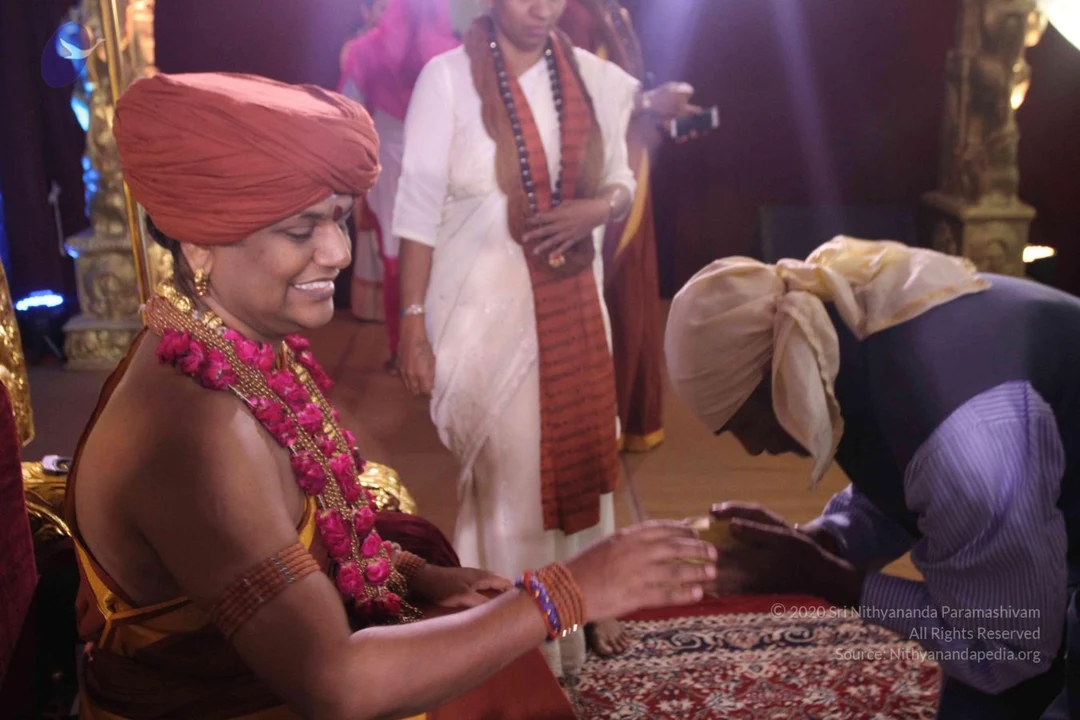
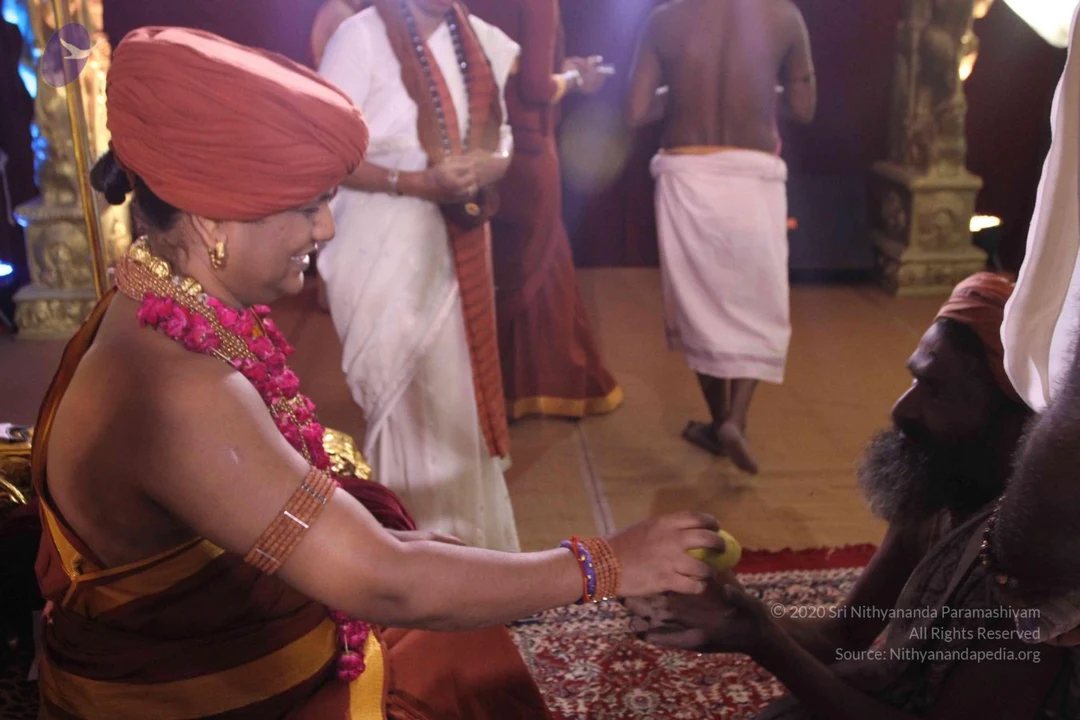
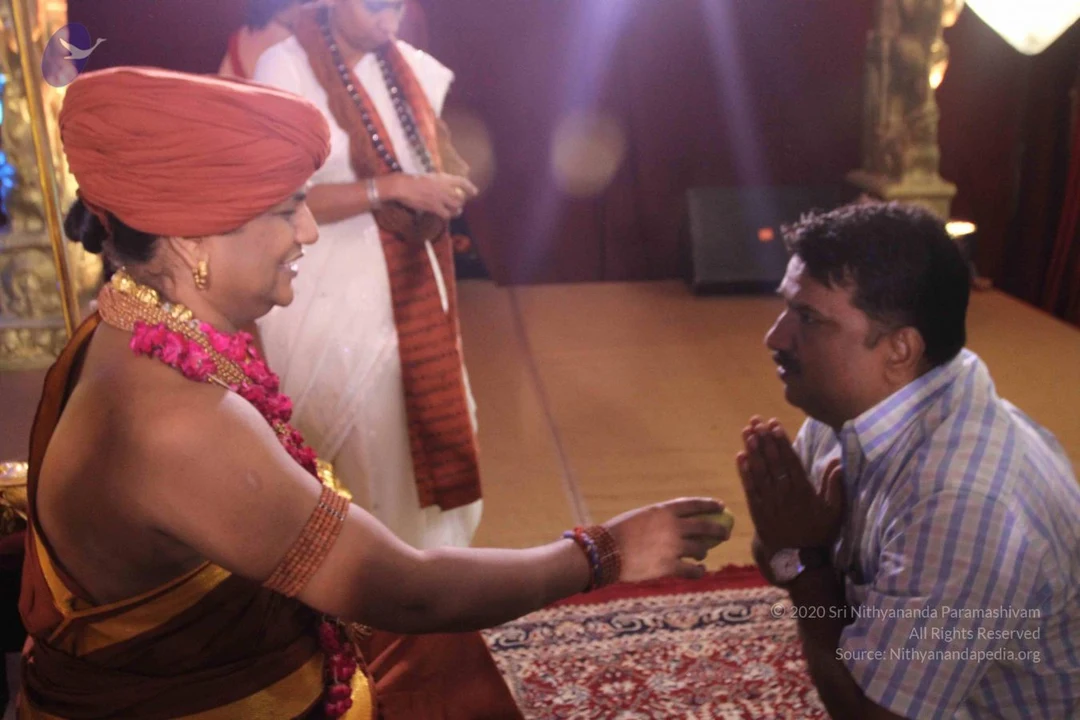
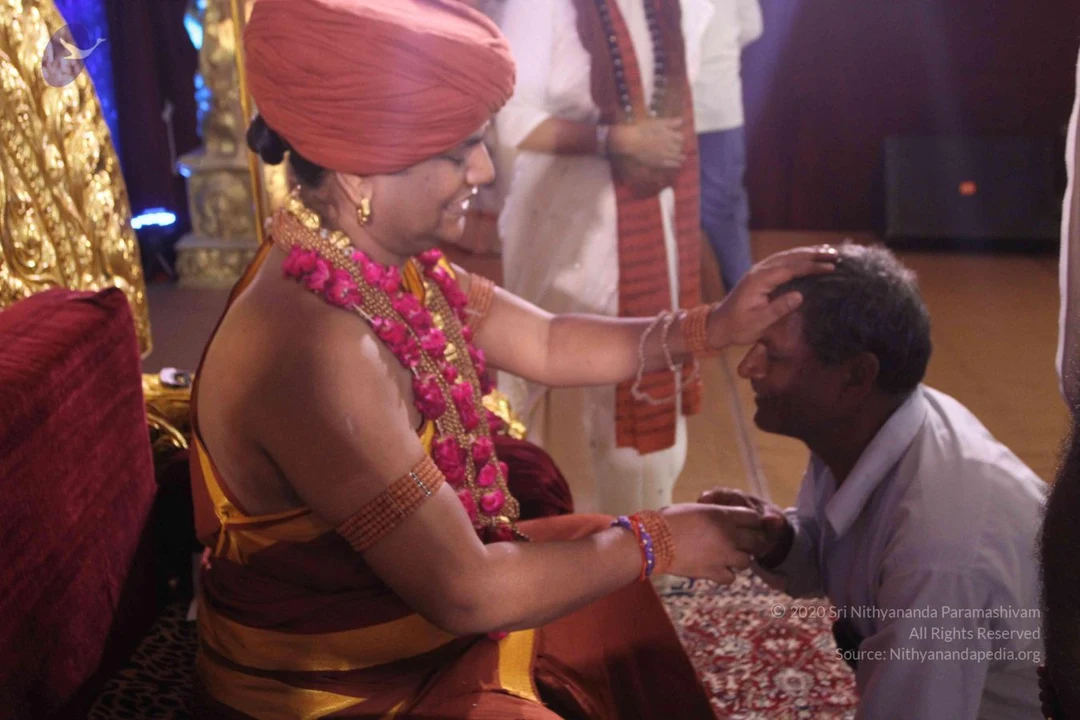
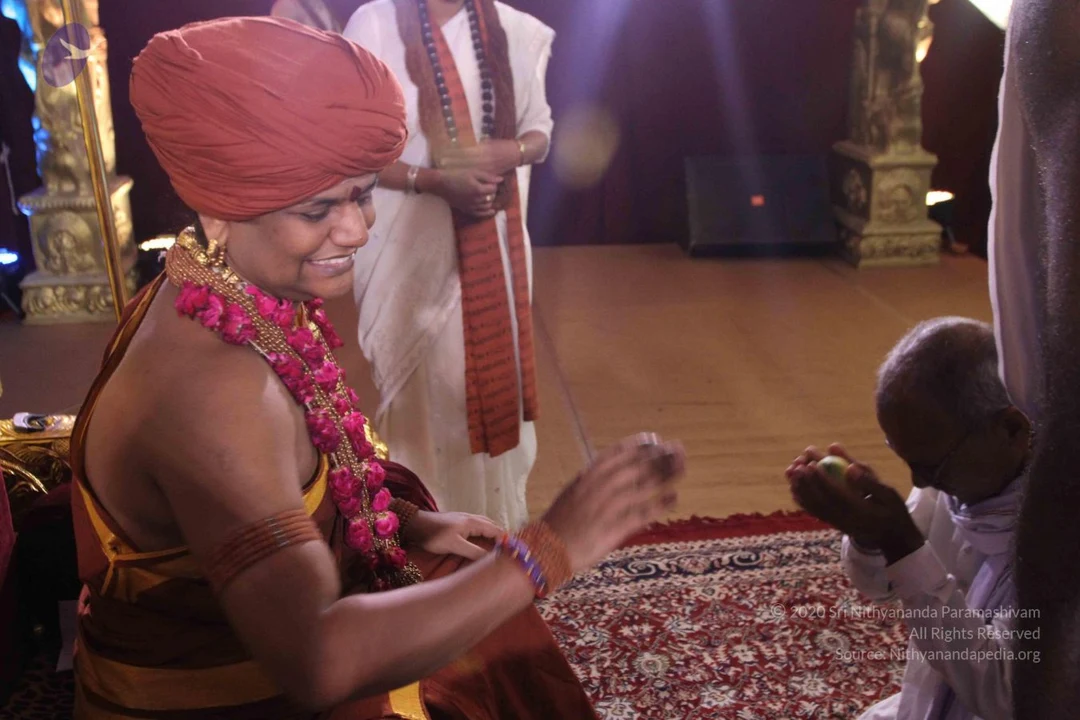
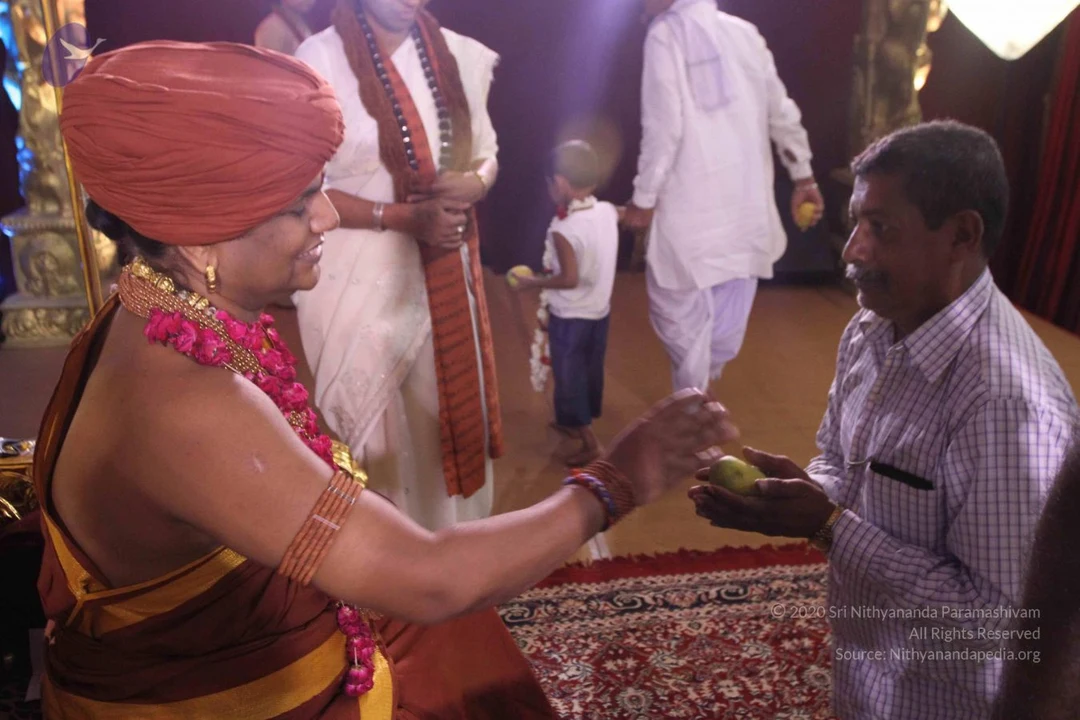
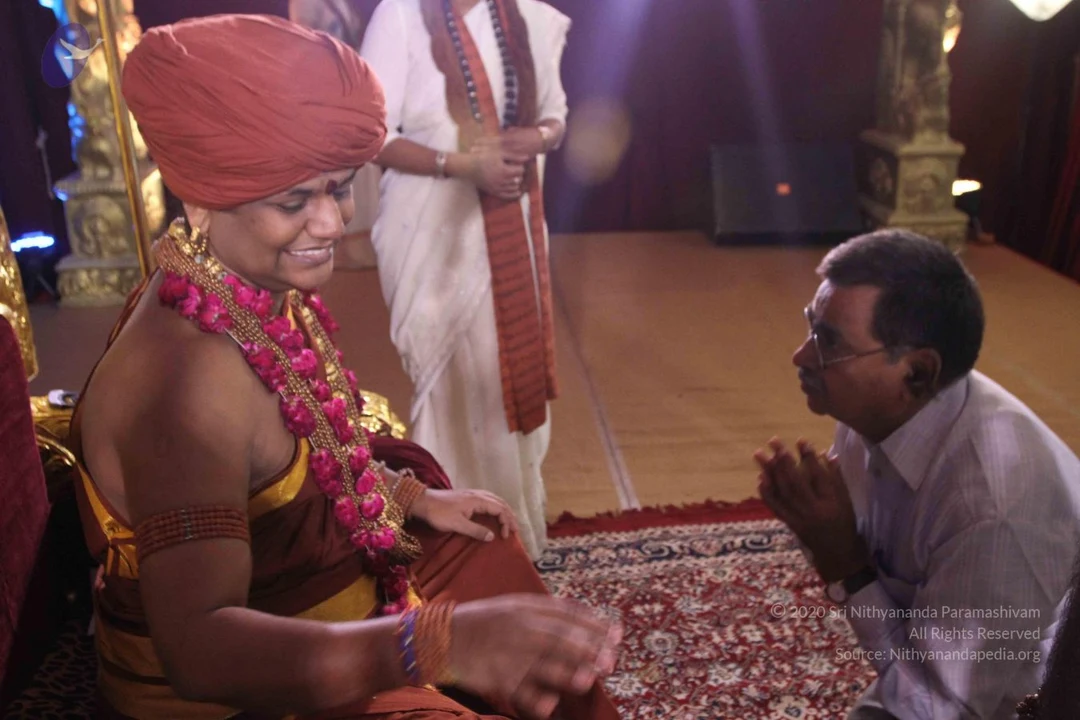
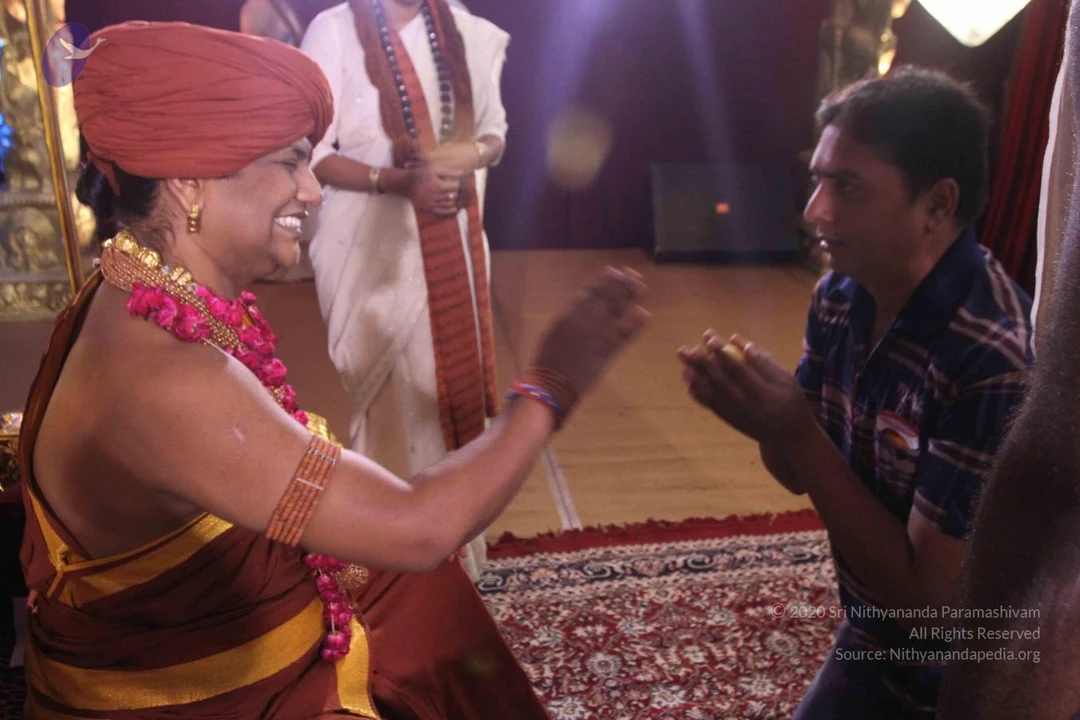
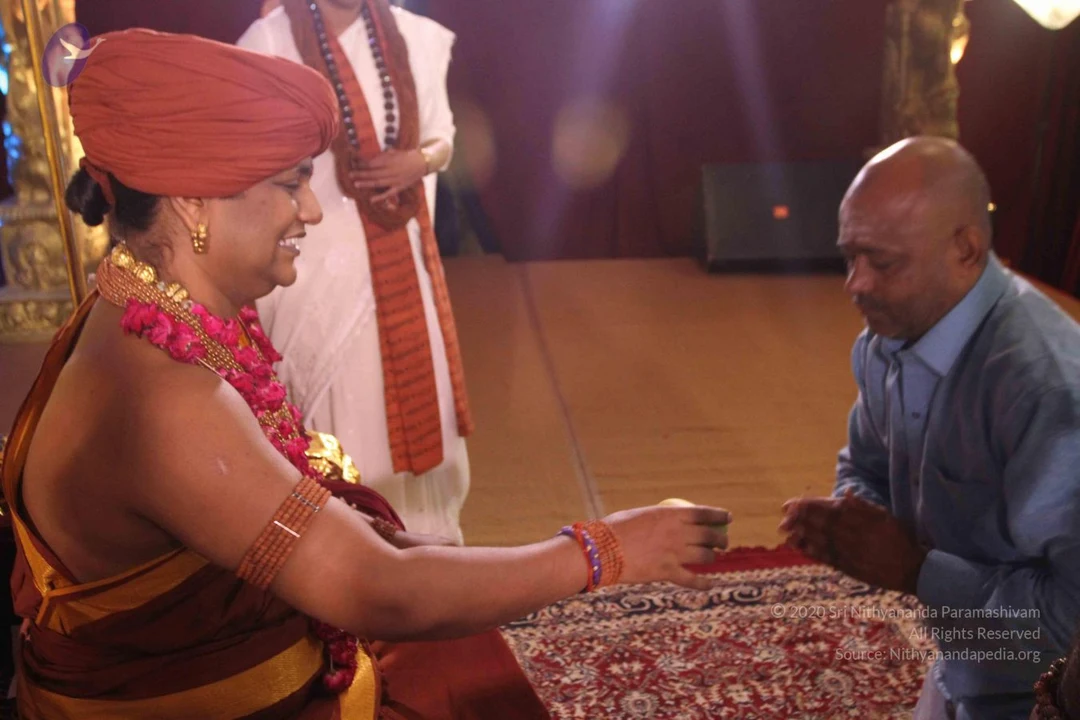
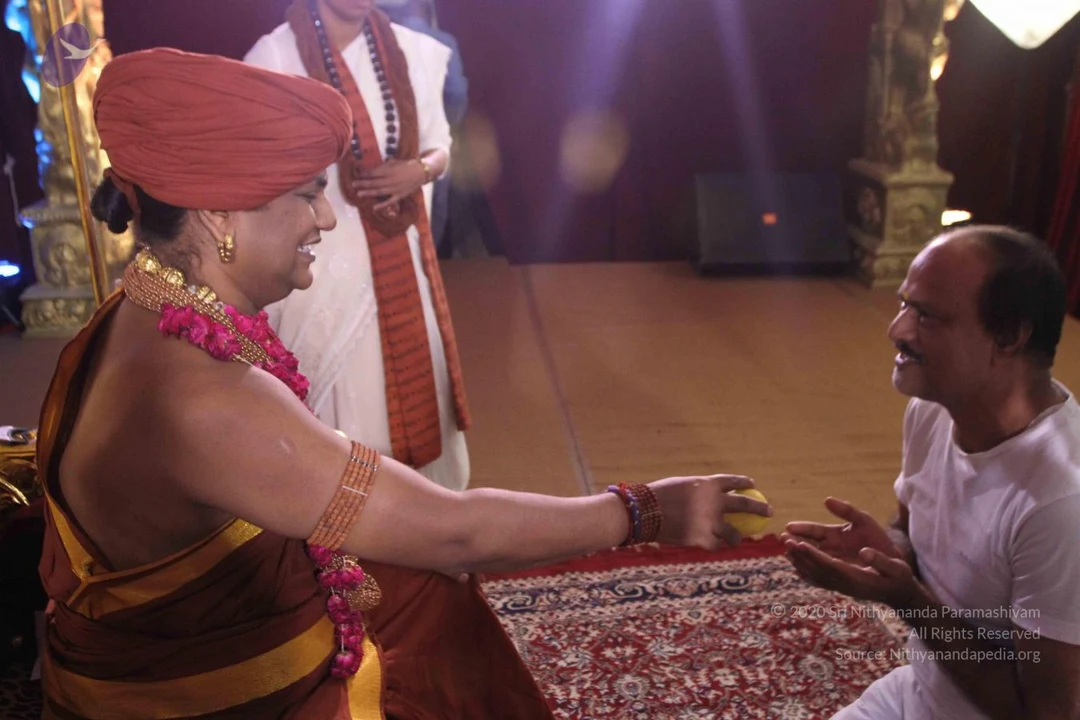
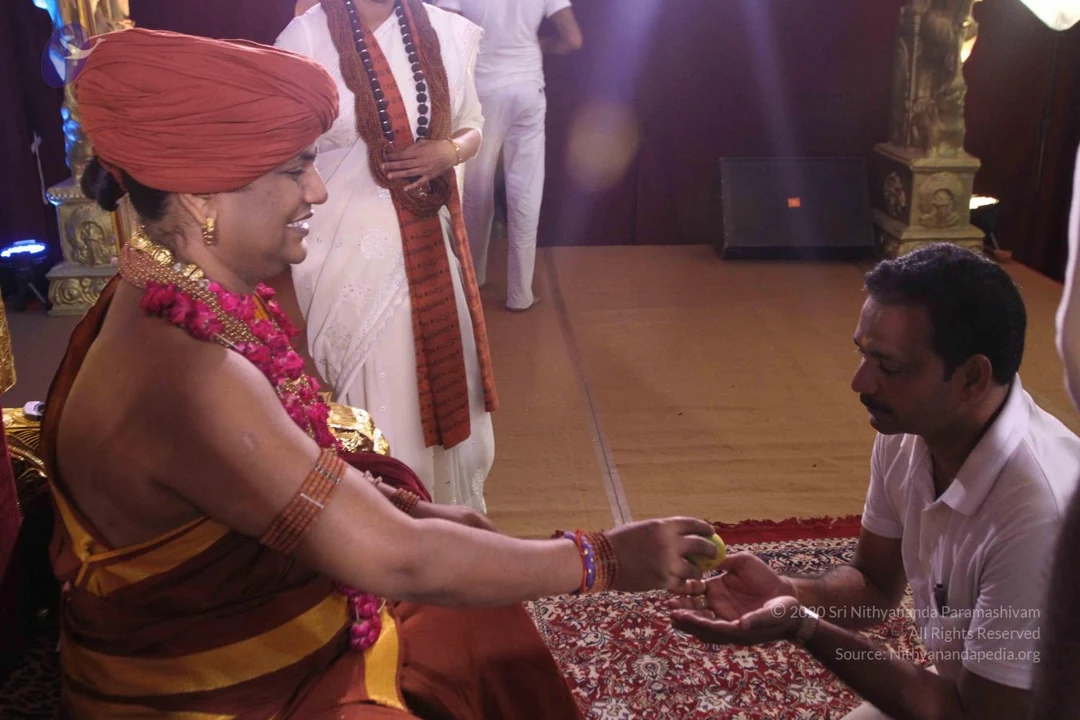
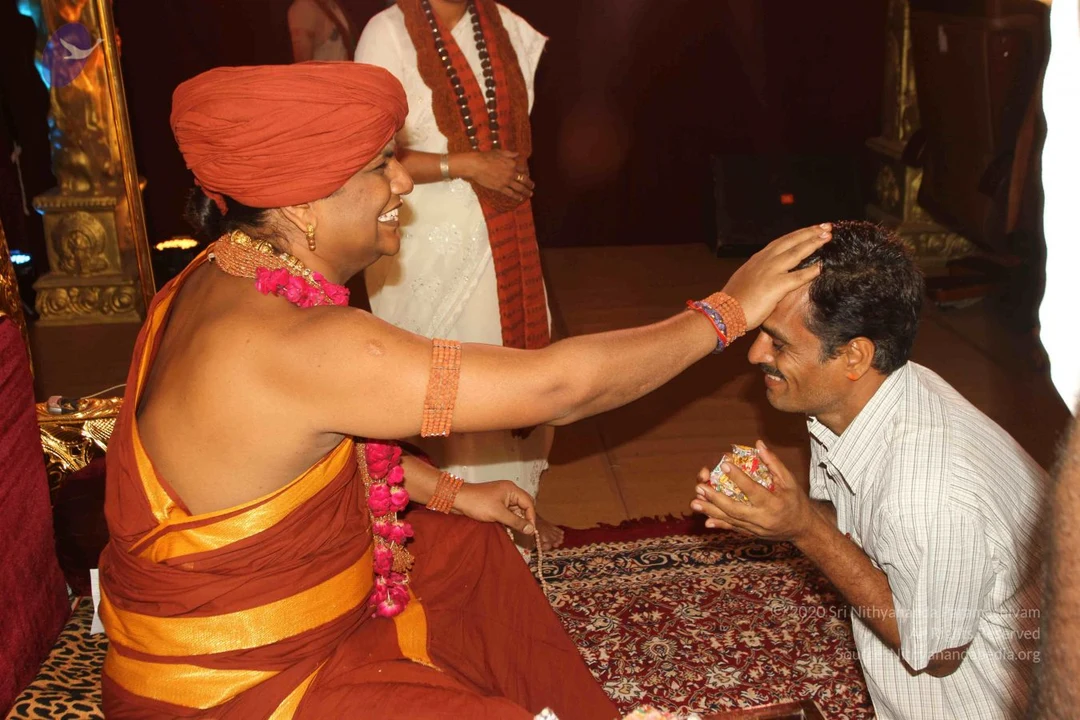
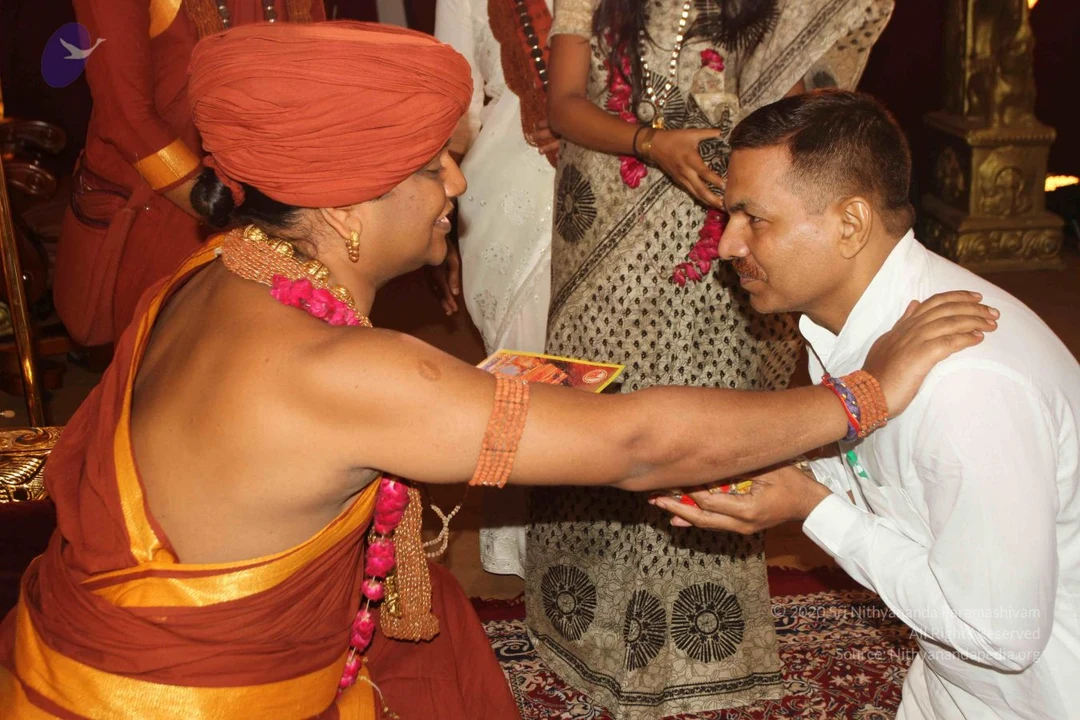
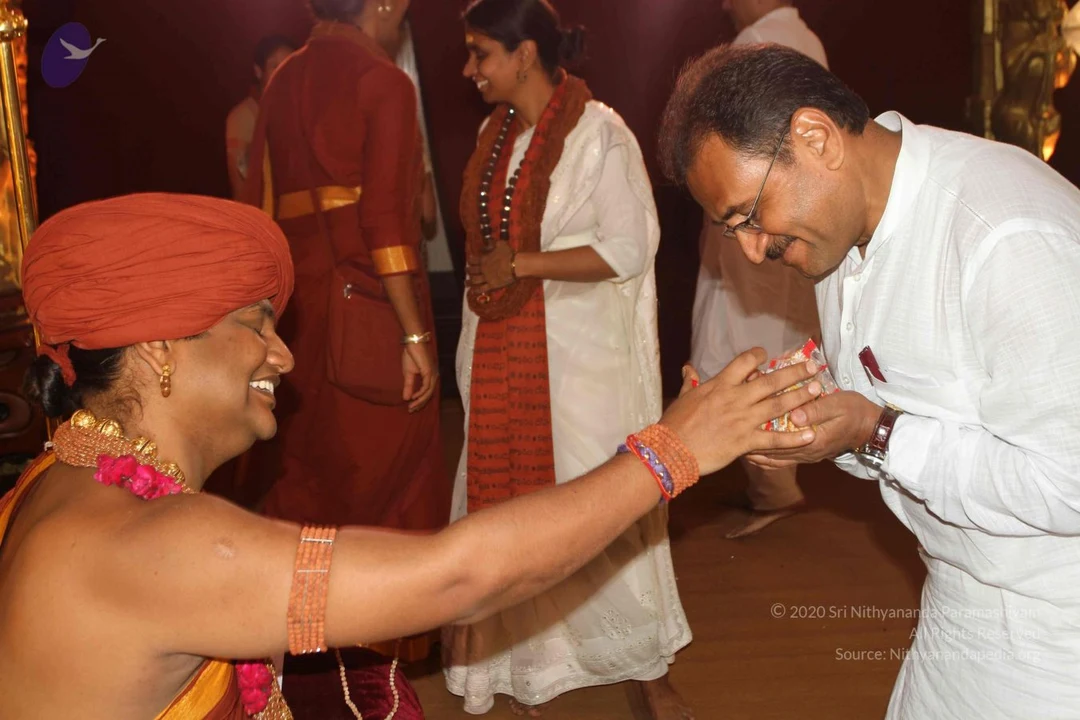
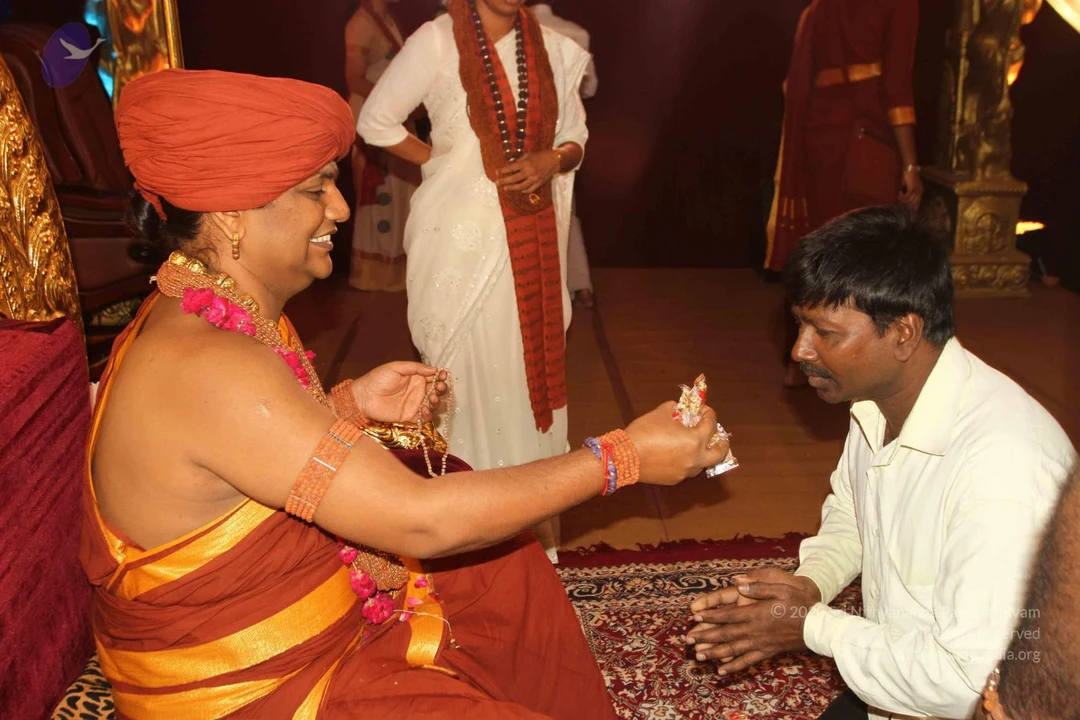
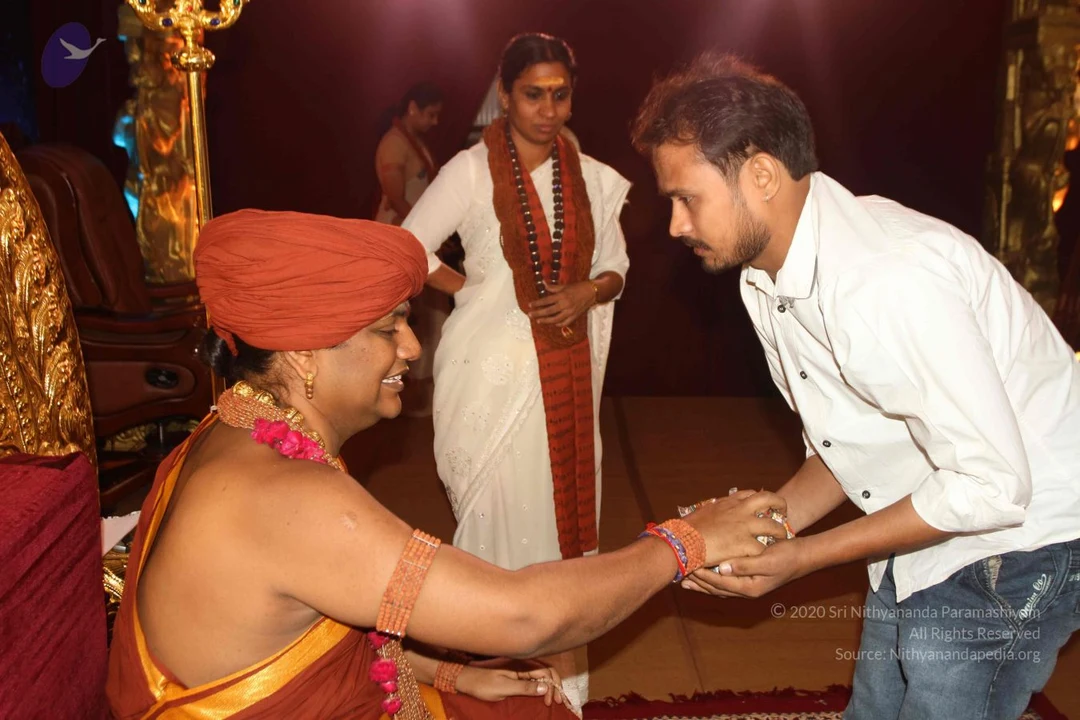
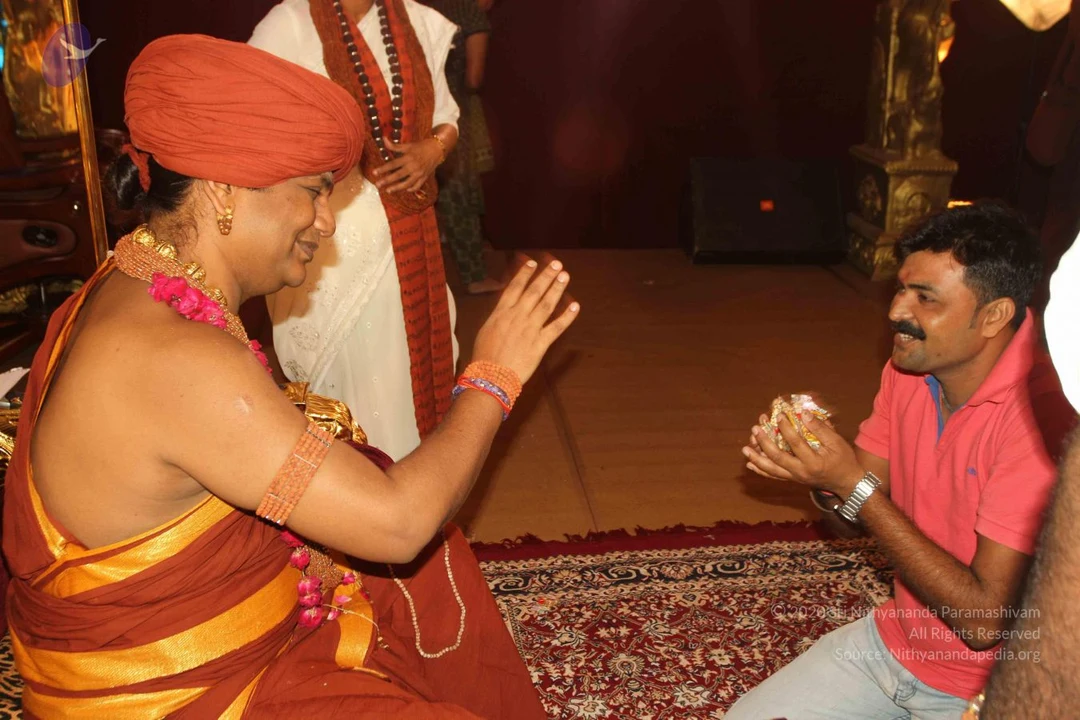
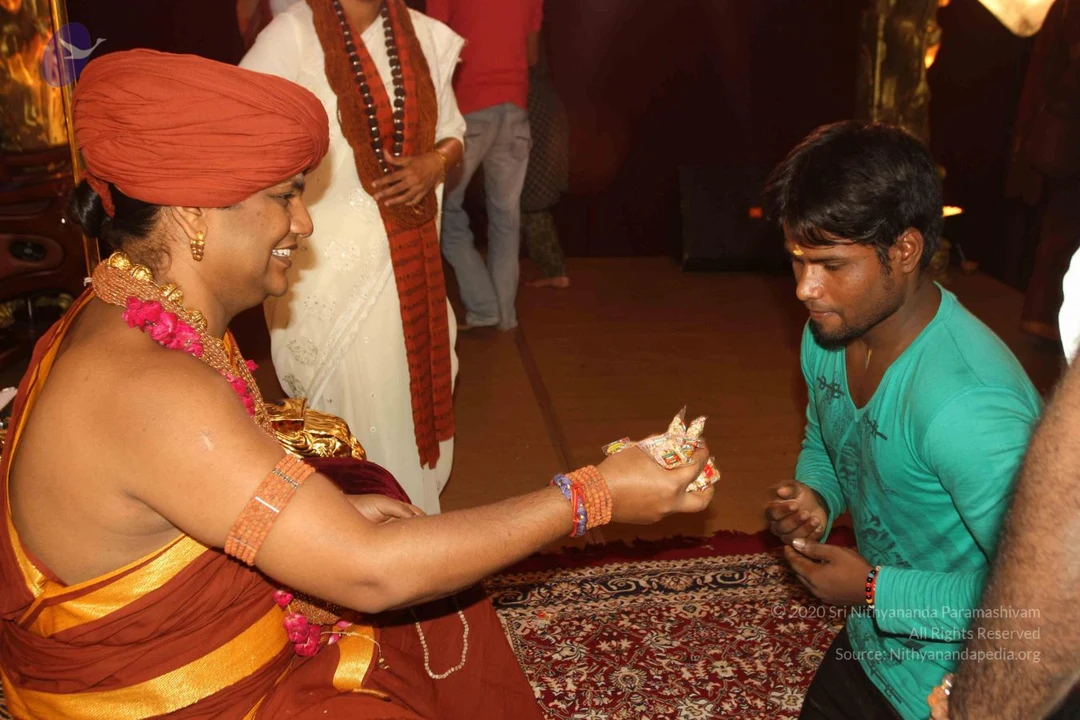
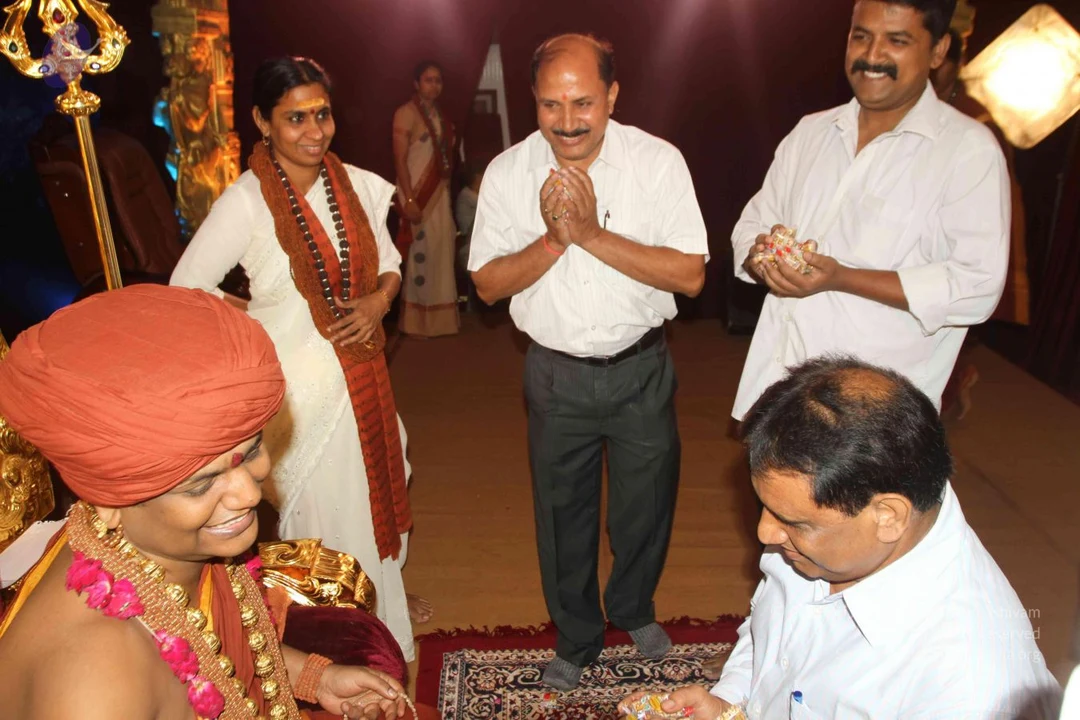
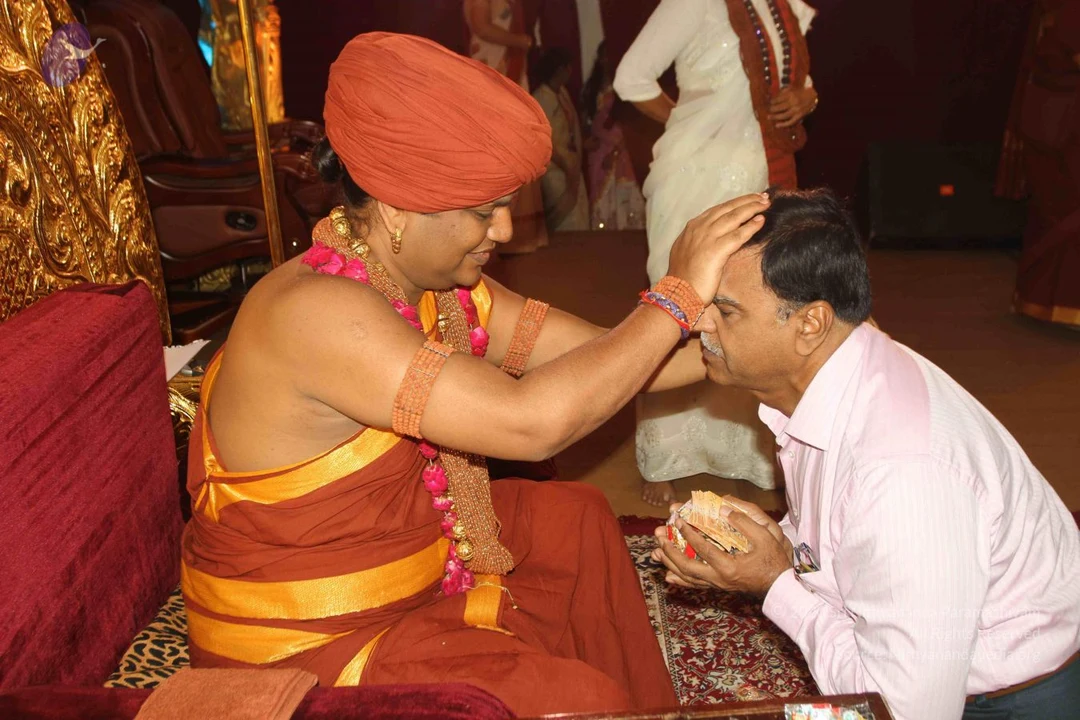
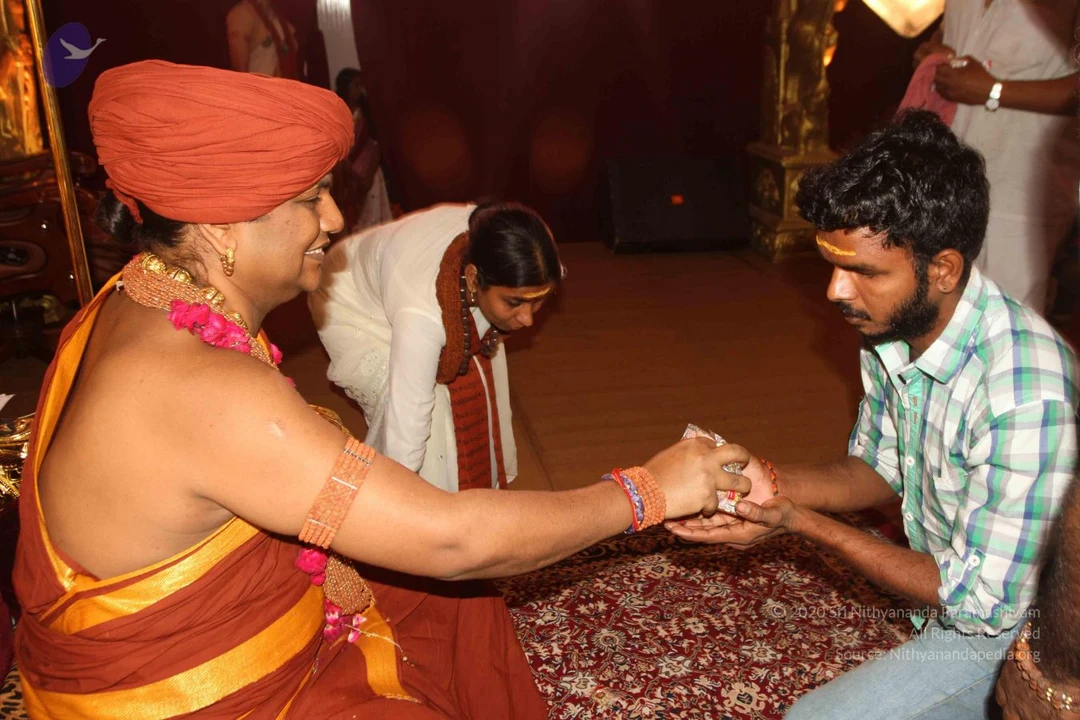
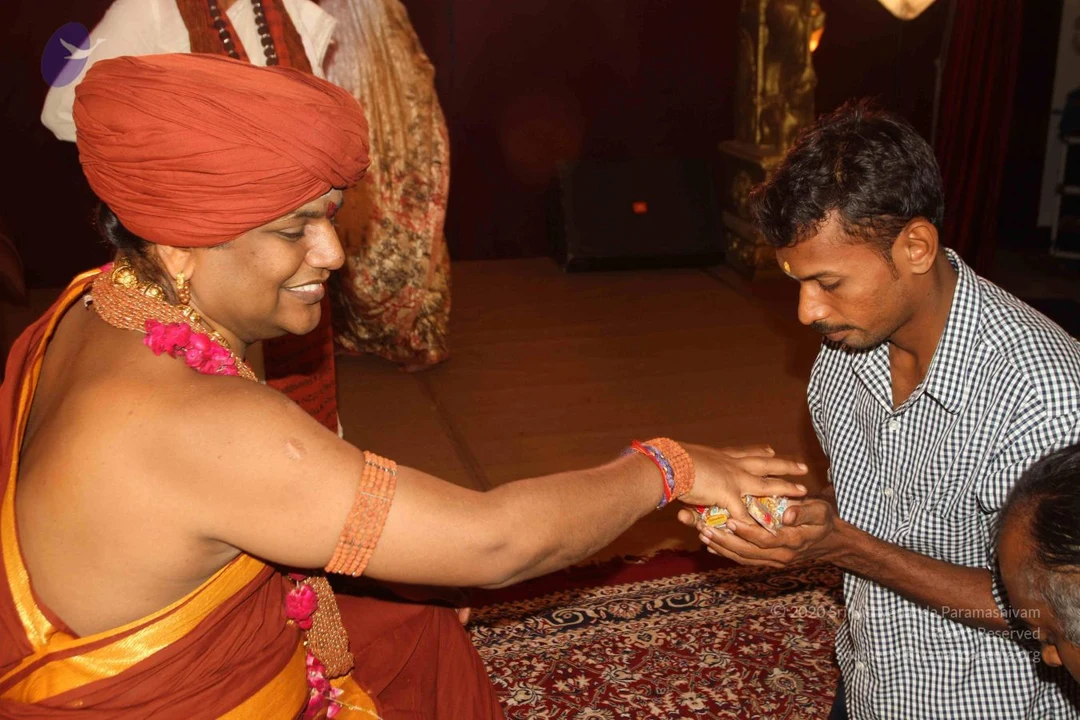
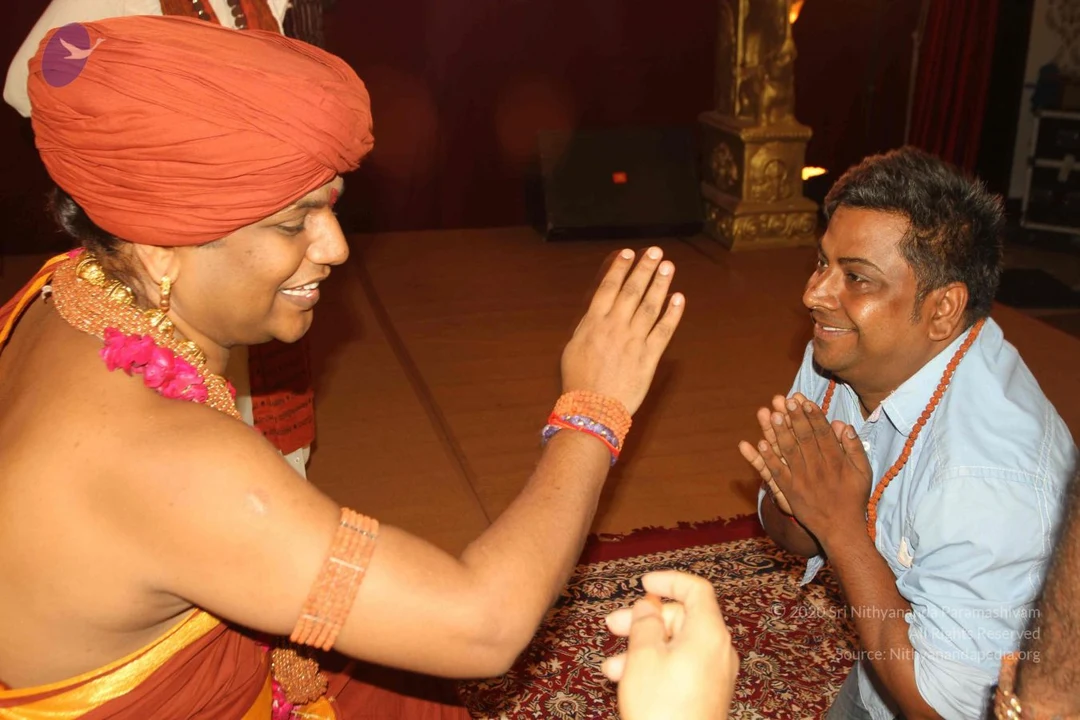
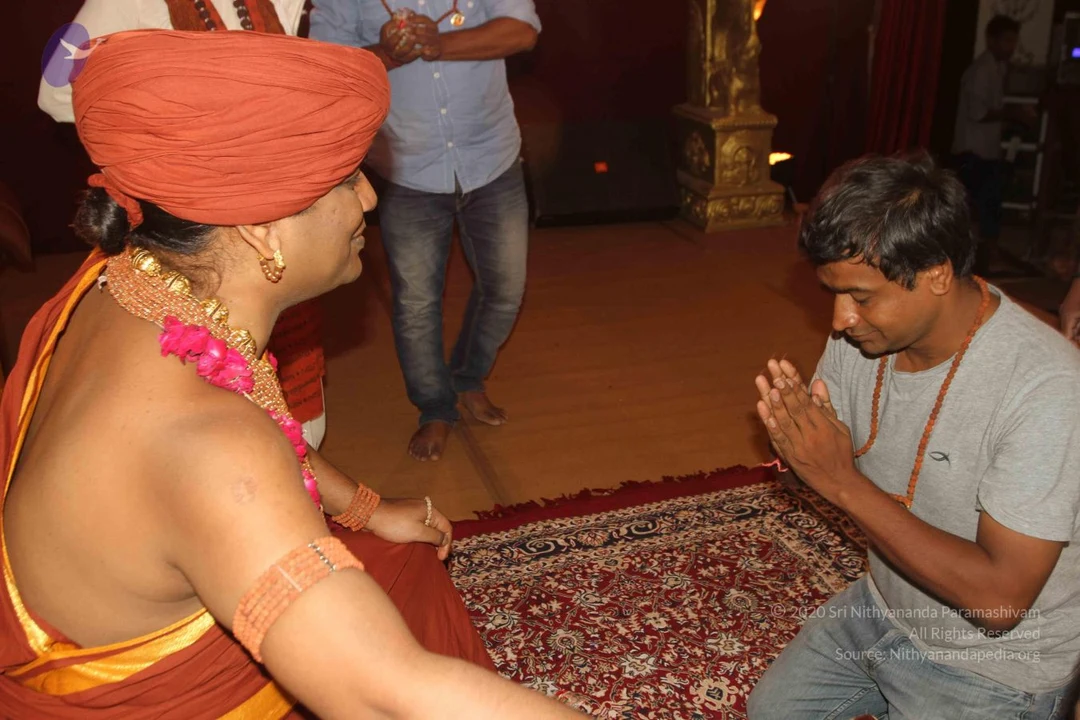
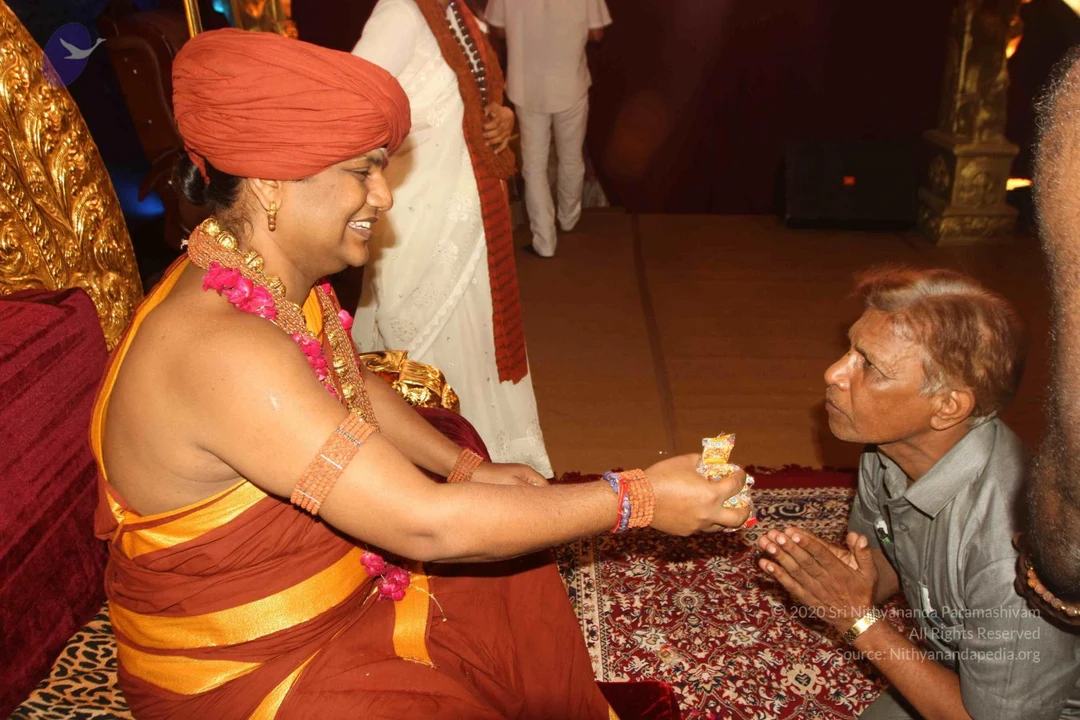
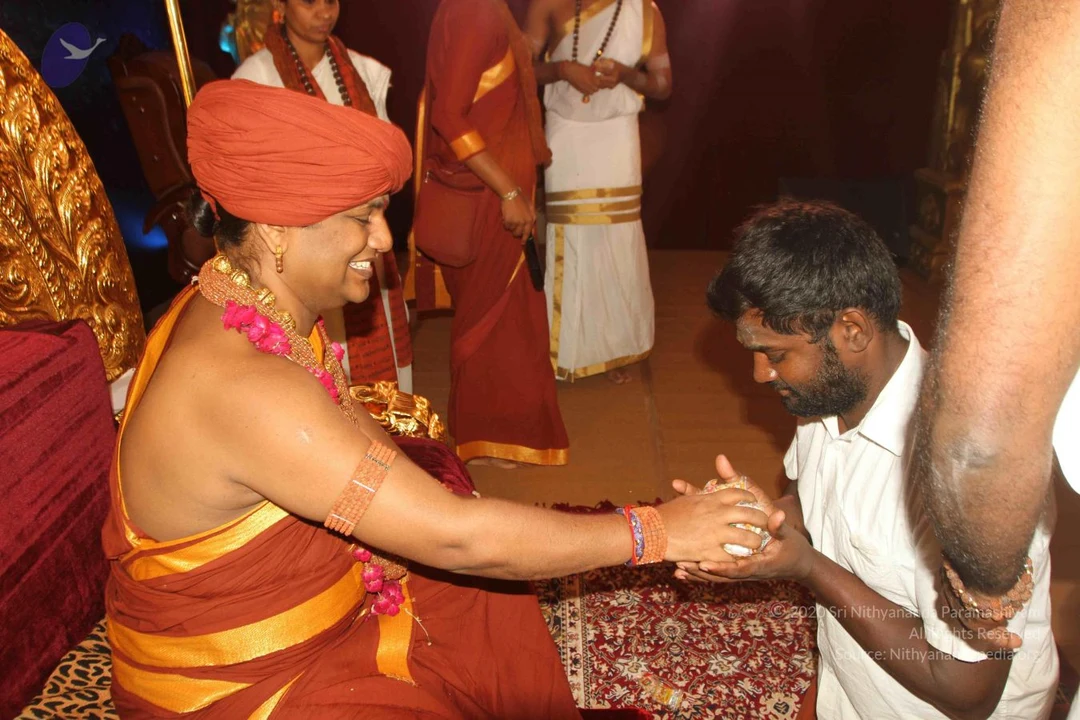
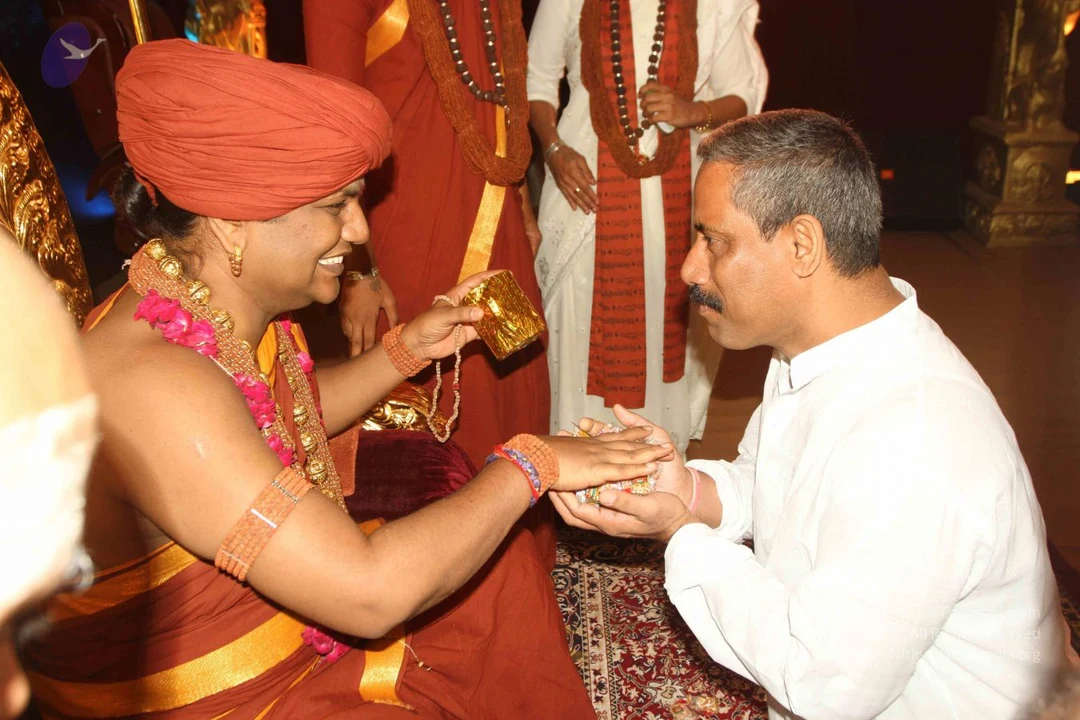
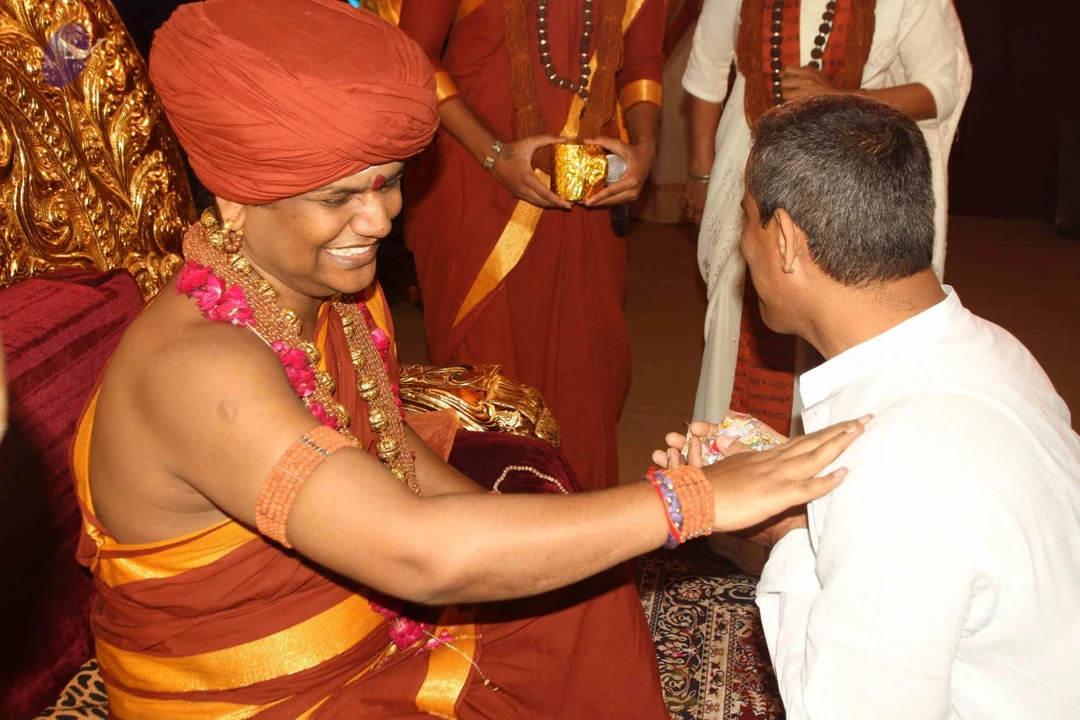
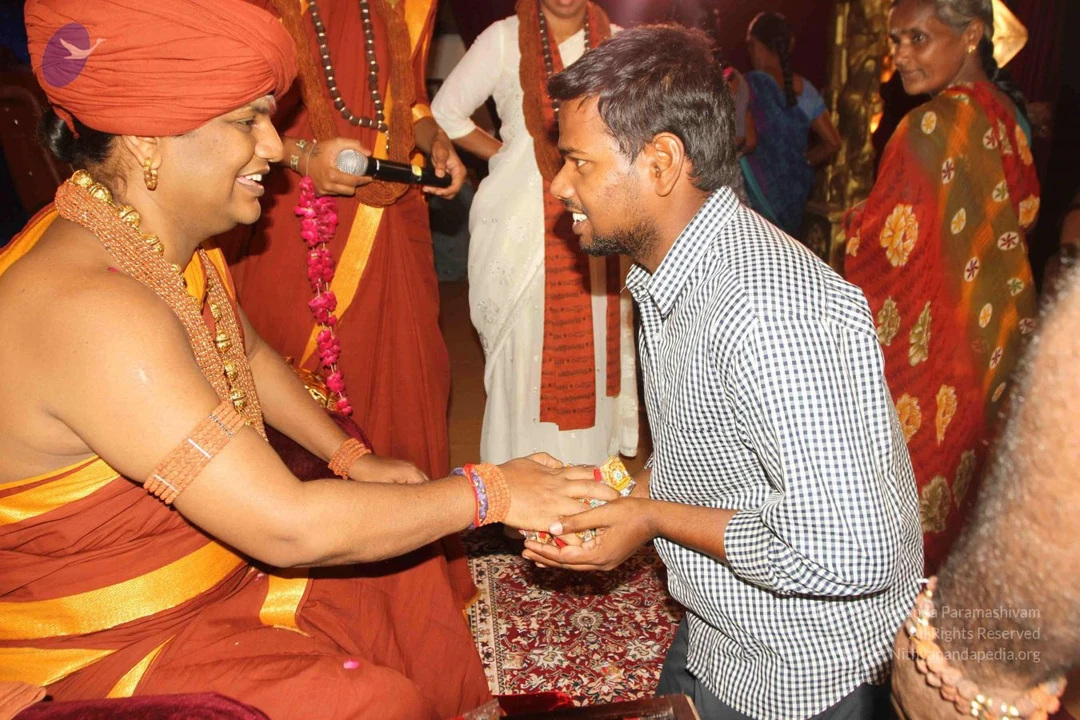
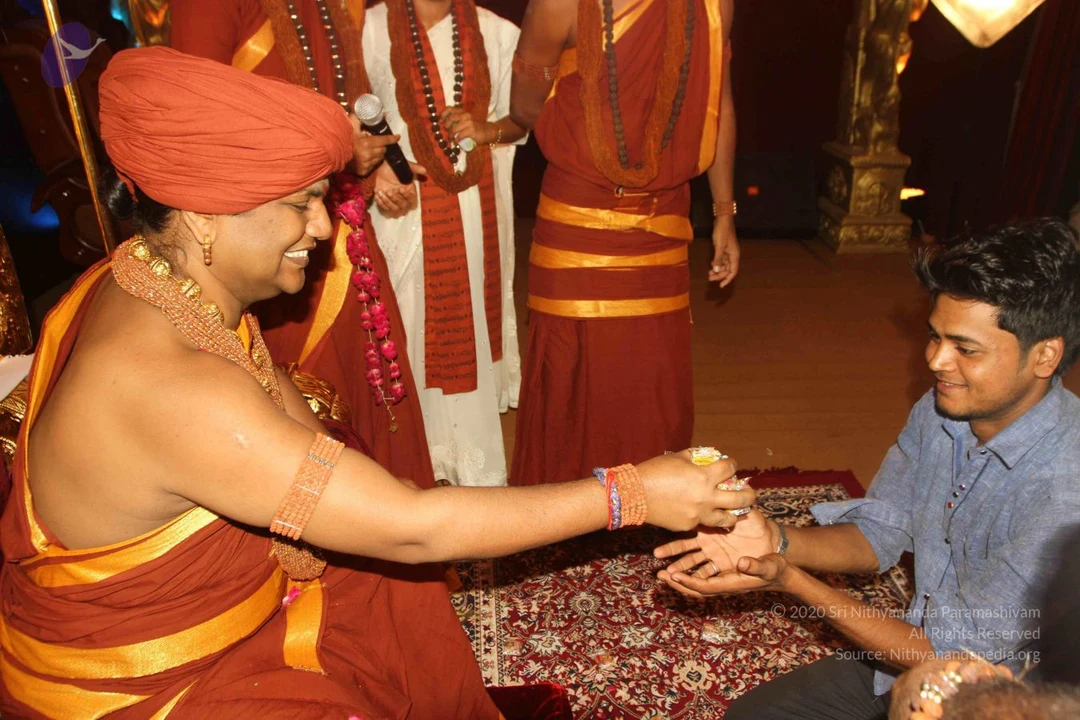
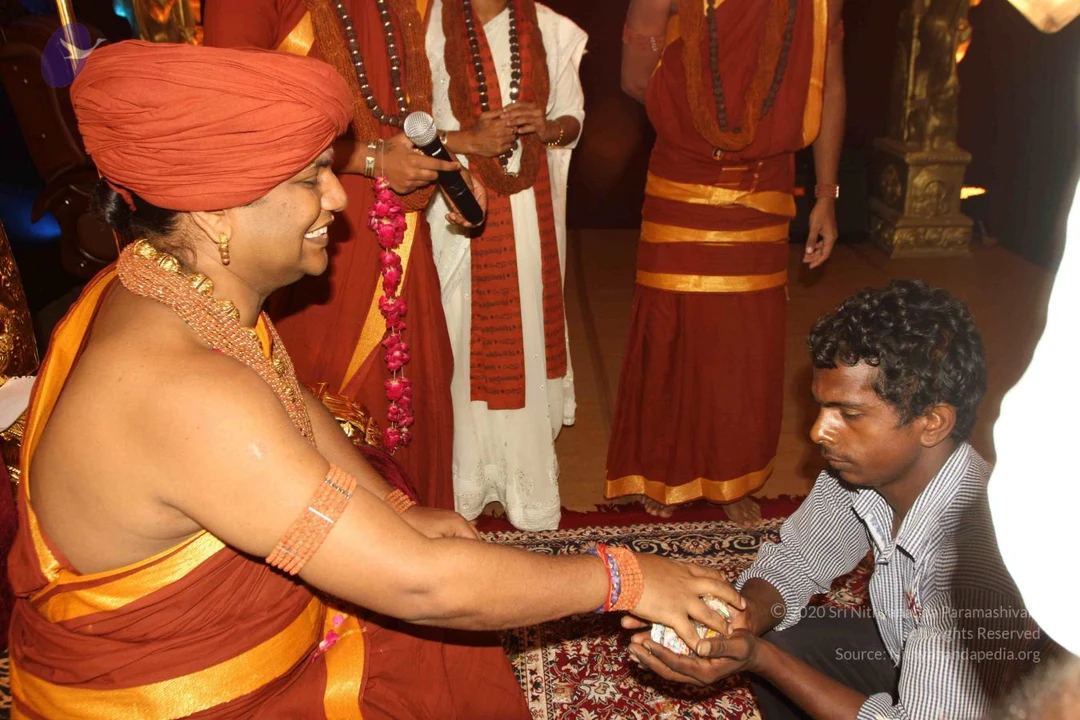
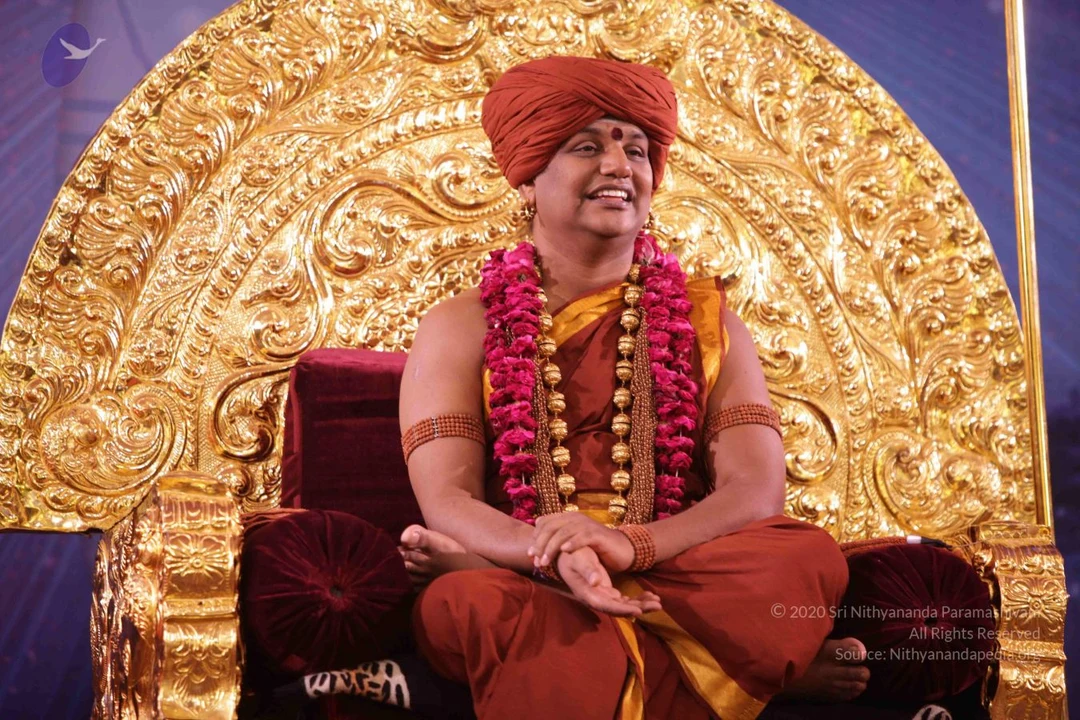
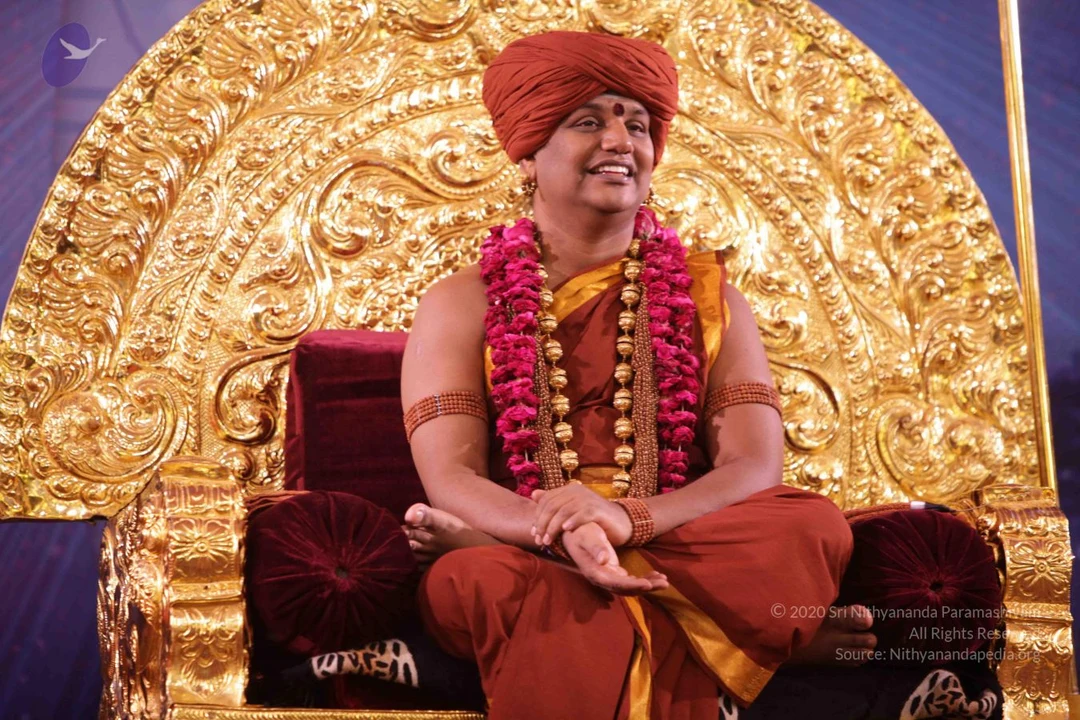
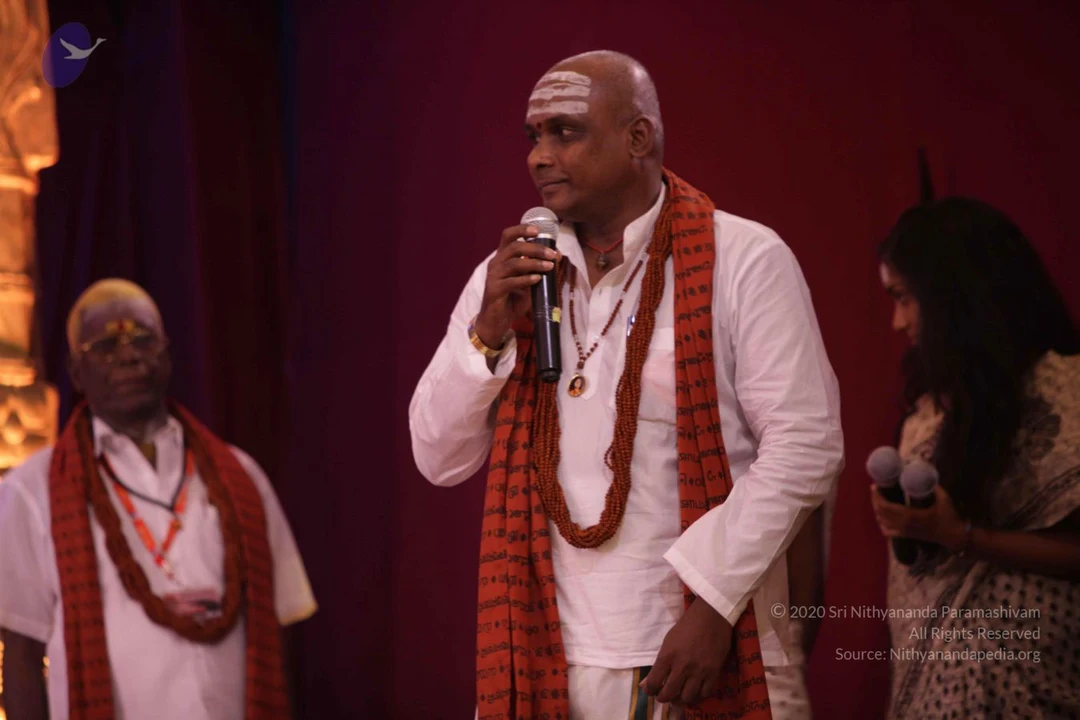
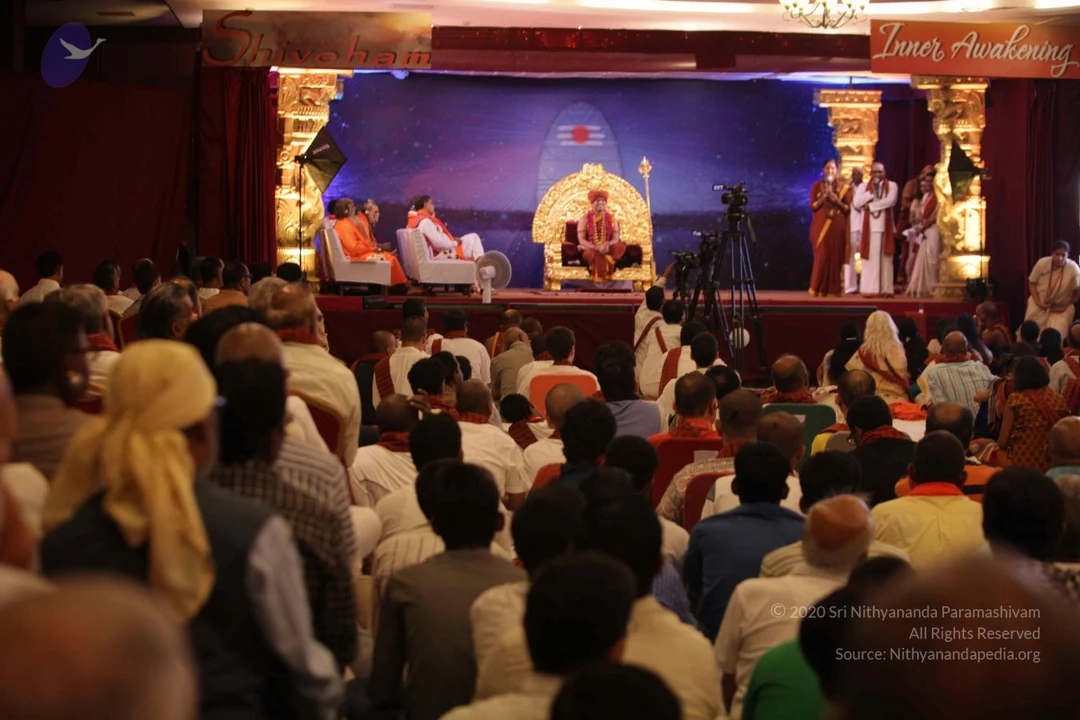
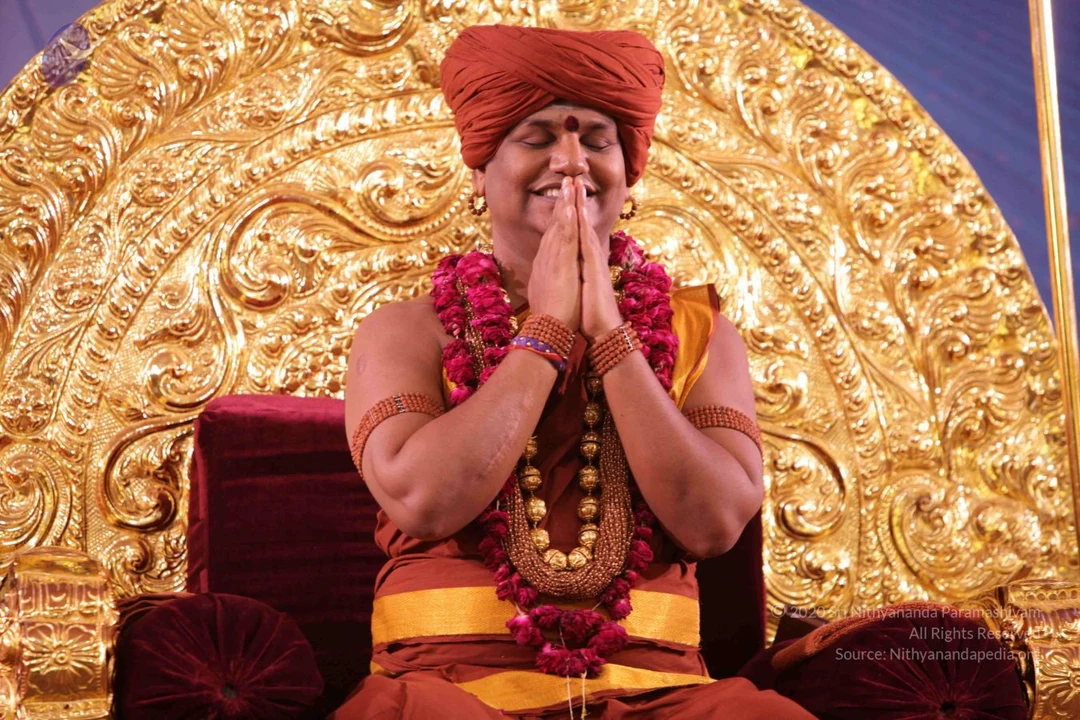
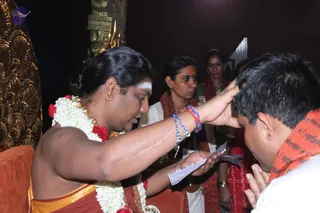
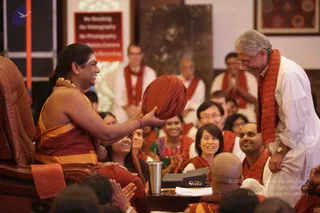
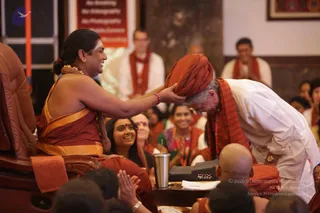
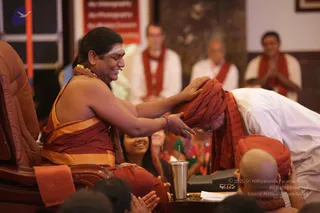
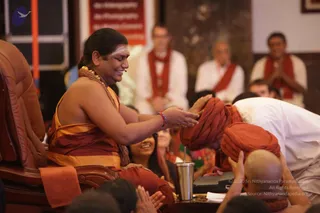
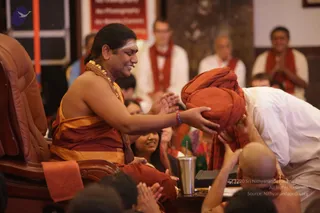
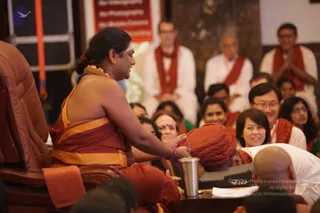
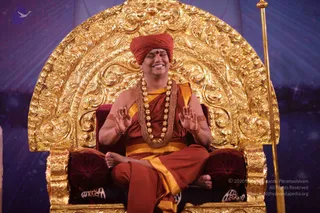
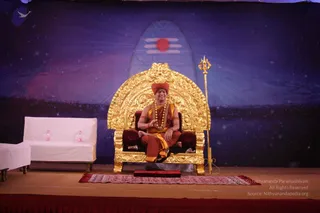
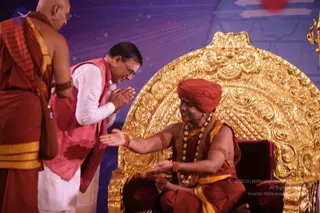
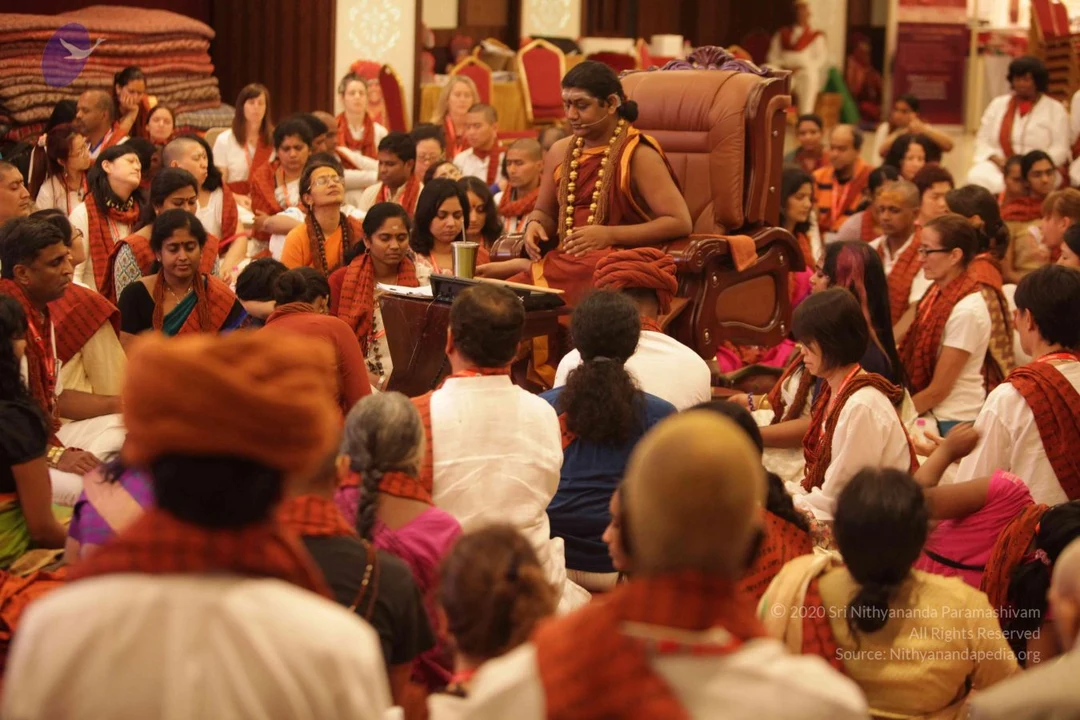
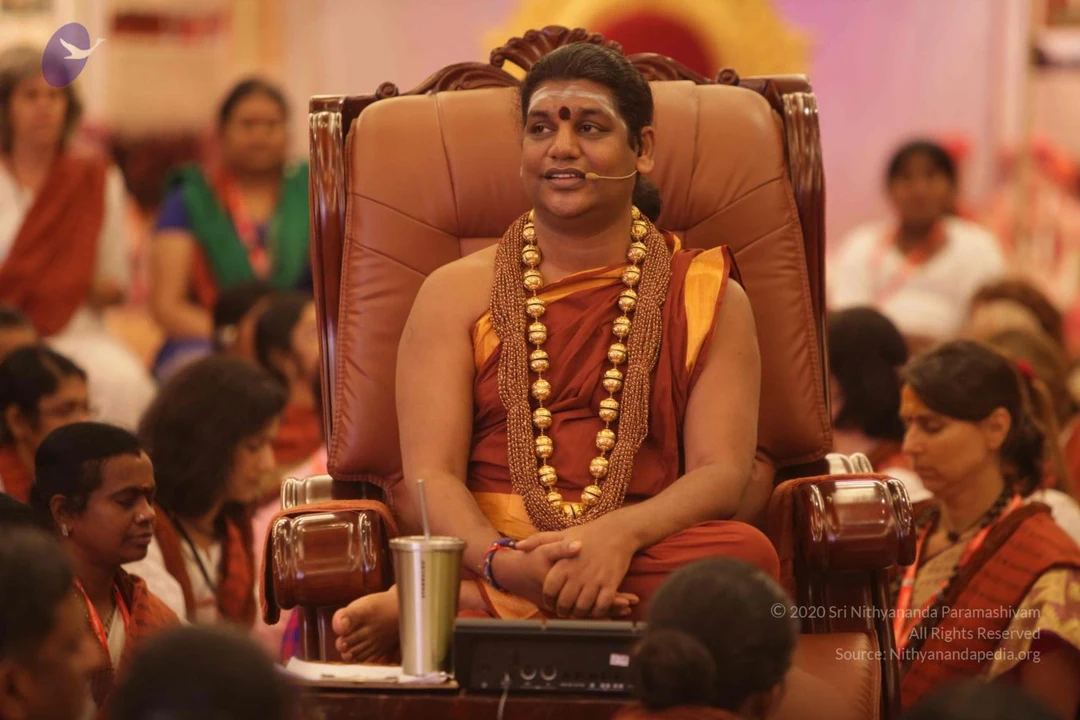
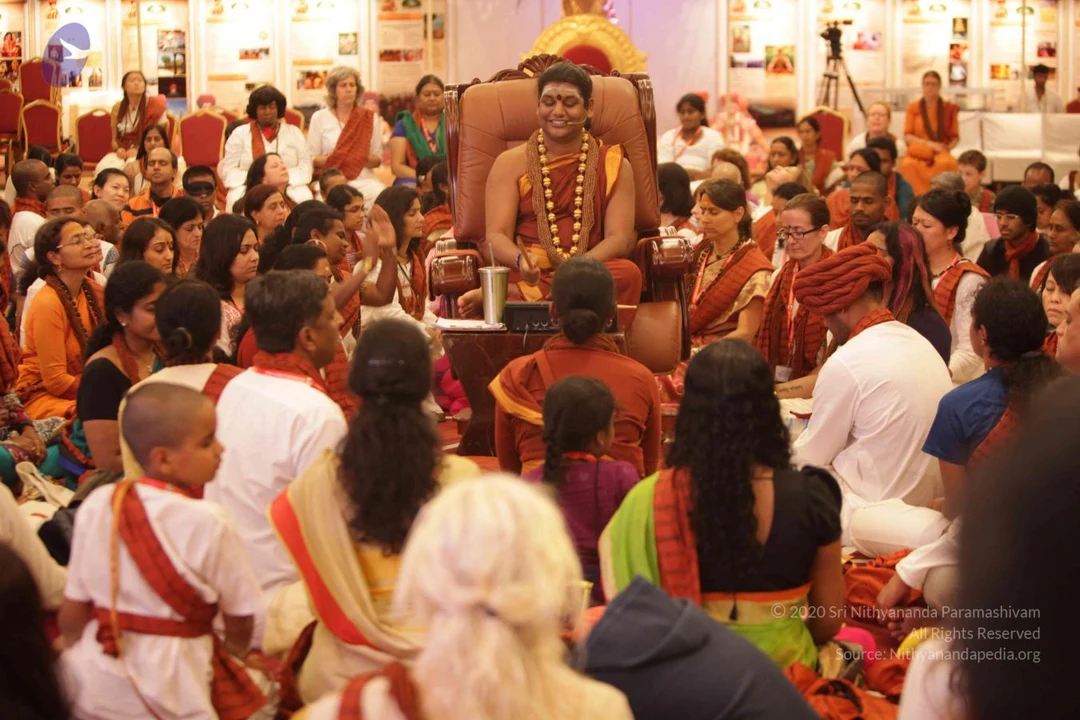
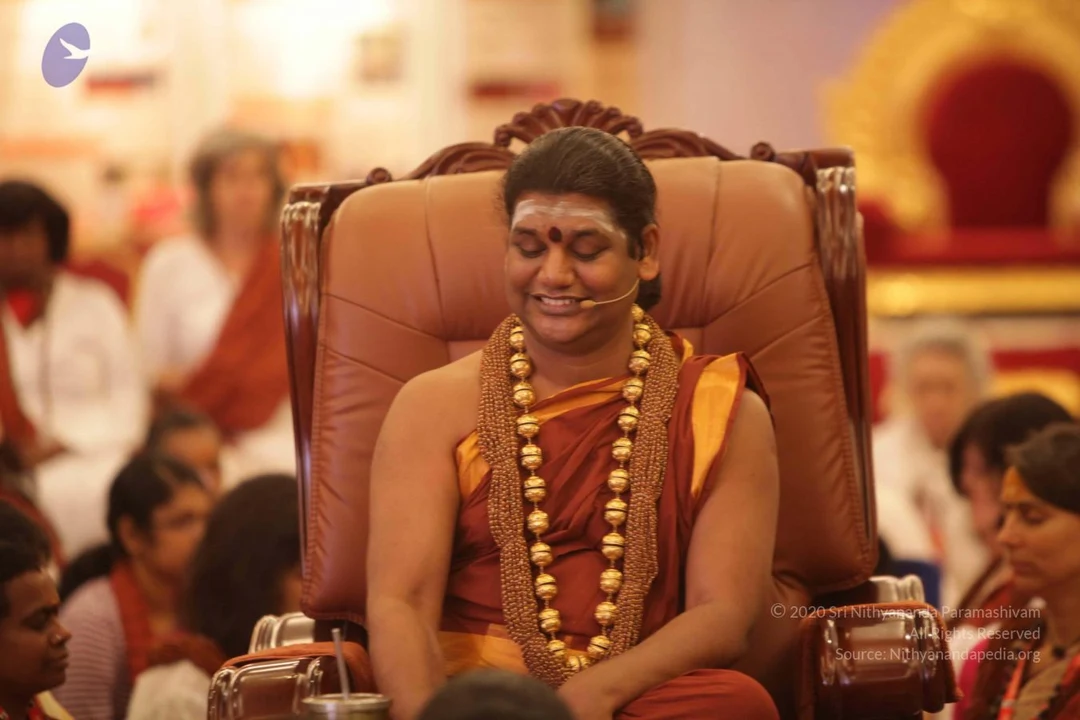
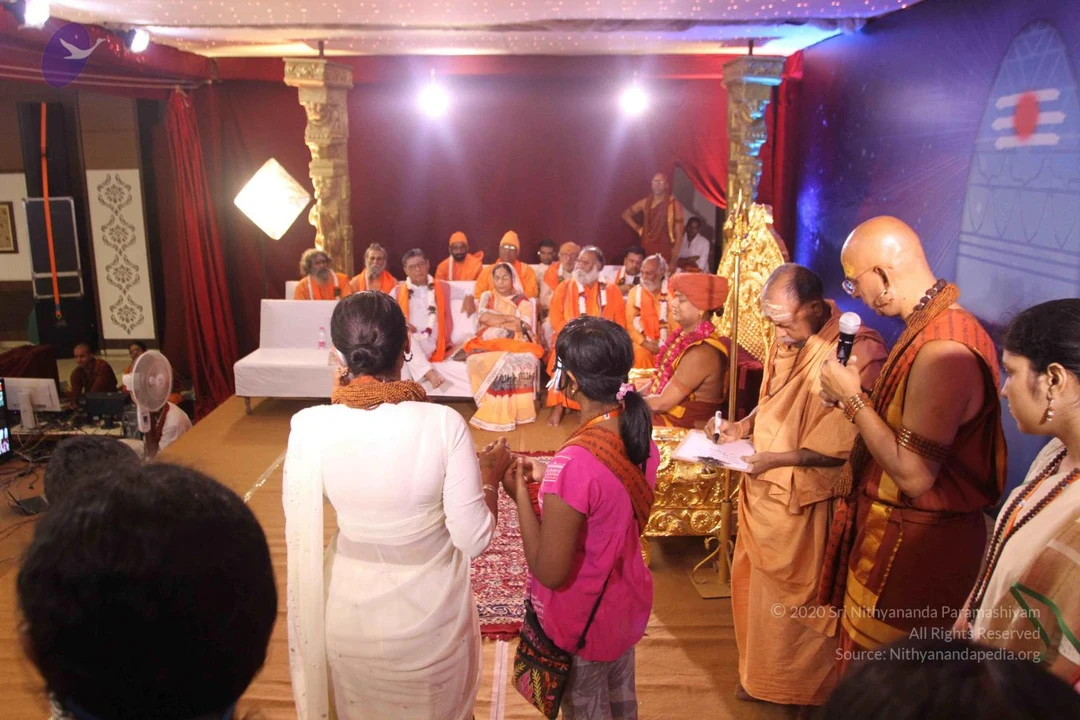
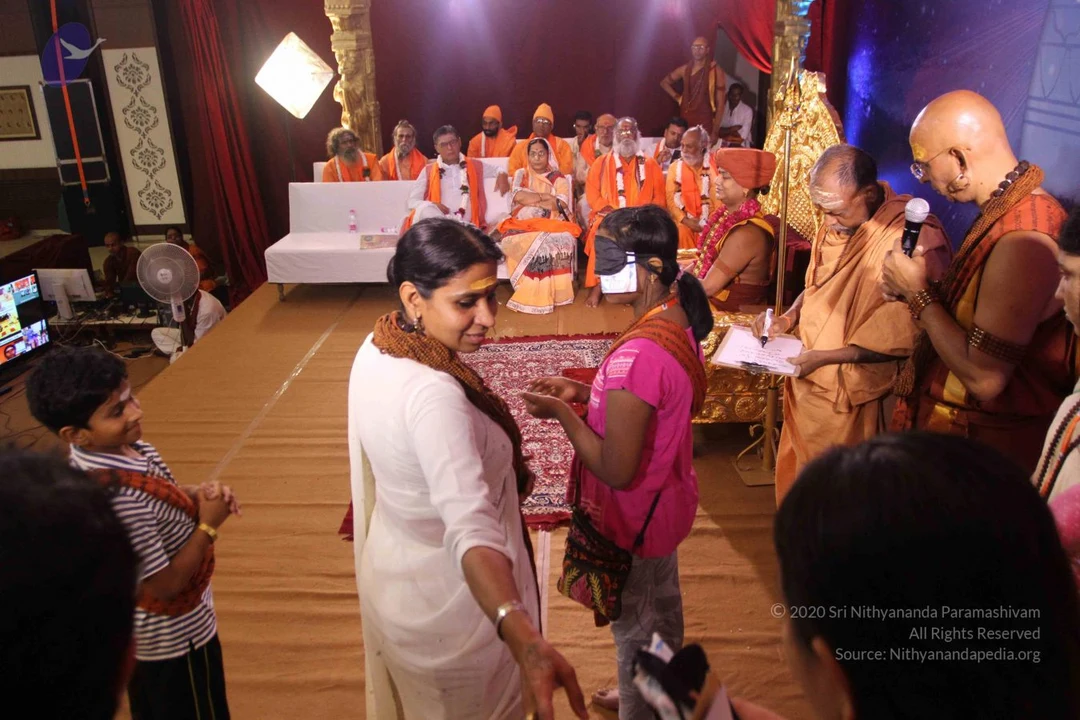
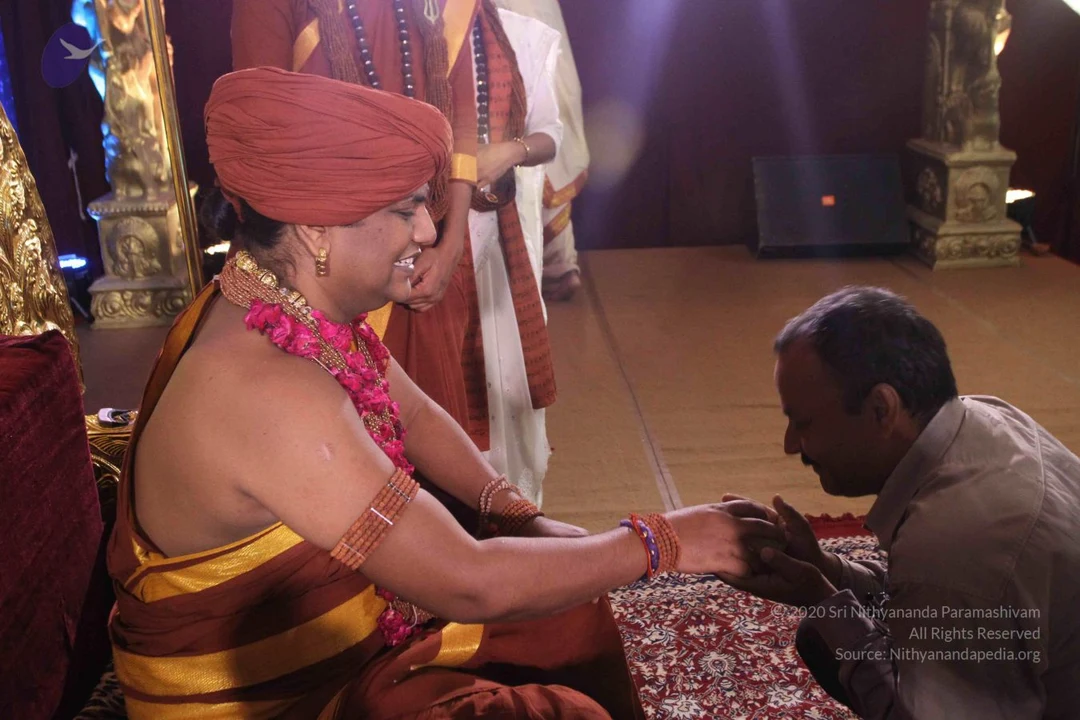
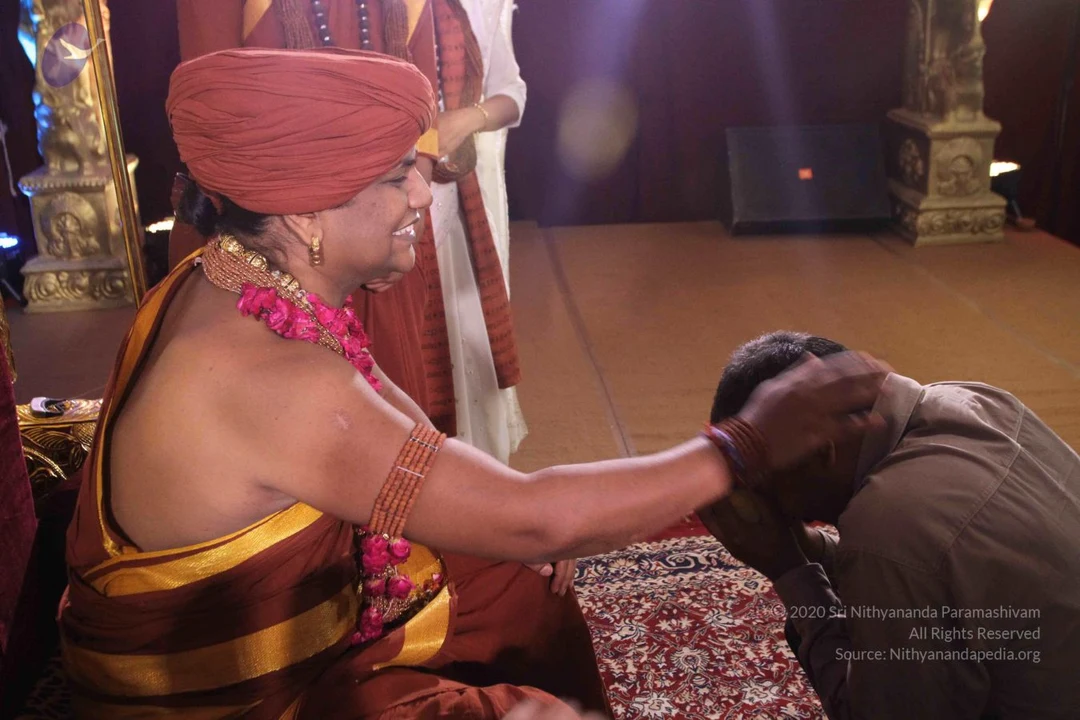
A photograph of a ceremonial exchange on a stage. A seated figure with back turned wears an orange-red turban, a gold-and-red saree with a wide gold border, a heavy gold necklace, and pink flower garlands; they extend a bare arm forward to receive a green fruit held out by a middle-aged man in a grey short-sleeved shirt and blue pen, kneeling on a red-and-cream patterned rug. Behind them, a standing person in white clothing and a brown shawl with a beaded mala is visible. A stone deity carving sits to the right, with red curtains and stage lighting in the background.A seated figure in an orange-red turban and saffron-orange robe with gold borders sits on the left, wearing a multi-strand copper-coloured beaded necklace, gold bangles and beaded wrist bands. The figure extends the right arm to place an object into the cupped hands of a young man in a light blue button-up shirt who kneels on a red patterned carpet on the right, smiling. Behind them, several people in saffron-red robes with rudraksha malas stand, one in white holding a handheld microphone, and a gilded ornate pillar stands at the upper right. The scene appears to be a devotional darshan with a pada-puja style exchange.A seated man in saffron-orange robes and a long gold-beaded necklace sits in a large carved brown leather throne at the front of a hall, with a microphone at his collar and his hands resting near a small steel cup on a side table. Around him, a dense audience sits on the floor in white and orange-red shawls, with many people in white clothing and orange-red wraps in the foreground. Behind the throne, a wall display of framed posters and a small camera on a tripod are visible, and a woman in white with an orange sash stands in the upper left. The scene looks like a question-and-answer session with a seated teacher and attentive devotees.

July 21 2015

Original wiki page
Contents

Title:

THE SUPREME PONTIFF OF HINDUISM HDH BHAGAVAN NITHYANANDA PARAMASHIVAM

Nithyananda Times, 21st July, 2015

Description:

The Daily Video Magazine of the Nithyananda Sangha

Link to Video:

Photos Of The Day:

Q And A-Session
Kalabhairava-Darshan
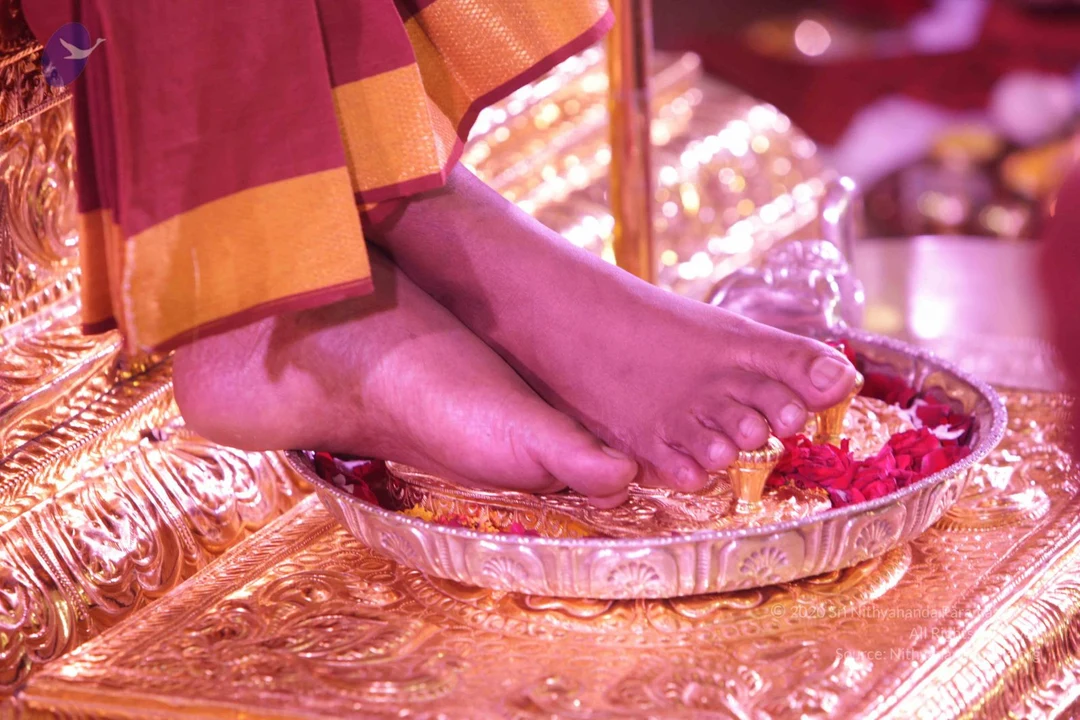
Pada-Puja

Energy-Darshan

shivoham-Q and Asession

power-manifestation-darshan

power-manifestation

Photos from this day

View all 508 photos

Q And A-Session

21 photosSource gallery
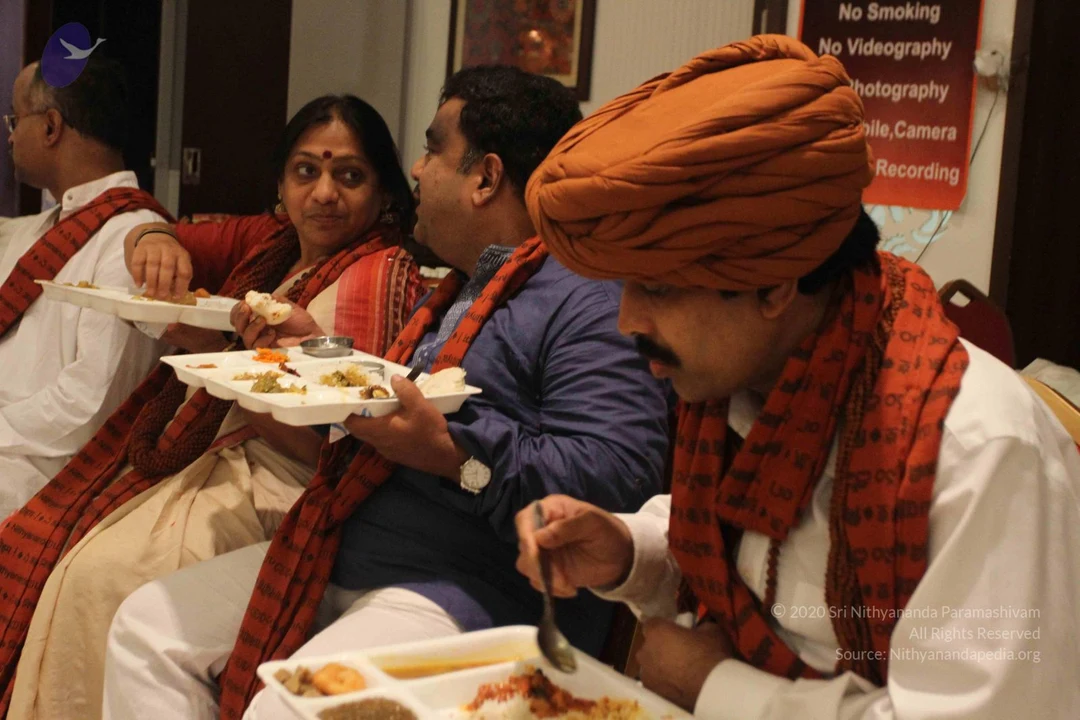
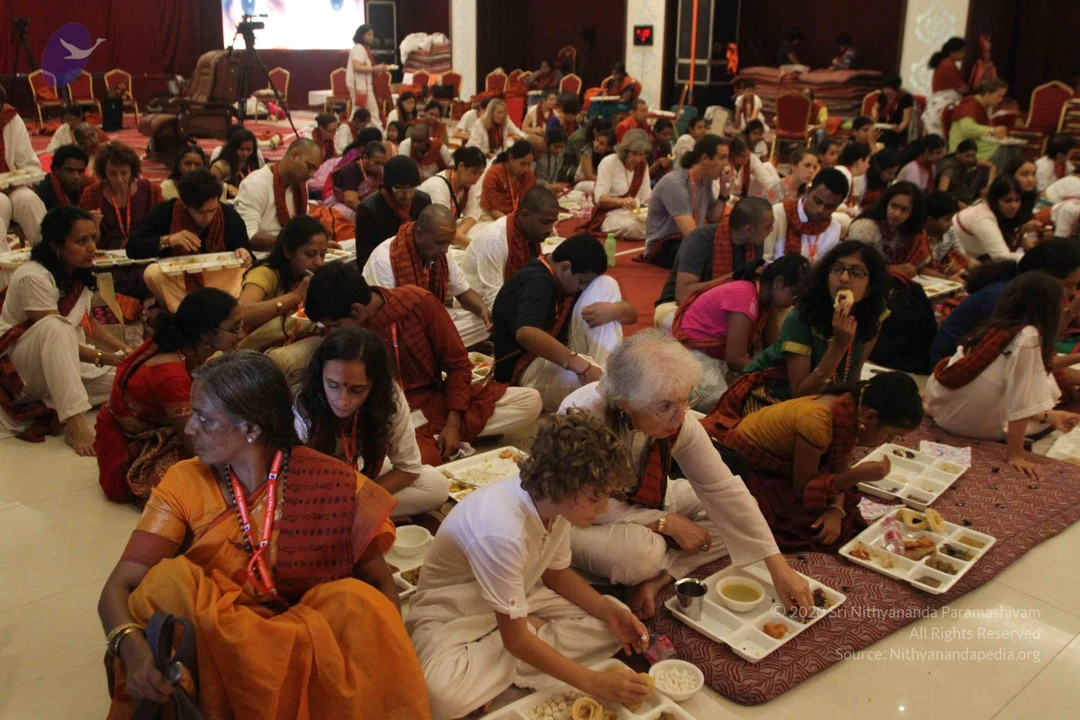
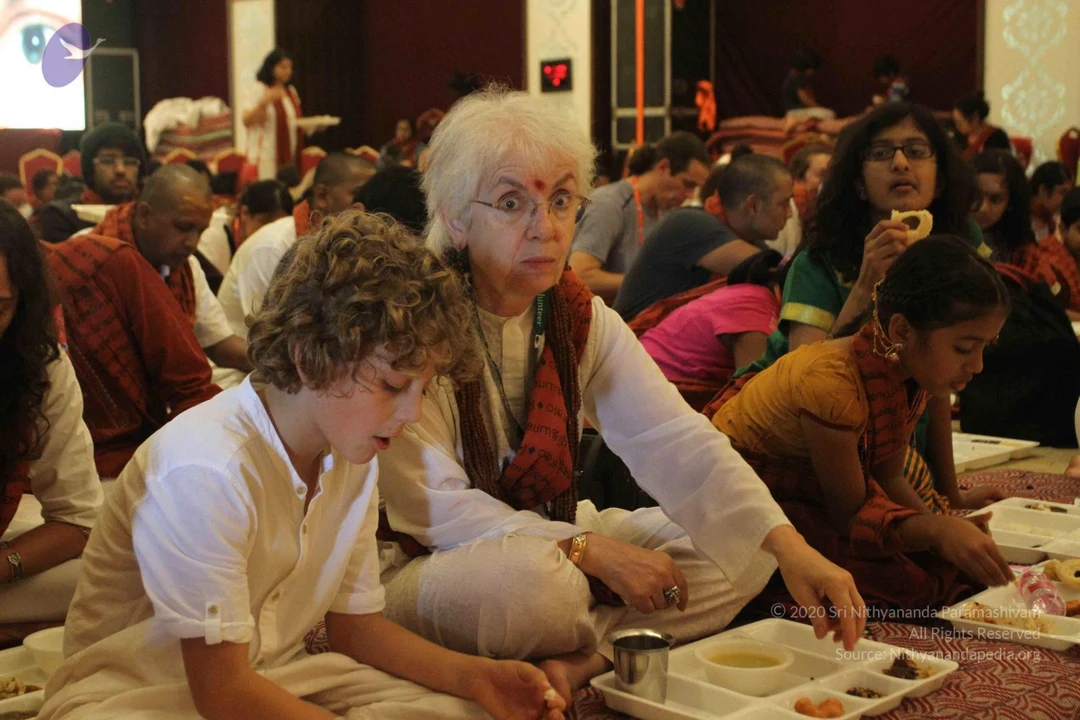
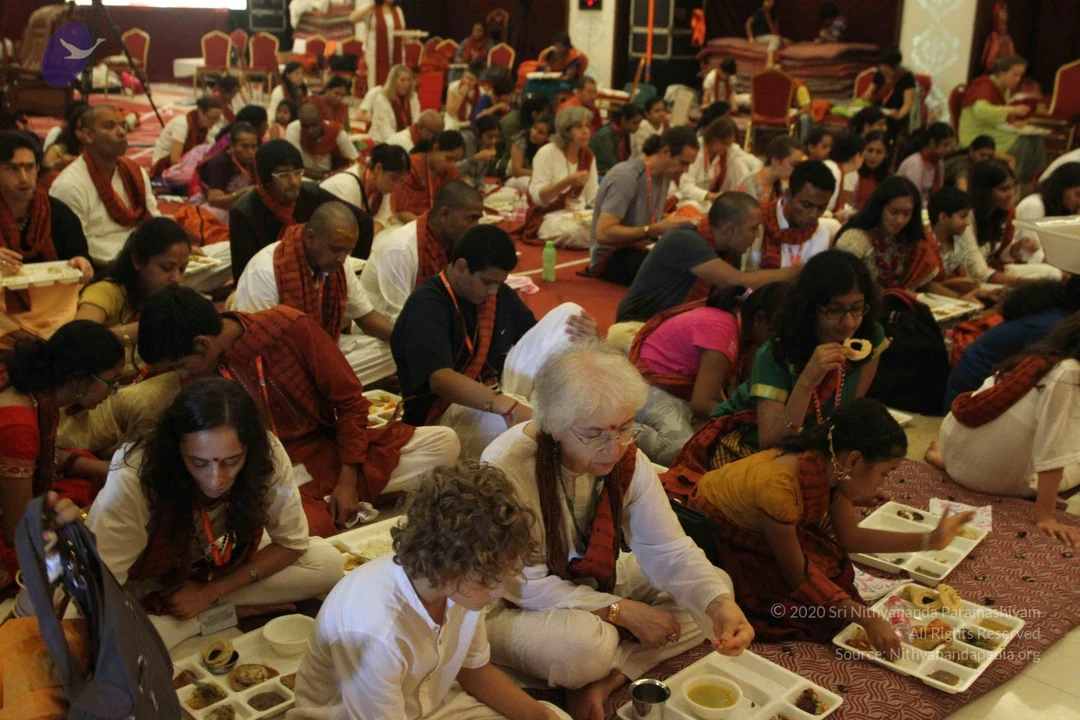
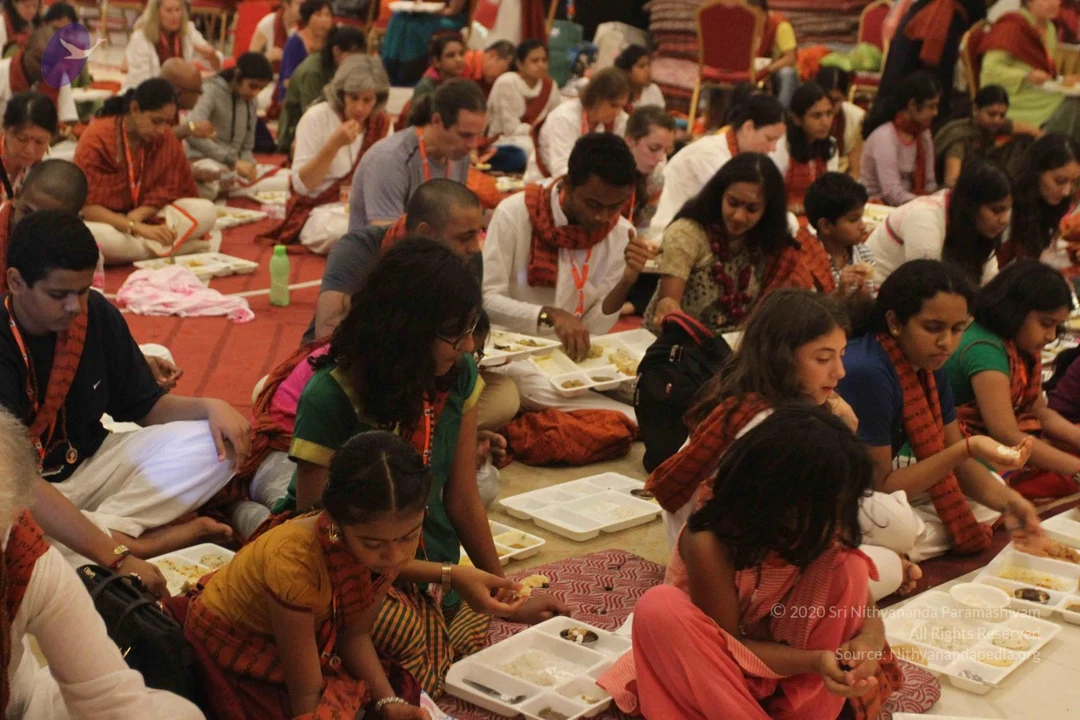
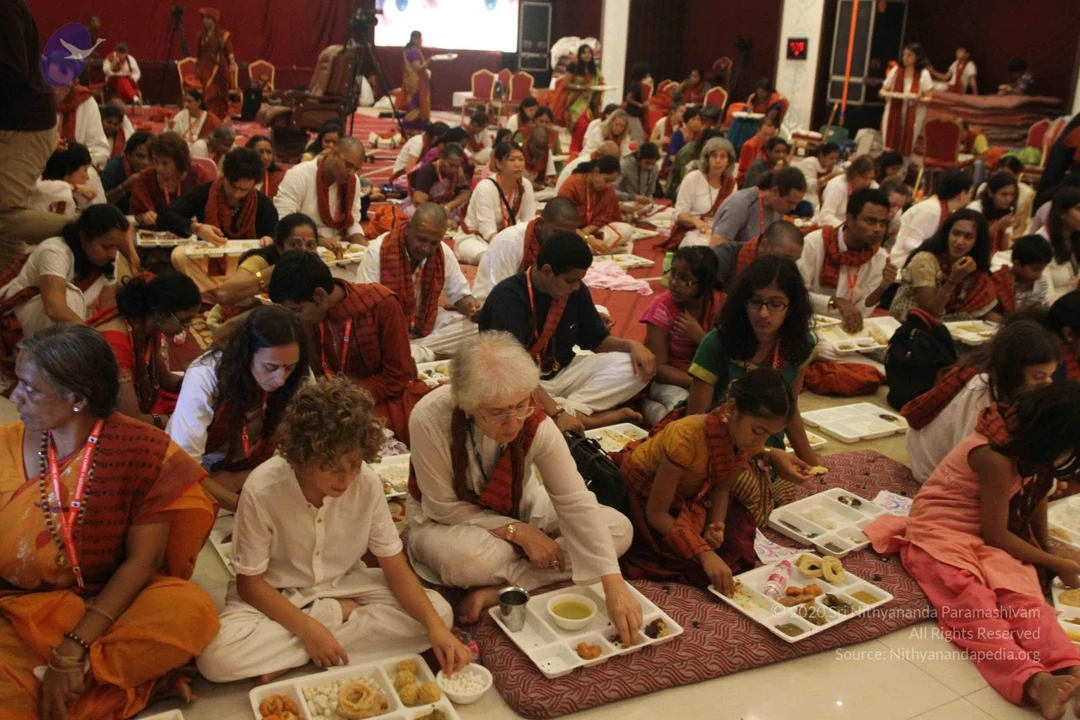
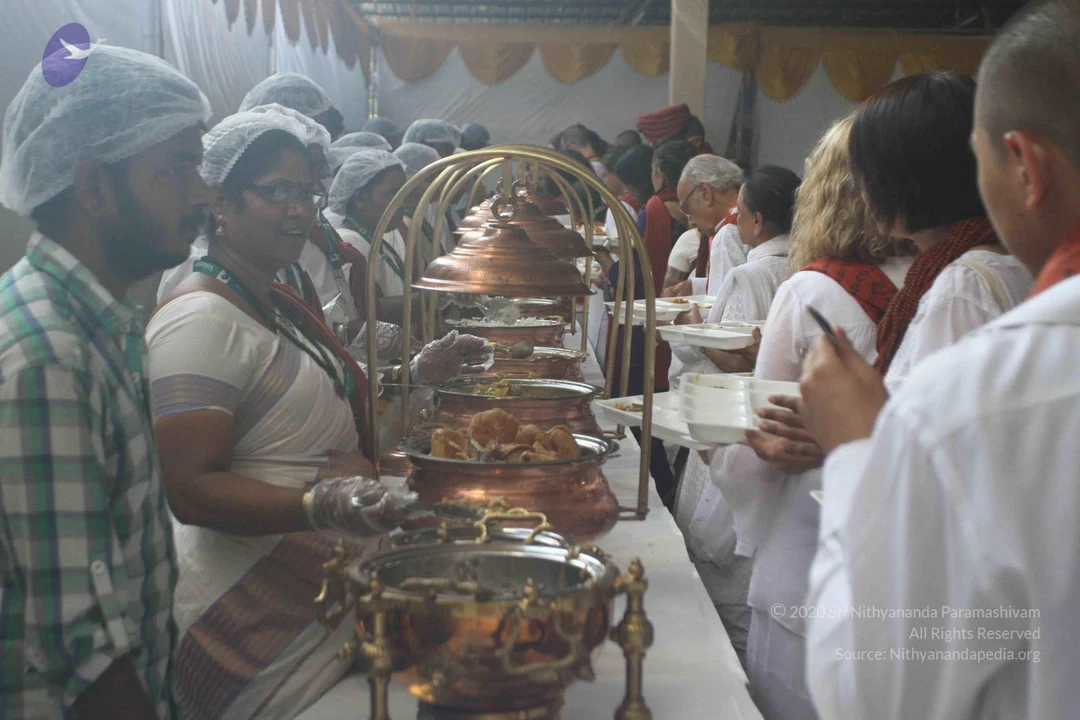
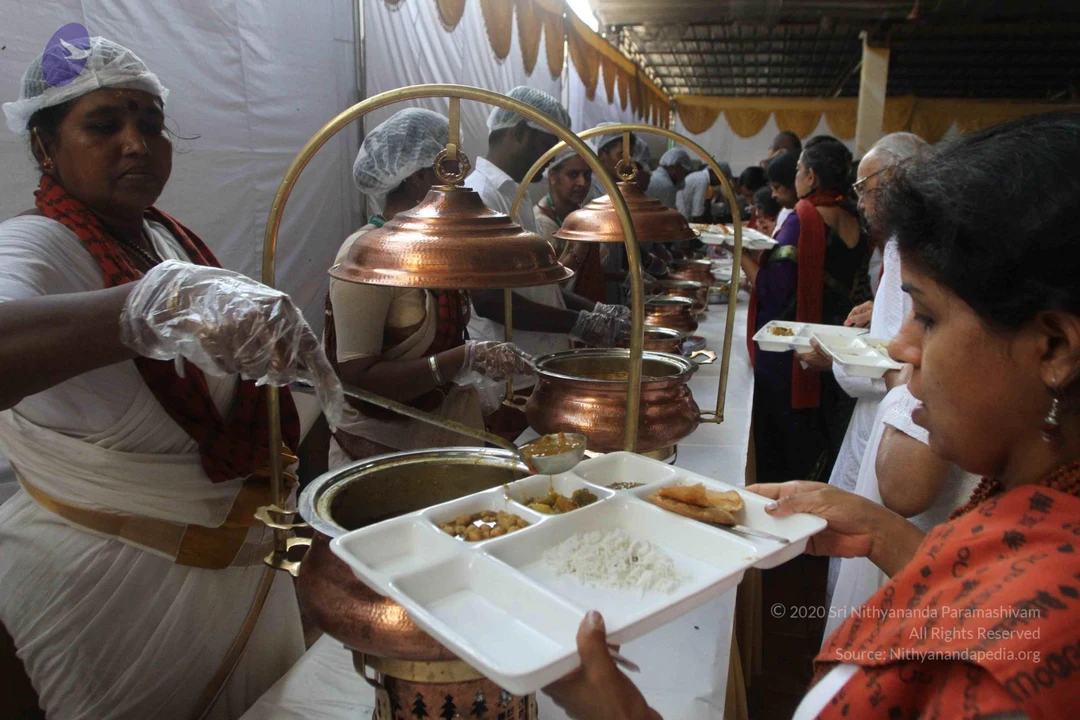
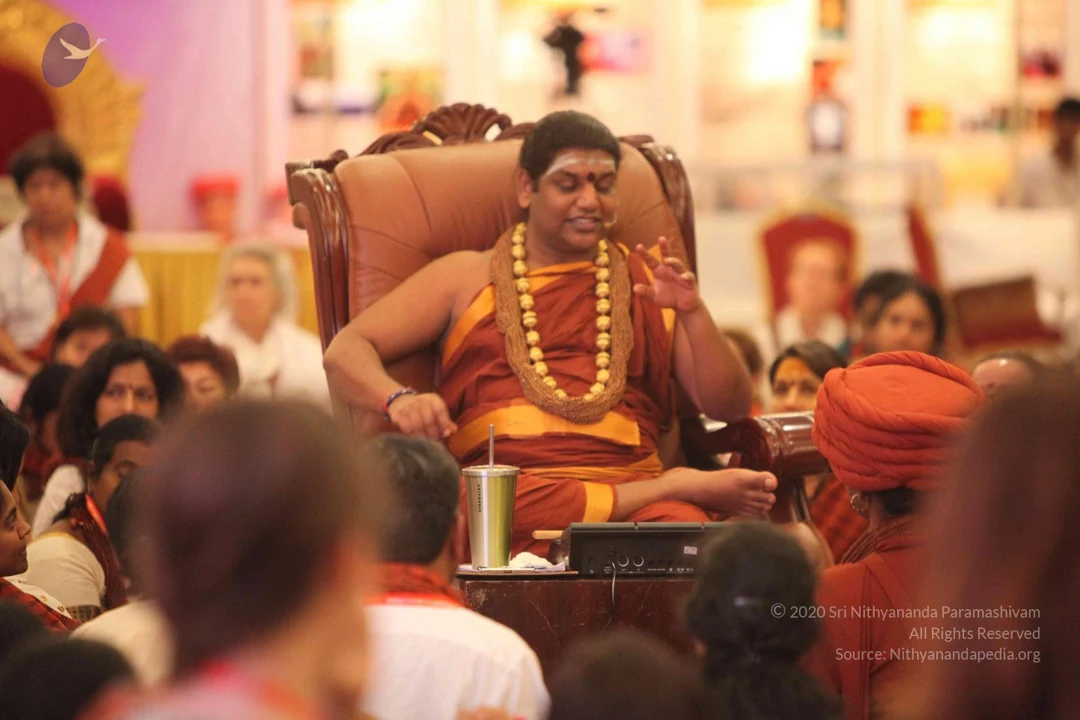
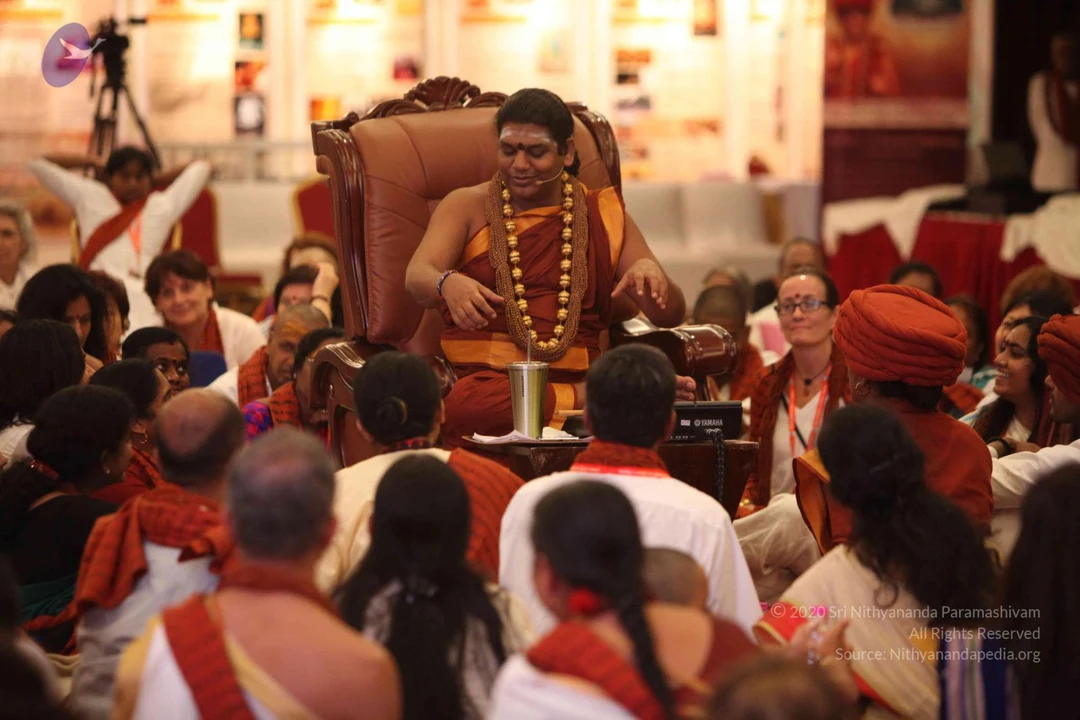
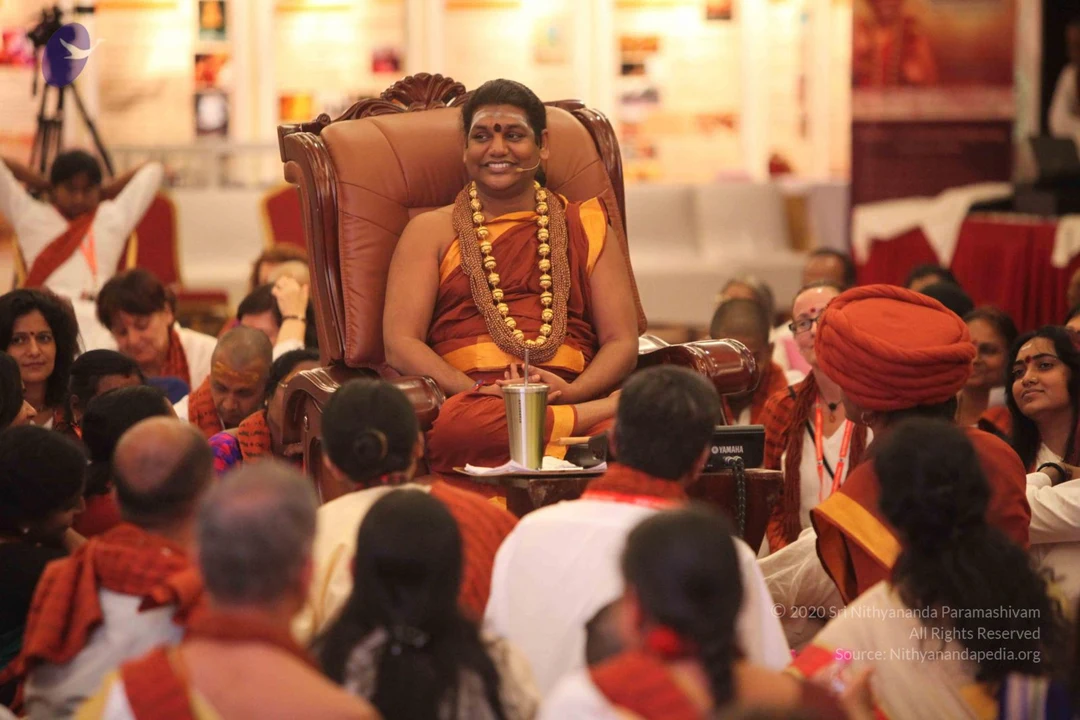
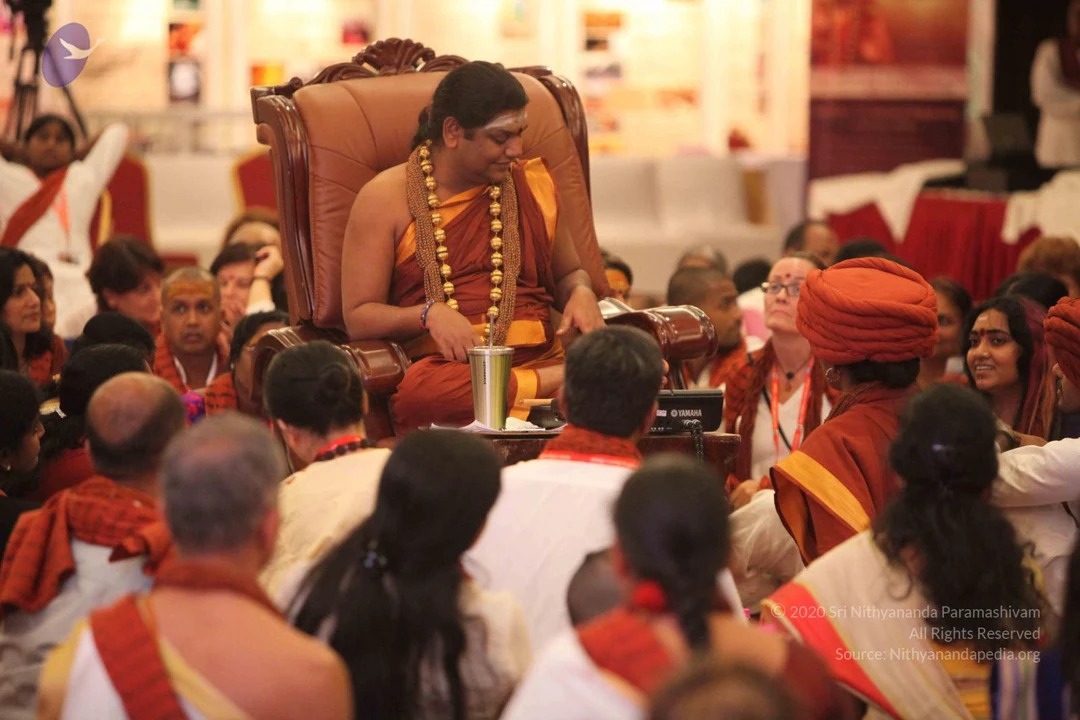
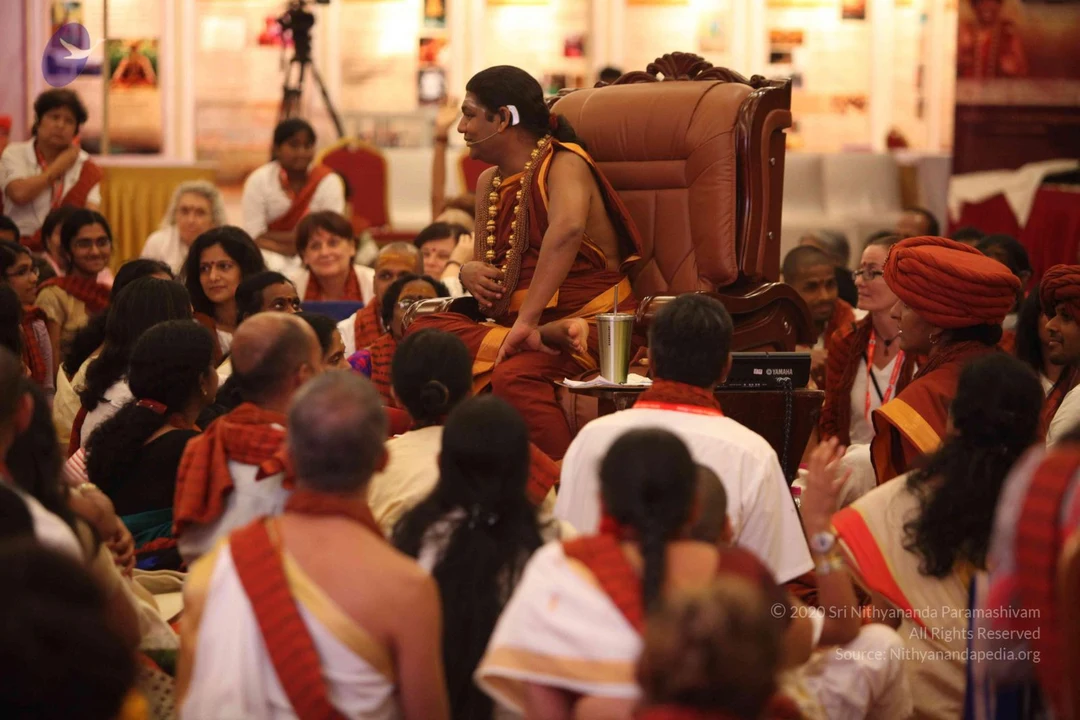
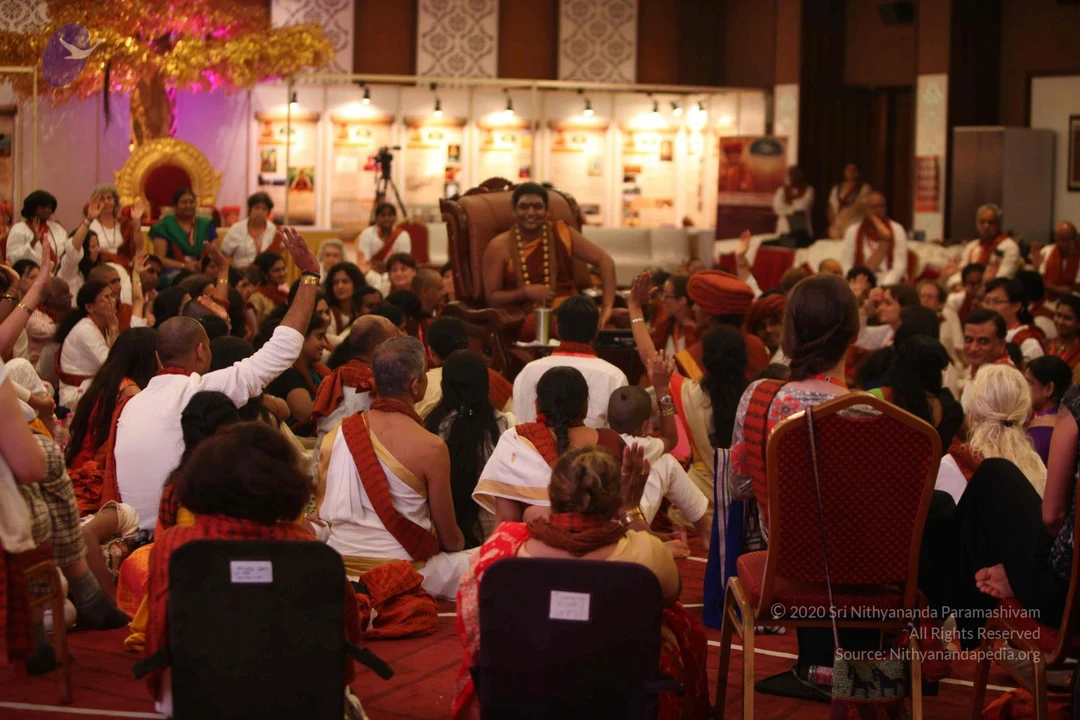
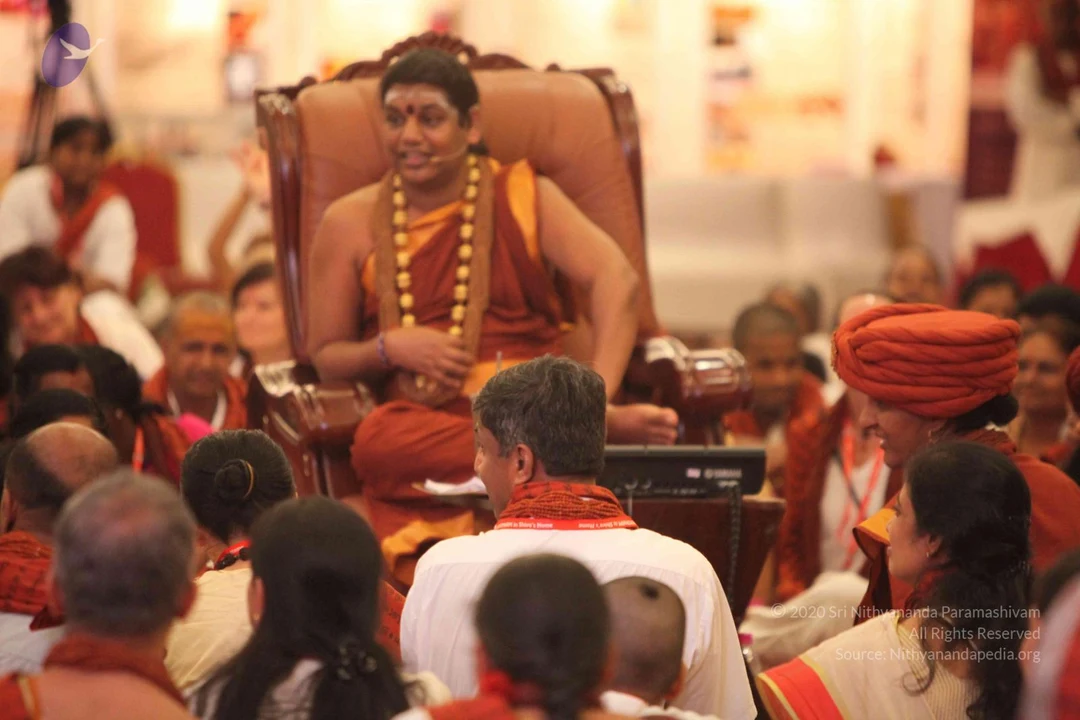
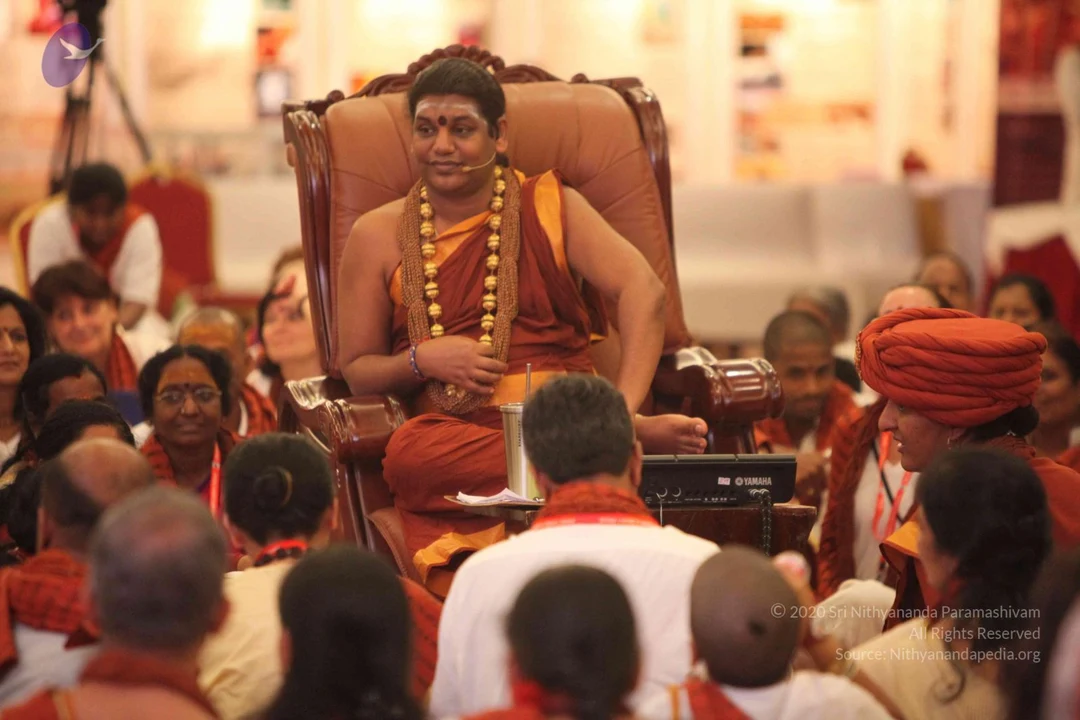
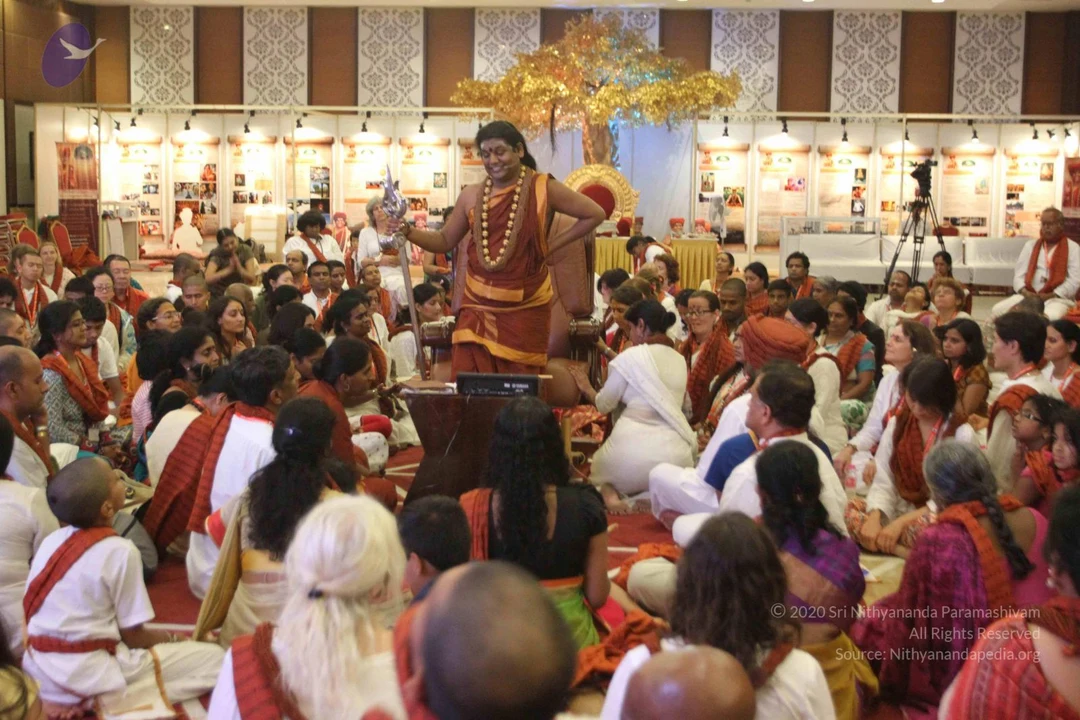
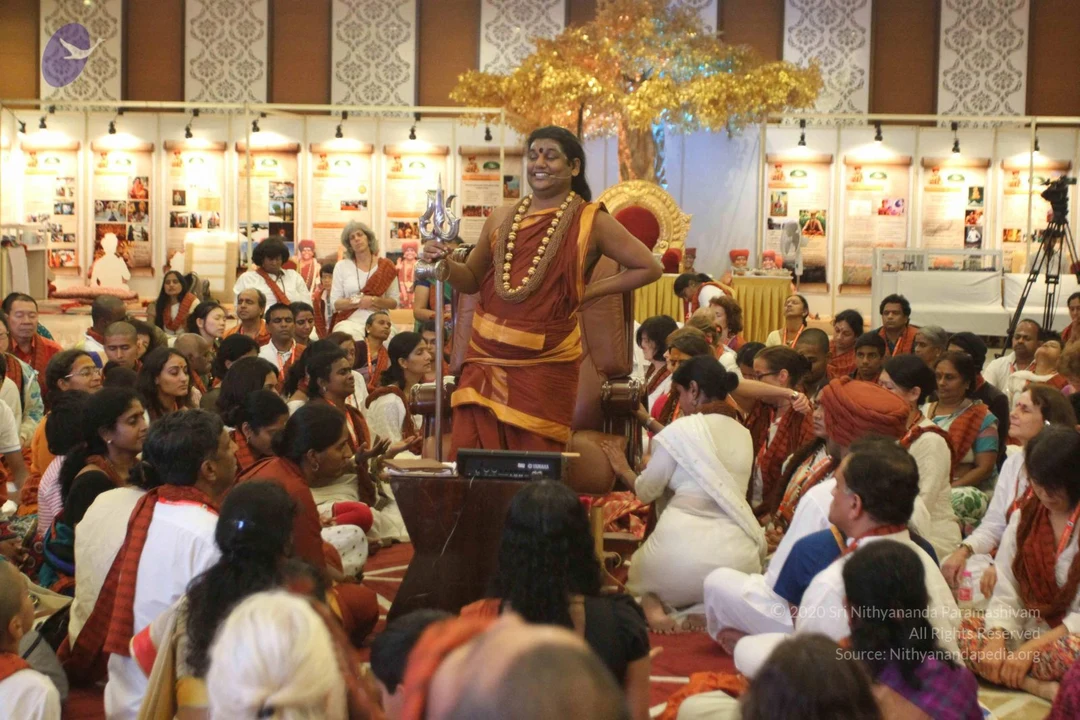
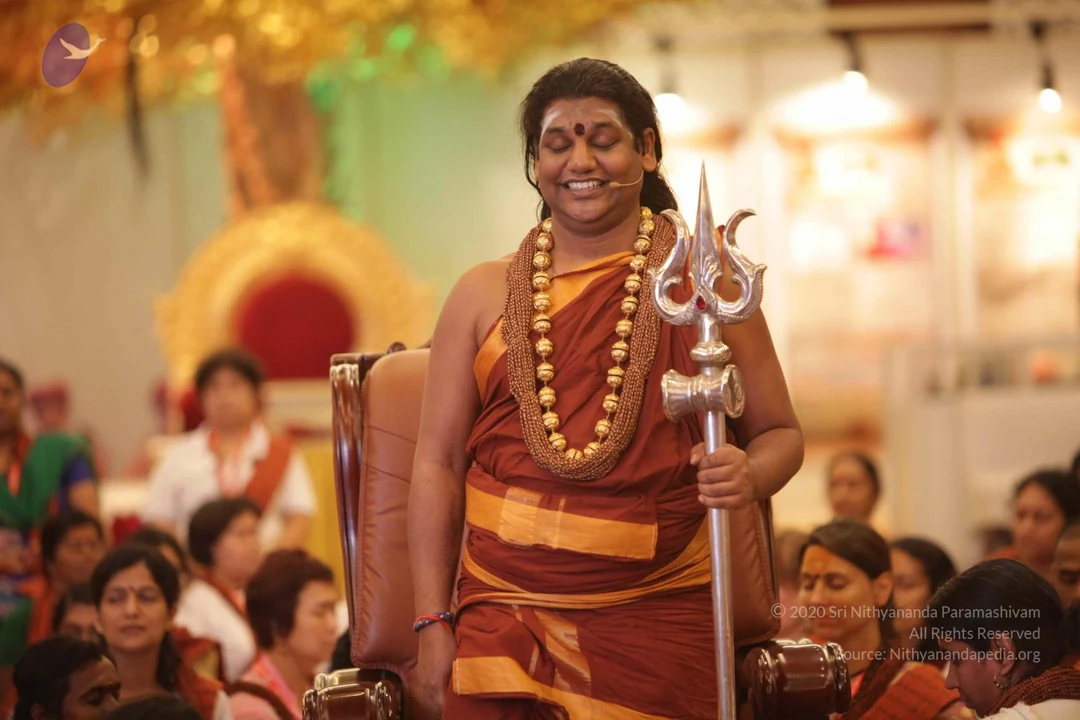
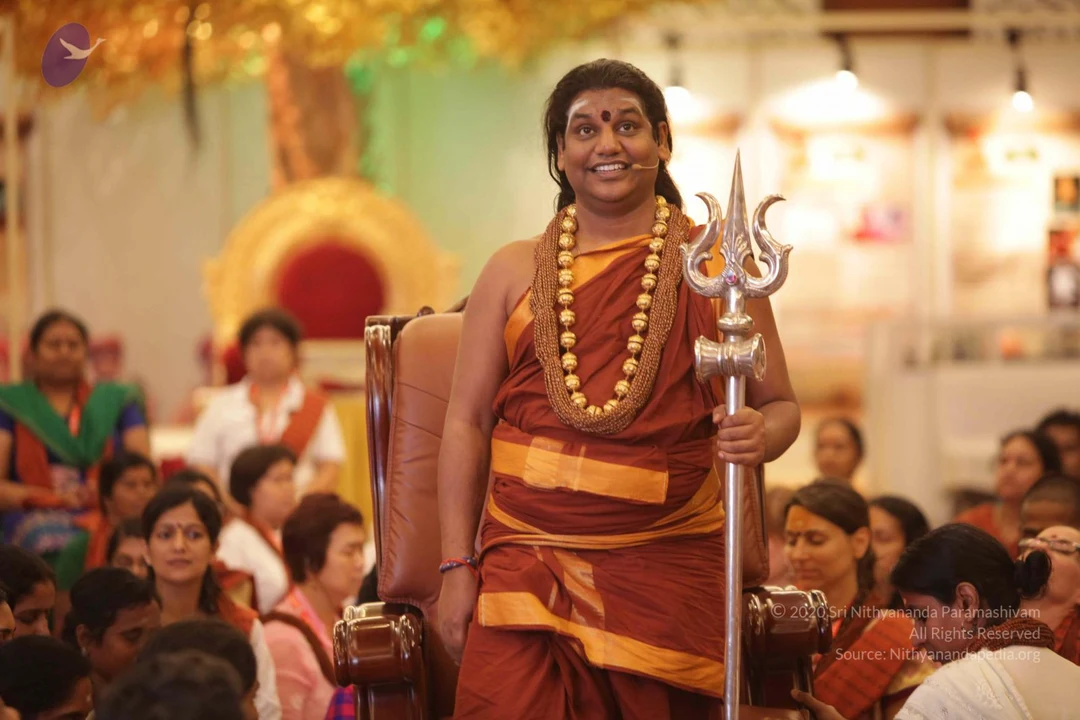
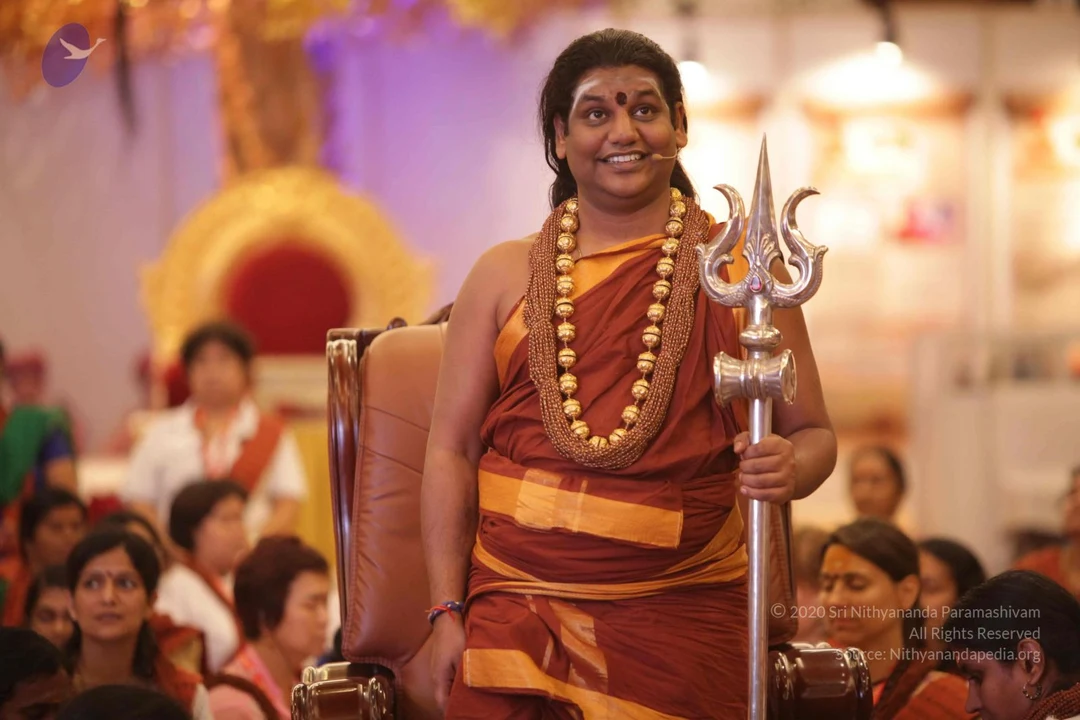
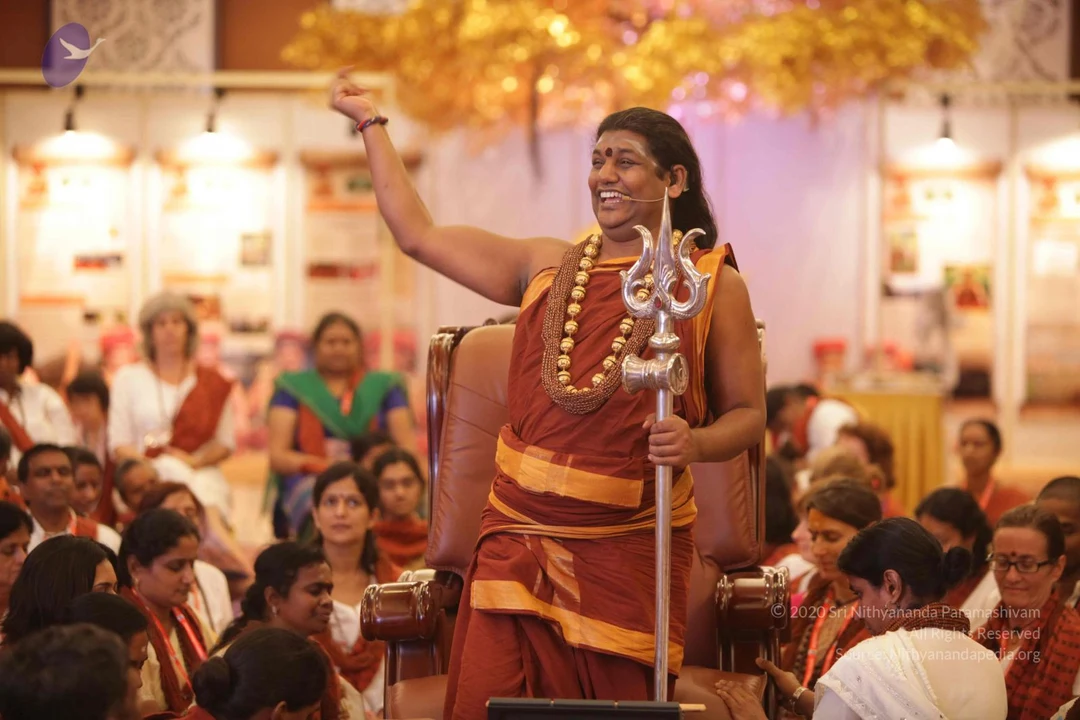
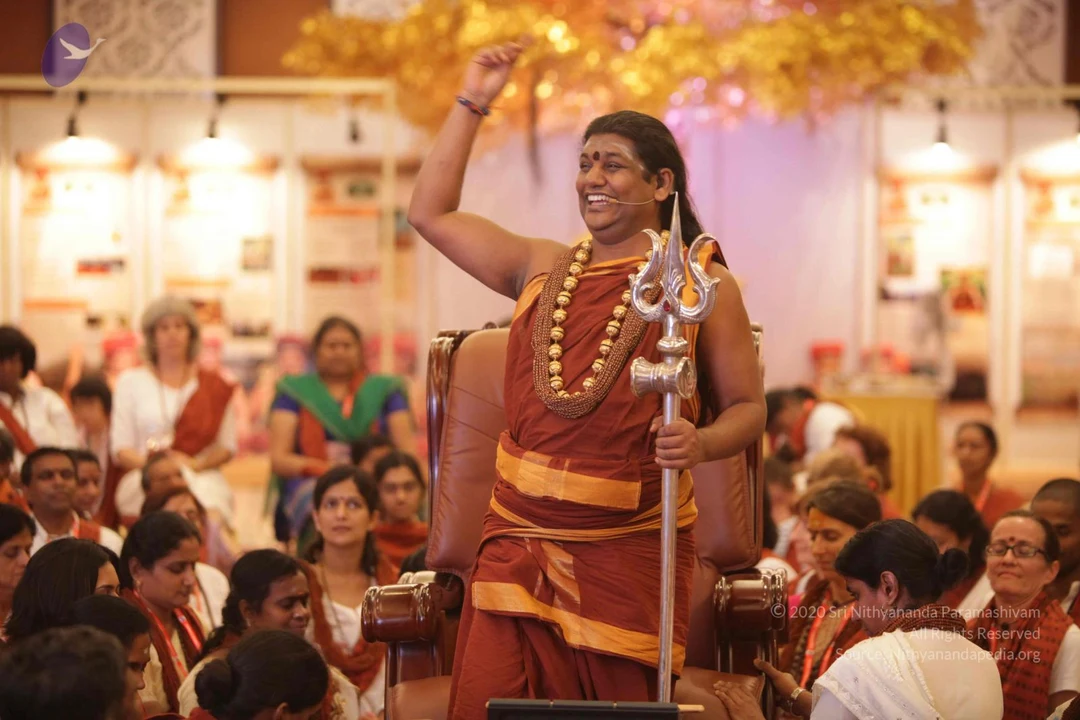
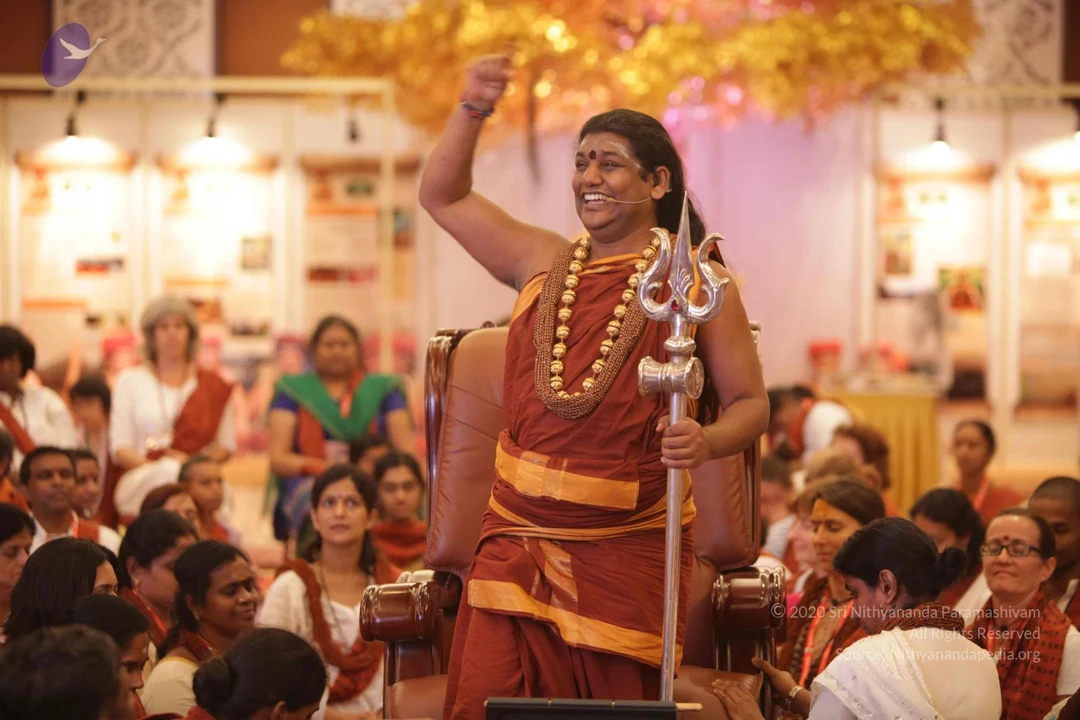
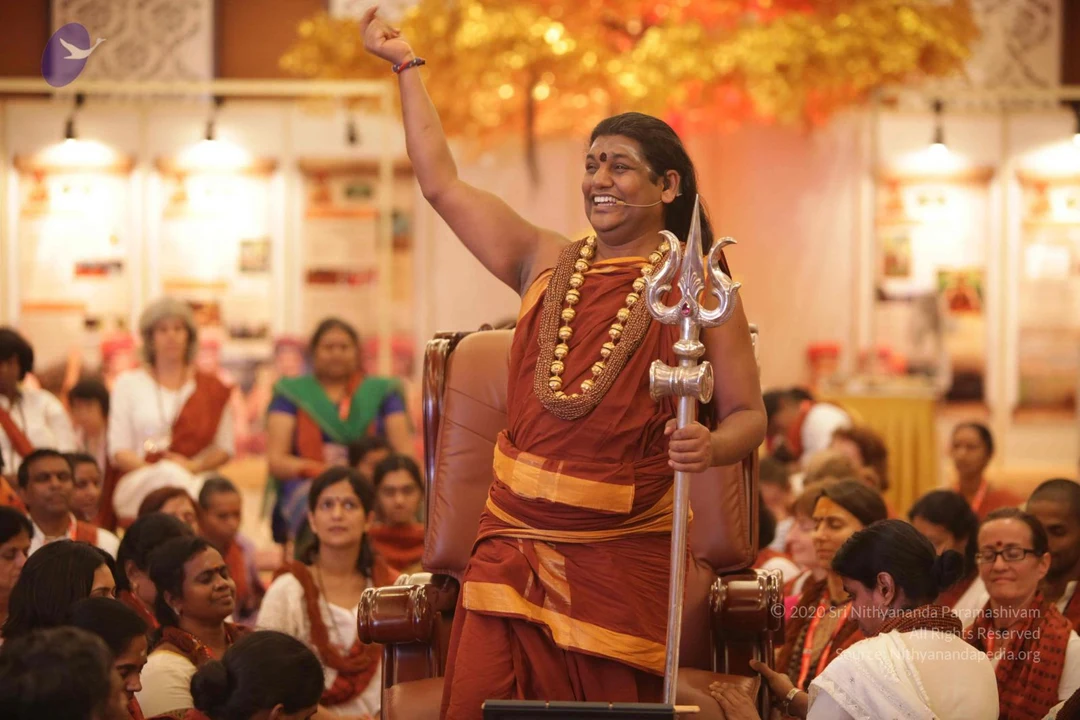
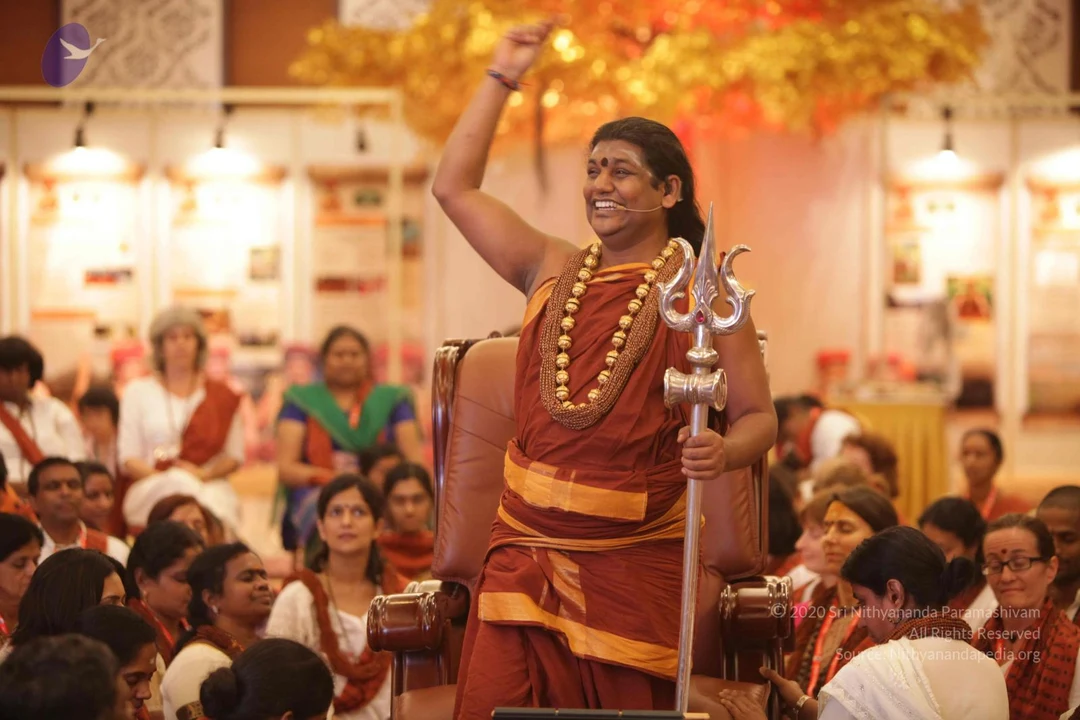
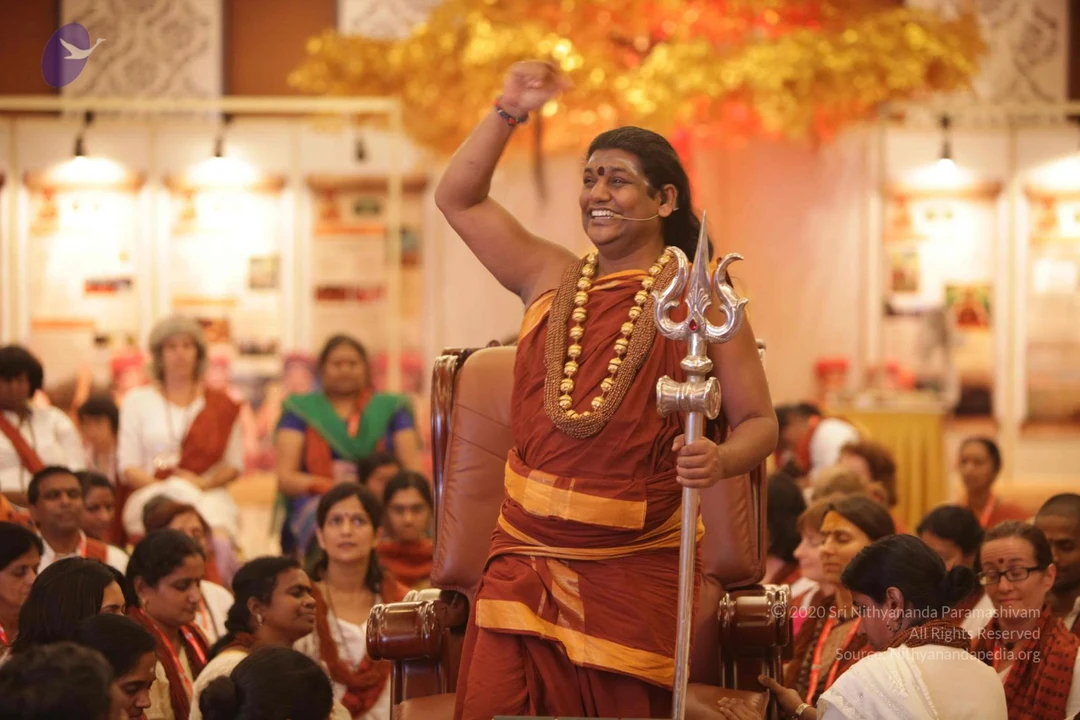
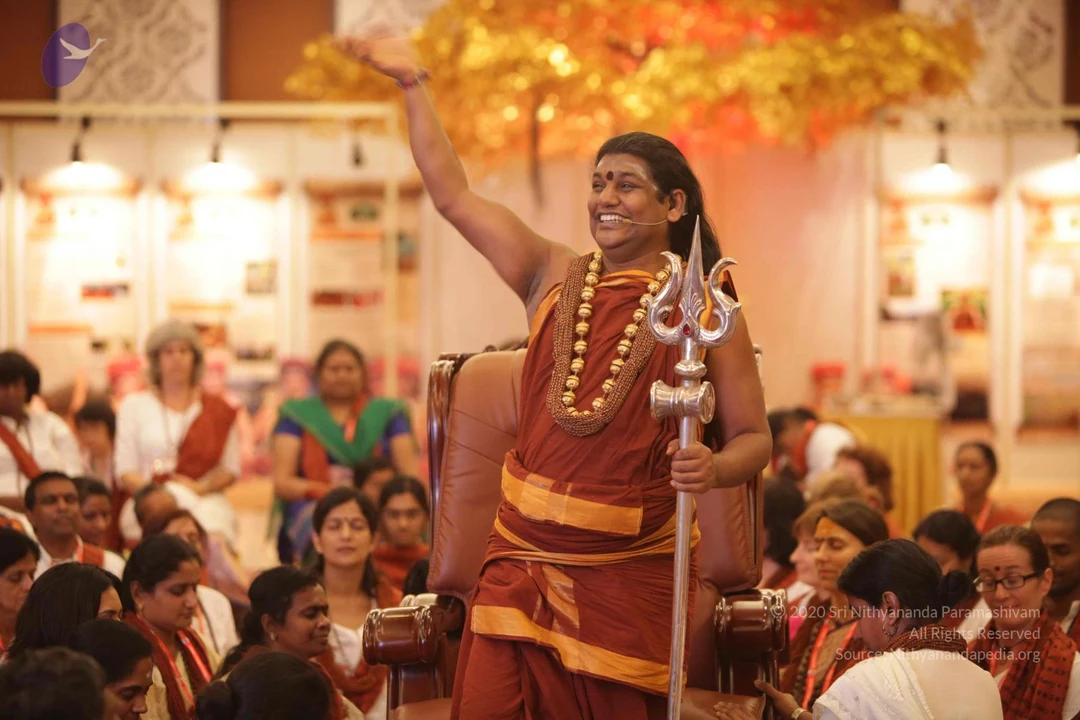
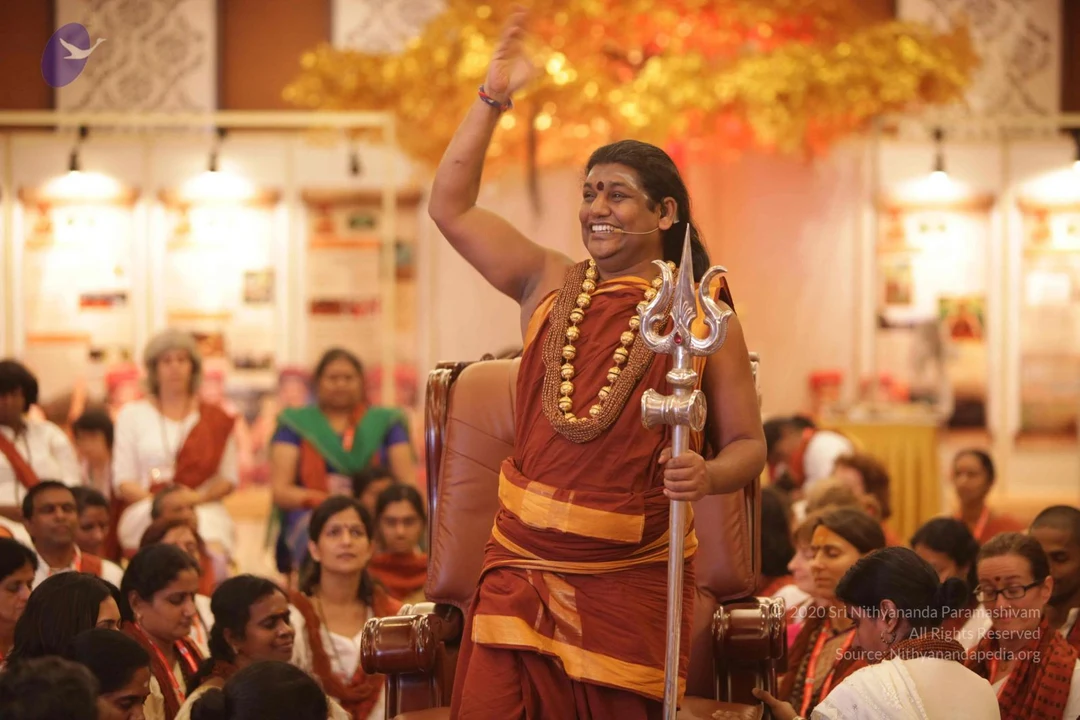
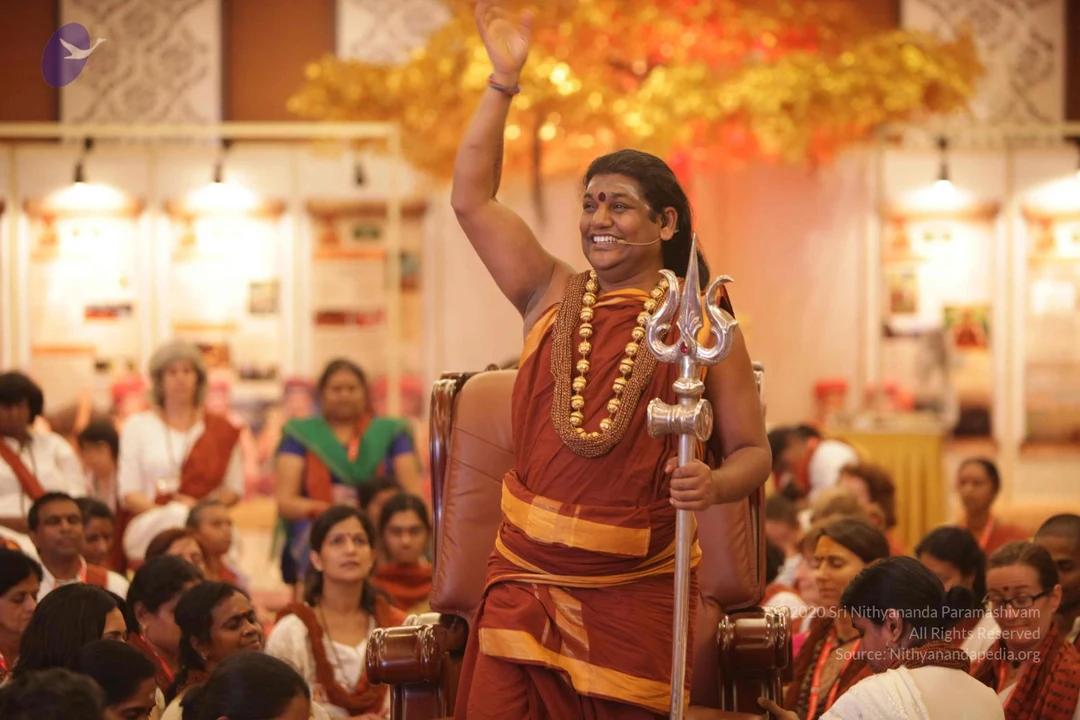
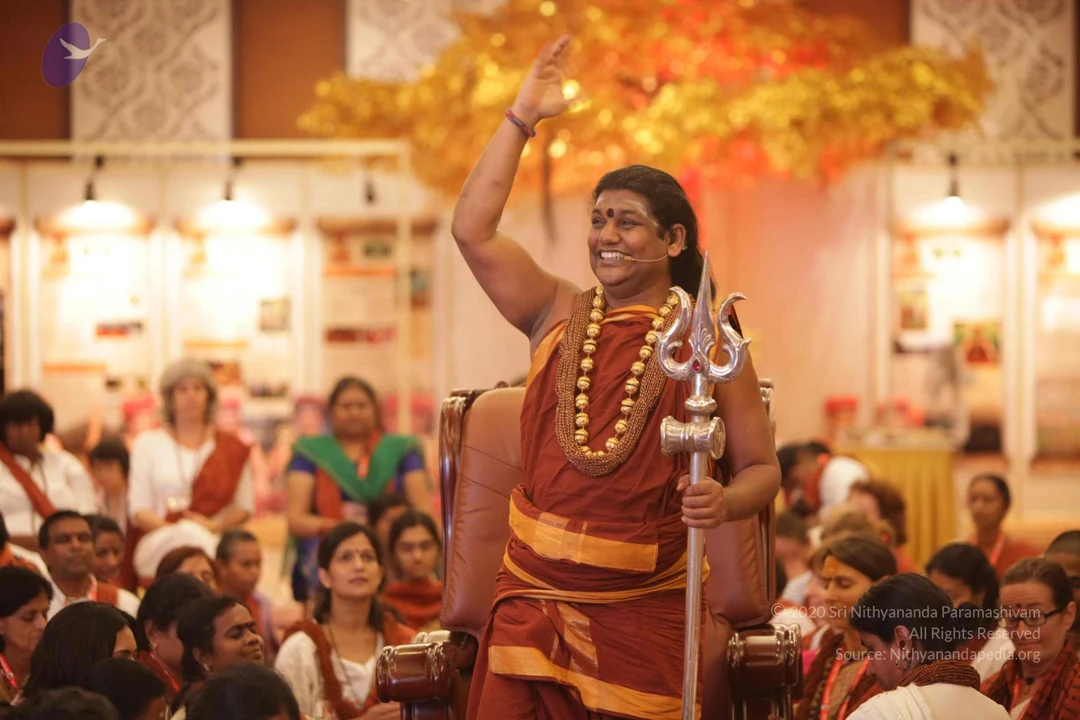
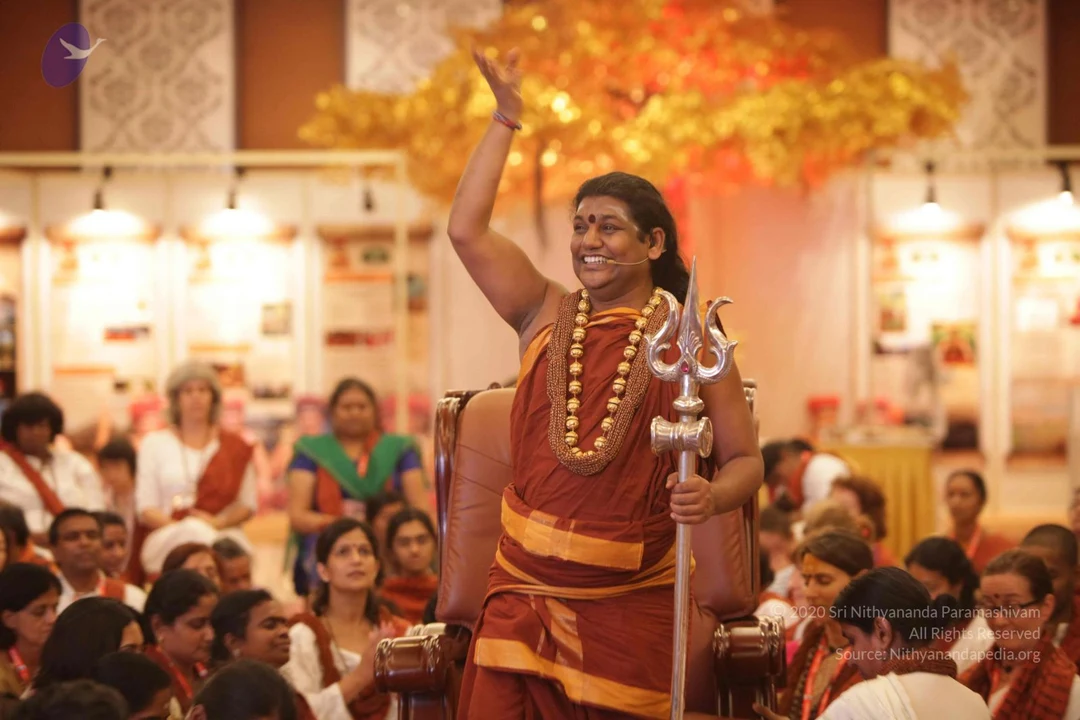
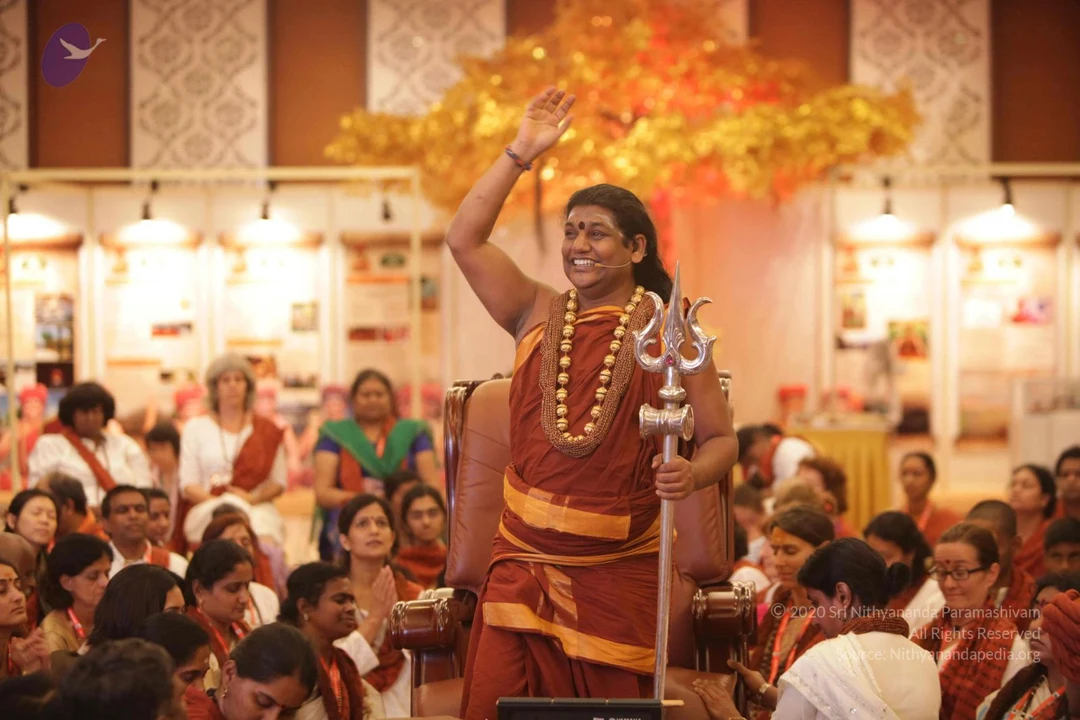
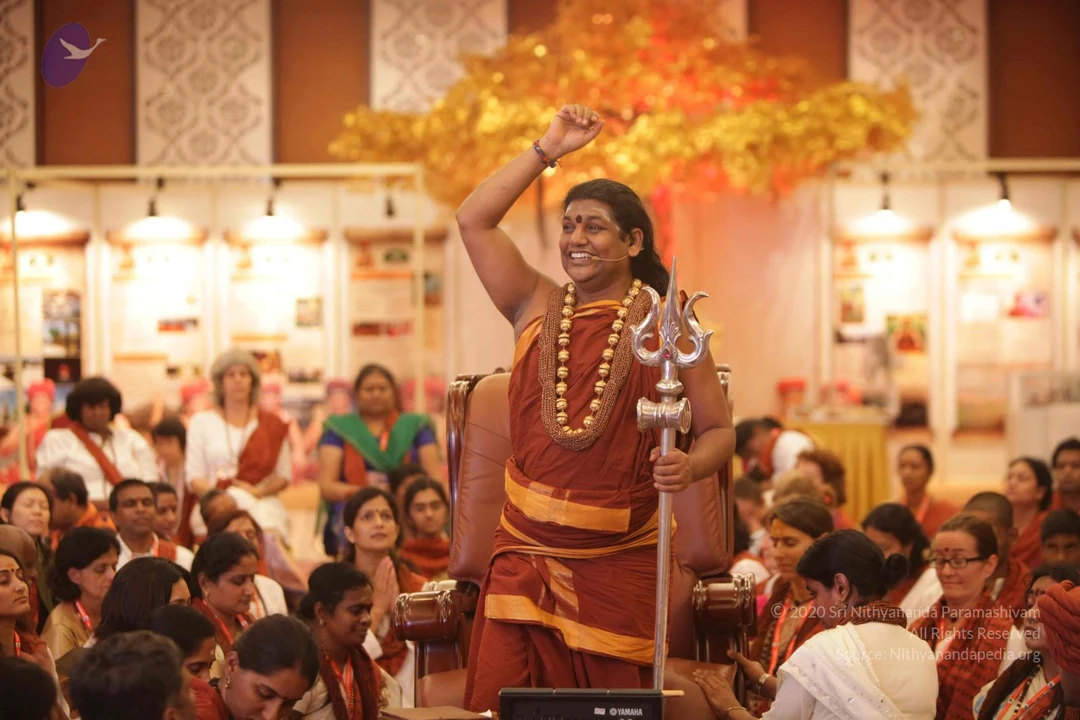
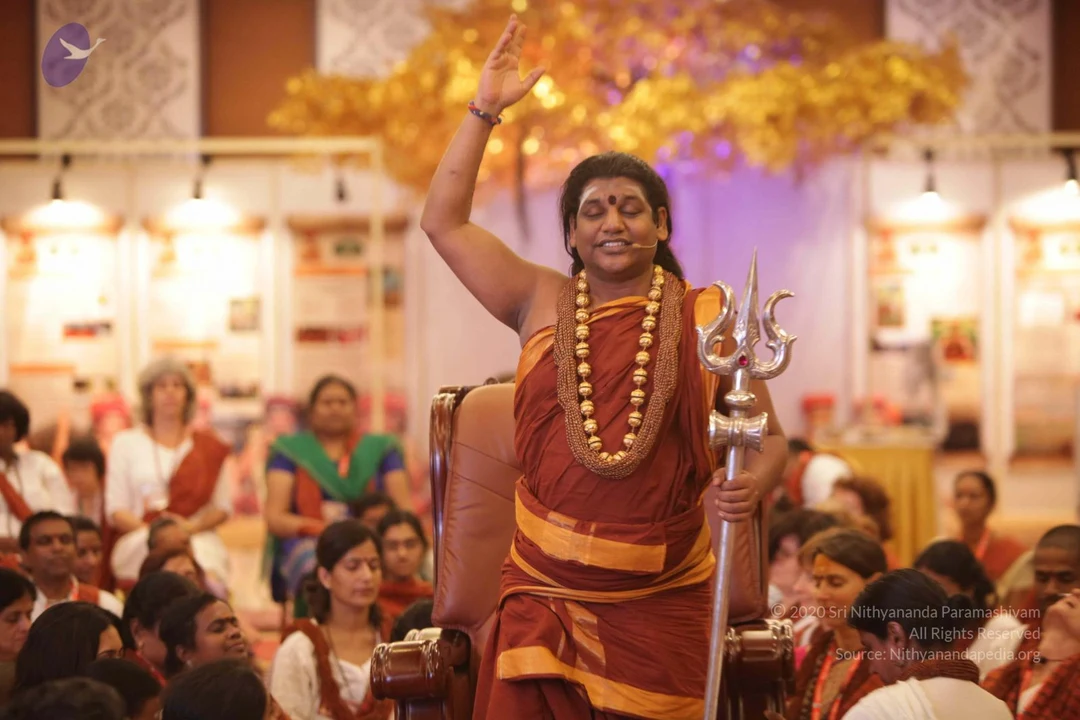
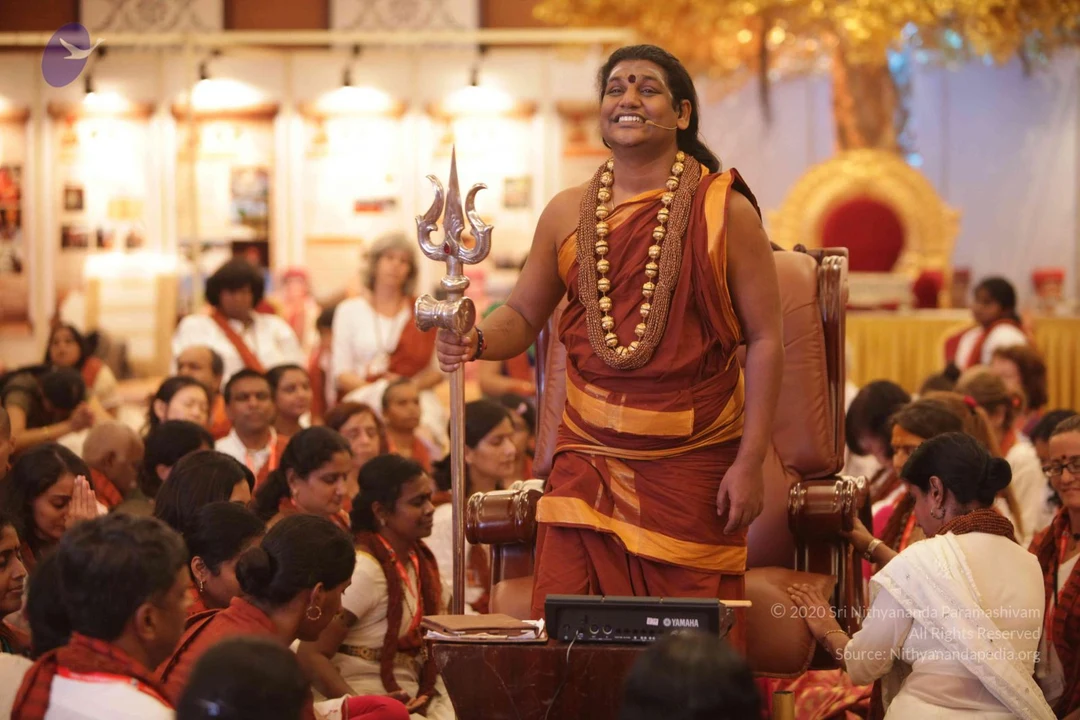
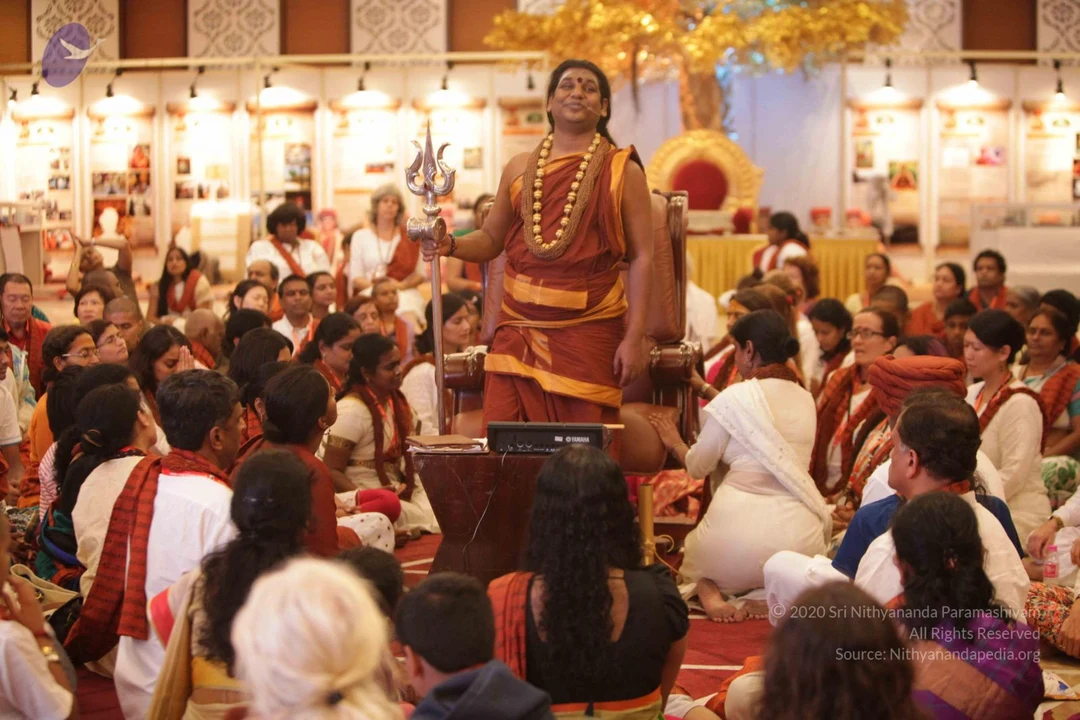
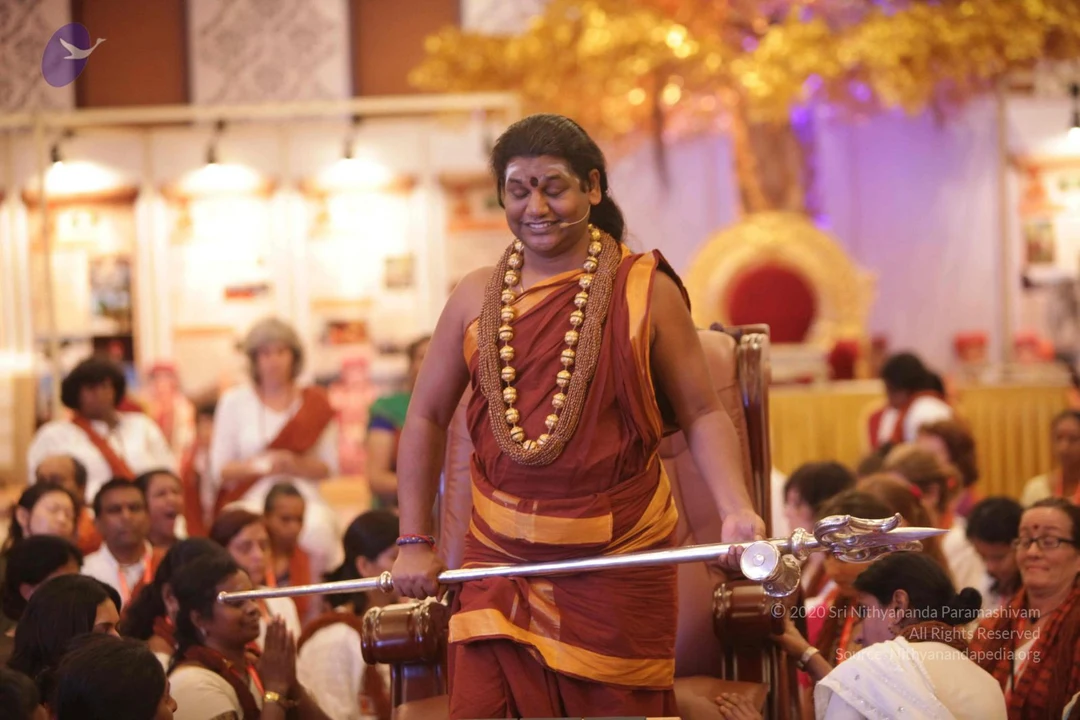
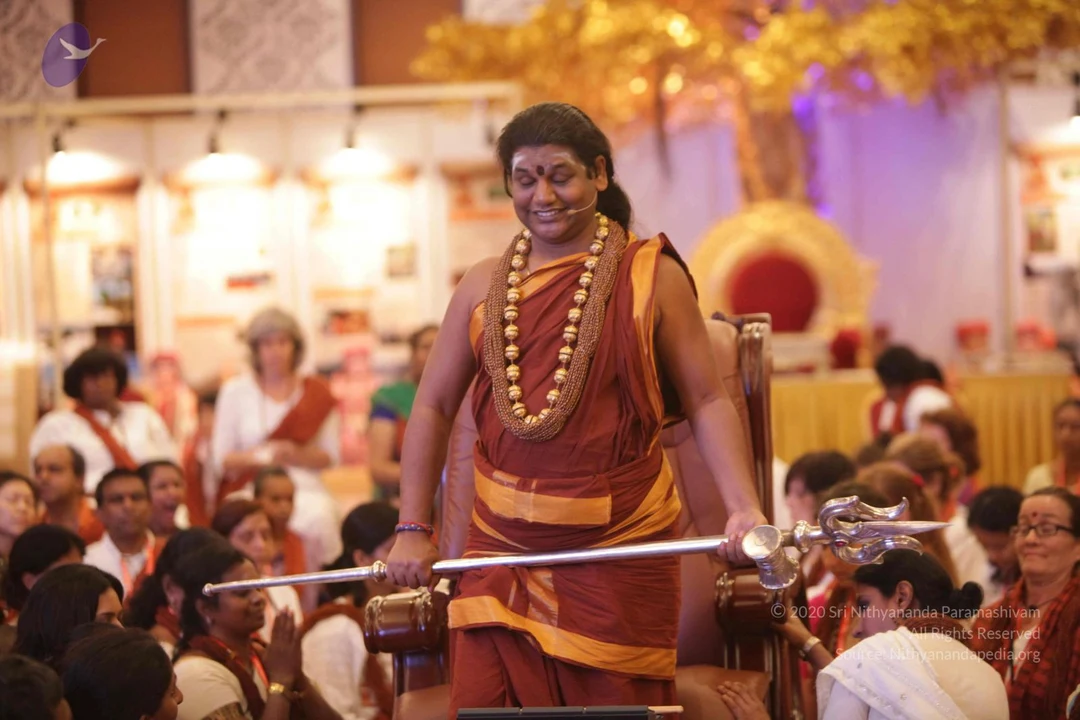
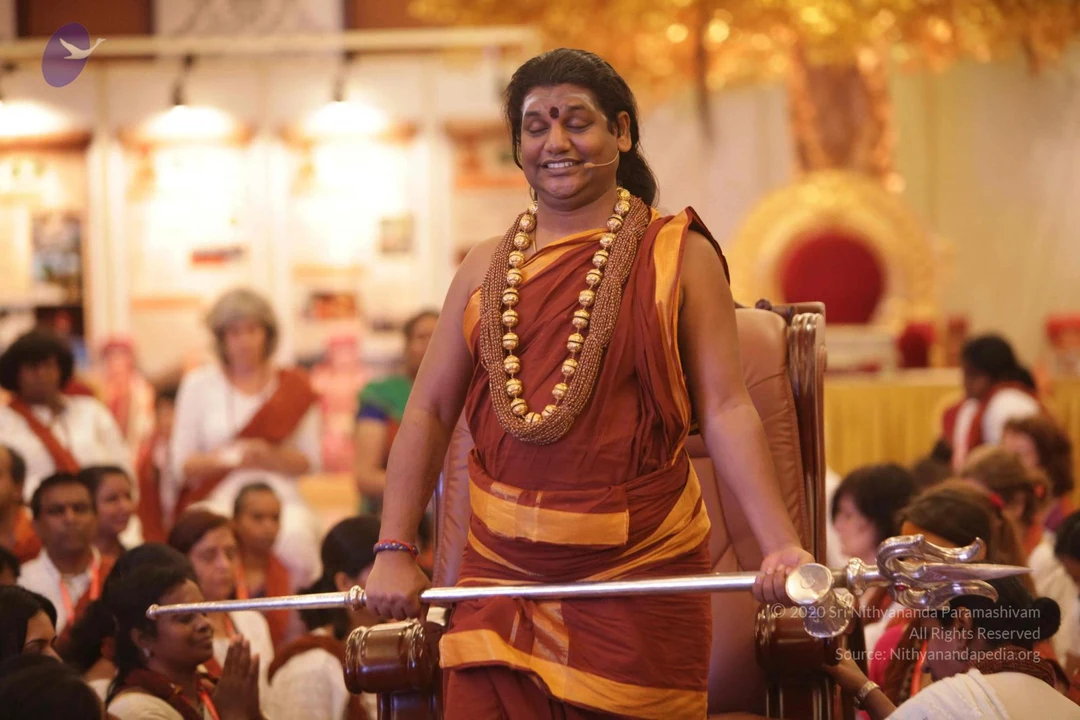
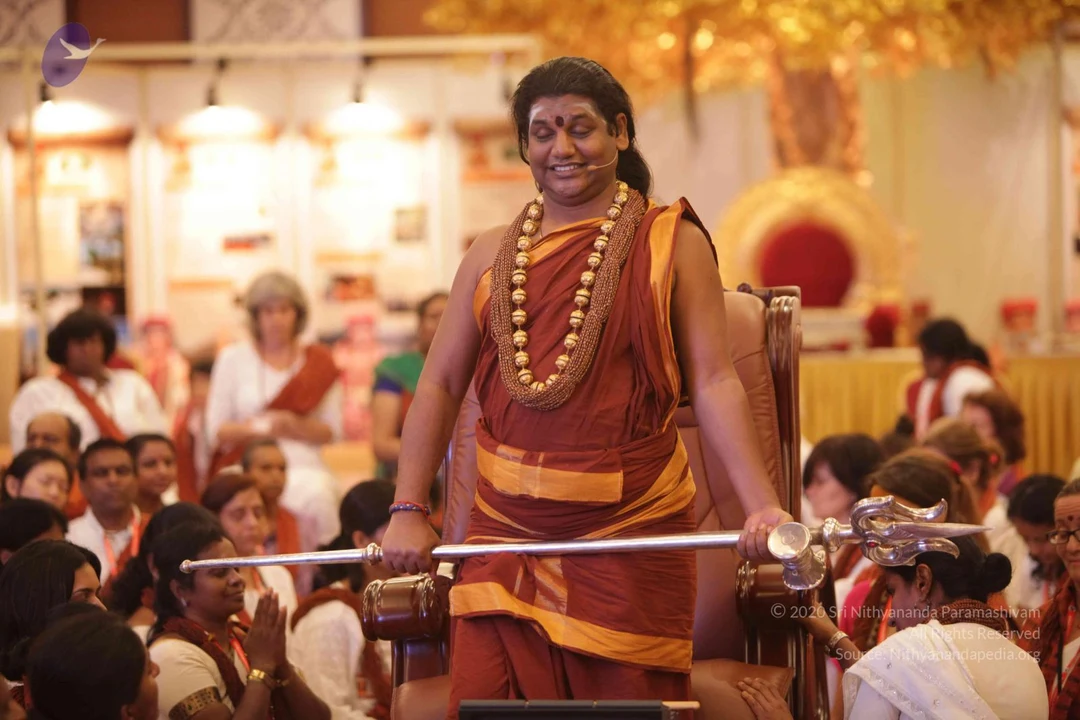
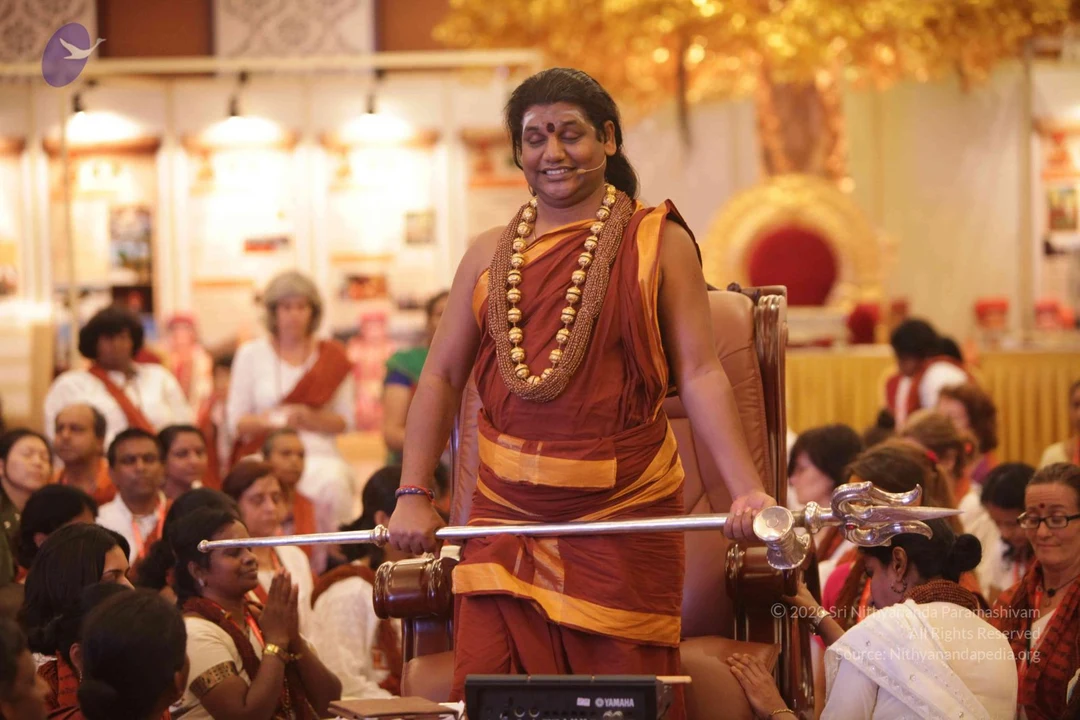
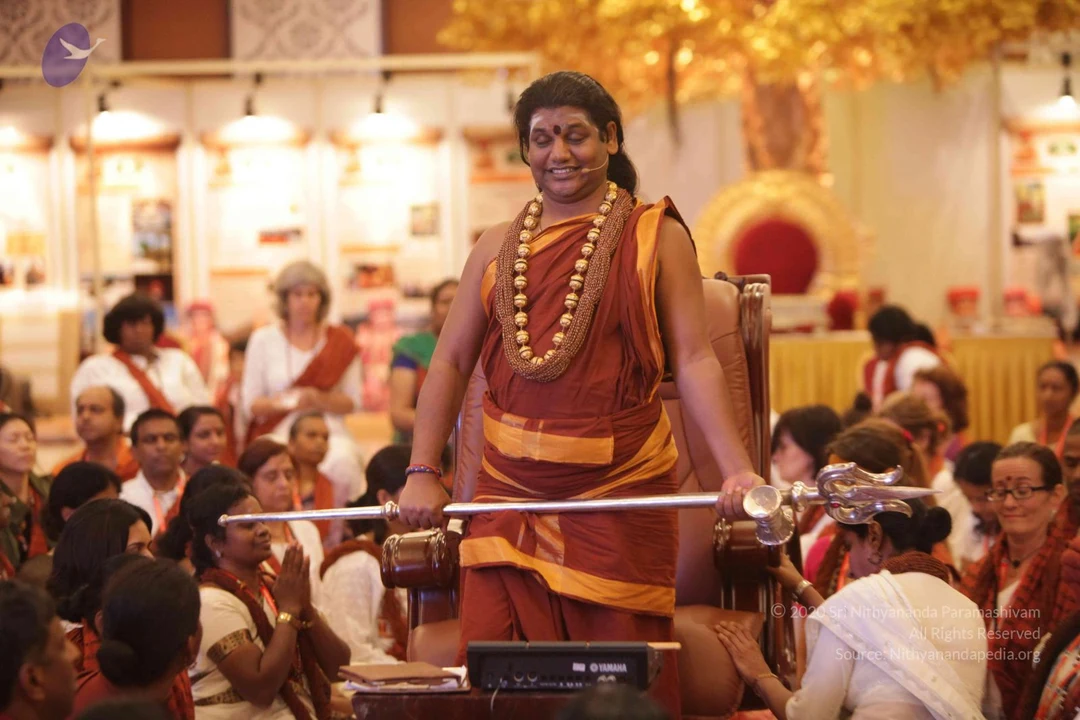
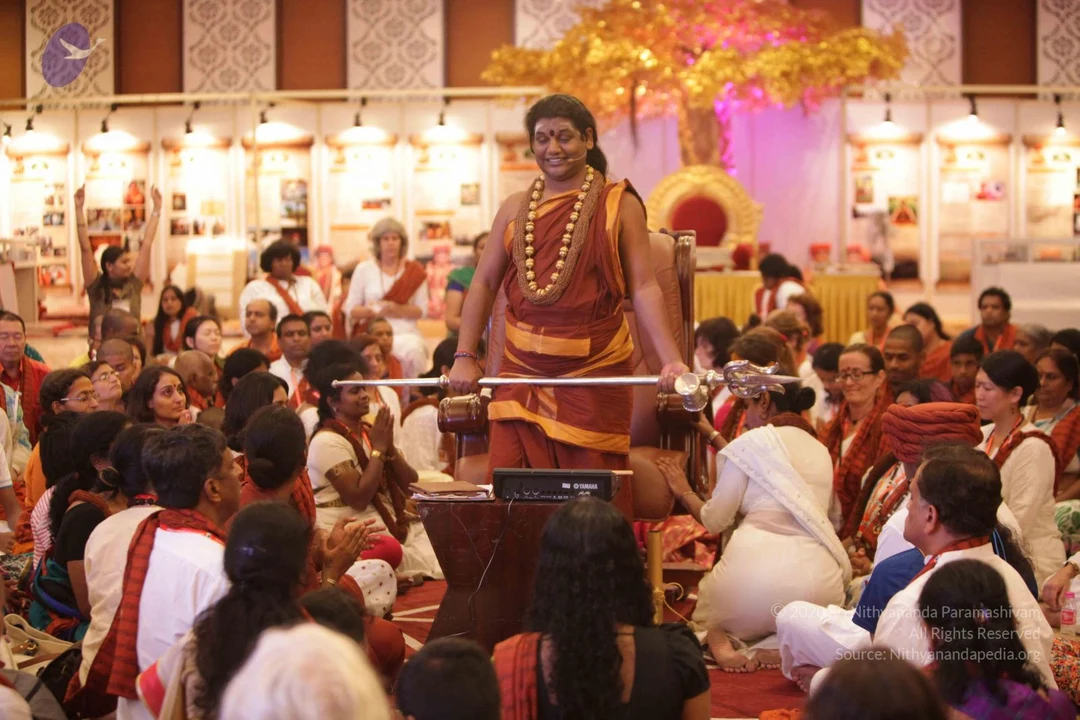
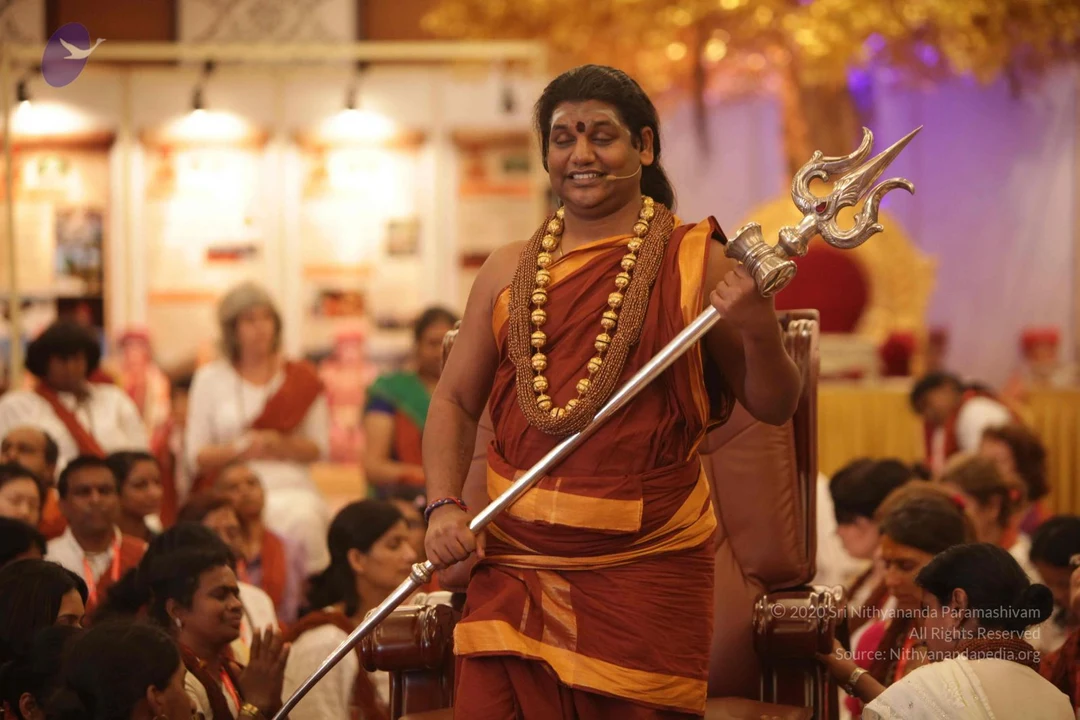
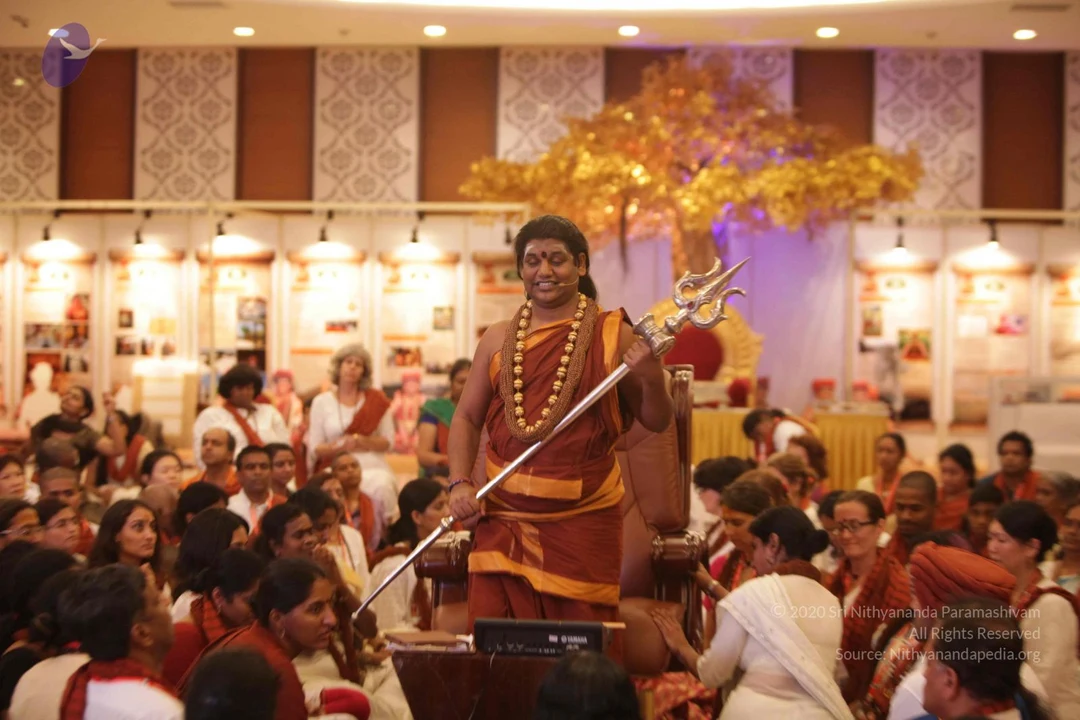
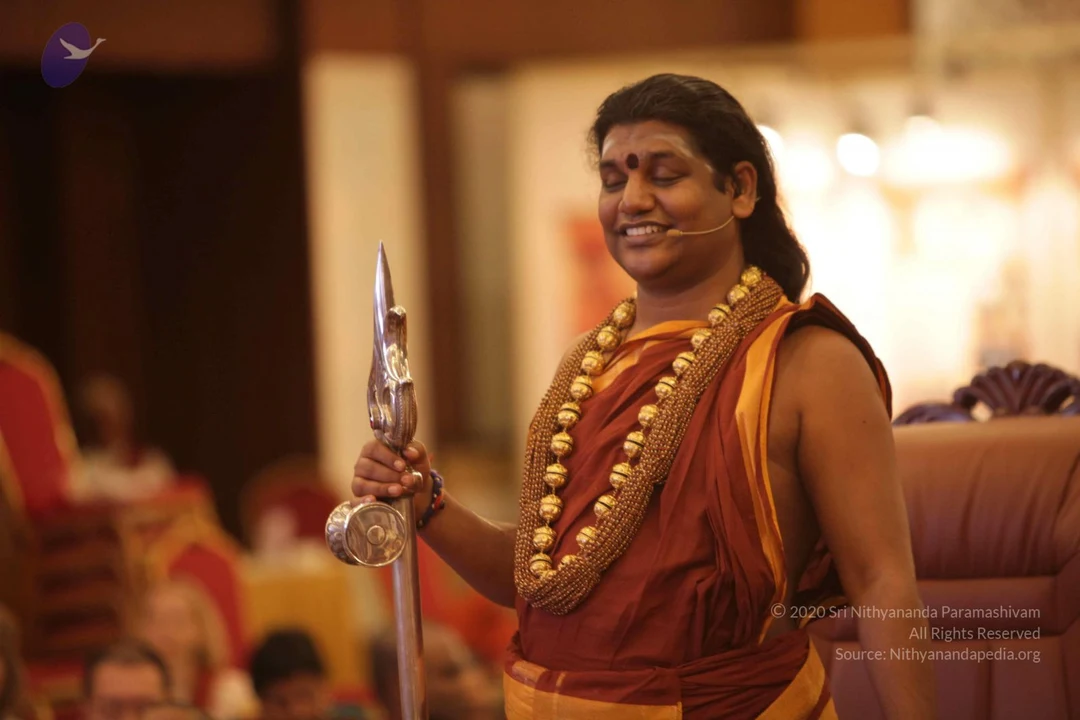
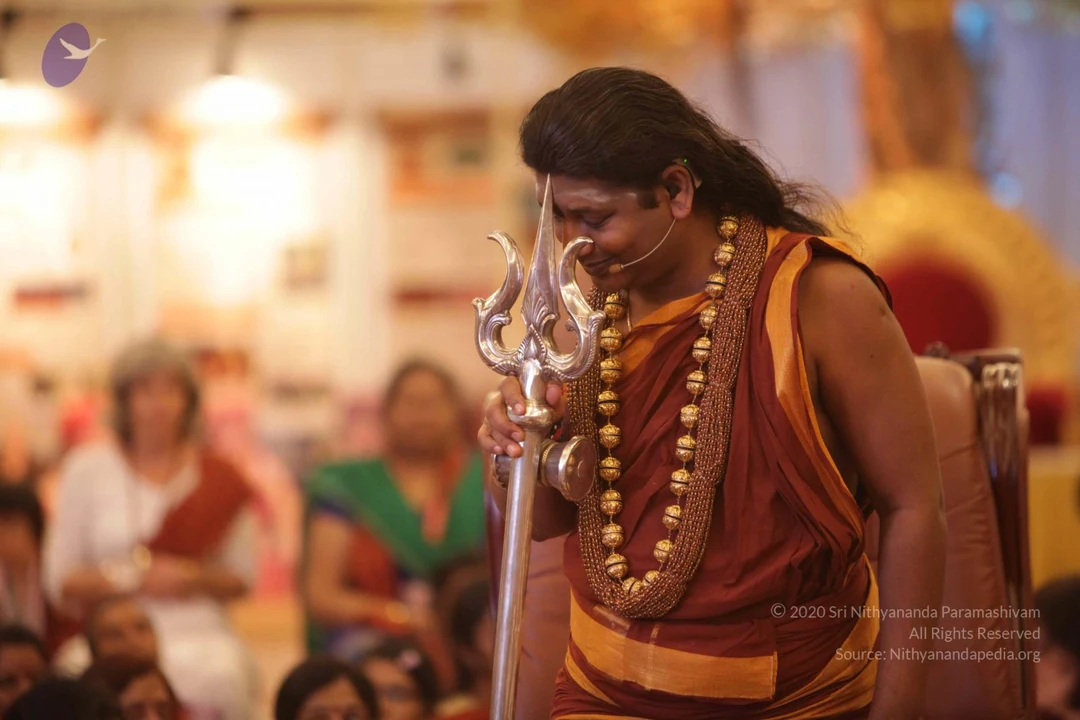
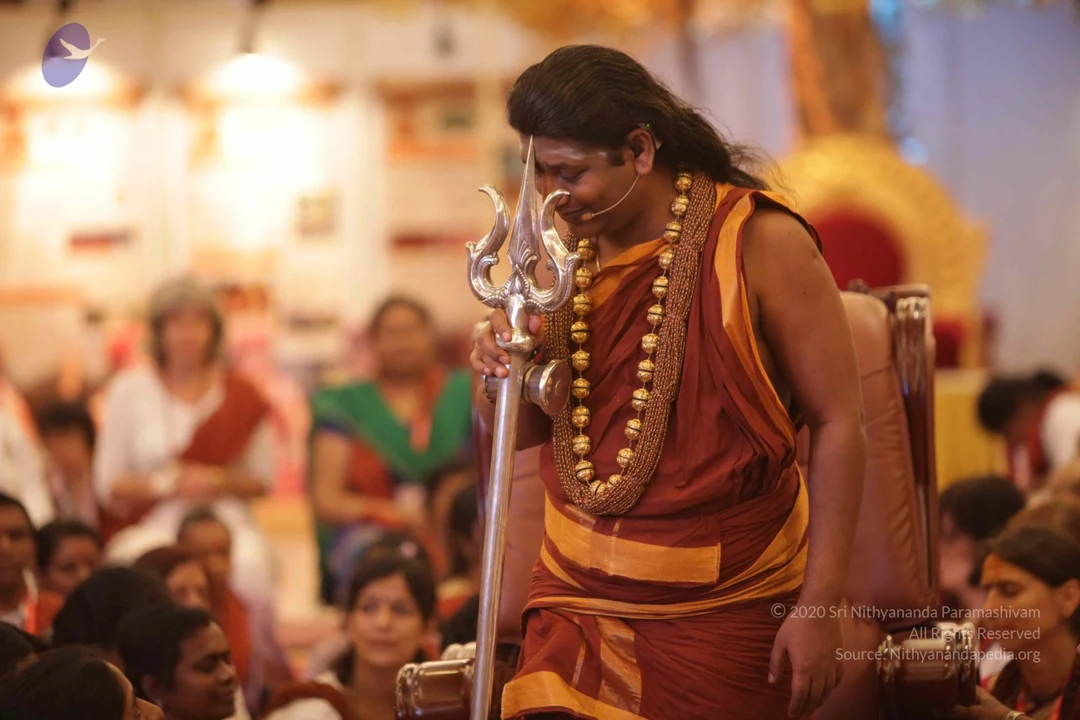
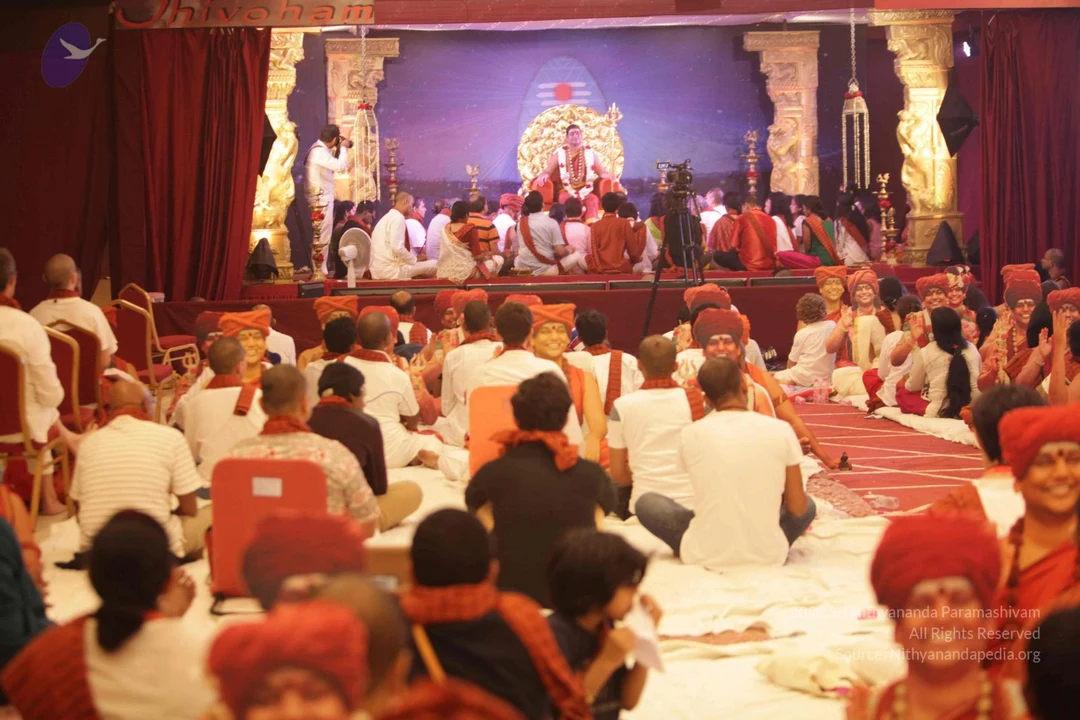
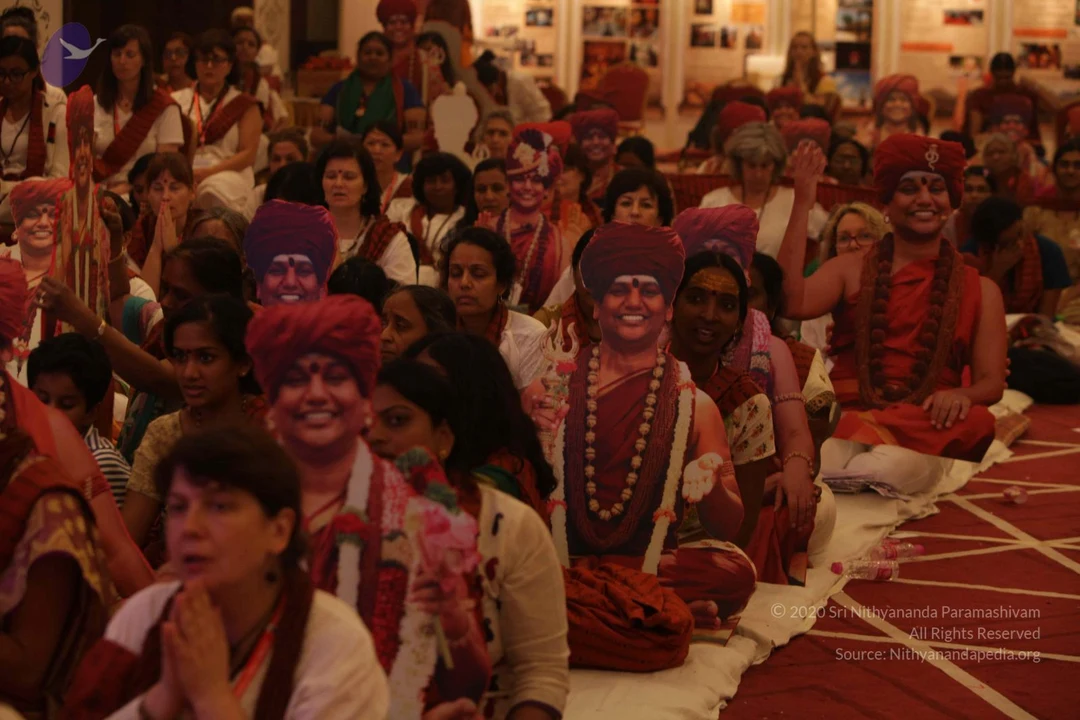
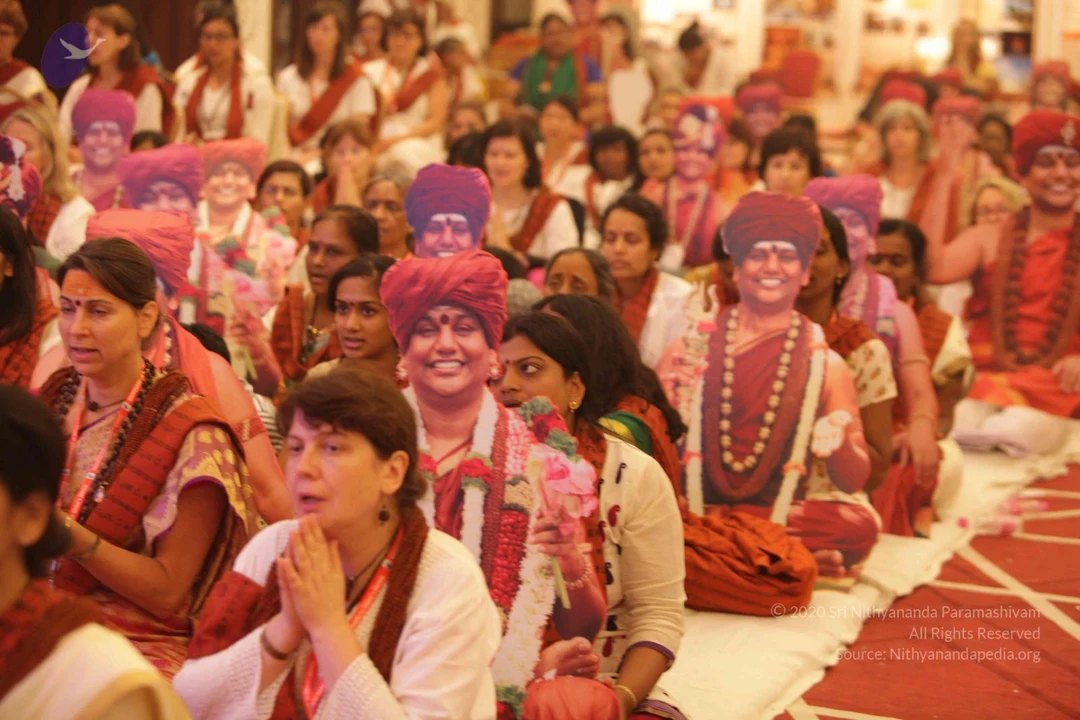
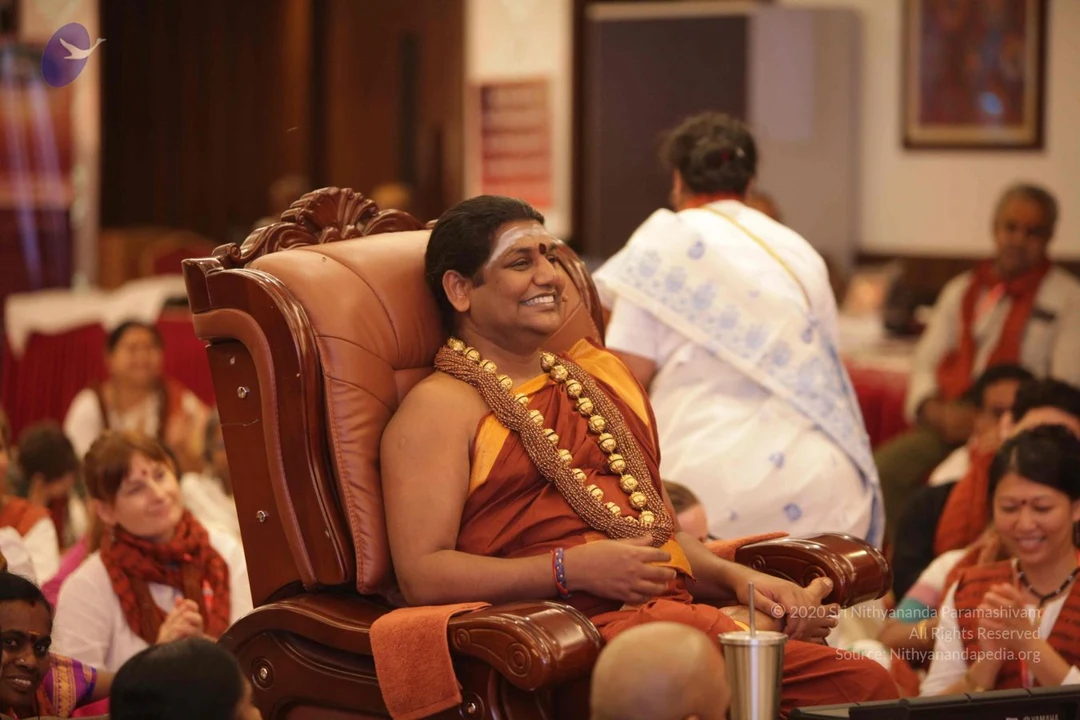
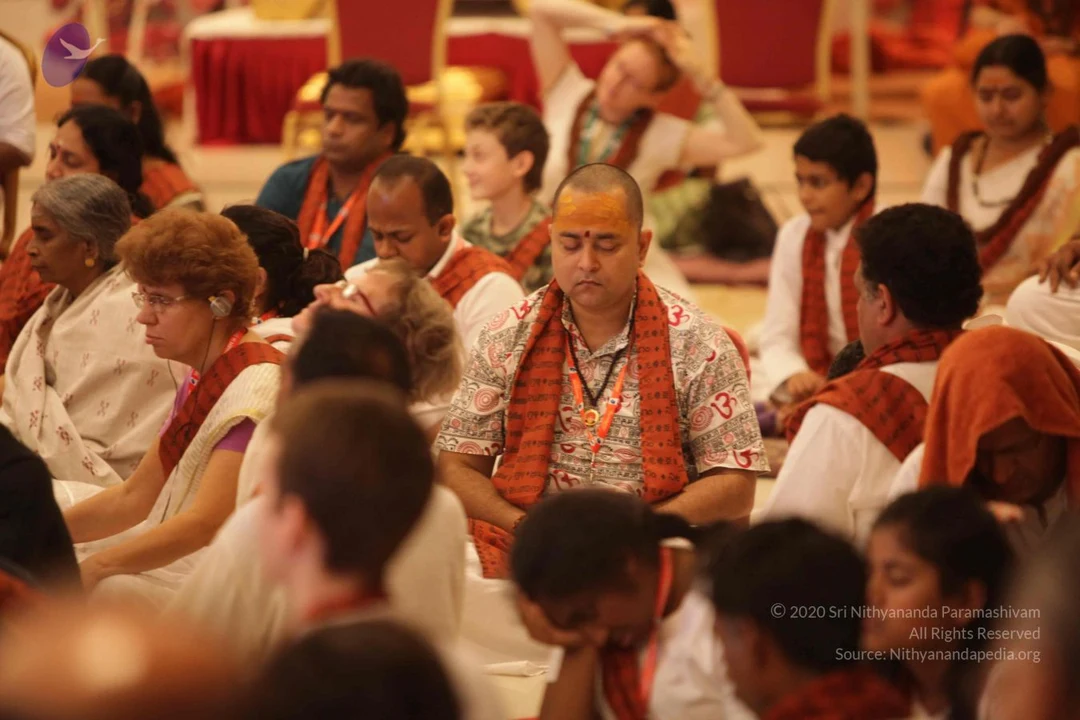
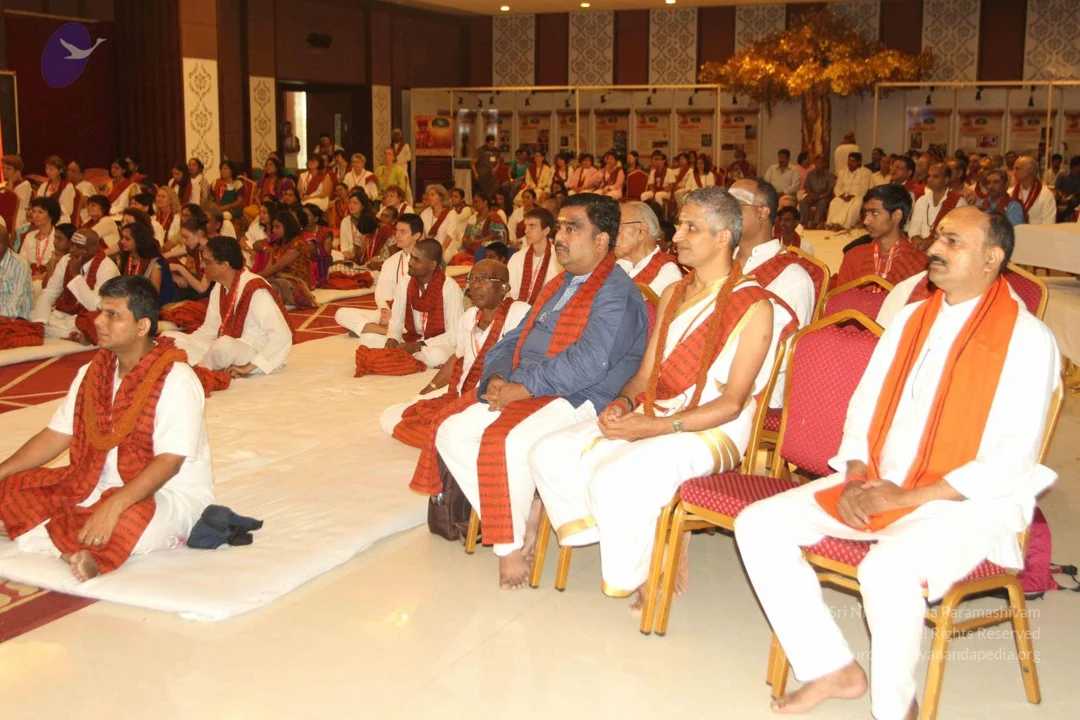
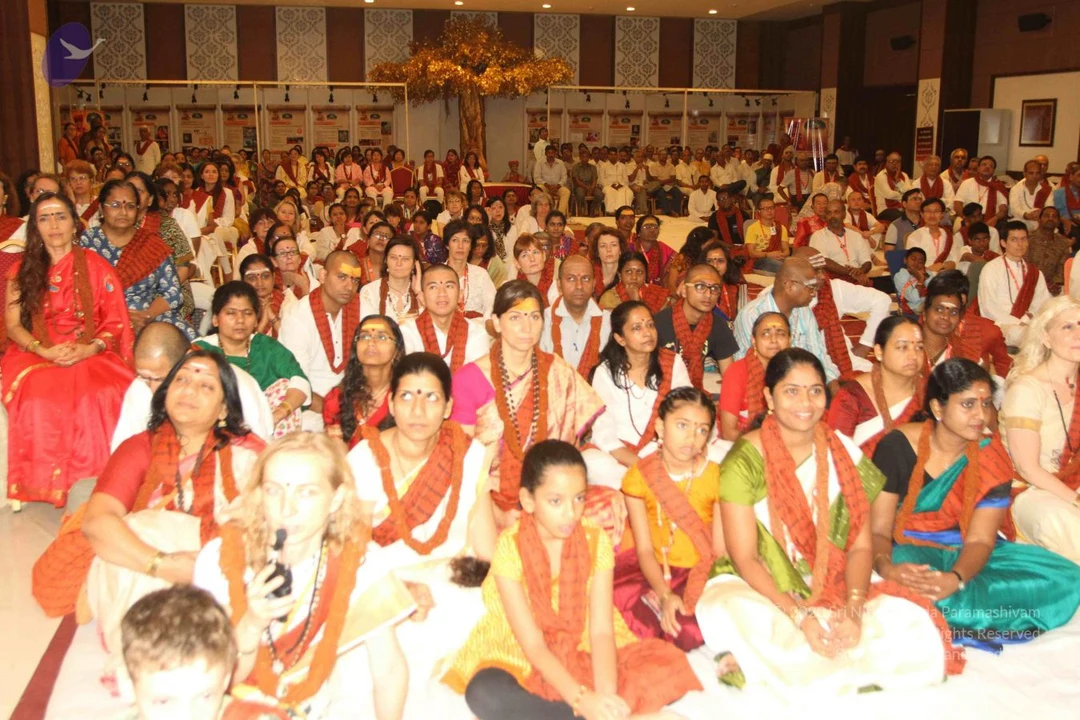
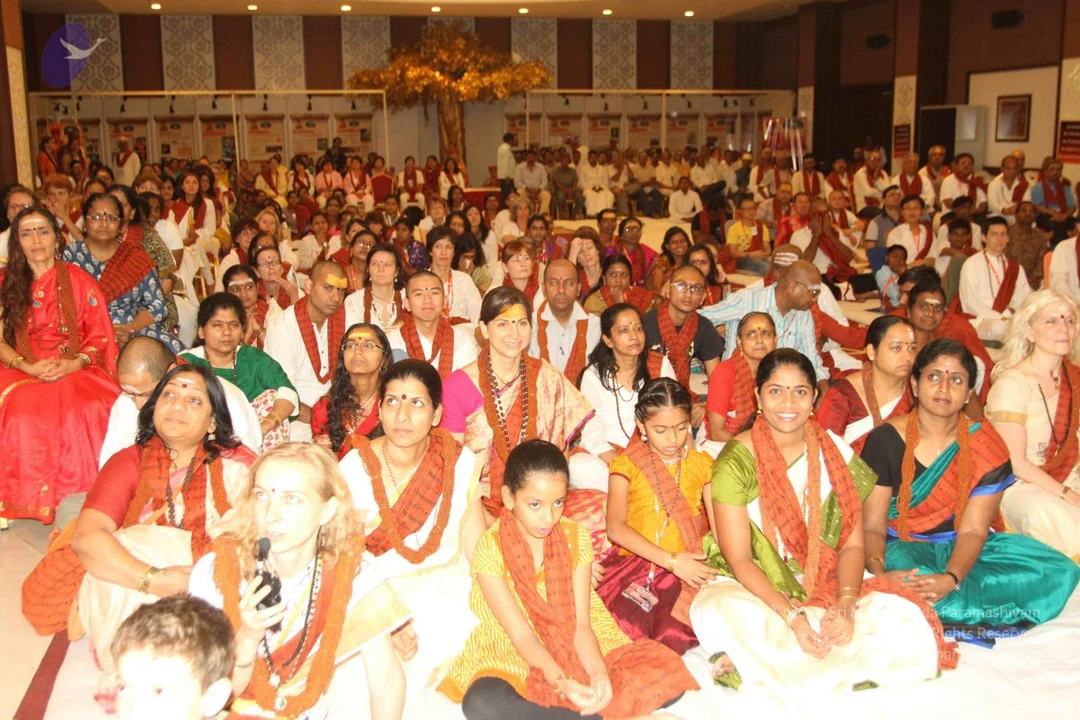
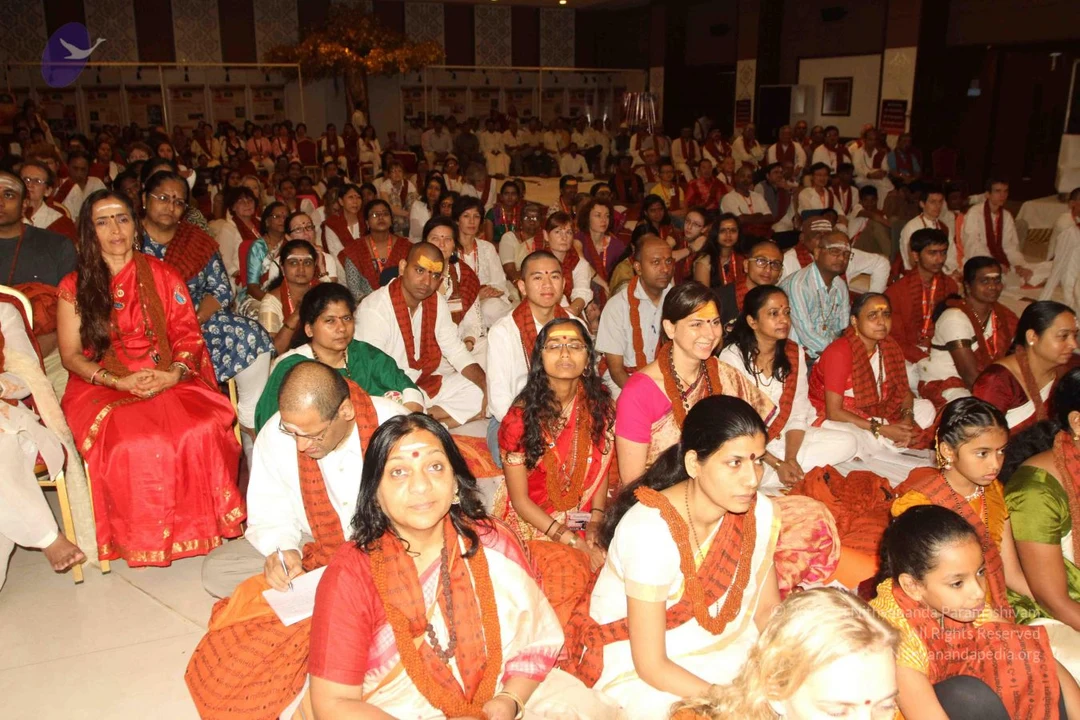
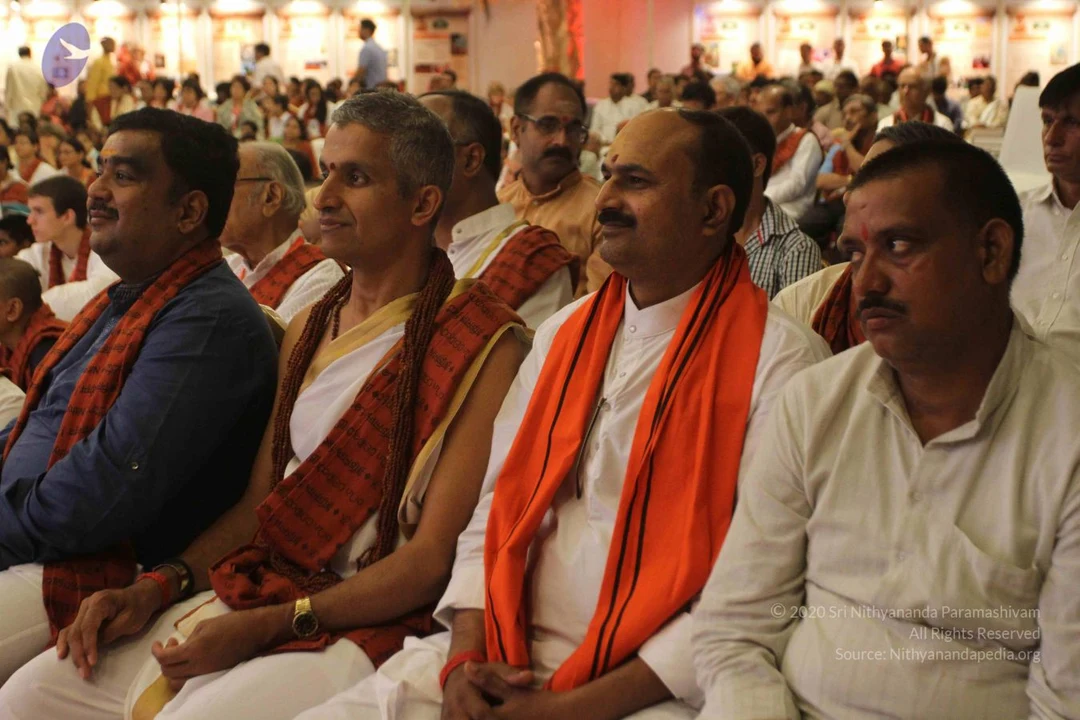
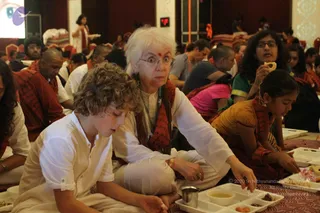
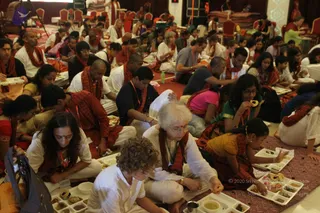
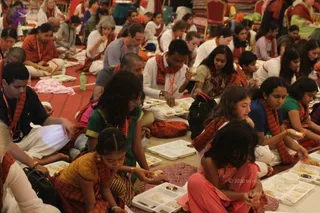
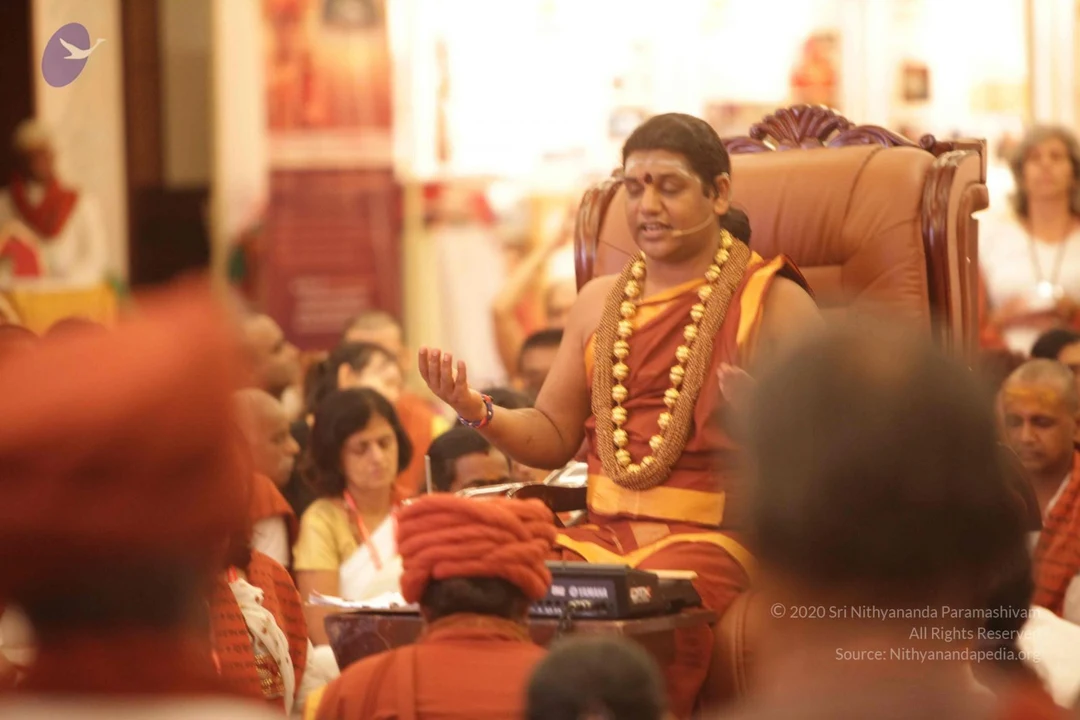
A seated man in a carved brown leather throne speaks to an audience during a satsang-style session. He wears an orange-saffron robe with yellow trim, a large beaded rudraksha-style necklace, and a red-and-white wristband, with a small tilak on his forehead and a headset microphone. He gestures with his open right hand. Around him, saffron-robed monastics in red and orange turbans and devotees in white and yellow saris sit listening, with a microphone stand and a small electronic keyboard at the front. A framed picture and banners appear in the background.Photo of devotees seated indoors eating a meal from white divided plastic trays. In the foreground a man in a tall orange turban, white kurta and orange-red patterned shawl holds a spoon over a tray of rice, sambar-like curry and pickles. Beside him a man in a blue shirt and shawl holds a tray, and a woman in a red blouse, cream sari and red shawl with a red bindi holds a plate, smiling. A man in white kurta with a red shawl sits at the left edge. Behind them a sign on the wall reads No Smoking, No Videography, No Photography, Mobile/Camera, Recording. The setting appears to be a dining hall for an annadan-style meal.A large hall with red carpeting and red-draped chairs holds a seated group of devotees eating a meal from divided white and beige trays on maroon floor mats. Many wear white, cream or red kurta-style clothing and orange or red shawls, some with red beaded lanyards. A woman in an orange saree and bangles in the left foreground eats from a tray, while a woman with grey hair in white garments and glasses leans forward. A large screen and camera tripods are visible at the back of the room. No person in the scene is identifiable as a person, so no a person candidate is described.A seated communal meal in a large hall with red and maroon patterned floor cloths. In the foreground a curly-haired boy in a white kurta eats from a divided metal tray. Beside him an older woman with white hair, glasses and a red bindi wears white with a red-and-saffron shawl and looks toward the boy. To the right a girl in a mustard-yellow top with a red-and-gold shawl eats from a tray, and a young woman in a green salwar with dark-rimmed glasses holds a food item. Behind them, rows of seated devotees wear white and saffron-red shawls, and a server in white with an orange shawl stands at the back. Banquet-style trays, bowls and steel cups are arranged on the floor.A large hall filled with seated devotees eating a meal from white compartment trays on red and maroon floor mats. Many wear white kurtas or white saris with red-and-maroon shawls, some with rudraksha or red beaded malas. Several people in the foreground eat with their hands, and an older woman with white hair in white clothing sits centre-front. Red cushioned chairs and a draped stage area appear at the back of the room. No single presiding figure is clearly identifiable in the visible frame.A large hall of seated people eating a communal meal from white divided plastic trays on red floor mats. Many attendees wear orange-red shawls or scarves, with orange lanyards around some necks; some wear white kurta-style clothes. A woman in the centre wears a green top and a garland, while others wear saffron, yellow, green and pink outfits. Plates and steel bowls are set out along the mats and some diners eat with their hands. Red chairs and striped fabric are visible at the back. The scene looks like a sangha meal, with no visible throne or a person candidate in view.

Kalabhairava-Darshan
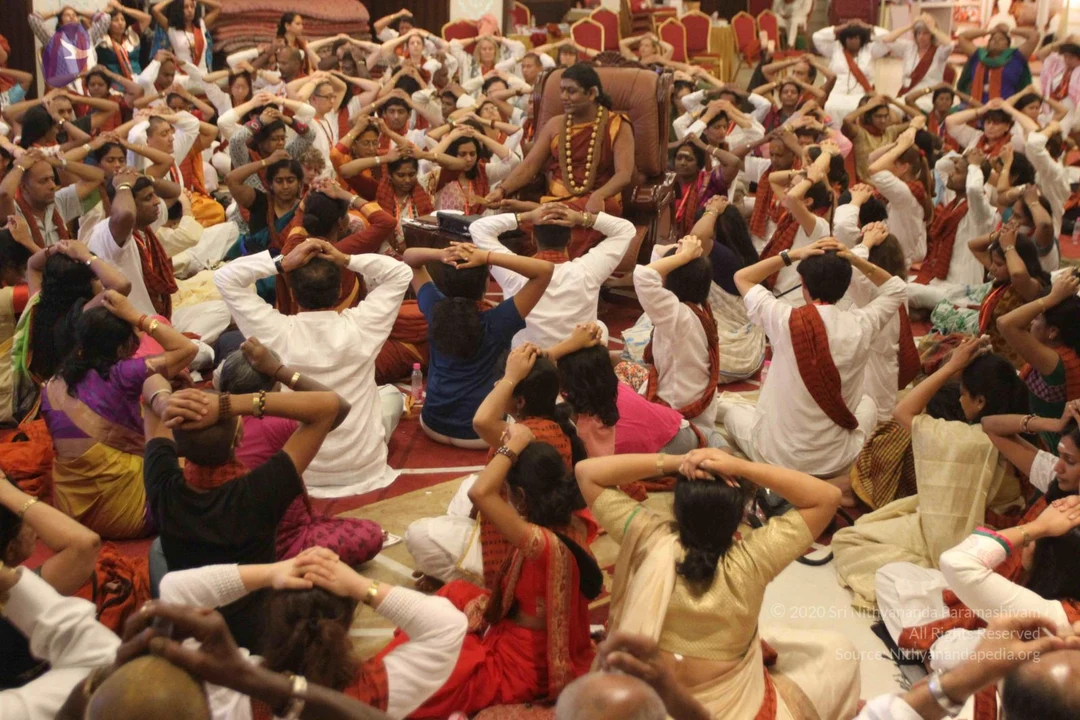
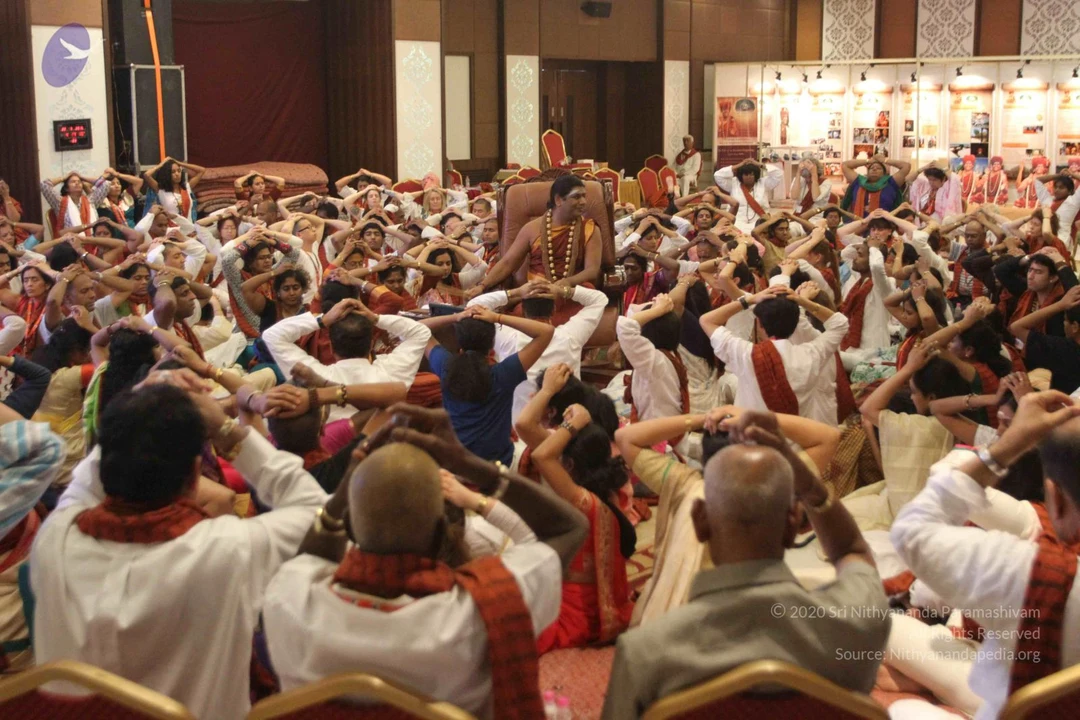
62 photosSource gallery
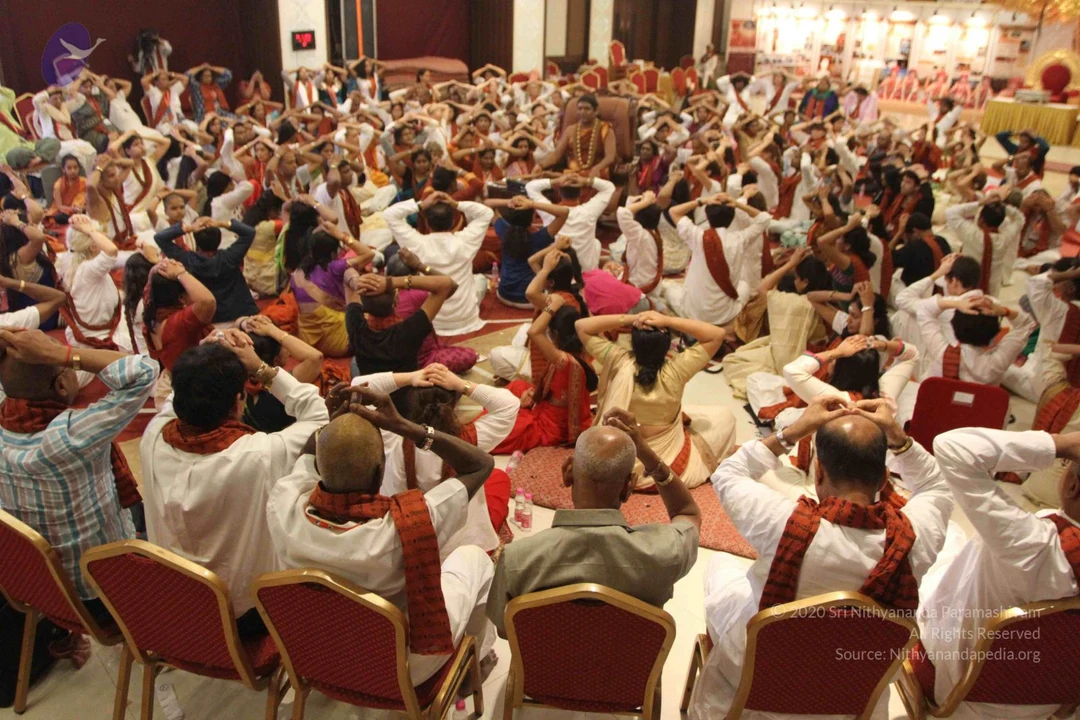
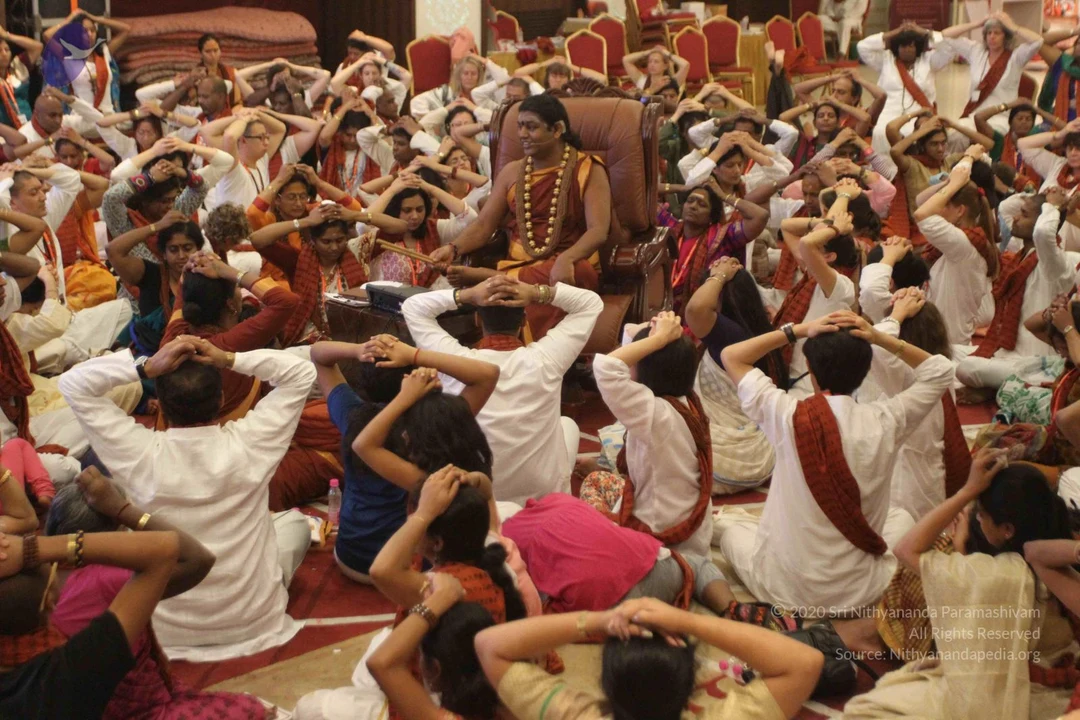
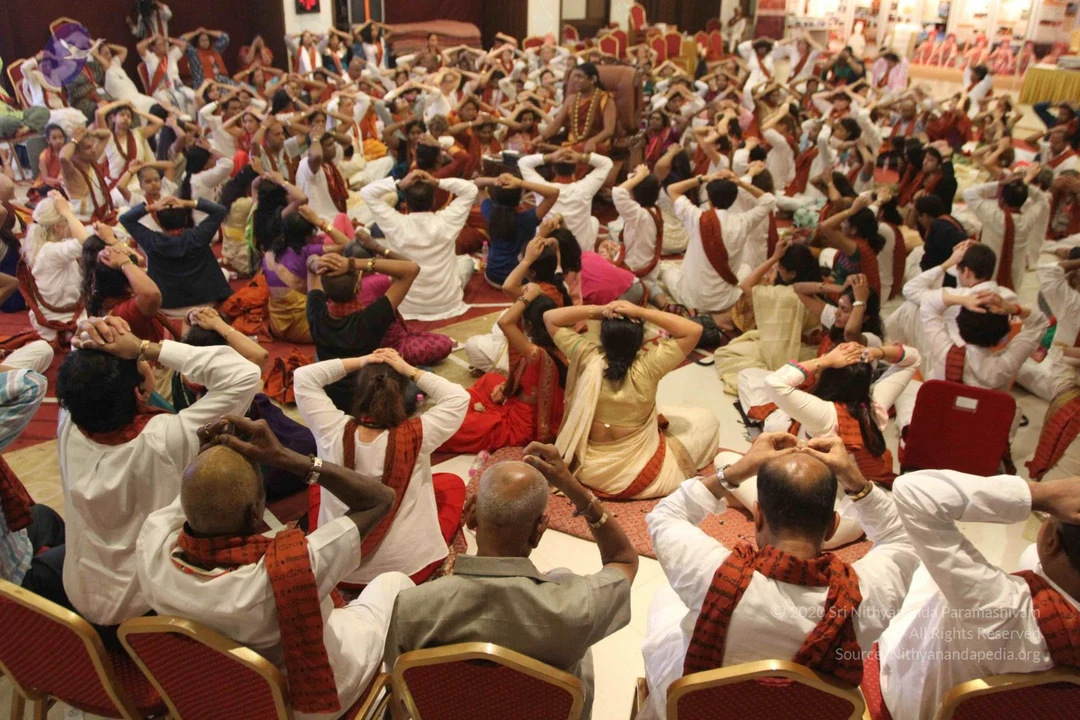
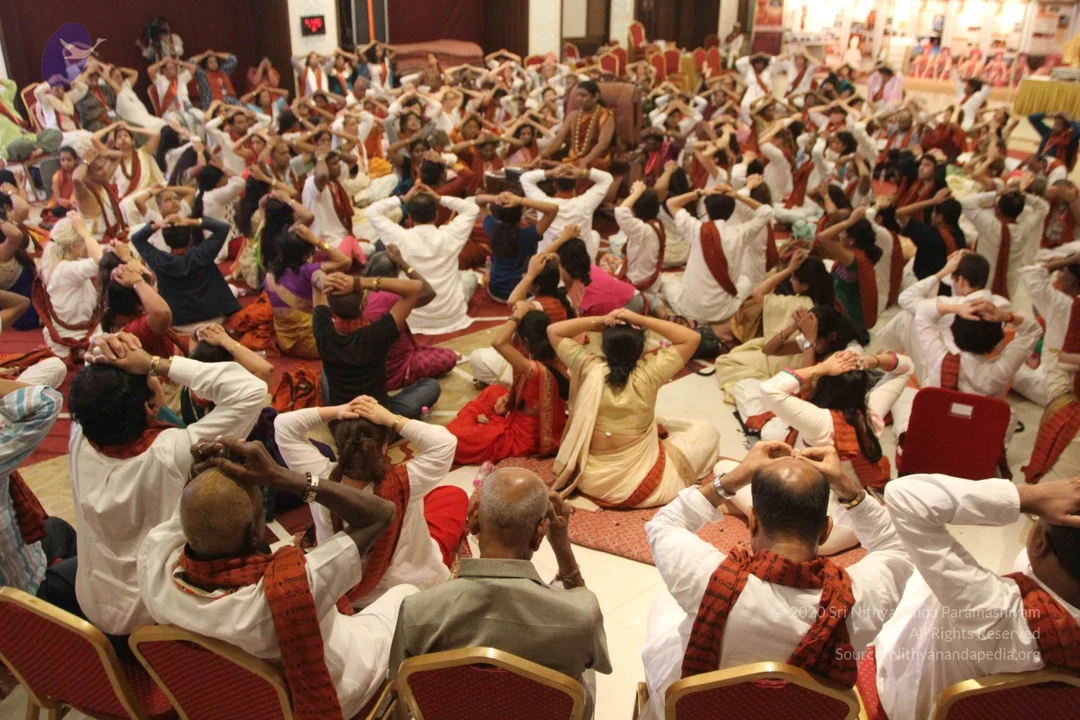
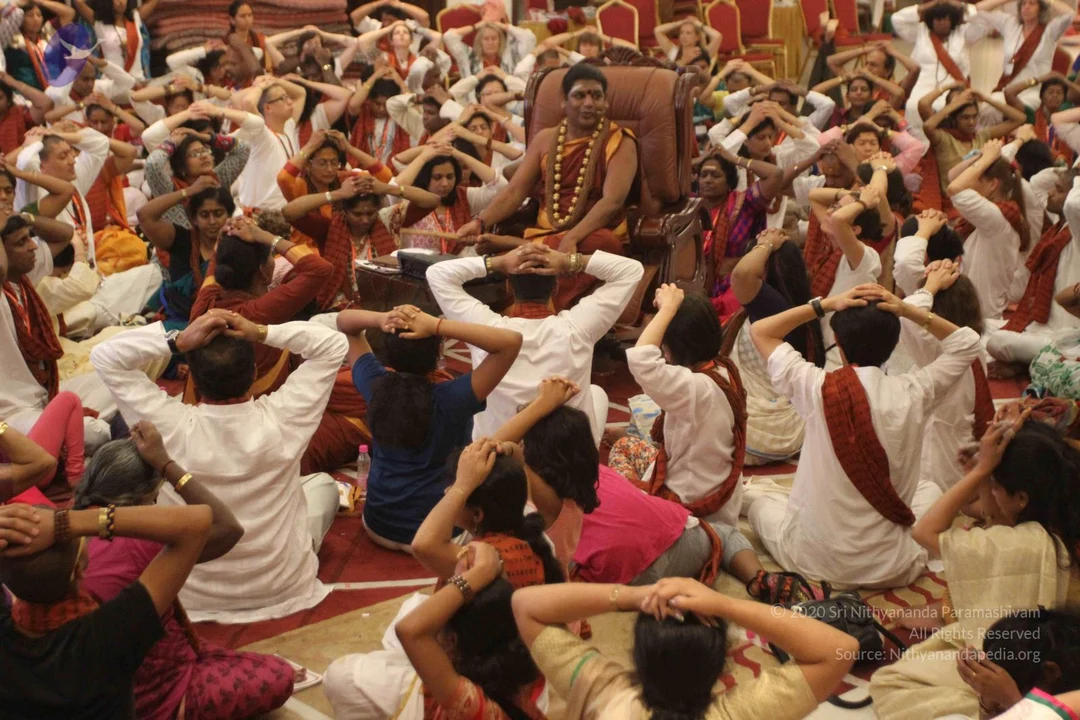
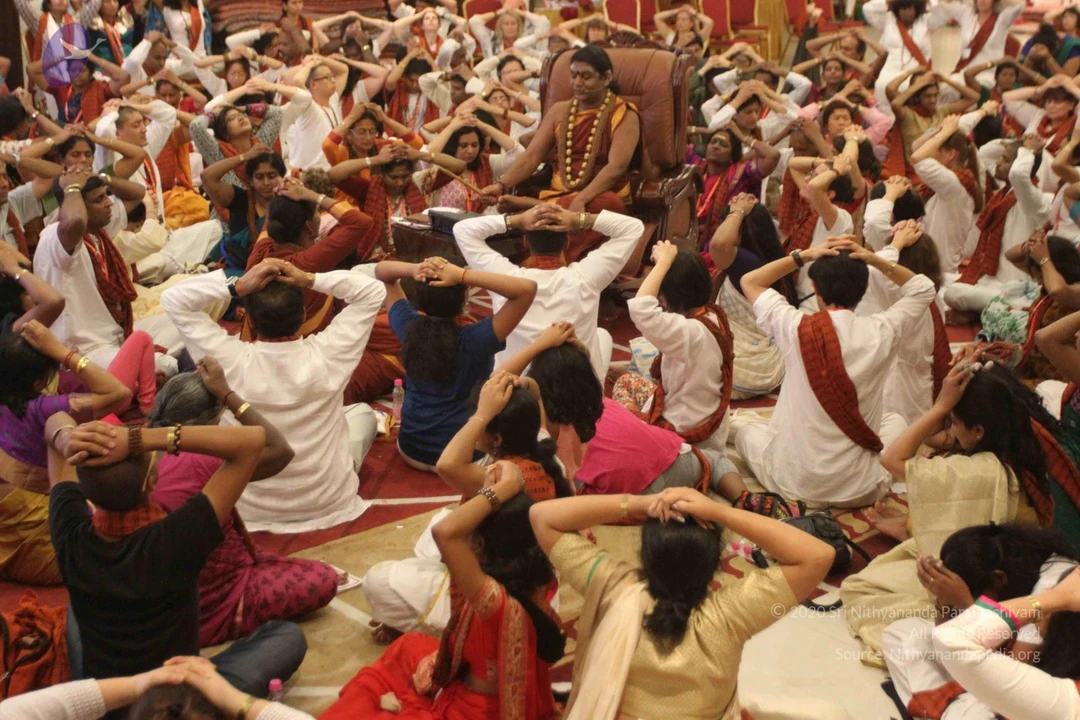
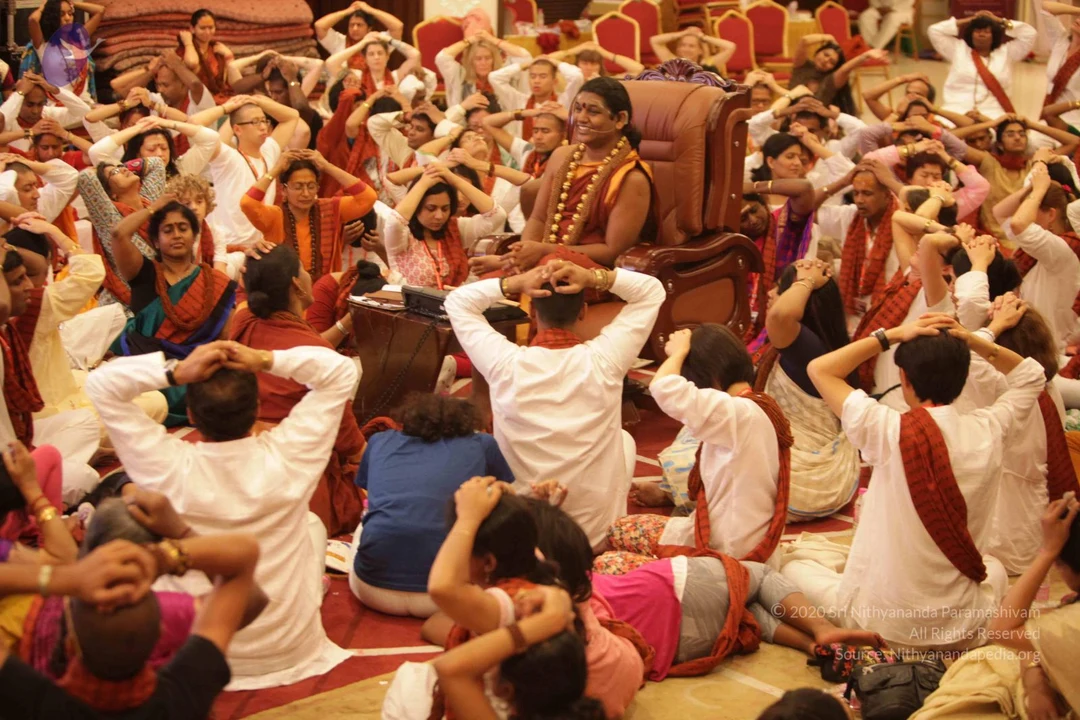
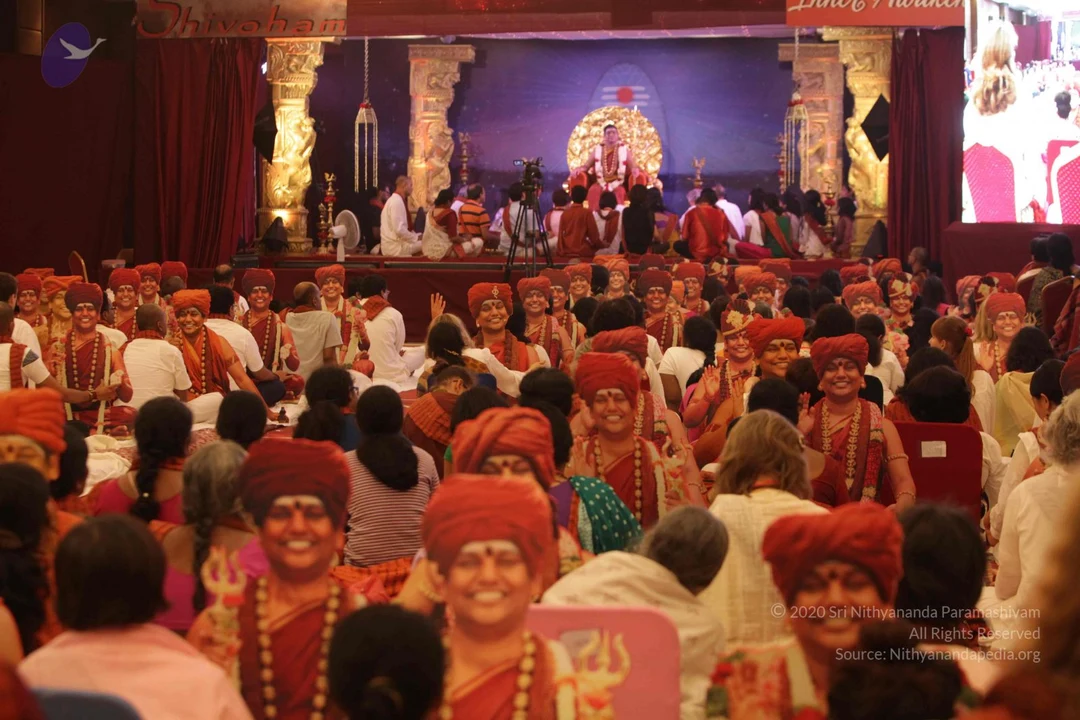
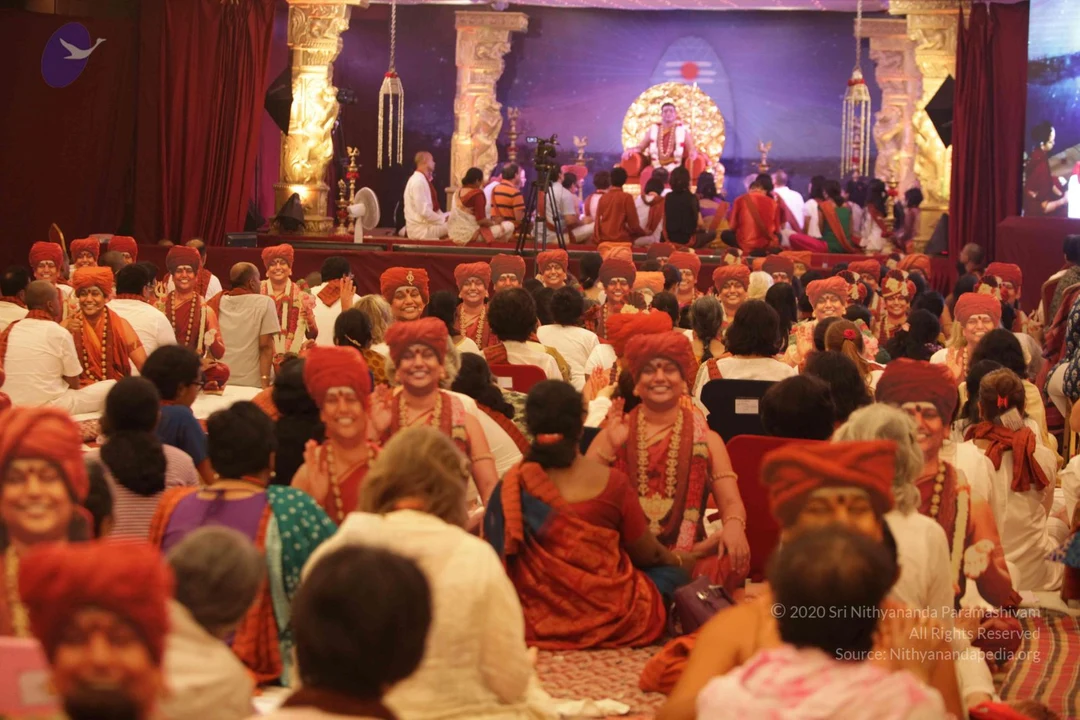
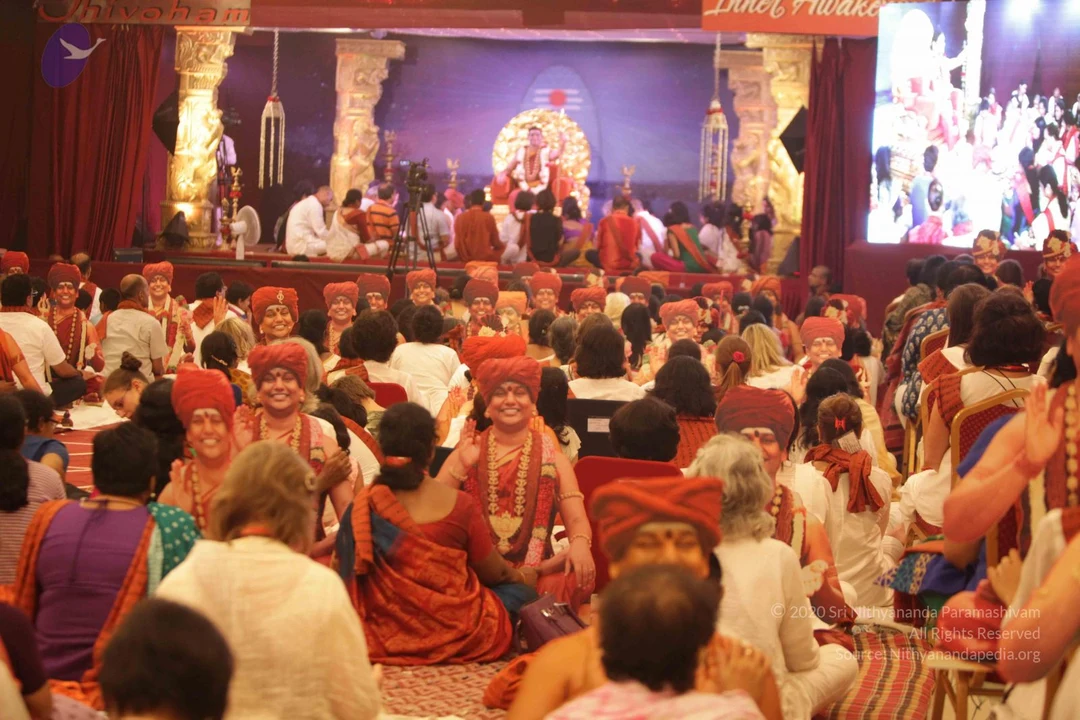
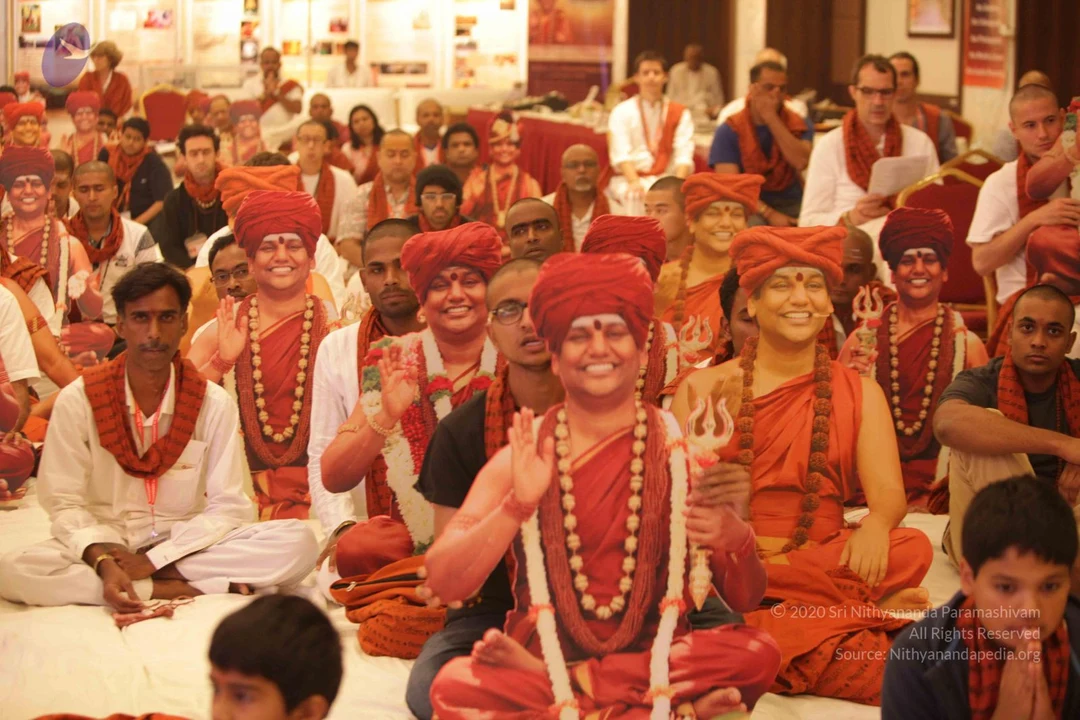
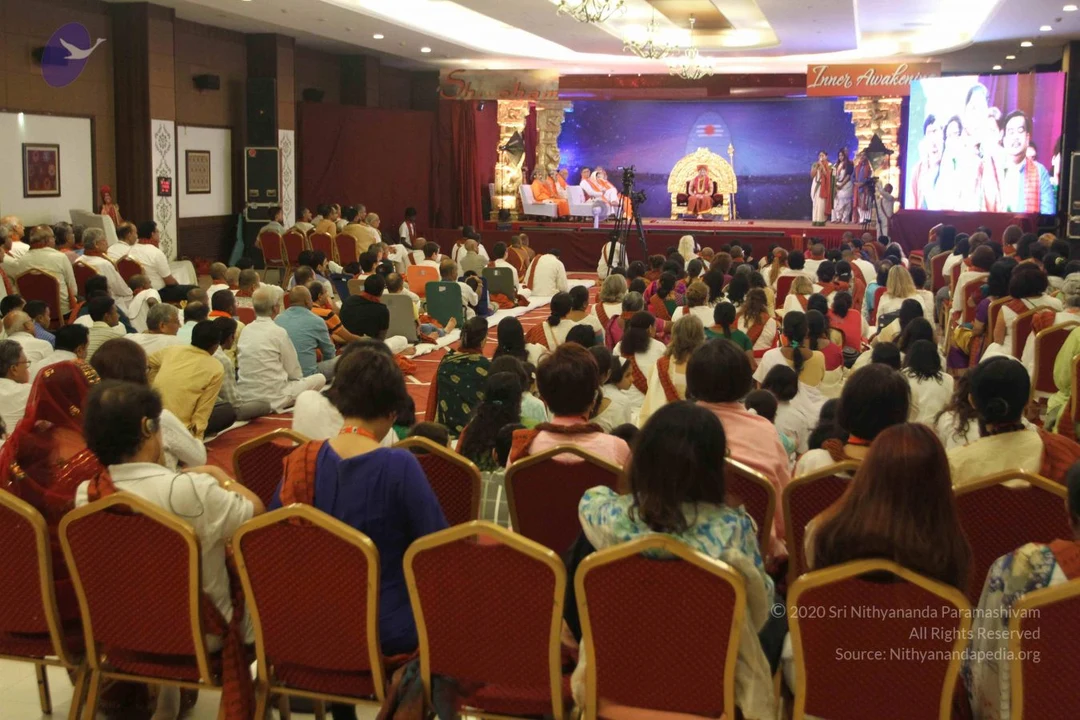
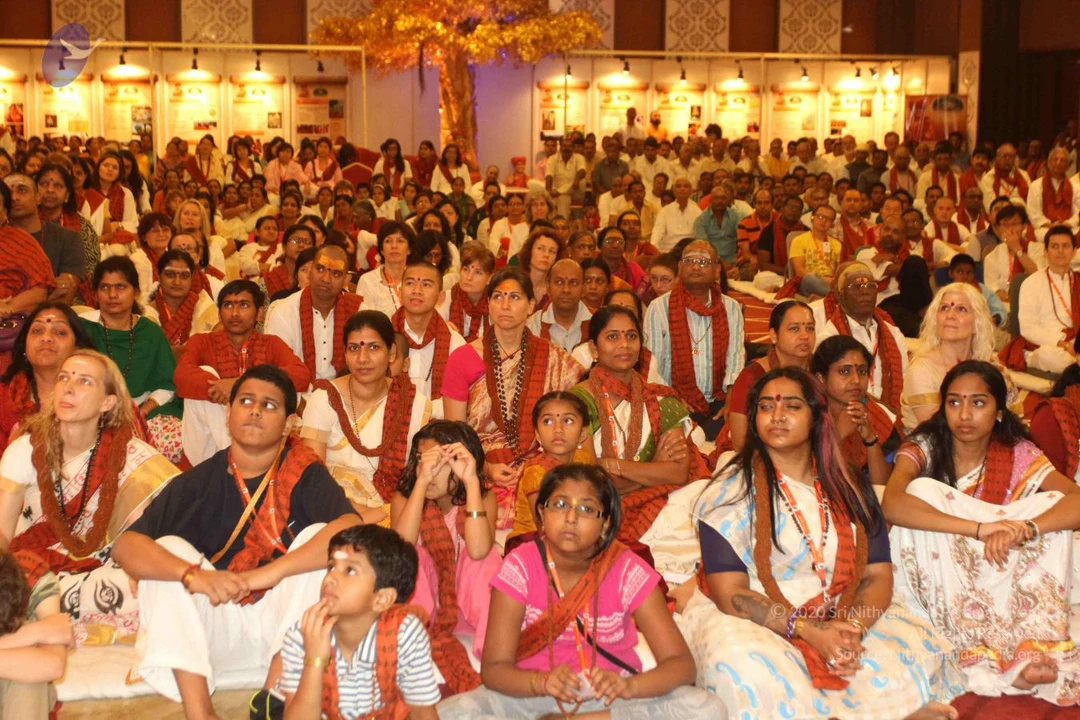
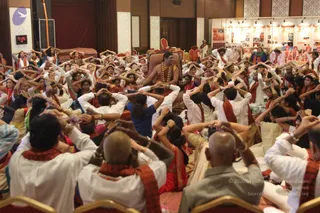
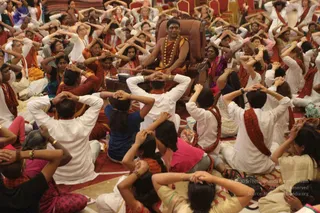
A large indoor hall filled with devotees seated on the floor, most with both hands raised and pressed to the top of their heads in a shared energy-darshan gesture. At the centre, a man with long hair and an orange shawl sits on an ornate red-and-gold throne, wearing a rudraksha mala. Many devotees wear white kurtas with orange-red shawls and saffron sarees. Chairs stand along the front, and a row of framed photographs and displays lines the far right wall. Probable Swamiji: the seated figure on the throne shows long hair, orange shawl, rudraksha mala and gold-toned adornment, with the page noting Swamiji at this event.A large indoor satsang or energy-darshan gathering in a hall with red carpet and red chairs. Dozens of devotees sit closely packed, many in white kurtas and saffron, orange, red and gold saris and shawls, with hands raised to the crown of their heads in a shared gesture. At the centre, a figure seated on an ornate brown throne-style chair wears an orange-saffron garment and a long gold-beaded necklace, with long dark hair; the figure is raising the hands. Many devotees wear bangles and some wear wristwatches. Several people in the foreground have their backs to the camera. The scene conveys a collective meditative practice centred on the seated teacher.A large seated congregation in a hall with gold chairs and red-cushioned seating, many people with both hands raised to the top of their heads in a shared energy or meditation practice. Most wear white kurtas or saris with orange-red shawls draped over their shoulders. A figure seated at the front on an elevated brown chair wears an orange-brown garment and a beaded mala, appearing to lead the group. Red and gold decor, a gold throne at the right edge, and an unlit lamp setup appear in the background. Several people in front are partly visible from behind, with bald heads and red shawls prominent.A large indoor satsang hall with many seated devotees in white and orange-red shawls, most with both hands raised to their heads in a shared energy-darshan style gesture. At the centre, a man seated on a brown leather throne wears an orange-saffron robe, a long rudraksha mala and a gold necklace, and holds a small wooden stick. Red chairs and a patterned rug fill the background. The scene is a photograph of a devotional gathering, with a central figure whose appearance and robes are consistent with the page's identification as a person, probable.A large indoor hall with cream floor tiles and red and gold chairs holds a seated crowd of many devotees, most with both hands raised to the top of their heads in a shared meditative gesture. Most wear white kurtas or saris with orange-red shawls draped over their shoulders, while a few women wear yellow, pink and red saris. In the upper centre a figure in orange-gold garments and a beaded necklace sits on a raised seat near a flower-decorated altar, and a digital clock is visible on the back wall beside a shop display of religious items. Several people in the foreground sit on red chairs and red mats, with a bald man in a grey shirt at the lower centre.A large group of devotees sits on a red and beige carpeted hall floor with hands raised to their heads in a shared gesture. A man seated in a large brown leather throne-style chair at centre wears an orange-saffron cloth, a rudraksha mala and a gold necklace, and is also raising his hands to his head. Many people wear white kurtas, red-orange shawls and saffron garments, with a few in pink, blue and sari colours. Red-cushioned chairs line the back of the hall. The centrally seated figure matches the page's appearance-based cues for a person, with a throne and saffron garb, and the page indicates his presence at this event.

Pada-Puja

106 photosSource gallery
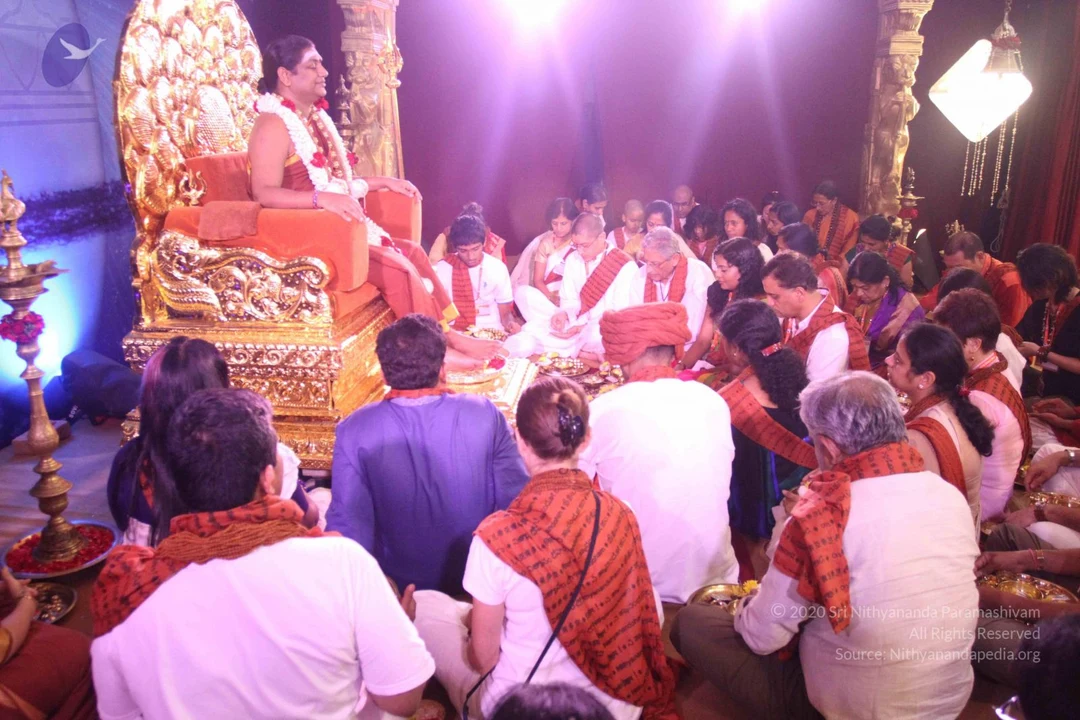
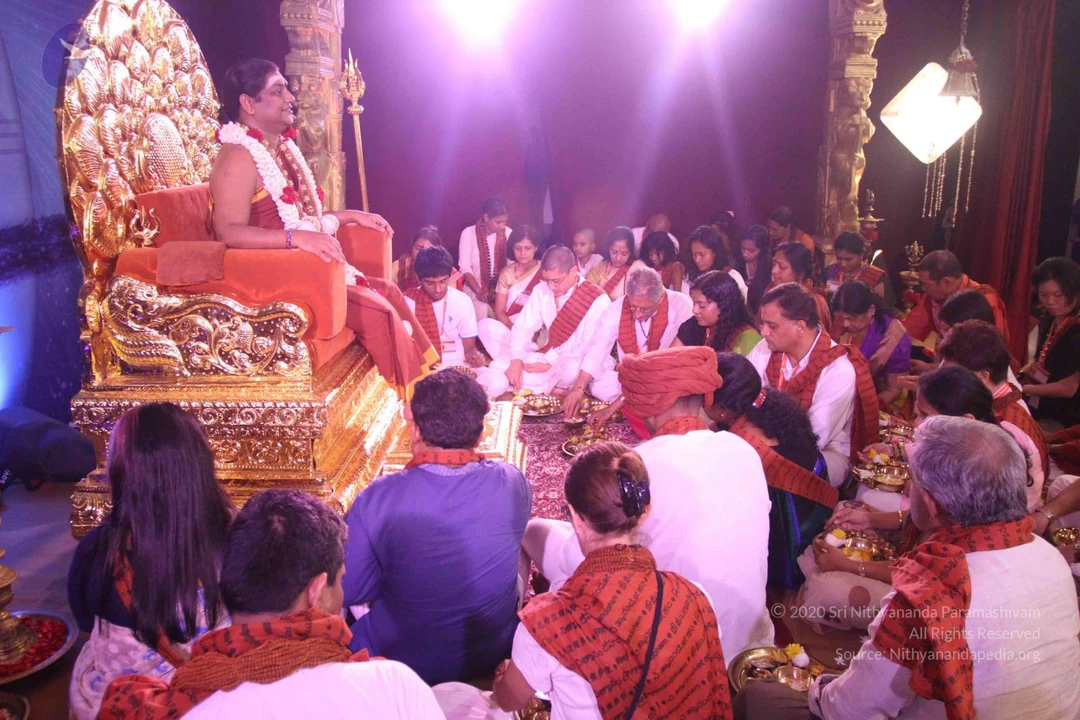
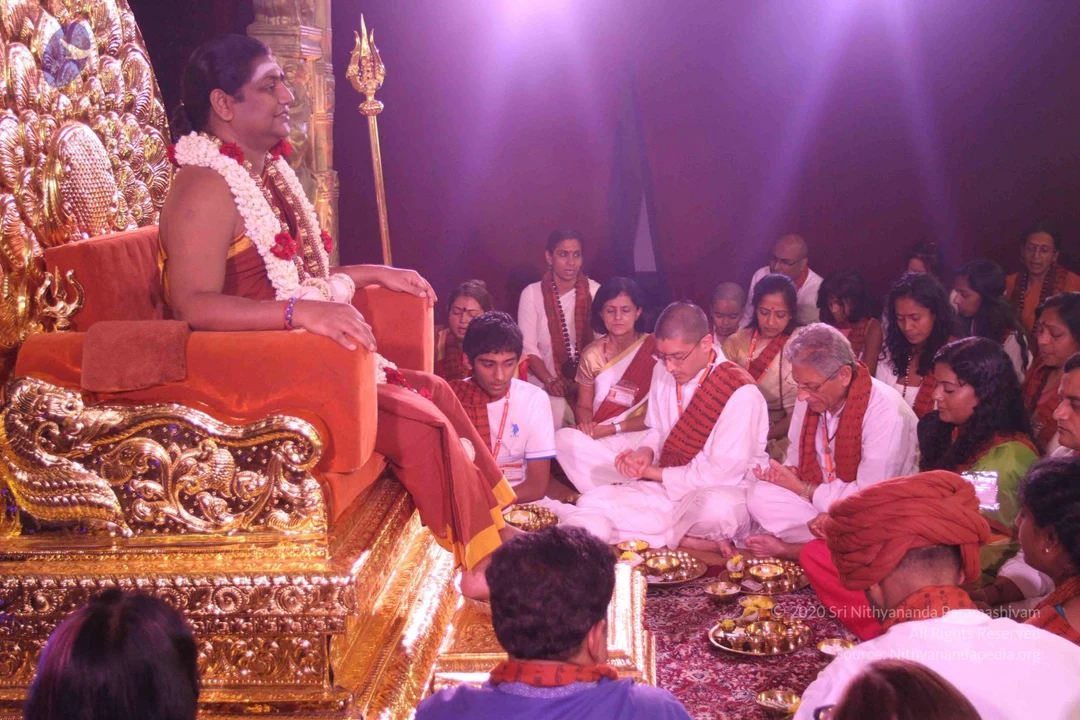
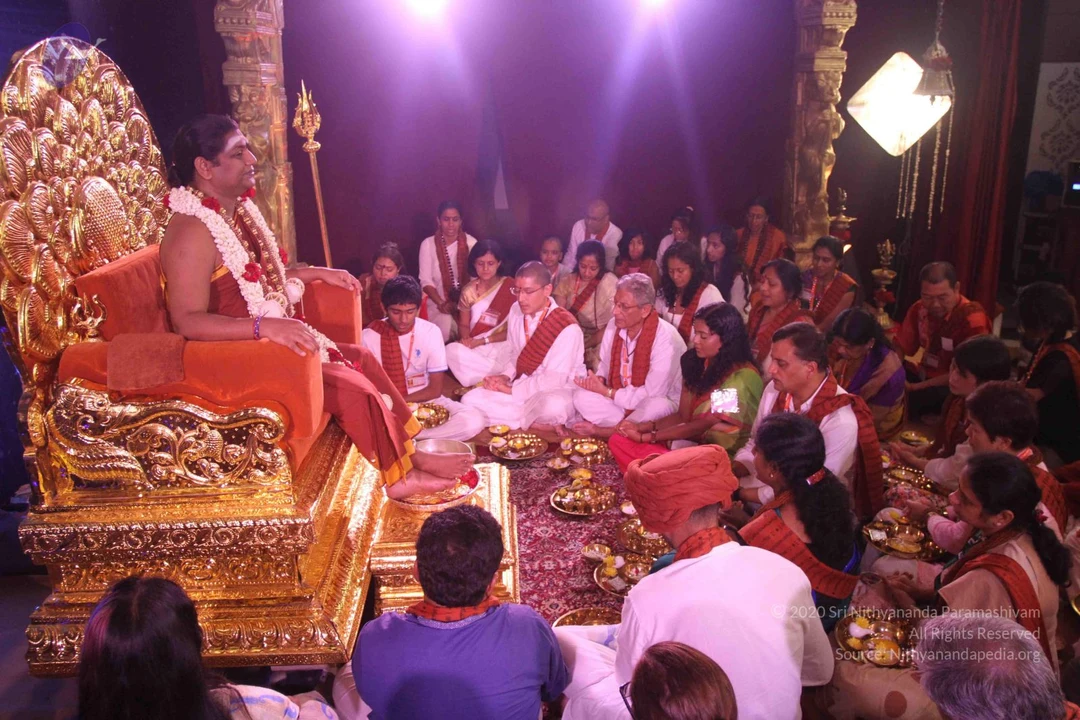
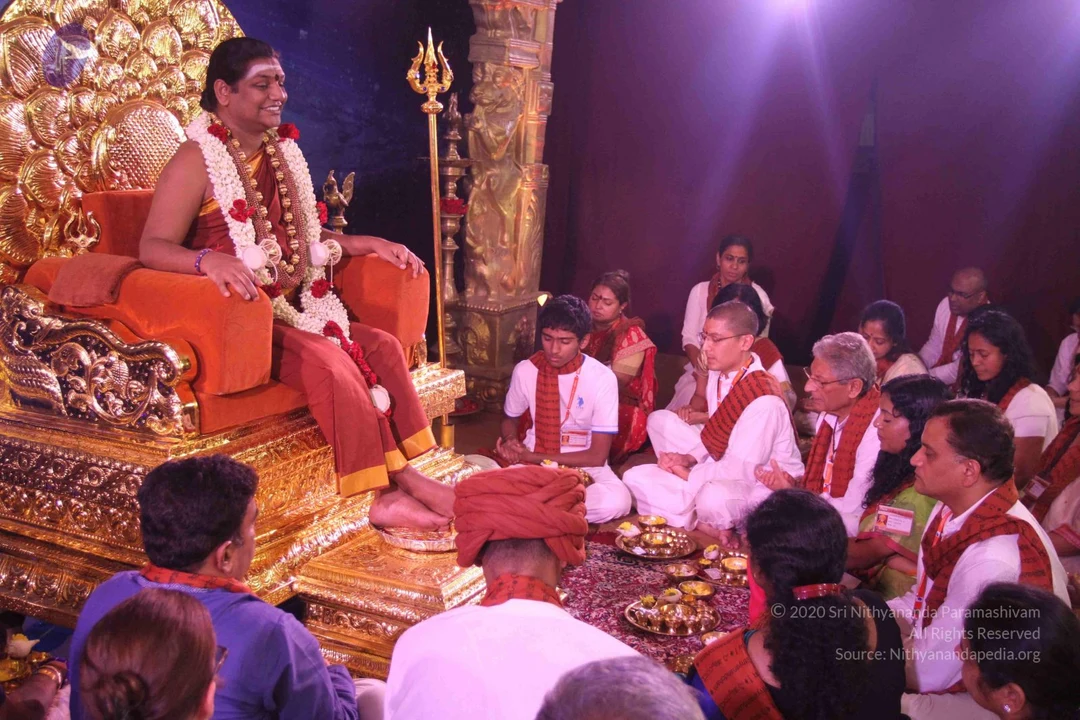
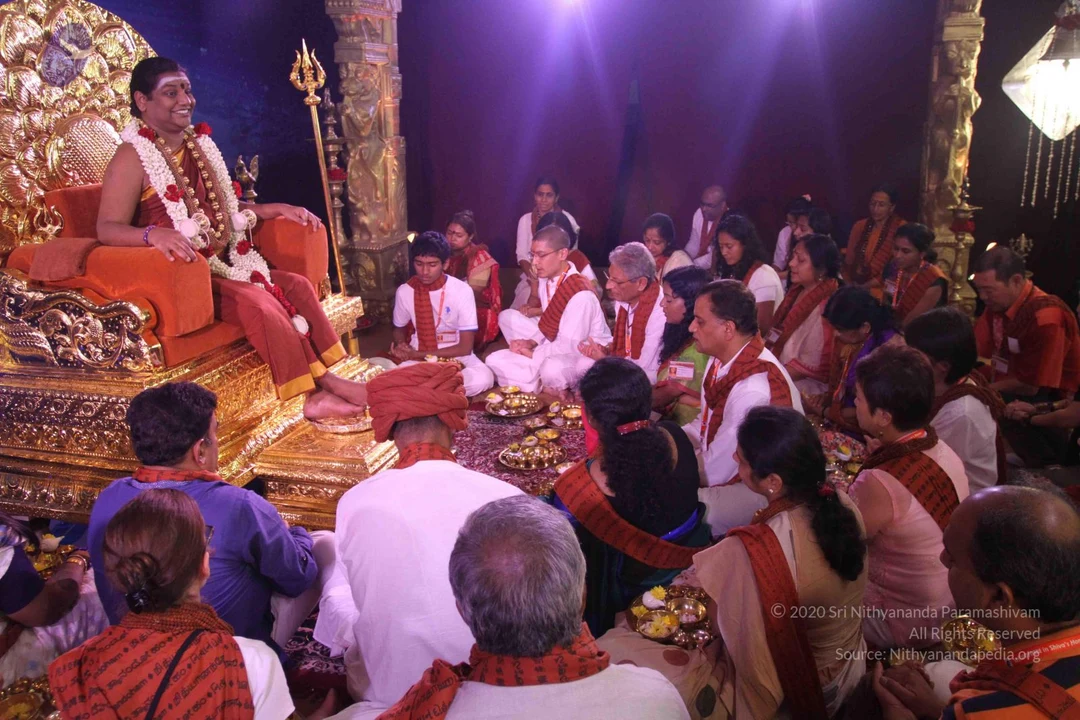
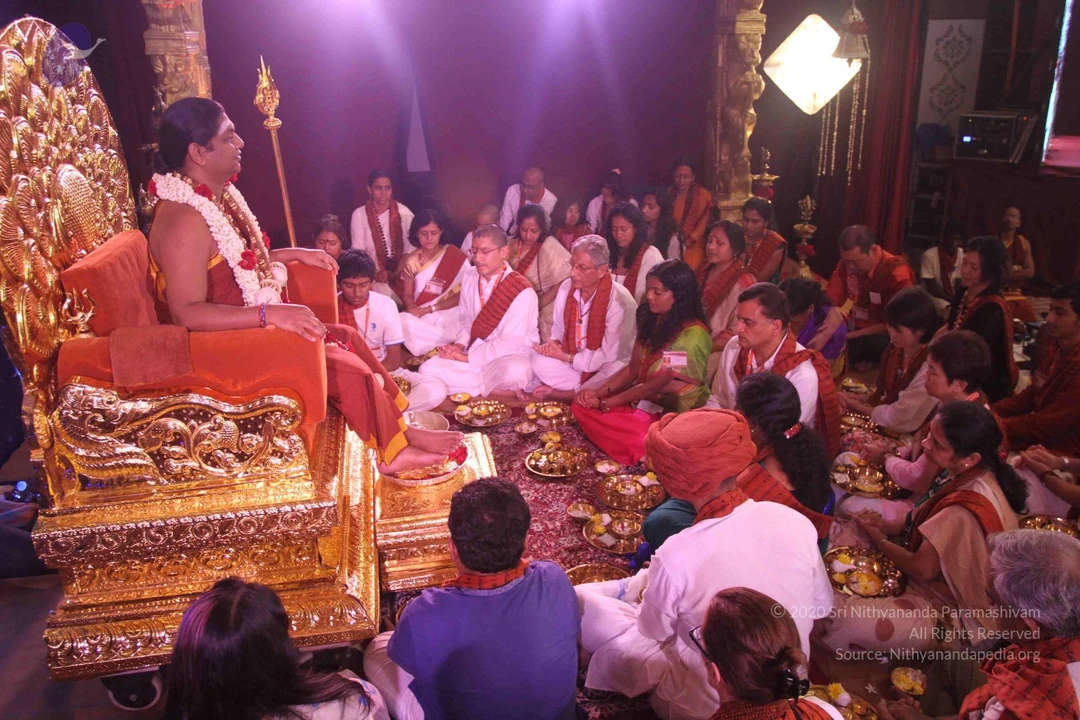
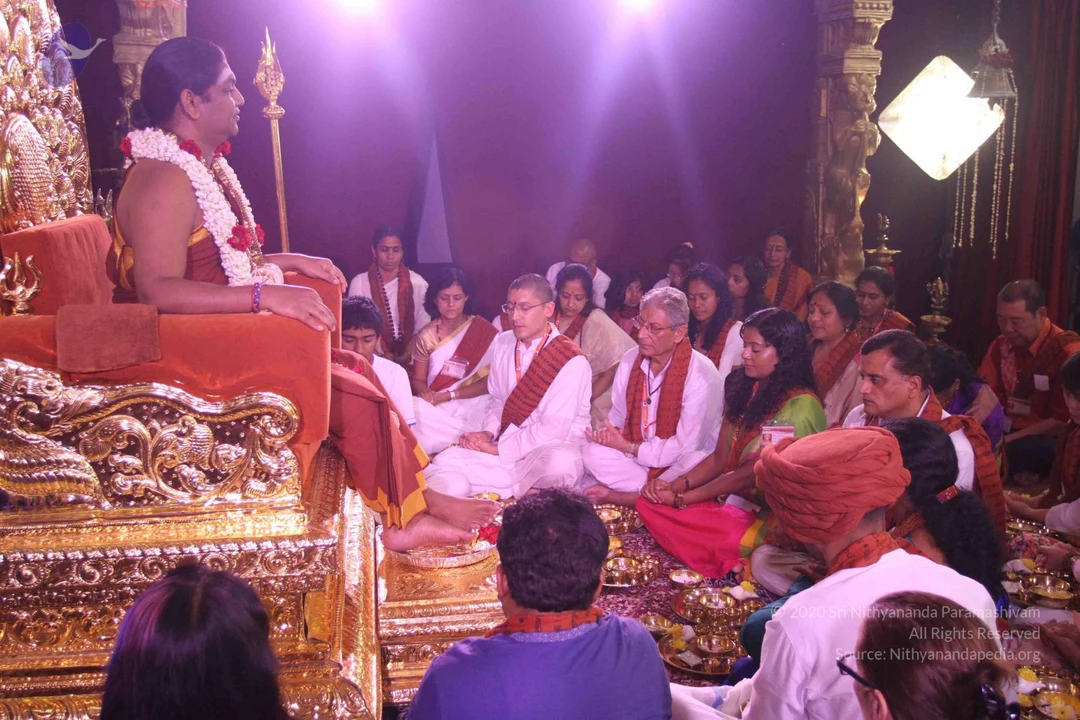
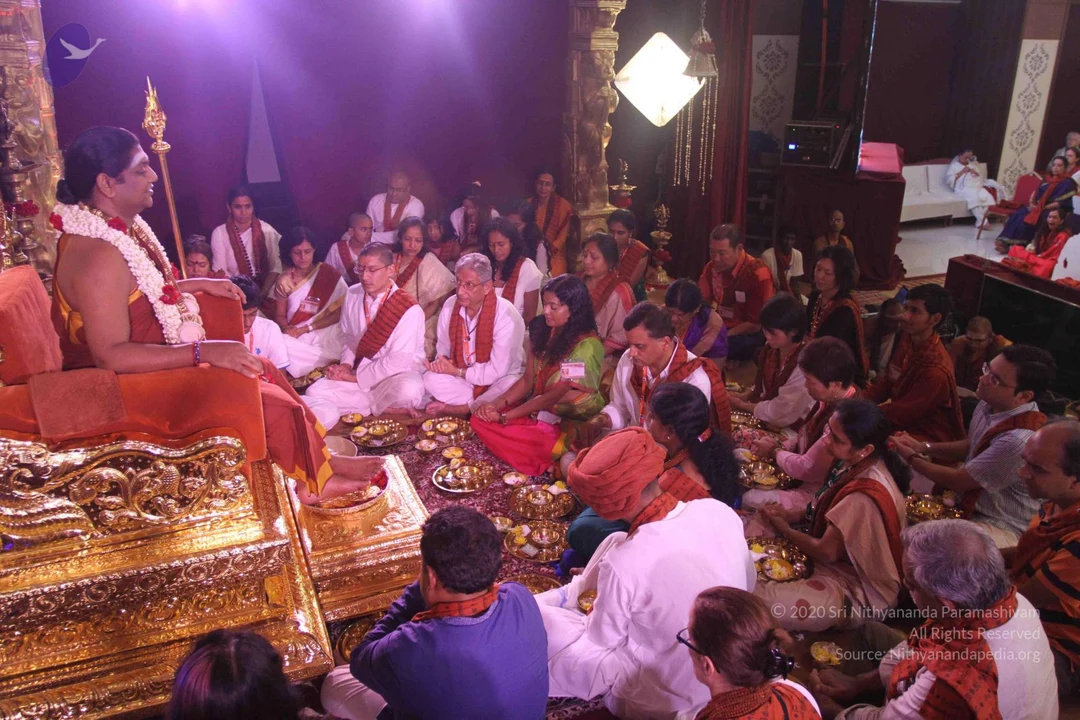
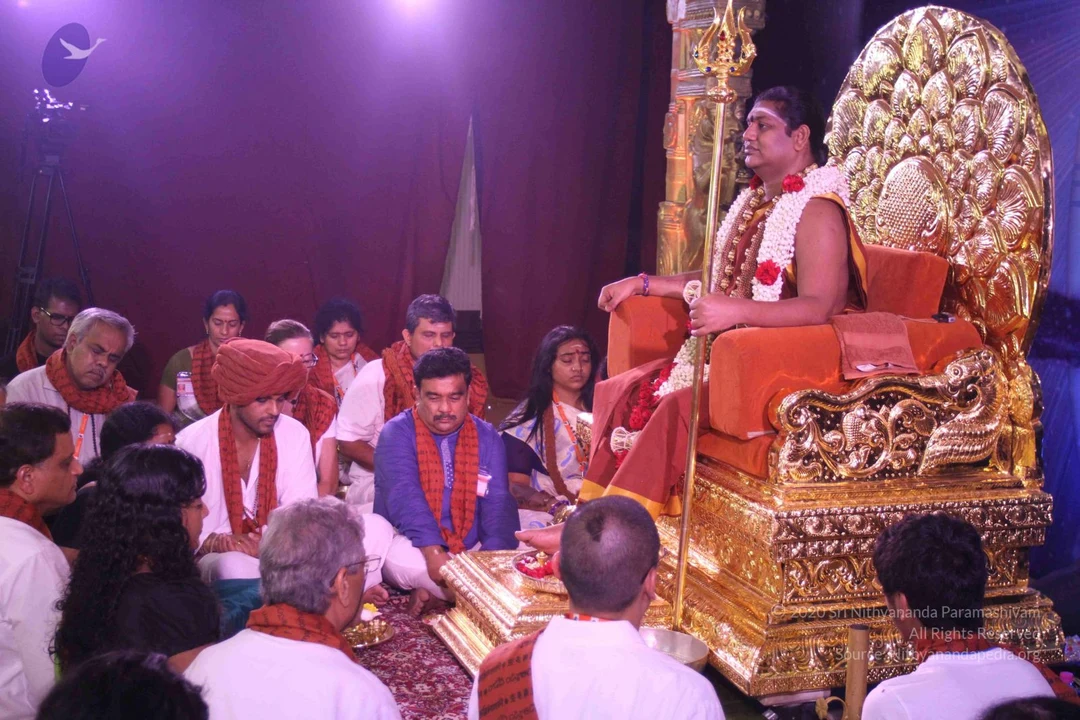
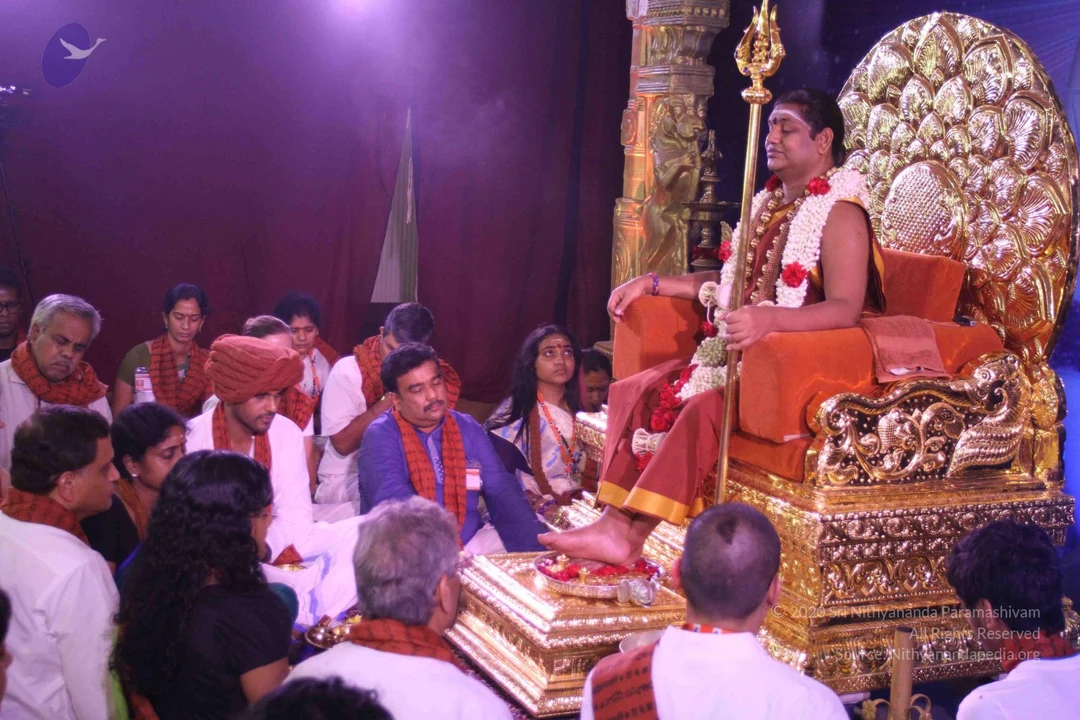
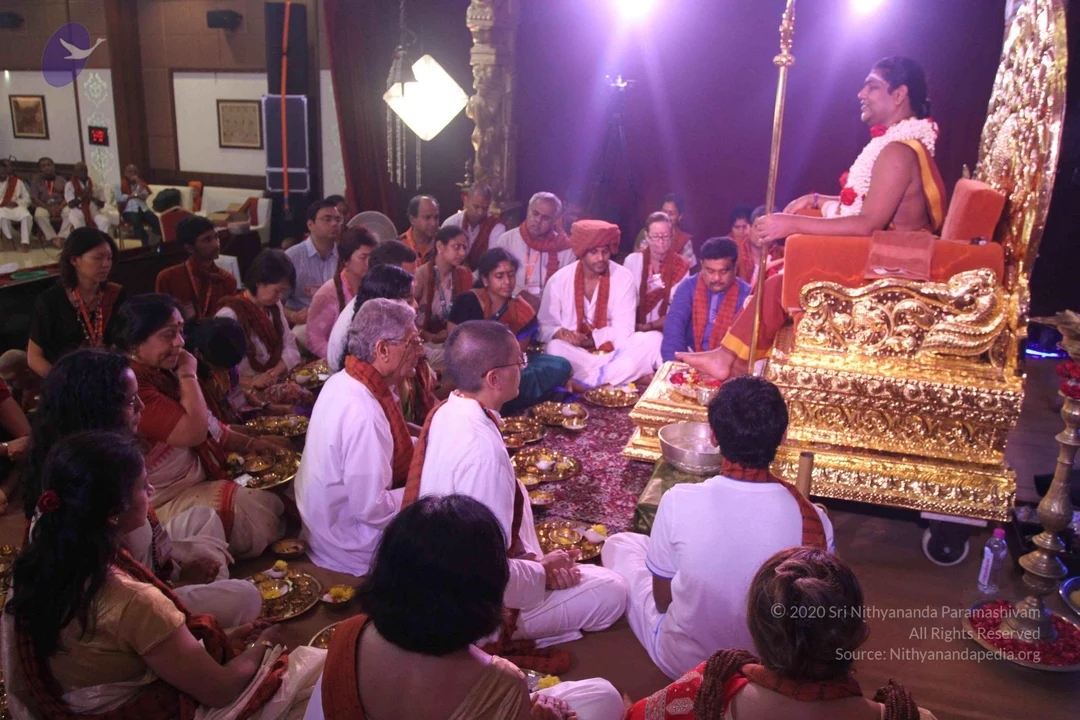
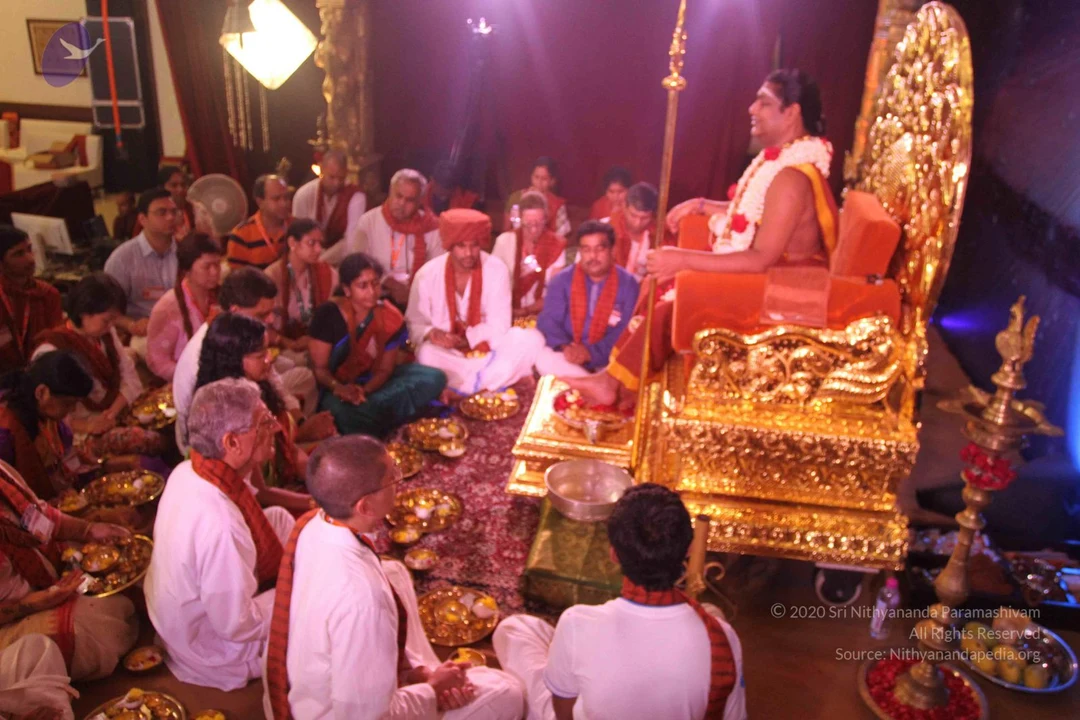
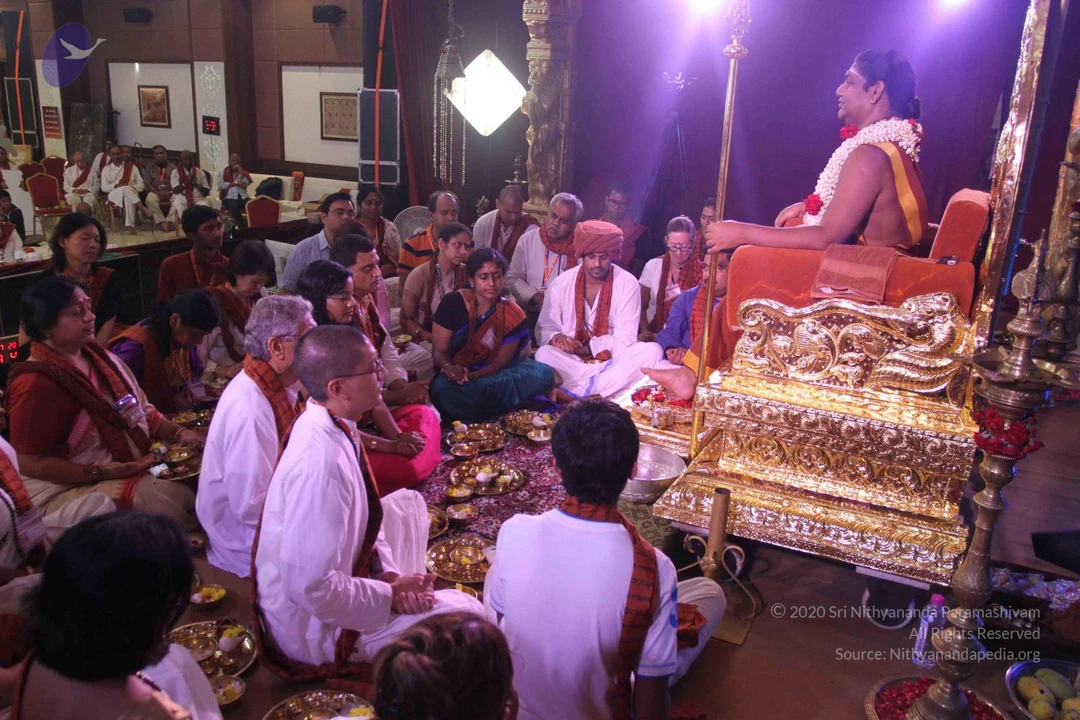
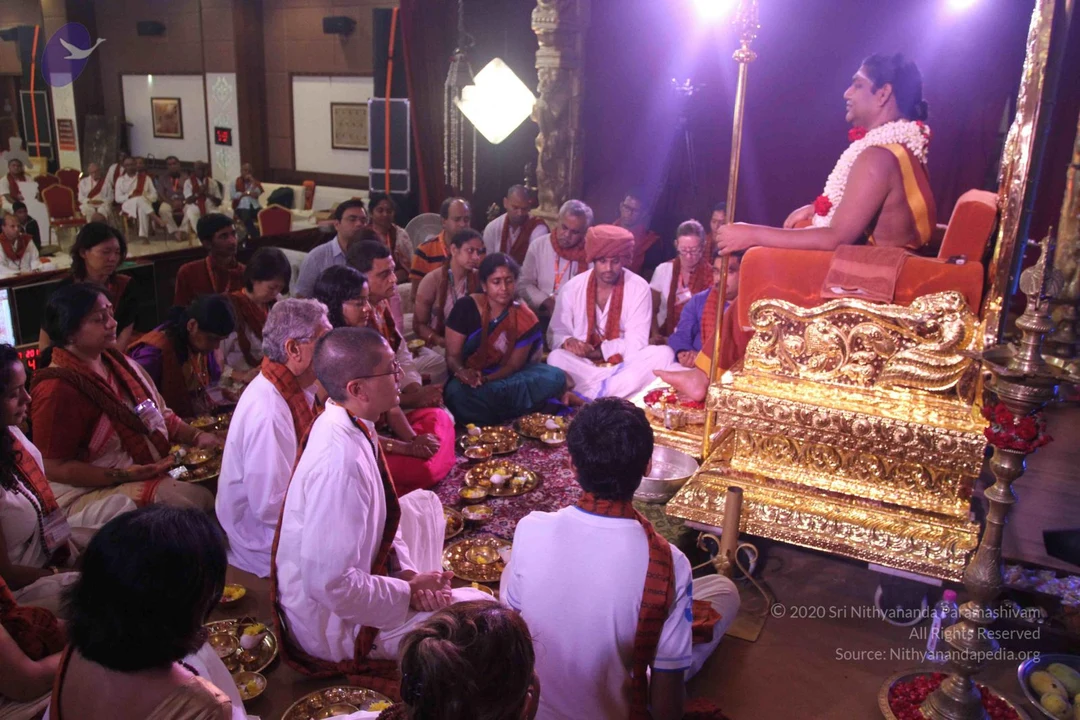
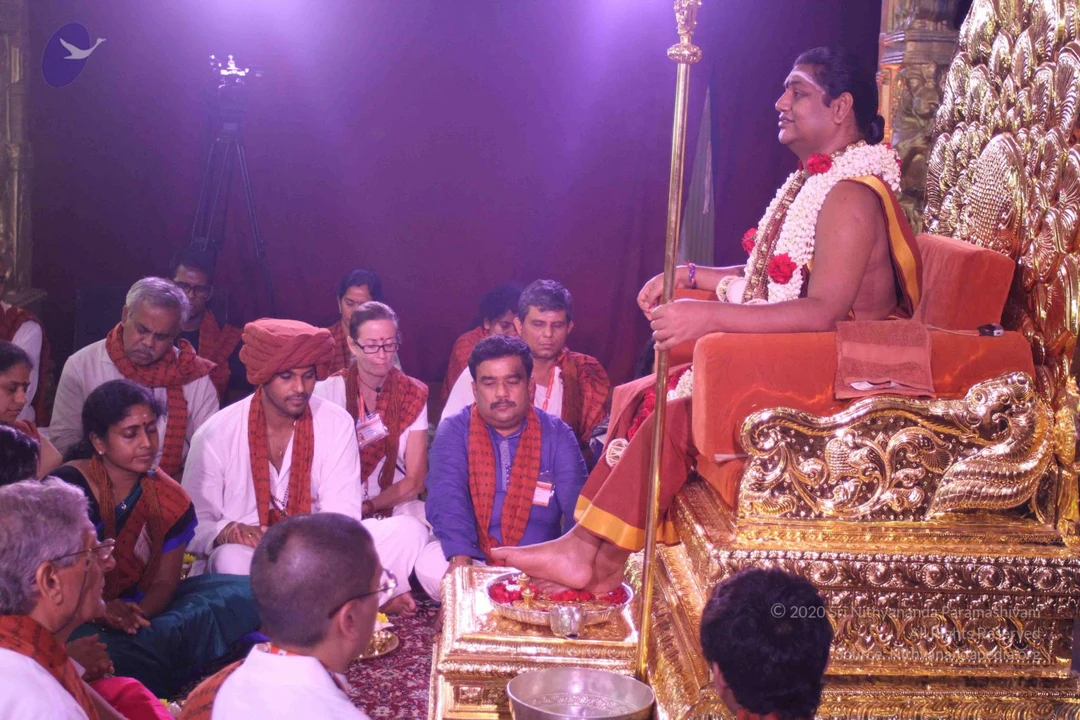
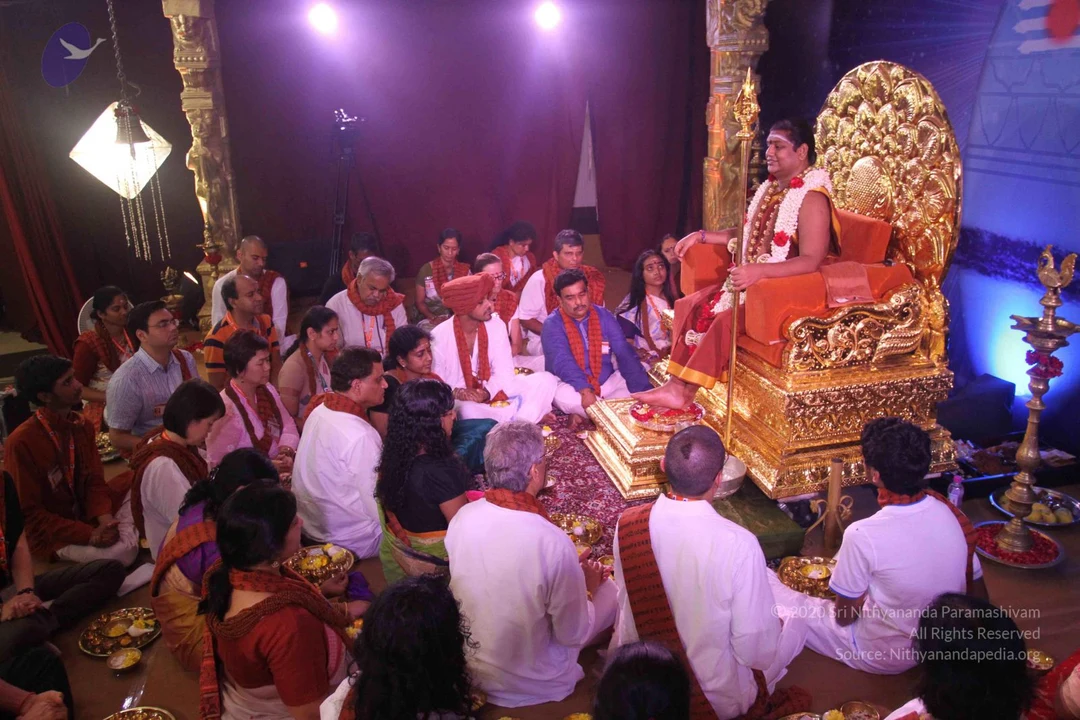
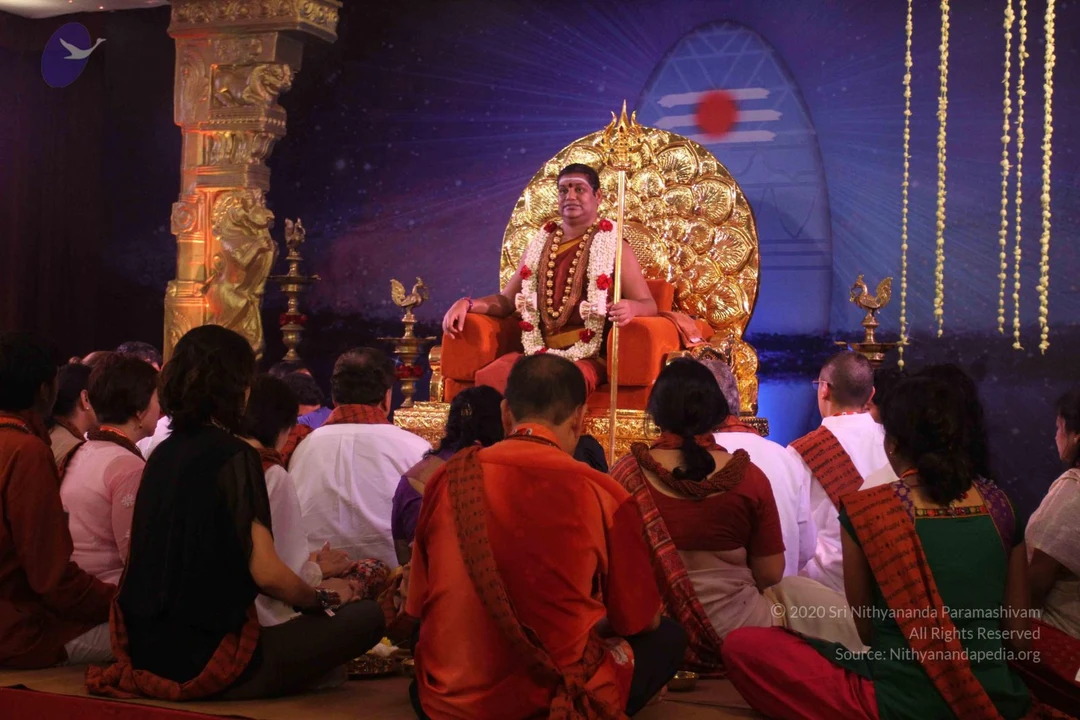
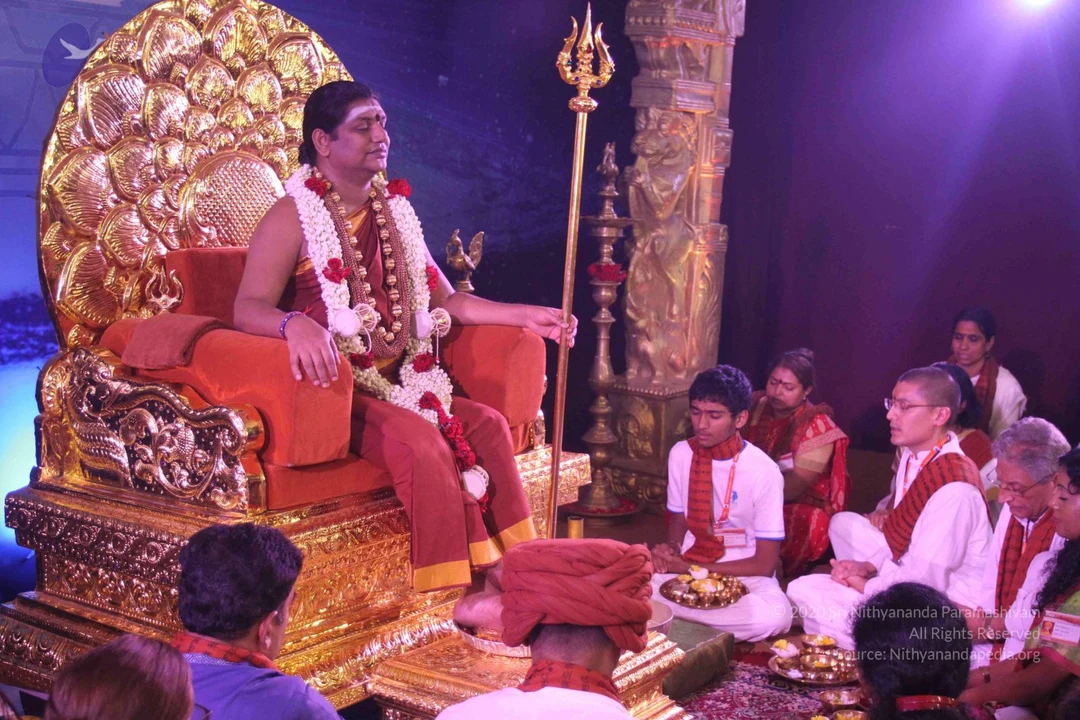
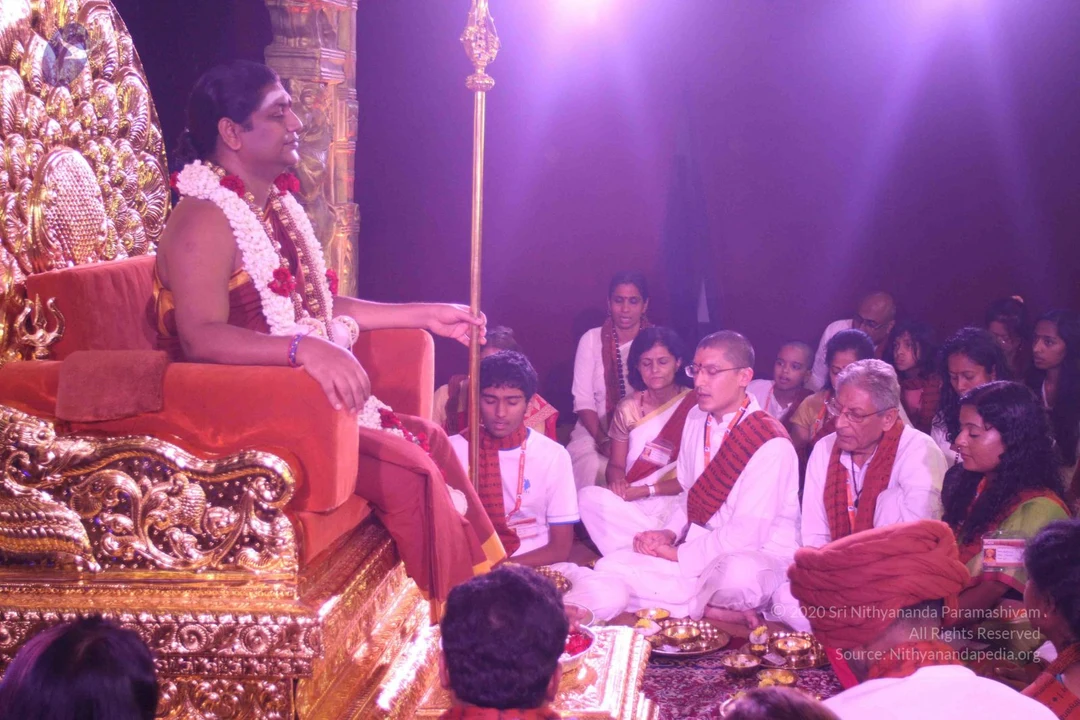
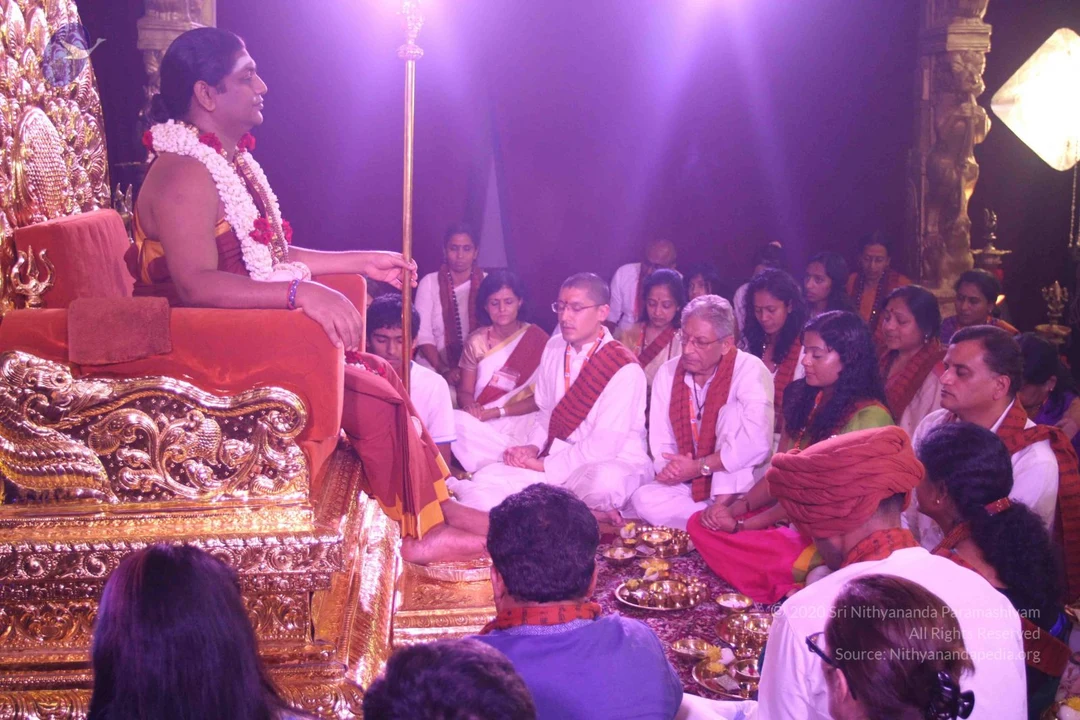
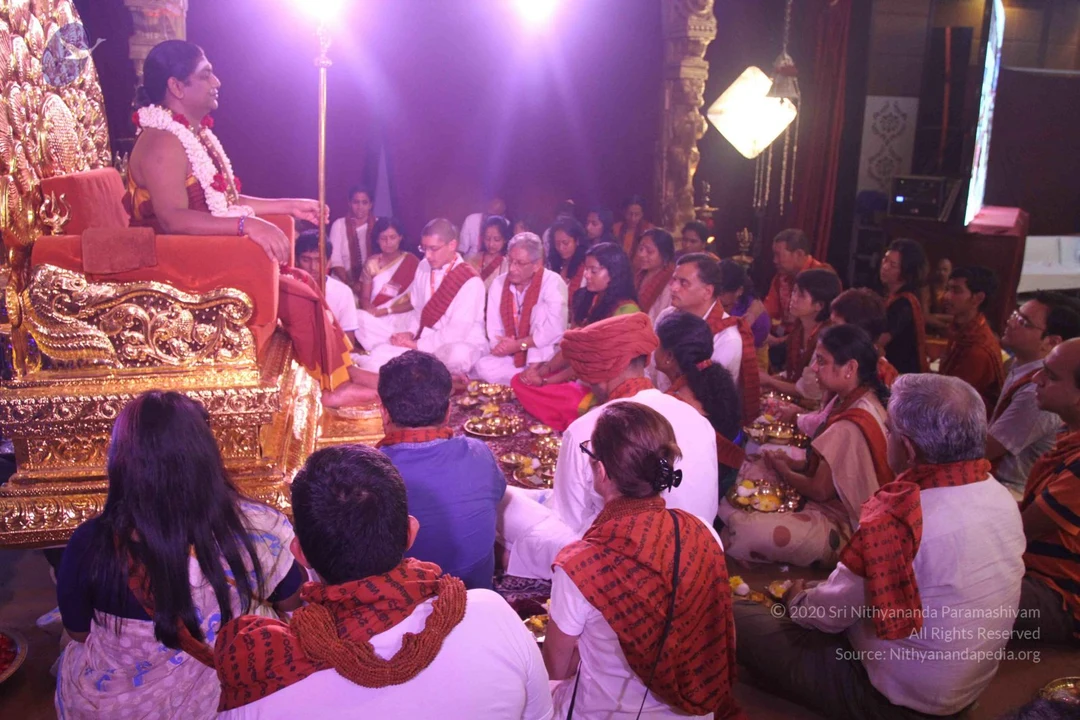
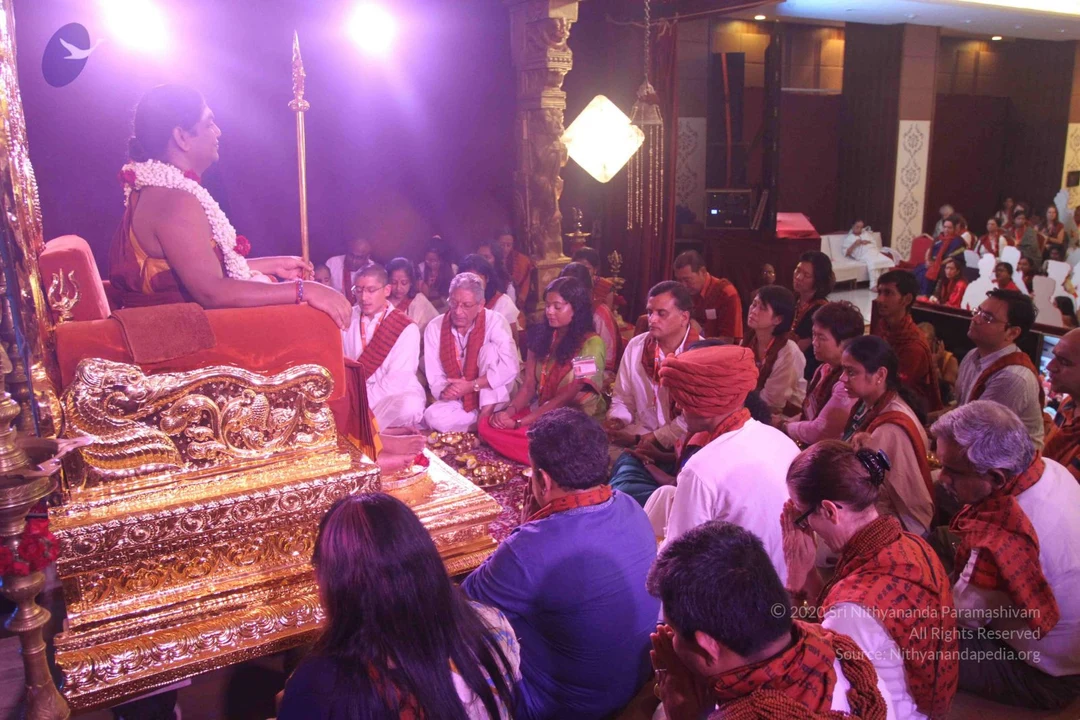
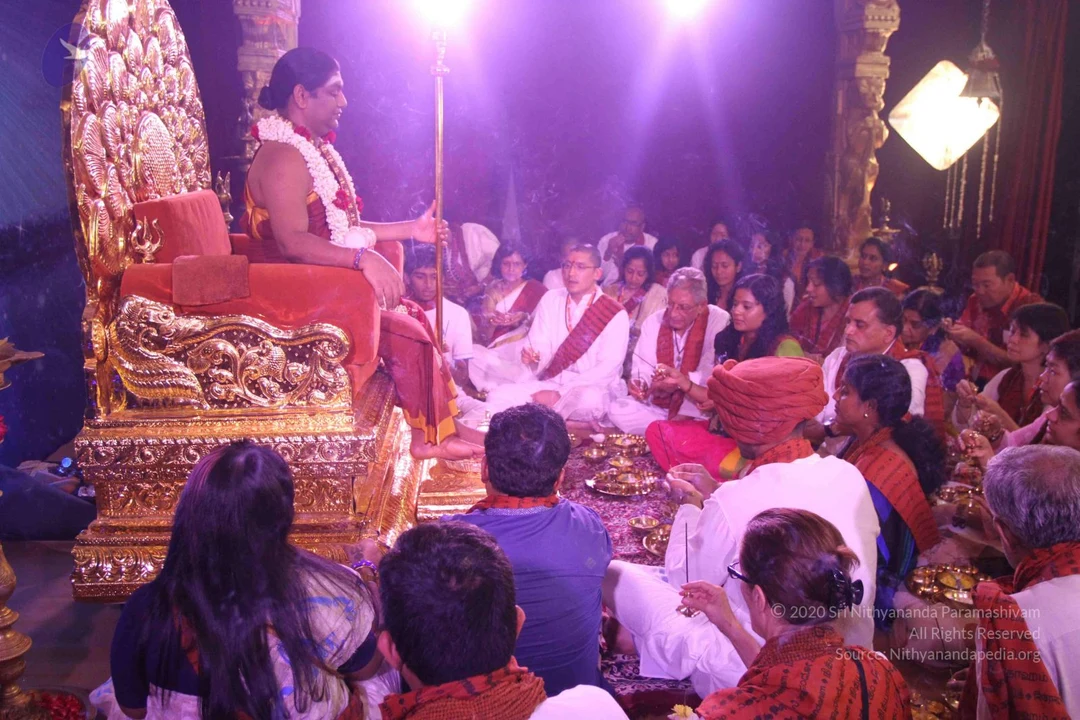
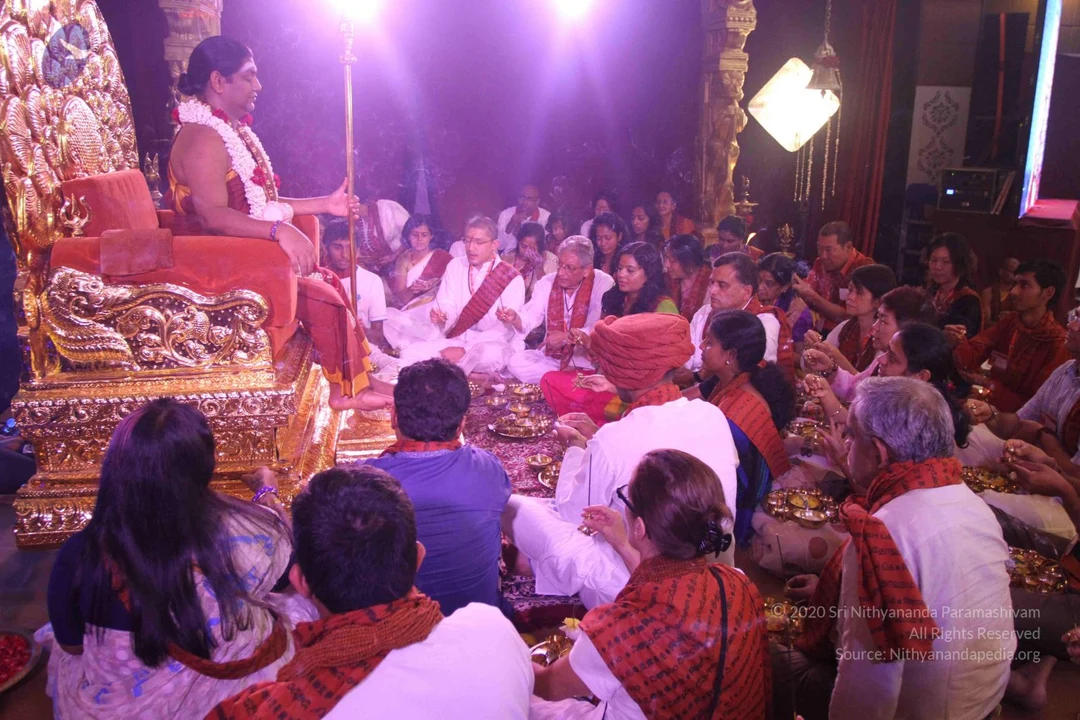
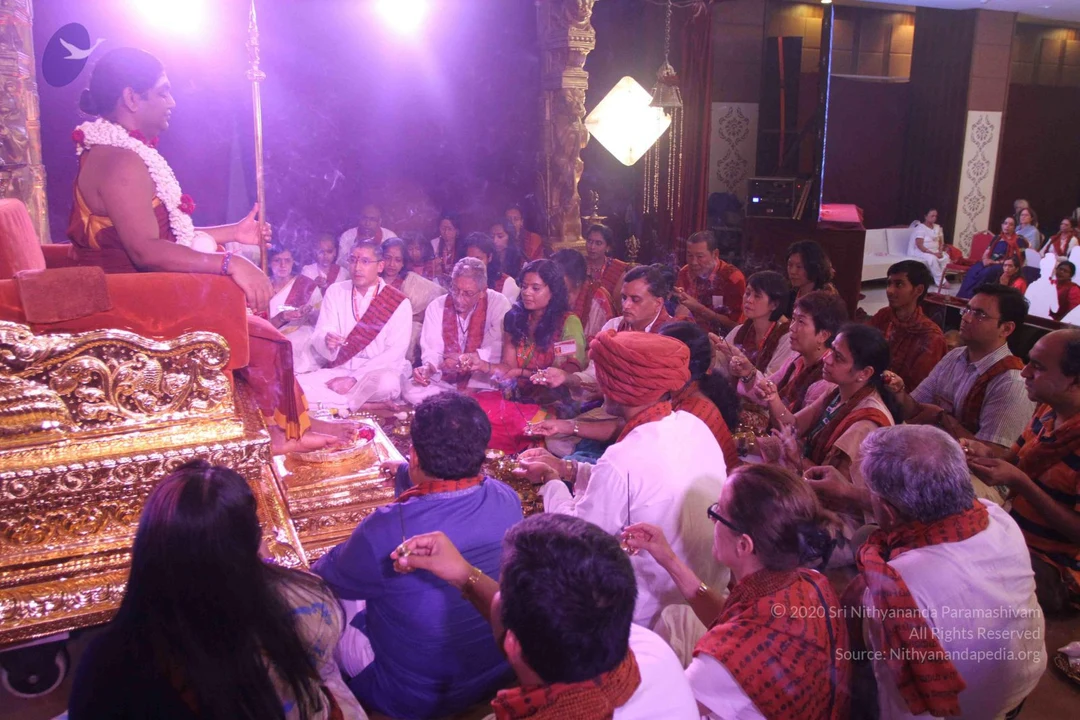
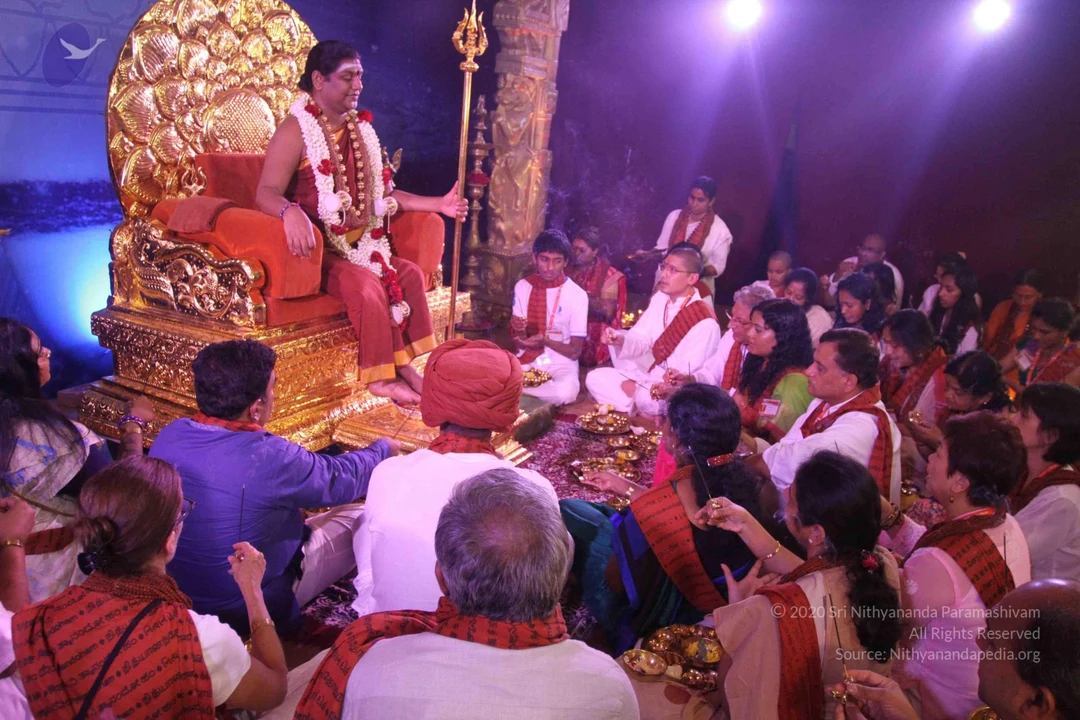
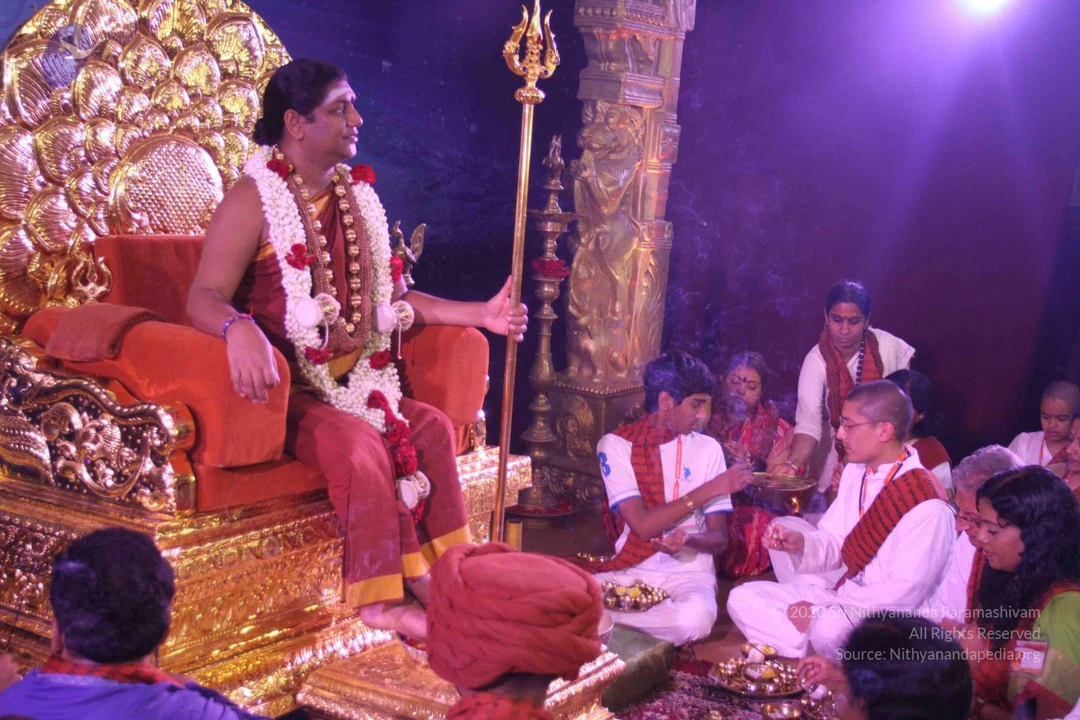
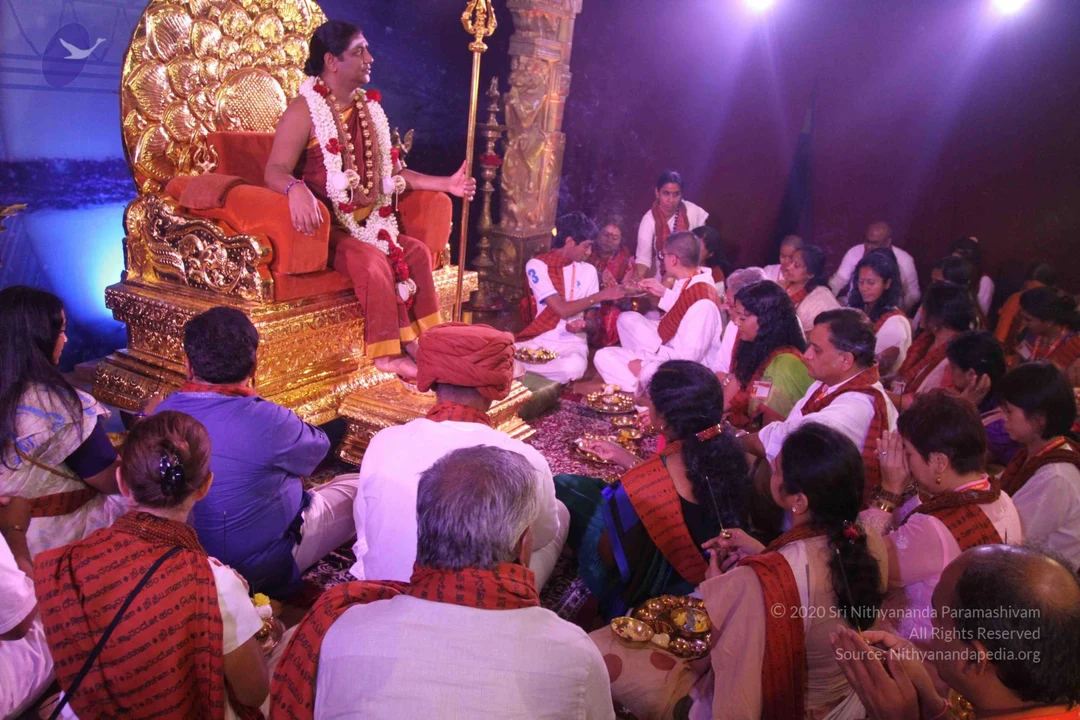
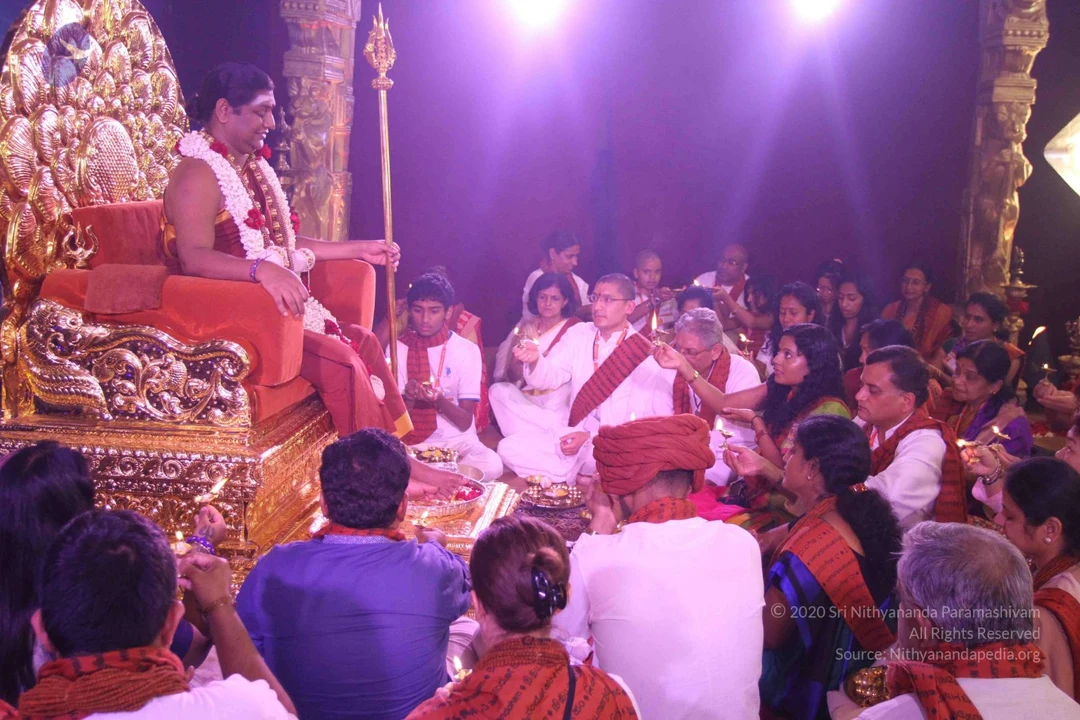
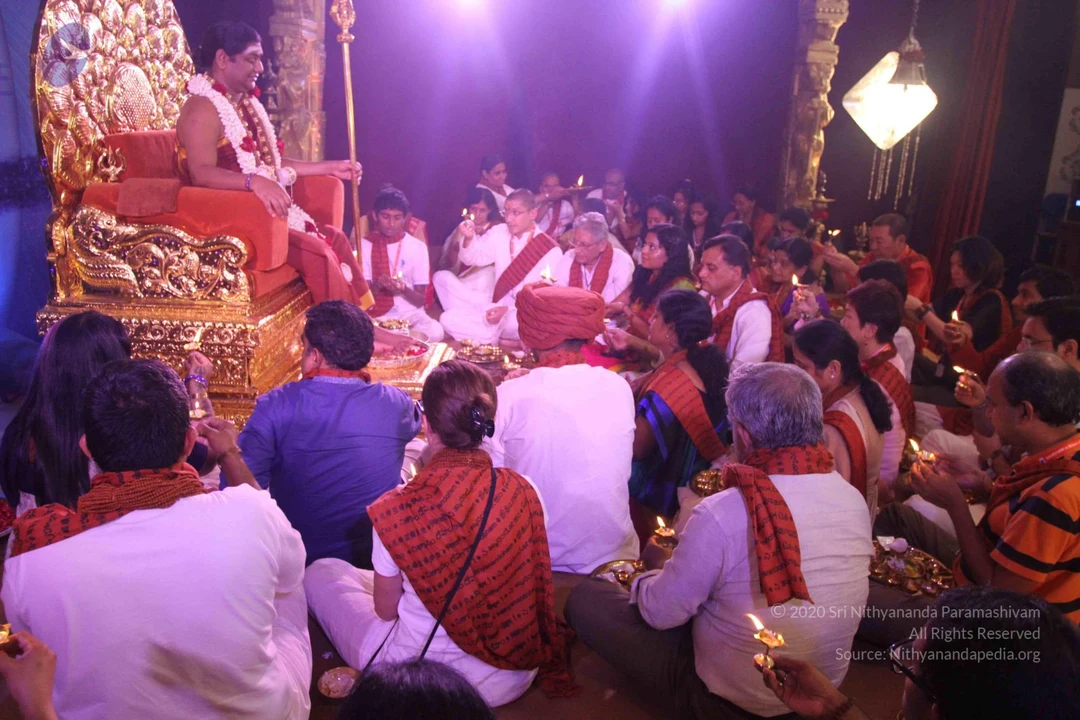
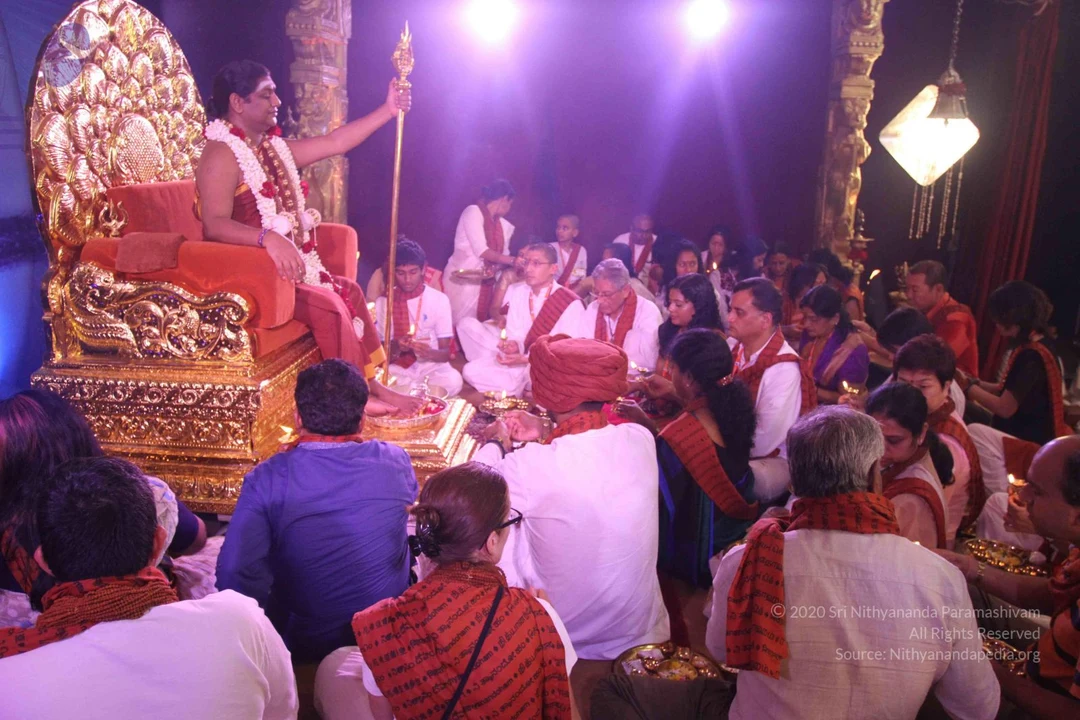
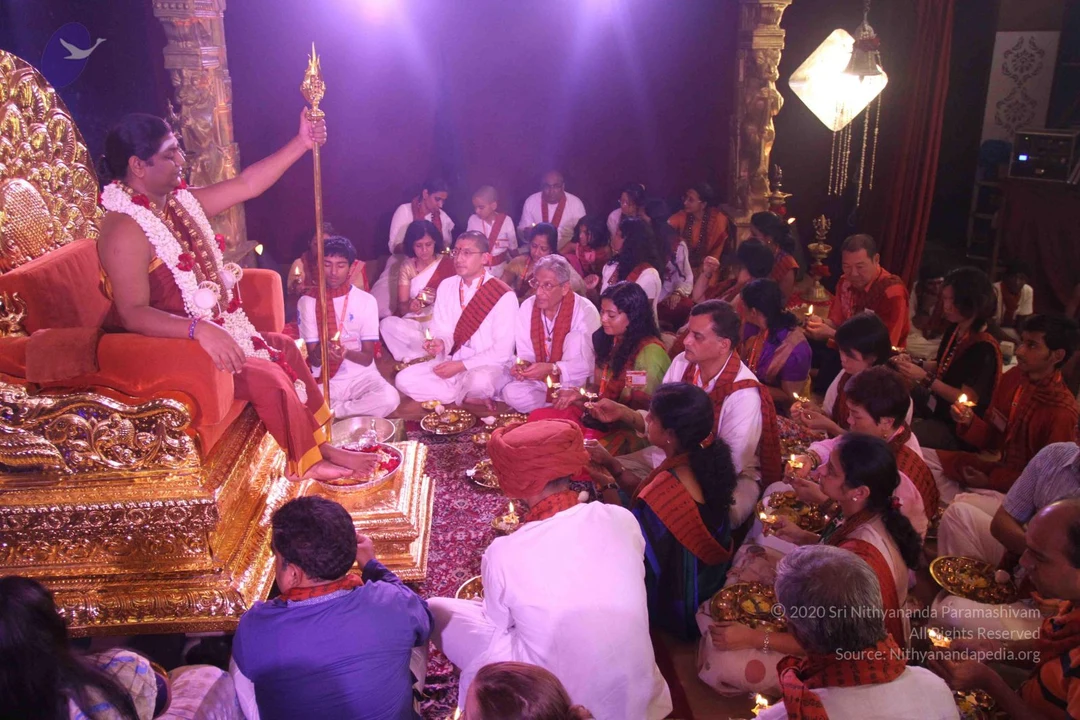
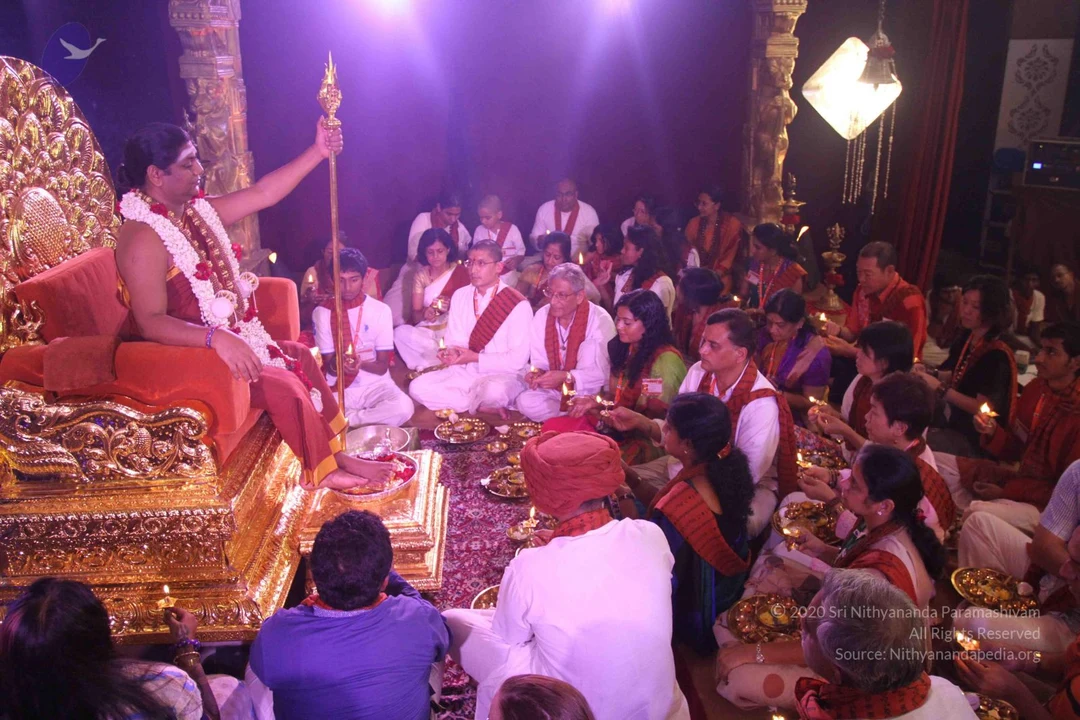
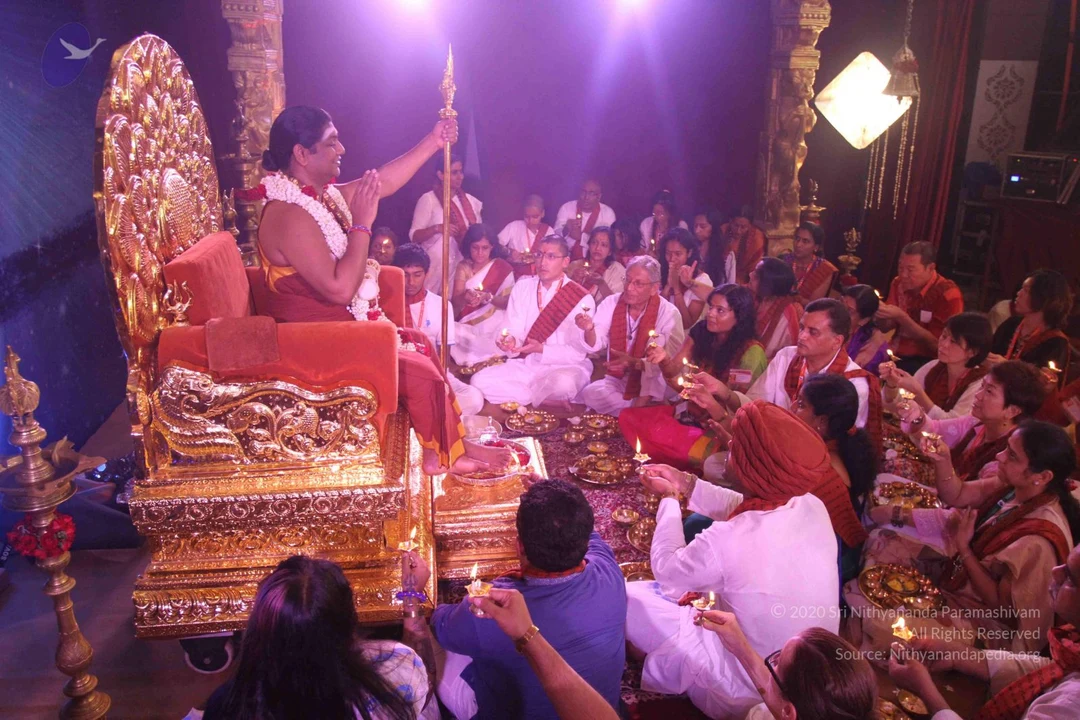
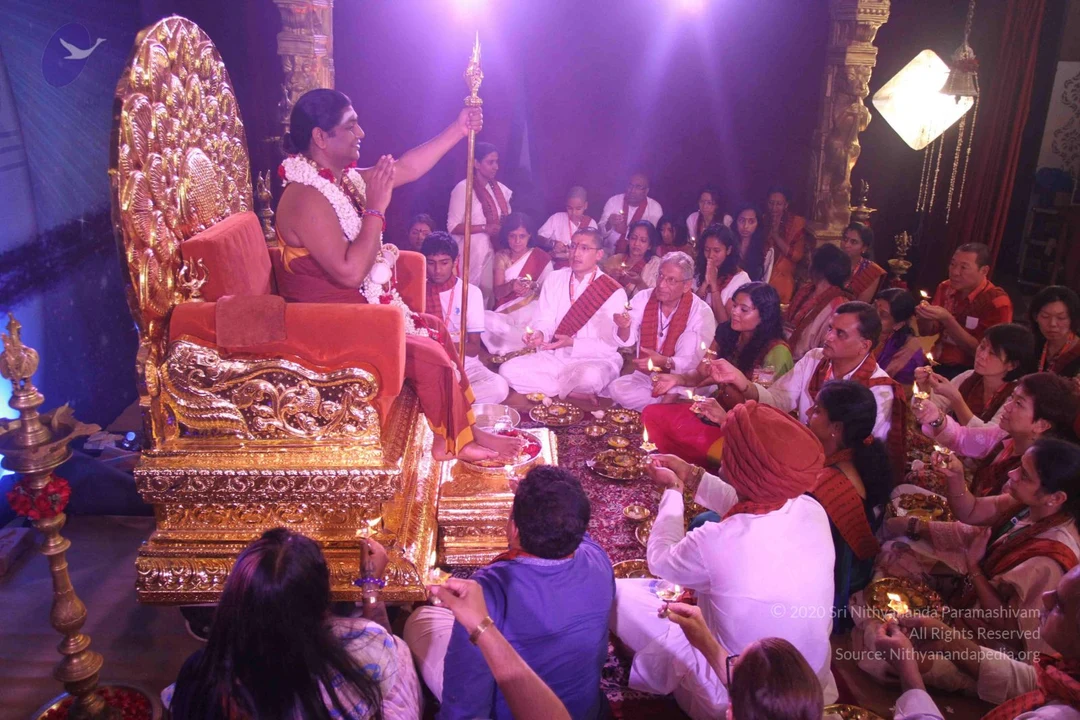
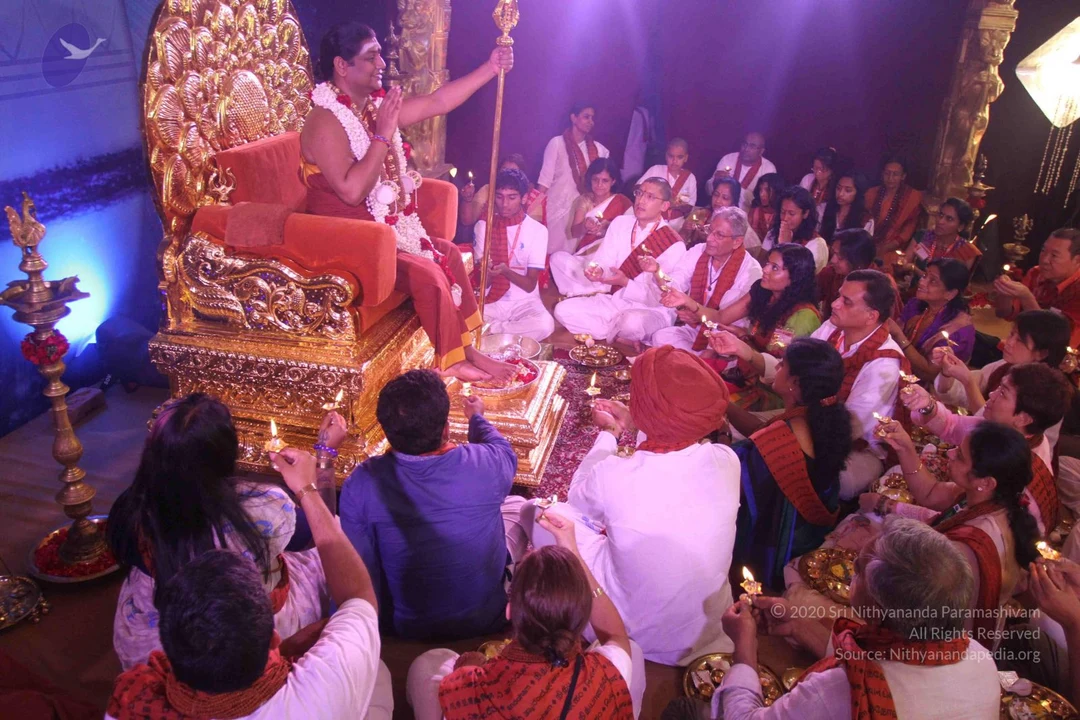
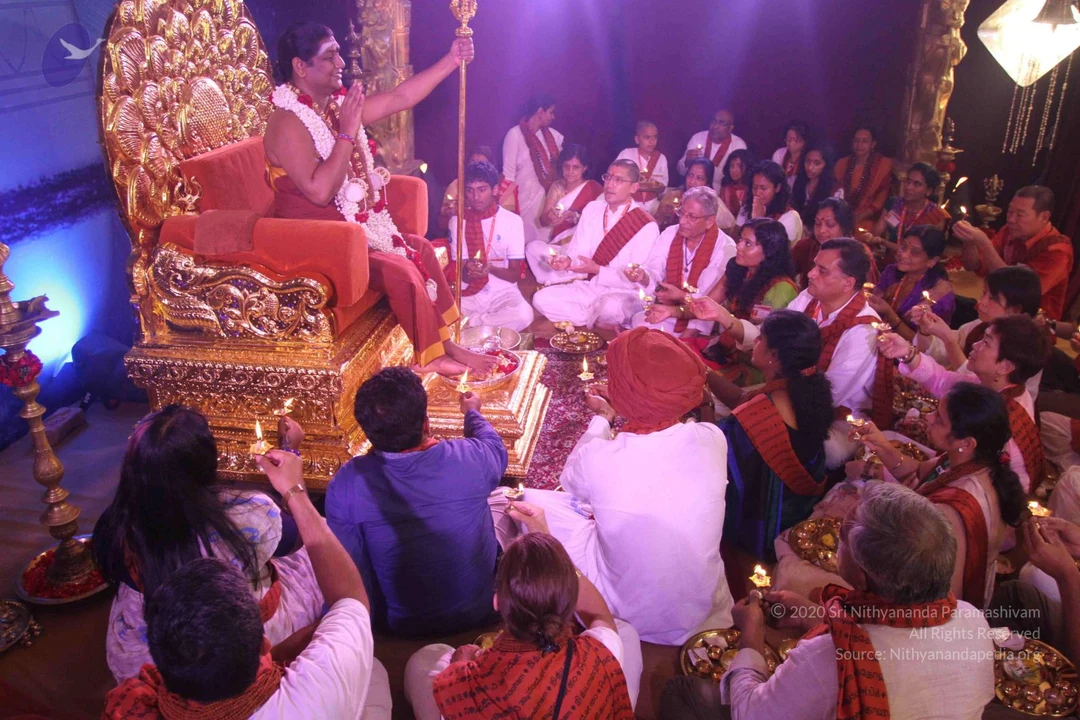
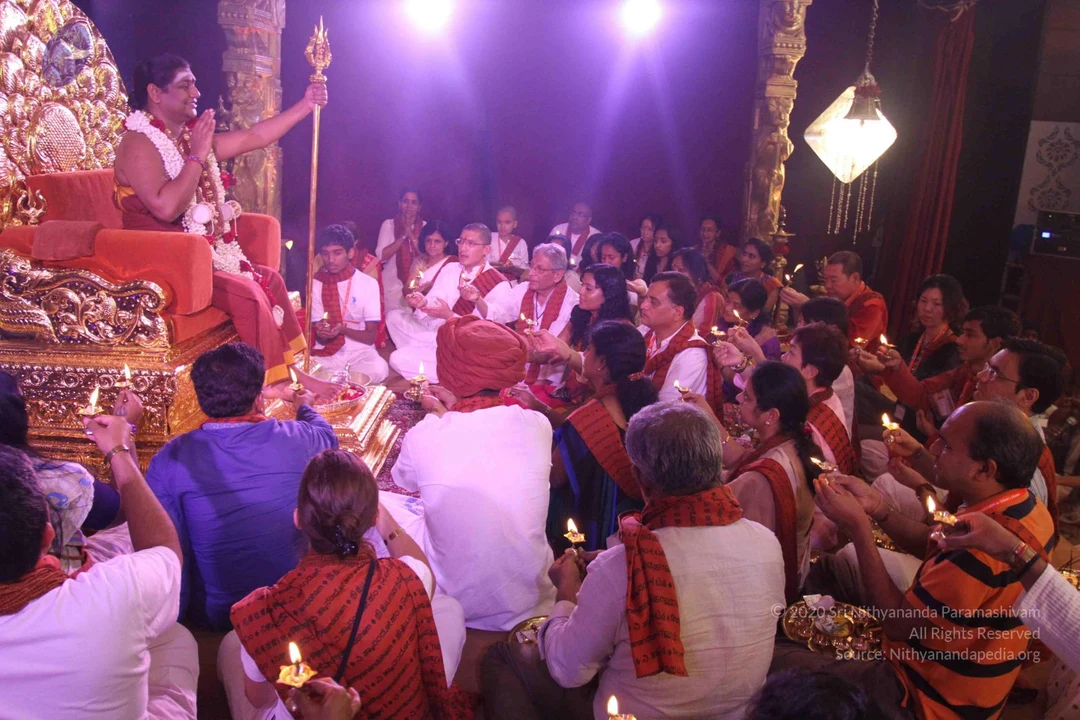
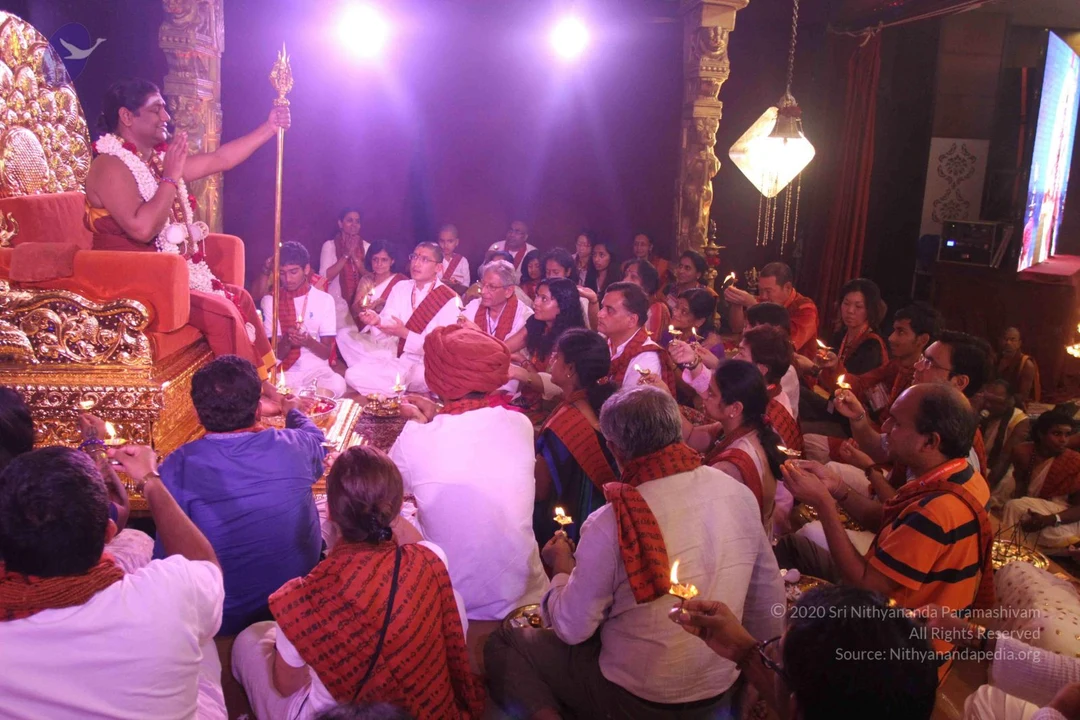
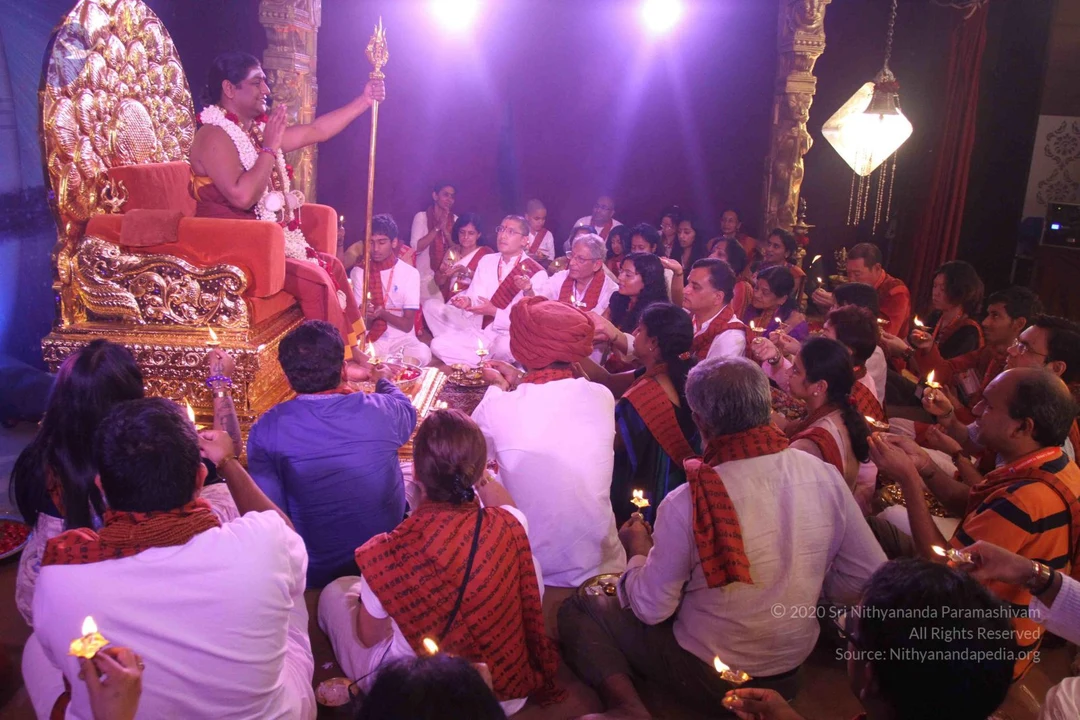
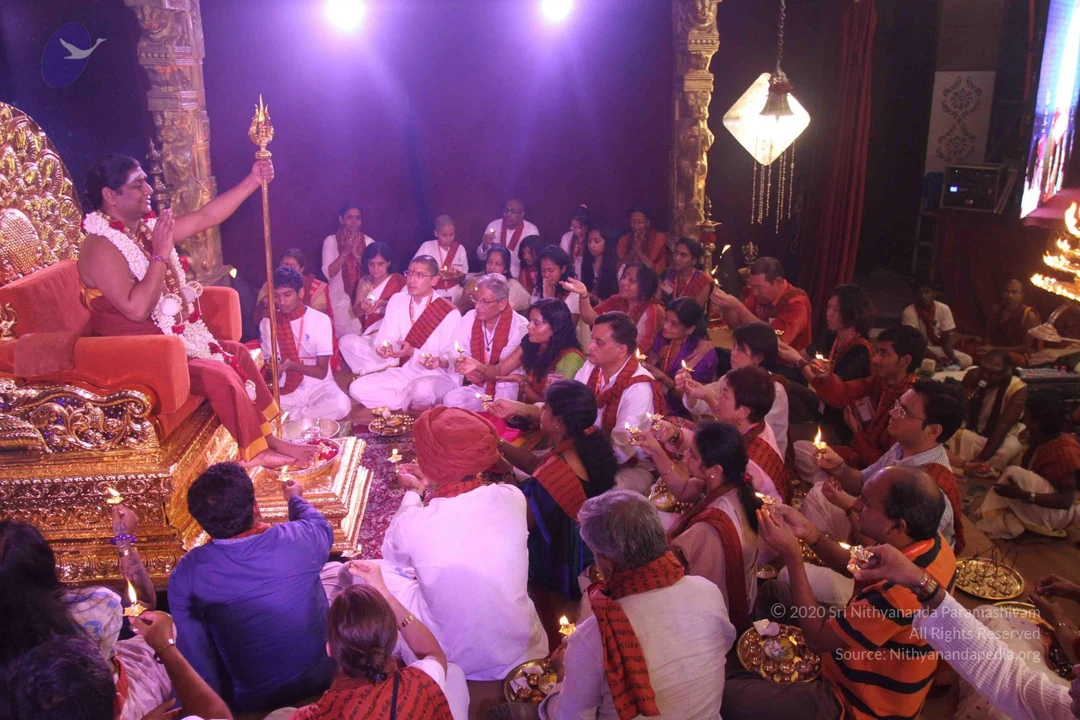
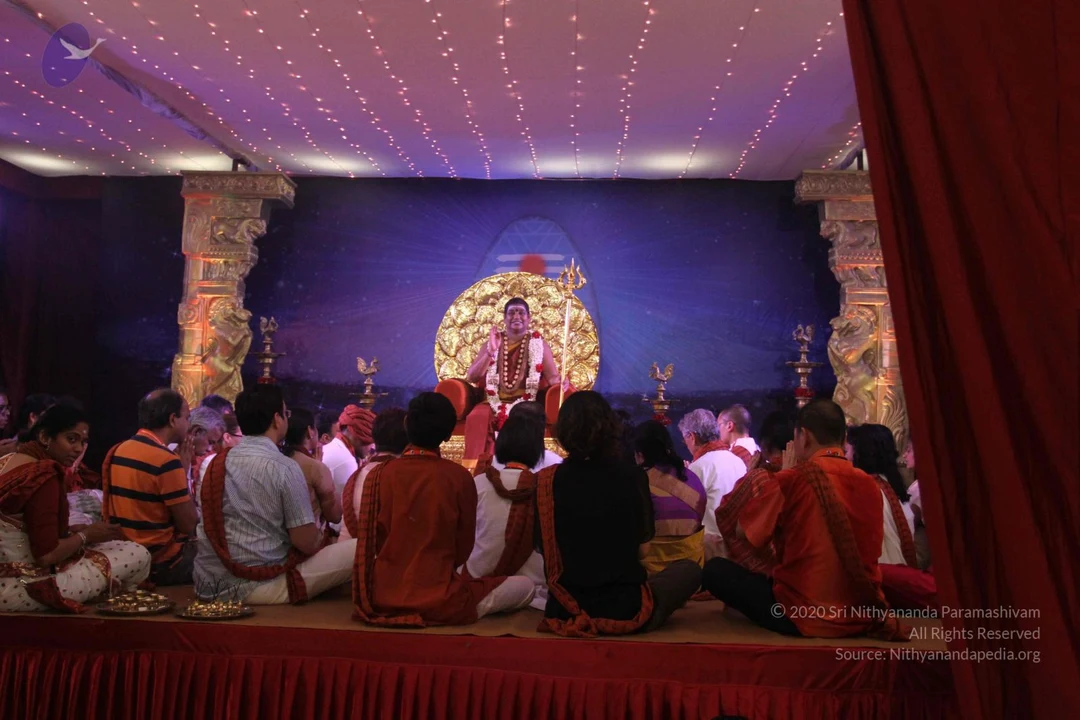
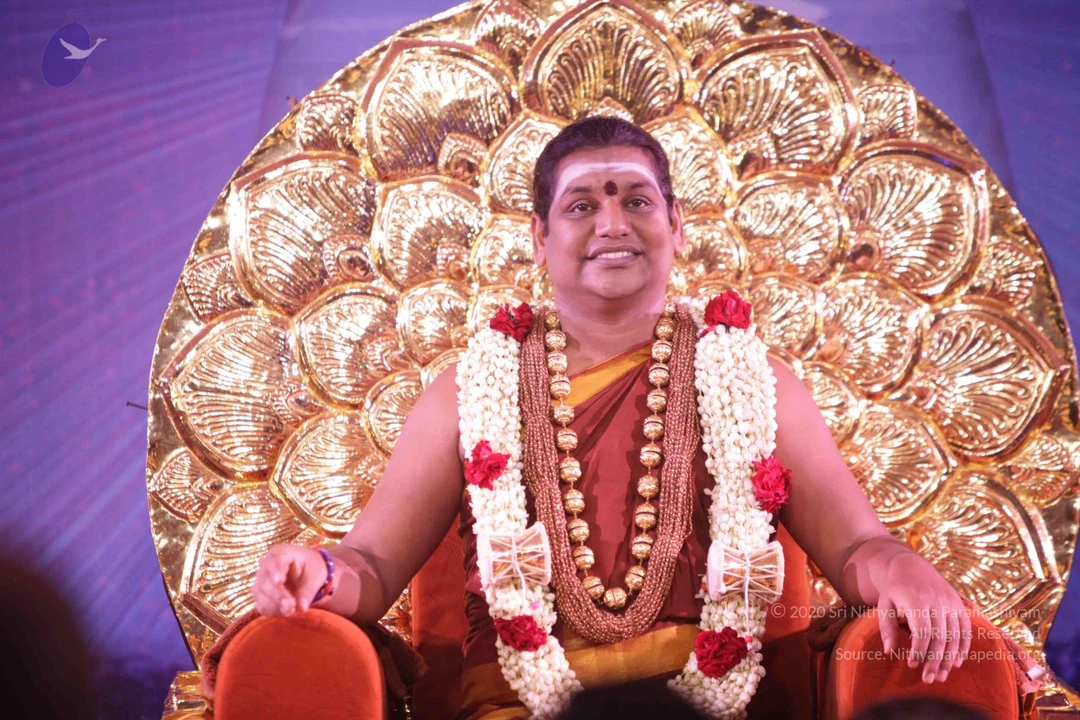
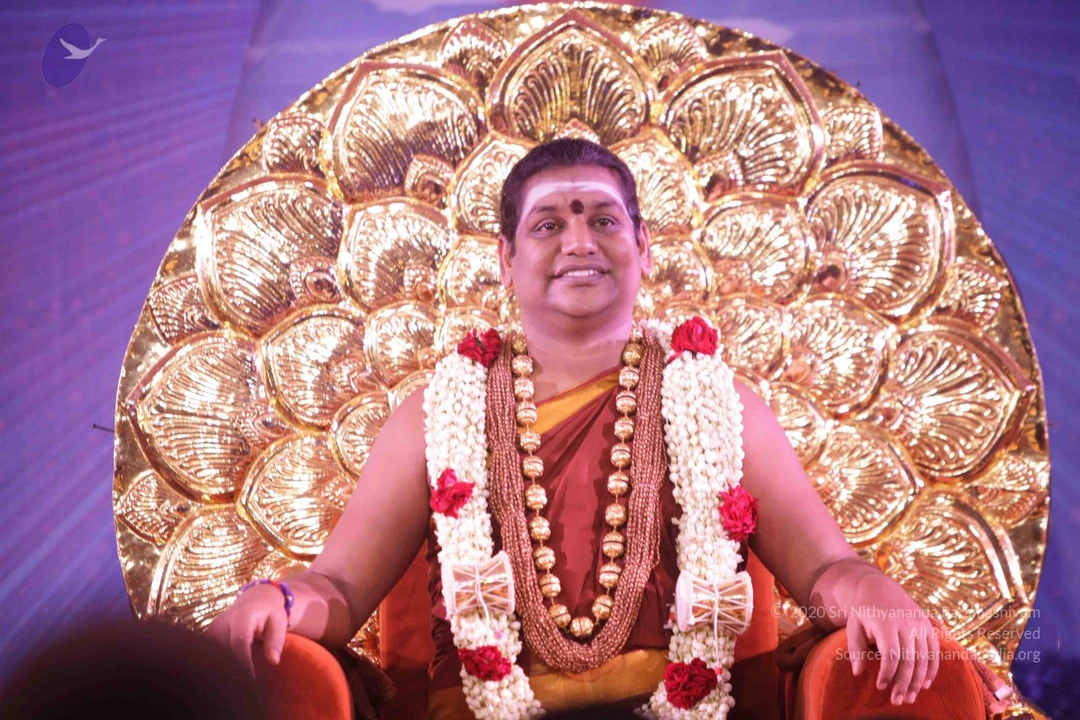
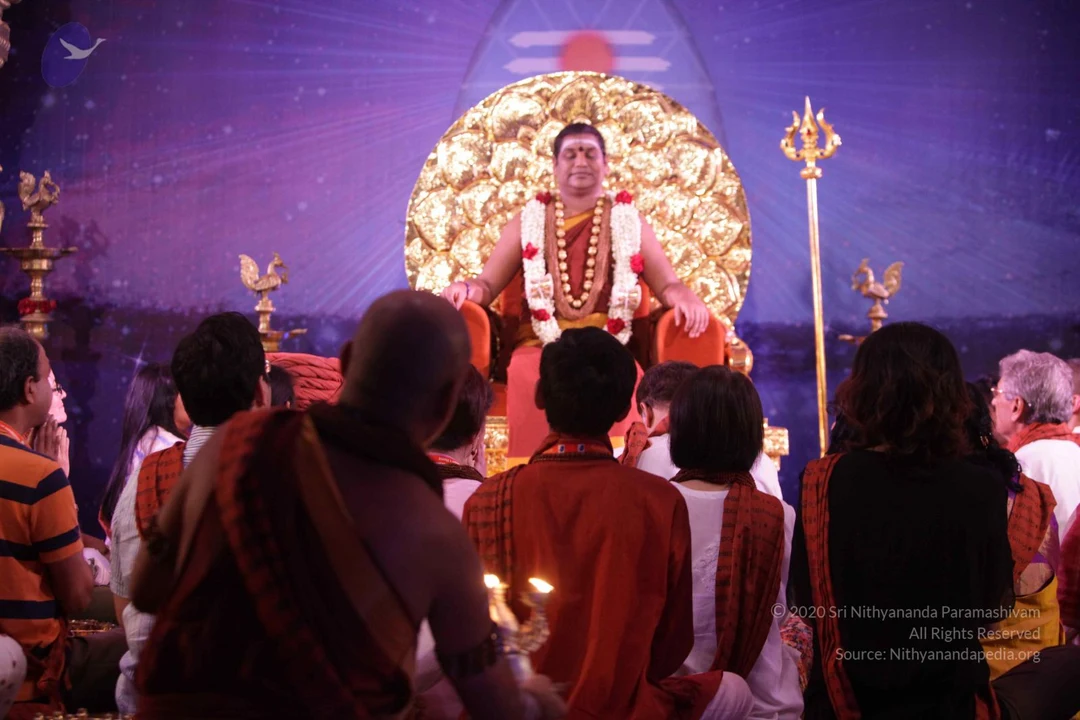
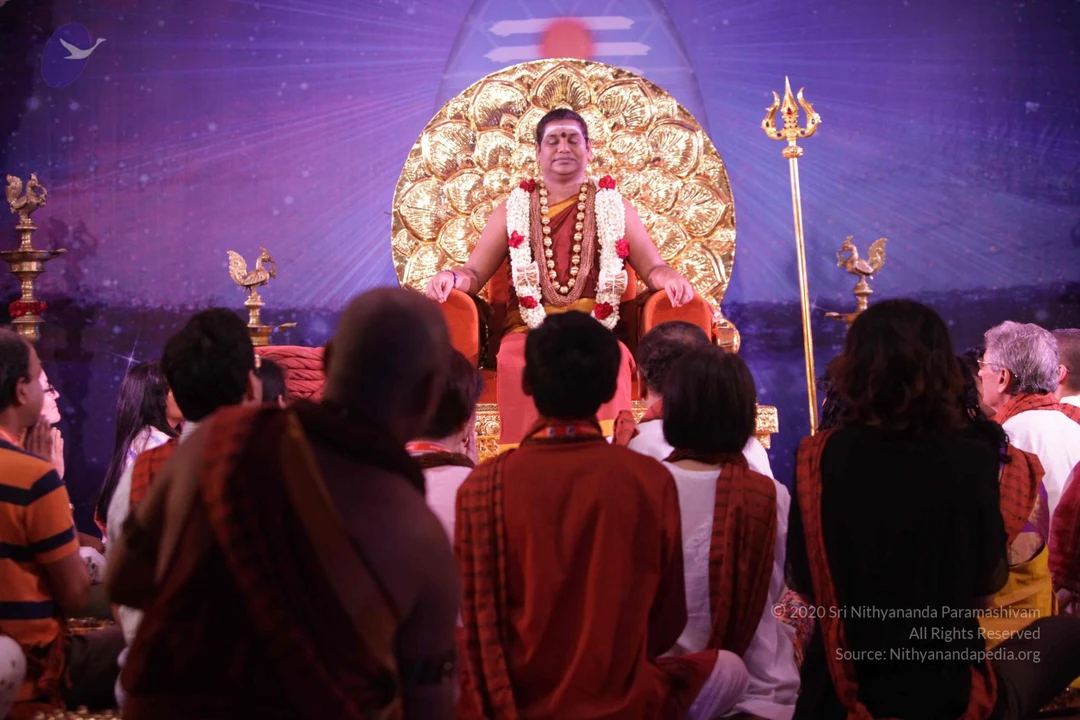
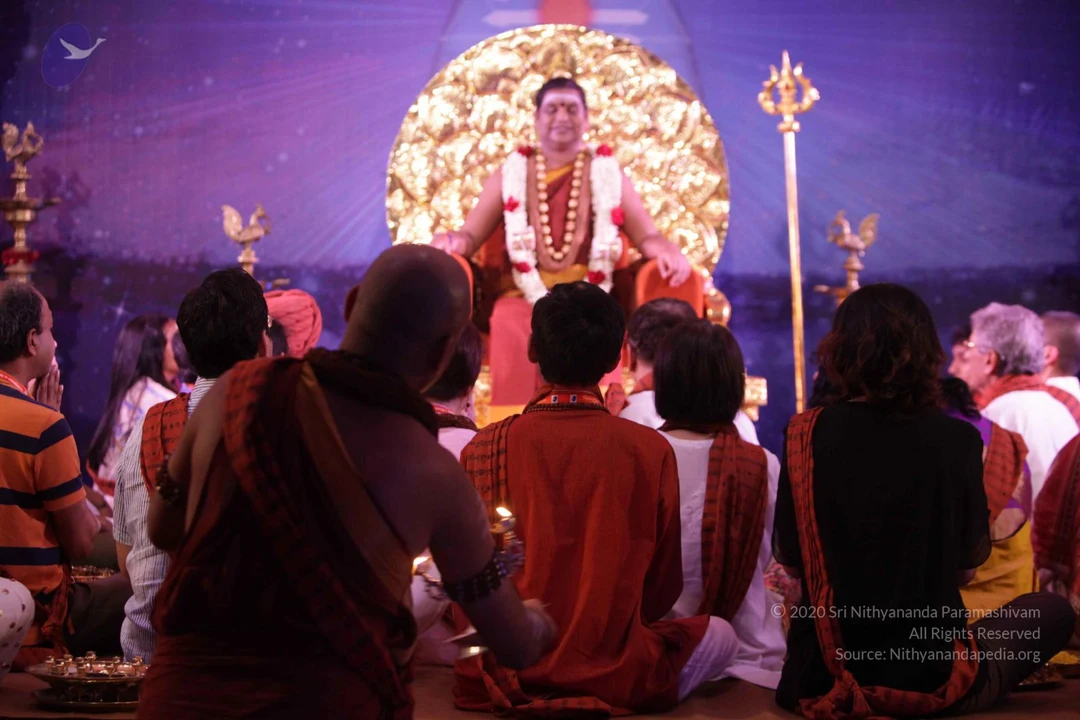
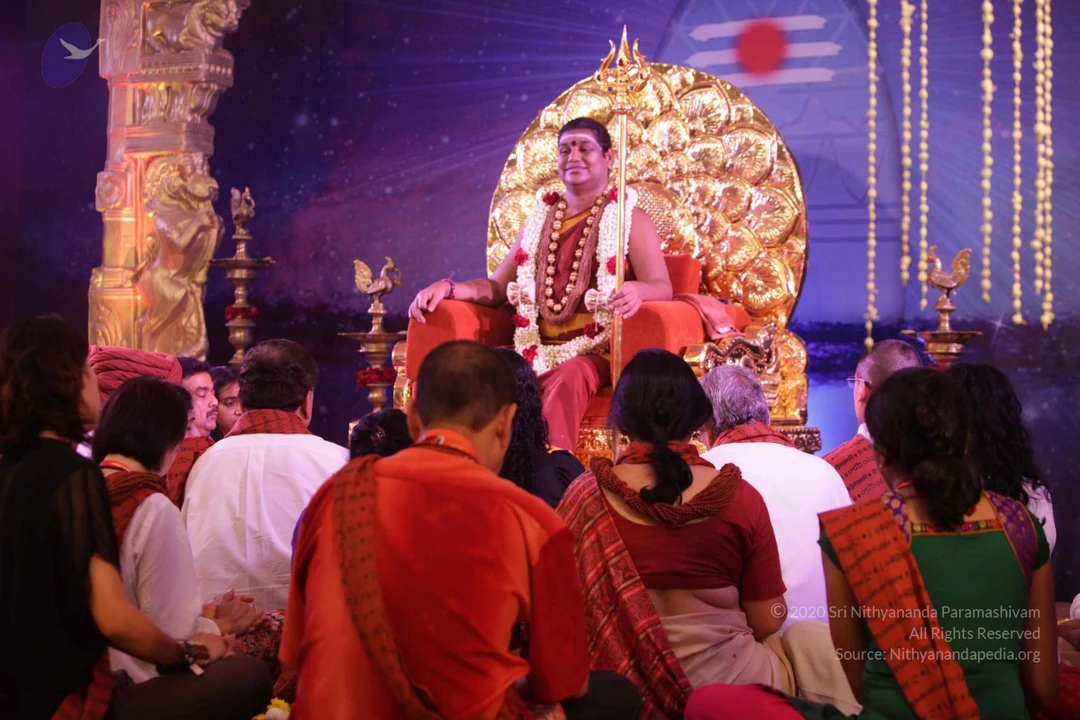
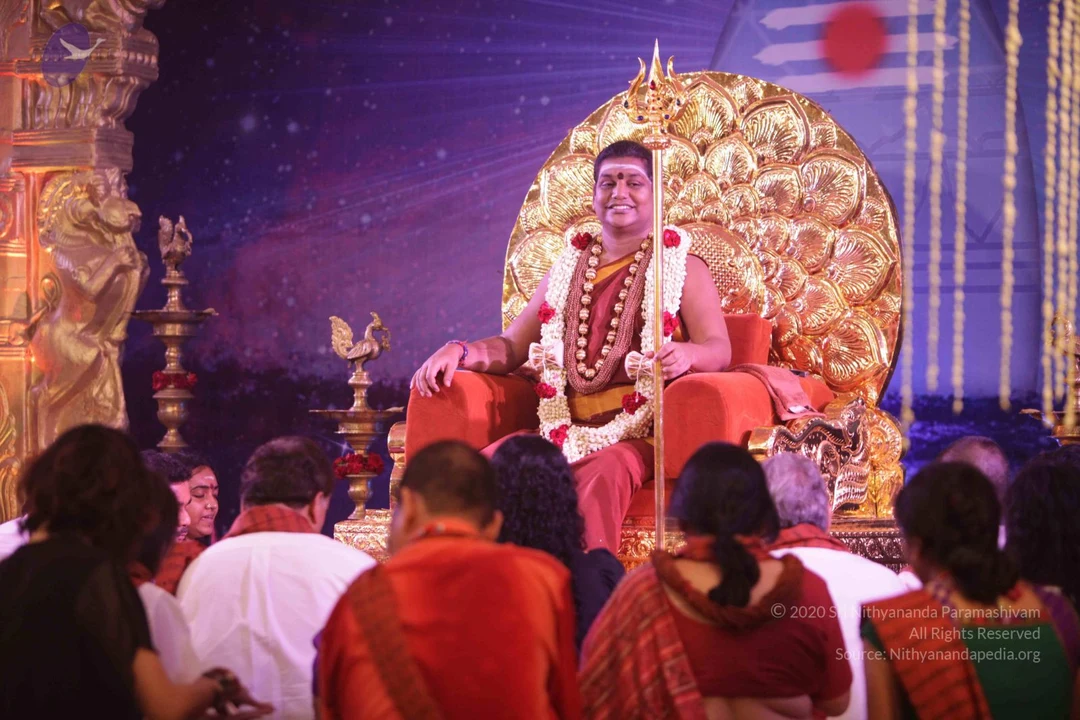
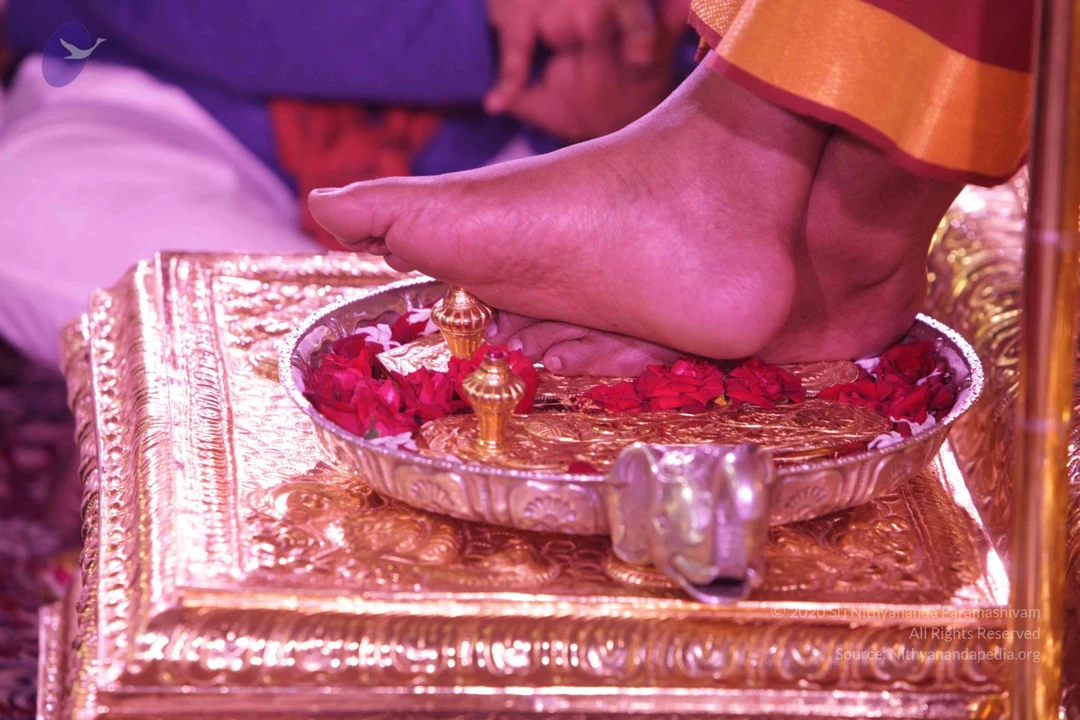
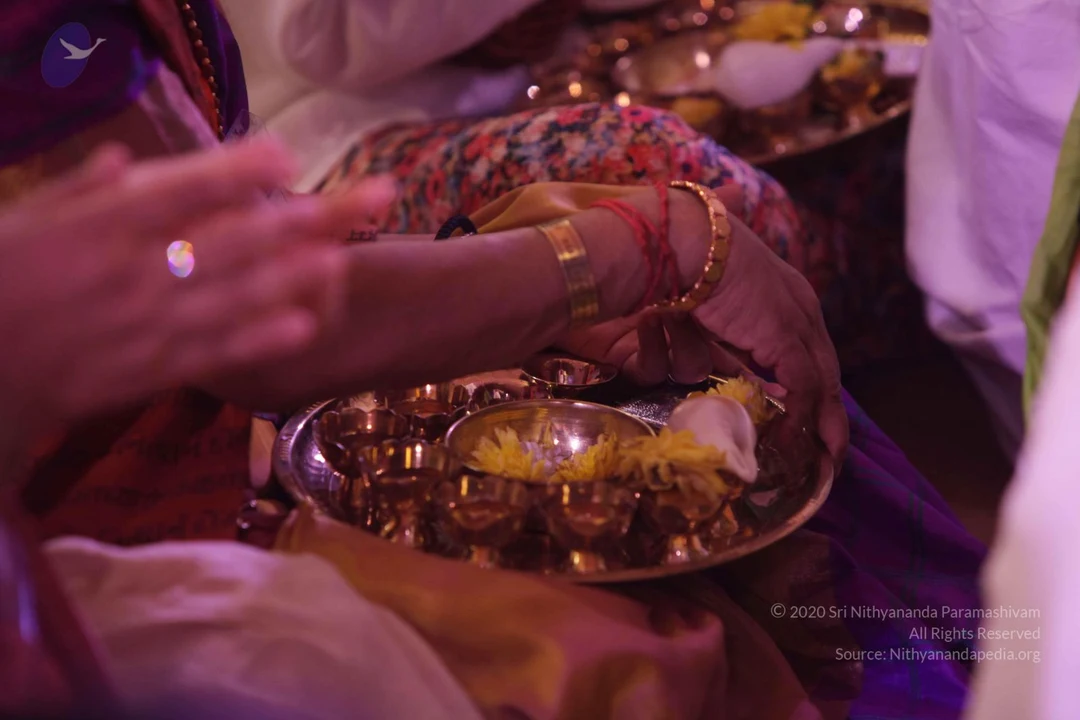
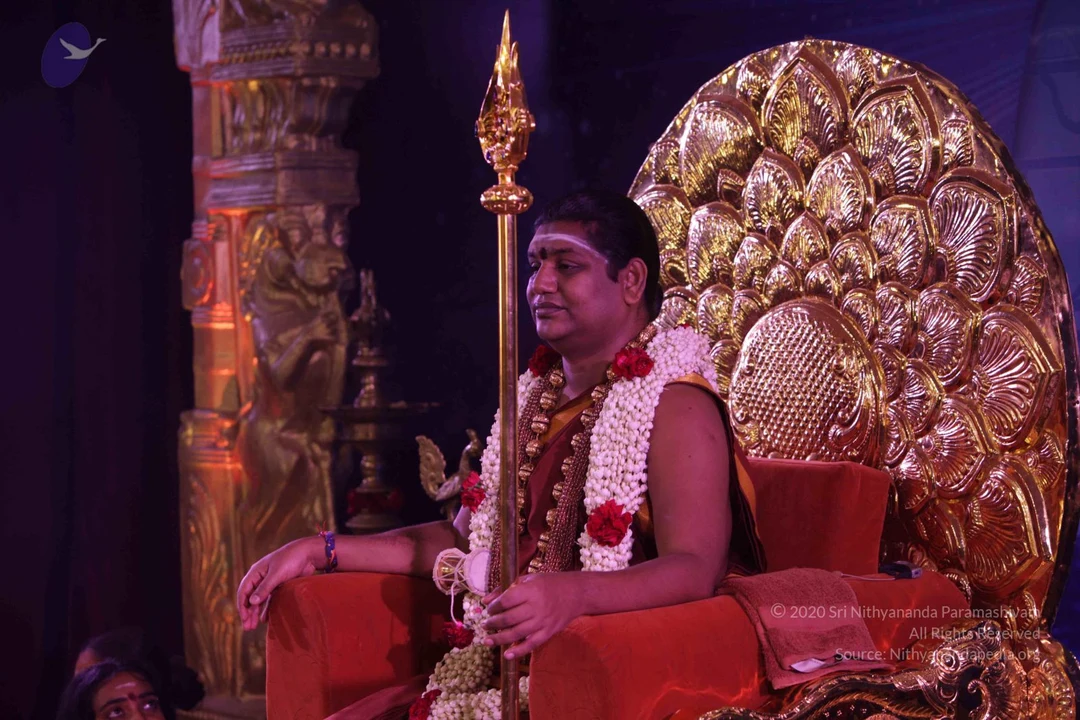
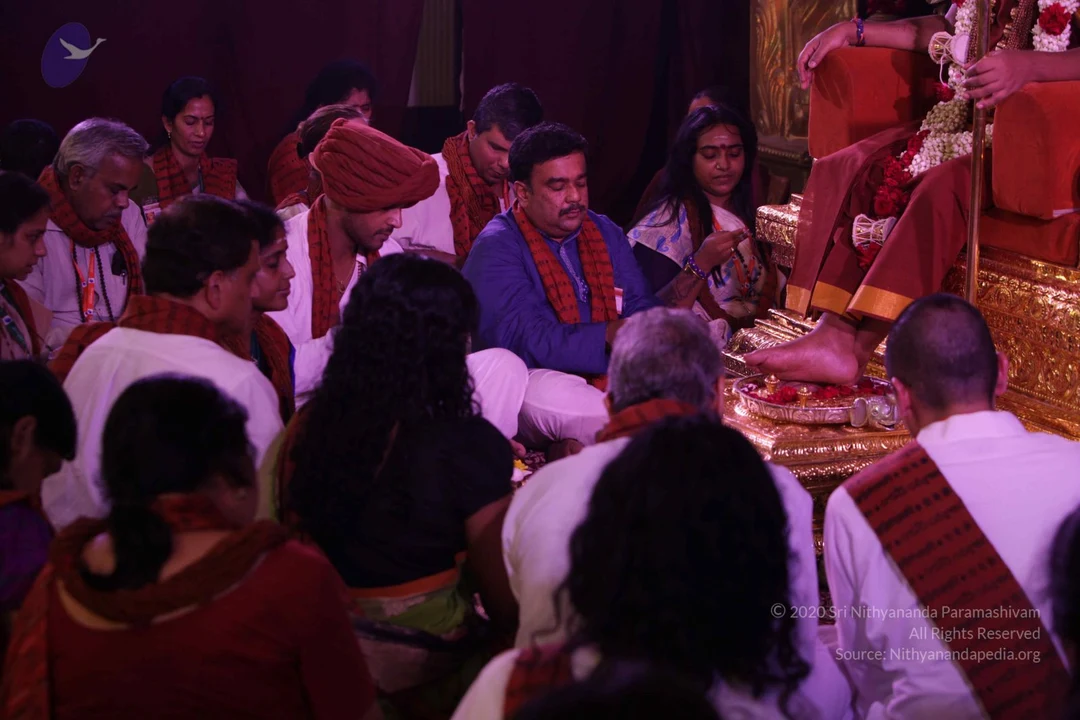
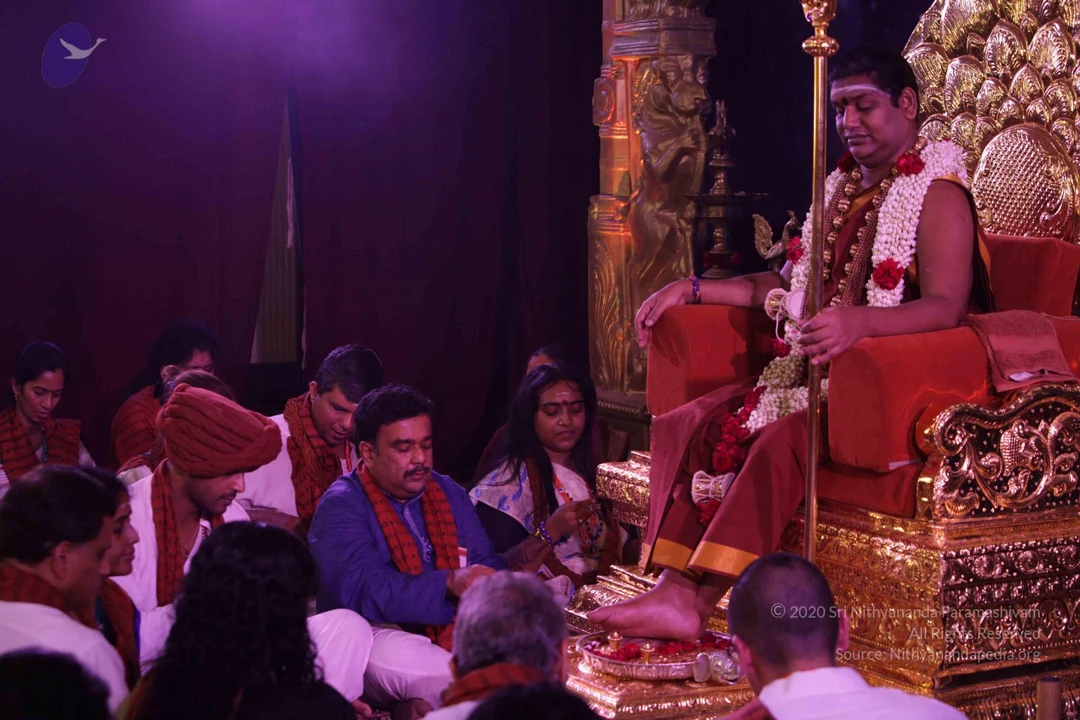
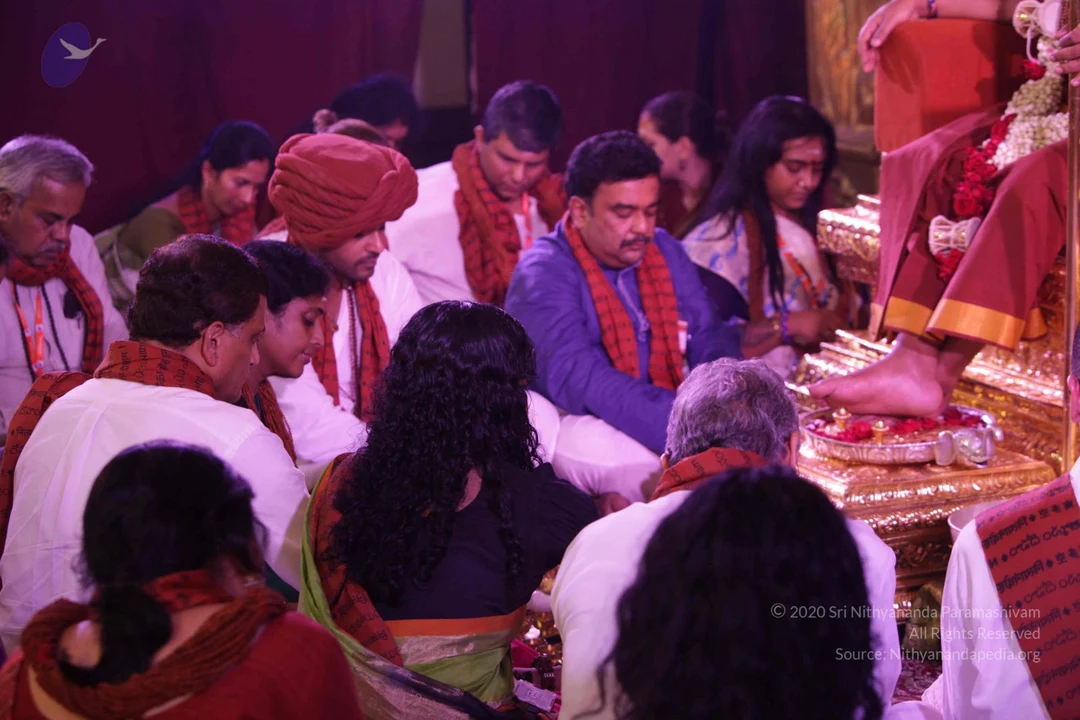
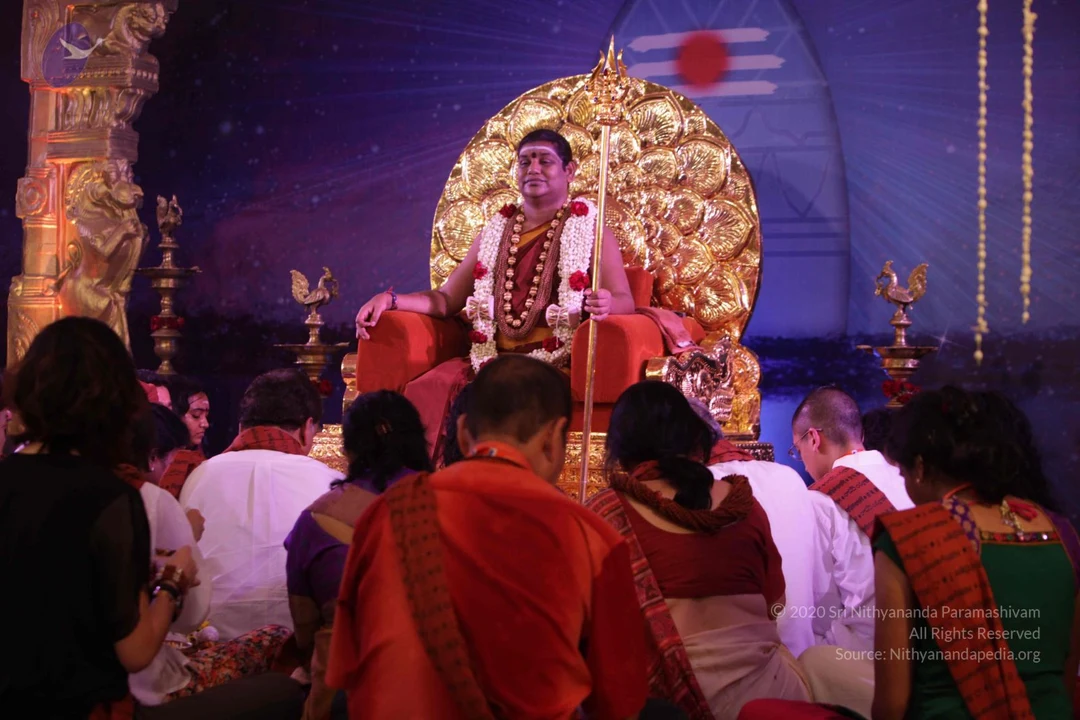
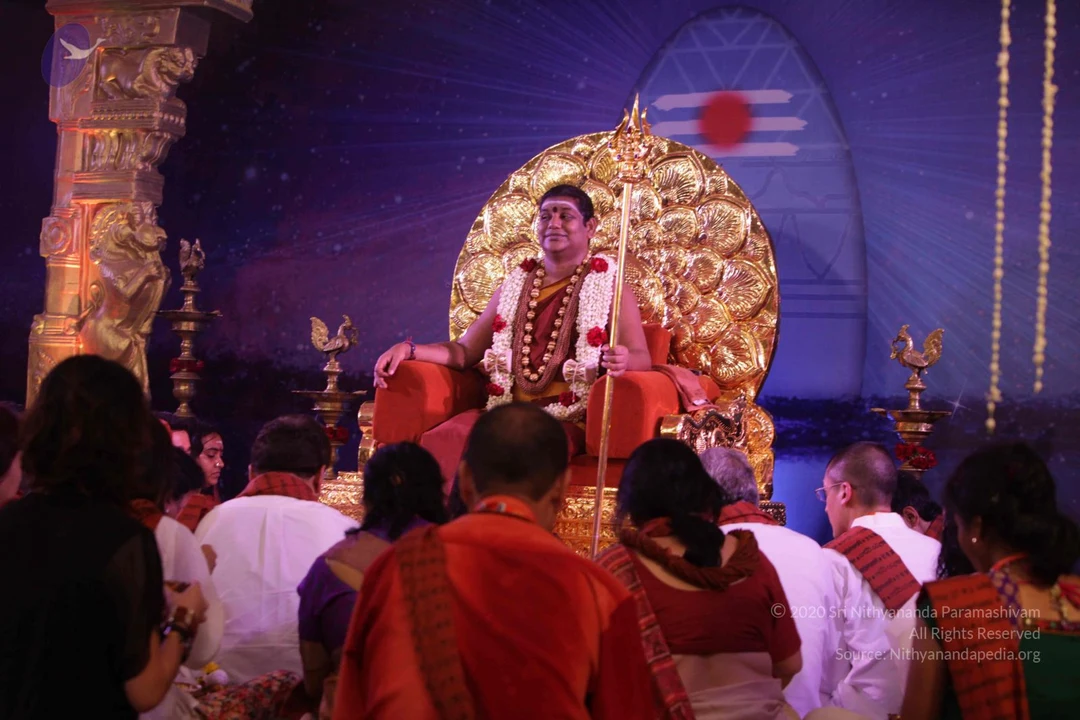
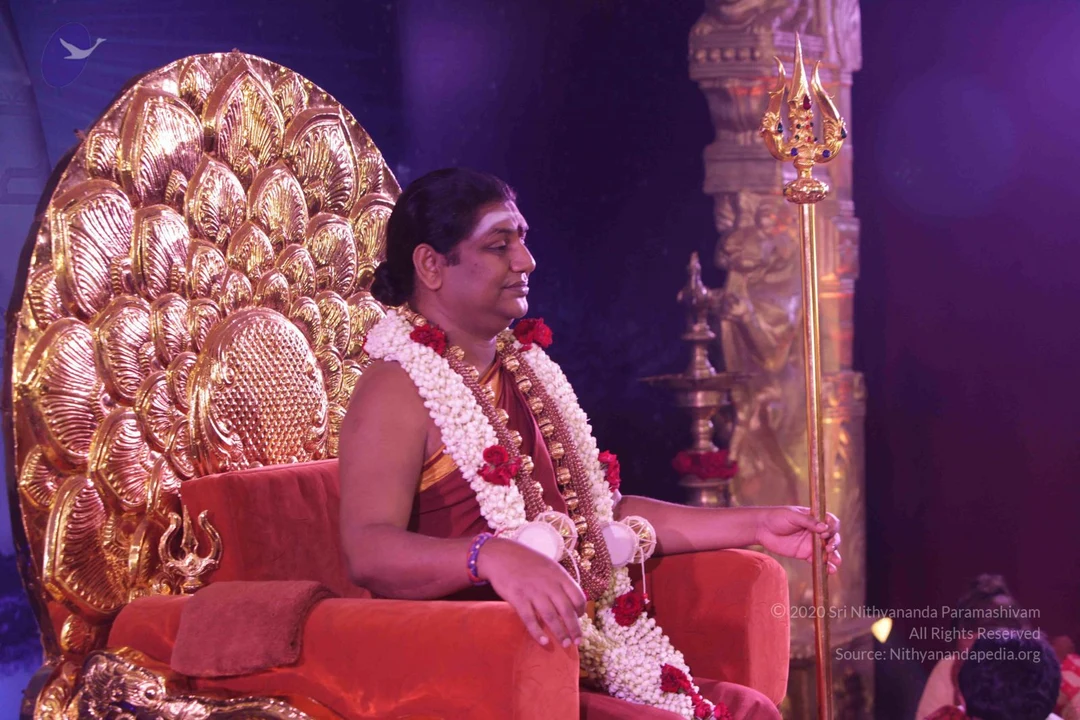
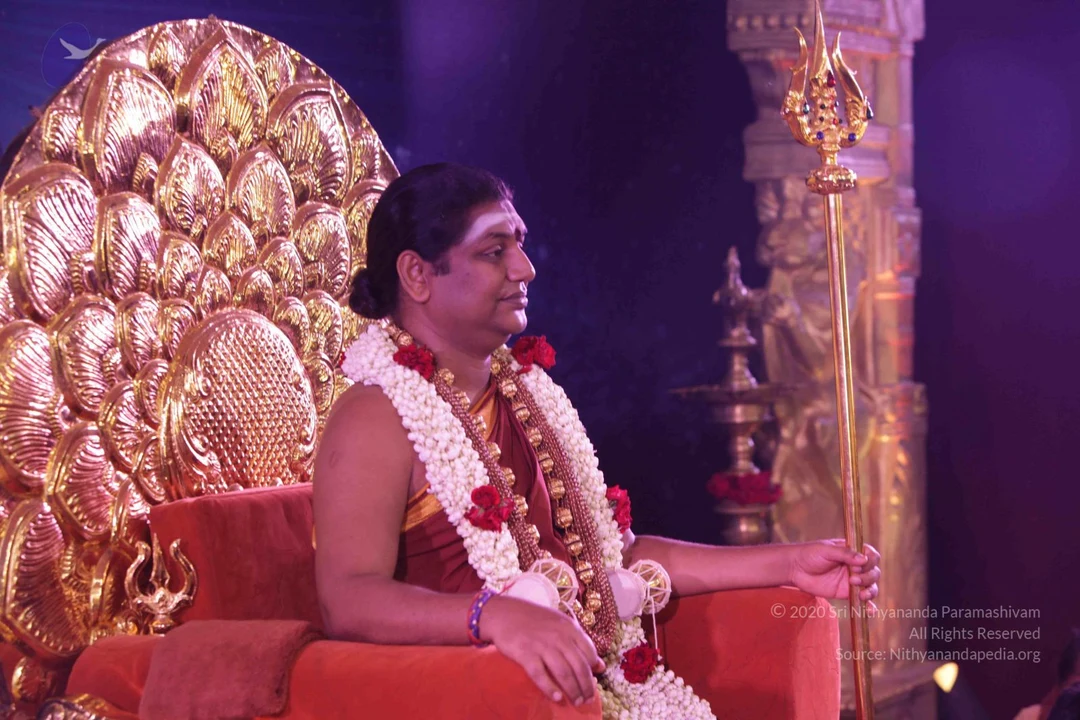
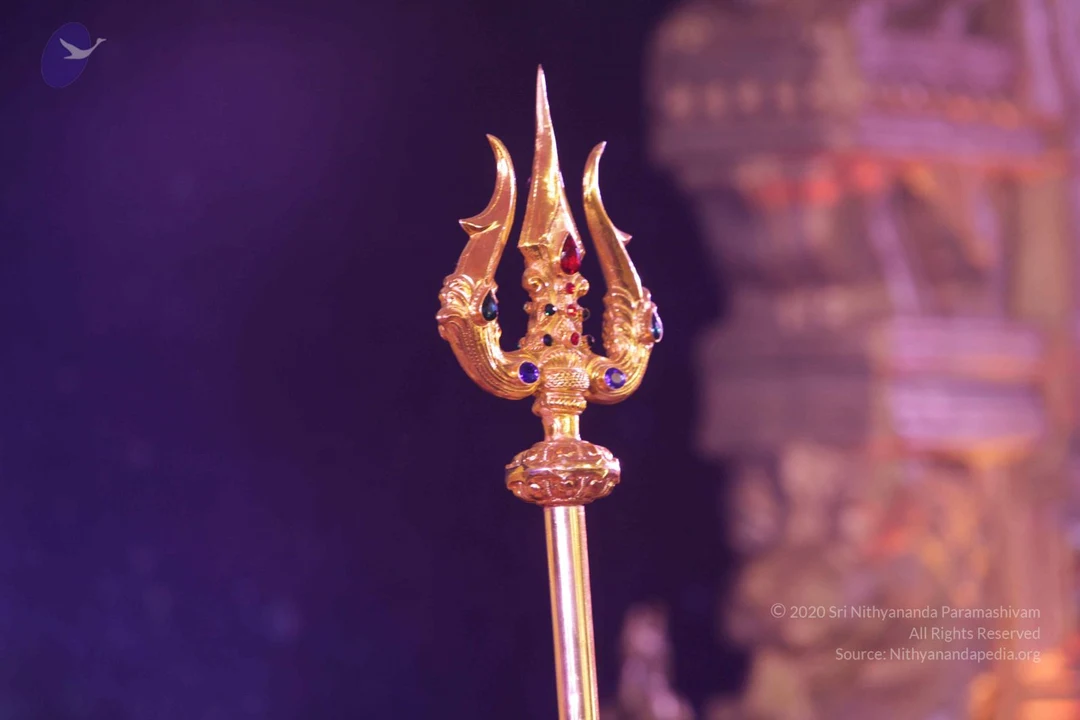
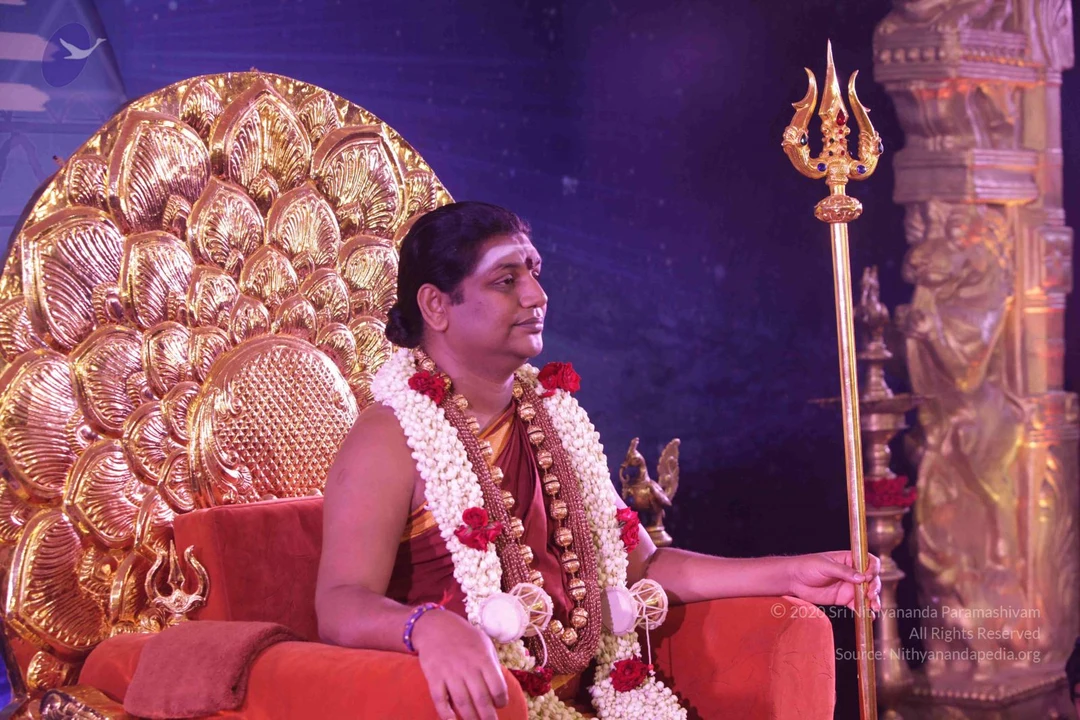
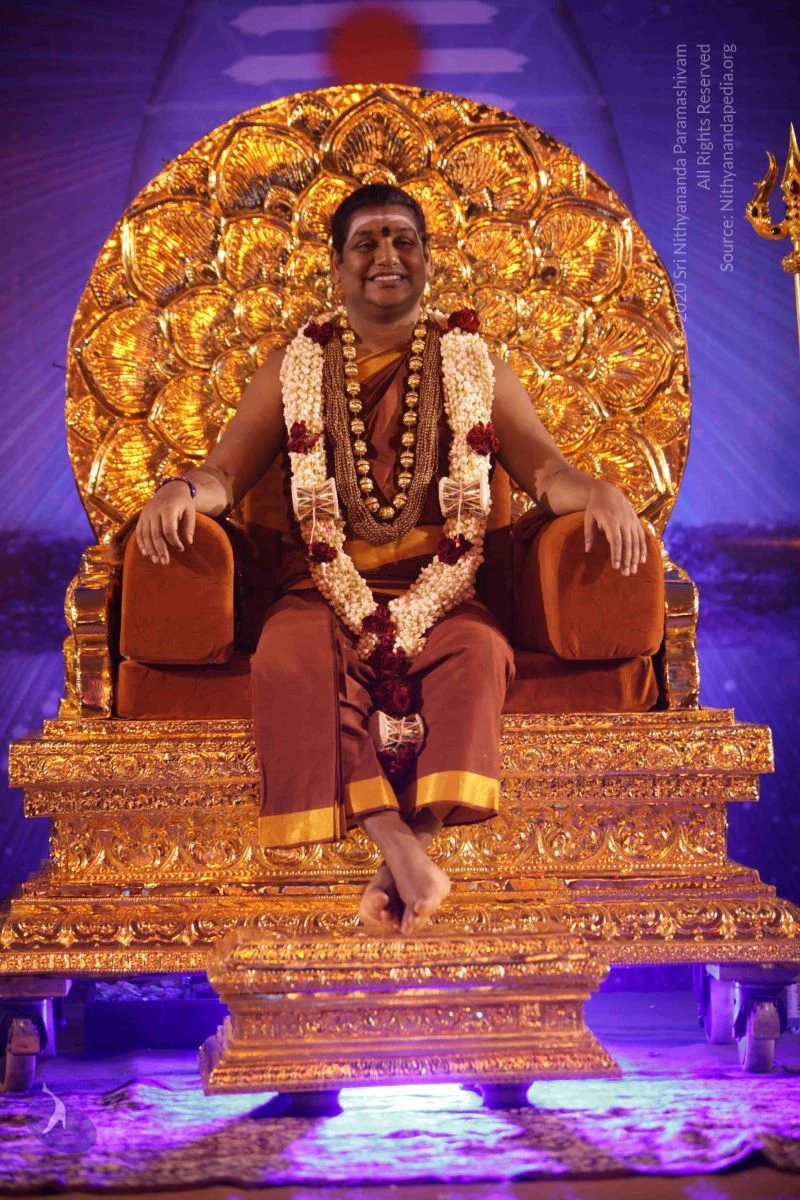
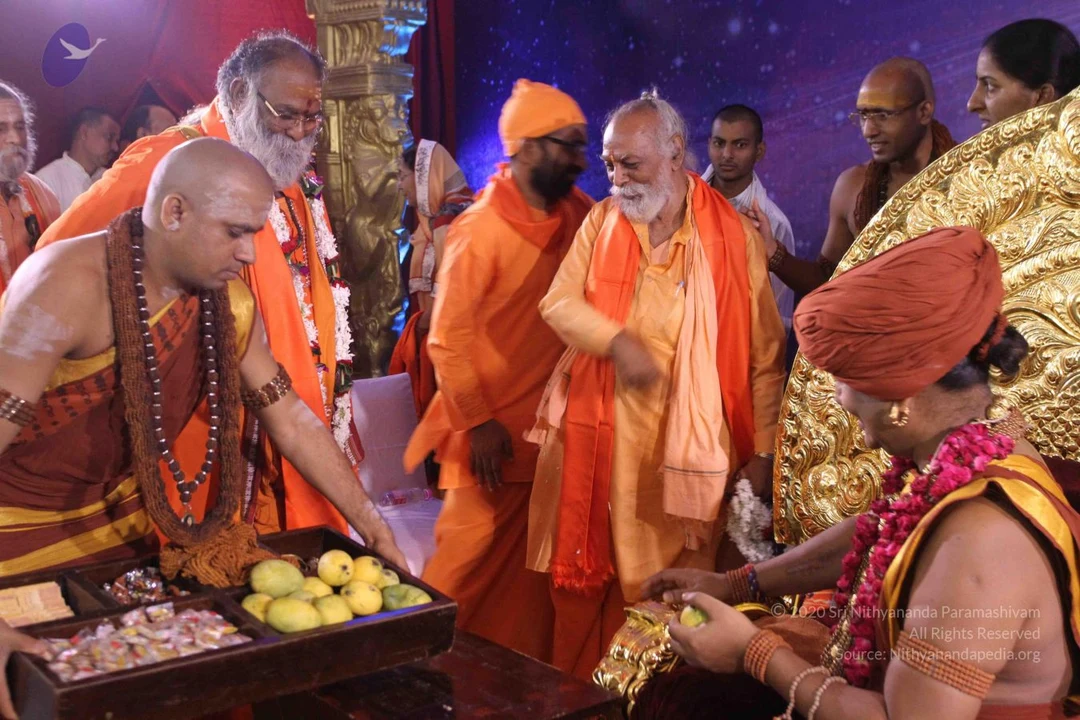
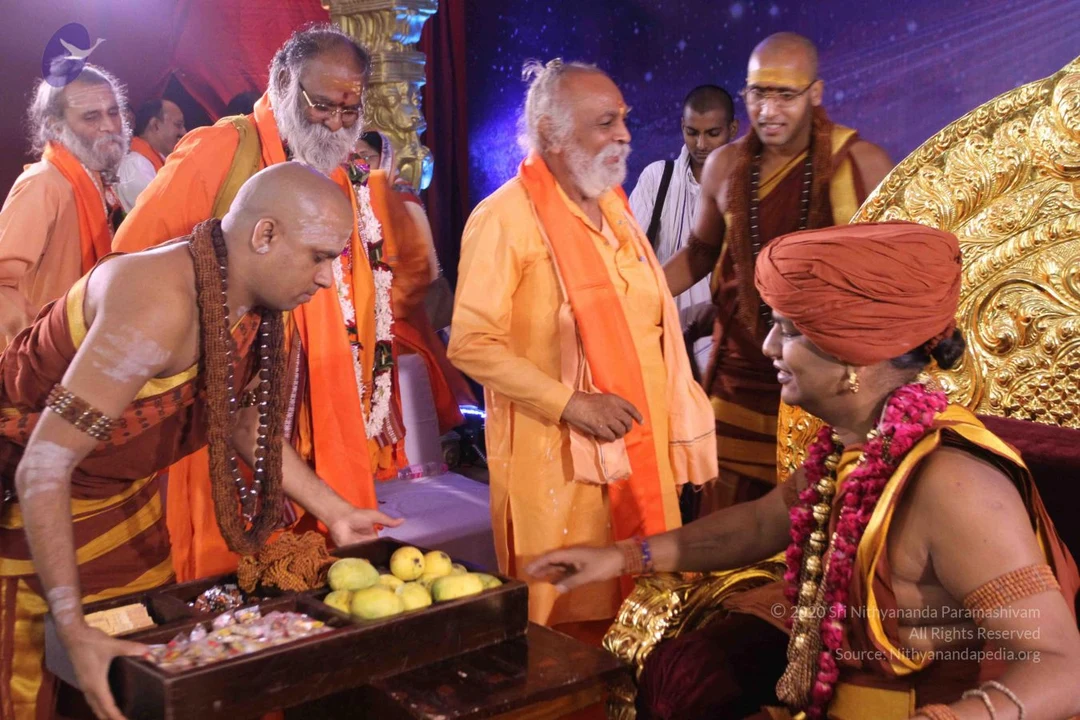
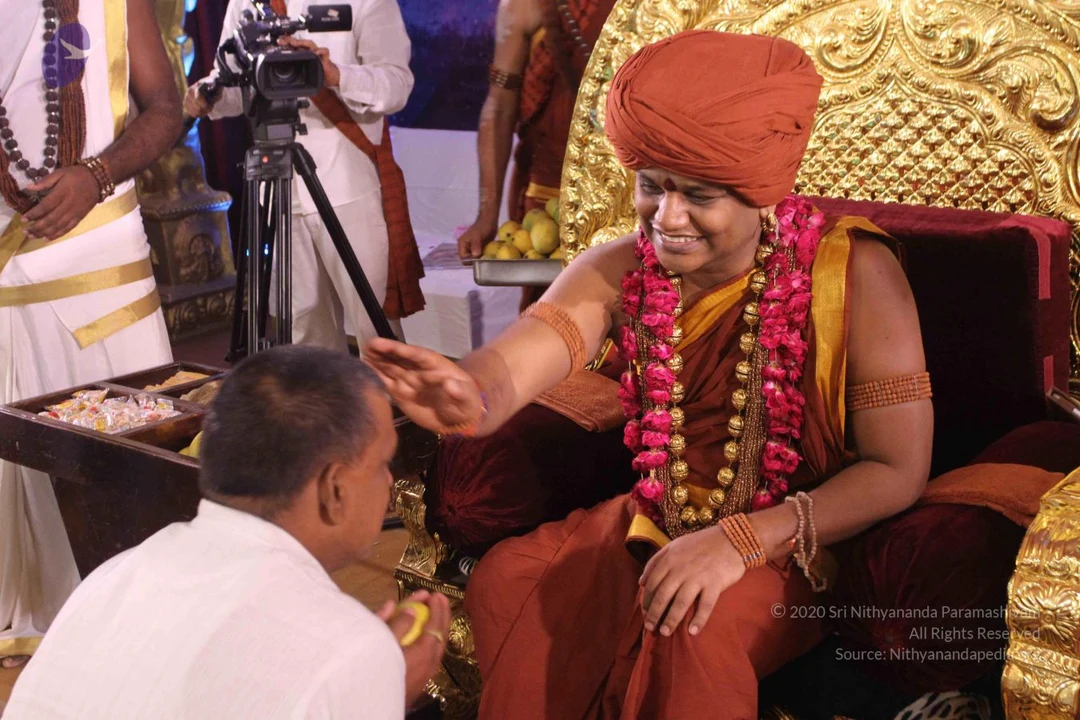
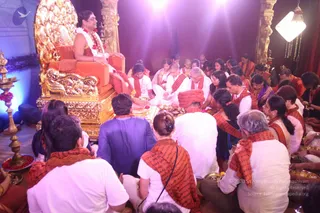
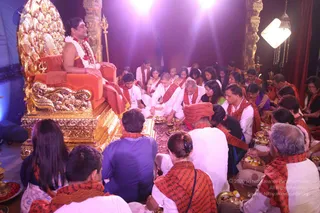
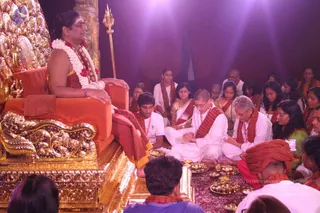
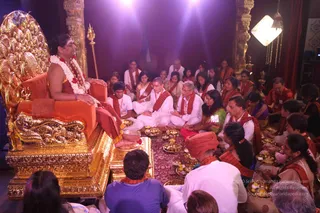
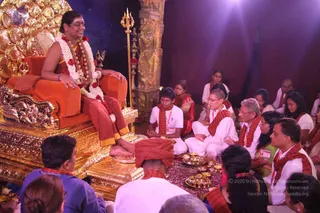
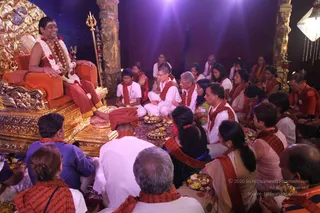
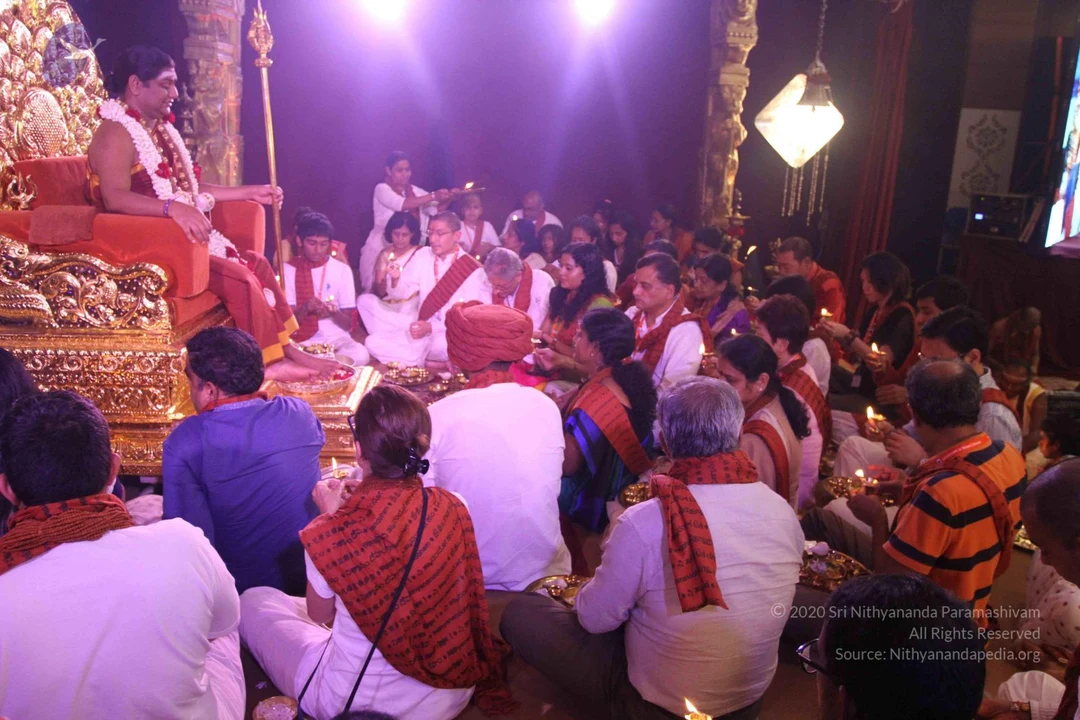
A devotee gathering in a warmly lit hall with purple stage lighting and gold-carved pillars. A figure seated on an ornate gold-and-orange throne with a white and red flower garland, wearing orange and saffron robes, appears to be the central figure, though identity is not established from appearance alone. Seated devotees in front wear white kurtas or saris with orange-red shawls printed with text, and some hold brass plates of flowers and offerings. Brass oil lamps and a red flower-filled plate stand at the left, and a lantern hangs at the upper right. The group appears to be performing a padapuja, with devotees seated around the throne and a tray of offerings placed before it.A photograph of a padapuja-style gathering on a stage lit with purple light. A man seated on an ornate gold throne with orange cushions wears an orange robe, a white flower garland and a red bead necklace, and he appears to be the a person candidate; his appearance is somewhat uncertain at this size, so he is described by role. Seated on the floor before the throne, devotees in white kurtas and white dhotis, many draped in orange scarves printed with text, hold brass thalis and offering plates. A man in a white outfit with an orange turban sits nearer the foreground, and women in saris and salwar kameezes sit in rows around them. A golden pillar, a trident stands at the top left, and a hanging lantern appear at the right. Around 20 to 25 people are visible, many partially cropped at the frame edges.A seated figure on an ornate gold-and-orange throne with a white floral garland and red flower garlands, wearing an orange-saffron shawl draped over the lap, receives a gathering in a purple-lit hall. In front, devotees sit on a red patterned carpet, a man in white with a shaved head and red shawl and an older man in white with red shawl sit near brass plates of offerings, and women in saffron and red shawls, some in yellow sarees, sit around. A gold trident stands behind the throne and a man in an orange turban sits in the foreground. The seated figure appears to be a person, identified by the garland, saffron shawl and throne presence, though the appearance is uncertain. Lamps and offerings on brass plates suggest a pada puja-style ritual; no name is printed on the image.A man seated on an ornate gilded throne with orange cushions, wearing an orange and red shawl, a white flower garland and a red-beaded necklace, holds a small staff against the backdrop of a golden pillar. Dozens of devotees sit in rows on a red patterned carpet, many in orange or red shawls, with brass thalis of offerings and small oil lamps in front of them. Some wear white kurtas and saris, and a man in an orange turban sits near the front. Purple lighting fills the hall, and a hanging lantern is visible at upper right. The scene appears to be a darshan or pada-puja gathering with the seated figure receiving devotees.A seated man on an ornate gold-and-orange throne smiles toward a seated crowd during a darshan. He wears saffron-orange robes, a white flower garland with red blossoms, layered beaded necklaces and a bracelet, and his bare feet rest on a gold footstool. A golden trident stands behind him beside a carved gold pillar. Around him, devotees in white and red-bordered shawls sit on a red carpet, some holding brass plates of offerings and lamps, while others in white and red sit at the front. Purple stage lighting fills the background. a person is seated on the throne, identified by the saffron robes, flower garland, rudraksha-style beaded necklaces and throne setting.A person with long swept-back hair, a white flower garland and a trident-topped scepter seated on an ornate gold throne with orange cushions, smiling as devotees sit on the floor before them. Several devotees in white, red and orange shawls hold brass thalis of offerings and lamps for a pada-puja-style ritual. Gilded carved pillars and purple stage lighting frame the hall.

Energy-Darshan
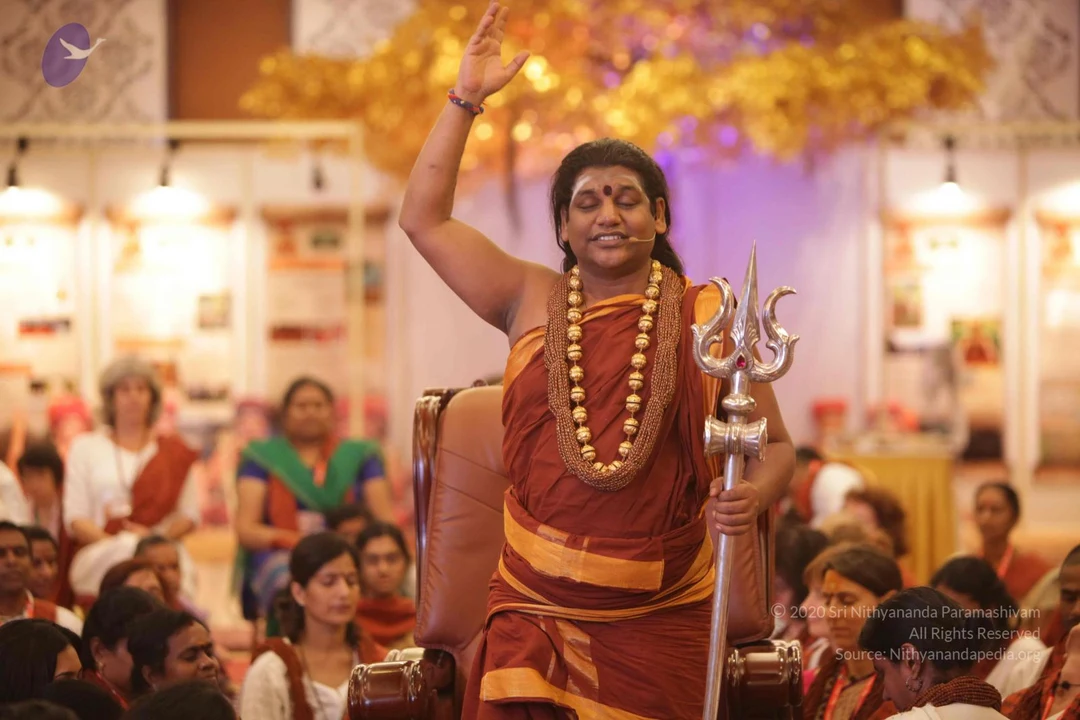
34 photosSource gallery
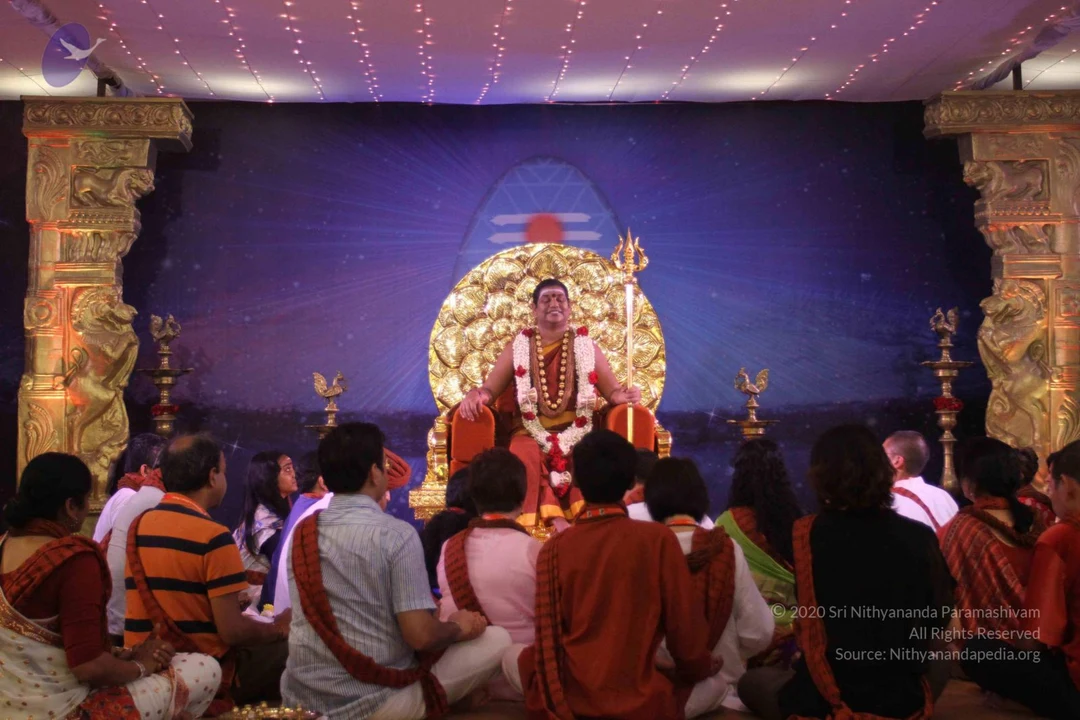
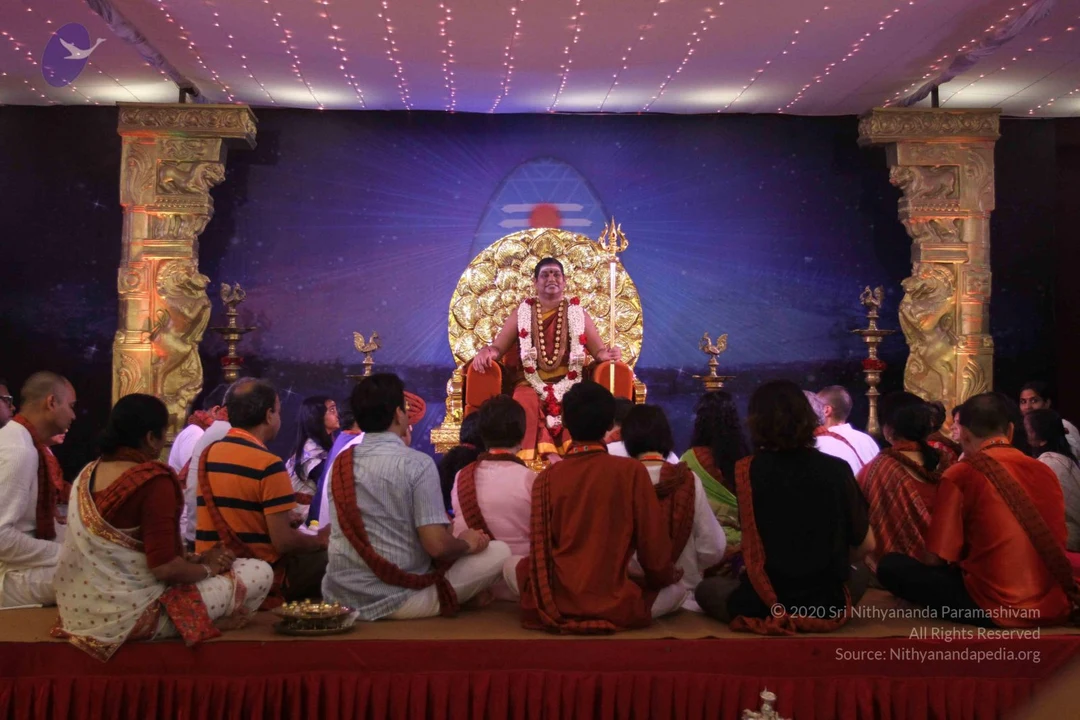
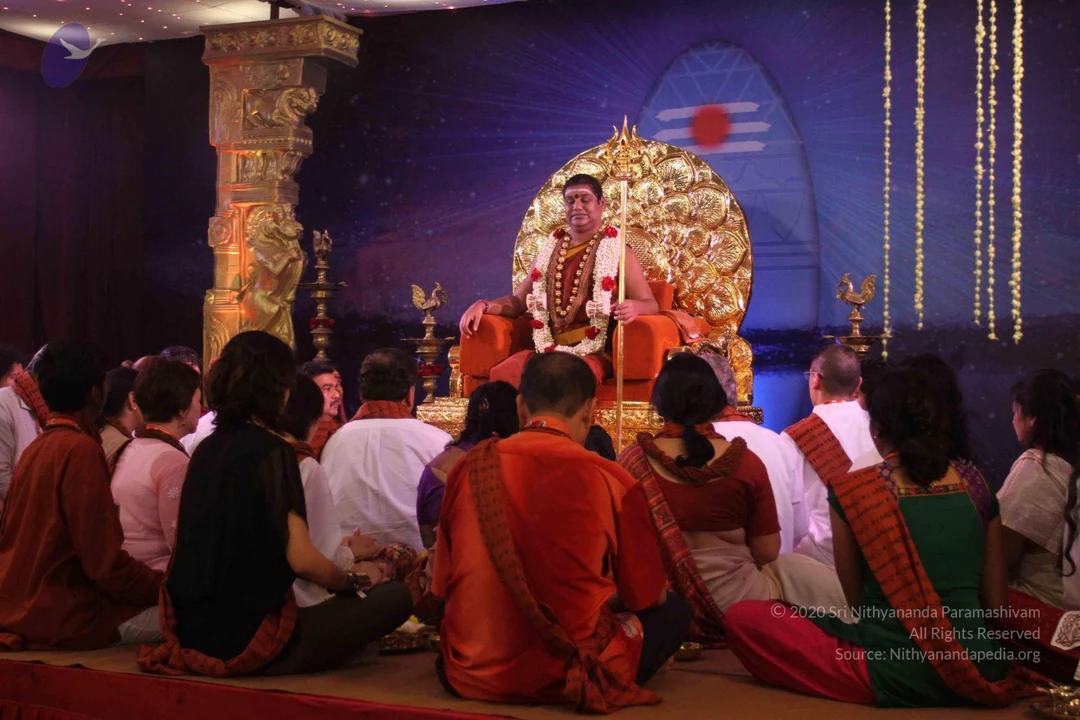
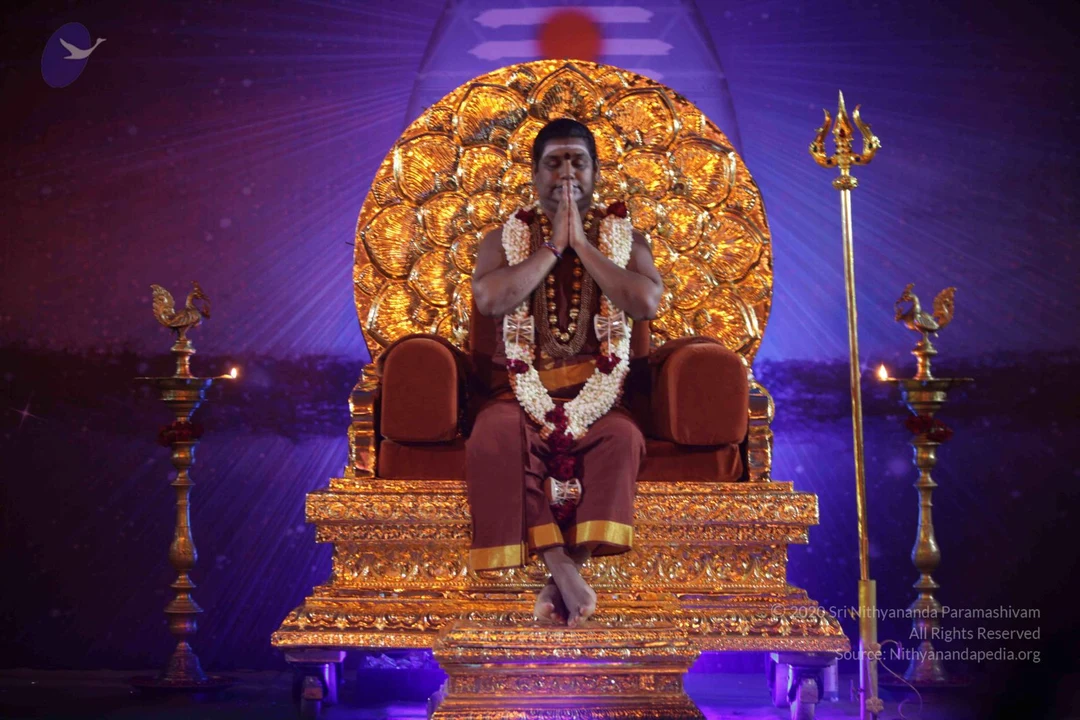
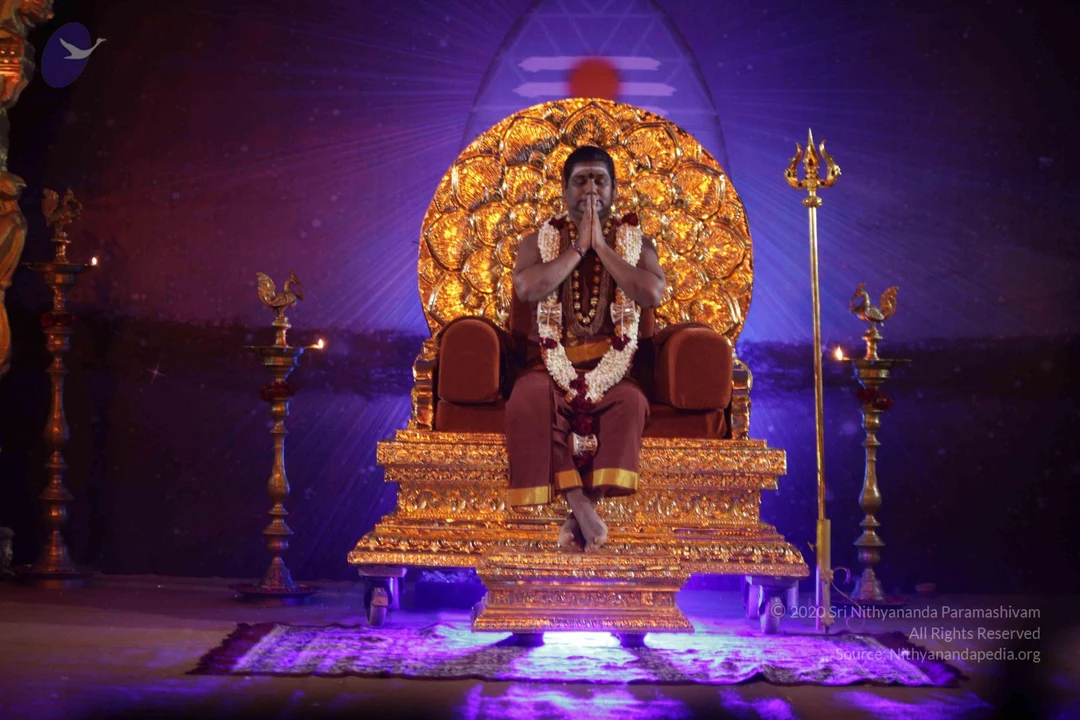
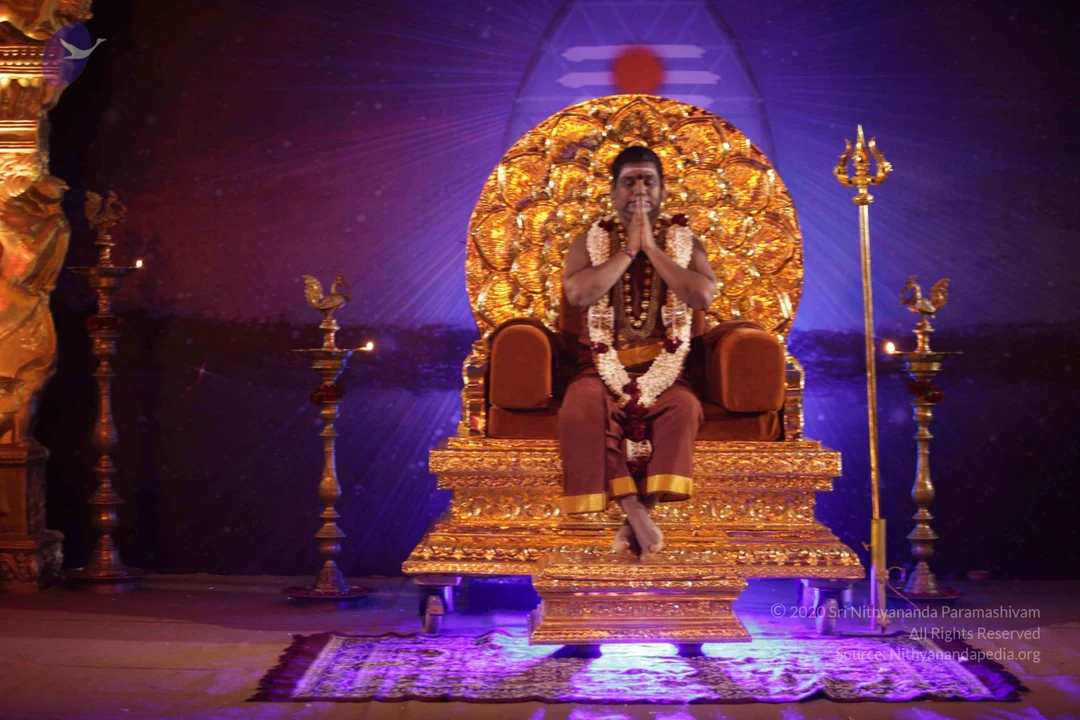
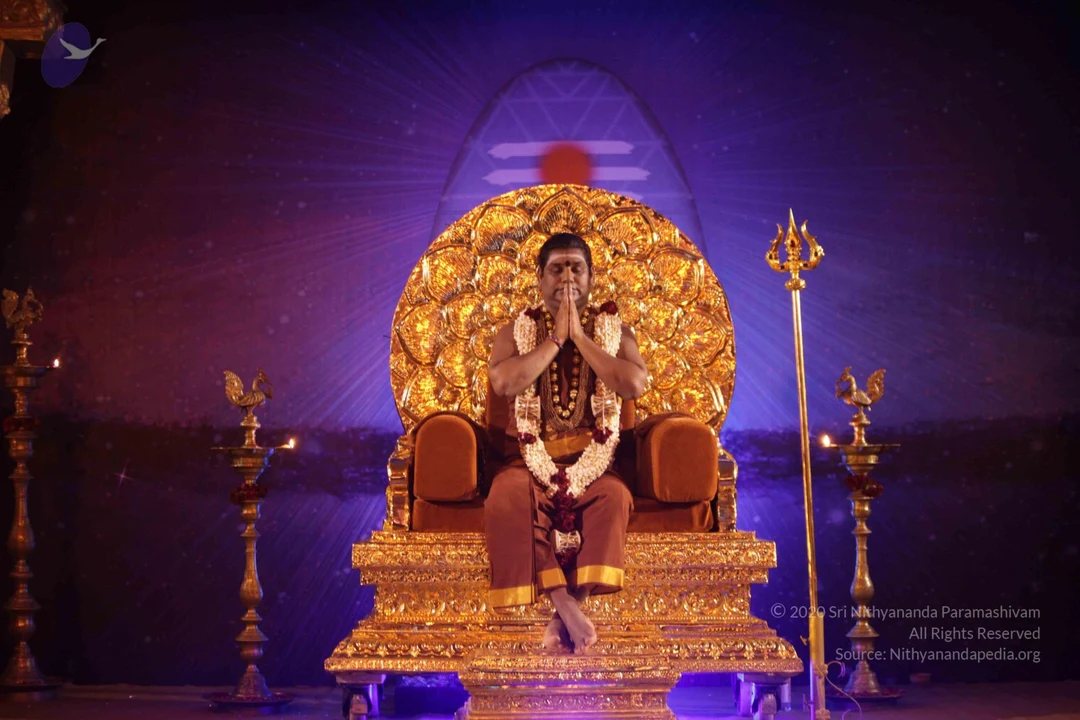
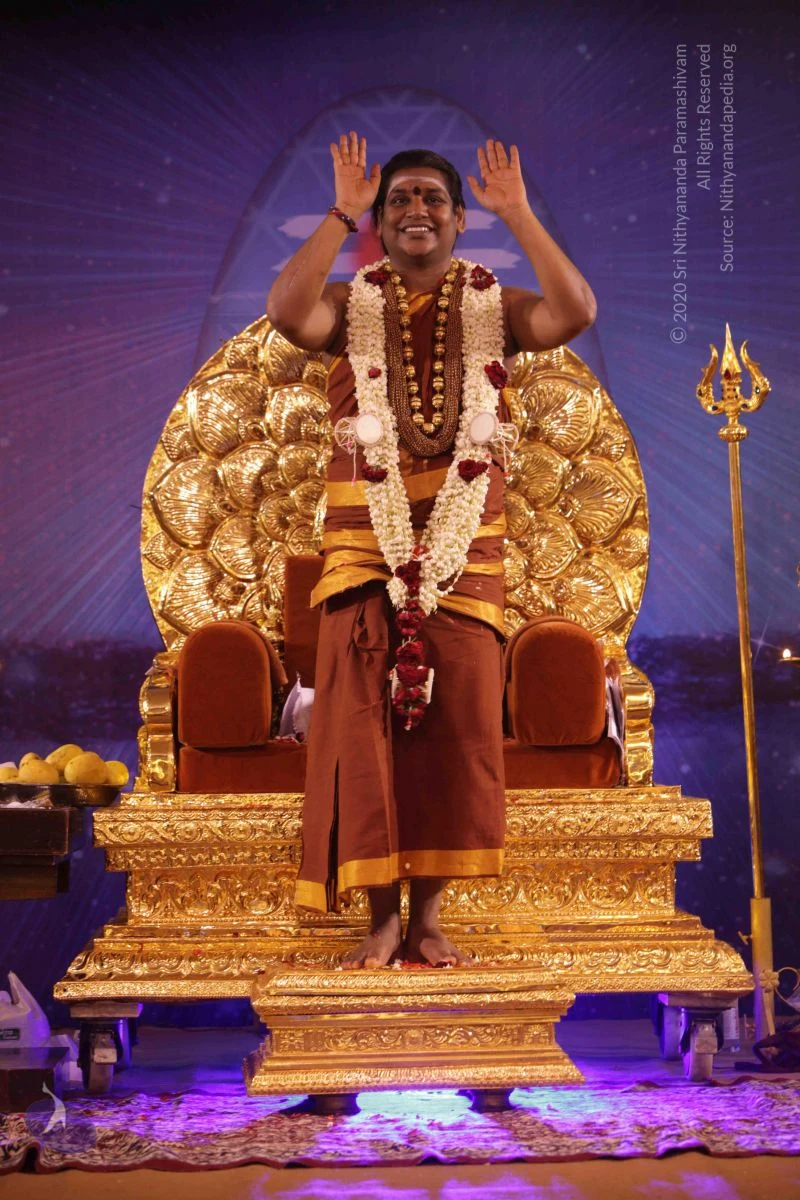
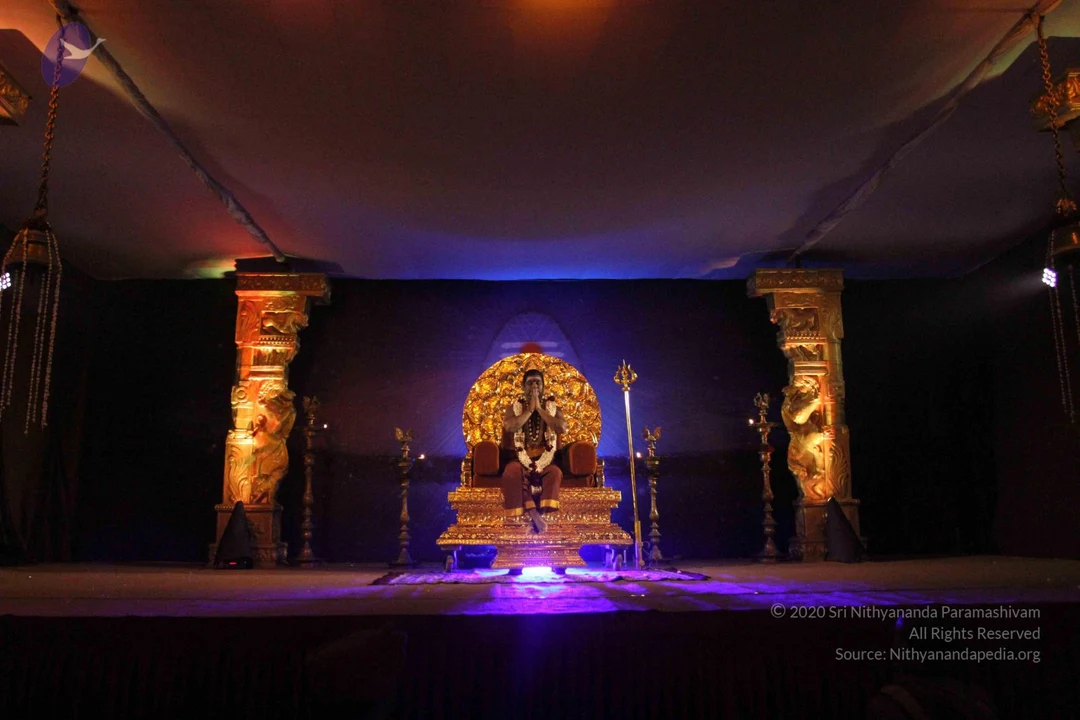
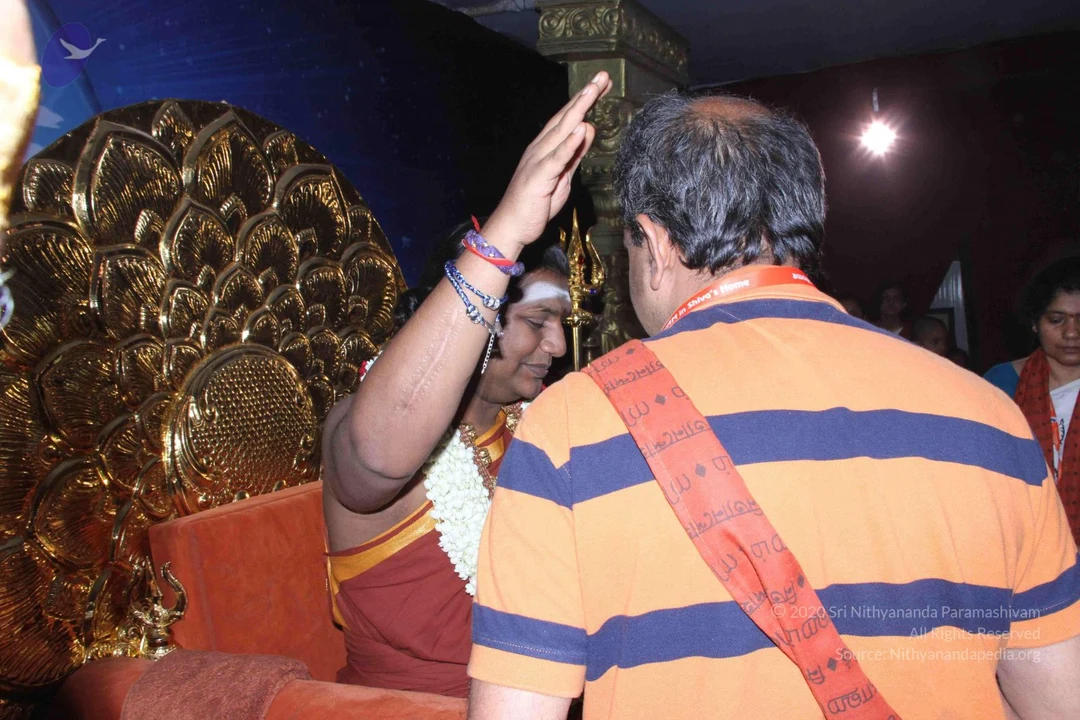
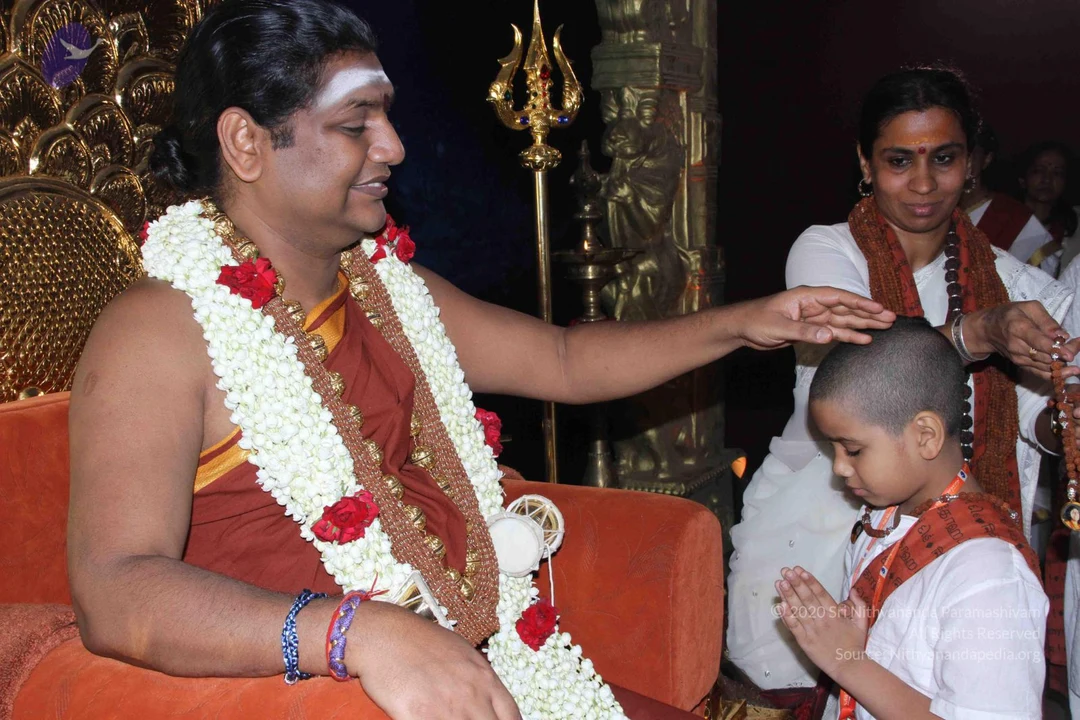
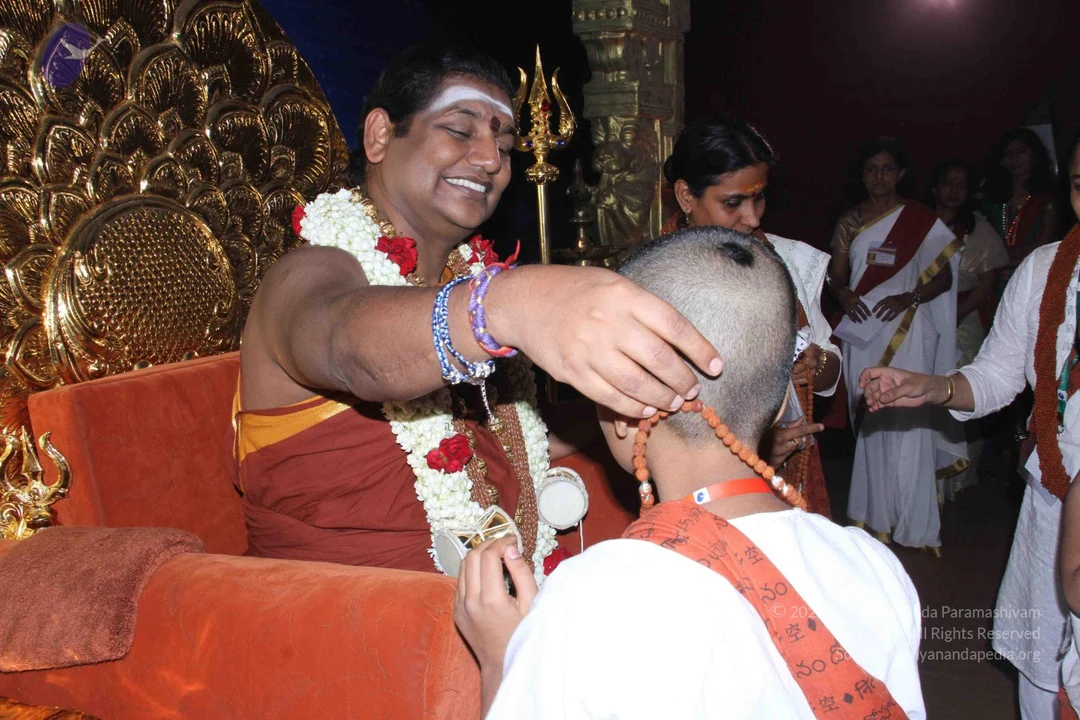
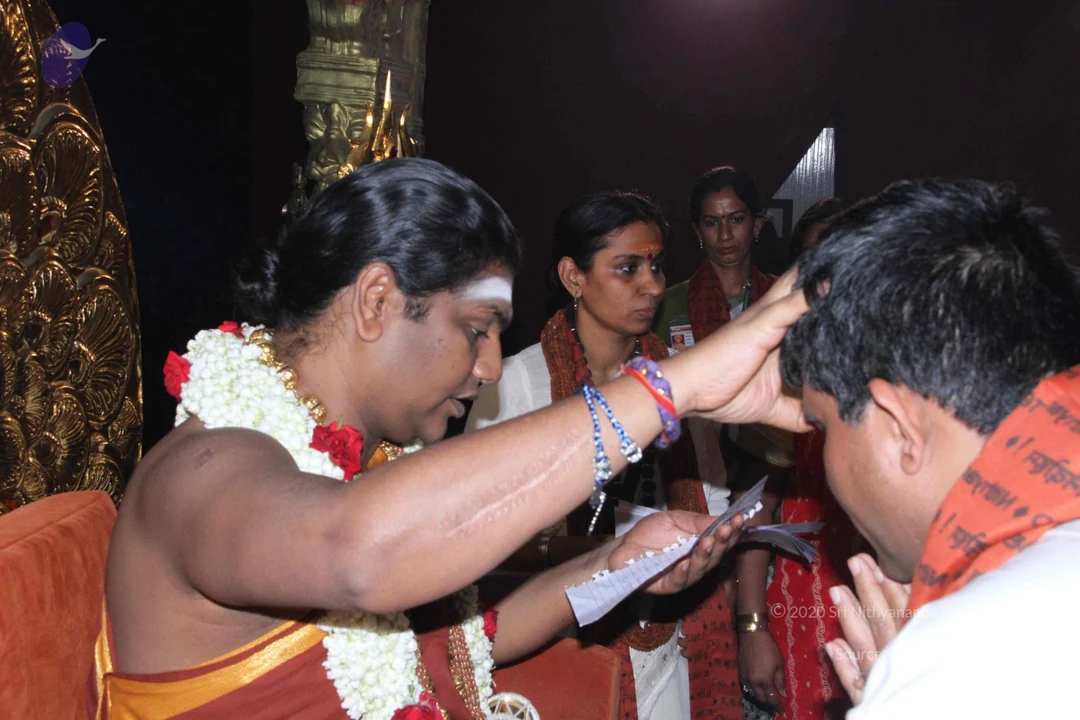
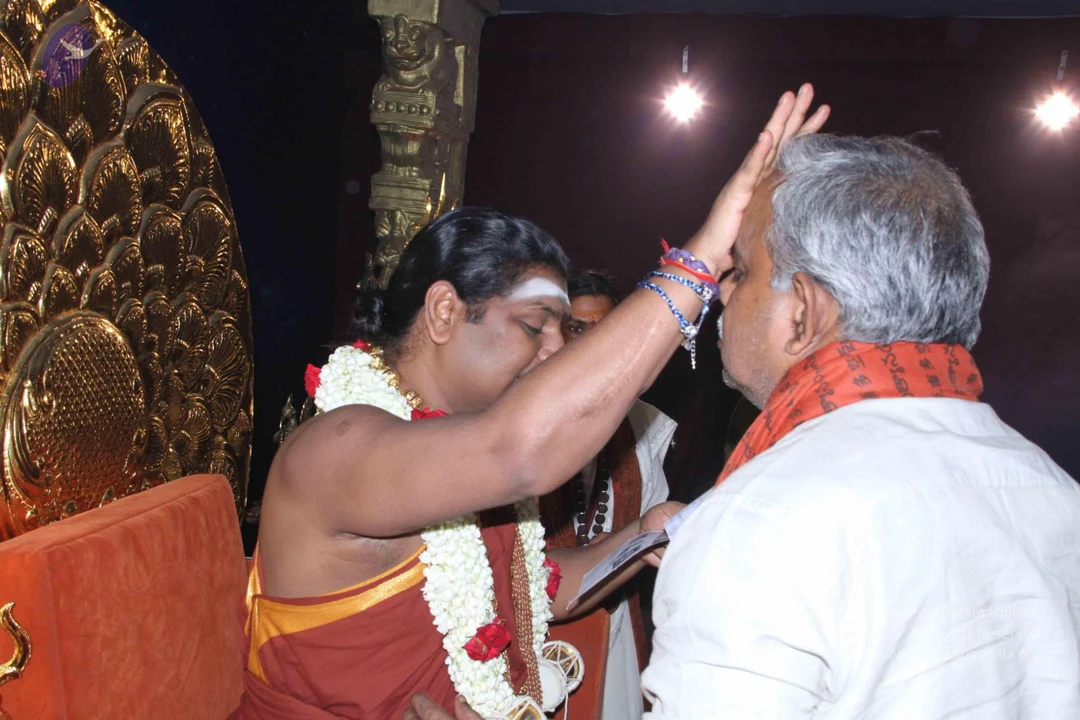
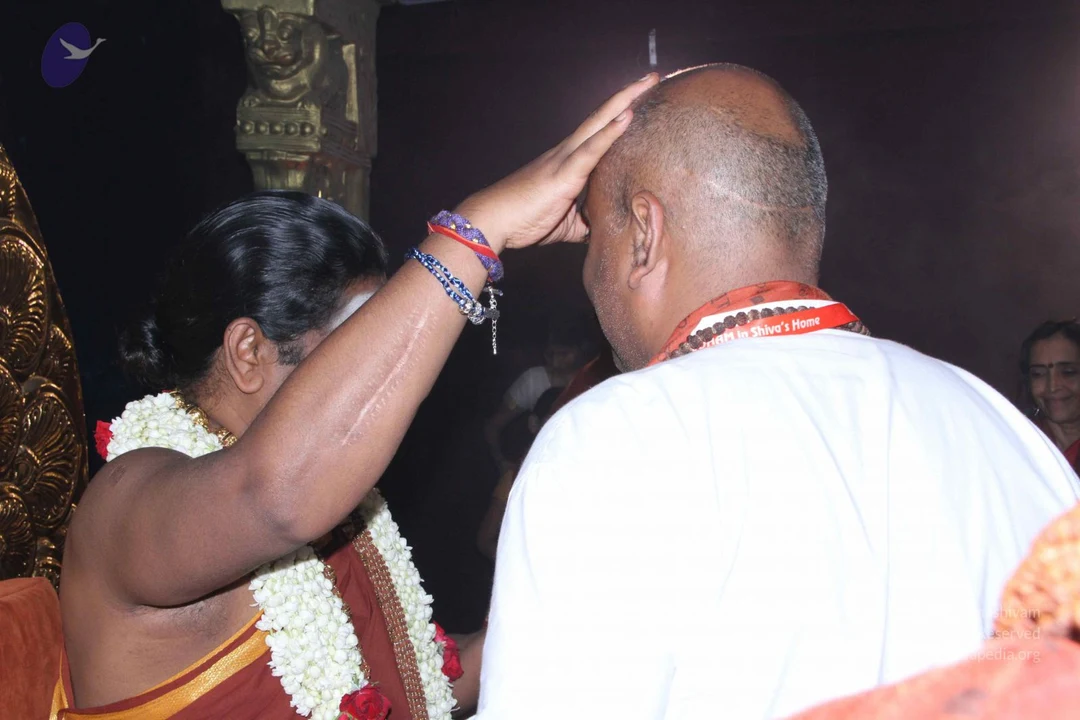
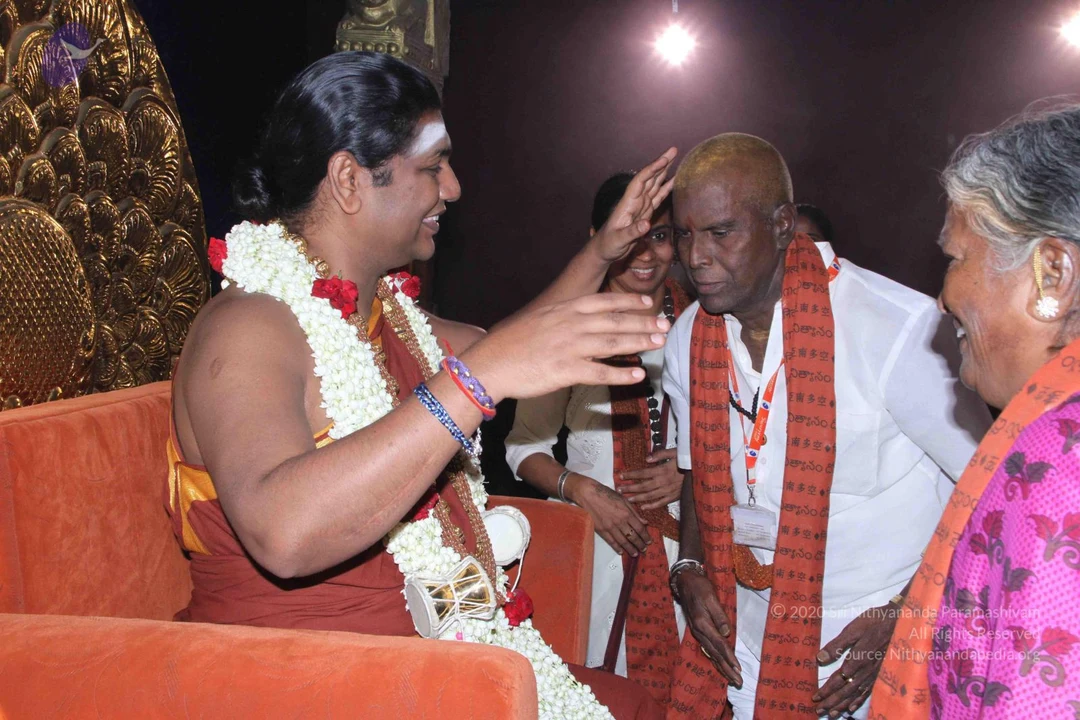
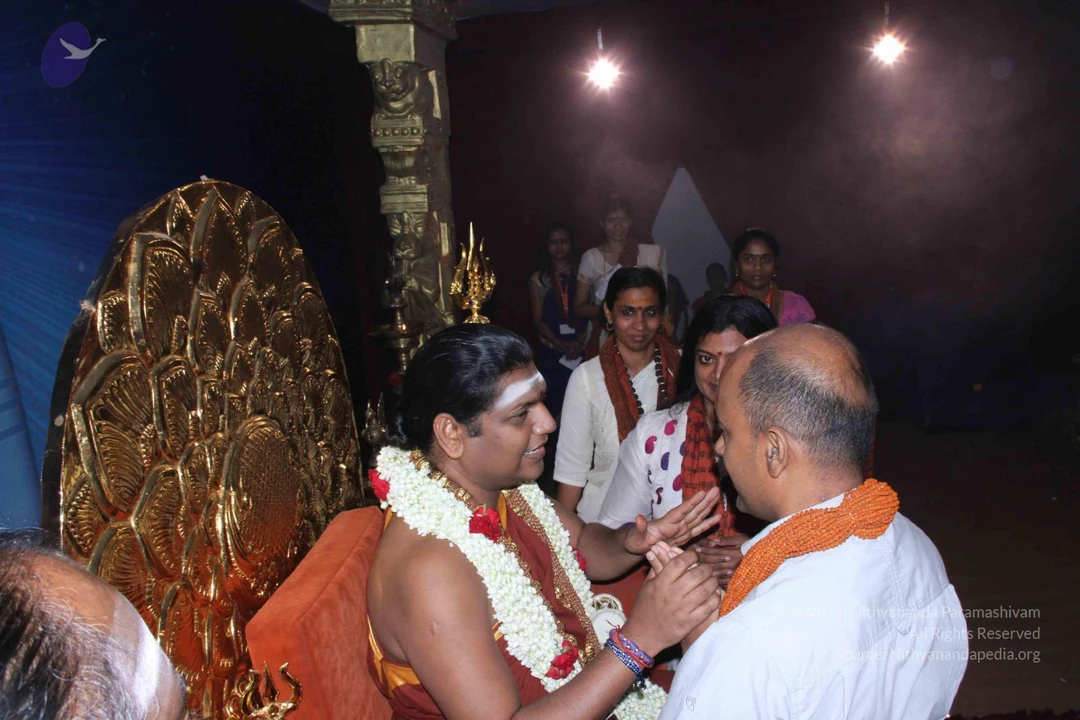
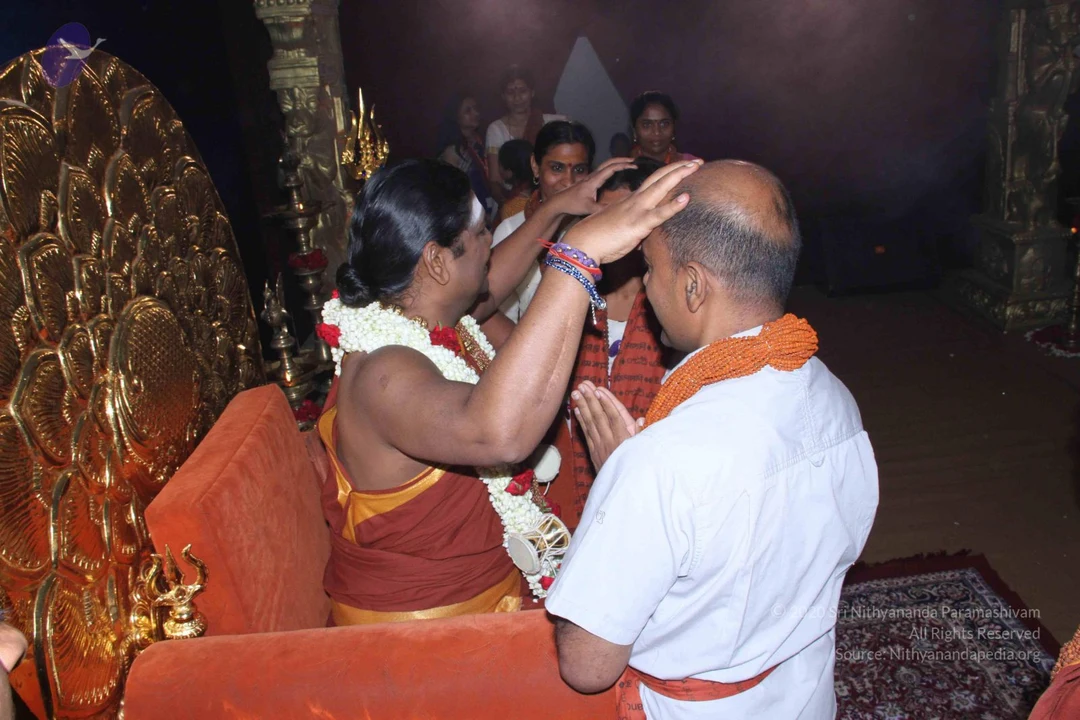
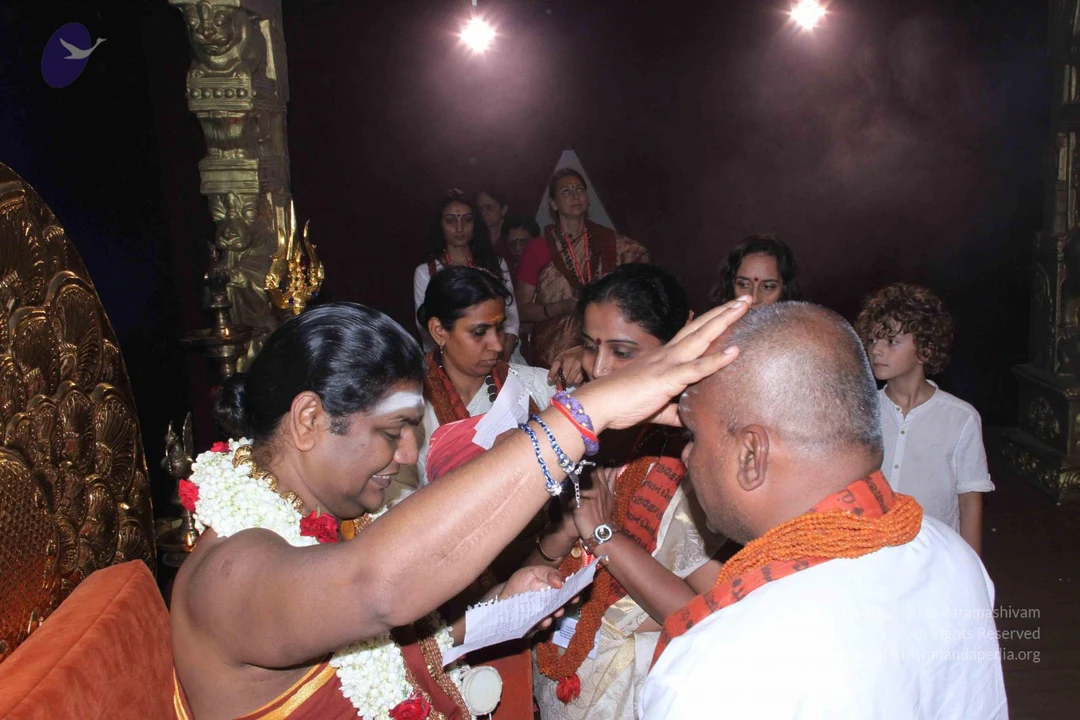
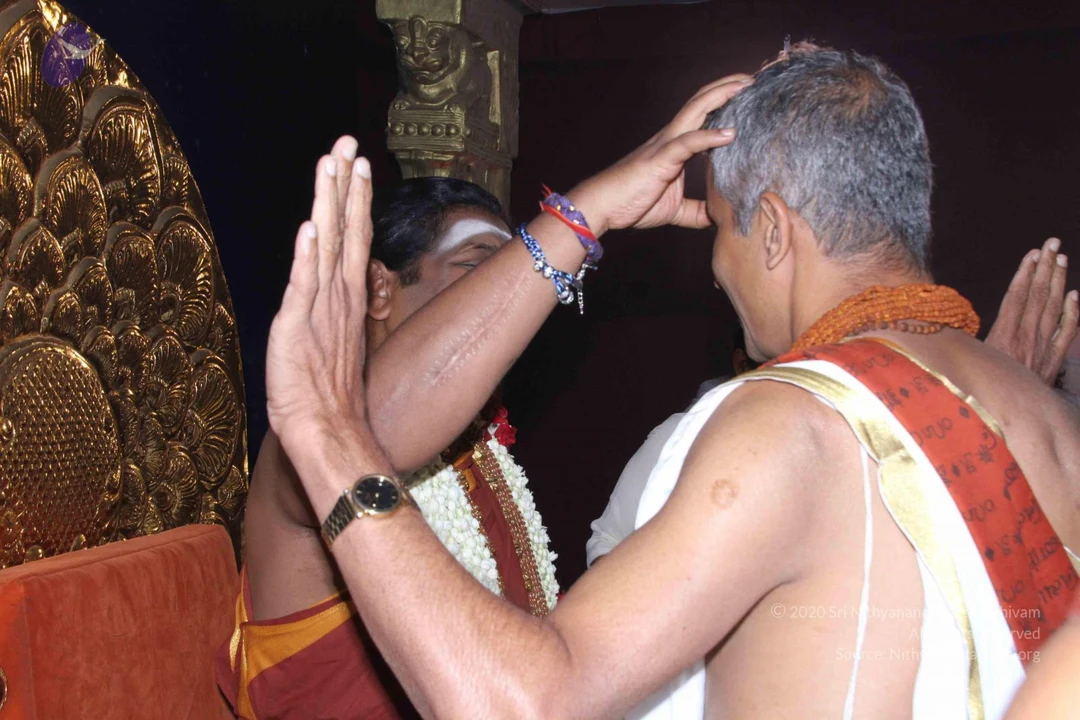
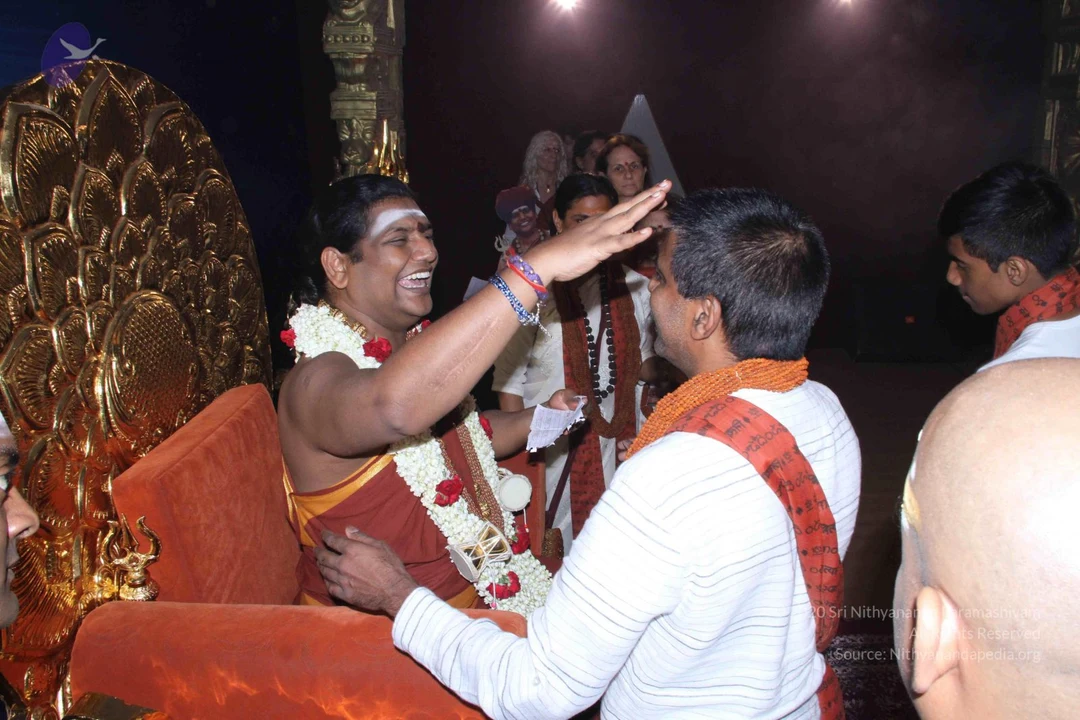
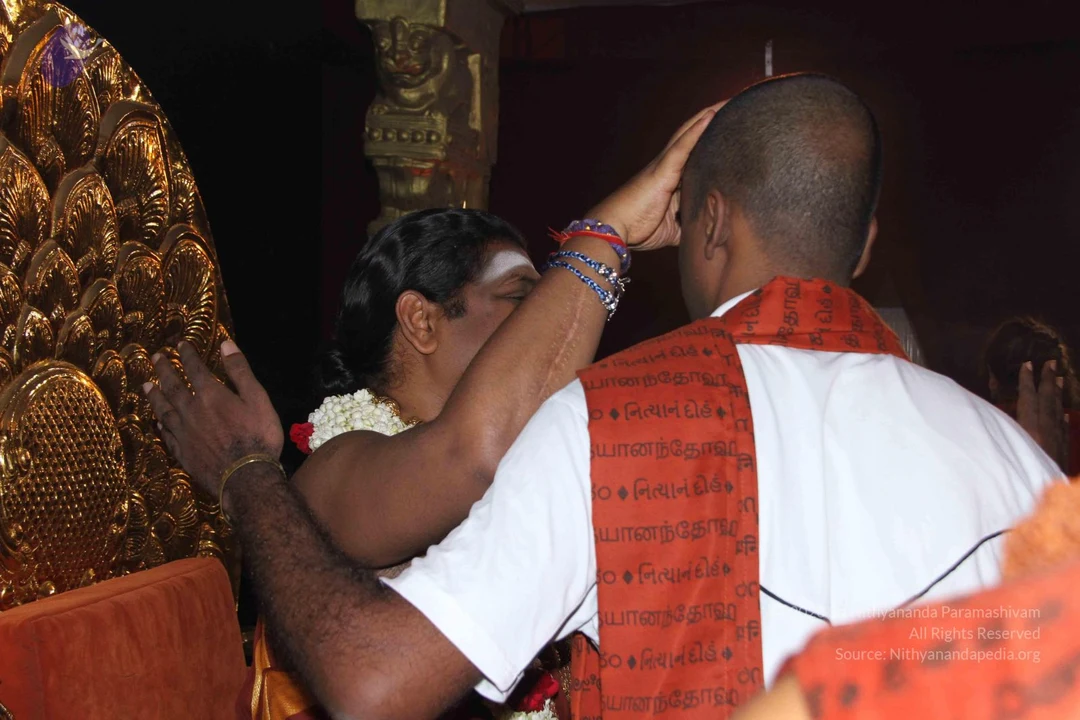
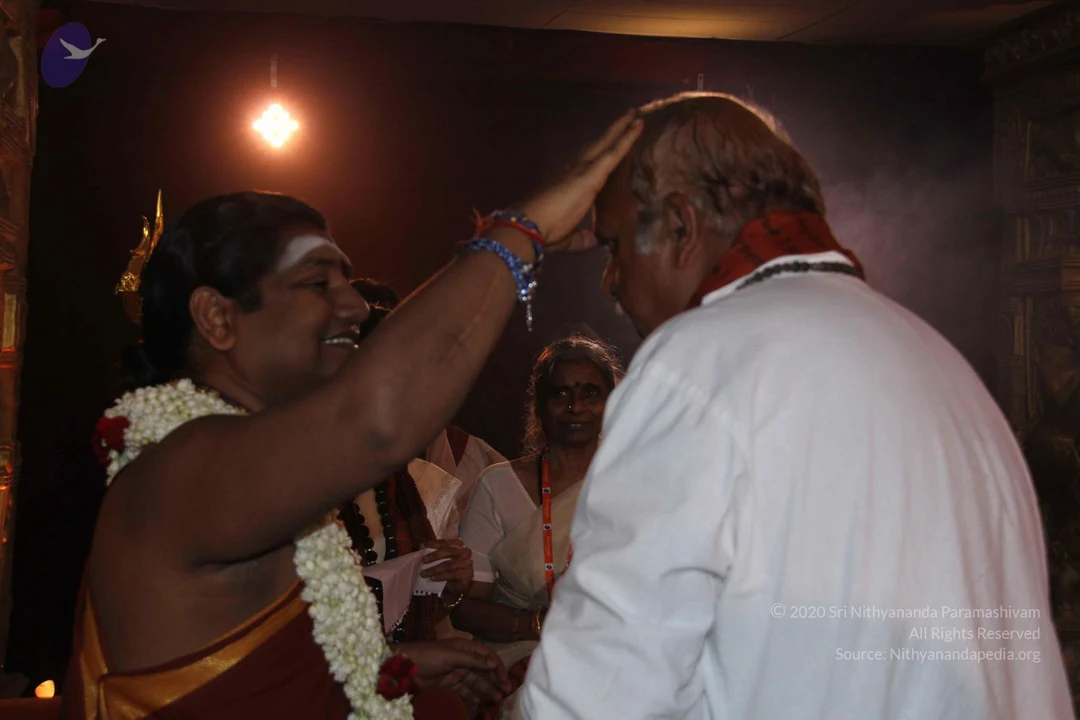
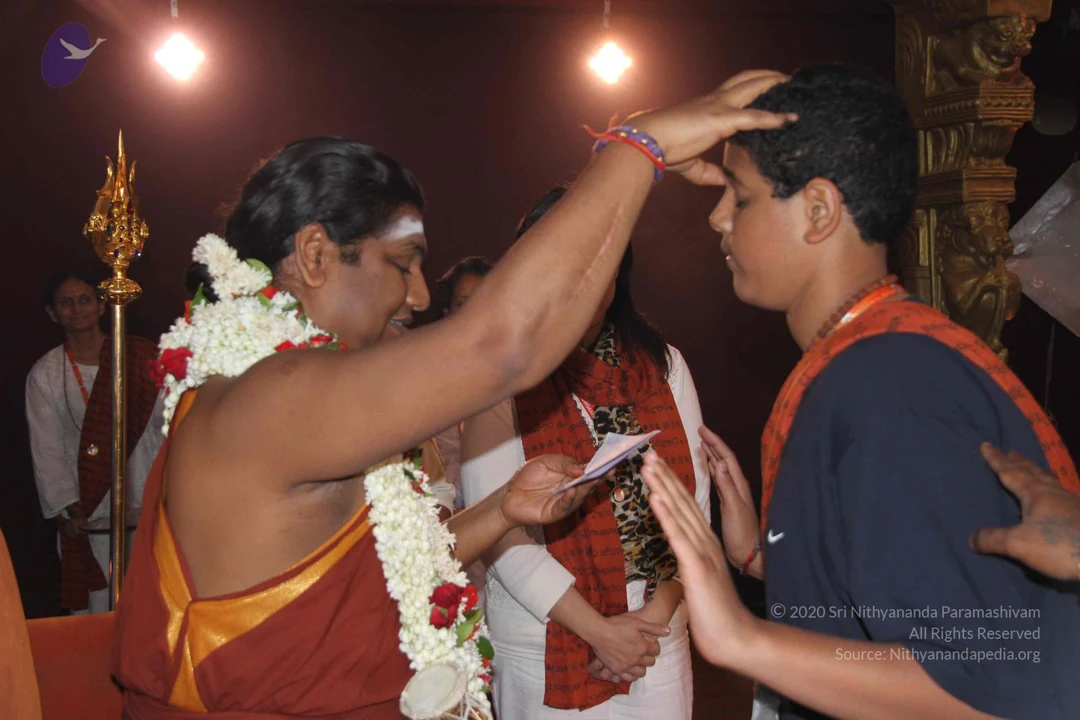
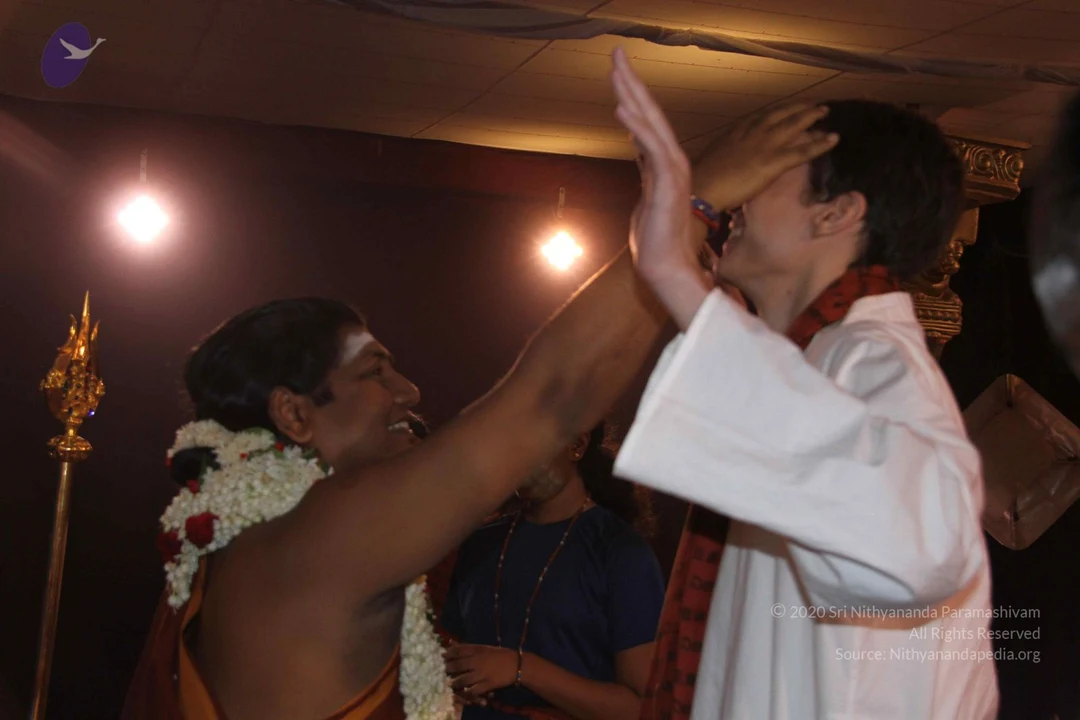
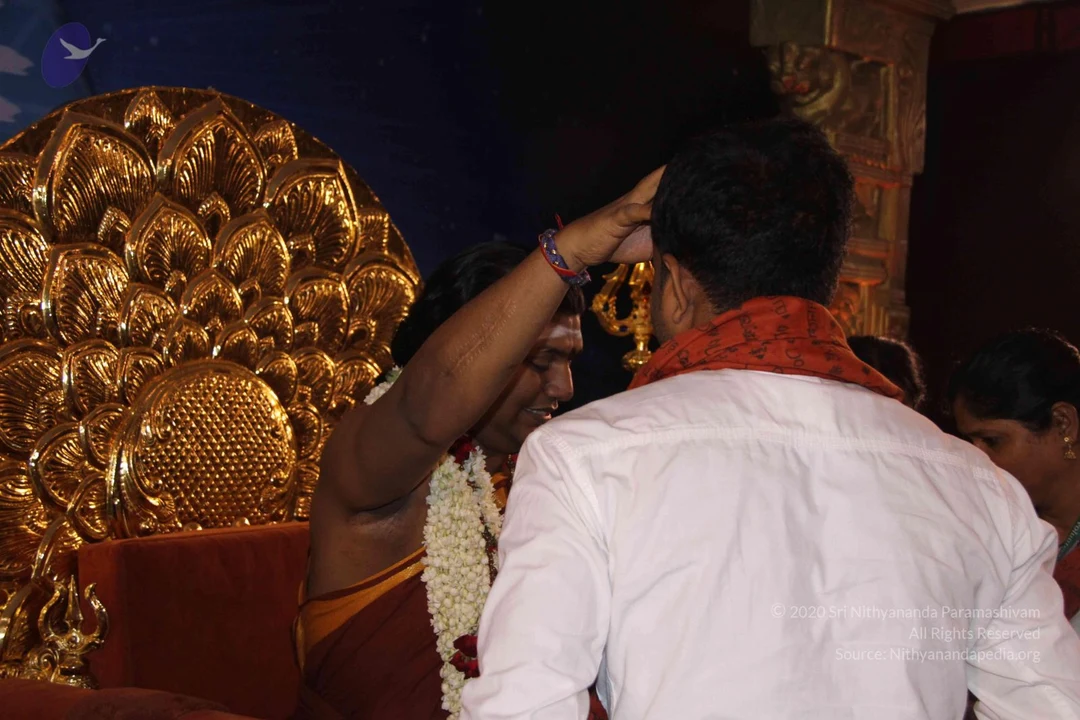
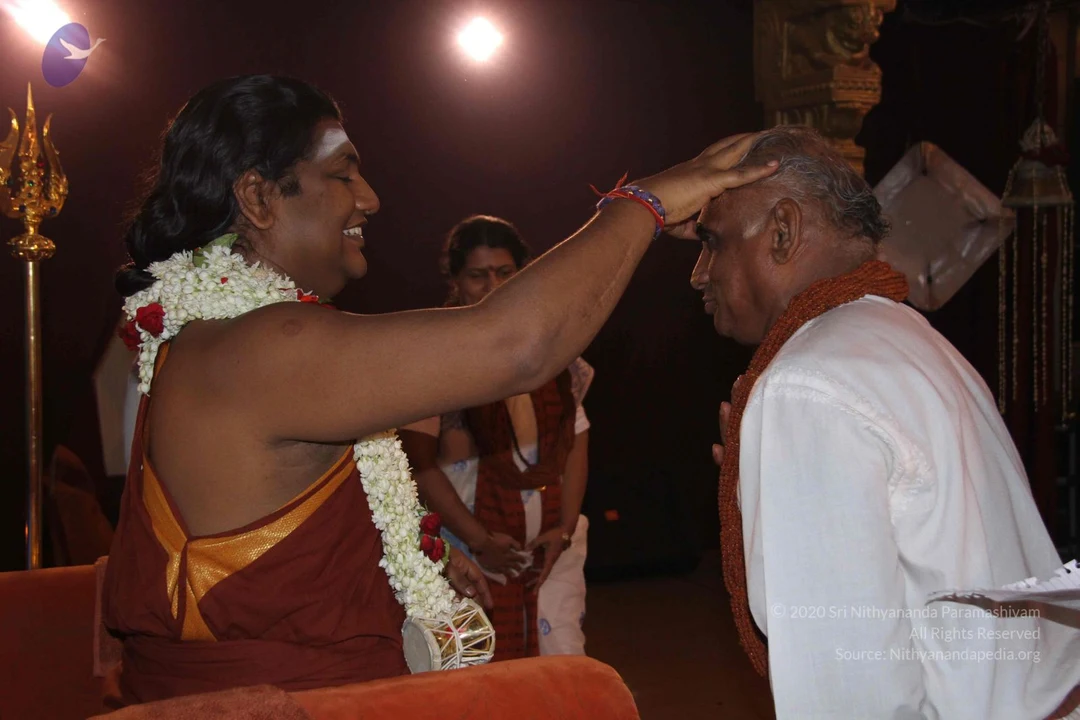
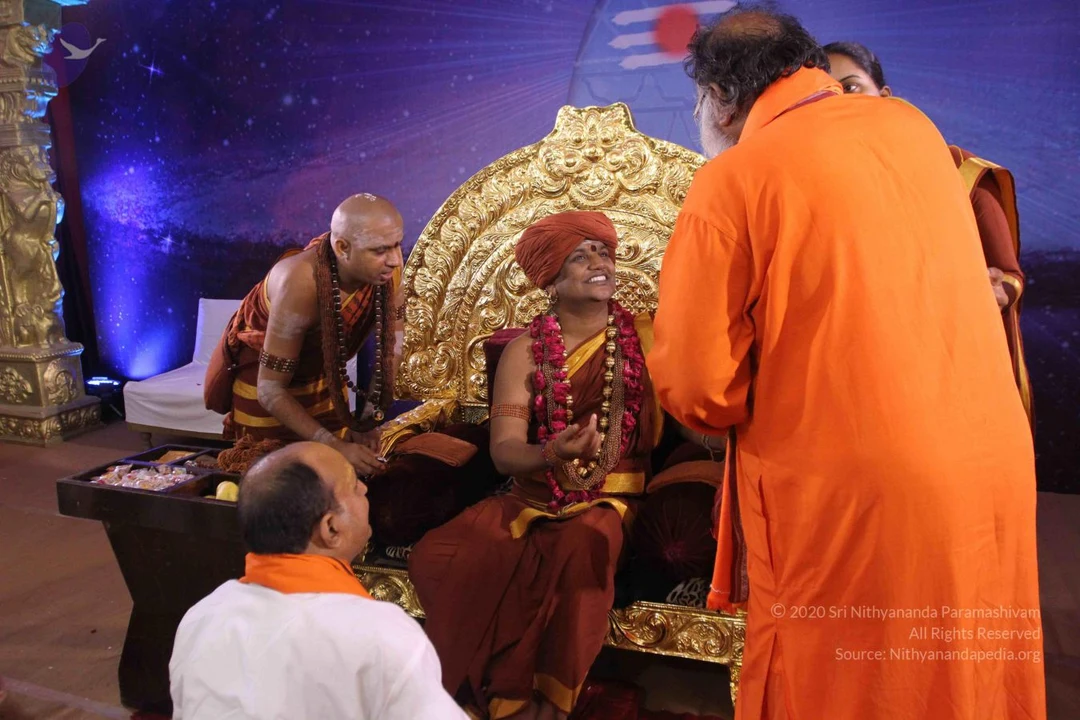
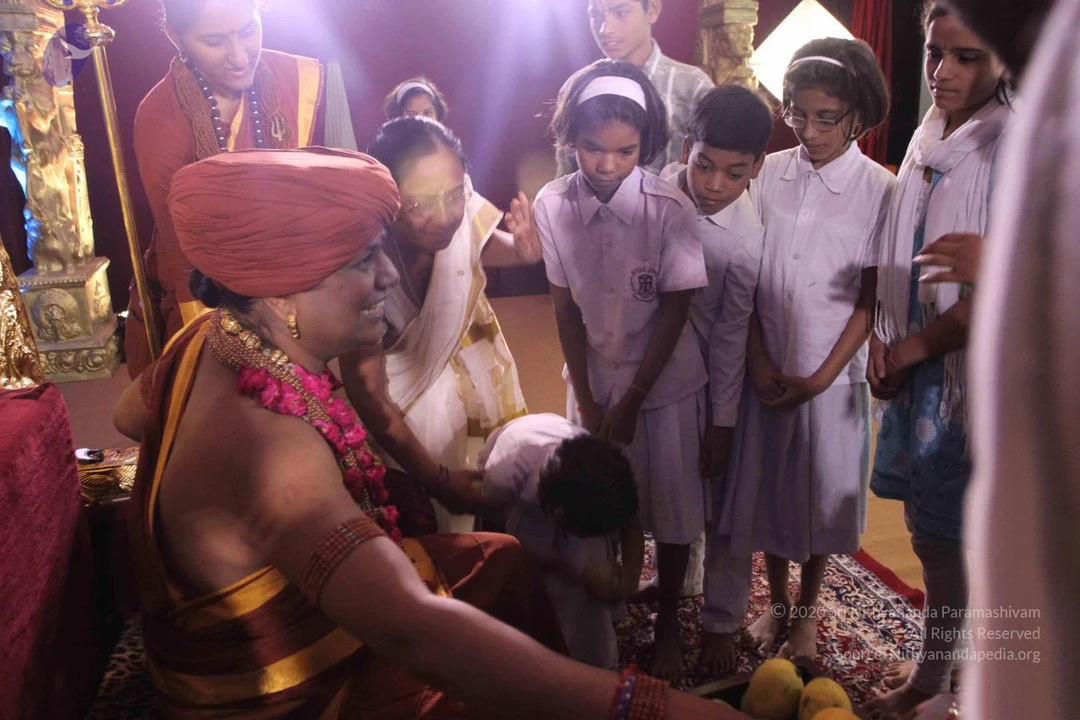
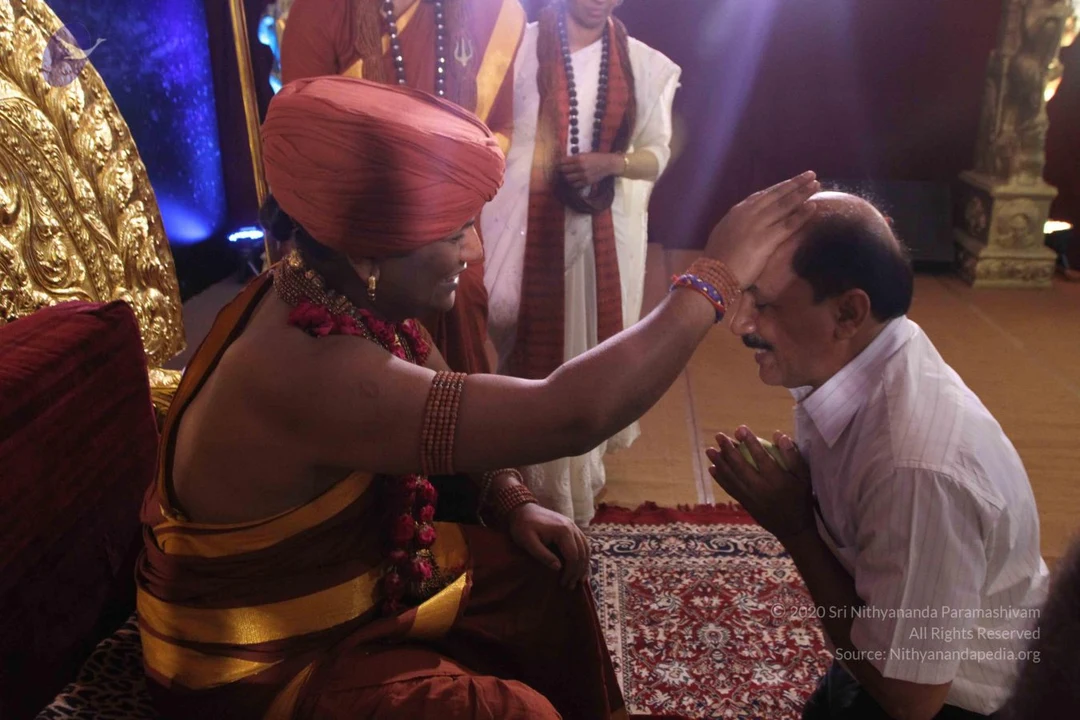
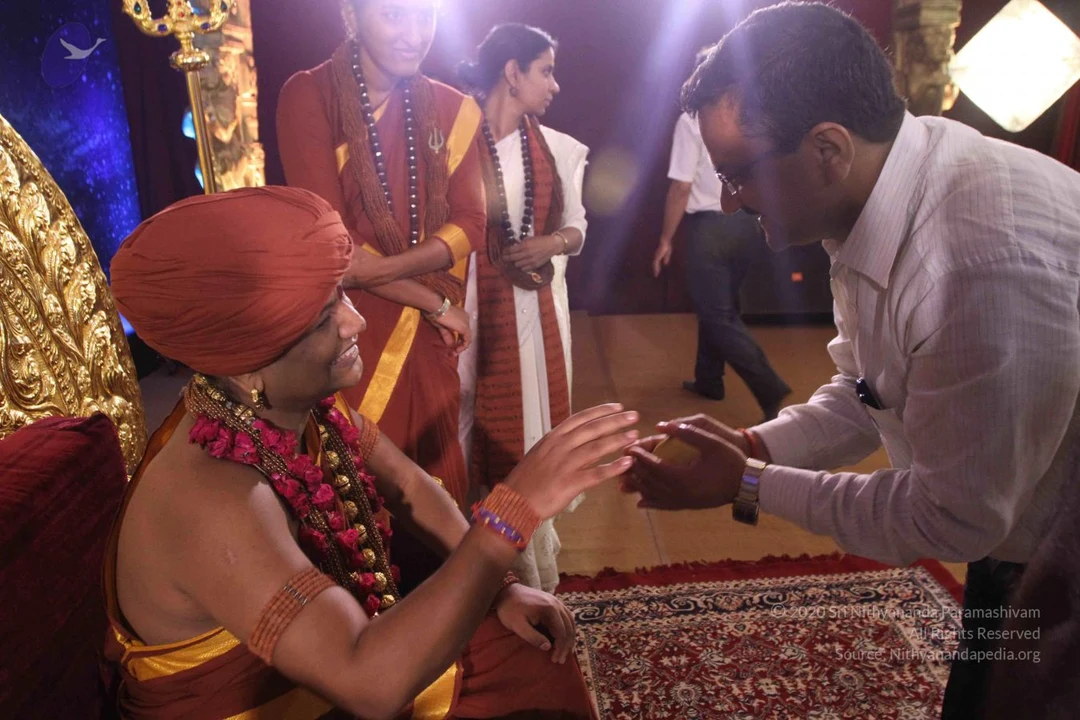
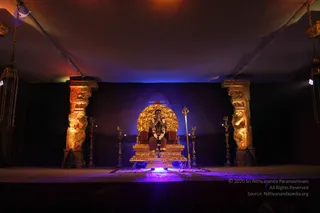
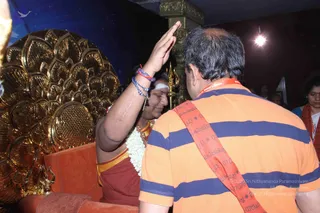
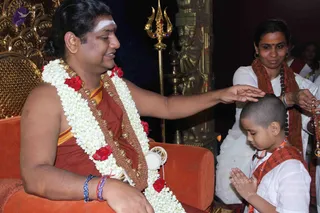
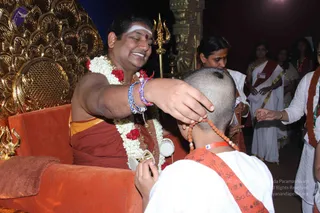
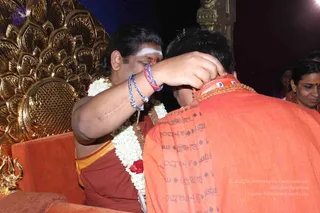
A photograph of a dimly lit stage with a large ornate golden throne centred against a dark backdrop, flanked by two tall gilded carved pillars with lion-like figures. A seated figure in a red-brown garment with a white flower garland sits with palms pressed together in namaste. Next to the throne stands a tall trident, and small brass oil lamps line both sides. Blue and purple stage lighting falls across the platform. Two flower garlands and a stage setting suggest a darshan. The figure appears to be a person, not a statue, and the appearance is uncertain.A seated figure on an ornate gold-and-orange throne raises one hand in blessing toward a man standing with his back to the camera. The seated figure wears a maroon and gold-bordered dhoti, a white flower garland, rudraksha or beaded bracelets, a white forehead mark, and a gold necklace. The standing man wears an orange and navy striped polo shirt and an orange lanyard-style sash with printed text. Behind the throne is a gold trishul, and other people are visible at the right edge of the room. Gold lotus-petal backrest, a ceremonial darshan setting.A seated man in a rust-red and saffron-bordered cloth, wearing a long white jasmine garland with red flowers, a gold-bead and rudraksha-style necklace, and a blue and red wrist band, has a white vertical forehead mark. He sits on an orange cushioned throne-like seat with an ornate gold backrest. His right hand is raised, palm down, above the shaved head of a young boy in white clothes with an orange shawl, who has his palms pressed together in prayer. A woman in white with an orange-red shawl and a rudraksha mala stands behind them, extending her hand over the boy's head. Behind them a brass trident, a brass oil lamp and a gold-toned deity murti stand near a dark wall. This appears to be a blessing or padapuja-style darshan. The man is a probable Swamiji (in person), identified by appearance cues: long swept-back hair, a garland, ceremonial gold necklaces and saffron-toned clothing, seated on a throne.A seated man in a gilded golden throne with a peacock-feather back, wearing a white jasmine and red flower garland, a rust-orange cloth over his shoulder and a white horizontal forehead mark, smiles while placing his hand on the shaved head of a devotee kneeling before him in white clothes with a rudraksha mala and an orange sash printed with script. The man's ornate gold necklace and bangles are visible. Behind him stands a golden trident and a carved golden shrine with a deity murti. Women in white saris with red borders and saffron dupattas stand nearby watching. The man's cues are a rust-orange wrap, garland and gold ornaments, so he is an appearance-based a person candidate in the throne-side seat, performing a darshan-style blessing with a pada-puja setting. Four to five people are visible.A seated man in a dark red-maroon dhoti and a white flower garland, with a white horizontal tilak across his forehead and a red mark between the brows, lifts his hand to a devotee's head during a blessing. He wears a braided bracelet of blue and red threads on his wrist. In front of him stands a devotee in an orange-saffron robe printed with Sanskrit script and a rudraksha mala at the neck, bowing forward. Behind them a woman in an orange-and-white sari, with a red bindi, watches and smiles. The background shows a large ornate golden peacock-fan style throne with carved lotus-like petals, and a warm dark interior.A photograph of a darshan moment in a dim temple-like hall with a gold-carved backdrop. A bare-shouldered man with swept-back dark hair, white forehead marking, white and red flower garland and an orange-and-red cloth around his waist sits on an orange cushion and presses his right palm to the head of a kneeling devotee in white clothes with an orange shawl. He holds a folded paper or offering packet in his left hand. Behind him stand a woman in a white and red sari with a red bindi and bangles, and another woman in a red shawl, watching. A lit oil lamp is visible at the top. a person appearance-based label is applied only to the seated figure with the distinctive garland and bare-shouldered ceremonial dress; the identification is uncertain.
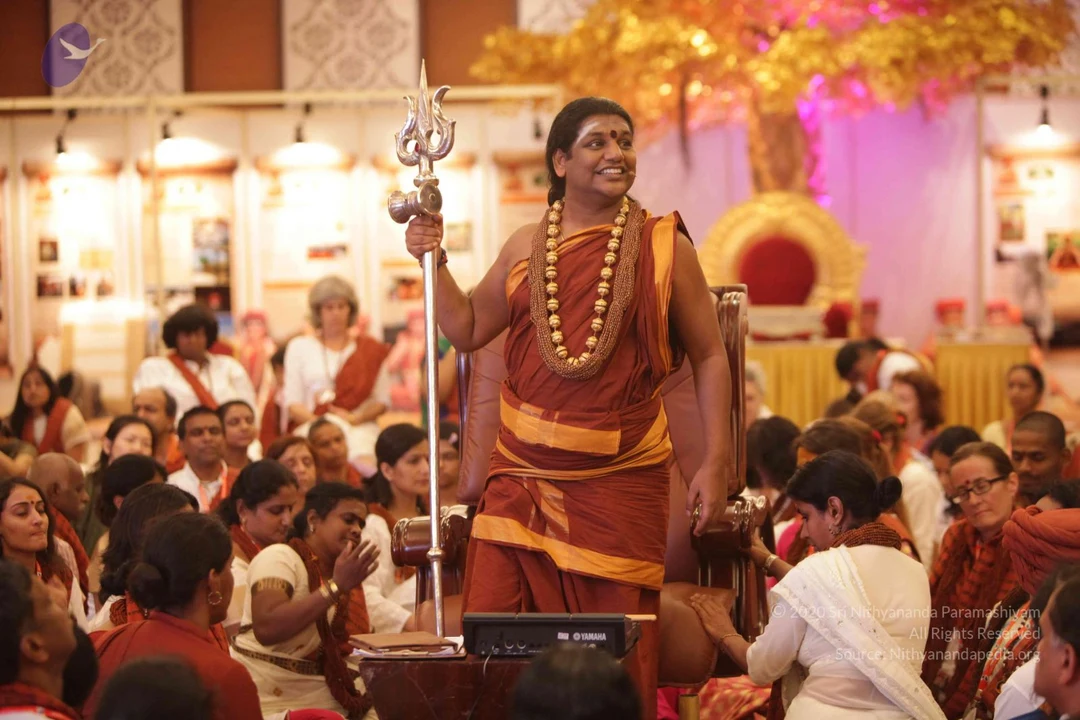
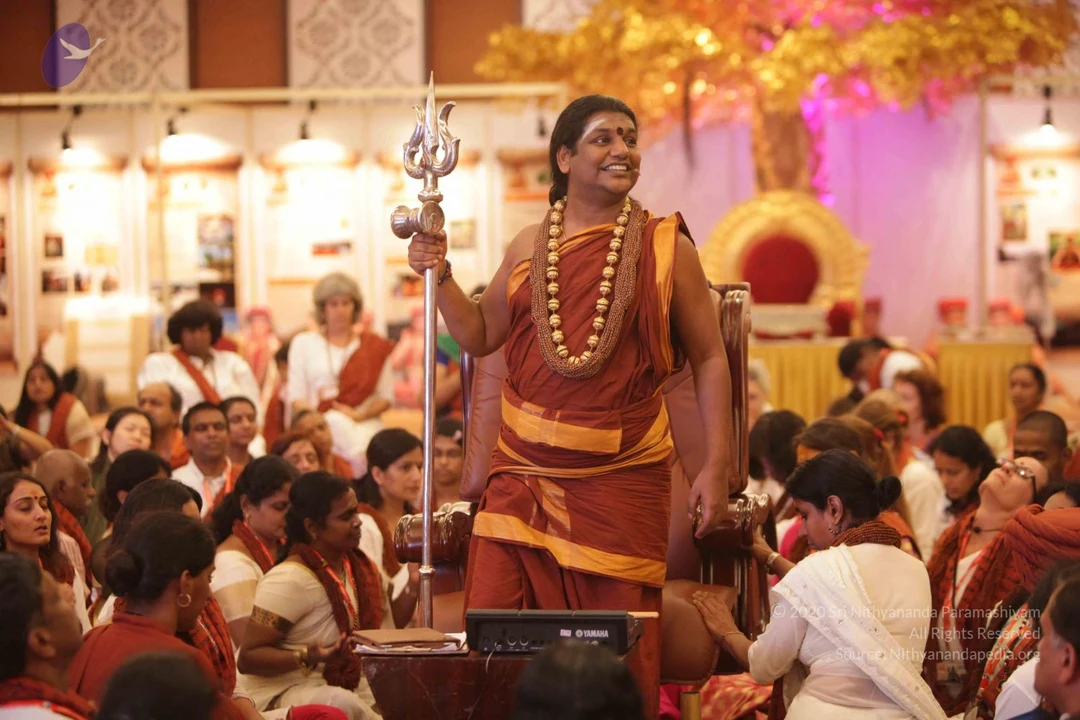
shivoham-Q and Asession

37 photosSource gallery
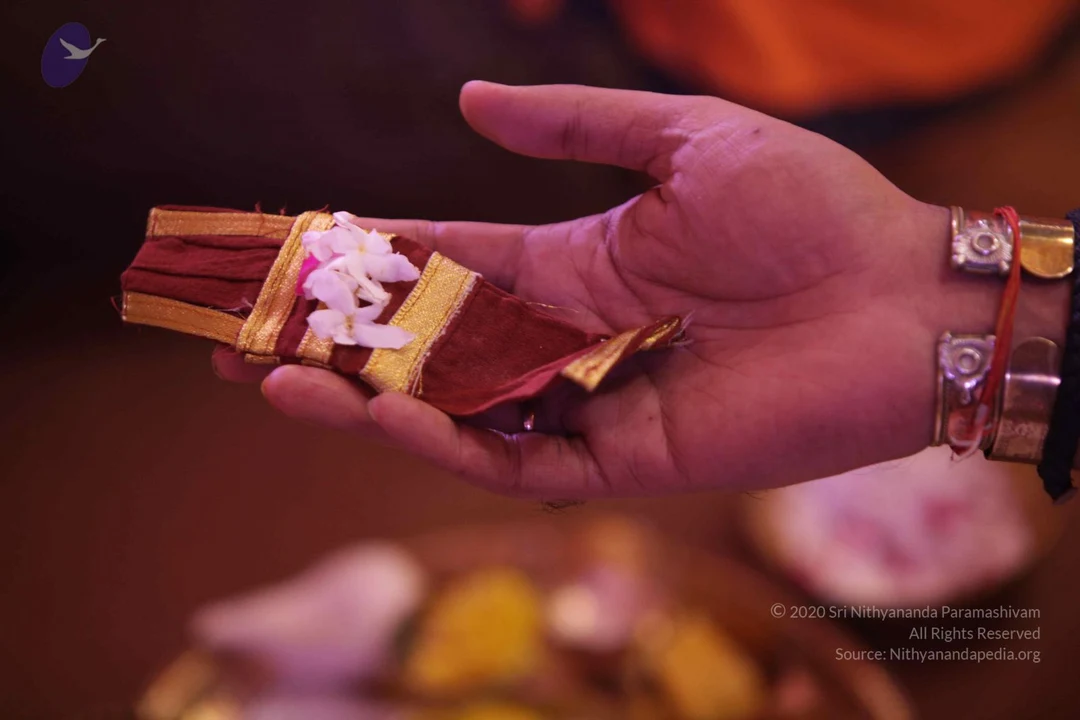
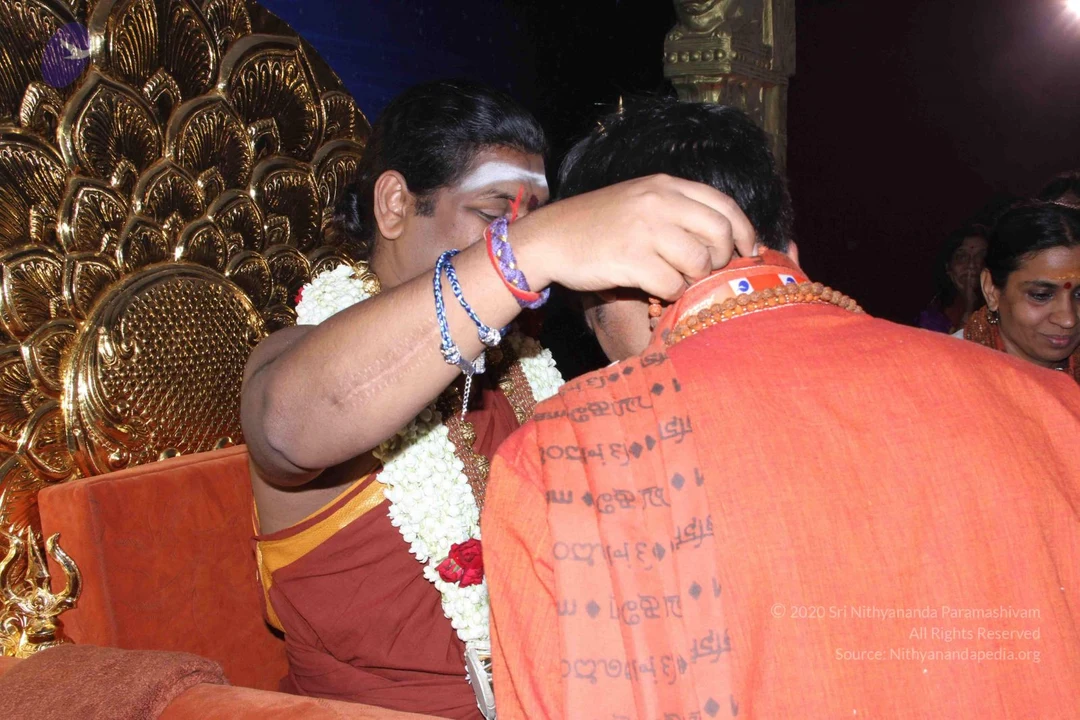
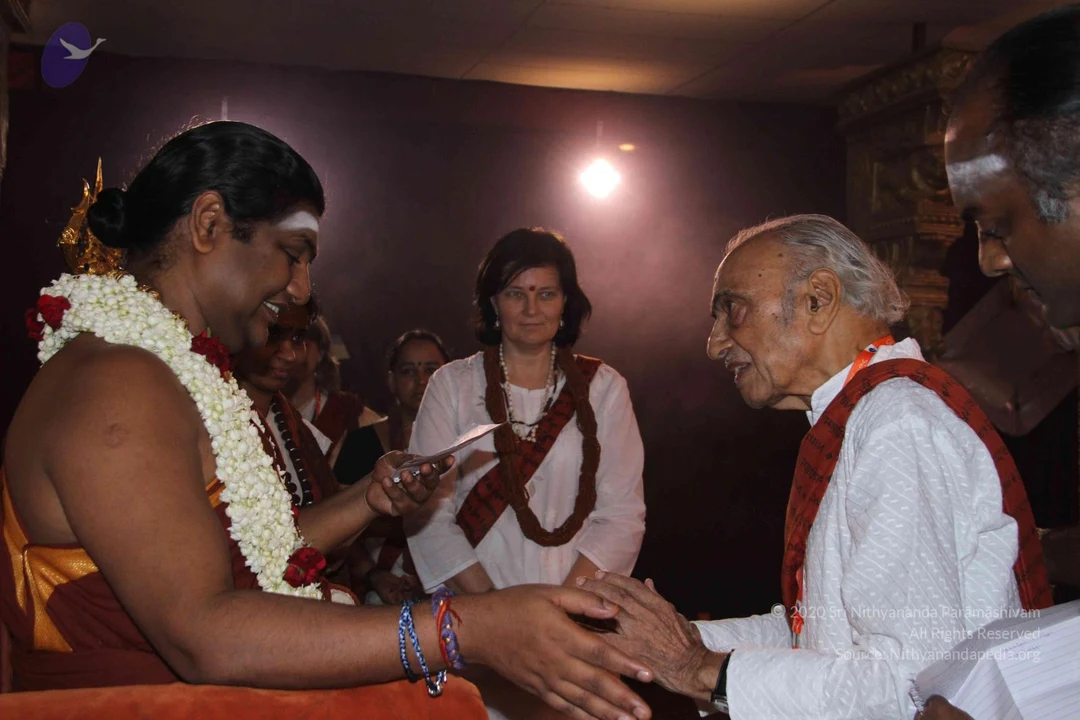
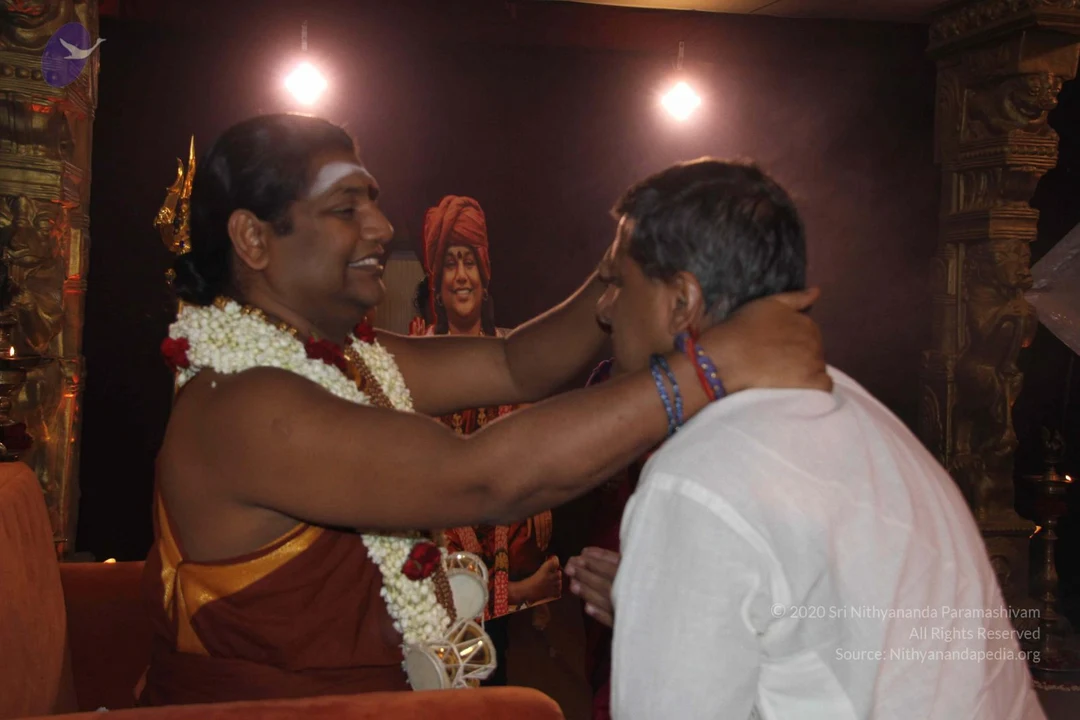
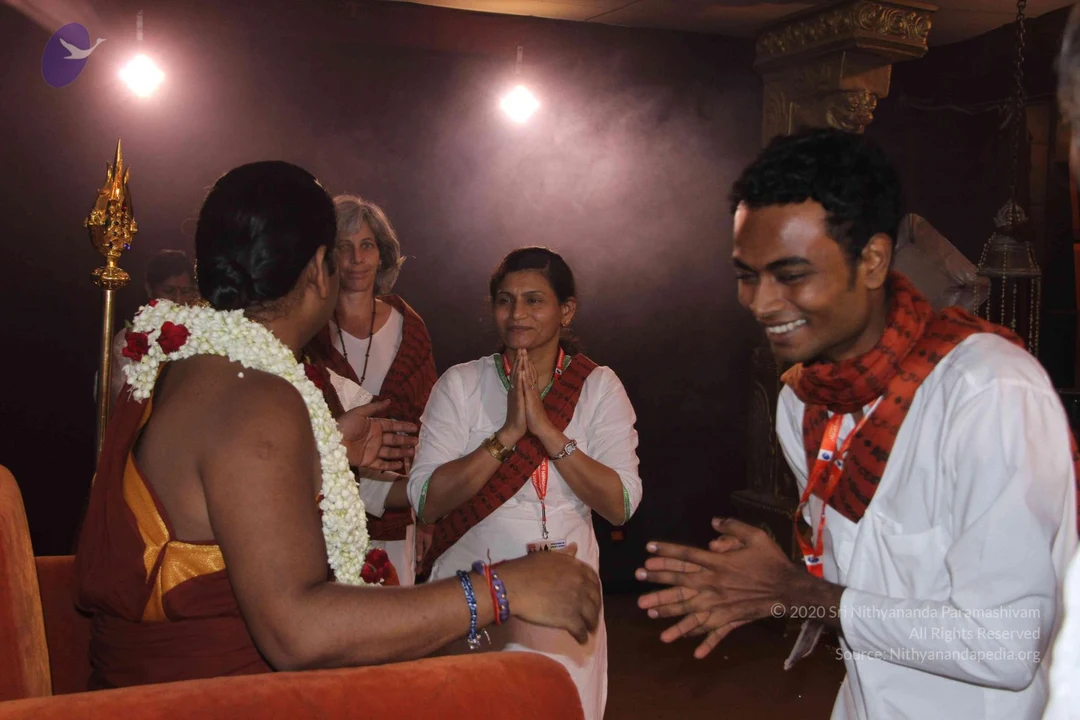
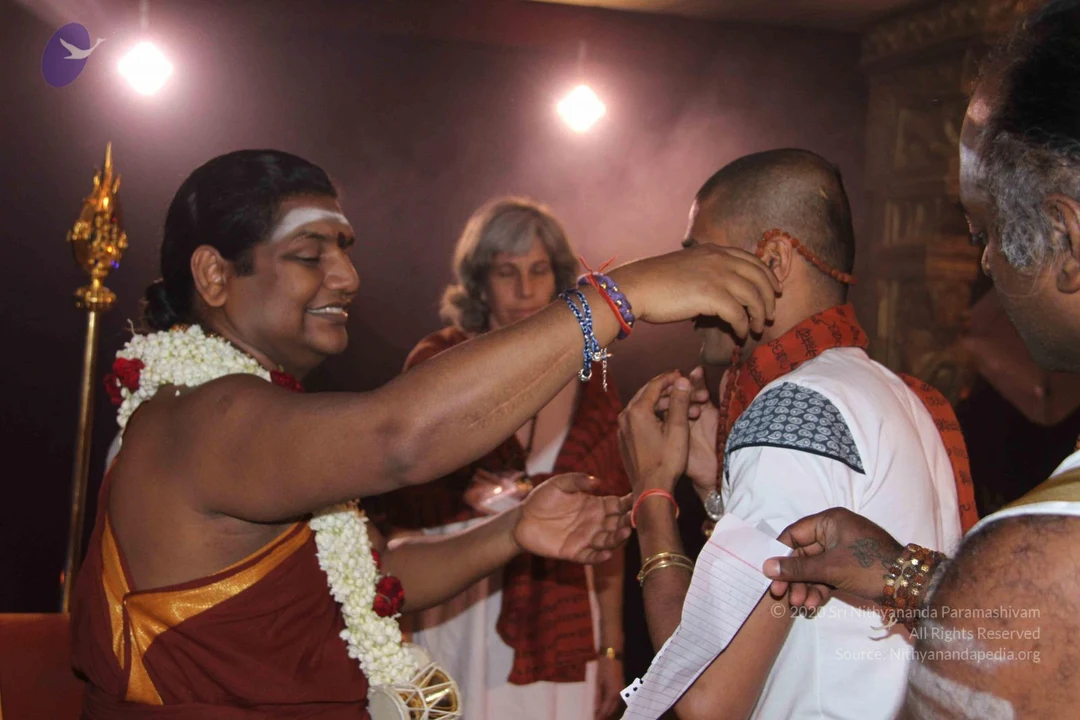
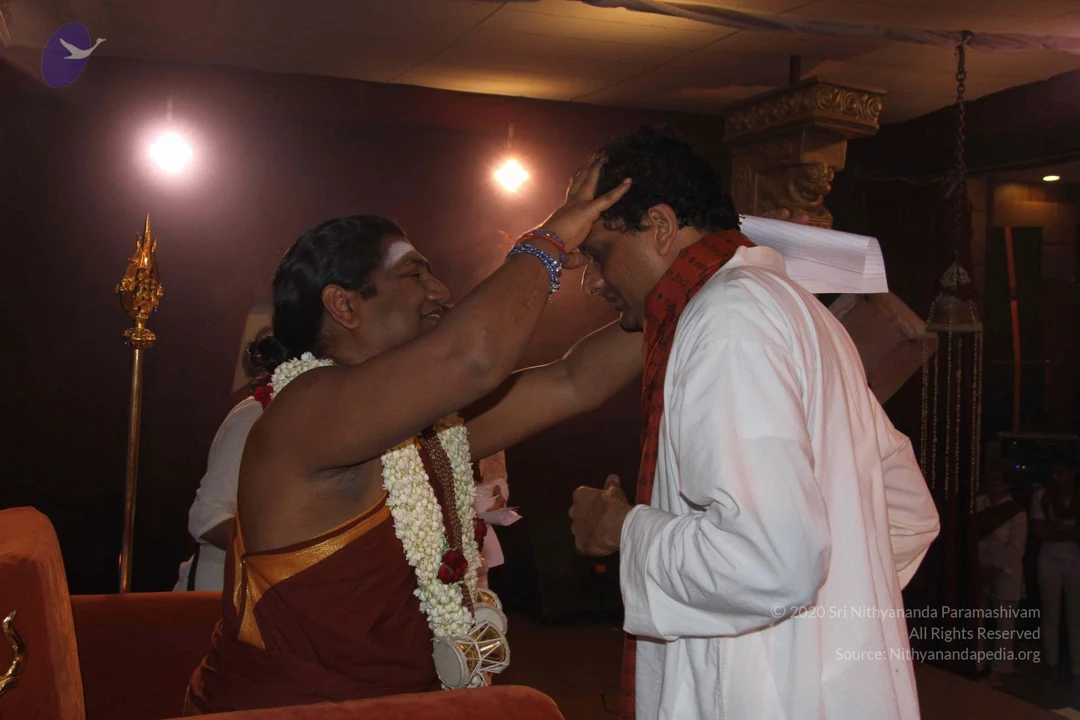
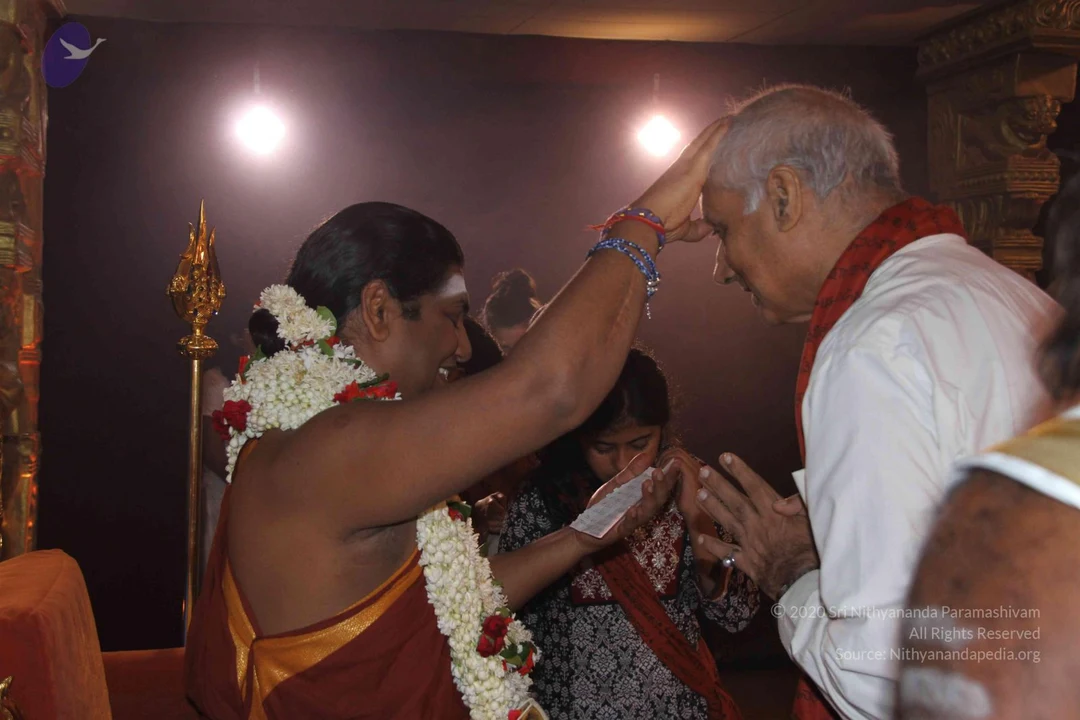
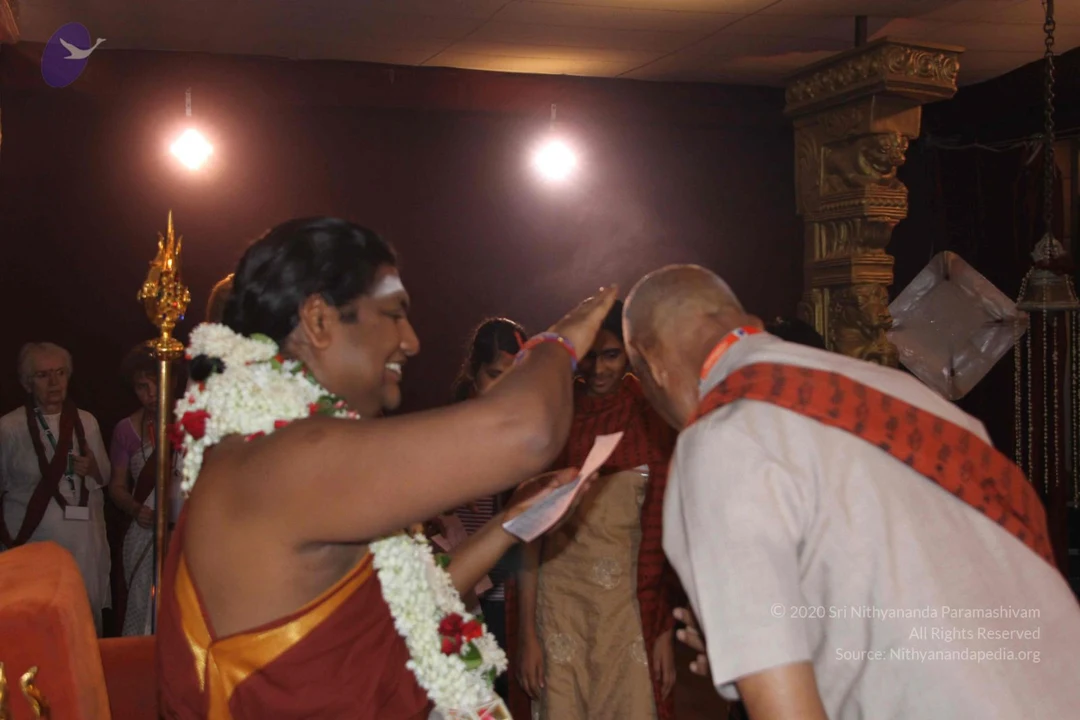
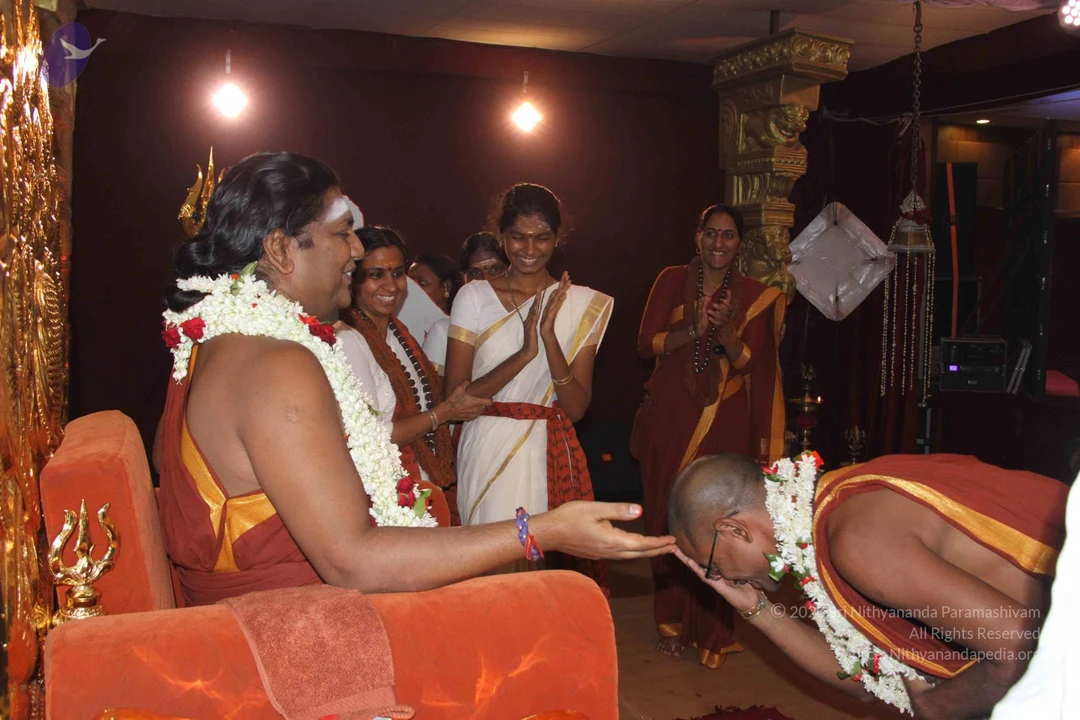
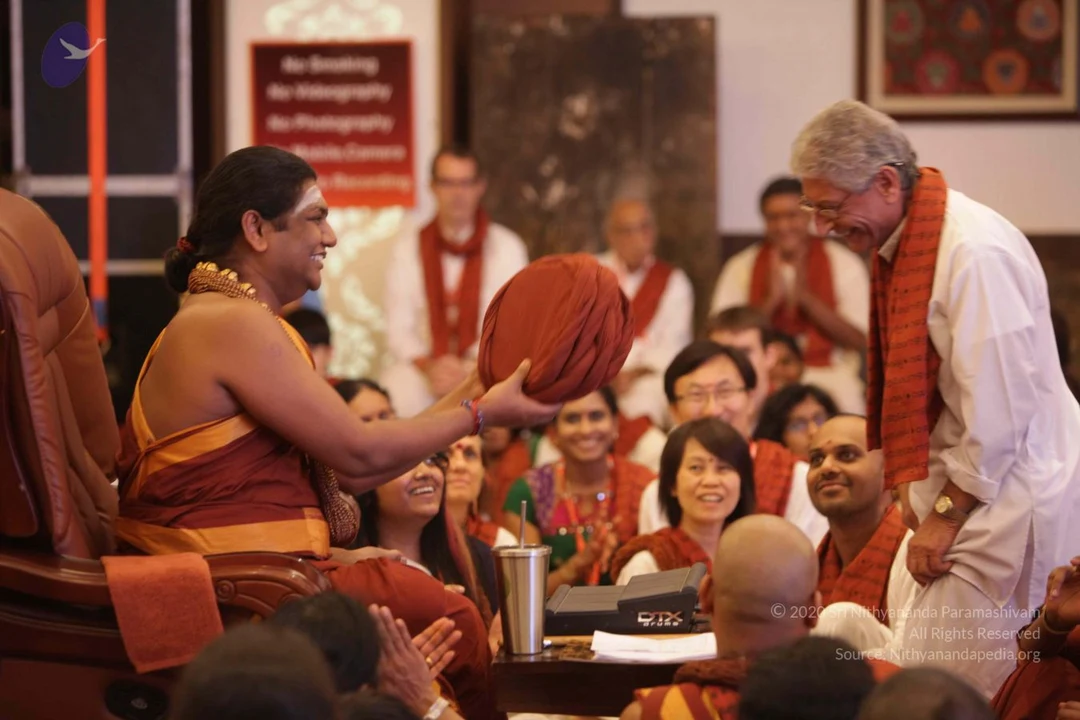
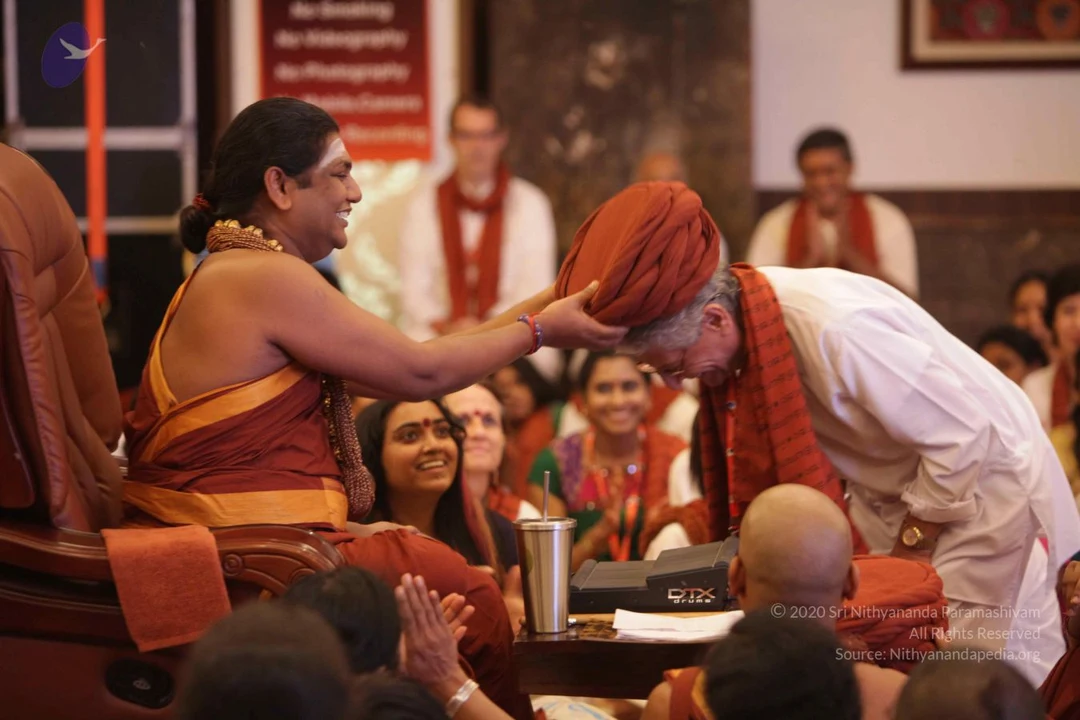
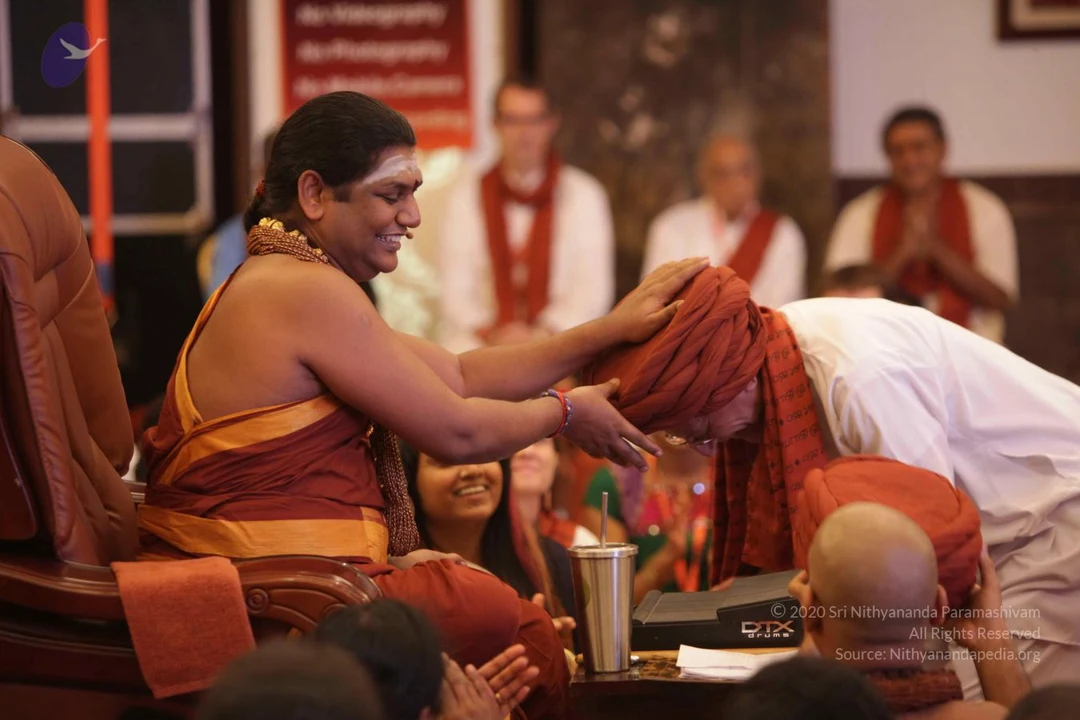
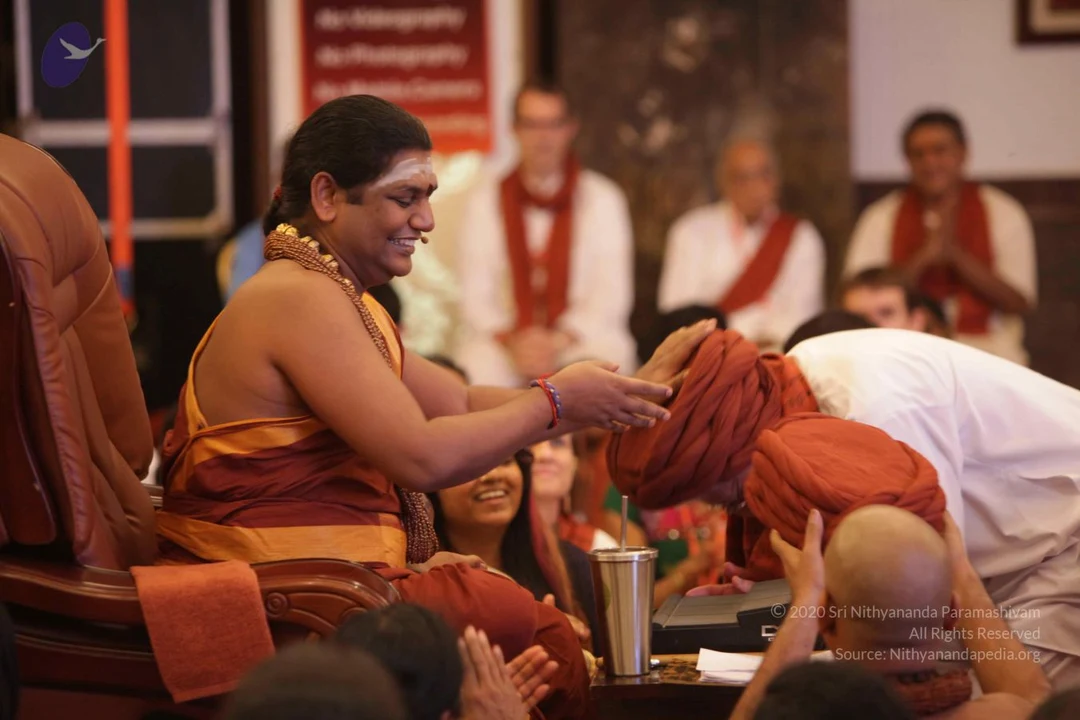
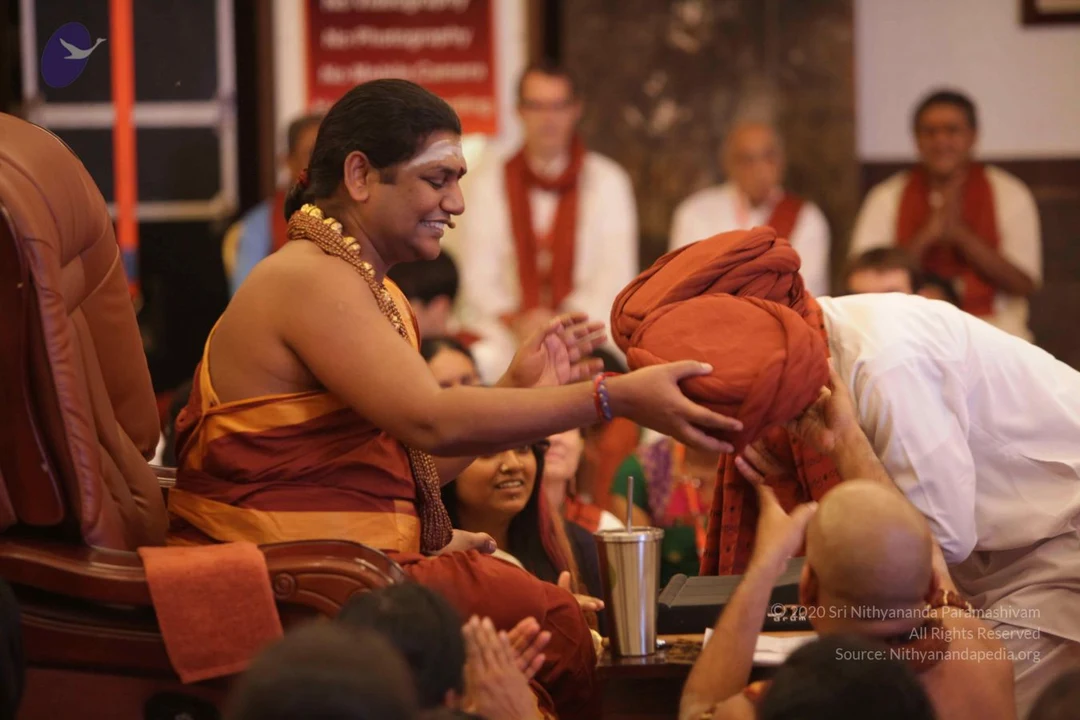
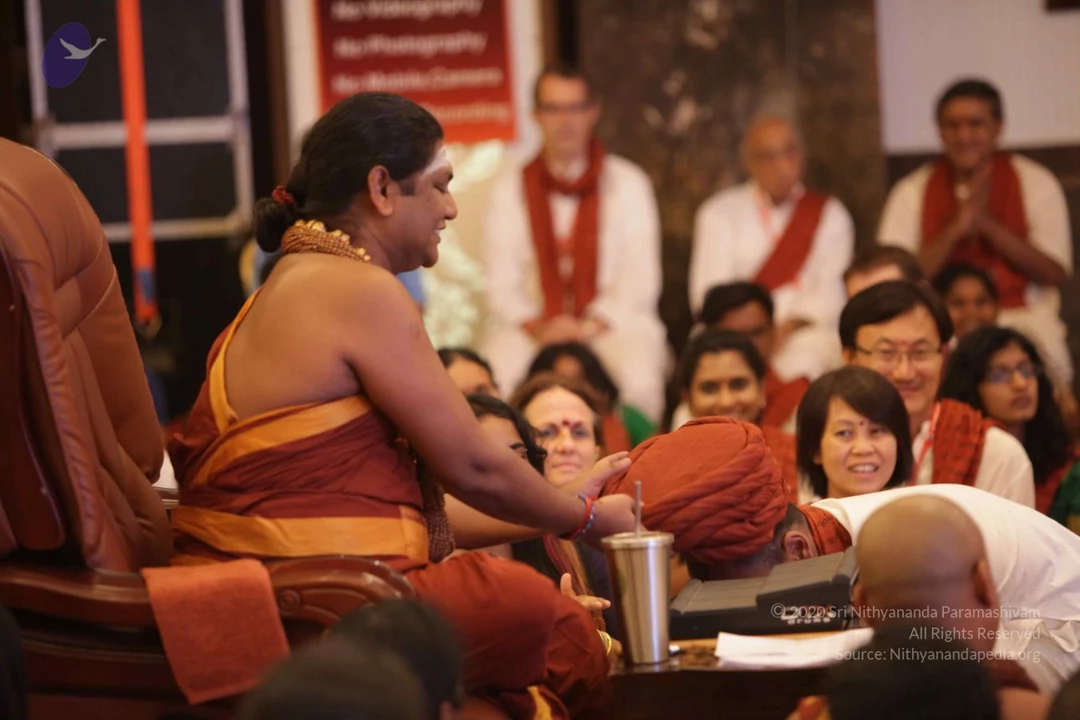
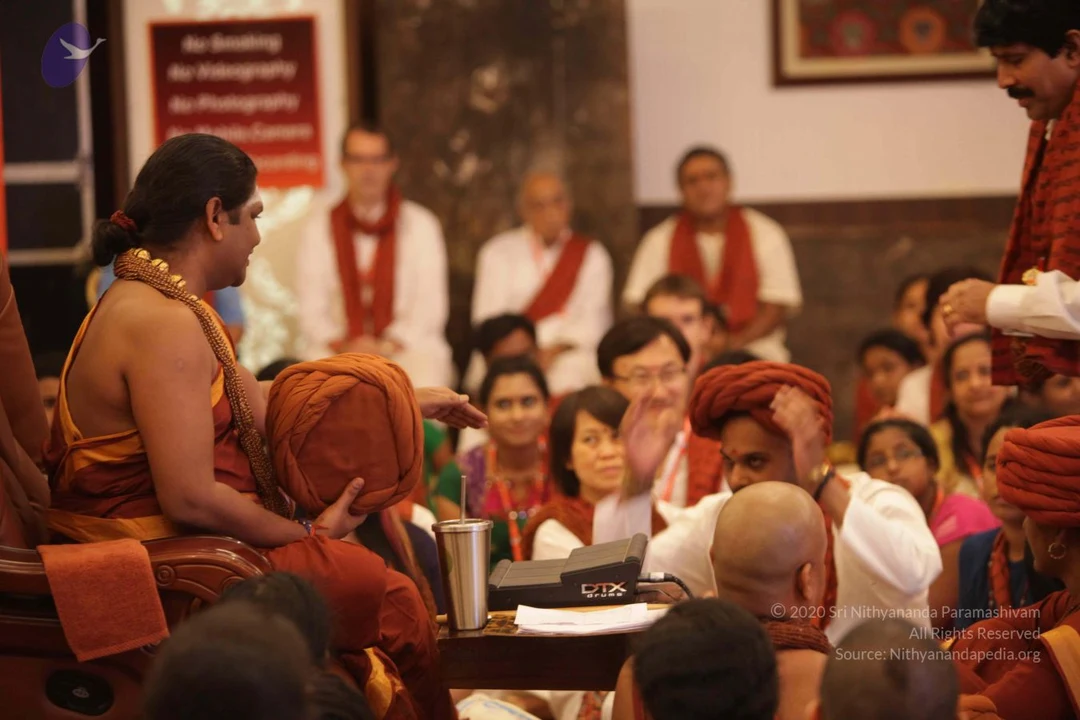
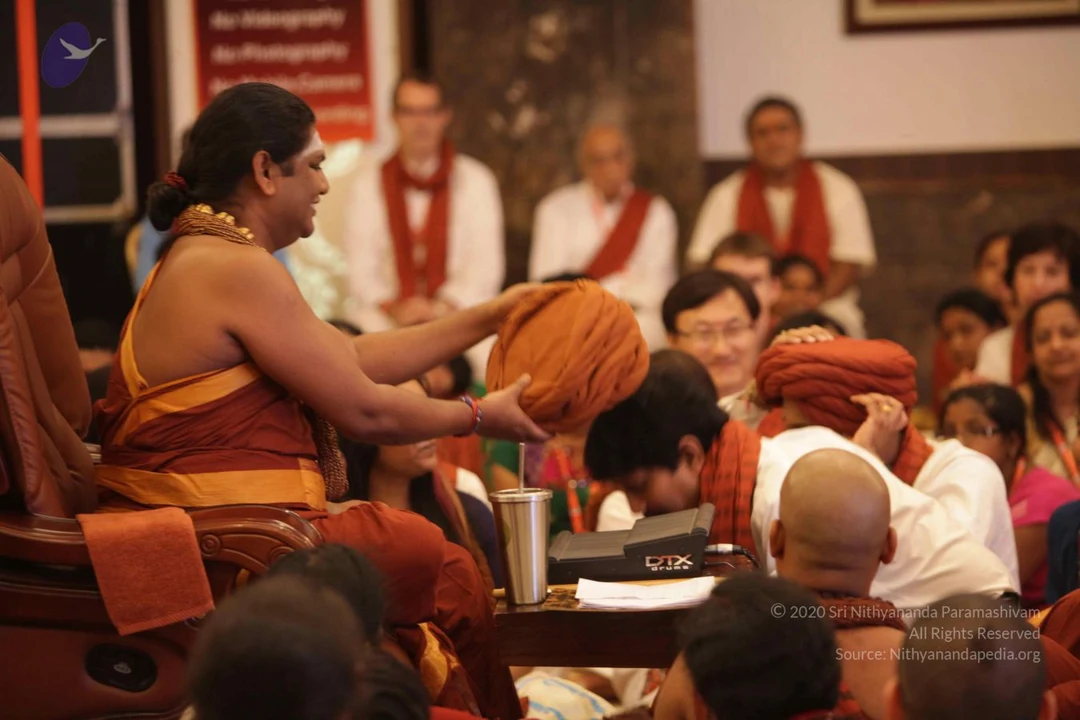
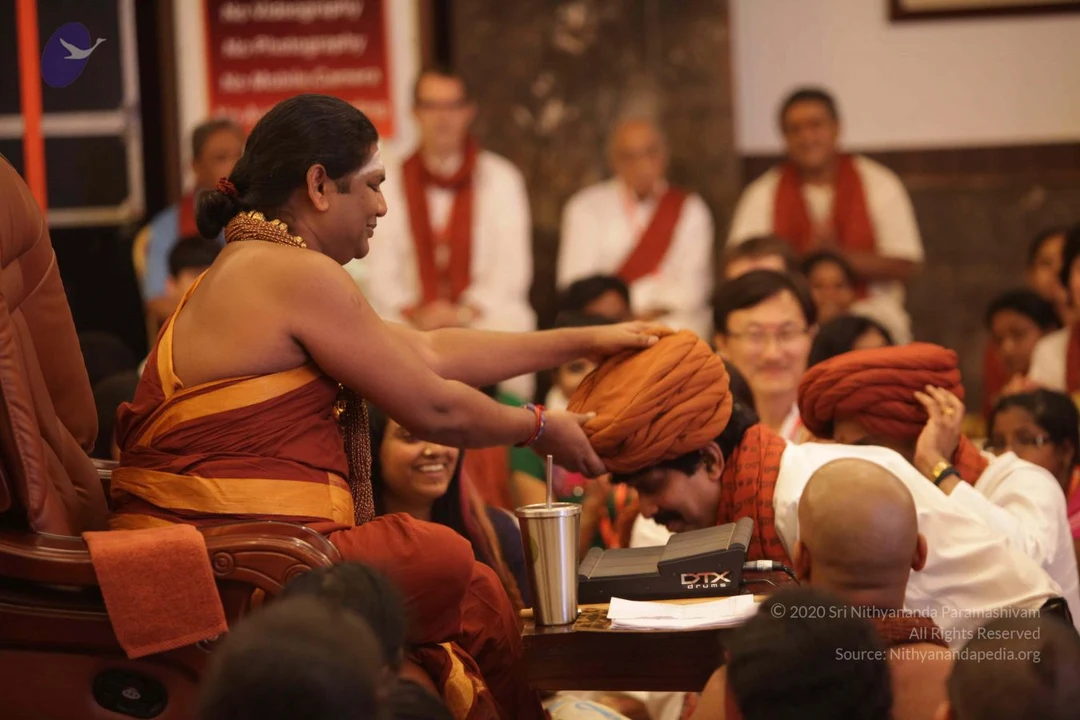
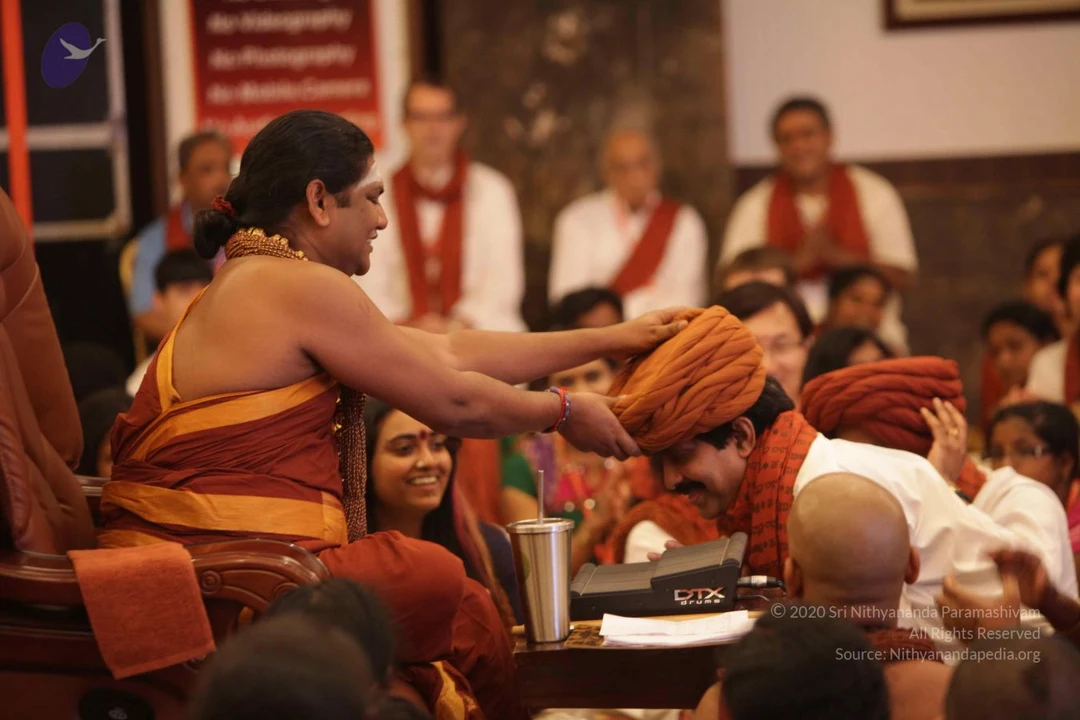
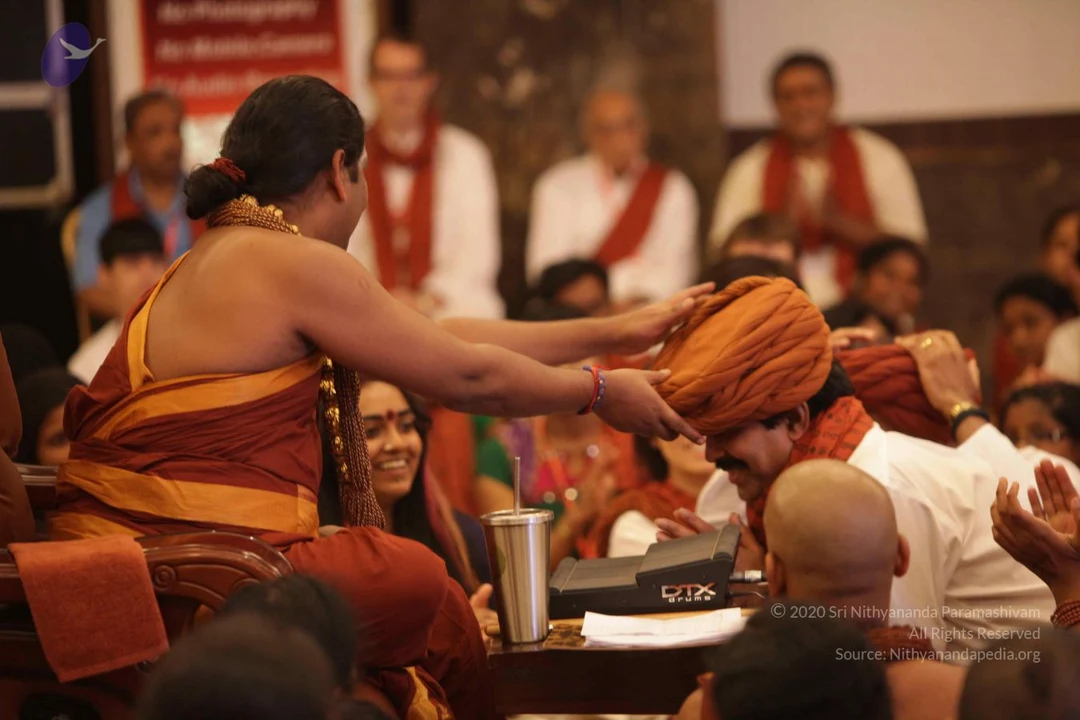
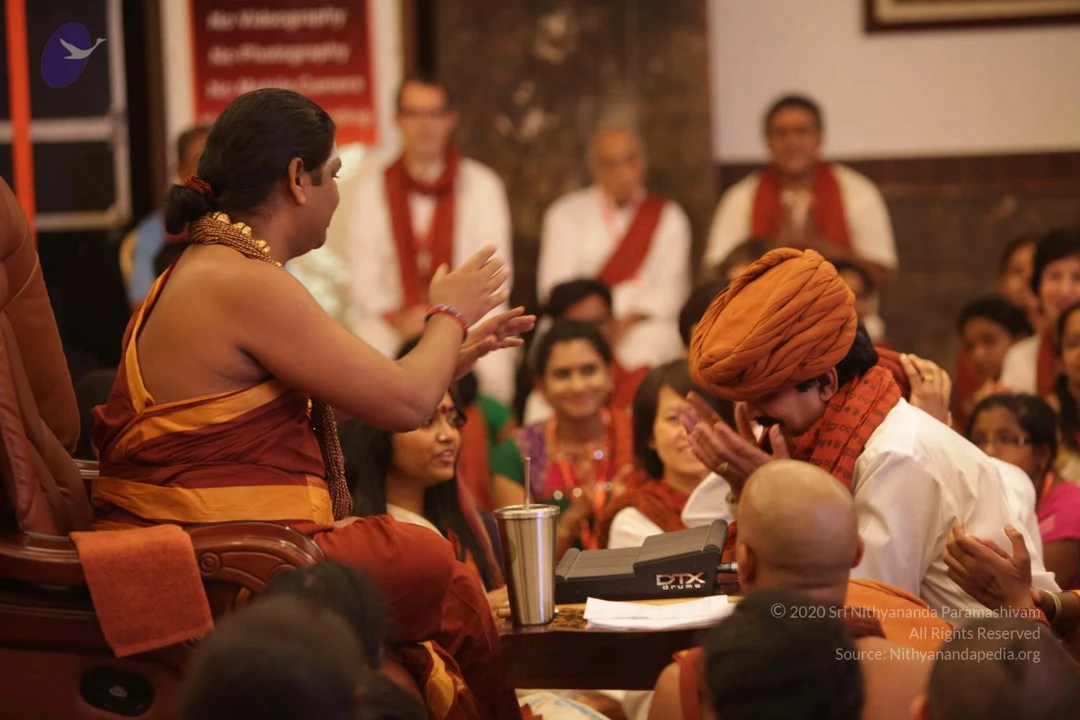
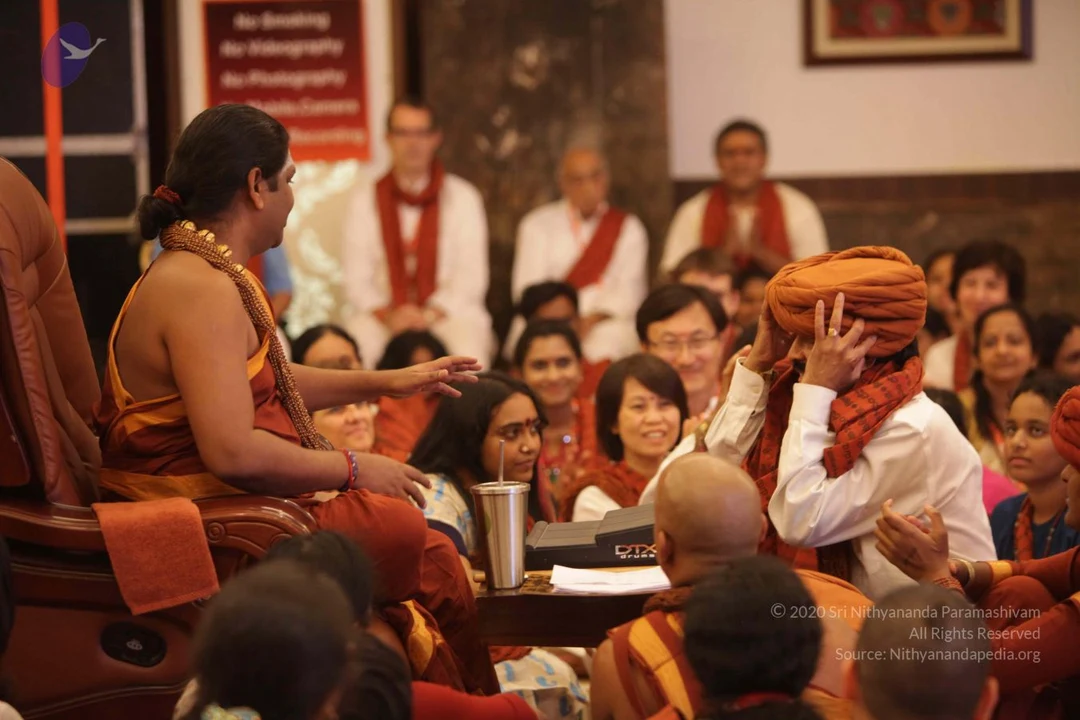
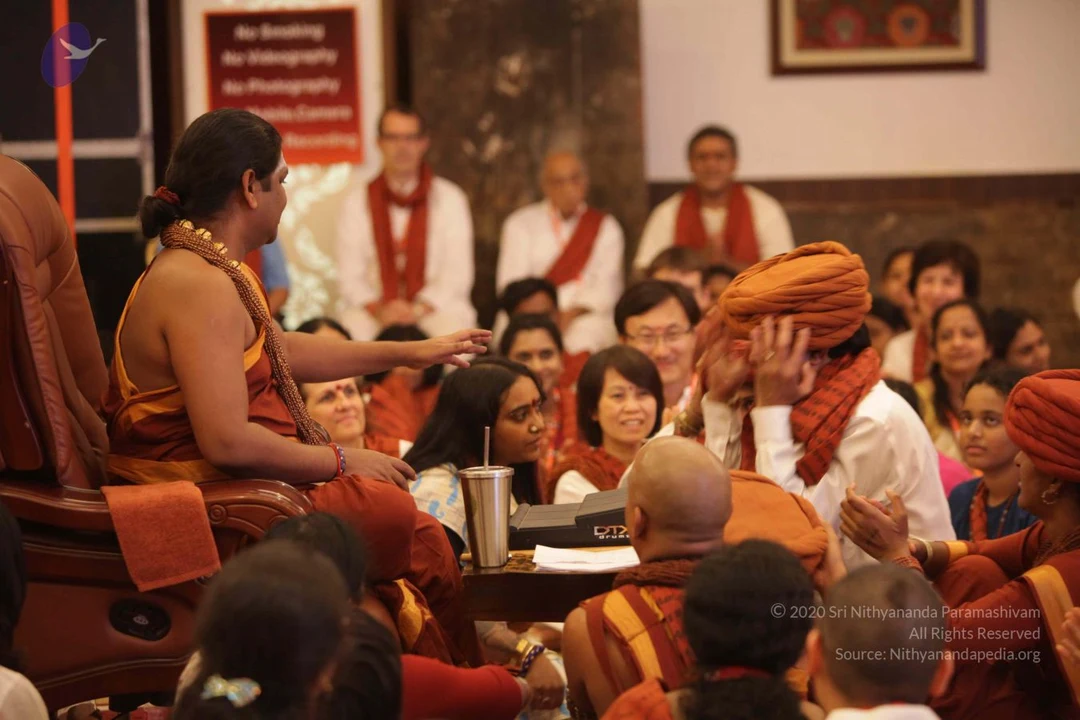
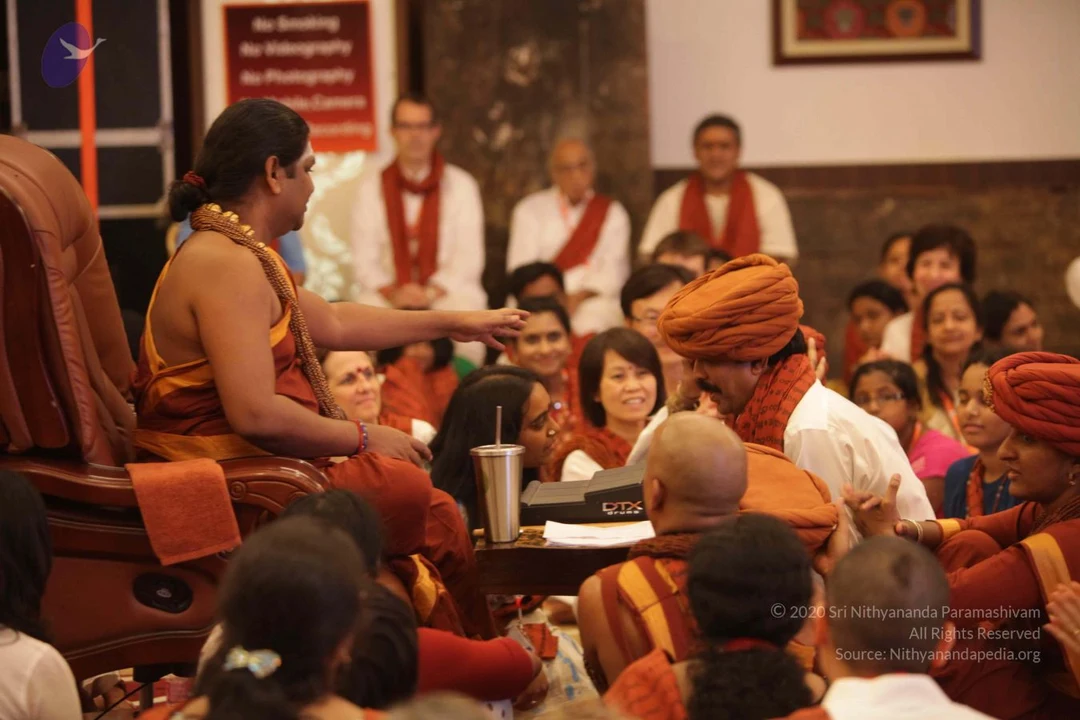
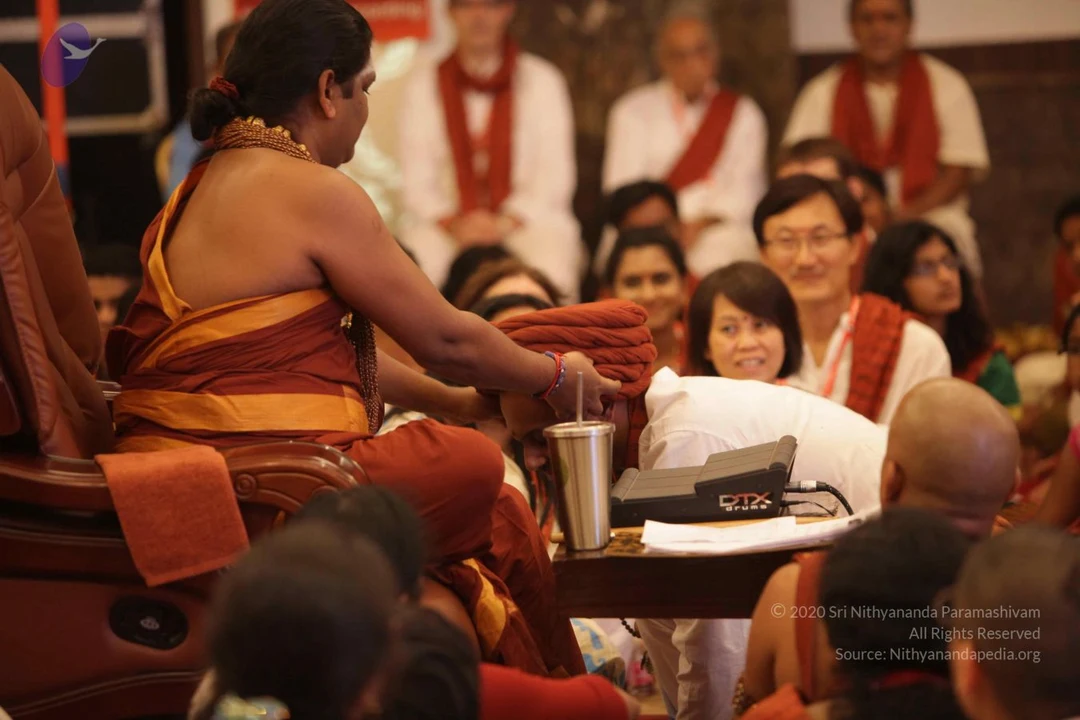
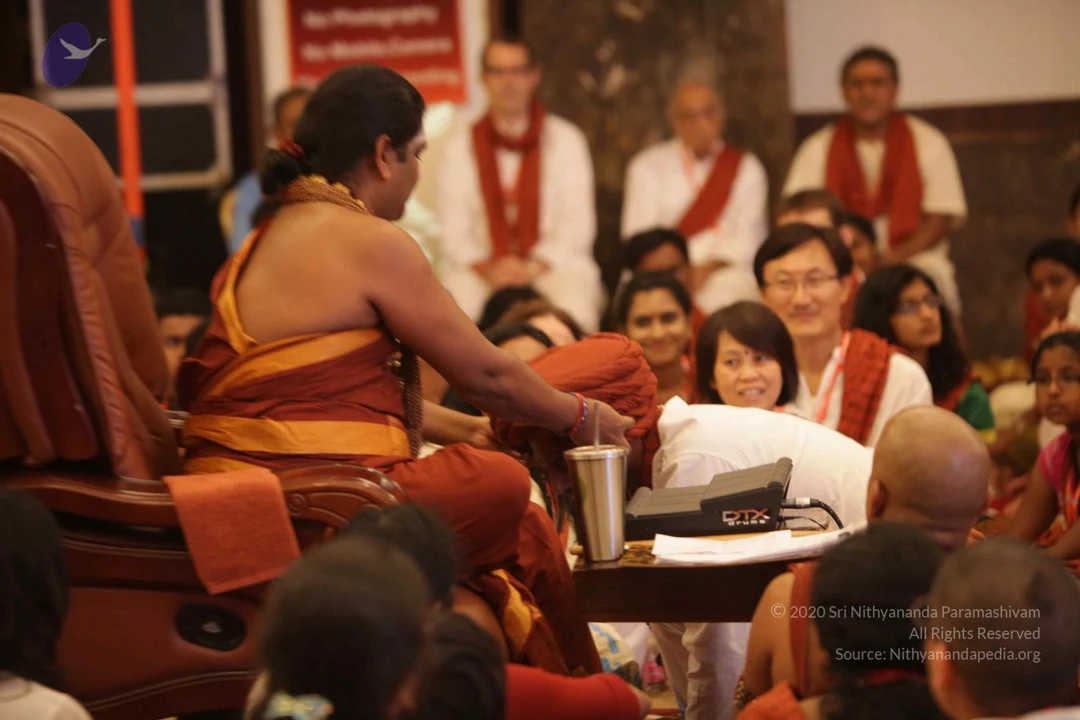
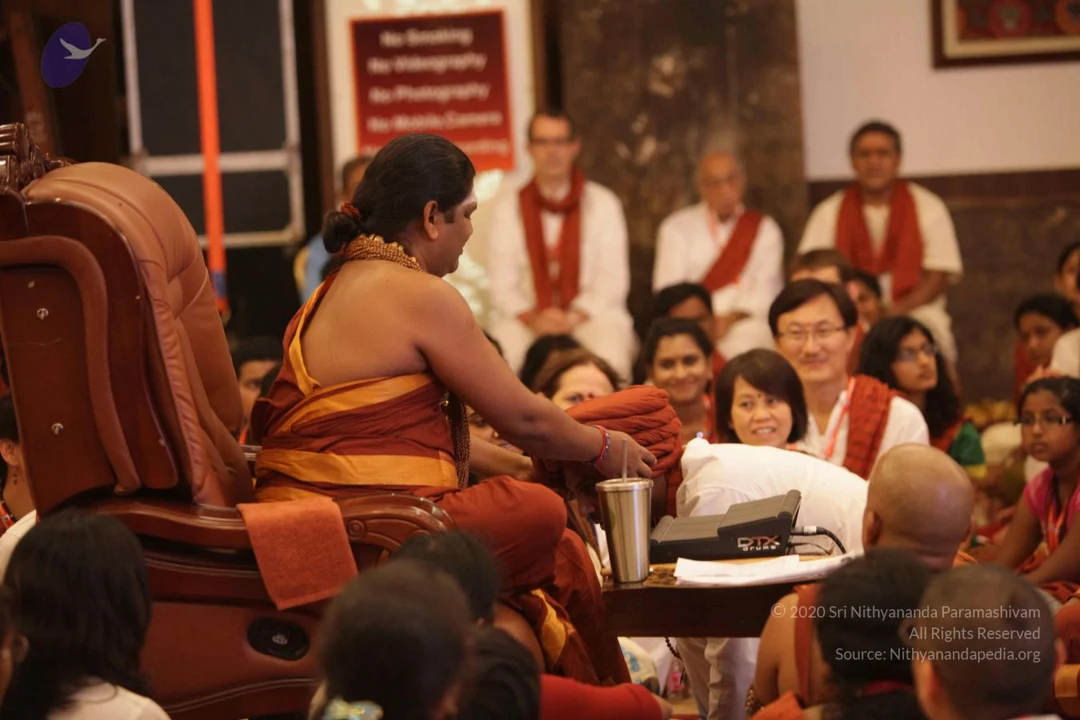
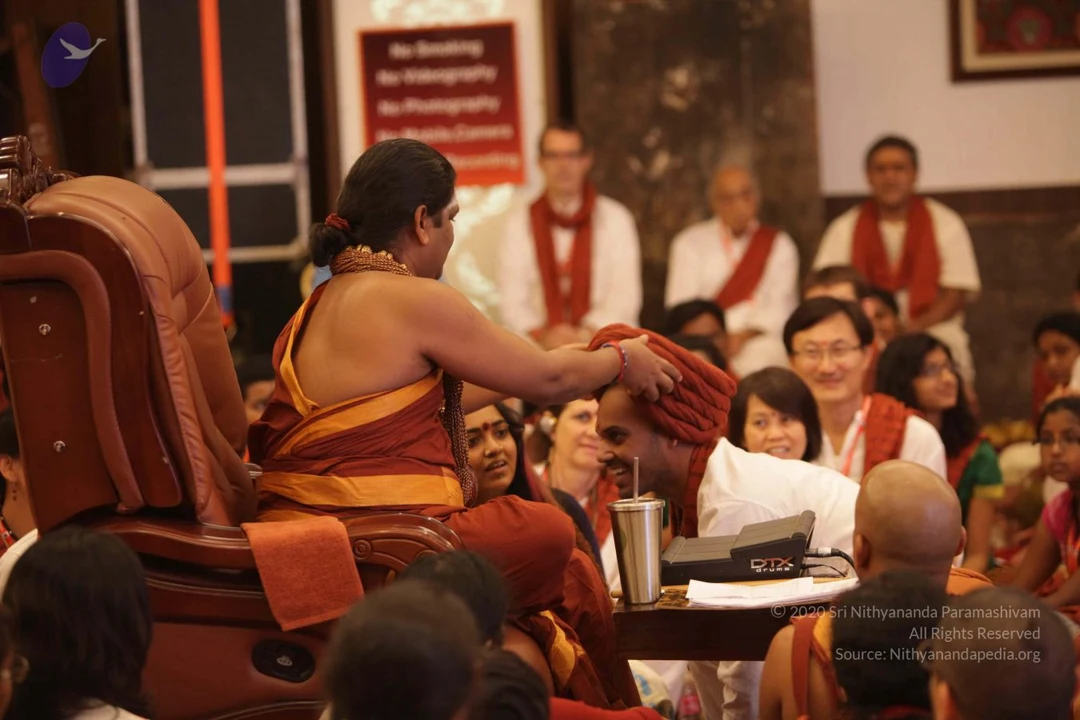
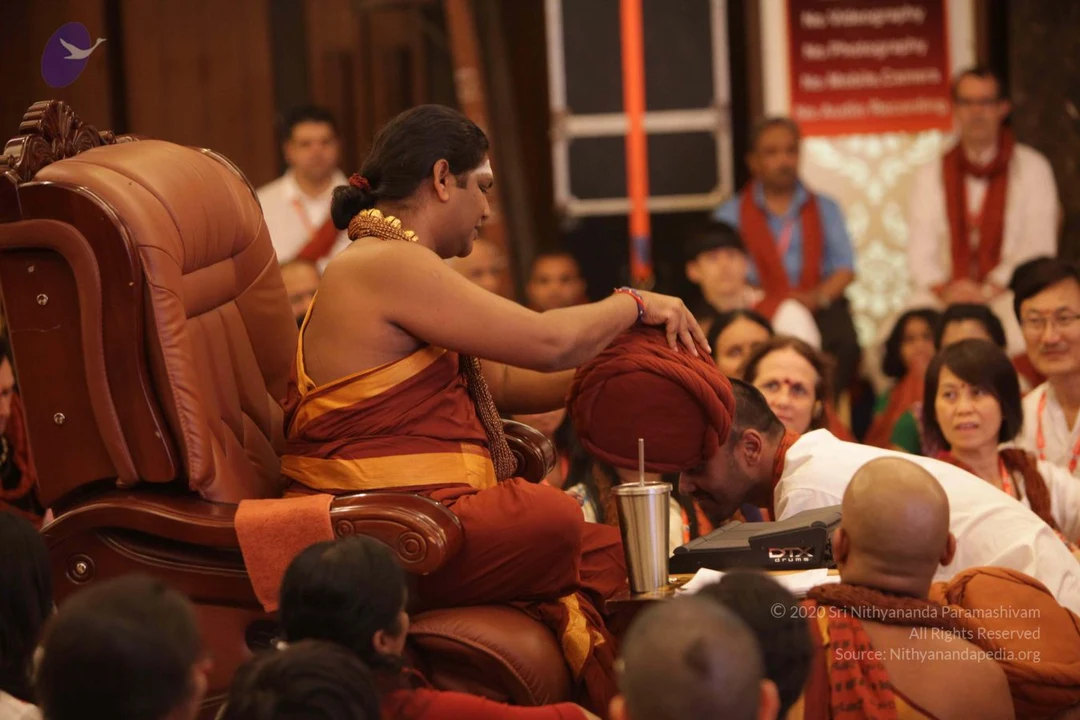
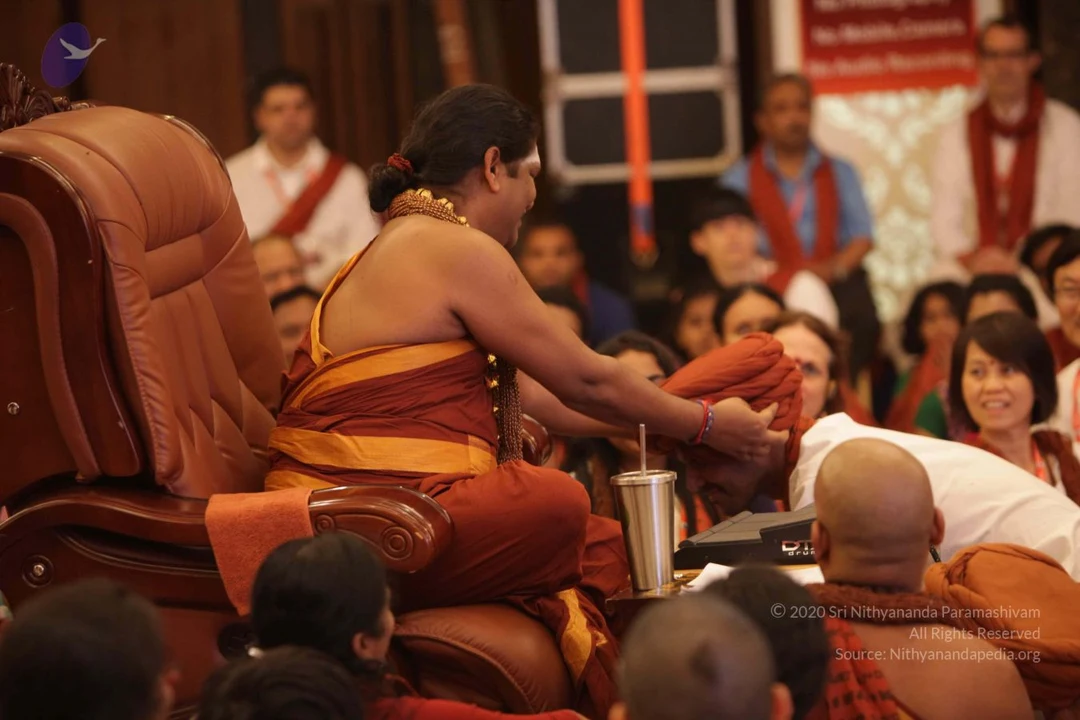
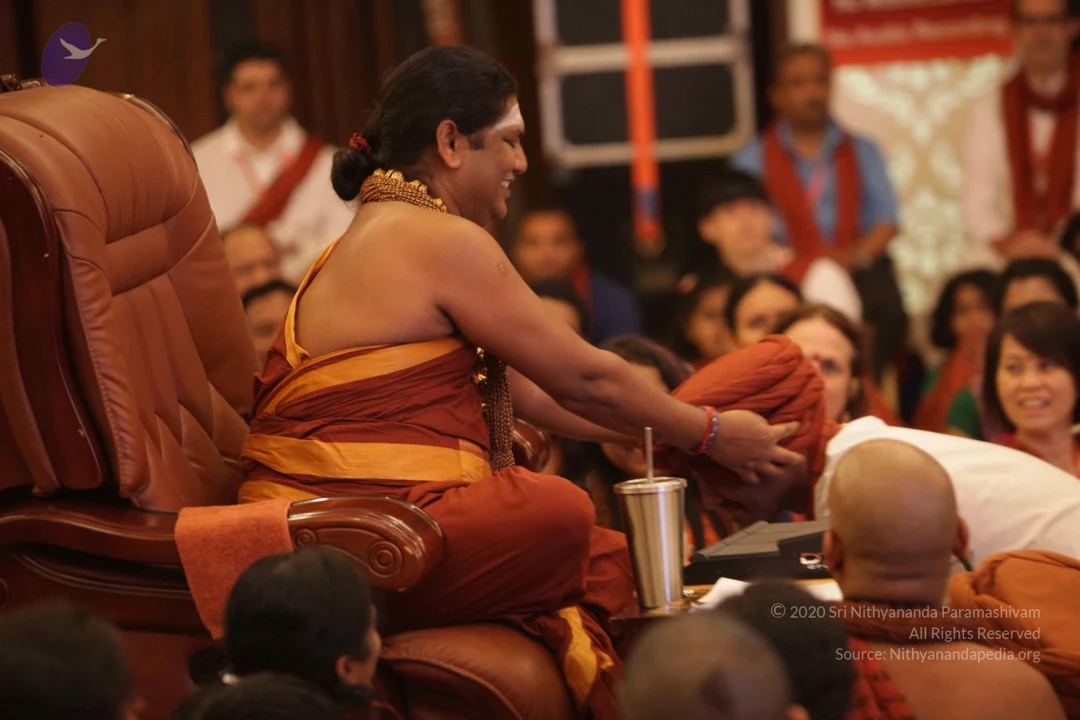
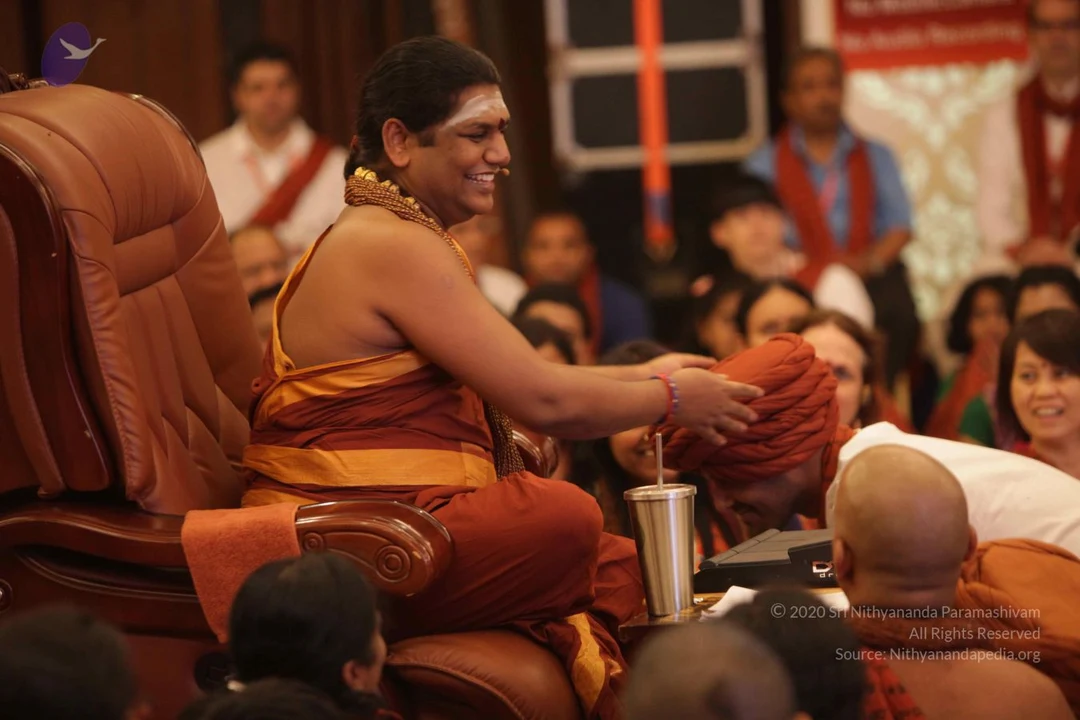
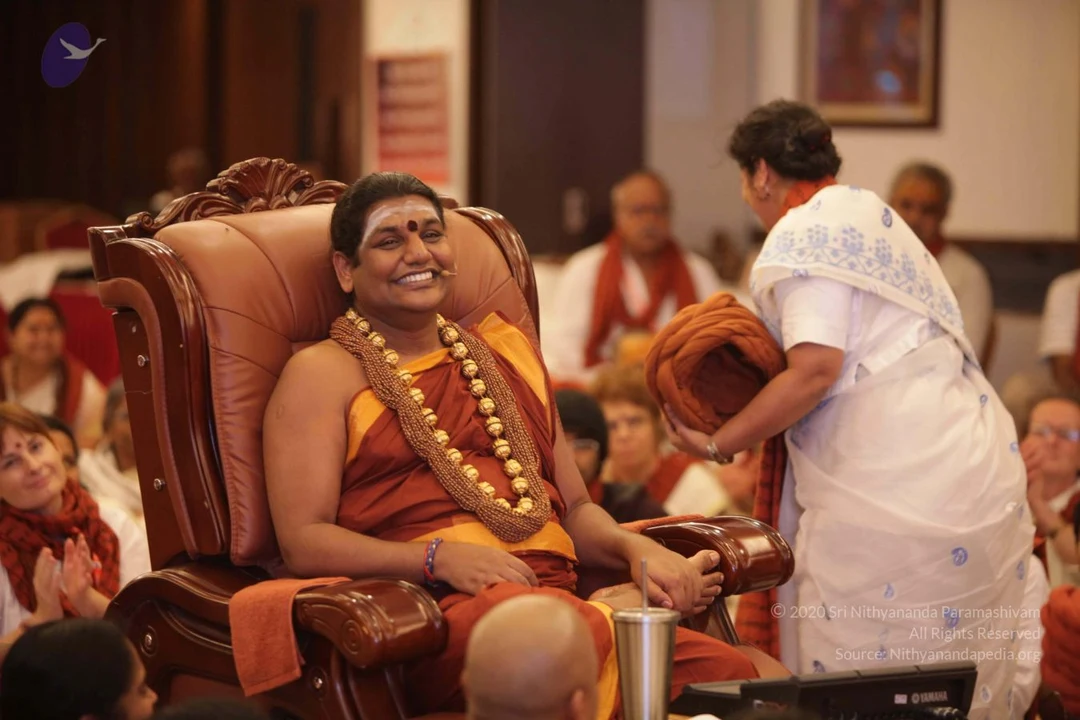
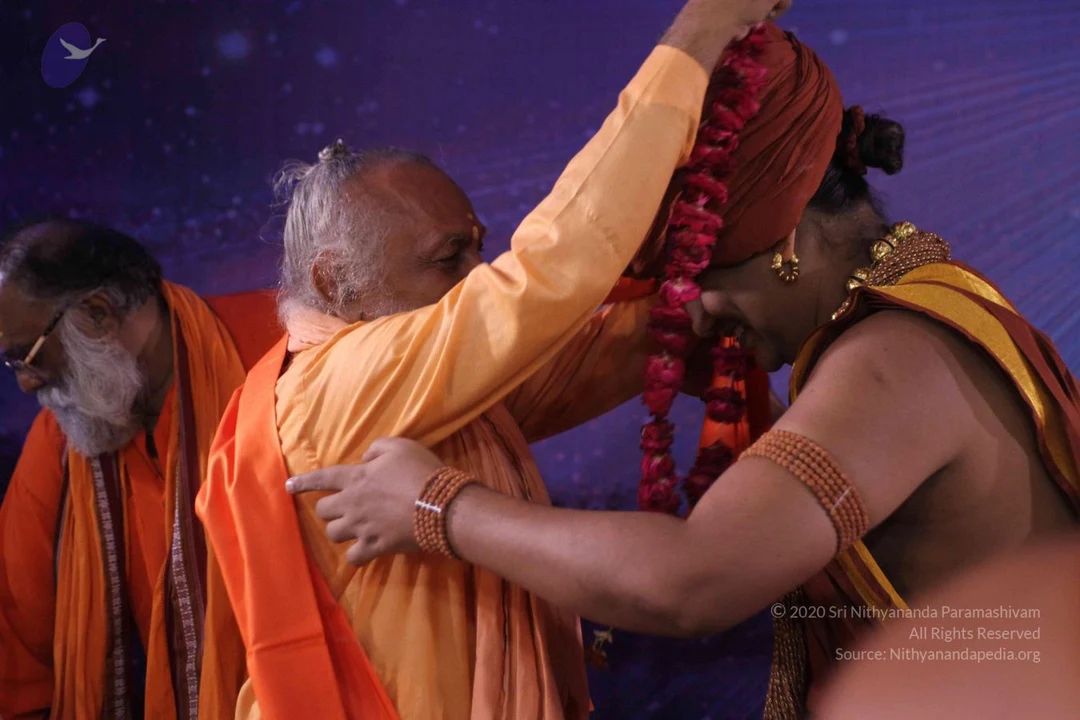
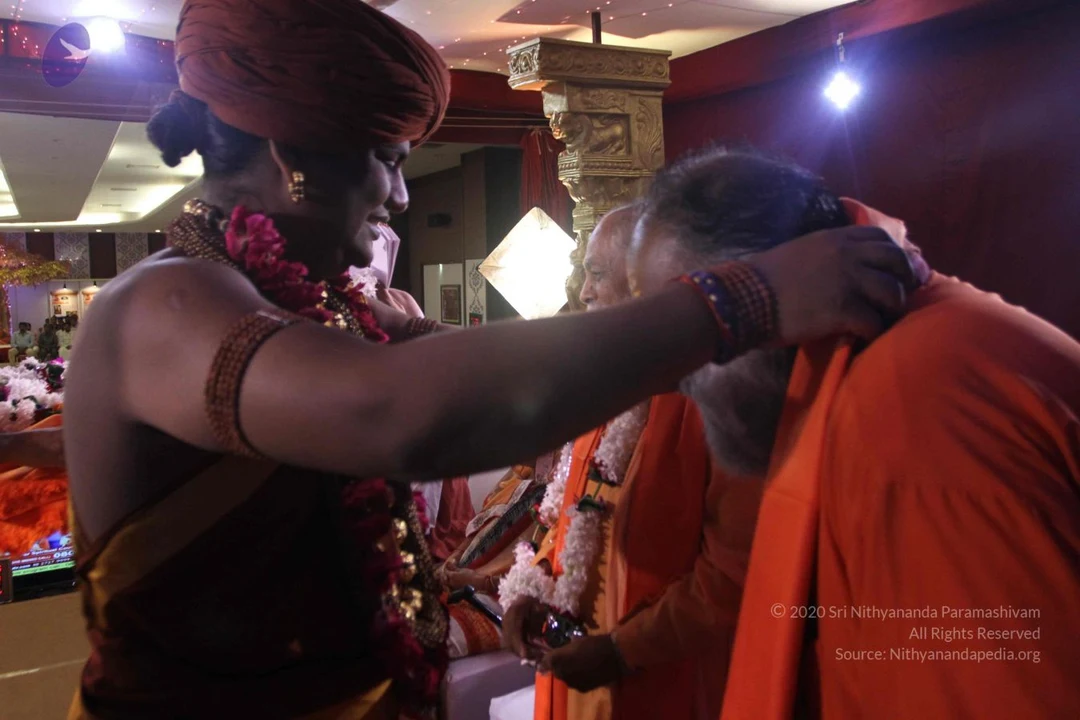
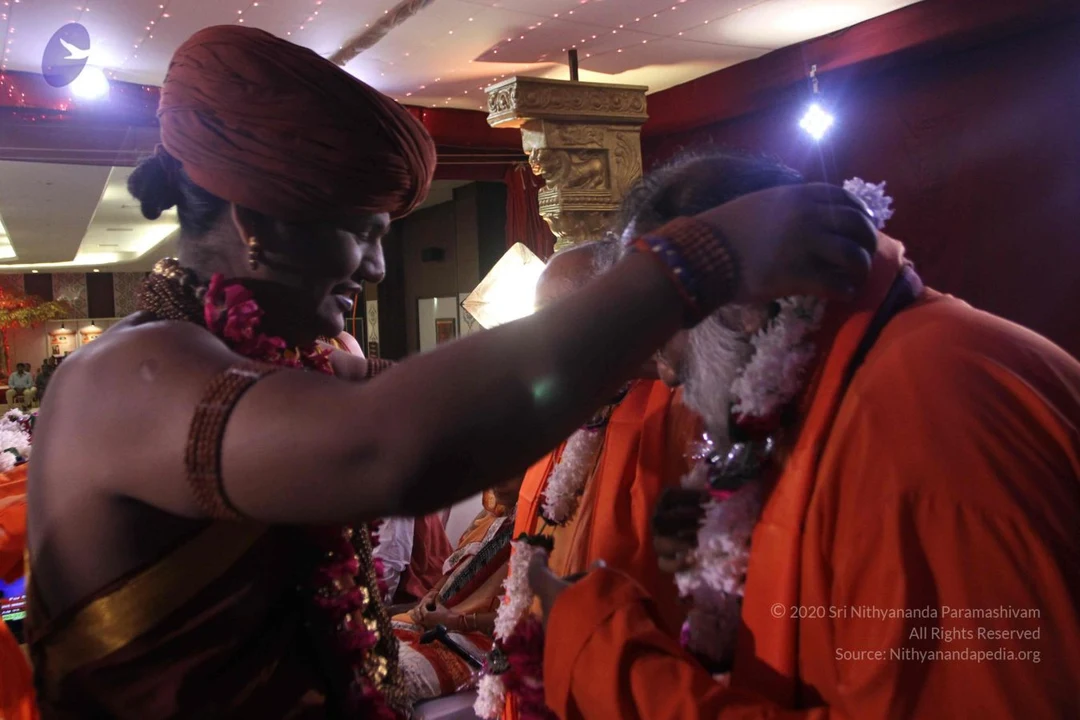
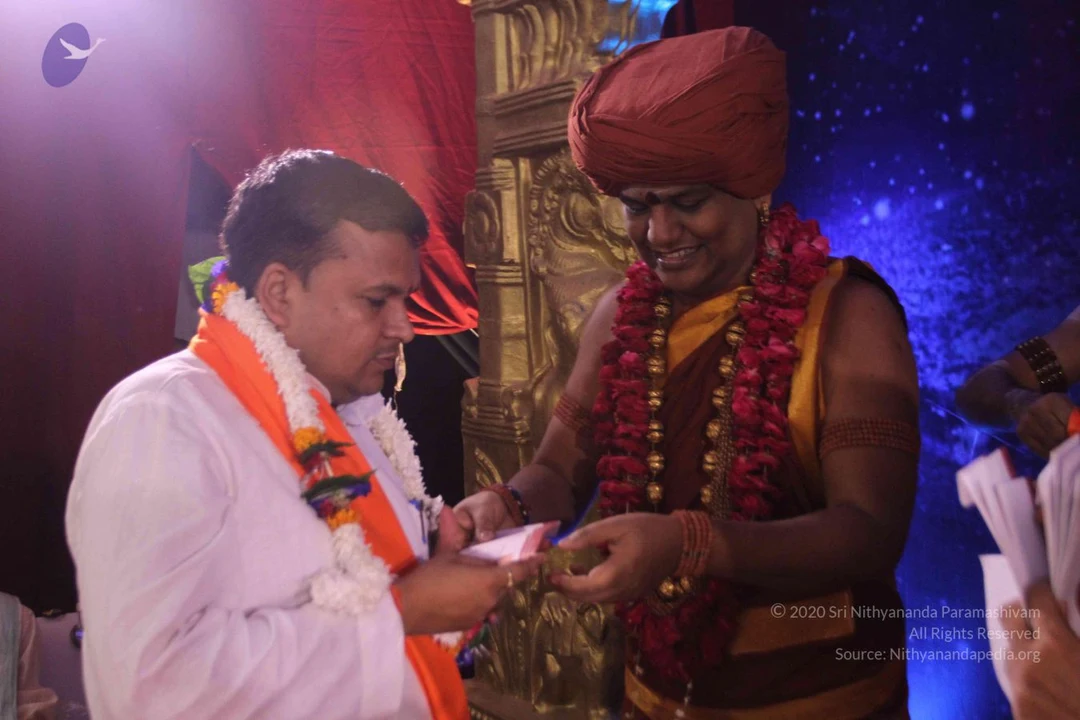
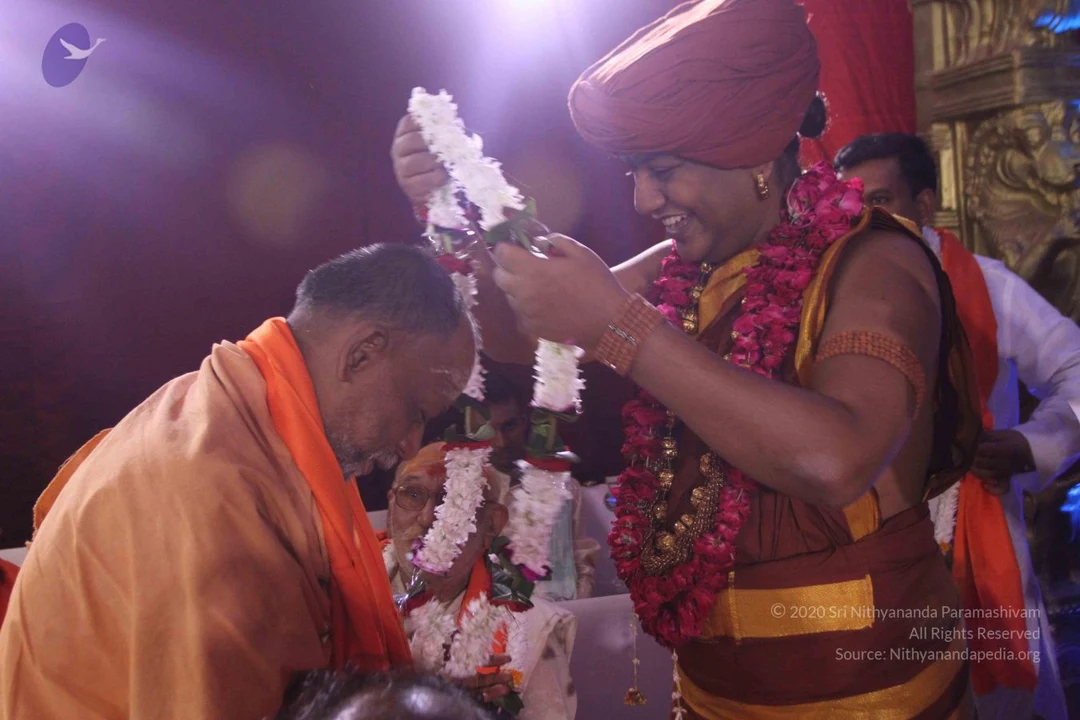
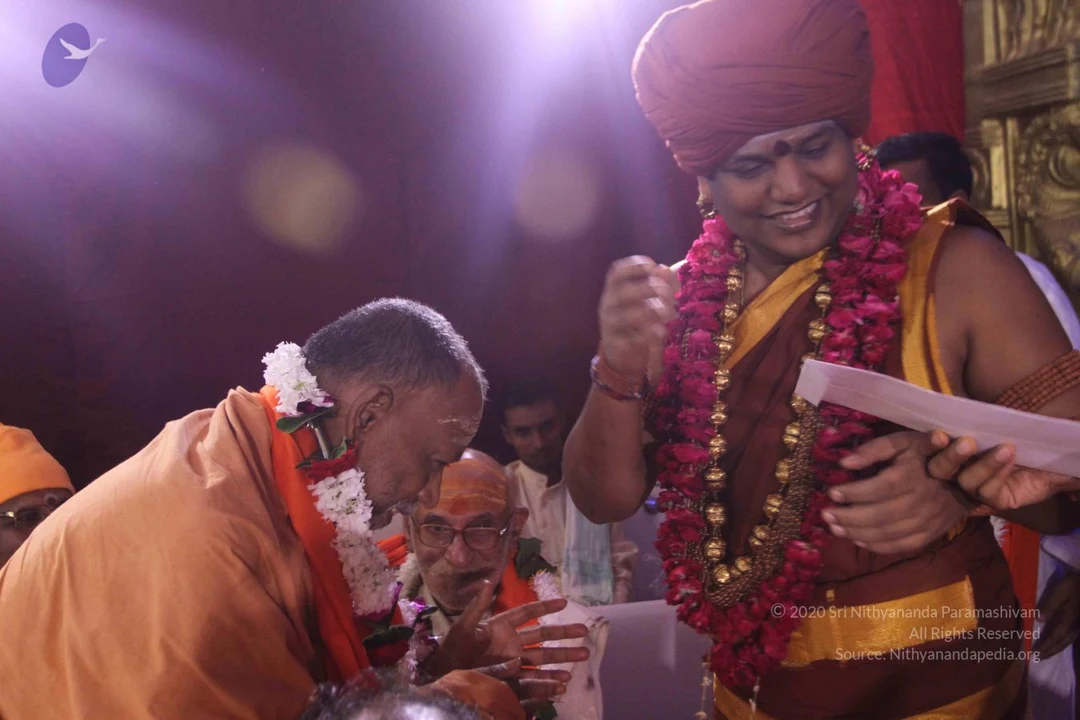
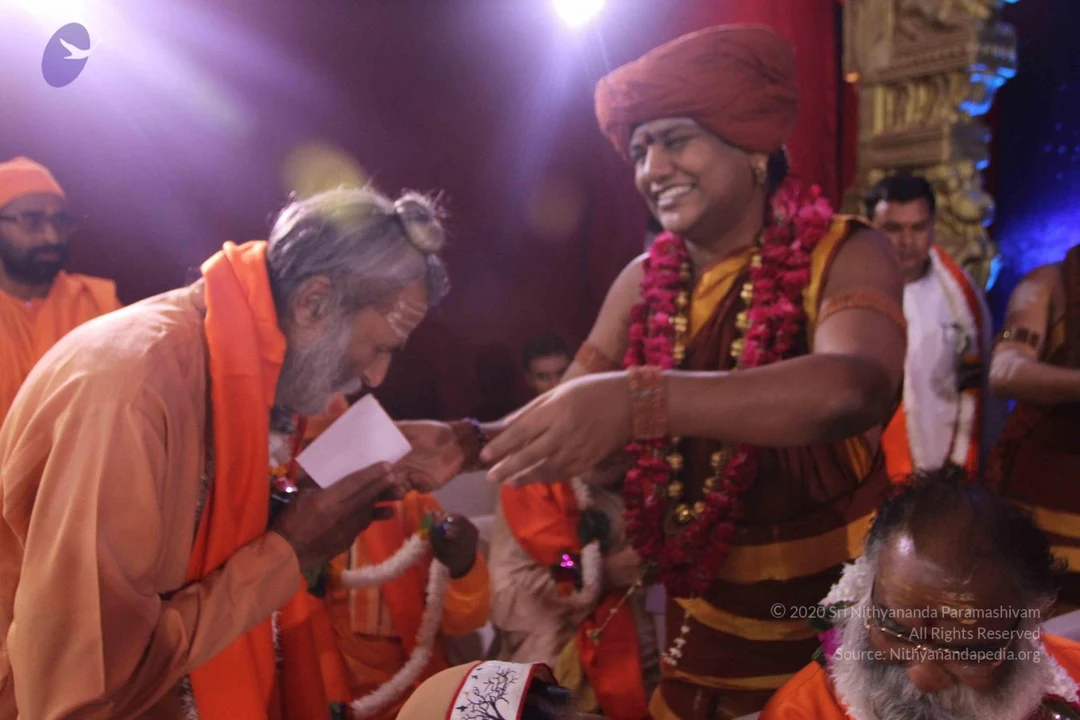
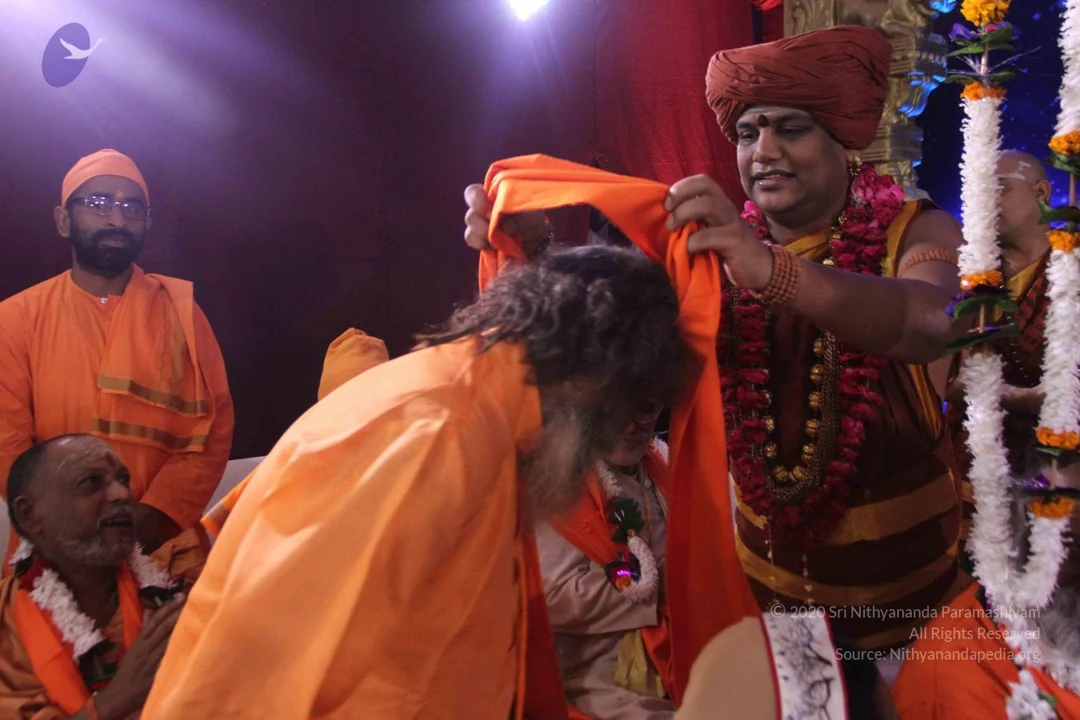
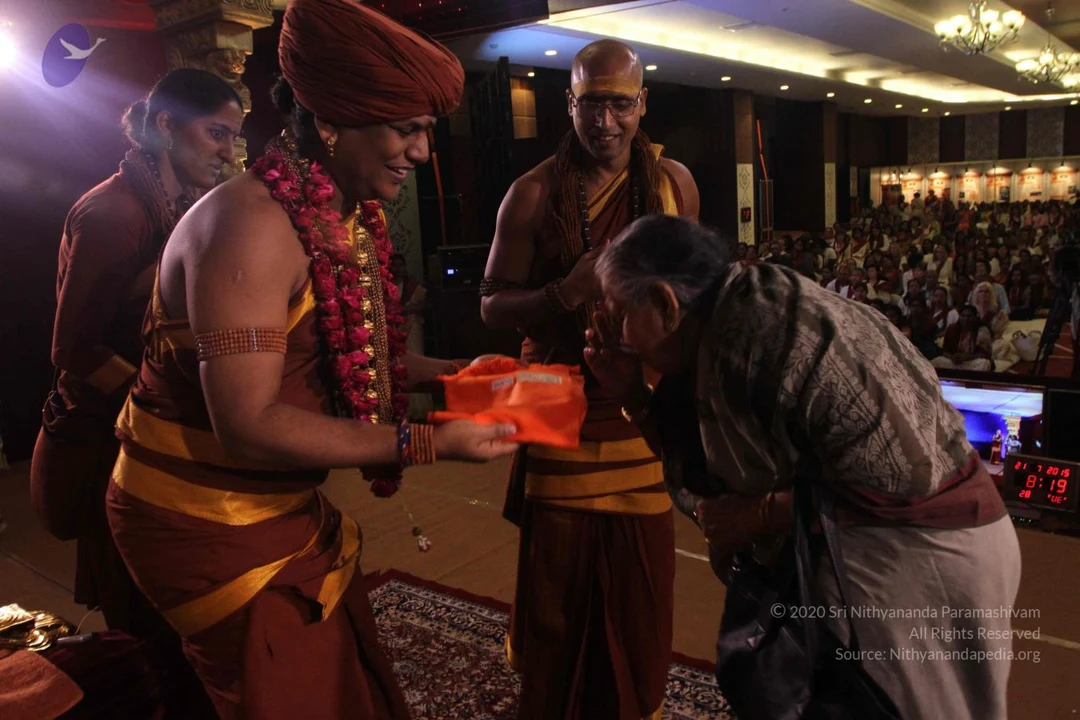
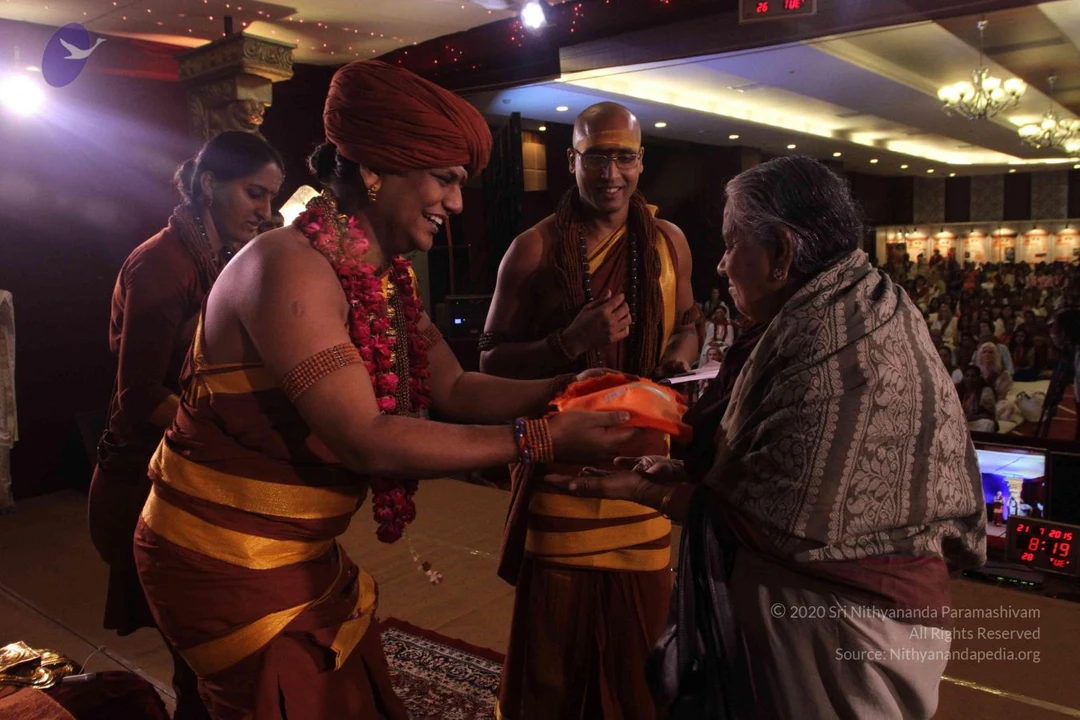
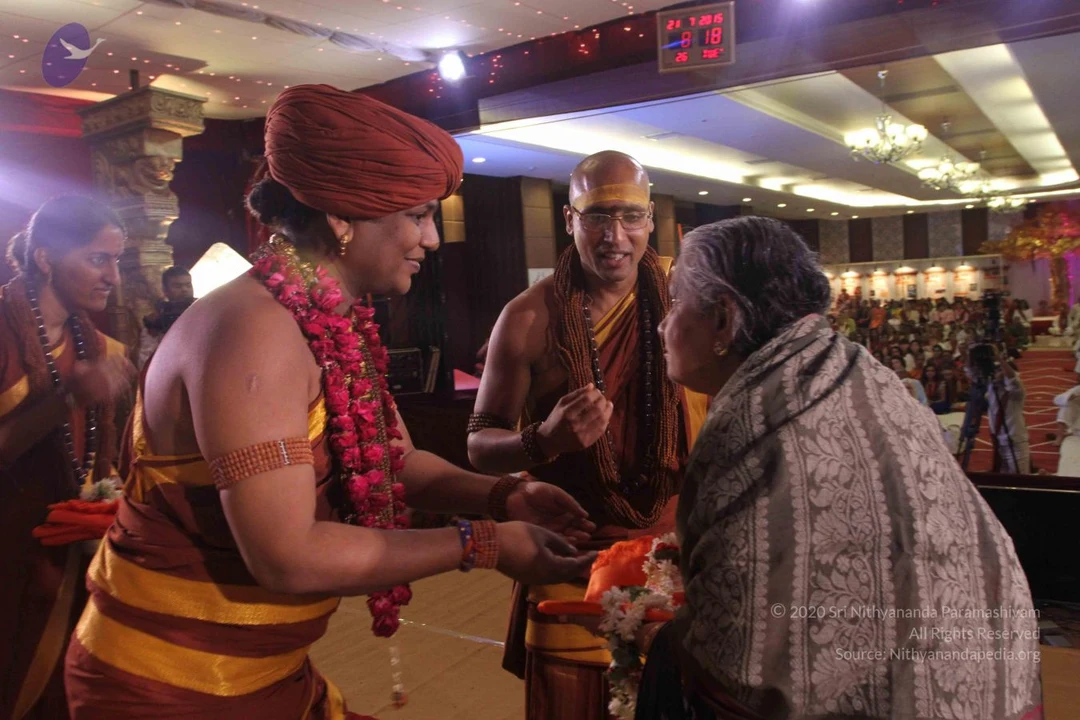
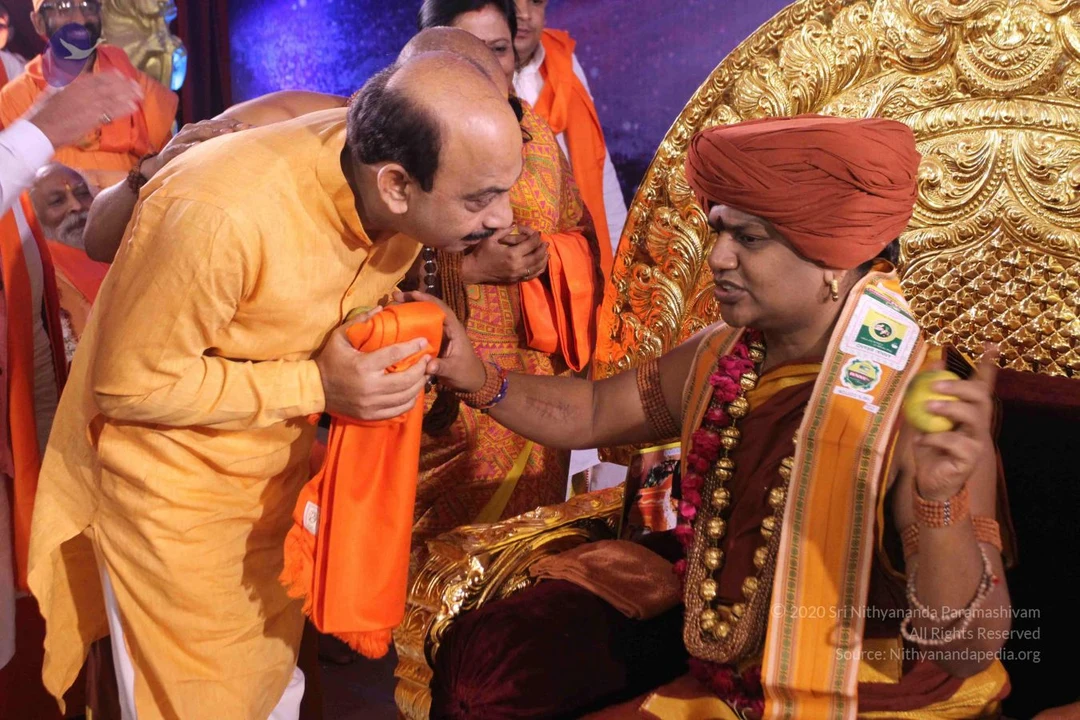
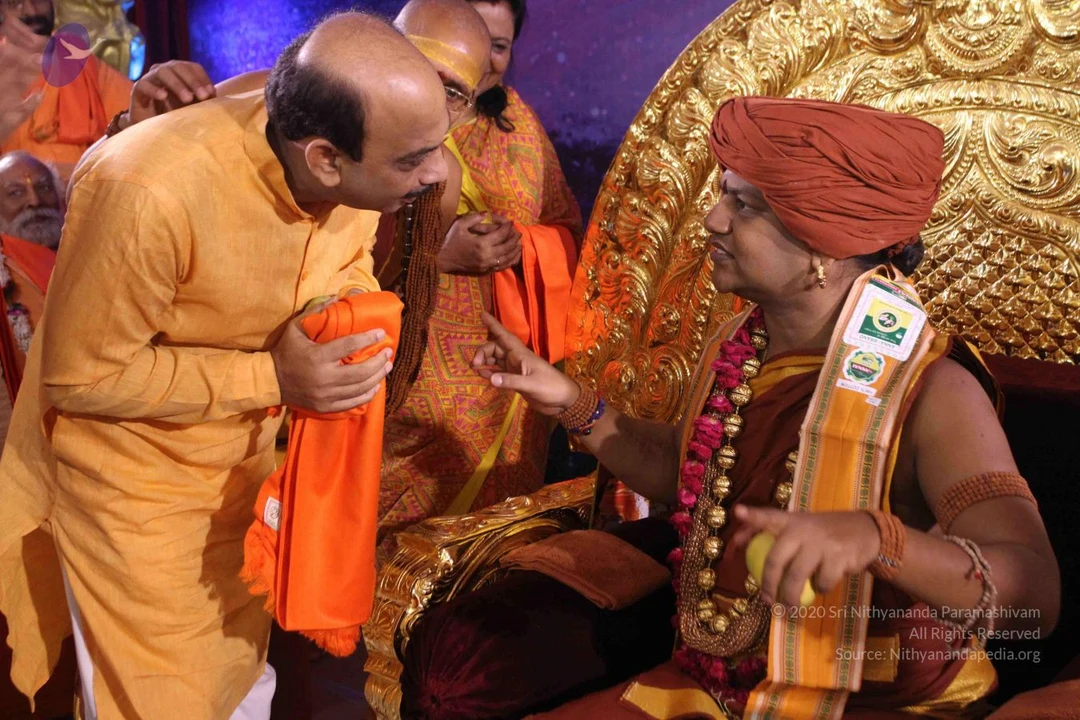
Indoor satsang hall where a seated figure in saffron-orange robe with a rudraksha mala and ornate gold necklace hands a folded saffron cloth to a smiling older man in white kurta with a red-orange shawl, who bows forward. Around them, devotees in red-orange shawls sit and stand, some with palms pressed together in greeting; a woman in a green dress and necklace smiles nearby. The seated figure has long swept-back hair and a distinctive saffron-and-gold ensemble, matching the page's a person reference, though the appearance is only partly visible. A red sign on the wall reads No Smoking, No Autographs, No Photography, No Mobile Camera, No Recording. A drinking tumbler and small black device sit on a low table.A photograph in a hall with dark wood panelling and a red sign on the wall reading no smoking, no photography, no recording. A seated man in saffron-orange robes, with a rudraksha mala and gold beaded necklace, bare-shouldered and smiling, reaches forward to place a rust-red turban on the head of a bending man in white kurta with a red-patterned shawl. Behind them, seated devotees in red and orange shawls with palms pressed together watch, and a steel tumbler and a small black device sit on a table.A seated man in an orange-and-saffron robe with a gold-and-rudraksha necklace and white forehead markings leans back in a brown leather chair, smiling, while his hands rest on a bowed devotee's wrapped orange head covering. The devotee, in white with an orange shawl, bends forward at the waist. Behind them, several people in white with orange shawls stand with palms pressed together, and a few onlookers sit near a steel tumbler and a drum-kit label. A wall sign reads in English about photography.A seated man in an orange and maroon garment with a rudraksha mala and gold-toned necklace sits in a brown leather chair, smiling and extending his hands toward a bowed devotee in white who presses against a folded maroon cloth. Behind them, people in white with red shawls stand with hands folded in anjali. A bald devotee in the foreground also holds a red cloth. A steel tumbler sits on the table. The setting is an indoor hall with a red Hindi-style no-photography sign on the wall. a person is seated in the chair, identified by his distinctive rudraksha mala, ornate gold necklace and orange-saffron clothing, receiving a pada-puja style gesture.A seated man with swept-back dark hair, a white forehead marking, a rudraksha mala and ceremonial gold necklace, wearing an orange-and-gold draped garment, smiles and reaches out toward a person bowing low in white clothes who offers a folded orange-red turban or cloth to him. The seated man sits in a brown leather armchair with a wooden frame. Behind them, several seated and standing devotees in white and red shawls press their palms together, and a steel tumbler sits on a table. A wall sign reads in French about photography. Cues are consistent with a person receiving honour during a darshan-style gathering.A seated figure in a brown-red robe with a gold-and-orange sash and a rudraksha-style beaded necklace sits on an ornate brown leather chair, leaning forward to touch the head of a man kneeling before them. The kneeling man wears a red-orange turban and white clothing and is bent low over a small table with a steel tumbler and papers. Behind them, a seated audience of men and women in white and red-orange shawls watch, some smiling, and a man at right holds his hands in anjali. Above, a red sign reads 'No Autography No Photography No Mobile Camera Recording'. Scene suggests a darshan or blessing in an ashram hall.
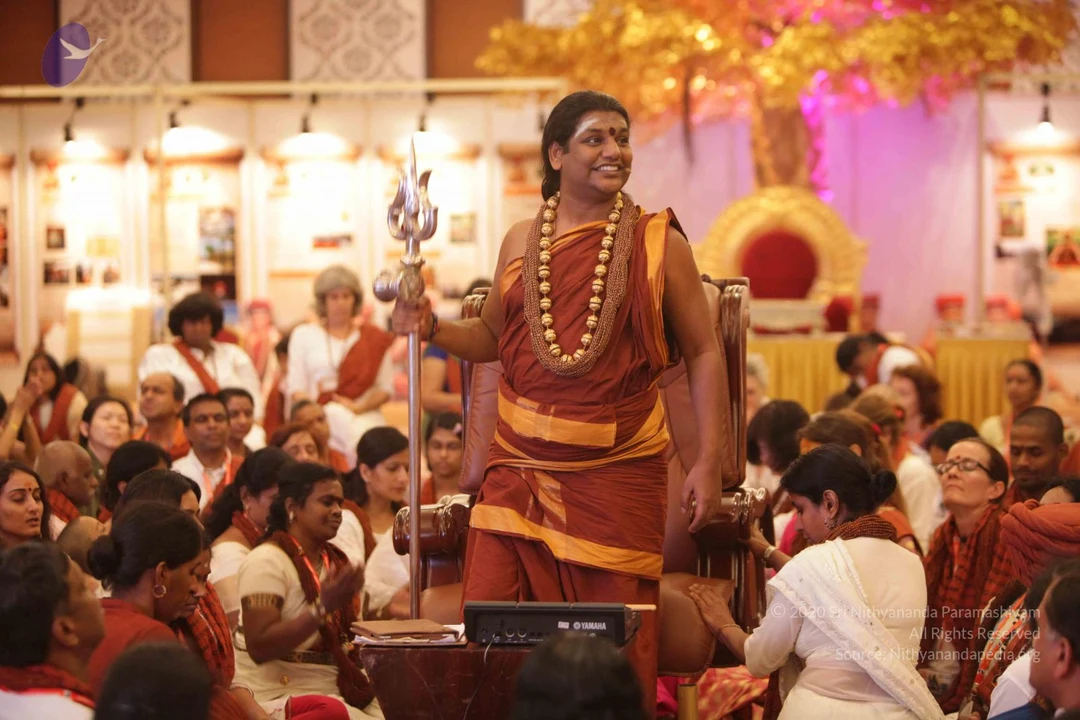
power-manifestation-darshan
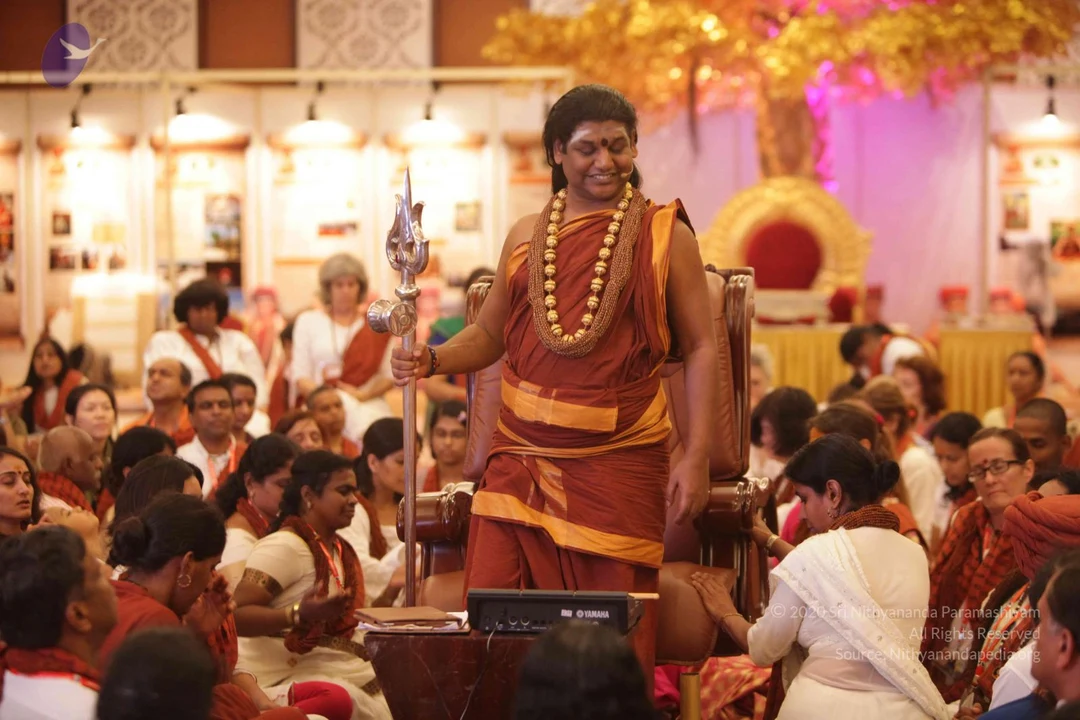
137 photosSource gallery
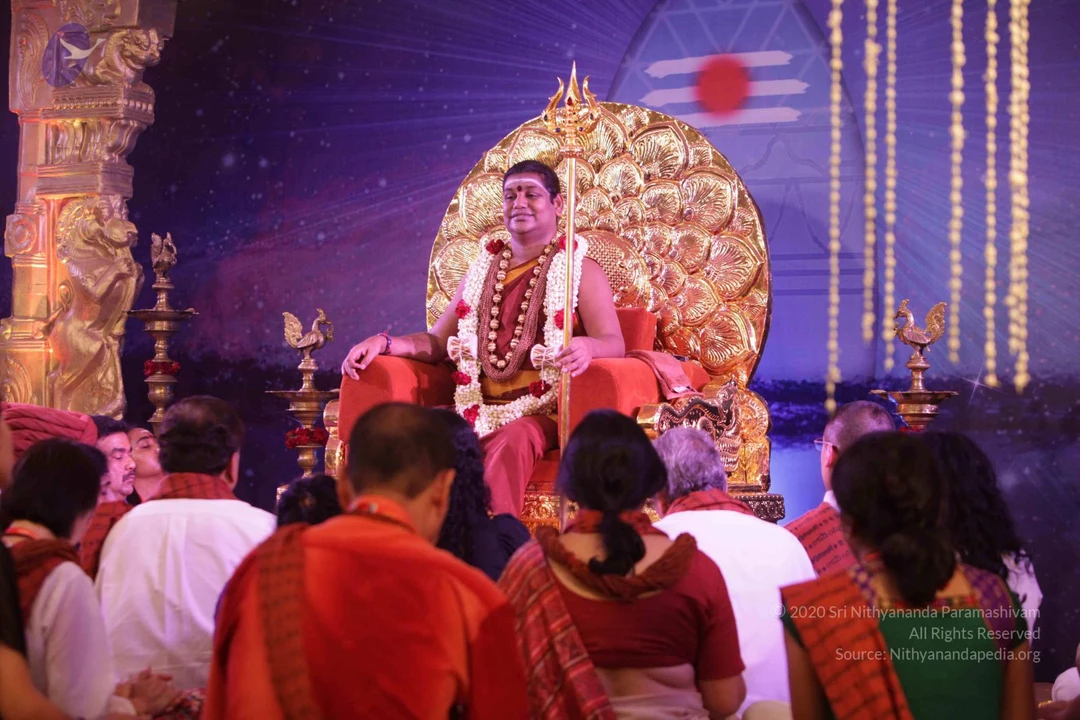
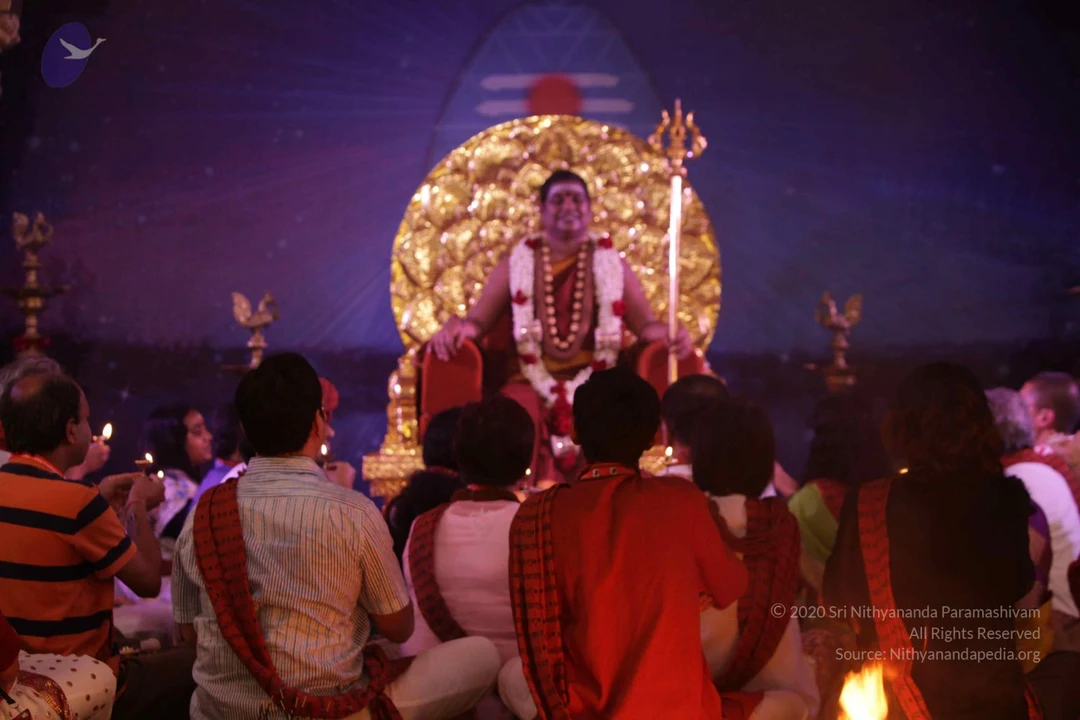
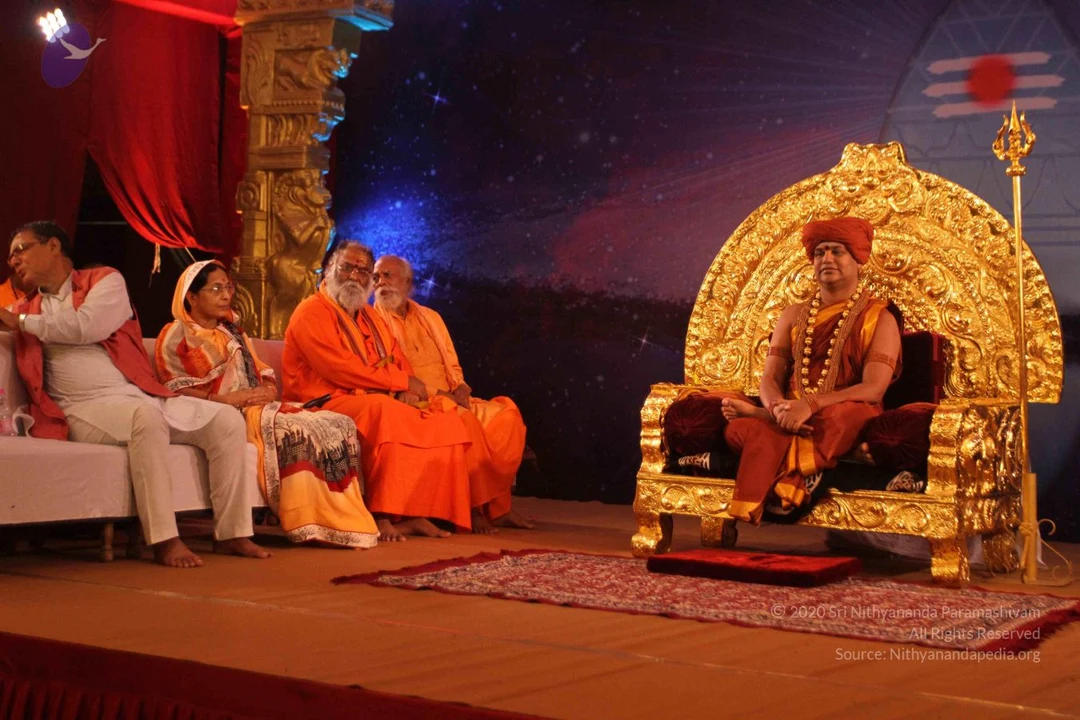
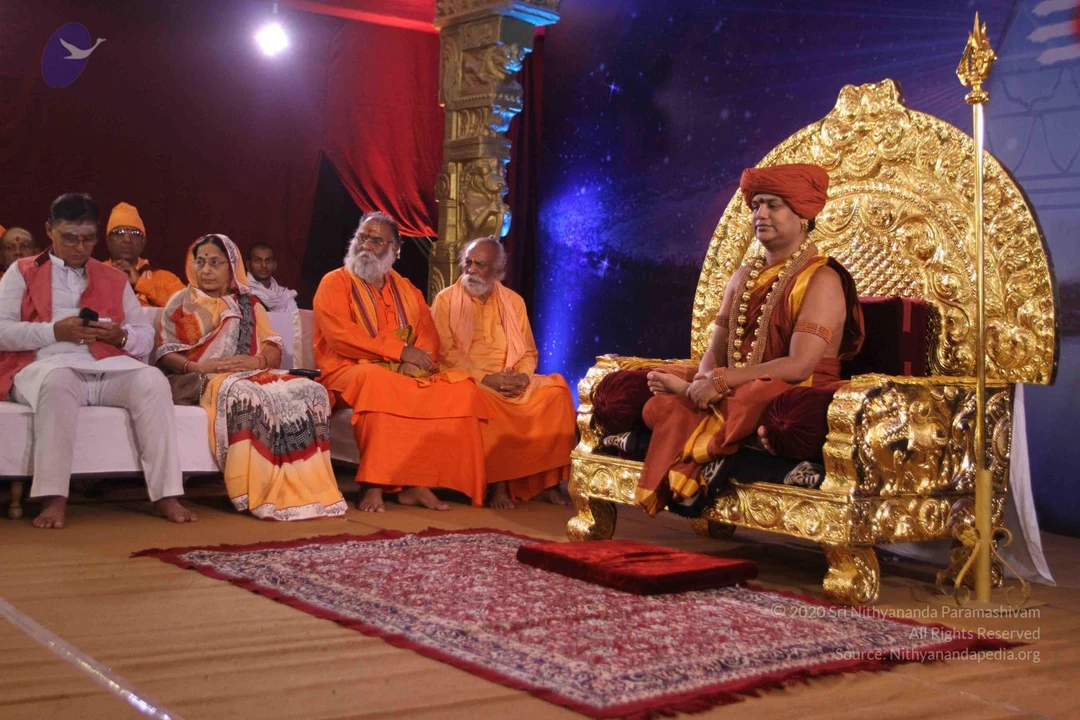
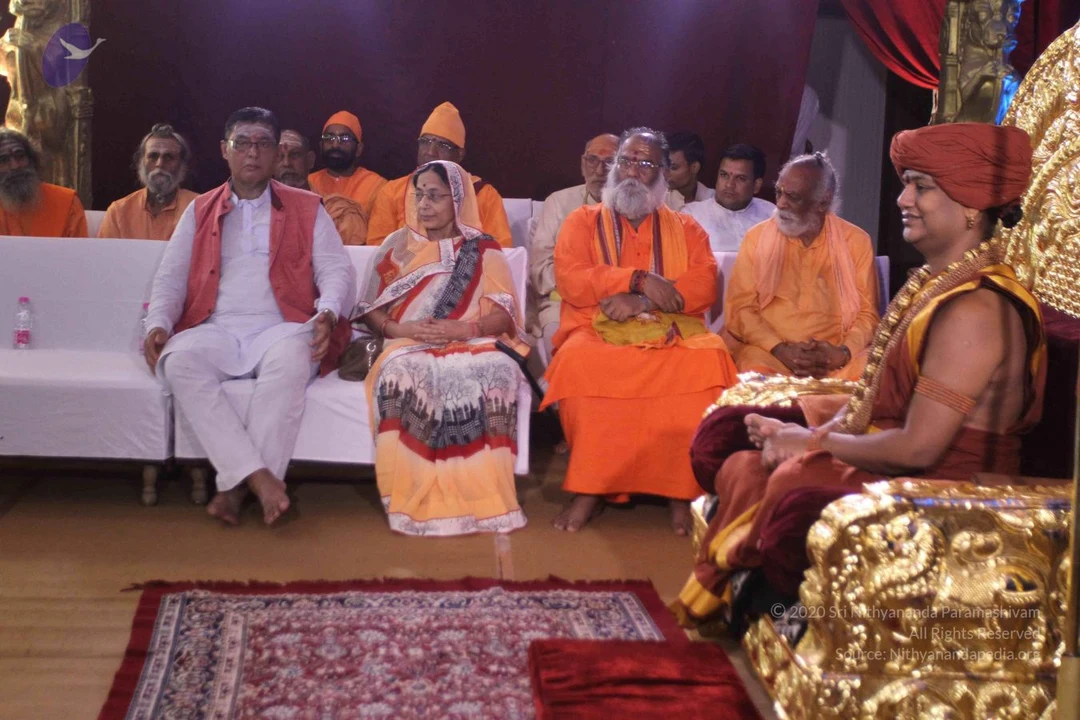
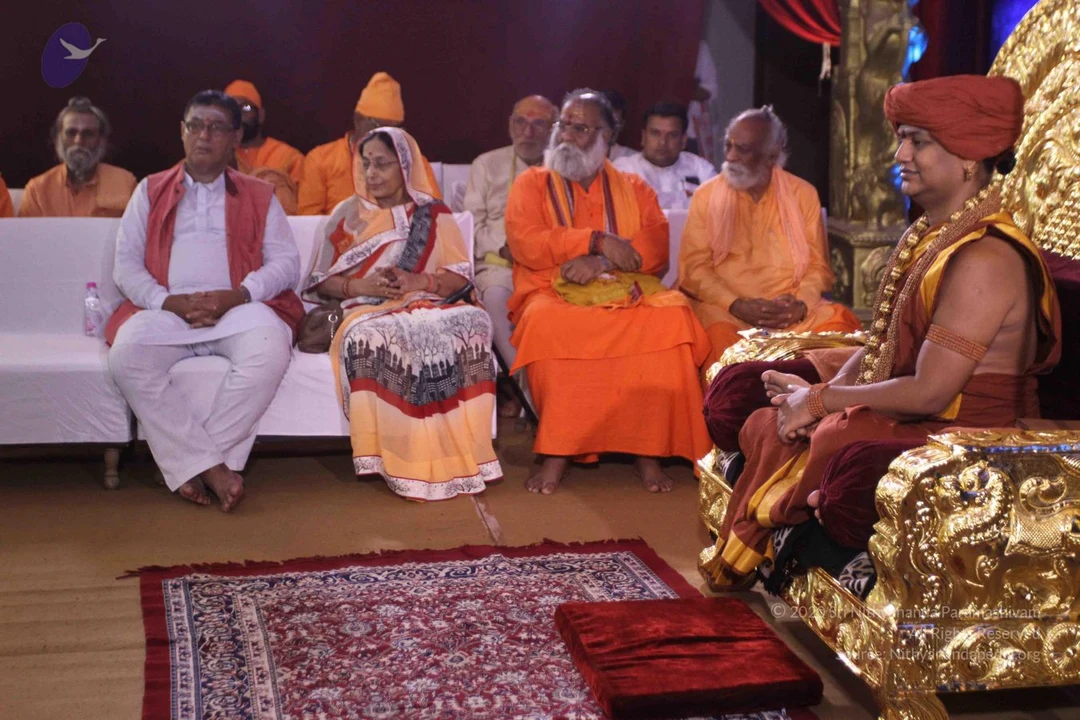
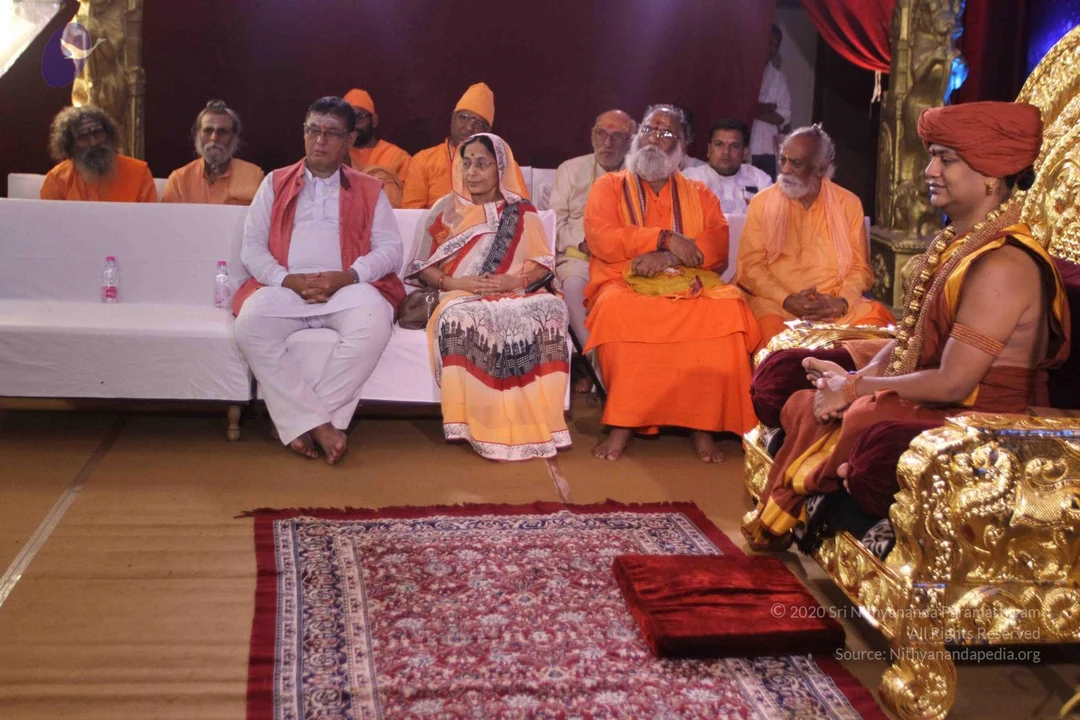
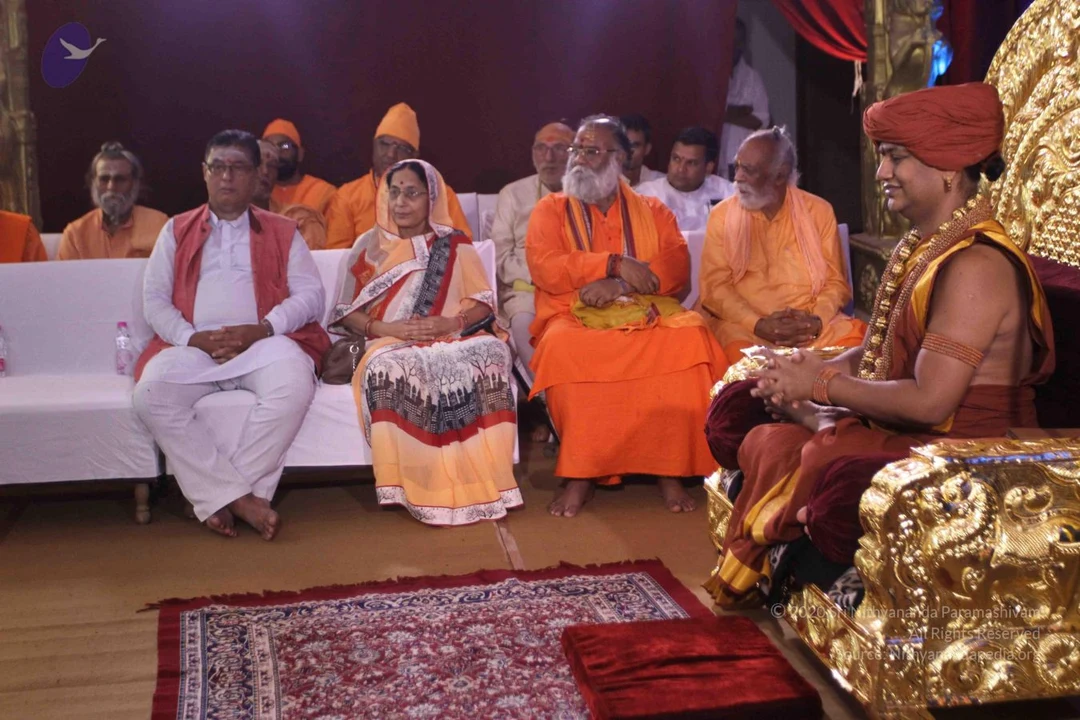
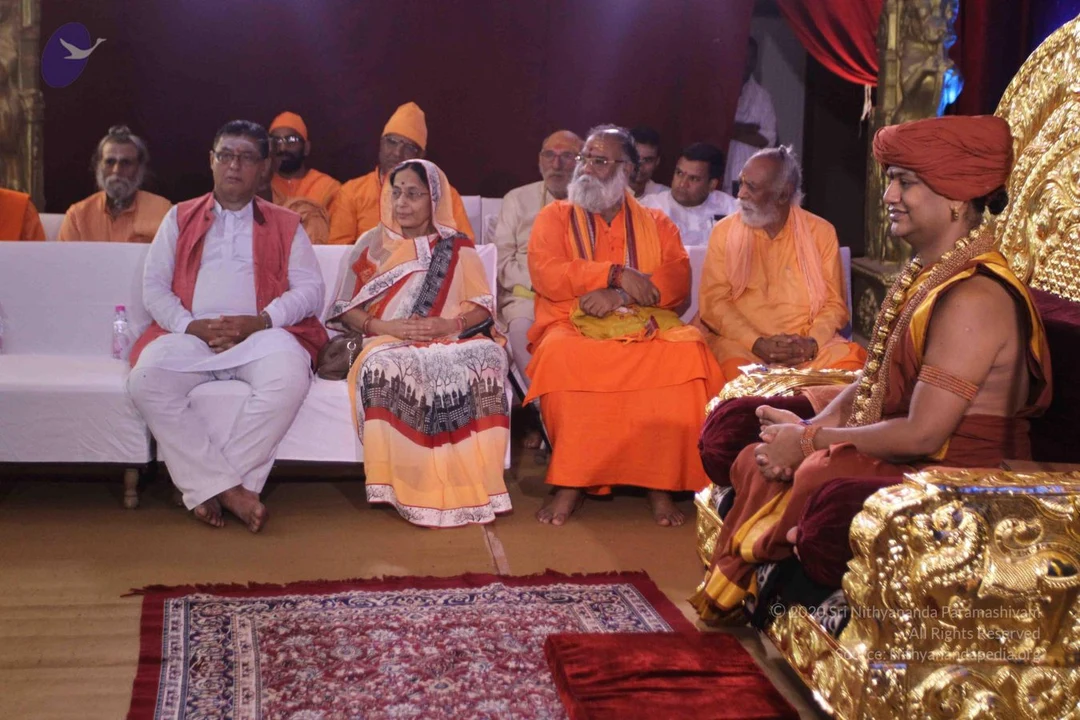
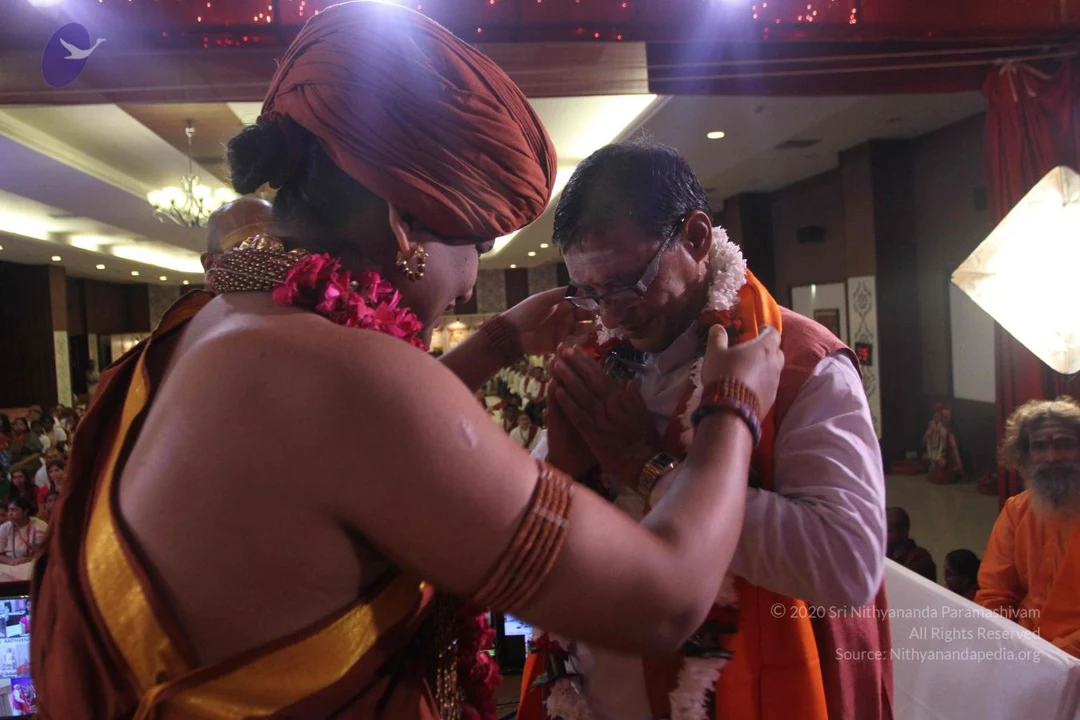
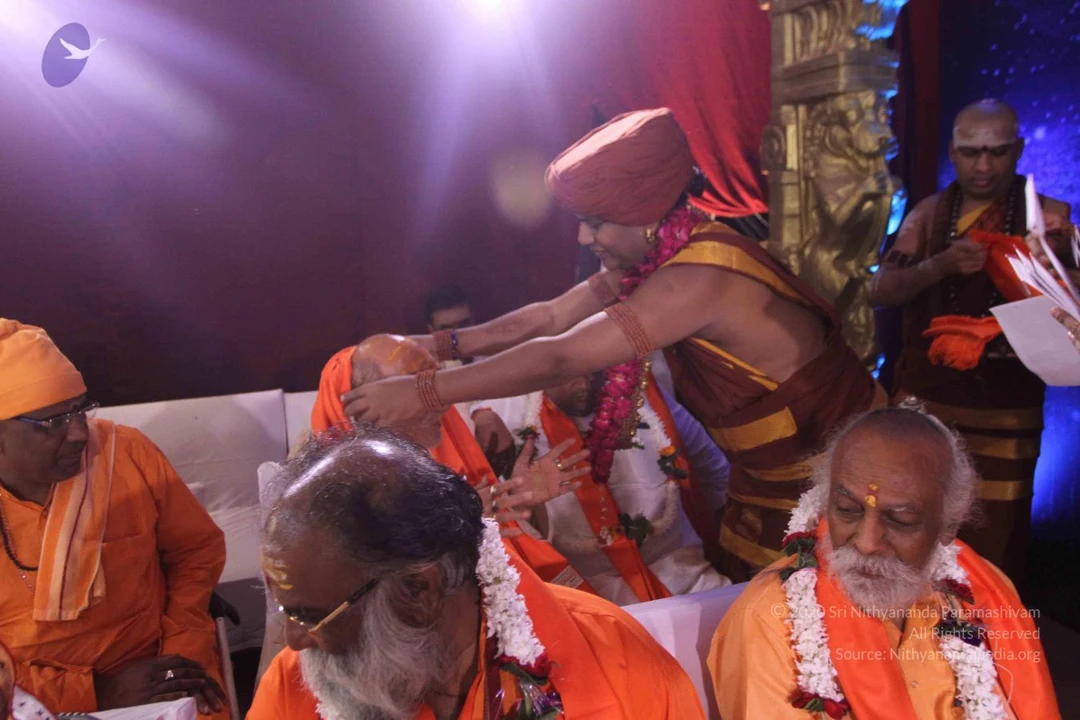
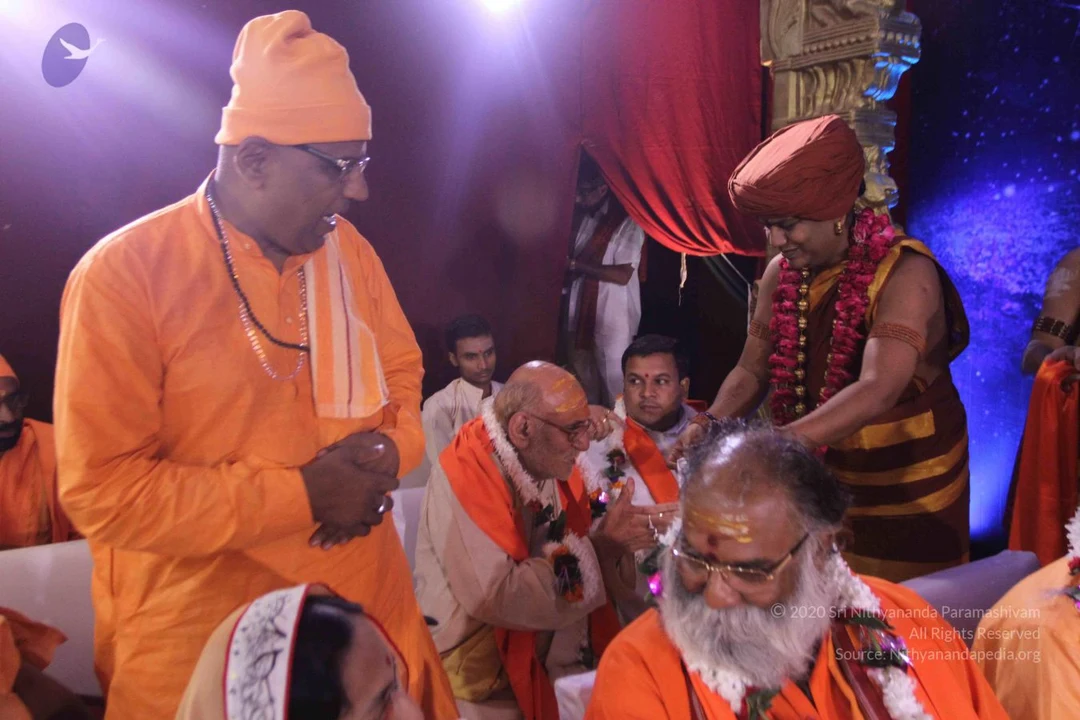
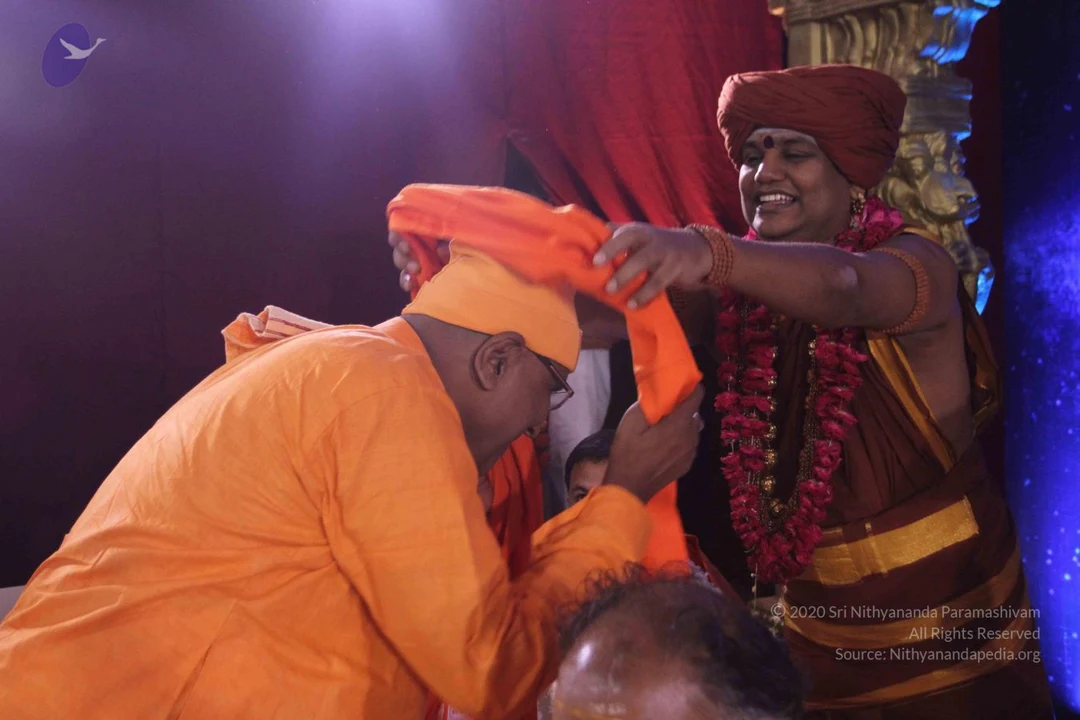
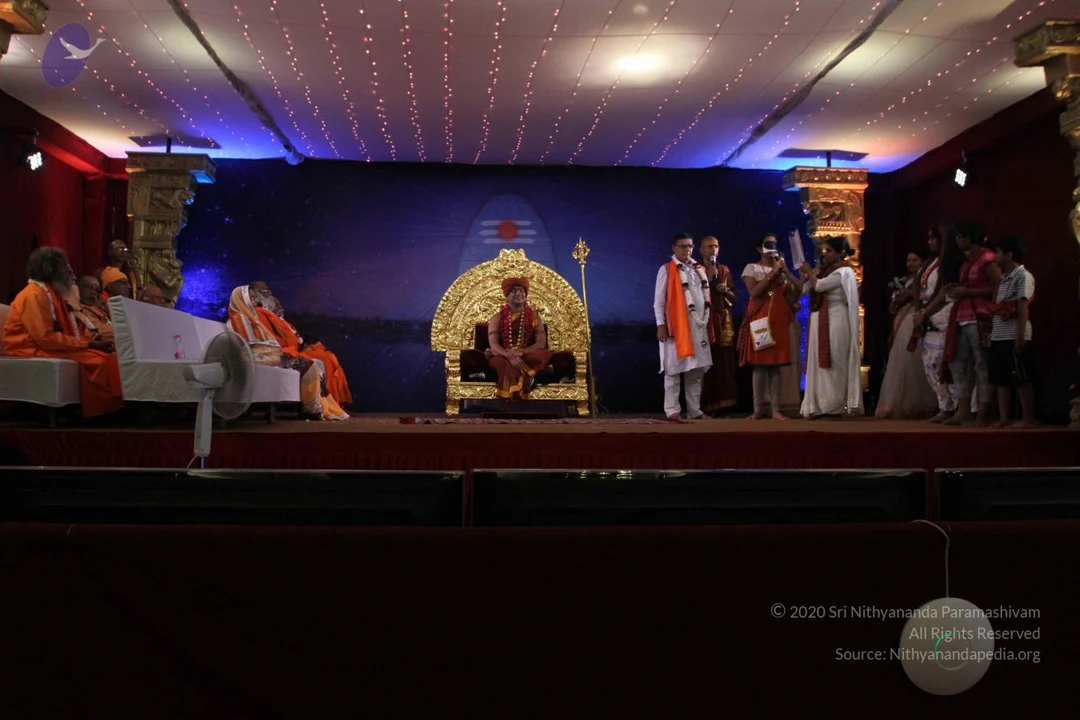
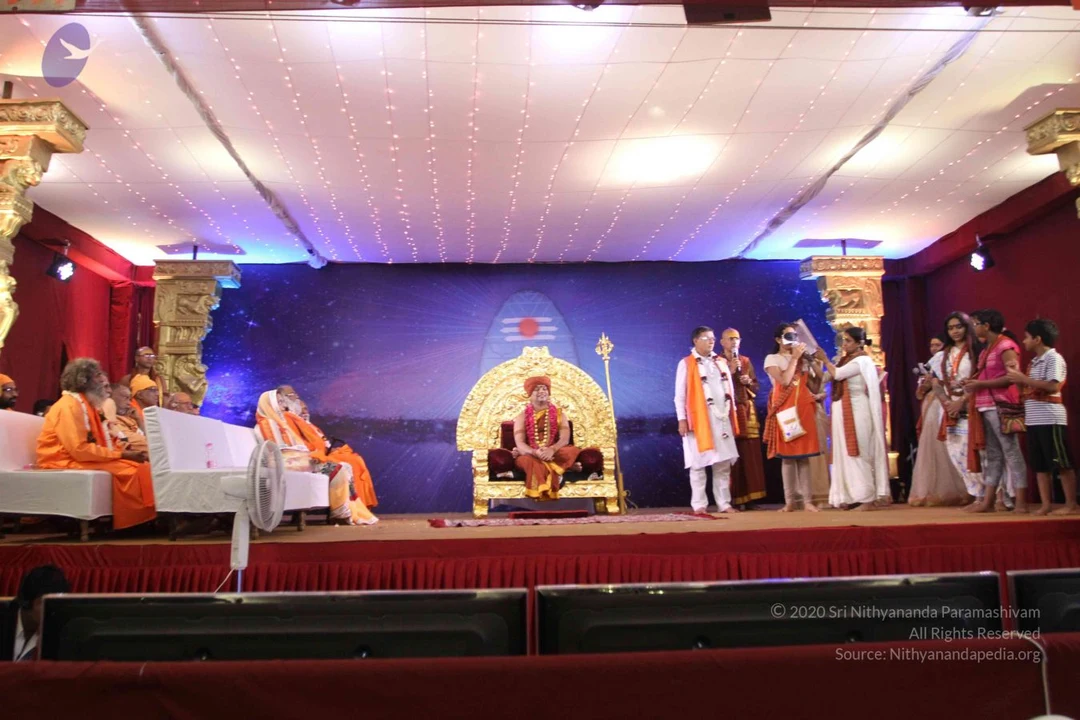
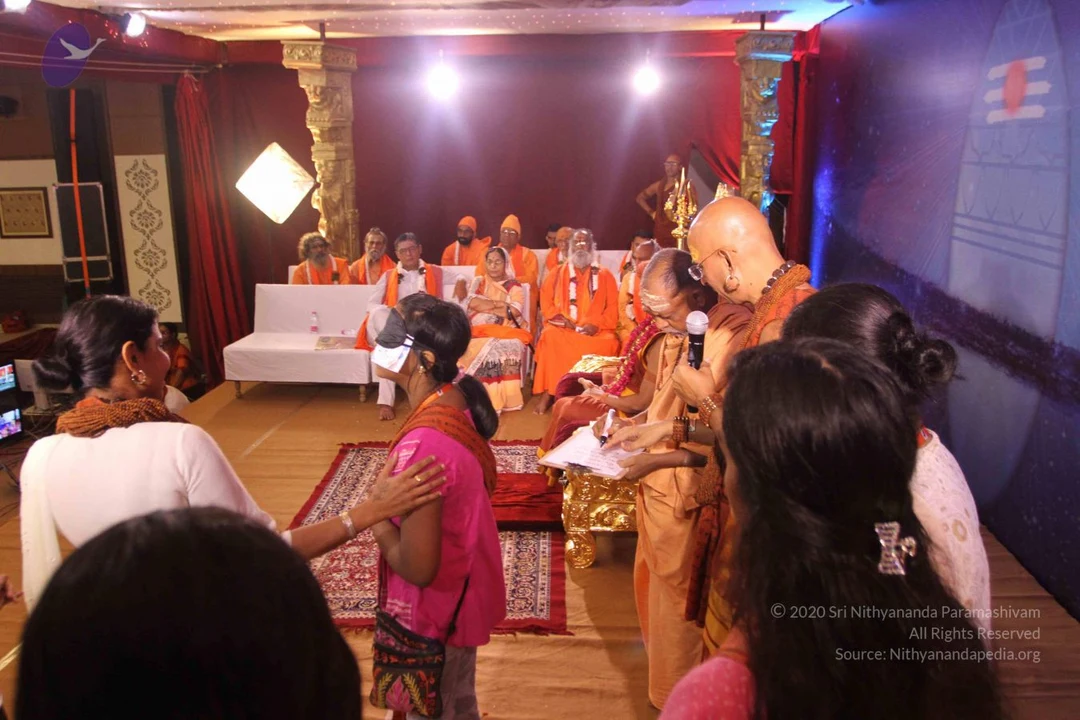
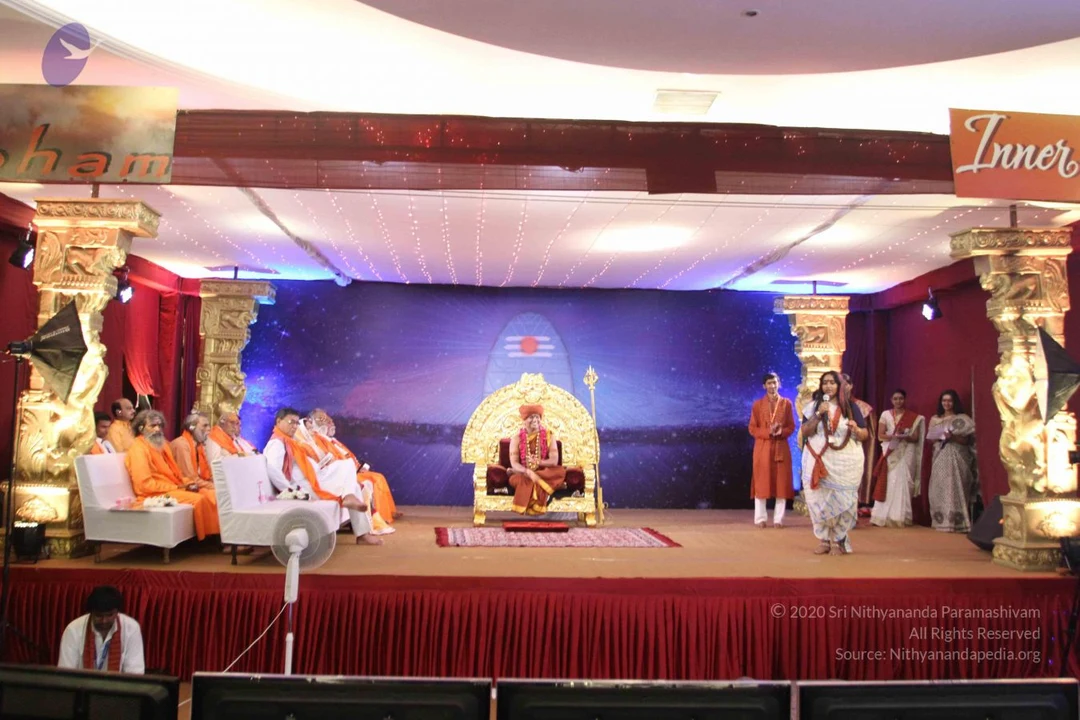
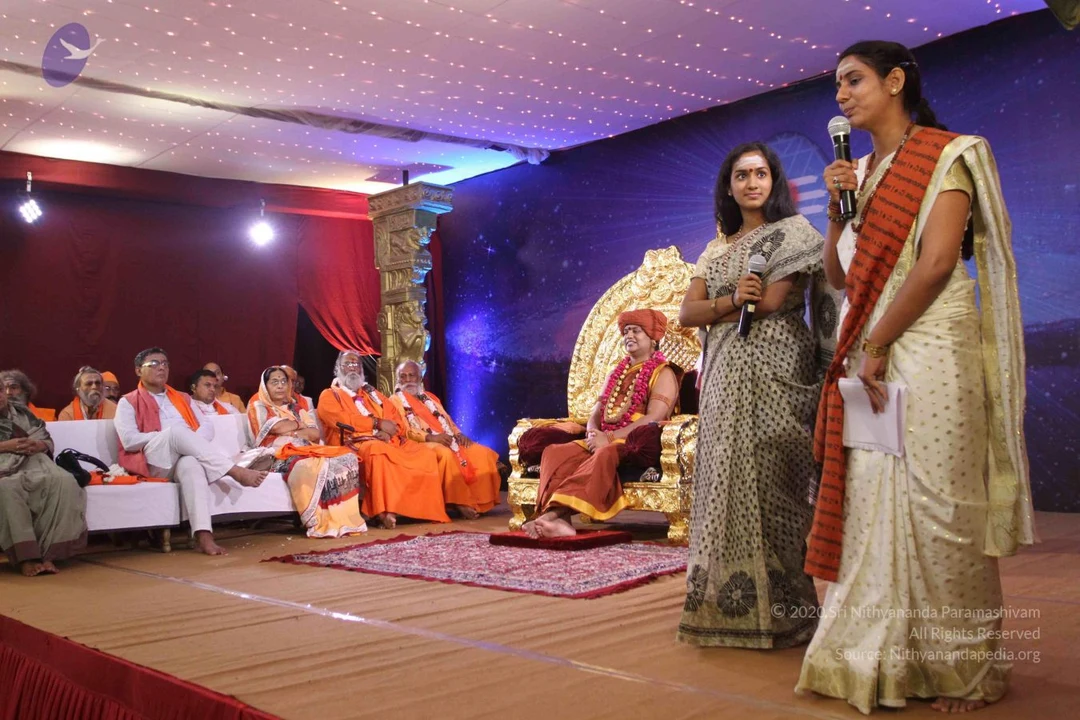
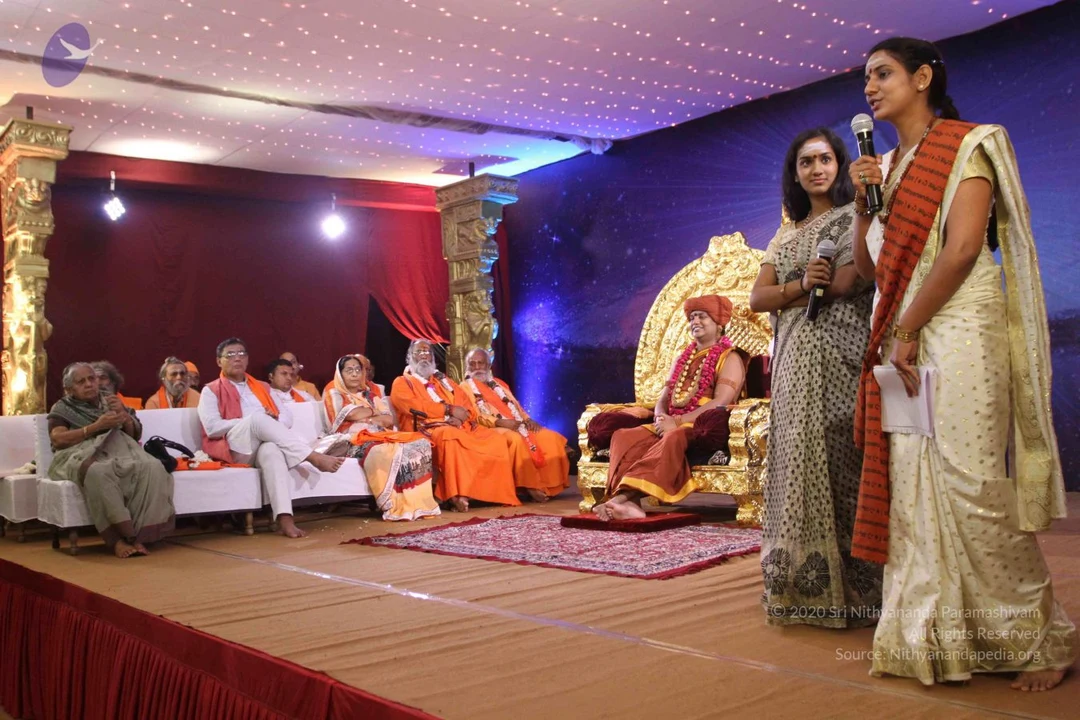
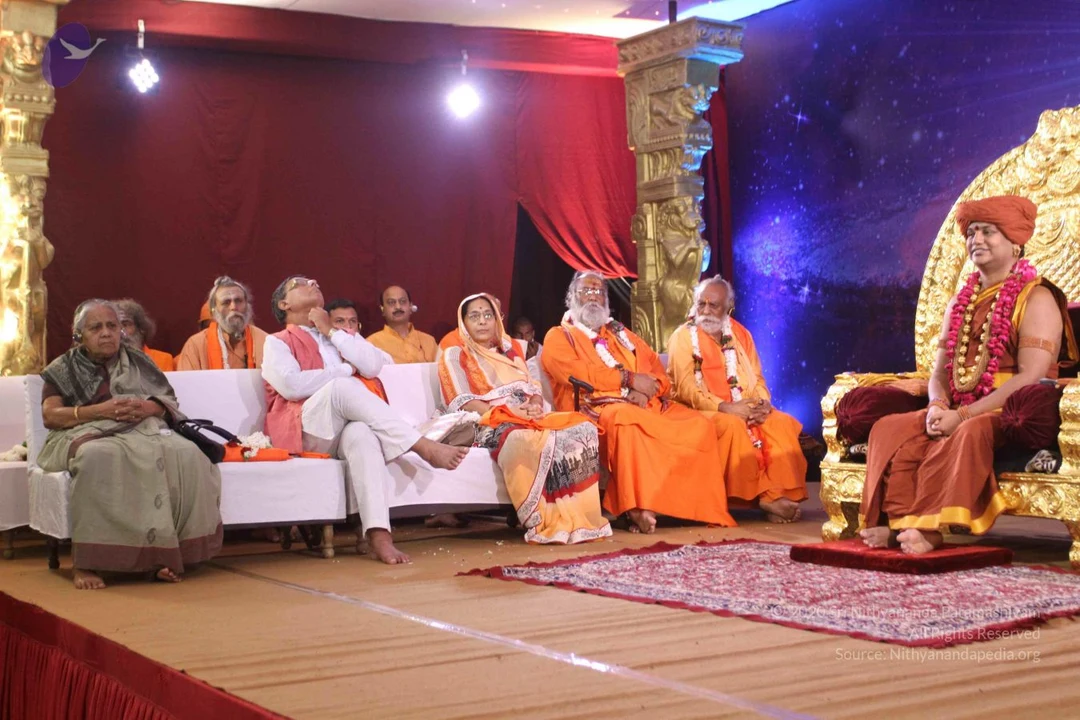
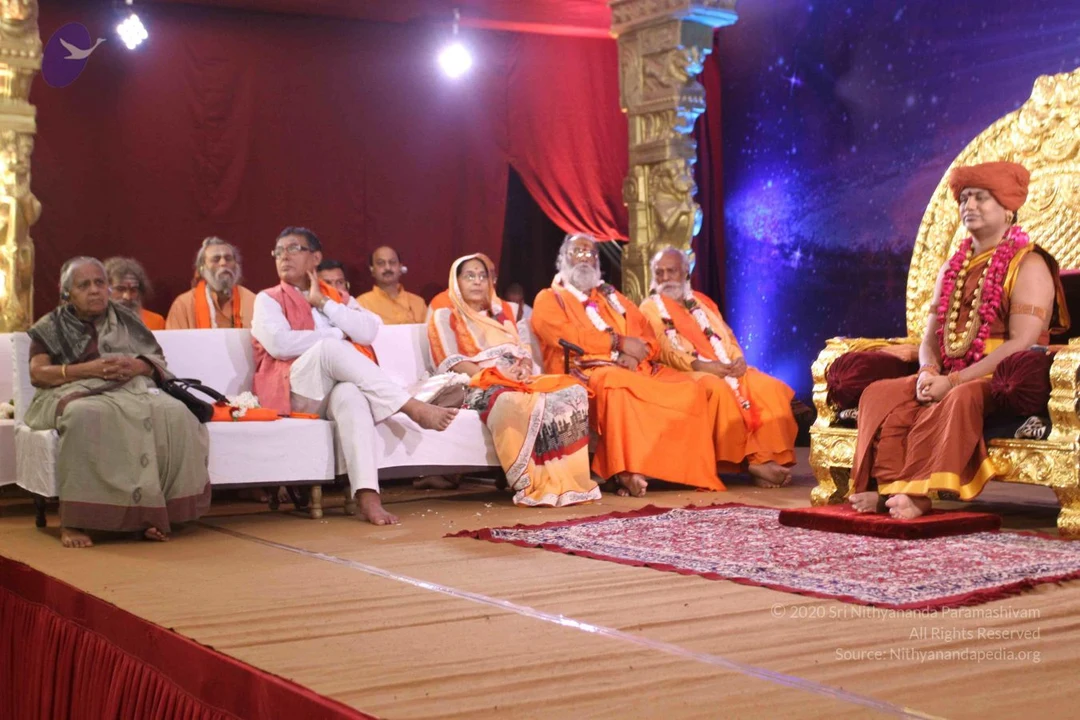
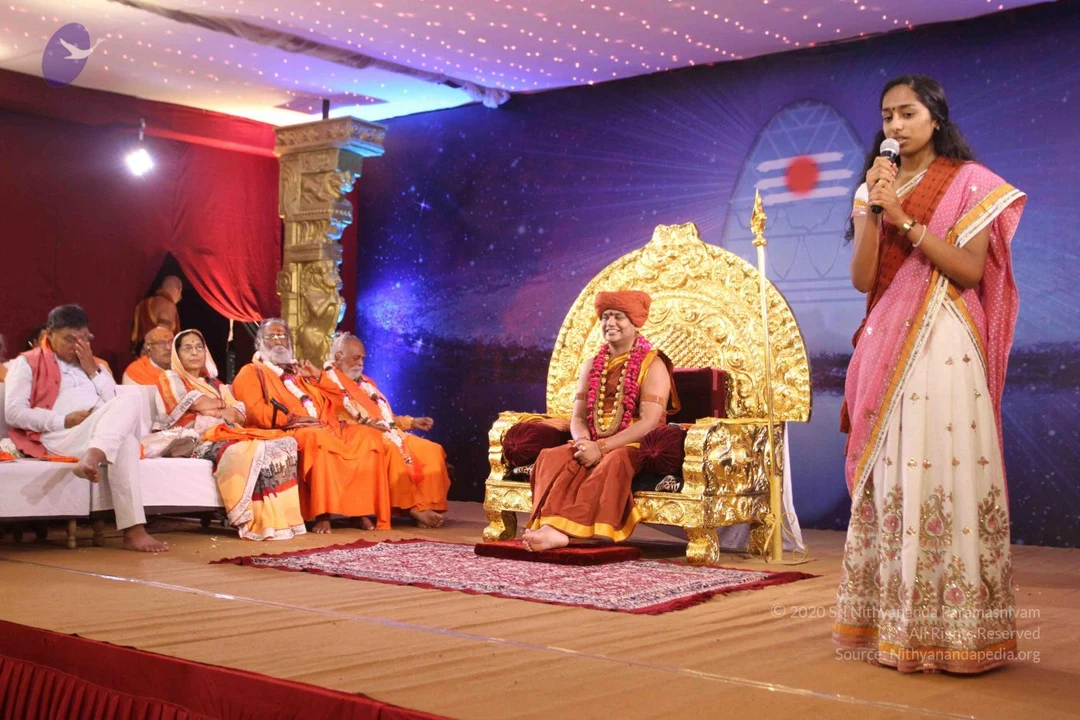
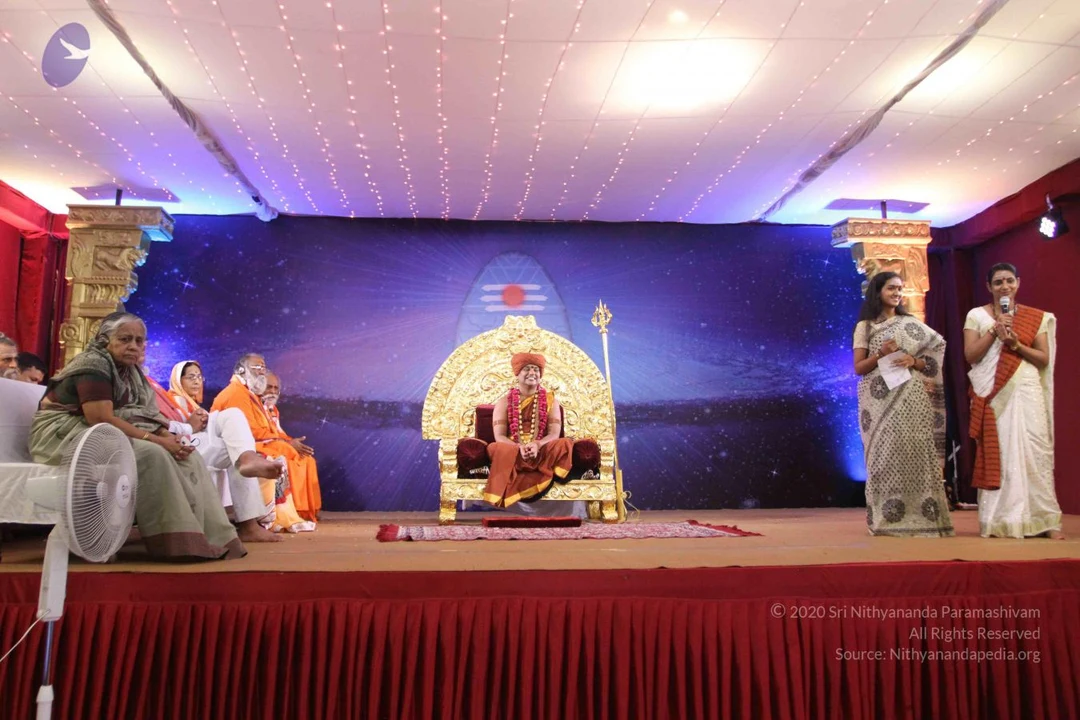
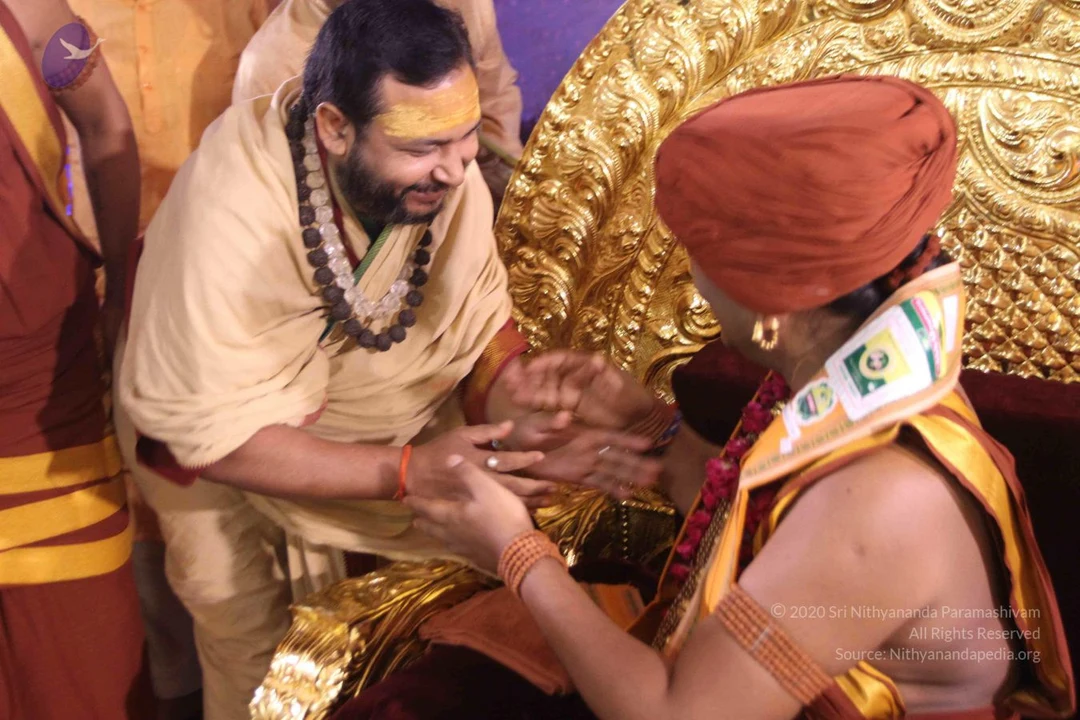
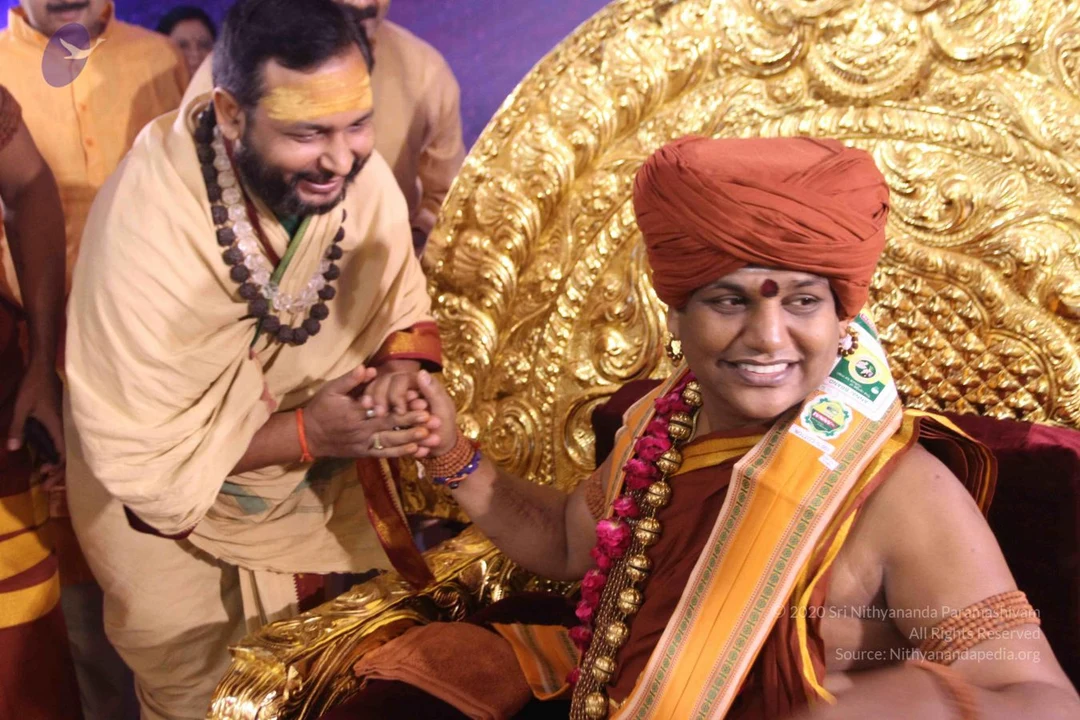
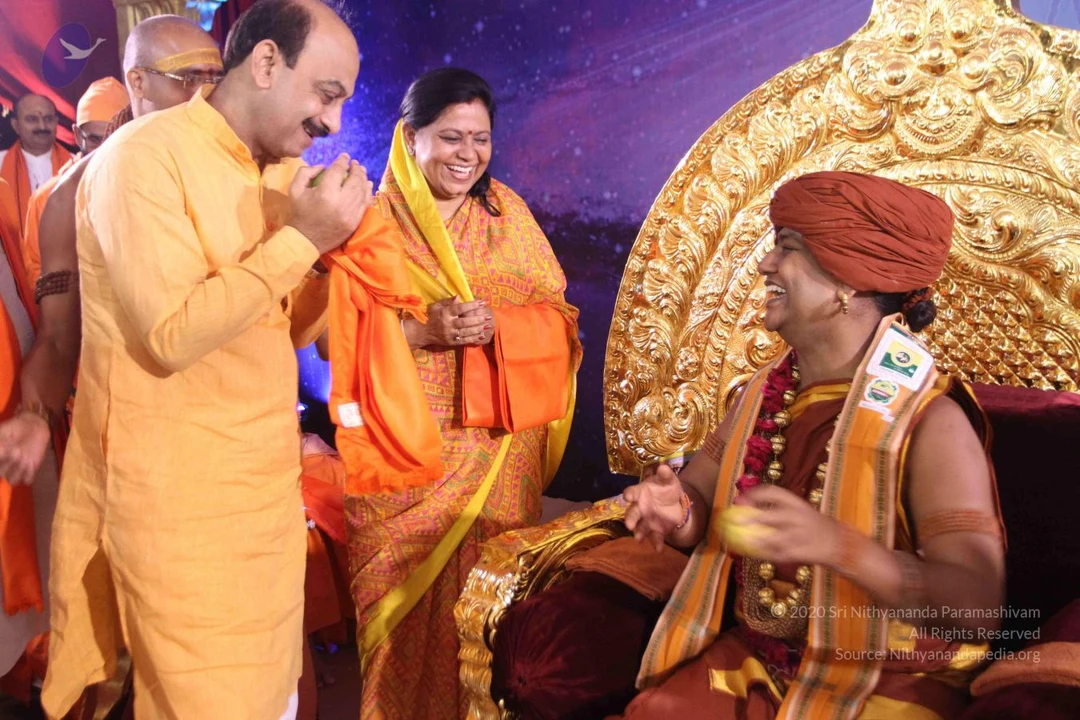
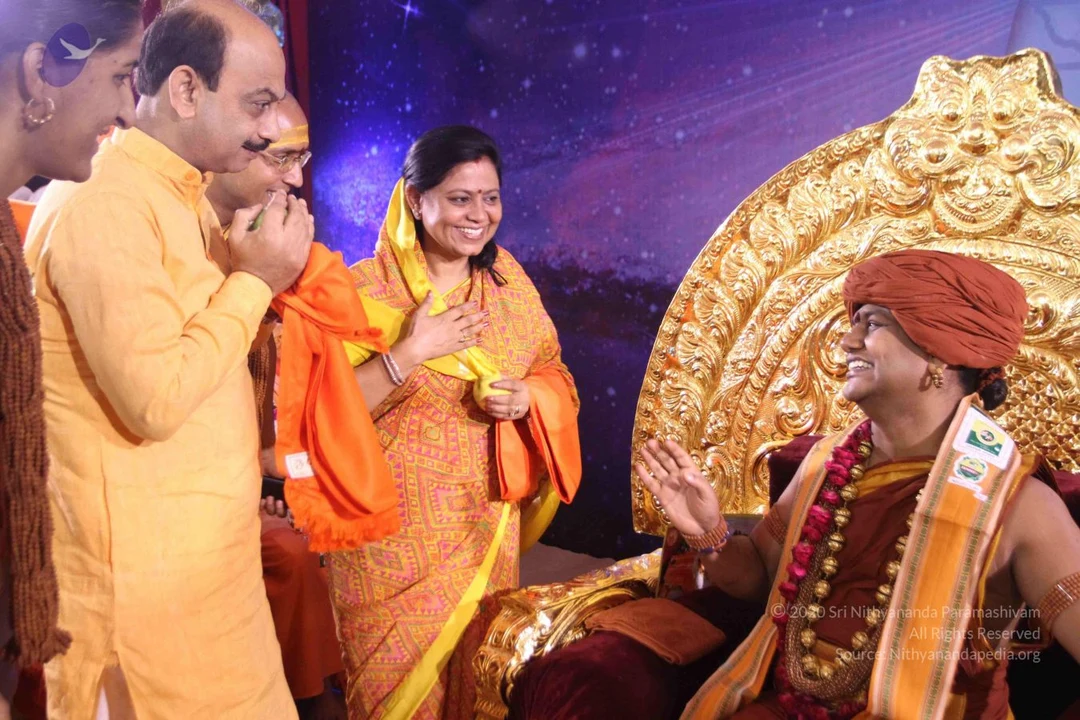
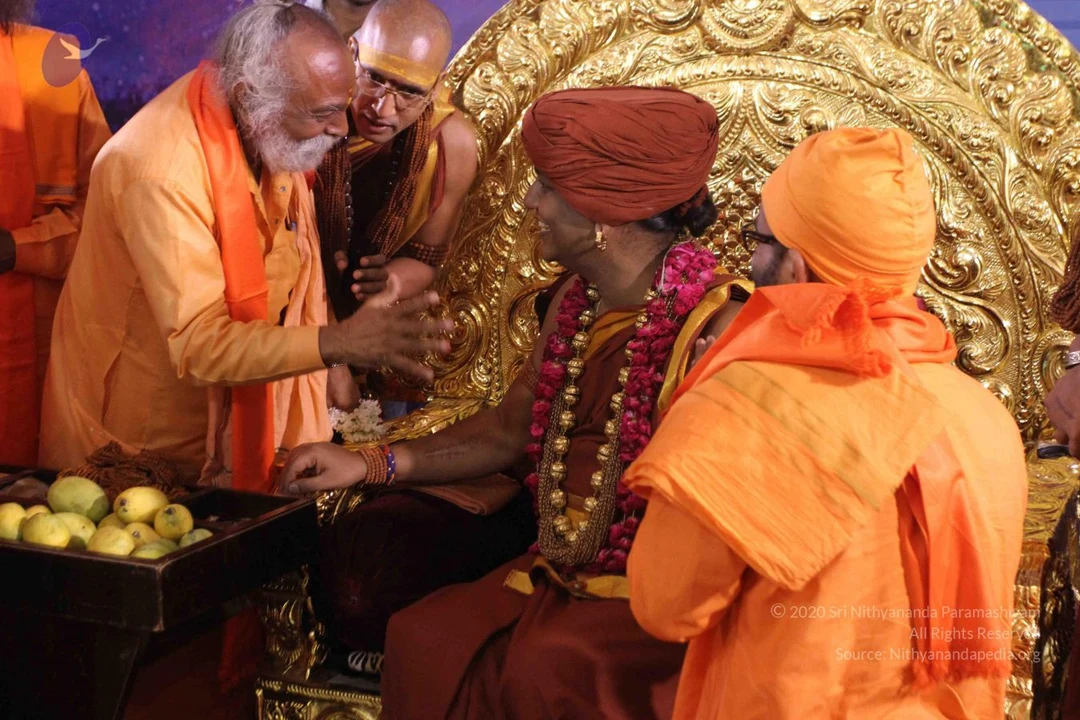
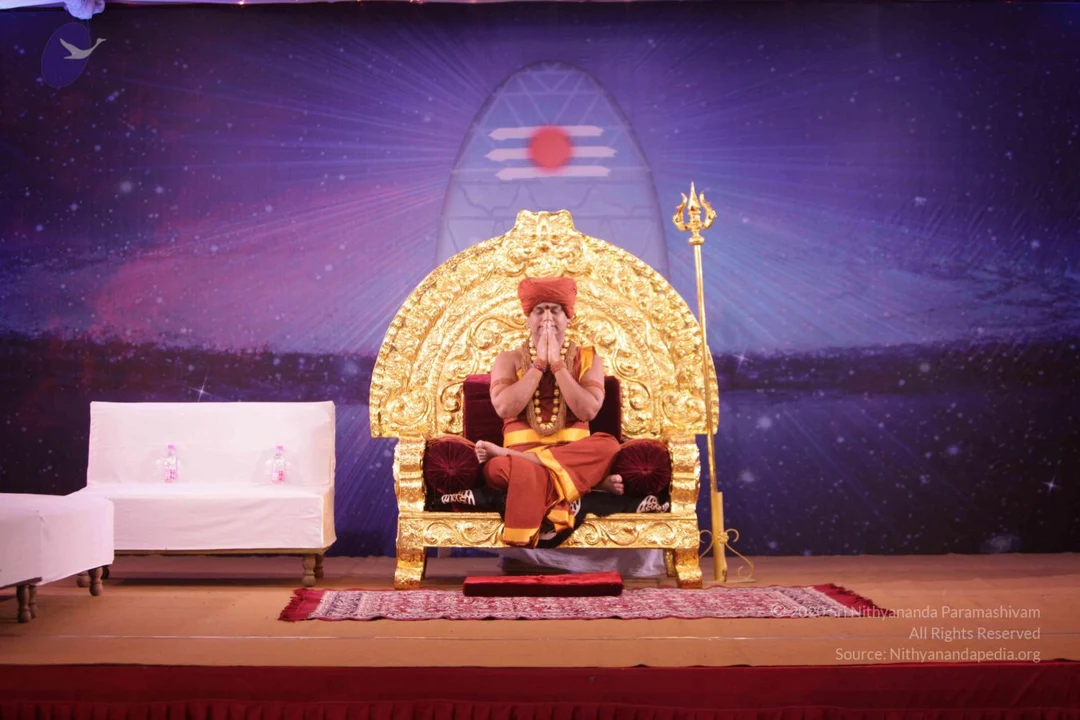
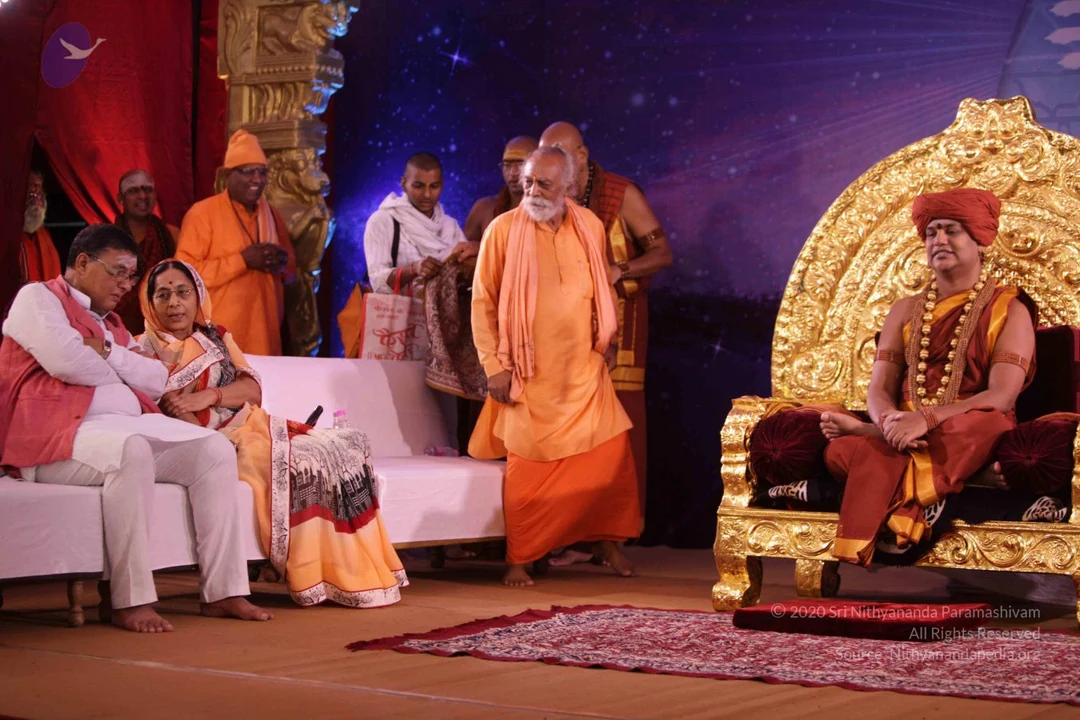
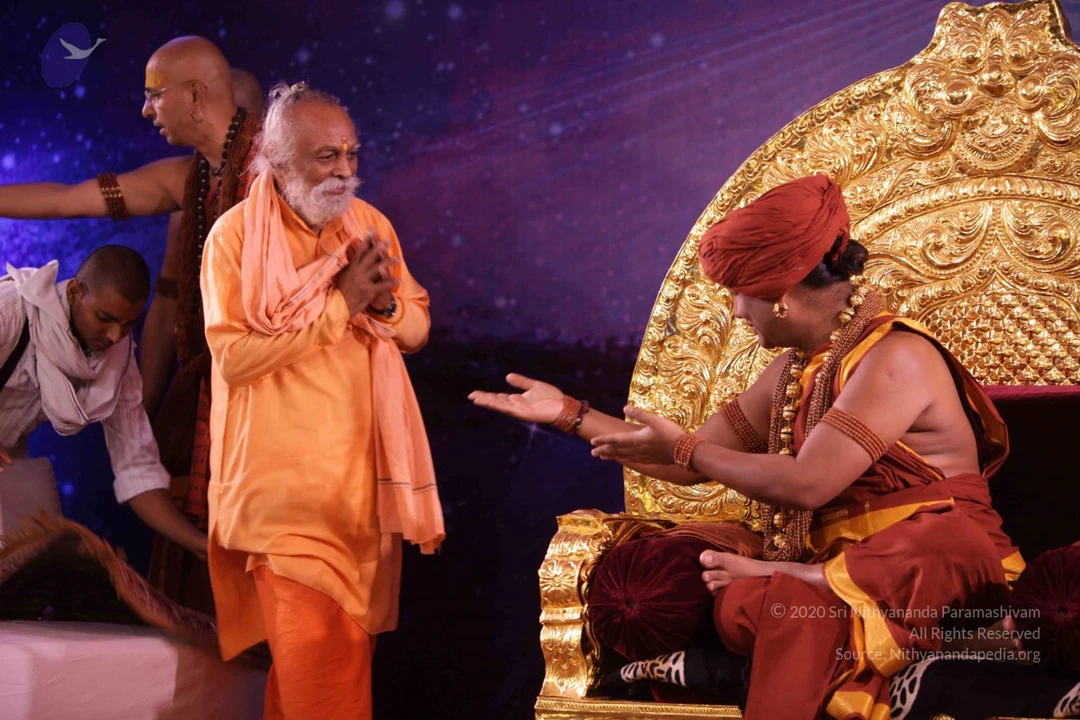
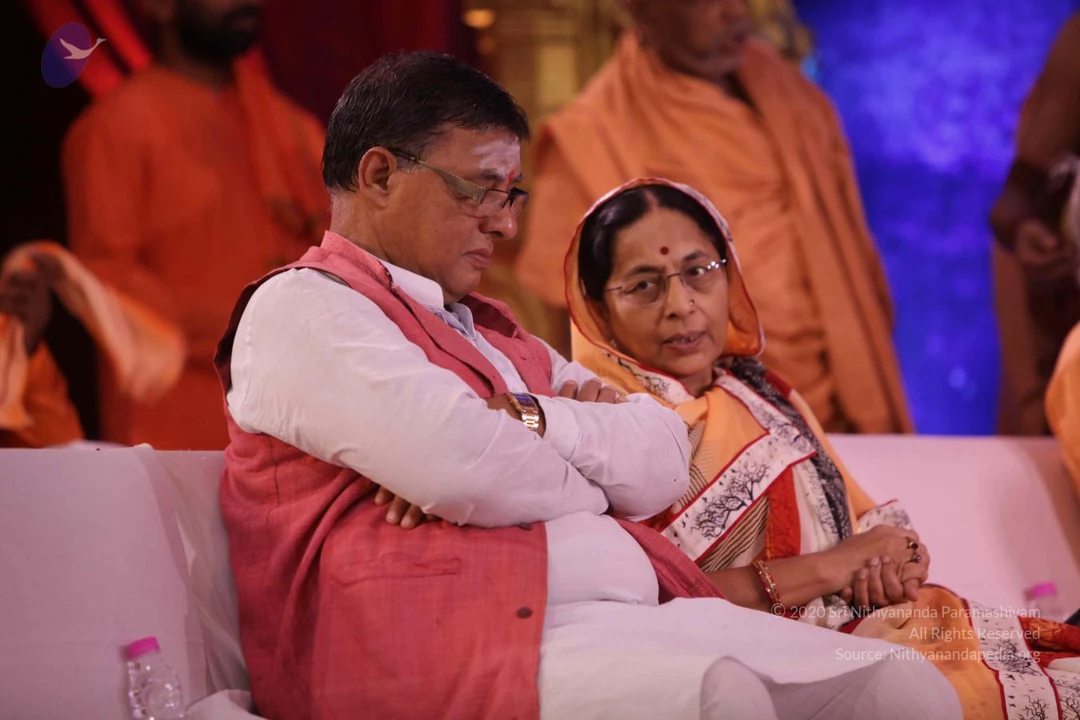
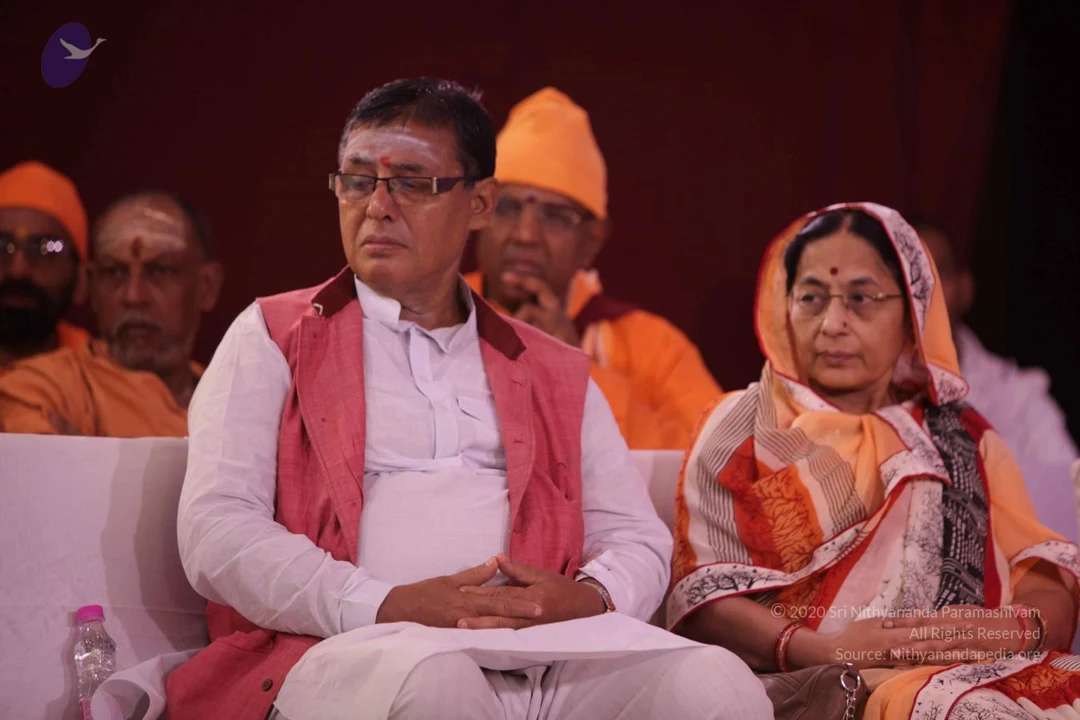
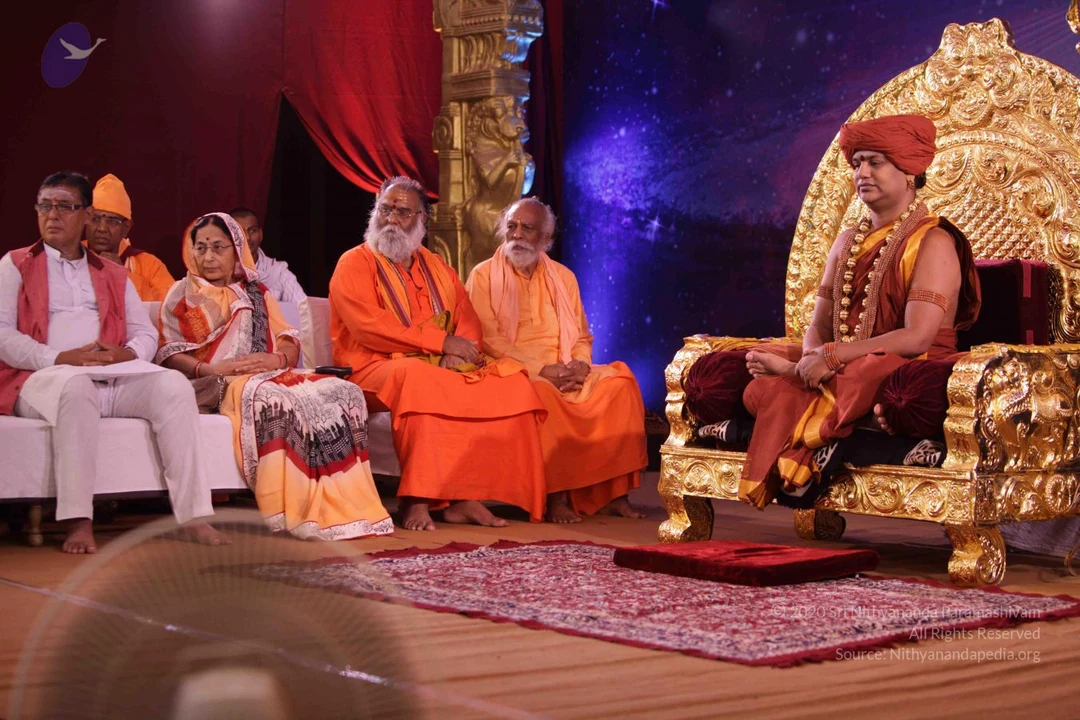
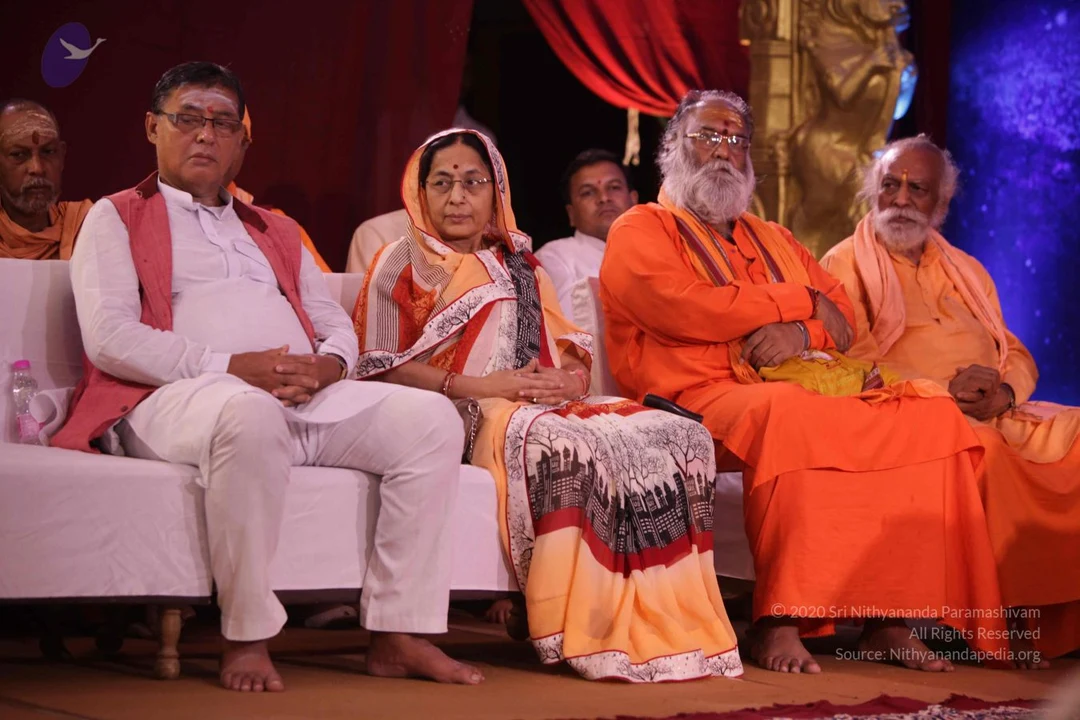
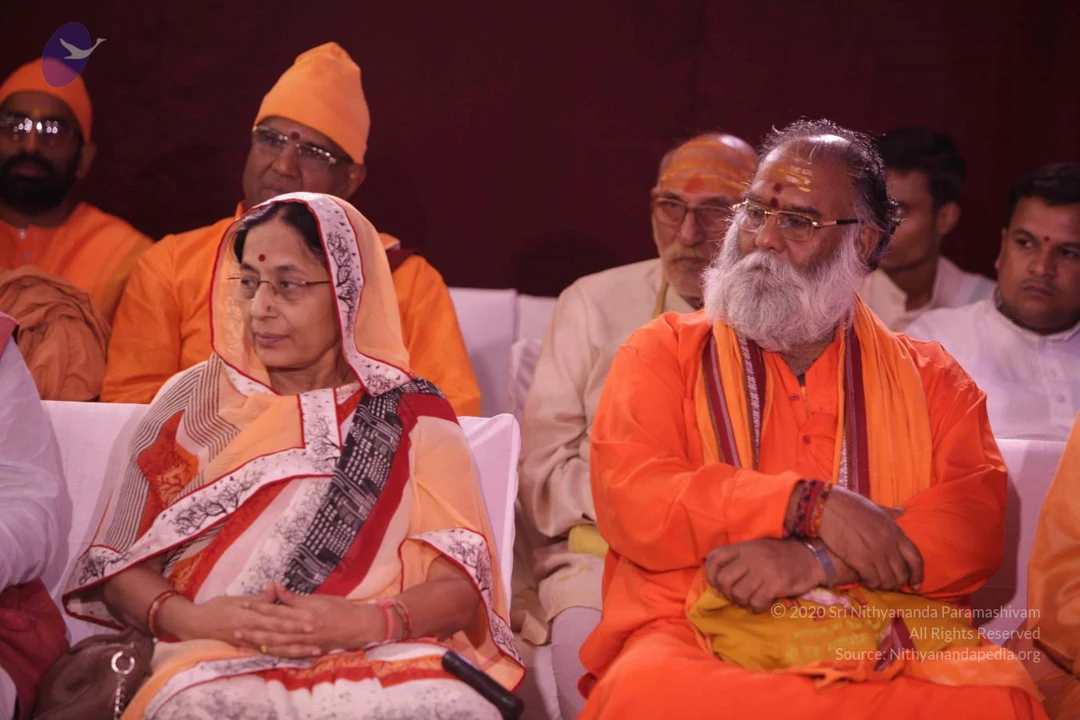
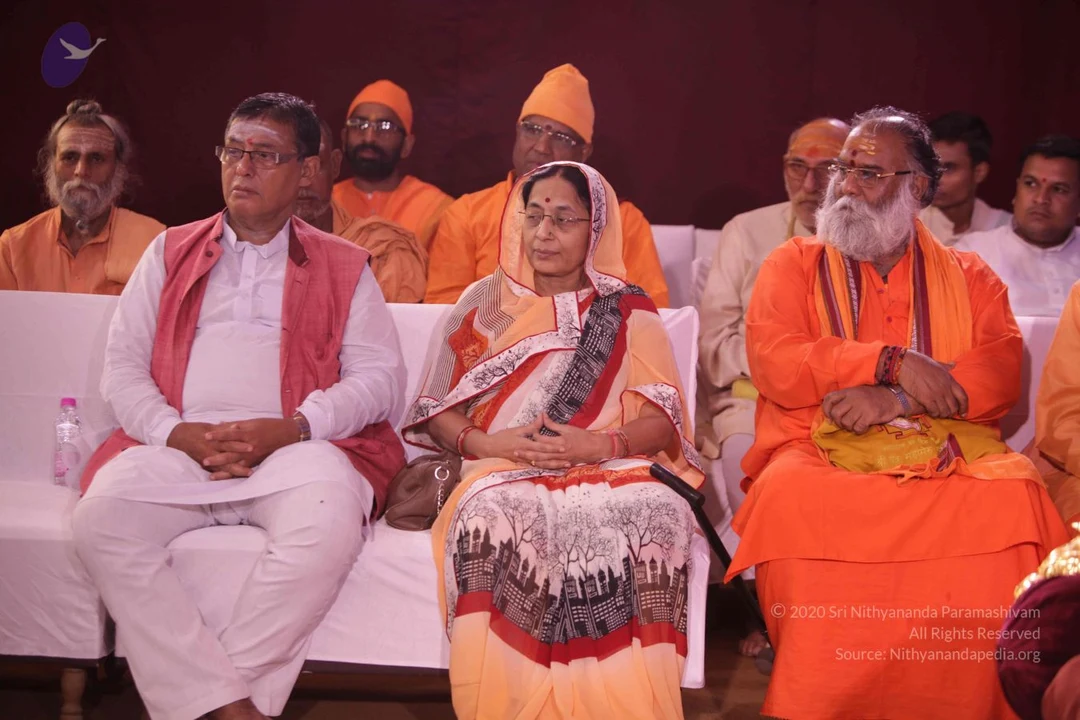
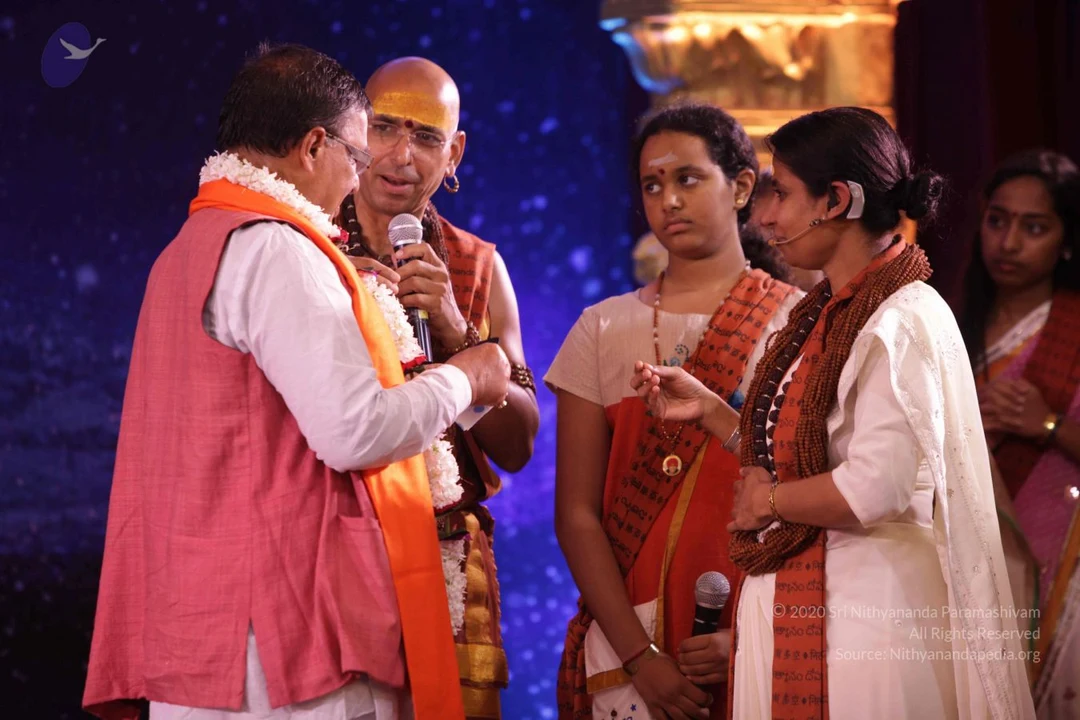
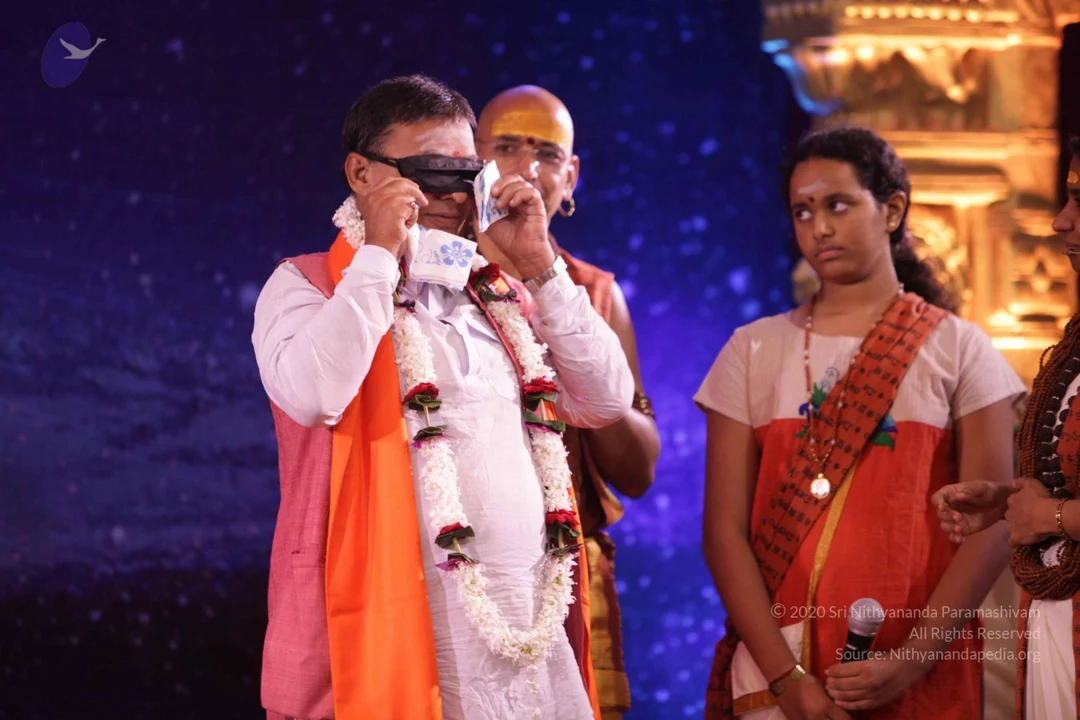
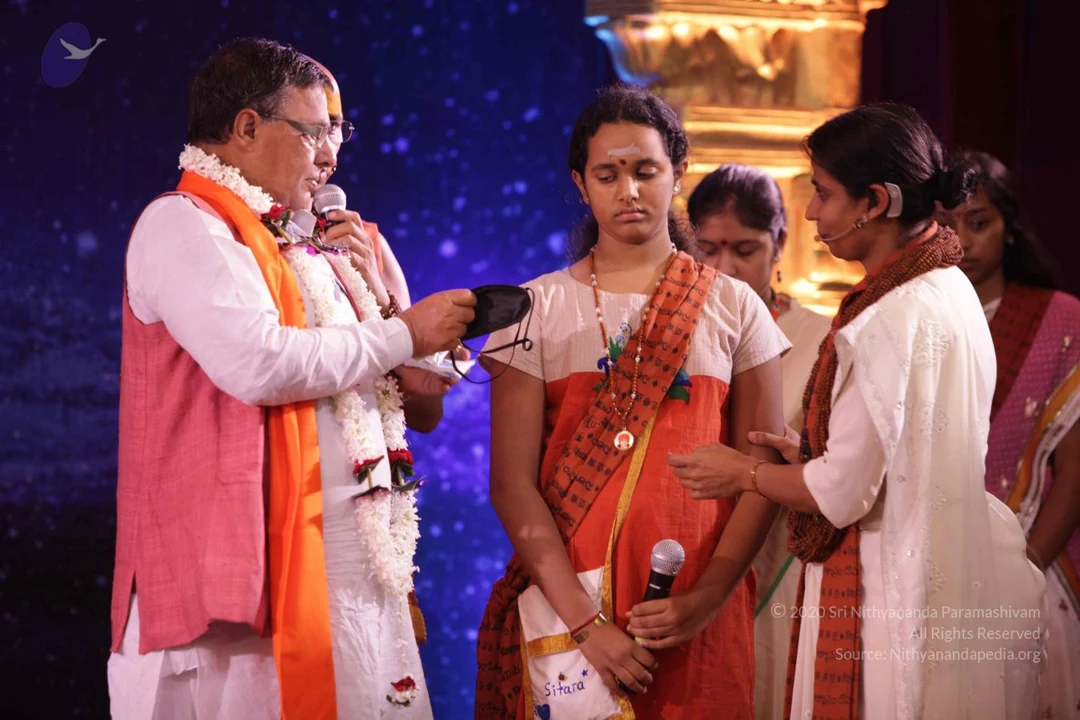
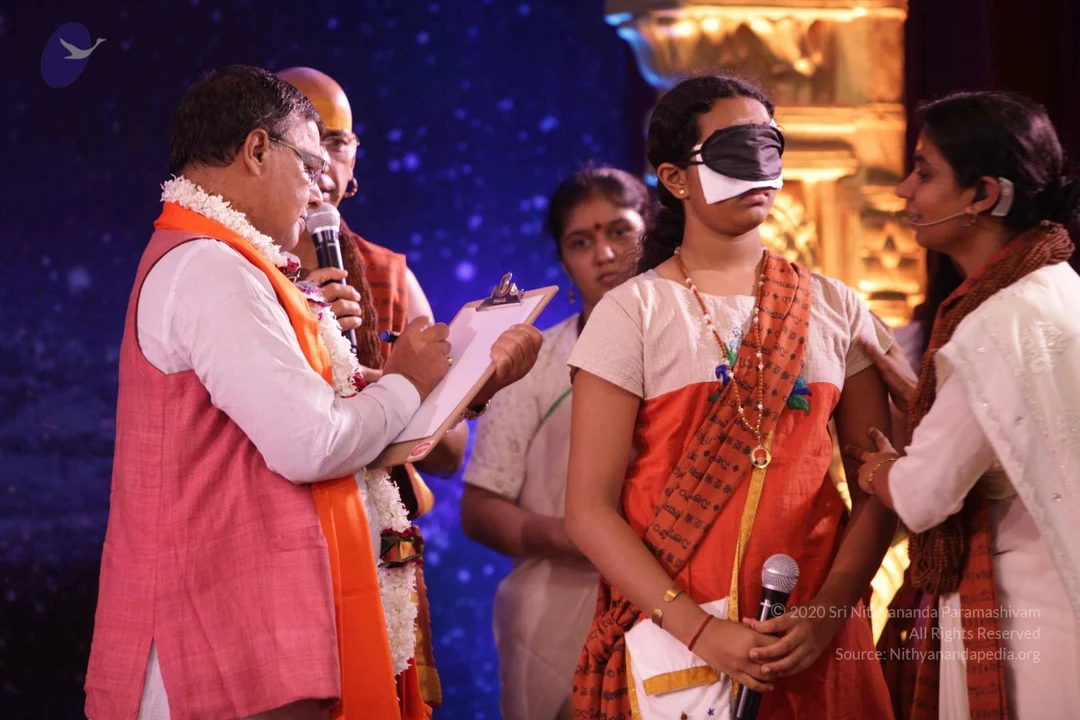
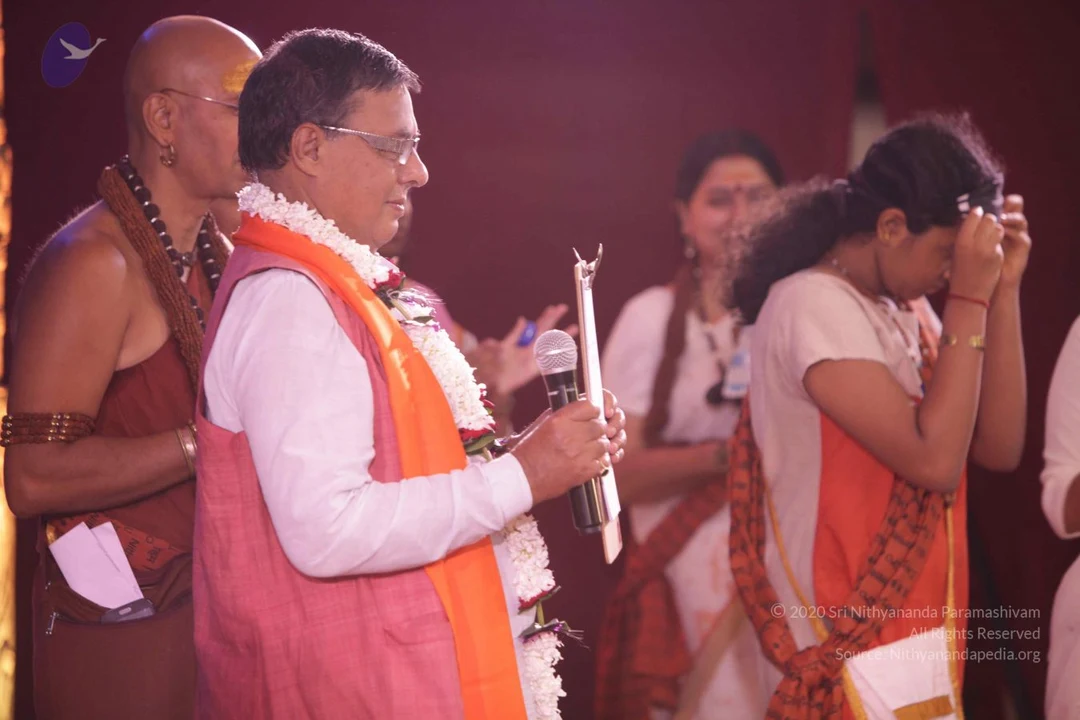
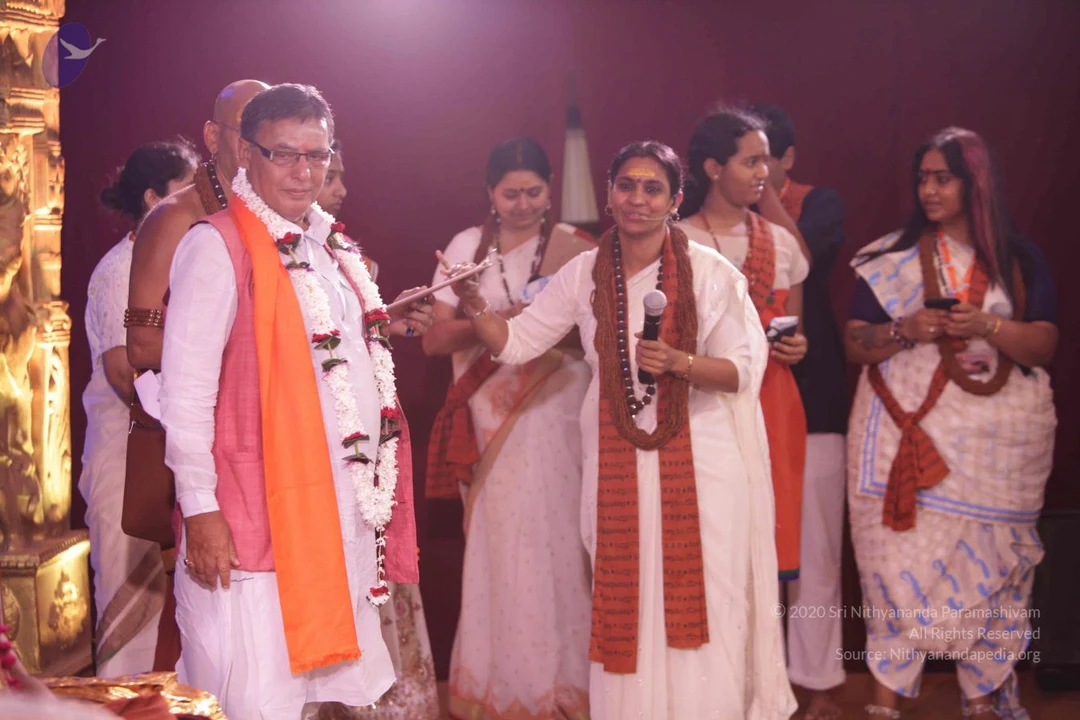
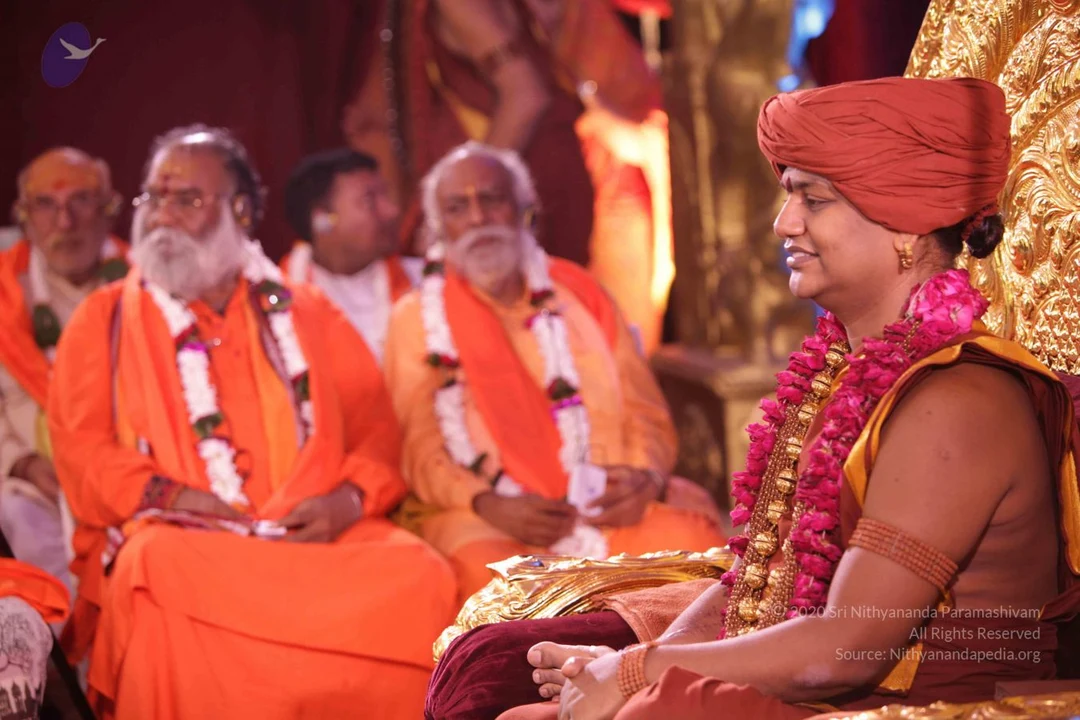
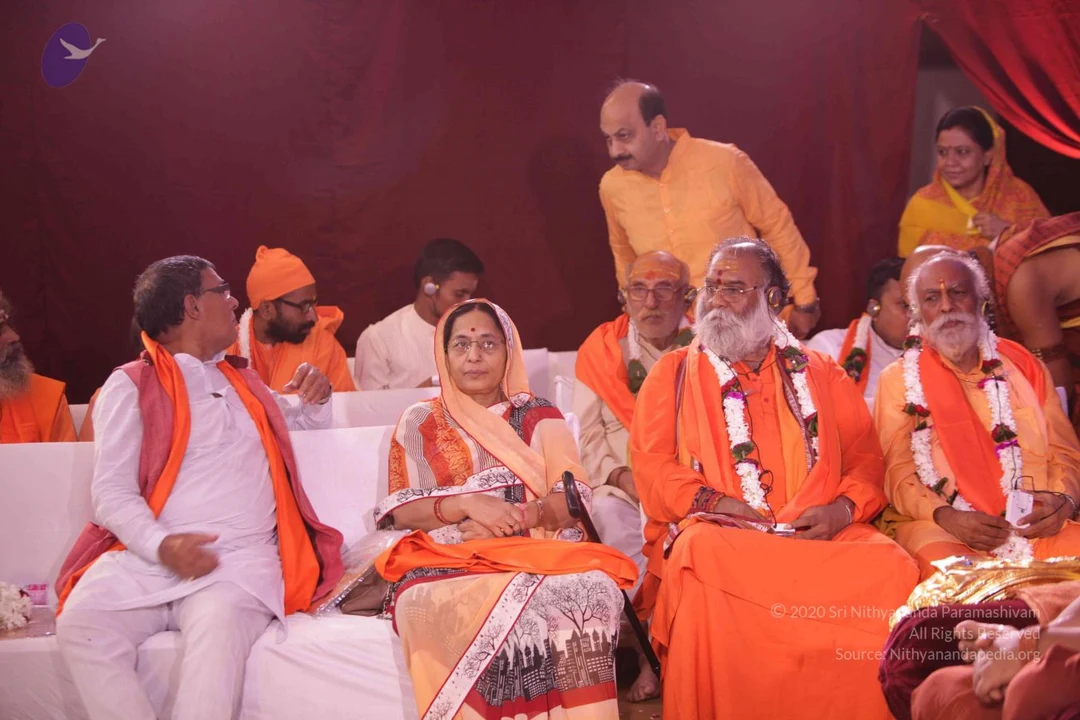
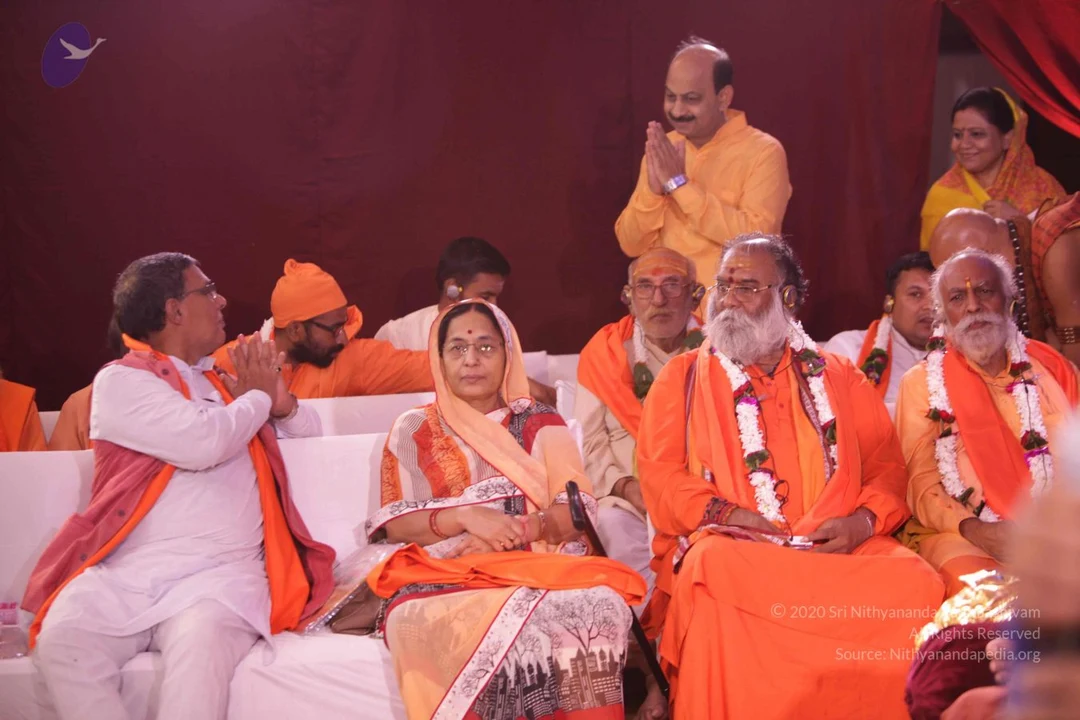
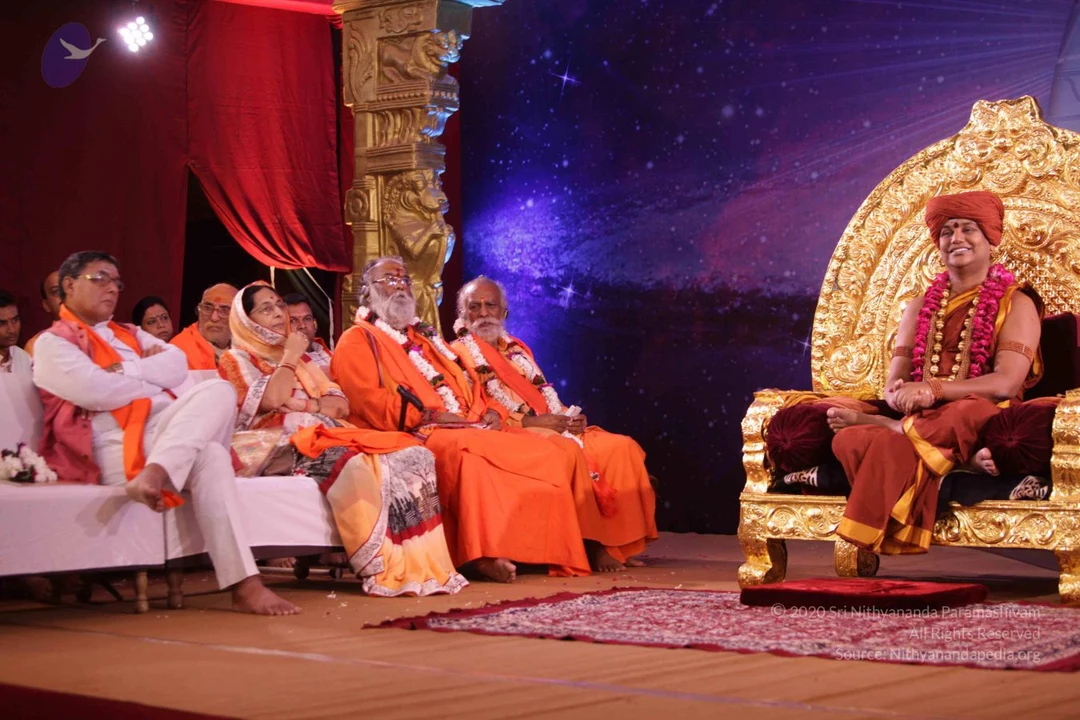
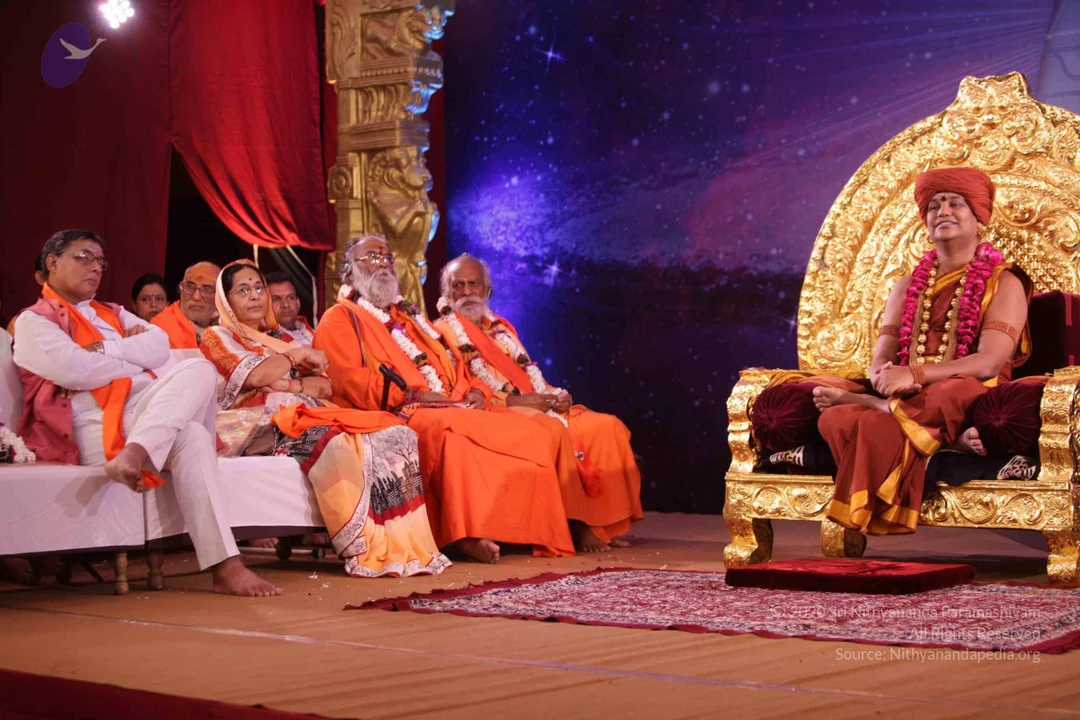
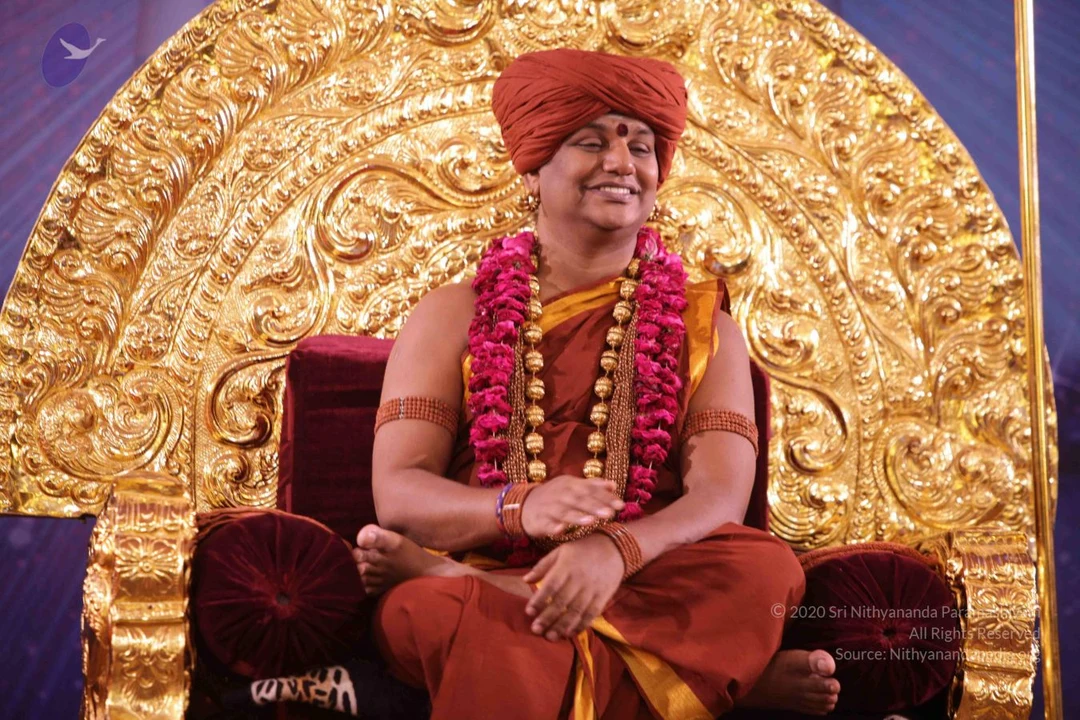
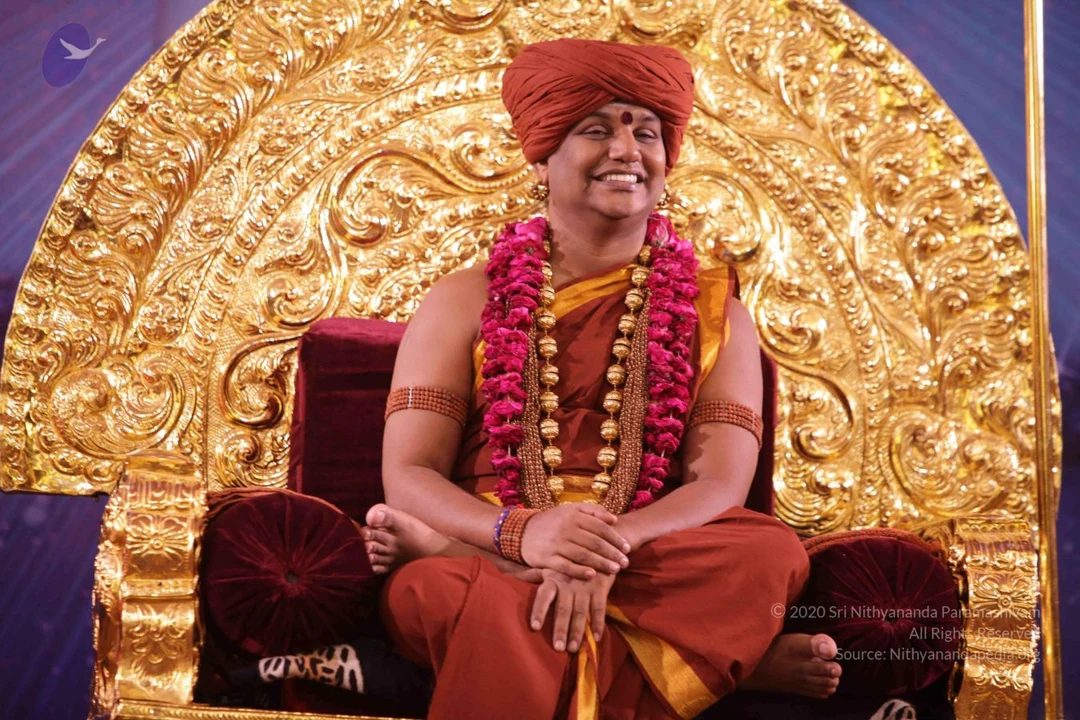
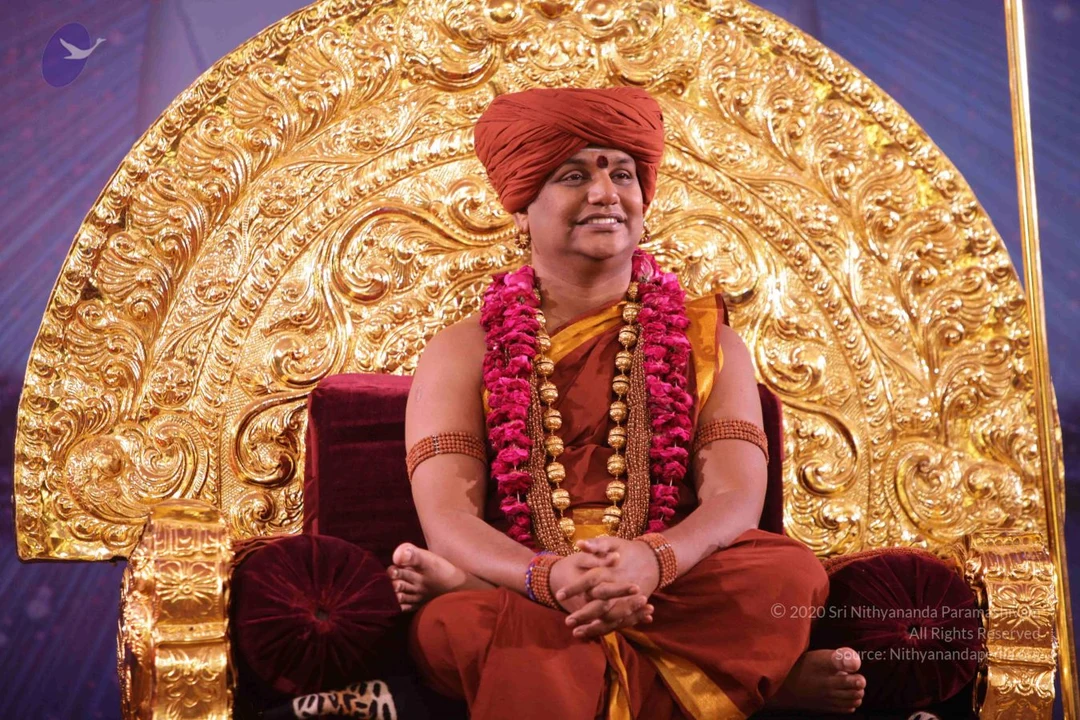
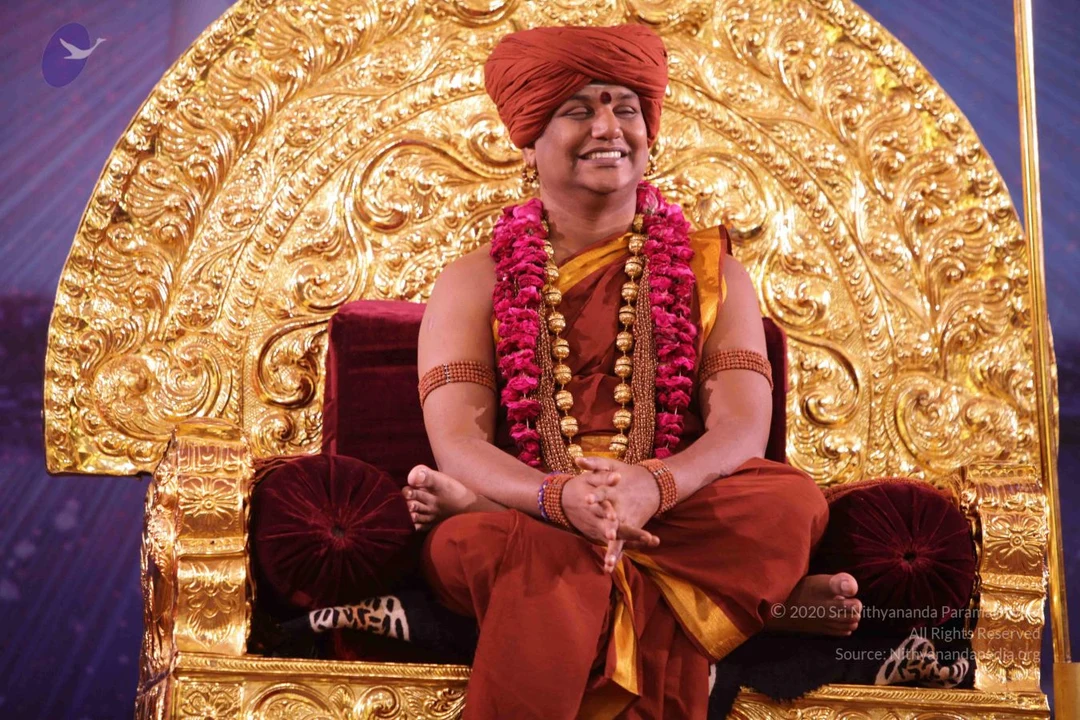
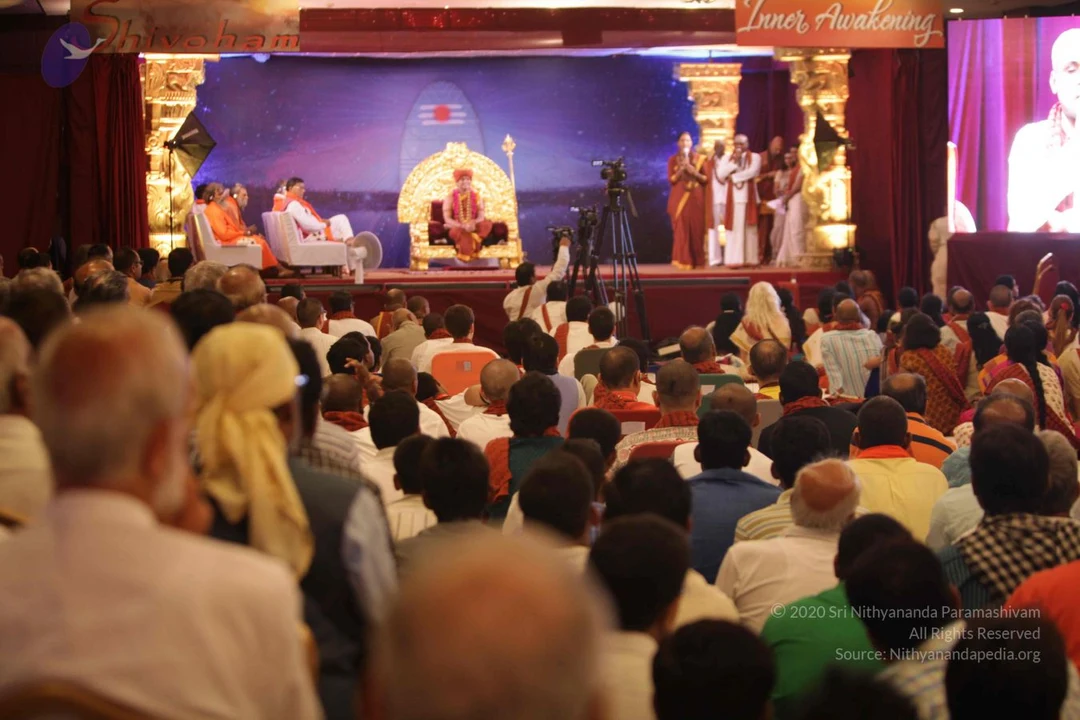
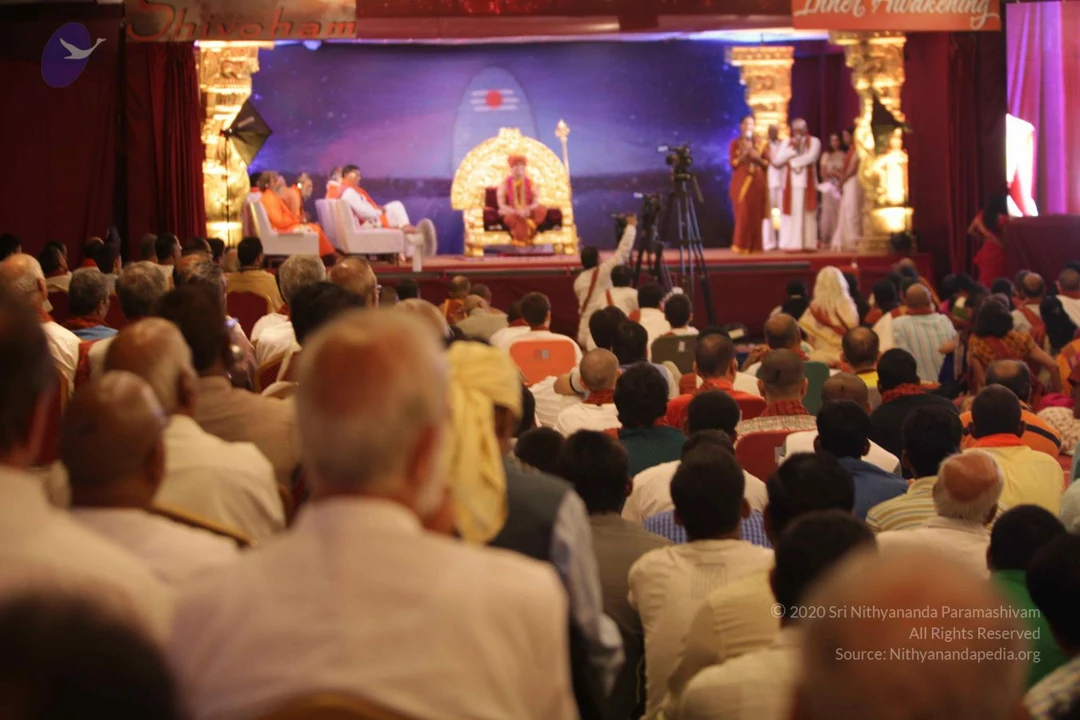
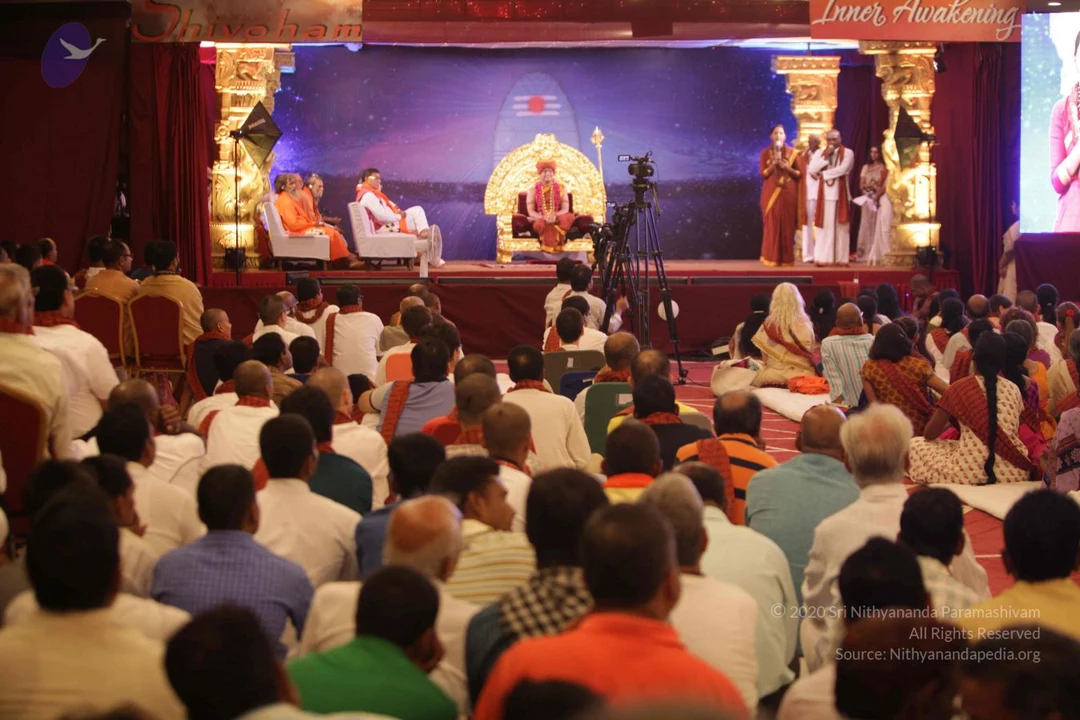
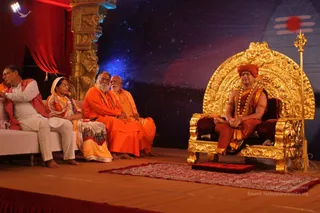
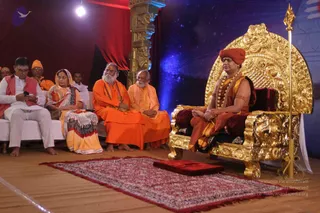
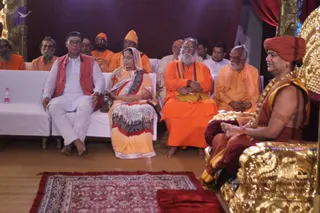
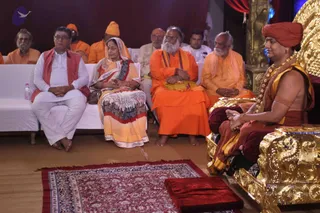
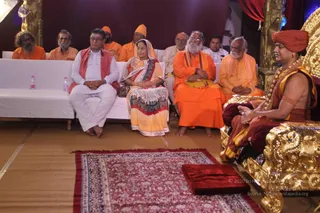
A stage event with a seated man on an ornate gold throne at right, wearing a rust-red turban, orange-red dhoti and a beaded mala necklace, hands clasped and feet bare. A trident stands beside the throne and a red cushion sits on the patterned red rug below. To the left, four people sit on a white sofa and chairs: a man in a white shirt with a red shawl, a woman in an orange and white sari, and two bearded men in saffron-orange robes. Behind them a golden pillar and red drapes frame a backdrop of a night sky with a red shivalingam-like emblem. The scene shows a seated Q&A or darshan session before a small audience of dignitaries and sannyasis.A seated man on an ornate gold throne with carved lion-like armrests and a red cushion, wearing an orange-red turban, rudraksha mala beads, a gold necklace and orange-red robes, sits on a red patterned rug. Before him on the wooden floor, four people sit on a white sofa: a man in white kurta with a red waistcoat holding a phone, a woman in orange sari with white head covering, and two bearded men in orange and saffron robes. A gold pillar and red curtains frame the stage, with a starry blue backdrop behind the throne. A golden staff stands beside the throne. The seated figure is an appearance-based probable Swamiji (Swamiji (probable)) given his turban, rudraksha mala and gold necklace, seated on a throne for a discourse or darshan.Seated audience facing a golden throne at a satsang or discourse hall with red draped backdrop. On the right, a figure in a rust-orange turban and orange-and-maroon robes, with a long beaded garland, sits on an ornate gold throne (peetha) and smiles. Facing the throne on white sofas, a man in a white kurta and pink-red waistcoat sits beside a woman in a cream and red sari with a white head covering. Next to them, a bearded man in saffron-orange robes with a red-and-gold shawl sits with hands folded, and a white-bearded man in an orange shawl sits further along, with more saffron-clad sannyasis and white-clad men behind them. A red patterned rug lies in the foreground.A seated audience at a satsang or darshan session faces a golden throne at right. On the throne sits a person in a red-orange turban and a deep red-and-gold garment, smiling with hands resting together. Facing the throne on white couches are several people: a man in white kurta and a red-pink vest with folded hands, a woman in an orange and white saree with a light head covering, a bearded elder in an orange robe, another elder in orange with a shawl, and several men in orange or white clothing seated behind. A red carpet with patterned rug lies in front, and a gold-framed figure stands at the upper left. Purely visual identification of the person on the throne is not possible from appearance; he is described by role as the seated figure on the throne.A seated gathering in an ornate hall with a red draped backdrop and a gilded throne at right. On the right, a figure in a rust-red turban, orange-gold robe and a beaded necklace sits on the gold throne with a maroon cushion, facing the audience. Seated on white sofas at left are a man in a white kurta and red vest, a woman in a cream and orange sari with a white head covering, and several men in saffron and orange robes, one with a long white beard and a rudraksha mala. A red patterned rug lies in the foreground with a maroon cushion. Several people in saffron-orange robes sit in the audience.A photograph of a seated audience facing a golden throne on a raised stage. On the right, a figure in a saffron-orange turban and an orange-red robe with a gold-toned mala sits on the ornate gold throne, hands together, appearing to be the one being received. Facing him on a white sofa-bench are seated devotees: a man in white kurta and a red-and-white vest, a woman in a cream and red patterned sari, an elderly bearded man in orange robes with a striped sash, and another bearded man in saffron. Behind them more sadhus in orange and men in white stand or sit. A red and blue patterned rug lies on the floor with a red cushion in front of the throne.
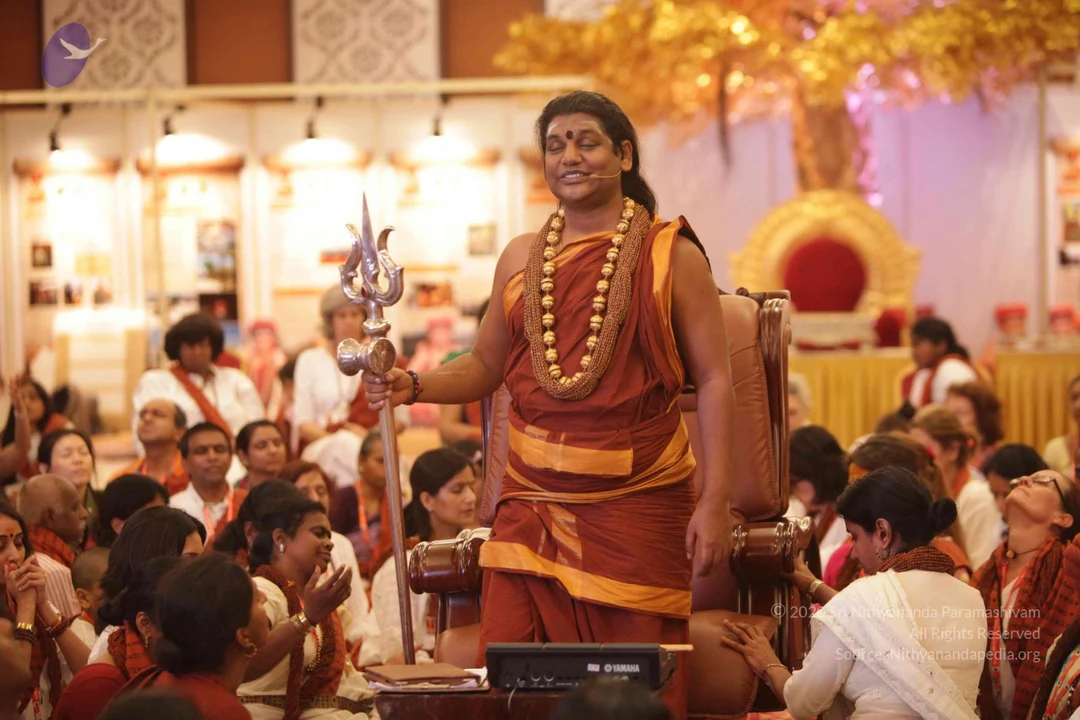
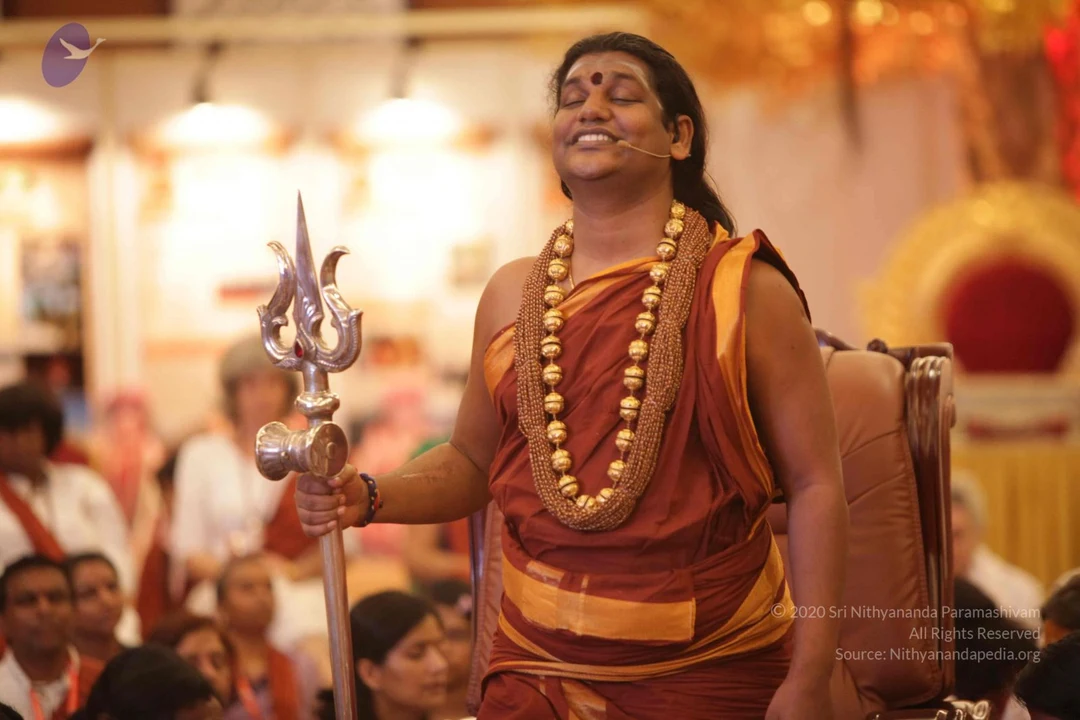
power-manifestation
103 photosSource gallery
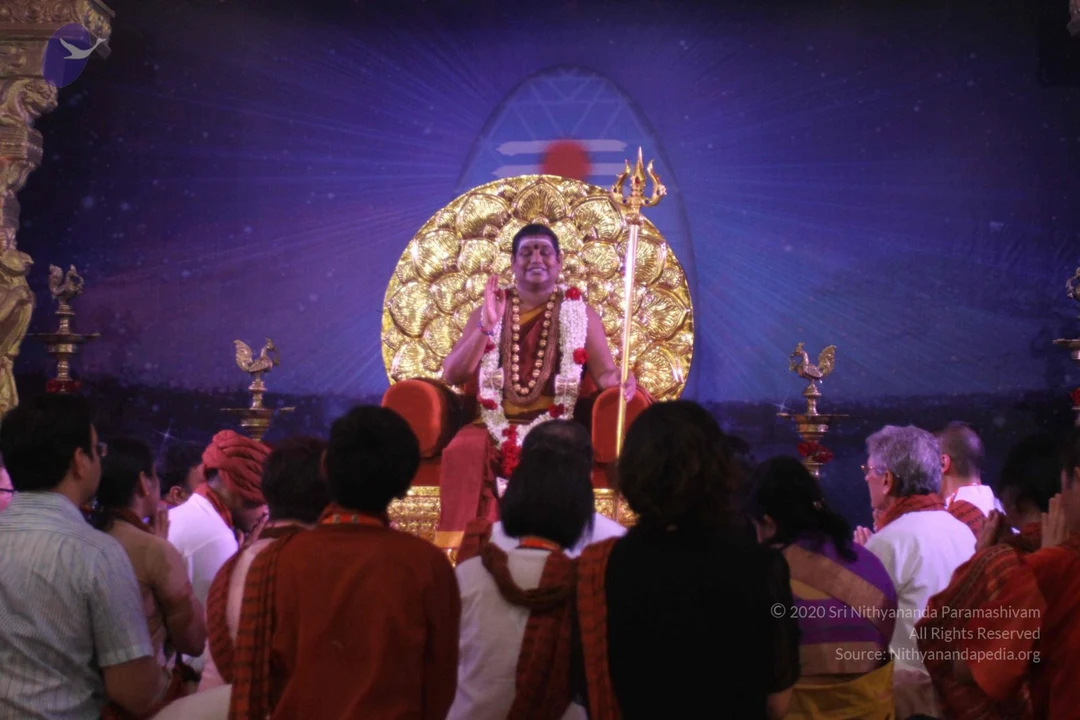
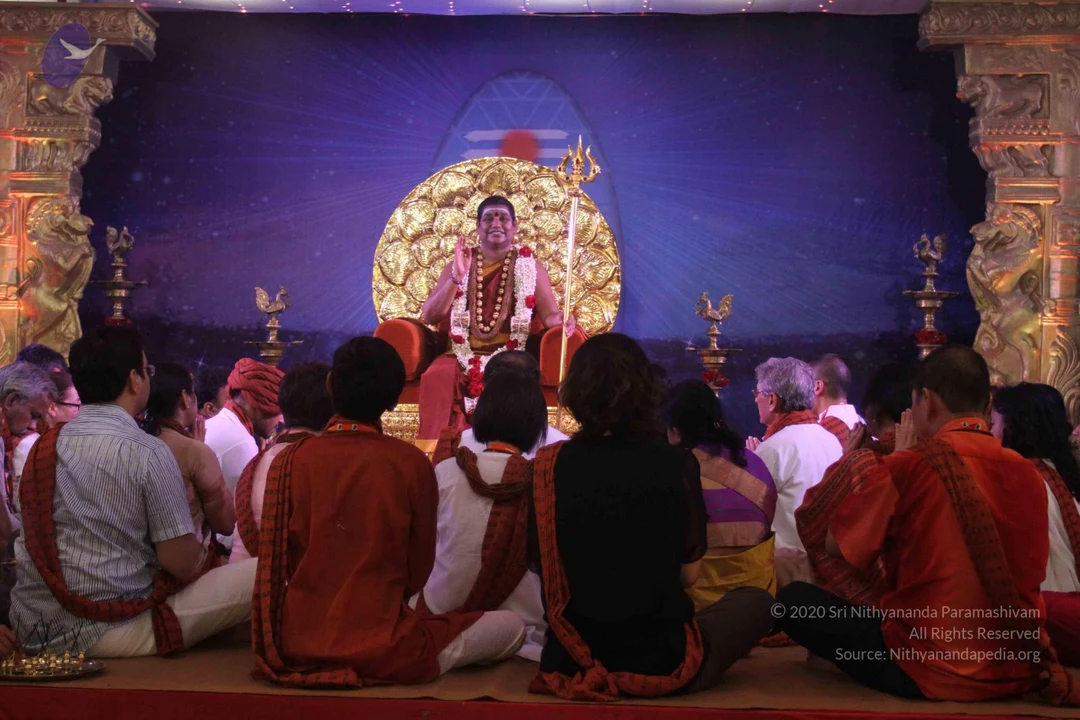
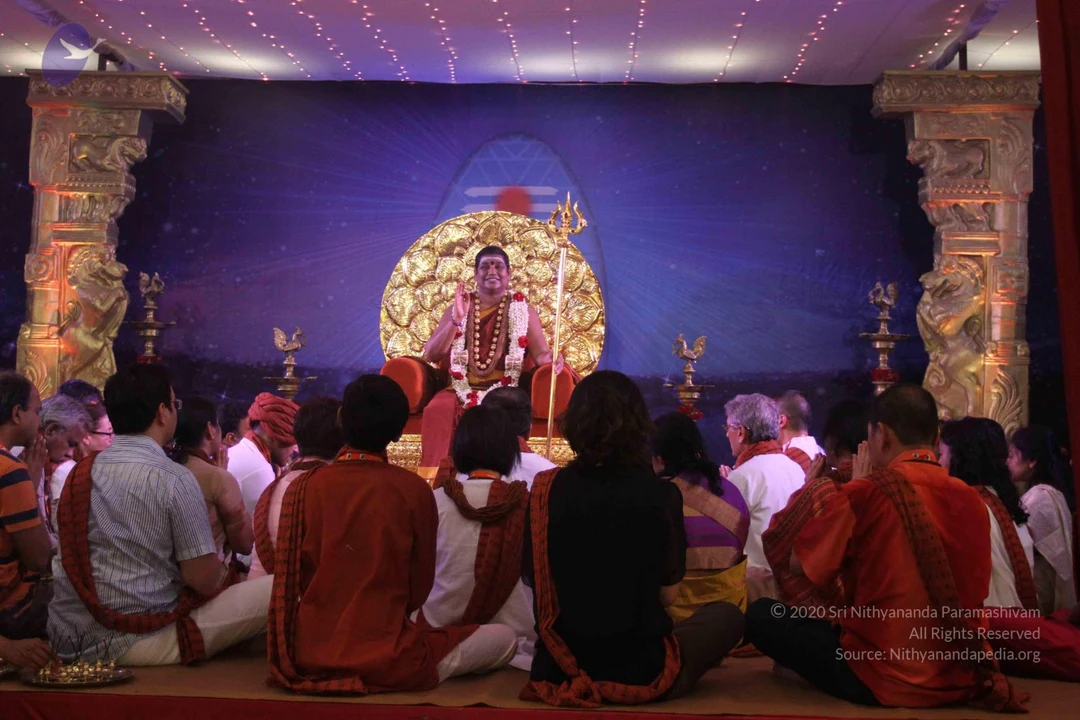
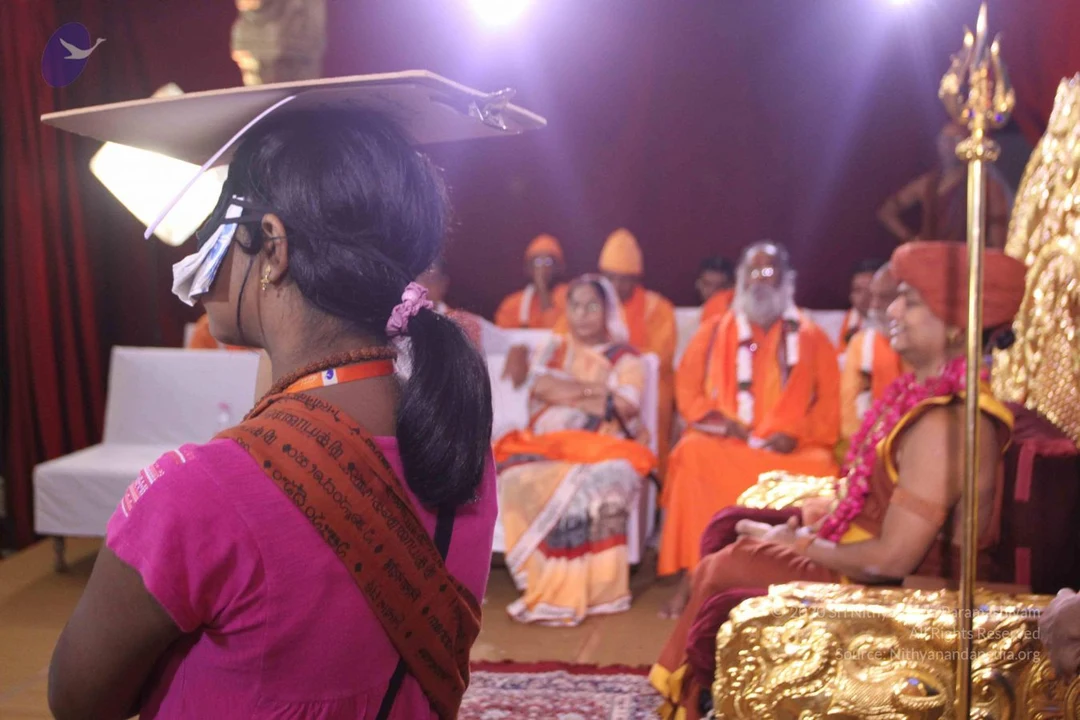
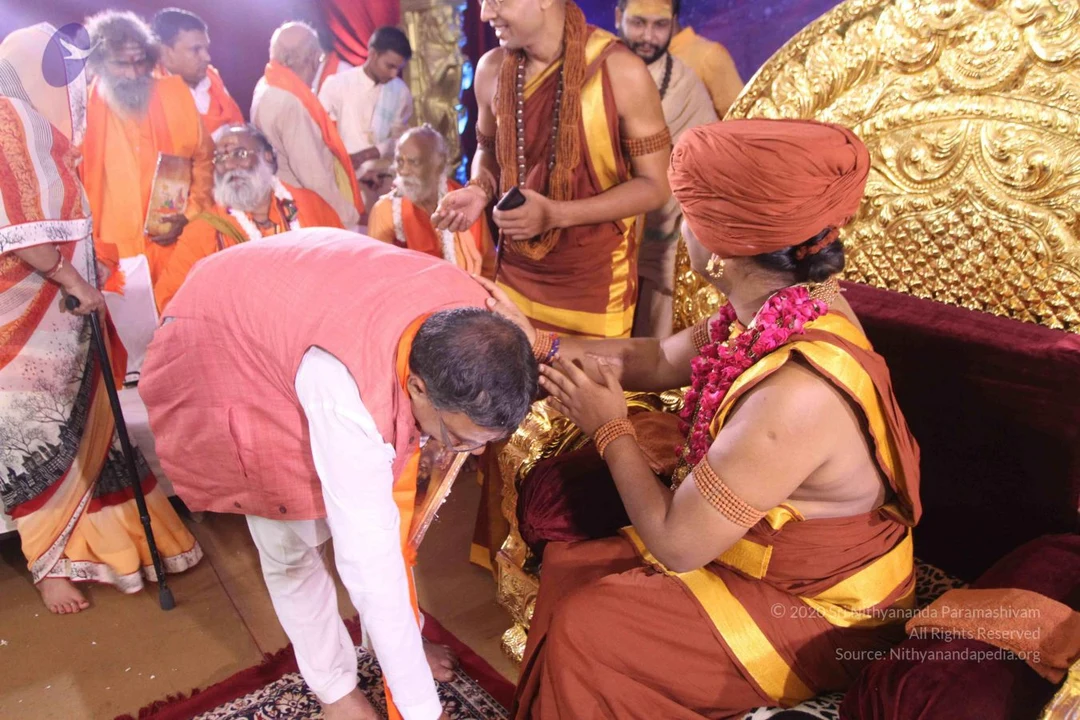
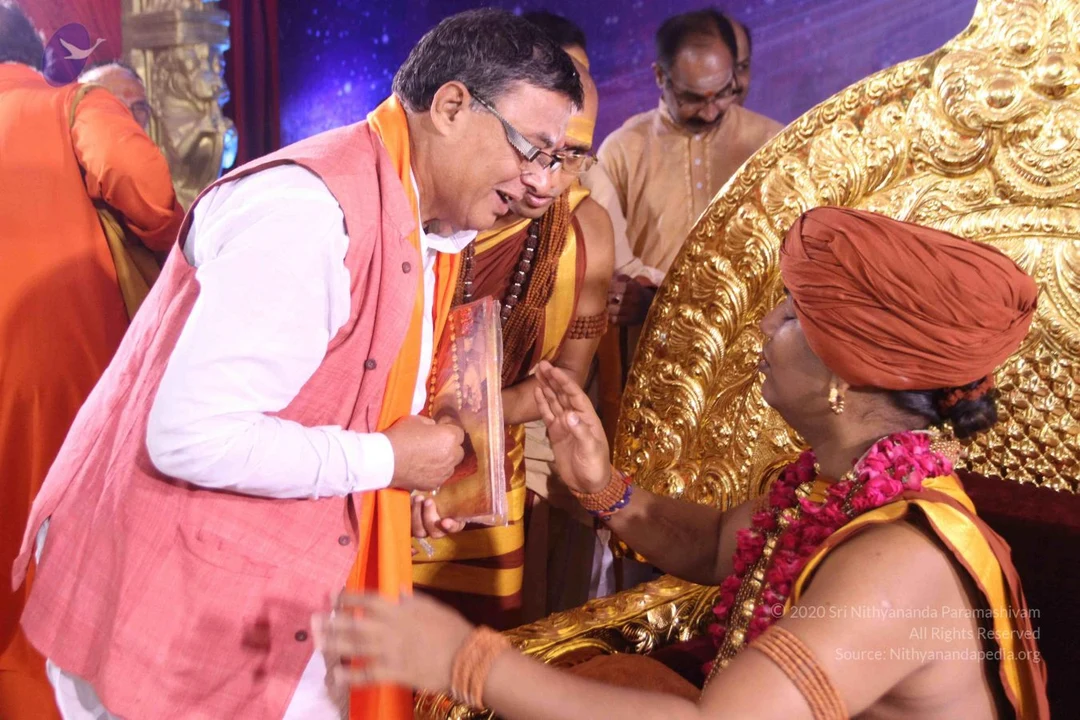
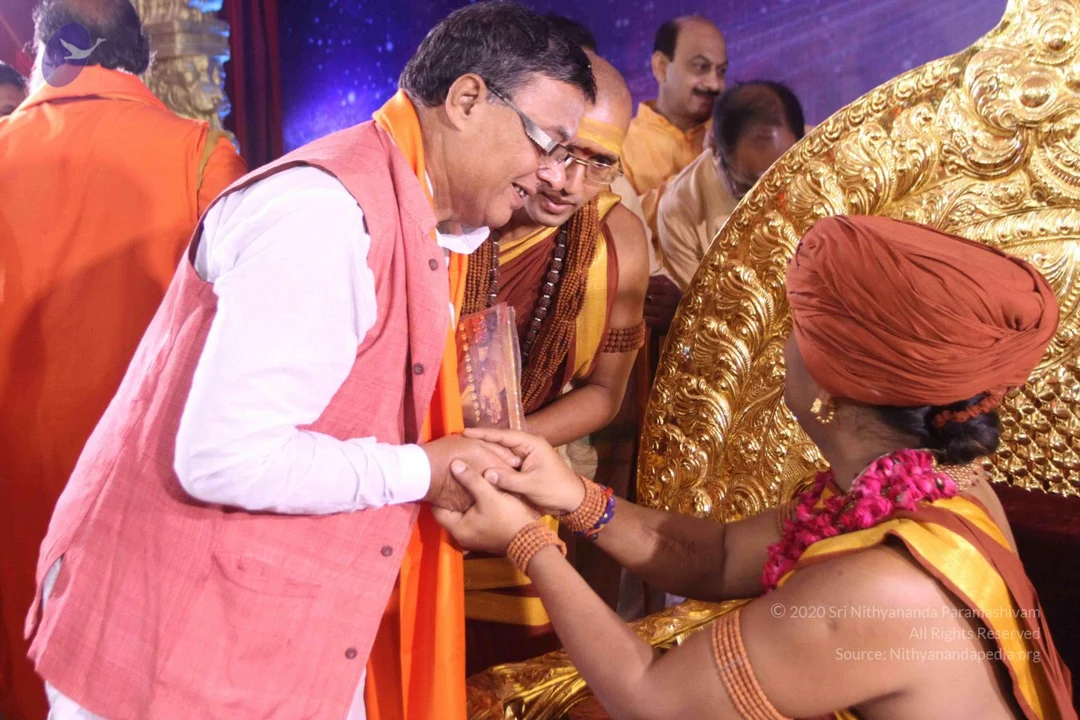
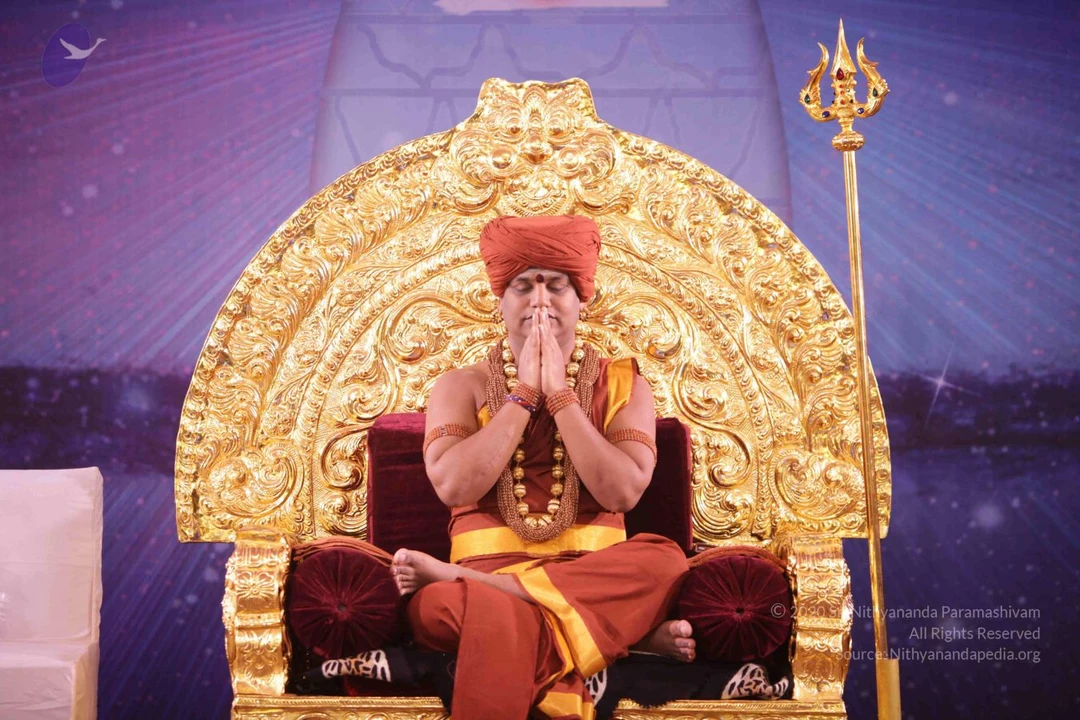
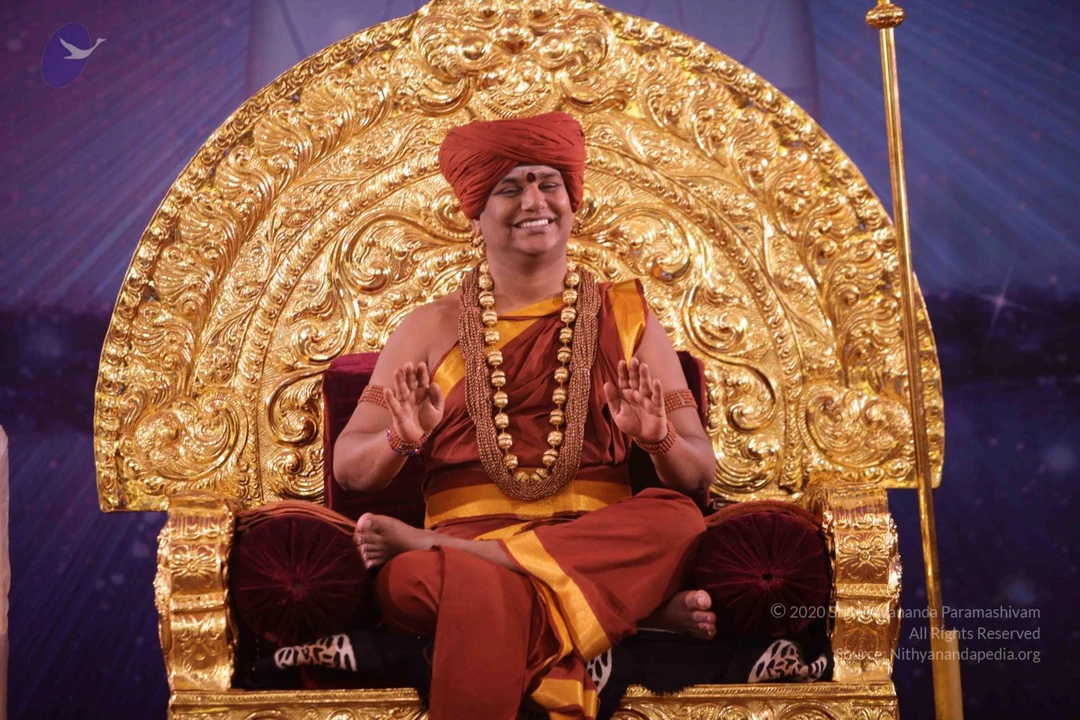
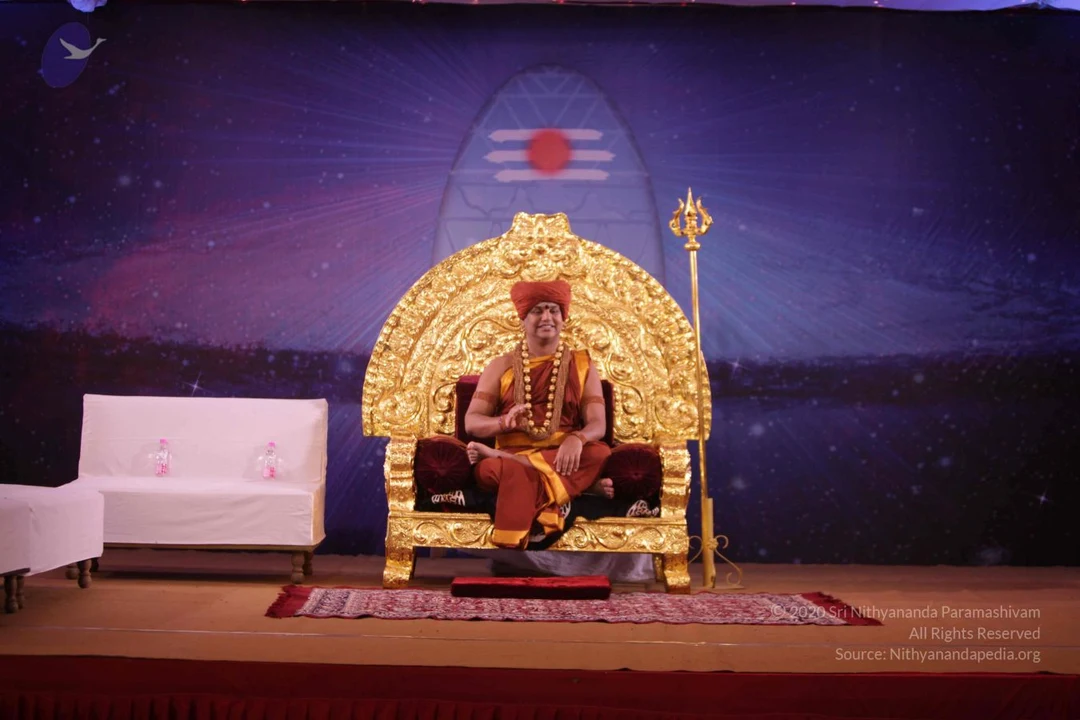
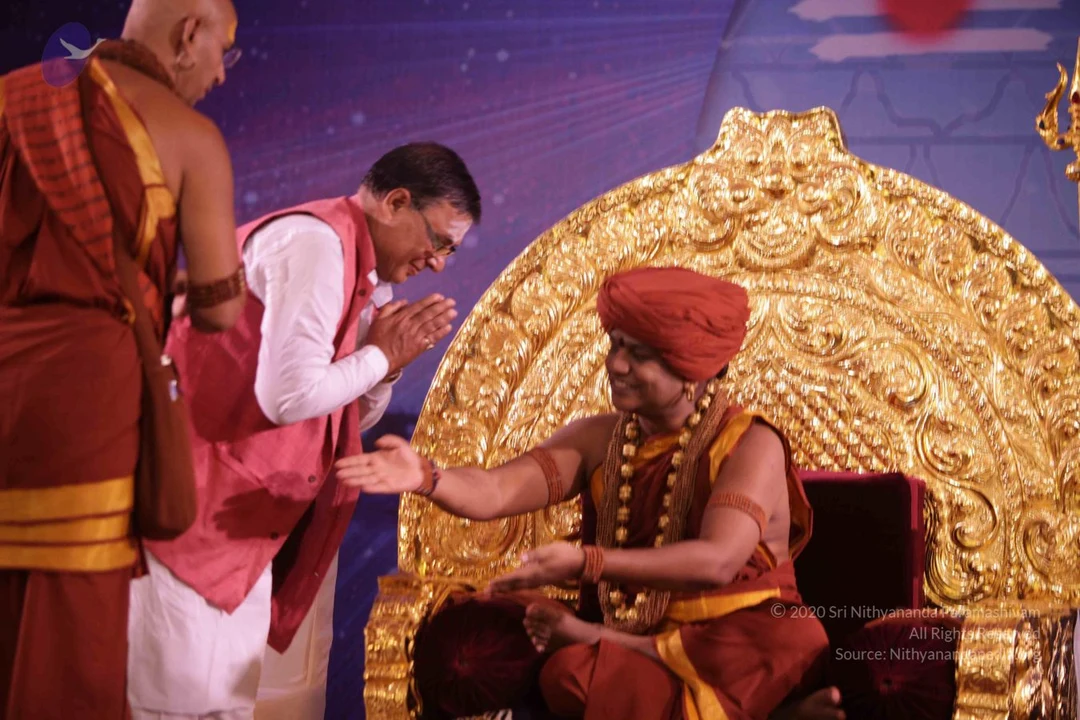
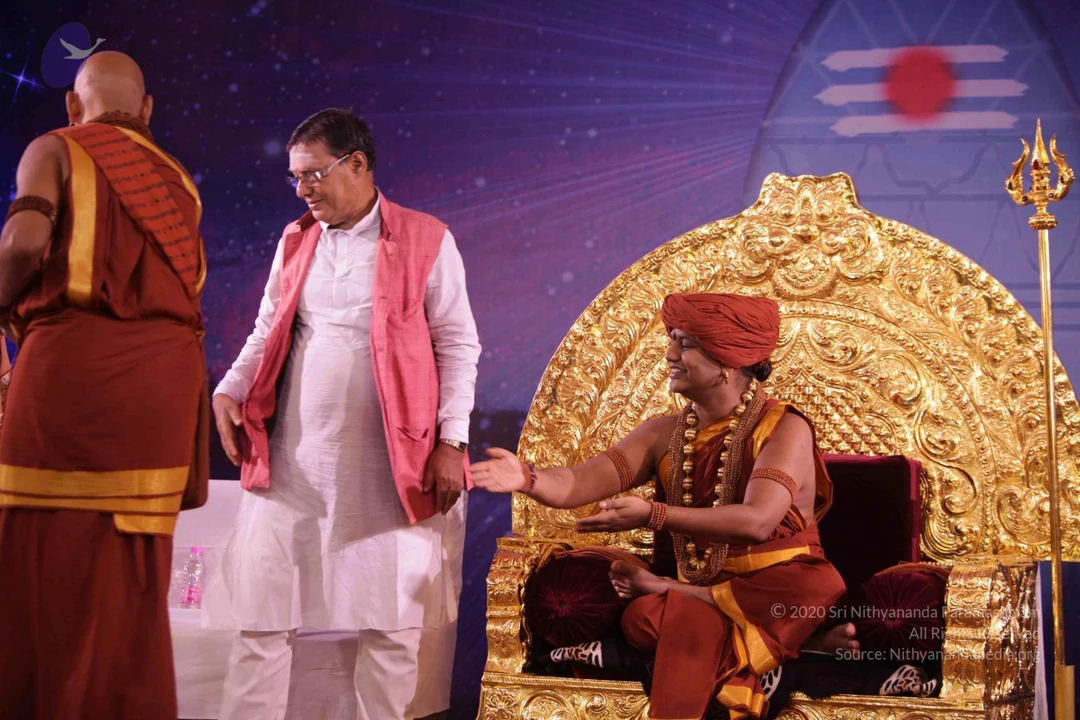
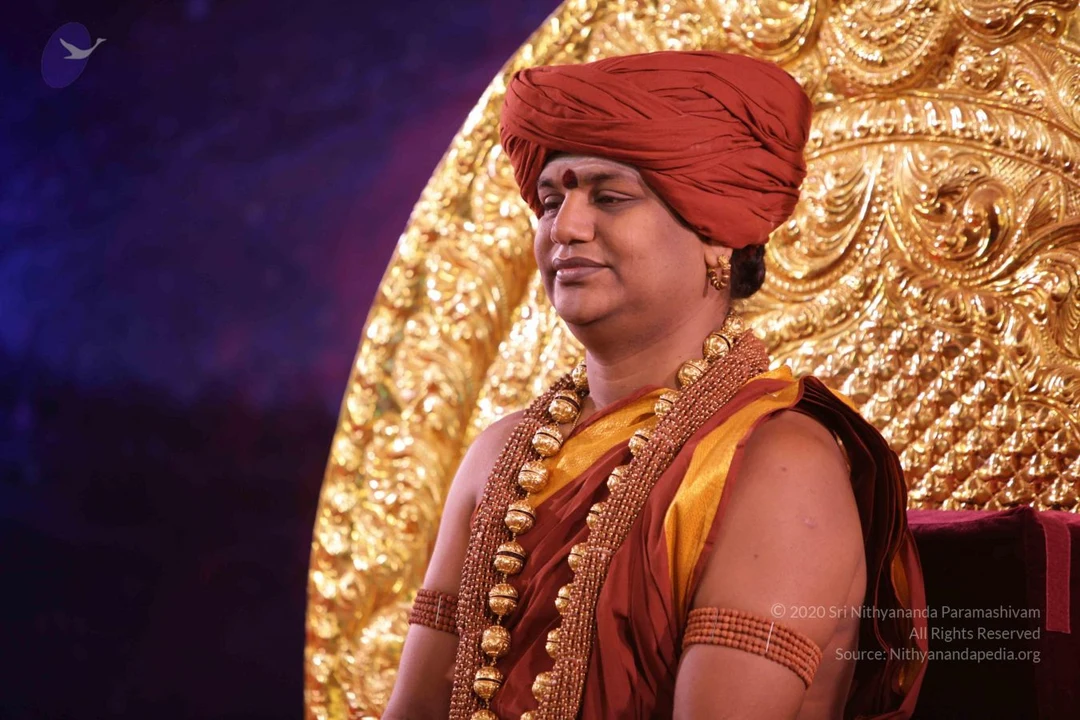
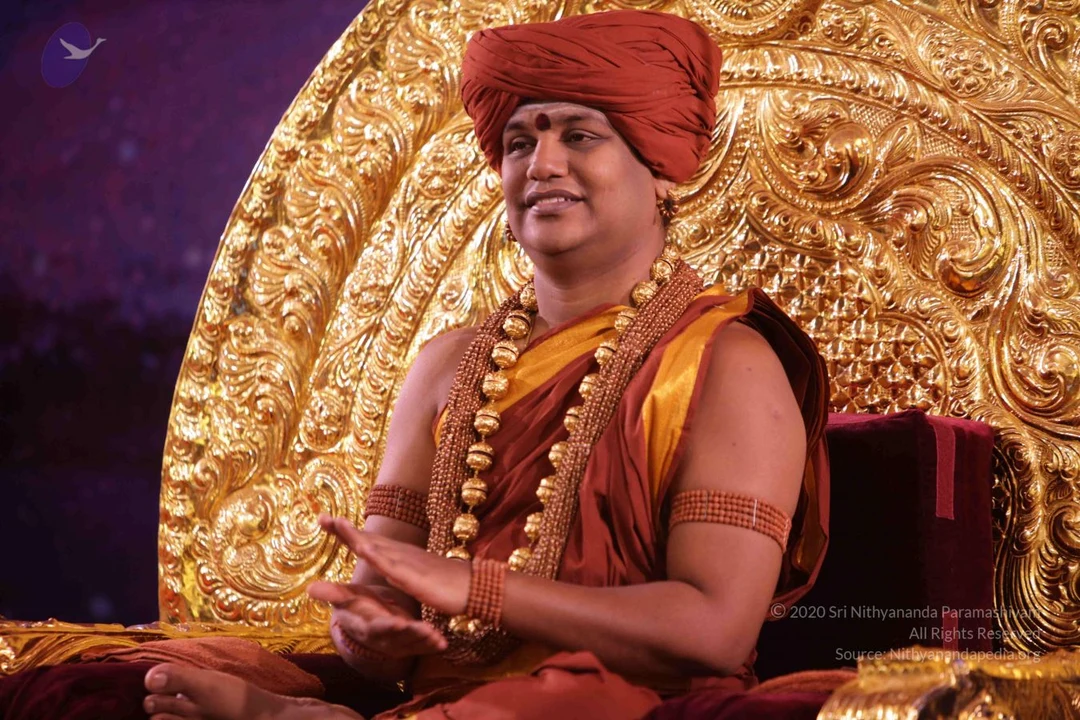
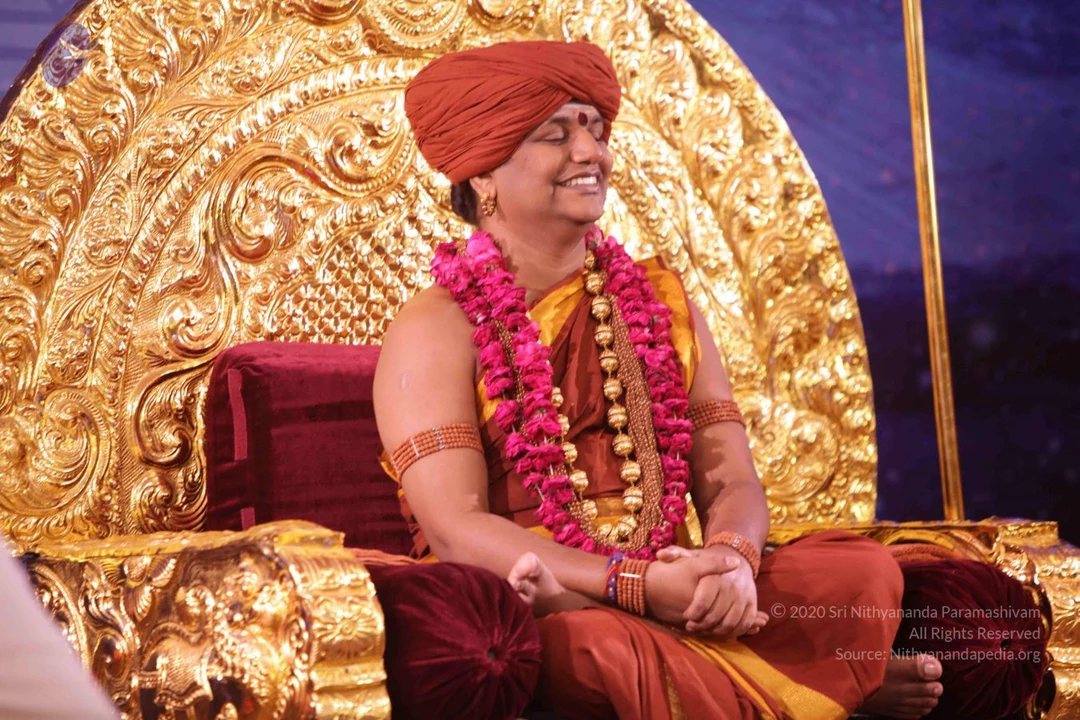
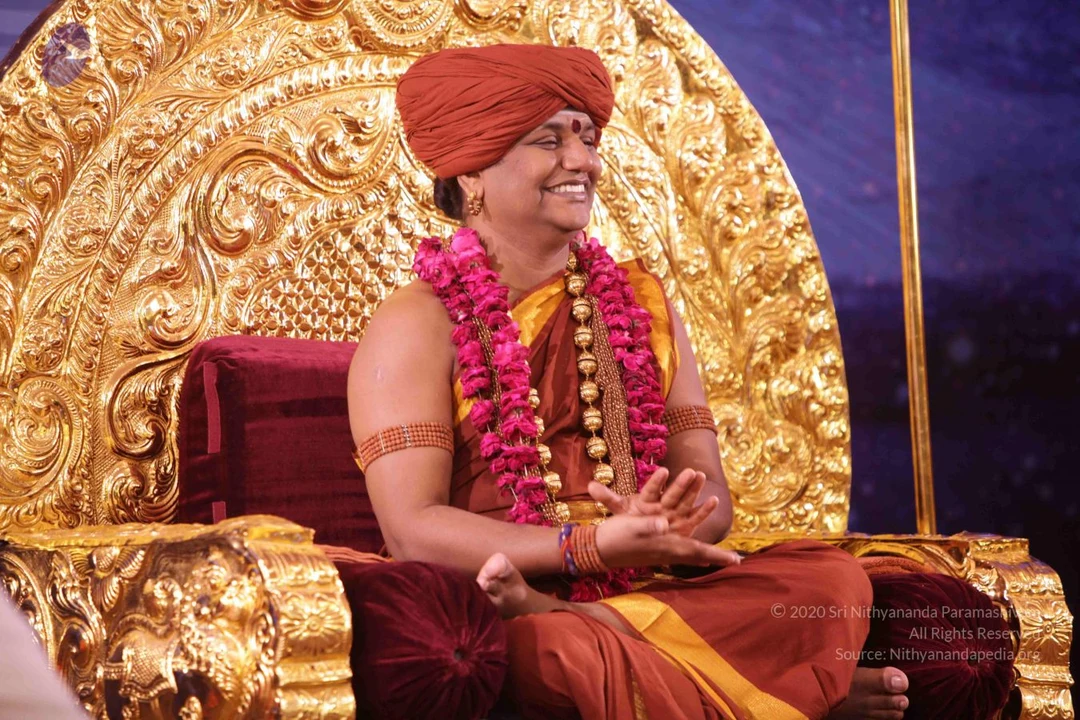
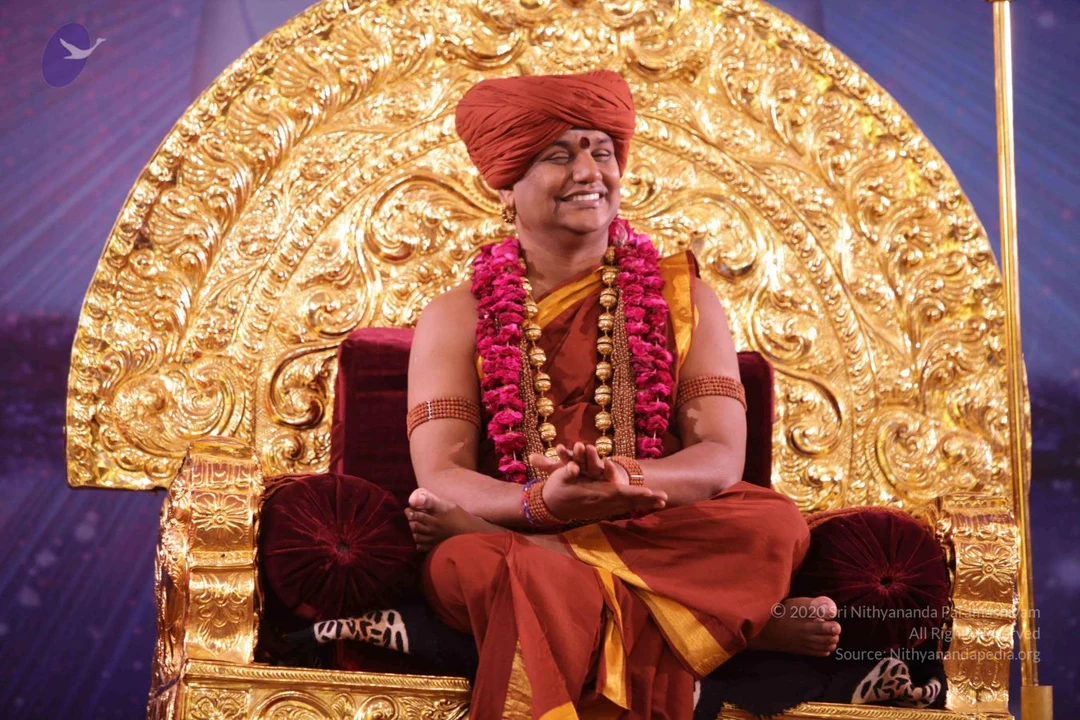
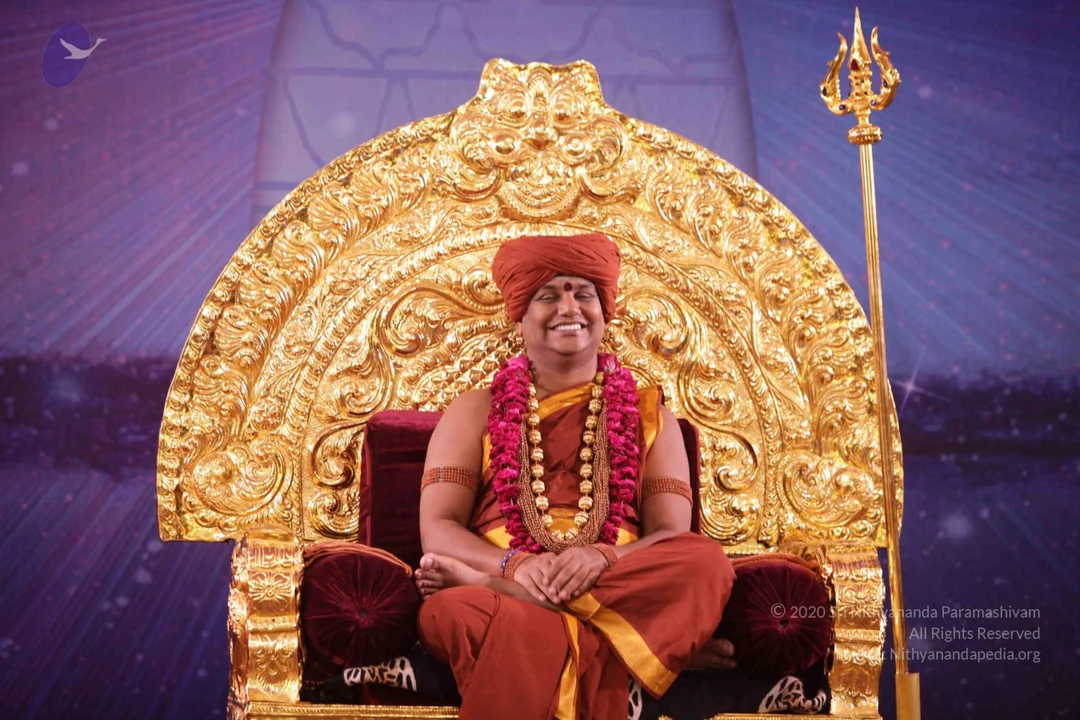
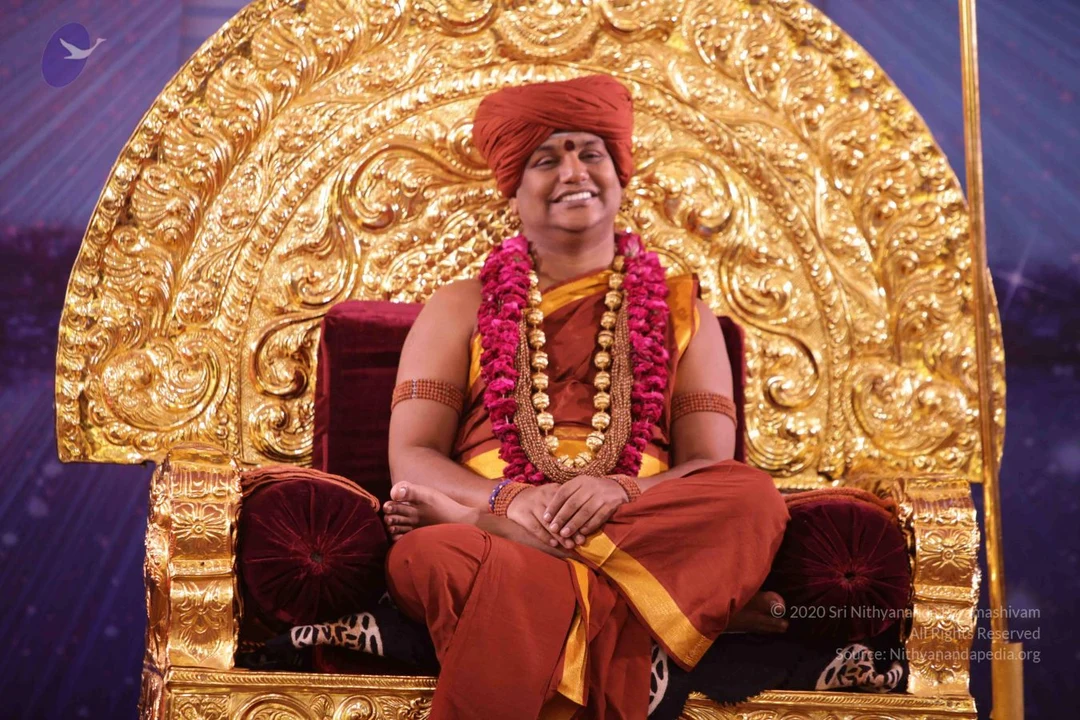
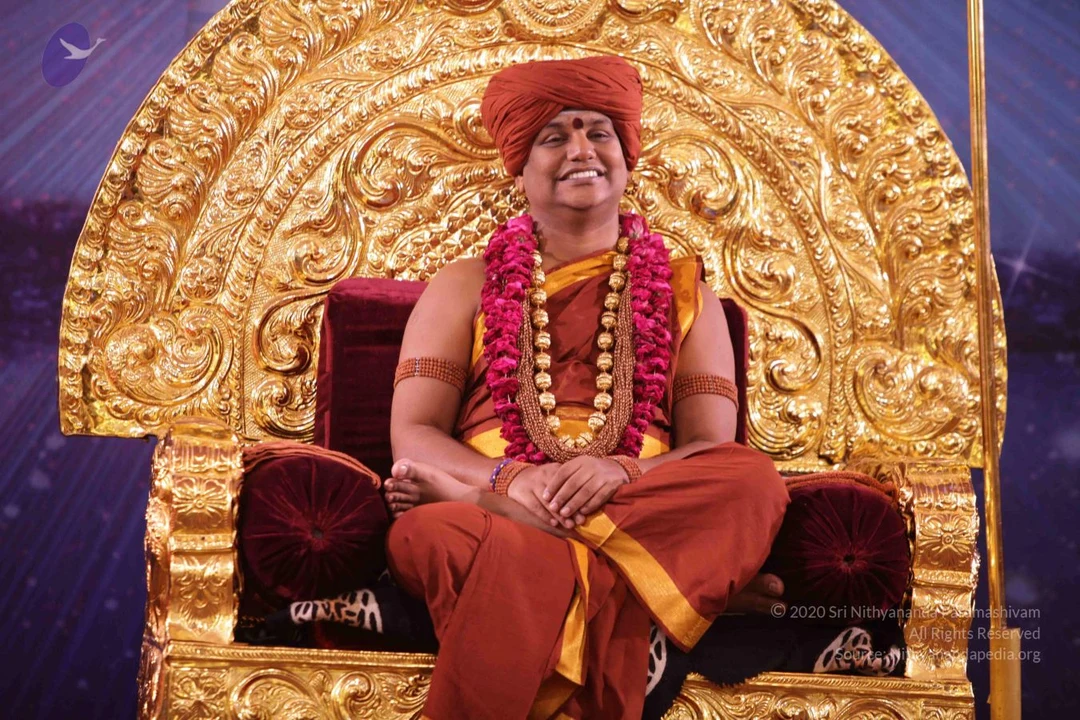
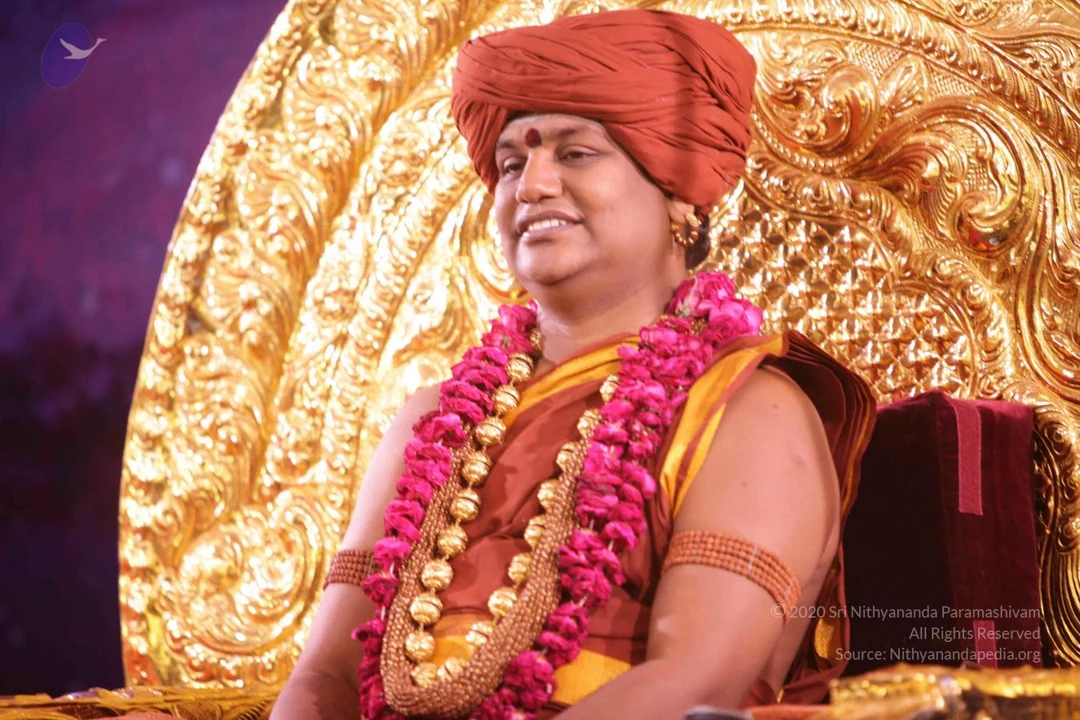
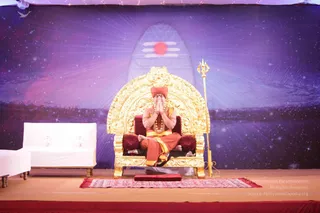
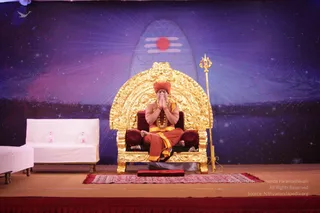
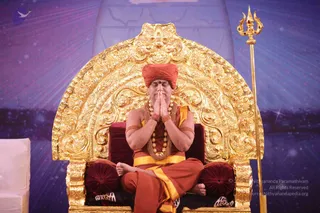
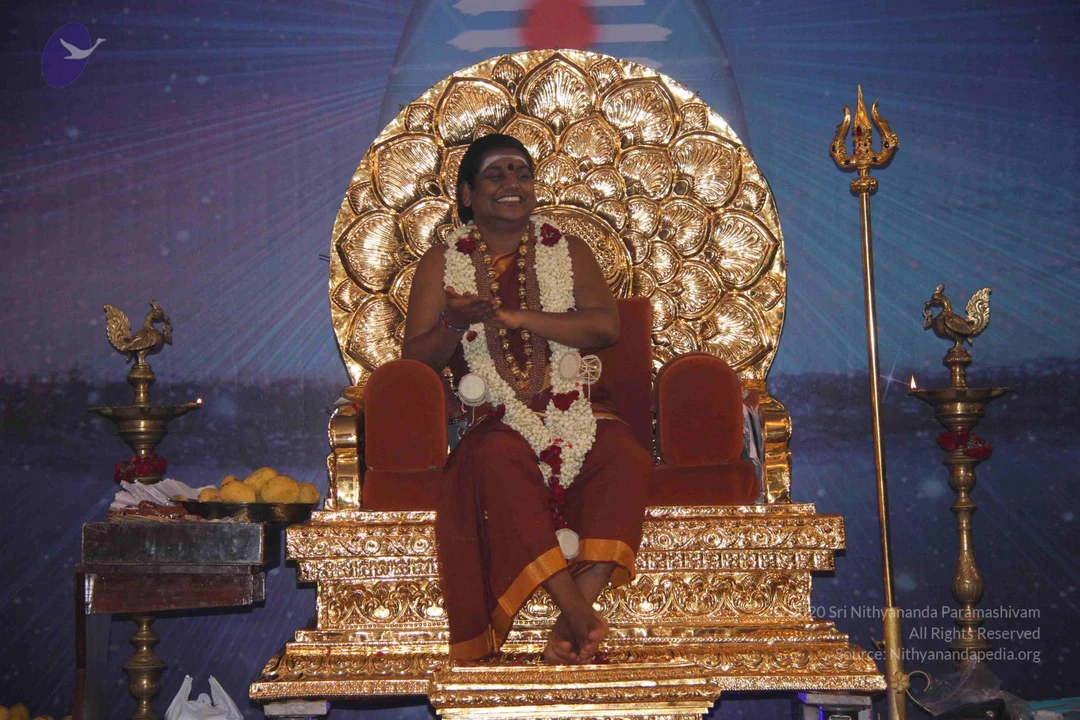
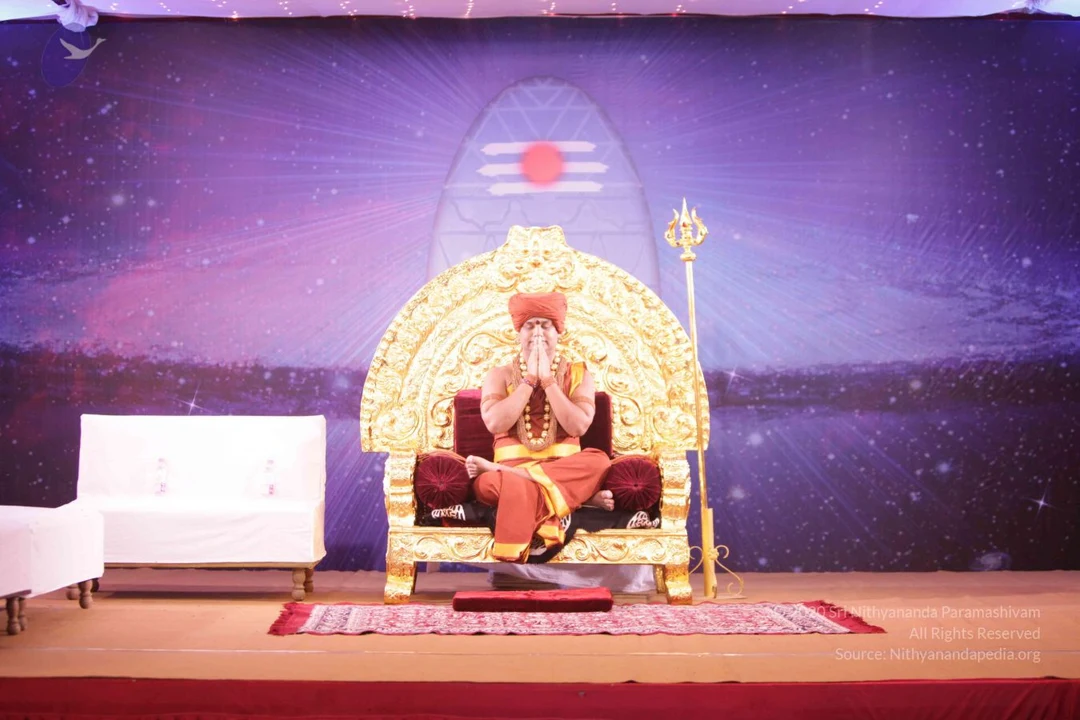
A photograph of a single person seated cross-legged on an ornate gilded throne on a stage. The seated person wears an orange-red turban, orange-saffron robes with a gold-edged shawl, and multiple rudraksha malas, with palms pressed together in namaste. A golden trident stands to the right of the throne, a red-and-cream rug lies at its base, and a white sofa sits at left. The backdrop shows a purple cosmic-sky design with a large Shivling-shaped motif bearing three white horizontal lines and a red circle.A figure in saffron-orange robes and a matching orange turban sits cross-legged on an ornate gold throne with red cushions on a stage. The figure has palms pressed together in namaskar, wears a rudraksha mala and a gold-coloured necklace, and has a red and gold sash. A gold trident stands beside the throne. Behind is a blue-purple backdrop with a starry sky and a large Shiva lingam-shaped motif with three horizontal white bands and a red disc. A white sofa with water bottles and a red-and-white patterned rug sit on the stage. Swamiji (probable) appears as the seated figure, based on the saffron clothing, turban, rudraksha mala and ceremonial throne.A person seated cross-legged on an ornate gold throne with a carved, arched back, palms pressed together in namaste with eyes closed. He wears a red-orange turban, a red-orange shawl draped over the shoulders and a long wooden rudraksha-style bead mala around the neck, with gold armlets and red-orange cloth wrapped at the waist. A golden trident stands to the right of the throne, and red velvet cushions support the seat. The backdrop is a blue starry stage design. Only one person is physically present. The page names Swamiji and the figure's presentation shows a turban, saffron-orange clothing, rudraksha mala and a trident, so the appearance-based label is Swamiji (probable), seated in person on a throne.A smiling man in a red-orange turban and matching saffron-red robes with yellow borders sits cross-legged, barefoot, on an ornate gold throne with a gold carved arched back. He wears a long rudraksha-style bead mala and a gold-bead necklace, with red and gold bangles on his wrists. His palms are raised in a blessing gesture. A tall gold staff stands beside the throne, and a dark stage backdrop with a blue sparkling background surrounds him. Swamiji (probable): the long-haired figure in ceremonial saffron-red robes, rudraksha mala and gold ornaments on a golden throne, appears in person.A man in saffron-orange robes and an orange turban sits cross-legged on an ornate gold throne with a carved arched back on a stage. He wears a rudraksha mala and a gold-toned ceremonial necklace, holds his hands in a mudra, and rests on a small red cushion. A gold trident leans beside the throne. Behind him a backdrop shows a starry blue sky with a lingam-shaped form bearing three horizontal white lines and a red disc. A white sofa with water bottles and a red-and-cream rug sit to the left. Swamiji (probable) is in the seated central position, apparent from the saffron robes, orange turban, rudraksha mala and gold ornamentation.A photograph of a seated figure on an ornate gold throne with a carved, large back panel on a stage with a blue starry backdrop. The seated figure wears a red-orange turban, a red-orange robe with yellow trim, multiple rudraksha malas and a mala necklace, and extends a hand outward. Before him a man in a pink sleeveless vest over a white kurta and glasses stands with palms joined in namaste, bowing. Another man at left in red-orange and yellow robes with a shoulder bag stands partly visible. A large trident-like ceremonial object appears at the upper right. Probable Swamiji (probable) seated on the throne with cues of a red turban, rudraksha malas and saffron robes, receiving a devotee in namaste.