Skip to content
Saturday

8 November 2014

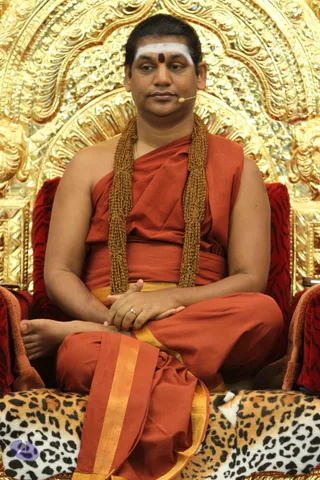
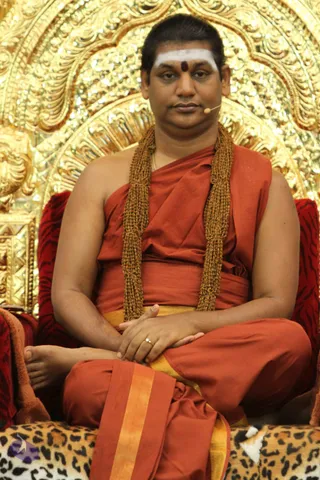
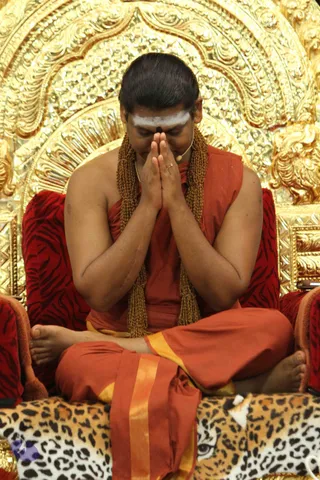
If You Find You, You Have Found God || Part 2 || NDY || 08 Nov 2014

Dated photos
129
Source pages
1
Media
7
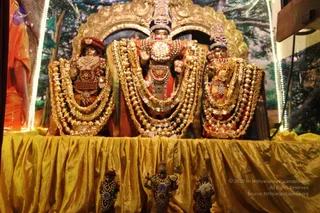
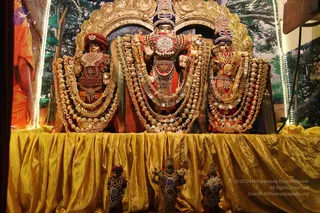
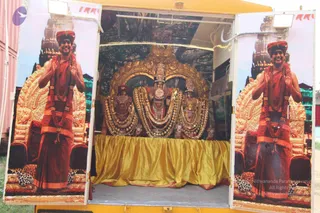
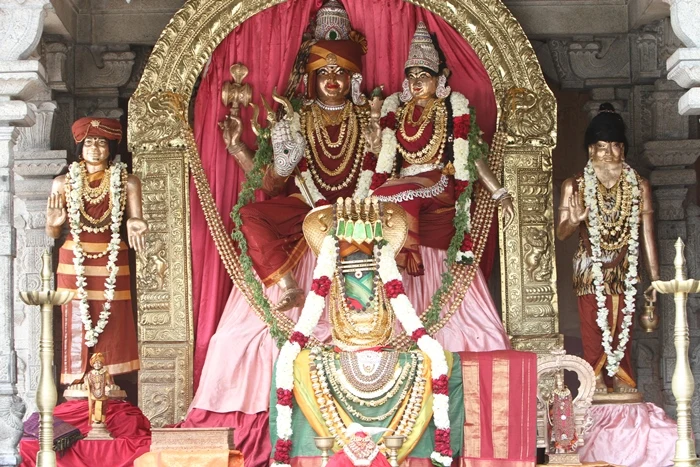
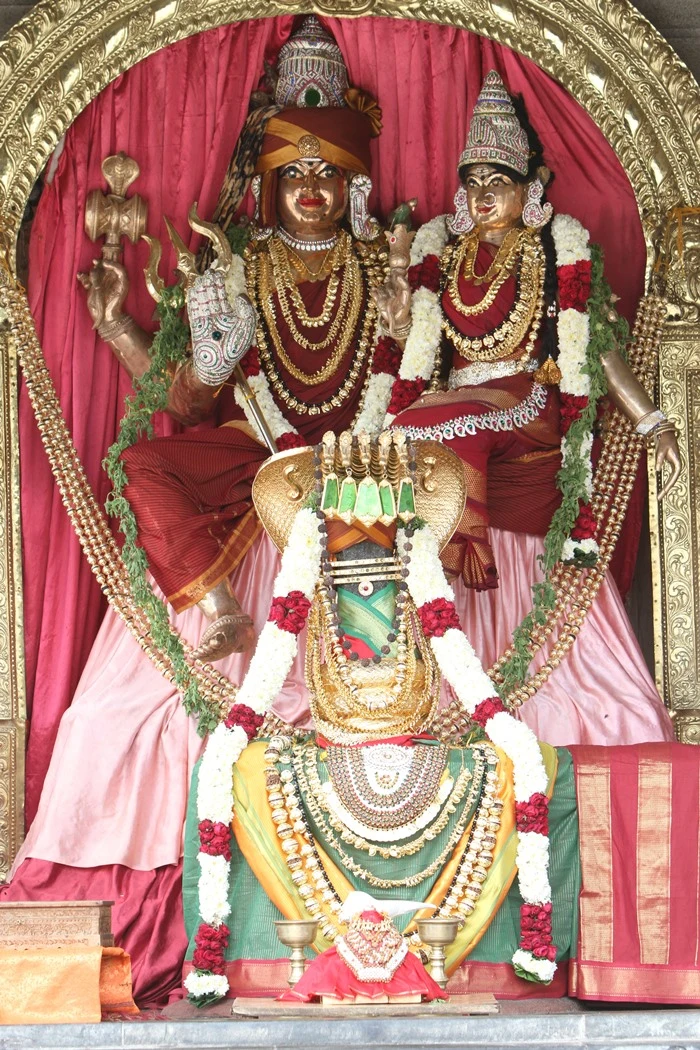
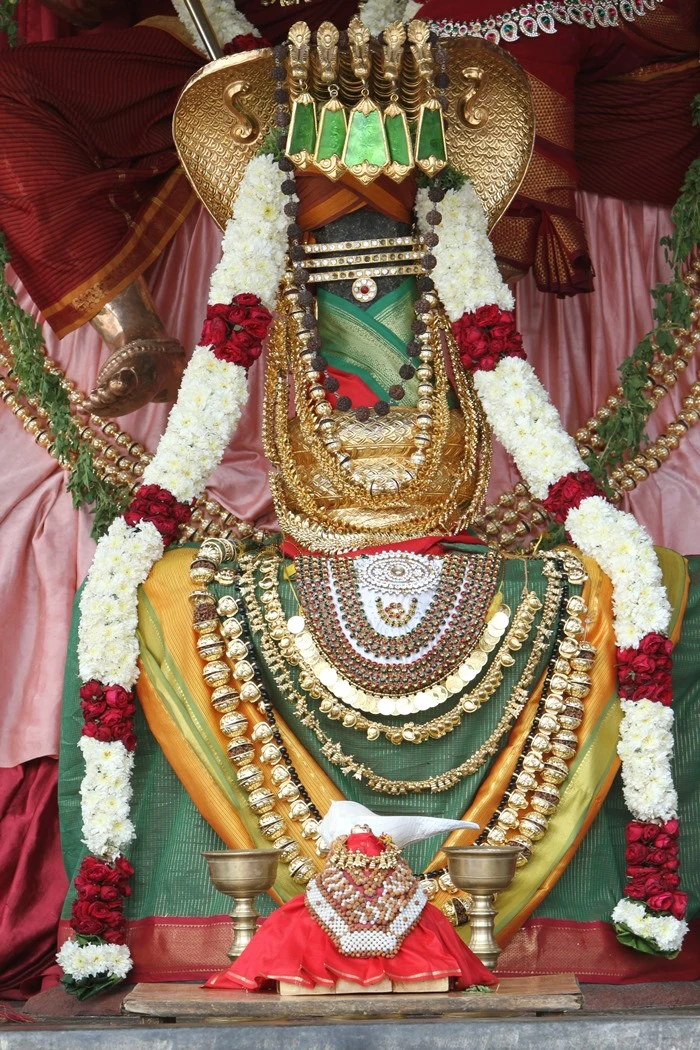
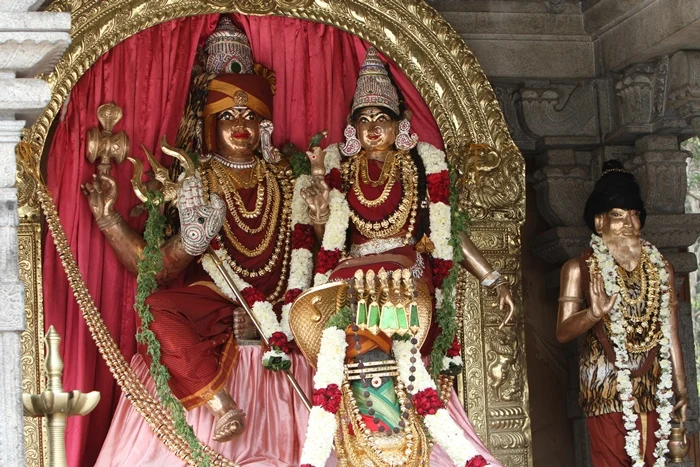
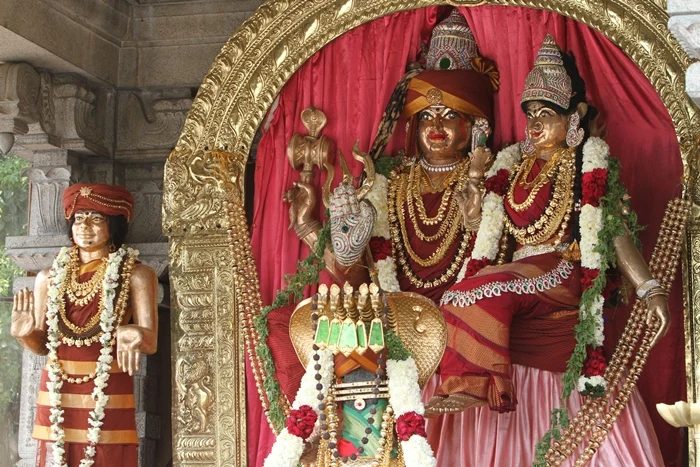
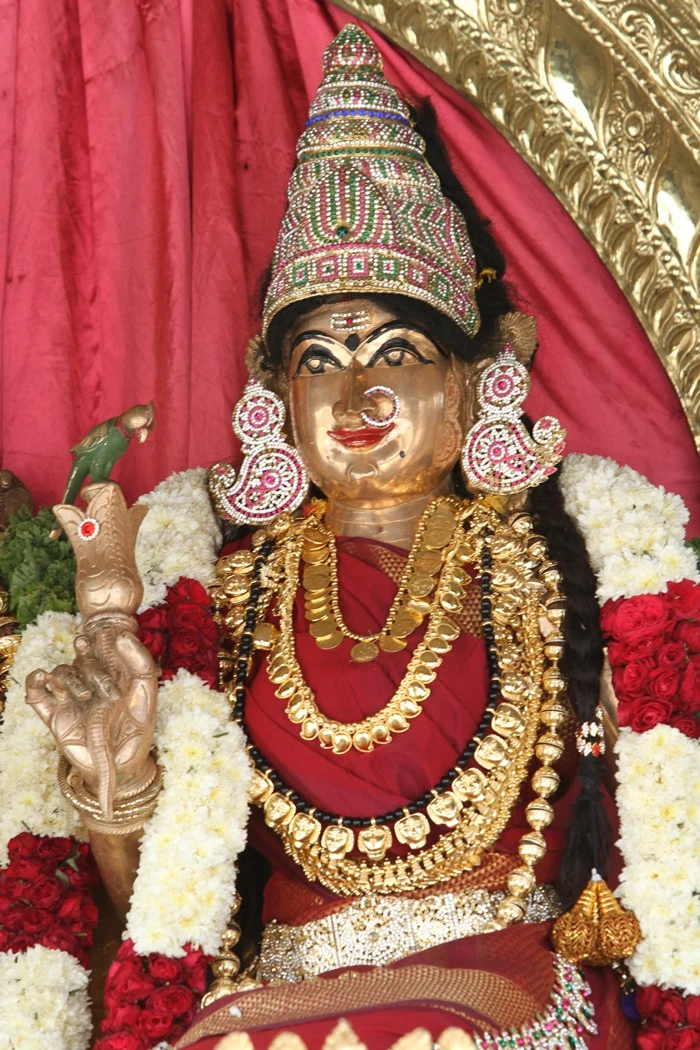
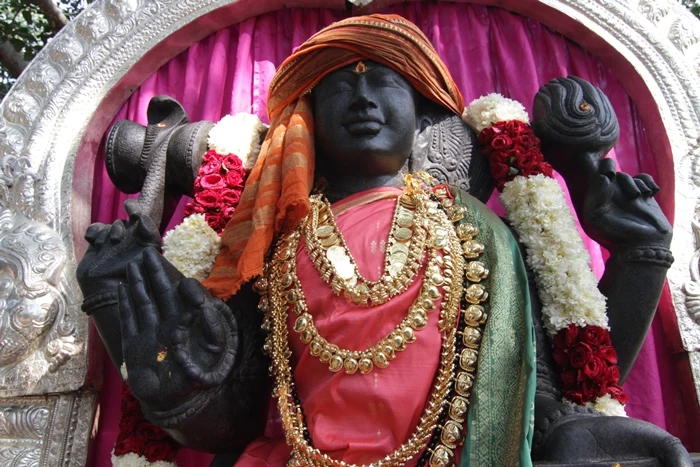
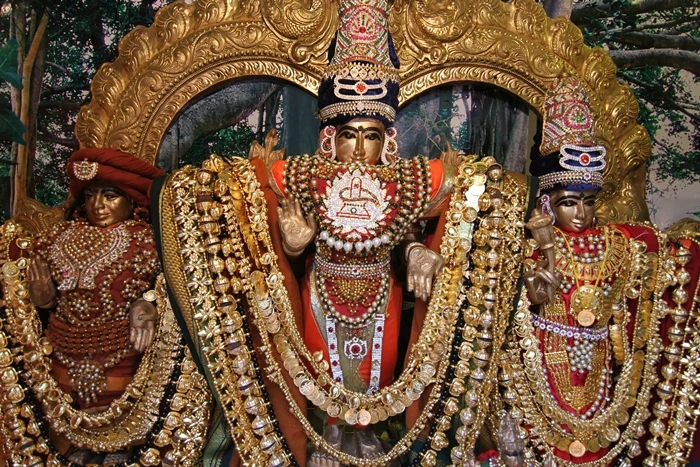
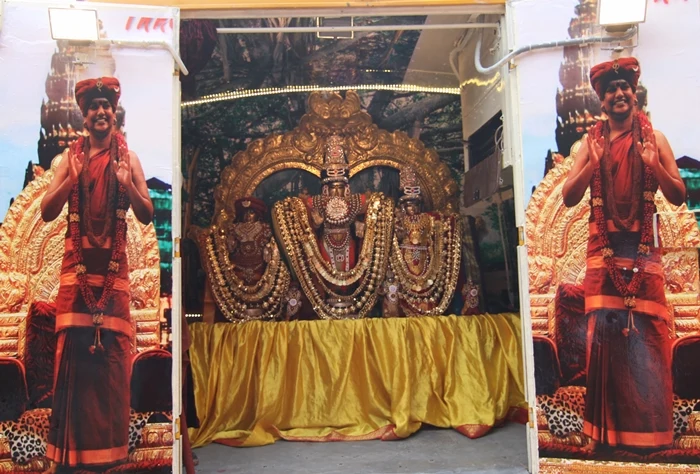
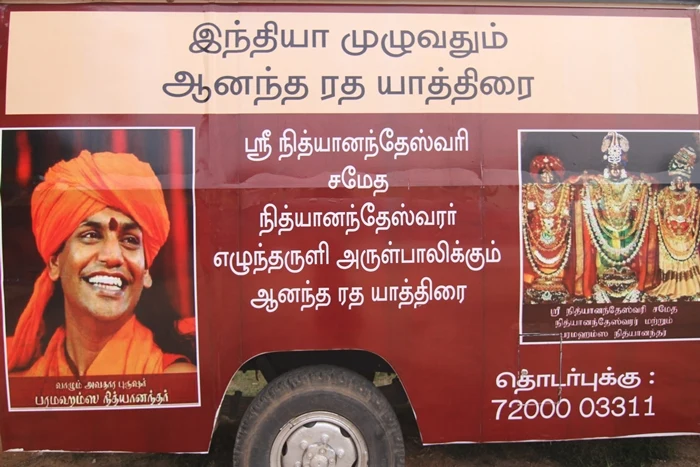
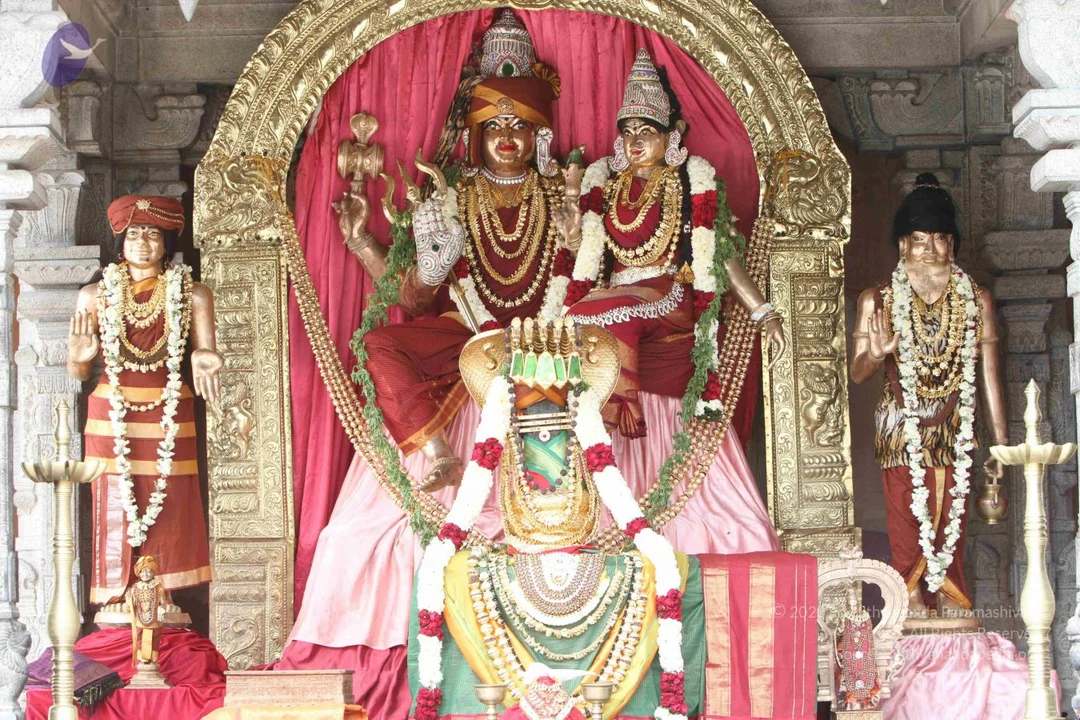
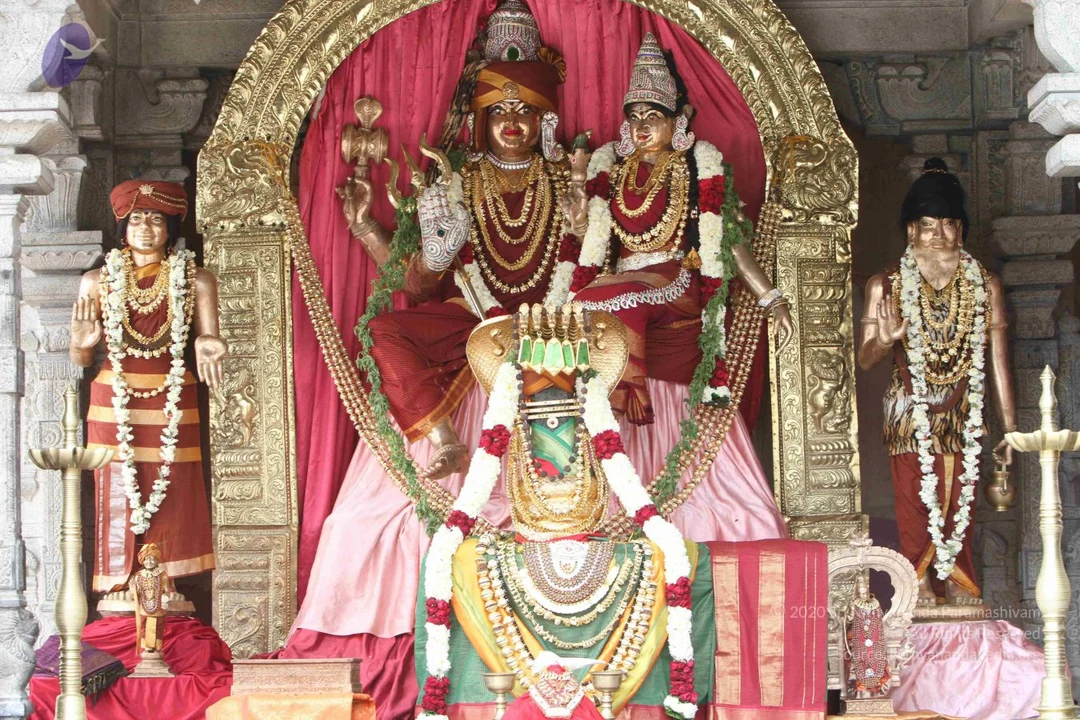
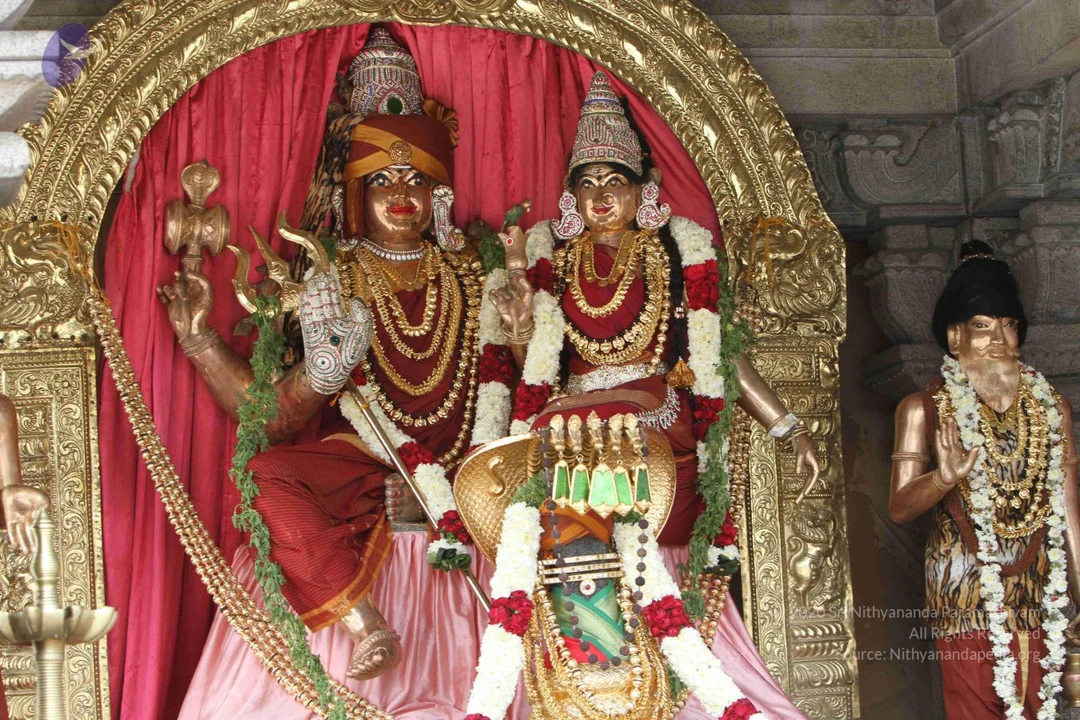
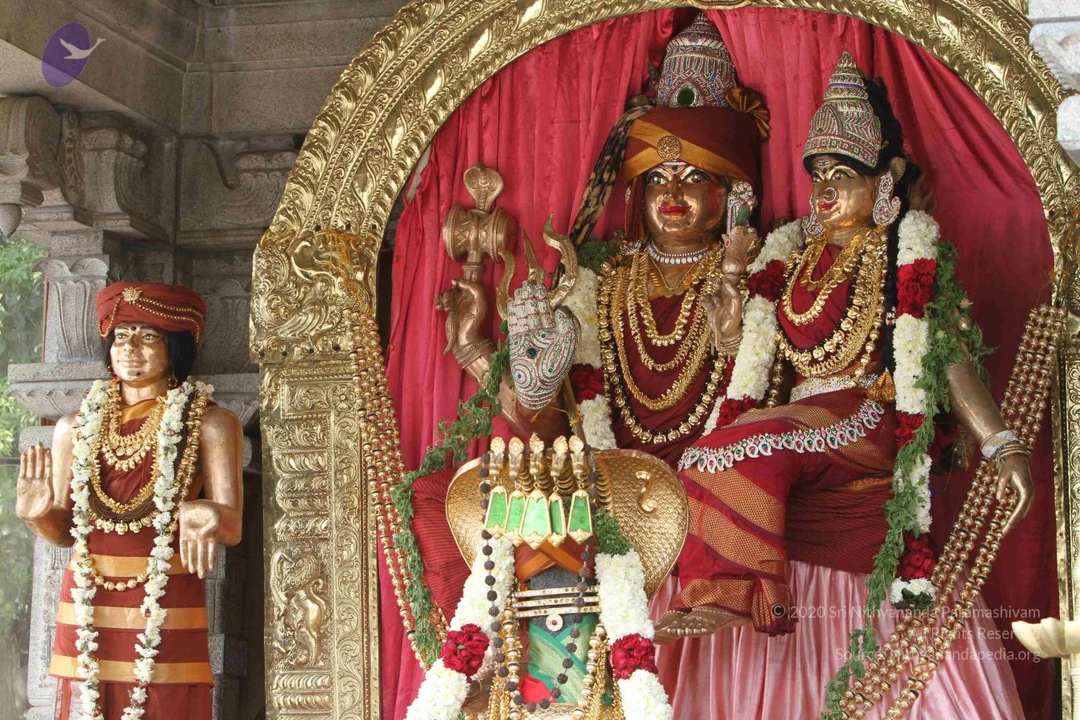
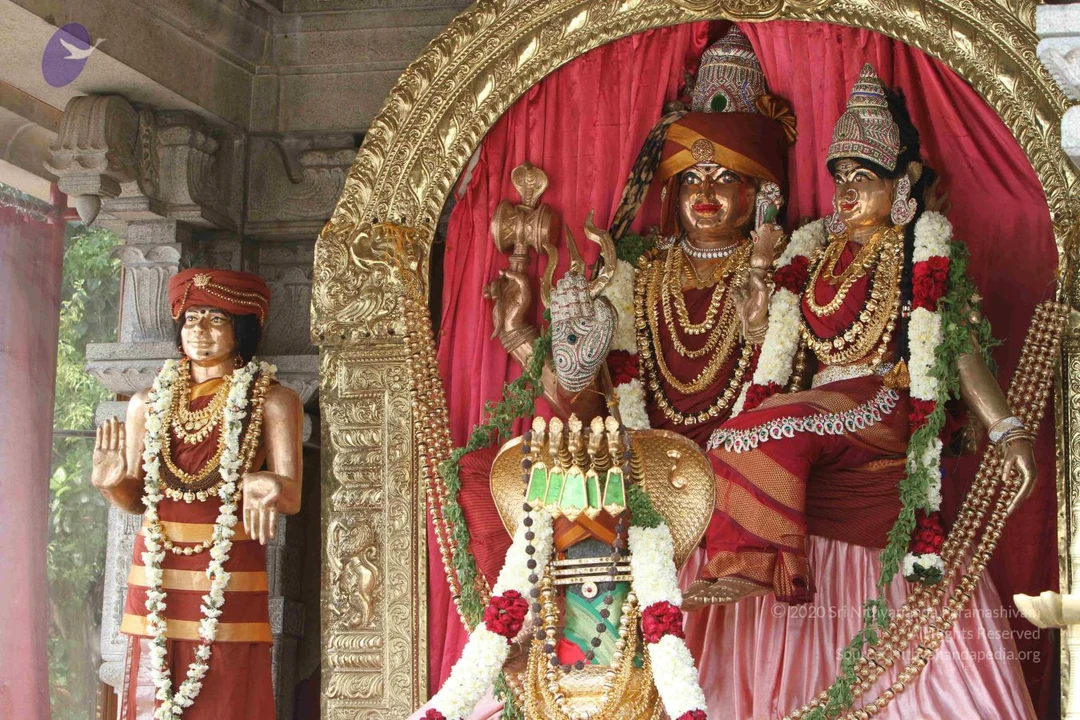
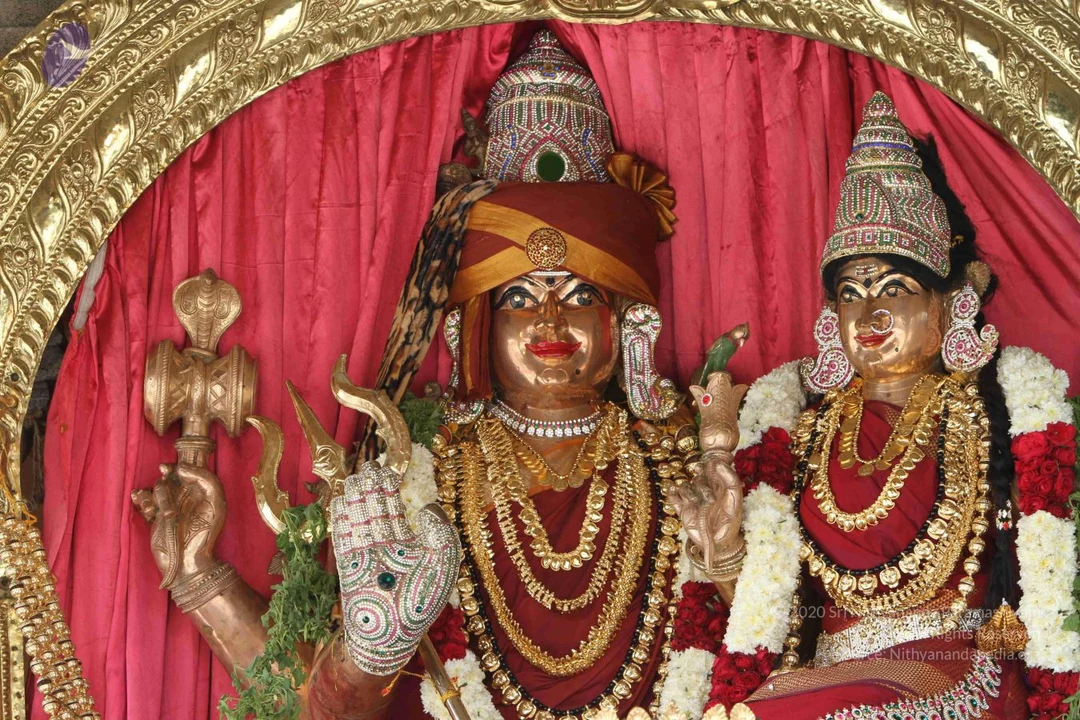
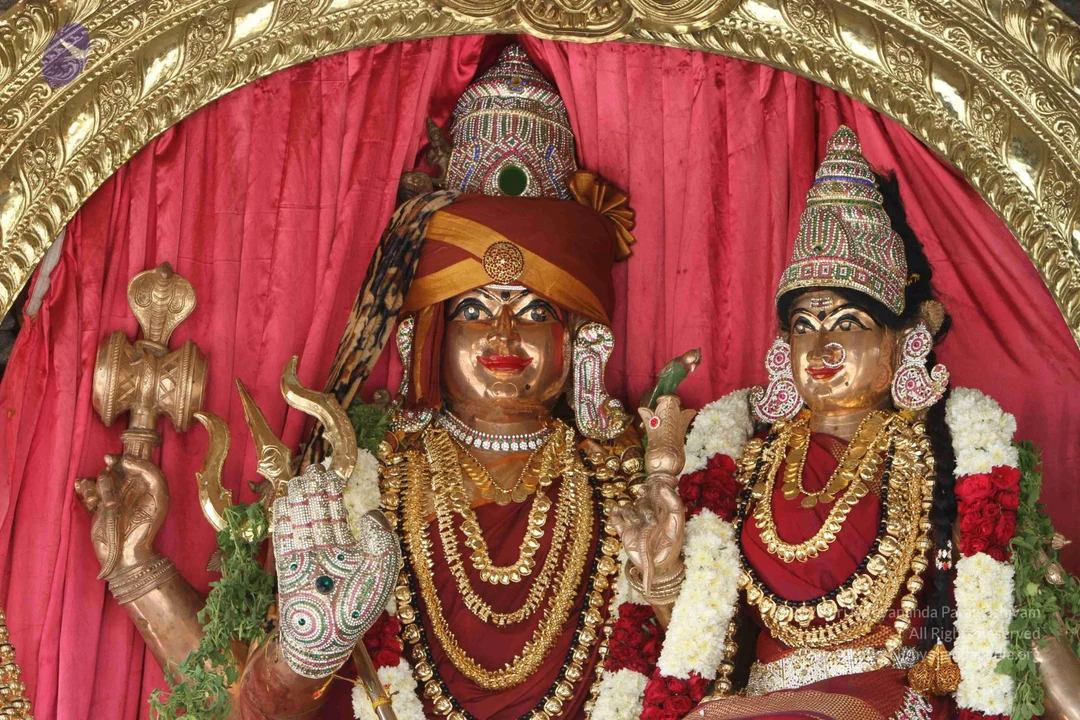
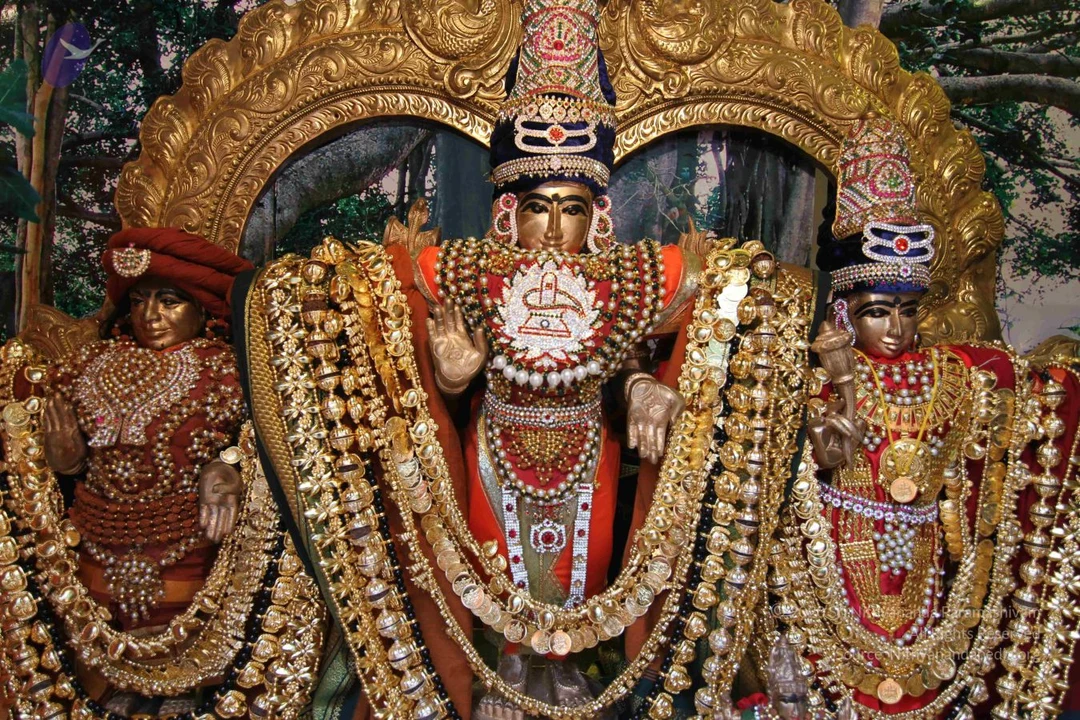
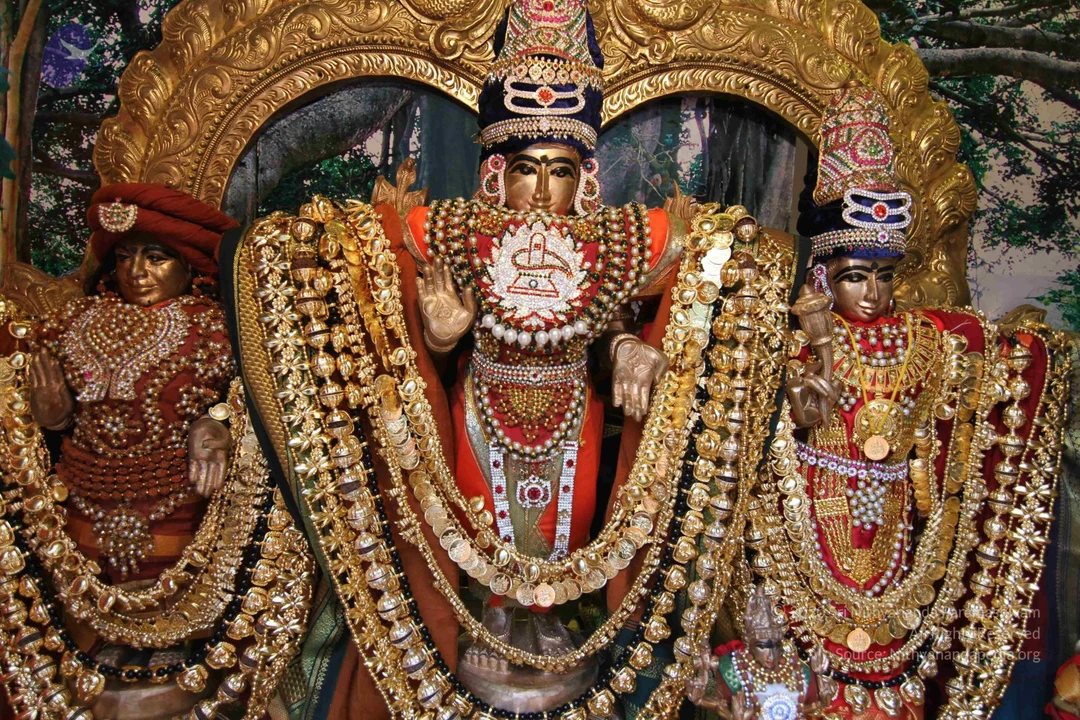
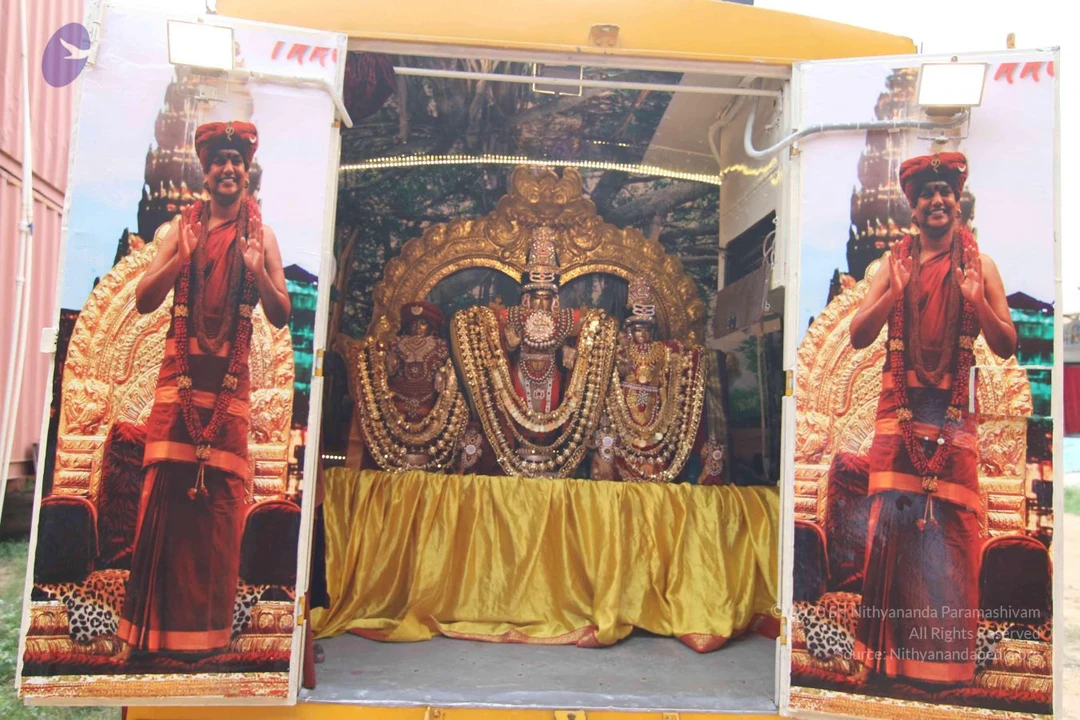
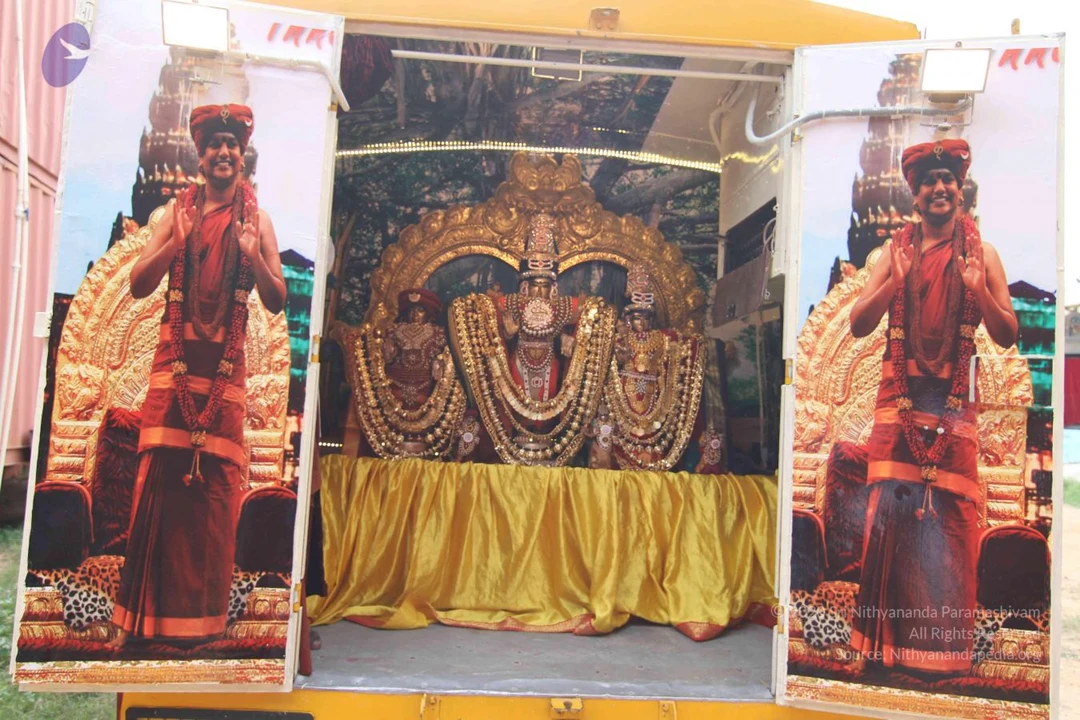
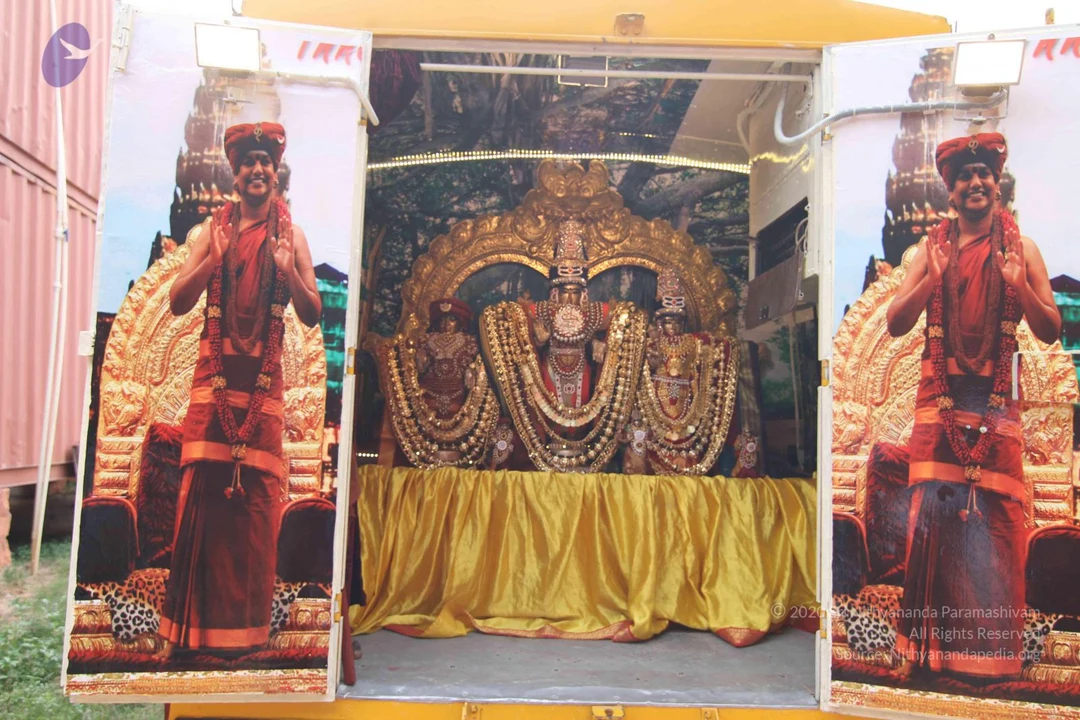
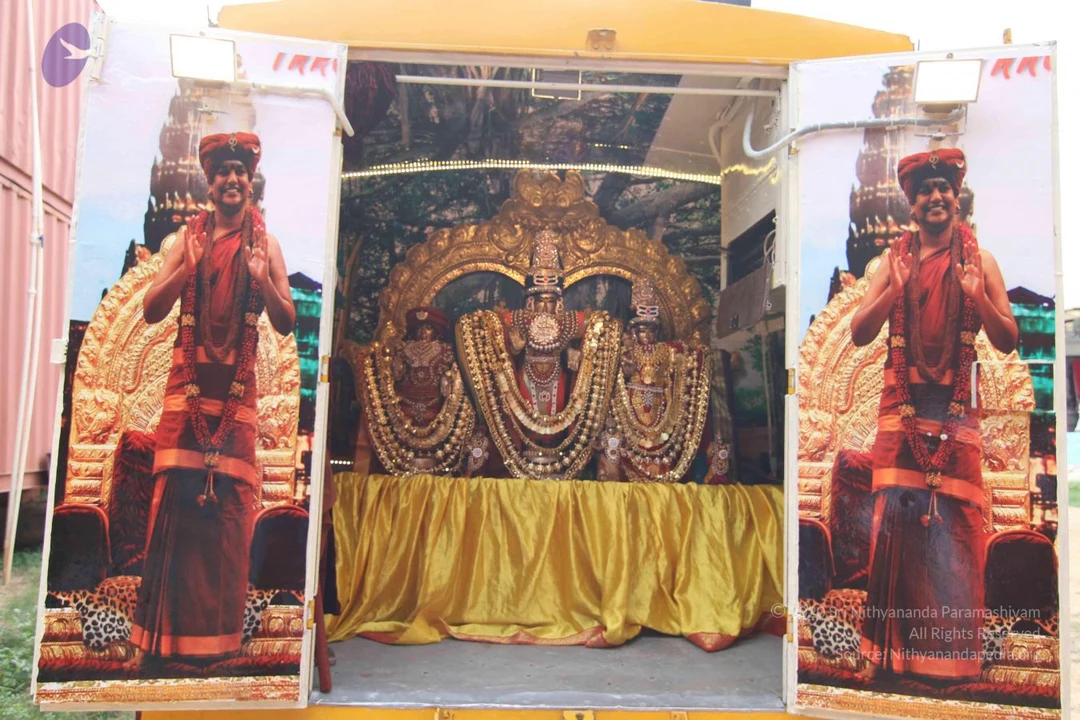
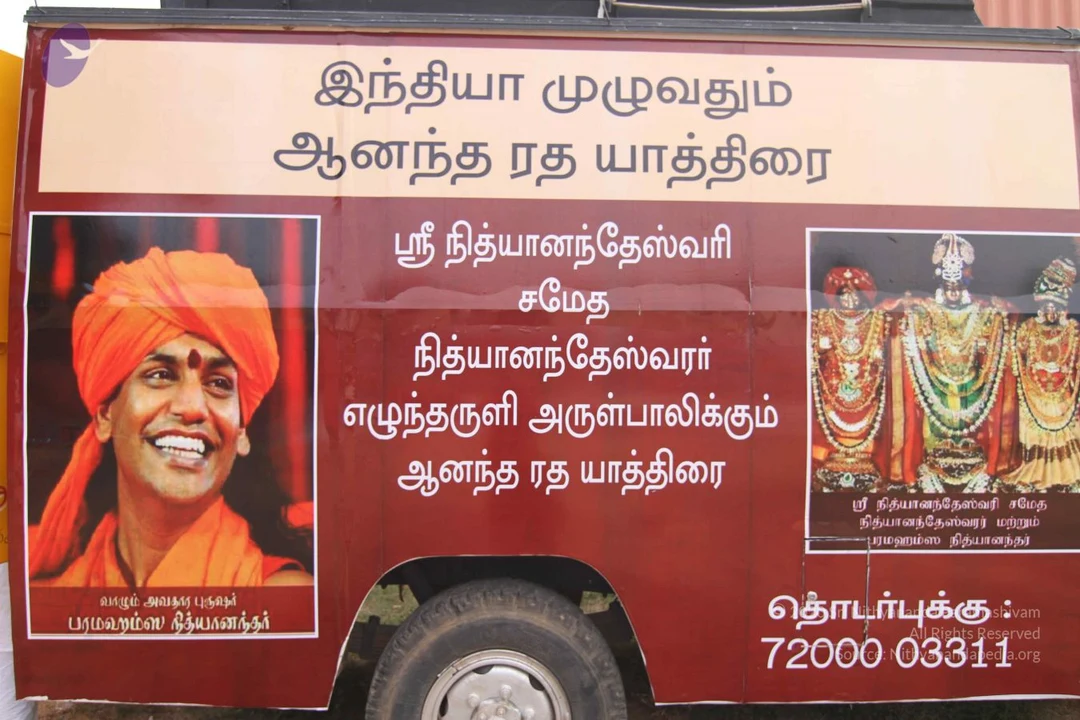
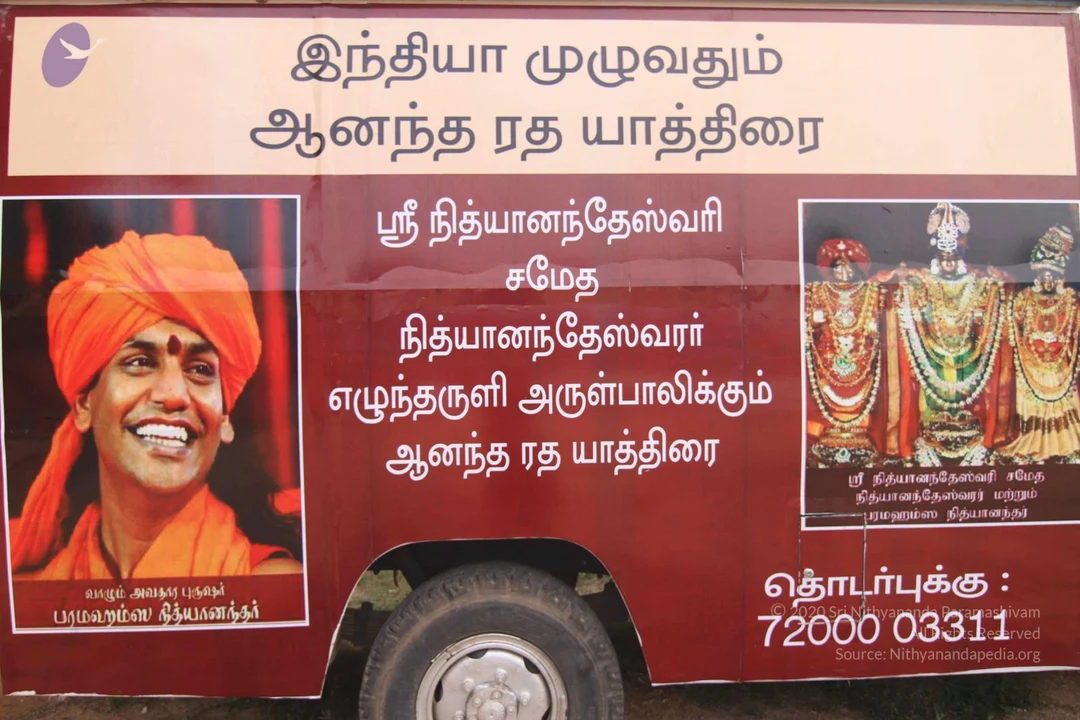
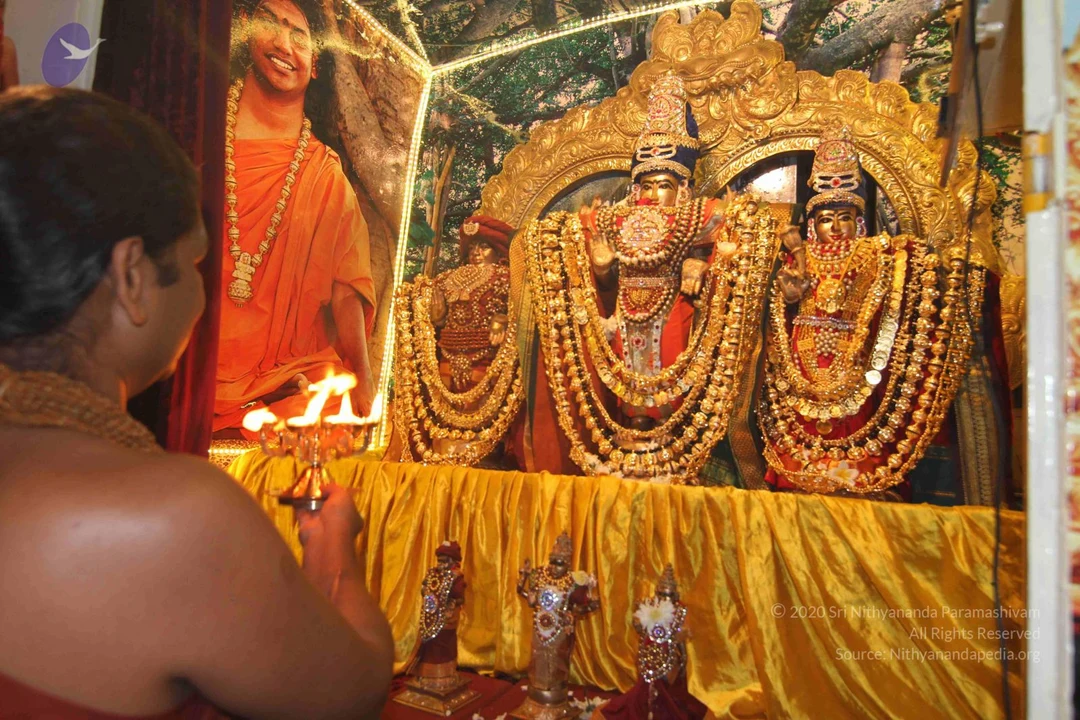
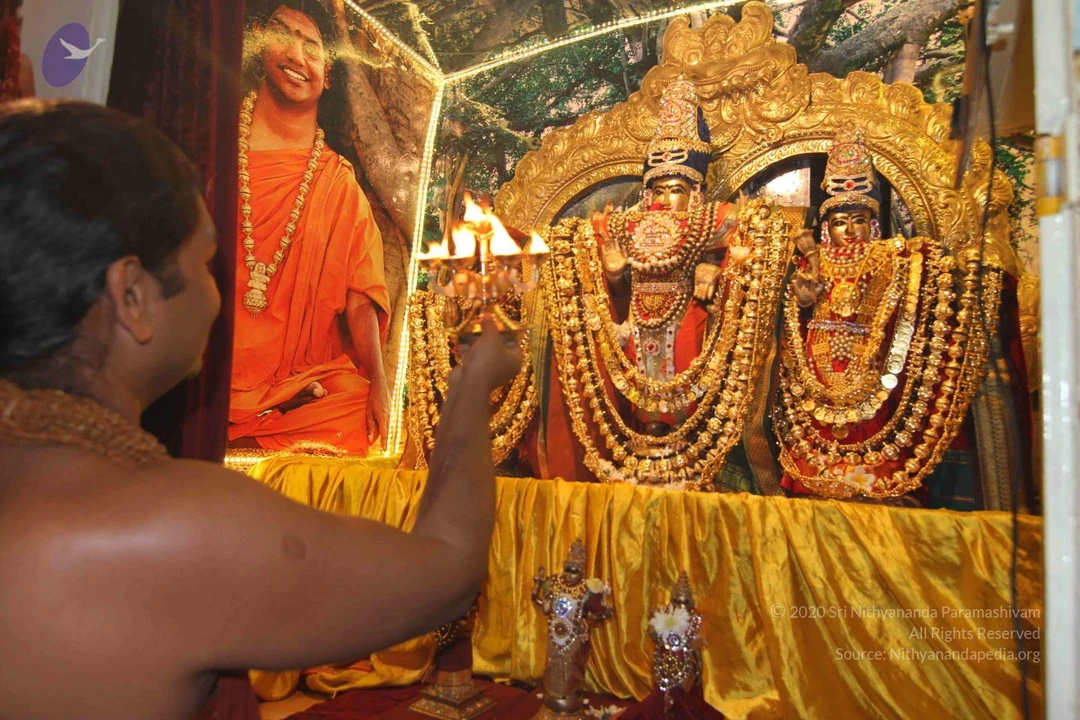
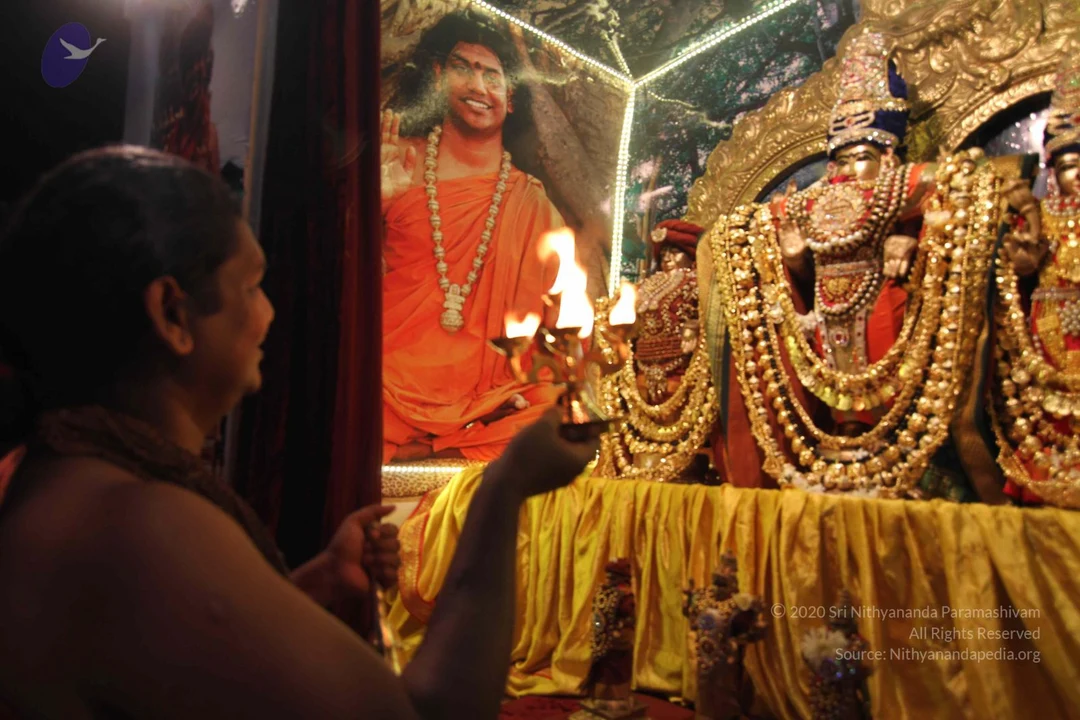
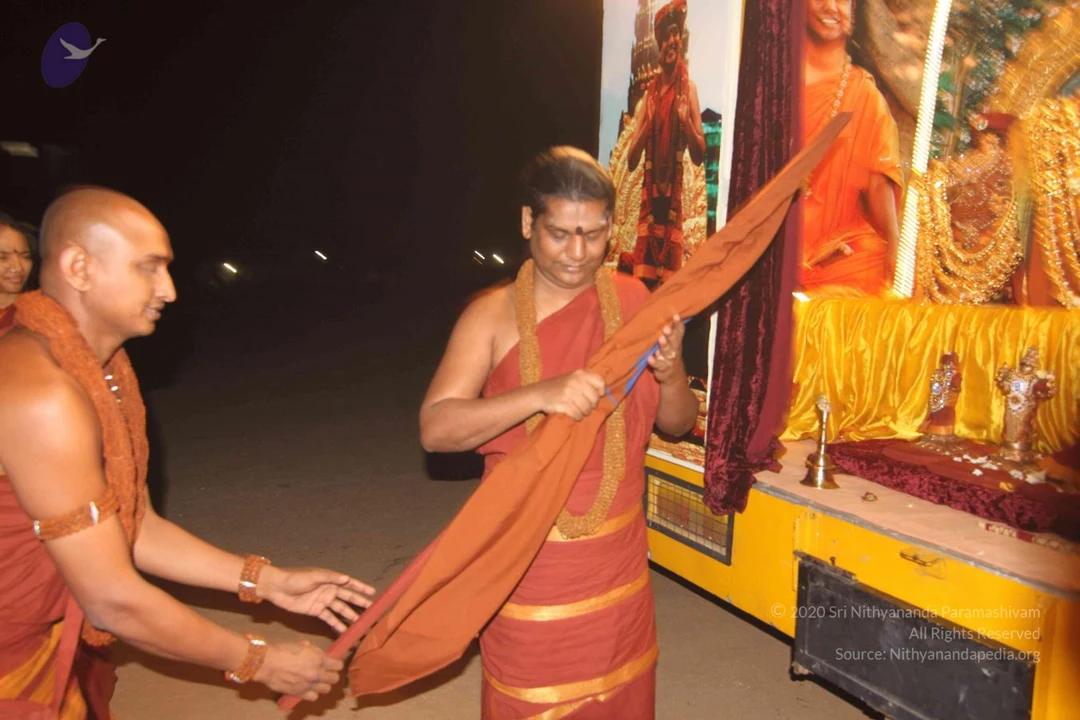
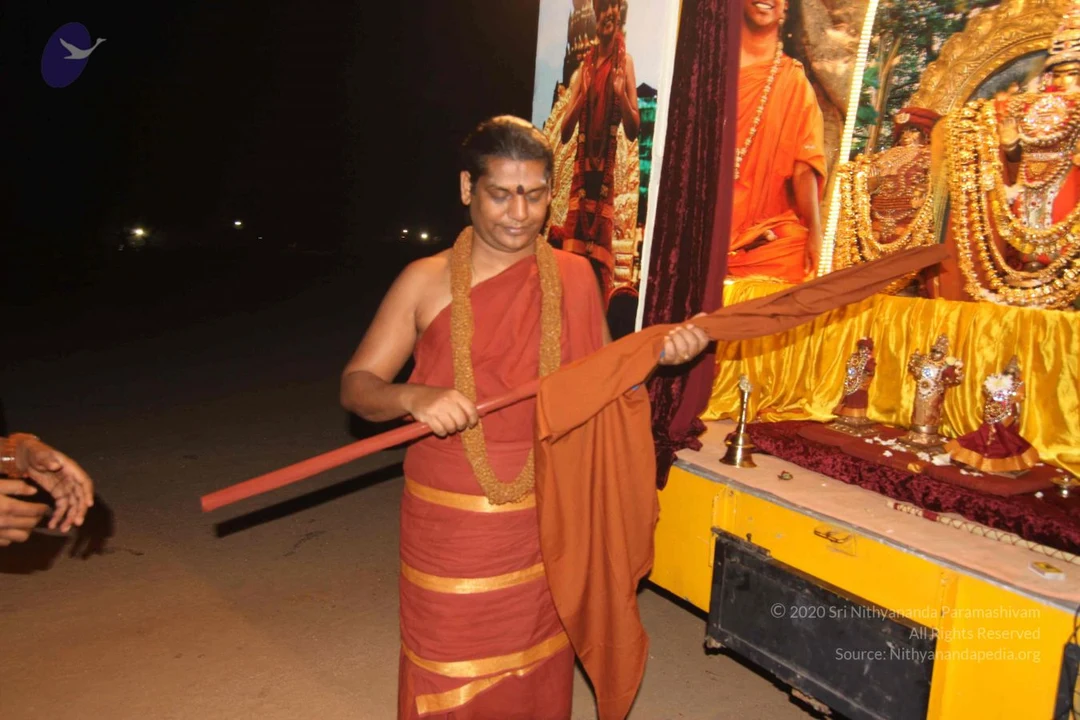
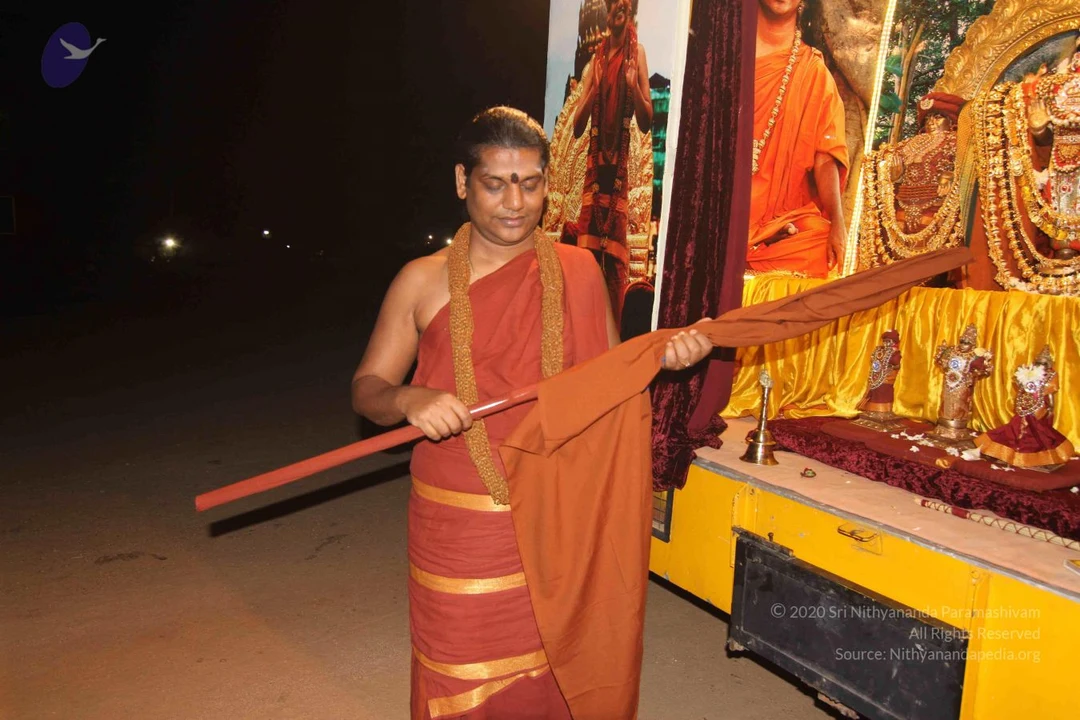
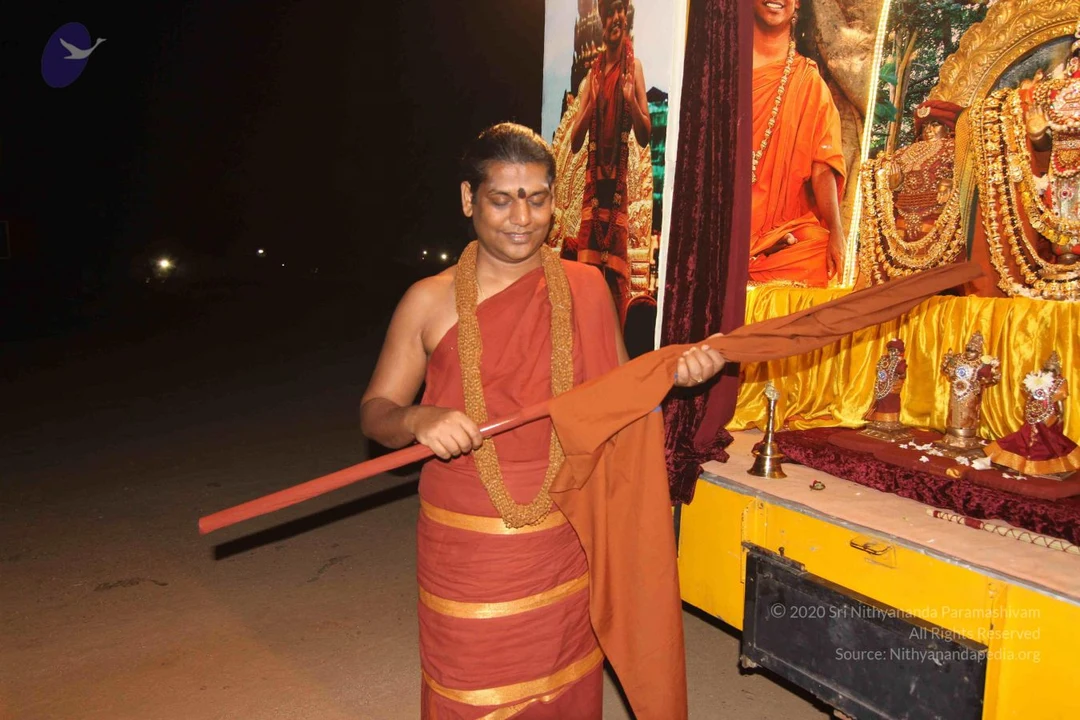
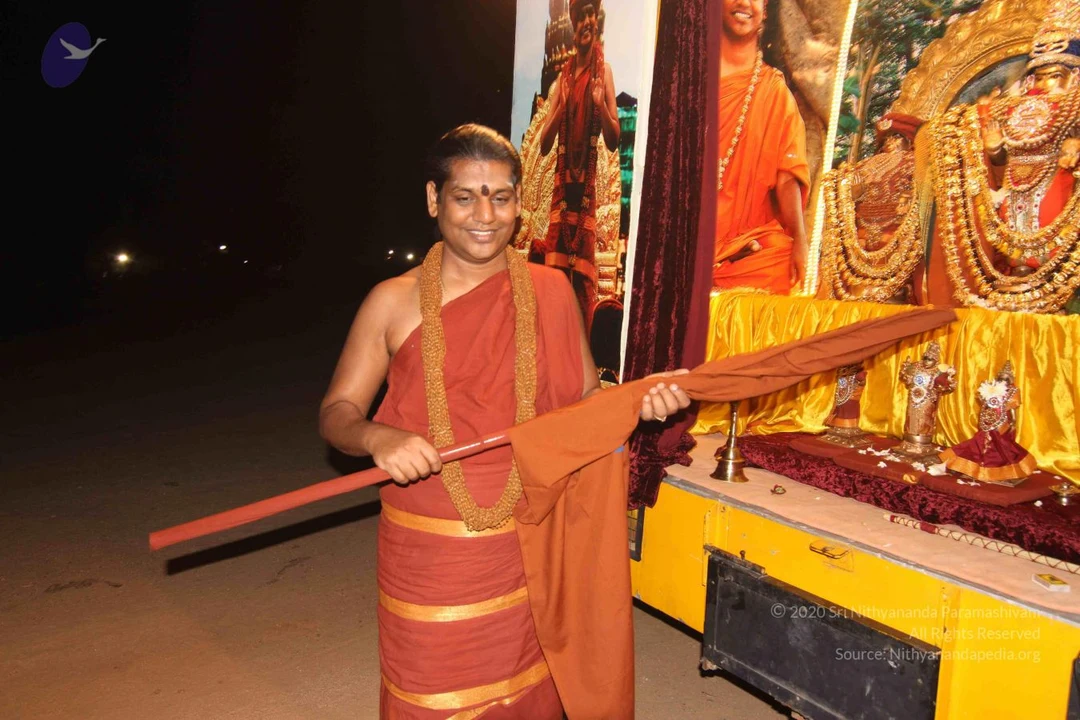
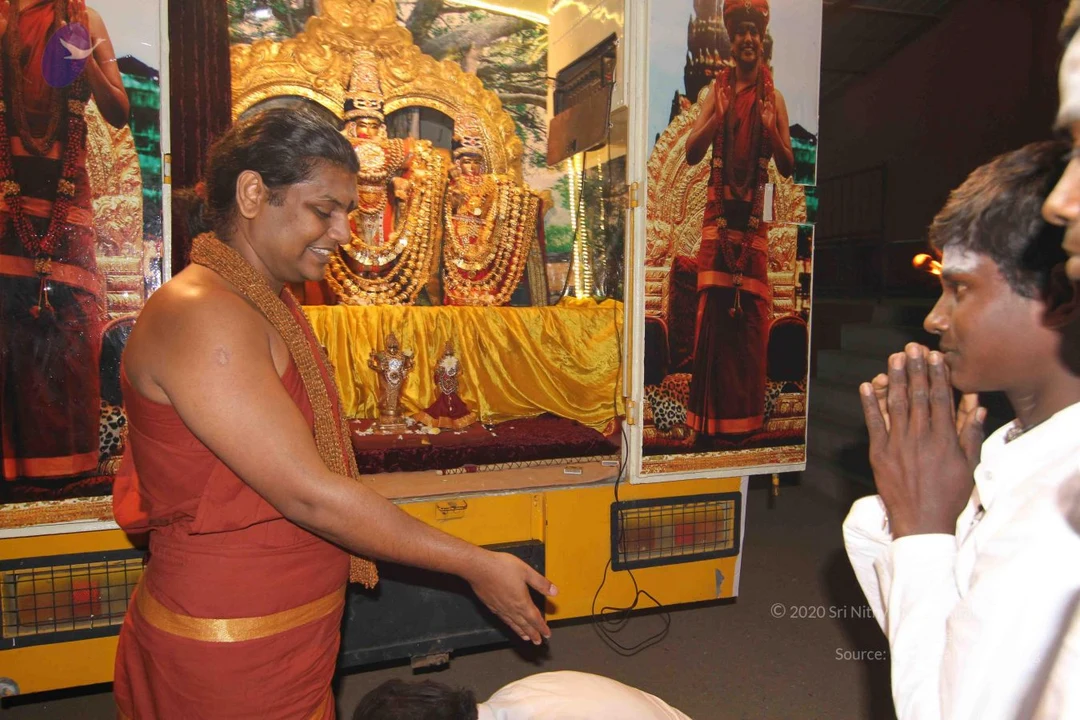
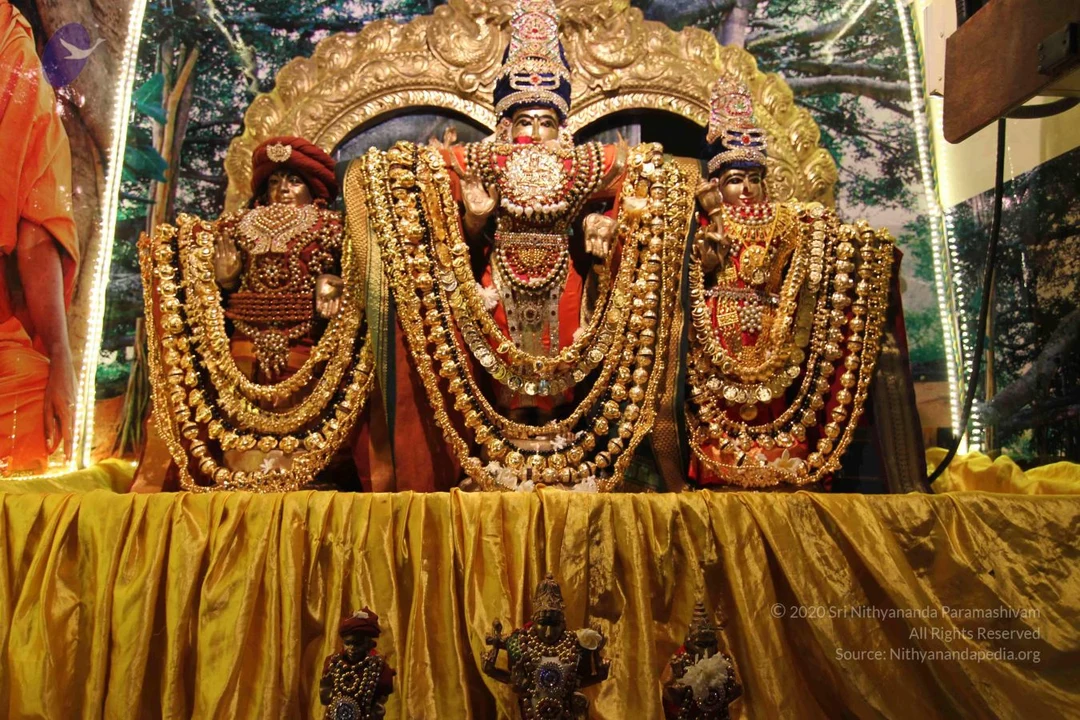
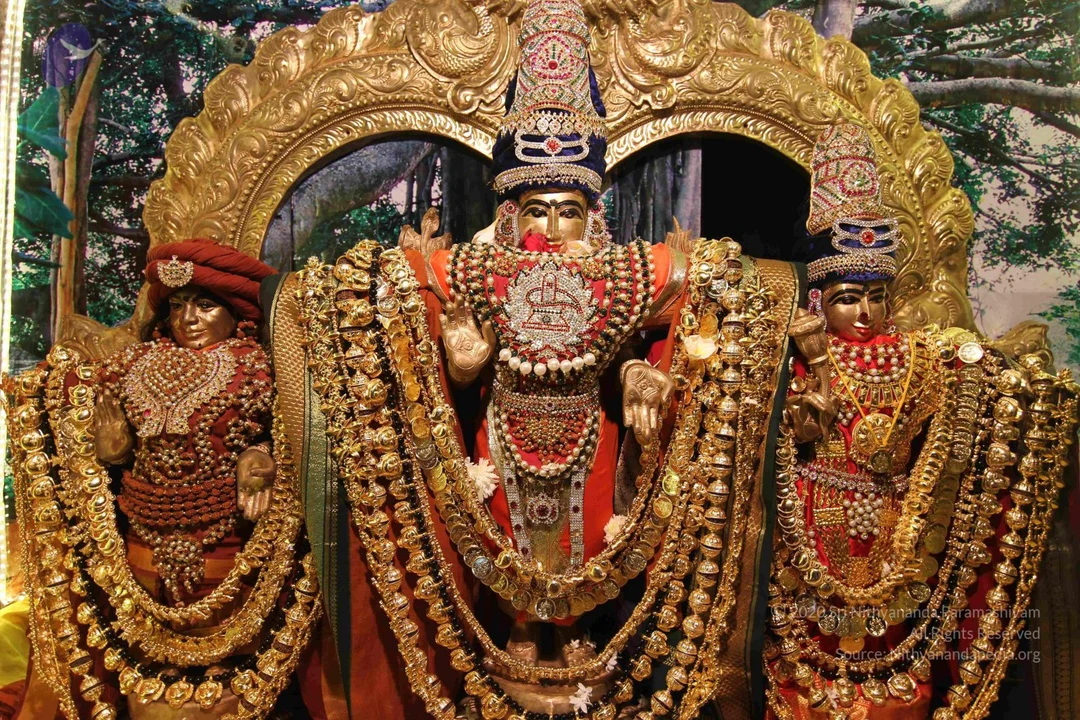
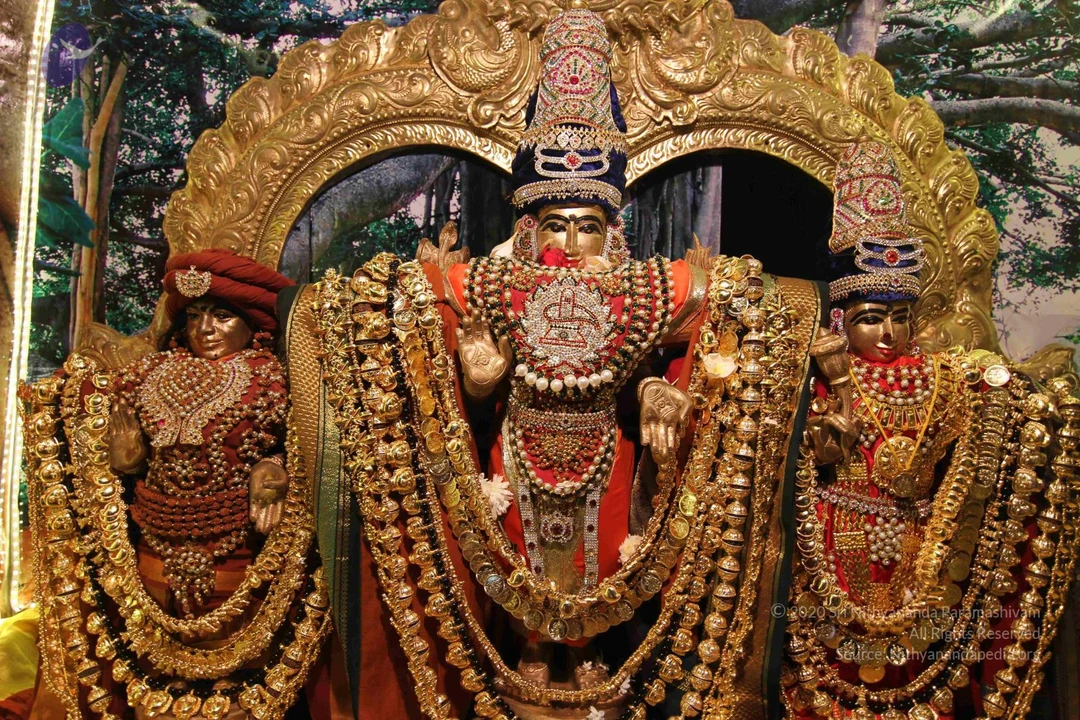
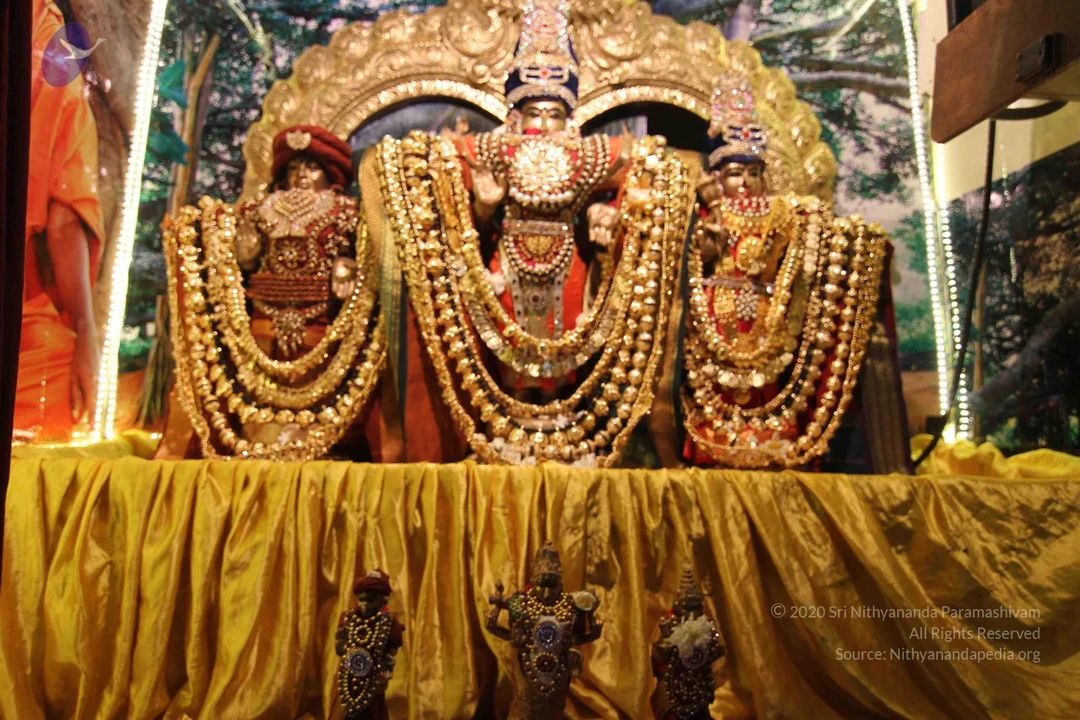
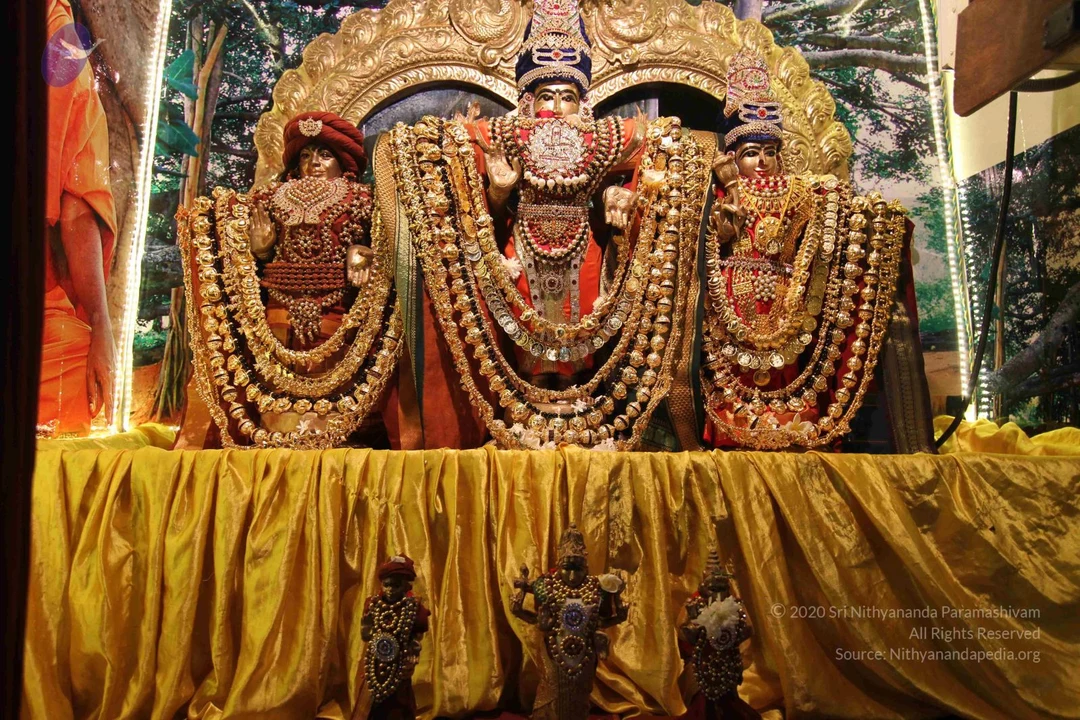
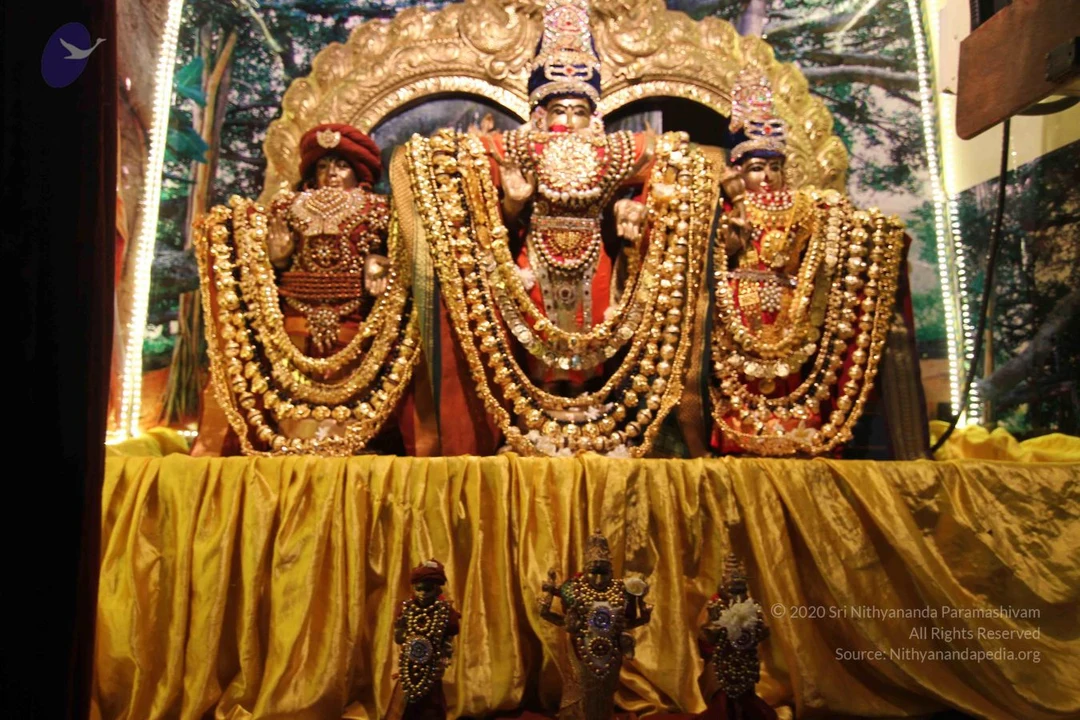
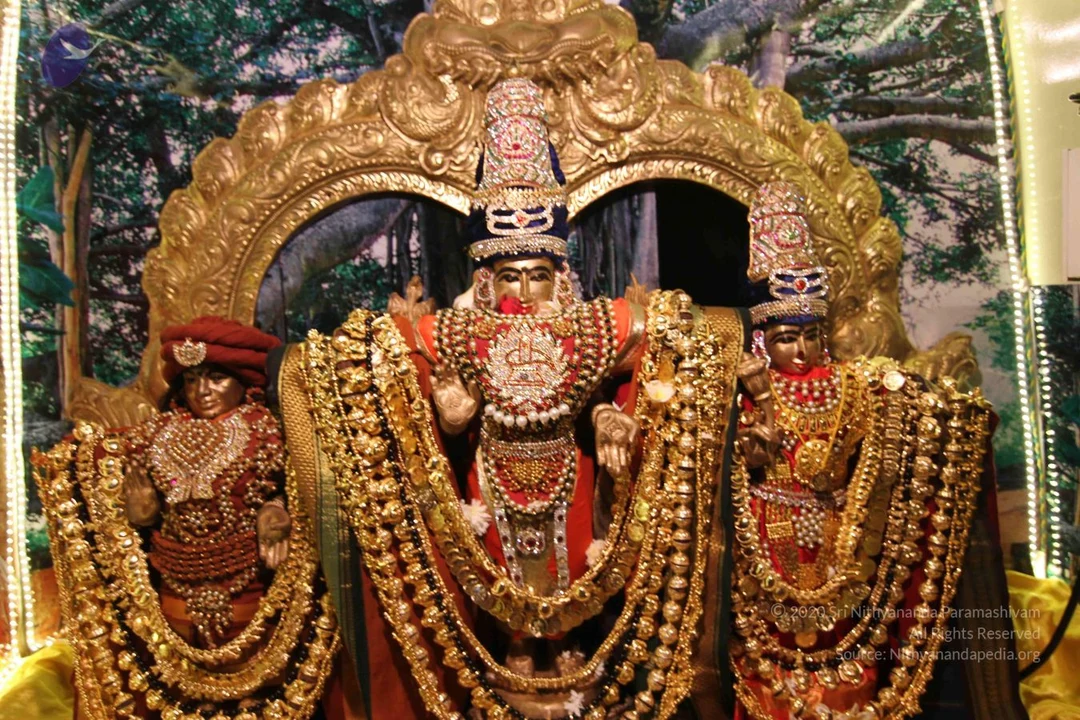
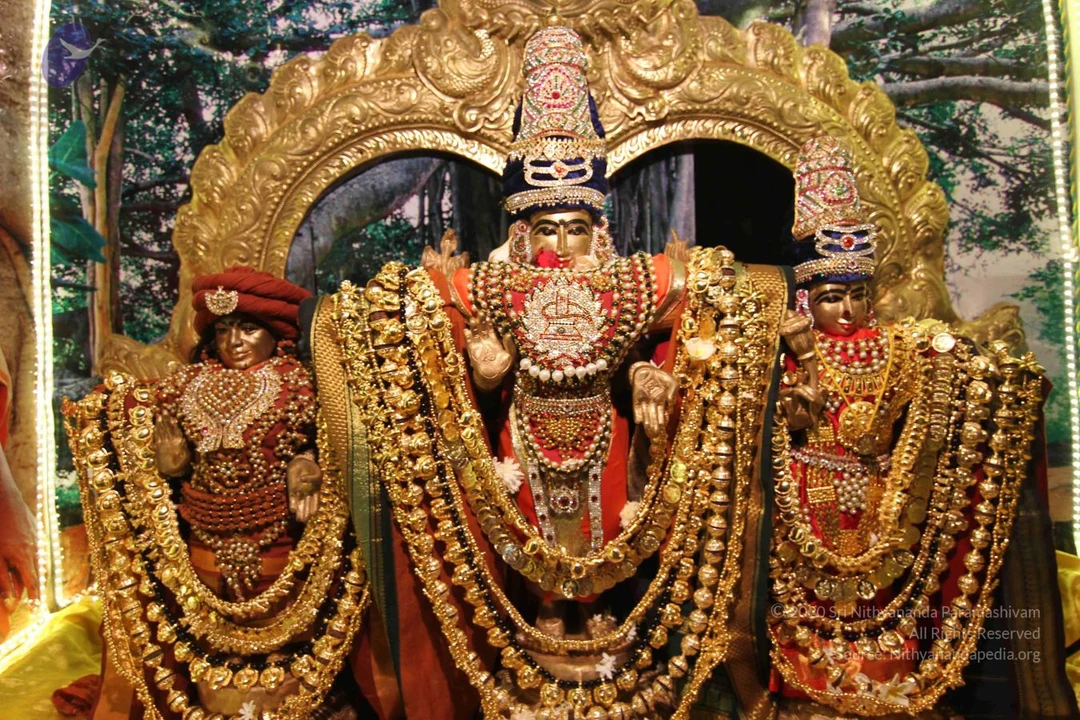
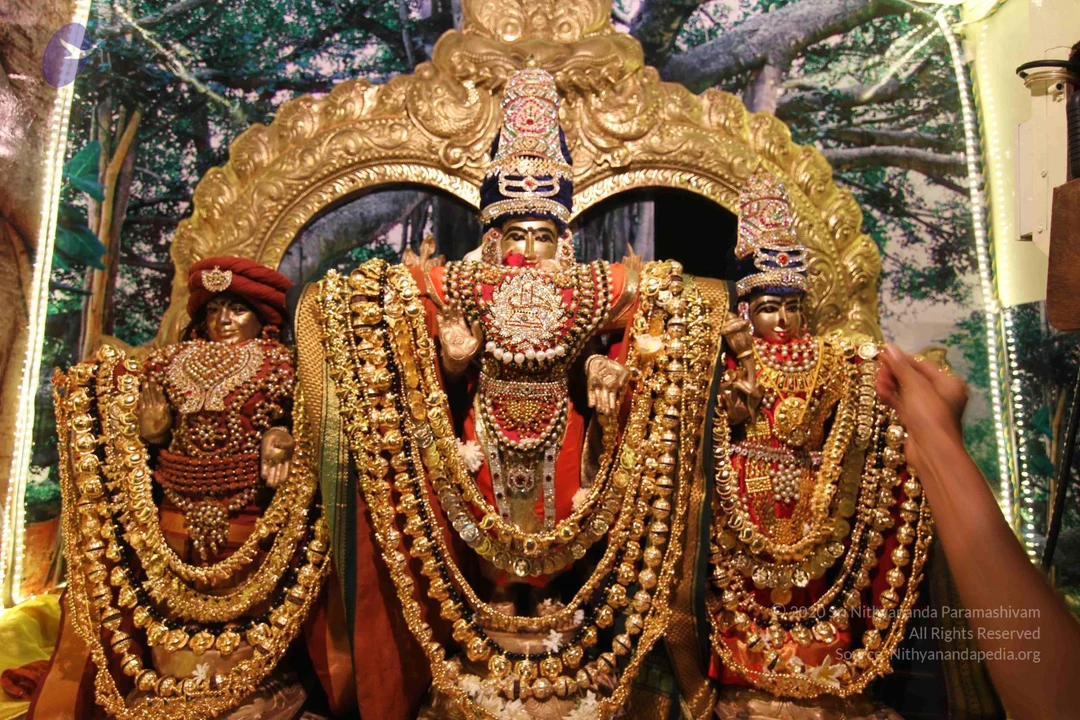
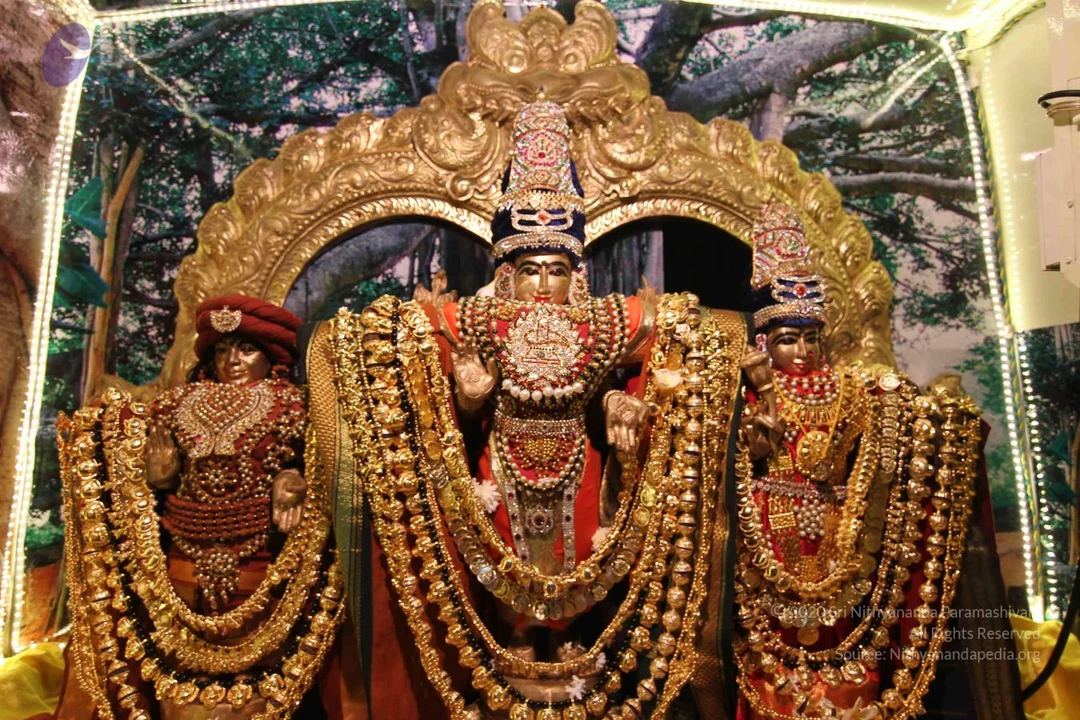
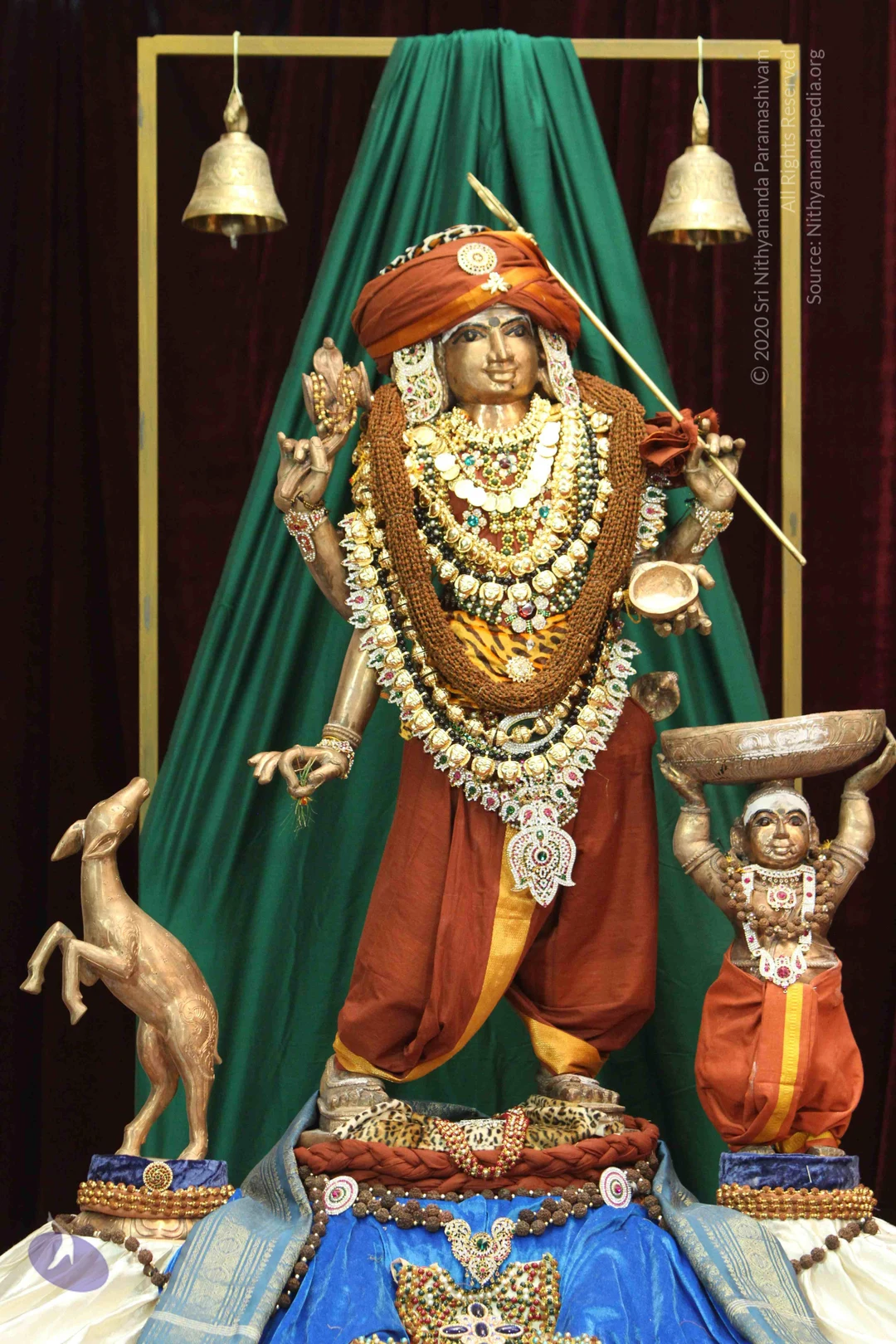
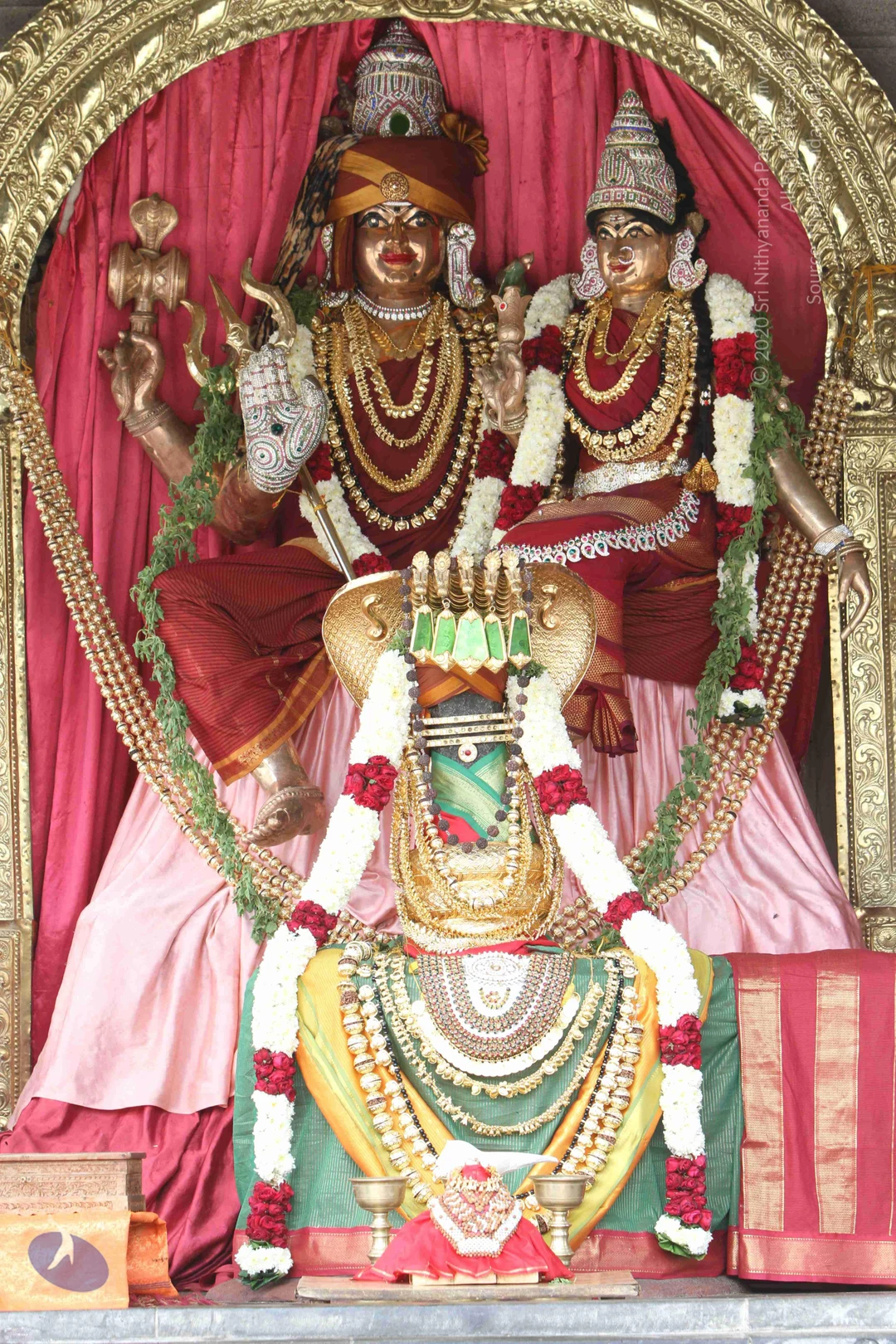
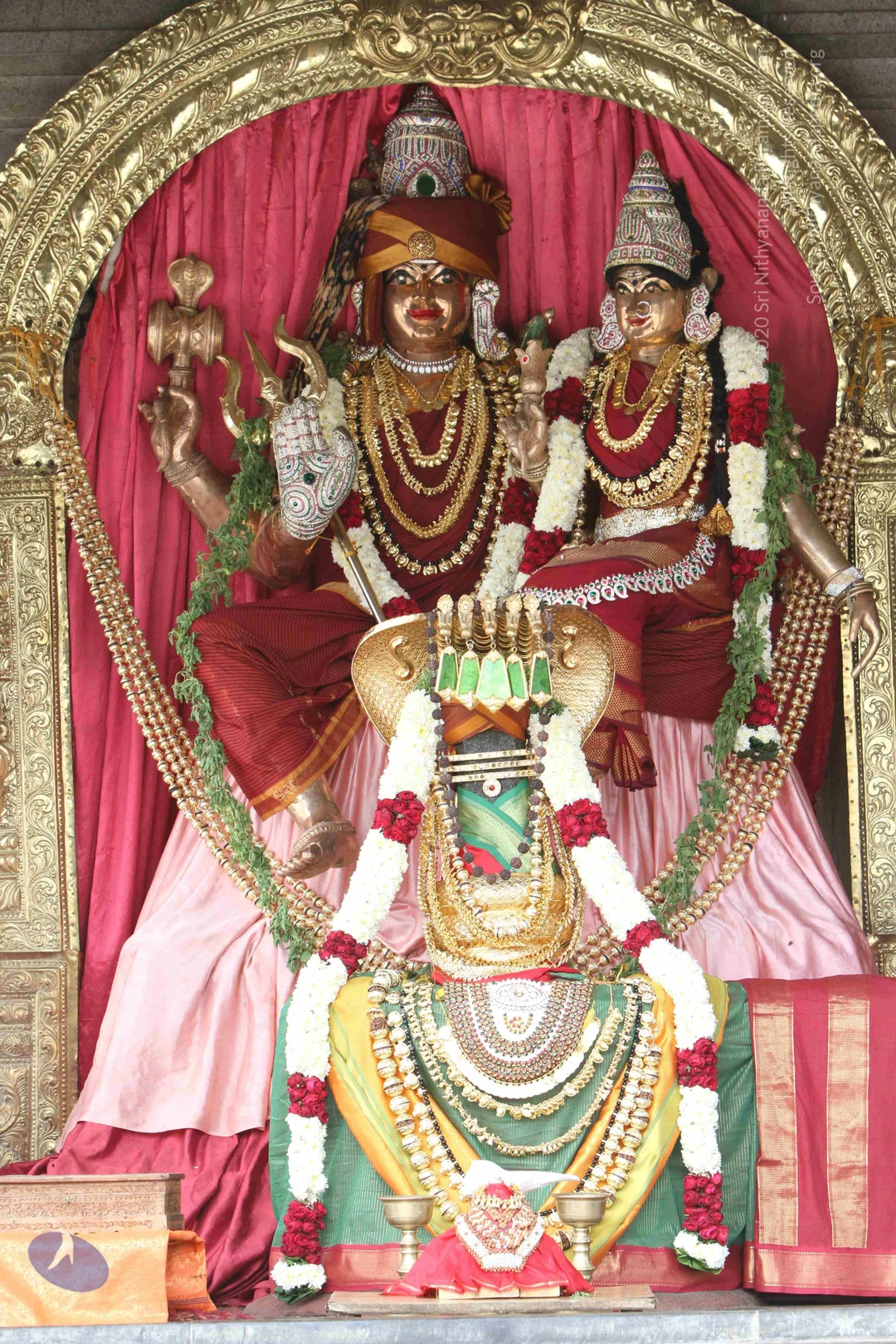
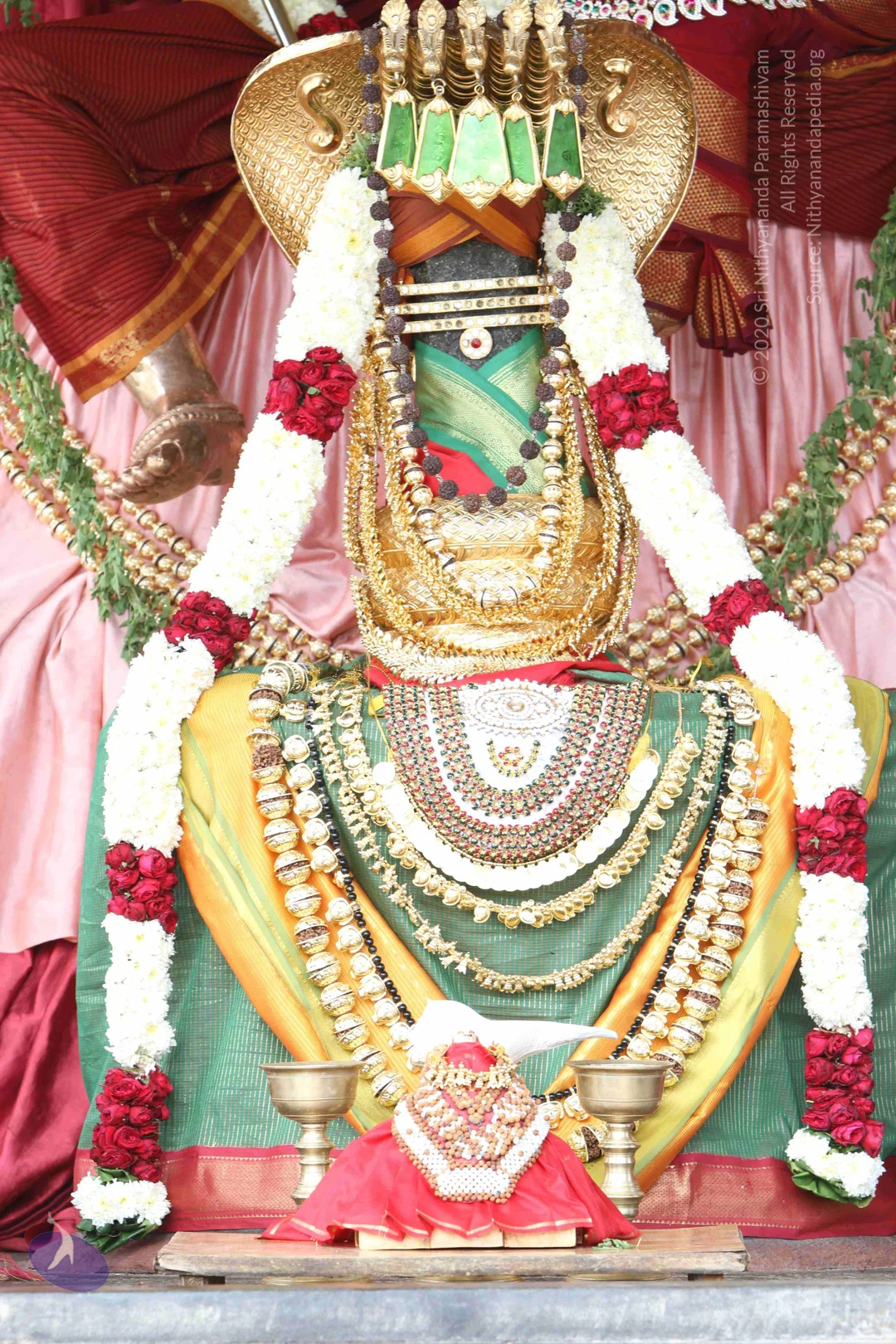
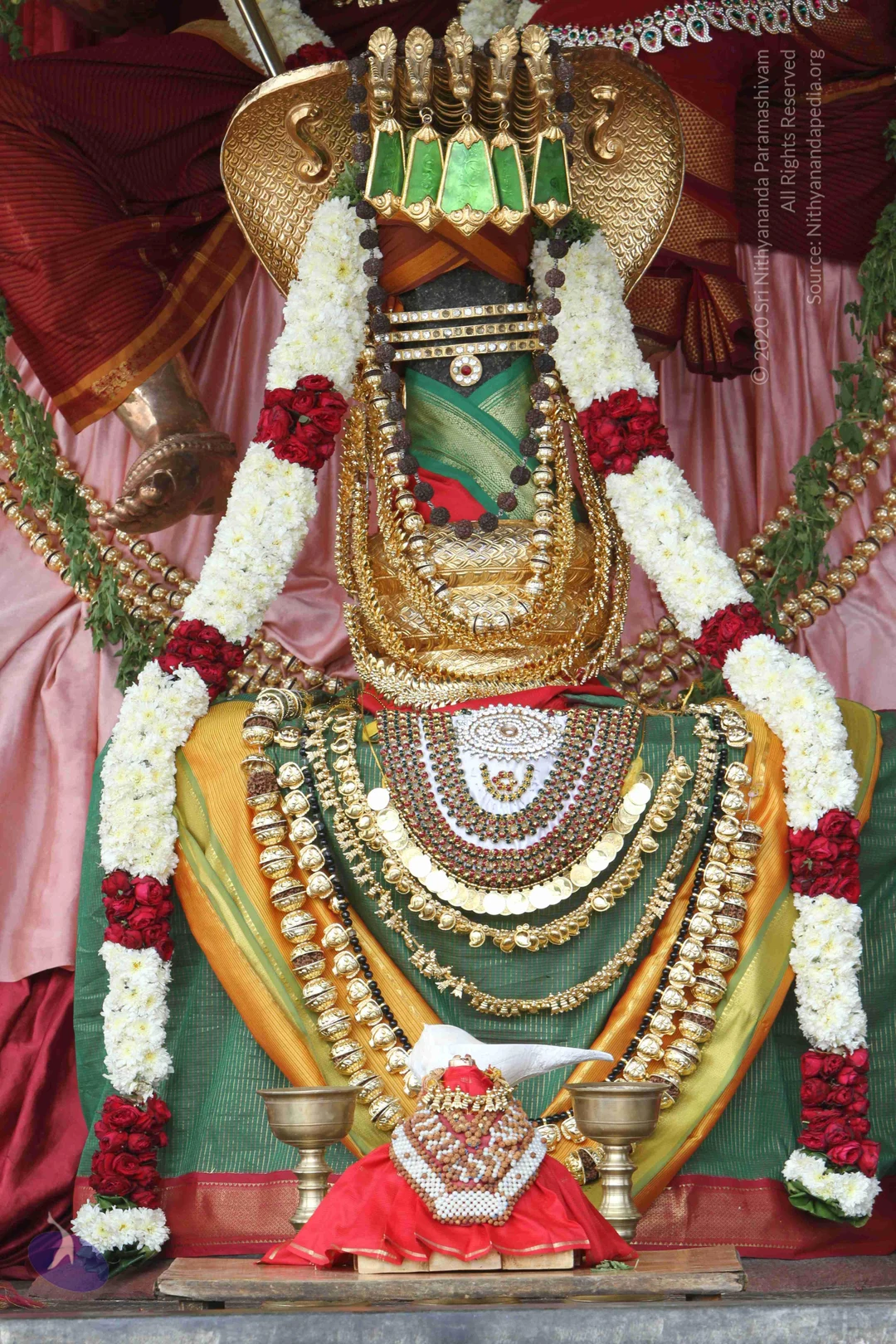
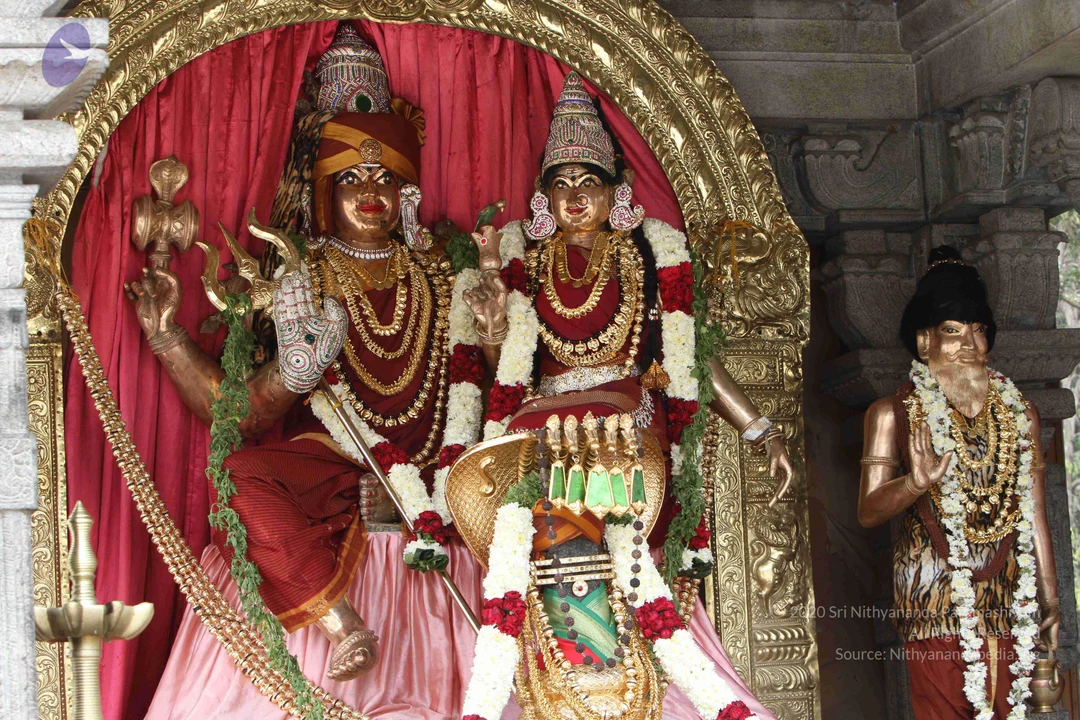
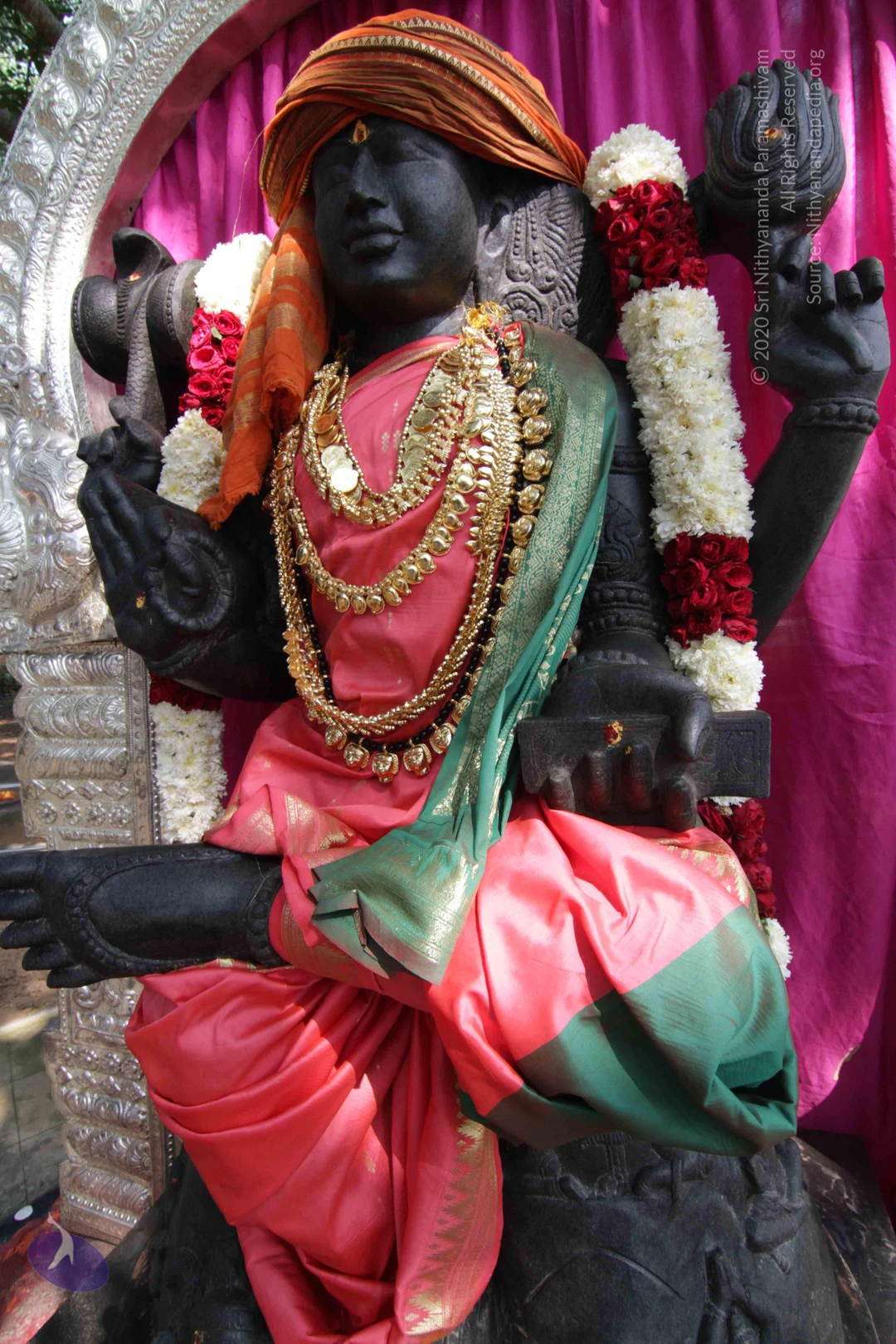
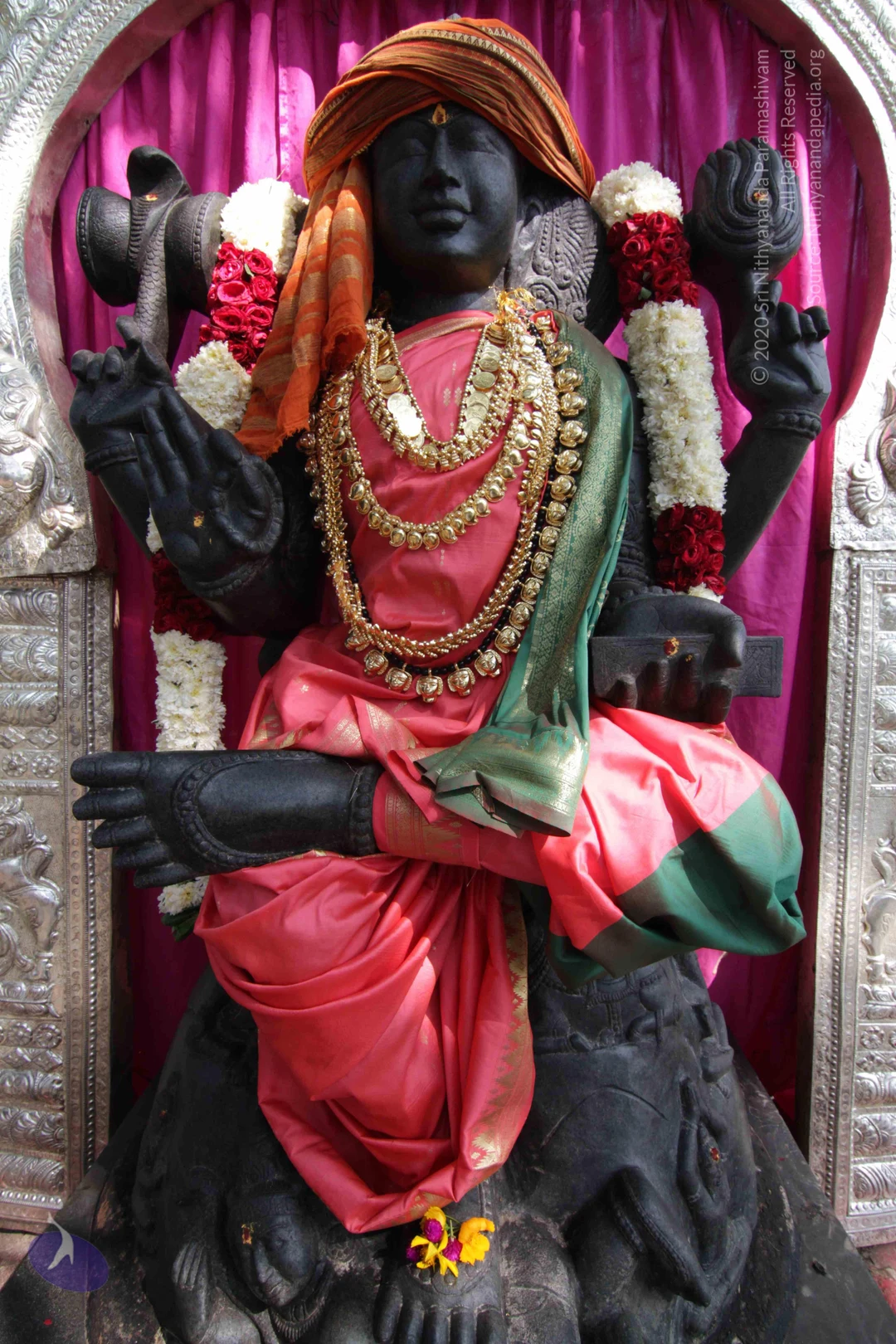
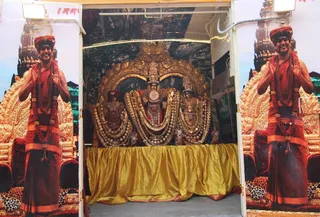
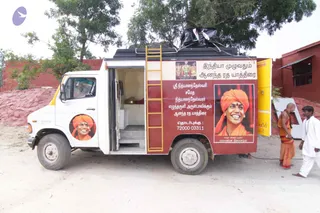
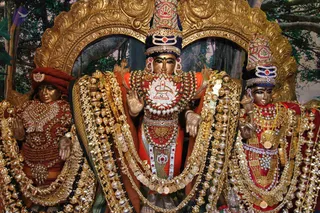
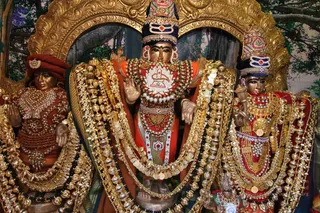
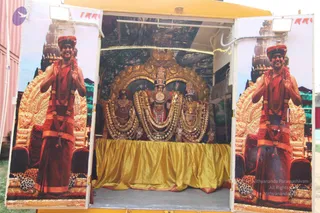
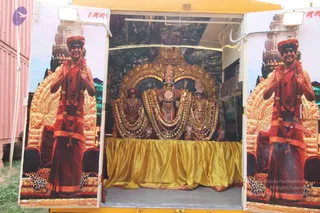
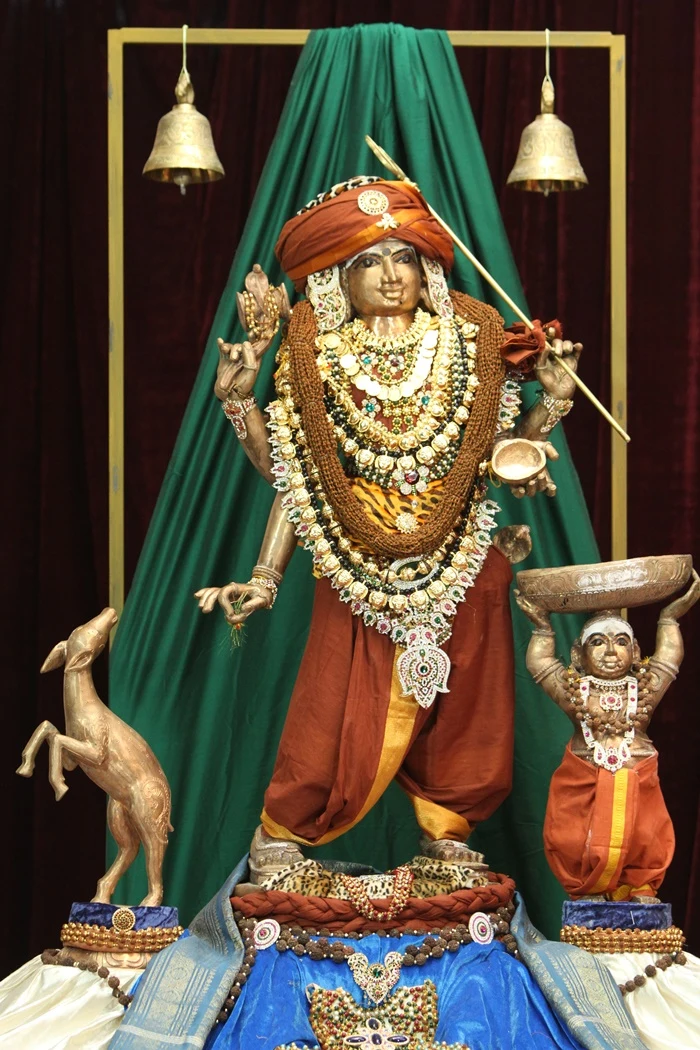
A photograph of three deity murtis on a golden silk-draped altar, with a gilded arch and a painted forest backdrop behind them. The central murti wears a tall crown, a rich layered gold necklace and a red and gold chest adornment. The murtis on either side are dressed in red and gold, with flanking gold garlands, and a row of smaller decorated figures stands on the front of the altar. Warm light and a white strip of lights frame the scene. No people are visible.A photograph of a deity murti set on a gold satin draped altar. Three figures stand in the centre: a larger central figure with a tall ornate crown, heavy layered gold and jewelled necklaces, and raised hands, flanked by two smaller figures wearing red and gold garments, red-and-gold headwear and multiple gold garlands. Three small figures in dark gold attire sit at the front of the altar. A gold arch frames the figures against a painted forest backdrop, and a strip of lights runs along the side. No living people are visible.A yellow vehicle with its rear doors open reveals an interior shrine with a golden arched backdrop and a deity murti group adorned with heavy gold and bead garlands, set against a golden-yellow silk cloth draped over a platform. Two large printed panels on the open doors show a standing man in red-orange robes with a red turban, a rudraksha-style red mala, and raised hands in a blessing gesture, in front of a golden throne with leopard-print cushions. The printed panels are depictions and no physical people are visible. A copyright-style overlay on the right panel appears in the image.

November 08 2014

Original wiki page
Contents

Title

Who Am I? || Part 1 || NDY || 08 Nov 2014

Description

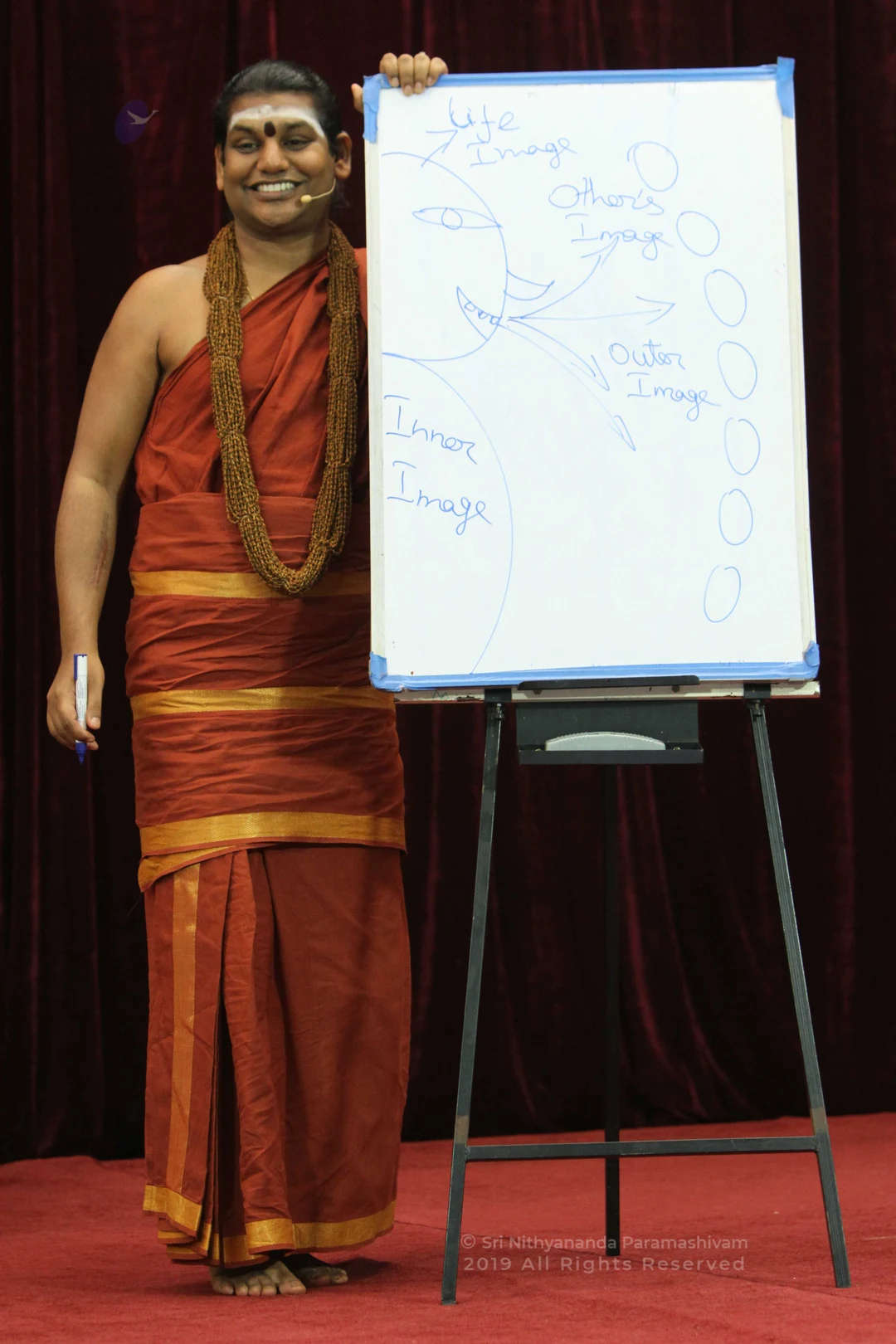
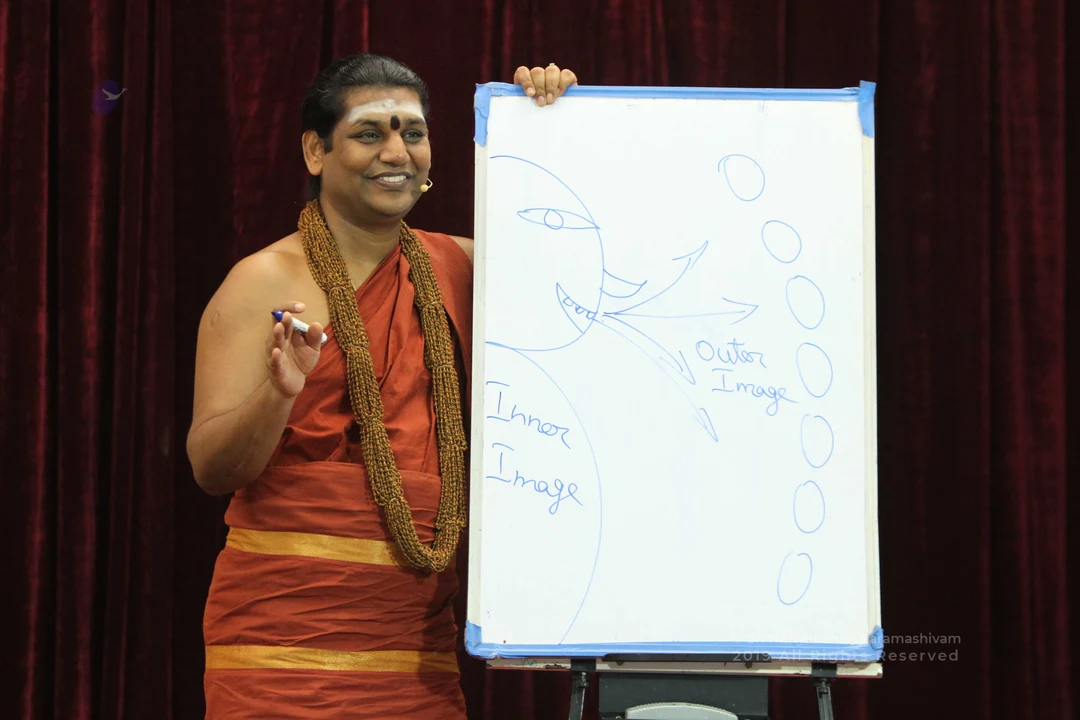
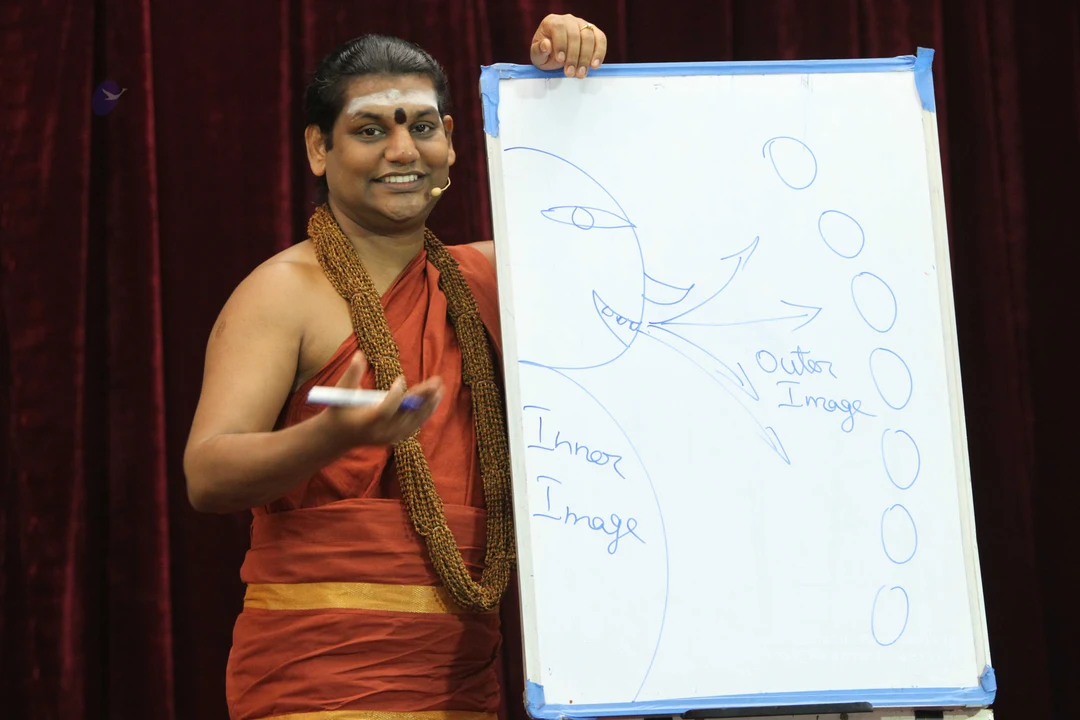
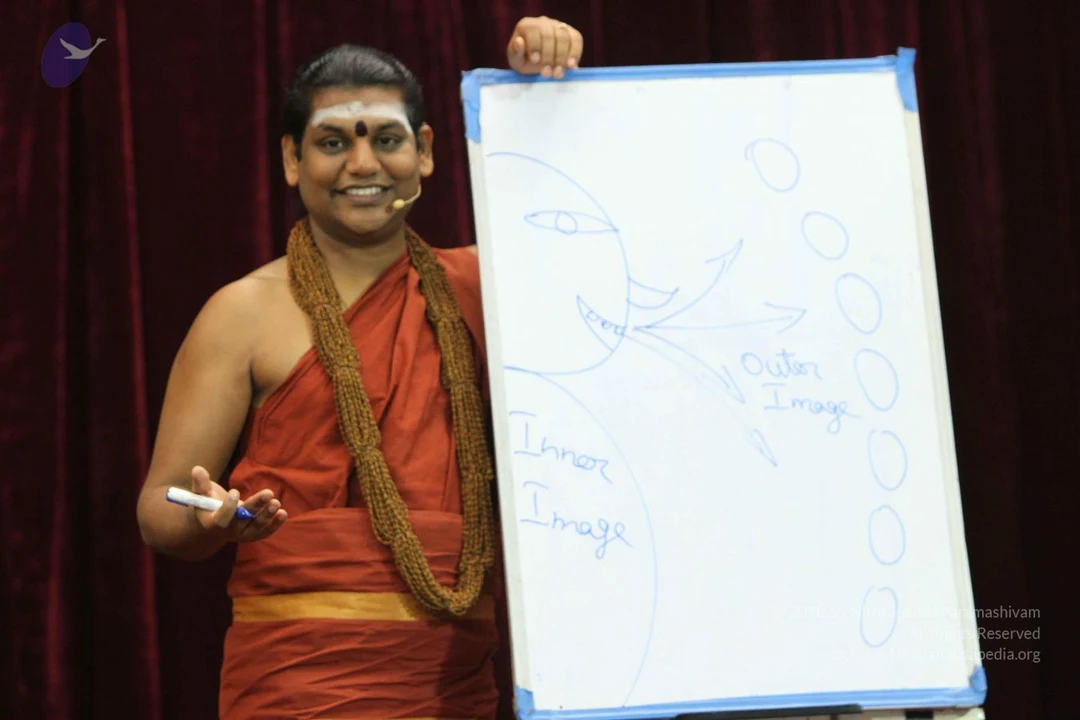
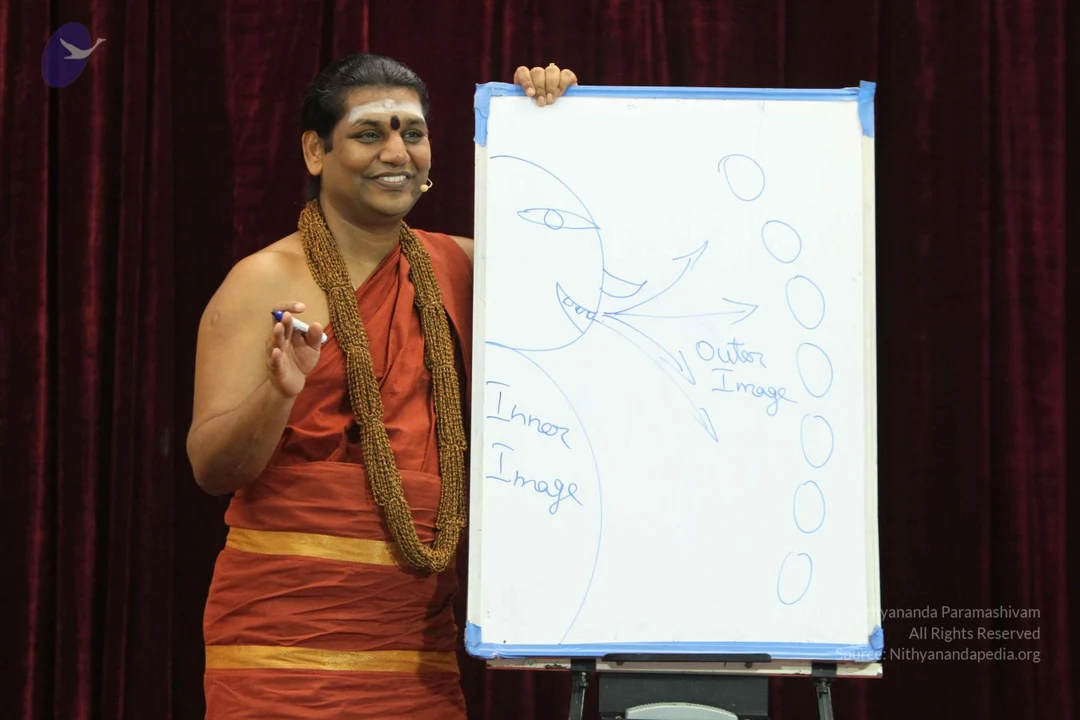
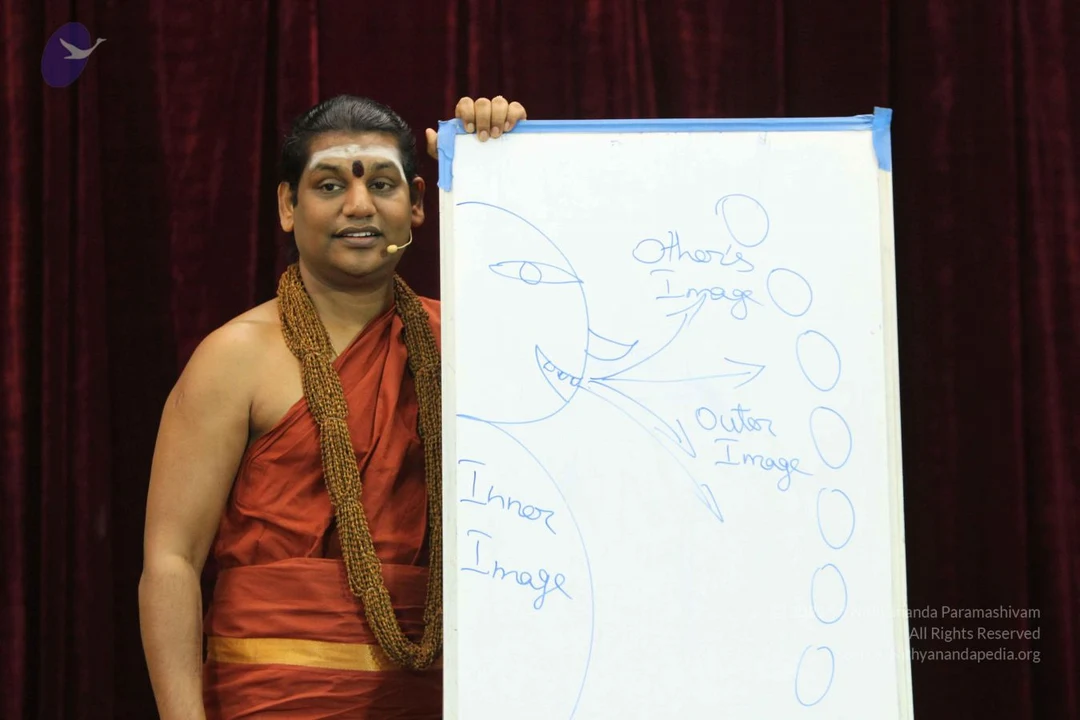
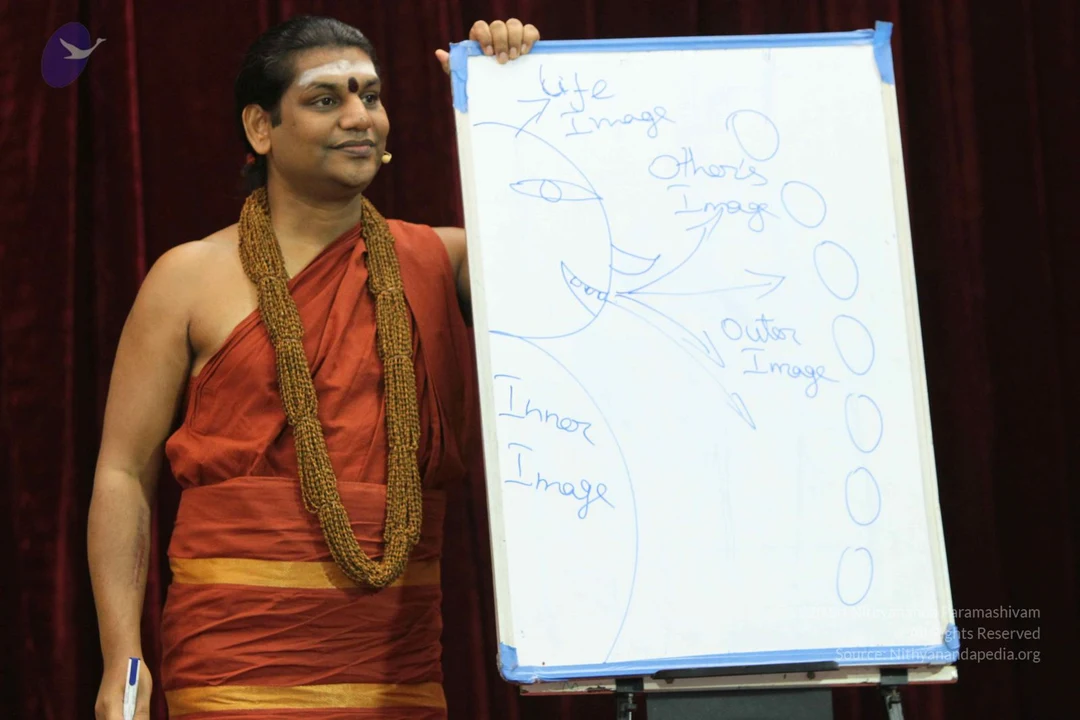
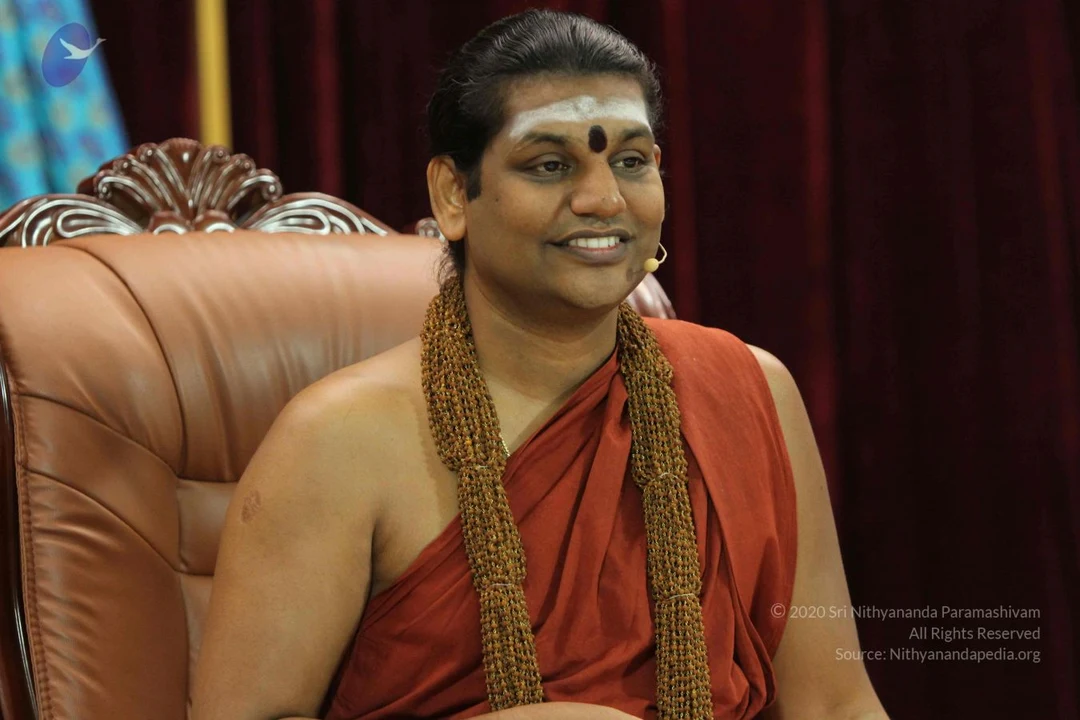
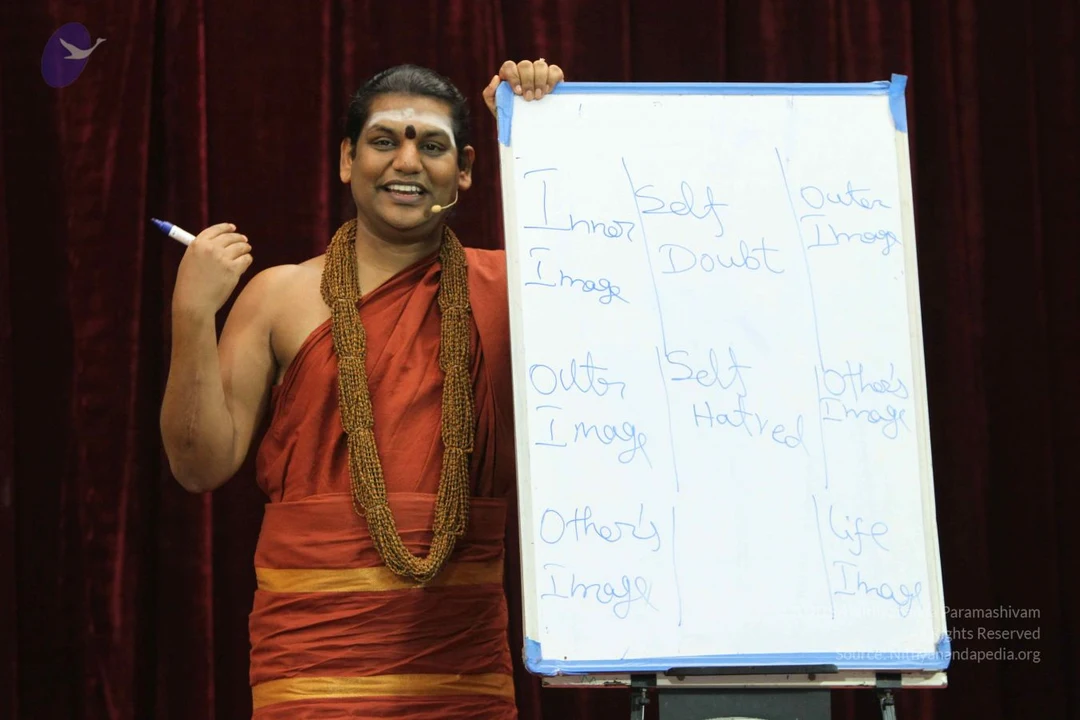
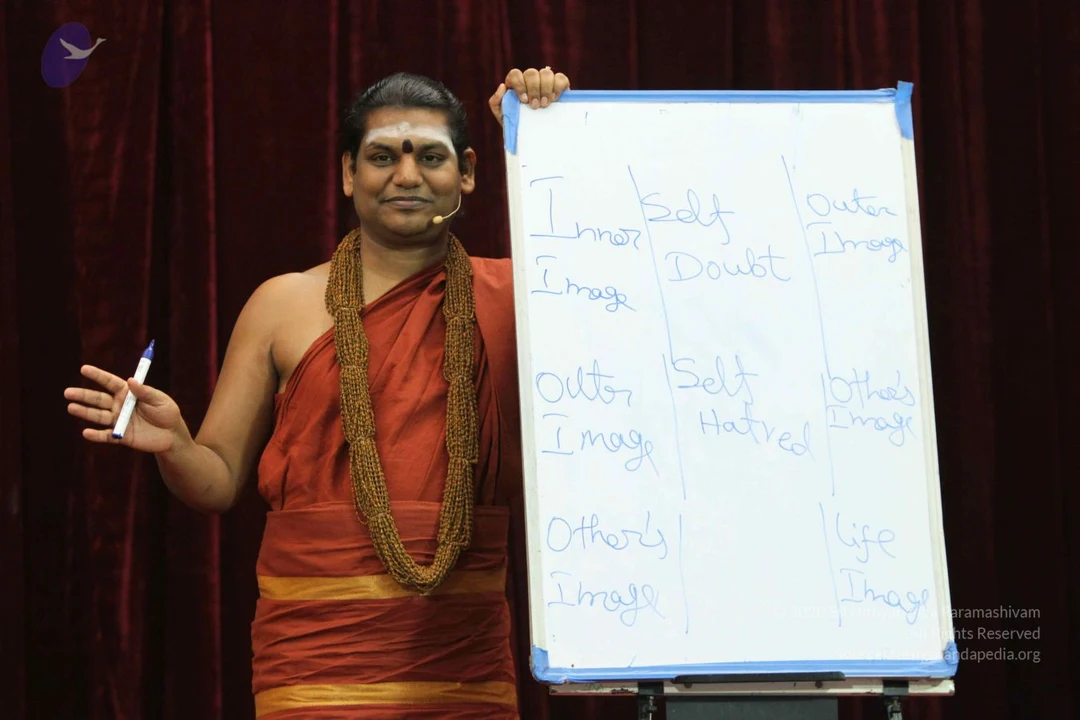
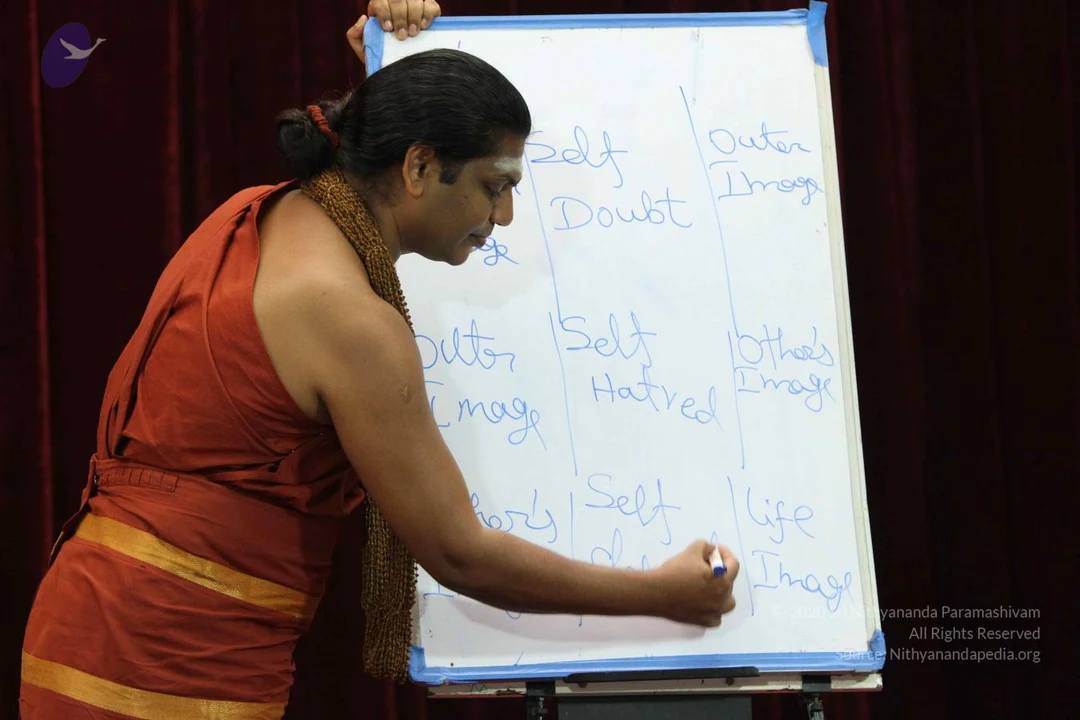
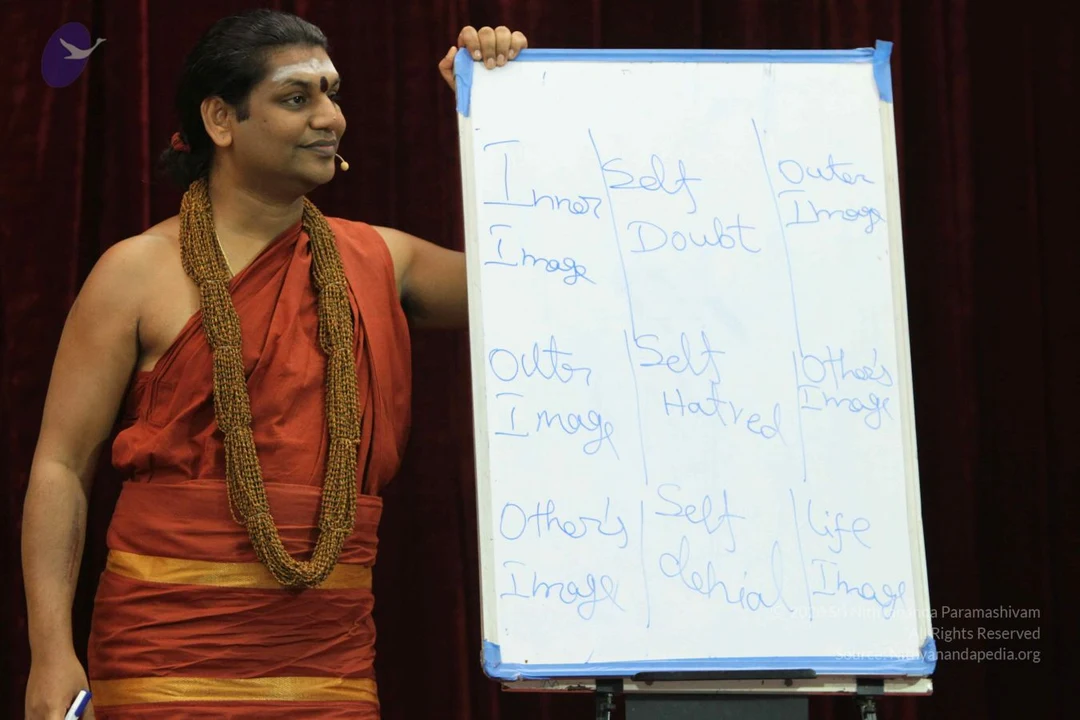
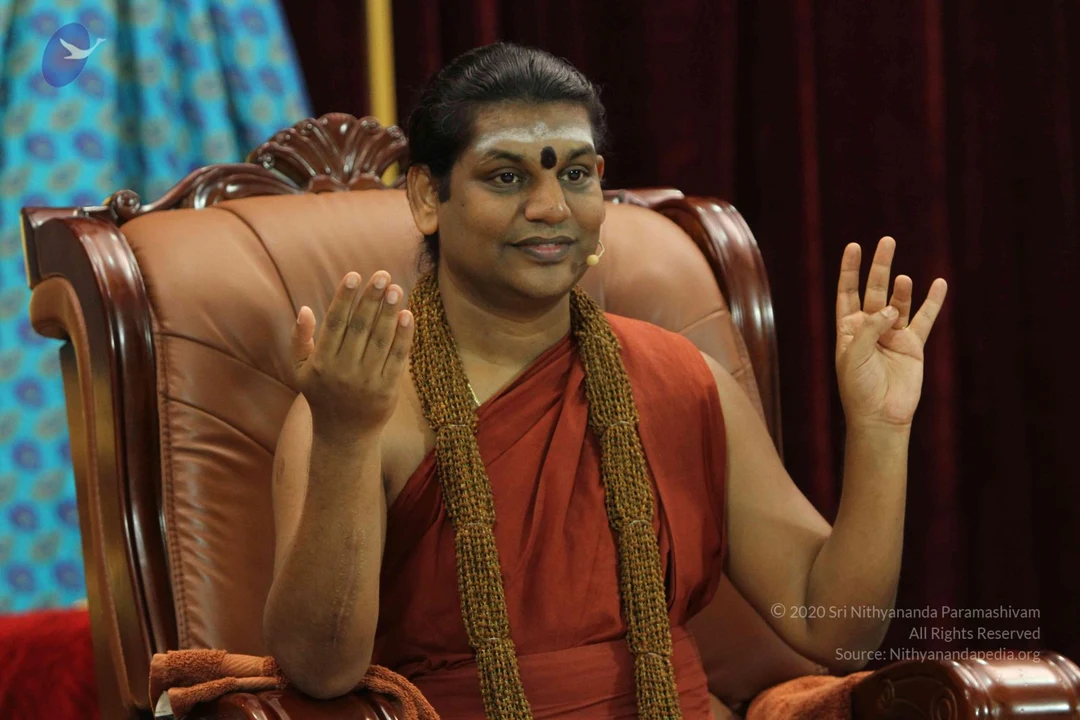
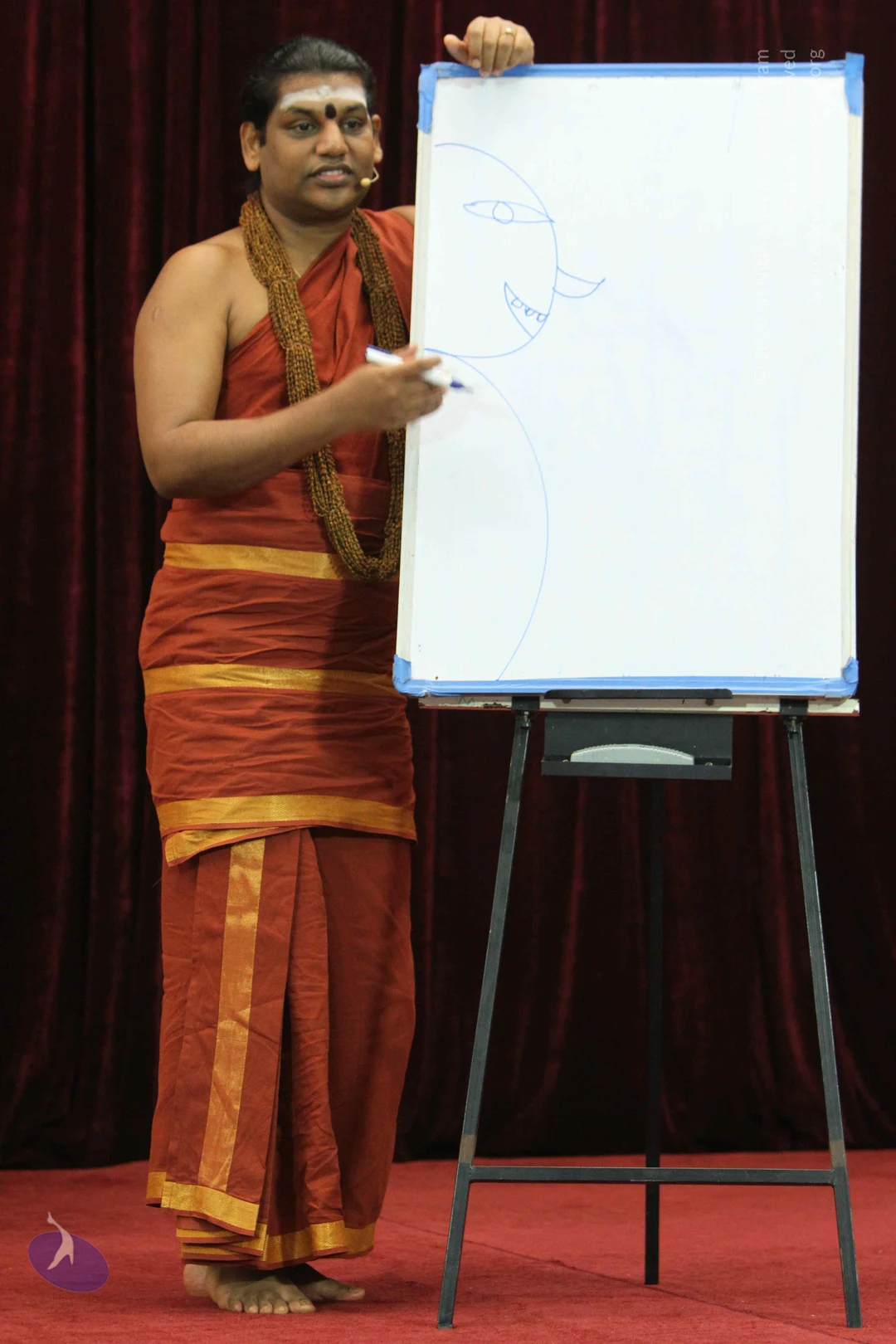
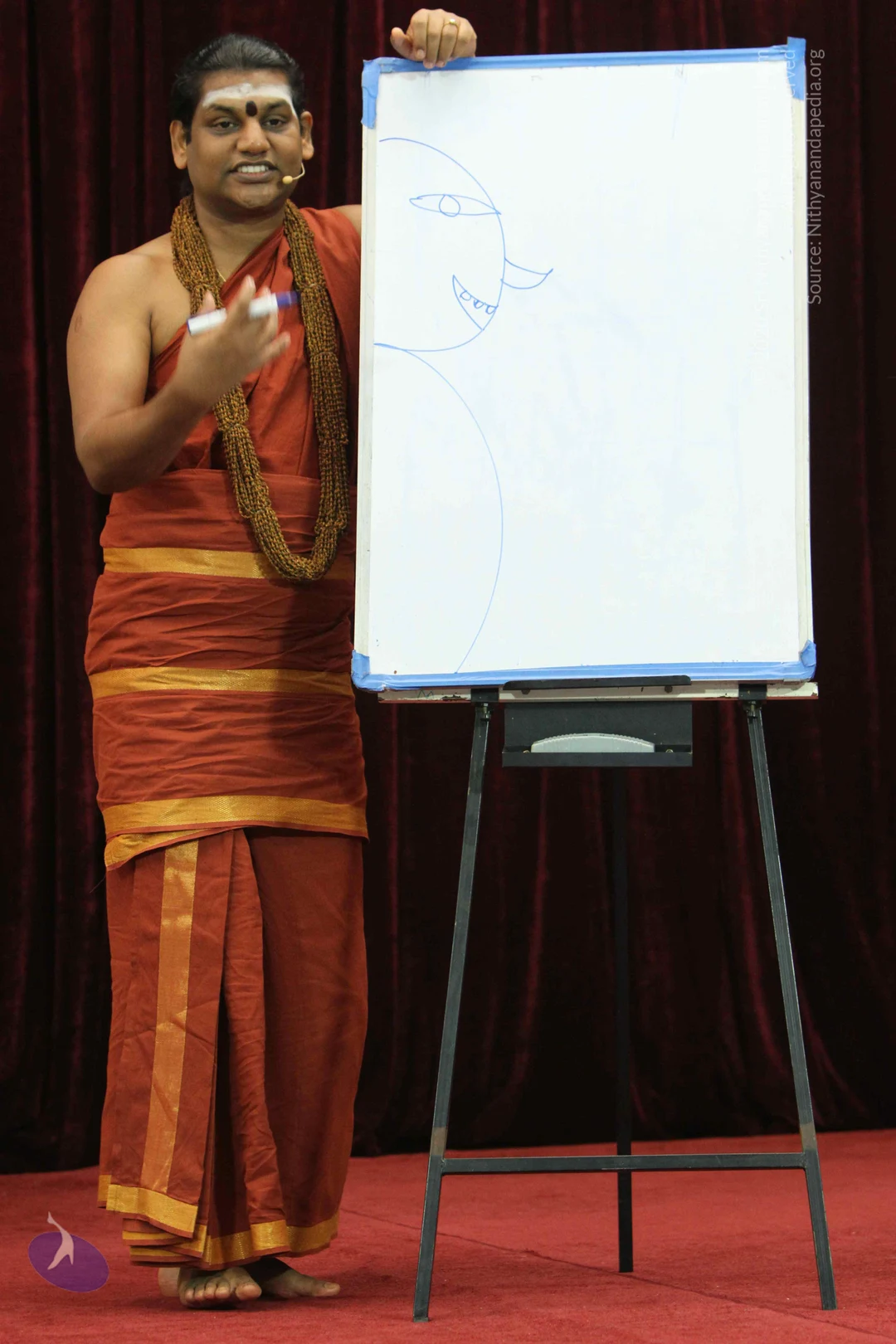
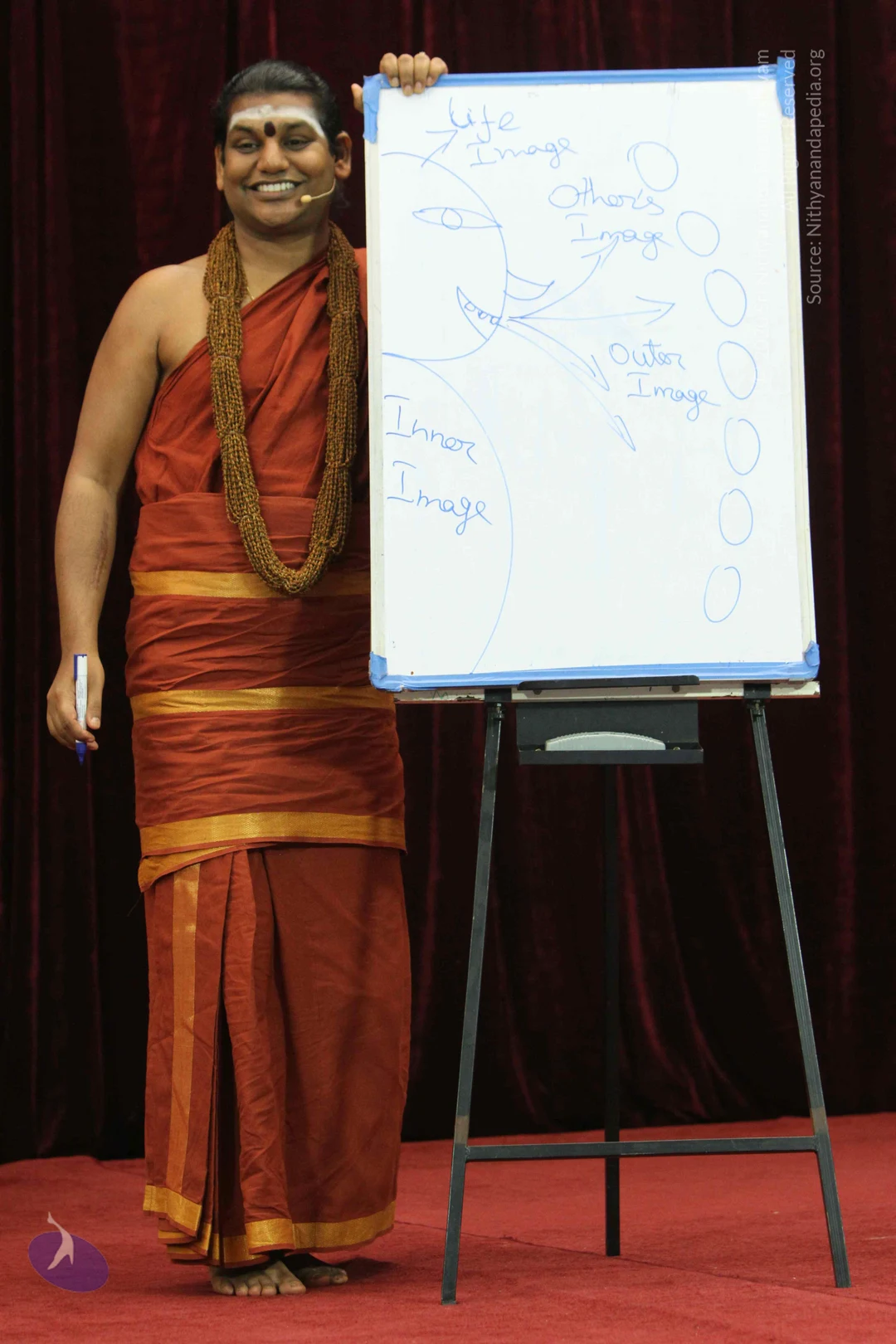
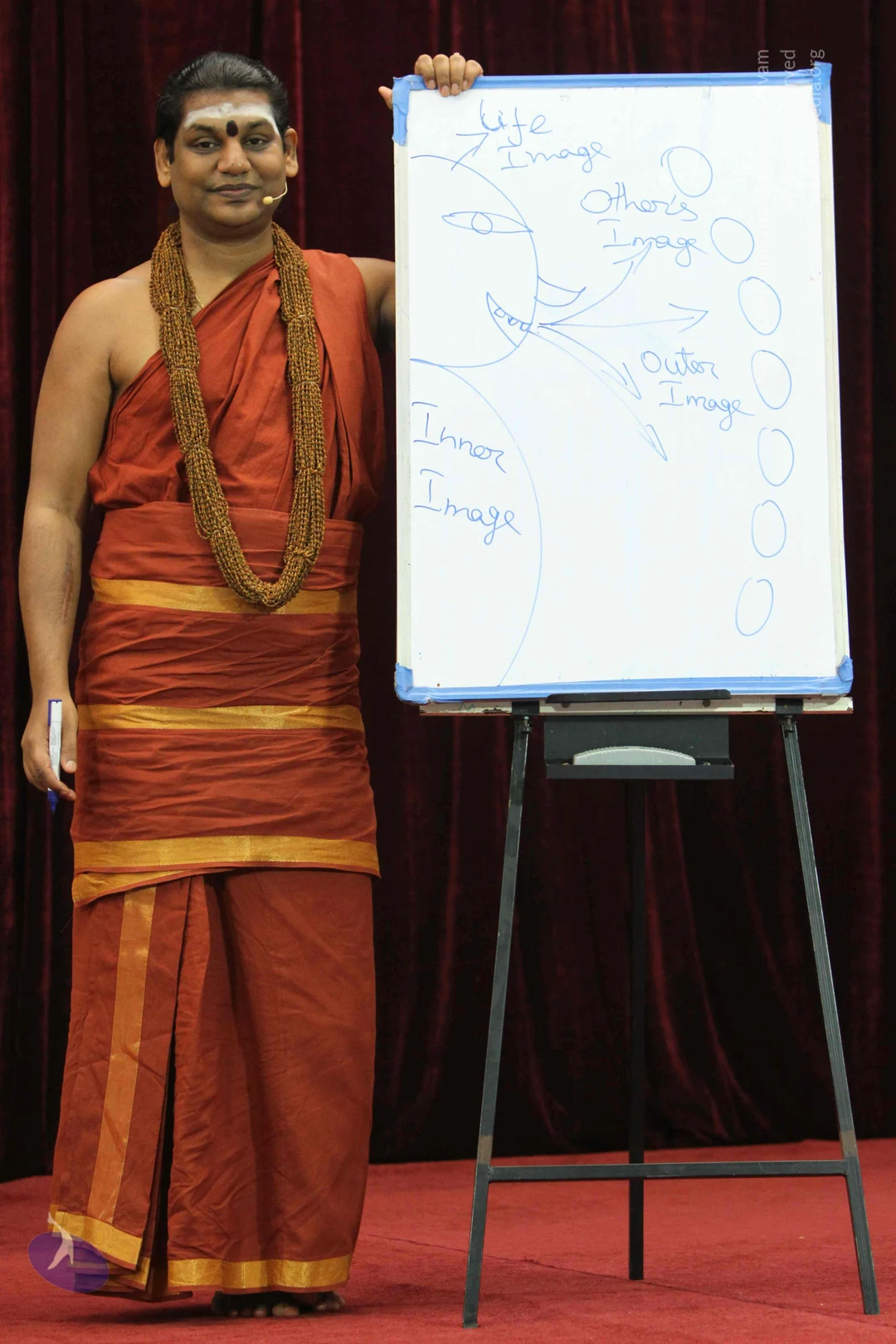
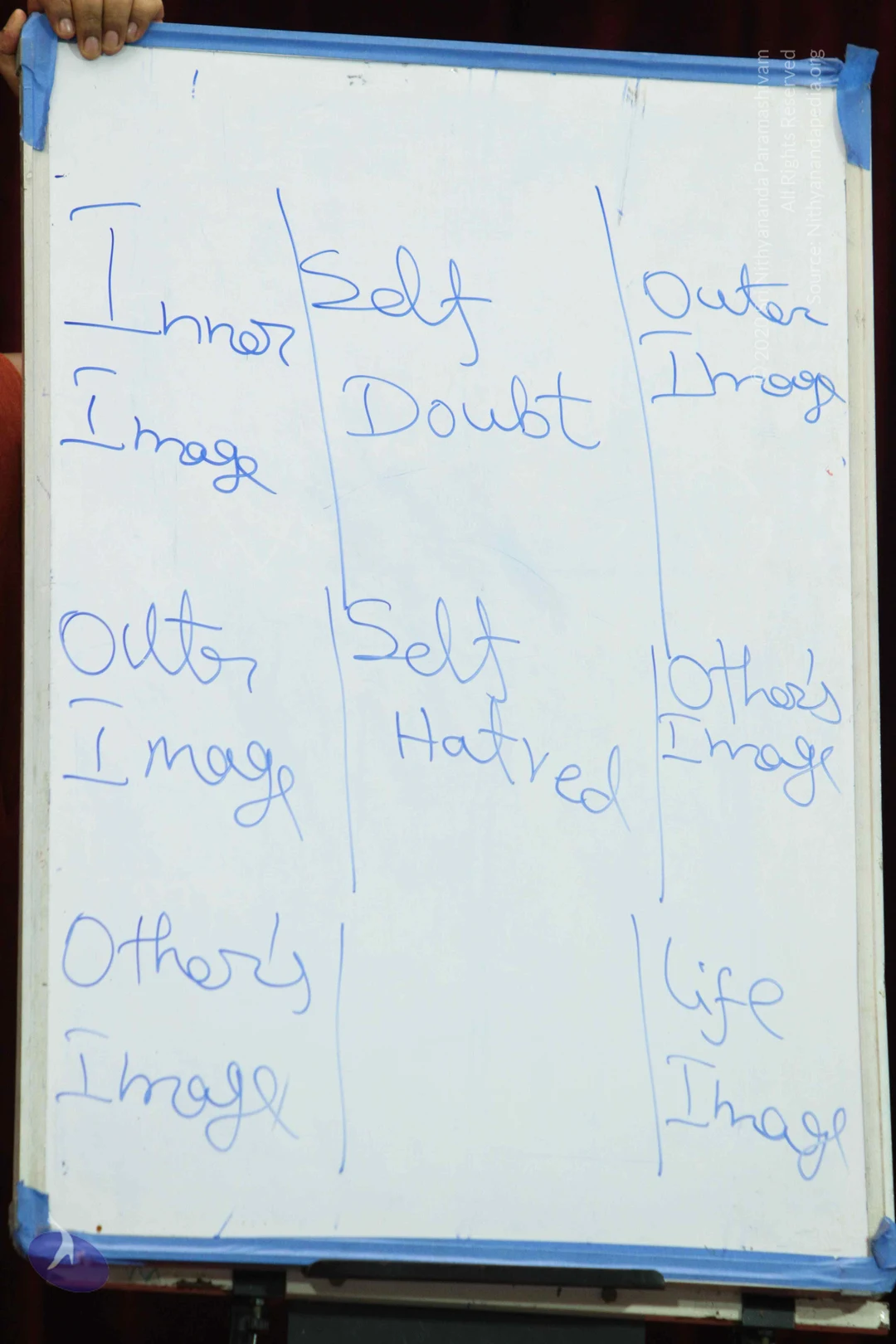
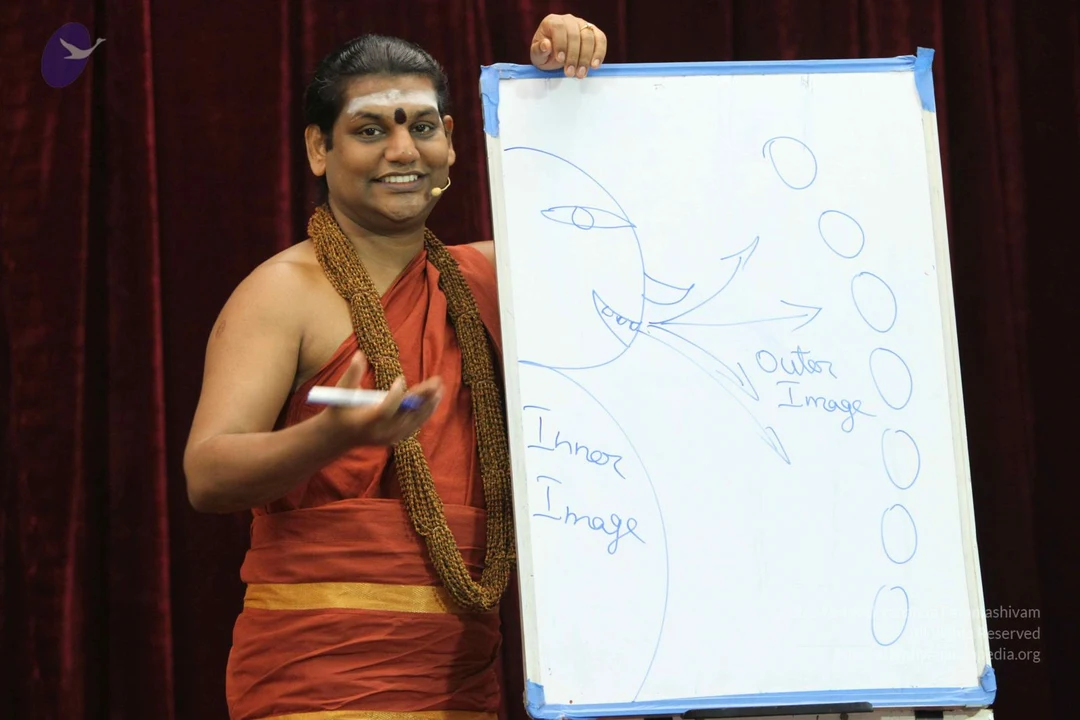
In this video Supreme Pontiff of Hinduism HDH #Nithyananda Paramashivam explains on the Genesis of Identity. This video is an excerpt on The Inner Image, Outer Image, Others Image, Life Image conducted on 08 November 2014 in Adikailaasa, Bidadi, Bengaluru. Here HDH also asks the delegates to find out their images. This is a powerful process for #conscious awakening.

The Supreme Pontiff of Hinduism Jagatguru Mahasannidhanam His Divine Holiness Nithyananda Paramashivam (HDH) is the reviver of #KAILASA - the ancient enlightened civilization and the great cosmic borderless Hindu nation. Revered as the incarnation of Paramashiva - the primordial Hindu Divinity, HDH has a following of 2 billion Hindus worldwide with de facto spiritual embassies in over 150 countries. He has worked untiringly for over 26 years for the revival of Kailasa, for global peace and to give super conscious breakthrough to humanity. He has survived the worst persecution of multiple assassination attempts on person and on character by anti-Hindu elements. He is collecting, organising, preserving, time capsuling, decoding, spreading and reviving 20 Million source books of Hinduism and the 64 sacred arts & sciences like Ayurveda, music, dance, sculpting, astrology, vastu and much more. Close to 20,000 hours of HDH’s timeless talks have been recorded till date (Sep 2020), which are a treasure trove of powerful cognitions to solve individual and global problems of any kind.

VideoAudio

Title

If You Find You, You Have Found God || Part 2 || NDY || 08 Nov 2014

Description

Name Of The Convention : Nithya Dhyana Yoga Part 2
Session on: If You Find You, You Have Found God
Date : 08 November 2014
Venue : Adikailaasa, Bidadi, Bengaluru

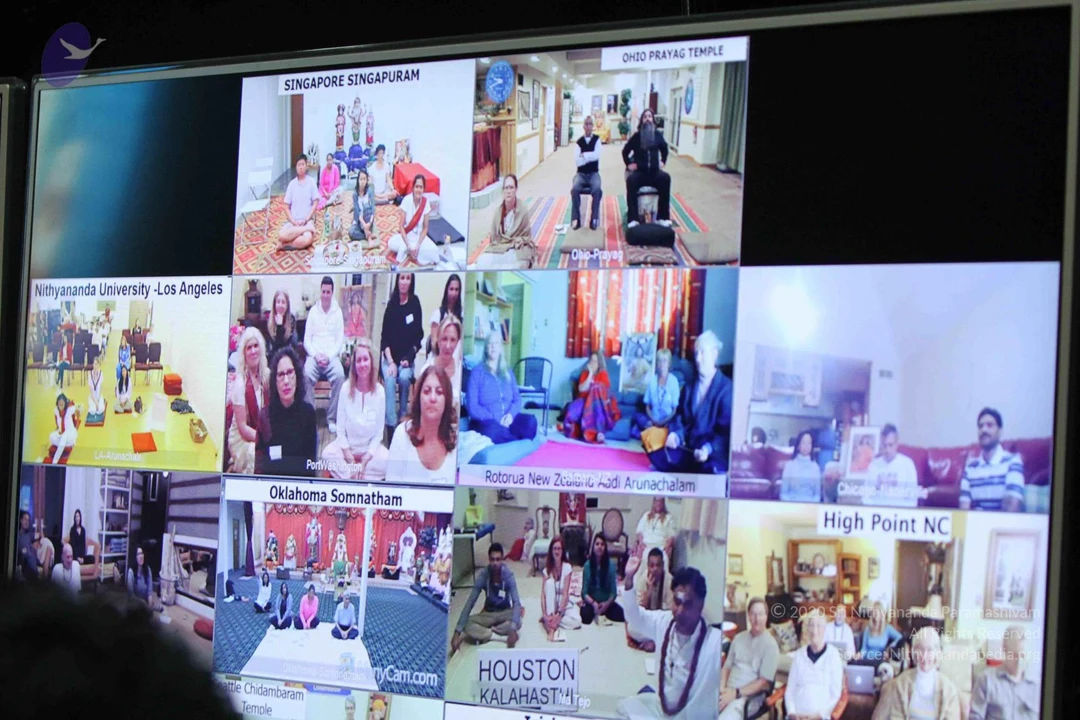
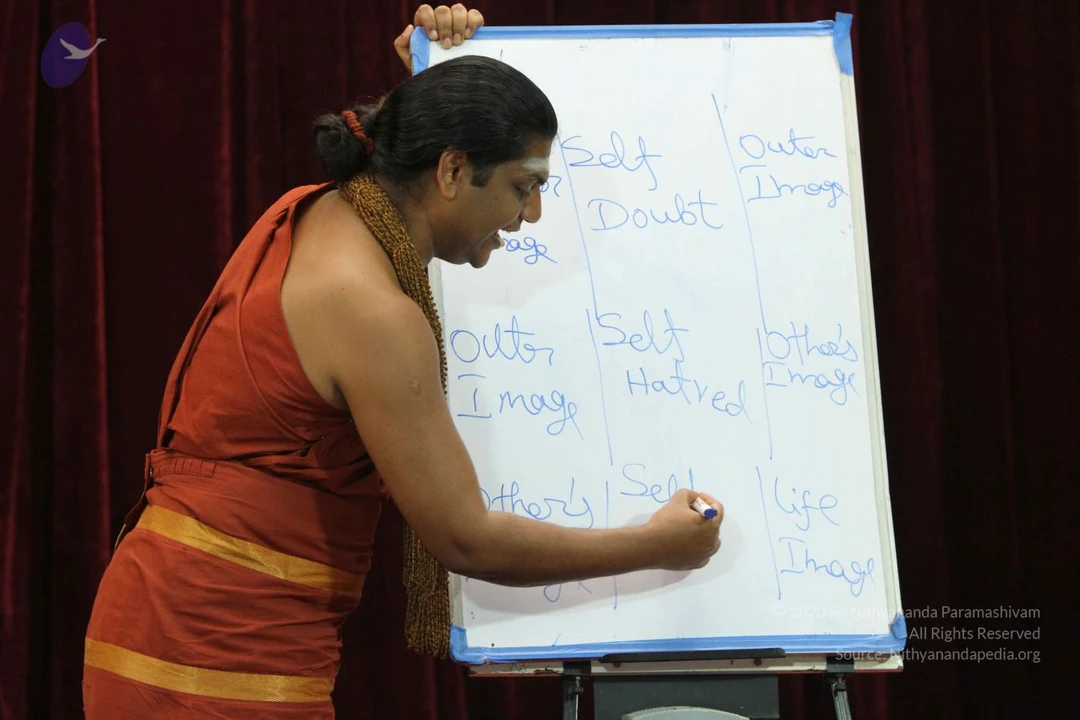
In this video Supreme Pontiff of Hinduism HDH #Nithyananda Paramashivam explains on the Self Doubt, Self Hatred, Self Denial. This video is an excerpt on Self Doubt, Self Hatred, Self Denial (SDHD) conducted on 08 November 2014 in Adikailaasa, Bidadi, Bengaluru. Here HDH also asks the delegates to look in and find out their first created SDHD in them.

The Supreme Pontiff of Hinduism Jagatguru Mahasannidhanam His Divine Holiness Nithyananda Paramashivam (HDH) is the reviver of #KAILASA - the ancient enlightened civilization and the great cosmic borderless Hindu nation. Revered as the incarnation of Paramashiva - the primordial Hindu Divinity, HDH has a following of 2 billion Hindus worldwide with de facto spiritual embassies in over 150 countries. He has worked untiringly for over 26 years for the revival of Kailasa, for global peace and to give super conscious breakthrough to humanity. He has survived the worst persecution of multiple assassination attempts on person and on character by anti-Hindu elements. He is collecting, organising, preserving, time capsuling, decoding, spreading and reviving 20 Million source books of #Hinduism and the 64 sacred arts & sciences like Ayurveda, music, dance, sculpting, astrology, vastu and much more. Close to 20,000 hours of HDH’s timeless talks have been recorded till date (Sep 2020), which are a treasure trove of powerful cognitions to solve individual and global problems of any kind.

VideoAudio

Title

Walk Out Of Emotions || Part 3 || NDY || 08 Nov 2014

Description

Name Of The Convention : Nithya Dhyana Yoga Part 3
Session on: Walk Out of Emotions
Date : 08 November 2014
Venue : Adikailaasa, Bidadi, Bengaluru

In this video Supreme Pontiff of Hinduism HDH #Nithyananda Paramashivam explains on creating your best Inner Image , Outer Image , Life Image, and Others Image. This video is an excerpt on the best Inner Image, Outer Image, Others Image, Life Image conducted on 08 November 2014 in Adikailaasa, Bidadi, Bengaluru. Here HDH also explains how to create their best inner image, outer image, life image and others image.

The Supreme Pontiff of Hinduism Jagatguru Mahasannidhanam His Divine Holiness Nithyananda Paramashivam (HDH) is the reviver of #KAILASA - the ancient enlightened civilization and the great cosmic borderless Hindu nation. Revered as the incarnation of Paramashiva - the primordial Hindu Divinity, HDH has a following of 2 billion Hindus worldwide with de facto spiritual embassies in over 150 countries. He has worked untiringly for over 26 years for the revival of Kailasa, for global peace and to give super conscious breakthrough to humanity. He has survived the worst persecution of multiple assassination attempts on person and on character by anti-Hindu elements. He is collecting, organising, preserving, time capsuling, decoding, spreading and reviving 20 Million source books of #Hinduism and the 64 sacred arts & sciences like Ayurveda, music, dance, sculpting, astrology, vastu and much more. Close to 20,000 hours of HDH’s timeless talks have been recorded till date (Sep 2020), which are a treasure trove of powerful cognitions to solve individual and global problems of any kind.

VideoAudio

Photos

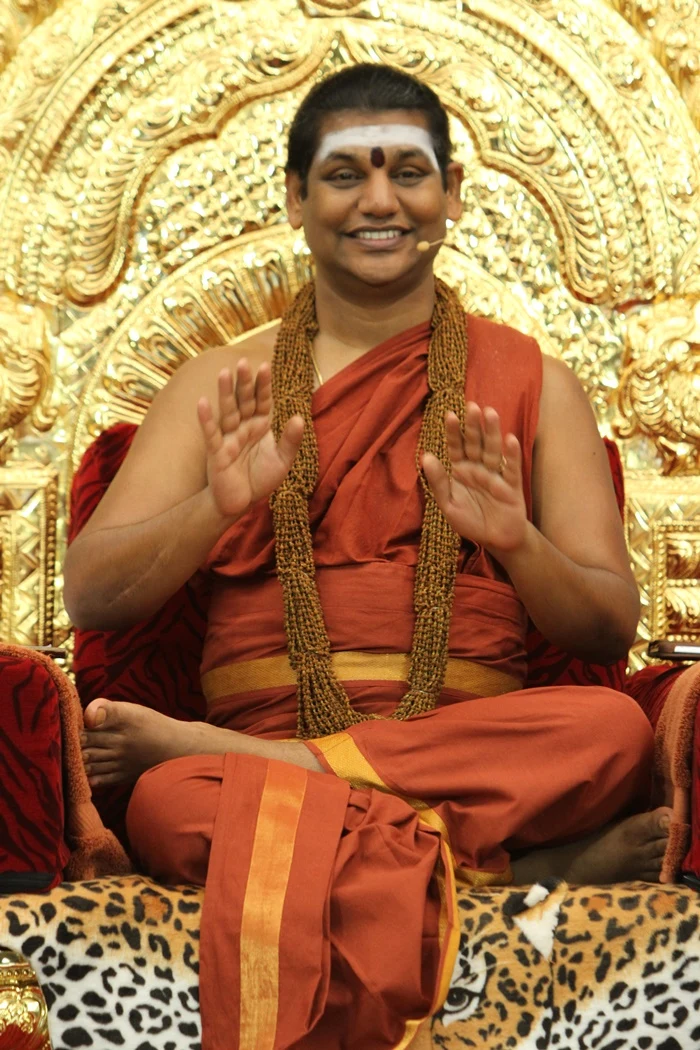
NDY (Life Bliss Program) Day 1| Pada Puja| Nithya Kirthan | Satsang | Kalpataru Darshan
Sakshi Pramana:

Sharing from Nithyananda Teachers training

Photos Of The Day:

NDY-Programme

Ratha-Yatra

01-NDY-ENGLISH

Photos from this day

View all 129 photos

Photos

1 photoSource gallery
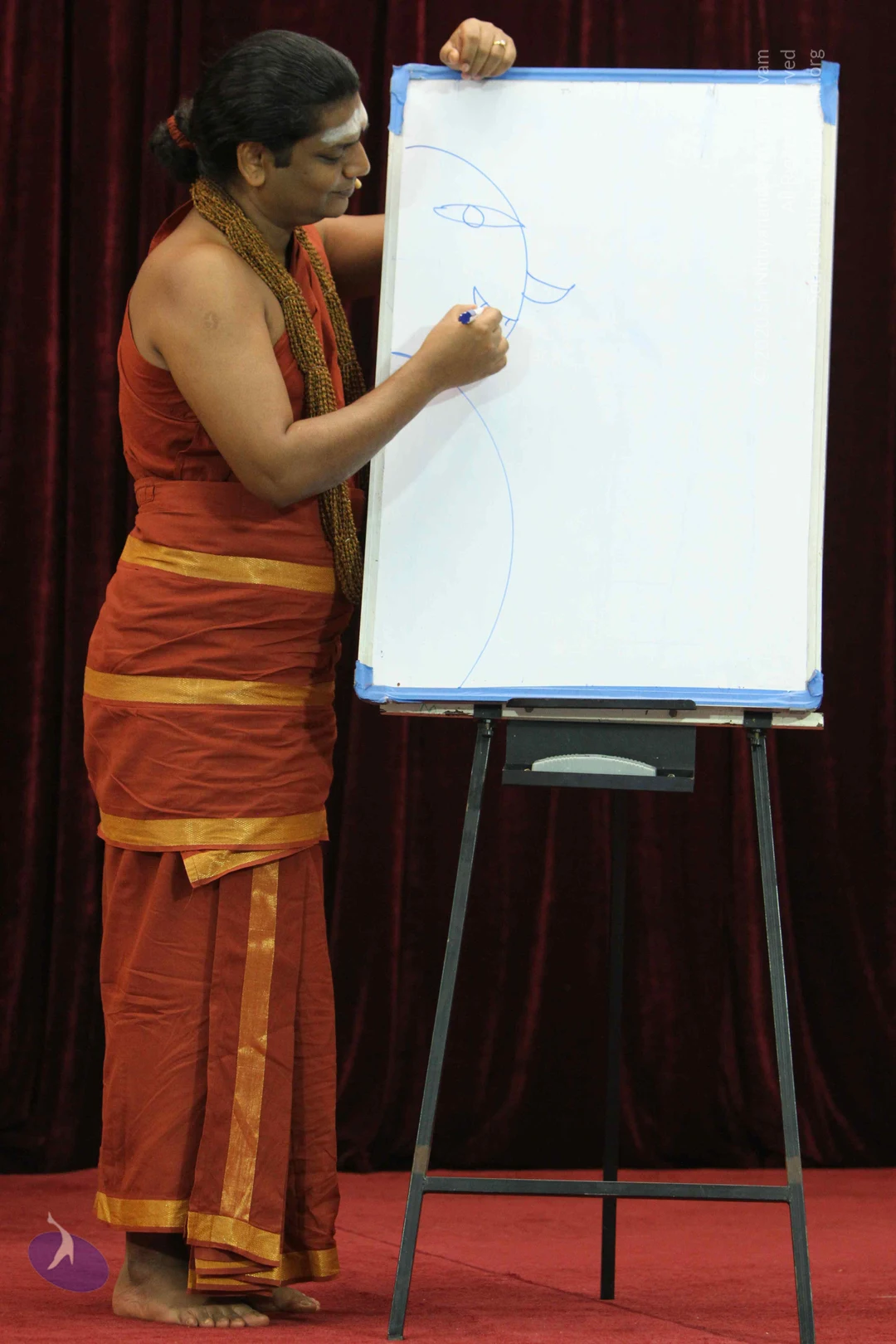
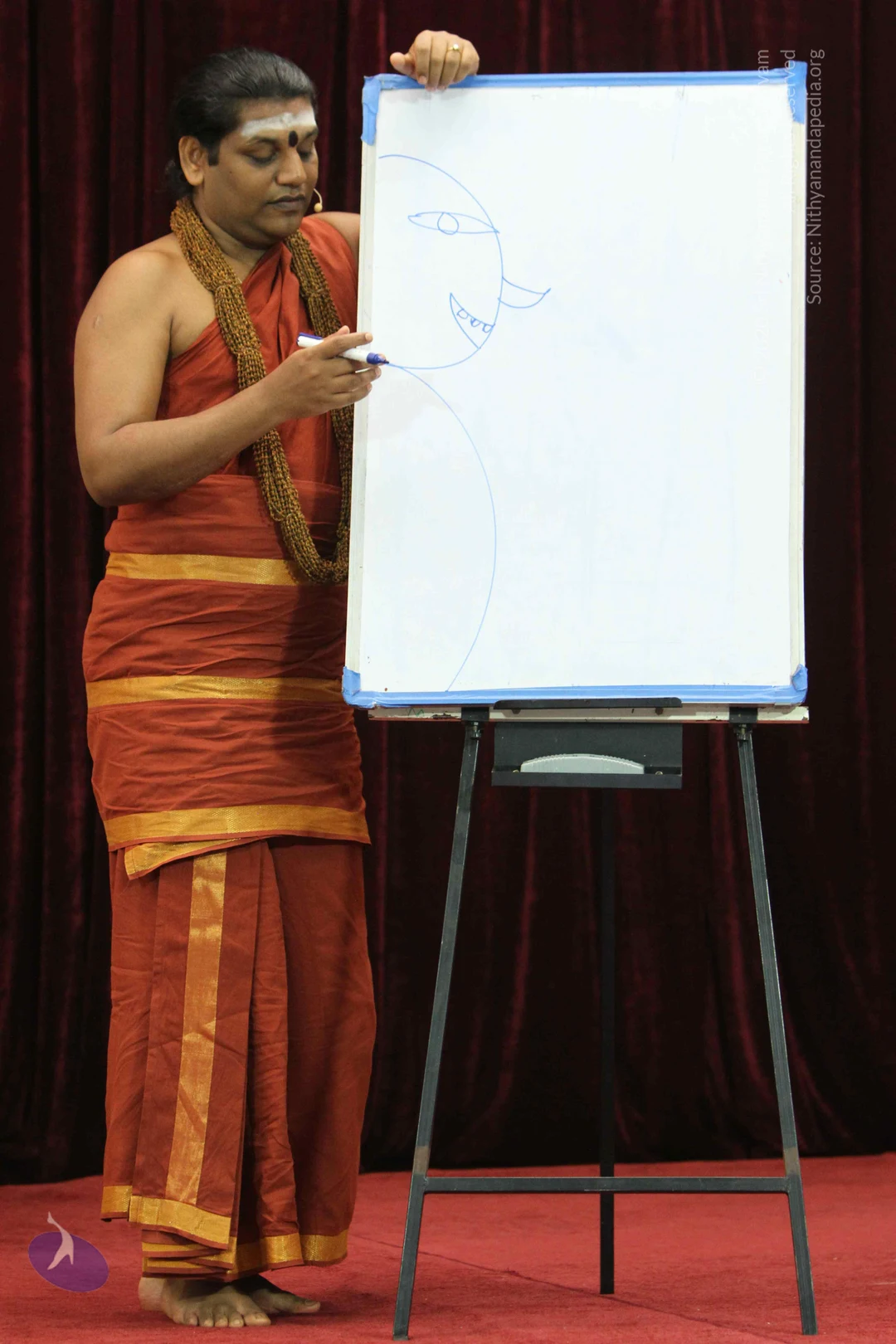
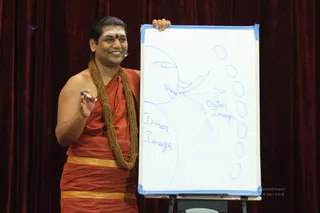
A smiling man in saffron-orange robes with a gold-banded waist sash and a long brown rudraksha mala stands beside a whiteboard easel on a stage with dark red velvet drapes. He holds a blue marker and wears a lapel microphone, with white and red forehead markings. The whiteboard shows a blue line drawing of a face in profile with arrows and circles labelled Inner Image and Outer Image. The shot is a photo of a discourse session.

NDY (Life Bliss Program) Day 1| Pada Puja| Nithya Kirthan | Satsang | Kalpataru Darshan
6 photosSource gallery
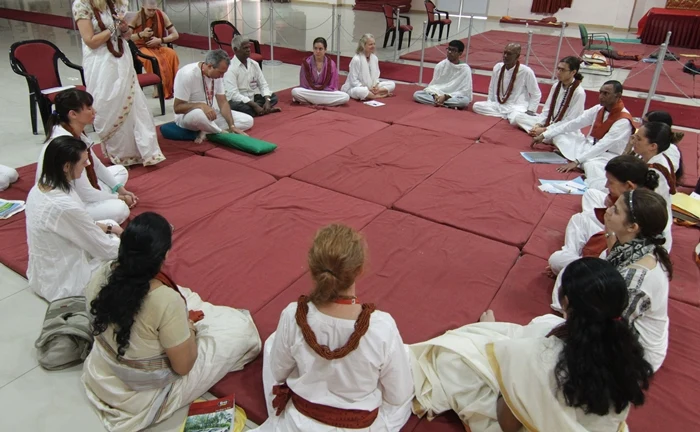
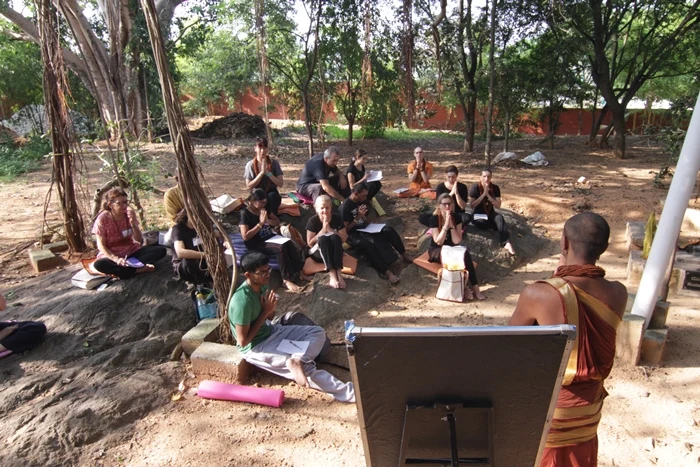
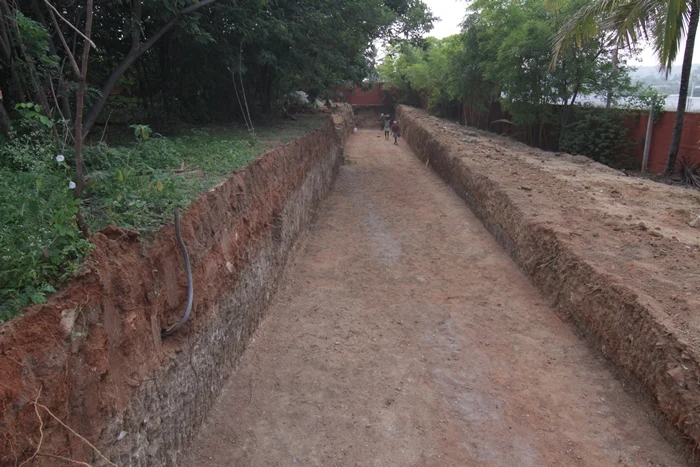
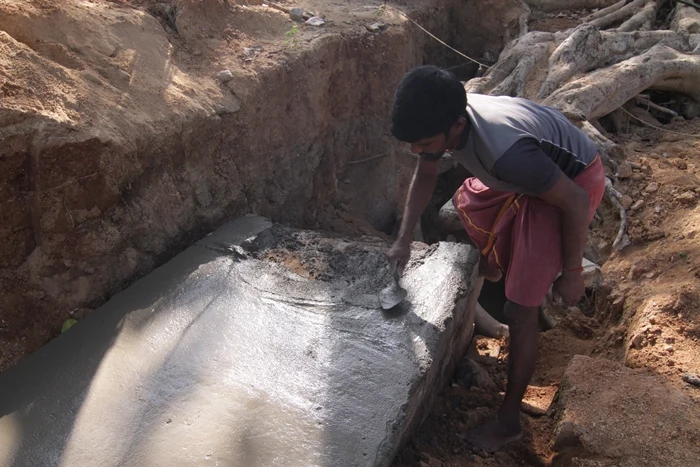
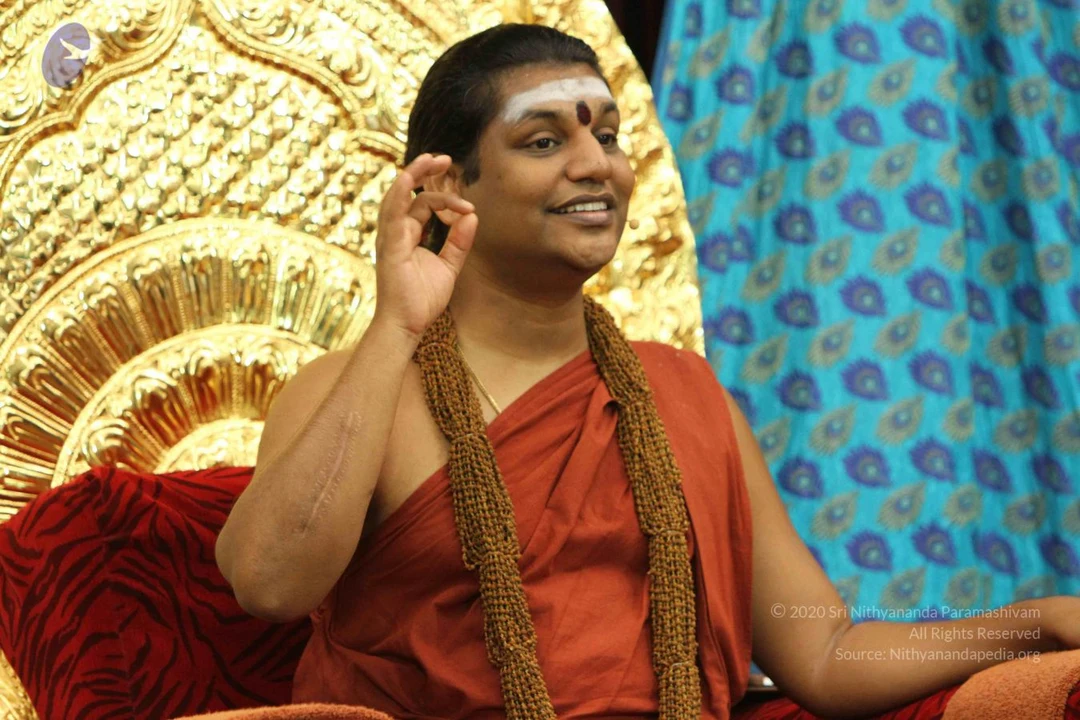
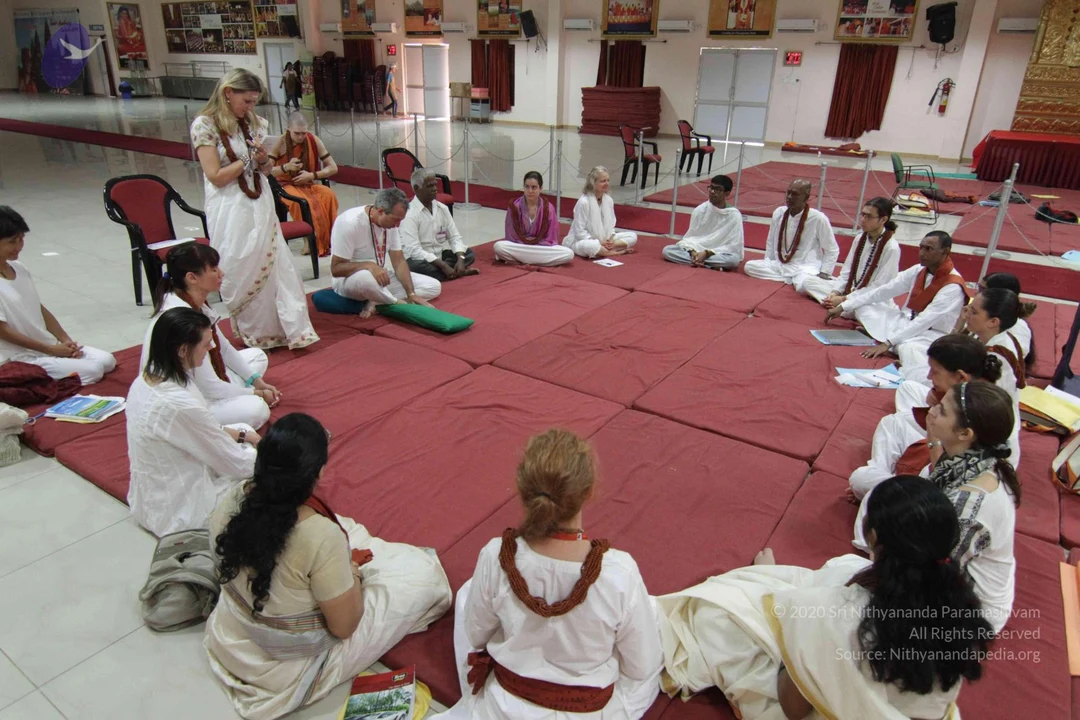
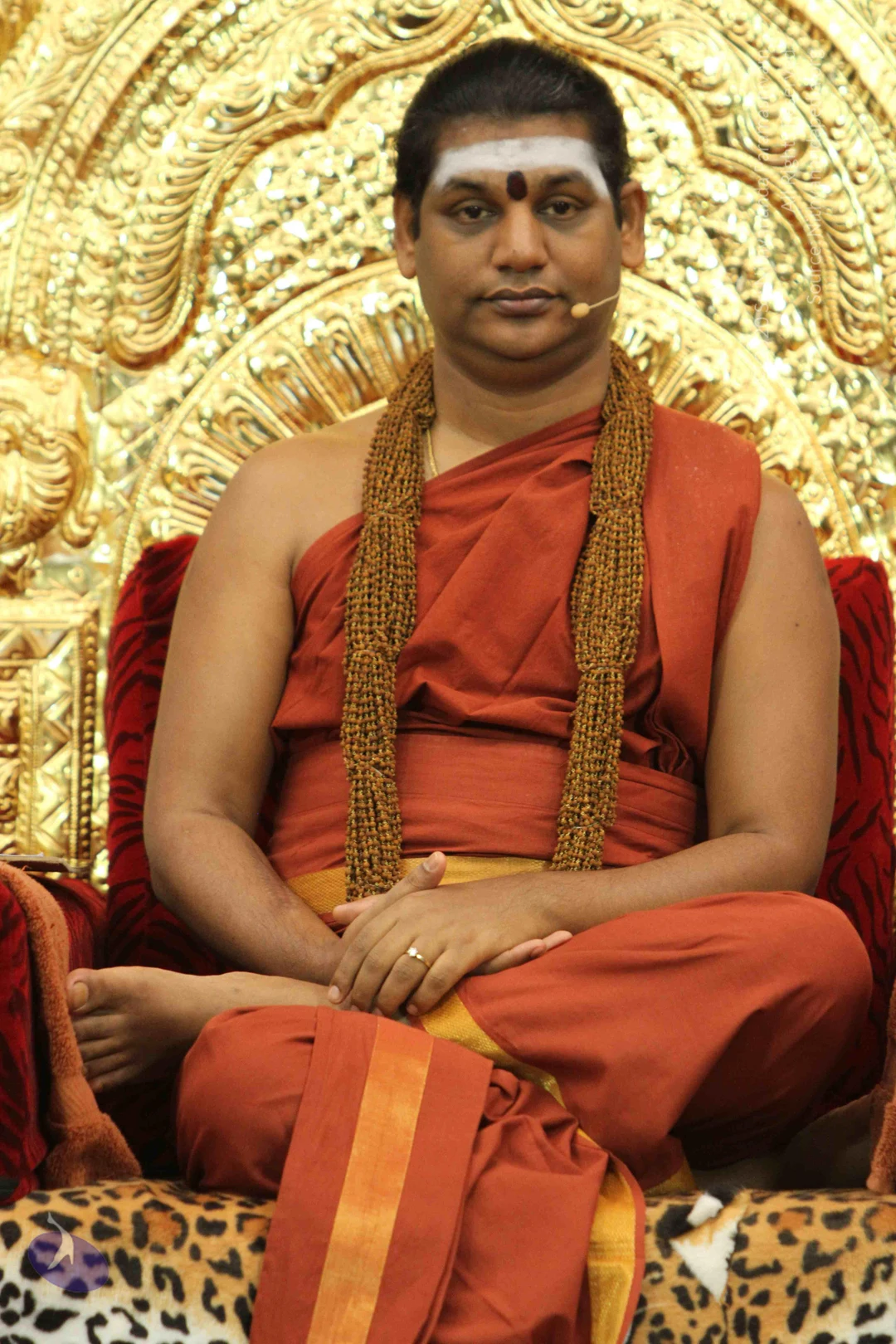
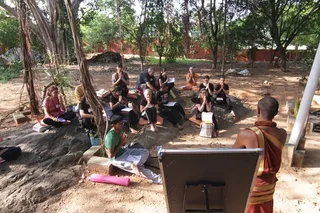
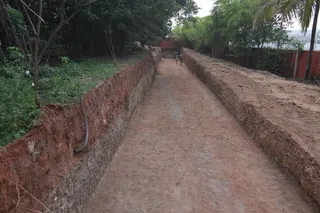
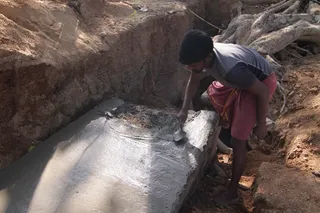
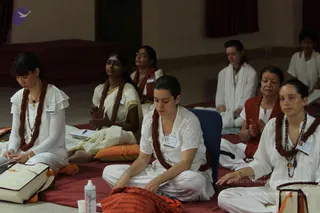
A group session seated in a circle on red floor mats in a bright hall with white walls and a red-draped table at the back. In the foreground, several women in white clothes and red beaded necklaces face inward. A man in a white kurta sits cross-legged on a green cushion at left centre. On the right, a figure in an orange-red garment with a shawl sits among seated participants. A woman in a purple top sits near the centre. A standing woman in white with a saffron-patterned sari stands at the left edge. Participants hold papers and booklets, and water bottles and a bag rest on the floor. No clear appearance cues establish whether any person is a person, so no identification is made.A man seated on a red cushioned throne before a gold ornate backdrop and a blue curtain with peacock-feather motifs. He wears a saffron-orange shawl draped over one shoulder and a long brown rudraksha mala hanging to his chest, with a white vibhuti stripe and a red mark on his forehead. His hair is swept back into a bun, and a small microphone is clipped near his face as he smiles and looks to the side. a person: the saffron shawl, rudraksha mala, forehead marks and throne seating match the event context of a discourse, though the appearance is not certain enough for a firm identification.Outdoor session on sandy ground beneath a large banyan tree with hanging aerial roots, a red compound wall behind. About a dozen seated participants in dark and light clothing sit in a loose half-circle with palms pressed together and paper handouts on their laps. In the foreground at right, a man with a shaved head wears an orange-red robe and sits before a wooden easel or board. A younger man in a green shirt and white trousers kneels at left with hands folded beside a pink yoga mat. Small stone ledges and a mound of earth lie nearby.A photograph of a long, narrow excavated trench on a dirt site, with reddish-brown earth walls on both sides. The trench floor is smooth packed soil leading toward the background, where two small figures in light clothing walk along it. Green shrubs and tall trees line the left edge, a red boundary wall and palm fronds appear at the right, and the sky is pale and overcast. No ritual activity, deity or person matching the a person criteria is visible.A worker in a grey t-shirt and red-and-maroon checked lungi stands in a deep earthen excavation, troweling wet grey cement onto a freshly poured concrete slab. Tree roots arch across the reddish soil wall behind him, and sunlight falls across the smooth surface. The scene appears to be an early construction stage at a temple site.A decorated ratha or temple-style chariot doorway opens onto a shrine with a gilded arch and a deity murti of Shiva-Parvati form adorned with heavy gold necklaces, garlands and jewelled ornaments, set above a gold silk cloth. Two large printed standing portraits flank the entrance; each shows a man in an orange-red turban, saffron-red dhoti and shawl, a long red-bead rudraksha mala, and hands joined in greeting, with a throne-like gilded chair behind him. The portraits are printed images, not physical people, and carry no readable caption. No physical people are visible.

NDY-Programme
53 photosSource gallery
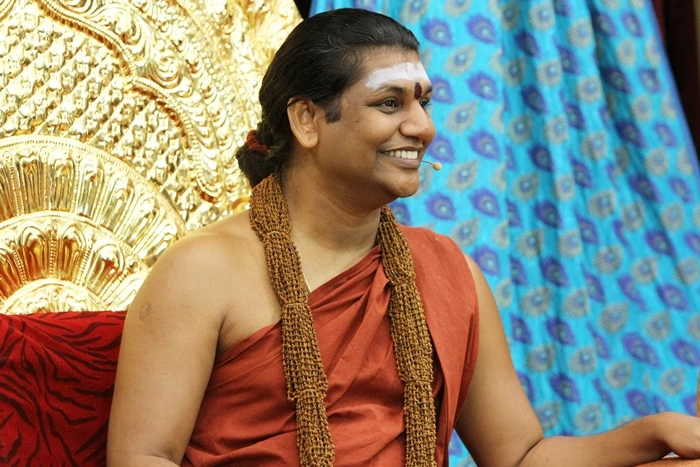
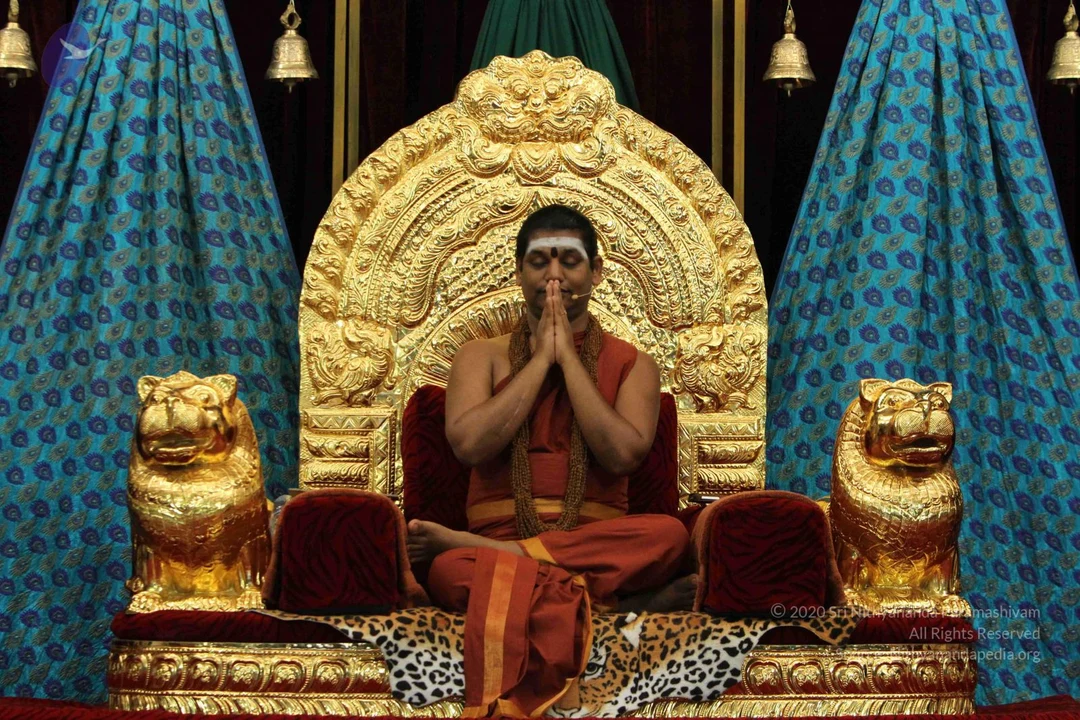
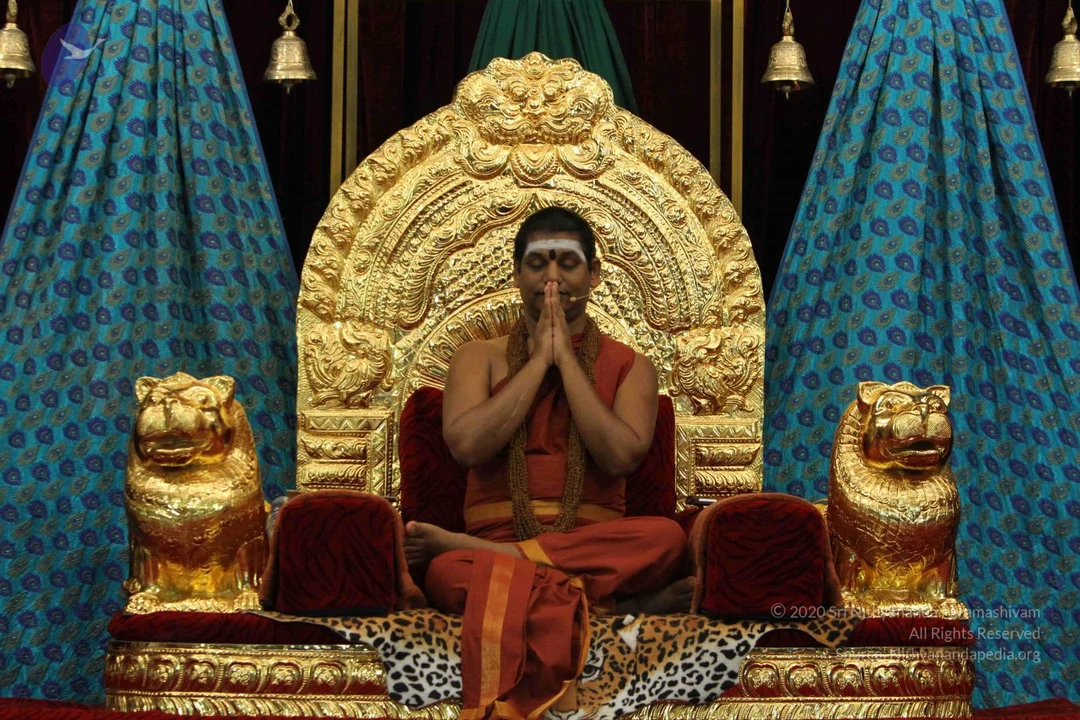
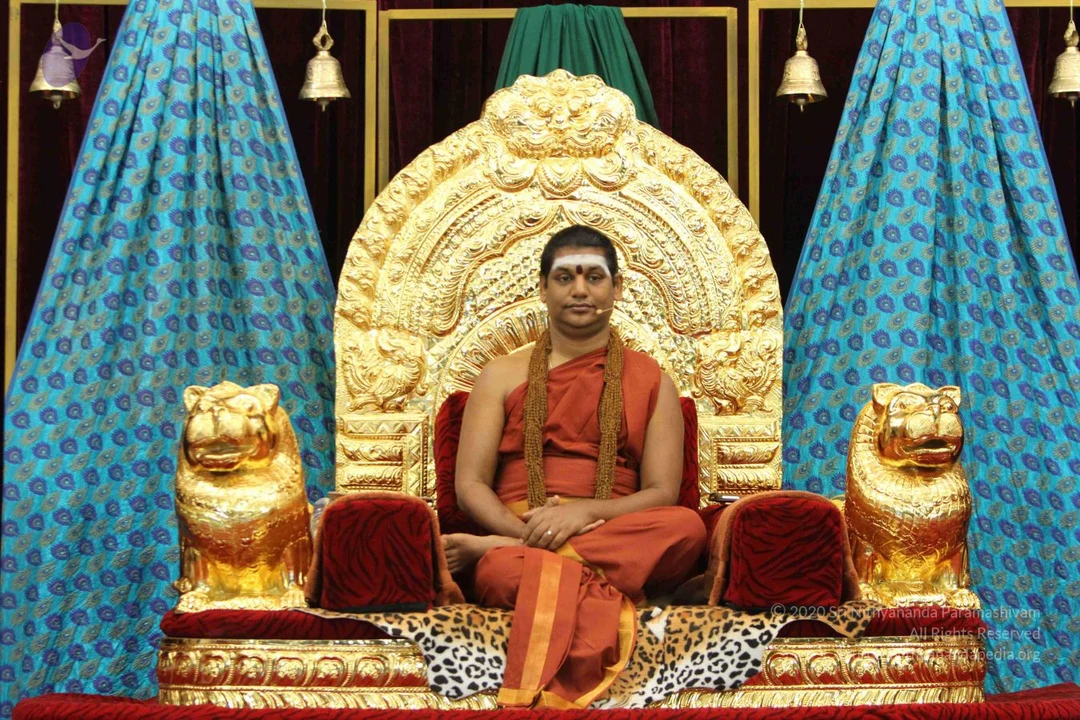
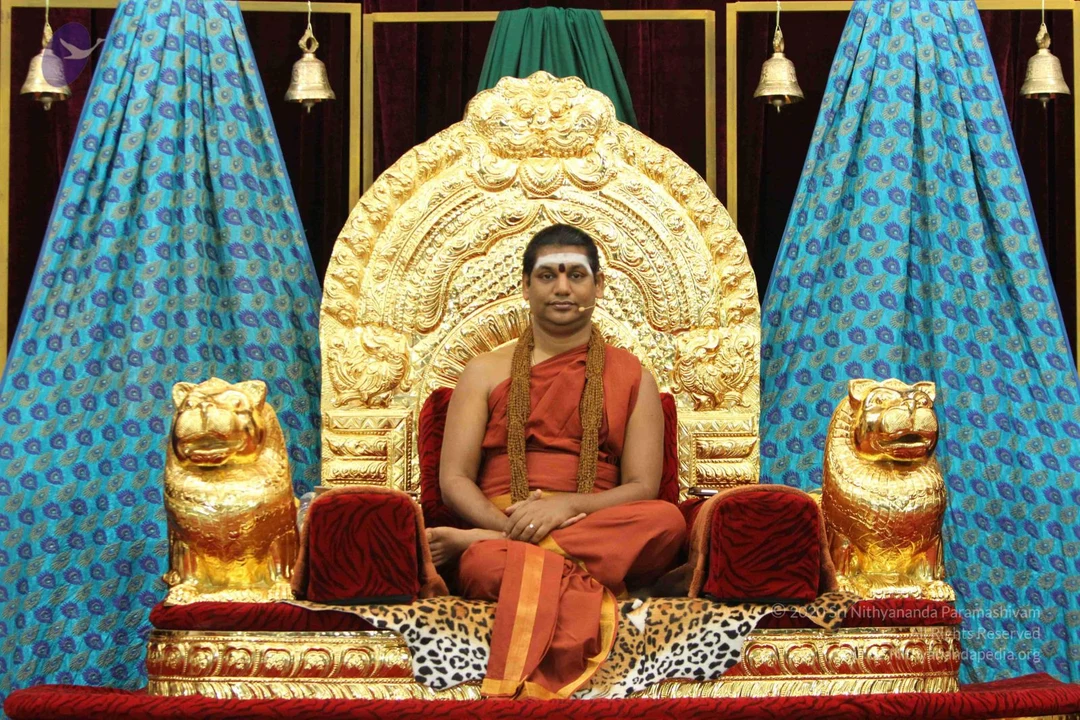
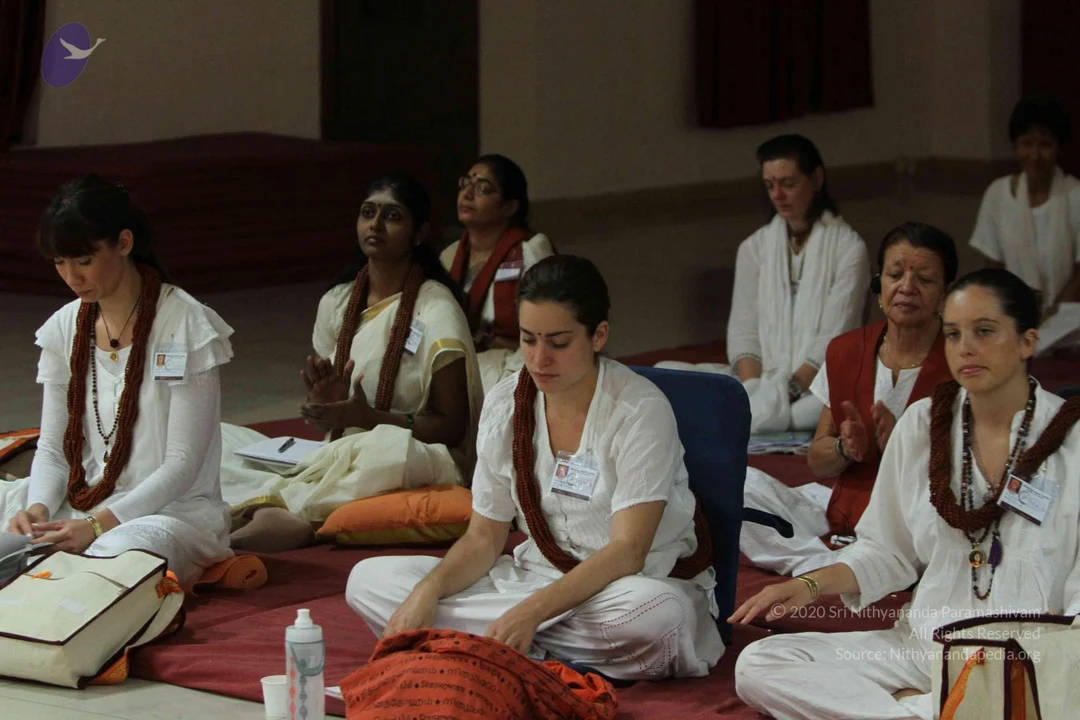
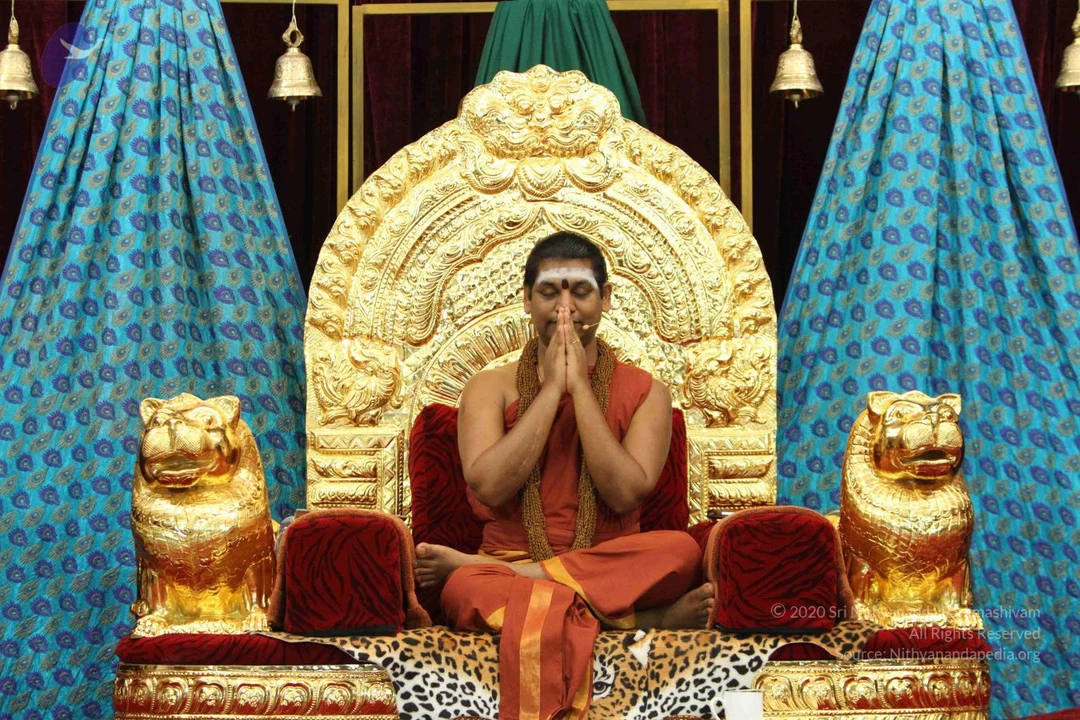
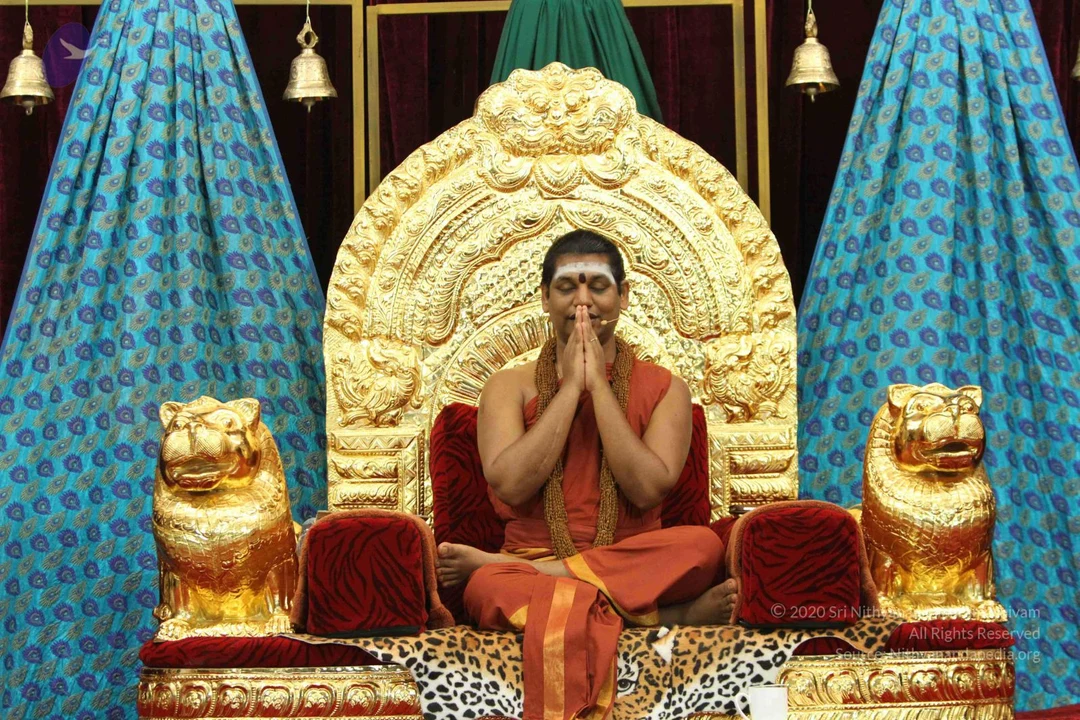
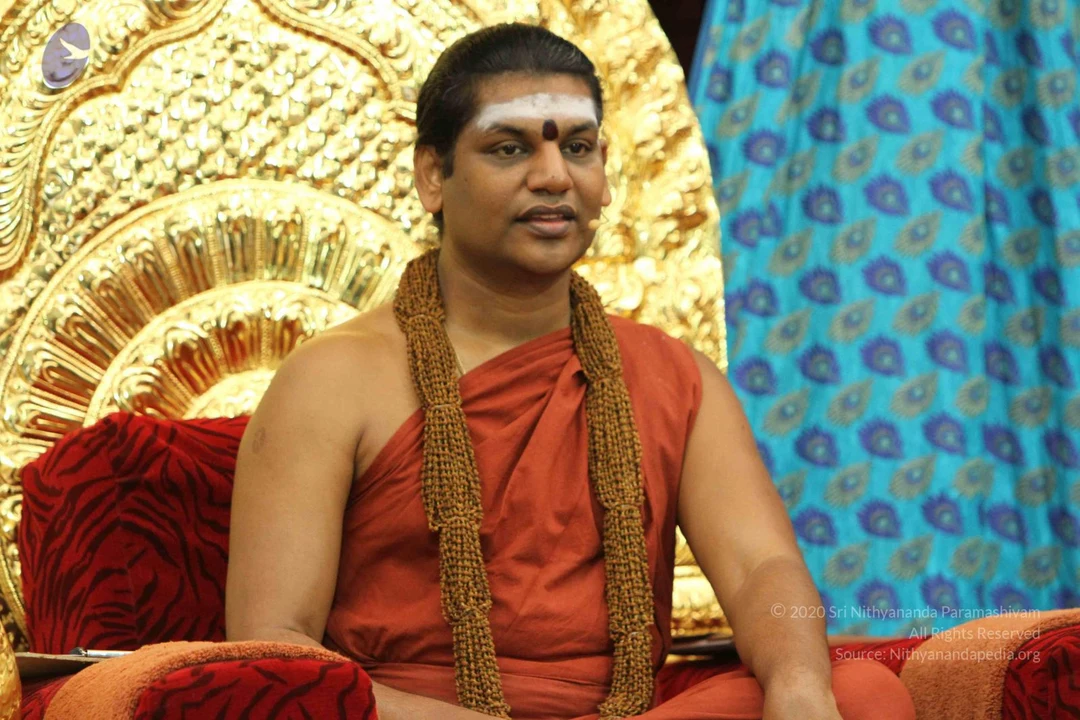
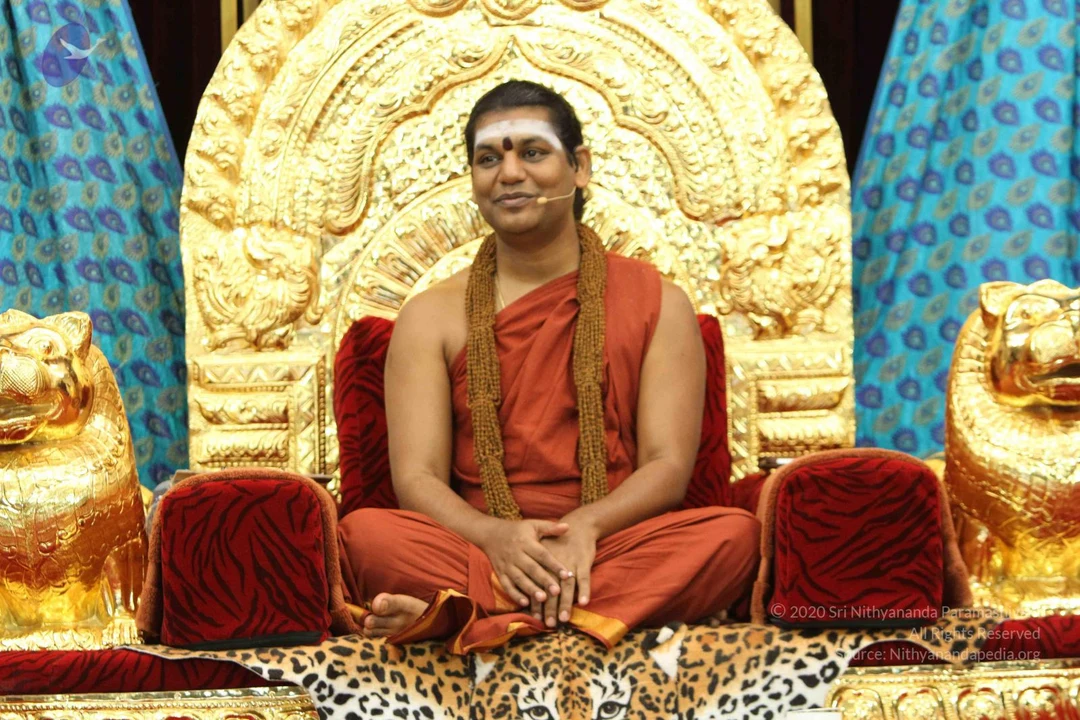
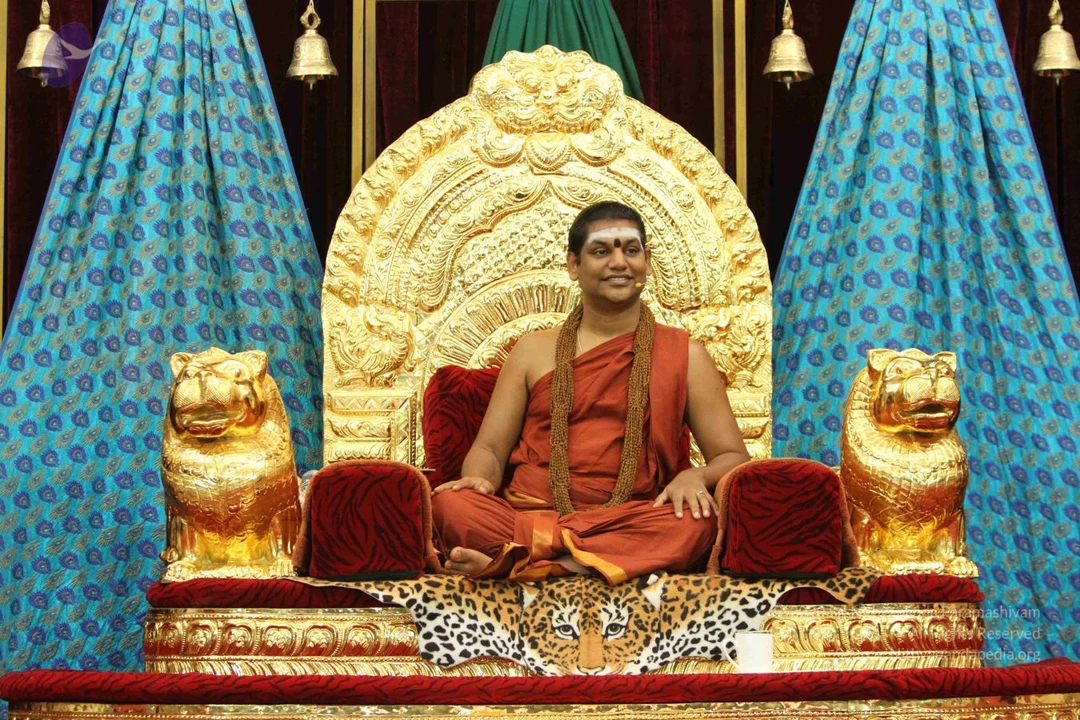
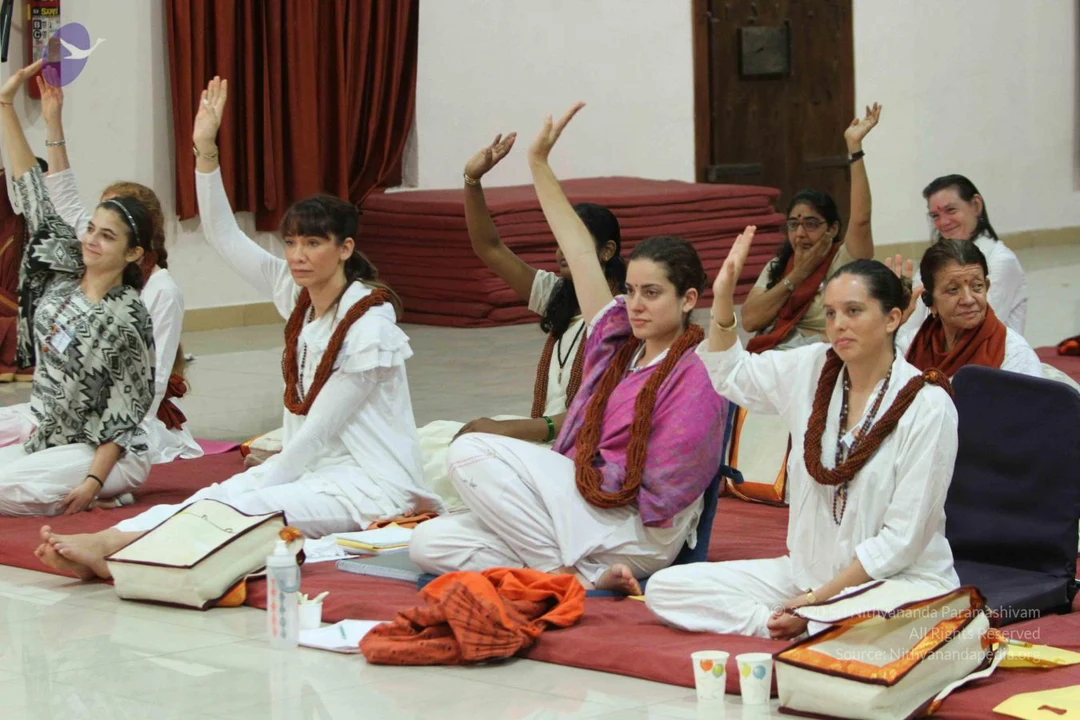
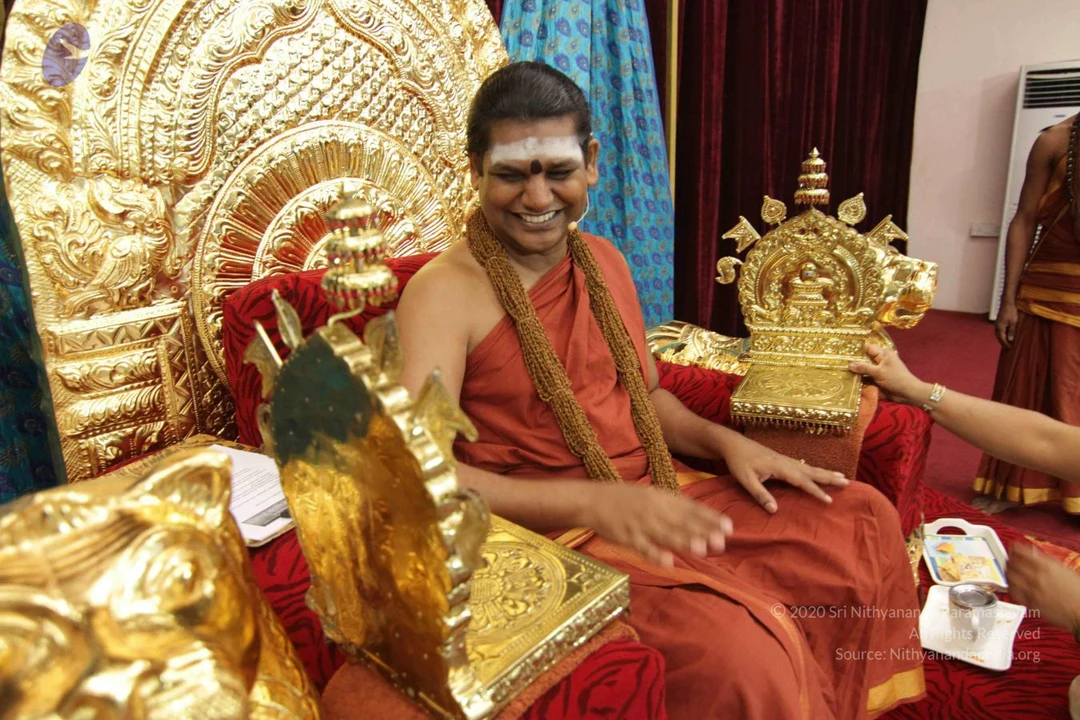
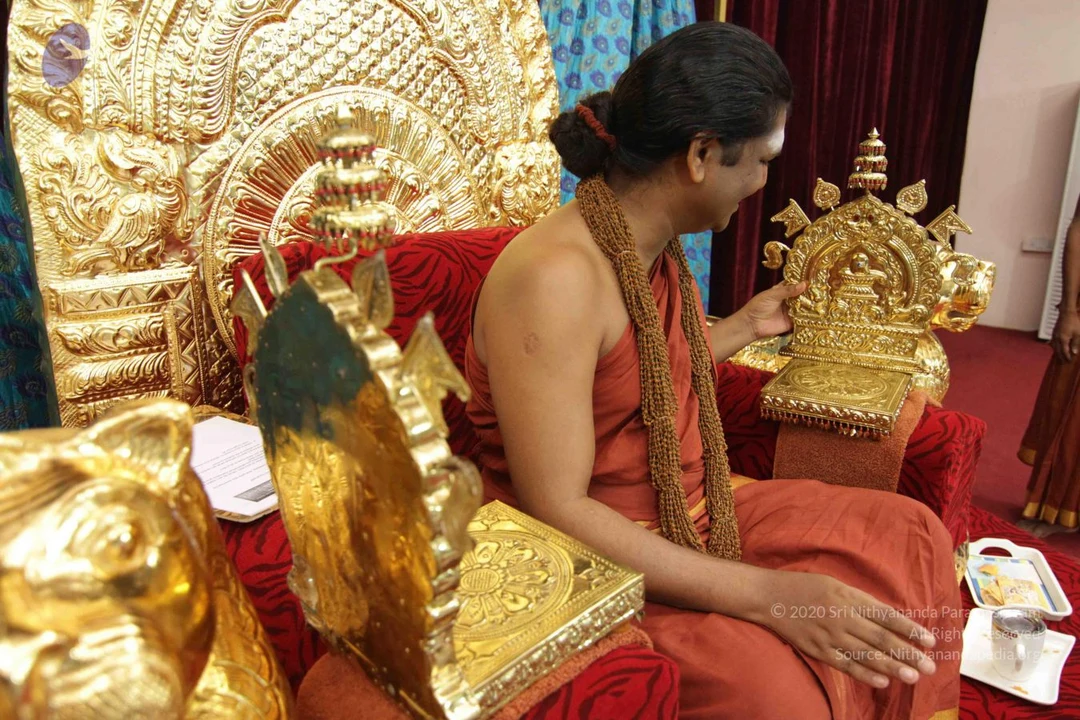
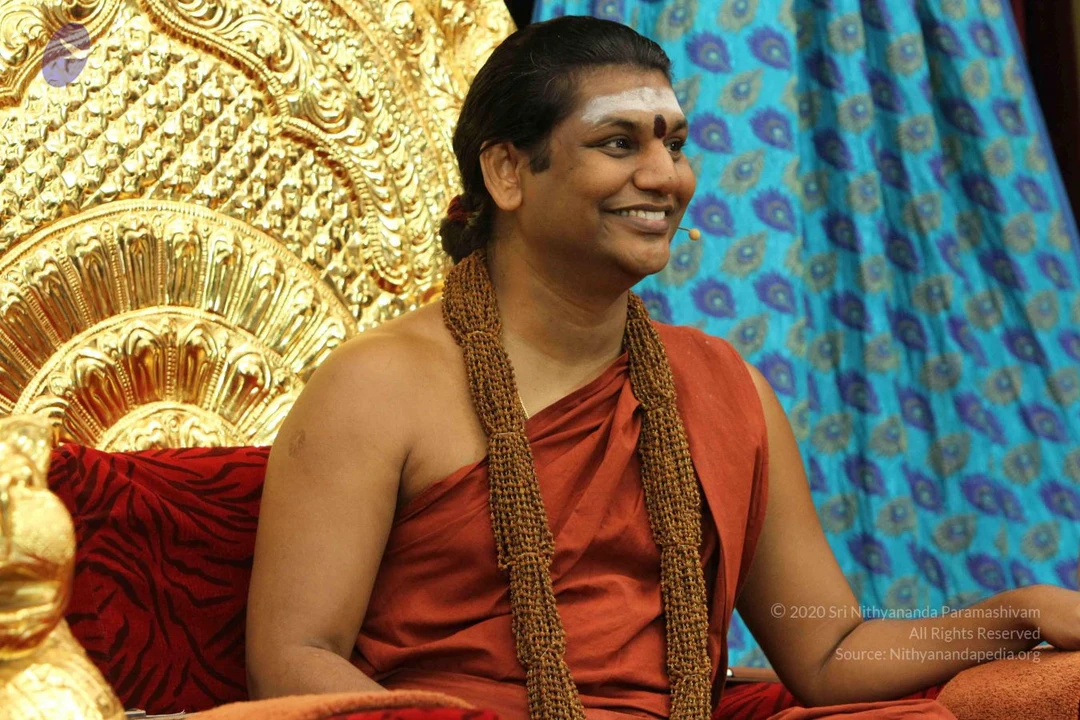
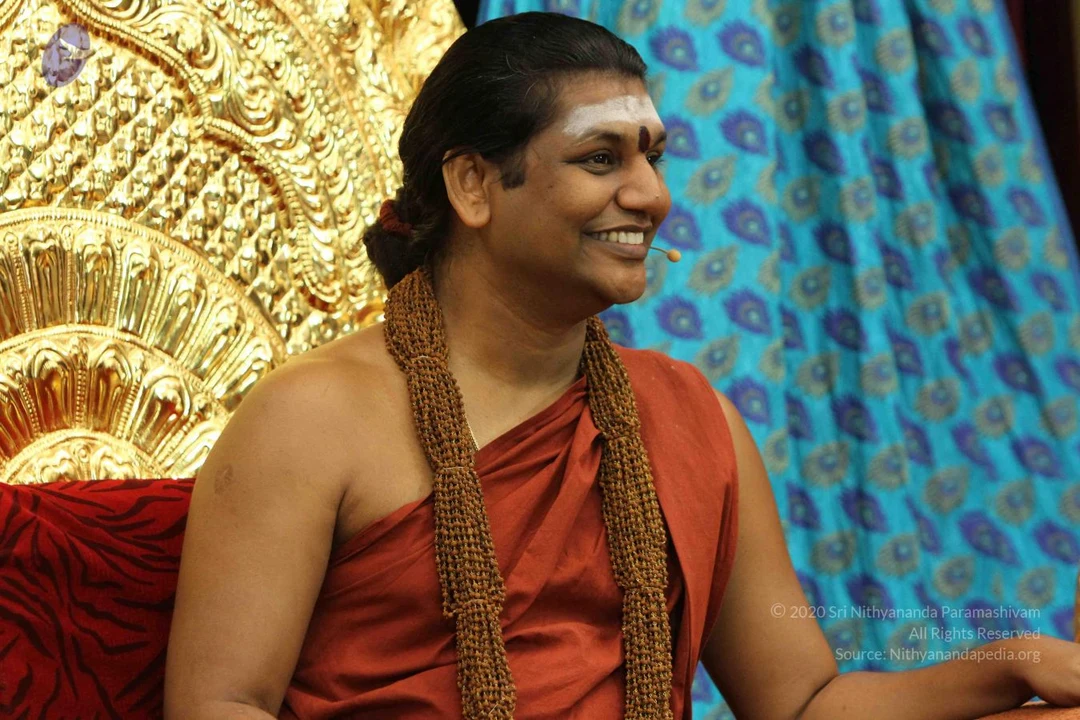
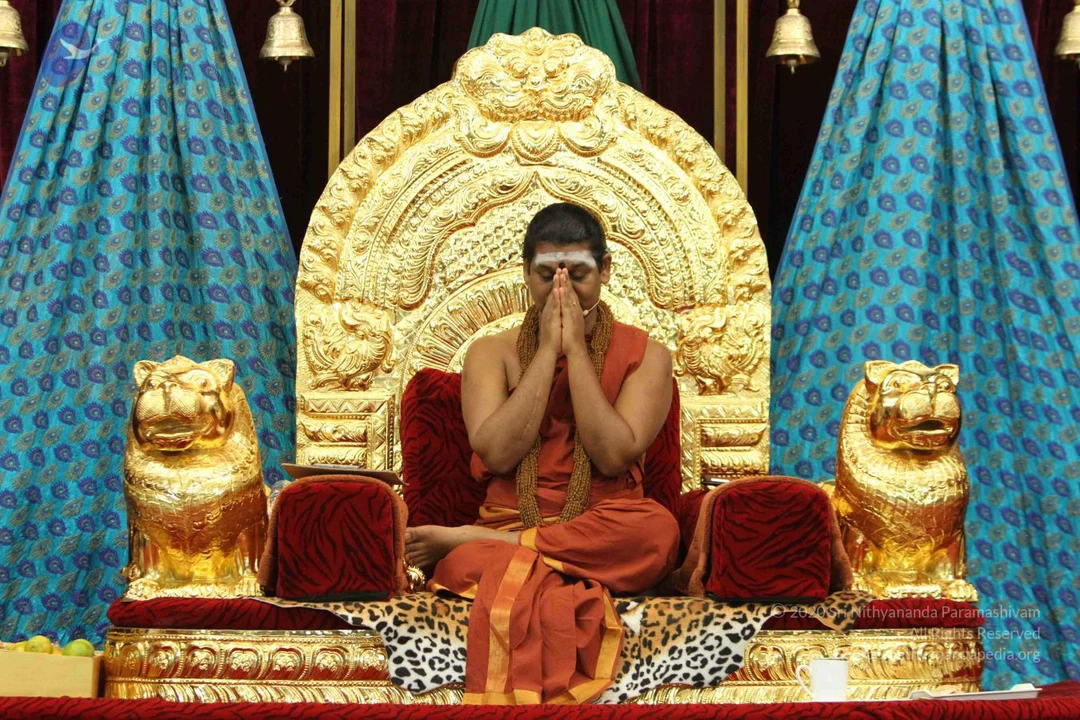
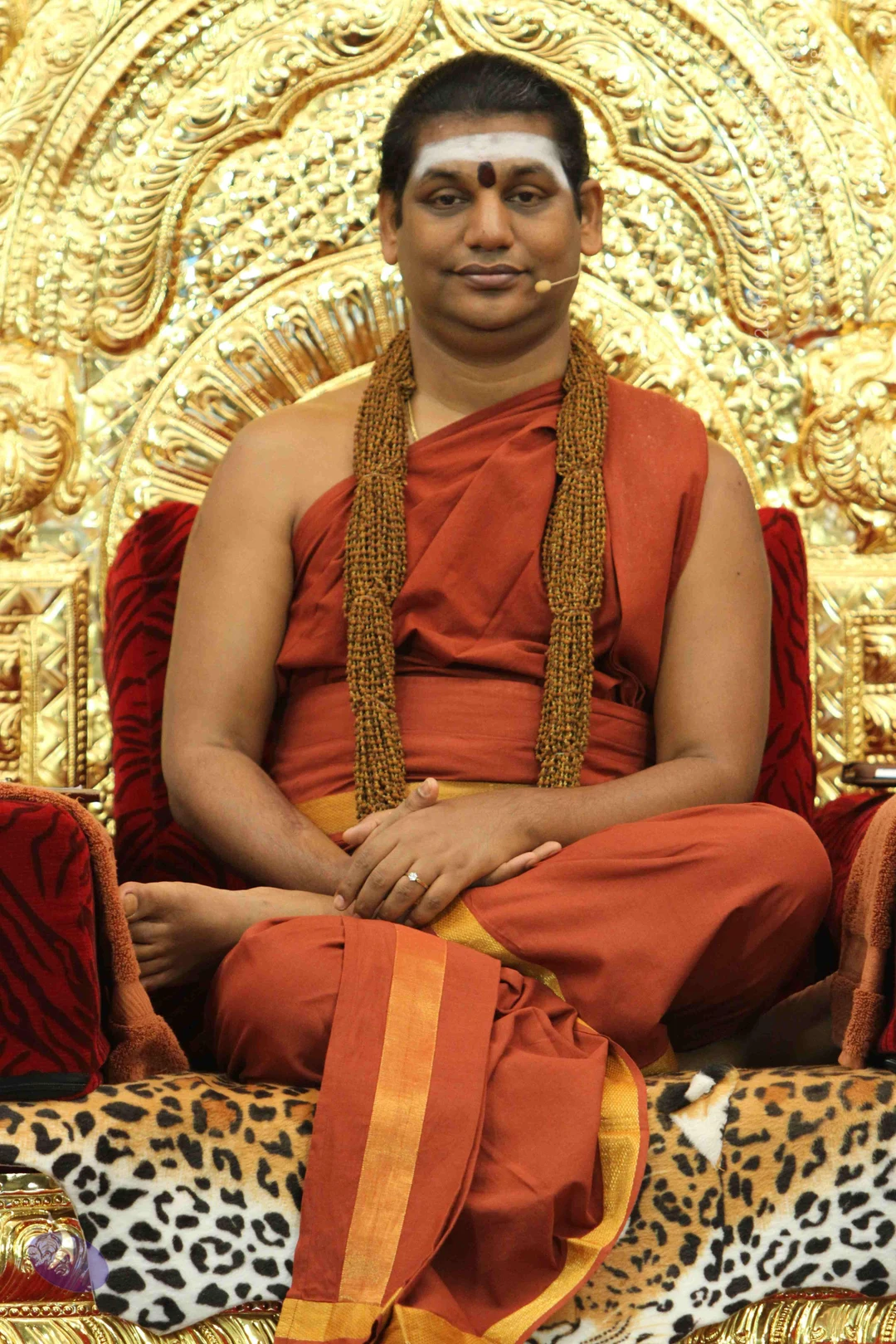
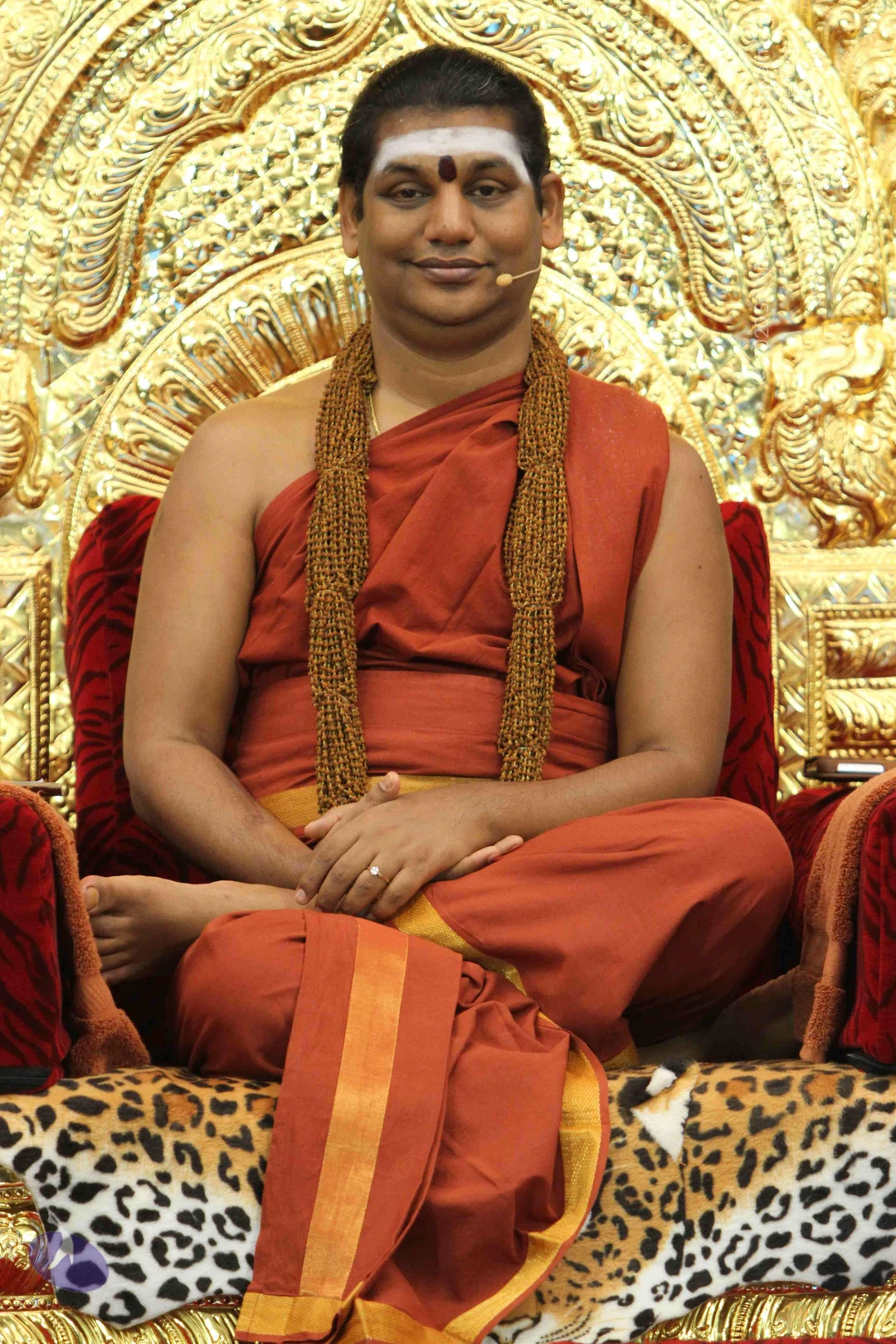
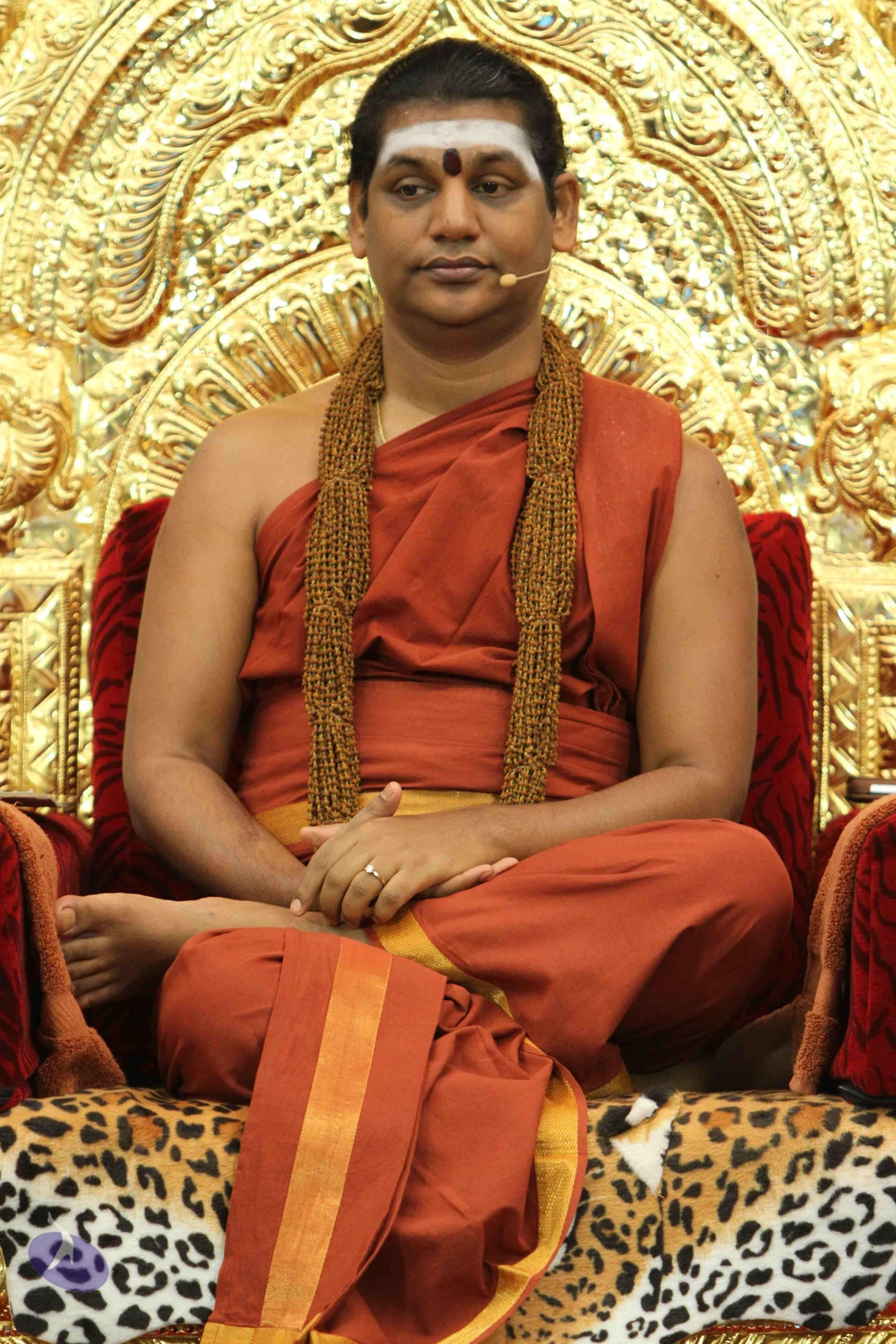
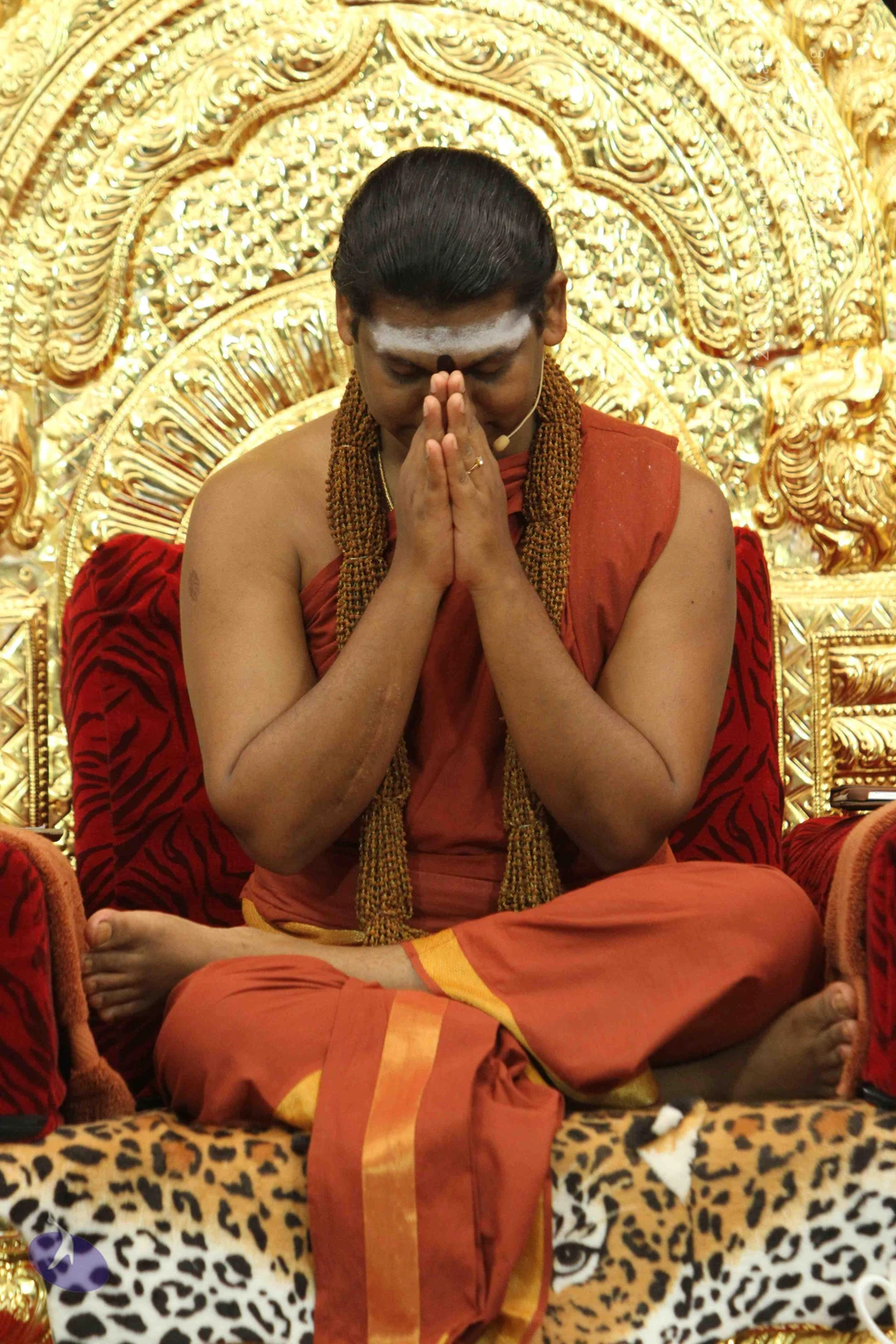
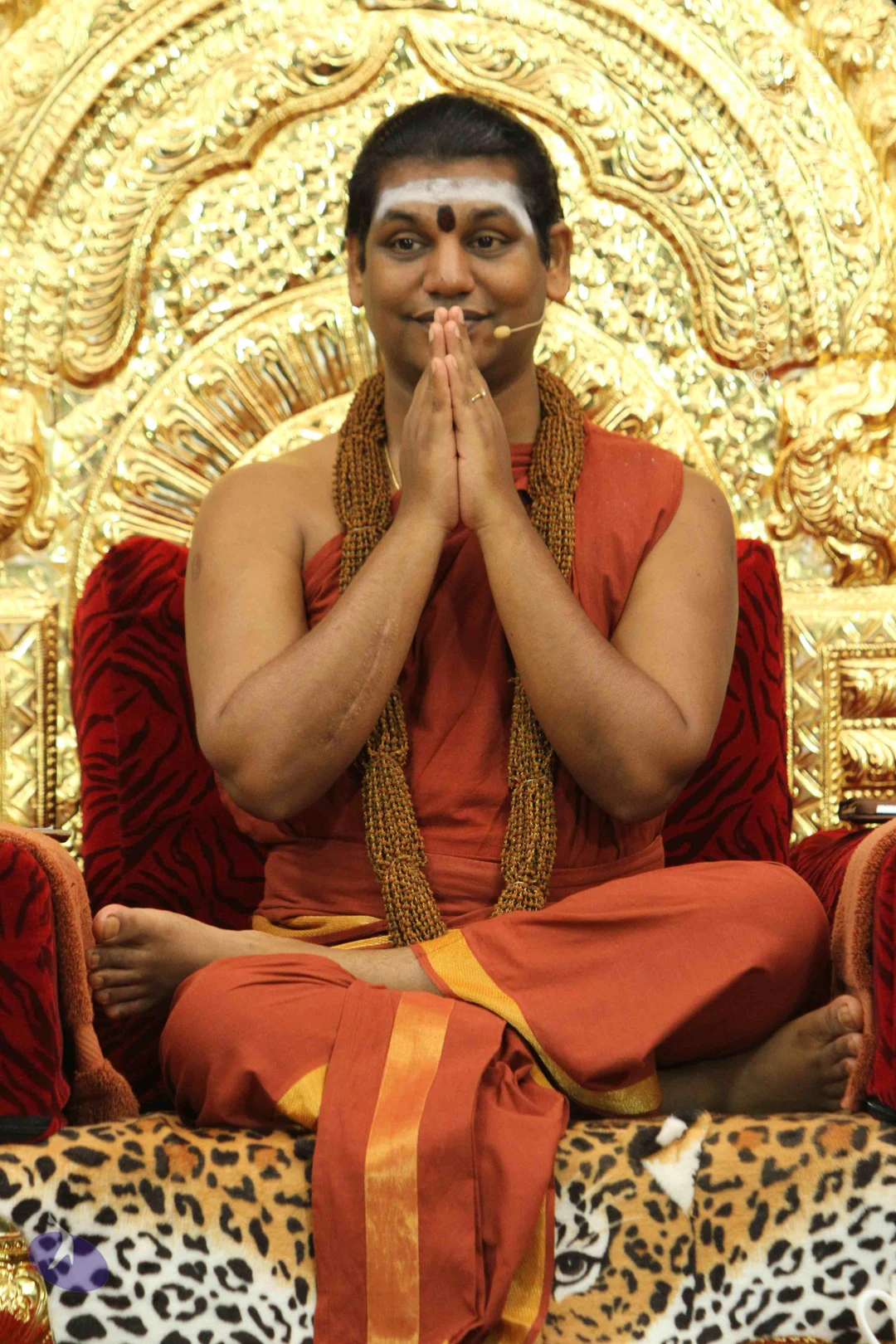
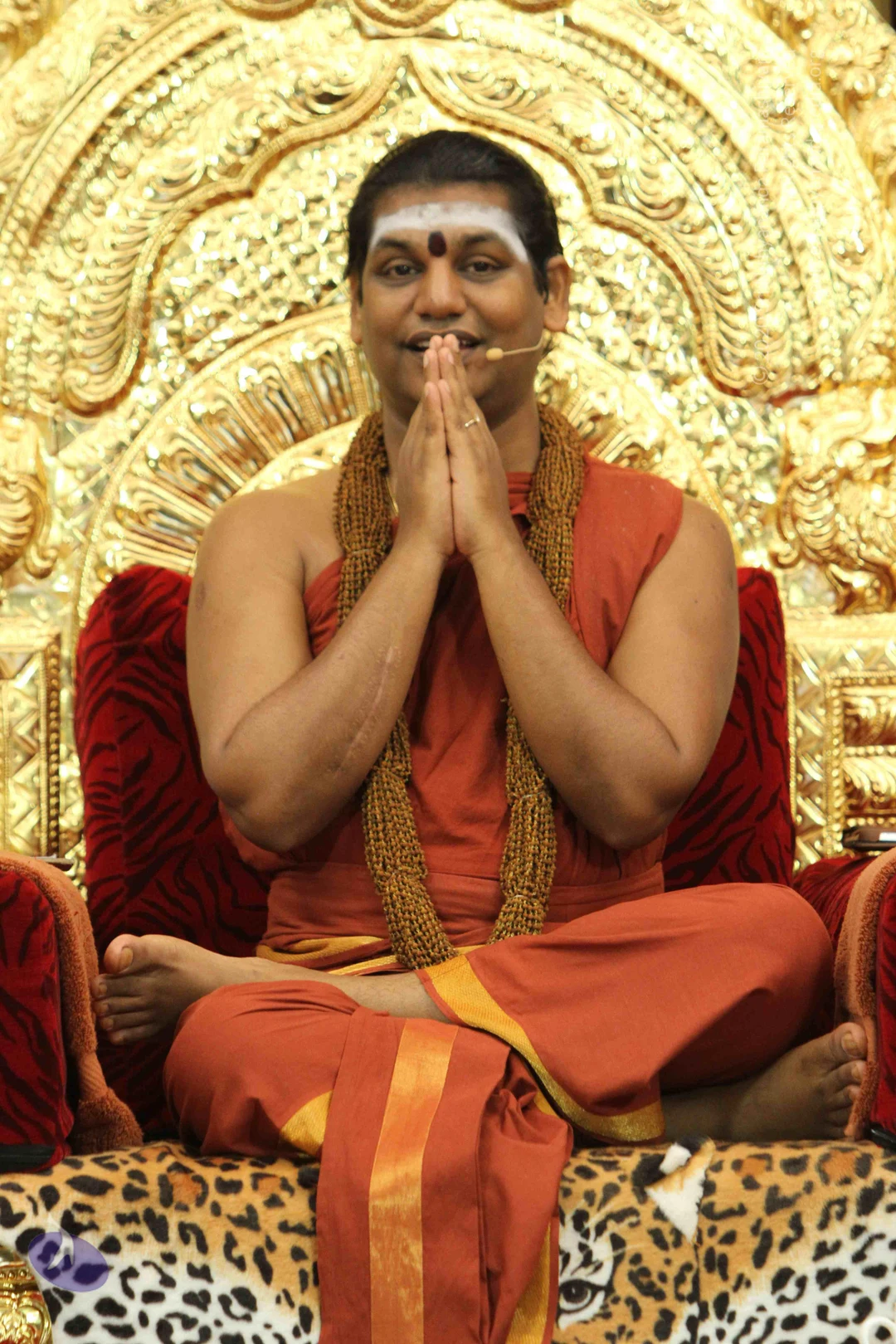
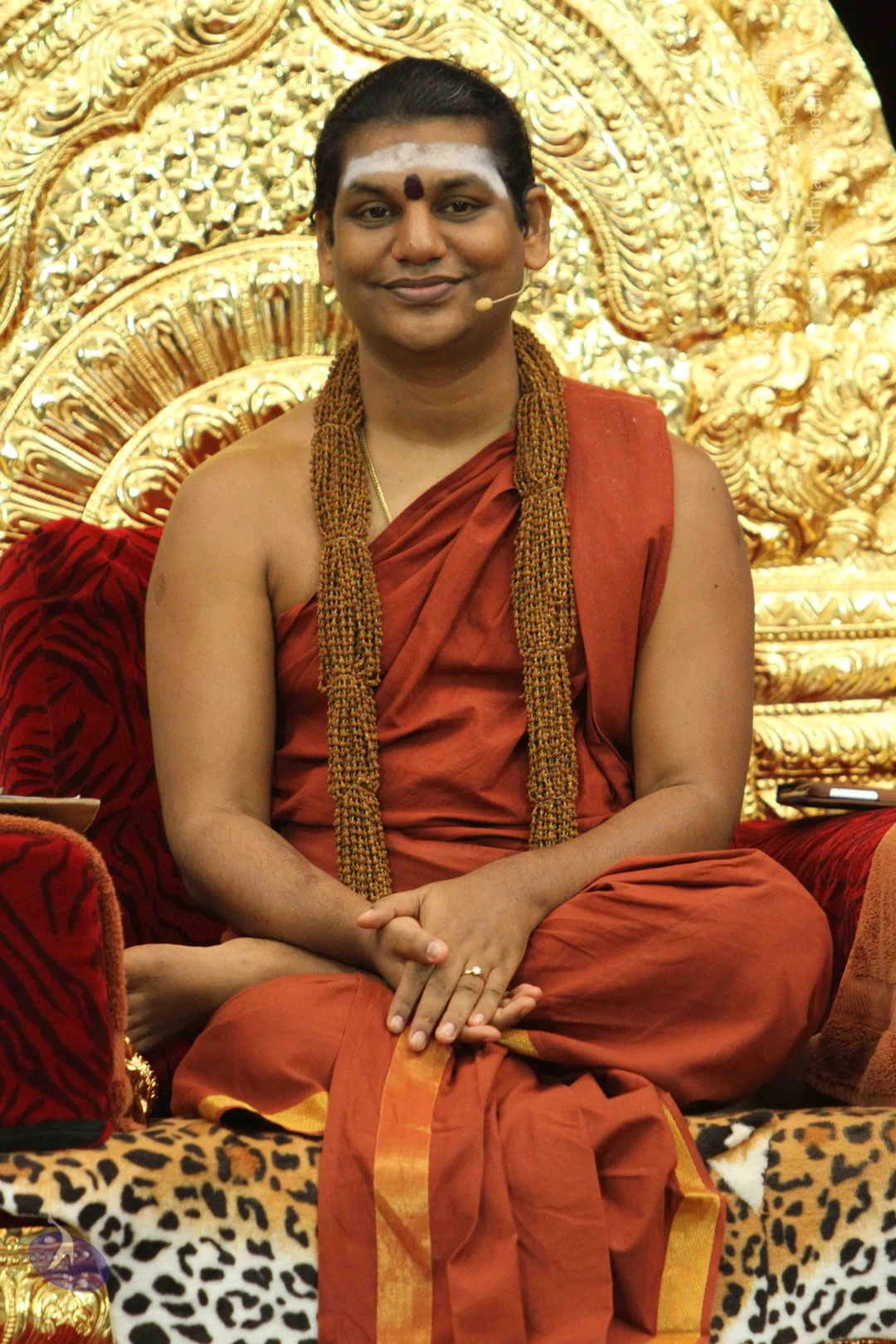
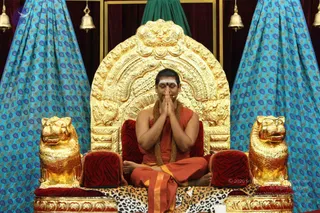
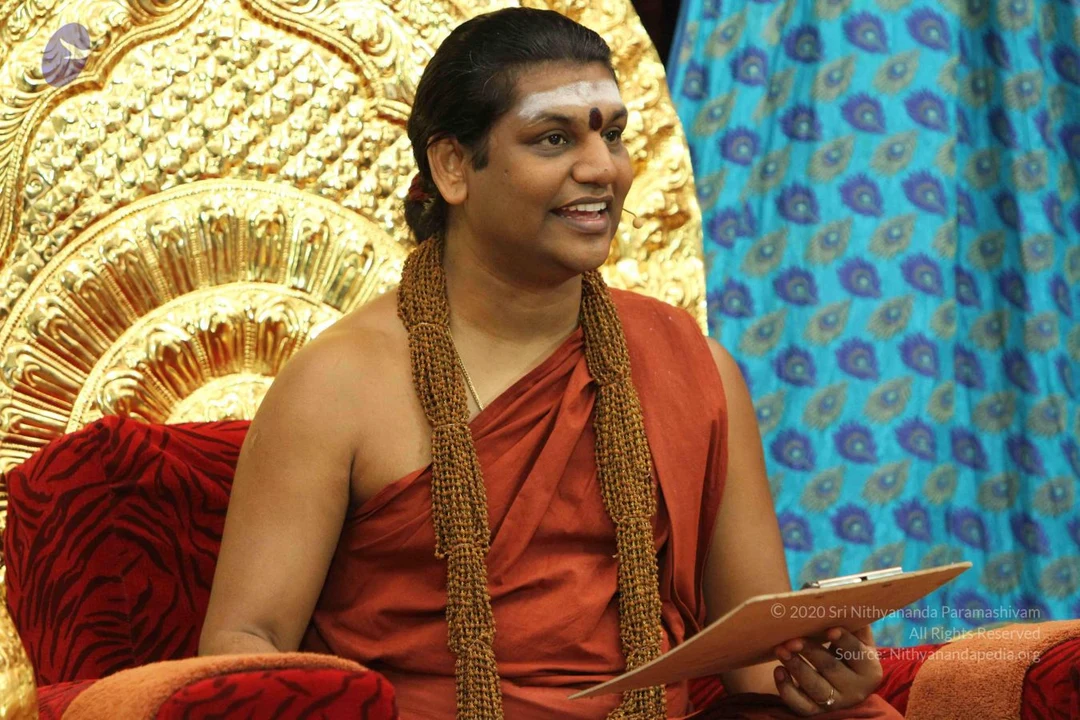
A seated man in saffron-orange robes sits cross-legged on an ornate gilded throne with a carved arched backrest, flanked by two golden lion figures on a leopard-print cloth. He holds his palms together in namaskar with eyes closed, wearing a white tilak on his forehead and a beaded rudraksha-style mala around his neck. Behind him hang blue and teal curtains patterned with peacock feathers, with brass bells visible at the top of the frame. The setting resembles a formal satsang or discourse stage.A seated man in orange-saffron robes sits cross-legged on an ornate gilded throne with a large arched backrest carved with foliage and figures. He sits with palms pressed together in namaste, eyes closed, a white vertical tilak on his forehead and a long gold-toned mala around his neck. Gold lion figures flank the throne on a leopard-print cloth, with blue peacock-patterned drapes and hanging brass bells behind. One person is visible, appearing to be a seated guru in a ceremonial setting, with the page.A seated man in saffron-orange robes sits cross-legged on an ornate gilded throne with a large arched backrest carved with floral and scroll motifs. A rudraksha mala hangs over his shoulders, he wears a white tripundra forehead marking with a red dot, and he rests his hands in his lap. Two gilded lion sculptures flank the throne, which sits on a leopard-print cloth with red tiger-striped cushions. Blue peacock-feather patterned drapes hang on both sides, with brass bells suspended above and a green cloth behind. Only one physical person is present. The page suggests this is a person seated at the event, but the appearance cues (saffron robes, rudraksha mala, tripundra marking) are present while the face is not clearly distinguishable, so identity is uncertain.A seated man in saffron-orange robes sits centrally on an ornate gold throne with carved lion-head armrests and a large gilded backrest. He wears a rudraksha mala with a gold ornament, a white vibhuti line on his forehead, and a small lapel microphone. Peacock-patterned blue drapes hang on either side, with brass bells above and a green canopy behind. A leopard-print cloth covers the dais. The seated man is a person by appearance cues: saffron clothing, rudraksha mala and gold adornment on a throne.A photograph of a seated group of devotees in white clothing during a meditation or satsang session on a red floor mat indoors. In the foreground, a woman in a white kurta with a rudraksha mala and identity badge sits cross-legged with her hands in her lap, eyes lowered. Beside her, a woman in a white and gold sari and a rudraksha mala holds her hands together in namaste. Further back, a woman in an orange-red shawl and an older woman in a red top sit with palms together. Others in white shawls and garlands sit in a row against a plain wall with red drapery. Water bottles and cups sit on the floor and an orange cloth lies in front. No a person candidate is visible.A seated man with hands pressed together in namaste and eyes closed sits cross-legged on an ornate gold throne with a carved arched back. He wears an orange-saffron dhoti and shawl, a gold ceremonial necklace and a sacred white vibhuti mark with a red bindi on his forehead, and his shaved head shows no long hair. Two golden lion statues flank the throne on red and tiger-striped cushions over a leopard-print cloth, with peacock-patterned blue drapes and hanging brass bells behind.

Ratha-Yatra

32 photosSource gallery
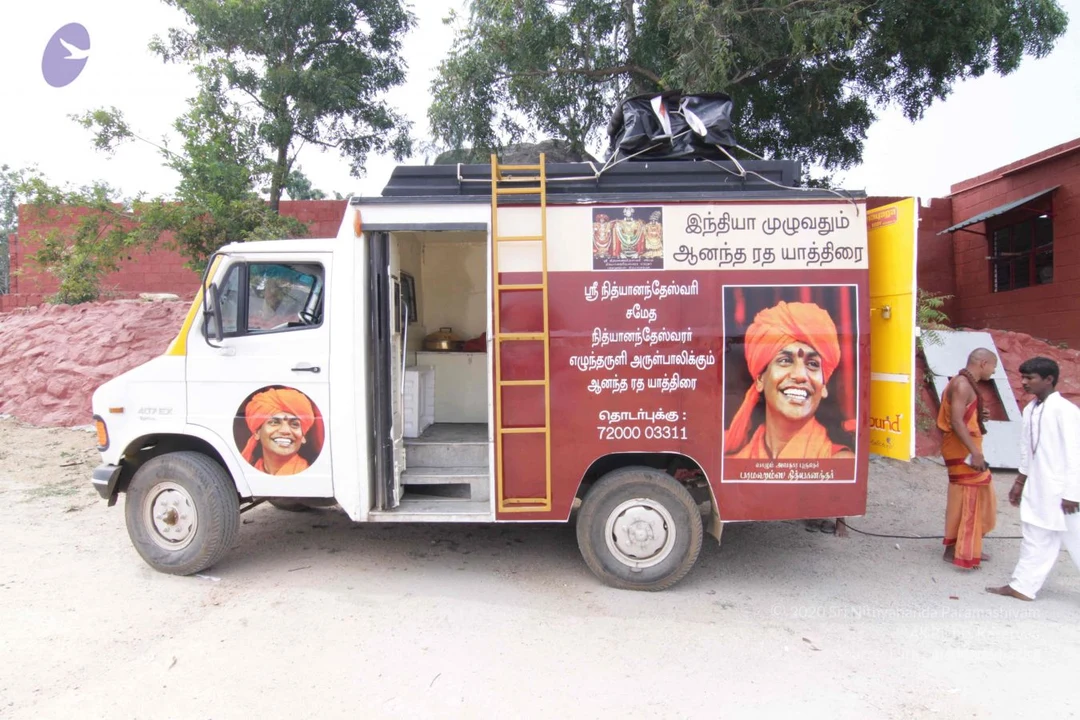
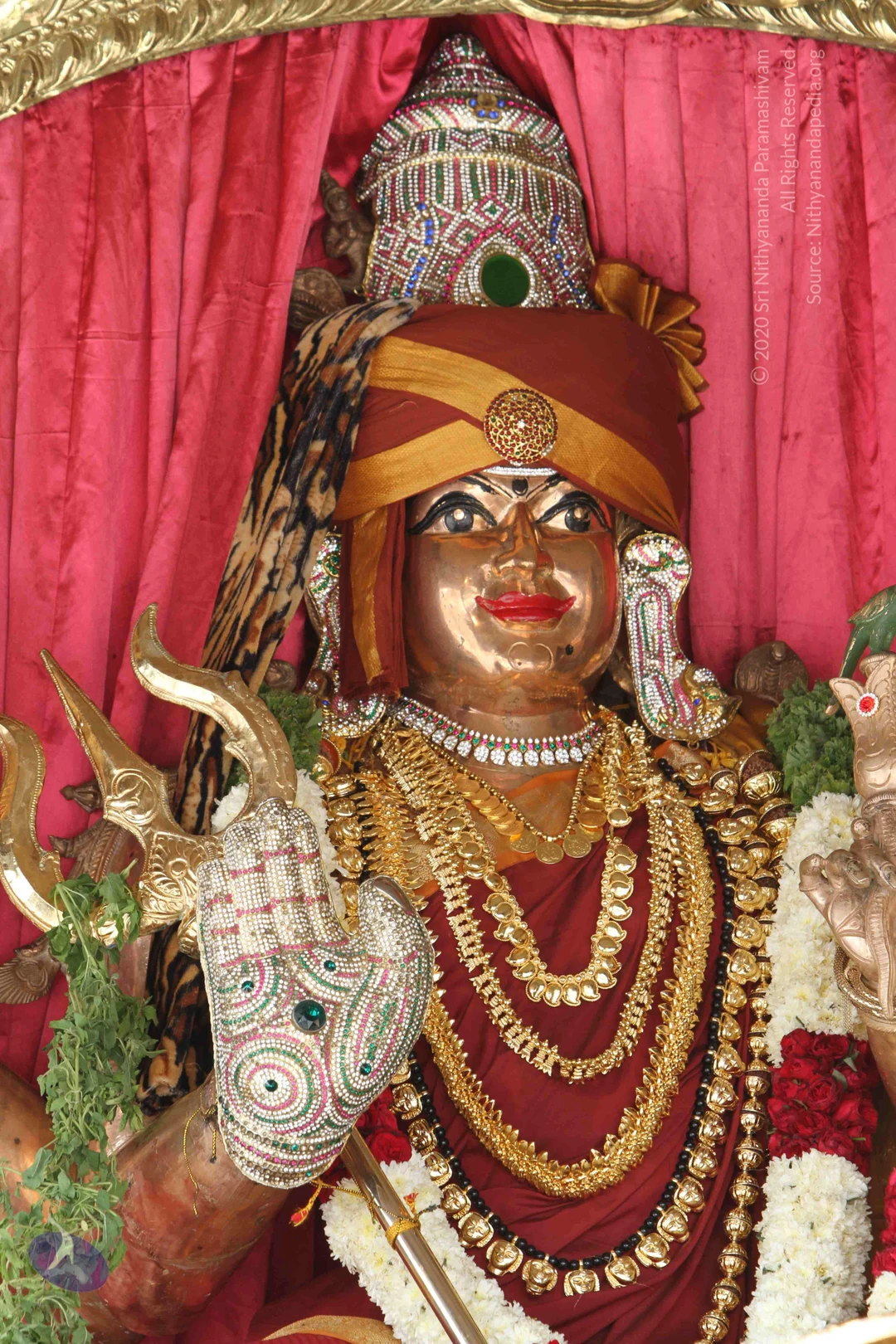
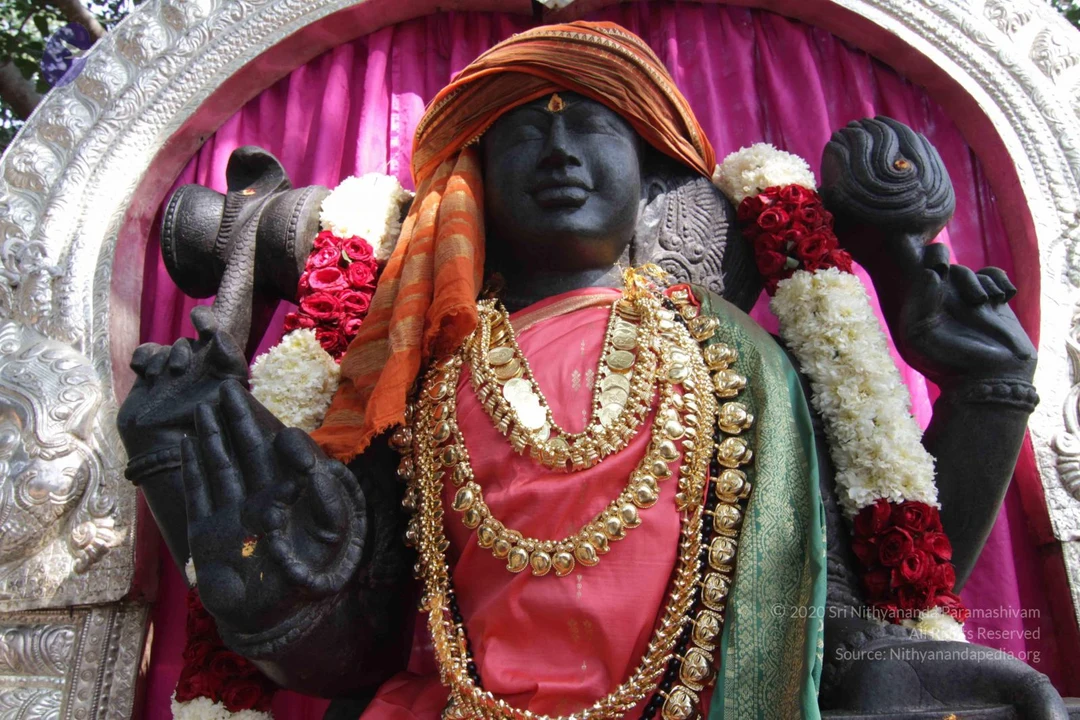
A white van converted into a mobile ratha/chariot, parked on dirt ground beside a red brick wall. Its side panel shows a large portrait of a smiling man with a bright orange turban, with a second circular portrait of the same style above the rear door and a small circular portrait near the front wheel. The van's maroon panel carries a Tamil slogan and a devotional title, with a deity image at the top. A man in saffron dhoti walks by the rear, and another man in white shirt and white dhoti stands nearby. The van has a ladder at its rear door, a black cover strapped on the roof, and an open interior with a cooking pot visible.A photograph of three gilded deity murtis (statues) under an ornate golden arch backed by a painted forest scene. The central murti wears a tall crown with a red and white jewelled band, a large jewelled chest ornament with a pearl and red stone border, heavy gold coin and bead garlands, and a red-and-gold dhoti. The murti on the left wears a red turban, pearl-studded red armour-like chest piece and layered gold garlands; the murti on the right wears a jewelled crown, gold necklaces and a red garment. All three are statues, not living people, and are adorned for darshan.A photograph of three ornately decorated deity murti displayed against a golden arched frame with a painted forest backdrop. The central figure wears a tall jeweled crown, a large bejeweled chest ornament with a temple motif, and heavy strings of gold coin garlands and beaded necklaces. The figures to either side wear red and maroon garments, jeweled headdresses and gold necklaces, with one holding an object near the shoulder. Everything is heavily adorned with gold coins, pearls and colourful stones. These are statues, not living people, and no person is shown.A vehicle with open side doors displays a central shrine of gilded deity murtis draped in gold and garland necklaces, with a golden yellow cloth below. On each door panel is a large printed portrait of a man in saffron-red robes, red headwear, and a red-beaded mala, seated on an ornate gold throne with leopard-print cushions, hands raised in greeting. The portraits are printed images, not physical people, and no physical people are visible.A yellow vehicle with its rear doors open reveals an interior shrine with a golden arched backdrop and a deity murti group adorned with heavy gold and bead garlands, set against a golden-yellow silk cloth draped over a platform. Two large printed panels on the open doors show a standing man in red-orange robes with a red turban, a rudraksha-style red mala, and raised hands in a blessing gesture, in front of a golden throne with leopard-print cushions. The printed panels are depictions and no physical people are visible. A copyright-style overlay on the right panel appears in the image.A yellow vehicle with its rear doors open reveals a shrine interior with a deity murti at centre, adorned with layered gold and pearl necklaces and a gold arched prabhavali backdrop, with a gold cloth draped over the platform below. Flanking the open doors are large printed portraits of a figure in saffron-red robes, a red turban and a long red-and-white beaded mala, hands raised in namaste against a golden throne. The printed portraits are depictions, not physical people. A green forest backdrop and string lights frame the shrine. Overlaid copyright text appears in the corner of the image.
01-NDY-ENGLISH
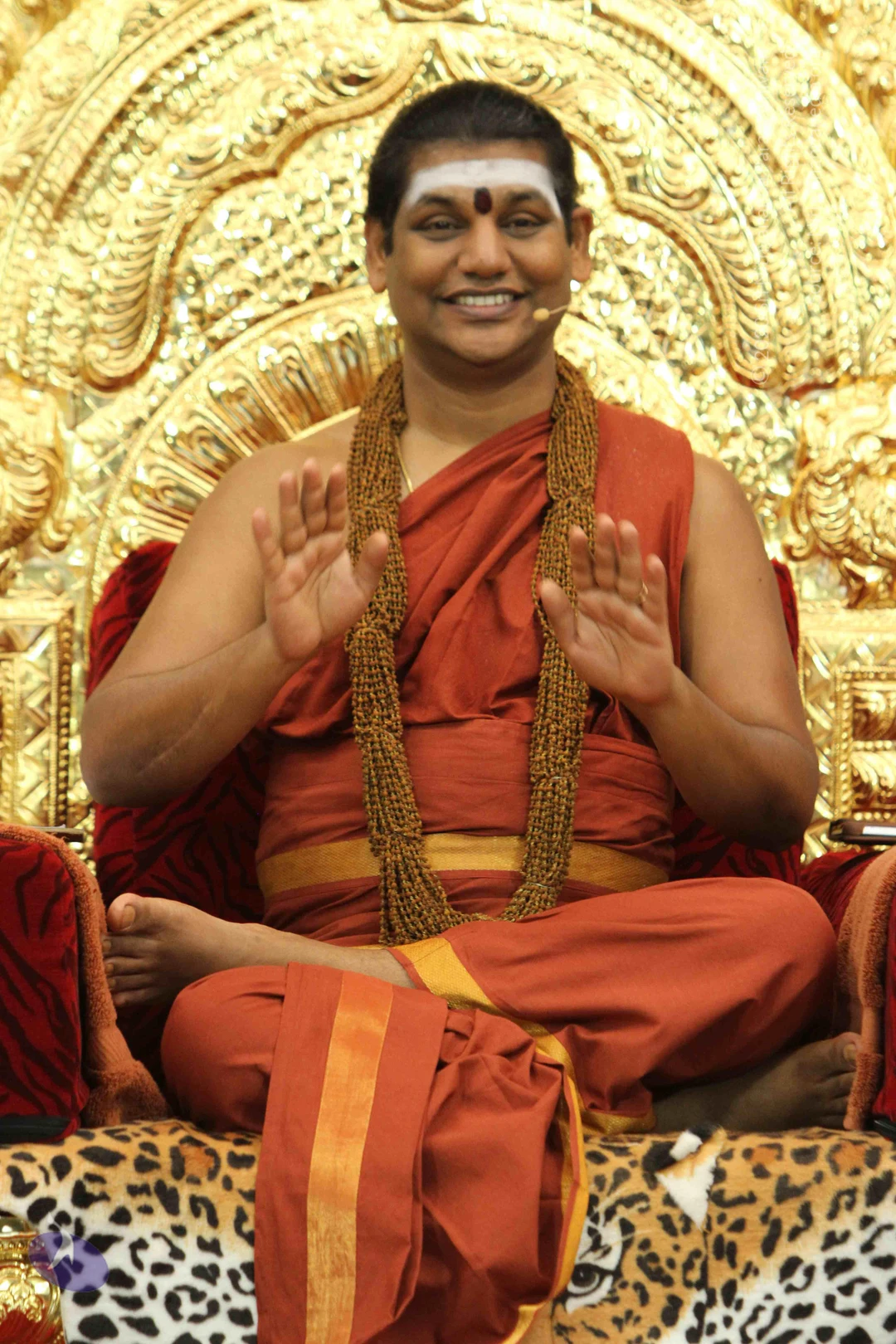
37 photosSource gallery
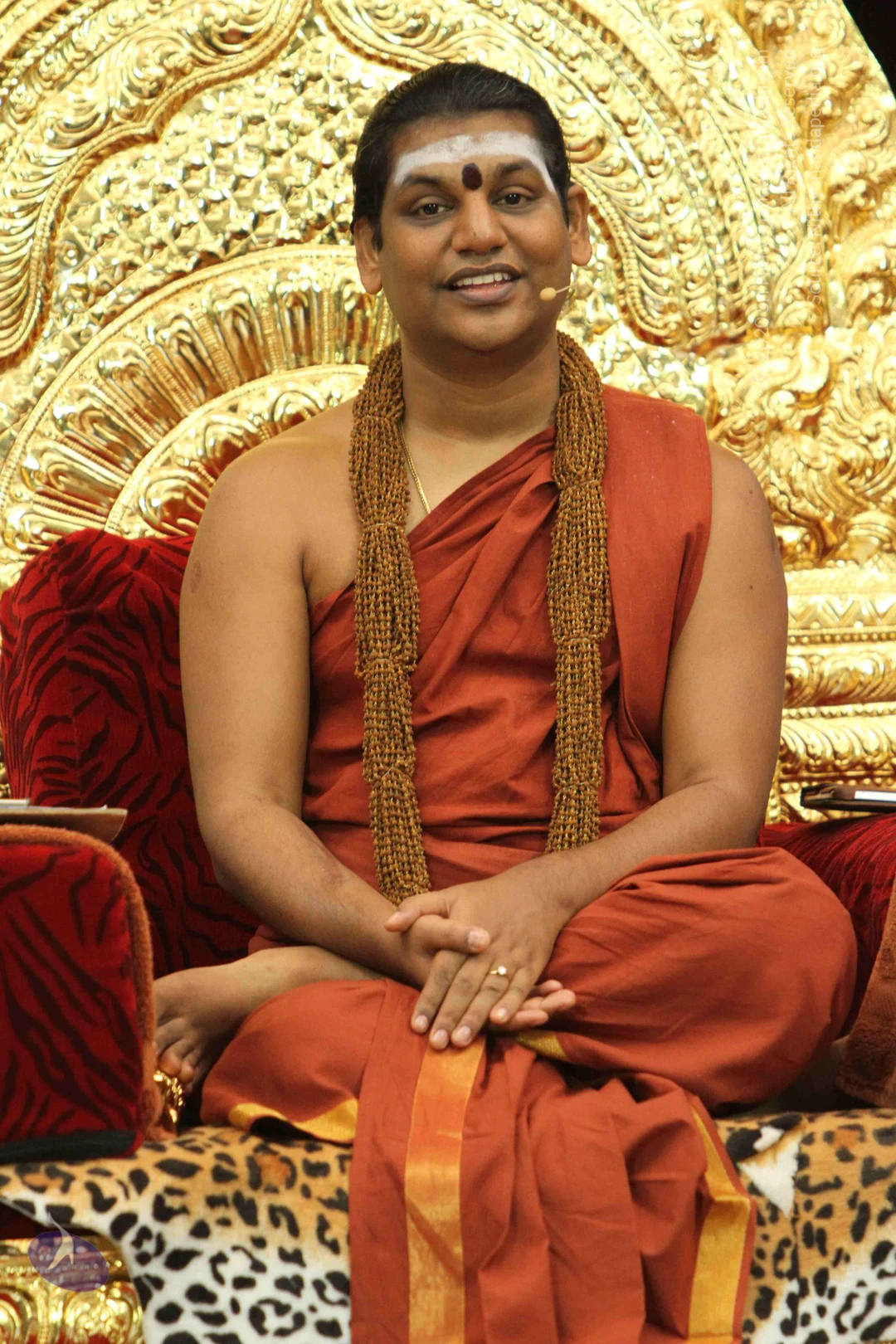
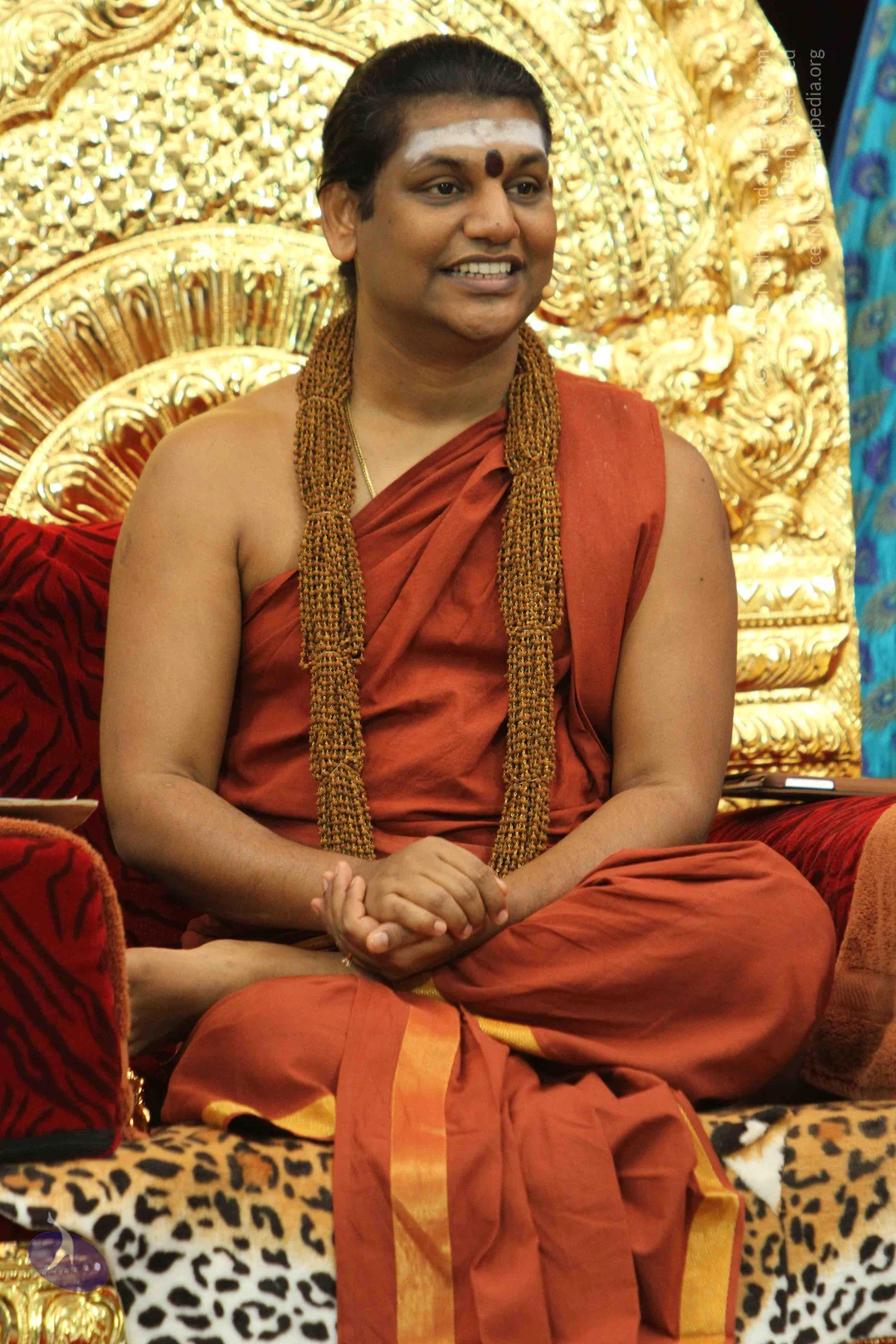
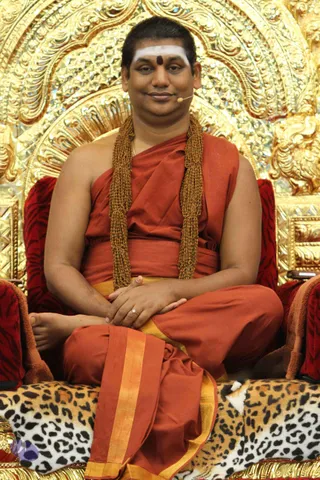
A man sits cross-legged on an ornate gold-leaf throne with a red tiger-striped cushion, raising both palms toward the camera in a blessing gesture while smiling. He wears an orange-saffron cloth draped over one shoulder with a gold-bordered dhoti, a long brown-gold beaded mala around his neck, and a white vertical tilak with a red bindi on his forehead. A small clip-on microphone is visible at his cheek. The throne is covered with a leopard-print cloth. Appearance-based cues include the saffron robes, rudraksha-style mala and ornate throne, so this is a person seated in person during a discourse.A man seated cross-legged on a throne with an ornate gold repoussé backrest and red tiger-striped cushions, draped over a leopard-print cloth. He wears a saffron-orange sleeveless robe, a matching orange-and-gold bordered dhoti, a long beaded brown rudraksha-style mala around his neck, and a small clip-on lapel microphone. A white vertical tilak with a red dot marks his forehead, and his hands rest folded in his lap. a person by appearance cues: saffron robes, rudraksha mala and throne seating, with the page noting his presence at the event.A man sits cross-legged on an ornate gold throne with red velvet cushions and a leopard-print cloth draped over the seat. He wears a saffron-orange unstitched robe with a gold-bordered dhoti, a long braided rudraksha-style mala necklace, and a white tilak with a red bindi on his forehead. A small clip-on microphone is attached near his face, and his hands rest together in his lap, one bare-footed. The setting suggests a discourse or satsang, with a large gilded arch behind him. The appearance matches the a person cues: saffron clothing, a rudraksha mala and a throne-like seat.A photograph of a man seated cross-legged on an ornate golden throne with a tiger-striped red cushioned back and a leopard-print seat cover. He wears a saffron-orange dhoti with a gold border and an orange shawl draped over his bare shoulder, a long brown rudraksha mala hanging to his waist, and a white vibhuti line with a red kumkum dot on his forehead. A small clip-on microphone is attached near his mouth, and his bare feet are visible. a person: the seated man has a sanyasi-style presentation with orange robes, rudraksha mala and sacred forehead marks, seated on a throne in a discourse setting.A seated man in saffron-orange robes sits cross-legged on a red velvet throne with leopard-print fabric beneath, against an ornate gold-leaf backdrop. He wears a rudraksha mala draped over his shoulders, a white vertical tilak with a red dot on his forehead, and a small lapel microphone. His hands rest in his lap, one with a ring. a person: long swept-back hair is absent here, but the saffron robes, ceremonial rudraksha mala and throne match the page's identification; appearance cues are moderate, so identity is uncertain.A man seated cross-legged on an ornate golden throne with red tiger-striped cushions and a leopard-print cover, pressing his palms together in anjali namaskar with eyes closed. He wears an orange-red sleeveless garment with a gold-bordered dhoti and a long gold-coloured rudraksha mala draped over his shoulders. A white vertical tilak and a red bindi mark his forehead, and a small clip-on microphone is attached near his face. Bare feet rest on the cushion. The gilded backdrop carries intricate repoussé carvings. Swamiji (probable): long swept-back hair, rudraksha mala and saffron-orange robes, seated on a throne in a discourse setting.