Skip to content
Monday

2 September 2013

Hinduism - The Answer to the Great 'Why?'

Dated photos
325
Source pages
1
Media
4
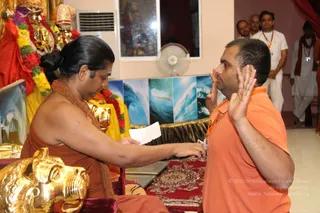
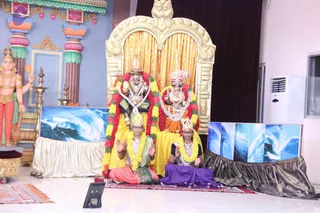
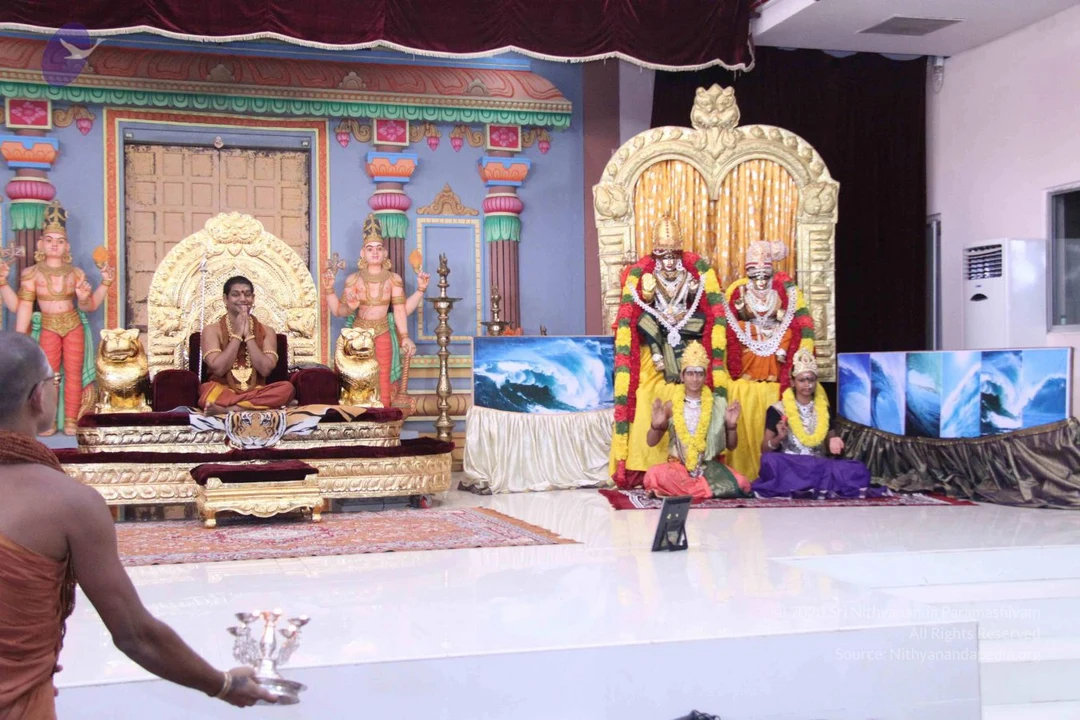
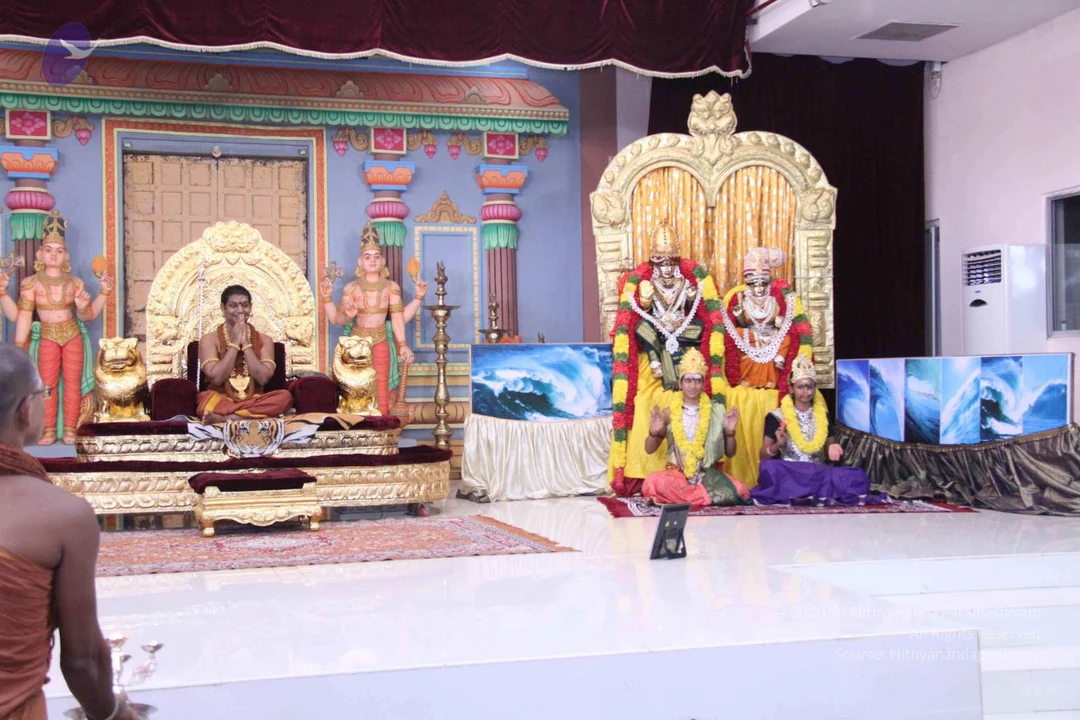
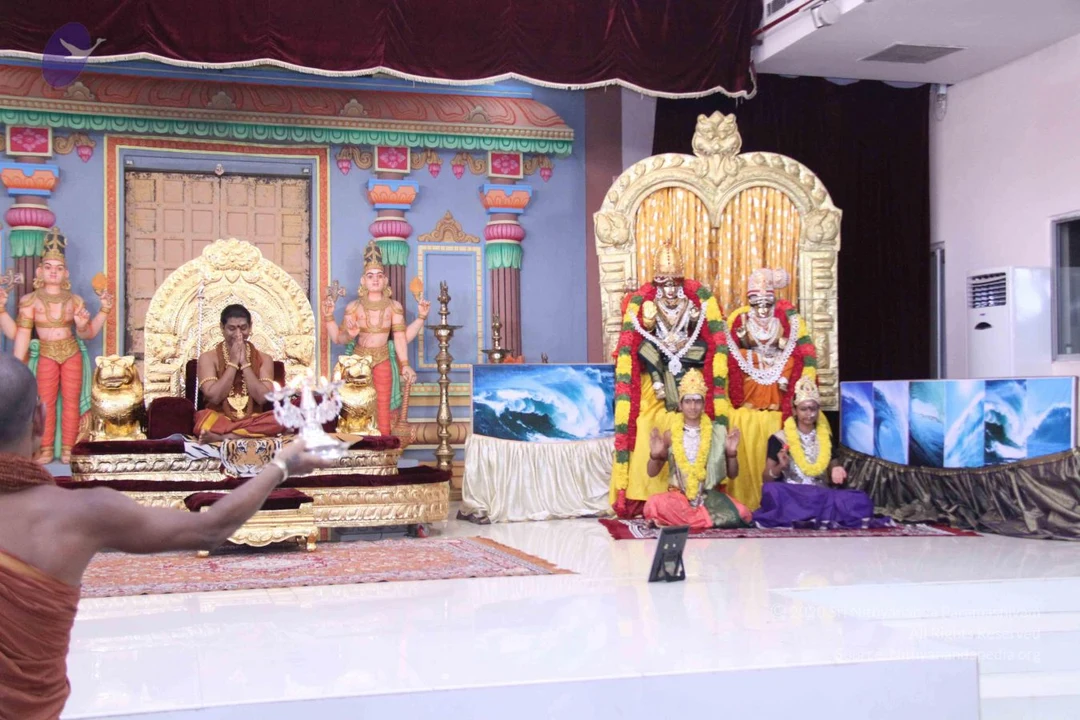
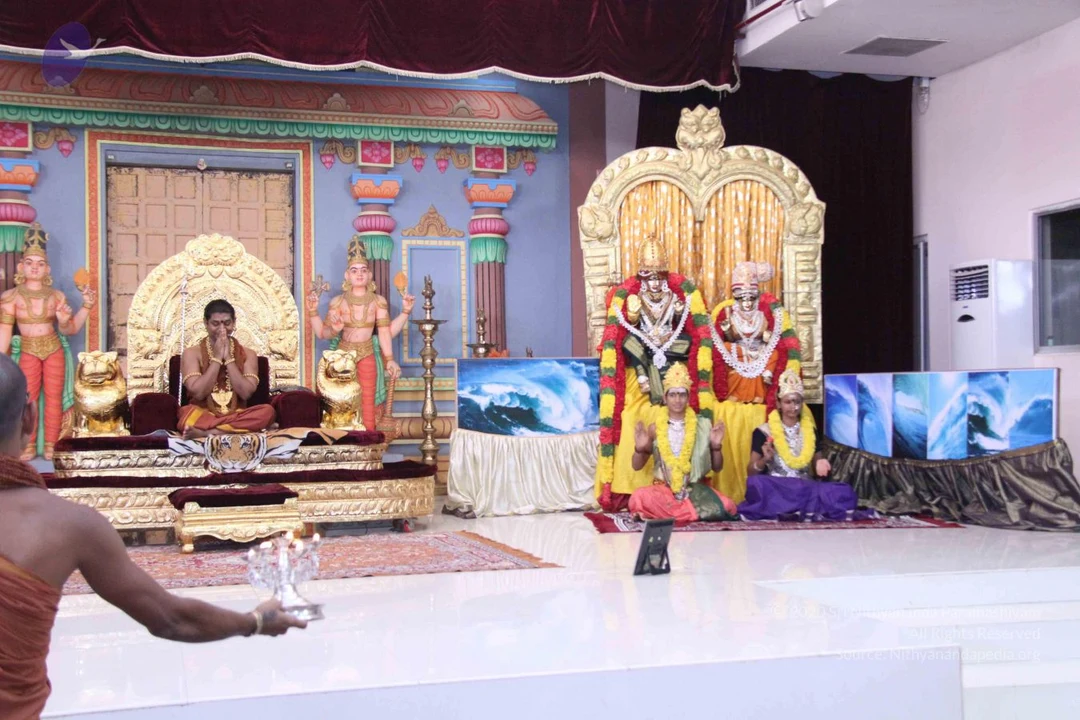
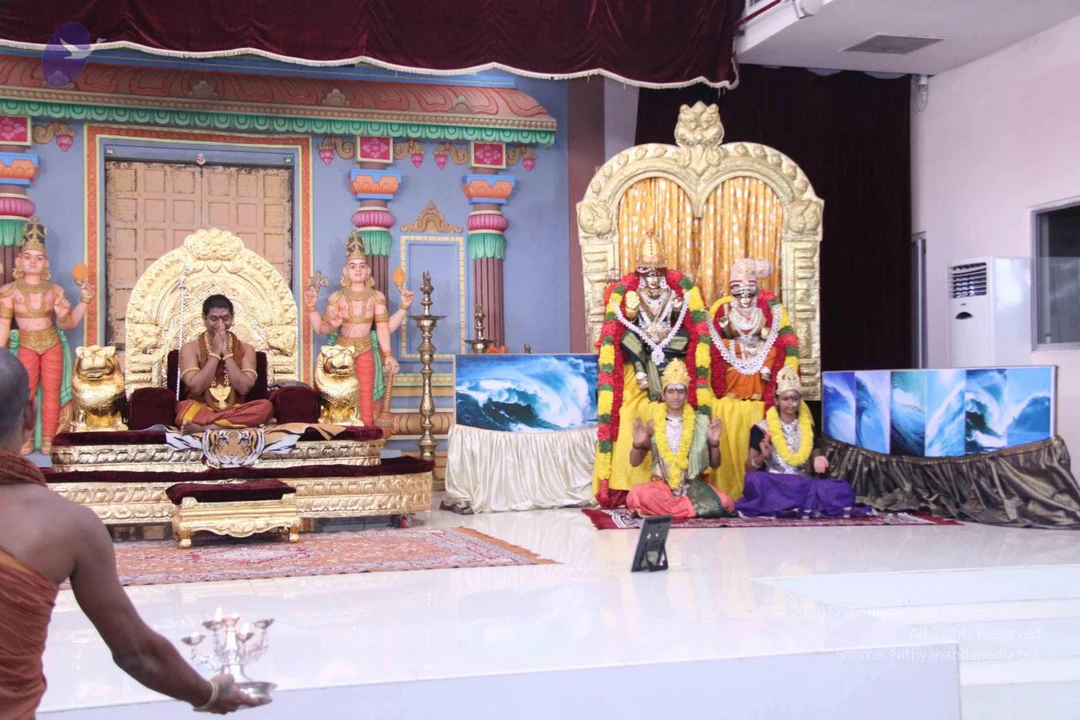
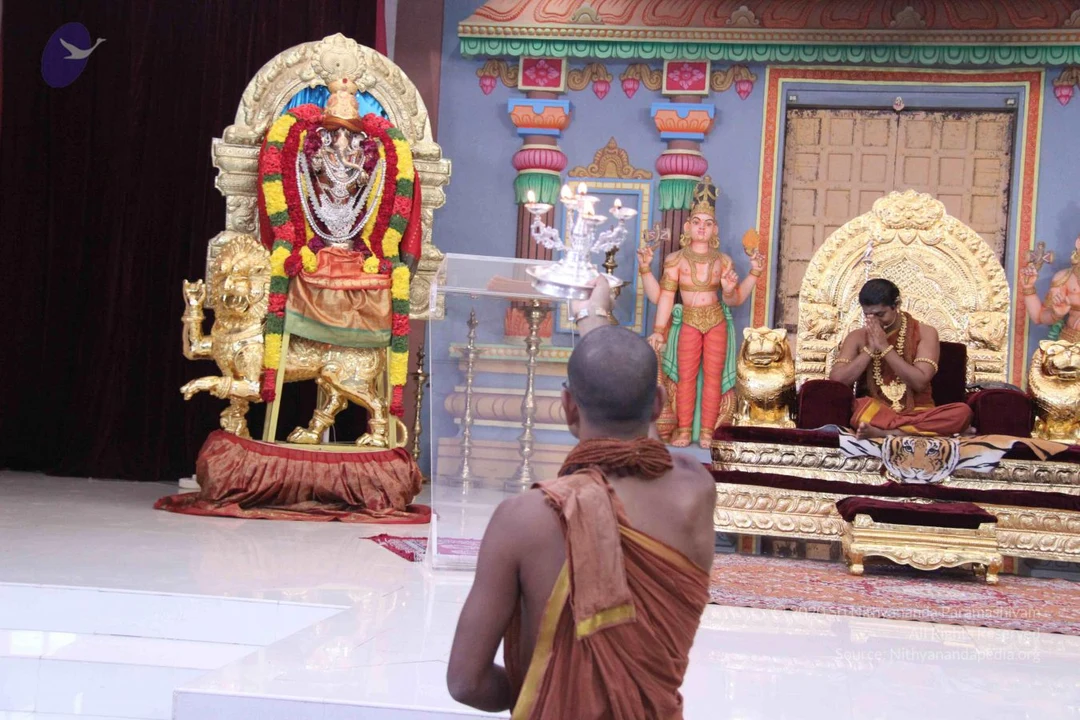
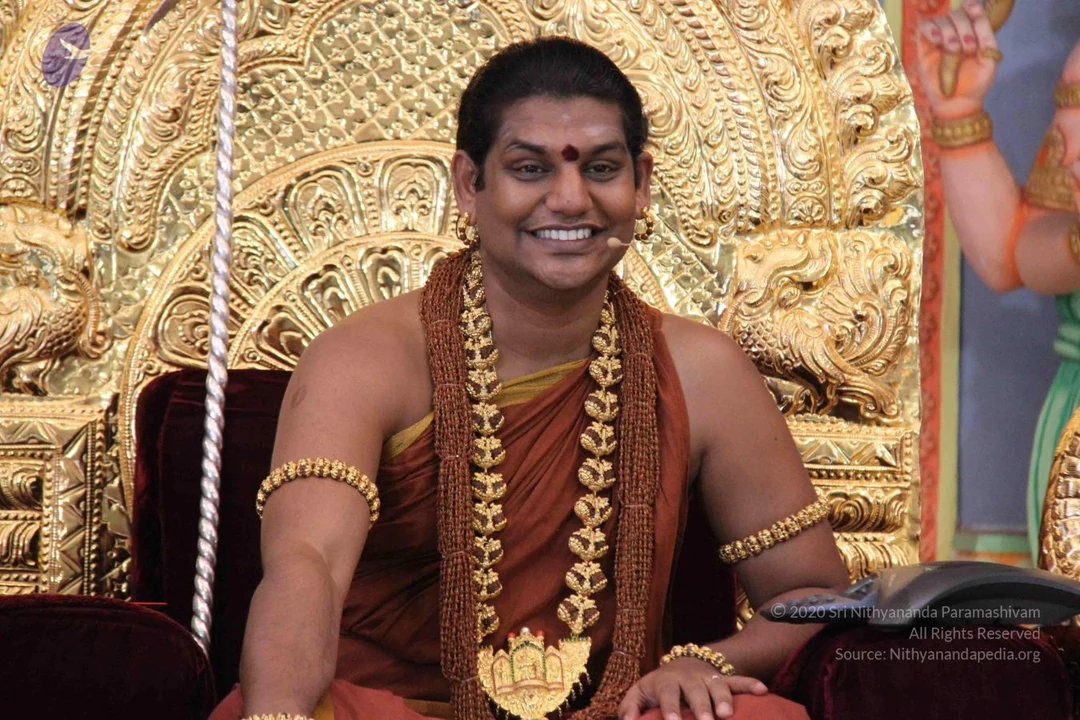
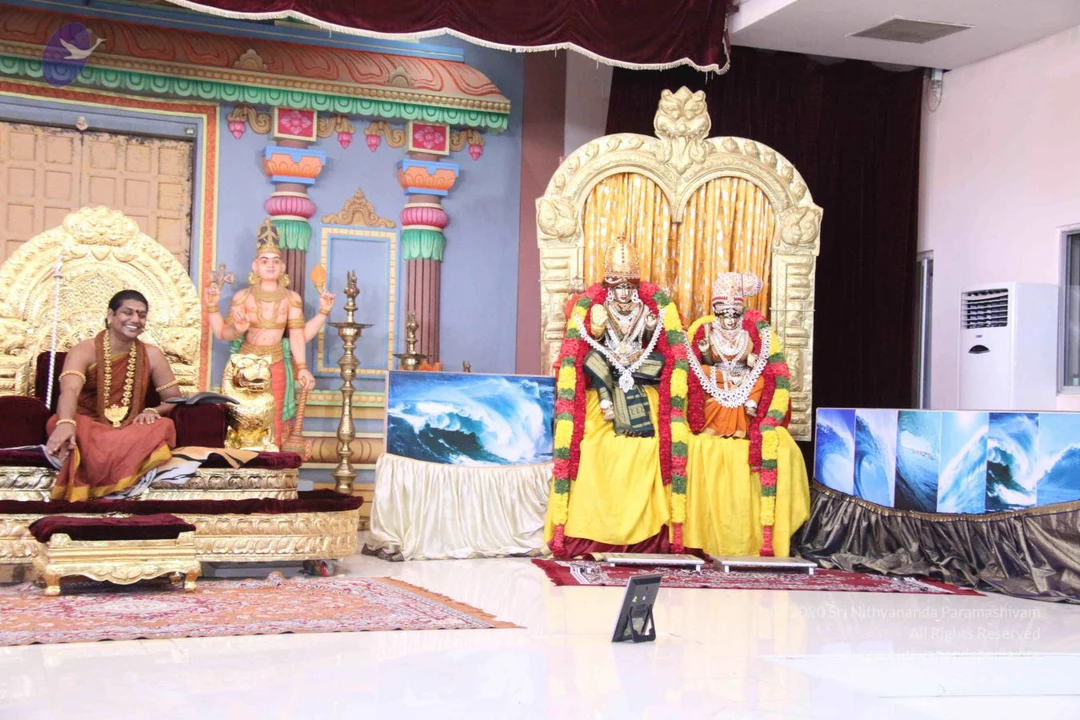
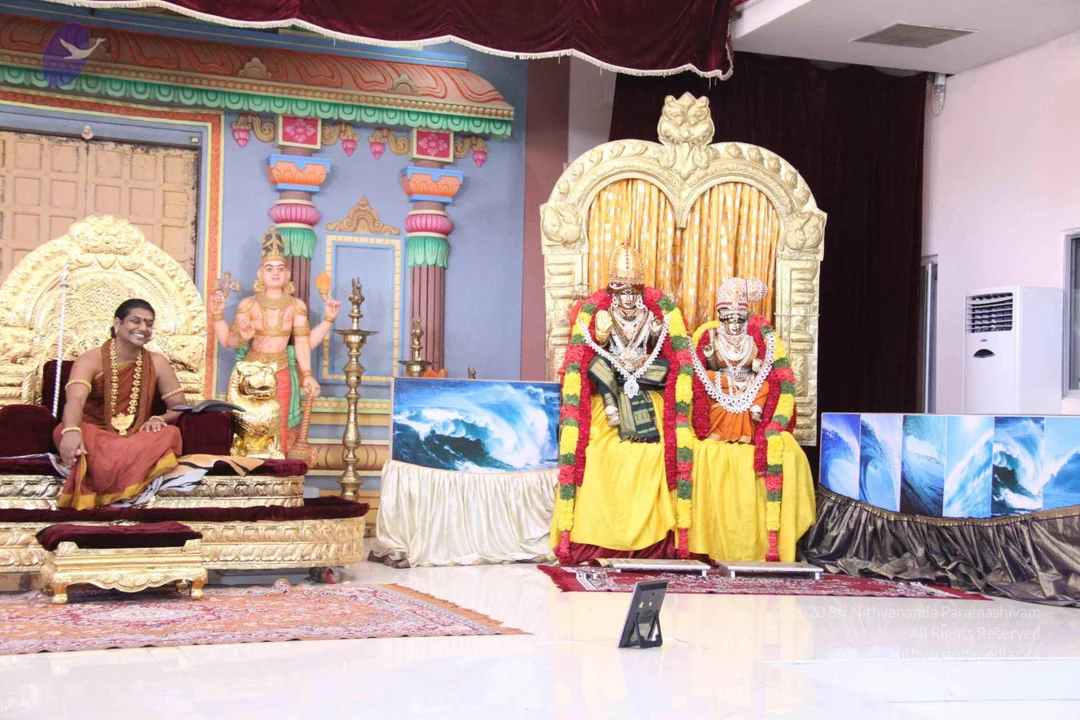
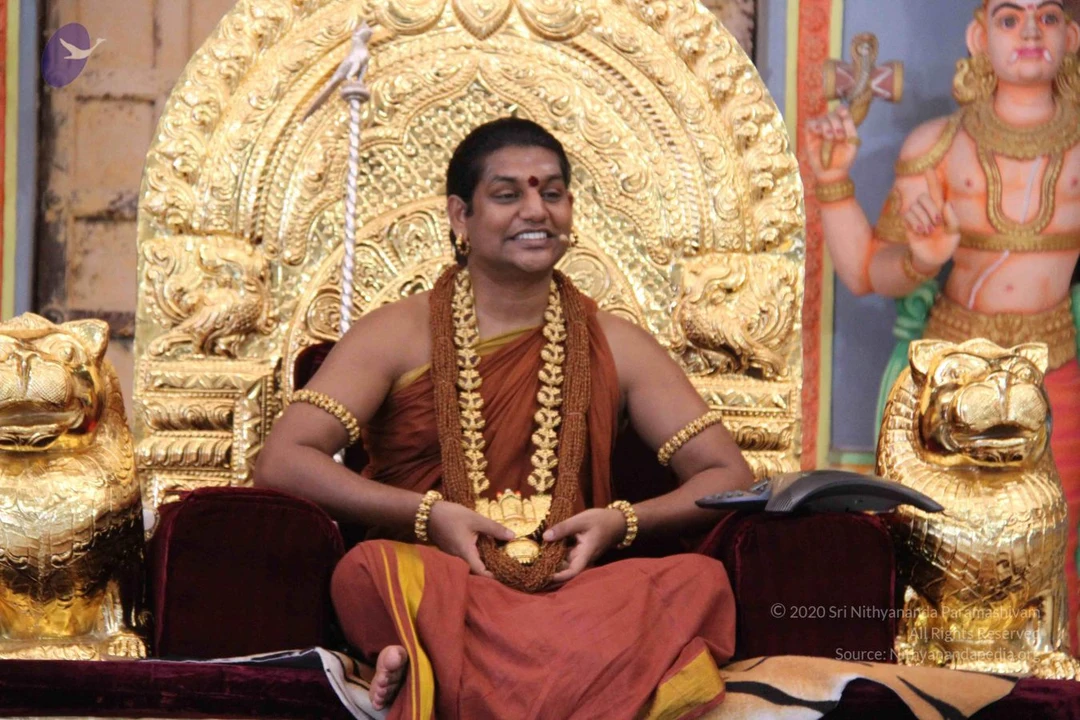
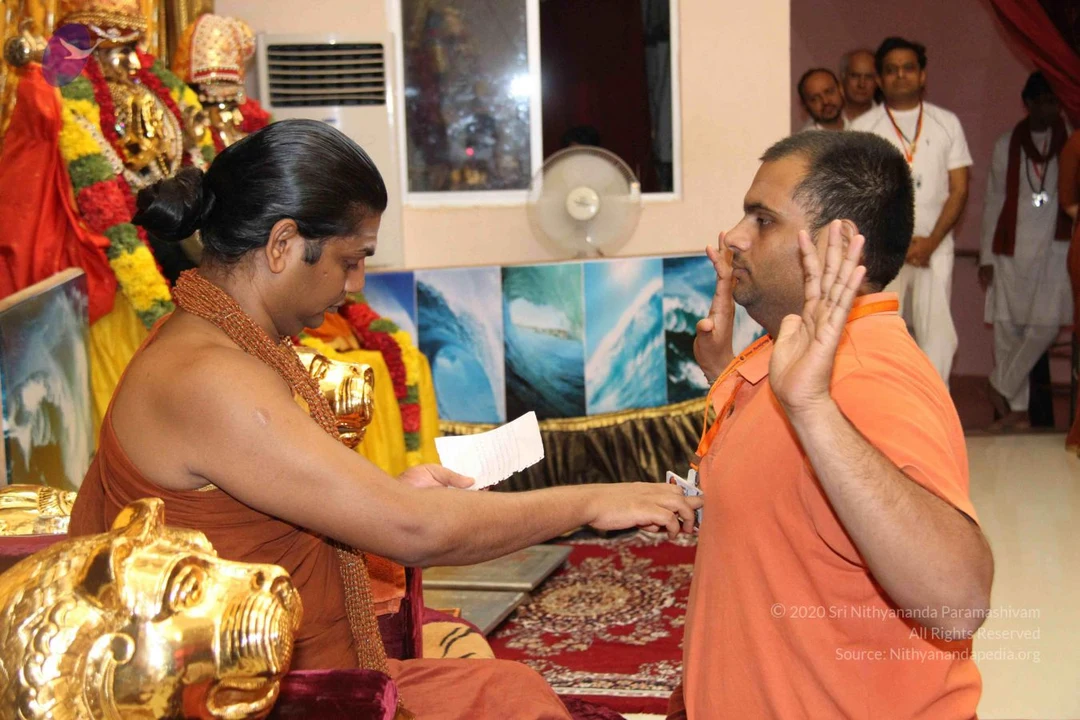
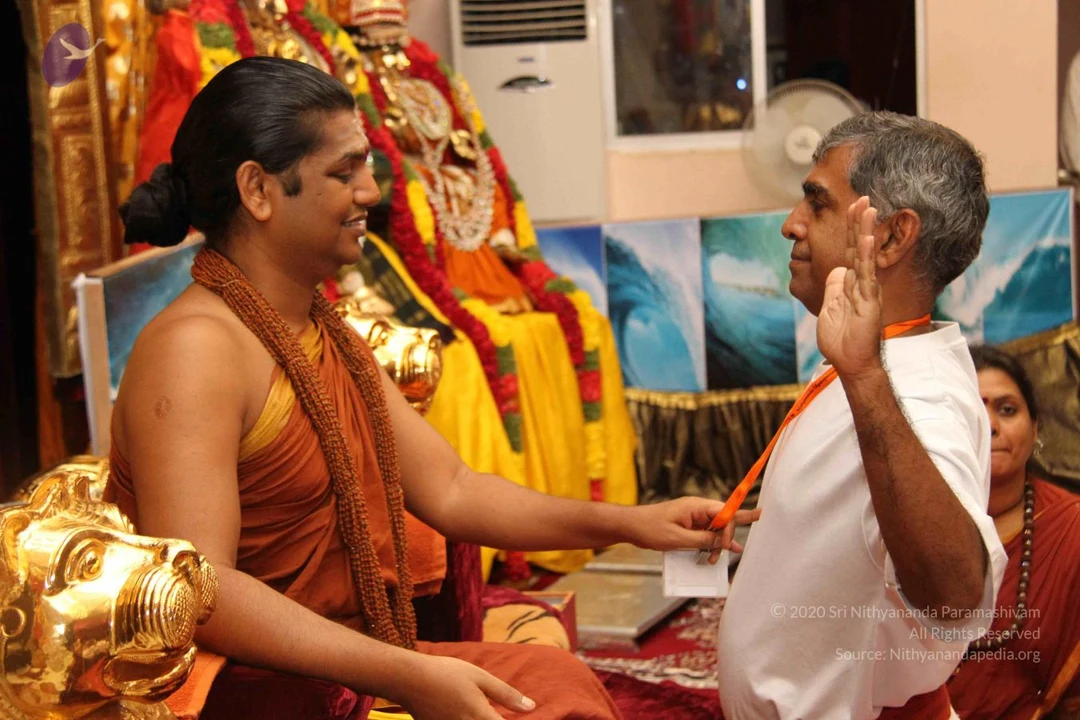
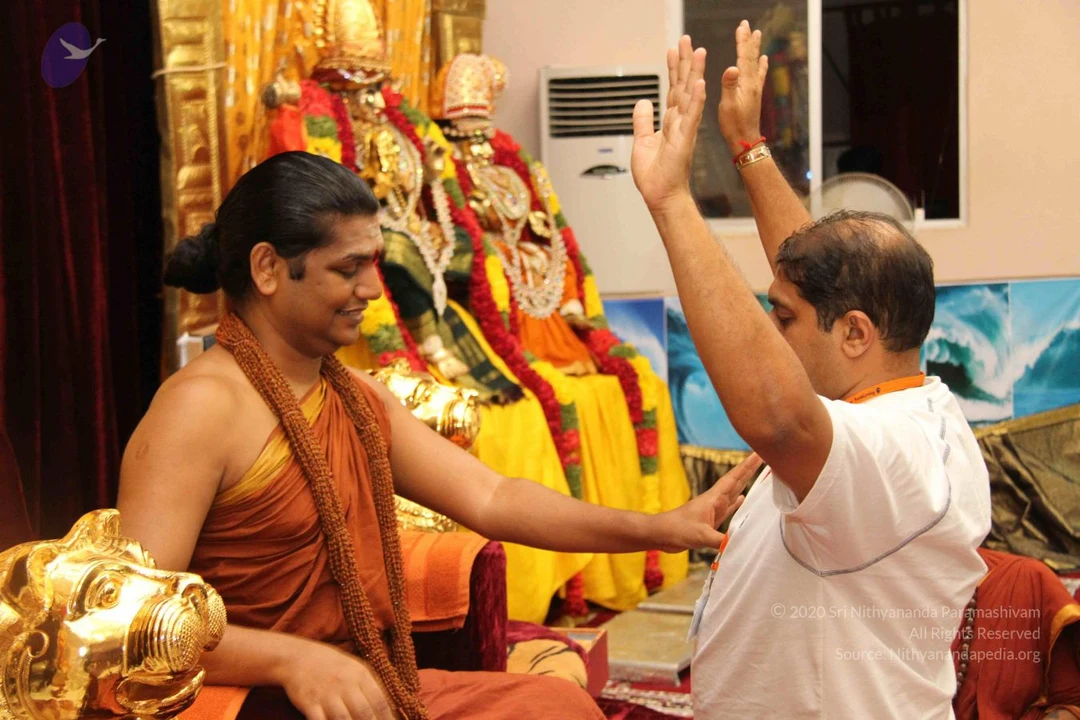
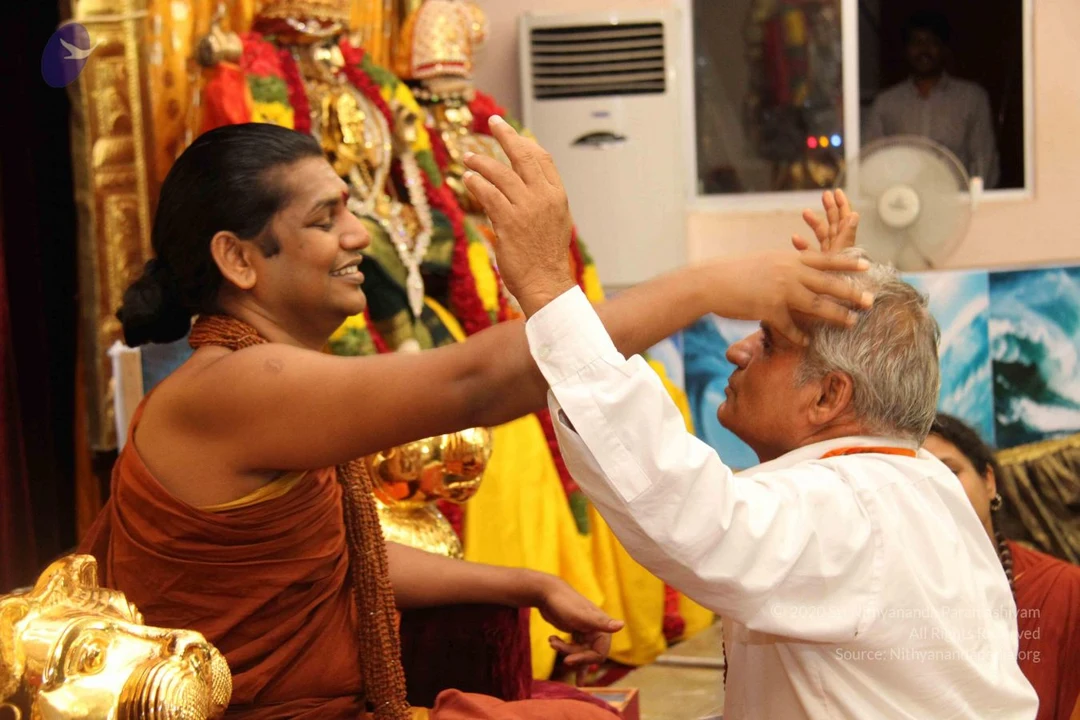
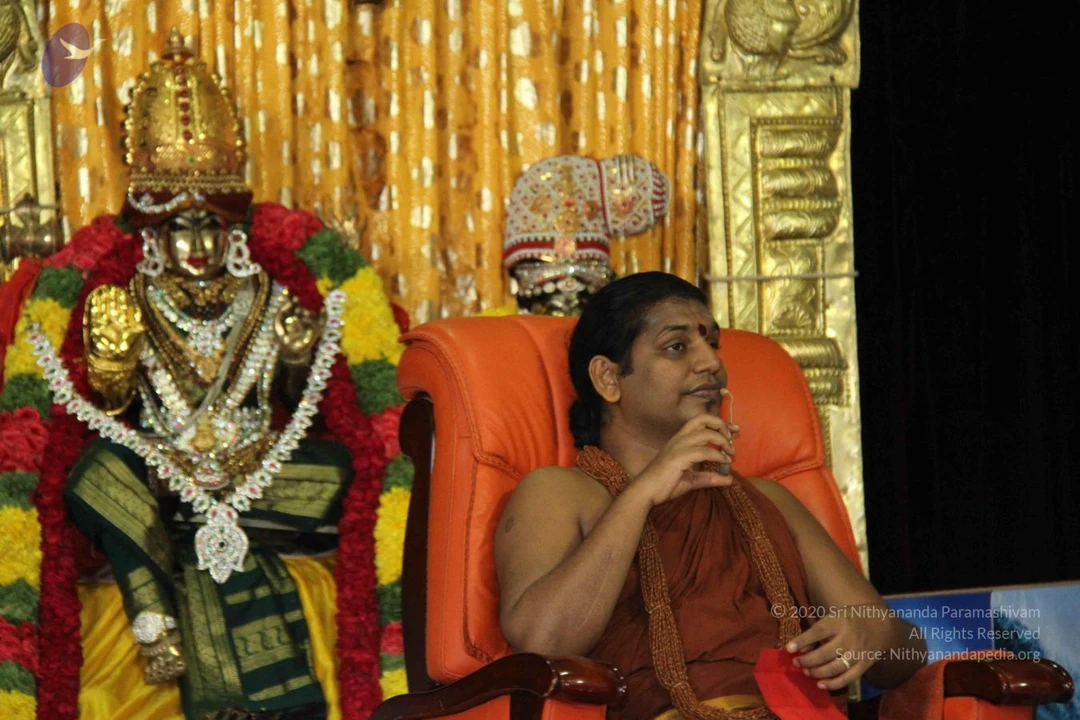
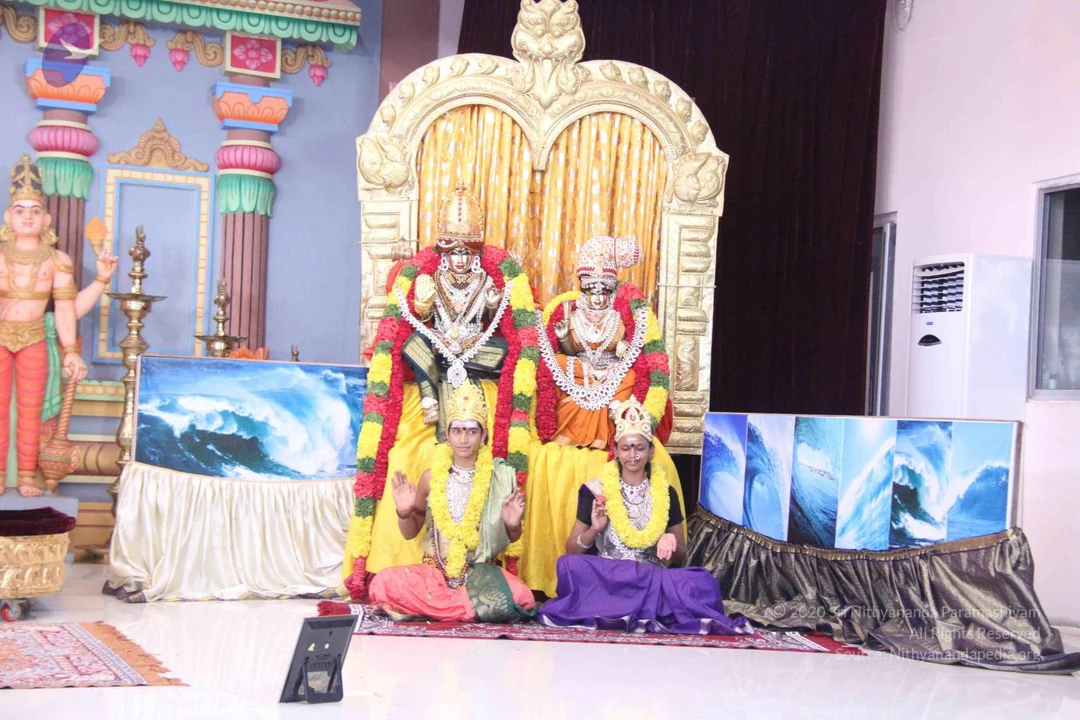
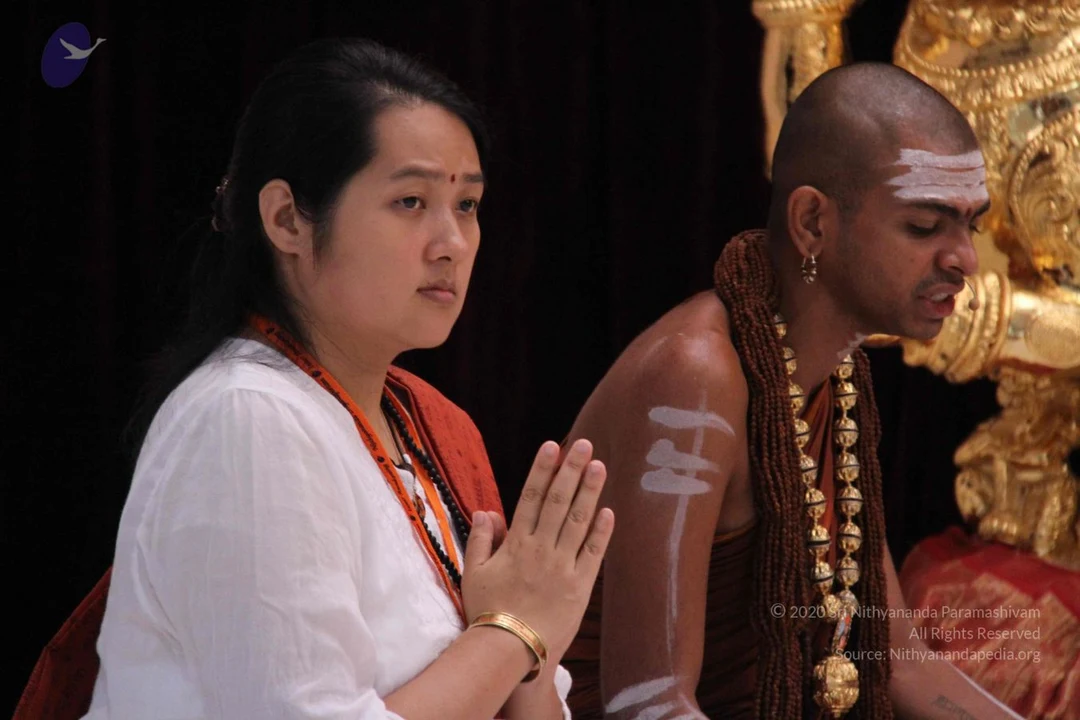
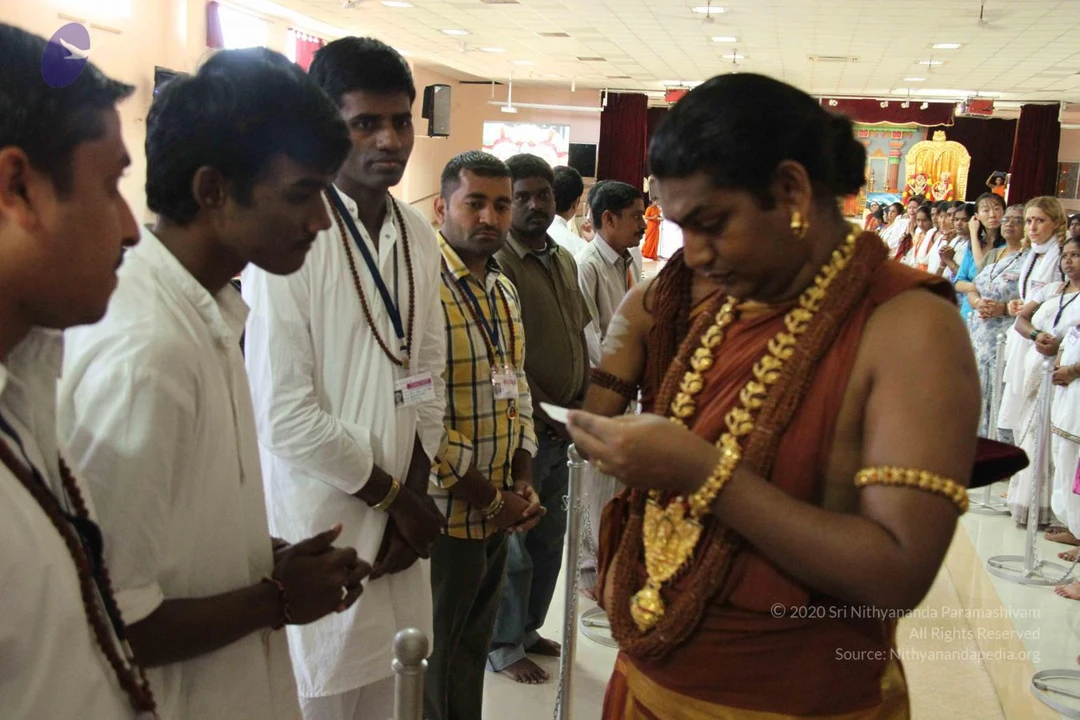
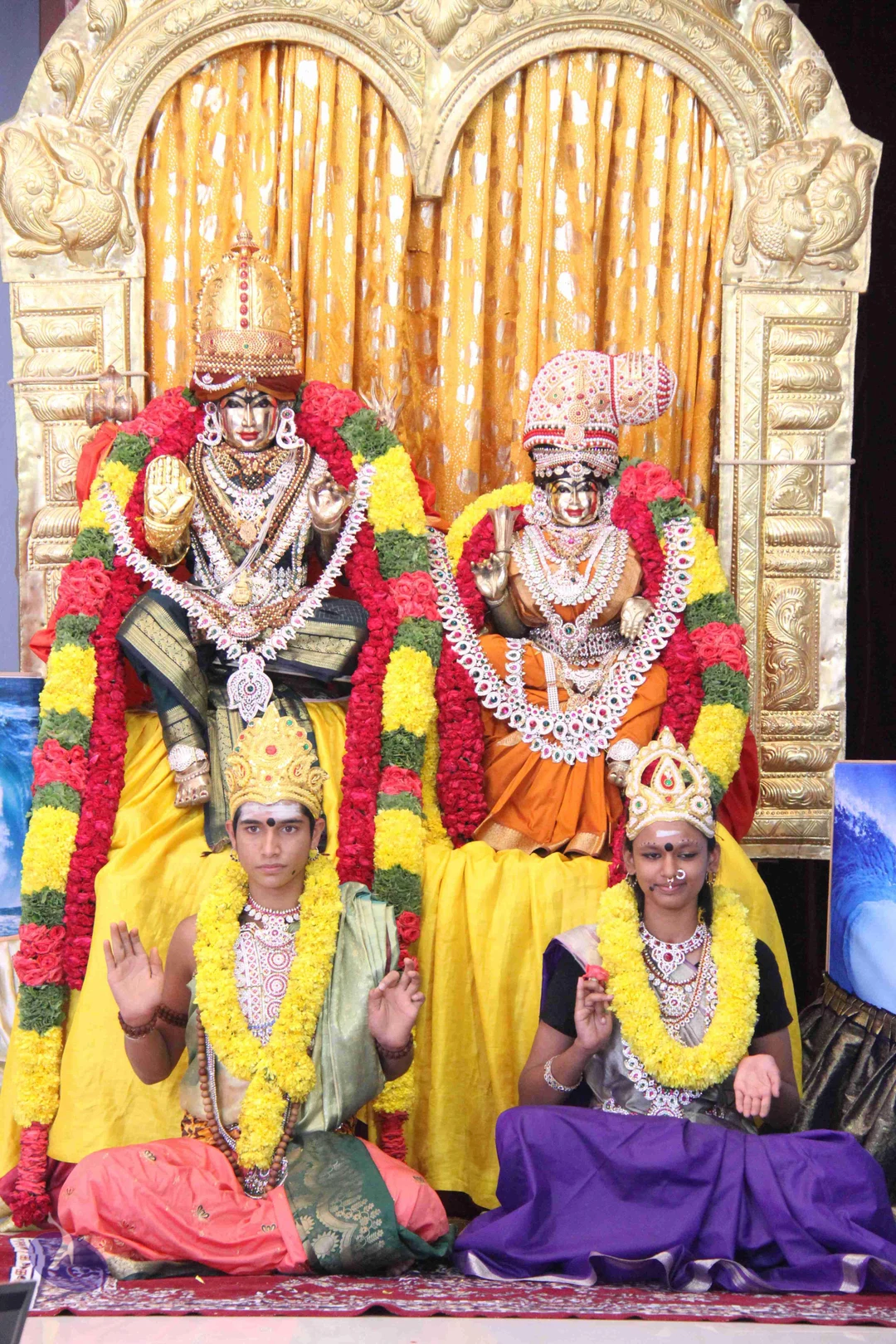
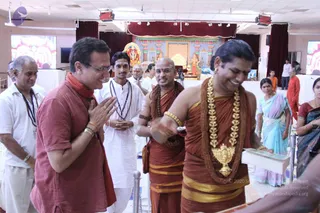
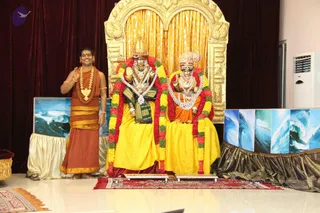
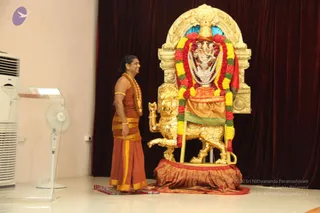
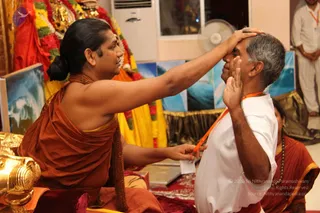
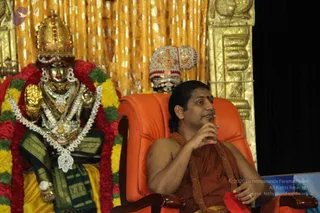
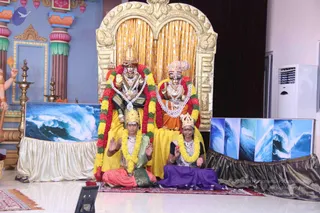
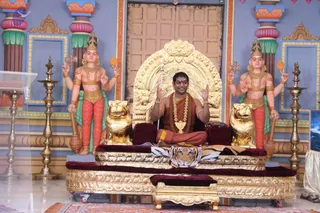
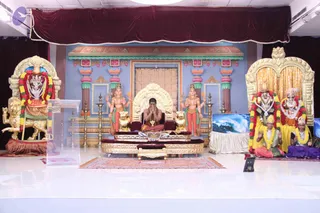
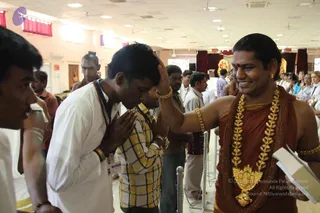
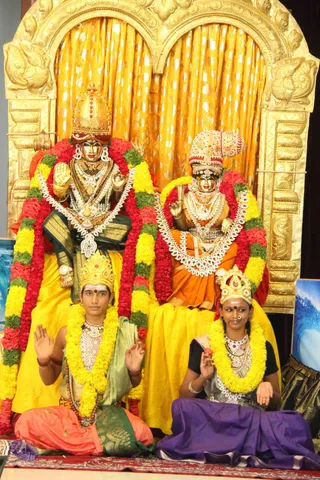
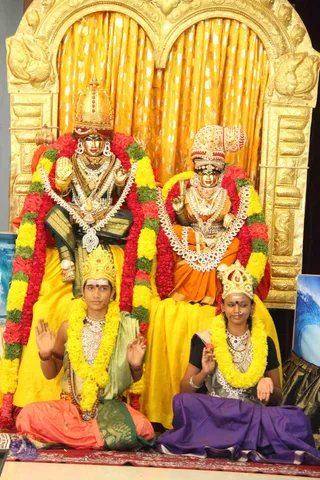
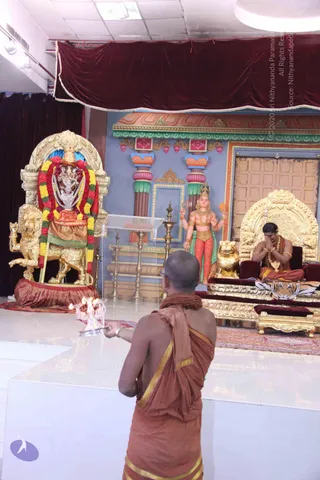
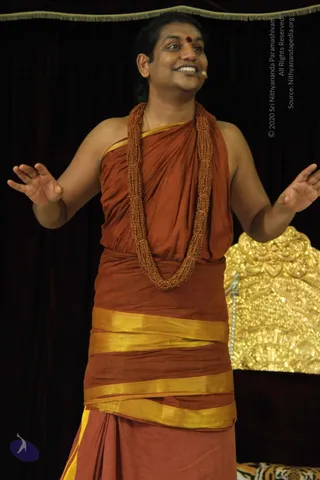
A seated figure in an orange-brown dhoti and a thick beaded rudraksha-style mala with a gold clasp holds a folded white paper and extends a hand toward a standing man in an orange shirt and orange shawl, whose right palm is raised and left hand touches his cheek. Behind them are gold deity figures with garlands of yellow and red flowers and a red-and-gold headdress, plus a gold lion-head armrest in the foreground. A background panel shows ocean wave photographs over a gold-trimmed cloth, with a red patterned carpet on the floor. Two or three men in white and orange stand at the rear near a red curtain. The scene appears to be a seated blessing or oath exchange in a shrine room.A staged devotional tableau on a stage before a golden arched throne backdrop with gold curtains. Two seated performers in costume play a divine couple: the figure on the left wears a golden crown, red and yellow garlands, and a white jewelled necklace, and the figure on the right wears a decorated crown, a white and gold necklace, and a yellow-and-red garland. Two child performers sit in front on a red carpet: a boy in a pink and green dhoti with a yellow garland and gold crown, and a girl in a purple skirt with a yellow garland and jewelled crown, both with palms raised. Behind them, large backdrop panels show ocean waves, and a painted figure with a sceptre stands at left beside decorative pillars. Two floor mats and an air conditioning unit are visible at right.A woman with dark hair and rimless glasses sits on a green-cushioned plastic chair in a hall, hands clasped over one knee, looking off to the side with a serious expression. She wears a white embroidered kurta over black trousers, an orange lanyard, a red shawl with printed script draped over one shoulder, and a silver necklace and bracelets. Behind her, a woman in white and glasses sits in front of black plastic chairs, and a red handbag, a silver bag and a water bottle lie on the floor in front. A purple logo appears in the upper right corner.

September 02 2013

Original wiki page
Contents

Title

Hinduism - The Answer to the Great 'Why?'

Video

VideoAudio

Title

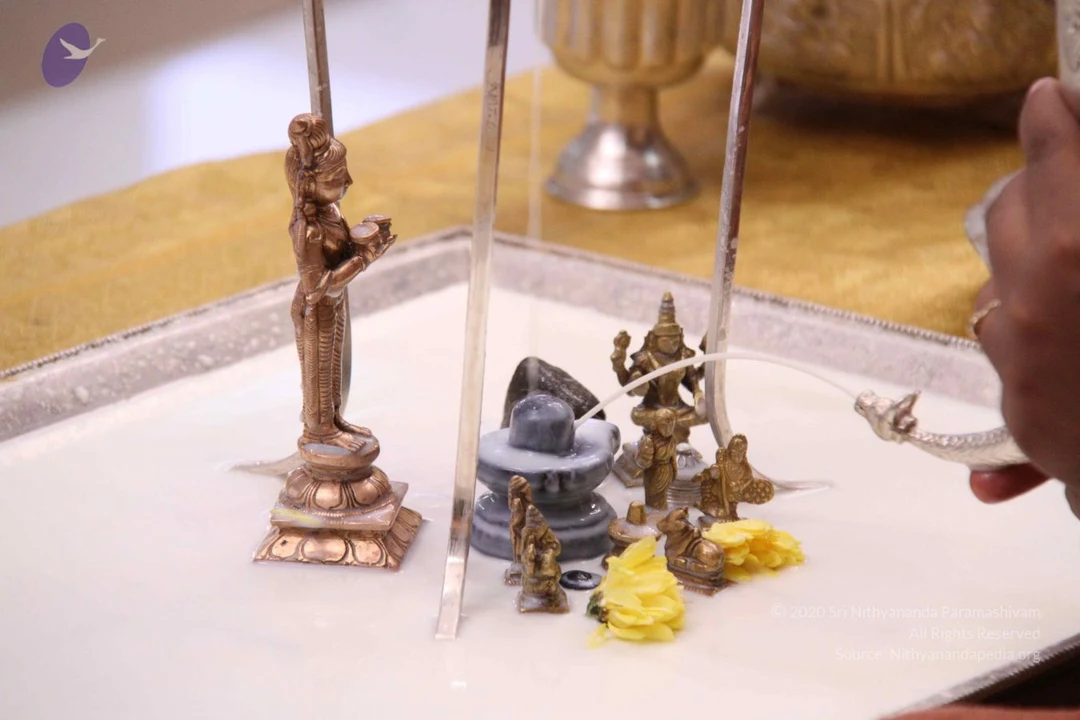
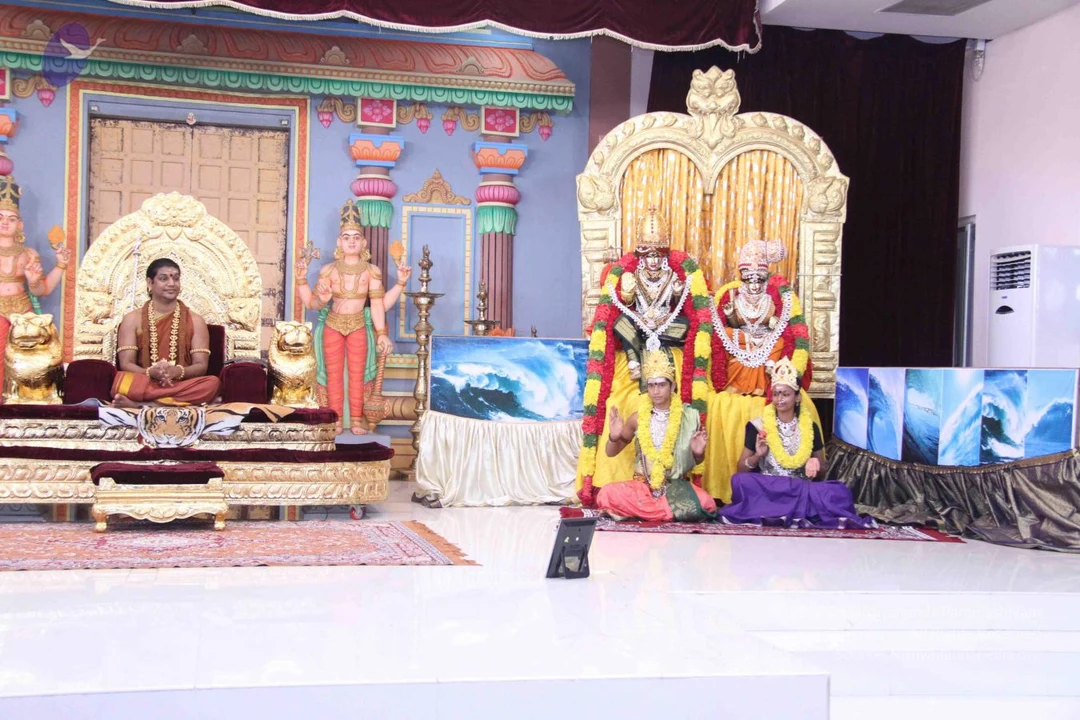
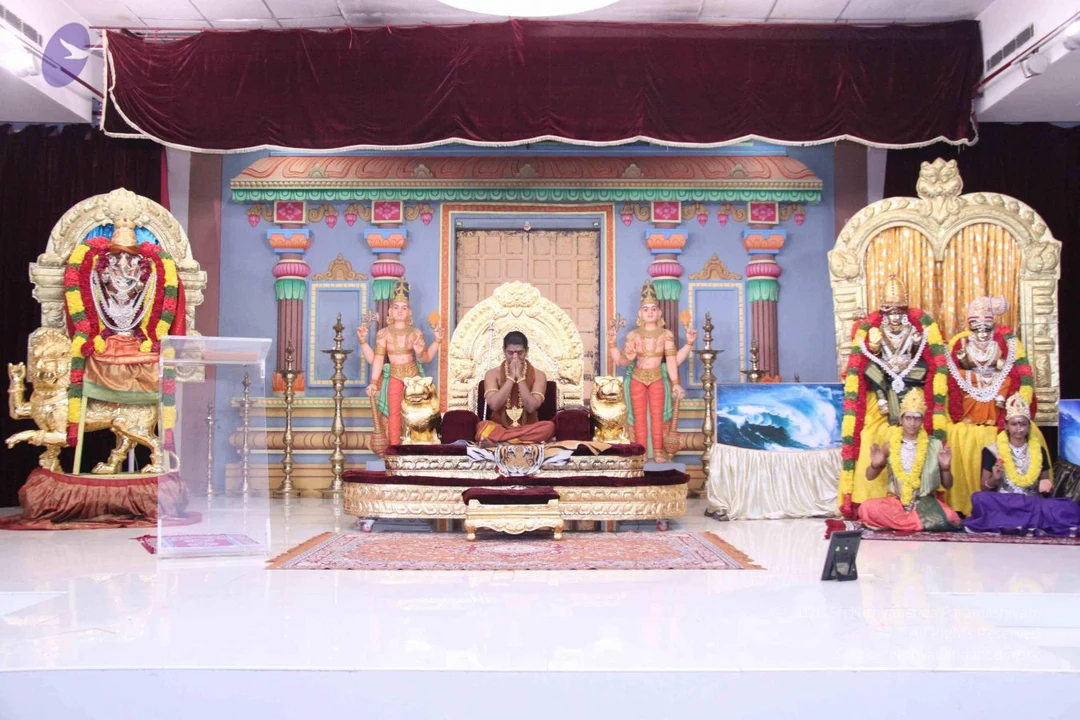
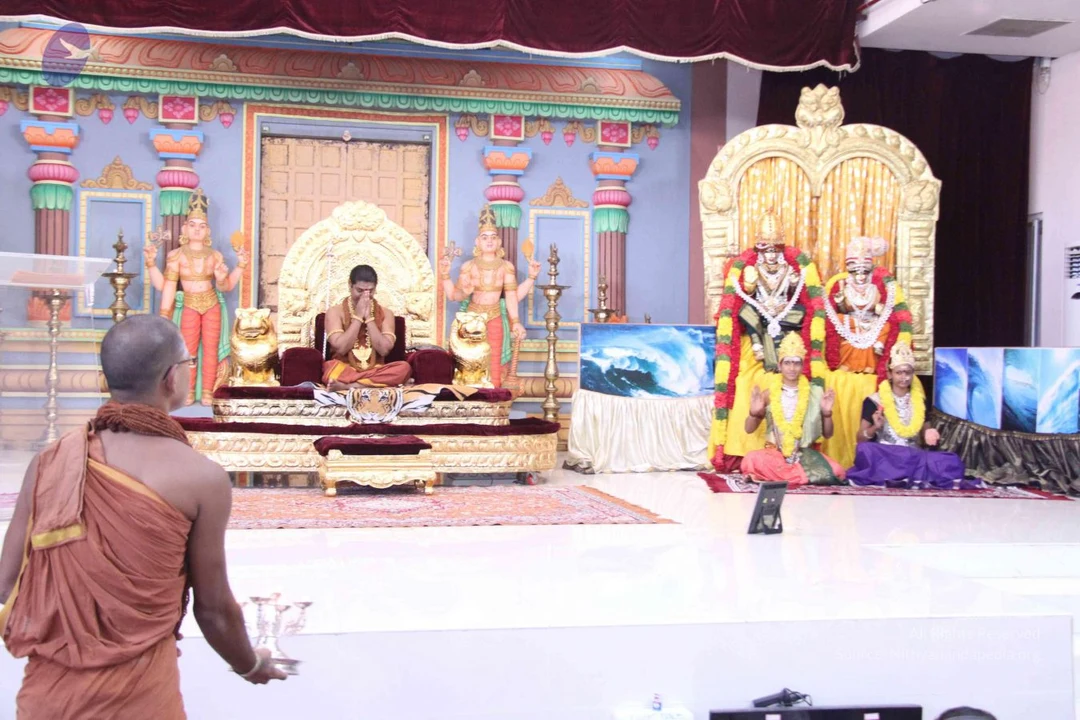
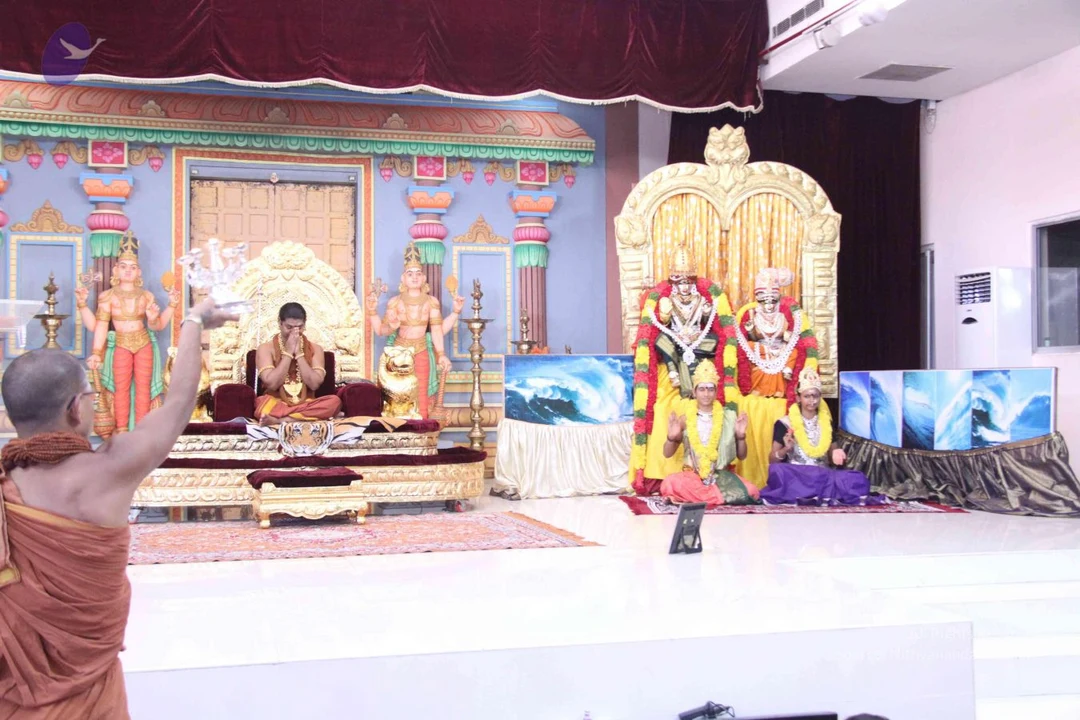
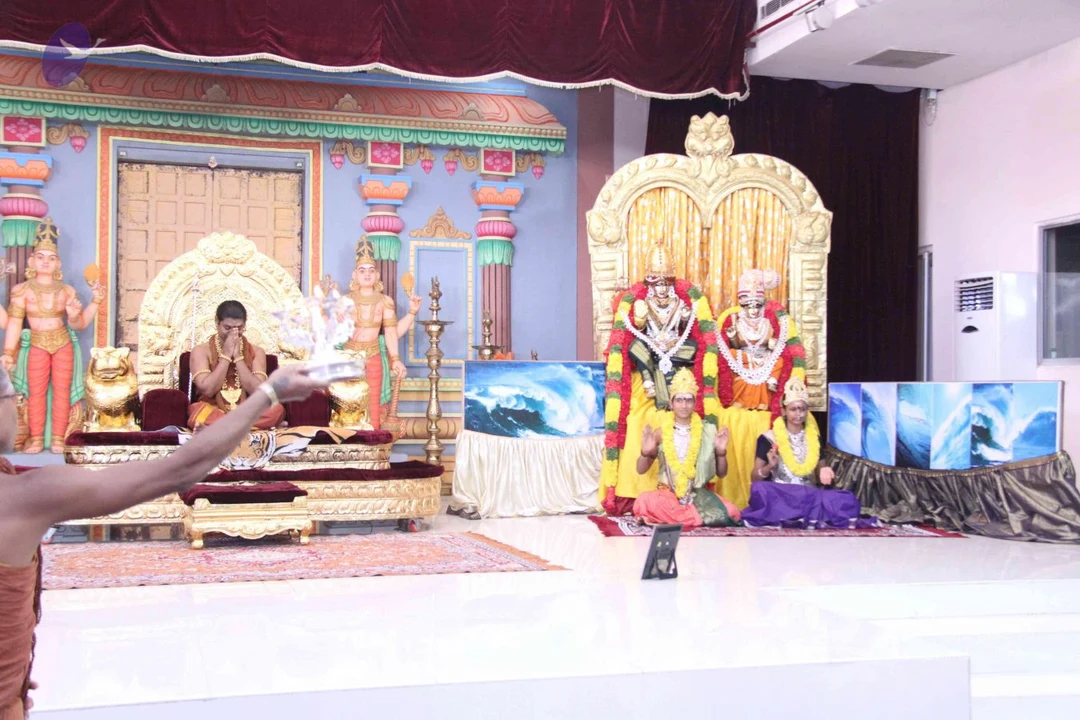
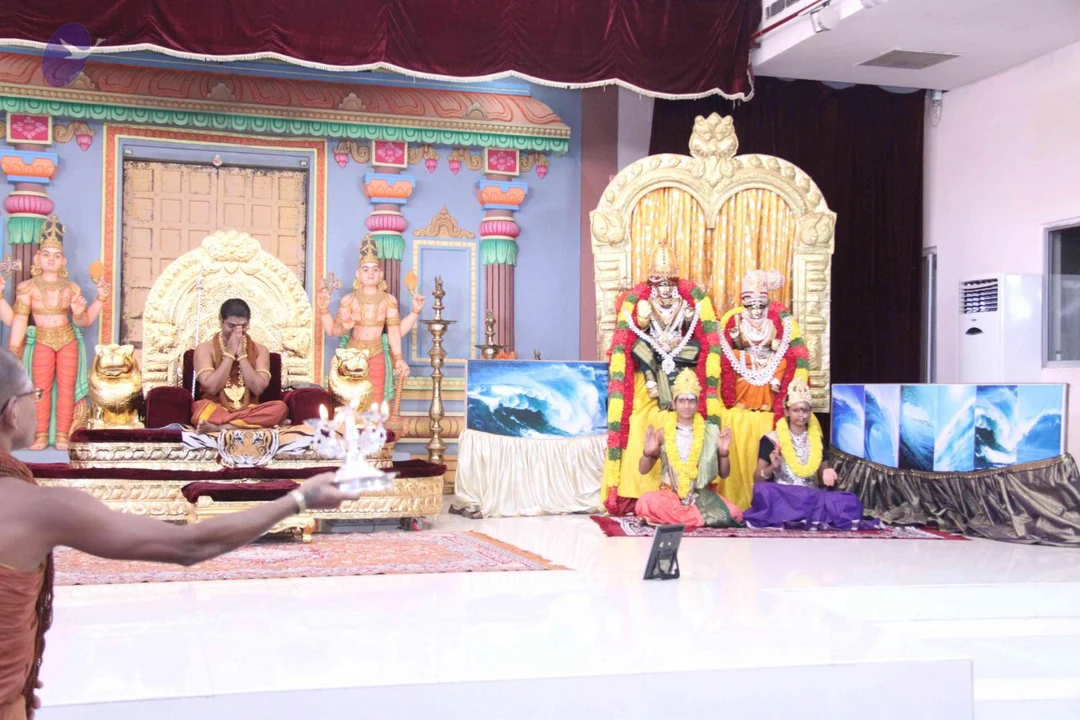
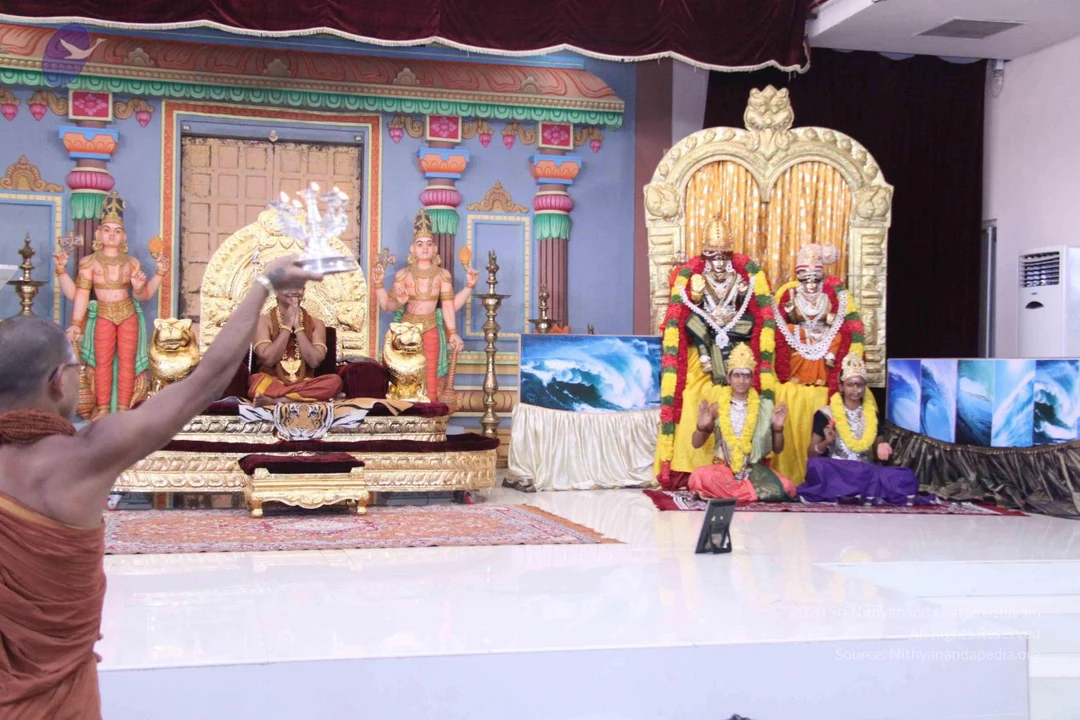
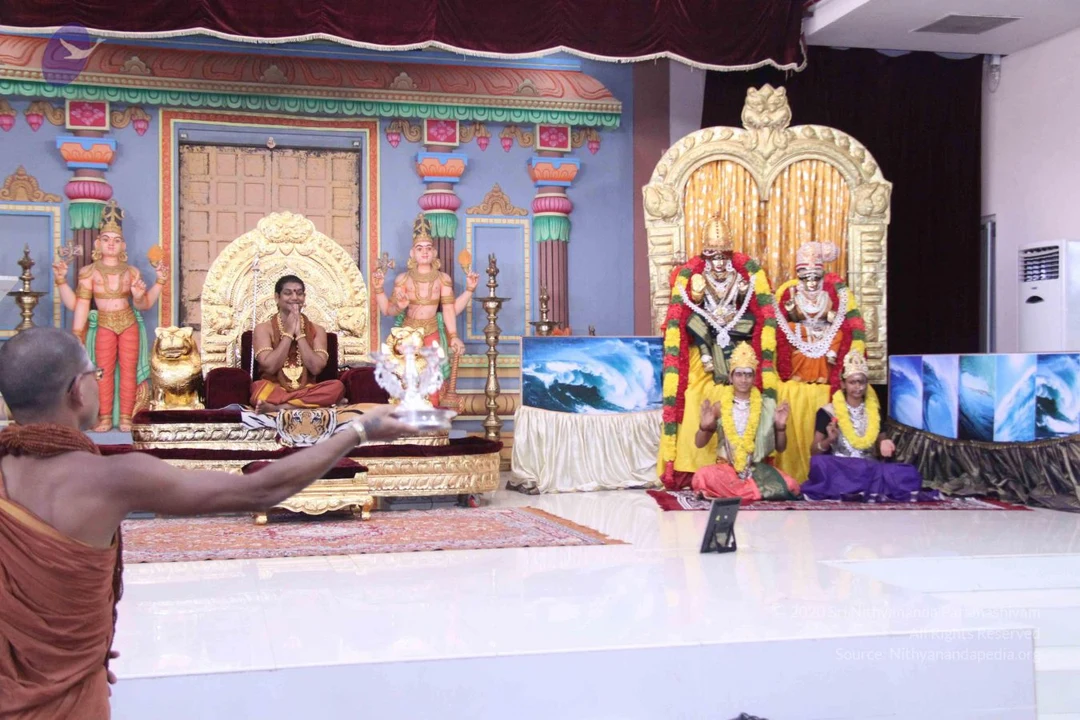
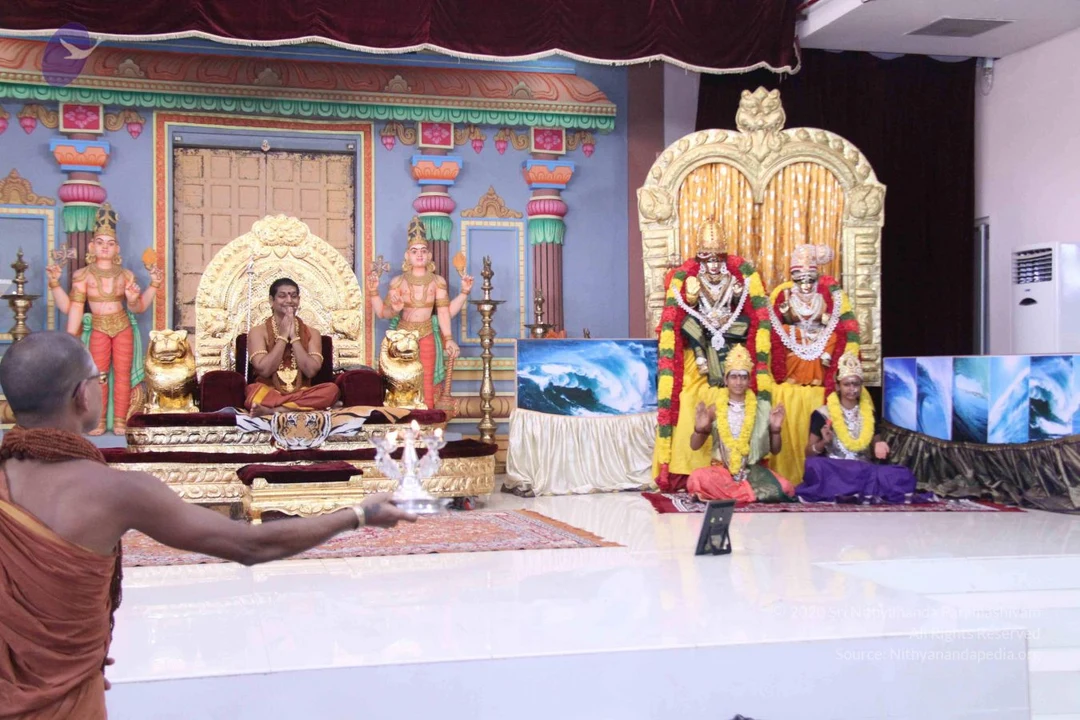
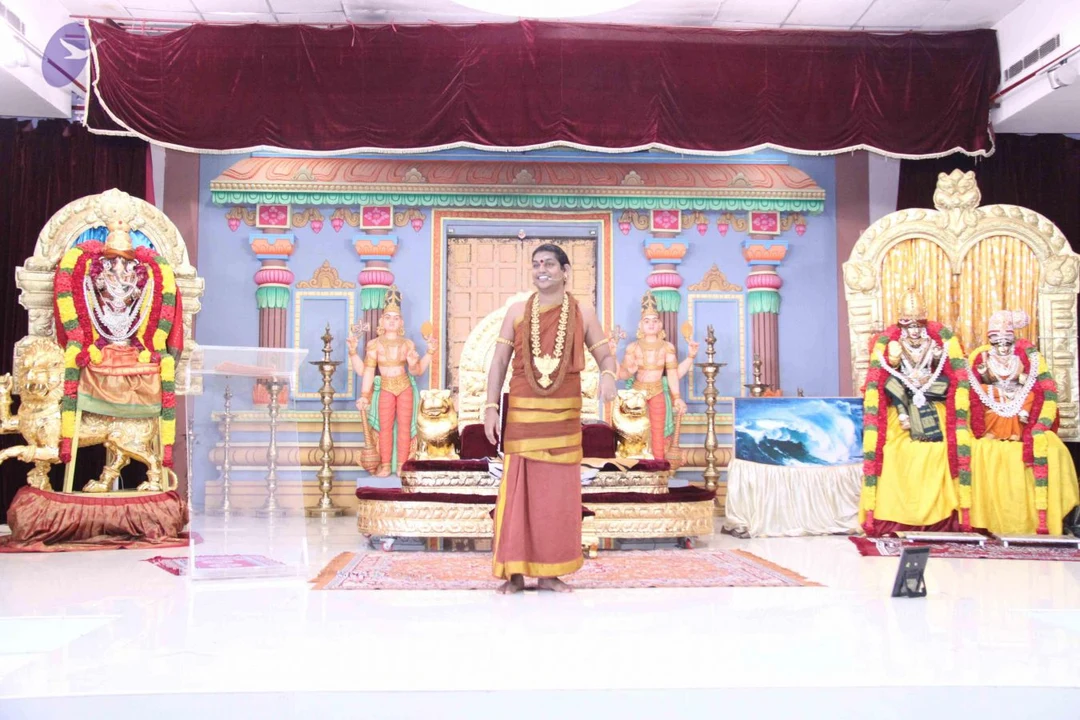
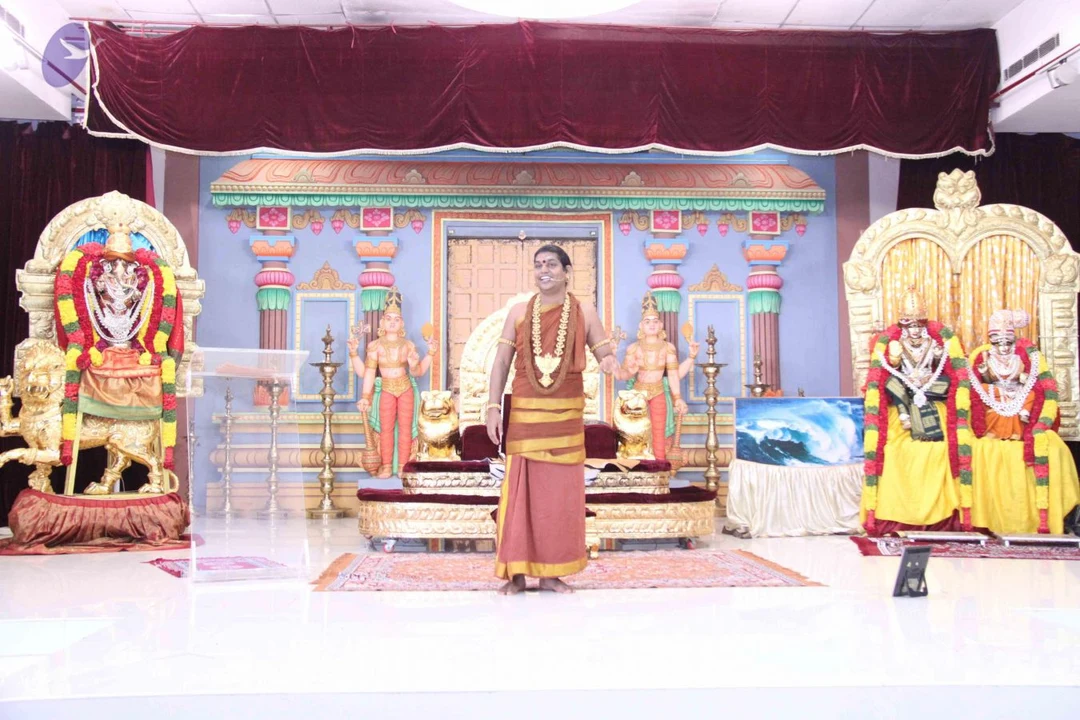
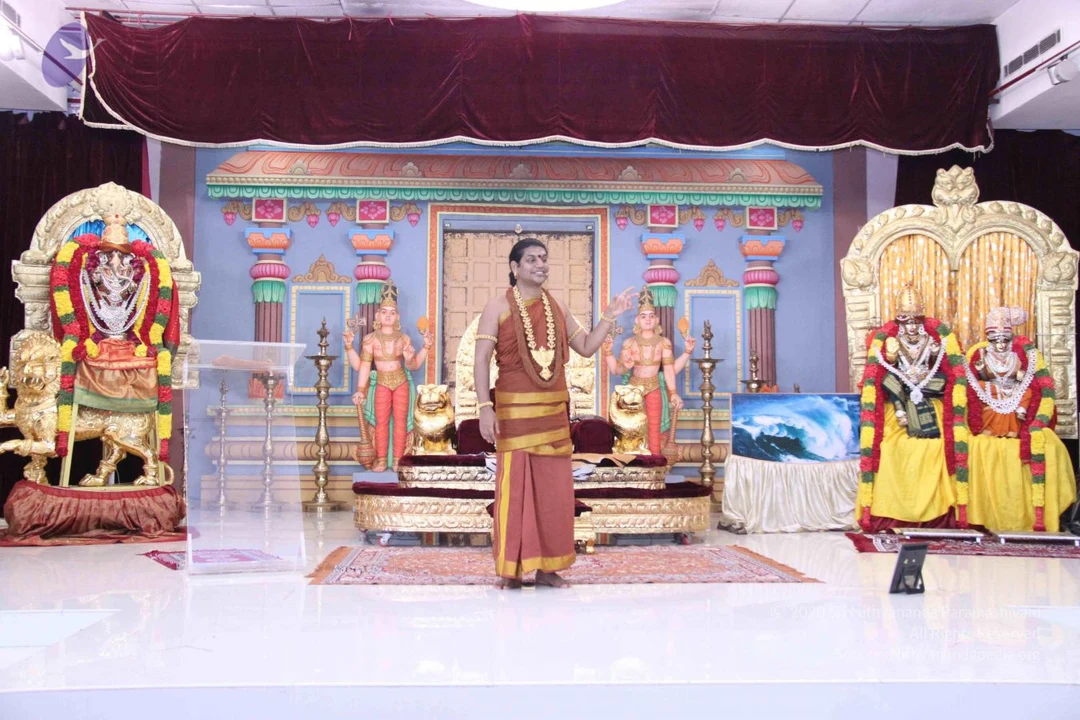
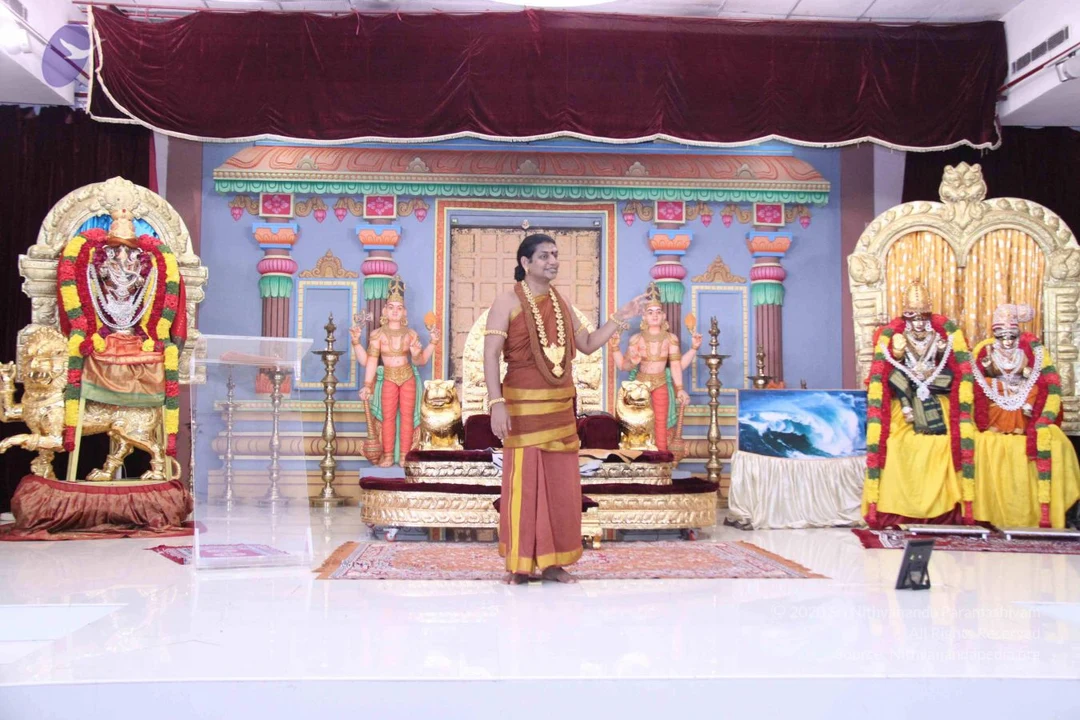
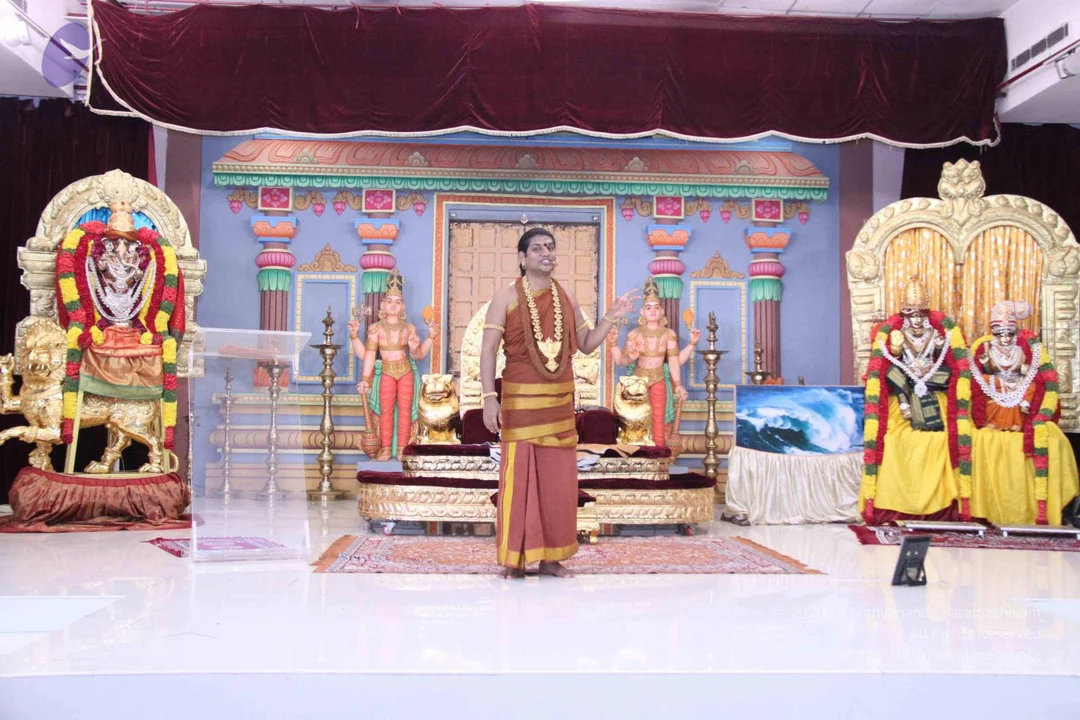
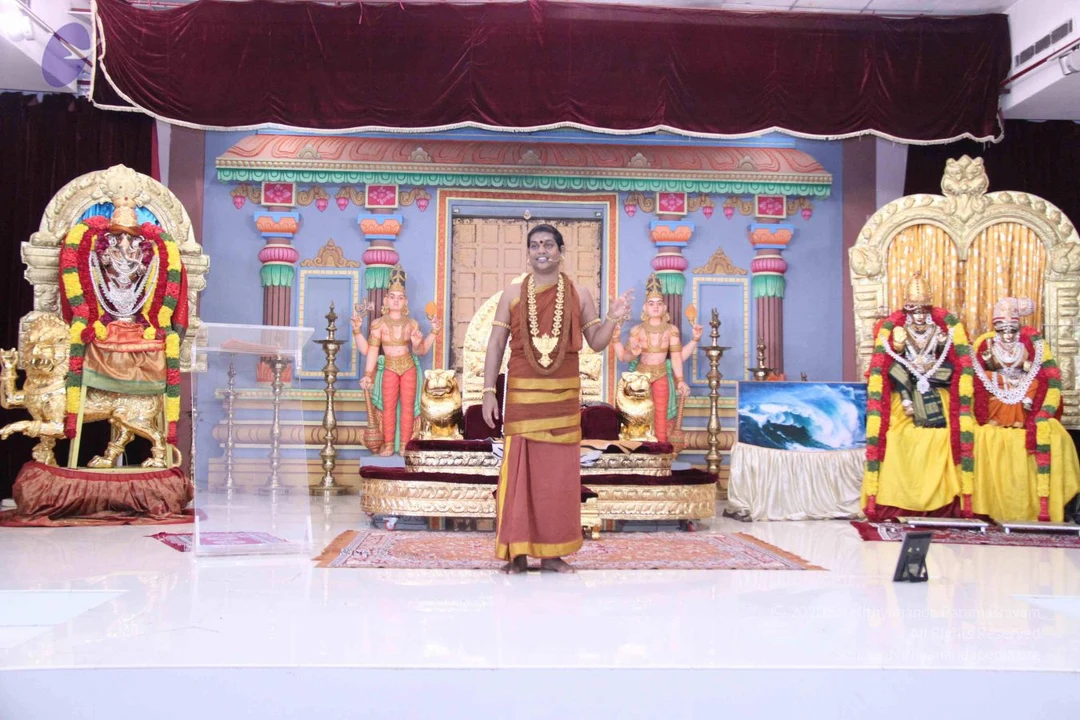
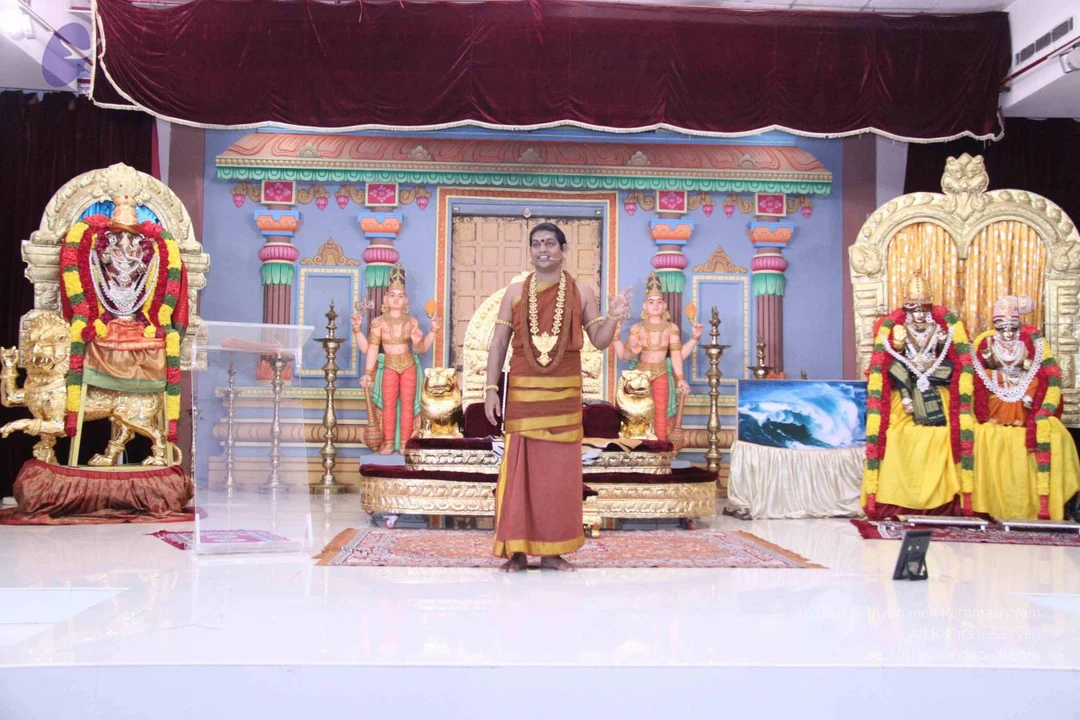
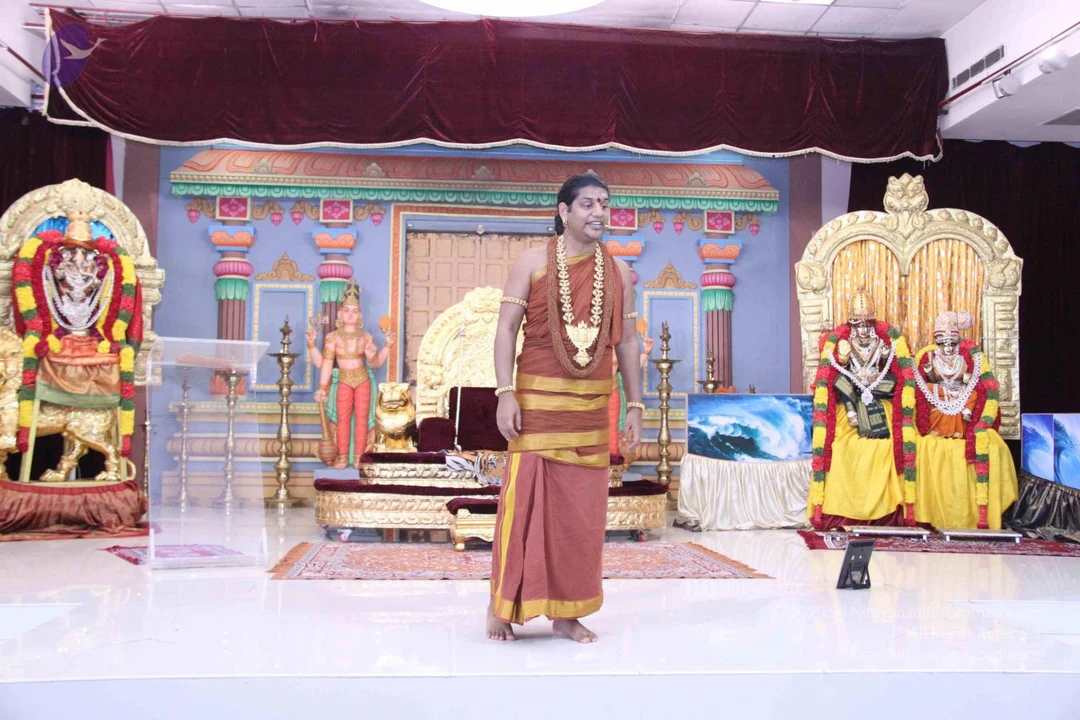
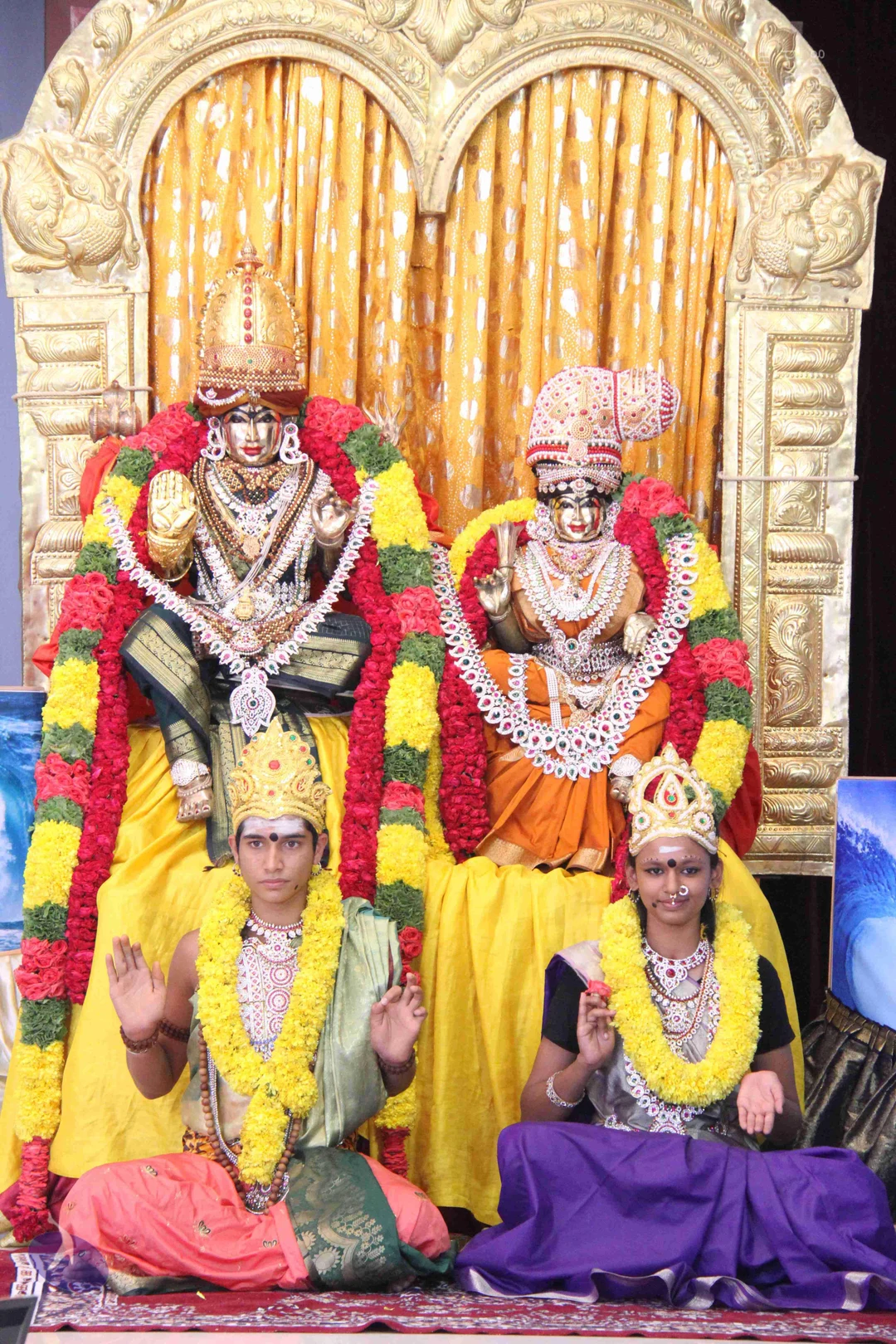
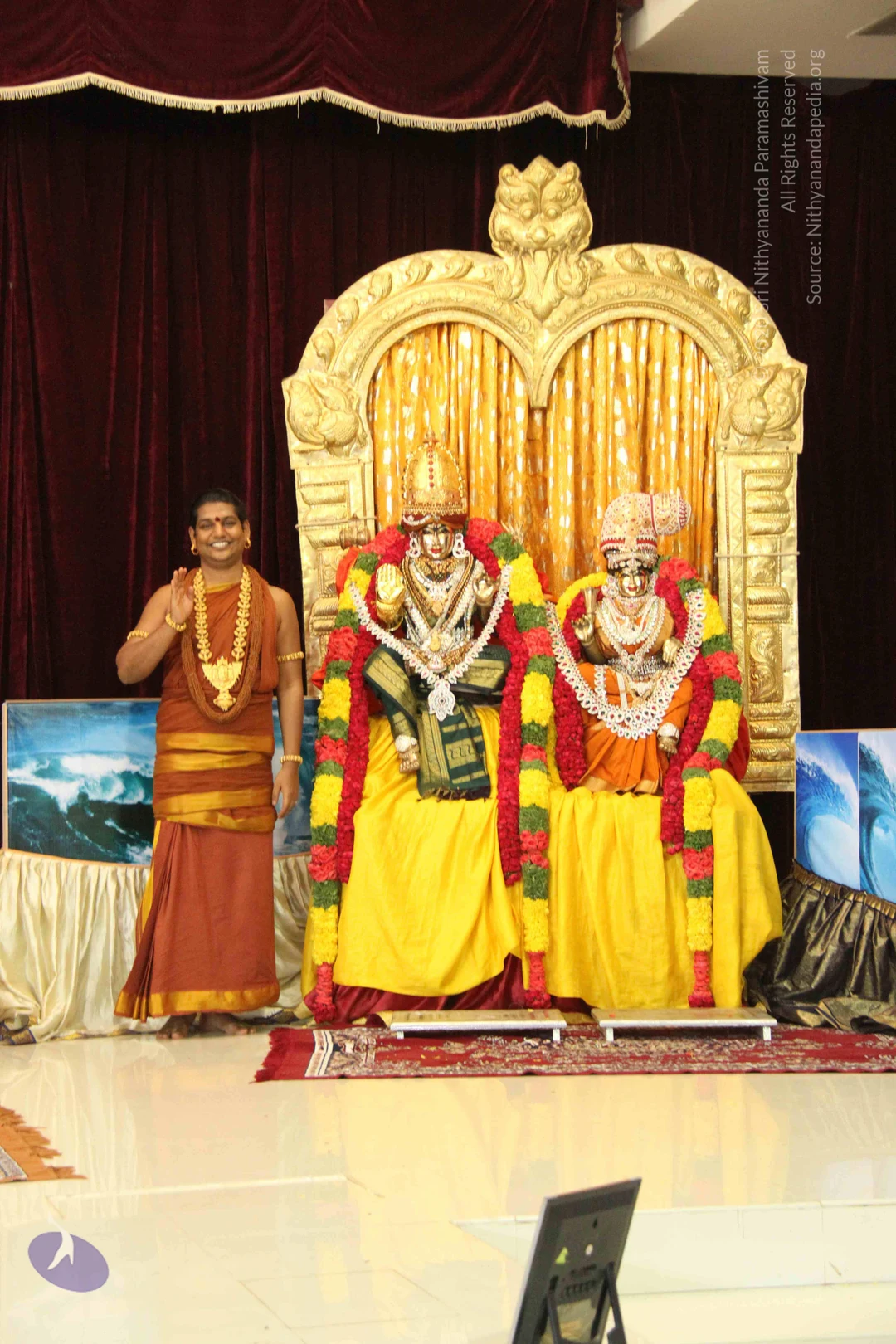
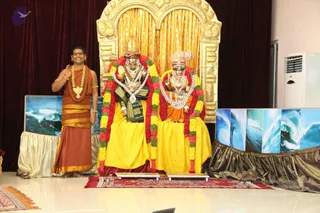
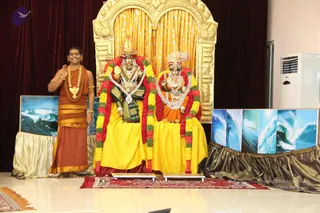
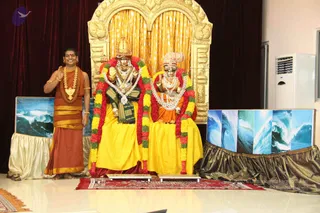
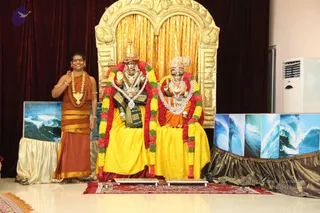
SHIVA'S DIVINE PLAY SUMMONING THE SEVEN OCEANS

Video

VideoAudio

Transcription

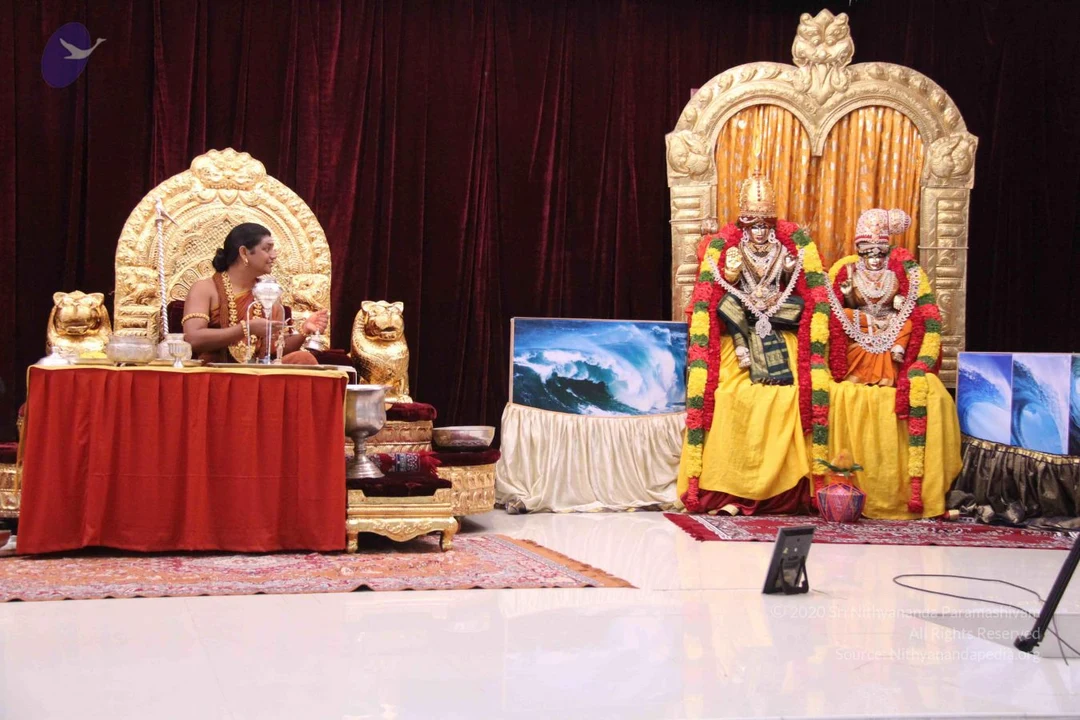
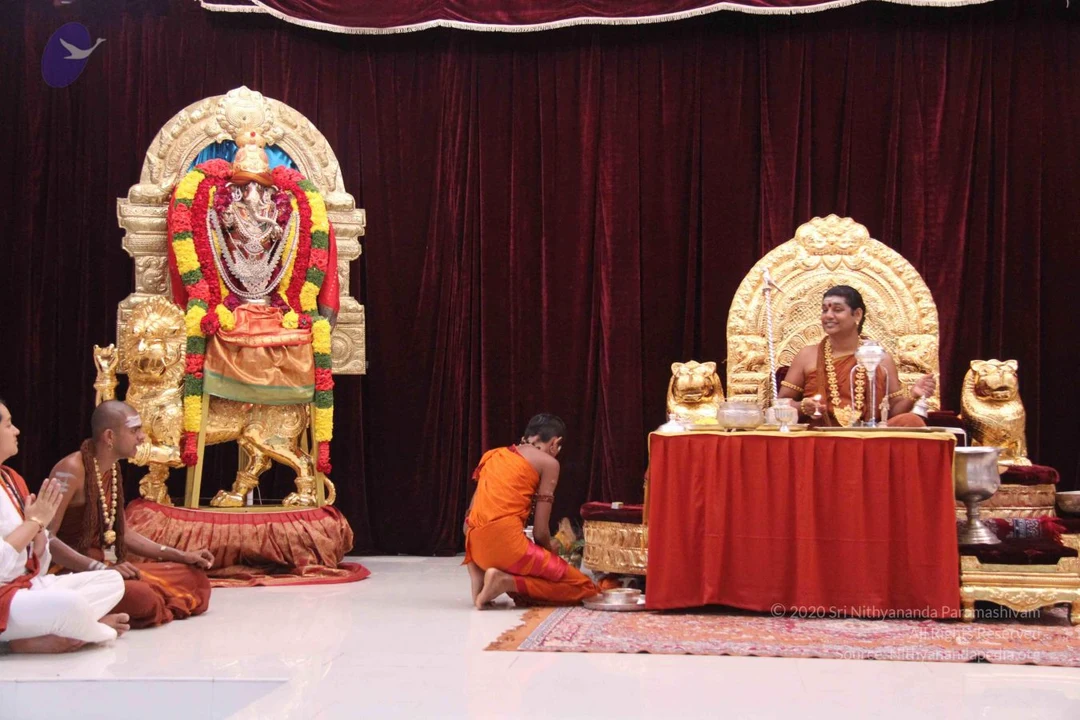
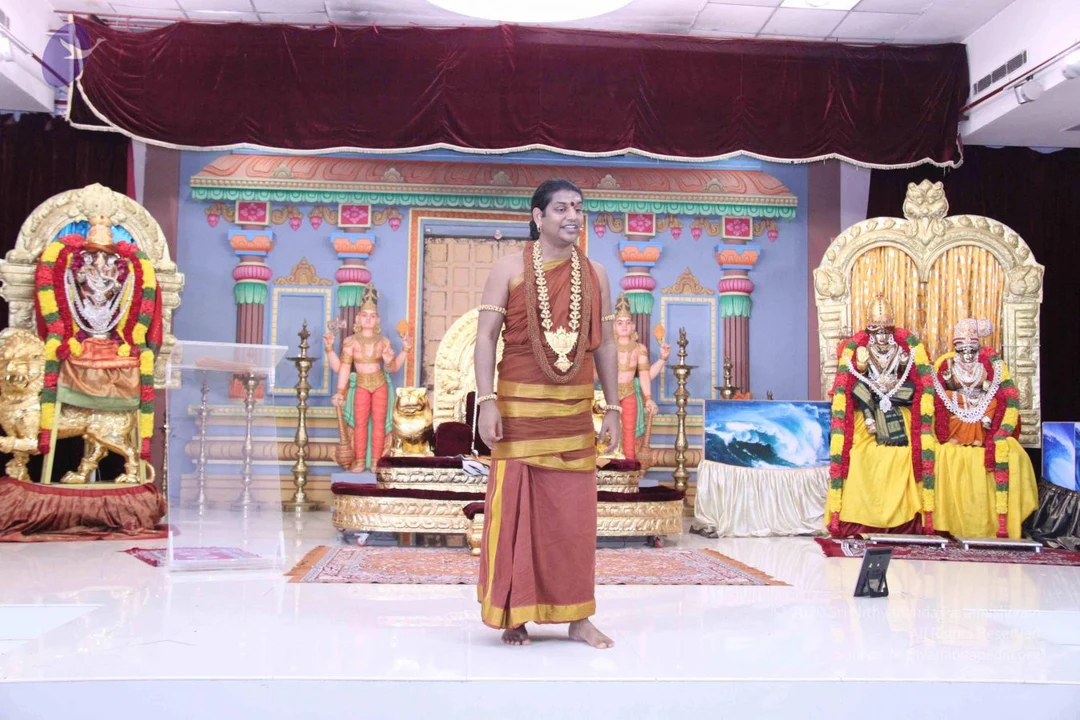
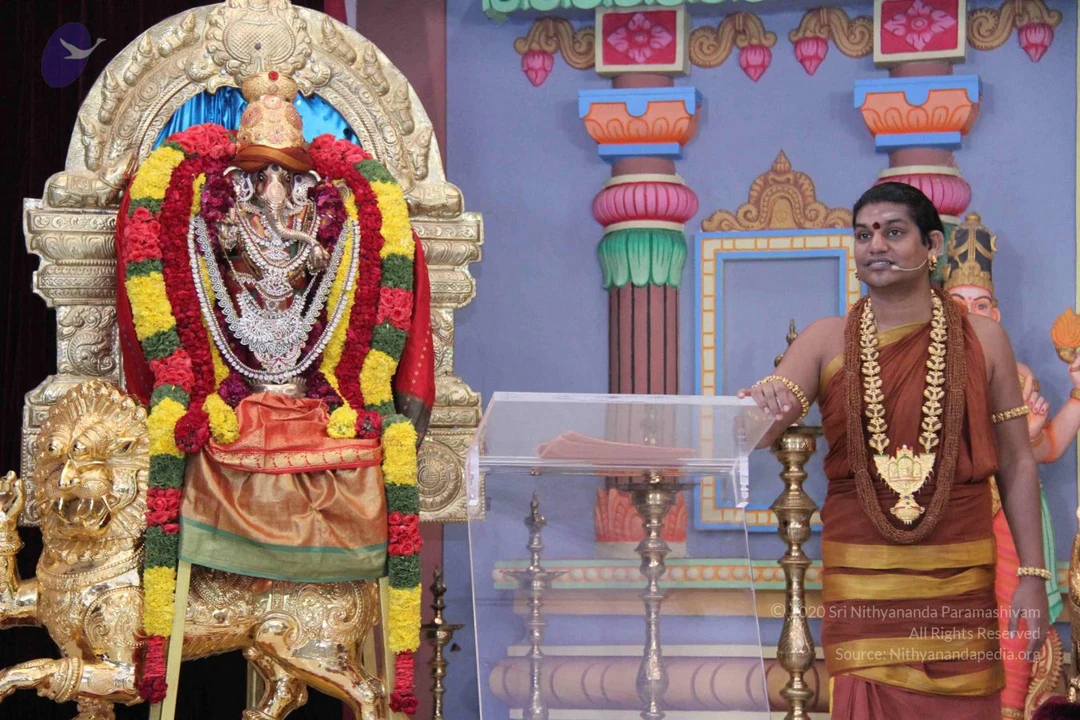
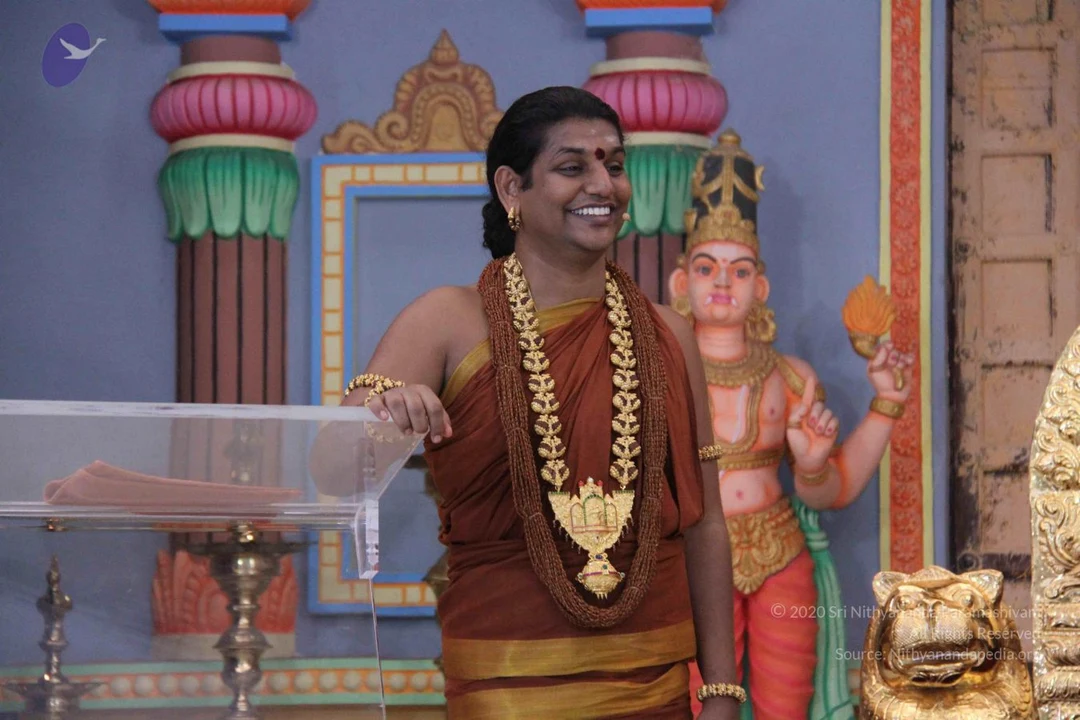
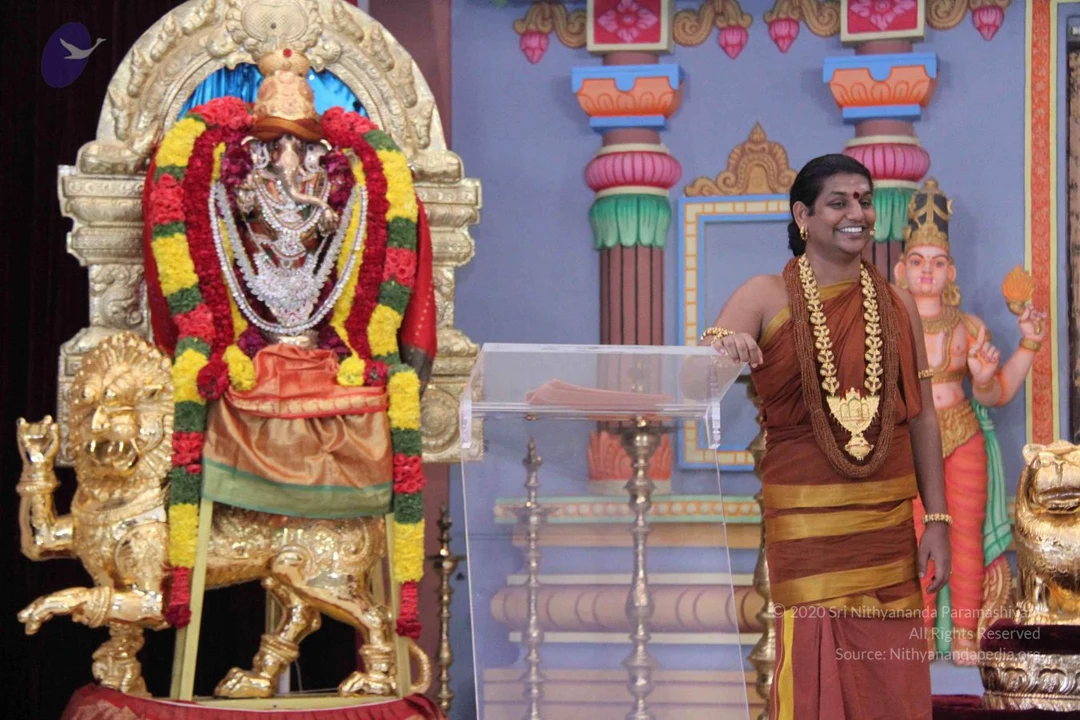
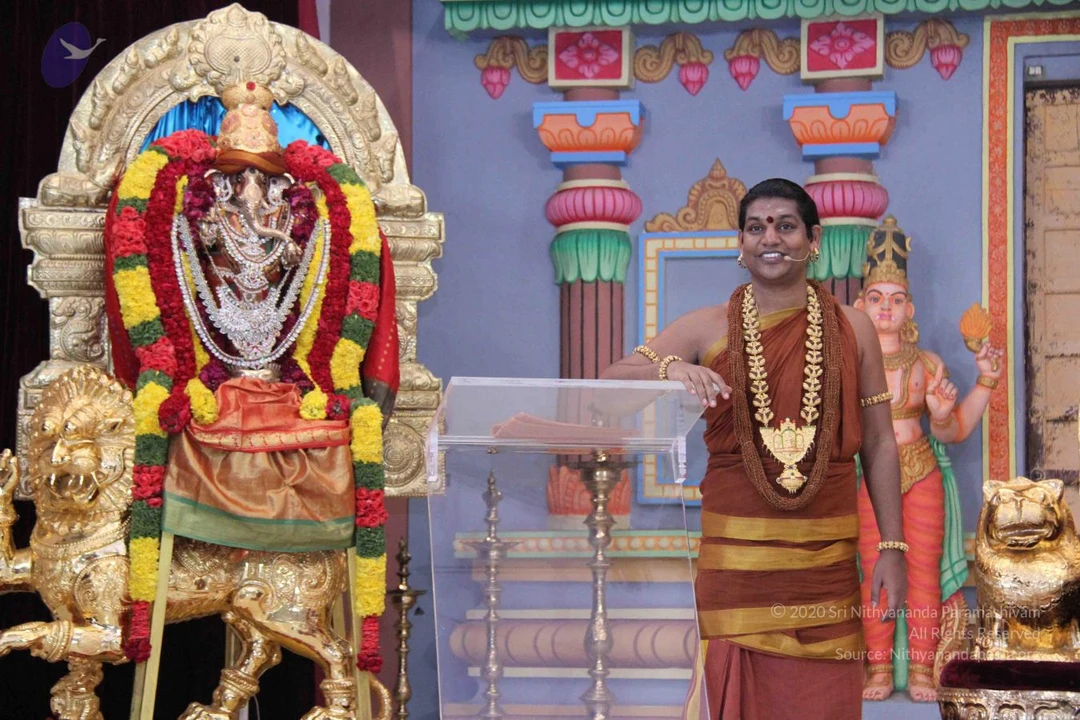
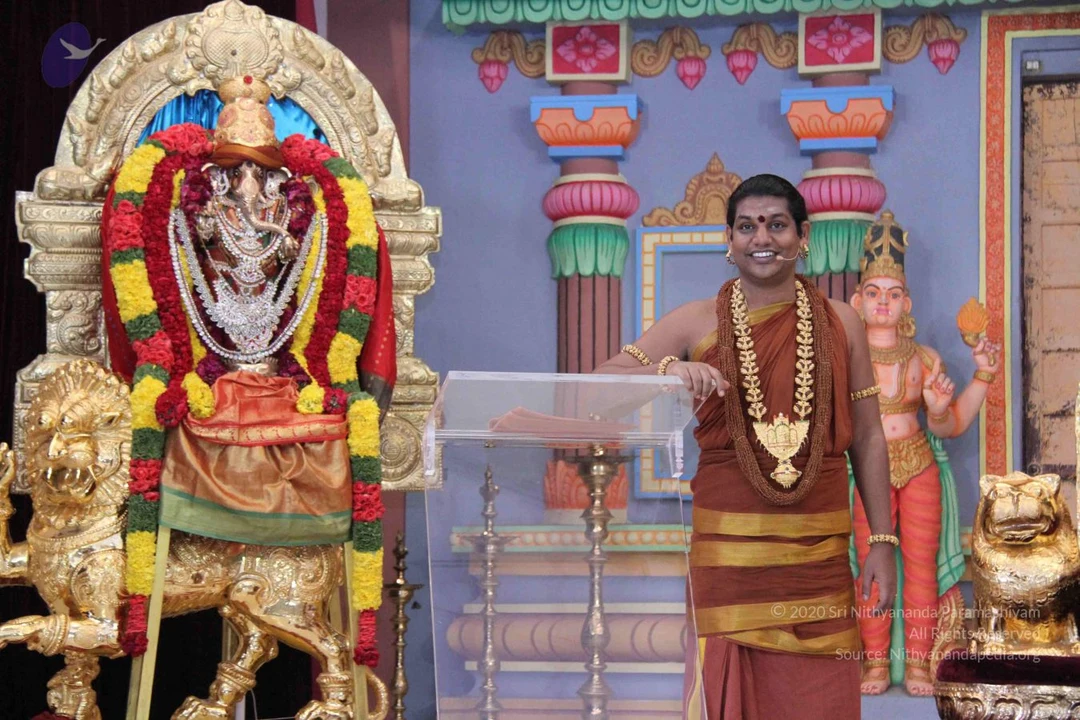
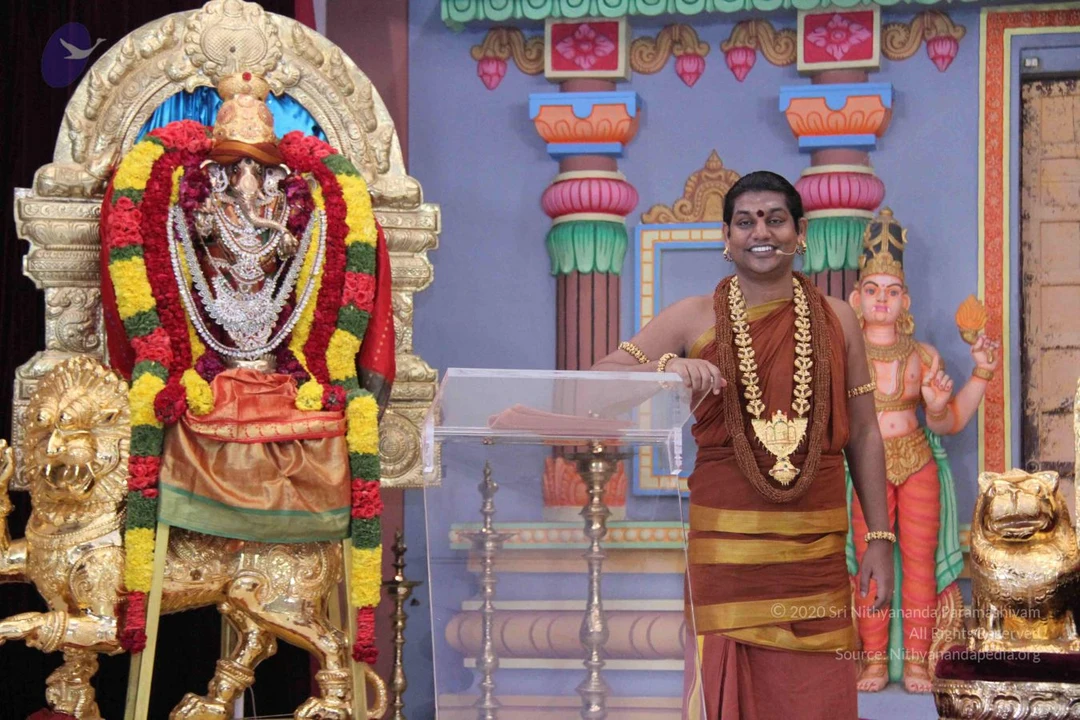
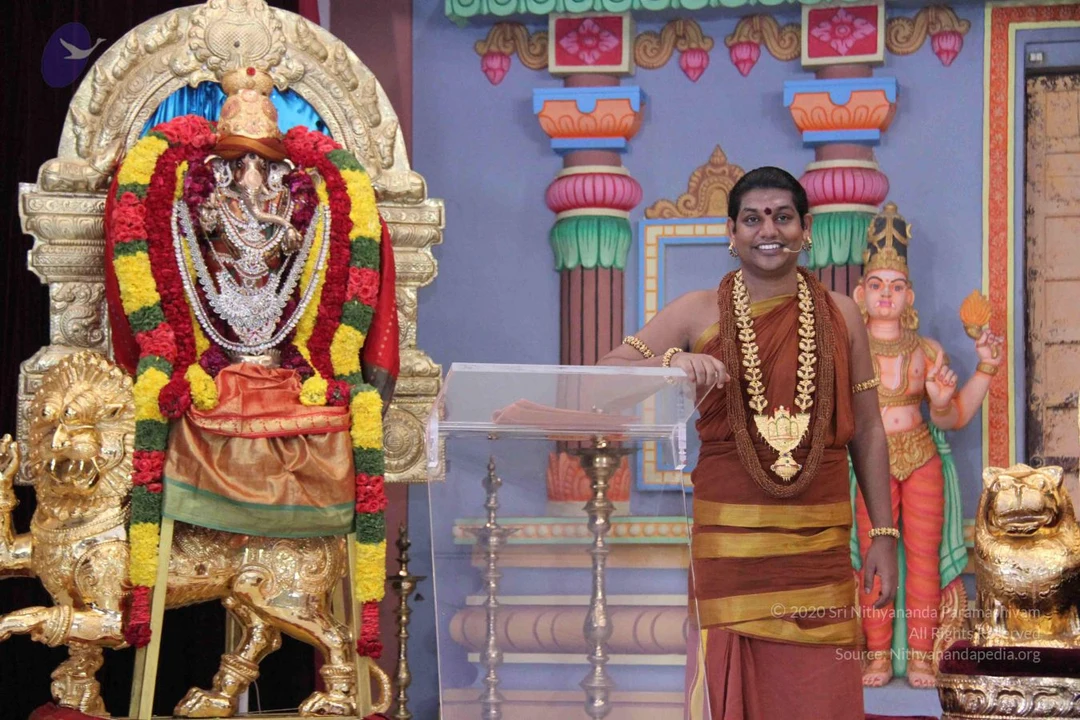
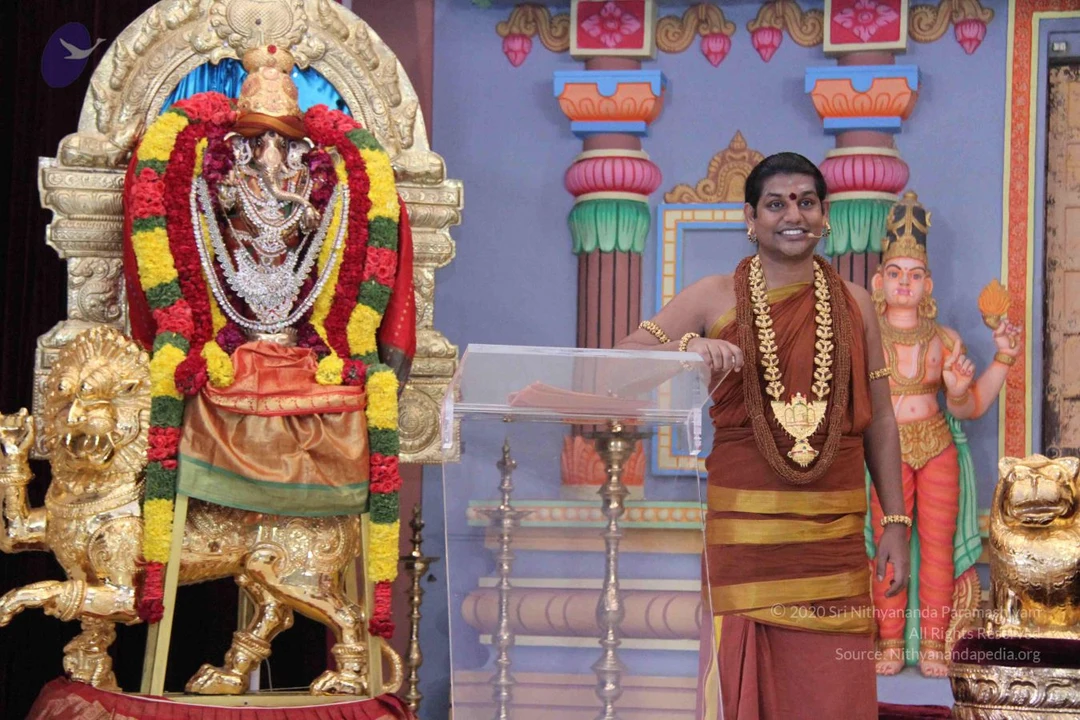
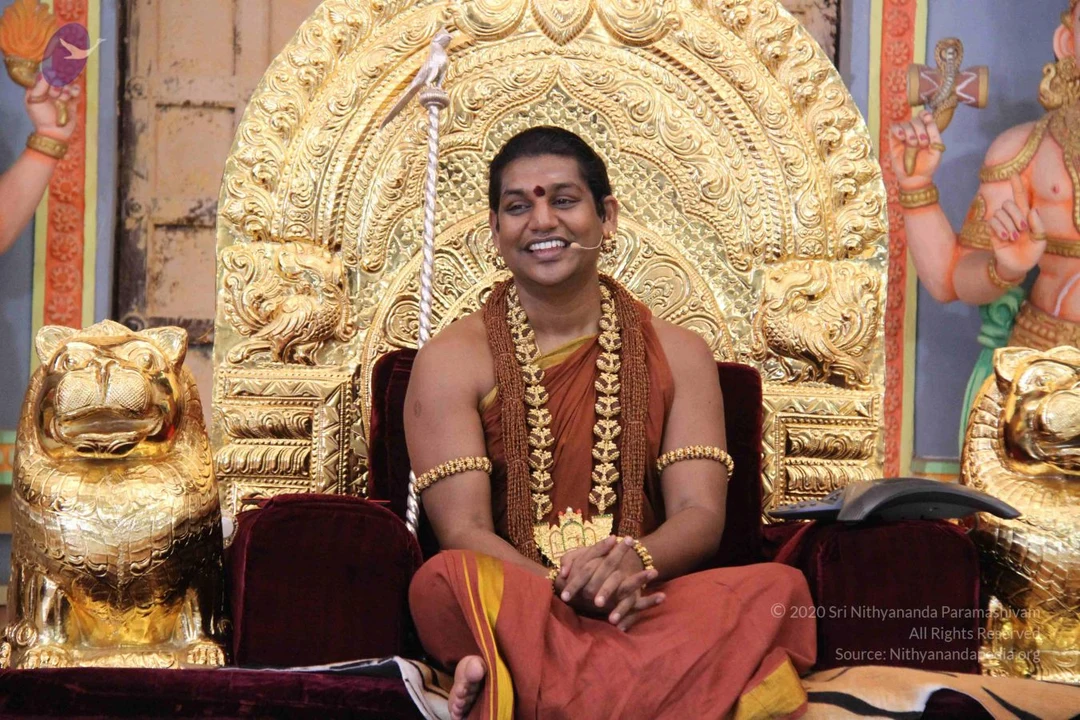
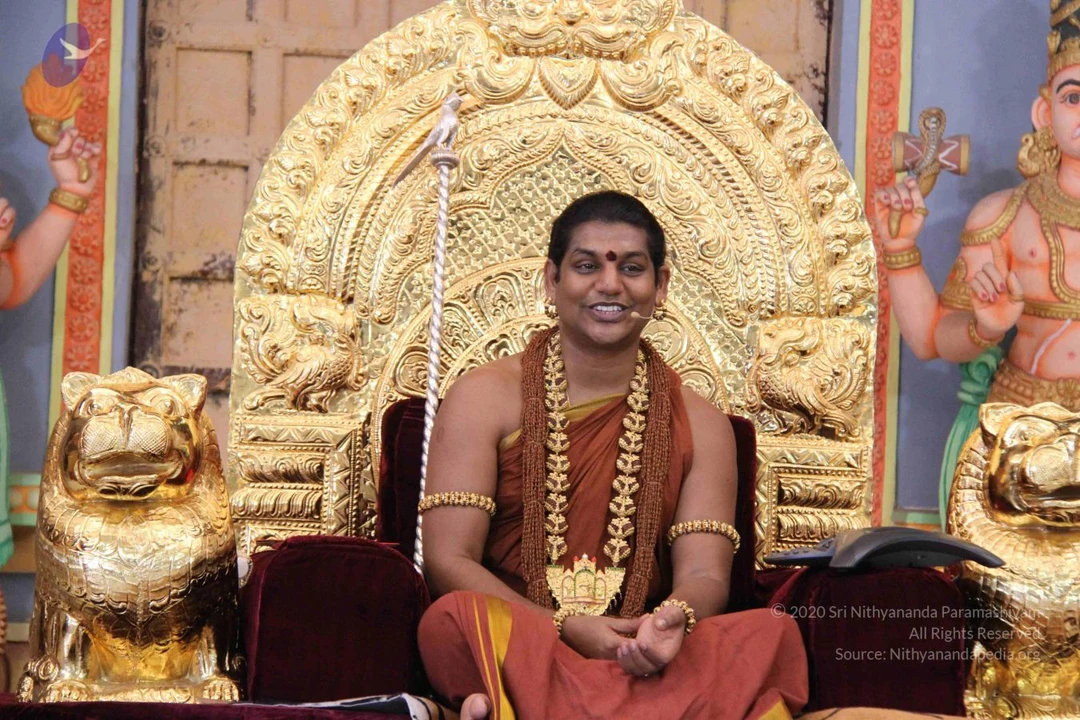
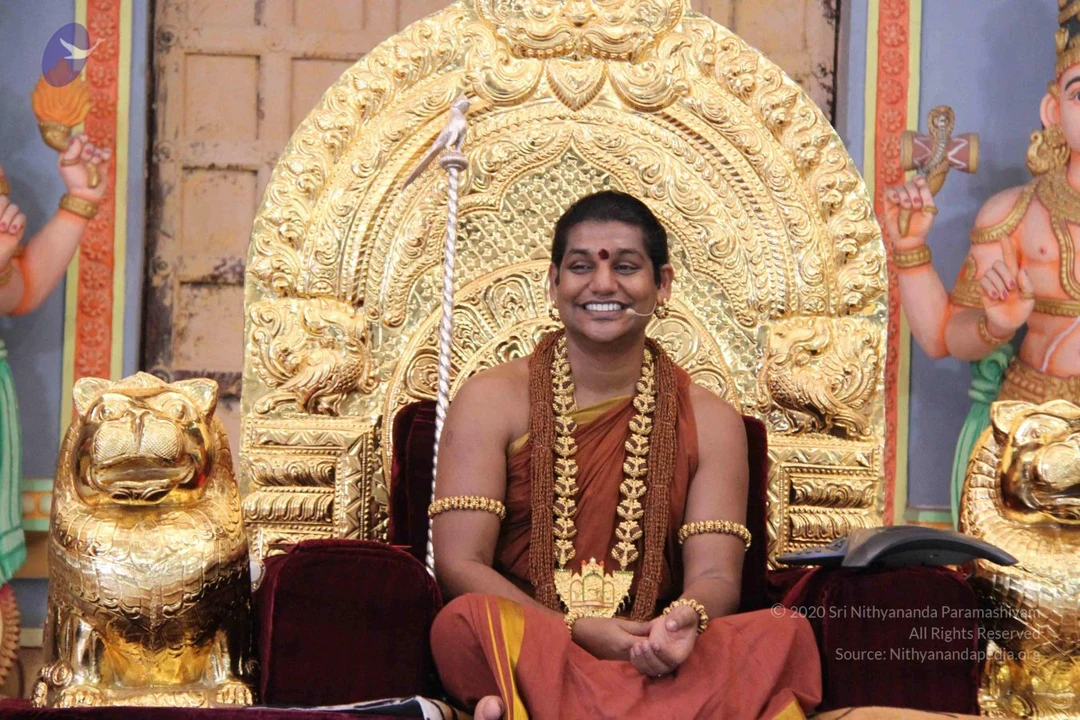
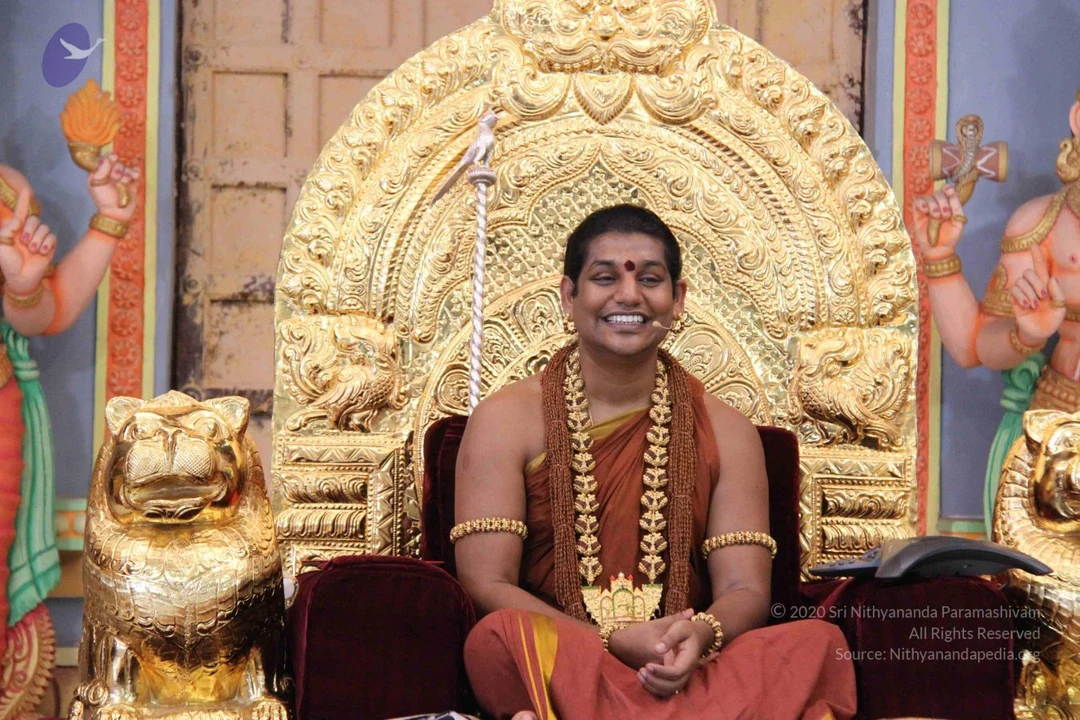
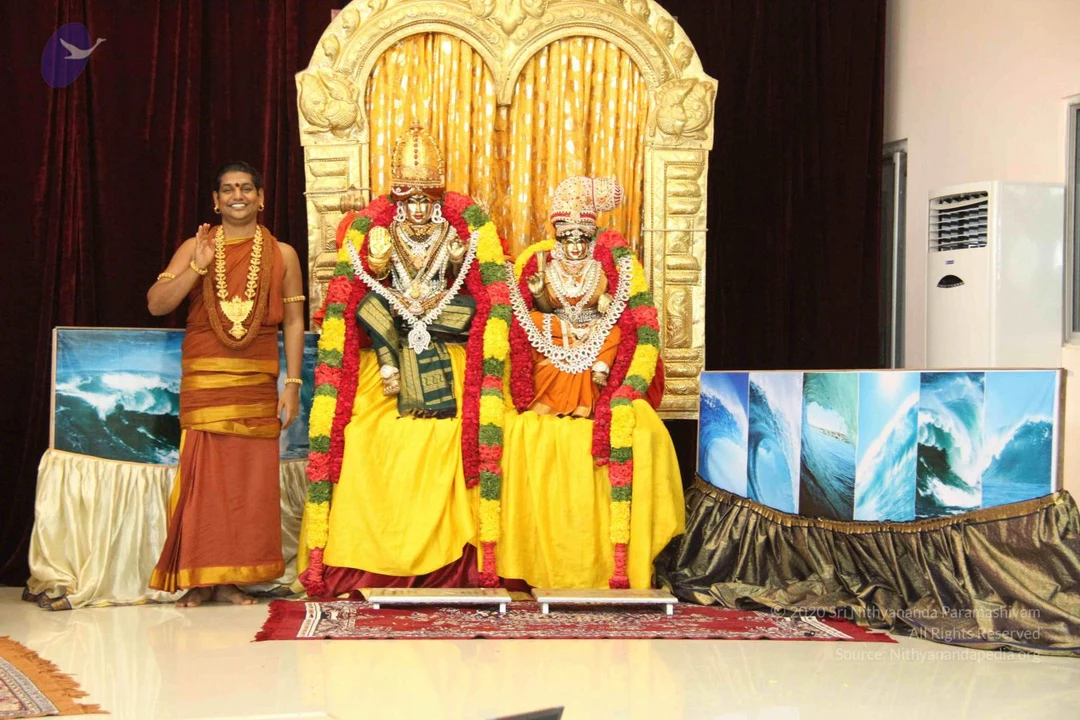
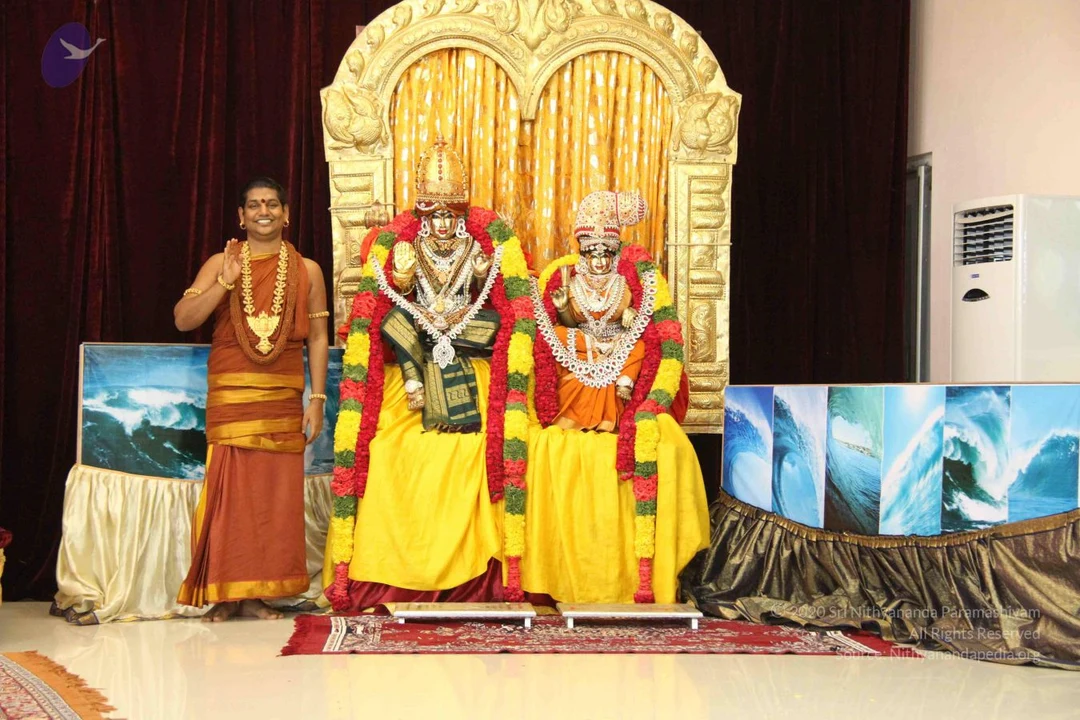
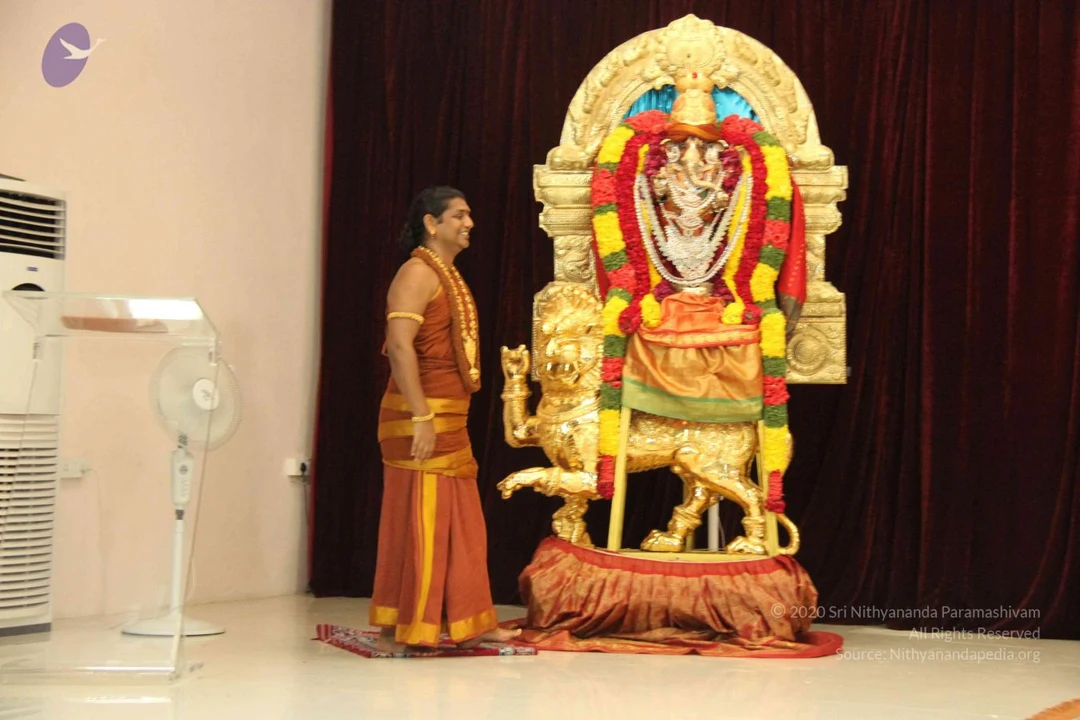
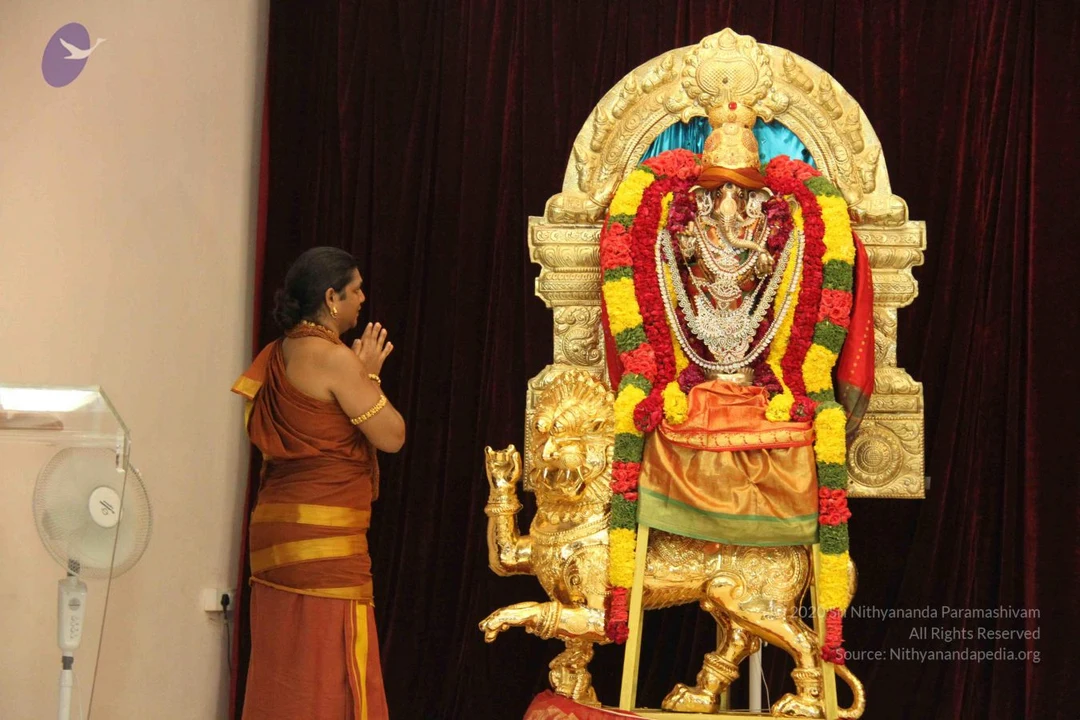
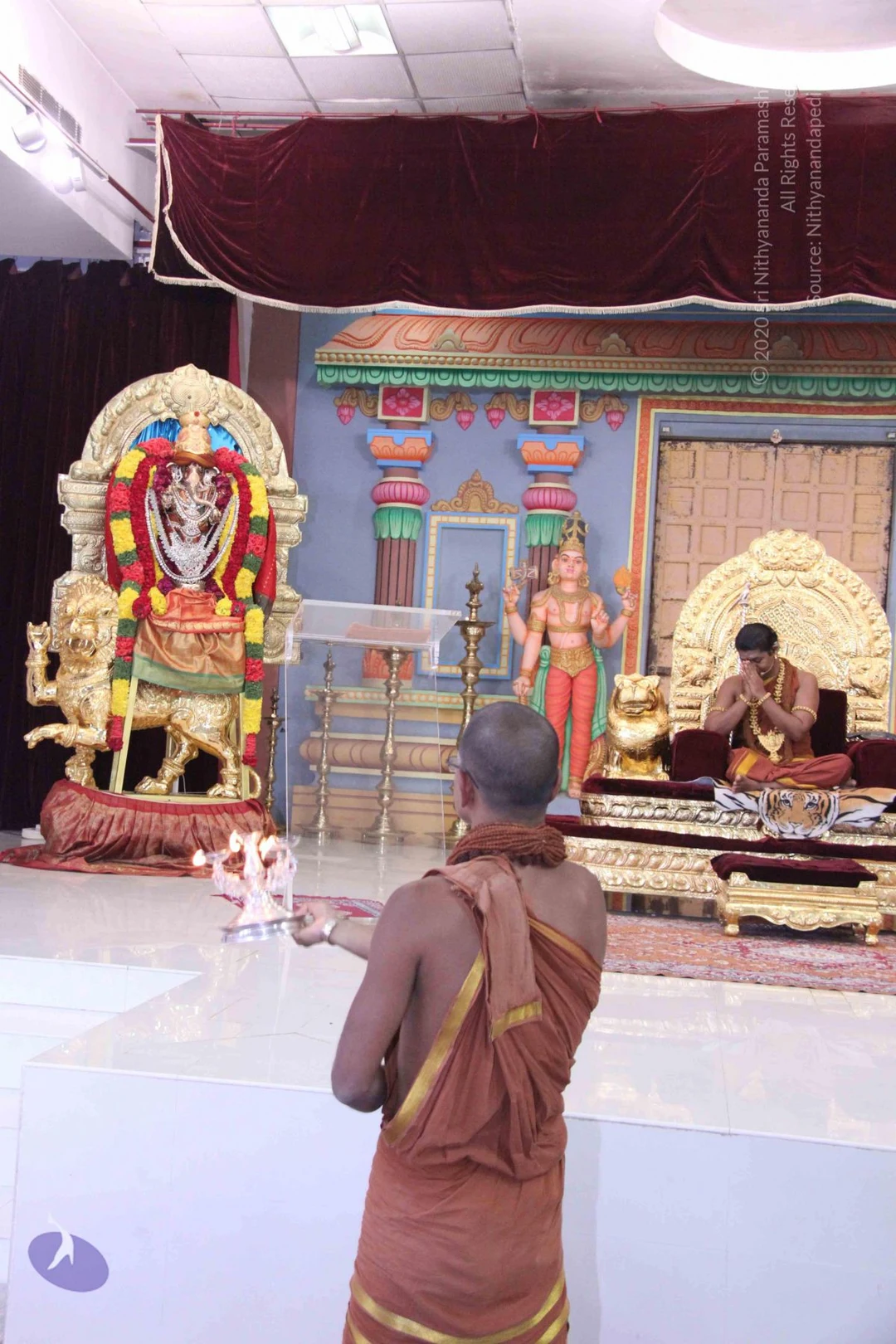
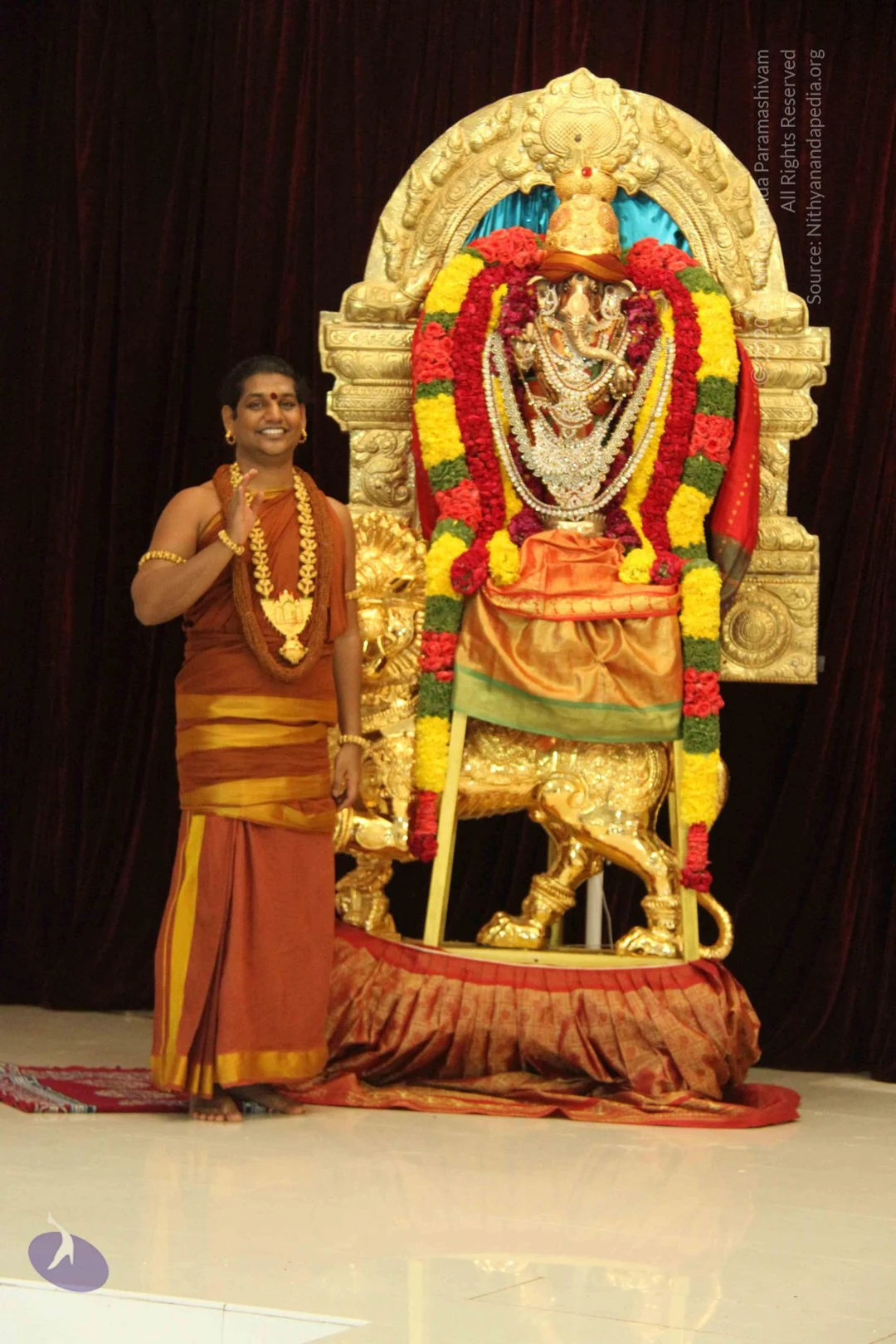
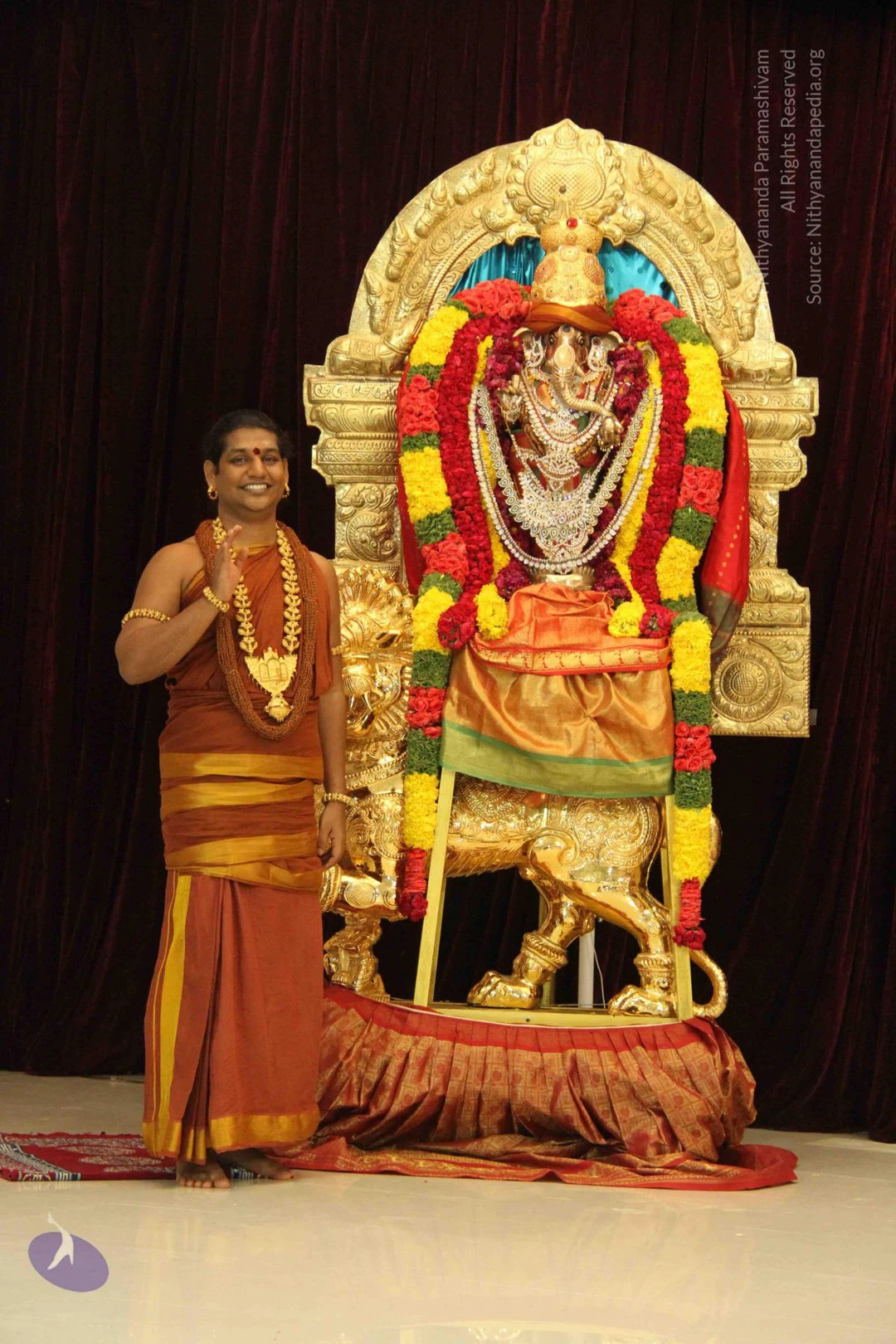
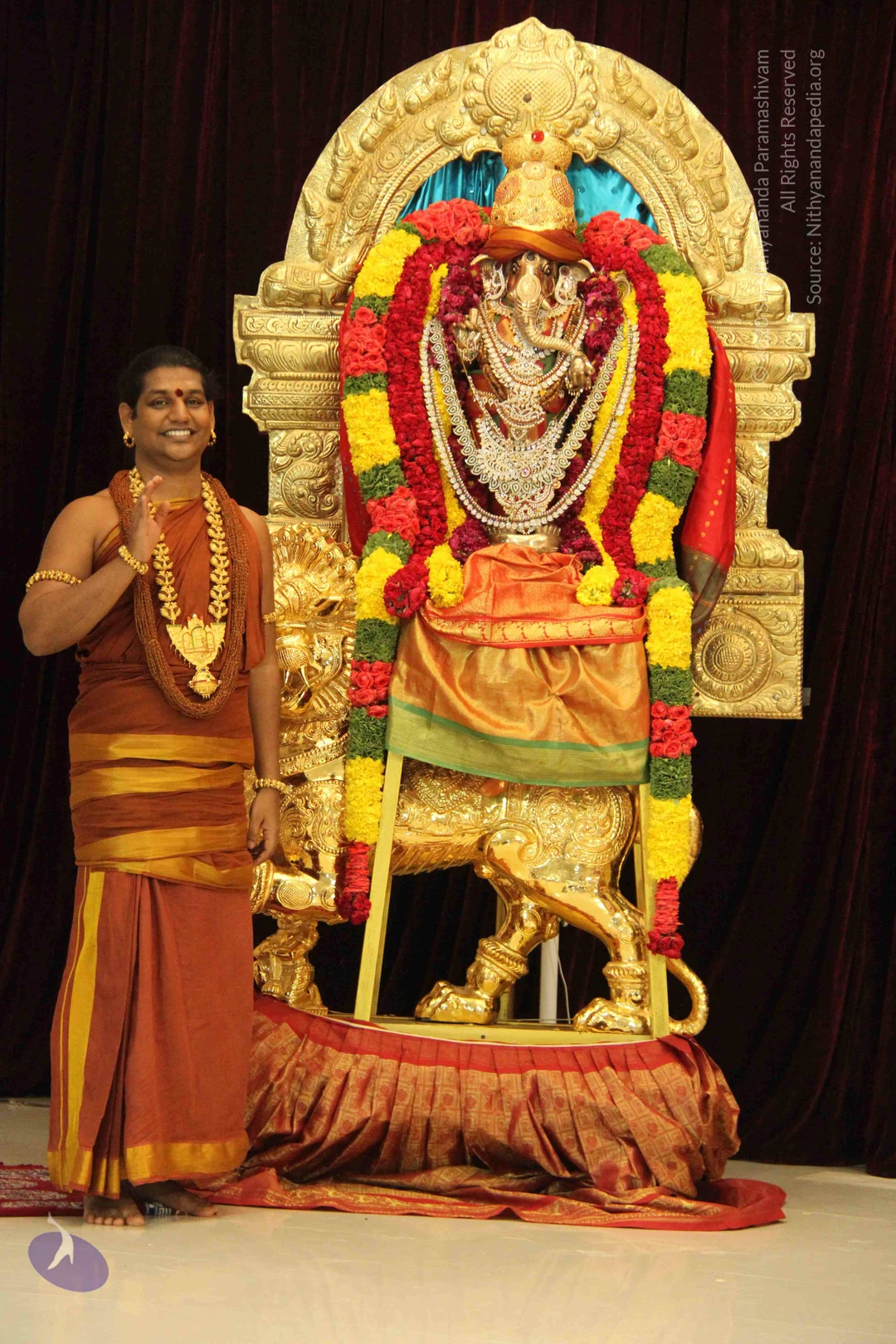
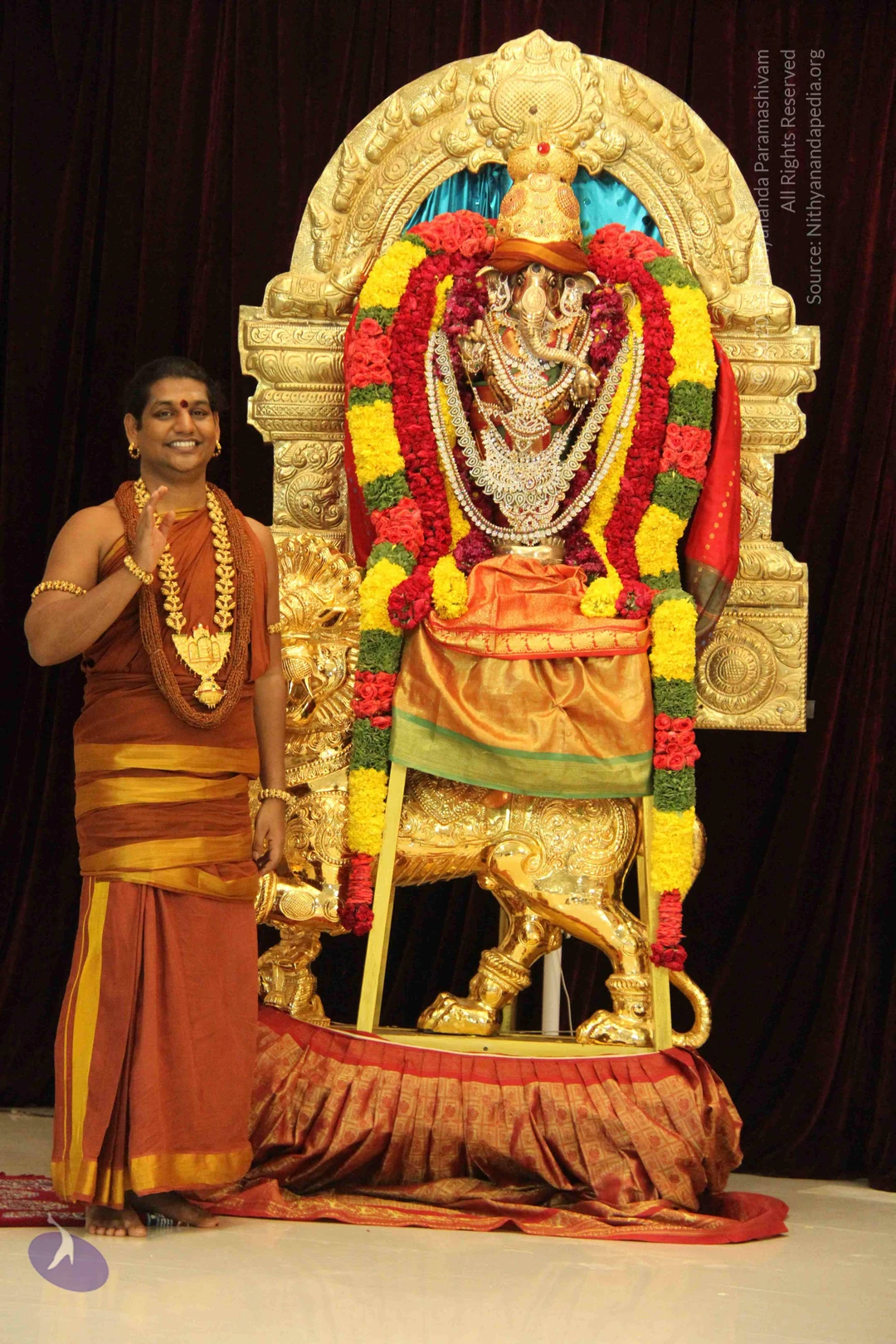
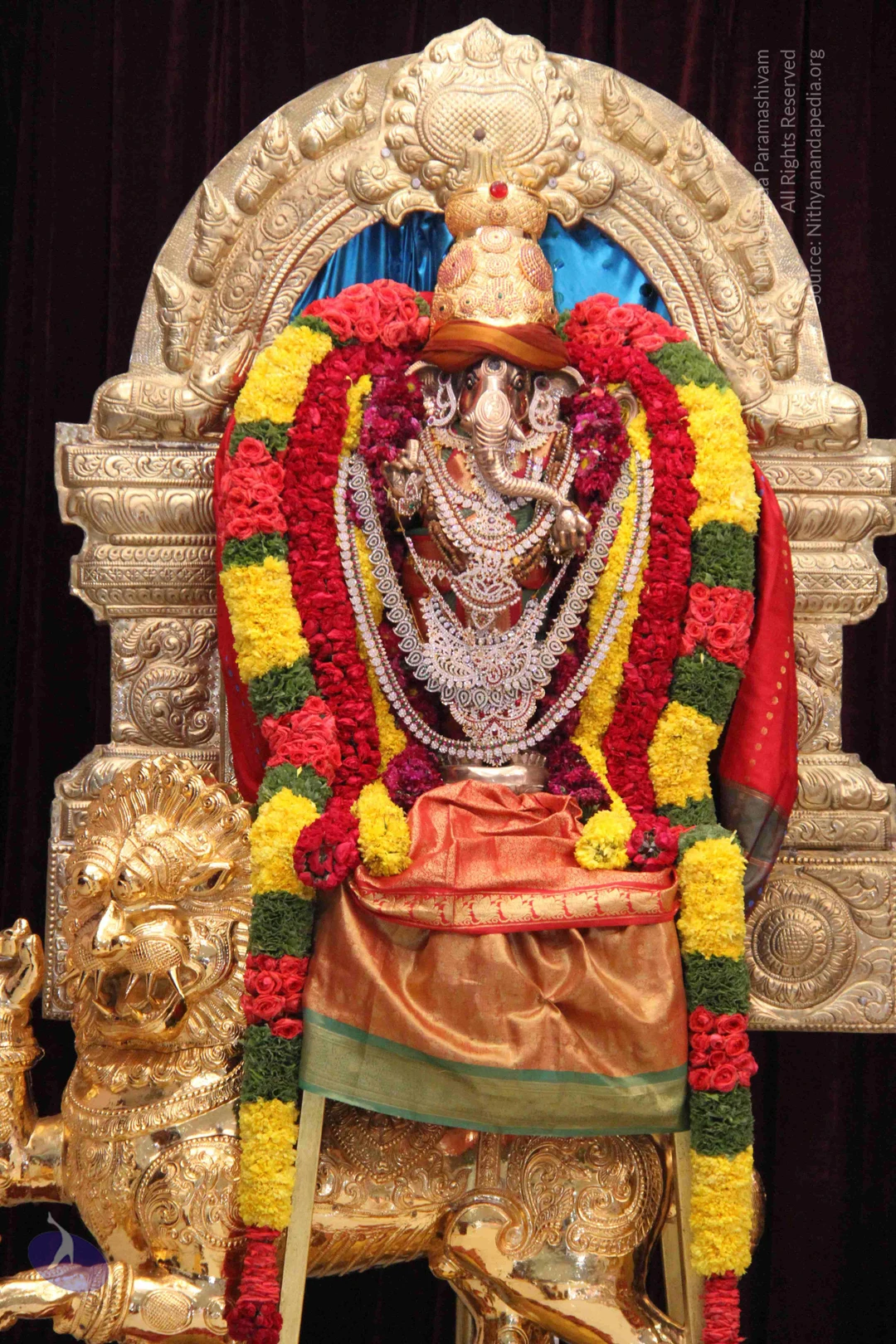
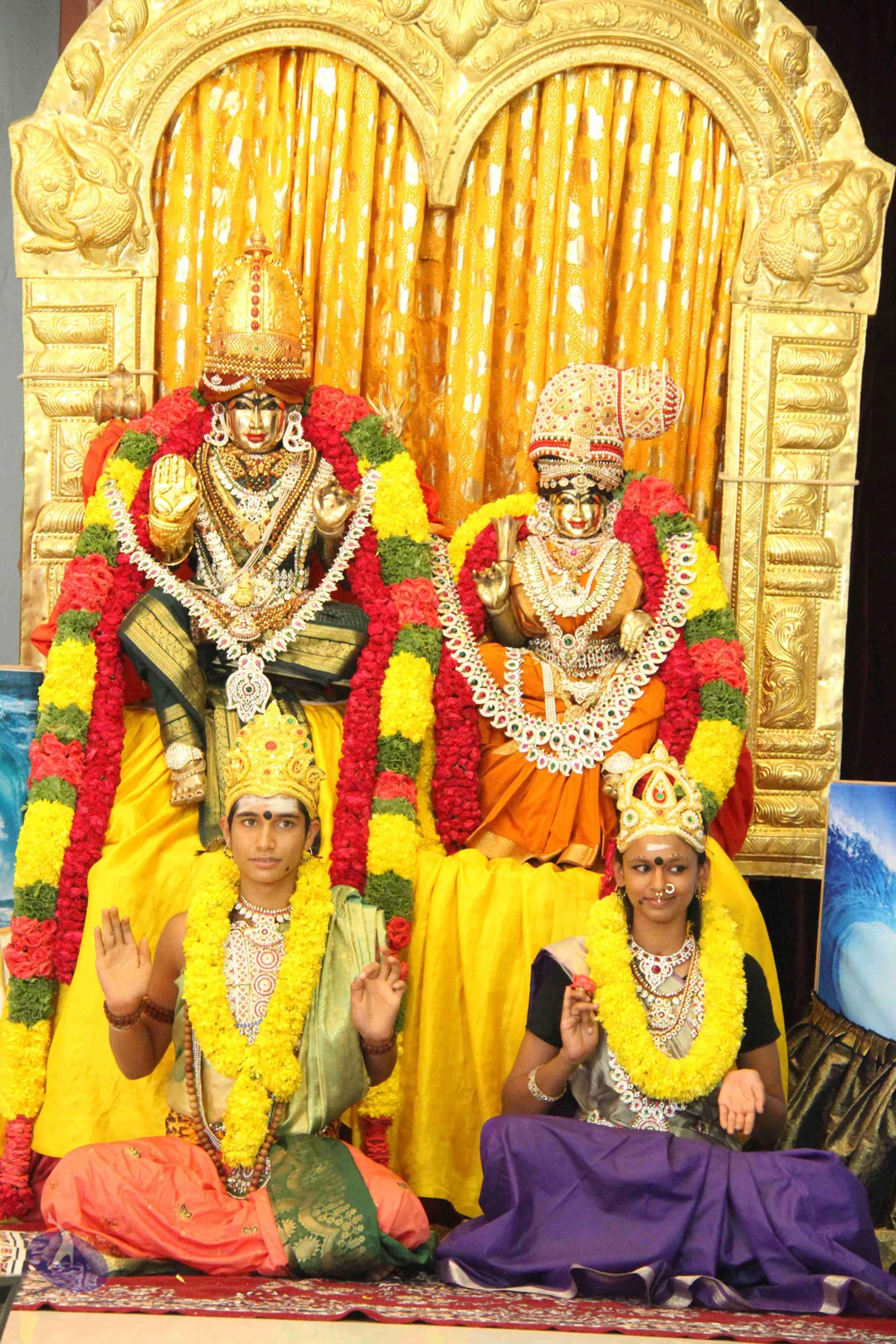
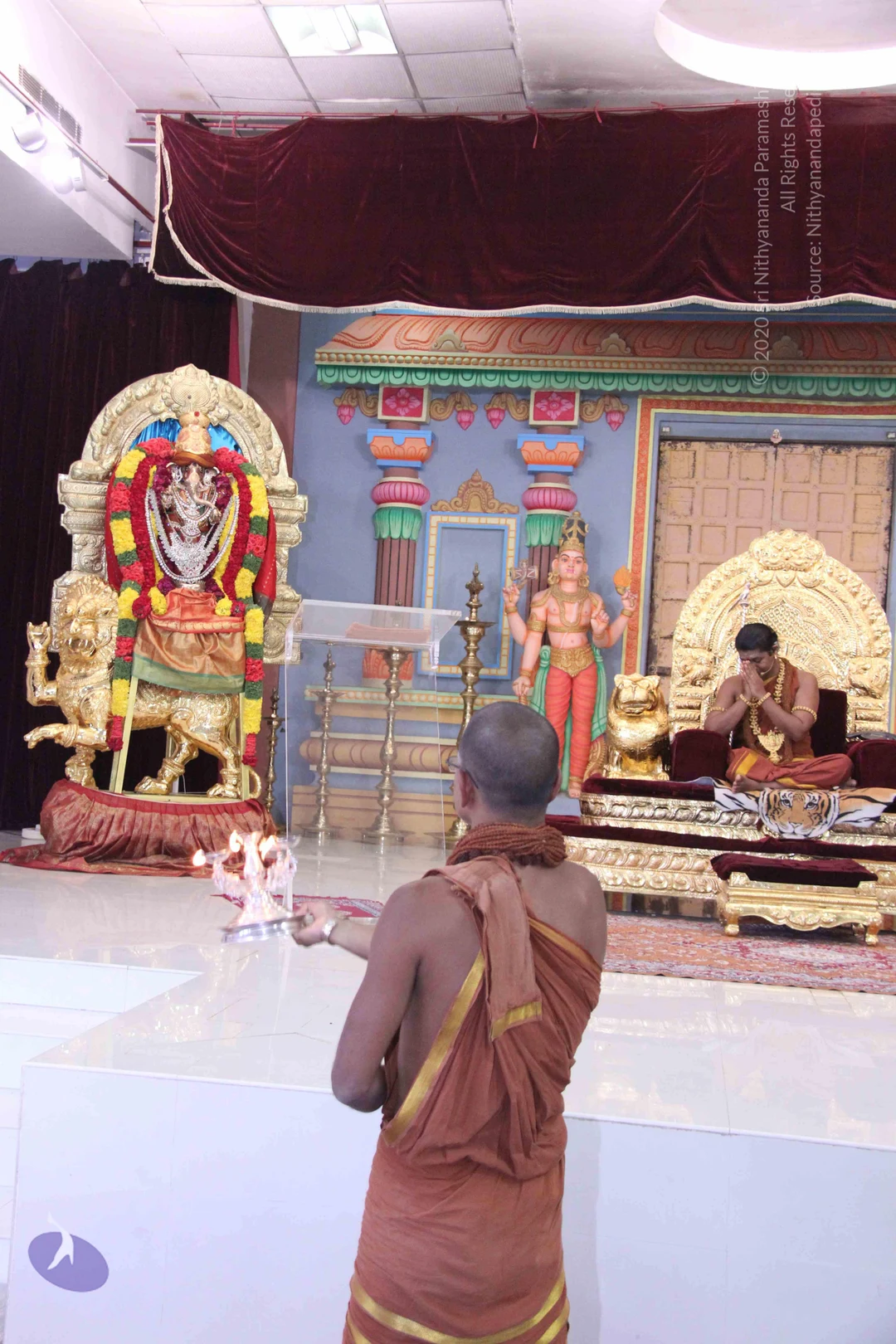
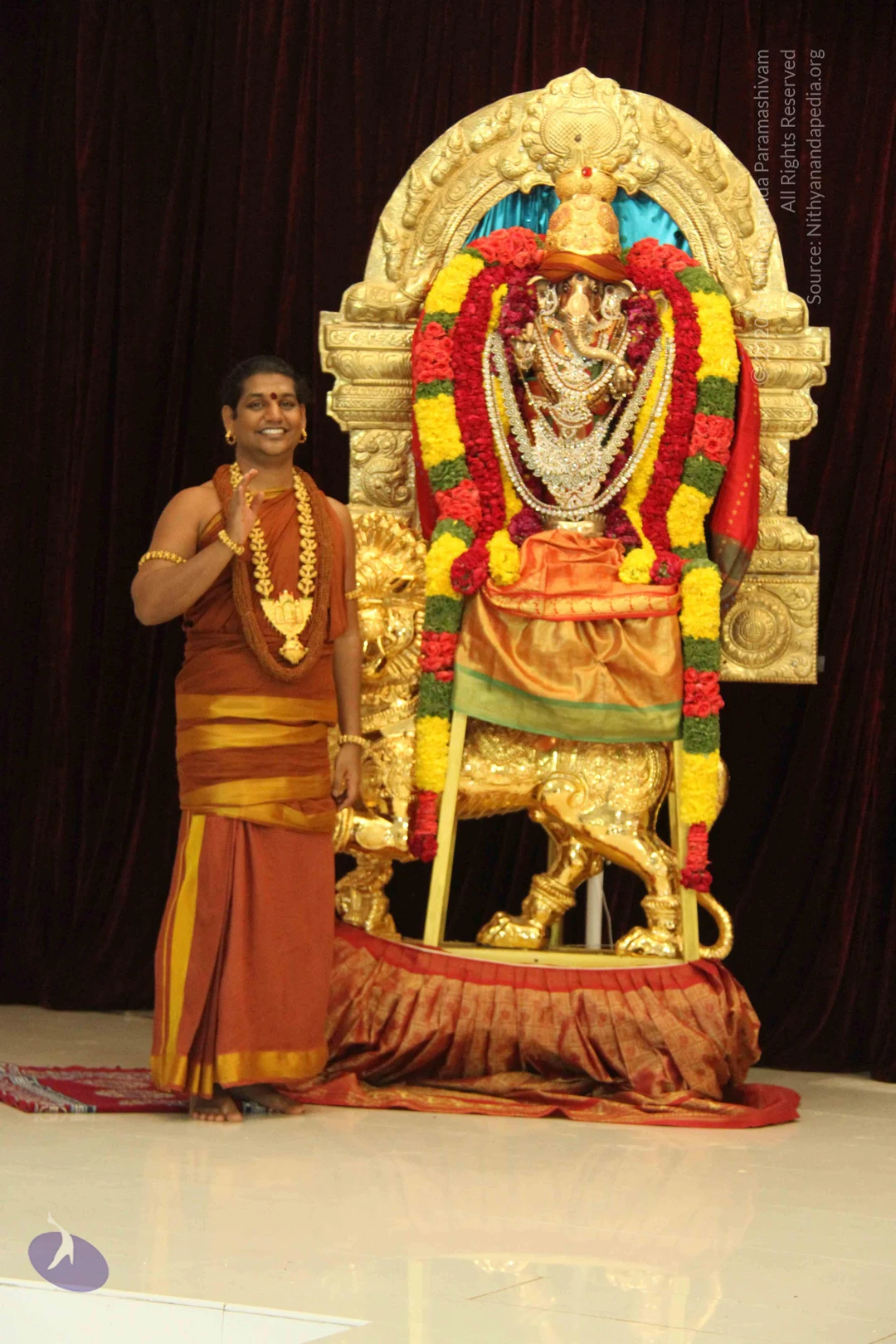
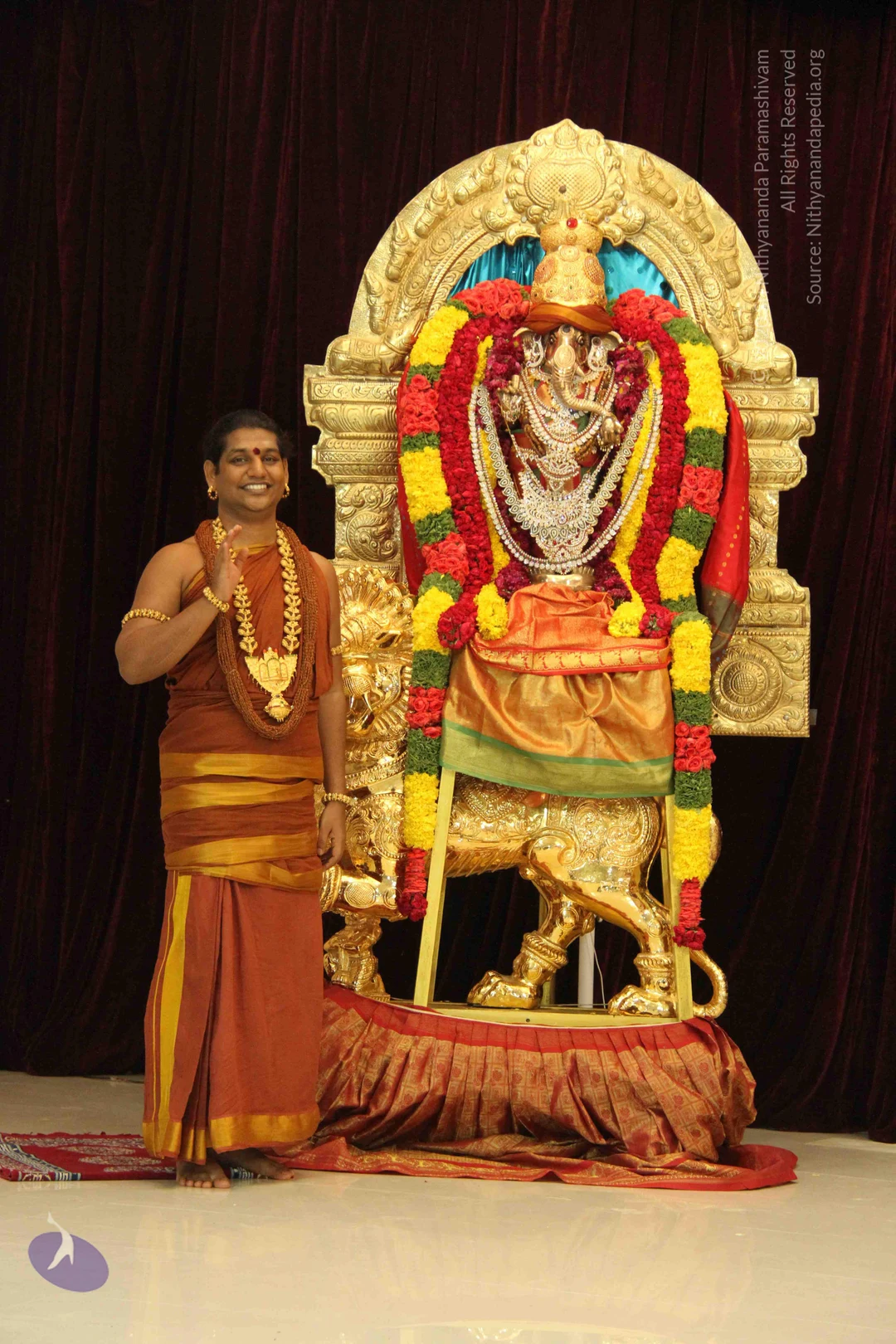
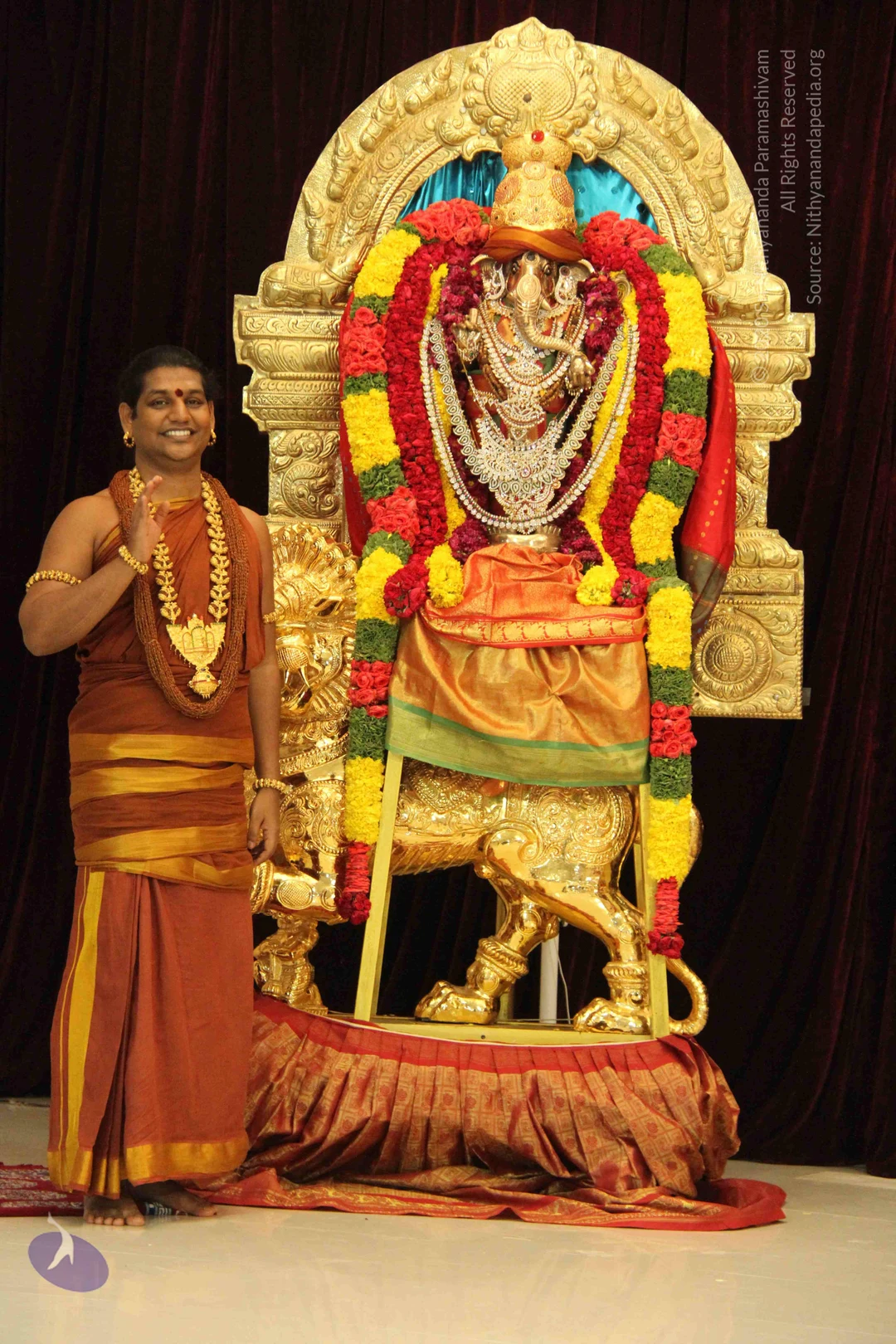
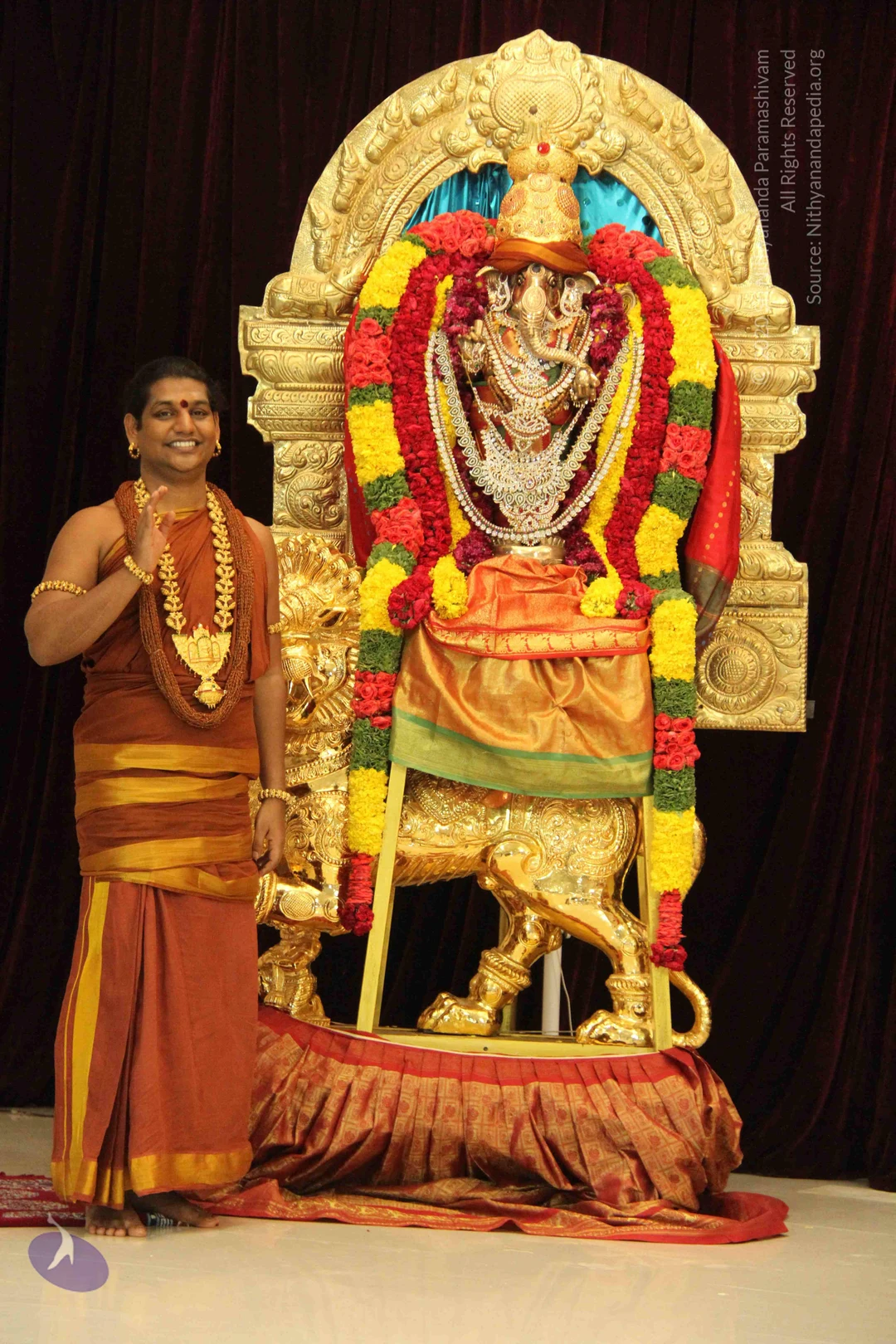
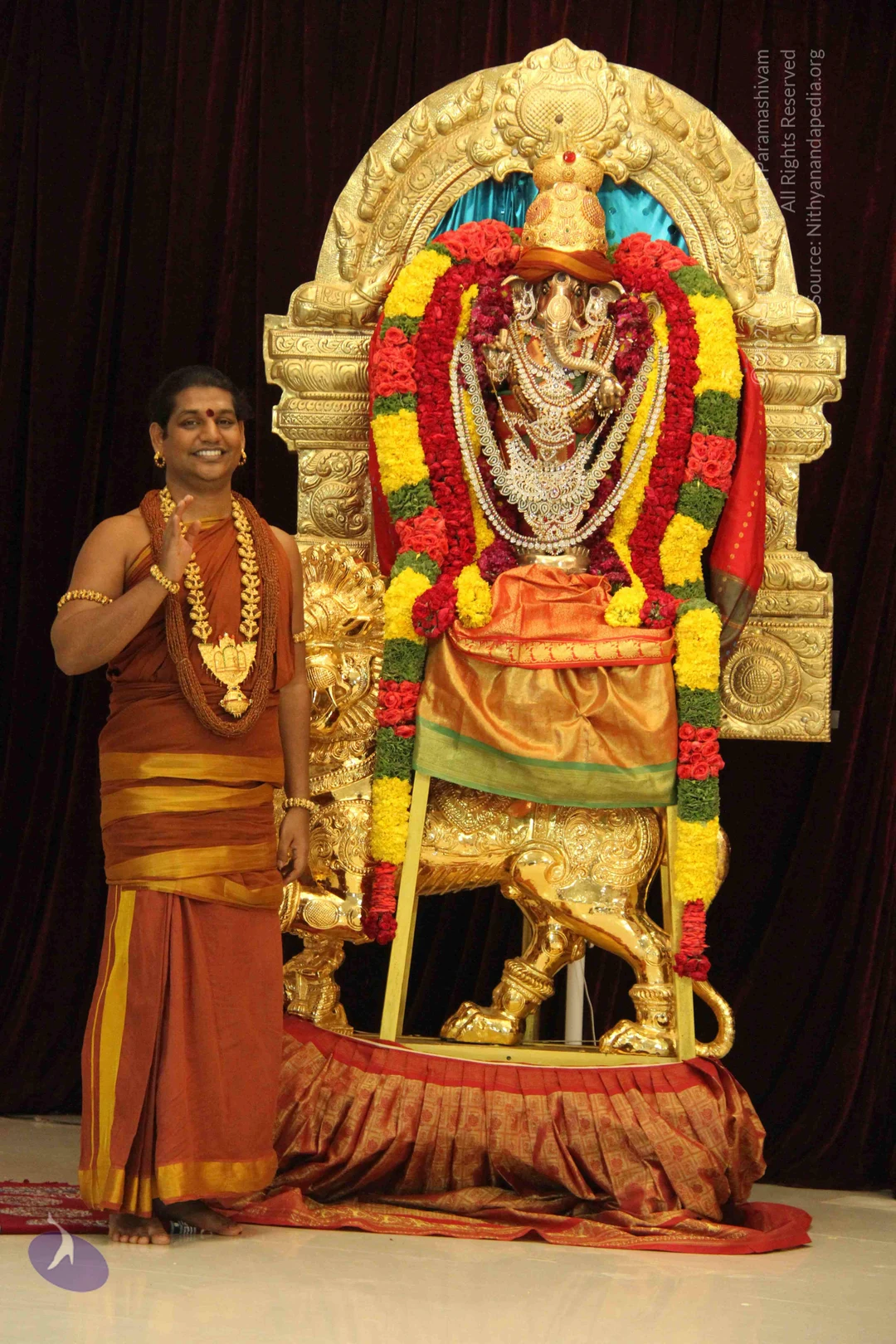
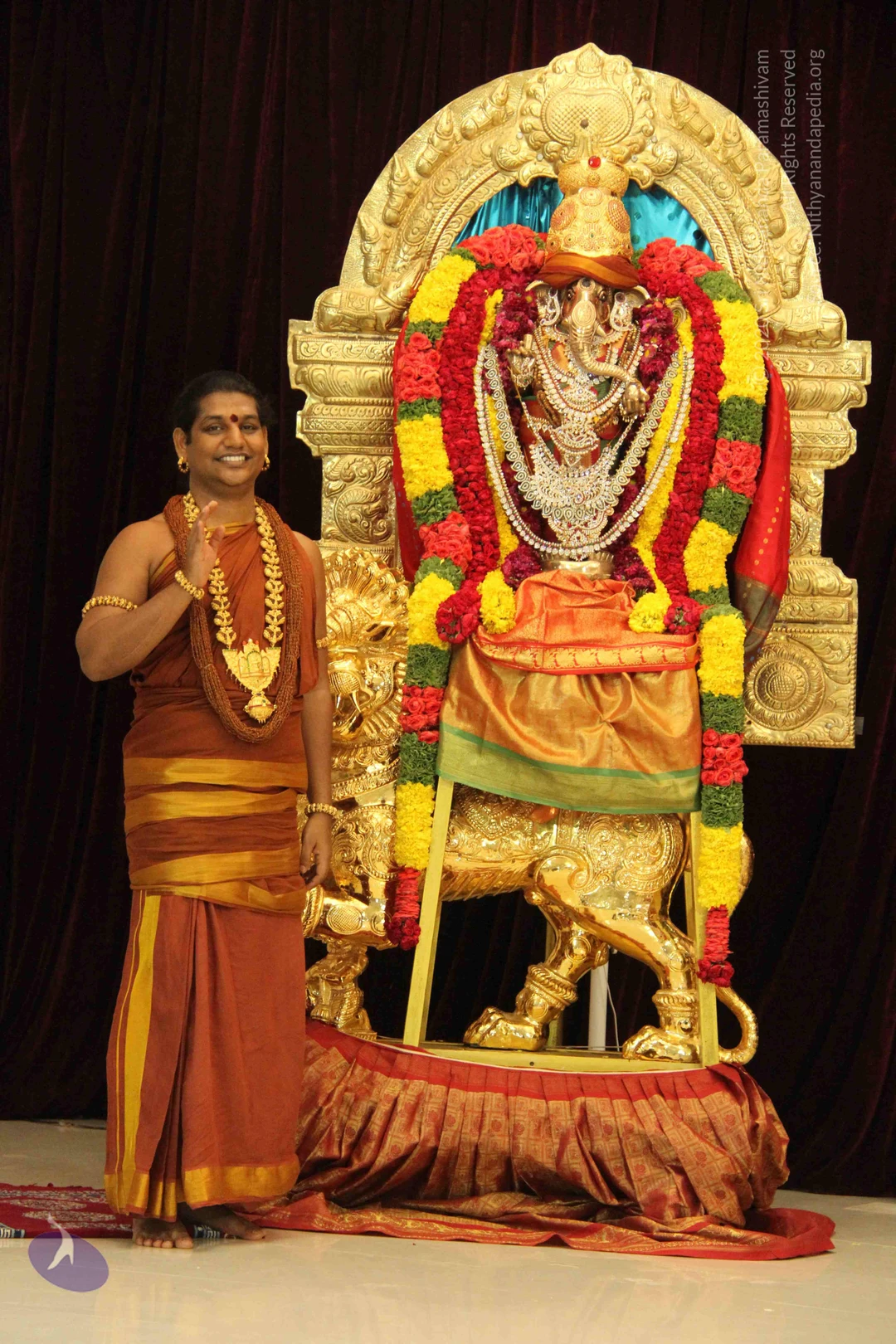
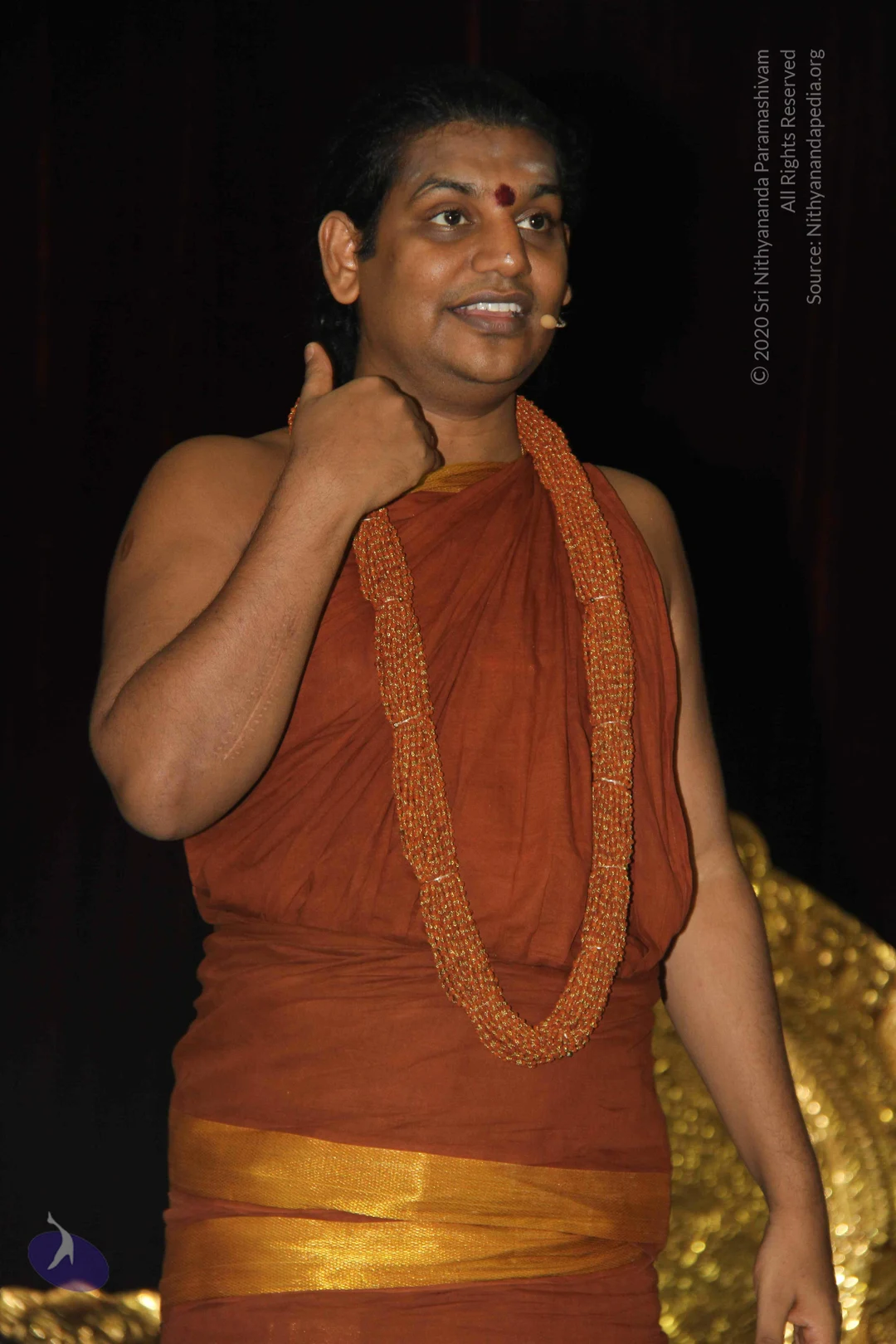
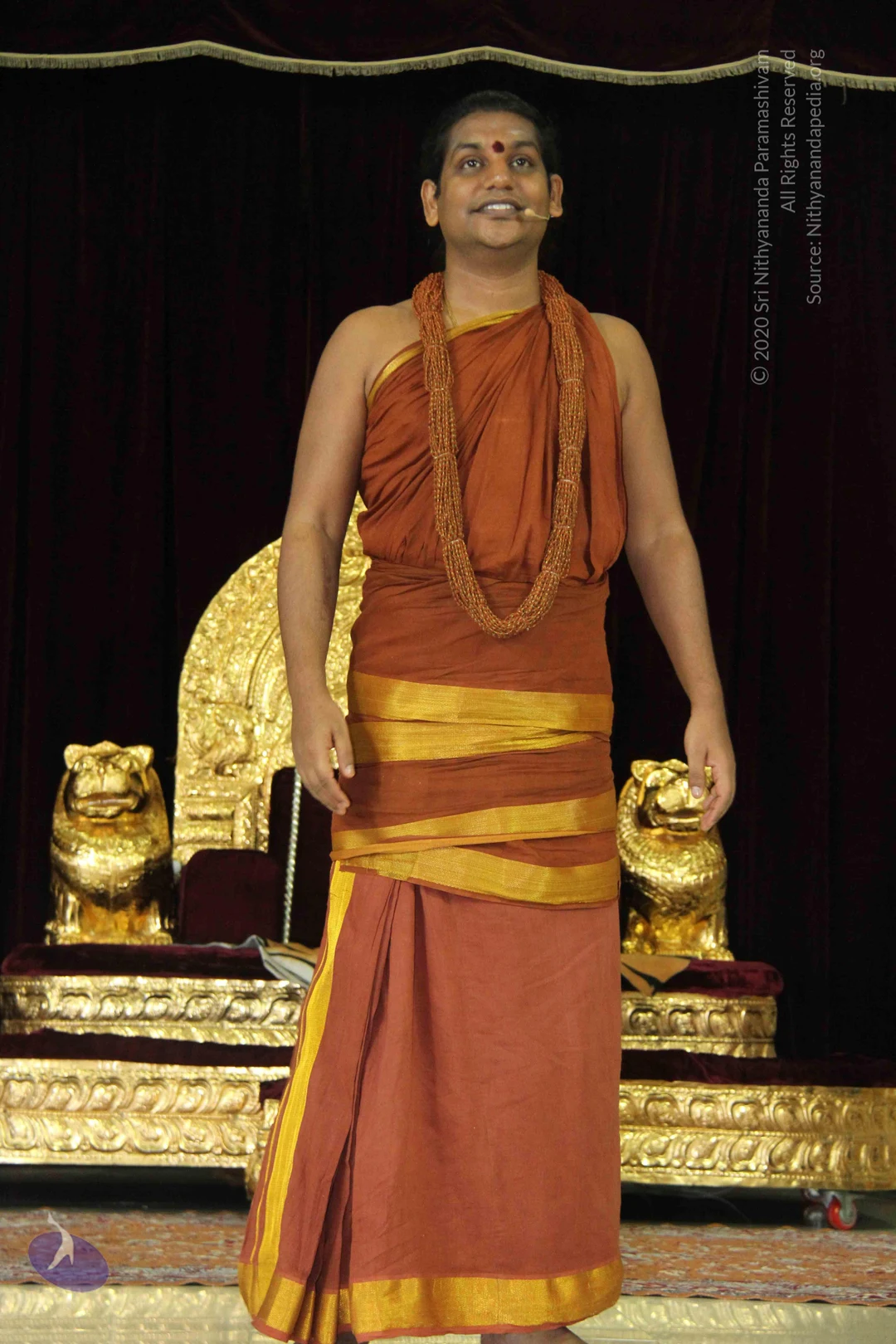
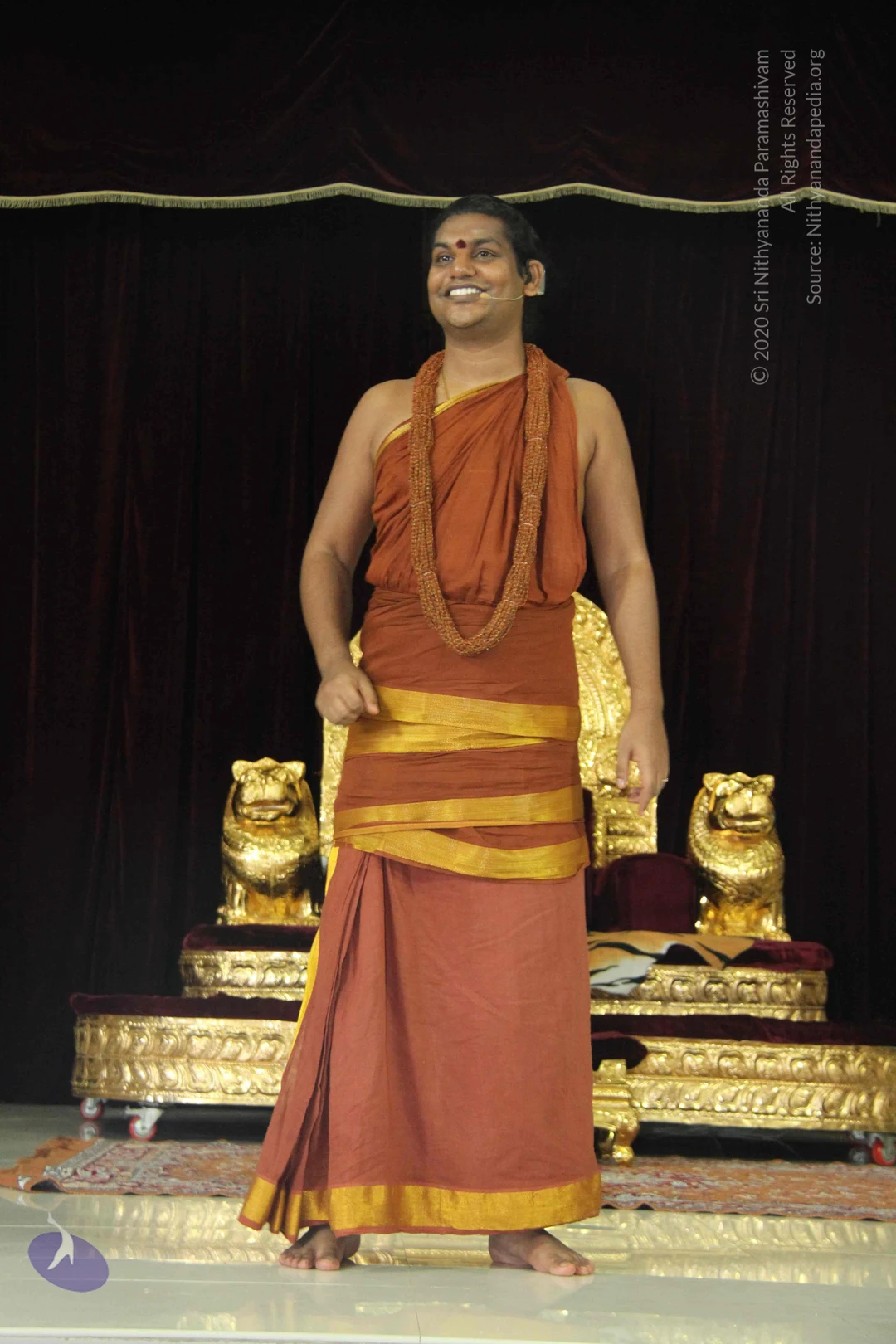
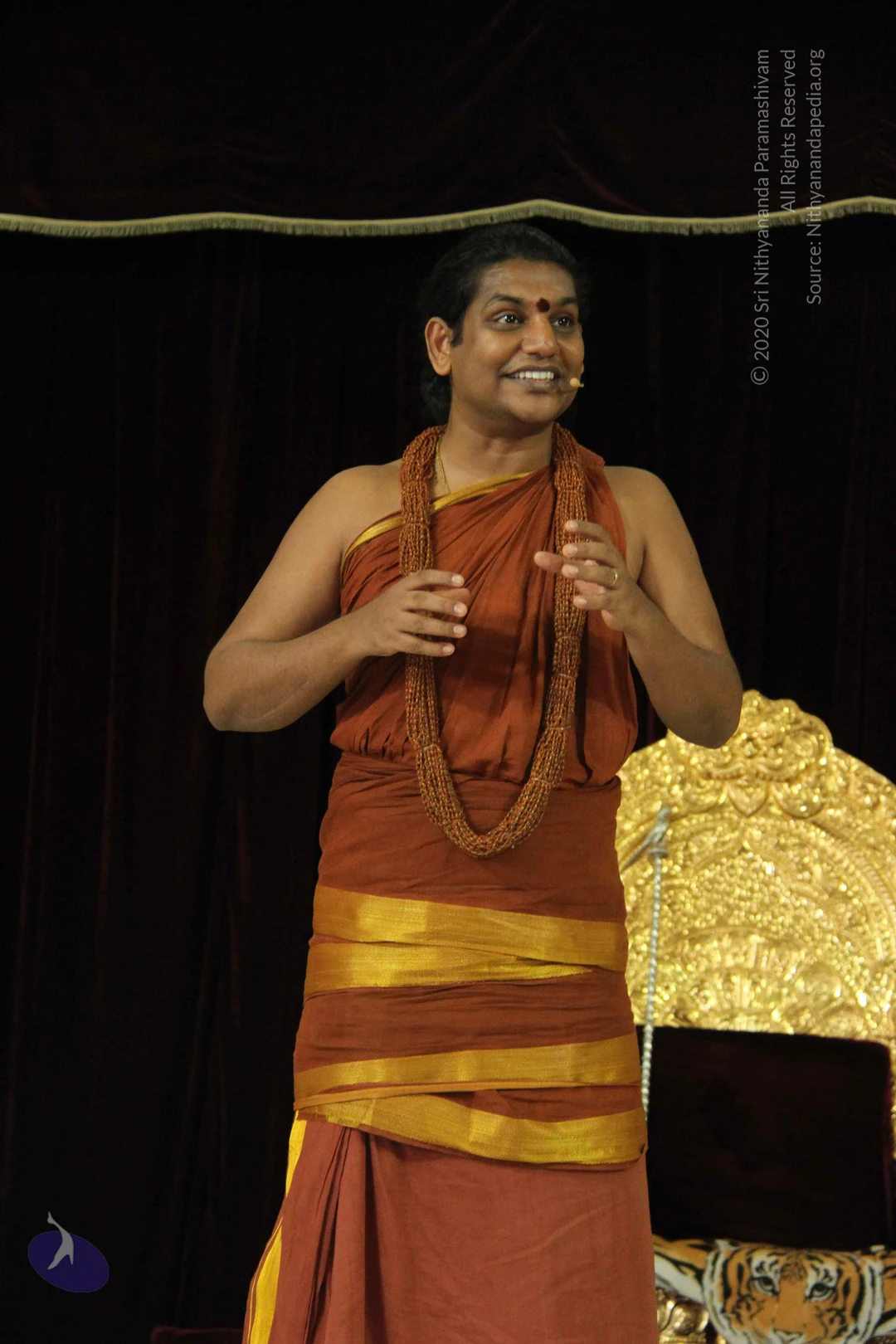
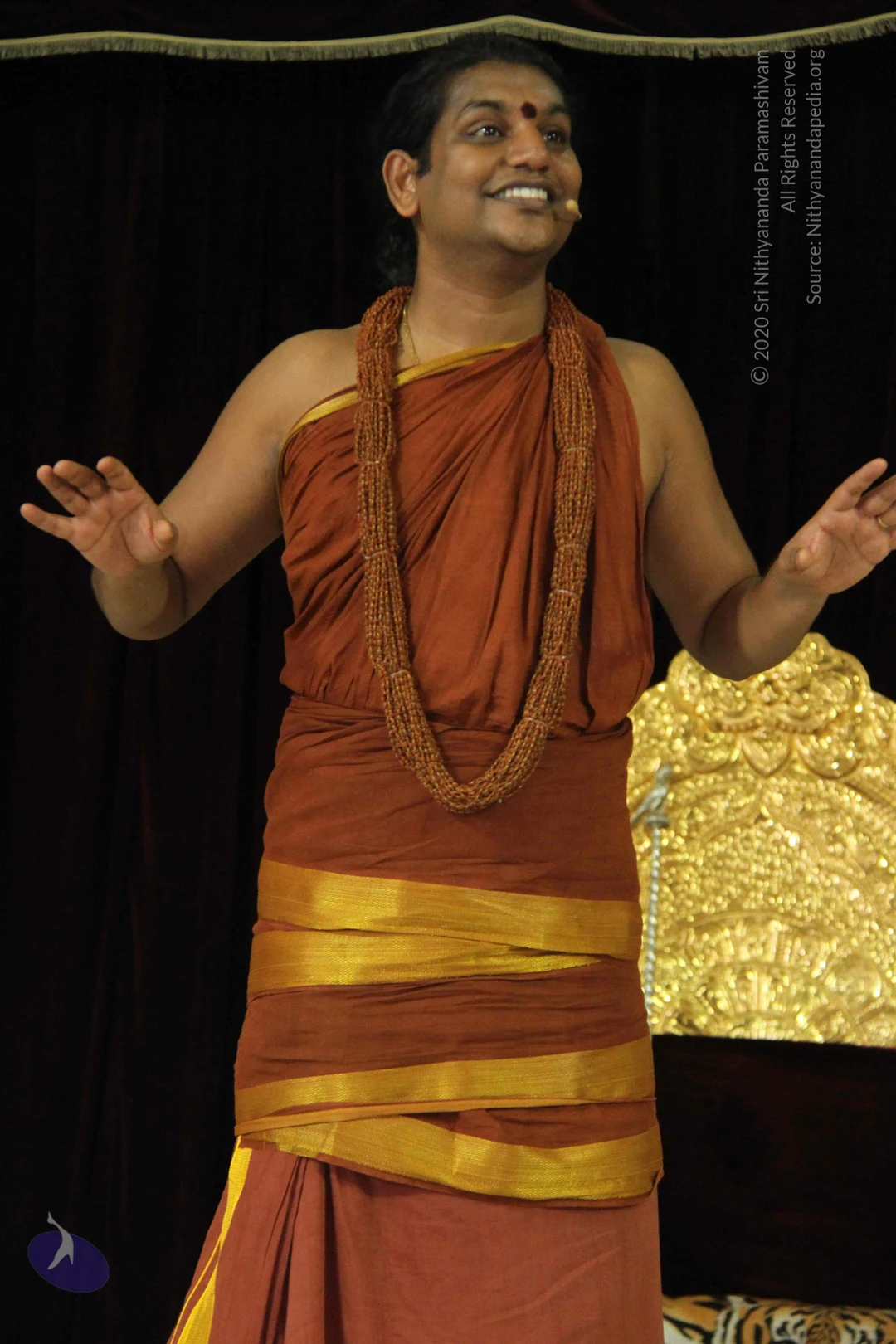
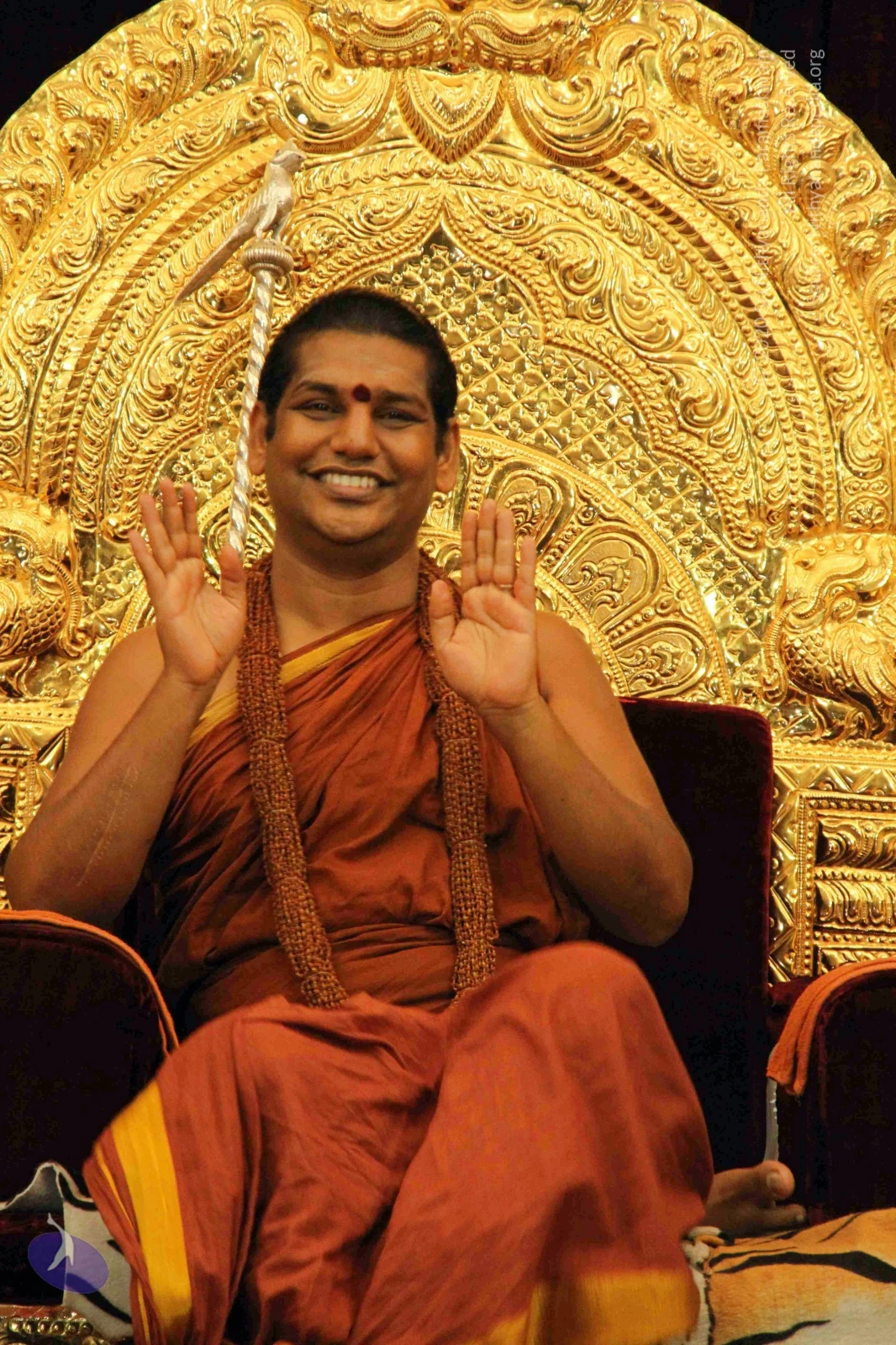
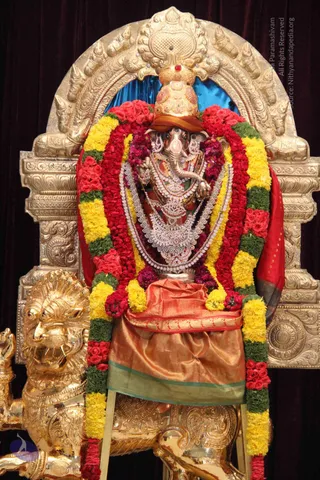
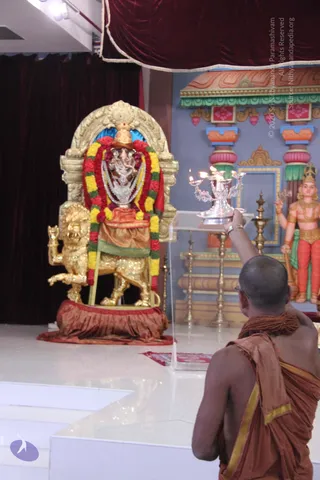
I welcome all of you with my love and blessings. Today, Mahadeva is gracing us in the form of the Leela “Ezhu Kadal Azhaithadhu”. Means, “Calling all the Seven Oceans”. See, when Sundareshwara was ruling the Pandya Kingdom, Kanchanamala, the mother of Devi Meenakshi, was advised by Sage Gautama to take dip in all the seven oceans, as that would bring her Completion and lead her to enlightenment. So, Kanchanamala informed this to Meenakshi and requested Meenakshi to give her recommendation to Mahadeva. Meenakshi took the recommendation to Mahadeva. Sundareshwara (Mahadeva) immediately called all the seven oceans to come to Madurai in one pond, and Kanchanamala took bath in that pond and got blessed. Even now that pond is there in front of Meenakshi Temple (in Madurai). And, very funny thing, only that water is so salty it gives the experience of literally the ocean water! All over Madurai, it is all good water; because of that only the Vaigai (the river Vaigai), the underground water is so nice. But only this area, means that pond, only that pond has salt water. So, it is very surprising! So, Mahadeva today is gracing us in that form of “Ezhu Kadal Azhaitha Leelai”. And, as part of Ganesha Brahmotsava, Ganesha is also gracing us on the Lion Vehicle – “Simha Vahana”, “Suvarna Simha Vahana” (Golden Lion Vehicle). I will enter into today’s Nithya Satsangh. First thing, I would recommend everyone who are born Hindus, or who are practicing Hindus, to all of you find why you are practicing, what you are practicing. Have adequate and right reasons. Most of the Hindu organizations fail utterly, bitterly, badly, because they don’t have adequate cognition, adequate reasons, enough reasons. Understand, Hinduism is not one more religion which is out there for the sake of numbers or to achieve political power or control over the people through religion. That is the first understanding we need to have. The Western civilization, unfortunately, do not know what is religion. Please understand, they know only a set of rules, and regulations, organization-based, some concepts which are usually used for political manipulation or controlling people. That is why I make this one statement very boldly. As per the Western definition, Hinduism is not a religion and We are a lifestyle! The beauty of this religion is, no one can use this to control or manipulate people; no one can use this religion for political power, political manipulation. Hinduism is a lifestyle – enriching yourself and others with consciousness. As I said, wherever the mystery is explored, the mysteries of consciousness are explored. Wherever people try to complete their incompletions, wherever people try to experience the Ultimate, taste the Ultimate, wherever people seek the Ultimate, Hinduism is practiced there, understand! It is practiced there! What really is the main reason for the suffering we go through? What really is the reason for the attack we go through? Unfortunately, Hindu organizations, whether it is a spirituality-based organization like teaching Yoga, meditation, spiritual concepts, or the religion-based organizations, the ritualistic component of Hinduism – that based organizations – or organizations created for the social justice of Hindus, demand of social justice for Hindus, or the organizations created to reach out all over the world to remove the wrong ideas, concepts taught about Hinduism, and to clear, to stop the defamation, any type of these organizations, please understand, or doing service to society based on the Hindu faith, any of these type of organizations, need to do one thing mainly, please understand, needed to do one thing mainly, even for Nithyananda Sangha I am giving this as important advice, our work is not inside our Sangha, our work is mainly outside the Sangha, to reach out to the mainstream Hindus. But, fortunately or unfortunately, knowingly or unknowingly, we are overwhelmed, we are overwhelmed with whatever you call as your completion or incompletion, your knowledge or practice, what you think as right or wrong, most of the Hindu organizations are caught within themselves. They are again and again and again, including Nithyananda Sangha….. Please understand, whatever I am saying is for all the Hindus and for Nithyananda Sangha; whatever I am saying is a self-criticism; it is not criticizing somebody else; it is my introspection and the truths I realized by intranalyzing. We are overwhelmed and forget the mainstream Hindus. Understand, we need to remind the mainstream Hindus, and we need to educate the mainstream Hindus. Answer for this great question: “WHY”. The answer for this great question “Why” is necessary. When we don’t address the question “Why”, the atheists, anti-Hindu elements, which is a lot, huge– people who want to convert, people who want to terrorize, people who want to divide, people who want to politicize – they will teach people “Why Not”! When you don’t answer for the question “Why”, they will answer for the question “Why Not”! Understand, before they feed their ideas “Why Not” – means, “Why don’t you give up this lifestyle? Why don’t you give up Hinduism?” – before they start providing “Why Not”, you better spread “Why”. Before they start infusing the ideas of “Why Not”, you better spread the ideas of “Why”. It is the inability to answer “Why”, is the biggest suffering Hinduism is going through. And the tradition which started with “Why”….. See, the first statement of our tradition is not “There is God. He is above somewhere. He made the world.” No! The first statement we make is: “Athato Brahma Jijnasa” – “Let us investigate, inquire into the Truth”. Means, we started with “Why”. Actually, we should be asking all the civilizations this question: “Why”. Not that we will be asked, we will be questioned “Why?” Asking “Why” should be our brand. Asking “Why” should be our life-style, asking “Why” should be our thought-trend, because we start with “Why”. We don’t start with definite statements, please understand. And we reached the heights of defining “indefinite”. We reached the heights of defining “indefinite”, but we start with the great “Why”. Kapila, the first man who started thinking on Planet Earth….. I still feel men are from Mars, women are from Venus, and through meteorites, life has landed on Planet Earth. And still I am not having any proof for what I am saying, whether from the Hindu Cosmology, or the modern-day researches. If I get proof, I will present it to you guys. But, intuitively, I still feel men landed on Planet Earth from Mars through some, may be, those days’ vimana (aircraft) or whatever. Anyhow…! The first man who started thinking on Planet Earth is Kapila. When I see the teachings of Kapila, I could see so beautifully it starts so clearly with “Why”. So I commit with Veda Matha, I will come up with a huge volume just with the title “WHY”! Just with this “WHY”! Because, there are tons and tons and tons of answers required for all the “Whys”. I will at least answer 1008 “Whys” and come up with the volume “WHY”, so that people can understand. See, answering “Why”, the “Why” should be answered with all possible questions. 20 mins It is not that when people ask “Why”, you will address only that “Why”, then after that they will ask “When”, you will address “When”, then they will ask “How”, you will address “How”, then they will ask “What”, you will address “What”. No! The moment they ask “Why”, finish addressing everything – “When”, “How”, “What”, “If” – everything, so that they have adequate cognition, right cognition, adequate reason, right reason. This “Why”, that great “Why”, only if this great “Why” is addressed, only if this great “Why” is answered, and I tell you, please believe, this is another one big problem. The modern day Hindus have a deep self-doubt due to the strong Westernization, a deep self-doubt. Unfortunately even Hindus don’t know they can handle the “Whys” of the world. I tell you, not only you can handle the “Why” of the world; you can ask the world “Why”. You have enough knowledge to ask the world “Why”. Wake up, for fear, fear of you asking “Why”, they forced their “Why” on you. If you are allowed, if they don’t push their “Why” on you, you are so strong, so powerful, built on “Why”, you will ask that great “Why” to them. That is why they pushed the “Why” on you and put the self-doubt in you. O Sons of Immortality, living Hindus, from now onwards I decide I’ll use only this word “living Hindus”. I’ll use only this word “practicing Hindus”. I am not going to use any more the word “Hindus”. I am only going to use the word “practicing Hindus”. O living Hindus, practicing Hindus, listen, listen, first understand you have adequate and right and more than enough reasons for all “Whys” that happens inside you and all “Whys” happens outside you and it is time you answer, you learn and answer all the “Whys” happening inside you, outside you and ask the other guys “Why?” Put the strong “Why” on them. Let them answer. Hinduism is a spiritual lifestyle, spiritual thought-trend, spiritual experience. That is why I am telling you, please understand. Yesterday I was going through the Bhagavatam, some of the chapters of Bhagavatam, to study the original words of Kapila. The original words of Kapila is recorded only in very few books. So I am , I was studying. All of you should know, Bhagavatam officially records Buddha as the twenty-first incarnation of Vishnu. Please understand, Buddha is one of the incarnations of Vishnu. Bhagavatam, one of the oldest scriptures of Hinduism, officially records that he is going to come with his clear name and place he will be born, his mother’s name, the message he is going to teach. Bhagavatam is written at least 5,000 years before. Buddha happened 2,500 years before. With the clear Buddha’s various names Bhagavatam records Buddha as “bhavishya”, means future incarnation, with his name “Buddha”. Anyhow the truth I wanted to convey to all of you, please listen, the truth you need to understand now - we were never, we can never and we were never fit ourselves into the Western definition of religion – a set of ideas, whoever believes that is belongs that religion and you vote for a particular people for your vested interest, you become a power centre. No. We don’t fit into that definition. That is why our lifestyle was always who now? Who is the best available person who can lead us to the next level of completion and next level of consciousness? That’s all. Understand, when Kapila comes the whole of humanity follows him.Raise us to enlightenment. Next when Dattatreya comes, the whole civilization follows him. Next when Buddha comes, the whole civilization follows him, even though he was completely against what Dattatreya and Kapila taught. Krishna beautifully explains in Bhagavatam. He says, ‘There are a lot of atheist people. How much ever you make them understand, they will not have the trust on the Ultimate and they will not be able to reach Completion and Enlightenment.’ Because that was the period the human brain has gone to next level. Whether fortunately or unfortunately it has reached a level where the integrity is not part of your life you can just be completely out of integrity and continue to exist. See the good things happened through that is, a new way of thinking has been developed. It is not that that was altogether wrong or altogether negative but the bad thing that happened is the spirituality has become very distant. Later on, I will analyse on that subject. Along with the human brain development, the different incarnations have happened based on the requirements. Krishna explained beautifully. When that kind of a new type of brain started developing, Krishna, Bhagawan lands in the form of Buddha and encourages, attests their agnostic atheistic principles. So, finally what happened these guys who did not believe anything and anybody, they started believing Buddha, who is again incarnation of the Lord, who is again incarnation. That feeling connection, that trust, that shraddha, through that he helped them to reach Completion and led them to Enlightenment. After Buddha suddenly comes Shankara. We did not have a second thought to simply follow Shankara who is completely teaching against the principles of Buddha. At this moment who is available to help us to reach next level of consciousness. That’s all, only with that we lived. All knowledge centres, Mokshapuris of Hinduism – Kanchi, Puri, Madurai – all Mokshapuris of Hinduism have changed their main deities at least ten times, understand. At least ten times. I am telling you from my own authority, who can read Akashic Records. All the top Mokshapuris – Kashi, Kanchi, Puri, Dwaraka. Because, when a new person comes who can raise you to the next level of consciousness, we never bothered about sticking to the old infrastructure. We handed over the old infrastructure to the new person and told, ‘Please take it up and raise us.’ Still in many Buddha temples, Hindu deities are there and in many Hindu temples, Buddha deities are there. Sometimes it is covered and sometimes it is uncovered but it is there and we don’t have a problem about it. We don’t have problem about it. After Shankara, suddenly Nagarjuna comes. People understand, ‘Yes, this guy can take us, raise us to the next level of consciousness.’ The whole group, Nagarjuna’s teachings are completely against Shankara’s, he just followed. Then comes Ramanuja who is totally against Shankara, Ramanuja, Nagarjuna. We just followed him. Then comes Madhwa who is completely different from Shankara and Nagarjuna. We followed him. Then comes Vidyaranya who is completely different from Buddha and Ramanuja and Madhwa. I can say in a way very safely, he is little different even from Shankara, from his own Guru, Guru Parampara, but we just followed him. We are established on one truth, ‘Who can lead us to the next level of consciousness. Who can lead us to the next level of completion?’ So please understand, we always lived on “Why”, not on any organization. Don’t try to imitate seeing the Western organized religion the Hinduism can live on organized religions, organized structure, on organization. No, we are not cut for that. We are cut, we are designed, our consciousness is evolved, the collective soul of the Veda Matha, the collective soul of Indic knowledge is based on this one truth, ‘who can answer for our more number of “Whys”?’ Only the ability to answer more number of “Whys” was the base, foundation on which the Indic tradition, Indic Knowledge Tradition is established. I can say very safely, this word “Indic Knowledge Tradition” can be the beautiful word to mention the whole Sanatana Dharma and Hinduism and all the, everything put together. Indic Knowledge Tradition. That is why still Mahanirvani Akhada has one mudi means one chapter dedicated to Buddhism. Please understand, still Buddhists are respected, recognized as part of Mahanirvani Akhada and they are given the equal respect as a Mahamandaleshwar in Kumba Mela, still, and they also come and participate very actively and always they fill their seat any bhandara, any program, any festival, they come and represent and they live in the places allotted to them by akhada. All the mudis, means branches of Akhada, Buddhism is respected as a branch. So the Indic Knowledge Tradition is built on the great “why”. Just few days before, one of my sannyasis, he was telling me, ‘Swamiji’ – he went for a trip to meet devotees, people, outside the campus when he came back, he said – ‘Swamiji, I feel only one thing we need to create, nothing else is required.’ I asked him, ‘What?’ ‘Men! Sannyasis with integrity, authenticity, because’, he told me, ‘only few days I went for rounds. In nine places people wanted to donate properties to our ashram!’ He says, ‘Nine places, wherever I go and talk, speak about our tradition, answer their questions, people immediately they said “Swamiji, take this property. You build school, temple, or do any charity you want. We will collect money also and support you monetarily’ He went for one round and nine places. He says all good-sized properties. People who are giving are not too rich people, middle-class people. Whatever they have in that they are making one portion and giving it and in that nine people, eight have not even met me even once. They have not met me even once. In those days we used to get donations from people who have met me, who have attended the program. Now, they say, ‘We listen to Swamiji’s satsanghs every morning, that is enough. Please have your temple or a Gurukul or goshala, annalaya any activity you want, we will also raise the funds and donate.’ He said, ‘Swamiji, the only thing we need to build now is people with integrity and authenticity’ People, I tell you that will happen only when you know how to answer the great “Why” of people. The “Why” of people should be answered. The more number of “Why” you are able to answer, the more you are going to keep this Indic Knowledge Tradition alive. It’s my passion subject so I will go on and on and on. I’ll continue, I’ll continue and next few days’ satsangh also. We need to create men who will answer the “Whys”, the great “Whys”. They should go around having a big board on themself, “I can answer all your “Whys” about Indic Knowledge Tradition, India and Hinduism. May I help you with your “Why”?” We should go around answering people’s “Why”. Understand, neither Hindus lost their tradition, nor tradition has given up on them, it is just that the bridge needs to be strengthened by answering more and more “Whys”. “Why” is enough. Answer “Why”, that is enough. You don’t need to give up on people and nobody is violent, nobody is giving up on you, nobody is throwing you out, everyone is ready to listen. I request all the Hindus, the Hindu leaders – religious, spiritual, social – all leaders affiliated to Hinduism, please just enrich yourself and enrich others to answer the “Whys” of people. This is the first step to revive Hindu tradition. I’ll speak about the next steps in further, next satsanghs. With this, I will move to the next segment of the morning satsangh, Nirahara Samyama. xxxx 43:01 Hindi - 44 :37xxxx With this I request all the Nirahara Samyama participants, sit straight, close your eyes, visualize you become Bidadi Kalpavriksha. Cognize you have become Bidadi Kalpavriksha. Inhale through both nostrils, hold as long as you can and exhale through both the nostrils. Please listen inhale through both the nostrils and the mouth simultaneously, hold as long as you can and exhale through both the nostrils. Do this same process for next twenty one minutes, with the cognition you have become Bidadi Kalpavriksha. I bless you all with Integrity, Authenticity, Responsibility and Enriching. Let you all radiate the highest bliss. Let you all experience Kundalini awakening. Let you all produce the energy directly from space and live health, bliss and enlightenment. Namah Shivaya! Let you all achieve, experience, live, express, radiate, share and explode in eternal bliss, Nithyananda. 46:24

Link to Facebook Page

https://www.facebook.com/ParamahamsaNithyananda/posts/531255600295628

Photos Of The Day:

RUDRABHISHEKAM
Pratyaksha Pada Pooja

SATSANG

SARVA DARSHAN

FINAL BLESSINGS

DARSHAN

Inner Awakening DARSHAN

Inner Awakening SESSION

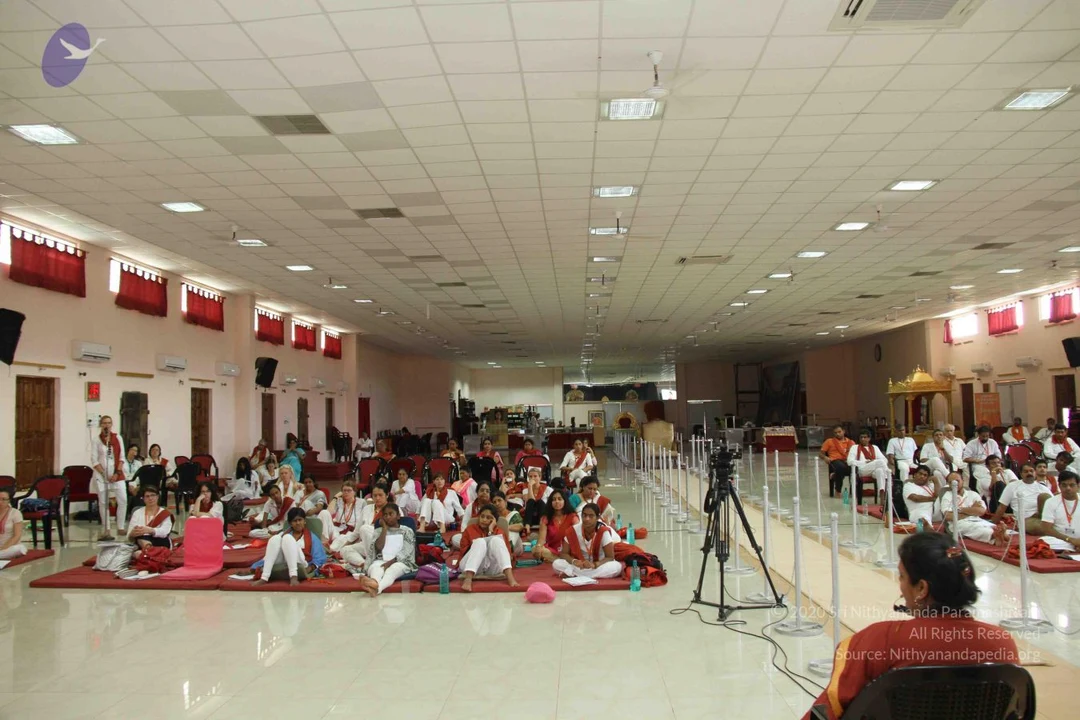
Inner Awakening SESSION - CROWD SHOTS

LEELA ALANKAR

Photos Of The Day:

Deity-Darshan

RudraAbhishekam

Pratyaksha-Pada-Puja

Nithya-Satsang

Sarvadarshan

Inner-Awakening

Photos Of The Day:

Deity-Darshan

Rudra-Abhishekam

Pratyaksha-Pada-Puja

Satsang

Inner-Awakening

1-Deity-Alankar

2-Leela-Alankar

3-RudraAbhishekam

4-Pratyaksha-Pada-Puja

5-Satsang

7-Final-Blessings

8-IA-Day18-Session

9-IA-Day18-Darshan

Photos from this day

View all 325 photos

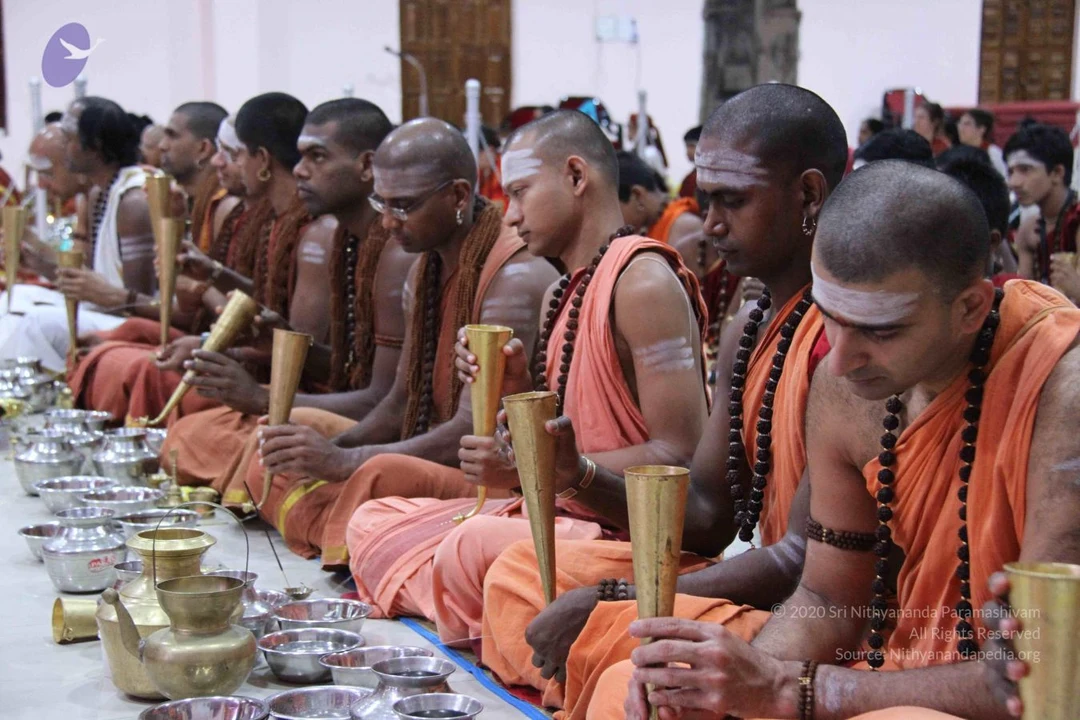
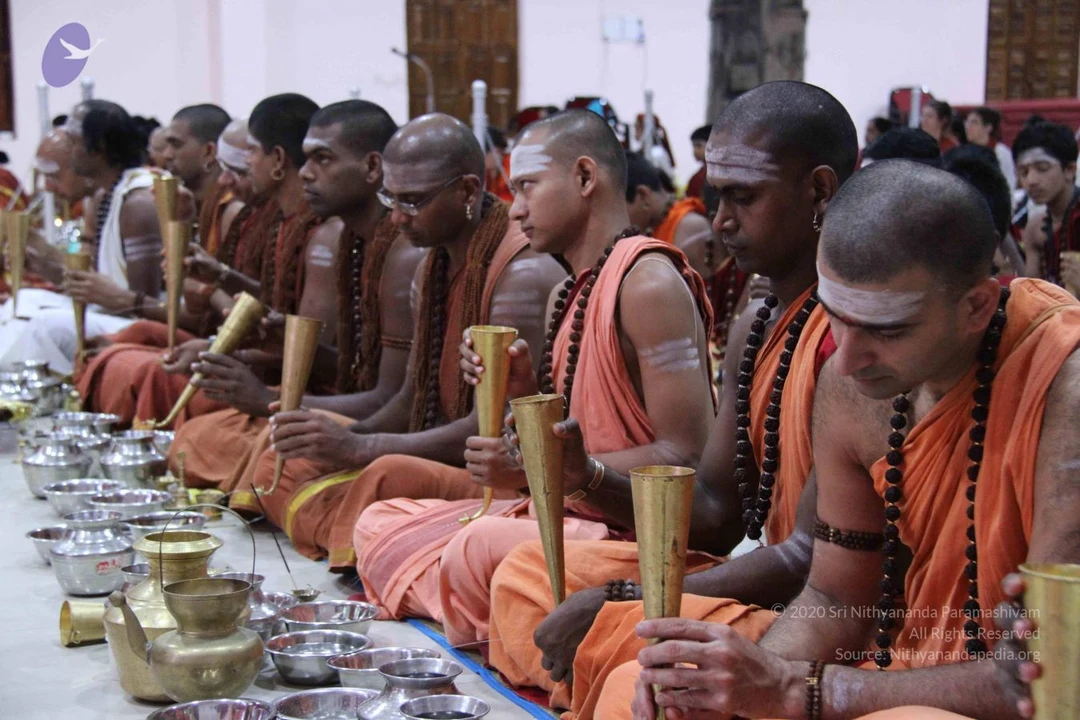
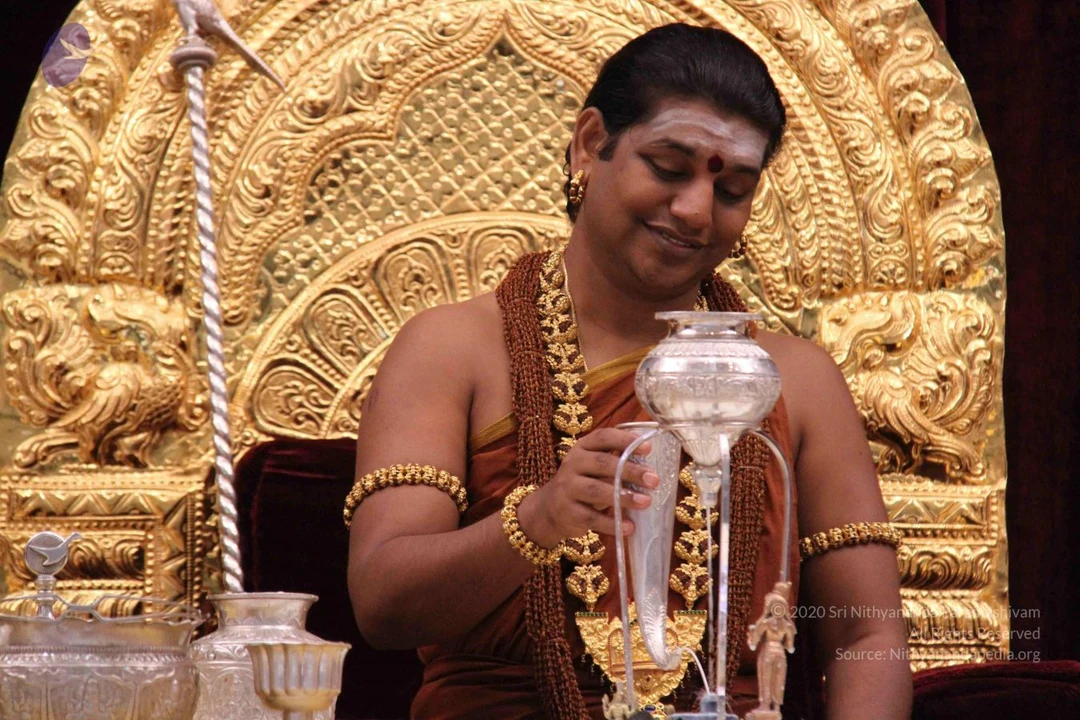
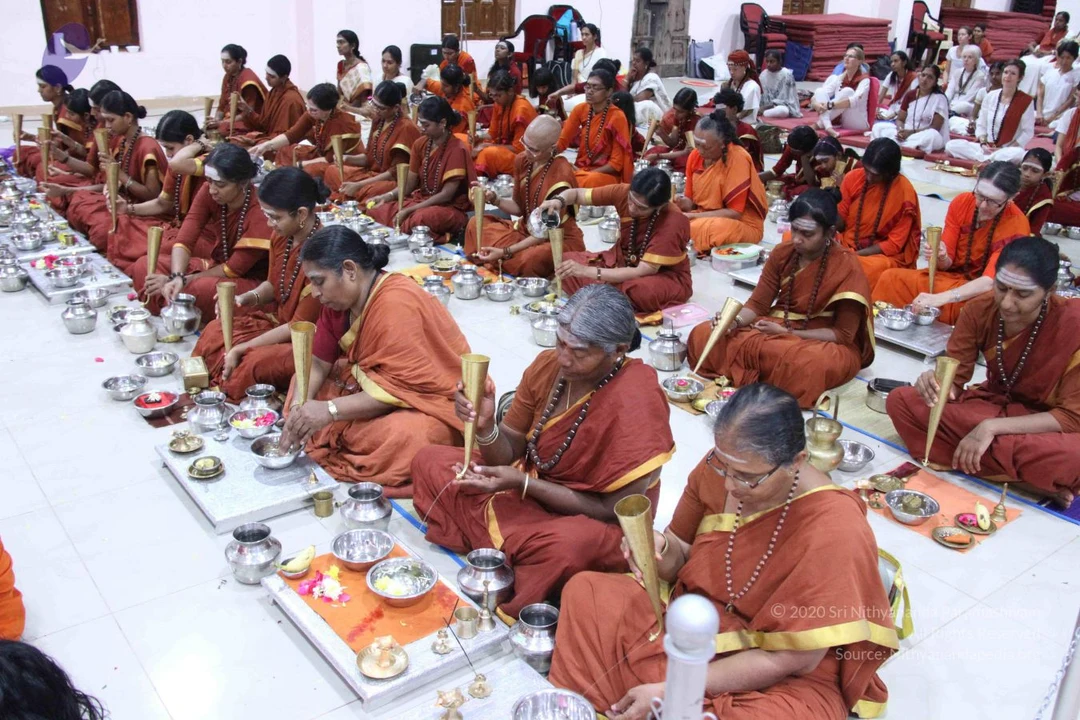
RUDRABHISHEKAM
72 photosSource gallery
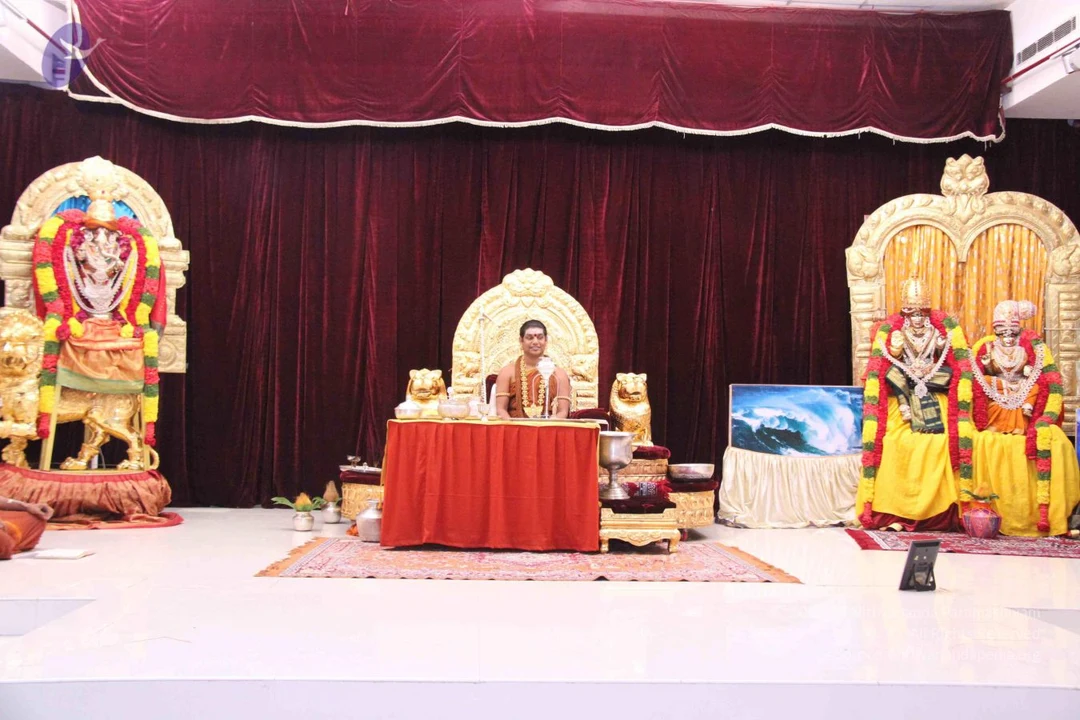
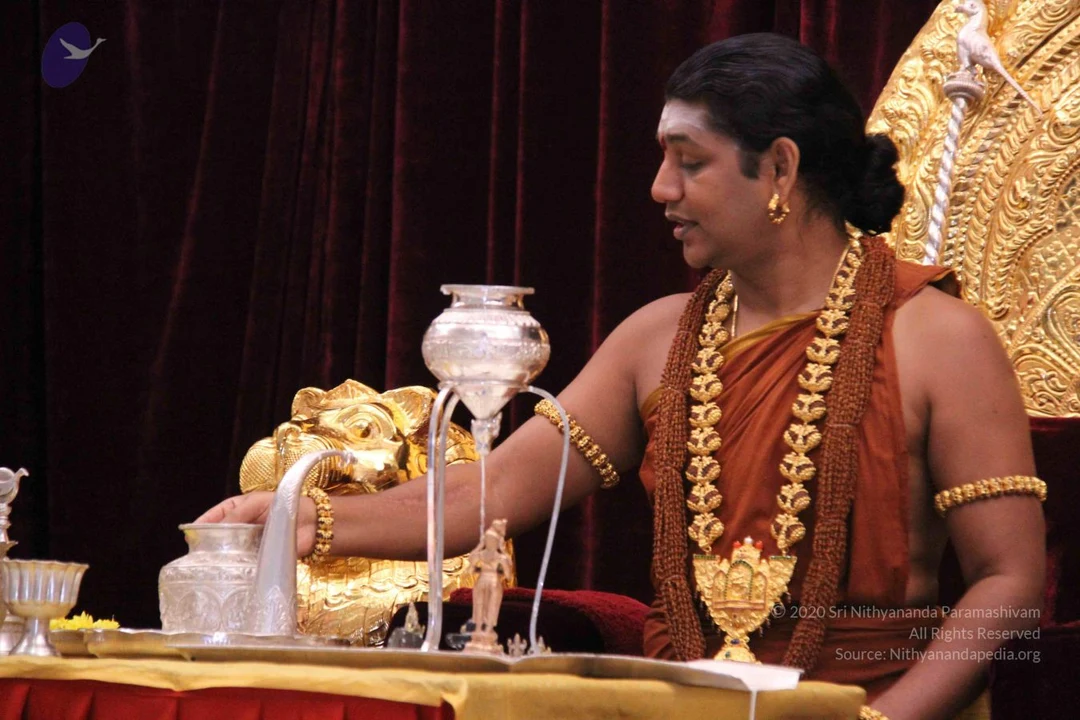
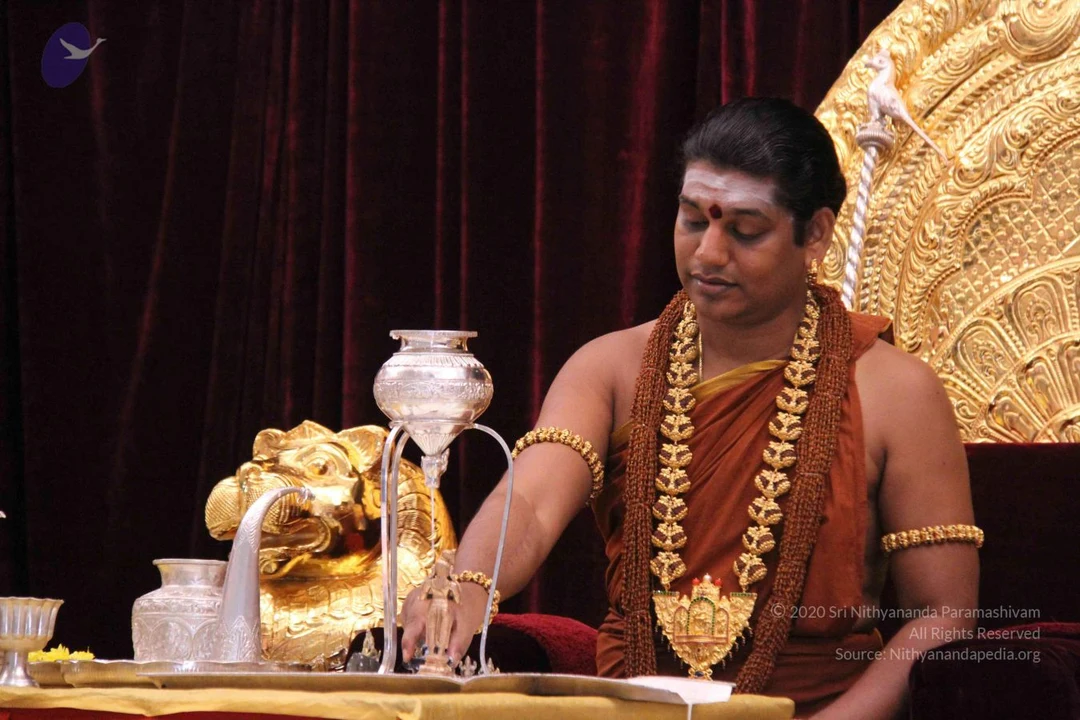
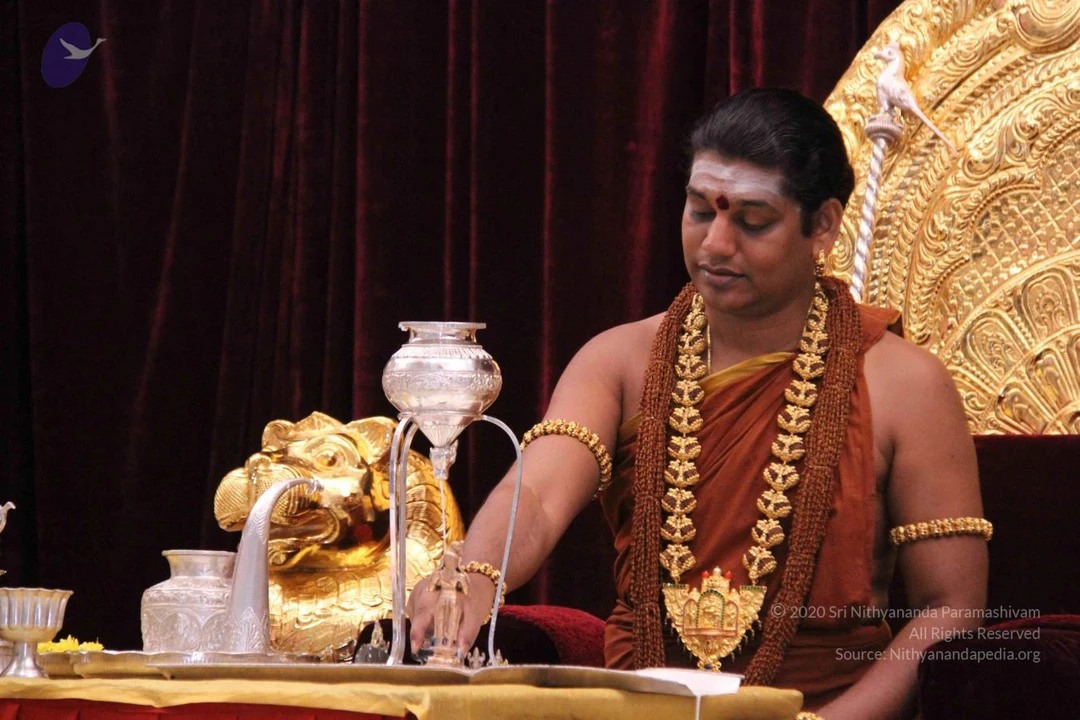
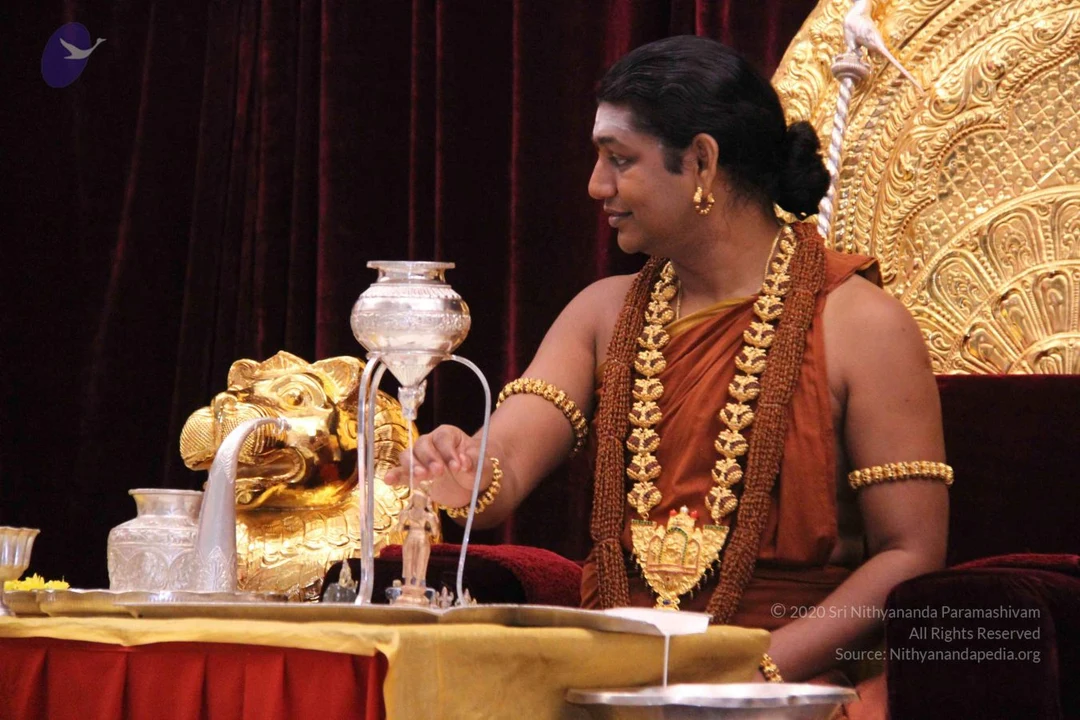
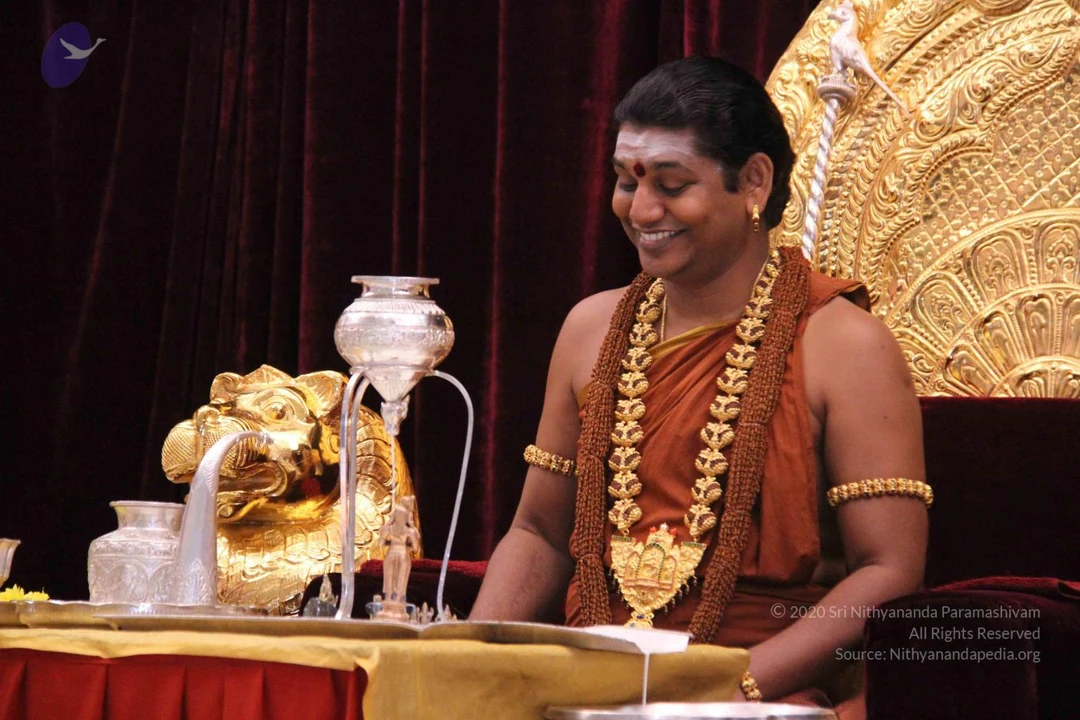
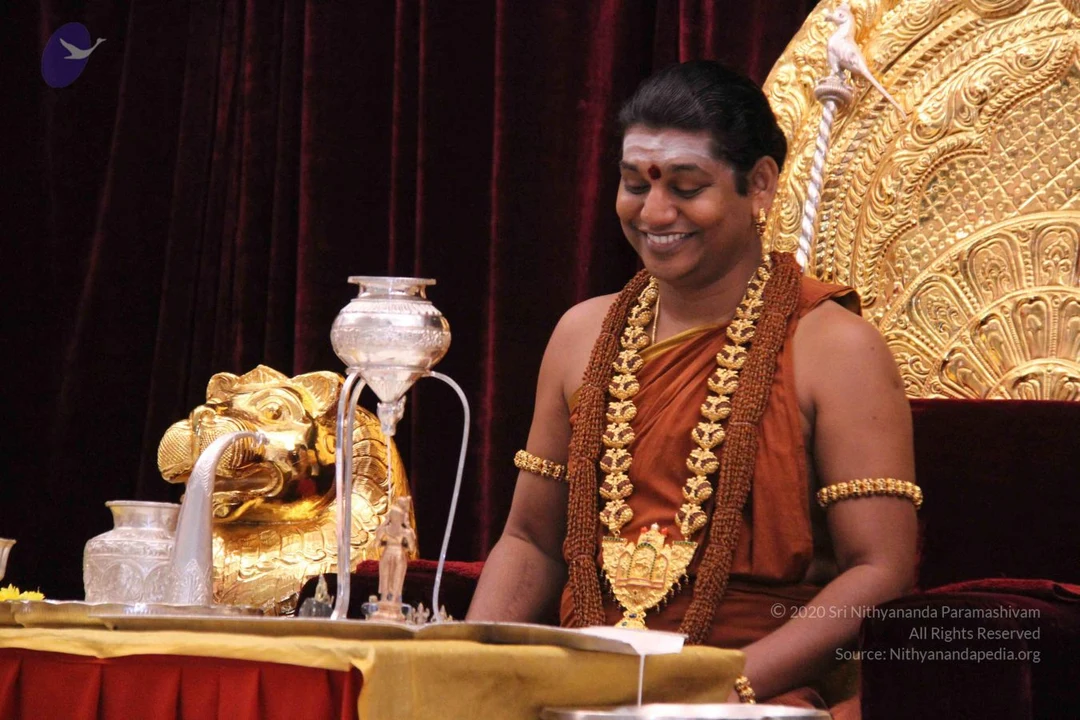
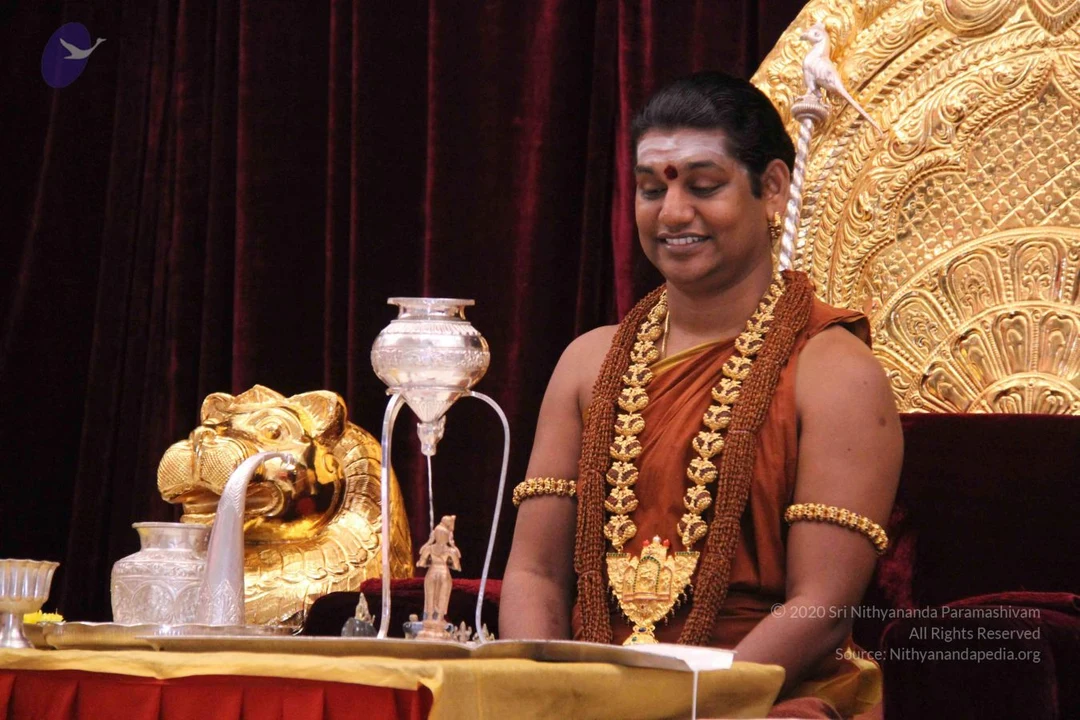
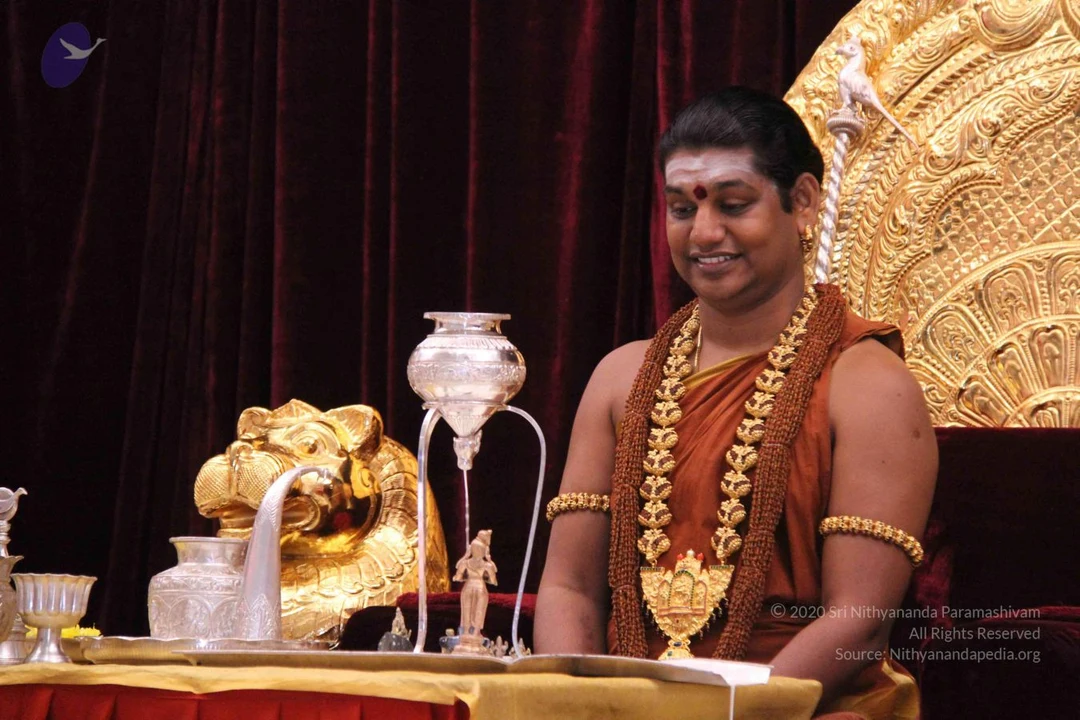
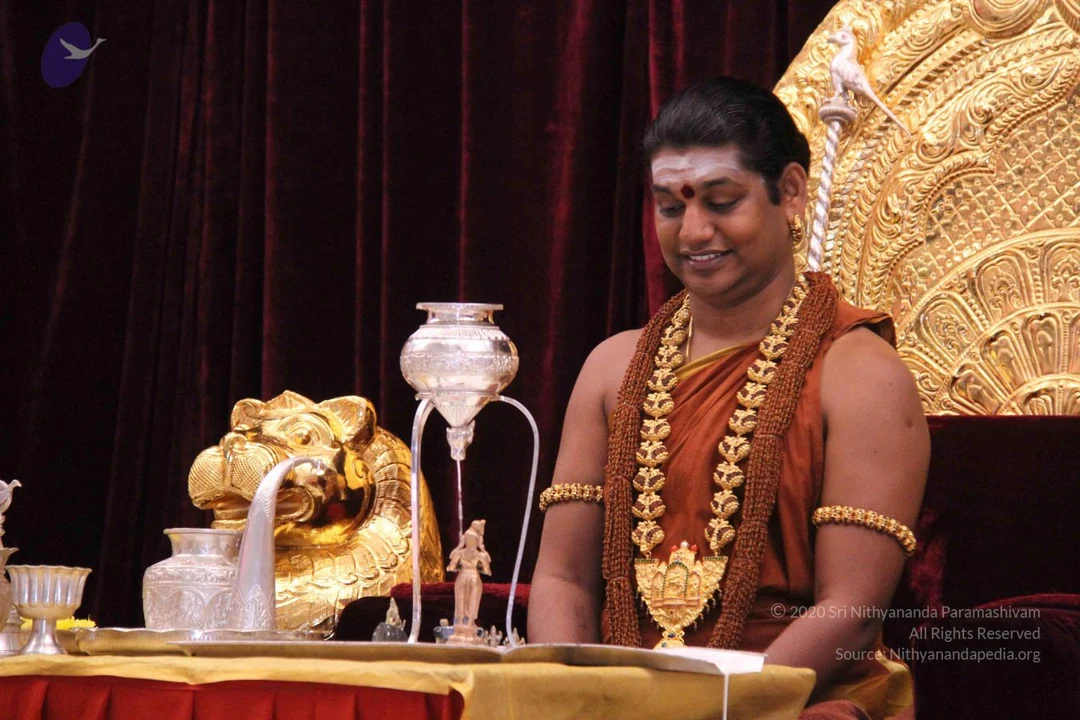
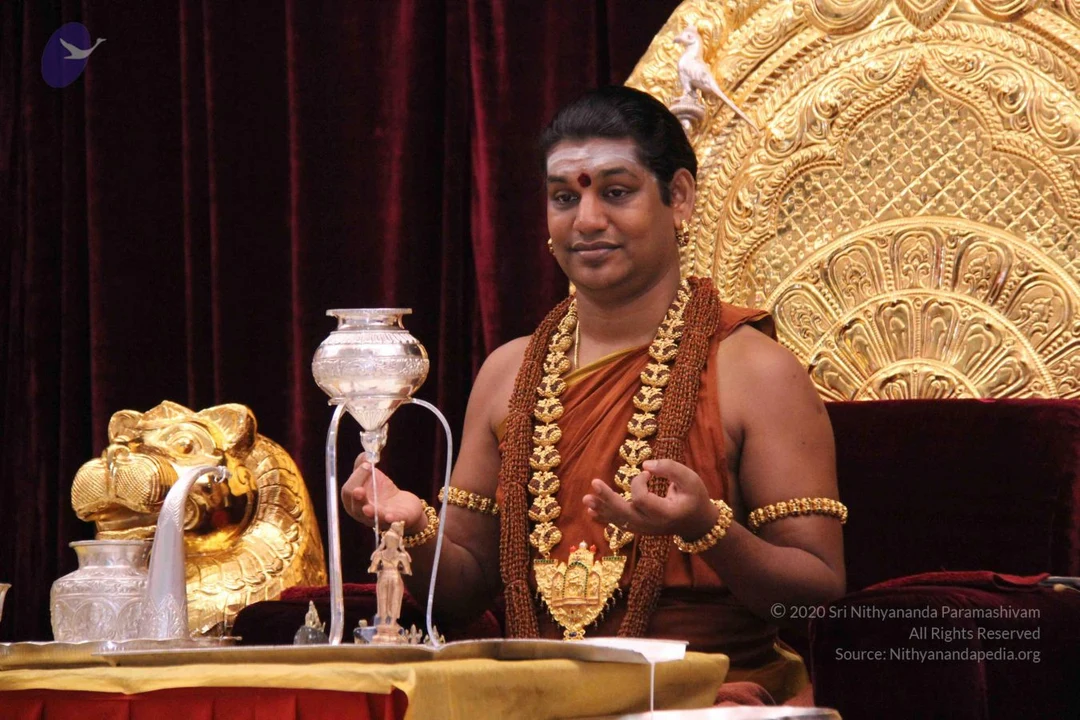
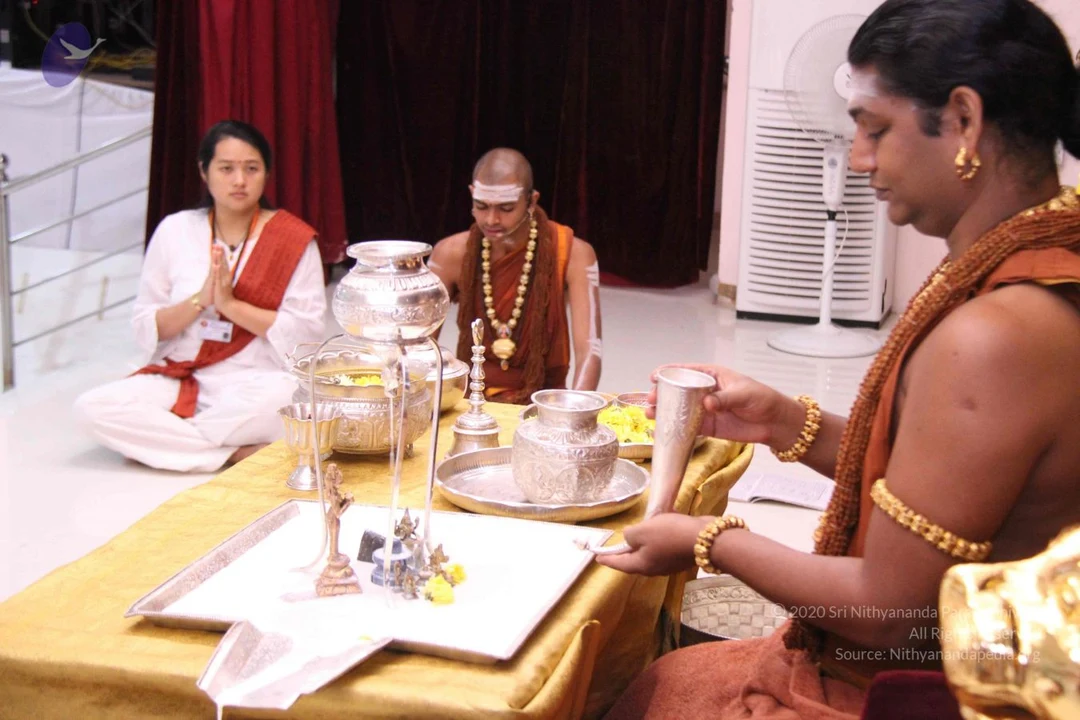
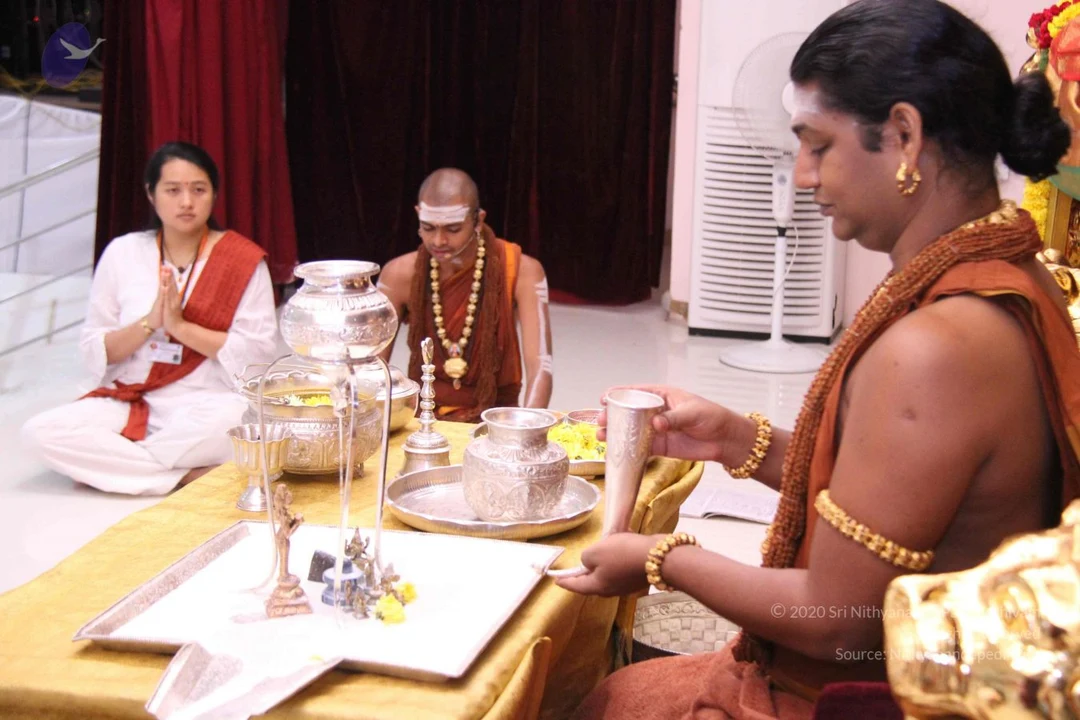
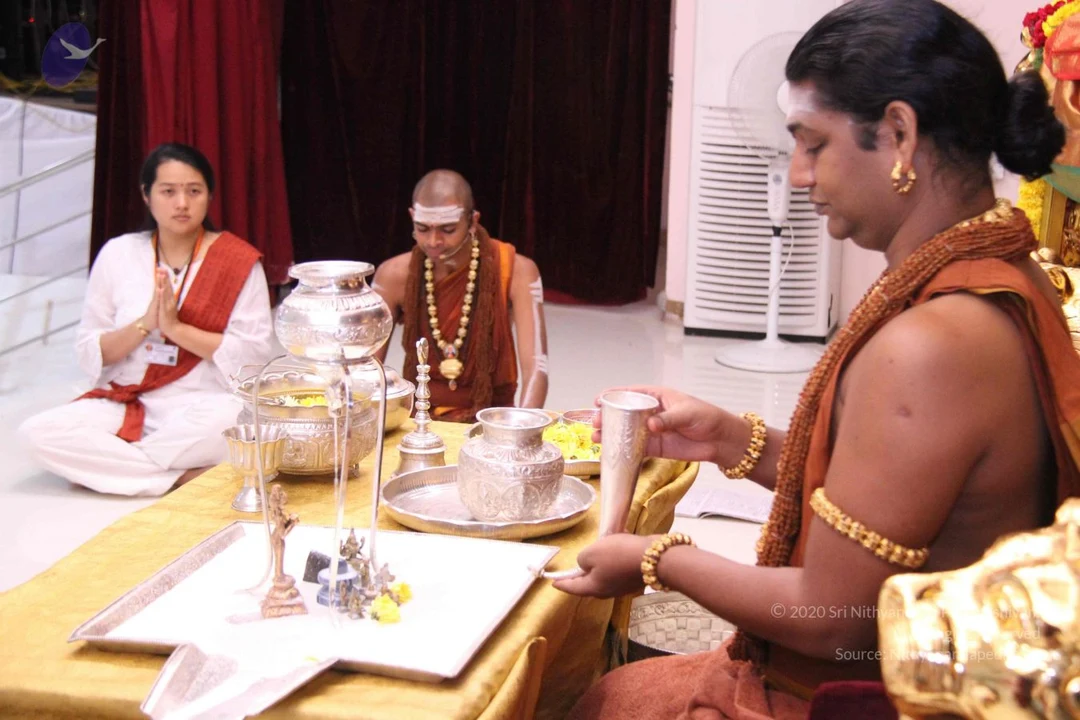
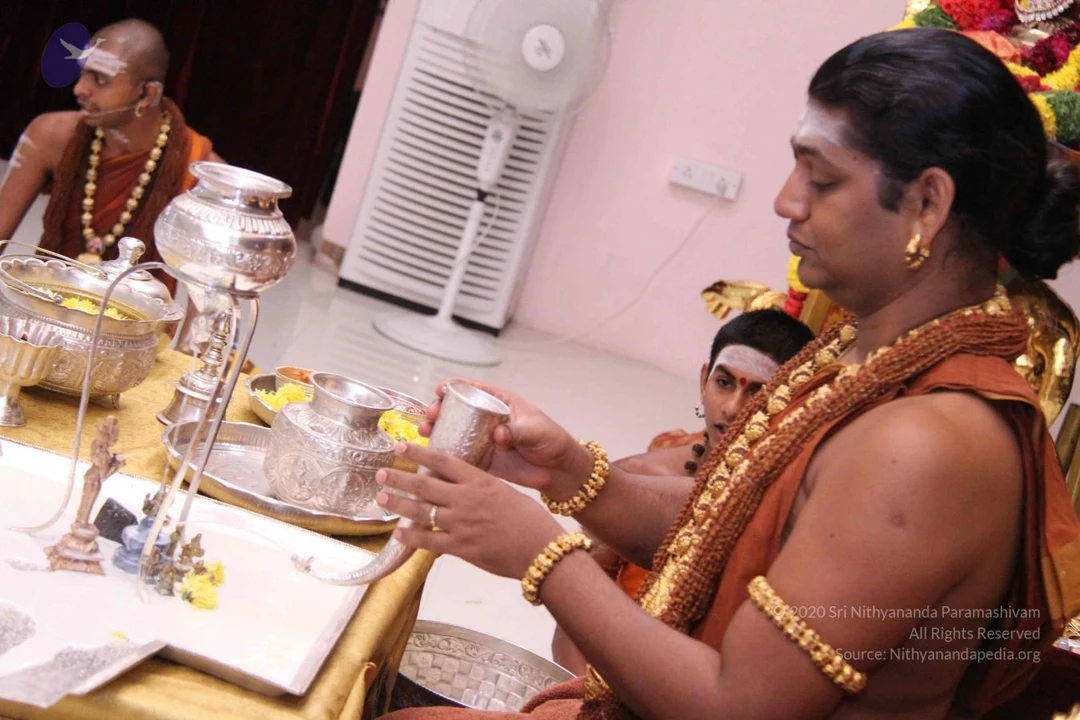
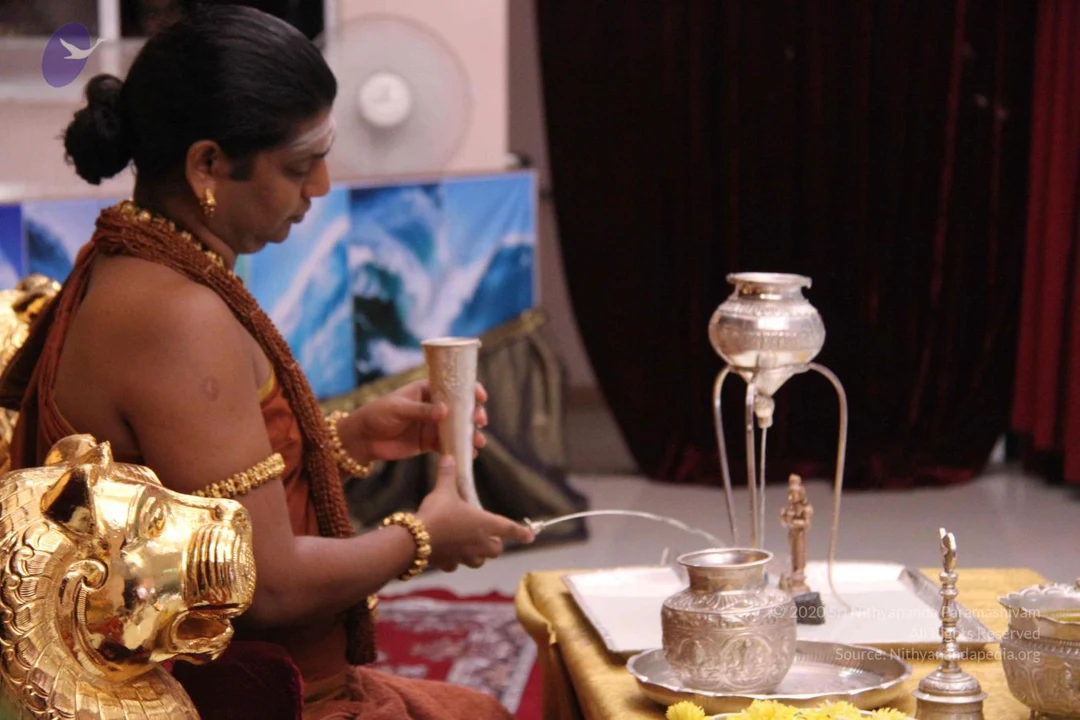
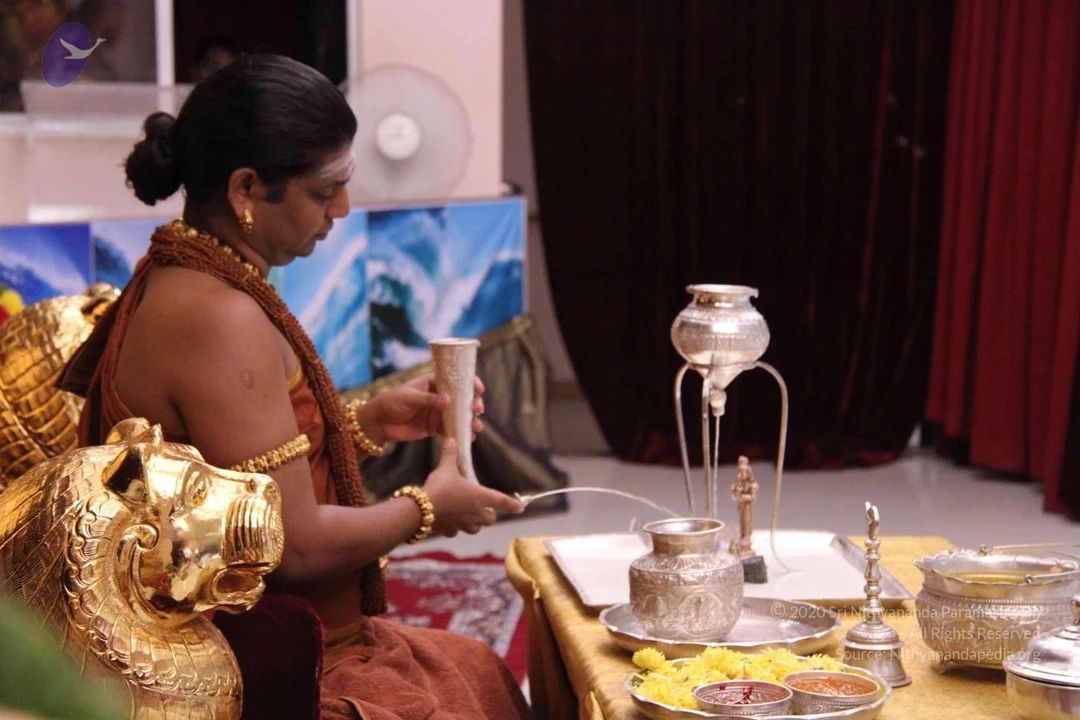
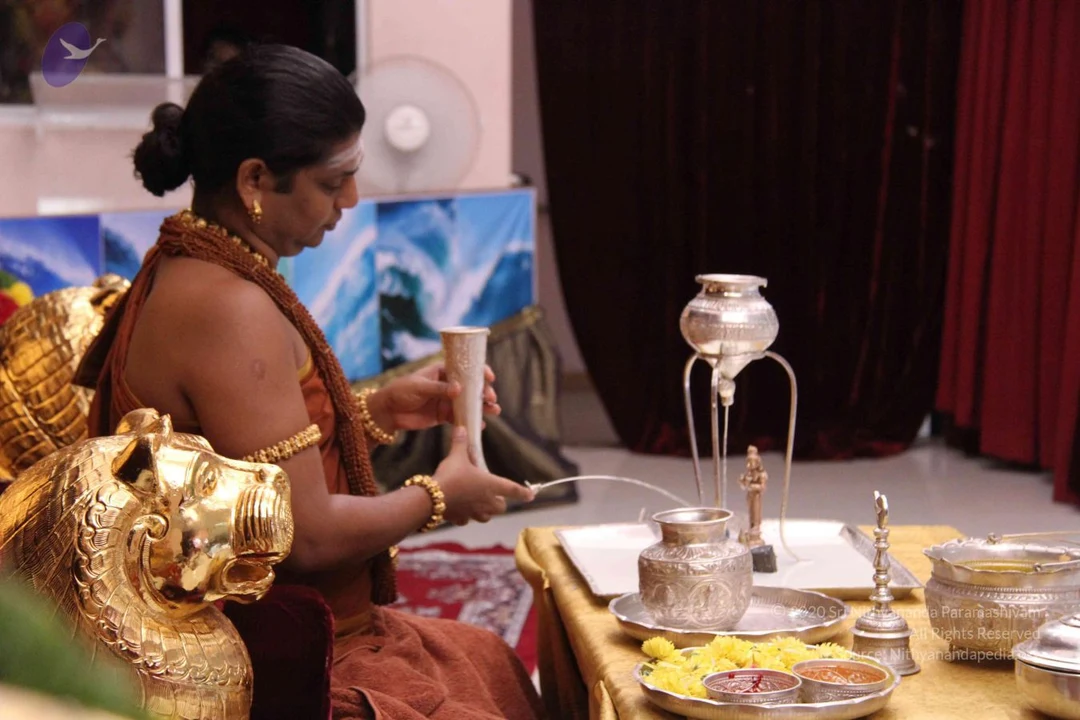
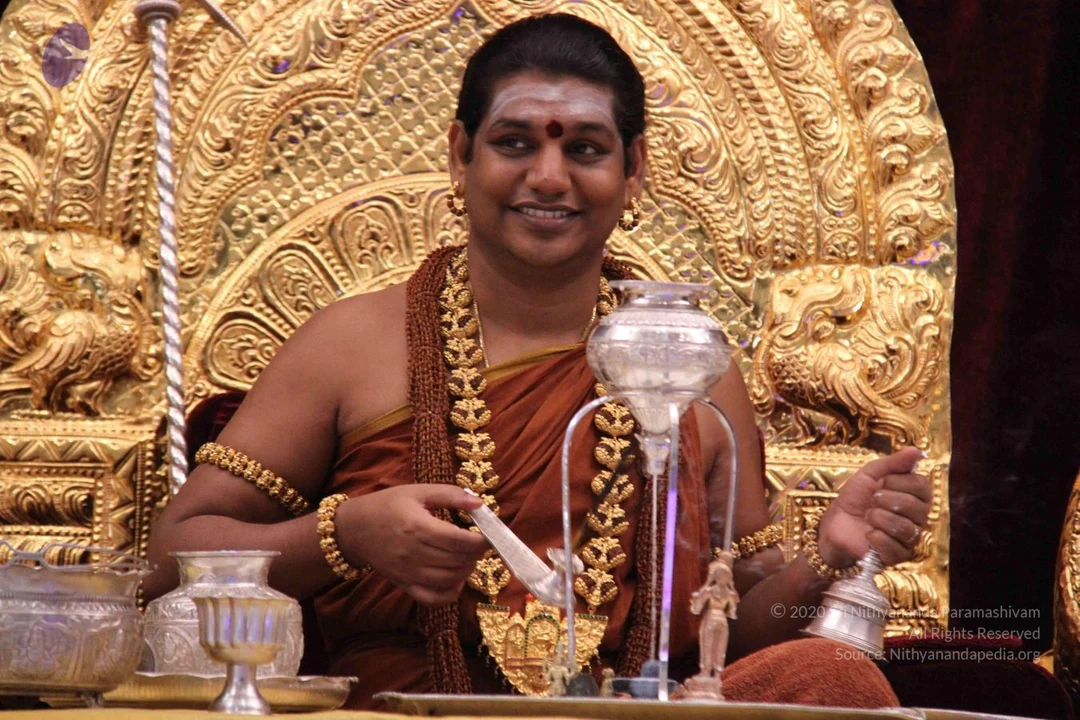
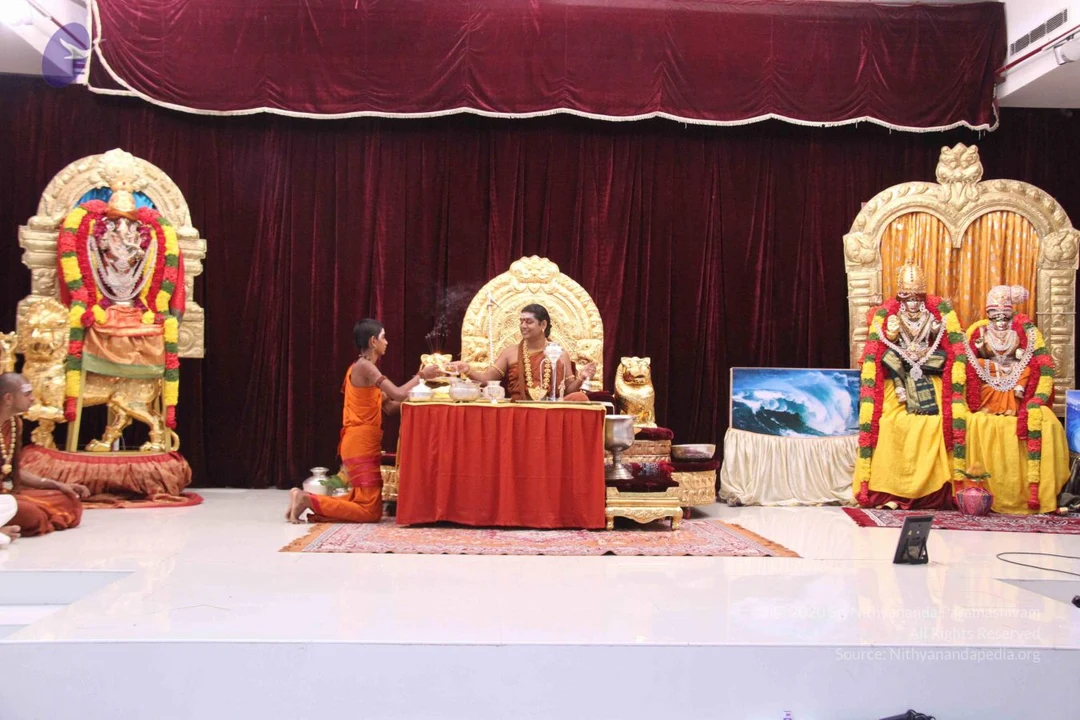
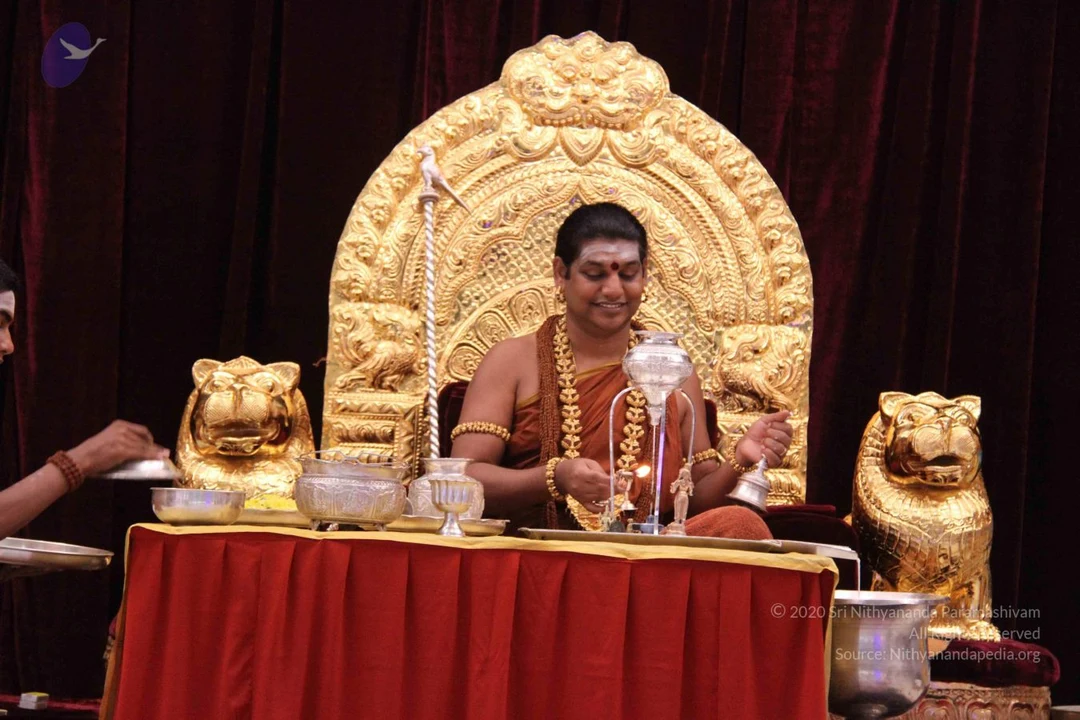
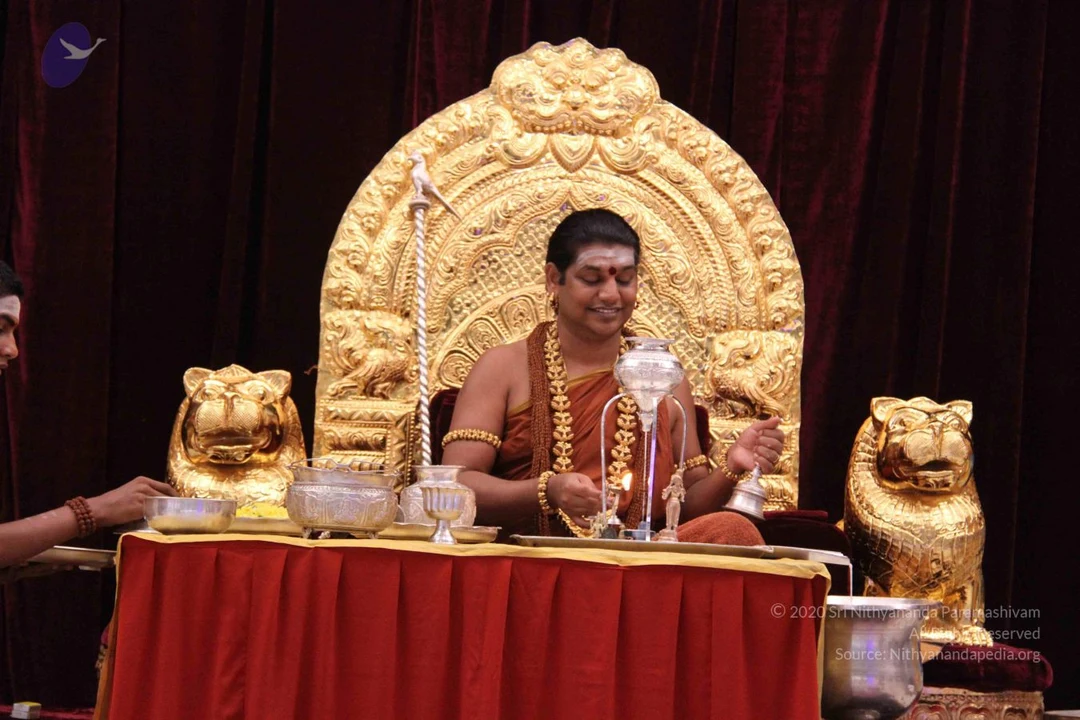
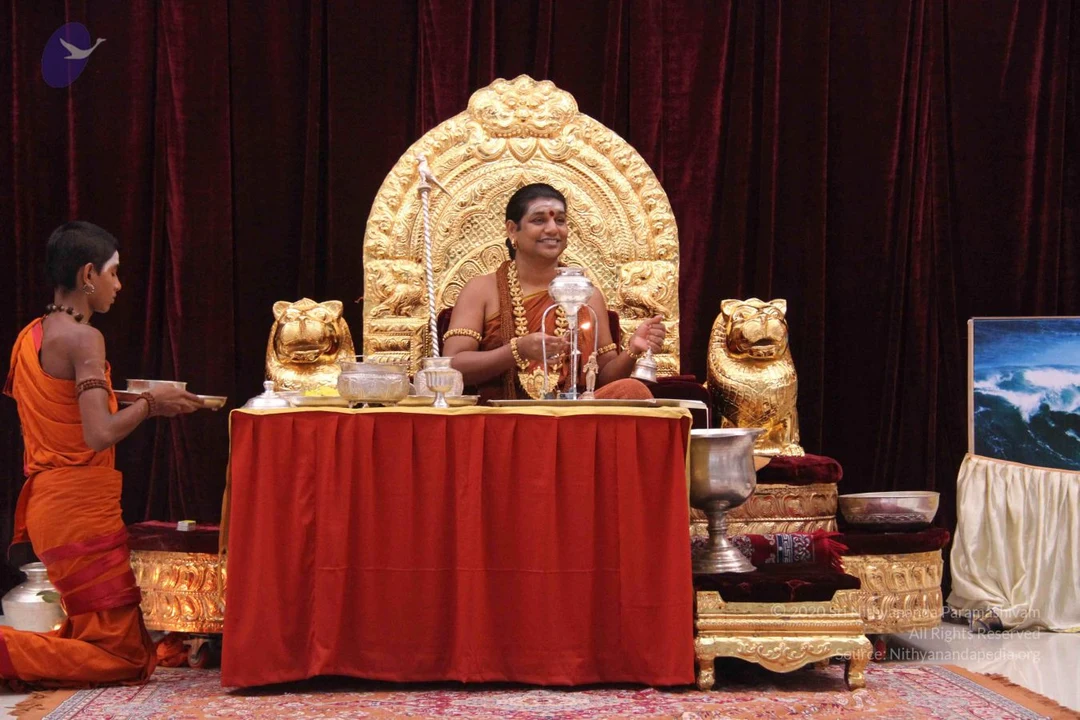
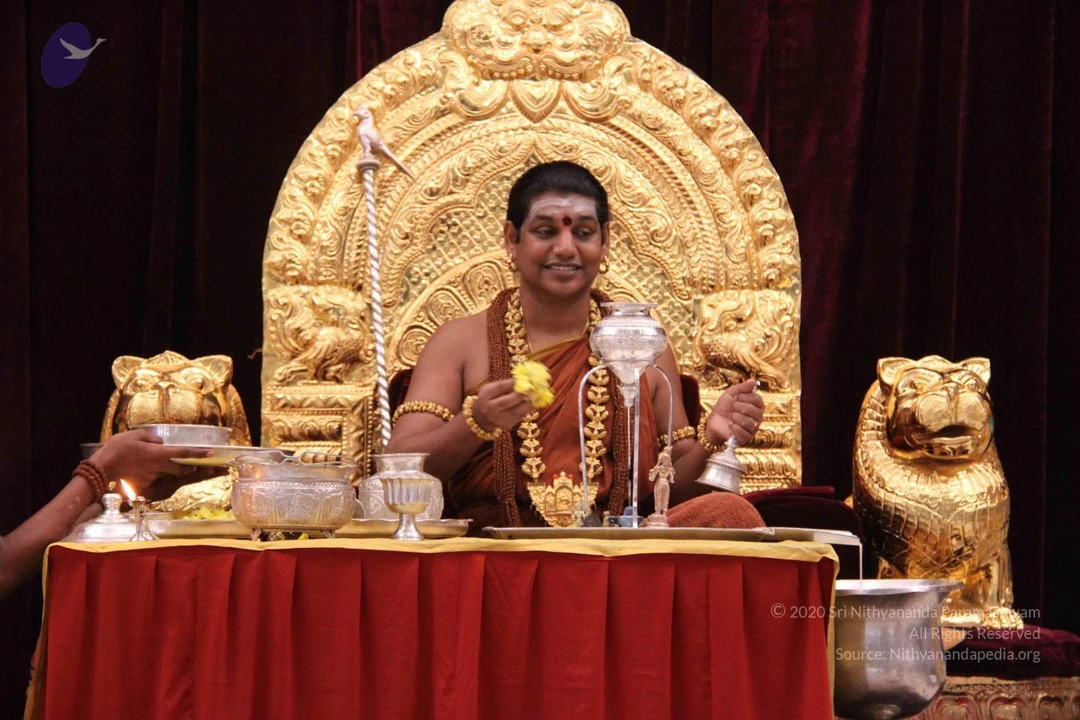
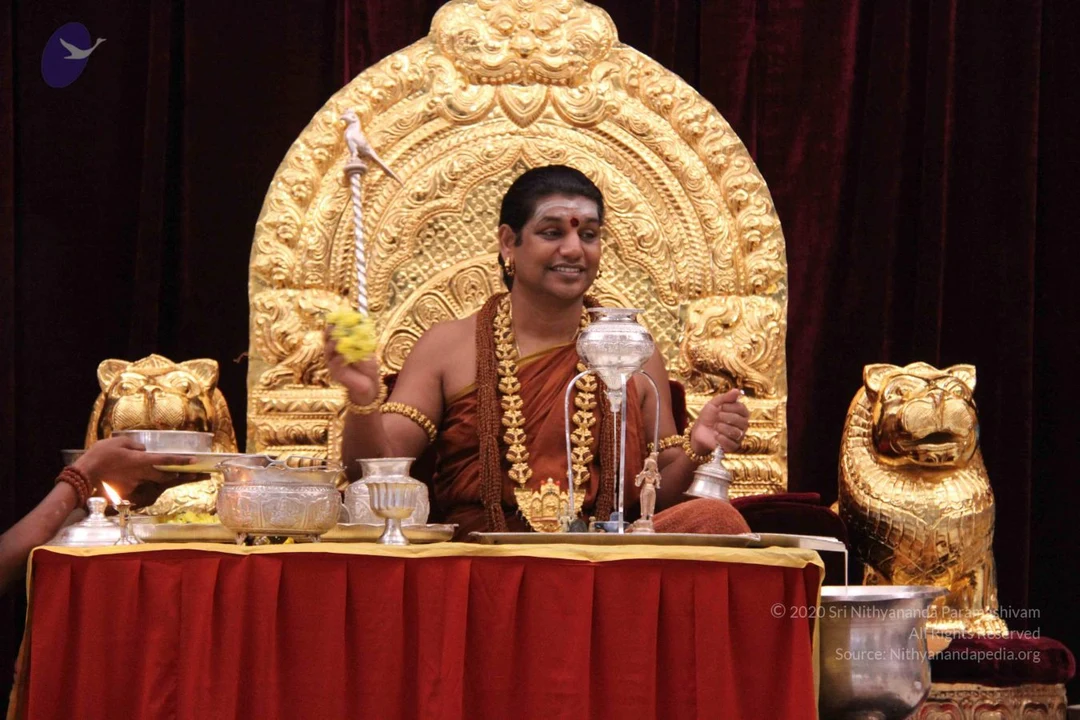
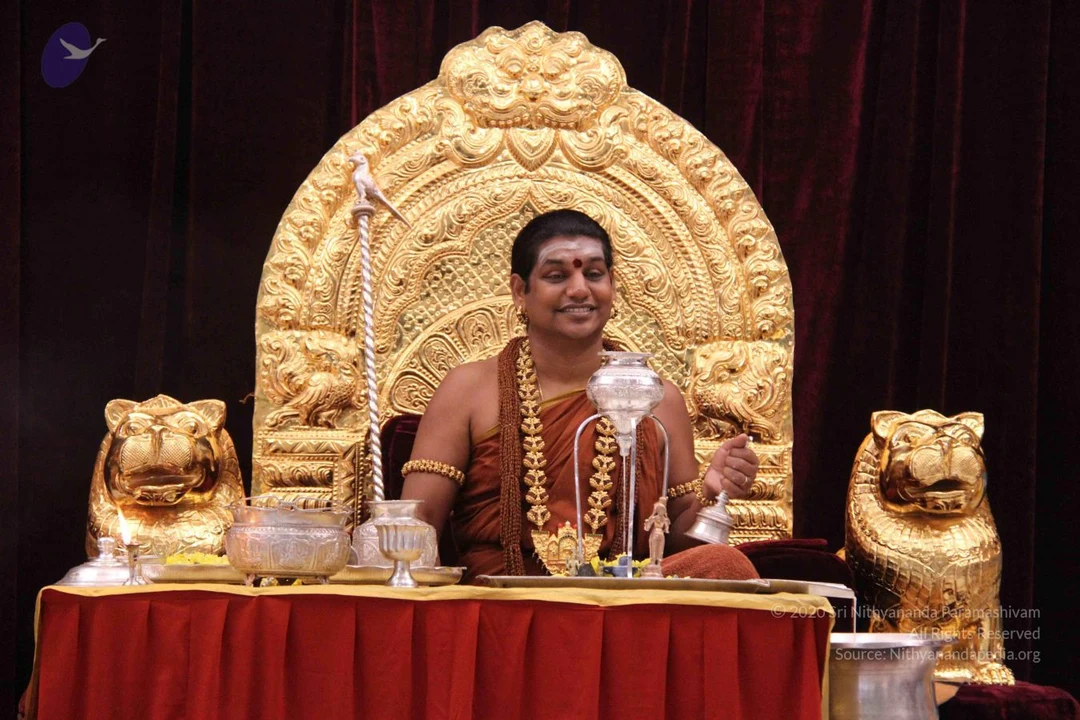
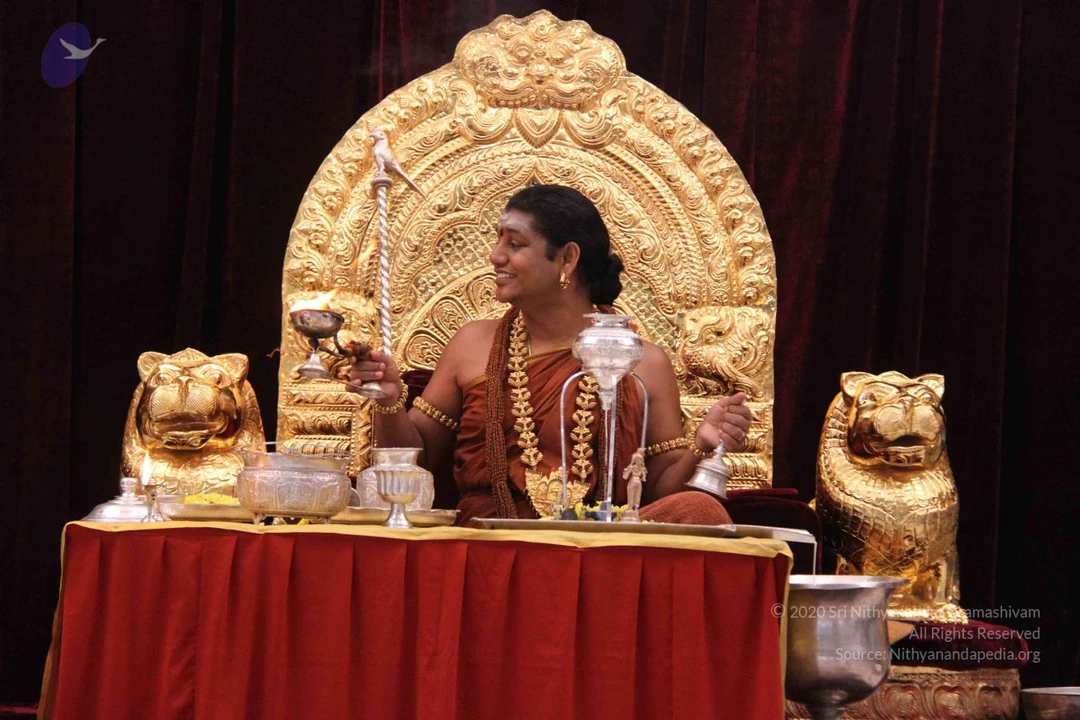
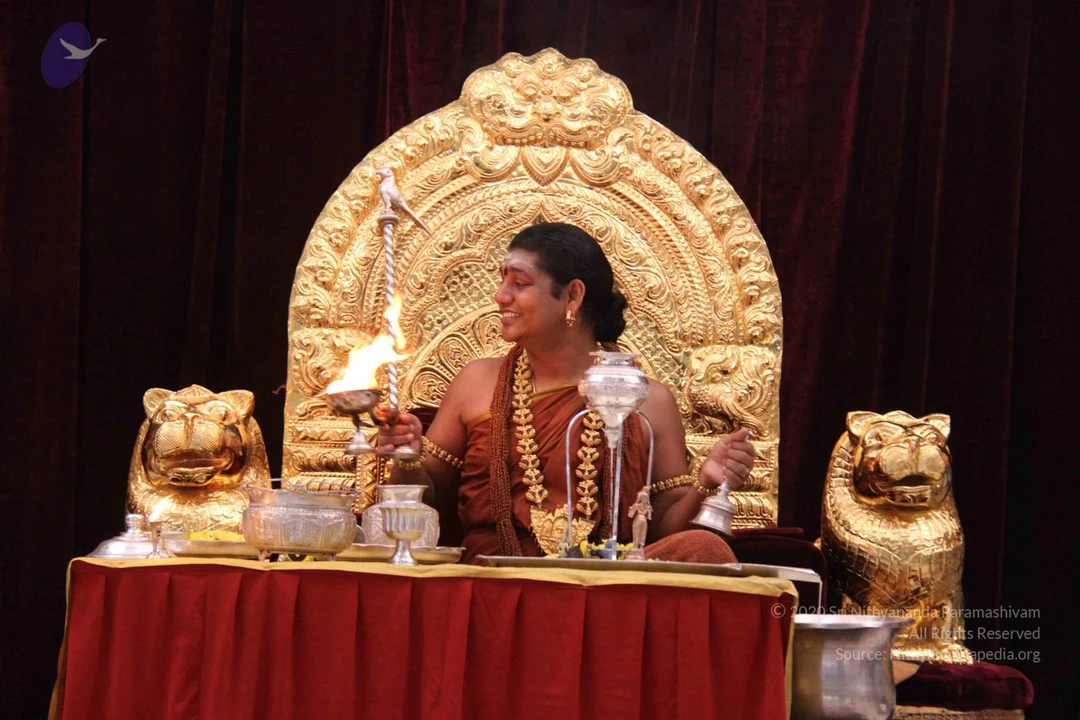
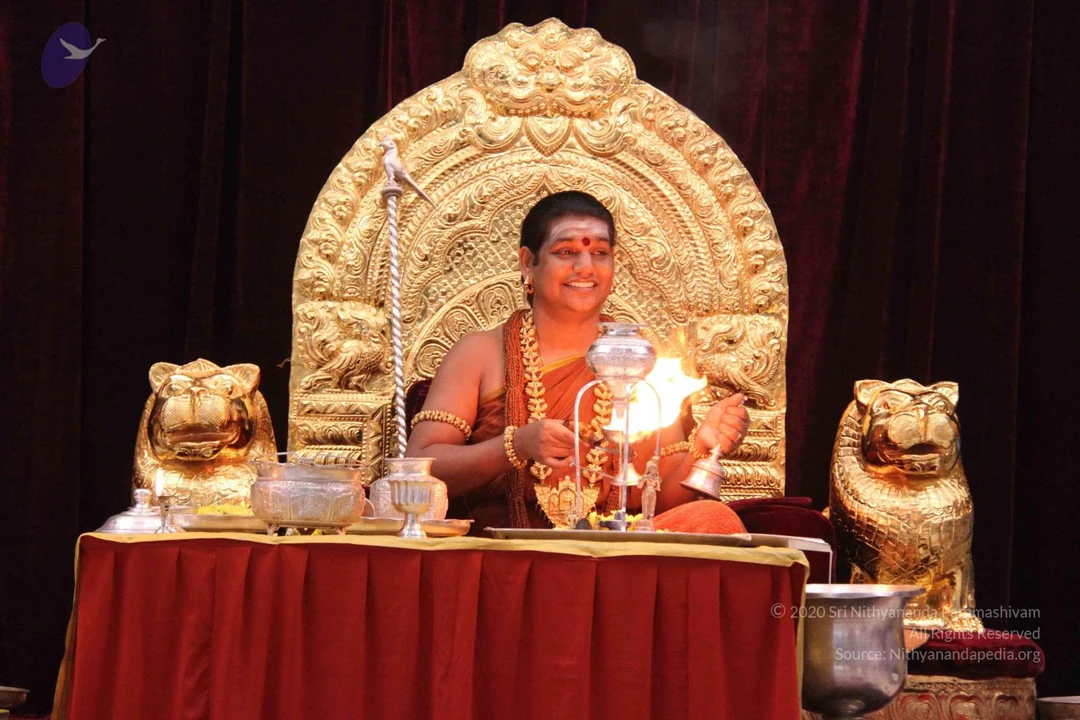
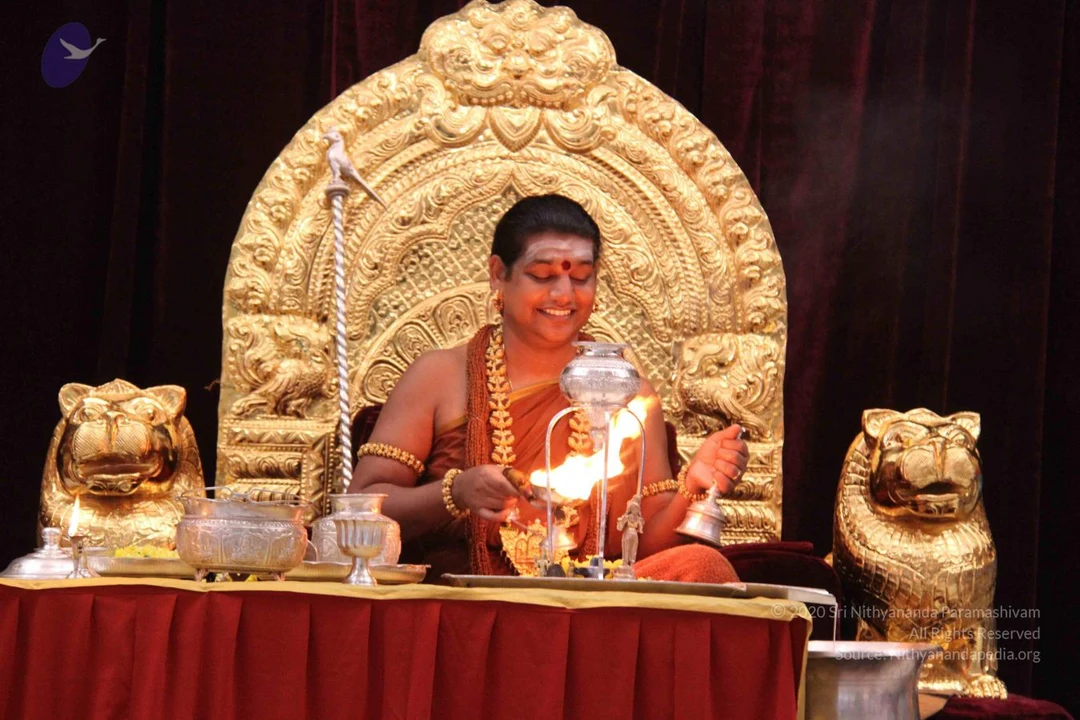
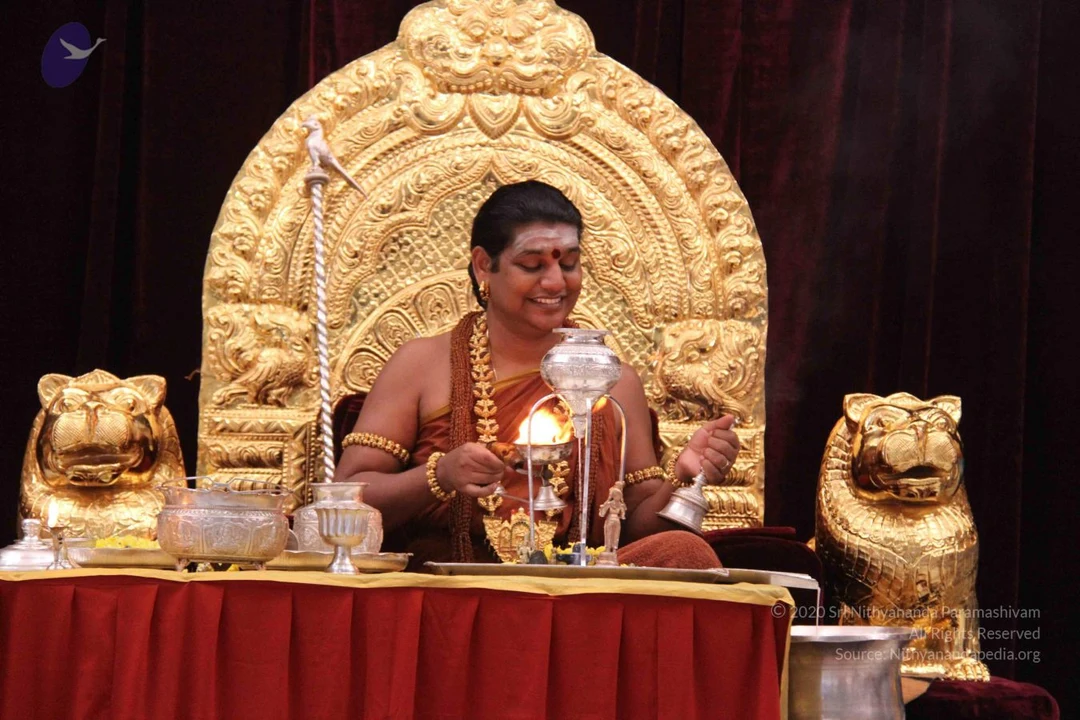
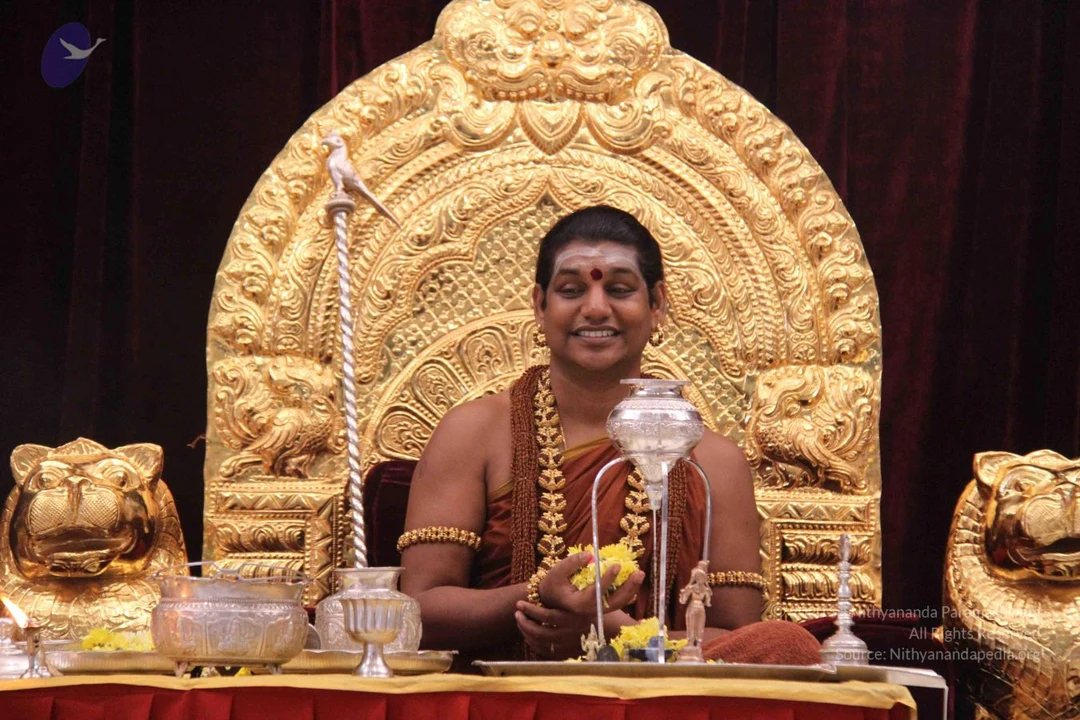
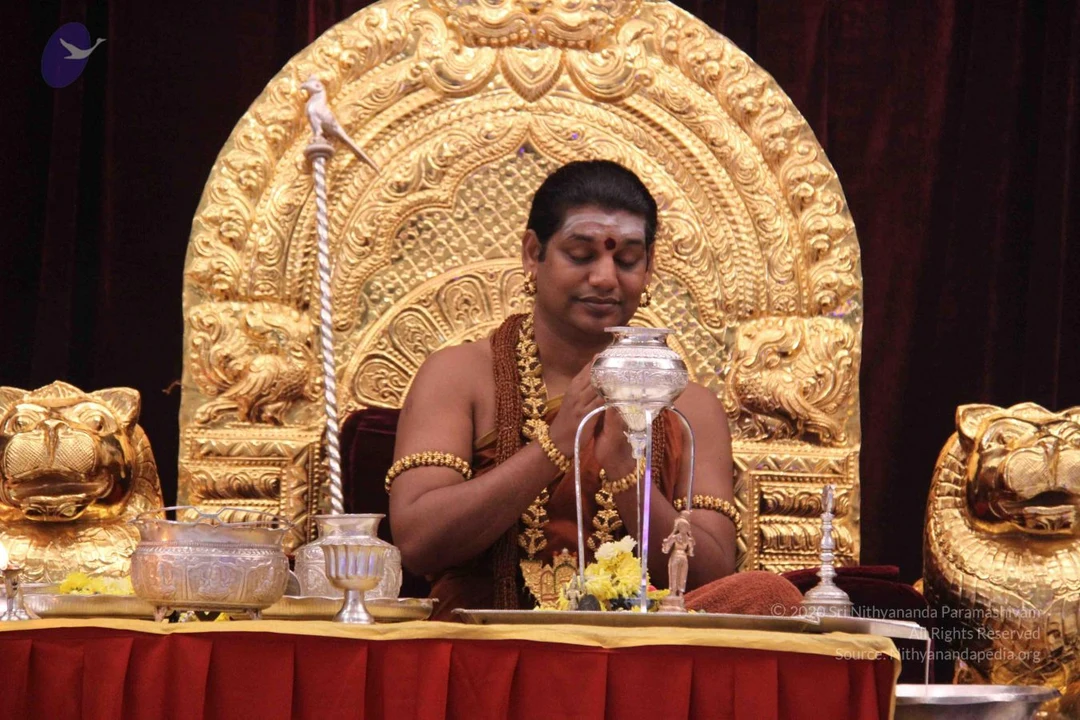
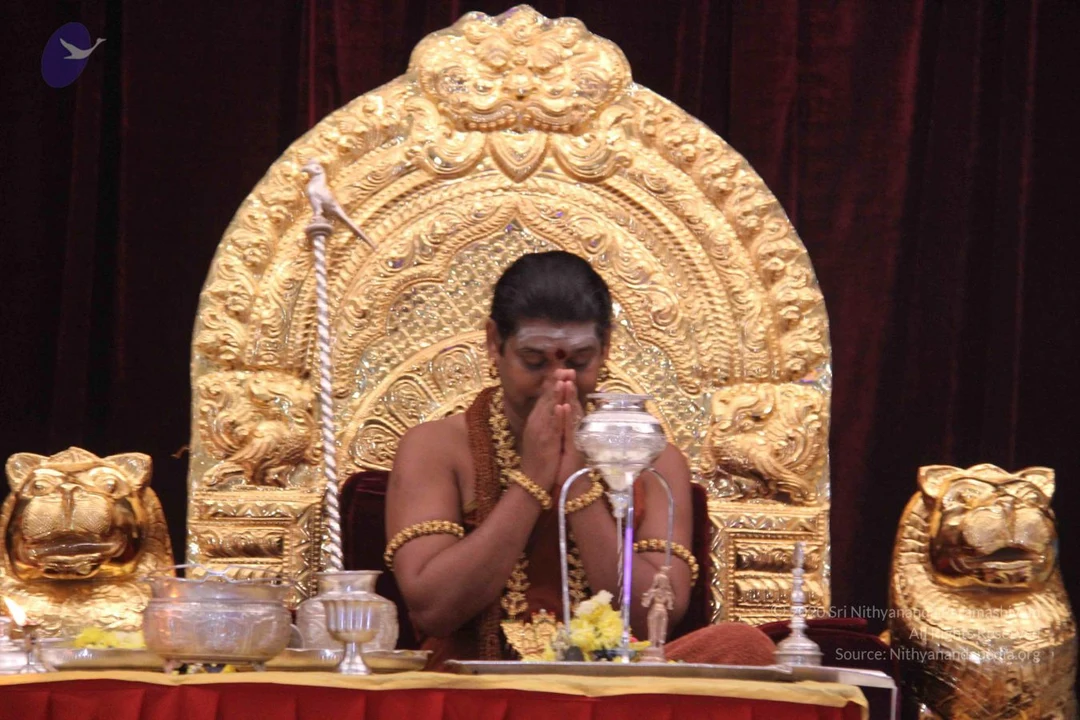
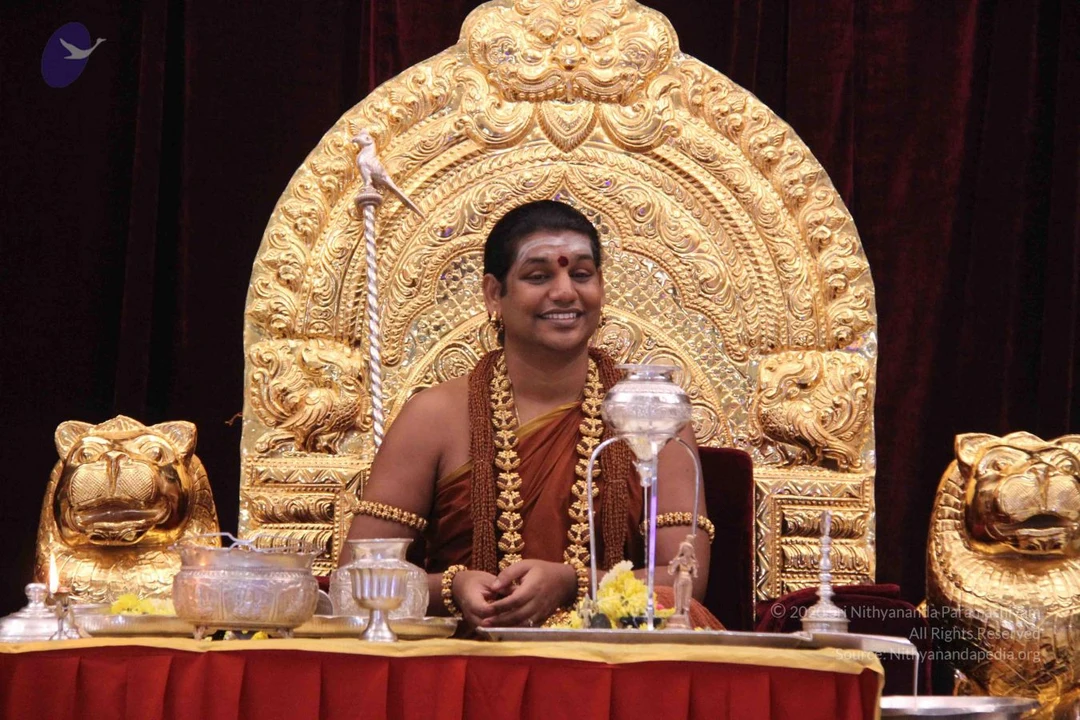
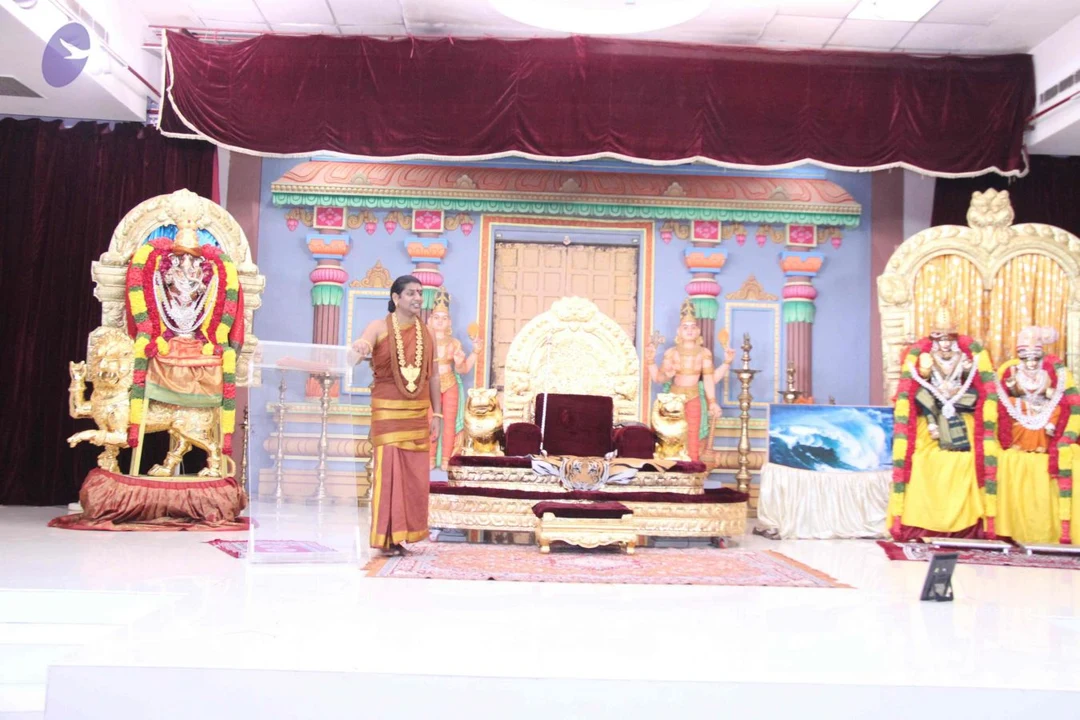
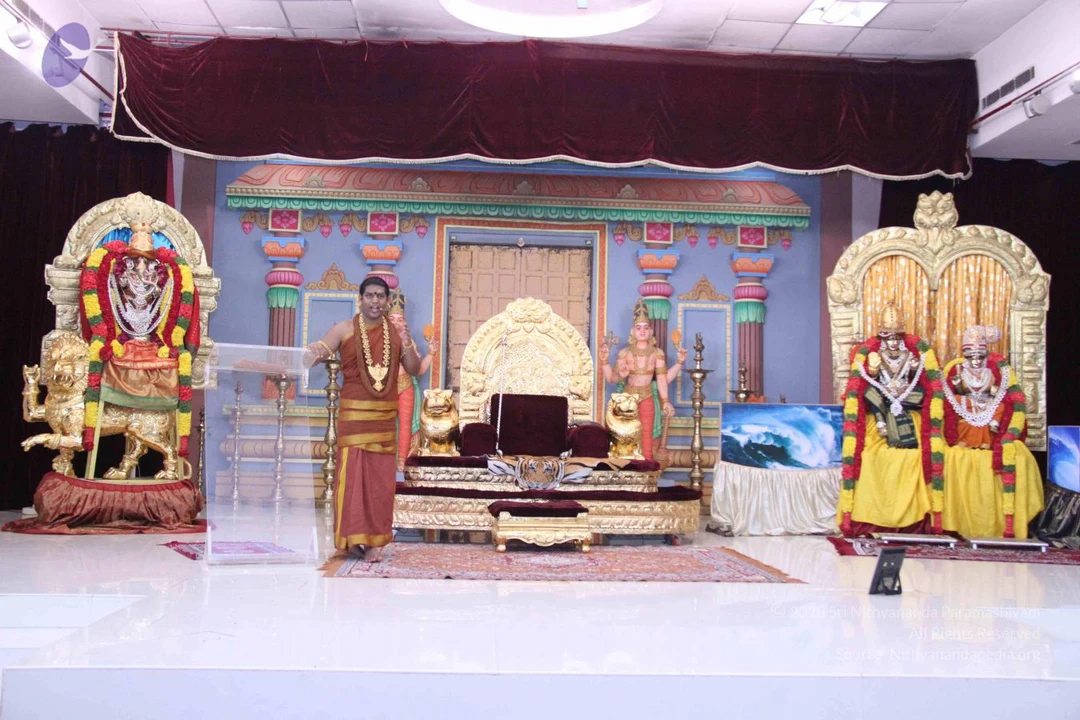
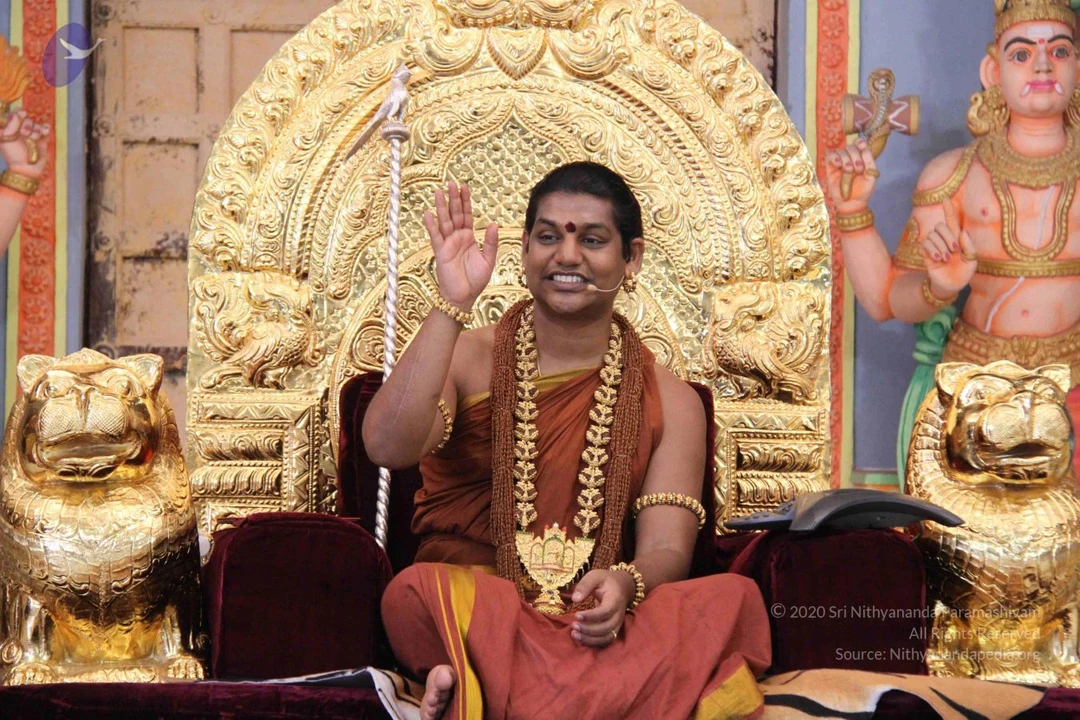
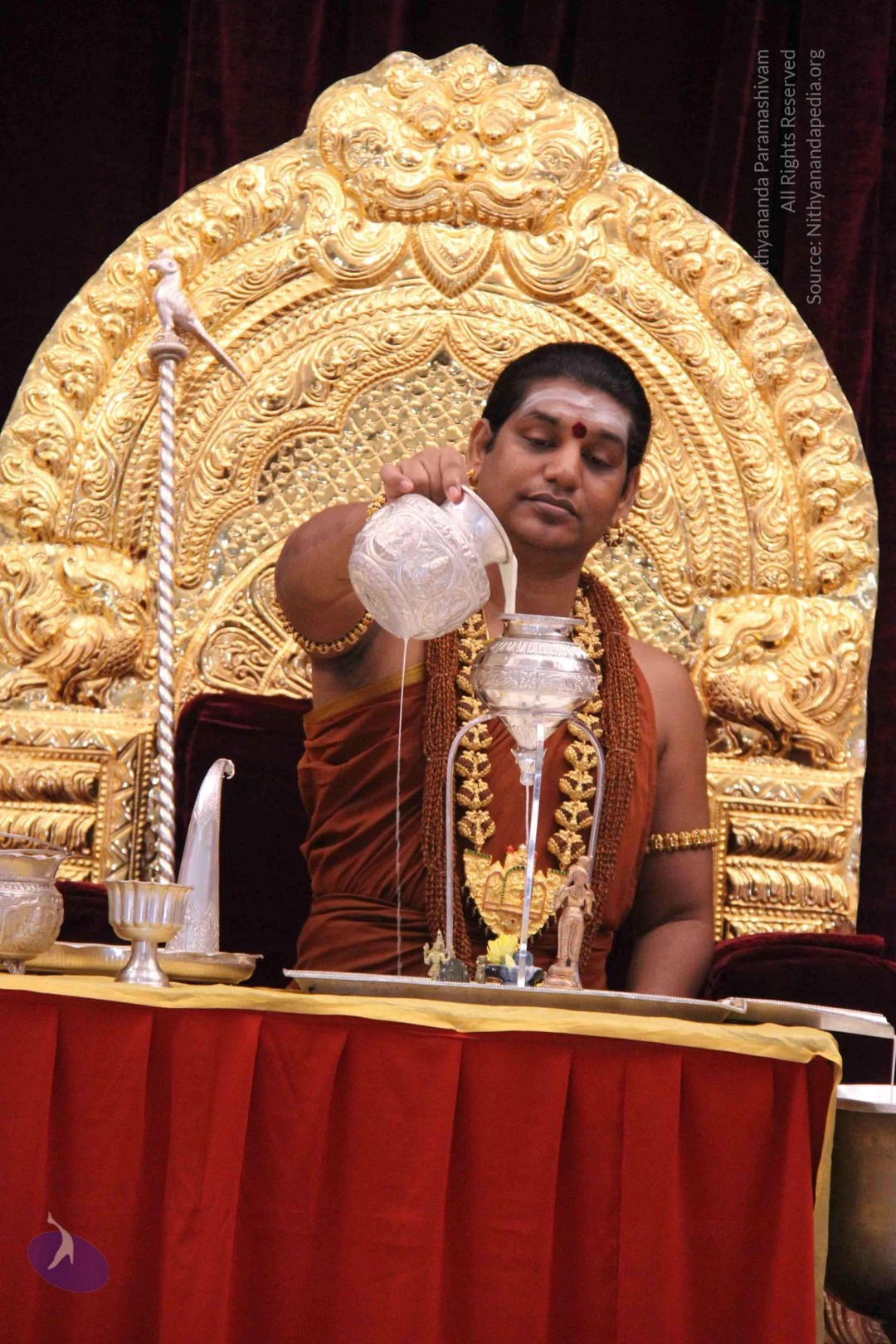
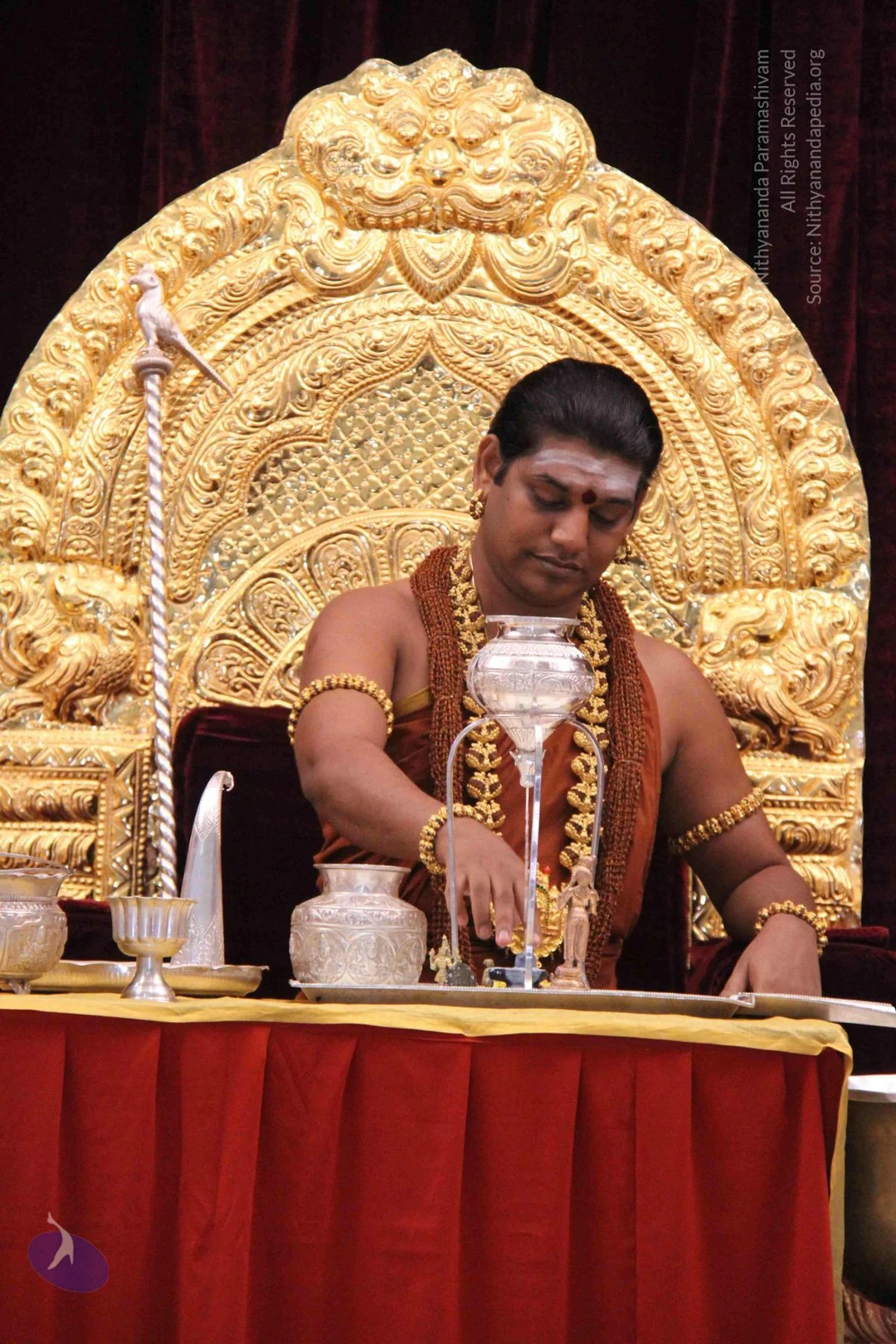
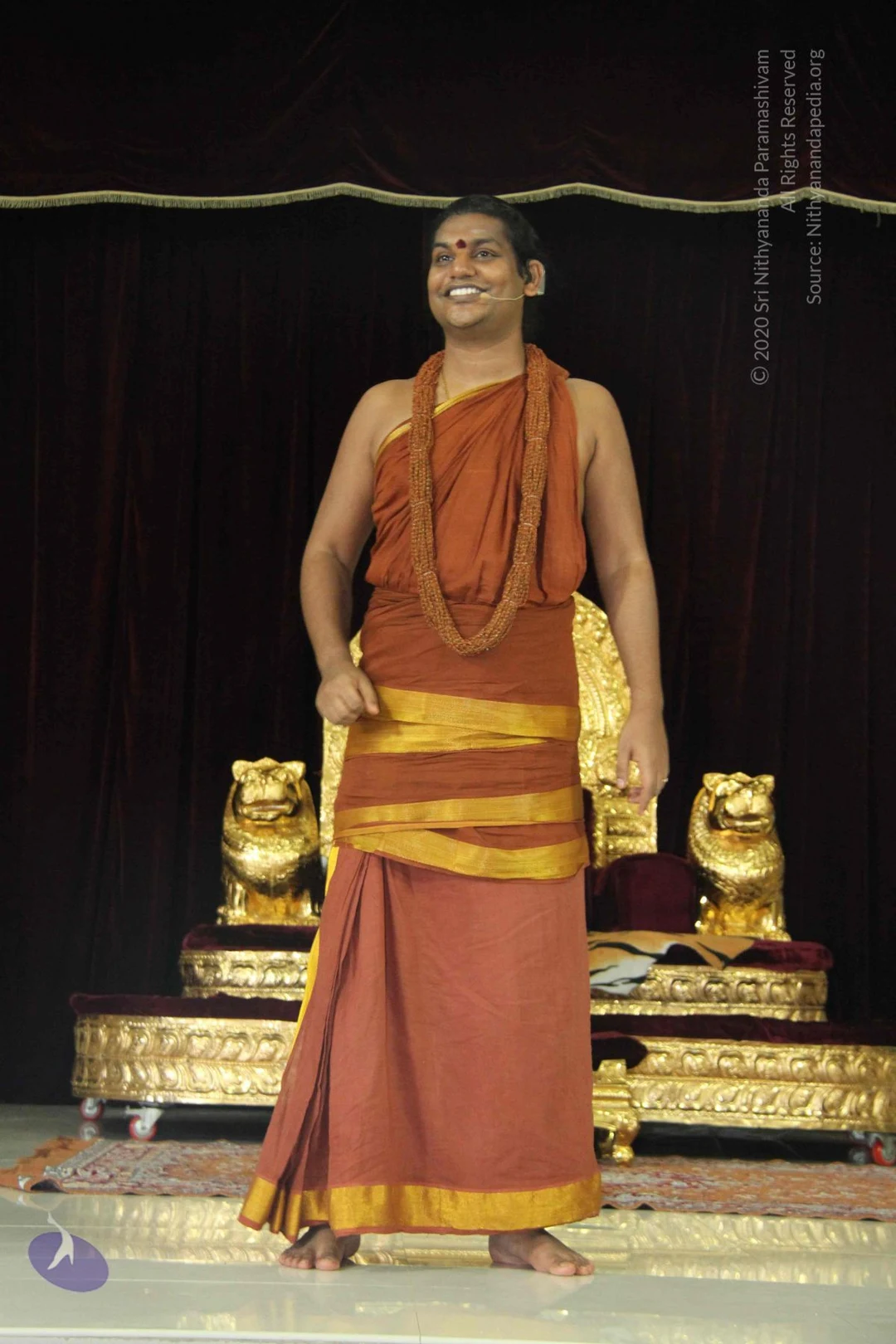
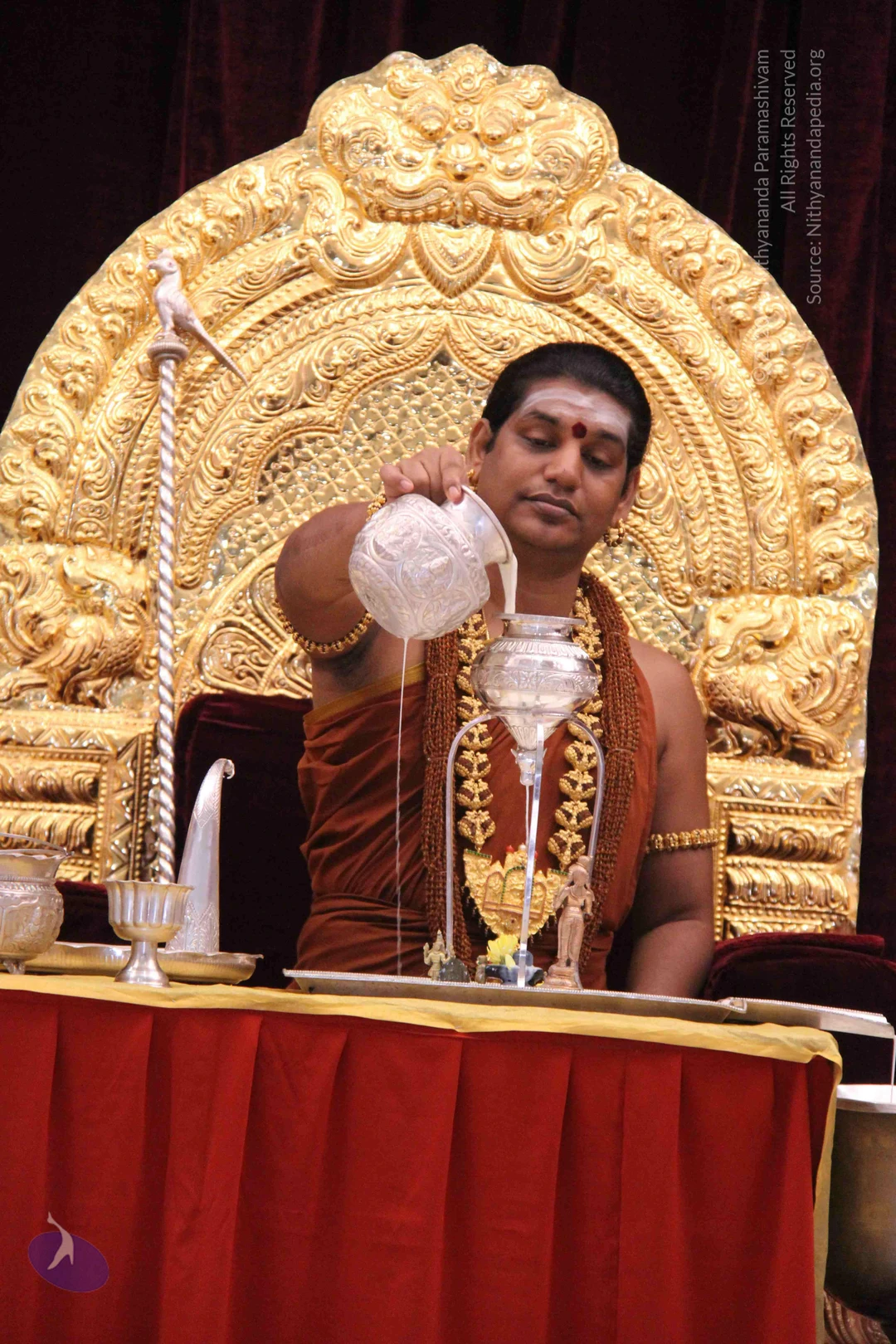
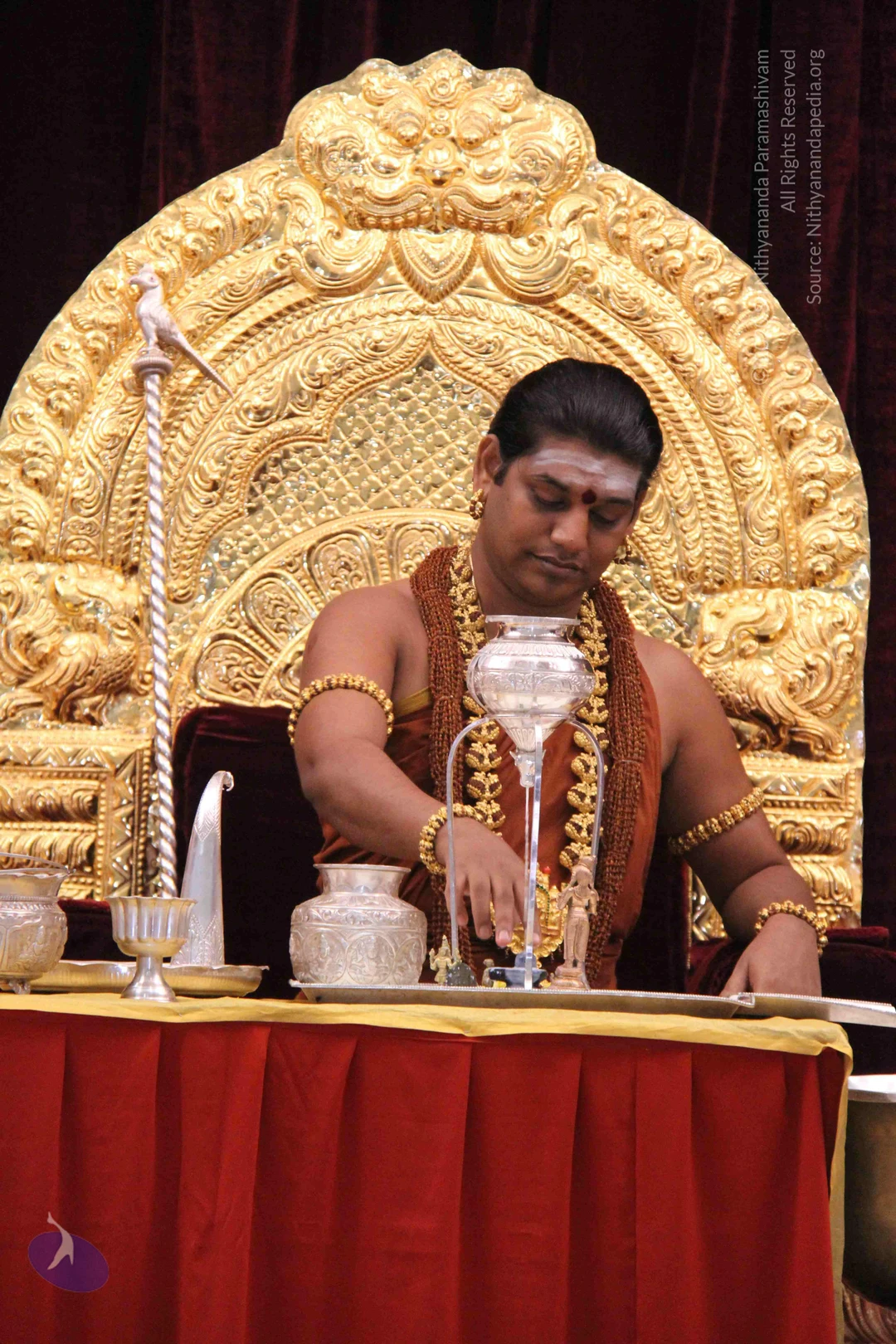
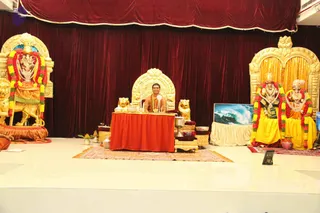
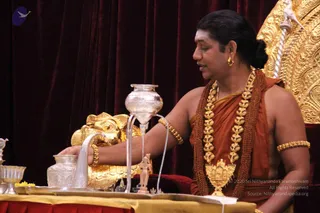
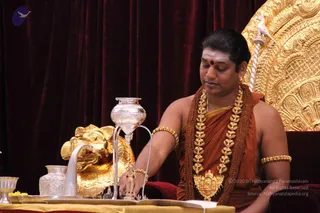
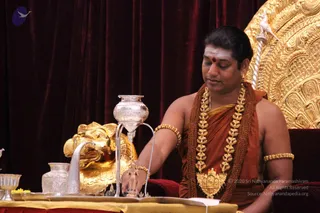
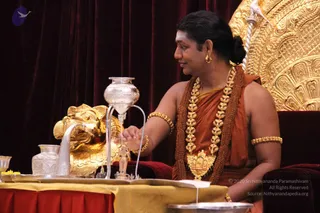
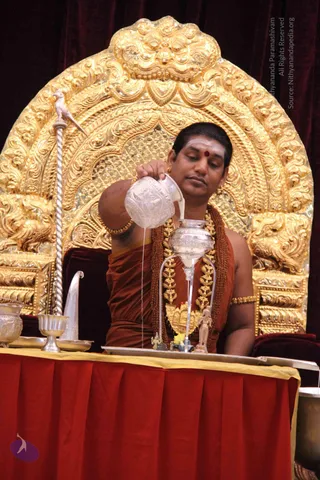
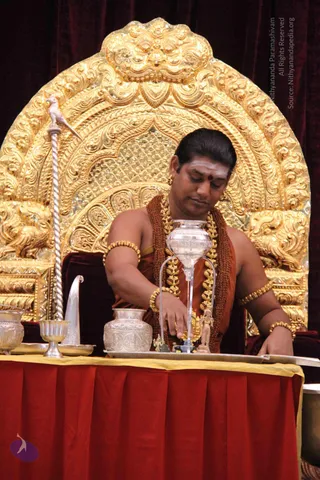
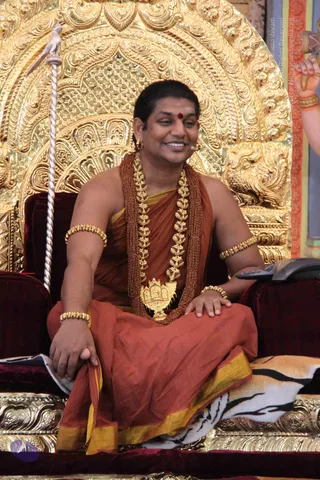
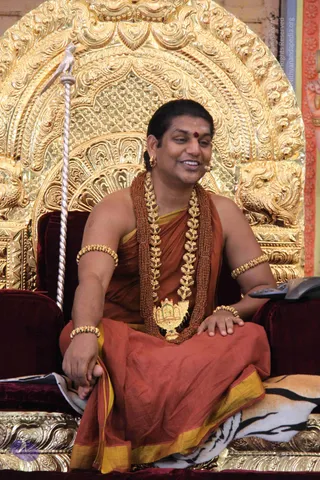
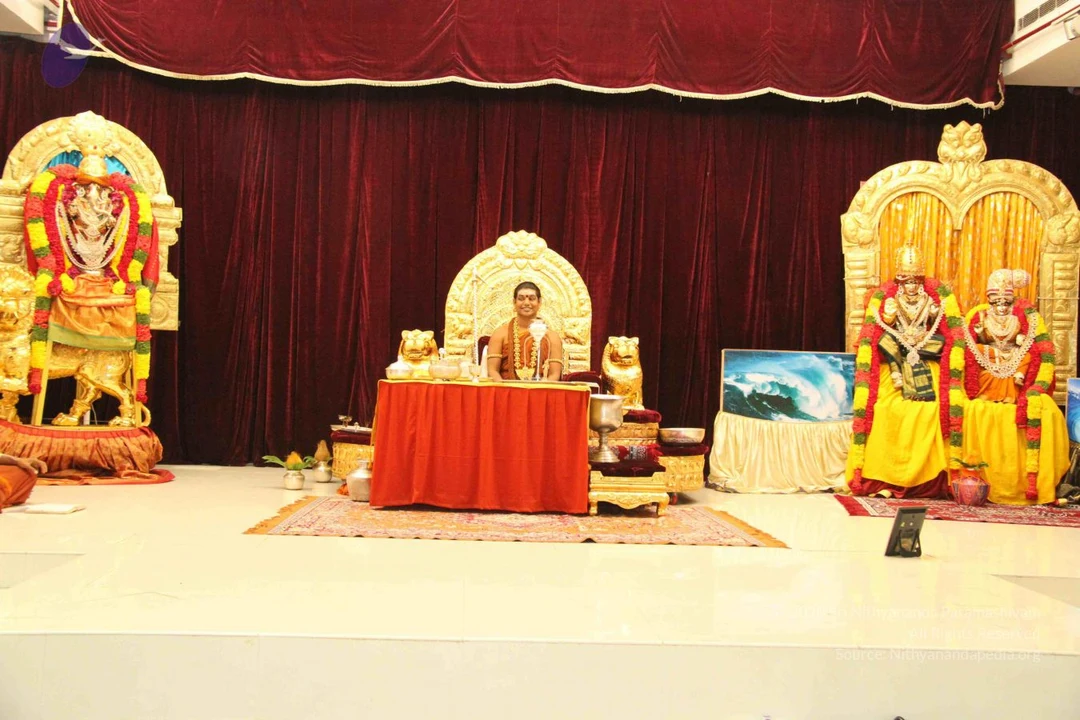
A stage set with a deep maroon velvet backdrop and gold-framed ornate thrones. A seated man in the centre, wearing a saffron-orange garment and rudraksha beads, sits behind a red-draped table holding a kalasha-style vessel and small offerings. Two large gold murti figures flank the stage: on the left a gold lion-mount figure garlanded with red and yellow flowers, and on the right two seated deities in yellow and gold garments with flower garlands. A painted seascape canvas stands on a white-draped stand to the right, referencing the seven oceans. Gold lion figures sit beside the central seat. The setting suggests a discourse or ritual satsang. The man's identity cannot be confirmed from appearance.A stage set with maroon velvet drapes and a gold-framed arched backdrop. Centre stage, a man in an orange-brown garment with a rudraksha-style necklace sits on a gold throne behind a red-draped table holding brass vessels and a bowl, with lion figures flanking him. To the left, a golden deity murti of Ganesha stands on a lion-shaped pedestal, garlanded in red and orange flowers. To the right, two seated deity murtis in yellow silk, one with a crown and one with a tall headdress, are adorned with garlands and ornaments. A framed picture of ocean waves sits on a white table at right. Red and patterned rugs cover the floor.A photograph of a person in an orange-saffron dhoti and shawl, with a thick rudraksha mala and a heavy gold ceremonial necklace with a gold pendant, gold armlets and bangles, and a gold stud earring. He stands at a table covered in gold cloth, pouring water through a clear glass vessel with a metal spout over a small brass or gold deity murti, as in an abhishekam. A gold lion-faced or ornate gold object sits behind the table, with a clear glass jug, a brass bowl and a metal plate of yellow flowers in front. Behind him are maroon velvet drapes and a gold throne with a silver bird finial. Only one physical person is visible.A seated man in saffron-orange draped clothing sits on a golden throne before deep red velvet drapes, pouring water from a silver vessel through a silver spout onto a metal lingam or deity murti on a tray. He wears a gold ornate necklace and a rudraksha-style mala, gold armlets, and a red bindi with a vertical white marking. Beside him a gold lion-shaped carved object stands, with silver jugs and a small silver bowl on a yellow-draped table with yellow flowers. Ritual abhishekam setting.A seated man in an orange-saffron dhoti and shawl, bare-shouldered, with gold armlets, a gold bracelet and a heavy gold-and-rudraksha necklace over a gold pendant, sits before a large gold throne with a carved peacock finial. He has a red bindi and tripundra marks, and he pours water from a silver vessel with a spout through a silver pot stand, beside a gold makara-head spout and a silver bowl with flowers on a yellow-draped table. Dark red velvet drapery forms the background. A man in orange and gold ritual dress pours water in a ritual abhishekam-style setting.Photo of a seated man in saffron-orange ritual dress with a rudraksha mala and ornate gold necklace, bare-armed with gold armlets, and gold earrings, hair tied in a bun. He is pouring water from a clear glass vessel with a metal stem into a silver tray on a yellow-draped table. A large gold lion-head fountain spout and a silver pot stand beside him. Behind him a golden ornate throne backrest hangs against red velvet curtains. A small flower is on the tray. Shown as a portrait-style ritual scene.

Pratyaksha Pada Pooja
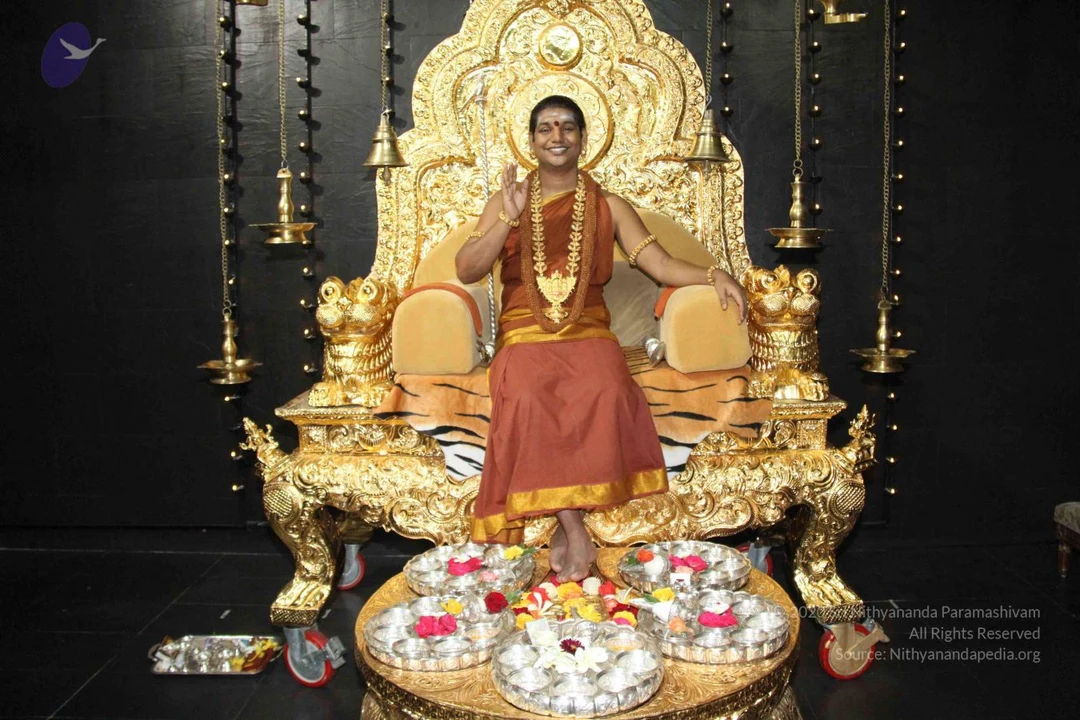
4 photosSource gallery
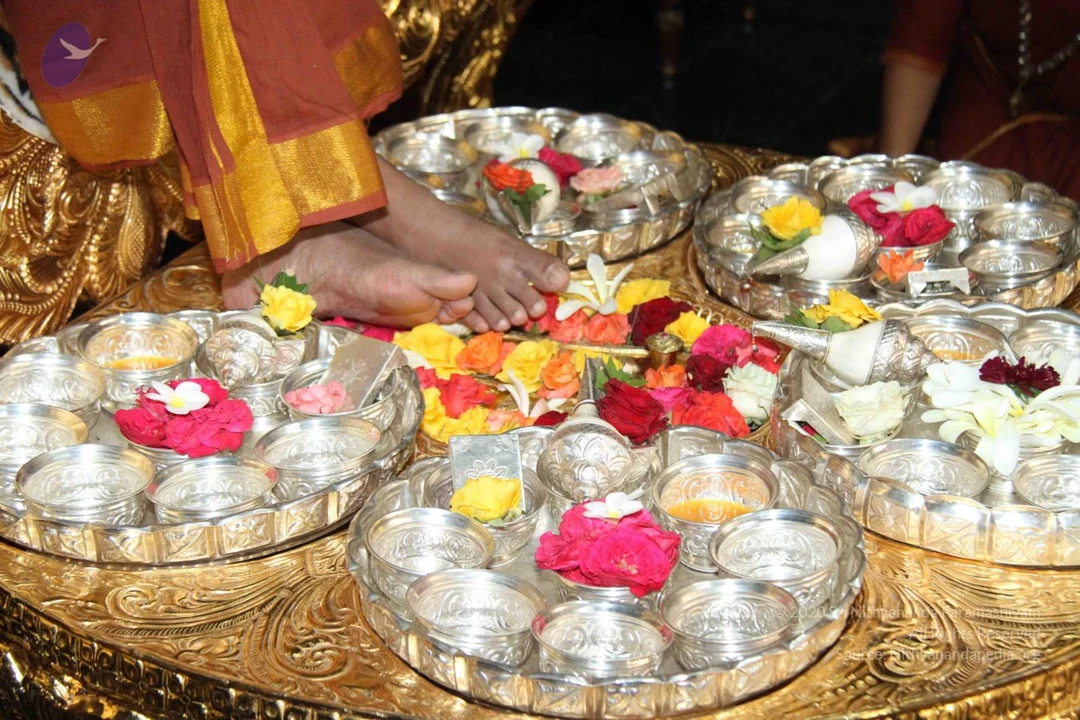
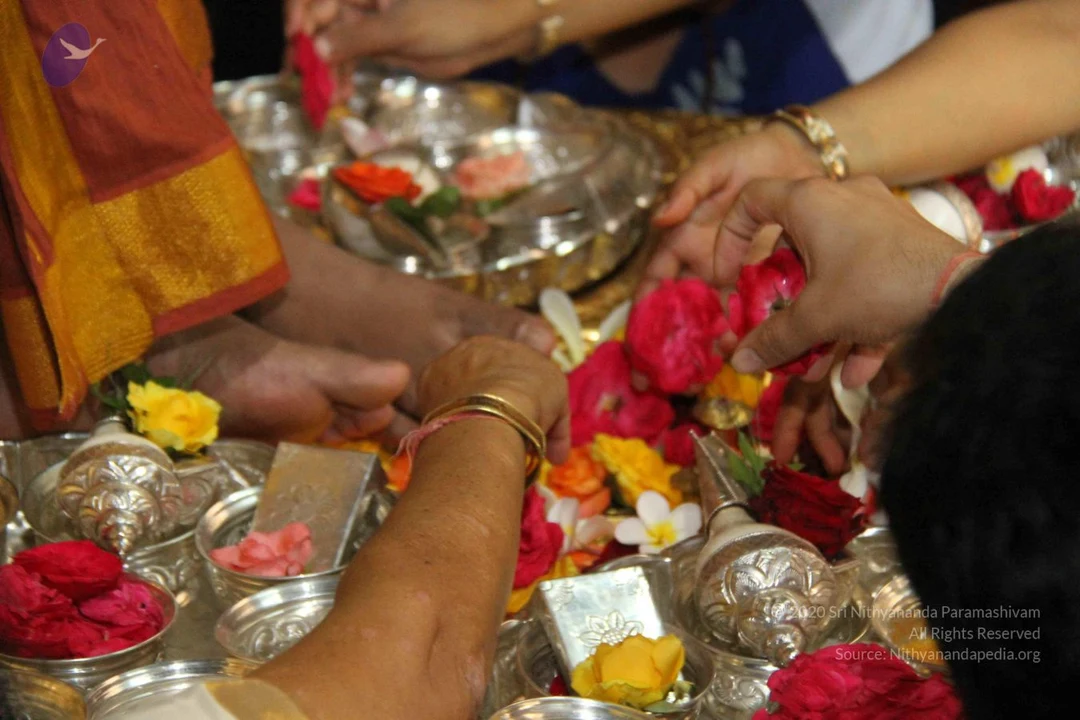
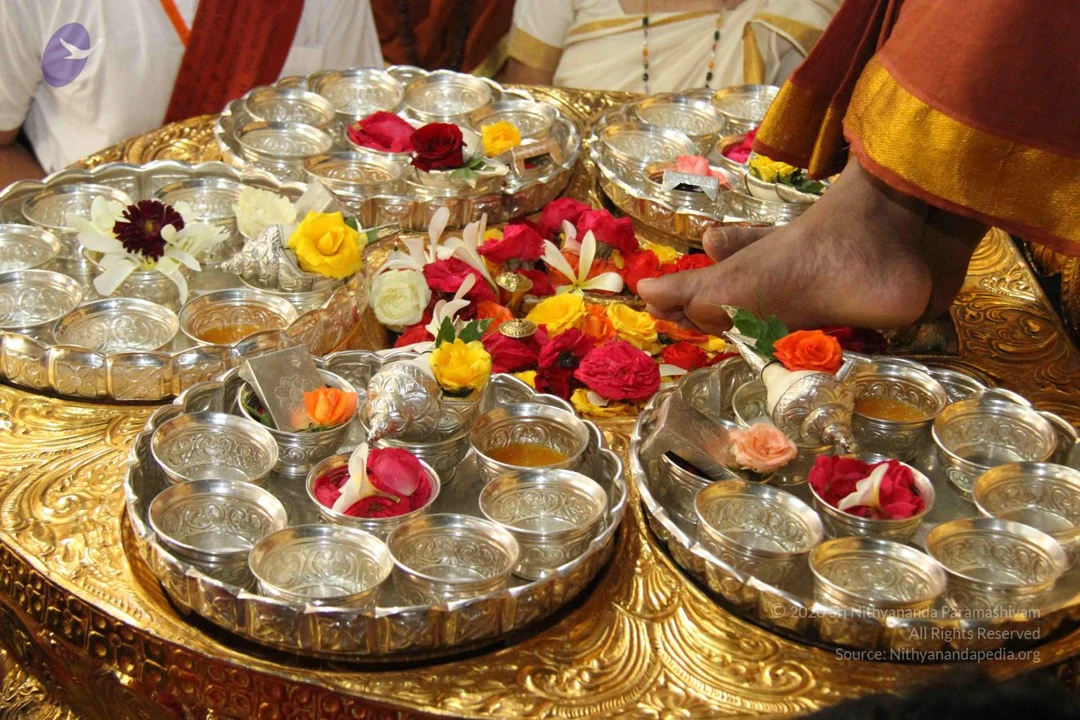
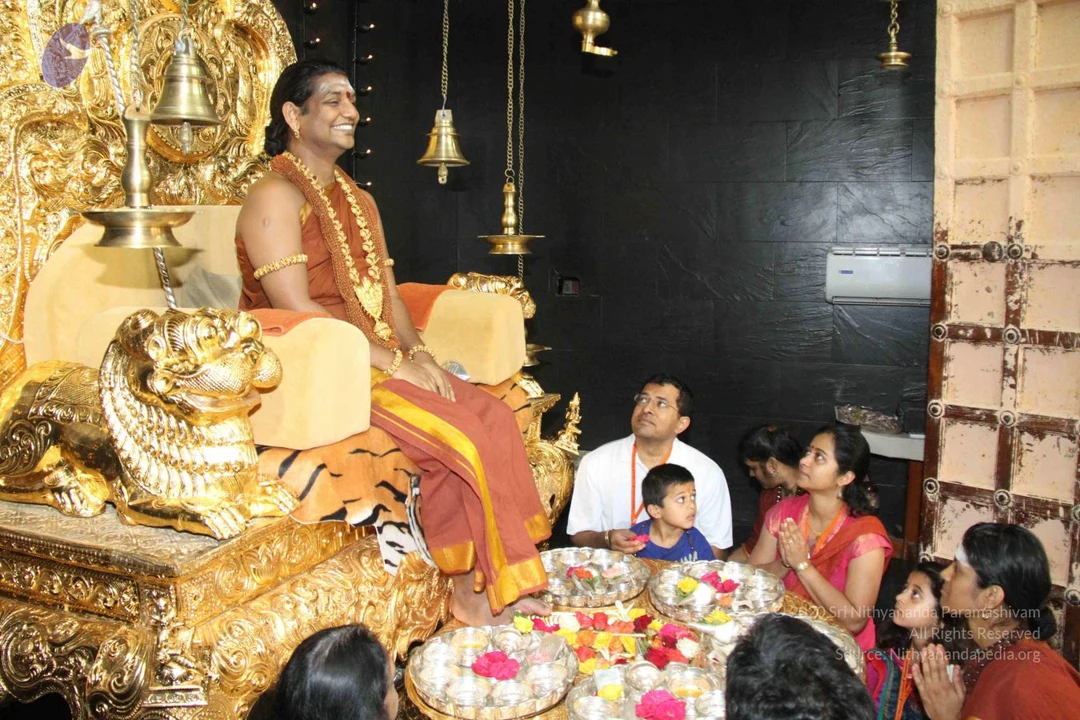
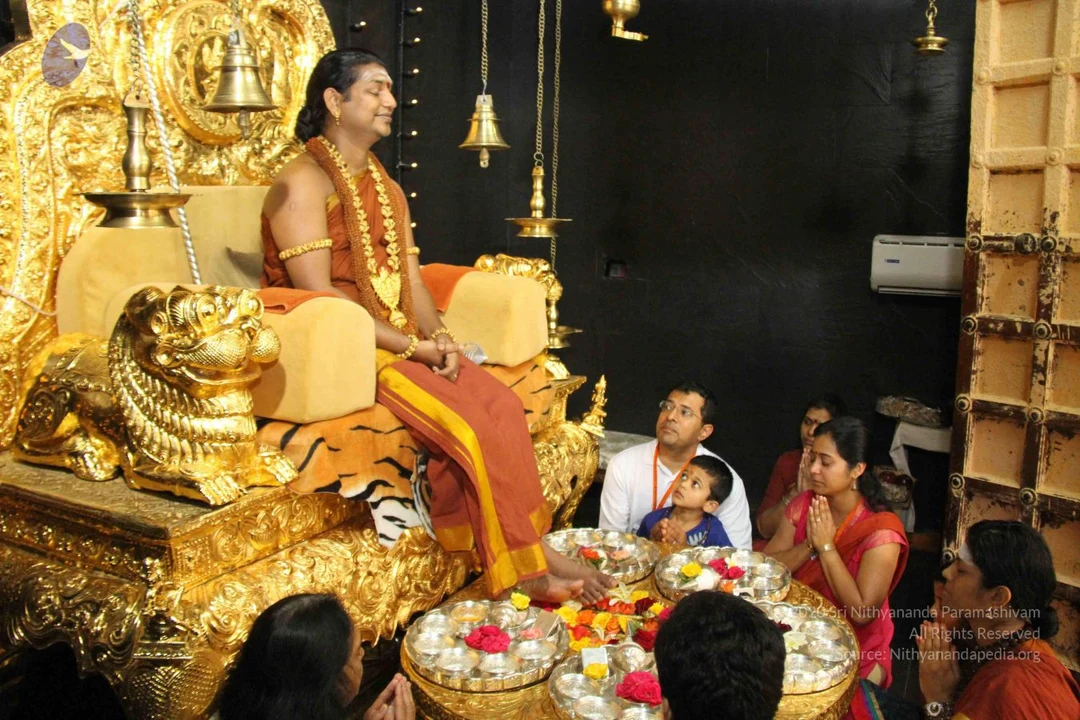
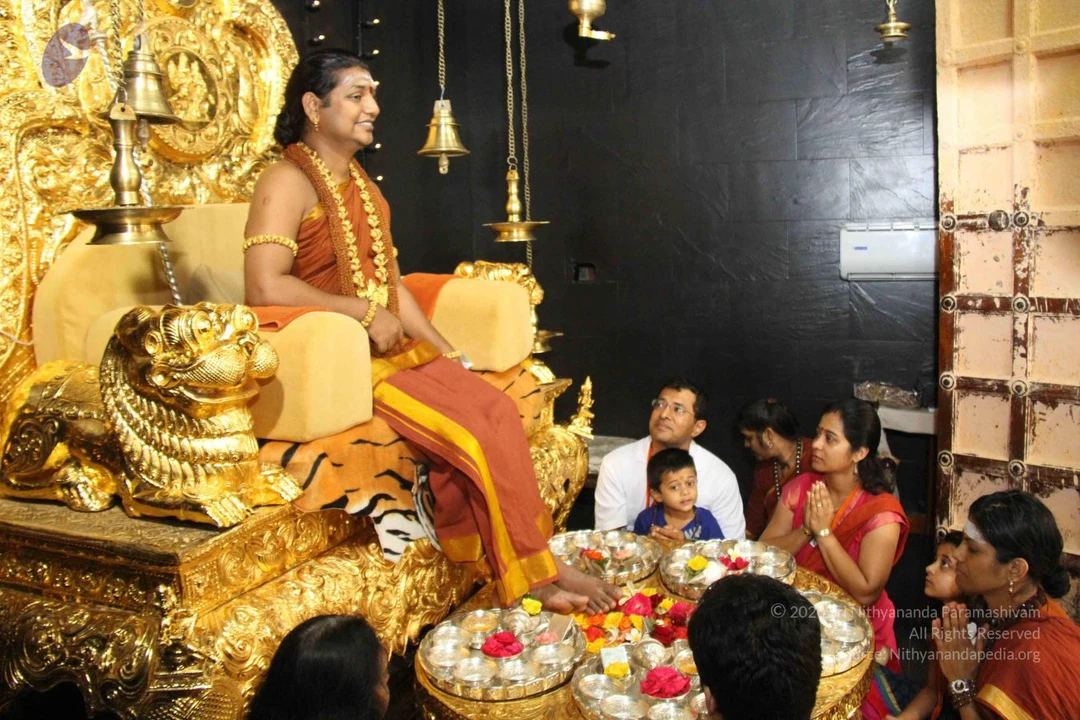
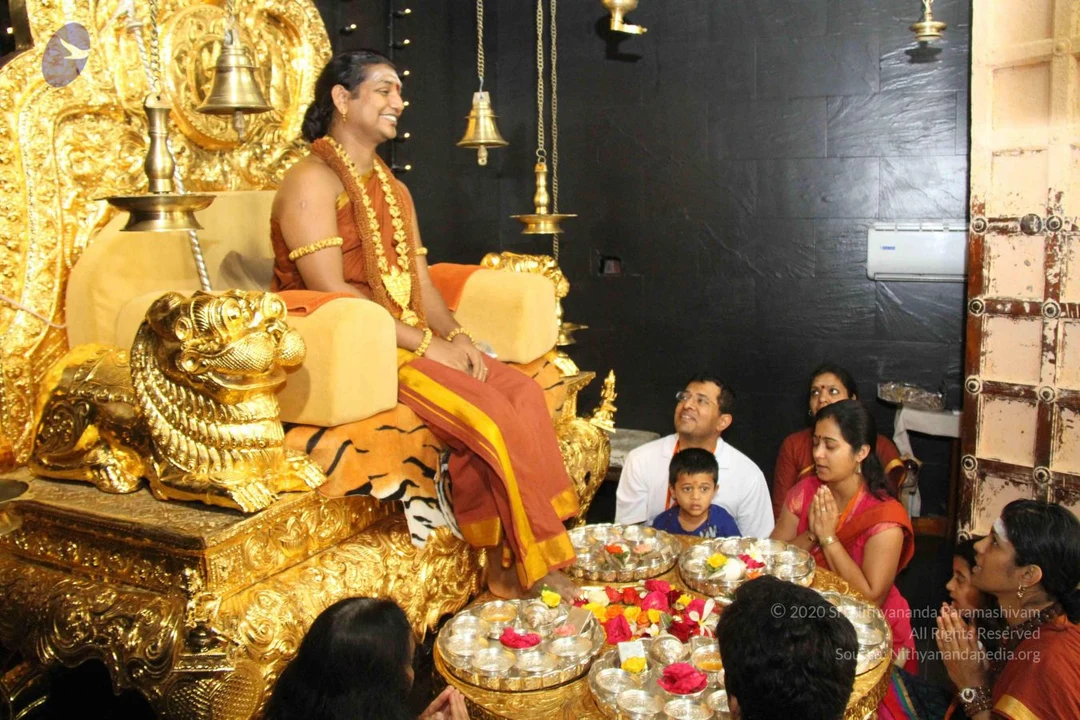
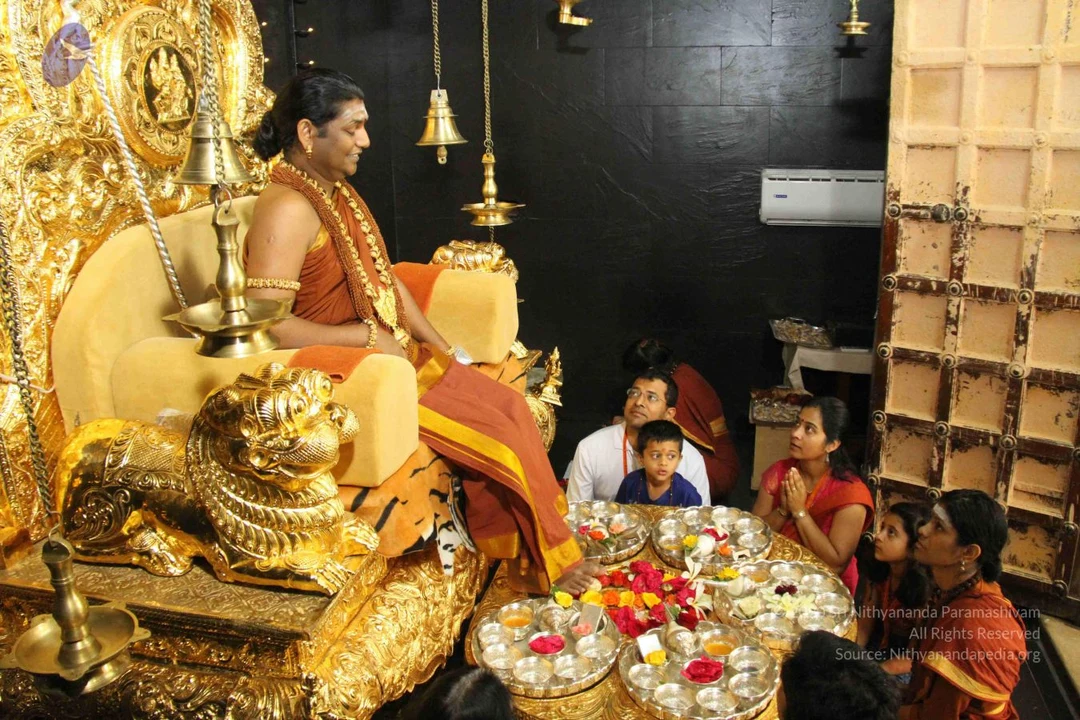
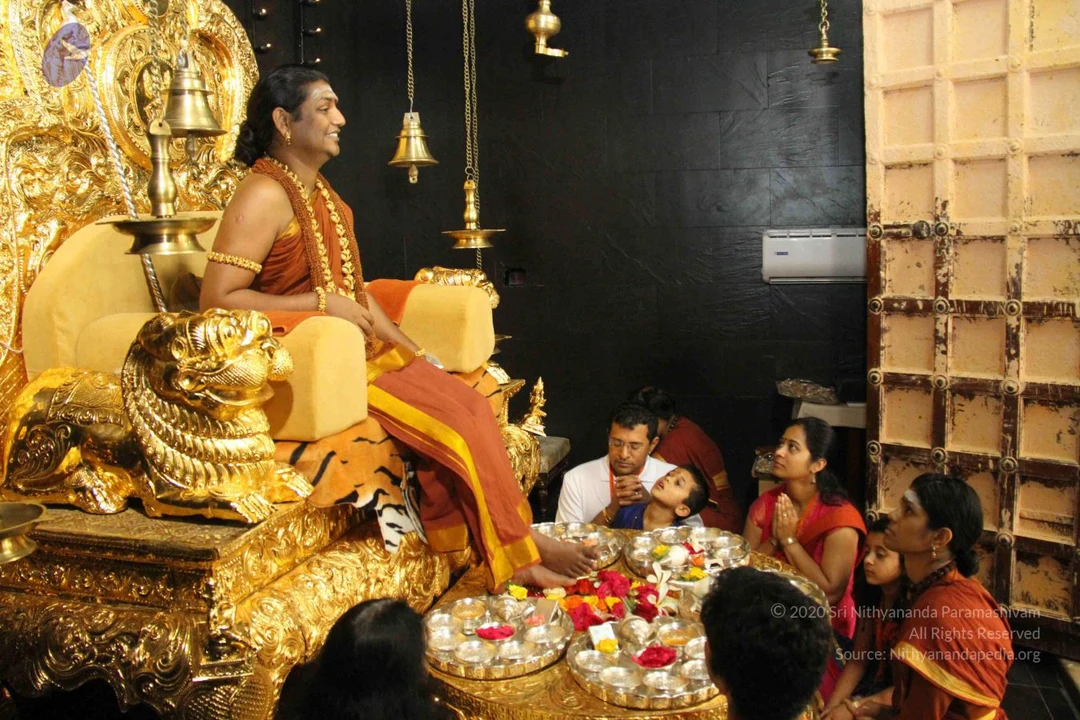
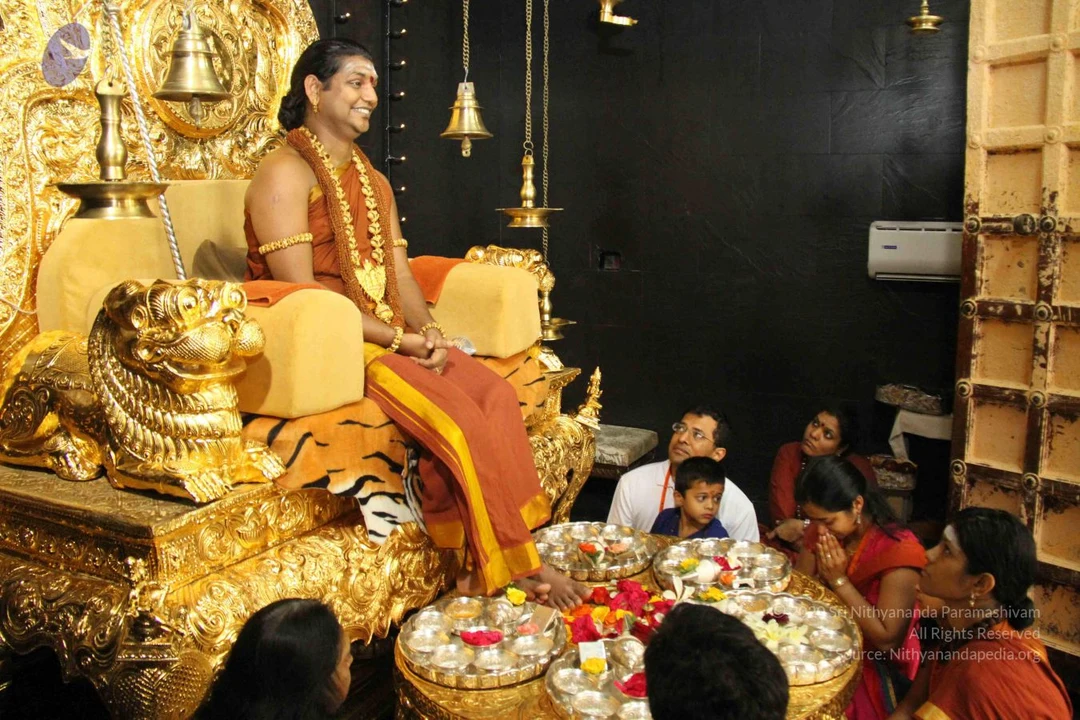
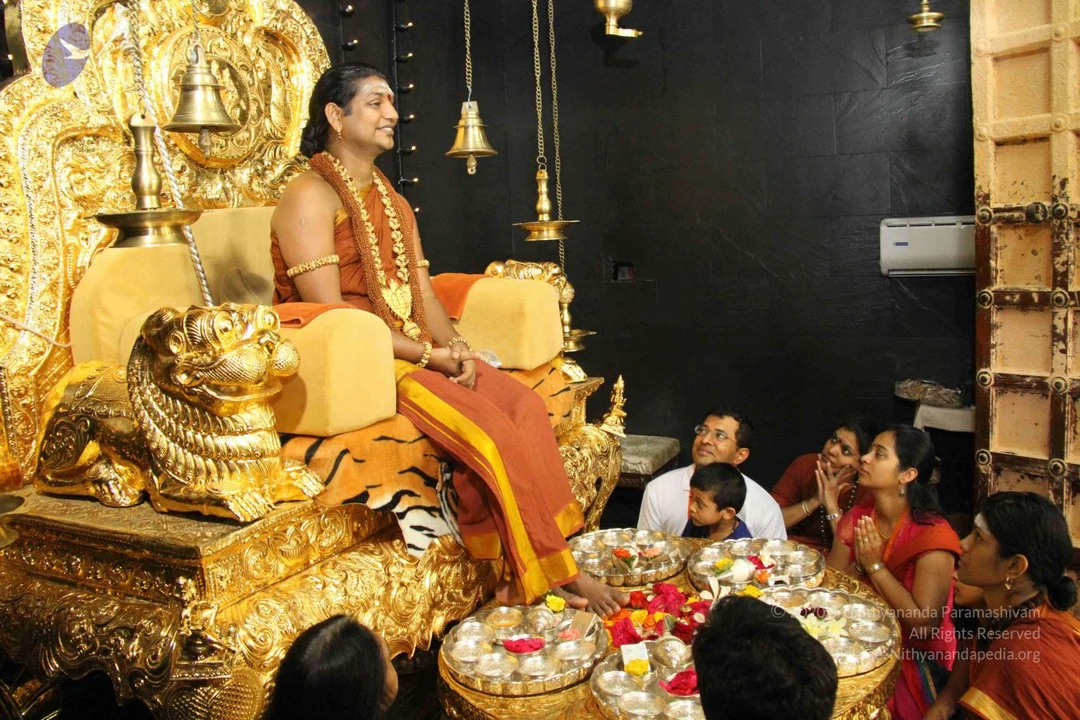
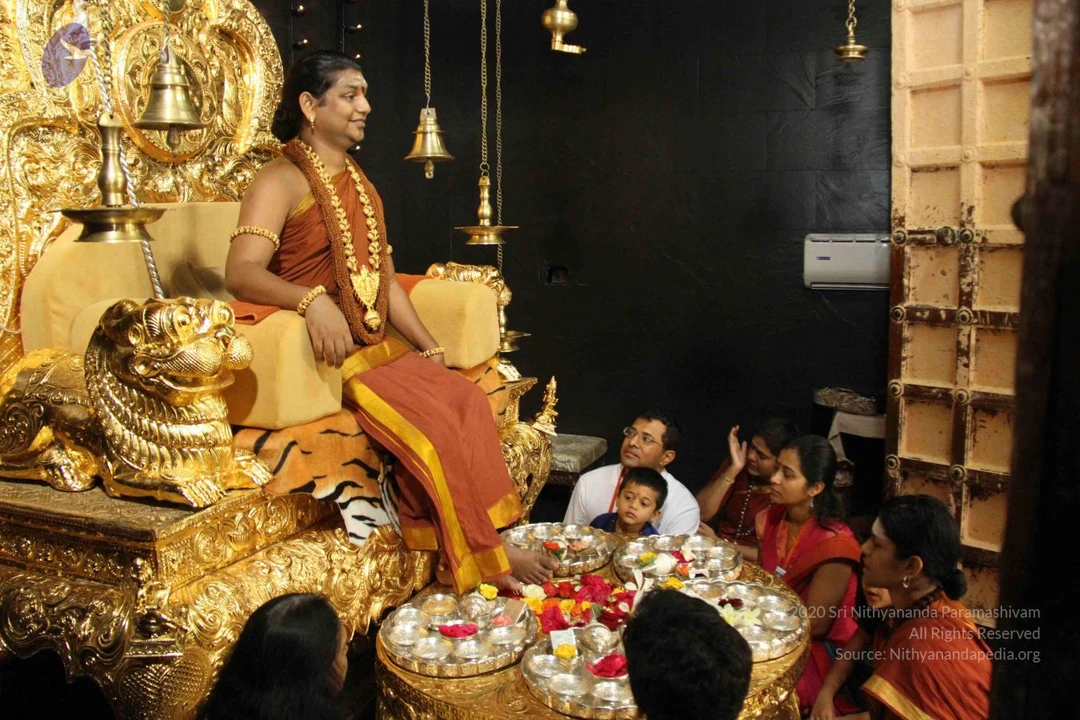
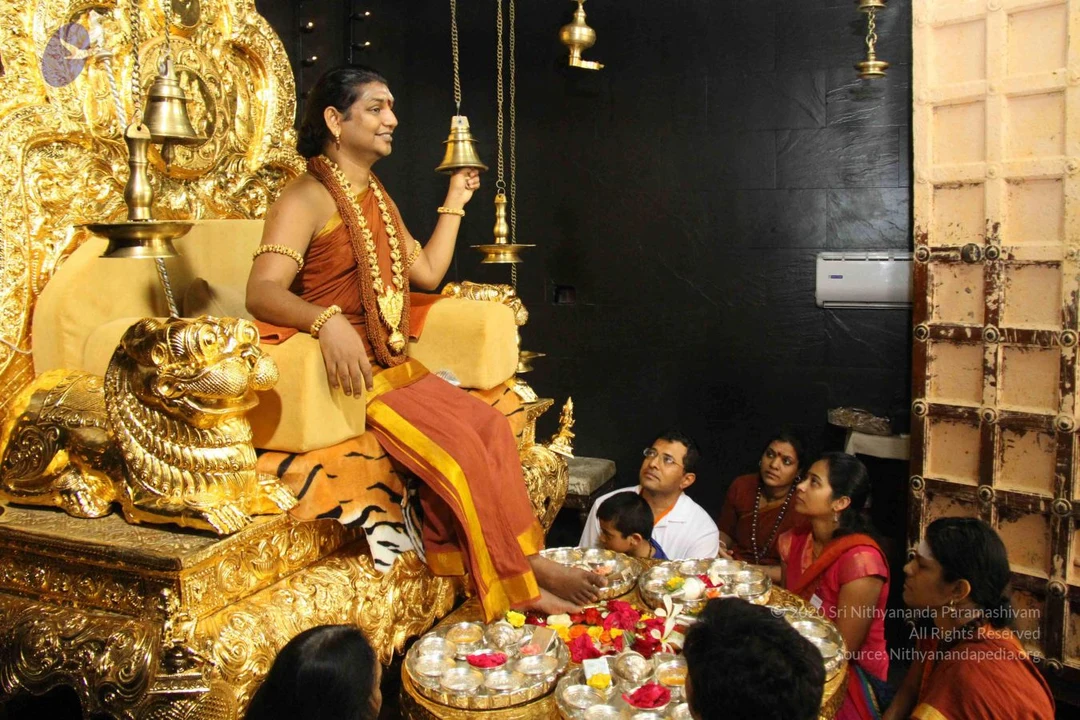
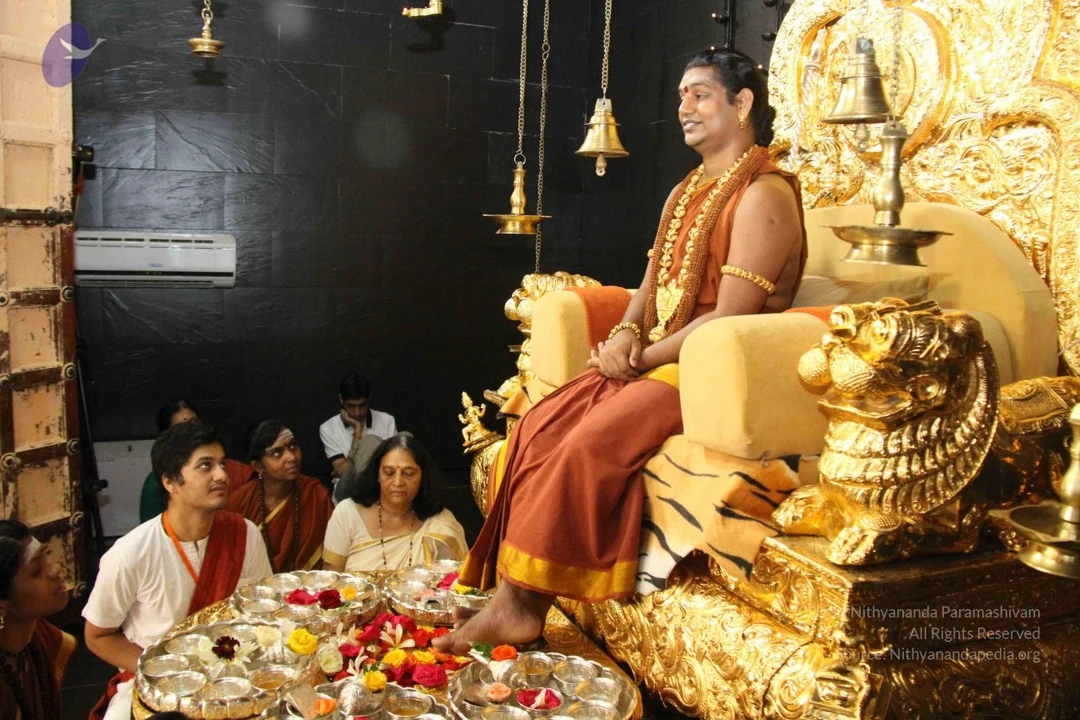
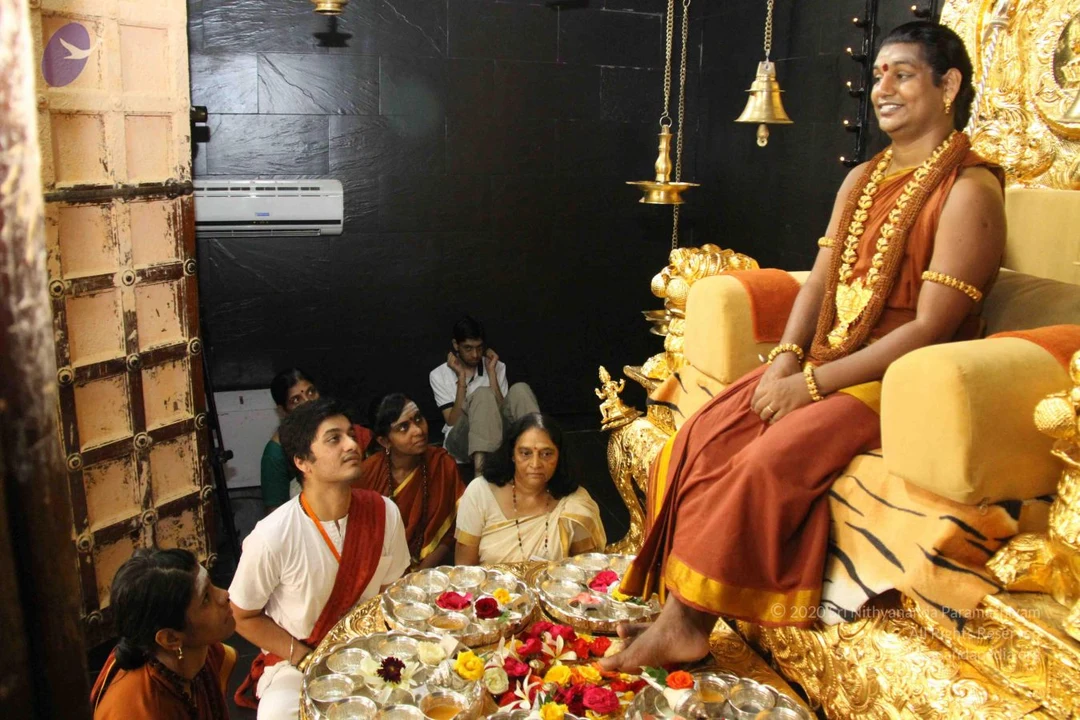
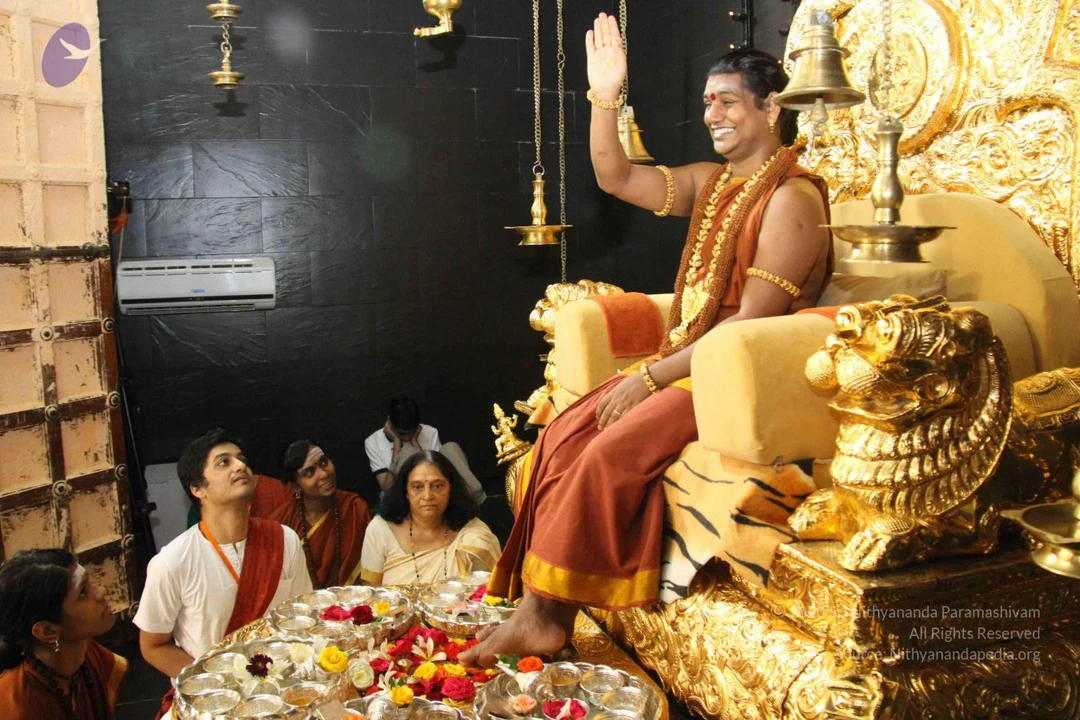
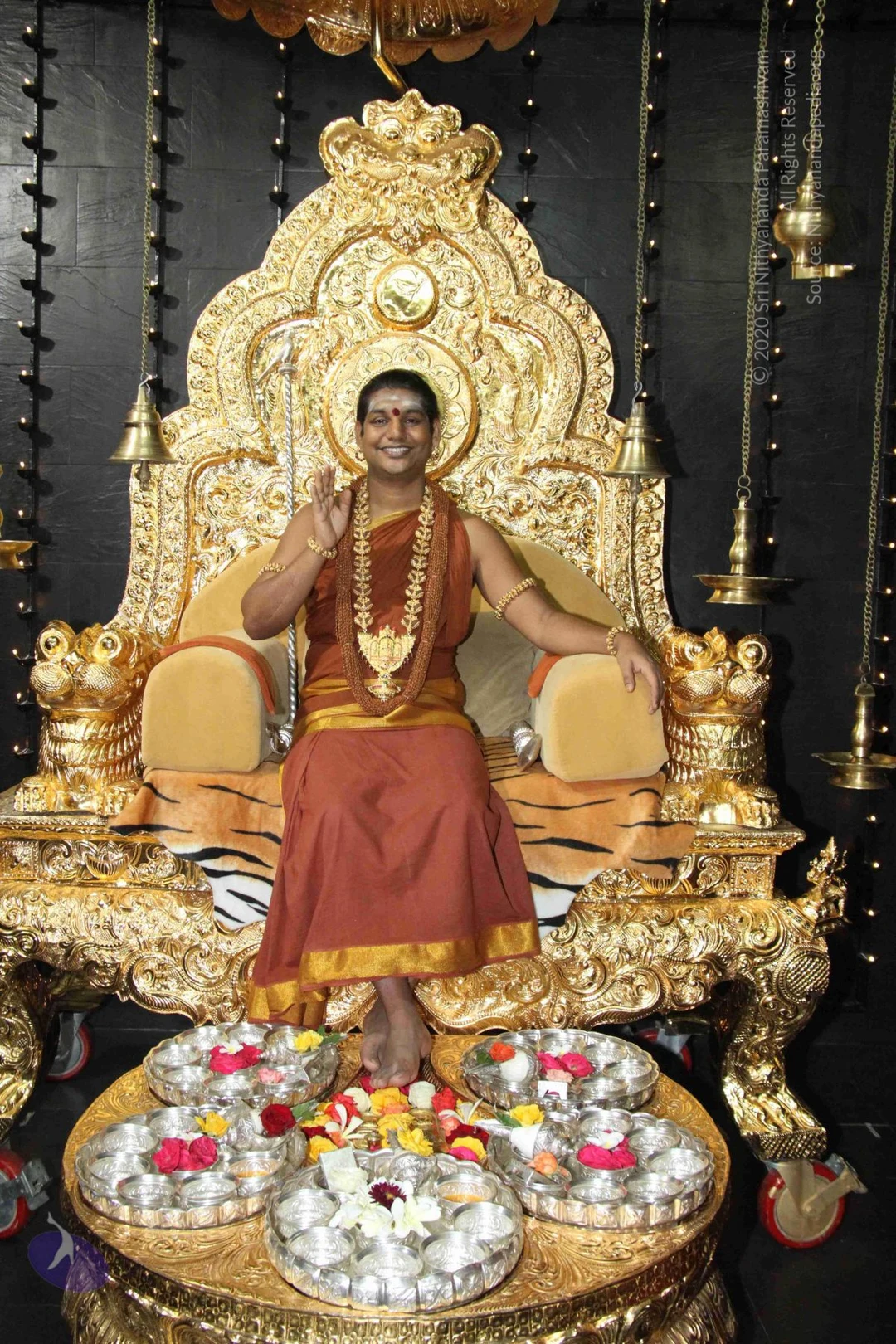
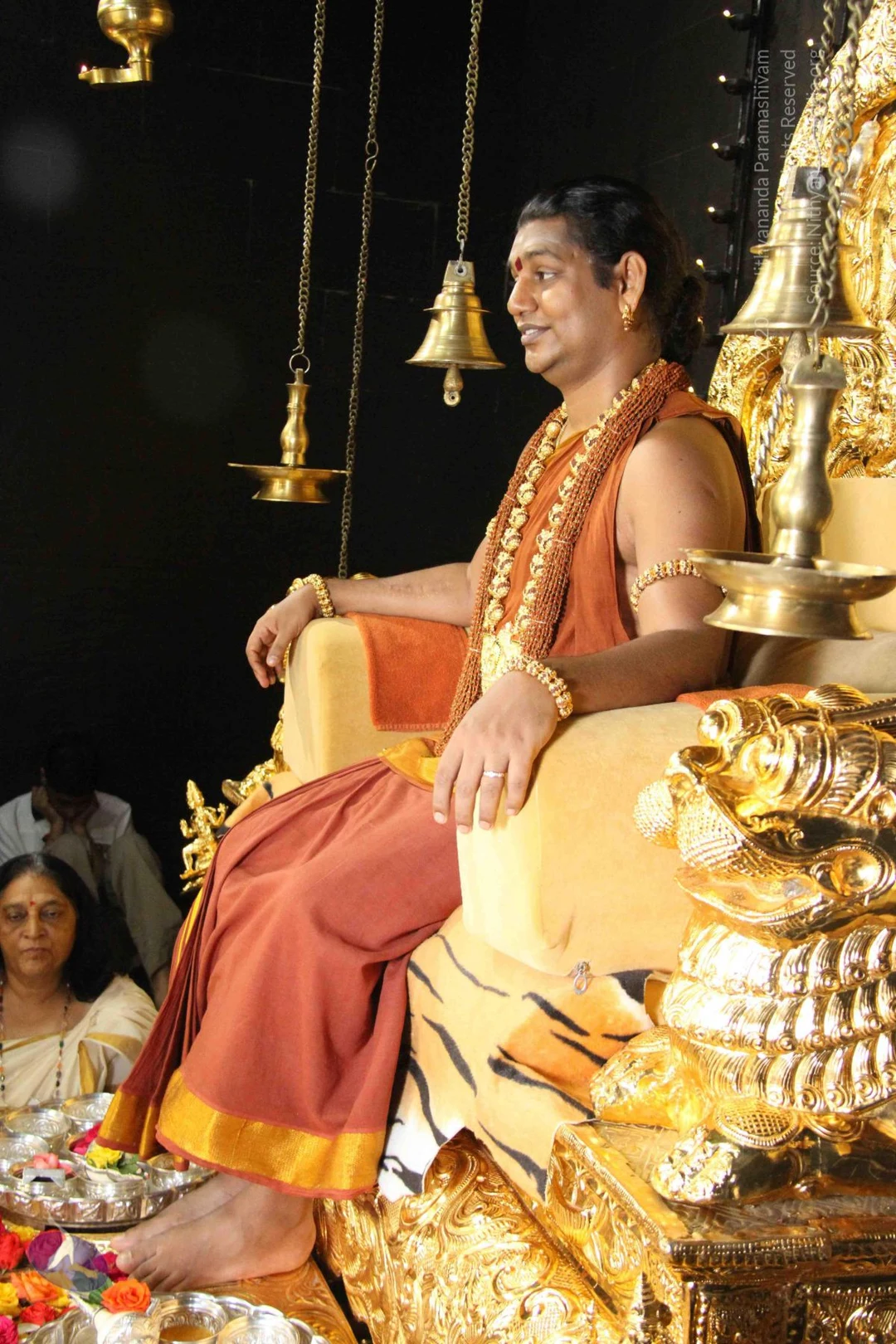
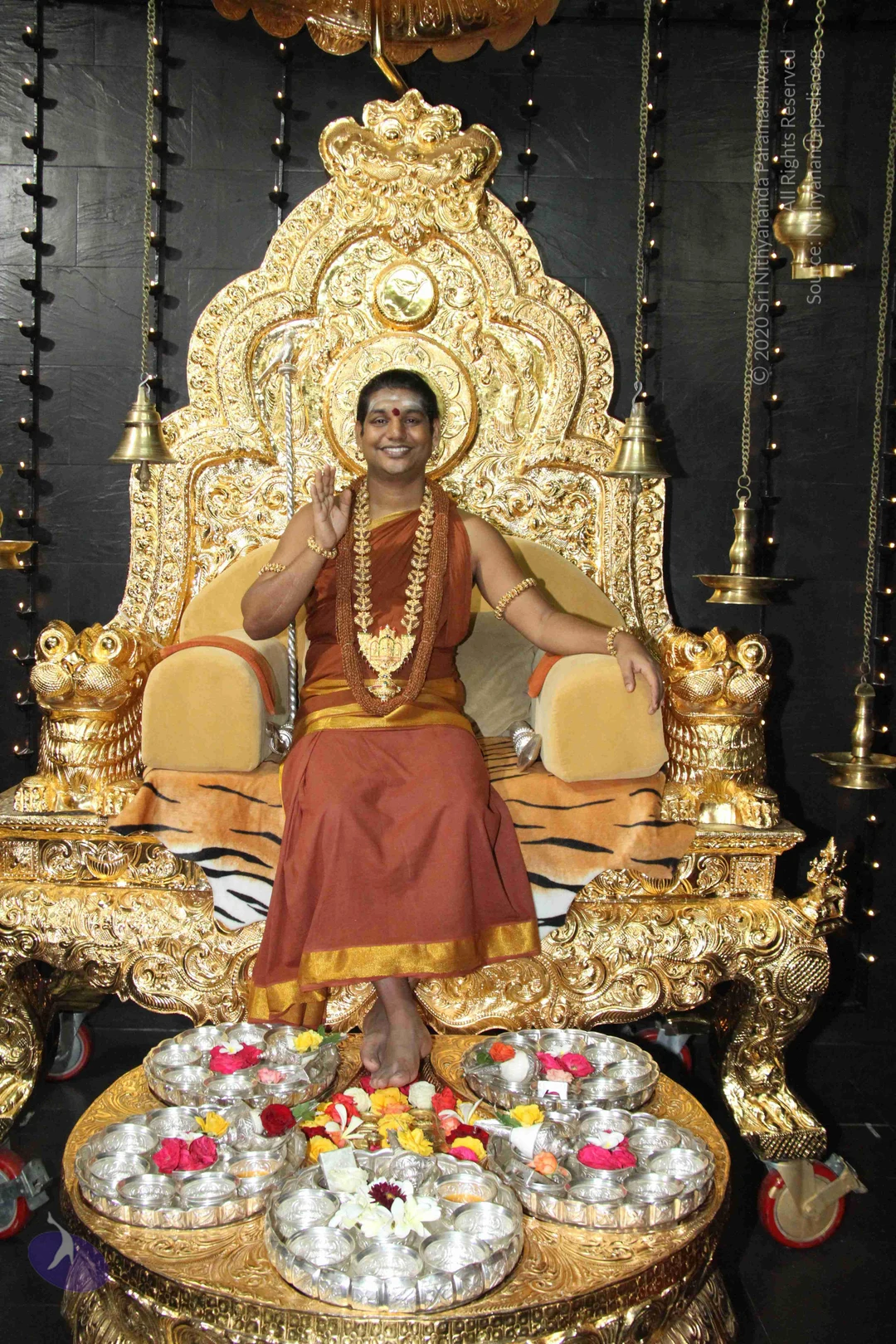
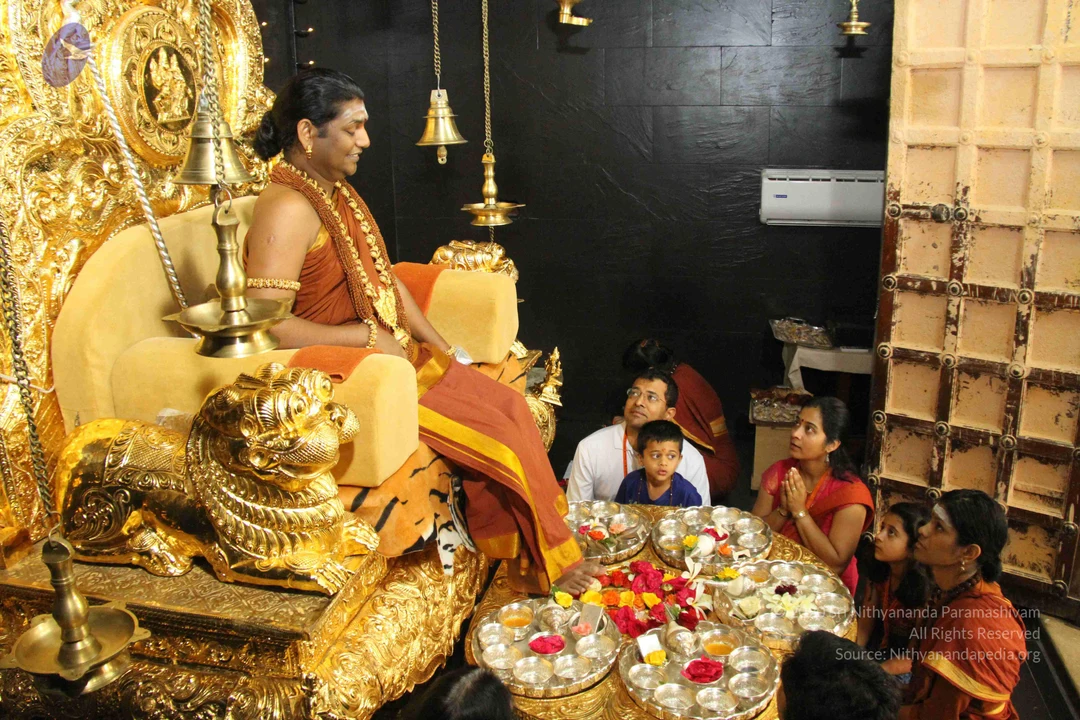
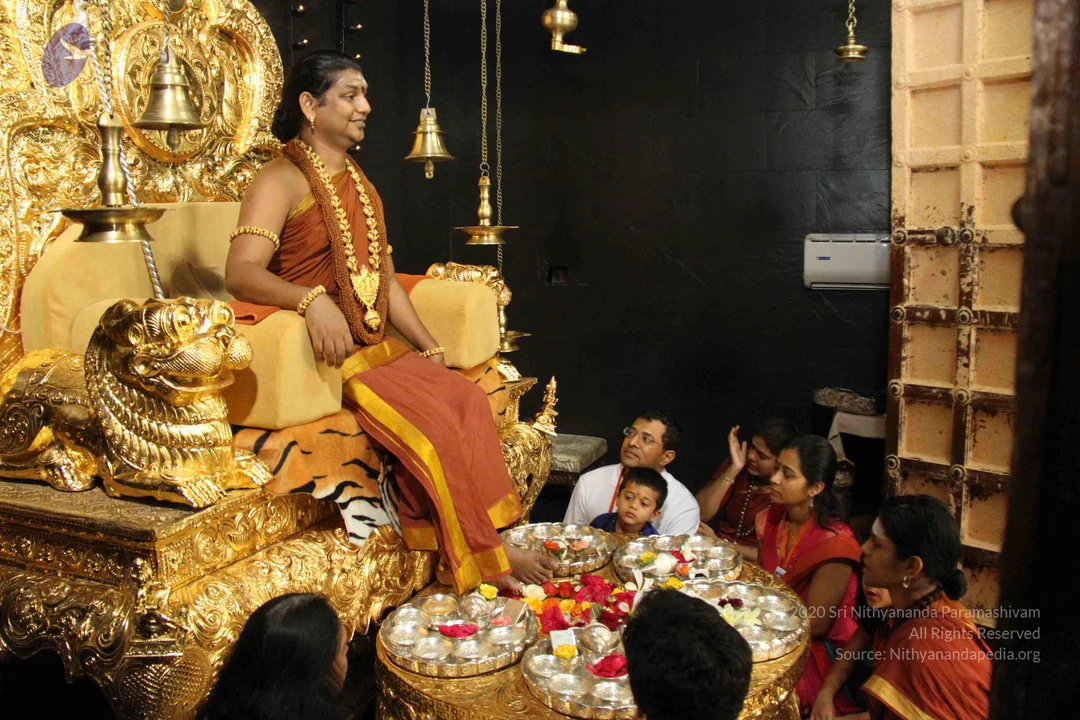
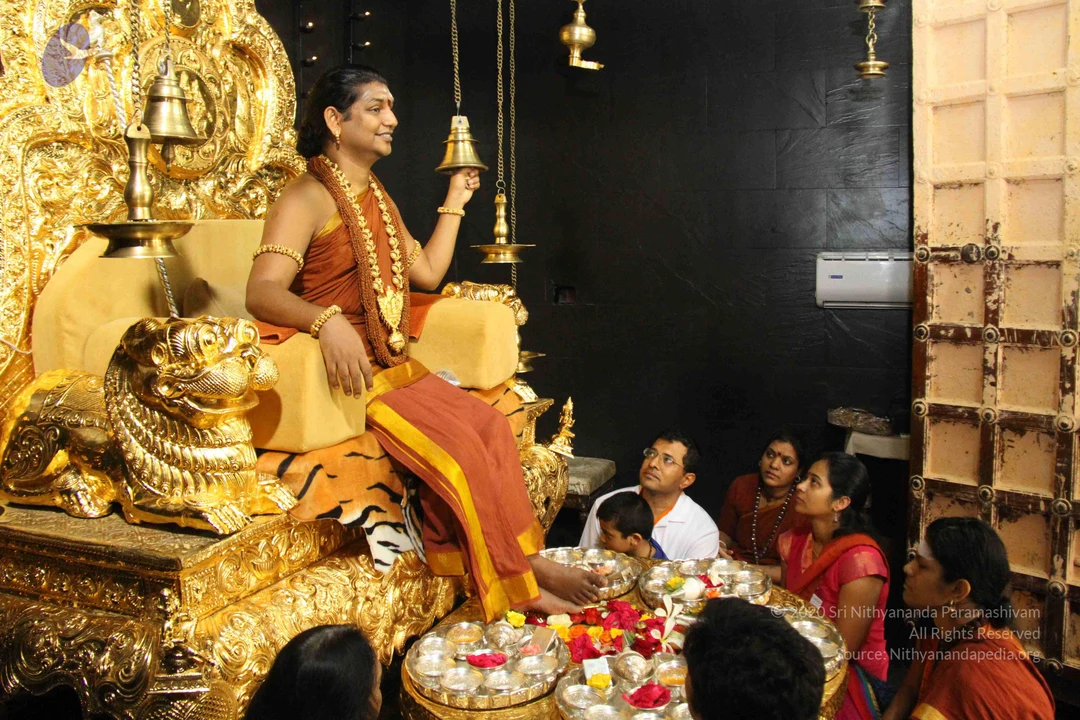
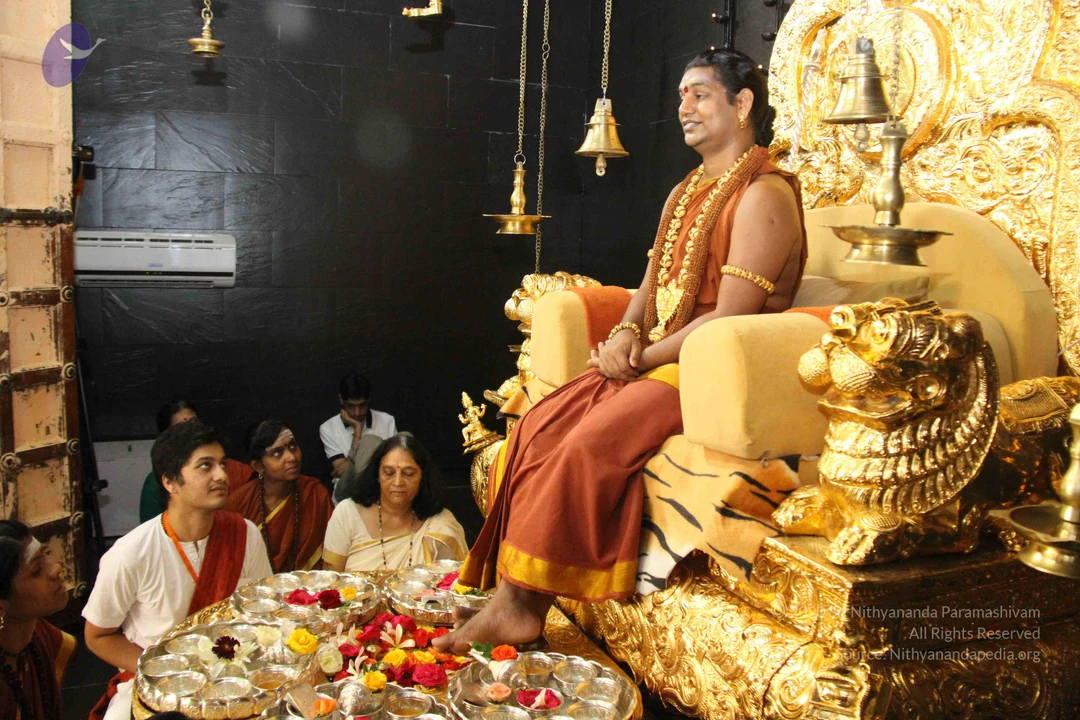
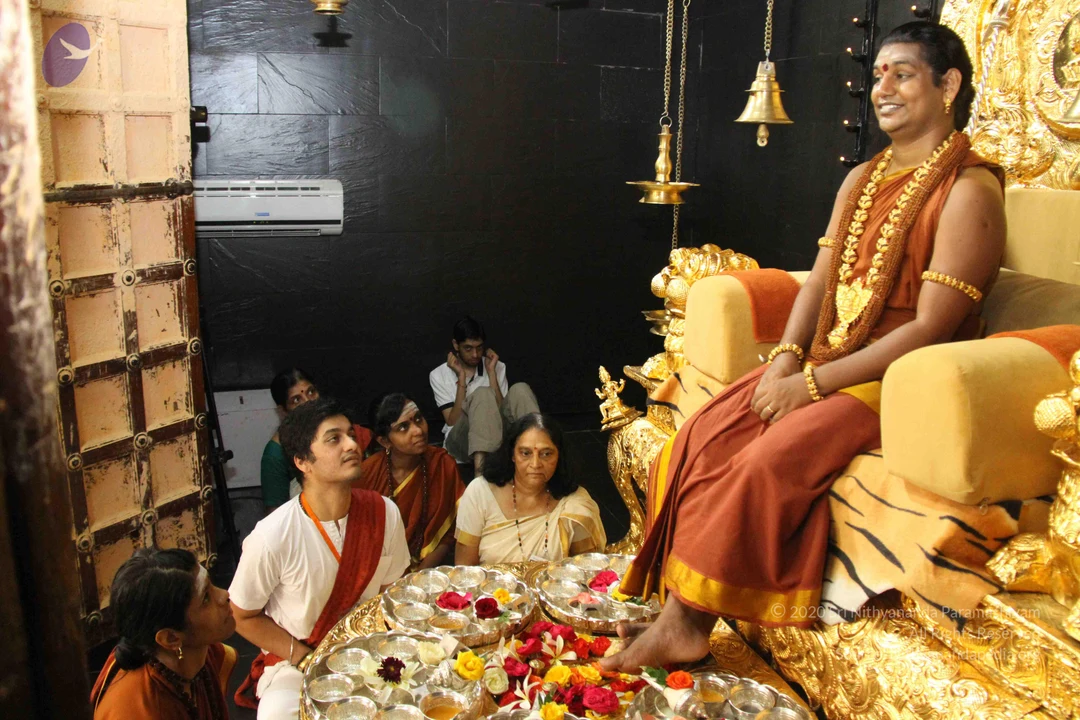
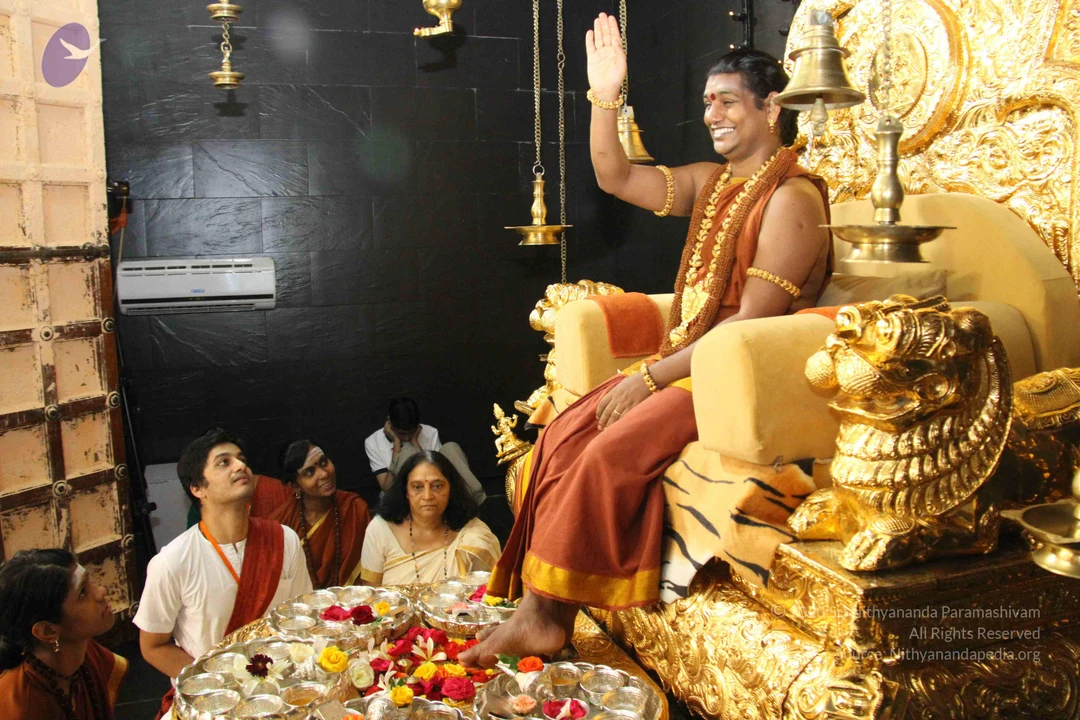
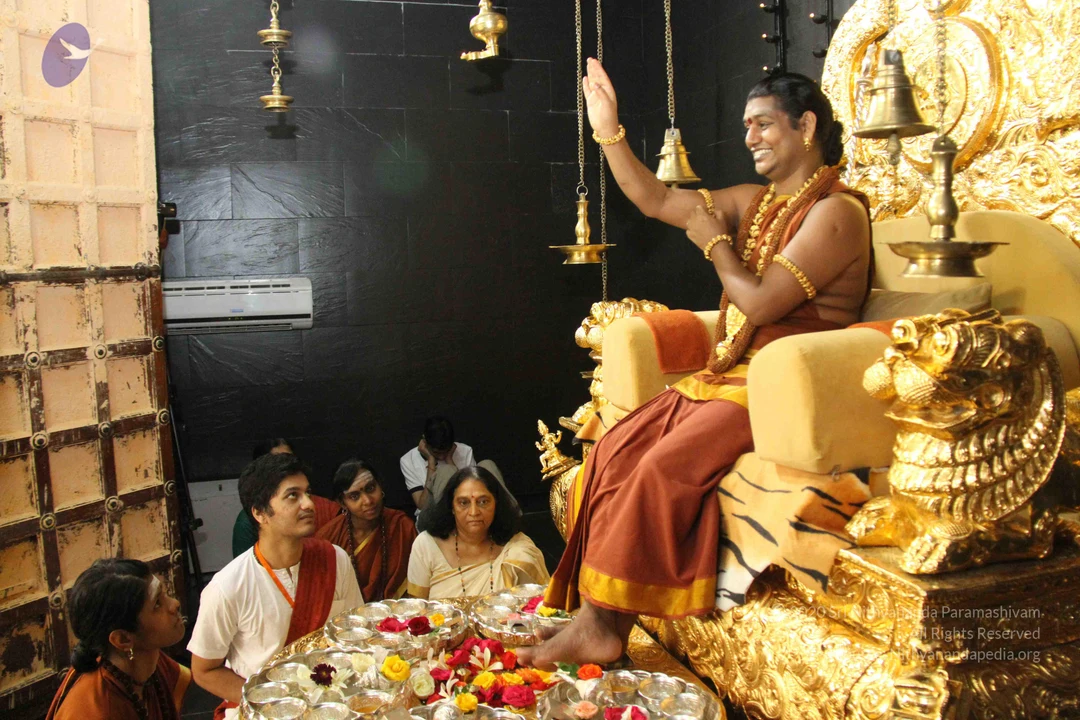
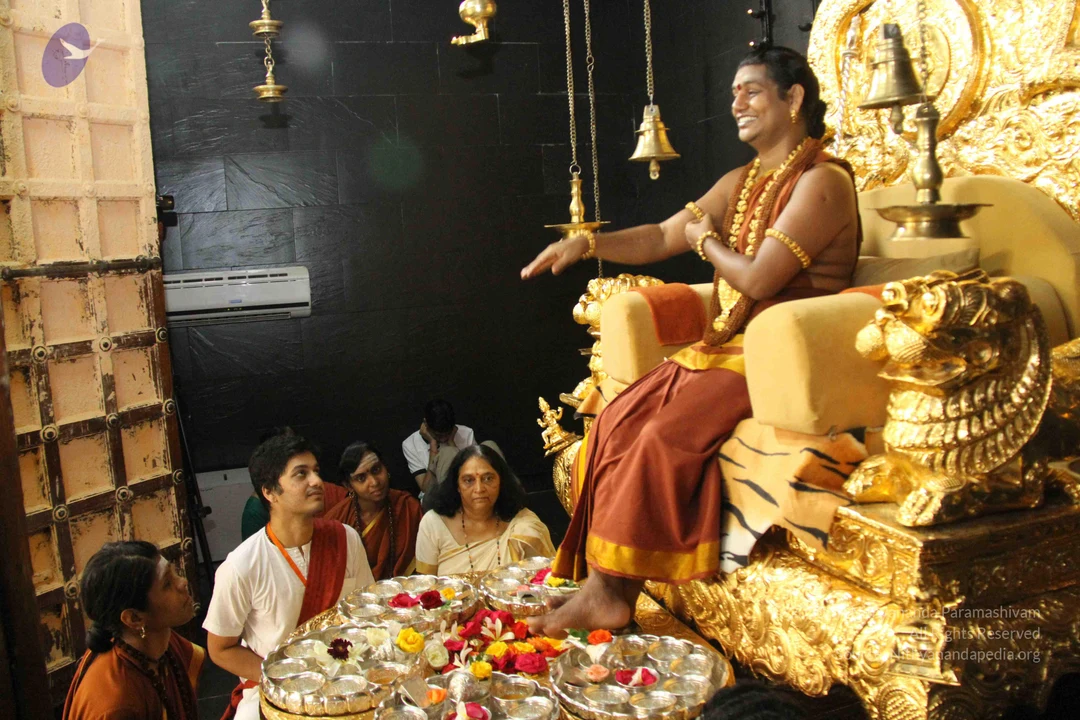
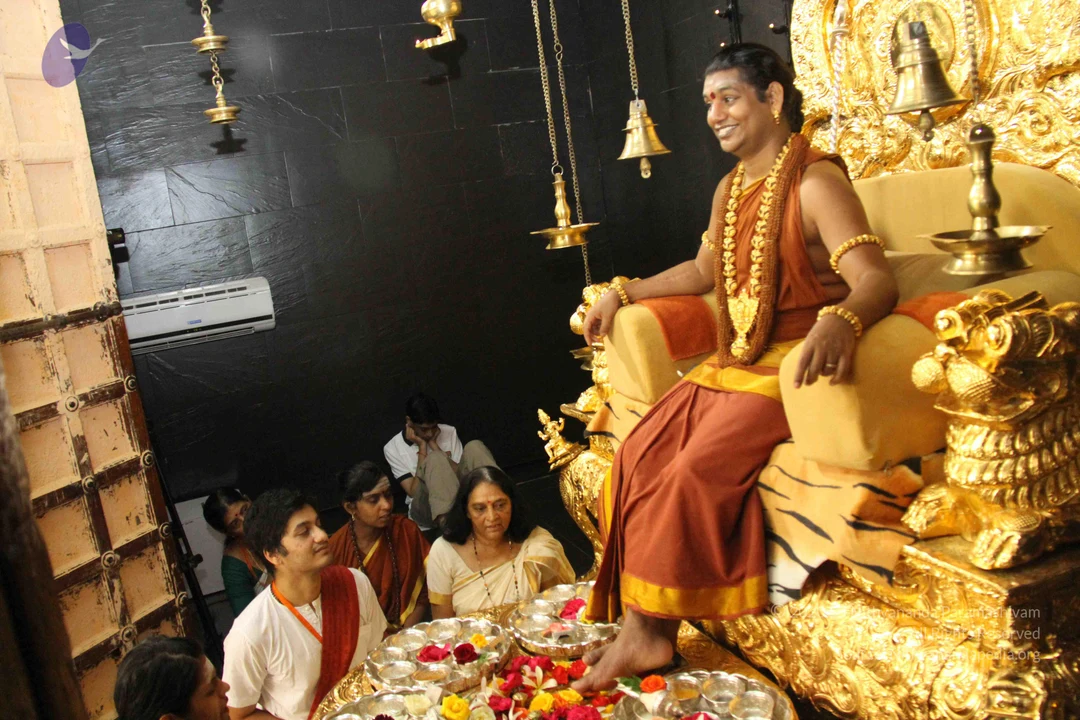
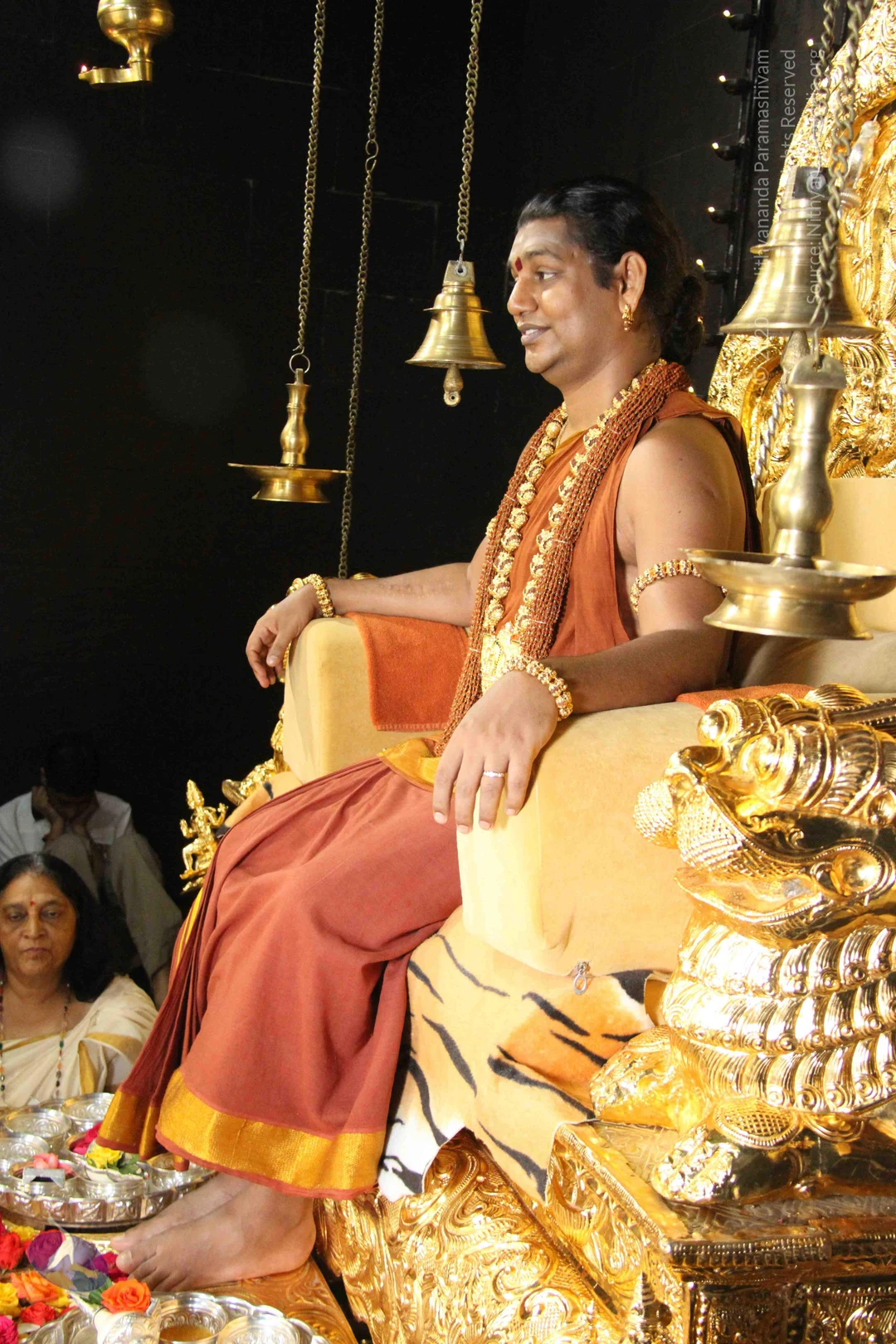
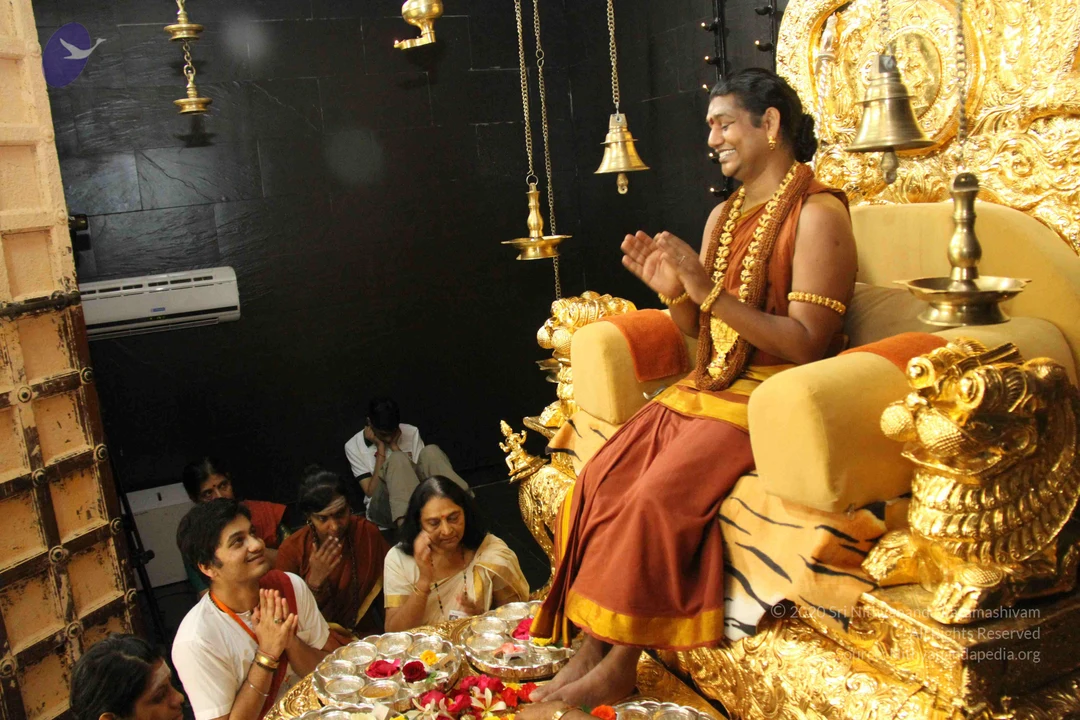
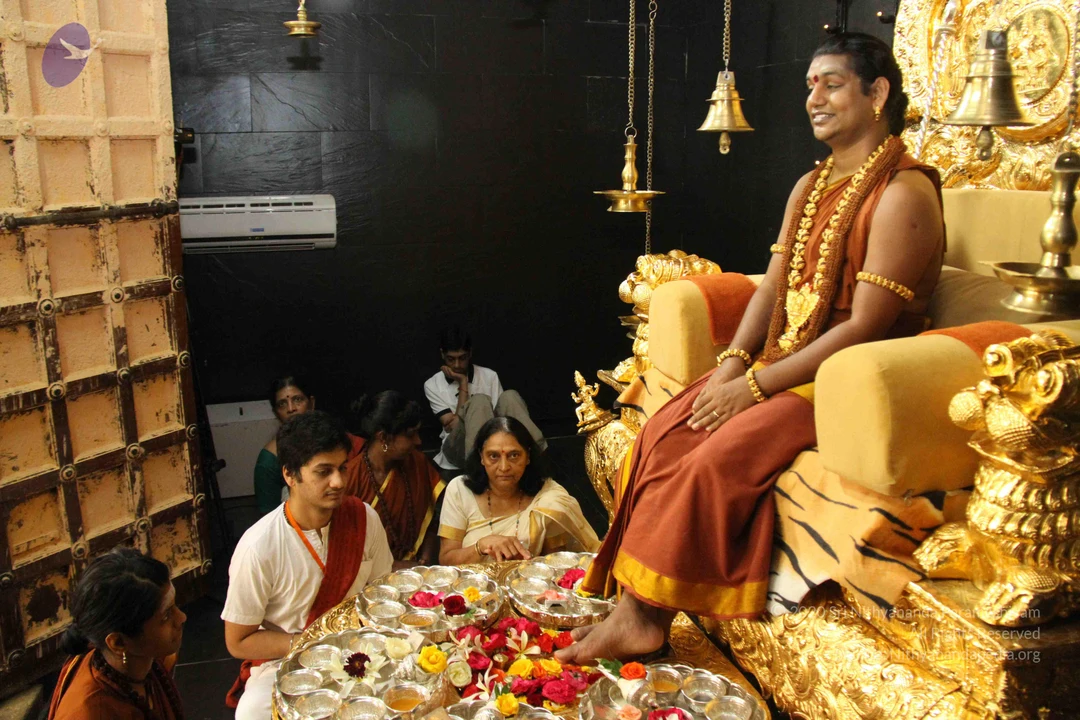
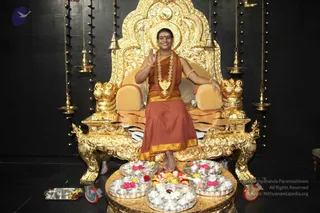
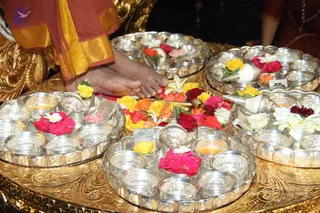
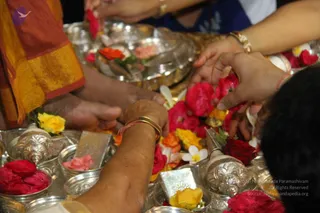
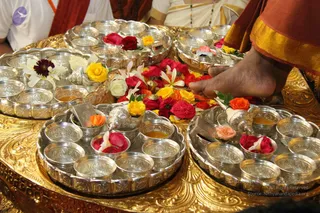
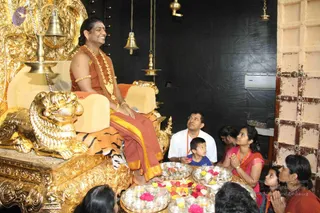
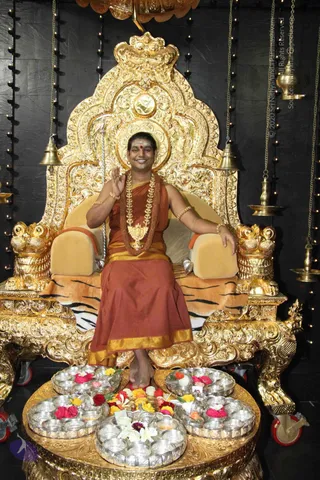
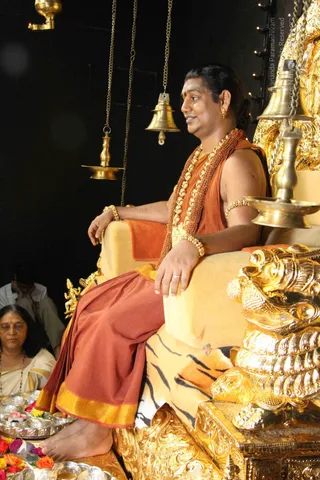
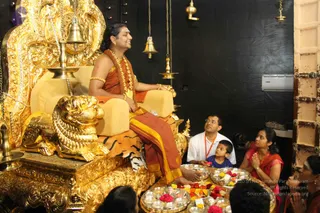
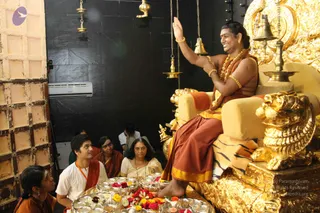
A seated man in an orange-red dhoti and matching shawl sits on an ornate gold throne carved with lion heads and draped with a tiger-striped cloth. He wears a rudraksha mala, a long gold ceremonial necklace, gold bangles and a red forehead mark, and raises his right hand in blessing. Brass oil lamps hang from chains beside the throne. In front, a round gold tray holds silver plates of flowers, fruit, lotus-like petals and offerings, and a silver tray lies on the floor at left. The background is a black stage curtain. A printed caption in the lower right reads the date and a pedia.org as sourceClose view of bare feet in a padapuja setting. A person in a red and gold-bordered garment stands on a gold-embossed platform, their bare feet resting among offerings. Around the feet are silver trays holding fresh flowers in red, orange, yellow and white, small silver bowls of yellow and orange liquid, and silver vessels. A silver kalasha-style pitcher and a silver lamp are visible among the flowers. Two people's lower legs appear at the upper edge.Close-up photo of hands arranging puja offerings on silver trays and small silver vessels. Red roses, orange and yellow marigold-type flowers, and white frangipani-like blossoms are scattered among the containers. A woman in a red and gold sari with gold bangles and a red-and-white thread on her wrist reaches toward the tray, while another person's hands pick up petals at right. A small silver lamp stand and silver boxes sit among the flowers. Shallow depth of field, with a dark-haired head at the lower right edge.A close photograph of a ritual padapuja arrangement on a gold-patterned table. A bare foot of a person in a red and gold silk garment rests on a tray surrounded by silver bowls and plates filled with red roses, yellow roses, orange flowers, white lilies and green leaves, with small brass vessels and a silver kalasha-style pot. Other people in white clothing are partly visible at the top edge. No face is shown. The scene suggests a foot-worship ceremony with flower offerings.

SATSANG
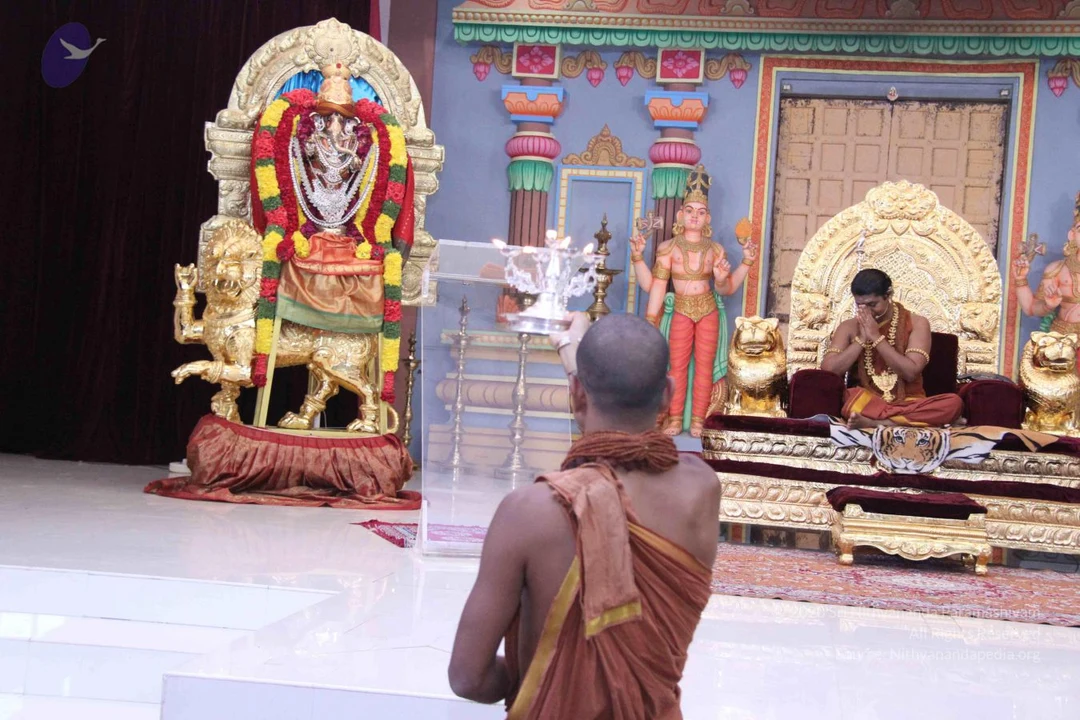
75 photosSource gallery
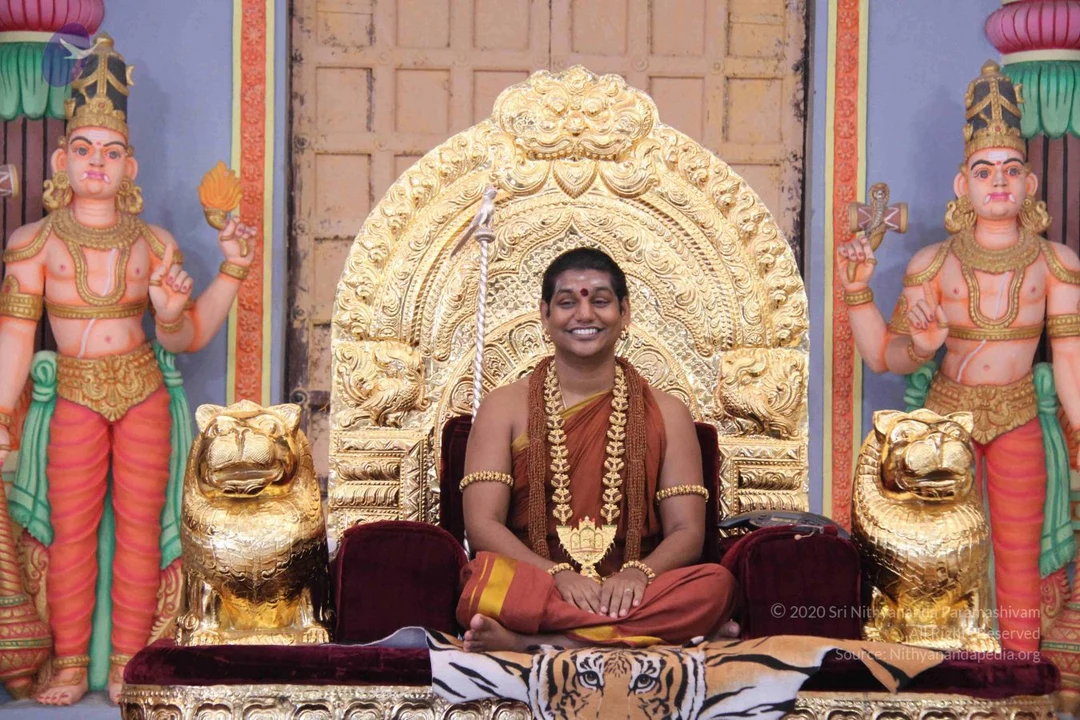
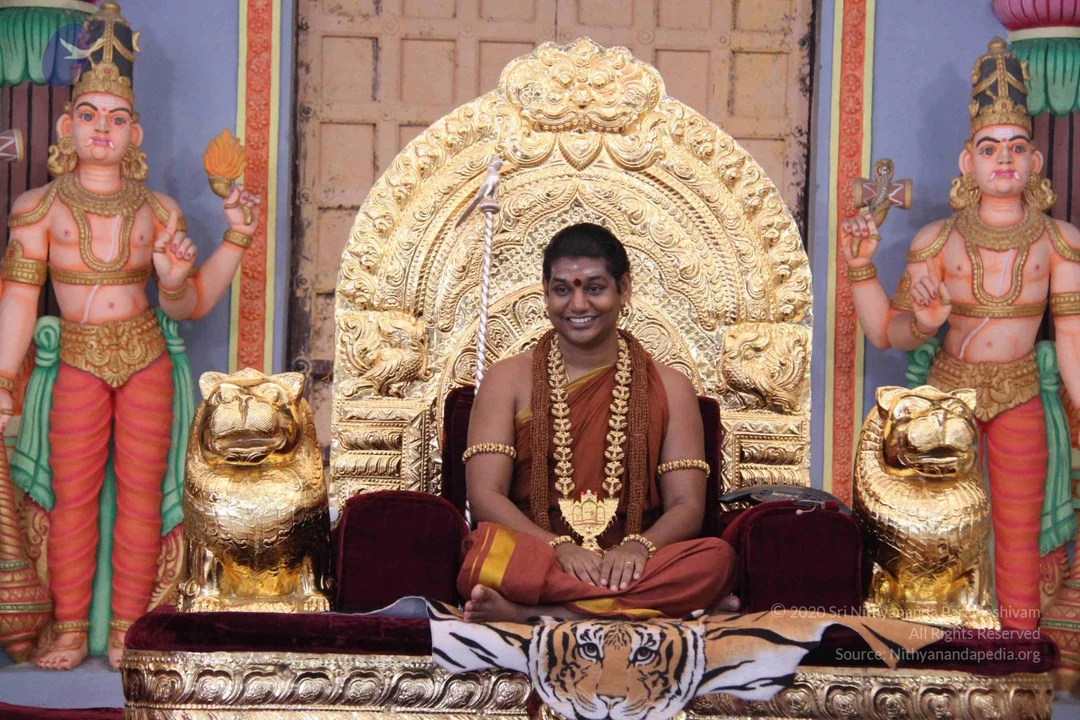
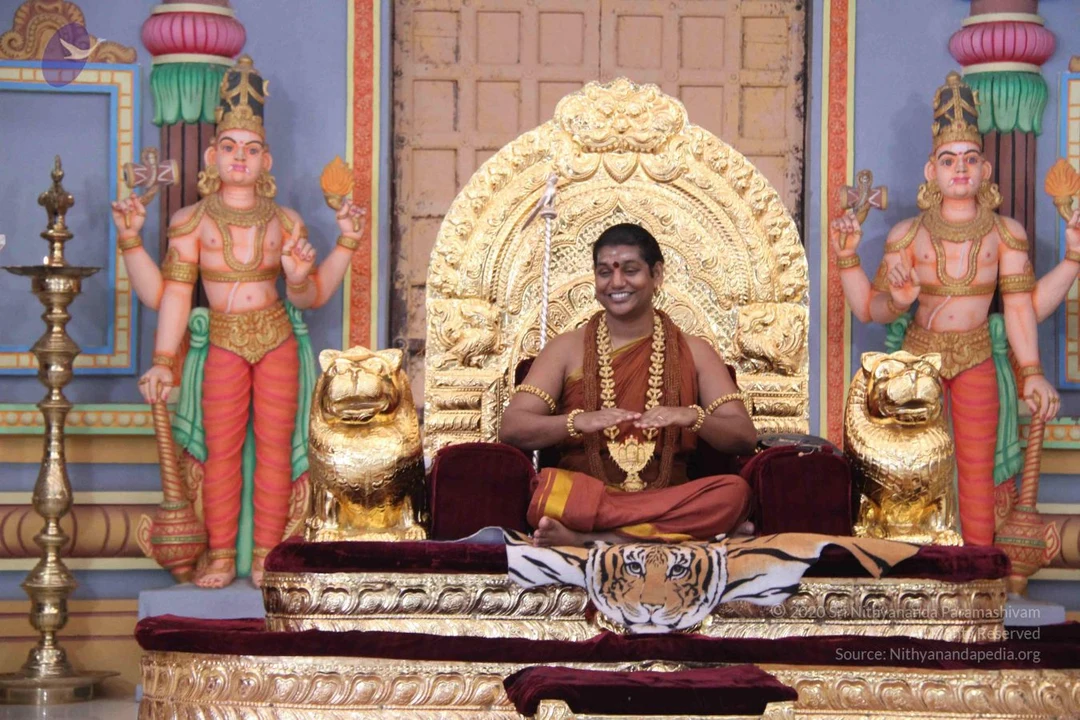
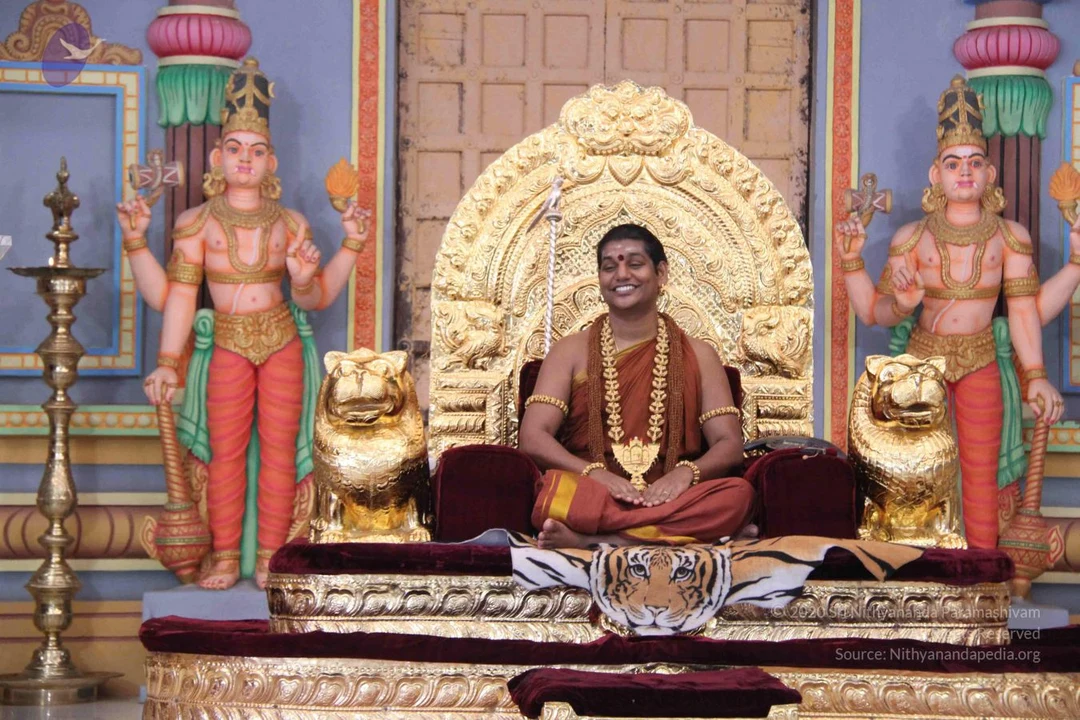
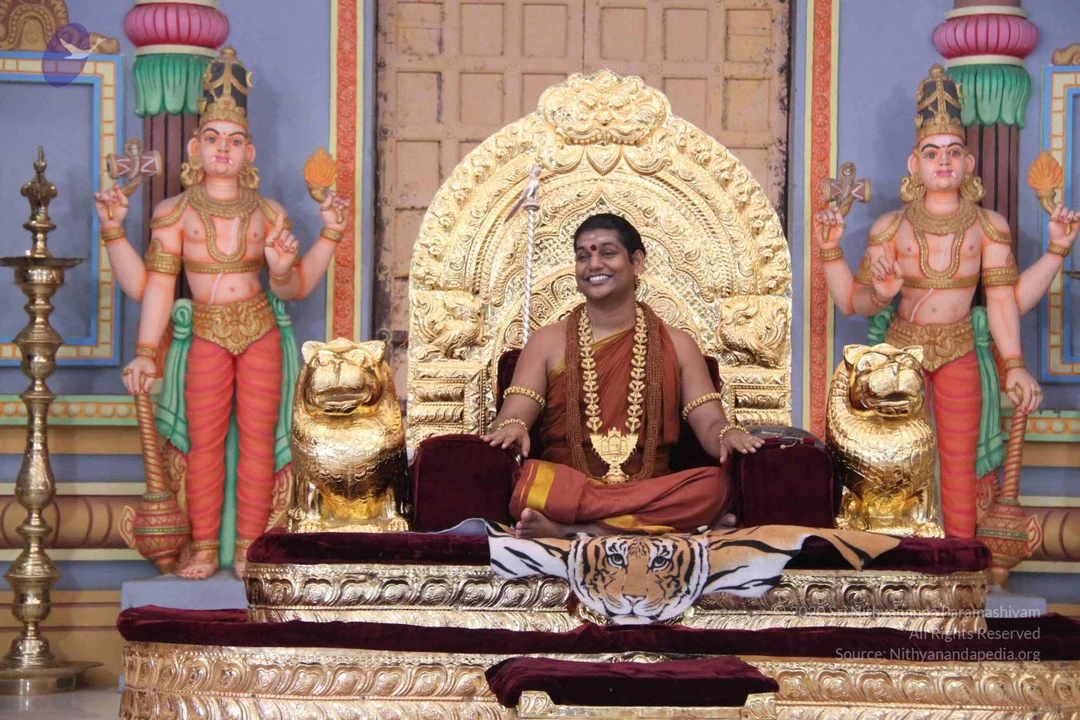
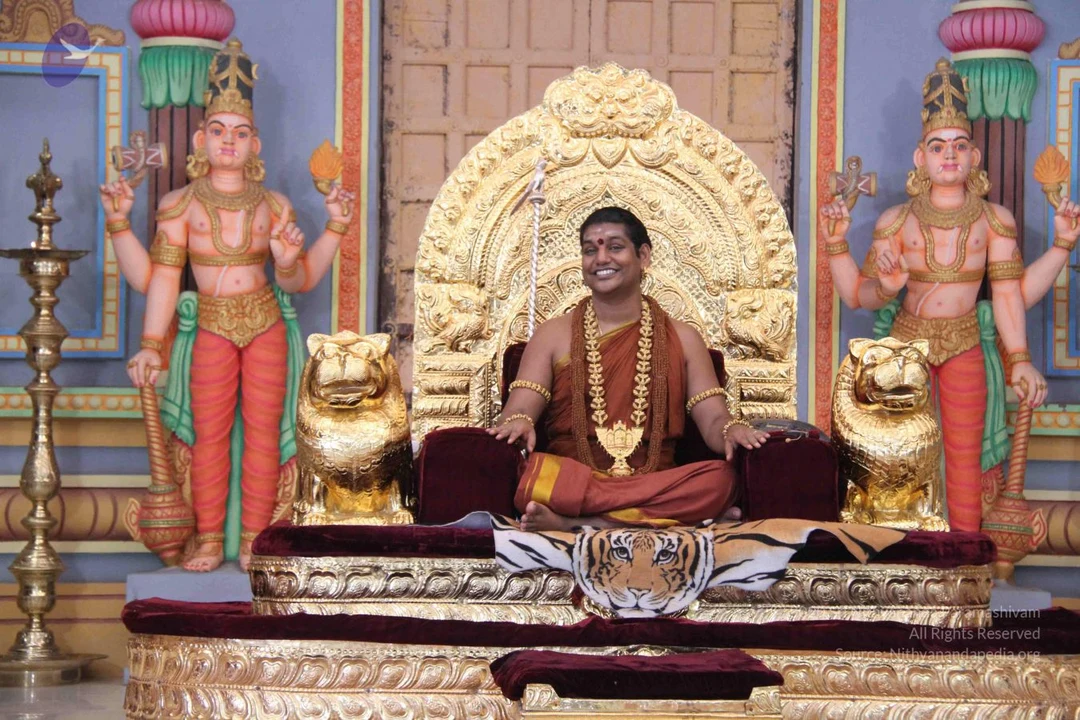
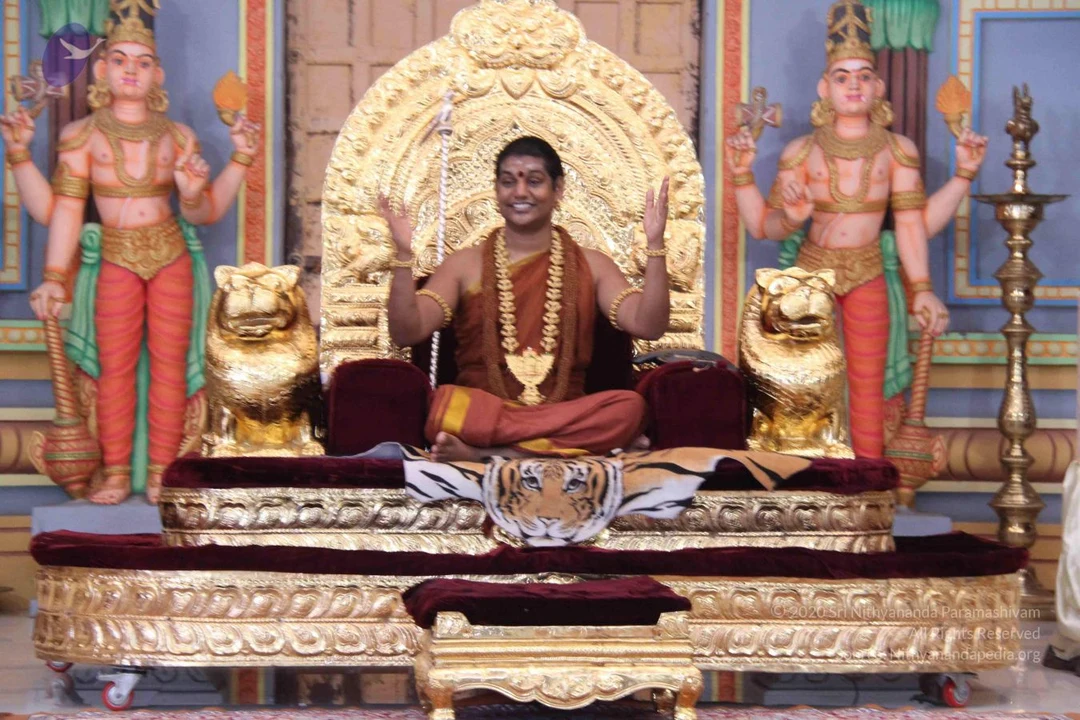
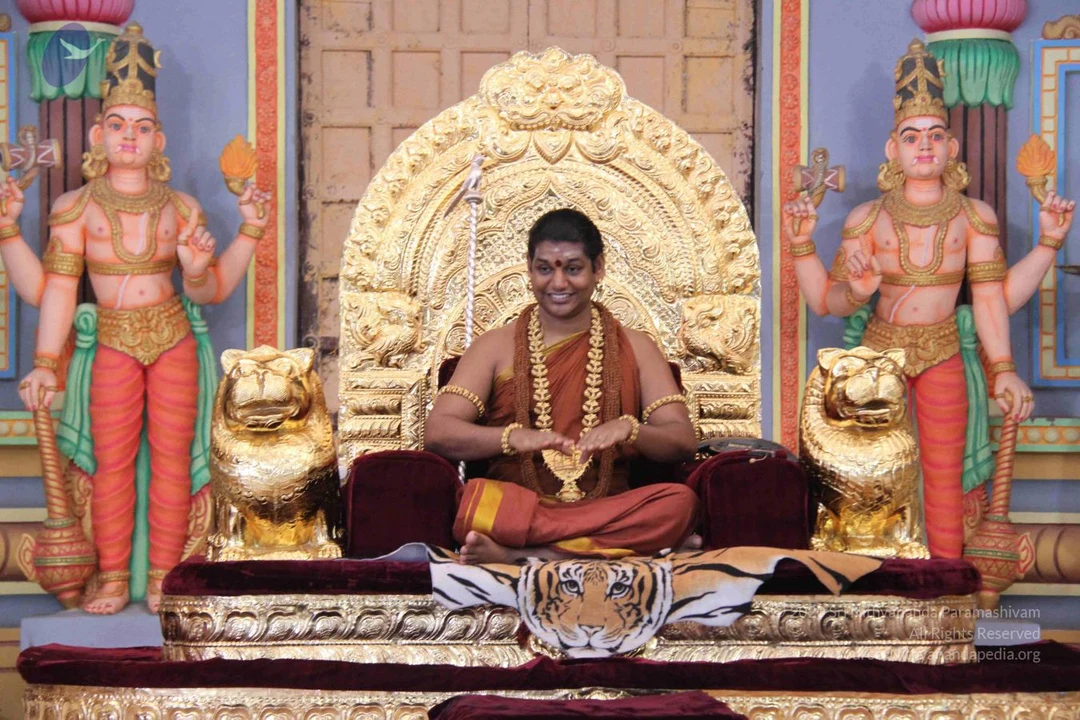
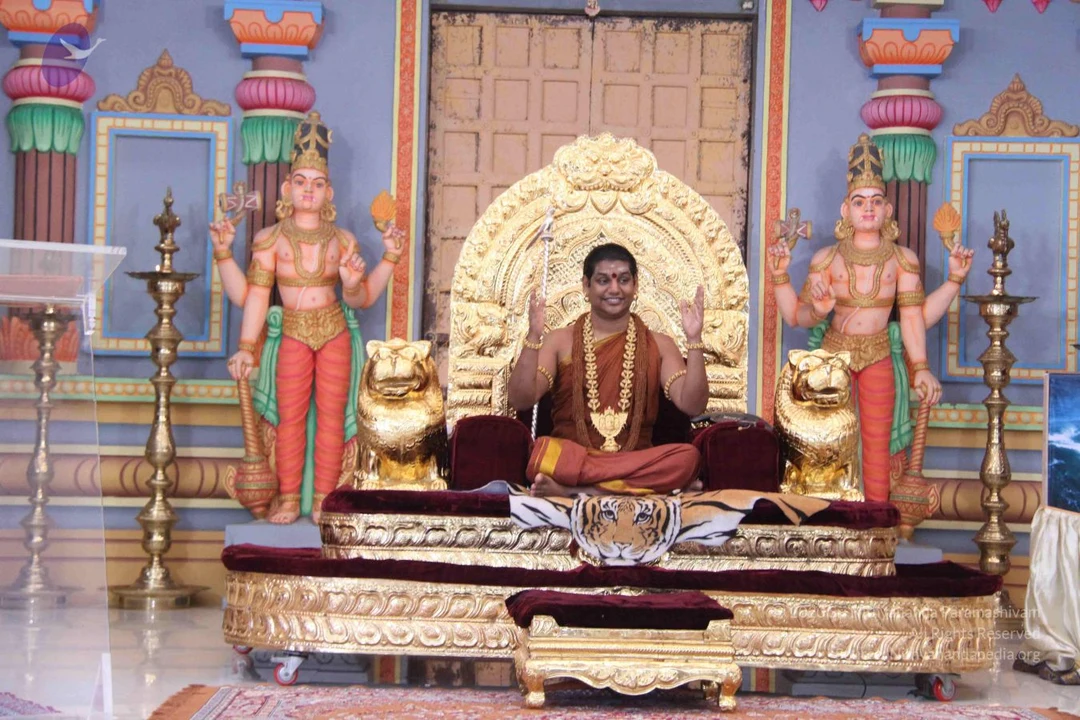
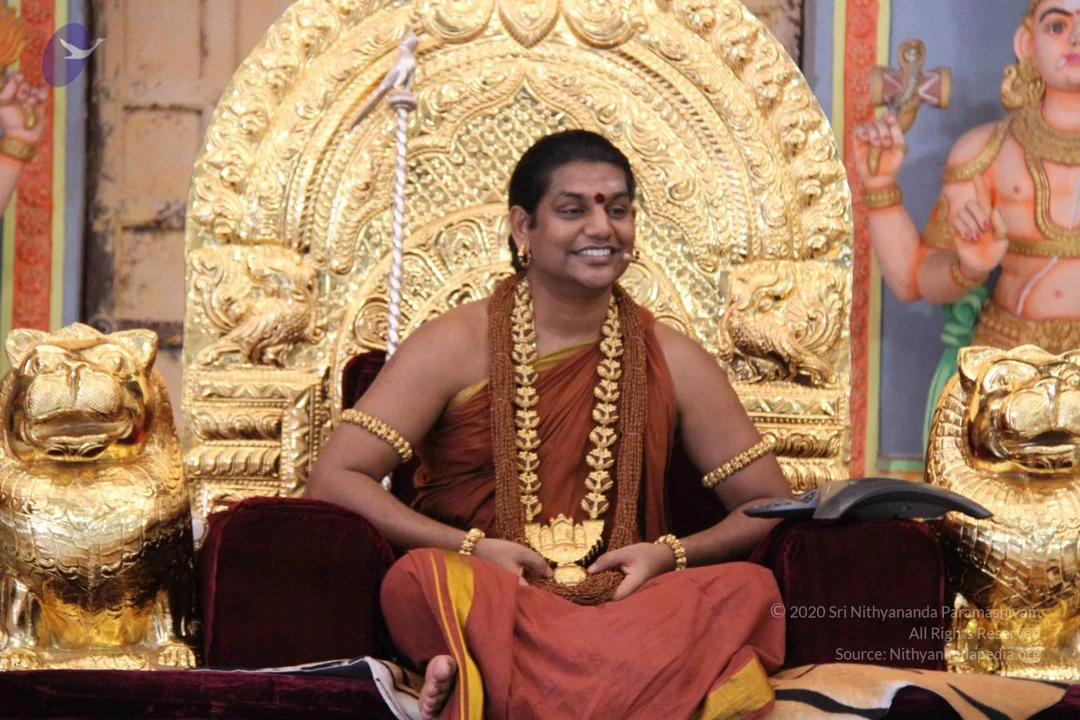
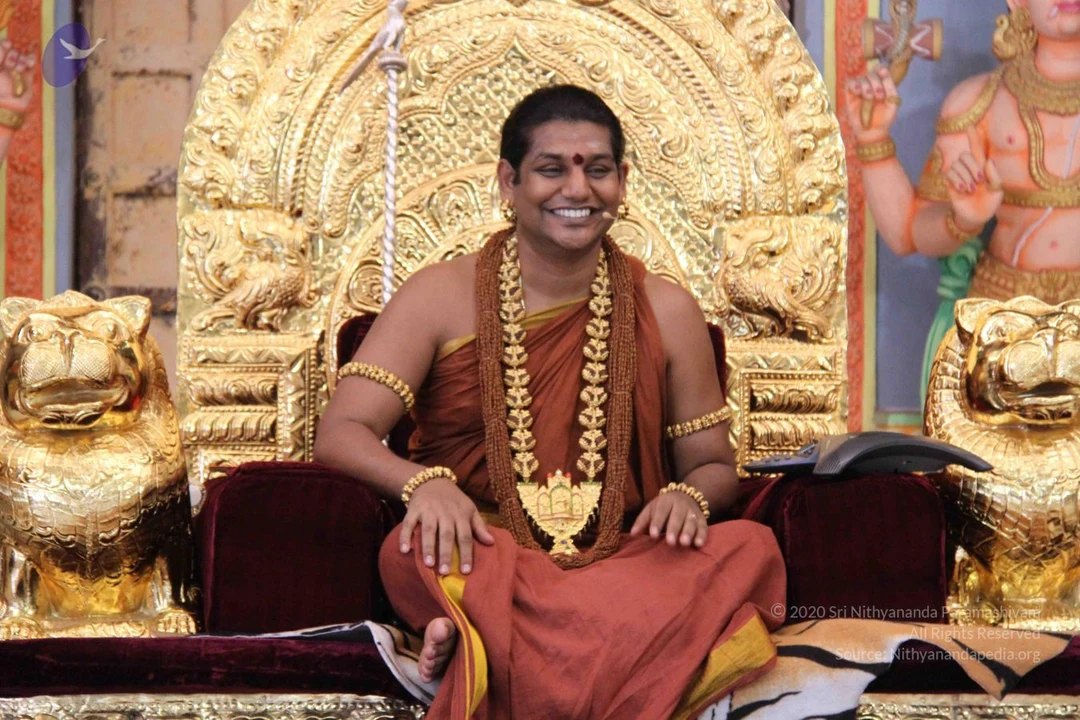
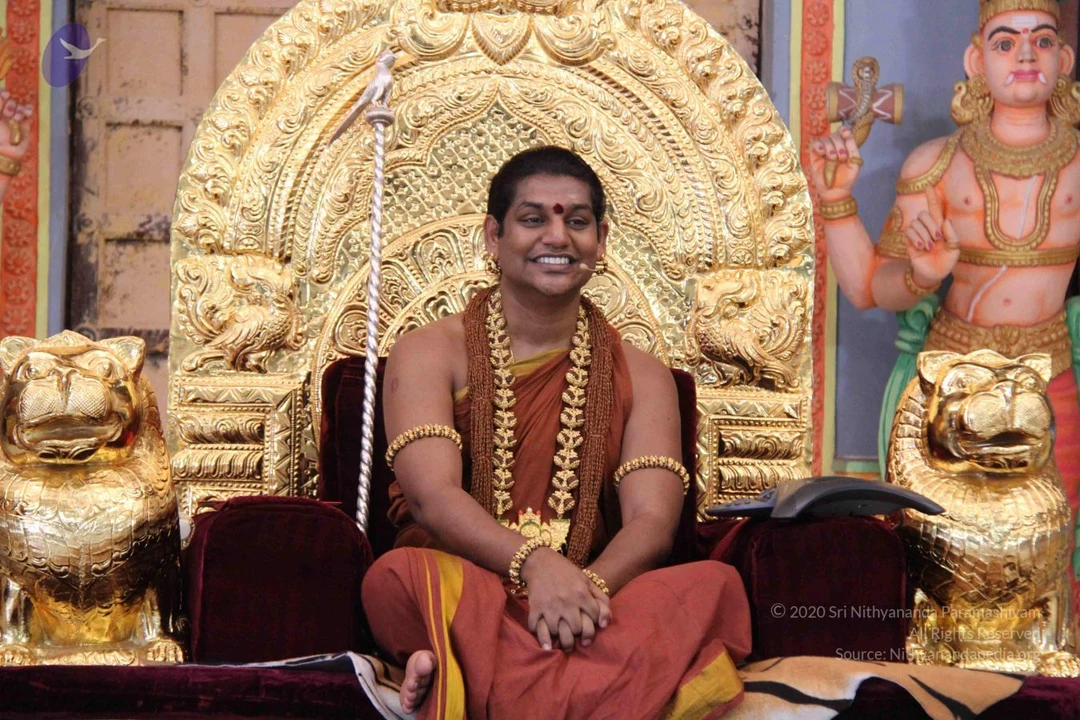
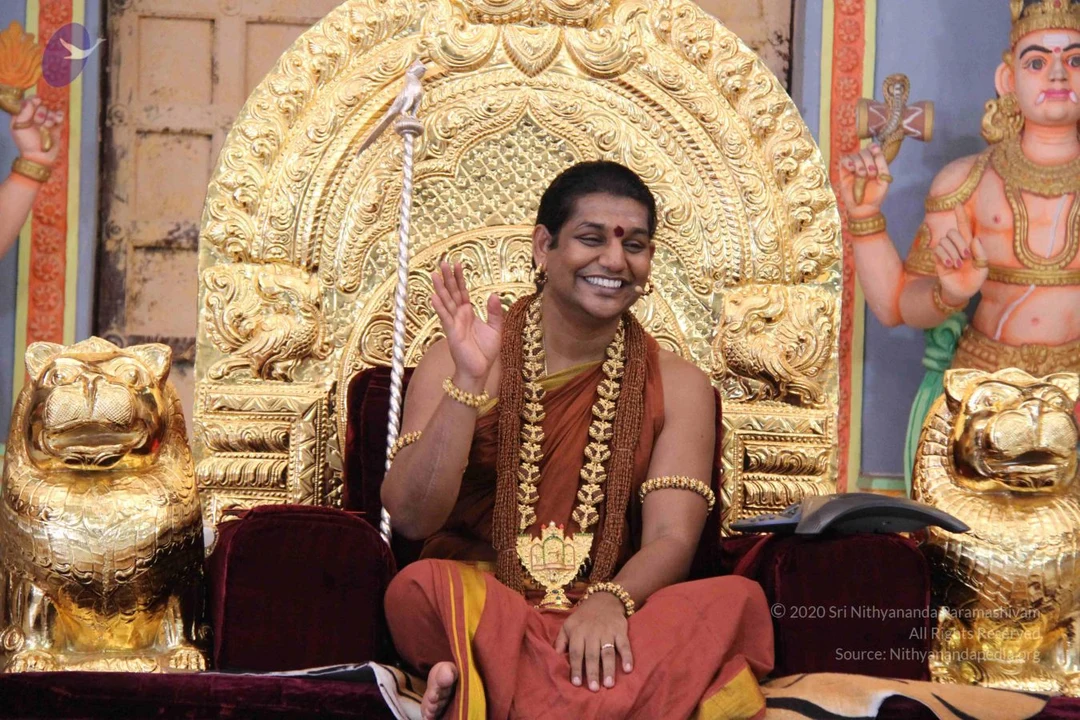
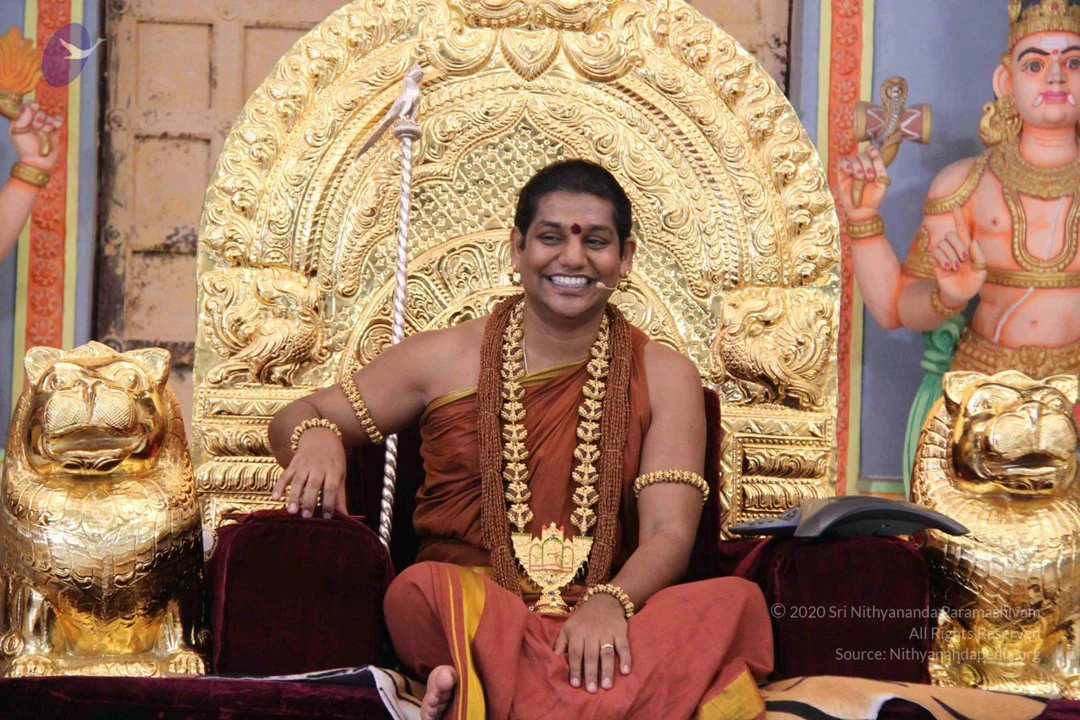
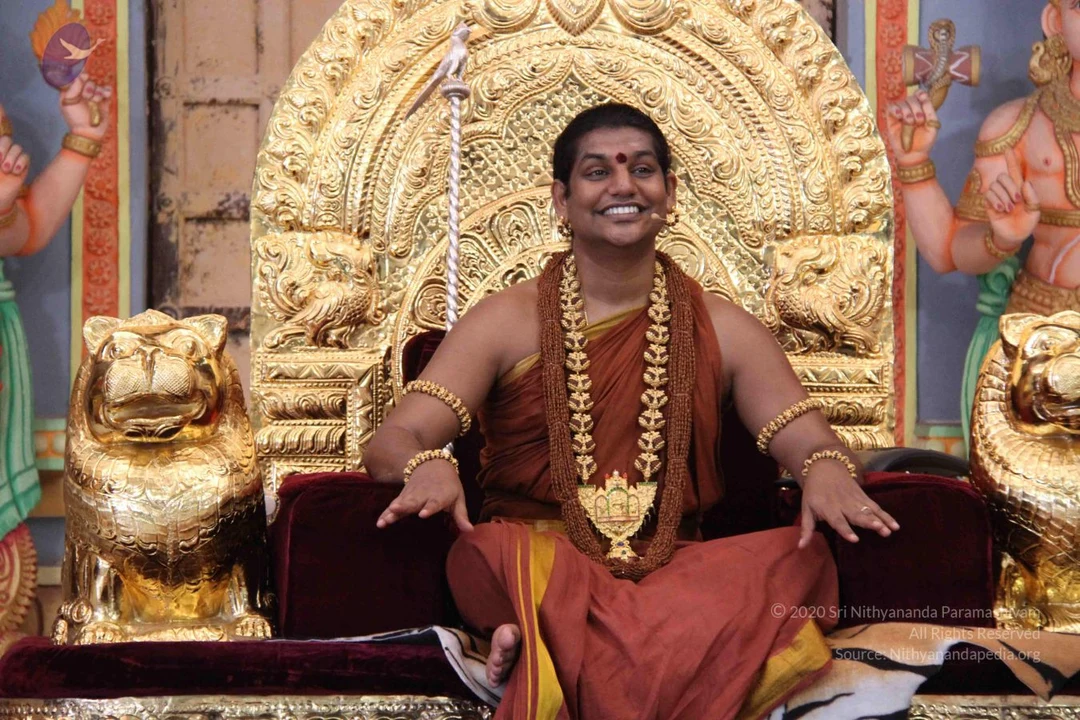
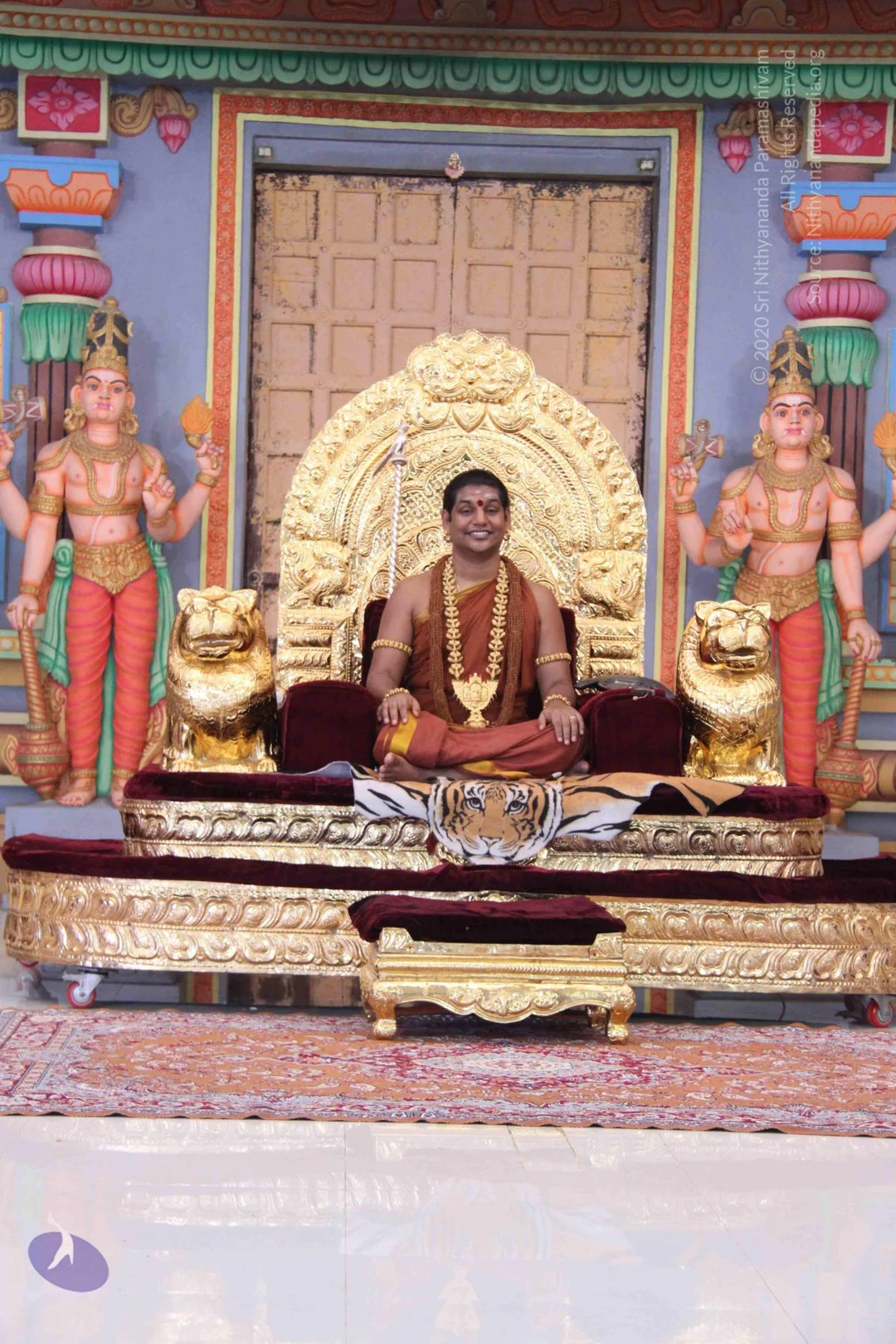
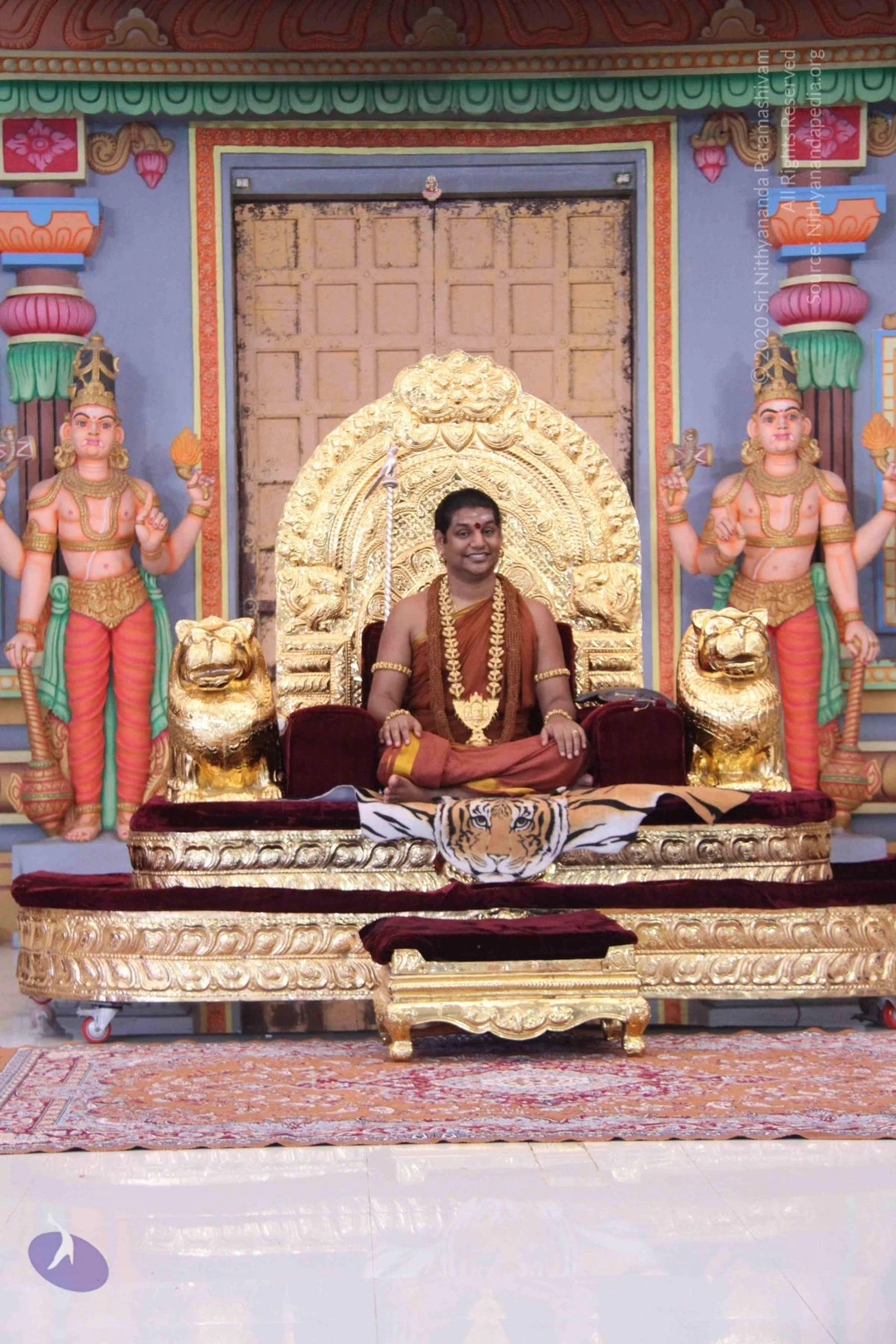
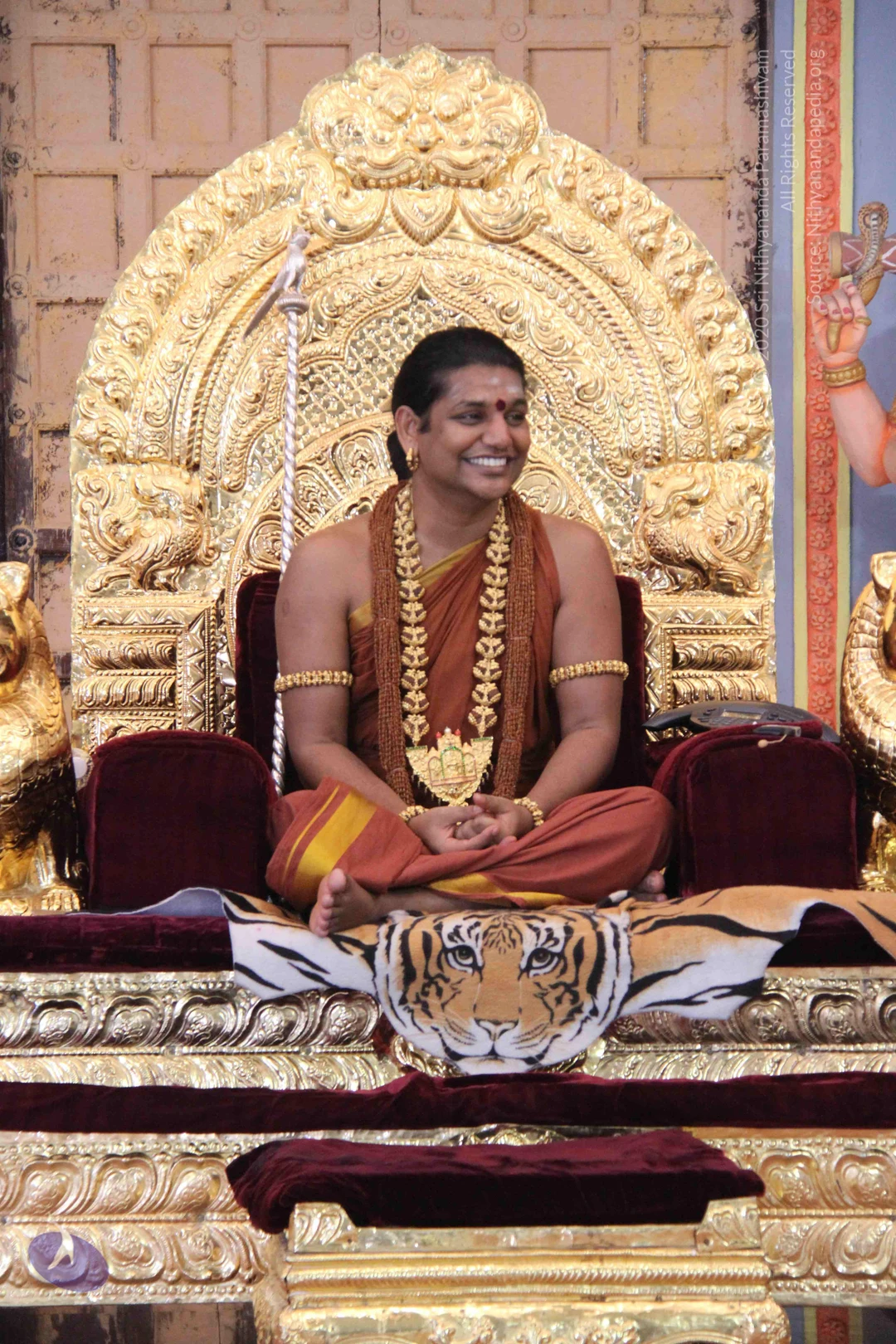
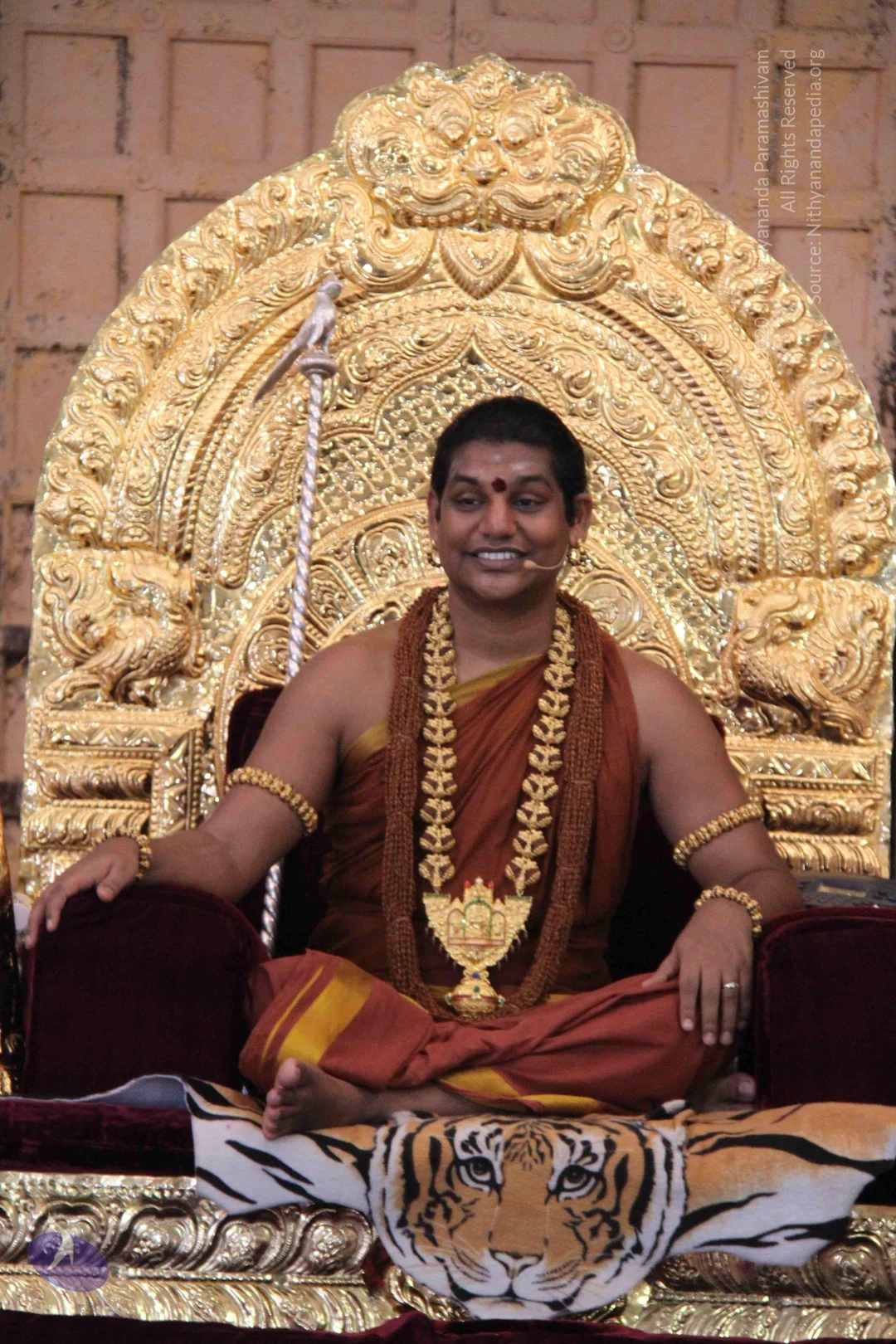
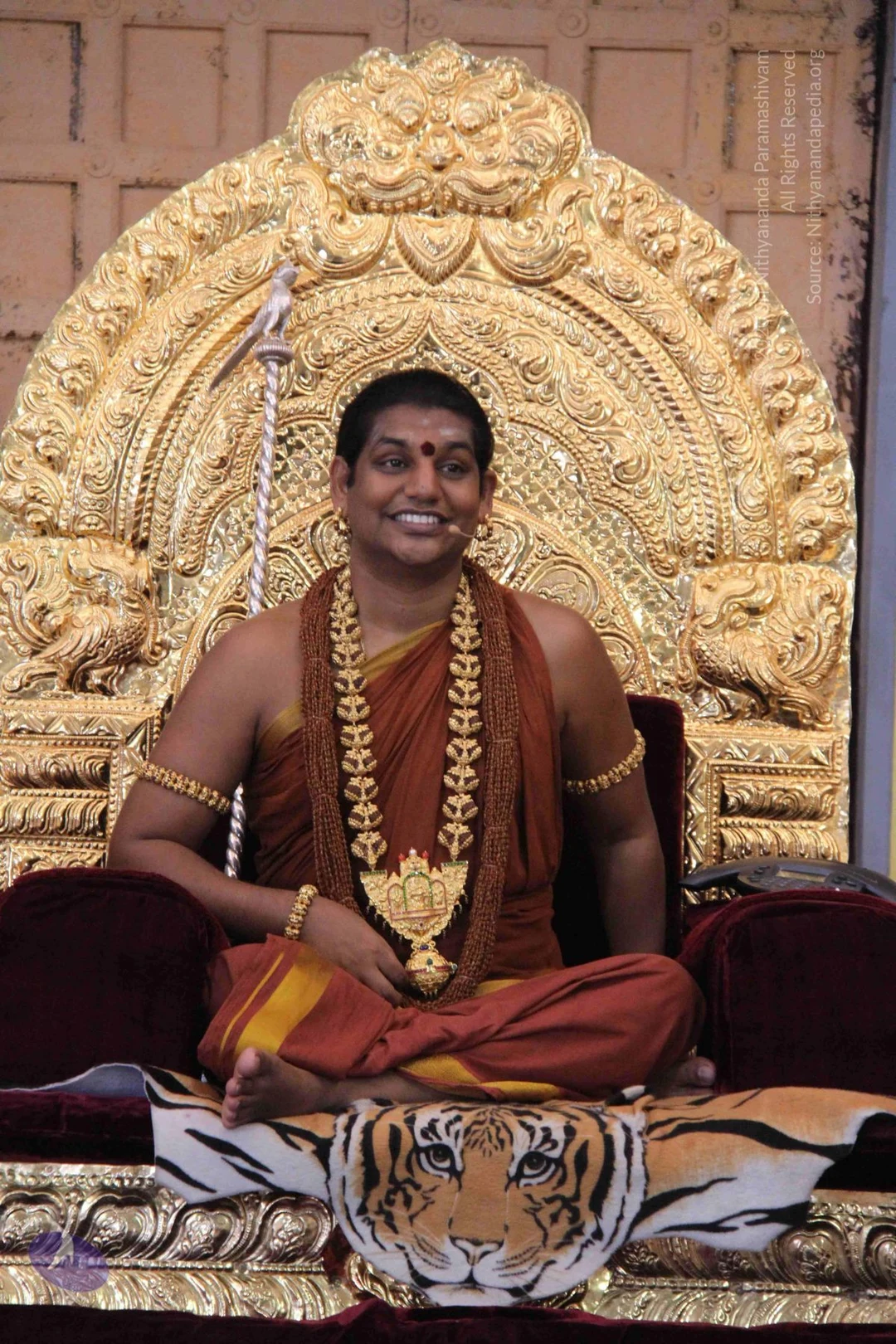
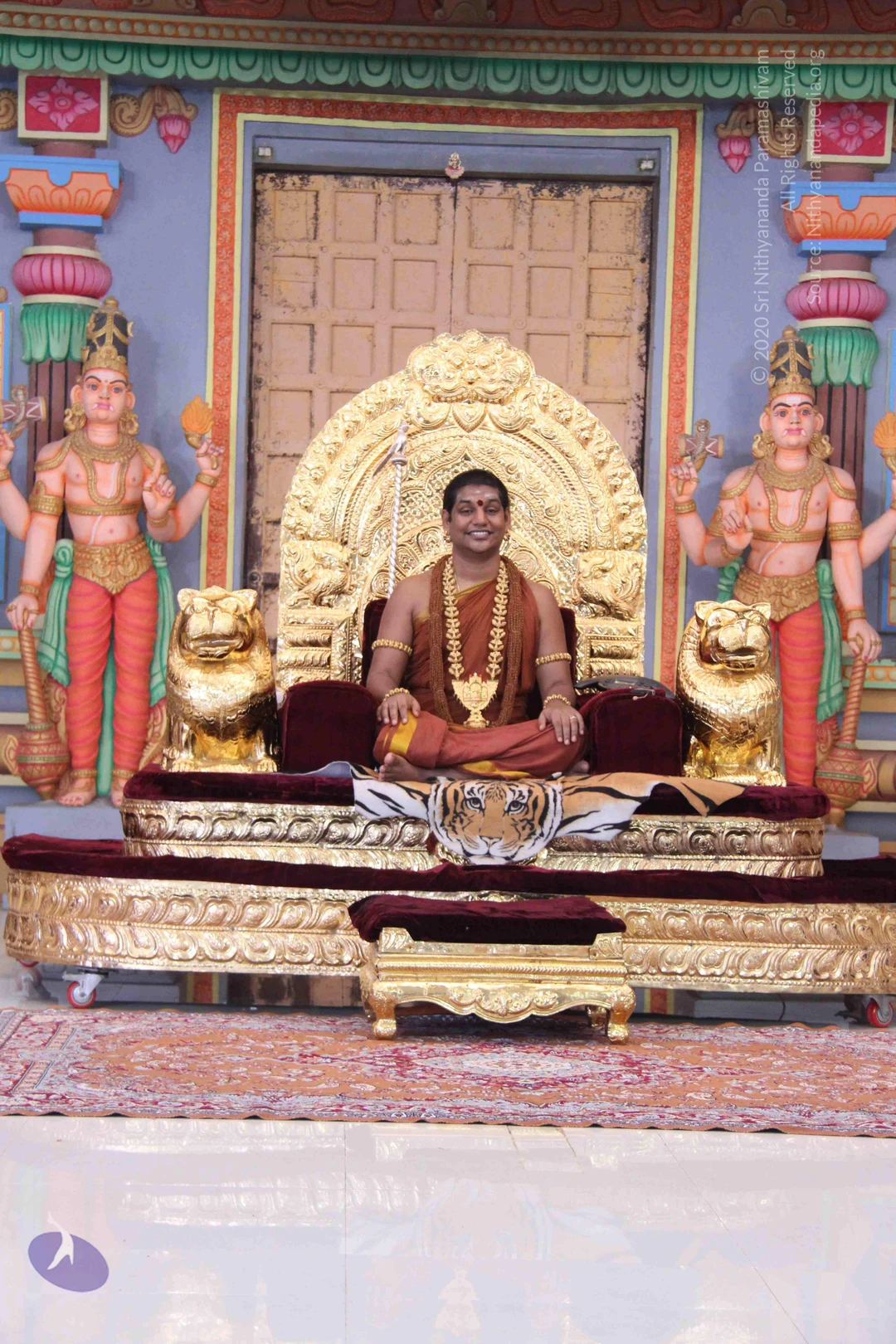
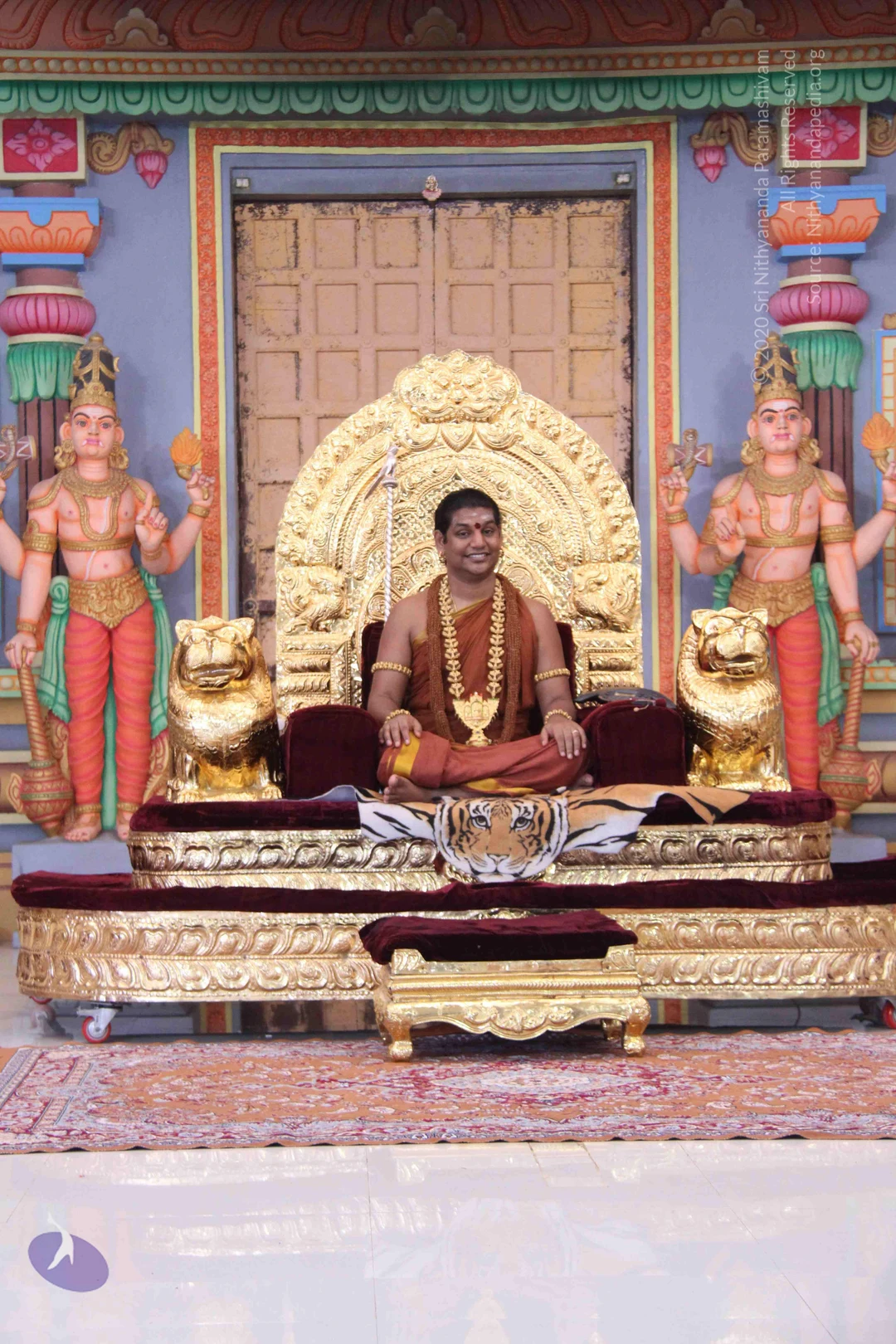
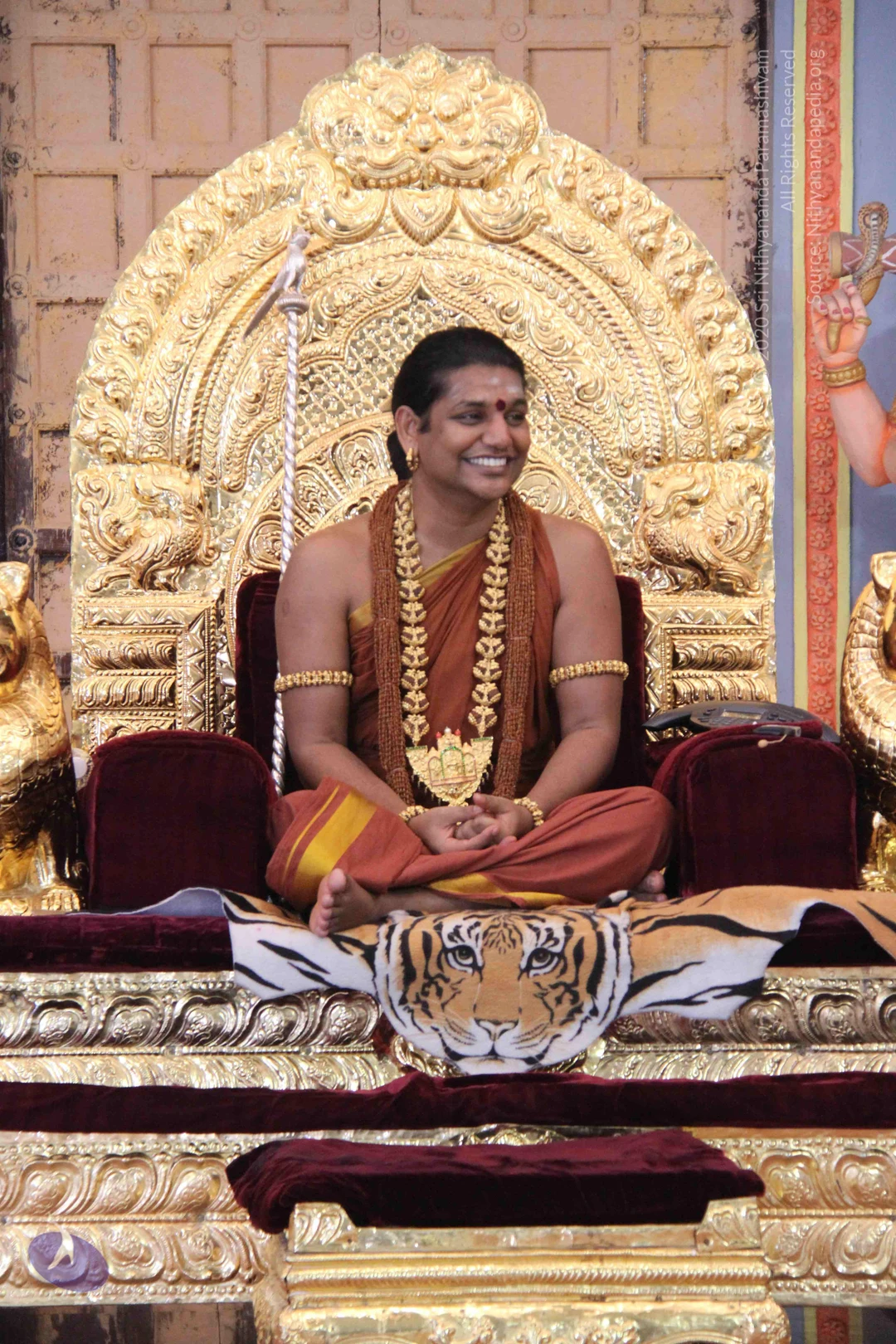
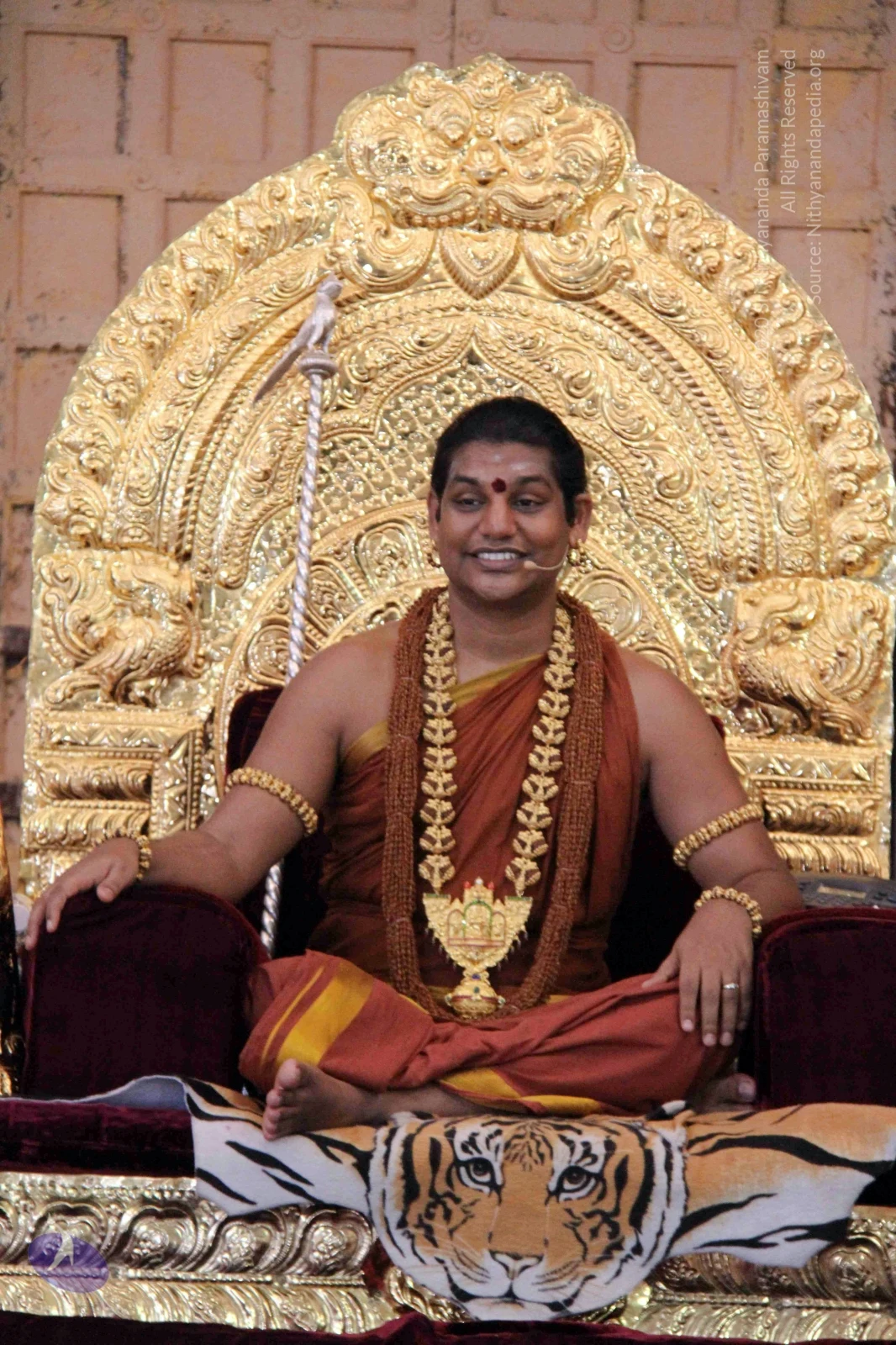
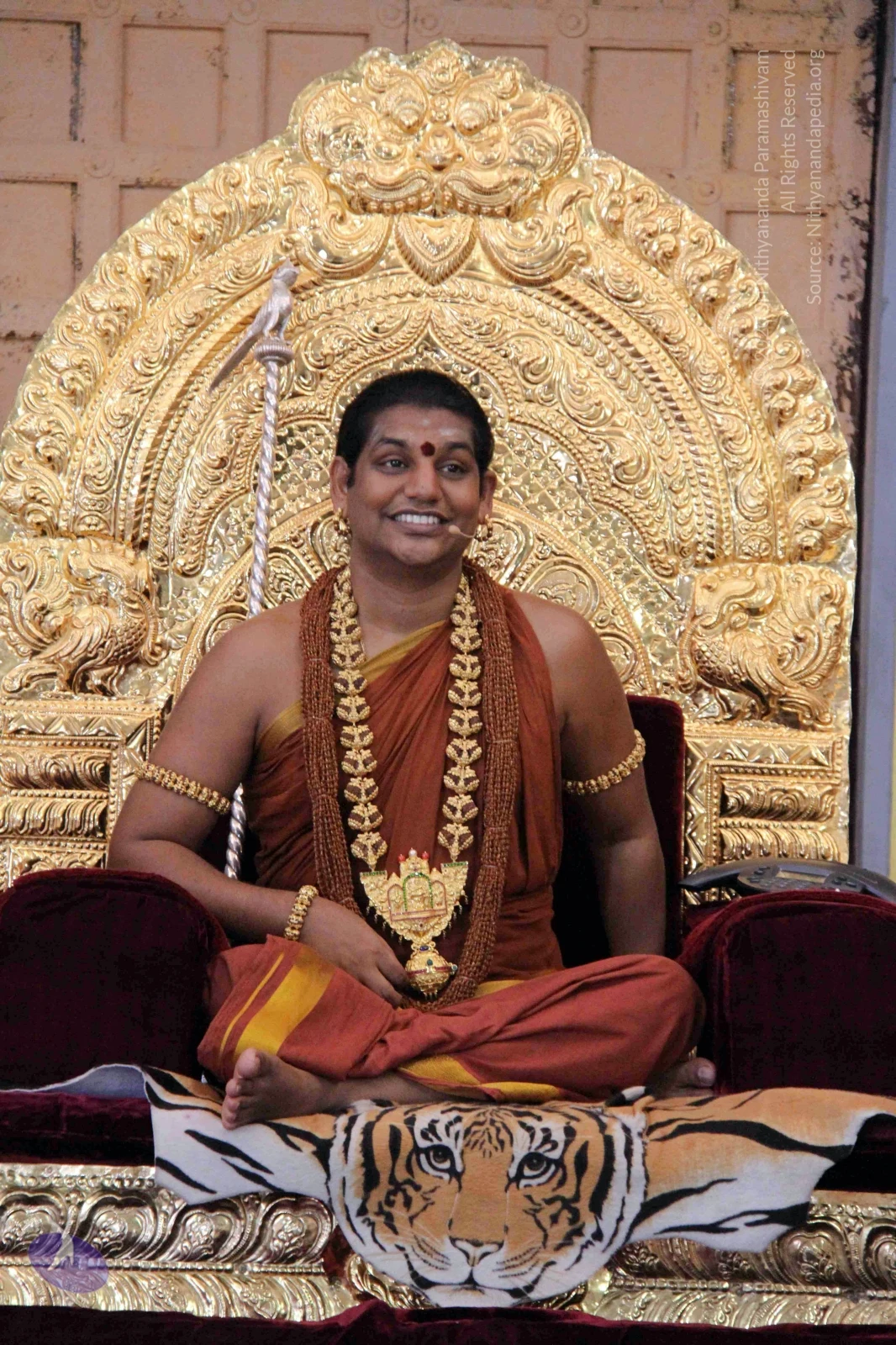
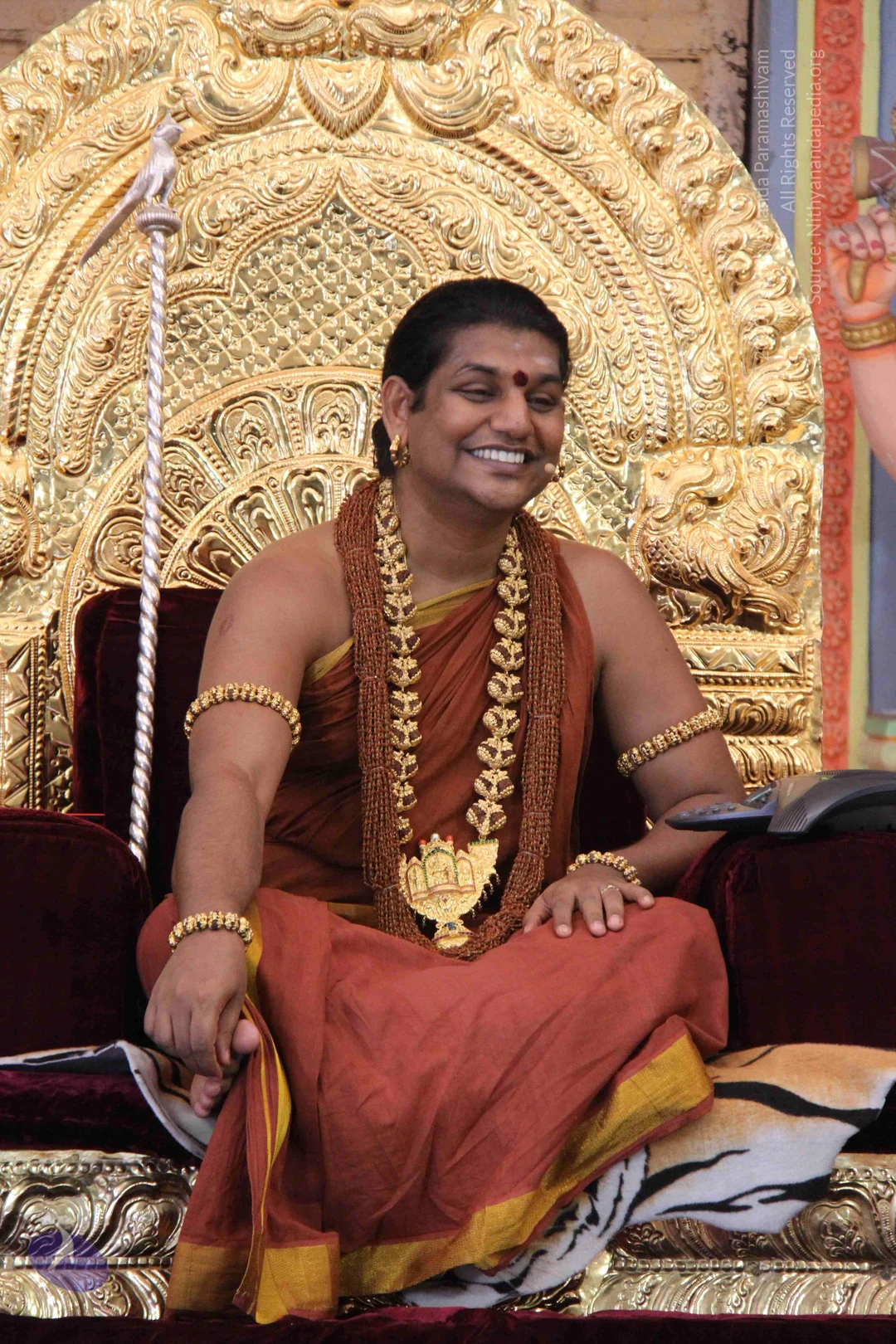
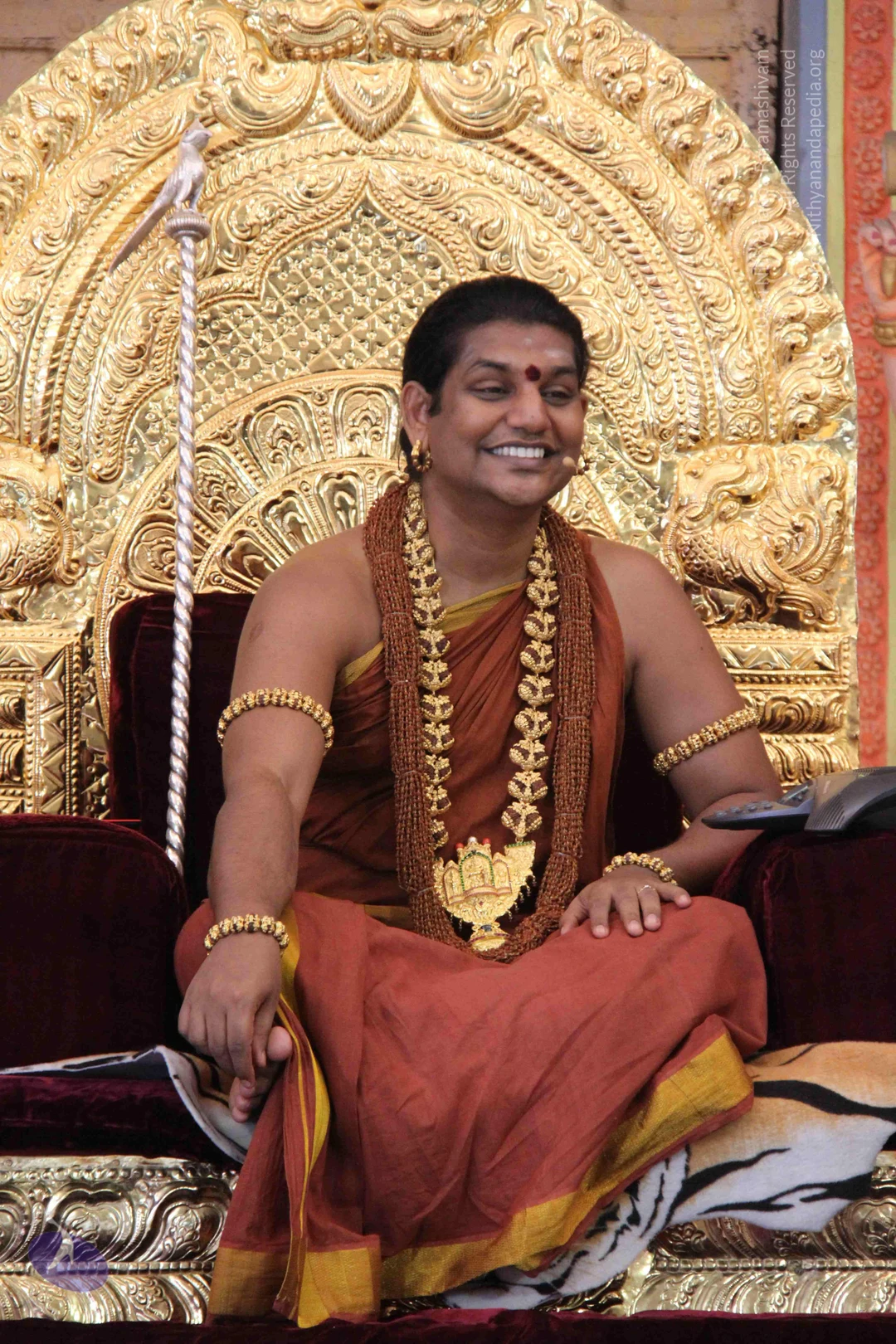
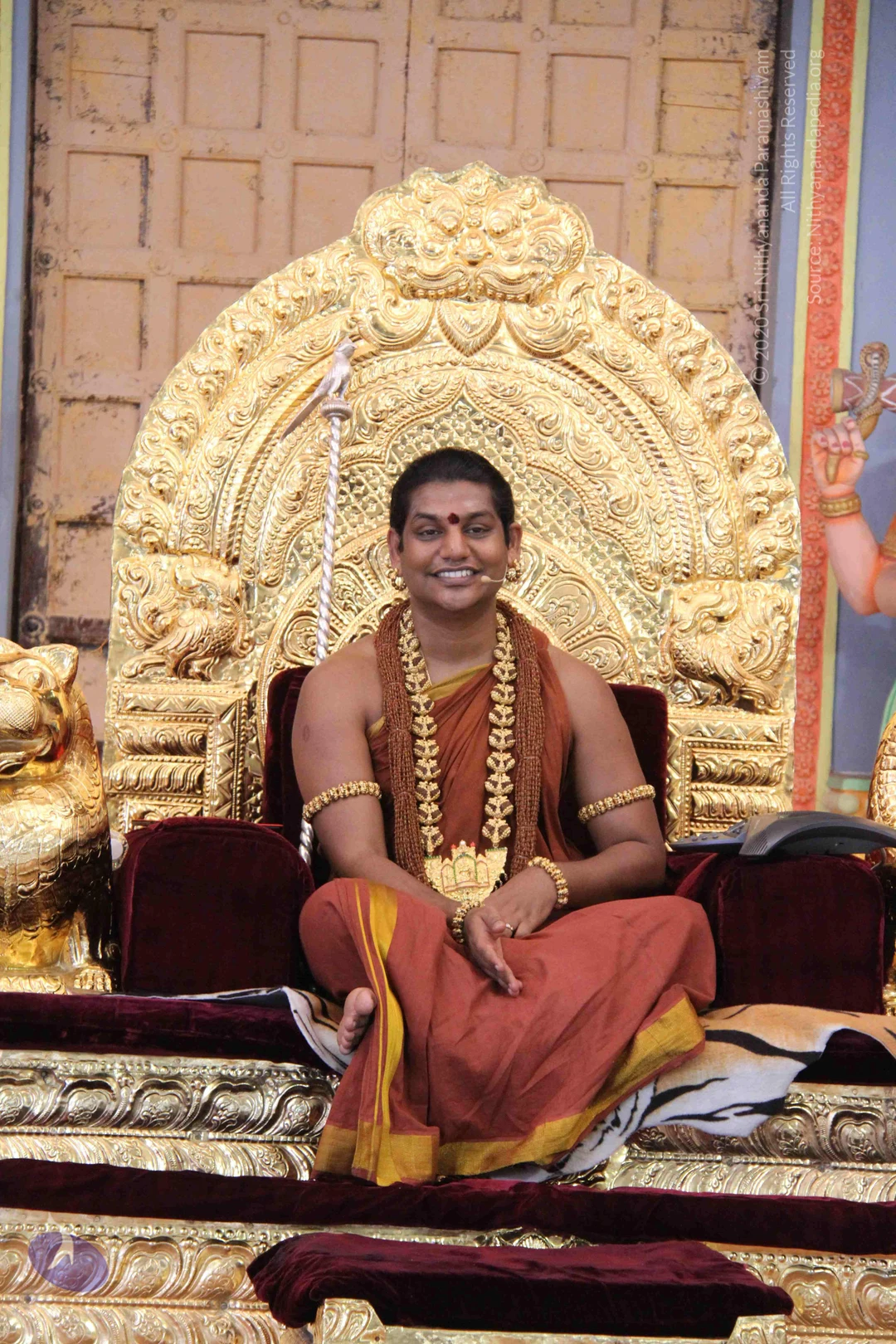
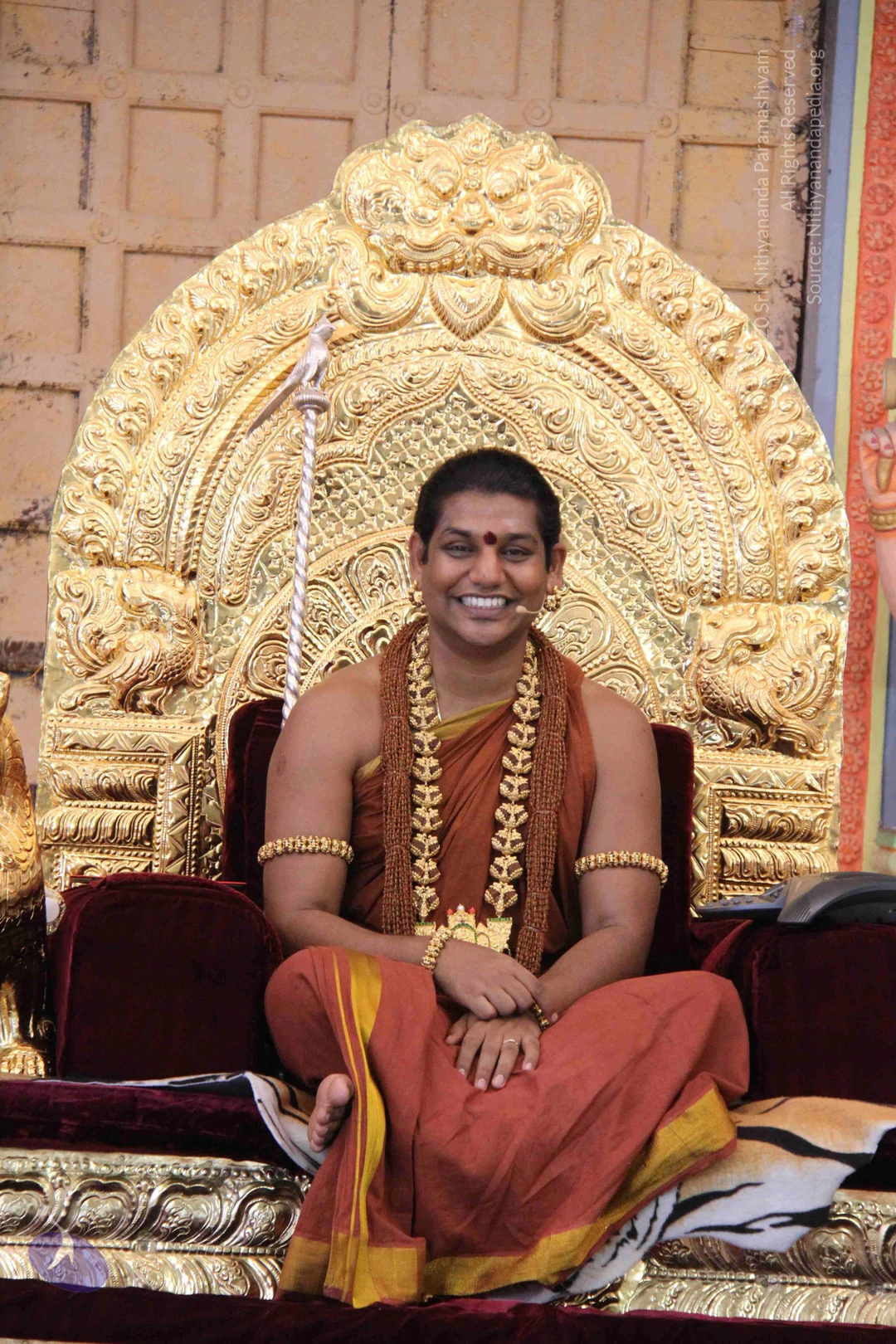
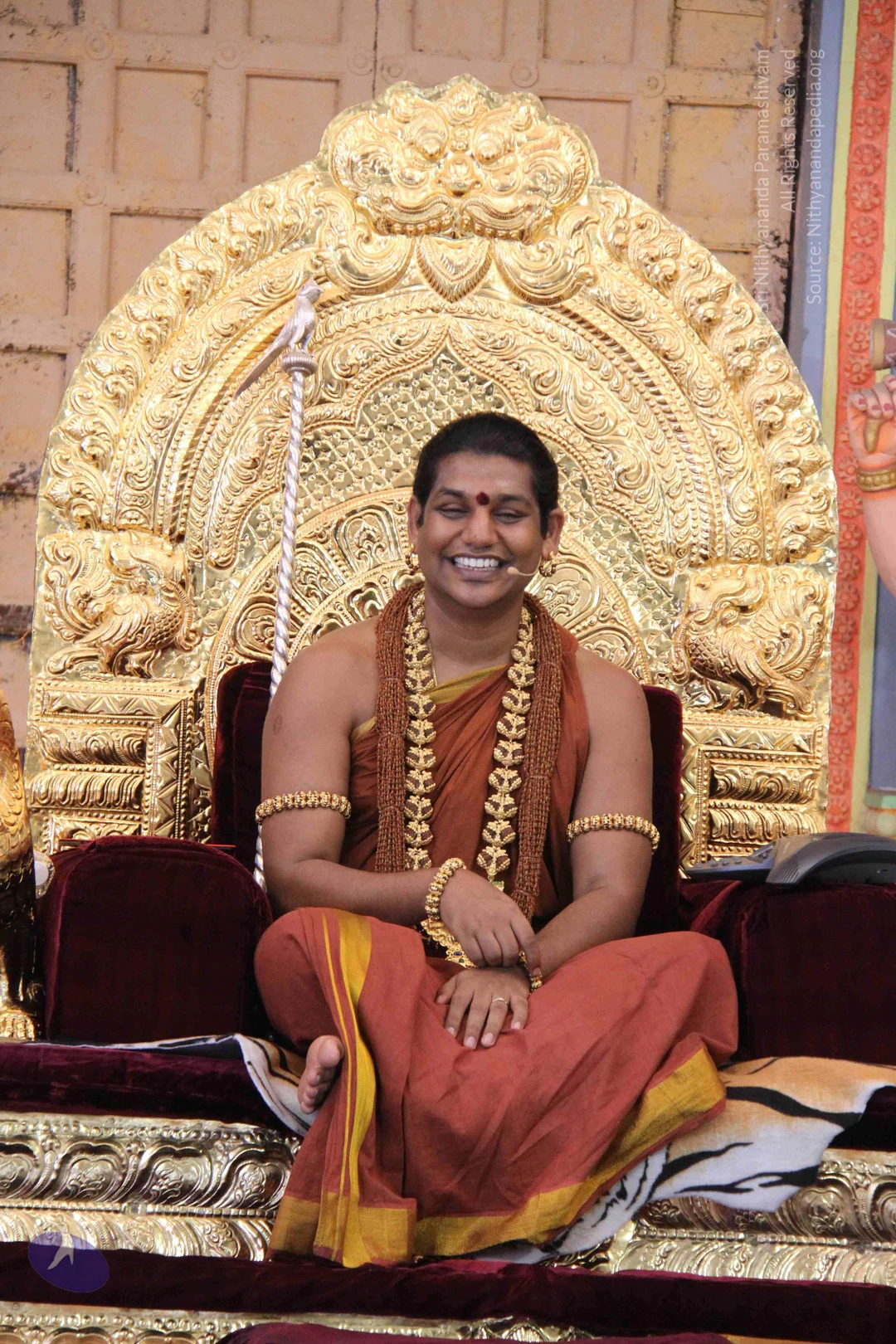
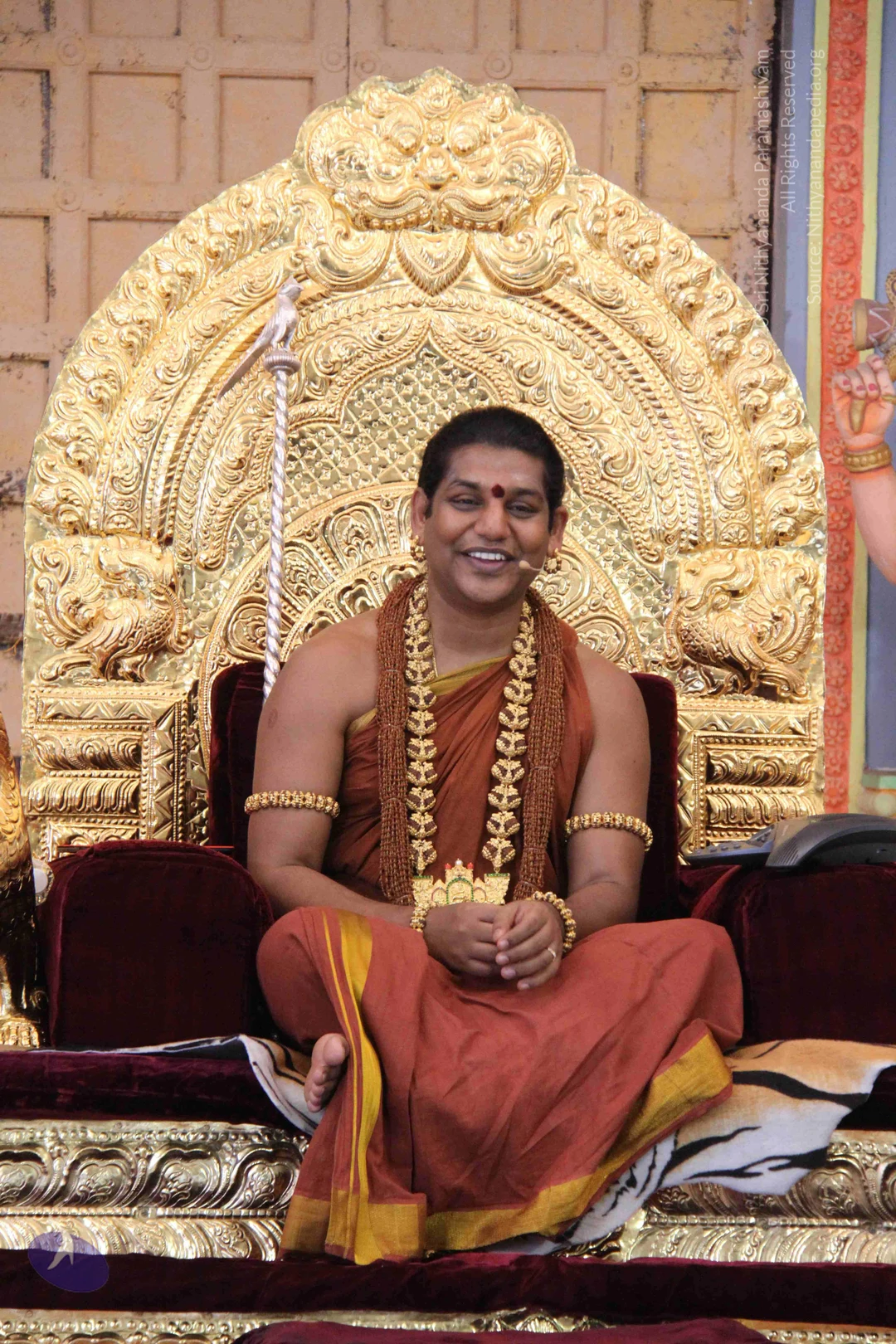
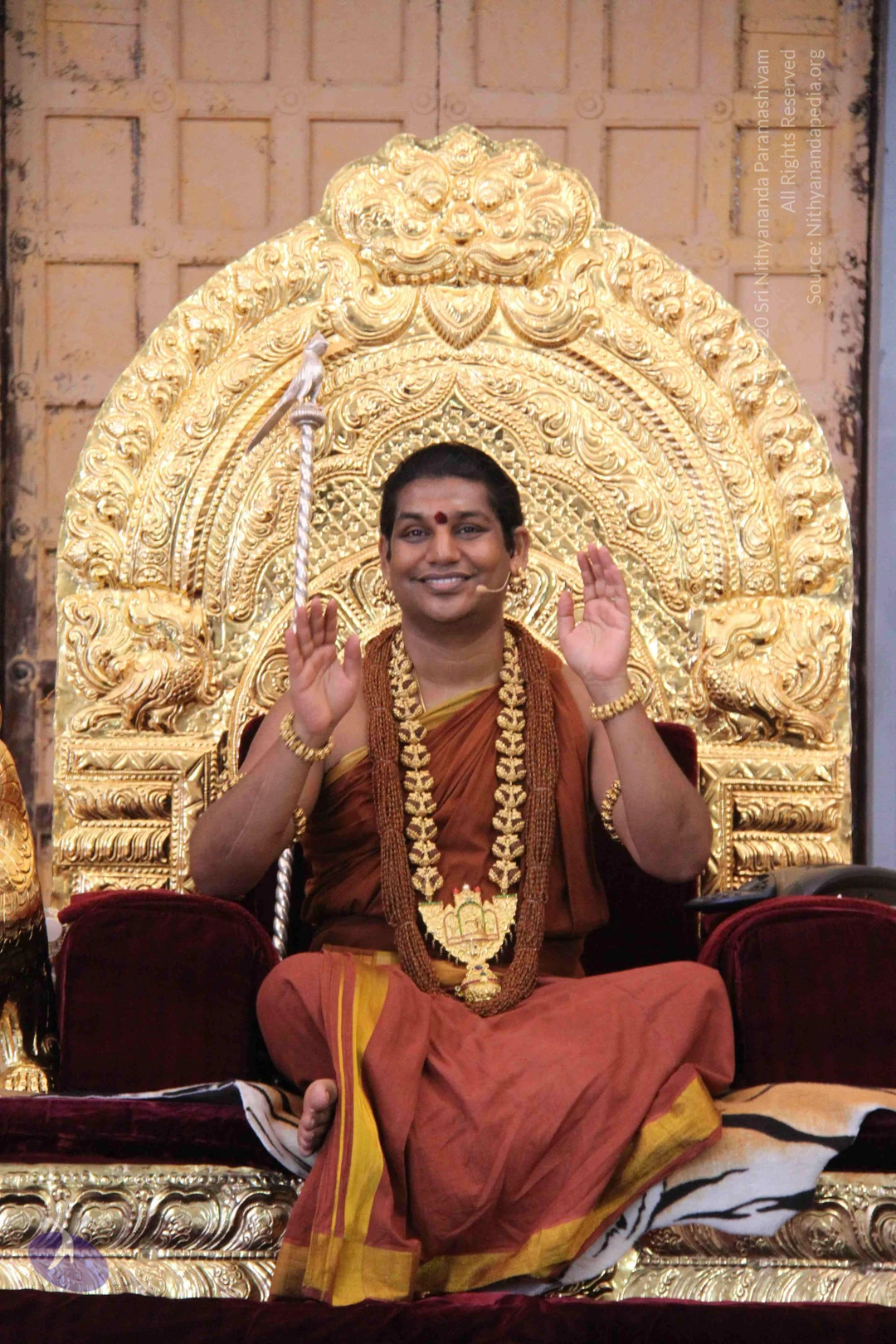
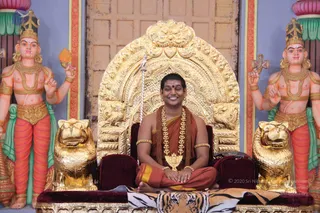
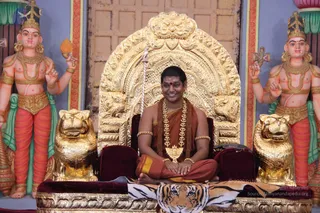
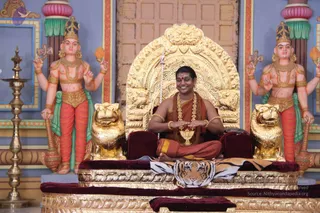
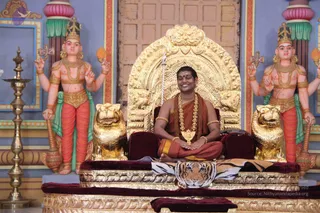
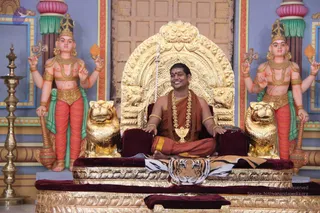
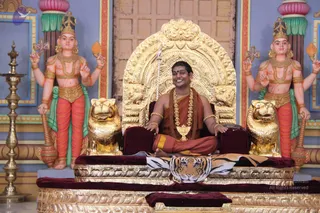
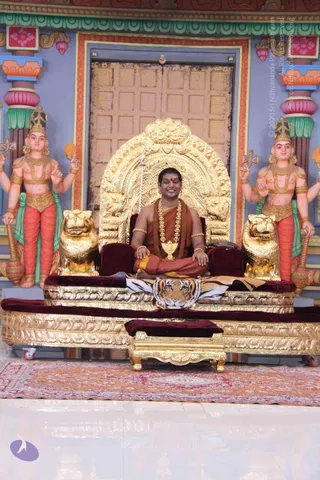
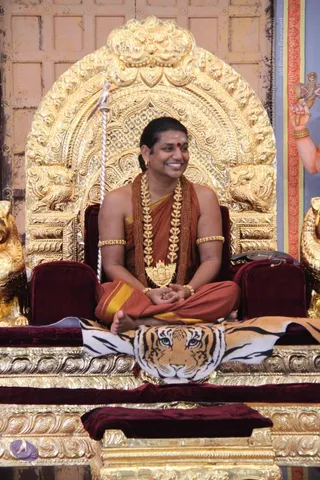
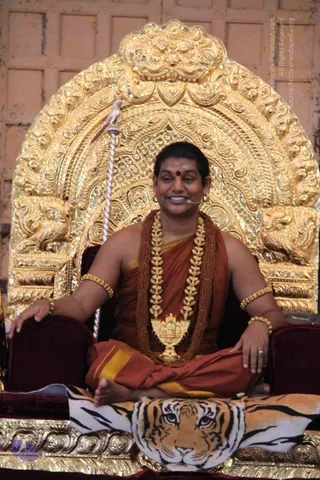
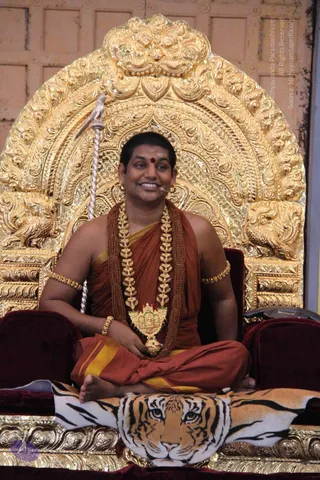
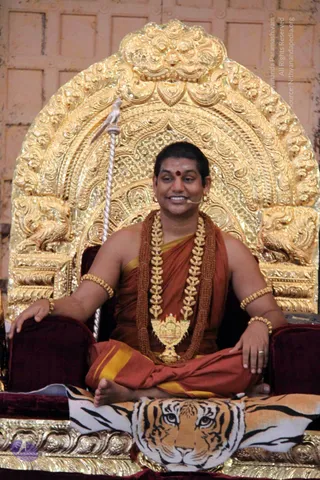
A stage tableau with painted backdrop of columns and a doorway, depicting a Leela or devotional drama. Seated on a golden throne at left is a man in saffron-orange dhoti and shawl with a rudraksha mala, hands folded in lap, in a relaxed seated pose. Beside him stands a painted-figure style deity with multiple arms and a crown. At centre, two actors in costume sit on the floor in front of a golden throne: one in a yellow dhoti and crown with garlands, the other in a purple dress with a yellow garland and crown, gesturing with raised hands. Two deity murti or costumed figures sit on the golden throne above, adorned with red and white garlands. Ocean wave images on backdrop panels and a small oil lamp stand complete the setting.A seated man in saffron-orange robes sits on an ornate gold throne with a large arched gold back and gold lion-head armrests, set on a maroon cushion over a tiger-striped cloth. He wears a gold-toned necklace with a central pendant, a rudraksha-style mala, gold armlets and bangles, and a red bindi on his forehead, smiling widely with hands resting on his lap. Behind him stand two large painted deity murti figures with crowns, gold necklaces and orange-red dhotis, holding a lamp and other ceremonial objects, in front of a wooden panelled door.A seated man with a smiling expression sits cross-legged on an ornate gilded throne with a large arched backrest carved with floral and scroll motifs. He wears a saffron-orange dhoti and shawl, a long gold-beaded garland with a pendant, gold armlets and bangles, and a red tilak on his forehead. Two golden lion-shaped armrest sculptures flank the throne, and a tiger skin lies at the base. Behind him stand two painted deity statues with multiple arms, golden crowns, gold jewellery, and orange and green draped lower garments.A seated man in saffron-orange robes and a rudraksha mala with a gold ceremonial necklace sits cross-legged on a gold throne with lion-carved arms, hands held together in front of his chest, smiling. A striped tiger skin cloth covers the seat. Two painted deity statues flank the throne, each with multiple arms, crowns and green-and-orange lower garments, and a brass oil lamp stands at left. Behind is a gold arched backdrop. This appearance-based label is a person: long hair, saffron robes, rudraksha mala and gold necklace, seated on a throne. The page says no Swamiji at this event, so the identity is unsure. The image is a photograph of a seated figure on a throne in a temple-style hall, with no visible crowd.A seated man in saffron-orange robes sits cross-legged on a large gilded throne with carved lion-faced armrests and a tiger-skin cloth draped over the platform. He wears a long rudraksha-style mala, a ceremonial gold pendant and gold bangles, and smiles at the viewer. Two painted, crowned deity murti stand on either side with multiple arms, holding ritual objects, flanking the throne. A tall brass oil lamp stands to the left against a blue and pink temple wall with a wooden door behind. a person is indicated by the throne, saffron robes, beaded mala and ornate gold adornments, seated as a teacher in a temple hall.A seated man with a smiling expression sits cross-legged on an ornate gold throne with lion-shaped armrests and a gold arched back, draped with a tiger-skin cloth over a maroon cushioned dais. He wears an orange-saffron dhoti and shawl, a long gold lotus pendant necklace, a rudraksha-style bead mala, and gold bangles. Flanking him are two painted deity statues with four arms, gold crowns, gold necklaces and green waist cloths, one holding a trident-like staff. A brass oil lamp stands at left and a golden-brown wooden door forms the backdrop. The scene is a temple-style hall with blue and pink painted pillars. Only the seated man is a physical person in the scene; the statues are not counted.

SARVA DARSHAN
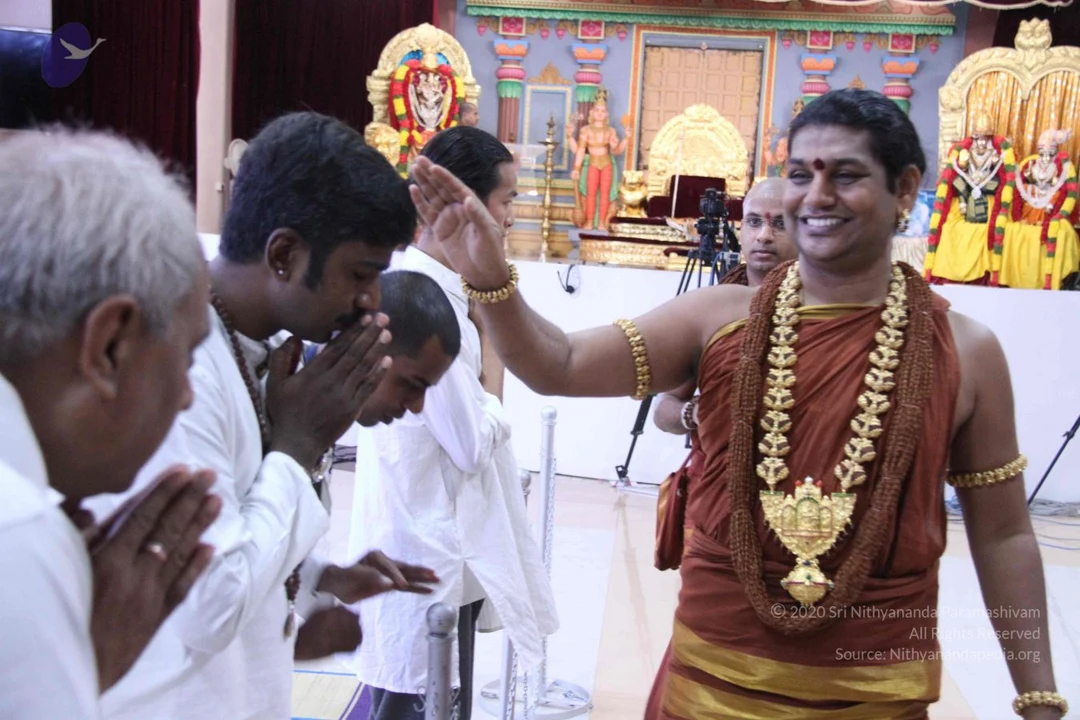
12 photosSource gallery
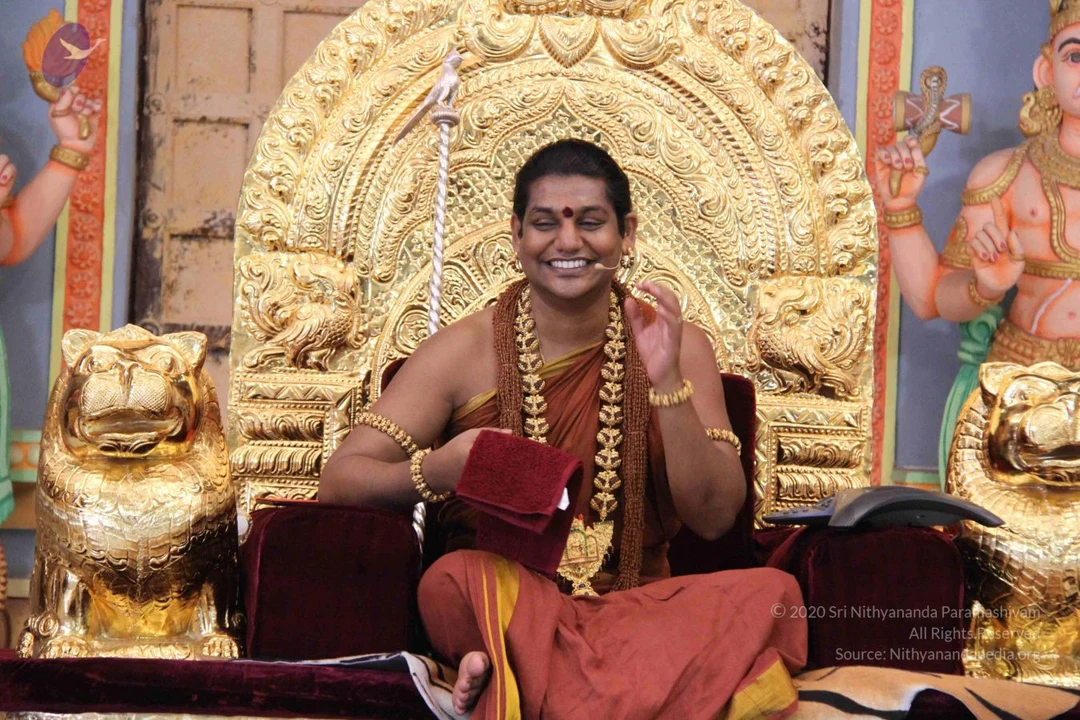
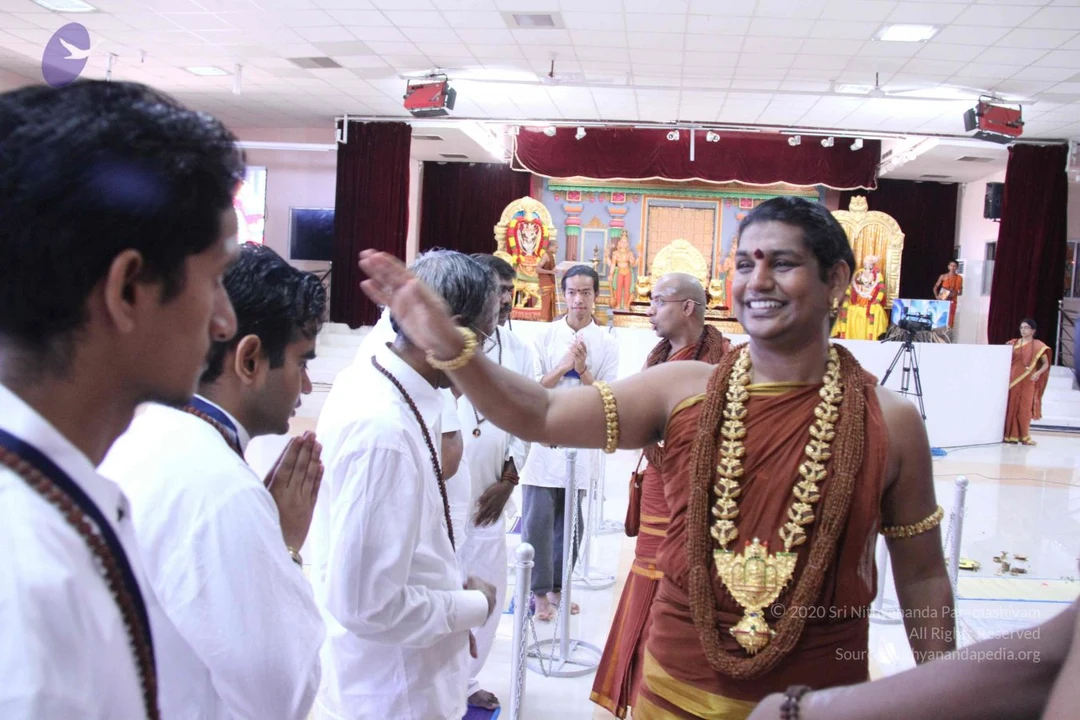
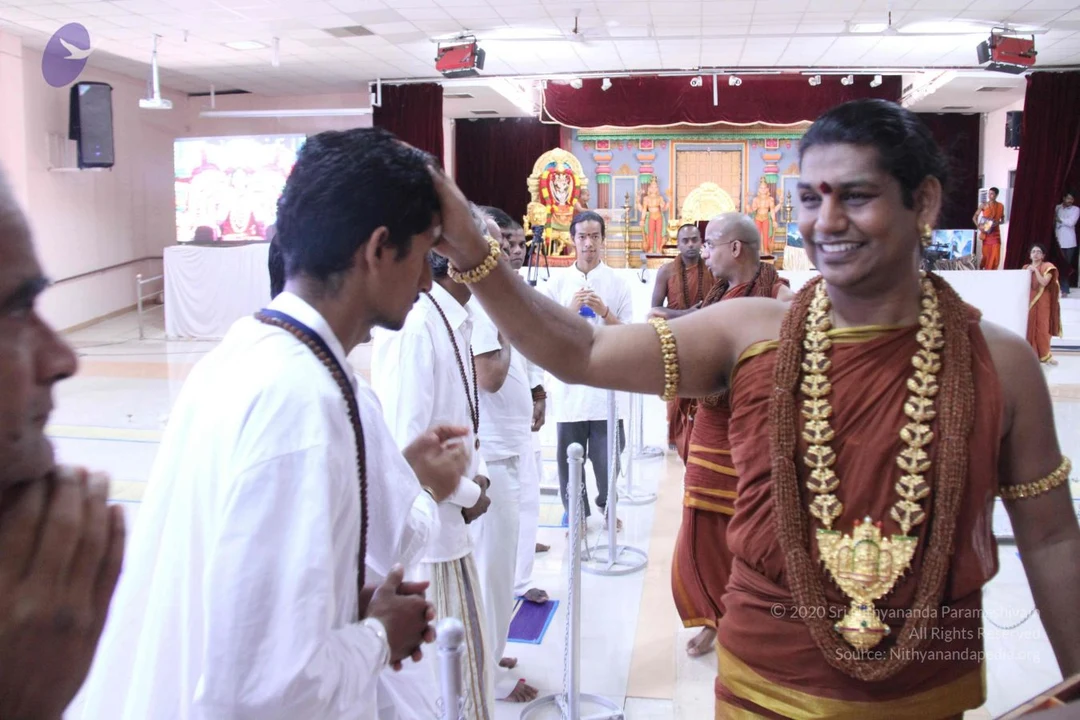
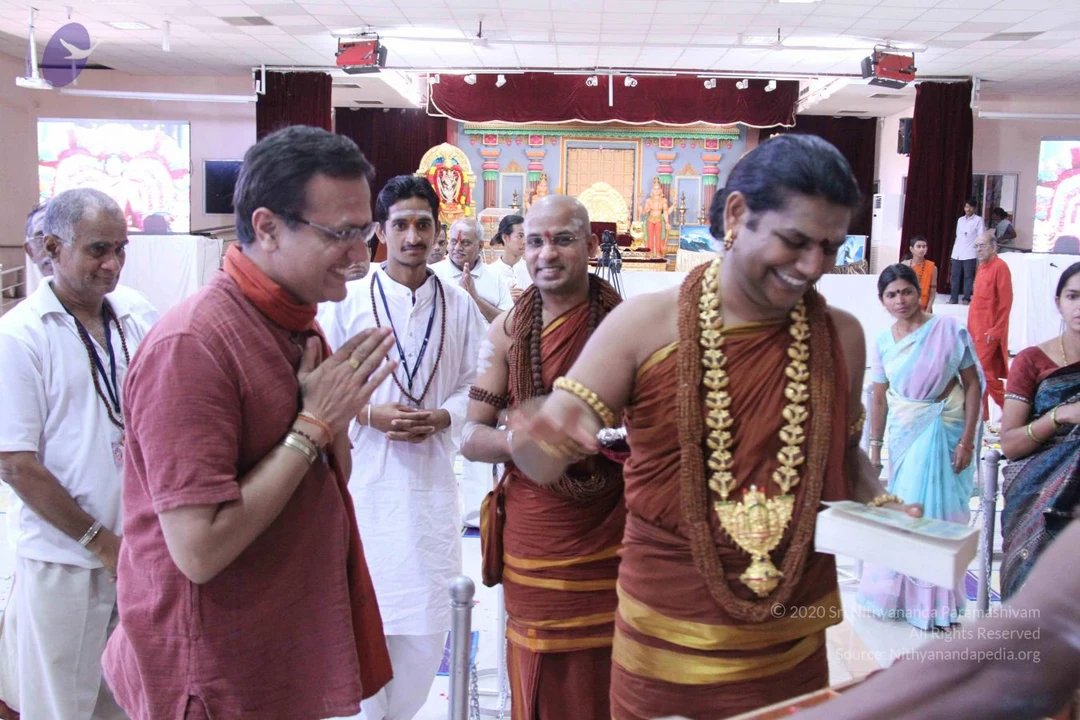
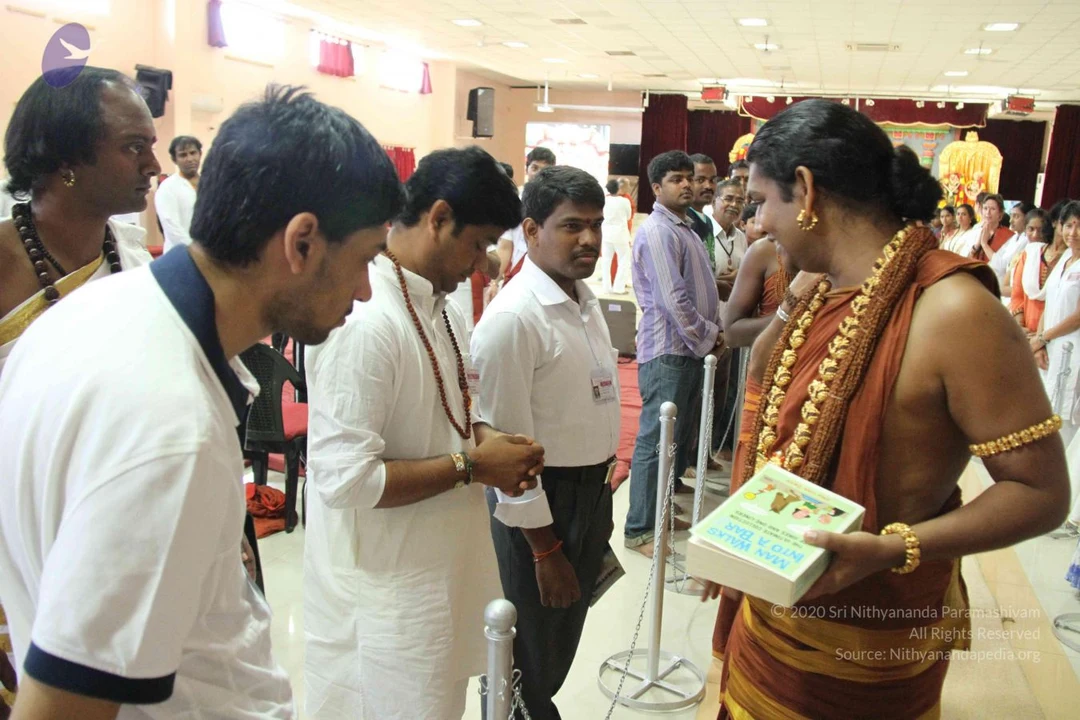
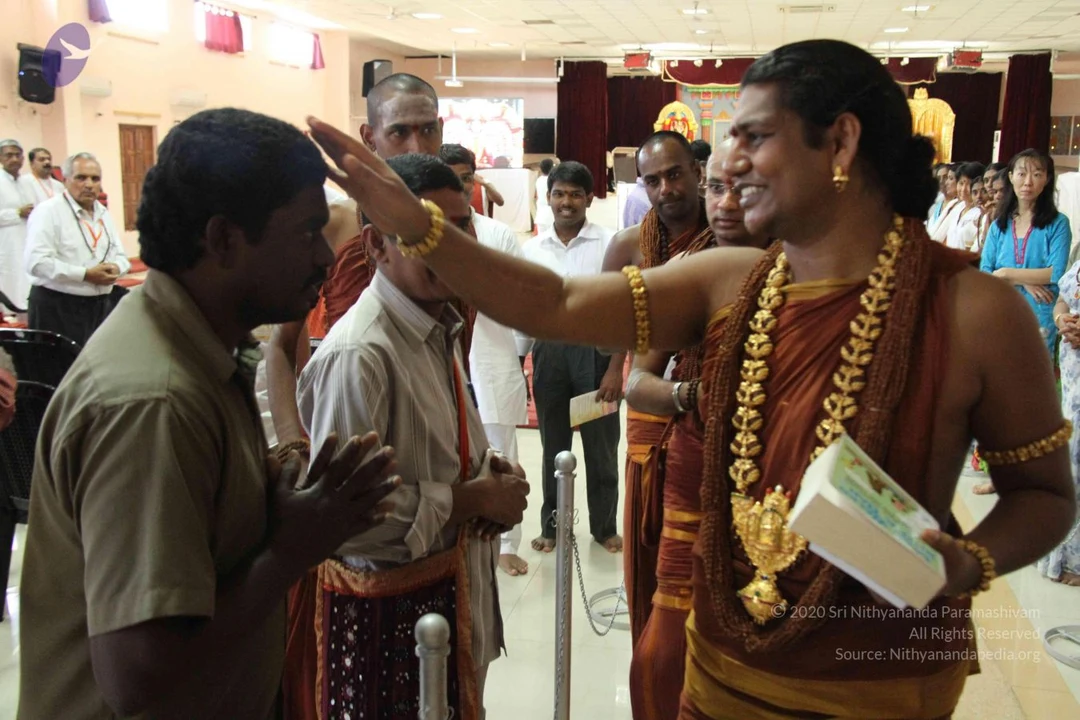
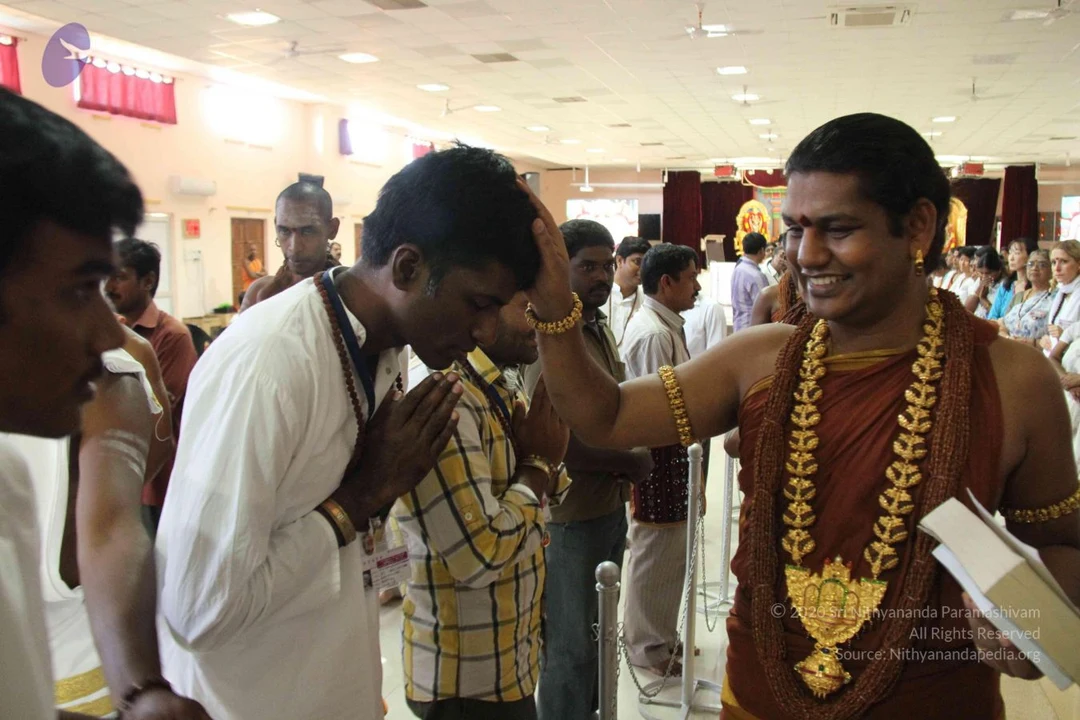
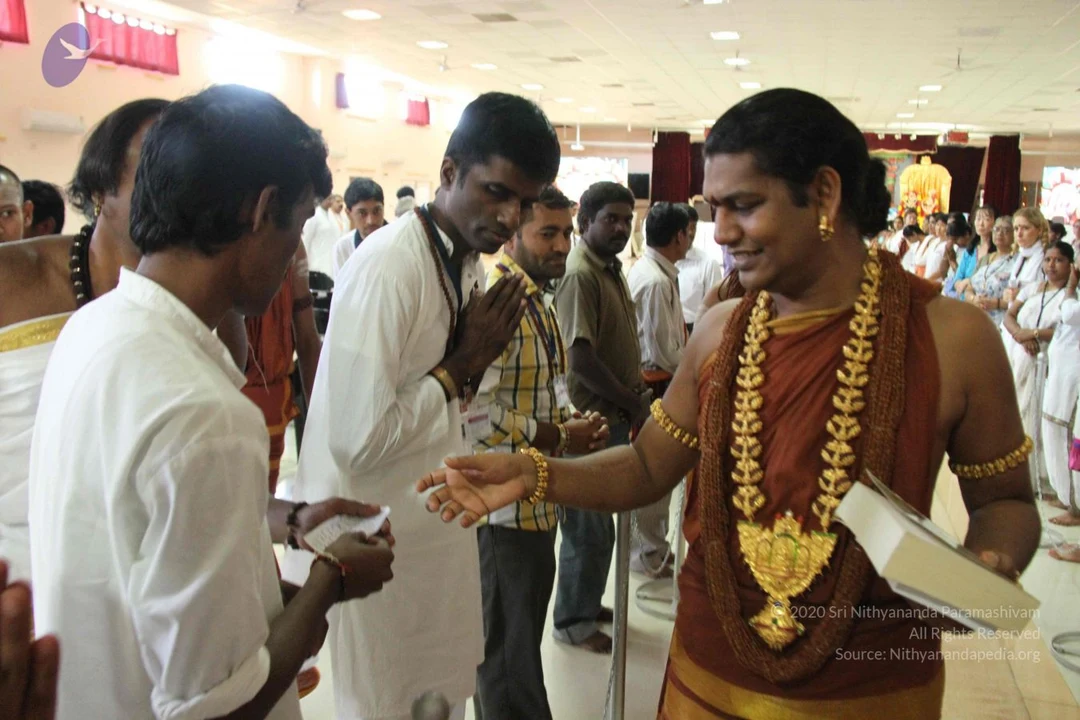
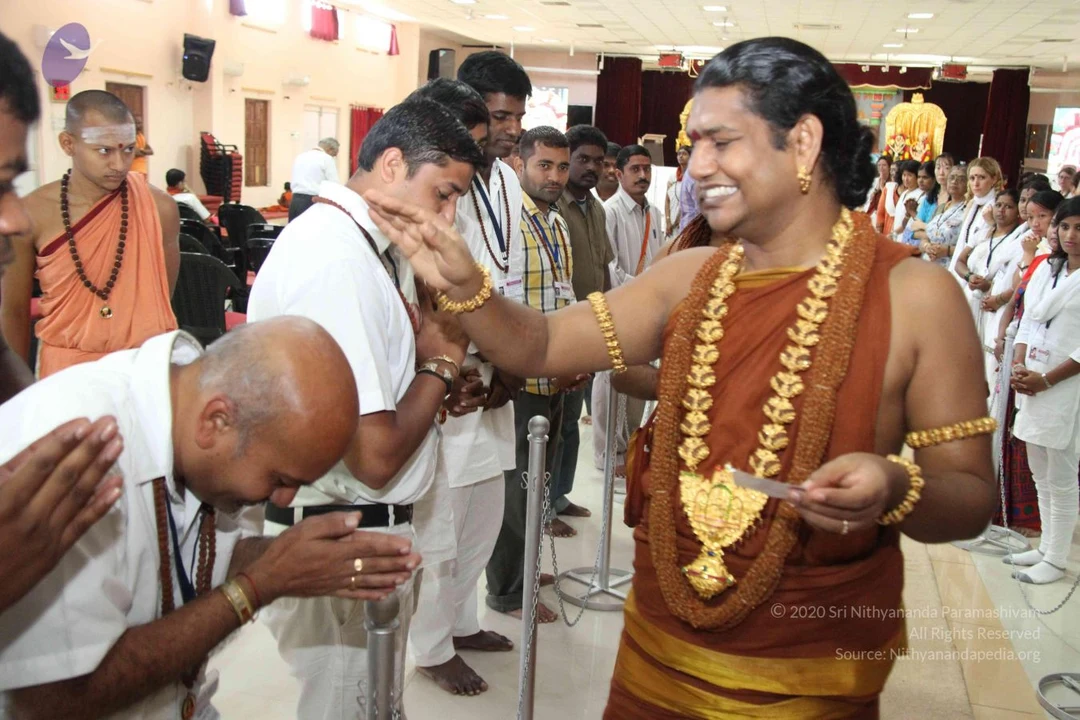
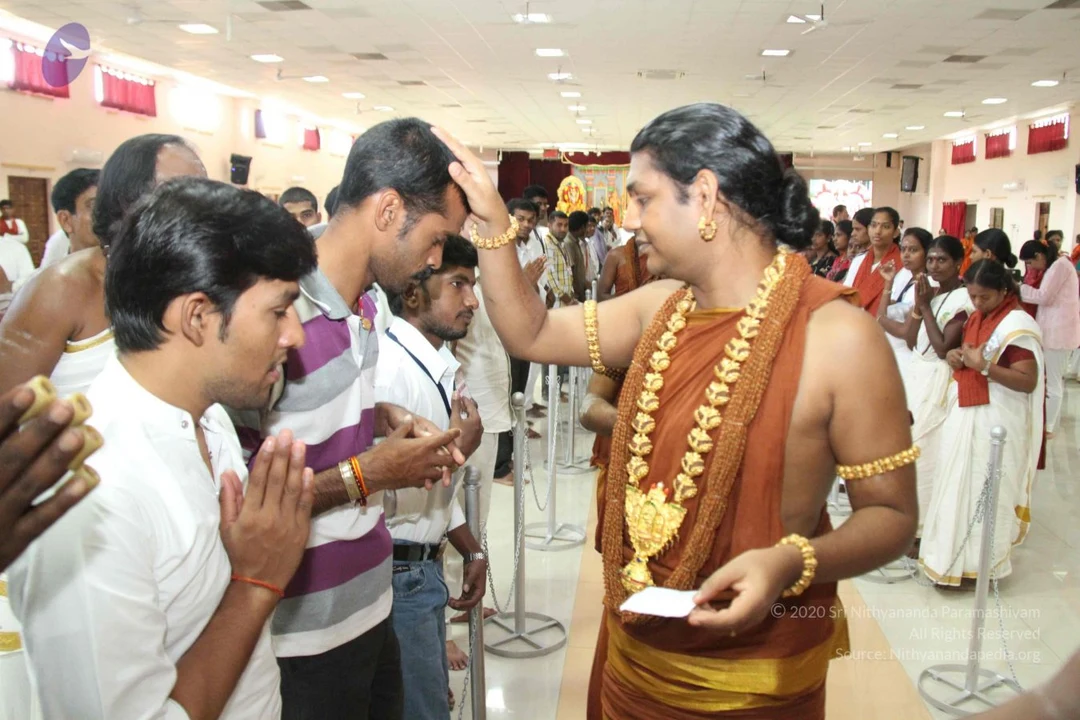
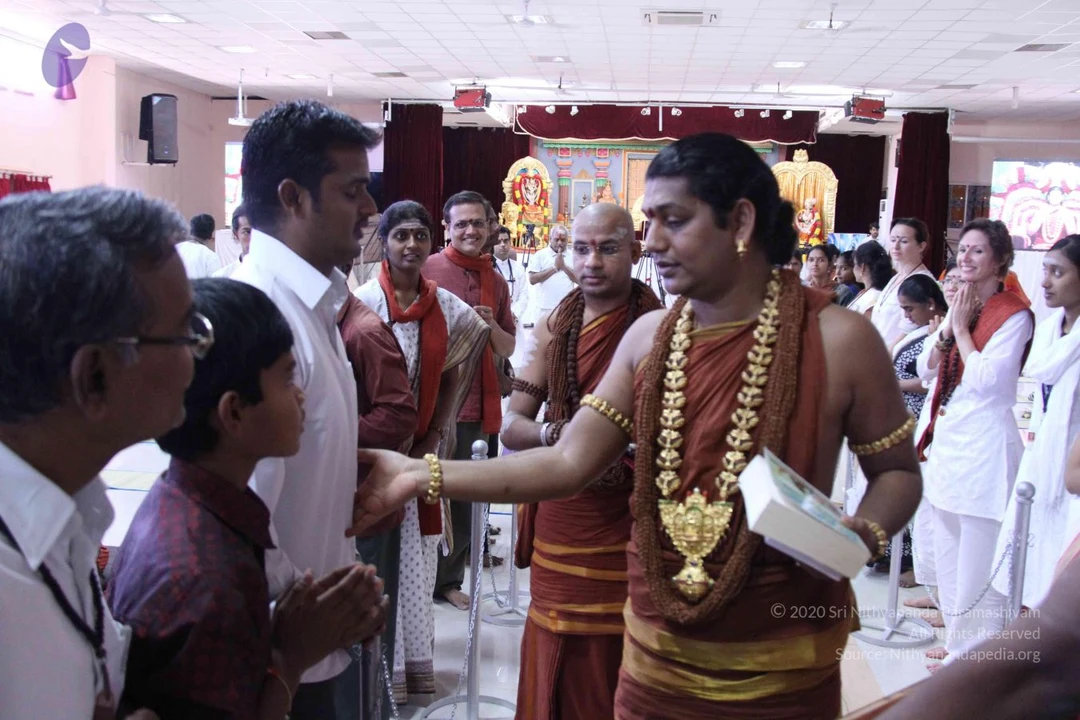
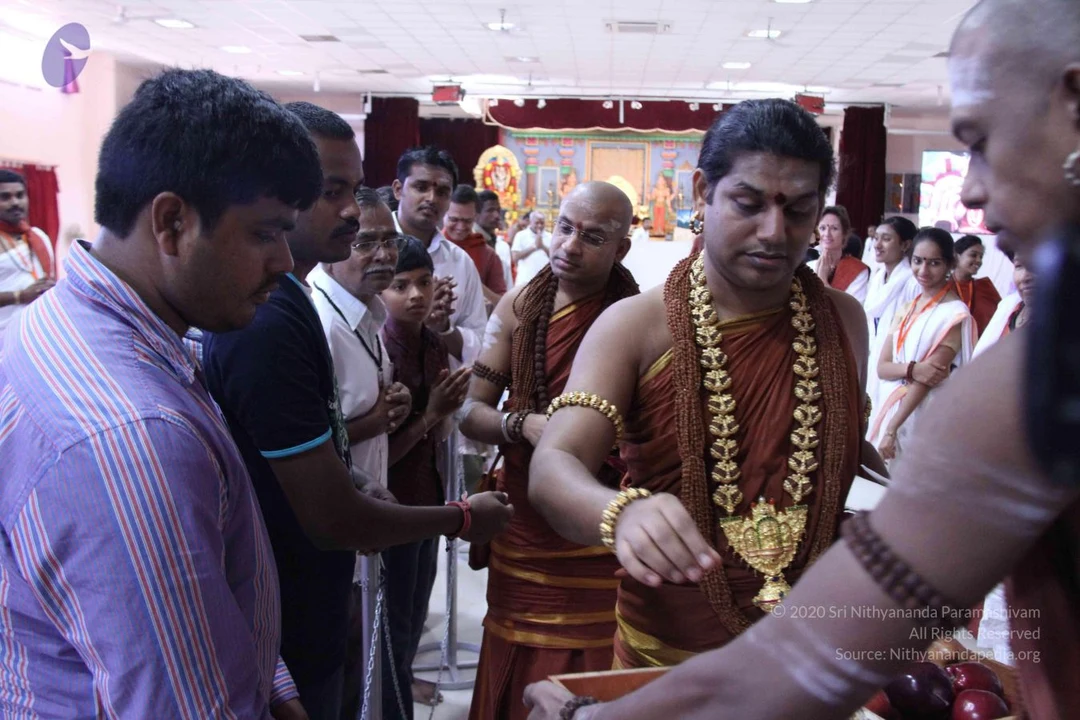
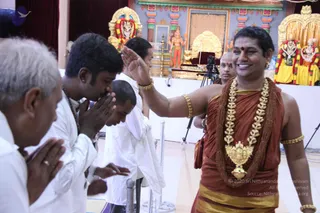
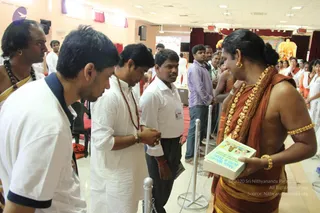
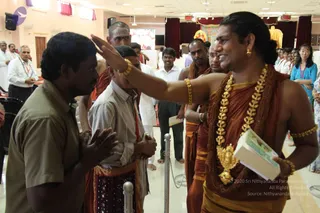
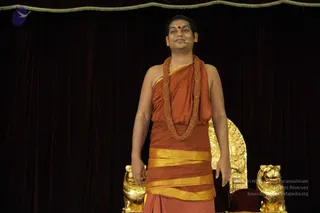
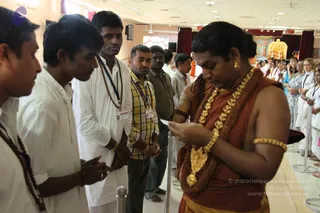
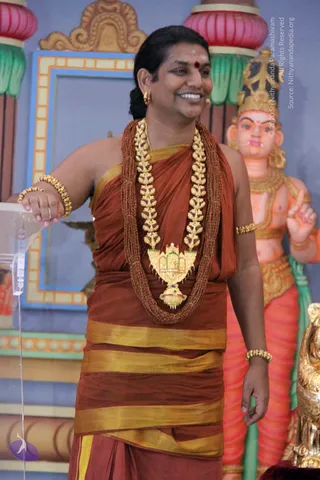
A photograph in a temple-style hall with a gilded wall and a golden throne-like seat behind. In the right foreground, a smiling man with short dark hair and a red-brown (rust-orange) dhoti-style wrap, wearing a heavy gold ceremonial necklace with a large gold pendant, a rudraksha-style brown bead mala, gold armlets and bangles, raises one hand in a blessing gesture. To the left, several devotees in white shirts and dhotis fold their hands in anjali and bow toward him, one with bowed head. Behind them, a shrine area holds garlanded deity murtis in yellow and red garments, and a figure in a green garment stands near a white stand. A camera on a tripod is visible near the center.A photograph inside an indoor hall with a stage backdrop showing painted deity murti and a decorated shrine. In the foreground, a smiling man in an orange-red robe and heavy gold necklace with a large gold pendant raises one hand in greeting, and gold bangles are visible on his wrists. Several men in white shirts and dhotis stand with palms pressed together in namaste, and a man in white with a rudraksha mala holds his hands in anjali. Behind them a monk in saffron-orange robes stands near the stage, and a woman in an orange sari stands at the right edge. Stage lights hang from the ceiling and a camera on a tripod is visible. Roughly half a dozen people are visible. A person portrayed with long hair, saffron robes, gold necklaces and rudraksha adornments is a person candidate in the foreground, greeting devotees.Indoor ashram hall with cream tiled floor and a deep red curtain behind a stage. A man in a rust-orange dhoti and shawl, wearing a heavy gold ceremonial necklace with a large gold pendant, gold armlets and a red bindi, smiles while placing his right hand on the forehead of a young man in white shirt and dhoti who has his head bowed and hands joined. Devotees in white and saffron stand nearby, one wearing rudraksha beads. Behind them a decorated deity murti stands in a golden shrine, and a screen shows a colourful image. A partially visible man on the left has his palms pressed together. Roughly six people are visible.Indoor ceremony in a hall with a decorated stage backdrop showing a deity figure, pillars, and a golden shrine. In the foreground, a bald man in an orange-brown dhoti with a gold-and-gem necklace and a rudraksha mala holds a white box with a gold-tinted lid while smiling. Beside him, a man in a rust-red shirt with a red shawl presses his palms together in greeting. Behind them, men in white shirts and dhotis, one wearing a rudraksha mala, and women in saris stand near a metal barrier. A large screen shows a colourful deity image at left and right.Indoor photo in a bright hall with white ceiling panels, pink-and-maroon drapes, and a large orange-and-gold deity murti on a stage at right. In the foreground, a bare-chested person in orange-brown cloth with layered gold necklaces, gold armlets and bangles holds a book with a green-and-yellow cover, facing three men in white shirts and white dhotis, one wearing a rudraksha mala. Behind a silver stanchion barrier, more men and women in white and orange stand and watch. A figure at left wears a long dark hairstyle, a gold earring and a beaded mala. The person holding the book appears to be a person candidate in the foreground, with distinctive gold adornments and mala, though the identification is uncertain.A photograph in a bright indoor hall with cream walls and tiled floor. A man in an orange-brown saffron robe with a thick gold necklace and gold earrings, holding a small white book, smiles while extending his right palm toward the face of a man in a khaki shirt who has his hands folded in greeting. Beside them, another robed attendant in saffron stands, and a shaved-headed man in an orange-brown dhoti and a white-shirted man stand nearby. Behind them, a row of people in white and blue clothing and a woman in a blue top stand in the background, and a decorated golden deity murti and red drapes are visible at the far end.

FINAL BLESSINGS

7 photosSource gallery
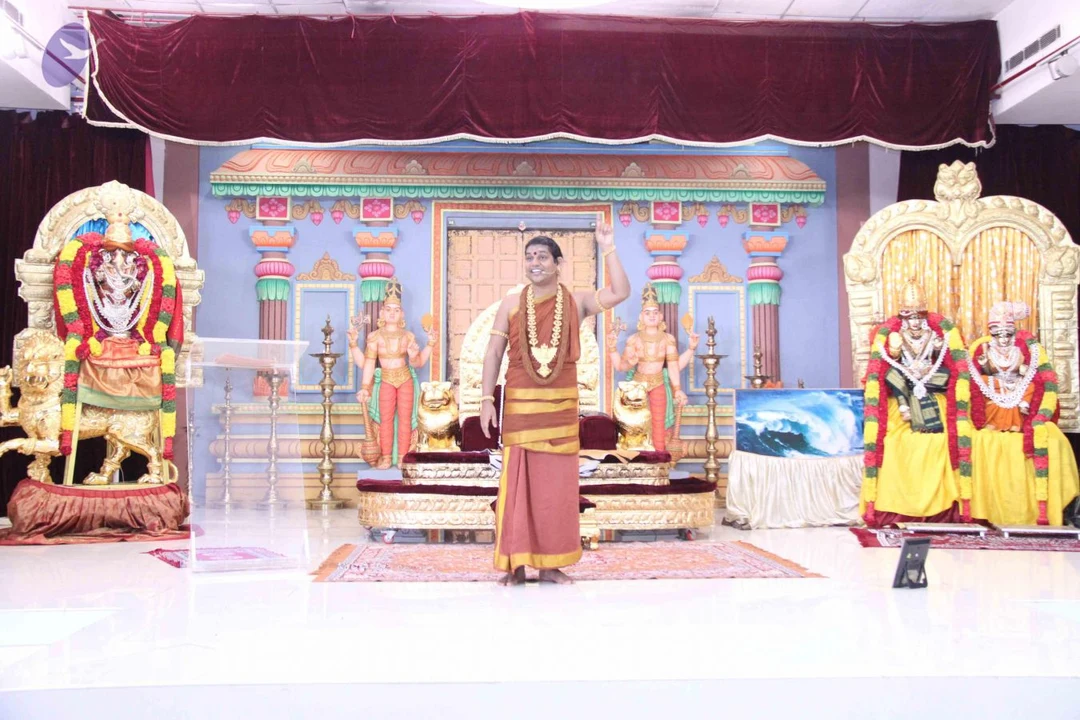
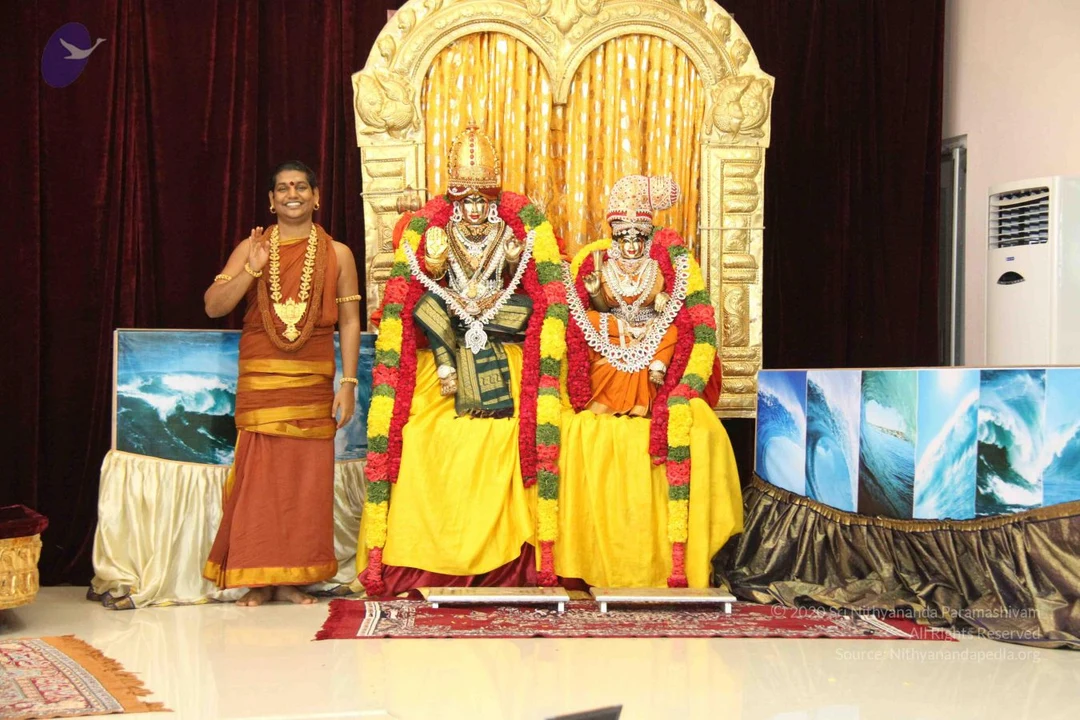
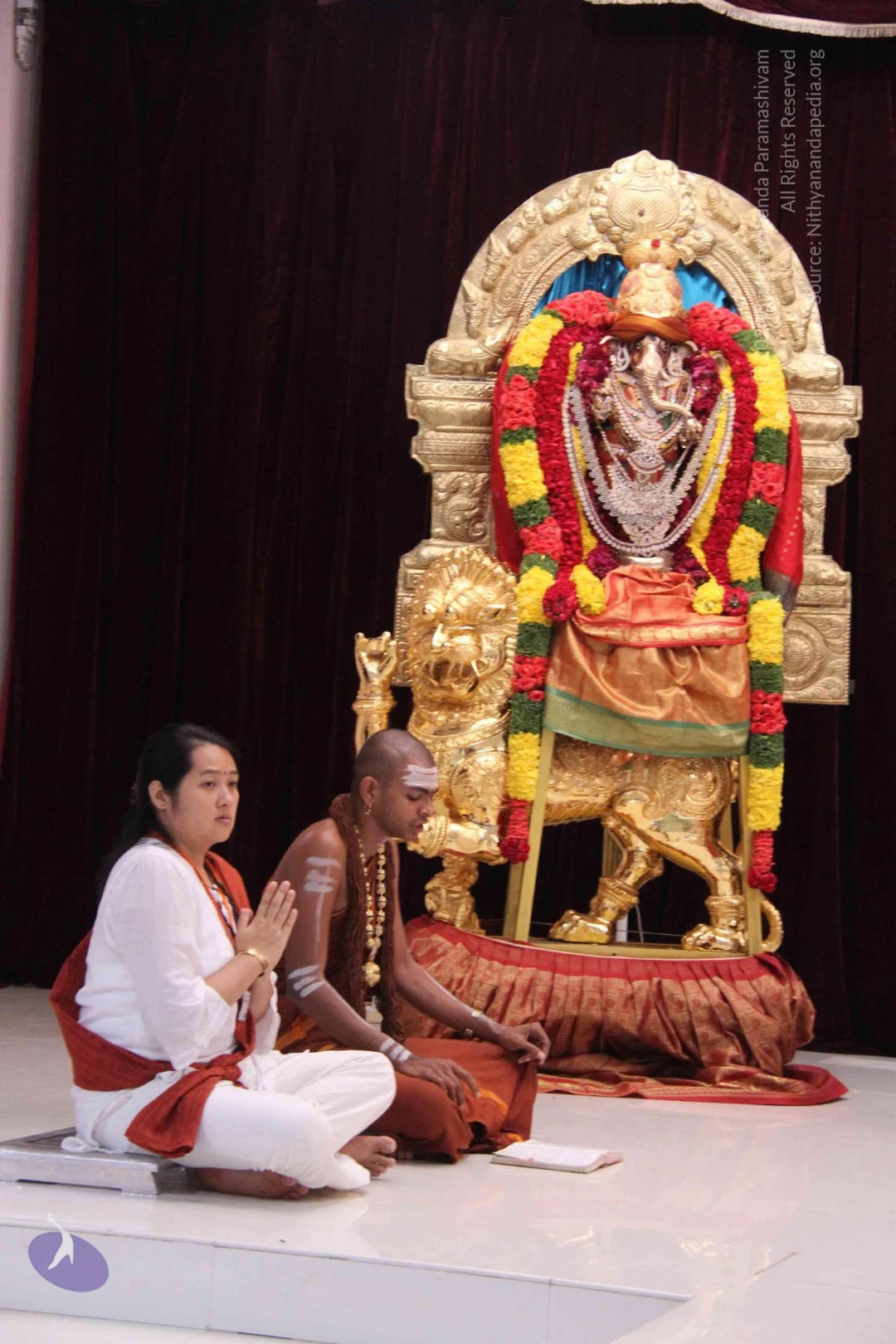
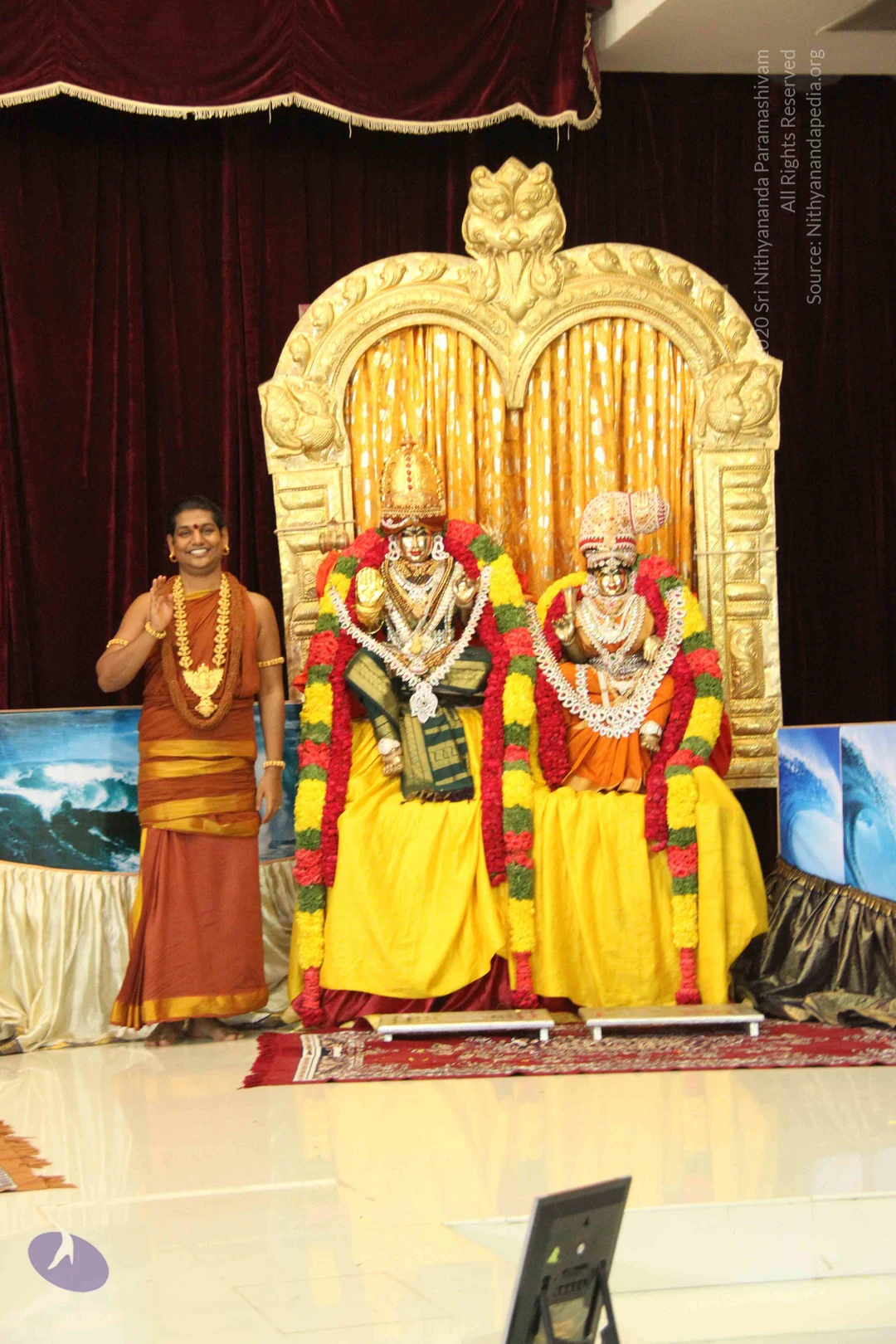
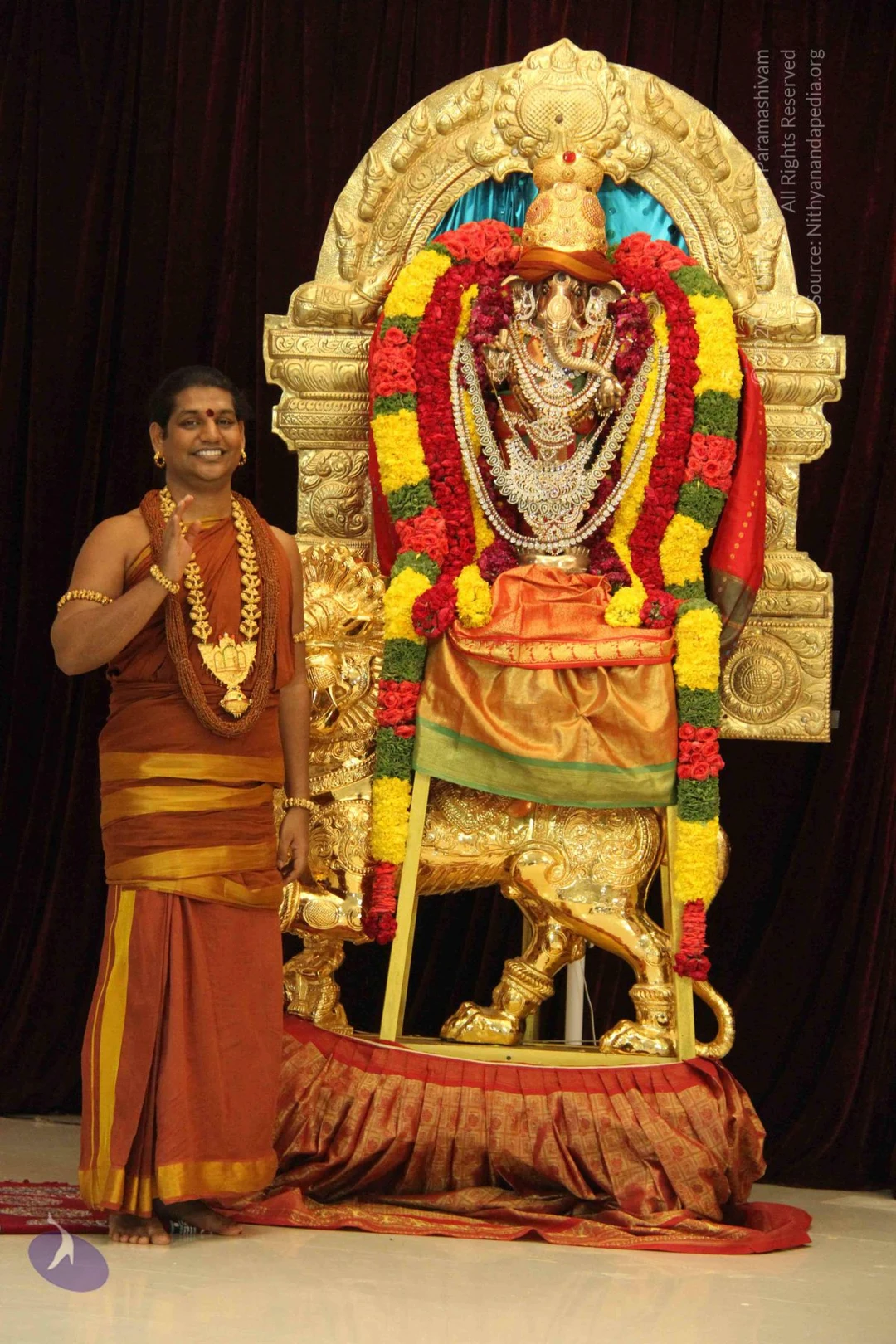
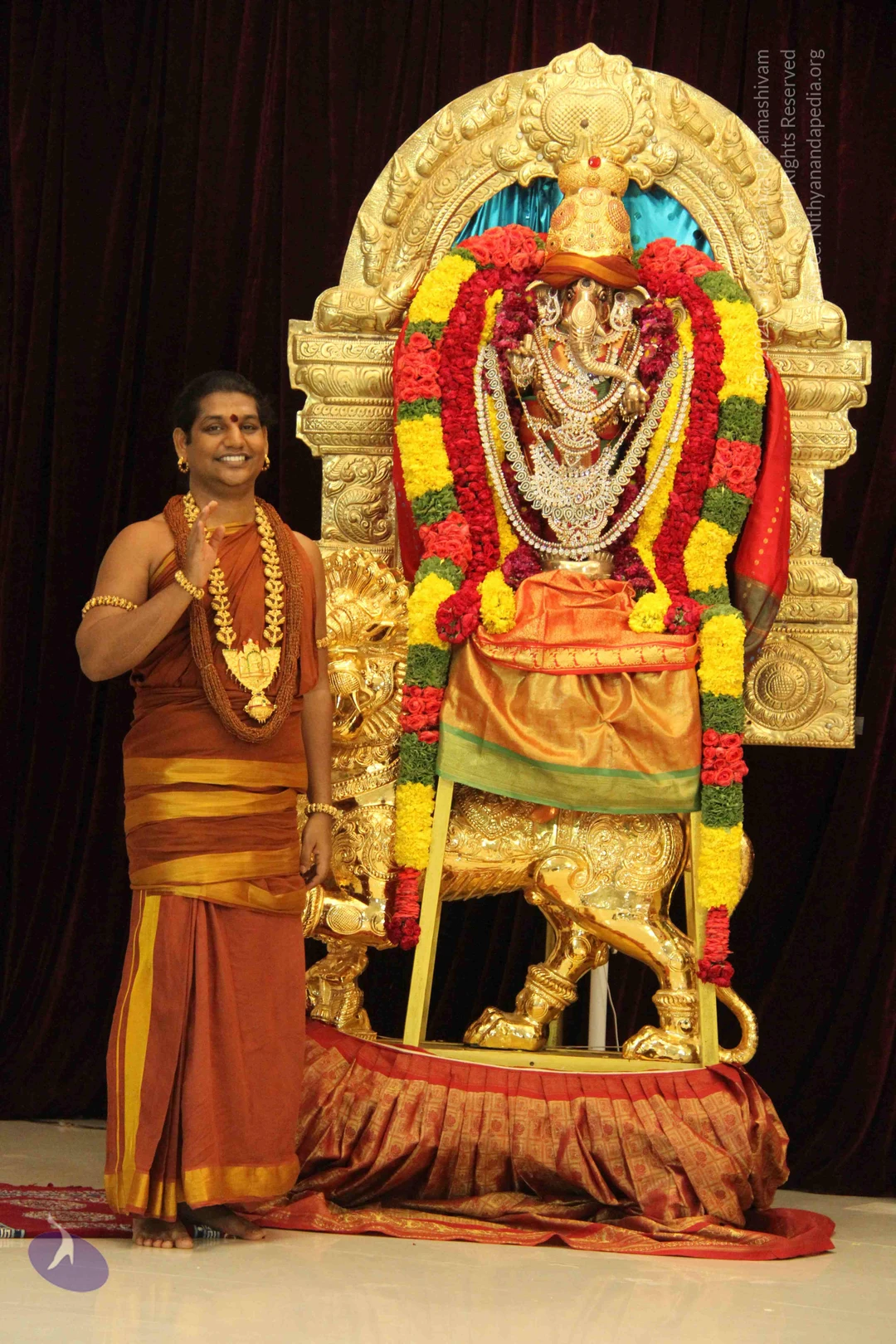
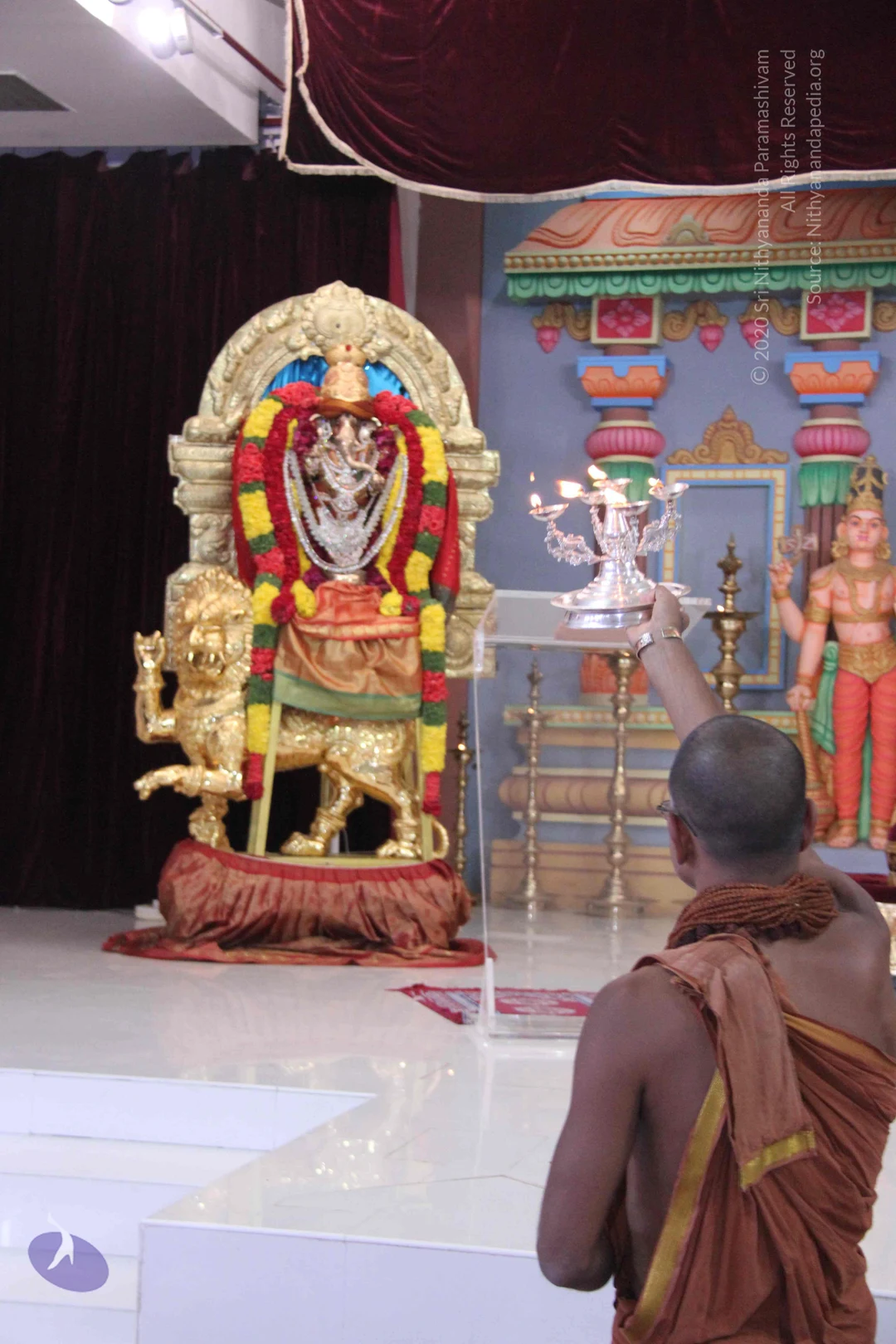
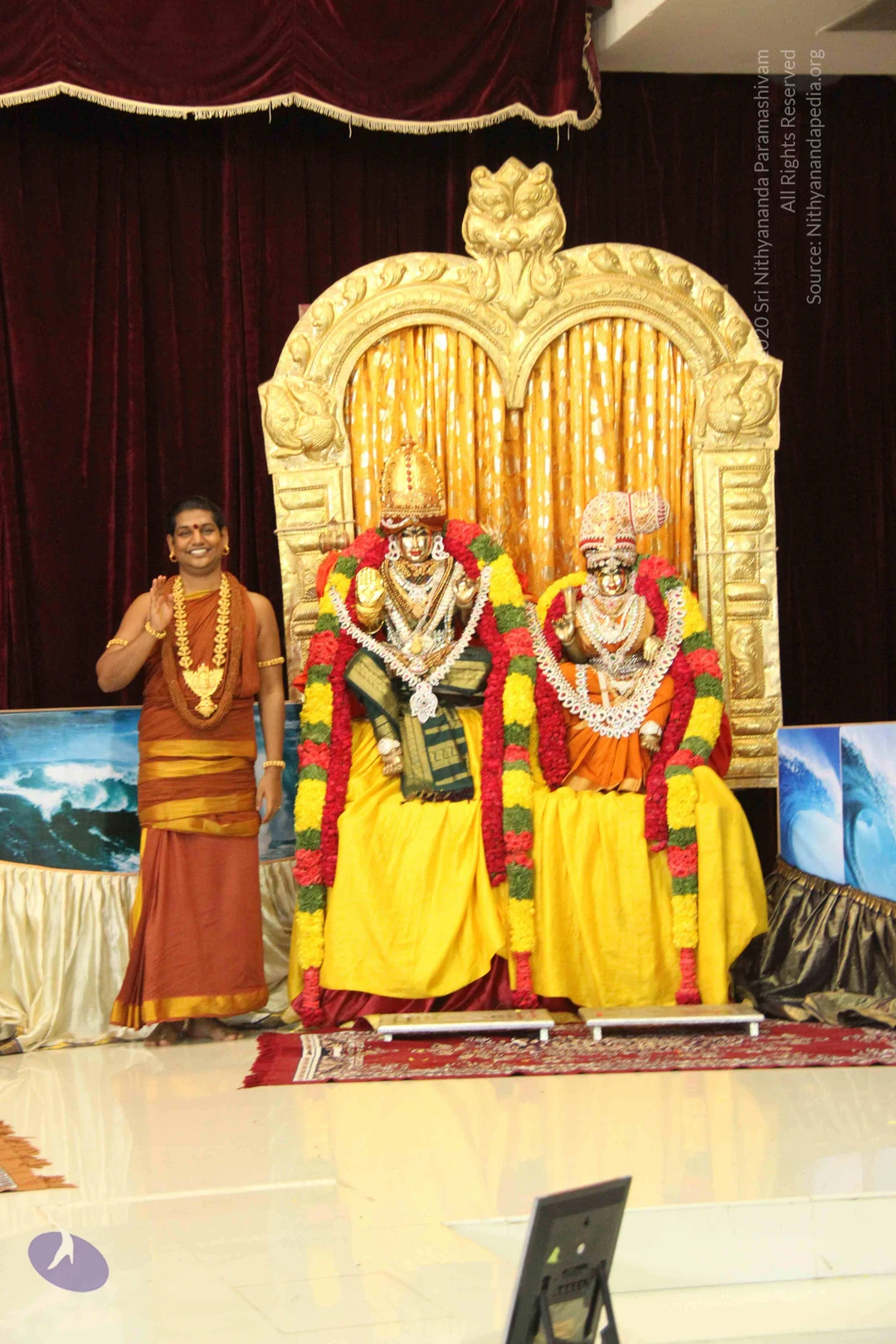
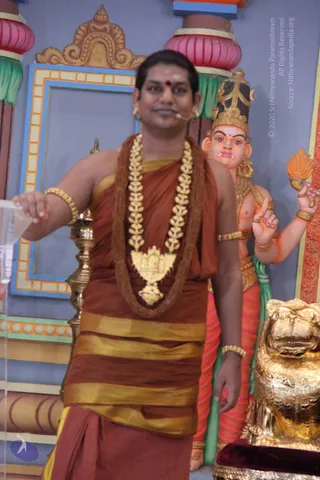
A standing man in an orange-and-maroon dhoti and saffron shawl, wearing a gold necklace and gold bangles, smiles and raises one hand in greeting beside a golden throne. Seated on the throne are two deity murtis draped in red and green garlands with yellow silk cloth, one crowned and holding a staff-like object, the other in a crown with a fan-like headdress. Behind them stands a golden arch and maroon curtains, with a cabinet of blue-and-white ocean wave photographs at the right and left. A white air conditioner stands at the far right.A photograph of a stage set for a devotional display. A man in orange-brown dhoti and shawl with a gold necklace and rudraksha mala stands at left, smiling and raising one hand in greeting. Beside him sit two deity murtis on a golden arched backdrop: a male murti in a yellow dhoti with a crown and jewelled necklace, and a female murti in orange-yellow sari with a crown and white garland, both draped in red and yellow flower garlands. Wave imagery stands to the right and left. A white floor carpet and an air conditioner complete the room.A photograph of a man in saffron-orange and rust-coloured ceremonial dress with a gold necklace and a rudraksha-style bead mala, standing at left and smiling while raising one hand in greeting. Beside him sit two deity murti figures on a yellow-draped platform under a gold arched backdrop, both adorned with garlands of red, yellow and green flowers, white and gold jewellery, and crowns. Blue ocean wave photographs are displayed on easels at both sides, and a white floor-standing air conditioner stands at right on a glossy white floor.A photograph of two seated deity murtis dressed in yellow silk and adorned with garlands, a gilded arched backdrop with golden curtains behind them. The left murti wears a tall golden crown and a gold necklace; the right murti wears a pink-and-gold crown and white beaded garlands. A standing man at left, wearing an orange-brown dhoti and shawl with a large gold pendant necklace and rudraksha-style beads, smiles and raises one hand in greeting. Blue ocean wave photographs are displayed on boards at left and right, and a red carpet lies in front of the murtis.Indoor stage photo with a deity pair seated on a yellow-draped platform before an ornate gold arch and maroon velvet drapes. Two murti figures sit side by side: the left wears a gold crown, gold jewellery and a green-and-gold striped garment, the right wears a tall ornate crown, white garland and orange cloth. Both are decorated with thick red, yellow and green flower garlands. In front stands a man with a shaved head, smiling and raising his hands in greeting, wearing a rust-orange dhoti and shawl with a heavy gold necklace and gold bangles. Behind the figures are large panels of ocean waves, and an air conditioner stands at the right edge.A man in an orange-brown dhoti with gold borders and an orange shawl stands on a red mat beside a golden deity murti of Ganesha seated on a golden lion-supported throne, garlanded with red and yellow marigold garlands and a gold necklace. A clear acrylic lectern and a white pedestal fan stand to the left, with a deep maroon velvet curtain behind. The man wears a rudraksha-style mala and gold armlet and smiles toward the murti. a person identification is uncertain from appearance; this is a ceremonial stage setting with a deity image.

DARSHAN

5 photosSource gallery
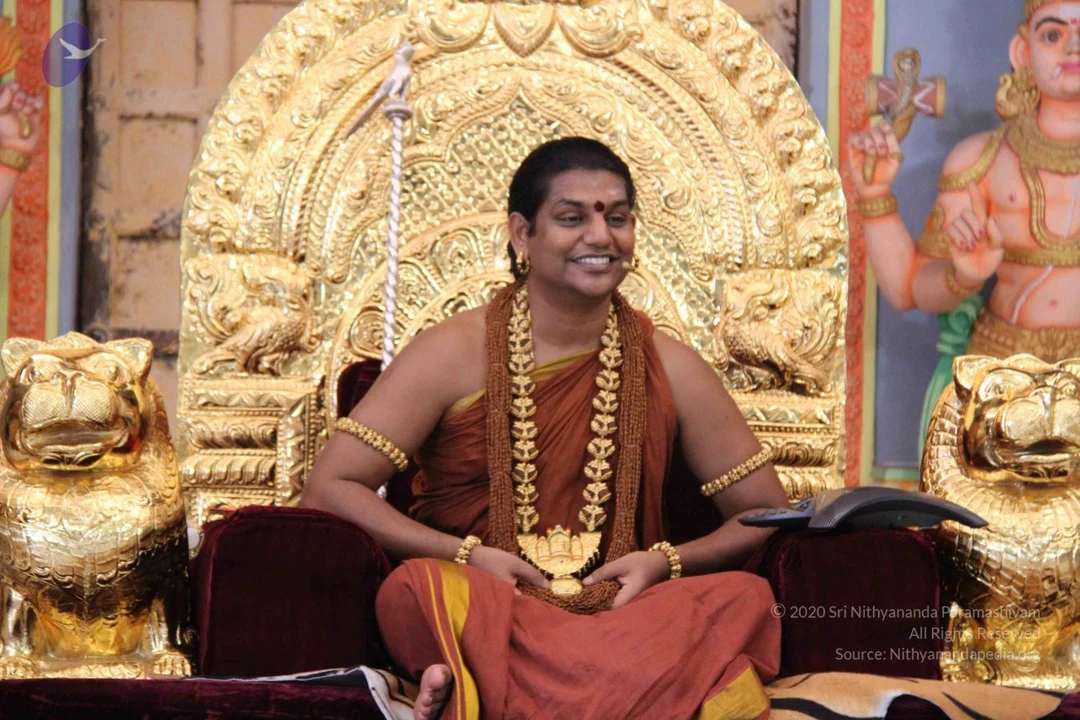
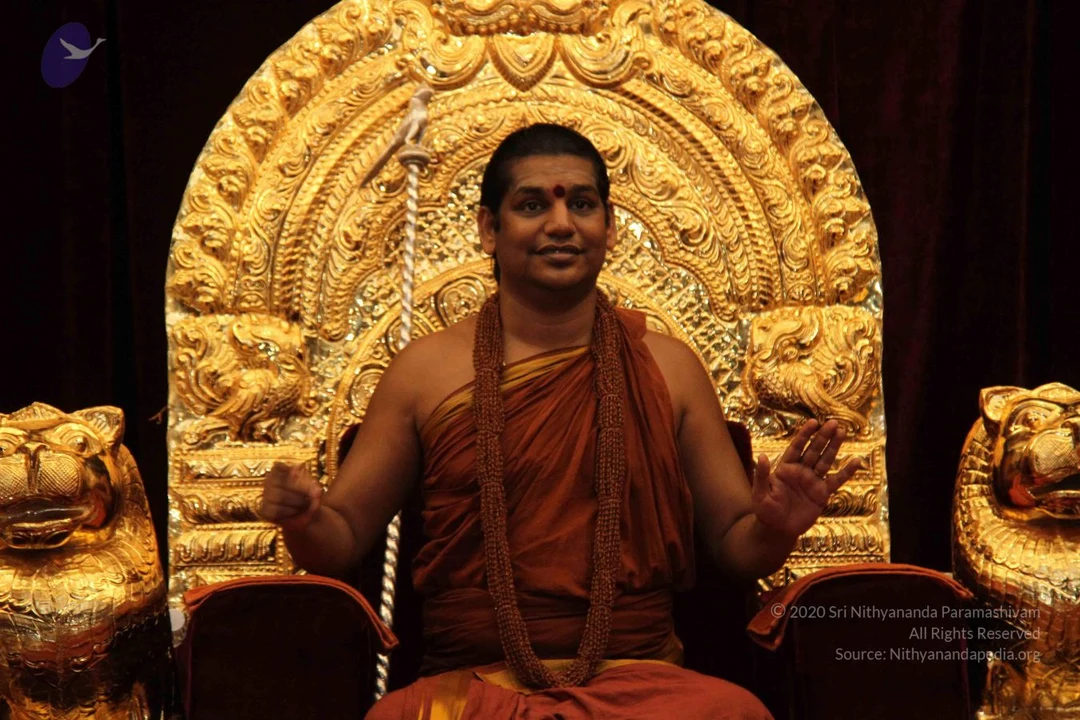
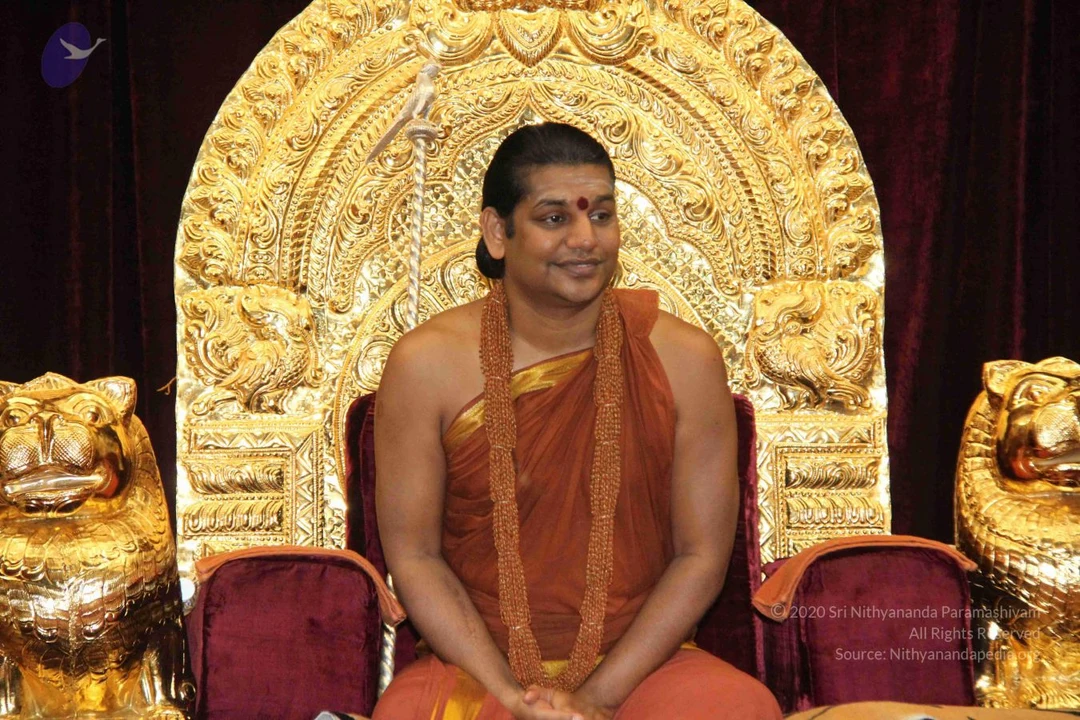
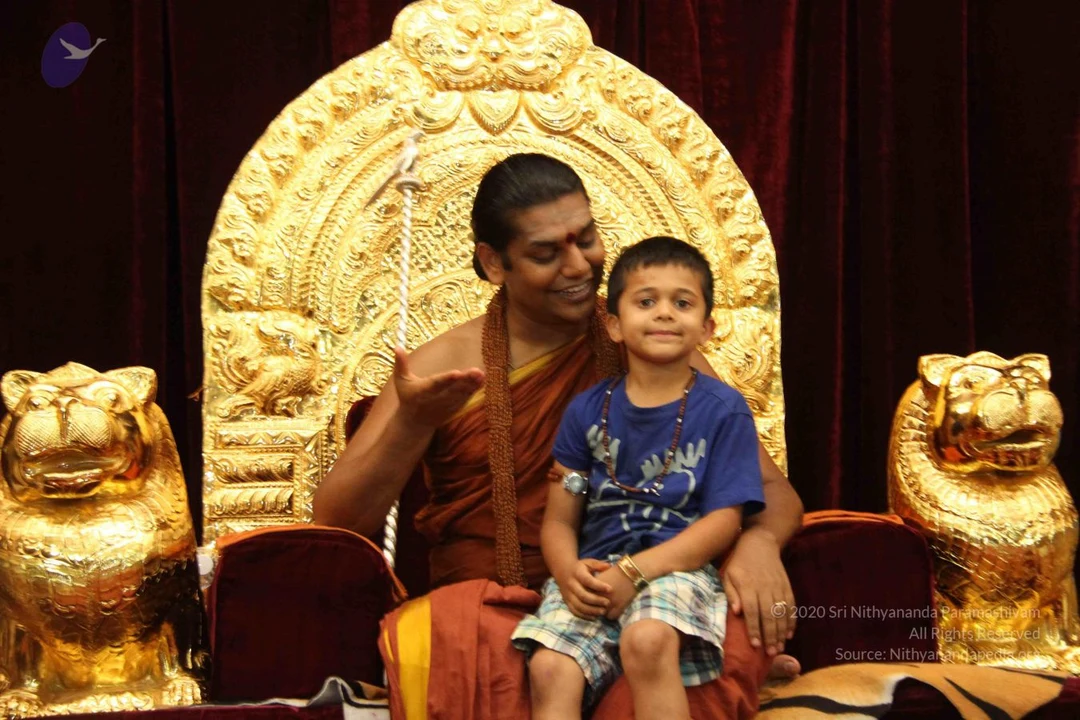
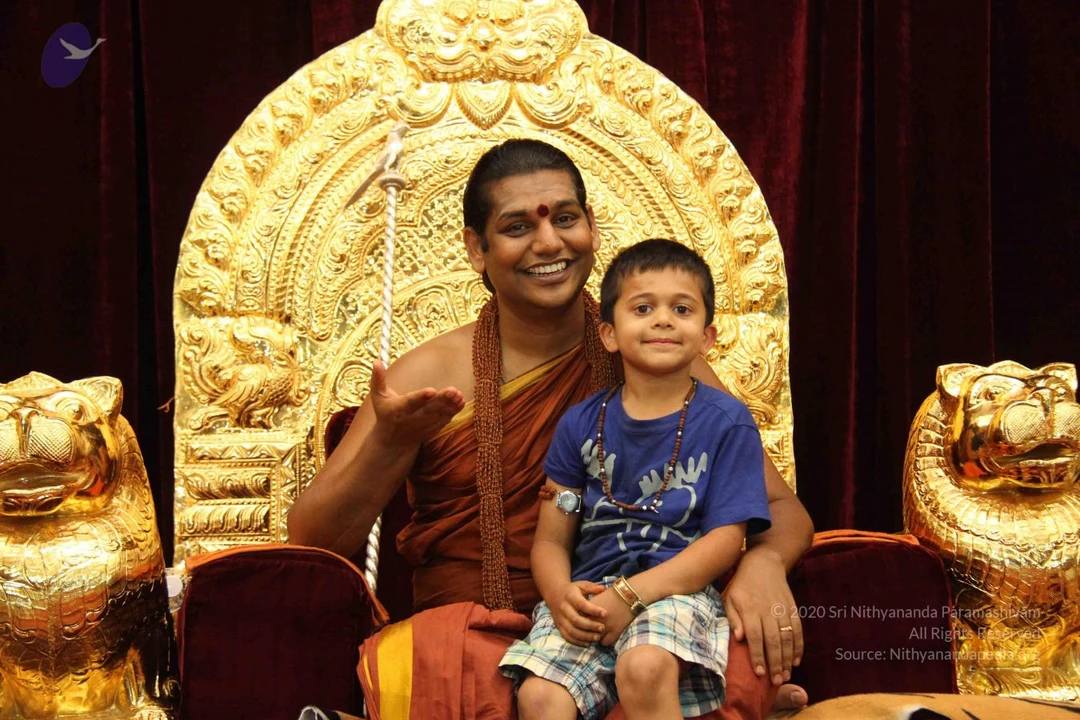
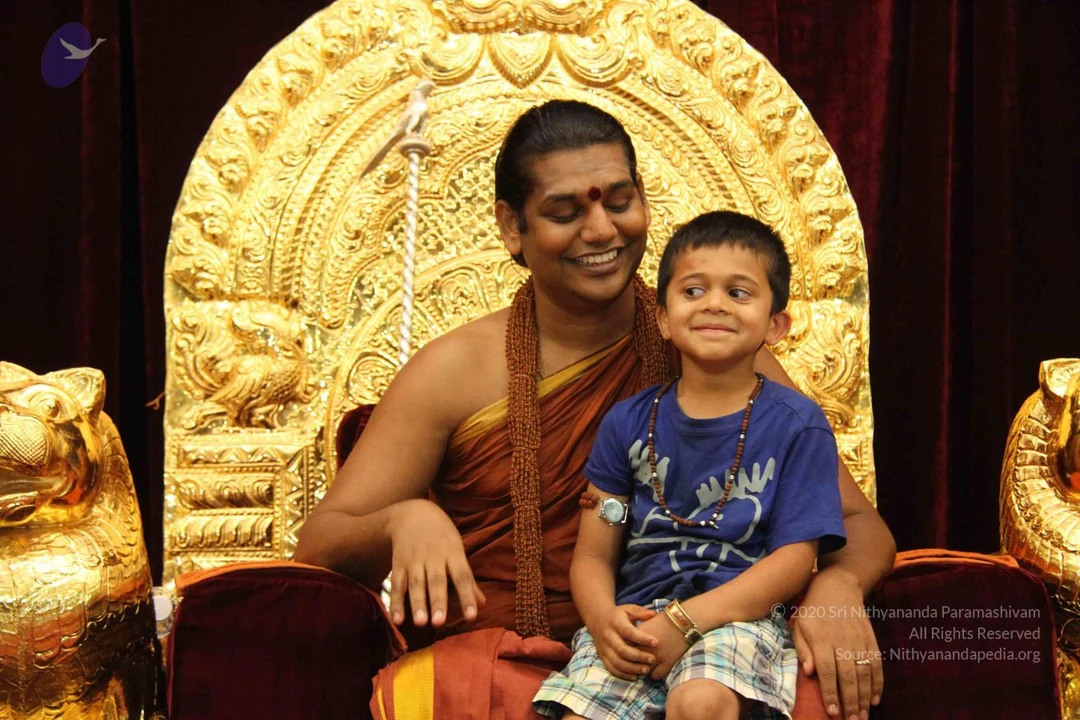
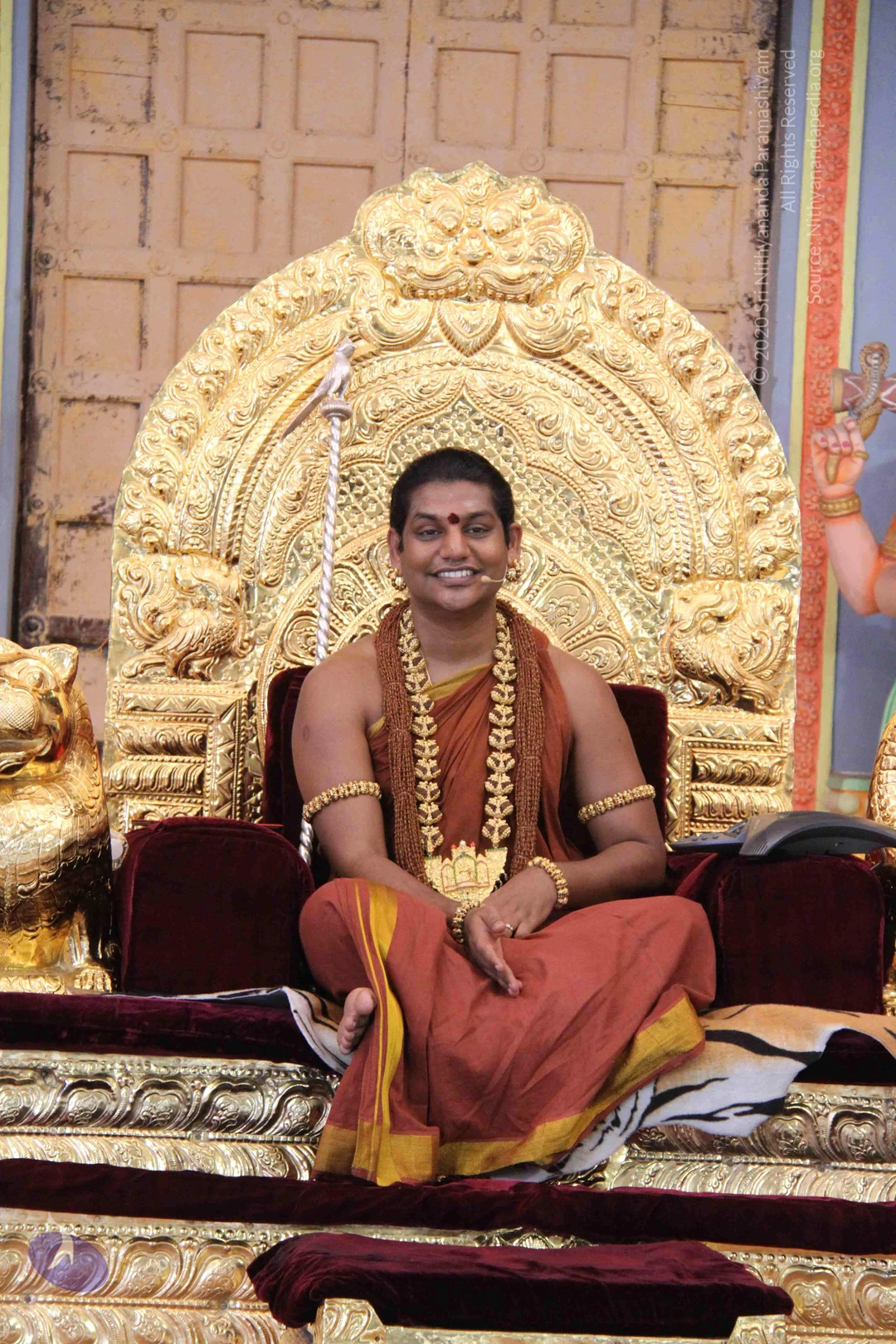
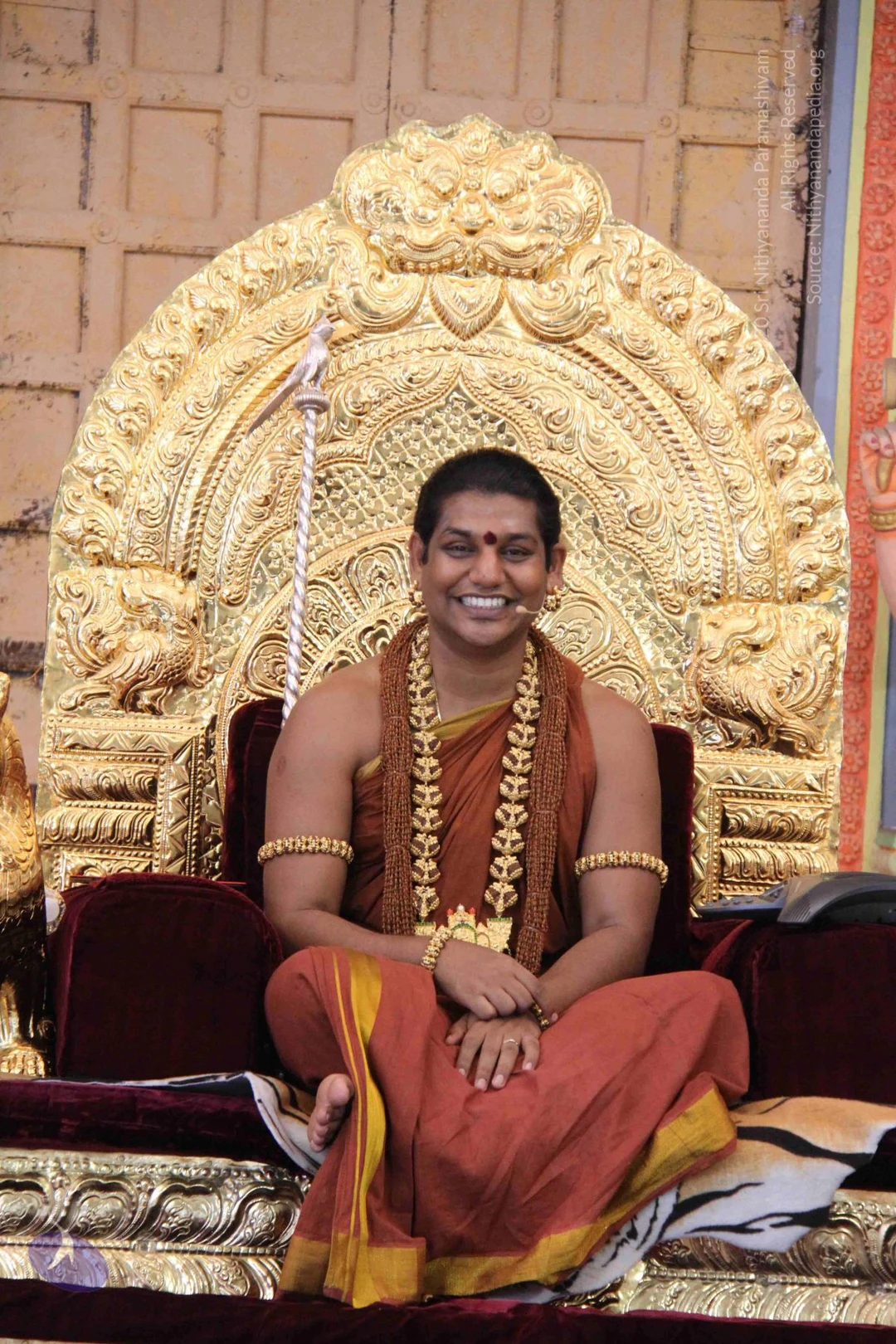
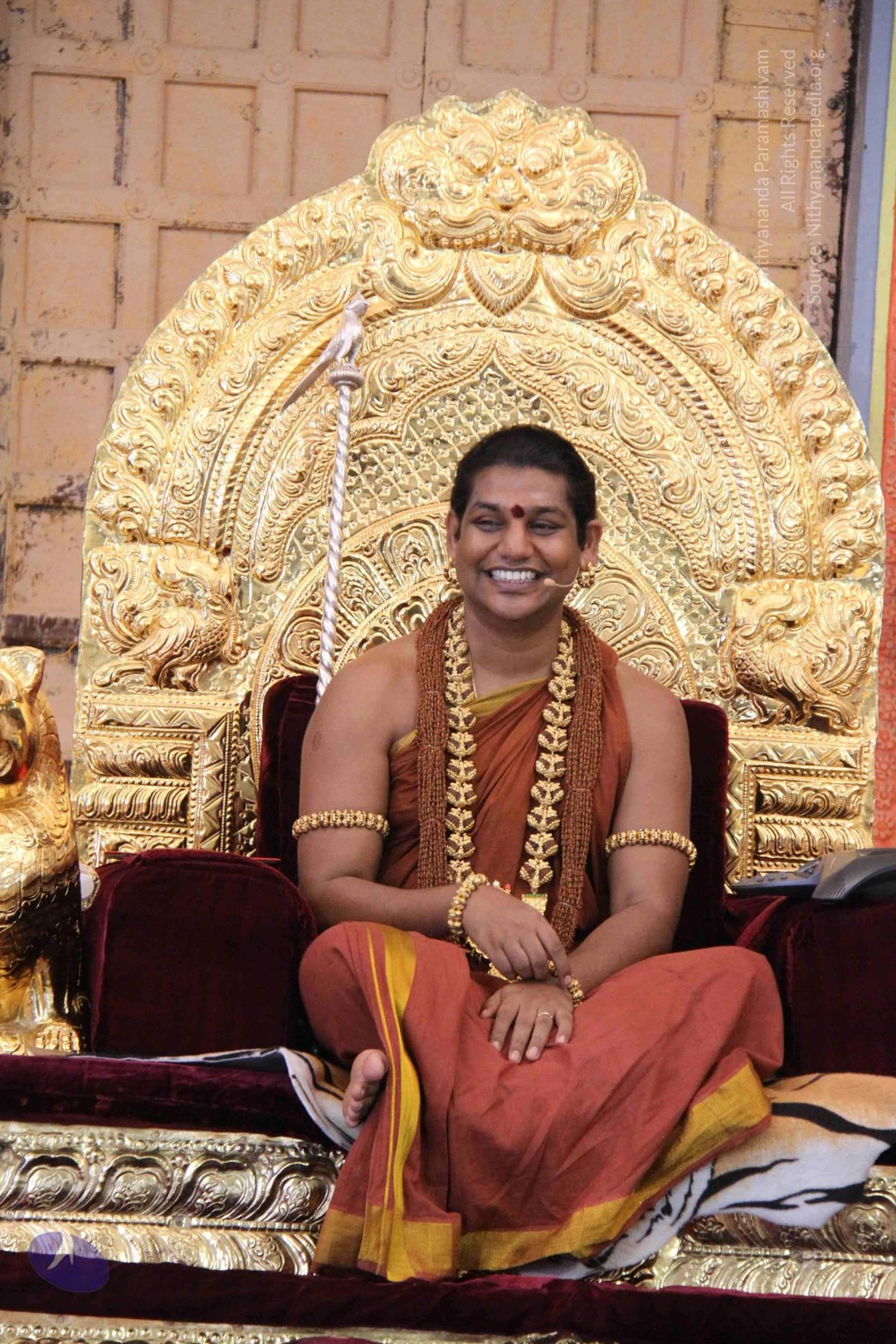
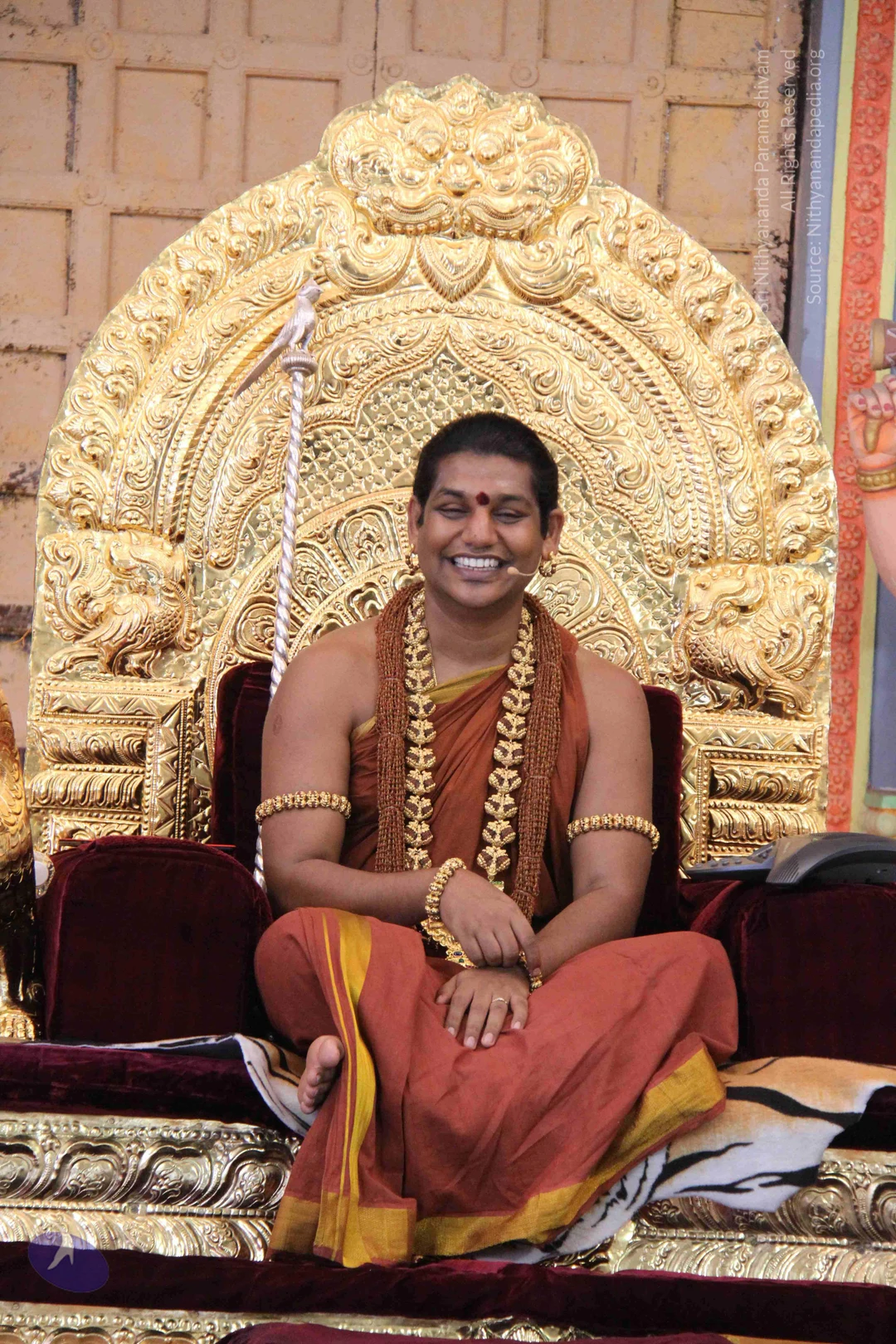
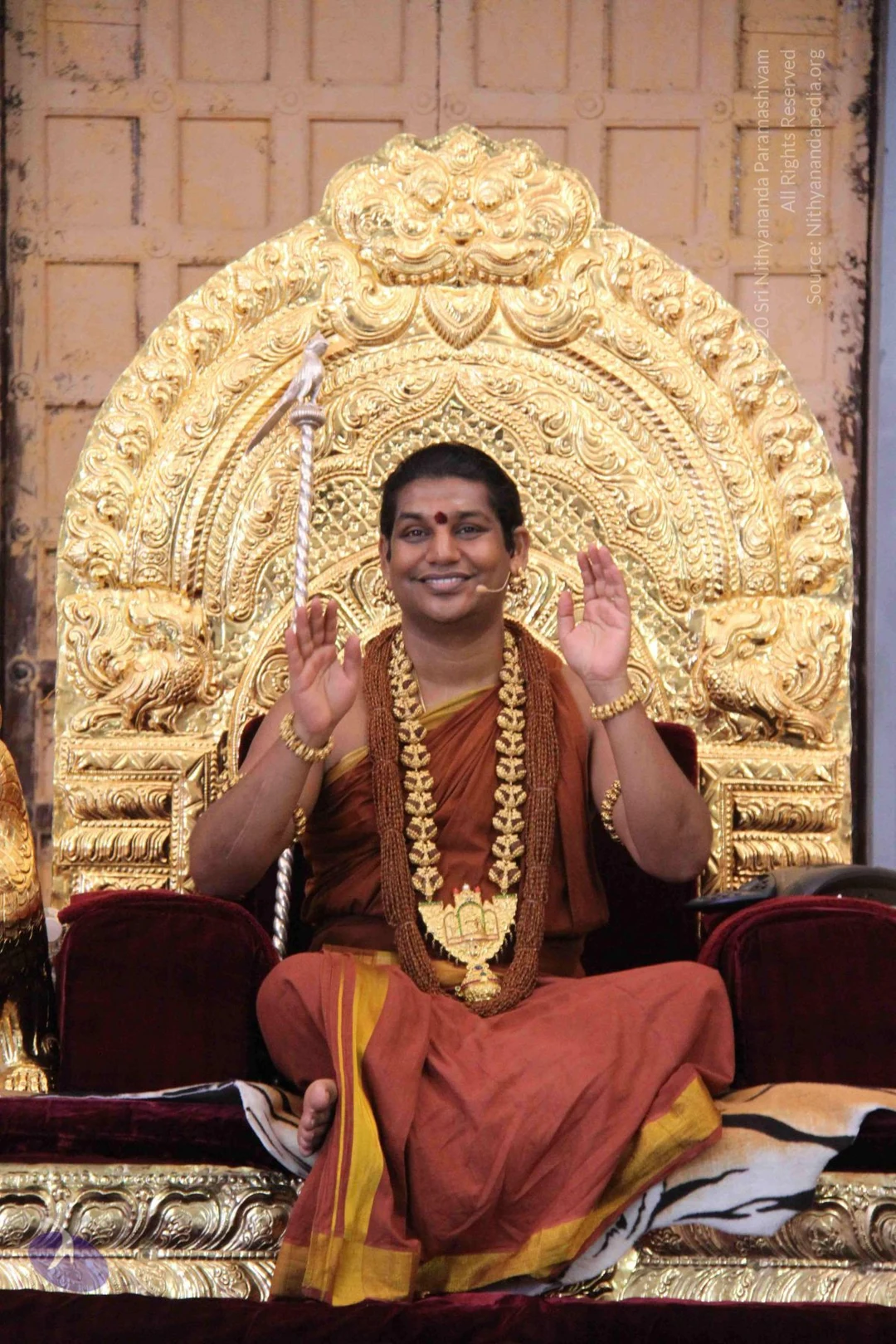
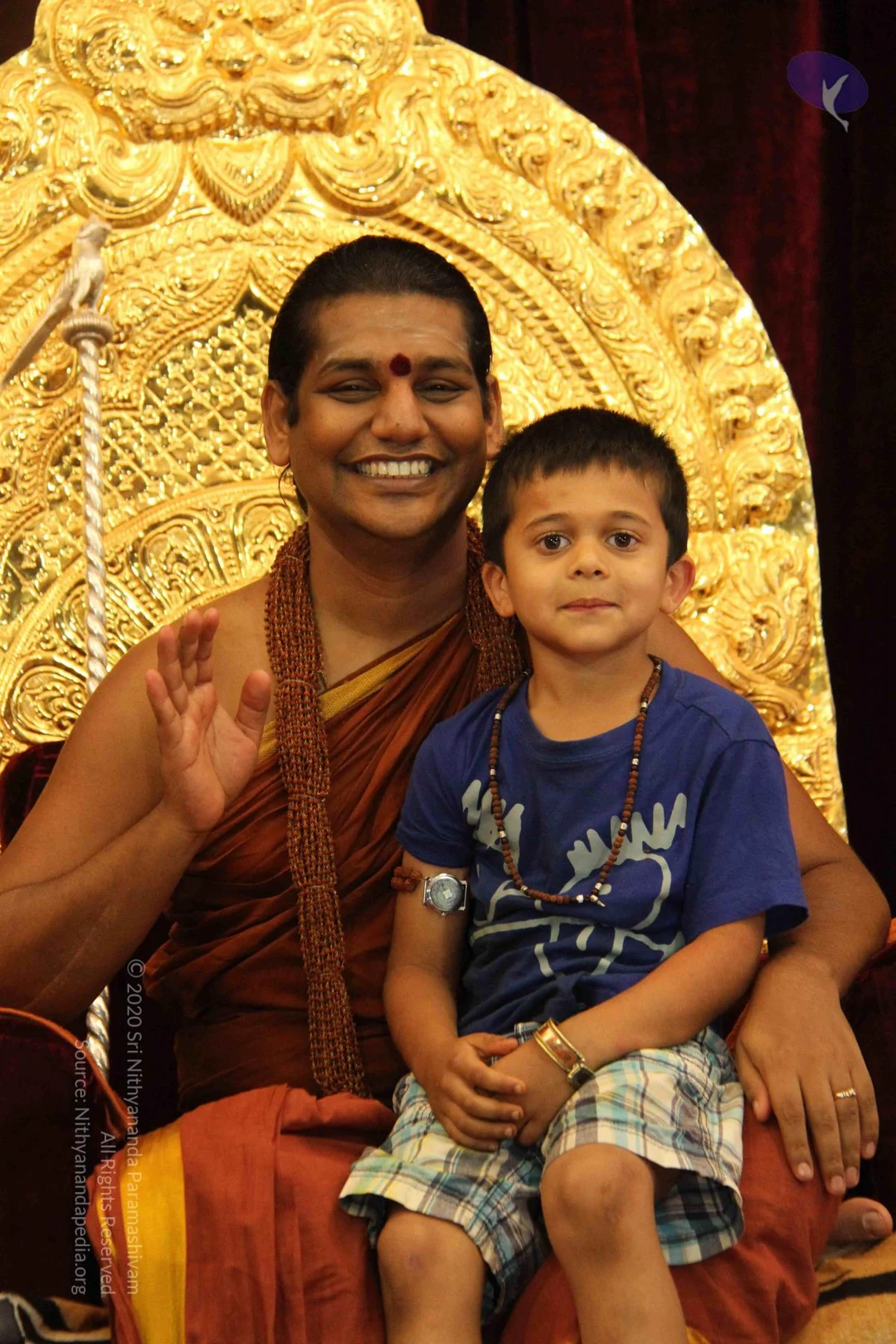
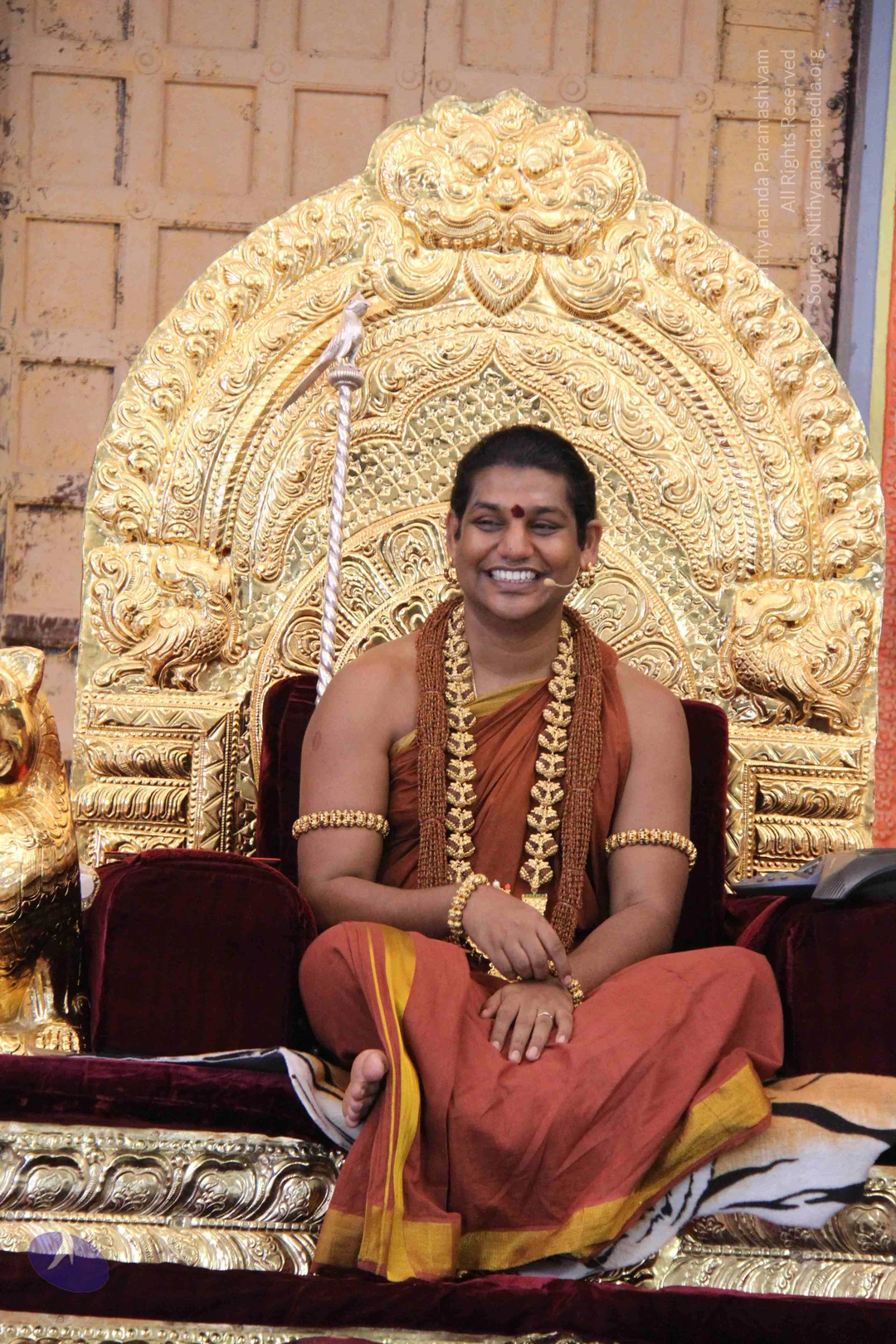
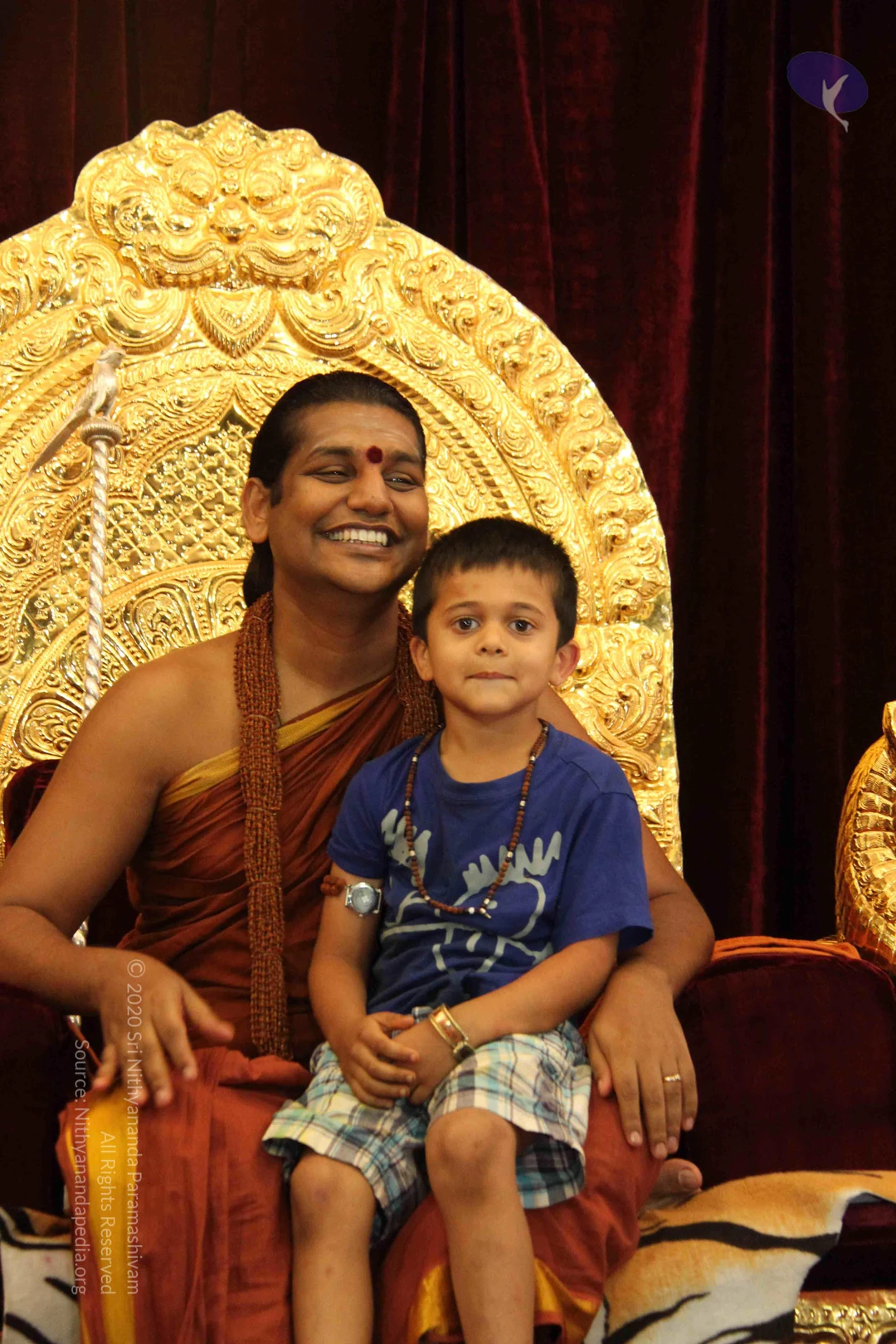
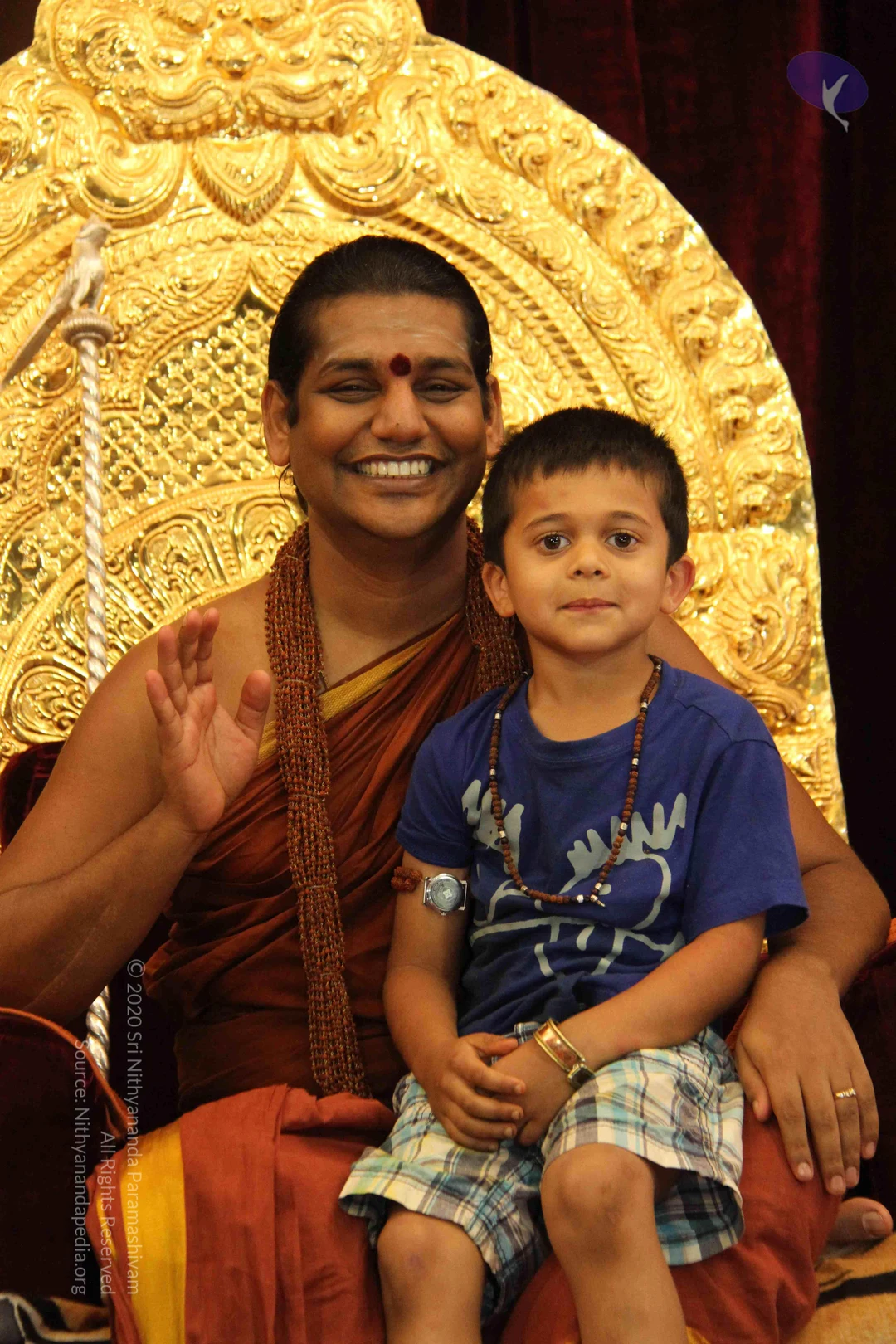
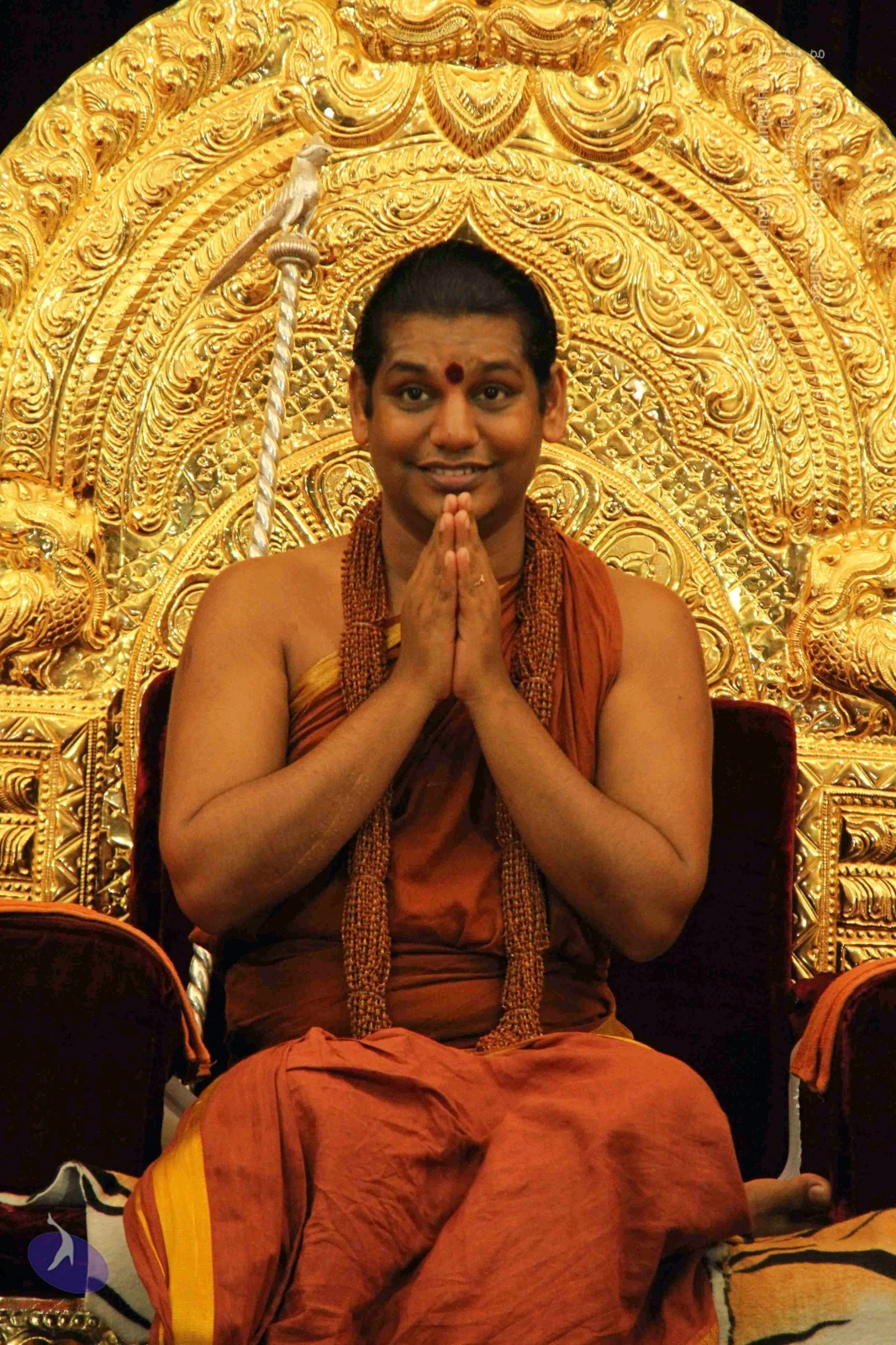
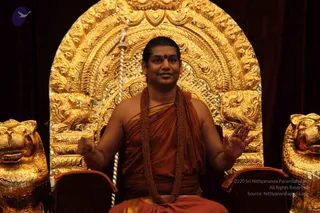
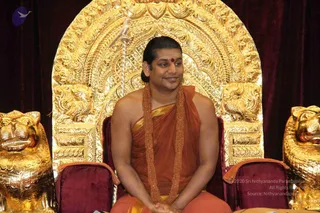
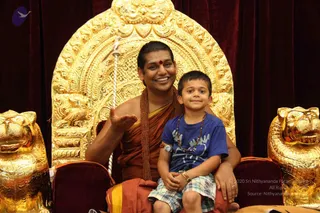
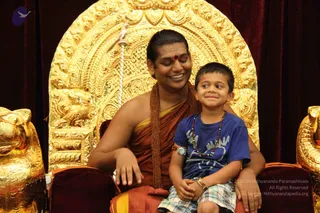
A seated man in an ornate golden throne with carved lion-head armrests, wearing an orange-saffron shawl draped over the shoulder and bare upper body, a long rudraksha mala necklace, and a red bindi on his forehead. He sits with both hands raised in a gesture of teaching and speaking to an audience. Behind him a tall carved gold throne backrest and dark red curtains frame the scene. The adornments and saffron wrap suggest a guru seated for discourse, though the identity is uncertain from appearance alone.A seated man in orange-saffron robes sits on an ornate gold throne carved with floral and scrolling motifs, flanked by gilded lion heads and a deep maroon velvet backdrop. He wears a red bindi on his forehead, a long beaded rudraksha-style mala reaching his waist, and a gold-edged orange shawl over his shoulders, with his hands resting in his lap. The setting appears to be a formal stage or throne seat at a satsang or public event, and the figure is shown in a calm, seated posture while smiling slightly. The orange robes, golden throne and seated throne presentation are prominent visual elements.A seated man in saffron-orange robes sits on an ornate gold throne with a carved arched back, flanked by two gold lion-shaped guardian figures on a deep red velvet backdrop. He wears a red bindi, a brown beaded mala necklace and a shawl draped over his shoulder, and gestures with an open right hand. A young boy in a blue t-shirt, plaid shorts, a beaded necklace and a wristwatch sits on his lap smiling. A tiger-striped cloth lies on the platform in front of them.A smiling man in saffron-orange robes and a red tilak on his forehead sits on an ornate gold throne with carved backrest and lion-form armrests against maroon velvet drapery. He wears a long brown rudraksha-style bead necklace and holds a white ceremonial staff. Beside him sits a young boy in a blue t-shirt, plaid shorts, a beaded necklace and a wristwatch, smiling at the camera; the man's arm rests around the boy. a person: the man shows the saffron robes, rudraksha mala and gold throne setting of the presentation, consistent with a seated spiritual leader.A man with swept-back dark hair and a red bindi sits smiling with eyes lowered on an ornate gold throne with carved lion-head armrests, wearing a saffron-orange cloth draped over his shoulder and a long brown rudraksha mala with a gold necklace. A young boy in a blue graphic t-shirt, plaid shorts, a wooden bead necklace and a wristwatch sits on his lap, smiling sideways. Red velvet drapes stand behind them. The man's appearance (swept-back hair, saffron cloth, rudraksha mala, throne) matches the a person description, and the seated role is a throne-seated guru with a child.

Inner Awakening DARSHAN
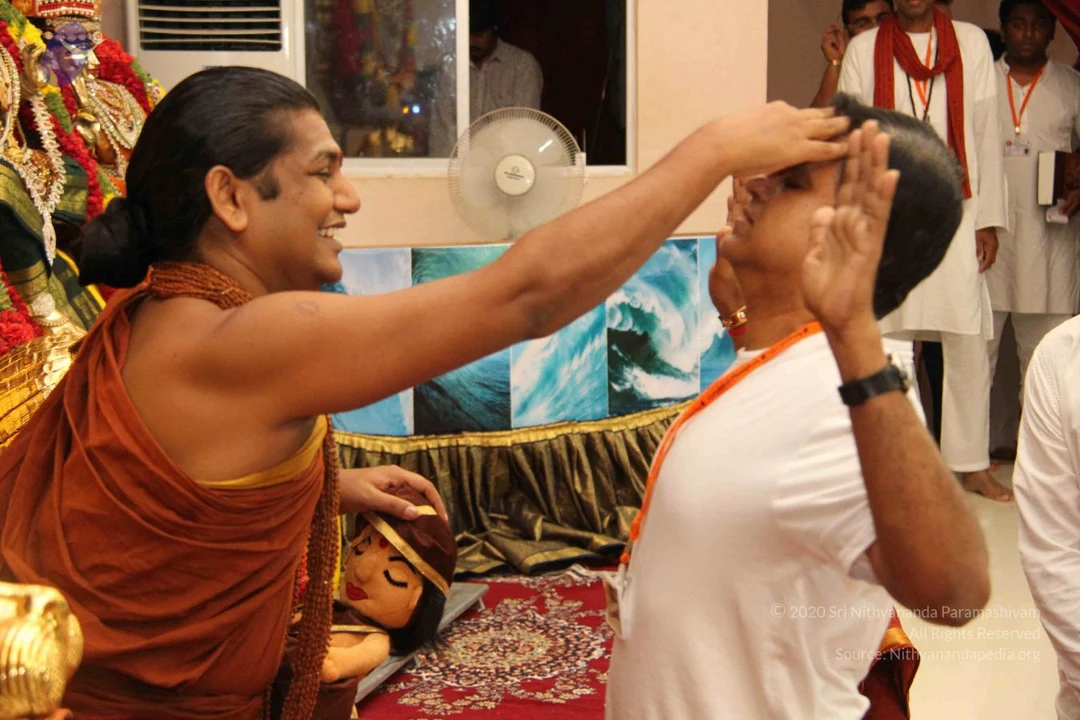
19 photosSource gallery
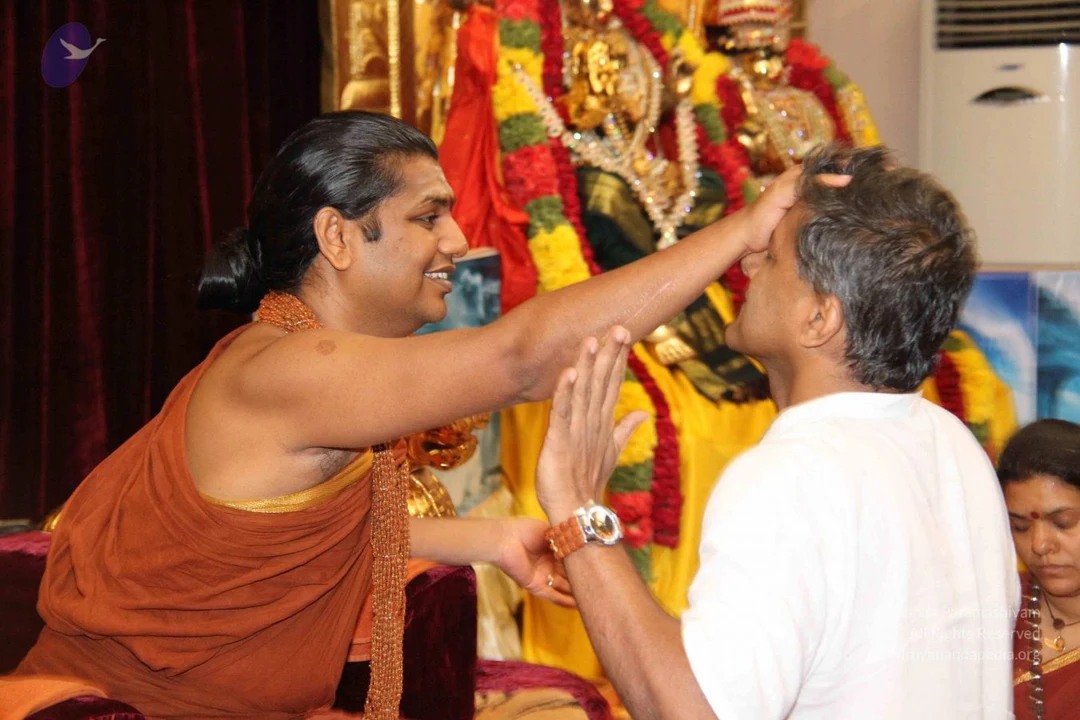
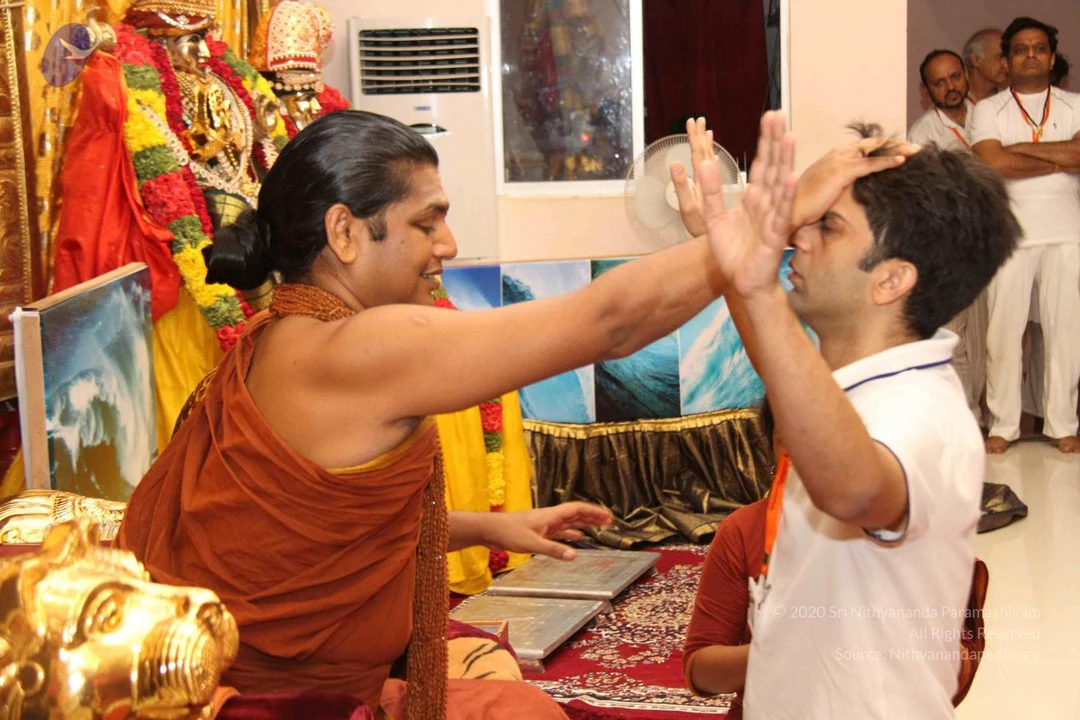
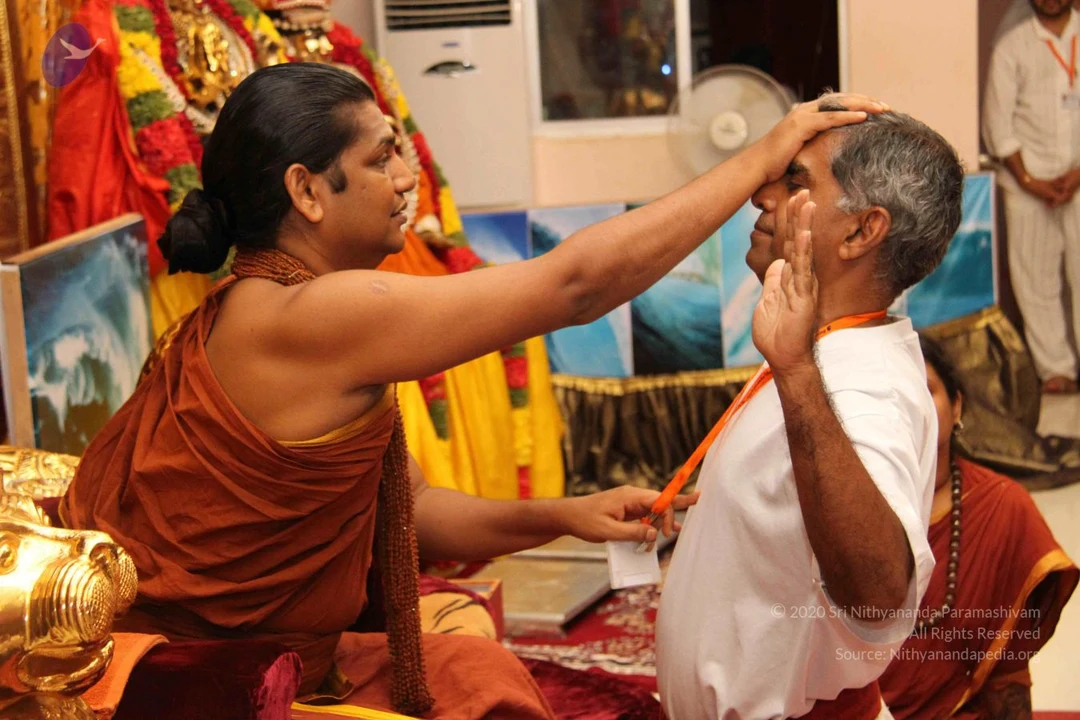
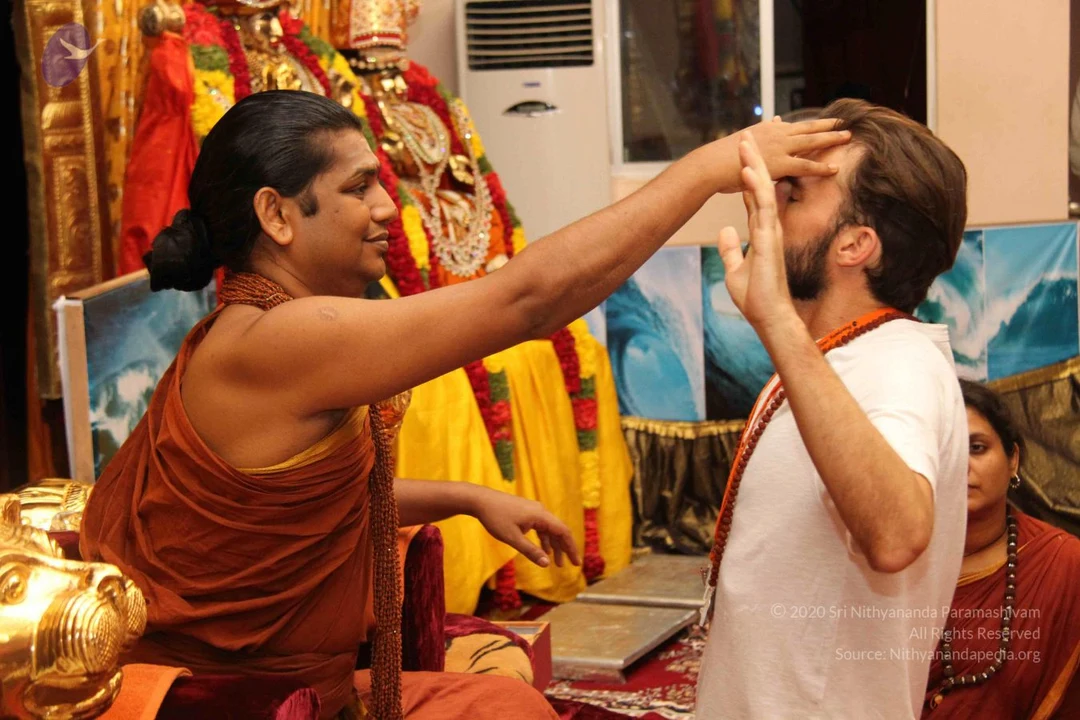
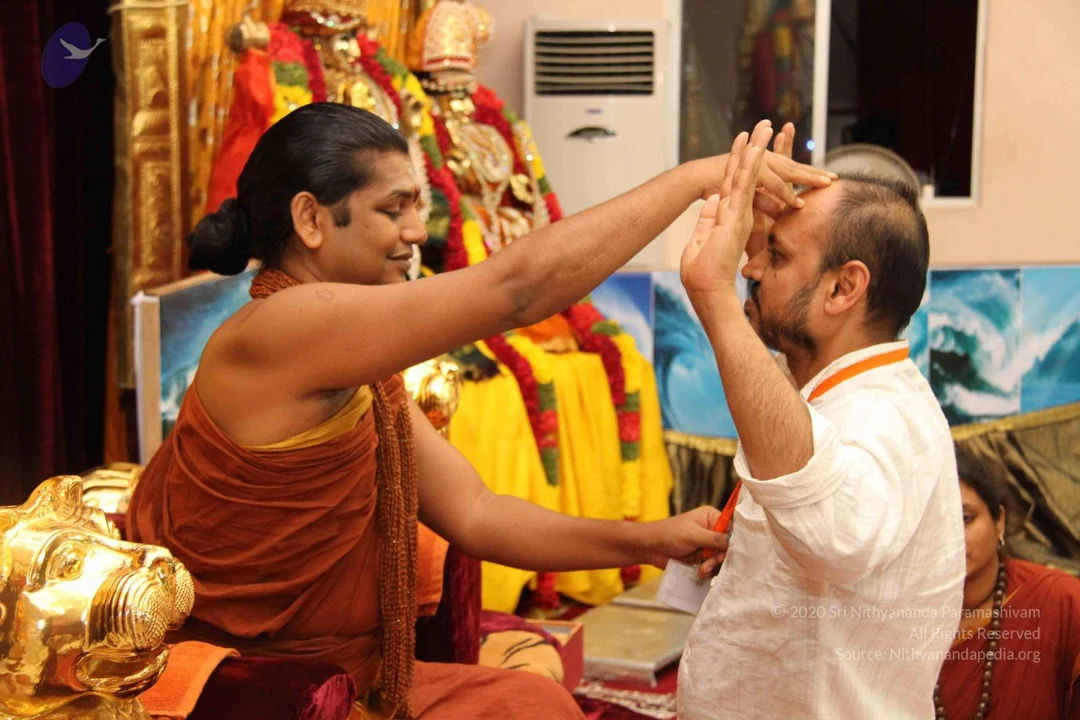
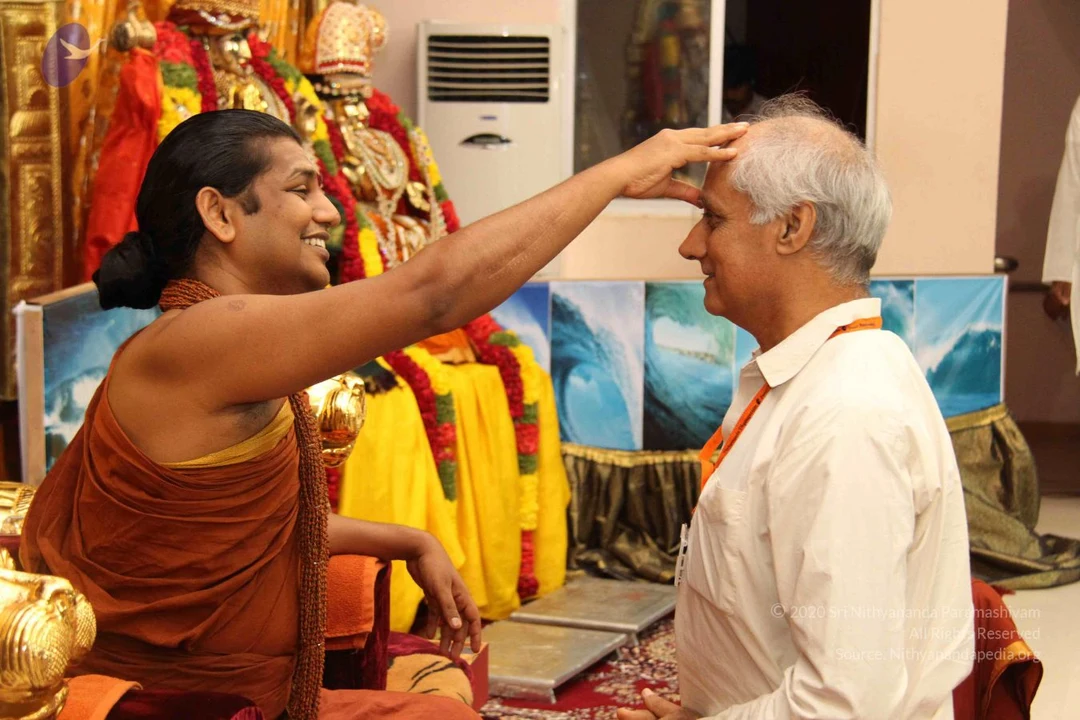
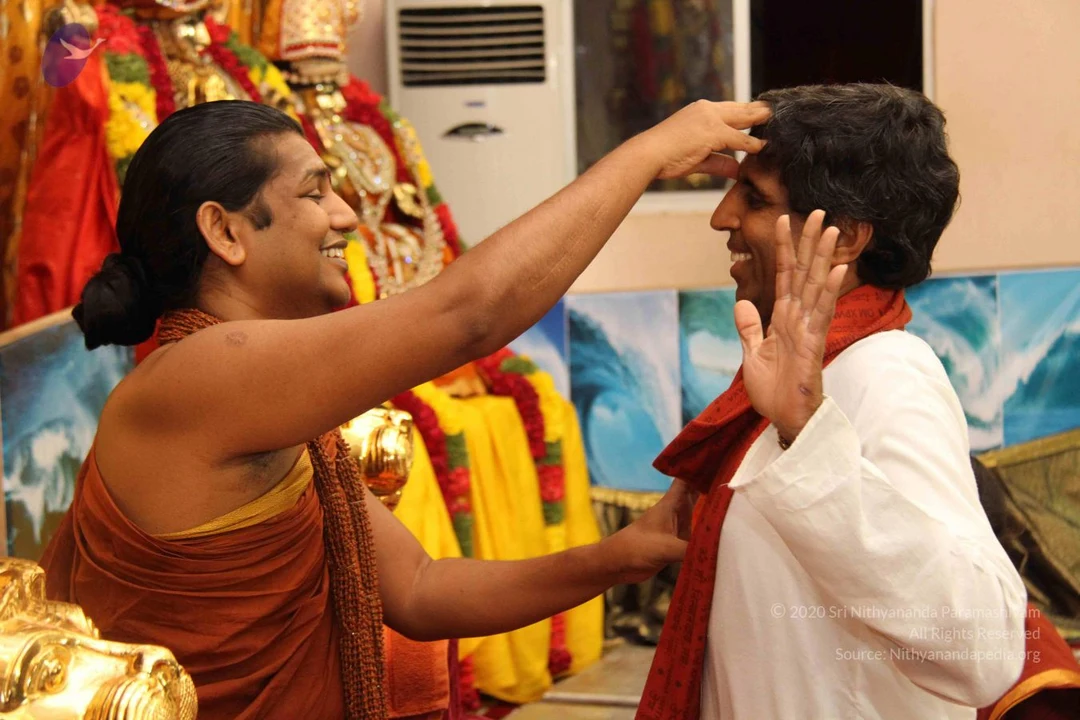
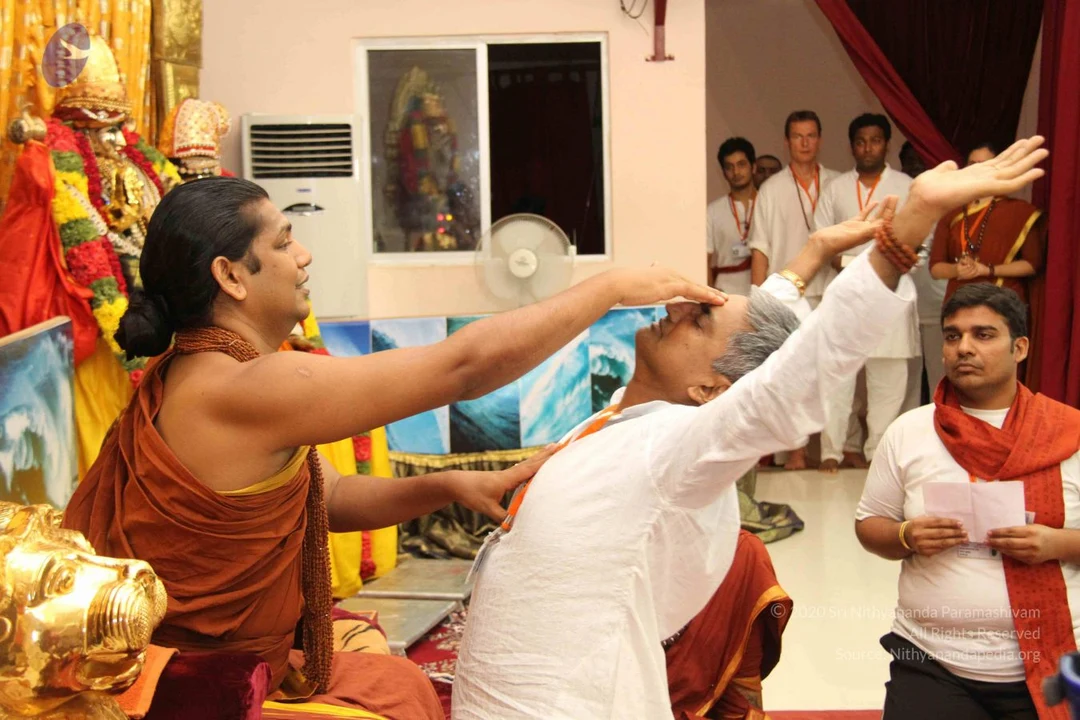
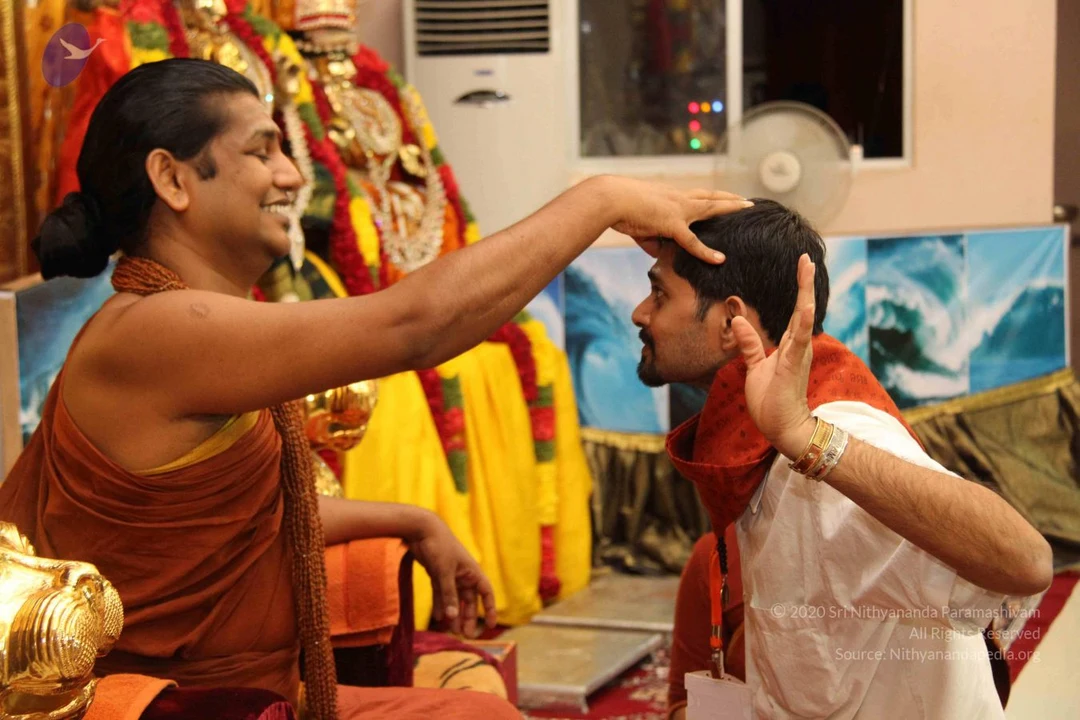
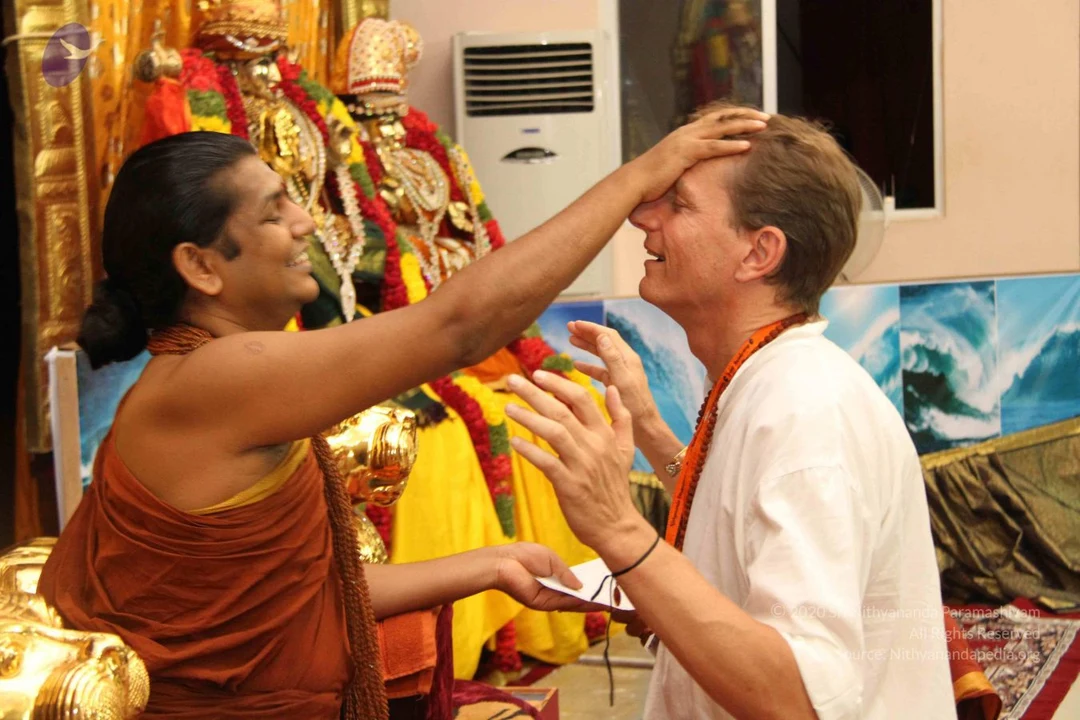
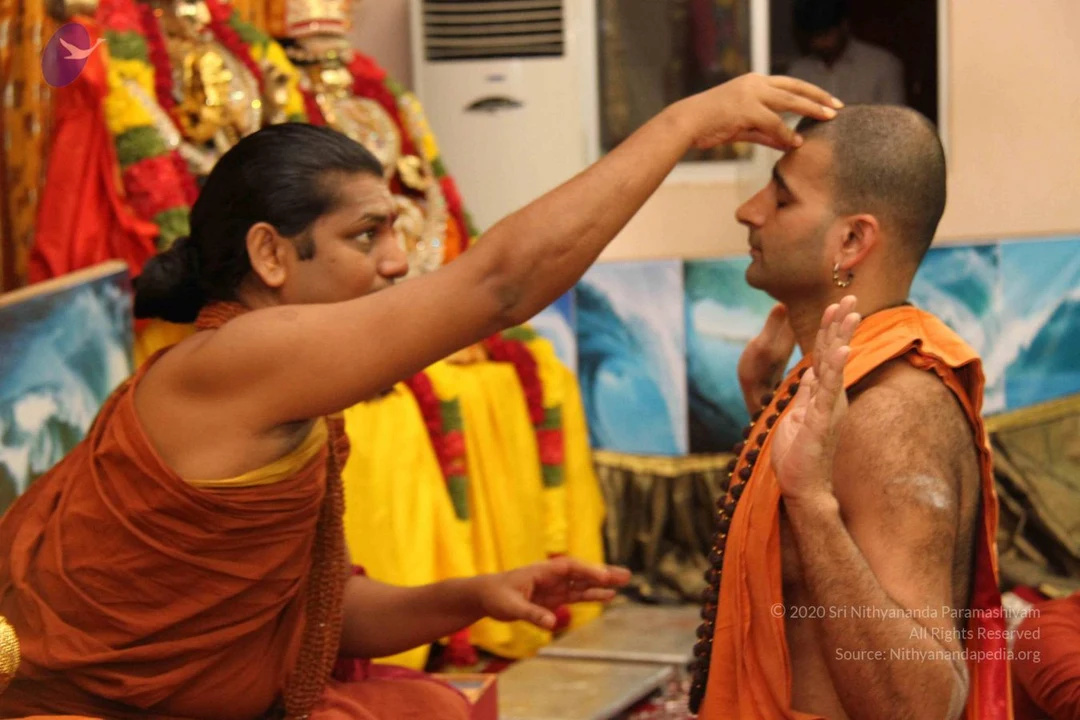
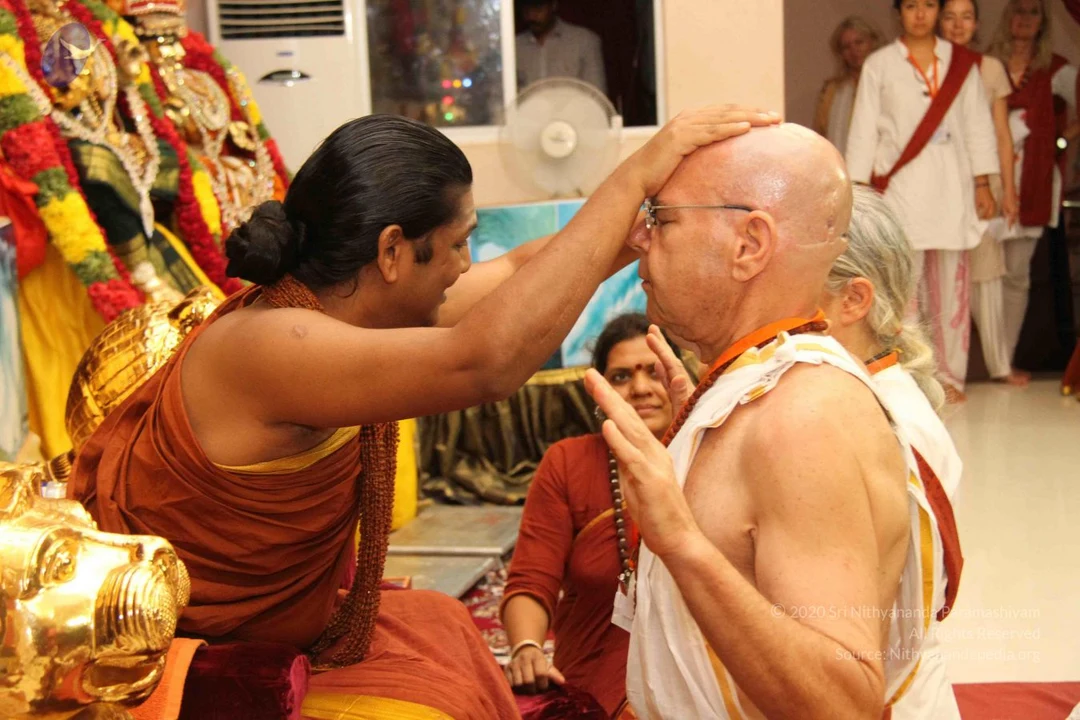
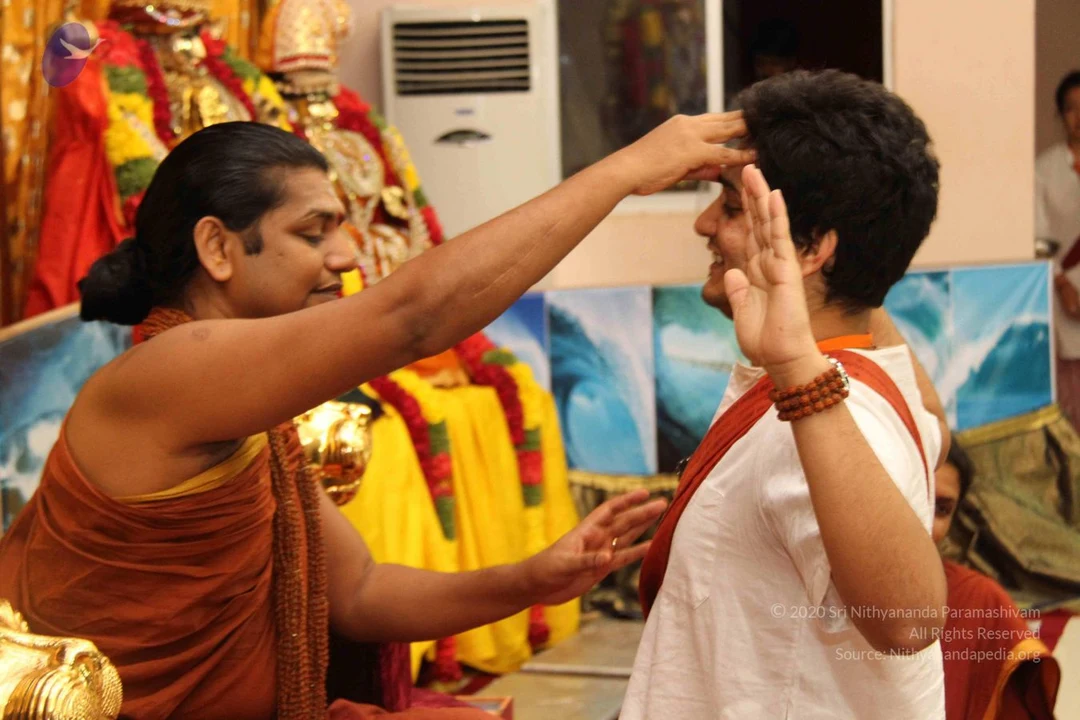
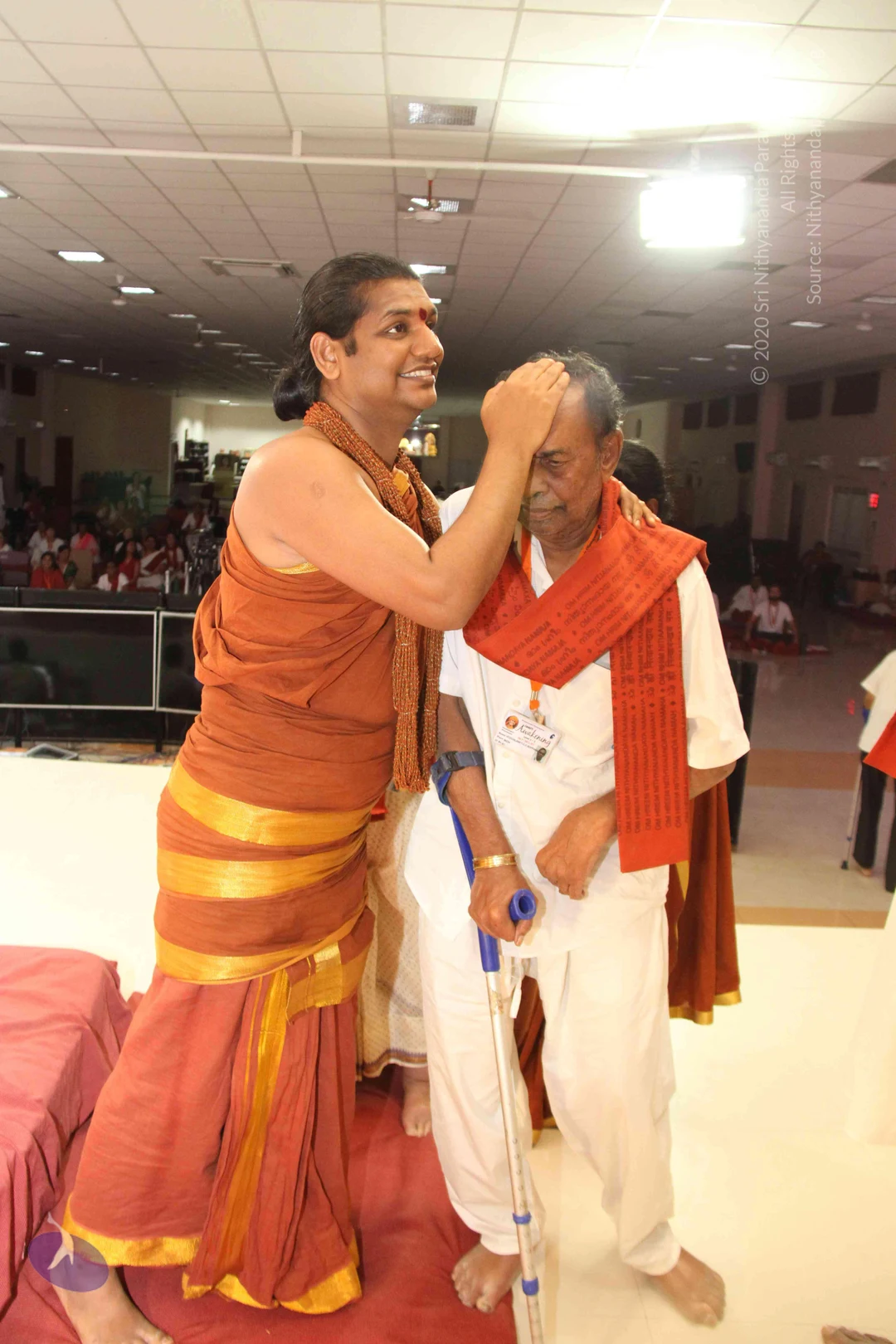
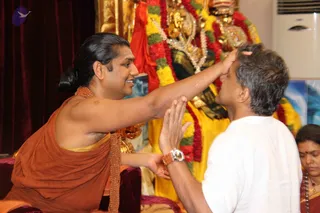
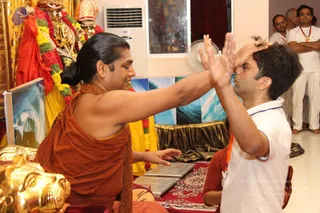
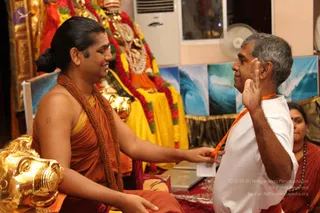
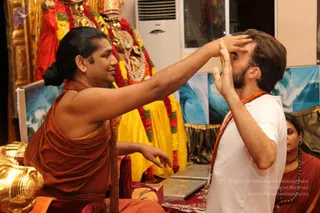
A man in an orange-brown saffron wrap with a rudraksha mala and gold chain, with long hair tied back, leans forward and presses his palm to the forehead of a seated man in a white shirt. The seated man has short grey hair and wears a wristwatch and raises his hand. A golden deity murti decorated with yellow and red flower garlands stands behind them, and a woman in a red sari with a red bindi sits at the right edge. A white air conditioner unit is visible in the upper right corner.A seated figure in an orange-brown dhoti and a thick beaded rudraksha-style mala with a gold clasp holds a folded white paper and extends a hand toward a standing man in an orange shirt and orange shawl, whose right palm is raised and left hand touches his cheek. Behind them are gold deity figures with garlands of yellow and red flowers and a red-and-gold headdress, plus a gold lion-head armrest in the foreground. A background panel shows ocean wave photographs over a gold-trimmed cloth, with a red patterned carpet on the floor. Two or three men in white and orange stand at the rear near a red curtain. The scene appears to be a seated blessing or oath exchange in a shrine room.A seated man in an orange-brown saffron shawl and a rudraksha mala with a tied-back dark ponytail lifts his palms toward the forehead of a younger man in a white polo shirt, who has his hands pressed together in namaskar. Behind them stands a deity murti decorated with red and yellow marigold garlands and a golden crown, with a small gold-toned lion-faced figure in the lower left foreground. Two men in white kurta-style clothing stand at right, and a wall of ocean wave photographs in blue and white forms the backdrop. A gold-bordered black cloth and a small red rug sit in front of a low wooden platform with wooden boxes. The seated man appears to be giving a blessing or touch on the forehead.A man with a long swept-back hair knot and a bare-chested orange-saffron shawl, seated on a gold lion-headed throne, smiles as he reaches out to hand a small white card or envelope to a grey-haired man in a white kurta with an orange cloth around his neck, who raises his right palm in a gesture of oath or blessing. A woman in an orange-brown sari stands at the right edge. Behind them, a deity murti is dressed in yellow and orange silk, decorated with red and marigold garlands and a gold crown, with blue-and-turquoise wave photographs on the walls and an air conditioner above. The man on the throne wears a rudraksha mala.A photograph of a seated man in an orange-brown saffron wrap and long dark hair tied back, bare-shouldered with a rudraksha mala, placing his right palm on the forehead of a standing older man with grey hair who wears a white shirt and an orange cord around his neck. The seated man's left hand holds a small white slip. Behind them are a golden deity murti, garlands of red and yellow flowers, and framed sea-wave photographs. A woman in a saffron sari with a rudraksha mala sits at right, and a man in white with an orange lanyard stands further right. The scene suggests a blessing or abhishekam-style darshan.Indoor photo of a seated man in an orange-brown saffron wrap and rudraksha mala raising his right hand to touch the forehead of a bearded man in a white t-shirt with an orange-and-red shawl and beaded necklace, who has his eyes closed and hands raised in front of him. Behind them stands a deity murti draped in yellow and red garlands with gold ornaments, beside a white floor air conditioner and framed ocean-wave pictures. A woman in a rust-coloured garment sits at the right edge. The scene suggests a blessing being given in a temple-like room.

Inner Awakening SESSION
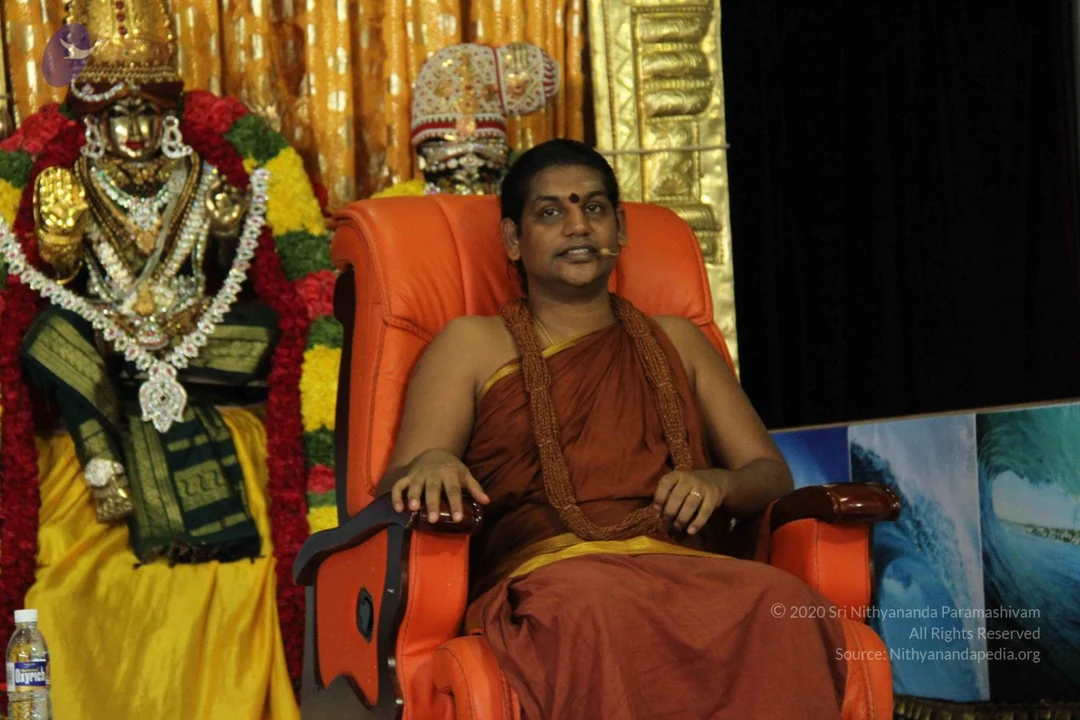
5 photosSource gallery
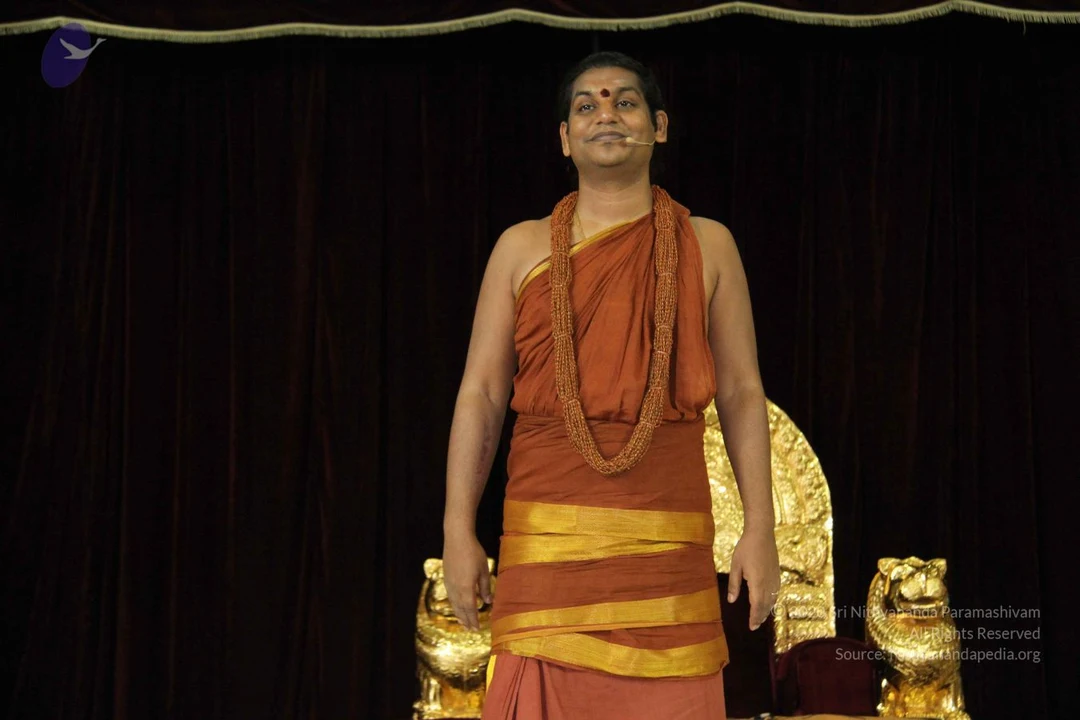
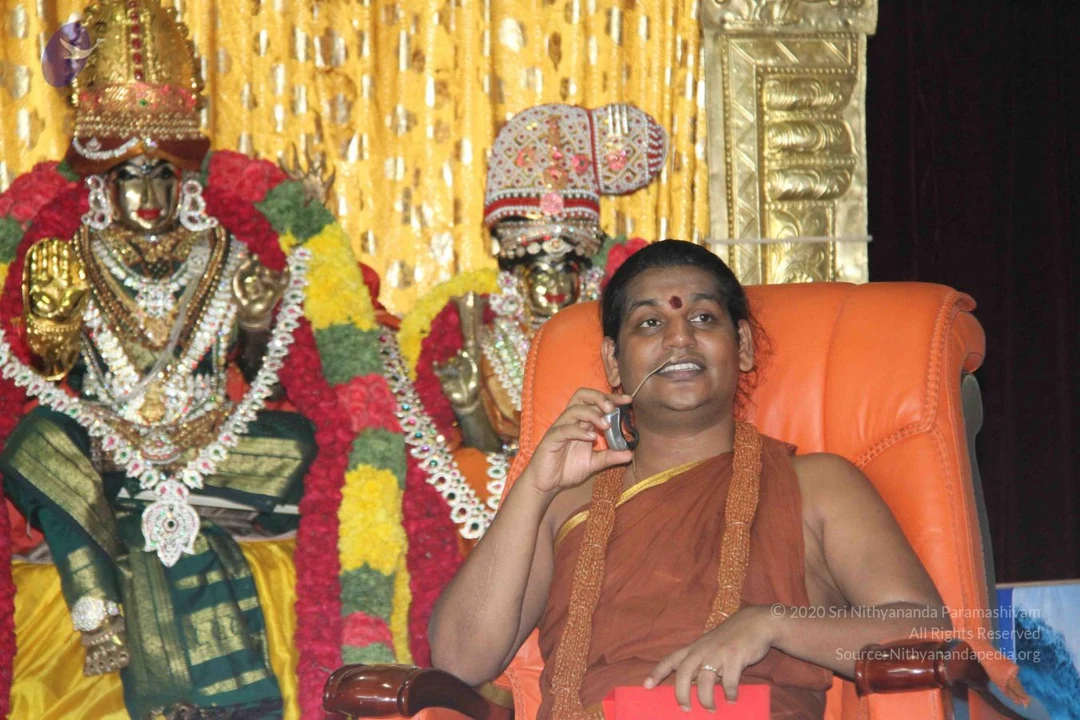
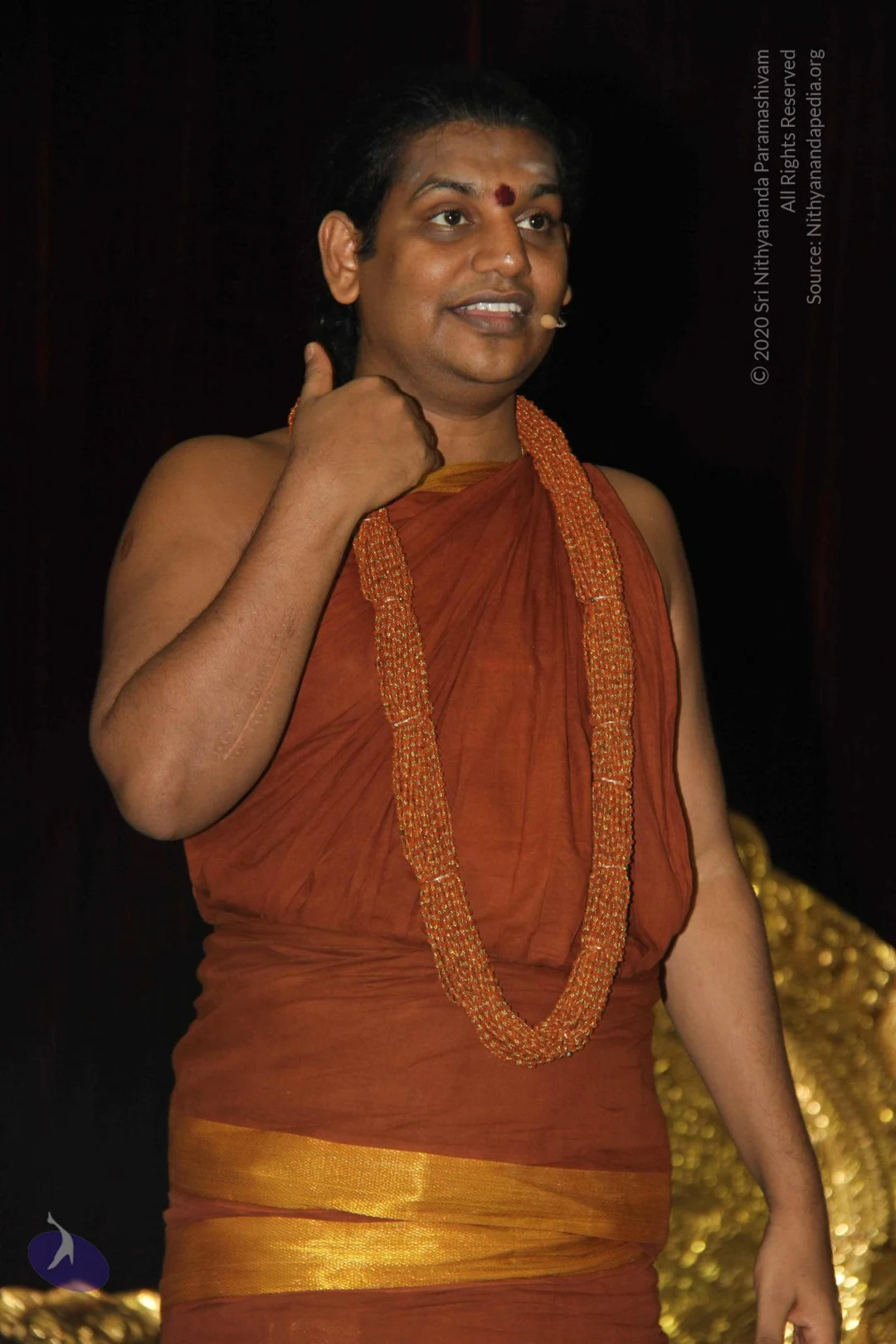
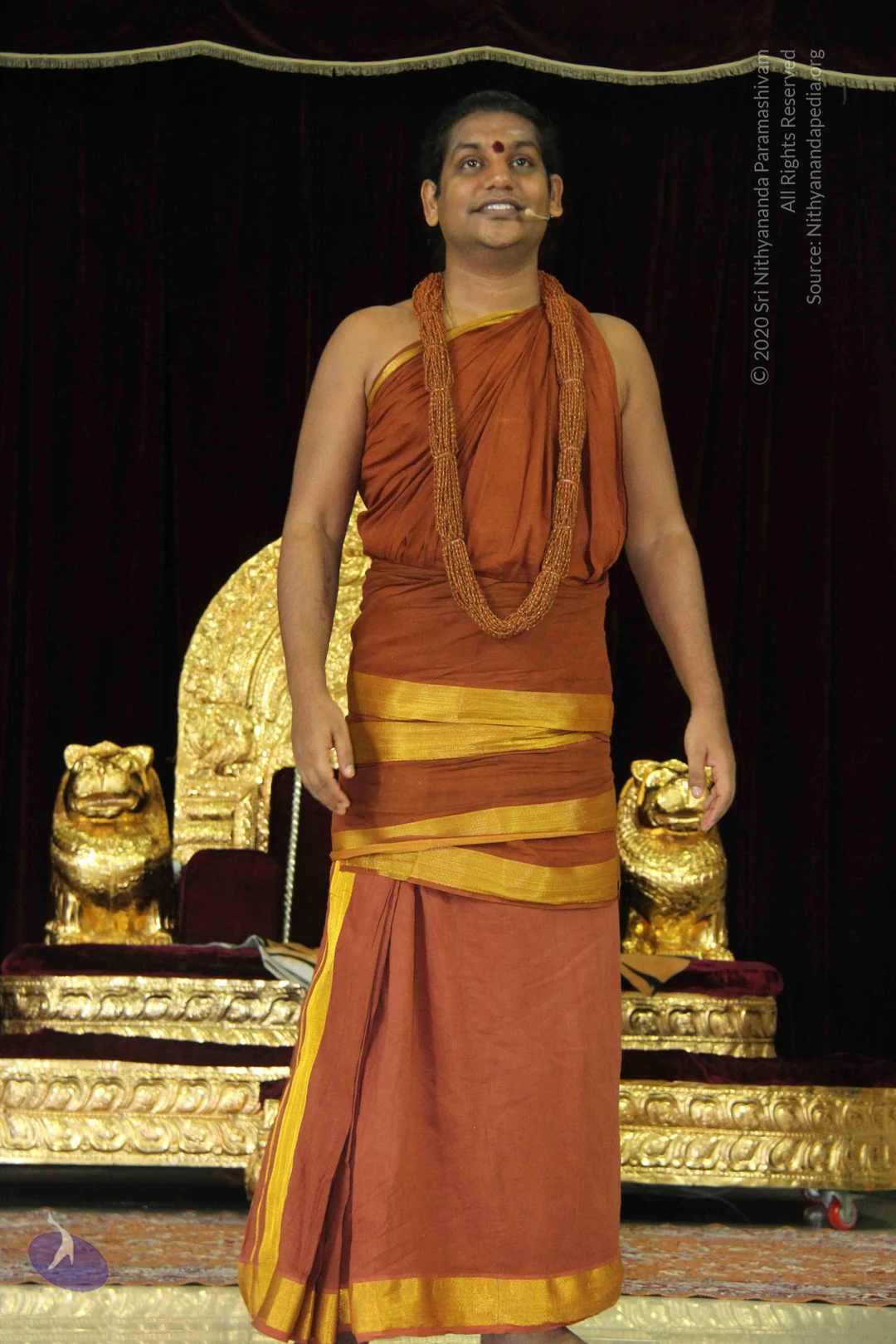
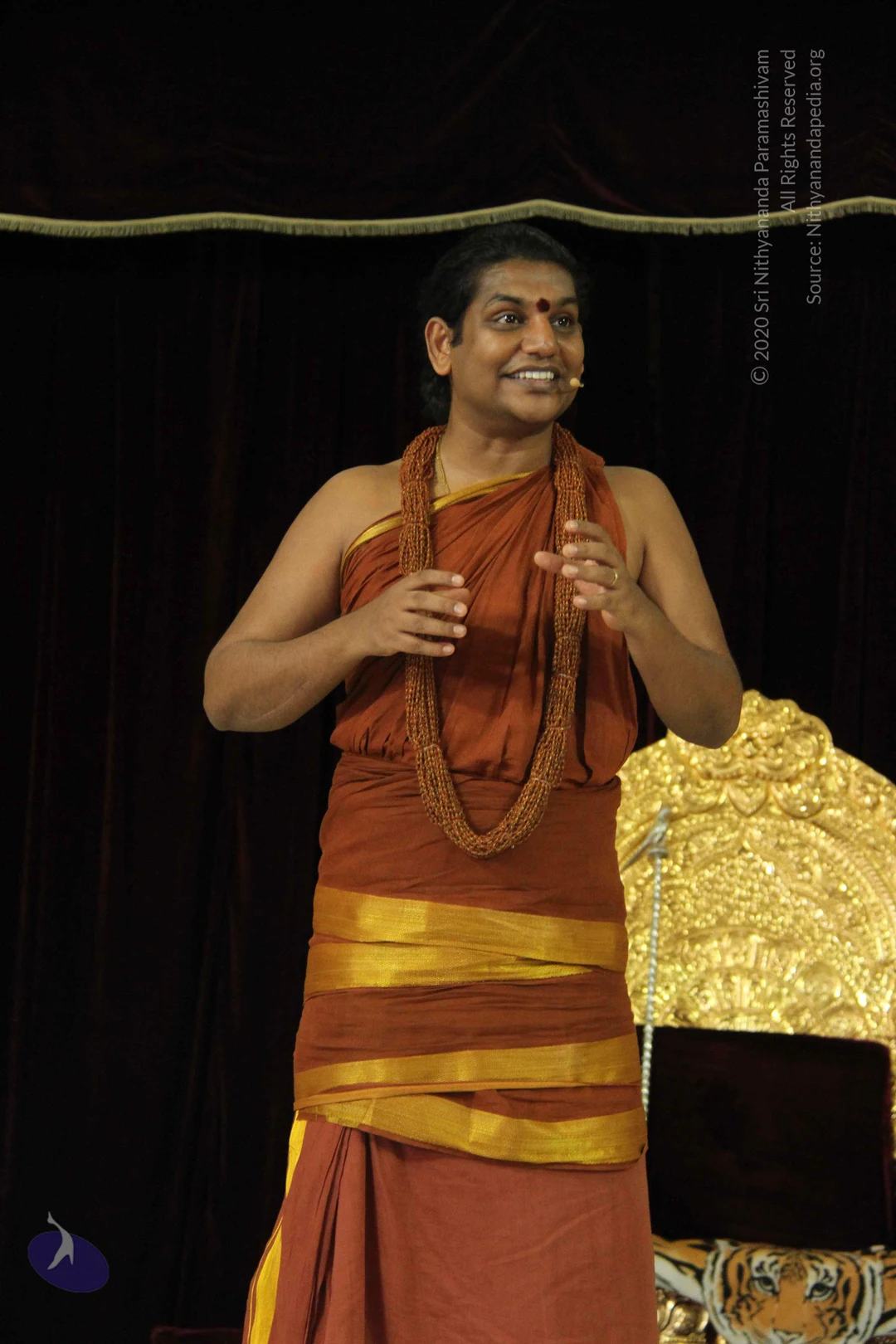
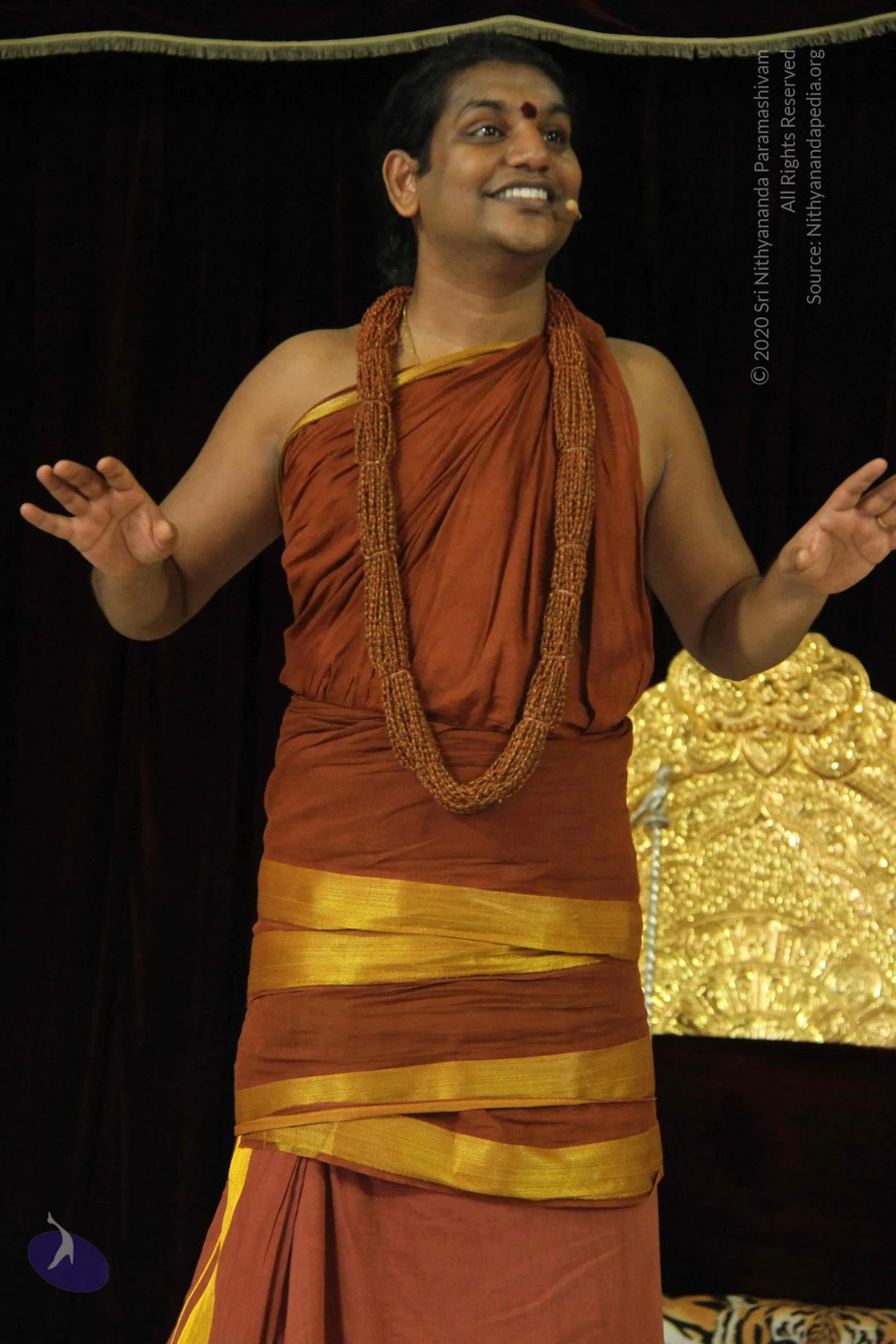
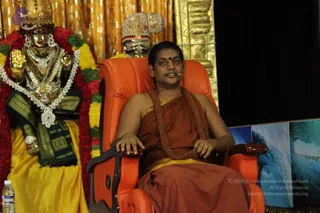
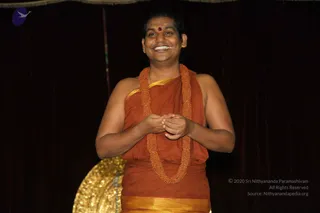
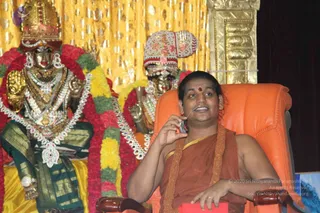
A seated man in an orange-red ochre sannyasi wrap with a rudraksha mala and a gold-yellow shawl speaks on a stage in an orange leather chair, a small red bindi on his forehead and a clip microphone on his cheek. Behind him stands a silver-and-gold deity murti adorned with white beaded necklaces, a red and green flower garland and a green-and-gold dhoti, beside a second gold-crowned murti. To the right, large photographs of ocean waves are displayed on a board, and a water bottle sits at the lower left.A smiling man stands centre-frame against a dark maroon curtain, hands clasped at chest height. He wears a rust-orange unstitched robe draped over one shoulder with a golden border, a long orange-beaded mala necklace, and a small red bindi on his forehead, with a thin headset microphone at his cheek. A gold decorative backdrop edge is visible at lower left. Appearance-based label: a person, shown in person in an orange sannyasi robe with rudraksha-style mala, addressing an audience.A man stands on a stage before dark maroon drapery, wearing a head-mounted microphone and a red bindi on his forehead. He wears an orange-red unstitched robe draped over one shoulder with a gold-bordered cloth wrapped at the waist, and a long multi-strand rudraksha mala around his neck. Behind him, ornate gold lion-head armrests flank a gilded throne with a carved back, and a gold fringe runs along the top edge of the curtain. He is smiling and facing the audience, as at a discourse. Copyright text is overlaid at lower right.A photograph of a seated man in an orange leather chair on a stage, wearing a rust-orange draped robe, a rudraksha mala with multiple strands, and a small red bindi. He holds a small object near his mouth with one hand while looking to his right. Beside him on the left stands a gold-colored deity murti adorned with a golden crown, layered jewelled necklaces, and garlands of red, yellow and green flowers, wearing a green and gold sari-like garment. Behind is a gold-patterned drape with a second ornate gold-and-white decorative figure near the top center and a gilded carved panel on the right.A man seated in an orange leather chair speaks into a handheld microphone, his right hand raised near his face. He wears a rust-brown dhoti-style garment with a gold border, a long saffron-orange rudraksha-style mala across his shoulder, and a red bindi on his forehead. Behind him stand two gold-coloured deity murti decorated with garlands of red and yellow flowers, ornate jewelled necklaces, and crowns, in front of a golden shimmering backdrop. A gold-framed panel stands at the upper right and a dark curtain to the right.

Inner Awakening SESSION - CROWD SHOTS
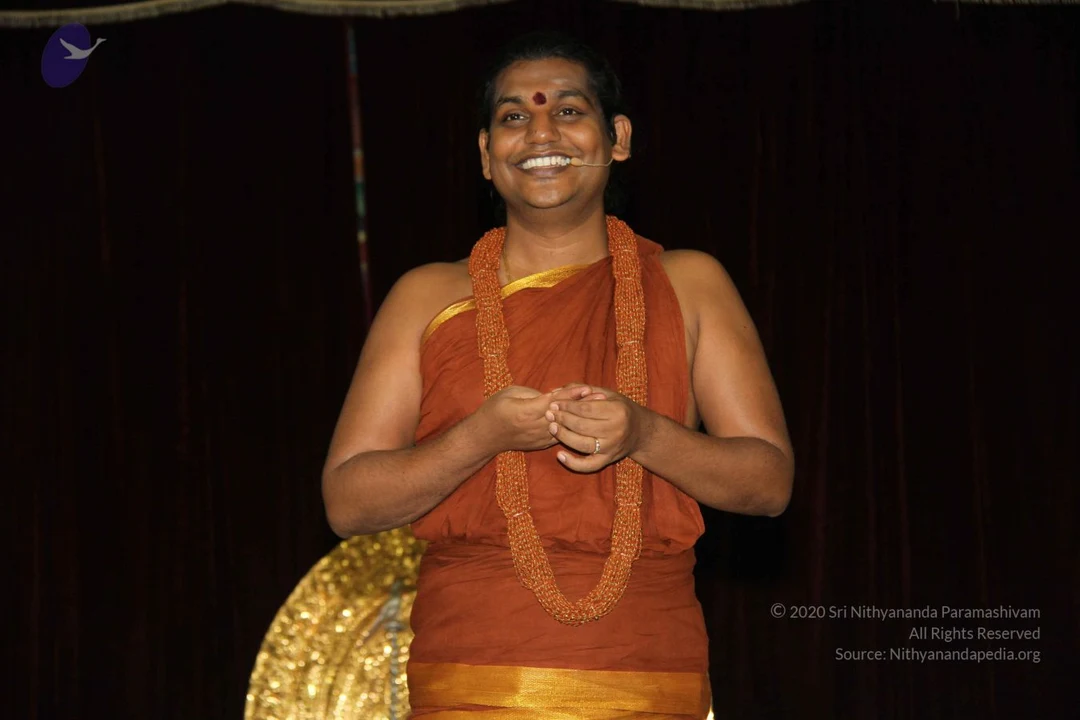
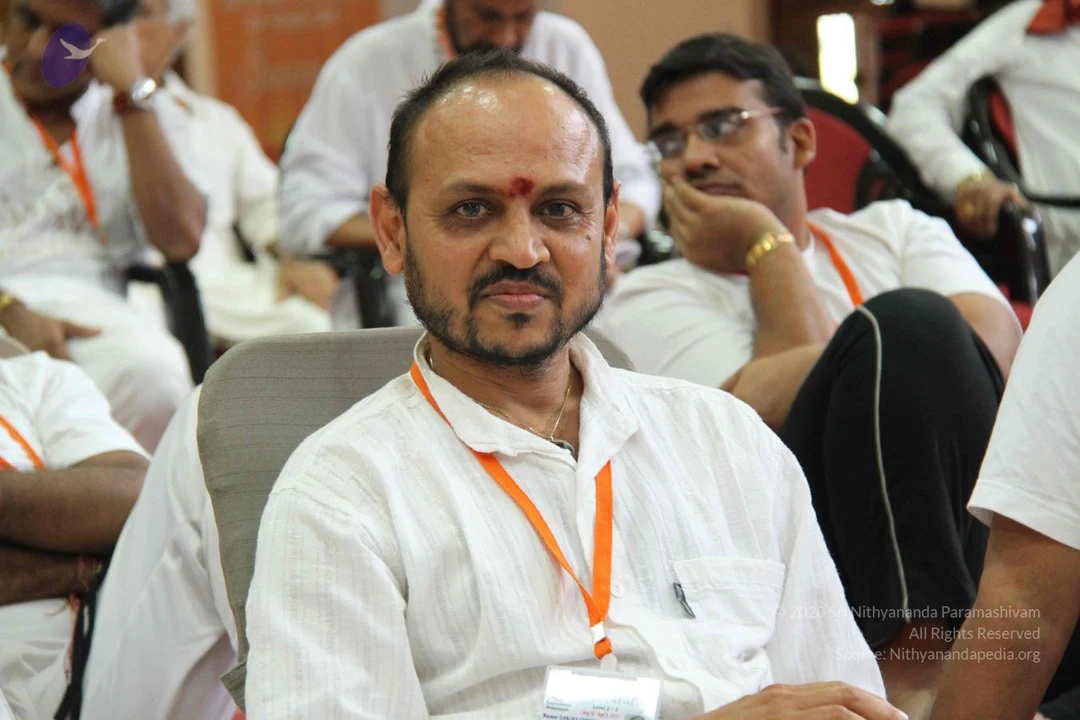
16 photosSource gallery
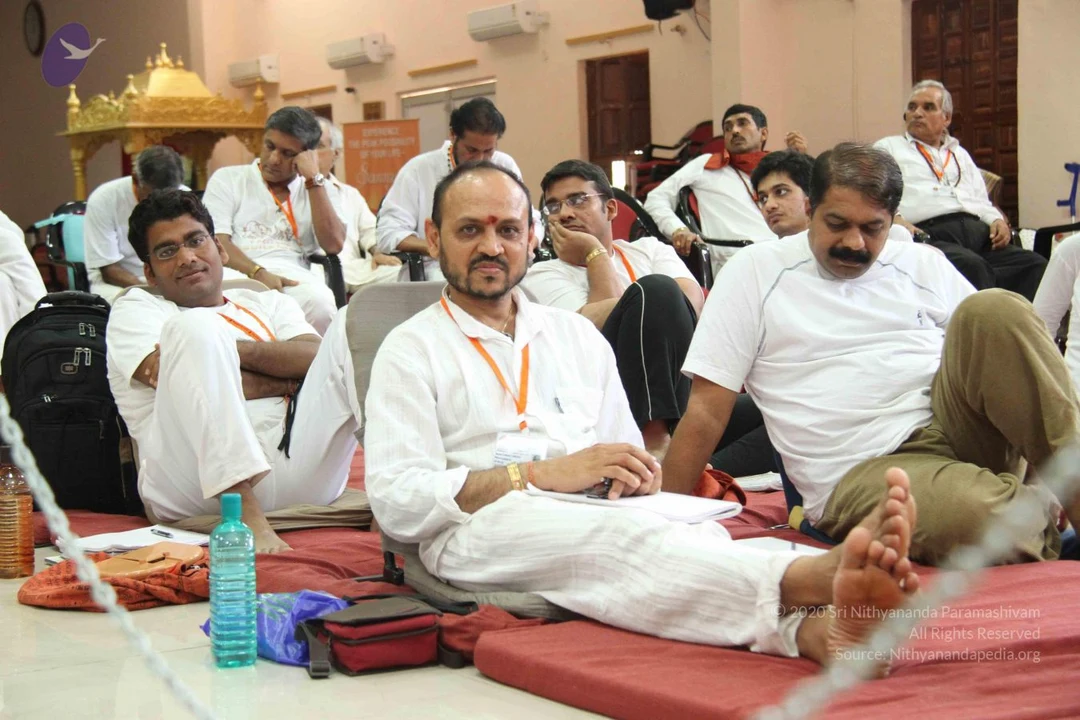
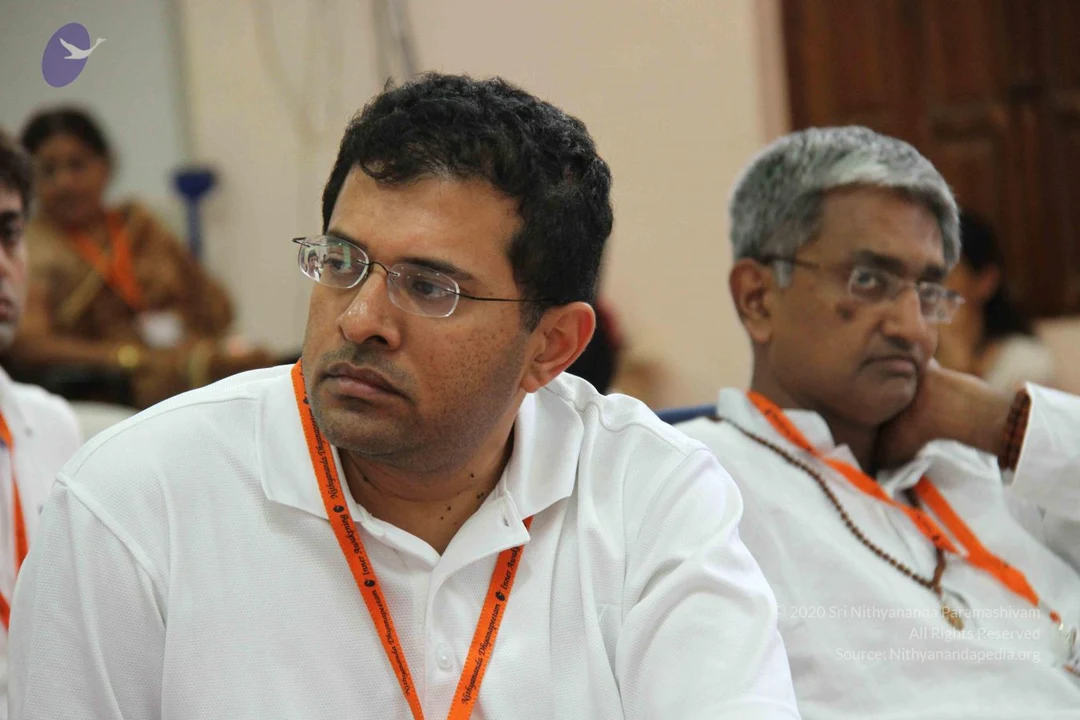
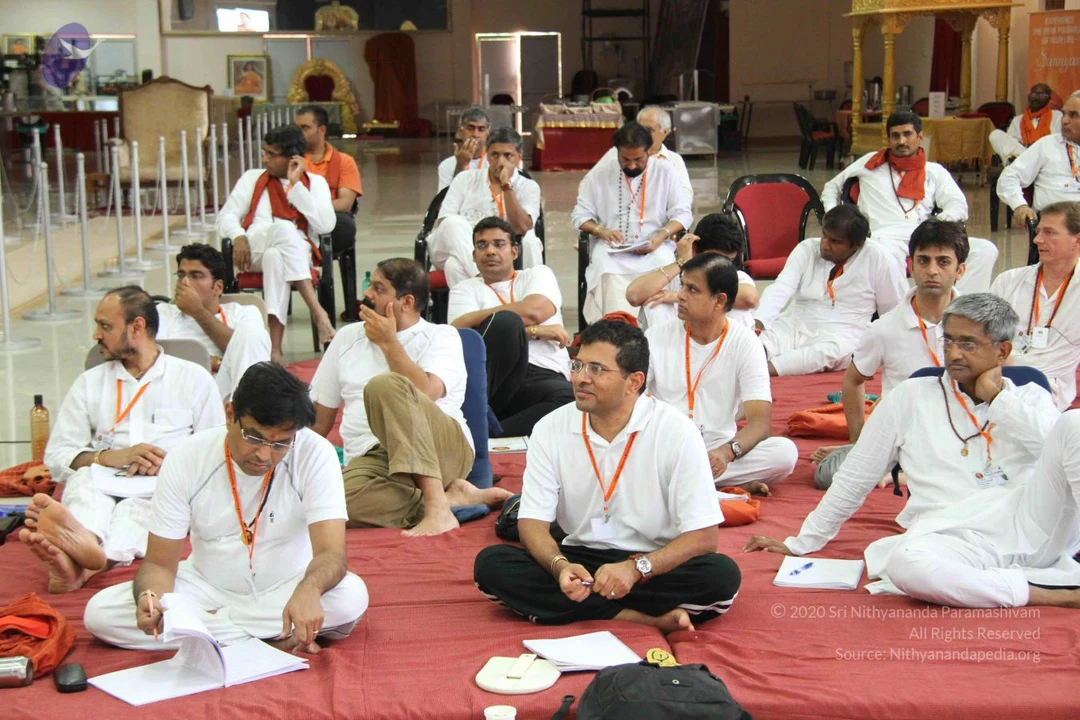
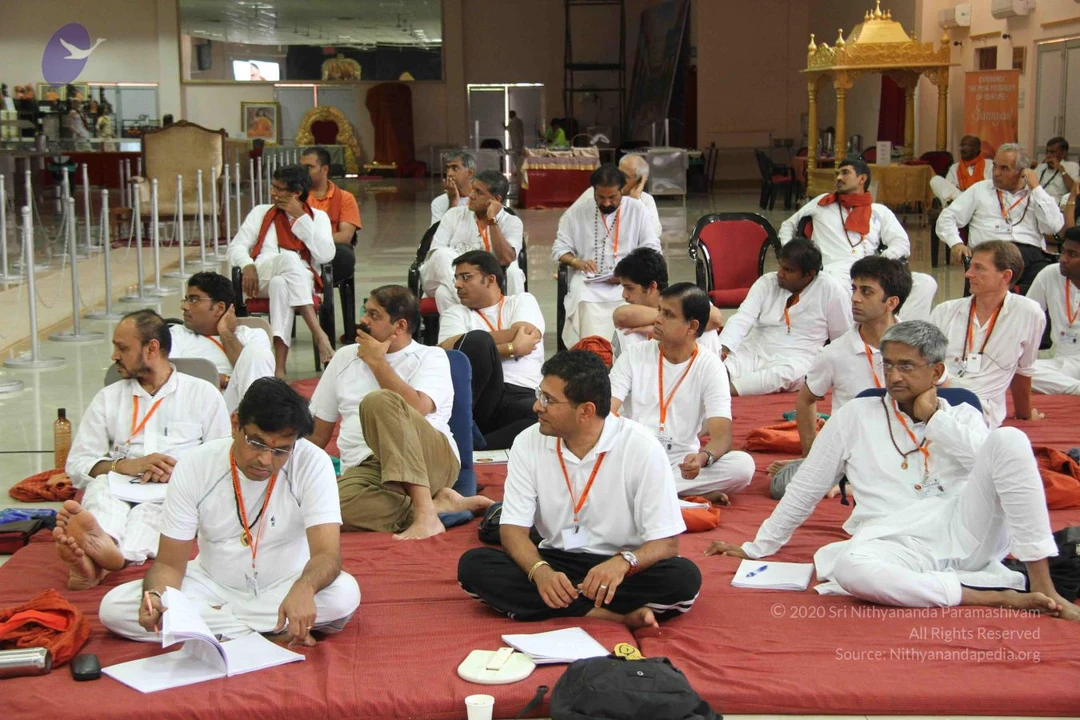
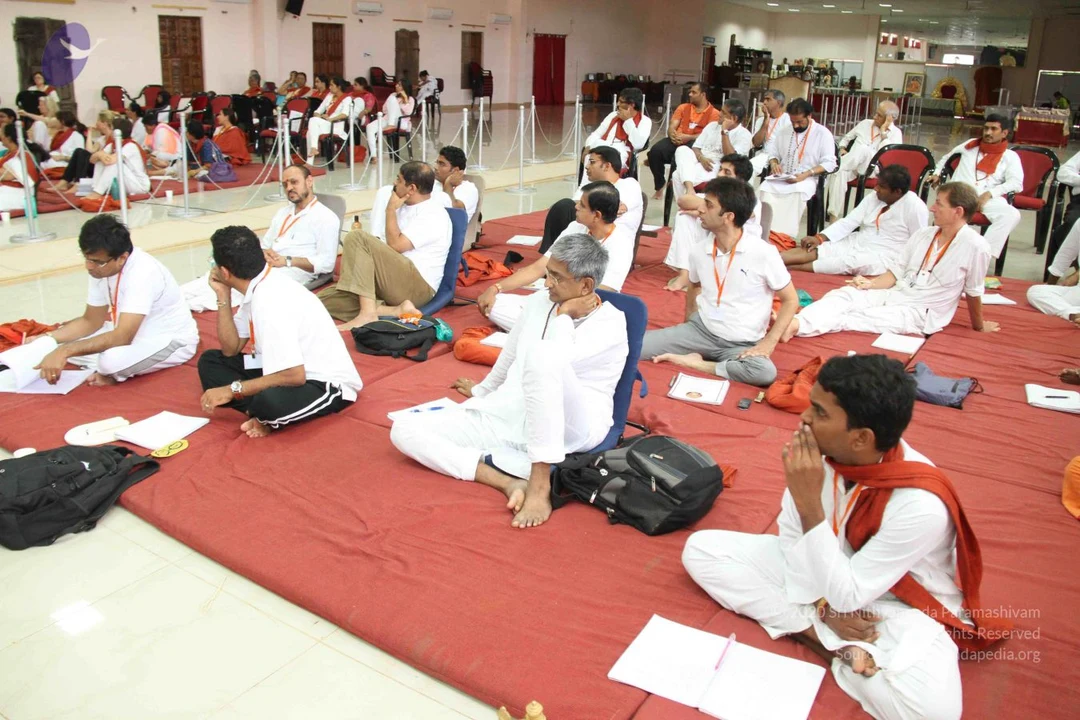
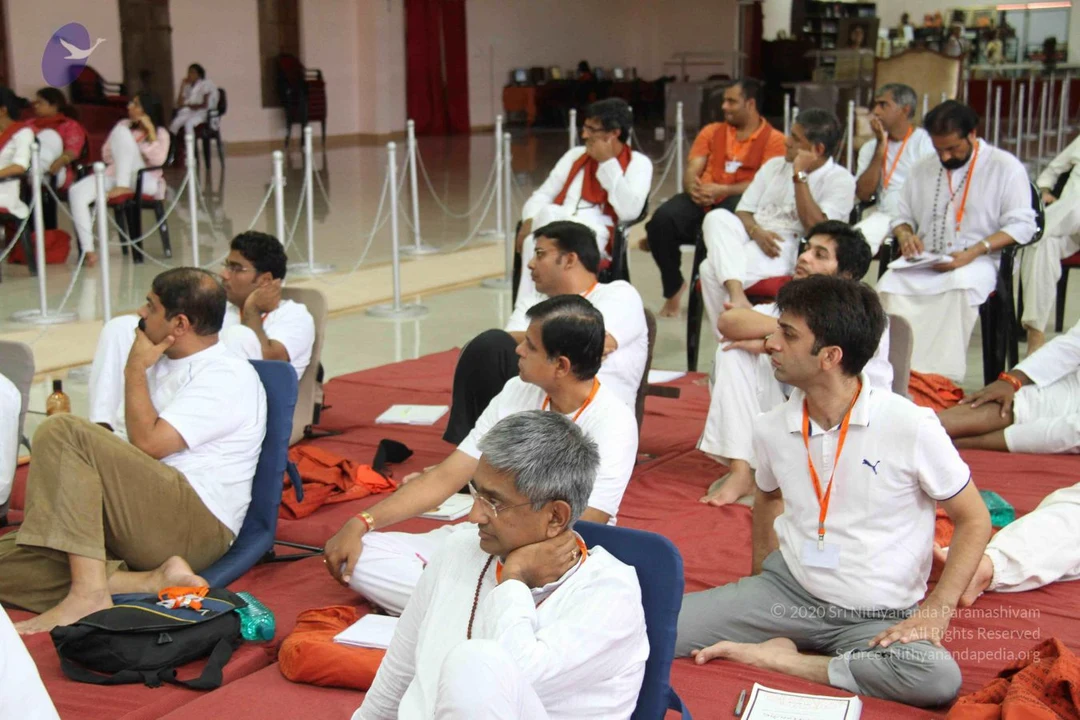
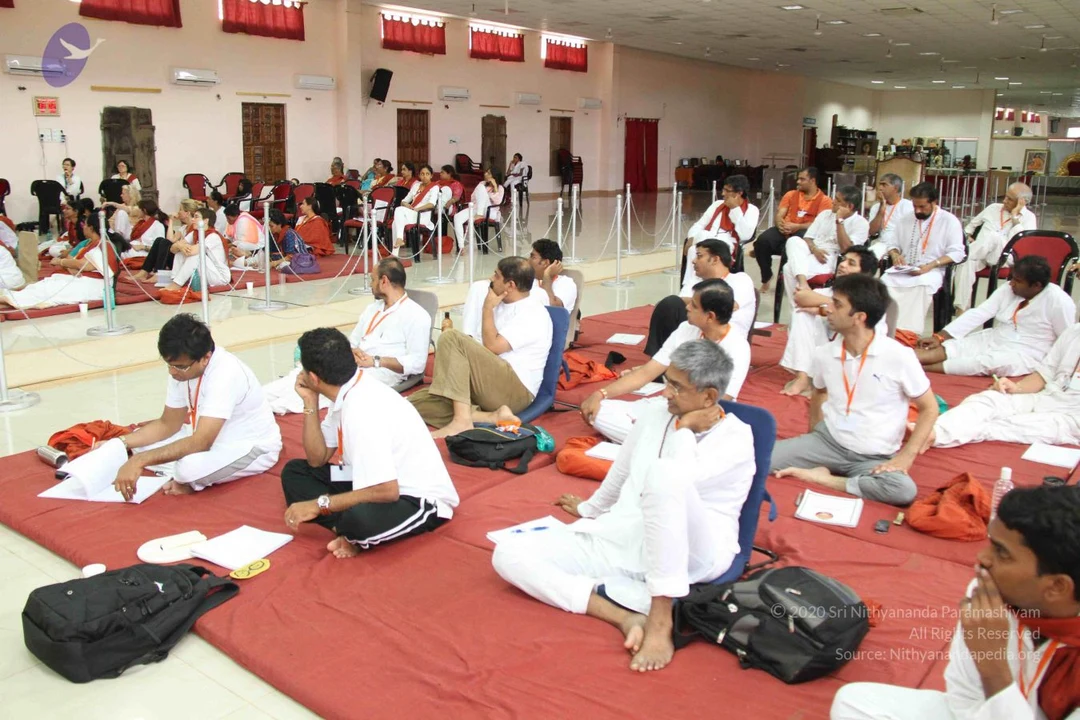
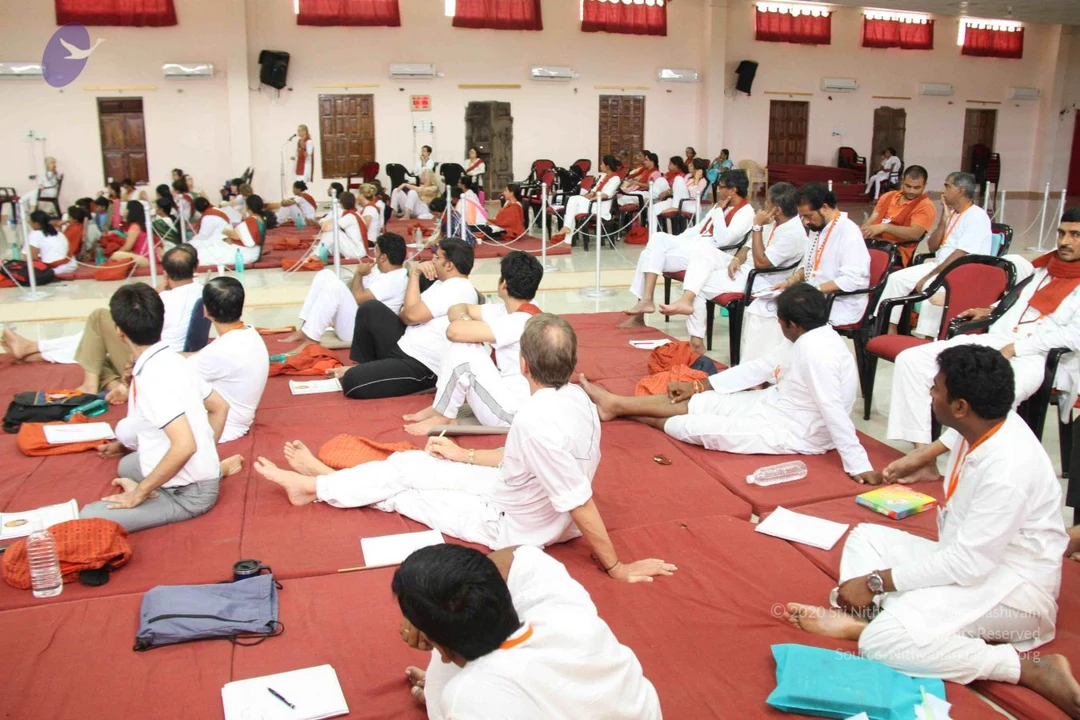
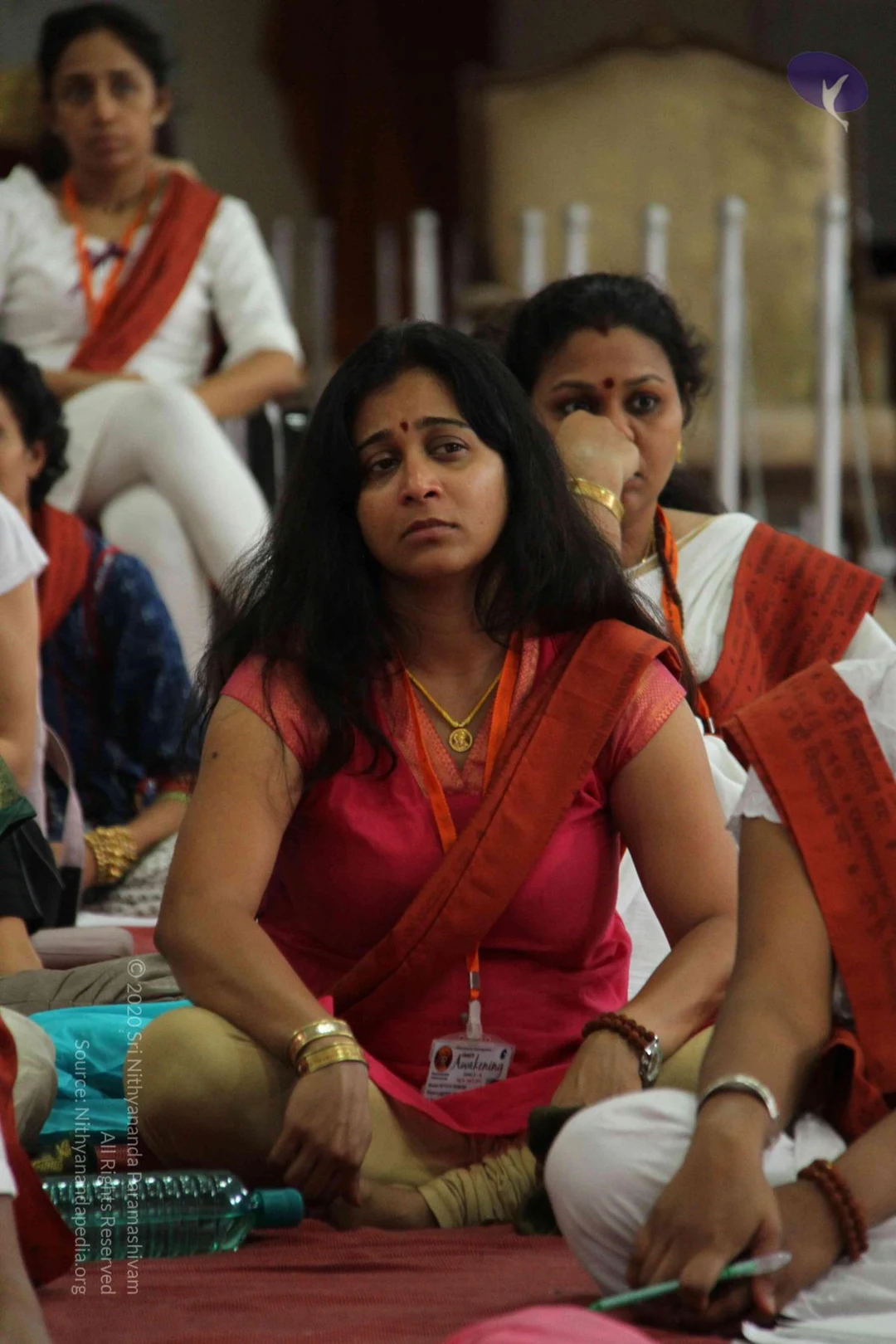
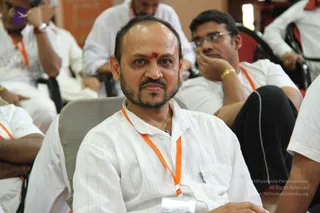
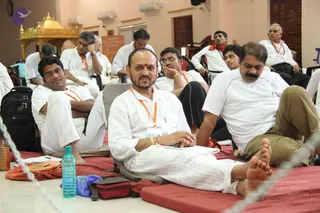
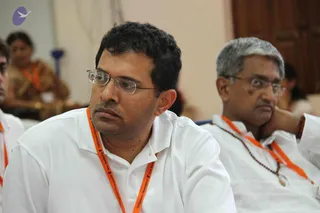
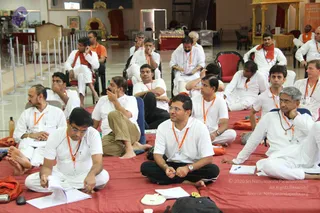
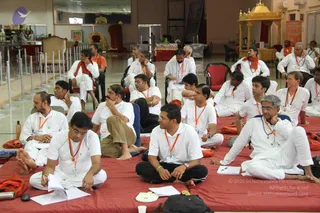
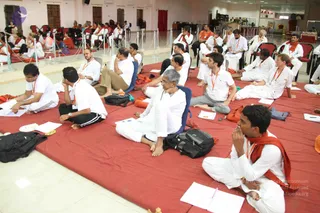
A seated man in a white collared kurta with a thin orange lanyard and an attached name badge sits in a grey chair at a seminar-style event. A small red tilak mark is on his forehead. Behind him, several other seated attendees in white clothes and orange lanyards are visible, one wearing gold bracelets and black trousers and another with his hand at his face. The room has a warm orange wall.Indoor gathering in an ashram-style hall with cream walls and a golden canopy at upper left. Several men in white kurta-style clothes sit on red floor mats and chairs, many wearing orange lanyards. In the foreground a bearded man with a red bindi sits upright in a white shirt and white trousers, hands resting on a notepad, with a water bottle and red bag in front. Beside him a man in a white shirt and khaki trousers sits with bare feet extended. Other attendees in white lean and look on in the background.Two men sit in a seated audience wearing white collared shirts with orange lanyards printed with Nithyananda Dhyanapeetam text. The man in front wears clear-framed glasses and looks off to the side with a serious expression. Behind him on the right, an older man with grey hair and glasses wears a rudraksha mala around his neck and rests his head on his hand. Blurred figures in the background include a woman in a brown sari with an orange lanyard.A photograph of a seated audience of men in white kurta-style clothing with orange-saffron satsang lanyards around their necks, sitting cross-legged on red mats in a hall. Several men hold notebooks and pens, and some look toward the front. A gilded ceremonial chair and an ornate golden canopy stand in the background, with a small orange and red banner at upper right. A man in the foreground at left wears white with an orange lanyard and writes in an open notebook. Bags, a water bottle and a few orange cloth items lie on the floor.A photograph of a seated group of men in white clothes and orange lanyards sitting on red floor mats in a large hall. Many hold notebooks or pens and listen attentively, several with saffron or orange shawls on the mats. Some wear white dhotis and kurtas; a few wear khaki or dark trousers. Behind them stand golden decorative canopies, a red chair and a framed portrait, with queue barriers at the left. An orange banner hangs at the upper right.A photograph of a seated congregation in a large hall with pale pink walls and tiled floor. Many participants sit cross-legged on red mats, dressed mostly in white kurtas and white shirts, with saffron-orange shawls draped over shoulders and orange-and-white lanyards around their necks. Several men in the foreground hold notebooks and pens; one man in the front right has his hands pressed together in prayer near his face. Others in the back sit on chairs behind rope barriers, and a few wear orange garments. Black backpacks and bags lie on the mats, and a red curtain and shrine-like area appear in the background.

LEELA ALANKAR

2 photosSource gallery
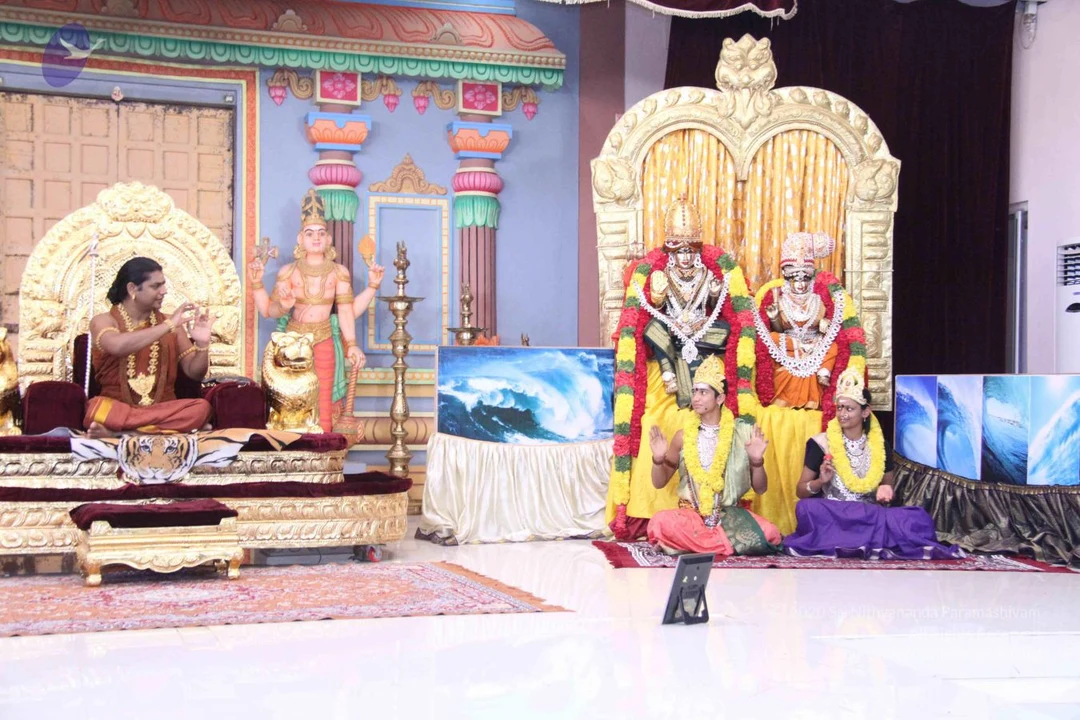
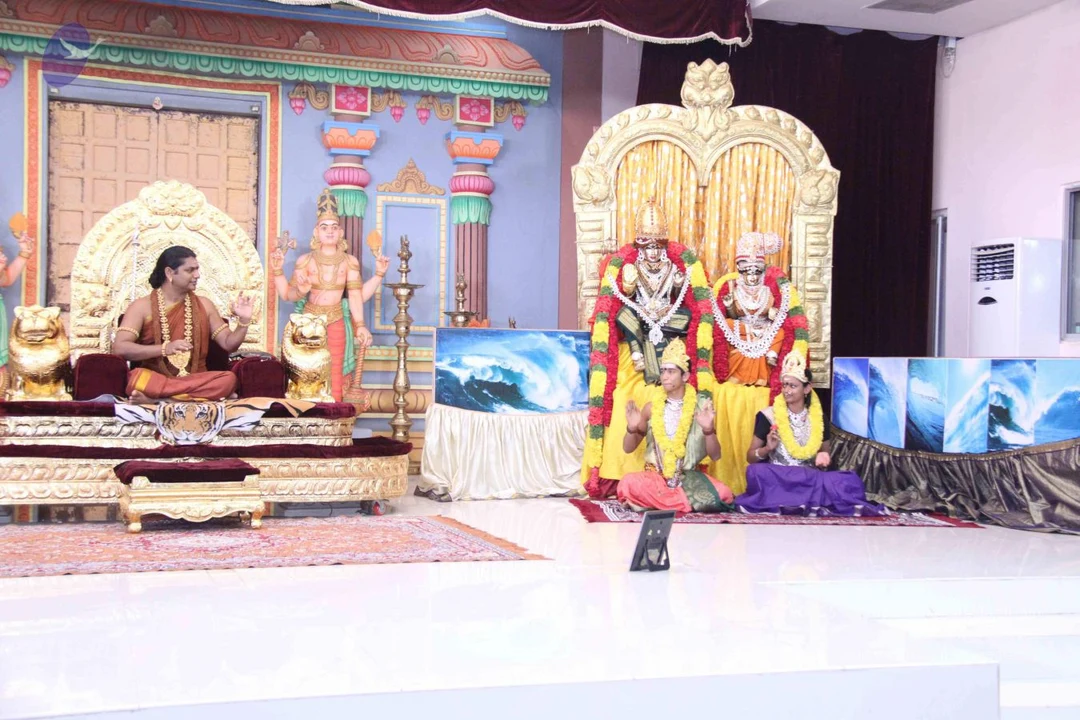
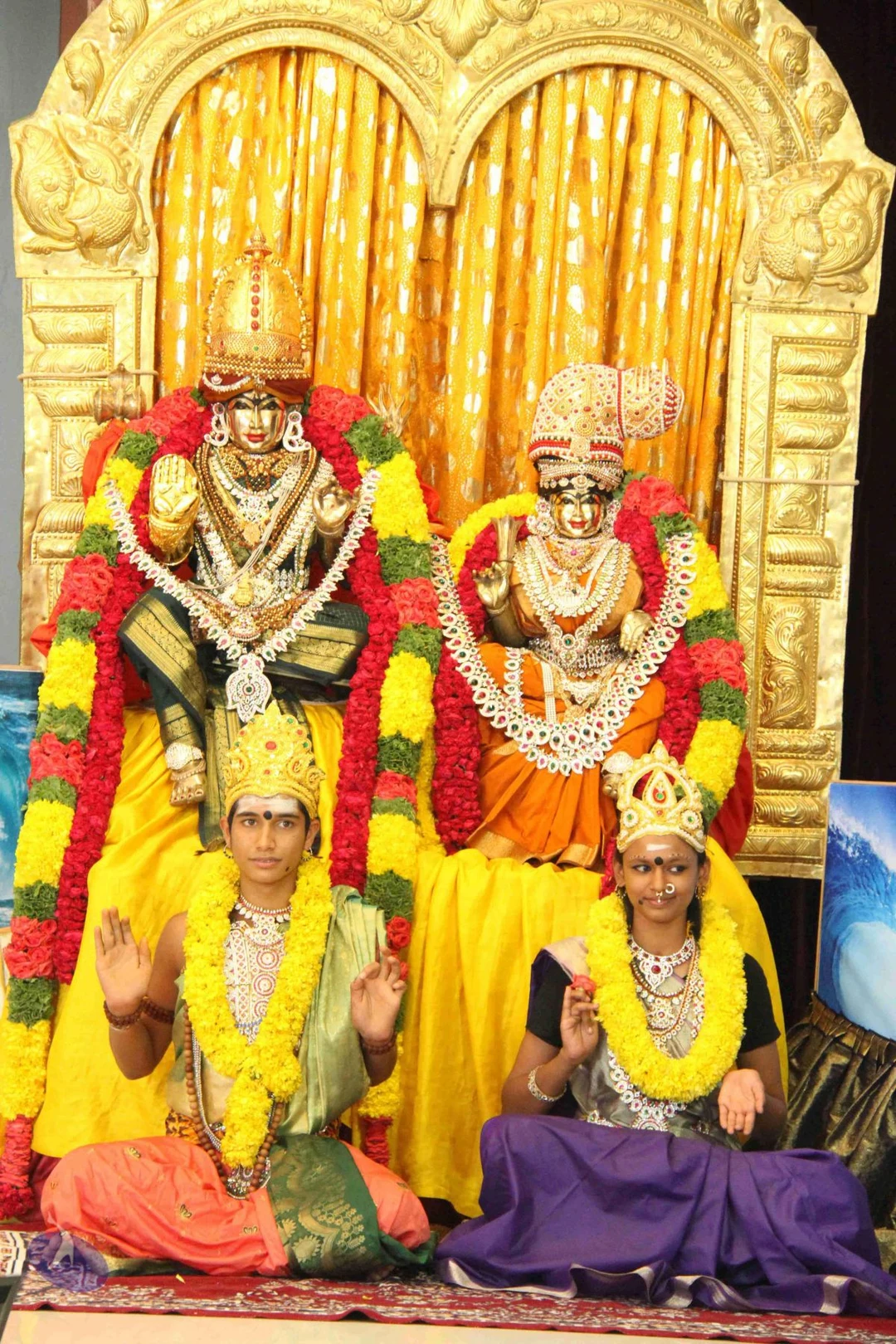
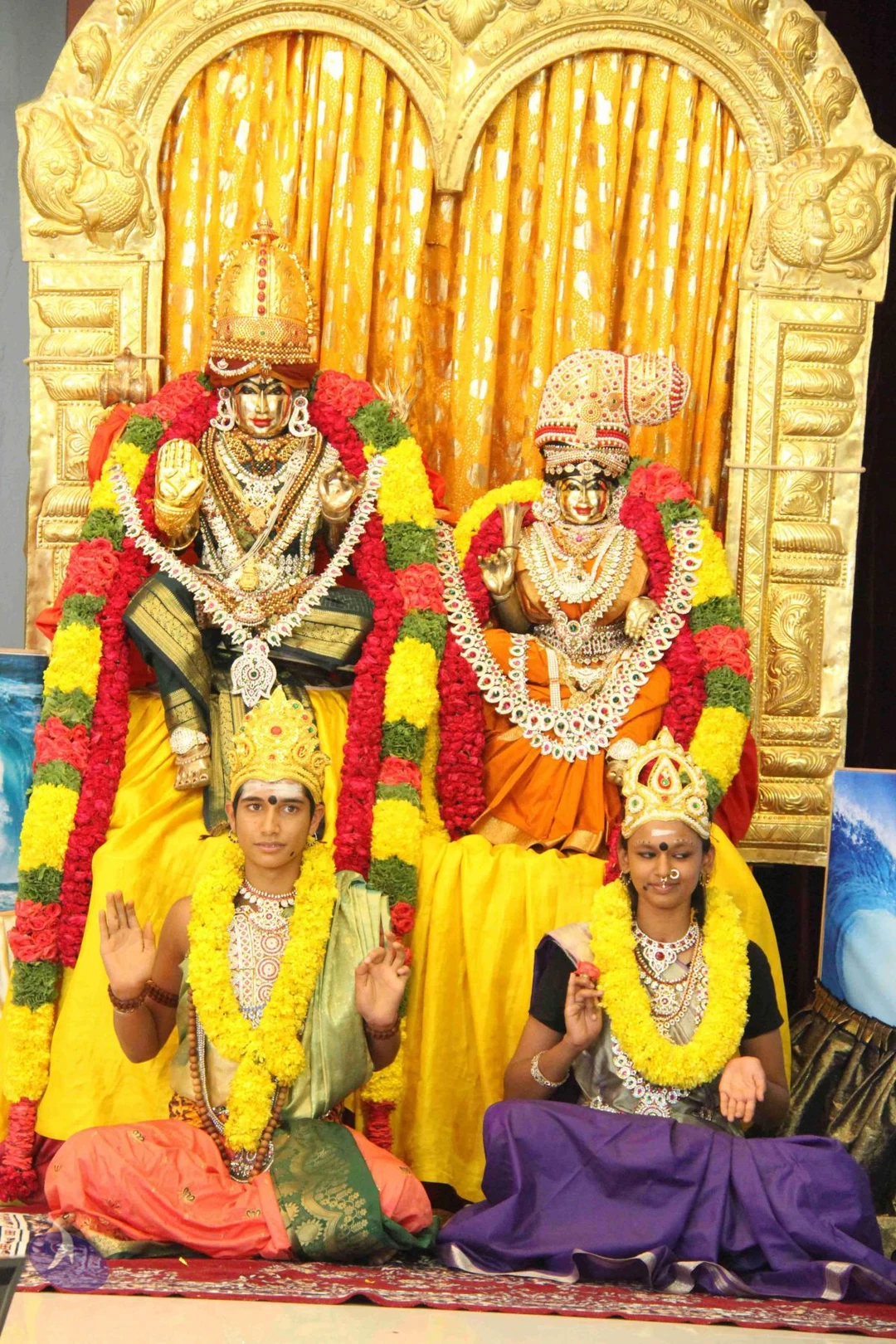
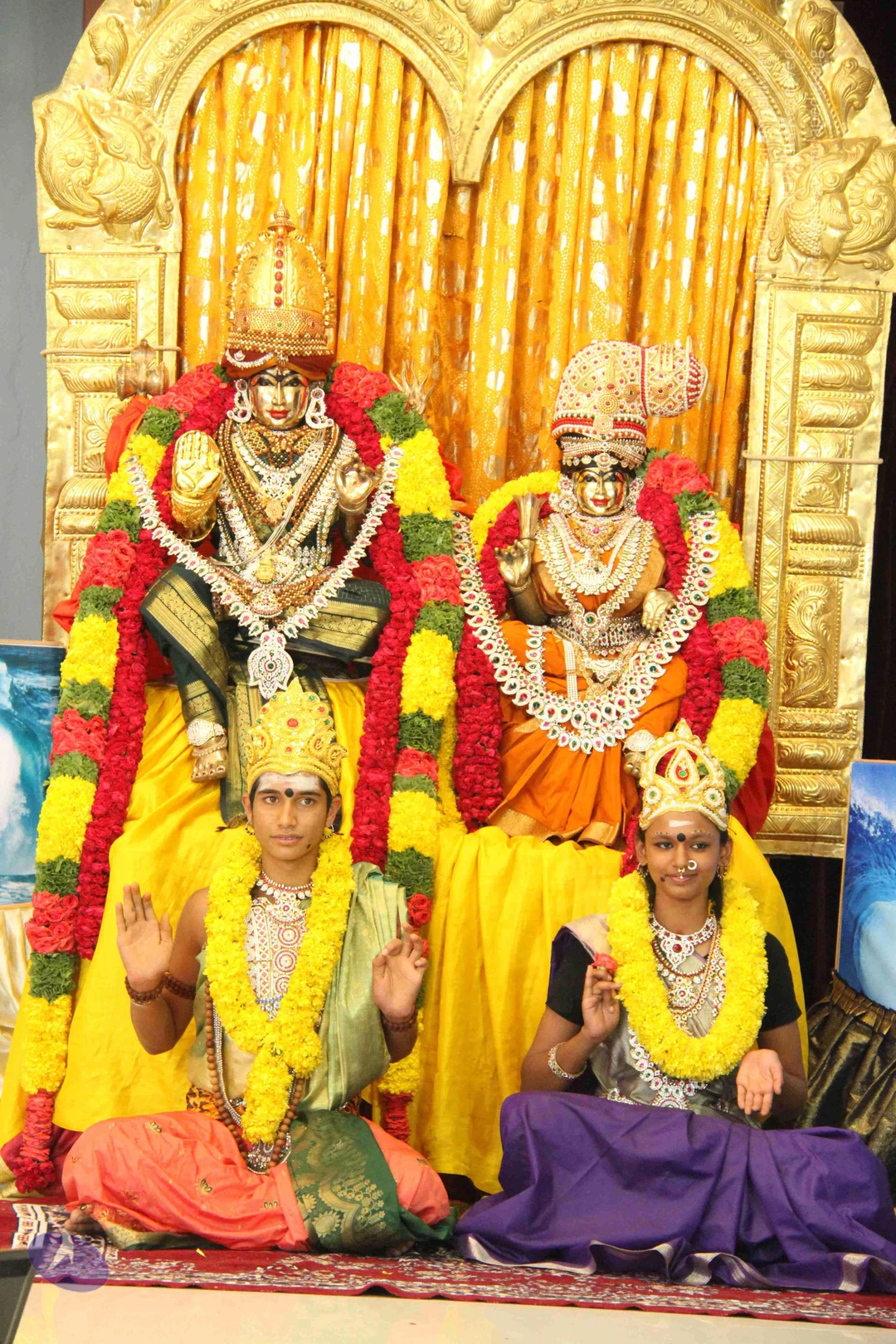
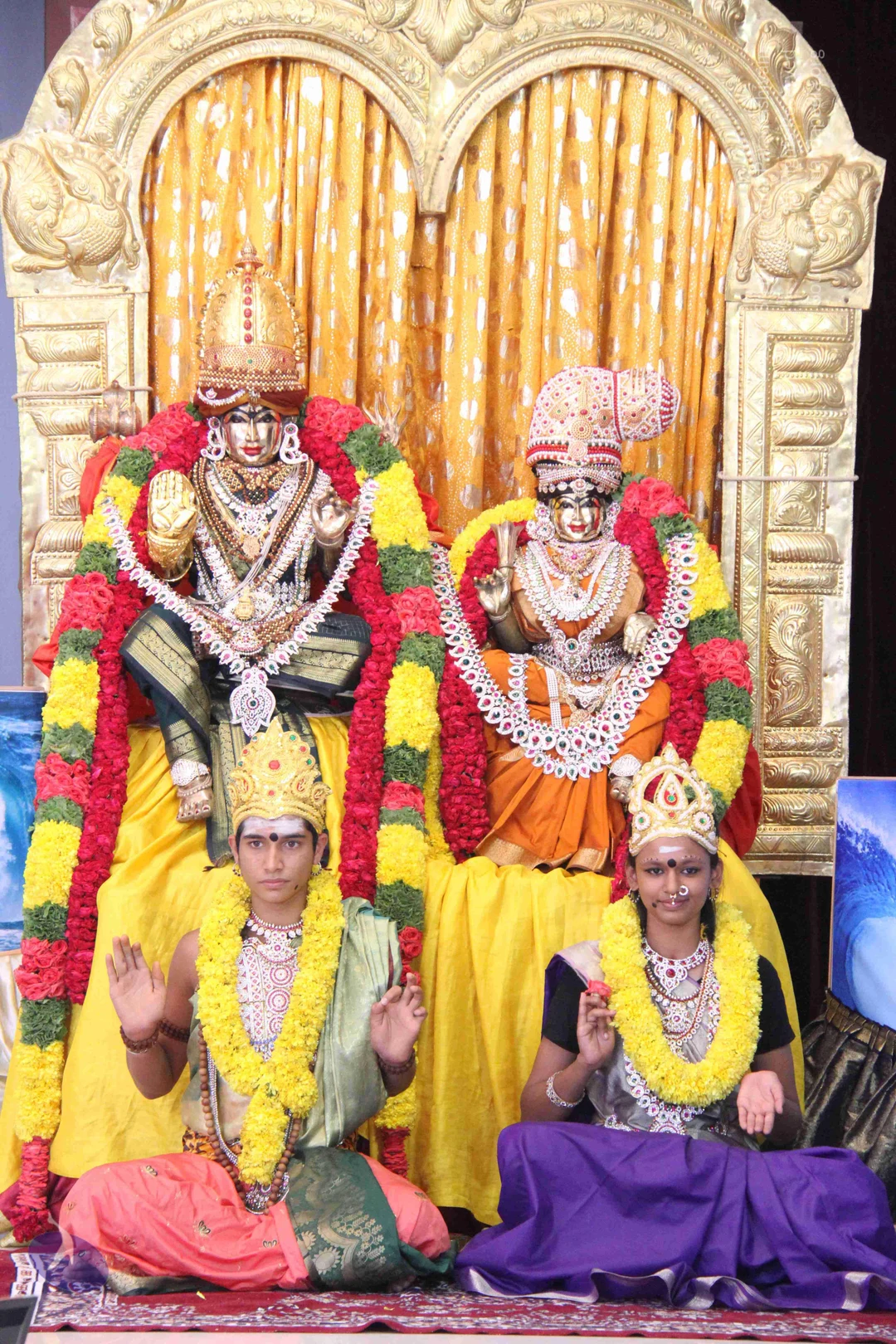
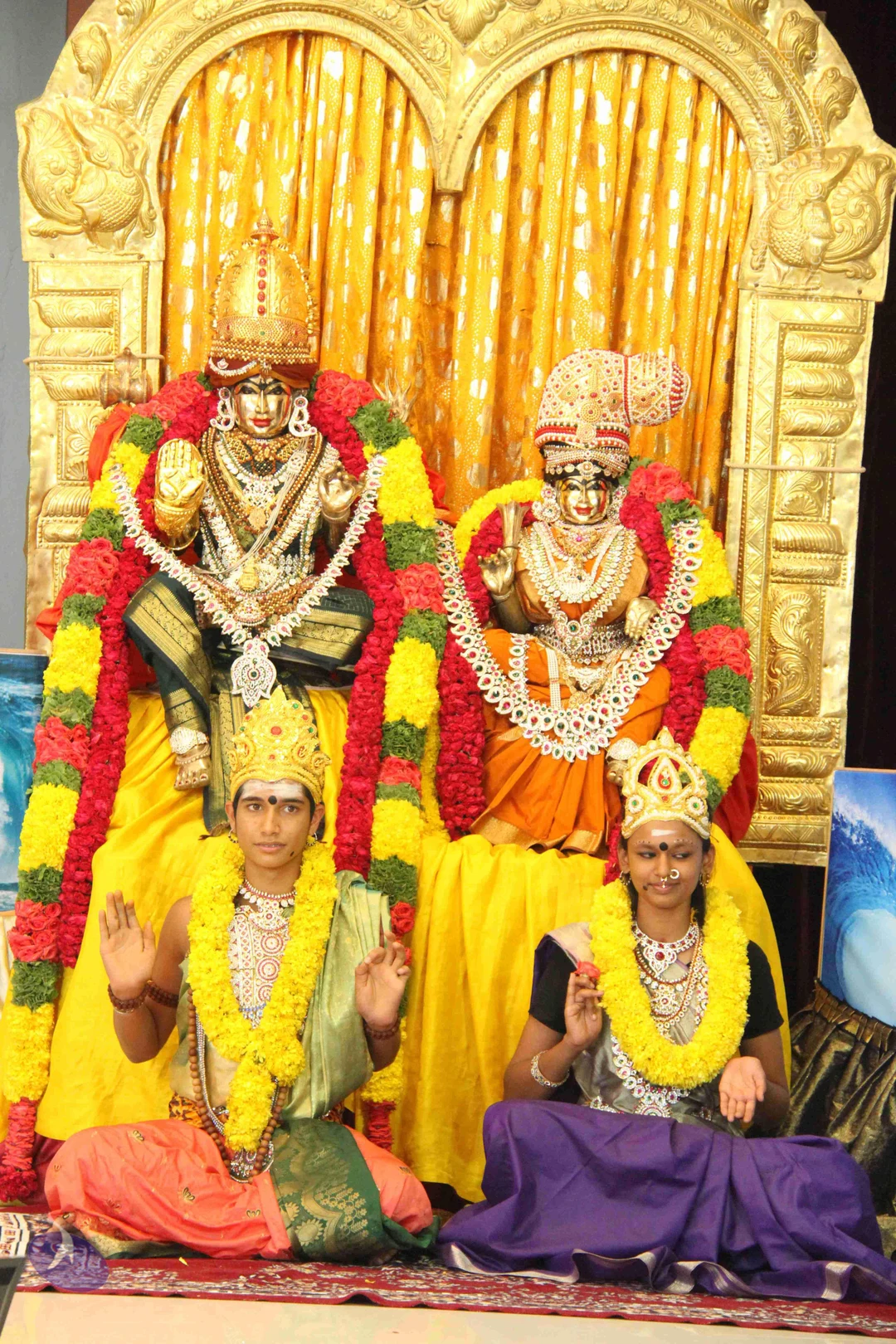
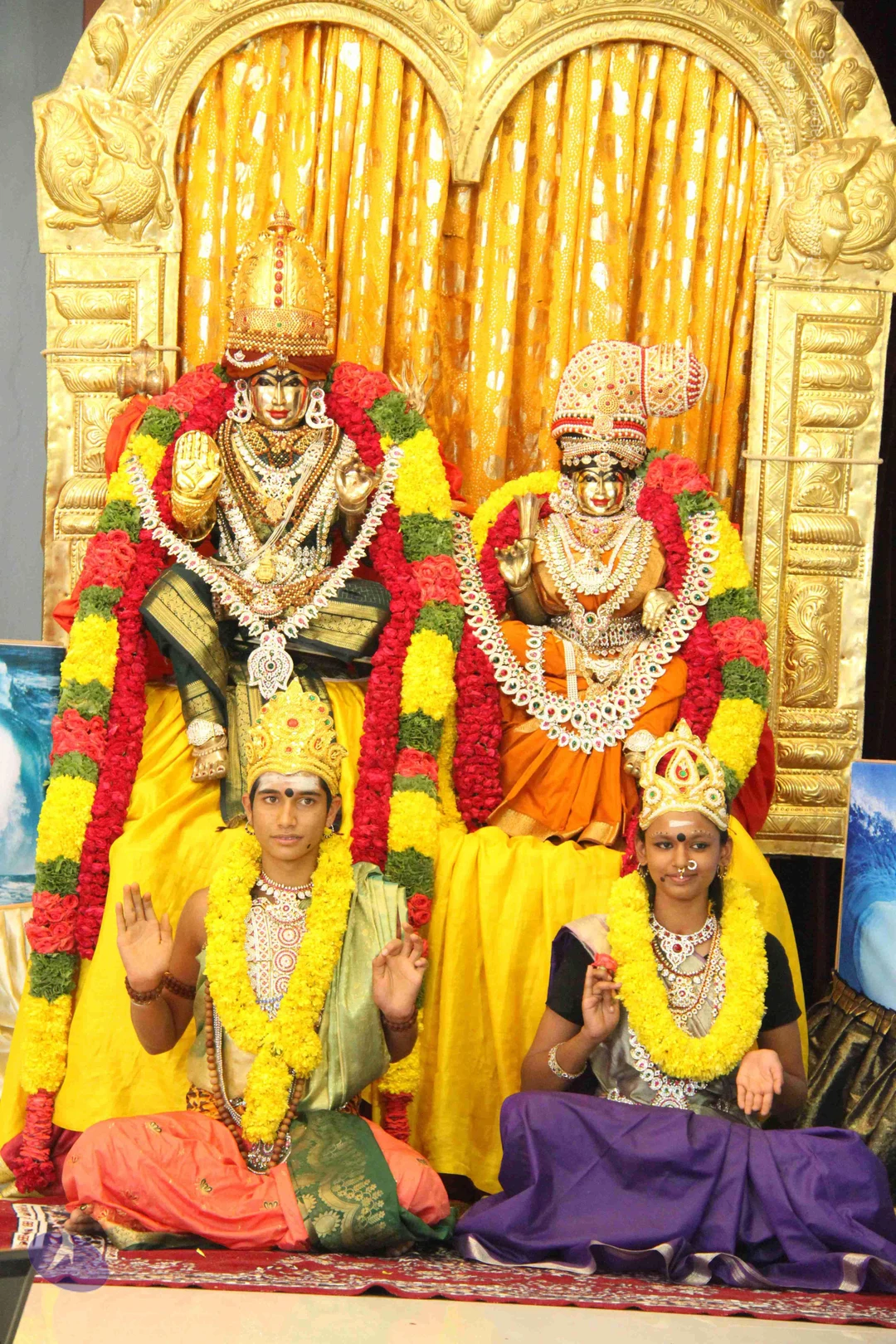
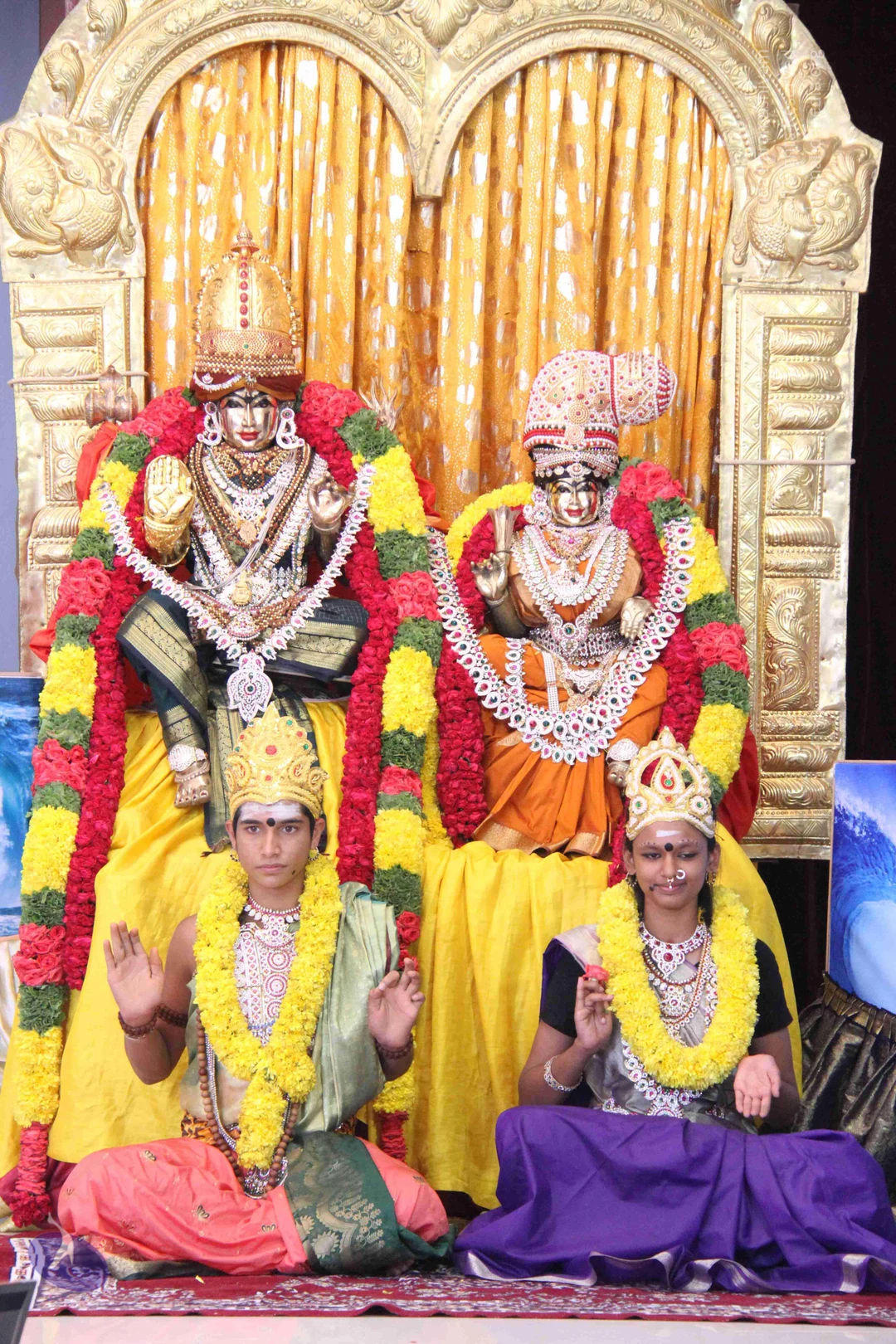
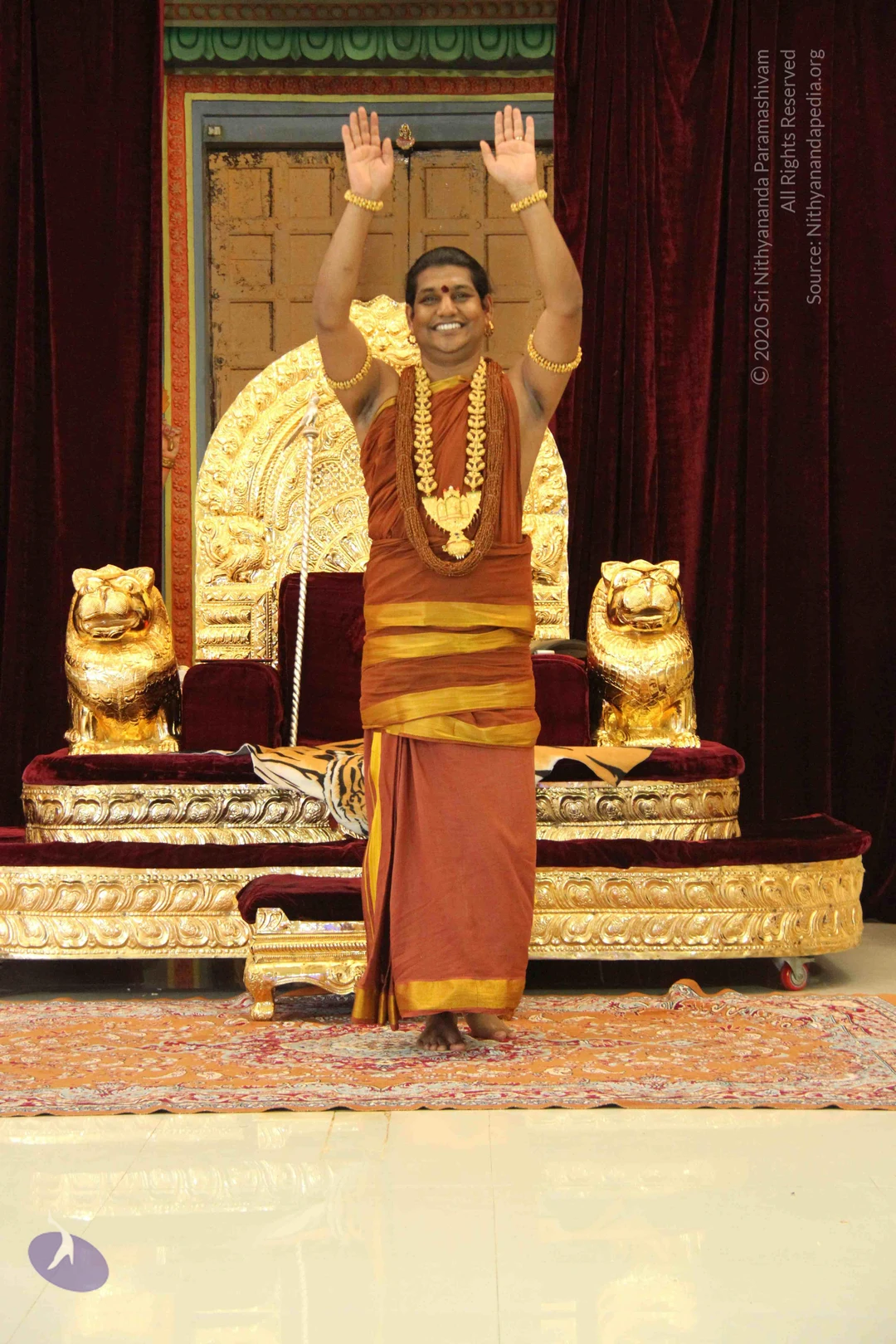
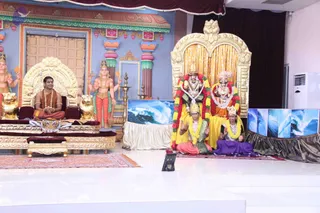
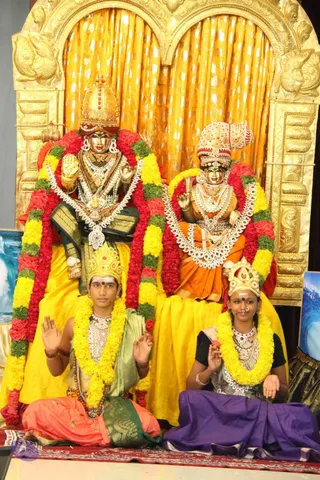
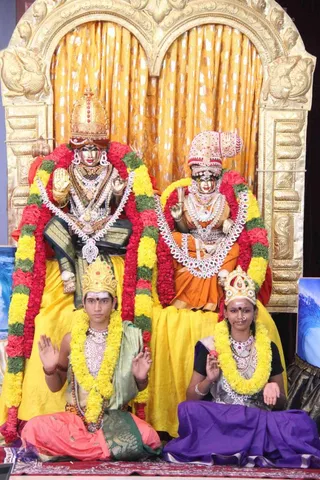
A staged devotional tableau on a stage before a golden arched throne backdrop with gold curtains. Two seated performers in costume play a divine couple: the figure on the left wears a golden crown, red and yellow garlands, and a white jewelled necklace, and the figure on the right wears a decorated crown, a white and gold necklace, and a yellow-and-red garland. Two child performers sit in front on a red carpet: a boy in a pink and green dhoti with a yellow garland and gold crown, and a girl in a purple skirt with a yellow garland and jewelled crown, both with palms raised. Behind them, large backdrop panels show ocean waves, and a painted figure with a sceptre stands at left beside decorative pillars. Two floor mats and an air conditioning unit are visible at right.A staged devotional tableau on a raised platform with a golden arched backdrop and draped yellow-gold curtains. Two large deity murtis sit on the throne, the left one wearing a tall gold crown and a red-and-yellow garland, the right one wearing a pink-and-gold crown, white jewelled necklaces and a red-and-yellow garland. In front, two young performers in costume sit on a red mat: a boy in a gold crown, pink-and-green dhoti and yellow garland, raising his hands in a blessing gesture, and a girl in a gold crown, purple skirt, black blouse and yellow garland, also with her hands raised. Behind them are backdrops of blue ocean waves, and brass oil lamps stand at the left. A wall air conditioner is visible at the right.

Deity-Darshan

2 photosSource gallery
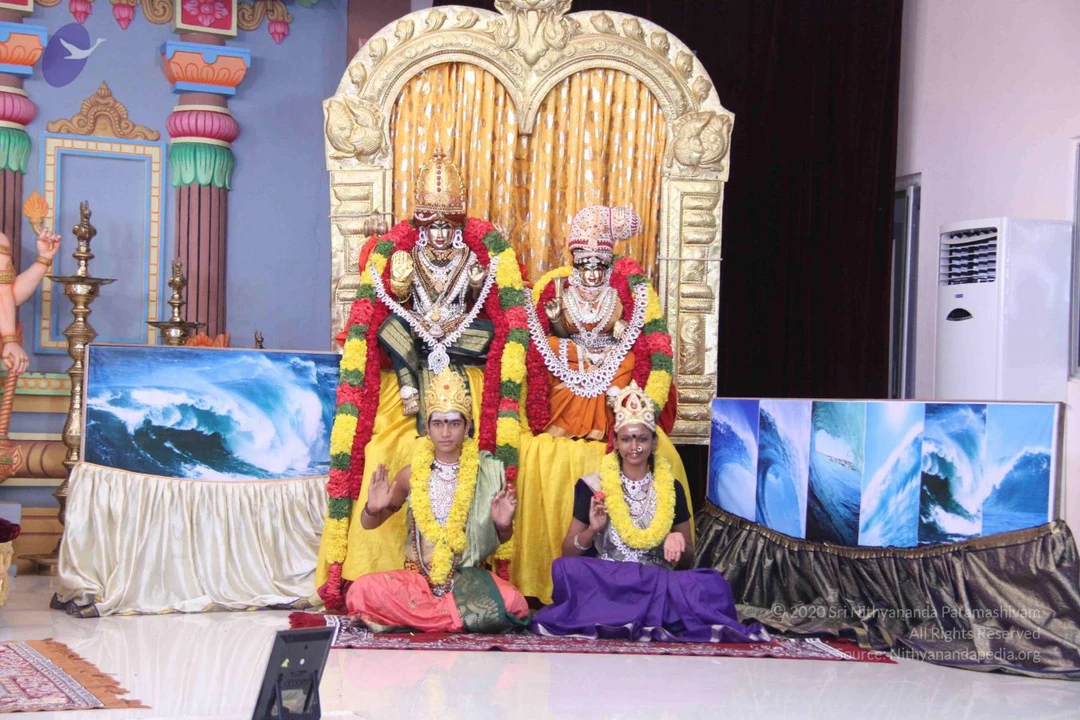
A staged devotional tableau on a stage before a golden arched throne backdrop with gold curtains. Two seated performers in costume play a divine couple: the figure on the left wears a golden crown, red and yellow garlands, and a white jewelled necklace, and the figure on the right wears a decorated crown, a white and gold necklace, and a yellow-and-red garland. Two child performers sit in front on a red carpet: a boy in a pink and green dhoti with a yellow garland and gold crown, and a girl in a purple skirt with a yellow garland and jewelled crown, both with palms raised. Behind them, large backdrop panels show ocean waves, and a painted figure with a sceptre stands at left beside decorative pillars. Two floor mats and an air conditioning unit are visible at right.A staged devotional tableau on a raised platform with a golden arched backdrop and draped yellow-gold curtains. Two large deity murtis sit on the throne, the left one wearing a tall gold crown and a red-and-yellow garland, the right one wearing a pink-and-gold crown, white jewelled necklaces and a red-and-yellow garland. In front, two young performers in costume sit on a red mat: a boy in a gold crown, pink-and-green dhoti and yellow garland, raising his hands in a blessing gesture, and a girl in a gold crown, purple skirt, black blouse and yellow garland, also with her hands raised. Behind them are backdrops of blue ocean waves, and brass oil lamps stand at the left. A wall air conditioner is visible at the right.

RudraAbhishekam

57 photosSource gallery
A photograph of a person in an orange-saffron dhoti and shawl, with a thick rudraksha mala and a heavy gold ceremonial necklace with a gold pendant, gold armlets and bangles, and a gold stud earring. He stands at a table covered in gold cloth, pouring water through a clear glass vessel with a metal spout over a small brass or gold deity murti, as in an abhishekam. A gold lion-faced or ornate gold object sits behind the table, with a clear glass jug, a brass bowl and a metal plate of yellow flowers in front. Behind him are maroon velvet drapes and a gold throne with a silver bird finial. Only one physical person is visible.A seated man in saffron-orange draped clothing sits on a golden throne before deep red velvet drapes, pouring water from a silver vessel through a silver spout onto a metal lingam or deity murti on a tray. He wears a gold ornate necklace and a rudraksha-style mala, gold armlets, and a red bindi with a vertical white marking. Beside him a gold lion-shaped carved object stands, with silver jugs and a small silver bowl on a yellow-draped table with yellow flowers. Ritual abhishekam setting.A seated man in an orange-saffron dhoti and shawl, bare-shouldered, with gold armlets, a gold bracelet and a heavy gold-and-rudraksha necklace over a gold pendant, sits before a large gold throne with a carved peacock finial. He has a red bindi and tripundra marks, and he pours water from a silver vessel with a spout through a silver pot stand, beside a gold makara-head spout and a silver bowl with flowers on a yellow-draped table. Dark red velvet drapery forms the background. A man in orange and gold ritual dress pours water in a ritual abhishekam-style setting.Photo of a seated man in saffron-orange ritual dress with a rudraksha mala and ornate gold necklace, bare-armed with gold armlets, and gold earrings, hair tied in a bun. He is pouring water from a clear glass vessel with a metal stem into a silver tray on a yellow-draped table. A large gold lion-head fountain spout and a silver pot stand beside him. Behind him a golden ornate throne backrest hangs against red velvet curtains. A small flower is on the tray. Shown as a portrait-style ritual scene.A smiling man with a shaved, short-cropped head wears an orange-saffron cloth draped over his shoulders and bare arms, with a red tilak on his forehead. He wears a long rudraksha mala and a gold ceremonial necklace with a pendant, plus gold armlets. He sits at a golden table near a golden lion-headed spout from which water flows into a silver vessel, with a silver pot and a small silver lamp-like object nearby. Behind him a dark red velvet curtain and an ornate gold throne backrest with a peacock-like finial are visible.A seated man in saffron-orange robes and rudraksha malas smiles while looking down at a silver vessel on a golden tray. He wears a tall ceremonial gold necklace, gold armbands and a red bindi with white forehead markings. Beside him stands a golden lion-head spout pouring water into a silver pitcher, with a silver kalasha-style vessel on a yellow cloth. Behind him a gold peetha/throne with ornate peacock-like carving rises against deep red velvet drapery. The scene suggests a ritual abhishekam or water offering.

Pratyaksha-Pada-Puja

18 photosSource gallery
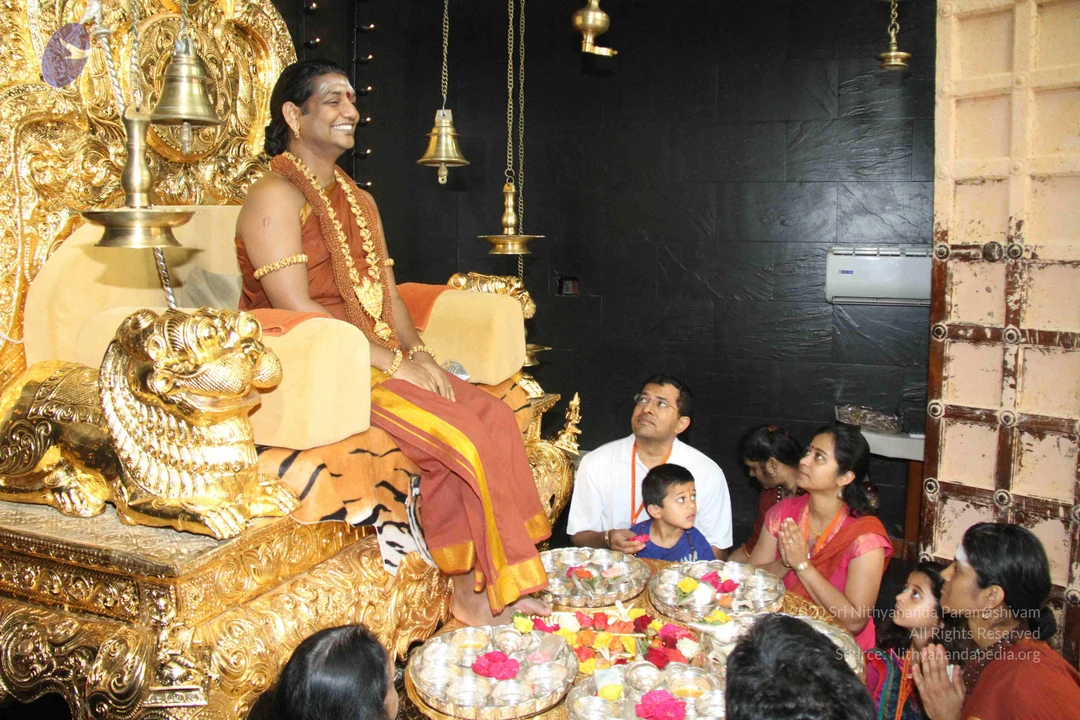
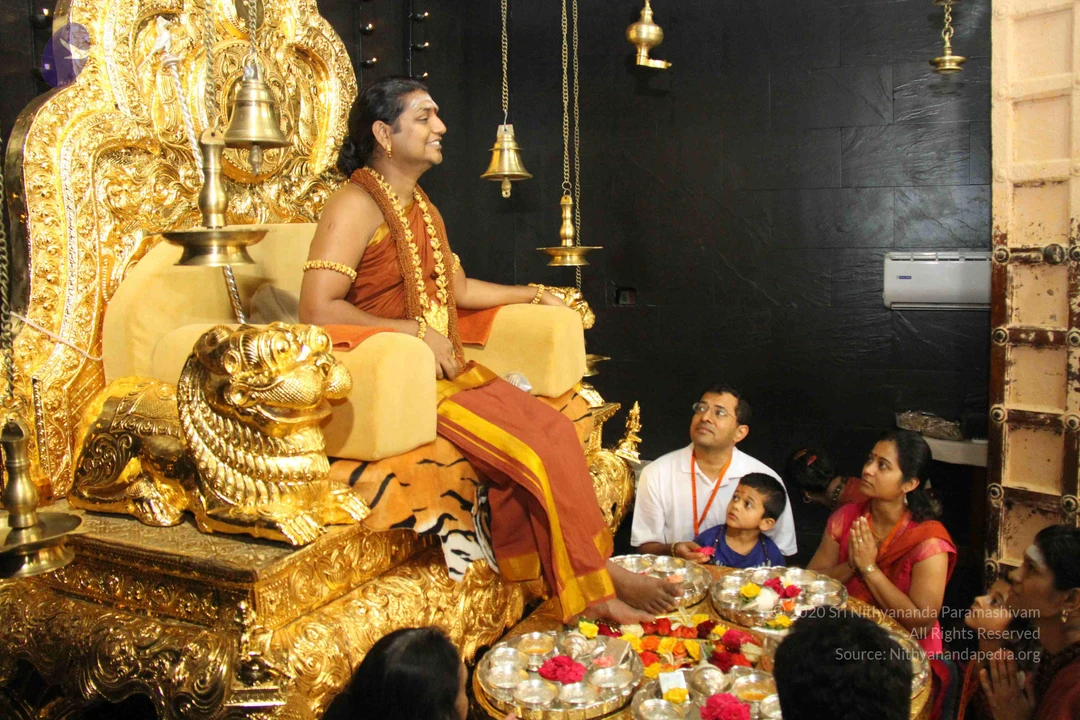
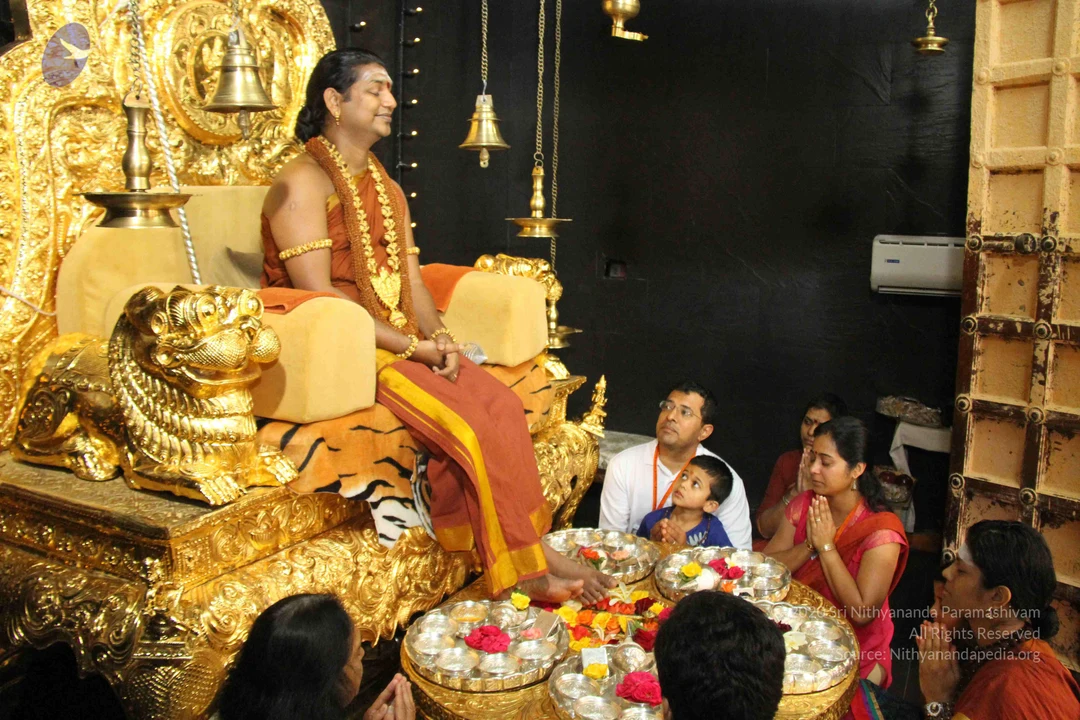
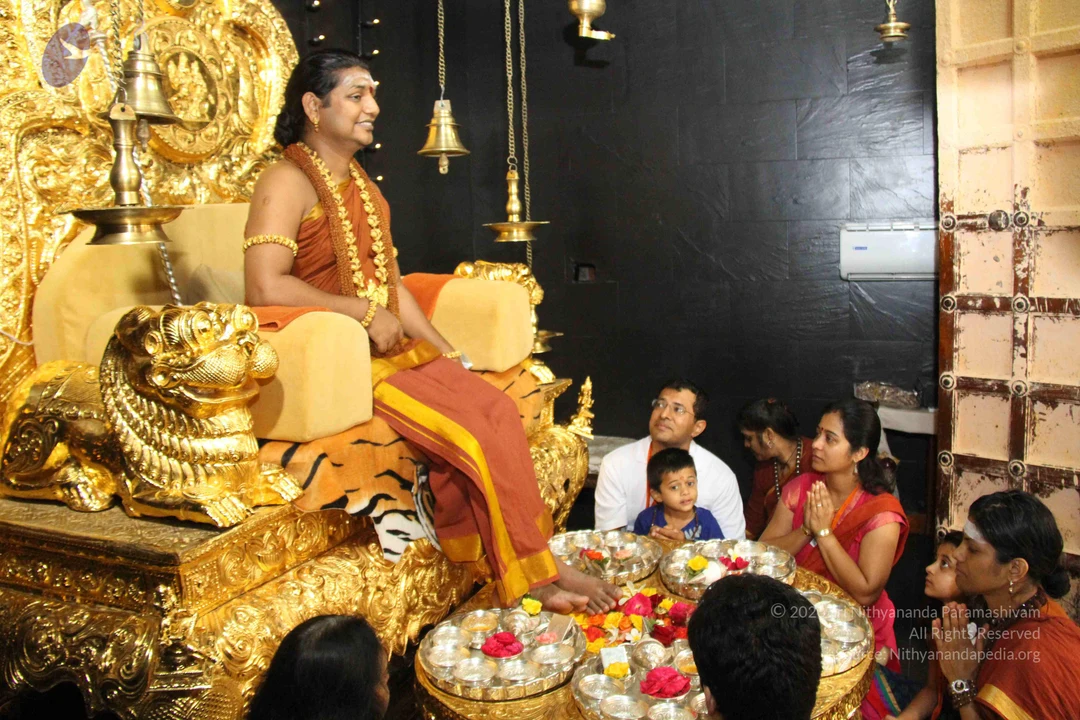
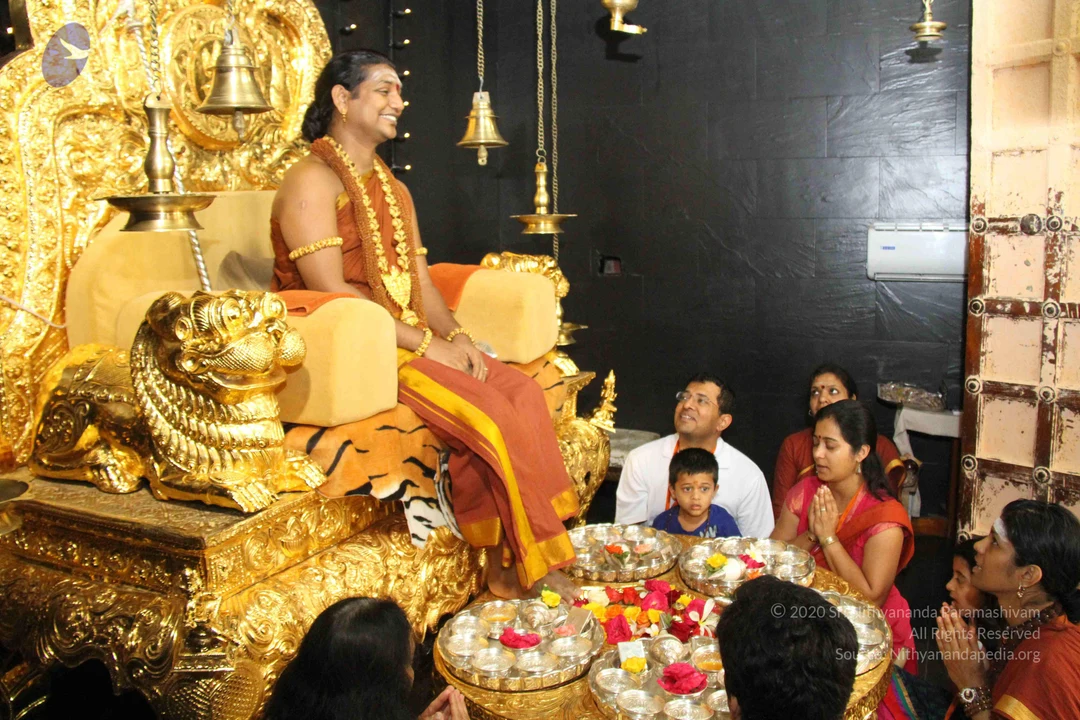
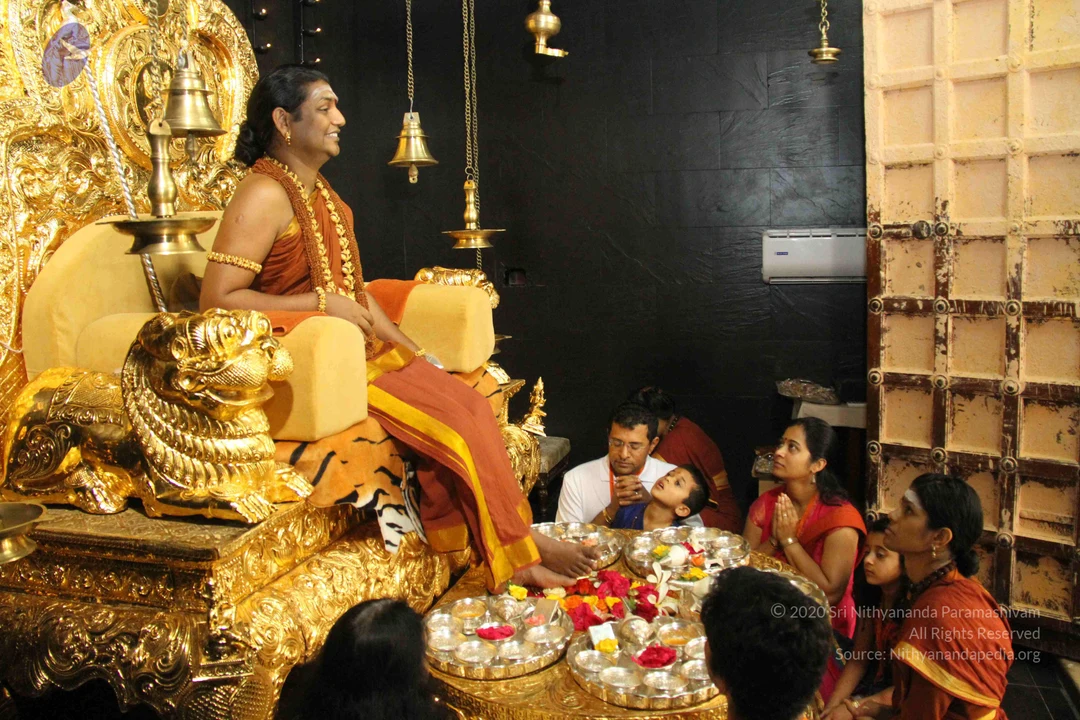
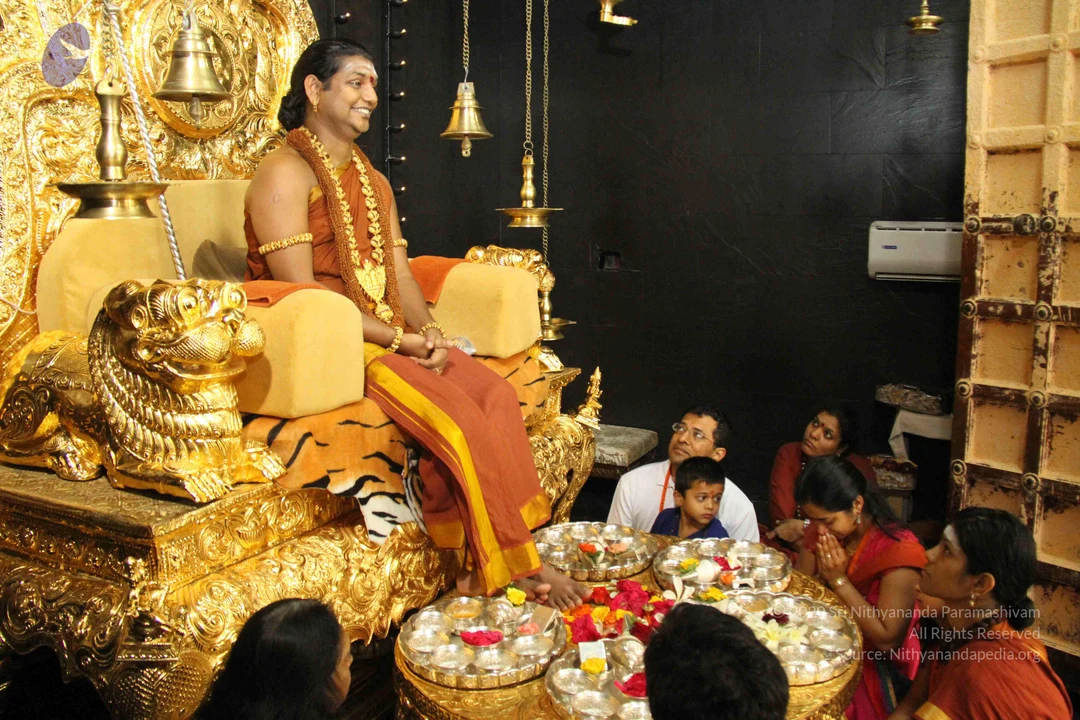
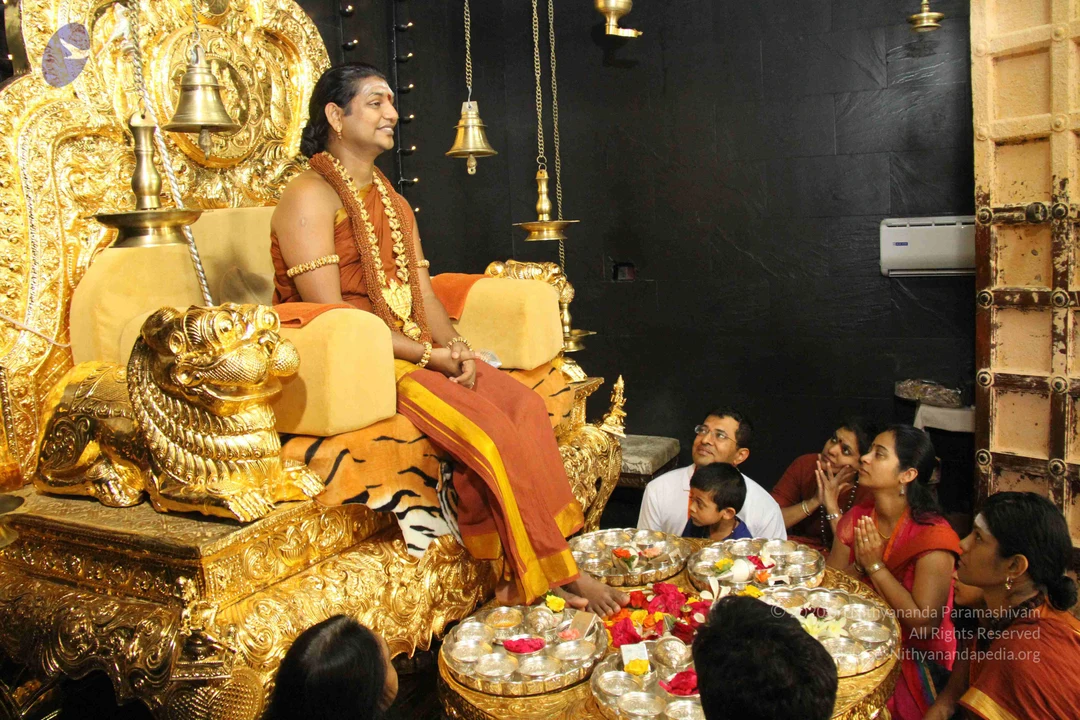
A seated man in an orange-red dhoti and matching shawl sits on an ornate gold throne carved with lion heads and draped with a tiger-striped cloth. He wears a rudraksha mala, a long gold ceremonial necklace, gold bangles and a red forehead mark, and raises his right hand in blessing. Brass oil lamps hang from chains beside the throne. In front, a round gold tray holds silver plates of flowers, fruit, lotus-like petals and offerings, and a silver tray lies on the floor at left. The background is a black stage curtain. A printed caption in the lower right reads the date and a pedia.org as sourceClose view of bare feet in a padapuja setting. A person in a red and gold-bordered garment stands on a gold-embossed platform, their bare feet resting among offerings. Around the feet are silver trays holding fresh flowers in red, orange, yellow and white, small silver bowls of yellow and orange liquid, and silver vessels. A silver kalasha-style pitcher and a silver lamp are visible among the flowers. Two people's lower legs appear at the upper edge.A photograph inside an ornate gold-and-black shrine room where a man with long dark hair sits on a golden throne carved with a lion head, with a tiger-striped cloth draped over the seat. He wears a saffron-orange garment with a yellow border, a gold chain of beads around his neck and gold armband, and smiles while looking toward the devotees. Hanging brass bells and a brass lamp hang above him. Around the throne, devotees sit on the floor with hands folded in namaskar, including a man in a white shirt with an orange lanyard, a woman in a pink sari, and a small child in blue. Brass trays holding small oil lamps, red and yellow flowers, and offerings sit in front of the throne. Several people are partly visible at the bottom edge.A seated figure in a golden ornate throne with carved lion-head armrests and a tiger-skin cushion receives devotees in a temple-like room with a black wall, hanging brass bells and a wooden door. He wears a saffron-orange garment with a yellow border, a gold necklace and armbands, and his hands are joined in front of him with eyes closed. In front of the throne, brass thali trays hold flowers, oil lamps and fruit. A man in white with an orange lanyard, a small child, and a woman in a pink-red sari with joined palms kneel or sit nearby in devotion, and two more people are partly visible at the right edge.A seated figure on an ornate gold throne with a carved lion-head armrest and a tiger-skin draped over the seat, wearing an orange and saffron dhoti and shawl, a long gold-beaded garland, gold bangles and a long swept-back hairstyle, with a vertical tilak on the forehead. a person (appearance cues: long swept-back hair, saffron clothing, ornate gold necklace and throne). He sits with his bare feet near brass and silver thalis of flower petals, red blossoms and offerings. Hanging brass bells and oil lamps hang above, and a dark wall and wooden door frame the room. Around him, devotees sit on the floor: a man in a white shirt, a young child in a blue top, a woman in a pink sari with palms pressed in anjali, a woman in red sari and a girl, and a woman in an orange blouse with a tilak. A satsang or darshan with offerings.Close-up photo of hands arranging puja offerings on silver trays and small silver vessels. Red roses, orange and yellow marigold-type flowers, and white frangipani-like blossoms are scattered among the containers. A woman in a red and gold sari with gold bangles and a red-and-white thread on her wrist reaches toward the tray, while another person's hands pick up petals at right. A small silver lamp stand and silver boxes sit among the flowers. Shallow depth of field, with a dark-haired head at the lower right edge.

Nithya-Satsang

44 photosSource gallery
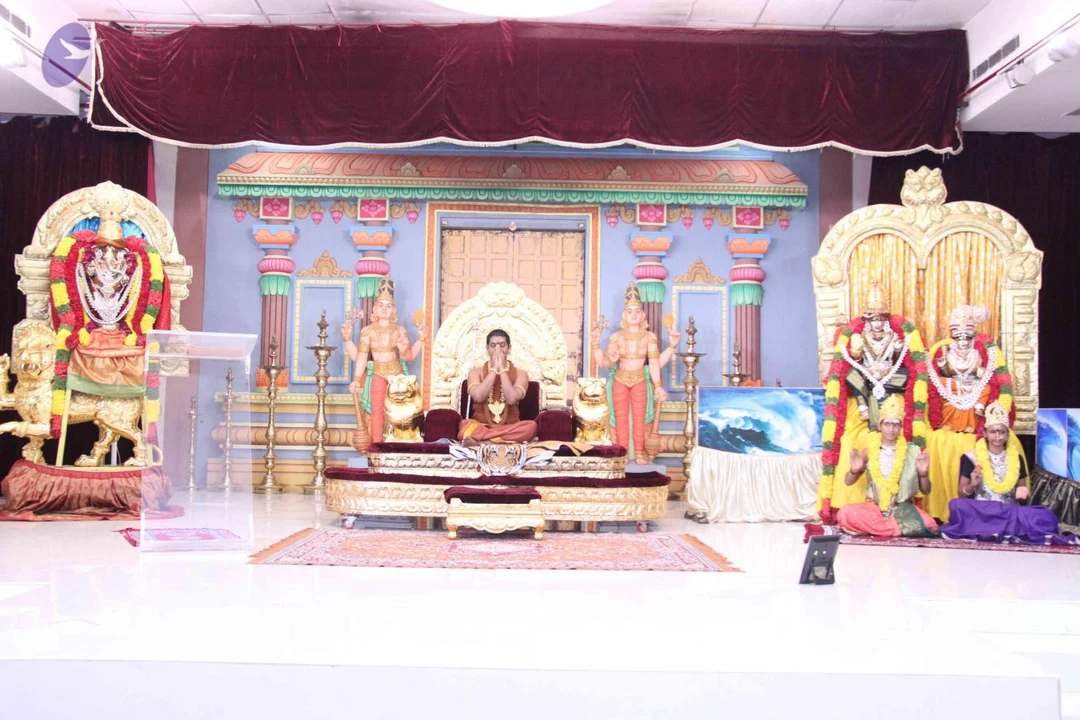
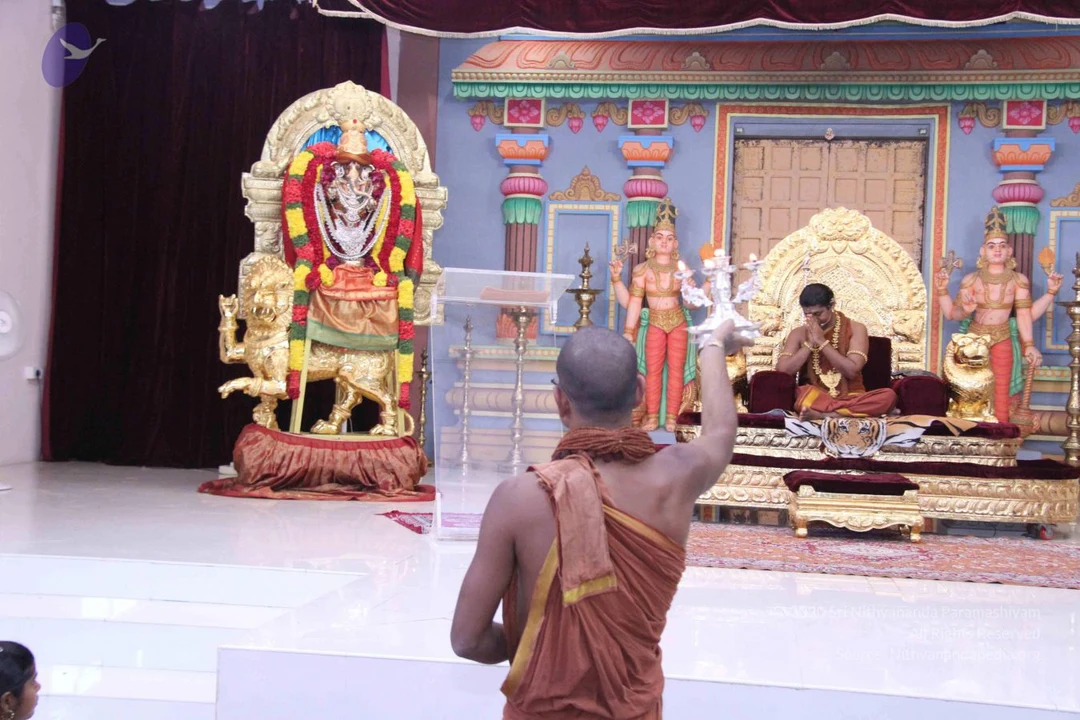
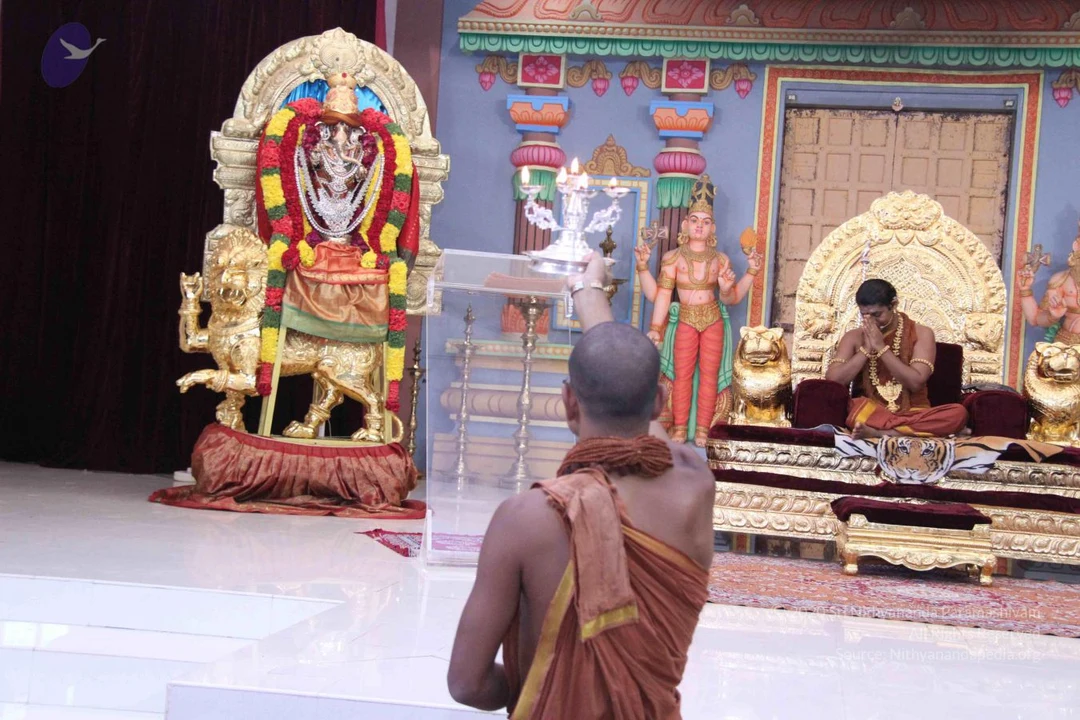
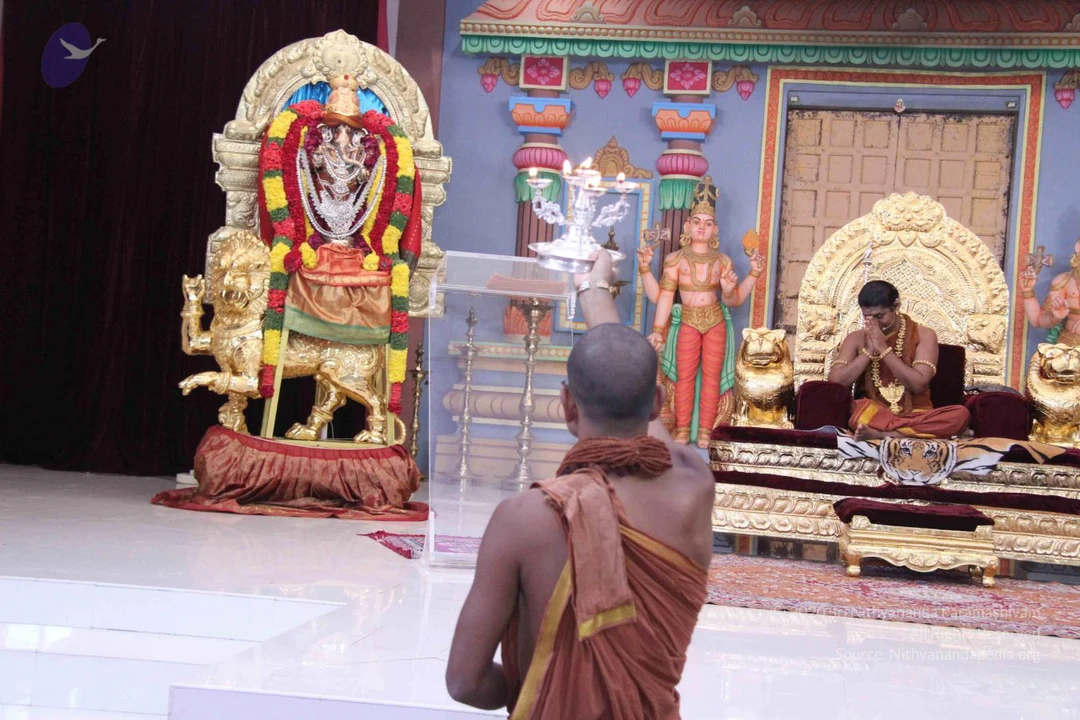
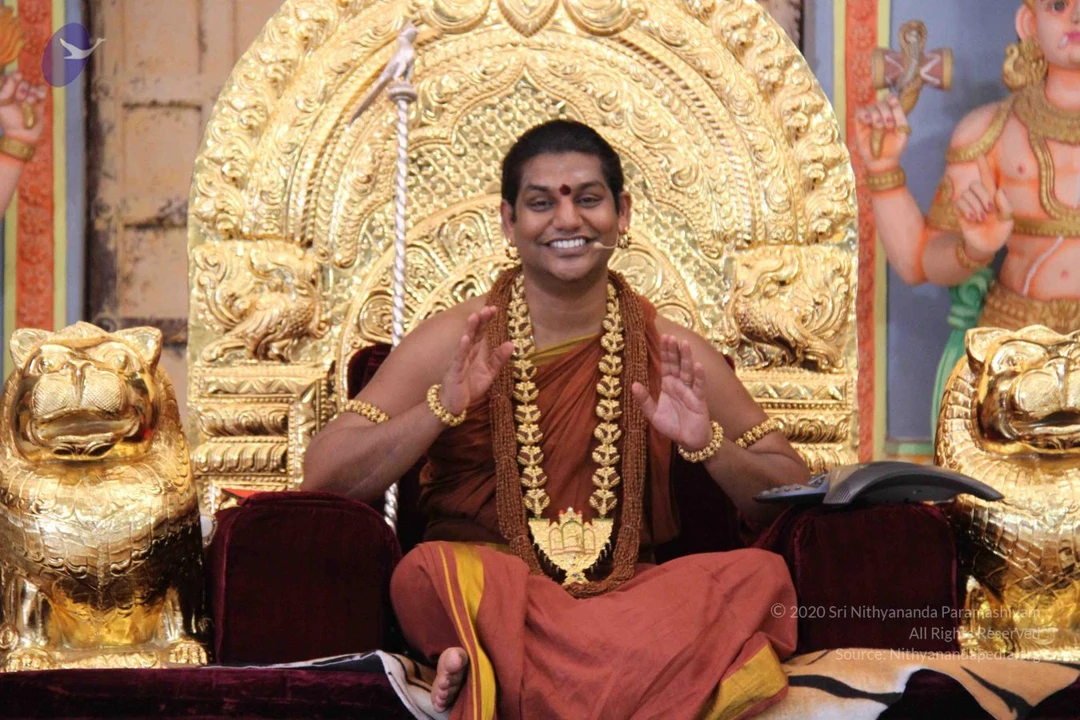
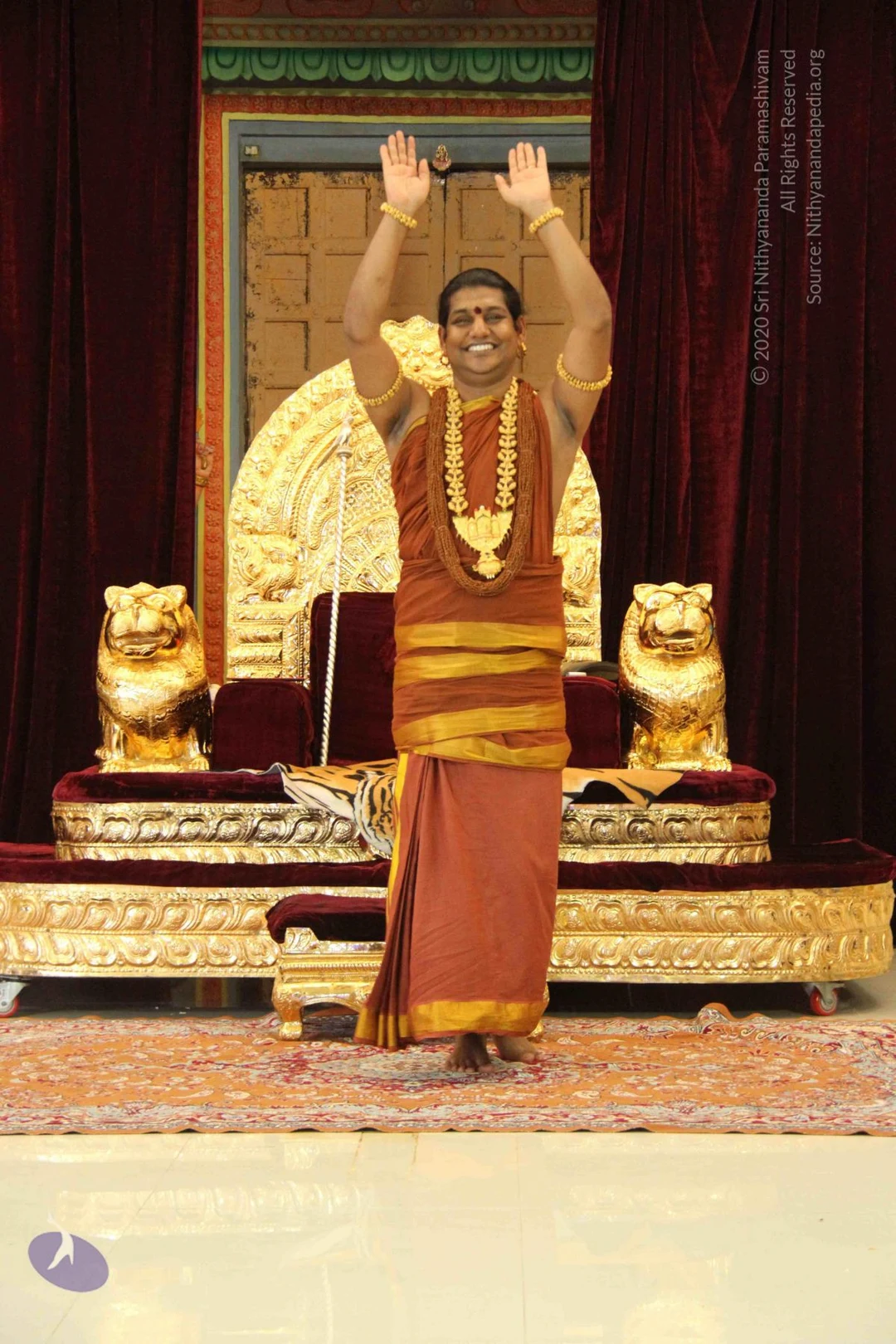
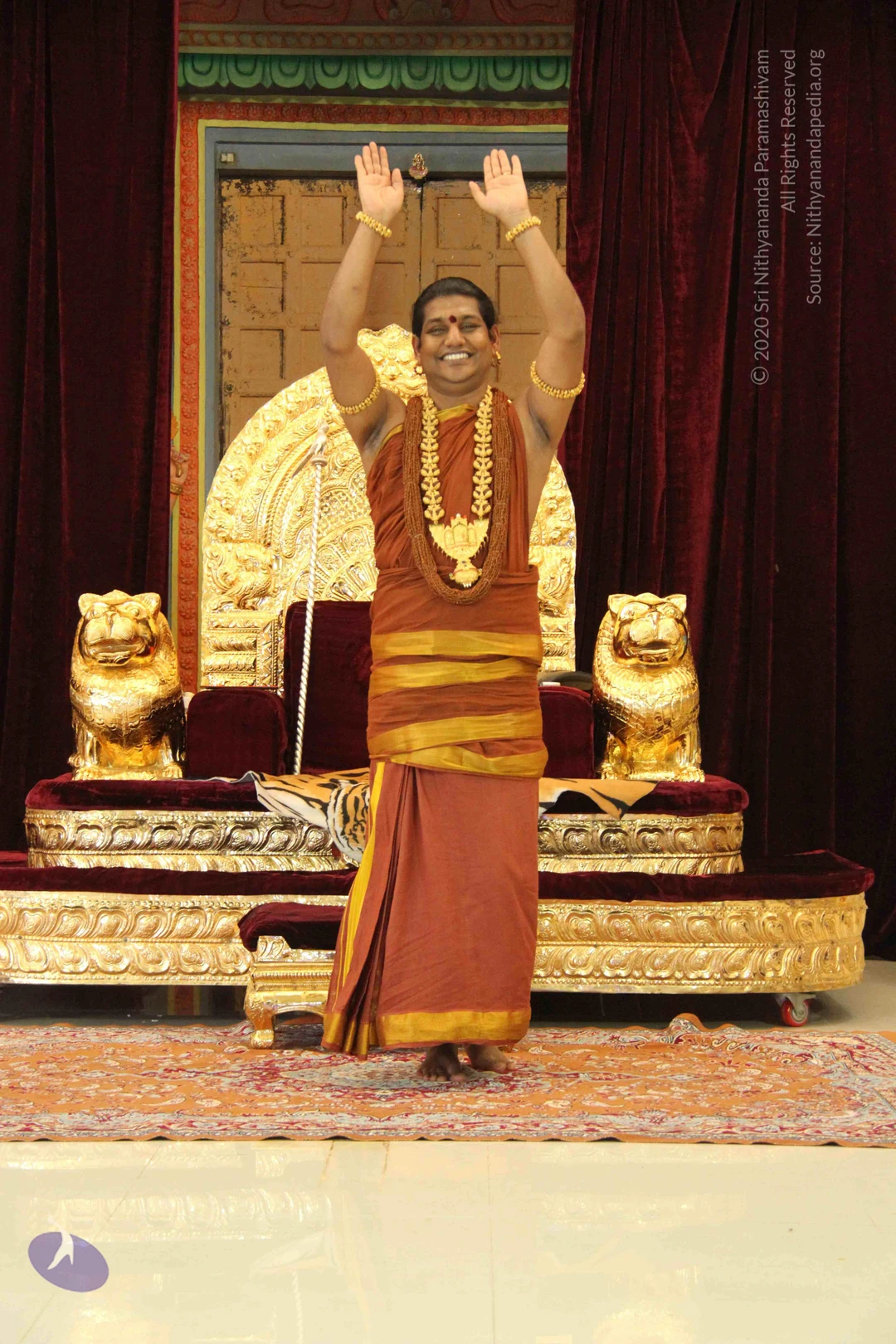
A seated man in saffron-orange robes sits on an ornate gold throne with a large arched gold back and gold lion-head armrests, set on a maroon cushion over a tiger-striped cloth. He wears a gold-toned necklace with a central pendant, a rudraksha-style mala, gold armlets and bangles, and a red bindi on his forehead, smiling widely with hands resting on his lap. Behind him stand two large painted deity murti figures with crowns, gold necklaces and orange-red dhotis, holding a lamp and other ceremonial objects, in front of a wooden panelled door.A seated man with a smiling expression sits cross-legged on an ornate gilded throne with a large arched backrest carved with floral and scroll motifs. He wears a saffron-orange dhoti and shawl, a long gold-beaded garland with a pendant, gold armlets and bangles, and a red tilak on his forehead. Two golden lion-shaped armrest sculptures flank the throne, and a tiger skin lies at the base. Behind him stand two painted deity statues with multiple arms, golden crowns, gold jewellery, and orange and green draped lower garments.A seated man with a smiling expression sits cross-legged on an ornate gold throne with lion-shaped armrests and a gold arched back, draped with a tiger-skin cloth over a maroon cushioned dais. He wears an orange-saffron dhoti and shawl, a long gold lotus pendant necklace, a rudraksha-style bead mala, and gold bangles. Flanking him are two painted deity statues with four arms, gold crowns, gold necklaces and green waist cloths, one holding a trident-like staff. A brass oil lamp stands at left and a golden-brown wooden door forms the backdrop. The scene is a temple-style hall with blue and pink painted pillars. Only the seated man is a physical person in the scene; the statues are not counted.A seated man in saffron-orange robes sits cross-legged on an ornate golden throne with lion-head armrests and a tiger-skin cloth draped over the platform. He wears a long orange-and-red garland, a large gold ceremonial pendant, gold bangles and a red forehead mark, and he rests his hands on the armrests while smiling. Behind him stand two tall painted deity murti figures with multiple arms, gold crowns and gold waistbands, each holding ritual implements, with a golden arched backrest behind the throne. A tall brass oil lamp stands at the left edge and a wooden door is visible in the background. a person is shown seated on the throne, identified by the saffron robes, long garland, gold pendant and ornate throne setting.A seated man in orange-saffron robes sits cross-legged on an ornate gold throne with a tiger-skin cloth draped over the seat, smiling with raised hands in a teaching gesture. He wears a long rudraksha mala and a large ceremonial gold pendant, with a red bindi on his forehead. Flanking him are two large gilded deity murti figures with multiple arms, crowns and orange-green dhotis, holding ceremonial implements. Golden lion or lion-like guardian sculptures rest at the base of the throne, with brass oil lamps standing to the sides and a gold footstool in front. The setting is a richly painted blue and pink hall with a wooden door behind. a person appears as a seated teacher on the throne, matching the page's theme of a discourse.A staged temple-style tableau on a white stage under a maroon velvet valance. At centre, a bare-chested man in orange-red dhoti and rudraksha mala sits cross-legged on a gold throne with hands folded in prayer. Flanking him are two standing figures with raised hands, in red and orange dhotis and gold ornaments. To the left, a golden deity murti with a lion-like vahana and flower garlands sits under an arch. To the right, two seated figures in yellow and red garments with garlands occupy a golden throne, while a seated devotee in purple sits on the floor. A blue ocean-wave backdrop and a lectern appear at the edges.

Sarvadarshan

7 photosSource gallery
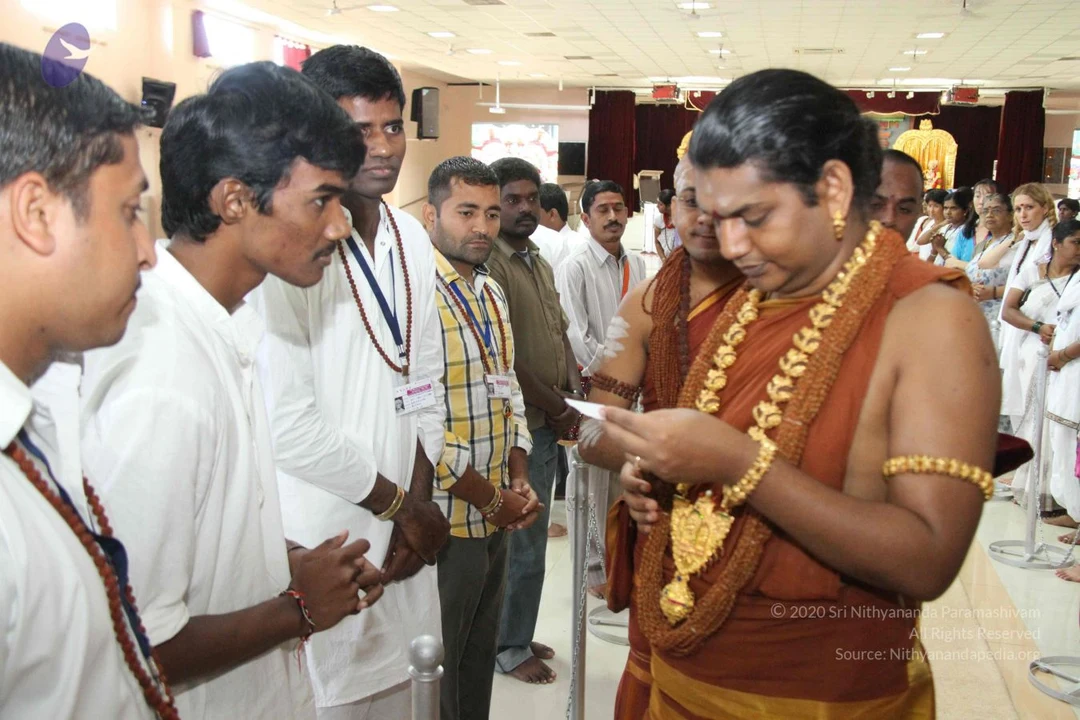
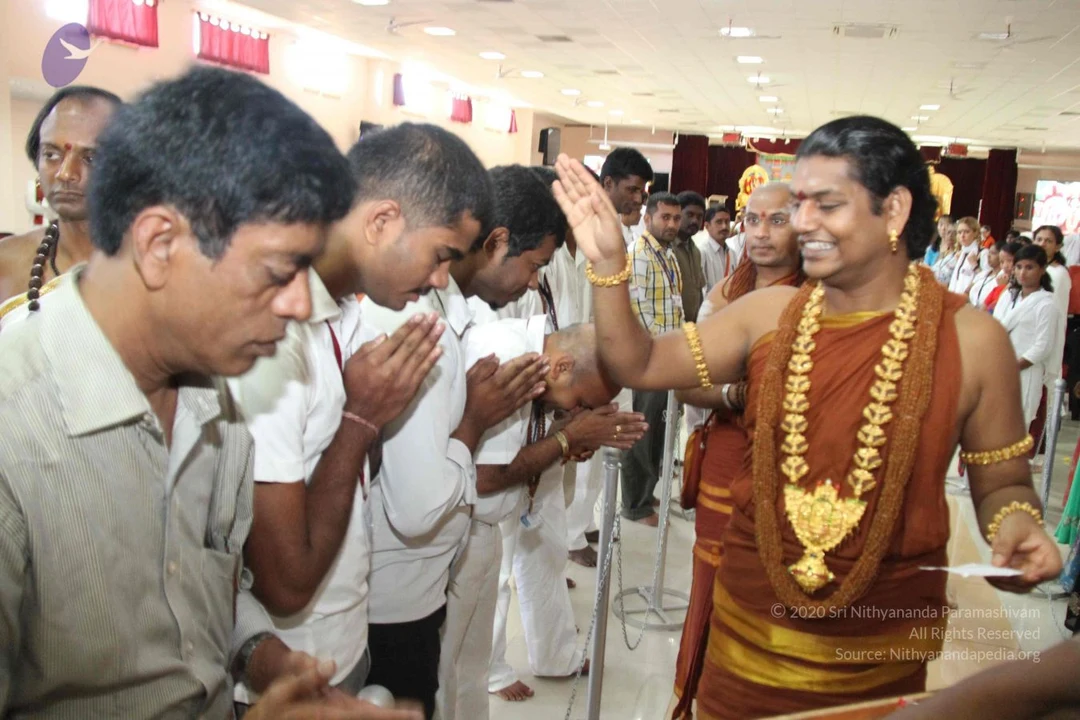
A photograph inside an indoor hall with a stage backdrop showing painted deity murti and a decorated shrine. In the foreground, a smiling man in an orange-red robe and heavy gold necklace with a large gold pendant raises one hand in greeting, and gold bangles are visible on his wrists. Several men in white shirts and dhotis stand with palms pressed together in namaste, and a man in white with a rudraksha mala holds his hands in anjali. Behind them a monk in saffron-orange robes stands near the stage, and a woman in an orange sari stands at the right edge. Stage lights hang from the ceiling and a camera on a tripod is visible. Roughly half a dozen people are visible. A person portrayed with long hair, saffron robes, gold necklaces and rudraksha adornments is a person candidate in the foreground, greeting devotees.A photograph inside a hall with a temple-style backdrop of a deity shrine and gold-framed decorations. In the foreground, a man in an orange-brown dhoti with a heavy gold necklace and gold armlets holds a small white box and extends his hand to a man in a white shirt and a young boy with hands pressed together in greeting. Behind them, a bald priest in an orange-brown dhoti and shawl stands near a woman in white with a red shawl, and several people in white and red clothing are visible. Overall about 15 people are visible in the room, many partially shown in the background.Indoor photo of a devotional gathering in a hall with pink walls and red curtains. In the centre, a man in reddish-orange saffron-toned robes wears a heavy gold necklace of ornate pendants and gold armlets; he has a red bindi and looks downward. Beside him a bald man in similar orange-brown robes with a rudraksha mala and white markings on the arms stands near him. On the left, several men in casual shirts and a man in white stand with hands folded in namaskar; on the right, women in white and orange-bordered saris stand in the background. At the bottom right, a figure's arm rests near a tray of red apples. A decorated altar with a deity image stands at the back.Indoor photo in a bright hall with white ceiling panels, pink-and-maroon drapes, and a large orange-and-gold deity murti on a stage at right. In the foreground, a bare-chested person in orange-brown cloth with layered gold necklaces, gold armlets and bangles holds a book with a green-and-yellow cover, facing three men in white shirts and white dhotis, one wearing a rudraksha mala. Behind a silver stanchion barrier, more men and women in white and orange stand and watch. A figure at left wears a long dark hairstyle, a gold earring and a beaded mala. The person holding the book appears to be a person candidate in the foreground, with distinctive gold adornments and mala, though the identification is uncertain.Indoor photo in a hall with white ceiling fans, red curtains and a crowd of devotees. On the right, a smiling man in a rust-brown robe with a heavy gold necklace and gold armbands places his hand on the head of a bowing devotee in a white dhoti and shirt with rudraksha beads, hands joined in anjali. Another man in a yellow plaid shirt stands beside them, and more people in white and casual clothes wait behind a metal stanchion. The man in the brown robe holds papers, and a golden deity murti is visible in the background. The setting suggests a blessing or darshan moment.A photograph in a bright hall with white ceiling tiles and red curtains. In the foreground a figure in a rust-orange and saffron wrap, with a heavy gold necklace and gold bangles, stands at a low barrier reading a small card held in both hands. Before him, men in white kurtas and dhotis, some with rudraksha malas and lanyards, stand with hands folded in respect. Behind them a man in a yellow checked shirt and others in casual clothes stand in line. In the background a gilded deity murti sits on a decorated altar with red and gold drapery, and a row of people in white and blue clothing stands near the wall. Roughly a dozen or more people are visible.

Inner-Awakening

37 photosSource gallery
A smiling man stands centre-frame against a dark maroon curtain, hands clasped at chest height. He wears a rust-orange unstitched robe draped over one shoulder with a golden border, a long orange-beaded mala necklace, and a small red bindi on his forehead, with a thin headset microphone at his cheek. A gold decorative backdrop edge is visible at lower left. Appearance-based label: a person, shown in person in an orange sannyasi robe with rudraksha-style mala, addressing an audience.A man stands on a stage before dark maroon drapery, wearing a head-mounted microphone and a red bindi on his forehead. He wears an orange-red unstitched robe draped over one shoulder with a gold-bordered cloth wrapped at the waist, and a long multi-strand rudraksha mala around his neck. Behind him, ornate gold lion-head armrests flank a gilded throne with a carved back, and a gold fringe runs along the top edge of the curtain. He is smiling and facing the audience, as at a discourse. Copyright text is overlaid at lower right.A man seated in an orange leather chair speaks into a handheld microphone, his right hand raised near his face. He wears a rust-brown dhoti-style garment with a gold border, a long saffron-orange rudraksha-style mala across his shoulder, and a red bindi on his forehead. Behind him stand two gold-coloured deity murti decorated with garlands of red and yellow flowers, ornate jewelled necklaces, and crowns, in front of a golden shimmering backdrop. A gold-framed panel stands at the upper right and a dark curtain to the right.A seated man in a white collared kurta with a thin orange lanyard and an attached name badge sits in a grey chair at a seminar-style event. A small red tilak mark is on his forehead. Behind him, several other seated attendees in white clothes and orange lanyards are visible, one wearing gold bracelets and black trousers and another with his hand at his face. The room has a warm orange wall.Indoor gathering in an ashram-style hall with cream walls and a golden canopy at upper left. Several men in white kurta-style clothes sit on red floor mats and chairs, many wearing orange lanyards. In the foreground a bearded man with a red bindi sits upright in a white shirt and white trousers, hands resting on a notepad, with a water bottle and red bag in front. Beside him a man in a white shirt and khaki trousers sits with bare feet extended. Other attendees in white lean and look on in the background.Two men sit in a seated audience wearing white collared shirts with orange lanyards printed with Nithyananda Dhyanapeetam text. The man in front wears clear-framed glasses and looks off to the side with a serious expression. Behind him on the right, an older man with grey hair and glasses wears a rudraksha mala around his neck and rests his head on his hand. Blurred figures in the background include a woman in a brown sari with an orange lanyard.

Deity-Darshan

7 photosSource gallery
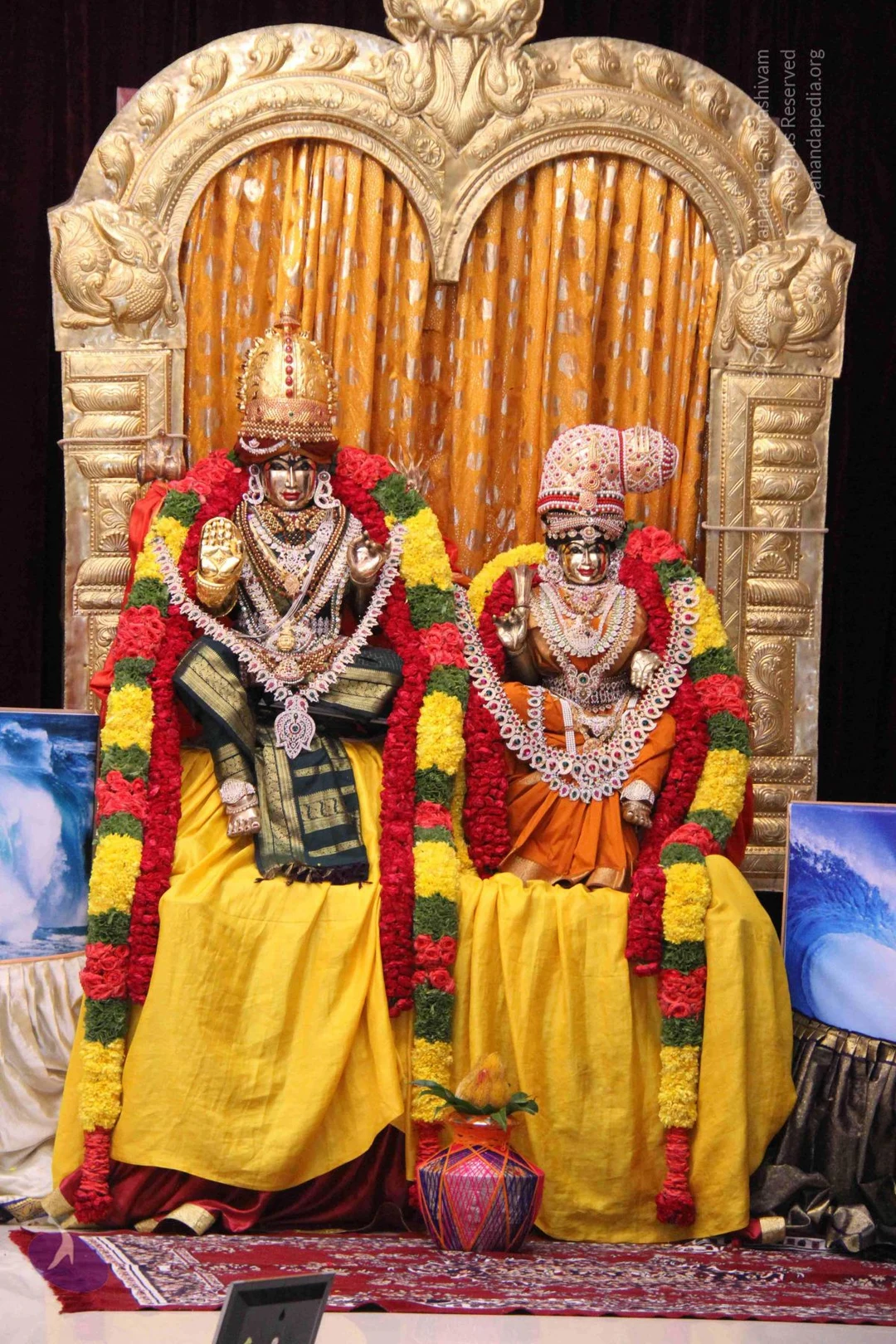
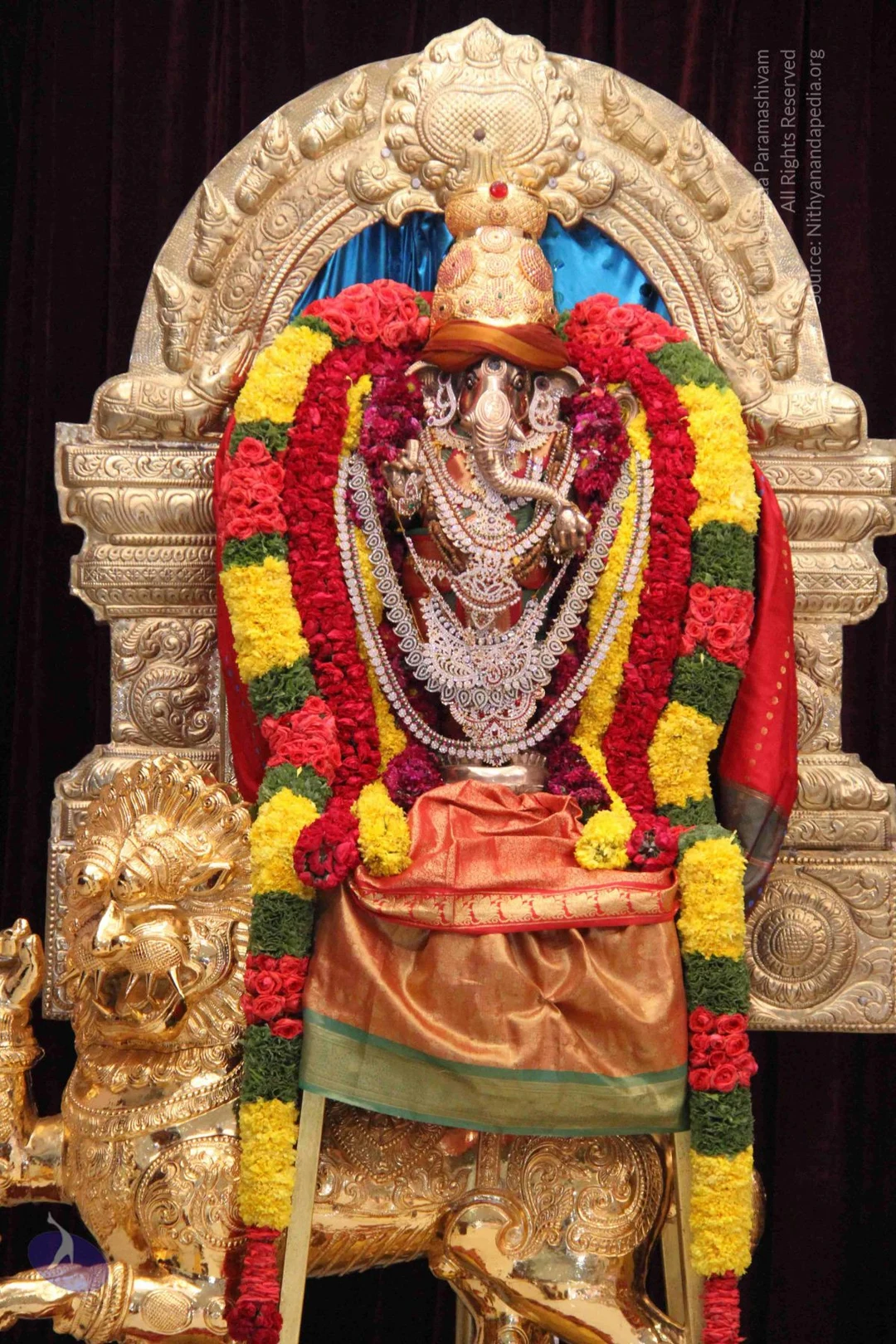
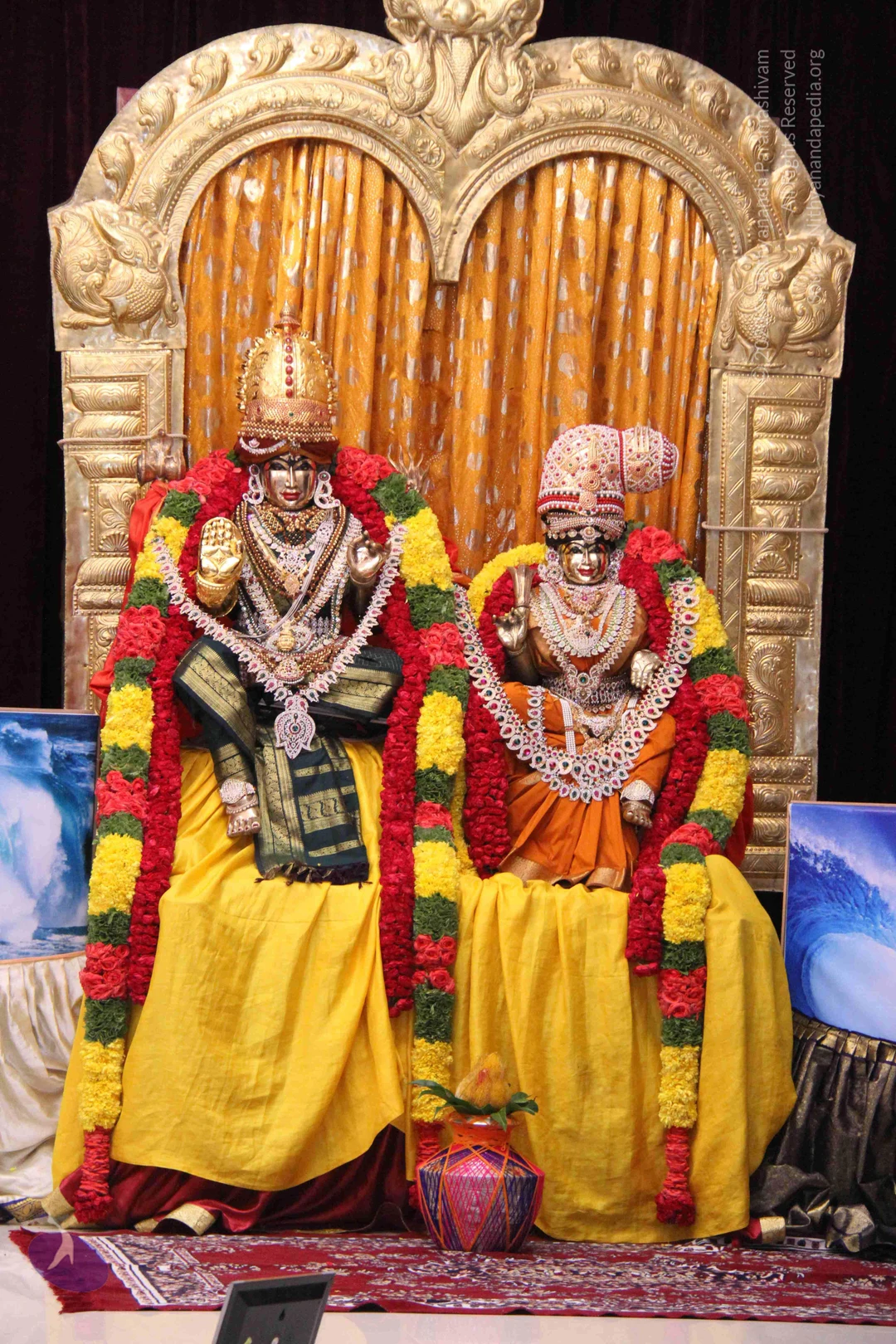
Two silver-faced deity murti seated side by side on a gilded arched throne with an orange and gold backdrop. The figure on the left wears a golden crown, layered jewelled necklaces, a dark green and gold brocade dhoti, and raises one hand in blessing. The figure on the right wears a red and gold crown, a jewelled necklace, and an orange sari with a raised hand. Both are draped in yellow cloth and garlanded with red, yellow and green flower garlands. A small colourful kalasha sits at their feet, and blue sea-wave pictures flank the throne. No people are visible.A photograph of a Ganesha murti seated on a golden throne decorated with a lion-motif base. The elephant-headed deity wears a gold crown with a red stone, a red silk shawl draped over the shoulders, and layered silver necklaces. Thick garlands of red roses, yellow marigolds and green leaves hang across the figure. Behind the throne stands an ornate gold arch with carved panels and a blue cloth backdrop against dark maroon drapery. No physical people are visible.A staged tableau of a Hindu divine play with two murti statues on a gilded throne backdrop with yellow drapes, both adorned with red and yellow marigold garlands, gold jewellery and crowns. Seated before them are two young performers in costume: a boy in a gold crown, green and orange silk dhoti and rudraksha mala raises a hand in blessing, and a girl in a gold crown, silver-grey blouse and purple skirt holds a red flower. Blue ocean-wave backdrop panels frame the scene, evoking the Seven Oceans theme of the leela.A photograph of a ceremonial tableau with two golden deity murti seated on a raised throne-like dais in front of a gold-framed arch and yellow curtains. The murti on the left wears a gold crown, a dark green and gold dhoti, and many garlands and jewels; the murti on the right wears a jewelled crown and an orange sari with heavy necklaces. Both are decorated with thick garlands of yellow marigold and red and green flowers. In front, two young performers sit cross-legged on the floor as actors in costume: the boy on the left wears a gold crown, an orange and green dhoti and a yellow garland, with one hand raised in a blessing gesture; the girl on the right wears a gold crown, a silver blouse, a purple skirt and a yellow garland. Blue ocean photographs flank the scene. Four people are visible.Two young performers sit cross-legged in front of a gilded arched backdrop with yellow draped curtains, dressed as deities for a re-enactment. The boy on the left wears a gold crown, a green and orange silk garment, a rudraksha mala and a yellow marigold garland, and raises his hand in blessing. The girl on the right wears a gold crown, a silver-grey sari with a purple lower garment, layered ornaments and a yellow marigold garland, and holds a small red flower. Behind them sit two golden deity murtis on a throne, a male figure in a dark green dhoti and a female figure in an orange sari, both adorned with jewelled necklaces, crowns and red-and-green garlands. Blue sea-wave images flank the set.A staged tableau of Shiva and Parvati-style deity murtis seated on a golden throne with an arched gold frame and yellow-gold drapery. The seated figure on the left wears a golden crown, silver ornaments and a dark green-and-gold dhoti; the figure on the right wears an orange sari, a jewelled crown and layered silver necklaces. Both are garlanded with red, yellow and green flower garlands. In front, two young performers sit cross-legged: the boy on the left wears a golden crown, a rudraksha mala, a pink and green dhoti and a yellow garland, with one hand raised in blessing; the girl on the right wears a golden crown, silver jewellery, a purple skirt and a yellow garland, holding a red flower. Blue seascape backdrops flank the scene.

Rudra-Abhishekam

8 photosSource gallery
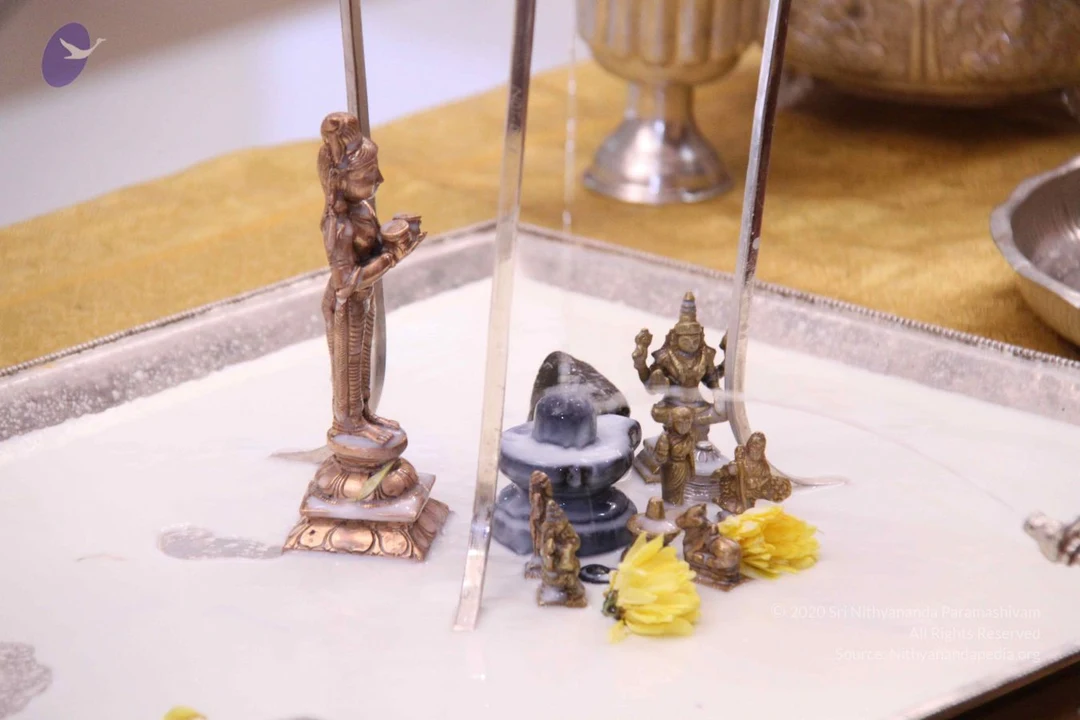
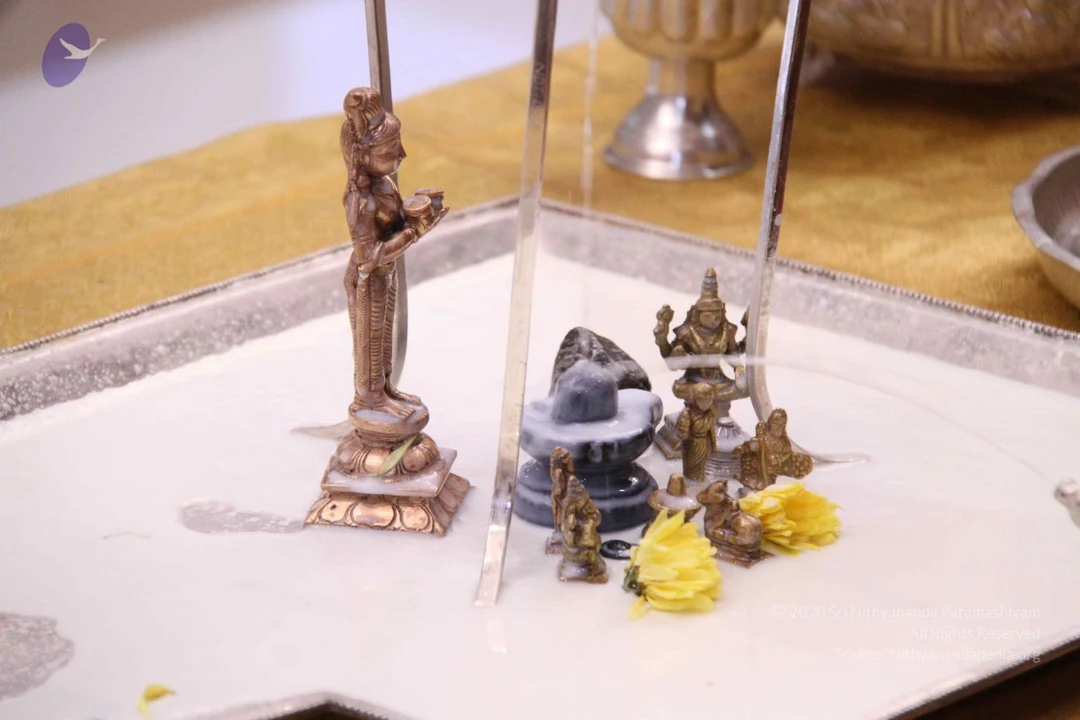
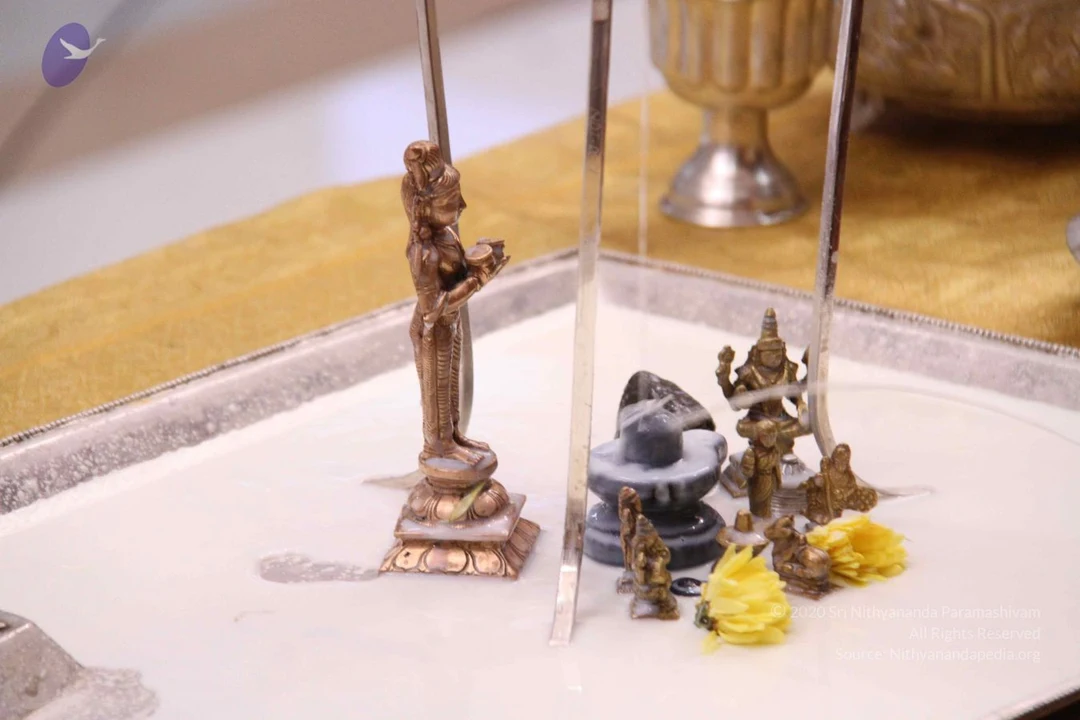
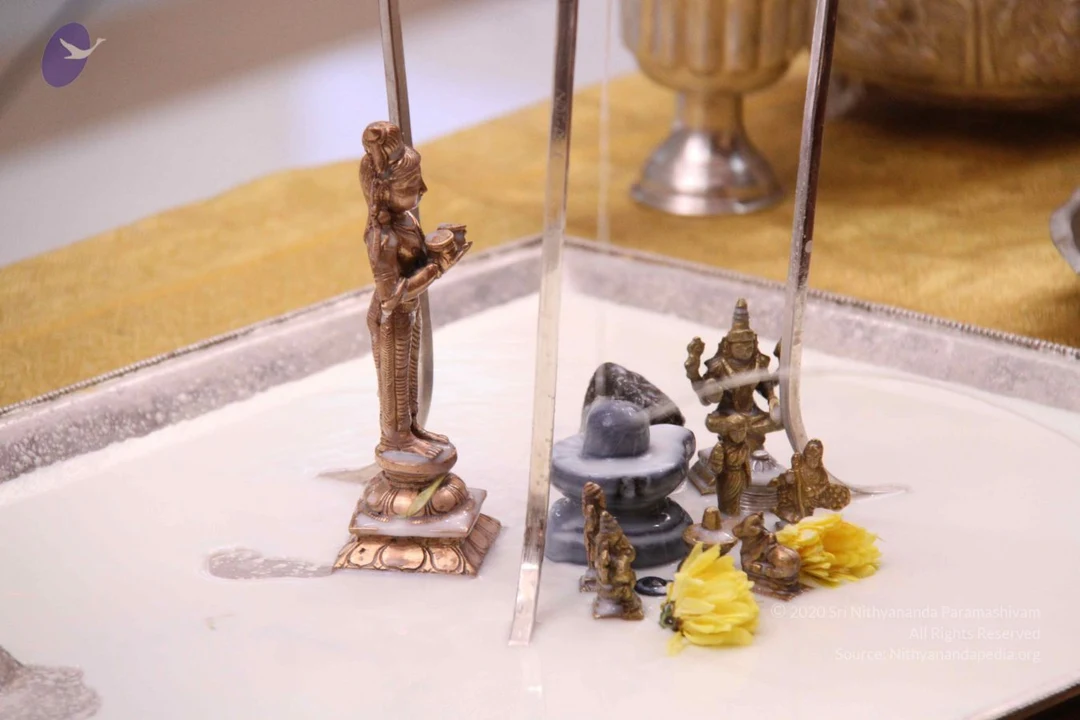
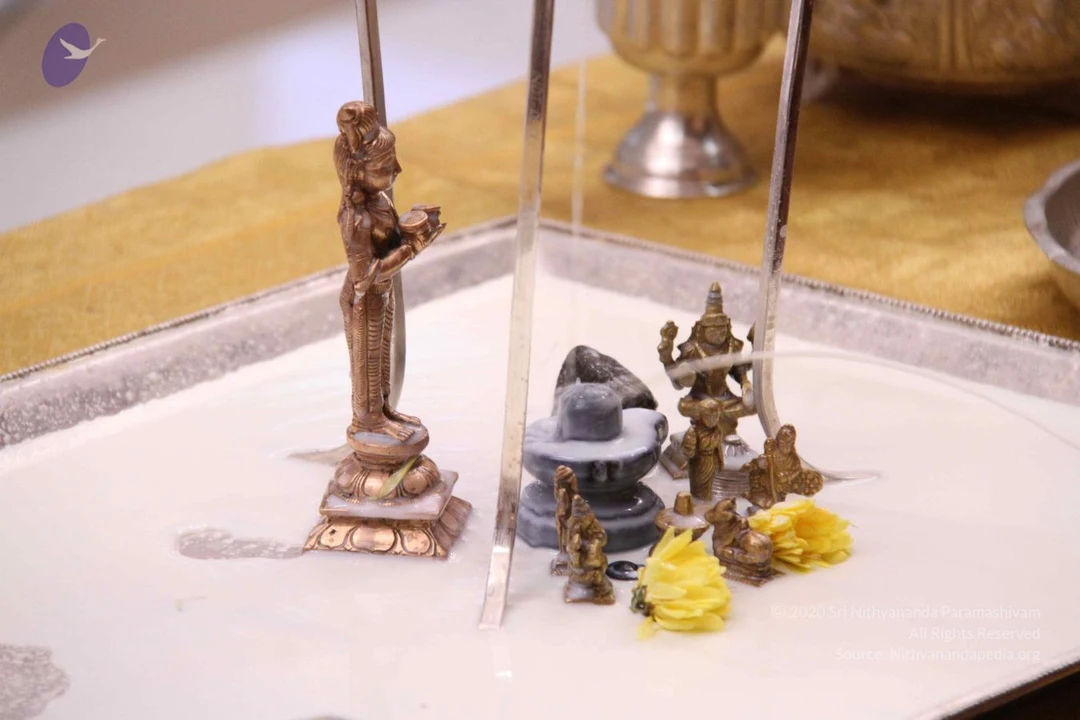
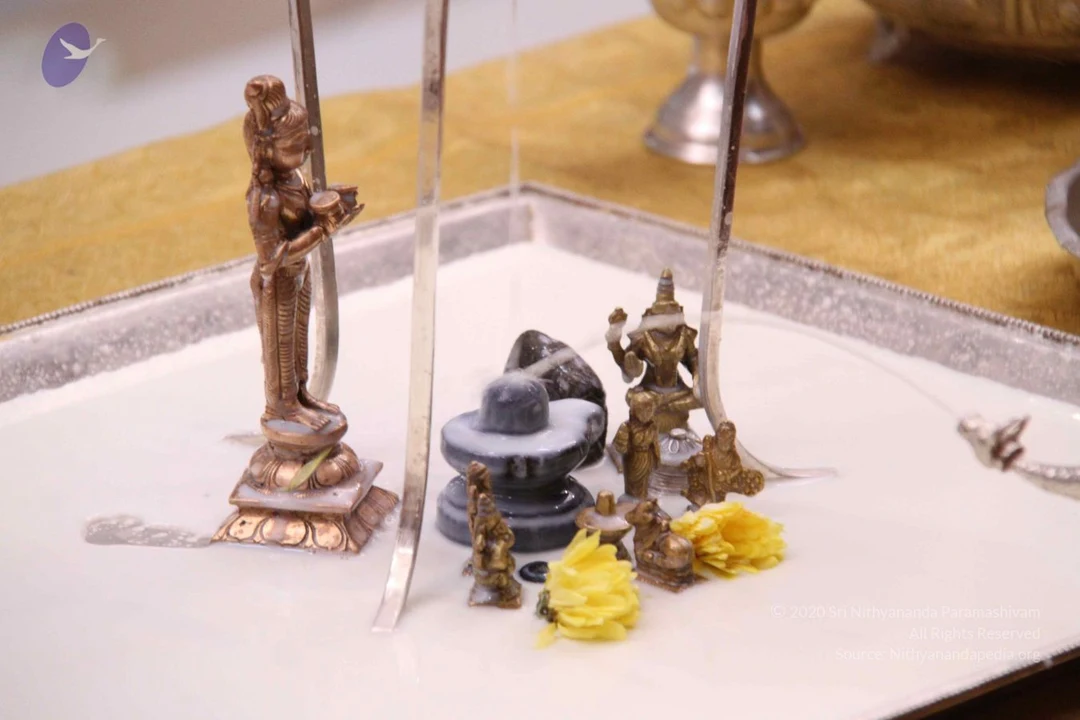
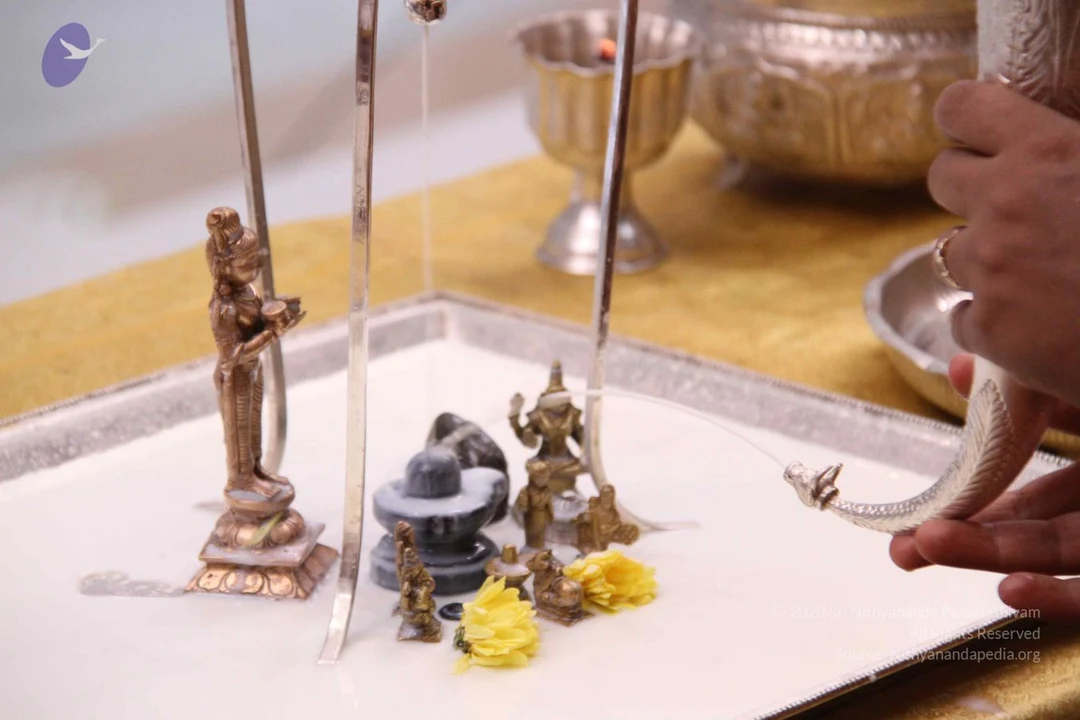
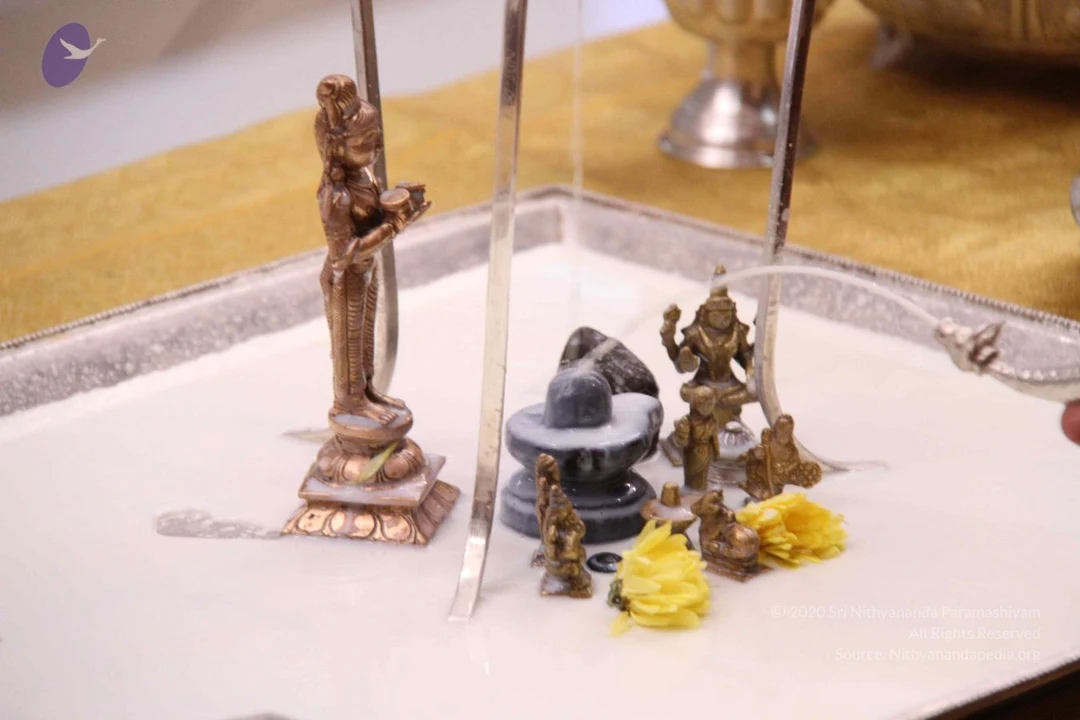
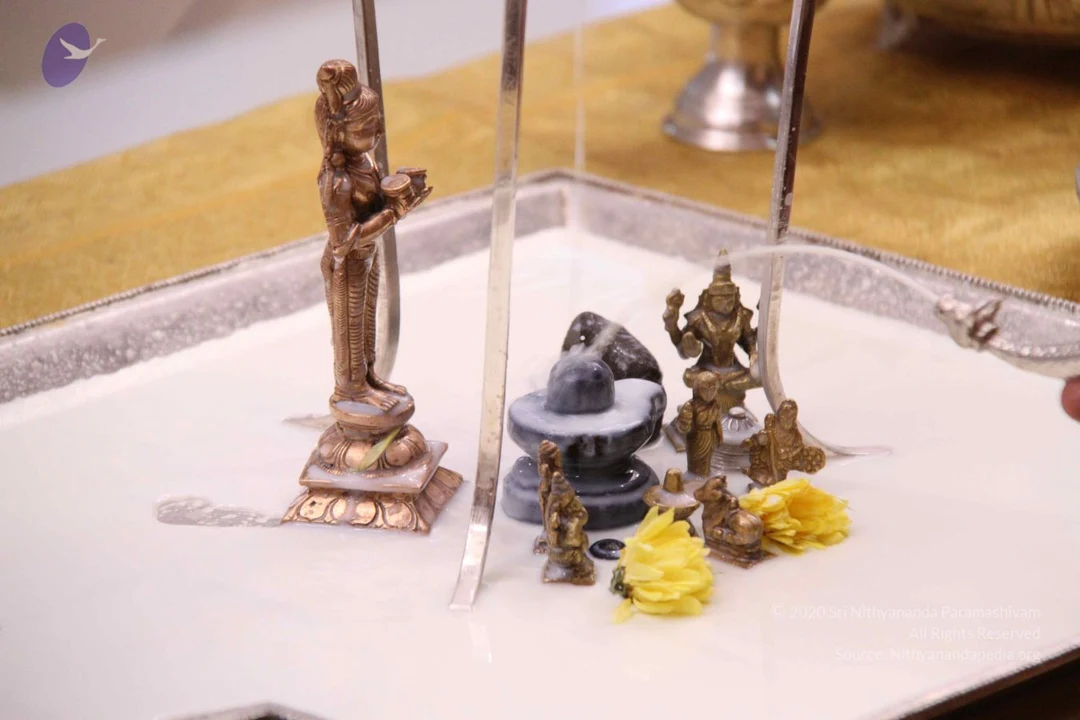
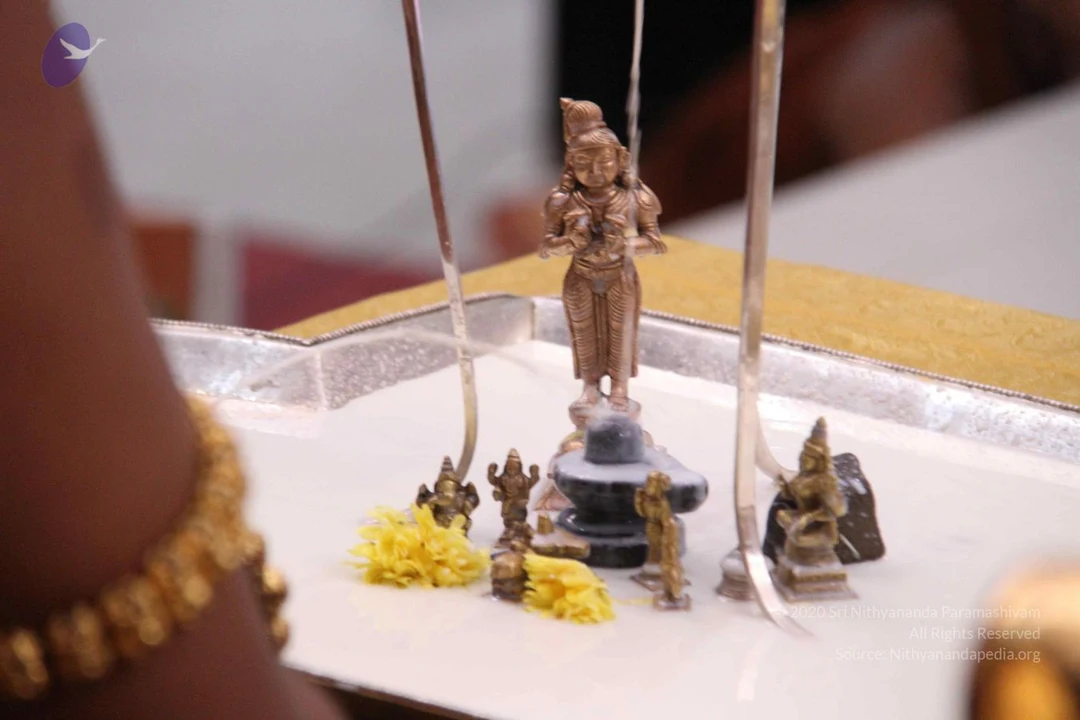
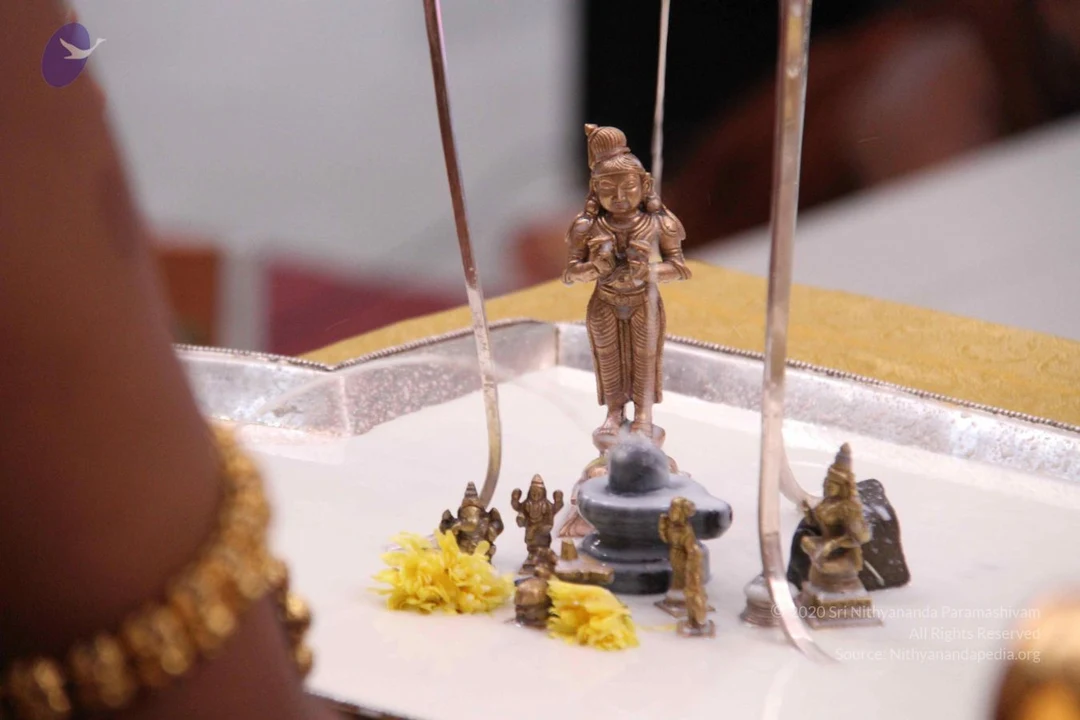
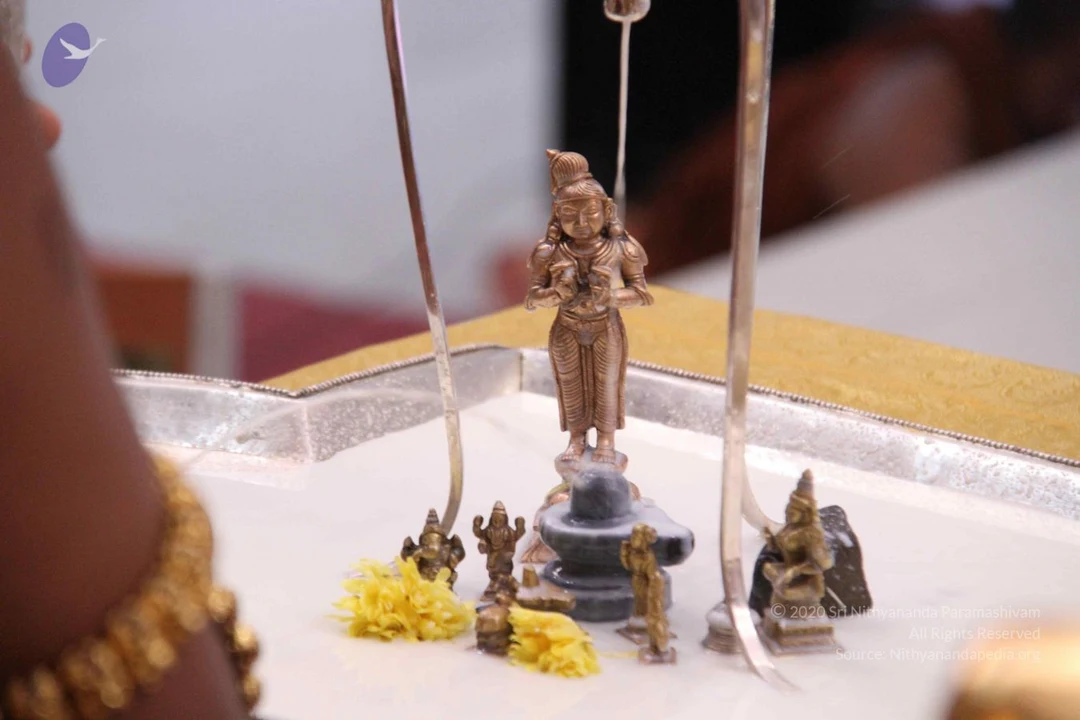
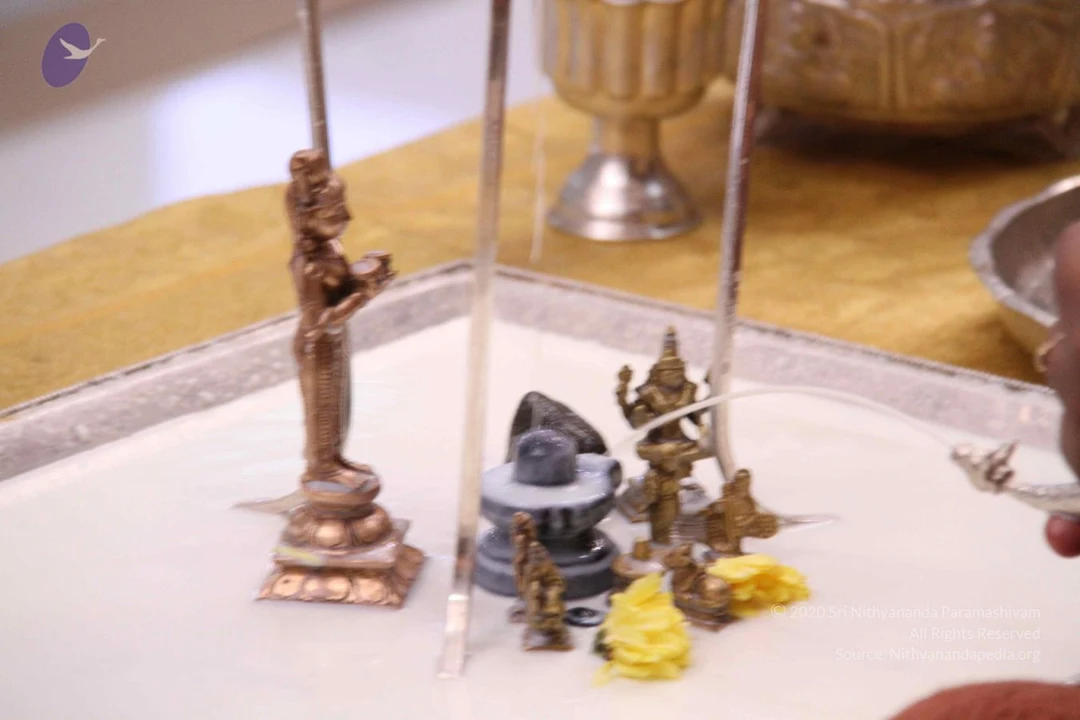
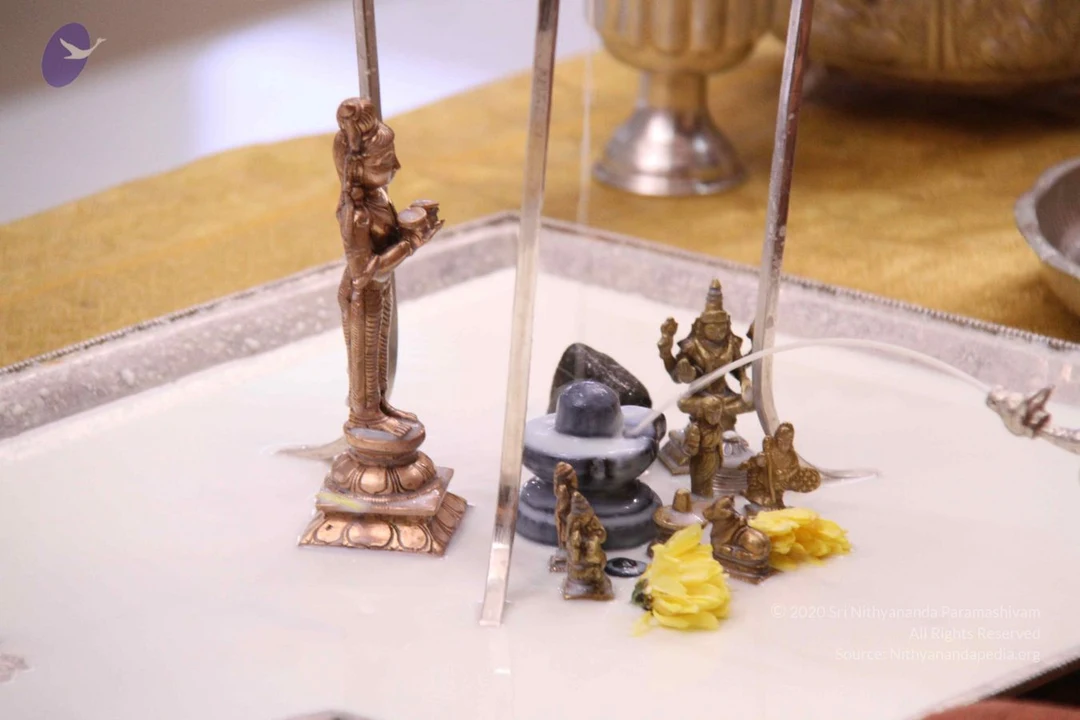
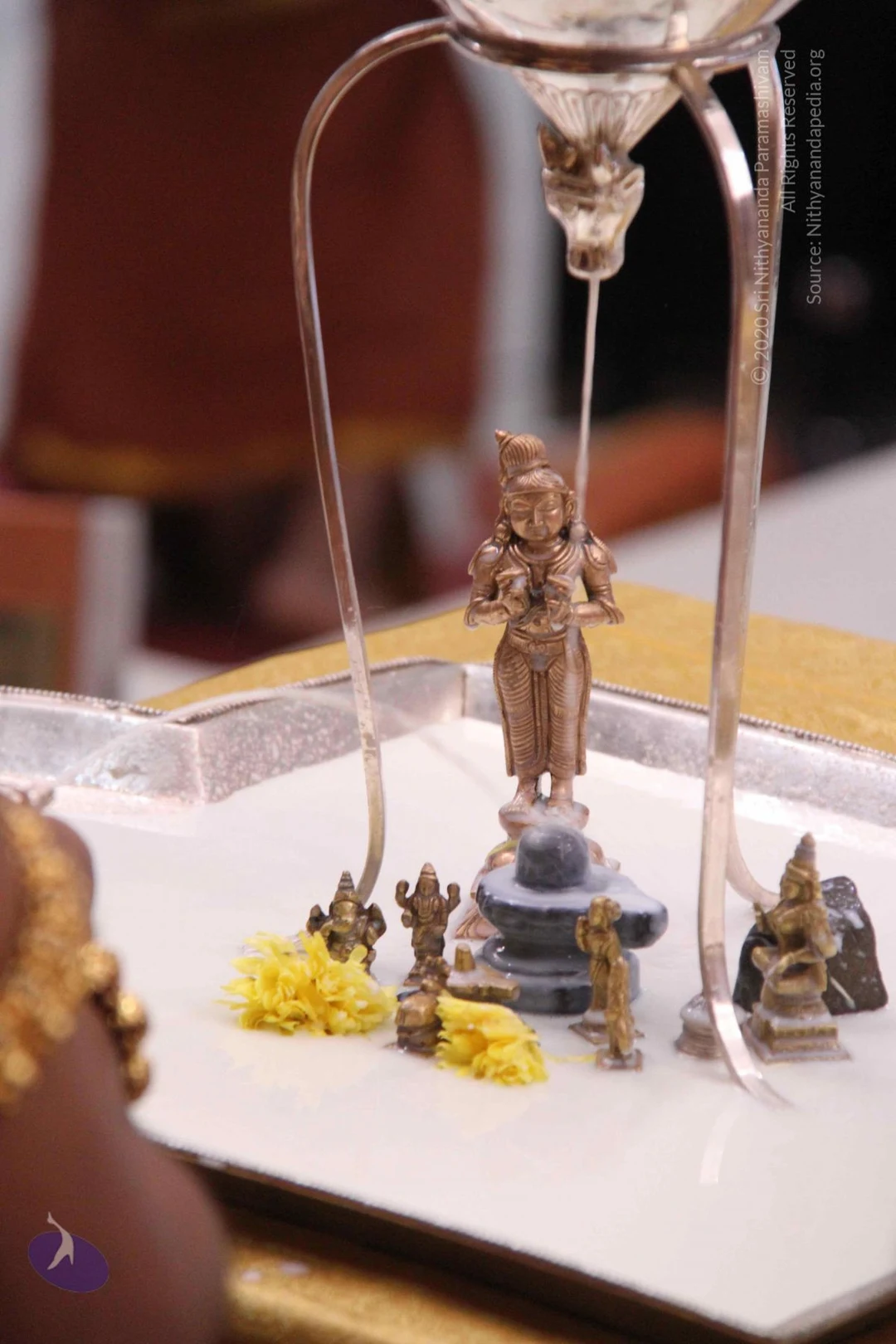
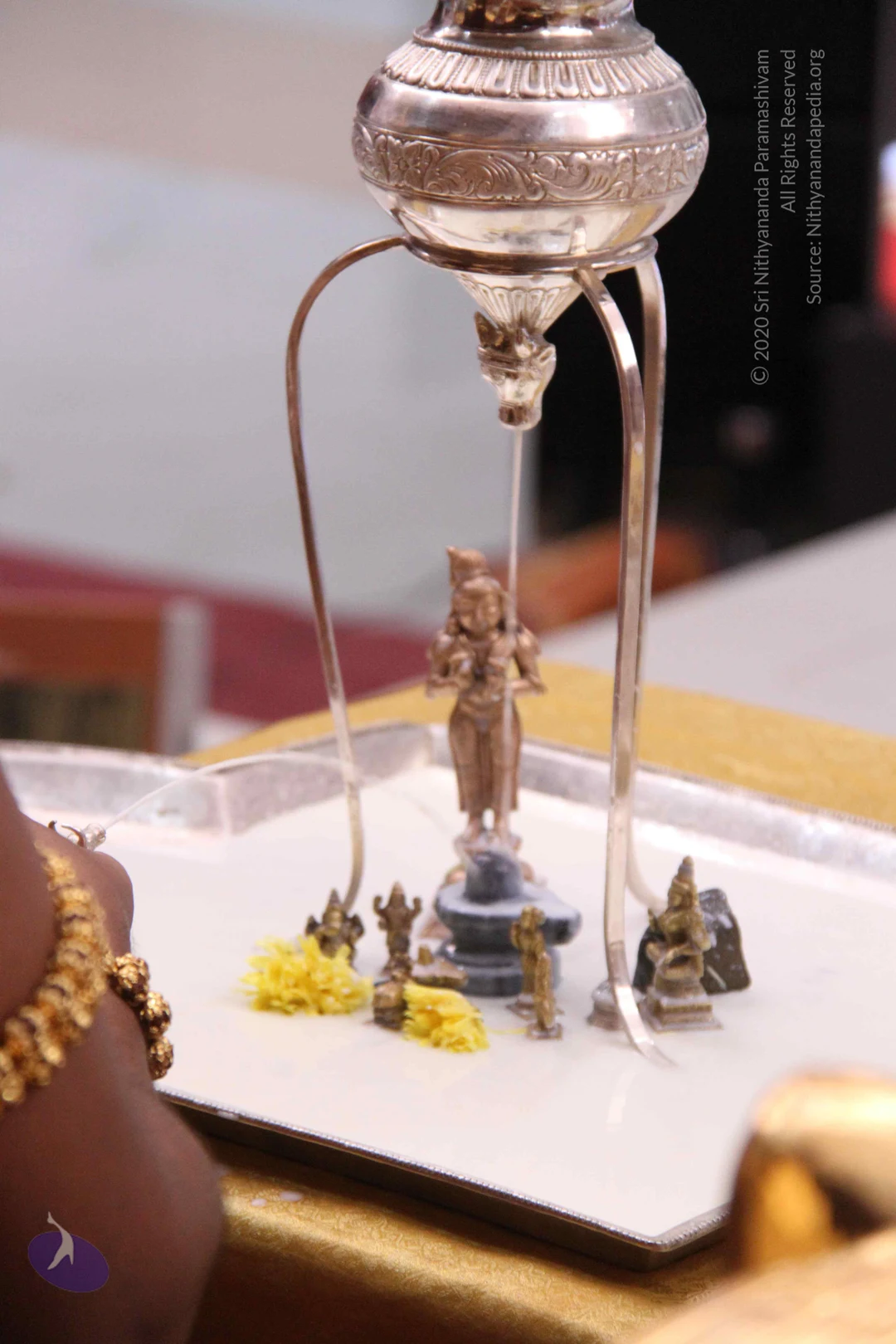
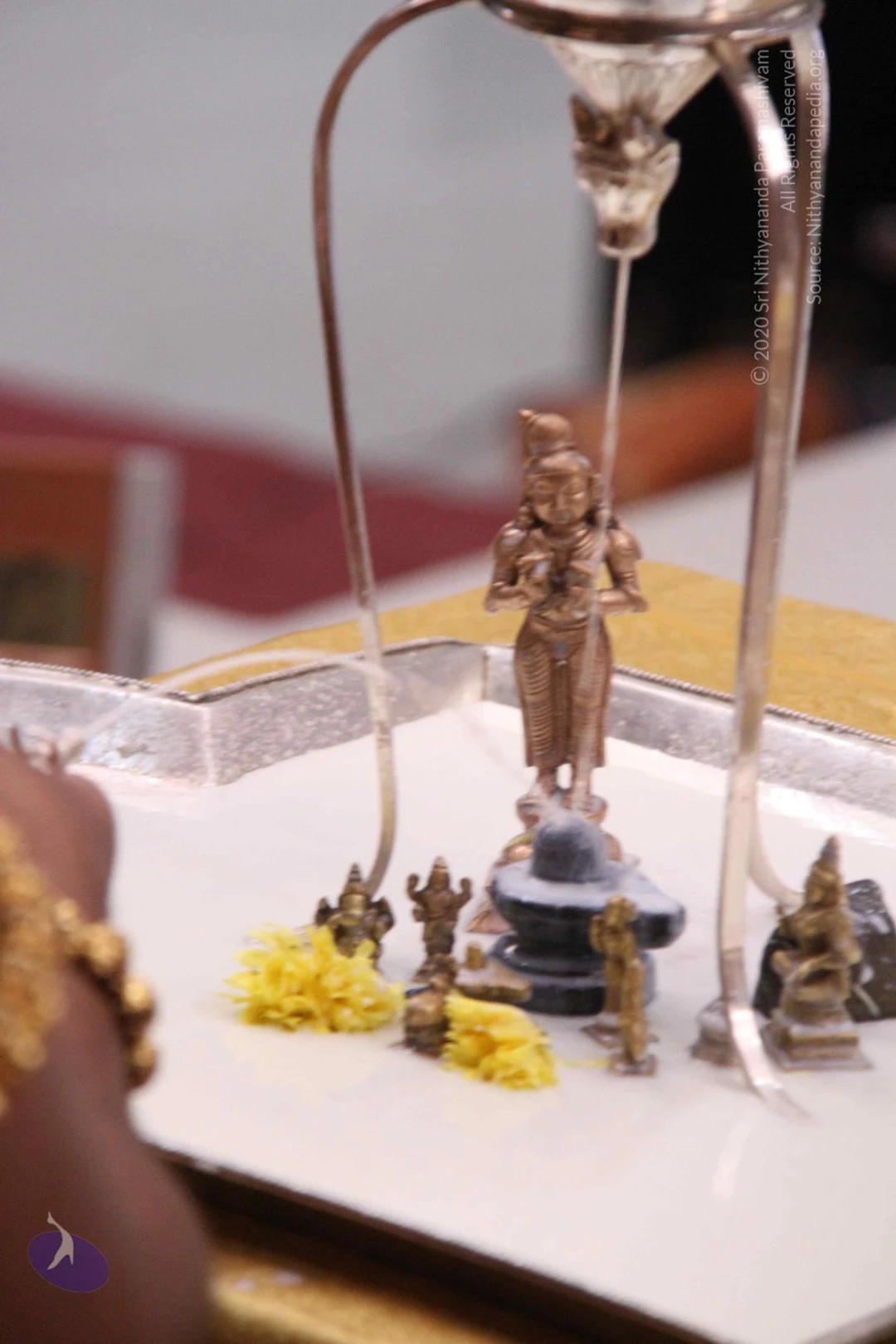
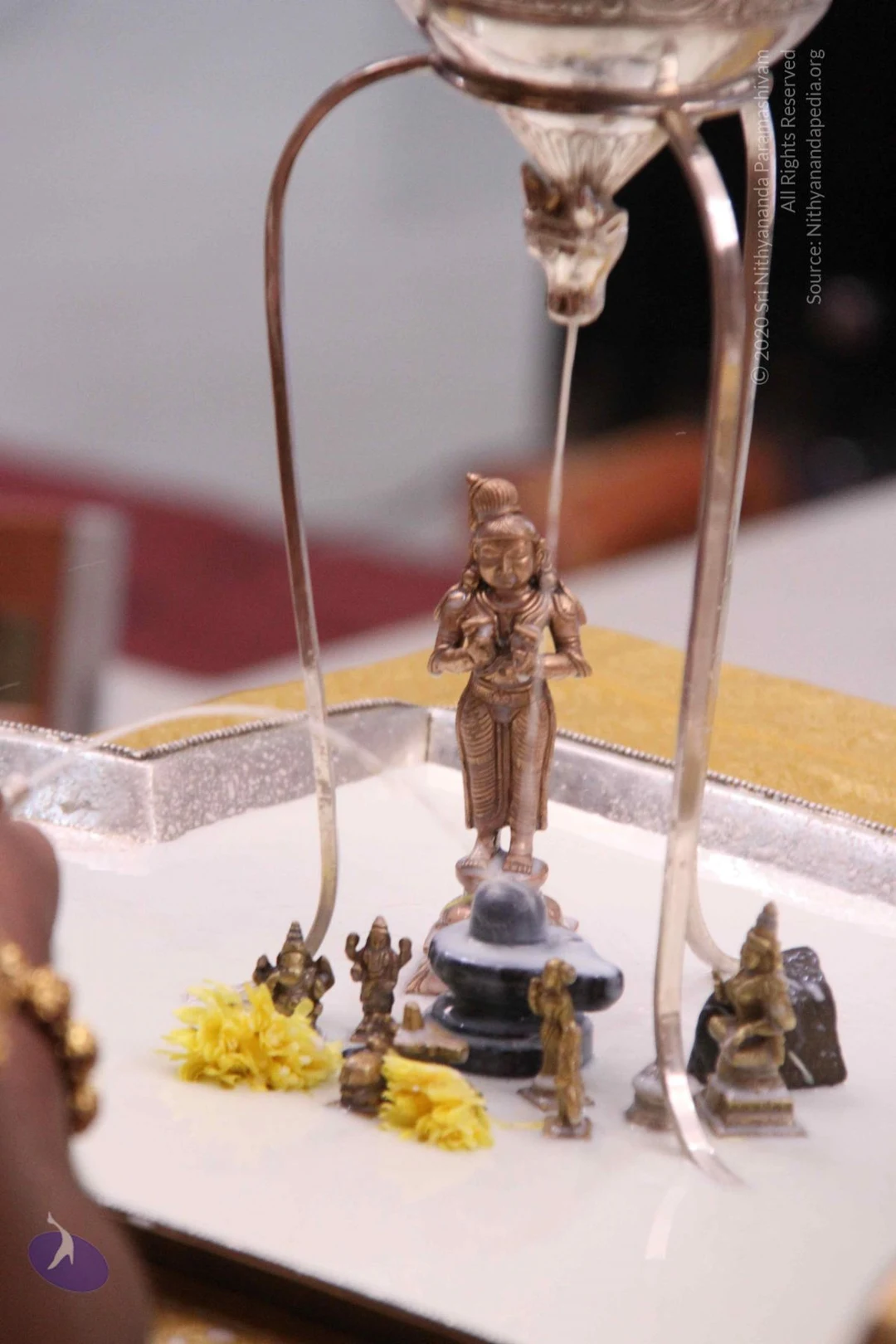
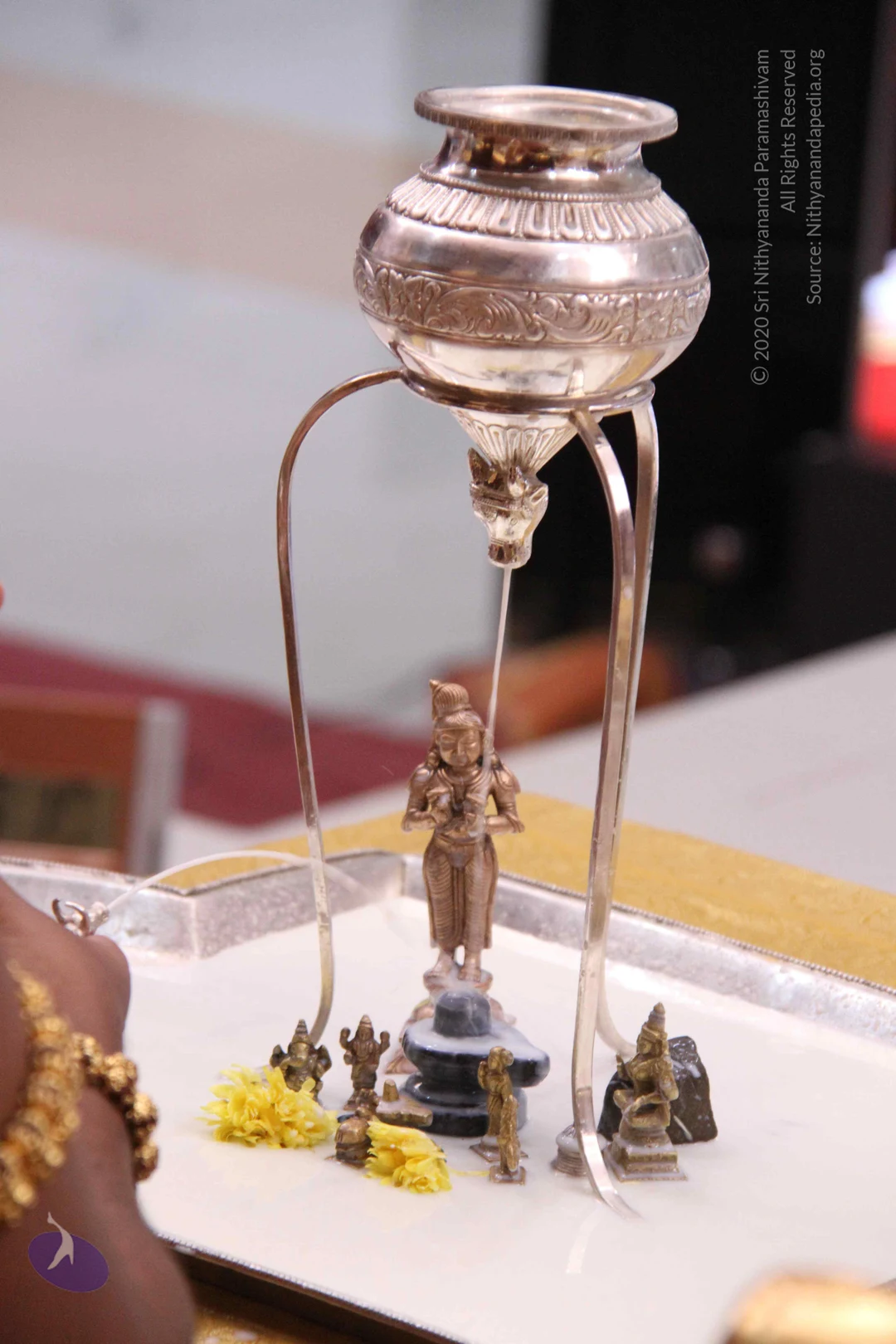
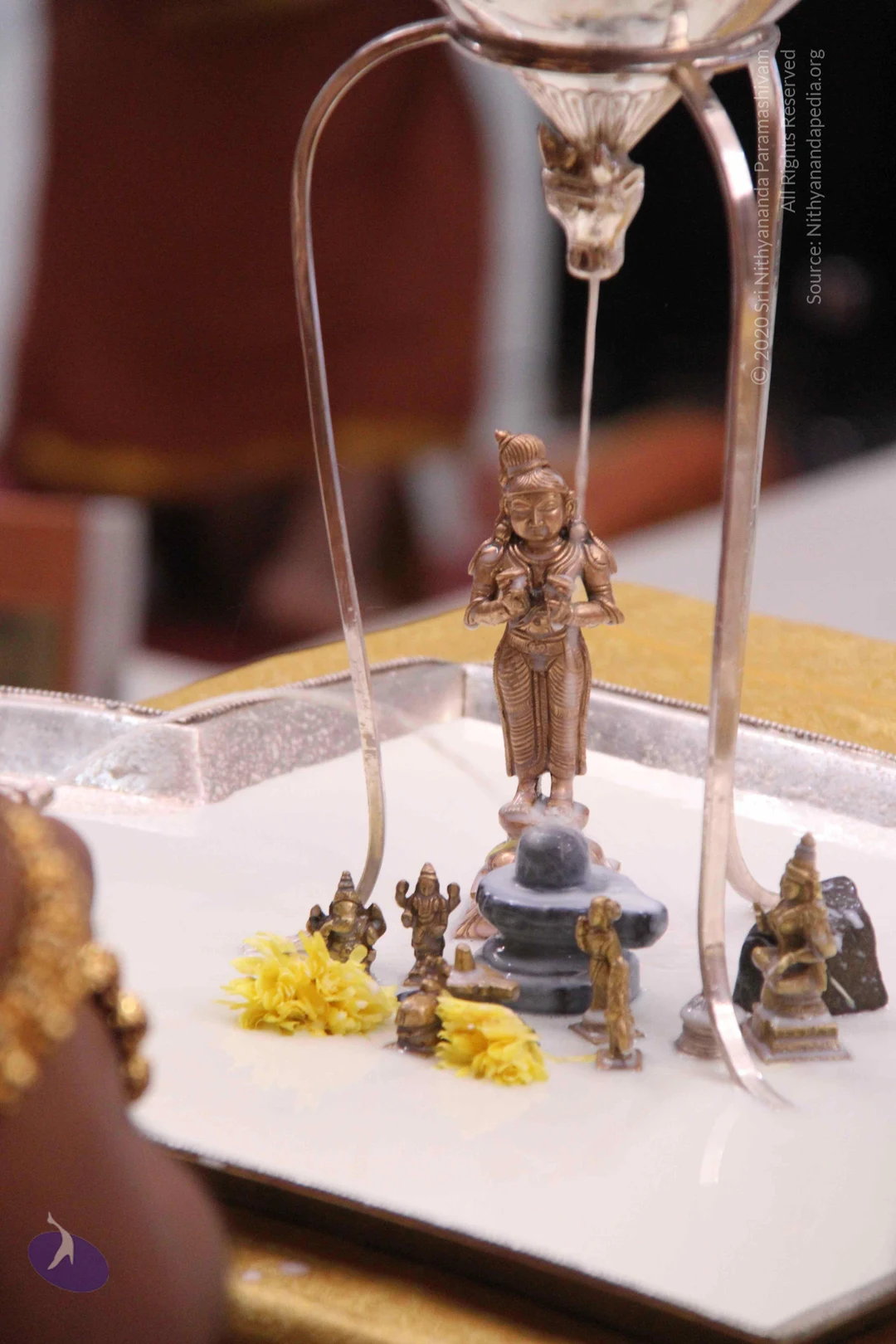
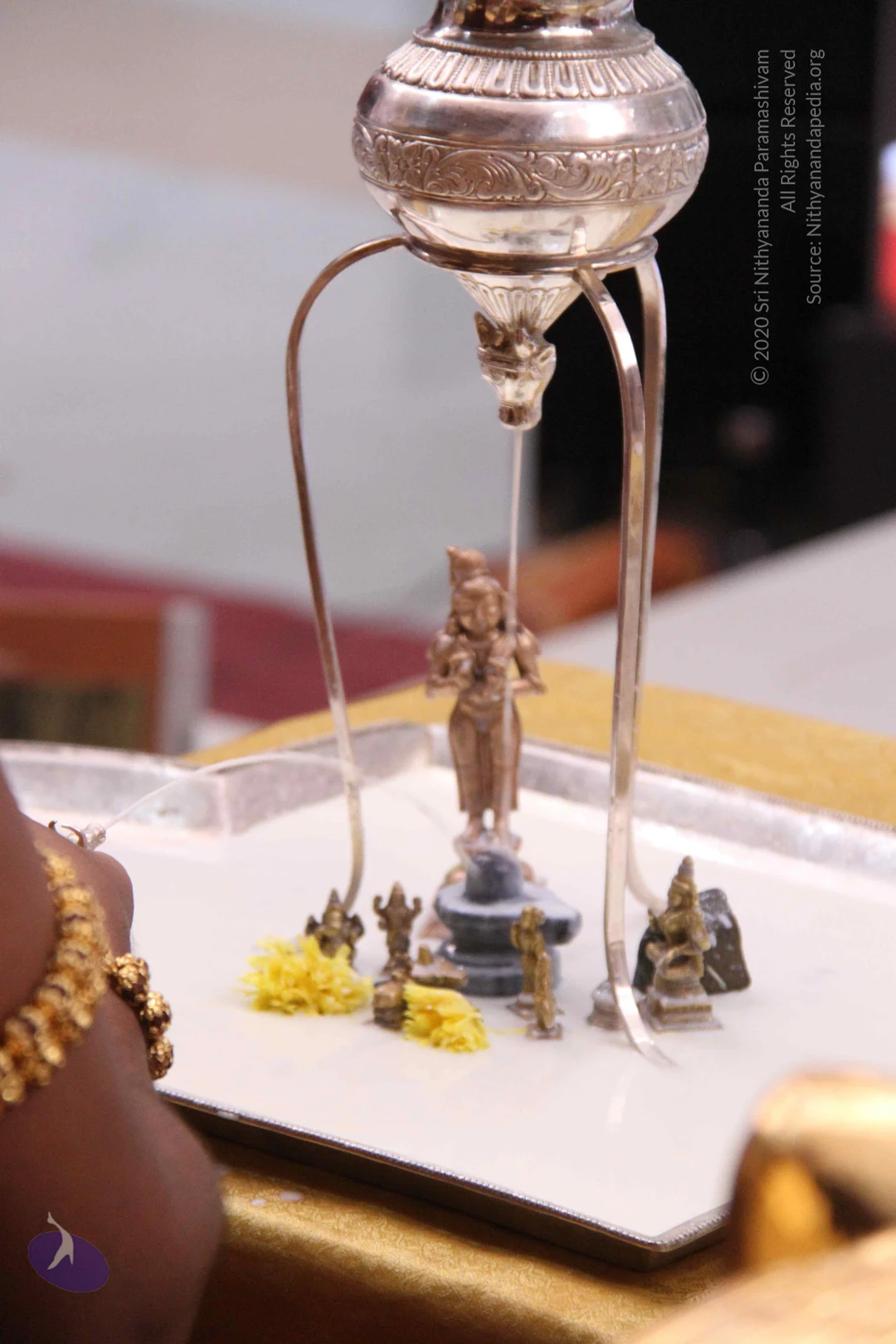
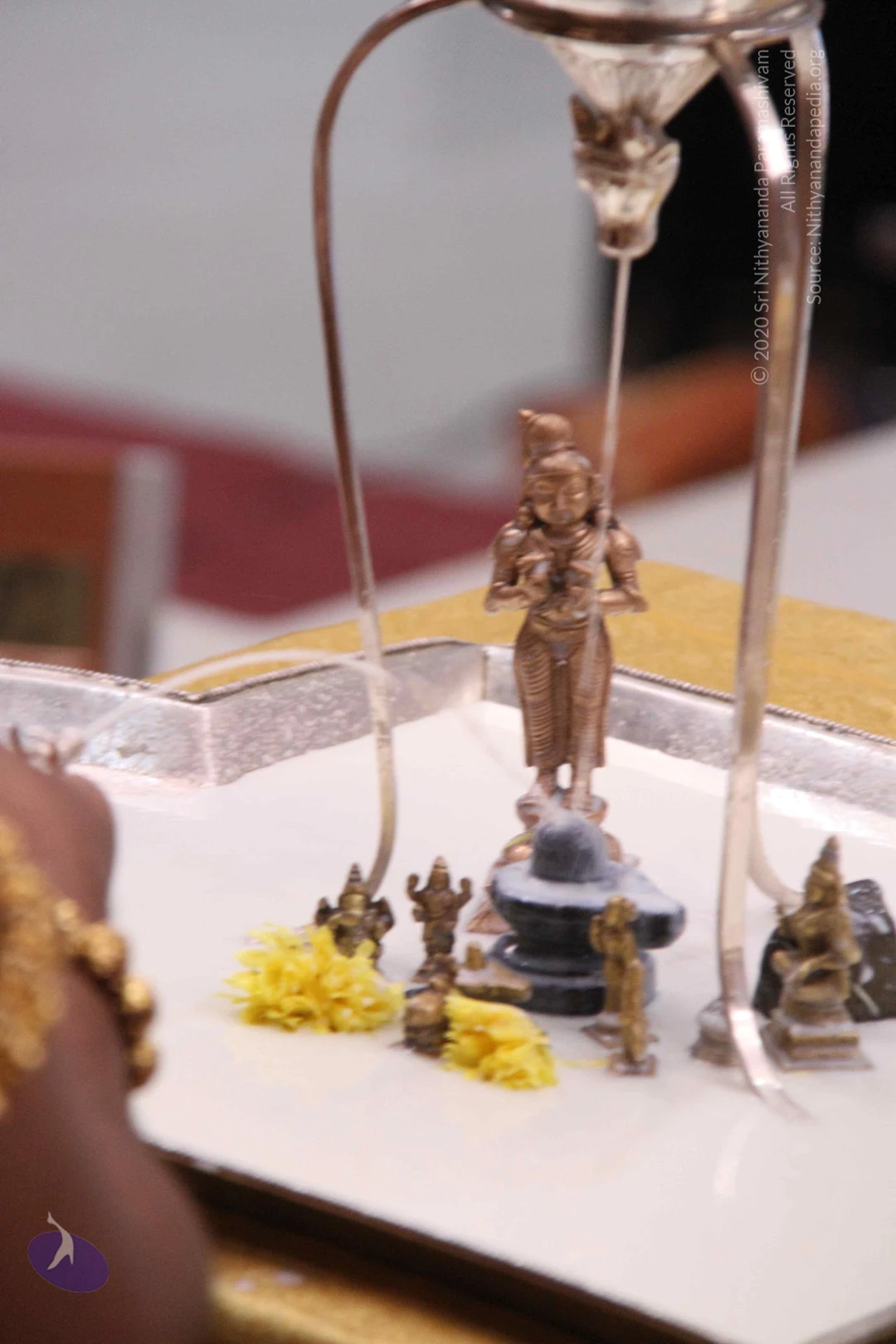
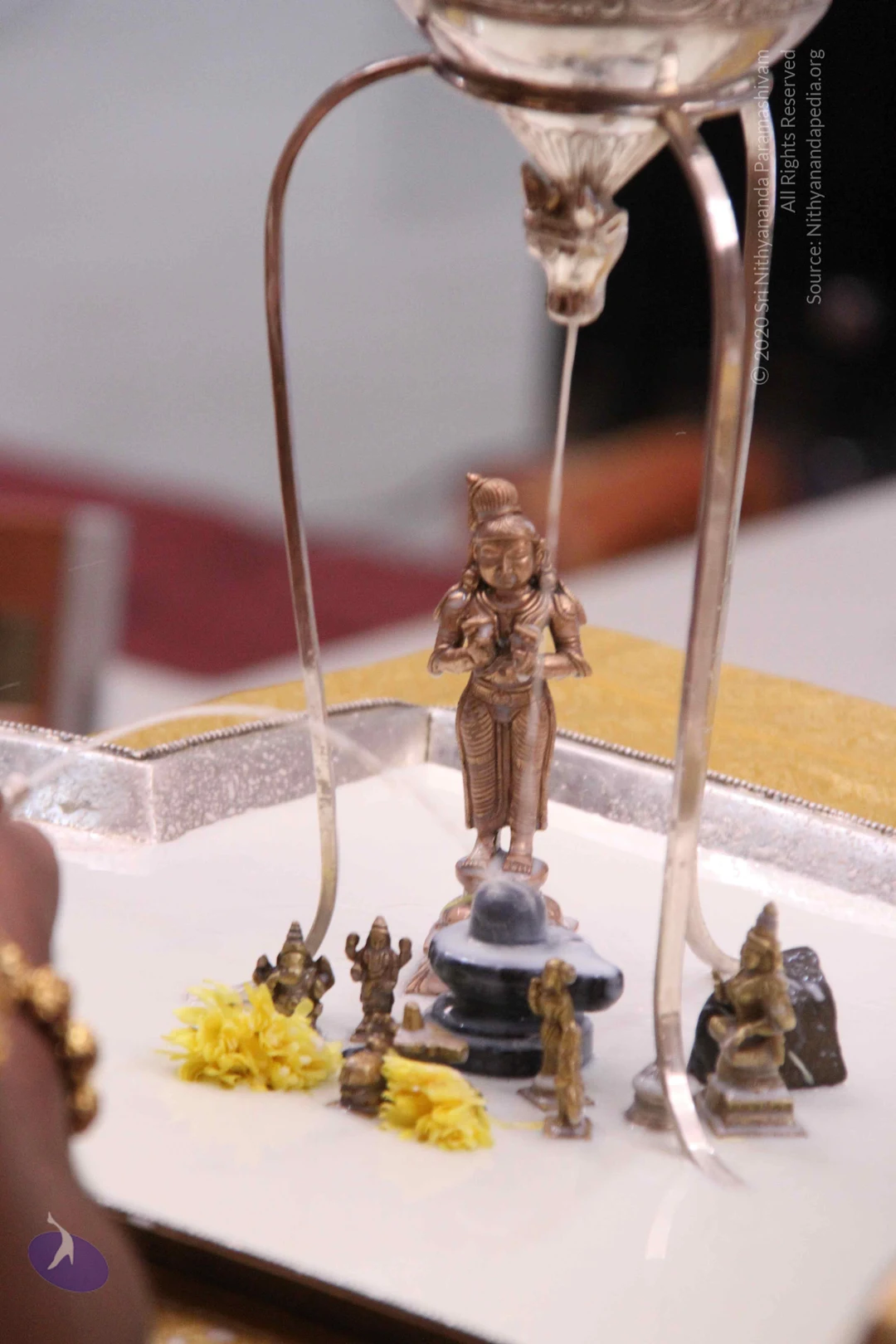
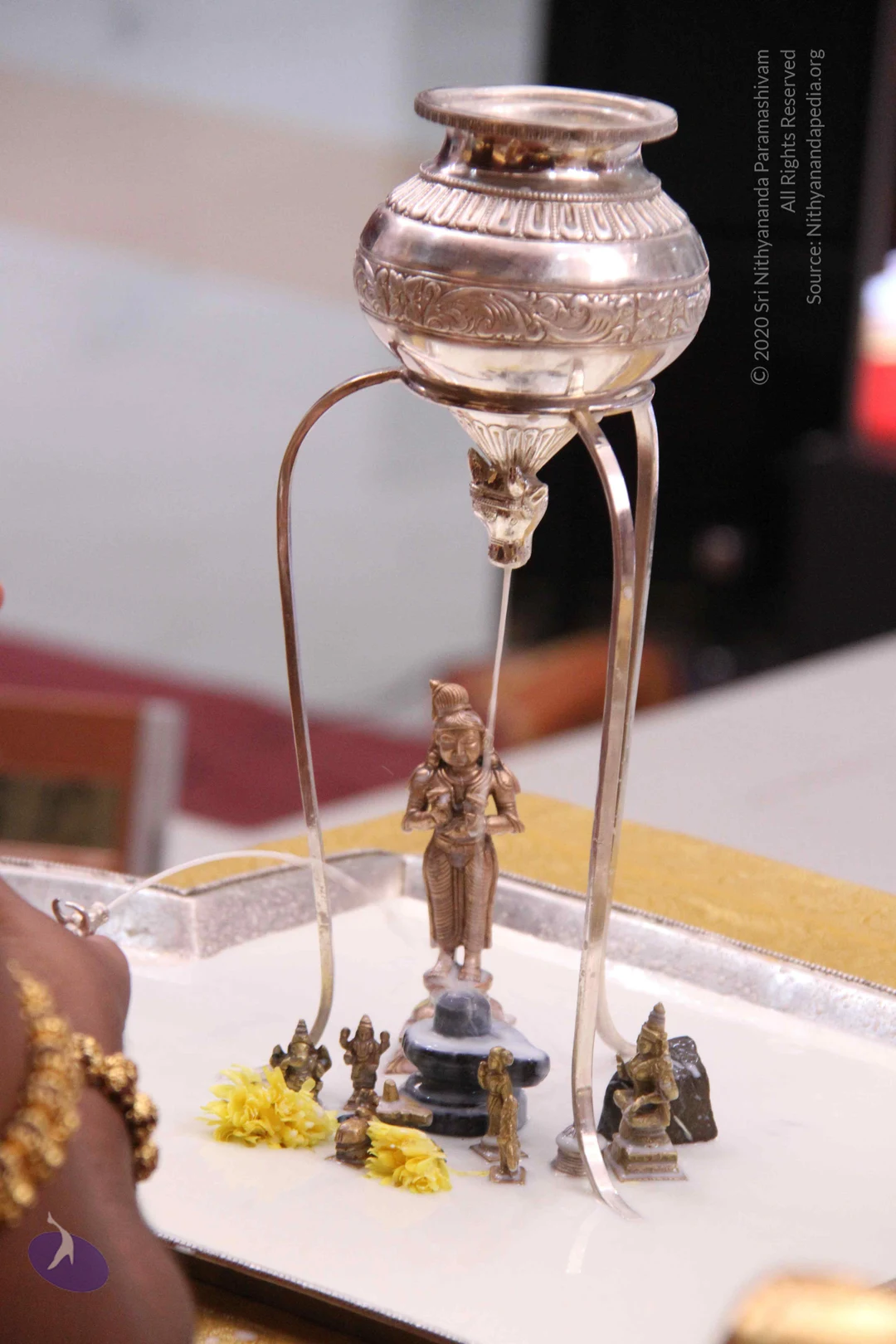
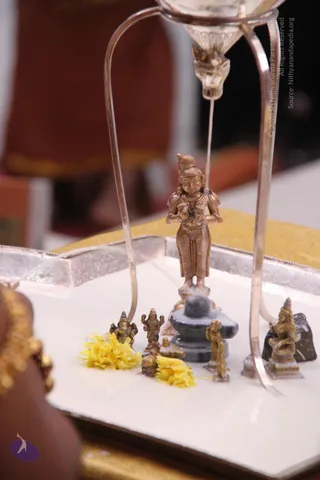
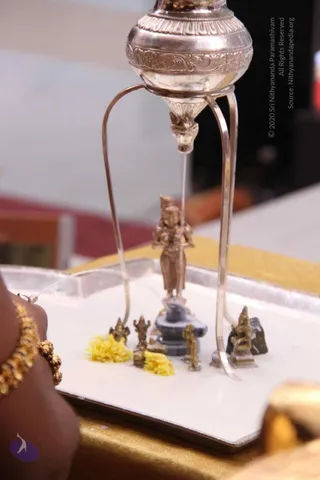
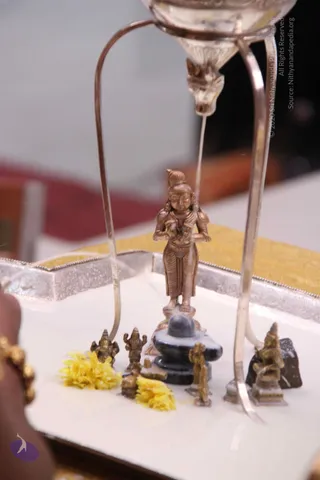
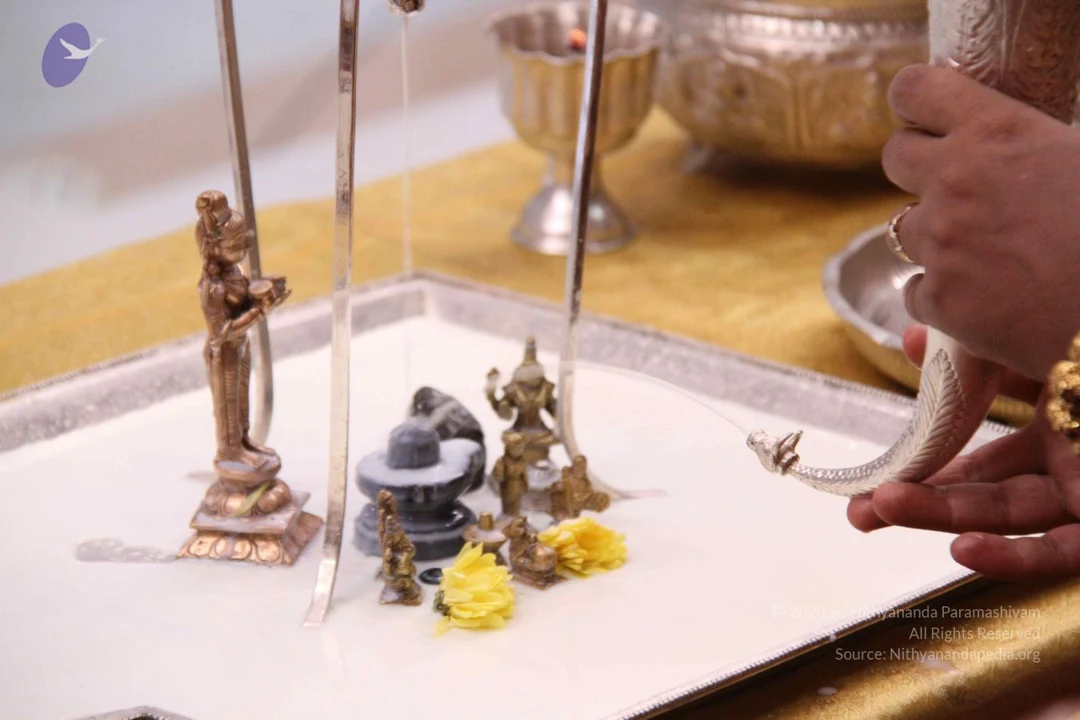
A man in an orange-red saffron robe and a red-and-gold beaded mala pours water from a silver vessel over a silver kalasha on a silver stand, performing an abhishekam-style ritual. He wears a white-and-red forehead tilak, gold earrings and a gold armlet. Behind him is an ornate gold-leaf throne arch with carved lion and floral motifs. A red and gold draped table holds silver ritual vessels, a silver bird-topped staff and small deity figurines.A bare-shouldered man in an orange-brown cloth sits before an ornate gold-leaf throne with a parrot-topped staff, performing a ritual at a table draped in red and yellow. He wears a rudraksha mala and multiple gold necklaces, gold armlets and bracelets, with white vibhuti and a red bindi on his forehead. He pours from a clear glass vessel on a silver stand into a silver tray holding small deity figures, beside silver pots, a silver cup and a silver kalasha. A ritual pouring such as abhishekam is suggested, and the figure has distinctive adornments matching the a person appearance cues while the page marks no event attendance, so the presence is uncertain.Close-up photograph of a small ritual arrangement on a white tray edged with silver and gold. A brass standing deity murti, with a tall cone-shaped crown, stands on a dark grey Shiva lingam, with a silver cup-shaped vessel above it dripping water onto it. Around the base are smaller brass figurines, including a seated figure and a figure with raised arms, plus yellow marigold-like flowers. The blurred background shows a red cloth and a gold-trimmed edge, with no visible people.Close photograph of a silver kalasha-style vessel suspended over a white tray on a gold cloth. Below the spout stand small bronze murti figures, including a standing deity on a dark stone peetha and several small figures, with yellow marigold petals scattered around. A partially visible hand wearing gold bangles rests at the left edge. Abhishekam-style offering arrangement; no people's faces visible.Close photograph of a small brass deity murti standing on a white tray decorated with a yellow flower, beside a dark stone shivalinga and several small brass figures. A silver ritual stand with a fitted cup-like top and curved arms hangs over the arrangement, with a bare-armed person wearing gold bangles visible at the left edge, handling the setup. The background is blurred with grey and red tones.Close-up photo of a small brass murti of a standing deity with a topknot, placed on a black Shivalinga base on a white tray with yellow marigold flowers and several small bronze figurines around it. A silver stand with a dripping abhishekam vessel shaped like an animal head hangs above, with liquid streaming down onto the central figure. No people are visible except a partial hand with gold bangles at the left edge. The scene suggests an abhishekam ritual setup.

Pratyaksha-Pada-Puja

5 photosSource gallery
A man with a red tilak mark on his forehead sits on an ornate gold throne with carved lion-head arms and a tiger-stripe cloth draped over the seat. He wears a rust-red and gold-bordered dhoti and shawl, a long gold temple necklace and gold armbands, and raises one hand in blessing while smiling. Behind him hang brass oil lamps and bells against a black wall. In front of the throne stand several silver plates and bowls filled with red, yellow and white flower petals and marigold-type blossoms, arranged as offerings.A seated man with hands pressed together in namaskar, eyes lowered and smiling, wearing a rust-orange shawl and dhoti with gold borders. He has a sweeping dark hair bun, white vertical tilak with a red kumkum dot, gold earrings, gold armlets and wrist bands, and a long rudraksha mala with a large gold ceremonial pendant. Behind him is ornate gold carved throne-back work and a brass bell at the right edge. Appearance-based label: a person, in person, shown in an honouring devotional pose.Side profile photograph of a seated man with closed eyes and a slight smile, shown against an ornate gold carved throne at left and a dark background with small warm lights. He wears a saffron-orange draped garment with a gold border, a thick rudraksha mala interwoven with gold bead ornaments across the chest, a gold bangle on the upper arm and a gold earring. A white tilak marks his forehead with a red dot at its centre, and his hair is swept back into a bun. His hands rest in his lap on an orange cushion.A man in saffron-orange robes with a gold-bordered sash sits on an ornate gilded throne draped with a tiger-striped cloth, wearing a long gold-bead necklace, a rudraksha-style mala, gold bangles and a red tilak on his forehead. Hanging brass oil lamps and a bell hang from chains above him. In the lower left, a woman in a cream sari with a gold border sits beside silver trays holding flowers, offerings and small bowls, and a seated figure is partly visible behind her. Gilded lion-head carvings decorate the throne's arm.Close side profile of a man in an orange-brown sleeveless garment with a gold-bead and rudraksha mala draped across his chest, gold armband on the upper arm, gold earring, and a small red bindi on his forehead. A hanging brass temple bell on chains is at left against a dark background. He looks toward the right, mouth slightly open as if speaking.

Satsang
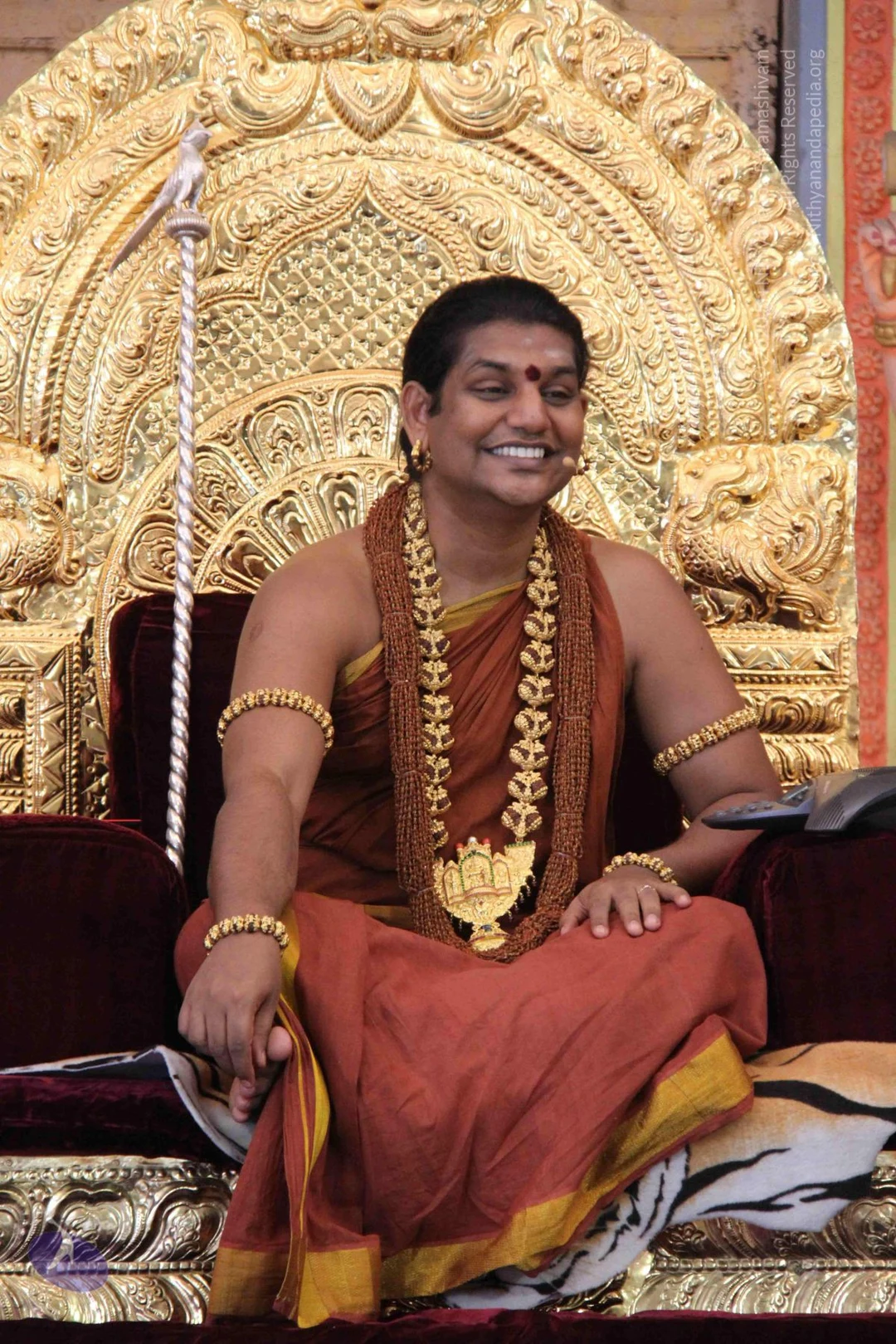
43 photosSource gallery
A seated man in saffron-orange robes sits cross-legged on an ornate gold throne with maroon cushions, a tiger-skin cloth draped over the seat. He wears a red bindi, a long rudraksha-style mala and a large gold pendant necklace, with gold bangles on his wrists. Behind him stand two painted four-armed deity murti figures with crowns and gold ornaments, flanking a golden door, and gilded lion heads decorate the throne. A patterned rug covers the floor in front of the platform.A seated man in saffron-orange robes sits cross-legged on an ornate gold throne with a maroon velvet cushion and a tiger-skin cloth draped over the seat, in a temple-style hall. He wears a long gold-bead necklace, a large gold pendant, gold bangles, a red bindi and a shaved head, and smiles toward the camera. Flanking him are two painted deity murti figures with multiple arms, crowns and red-and-green dhotis, and gold lion statues sit at the throne's sides. A gold footstool and a patterned red carpet lie in front. The figure's appearance, with his saffron robes, rudraksha-style gold necklace and ornate throne setting, is a person in a seated darshan-style setting, though the cues are not fully distinctive.A smiling man sits cross-legged on an ornate gilded throne with a deep red velvet cushion, a tiger-face skin draped across the seat beneath him. He wears a rust-orange ochre robe with a yellow-and-orange border, a long gold-and-beaded necklace with a gold pendant, gold armlets and bangles, a red bindi, and a gold earring. His hands rest together in his lap. Behind the throne is a large, elaborately carved gold arch, a pale wooden paneled wall, and a partial golden statue with raised hands at the right edge. A silver staff with a bird finial leans against the throne on the left.A photograph of a temple-style hall. In the foreground, a priest in an orange-brown dhoti and shawl with a gold border, his head shaved, holds a lit oil lamp (aarti) toward the altar. Left of the altar, a golden lion-mount idol is garlanded with red, yellow and white flowers and holds a deity murti. Behind them, a painted backdrop shows a four-armed deity figure in orange and green with a crown, flanked by painted pillars and a wooden door. Brass oil lamps stand on the floor beside a clear lectern.A seated man in an ornate gilded throne with carved lion-like side supports and a tiger-striped cloth draped over the cushion in front. He wears a saffron-orange robe with a yellow border, a red bindi on his forehead, a long gold floral garland, a rudraksha mala with a gold pendant, gold armlets and bangles, and a small microphone clipped near his face. He sits cross-legged with a broad smile and his hands resting on the armrests. A white fly-whisk handle rises behind him.A smiling man with short dark hair and a red bindi sits cross-legged on an ornate golden throne with an elaborately carved gilded arch and lion-like carvings. He wears an orange-rust shawl and dhoti with yellow borders, a long multi-strand gold necklace with a jewelled pendant, gold armlets and a gold bangle. A tiger-skin rug lies across the dais in front of him and a small microphone is clipped near his face. Behind the throne is a wooden panelled wall. The setting suggests a discourse on a stage. Appearance cues include the saffron-orange clothing, gold ornaments and ceremonial throne, so this matches the a person candidate seated as the speaker.

Inner-Awakening

13 photosSource gallery
A man stands on a dark stage in front of a gold-draped backdrop, wearing an orange-red sleeveless wrap with a gold-bordered waistcloth and a thick orange beaded necklace. He has a red bindi on his forehead, a small headset microphone near his face, and raises one fist to his shoulder while speaking.A standing man in a rust-orange and gold-bordered sannyasi-style wrap with a bare right shoulder and a red-brown and gold draped lower garment stands on a stage before a dark red velvet curtain and ornate gold lion-headed thrones. He wears a long rust-coloured beaded mala around his neck, a small red bindi, and a small headset microphone, and smiles while his arms hang at his sides. The gilded throne and lions suggest a formal stage setting. Only one person is physically present.A man stands barefoot on a bright stage in front of a dark velvet backdrop and a gold throne flanked by golden lion figures. He wears a rust-red unstitched robe wrapped with broad gold-bordered bands at the waist, a long rudraksha mala around his neck, and a red bindi on his forehead, and he has a headset microphone. He smiles and gestures with one hand while looking off to the side. a person: long dark hair swept back, rudraksha mala and saffron-toned robe with gold trim, shown as a standing speaker on stage.A smiling man with swept-back dark hair and a red bindi stands on a stage in front of a dark velvet drape with gold fringe. He wears a rust-orange sleeveless wrap with gold-bordered cloth wound at the waist and a thick rust-coloured rudraksha-style mala around his neck. He gestures with both hands while speaking, a small headset microphone near his face. Behind him stands an ornate gold throne with a tiger-print cushion. a person cues include the swept-back hair, orange ornate clothing and rudraksha mala, shown as a speaker giving a discourse on stage.A smiling man with short dark hair and a red tilak on his forehead stands on a stage with both arms outstretched, speaking into a small headset microphone. He wears a rust-red unstitched robe with broad gold-bordered wrapping at the waist and a long rudraksha mala of rust-coloured beads around his neck. Behind him is a dark velvet curtain edged with gold fringe and a large ornate gold throne or seat with carved floral patterns, with a tiger-striped cloth at the lower right.A seated woman in a hot pink sari with an orange-red shawl draped over one shoulder sits cross-legged on a red mat, looking off to the side. She wears an orange lanyard with a gold pendant and an event badge, bangles and a small red bindi. Behind her, other women in white garments with orange-red shawls sit in a hall, one resting her hand on her face. A green water bottle lies on the mat in the foreground.

4-Pratyaksha-Pada-Puja

6 photosSource gallery
A seated figure in an ornate gold throne with a carved lion base receives devotees in a dark-walled room with hanging brass bells and oil lamps. He wears a saffron-orange shawl over an orange robe, a yellow-bordered dhoti, a long gold necklace, gold armlet, and has long swept-back hair; a tiger-striped cloth covers the throne seat. Before him, brass platters hold red flowers, fruits and garlands as devotees sit with folded hands. A man in white with an orange lanyard kneels beside a small child in blue, and a woman in a red sari with folded palms sits nearby. The appearance-based candidate is a person, seated as the central figure of the puja.A seated figure on an ornate gold throne with a carved golden lion-head armrest and a tiger-striped cushion raises one hand in blessing, smiling. He wears a rust-orange dhoti, bare chest, layered gold necklaces, rudraksha-style beads, gold armbands and bangles, and his hair is swept back in a bun. Gold bells and a brass oil lamp hang on chains behind him against black tiled walls. In front, several seated devotees face him: a young man in a white shirt with an orange sash, a woman in rust sari, an older woman in a cream sari with red bindi, and a woman in orange kneeling at the lower left. Brass plates of flowers, marigolds and red blossoms, and oil lamps are arranged on the floor for a puja offering. A split air conditioner and a carved wooden door sit at the left edge.A seated man in a golden ornate throne with carved lion-head arms and a tiger-striped cushion gestures with one raised hand while smiling. He wears a rust-orange dhoti, a gold-bordered orange shawl, a heavy gold-beaded necklace and gold armlets, with a golden-yellow cushion behind him. Brass bells and oil lamps hang above the throne. In front, silver trays hold red, orange and yellow flowers and rose petals as a pada puja offering. Around them sit devotees: a young man in white with a saffron-orange shawl, a woman in an orange sari with a mala, an older woman in a cream sari, and a person in orange at the left edge, with another figure seated in the background. A dark stone wall and an air conditioner are visible, with a carved wooden door at left.A photograph inside a temple-style room with black slate walls, an ornate gold throne and a split-unit air conditioner. A bare-chested man in orange-saffron dhoti and shawl, wearing a gold necklace, bangles and rings, sits smiling on a gold throne with a tiger-striped cushion, with brass bells and a brass lamp hanging nearby. A seated woman in a cream sari with a gold border and a man in white with a red-orange shawl sit before brass thalis filled with flowers, fruit and lamps. Behind them, a man in white sits on the floor, and a man in orange-brown robes sits to the side. The seated figure matches the page's a person reference only partially, so the candidate is uncertain.A seated man on an ornate gold throne with a carved lion-head armrest smiles and presses his palms together in greeting. He wears a rust-orange dhoti with a gold border, a rudraksha-style gold necklace of beads and a gold bracelet, and his bare shoulder is visible. Seated on the floor before him, devotees with folded palms face him: a young man in a white shirt with an orange scarf, a woman in a white sari with a gold border, and a woman in orange. Brass trays hold flower petals, red blossoms and small lamps. Brass hanging lamps and bells hang above, and a black stone wall with an air conditioner sits behind.Indoor photo of a seated man in a saffron-orange dhoti and matching shawl, wearing a gold necklace, gold bangles and a large beaded garland, seated on an ornate gold throne with a tiger-striped cushion. He is smiling and his hands rest on his lap. Before him, several people sit on the floor behind silver plates of flowers, oil lamps and offerings, including a young man in white with an orange cord and a woman in a cream sari with gold border. Hanging brass oil lamps and bells hang from the ceiling, with a dark wall, an air conditioner and a large carved wooden door on the left.

5-Satsang
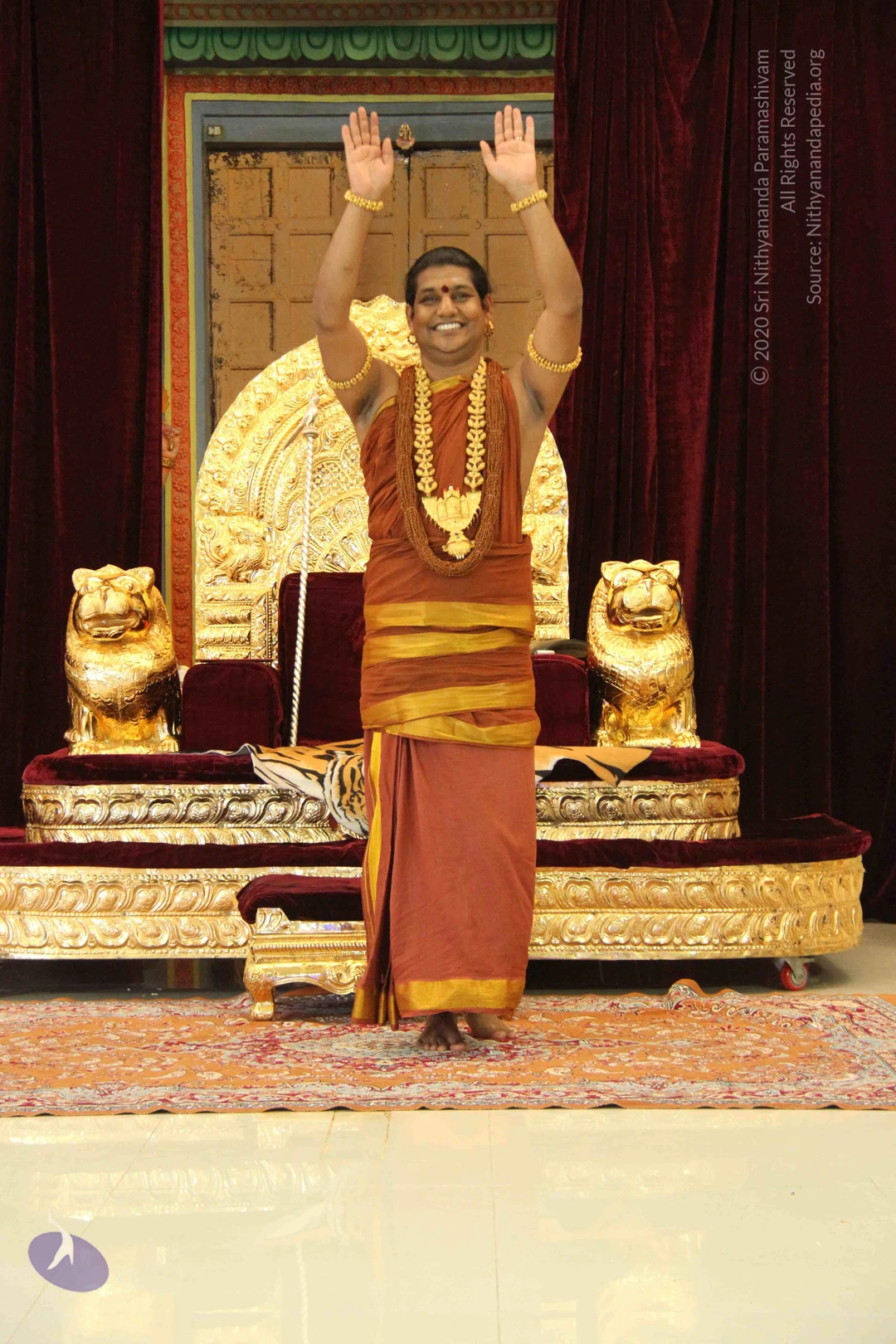
7 photosSource gallery
A priest with a shaved head, wearing an orange-brown dhoti and shawl with a gold border, stands at the right edge facing a golden Ganesha murti seated on a golden lion-supported throne with a crown-like top. The deity wears a garland of red, yellow and green flowers and silver ornaments and a red-gold cloth. The priest raises a silver multi-wick aarti lamp with lit flames toward the deity. Brass lamp stands and a painted backdrop with a colourful figure in orange and gold line the scene.A seated man in an ornate gold throne with a carved arched back and lion-like figures at the sides, draped over a tiger-print cloth. He wears an ochre-orange robe with a yellow border, layered rudraksha malas, a gold leaf-patterned necklace with a gold pendant, gold armlets, a red bindi, and a small headset microphone. He sits cross-legged, smiling, one hand resting on the armrest. No other people are visible.A man in rust-brown and gold-bordered robes stands beside a clear acrylic lectern, smiling and gesturing with his left hand on the lectern edge. He wears a red bindi, gold earrings, a gold-and-rust rudraksha-style mala with a large gold ornamental pendant, and gold bangles on his wrists and upper arm. Behind him stands a painted deity murti with an ornate crown, orange-red skin and a raised finger, against a blue and green temple backdrop with a decorative pink lotus-style column top.A man with a short-cropped head and red bindi stands before a colourful temple-style backdrop, wearing a rust-brown robe with gold borders, a gold leaf-patterned necklace and gold bangles, and a small headset microphone. He gestures with one hand, holding a clear sheet. Behind him stands a painted deity murti with a tall black-and-gold crown, orange skin, multiple arms and a flaming torch in one hand. A gilded lion sculpture and a brass lamp stand to the side. a person identity is not established by appearance alone, so the speaker is recorded as a person.A man seated on an ornate gold throne with carved floral and scrollwork panels and a tiger-striped cloth draped over the seat. He wears a rust-orange dhoti and shawl with a gold-bordered edge, a long multi-strand rudraksha mala with a large gold ceremonial pendant, gold armlets and bangles, and a red bindi on his forehead. He smiles and gestures with one hand resting on his knee while a microphone is attached near his face. A silver-toned carved post topped with a bird figure stands beside the throne. A painted deity figure is partly visible at the right edge. The a person appearance cues are the saffron-orange robe, rudraksha mala and ceremonial gold ornaments of a seated speaker on a throne.A seated man in a rust-orange cloth wrapped over one shoulder, with a yellow-bordered lower garment, sits on an ornate gold throne with a repoussé arched backrest carved with lion-like figures. He wears a long rudraksha-style mala with a gold floral necklace and a gold pendant, gold armlets and bracelets, drop earrings, and a red bindi. A silver staff topped with a bird rests beside the throne, a microphone is clipped near his face, and a tiger-striped cloth covers the seat. He smiles and gestures as he speaks. a person: the orange robe, gold necklace, rudraksha mala and ceremonial ornaments are the qualifying cues for a seated speaker on a golden throne.