Skip to content
Thursday

14 February 2013

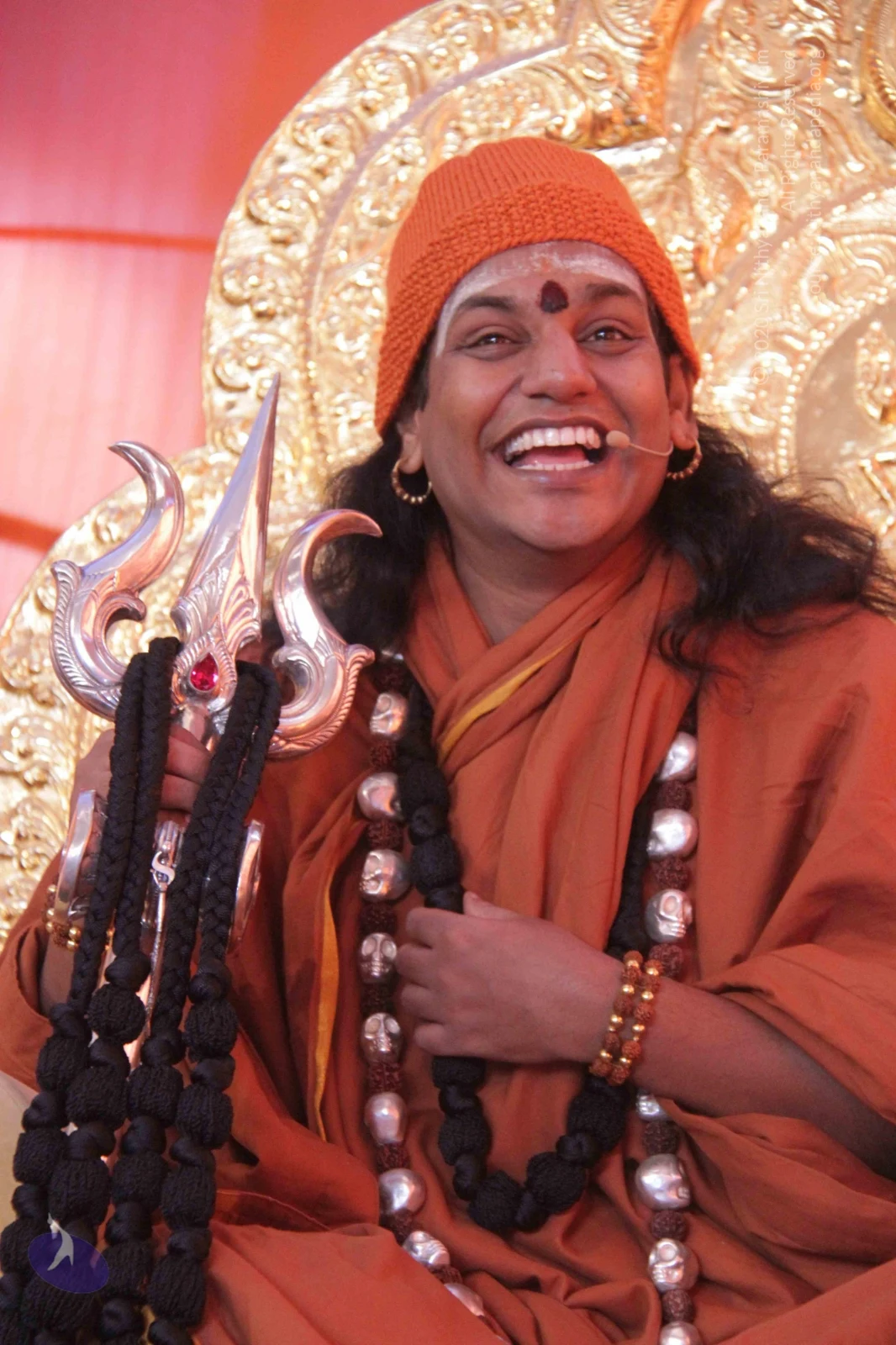
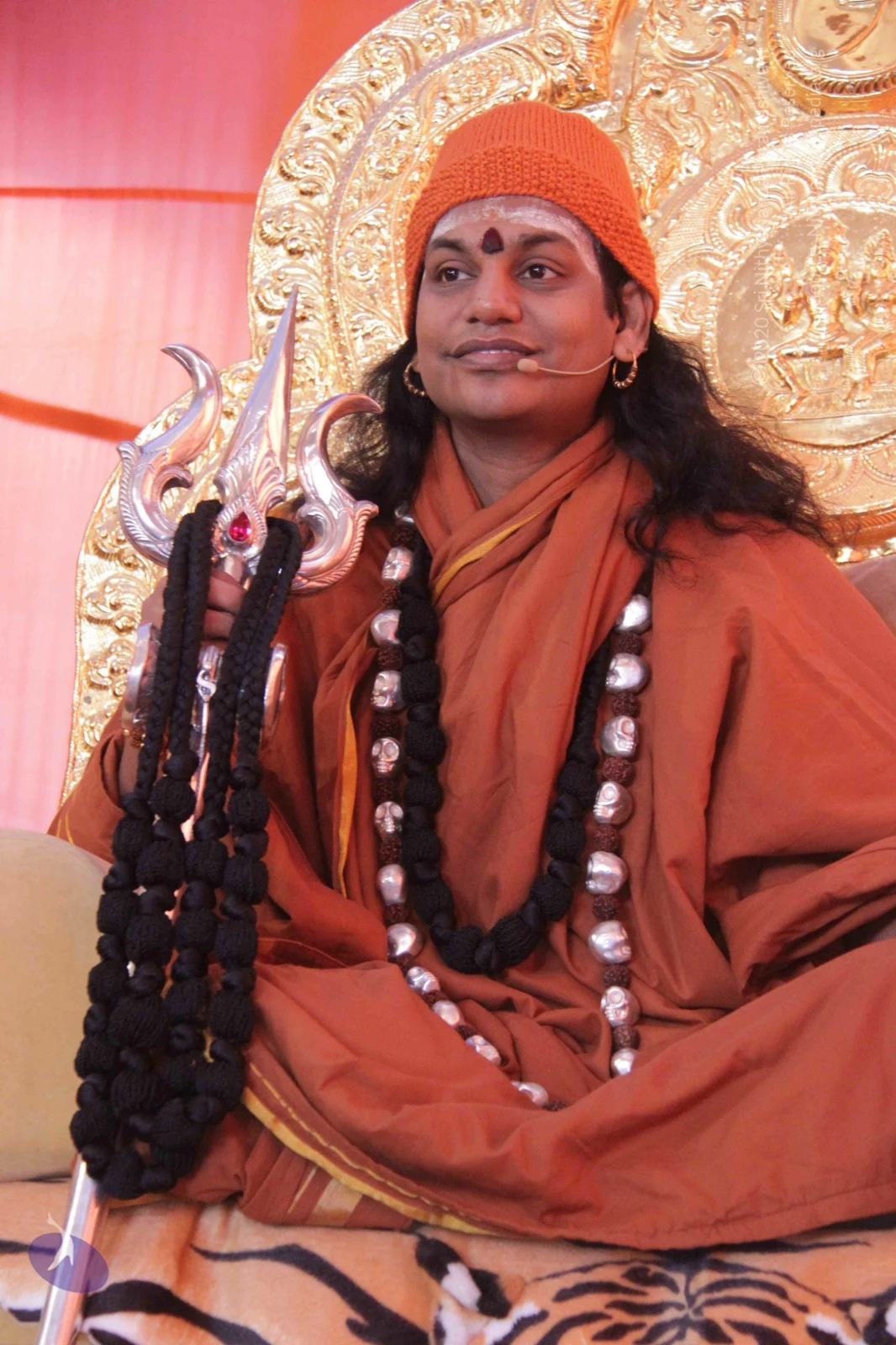
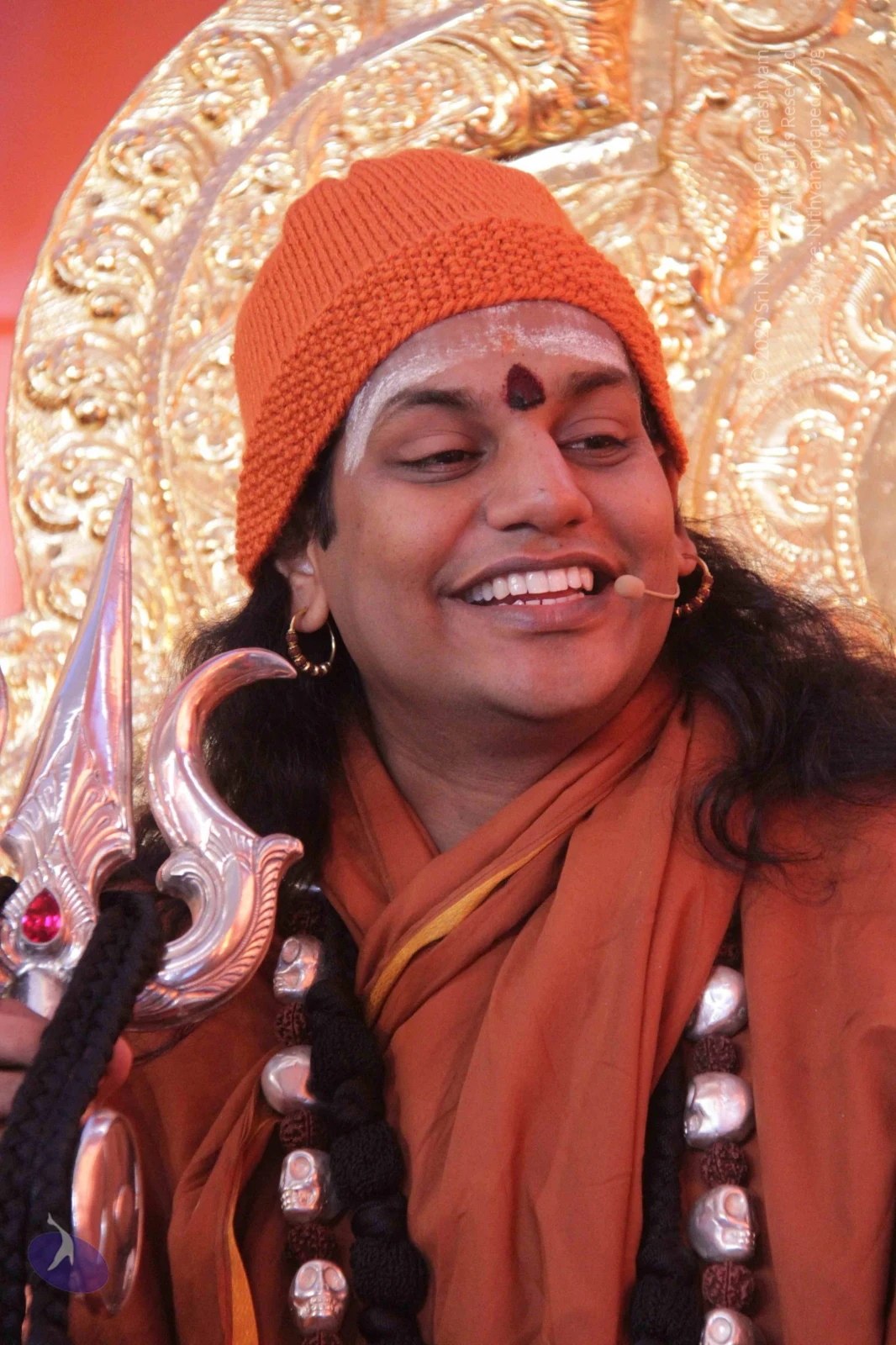
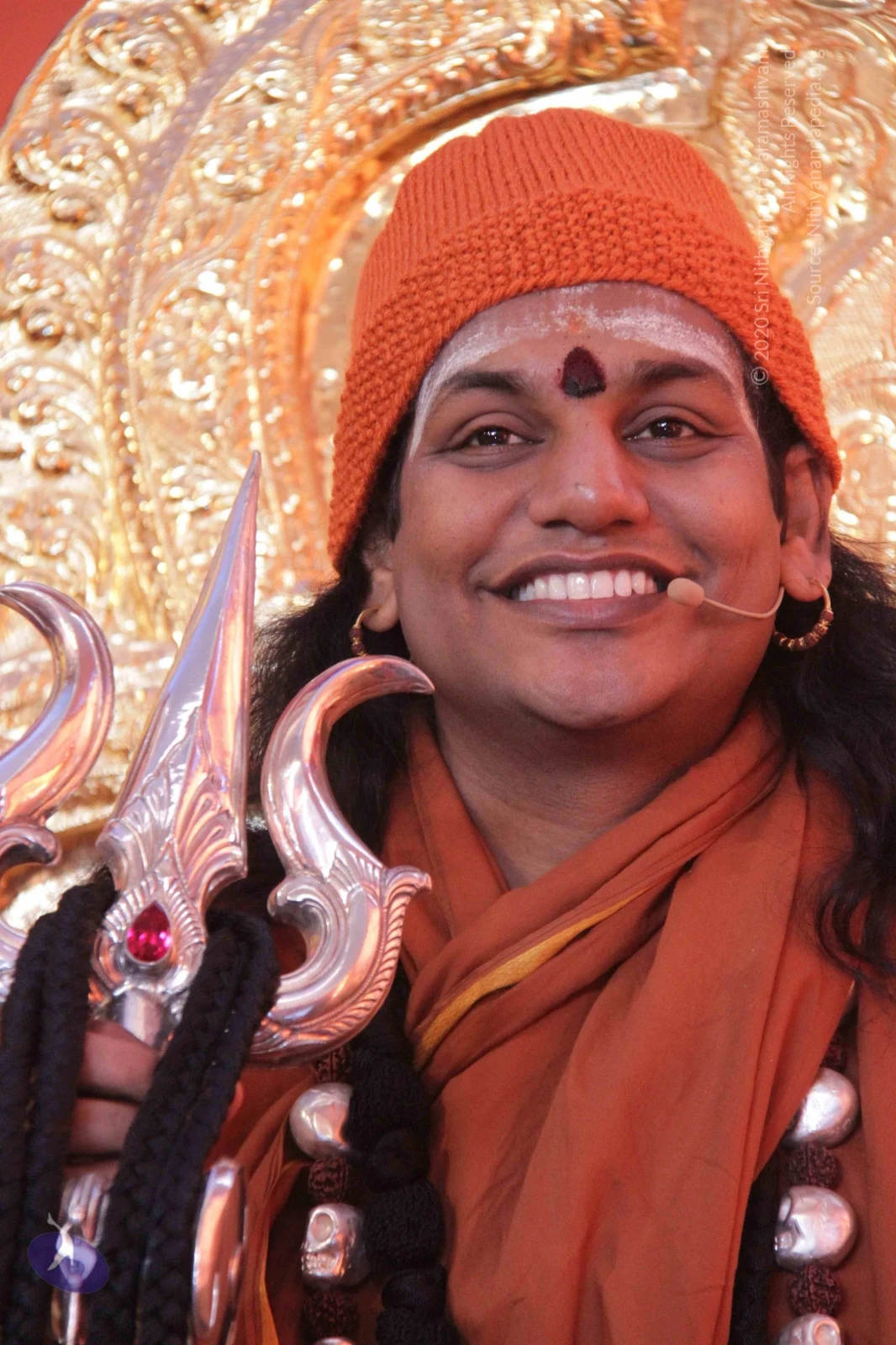
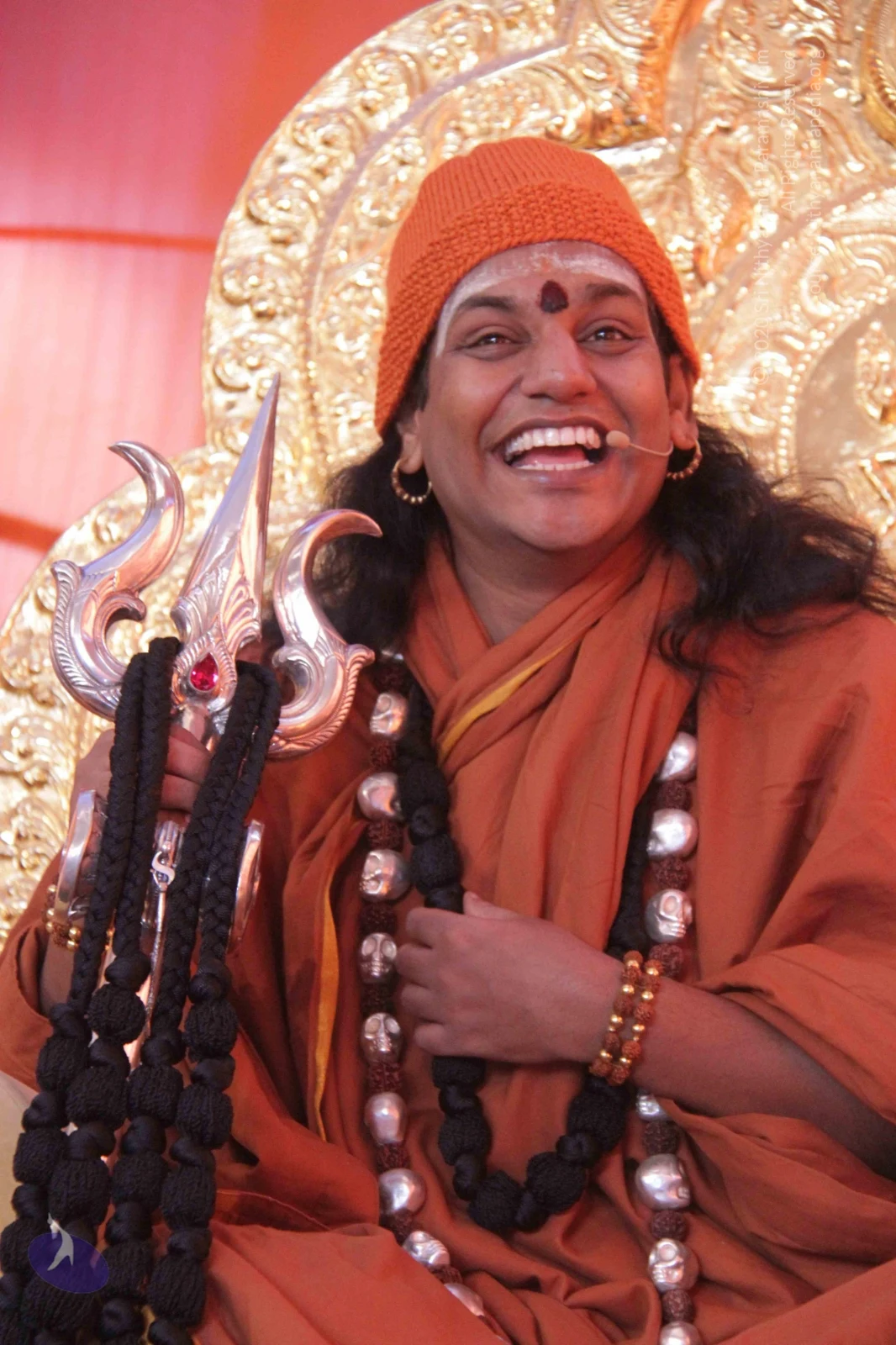
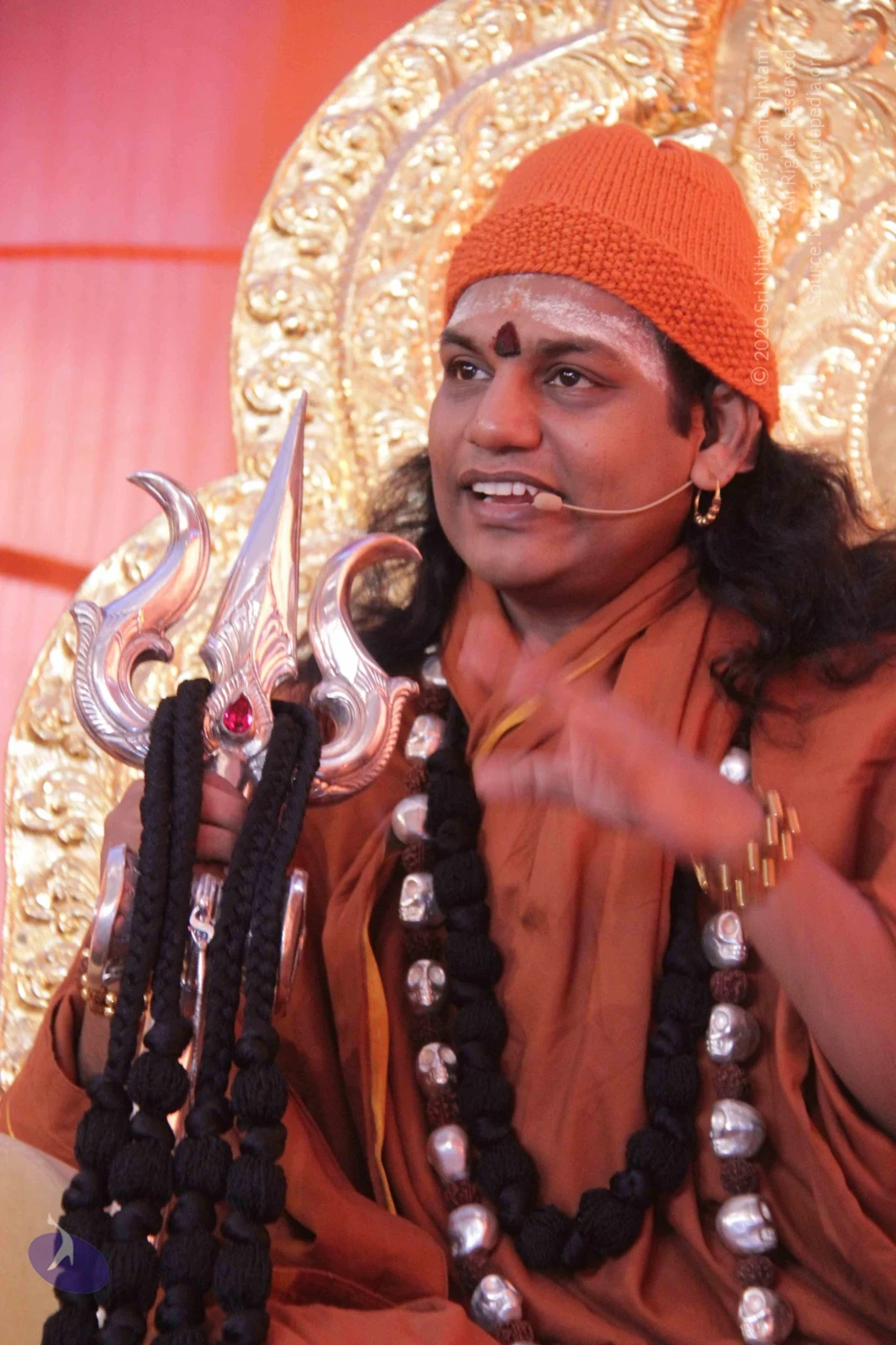
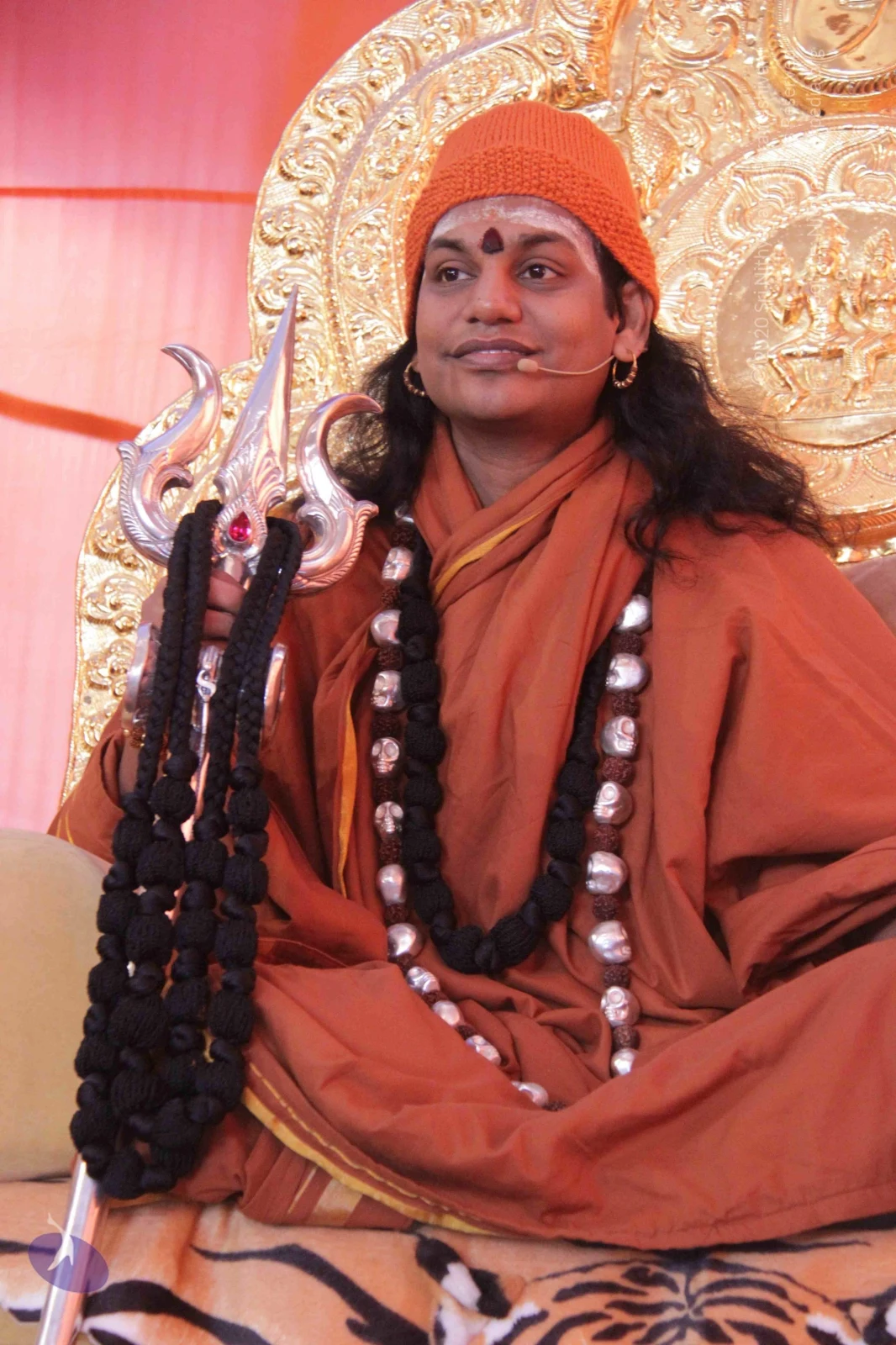
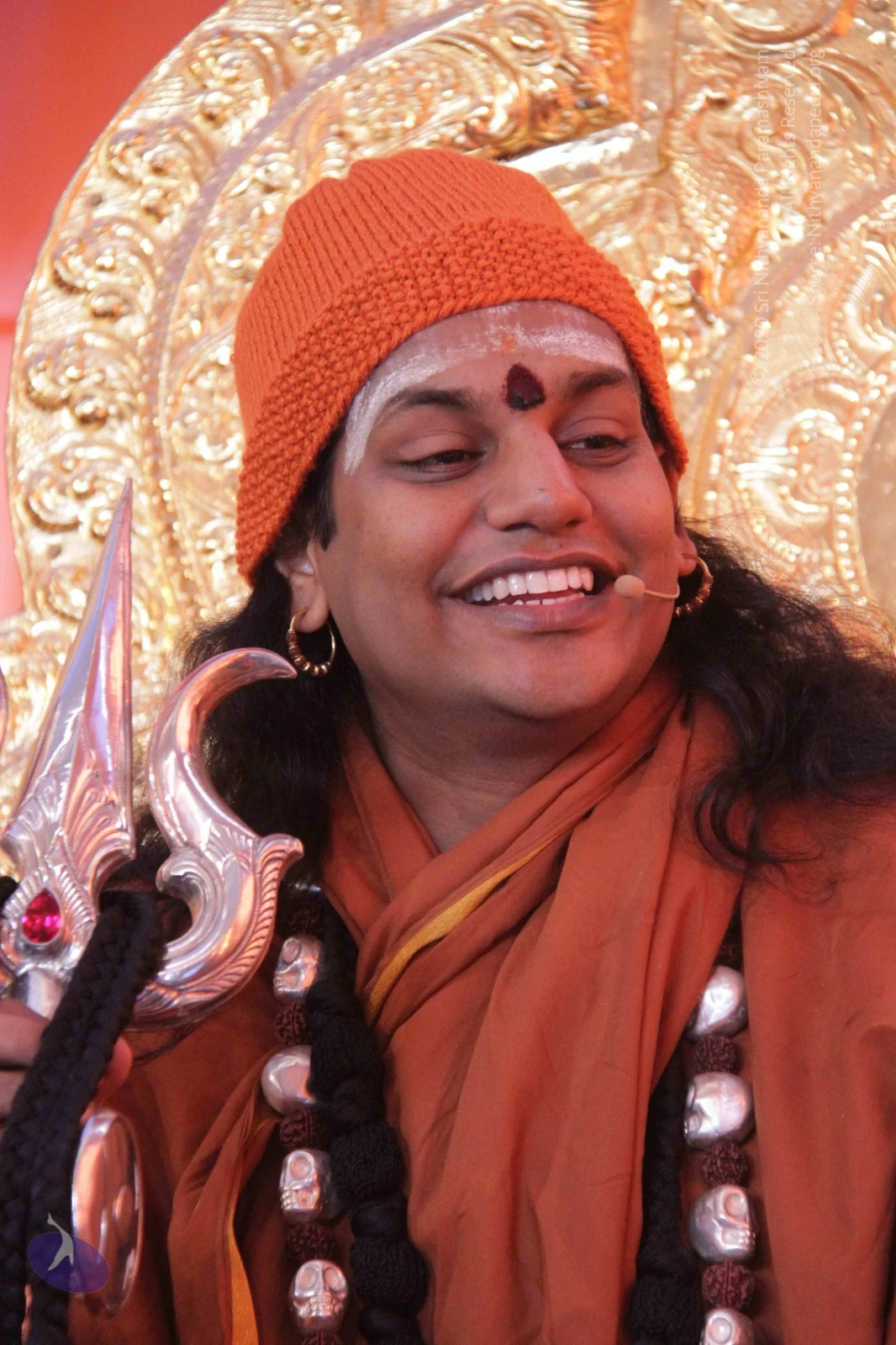
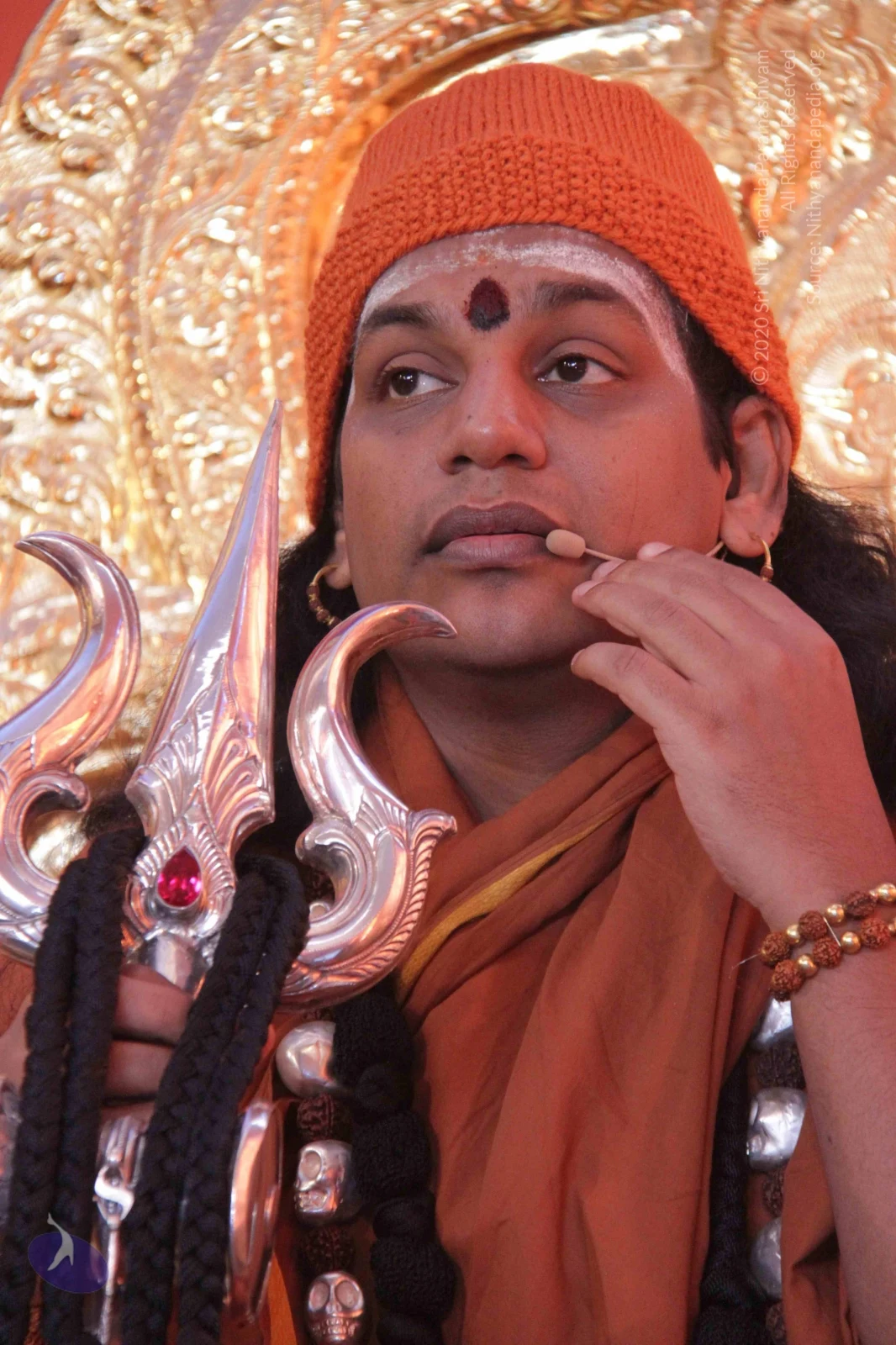
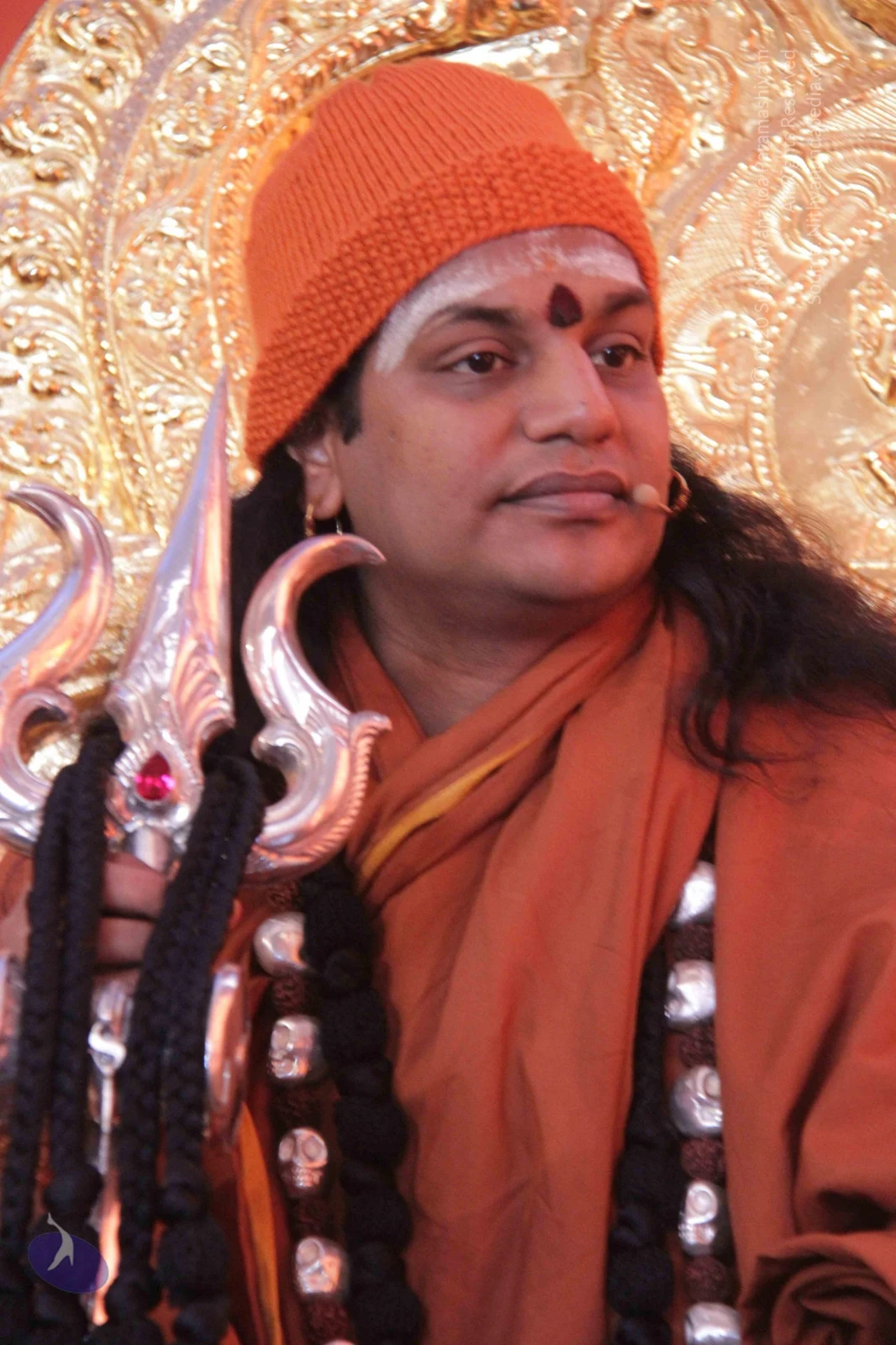
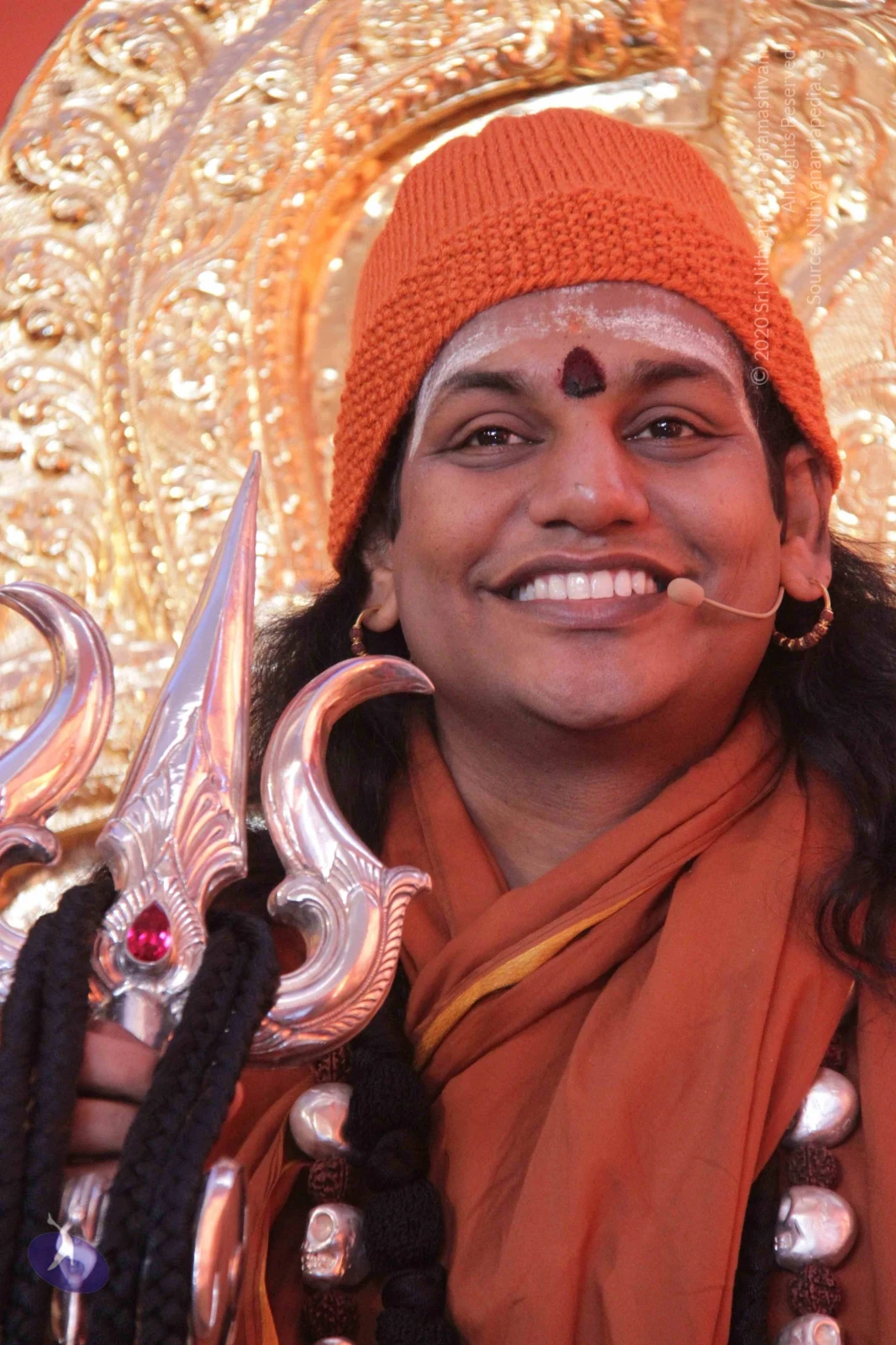
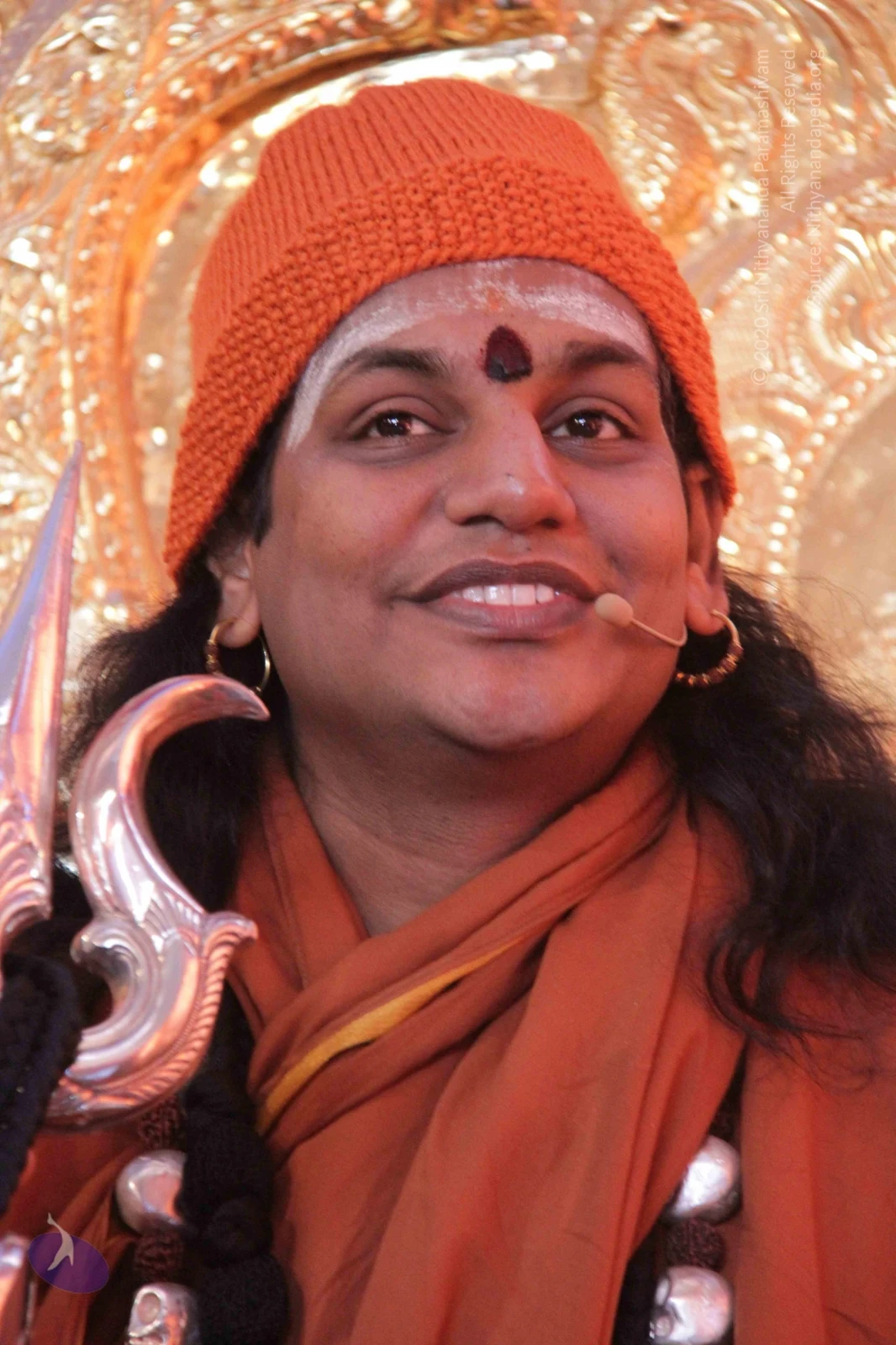
Supreme Pontiff of Hinduism HDH Bhagavan Sri Nithyananda Paramashivam.

Dated photos
526
Source pages
1
Media
1
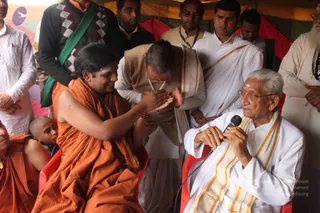
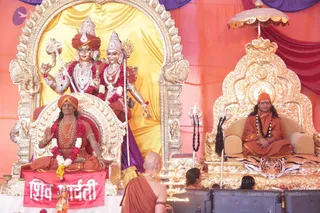
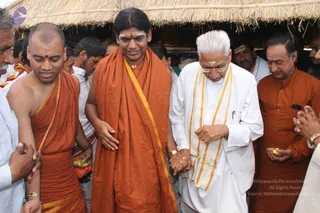
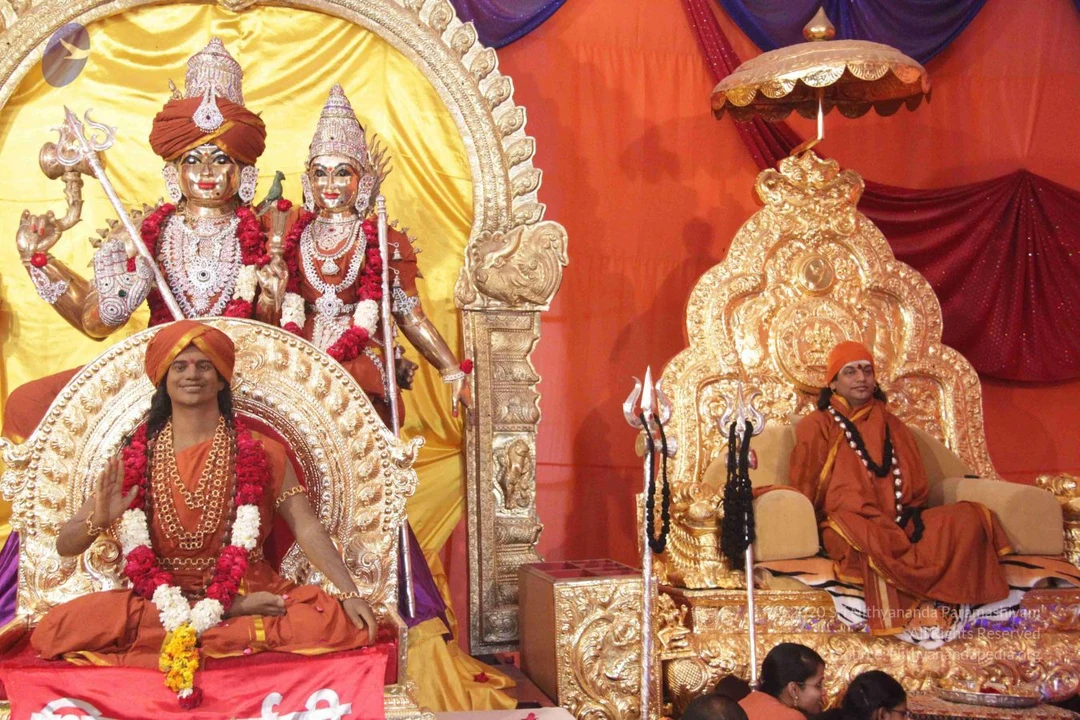
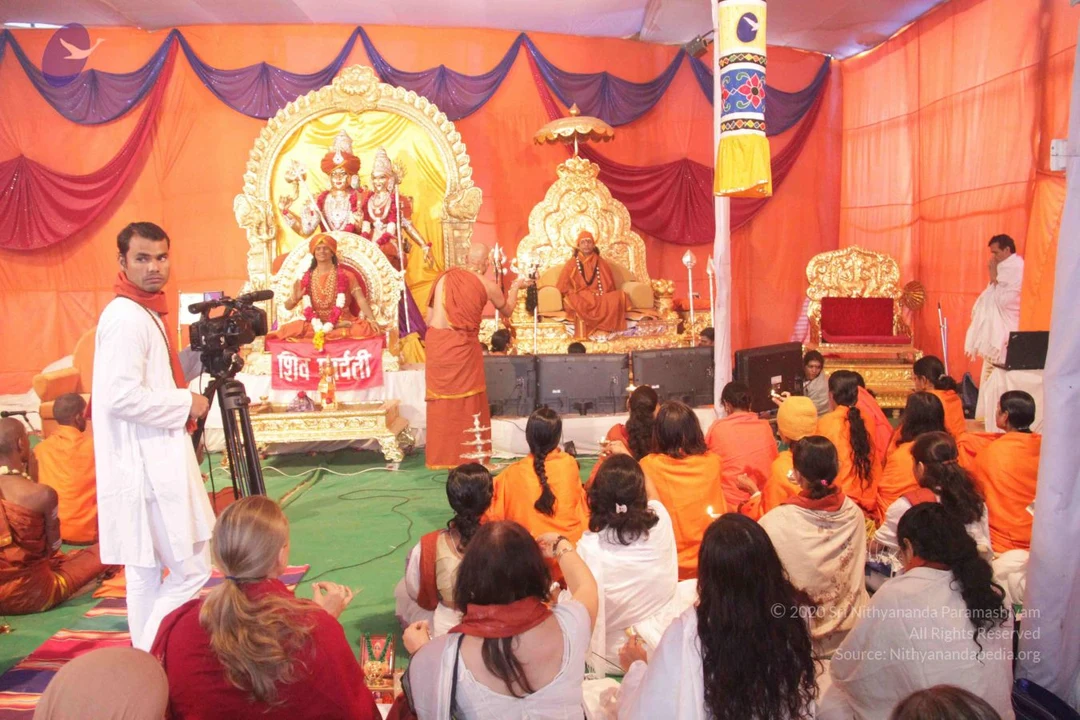
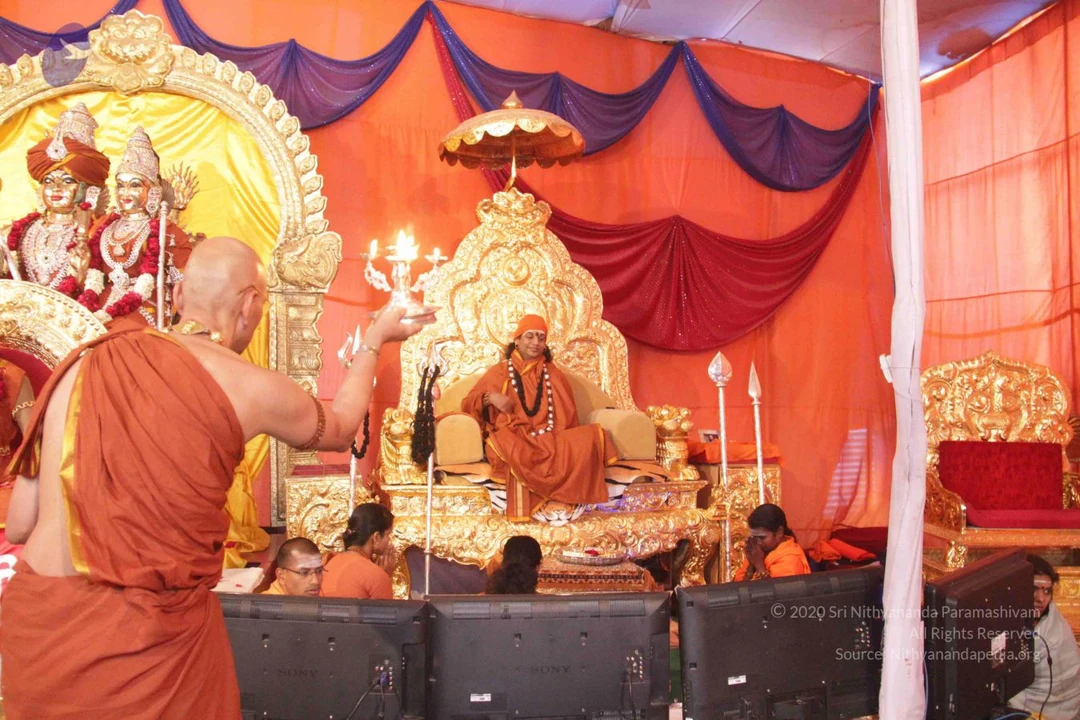
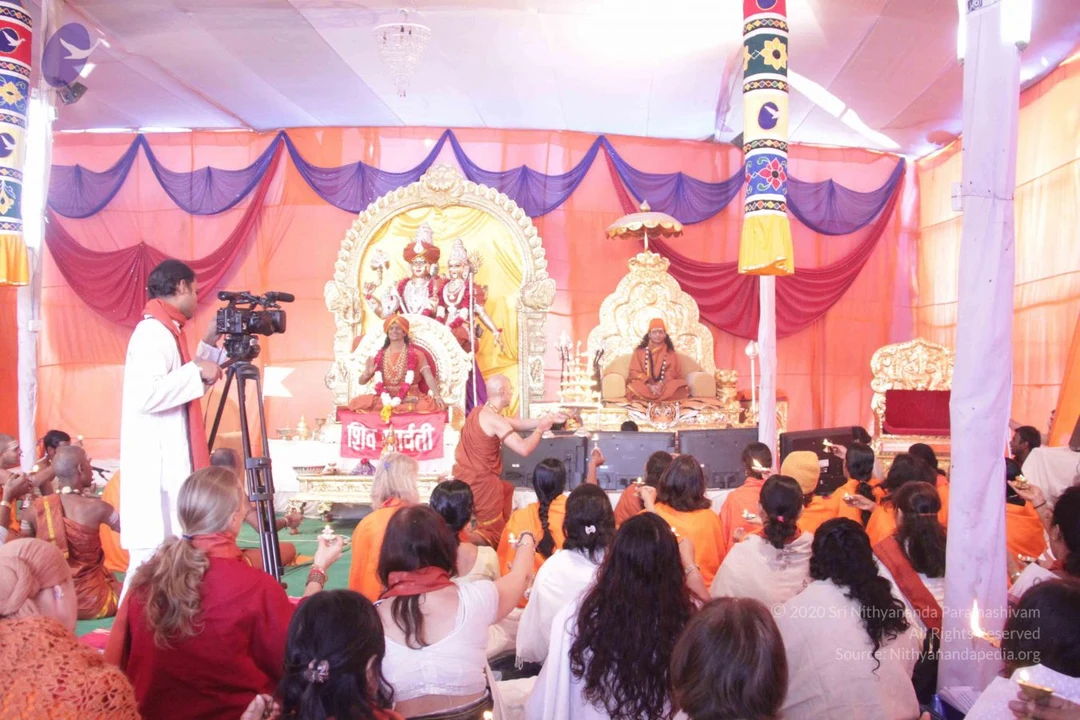
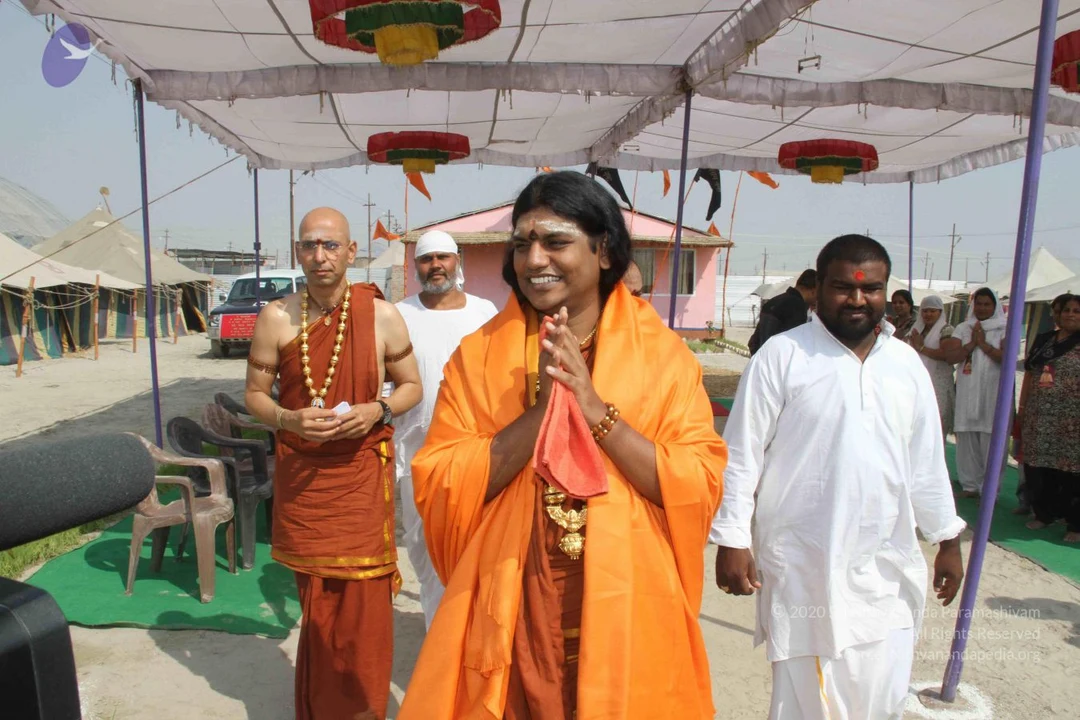
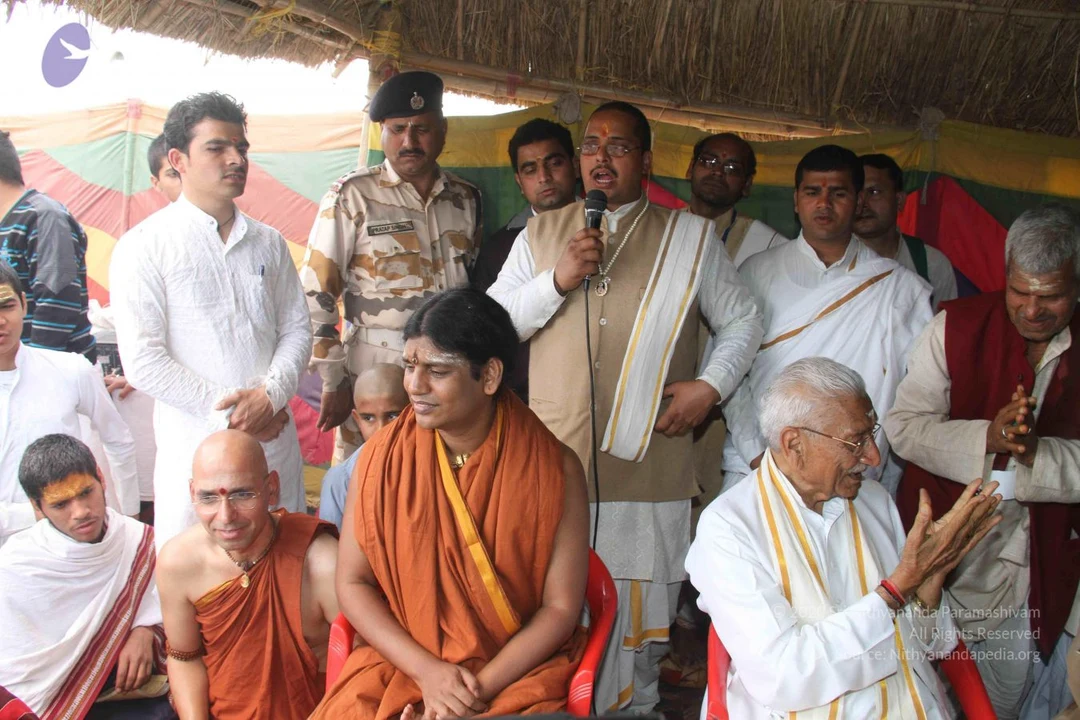
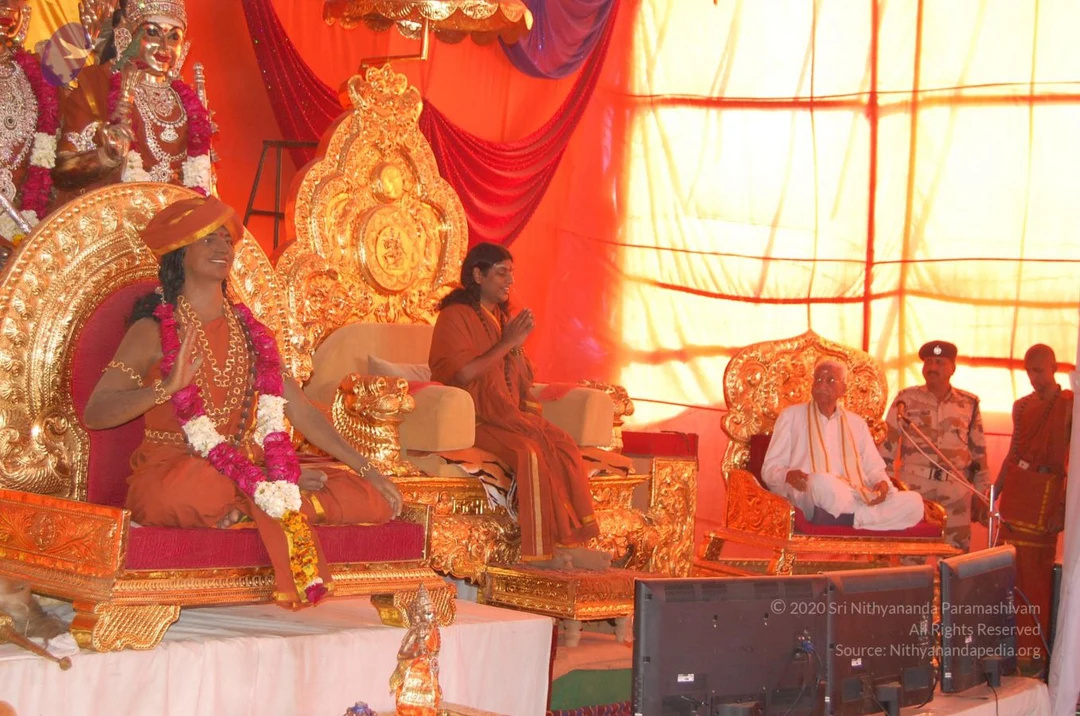
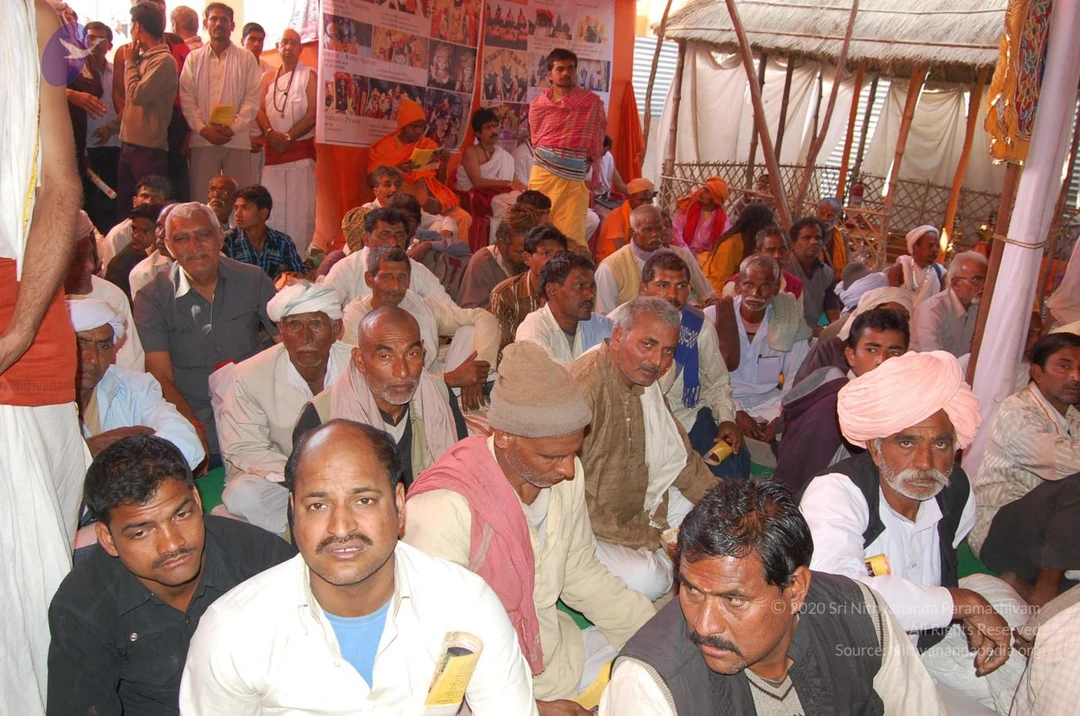
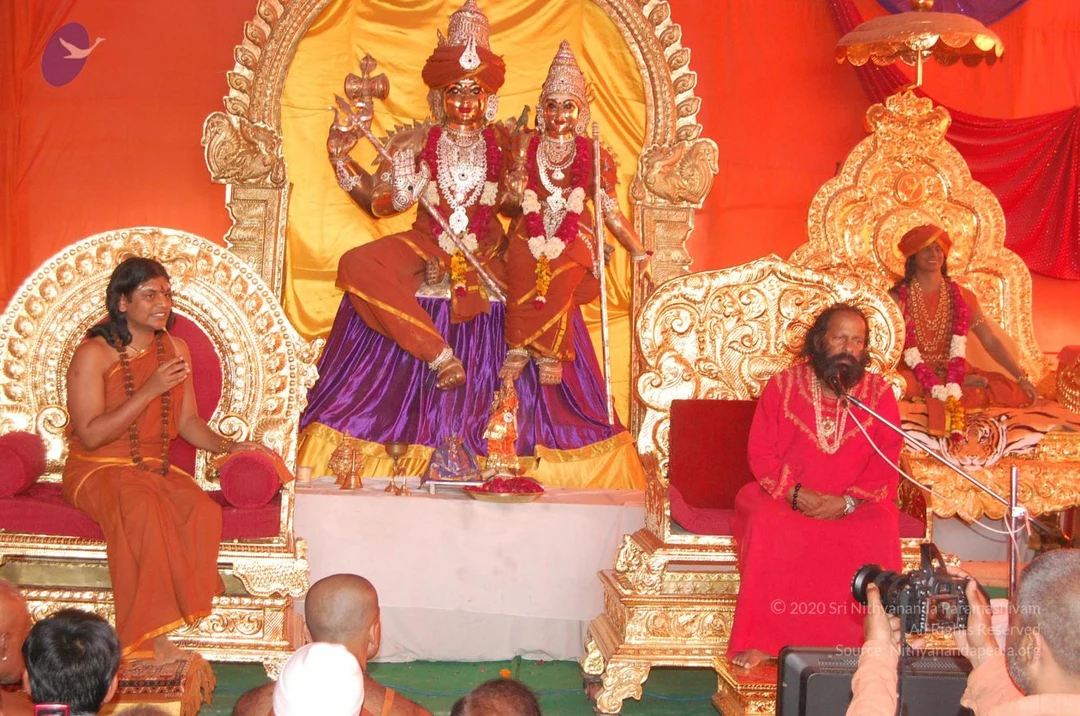
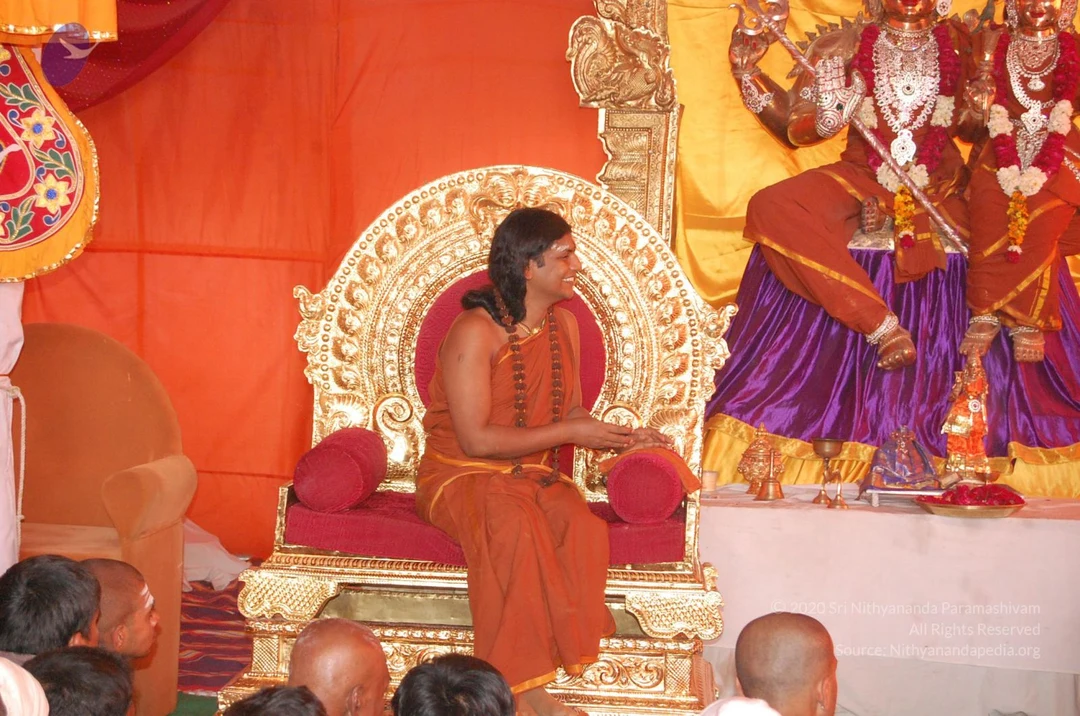
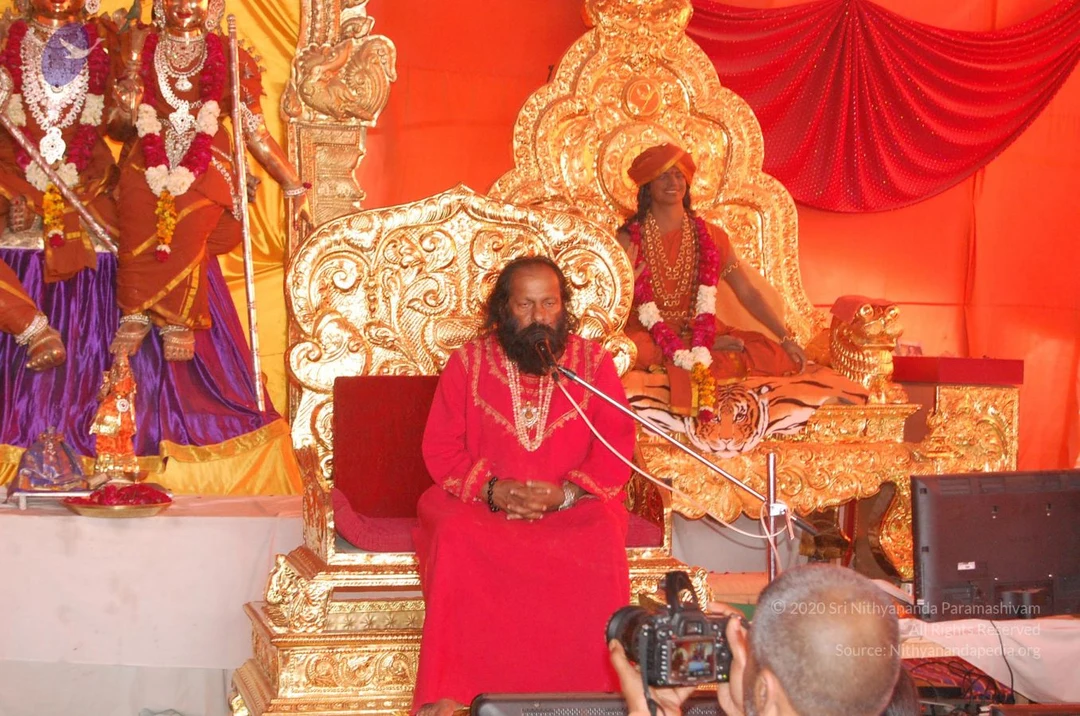
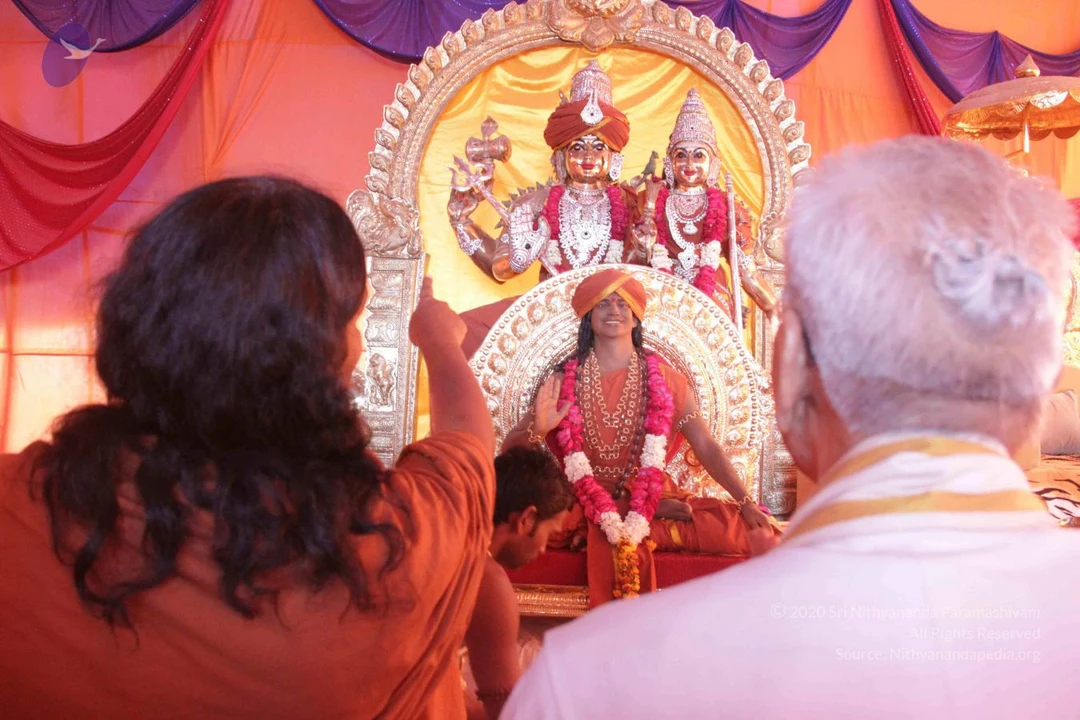
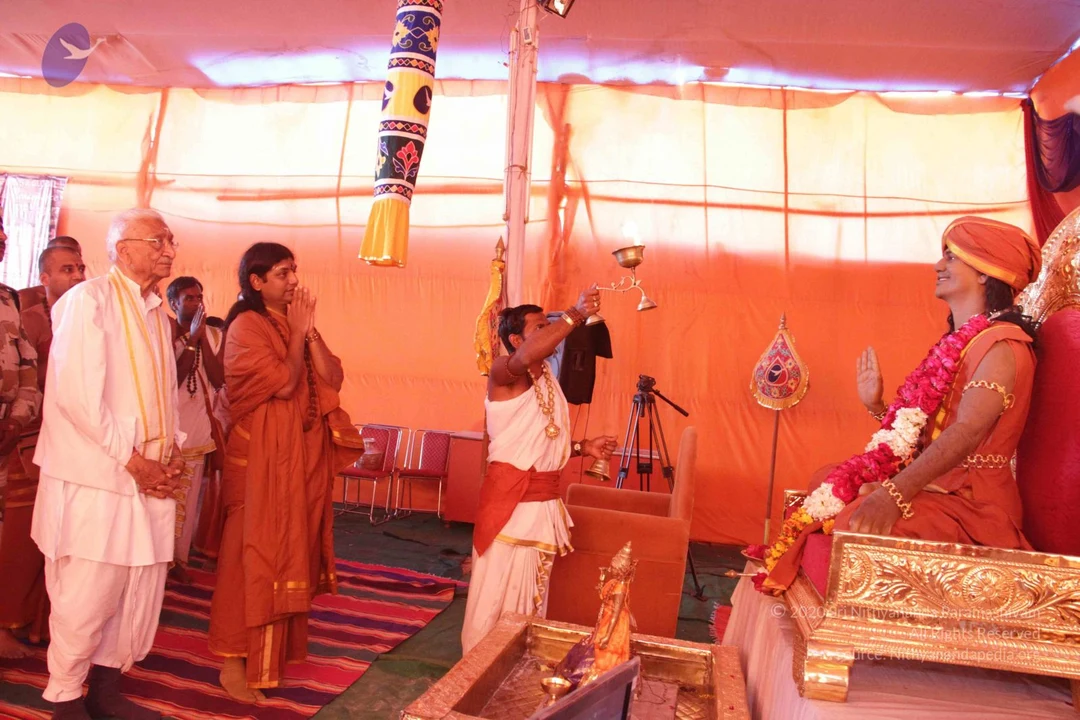
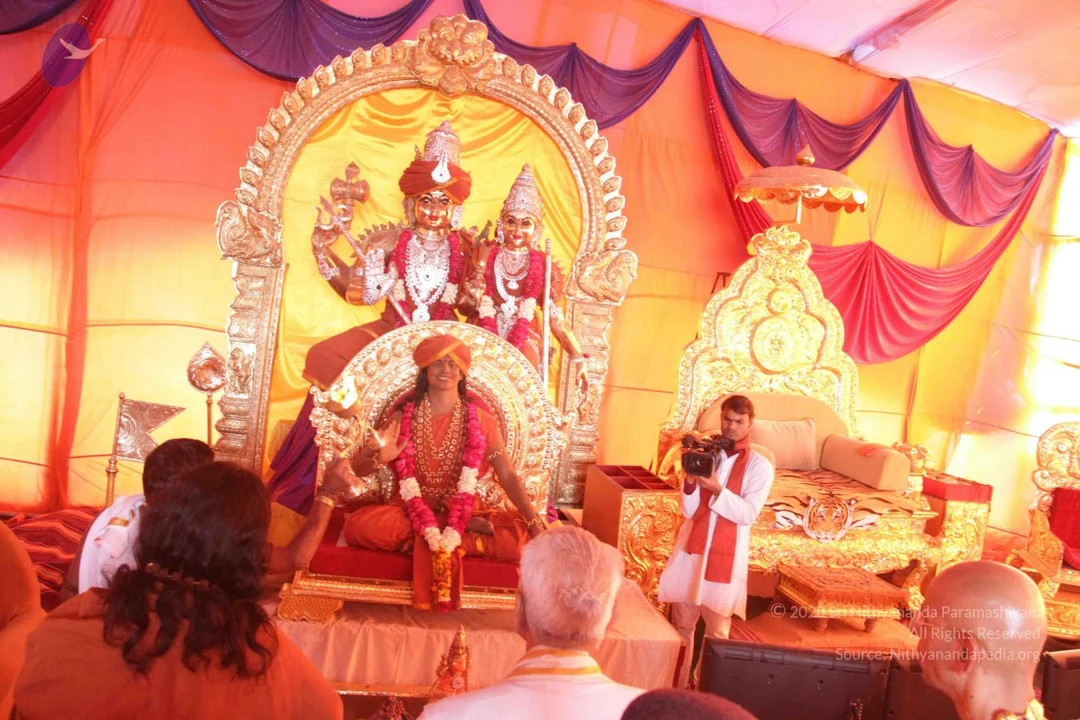
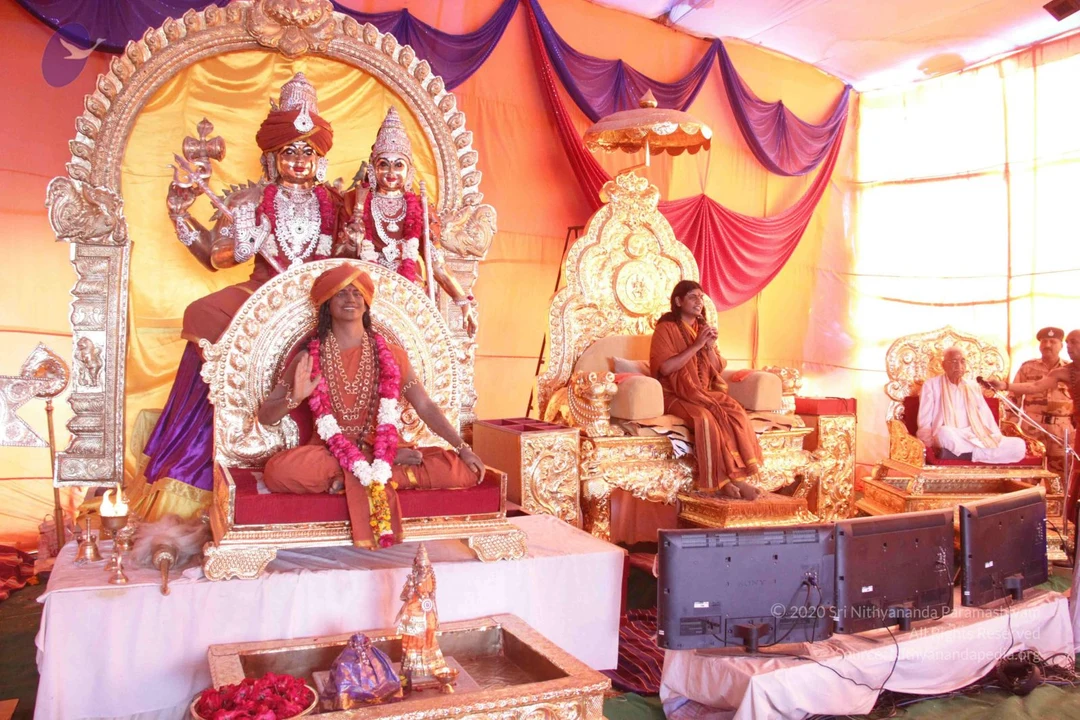
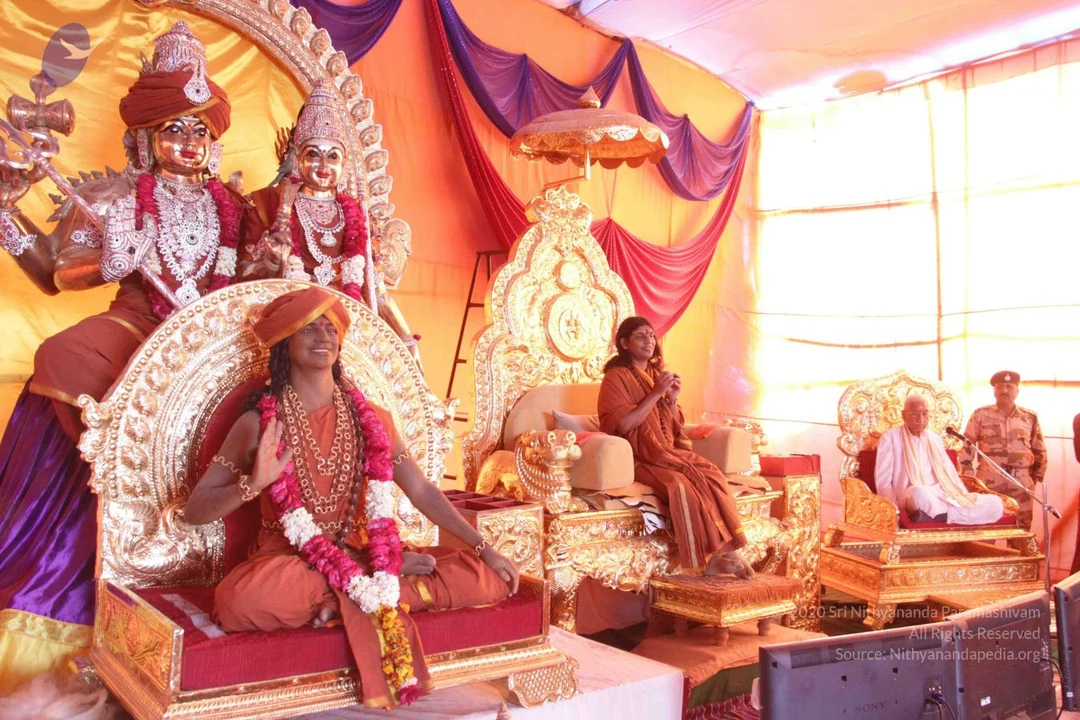
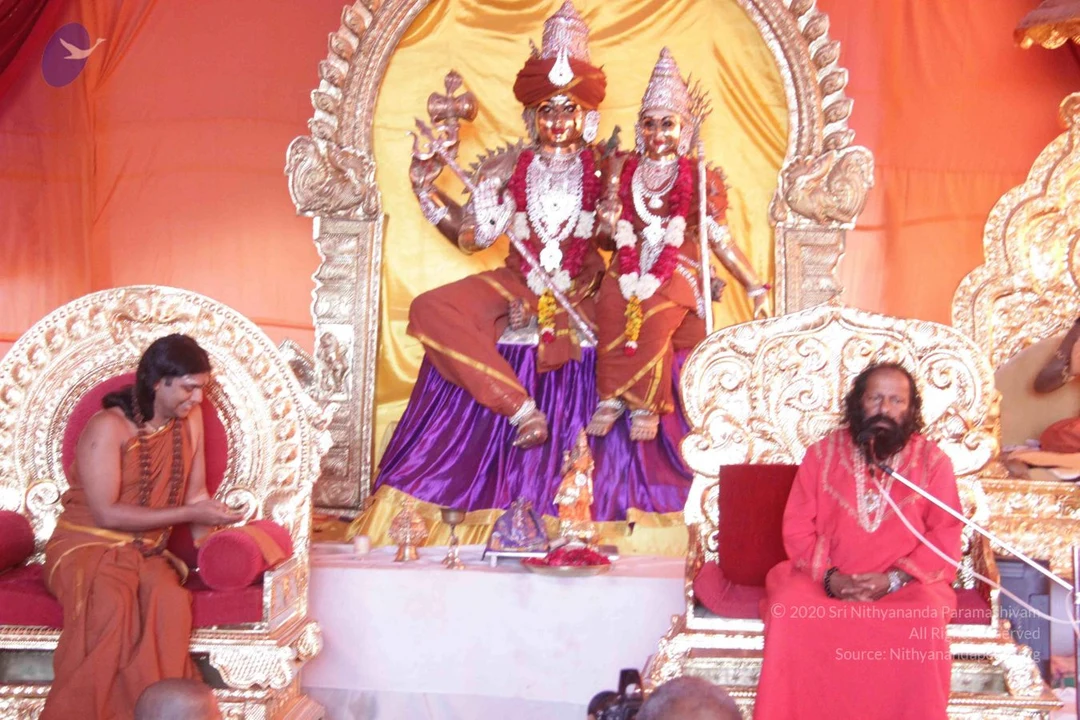
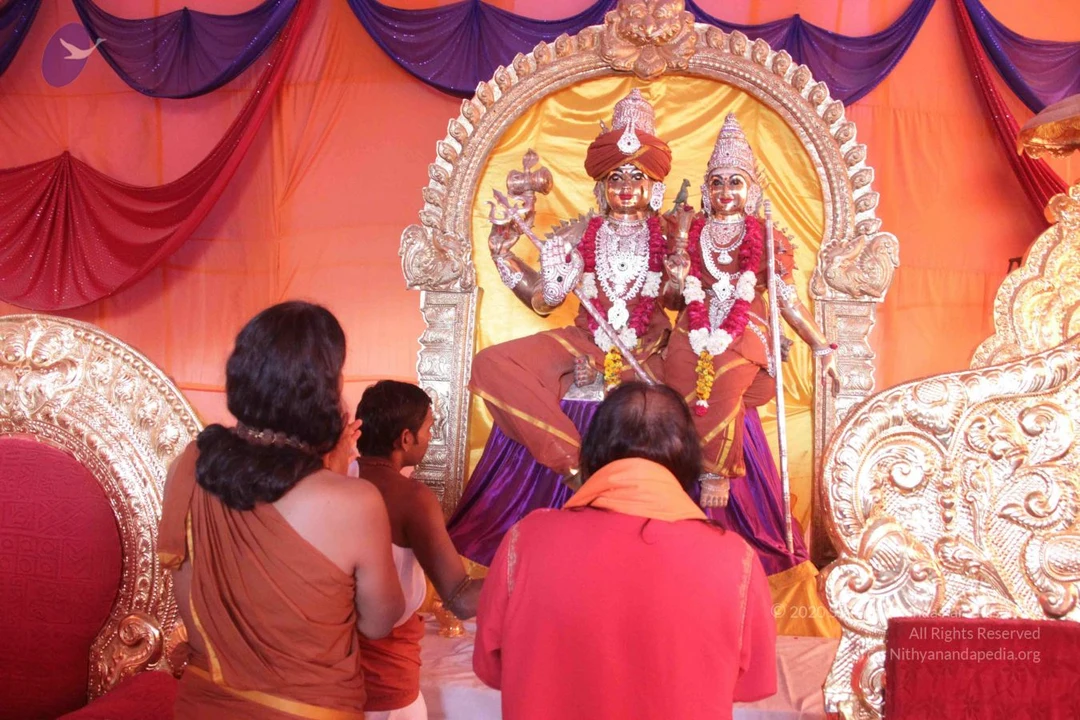
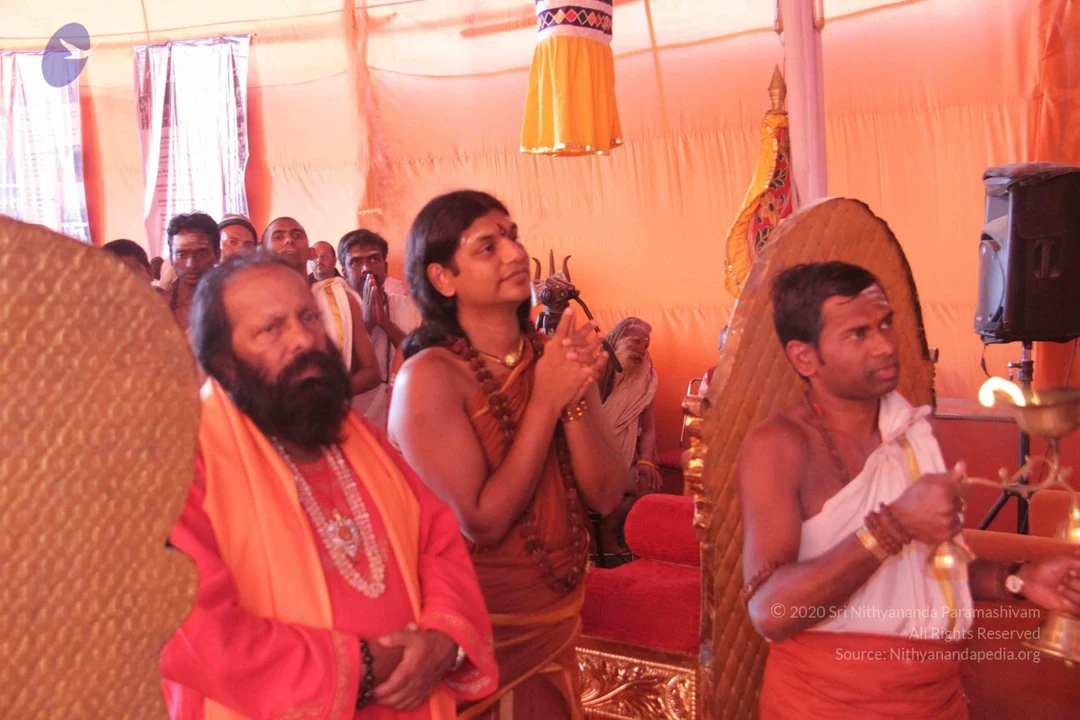
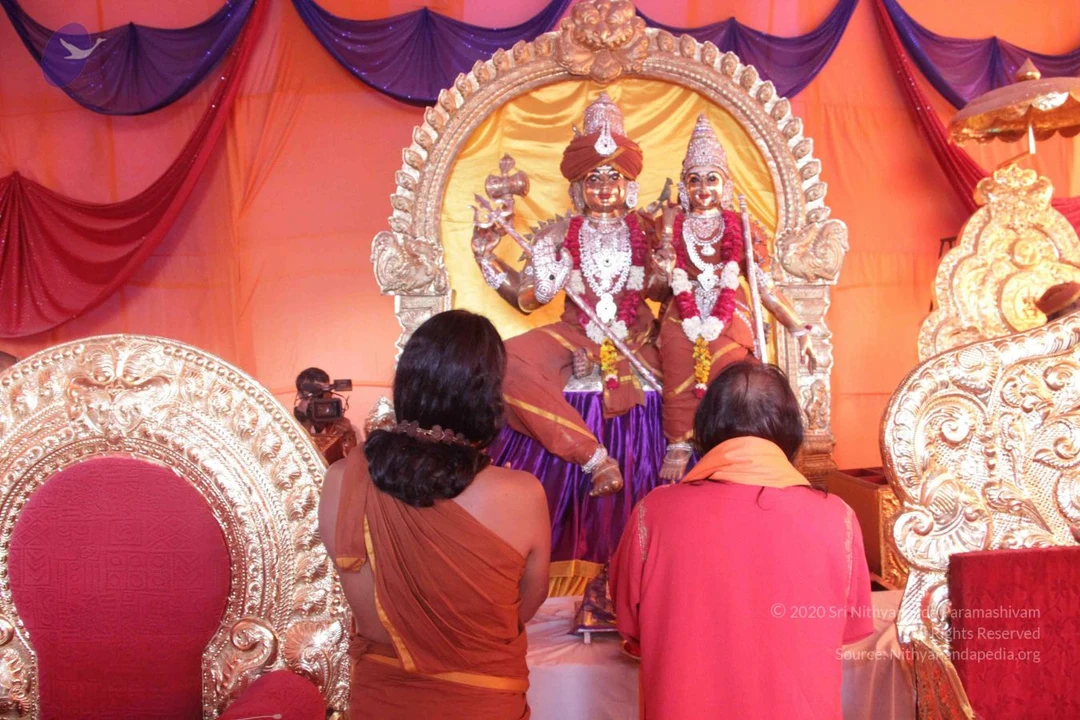
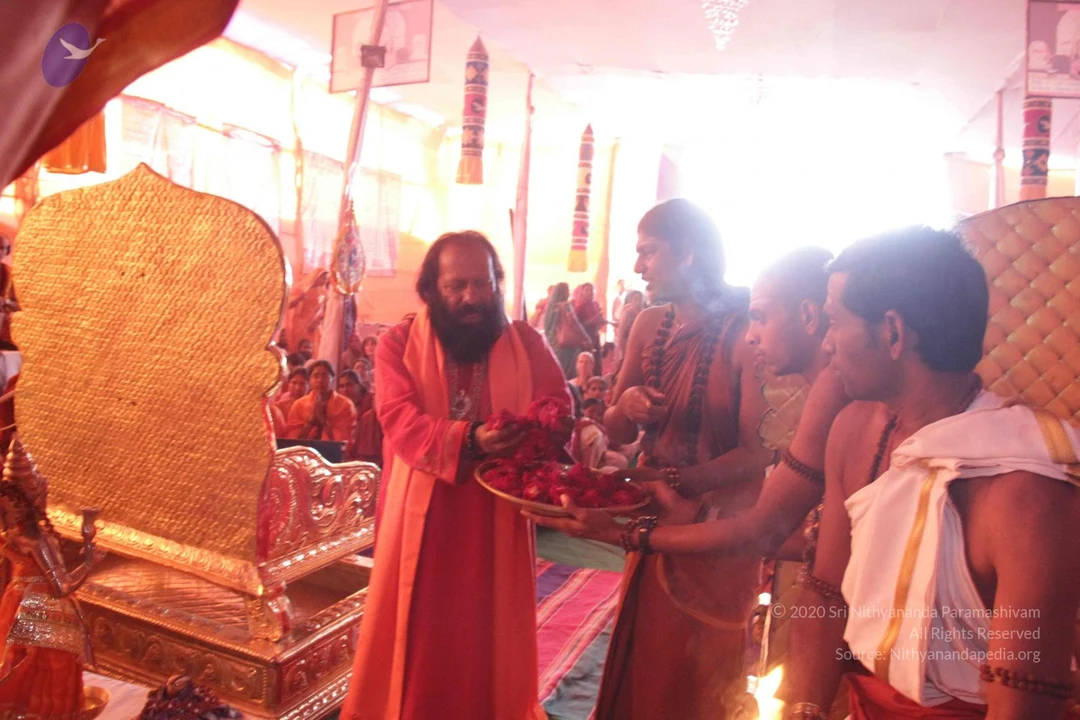
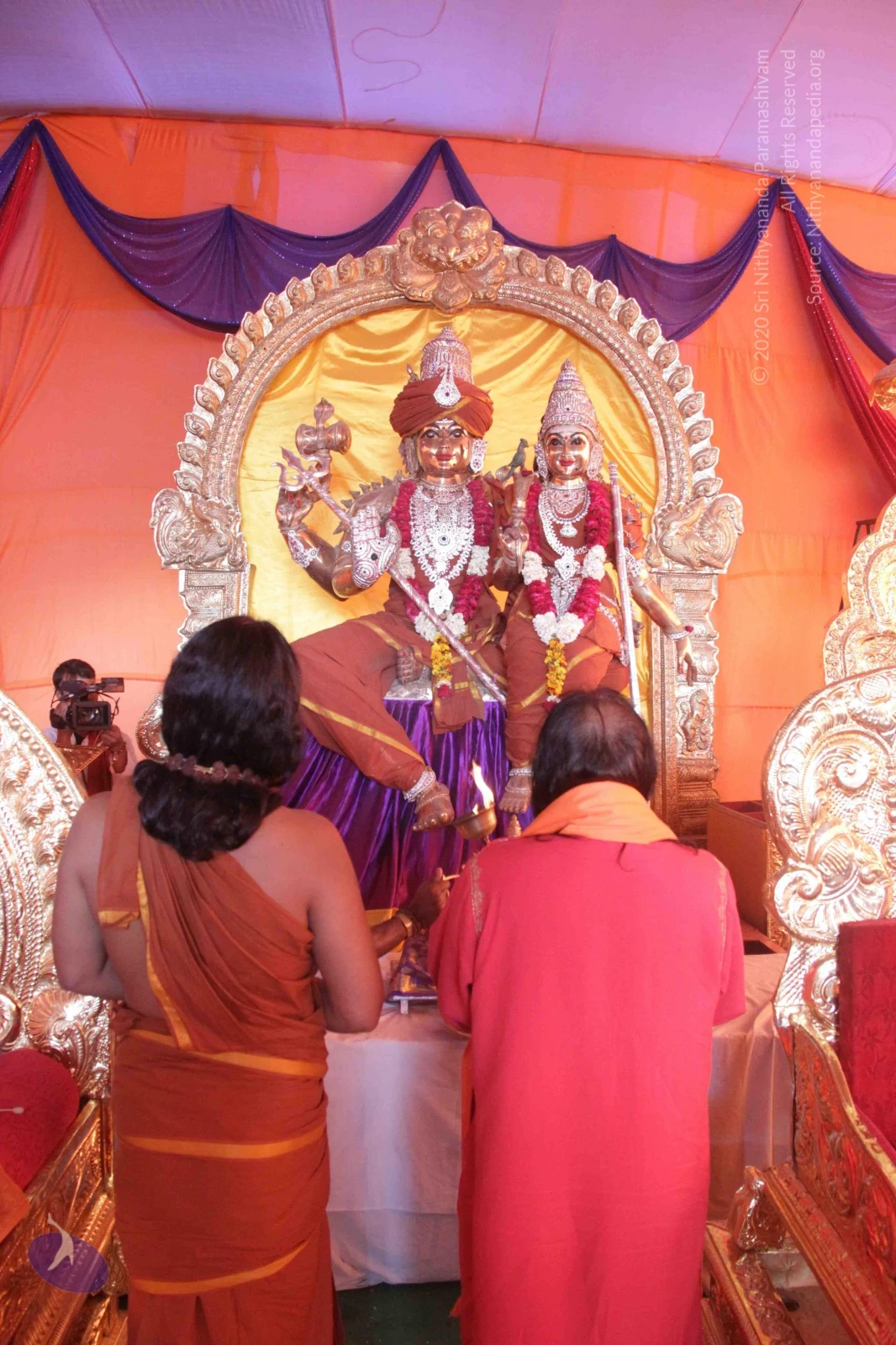
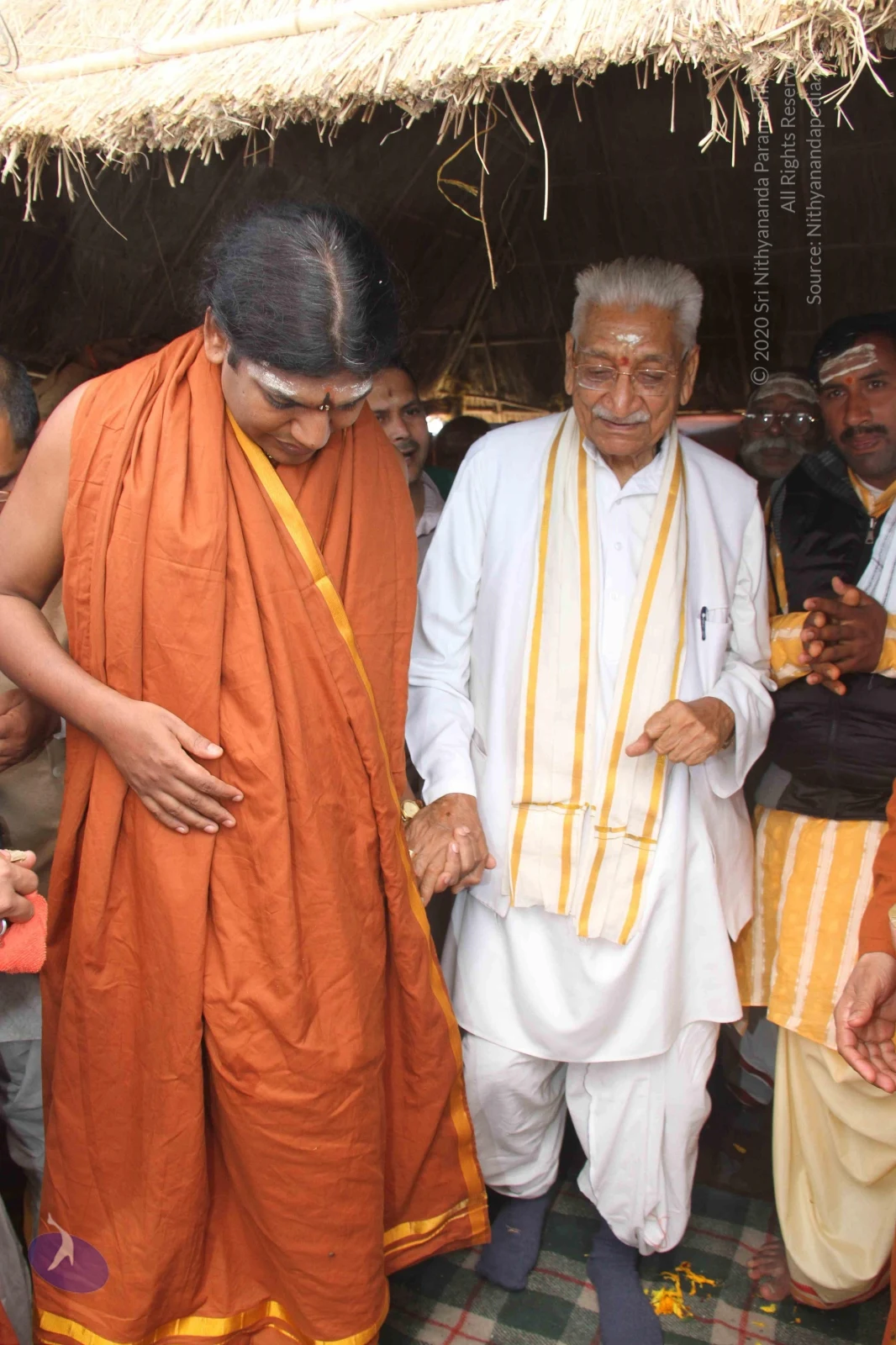
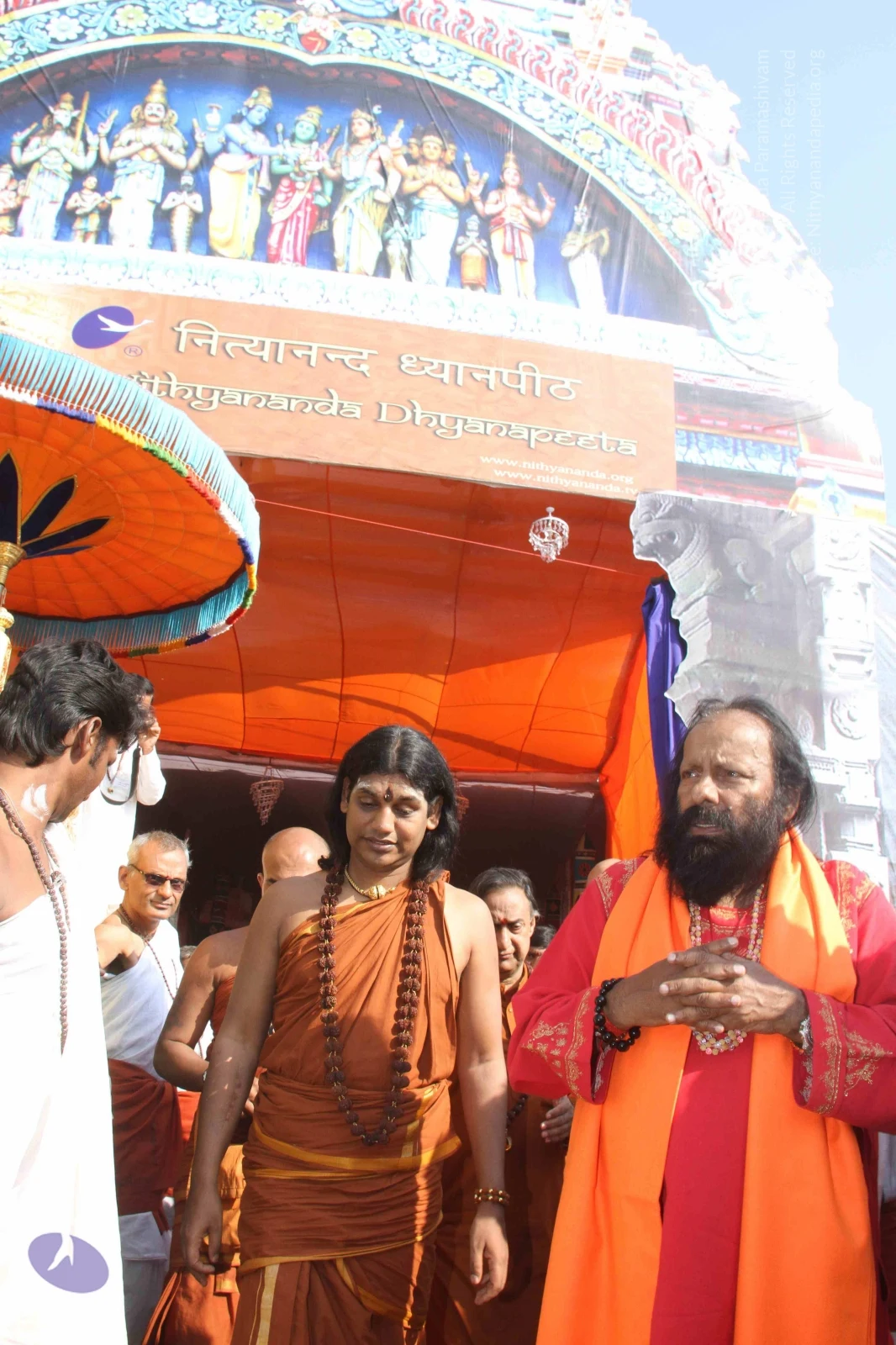
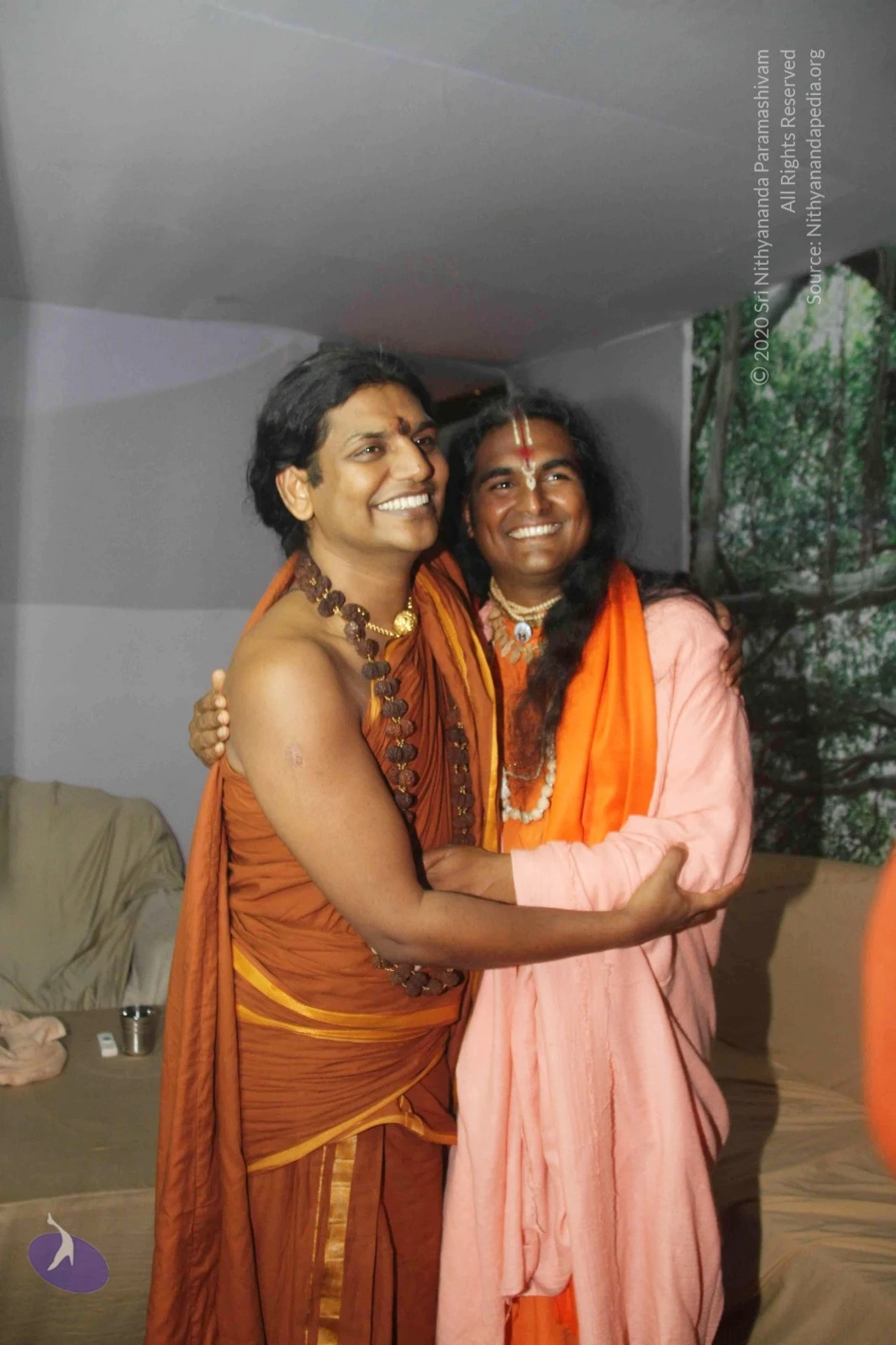
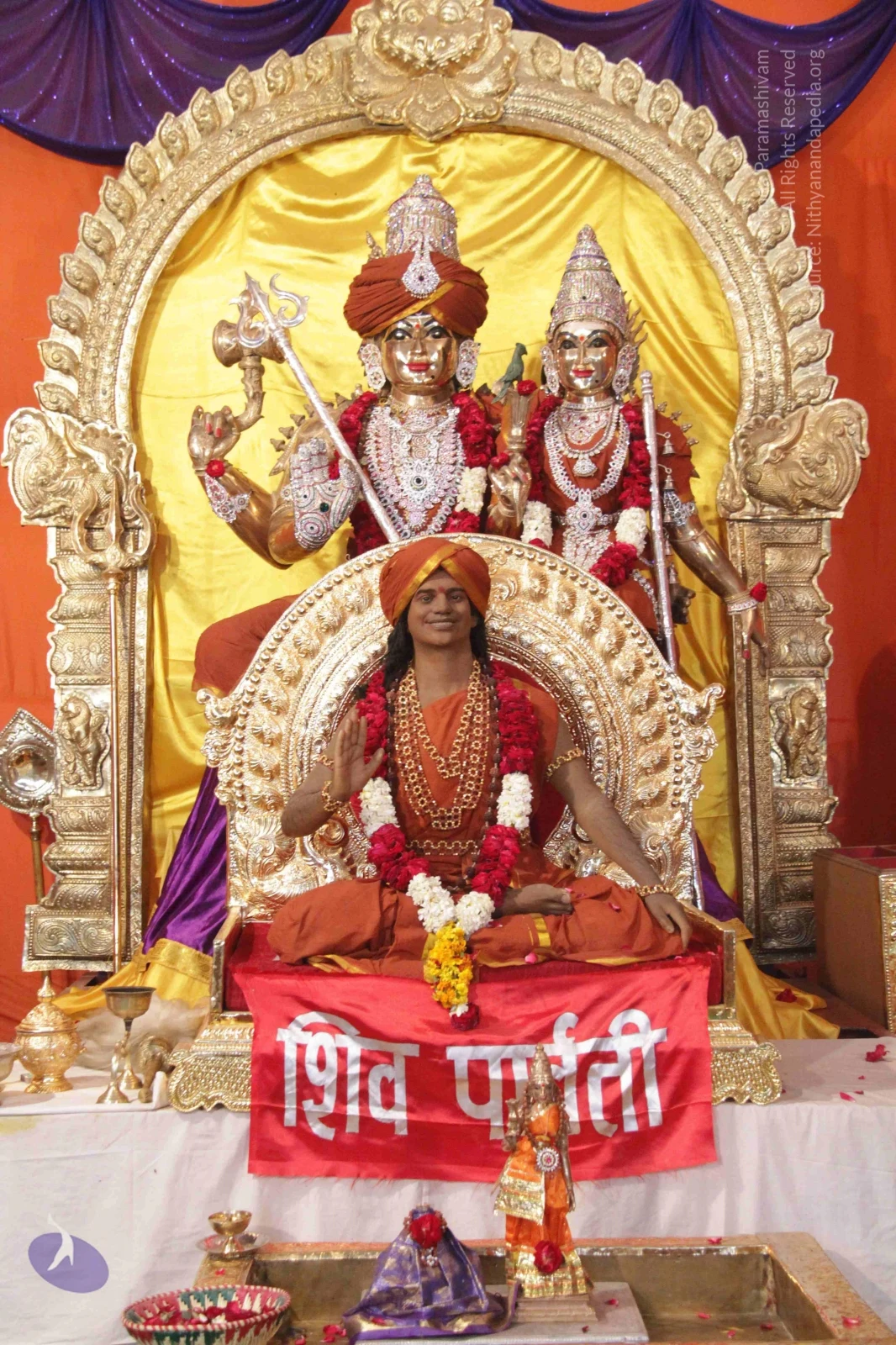
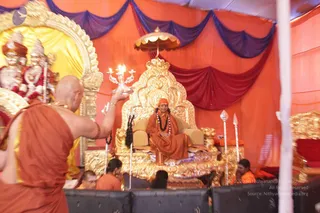
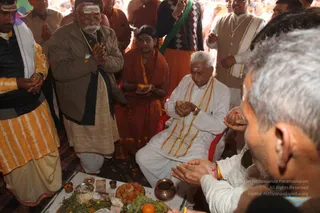
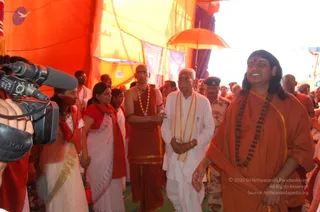
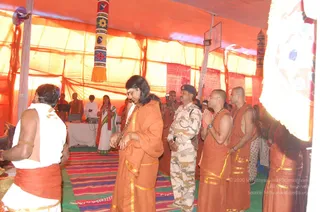
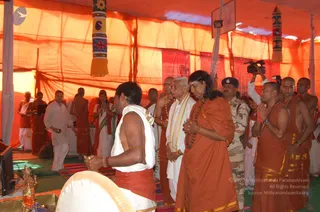
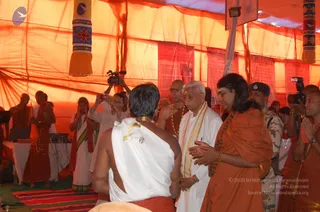
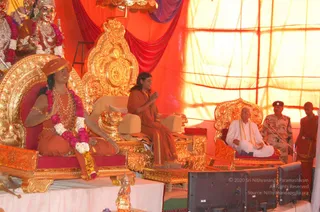
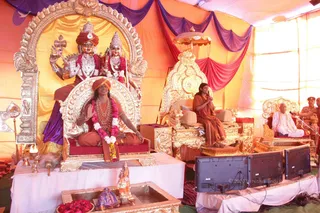
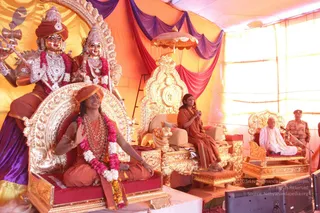
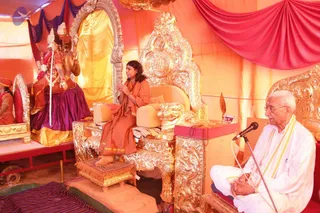
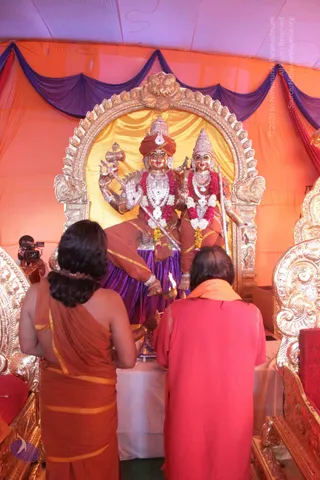
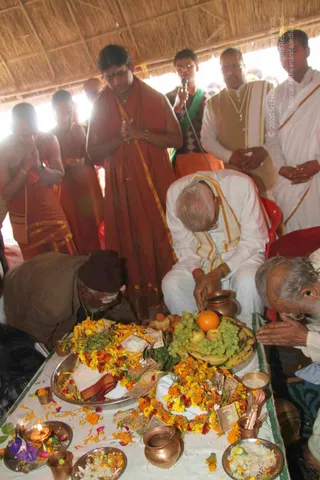
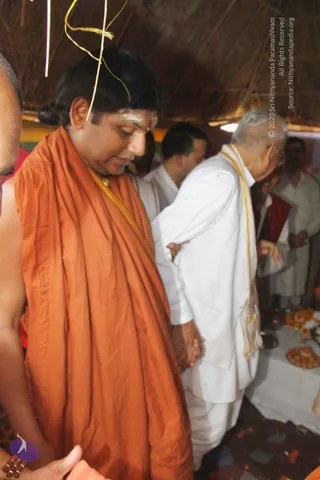
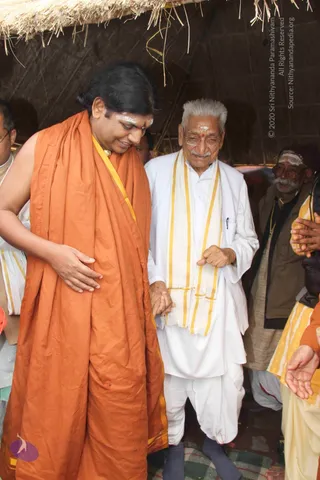
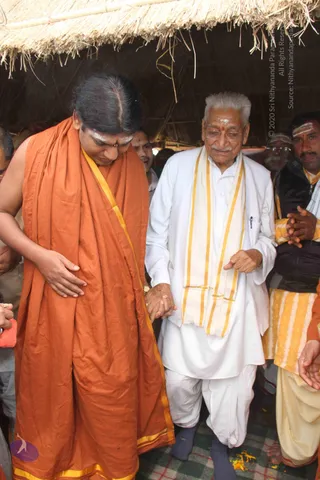
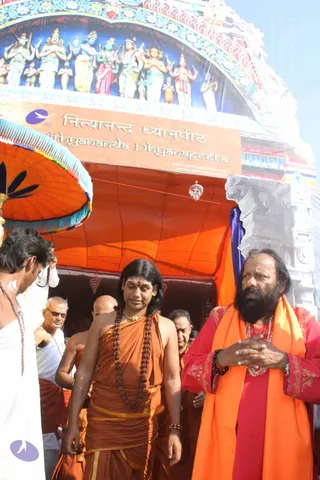
A photograph at an outdoor camp tent with striped fabric overhead. Seated in red plastic chairs, a man in an orange saffron robe with a shawl, short-cropped dark hair and tilak on the forehead, smiles and holds his hands together in greeting toward an elderly white-haired man in white kurta and gold-bordered shawl seated at right, who holds a microphone and wears glasses and a tilak. Beside them a bald young boy in orange sits at left. A man in a light brown vest and white dhoti bends forward with hands folded, a rudraksha mala visible at his neck. Standing behind, men in white kurtas and dark jackets watch, and a bearded man in cream clothing with a beaded mala stands at far right. a person appears as the orange-robed man seated at left, with saffron robe and shawl and a shaved head absent, long hair swept back; a seated orange-robed figure sits at the left edge.Stage event with a large golden arched backdrop framing two deity murtis of Shiva and Parvati, each with crowns, white ornaments and red garlands, one holding a trident. A seated man in saffron robes and an orange head-wrap, wearing a long rudraksha mala and a beaded necklace with a red garland, sits on a red-cushioned throne in front of them, palm raised, with a red banner reading Shiv Parvati. To the right, another seated man in orange robes and an orange turban with a mala sits on a golden throne draped with a tiger-print cloth beneath a golden umbrella. A bald priest in orange, a few seated devotees and a bank of monitors appear in the foreground.A photograph of a group walking together outdoors beneath a thatched roof structure at a camp setting. In the centre, a man with long dark hair, white forehead markings and an orange robe with a yellow-edged shawl walks with his hands clasped, and an elderly man with white hair and glasses, wearing a white kurta and yellow-bordered shawl, holds hands with him. To the left, a shaved-headed man in an orange garment with a red tilak carries a leaf plate of fruit. On the right, a man in an orange kurta holds a bowl of fruit, and devotees with folded hands stand near the edges of the frame, with other onlookers behind them.

February 14 2013

Original wiki page
Contents

Title

Supreme Pontiff of Hinduism HDH Bhagavan Sri Nithyananda Paramashivam.

Description

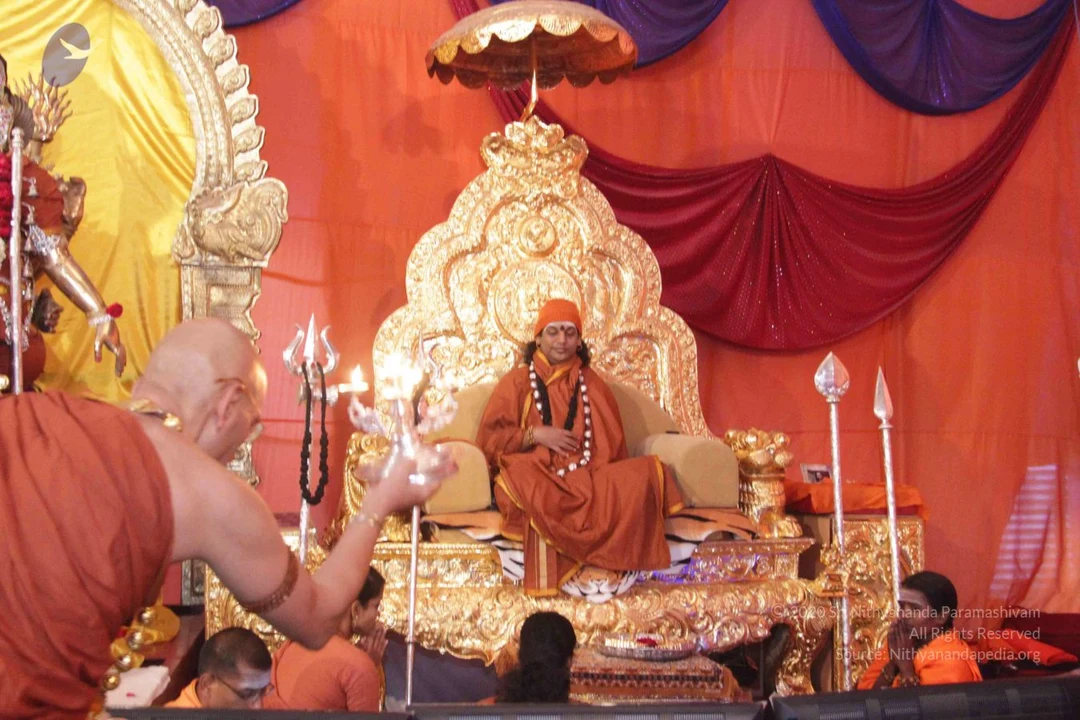
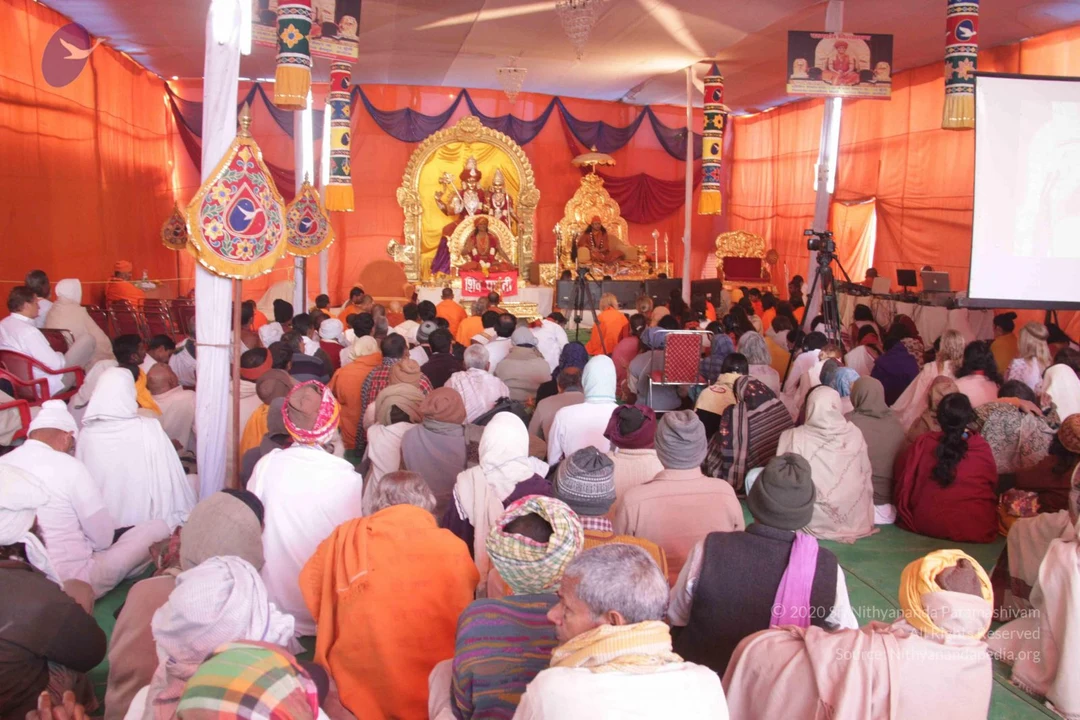
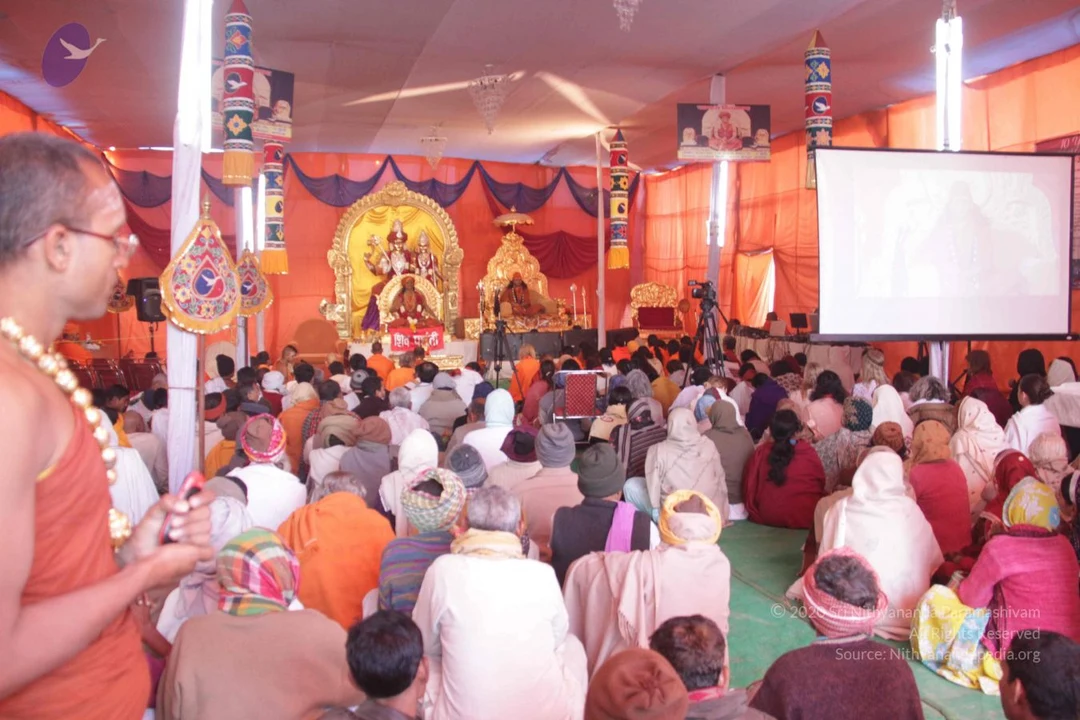
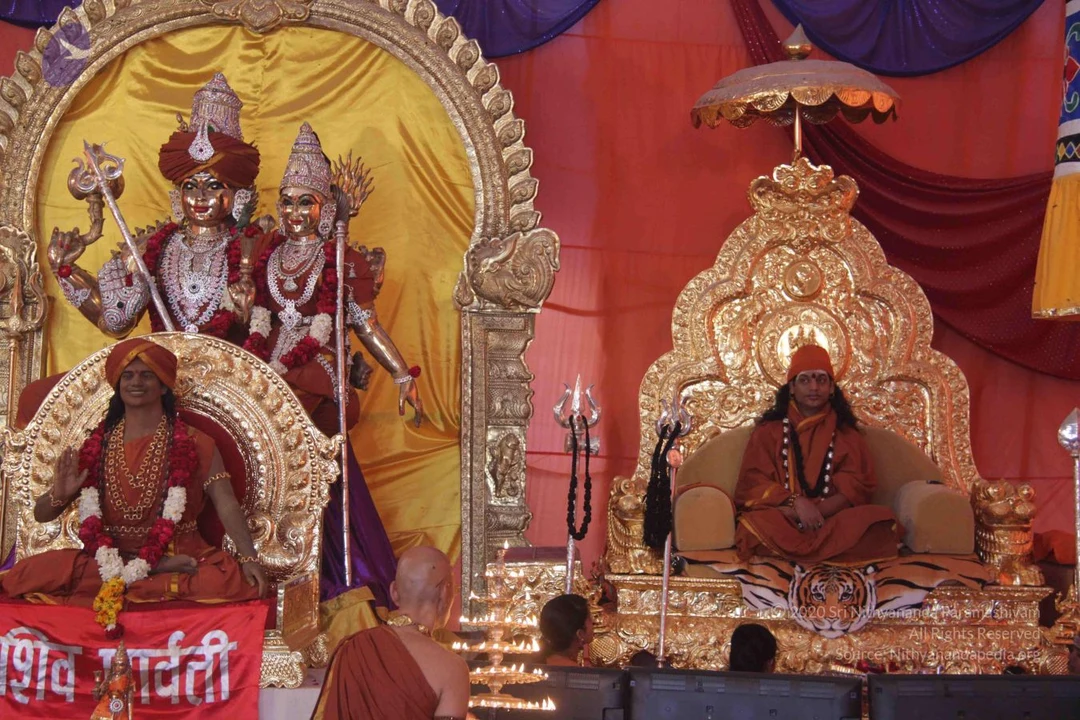
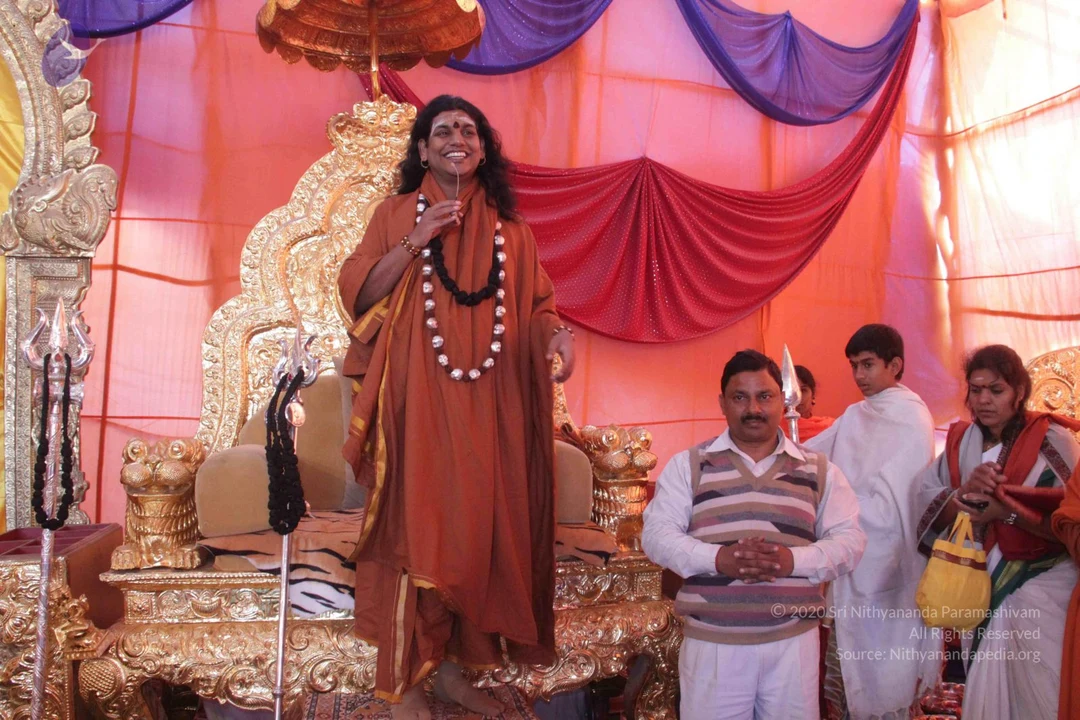
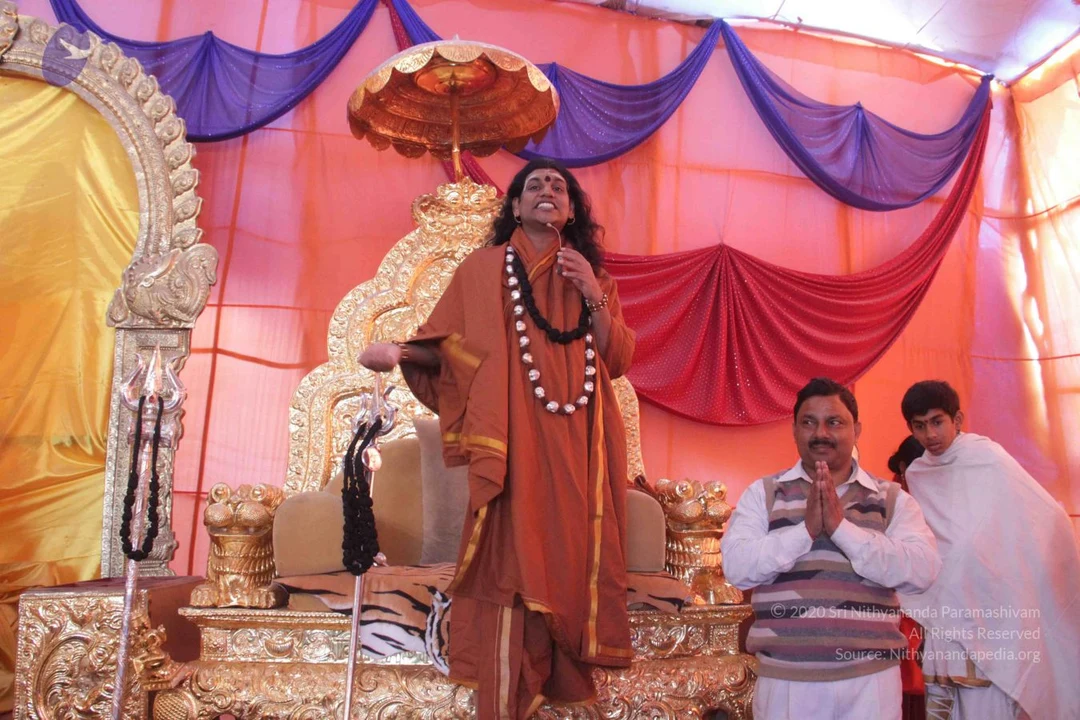
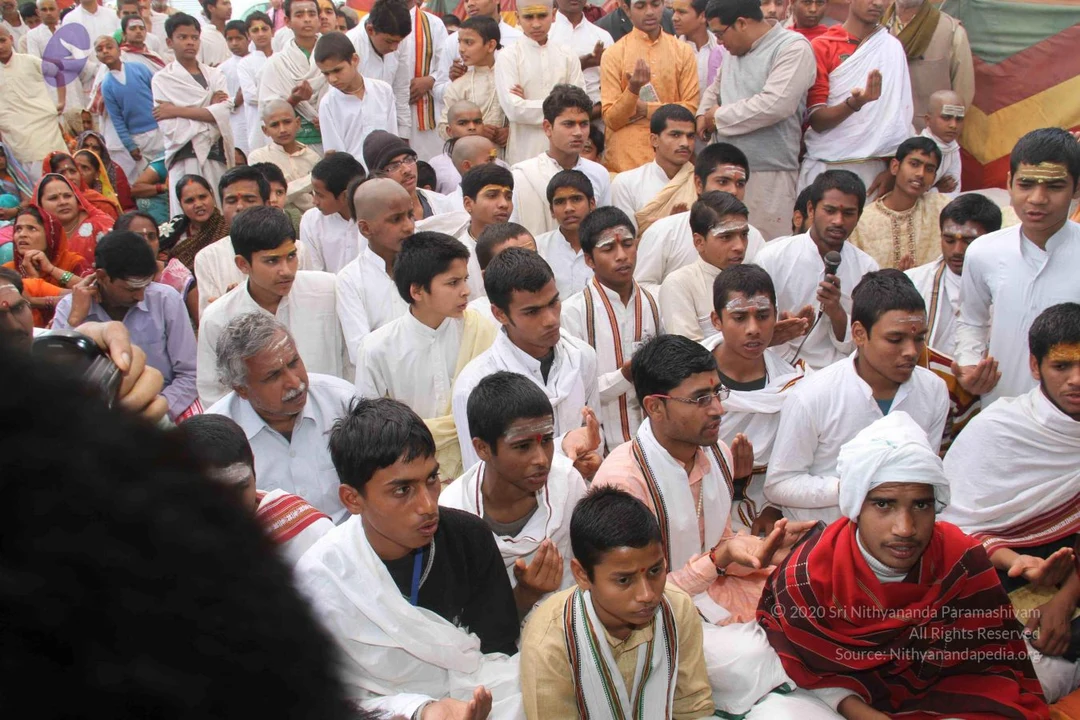
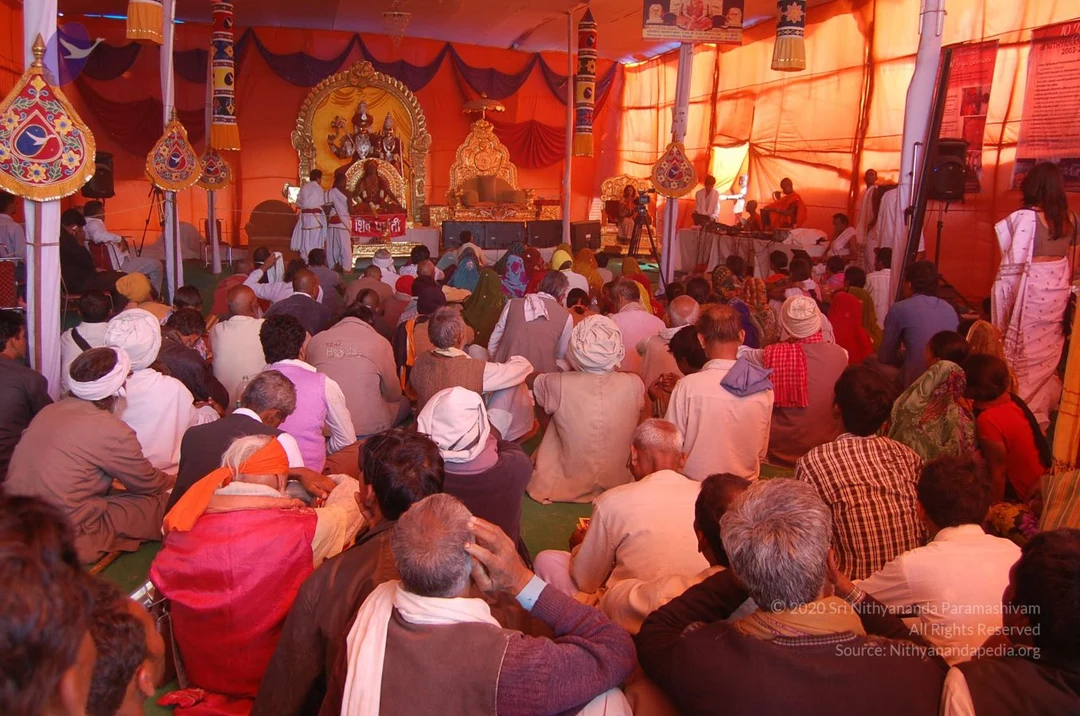
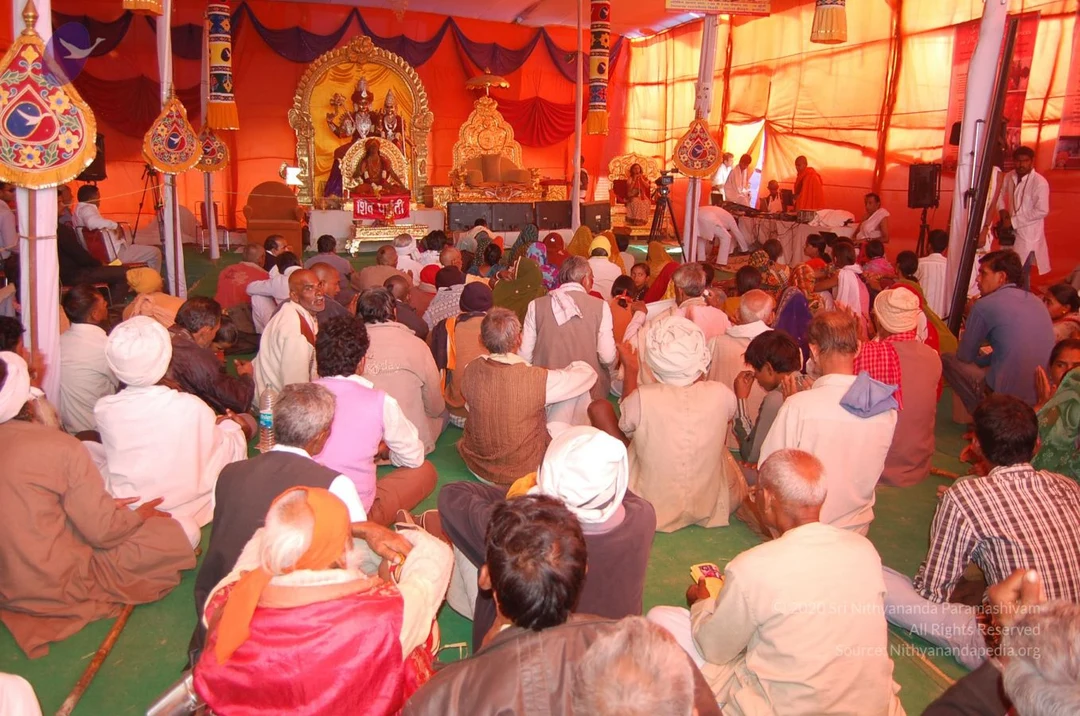
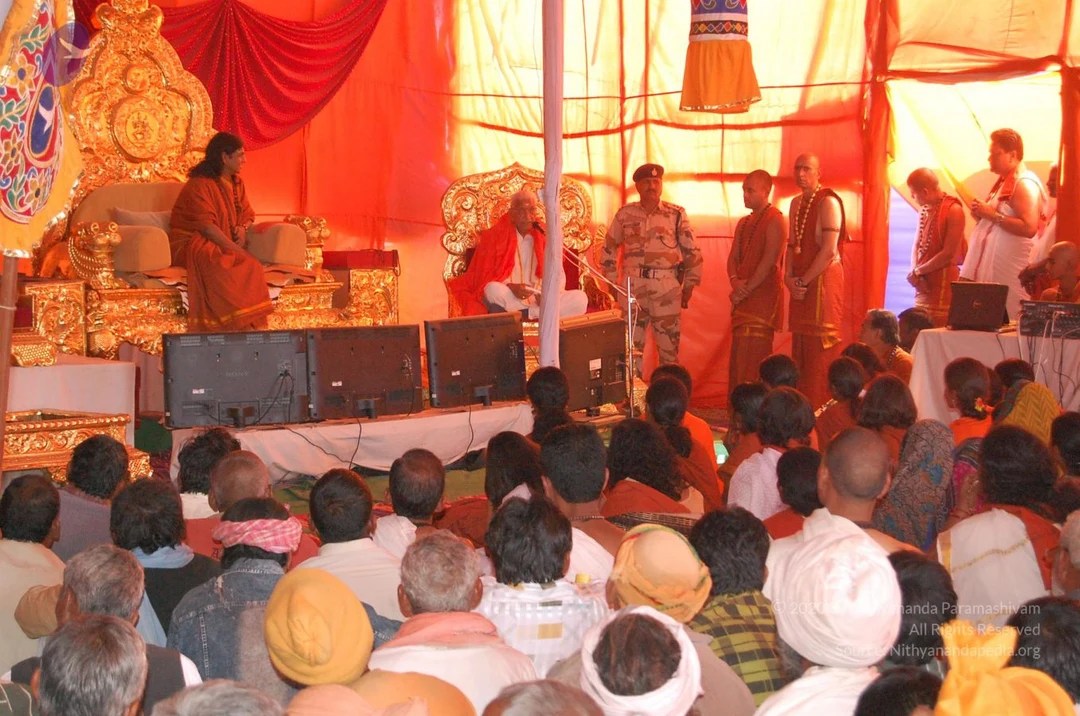
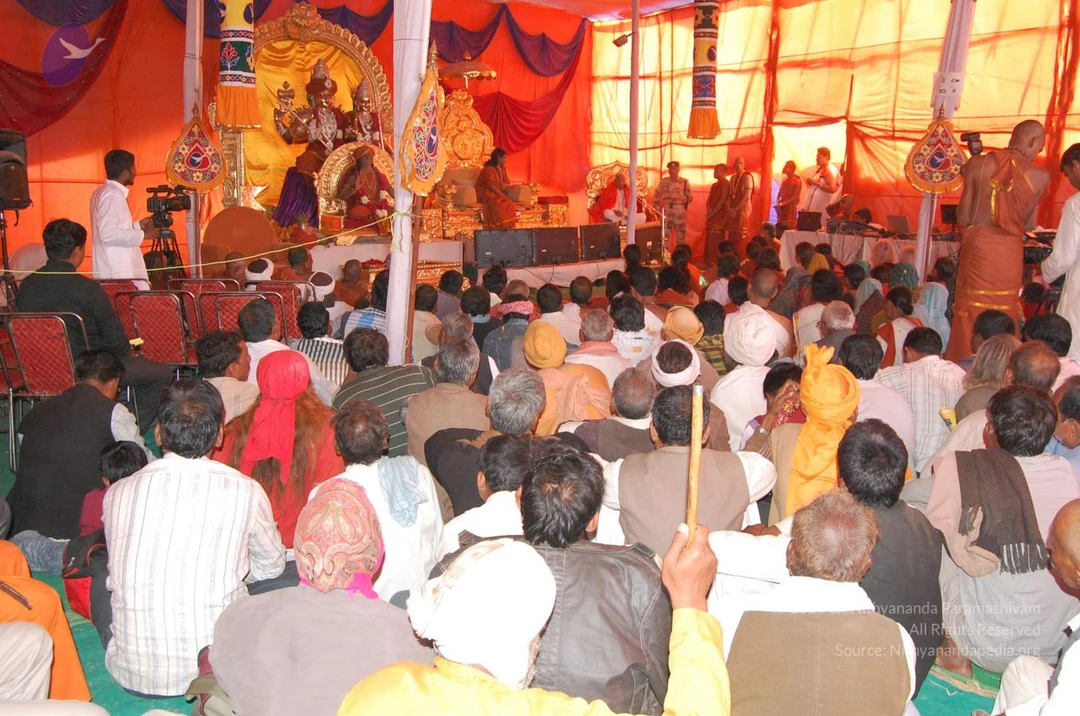
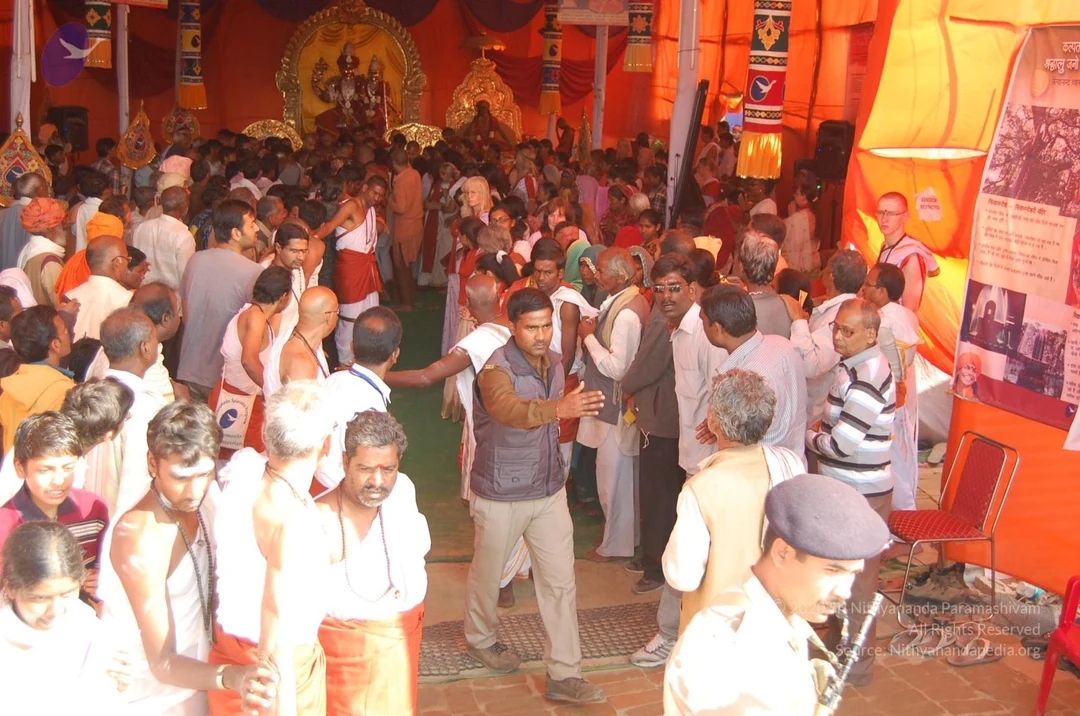
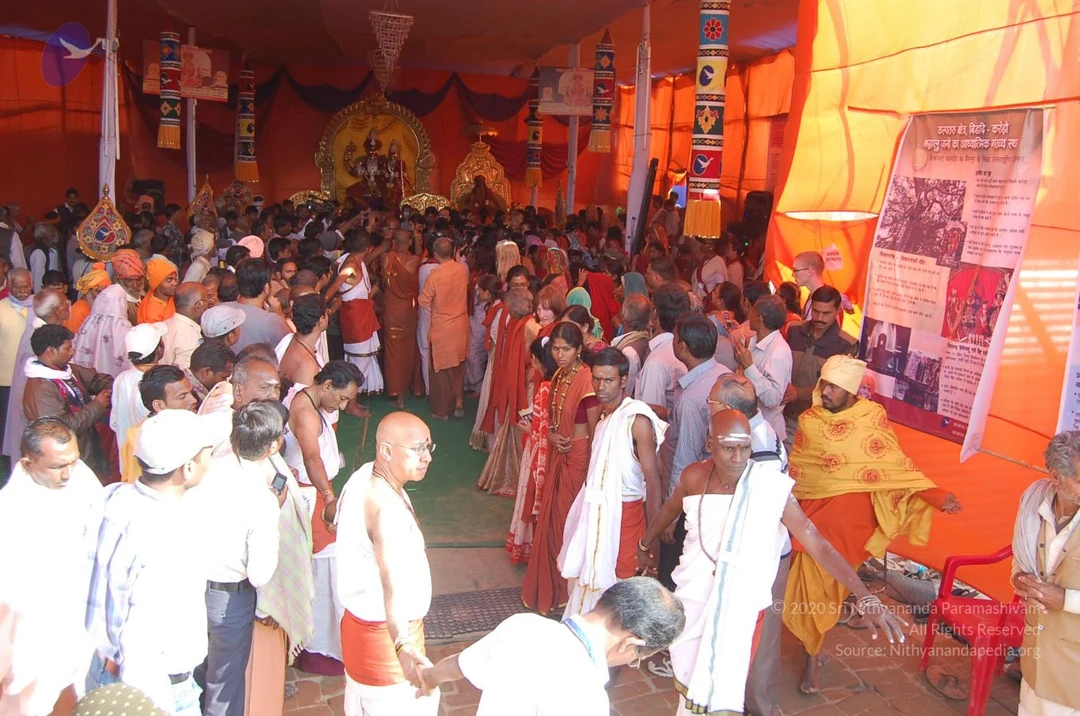
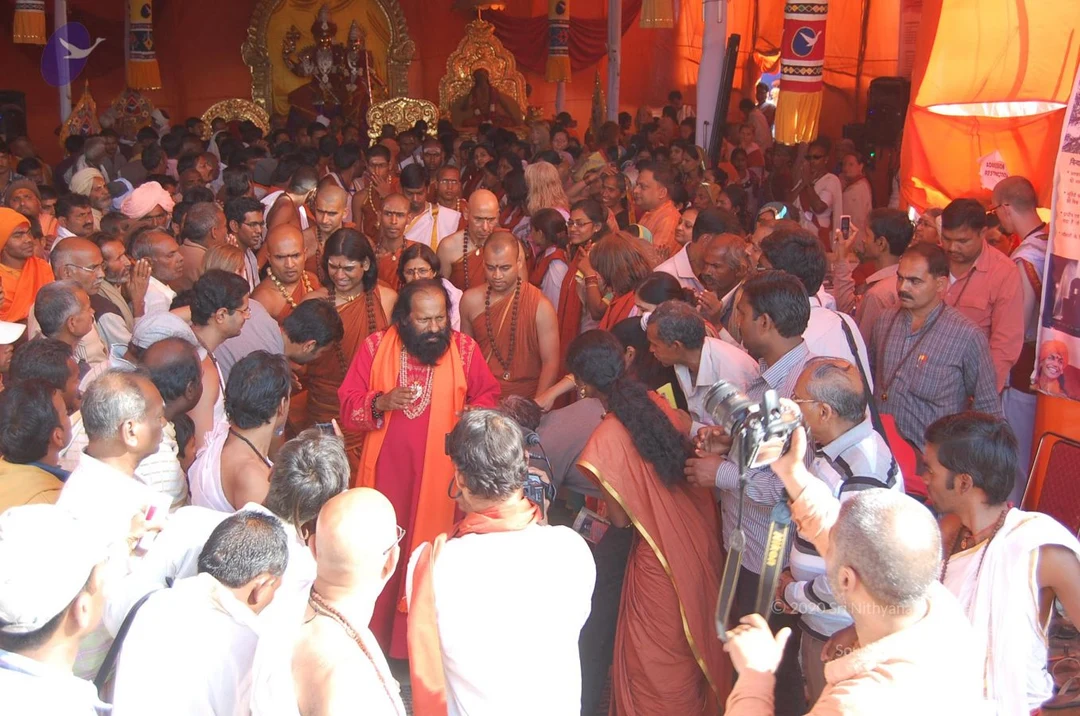
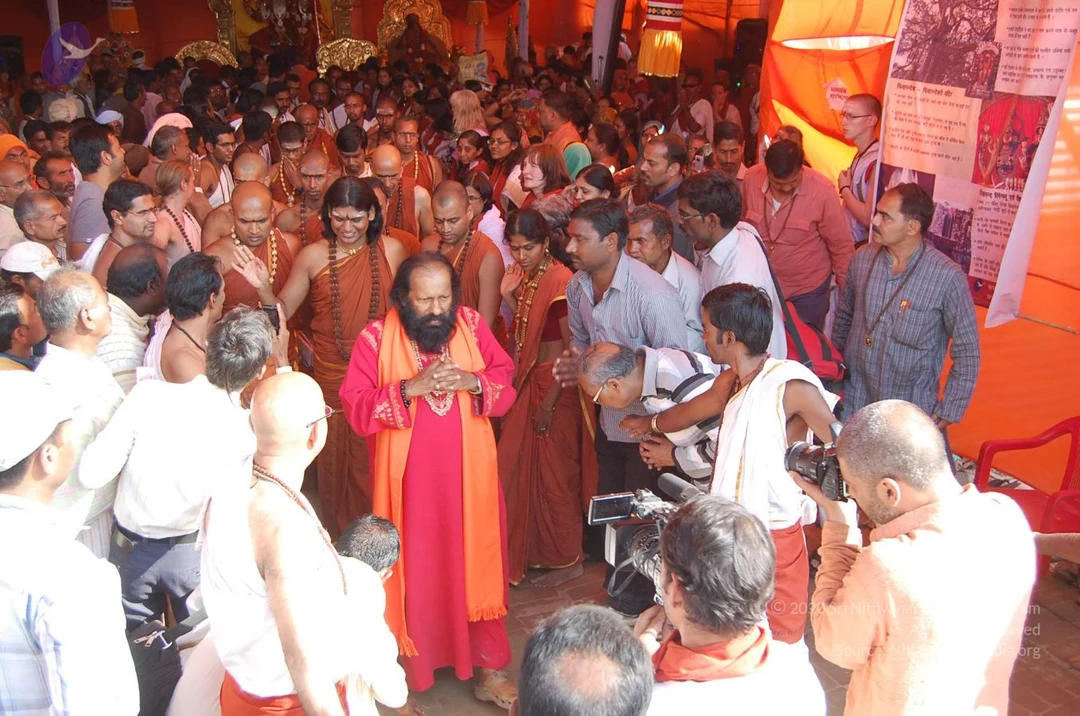
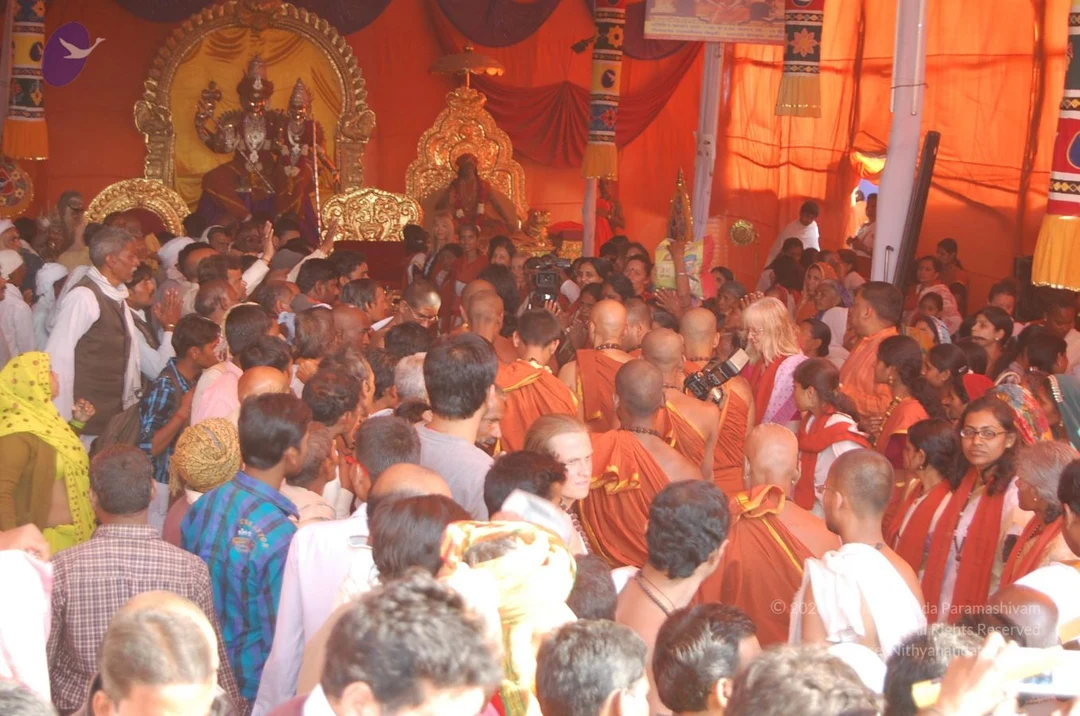
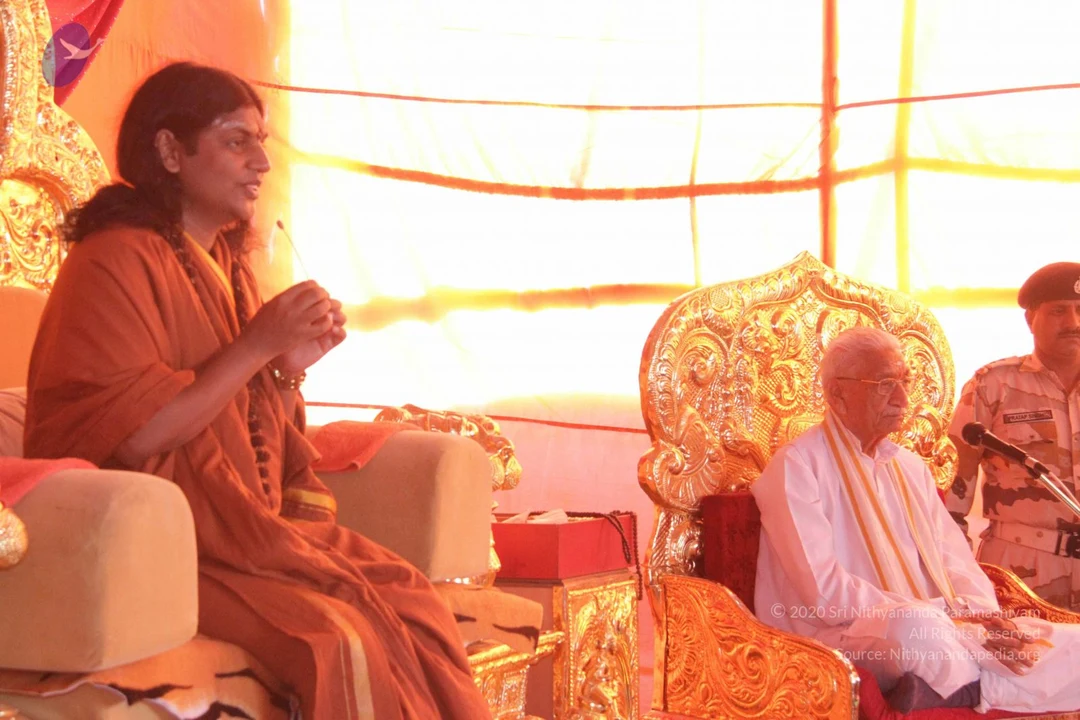
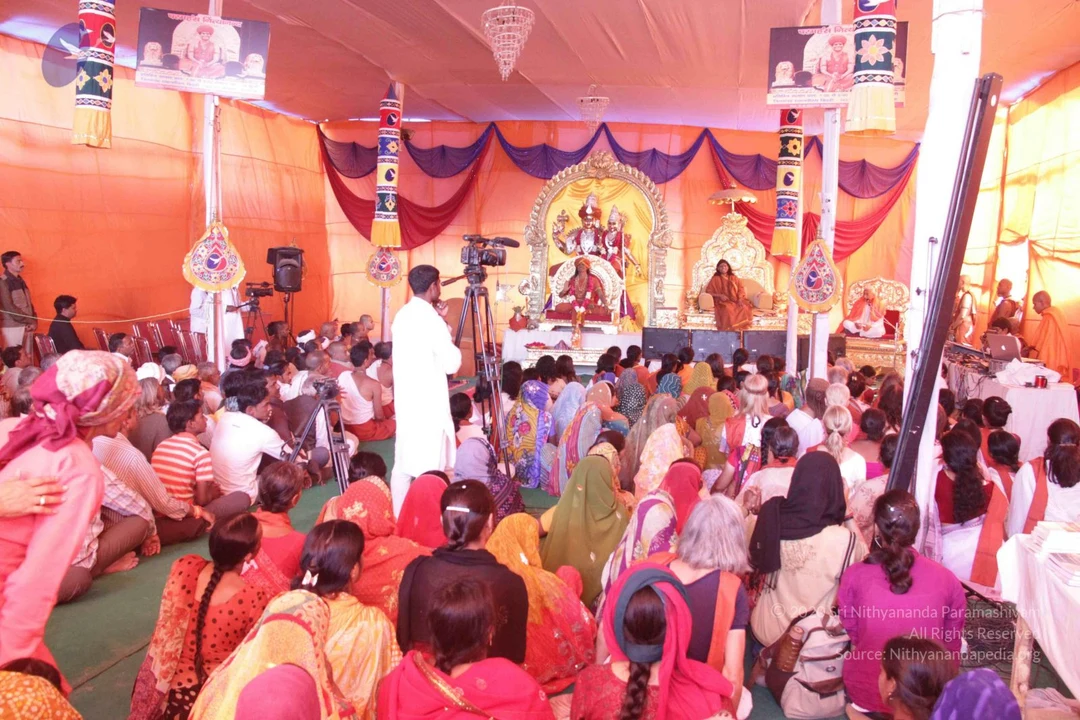
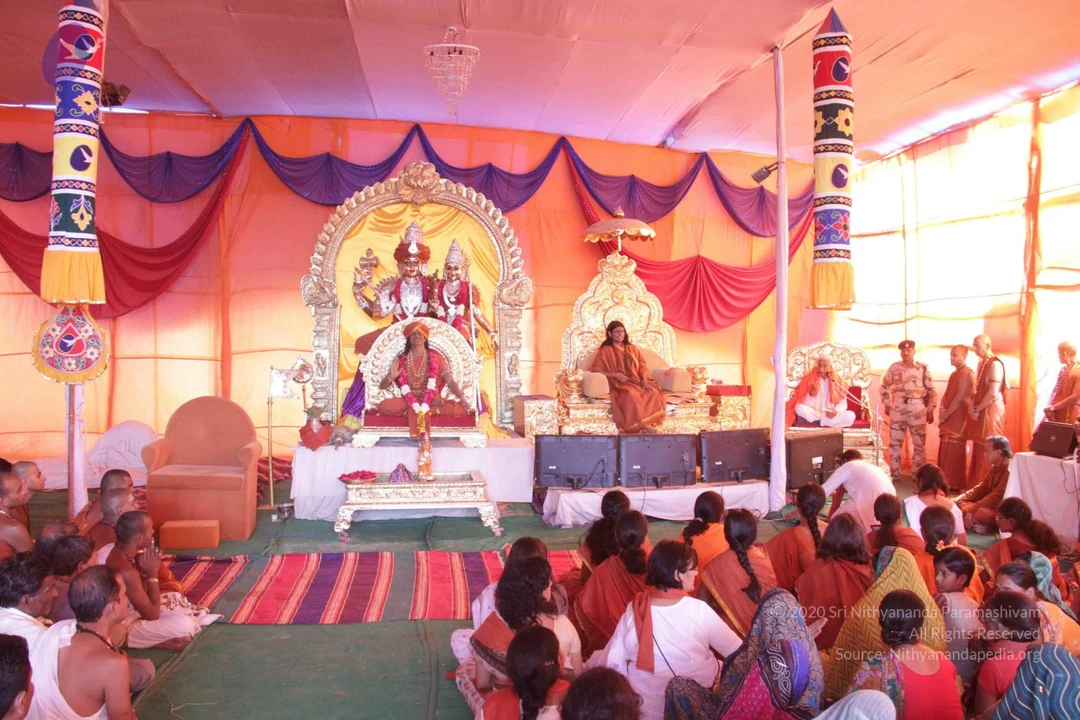
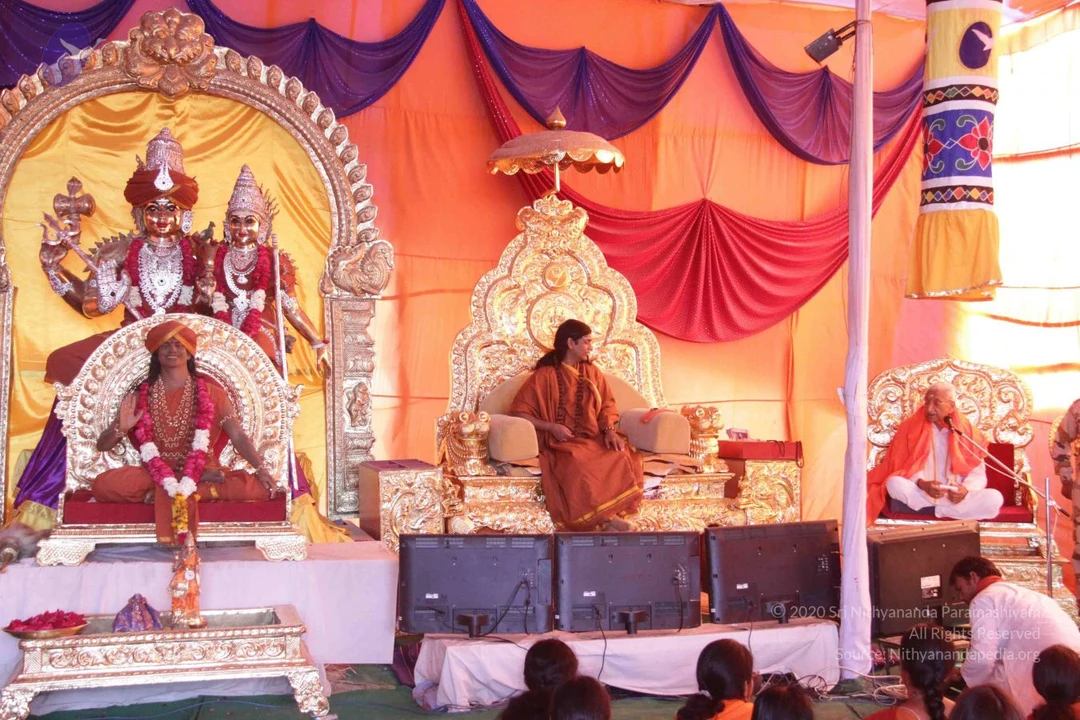
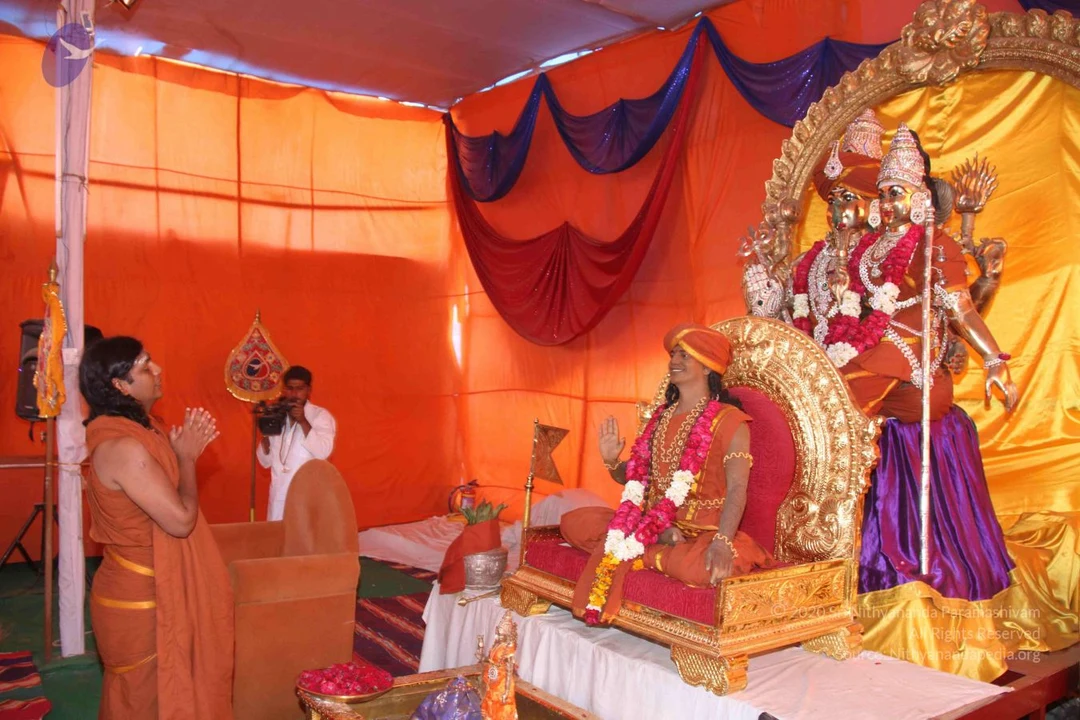
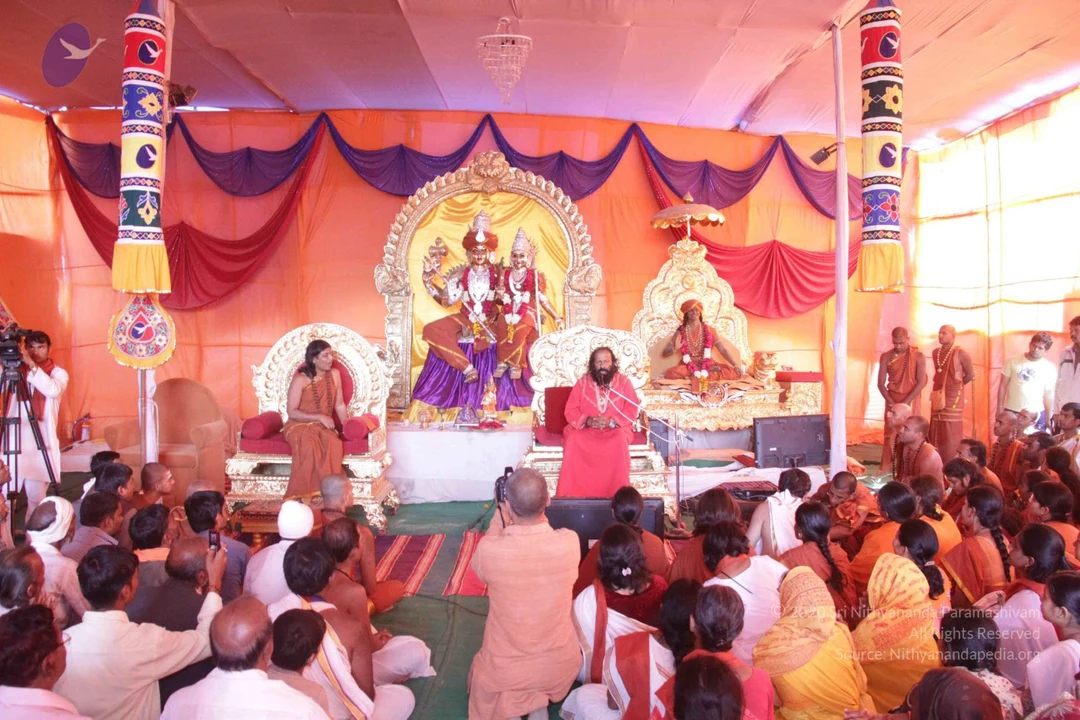
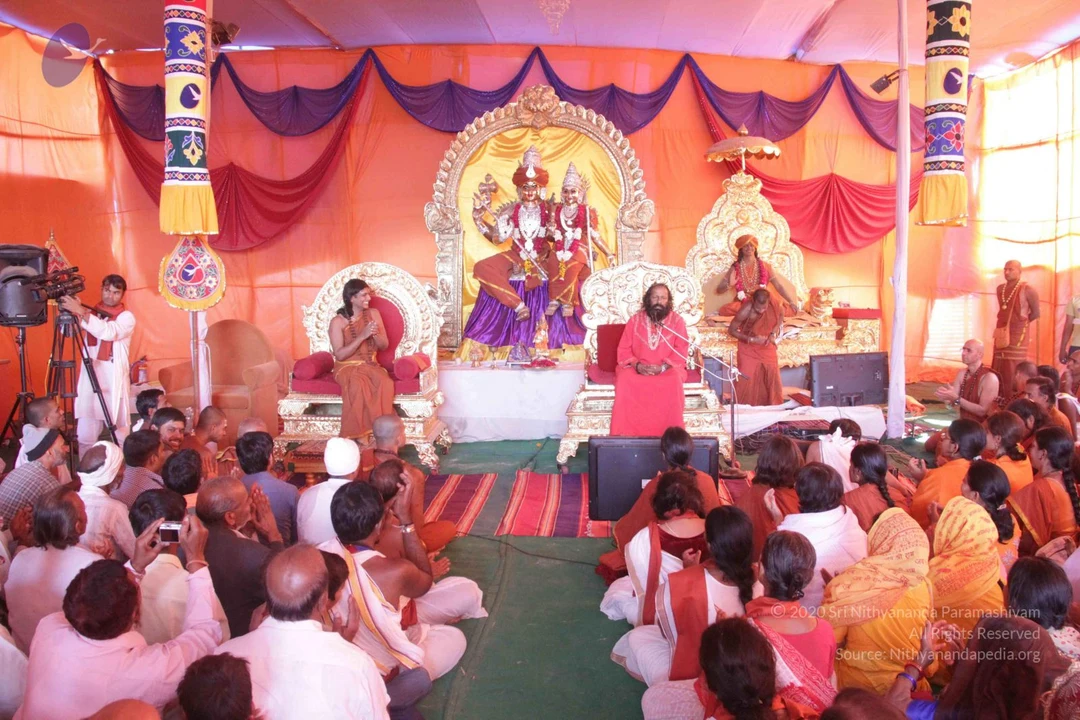
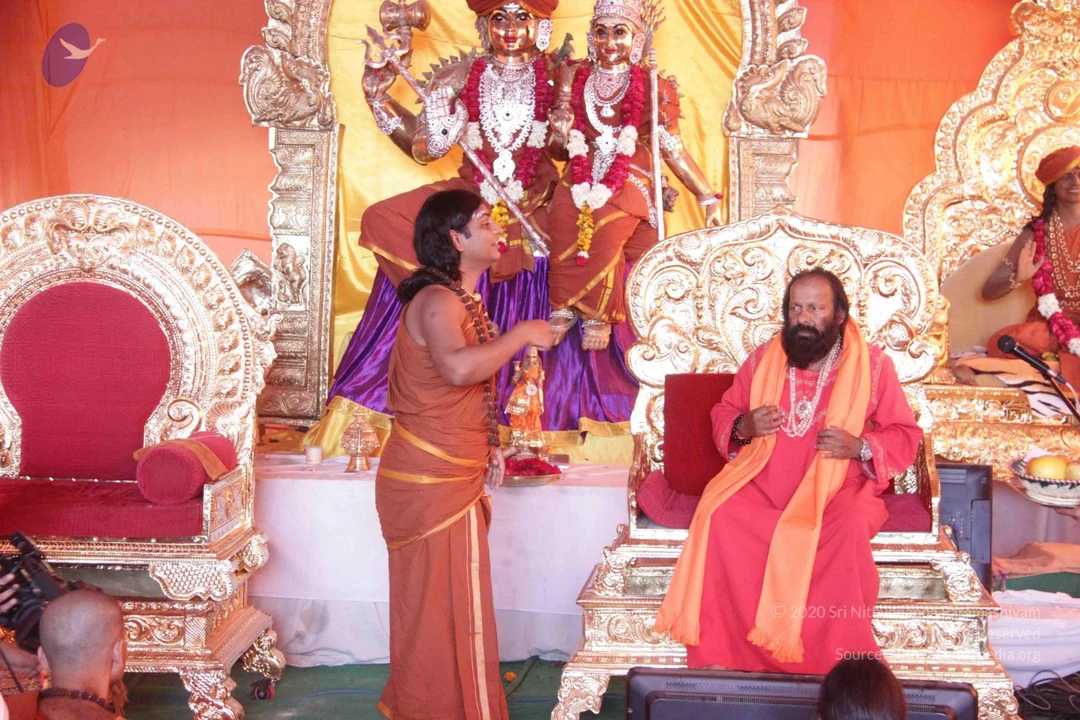
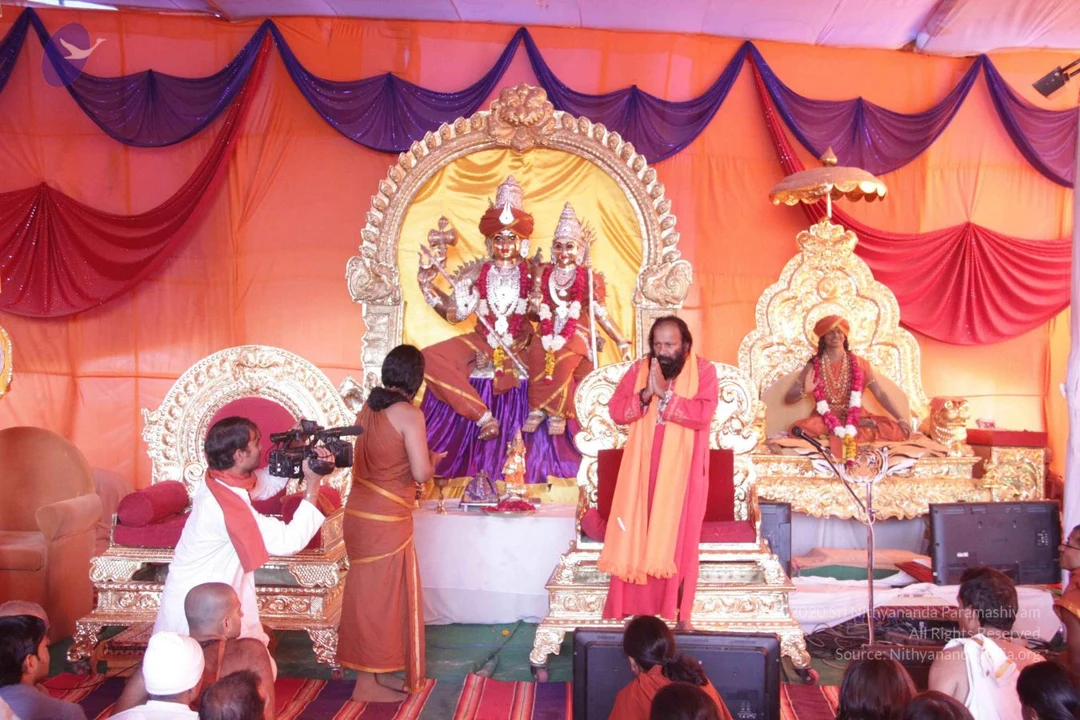
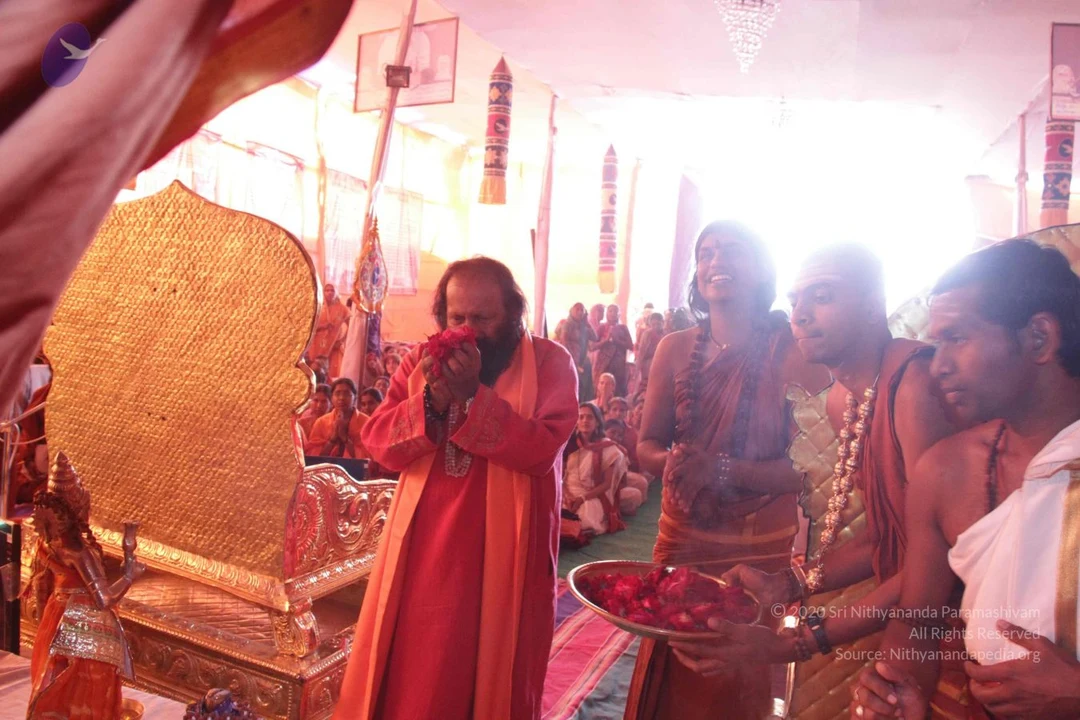
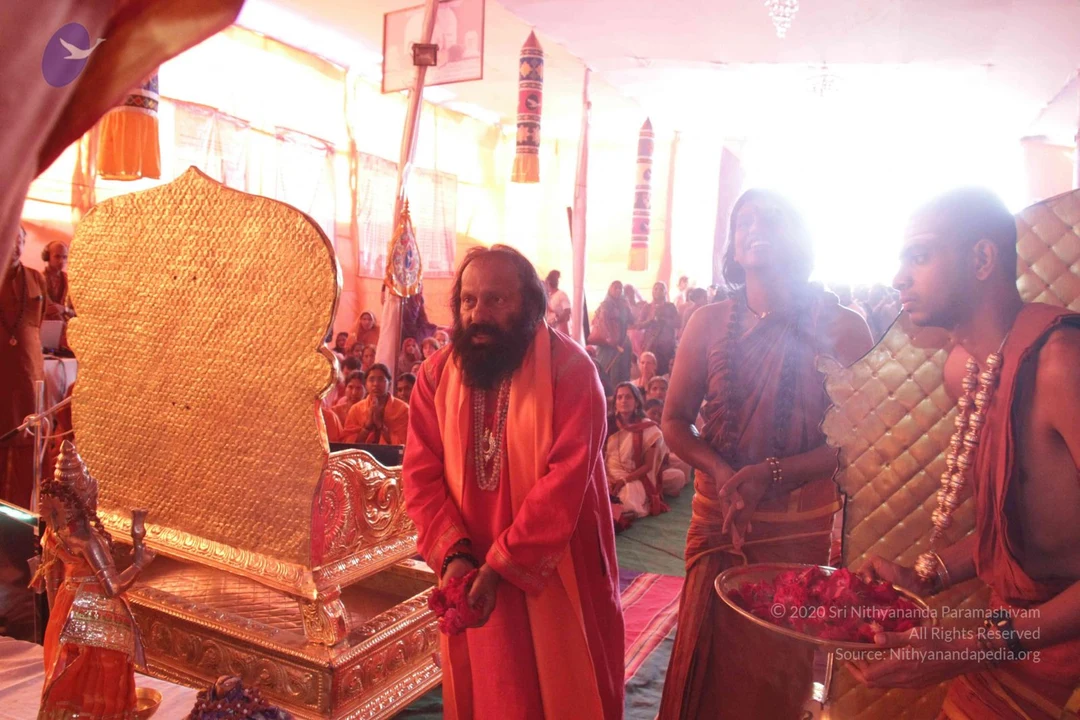
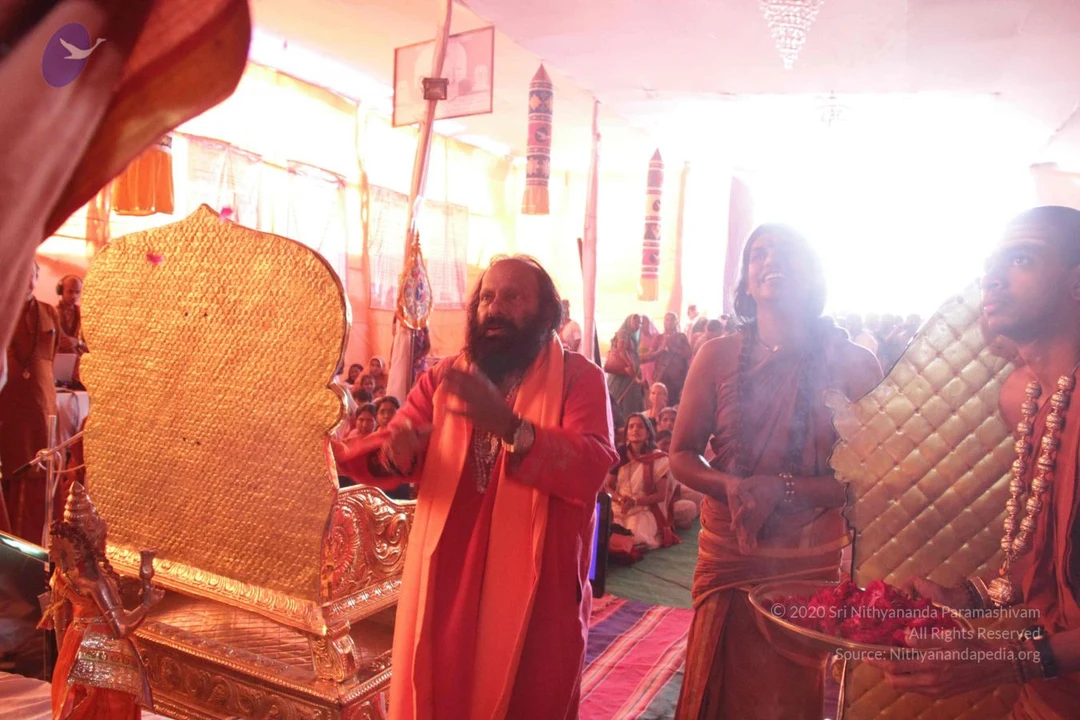
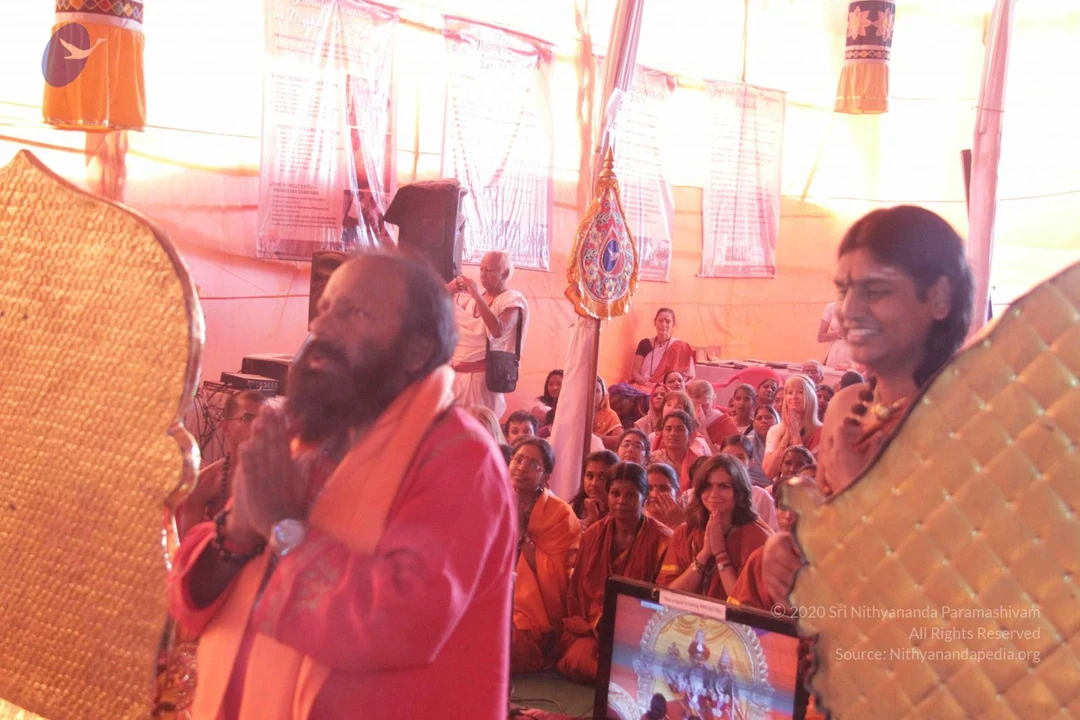
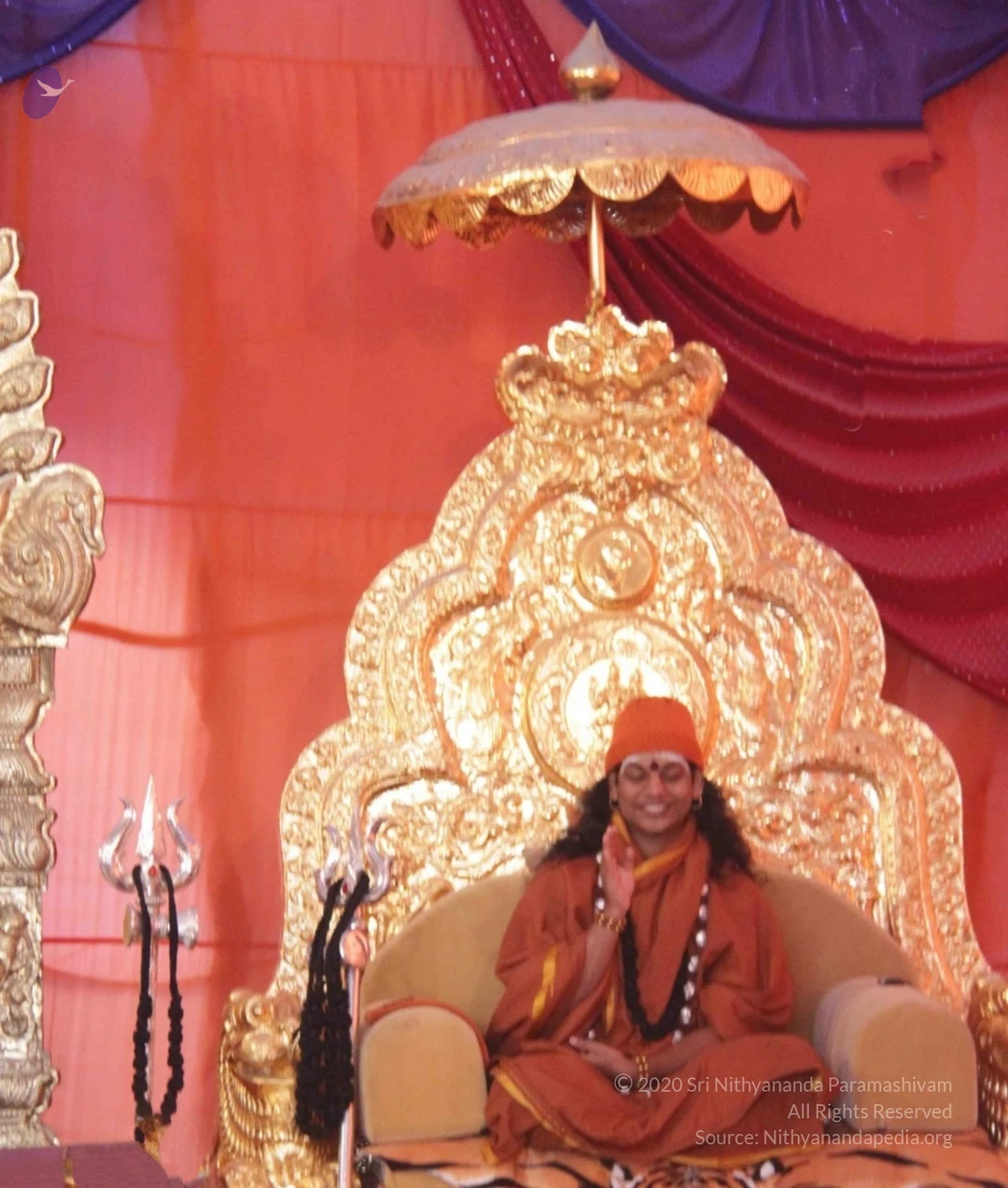
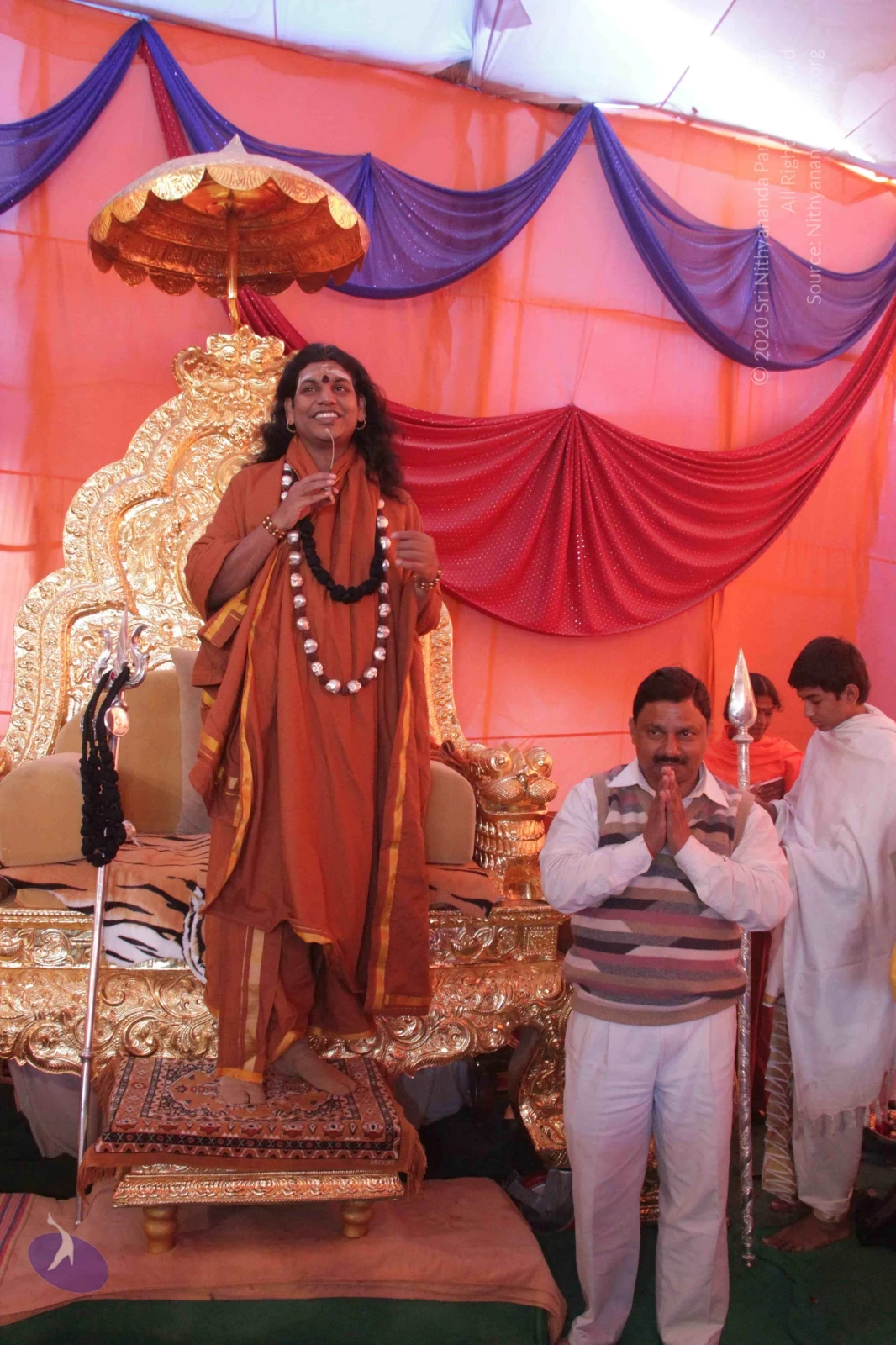
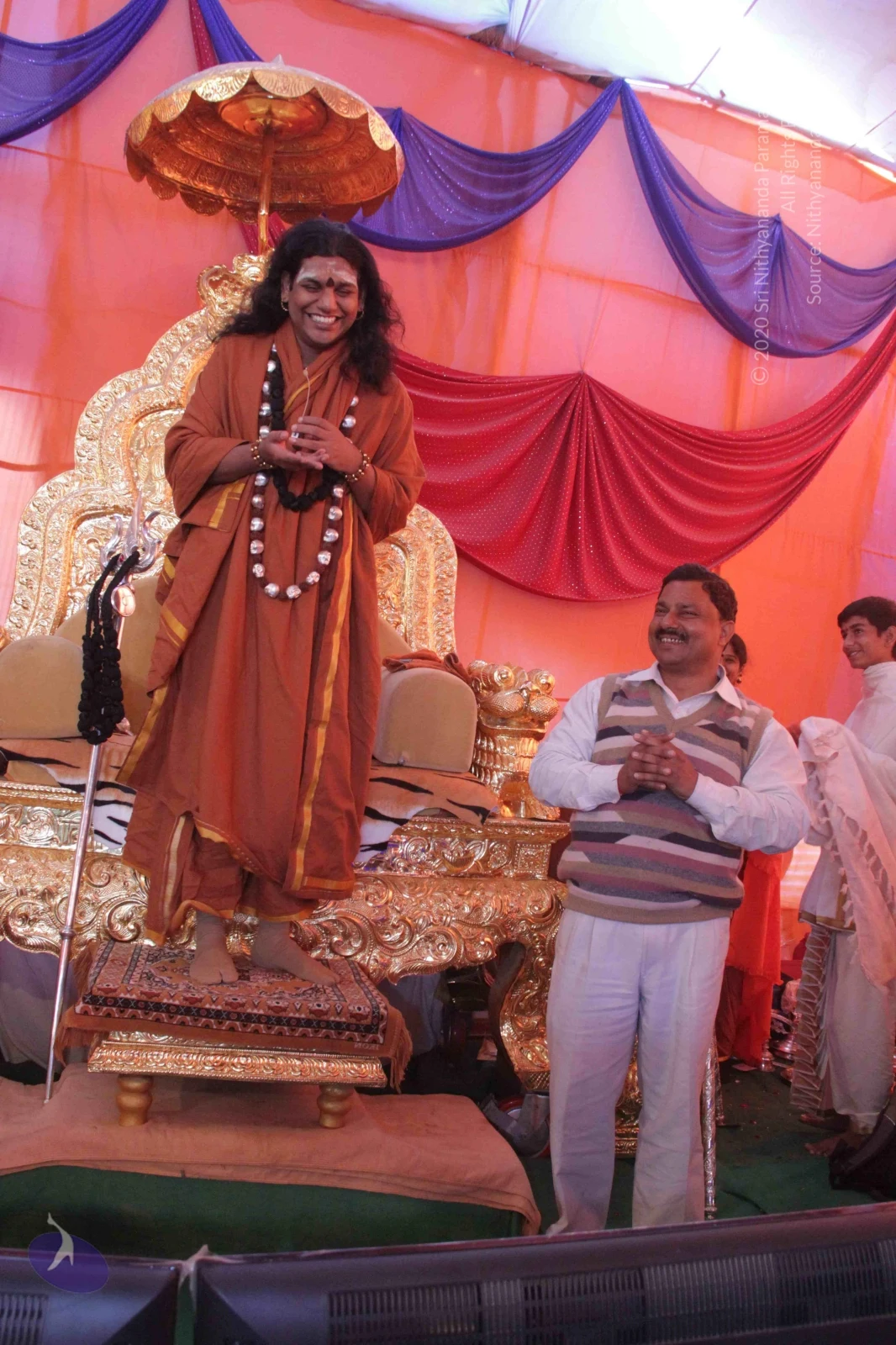
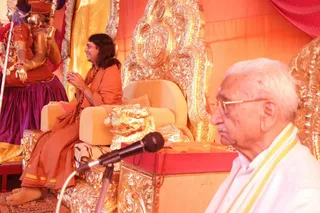
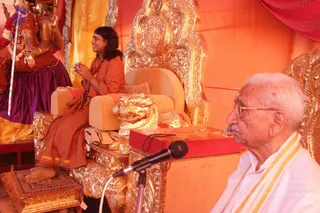
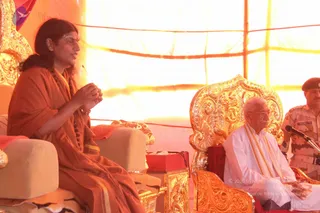
In this day's Presidential Address, the Supreme Pontiff of Hinduism Bhagavan Sri Nithyananda Paramashivam spoke live from the Maha Kumbha Puri, the camp-city created for the pilgrims of Maha Kumbh Mela in Allahabad. The Paramavatara of Paramashiva, the Supreme Pontiff of Hinduism, Bhagavan Nithyananda Paramashivam expounded on the question whether sanyas is be given to the body or soul. The arguments were of how the can soul even receive anything, because the Soul by nature cannot receive anything and how can body achieve anything because Body itself will go one day. SPH explained that Sanyas is neither given to soul or body it is given to chitadagranthi – the unconscious knot – the clutching we carry about our body and soul. For that knot sanyaas is given.

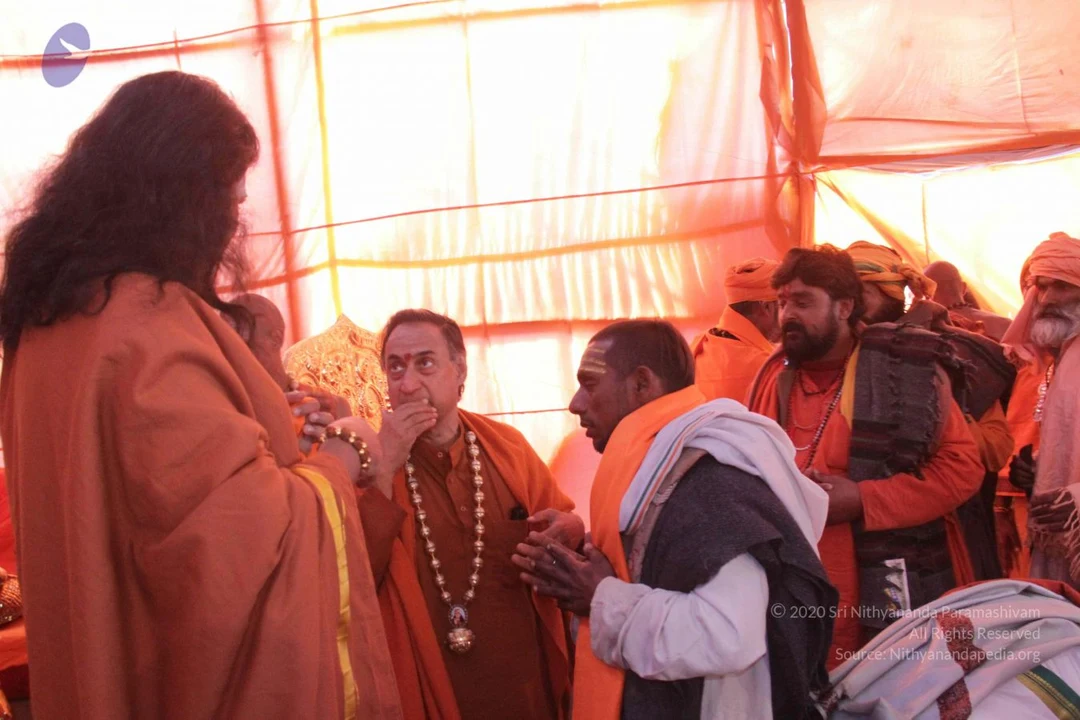
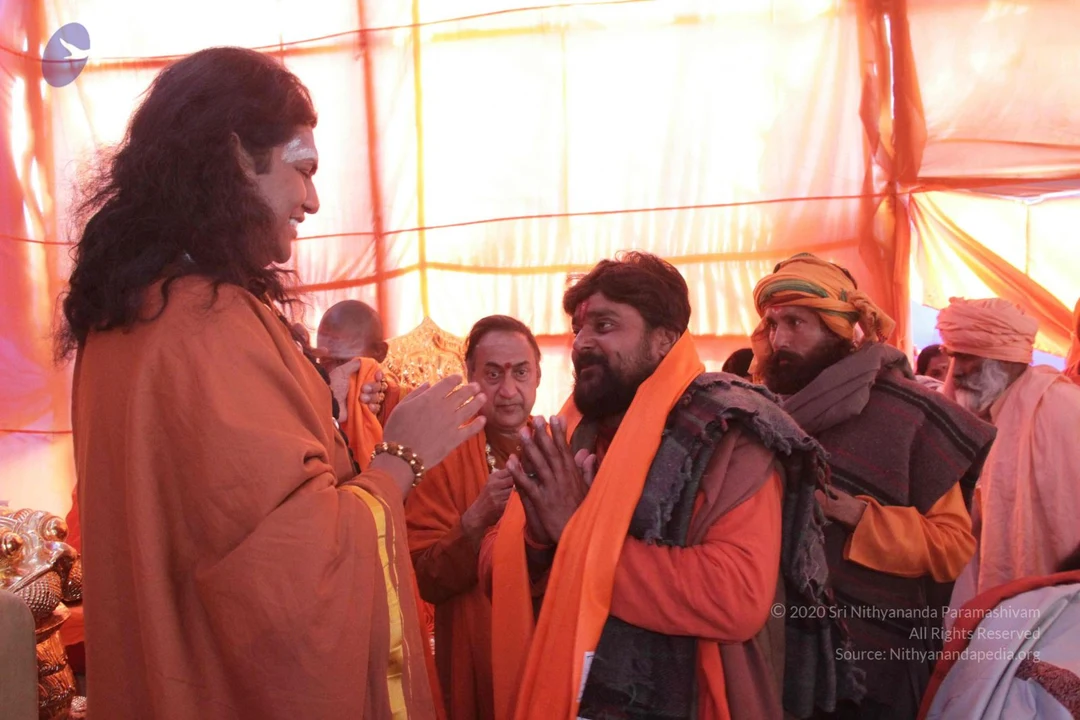
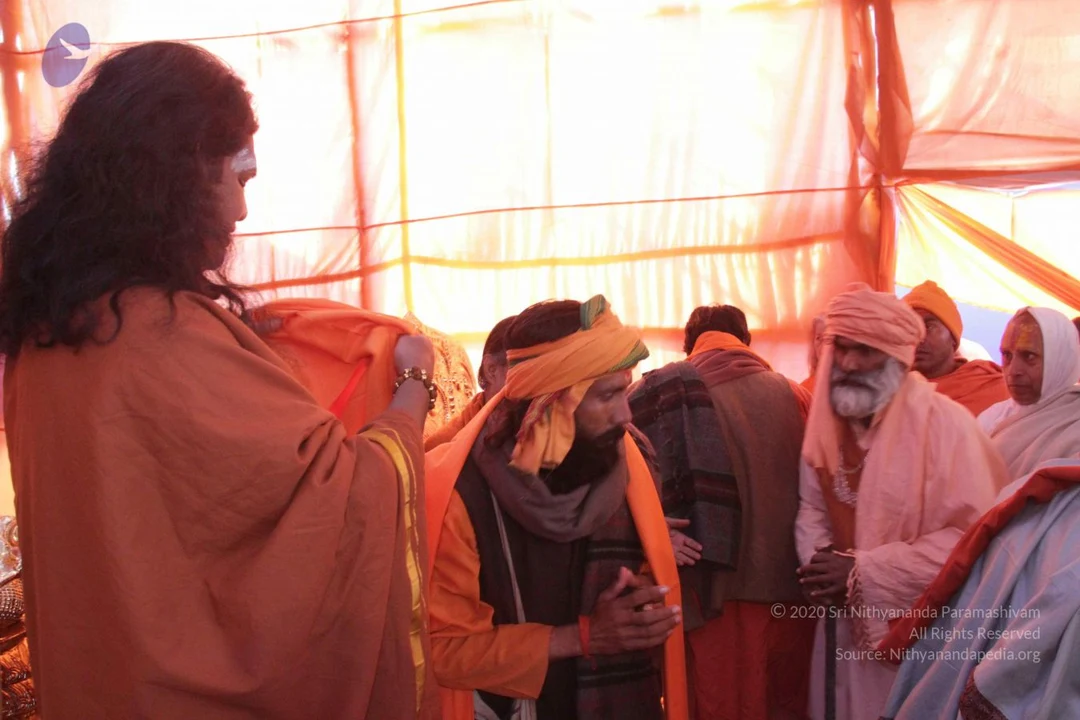
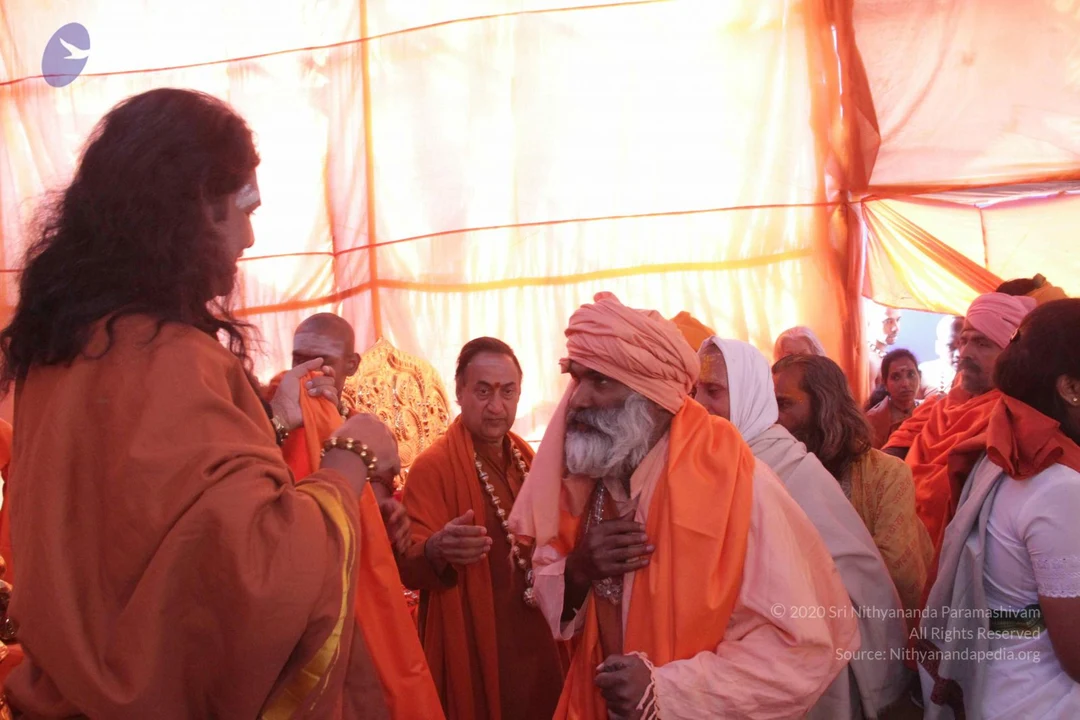
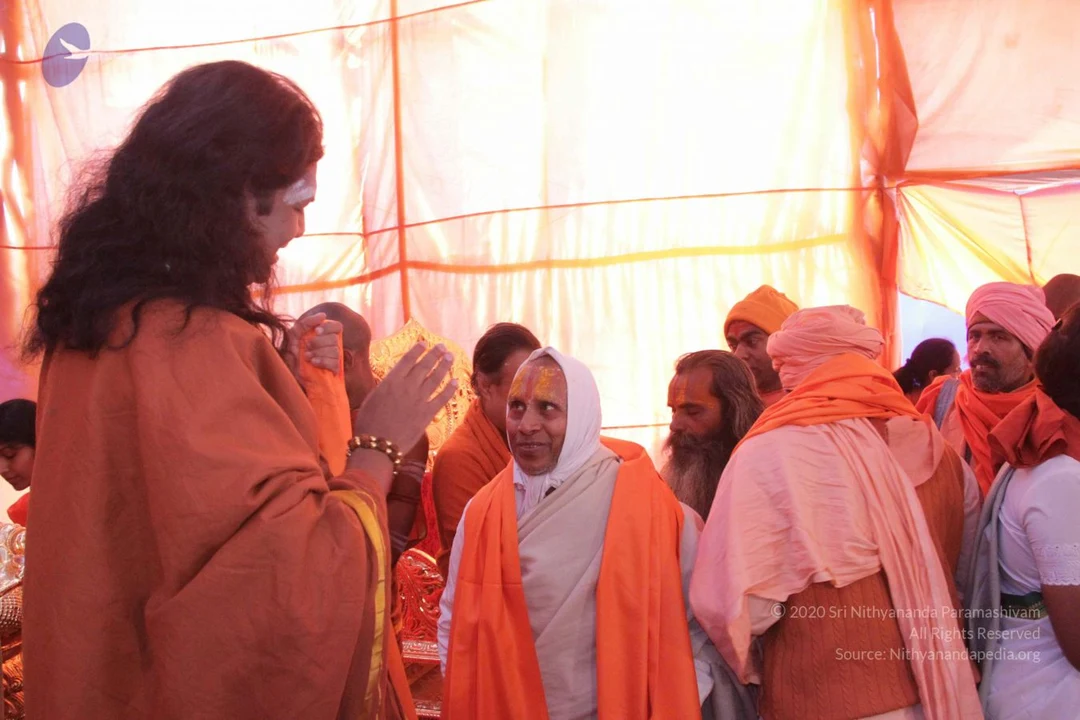
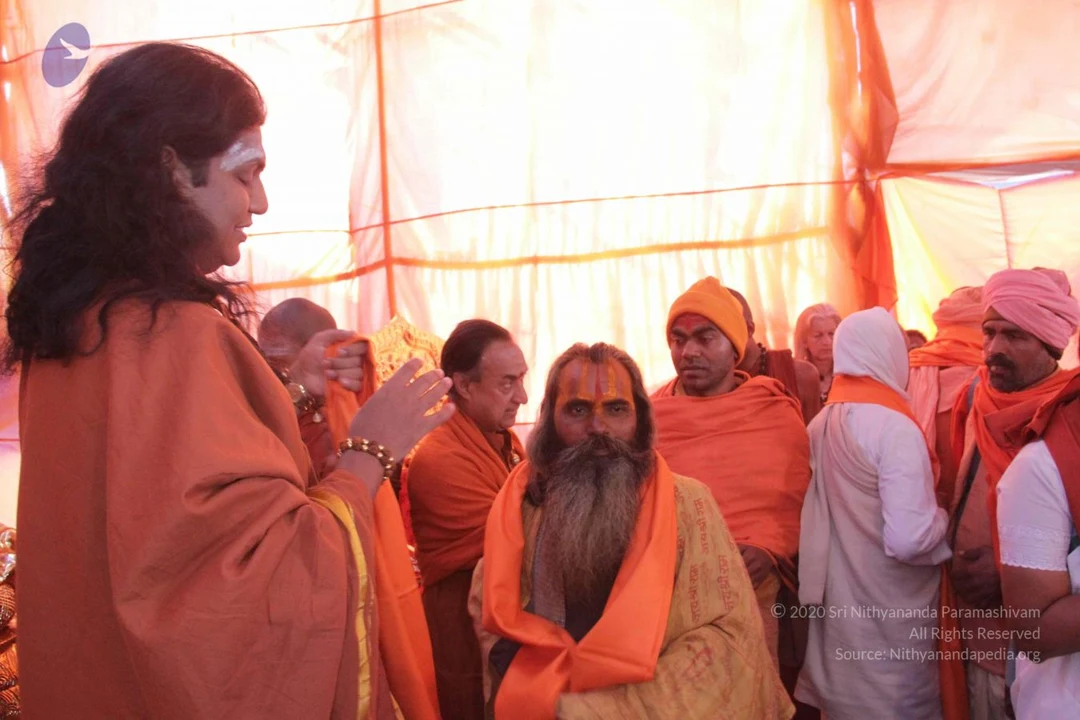
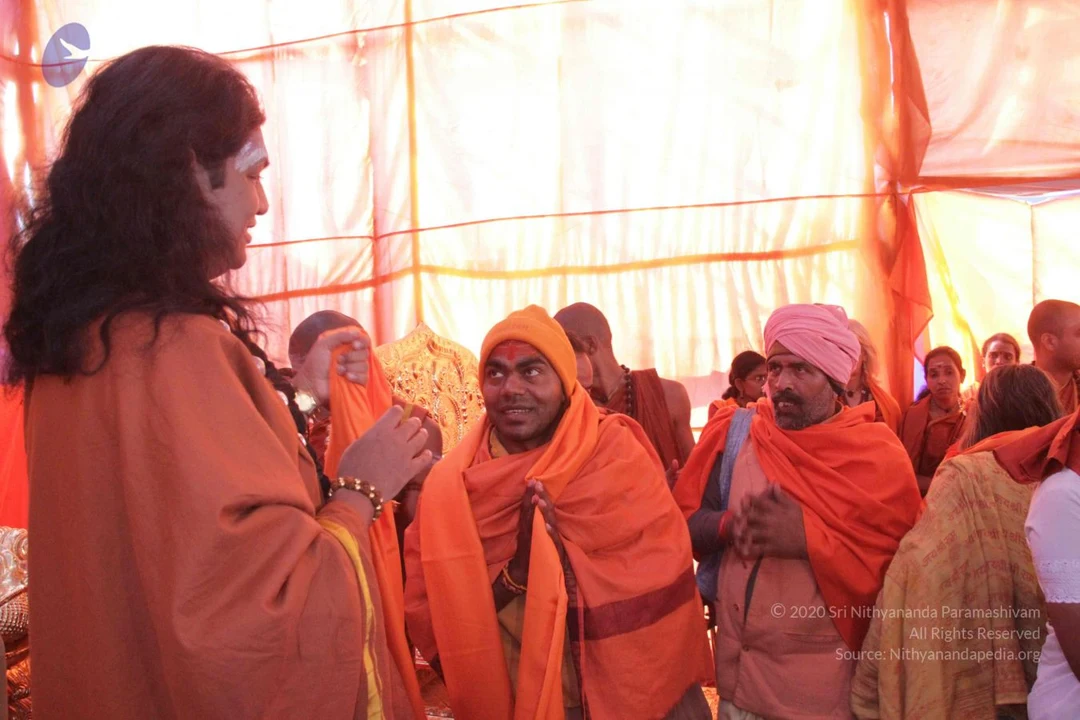
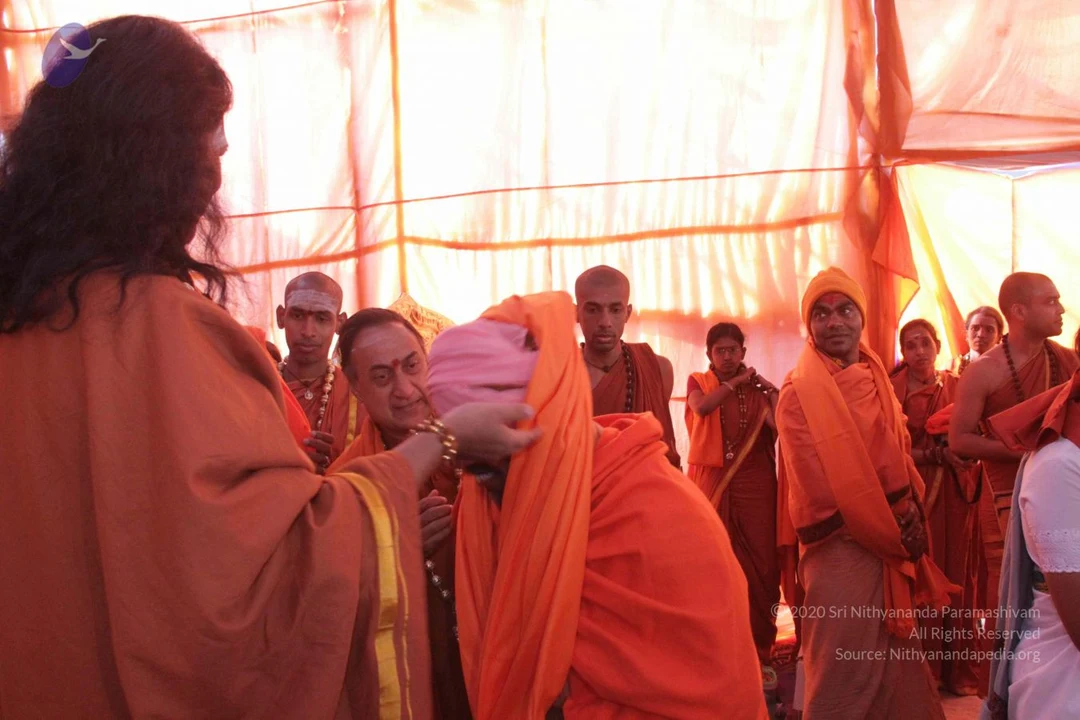
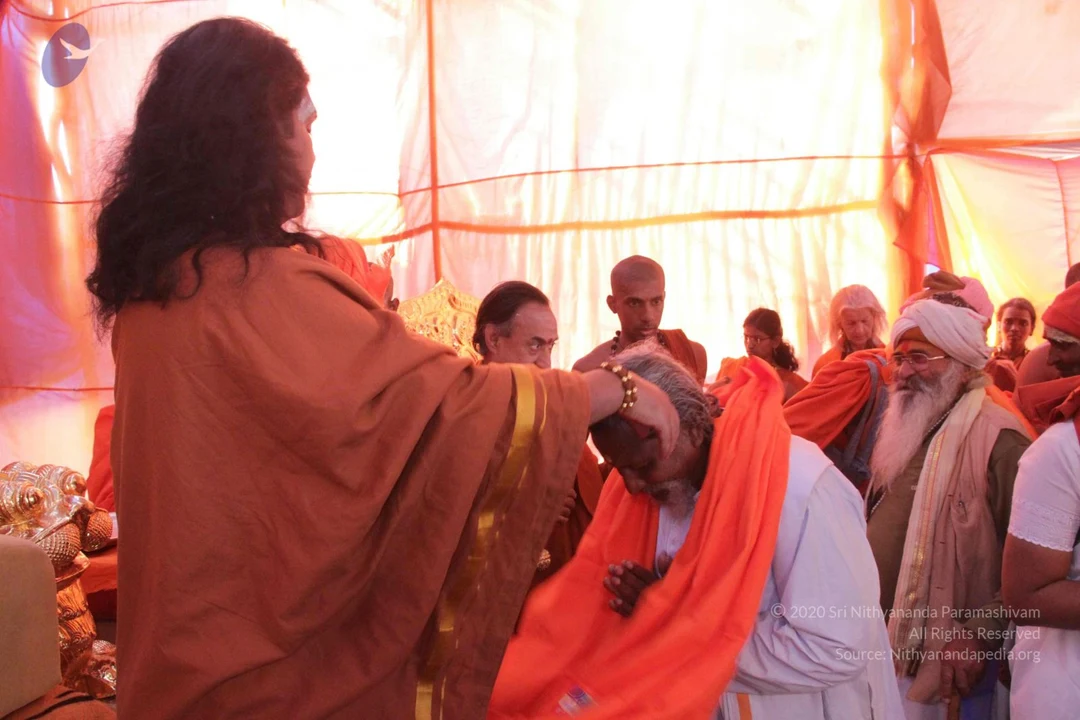
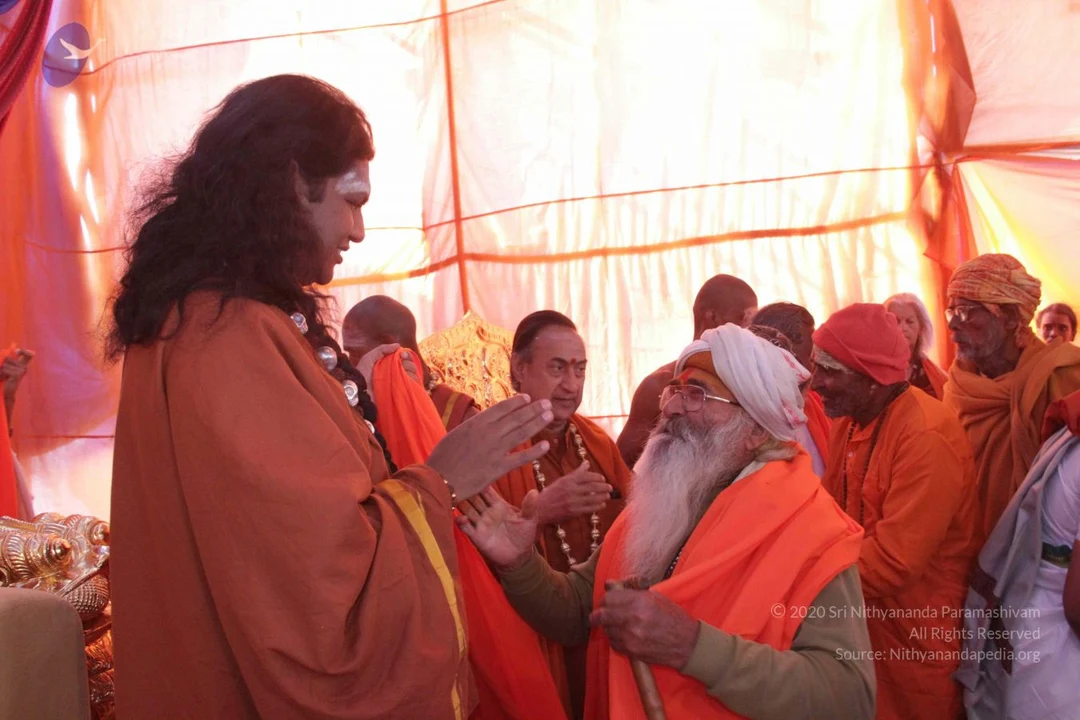
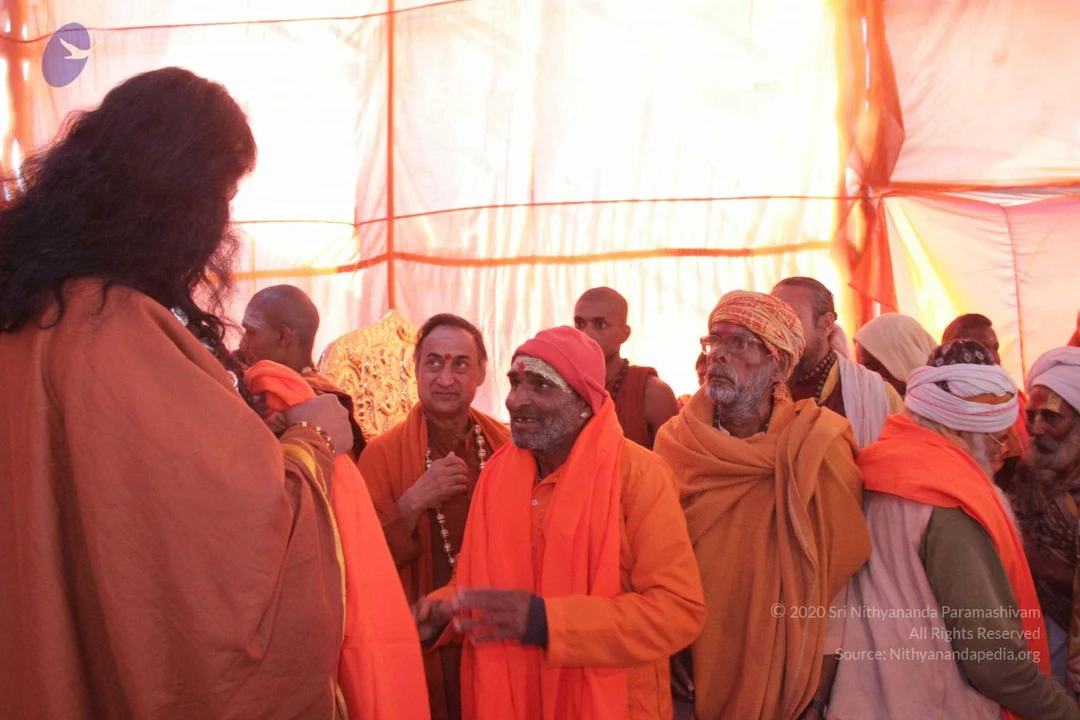
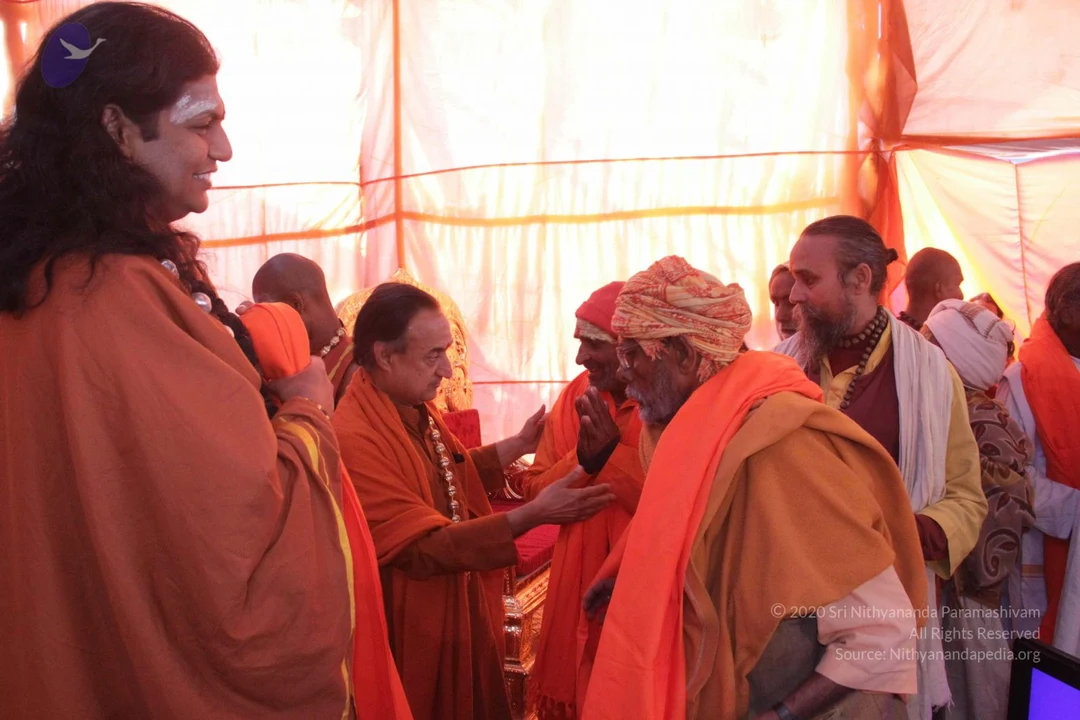
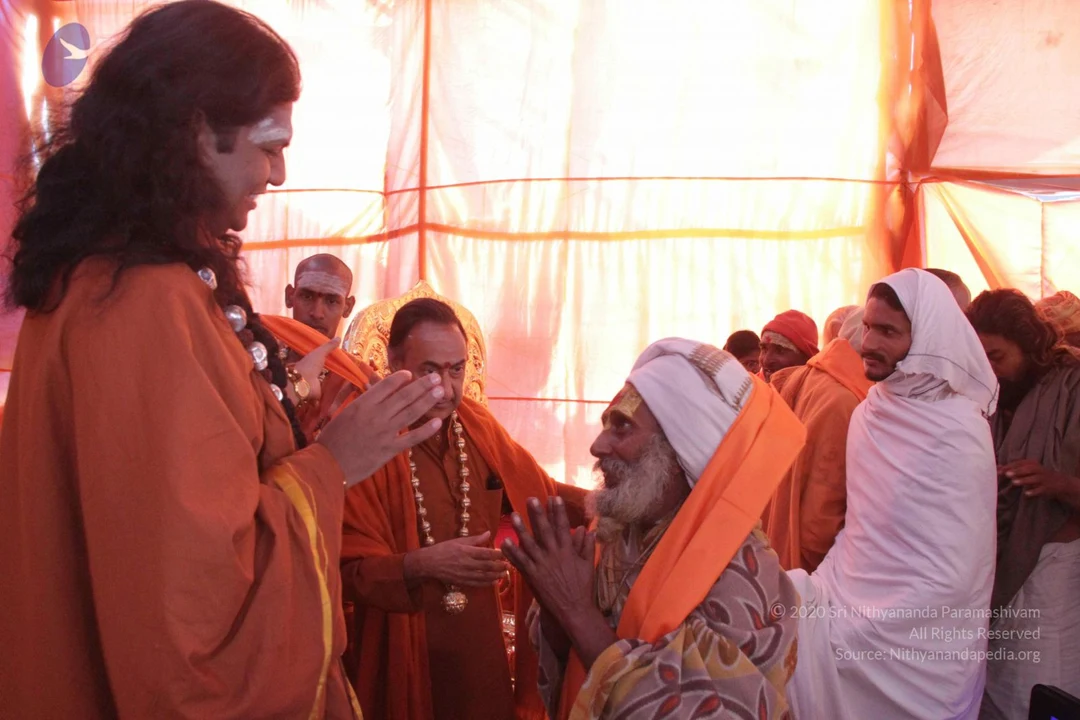
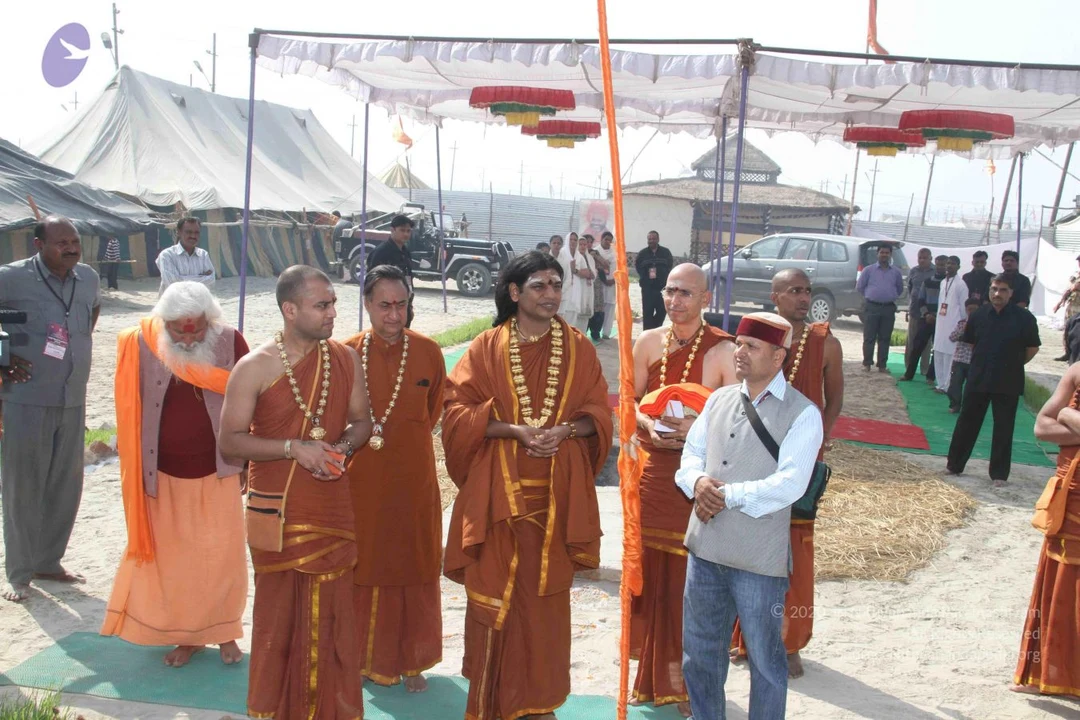
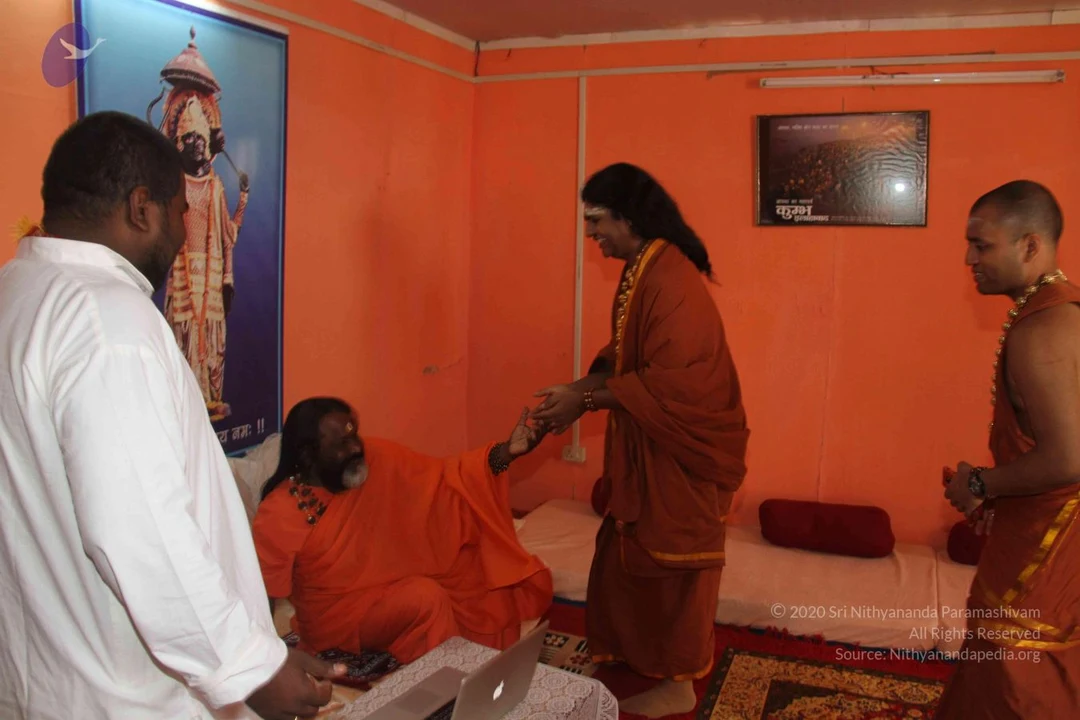
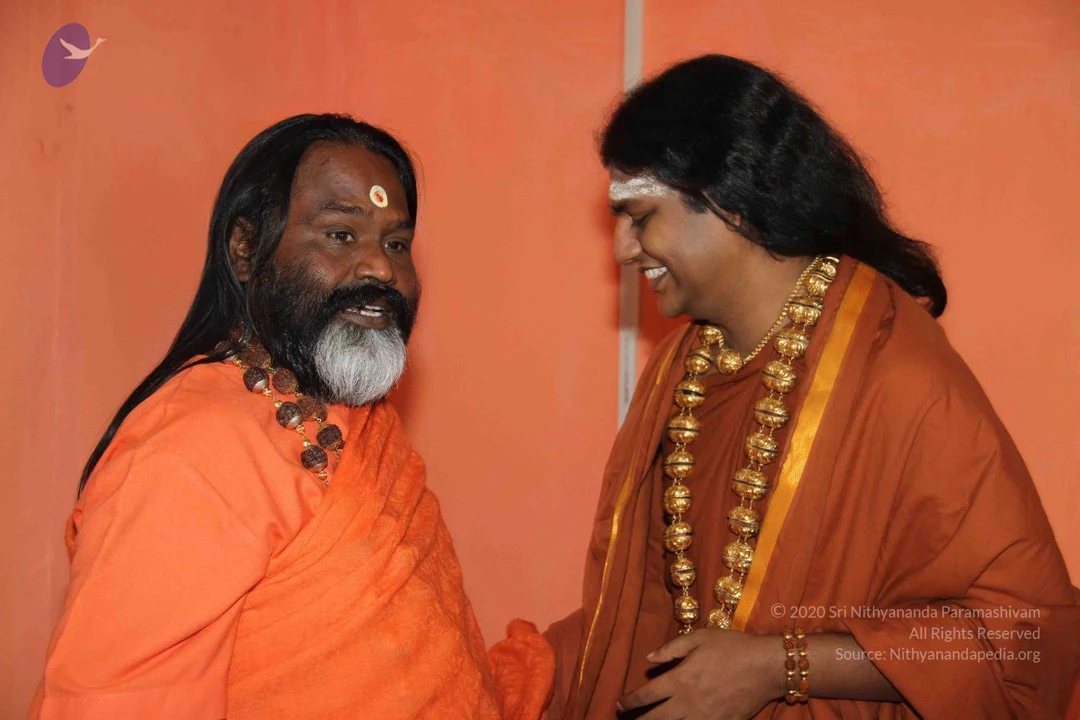
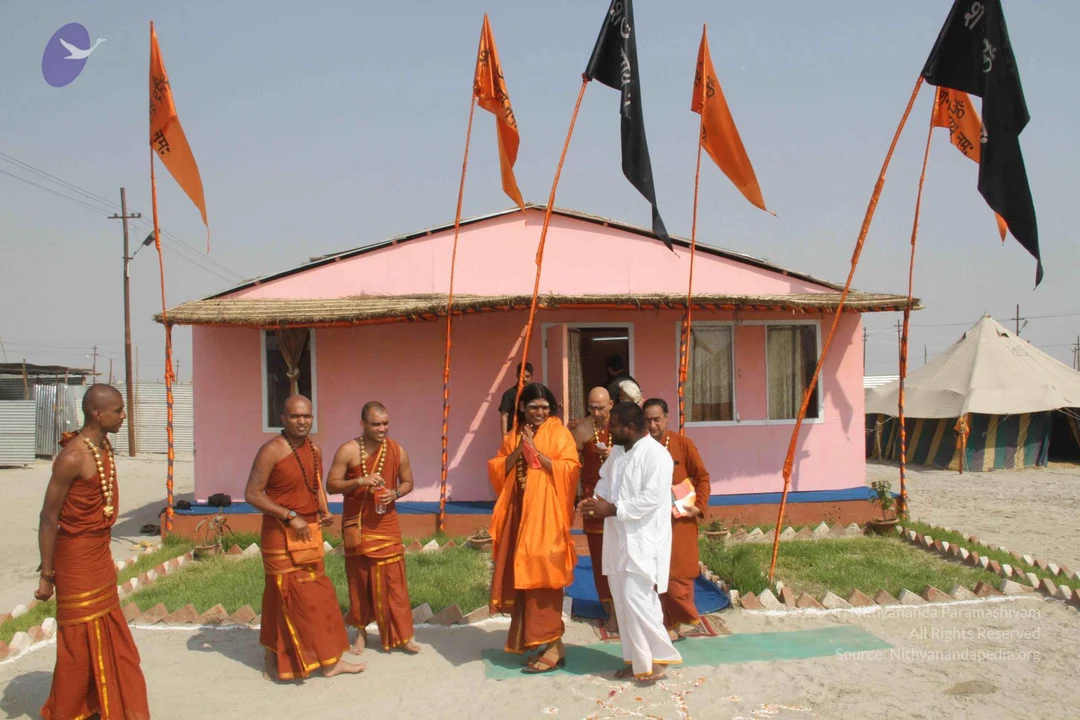
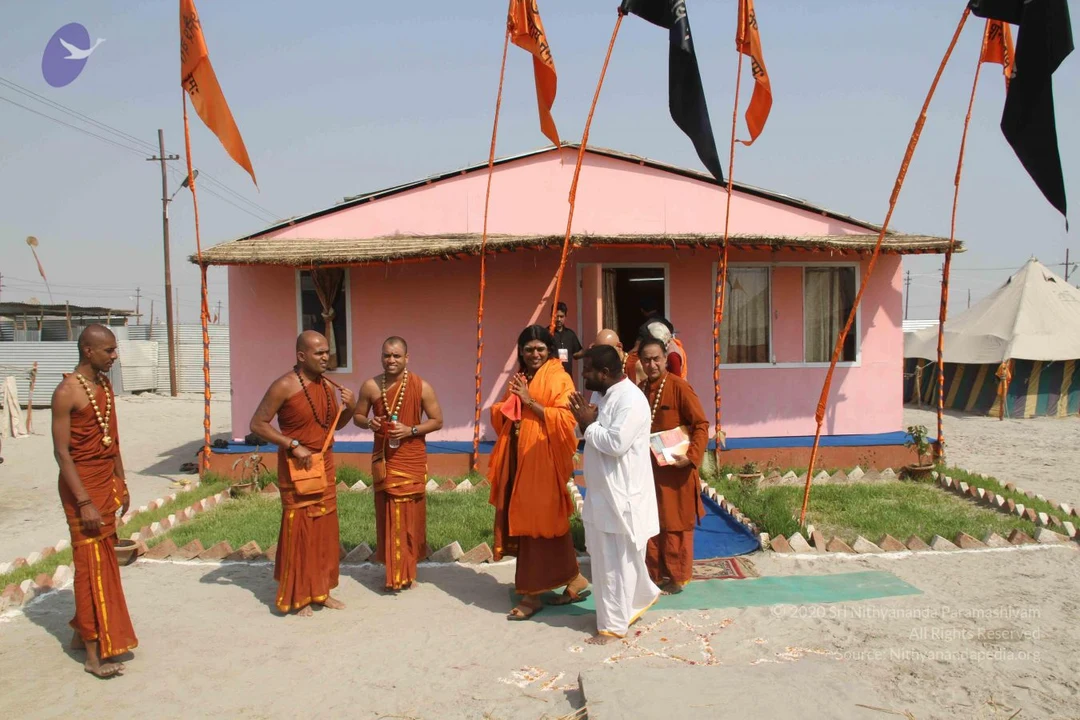
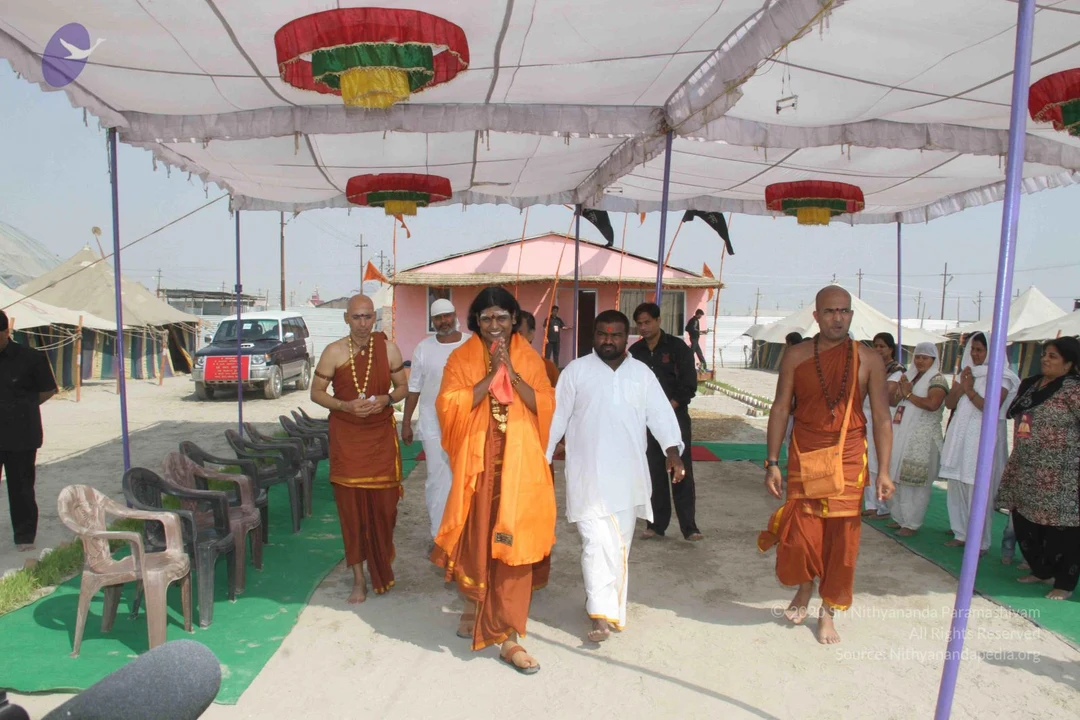
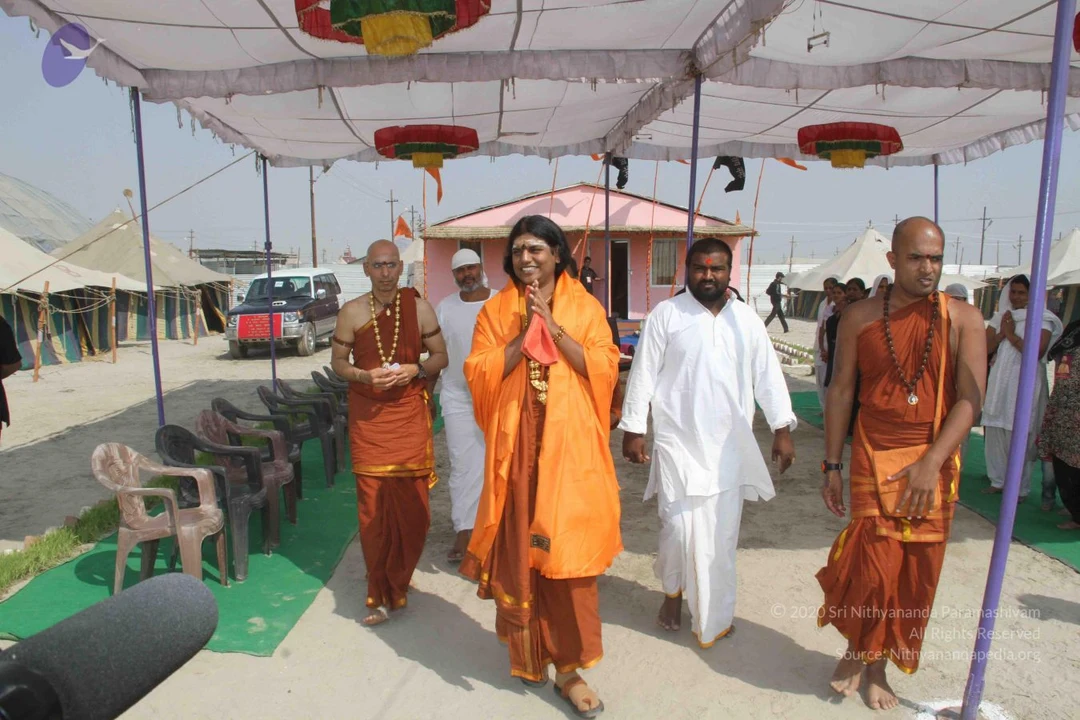
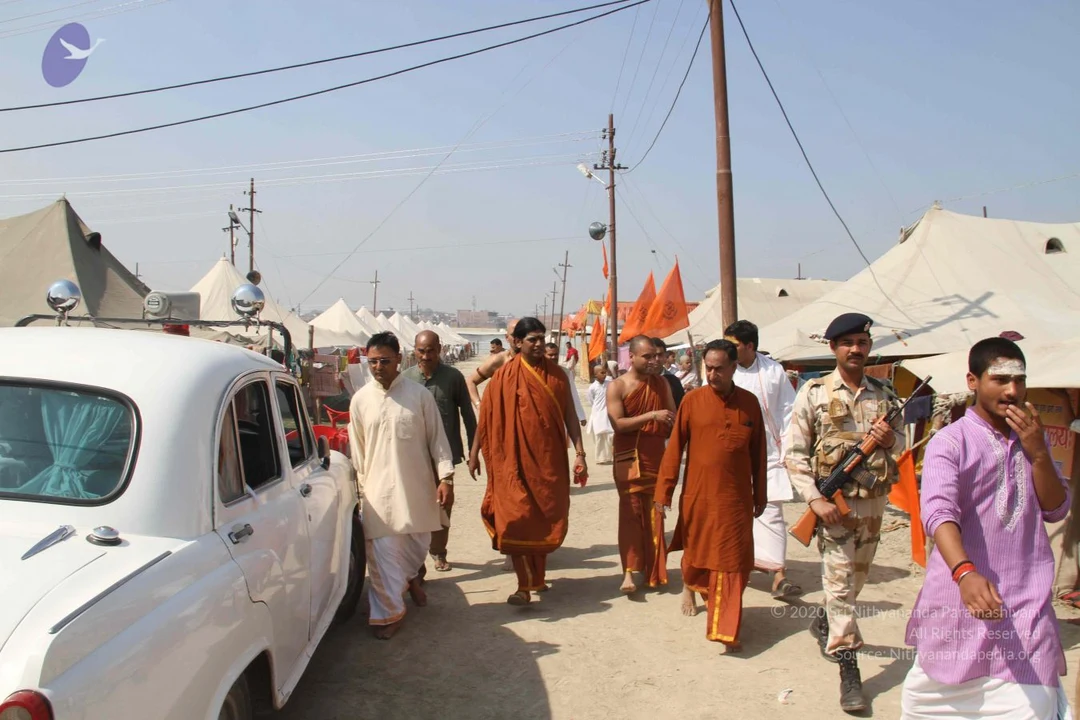
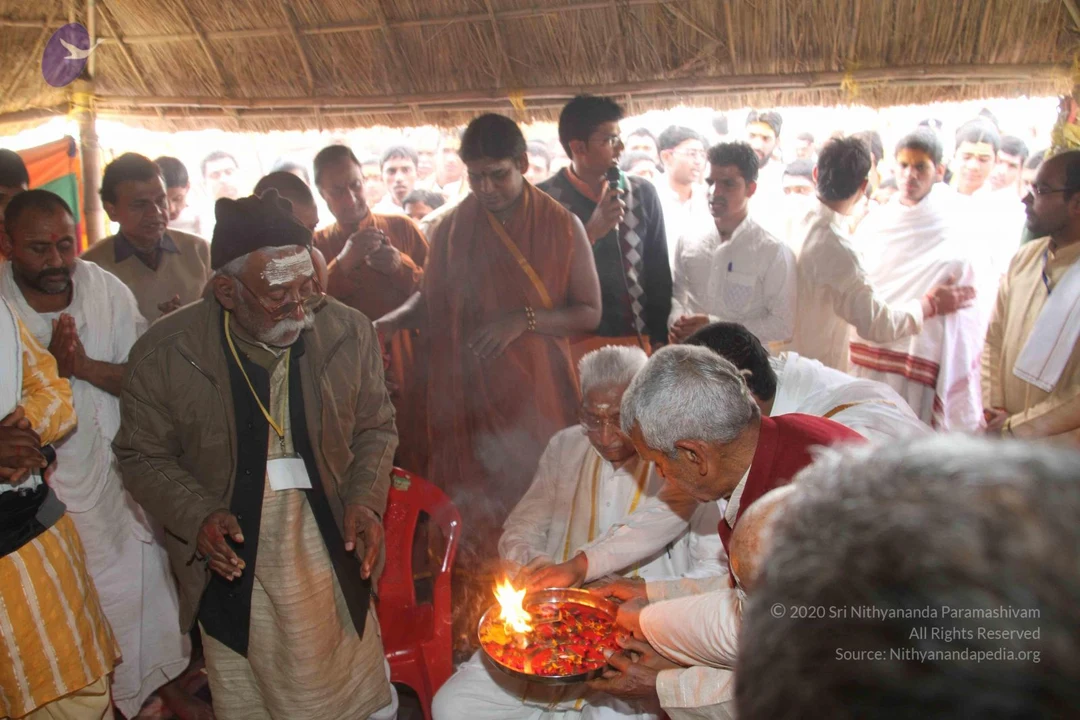
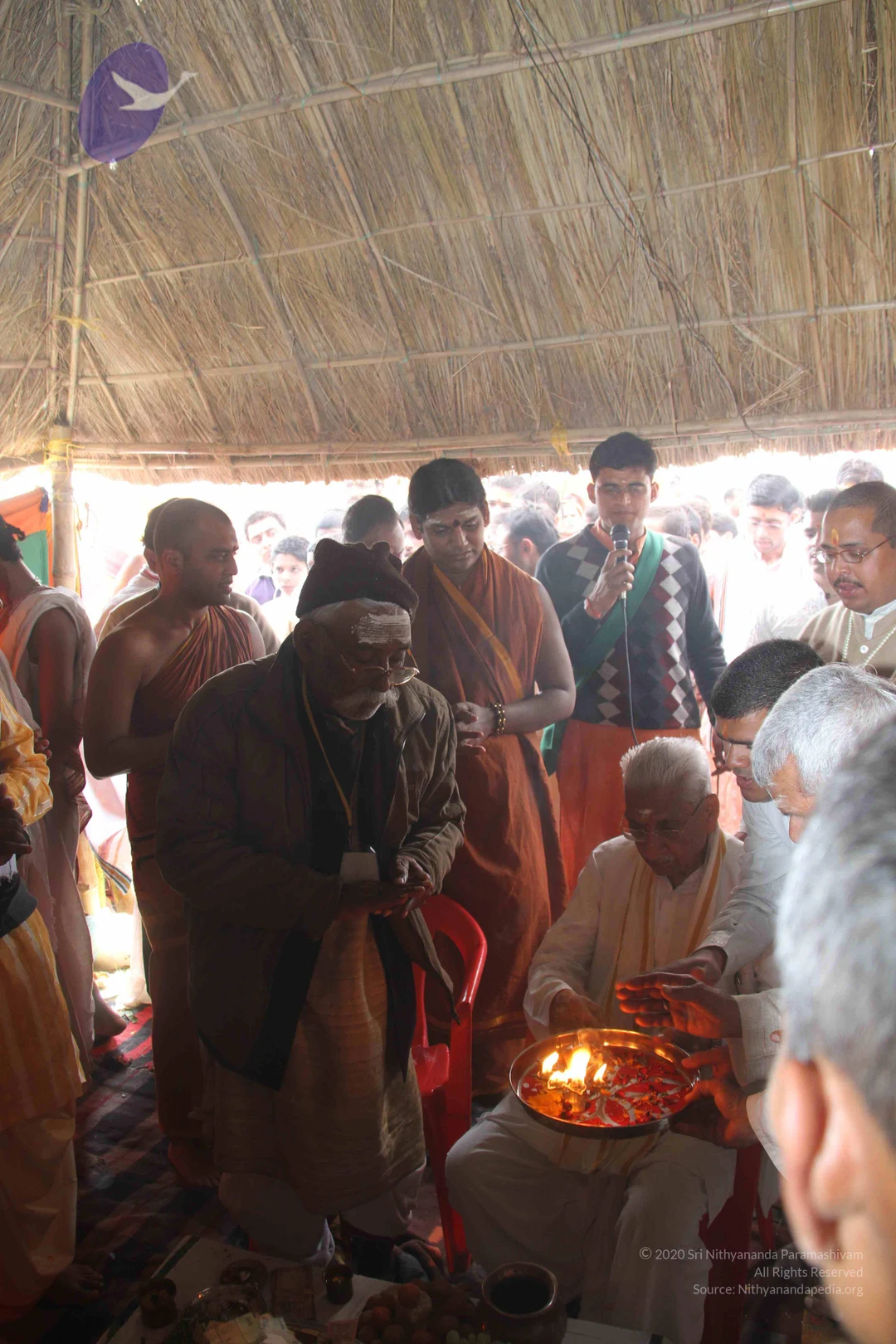
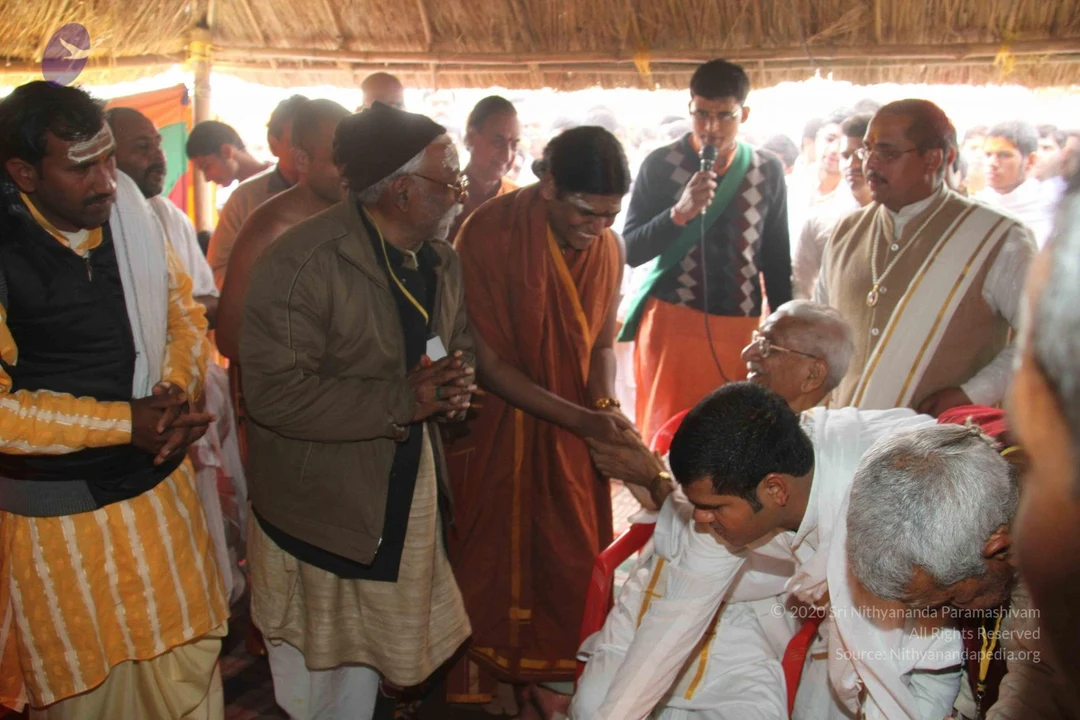
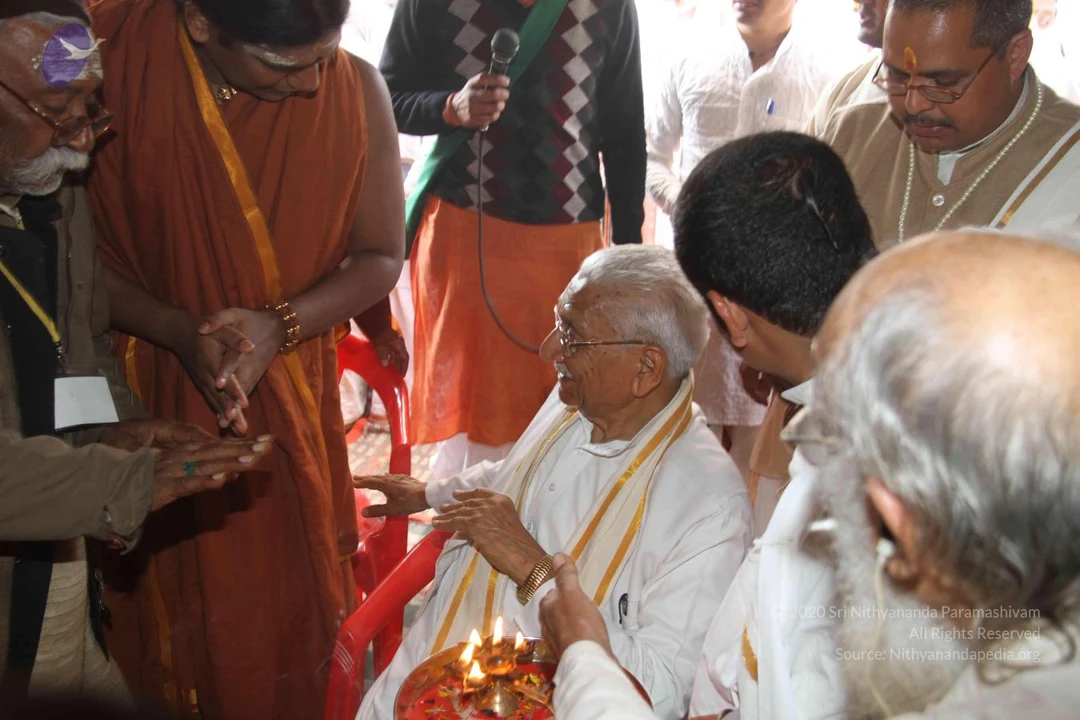
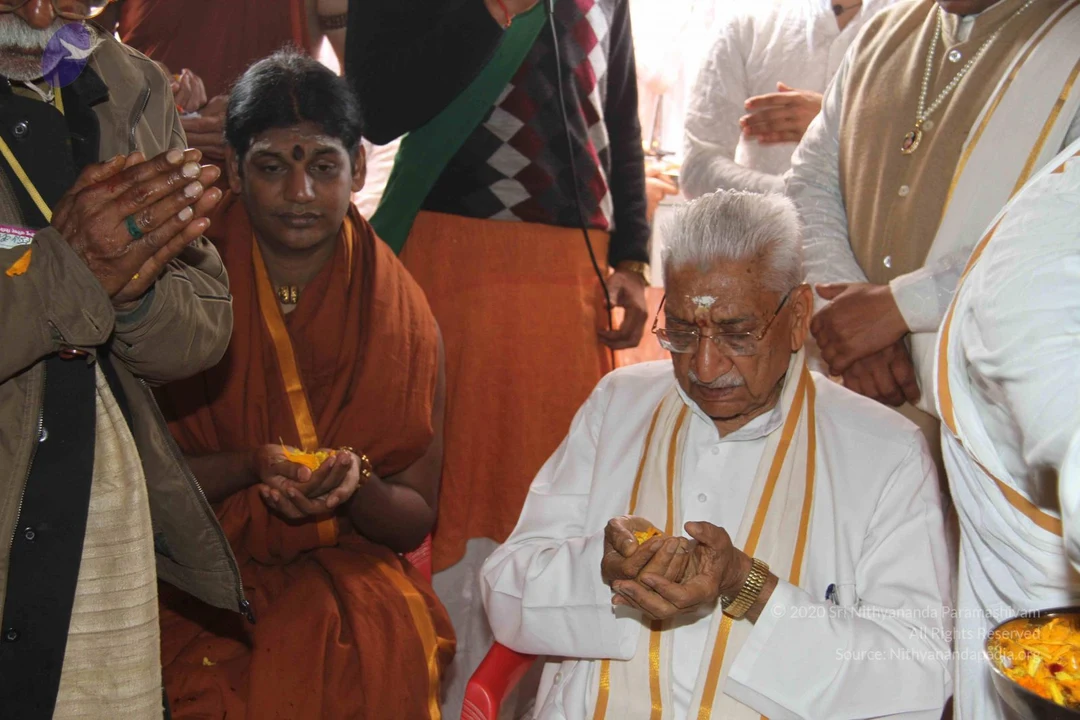
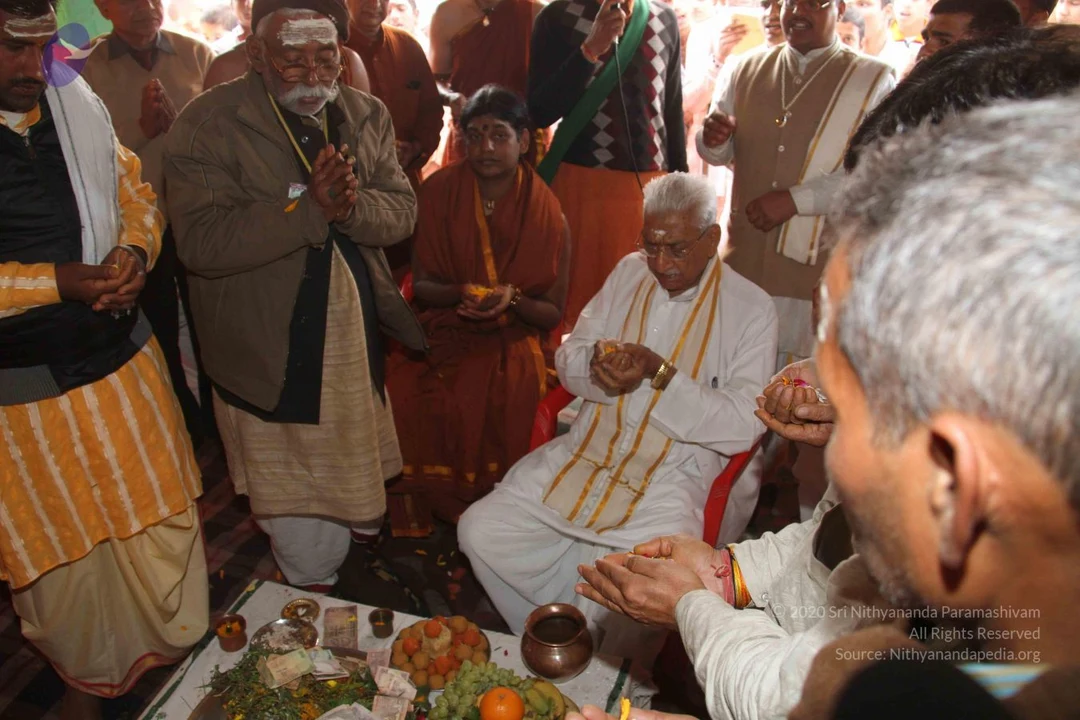
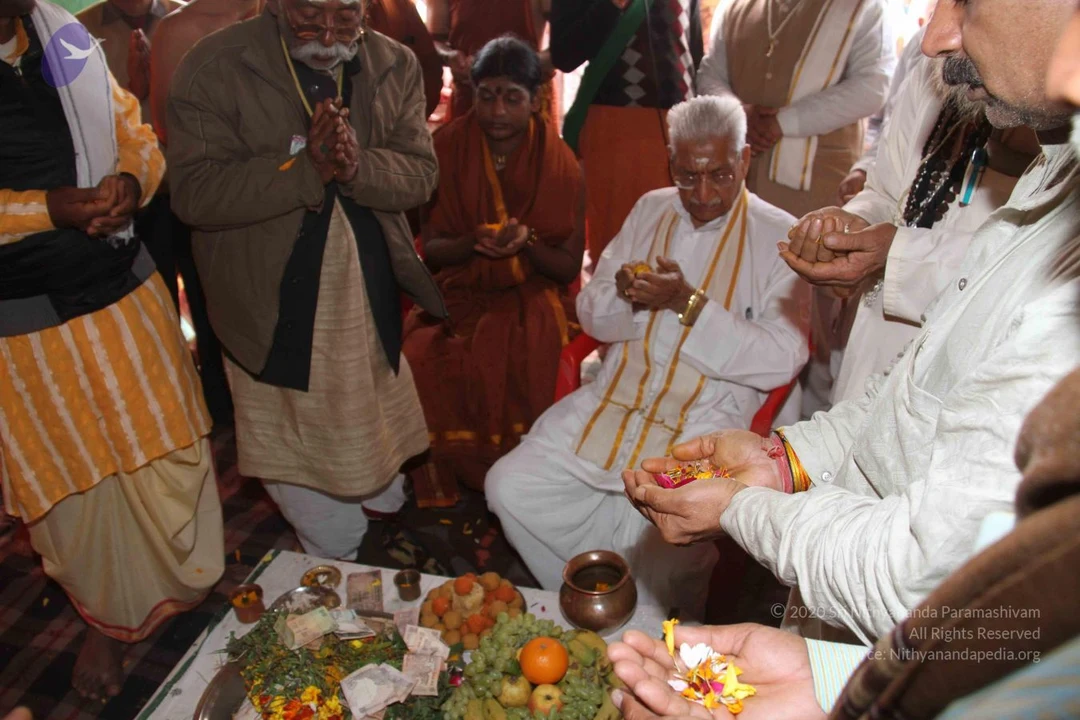
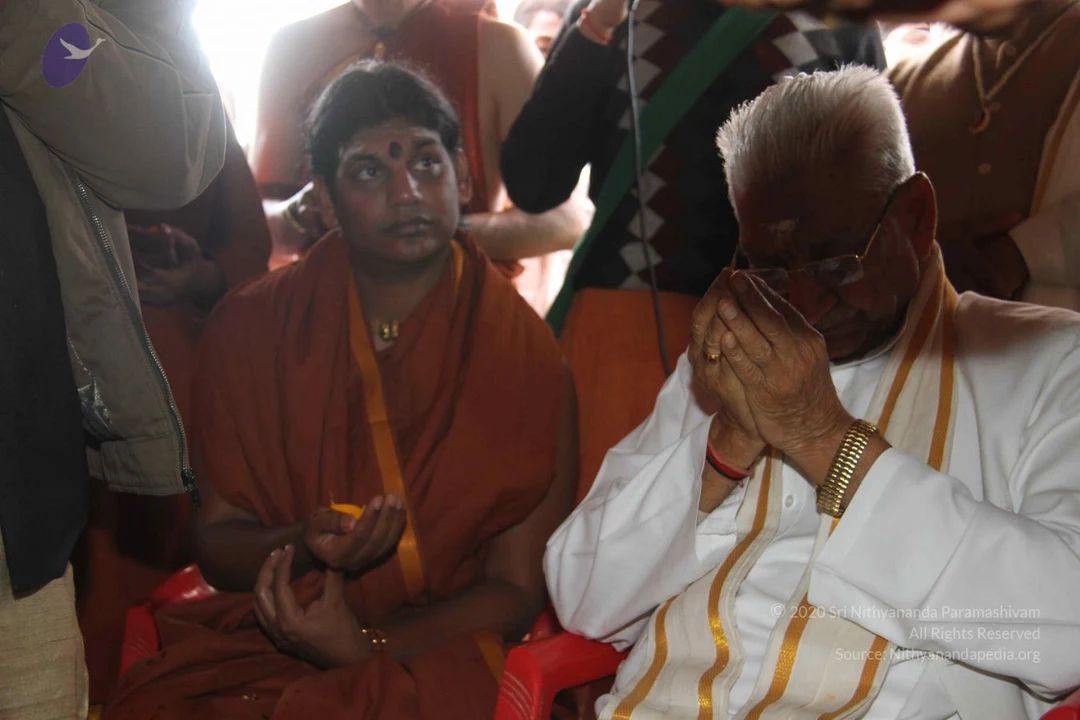
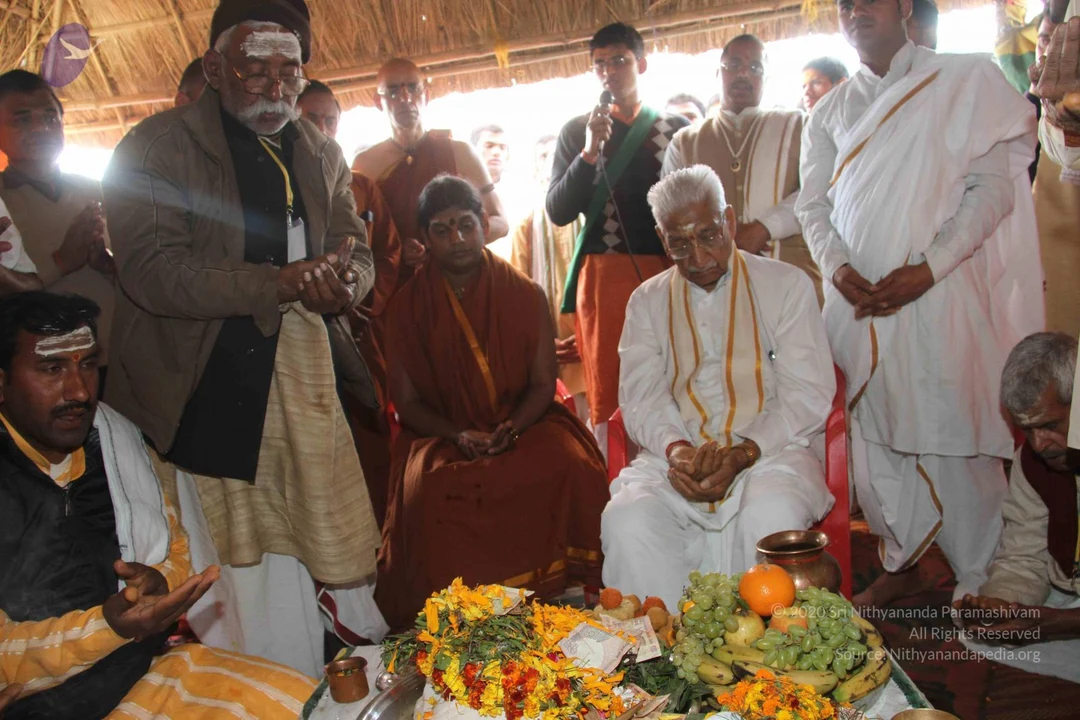
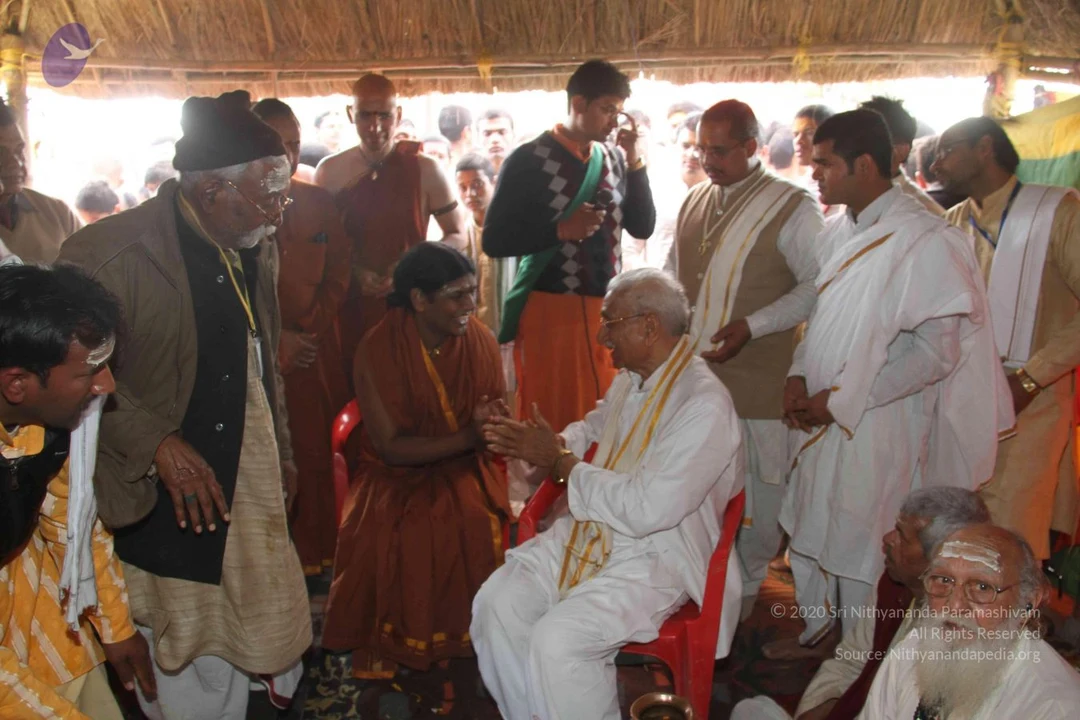
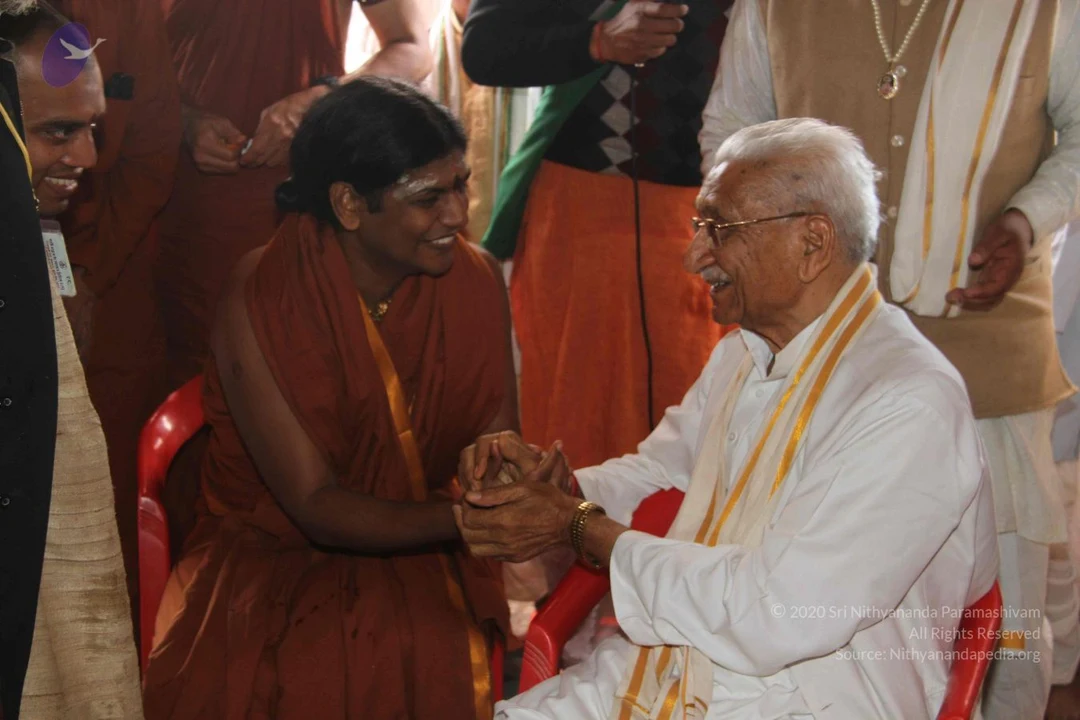
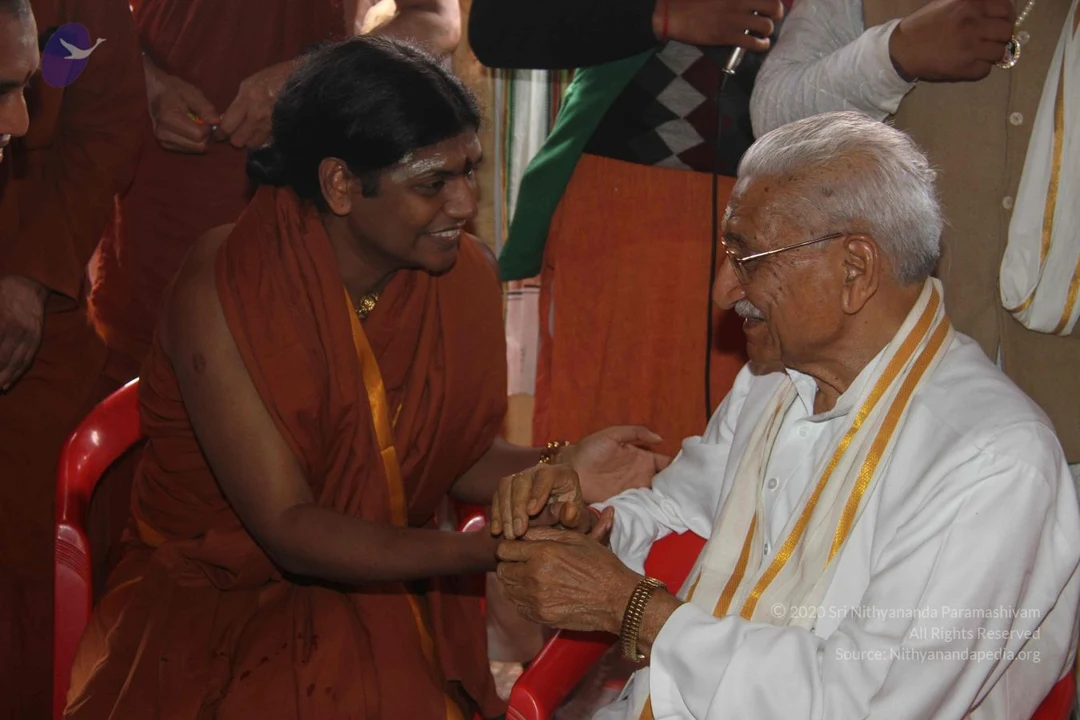
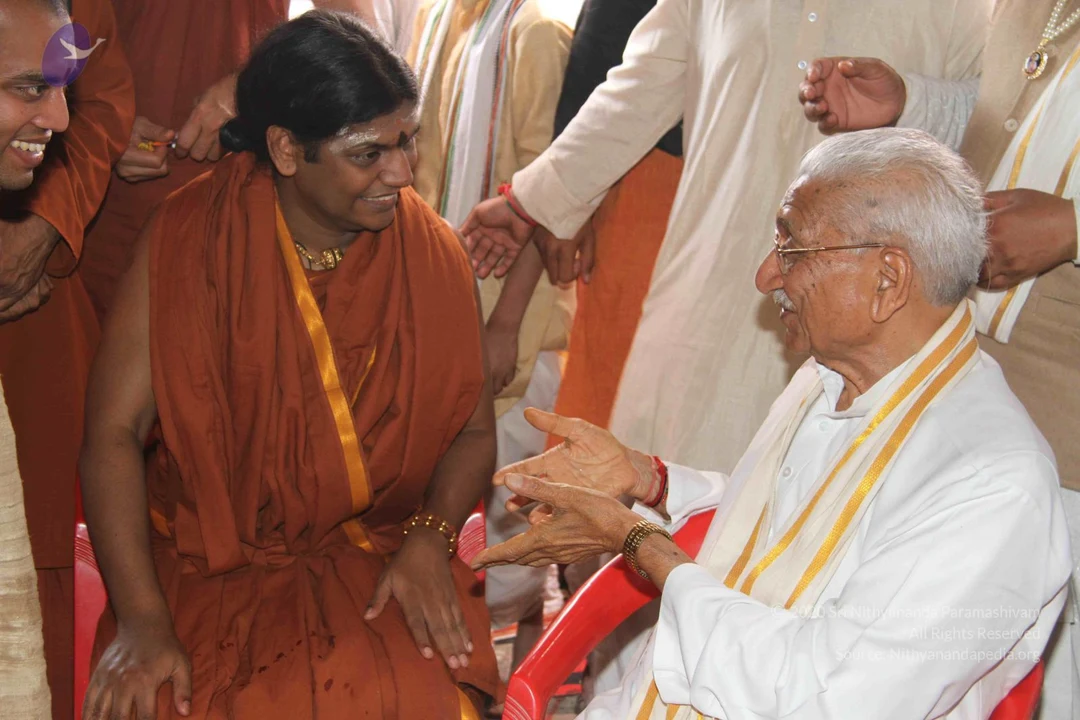
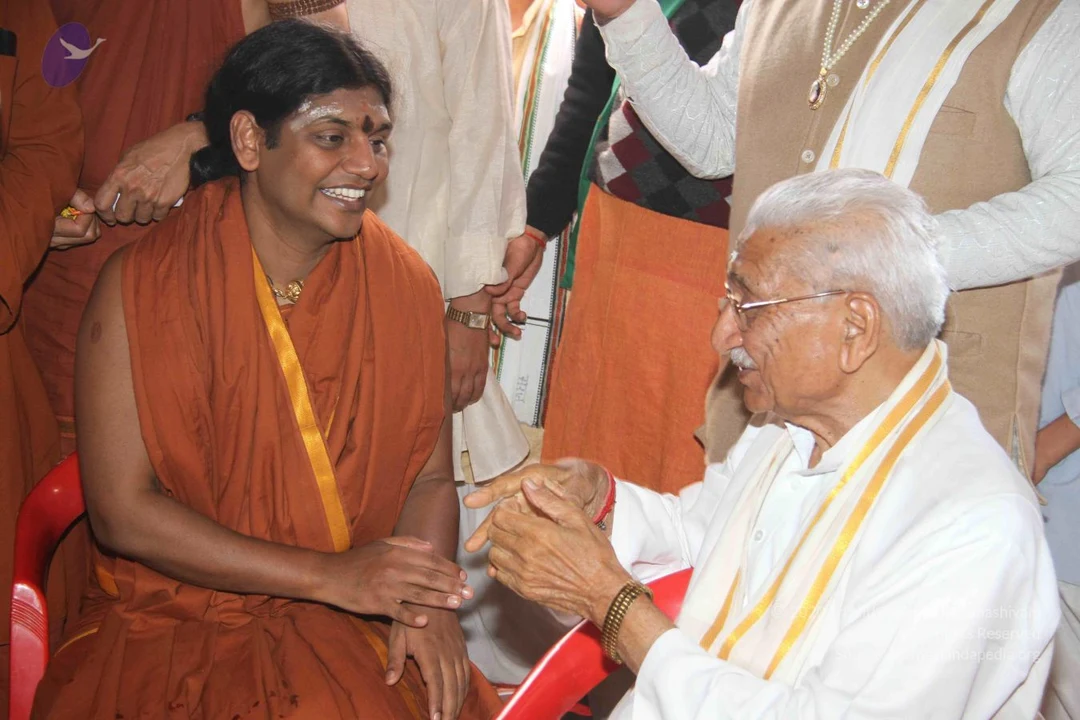
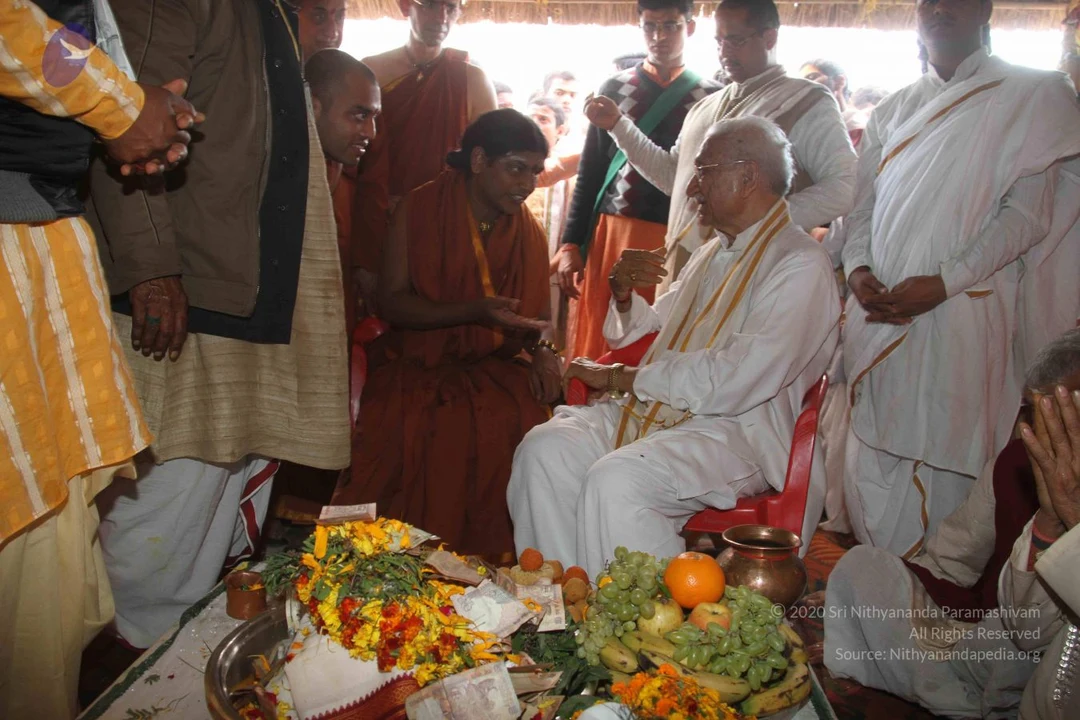
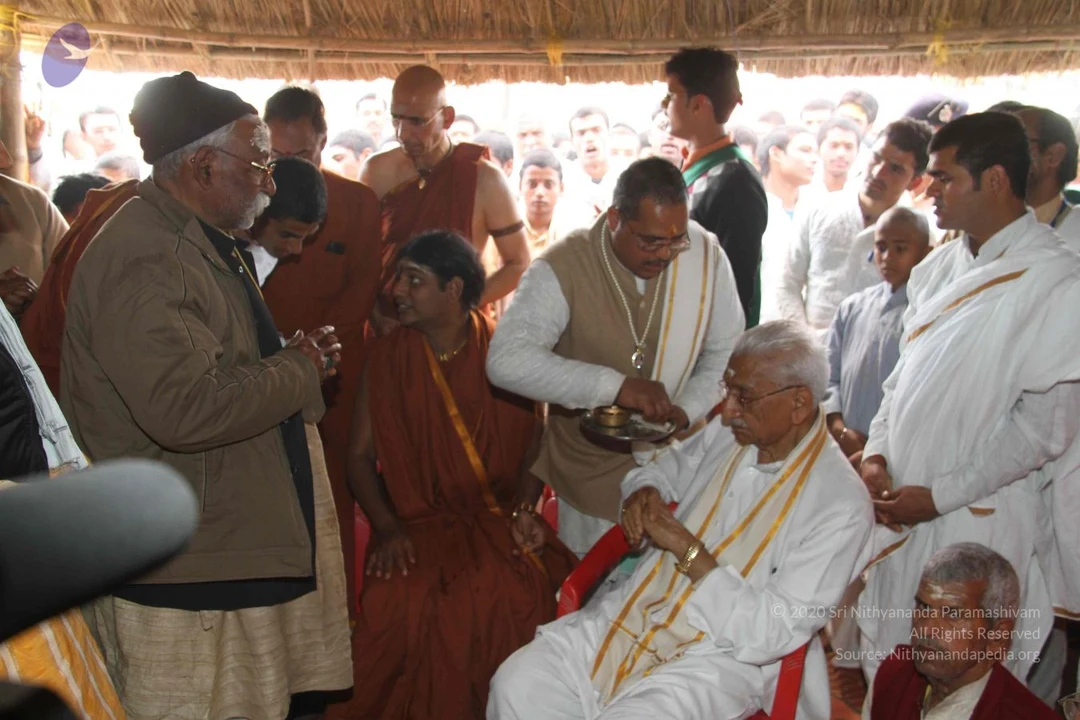
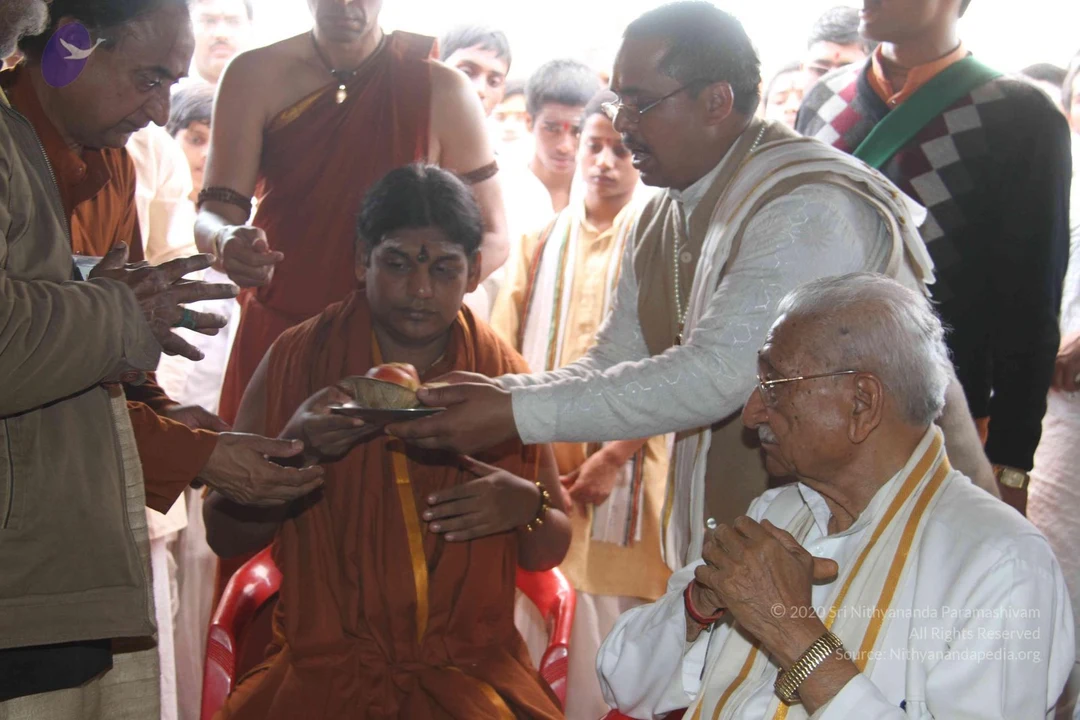
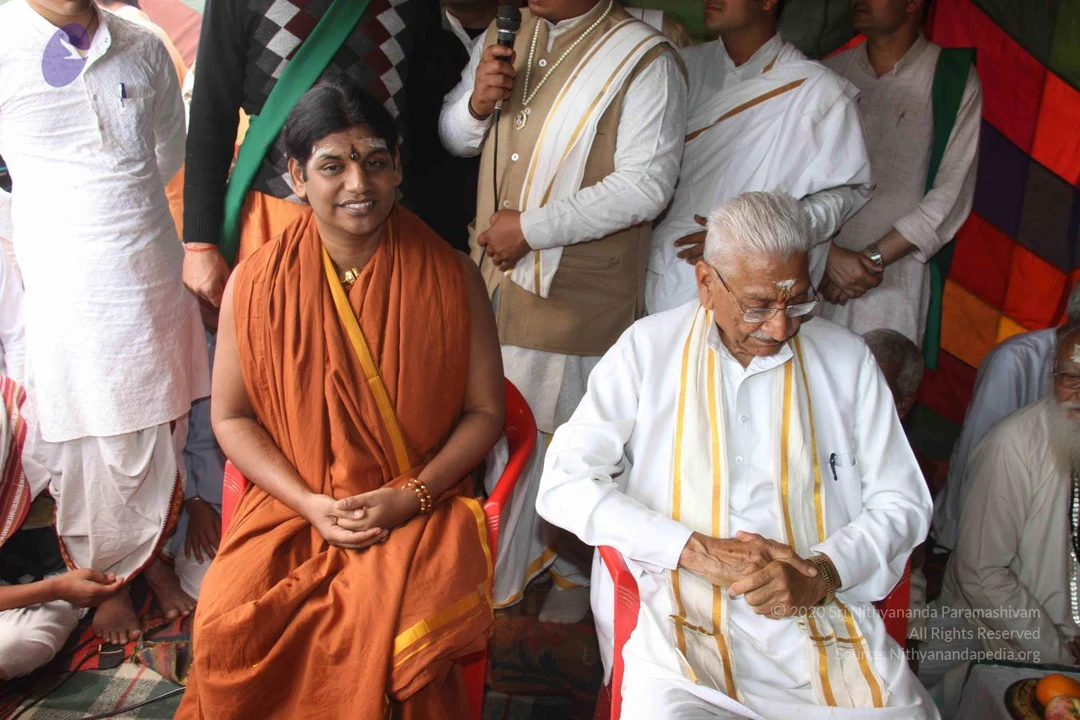
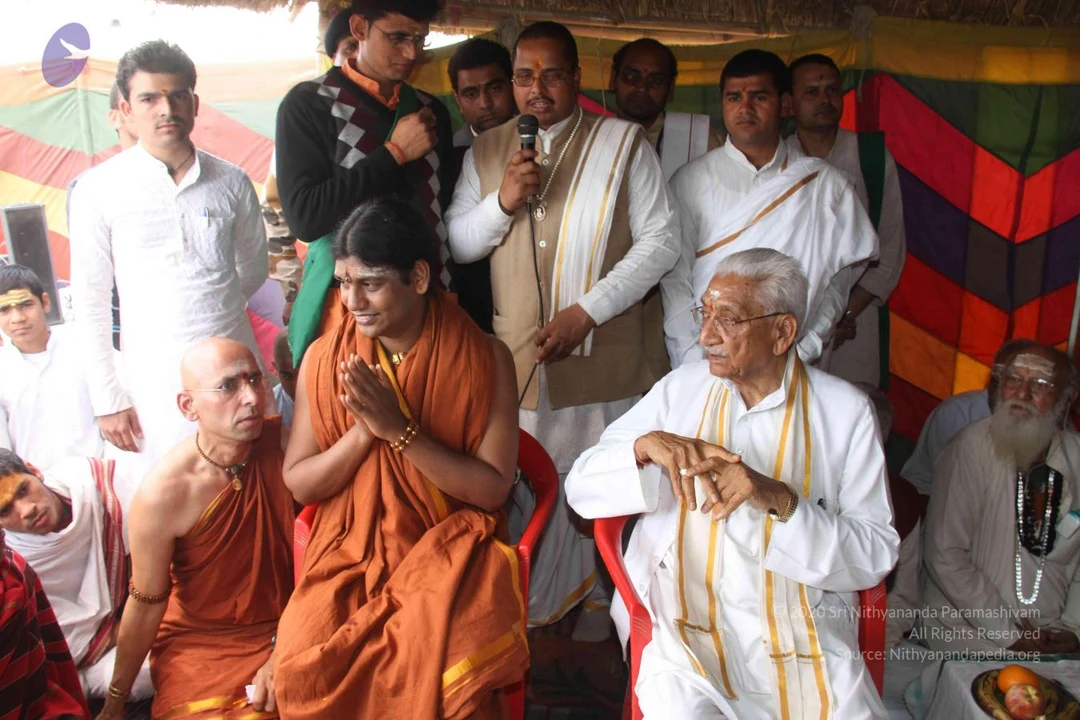
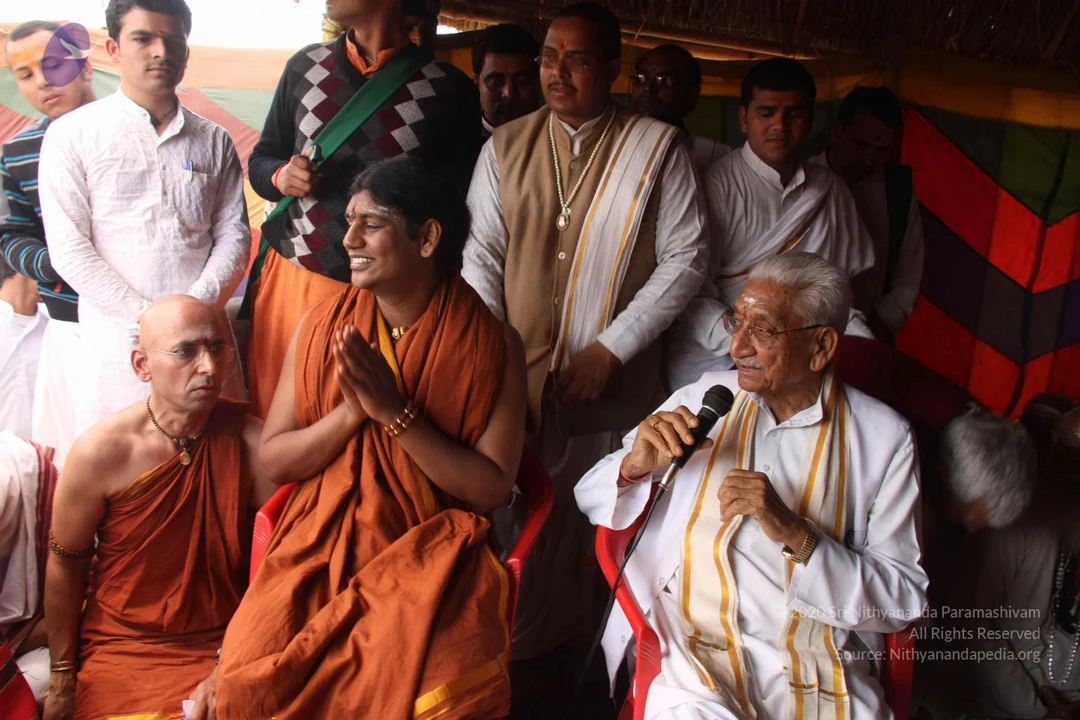
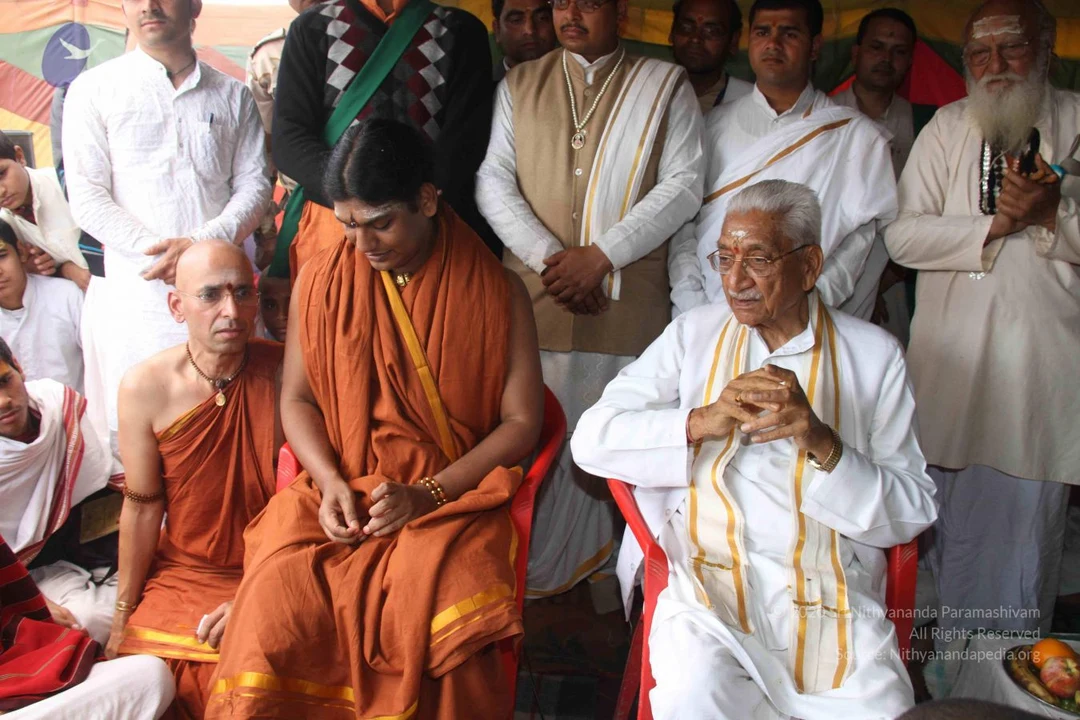
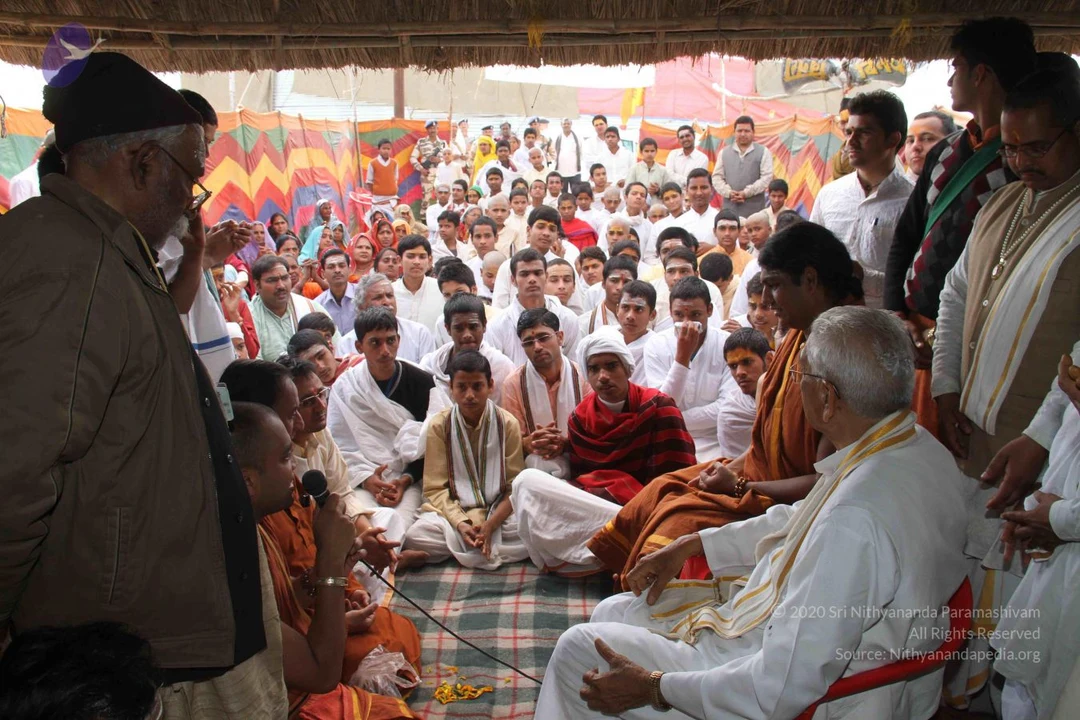
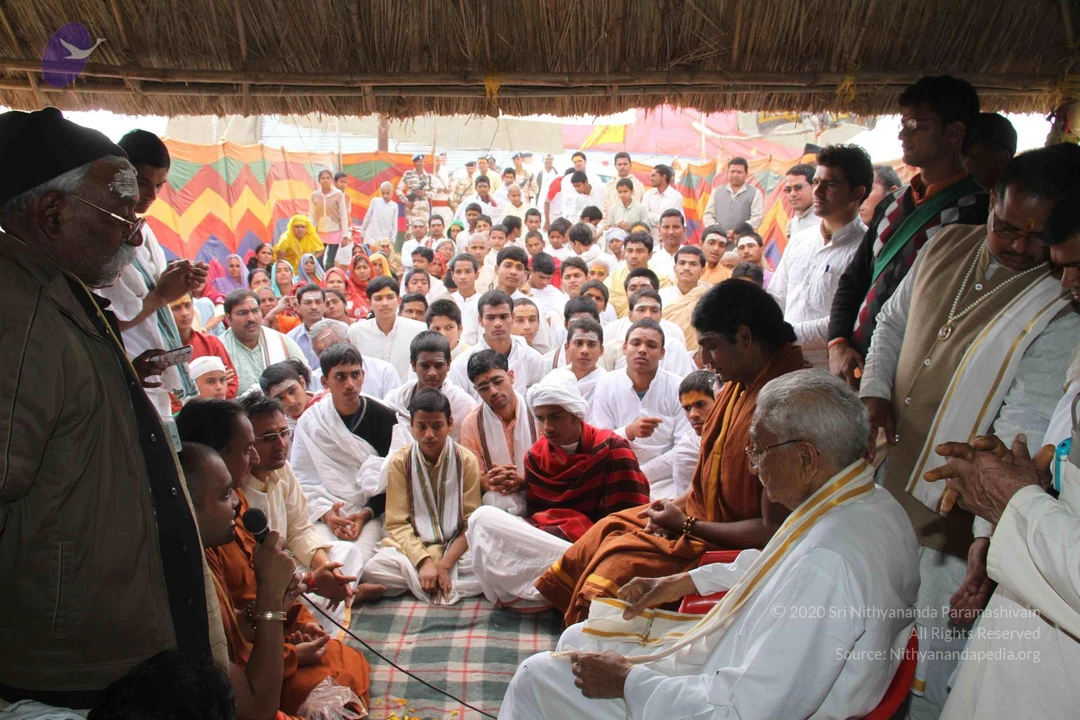
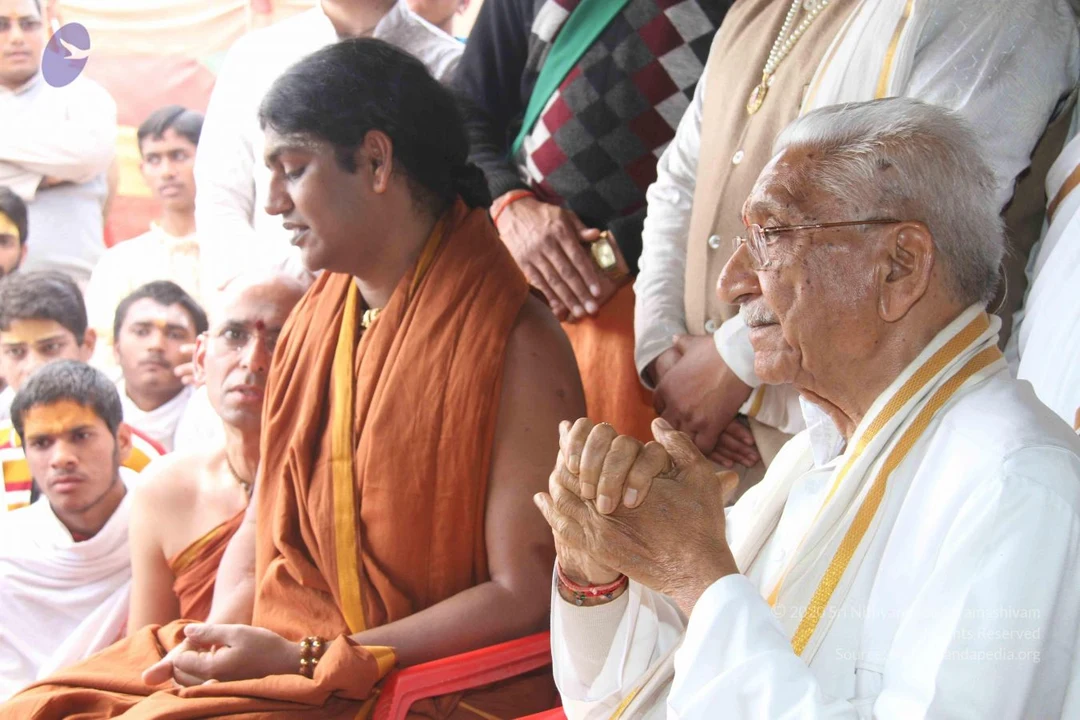
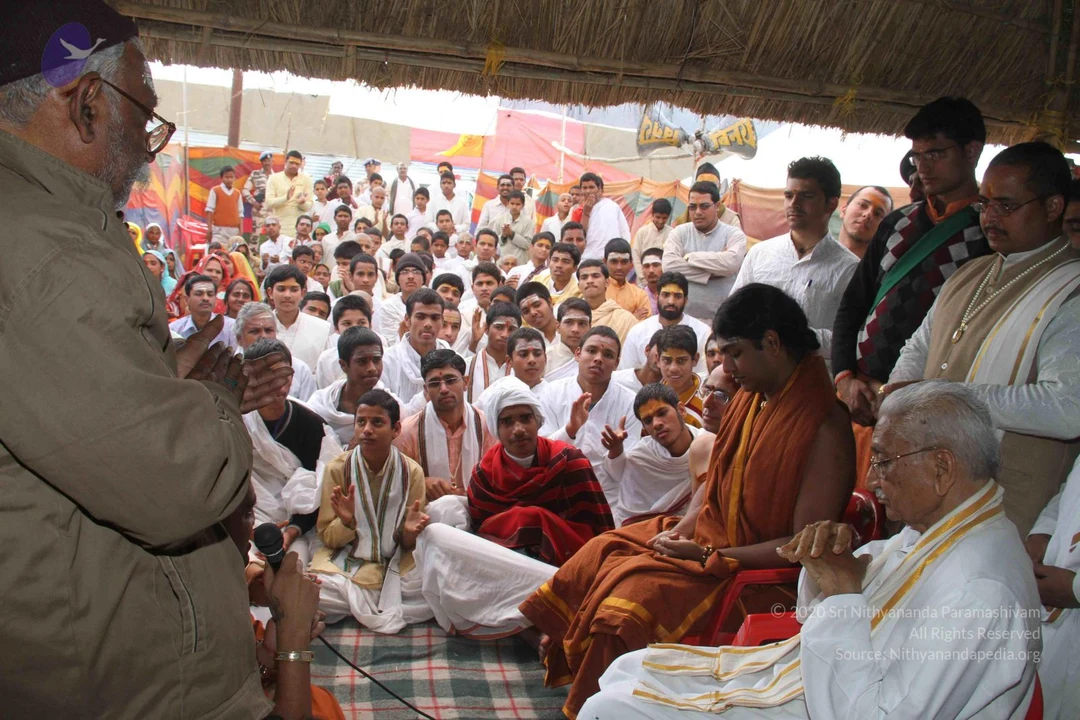
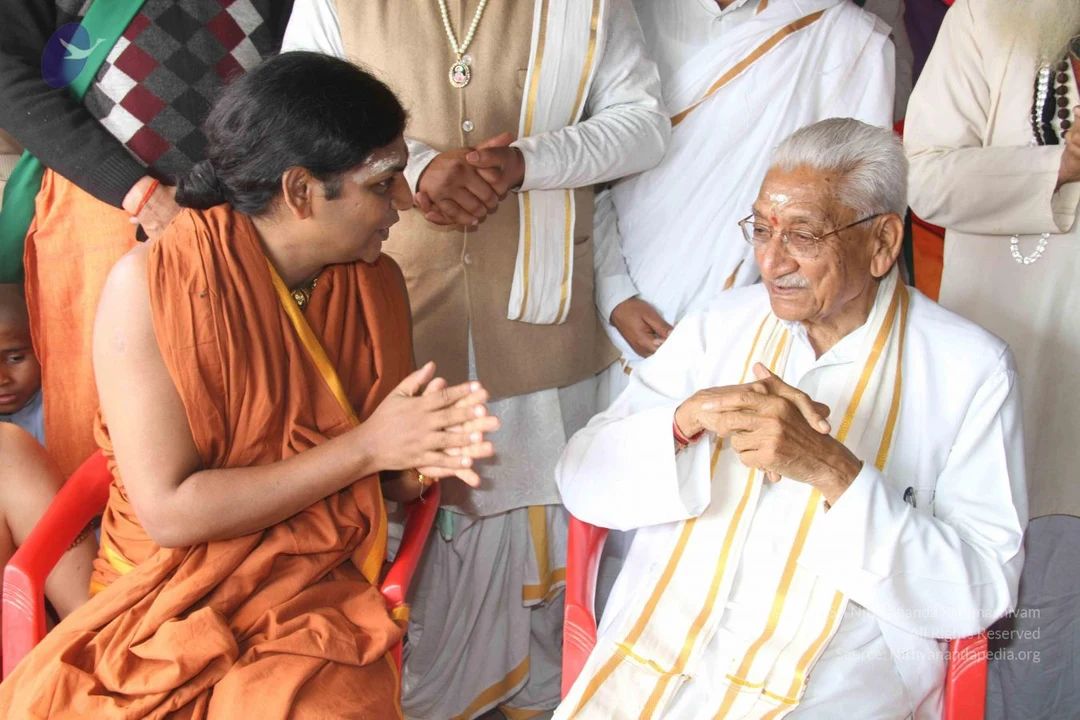
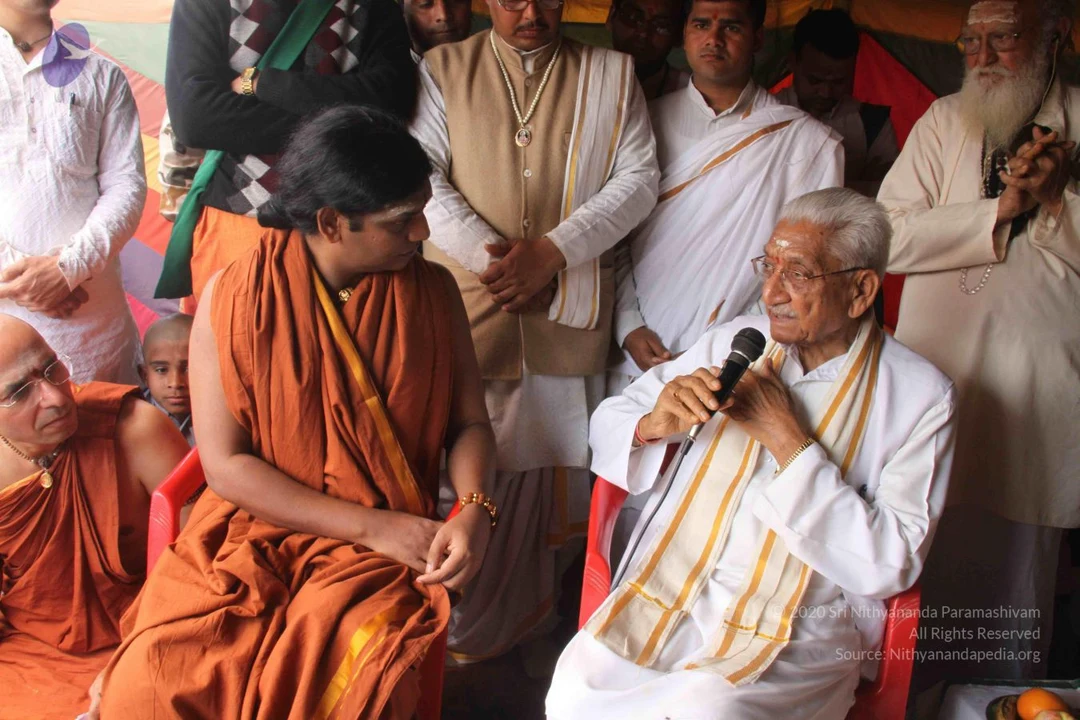
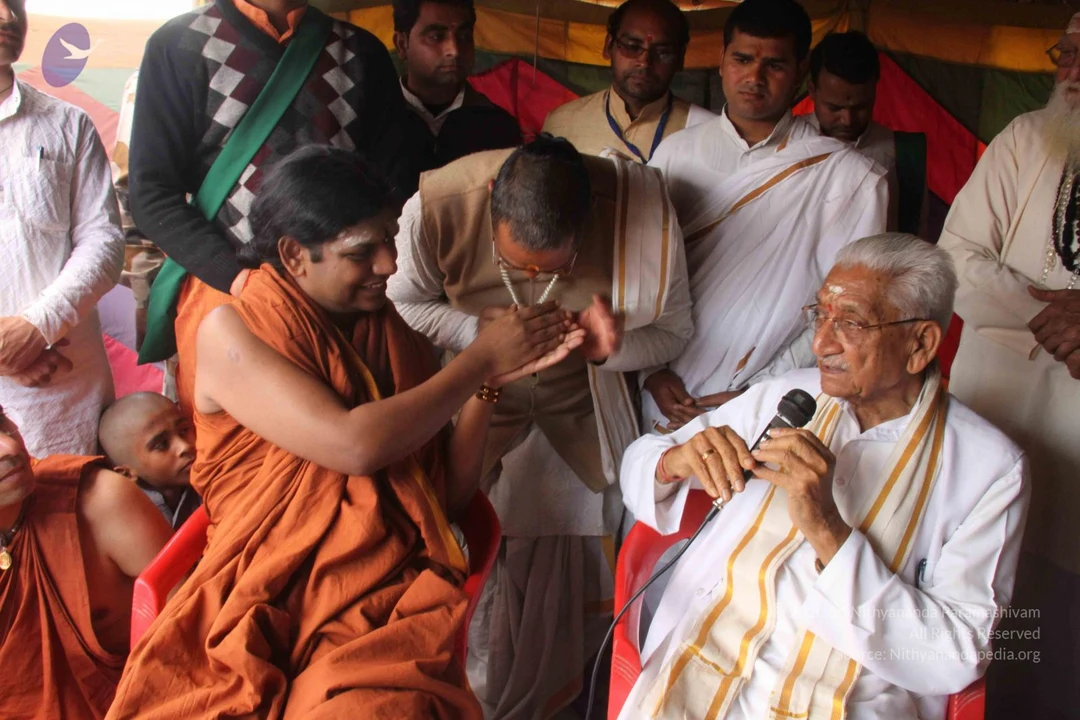
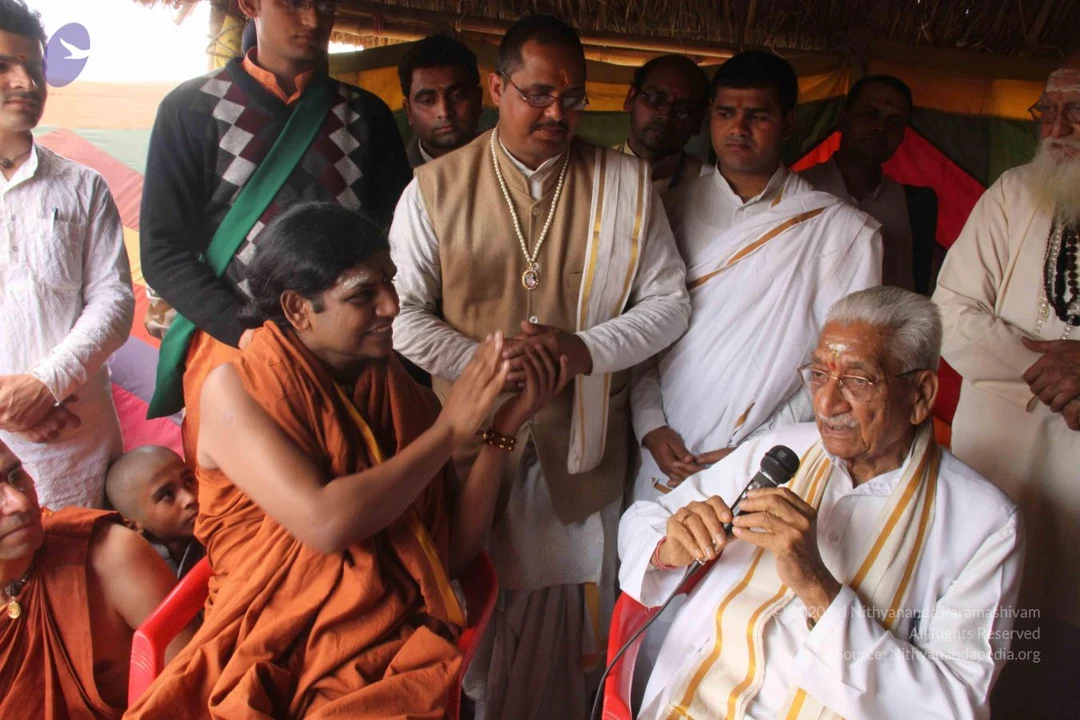
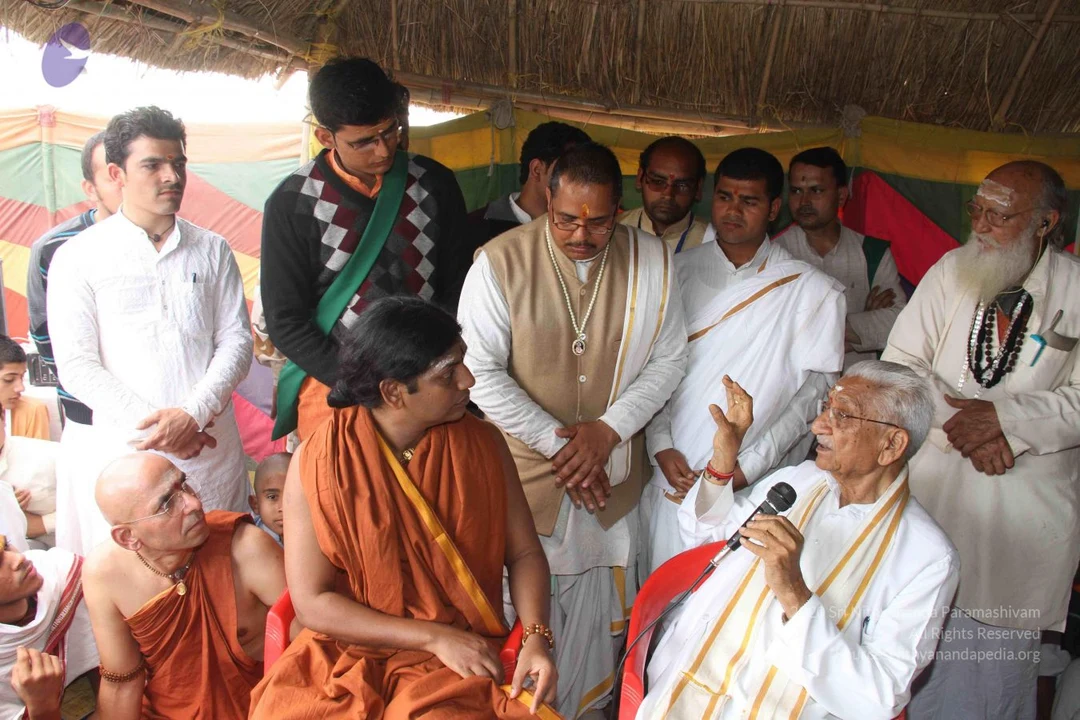
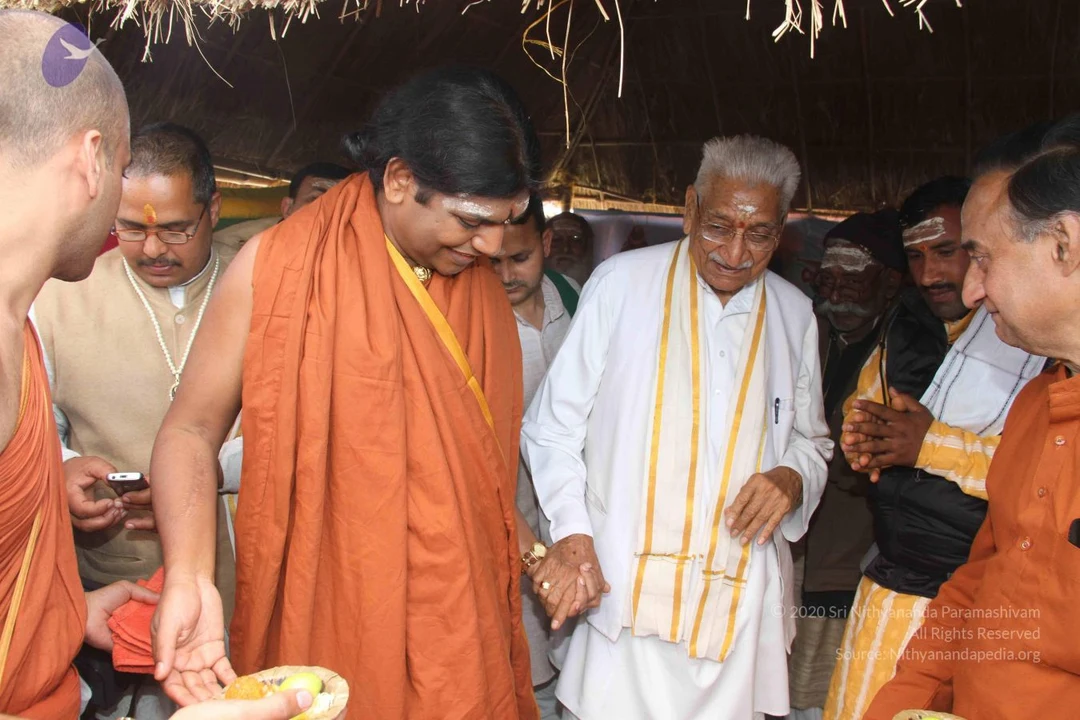
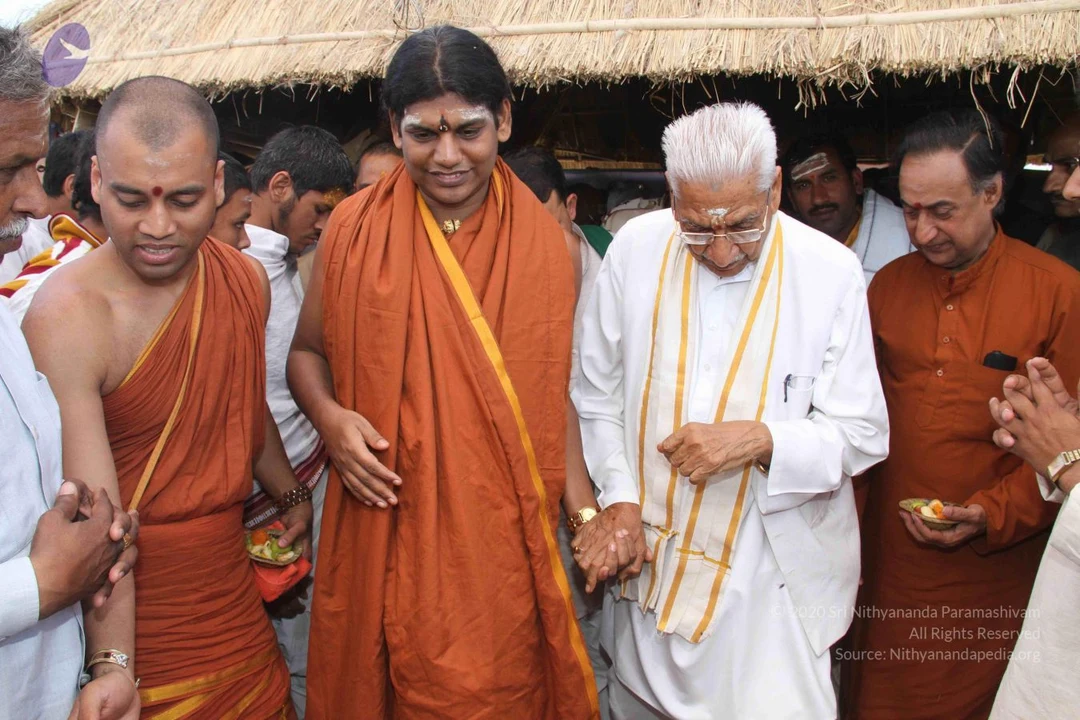
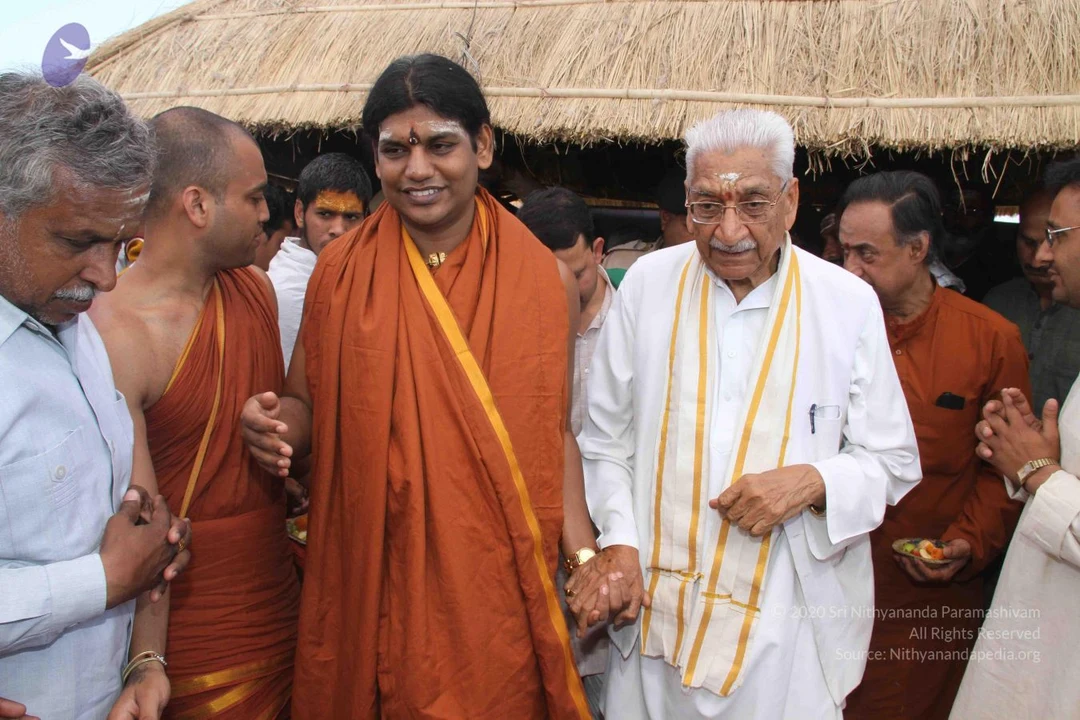
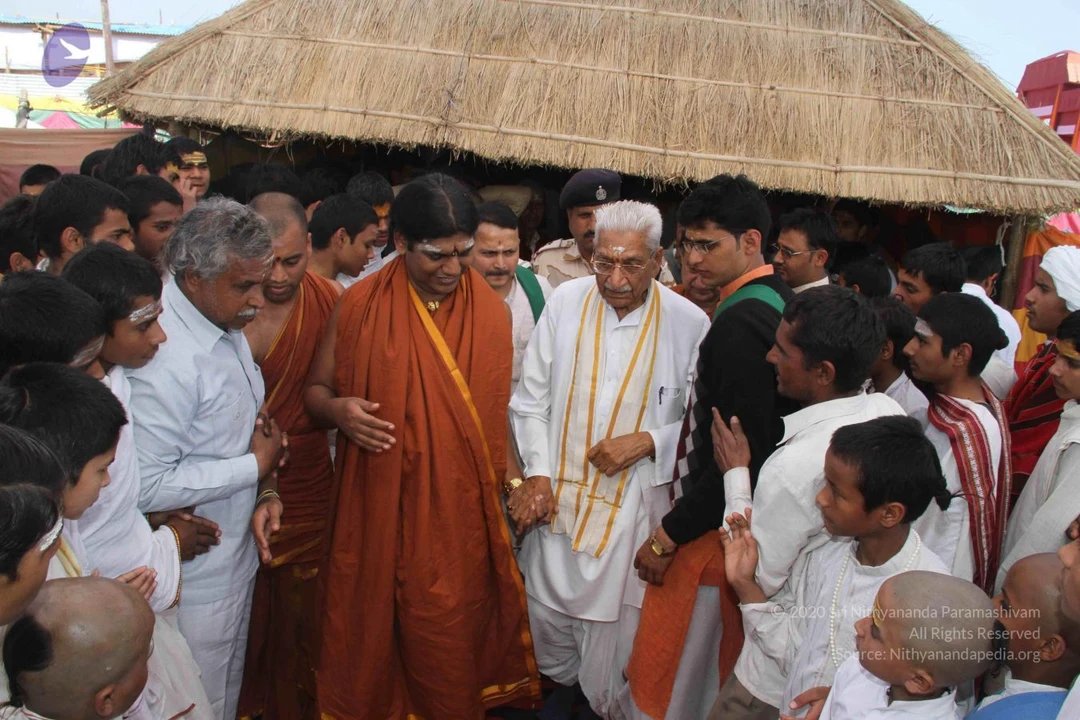
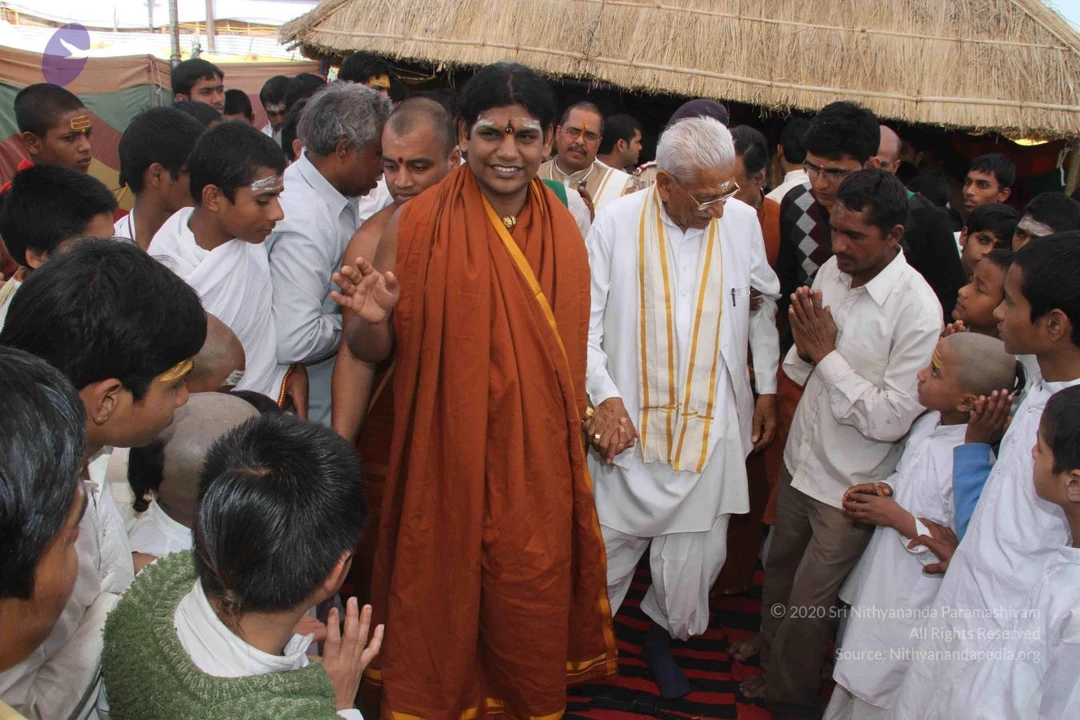
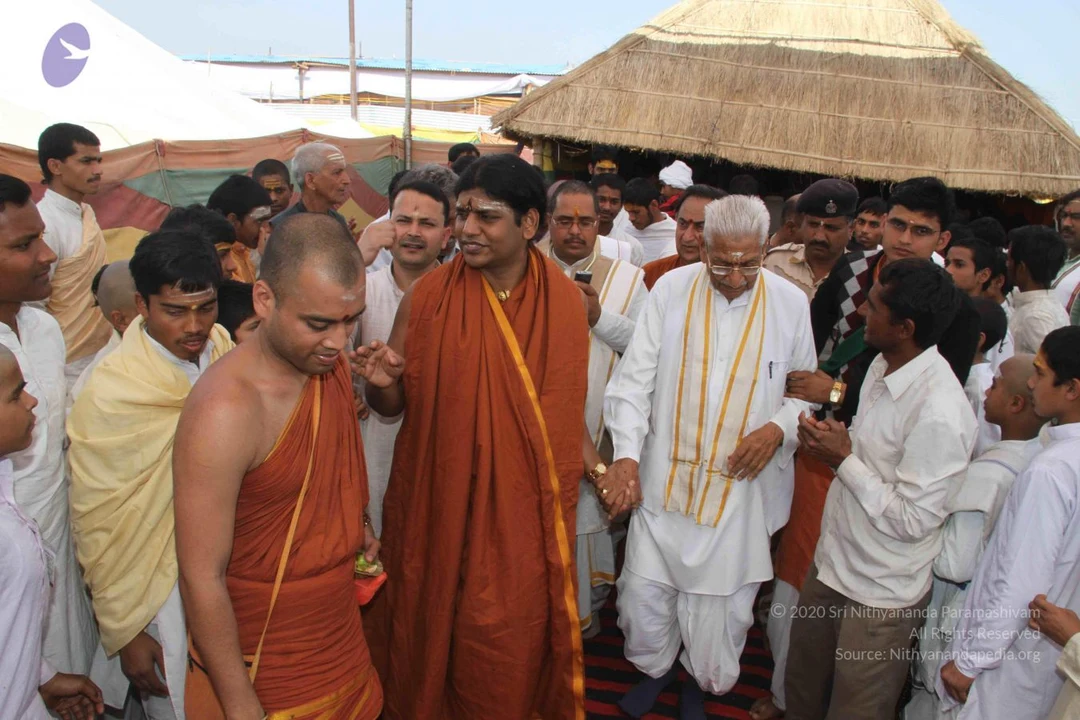
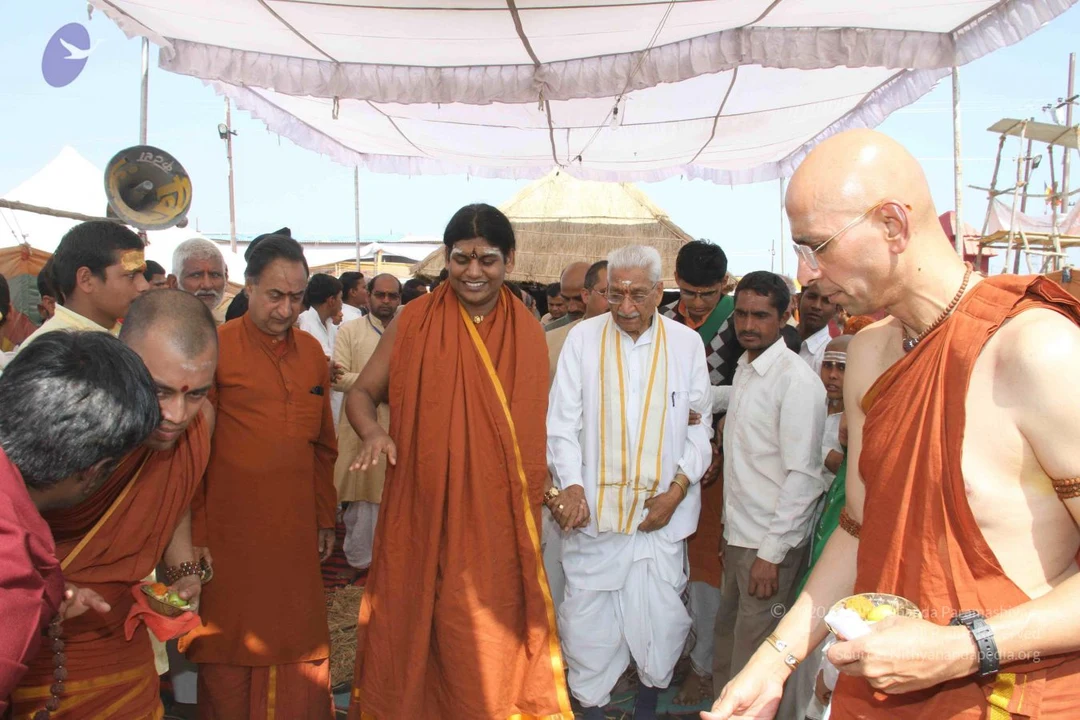
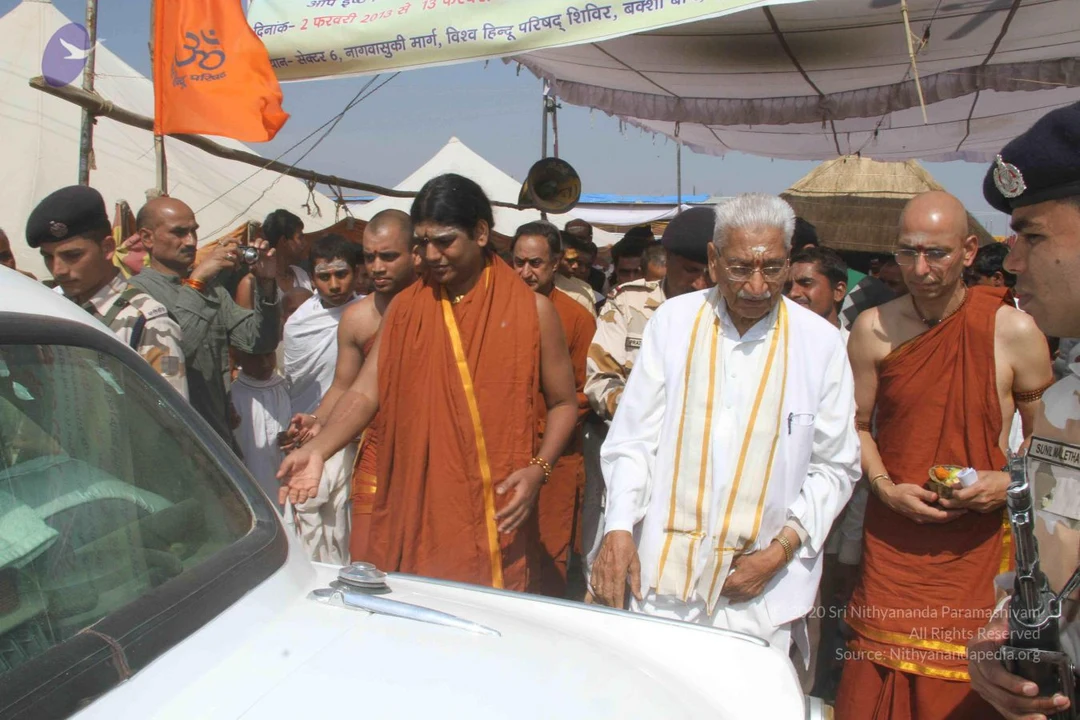
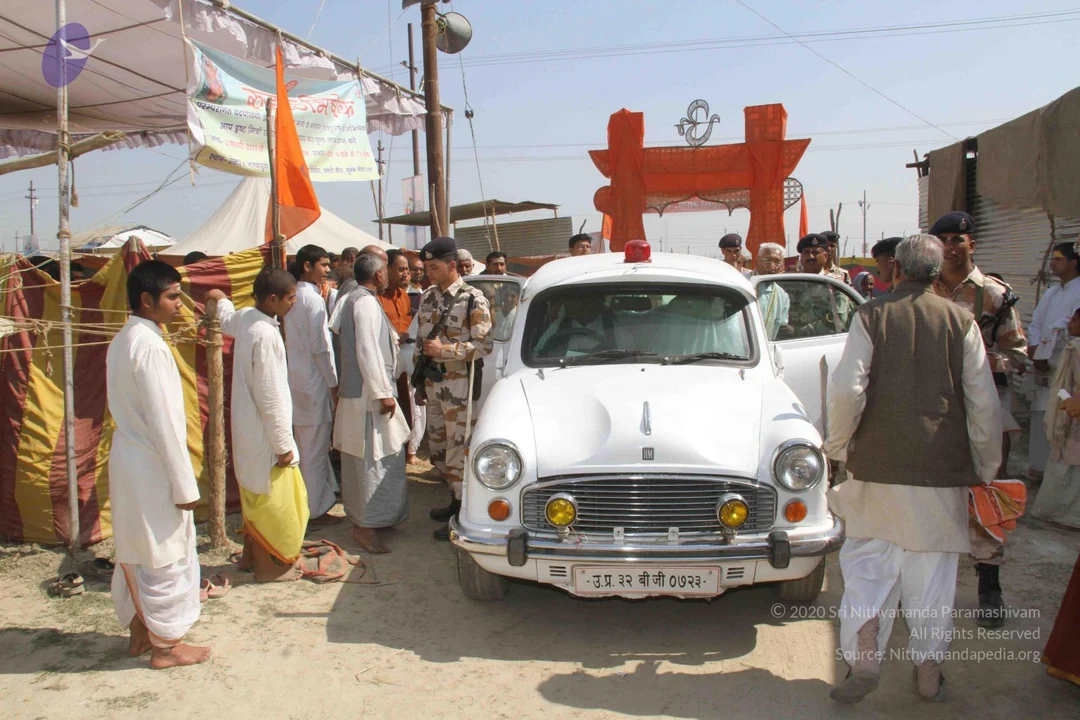
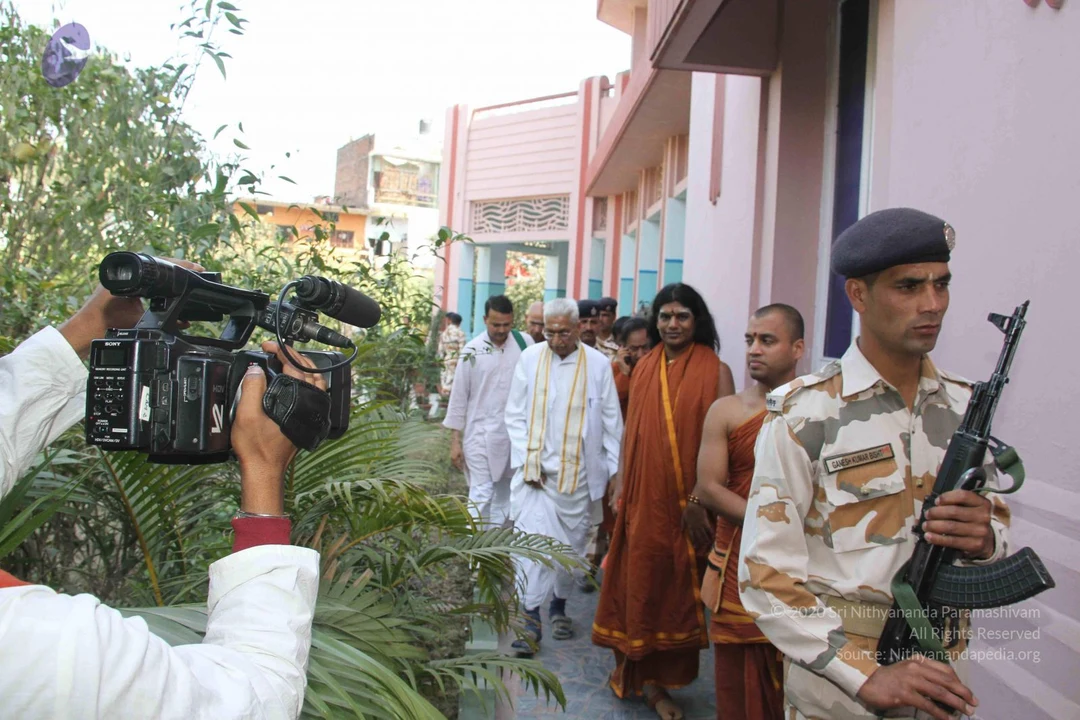
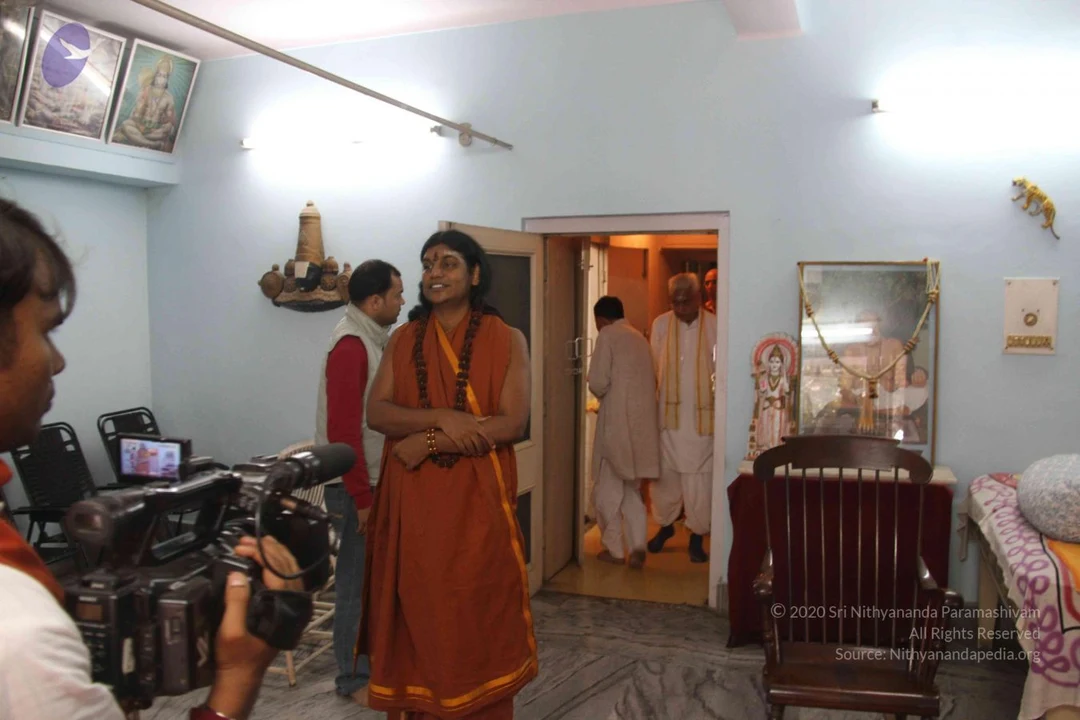
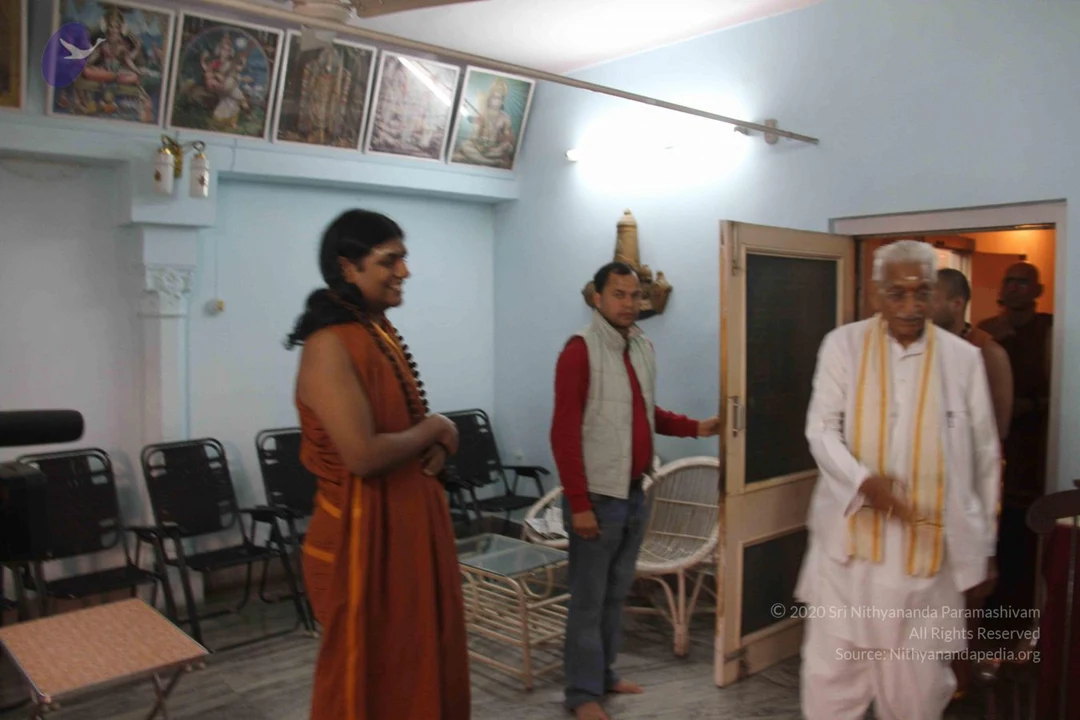
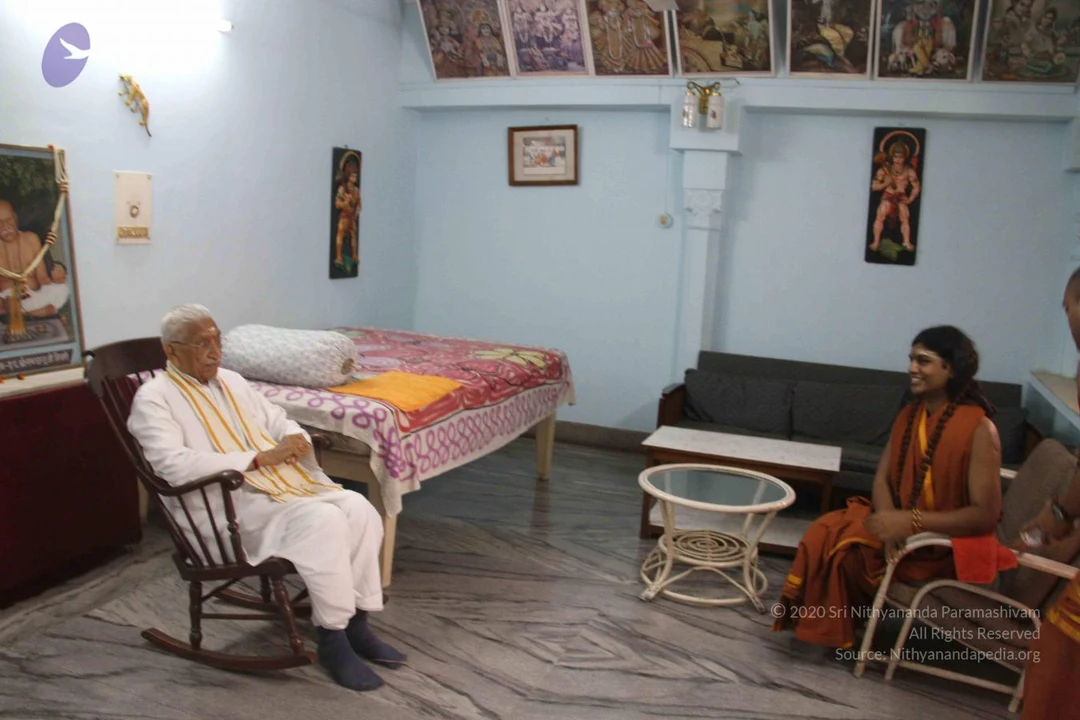
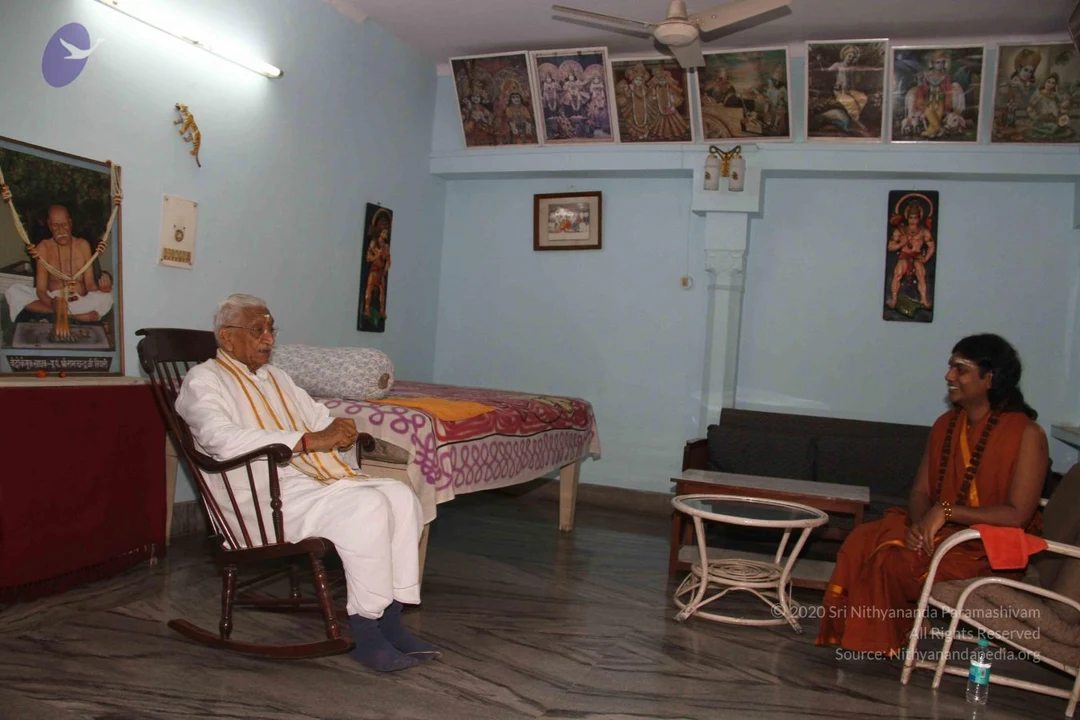
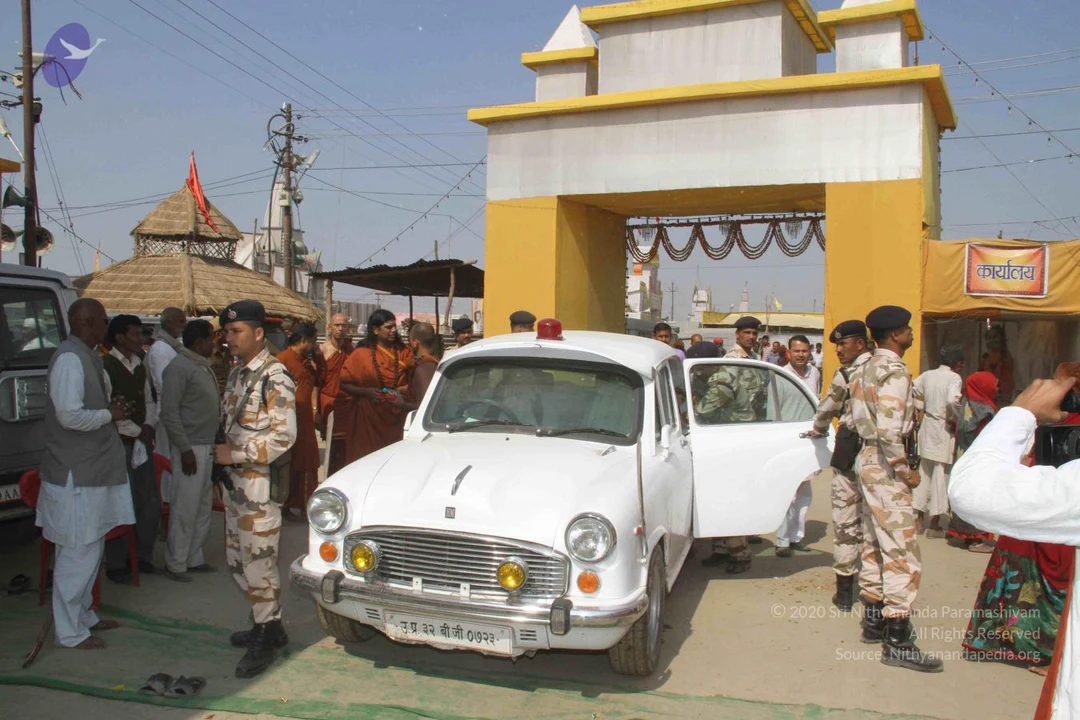
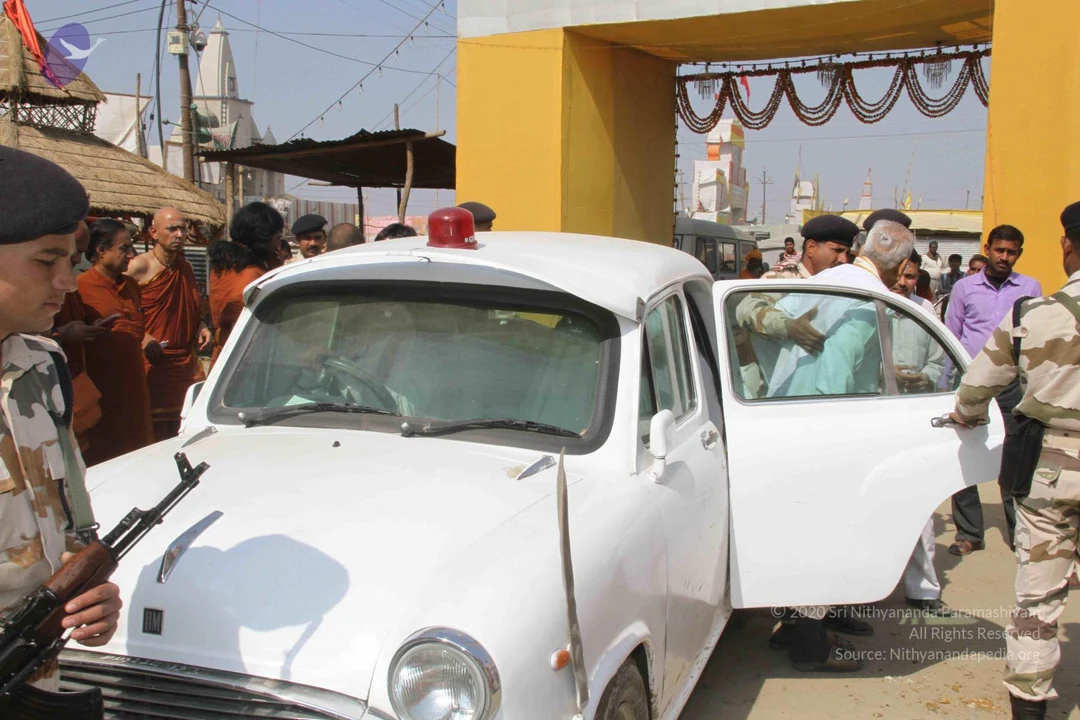
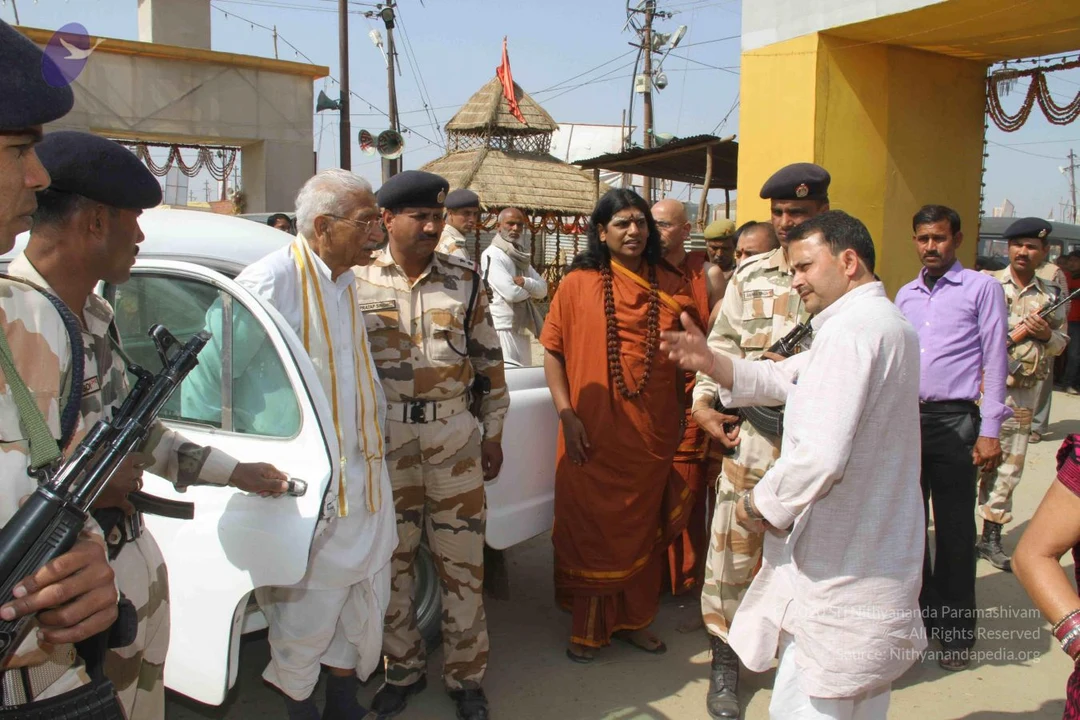
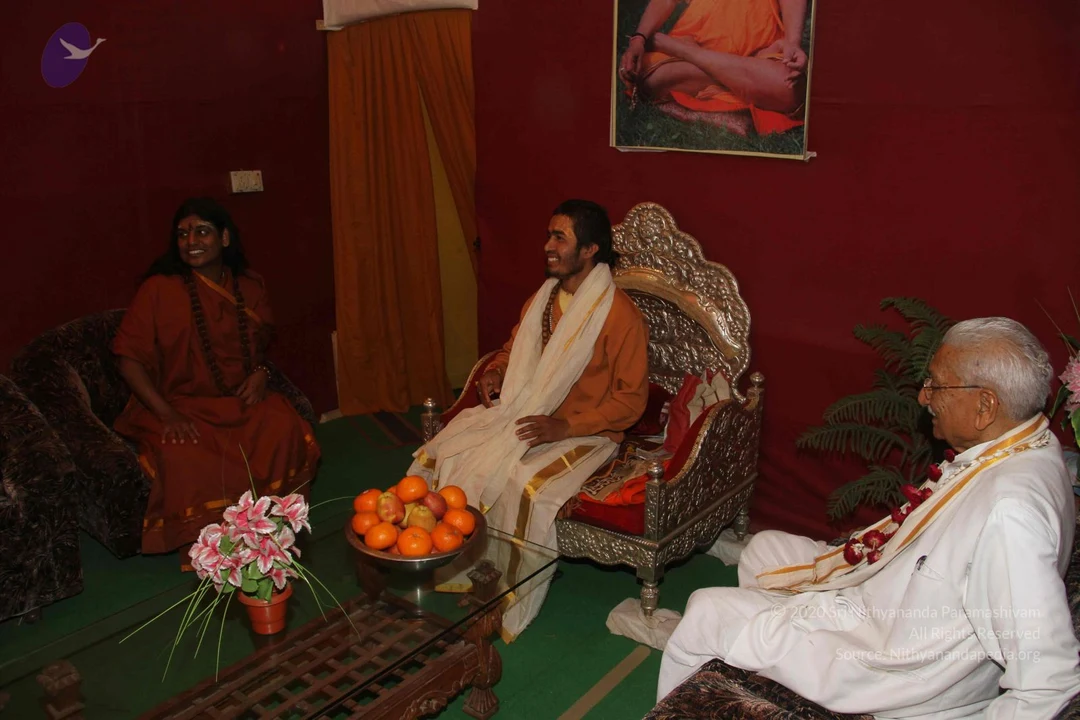
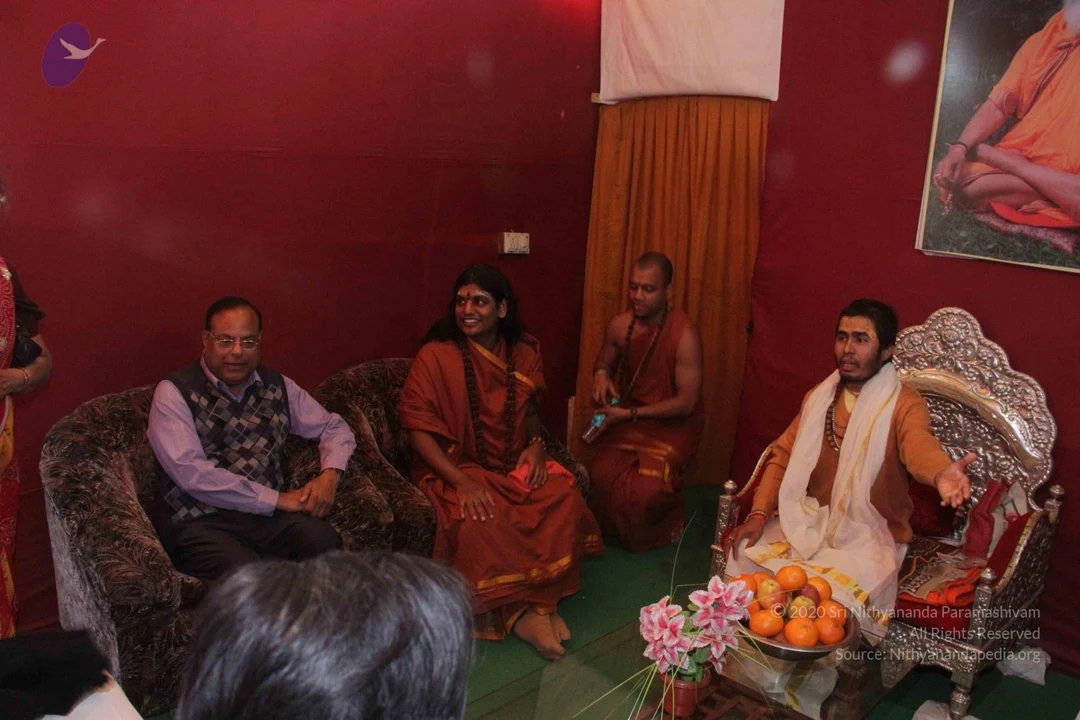
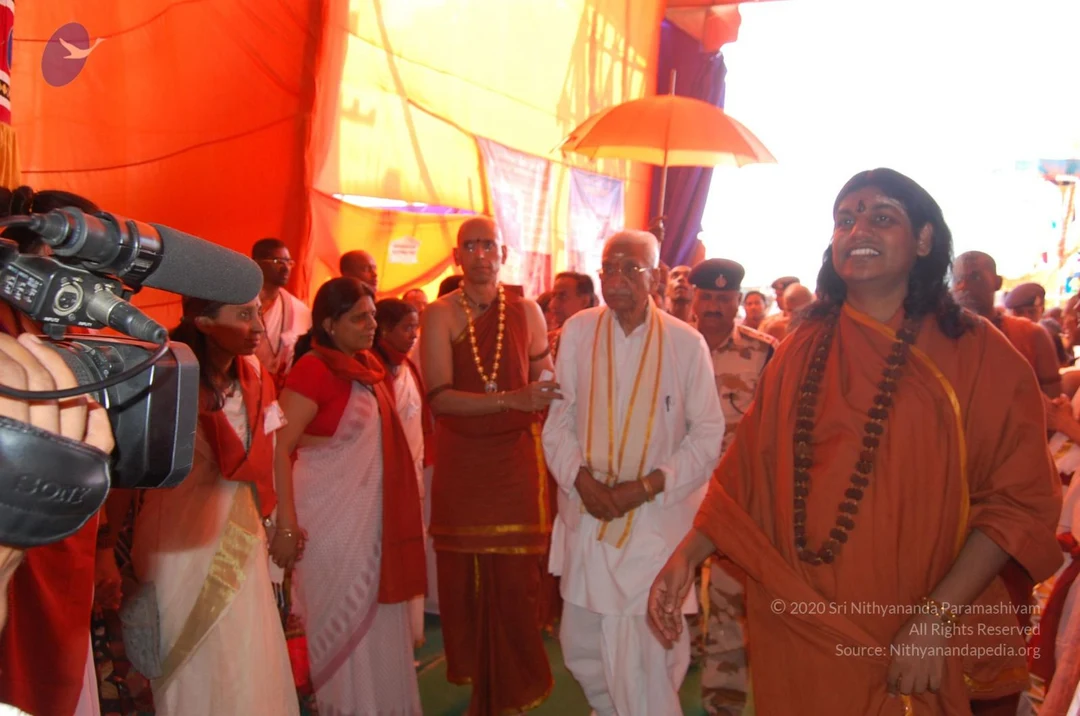
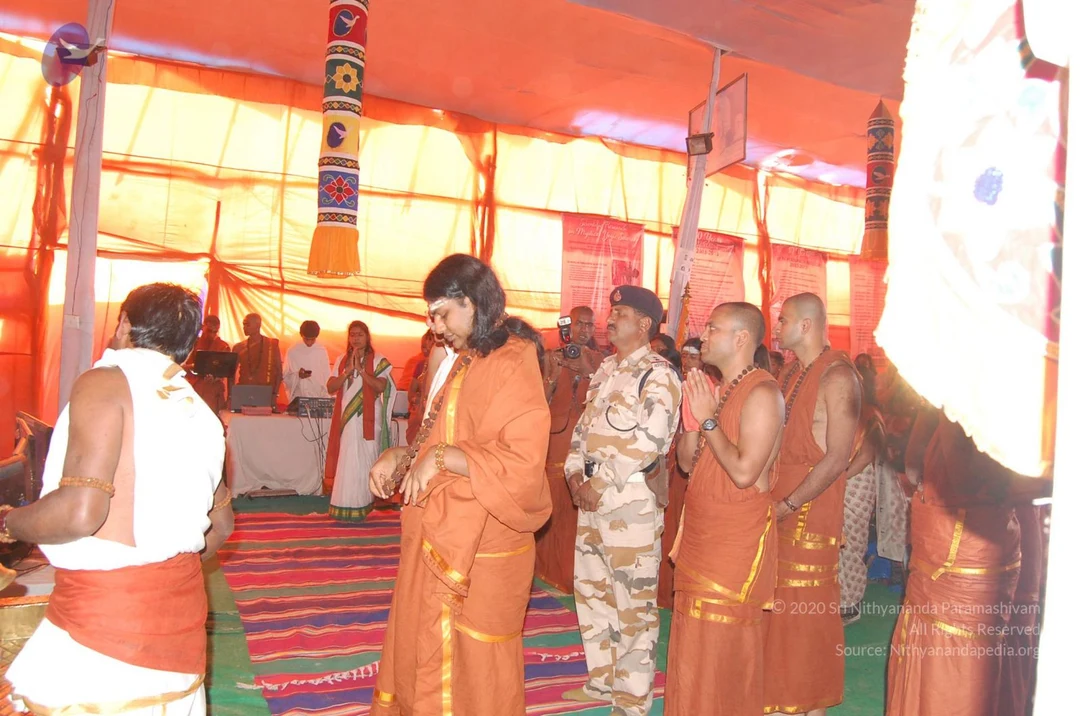
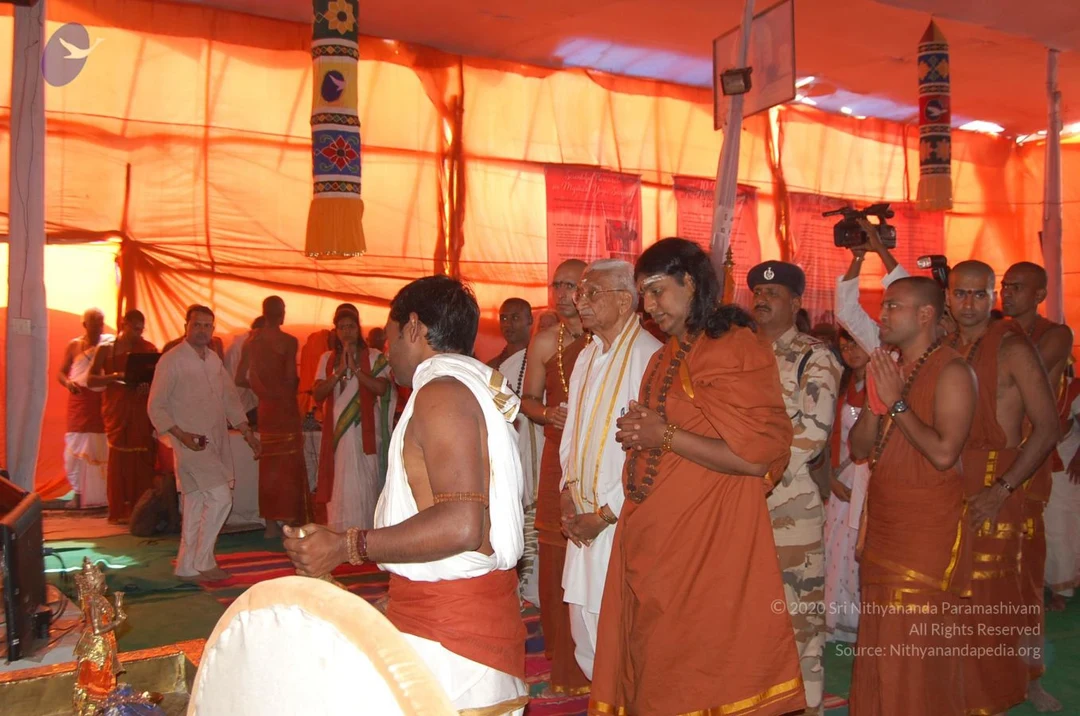
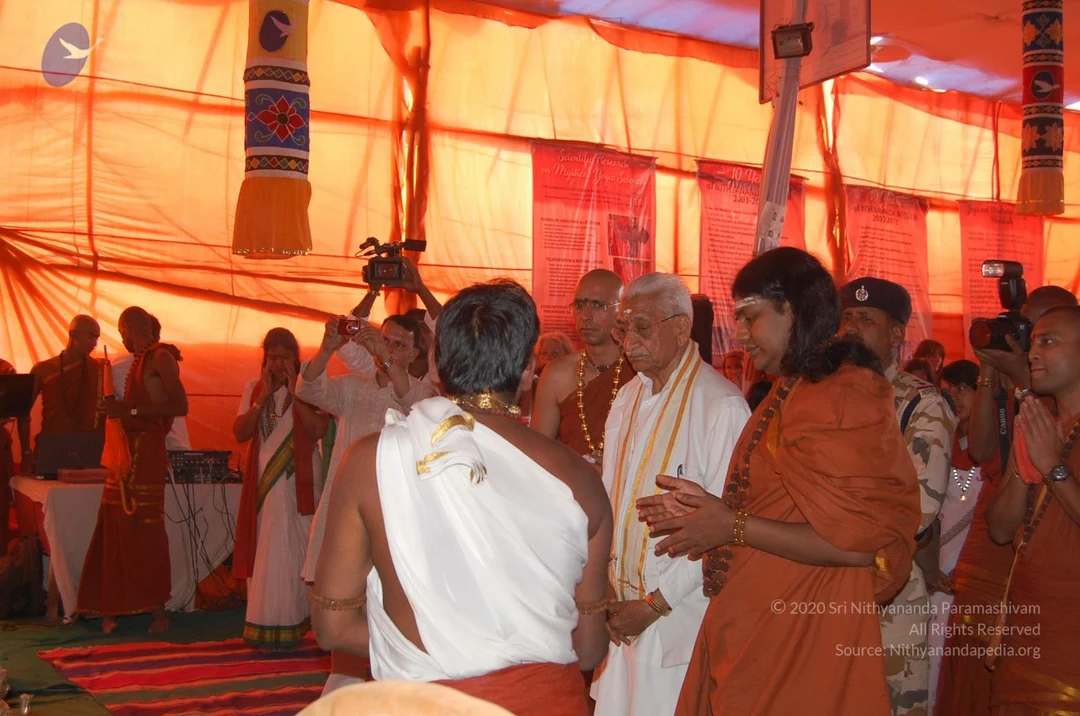
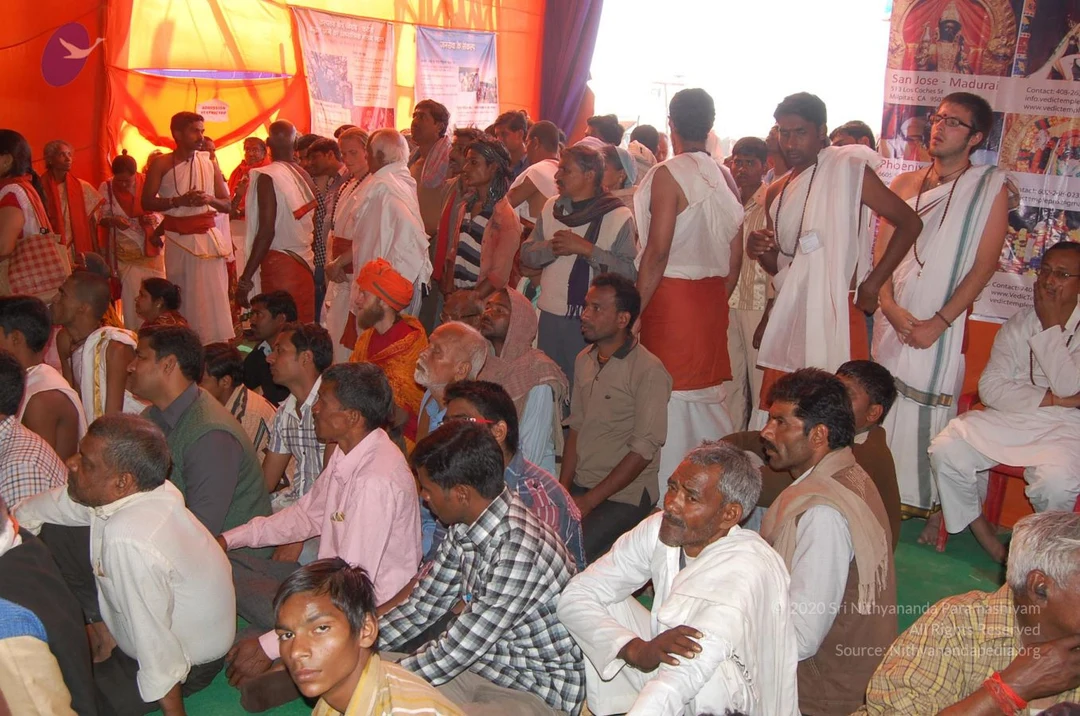
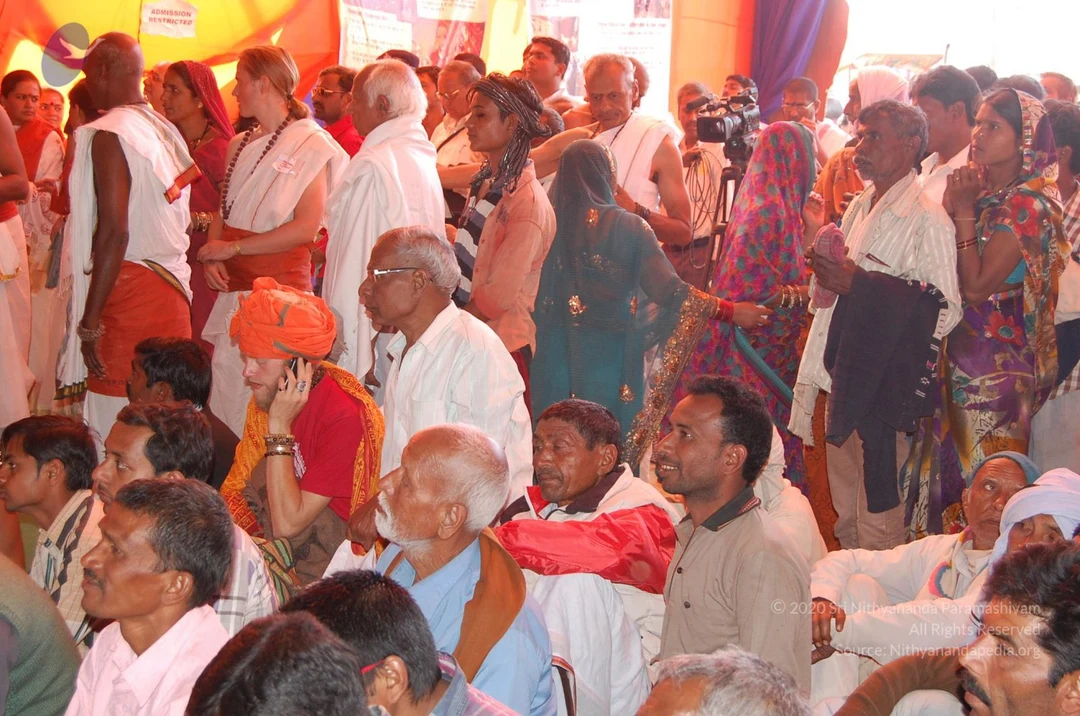
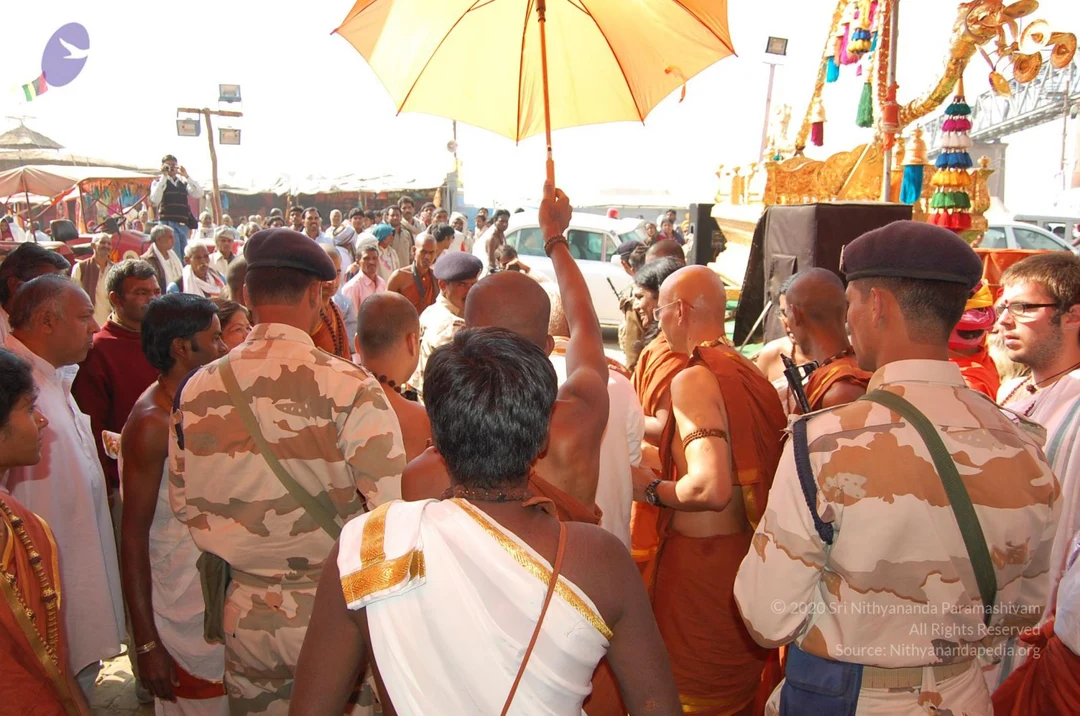
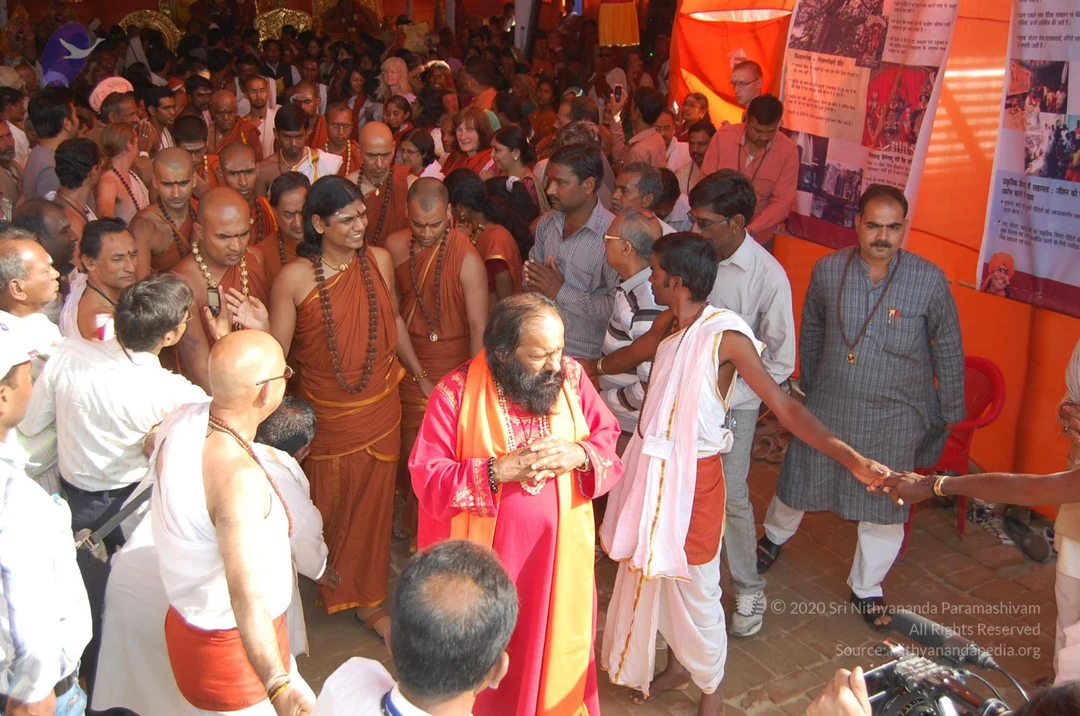
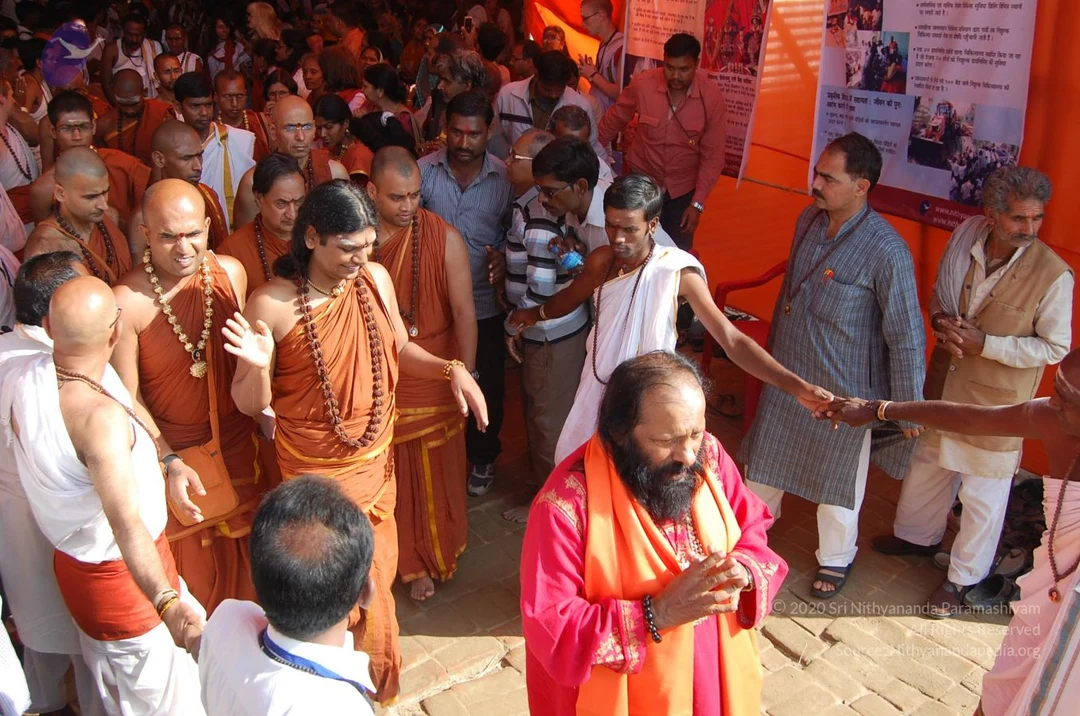
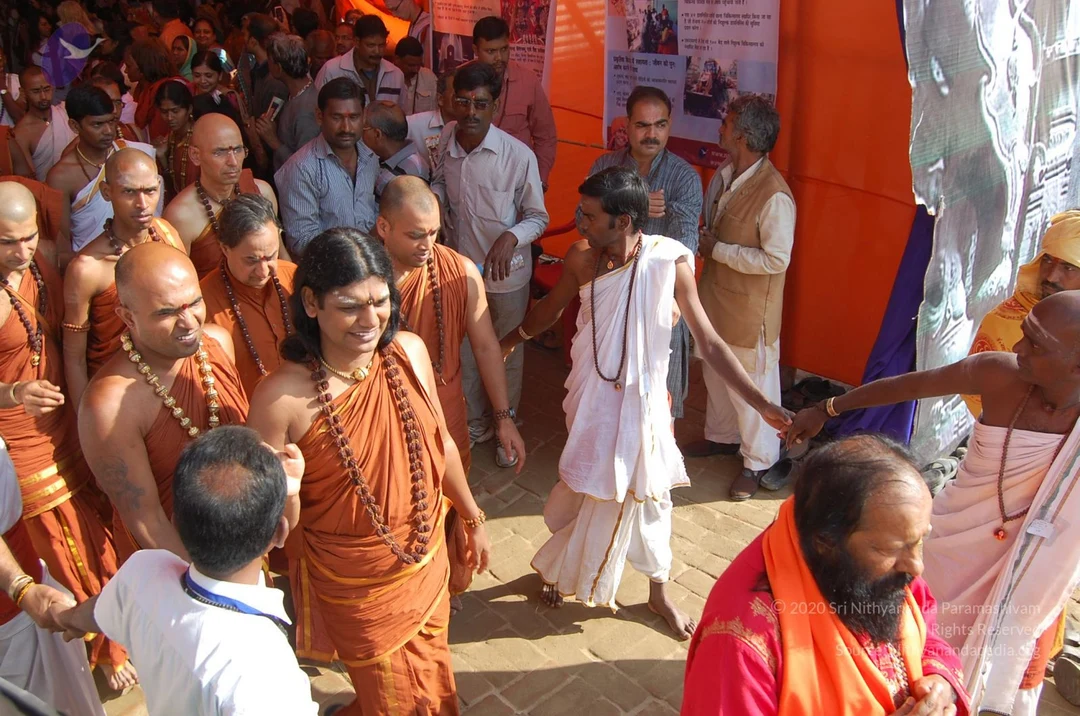
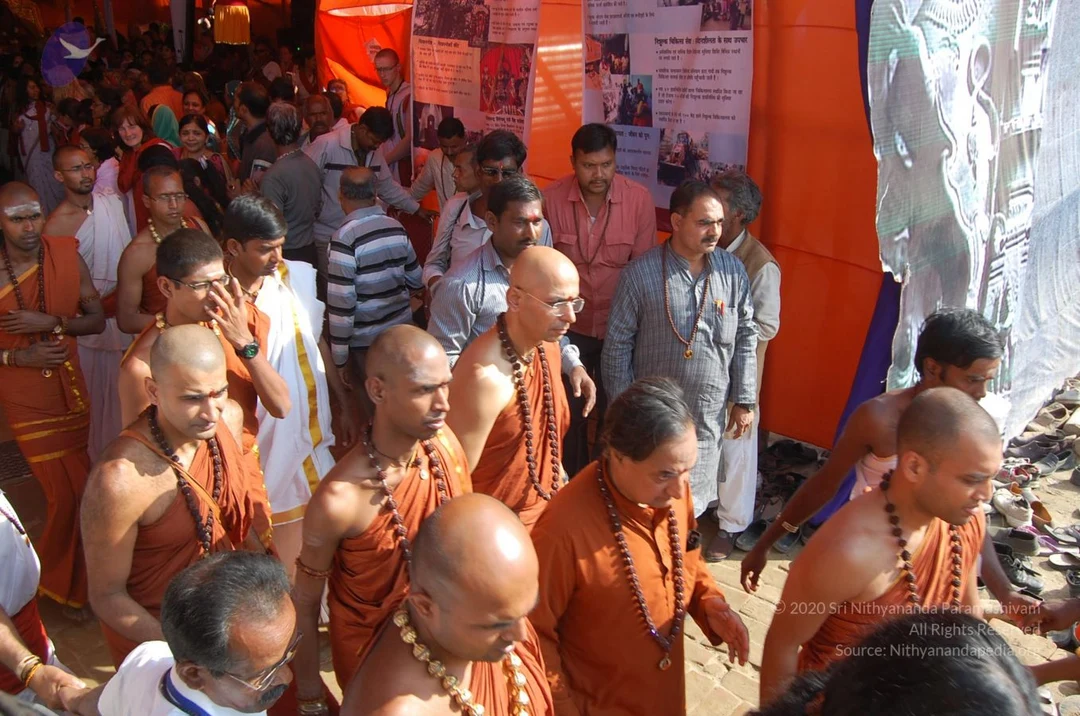
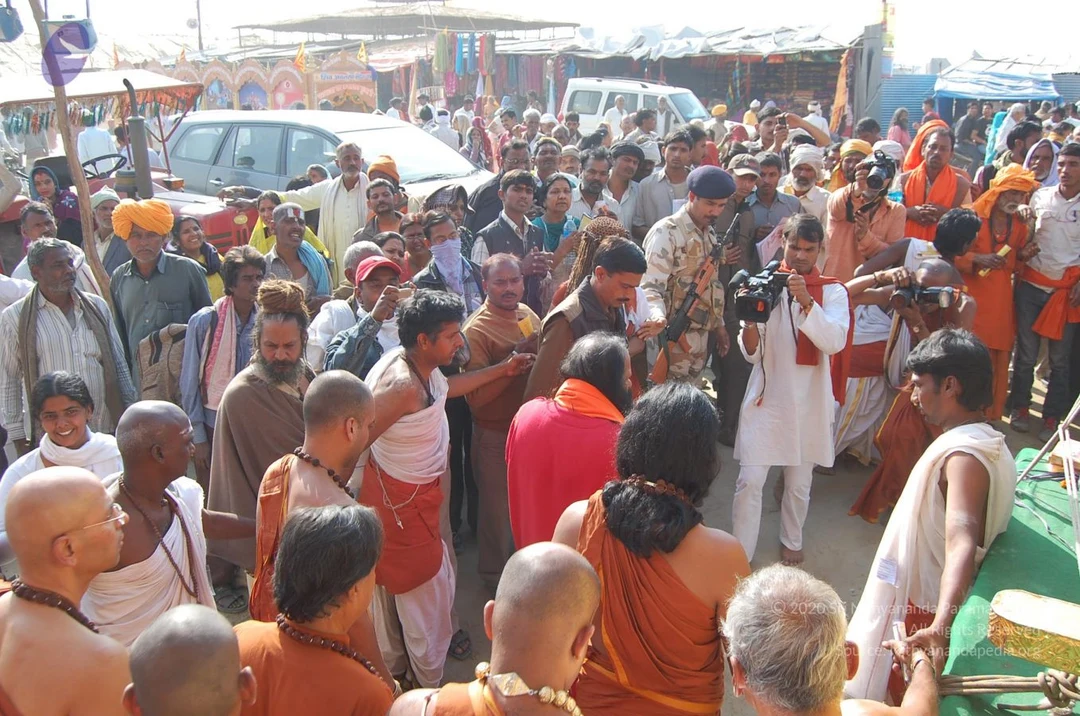
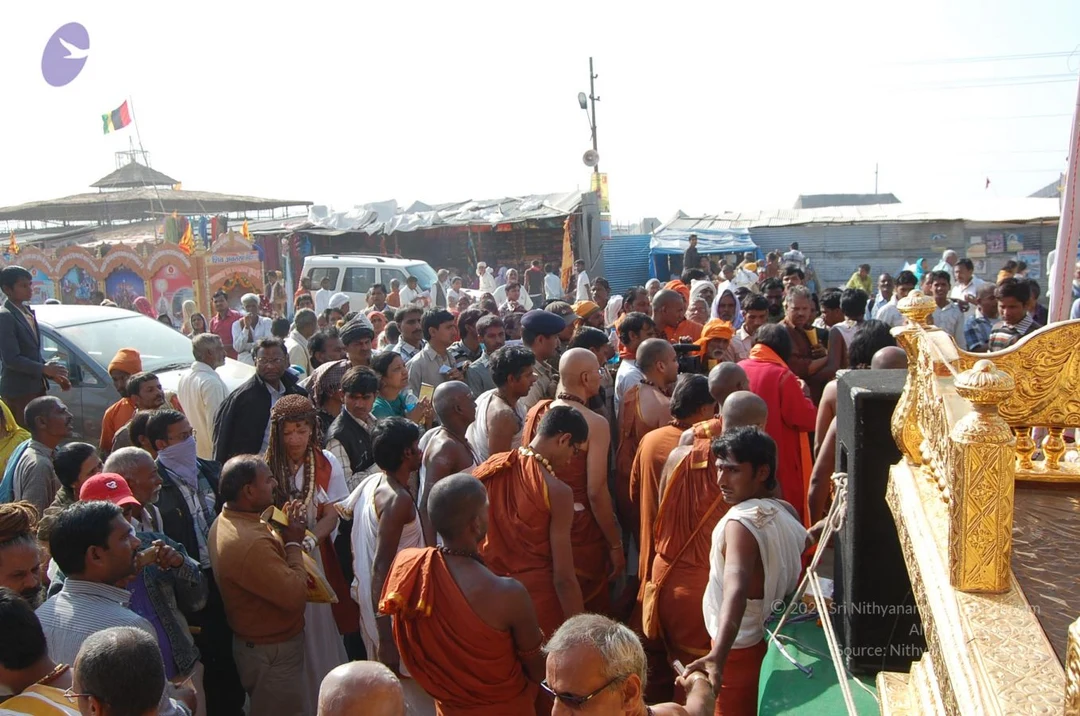
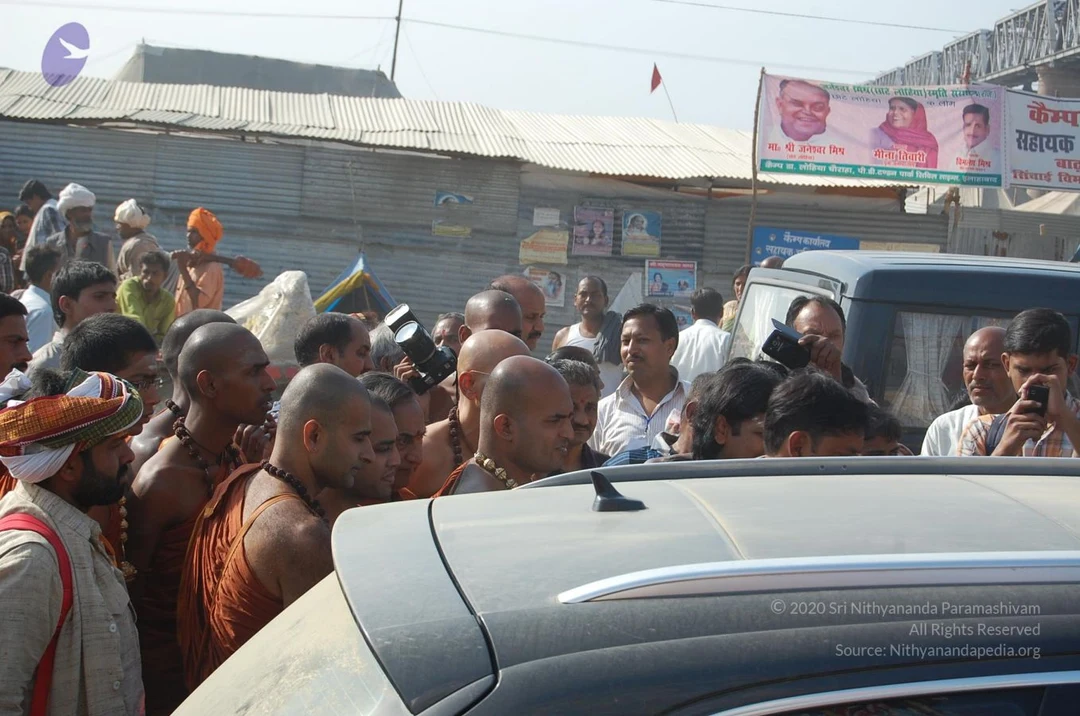
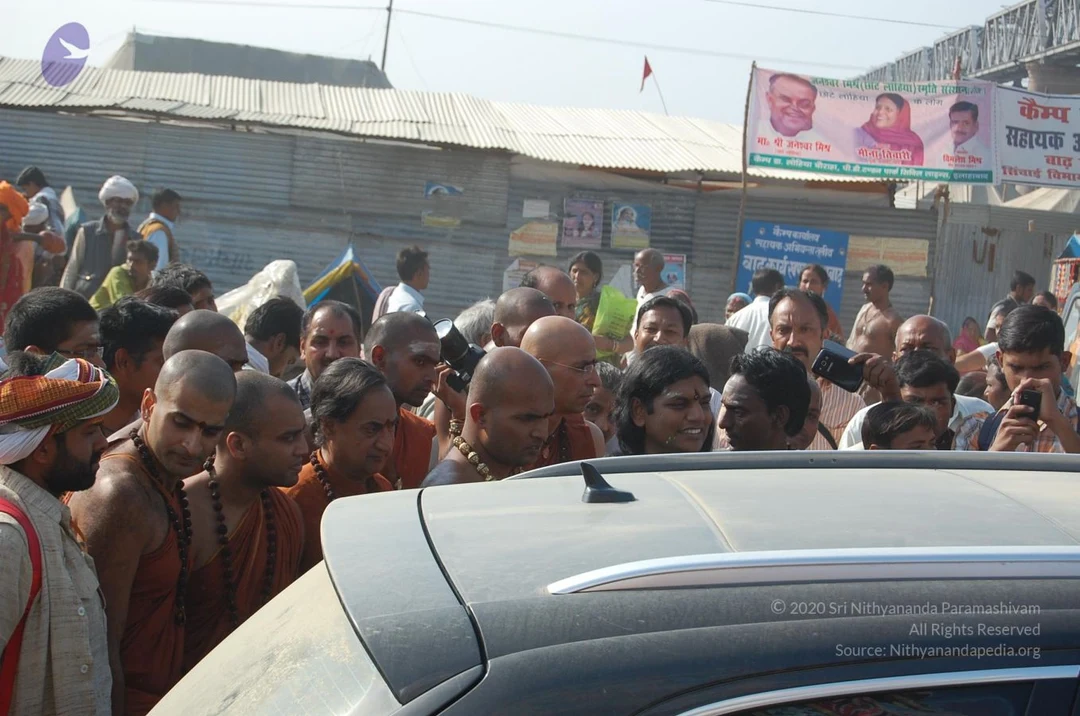
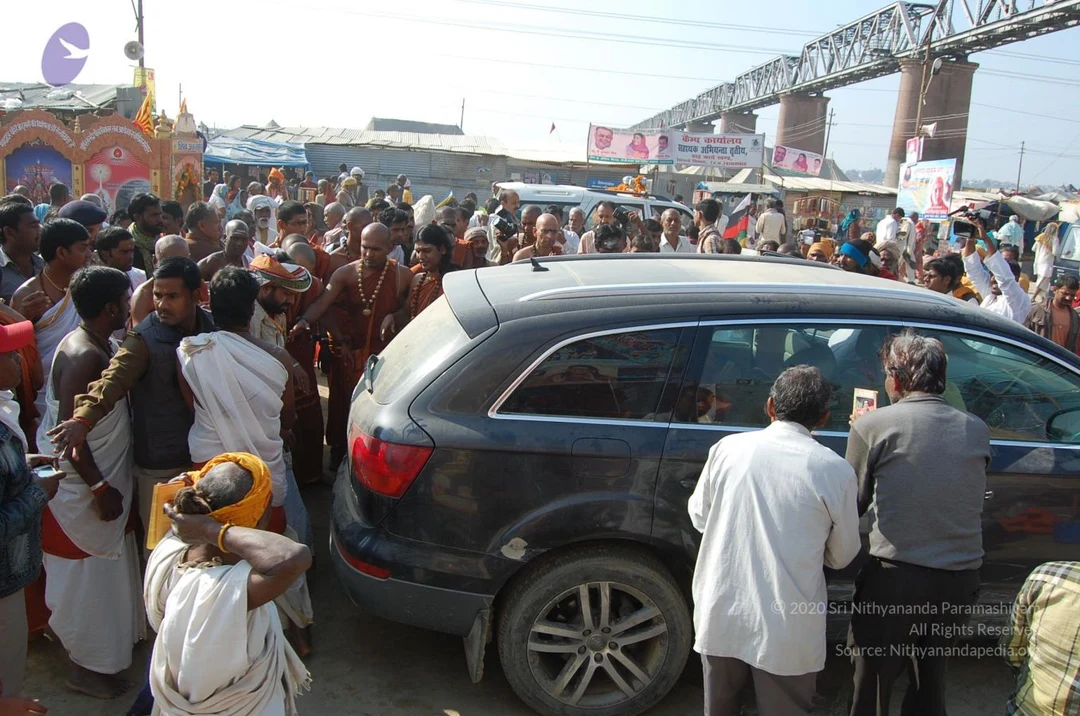
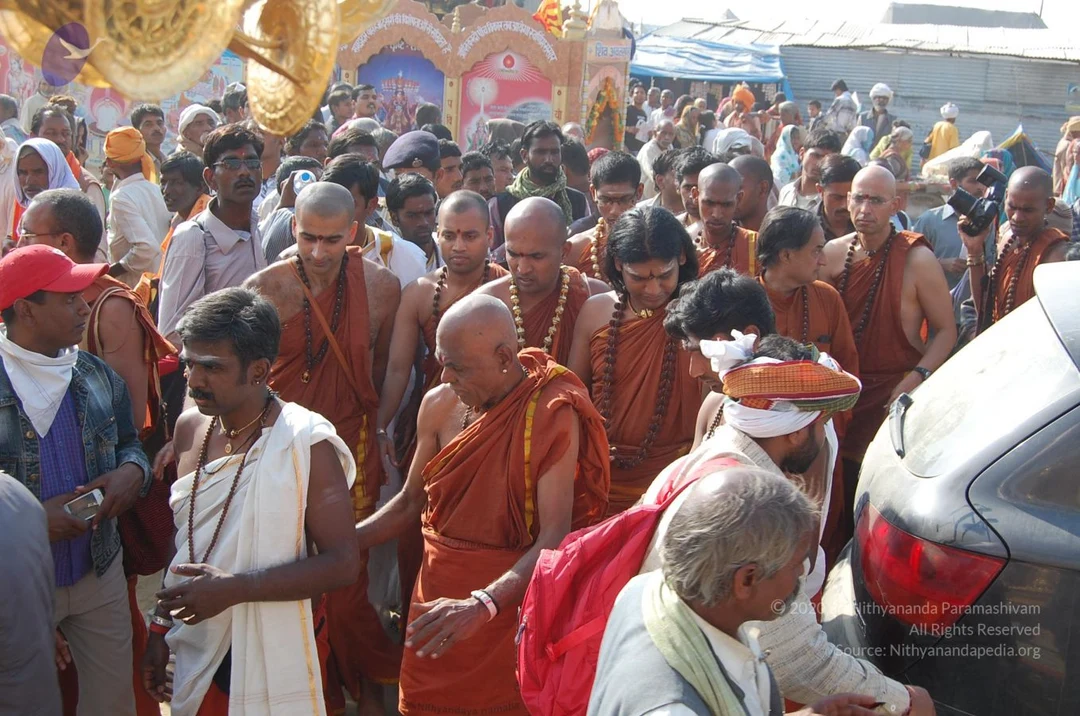
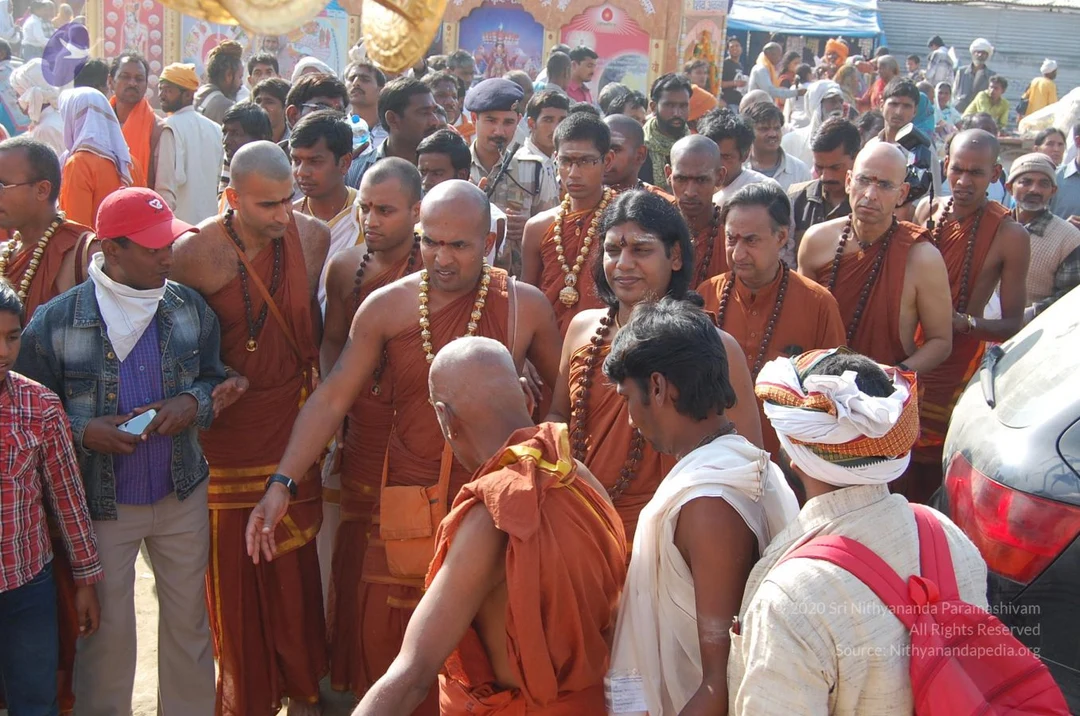
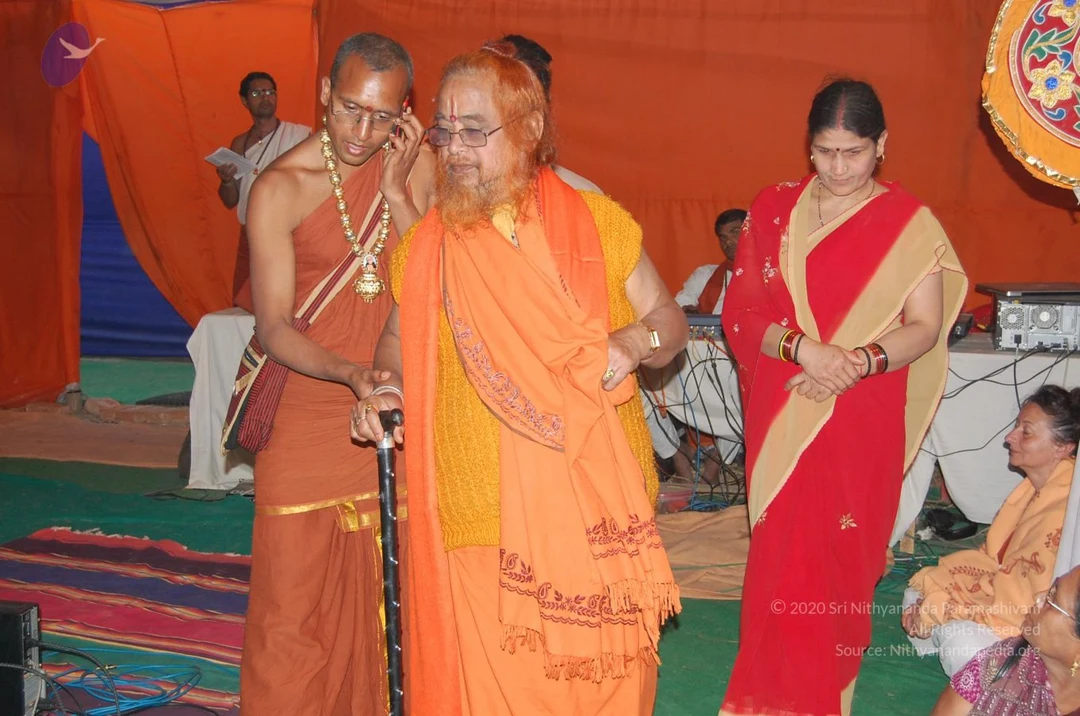
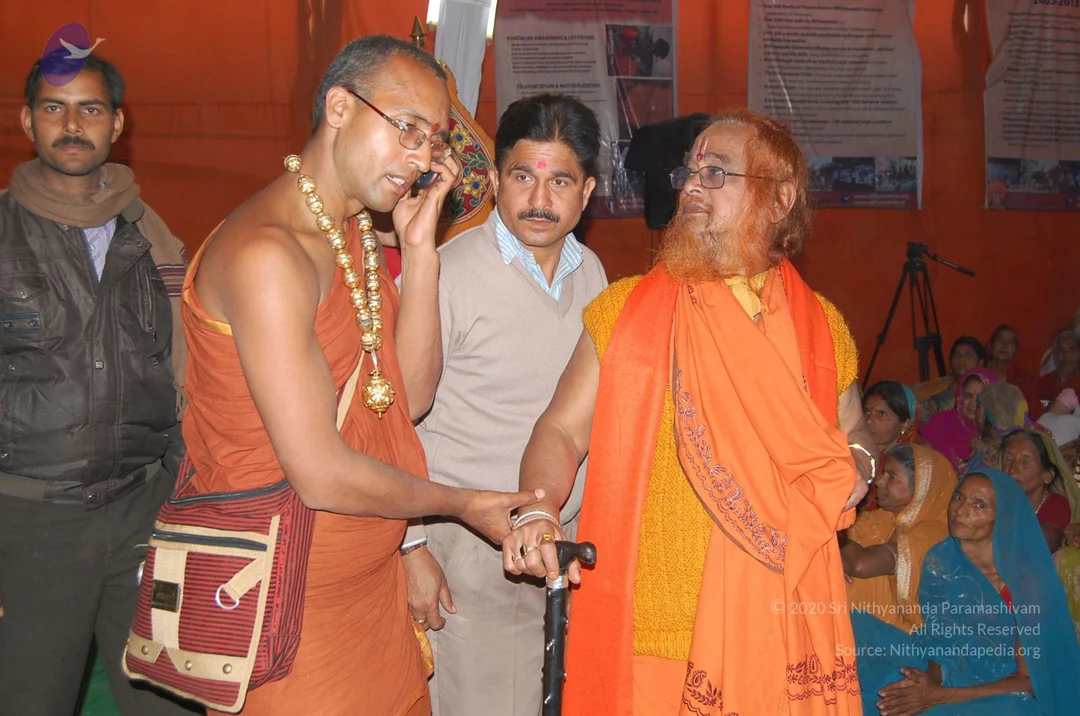
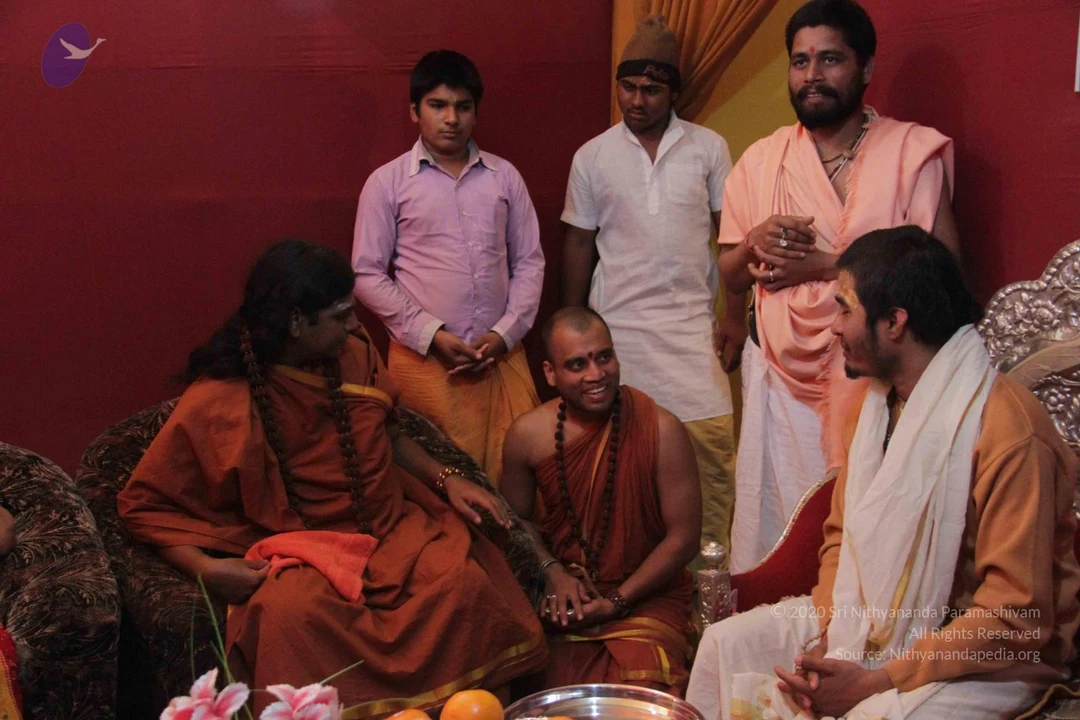
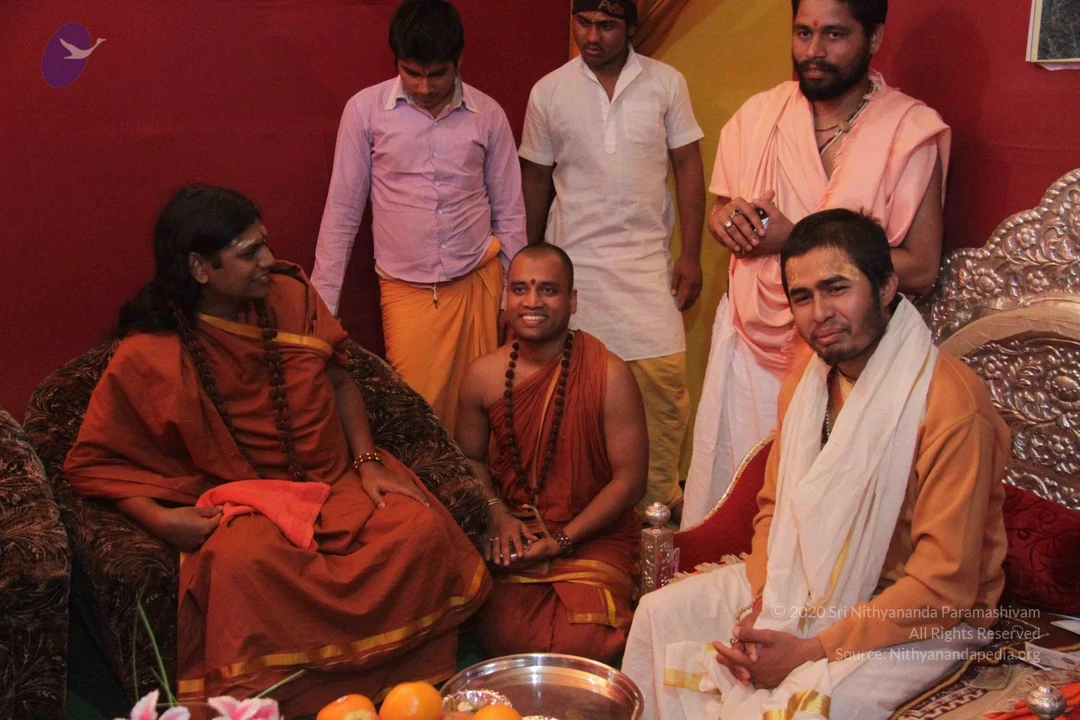
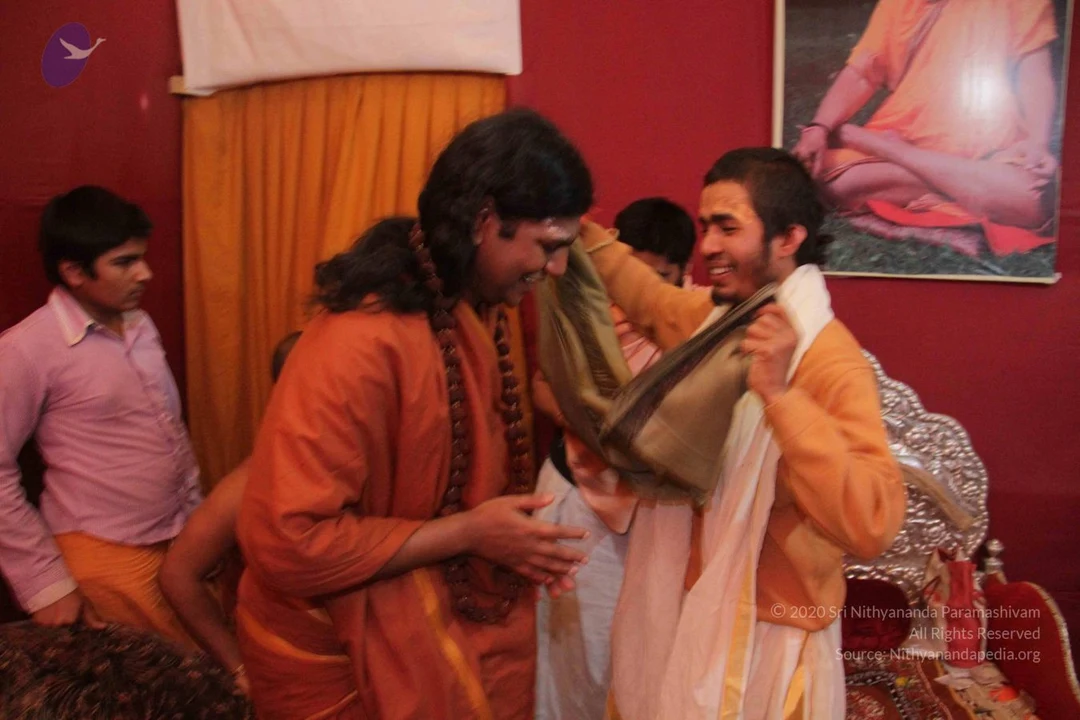
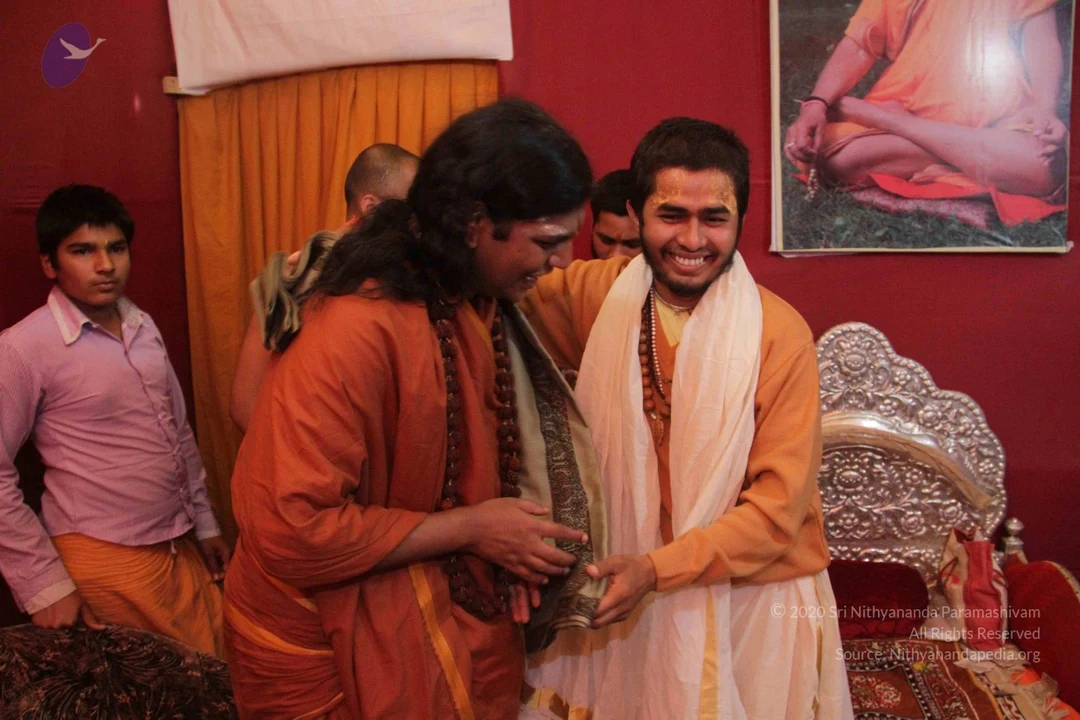
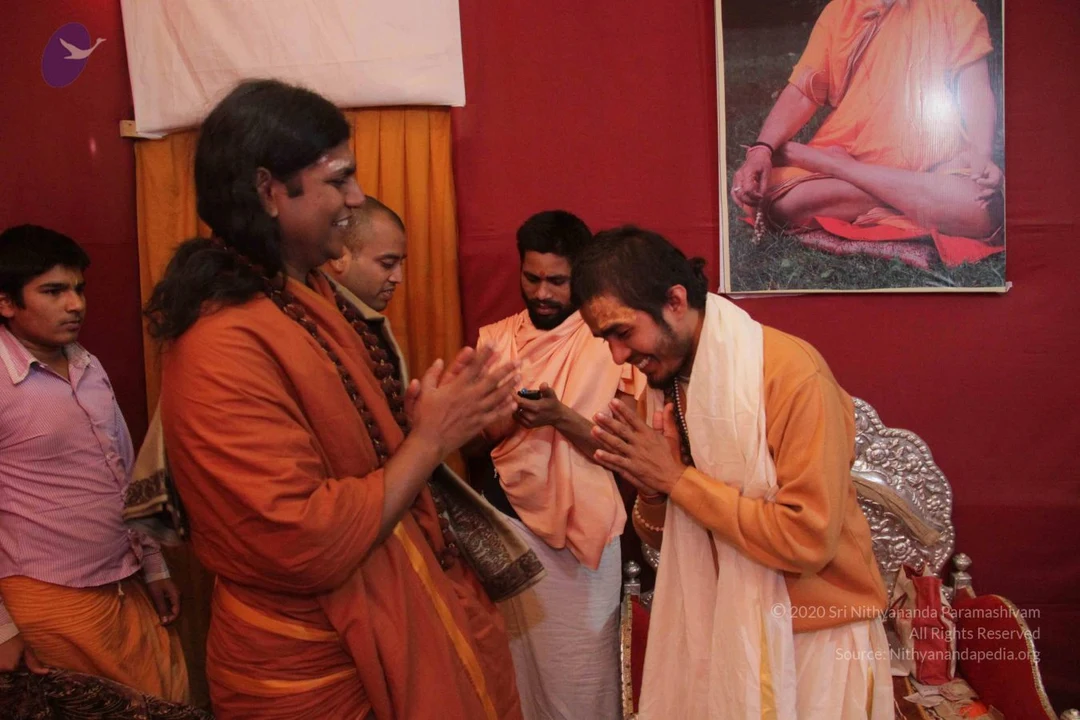
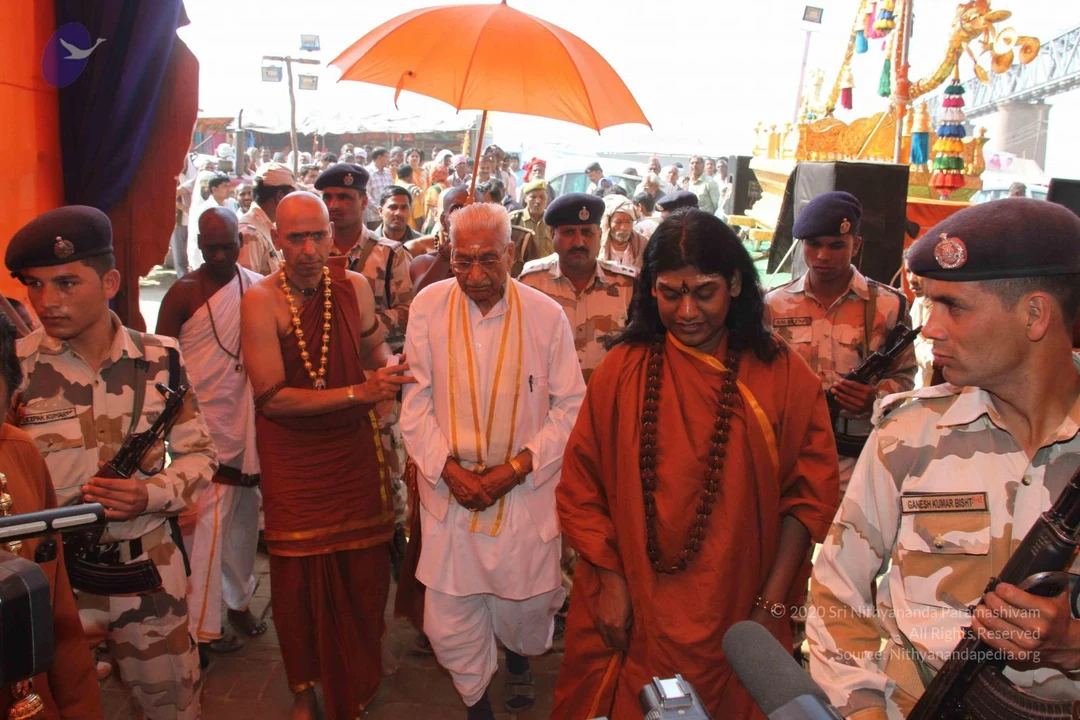
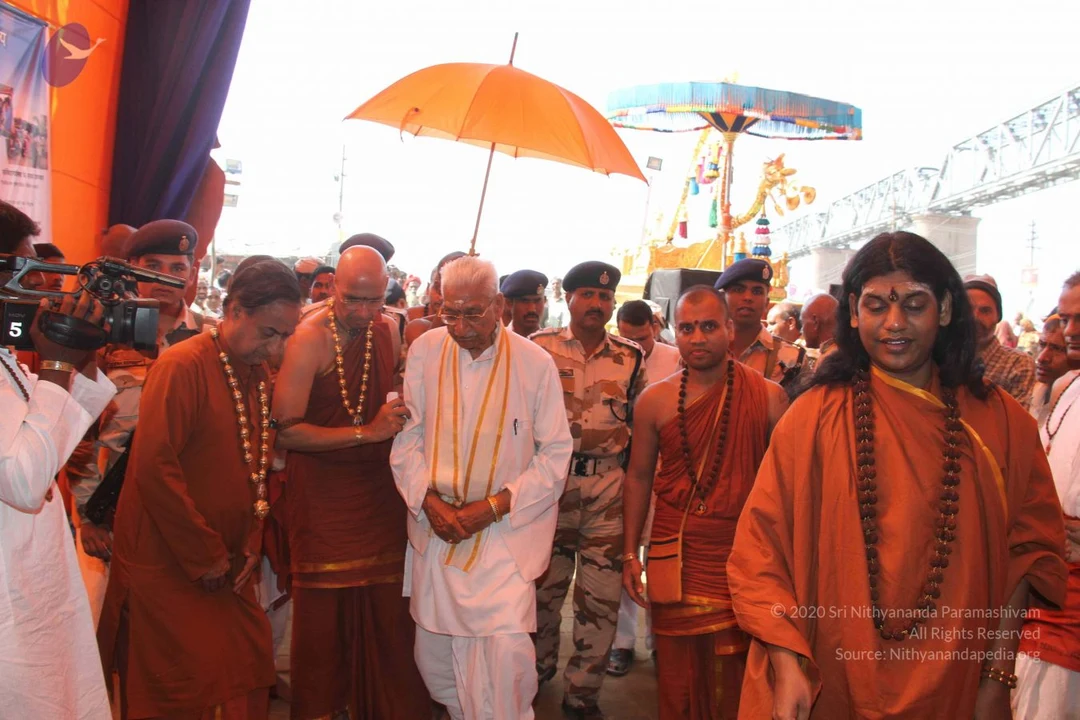
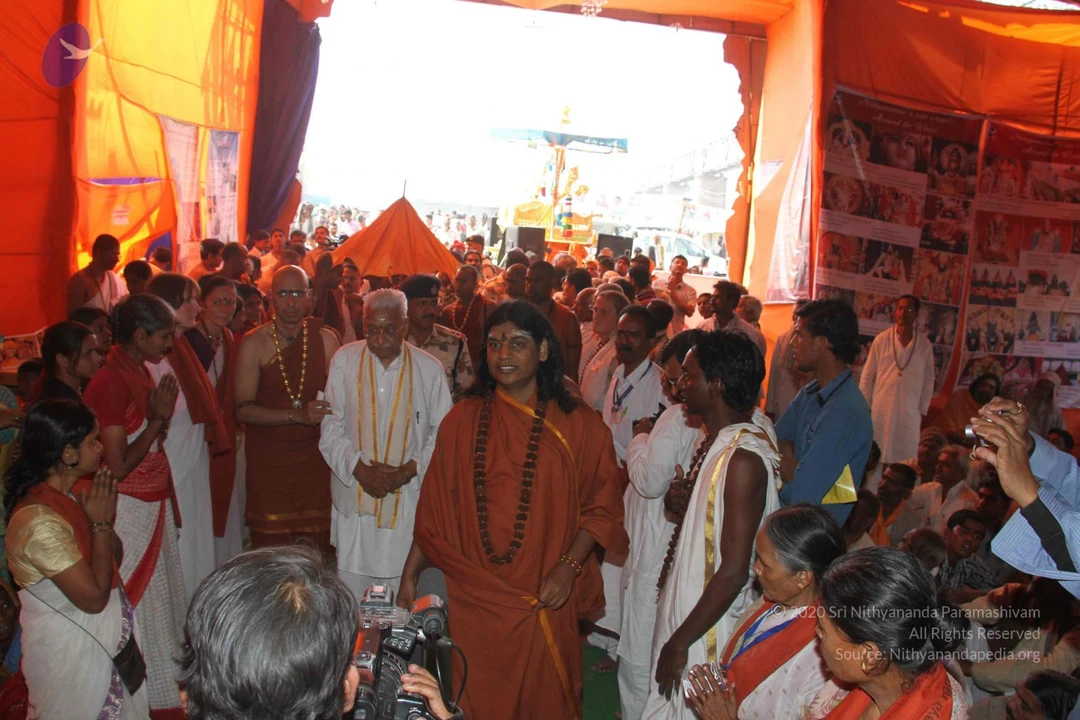
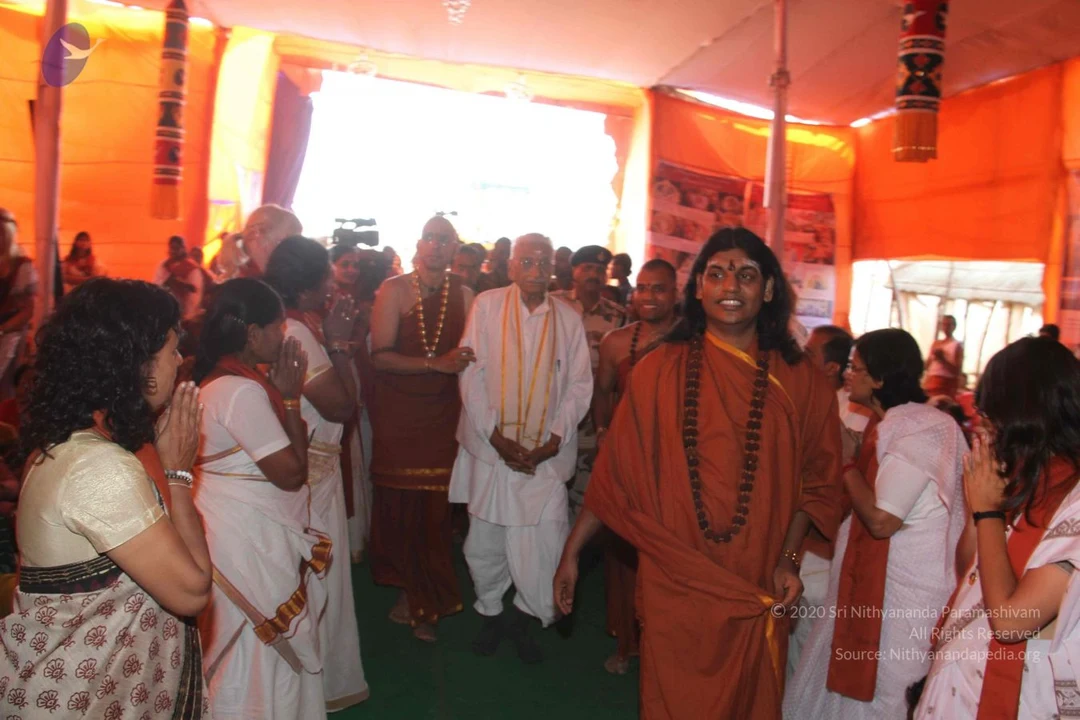
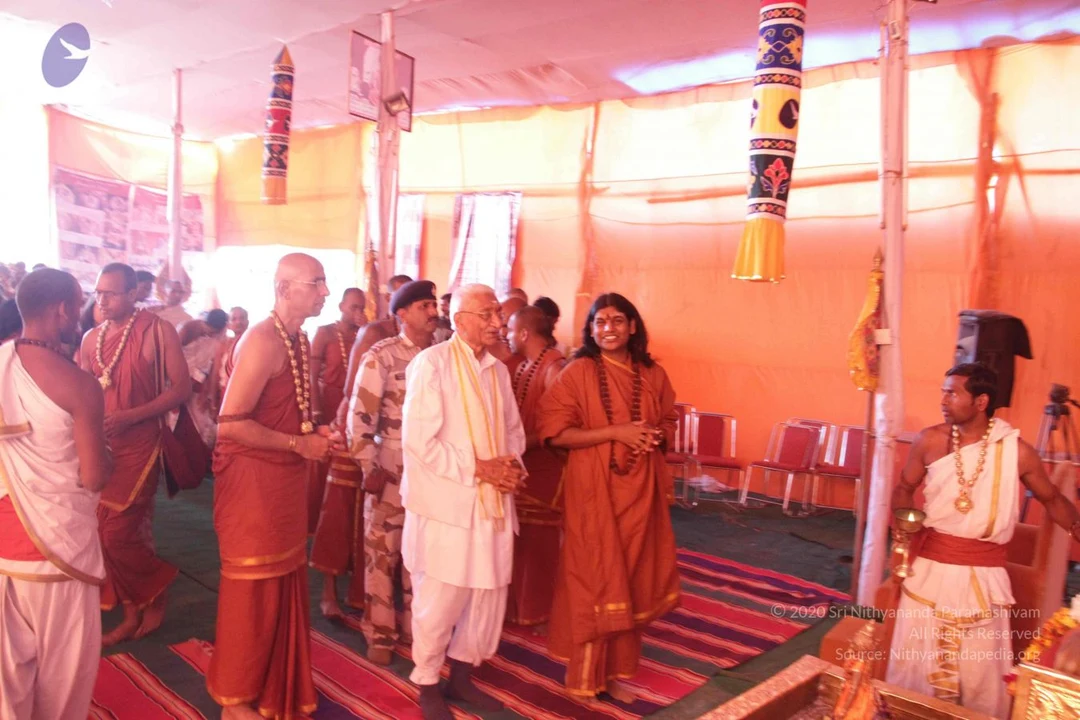
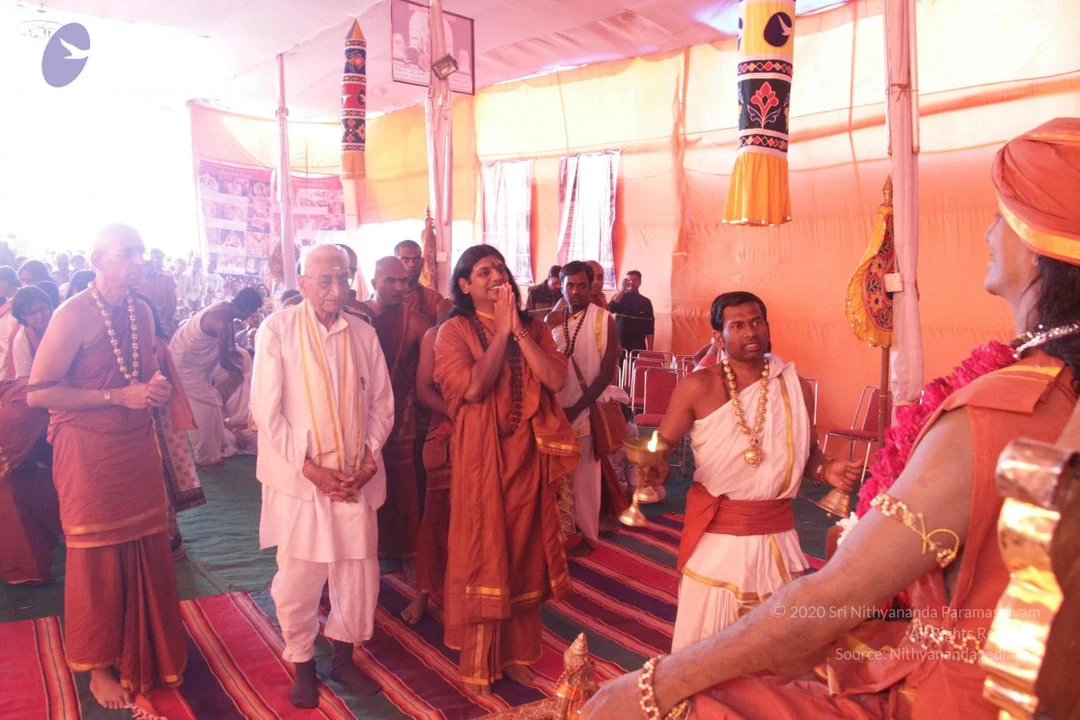
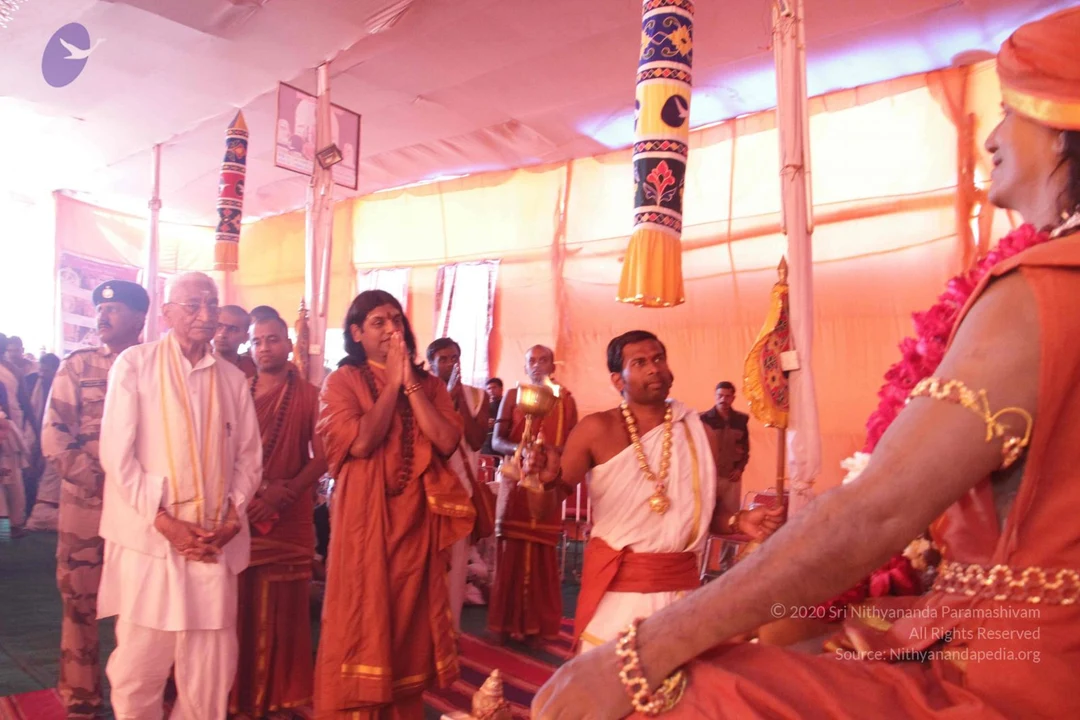
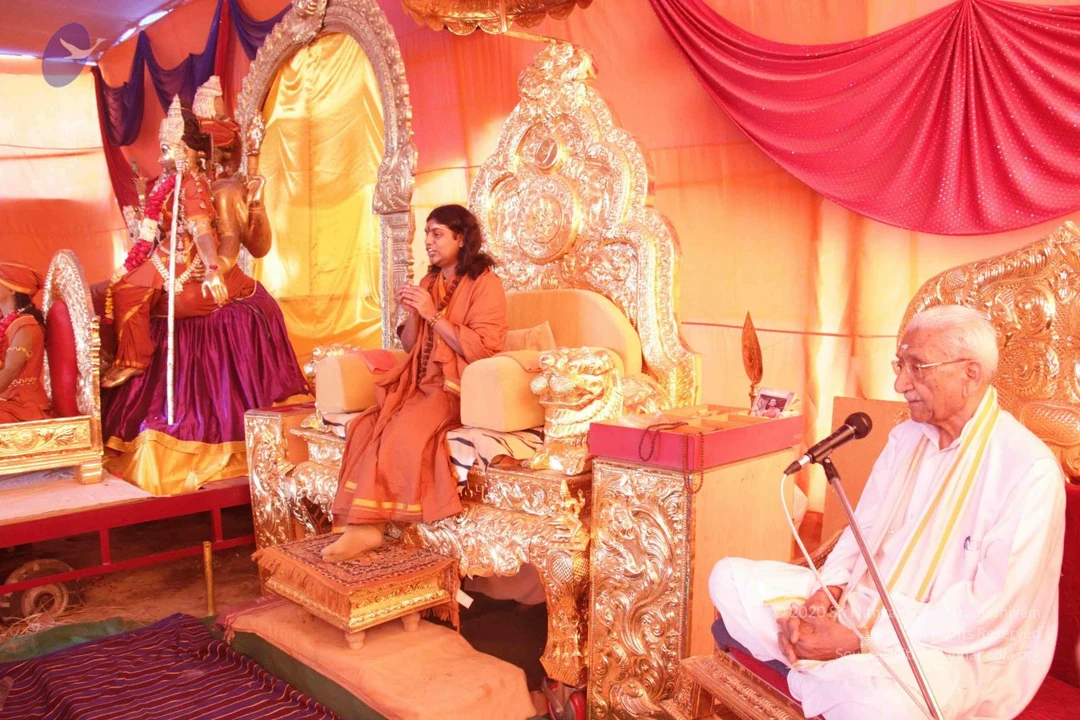
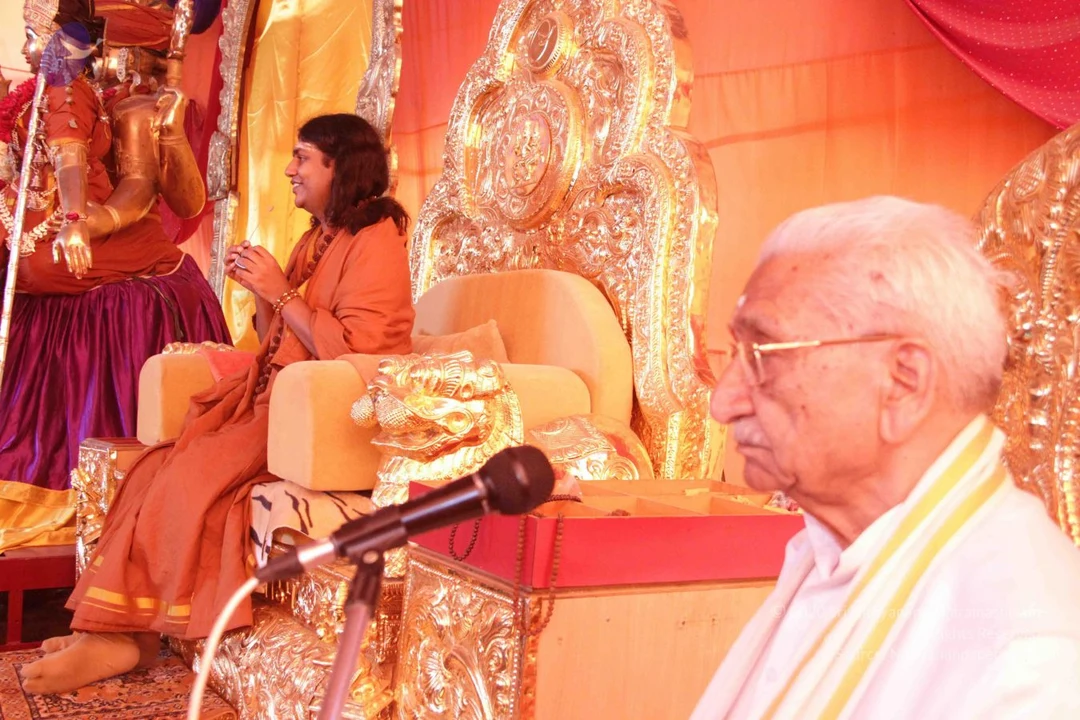
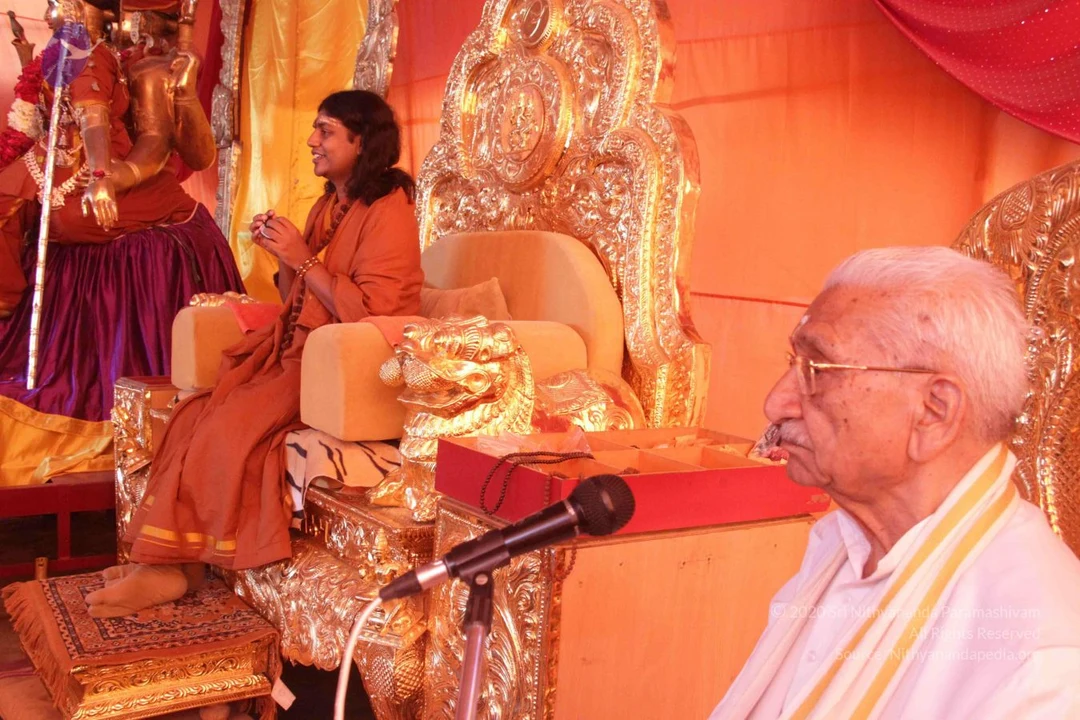
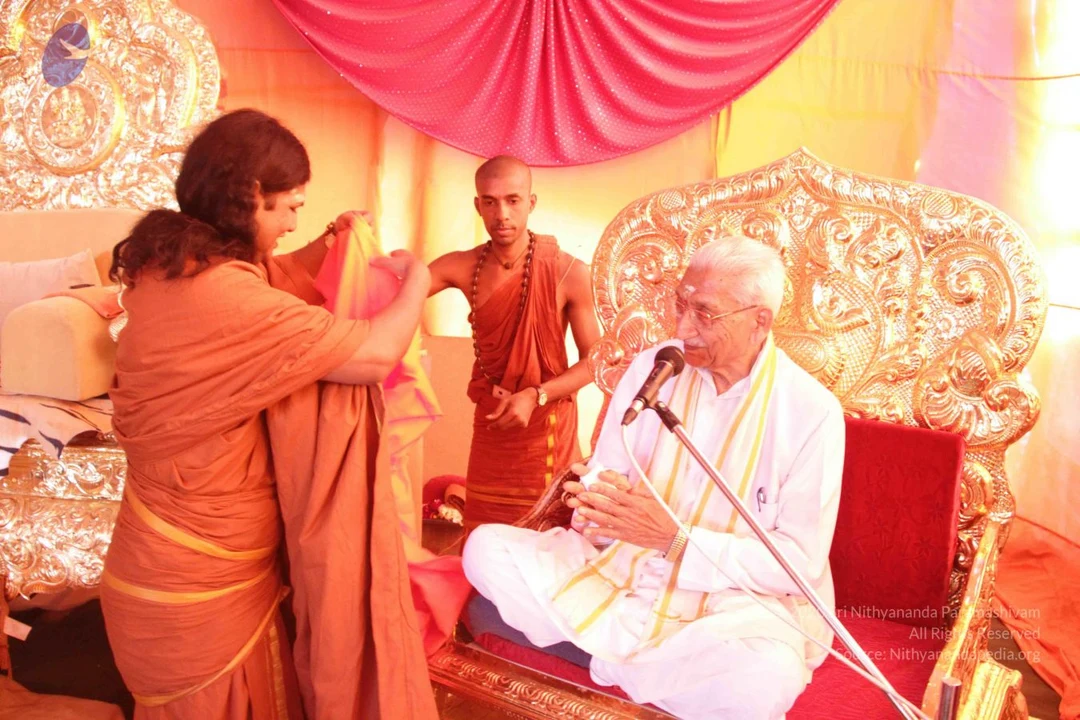
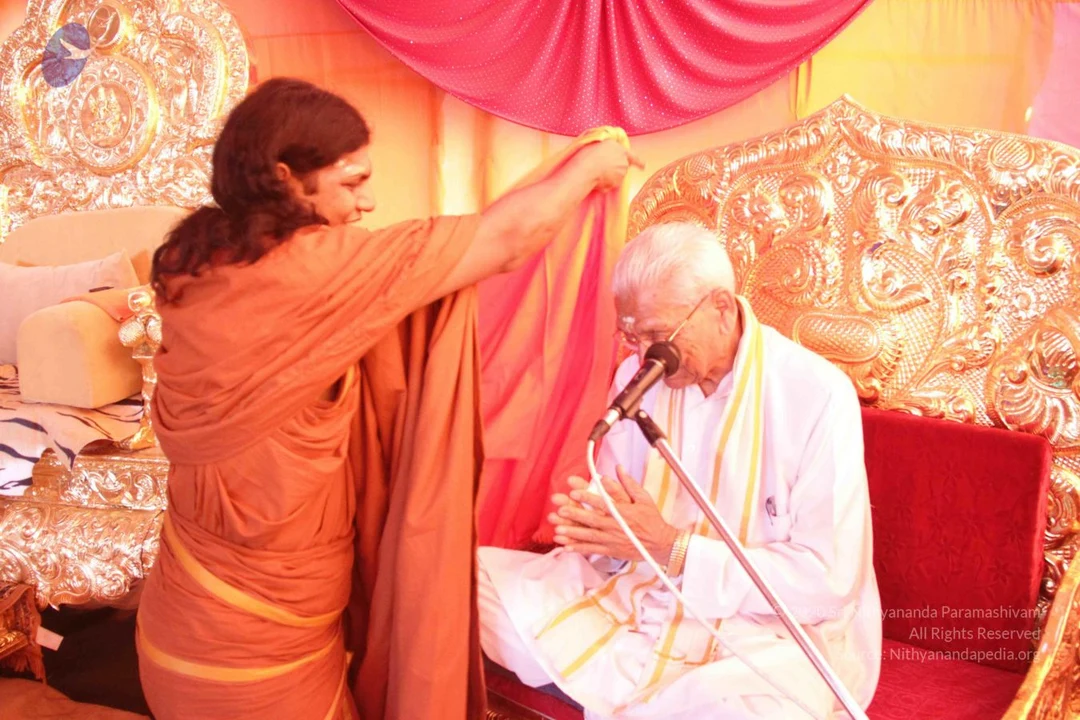
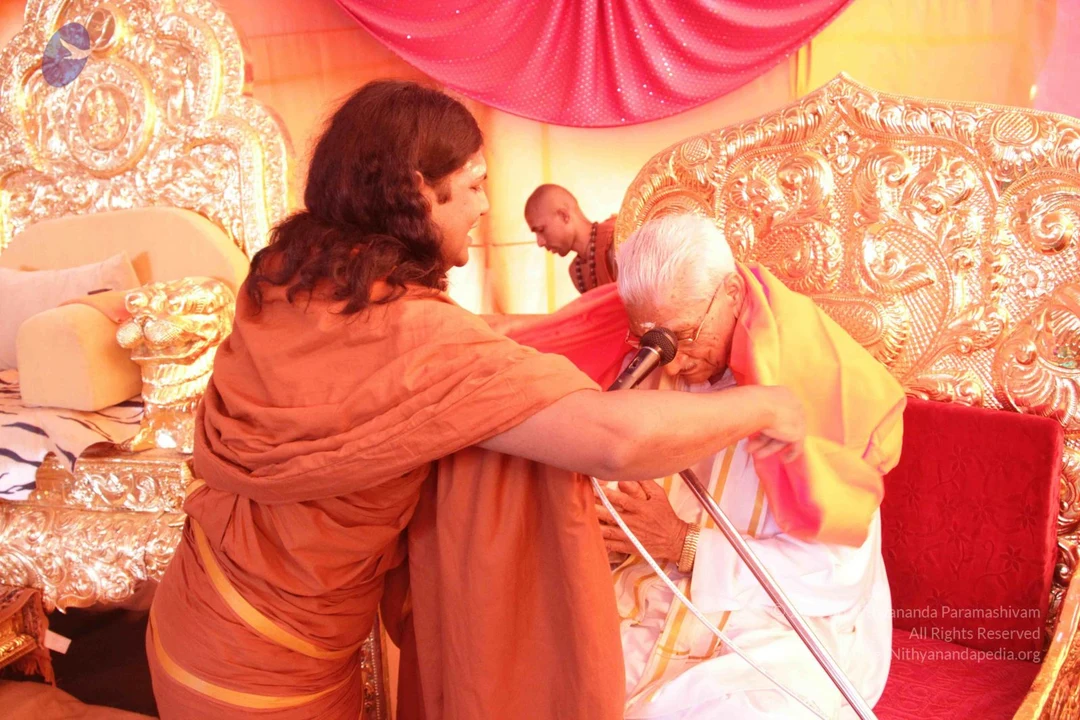
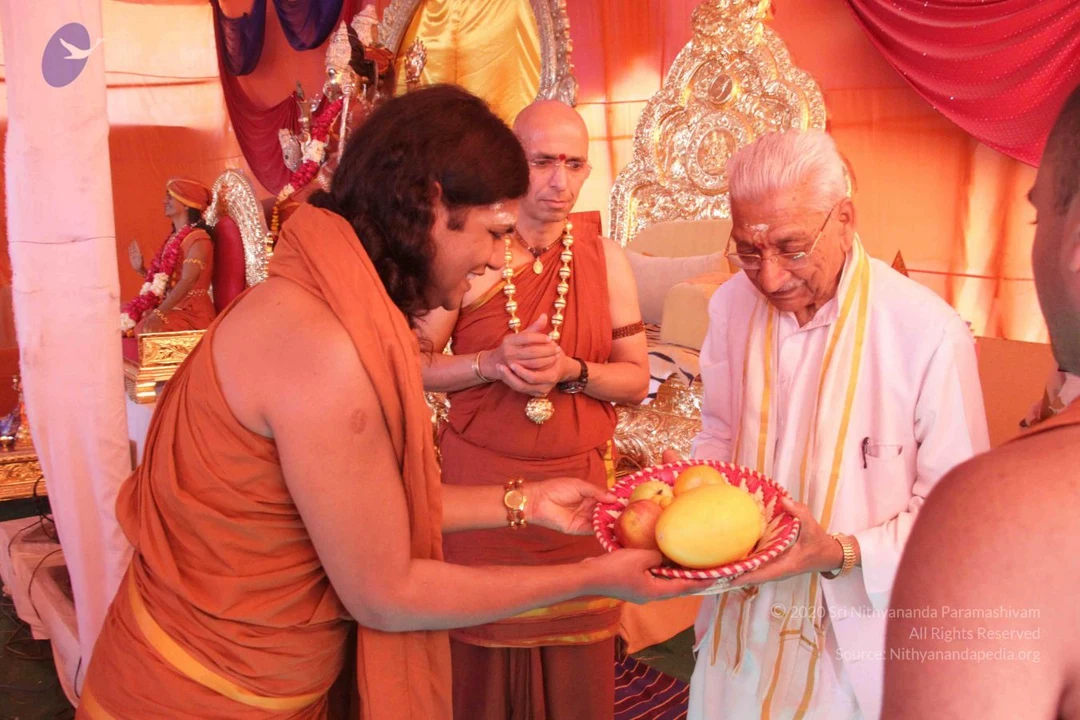
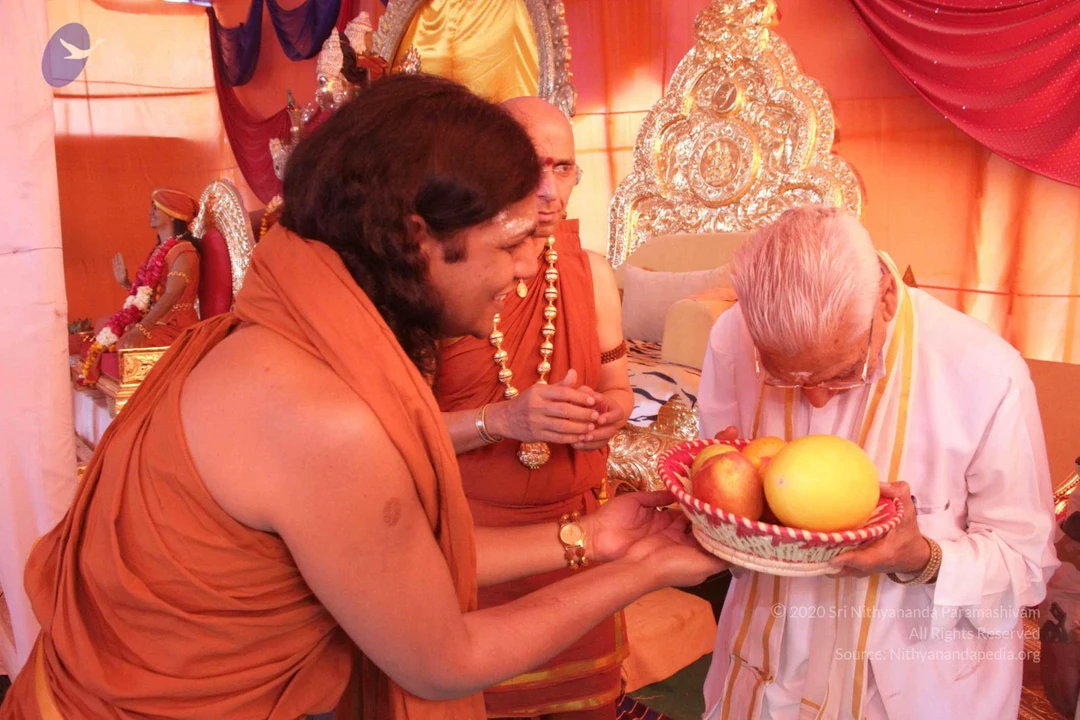
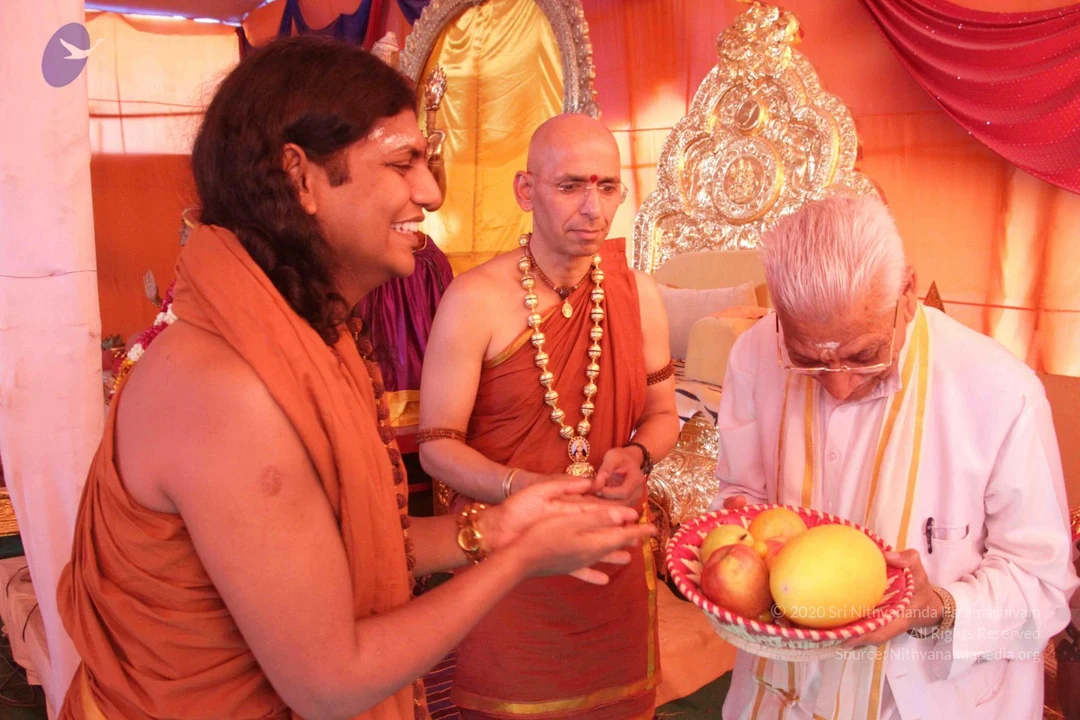
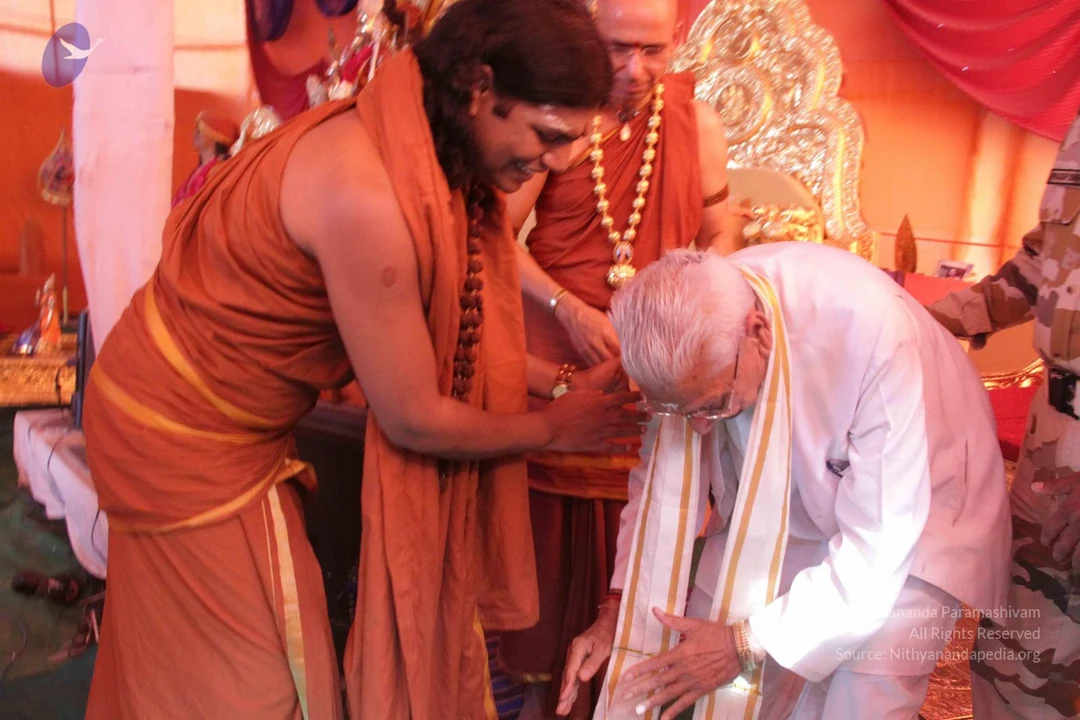
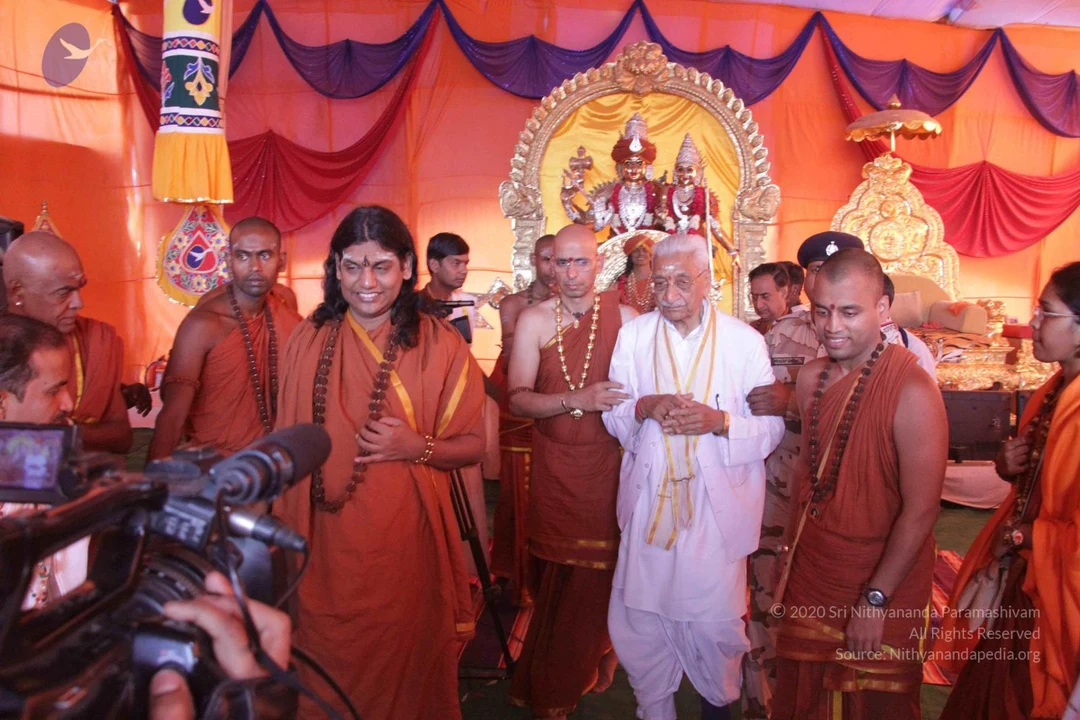
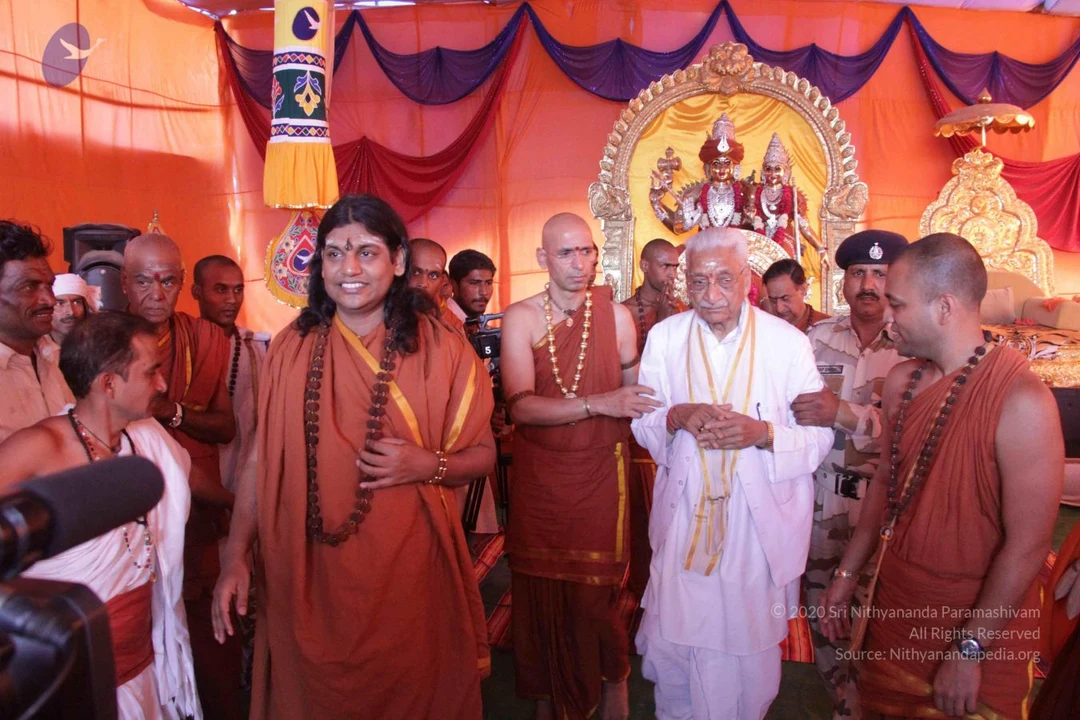
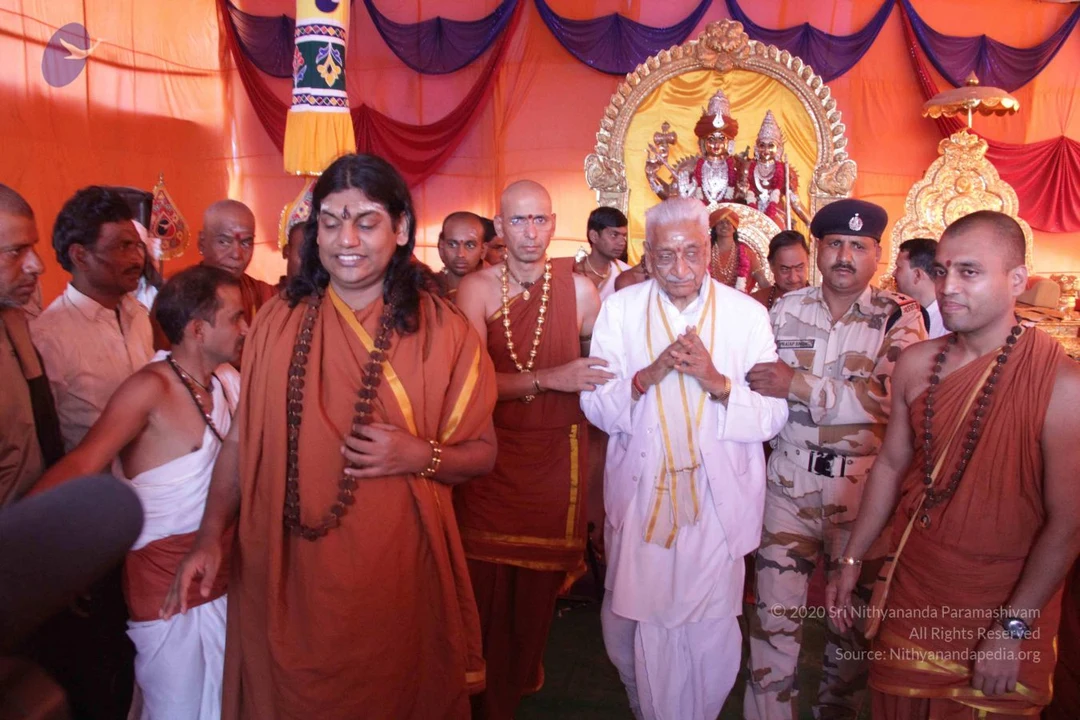
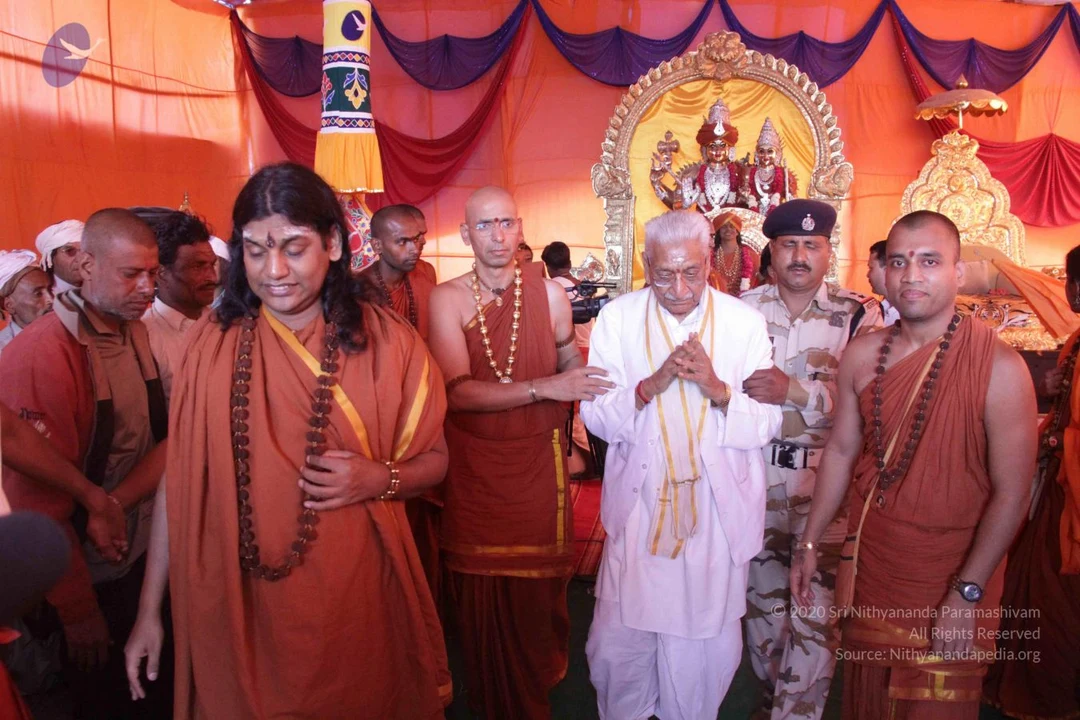
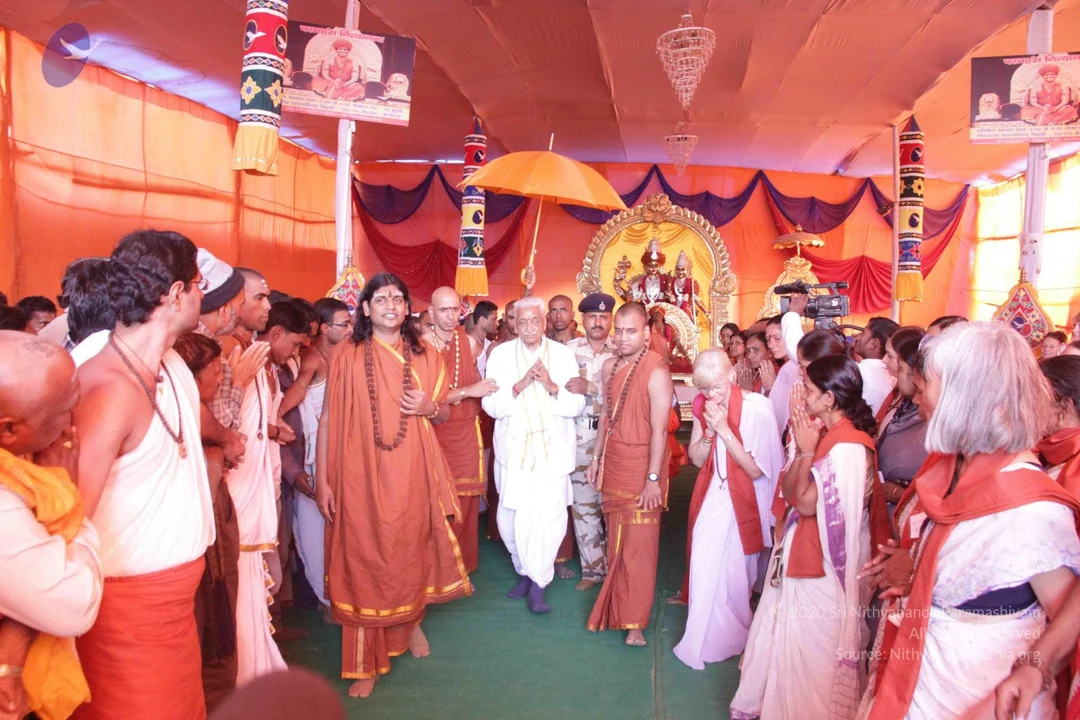
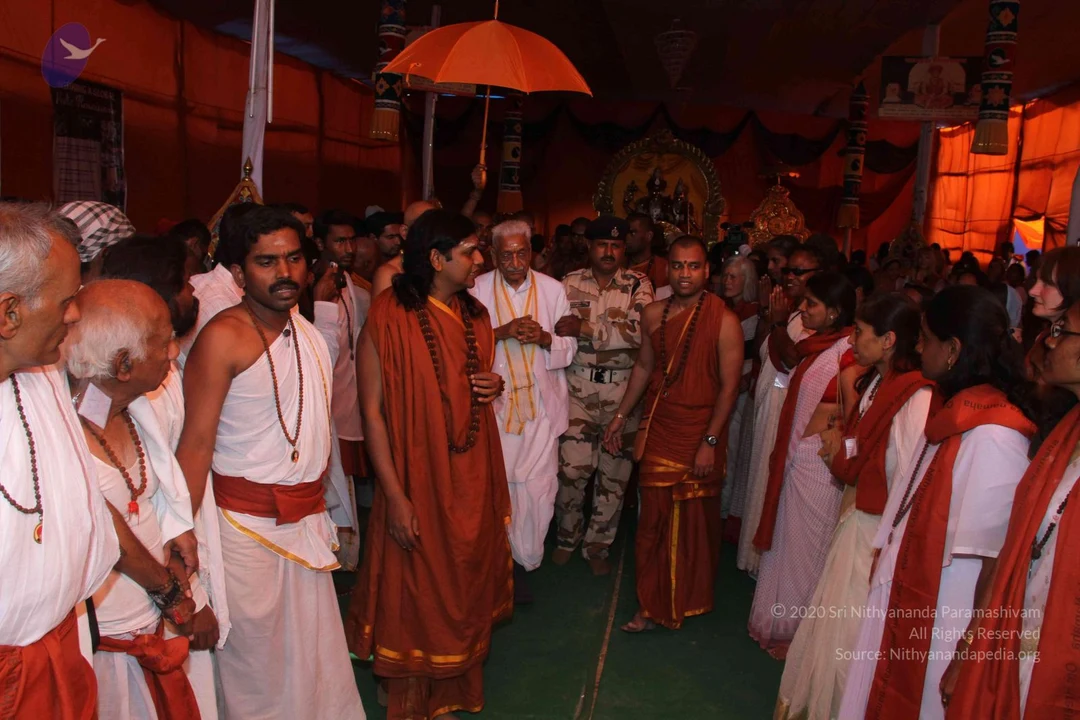
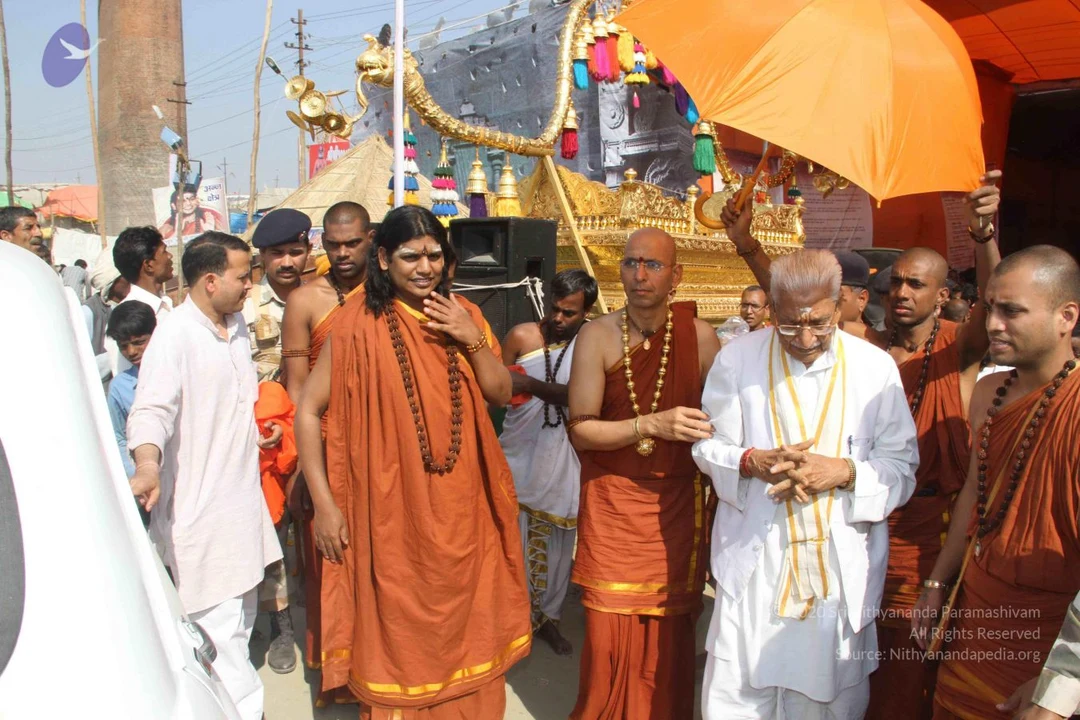
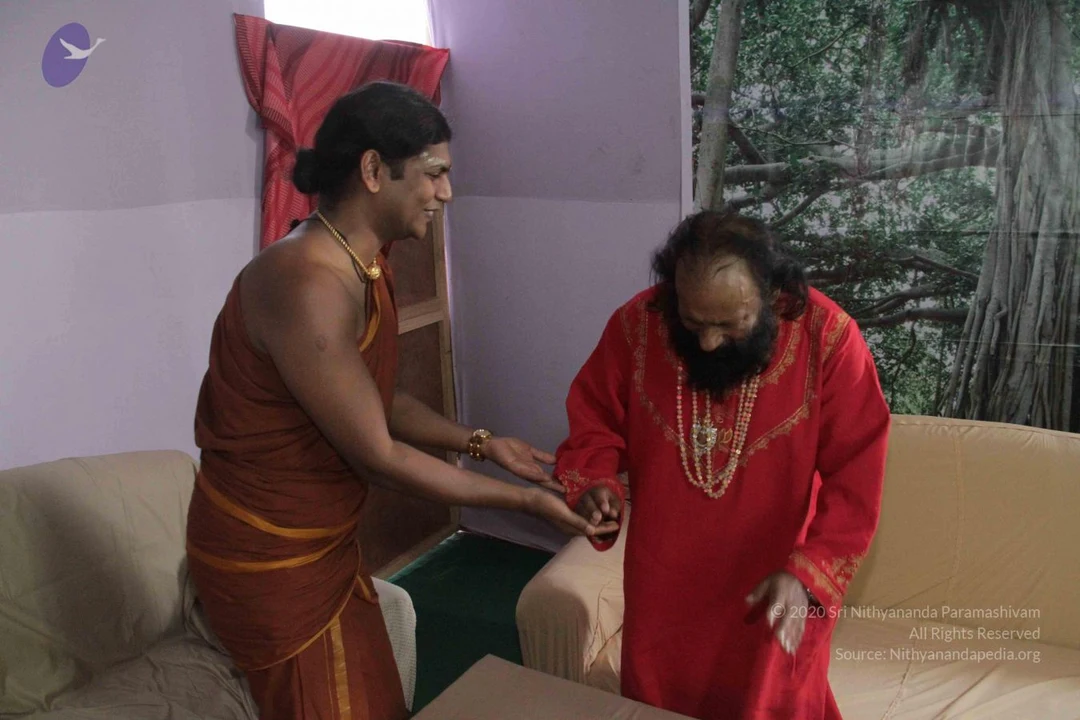
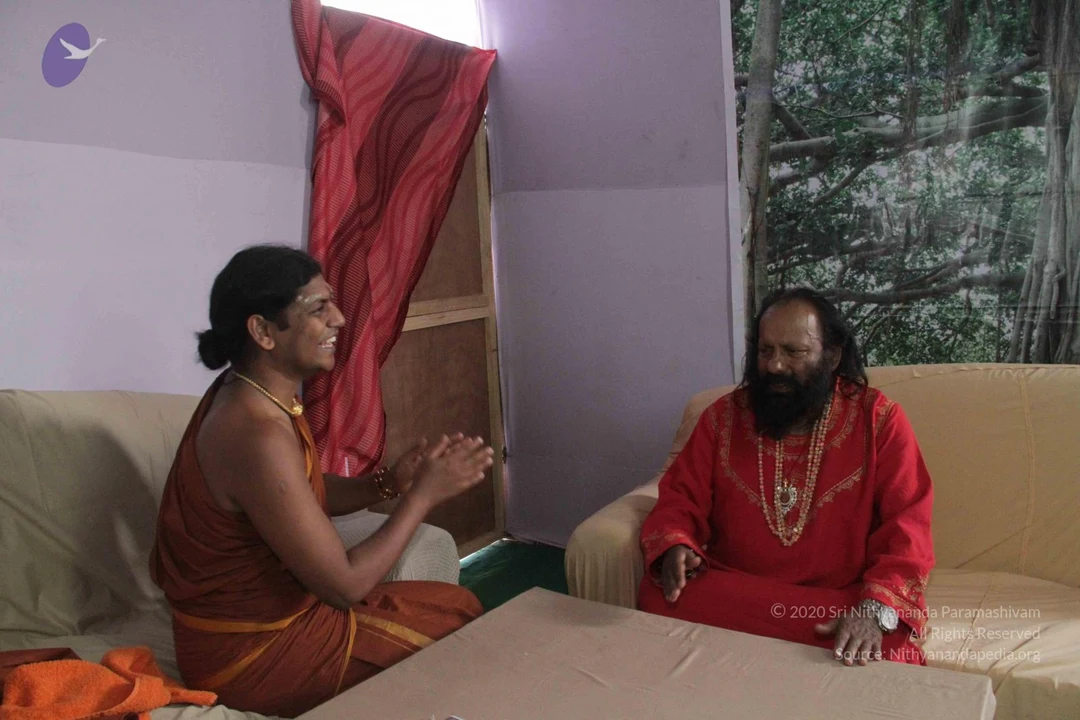
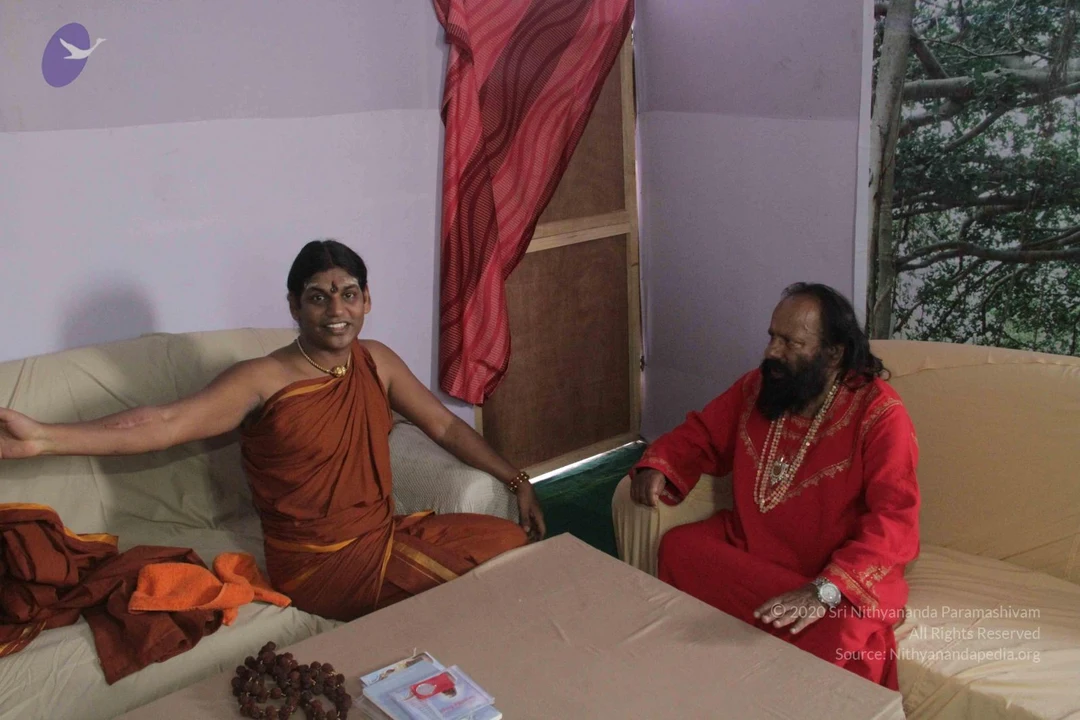
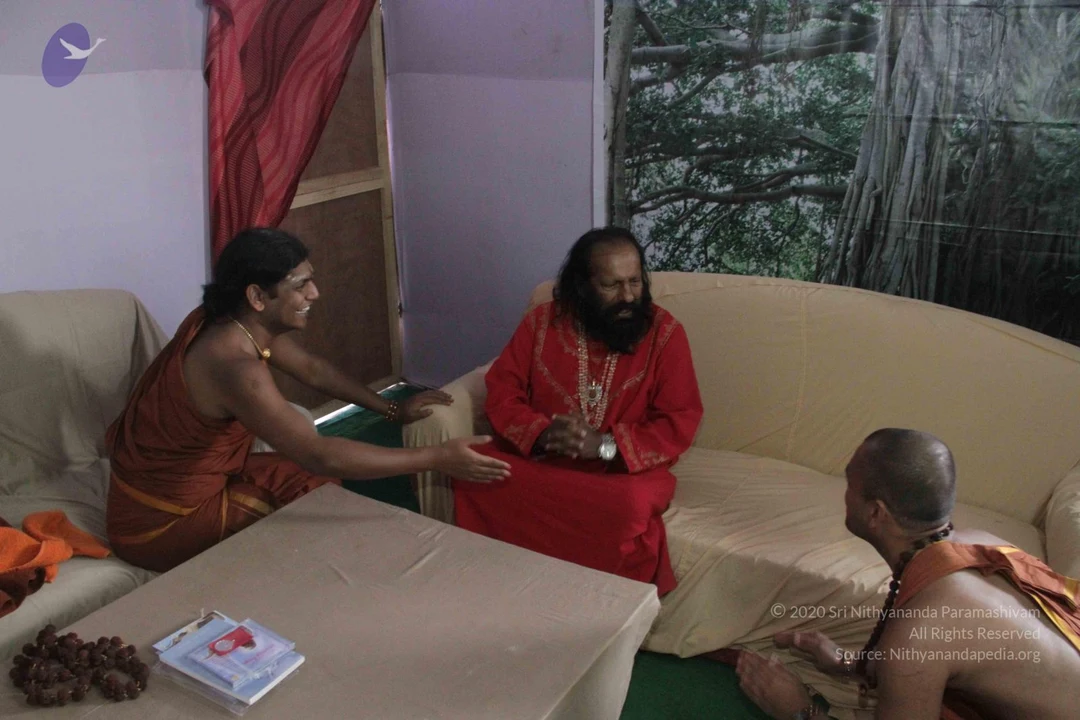
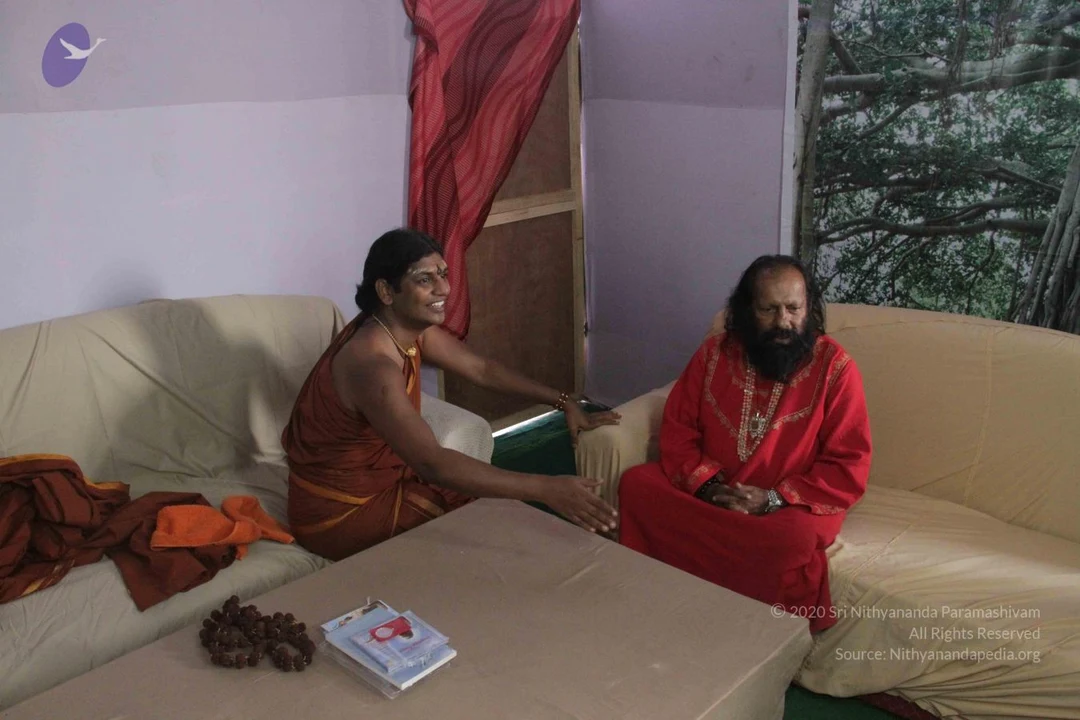
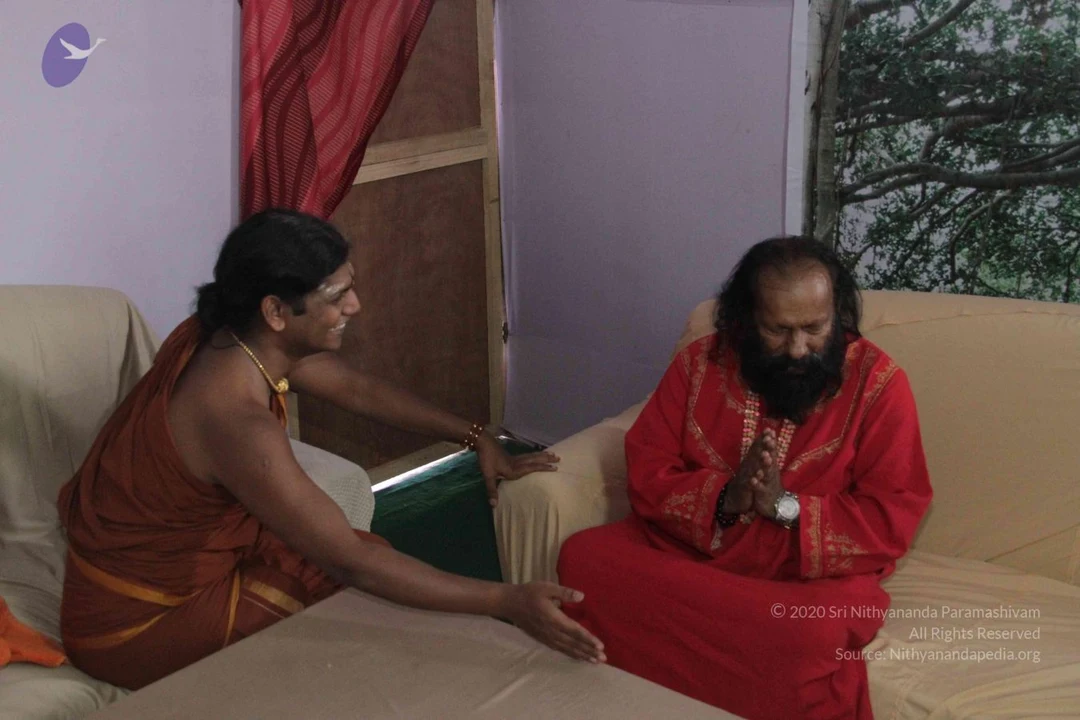
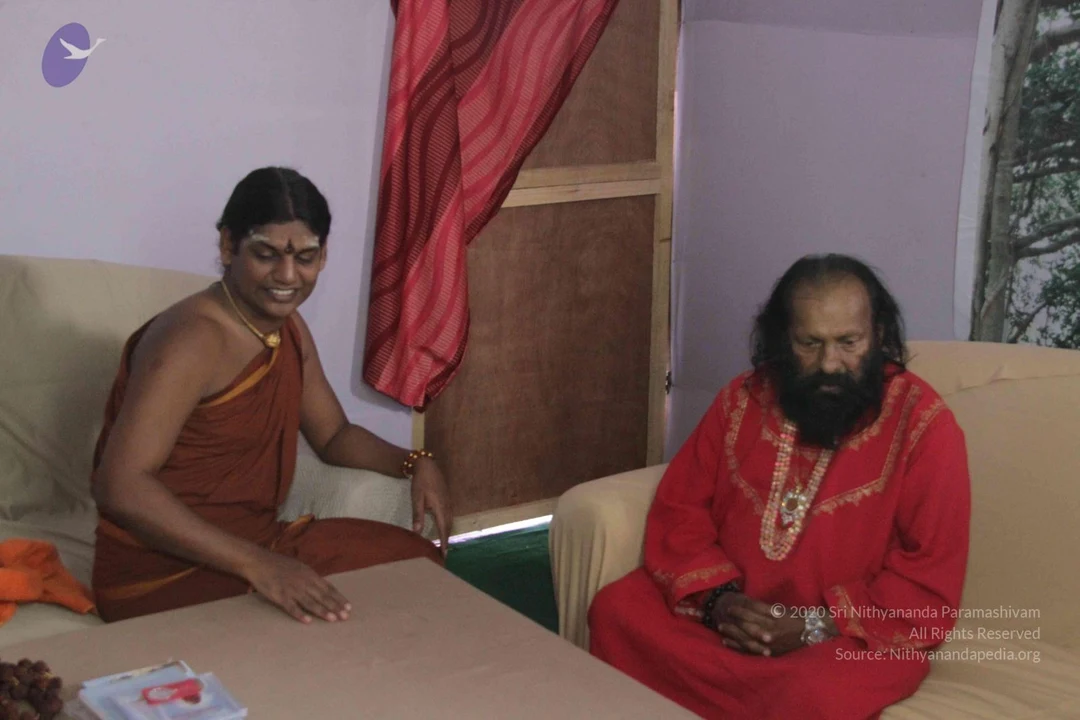
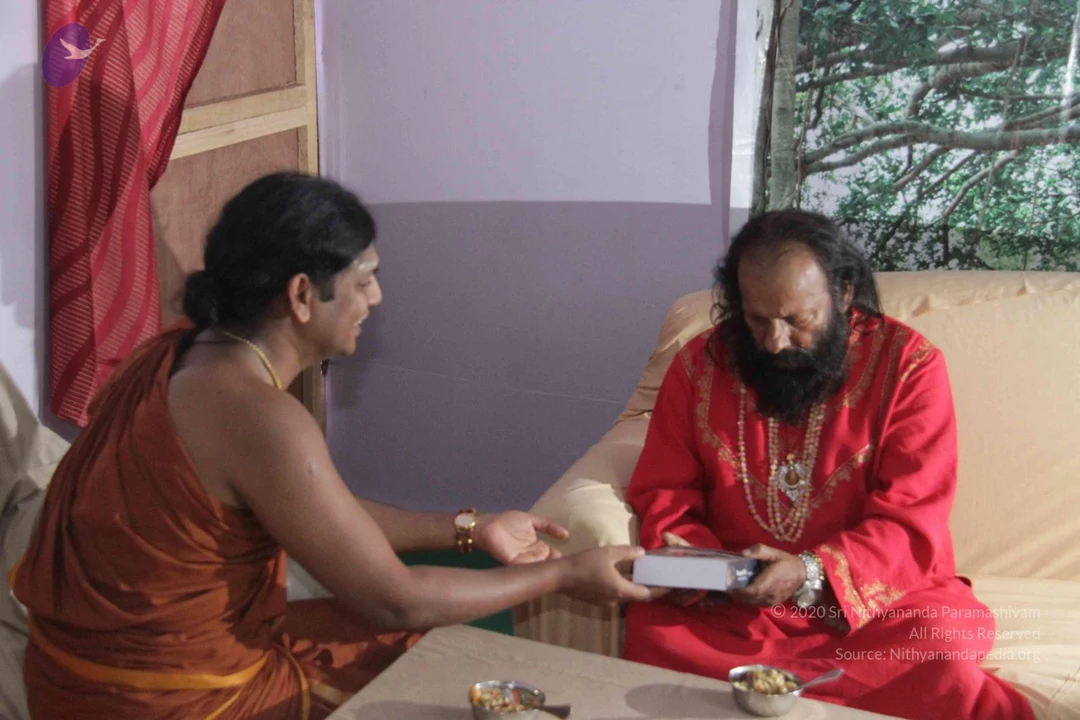
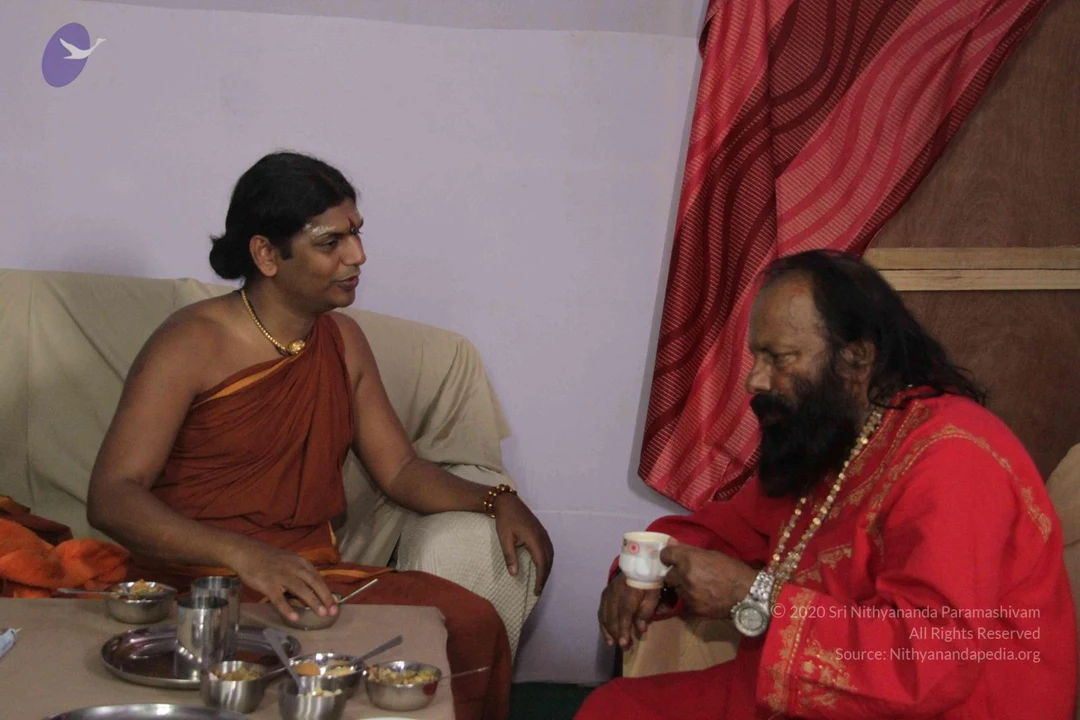
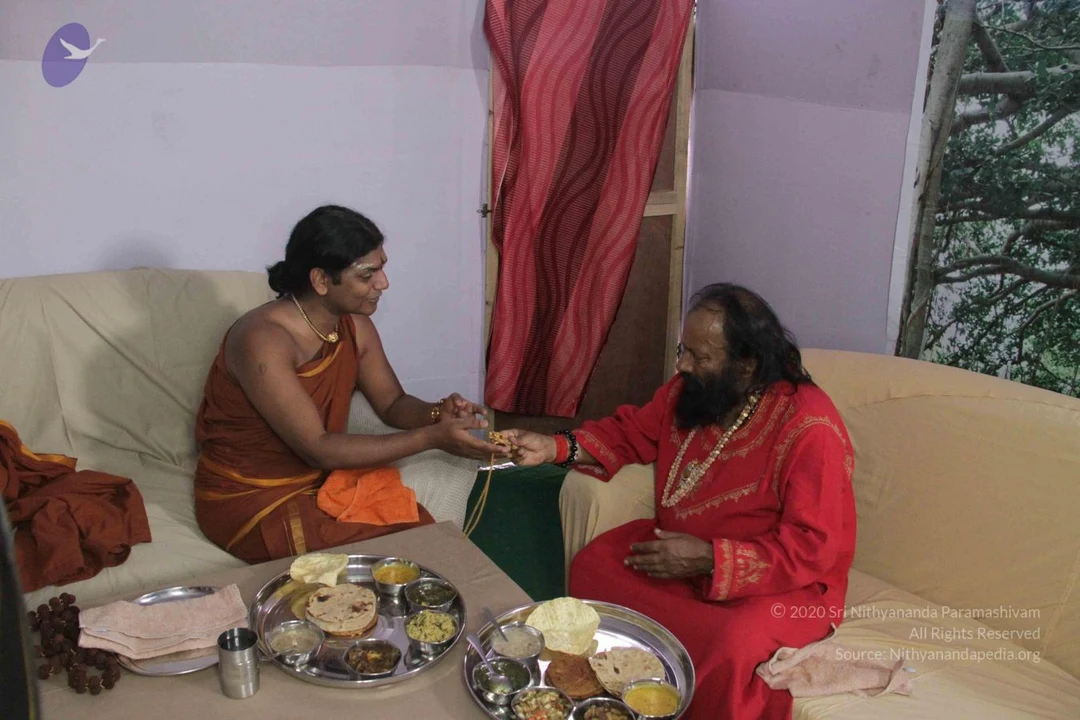
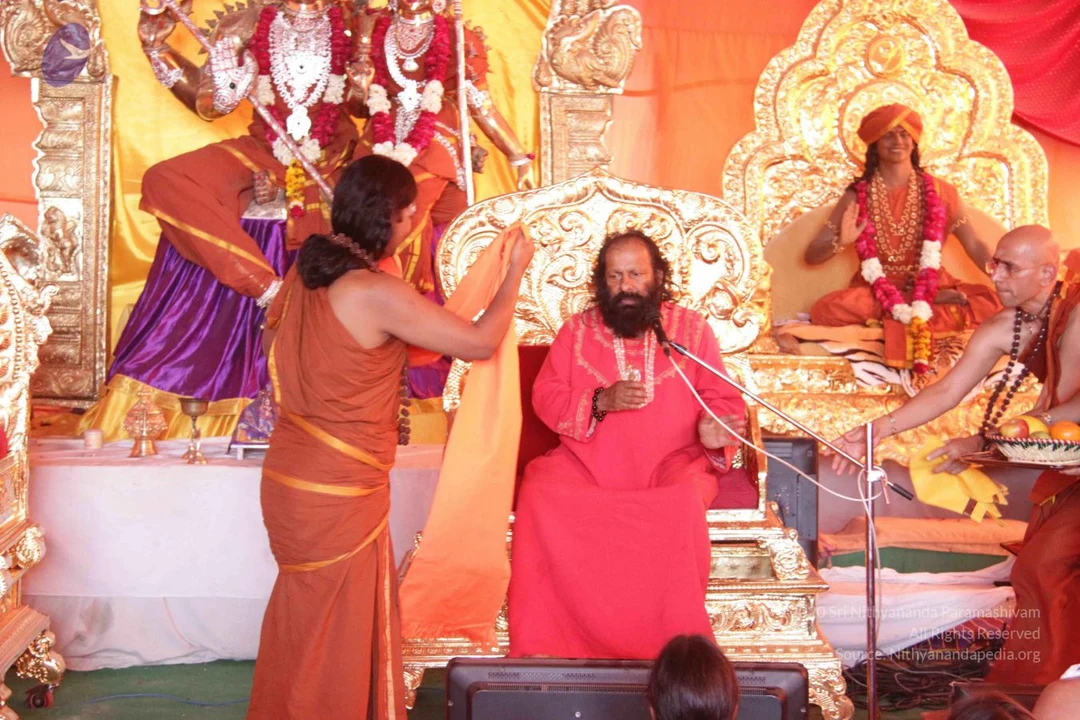
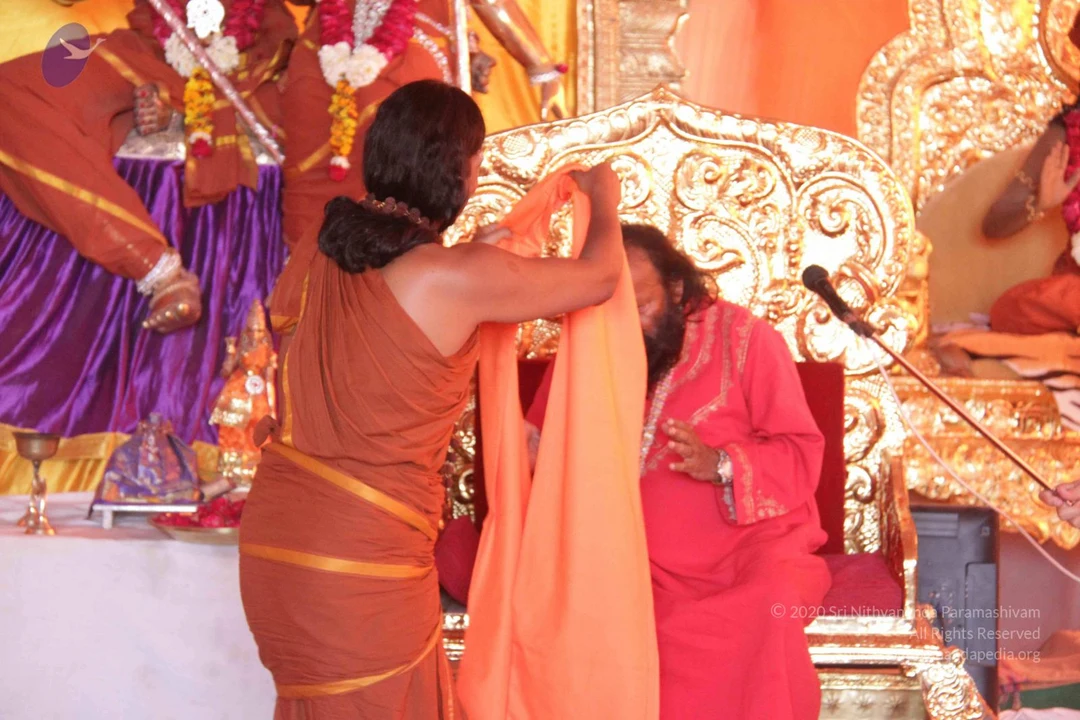
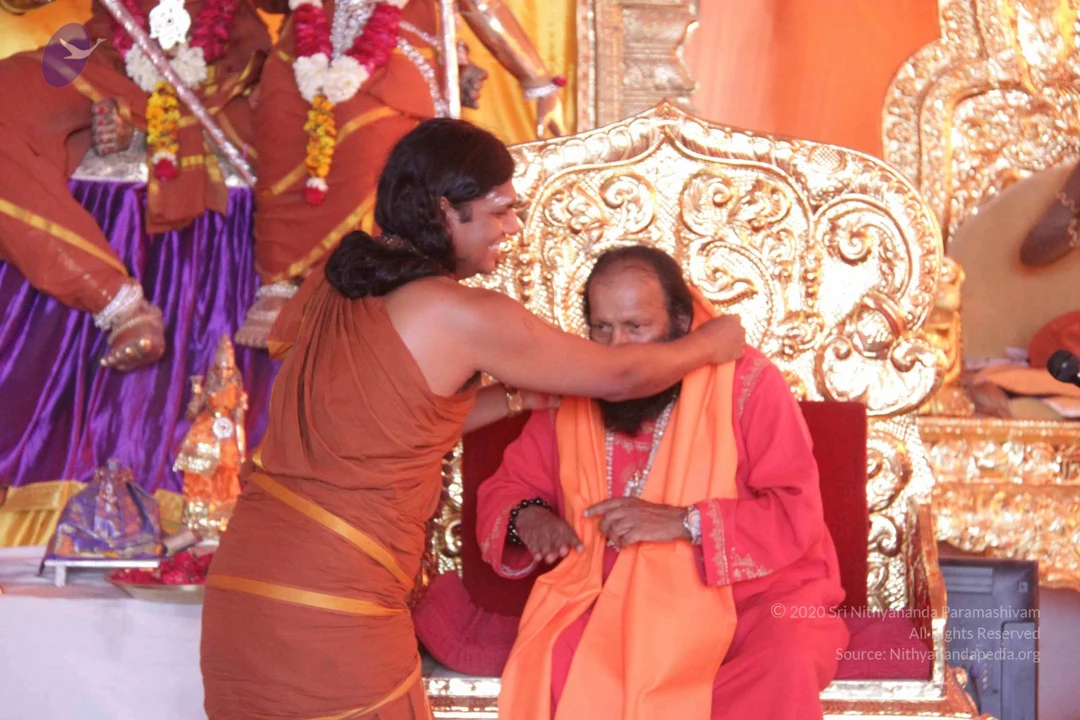
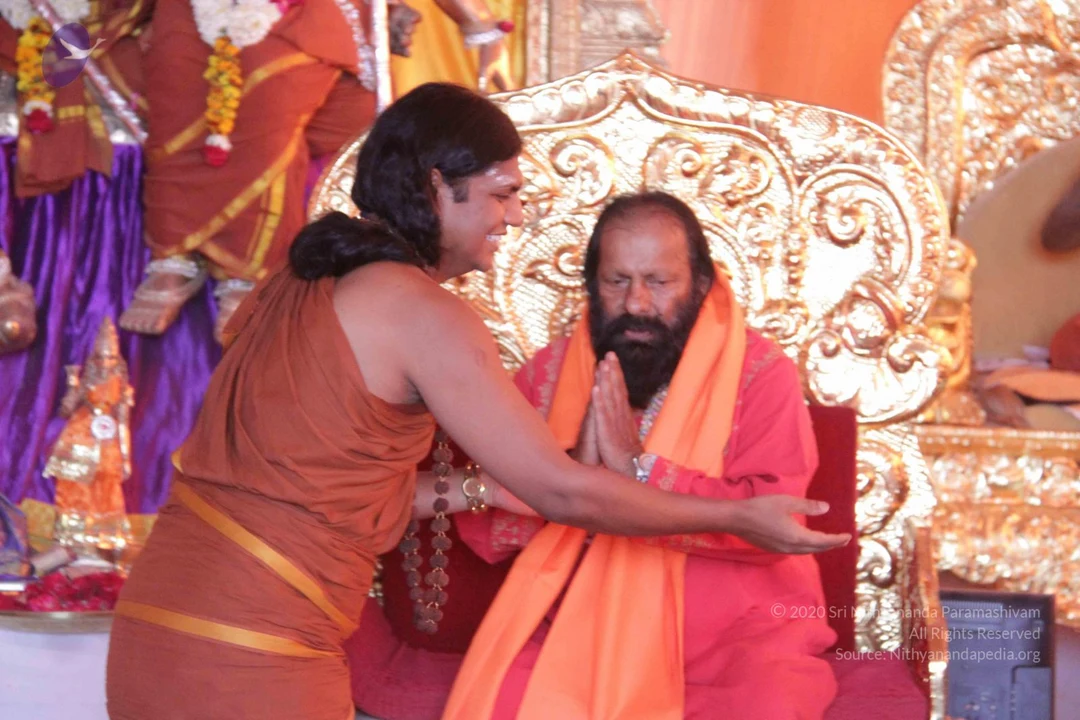
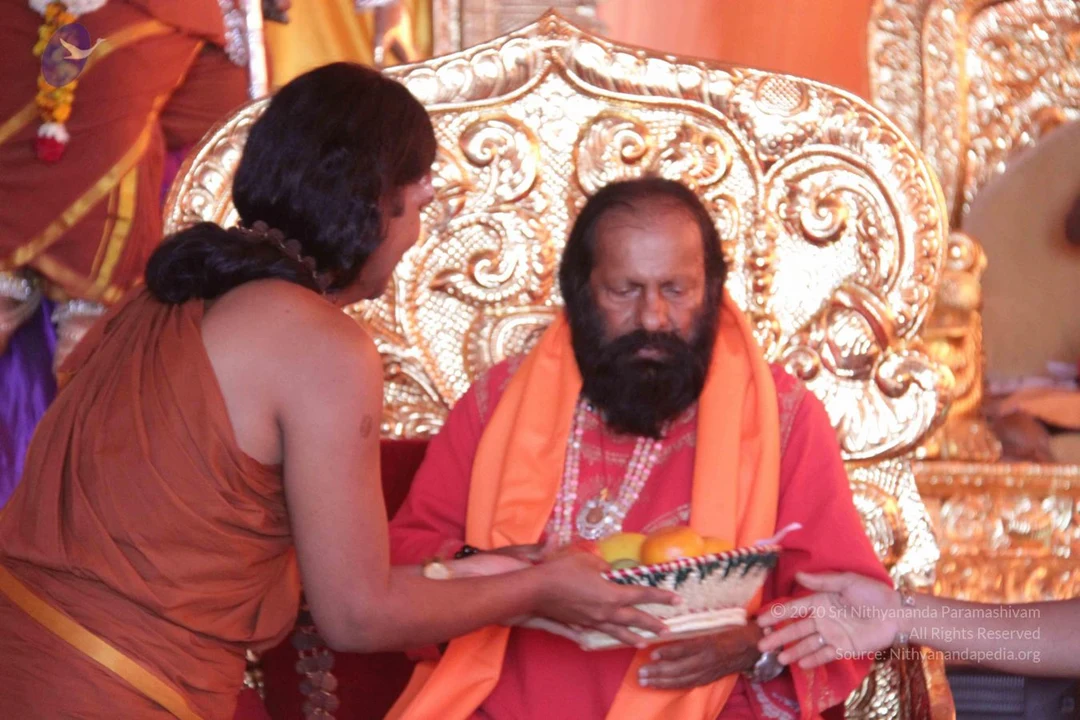
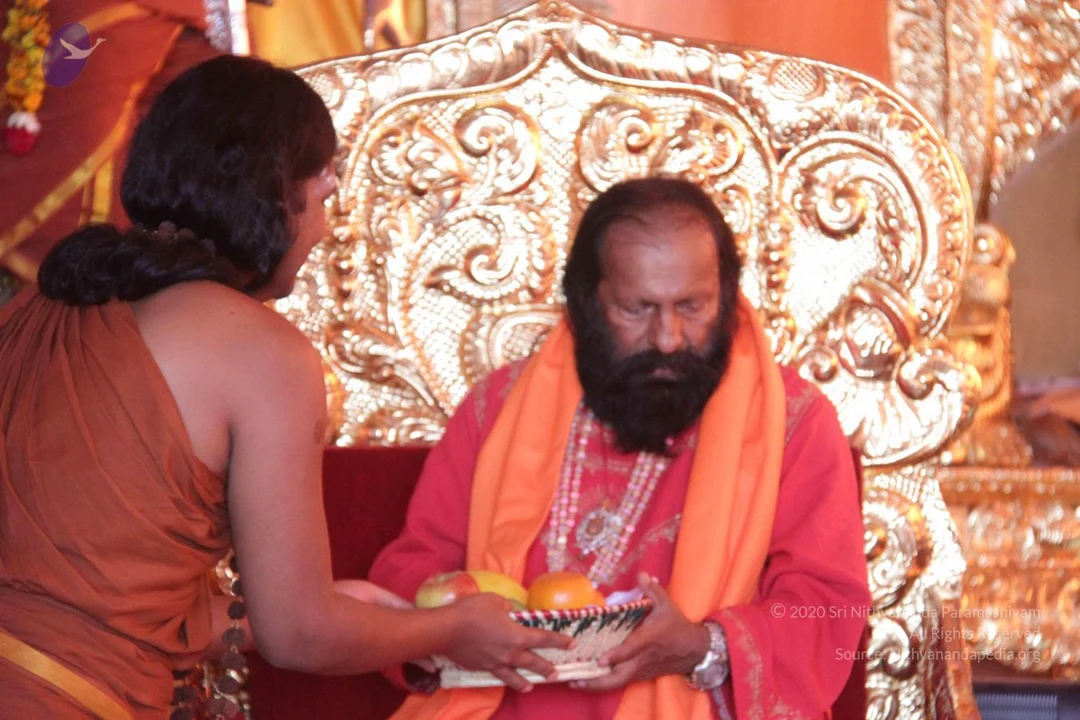
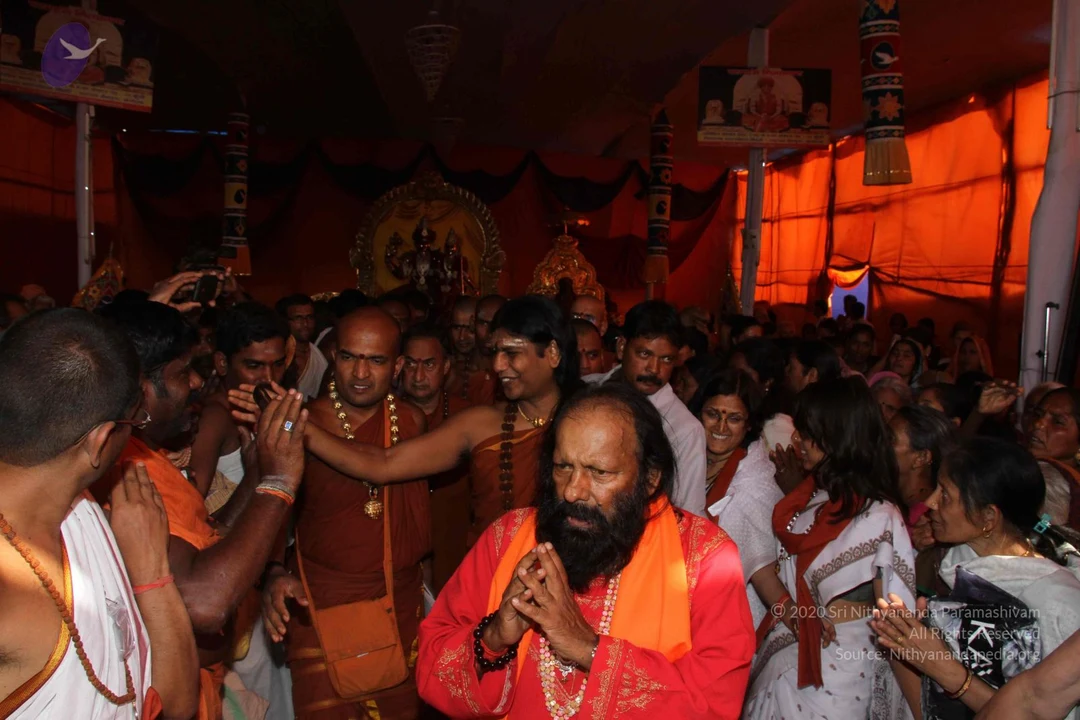
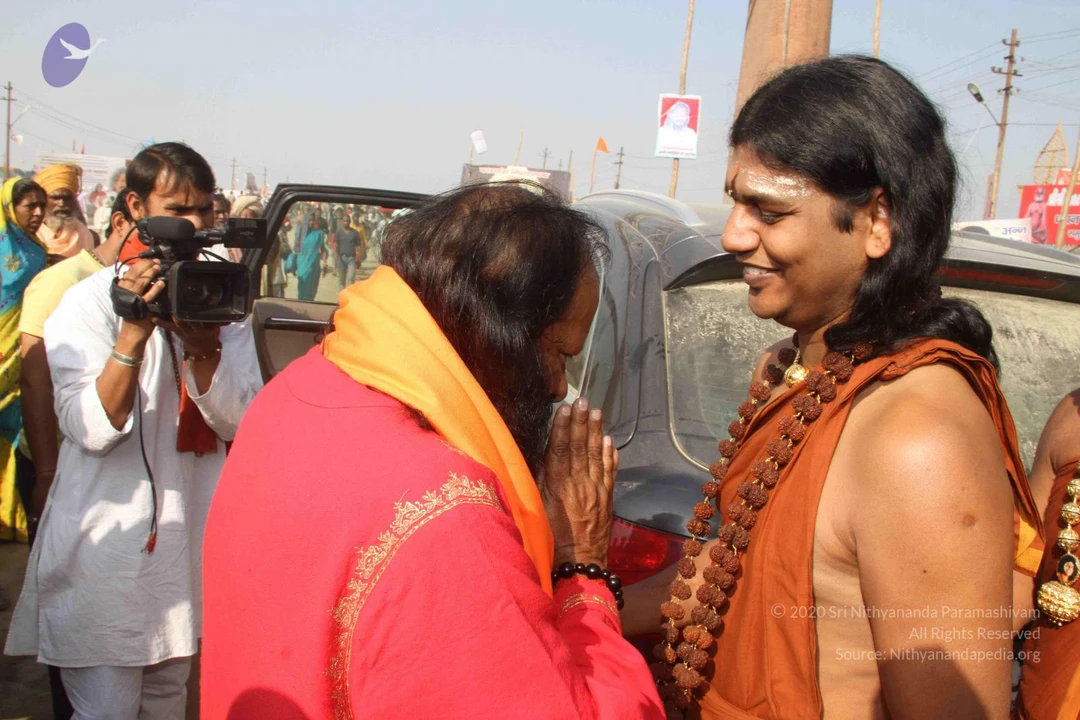
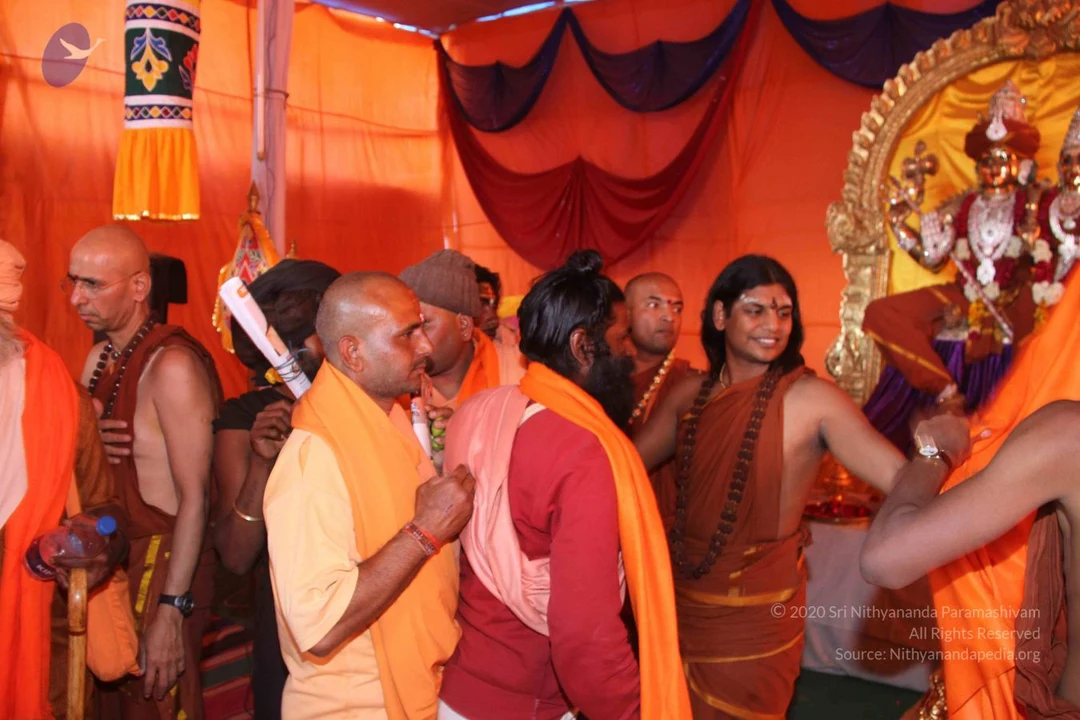
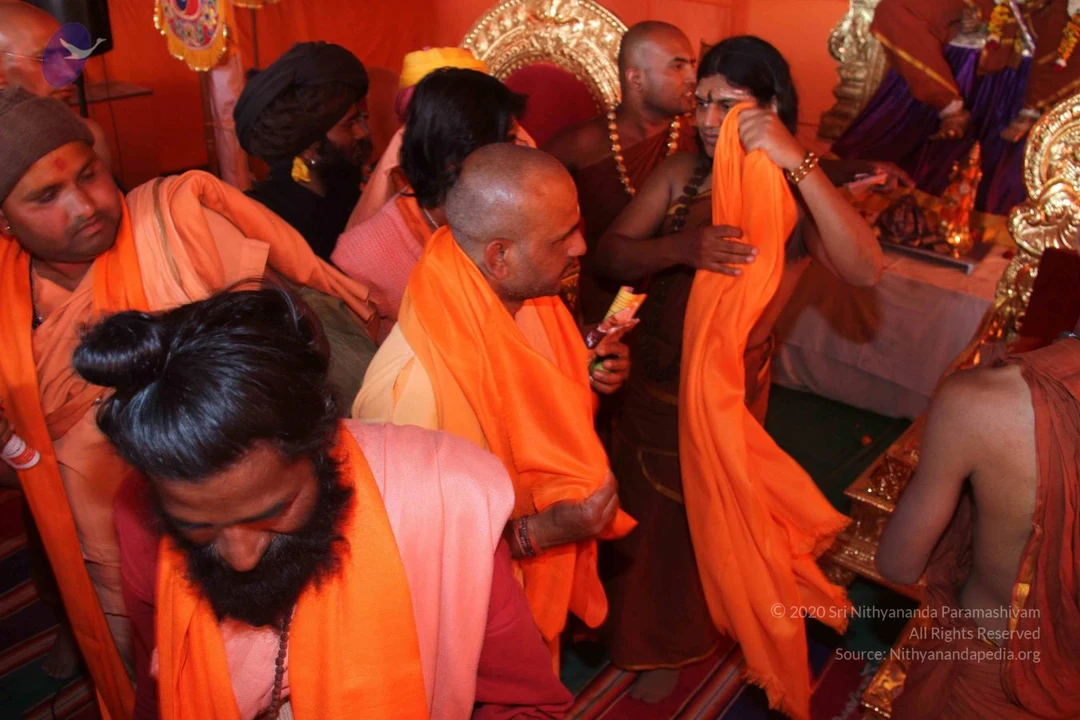
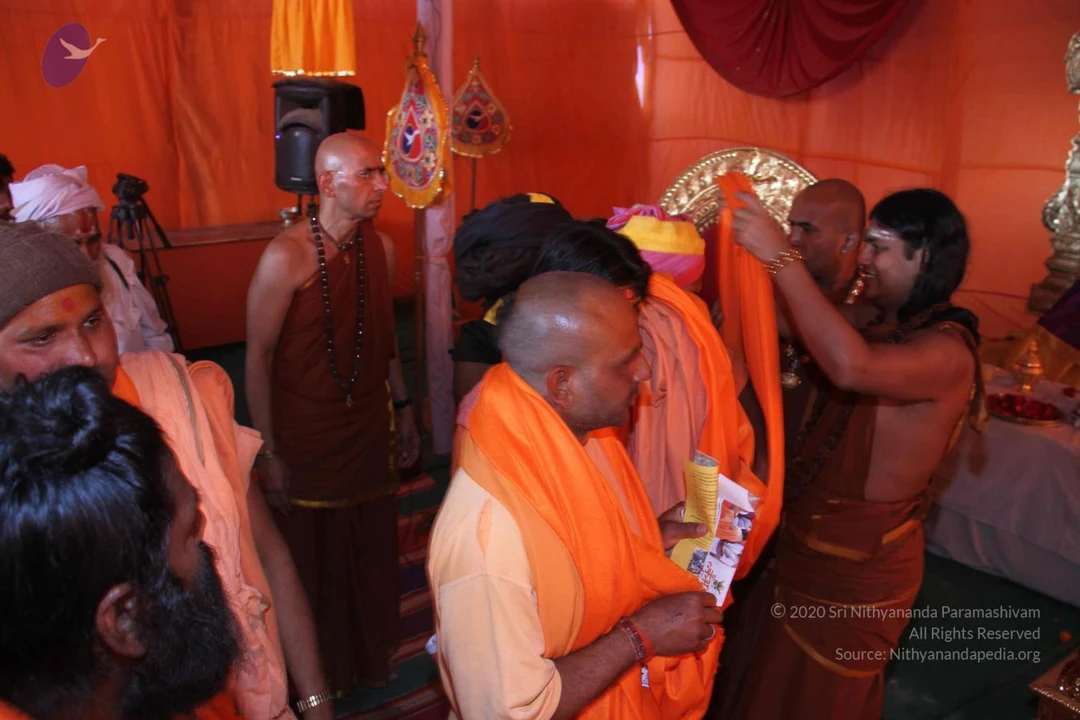
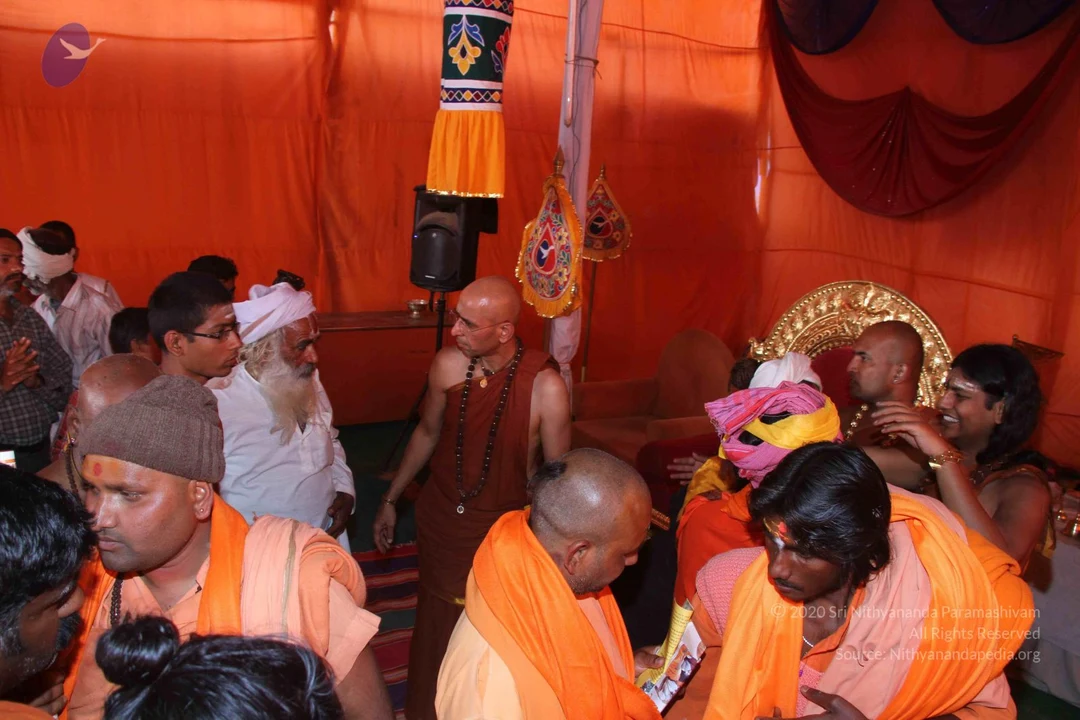
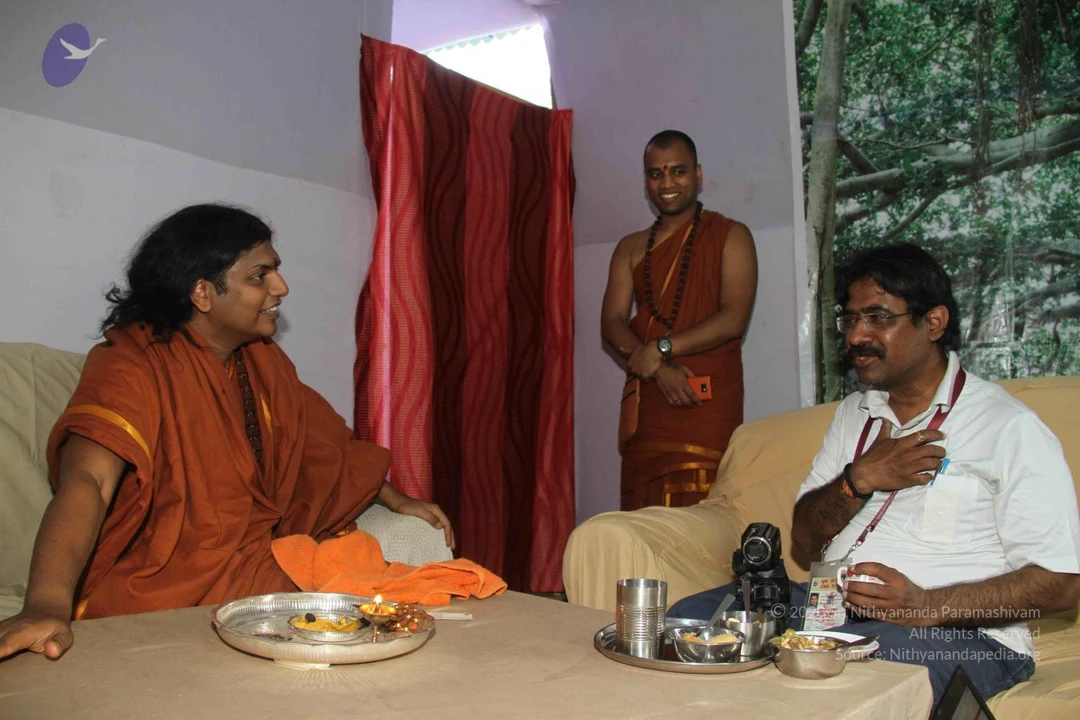
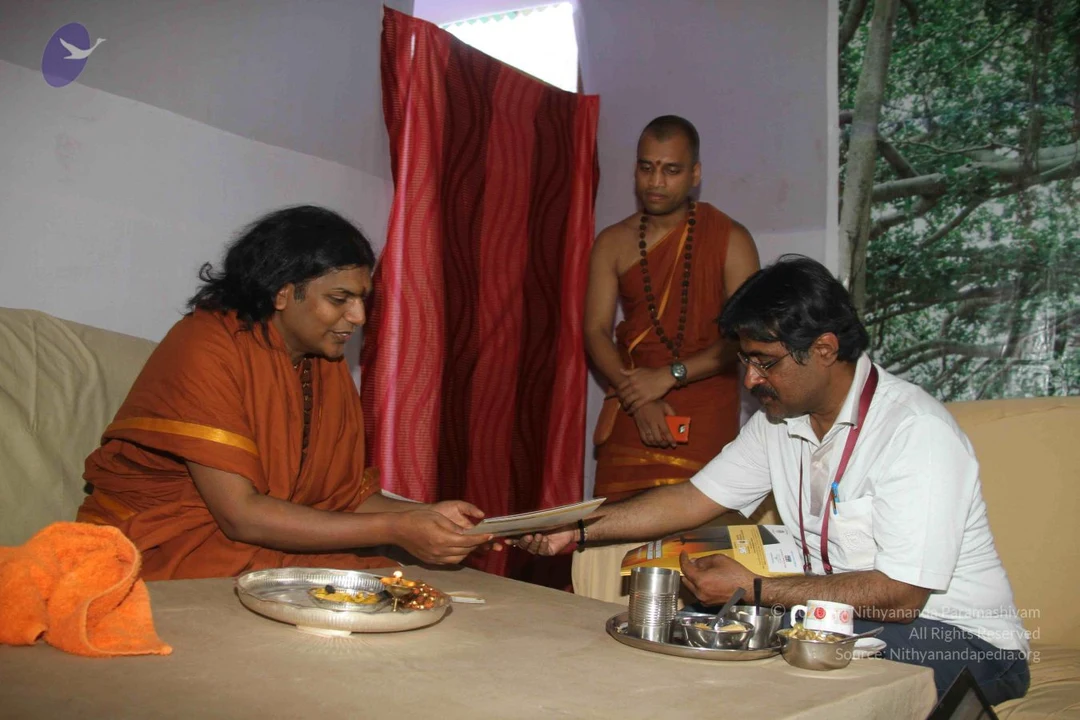
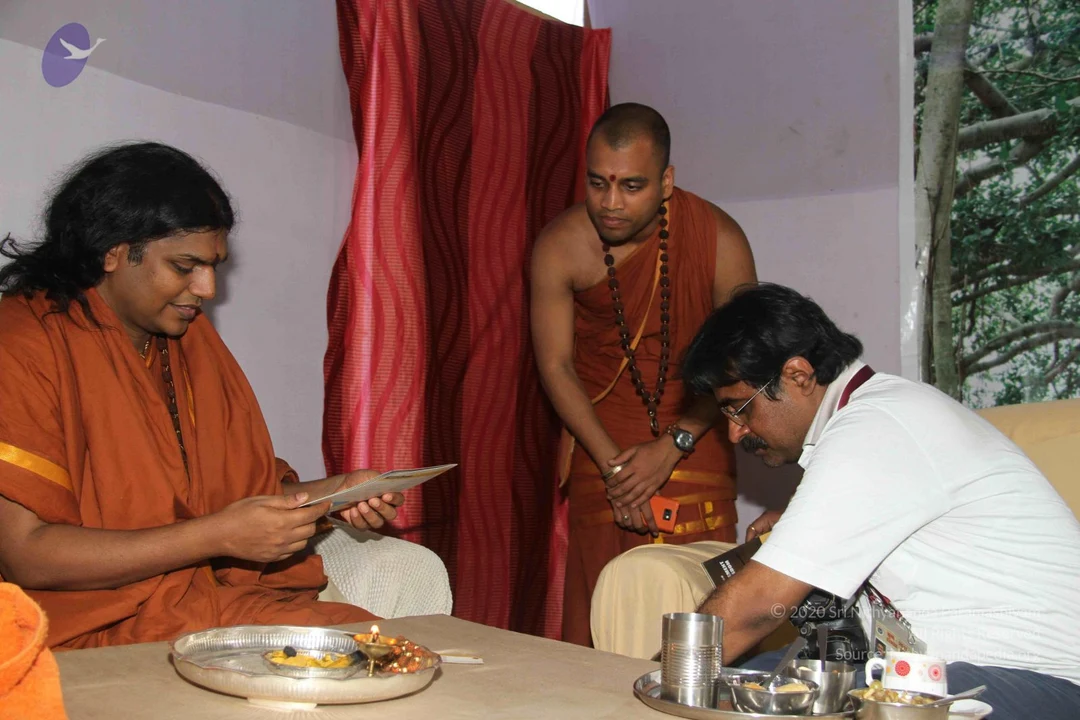
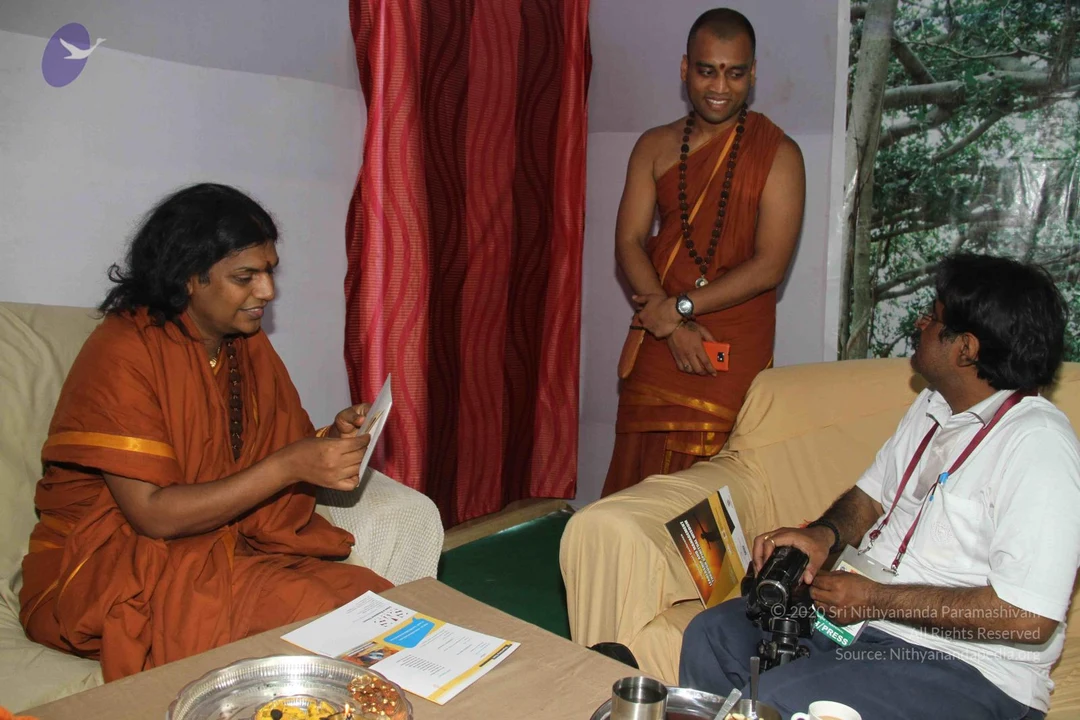
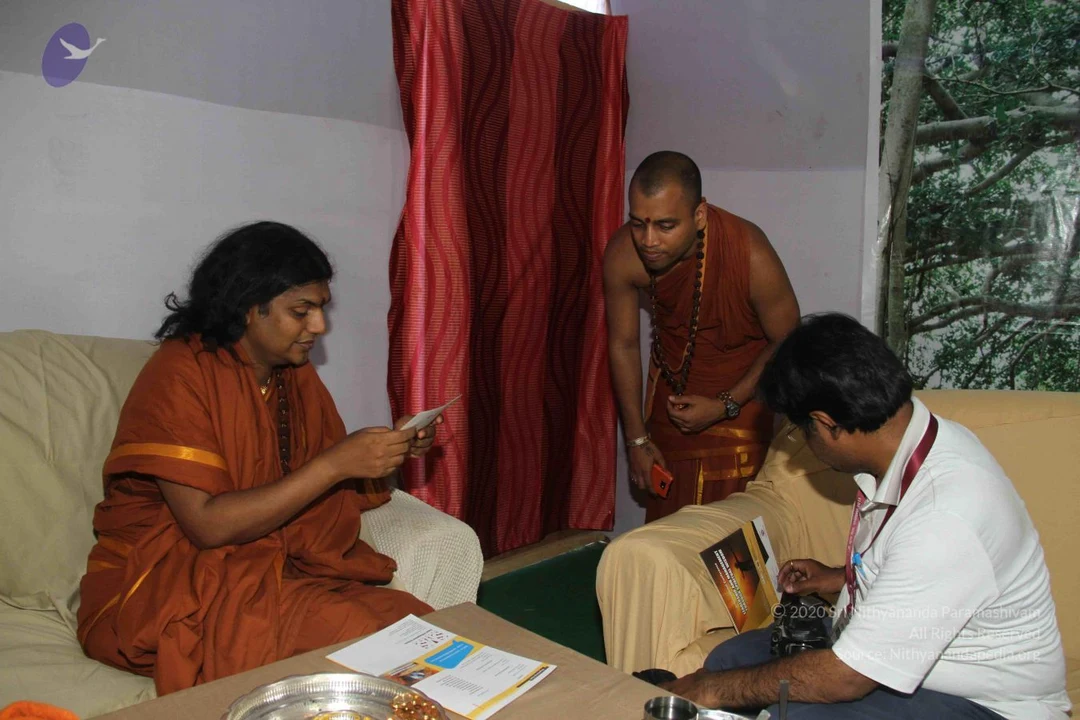
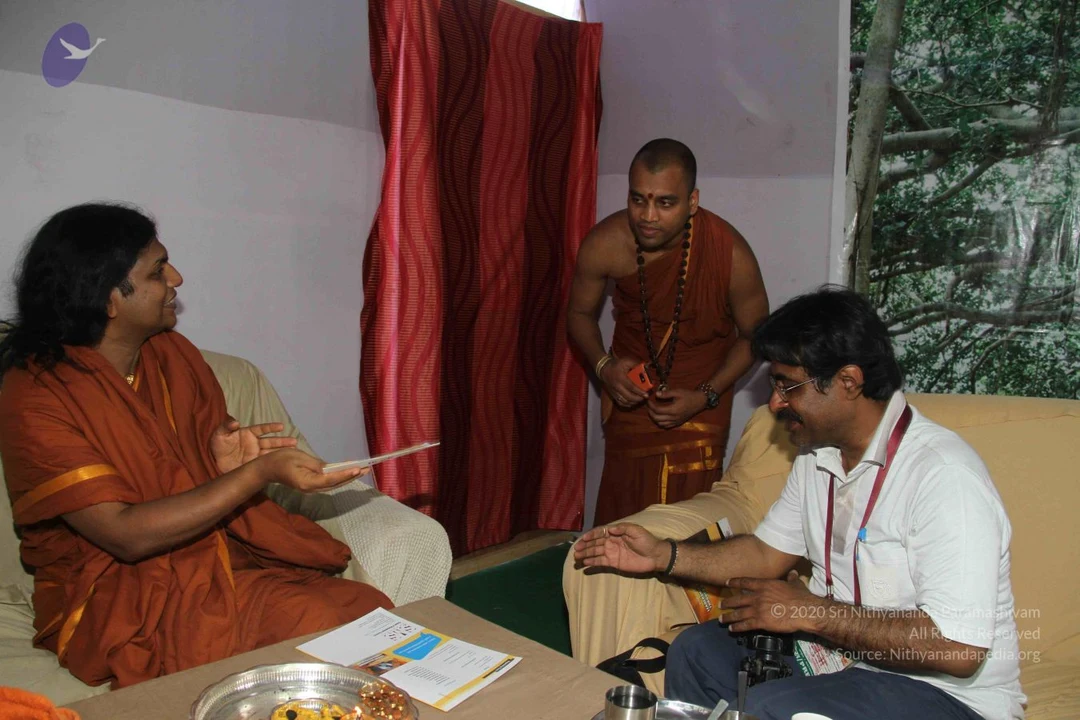
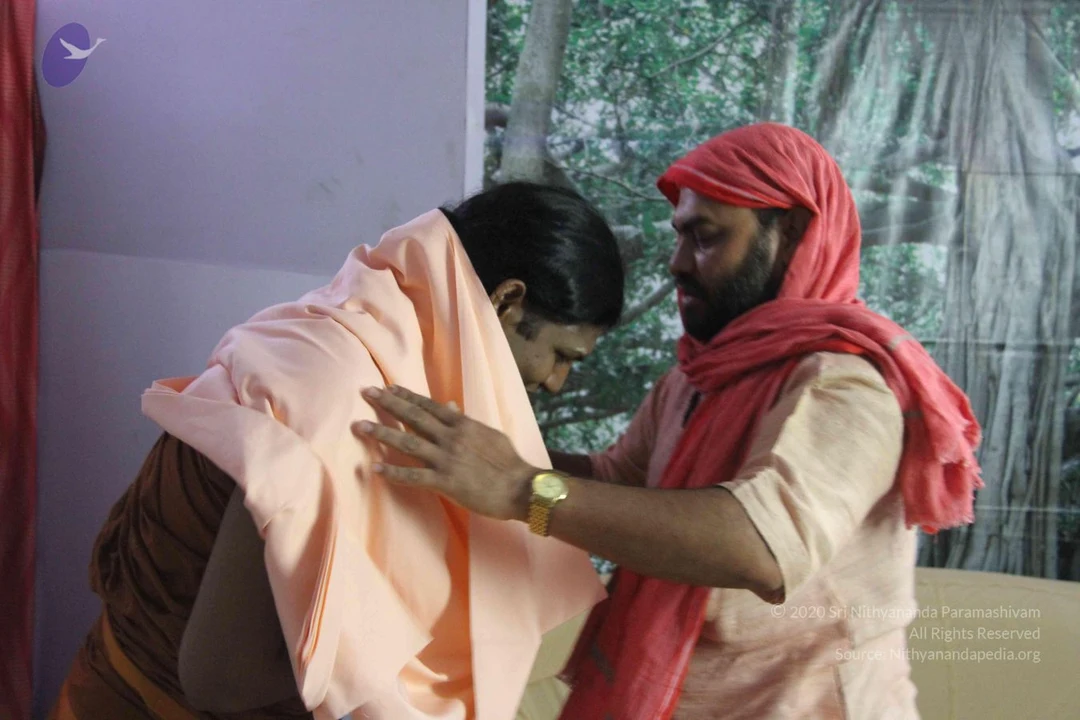
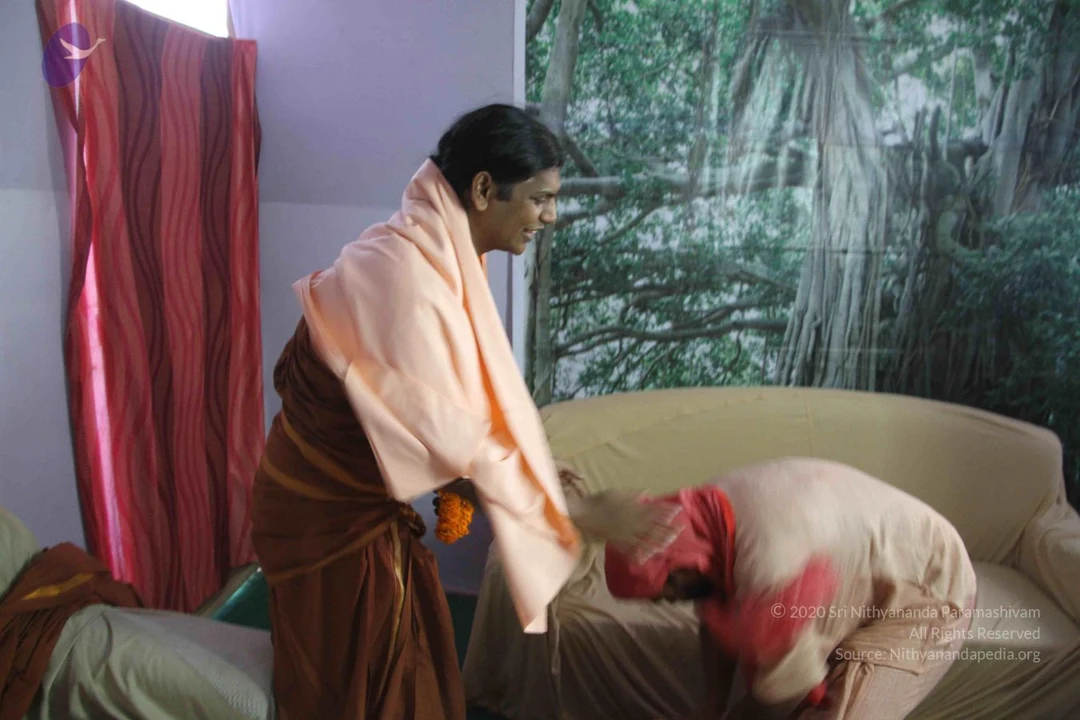
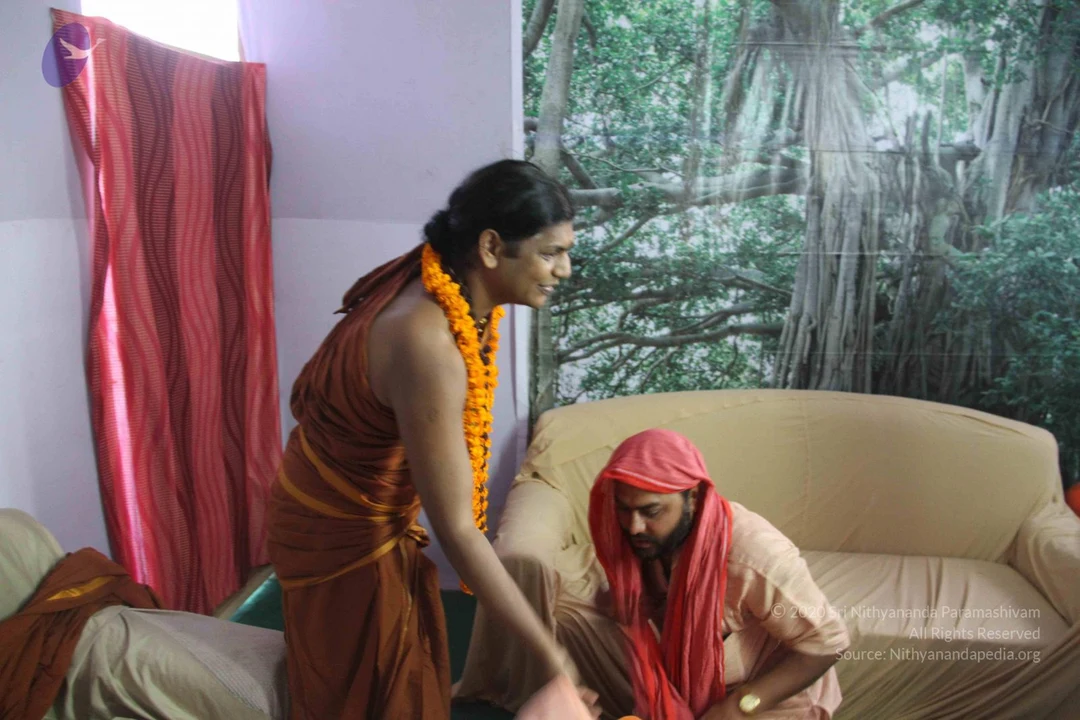
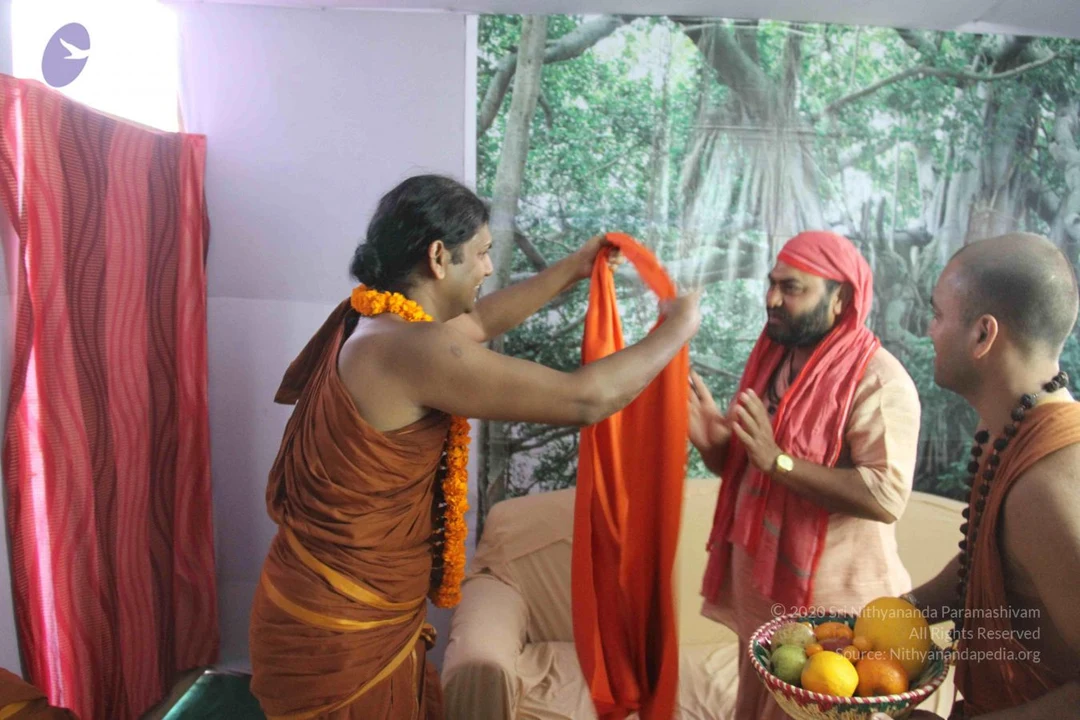
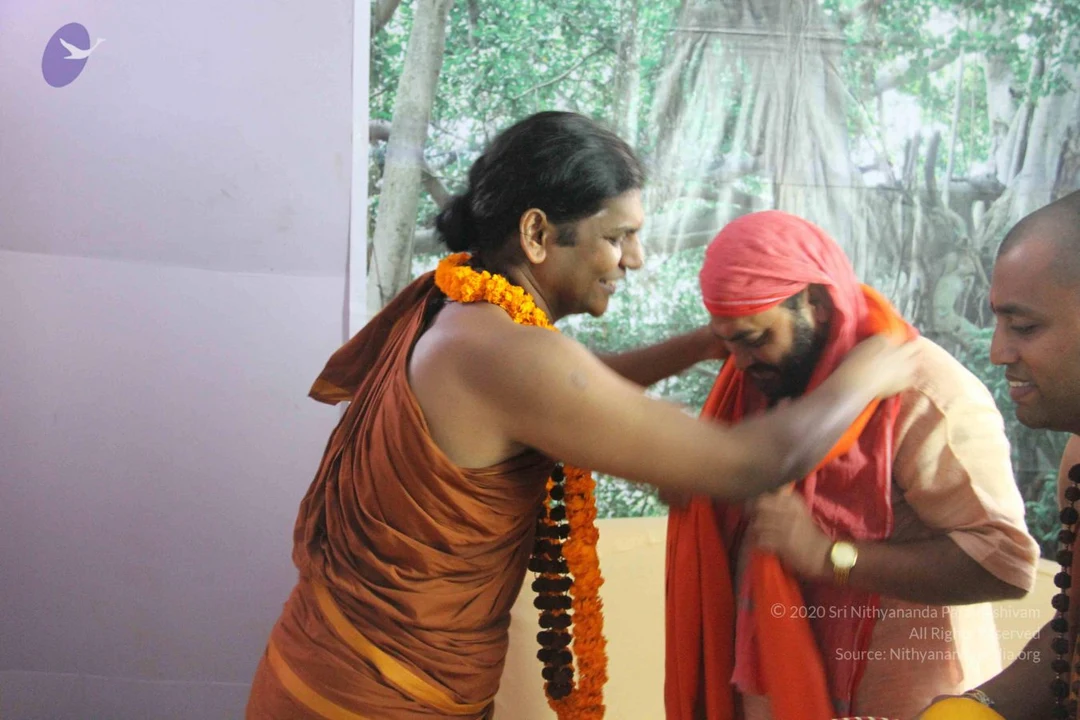
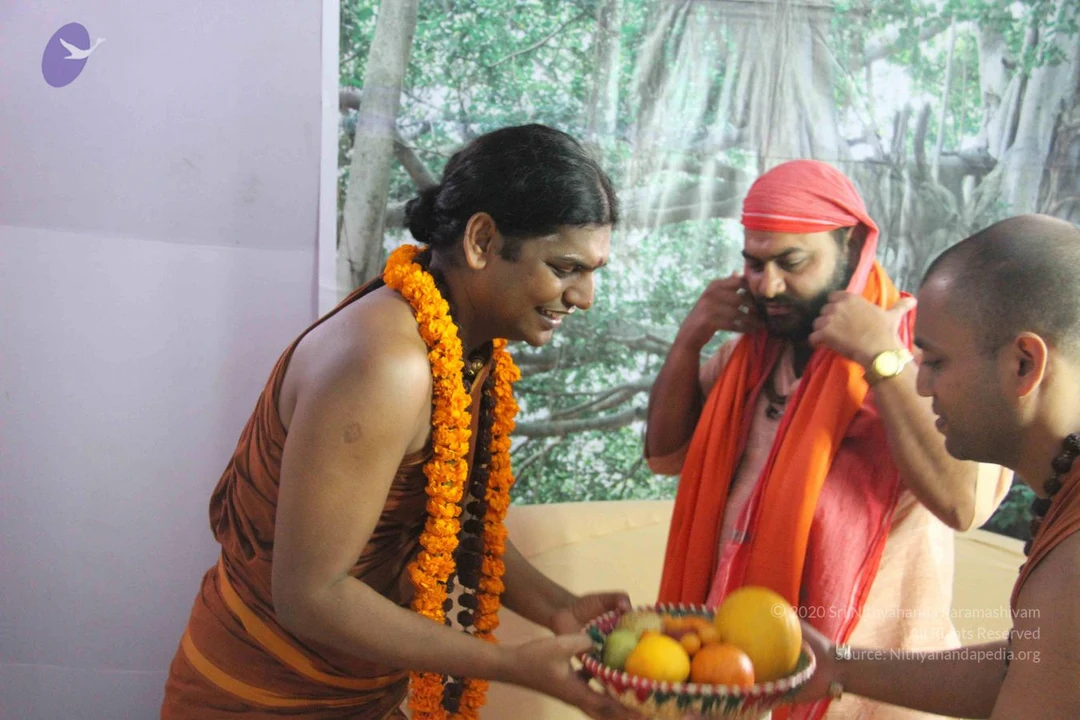
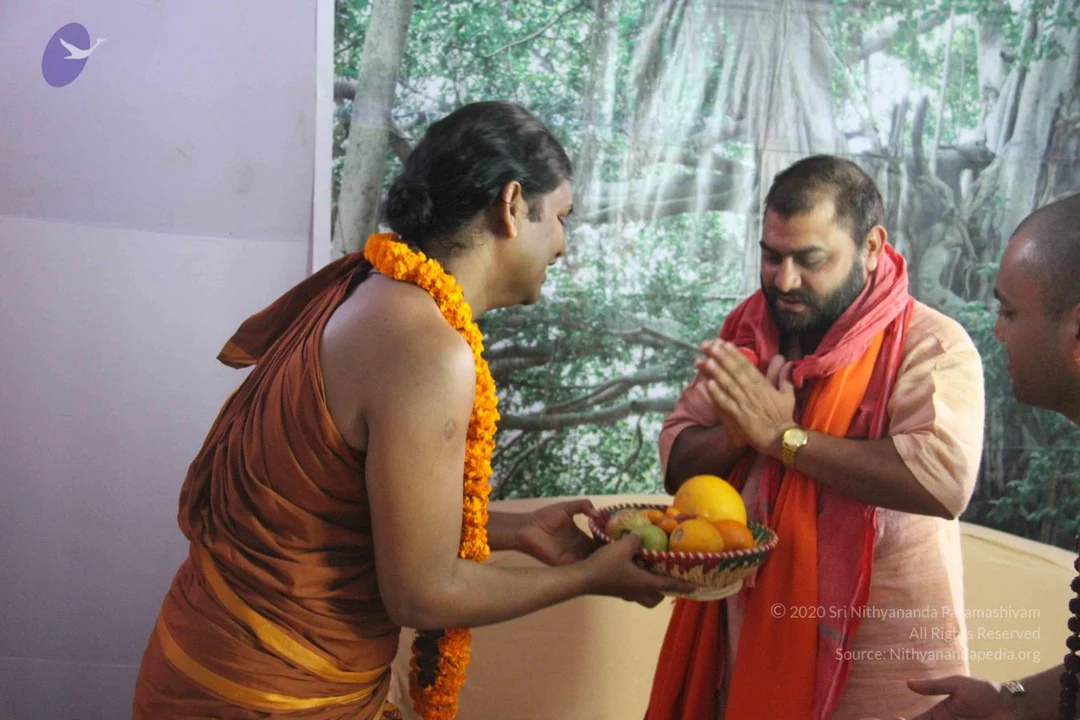
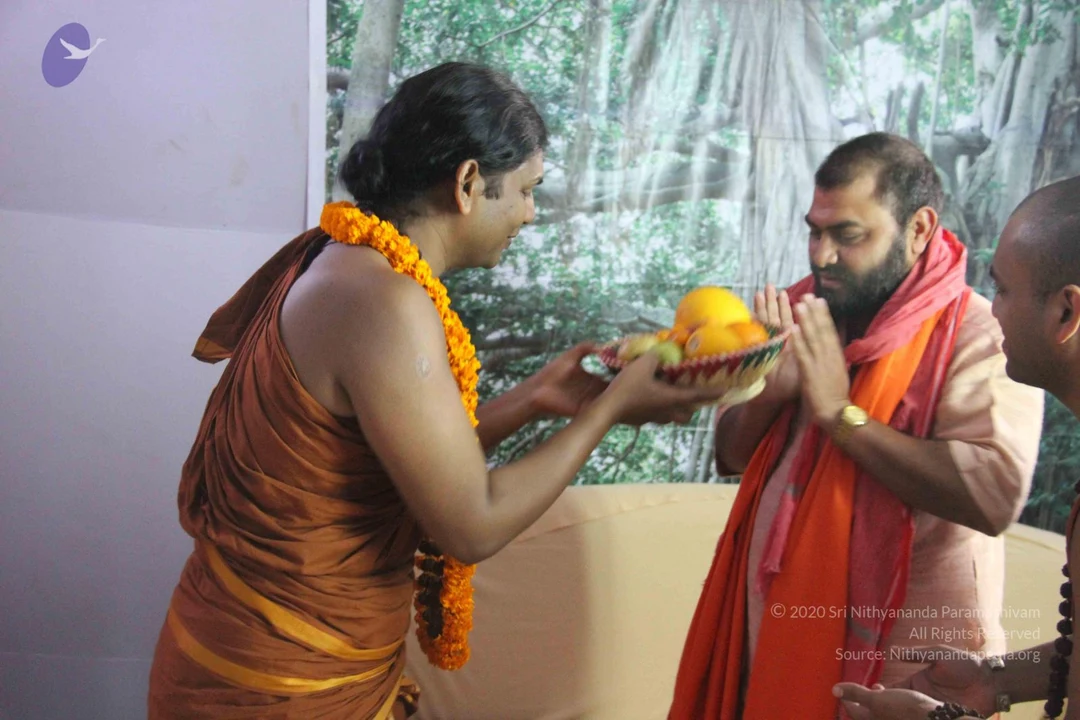
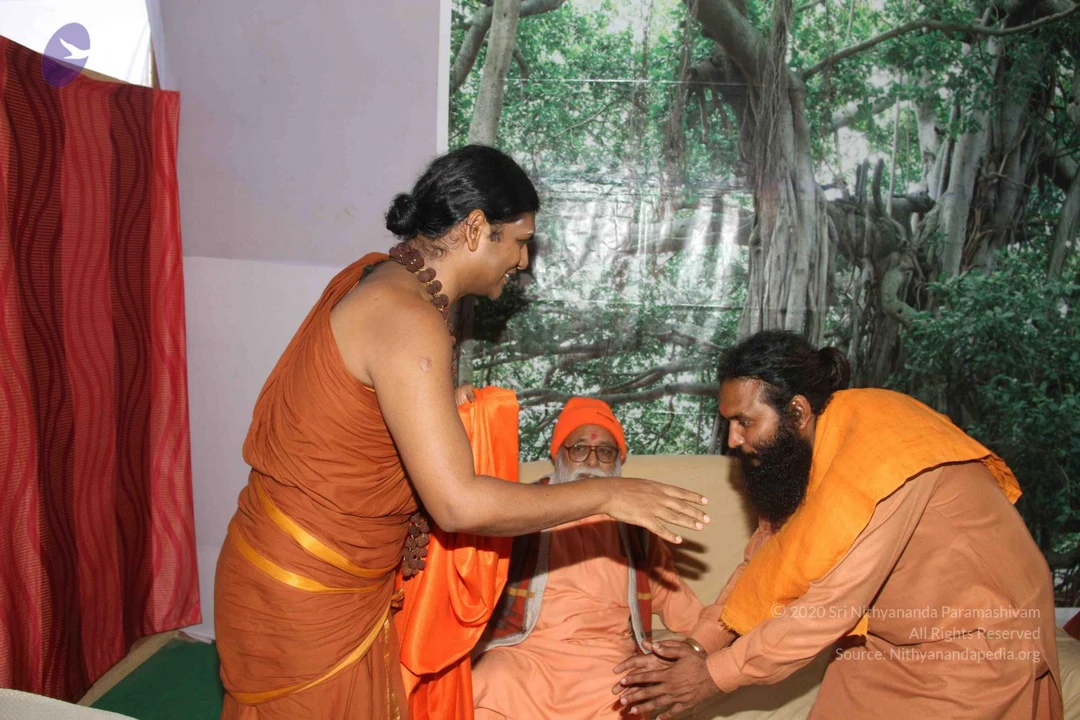
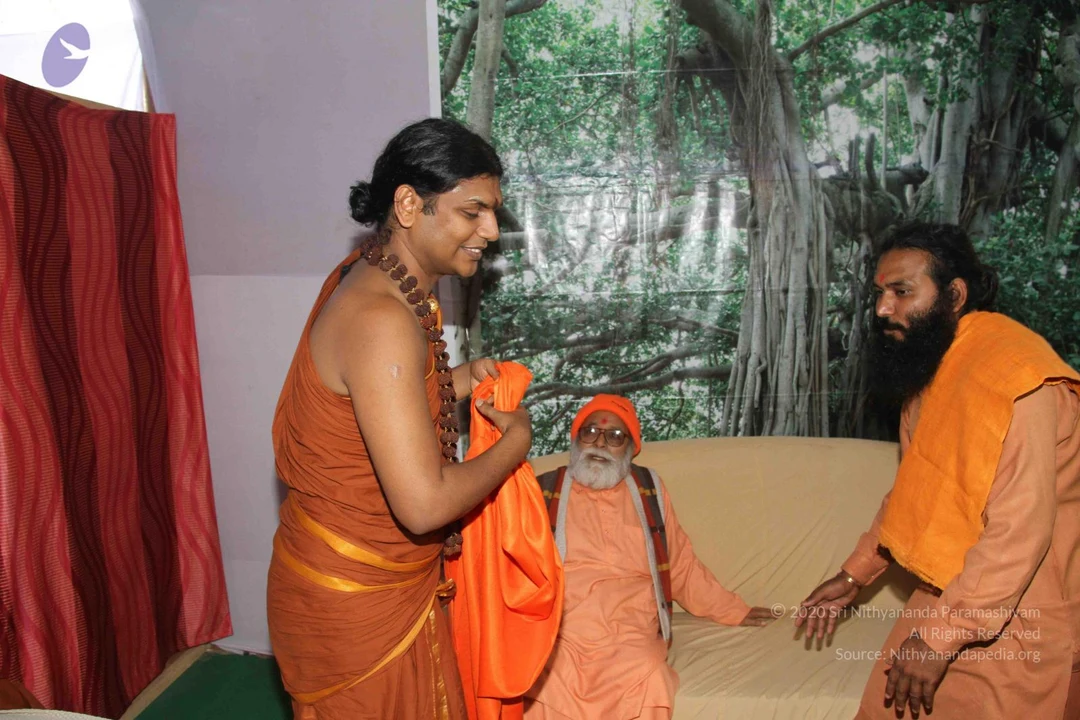
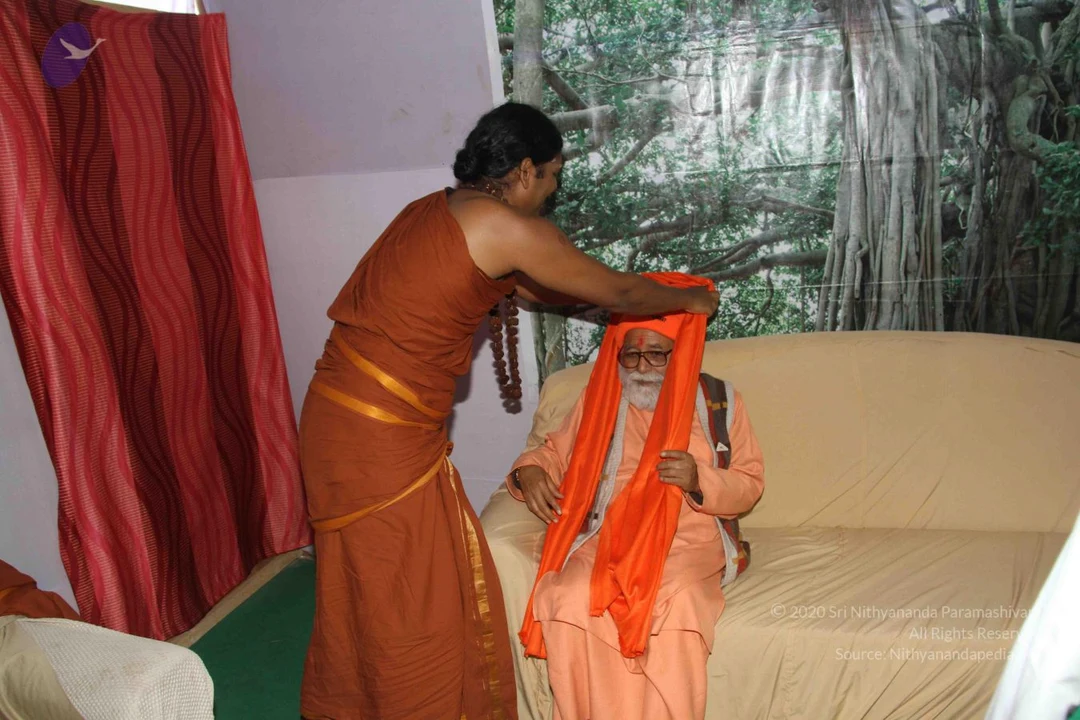
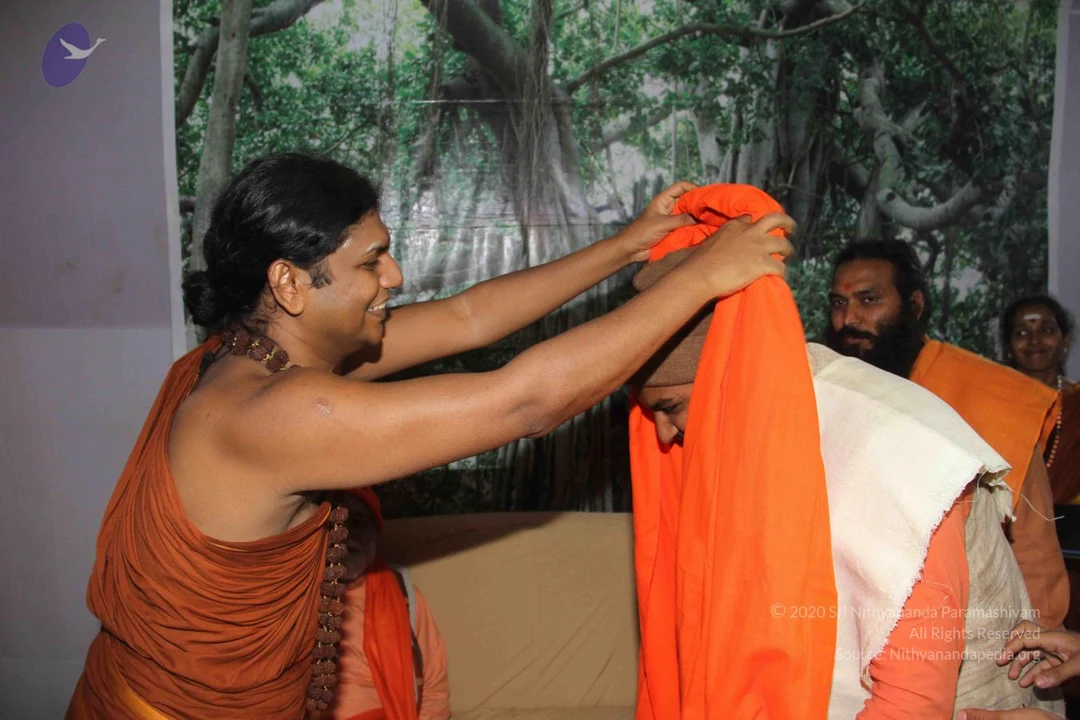
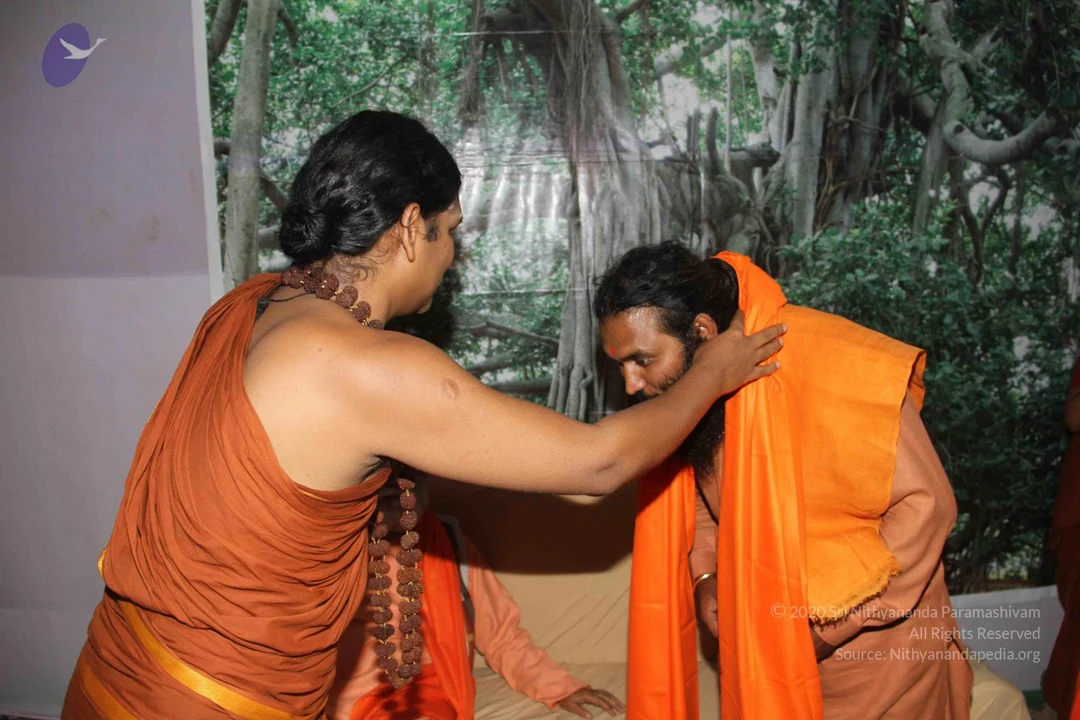
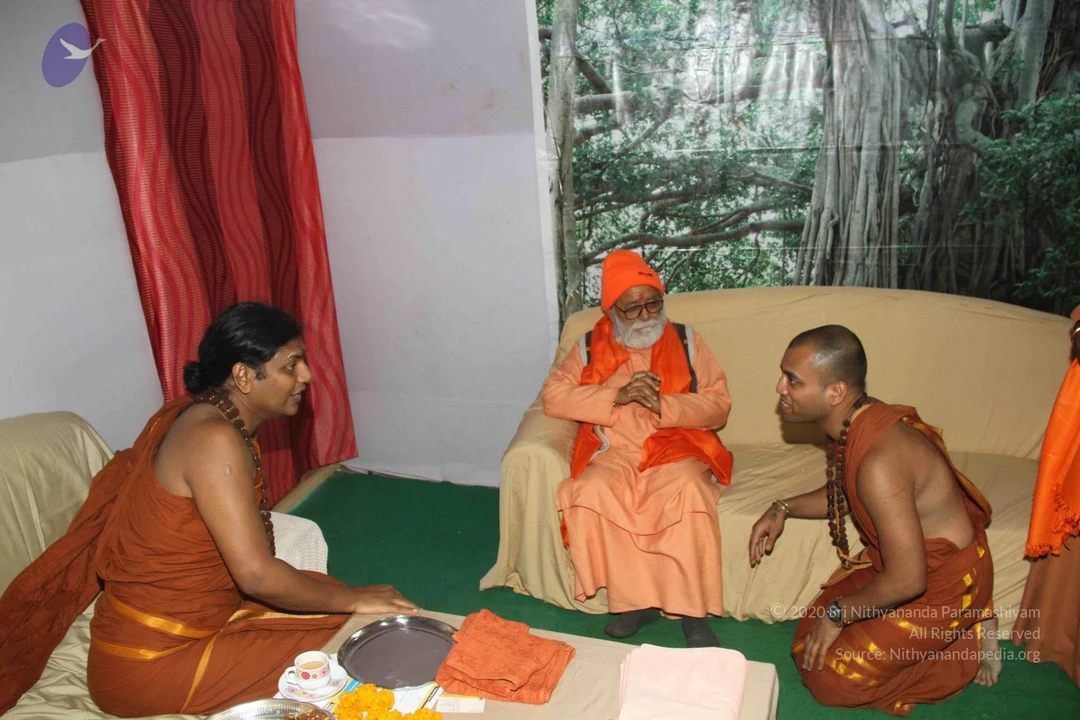
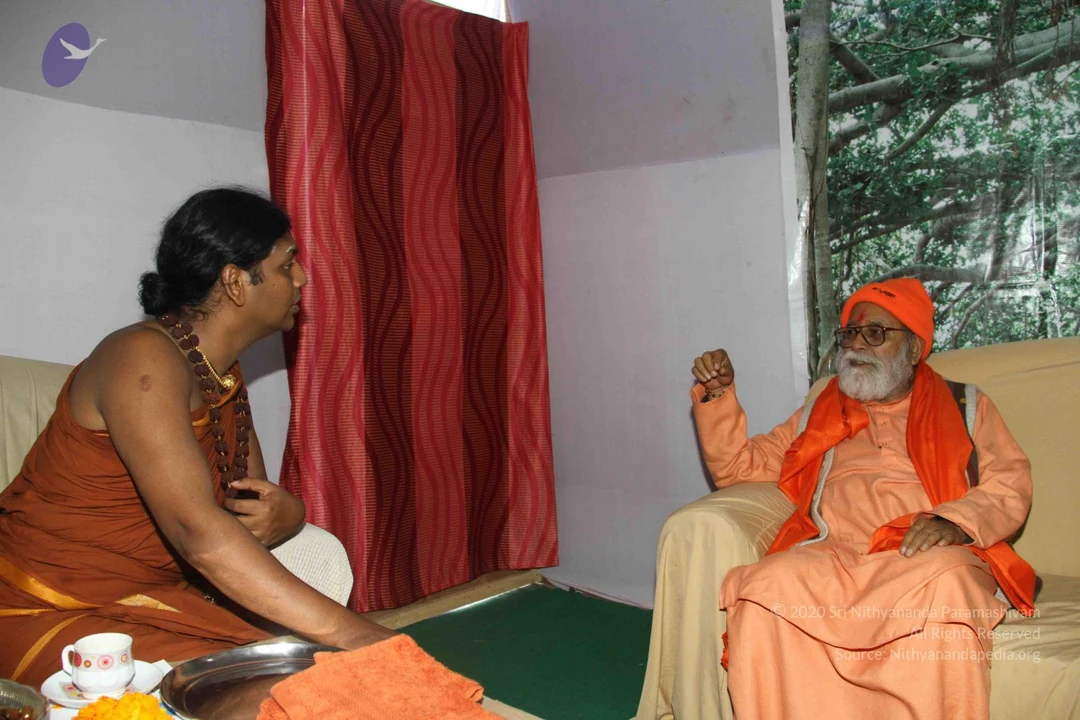
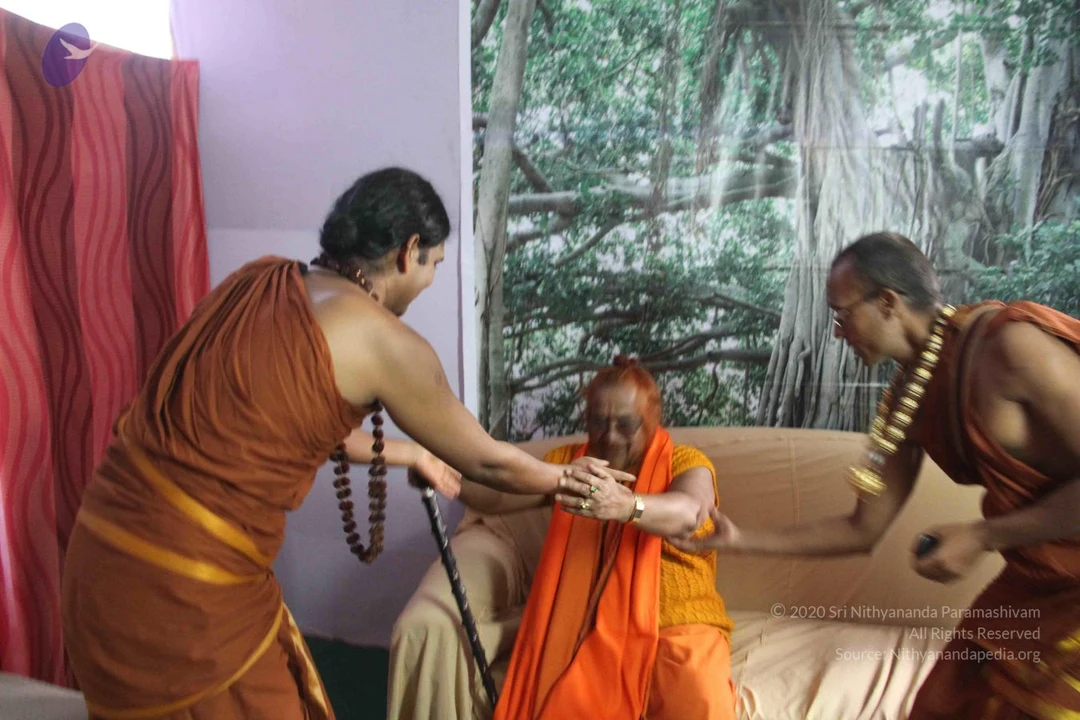
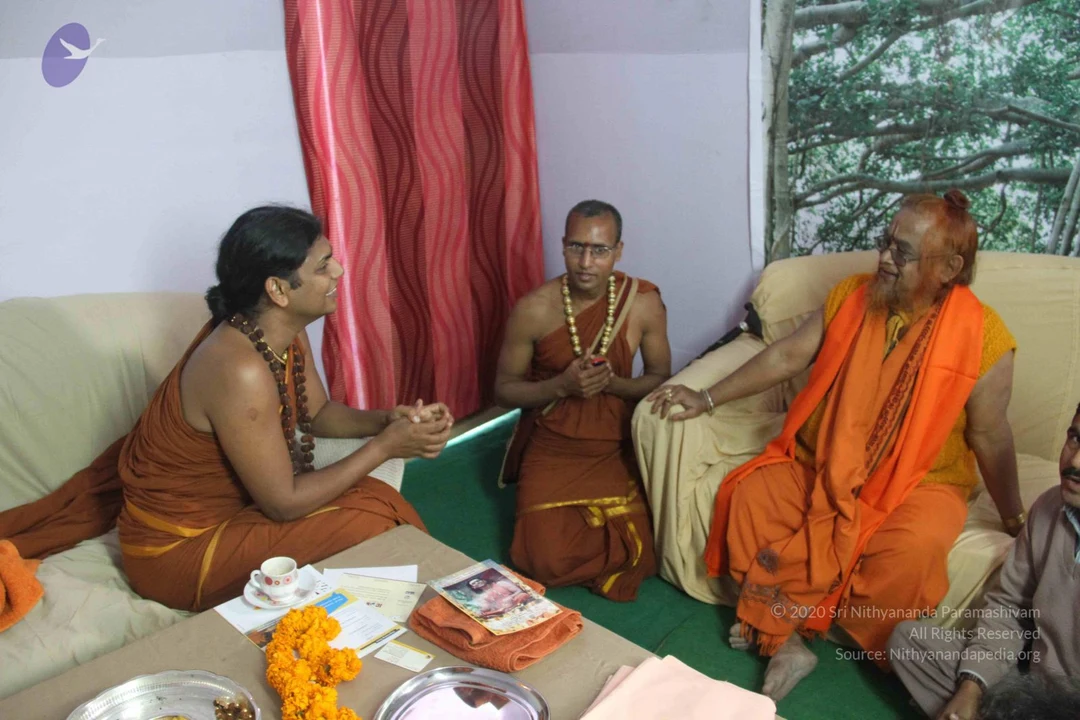
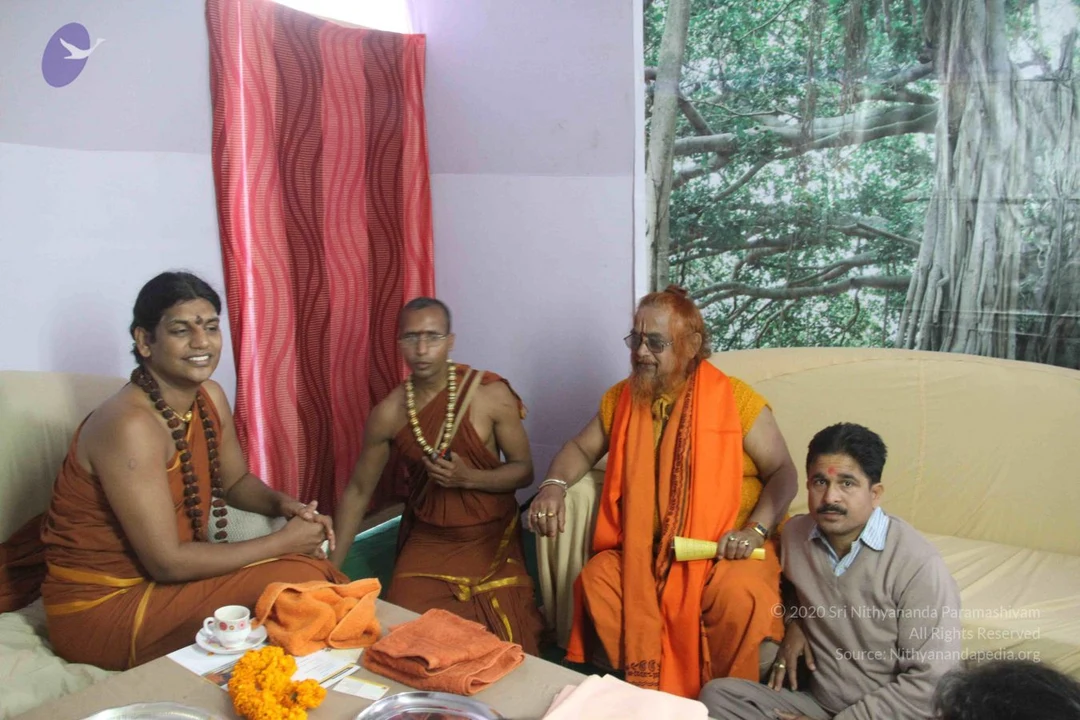
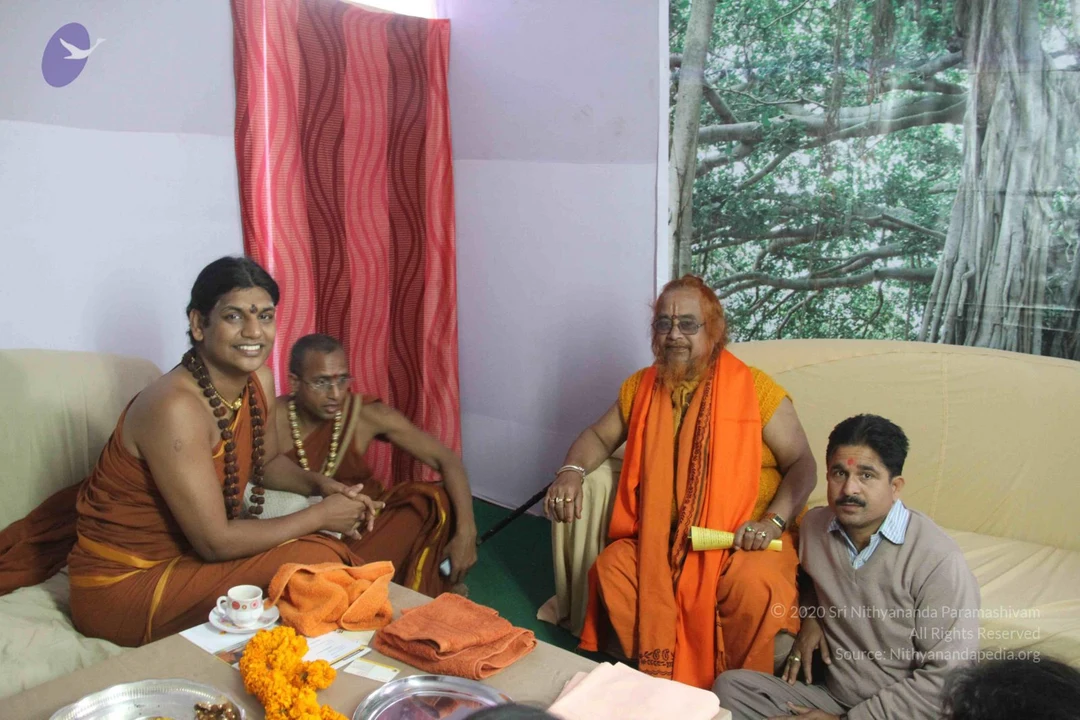
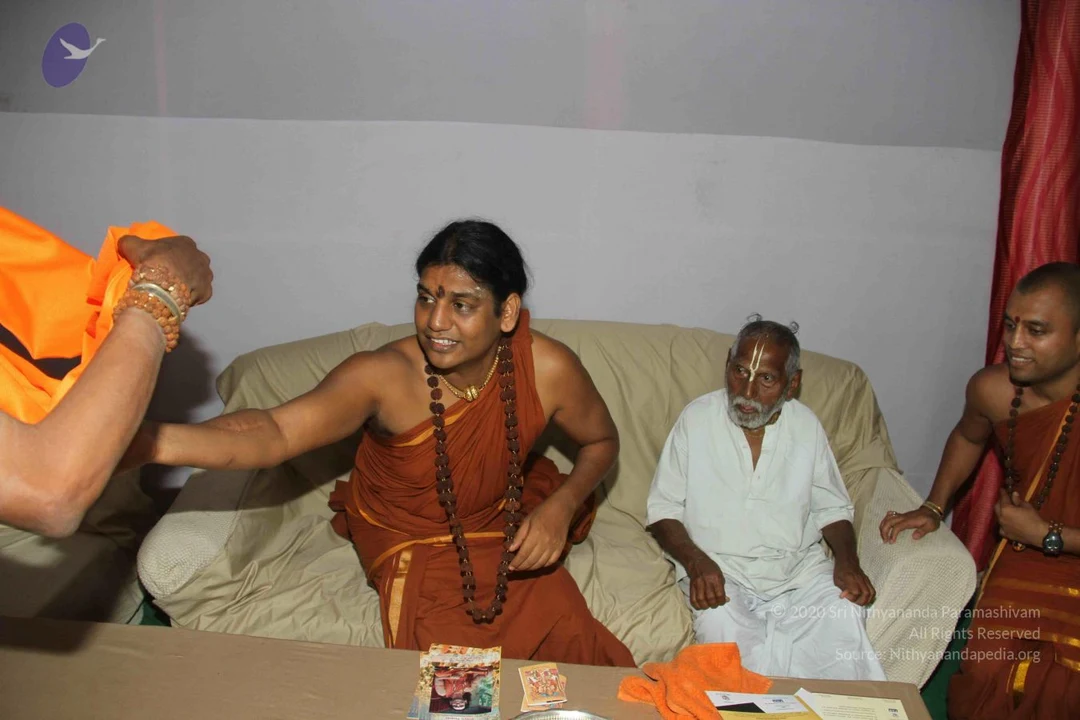
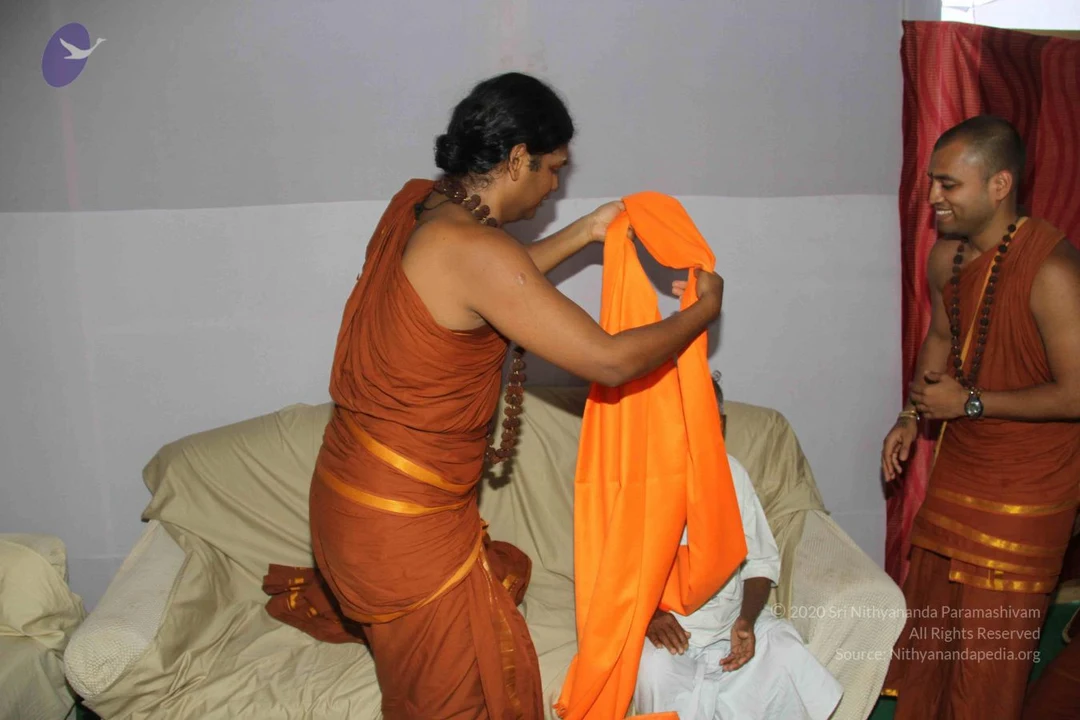
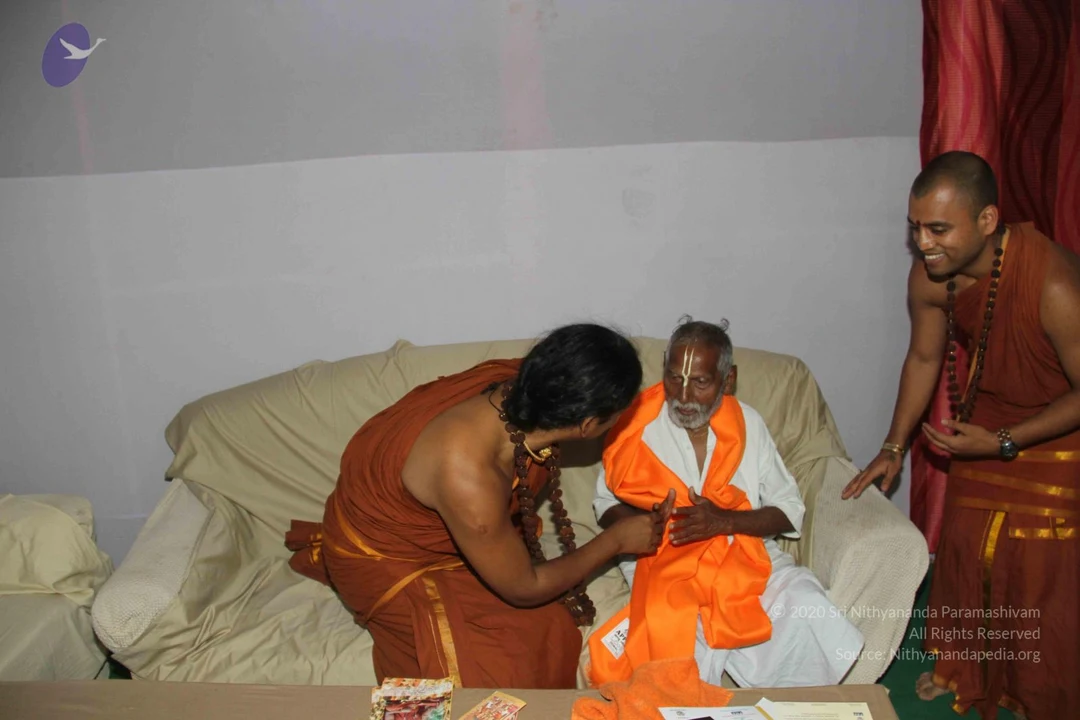
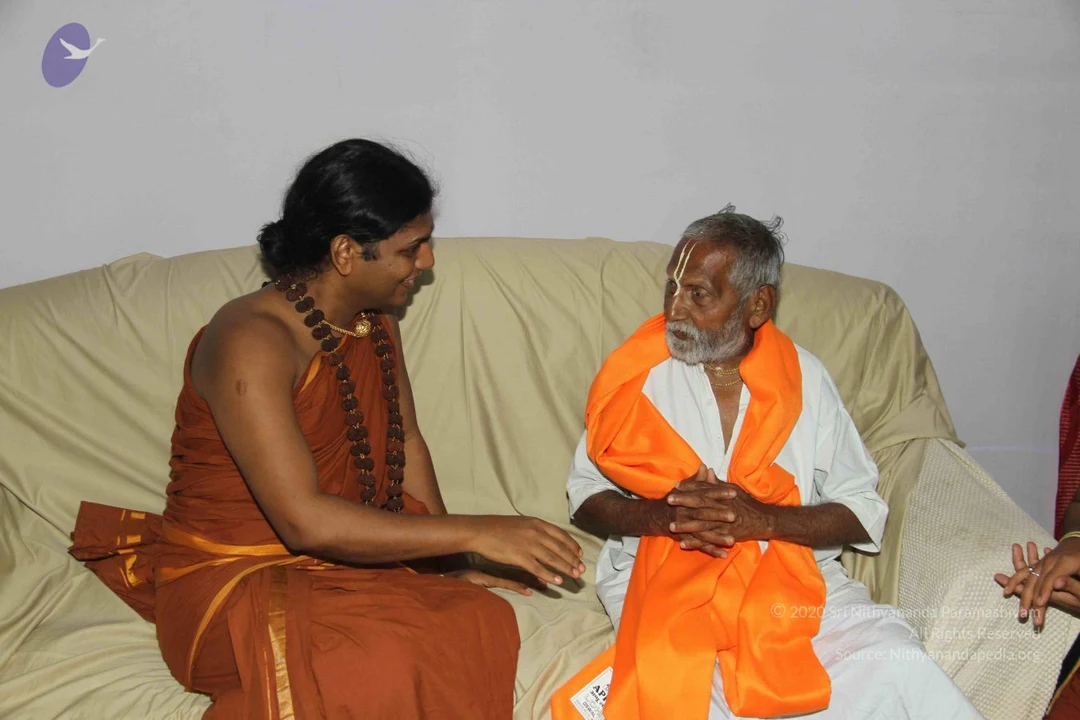
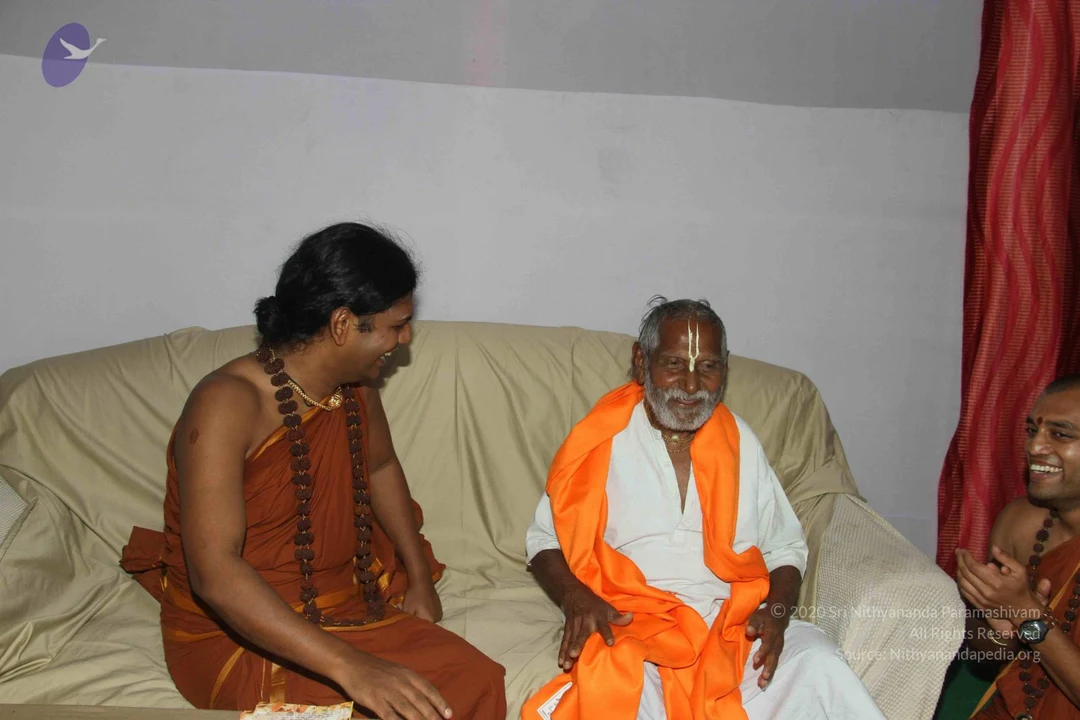
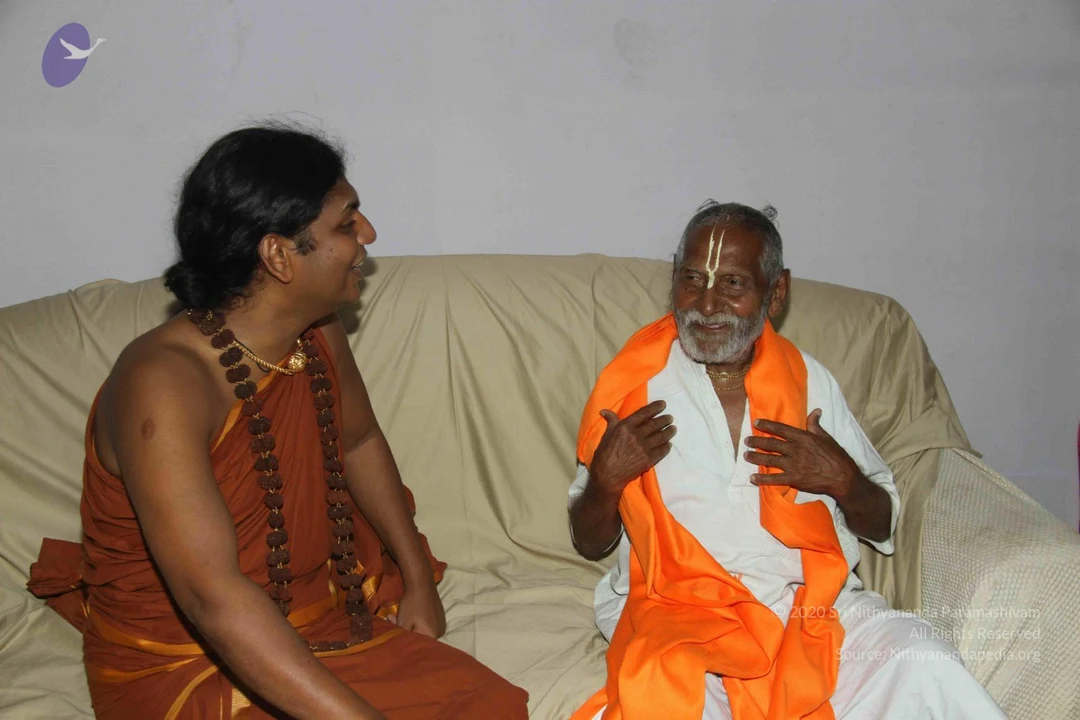
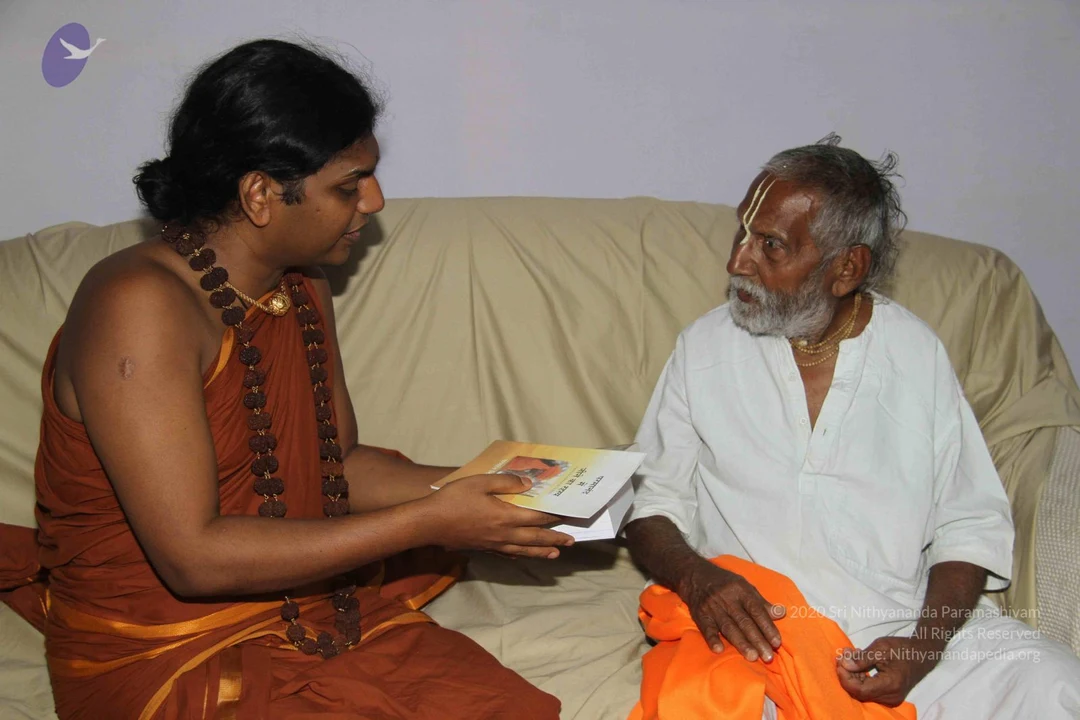
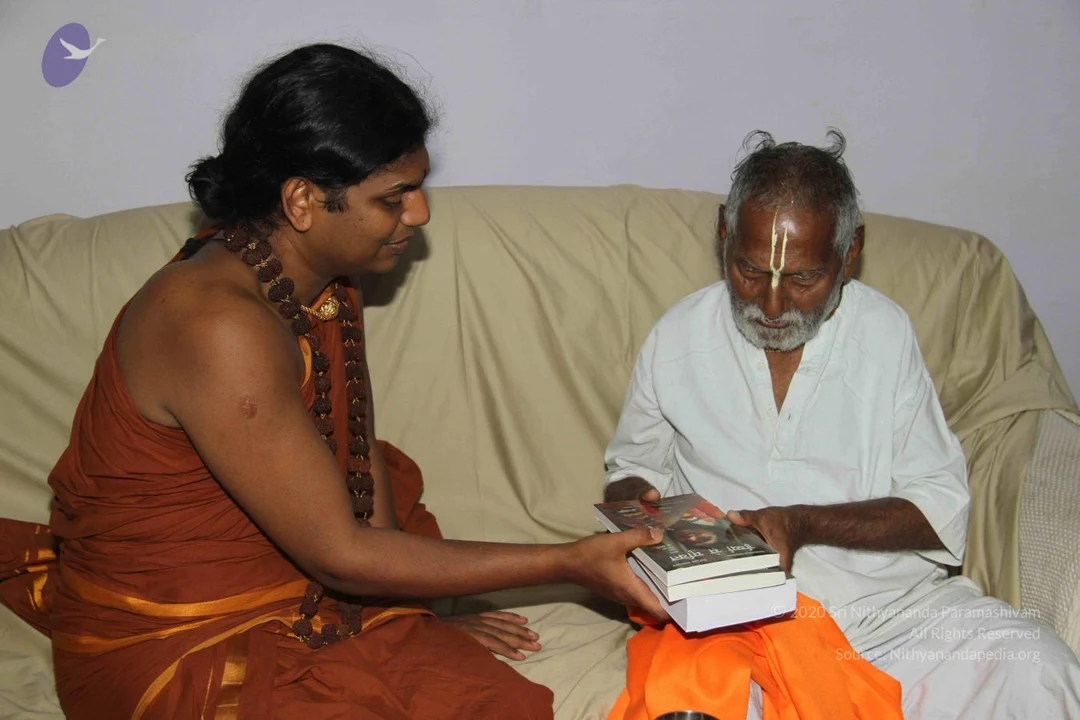
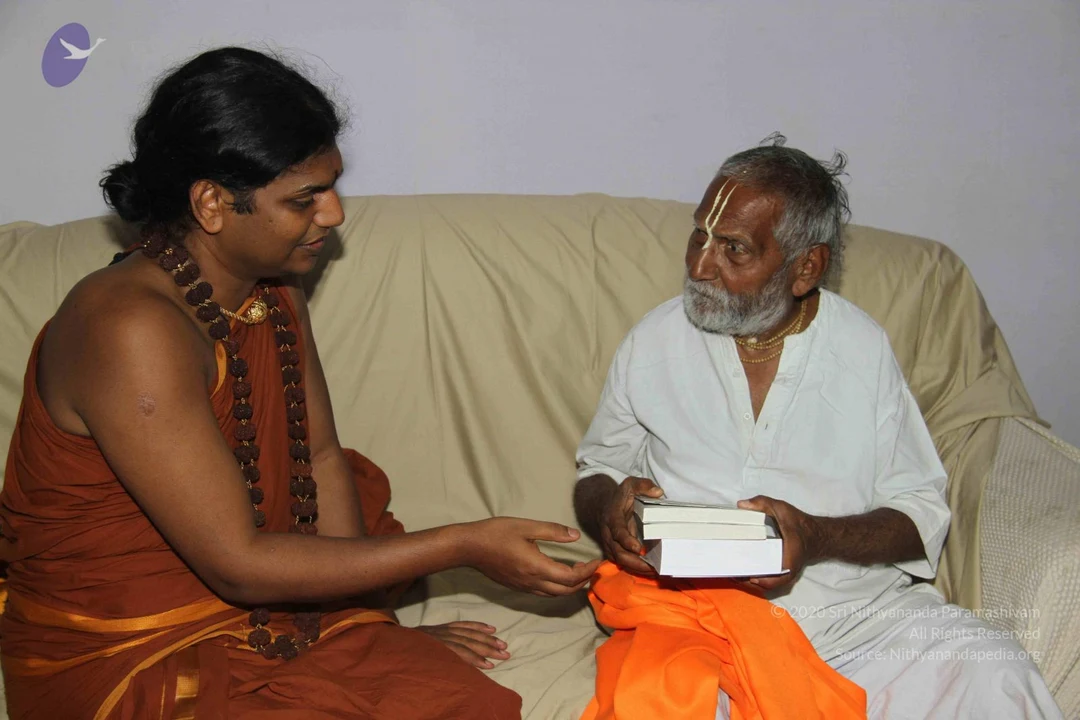
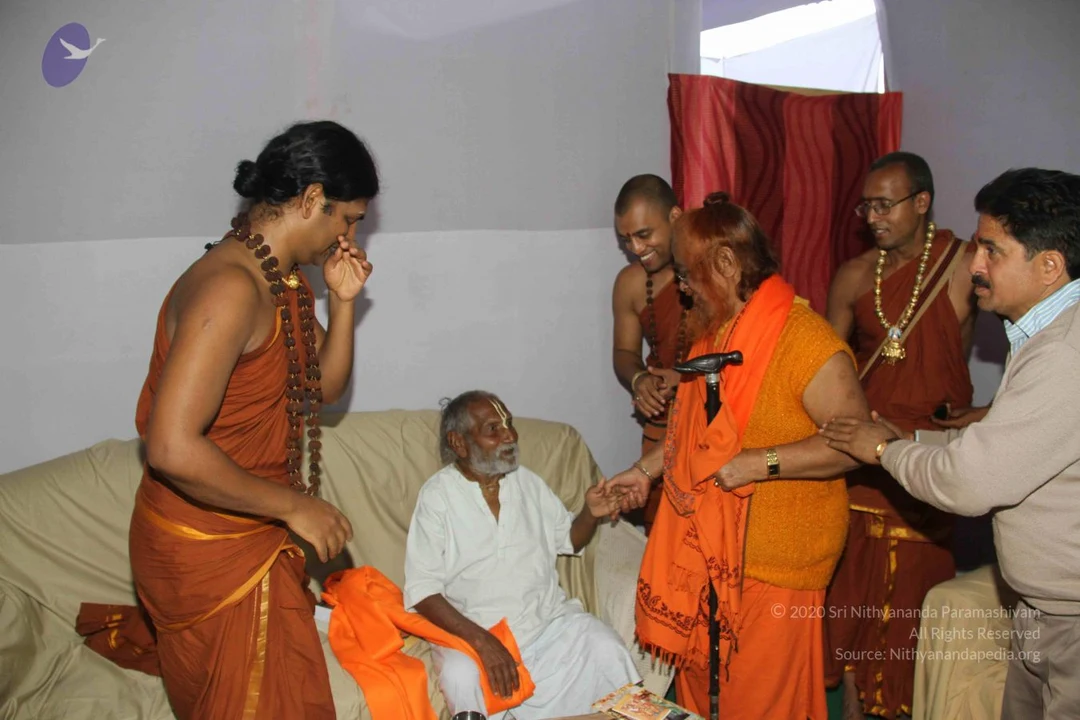
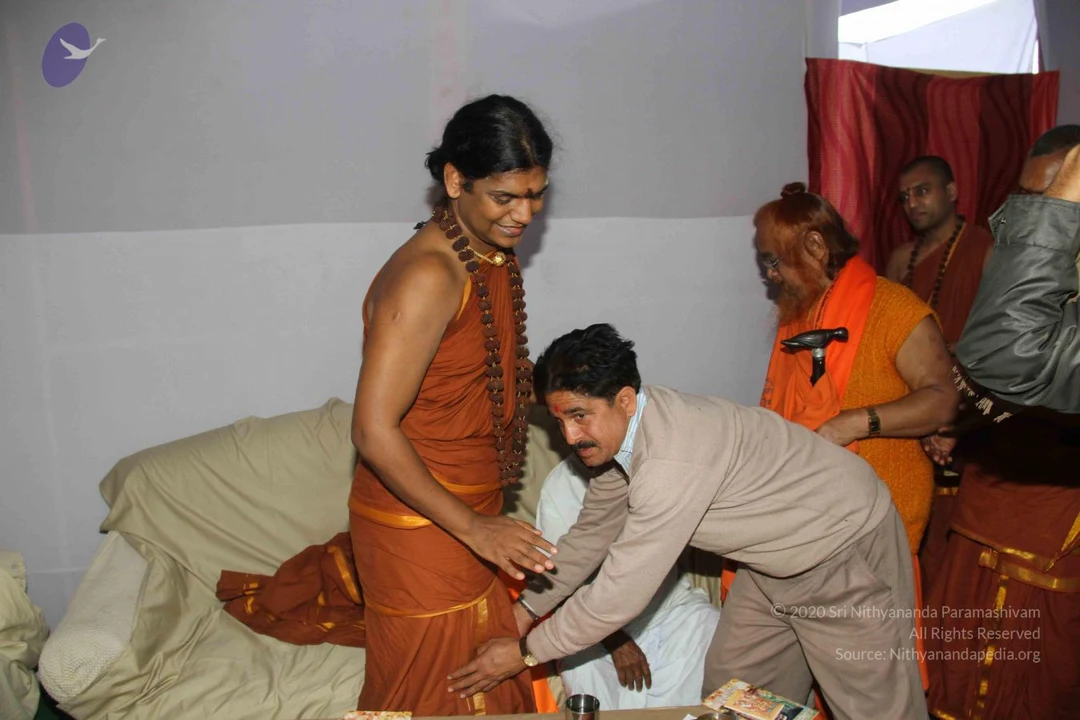
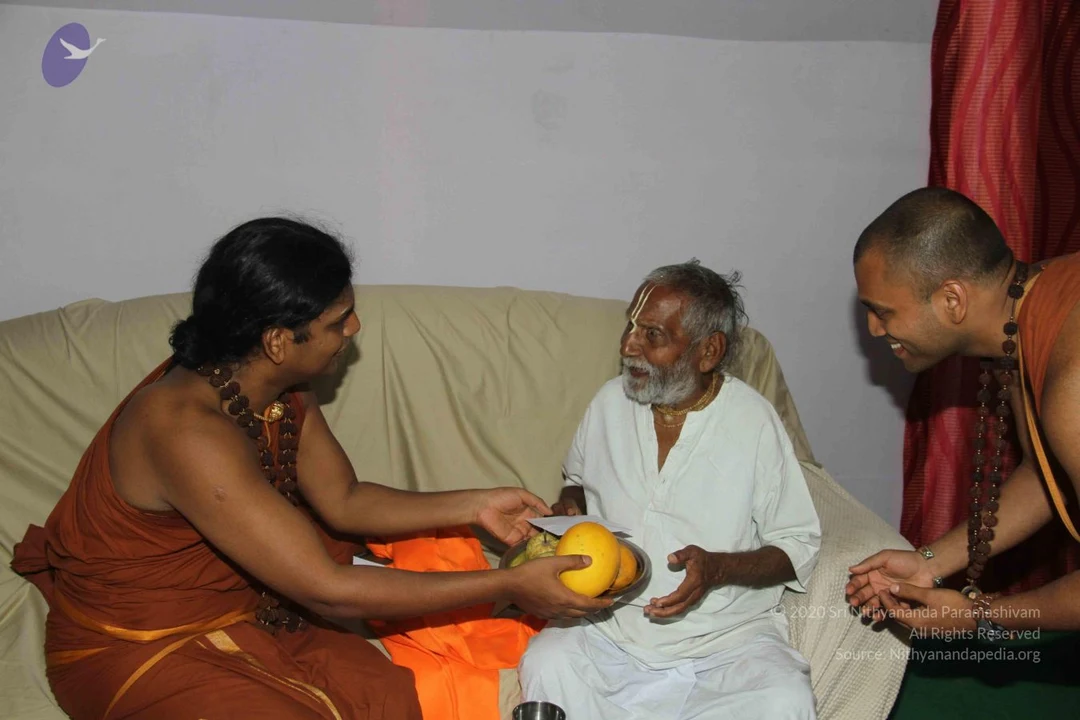
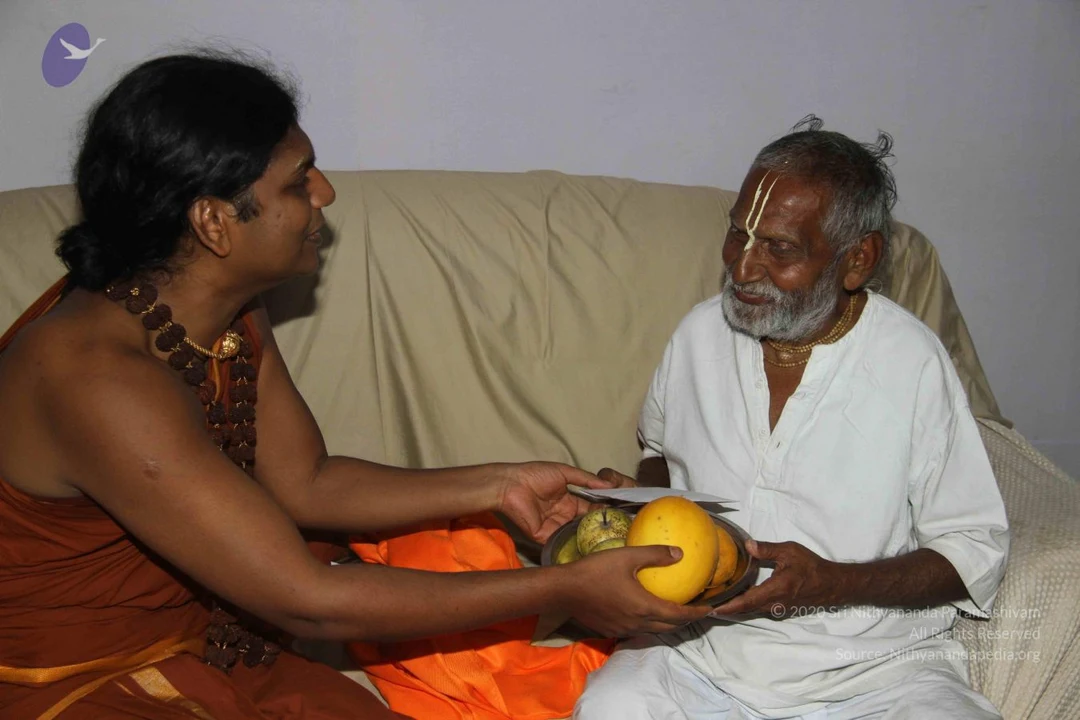
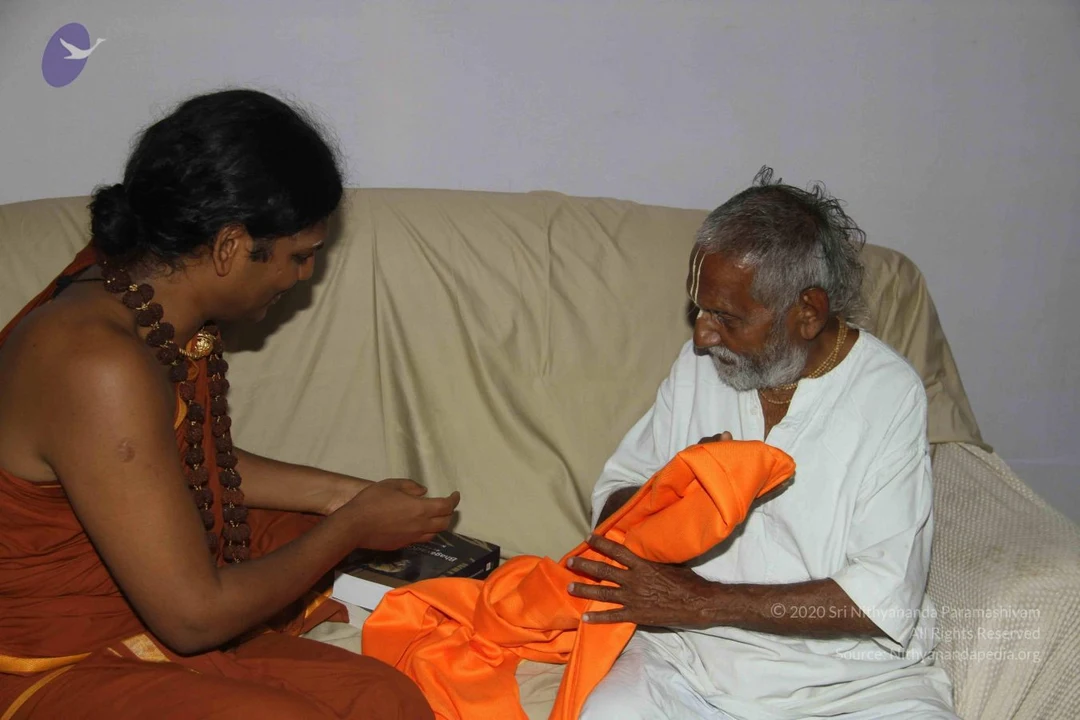
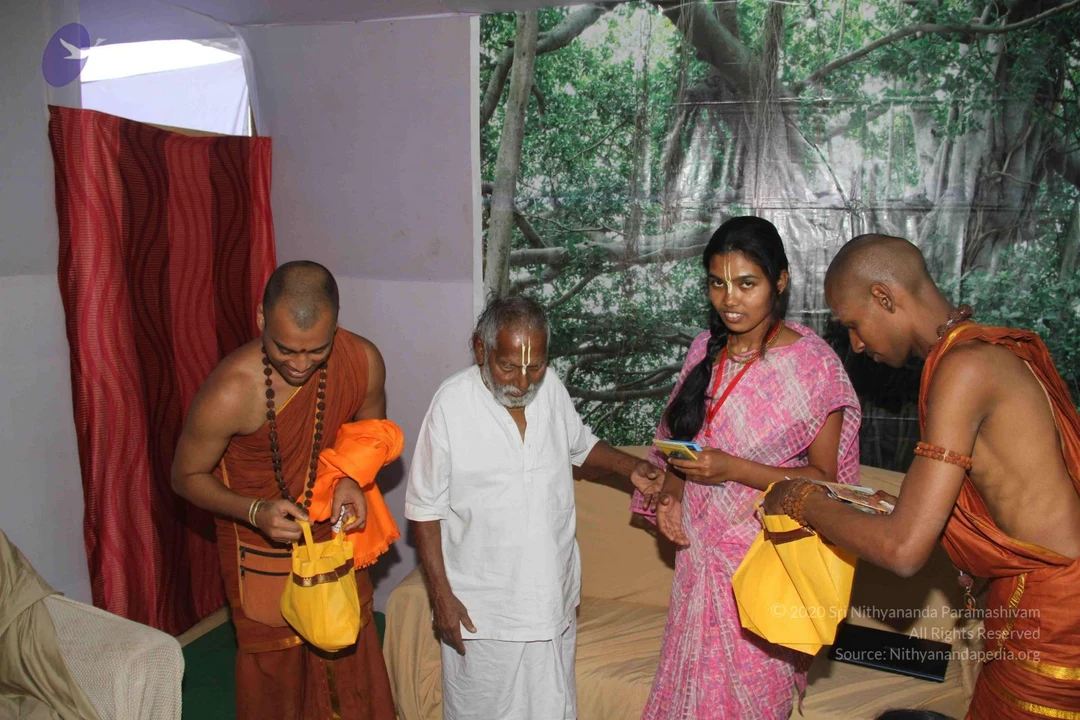
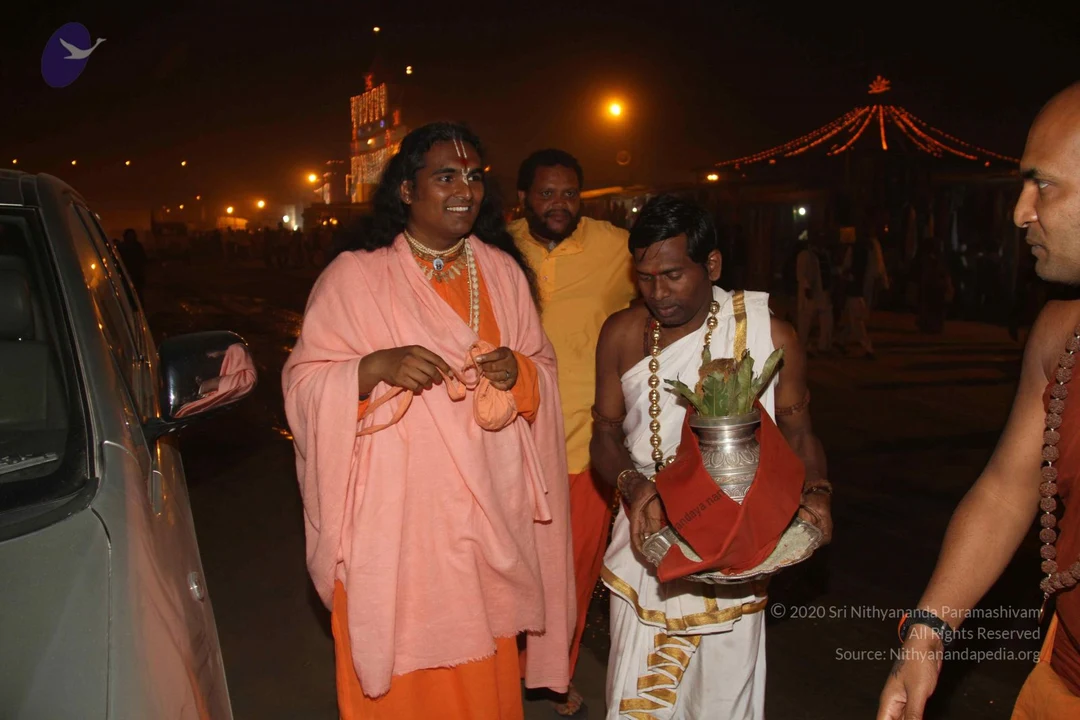
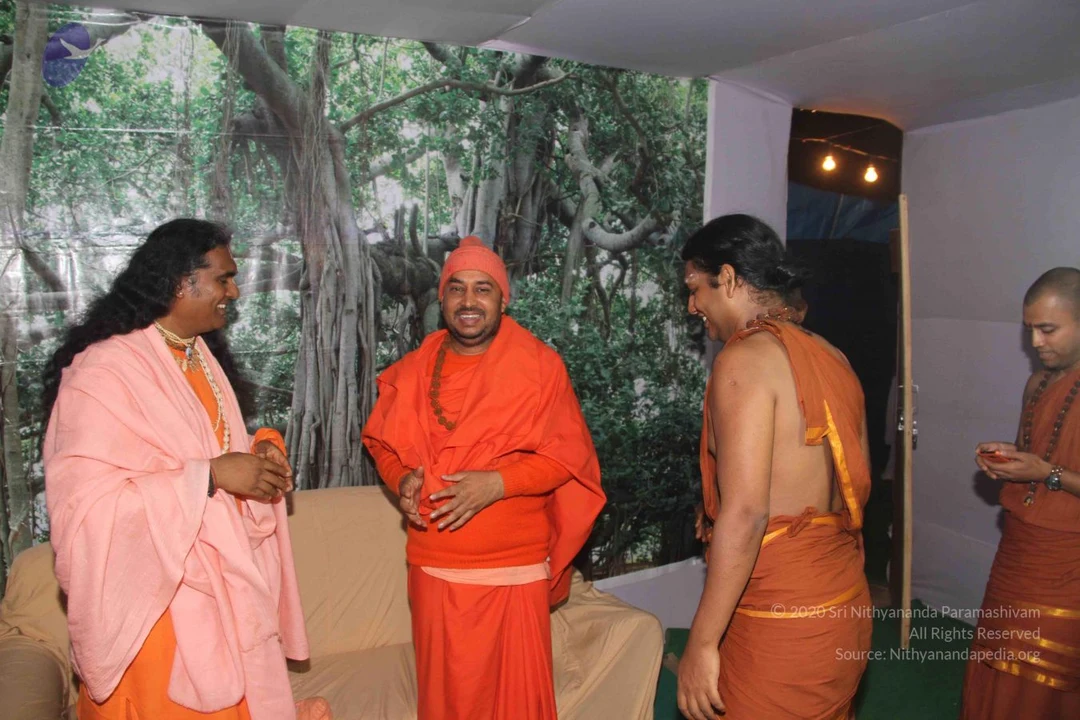
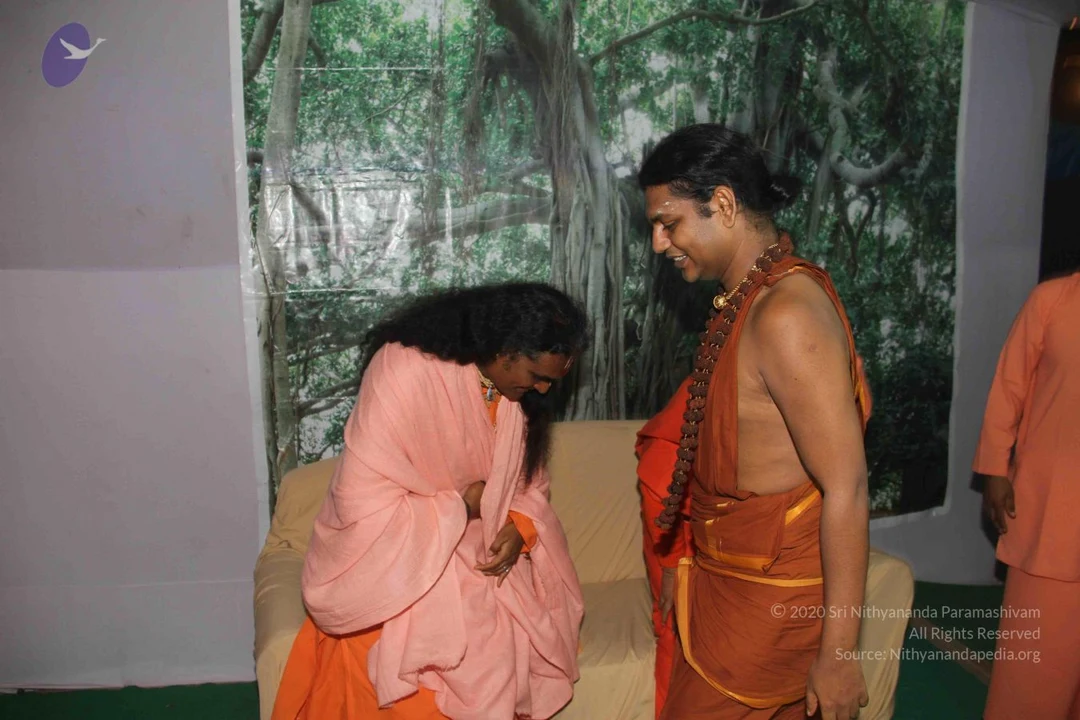
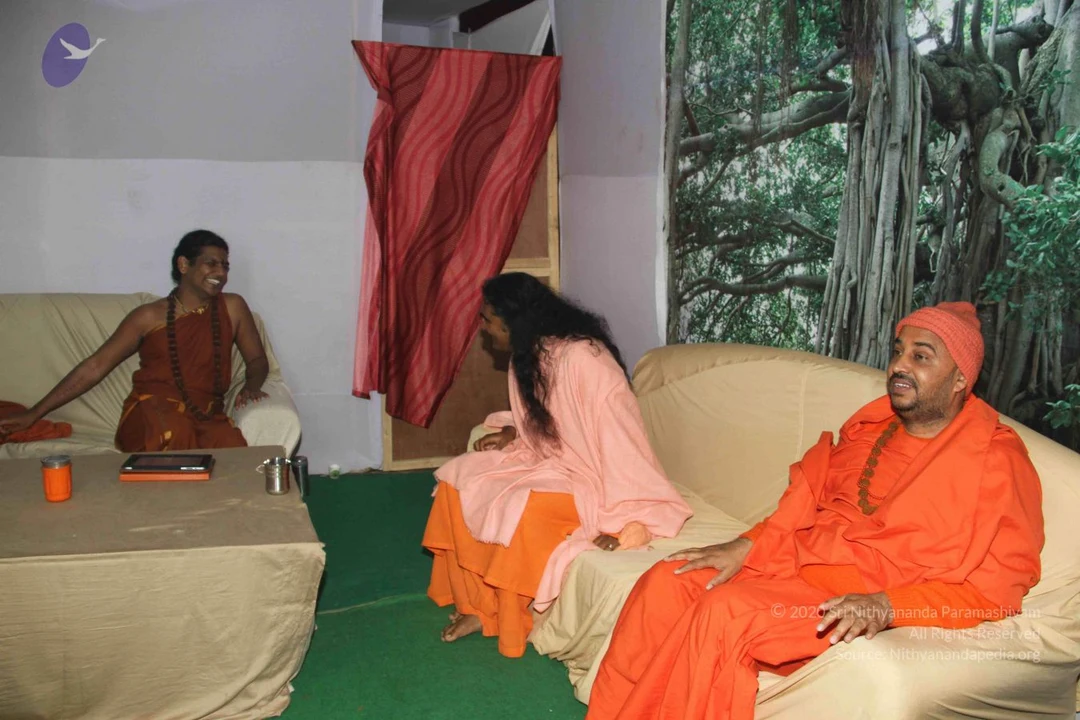
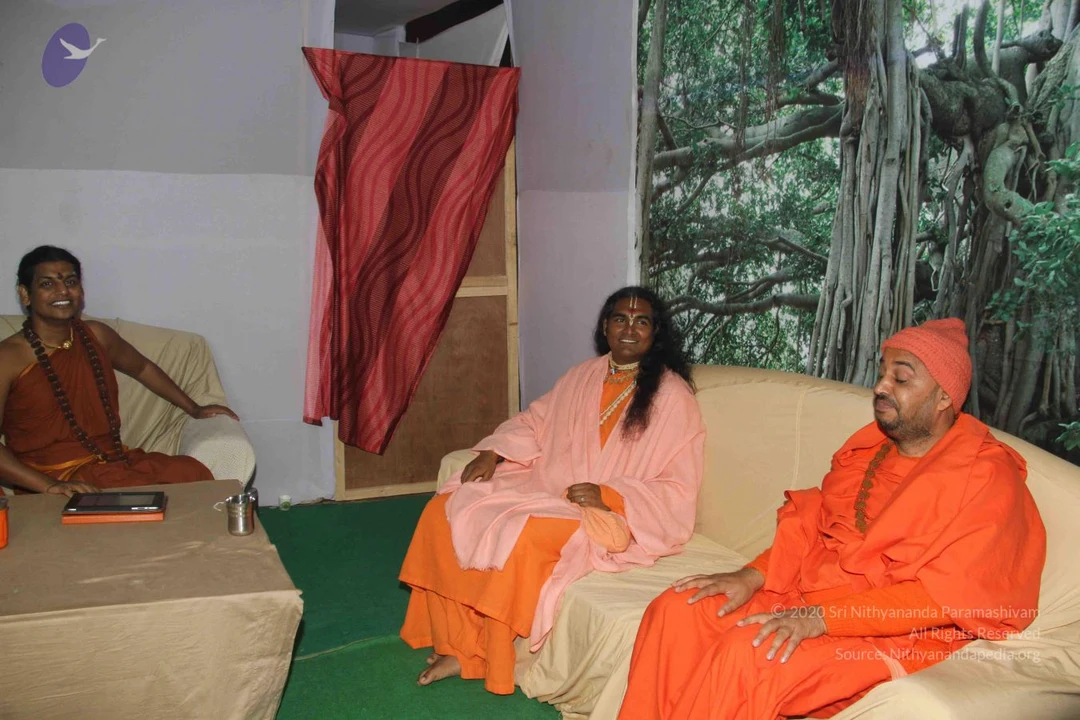
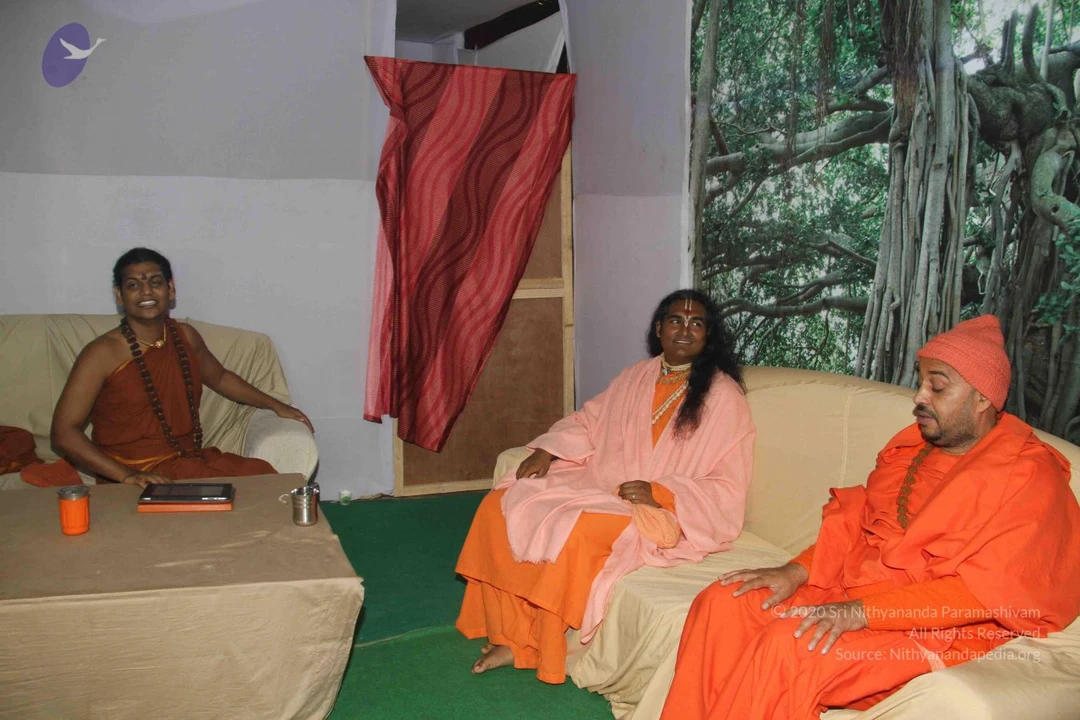
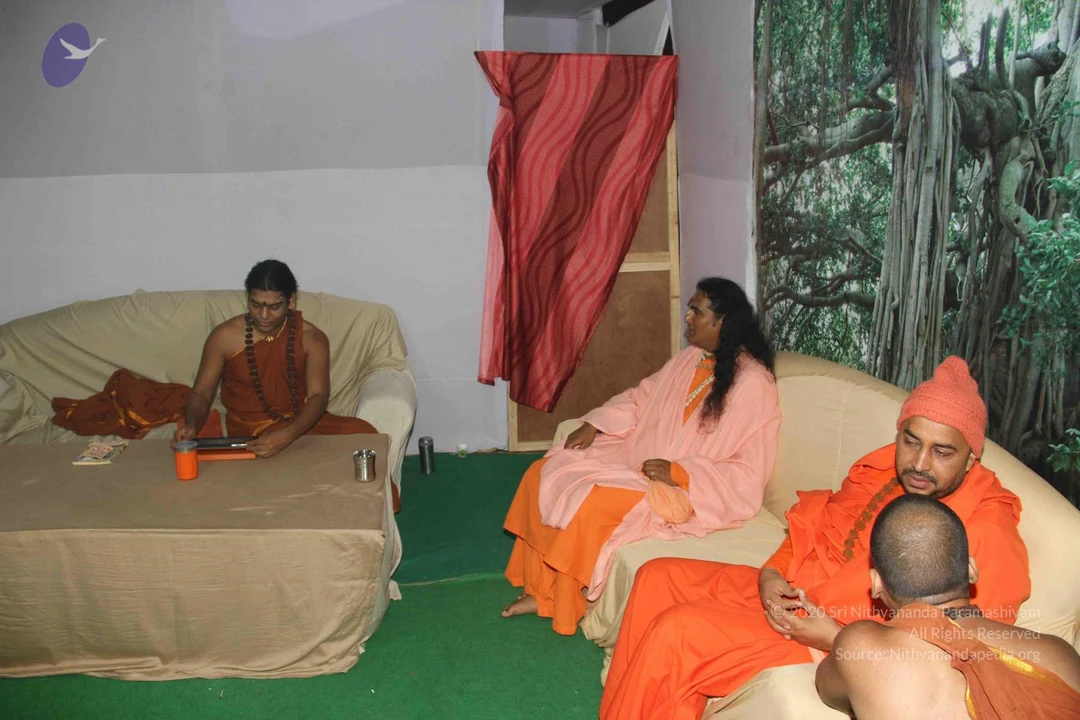
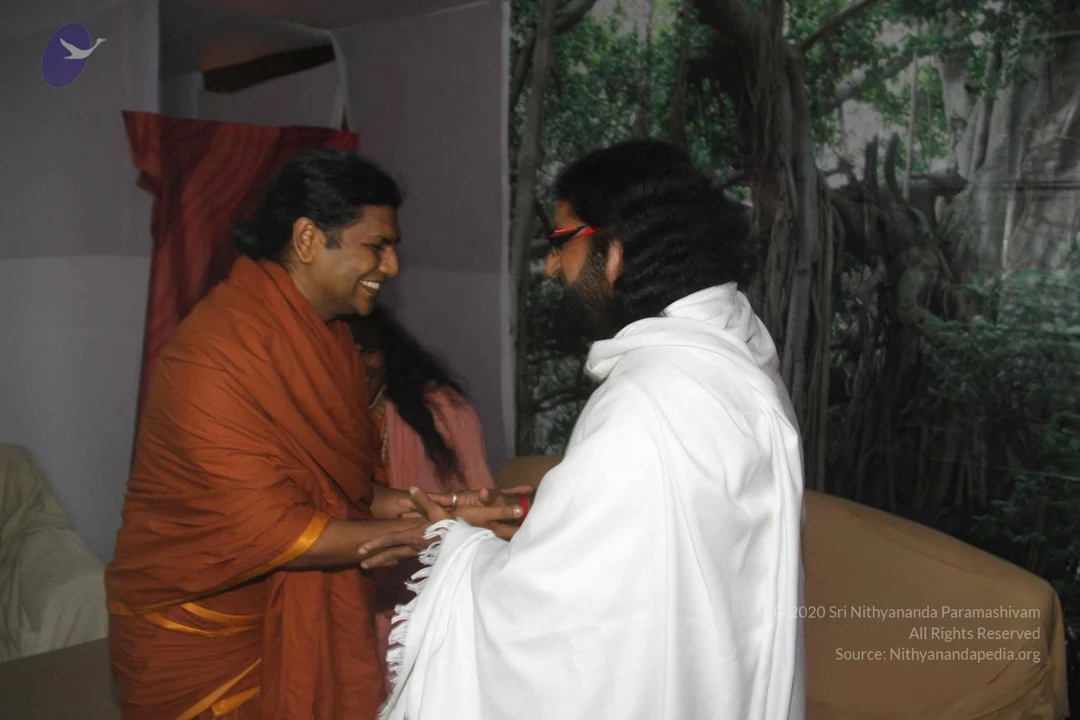
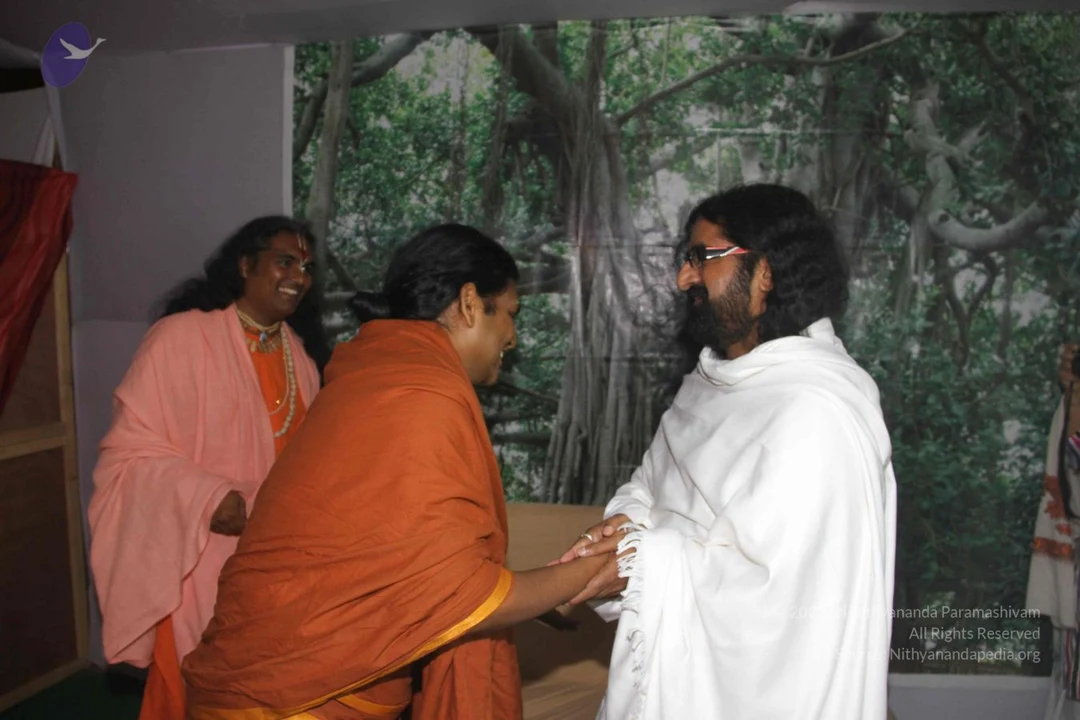
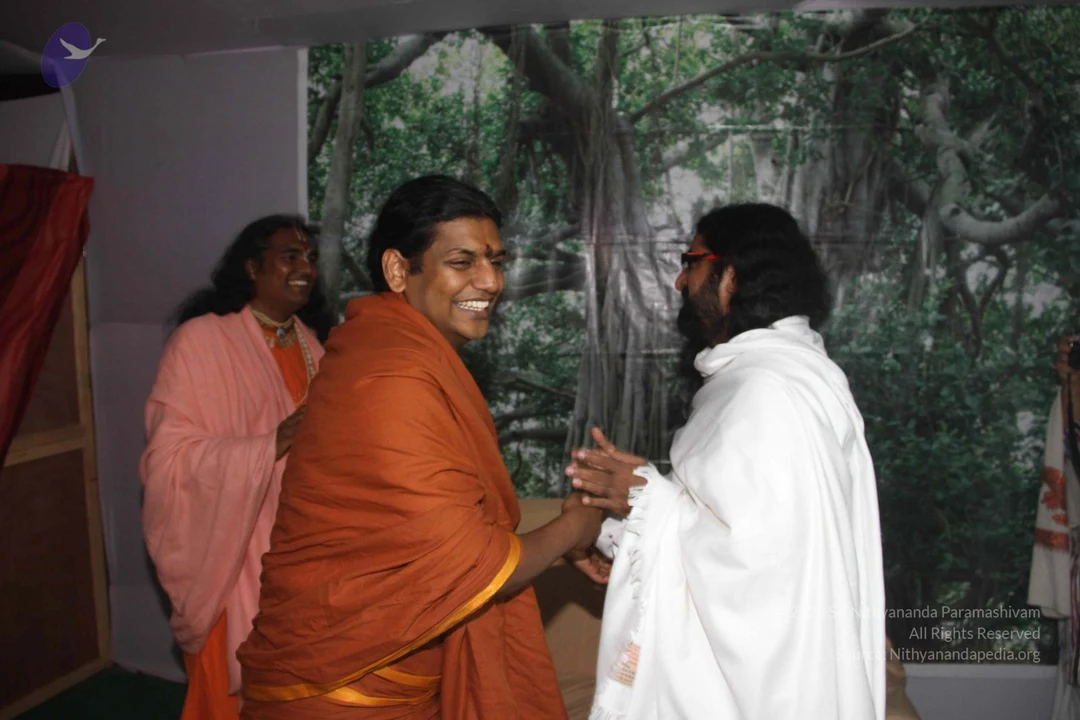
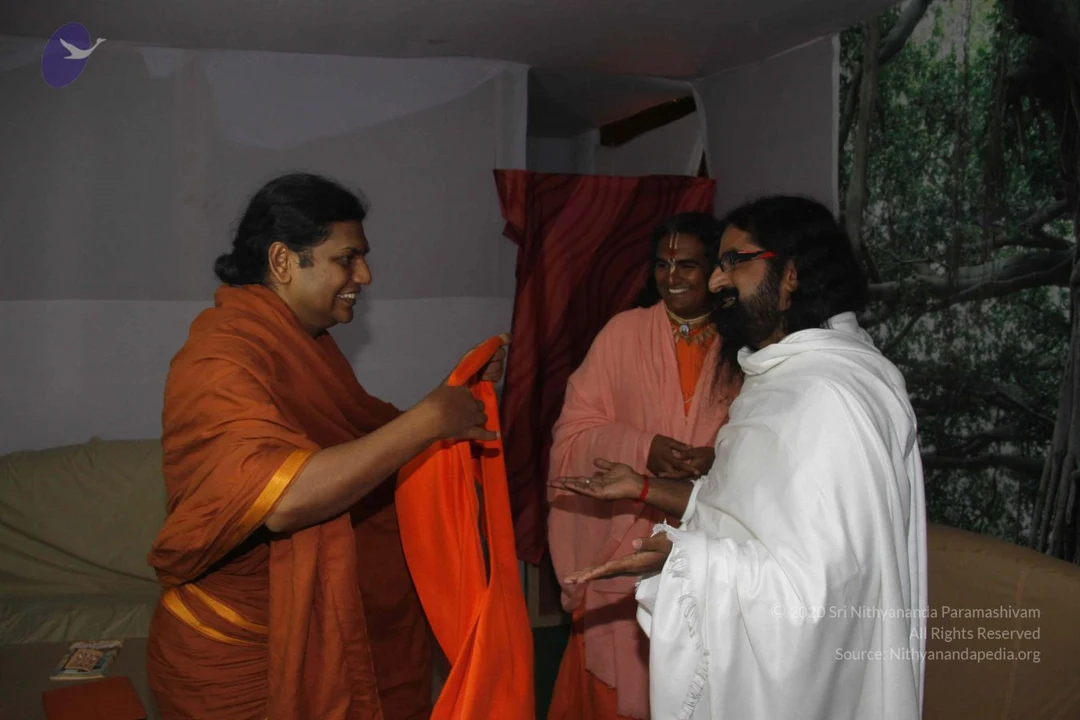
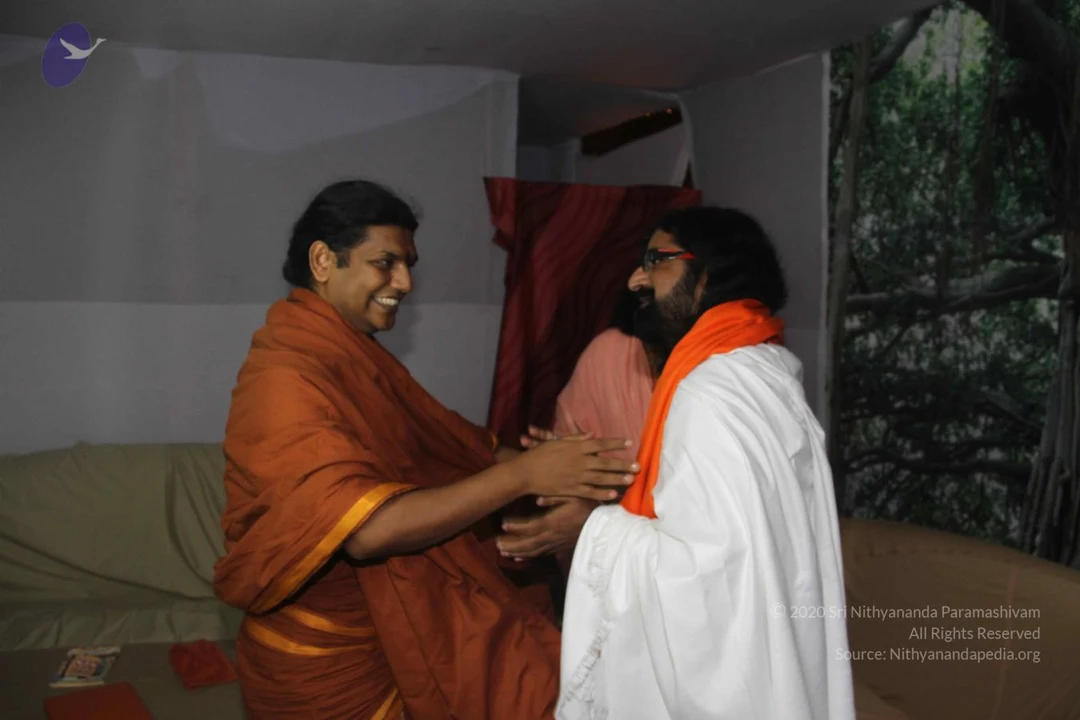
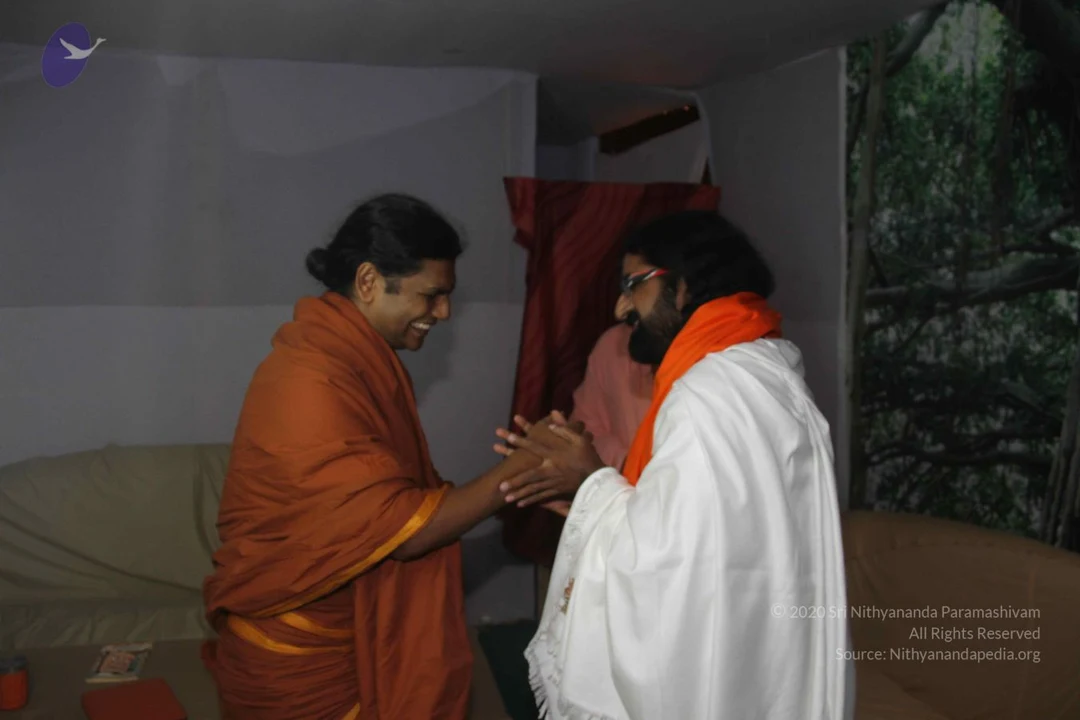
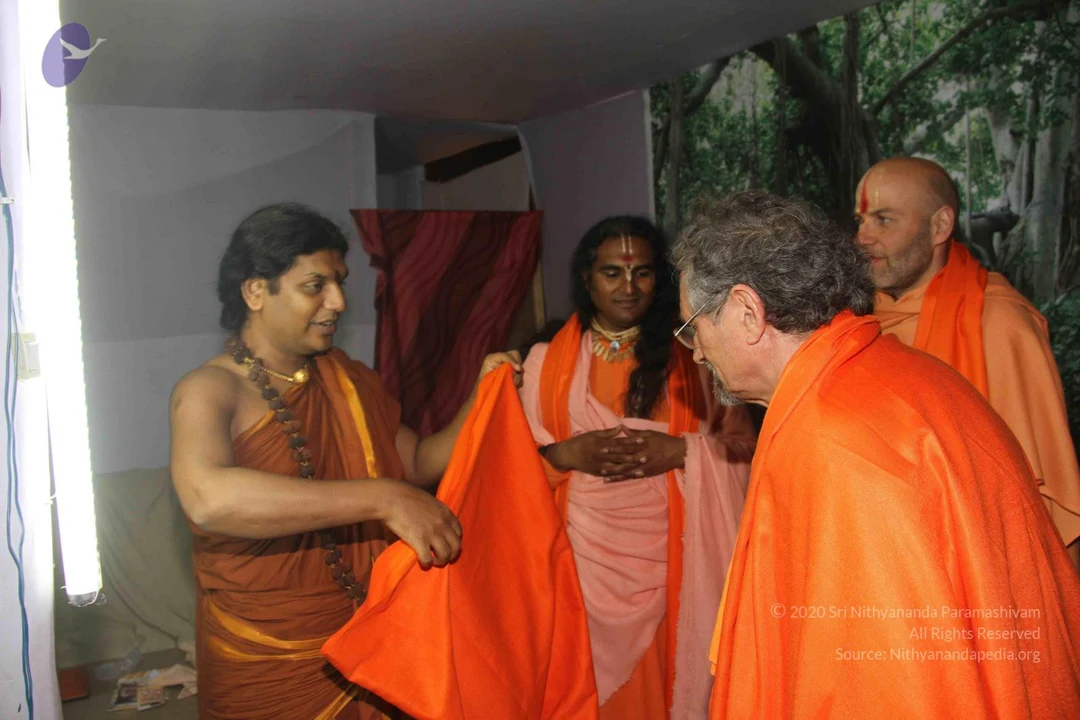
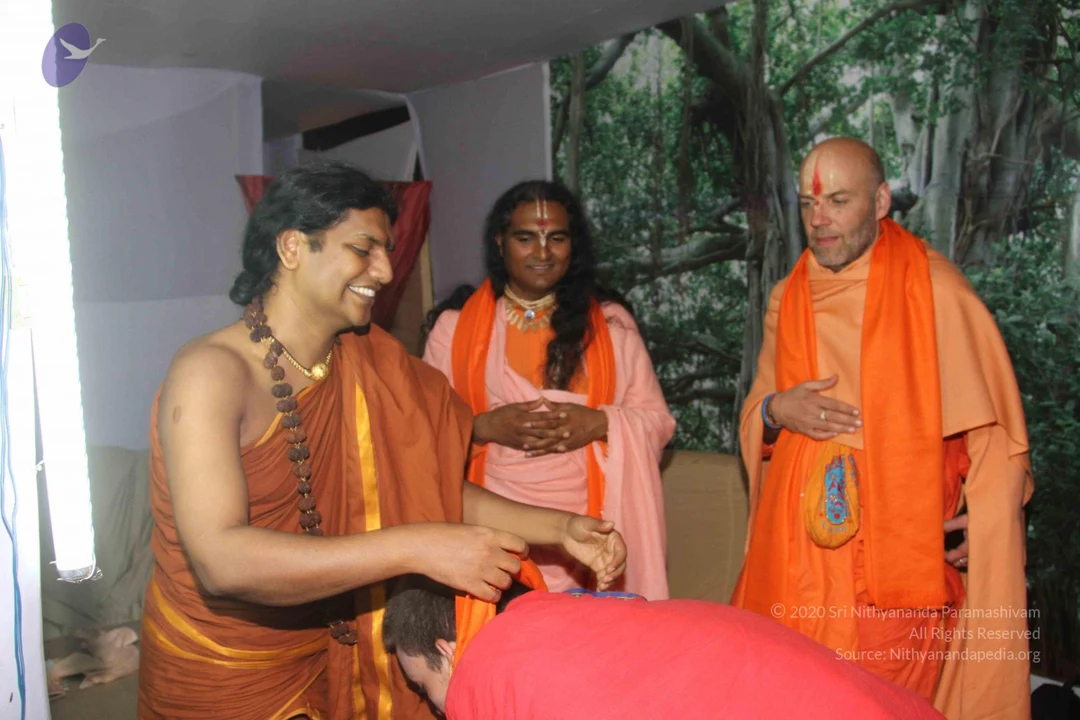
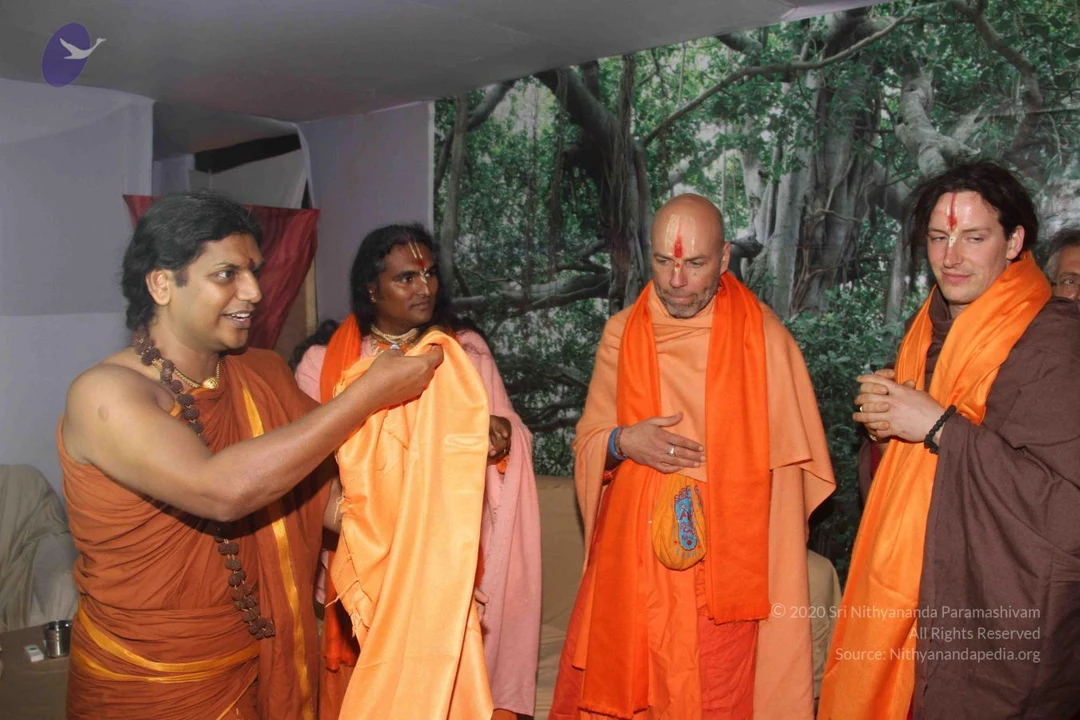
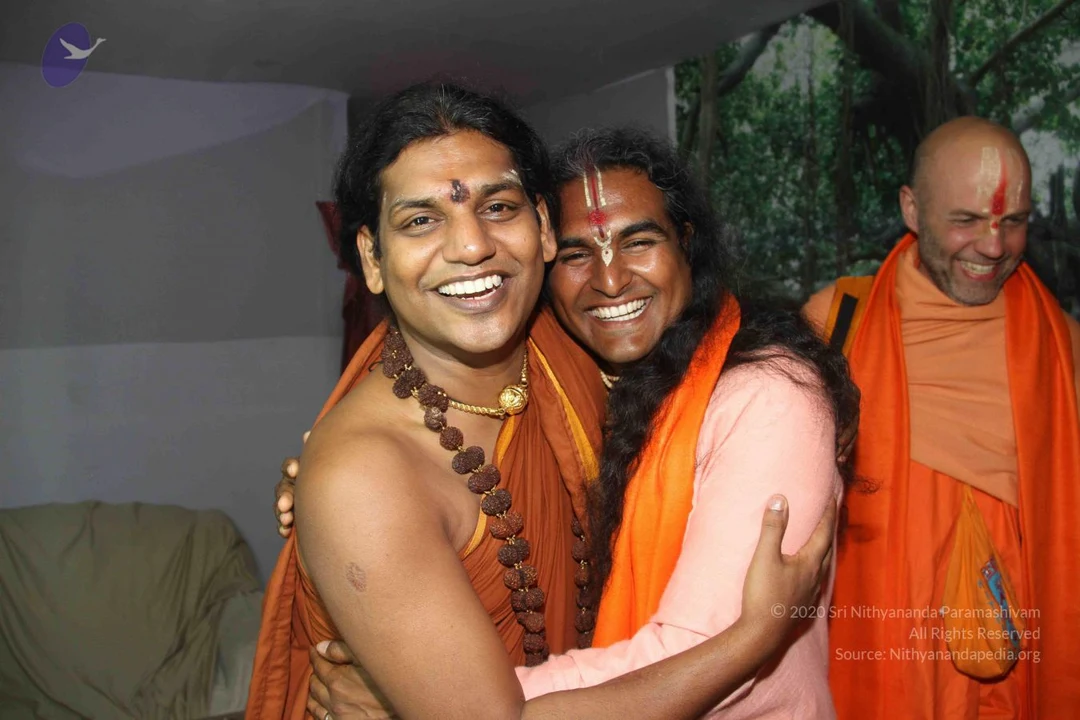
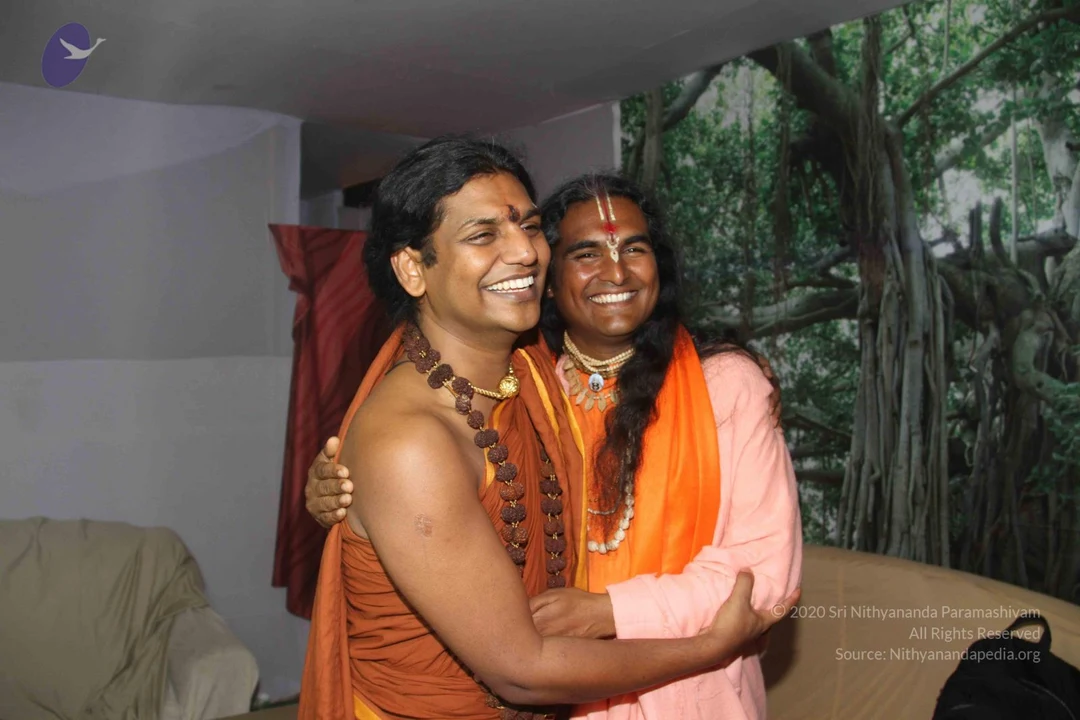
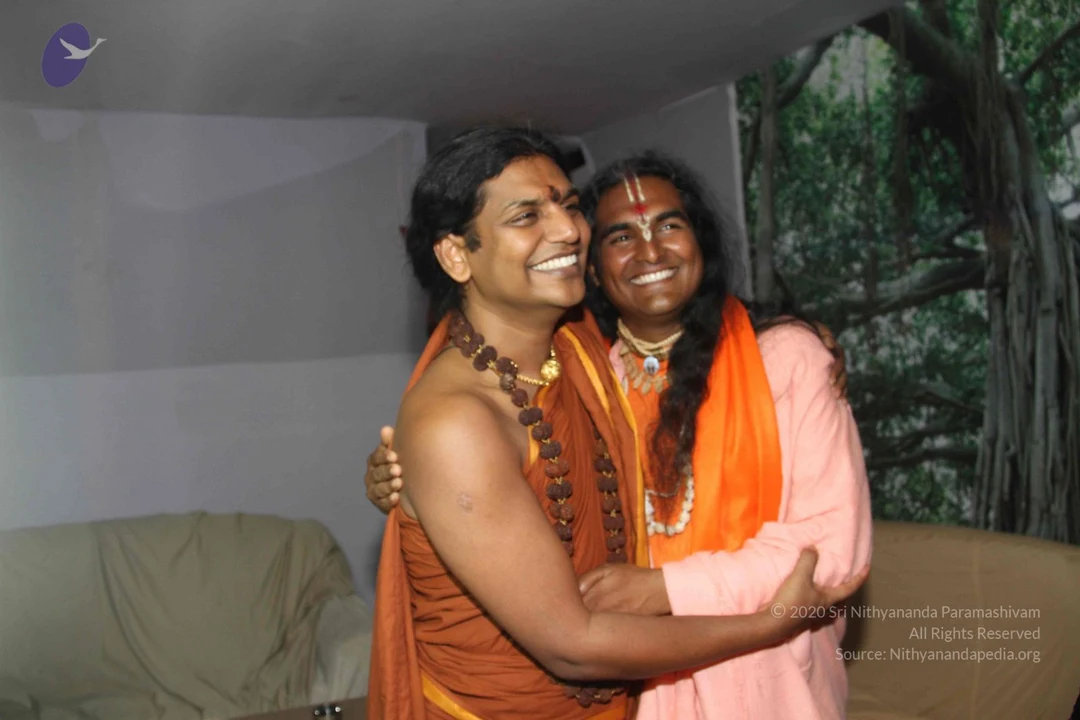
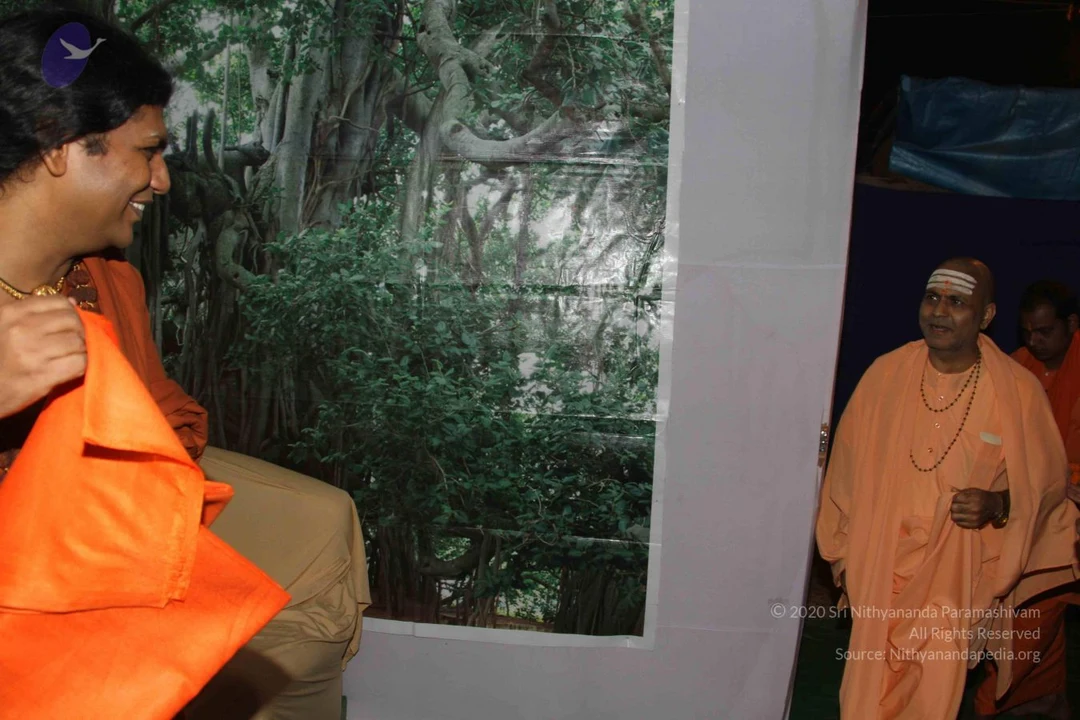
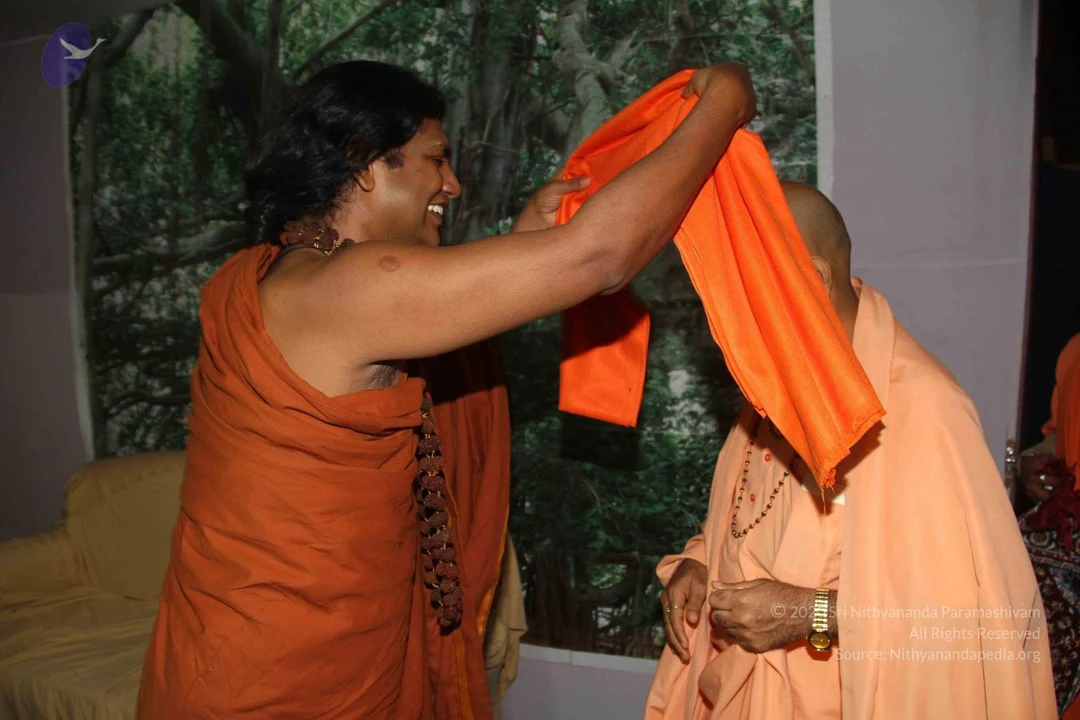
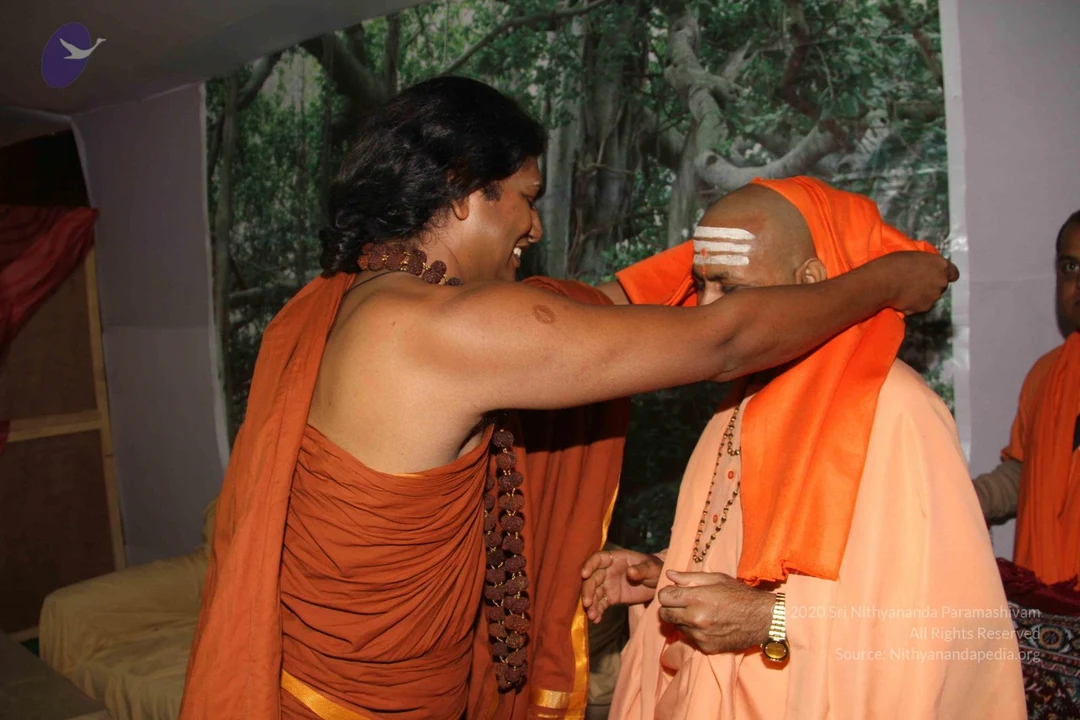
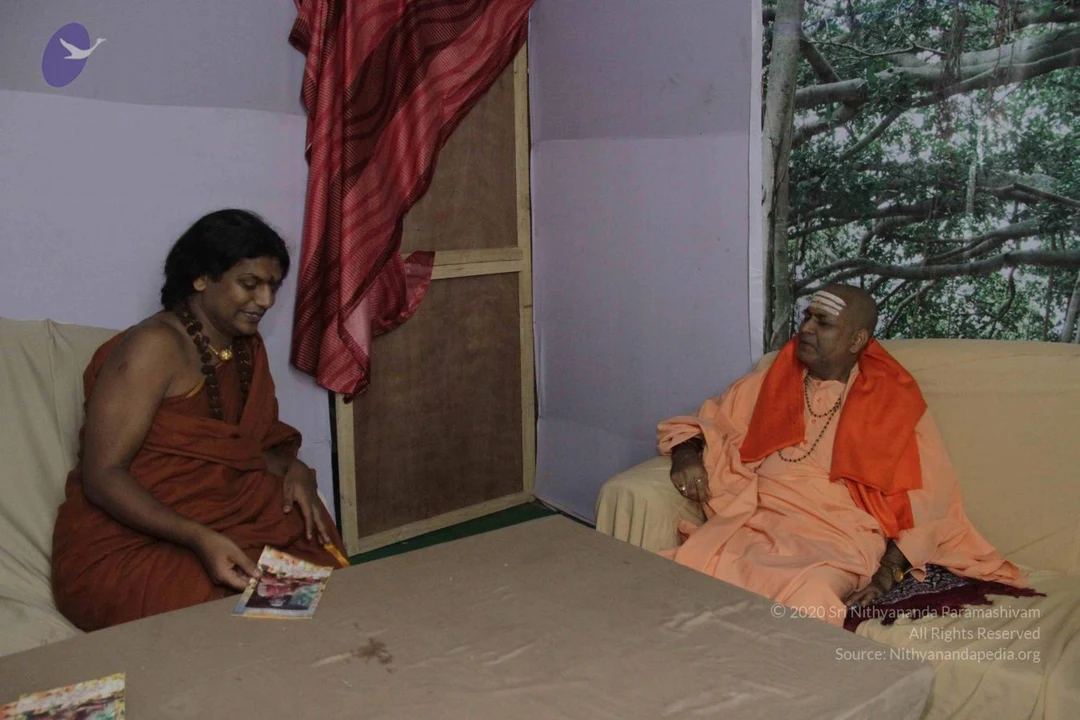
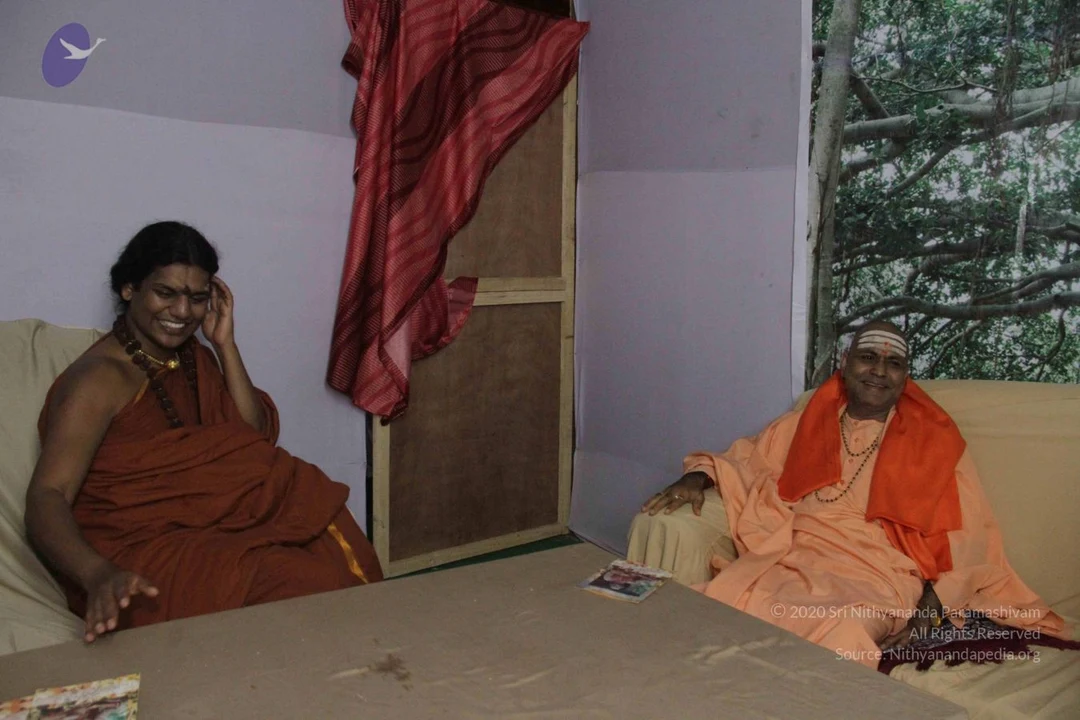
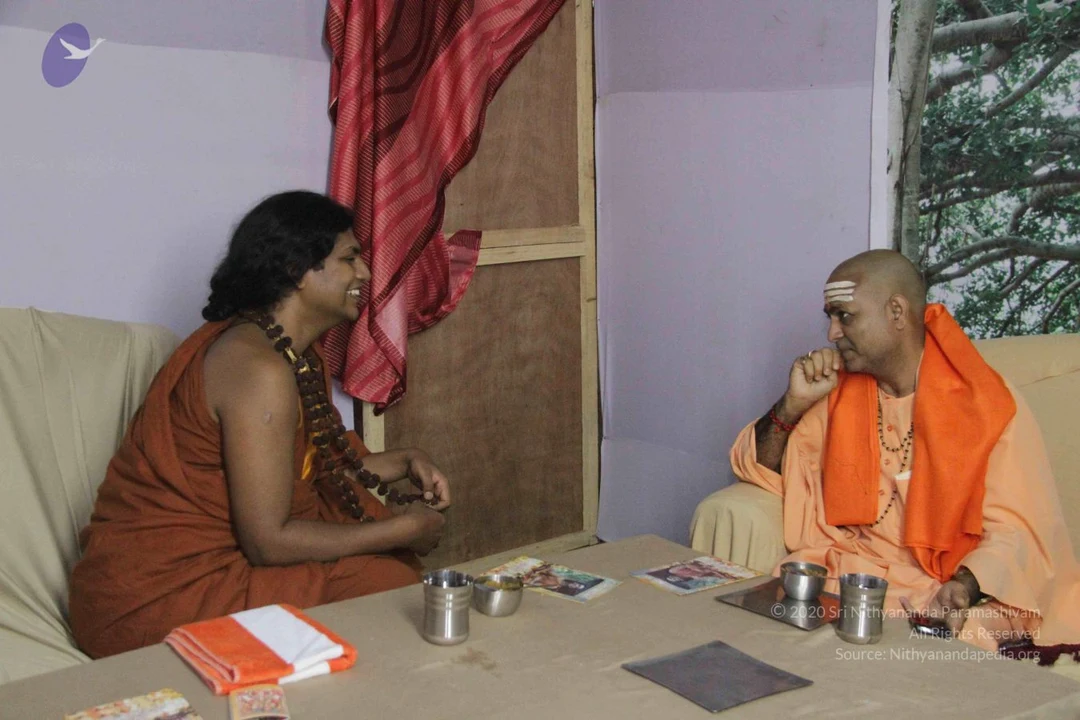
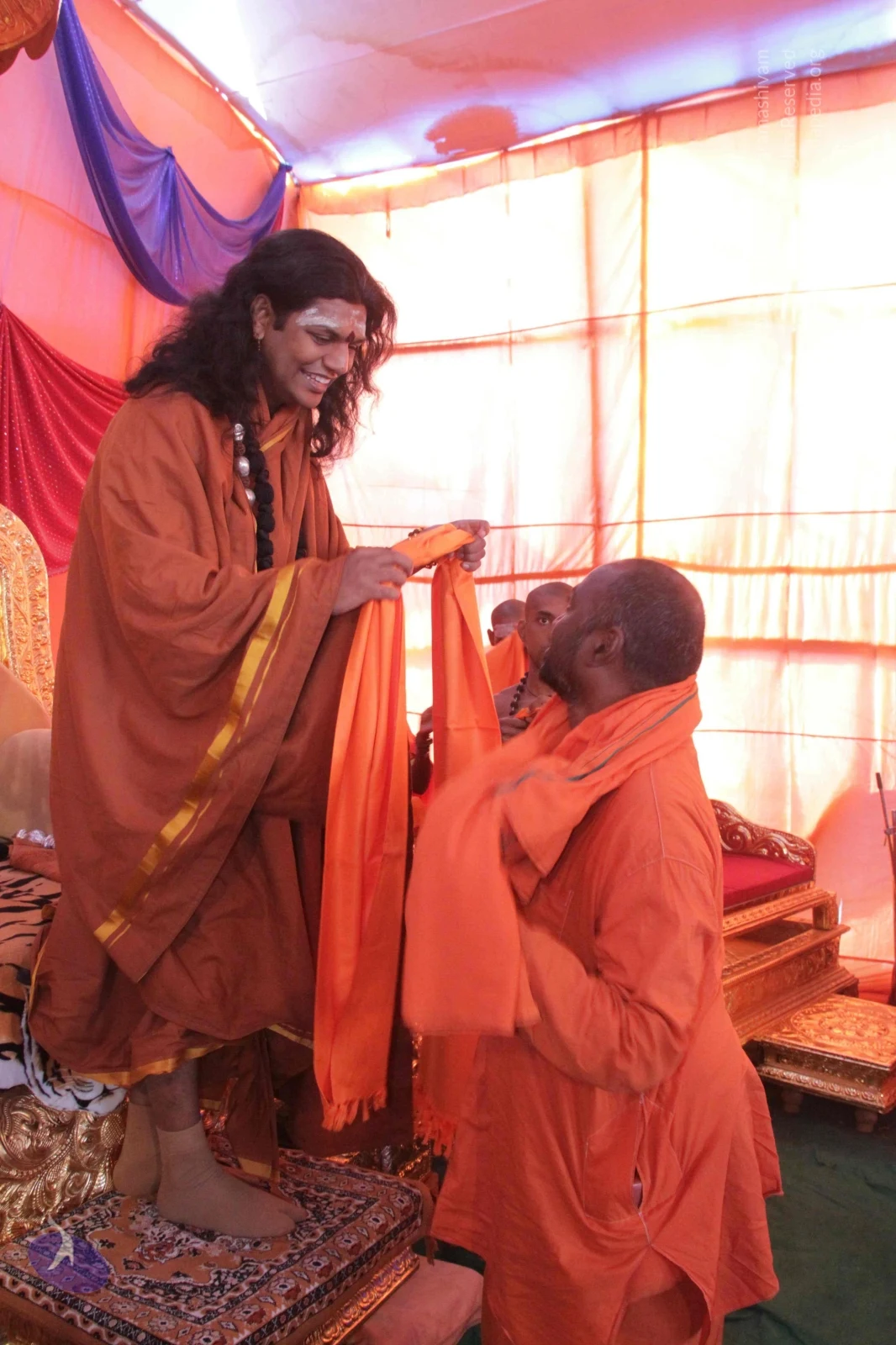
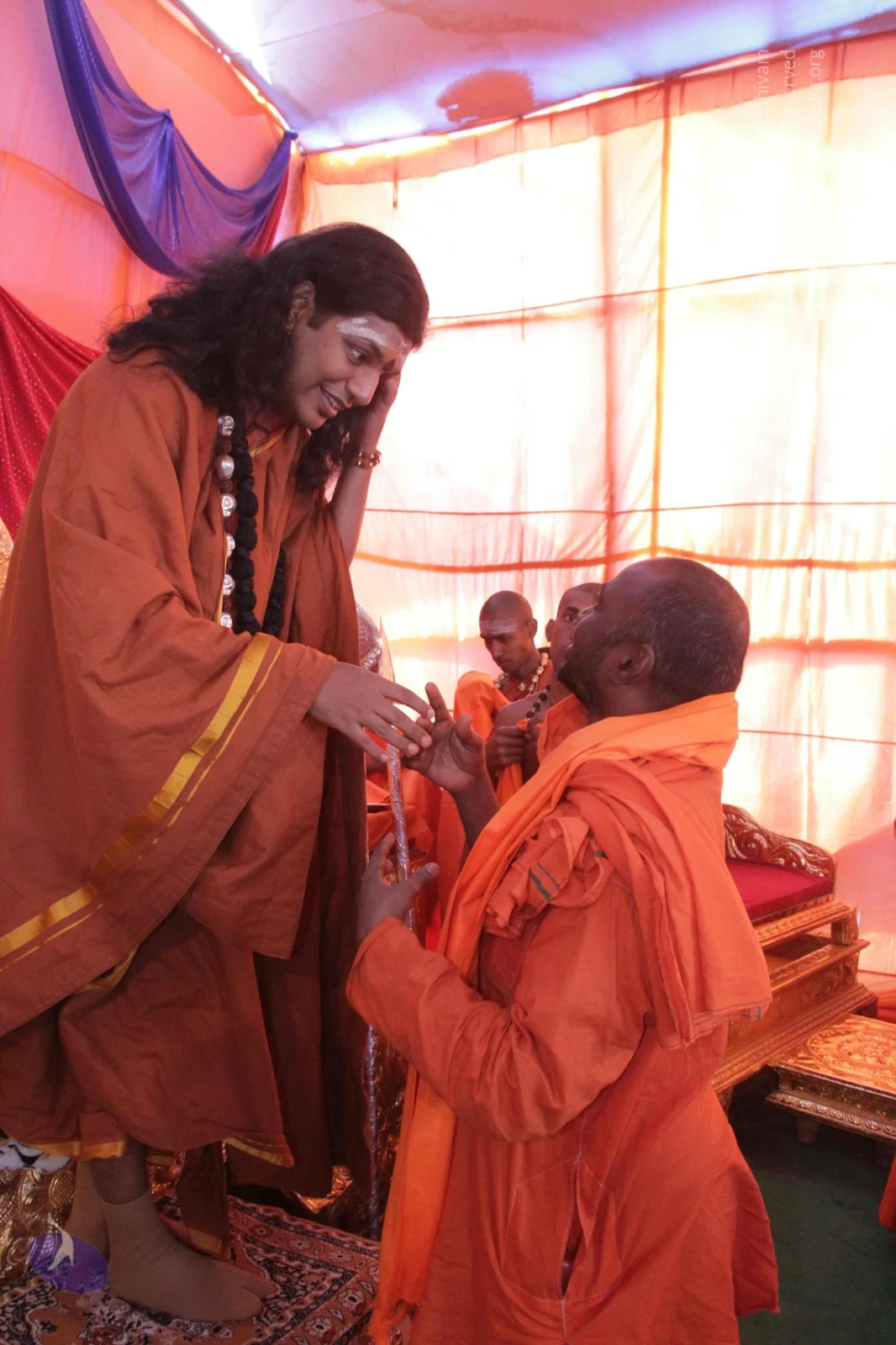
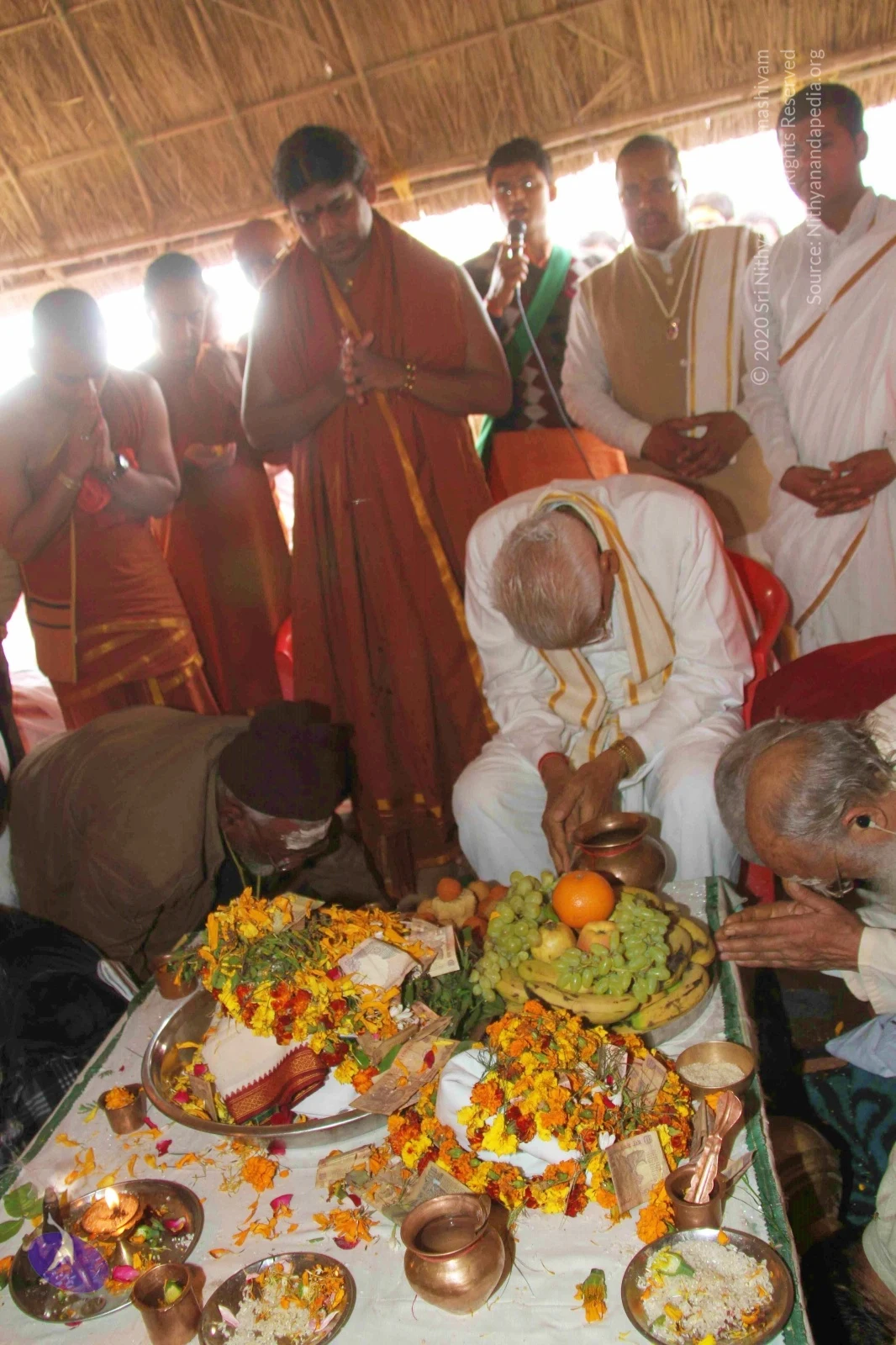
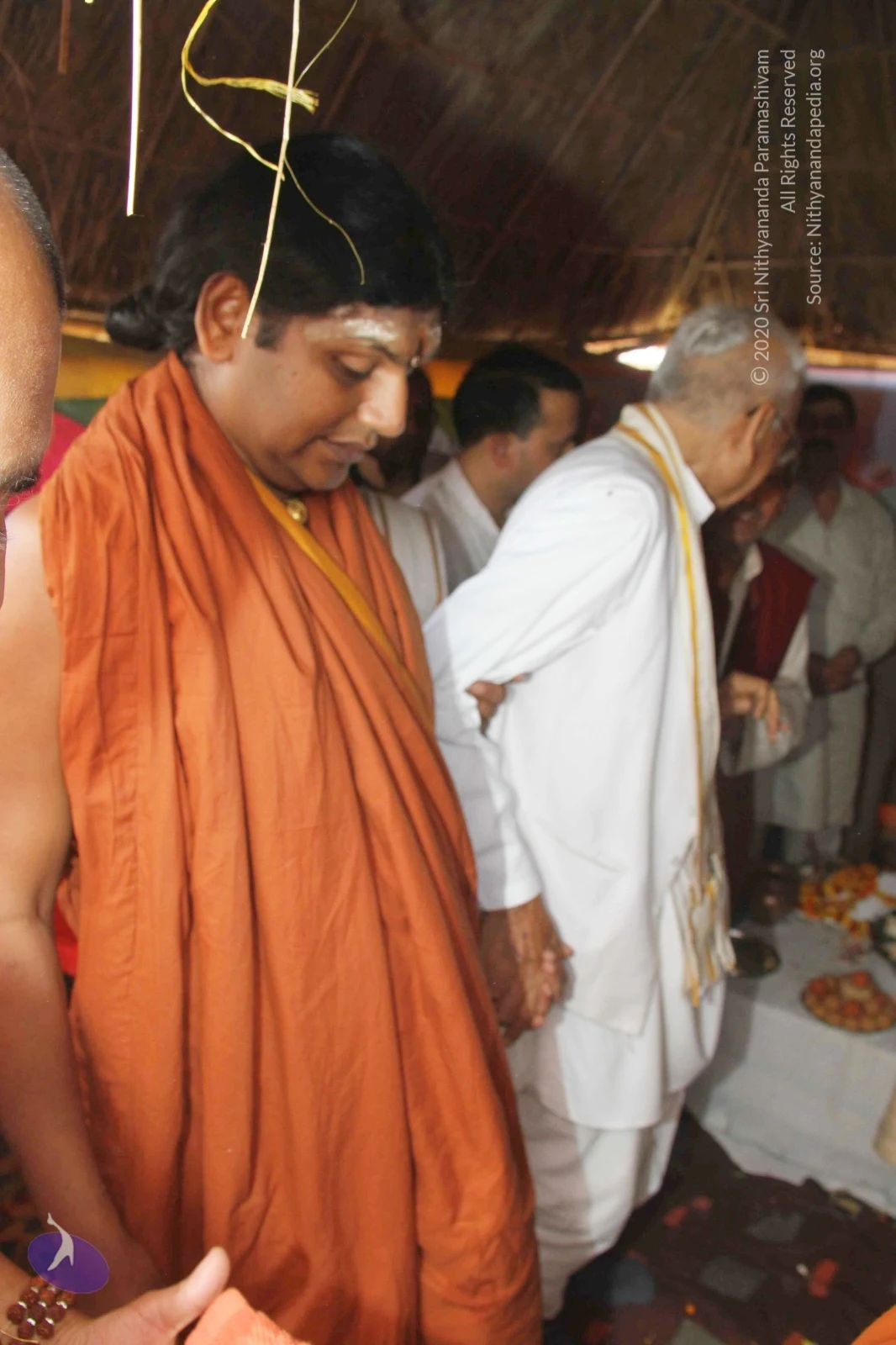
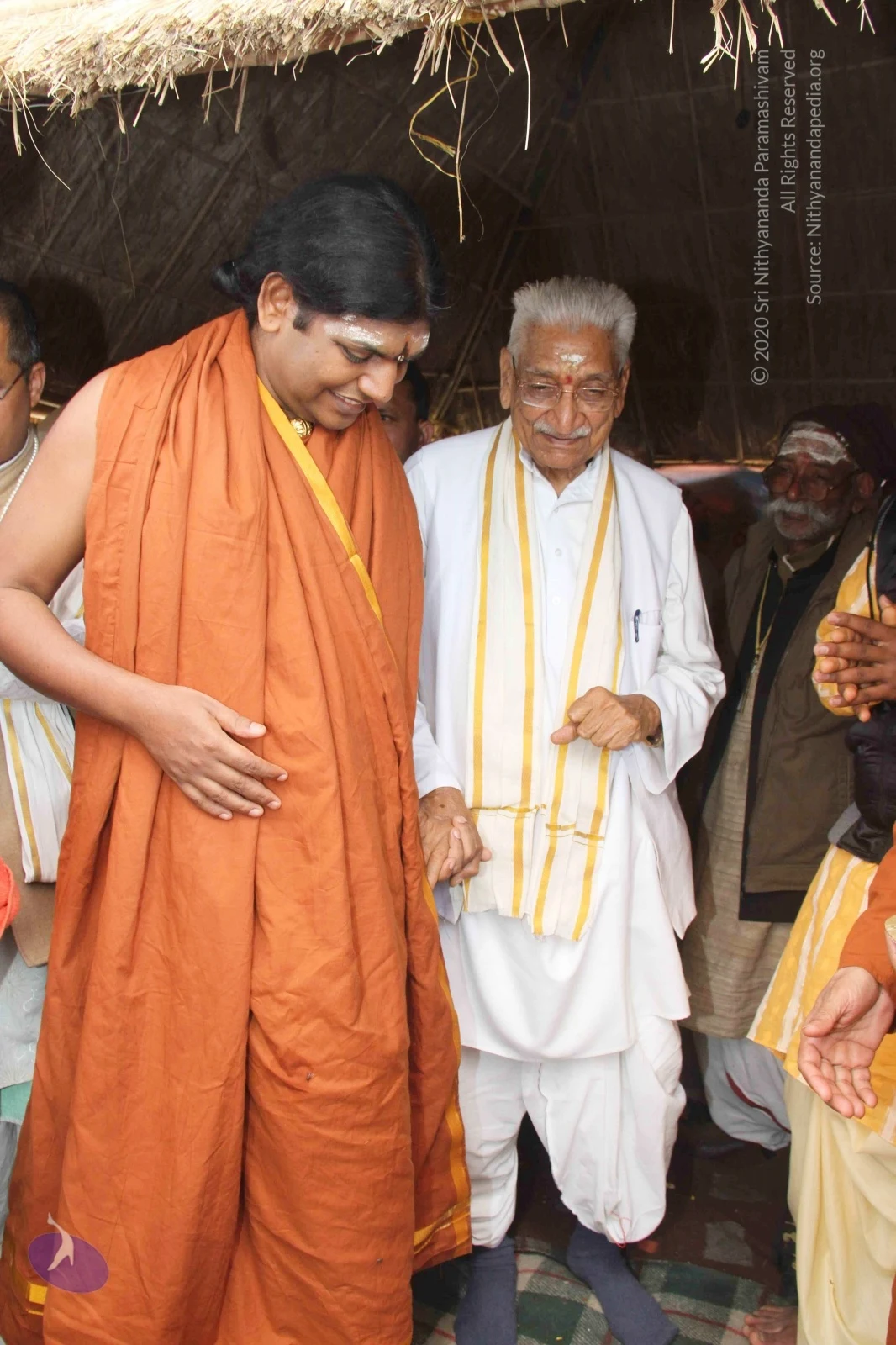
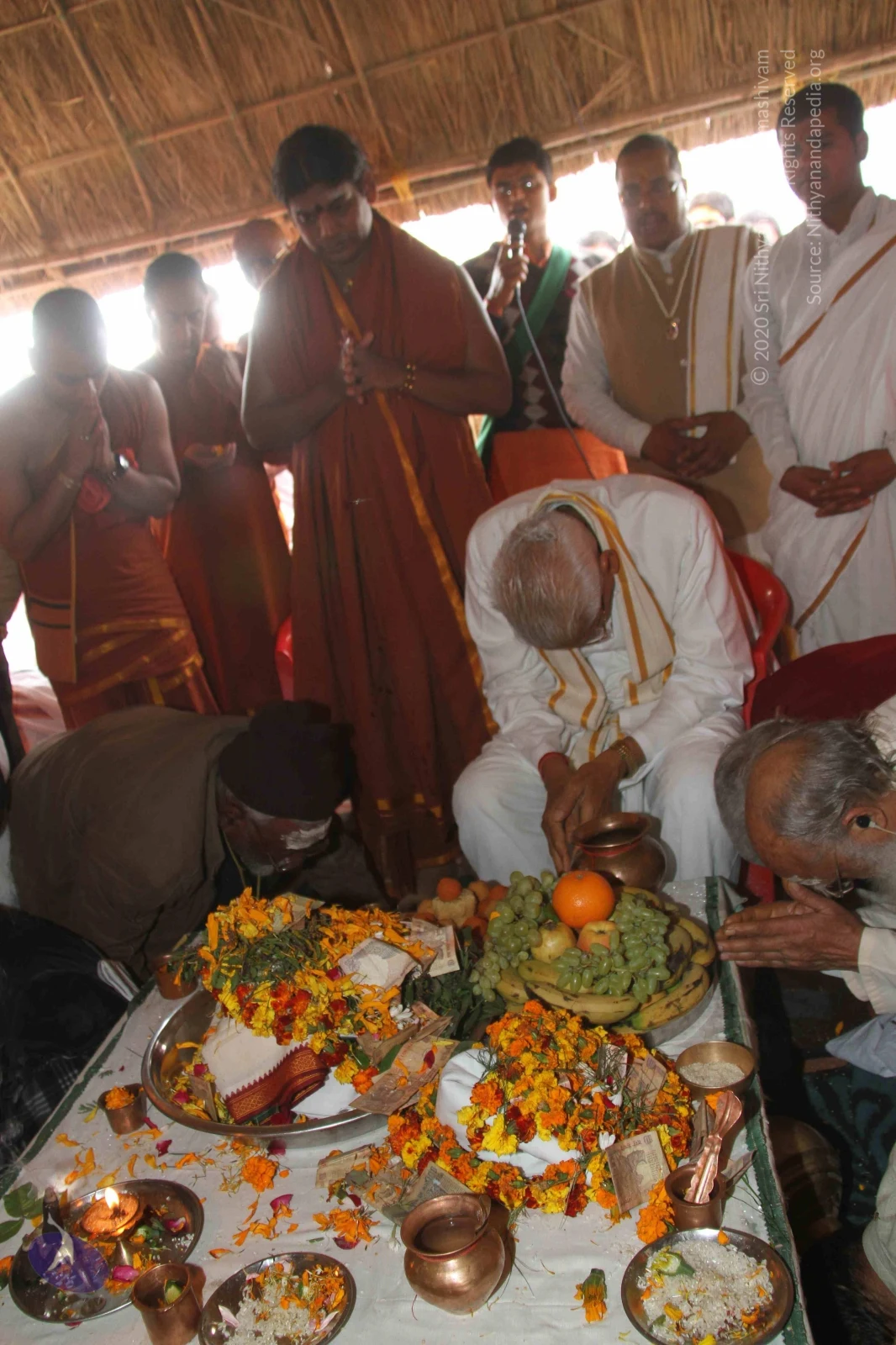
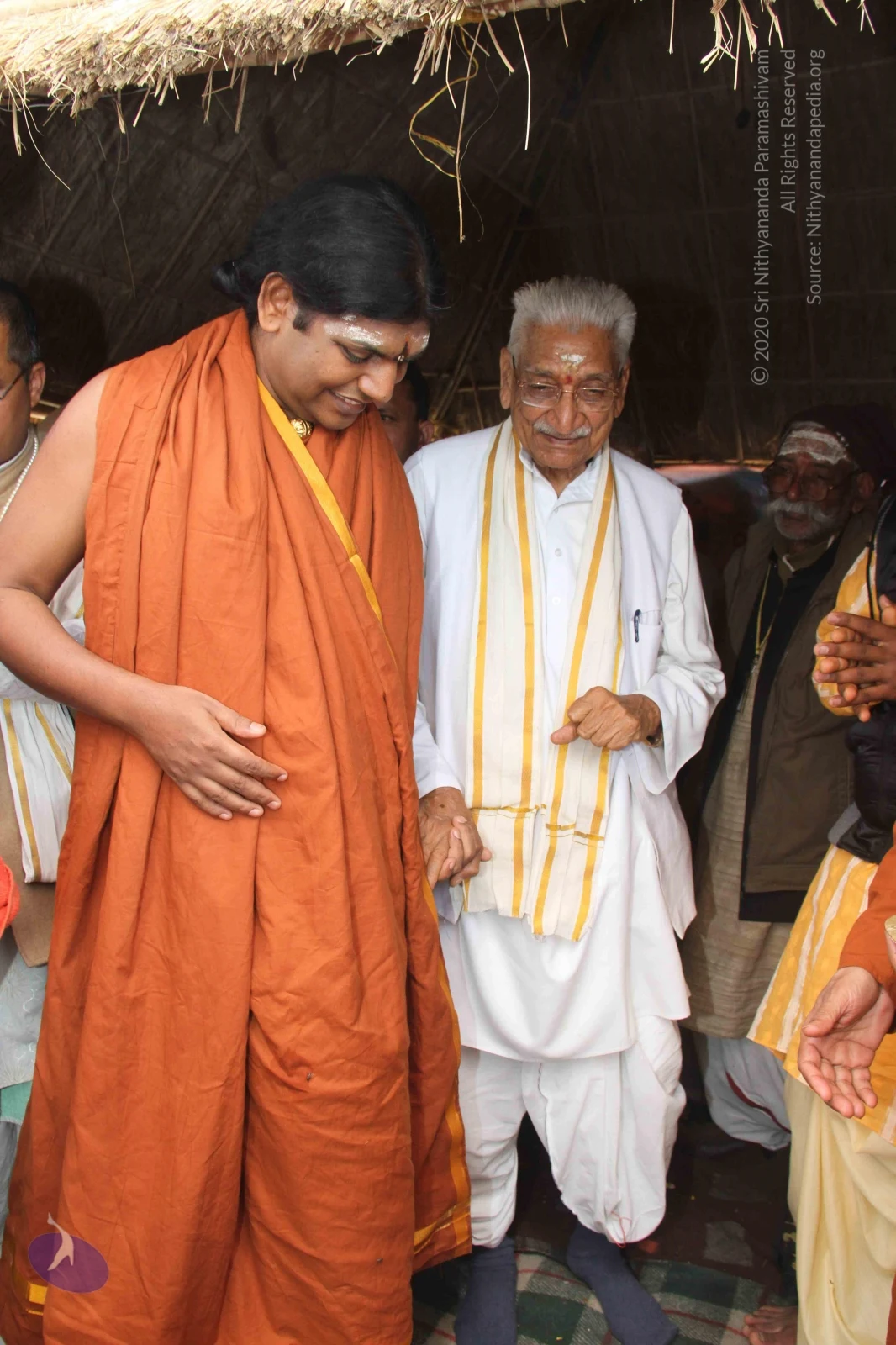
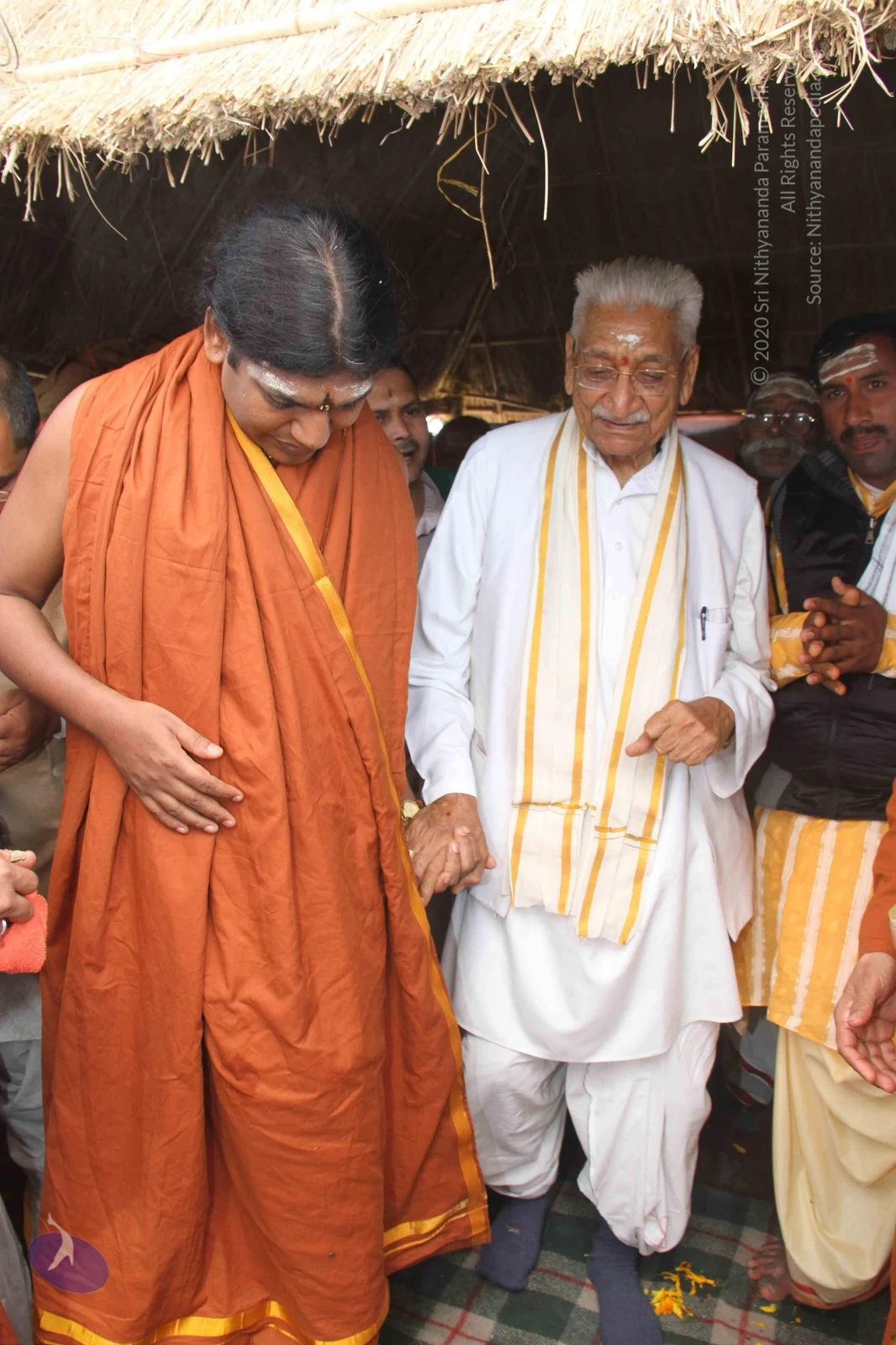
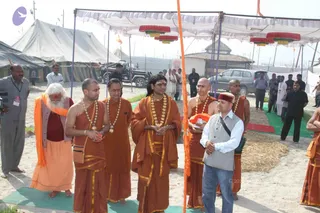
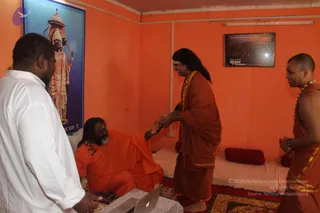
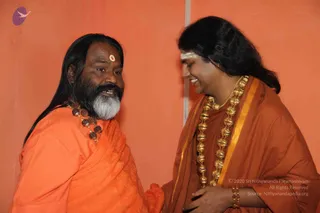
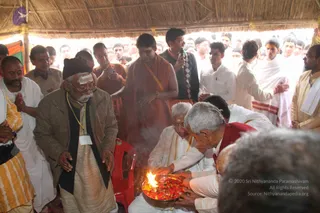
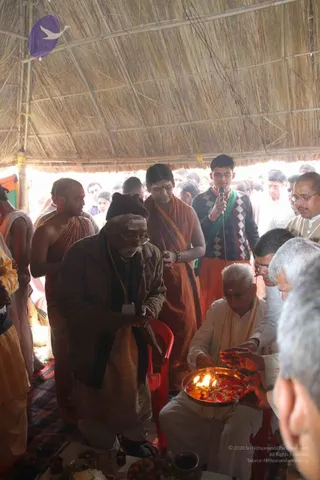
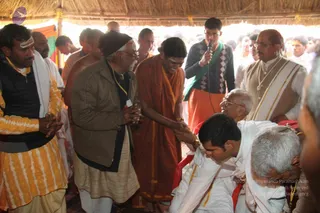
After this Presidential Address SPH also graciously received many other very prominent Hindu Leaders that were also attending the Kumbha Mela. Most notable was the visit of the Mahamandaleshwar 1008 Paramahamsa Sri Vedavyasa Rangaraj Bhattar Sri Swami Vishwananda of the Bhakti Marga Organization, Sri Atmananda Swamij from Mahanirvani Akkada , and VHP President Ashok Singhal which Visited the office of the Kailasa Nation in Kumbhapuri.

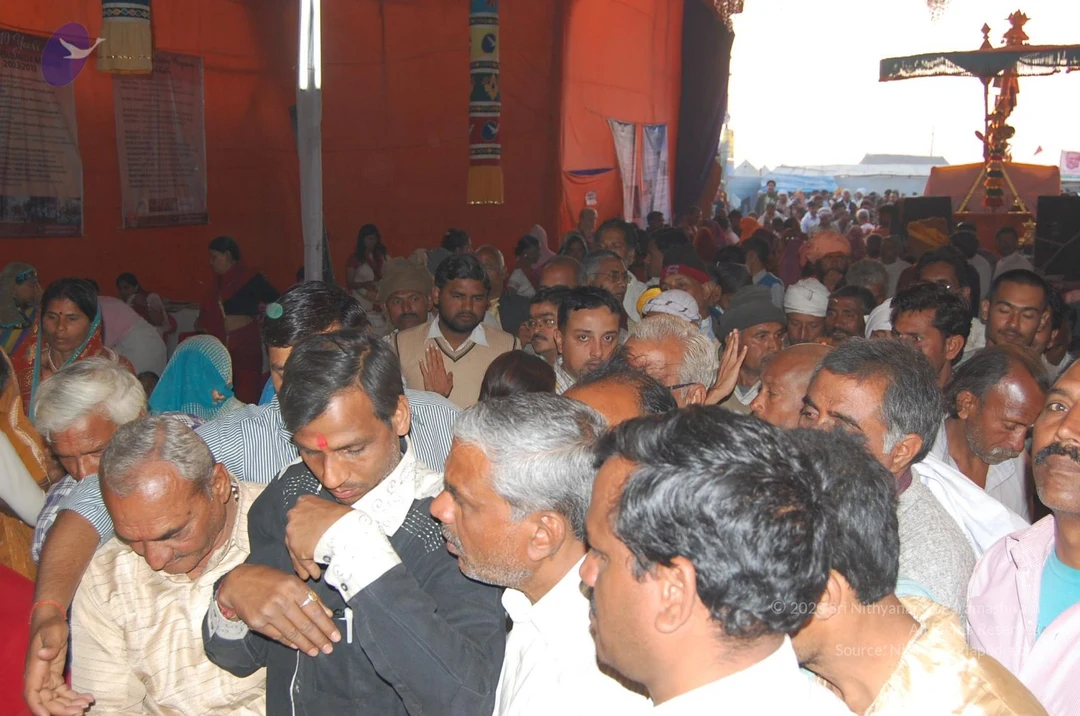
Satellite images showed the millions at the Maha Kumbh Mela in Allahabad, during the Sahi Snaan in Ganga Mata. The DigitalGlobe images were taken on 8 February, two days before the Maha(Mauni Amavasya) Snan. https://www.bbc.com/news/world-asia-21443282

The Kumbha Mela has been inscribed on the Representative List of Intangible Cultural Heritage of Humanity by the Intergovernmental Committee for the Safeguarding of the Intangible Cultural Heritage under UNESCO. https://ich.unesco.org/en/RL/kumbh-mela-01258

That day's Presidential Address - Nithyananda Satsangh, Sarva Darshan and Free Ana Dhaan were presided over by the Supreme Pontiff of Hinduism Bhagavan Nithyananda Paramashivam on 14 February 2013 in Adi Kailasa, Bengaluru, Karnataka, India.

Link to Video:

Transcript

Thursday, February 14, 2013 “Sadashiva samarambam, Jnanasambandha madhyamam asmadacharya paryantam vande Guru paramparam!” I welcome all the devotees, disciples, Samajis, Satsangis sitting with around the world at this moment in 540 places through Nithyananda TV & Youtube live, 46 places in 2 way video conferencing having Nayana Deeksha, in many 283 cities, in 231 countries around the world! Cities sitting with us – Toronto Kailasam, Los Angeles Arunachala, Phoenix Kanchipuram, Alwarpet Chennai, Seatt, Malaysia Palani, Ohio Prayag, Tiruvannamalai Arunachala, Hyderabad Bhagyanagara, Singapore Singapuram, Oklahoma Somanatham, San Jose Madurai, Adayar Chennai, new york varanasi, Chicago, Nithyananda Nagara Bidadi, Charlotte Srisailam, Devon UK, Bangalore Malleshwaram, Vancouver Puri, Bangalore Marthahalli, Monterrey Mexico, Austin, Madrid Spain, Redendo Beach, Slovakia Siva Loka, Kulim Malaysia, Black Diamond Canada, Dubai, Chennai Nungambakam, Coimbatore Satsang society, Hyderabad Shree, Lawspet Pondicherry, Bhaktika Chennai, Scottsdale Ariozna, Priyanka….i welcome all of you with my love and respects! Mai aap sabka prem wa asheerwaad sahith swagat karta hoon! Tallahassi Florida and Hollwood. Today Niraahaara Samyama 8th batch 3rd level 1st day. Kalpa Vaas 8th day. Tomorrow we have one more important Shaahi snaan - Vasantha Panchami Shahi snaan. After becoming mm first snaan. Tomorrow morn as usual be ready by 2:30 early morning. You can wear your chappals and footwear. No problem. And today I am going for Bhandaara with Dhaati Maharaj – Maha mandaleshwar of Maha Nirvaani Akhaada is giving Bhandaara and then VHP International President Ashok Singhal ji is coming to our tent. Maha madaleshwar Atmanandaji is coming. Swami Adagadanandaji who wrote Yathaartha Gita will be here. Any moment he will be here. Tomorrow after the morning shaahi snaan eve we are giving bhandaara to 10k sadhus from various akhaadaas. Many of the maha mandaleshwars and akhaadas all of them are participating in the Nirvaani akhaada. And day after tomorrow back to Bangalore. 17th first ever Tamil Inner Awakening is starting! All other devotees who cannot understand English, rare opportunity for you. ..whatever is said and done listening to these great truths from the mother tongue don’t miss the opportunity. Today I wanted to expand on this integrity. Living on your word means living without your mind. If you want to switch off your mind, you have to live in integrity. When will you achieve that sate? You can achieve only when you live your words. Coming on time is not integrity. That I s the side effect of integrity. Integrity is living in space of conscious thinking.. being in conscious thinking and living it. I tell you a person who is living in Integrity cannot miss time. Creating a space of Integrity. All of you need to know especially when you take sanyaas just you have to live integrity. You have to live these four tatvaas. No excuse will work, no reasons will work, nothing will work. I tell you first thing please understand you don’t need lack of Integrity or inauthenticity even as your strategy plan for your fulfillment your life fulfillment. Many time you think no, I will decide based on situations….don’t keep things under your control. Listen. You think after one year if any situation comes, after tomorrow if any situation comes at that time I will decide. This is what is reserving ego when you need. It is like keeping little poison and keep it in a corner of the house. I may need it after ten years after five years. No. declare clearly. Sanyaas means death of ego. Yesterday there was a big discussion in Maha Nirvani Akhada – sanyaas is given to body or mind? Few sadhus were opposing giving sanyaas to women. Their idea is sanyaas is given only to men. Others were saying no, it can be given to women too. It was healthy discussion. Maha Nirvaani Akhaada officially gives sanyaas to women as well. Maha Nirvaani Akhaada has 3 women maha mandaleshwars. All 3 of them unanimously supported us…can sanyas be given to body or soul? how can soul receive anything? – soul cannot receive anything.. How can body achieve anything? Body itself will go one day…..Sanyass is neither given to soul or body it is given to chitjadagranthi – the unconscious knot – the clutching you carry about body and soul. For that knot sanyaas is given. The moment sanyaas is given, that knot dies. Sanyaas is death of ego. What is death of ego? You deciding in future all my decisions will be based on these four tatvaas. Living with I am not going to bring any other vested interests in any of my decisions you are in sanyaas. When you declare this ////only these 4 tatvaas – Integrity, Authenticity, Responsibility, Enriching, then your ego is dead now. What is ego? Ego is keeping some vested interest – either laziness, or keeping some pleasure, or your own idea of fulfillment or name or fame. You may think I will do now but will speak to Swamiji later I don’t want to practice these truths….i don’t want commission agents. I want only sadhus. If you are not living these four tatvaas and using sangha infrastructure you are a demon. And not only that, I tis a disrespect to allt he sadhus living these tatvaas. It is a greatest spiritual tradition existing on planet earth. It is a Vaidika sampradaaya – Vedic tradition. Listen you need a spiritual strength to live not political strategizing. No. that is not going to work. I tell you. keeping KB as a witness I declare I renounced all my strategizing. All my decisions are going to be based on just these 4 tatvaas and I know I will simply win. Understan this 4 satyas – IARE. START living them. That’s all. That’s all. Constantly live them. Continuously living them. I can give you some more tips to help you integrity. Every day practice completion before sleeping. If you have been out of Integrity, lack of Integrity and restore Integrity. Raise the samaana in you. samaana is the pure praana in you. if samaana level is high in your brain you will be able to practice Integrity because more awareness and less words in you. to practice samaana there are many techniques. Keep your body clean shaved, if your pores on your body are clean, if you apply ash all over your body and practice 1200 long breaths, the samaana in you increases. … I tell you only these 4 tatvaas will give you strength…. Again some of these donkeys are saying I brought Madurai Aadeenam. It is 1200 crore worth – how can I buy for 1 crore, 2 crore? And this Maha Nirvaani Akhaada has 1 lakh temples, 100,000 temples and ashrams means what 5 lakh crore property at least. Even in the Varanasi we saw yesterday the Maha Nirvani Ghat. That Ghtat itself… What can I give them? And we are only 43 Maha Mandaleshwars. You understand. So we 43 people only are heading 5 lakh crore property organization. And it is a democratic set up. You need to know. Please all of you understand, this maha mandaleshwar title is given to me after the election. Fortunately, unanimously all of them agreed. There was a debate and discussion before the voting. There was a long debate and discussion but when it came to voting everybody voted for Nithyananda. Atma Maneeshananda and Turiyananda went and answered all their questions. During the ceremony everyone came and gave the shawl. There were few people who had questions but all of them were convinced. Whoever was present, everyone voted supporting Nithyananda. So understand it is a democratic vote. You cannot say some media mafia were writing we blackmailed 292 or we gave some money to 292 and became 293. How can it be? That also extreme imagination you can think one person there we blackmailed him and gave him money. But here how can you think 43 maha mandaleshwars we blackmailed or gave money to them who are sitting on thousands of crores of property. Who are all twice my age, who have seen the world enough, seen money enough, who have seen religions, sadhus enough. One of them was telling I have seen sadhus who blow the air an burn the grass and who never have any 1 or 2. That kind of sadhus and yogis. Maha nirvaani is well known for yogis and mystics and highly educated. Maha nirvaani has huge wealth. Other akhaadas are not a match for mn. Other akhadas have hundreds of maha mandaleshwars. But Maha Nirvaani is highly choosy. We have only 43. You should have 100 sanyaasis of your own, written hundreds of books. And it is not decision of mahacharya alone. Panchayathi has to decide. All the monks have to decide. Thanks to mna I never knew that all of them stood by me so strongly. I can say many of them have seen me only once or twice because I am staying in the South. But they have heard enough about us. The whole, especially the people on the field they all stood up for us. They stood up saying we all stand by Nithyananda and we will give the title of mm. then all the women mms stood yes we stand by him. Then the panchayati stood then acharyas mm declared. So it is a complete election process. Last 3-4 days all the election process happened. In 2007 though they declared me as maha mandaleshwar …I also declare that we will no more use the word scandal. It is a religious attack…all the maha mandaleshwars stood so strongly and with Integrity, Authenticity Responsibility and Enriching I commit with Maha Nirvaani Akhaada – I wills t and by them forever in any way. this is one of my commitment to Maha Nirvaani Akhaada I will keep Maha Nirvaani Akhaada as the living tradition. Maha Nirvaani Akhaada will be the sampradaaya where living enlightened masters will be there continuously. I will again and again send my disciples back to planet earth to be with Maha Nirvaan Akhaada and Maha Nirvaani Akhaada will be a living tradition. This is my commitment keeping kaala bhairva as a process. The future history will know what gift it is. There are some things which I can do. Which are in my field. I will make sure the Maha Nirvaani the top post is always occupied by a living enlightened being a Jeevan Mukta. And I will make sure even after I leave my body and live in Akshardhaam, I will be constantly sending my disciples to fill the seat. I have not made this commitment even with Madurai Aadeenam. I will make sure the throne is always occupied by enlightened beings and the ambience is also there for choosing enlightened beings and making them as acharyas maha mandaleshwars. At least 10 living enlightened masters should be part of the maha nirvaani. Only then it will be a living stream. It is my commitment to maha nirvaani akhaada. So this media mafia should know only news is paid. The spiritual posts are not paid. So you can get only news paid, you cannot get maha nirvaani akhaada post paid and Madurai Aadeenam post paid. Paid news media mafia should know only news gets paid with vested interest. But there were many socially resp media who reported properly. Because Maha Nirvaani Akhaada is well known for their authenticity. They don’t accept money. Even if you give they t ell you directly give it to sadhus. You directly offer to whomever you wants. Maha nirvaani akhaada is the only akhaada who operates with accounted money – no other cash. When they came here, I gave them pranaami and the next day they sent the receipt…just like Dhyana Peetam. ..highly organized, highly authentic and no question of this black money. Run by well educated, highly disciplined, highly cultured sadhus. Thanks to maha nirvaani akhada. I will commit to maha nirvaani akhaada. I will contribute in all possible ways. Apart from that this is one of the best things I can do. Constantly keeping maha nirvaani peeta as peeta of living stream of enlightened beings! Listen. Not only honouring the words where you give to you and others, constantly live in space where less words are created. Consciously make commitments so naturally you have enough time and energy and space to fulfil those commitments. Not coming on time means it is not only being in non-integrity, it is stinking in non-integrity. See day one your bathroom will not stink, first water is not going, plumbing issues and it is stuck and it will stink. Yesterday Kaala Bhairava was so happy. That is why for aarthi he got us there. I was inside the Garbha Mandir for Kaala Bhairava aarathi. Main reason for his joy is the authenticity we have started practicing. Ramakrishna says again and again man much ek karo.in Bengali he says unite the heart and the mouth. It is not just living as your word, creating a space where you have less words. So the words you commit with you and the words you commit with others is life for you. the words you commit with you and to others is life for you. listen. The words you give to you and others is the structure on which your life building is built. If your life is equivalent to a building the words you give to yourself and others is like..that has to be without dust and rust means it has to be without unconsciousness. Unconsciousness in words you give to you and others is the dusty rusty structure. The building built on rusty dusty structure cannot be long lasting. The steel structure has to be without any dust or rust and has to be pure authentic strong steel. Your life is built on the words you give to you and to others. That has to be without any unconsciousness, unawareness. Your manana – internalizing has to be continuously with awareness. Listen, shravanahas to be with awareness. Manana – internalizing means the words you give to you and to others, the words you talk to you and others. The internalizing has to be with awareness with full consciousness. When you use the words with consciousness, you will naturally have less words you will be aware that is forming the basic infrastructure of your life. The structure of your life is nothing but the words you give to you and to others. I tell you the strength of your life is based on the words you give to you and to others. If it is conscious, your life will be conscious. If it is unconscious your life will be unconscious. Integrity forms the basis for your life. It is not even your life. But that is the basis of your life. Integrity is inevitable part of your very life energy. Let Integrity be your very air which you breathe. I think we should dedicate specially few days to practice Integrity. Integrity is Harischandra, authenticity is kaala Bhairava, responsibility is Vishwanatha and enriching is Annapurani – all 4 are in Varanasi. Integrity is actually a king which is protecting like Smasana – smasana is constantly place where you have to bury your inauthenticities and non-integrity. Just because harischandra is on the smasaana he has not lost his status or grace. He is a dom raja. Integrity has to be like a smasaana – burning lack of integrity. Continuously working to burn all the lack of integrity. See the Integrity cannot be limited to one thing that you come in time and all that. Constantly you have to think being in Integrity. If you are thinking in Integrity you are in space of unclutching. If constantly there is Integrity happening in you …if still there are thoughts in you, go to root pattern and complete with it. Integrity will give you being in the space of a king even though you are in a burial ground. Harischandra is Integrity, Kaala Bhairava is authenticity. Vishwanaatha is responsibility. That is why lord of universe responsibility he has. Vishwa naatha – Is not just power of universe but responsibility of universe. I will translate the word vishwa natha as responsibility of universe more than power of universe. Annapurani enriching constantly enriching. Integrity has to be practiced continuously. Your constant internalizing – manana has to be with integrity. The biggest problem is how much ever I say, you have to start living only then it will happen. Today we will have this as home work – please listen. Today whole day just continuously try to think with Integrity. Be very clear of the word you give to you and others you have to live it. So only think in that way. create the space in that way. constantly be creating that ambience inside you. clear? Let this be today’s home work for all you guys. We will move to the next segment of the morning satsang – niraahaara samyama. All niraahaara samyama participants pleas sit straight. Cognize you re the bidadi kalpa vriskha. Let the Bidadi kalpa vriksha be awakened in all of you and let you all experience the highest bio energy of producing directly energy from the space. Namaha Shivaya! Let you all experience a complete intense kundalini awakening! Namaha Shivaya! Relax. You can open your eyes. I bless you all who are sitting with us in many places through Nithyananda TV and Youtube live, in many places through 2 way video conferencing, in many cities and many countries! Let you all achieve, experience, live, express, radiate, share and explode and enrich with eternal bliss, Nithyananda. Thank you!

Photos Of The Day

MorningSatsang
VIPVisits

Swamiji Visited, VHP President Sri Ashok Singhalji

KumbhMela-Pandal

VHP President Ashok singhal visit Nithyananda dhyanapeetam at kumbh puri

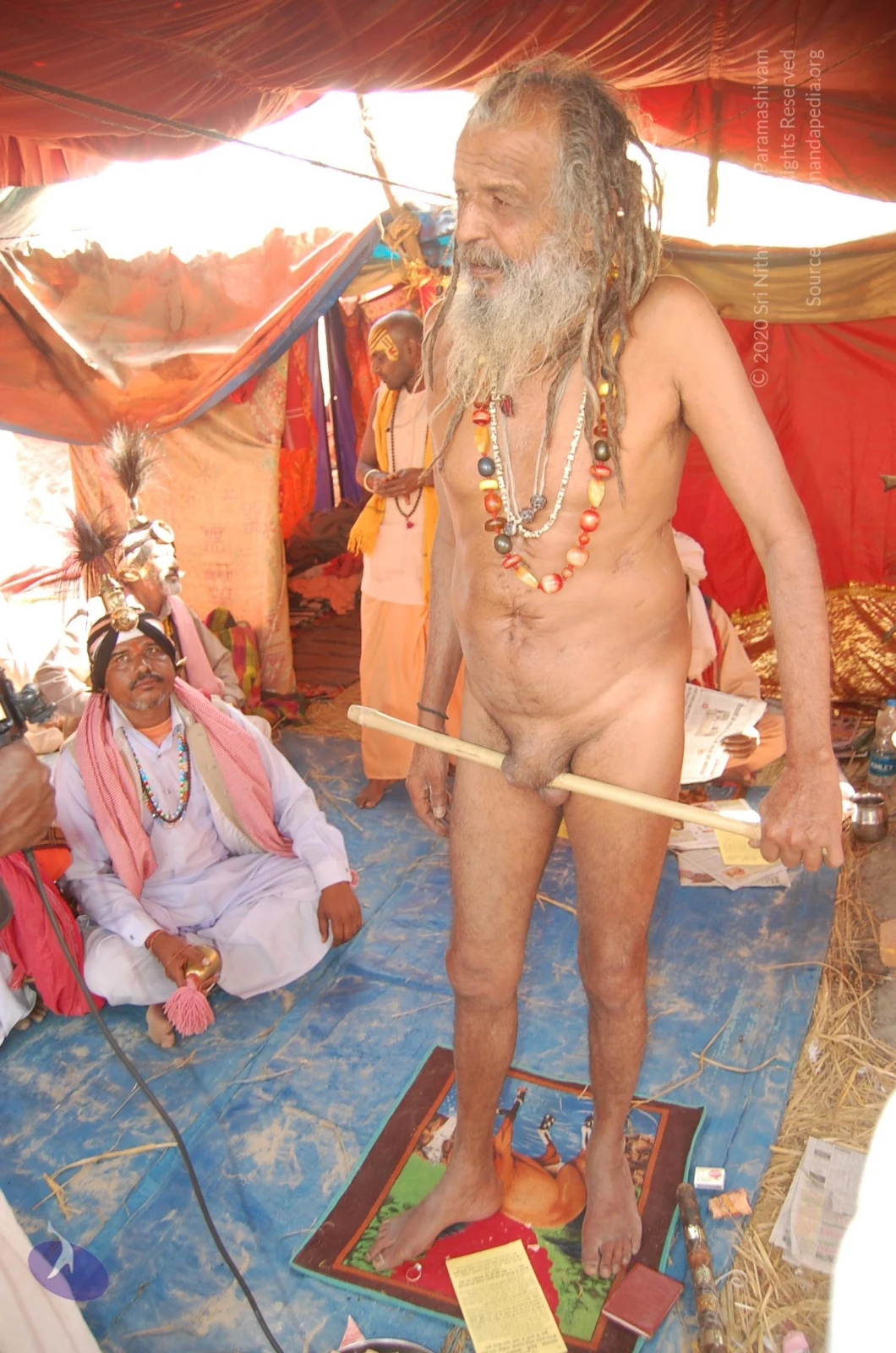
Naga Baba Interview

Photos Of The Day:

01-Morning-Satsang

02-Pandal

03-Swamiji-meet-VIPs

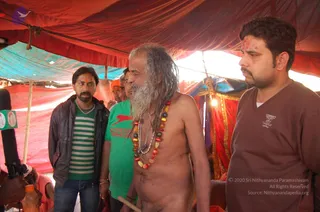
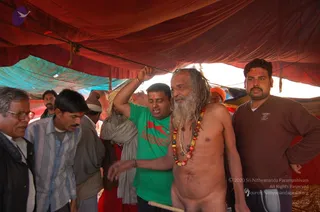
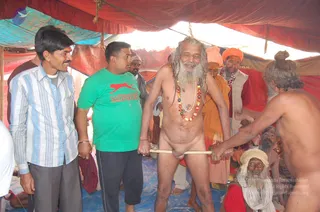
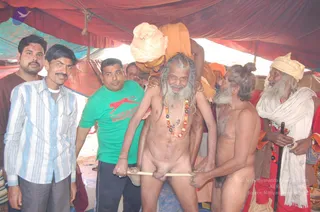
04-Naga-Baba-Interview

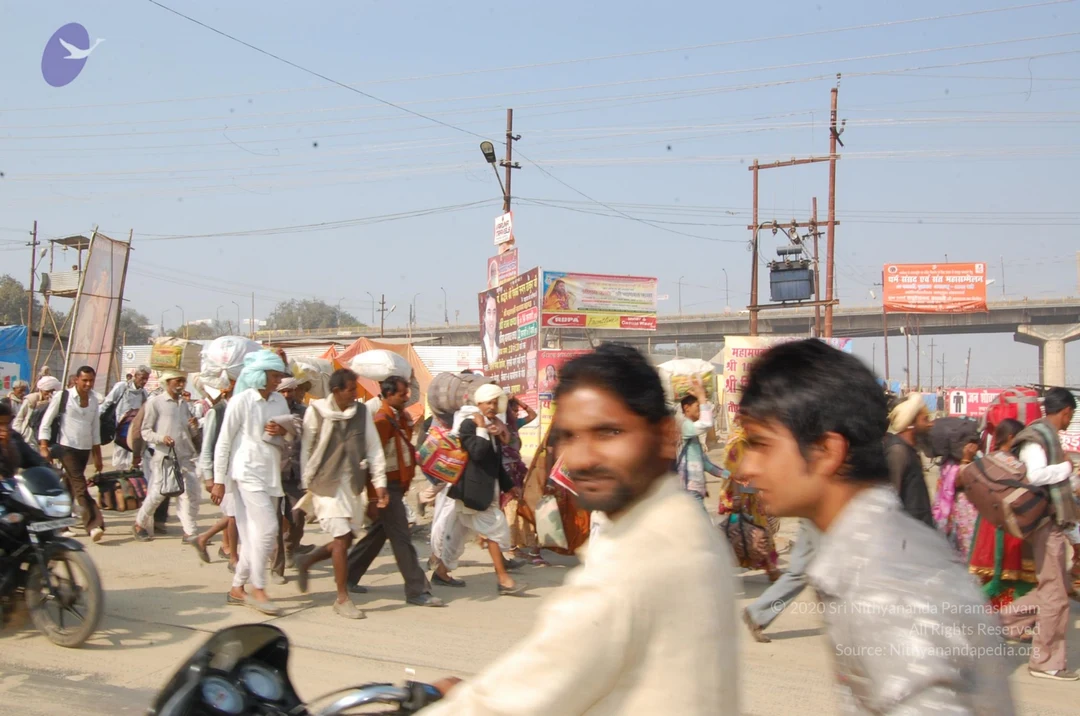
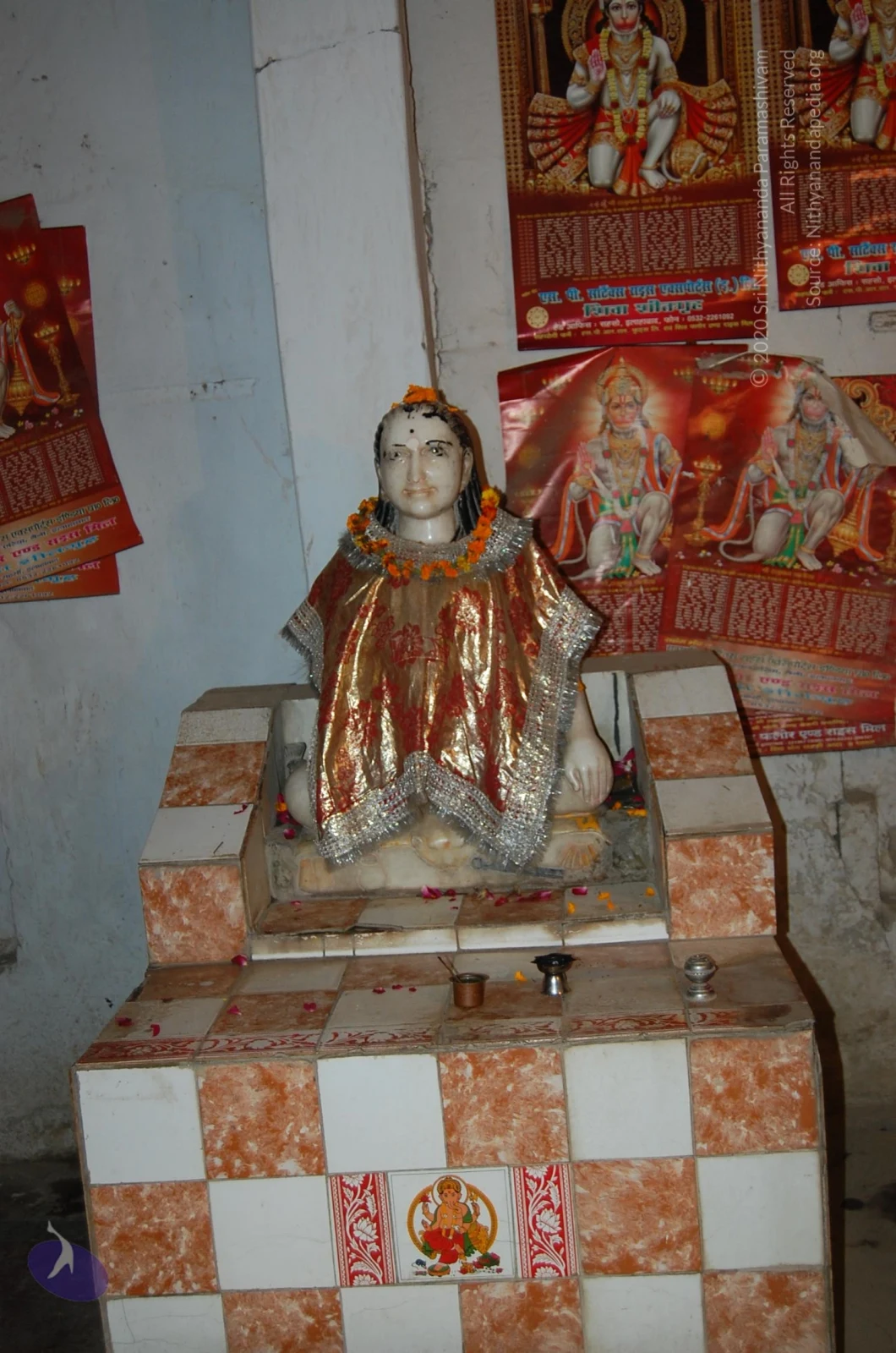
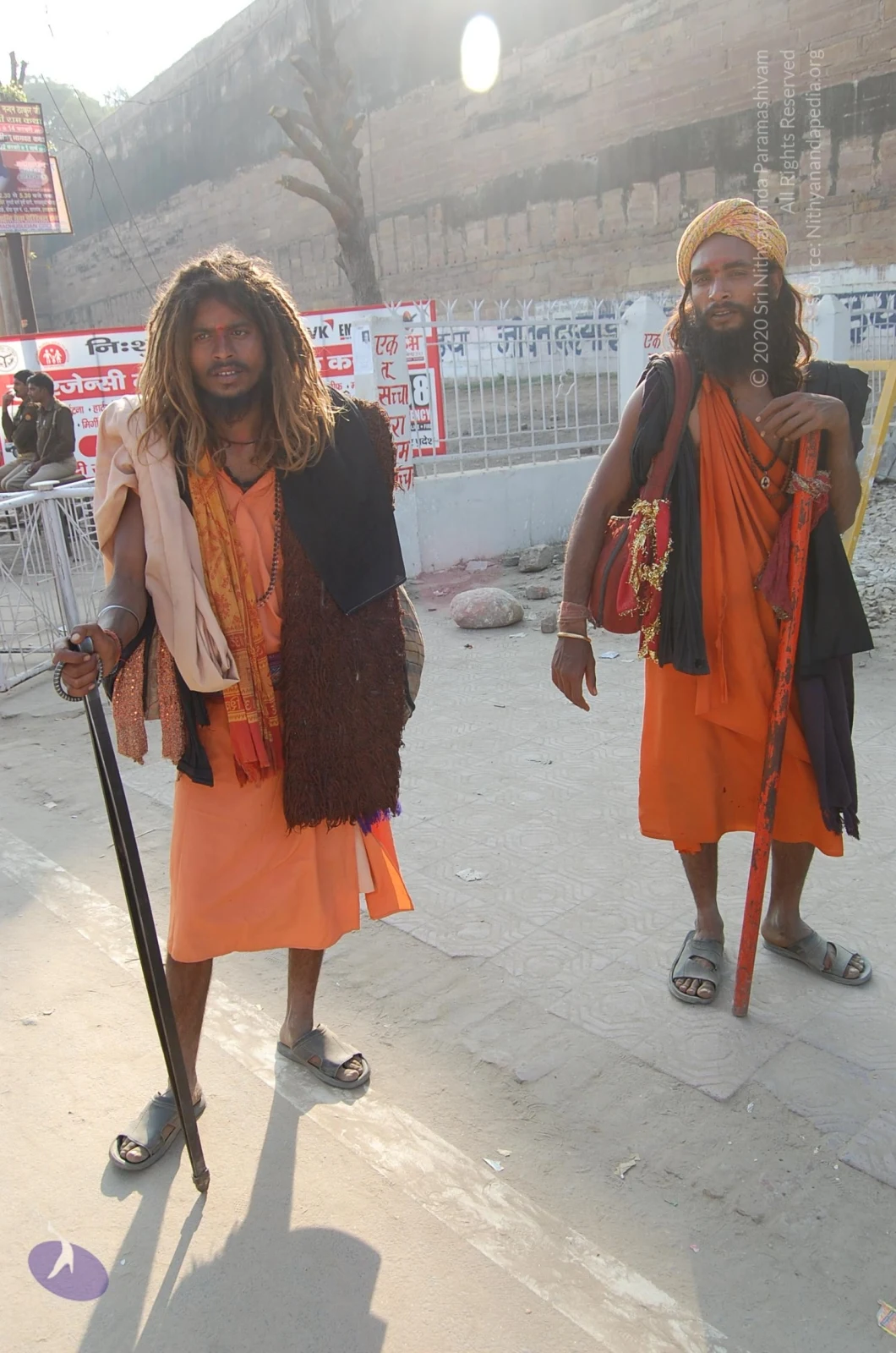
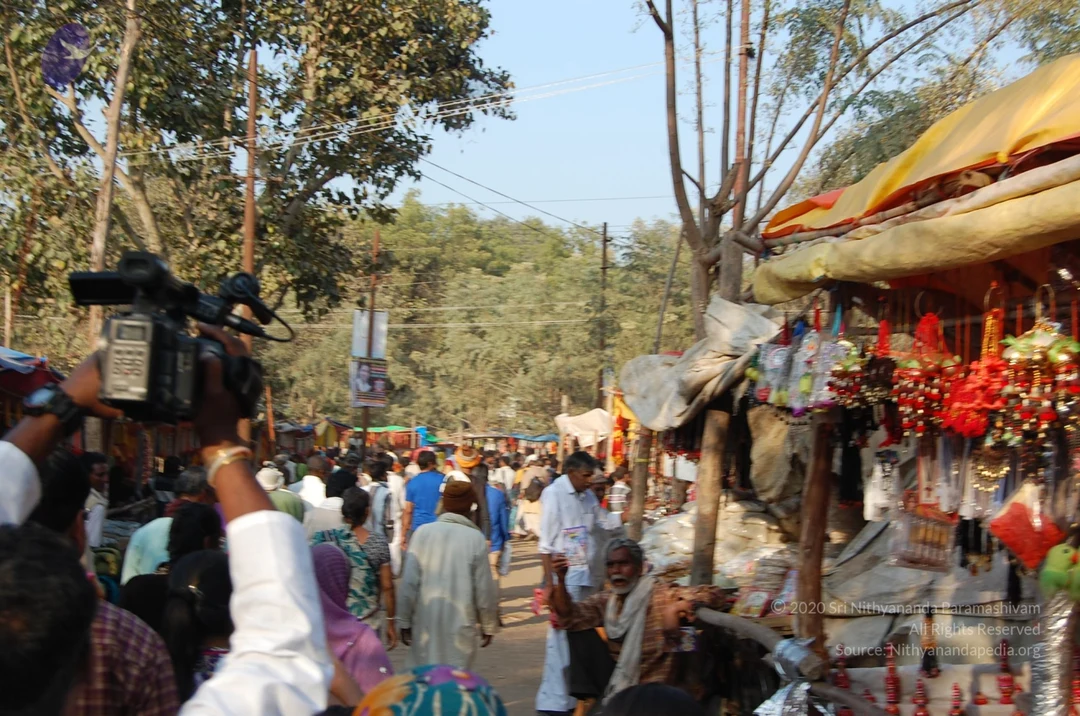
Around-the-Kumbh-Mela

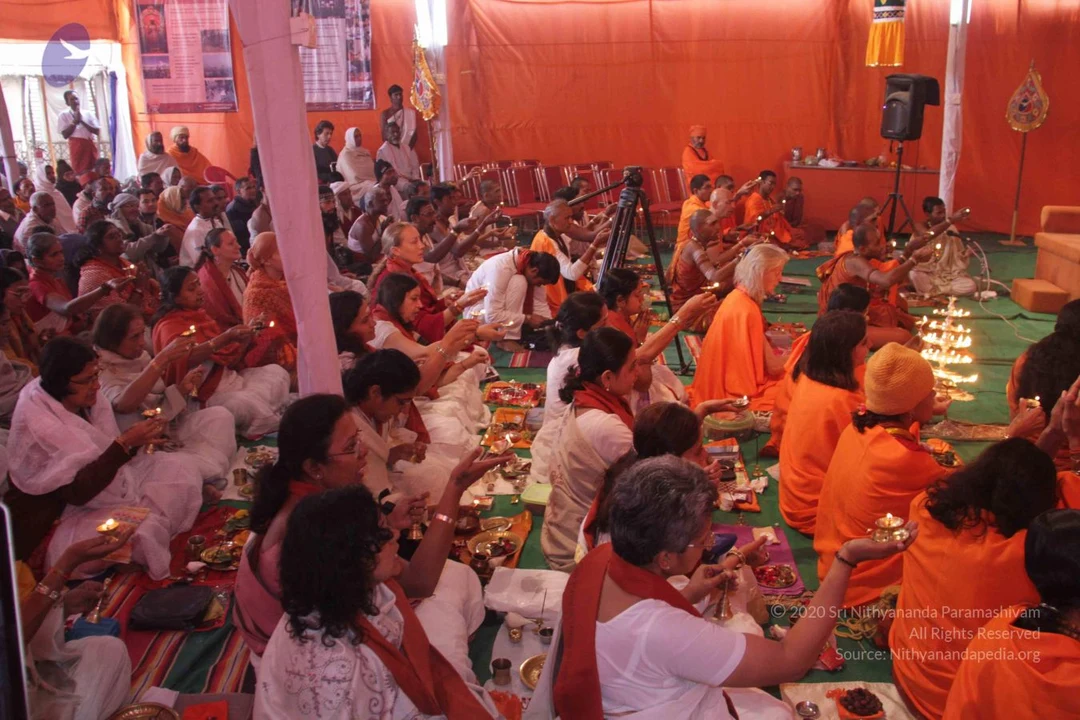
Morning-Satsang

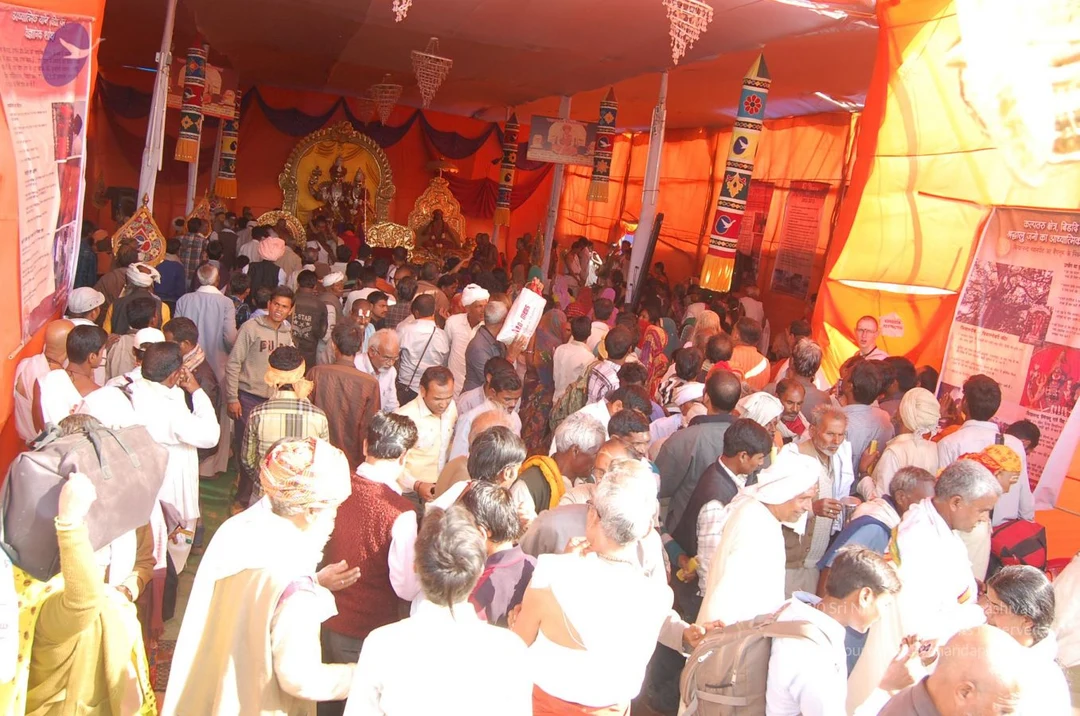
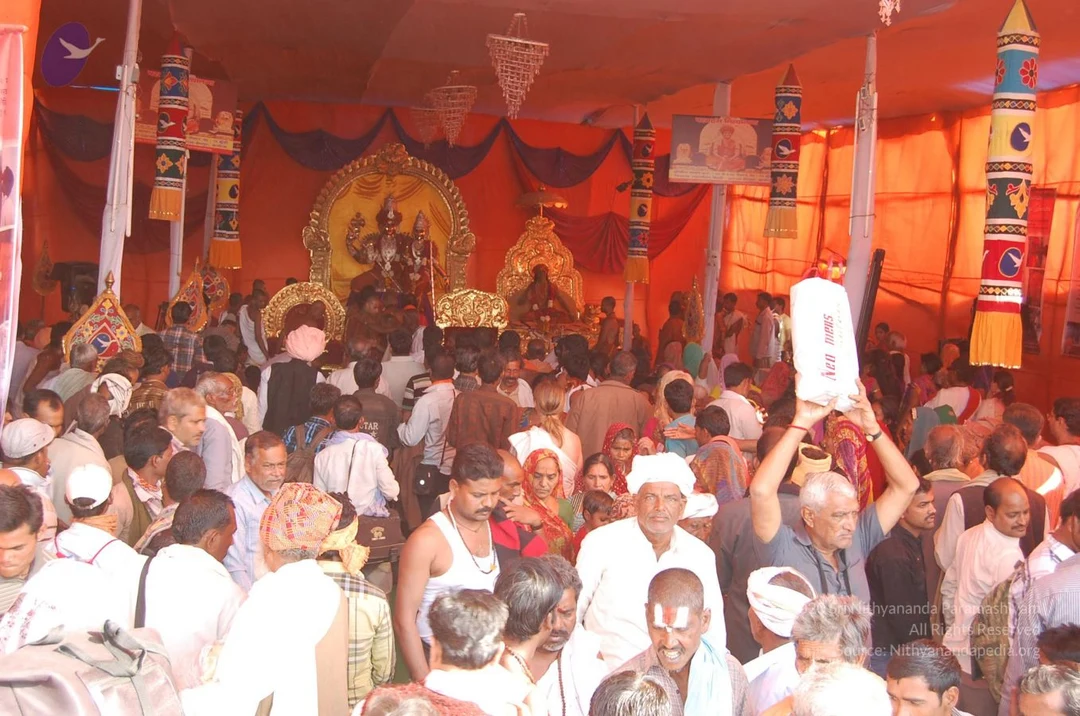
Pandal

Swamiji-meets-VIPs

Photos from this day

View all 526 photos

MorningSatsang
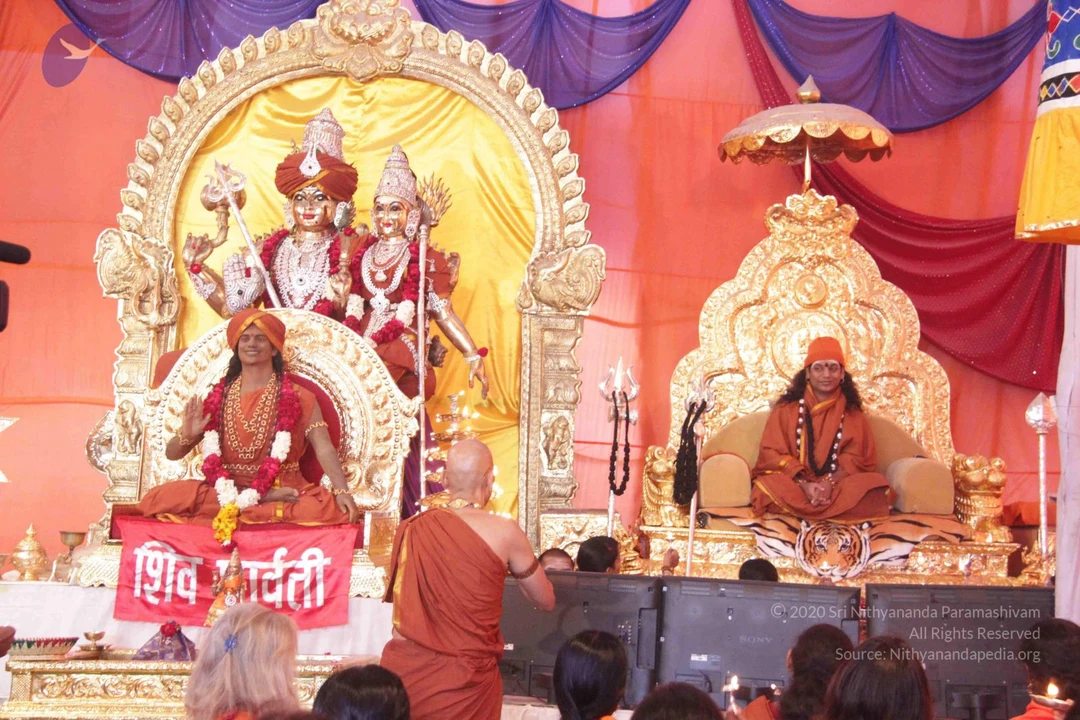
66 photosSource gallery
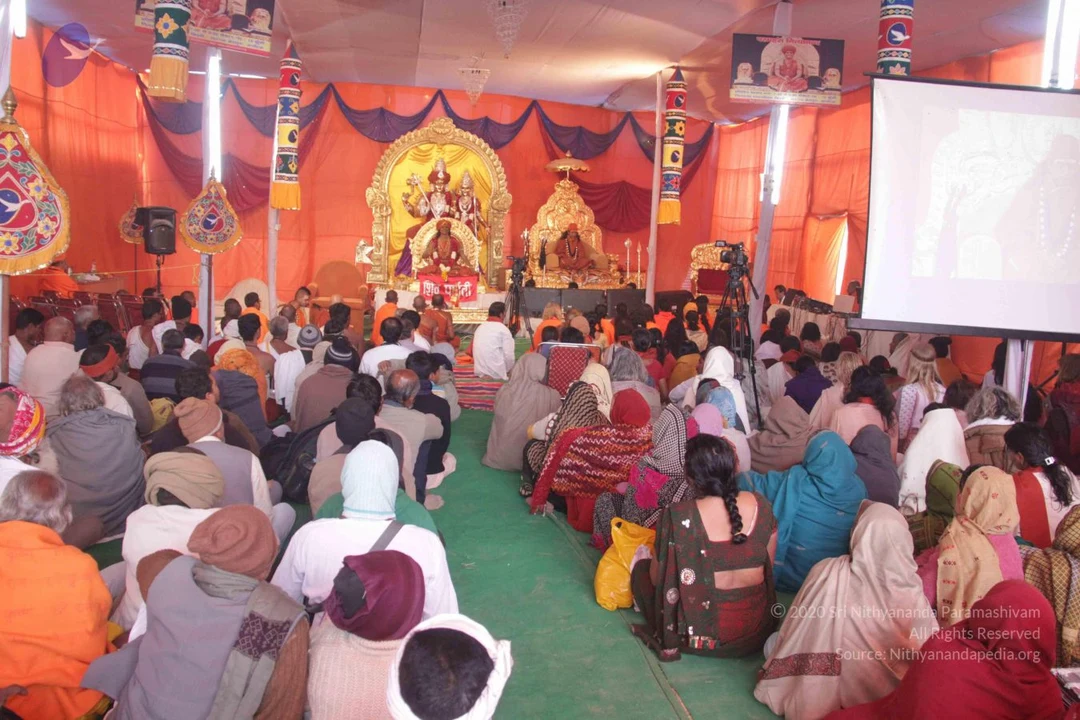
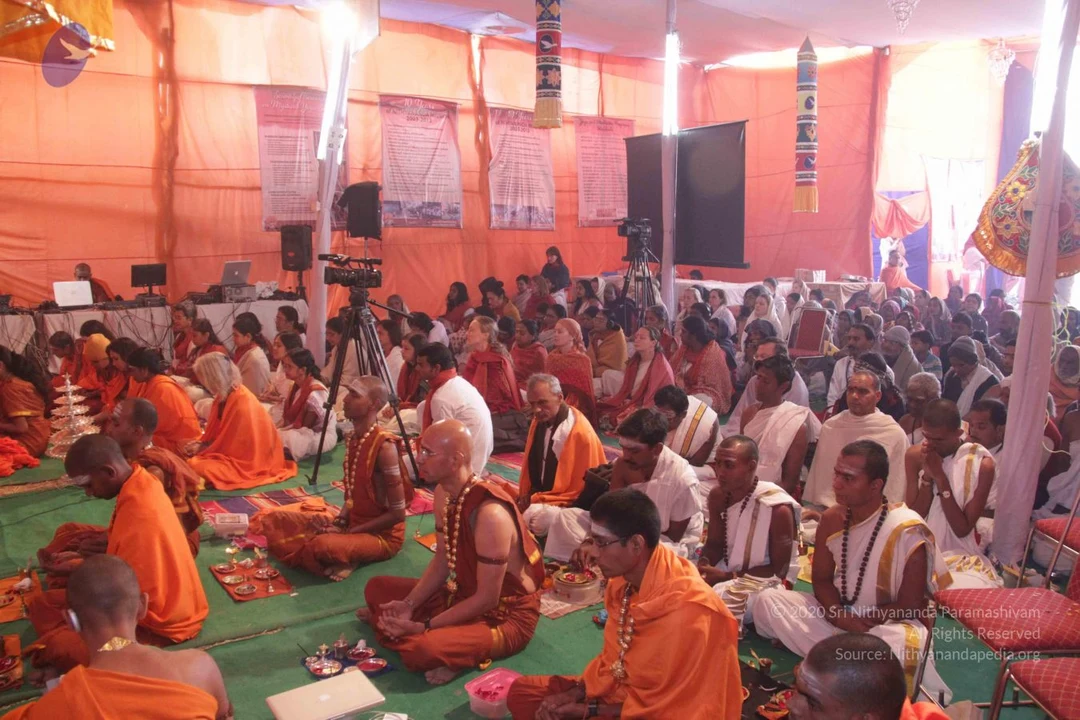
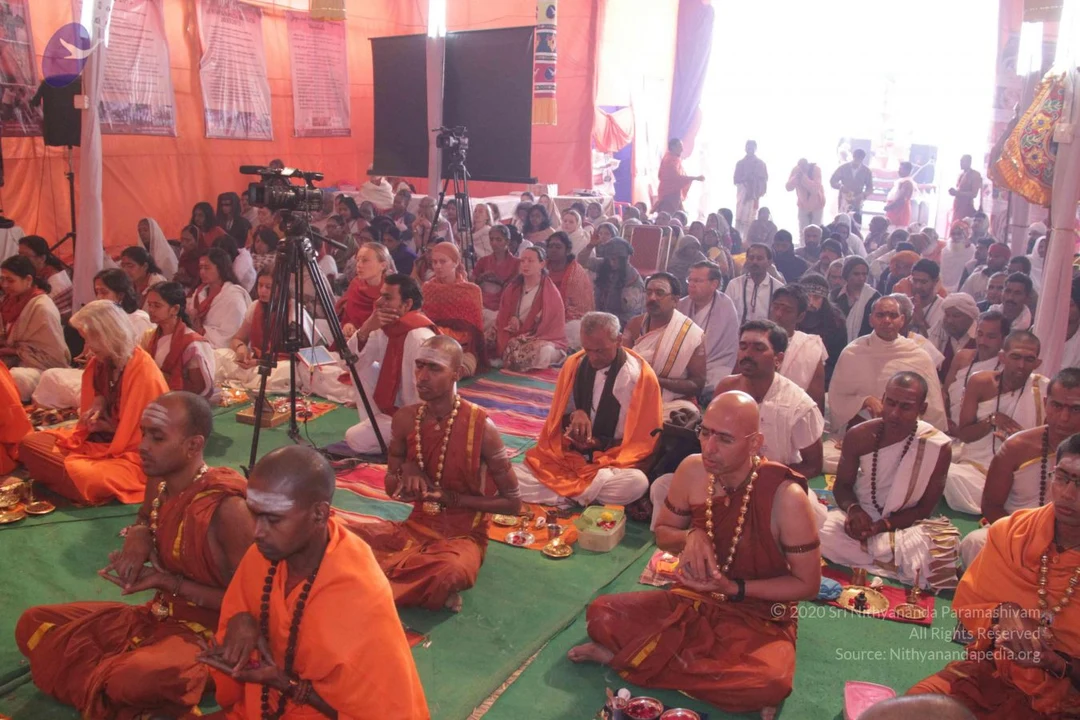
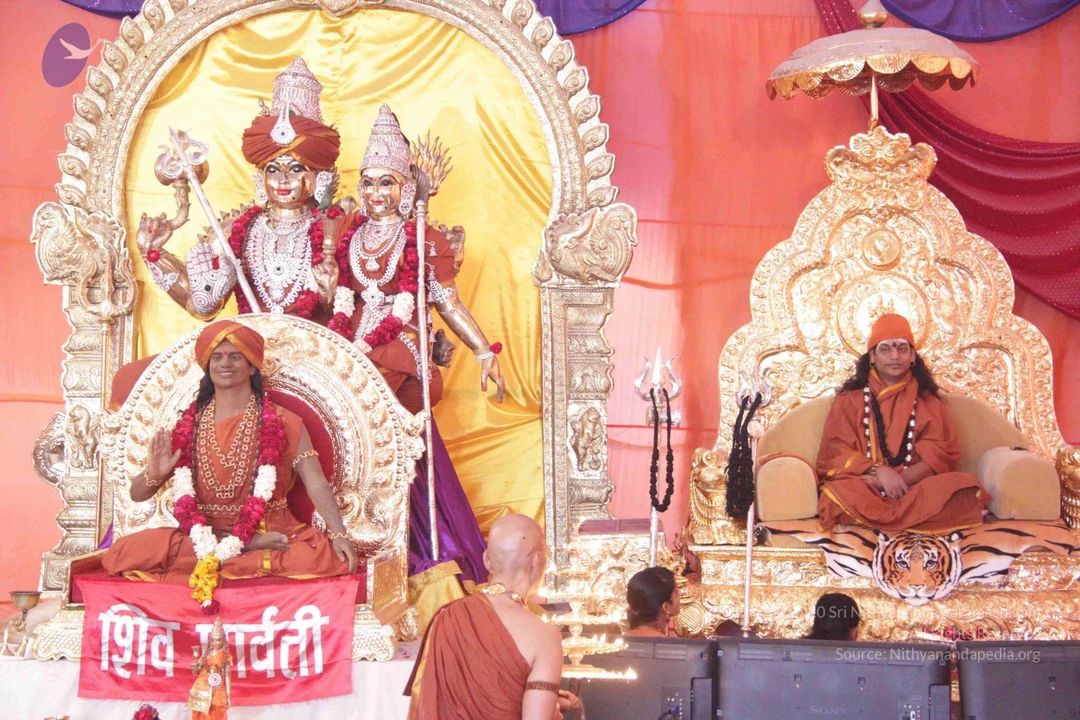
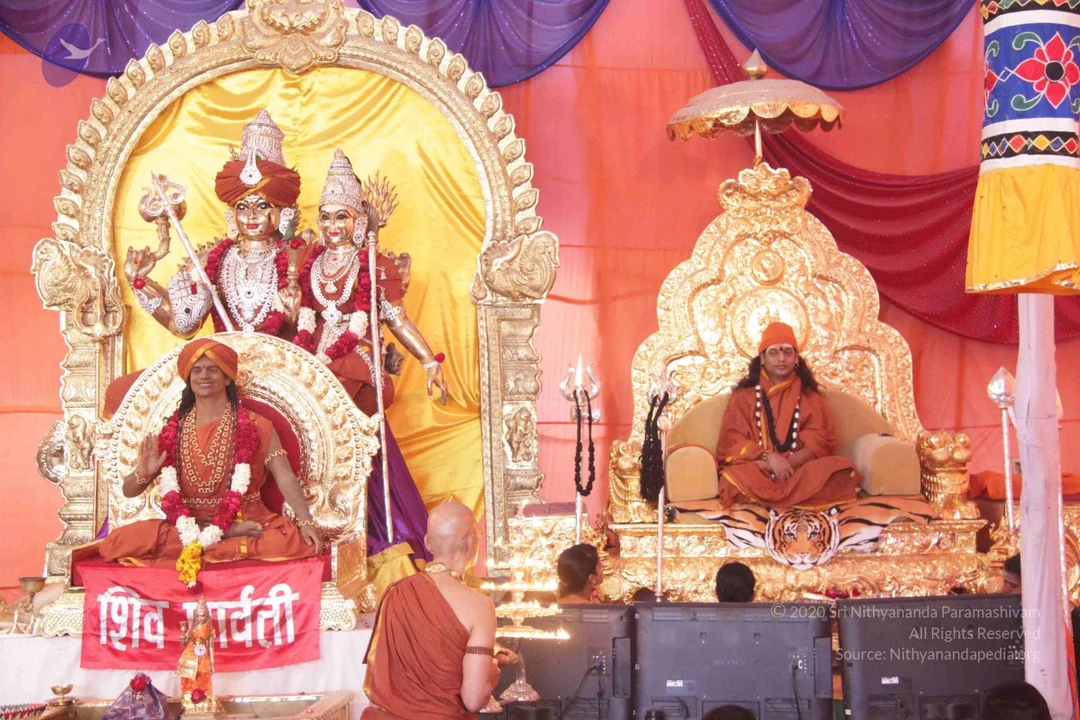
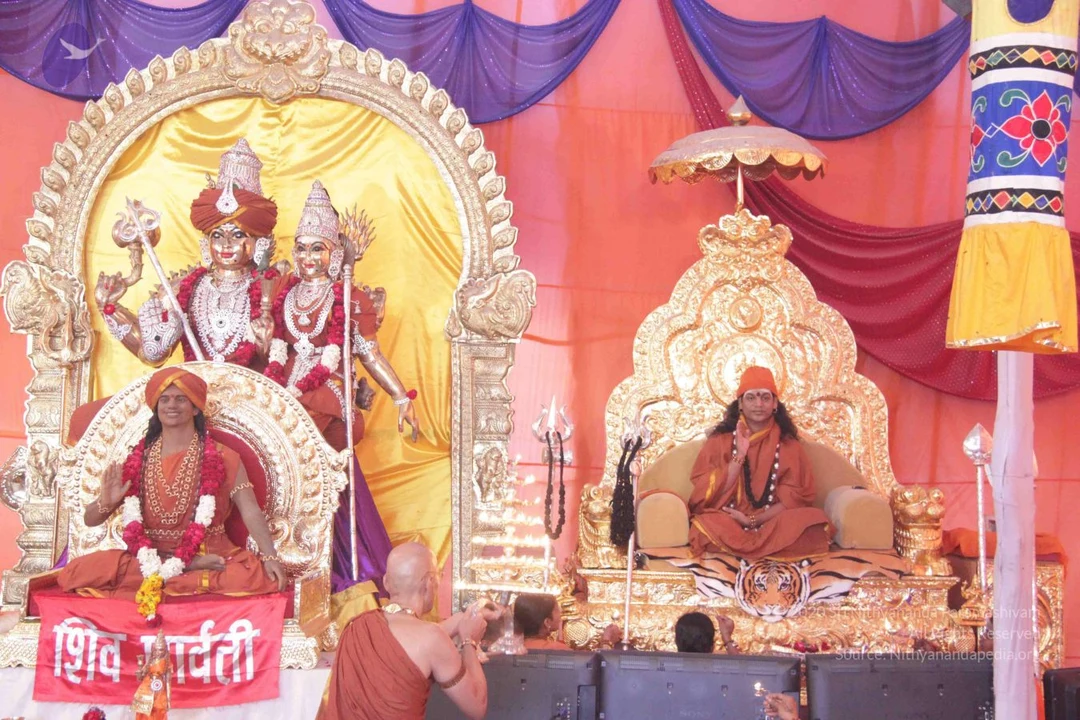
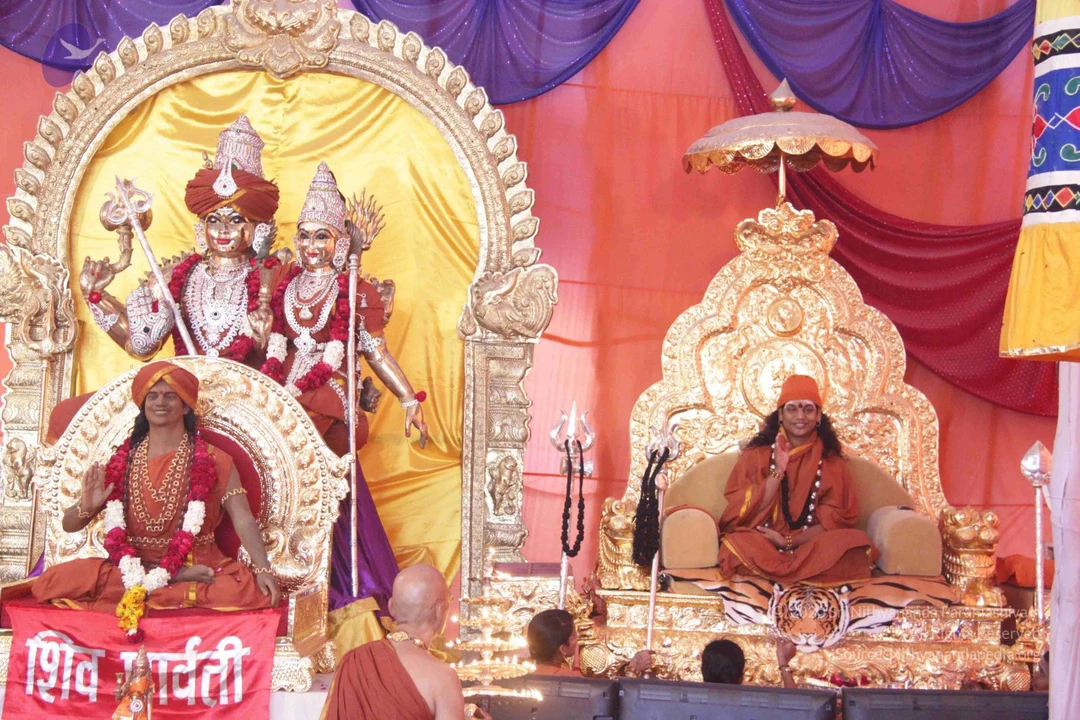
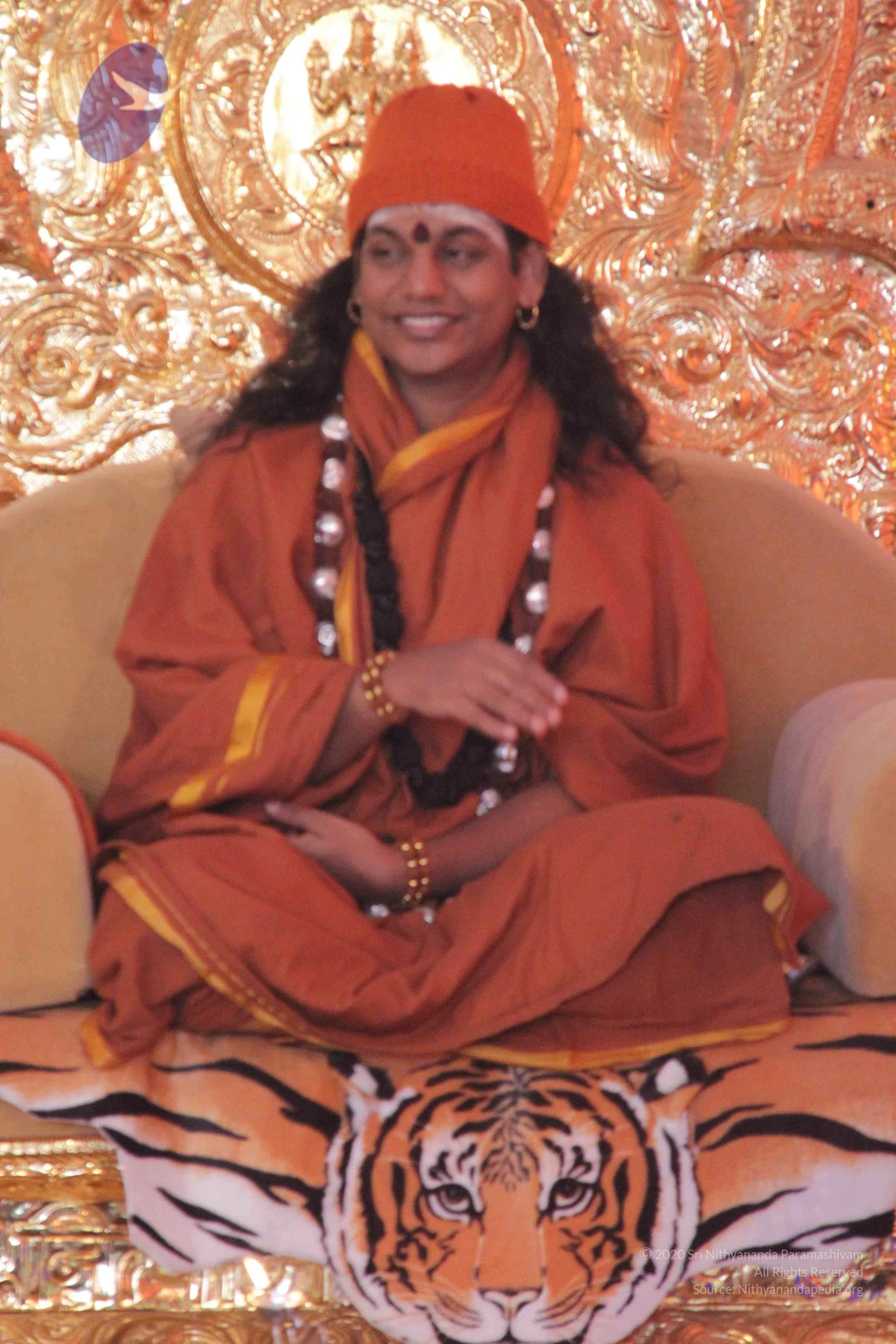
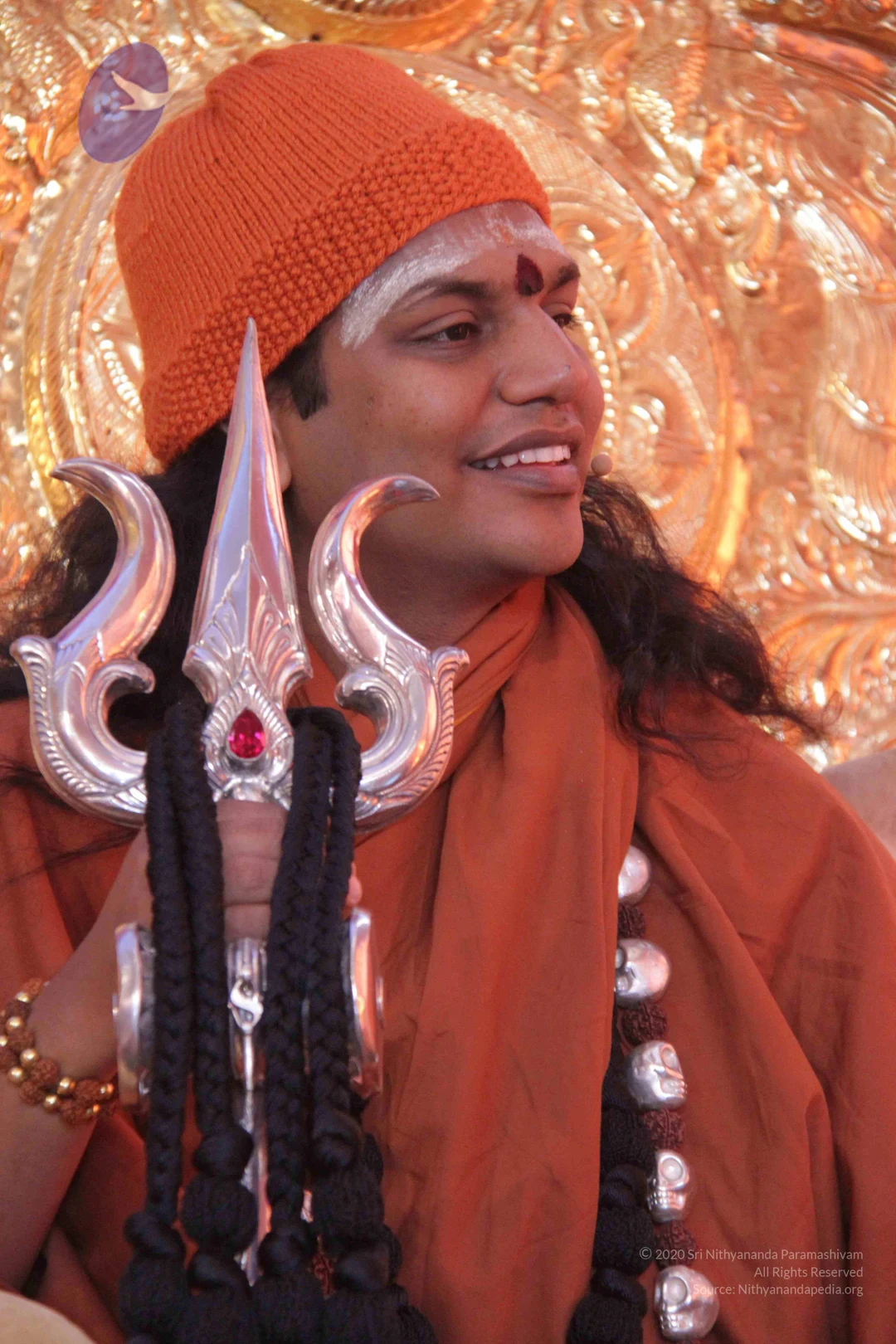
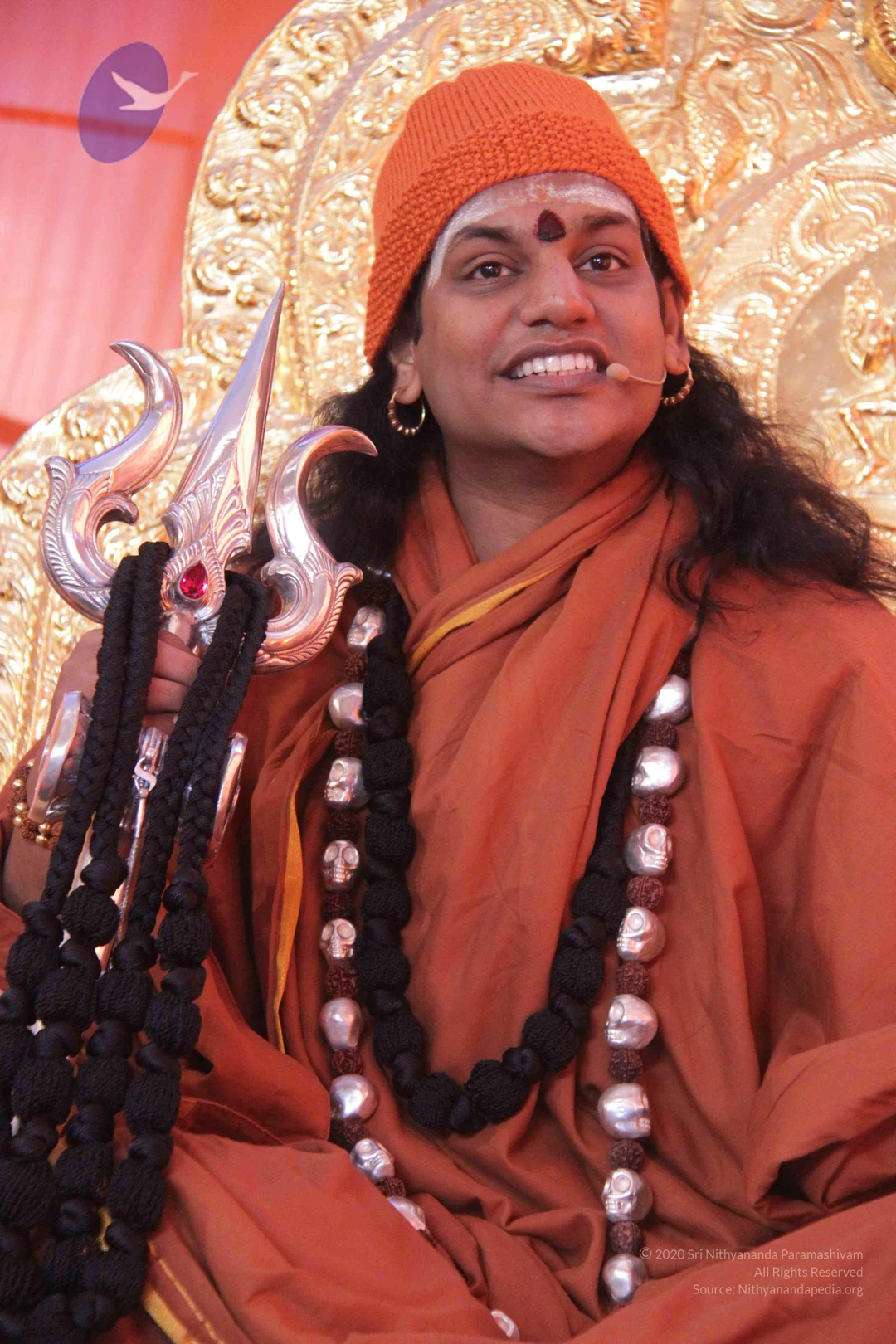
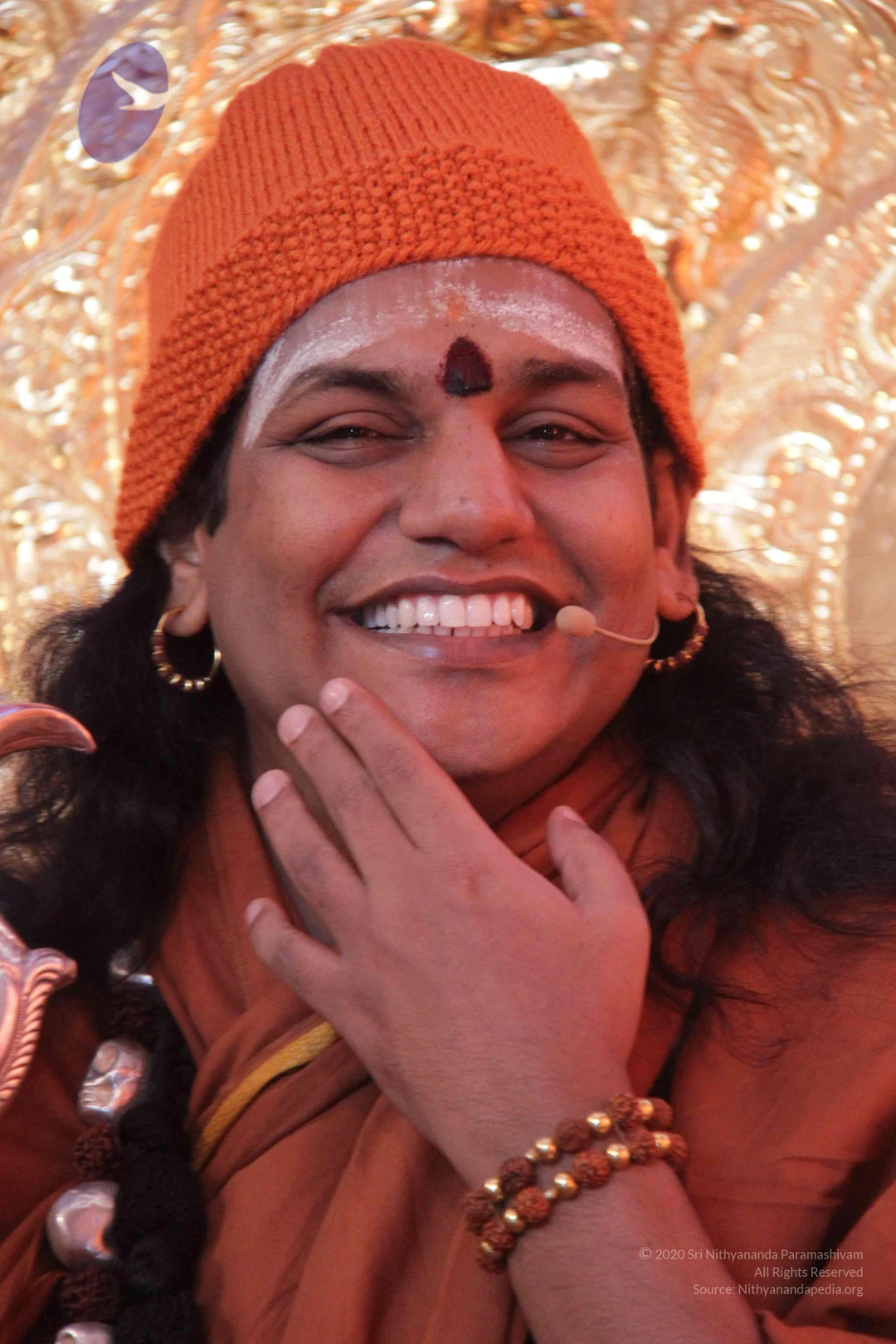
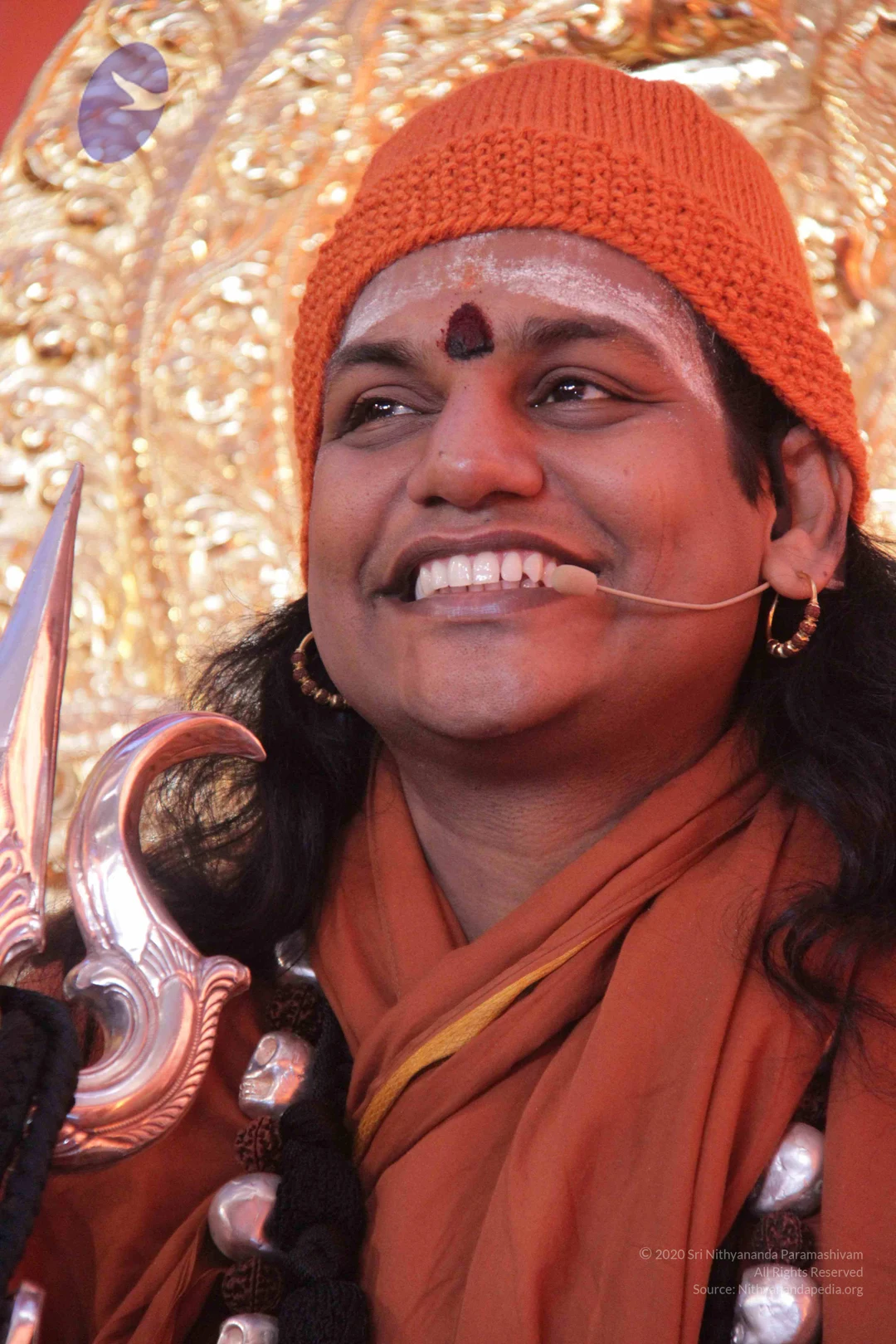
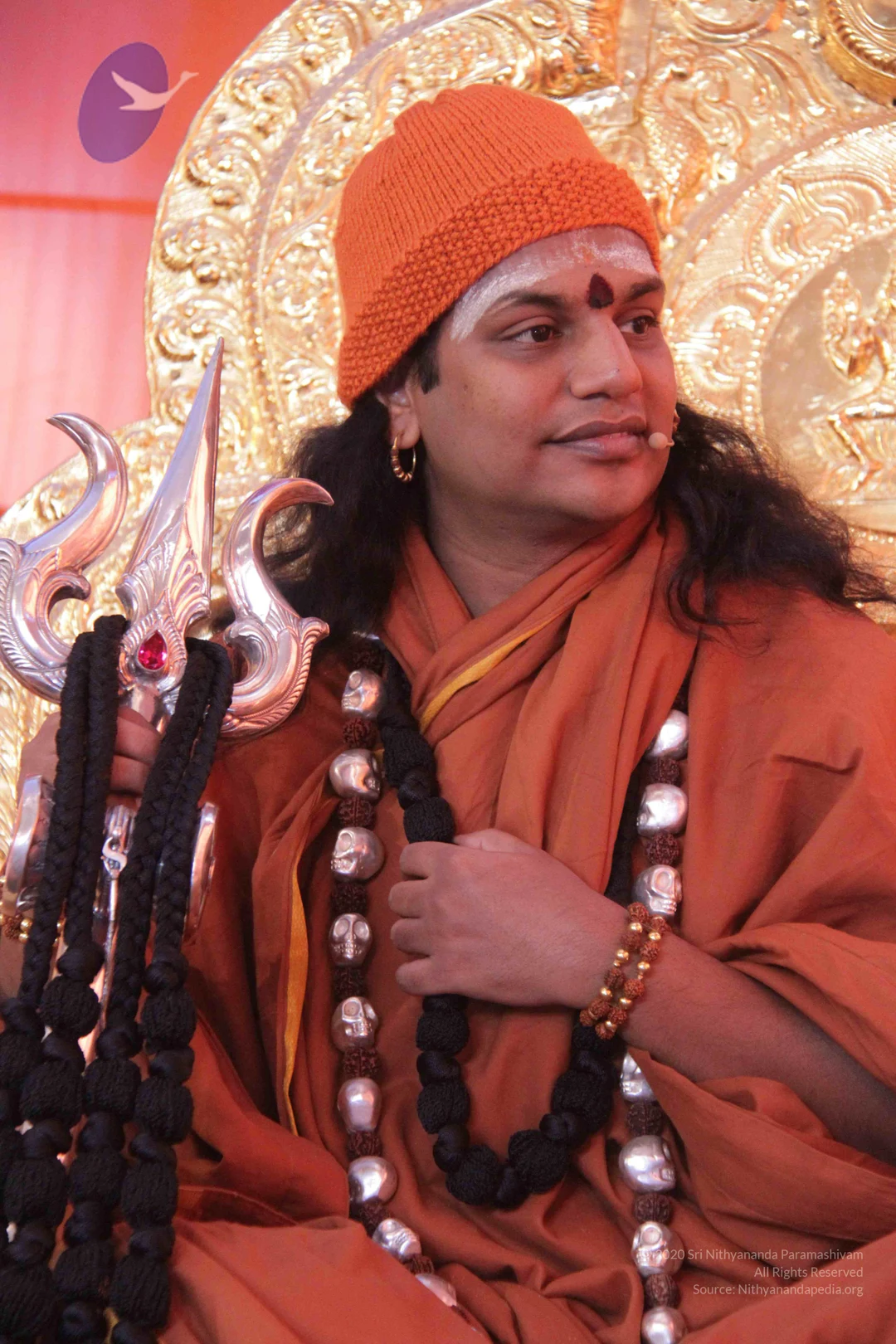
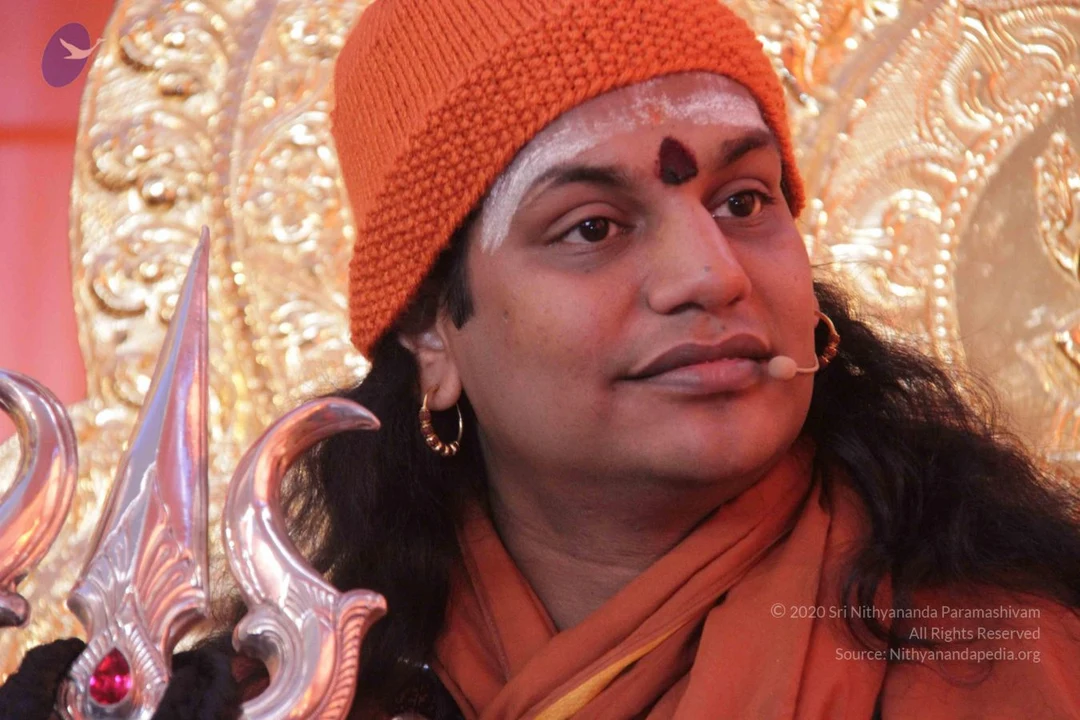
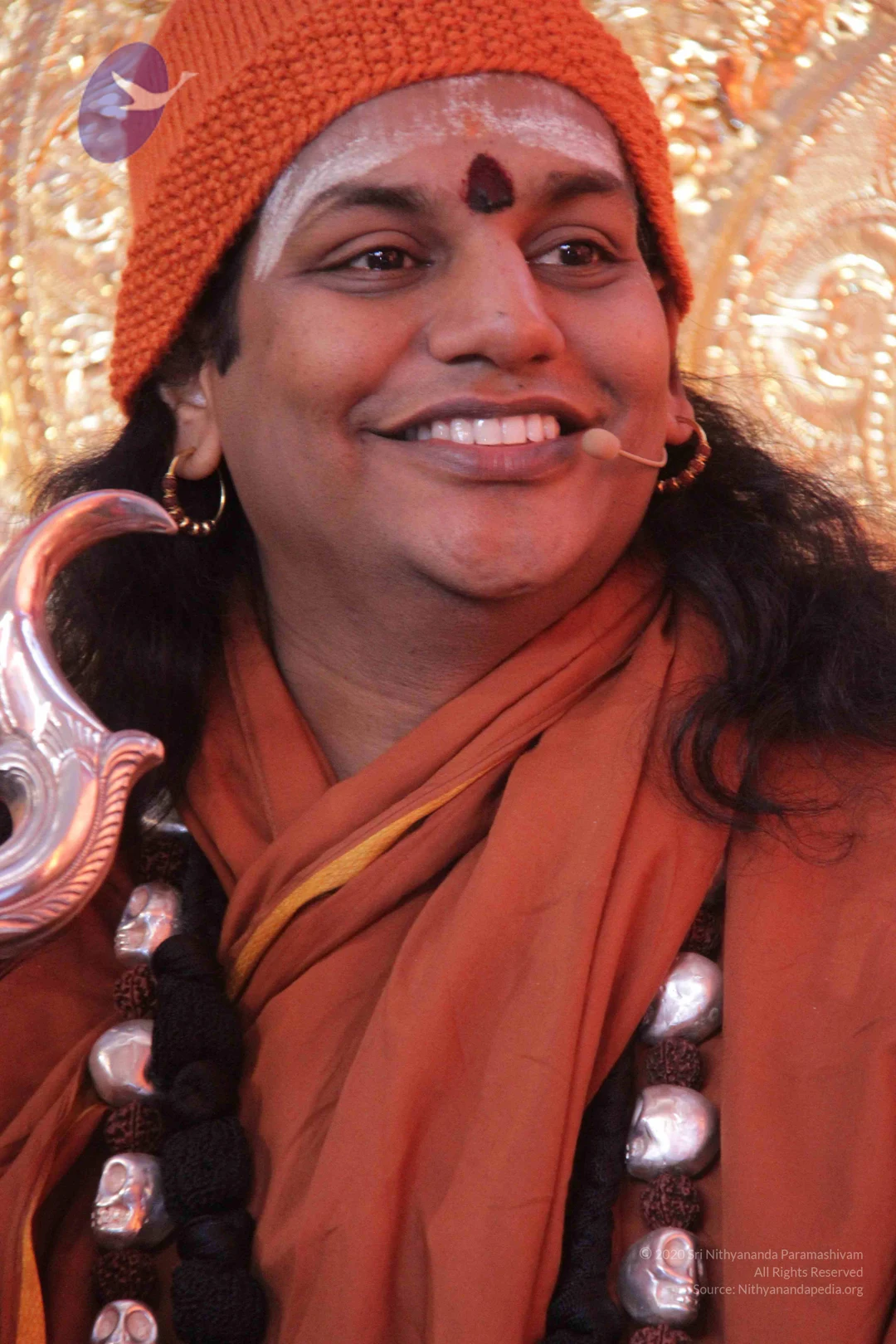
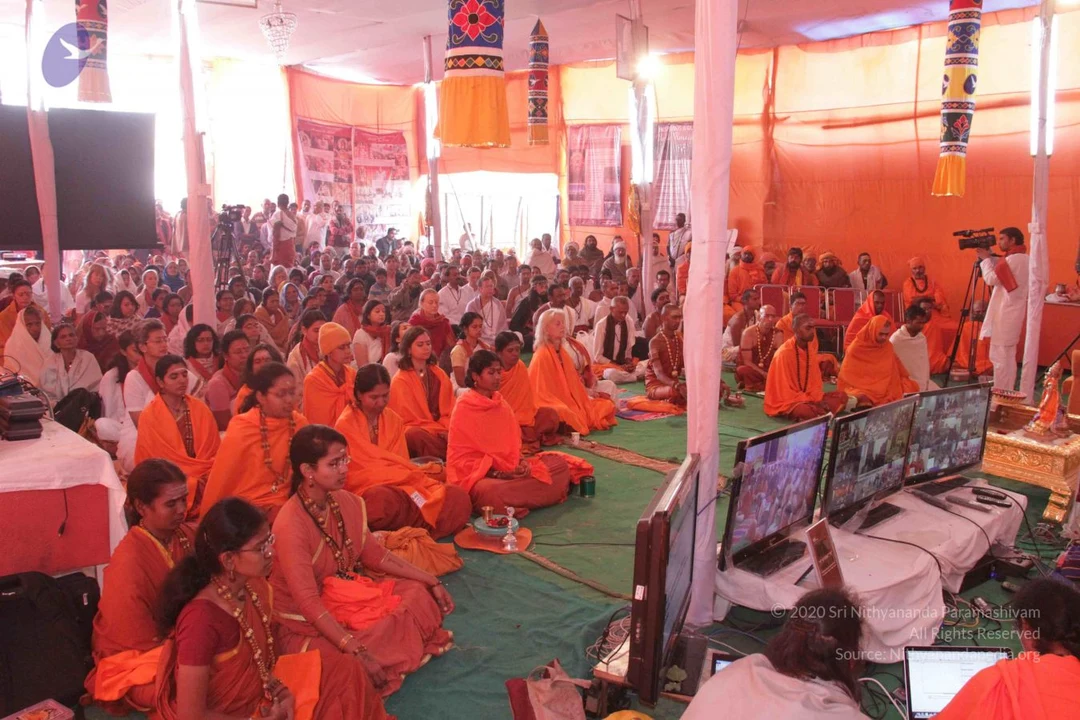
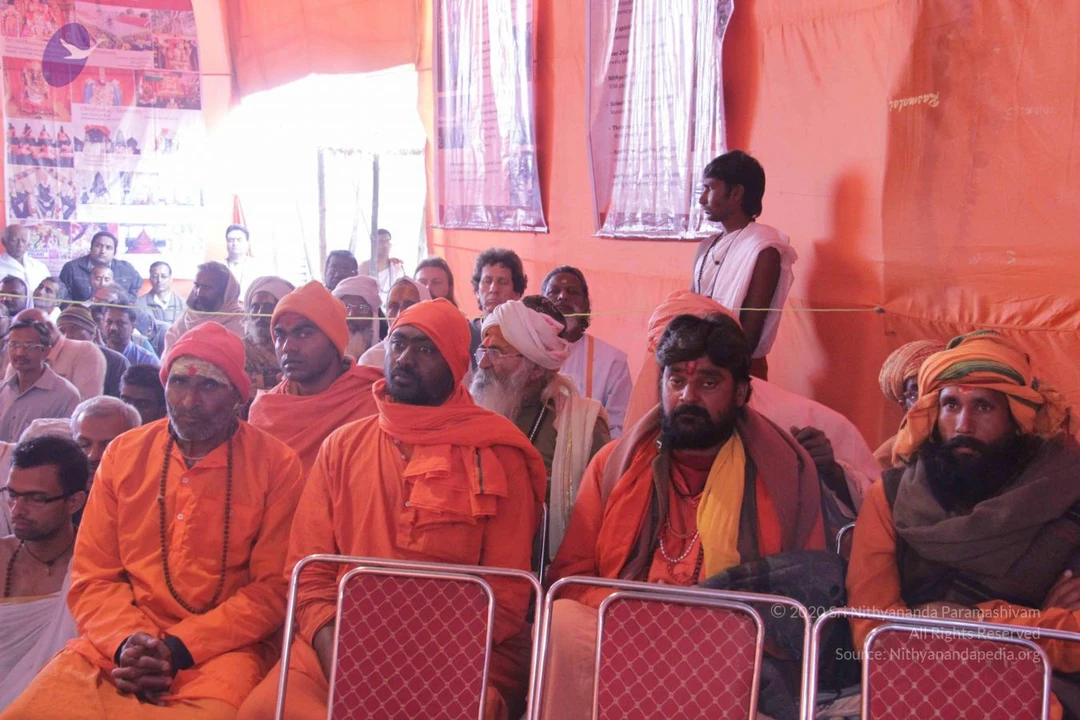
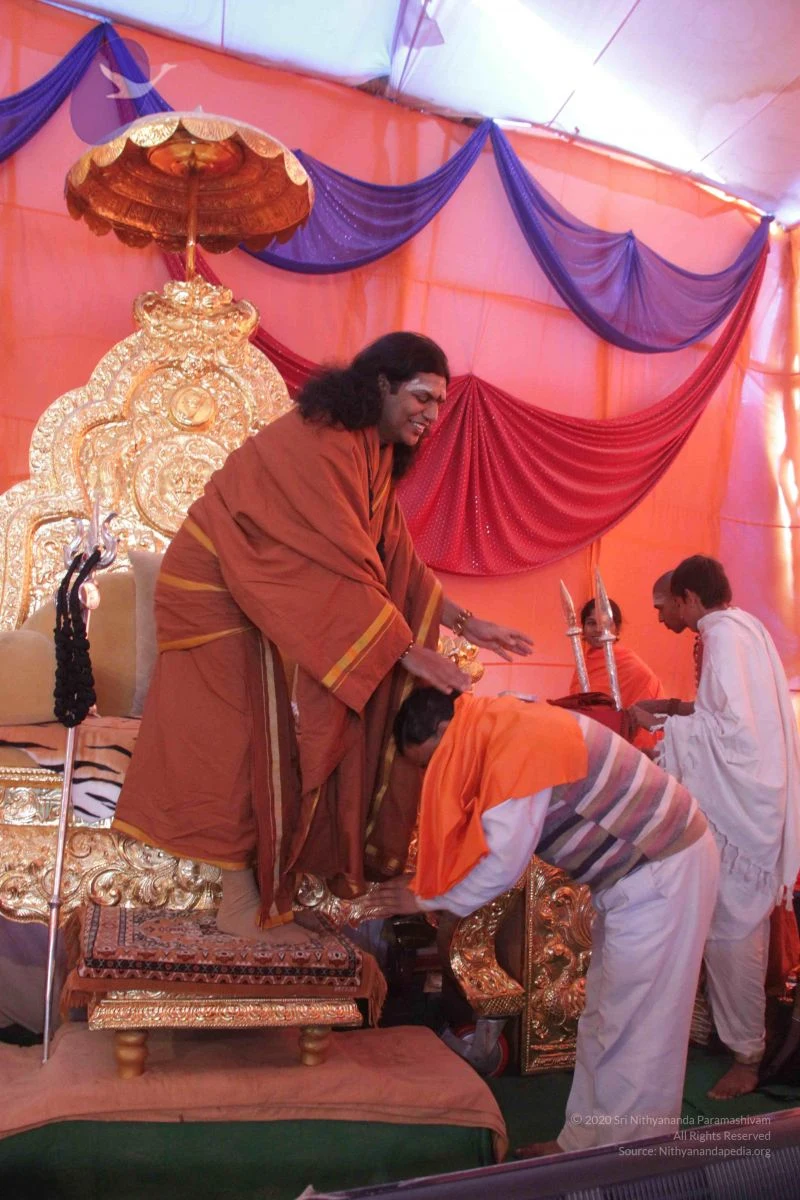
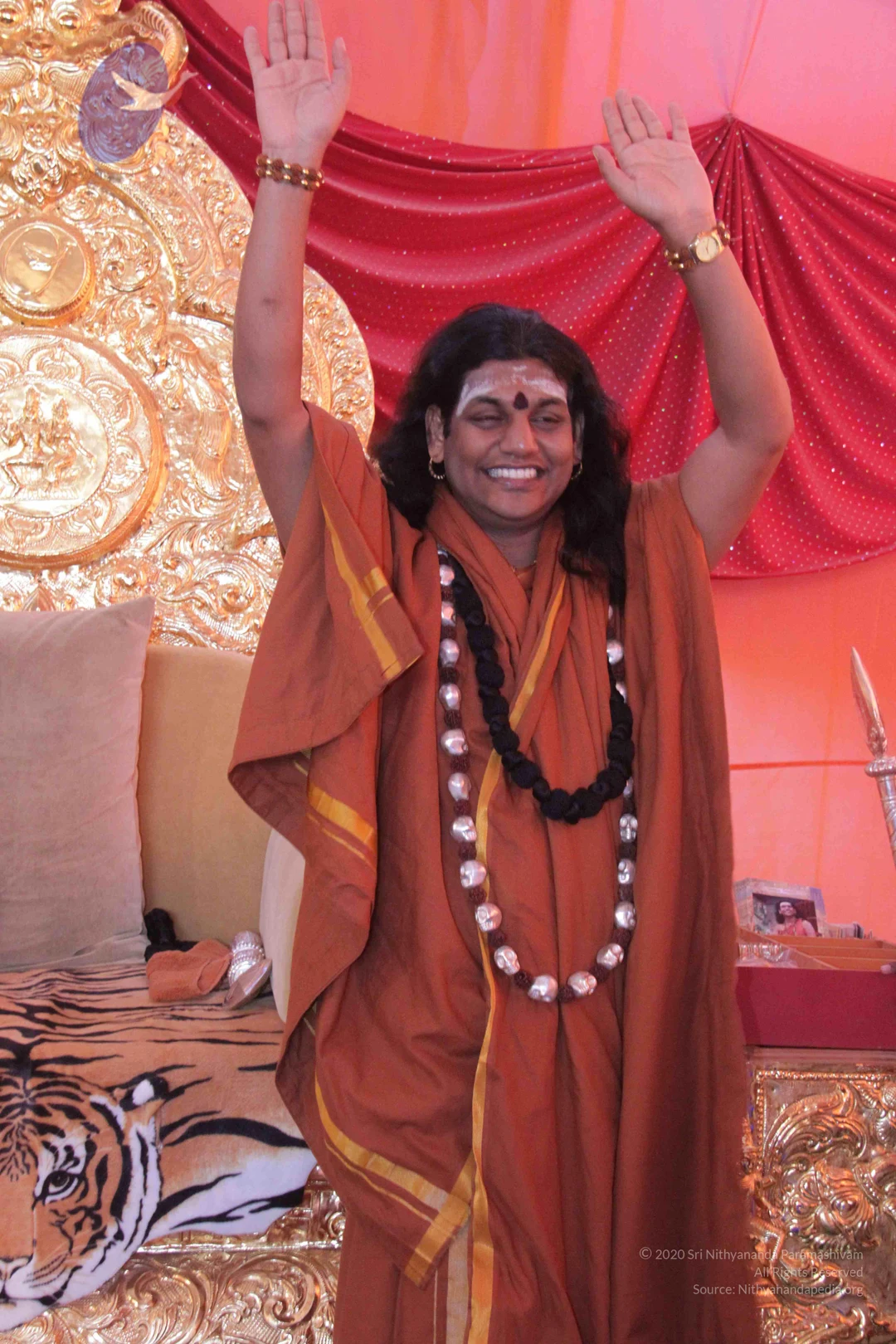
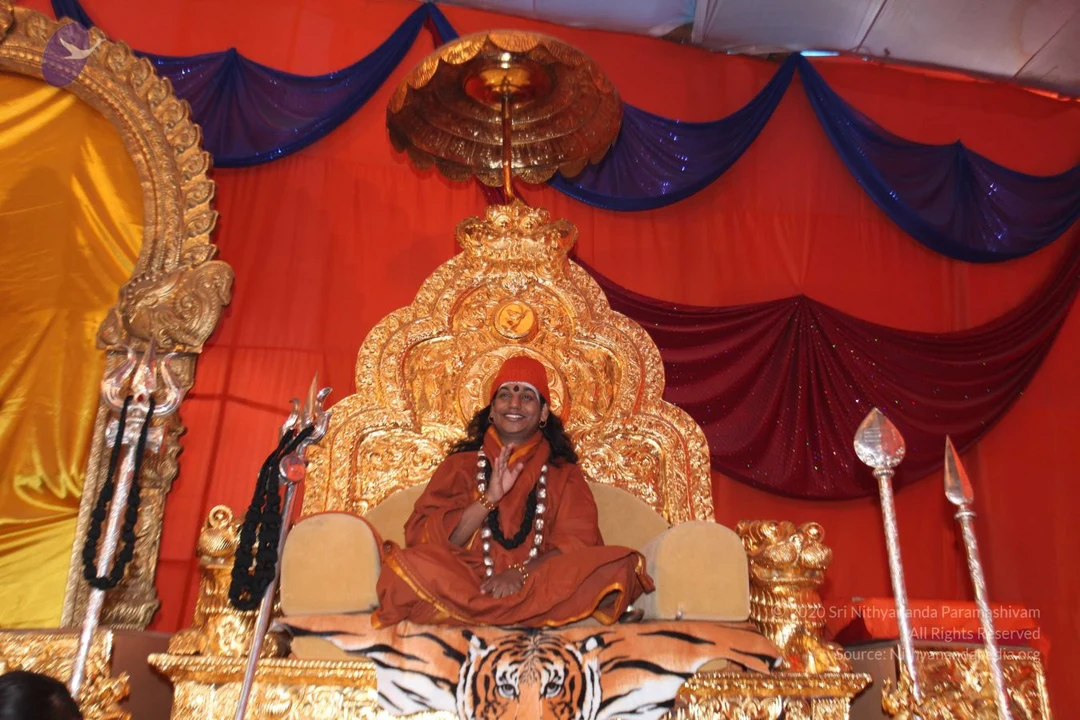
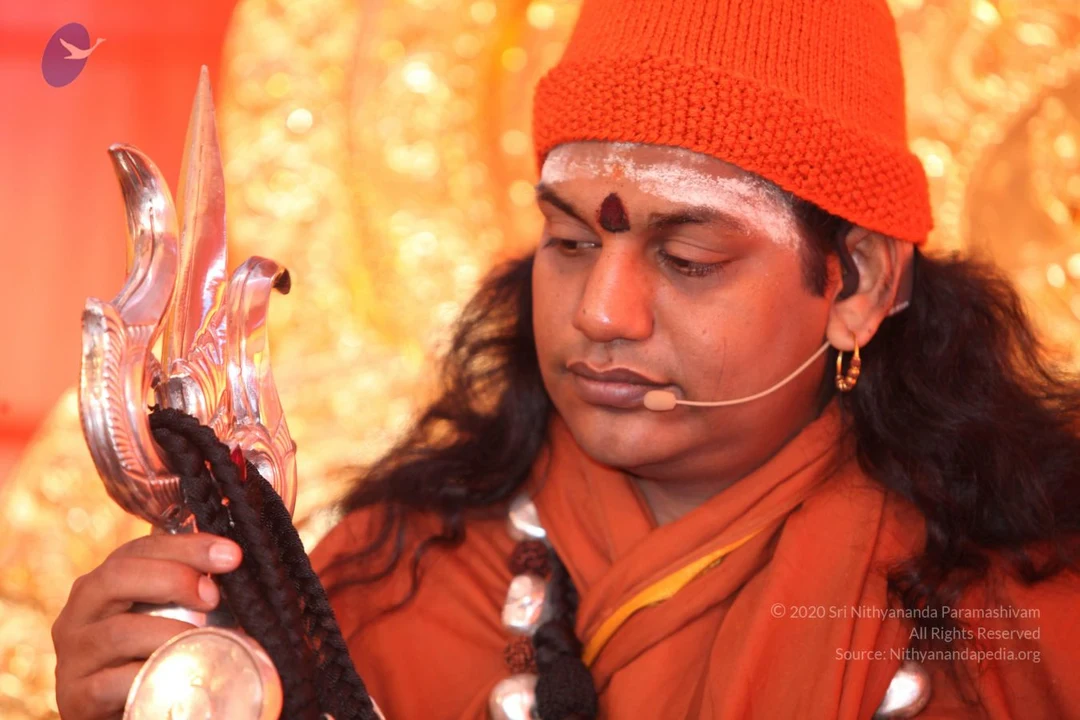
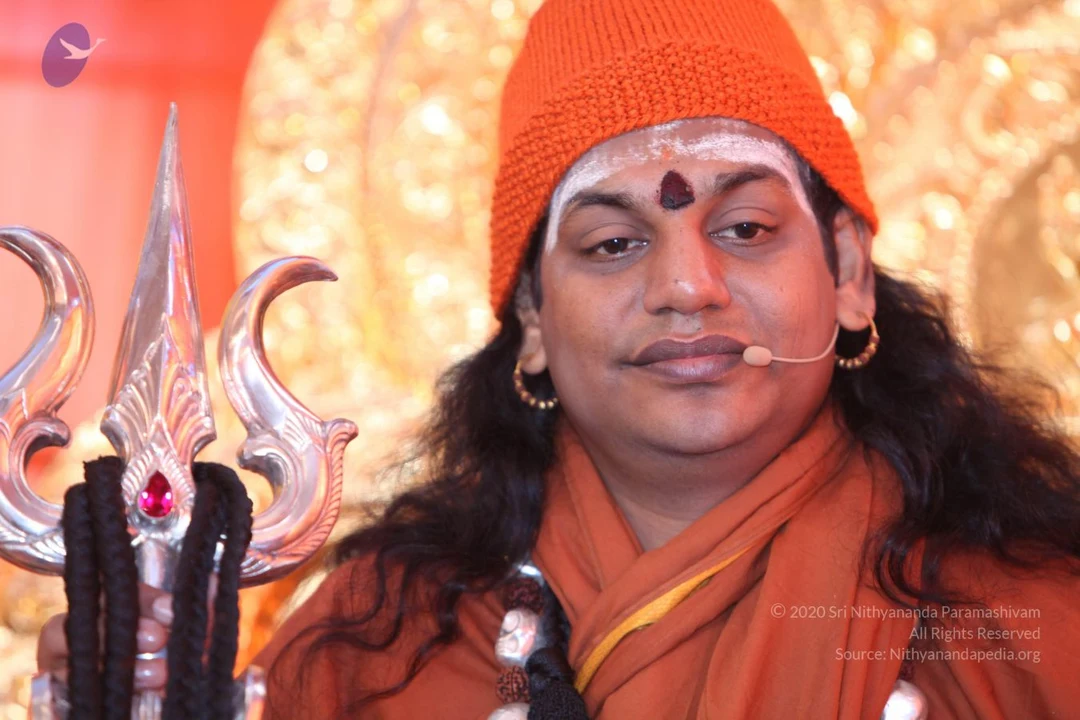
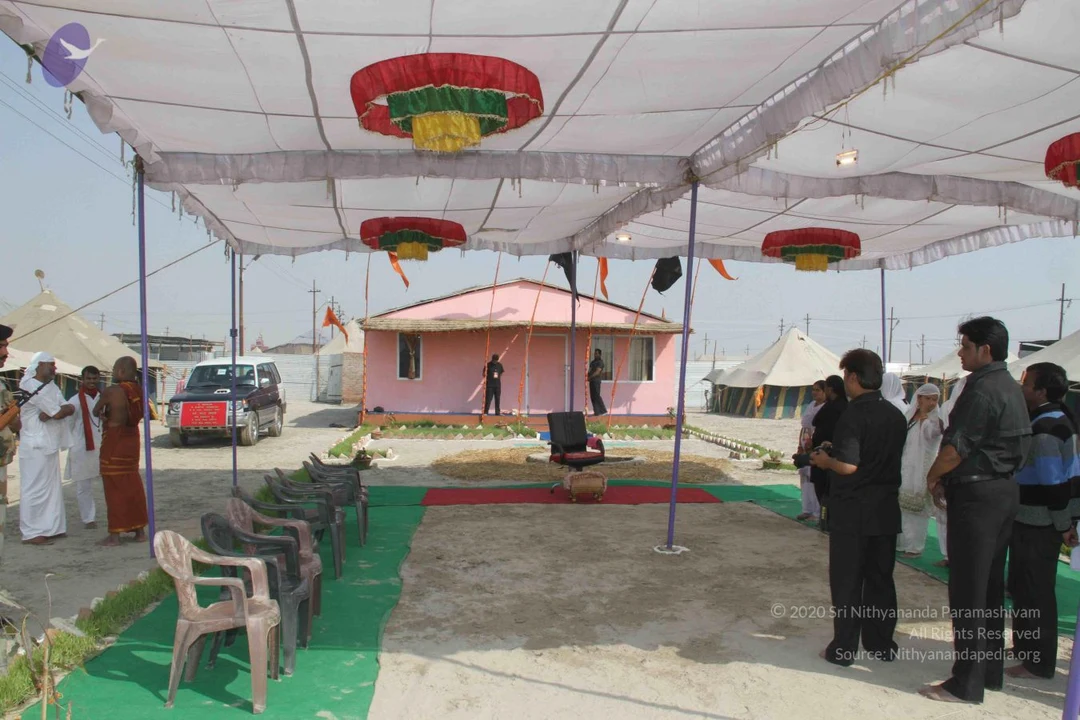
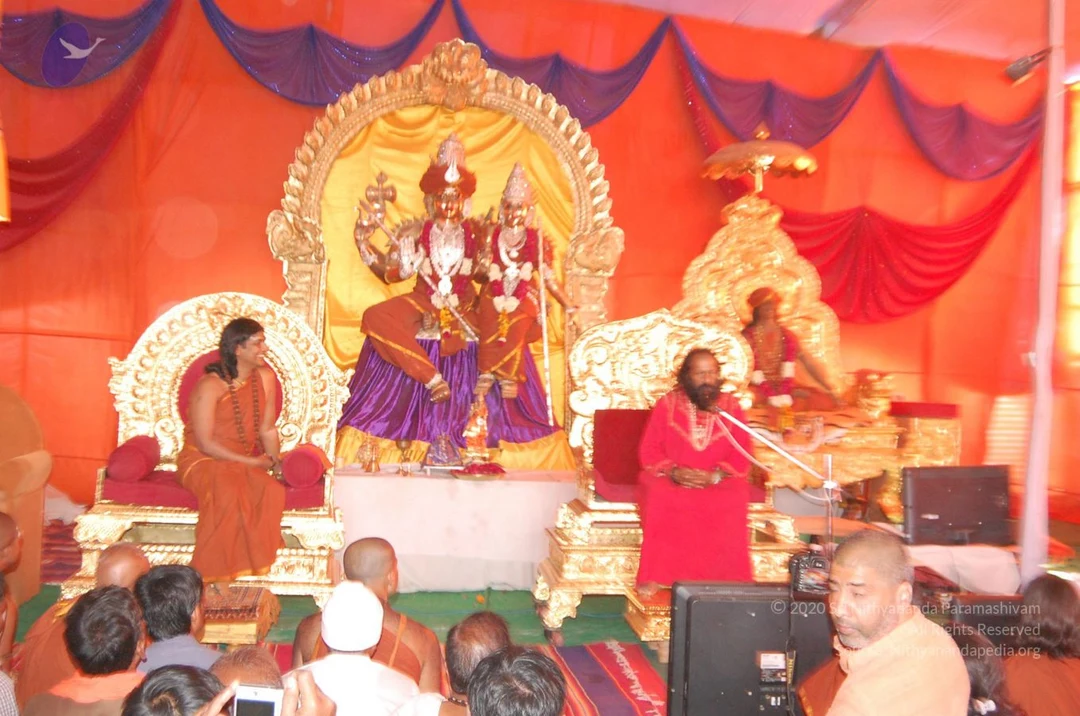
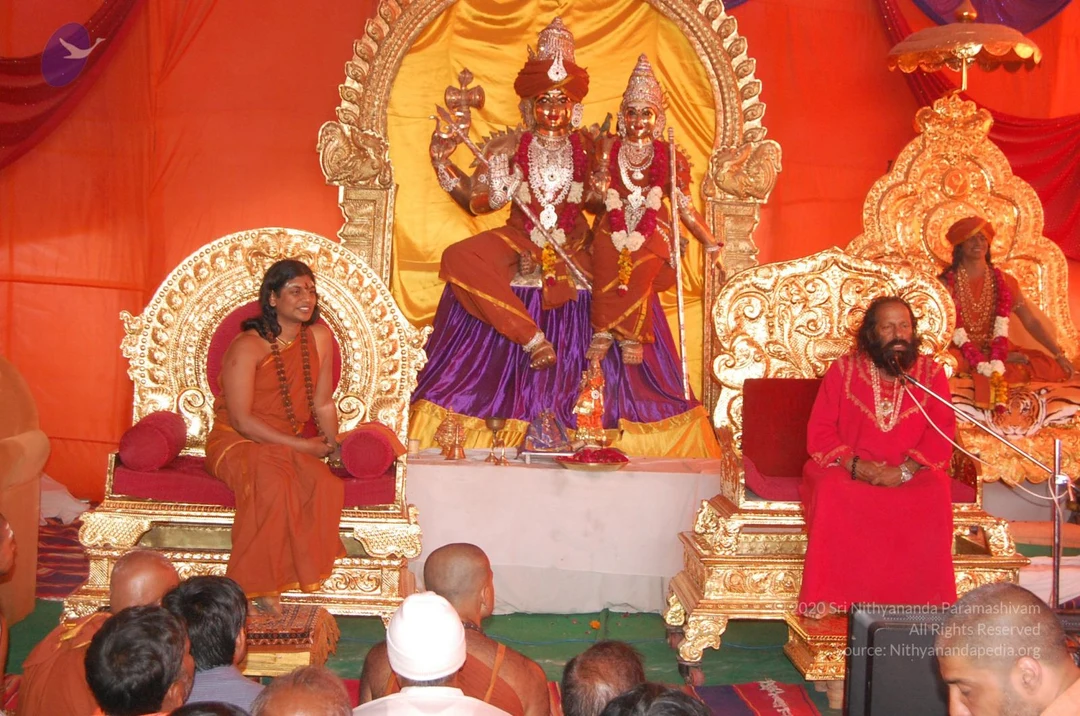
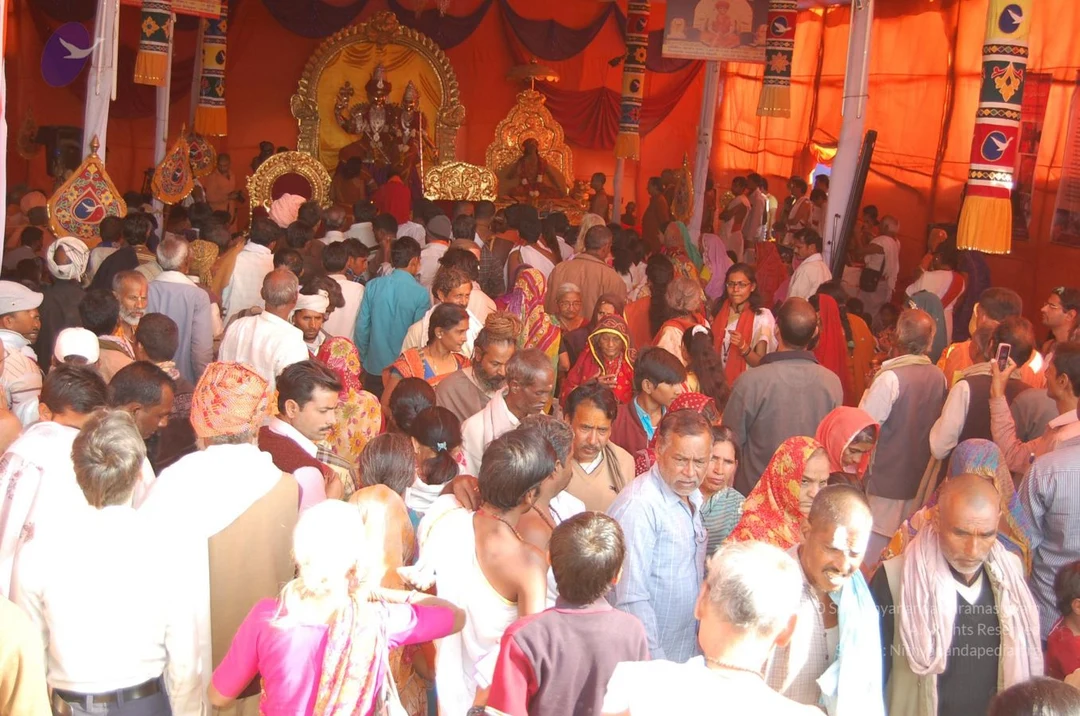
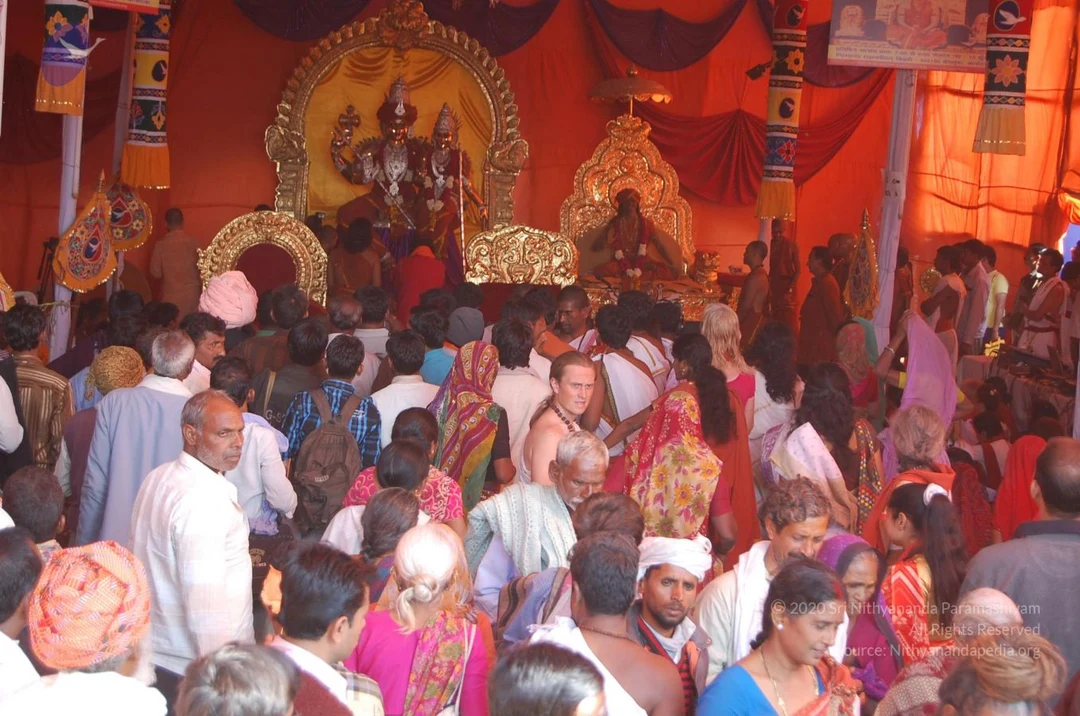
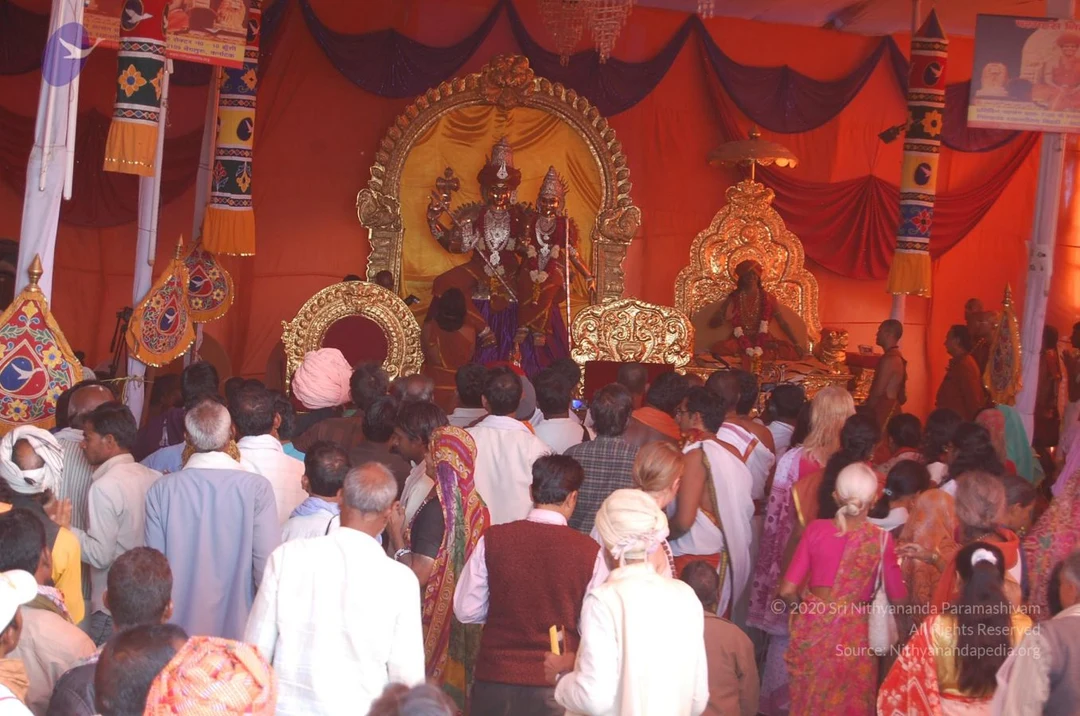
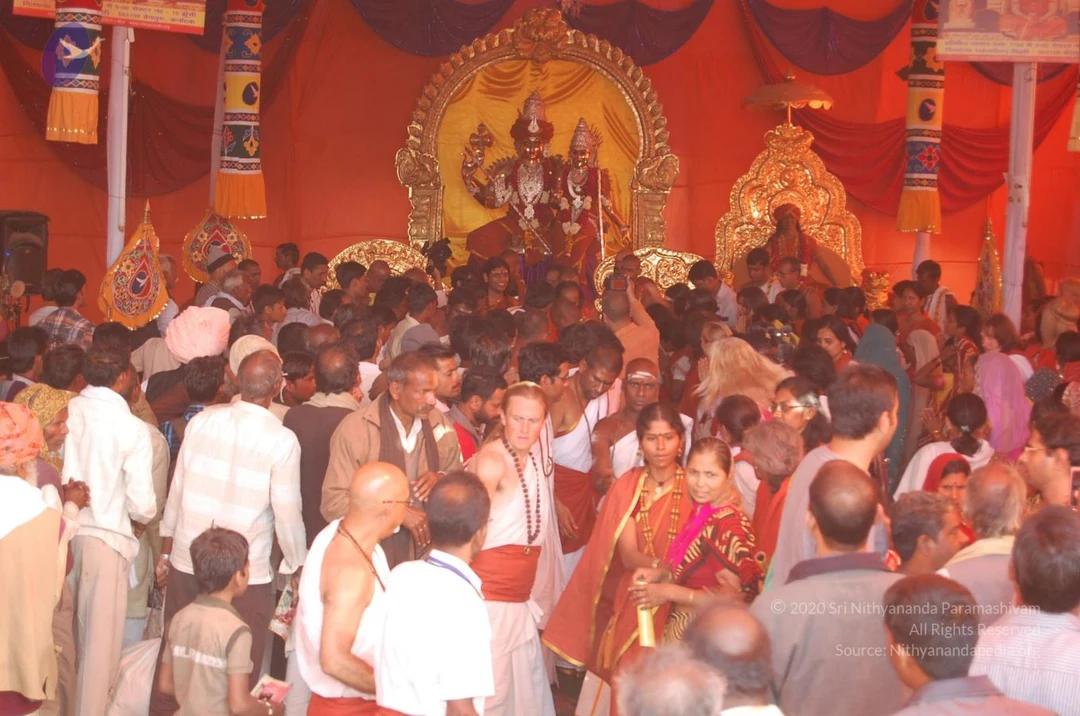
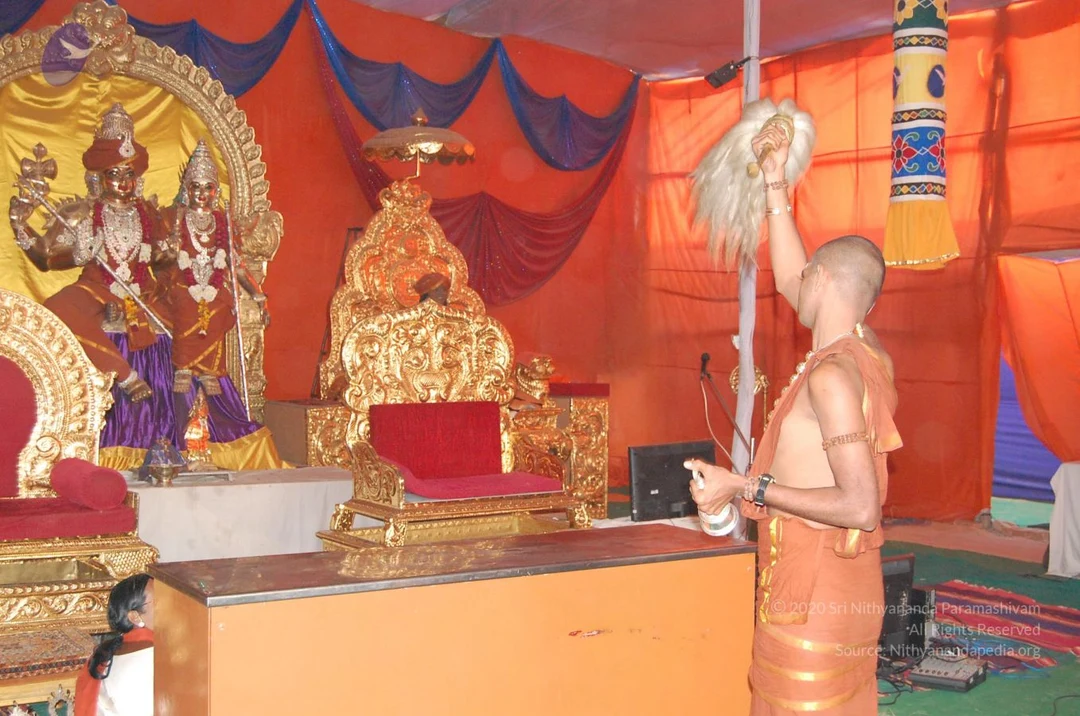
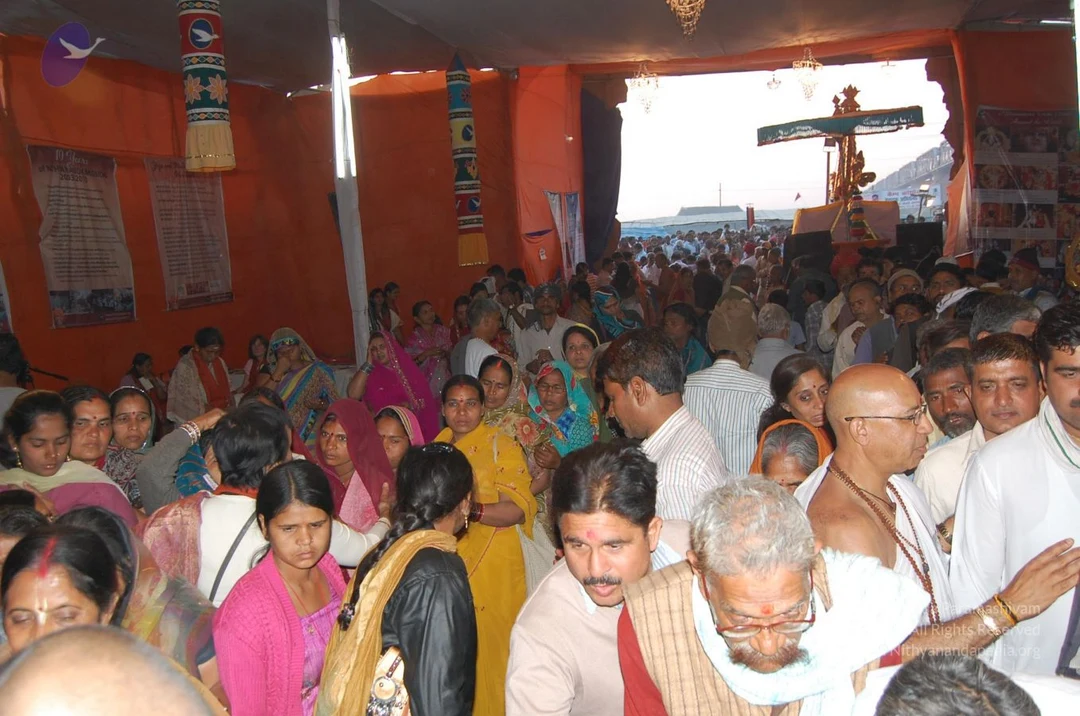
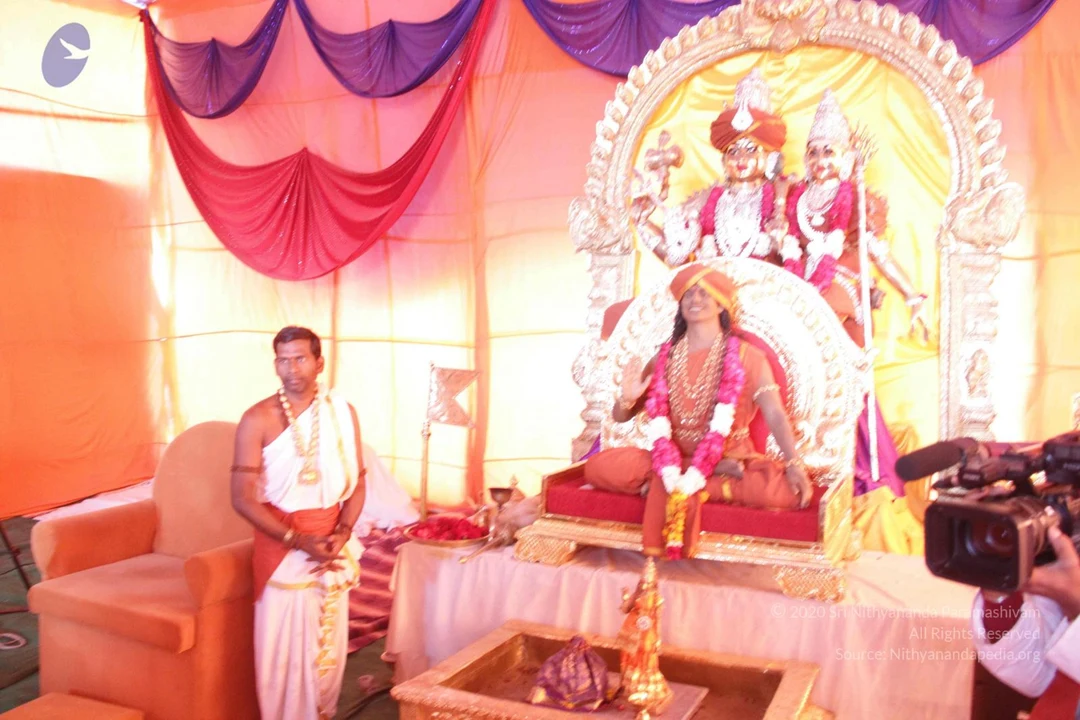
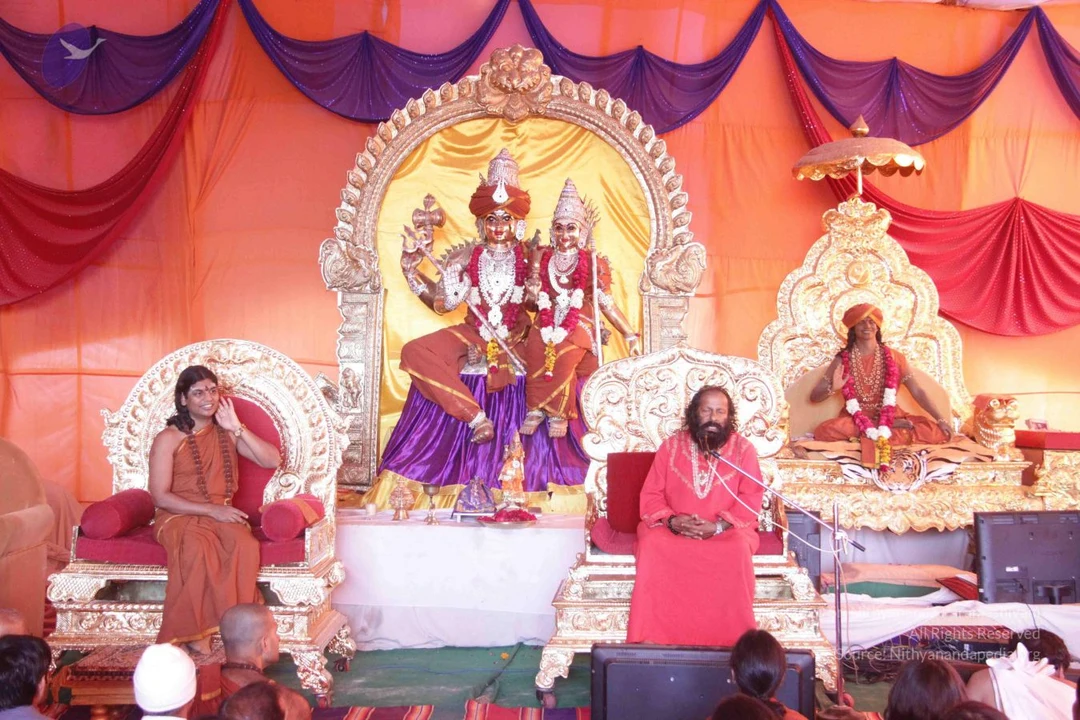
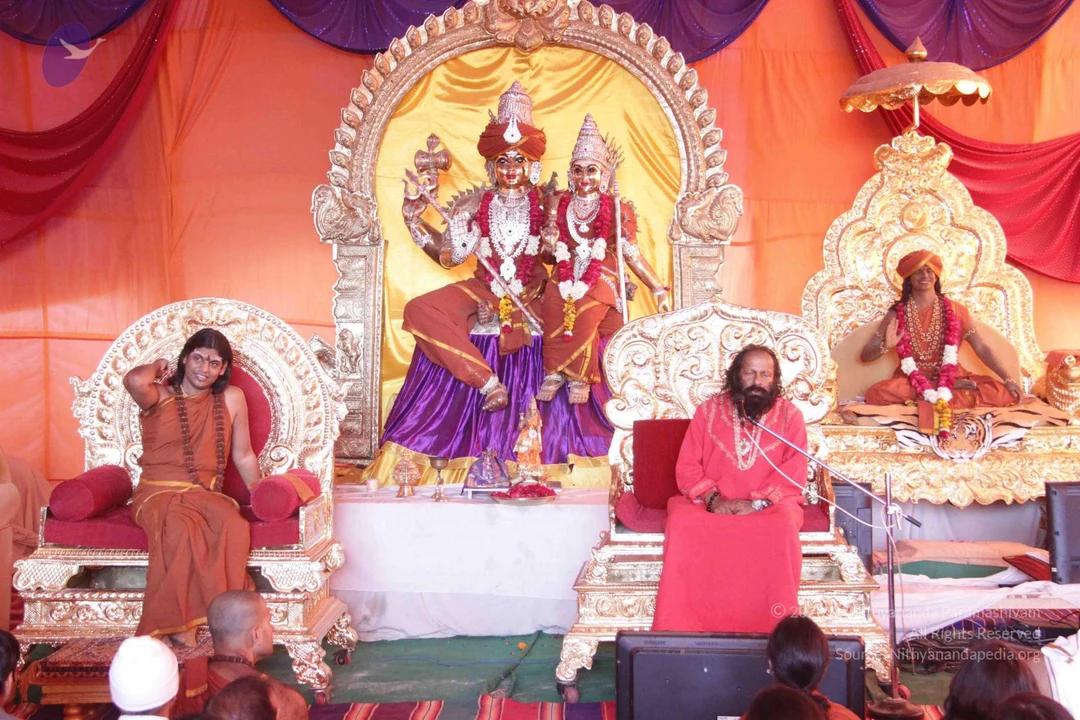
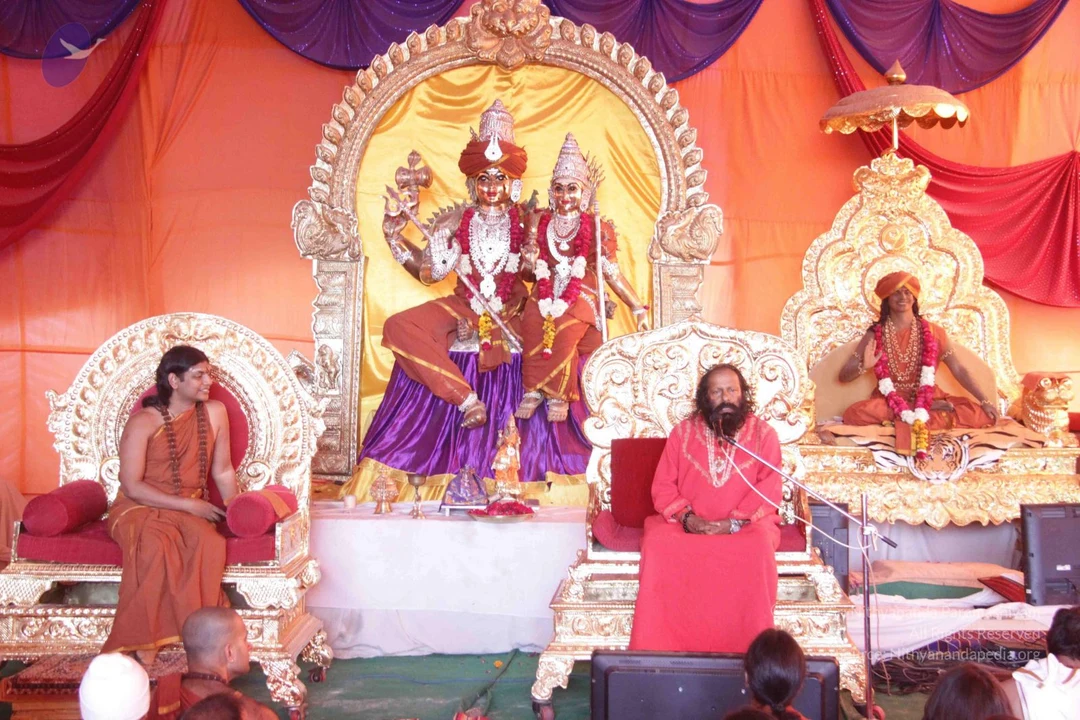
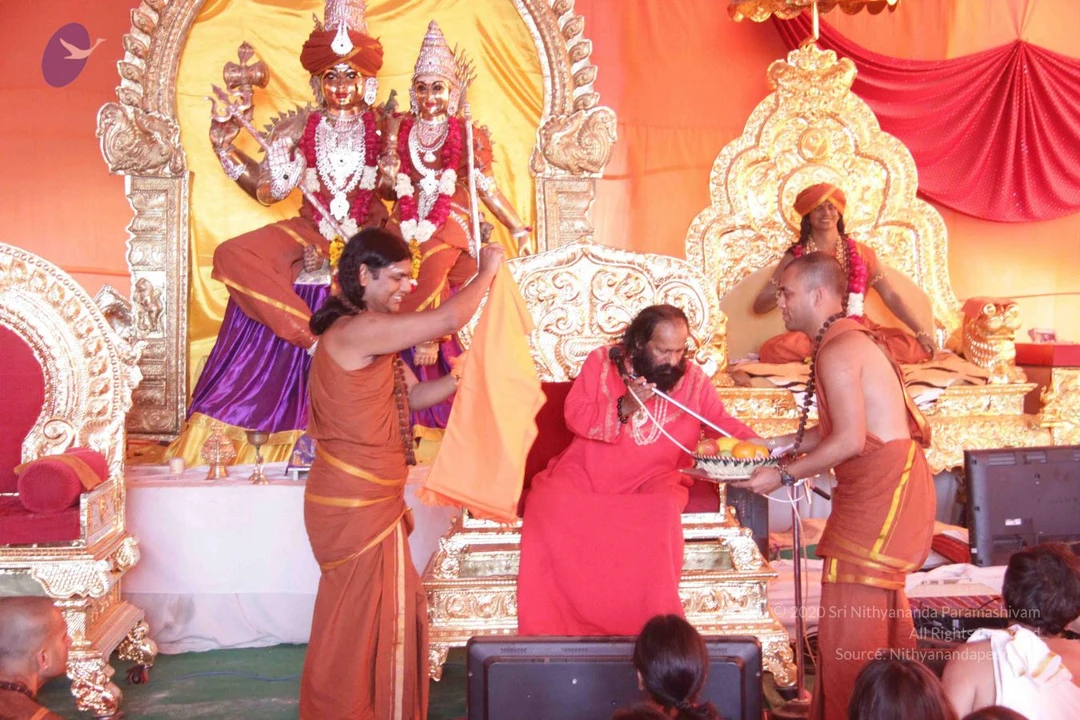
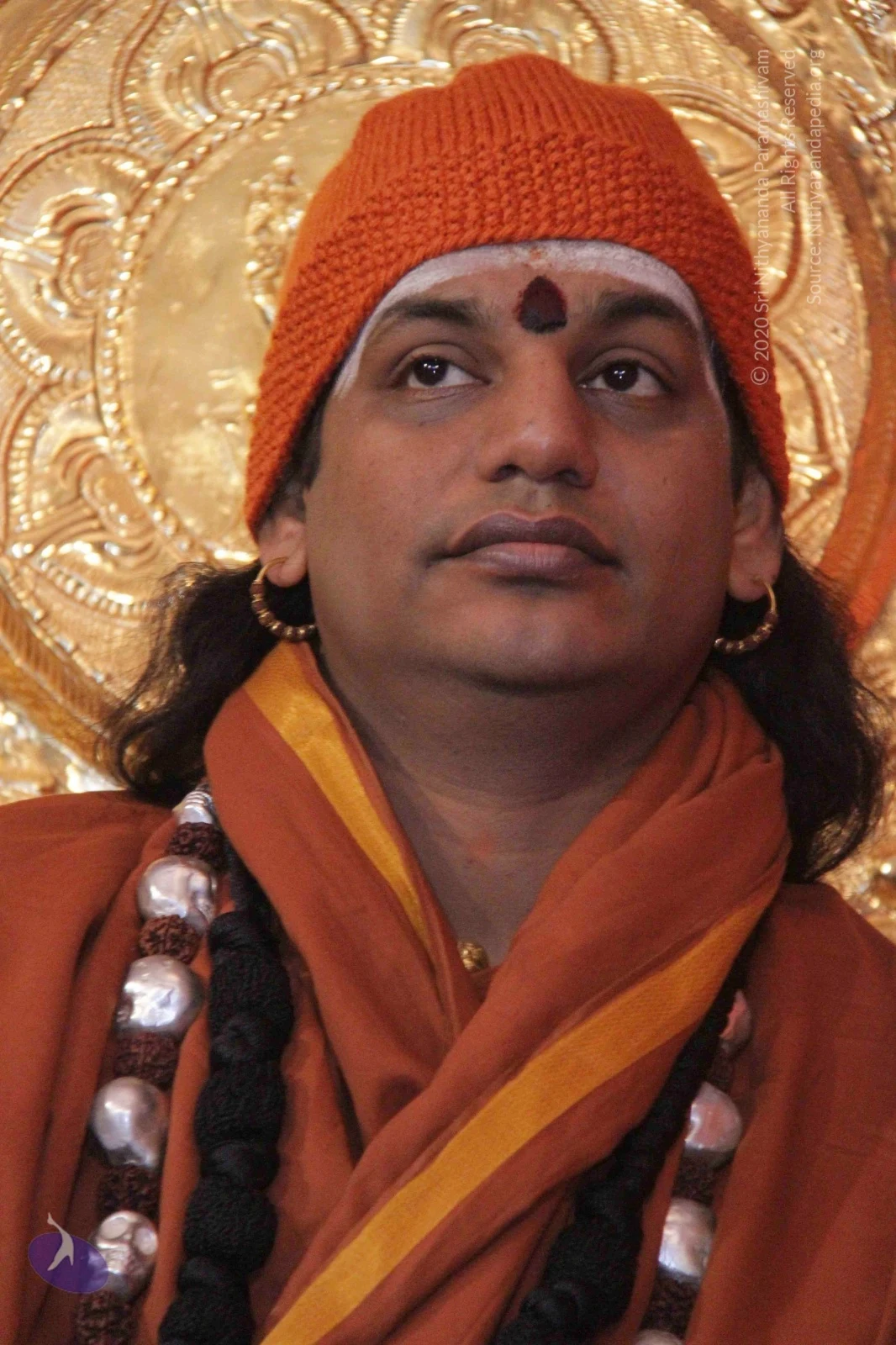
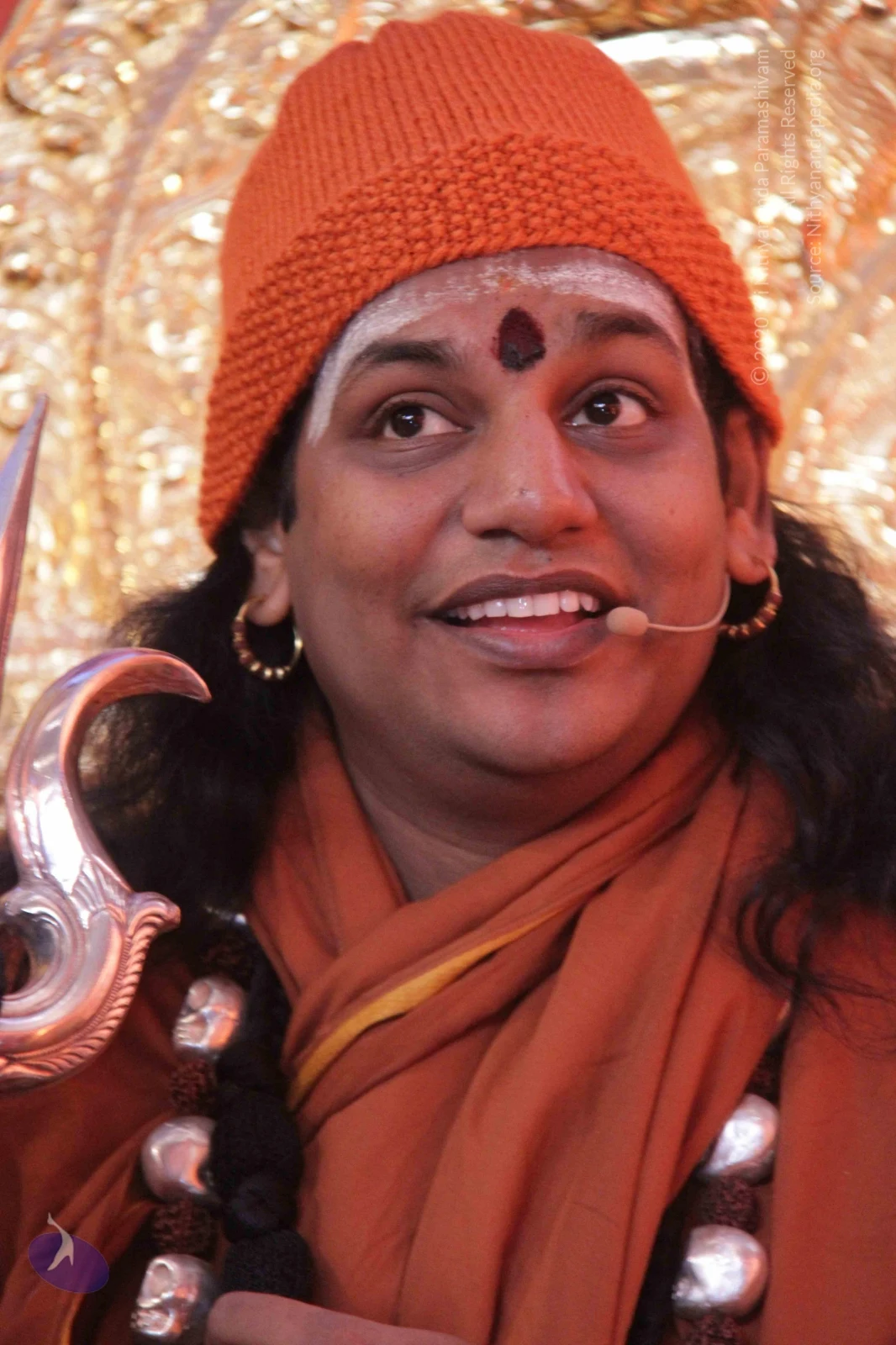
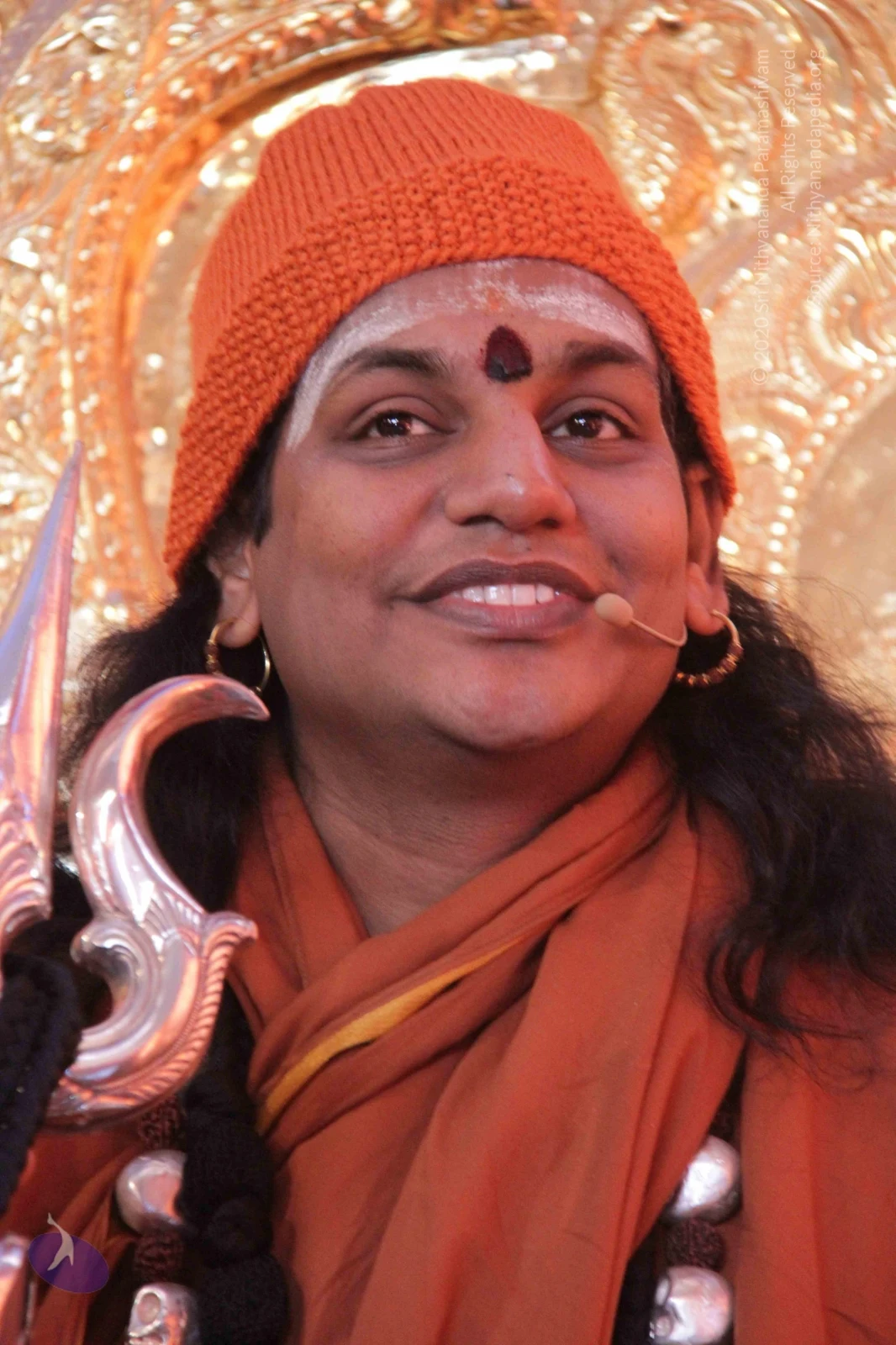
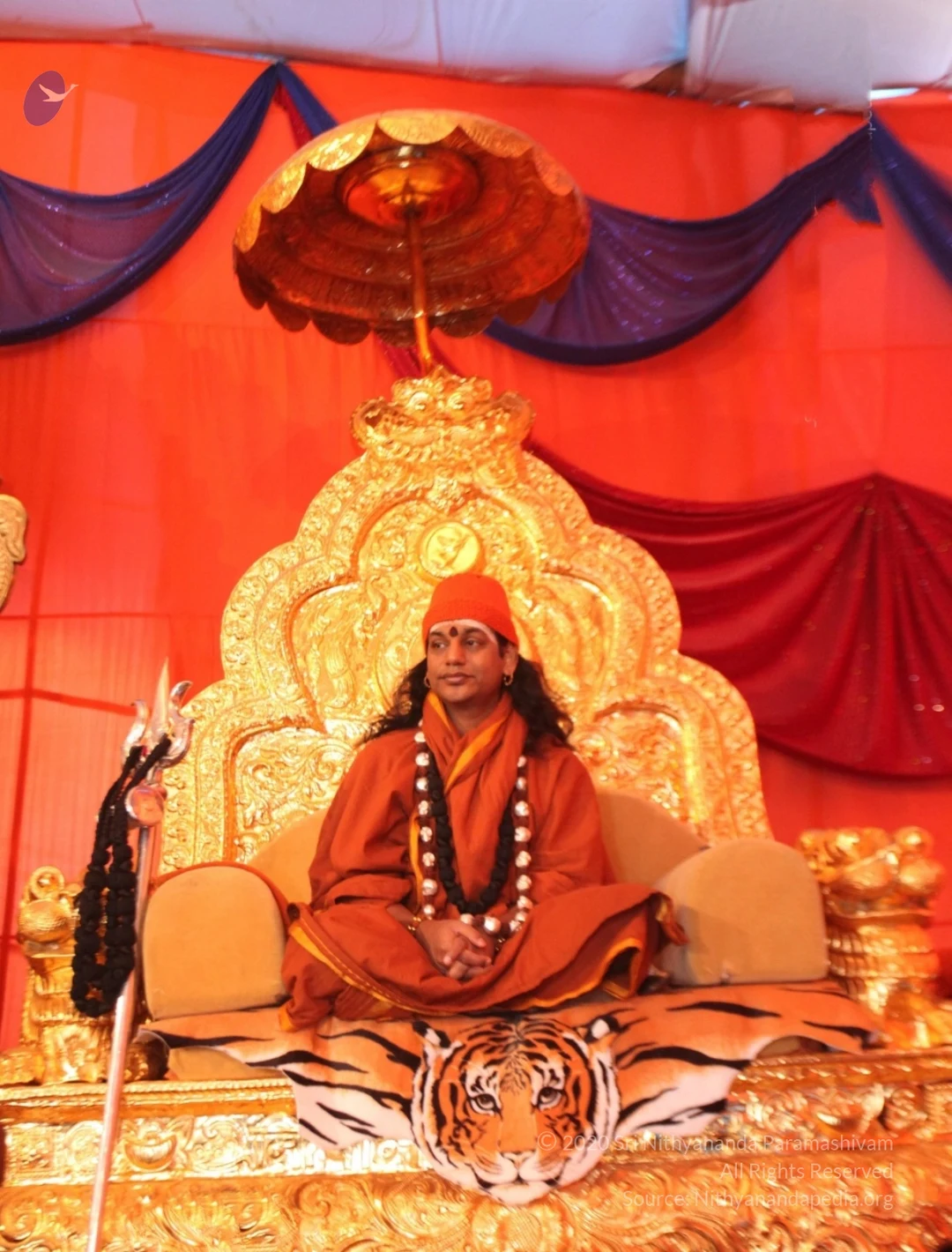
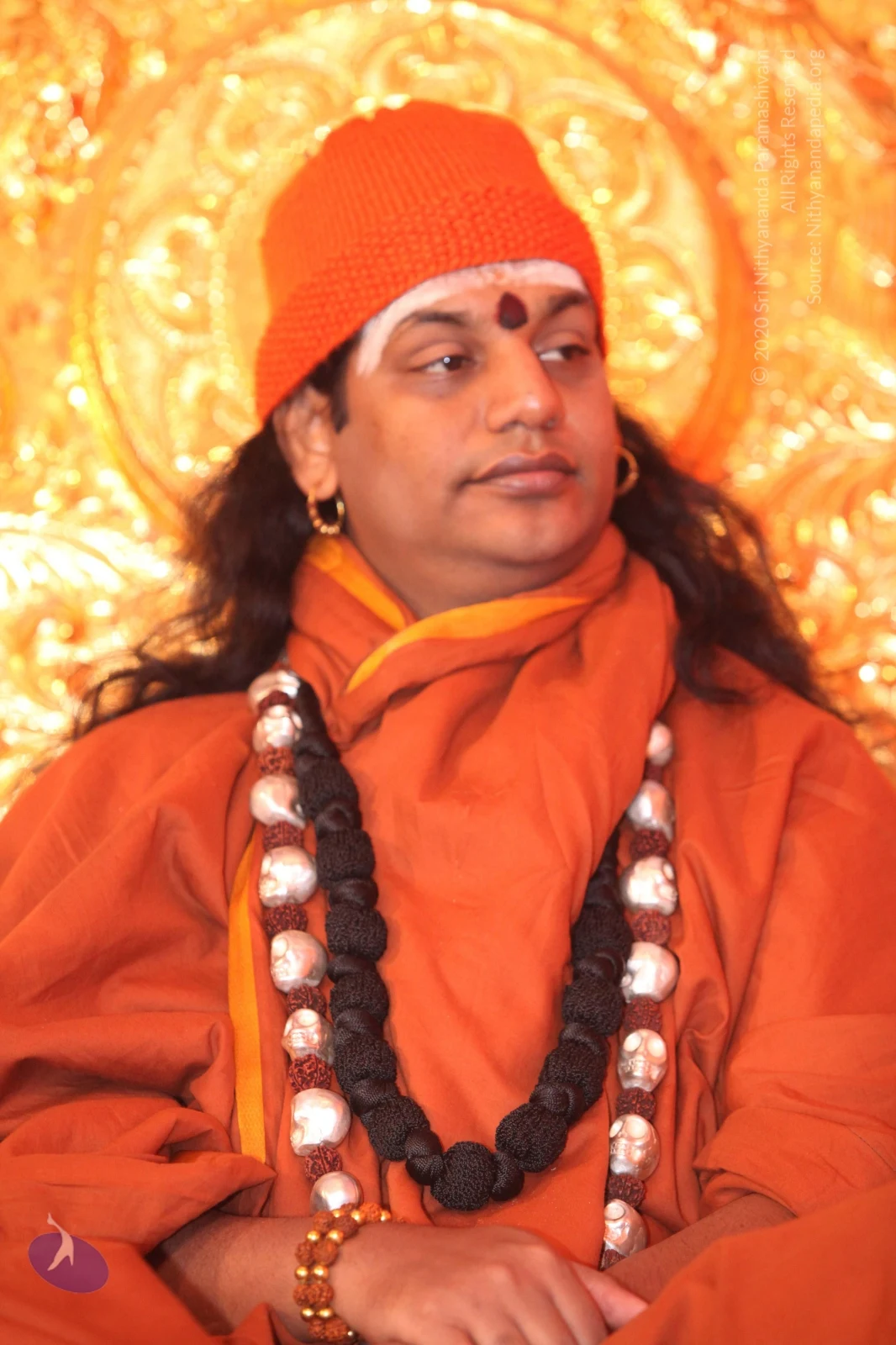
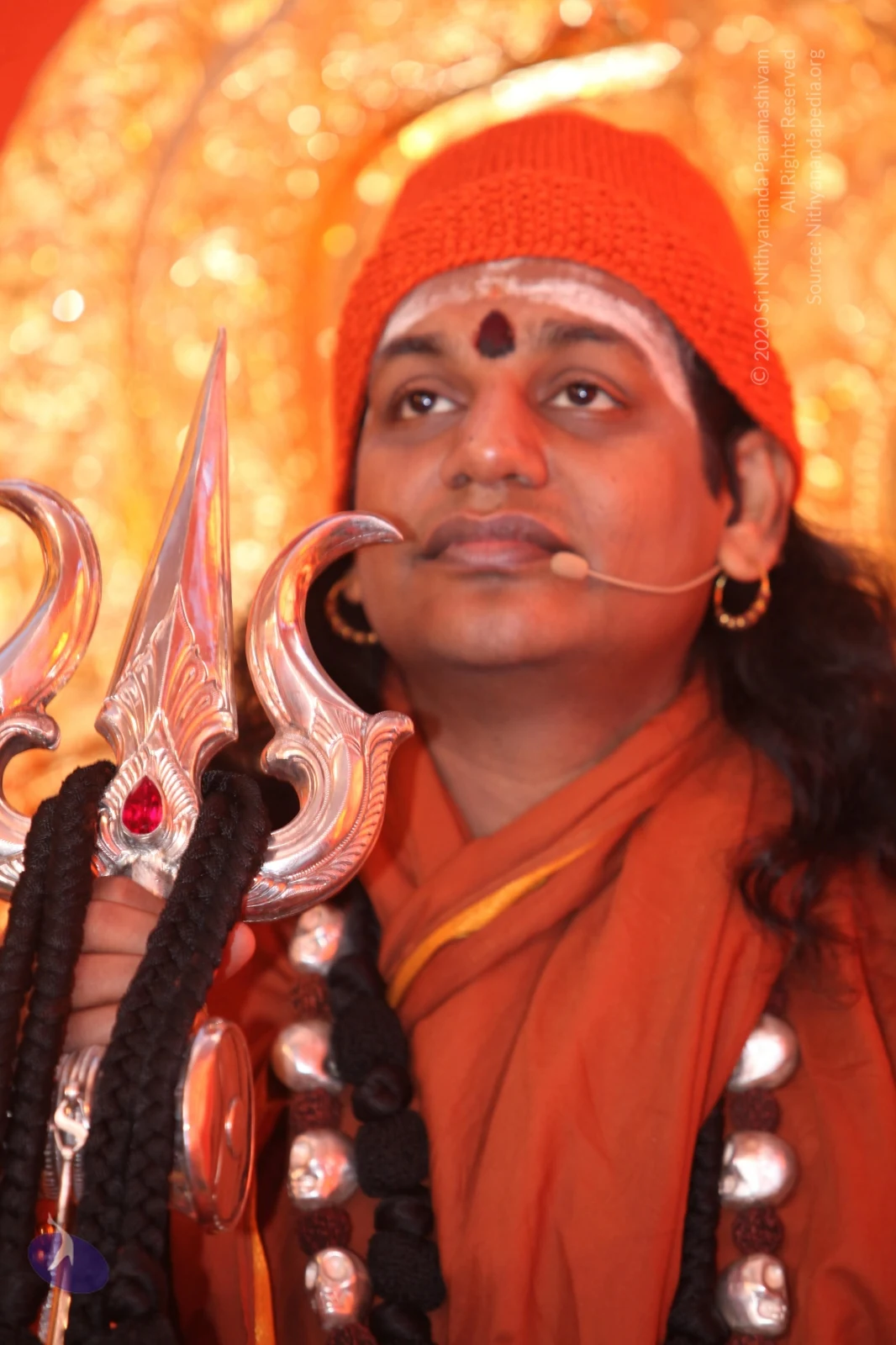
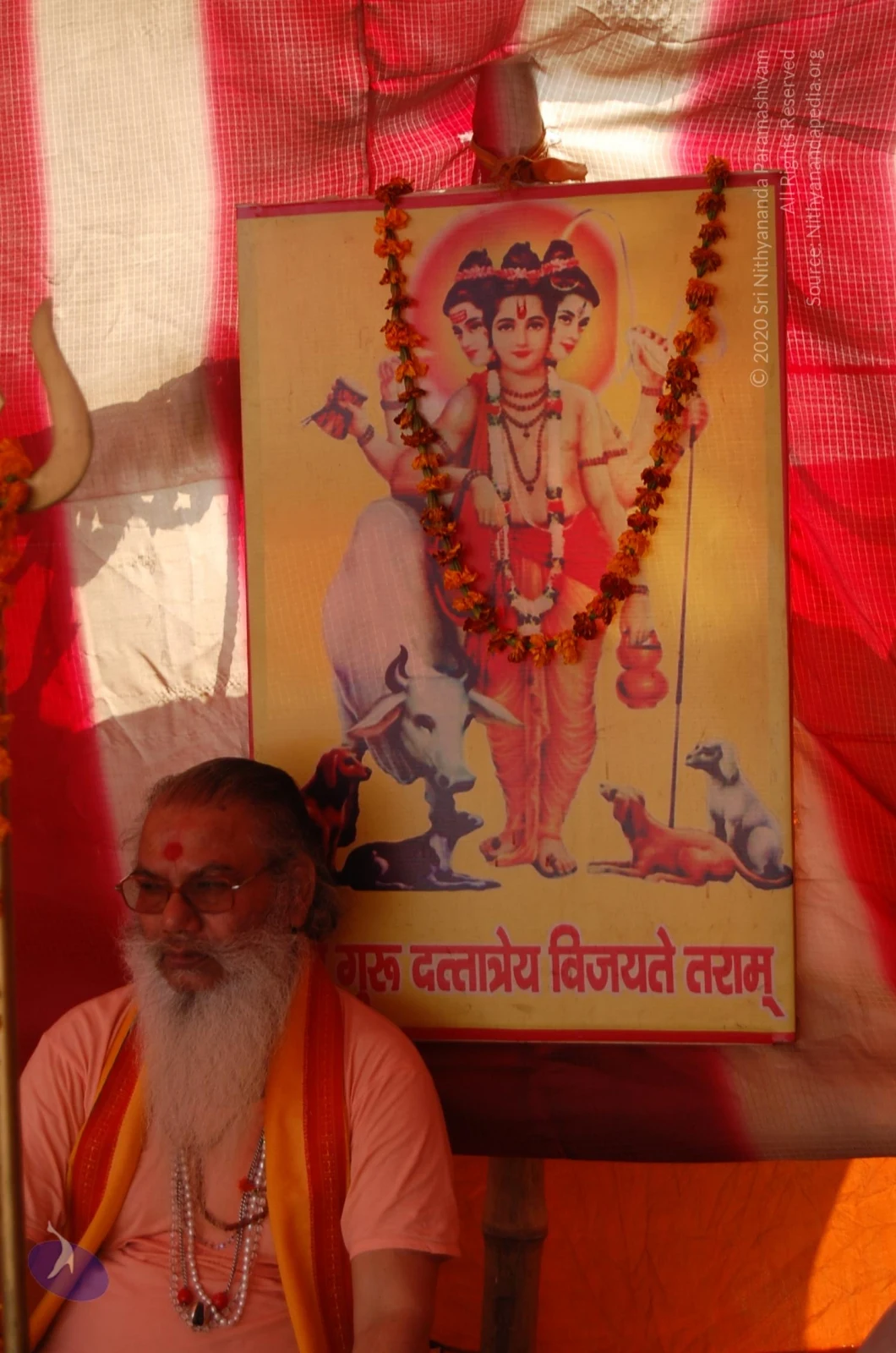
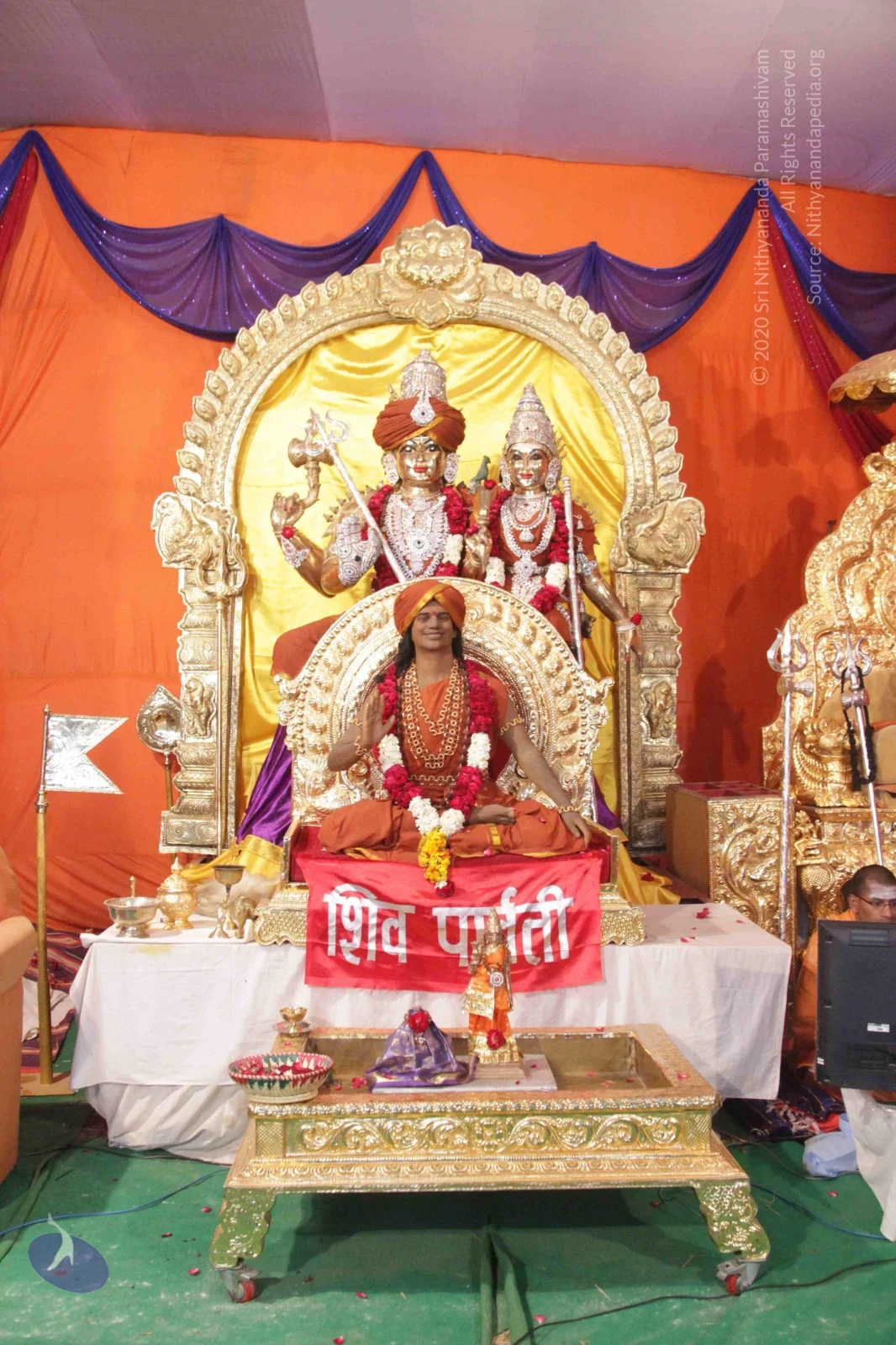
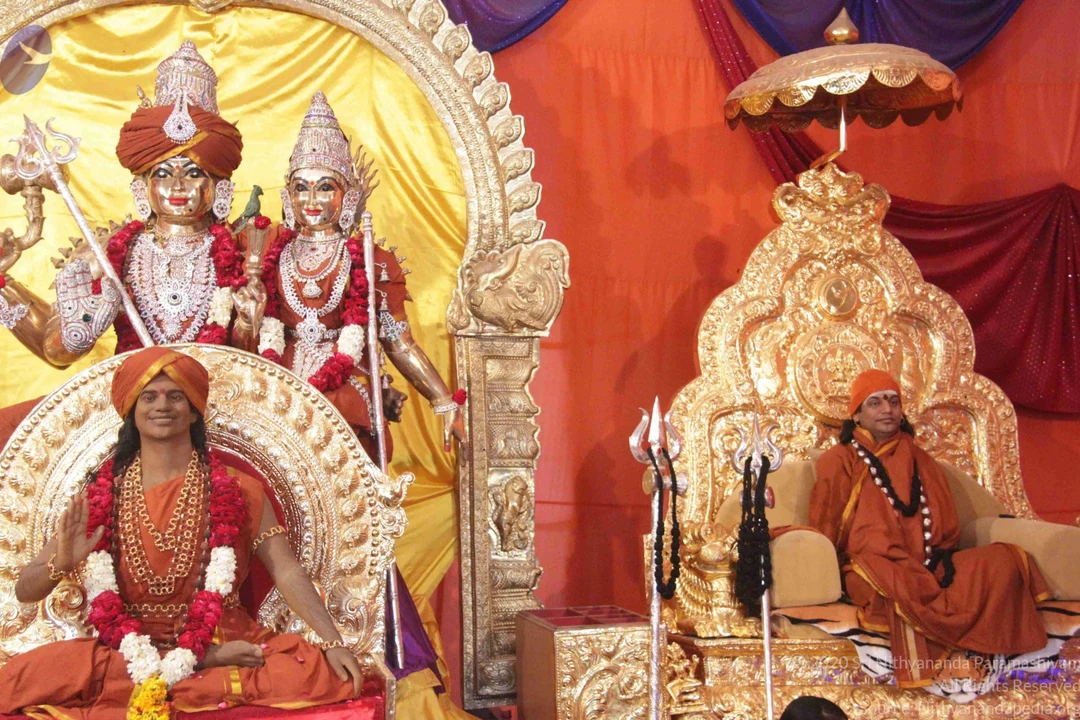
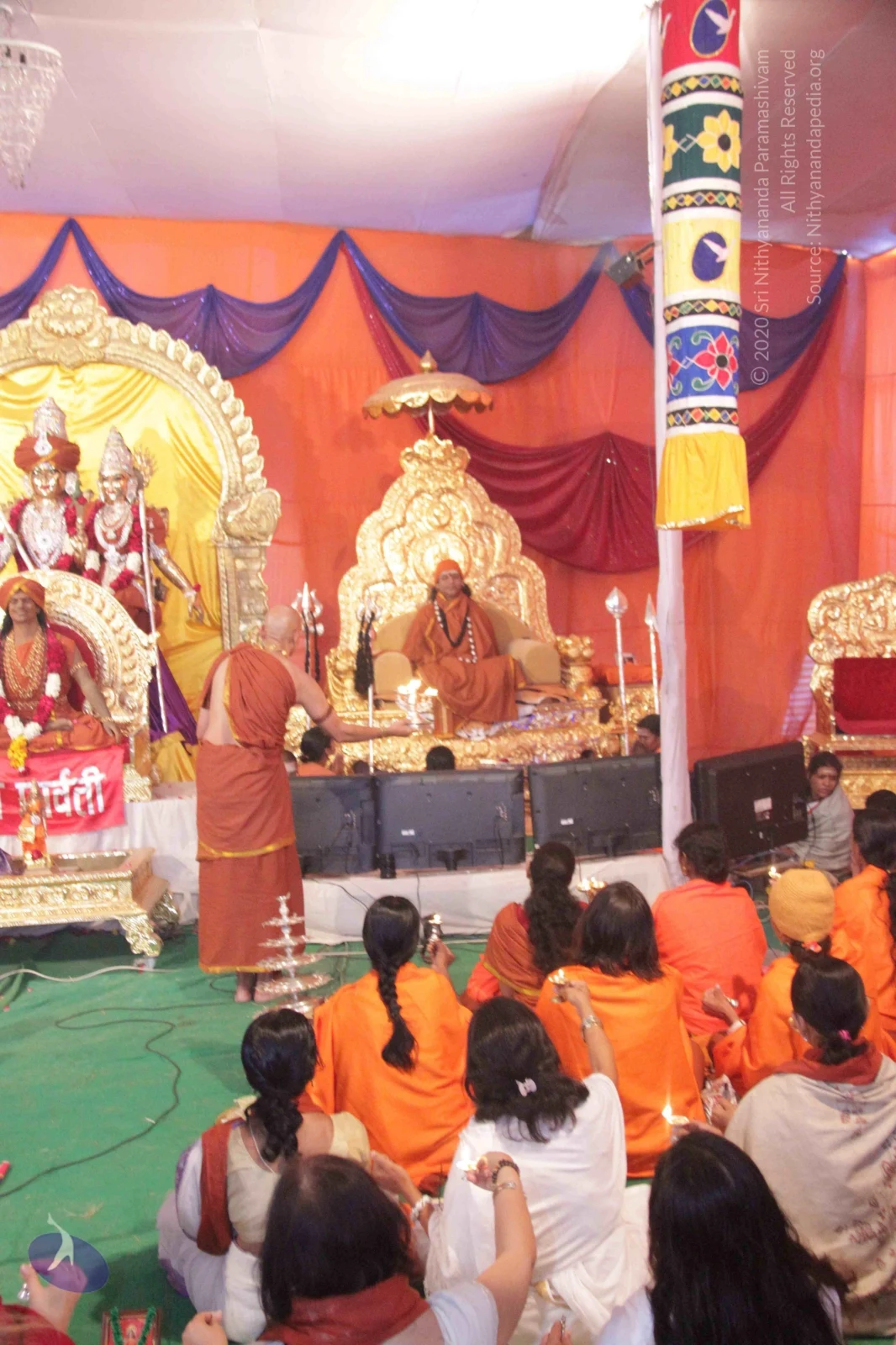
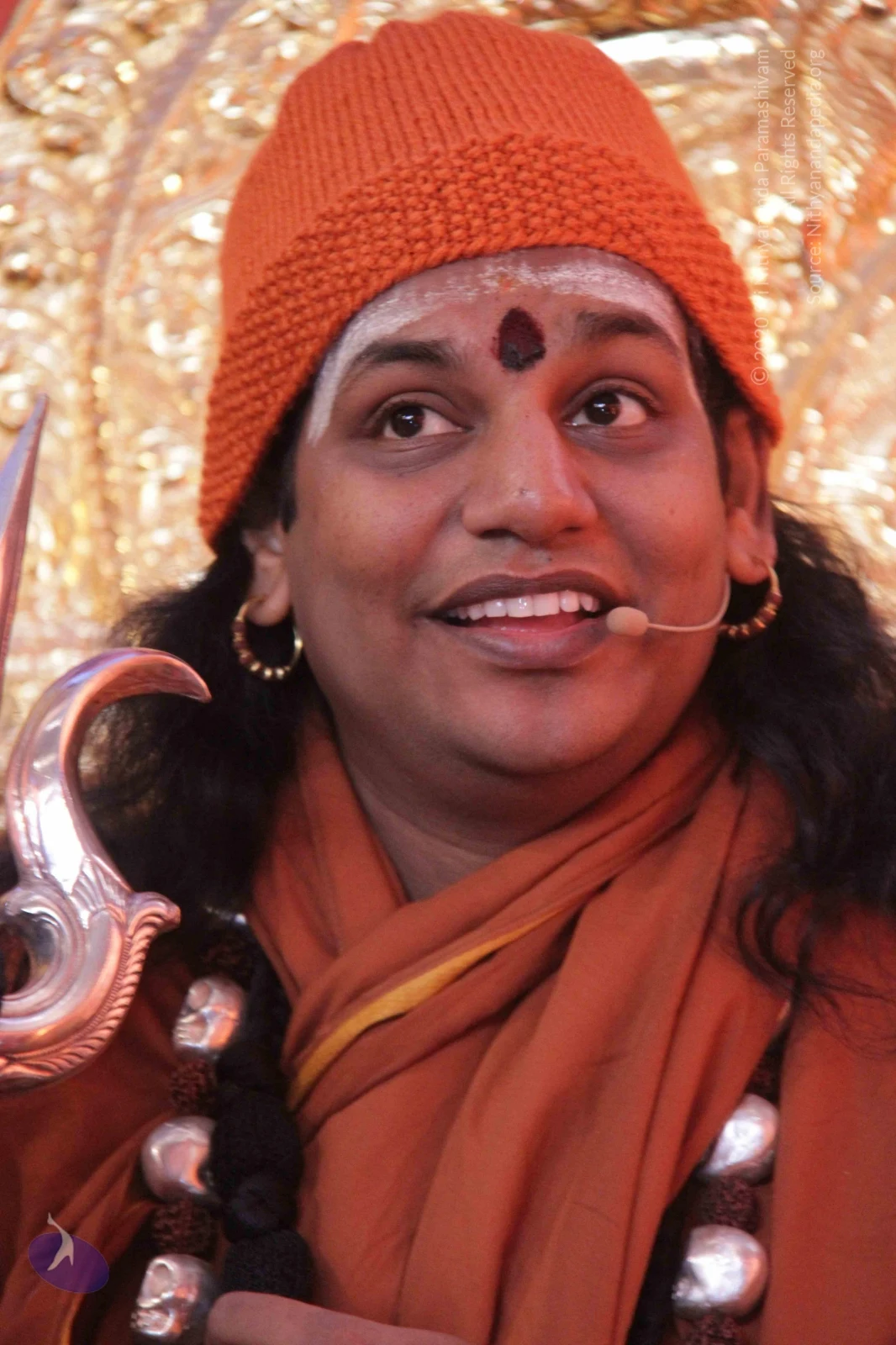
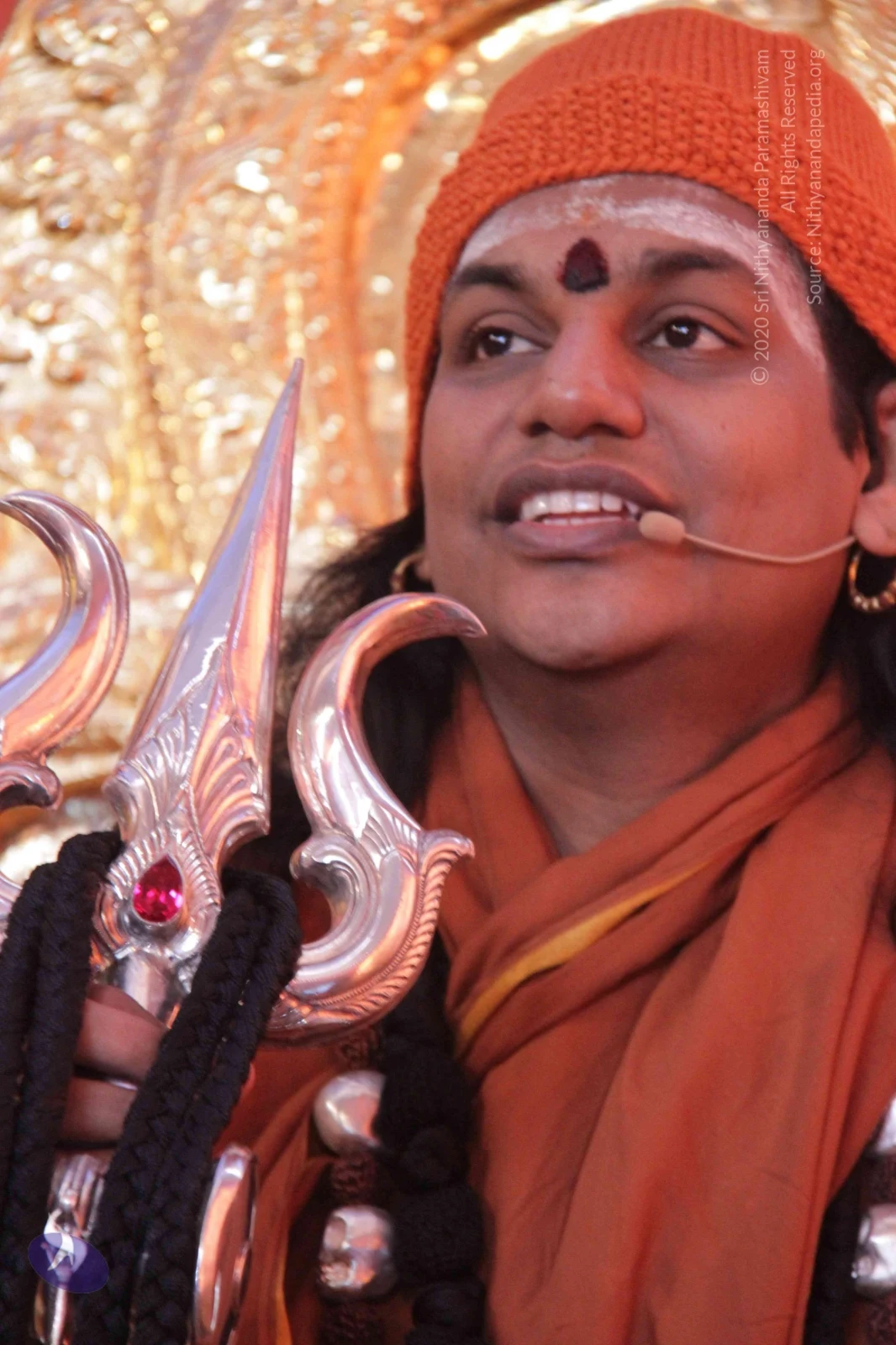
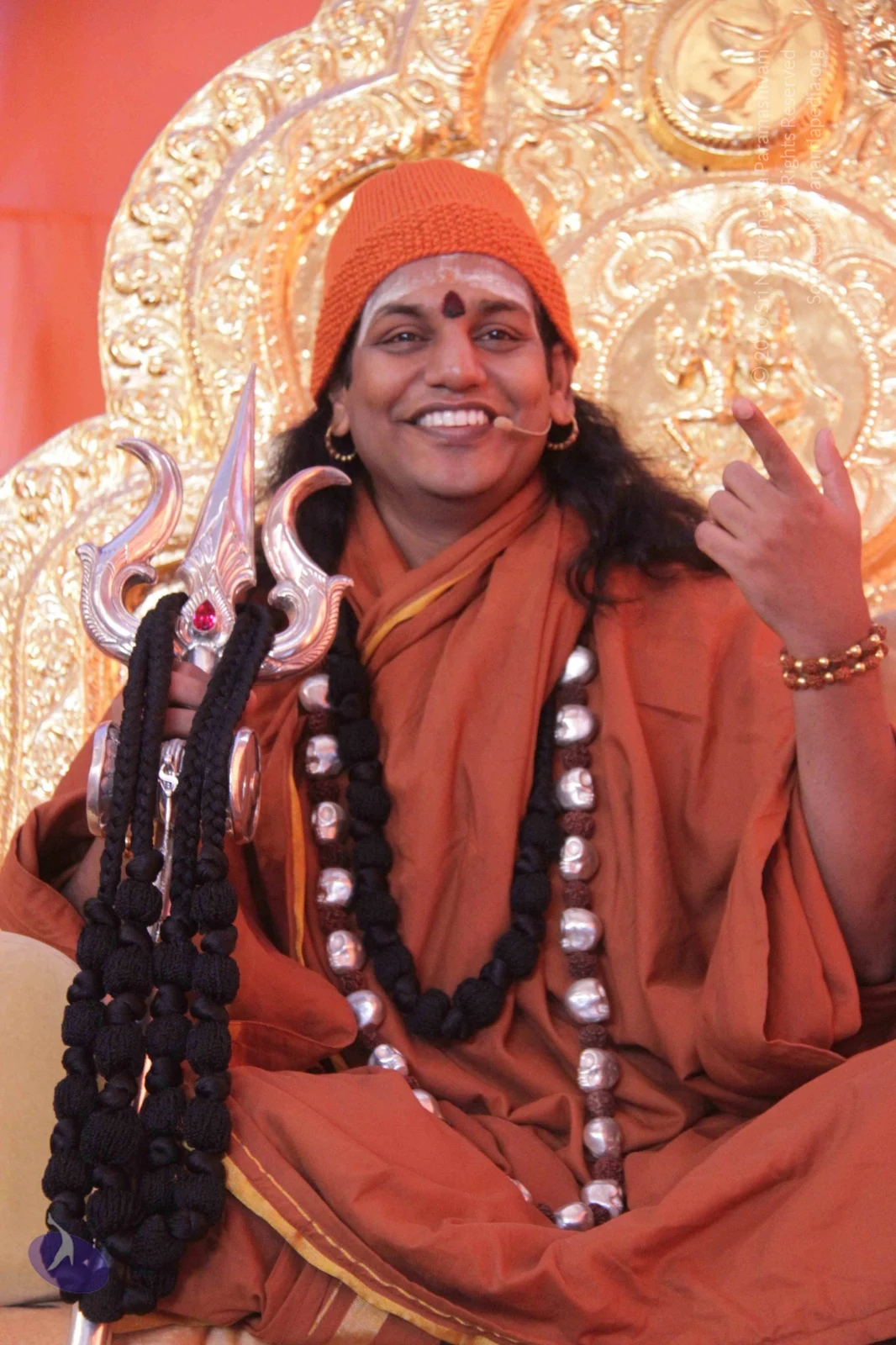
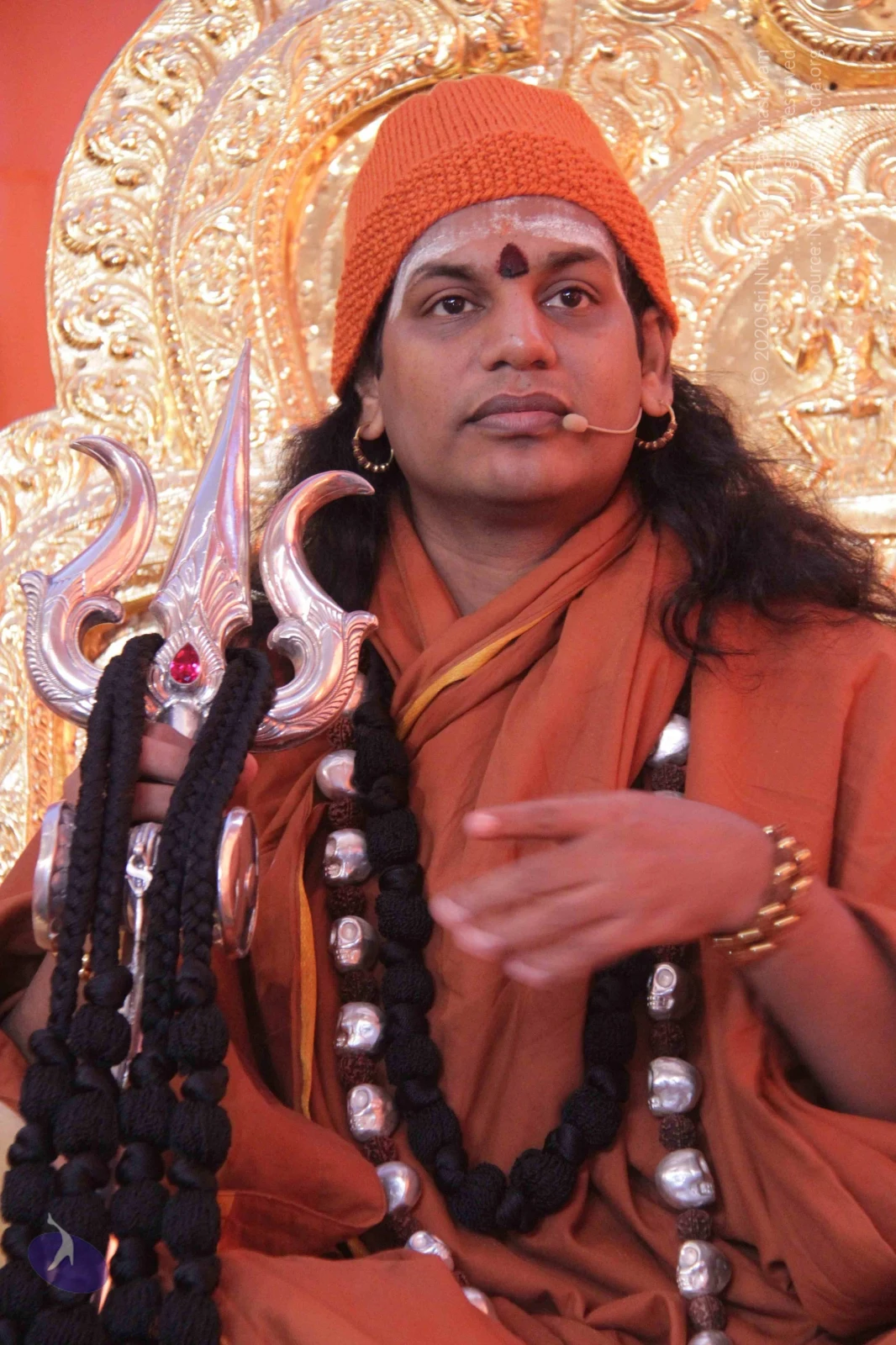
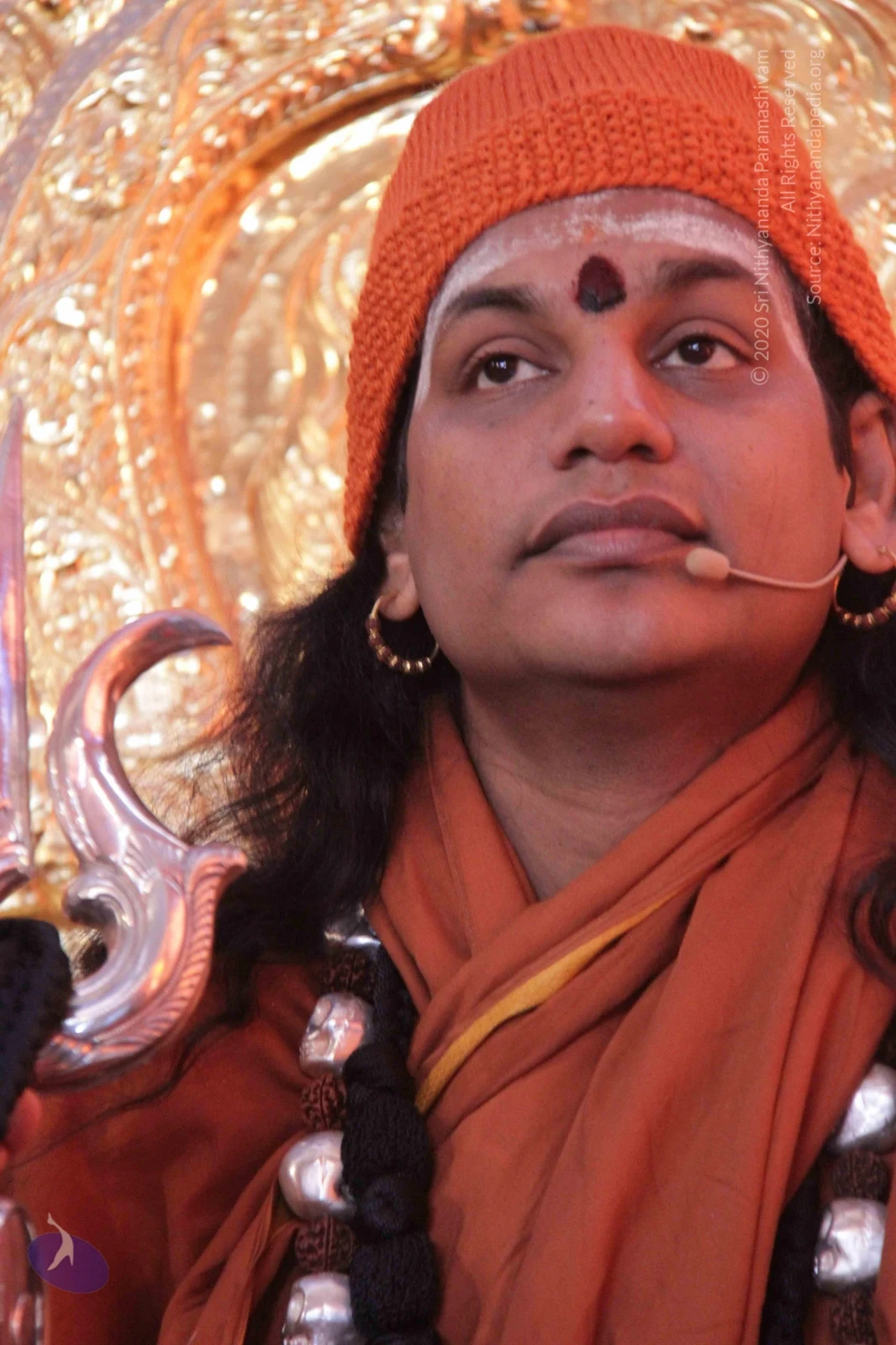
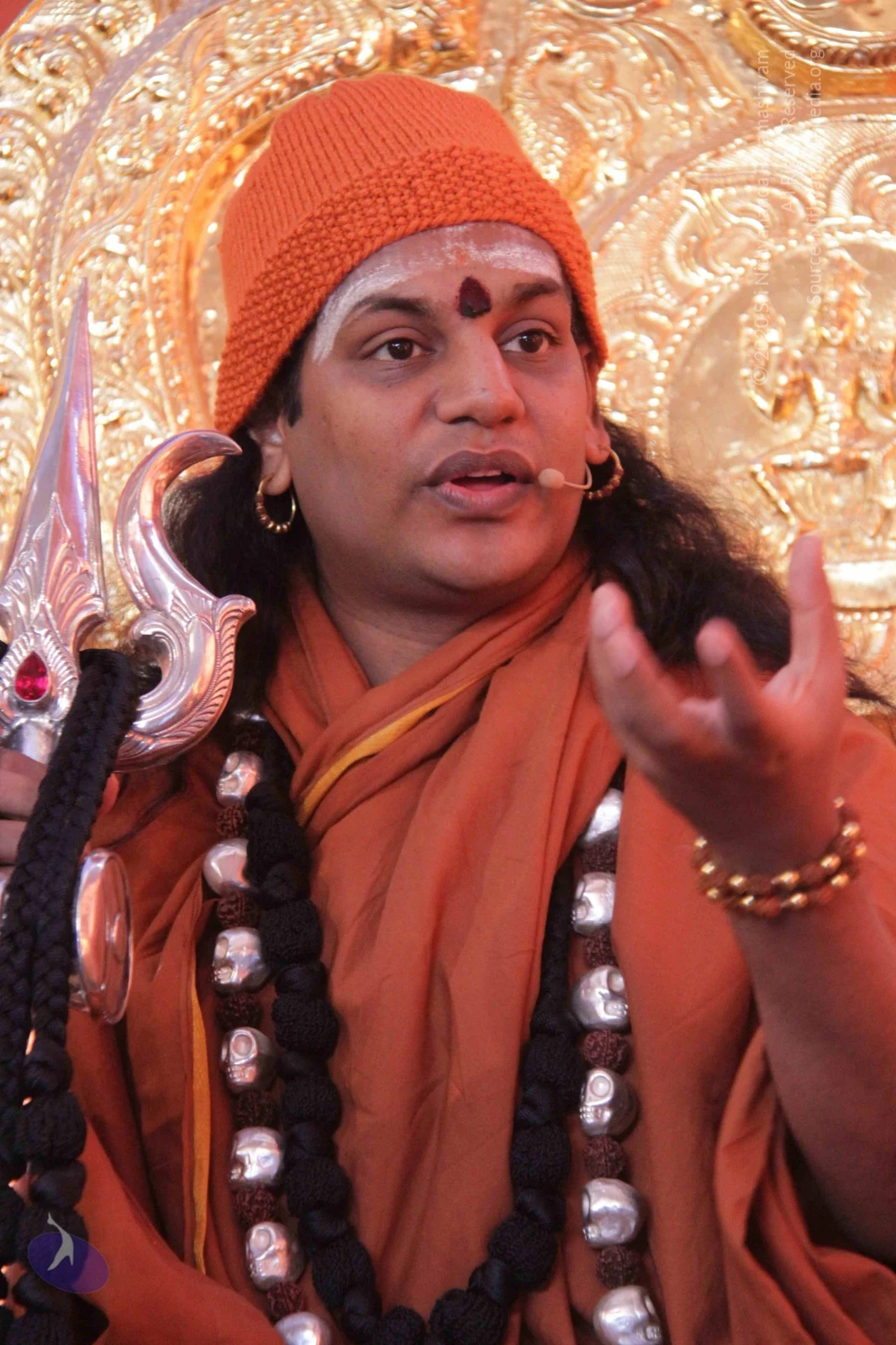
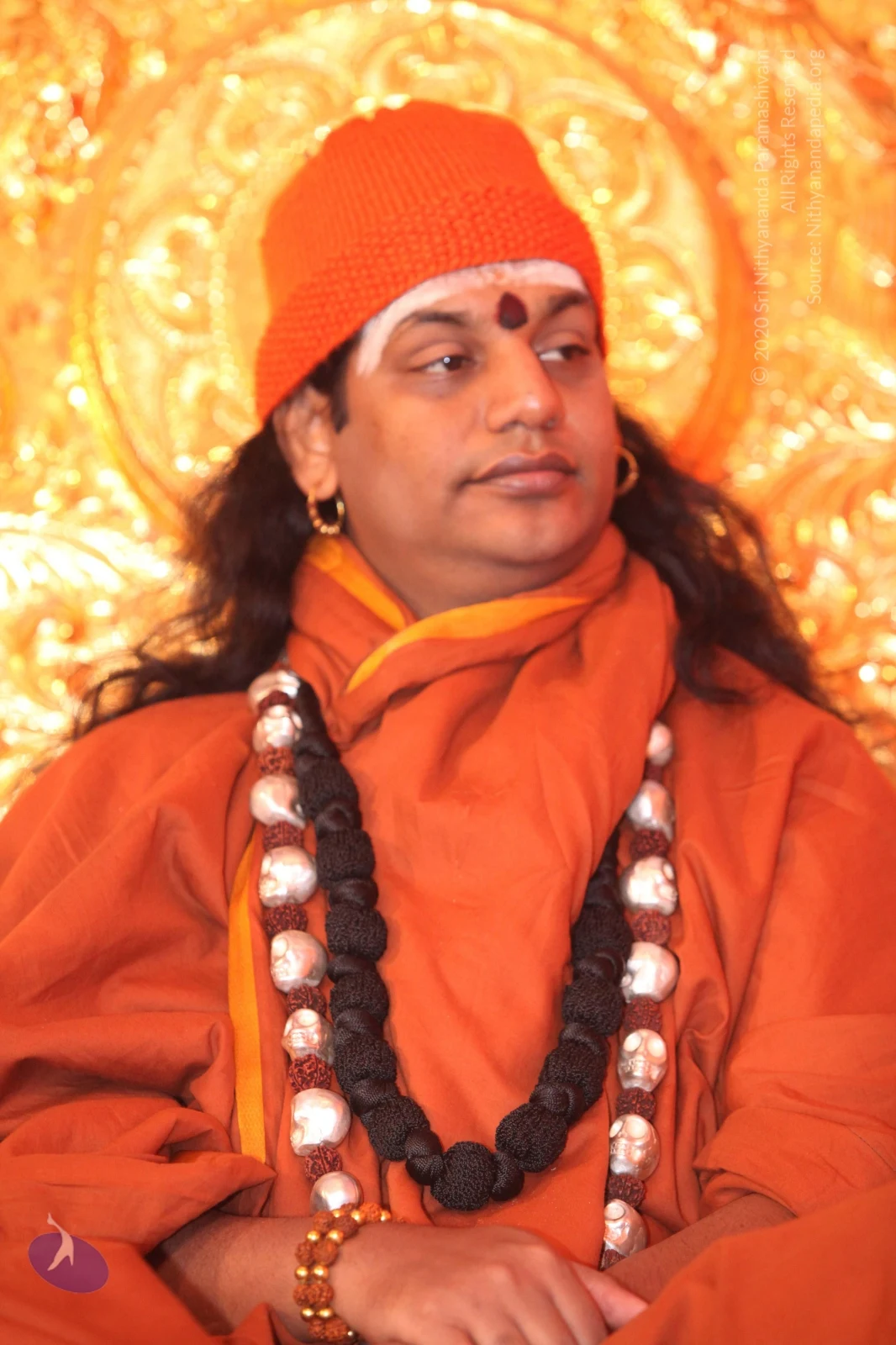
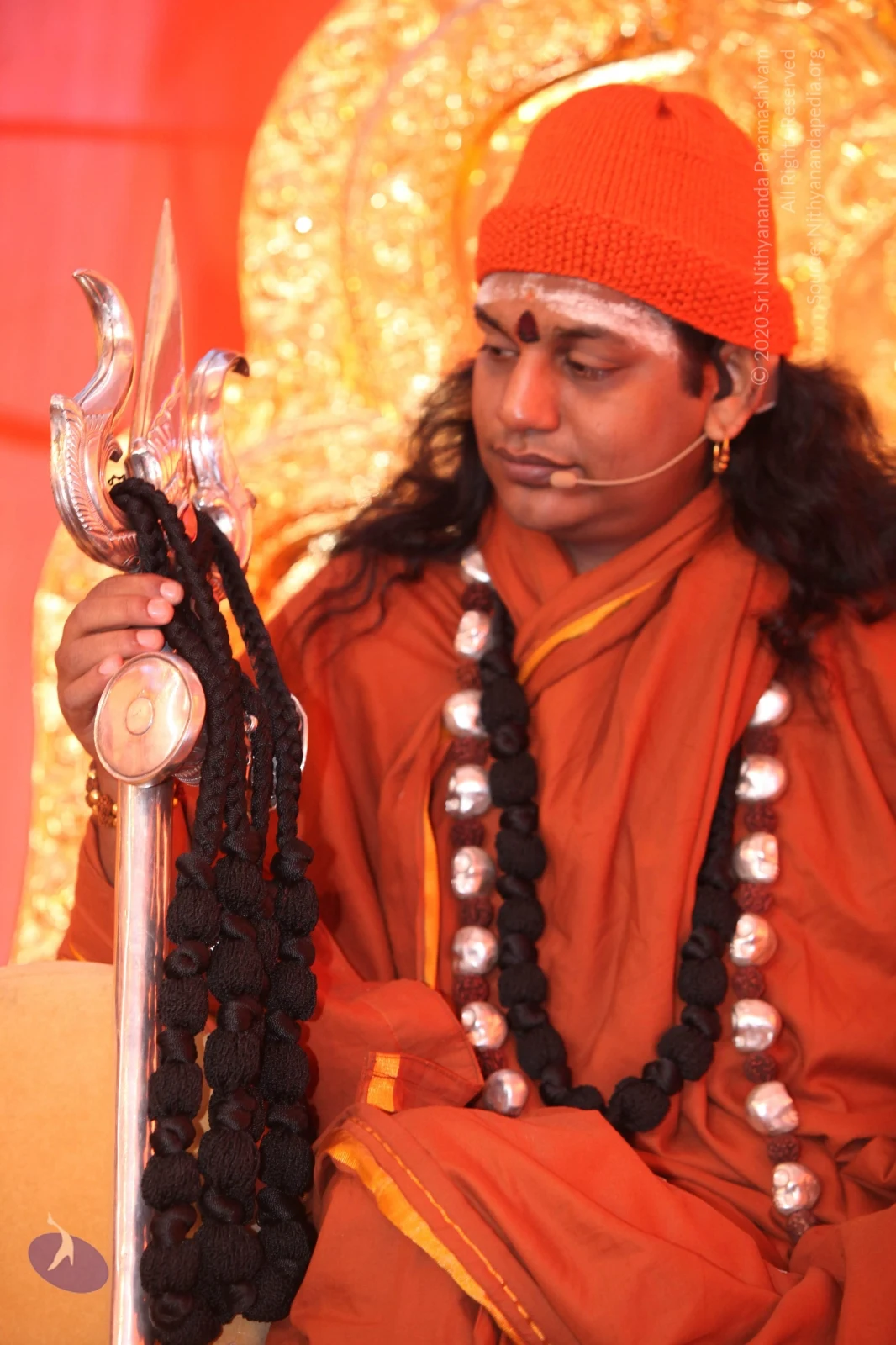
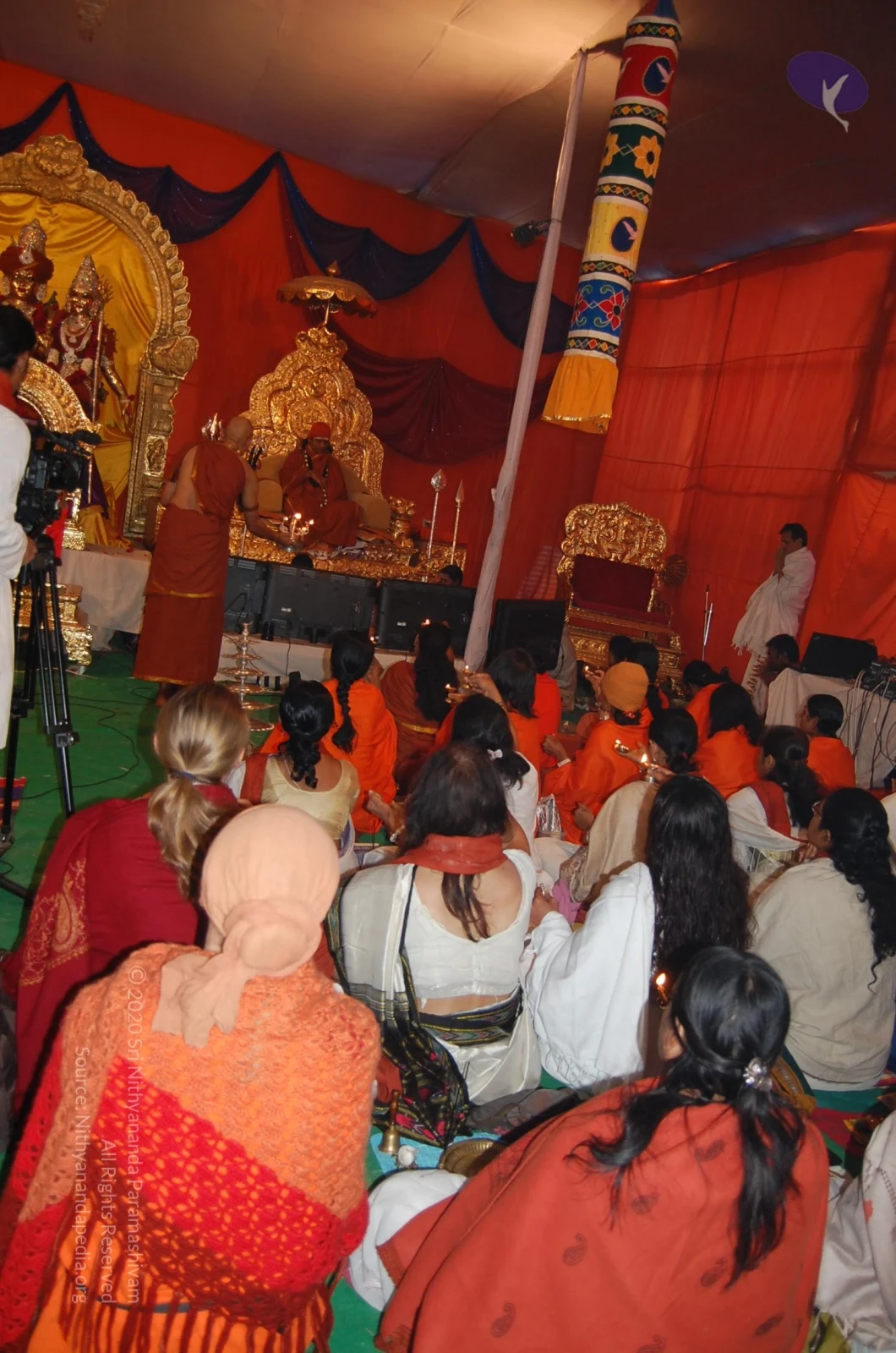
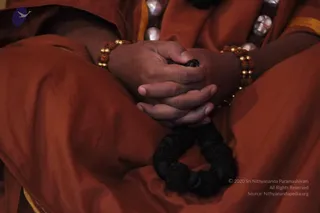
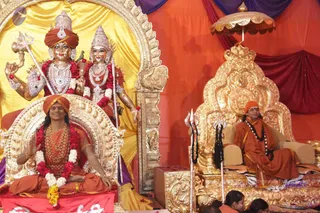
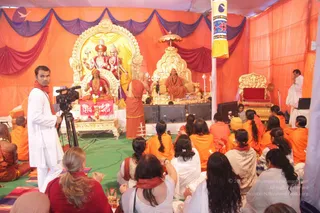
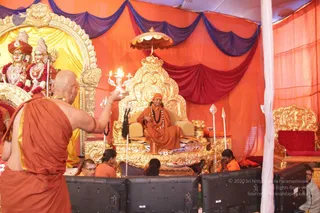
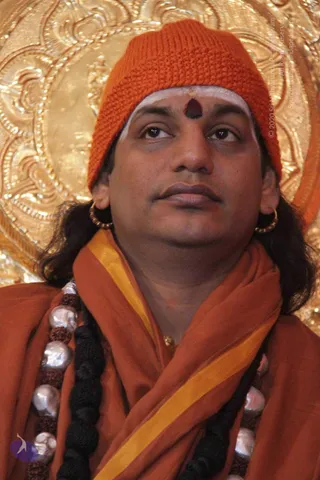
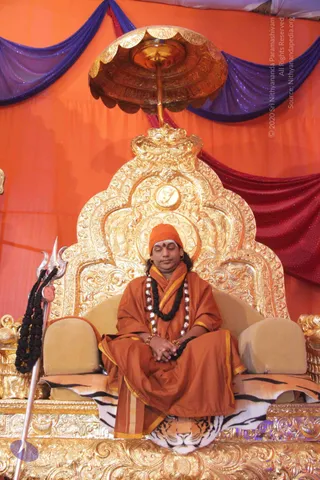
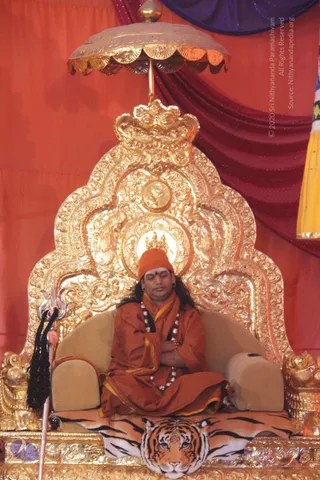
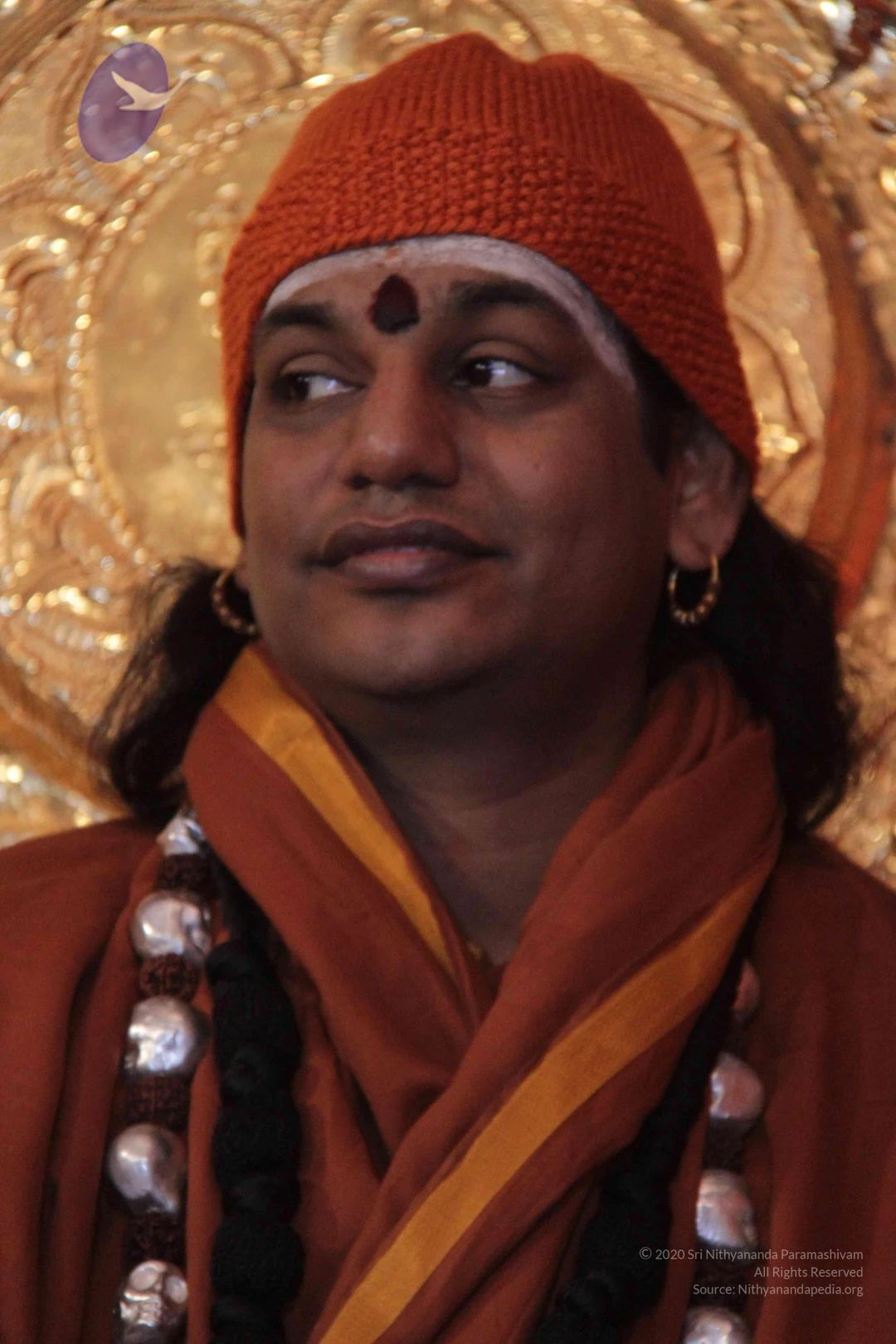
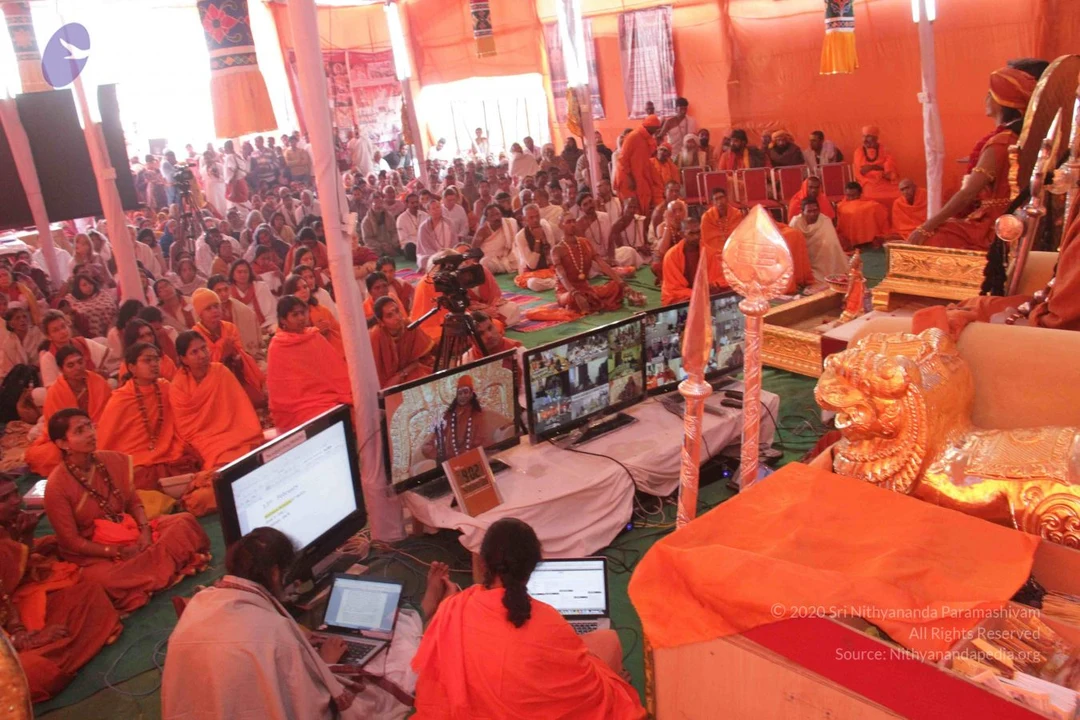
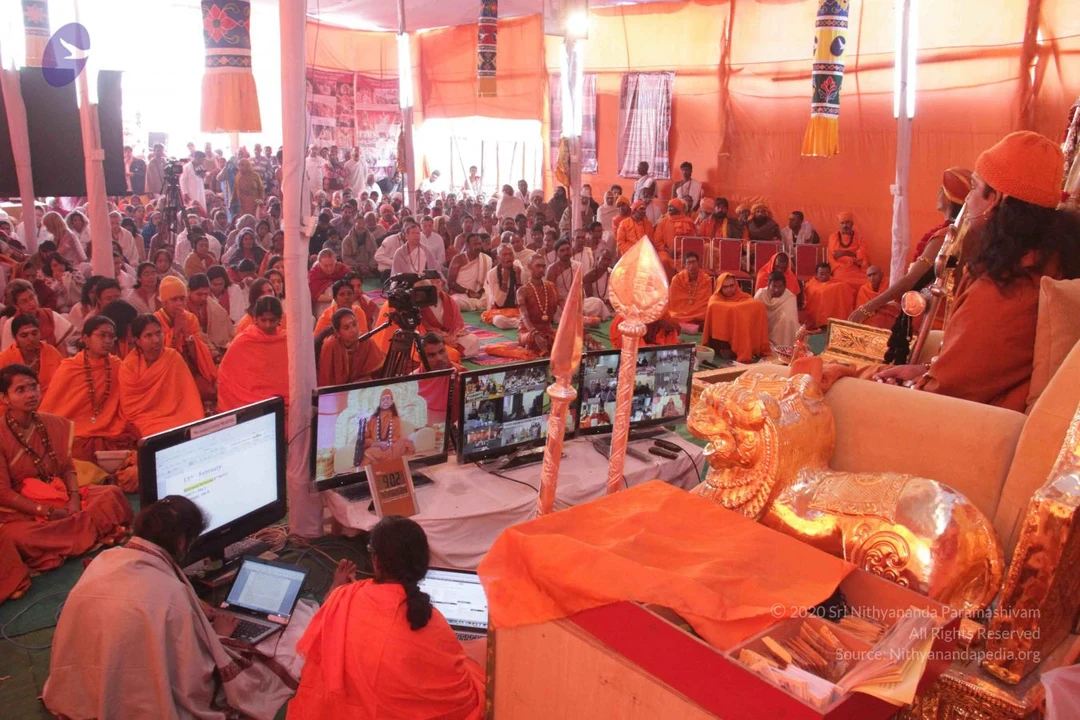
Close-up photo of a man in an orange-red knitted cap with a white vertical tilak and red bindi on his forehead. He wears an orange-red shawl with a yellow-gold border and a necklace of rudraksha beads and pale beads. Behind him is an ornate gold-toned metal background with repoussé floral relief. He looks off to the side. a person by appearance cues: orange clothing, rudraksha mala and ceremonial adornment, with a page-level event association.Close-up photograph of a seated person's hands clasped in the lap over saffron-orange robes. The wrists wear beaded bracelets of brown rudraksha seeds with gold spacers, and a black knotted mala hangs between the fingers. Above, a necklace of rudraksha and large pale beads is visible at the collar. The image shows only hands, wrists and robe, with no face visible.A photograph of a stage set with two seated figures in orange and saffron clothing before a large gilded deity backdrop. On the left, a man in an orange turban and orange robes, wearing a rudraksha mala and red-and-white flower garland, sits cross-legged on a gilded seat with hands raised in a teaching gesture. Behind him stand golden deity murtis with a trident, silver crowns, white jewelled necklaces and red garlands. On the right, a seated man in an orange turban and orange robes, with a rudraksha mala, sits on an ornate gold throne under a golden parasol, flanked by silver tridents. Women in orange saris sit at the lower edge of the frame. Red and gold drapery frames the scene.Devotees sit on green mats in an orange-draped tent facing a golden shrine with deity murtis of Shiva and Parvati, marked by a red banner reading Shiva Parvati. A seated figure in orange robes with rudraksha mala and a bare-chested priest in orange performs a ritual with a lamp near the shrine, while a cameraman in white kurta and red shawl films at left. Women in orange and white sit in rows; a golden throne stands at right. Oil lamps stand on the mat, and a large loudspeaker sits nearby. a person: the seated figure on the central golden throne wears orange robes and a rudraksha mala, a presentation cue consistent with a person event, though the face is not clearly distinguishable at this size.Inside a saffron-draped tent at a Kumbh Mela camp, a seated figure in orange robes and a saffron turban sits on an ornate gold throne under a small gold parasol, wearing a long rudraksha mala and a gold necklace; a ceremonial gold armchair stands empty to the right. Behind him are two painted deity figures with crowns, garlands and ornate necklaces beside a gold arch. A bald priest in orange cloth stands at left, holding up a lit lamp on a stand toward the throne. Several seated devotees in orange, and monitors and cameras, occupy the lower foreground.A photograph of a ceremonial stage draped in orange, red and purple fabric. A seated figure in saffron robes, wearing a saffron head covering and a rudraksha mala, sits on an ornate gilded throne beneath a small golden parasol. In the foreground a bald priest in orange robes raises a silver lamp toward the throne. Gilded decorations and a garlanded deity murti stand to the left, with silver staffs and seated attendants in orange around the stage.

VIPVisits

20 photosSource gallery
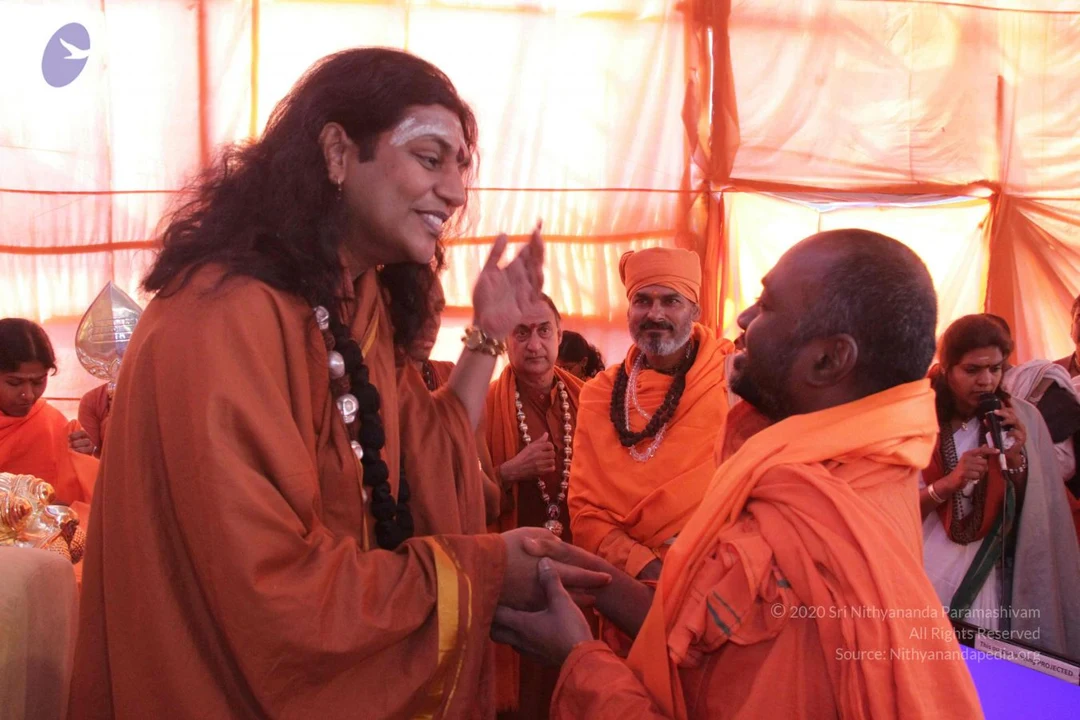
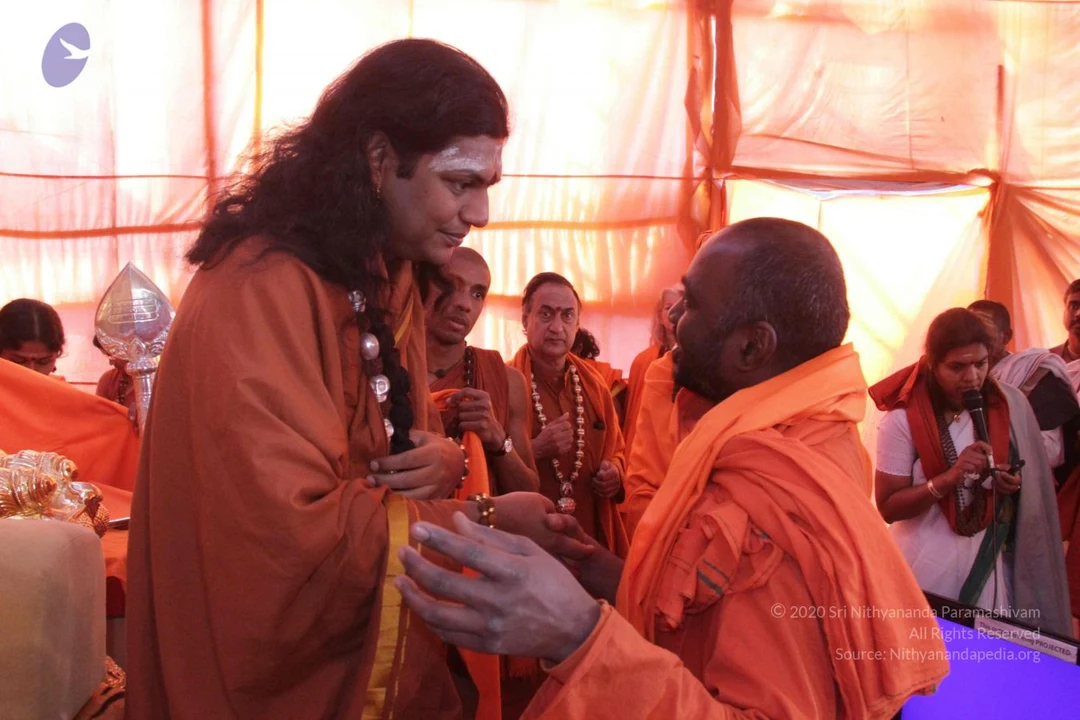
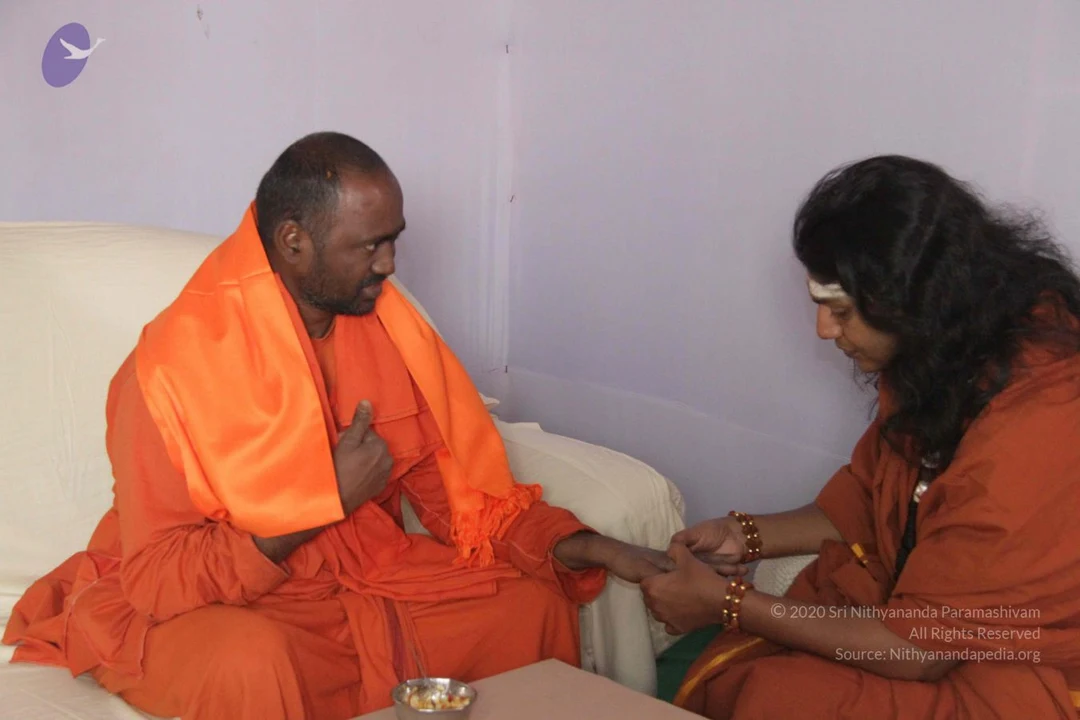
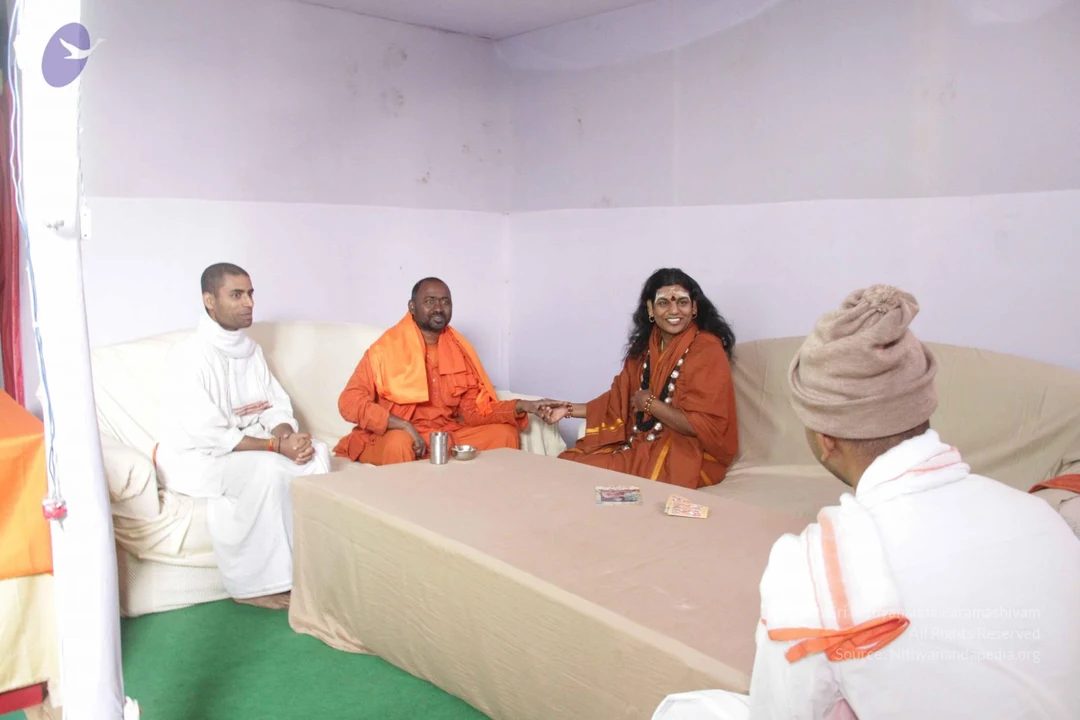
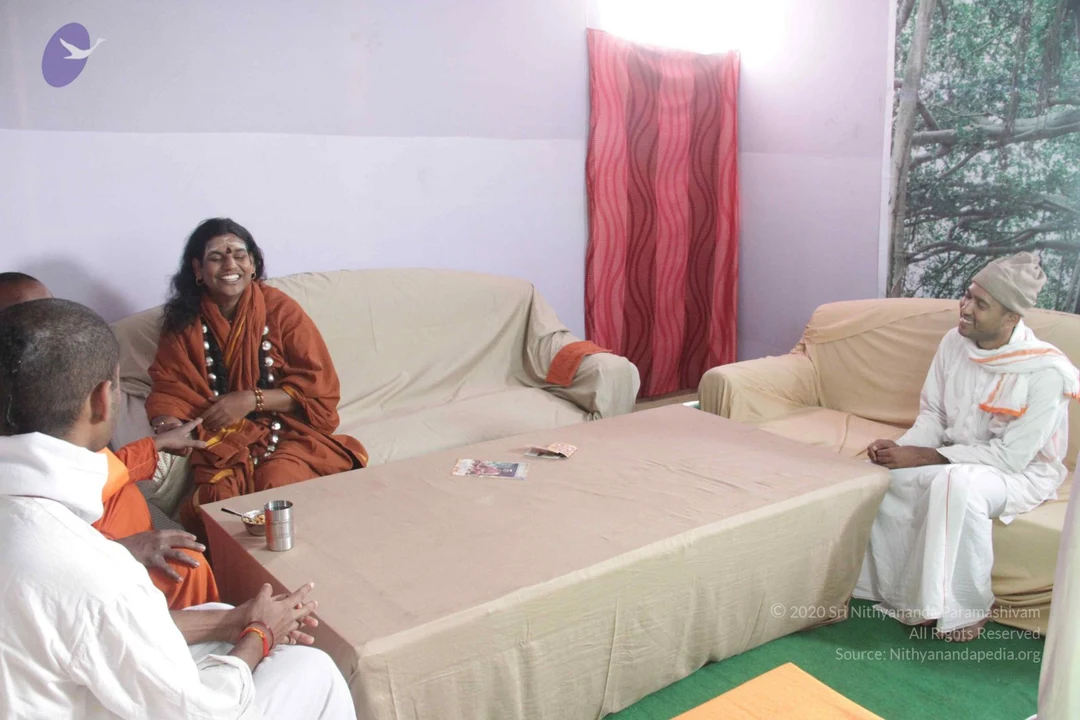
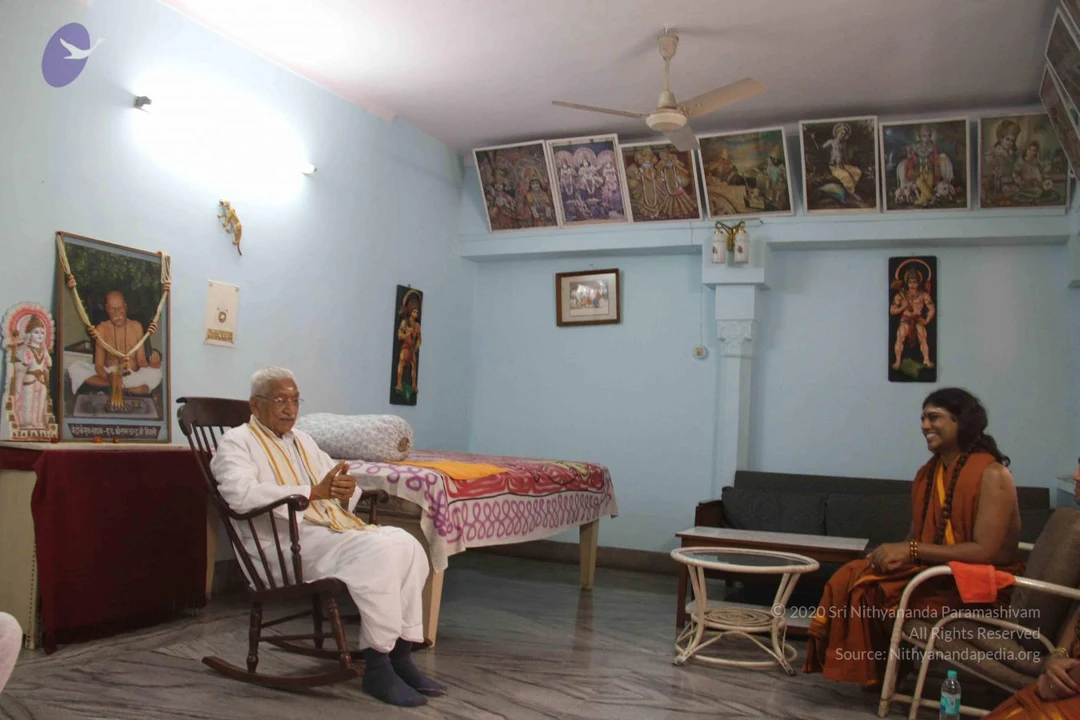
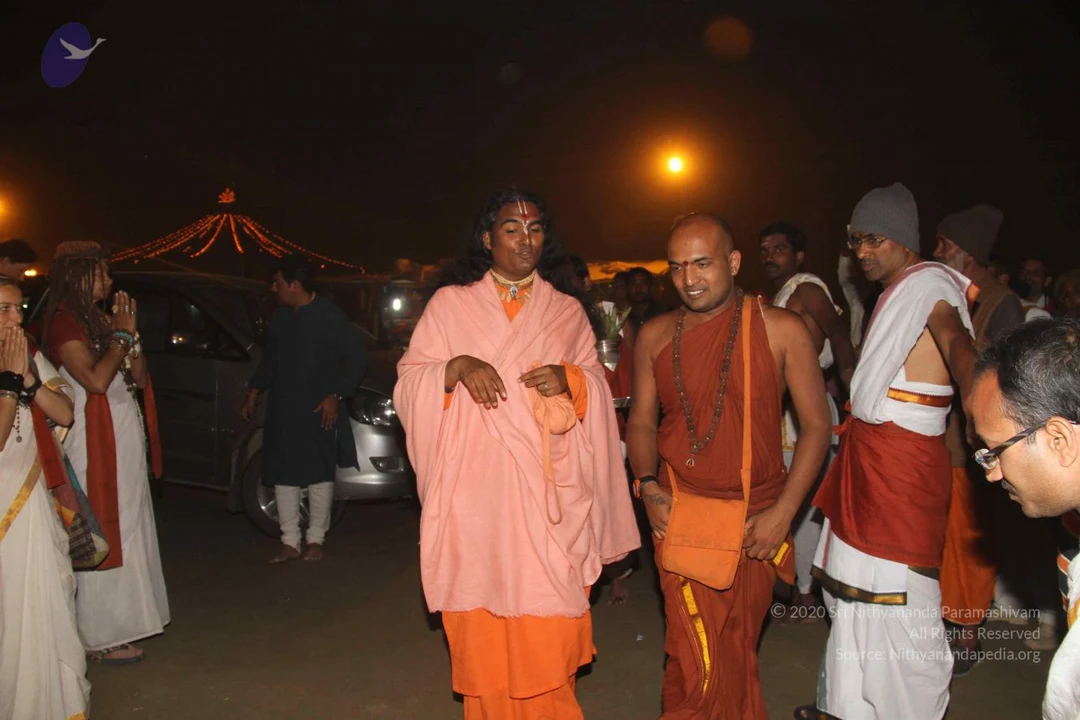
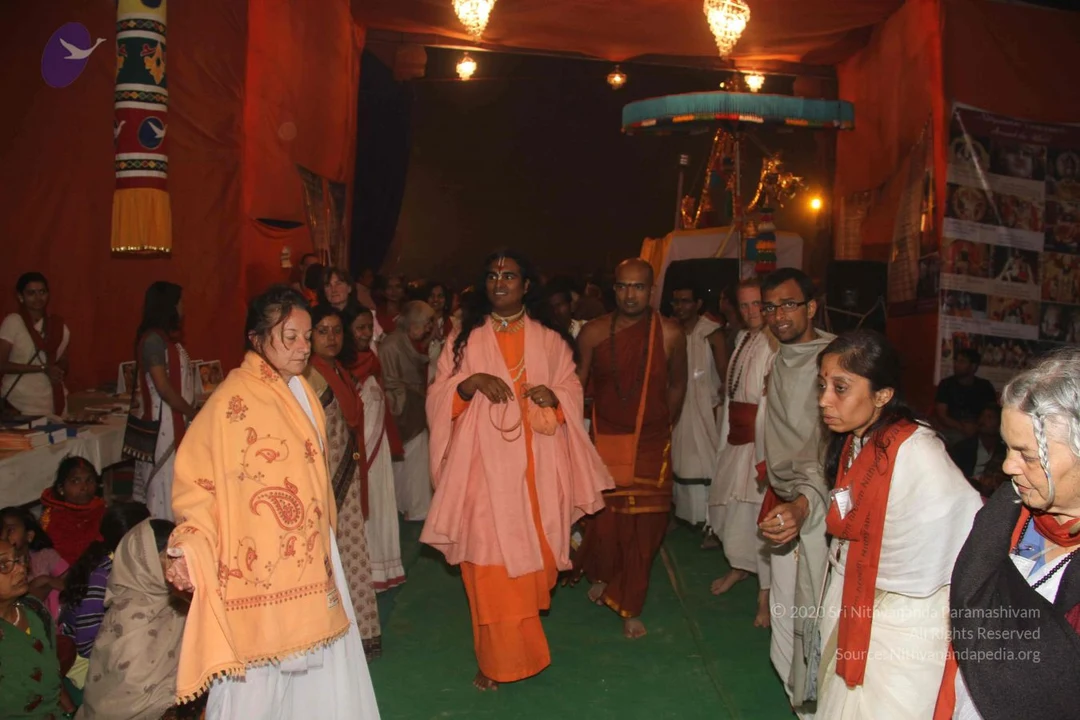
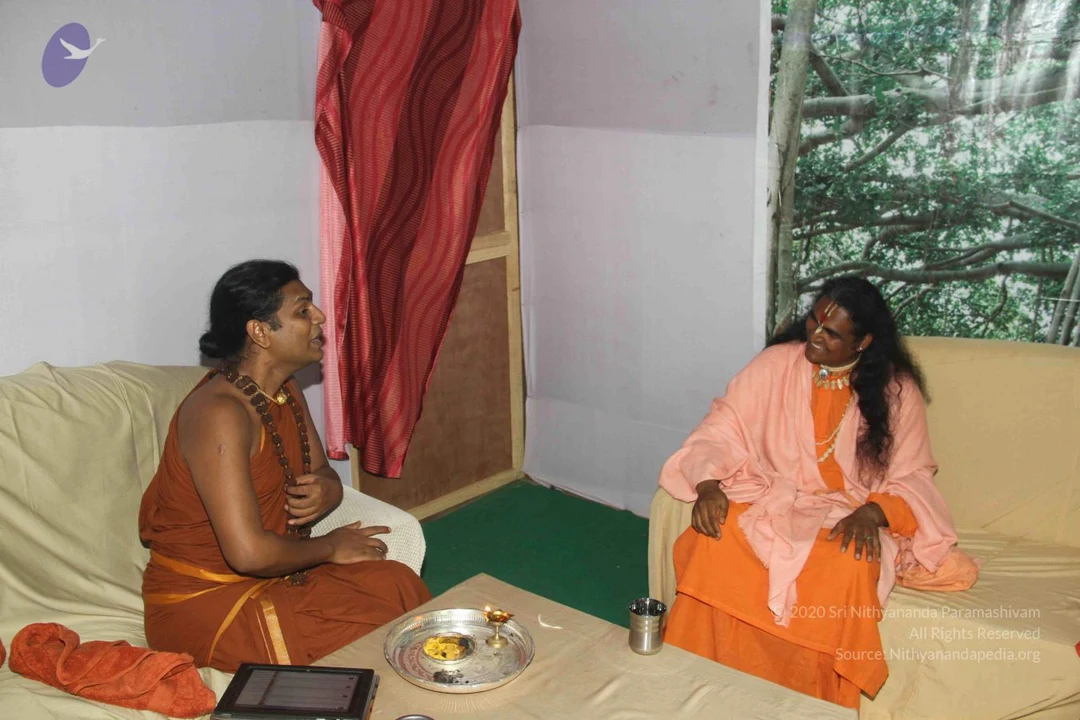
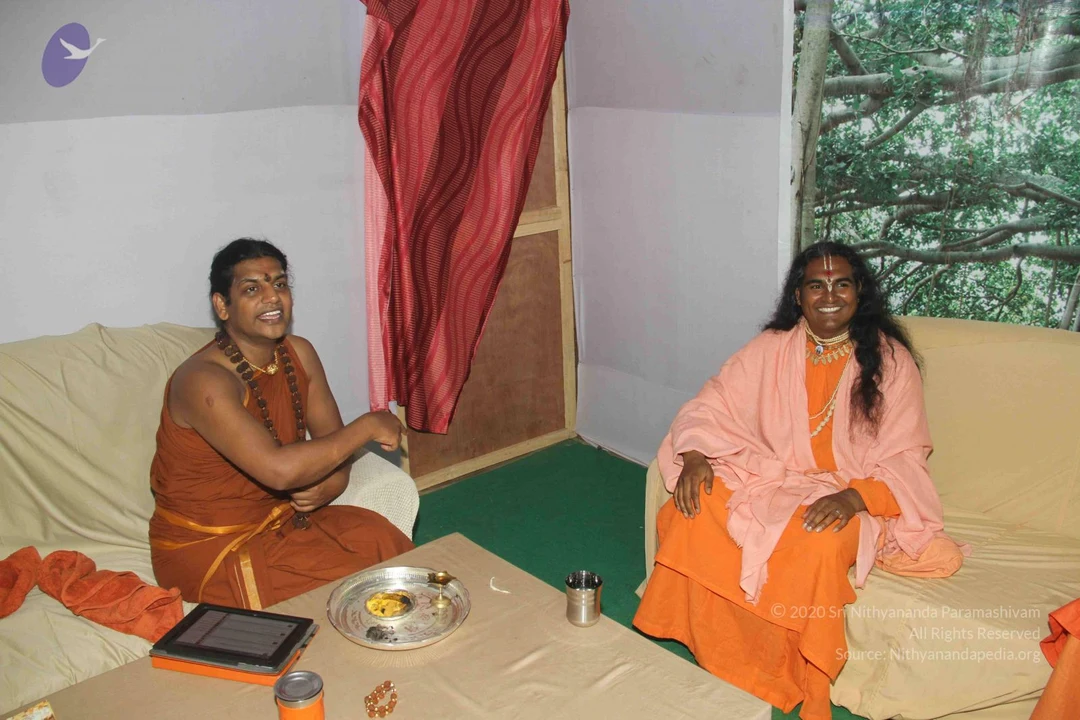
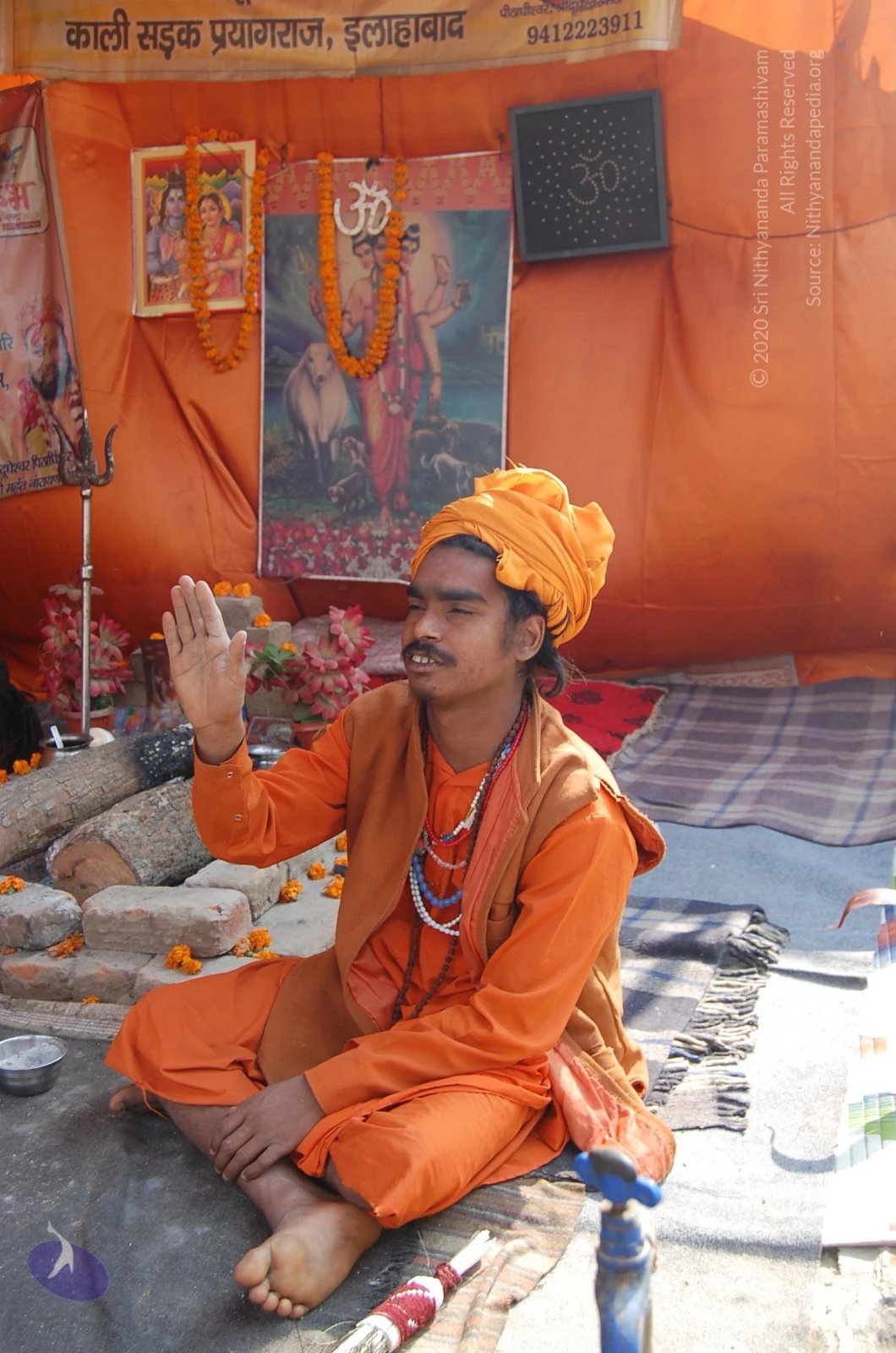
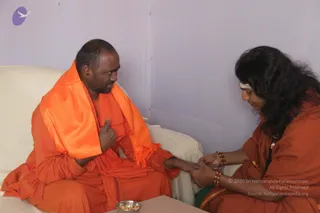
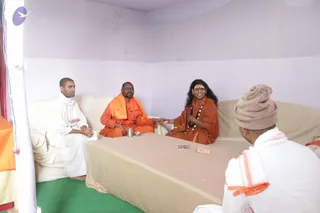
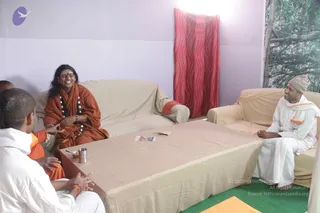
A photograph in a plain room with pale lavender walls and a cream upholstered chair. A man in orange saffron robes and an orange shawl sits on the left, gesturing with one hand, with a small bowl of offerings on a low table in front. Opposite him, a person with long dark hair and a white tilak on the forehead, wearing orange robes and gold bead bracelets, leans forward holding the other man's hand. Two people are visible.A photo of four people seated in a small tent-like room with lavender walls and a green floor. Centre right, a long-haired person in orange robes, a rudraksha mala and a vertical forehead mark holds hands with an older man in orange robes and an orange shawl seated beside them. A younger man in white kurta clothing sits on the left on a cream sofa, and a figure in a beige cloth head wrap and white garments with orange trim sits in the foreground right. A low beige table holds a small steel cup, a dish and two cards. The page names the Kumbh Mela visits of 2013; the long-haired orange-robed figure fits the page's a person cues, but the appearance is only partly distinctive, so the identification is uncertain.A seated meeting in a plain room with lavender walls and a red wavy-patterned curtain, with a tree photo mural at right. A long-haired person in a saffron-orange shawl and a rudraksha mala with a red tilak sits on a beige sofa, smiling and gesturing, with a bald man in white dhoti and white shirt beside them at left. On the right, a man in a white kurta with orange trim and a beige cloth headwrap sits on a sofa, smiling. A bald man in white and a figure in orange cloth sit at the lower left near a low table draped in beige, holding a steel cup and a small dish. Probable Swamiji (probable) is the saffron-shawled person with long swept-back hair, rudraksha beads and a red tilak, sitting in conversation, so the person-level cues are present. Four physical people are visible.Outdoor photo at a sandy camp ground during a religious gathering. Under a white canopy trimmed with red-and-green hanging decorations, a group of saffron-robed sadhus stands on green mats. The central figure wears an orange-brown robe with gold trim, a long garland of beads and a red tilak on the forehead; a man in a grey vest and jeans and a man in a red cap stand at the right edge. Nearby stand a white-bearded elder in an orange shawl, a bald sadhu in orange with a garland, and a man in a grey vest with a red cap. White tents, a parked silver car and a dark jeep are visible behind them, along with a banner in the distance.A photograph inside an orange-walled room at a Maha Kumbh camp. A seated sannyasi in orange robes with a long grey beard and a red mark on his forehead reaches out a hand to a standing man in a long brown-orange robe and beaded necklace, who bends to greet him. Another saffron-robed man with a shaved head and garland stands at the right, and a man in white kurta stands at the left near a laptop on a low table. Behind them hangs a painting of a standing deity figure holding a staff, a framed Kumbh poster is on the wall, and red bolster cushions rest on a white-sheeted bed. a person: the standing figure in brown-orange robes with long flowing dark hair and a beaded mala fits the description of a candidate, though the appearance is not certain enough to confirm.Two men stand face to face in front of a bright orange wall. The man on the left has long black hair, a grey-white beard, a red-orange tilak dot on his forehead, a long saffron-orange wrap and a rudraksha mala necklace; he is speaking with an open mouth. The man on the right has long swept-back black hair, a white tilak on his forehead, ornate gold bead necklaces over a dark orange wrap with gold trim, and gold bangles; he is smiling and looking down. Their hands are near each other.

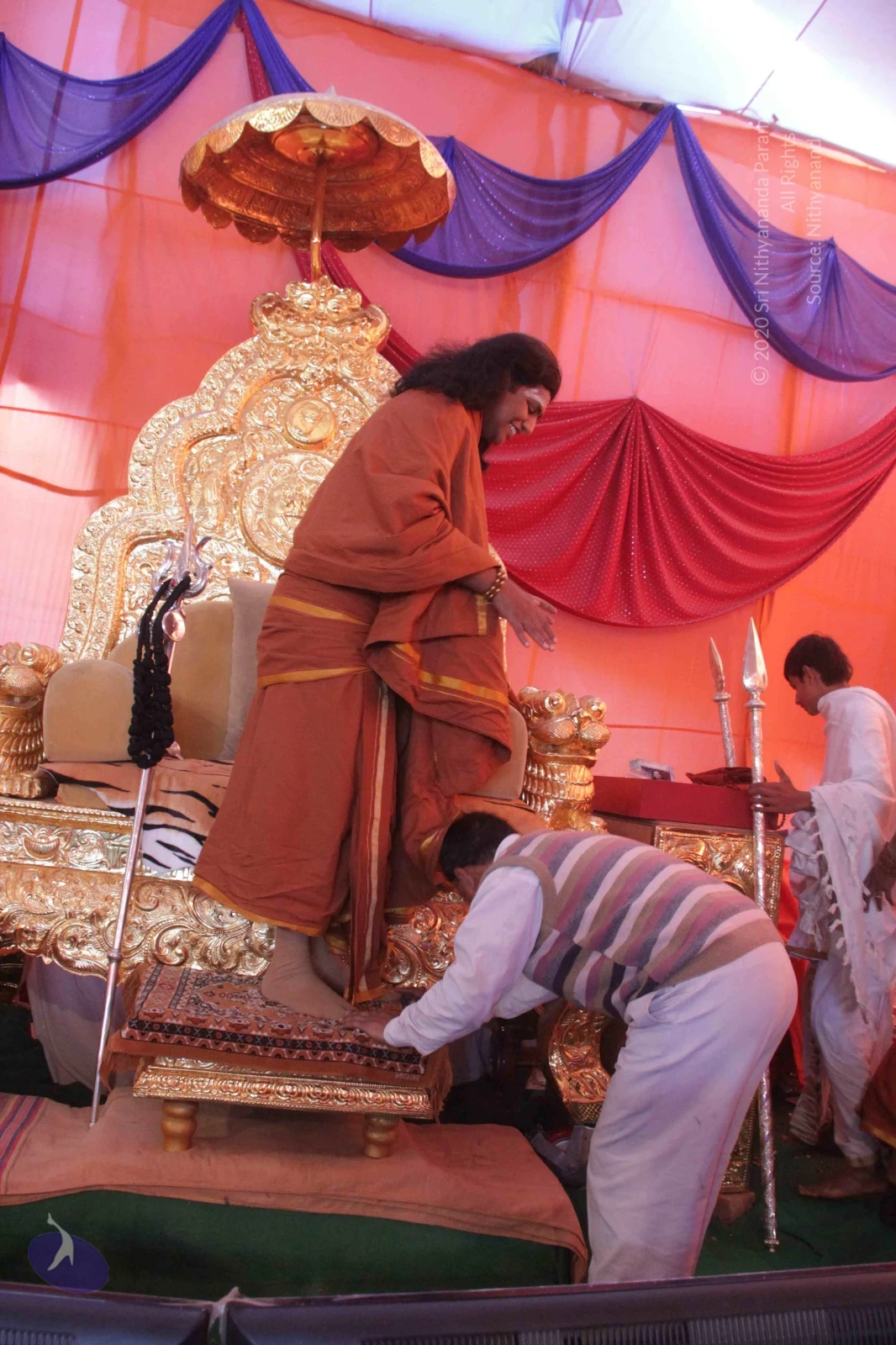
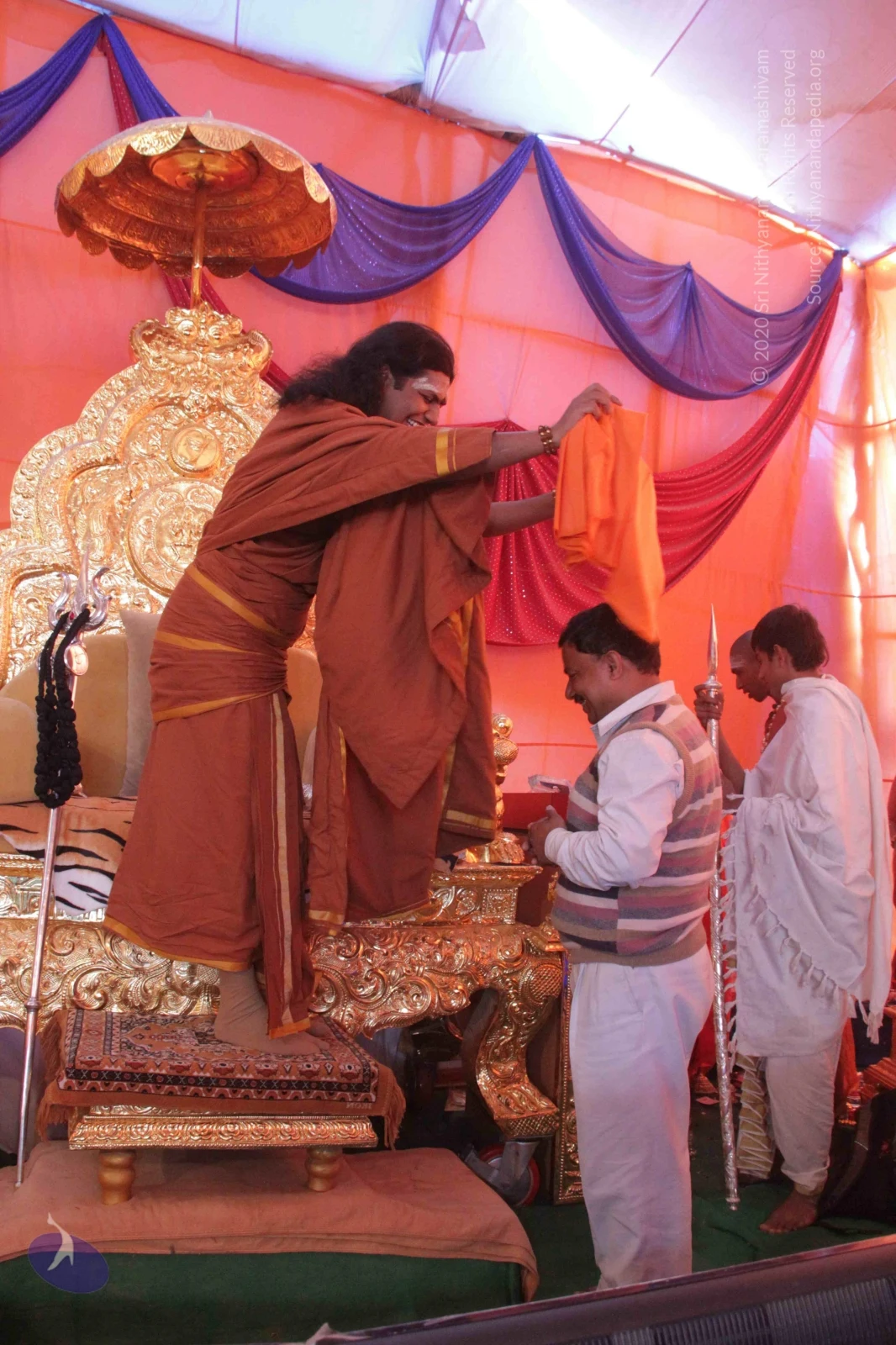
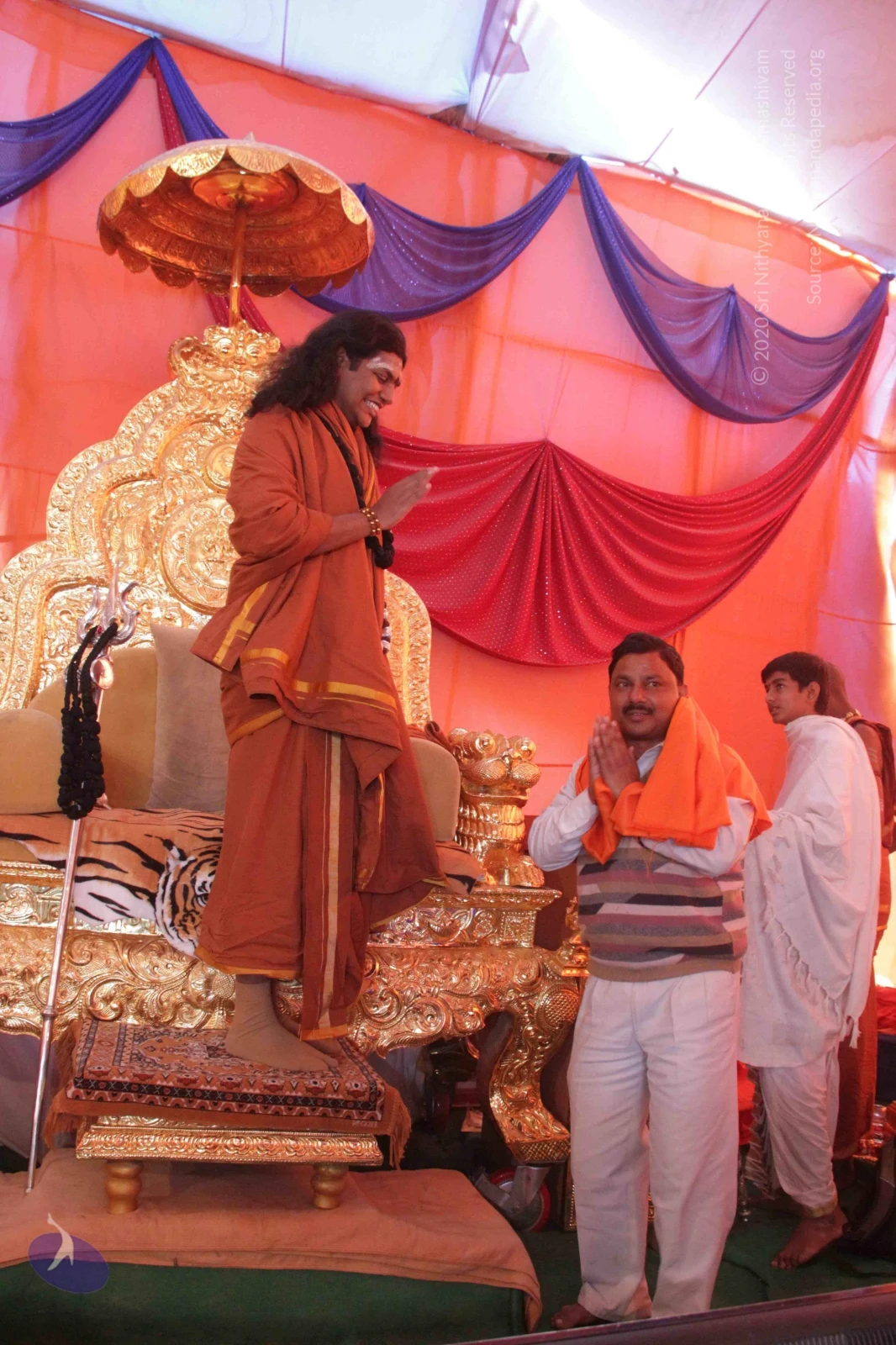
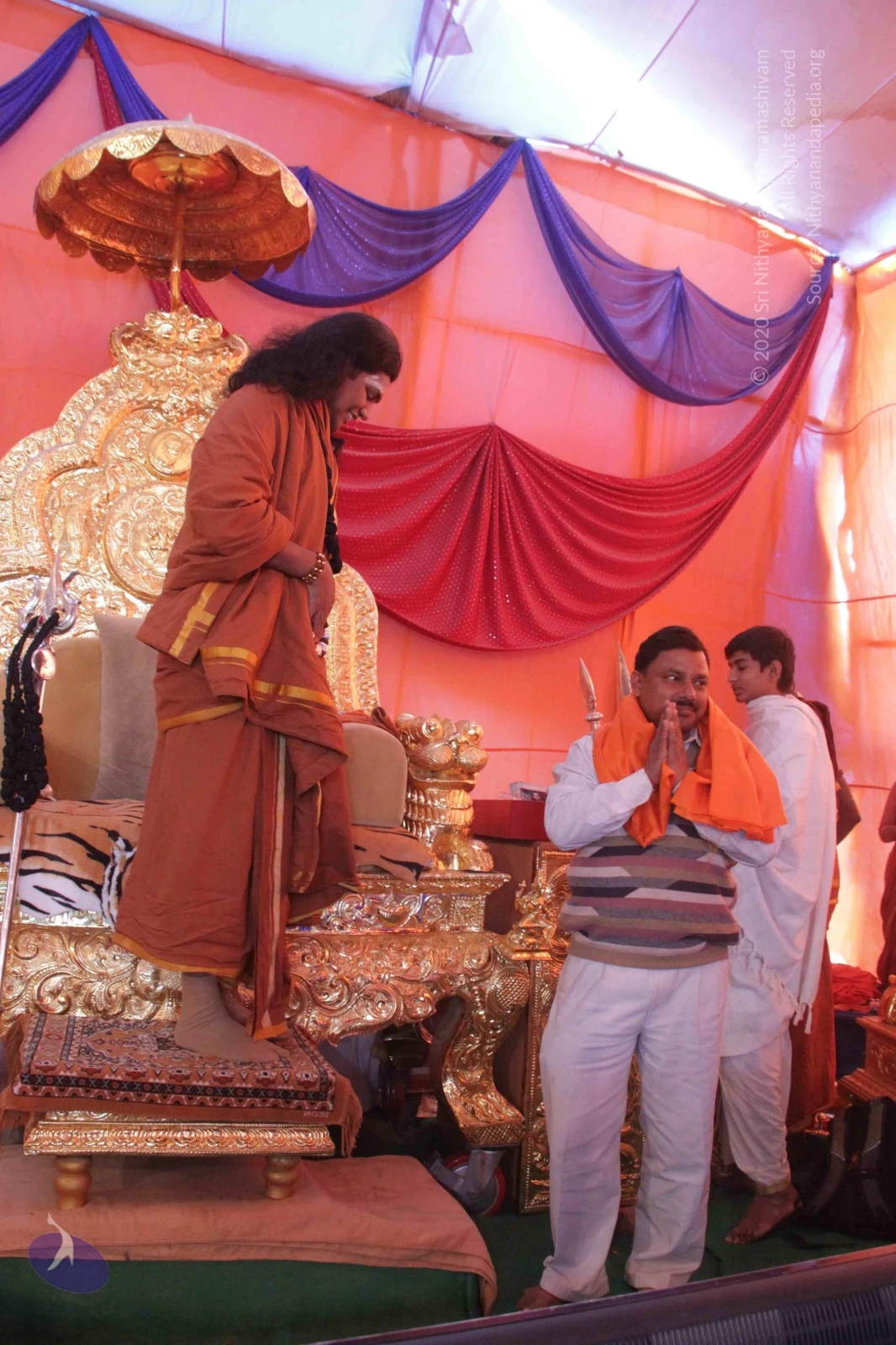
Swamiji Visited, VHP President Sri Ashok Singhalji

81 photosSource gallery
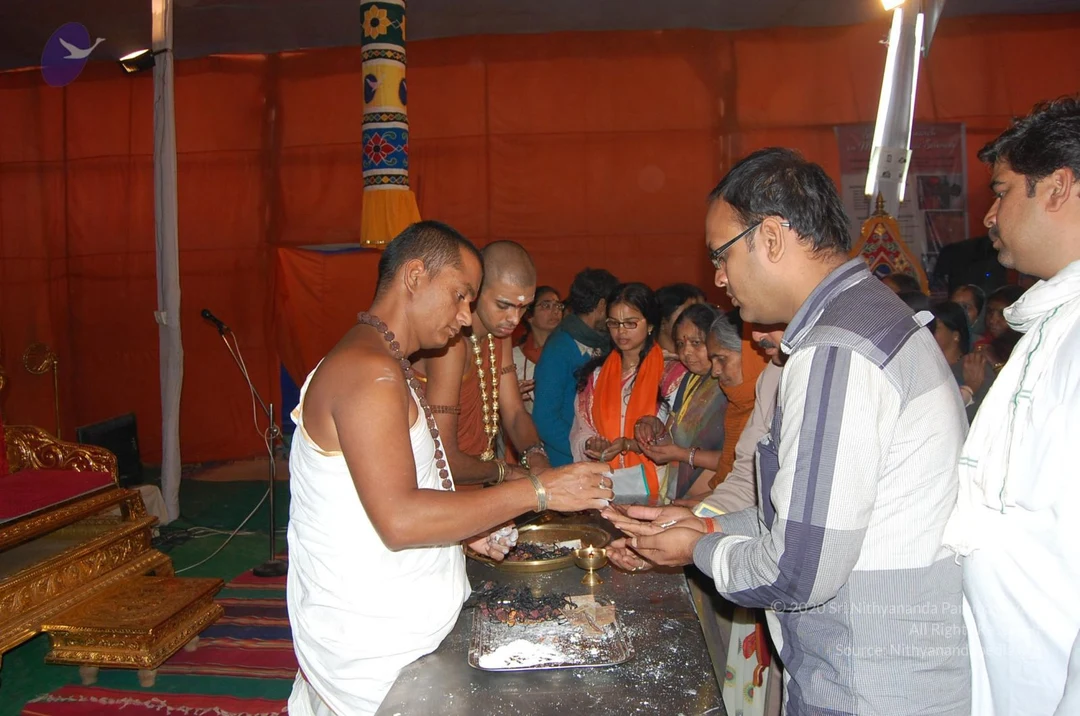
Photograph under a thatched roof at a pilgrim camp, with a crowd of men in white dhotis and saffron-clad sadhus around a central aarti scene. In the foreground, an elderly man in a khaki jacket, black cap and tripundra ash on his forehead stands with hands folded, and a white-bearded man in a white dhoti kneels beside a steel plate of flames and flower petals held by a man in a red shawl. A figure in a saffron-orange robe and a shawl stands centrally, with a lapel microphone worn by a man in a dark sweater nearby. A person with a dark head covering and saffron-orange garment stands in the middle distance. The scene reads as a fire ritual with offerings of petals and burning camphor.A photograph taken inside a thatched-roof pavilion with bamboo rafters during a Kumbh Mela gathering. In the foreground an elderly white-bearded man in a brown jacket and dark cap, with a sacred ash mark on his forehead, holds his cupped hands out over a bowl. Seated on a red plastic chair, a white-haired man in white kurta with saffron-edged shawl holds a brass tray with a lit flame and red offerings, while another man in white reaches toward it. Standing behind them, a man in saffron-orange robe with hands folded and a younger man in a diamond-patterned sweater hold a microphone, with a green sash. Several shaved-headed men in saffron-orange and white garments and a crowd of onlookers fill the background. Offerings and a bowl sit on a cloth at the bottom of the frame.Photo taken under a thatched shelter at a Kumbh Mela camp. A woman with a shaved head and bindi, wearing an orange-brown saffron-toned sari with yellow border, stands centre-right with her hand extended toward a seated man in white dhoti and white kurta bowing forward with his head lowered. Around them, a man in a dark olive jacket with a grey beard and dark knit cap presses his palms together, a man in yellow-striped clothing stands at left, and a younger man in a grey argyle sweater and green sash speaks into a microphone at top. Older men in white stand and sit nearby, and a crowd of onlookers fills the background.A seated elderly man in white dhoti and kurta with a yellow-bordered shawl holds his hands over a brass aarti tray of lit oil lamps with red flowers, receiving the flame during a ritual. Beside him a woman in an orange sari with gold border and gold bangles stands with palms pressed together. A standing man in a black argyle sweater and green sash holds a microphone, and a man in beige with a pearl mala and a tilak on his forehead looks on. A bald white-bearded man in the lower right and a man with a red chair behind are also visible. The setting is an open outdoor camp area.Photograph of an indoor gathering where a seated elderly man in white dhoti and kurta with an orange-and-gold shawl, glasses and a vertical tilak on his forehead cups yellow flower petals in both hands. Beside him, a younger person in an orange robe with a gold-edged shawl and a red bindi sits with hands cupped, also holding petals. On the left, a man in a grey jacket with palms pressed together stands in namaskar. Behind them, several people in white and orange clothing stand, and a metal bowl of yellow and orange petals sits at the bottom right. The scene suggests a devotional offering of flowers.A seated elderly man in a white kurta with a saffron-and-cream shawl sits in a red chair, holding small items in his hands during a ritual gathering. Around him stand devotees with palms pressed together, including a robed man in grey jacket with white tilak, a woman in orange sari, and a man in orange-and-cream dhoti. In the foreground at lower right, a man with grey hair offers folded hands. A brass pot, fruit, flowers, banana, orange, coins and money sit on a cloth in front.

KumbhMela-Pandal

14 photosSource gallery
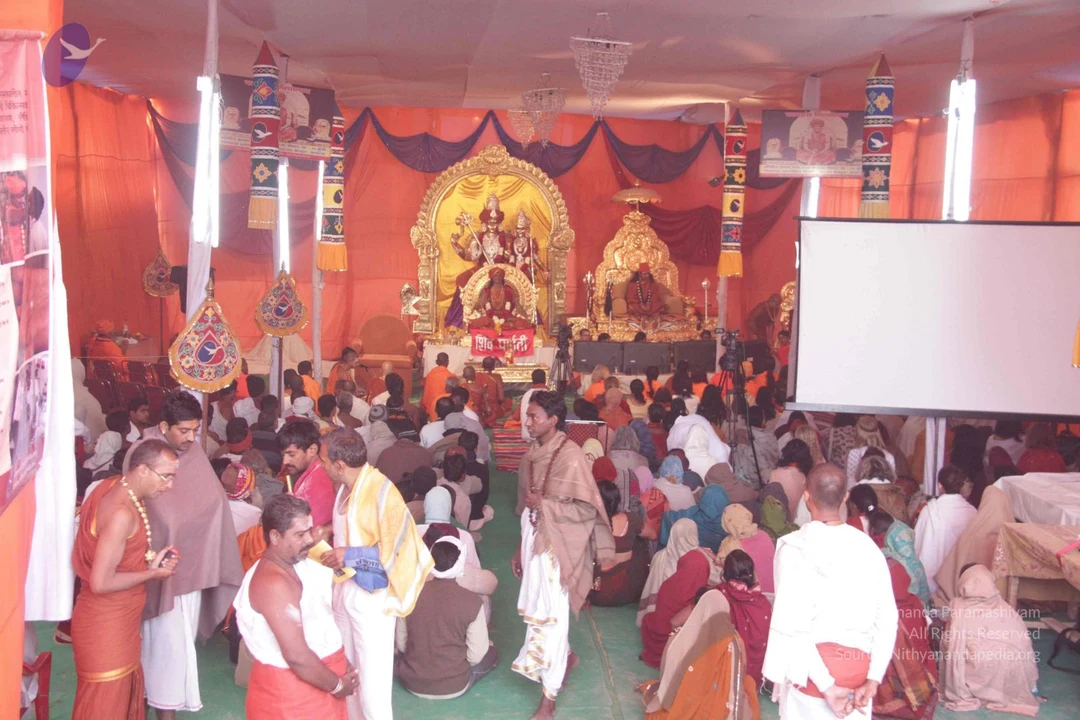
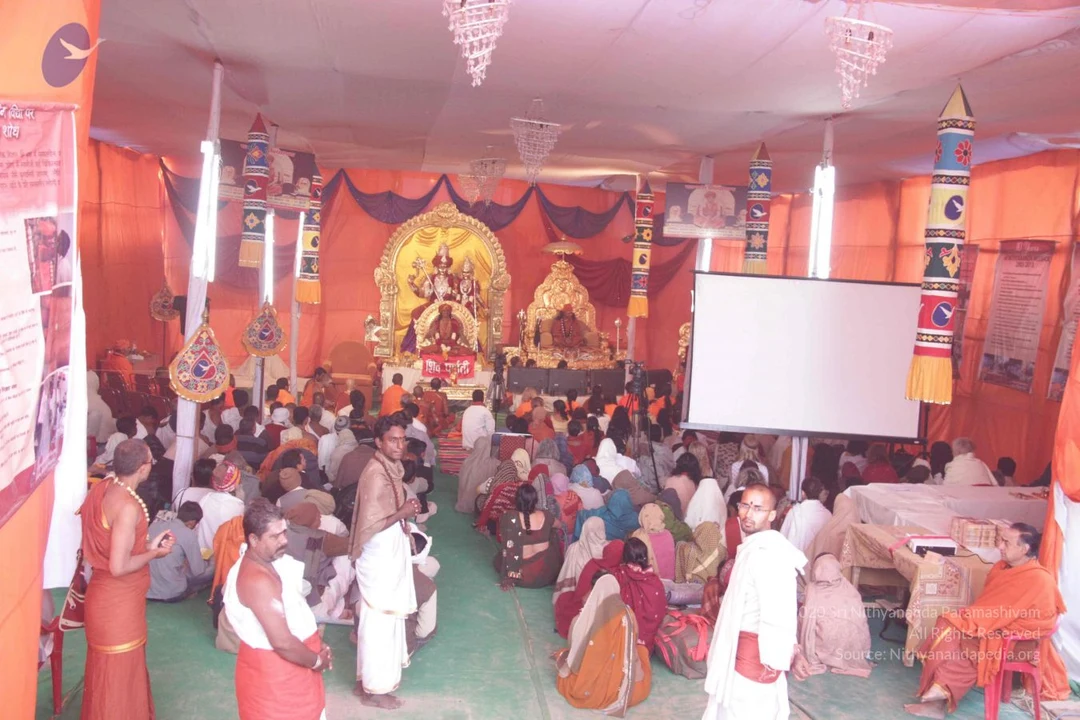
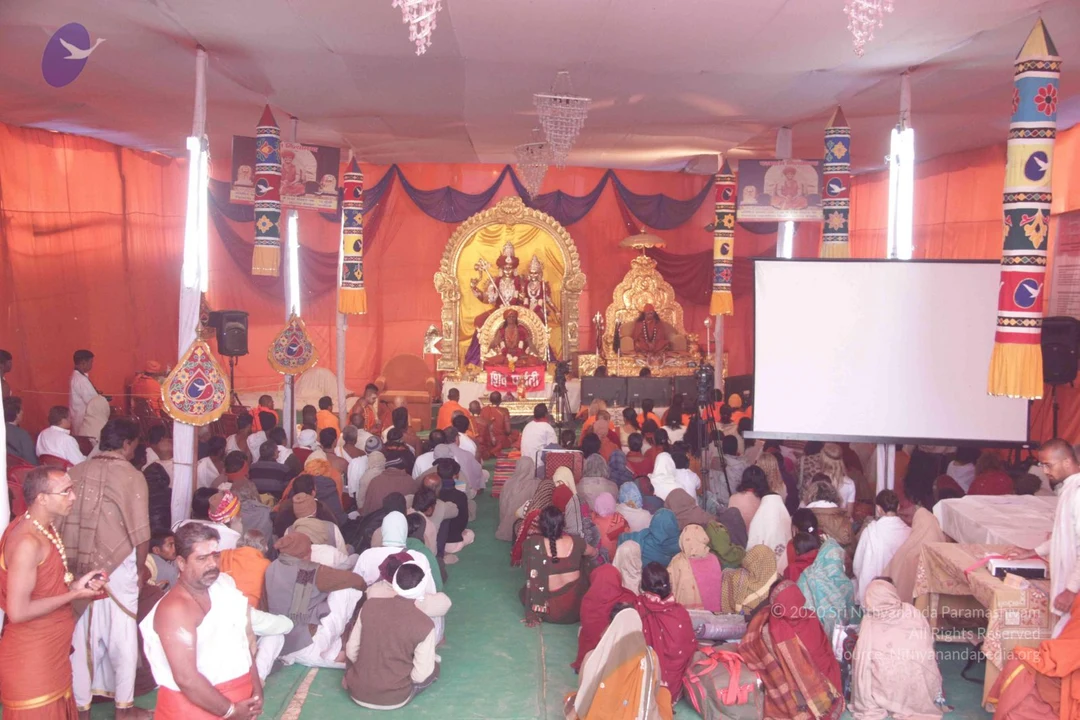
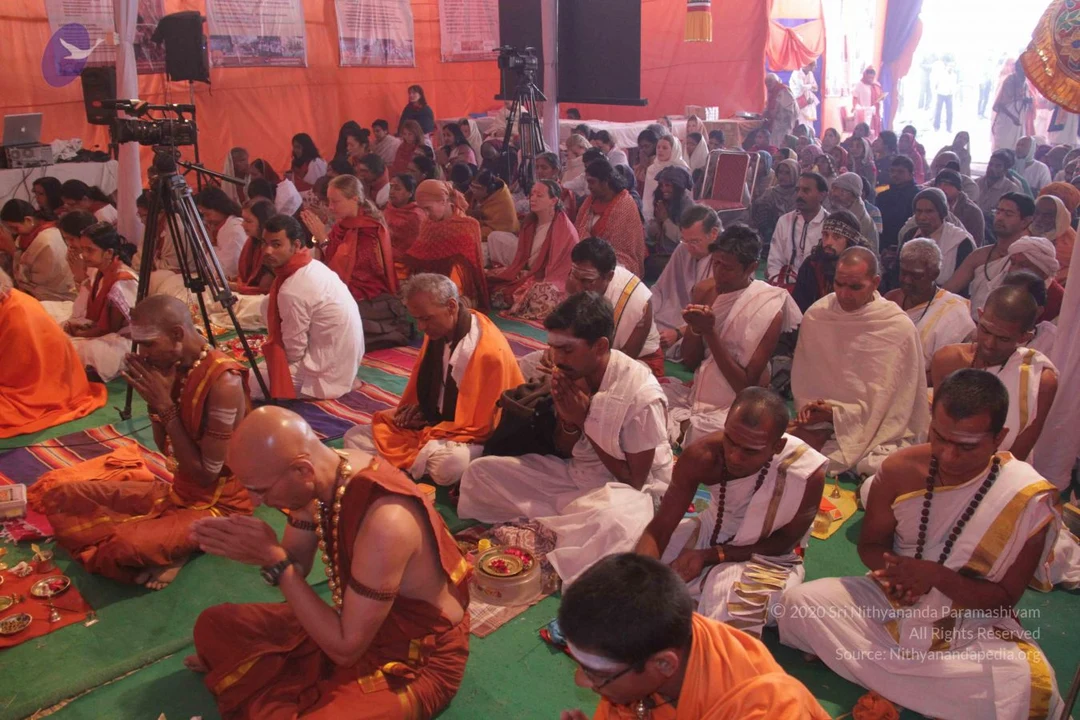
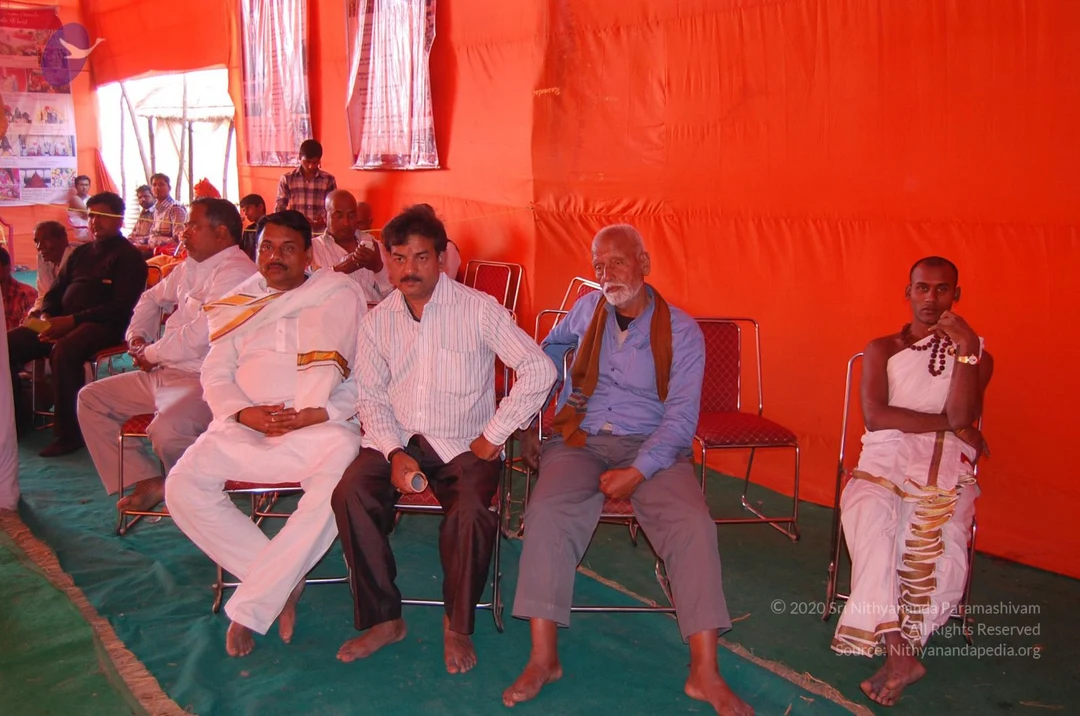
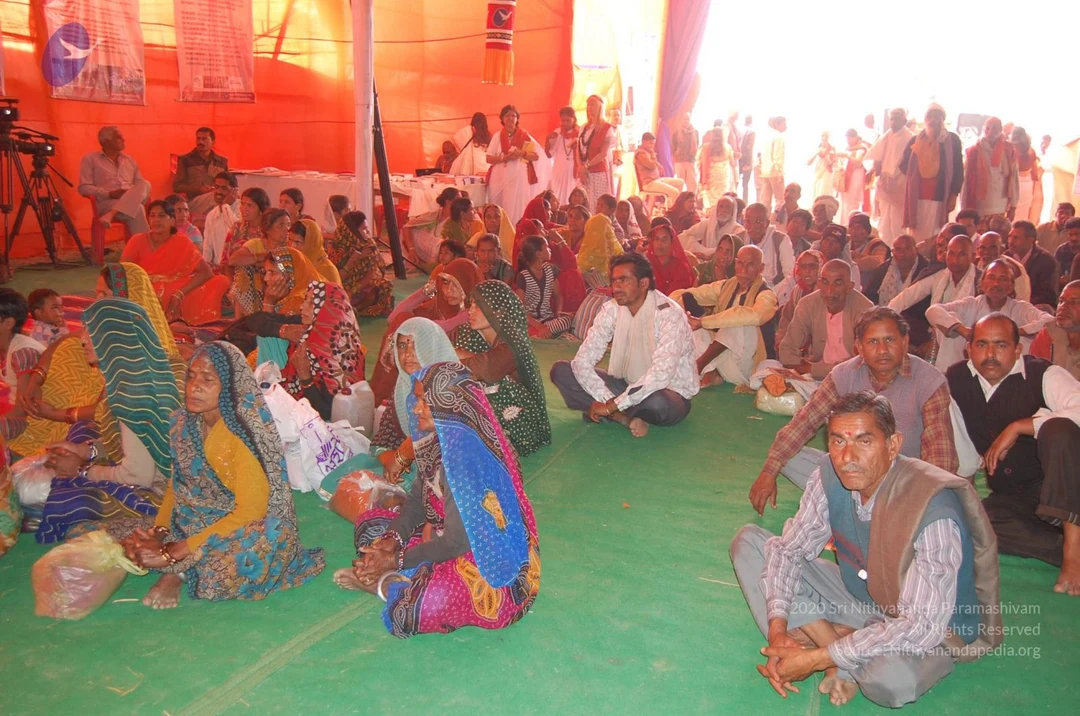
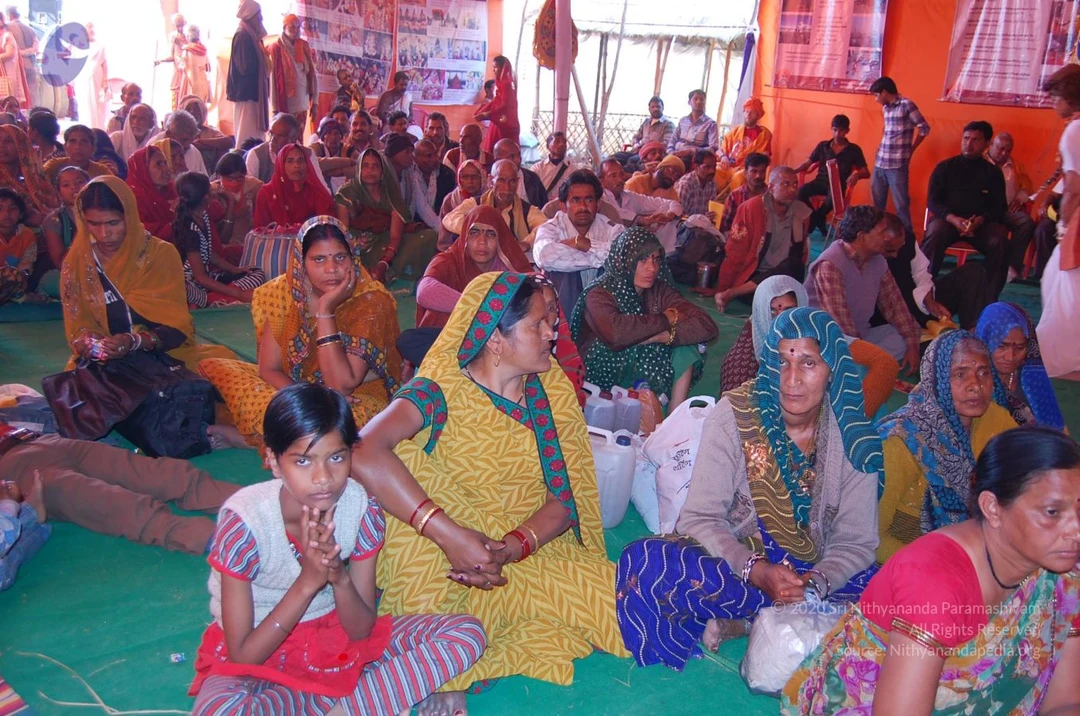
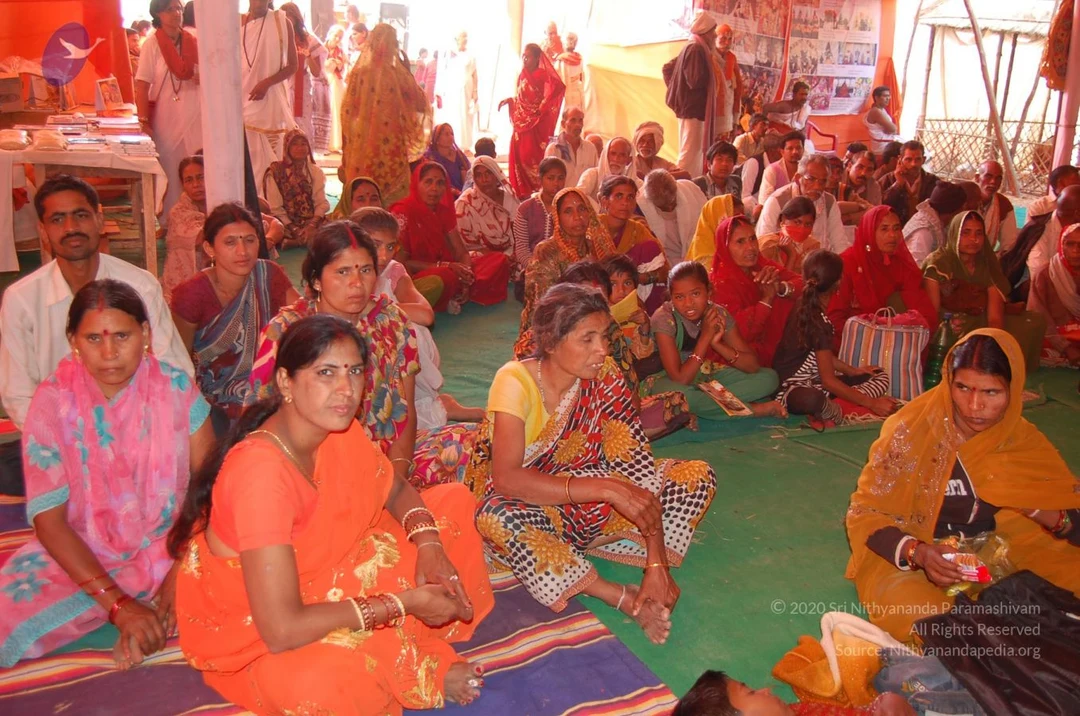
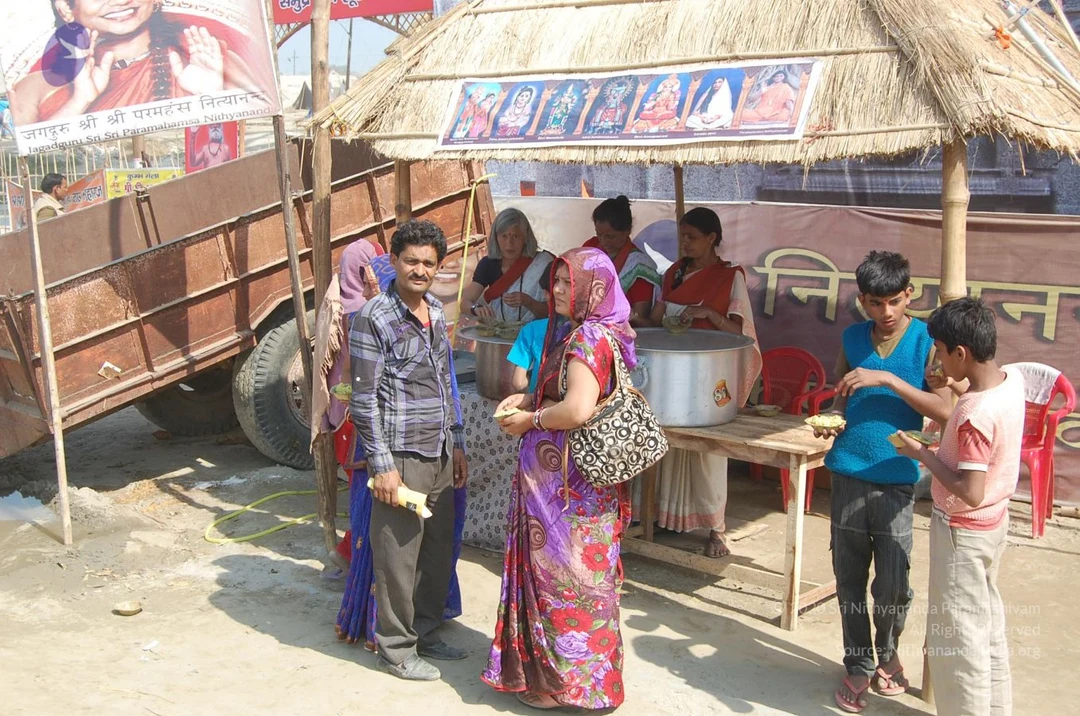
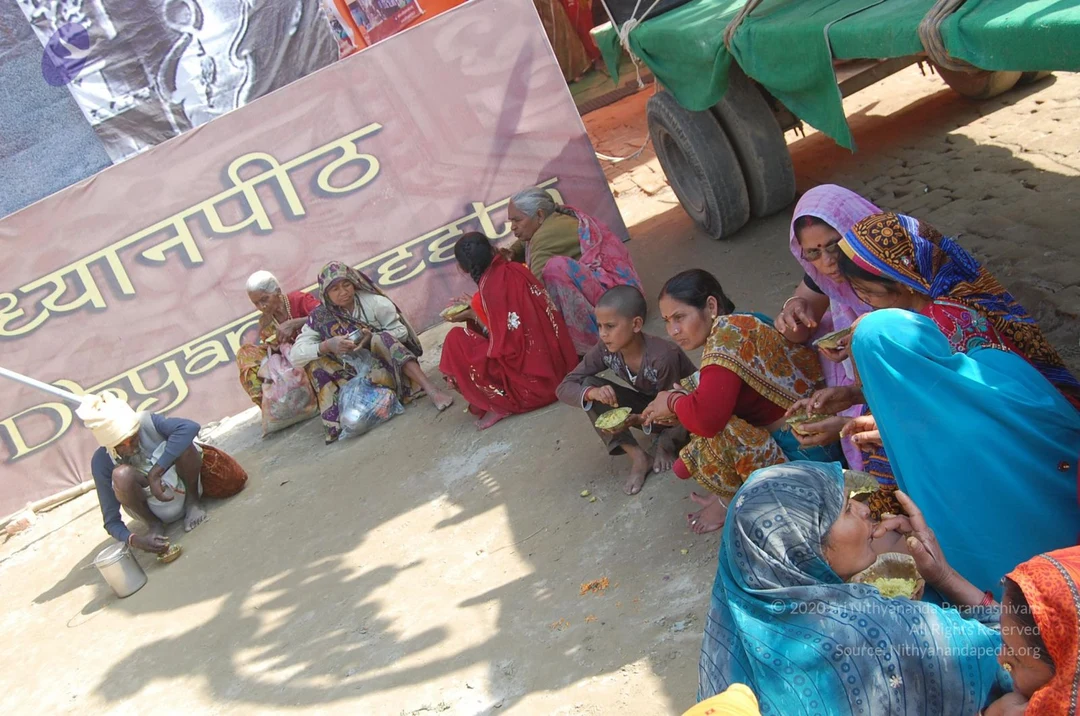
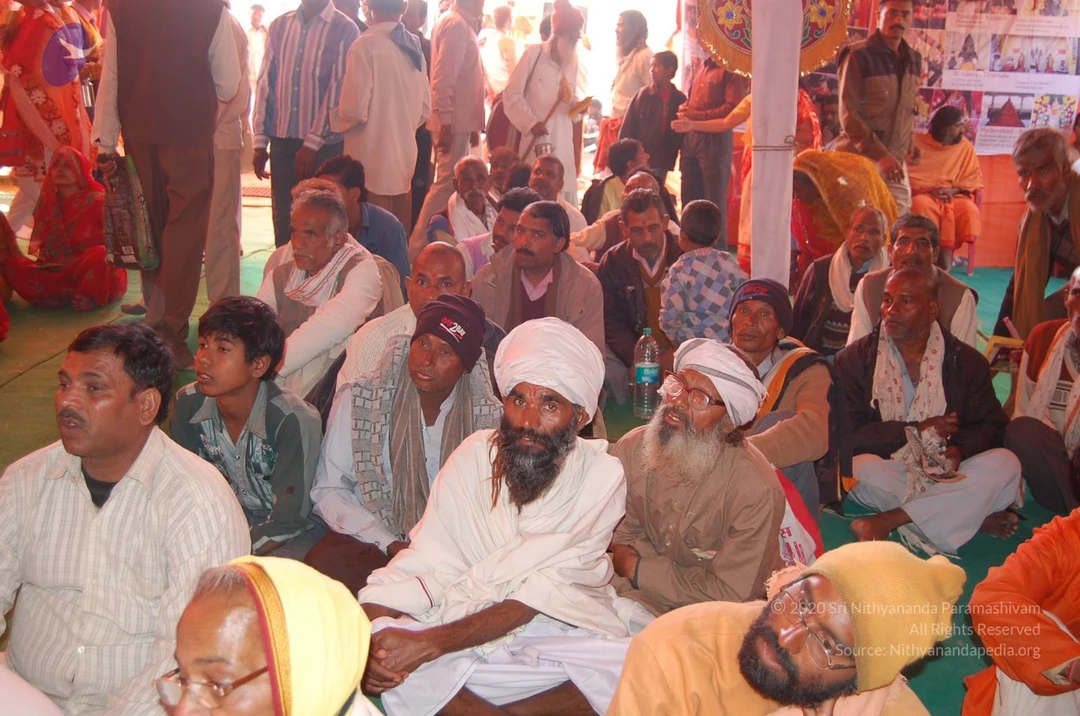
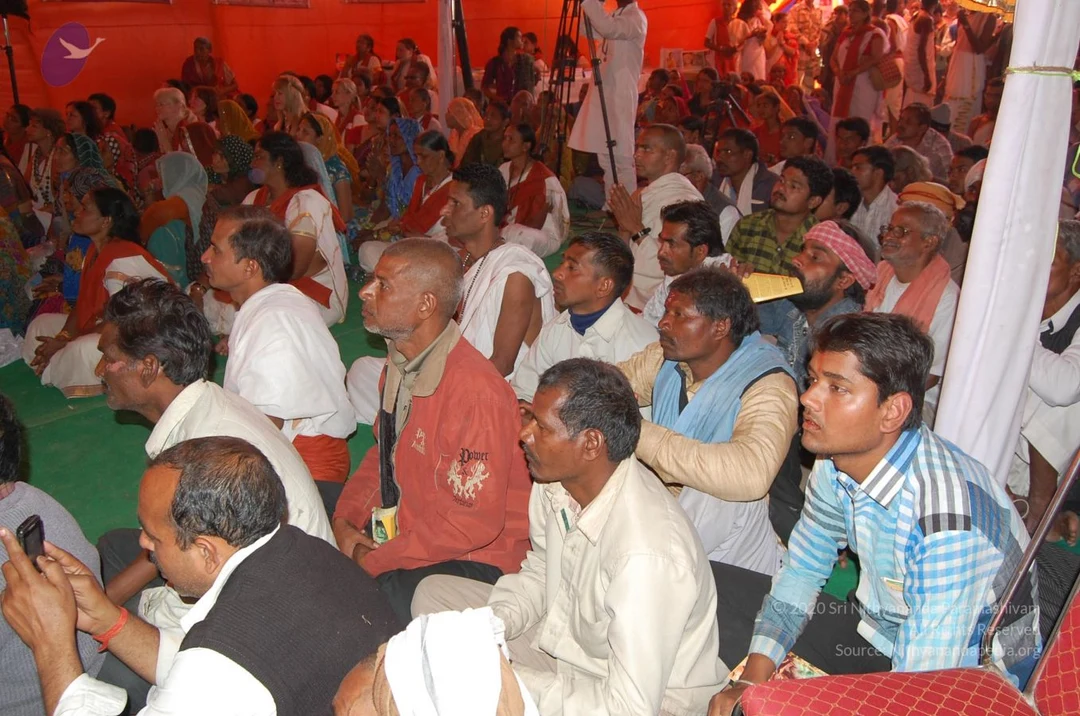
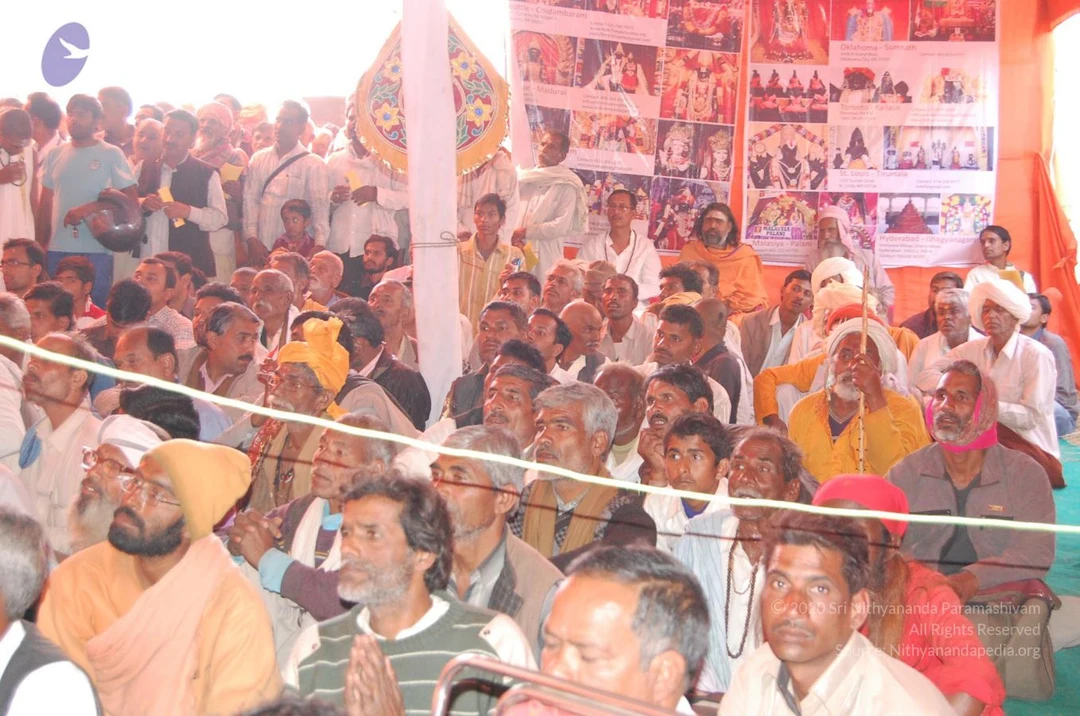
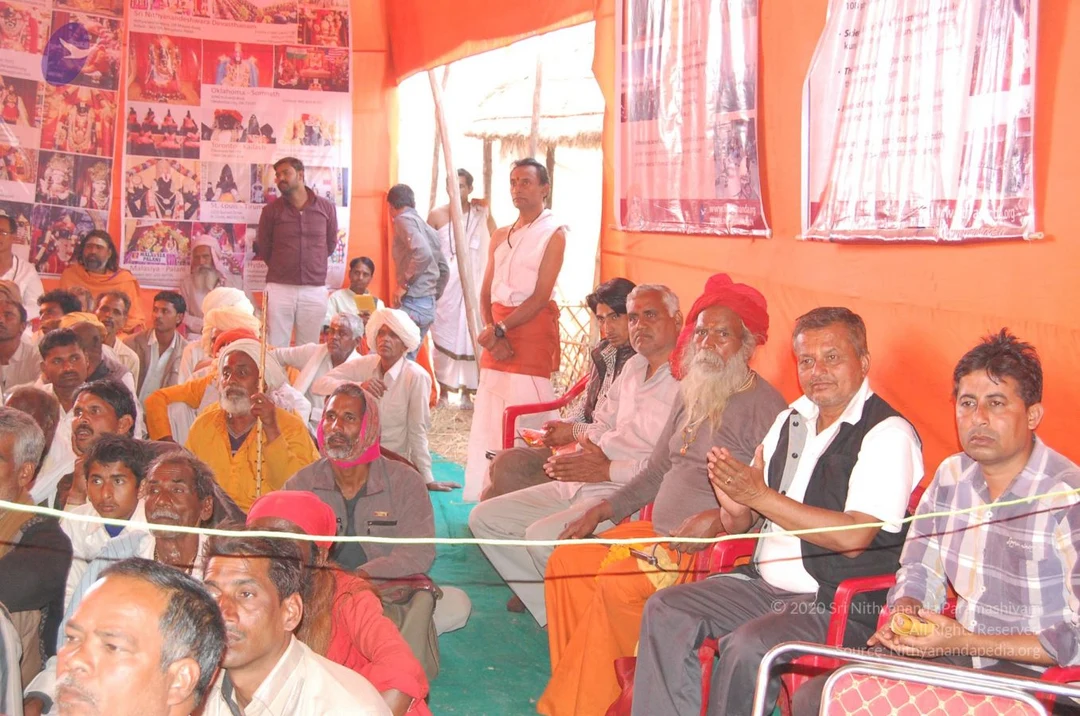
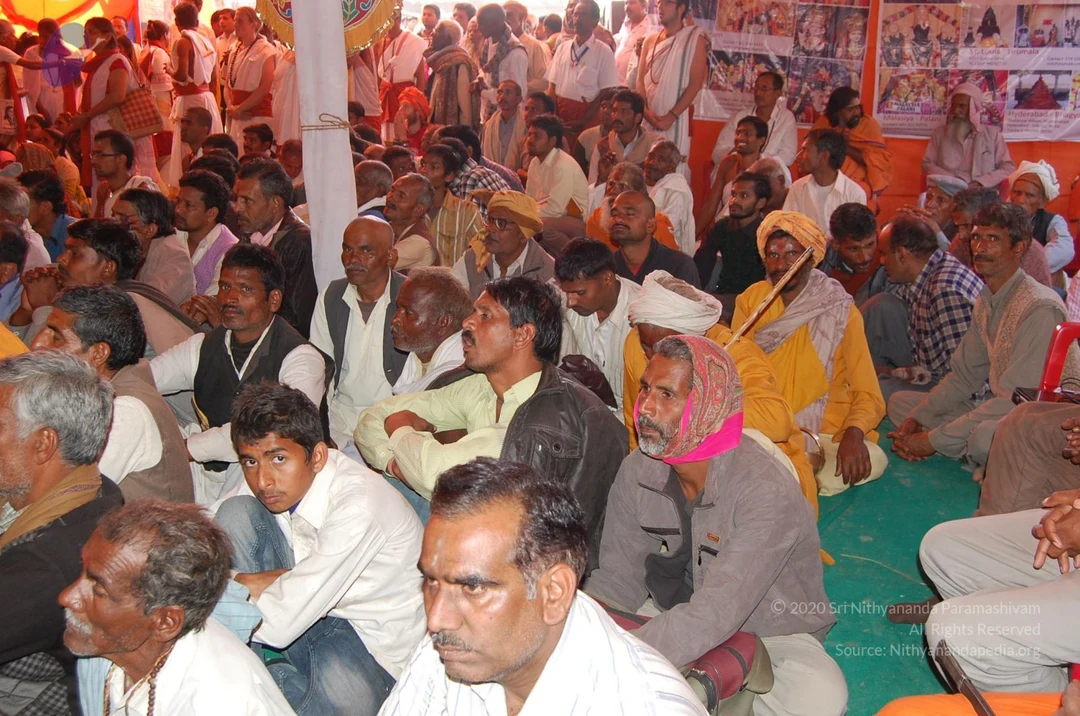
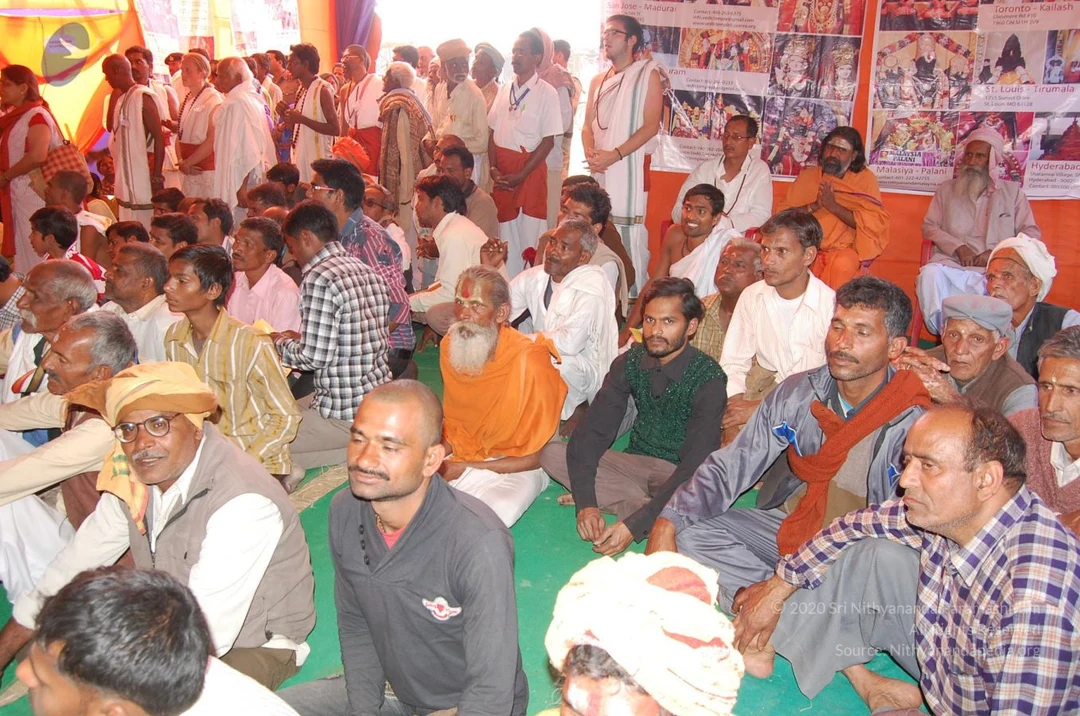
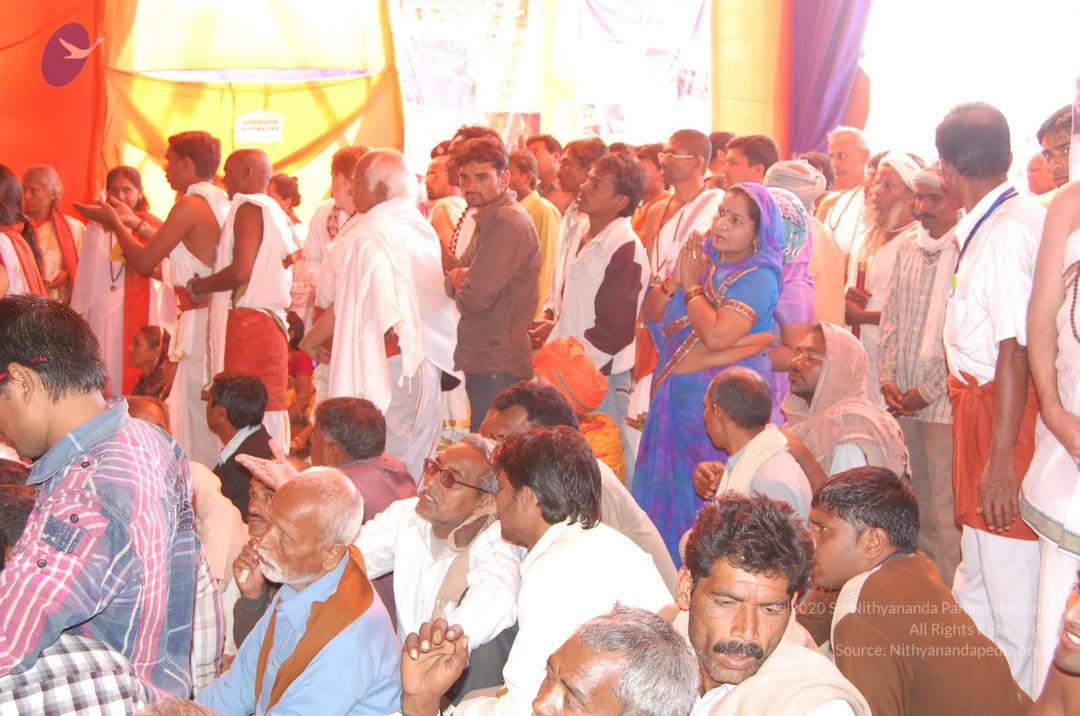
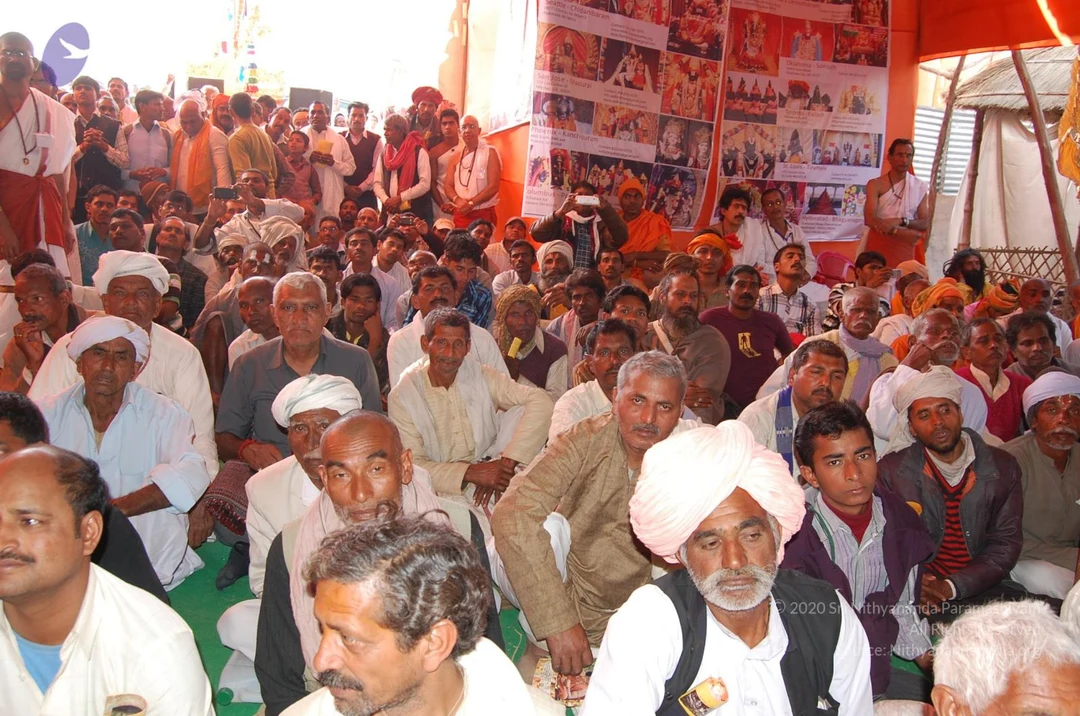
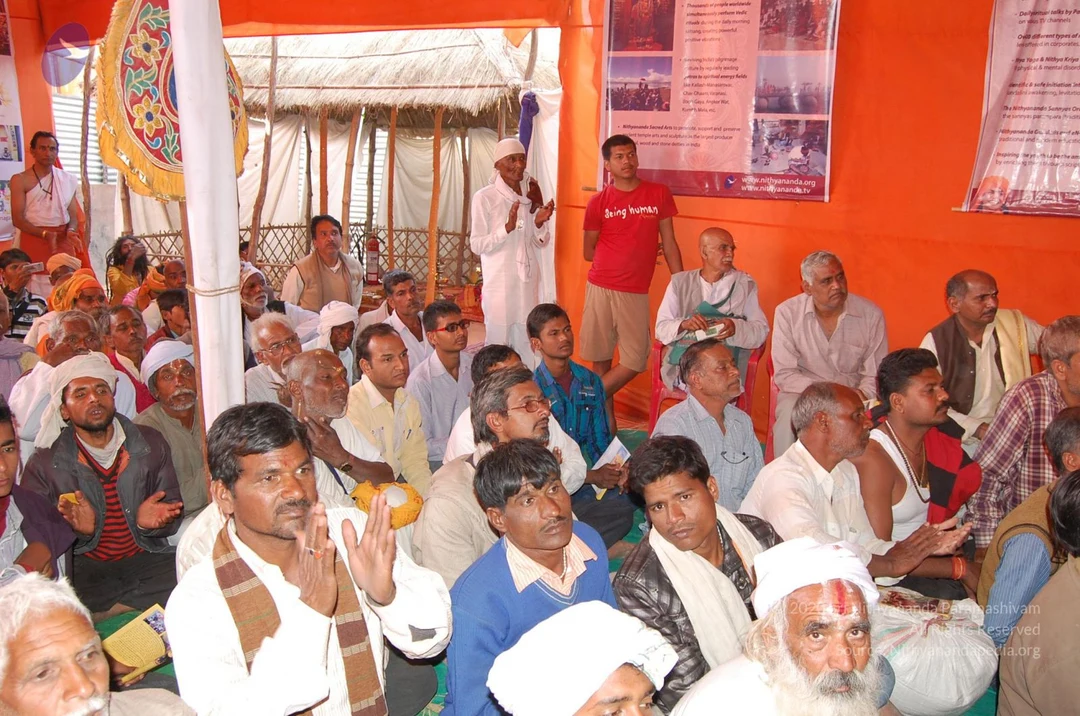
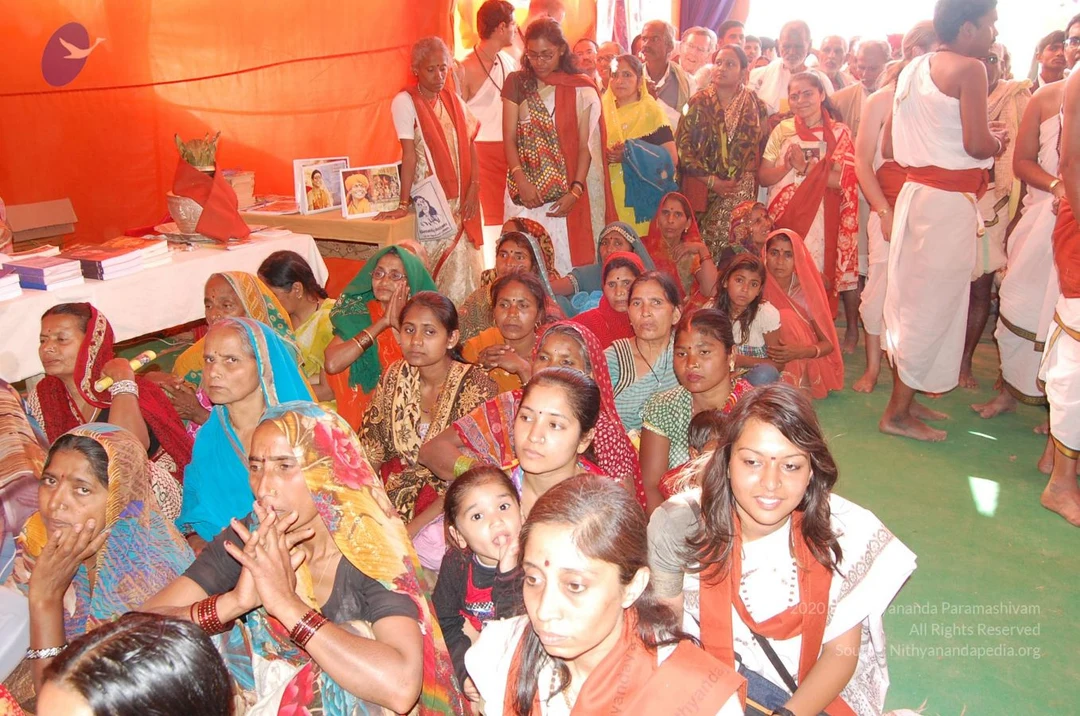
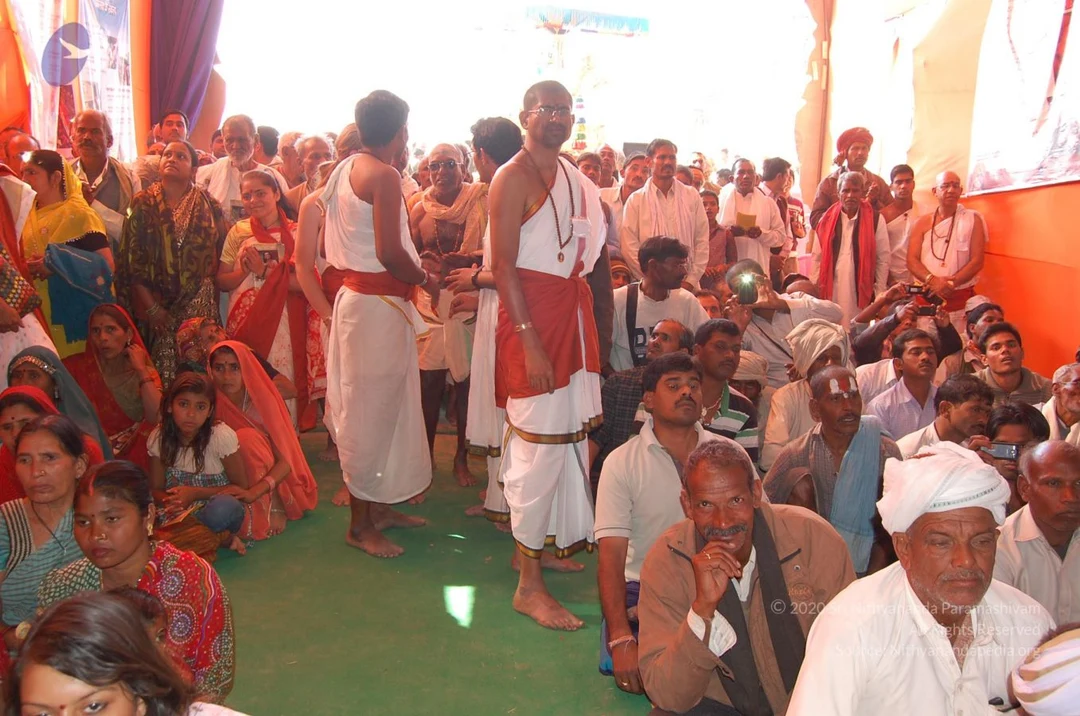
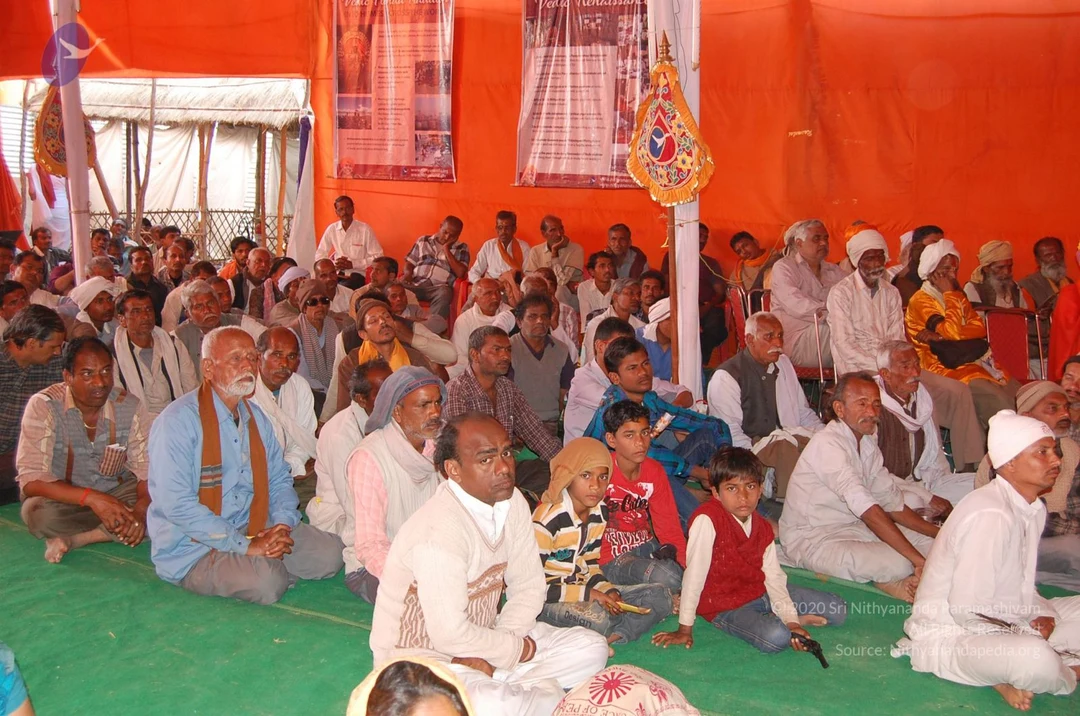
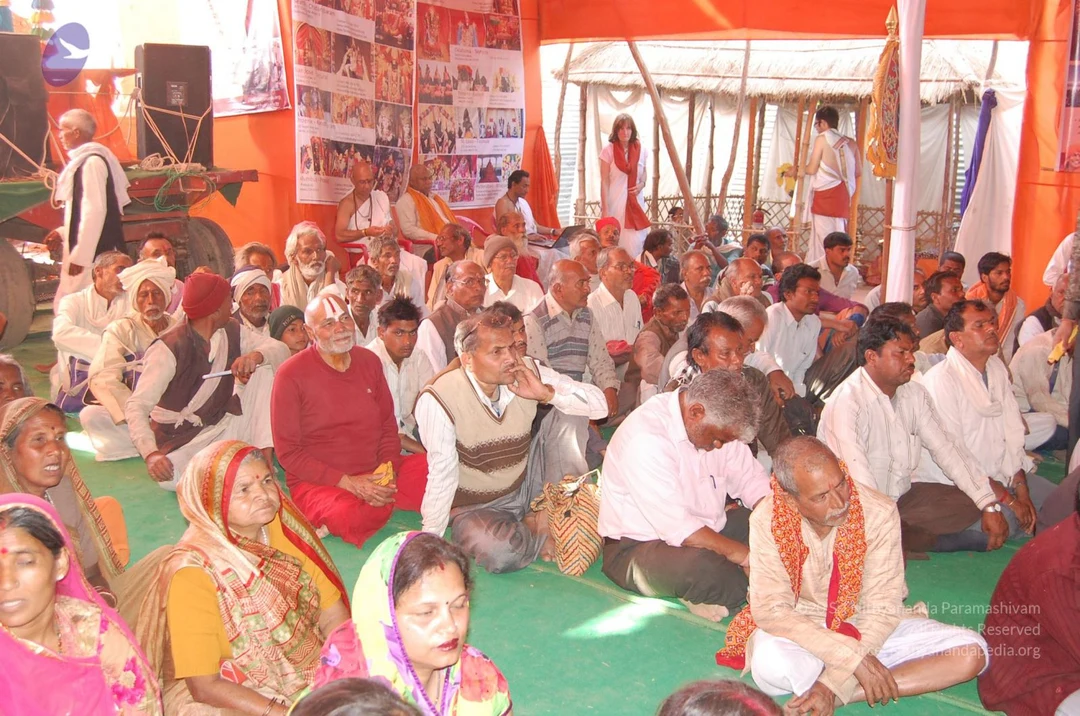
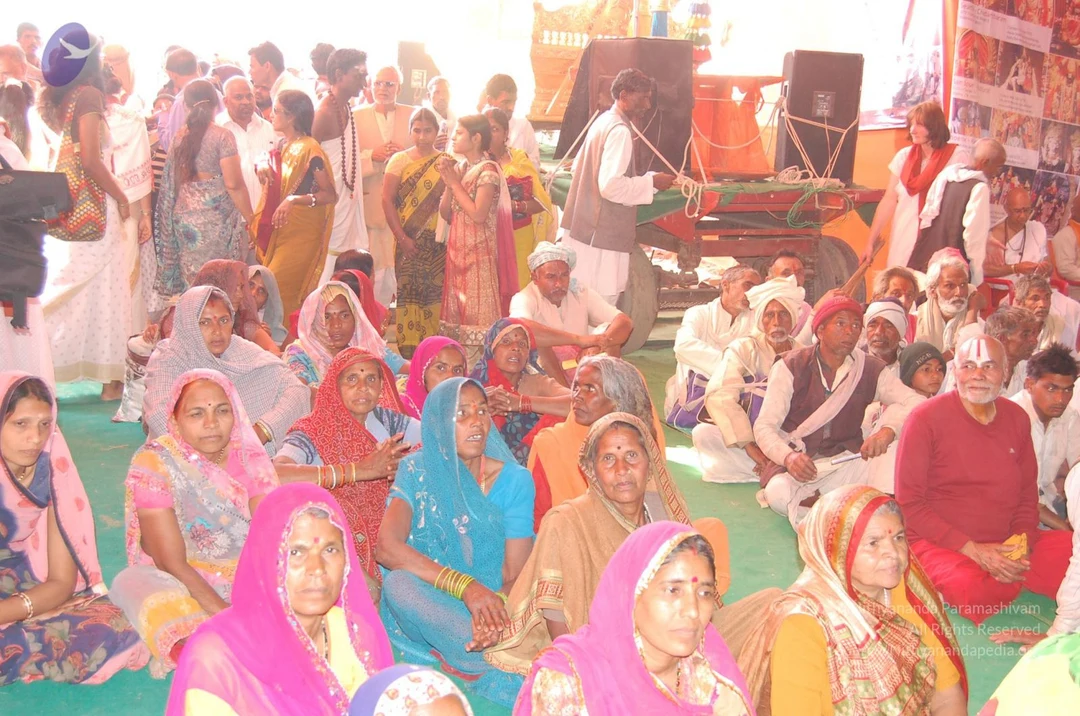
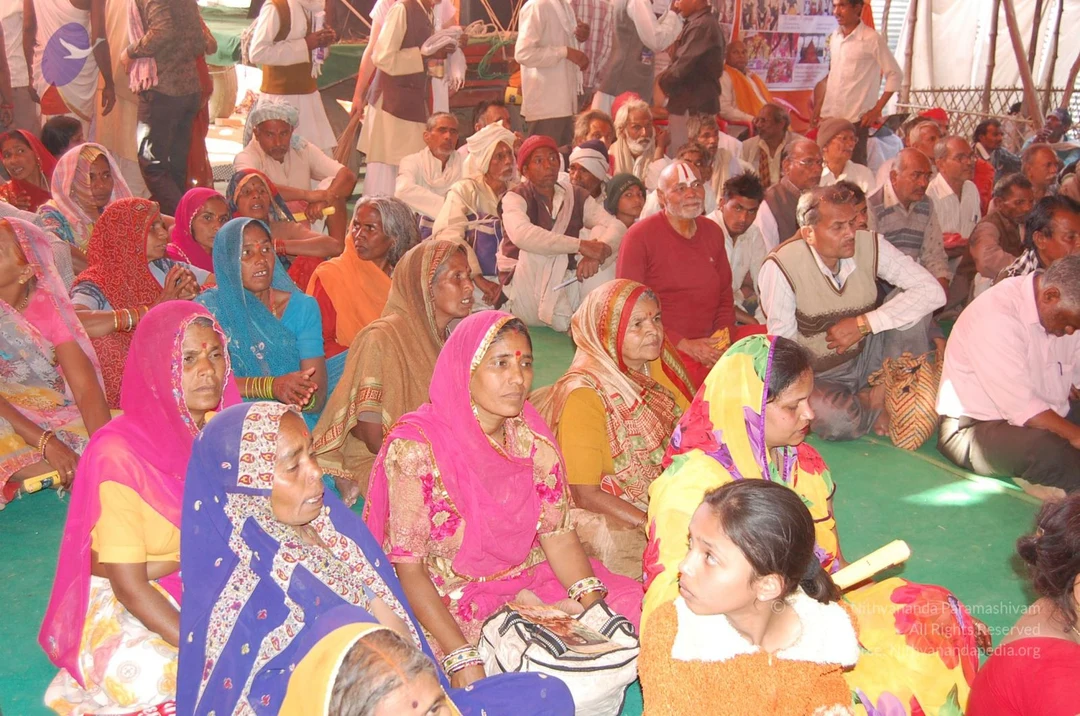
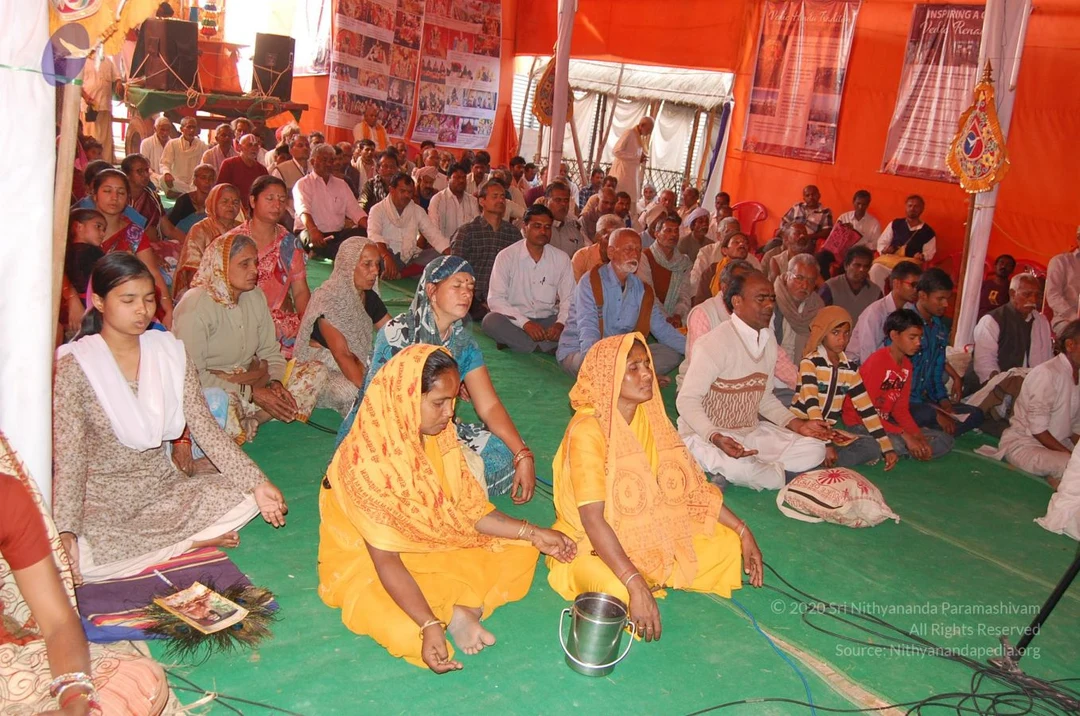
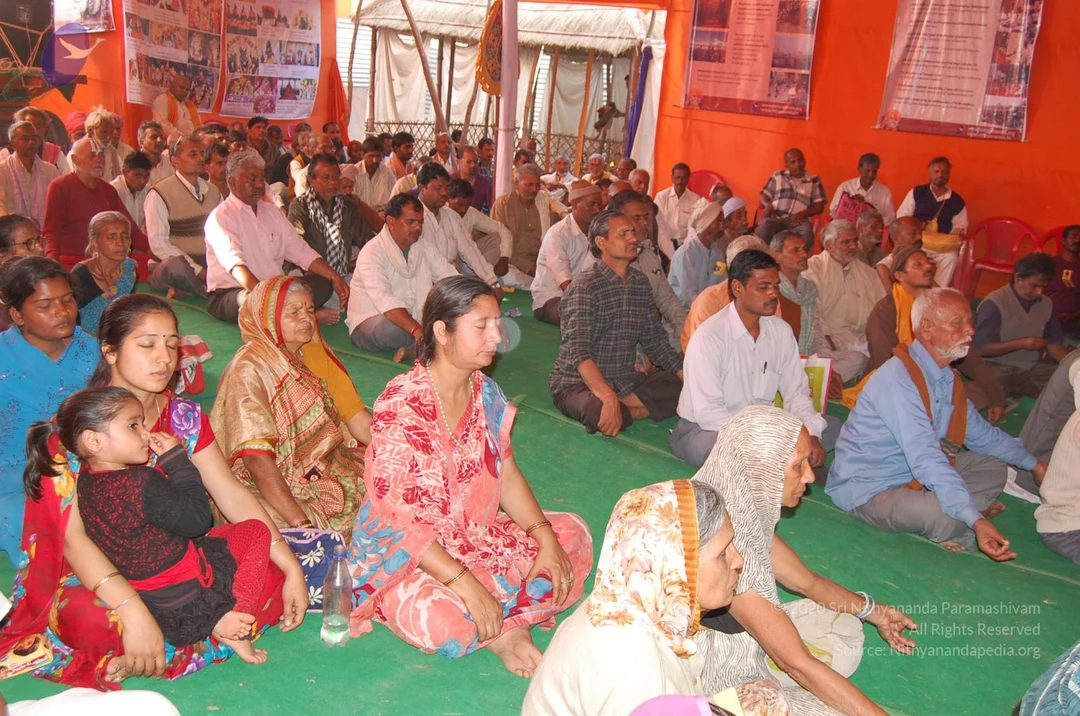
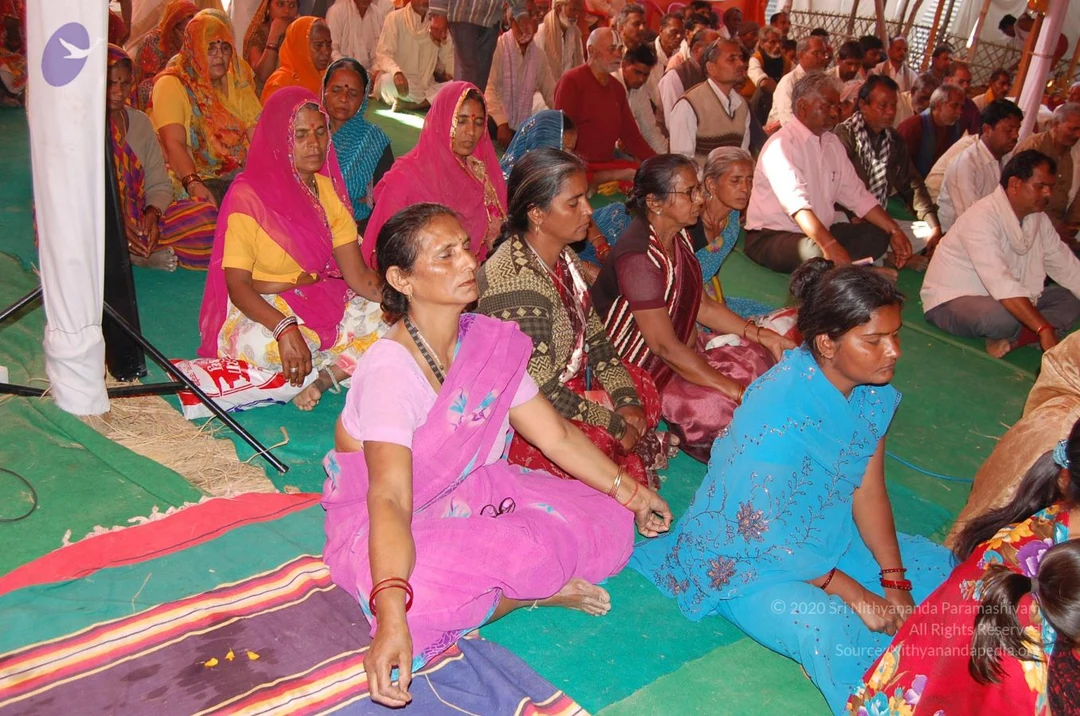
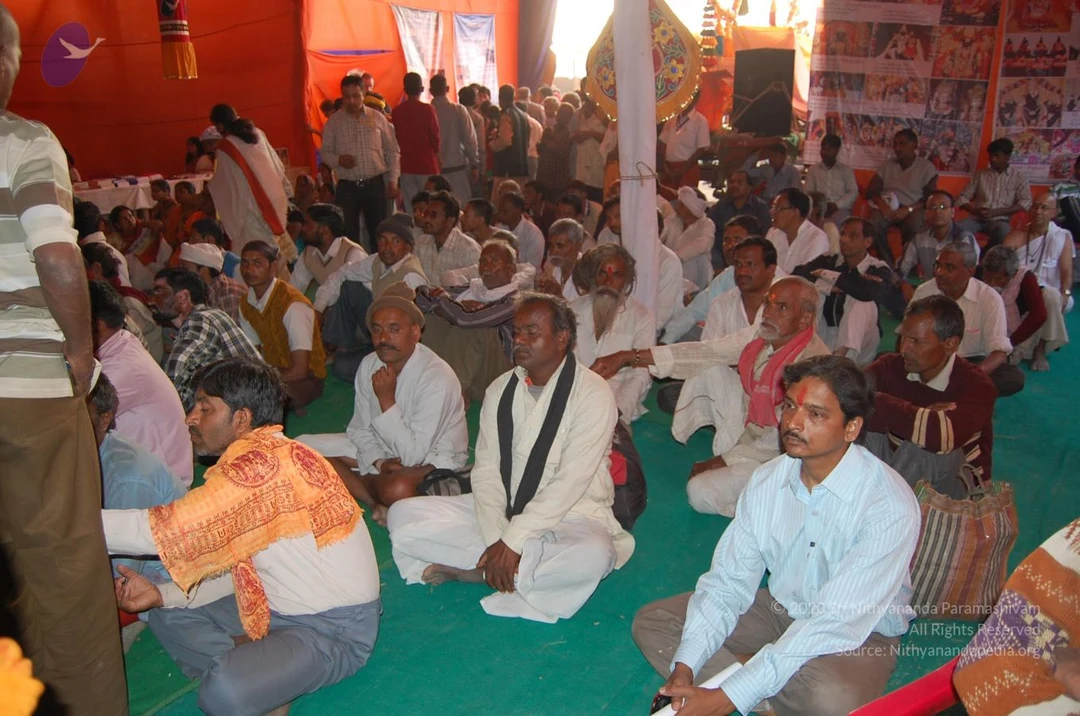
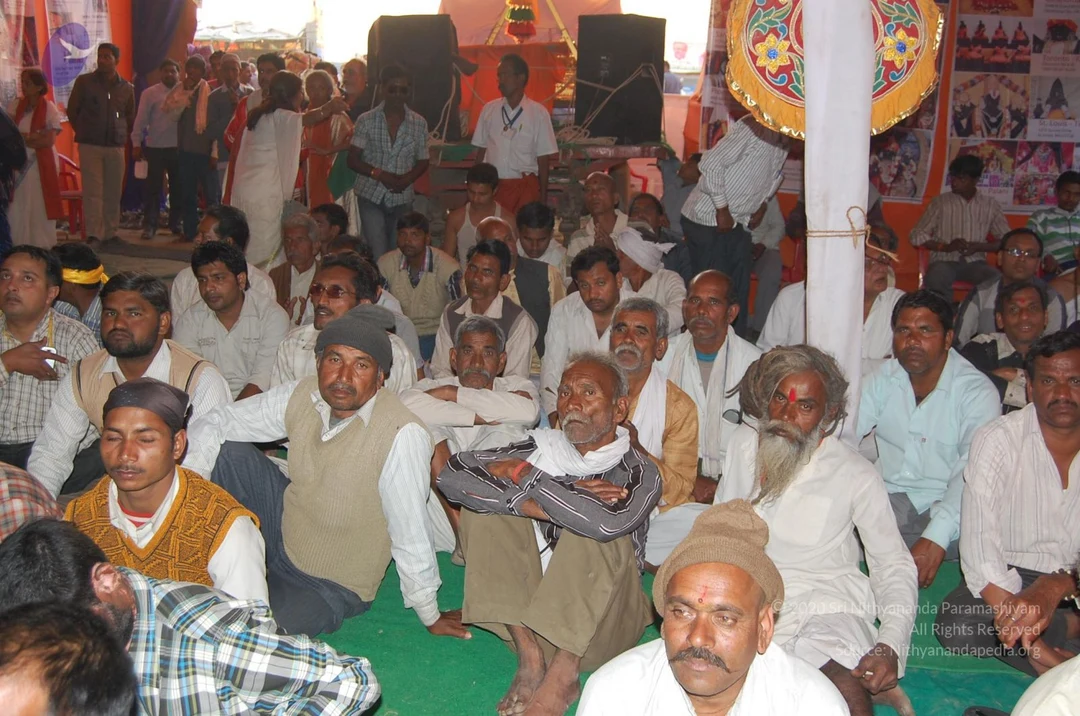
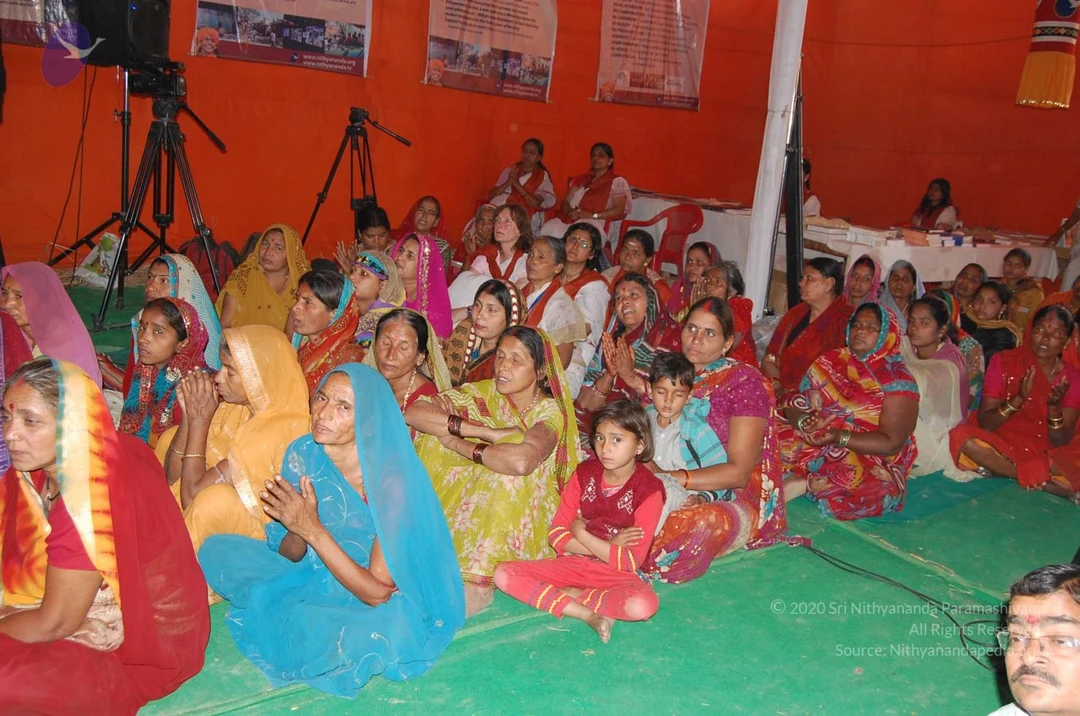
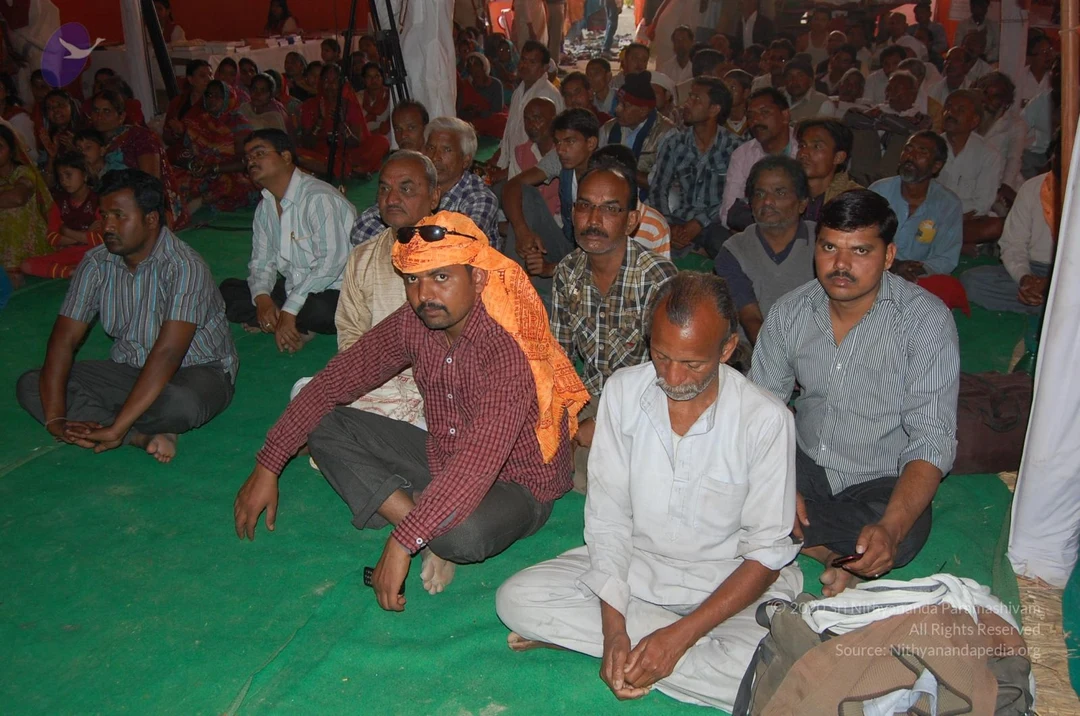
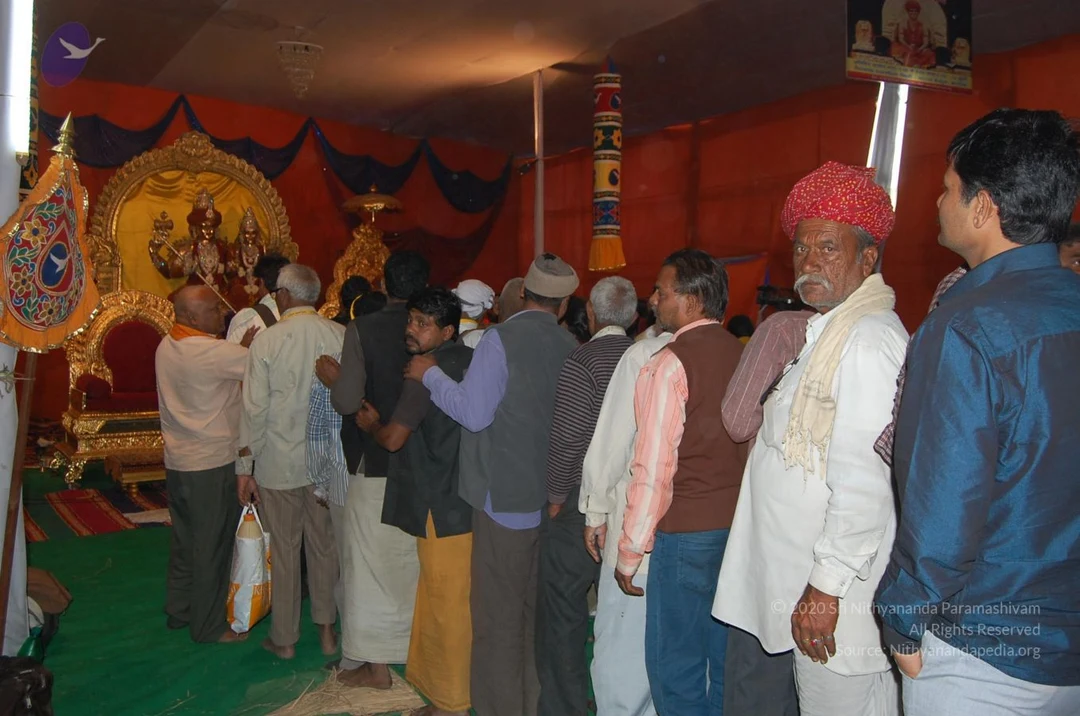
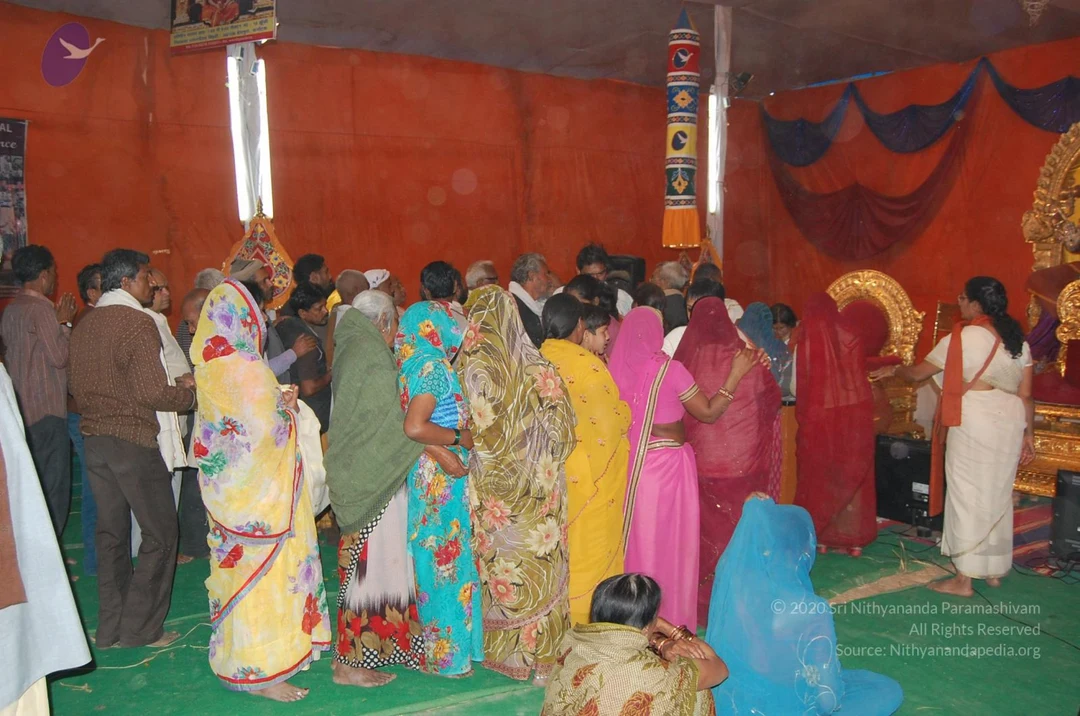
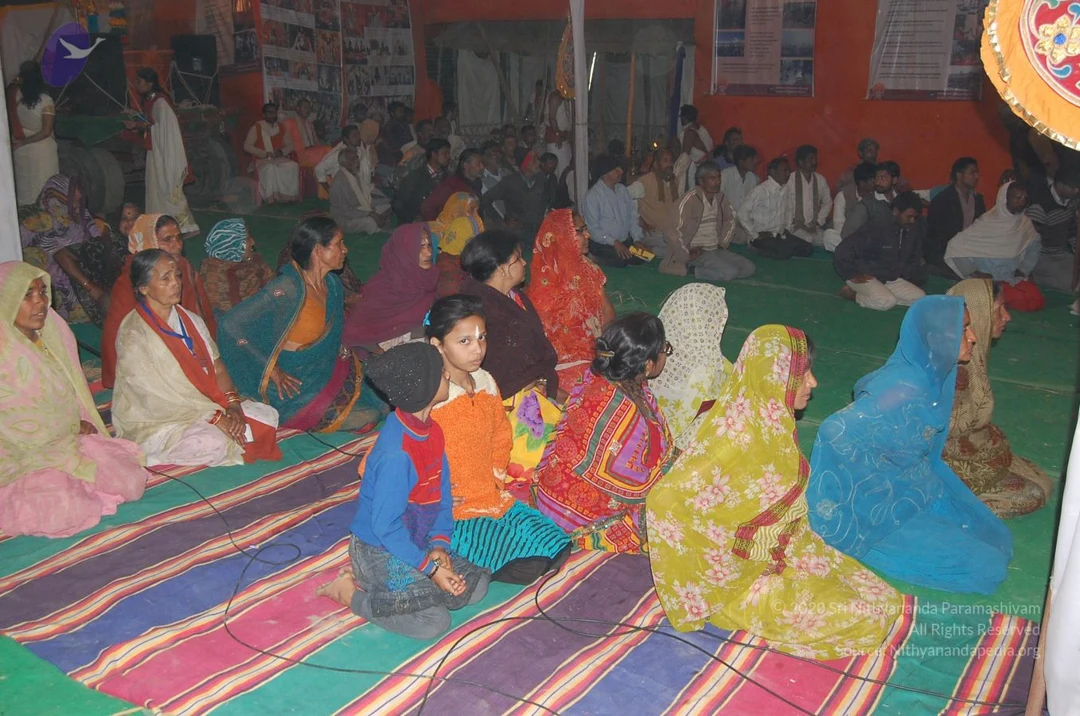
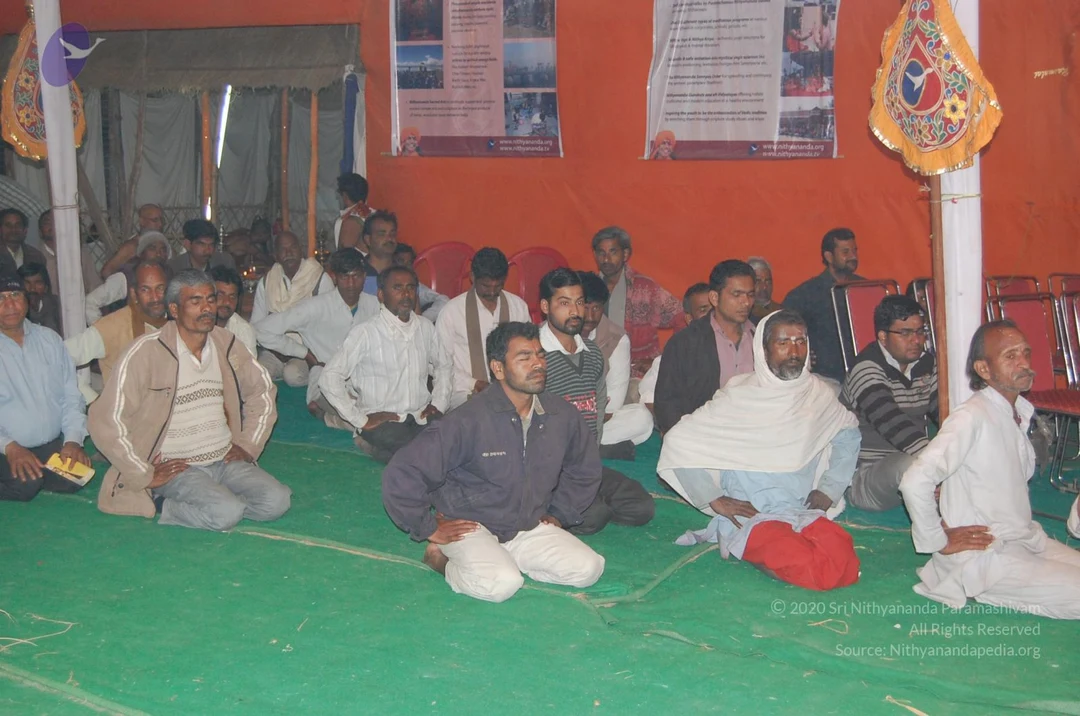
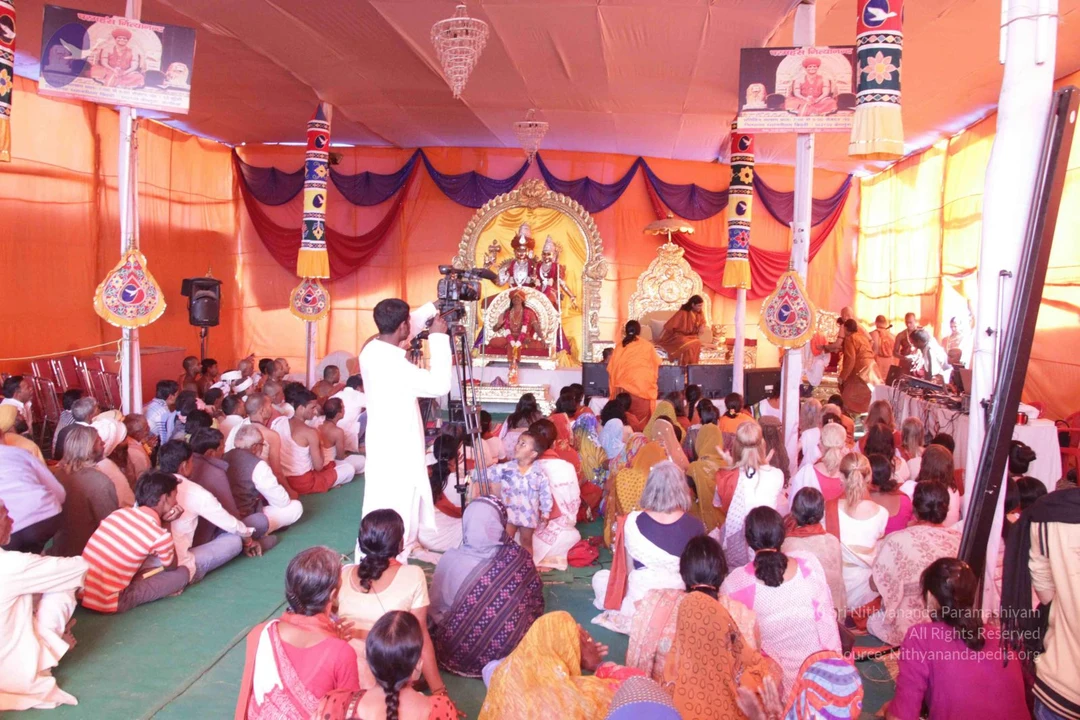
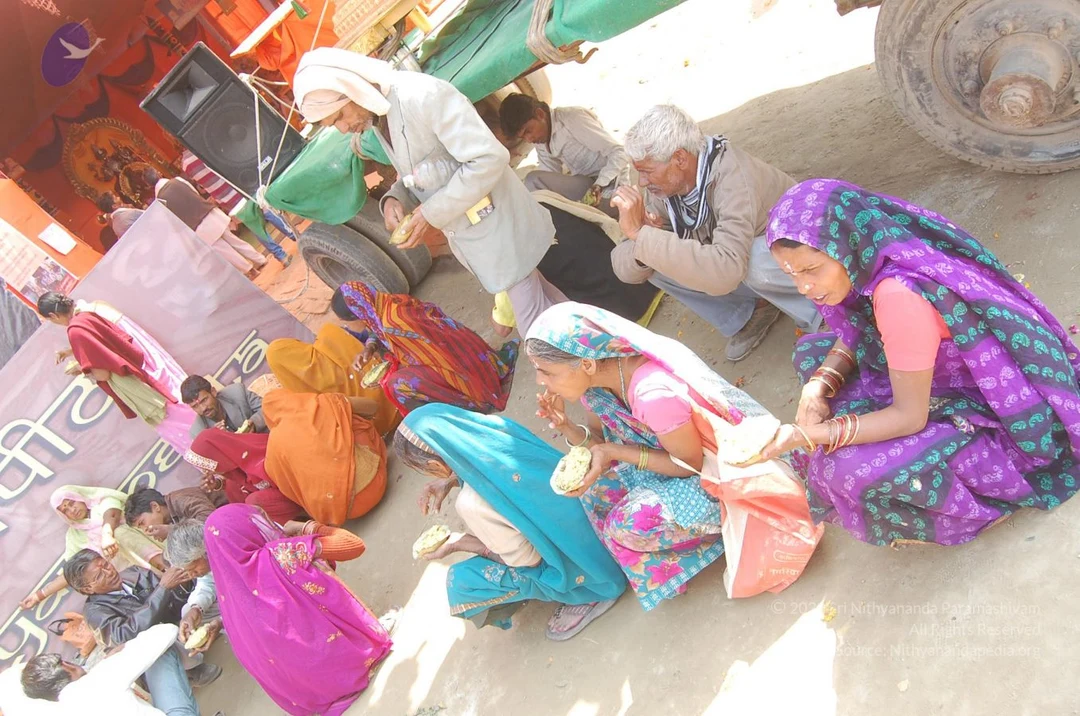
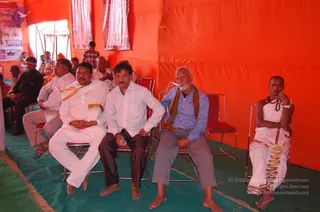
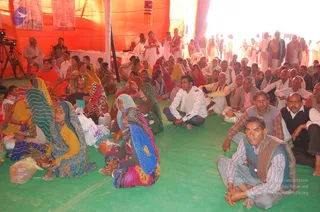
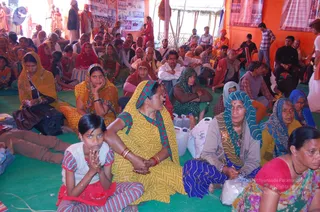
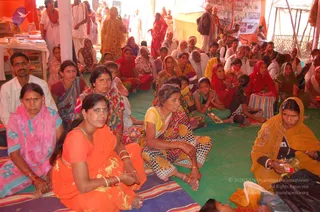
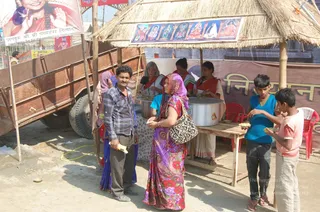
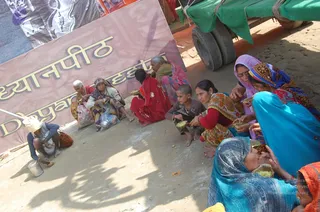
Several men sit on folding chairs inside an orange-walled tent with a green floor mat. In the foreground, a man in white dhoti and shirt with gold-bordered shawl sits with hands clasped; beside him a man in striped white shirt and dark trousers sits with hand on thigh; an elderly man with white beard wears a blue shirt and brown shawl; at right a bald young man in white dhoti and shawl wears a rudraksha mala and sits with hand near chin. Others sit behind in white and dark clothing. Partial text printed on a banner at left. No one is identified as a person in appearance.A large crowd of seated devotees fills an orange-canopied tent with green matting. In the foreground, women in colourful saris and headscarves, including blue, yellow and green patterned cloth, sit cross-legged with plastic bags of items beside them. Men in white shirts, vests and cardigans sit among them on the right. Several people in white and saffron robes stand near a white-draped table at the back of the tent, and a video camera on a tripod is set up at the left edge. Banners hang from the tent poles.A seated crowd of devotees fills an orange-walled hall with green floor matting, mostly women in saris and shawls. In the foreground a young girl in a pink-and-white striped top presses her palms together, a woman in a mustard-yellow sari sits with hands folded, and an older woman in a blue headscarf and patterned blue sari sits nearby. Behind them men in white and orange robes and plain shirts sit among the crowd, and banners hang on the back wall. Water jugs and plastic bags lie on the mat, and the atmosphere is attentive as if listening to a talk or address. No individual appears to be a person.A photograph of a large seated crowd inside a tent with green floor covering and striped blankets. Women in saris dominate: a woman in orange with gold trim and bangles sits in the foreground, a woman in pink with a red bindi sits at left, and an older woman in yellow and multicoloured sari sits centre. Children sit among them, and a man in white stands at upper left. Behind them, a standing figure in ochre clothing and a woman in red shawl are visible. Banners and printed panels hang on the tent walls.A photograph of an outdoor food stall at a festival camp, with a thatched bamboo roof over a serving table. Women in red and orange saris ladle food from large aluminium pots, while a man in a checked shirt and grey trousers and a woman in a purple floral sari stand in front. Two boys in a blue vest and a pink shirt hold leaf plates of food. A large brown trailer stands at left and a portrait banner of a smiling saffron-clad woman hangs above. A sign on the stall reads Nithyananda in Hindi script, and a row of deity images is displayed on a panel above. No a person candidate is visible.Outdoor food distribution at a roadside camp in dusty sandy ground under shade. A seated volunteer in a white head covering and white clothes ladles food from a steel pot into bowls. Women and children sit in a row along a pink-brown banner reading a Hindi name, including an elderly woman in a purple-and-white sari, a woman in red with a white flower print, a shaved-head boy, a woman in orange-patterned sari, and women in blue and pink headscarves holding small bowls. A green-covered cart and wheel sit at the top right.

VHP President Ashok singhal visit Nithyananda dhyanapeetam at kumbh puri

99 photosSource gallery
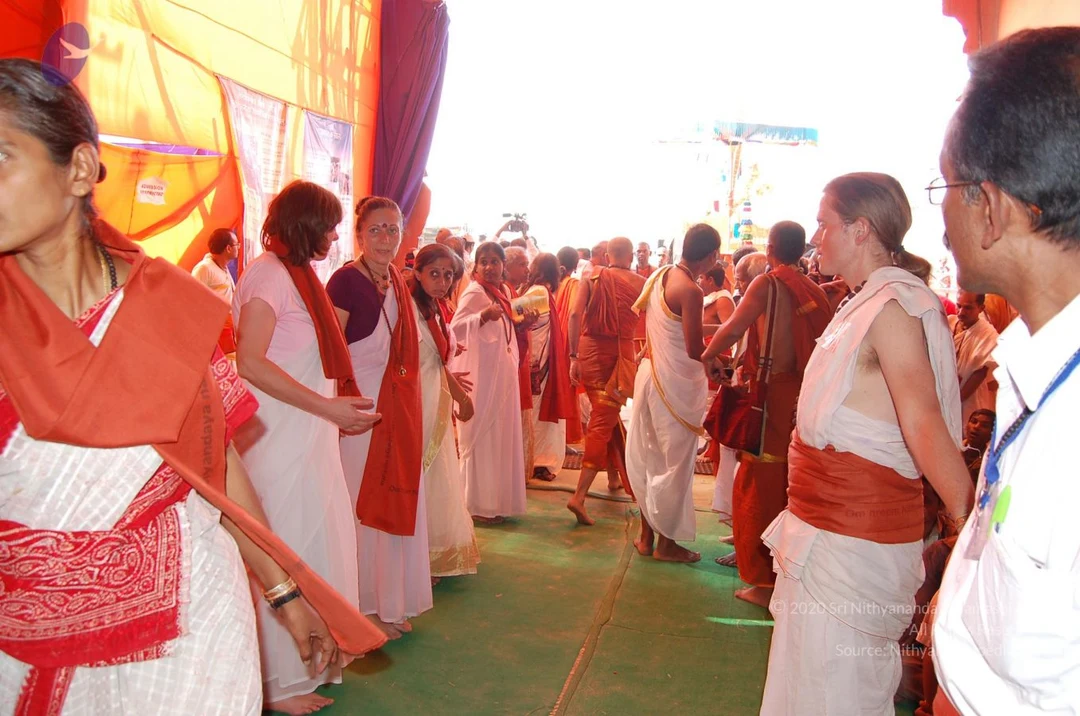
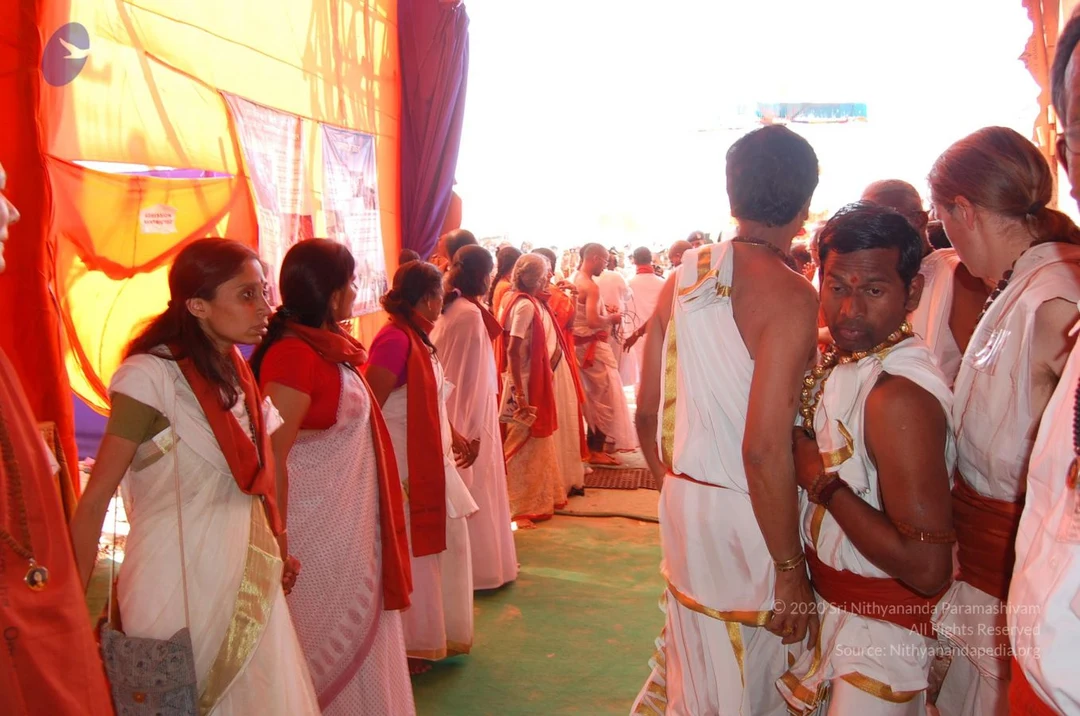
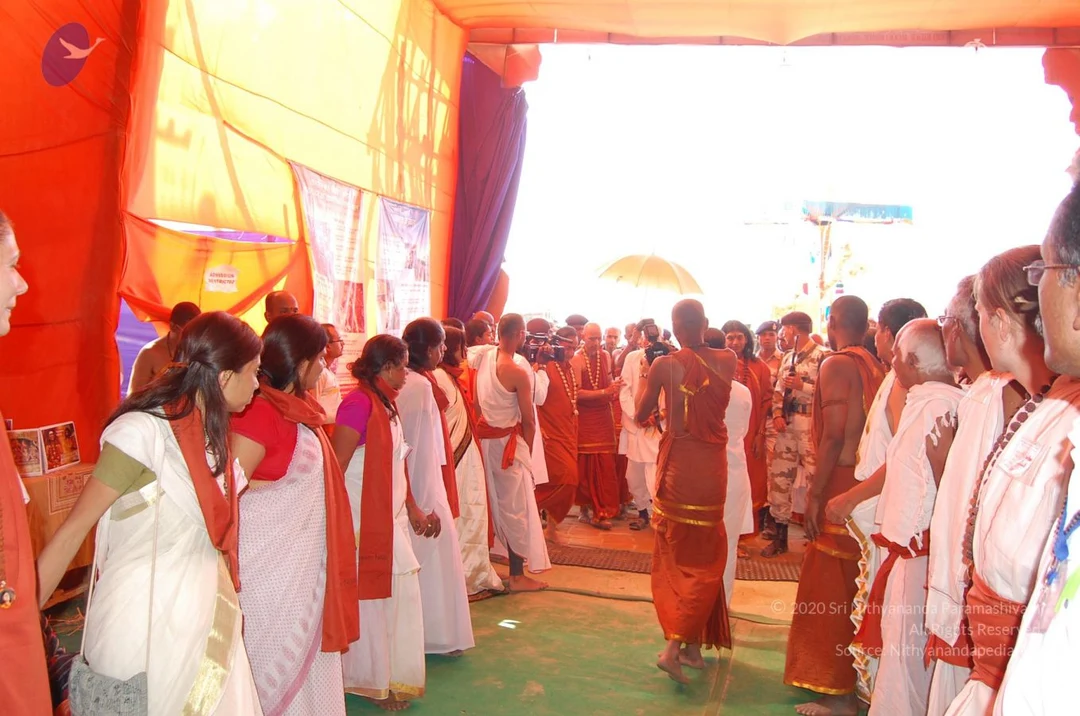
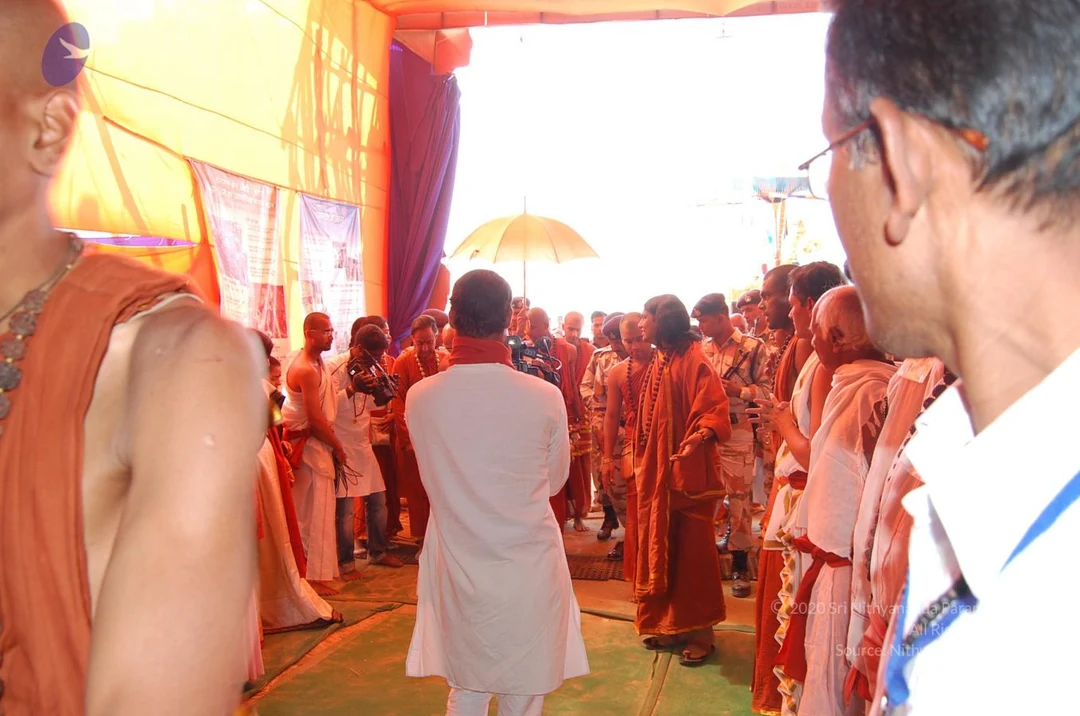
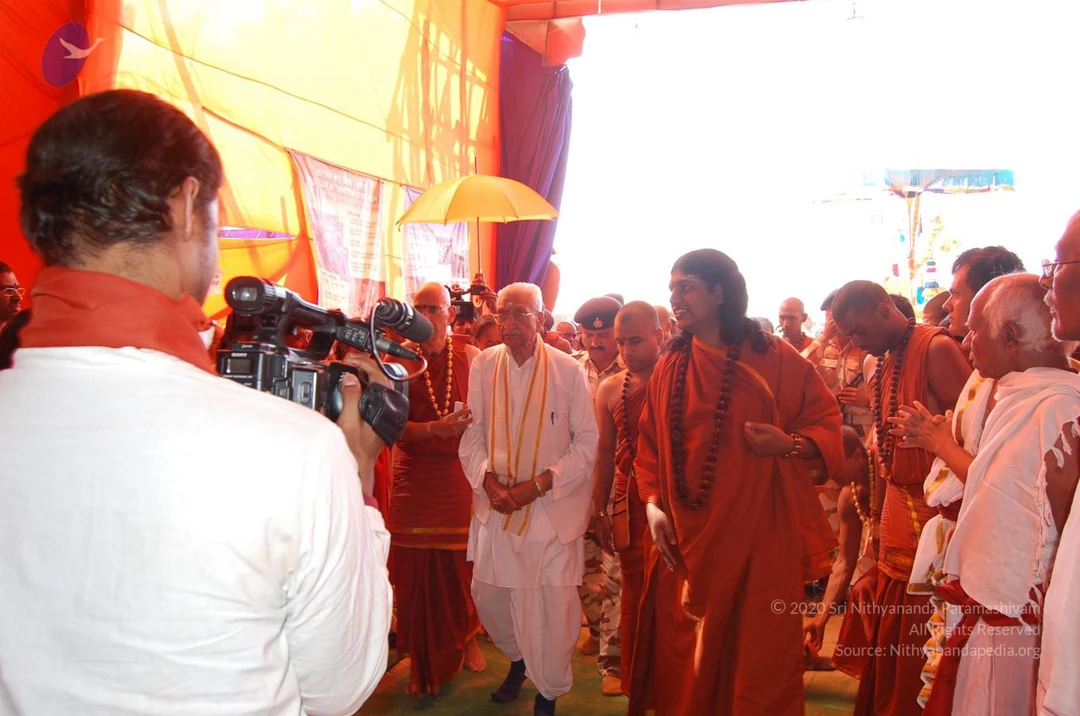
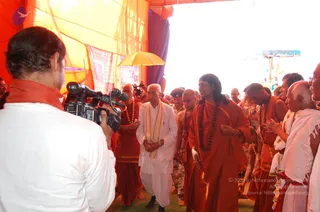
Outdoor event under an orange and yellow tent canopy with a yellow umbrella overhead. In the centre, a figure in saffron robes with long dark hair and a rudraksha mala walks forward, flanked by saffron-clad sadhus and an elderly man in white with a saffron-and-white garland. A cameraman in a white shirt with an orange shawl films the procession from the left. Several saffron-robed monks and white-clad elderly men stand along the line, and a uniformed police officer is visible behind them. Maroon and pink banners hang on the tent wall.Outdoor photo at a pilgrim camp under an orange and yellow canopy, with an orange umbrella overhead. Beside her a man in white dhoti and shirt with saffron shawl stands with hands folded, and a shaved-headed monk in orange robe with beaded necklace stands behind him. A woman in a red shawl and white sari and a camera operator with a shoulder camera stand at left, and a uniformed officer in camouflage appears behind. Watermarked photo with a copyright notice in the lower right.Photograph inside an orange-draped tent with a striped multicolour rug underfoot. A long-haired figure in saffron robes with a rudraksha mala and a gold-edged saffron shawl stands center-left with a gold-trimmed cloth draped over the arm, appearance consistent with the a person cues of long swept-back hair, ornate saffron clothing and rudraksha beads. Around him are saffron-clad sannyasis with gold-bordered garments and malas, one with palms joined in namaskar. A uniformed security officer in camouflage fatigues and a dark cap stands among them. A white-clad priest with a red waist cloth and gold bangles stands at left, and a woman in a green-bordered white sari stands behind a table with audio equipment.Inside an orange-draped tent at a Kumbh Mela camp, a woman with long dark hair wearing an orange robe with gold border and rudraksha mala stands with hands folded in namaste, beside an older man in white clothes with a yellow shawl and a saffron-robed man. Behind them, saffron-robed sadhus with rudraksha malas and a uniformed security officer stand near a cameraman with a video camera. In the foreground, a bare-chested man in a white dhoti-style cloth with red sash stands facing the group, and a small brass deity murti sits on a cloth-covered floor at left. Hanging decorative pillars and red printed banners decorate the tent.Inside an orange-draped tent at a Kumbh Mela camp, a man with his back to the camera wears a white dhoti and shawl with gold ornaments on his arms. Facing him, an older man in white with a saffron-and-cream shawl and a woman in orange robes and a rudraksha mala press their palms together in greeting. Behind them, a uniformed officer and several saffron-robed men stand near photographers with cameras. Orange and cream banners hang on the tent walls, and colourful woven tassels decorate the poles. A priest in saffron and white stands at a low table with lamps on the left.Photo of a stage draped in red and orange fabric with golden ornate thrones at a Maha Kumbh Mela event. On the left, a smiling man in saffron robes, an orange turban, a long beaded rudraksha-style mala and a white flower garland sits on a golden throne with red cushion, hands raised in greeting. Beside him, a woman in saffron robes with long dark hair sits with palms joined in namaste. On the right, an older bald man in white dhoti and white shirt sits on a golden chair, and a uniformed security officer stands behind him, with a man in orange clothing at the edge. Garlanded deity murtis stand at the top left, and two monitors sit in the foreground.

VHP President Ashok singhal visit Nithyananda dhyanapeetam at kumbh puri

136 photosSource gallery
A photograph inside a canopied tent with orange and purple draped fabric. On a gilded throne at left, a man in saffron robes, an orange turban, a red-and-white garland and a large beaded necklace sits with hands raised in blessing, seated before a gilded murti of a deity with a trident and crown. Beside him, on a gilded throne at right, another man in orange robes sits with hands together, and an elderly man in white sits on a smaller throne at far right with uniformed officers standing behind. Two flat-screen monitors and a gilded kalasha-style vessel with offerings of red flowers are in the foreground, with a small lit oil lamp at left. a person: the seated man in the saffron turban, garland and beaded necklace fits the role of a presiding teacher on a throne.Photo of a stage tent with orange and red draped fabric and a gilded throne setting. Two large deity murti with silver crowns, garlands and necklaces stand at left. Beside him, a seated figure in orange robes with long hair holds clasped hands on a gilded throne. At right, an elderly man in white robes sits on a gilded throne near a microphone, with a uniformed security officer standing behind him. A Sony monitor sits in the lower right corner.A photo inside an orange and red tent at the Maha Kumbha Puri camp. A long-haired man in orange robes sits on an ornate gold throne with carved lion-head armrests, hands raised in discourse. Beside him, a seated white-clad elderly devotee with a yellow-striped shawl sits on the right near a microphone stand. On the left, a deity murti in orange and red robes with a garland sits on a gold throne. Red and gold drapes frame the tent.A photograph inside a gold and orange tent stage at the Maha Kumbha Puri camp. A long-haired figure in saffron-orange robes with a rudraksha mala sits on a cream cushioned throne with gold lion-head armrests, hands pressed together and smiling toward a golden deity murti on the left wearing an orange garment and garlands. In the foreground at right, an elderly man with white hair and glasses, wearing a white dhoti-style garment with a yellow-and-white shawl, sits before a microphone on a gilded stand. Ornate gold silver-embossed backdrop panels frame the scene. The saffron-clad seated figure matches the a person cues of long swept hair, saffron robes and mala.Photograph inside an orange tent at a Maha Kumbh camp, with ornate gilded thrones and a golden lion-faced armrest. On the left, a seated figure in a long orange robe with long dark hair, smiling and holding a small object in the hands, sits on a cushioned golden throne beside a gilded deity murti in purple skirt with garland. On the right, an elderly man in white kurta with a saffron-and-white shawl and glasses sits in front of a microphone on a stand, facing the throne. A red box and a rudraksha-like mala rest on the golden table. Swamiji (probable) is the seated figure in the orange robe with long hair, seated on the throne.A seated man in a saffron-orange robe with long, swept-back dark hair and a rudraksha mala speaks into a microphone, hands clasped at chest height, on an ornate gilded throne with carved floral panels. Beside him, an elderly man with white hair and glasses wears a white kurta with an orange-and-yellow shawl and sits on a second gilded throne. A uniformed security officer in a maroon beret stands at the right near a microphone stand. Behind them hang orange and white fabric drapes with marigold-style garlands. A red box with a gold border sits between the thrones. a person: the speaker shows saffron clothing, long swept-back hair and a mala, consistent with the page's description of a Presidential Address.

Naga Baba Interview

14 photosSource gallery
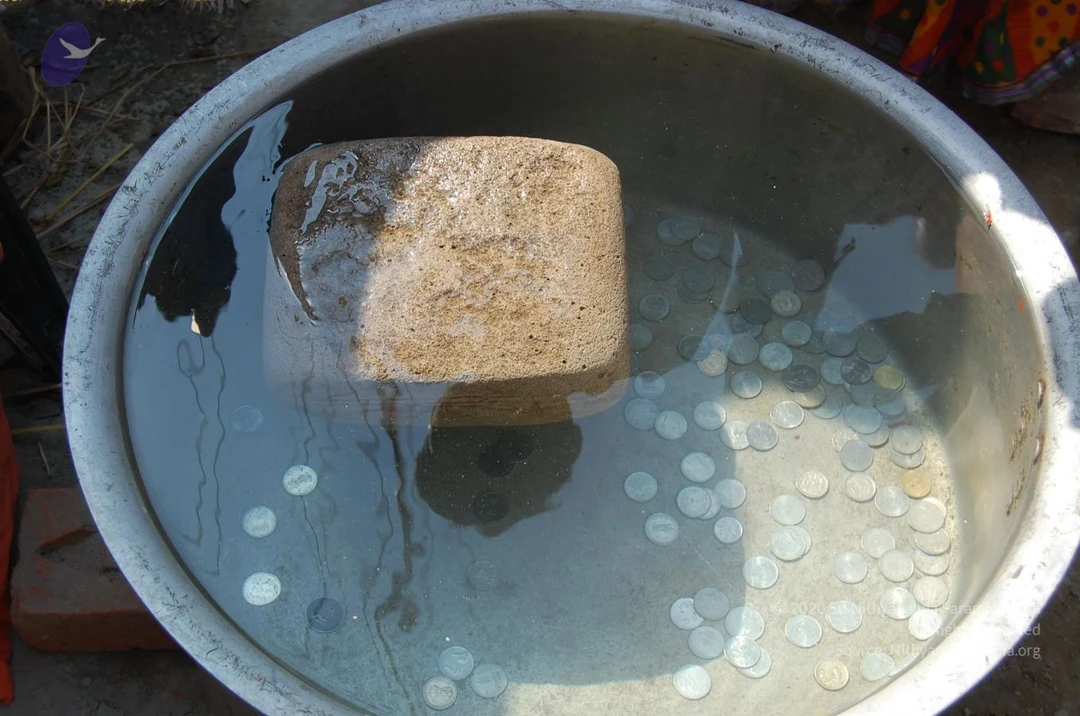
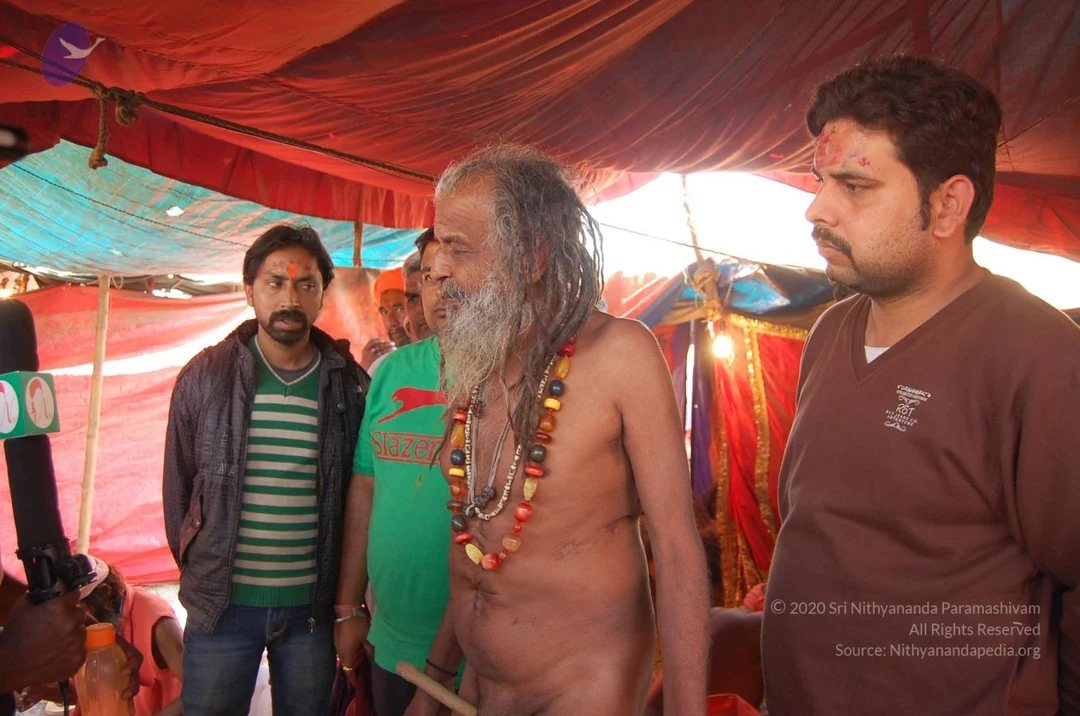
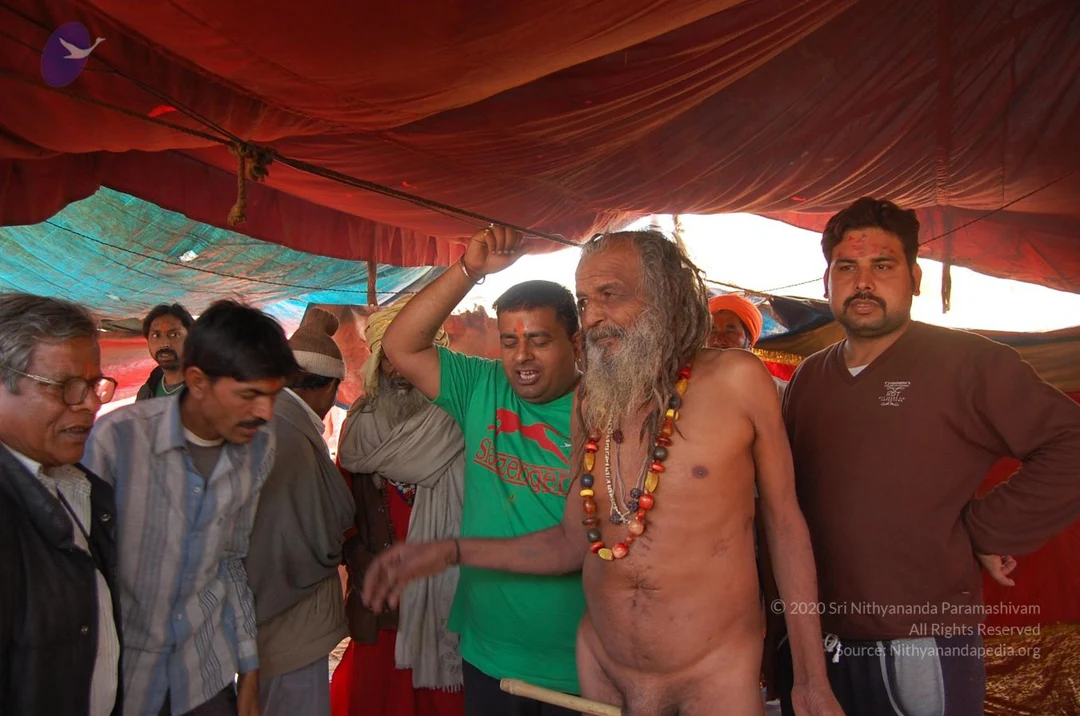
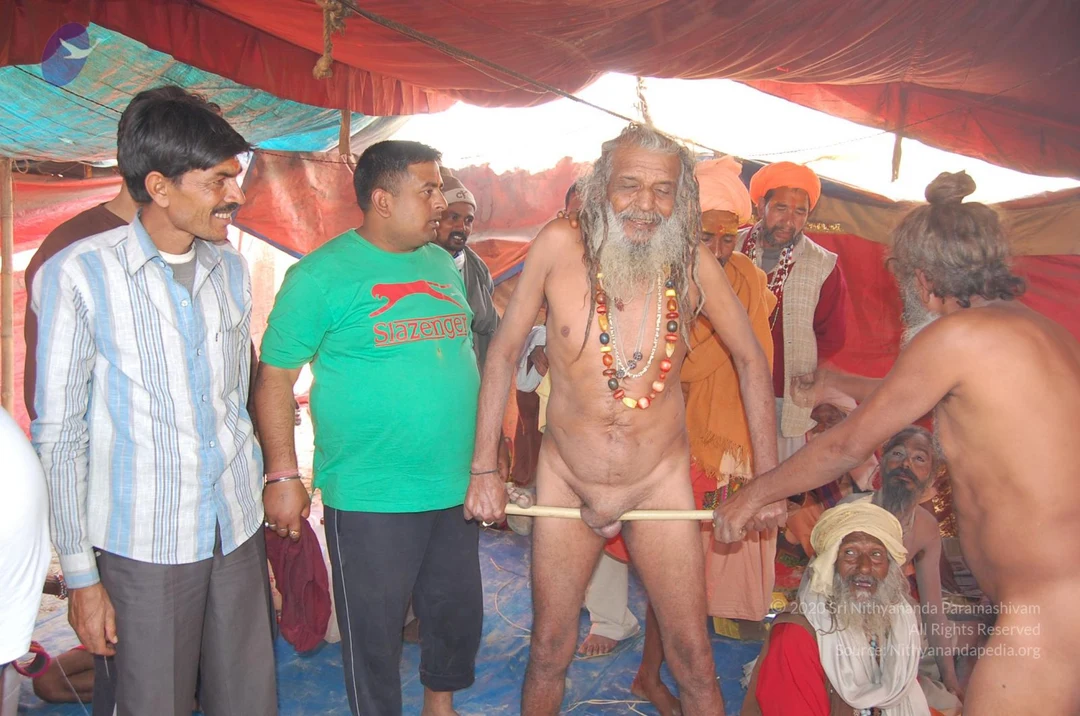
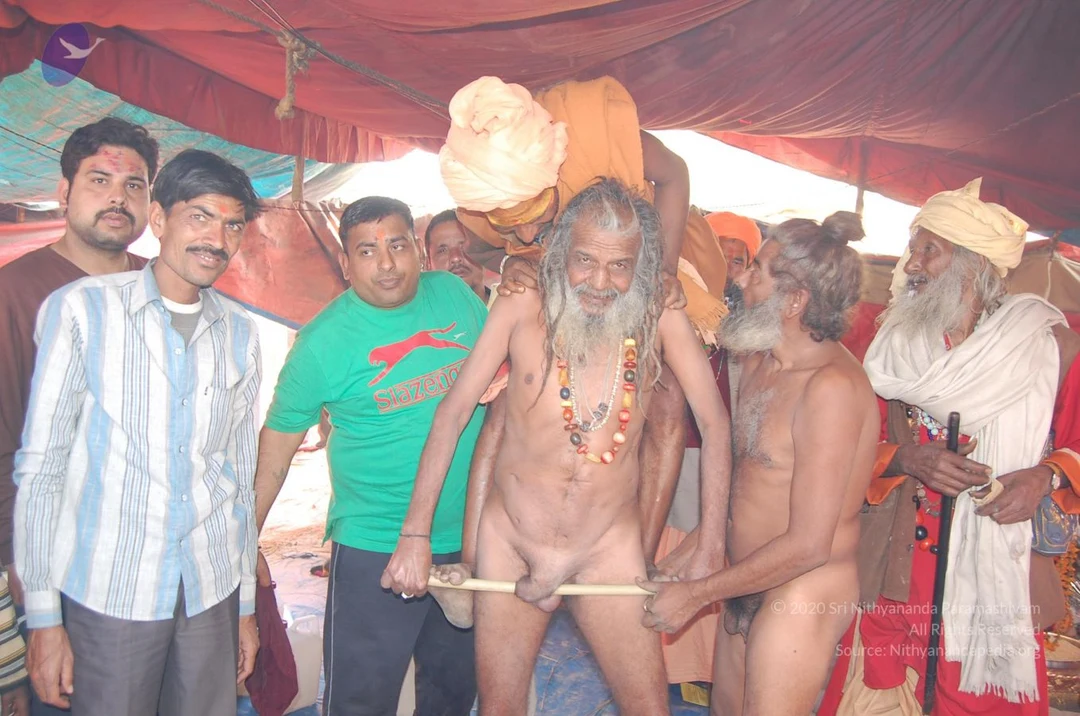
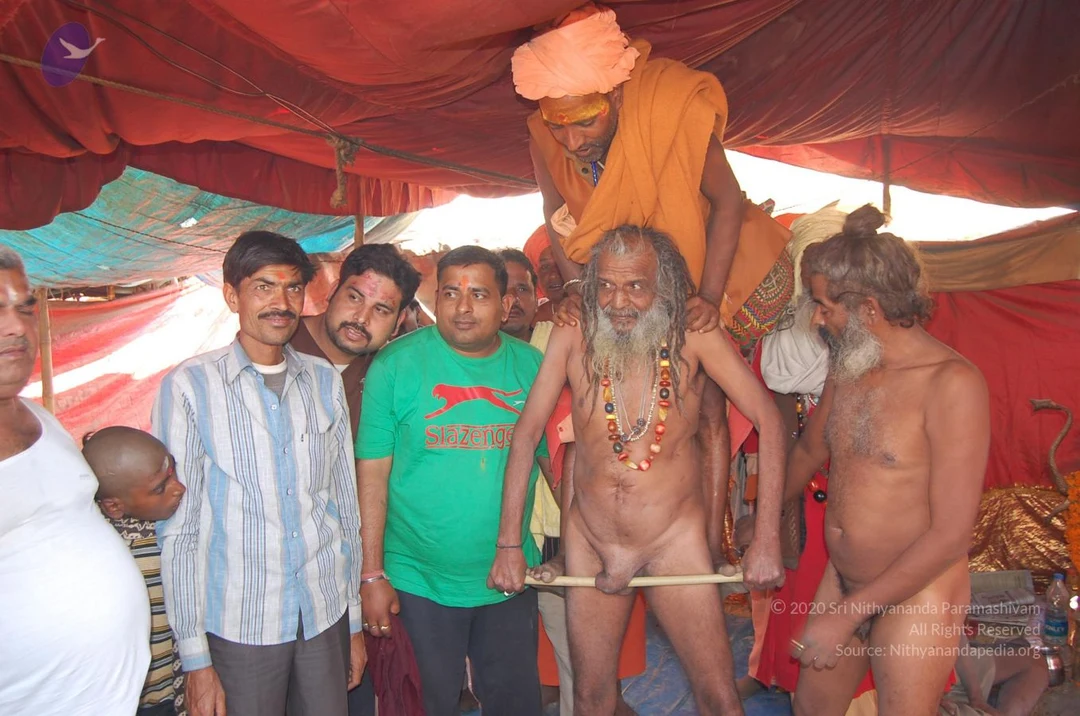
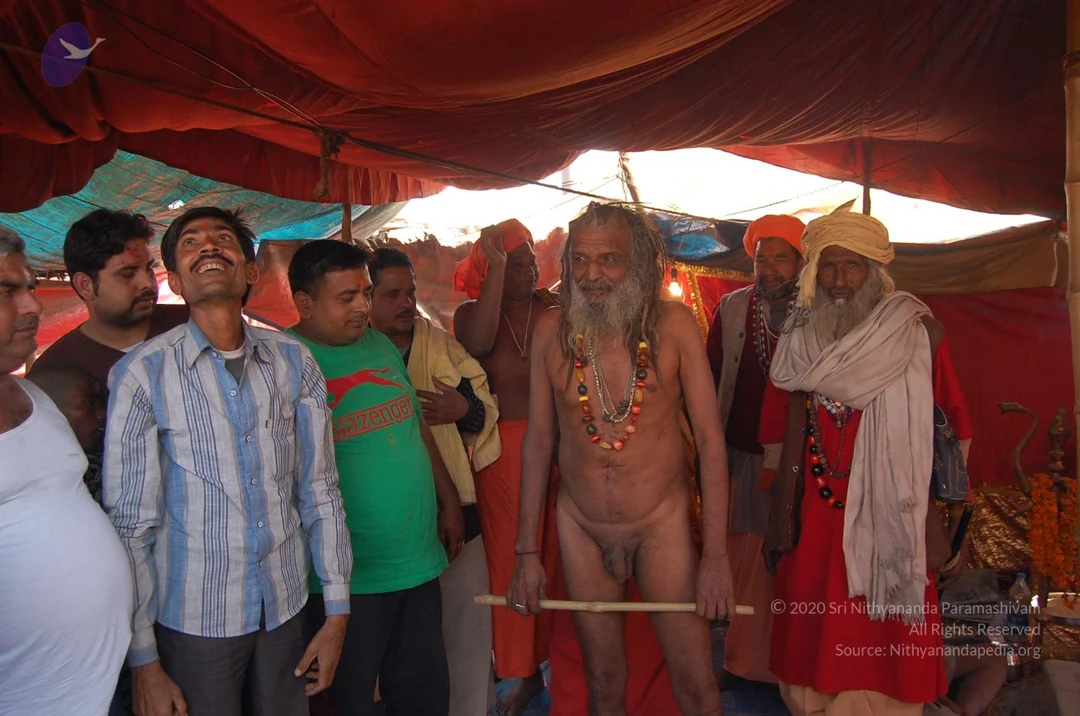
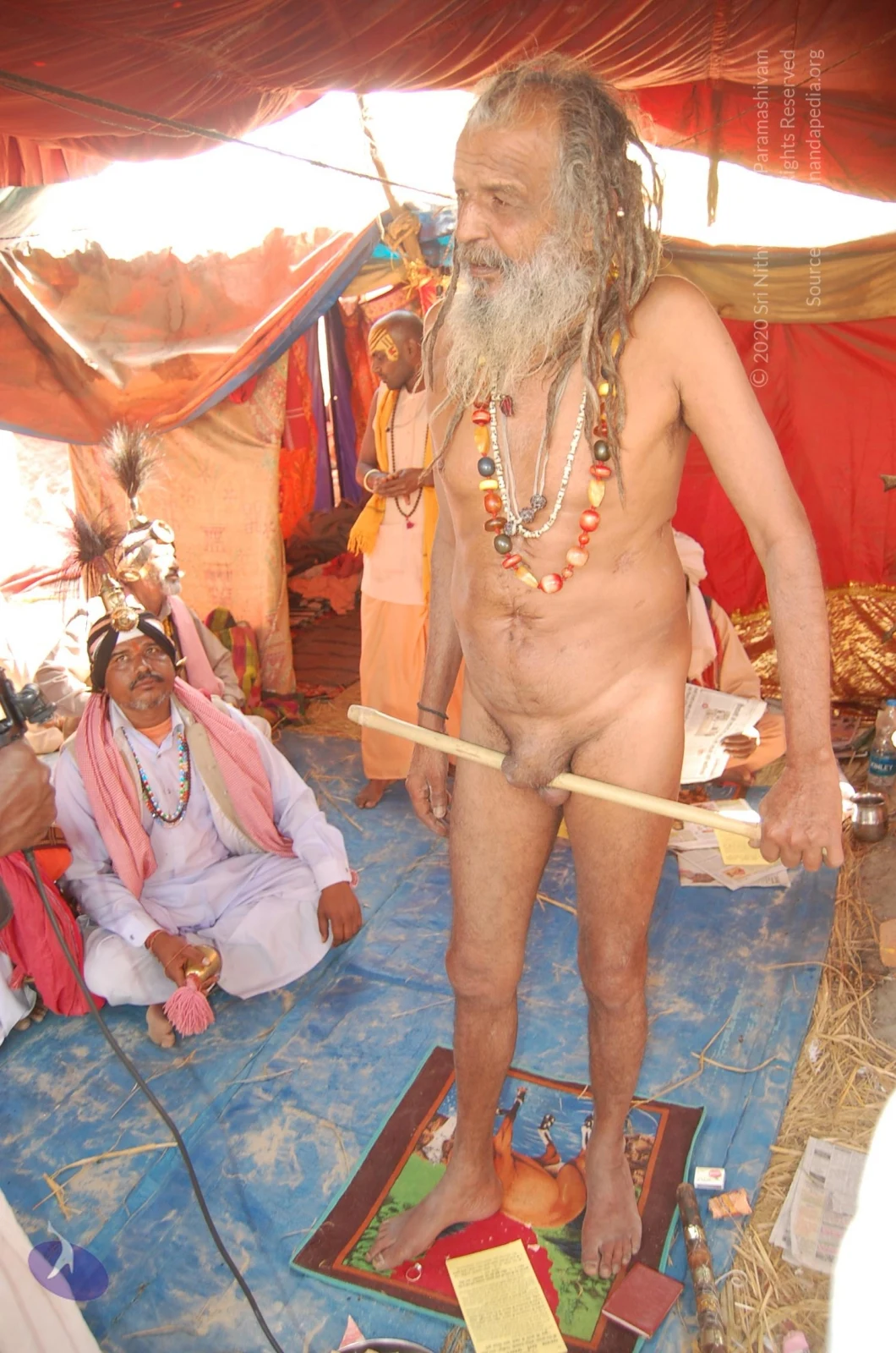
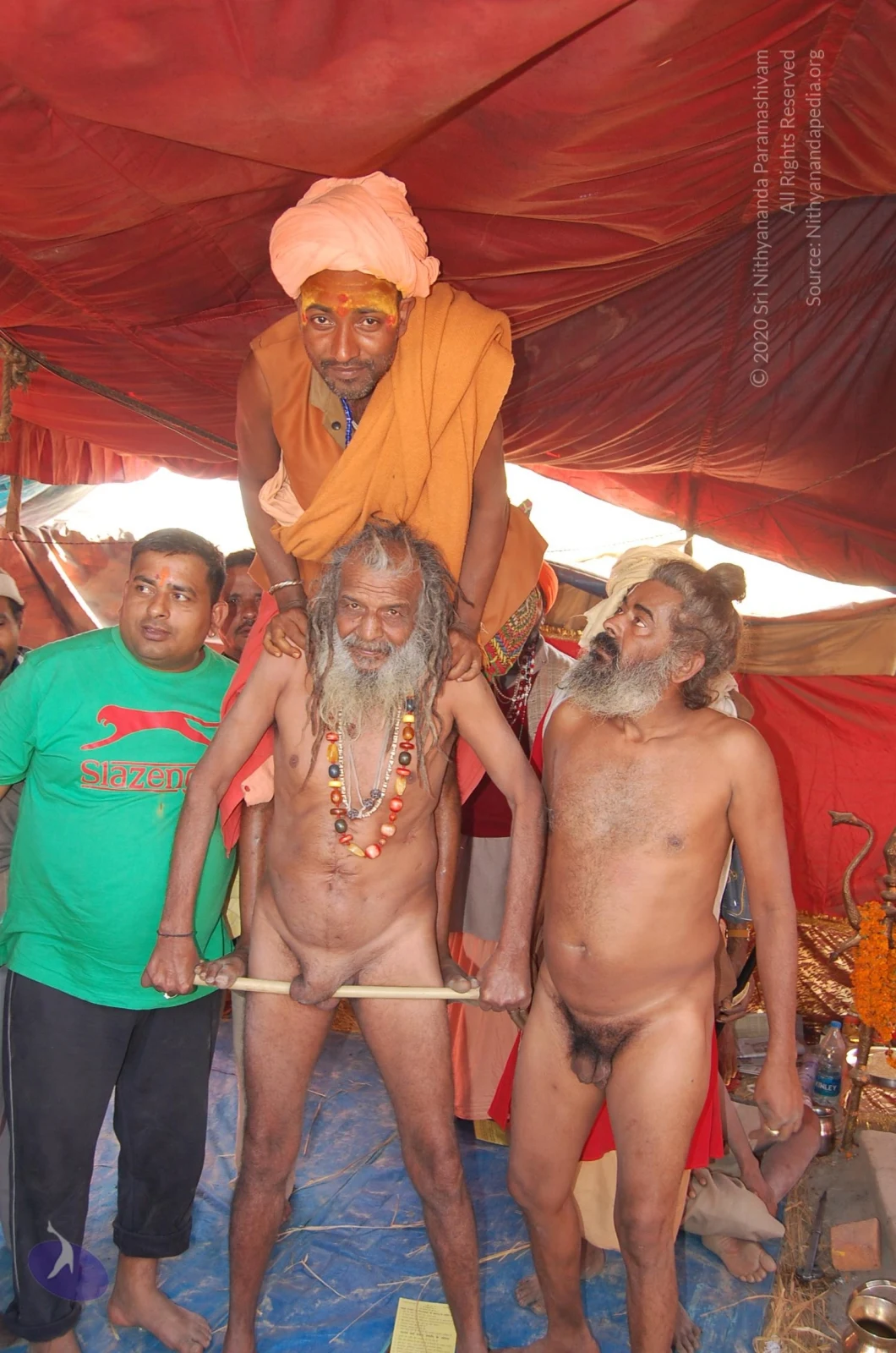
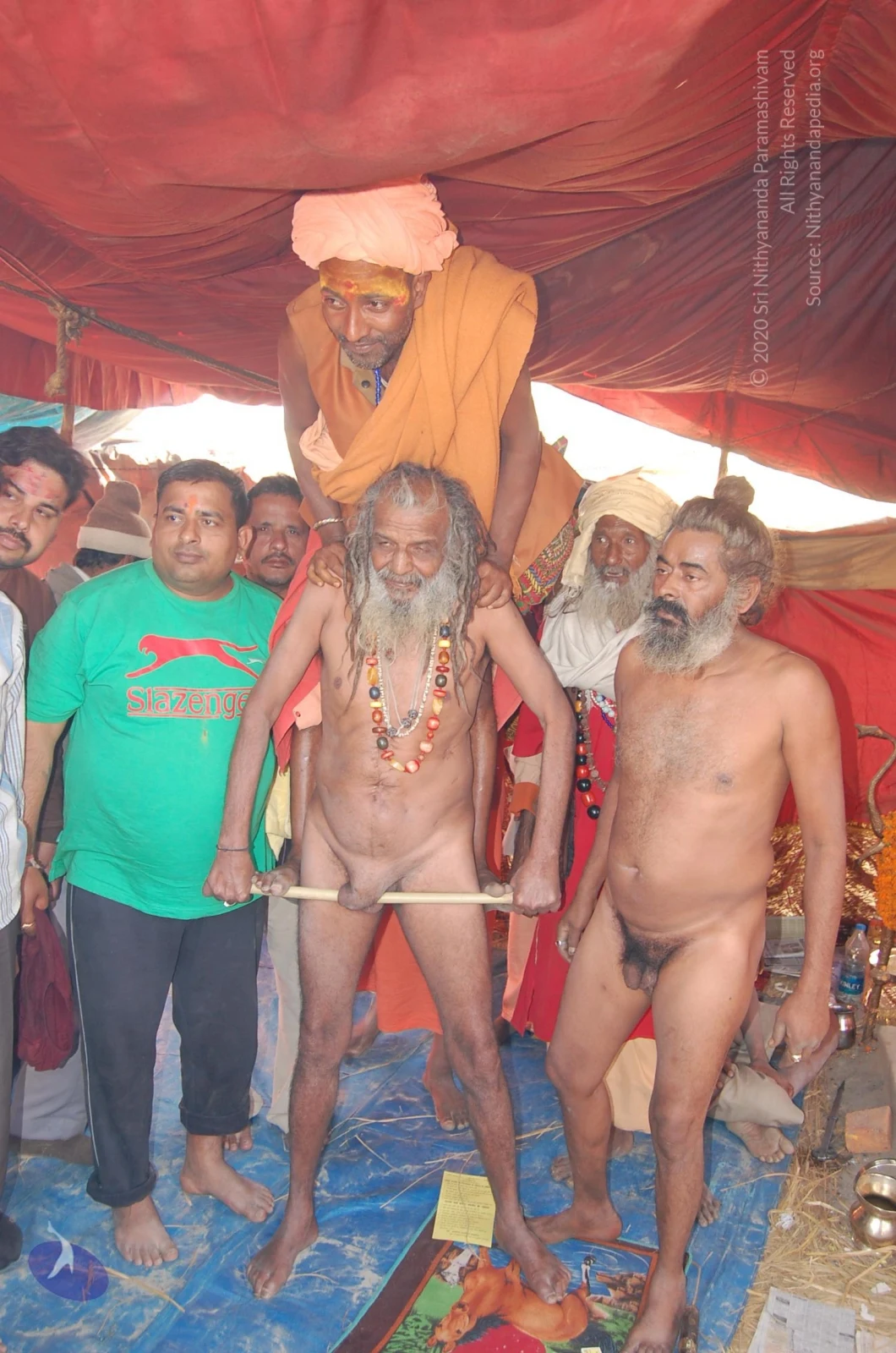
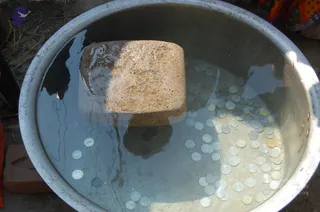
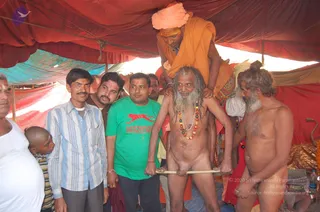
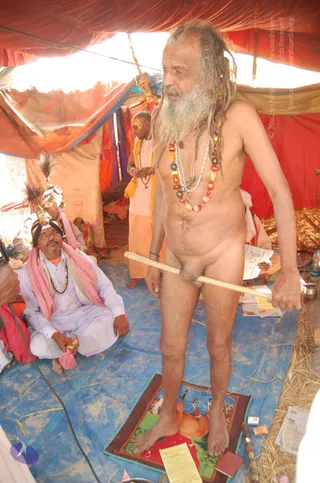
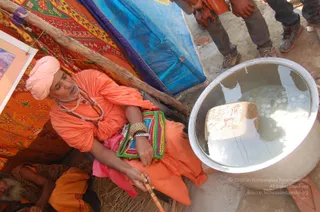
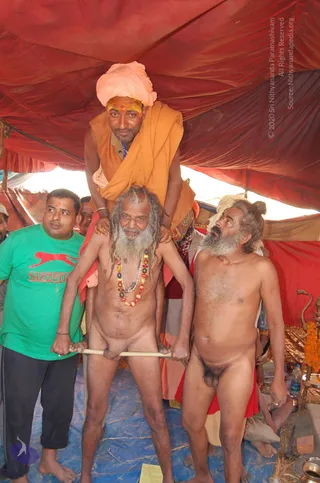
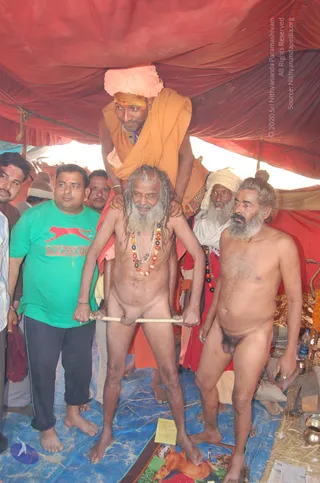
A photograph of a large round metal basin filled with water, containing a rough stone block of sandy brown colour. Many silver coins rest on the bottom of the basin around the stone, and sunlight reflects off the water. Edges of colourful cloth and a red brick appear at the frame borders. No people are visible.A photograph taken under a red and blue tarpaulin tent at a camp. In the centre stands a bare-chested elderly sadhu with long matted grey hair and a grey beard, wearing a multicoloured beaded rudraksha-style mala and holding a wooden staff. Beside him on the right, a man in a brown V-neck sweatshirt with a red tilak on his forehead looks toward him. On the left, a man in a striped green-and-white top and dark jacket with an orange tilak stands watching, and a man in a green Slazenger t-shirt stands between them. A microphone and camera are visible at the left edge. No candidate for a person is visibly identifiable from appearance, so the people are described by role.A photograph taken under a red tent canopy with a blue tarp overhead. In the centre stands a bare-chested sadhu with long grey matted hair and a long grey beard, wearing a multi-strand necklace of rudraksha-style and coloured beads and holding a wooden staff. Around him are about seven men: a man in a green t-shirt with a red vermilion mark on his forehead raises his fist, a man in glasses and dark jacket stands at left, a man in a striped shirt and a man in a brown sweater stand at right, and an orange-turbaned man appears behind. No a person candidate is clearly visible; the central figure is a sadhu.Photograph inside a red and blue tarpaulin tent at a Kumbh Mela camp. A nude elderly sadhu with long matted grey hair and a white beard, wearing a multicoloured bead necklace and a silver pendant, stands holding a wooden rod at waist level while a nude sadhu with a topknot faces him from the right. Standing spectators in a blue striped shirt and a green Slazenger t-shirt watch. Behind them, saffron-robed sadhus wearing orange turbans and a shawl stand under the tent, and a white-bearded sadhu sits on the ground at lower right. No candidate for a person is identifiable from appearance.Photograph inside a red-canvas tent at a Kumbh Mela camp. A bearded sadhu with long matted grey hair and a beaded necklace stands bare-bodied, holding a long wooden pole, while a turbaned man in an orange garment is perched on his shoulders. A second naked bearded sadhu stands beside him gripping the pole, and an elderly bearded man in a white turban and white shawl holds a staff at right. Five or so standing men in casual shirts and a green sports t-shirt watch around them. No identifiable a person depiction is present among the visible figures.A photograph taken inside a red tent at a Kumbh Mela camp. A standing sadhu in an orange cloth and tall orange turban stands on a raised platform behind a bare-chested, long-bearded ascetic with matted grey hair, rudraksha beads and a white cord, who grips a wooden stick. Around them, several men in ordinary clothes watch, including one in a green Slazenger t-shirt and another in a blue-and-white striped shirt with a tilak on his forehead. A second naked ascetic with long grey hair and beard stands at the right, and a water bottle and a coiled rope or cloth sit at the edge of the frame. Red and blue tarpaulins form the ceiling.

01-Morning-Satsang
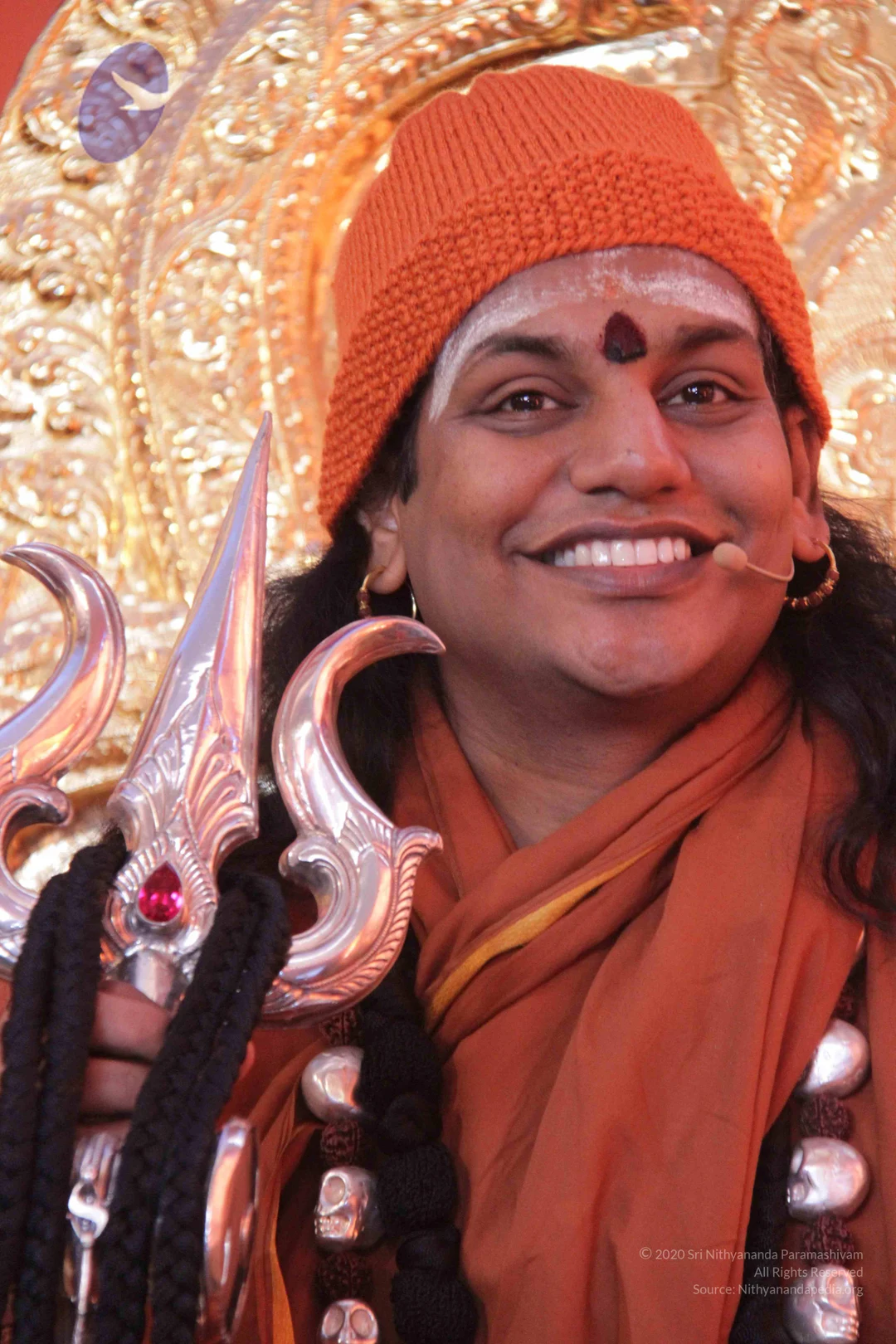
31 photosSource gallery
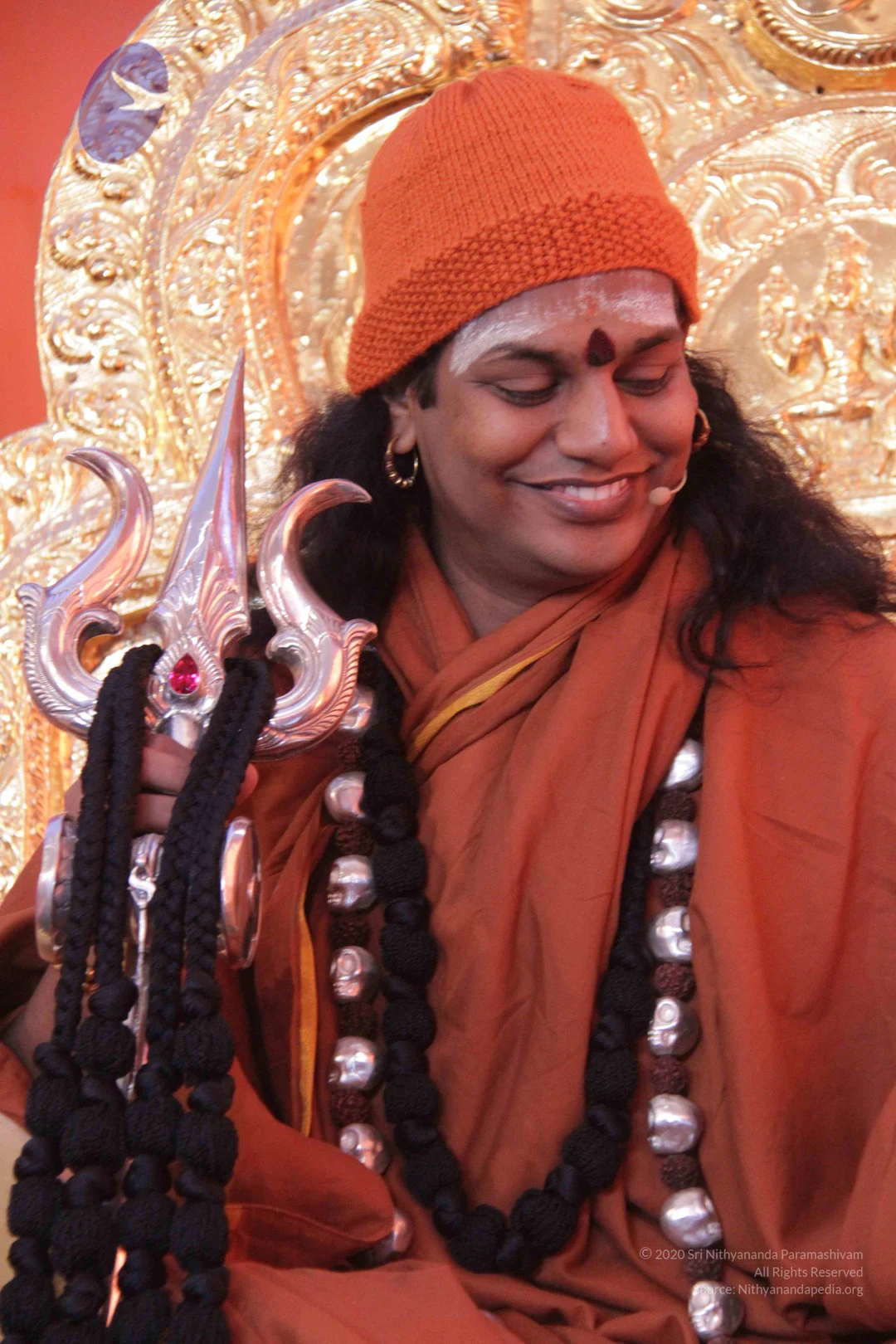
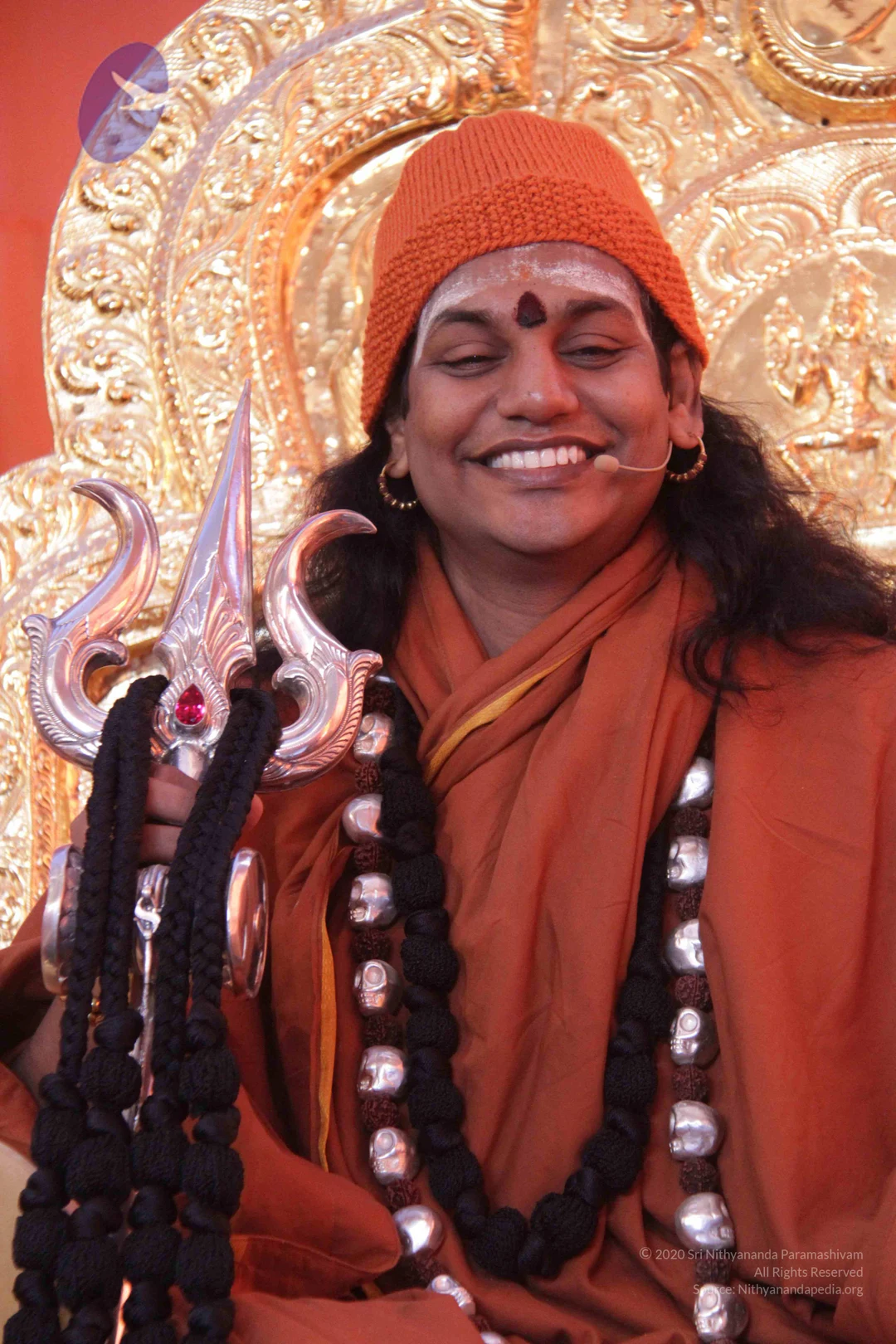
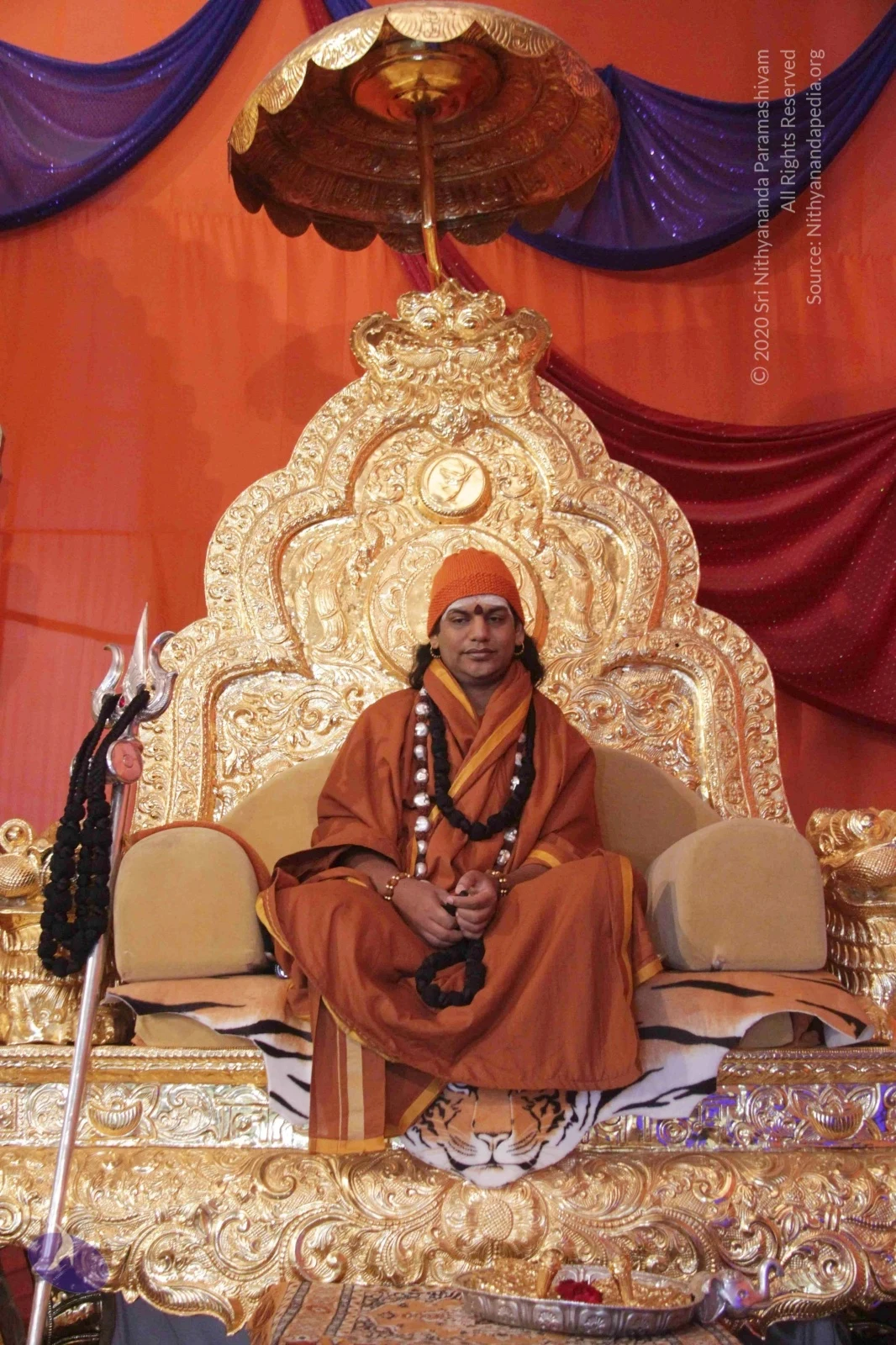
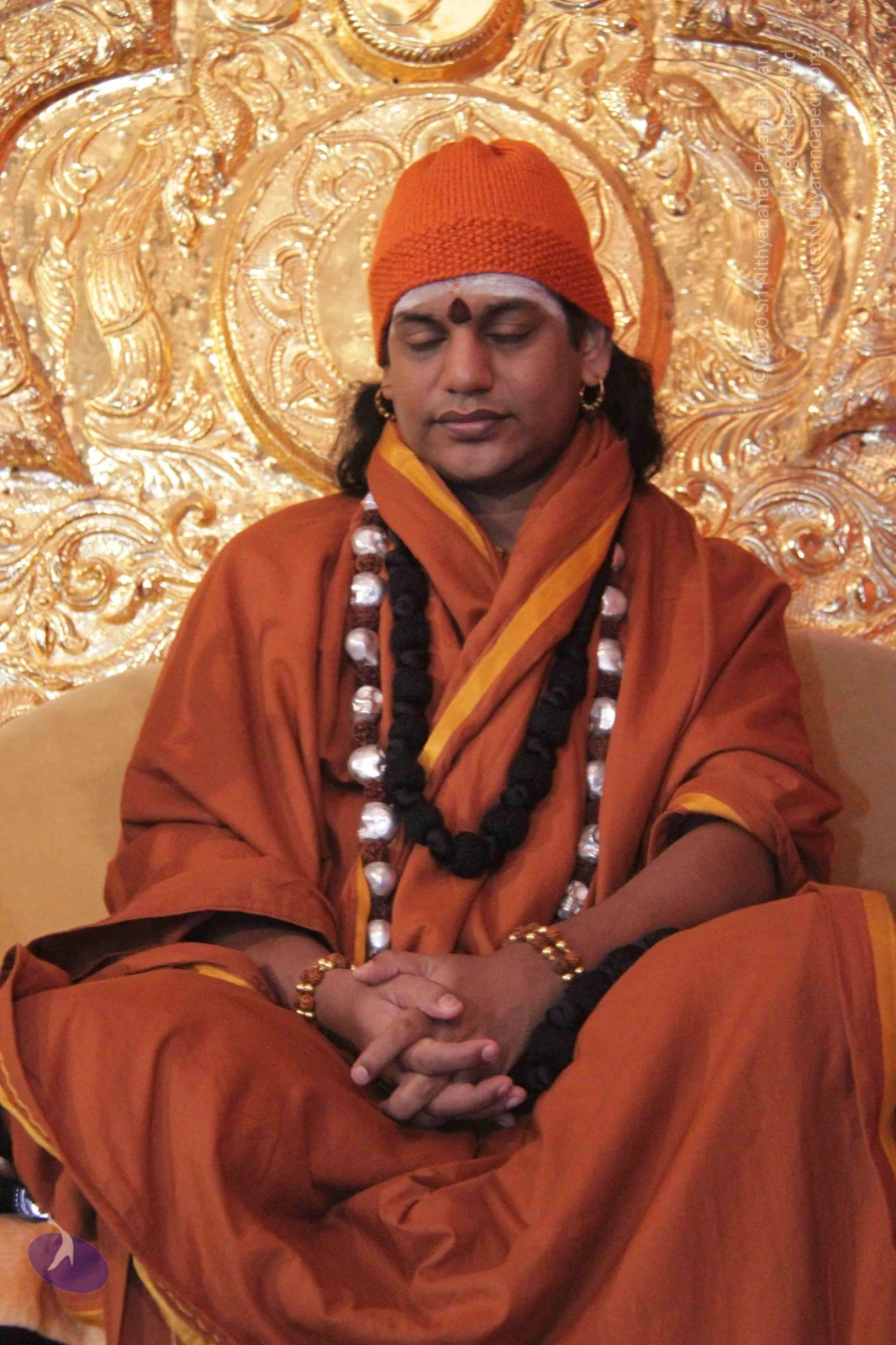
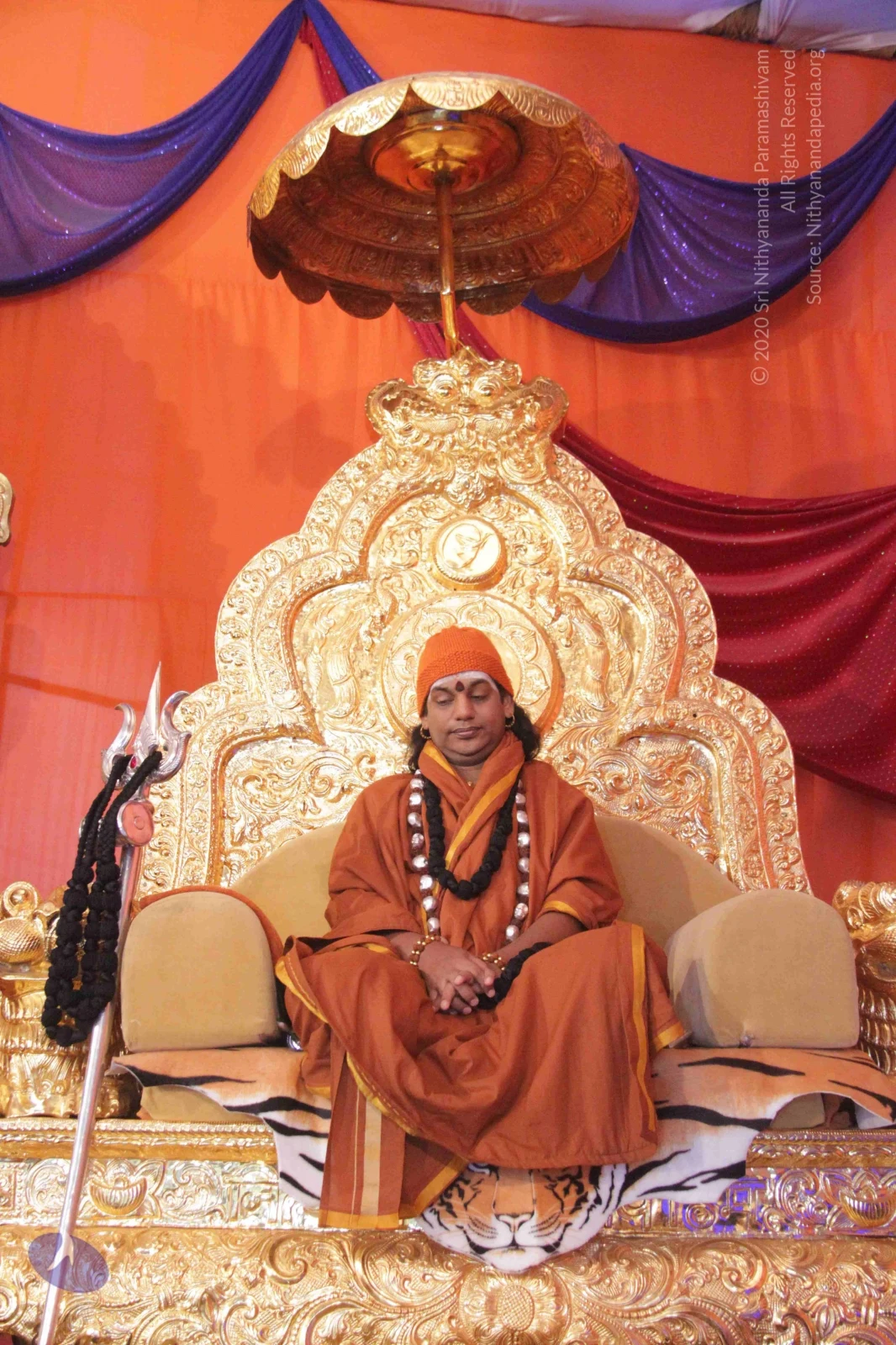
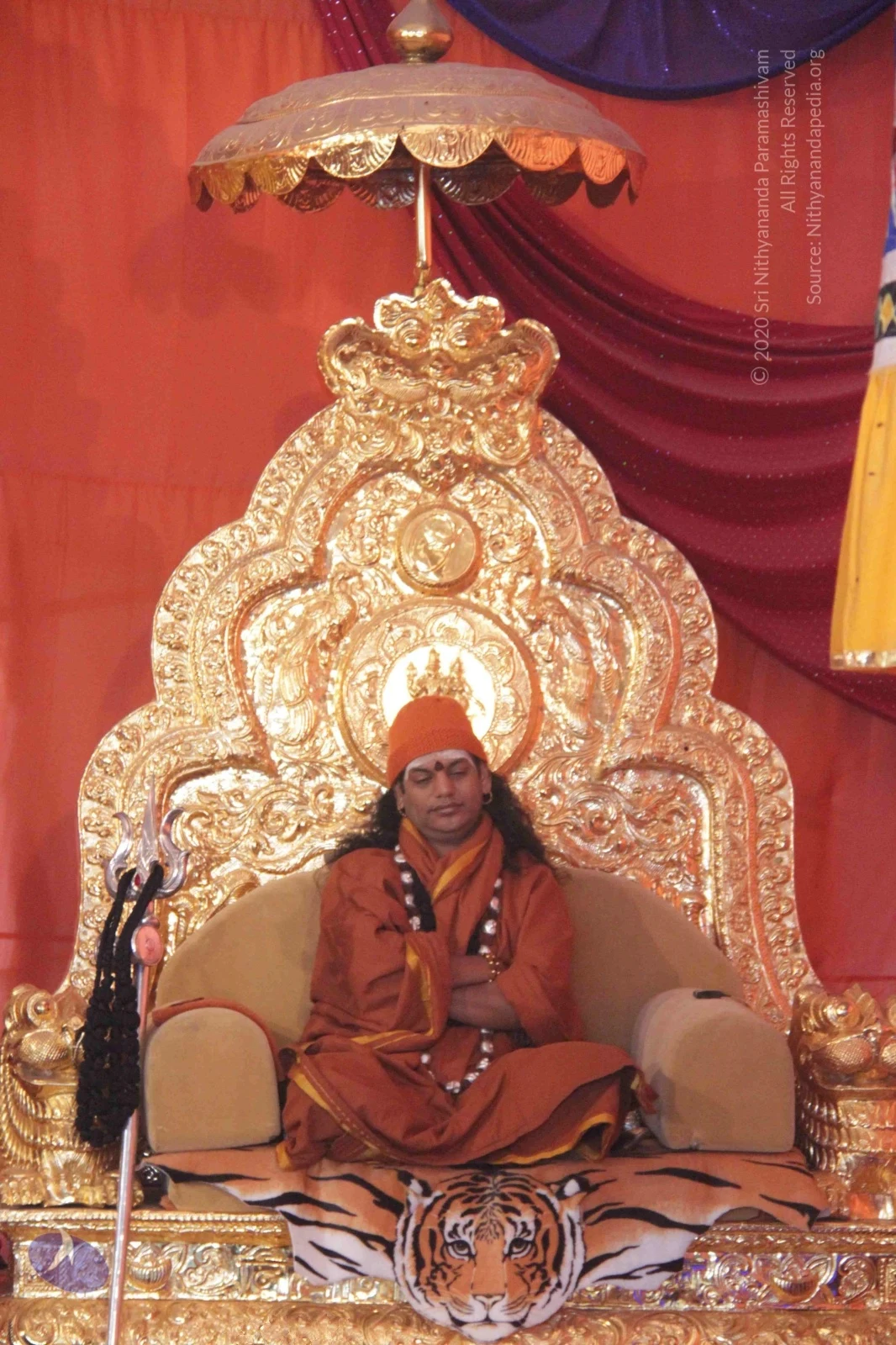
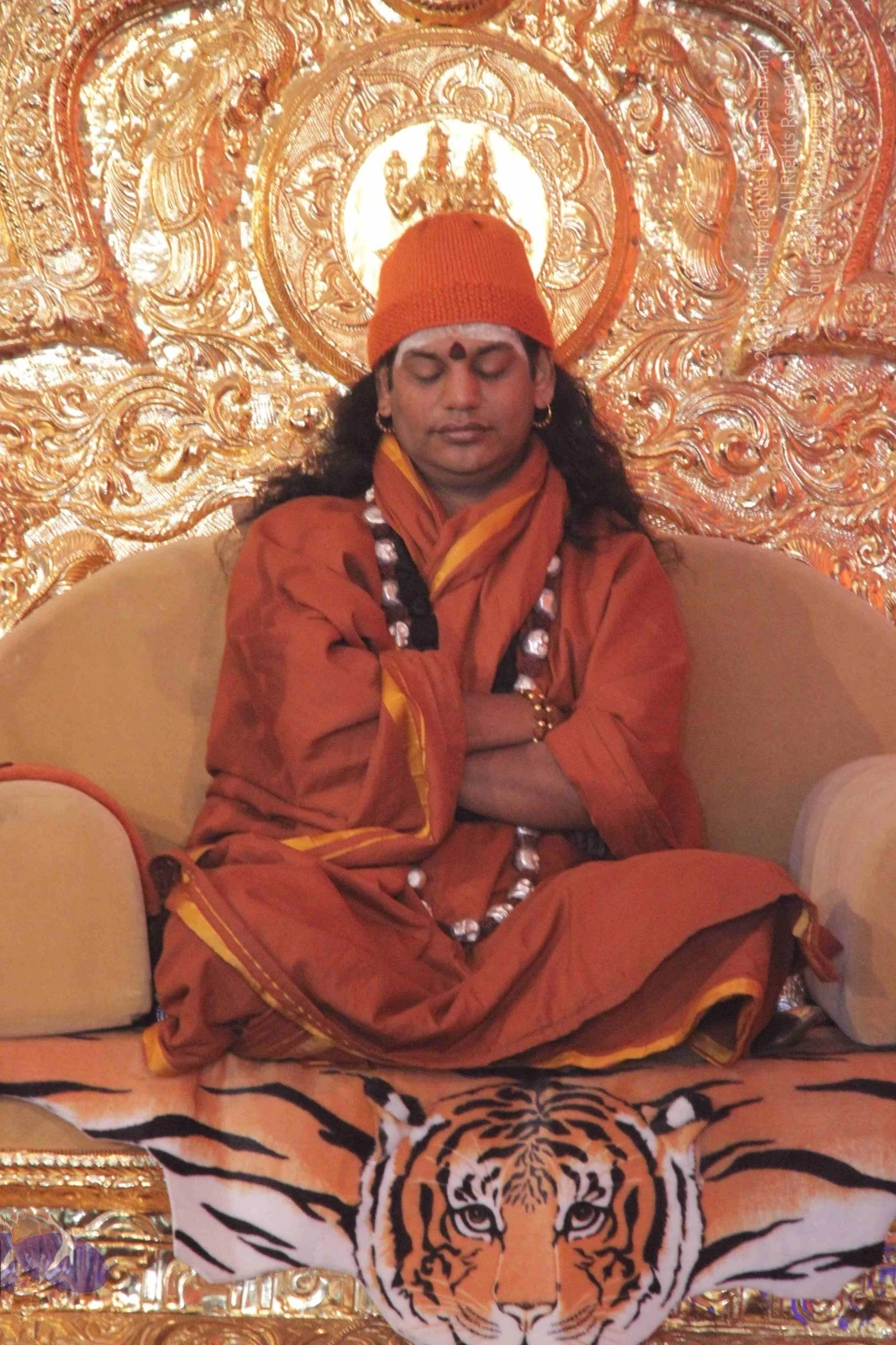
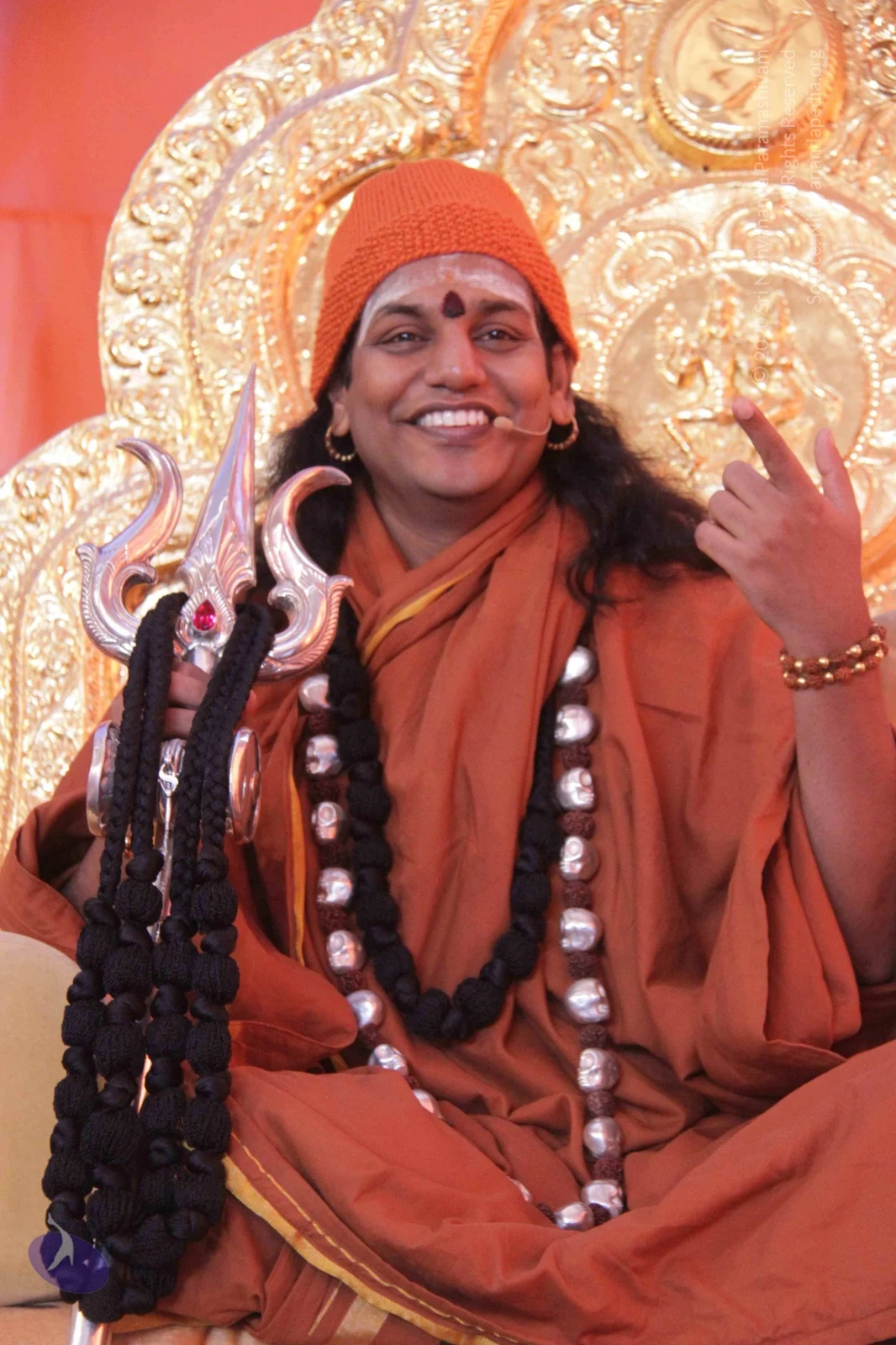
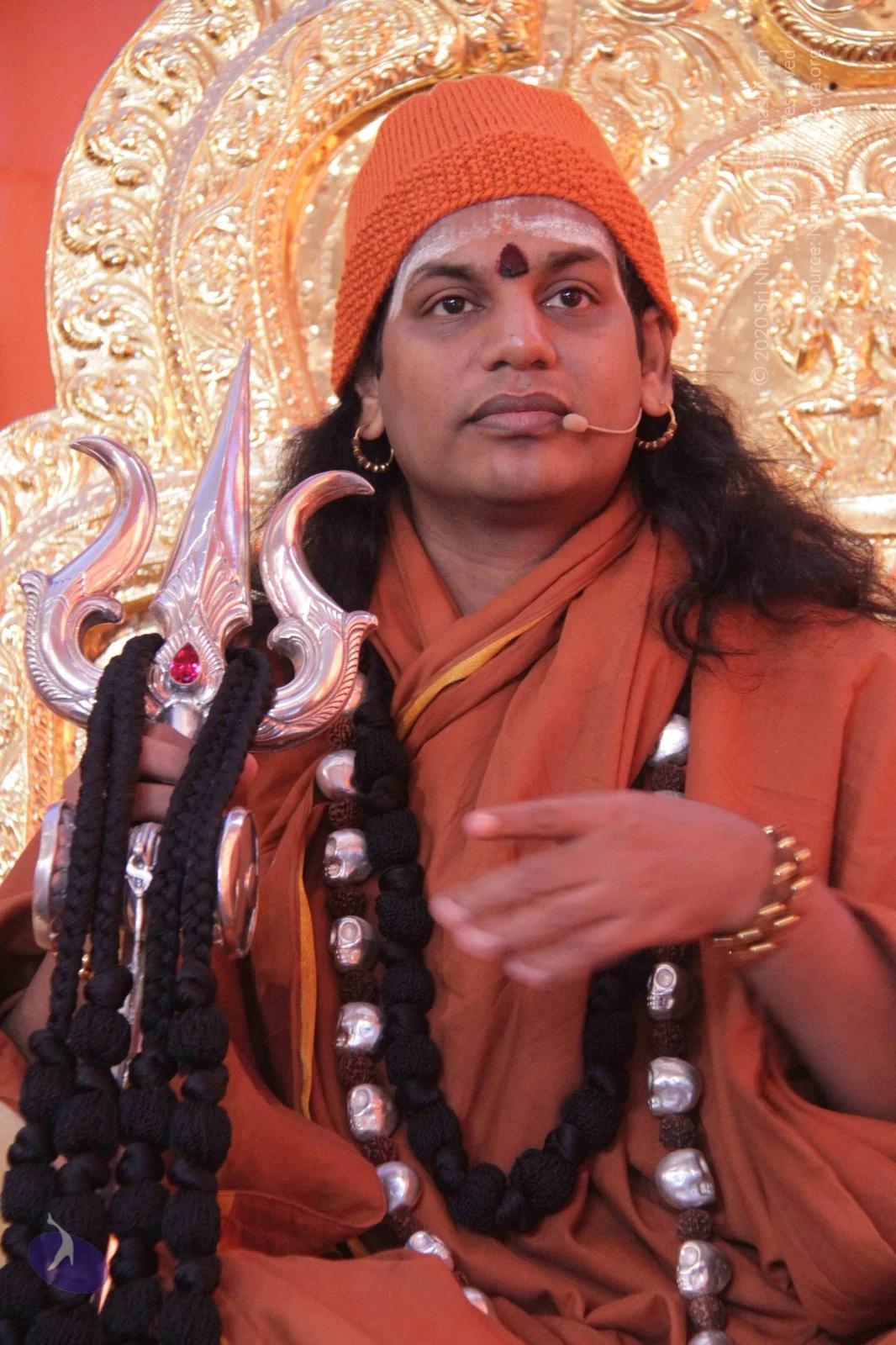
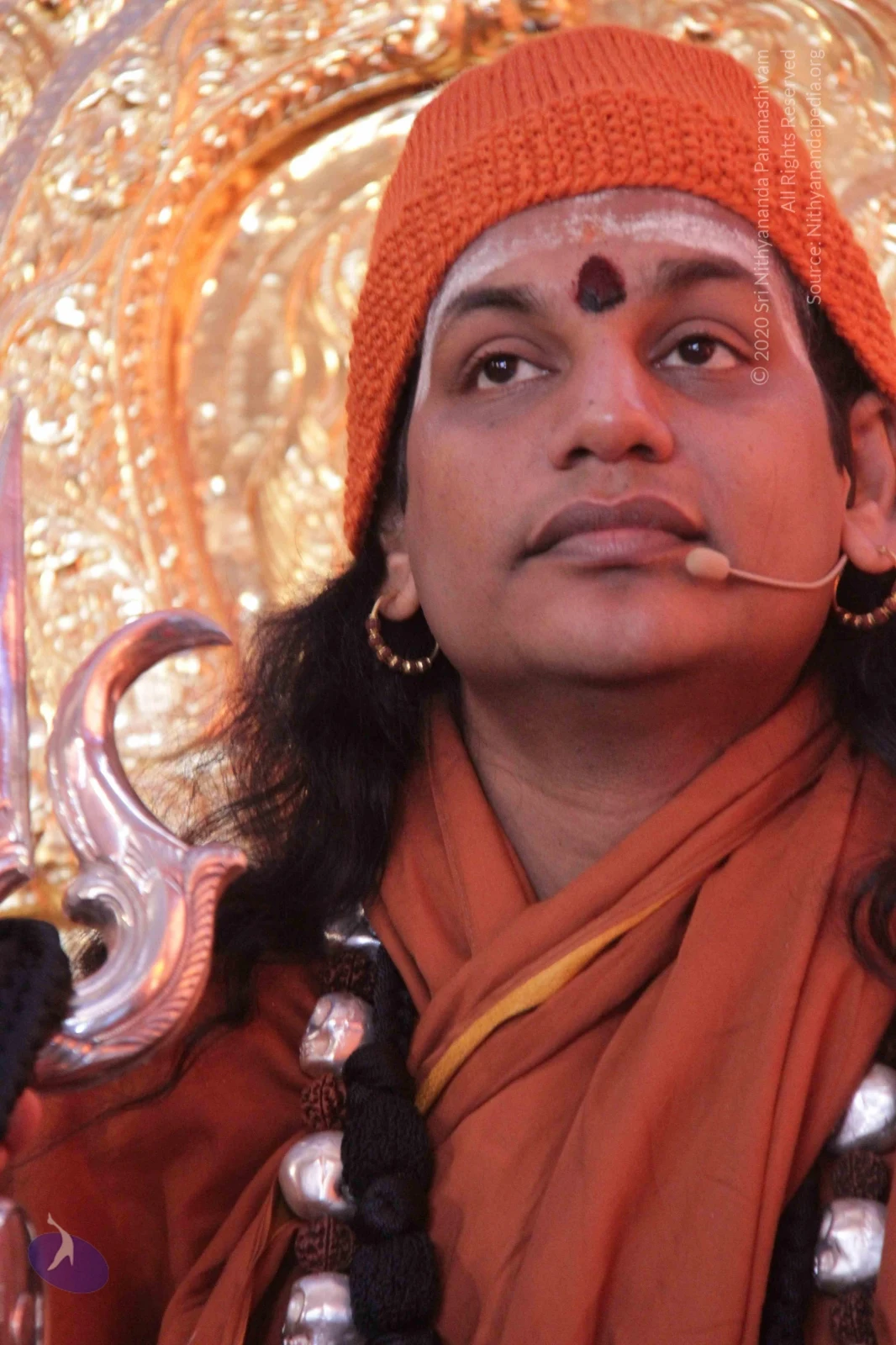
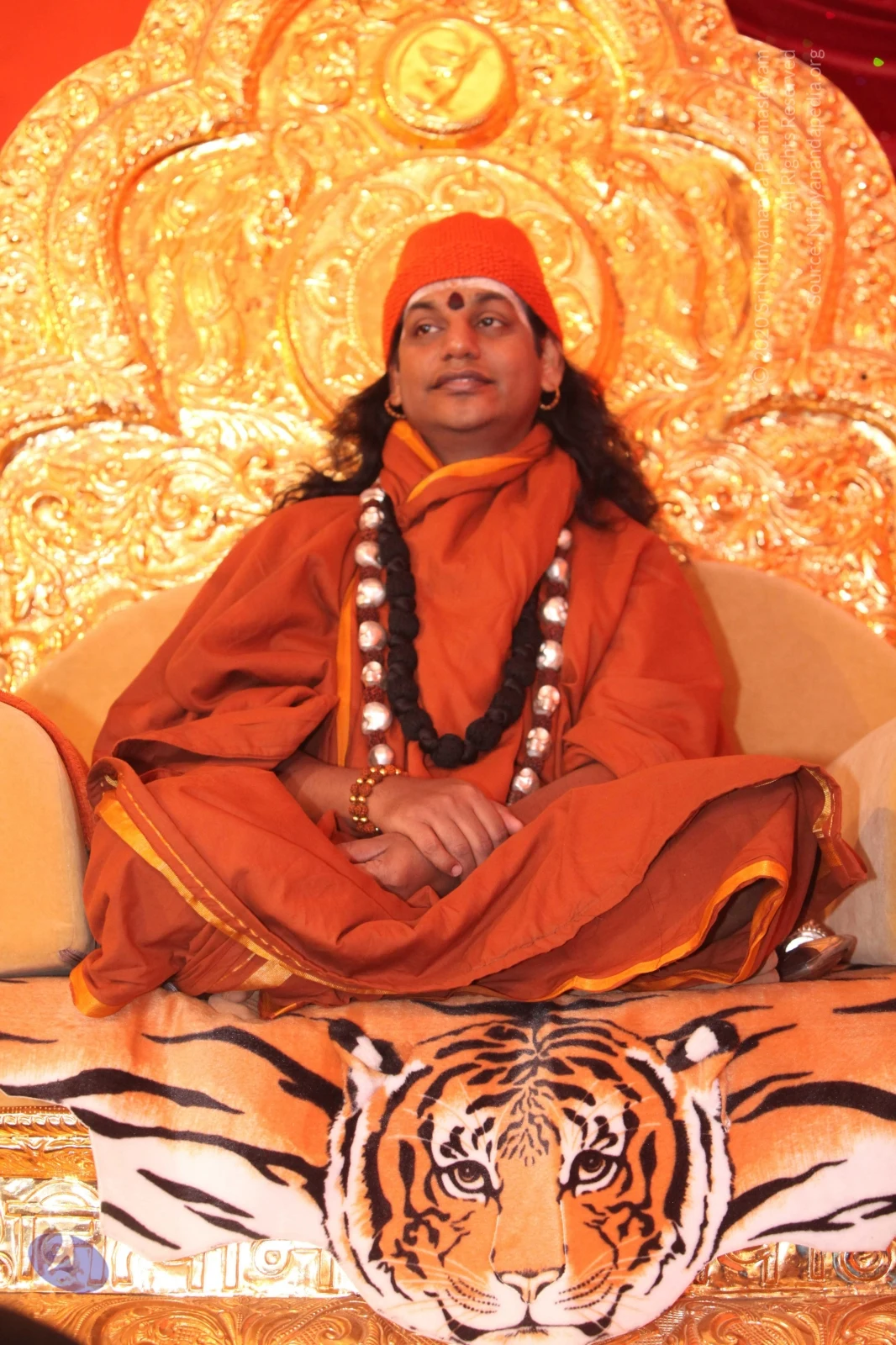
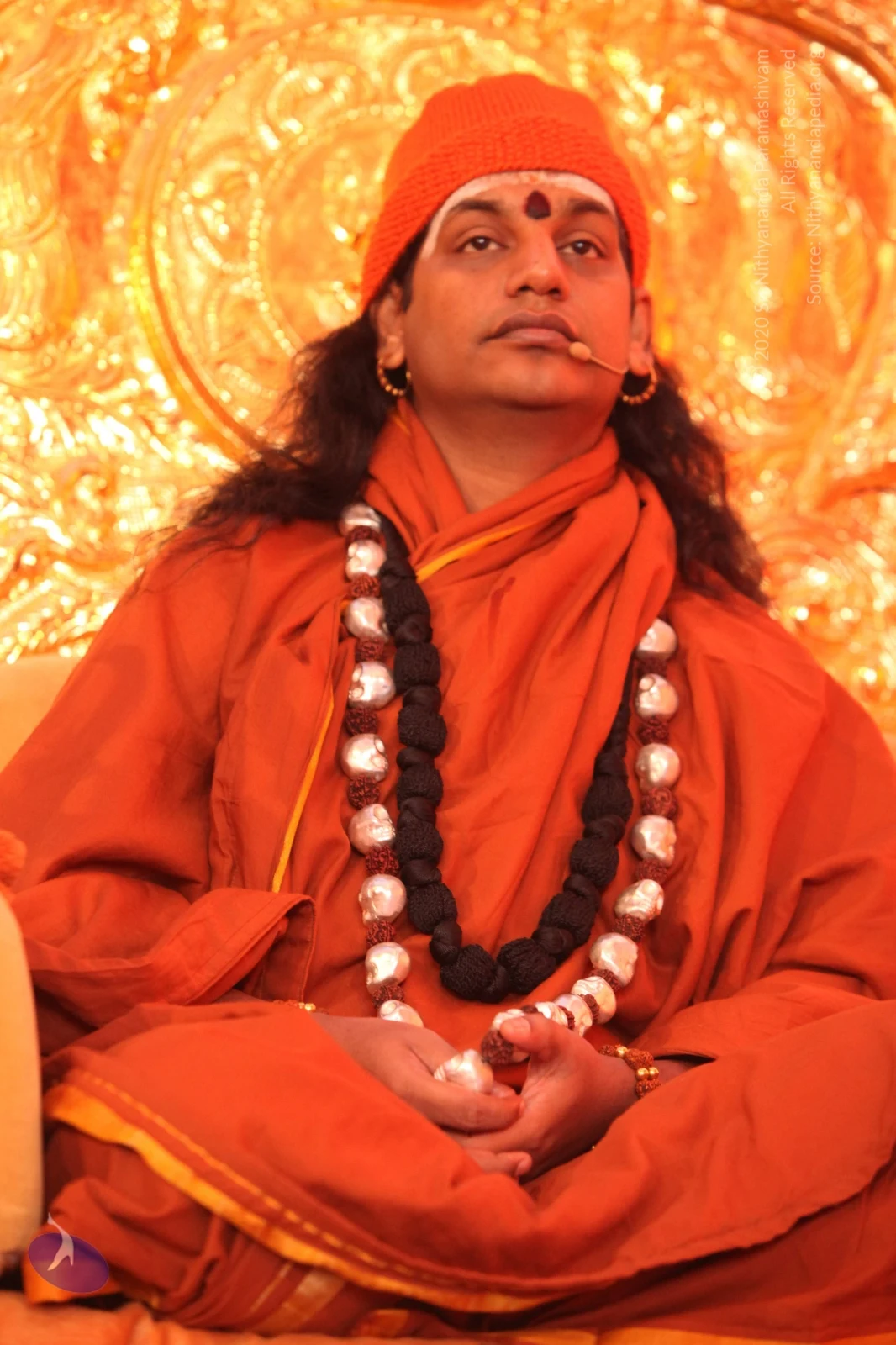
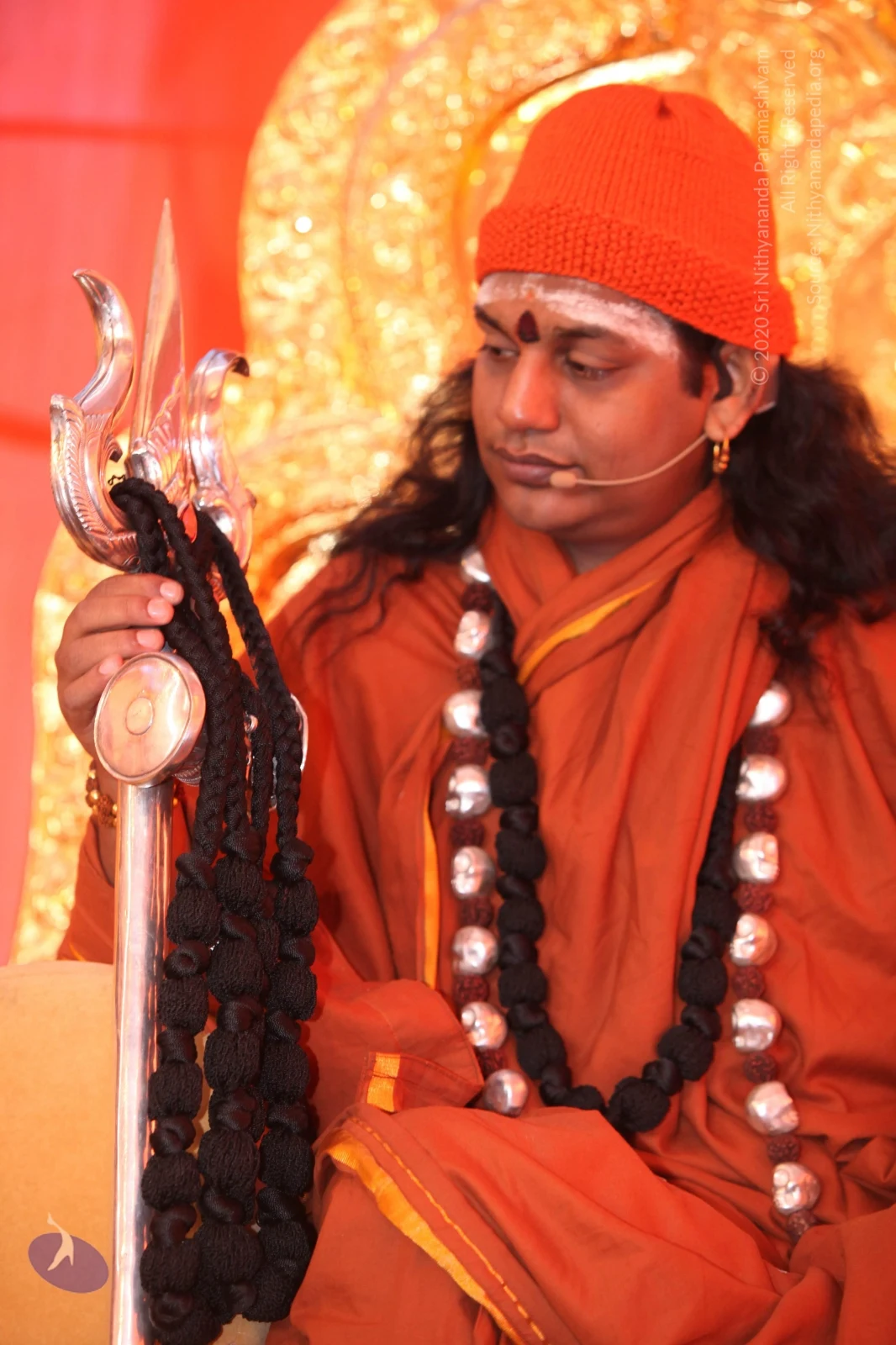
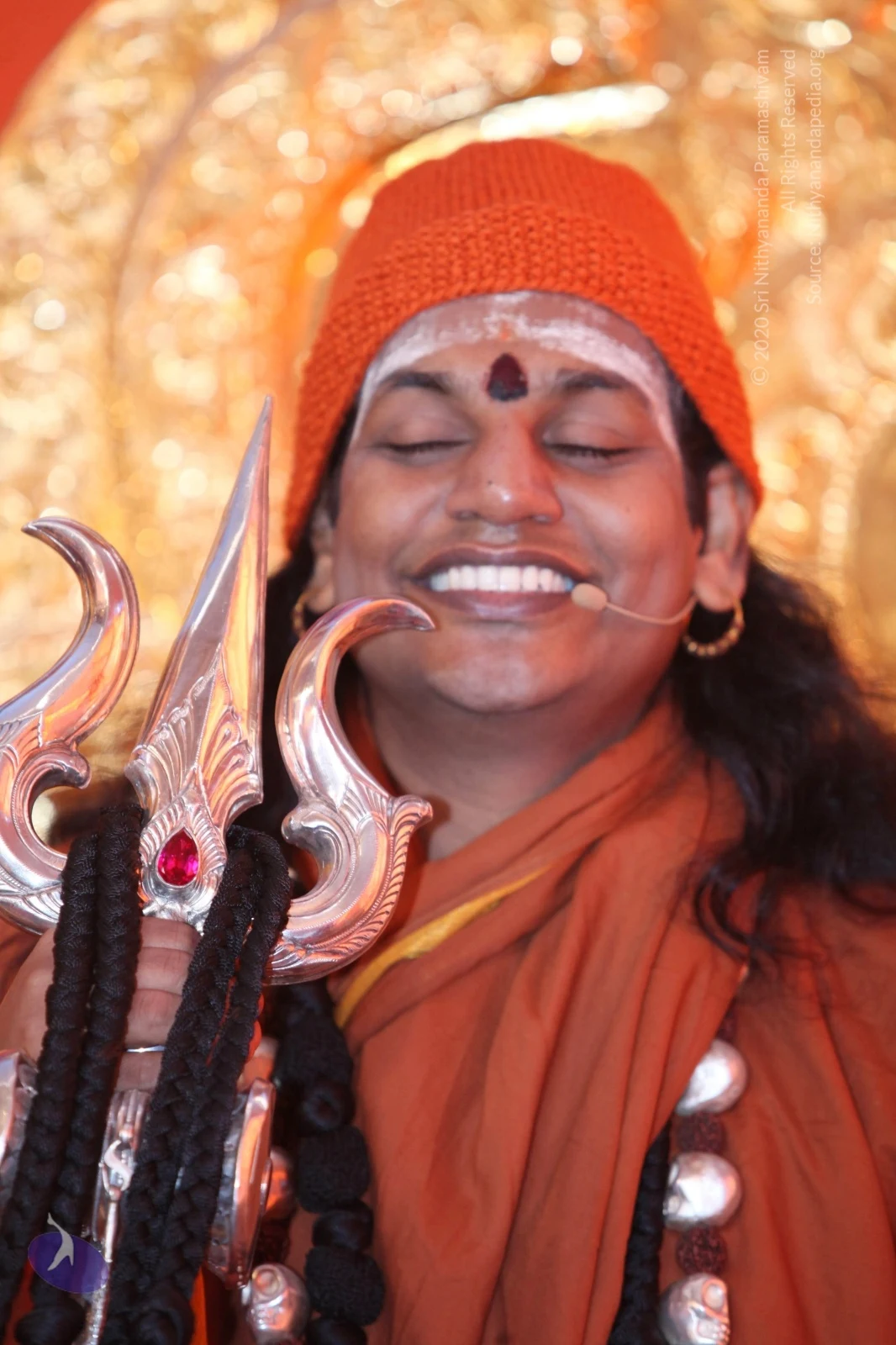
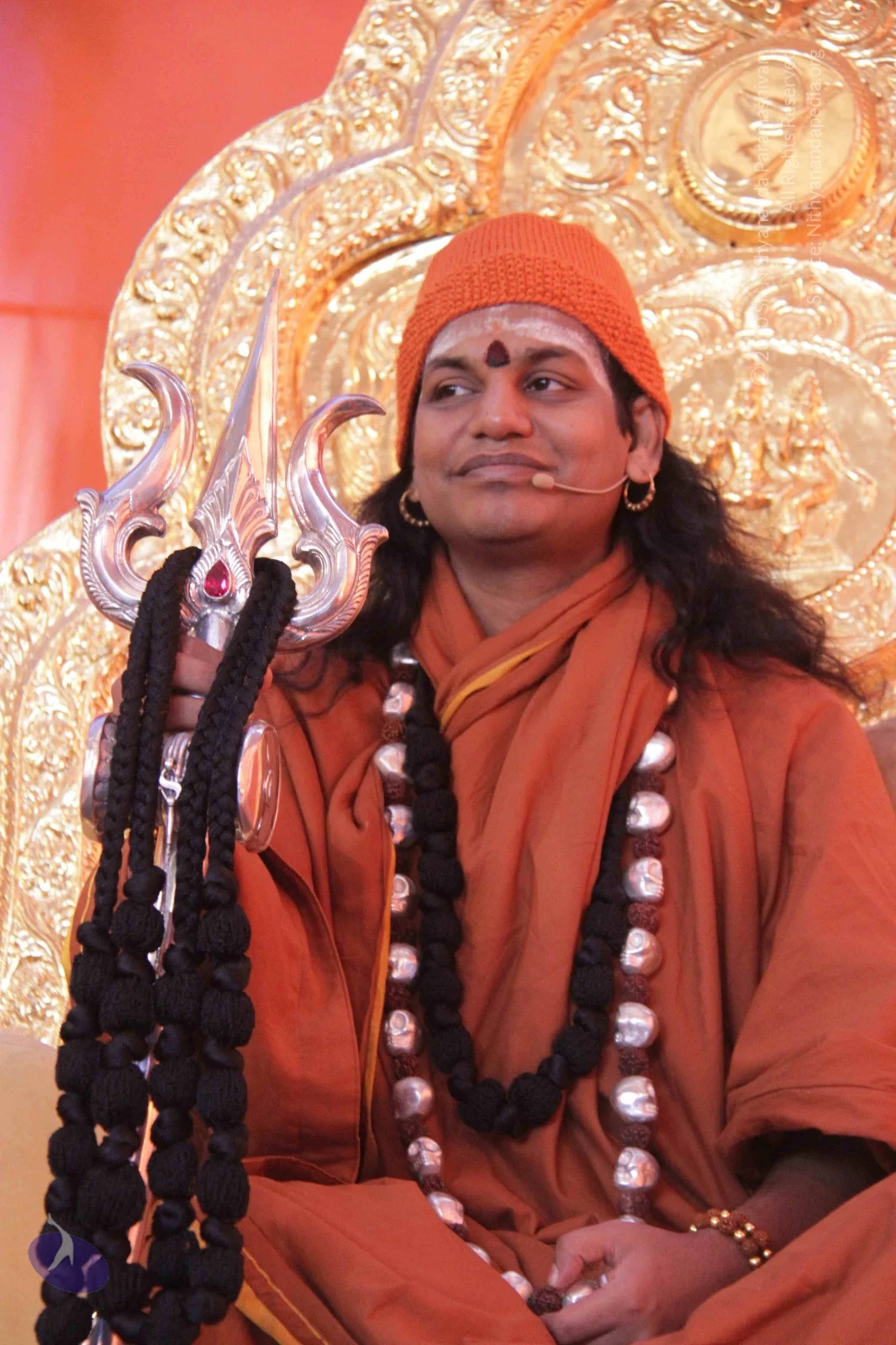
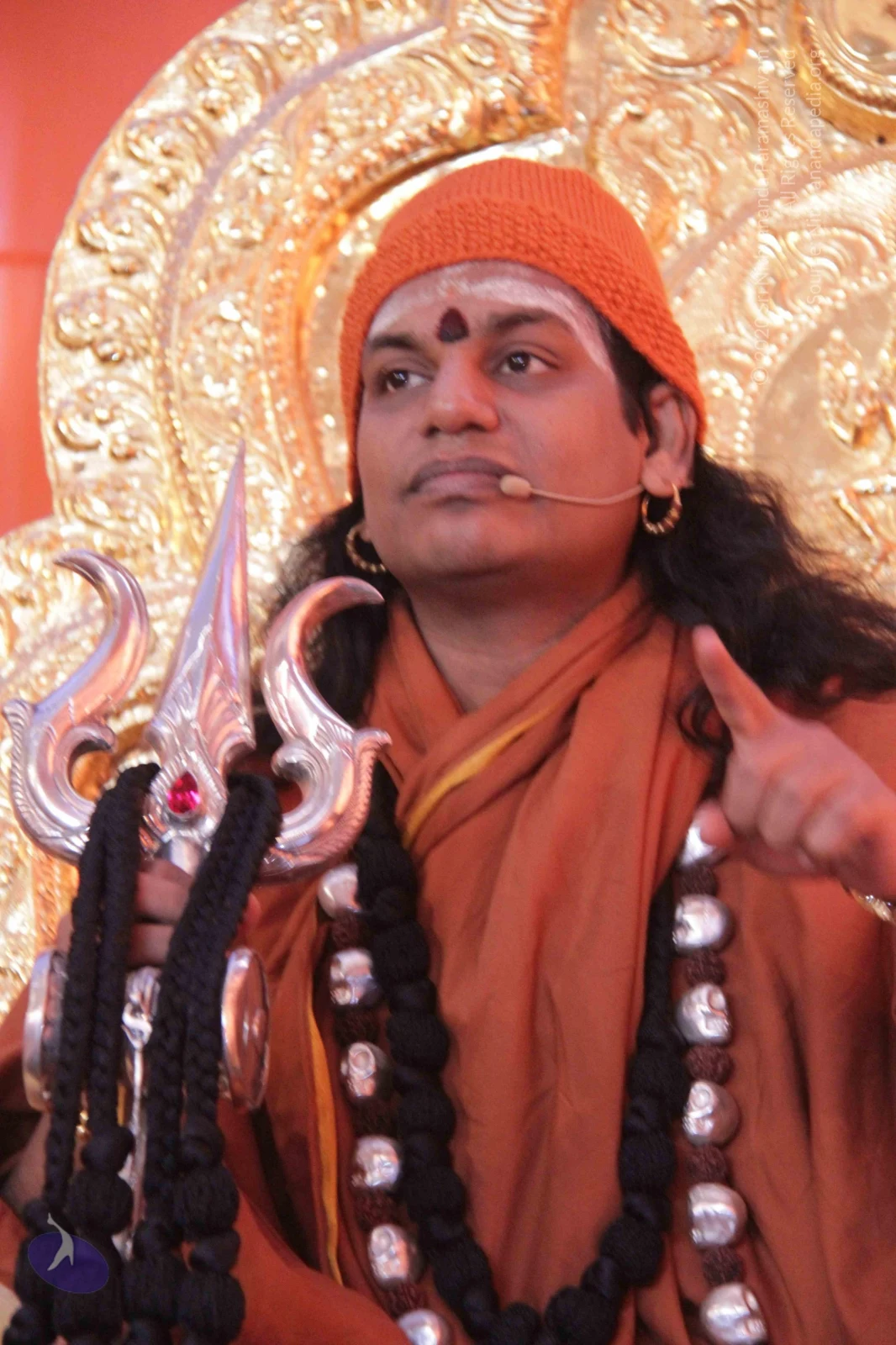
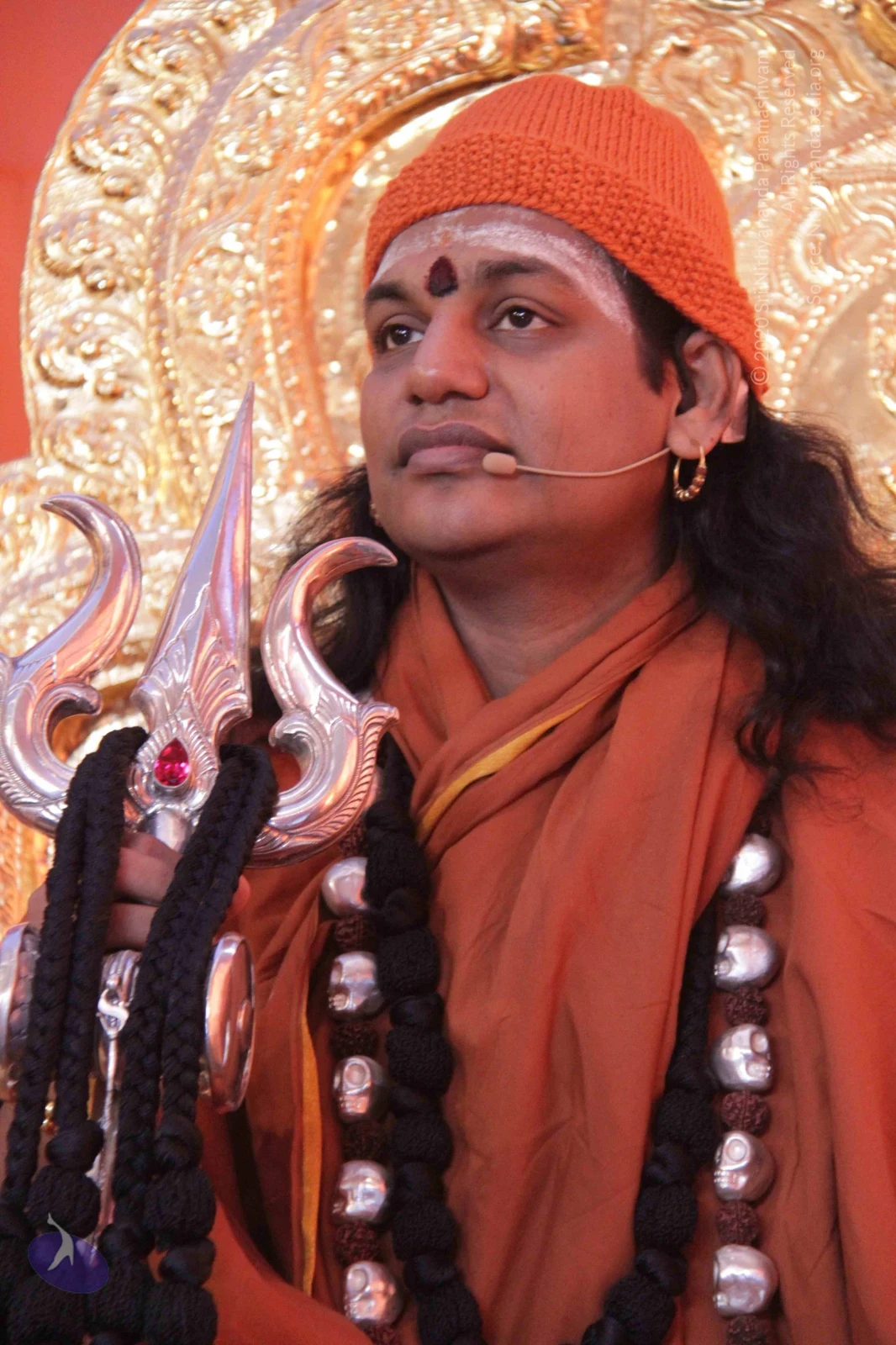
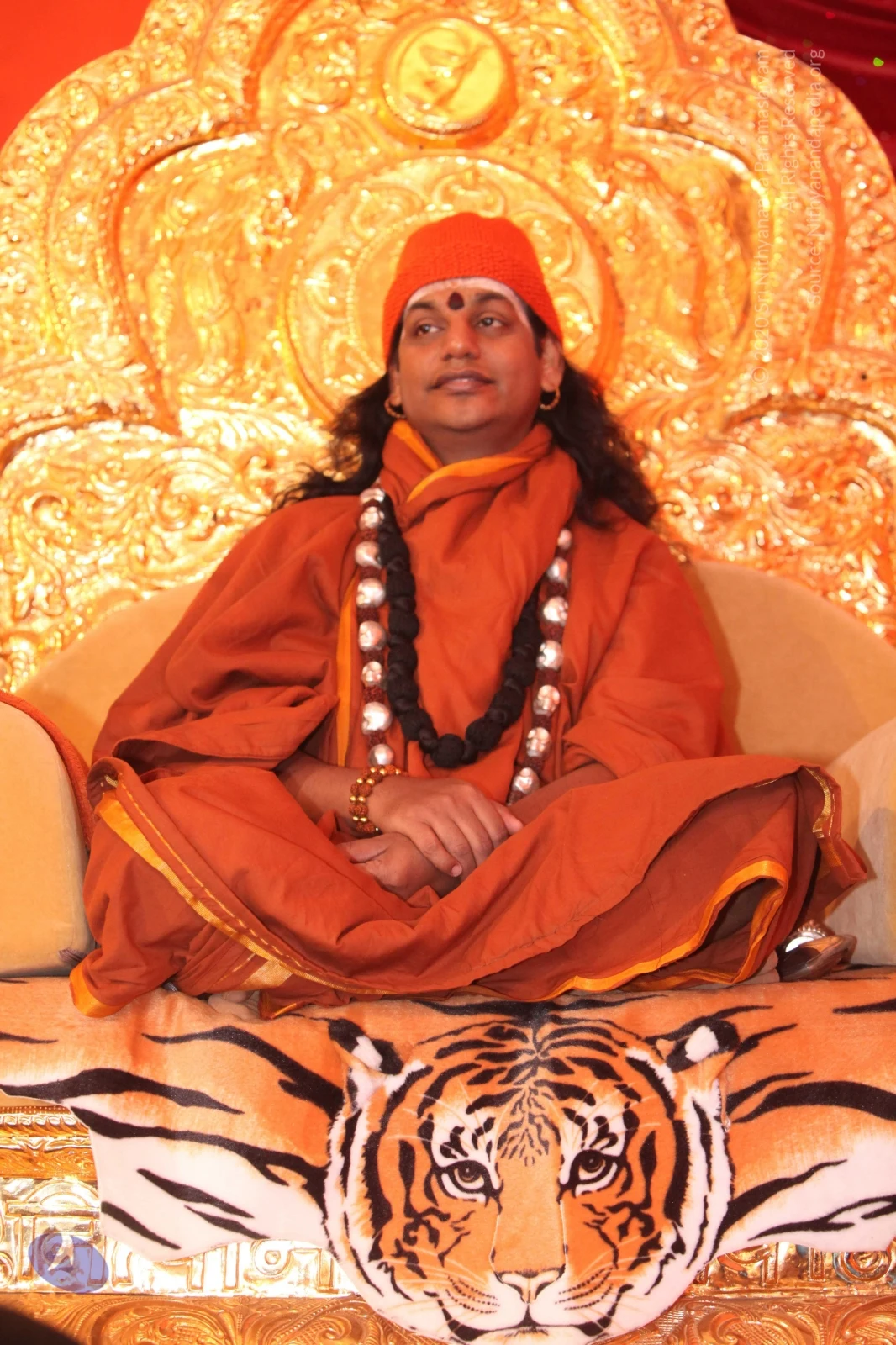
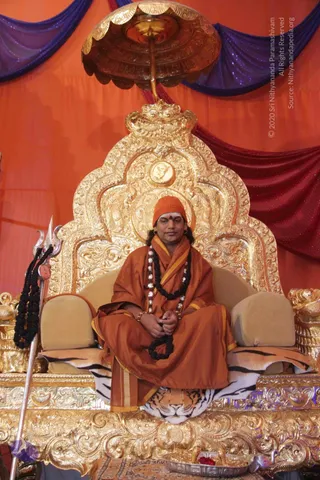
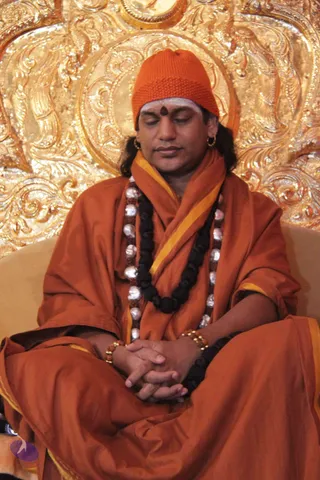
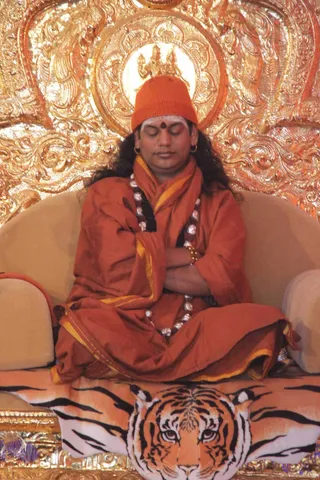
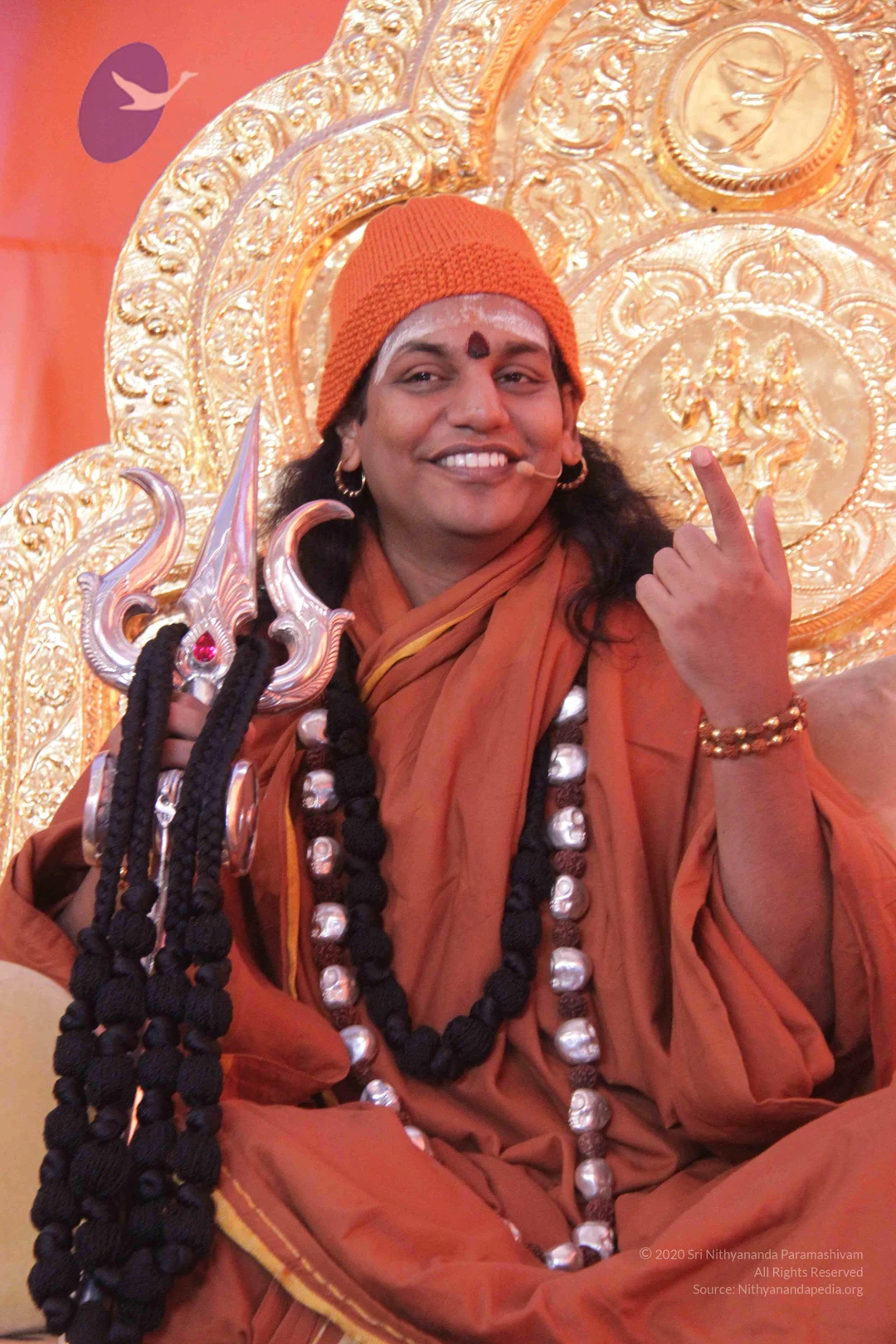
A seated man in orange sannyasi robes and an orange knitted cap sits cross-legged on an ornate gold throne with a tiger-striped cloth draped over the seat. He wears a black and white bead necklace and holds a black mala in folded hands. A gold canopy with a fringed umbrella shape hangs above him, with orange and purple drapes behind. A silver trident leans at left, and a tray of flowers and offerings sits at the lower right. The appearance is consistent with the a person candidate: orange sannyasi clothing, rudraksha-style mala and a throne setting, while the throne and clothing alone are not distinctive enough to confirm identity.A man seated with eyes closed in meditation on a golden throne with ornate repoussé backdrop. He wears an orange knitted cap, orange robes with yellow trim, a black and white bead mala, rudraksha bracelets, and gold hoop earring. A red bindi and white tilak mark his forehead, and his hands rest clasped in his lap. a person candidate by appearance cues: long swept hair, saffron ornate clothing, rudraksha and pearl malas.Close-up photo of a man in an orange knitted cap and orange-saffron shawl with a yellow-gold border, wearing a rudraksha mala with large pearl-like beads and a black thread mala. He has white and red markings on his forehead, gold hoop earrings, and gazes upward against an ornate gold repoussé backdrop. Compatible with the page's a person label through several cues (saffron clothing, rudraksha mala, ceremonial ornaments), so a person in person. One physical person visible.A seated man in saffron-orange robes sits cross-legged on an ornate gilded throne with a tiger-skin cloth draped over the seat, beneath a gilded umbrella-shaped canopy. He wears an orange knitted cap with a vertical tilak mark, a black and white beaded rudraksha mala with a gold-coloured bead necklace, and multiple beaded bracelets, with hands clasped in his lap and eyes closed. Behind him hang orange and purple draped fabrics, and a silver trident leans to the left of the throne. Swamiji (probable): long hair and ornate ceremonial presentation with rudraksha mala and saffron clothing; a seated figure with a throne, orange canopy and trident setting, consistent with a satsang setting.A seated figure in an orange-saffron cap and saffron robe with a yellow-edged shawl sits cross-armed on an ornate gilded throne with a golden canopy above. Rudraksha-style beaded malas hang on the chest, and a trident stands at the left. The throne is draped with a tiger-skin cloth, and red and maroon drapes form the backdrop. The figure's appearance is not clearly distinctive enough to confirm identity, so the role is described as a seated figure on a throne.A seated man with eyes closed sits on an ornate cream throne in front of a gold-embossed backdrop with a golden halo and a small deity image at top. He wears an orange knit cap, orange and yellow robes, a shawl draped over the shoulders, rudraksha or pearl-like malas, and a white and red forehead mark. His arms are folded across his chest. A tiger-striped cloth covers the base of the throne.
02-Pandal

6 photosSource gallery
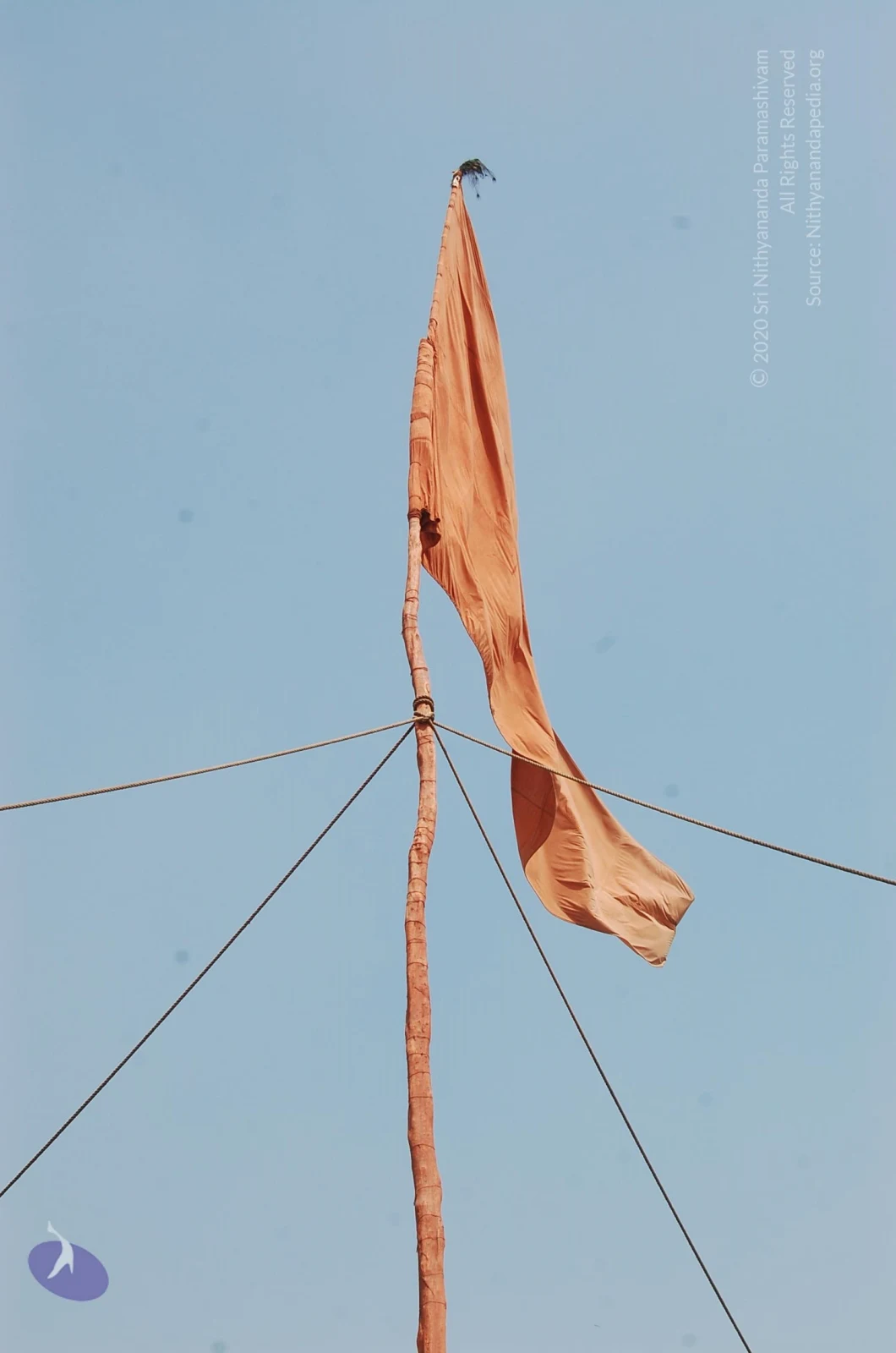
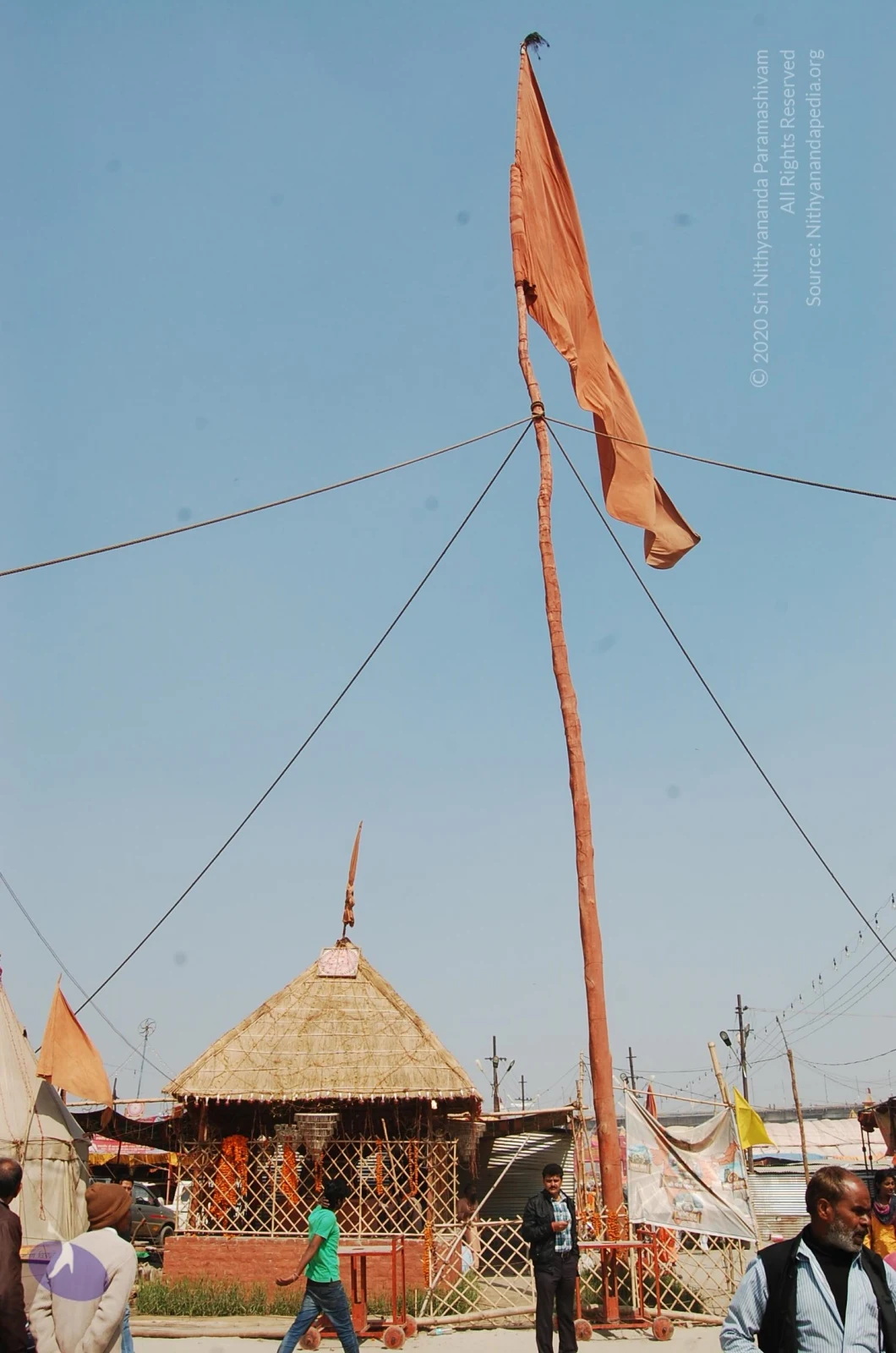
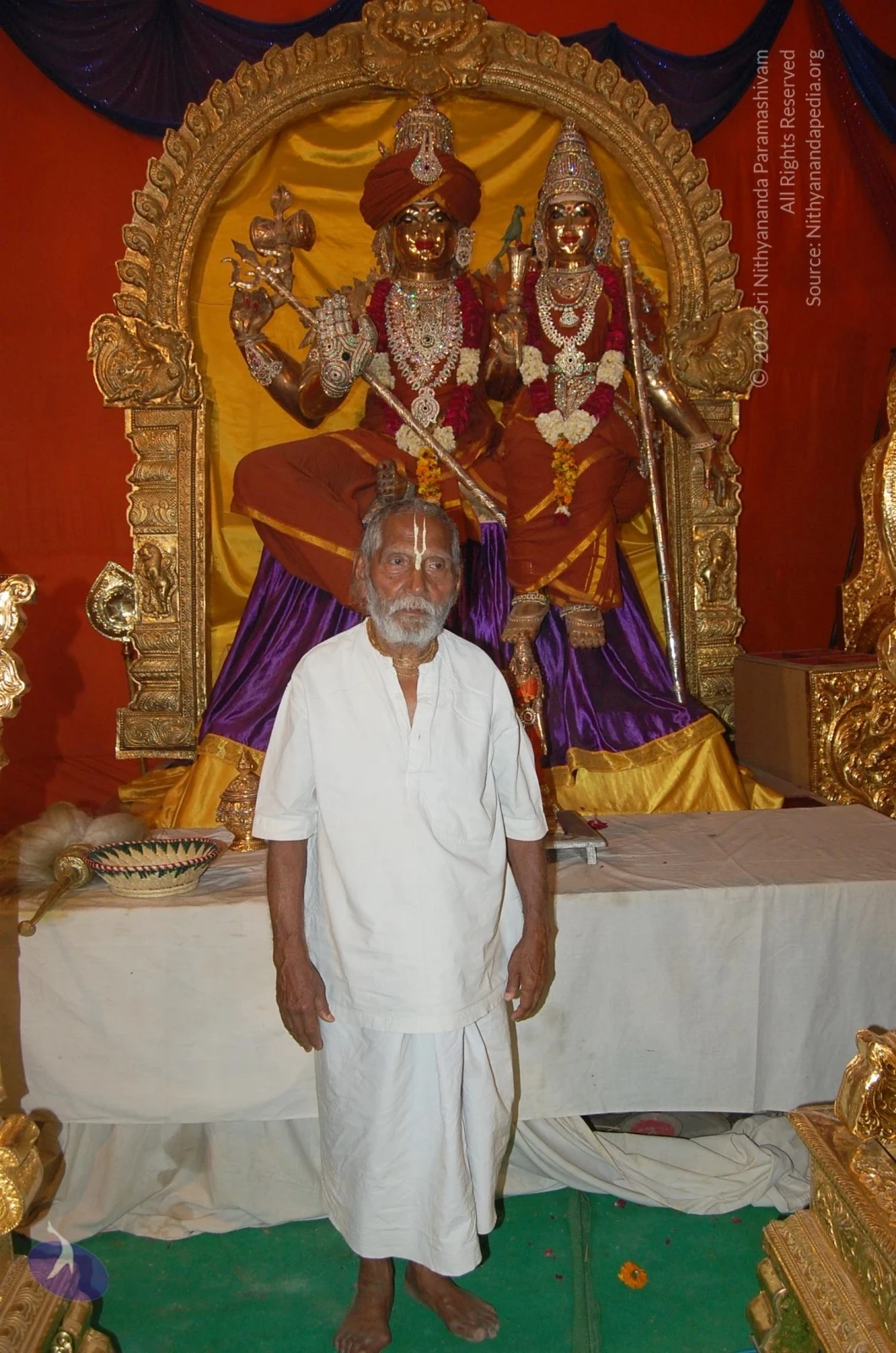
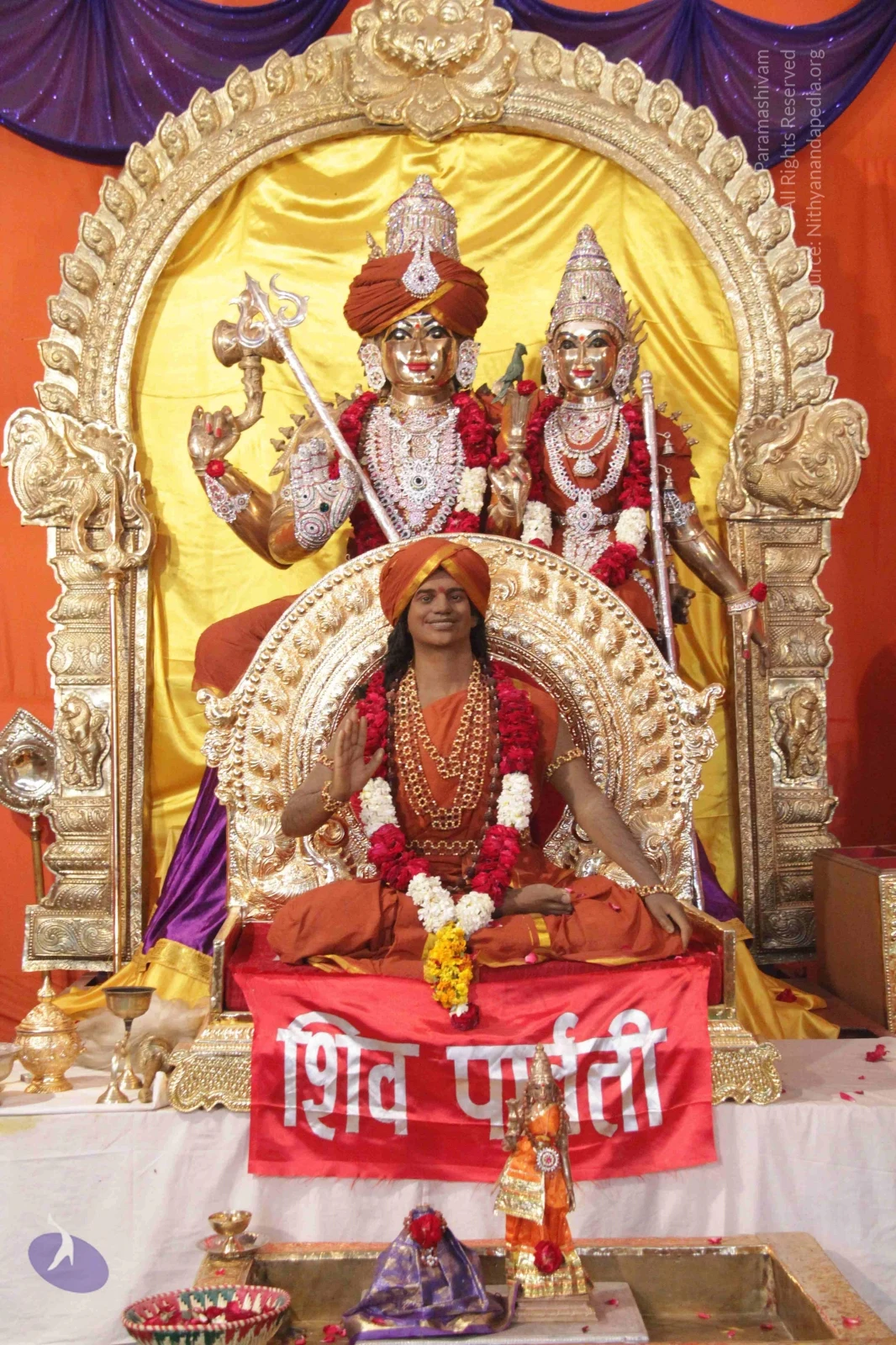
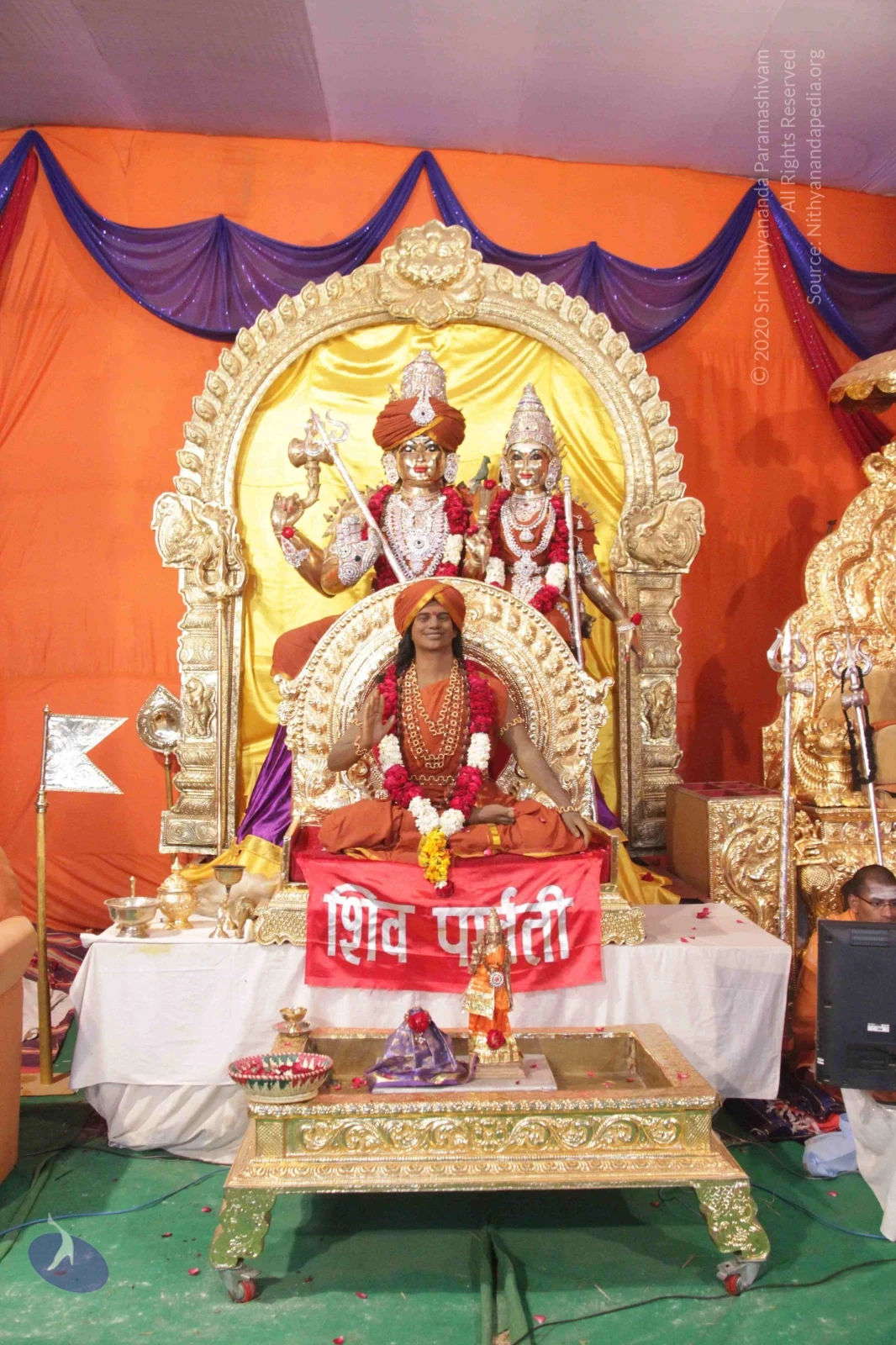
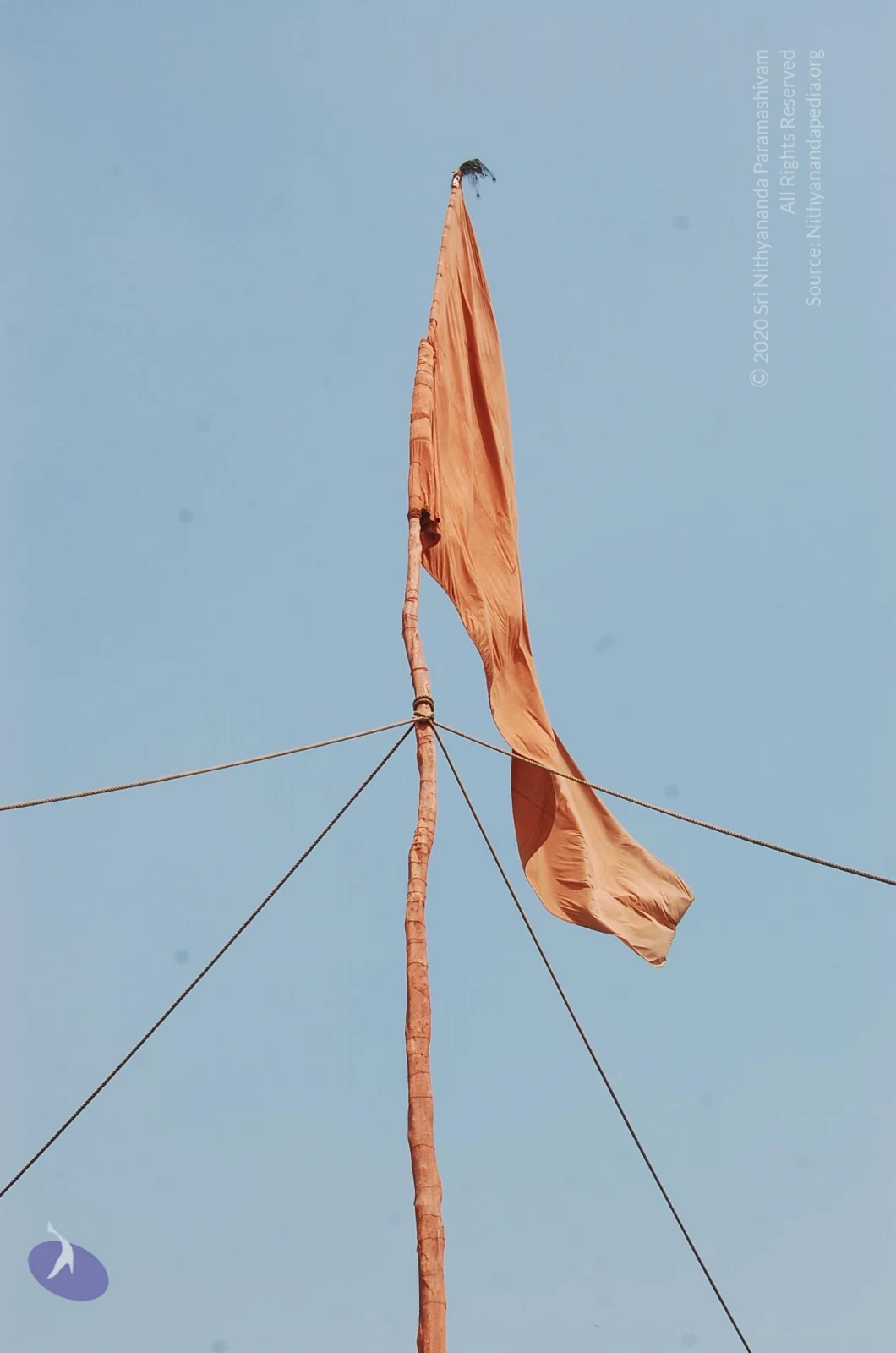
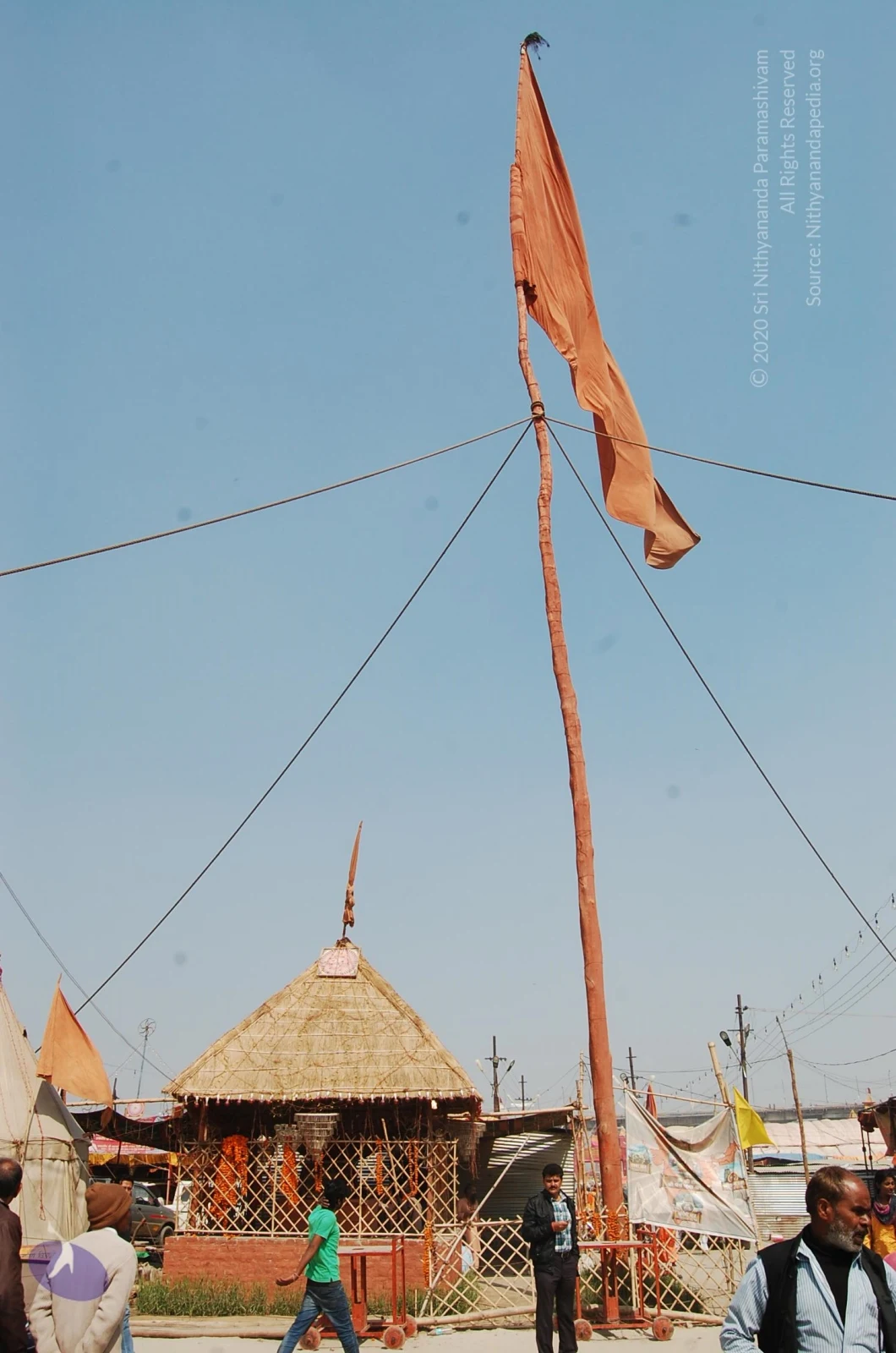
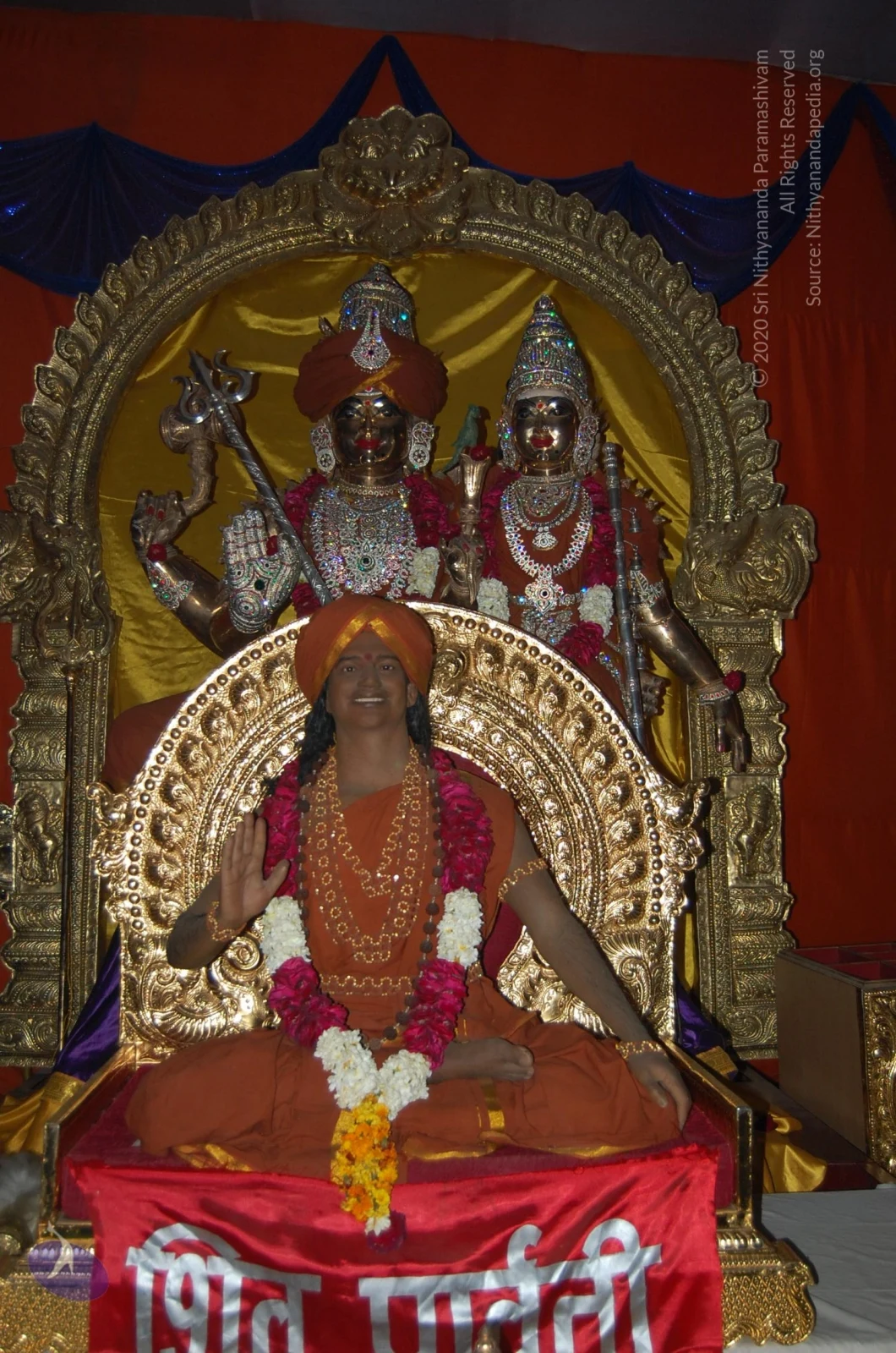
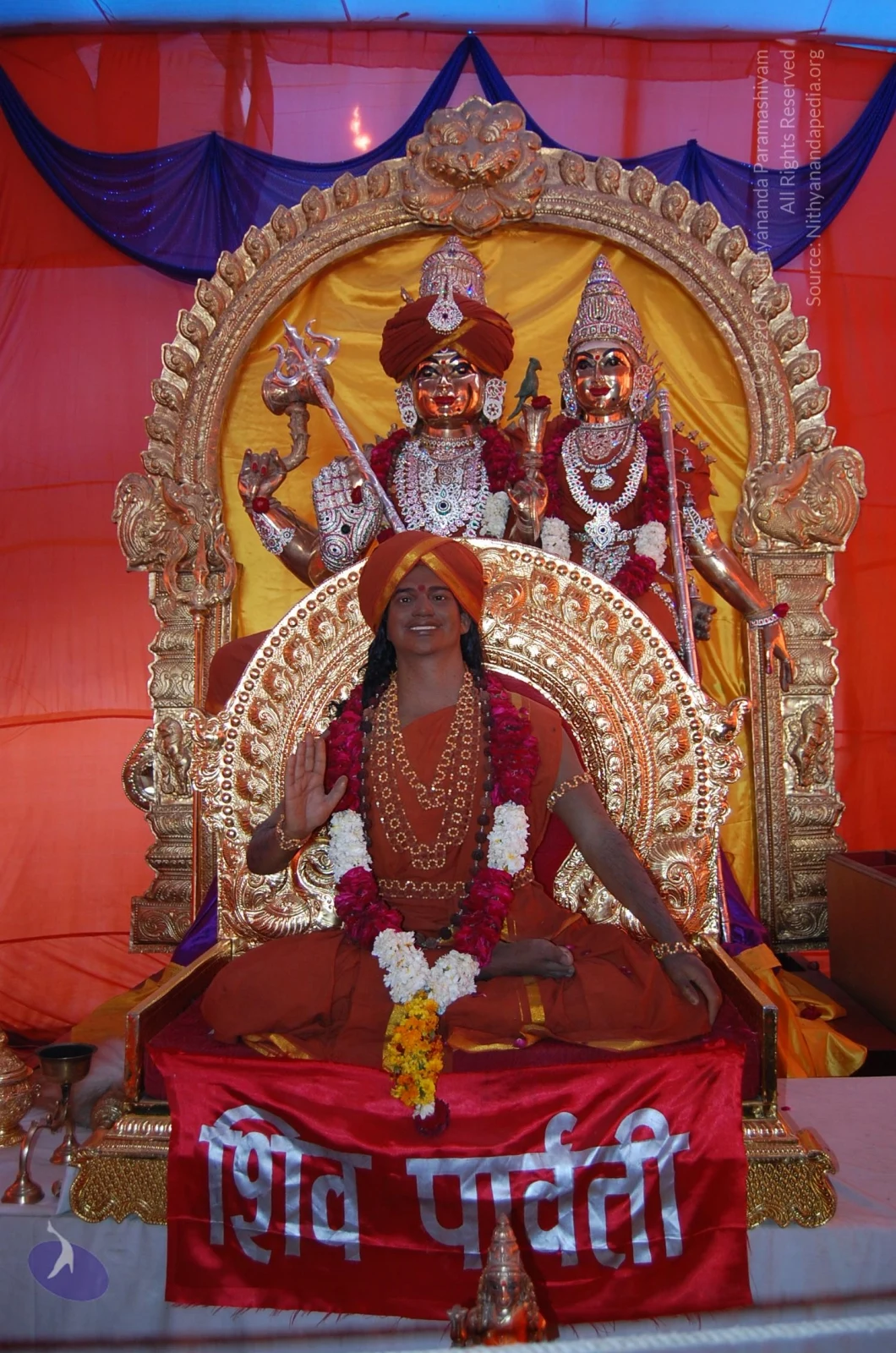
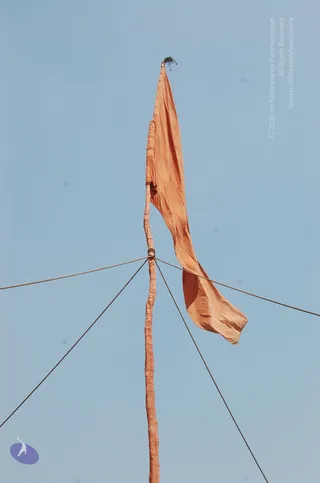
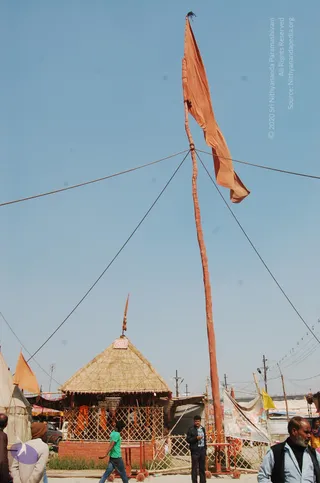
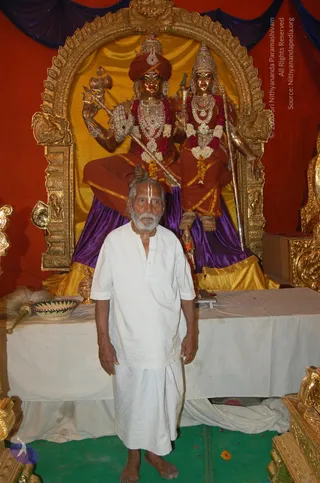
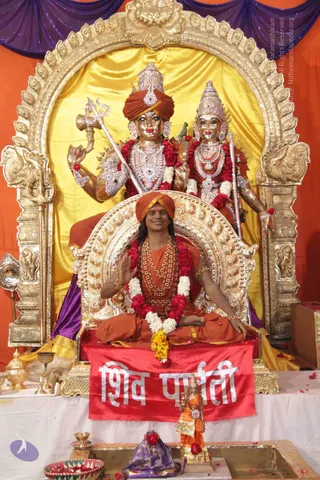
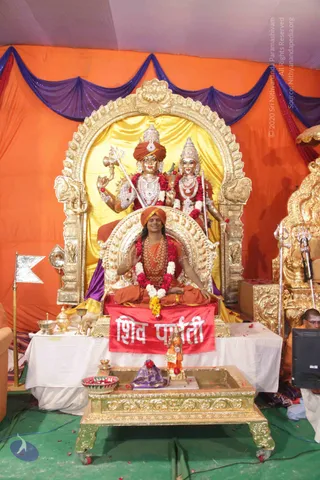
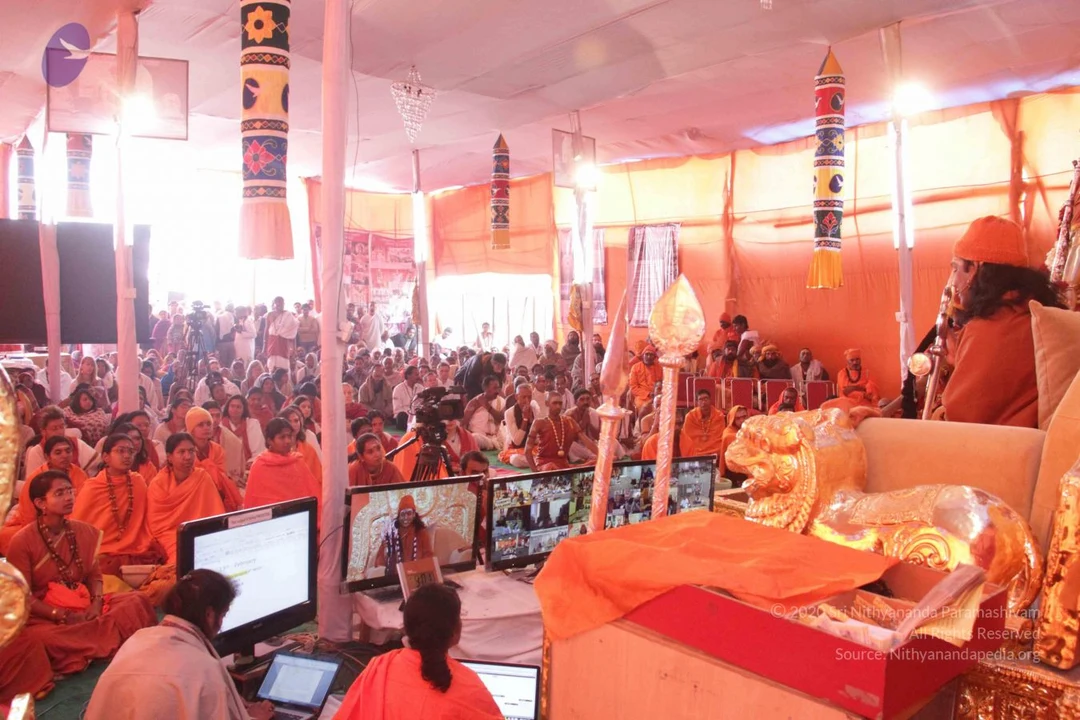
A saffron-orange cloth flag flutters from the top of a tall wooden pole against a clear pale blue sky. The pole is held steady by thin guy ropes radiating from a tied junction partway up, and a small tuft or finial crowns its tip. No people, deities or ritual activity are visible; the image centres on the pole and banner.Outdoor camp scene at a pilgrim encampment: a tall wooden pole flying a long saffron-orange flag, held taut by several guy wires against a clear blue sky. Beside it stands a thatched straw-roofed shelter with orange marigold garlands hanging on its bamboo lattice walls. Several people walk and stand around the dusty ground, including a man in a green t-shirt and jeans, a man in a dark jacket, and a bearded man in a striped shirt and dark vest in the foreground. A large white hoarding with faded printed imagery leans beside the pole, and small orange and yellow pennants fly from nearby tents.A photograph of a single elderly man with white hair and a white beard standing barefoot in front of a golden shrine. He wears a plain white short-sleeved kurta and a white dhoti, with a white vertical tilak mark on his forehead and a small gold neck ornament. Behind him a gilded arched frame holds a pair of large deity murtis in red and gold garments with purple drapes, adorned with silver jewelry, rudraksha-style and floral garlands, and crowns, one holding a trident-like staff. A white draped table with a brass bowl and a fan-like ritual implement sits in front of the shrine, with orange flower petals on a green floor mat.A photograph of a decorated stage backdrop with a gilded arch and golden satin draping. Two large gold-painted deity figures stand behind, one with a red turban and trident holding a rudraksha-like hand gesture, the other crowned beside a companion figure, both wearing white jewelled necklaces and red-and-white garlands. In front, a seated figure in saffron-orange robes, a saffron turban, a long gold chain and red-and-white marigold garlands raises one palm in blessing on a gilded throne draped with a red cloth. The red banner below reads 'शिव पार्वती' (Shiva Parvati). Brass offerings, a kalasha-style urn, a lamp, a bowl of rose petals and a small decorated murti sit on a white-covered table in front.Photograph of a decorated stage tent with orange and purple draped backdrop. A seated figure in saffron-orange robes, rudraksha mala and a red-orange turban sits with hand raised in blessing on a gold-framed throne; the figure is a statue or lifelike effigy rather than a living person, and the appearance is a depiction. Behind it, a larger gold-and-silver deity murti pair with trident and garlands rises on an ornate arch. A red banner in Devanagari script reads Shiva Parvati. Brass lamps, a kalasha-like bowl, a gold trident and a gold-framed altar with flower petals sit in front. A seated attendant in orange appears at the right edge, partly cut off.Two devotees in orange and red saris stand with their backs to the camera before a decorated shrine inside an orange and purple tent. Two gilded murti of deity figures sit on a purple cloth, one holding a trident and one a staff, both garlanded with pink and white flowers and silver ornaments, under a gold arch. A small oil lamp burns on a tray in front of the murti, and a cameraman stands at left filming the scene.
03-Swamiji-meet-VIPs

6 photosSource gallery
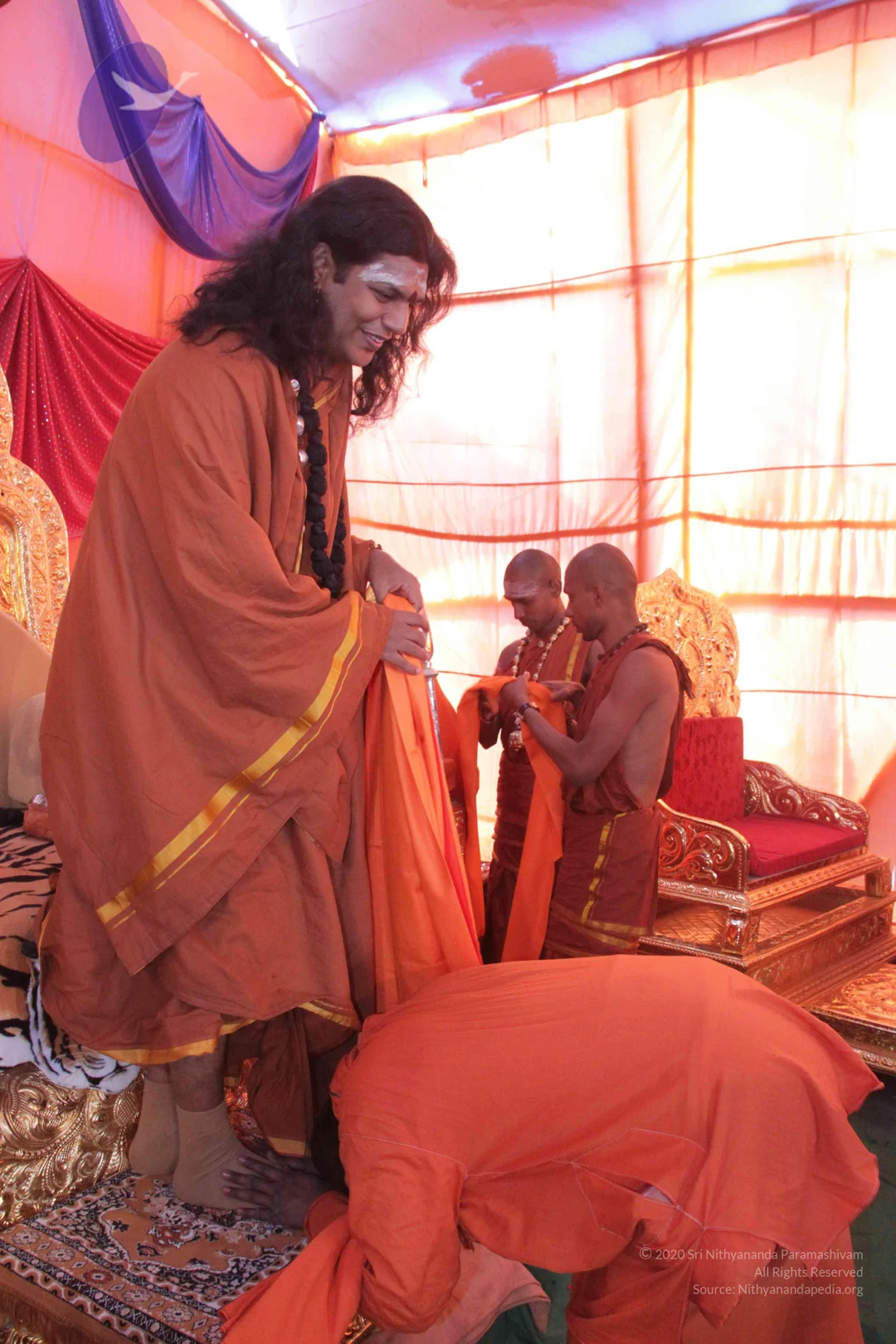
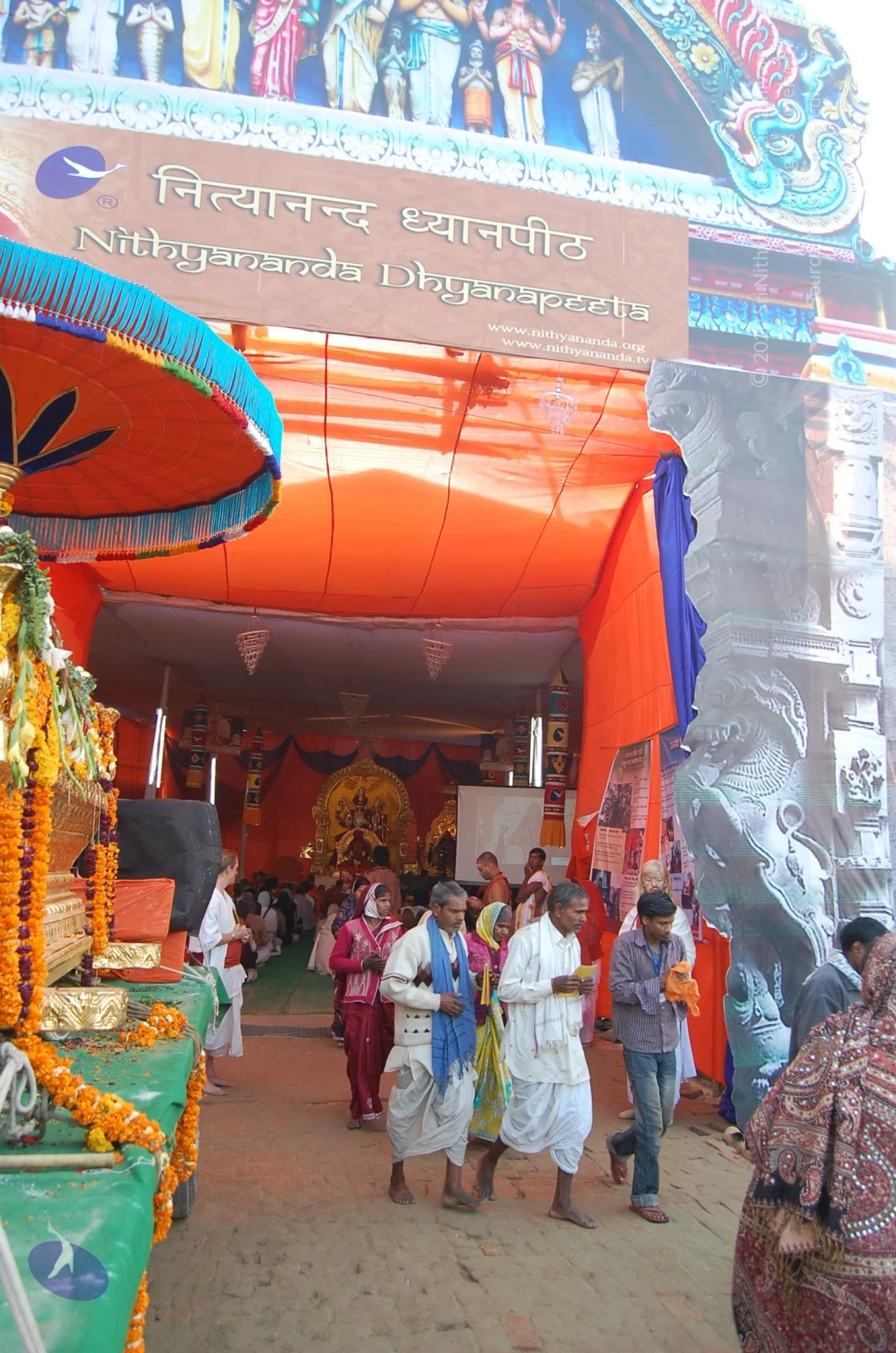
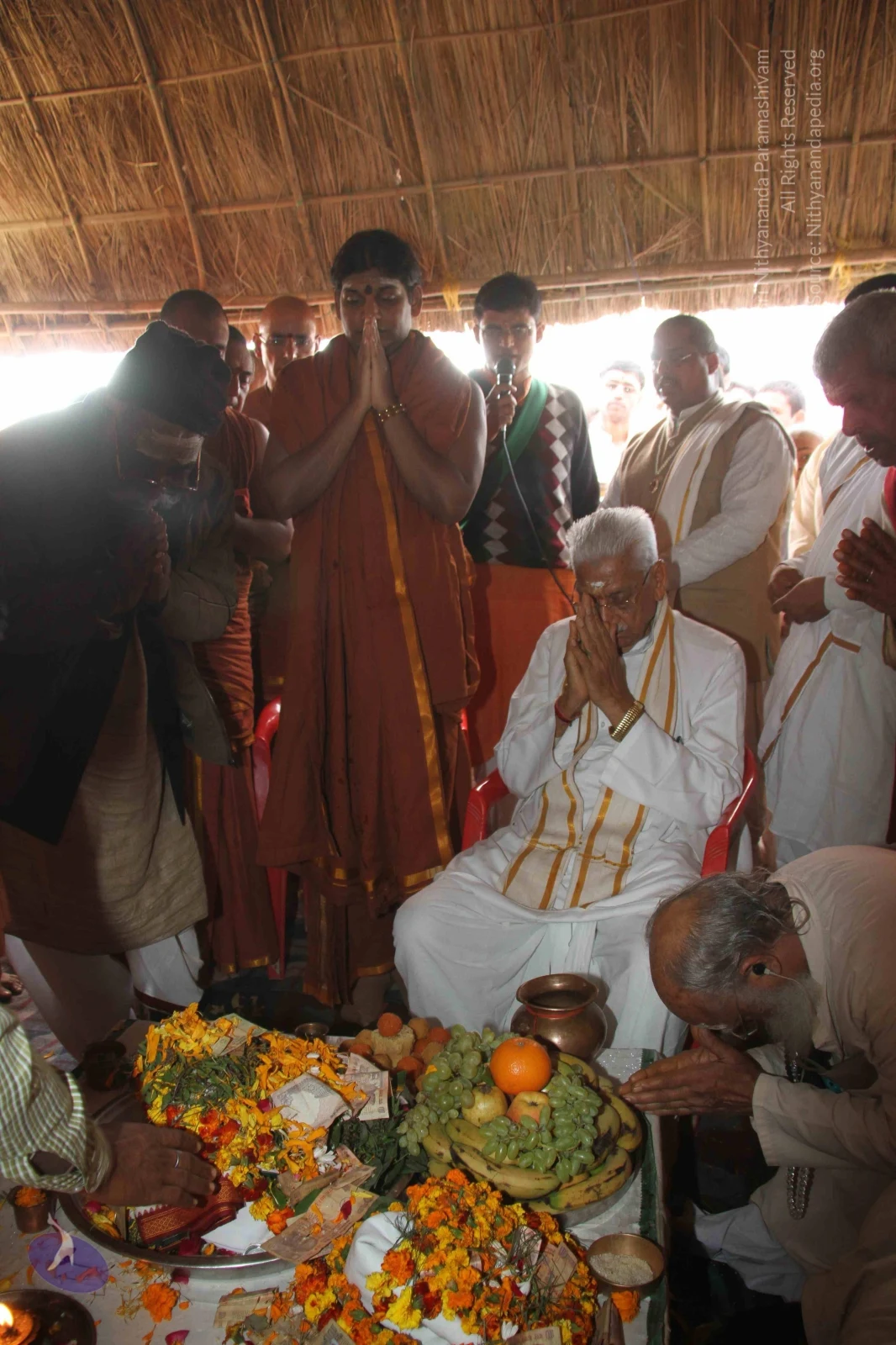
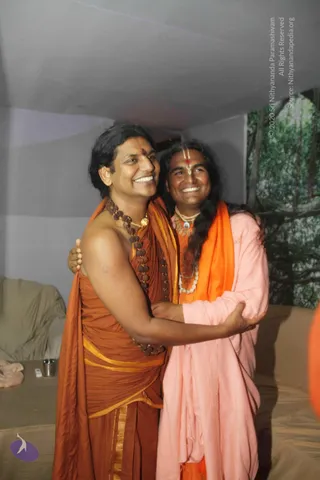
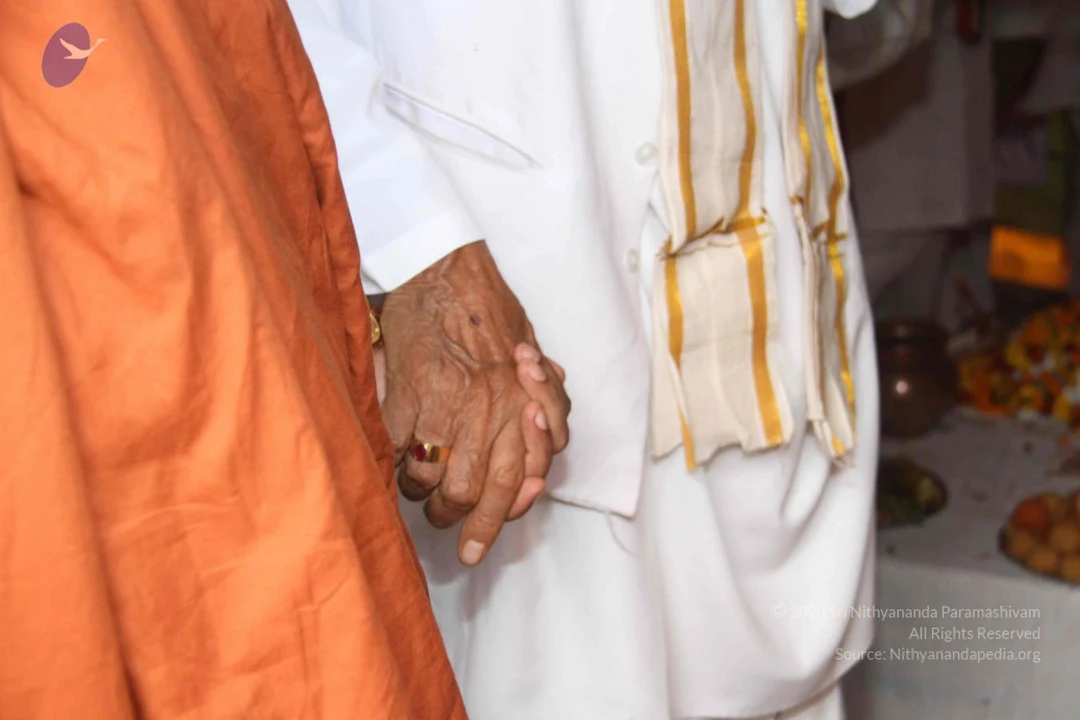
Under a thatched roof, a ritual offering is laid out on a white cloth table. Marigold garlands and orange and yellow petals surround plates of fruit, grapes, bananas and a sliced orange, copper vessels, a small oil lamp and heaped rice, with currency notes tucked among the flowers. An elderly white-clad man in a white shawl bows low with his hands near a copper pot, while another elderly man bends forward at the right edge with palms pressed together. A man in a dark cap bends at the lower left. Standing behind them, a robed man in saffron-orange dress with a shaved-free head and palms joined stands near a microphone held by a young man in a green sash. Other men in white dhotis and orange robes stand with hands folded. Several men are visible in the background.Photograph inside a thatched-roof pavilion showing a man in a loose orange-saffron robe with a gold-toned shawl over one shoulder, head bowed, white vertical tilak on his forehead and dark hair tied back. He stands beside an older man in white kurta and dhoti with a gold-bordered shawl, hands clasped at his waist. Behind them other men in white stand near a low white platform with orange and red floral offerings and plates. Hanging yellow string and threads are visible above. The orange-robed man has distinctive long swept hair and saffron robes, but his face and identity cannot be confirmed from appearance alone, so the a person label is unsure; the page describes a visit by a person at a Maha Kumbh Mela event.Photograph taken inside a thatched-roof tent with straw overhead. A man with shoulder-length dark hair and white tilak on his forehead wears a saffron-orange sannyasi robe with a gold-edged cloth draped over his shoulder and a gold pendant. He smiles and looks down while an elderly white-haired man in white kurta and dhoti, with glasses, a white shawl with gold stripes, and a red-and-white forehead mark, grips his hand. Behind them, a bearded man in a brown jacket and another man with a white forehead mark and gold-bordered shawl stand nearby. Two priests in white and gold-striped cloth are partly visible at the edges. The saffron-clad man is a person by appearance cues: shoulder-length hair, saffron robe and gold pendant.Photograph under a thatched straw roof at a Kumbh Mela camp setting. A man in an orange saffron cloth with a yellow-bordered wrap and white tilak on his forehead, head bowed, is guided by an elderly man in white kurta and dhoti with a cream shawl bordered in gold stripes, wearing glasses and holding hands. Several men stand around, one in a black jacket with a white tilak and yellow-striped dhoti, and a checked mat lies on the ground with scattered marigold petals. The orange-robed man is a person by appearance cues of saffron robe and clothing, while the elderly man in white is a visiting dignitary.Outdoor photo at a Maha Kumbh camp entrance under a large orange canopy with a painted deity mural above. A sign reads Nithyananda Dhyanapeetha. A long-haired man in saffron cloth with a rudraksha mala and forehead tilak walks forward in the centre, flanked by a bearded man in red and orange robes with a shawl and beaded necklaces who holds his hands clasped. On the left, a man in white with a sacred thread holds a decorated orange umbrella. Several other men in saffron and white stand behind.Two men stand close together in an indoor room with grey walls and a forest-scene backdrop, smiling and embracing. The man on the left wears an ochre-orange draped garment with gold border, a rudraksha mala and a gold pendant, with a small red forehead mark. The man on the right wears a pink robe over an orange shawl, with white bead necklaces and a white-and-red forehead tilak. Swamiji (probable): the man on the left has long swept-back hair, rudraksha malas and ceremonial gold ornaments, consistent with the page's reference to Swamiji. A green forest photograph hangs on the right wall, and a sofa covered in beige fabric sits at the left edge.
04-Naga-Baba-Interview

8 photosSource gallery
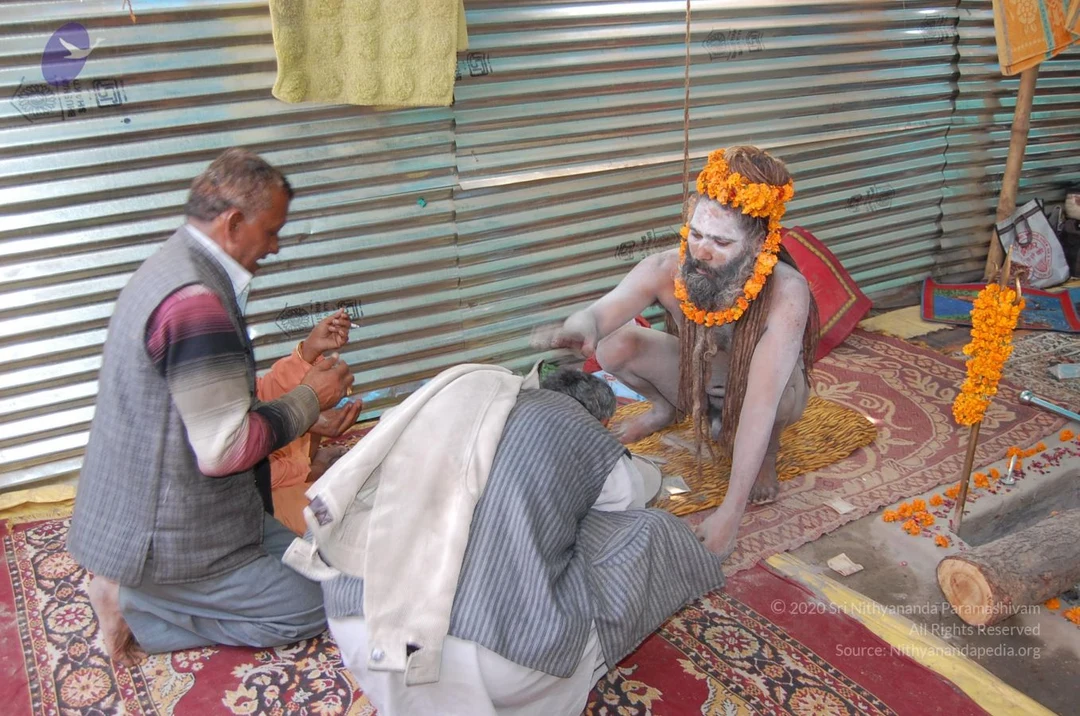
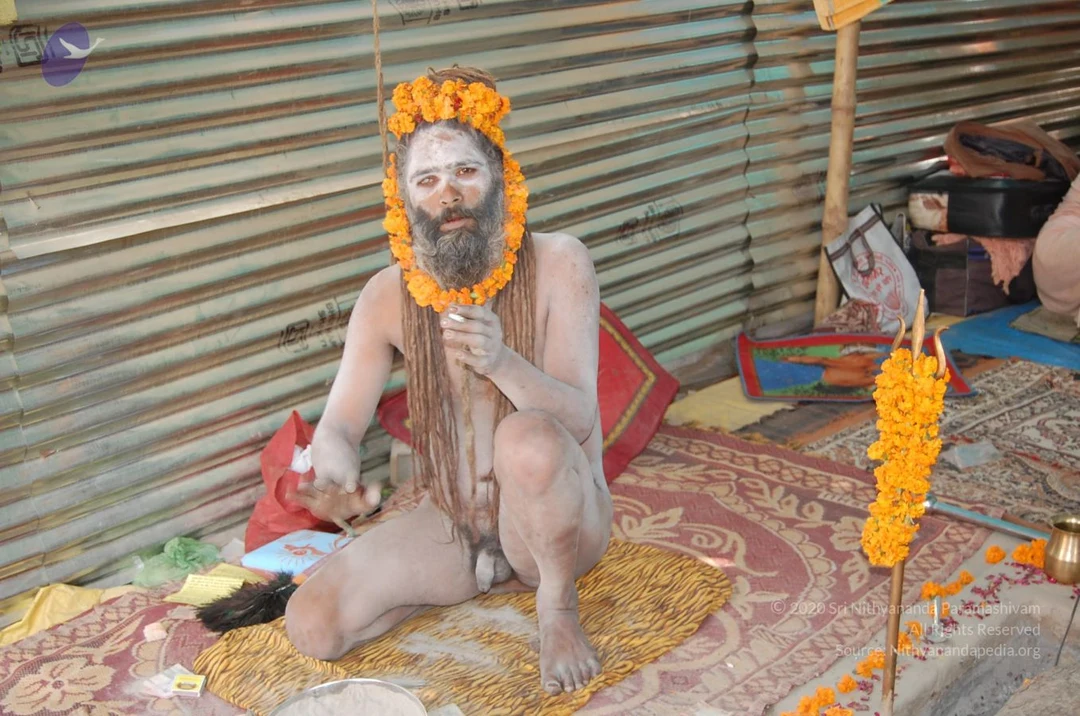
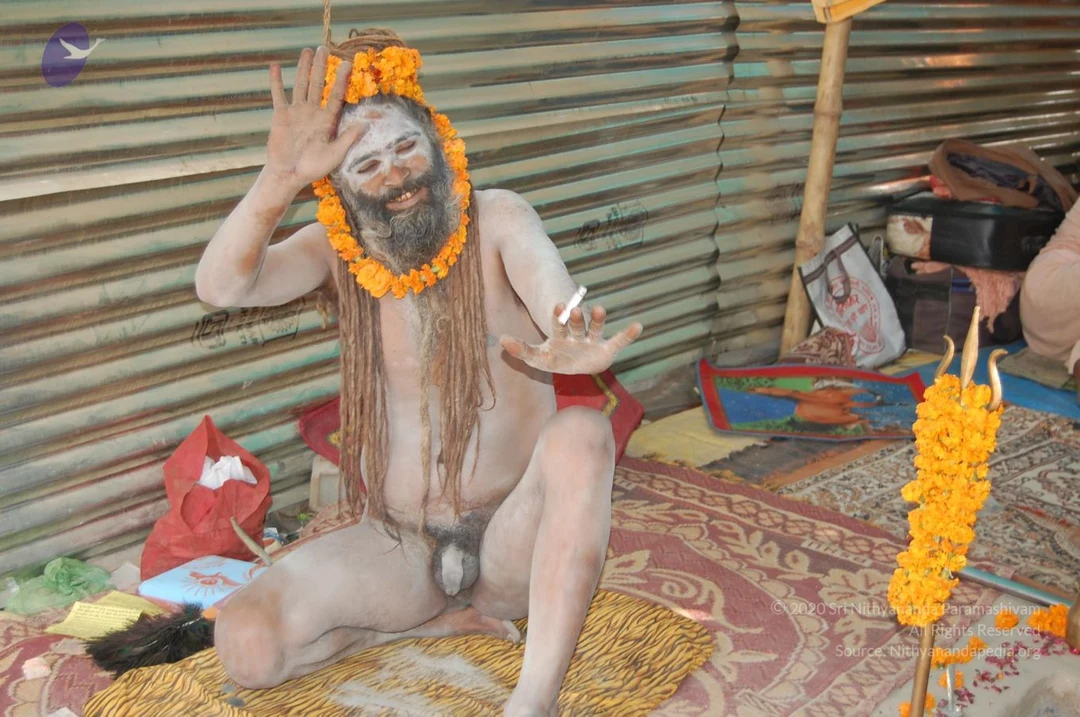
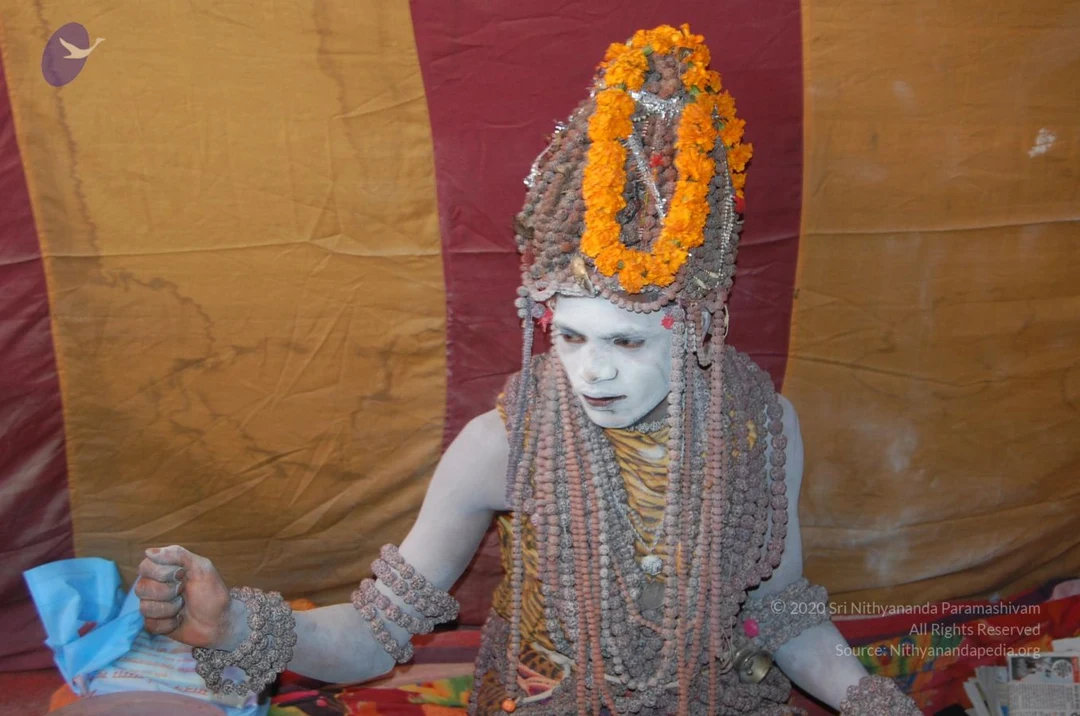
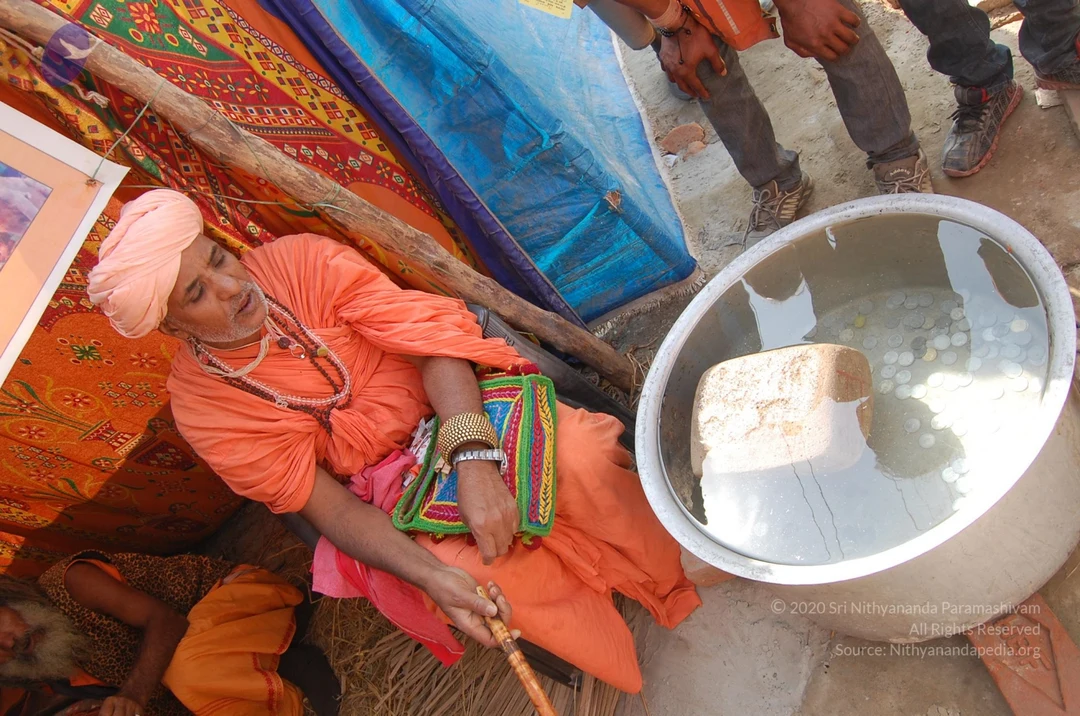
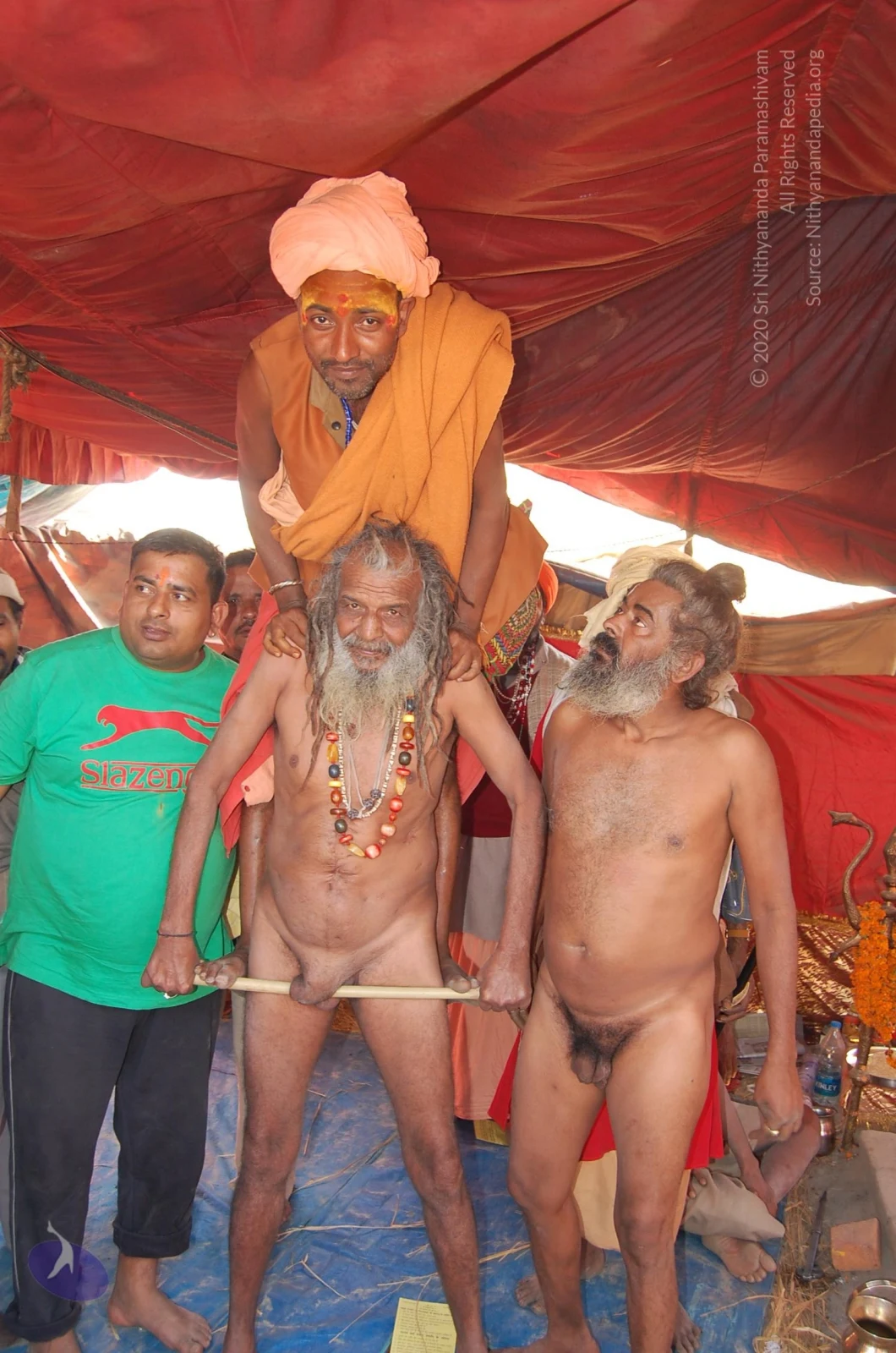
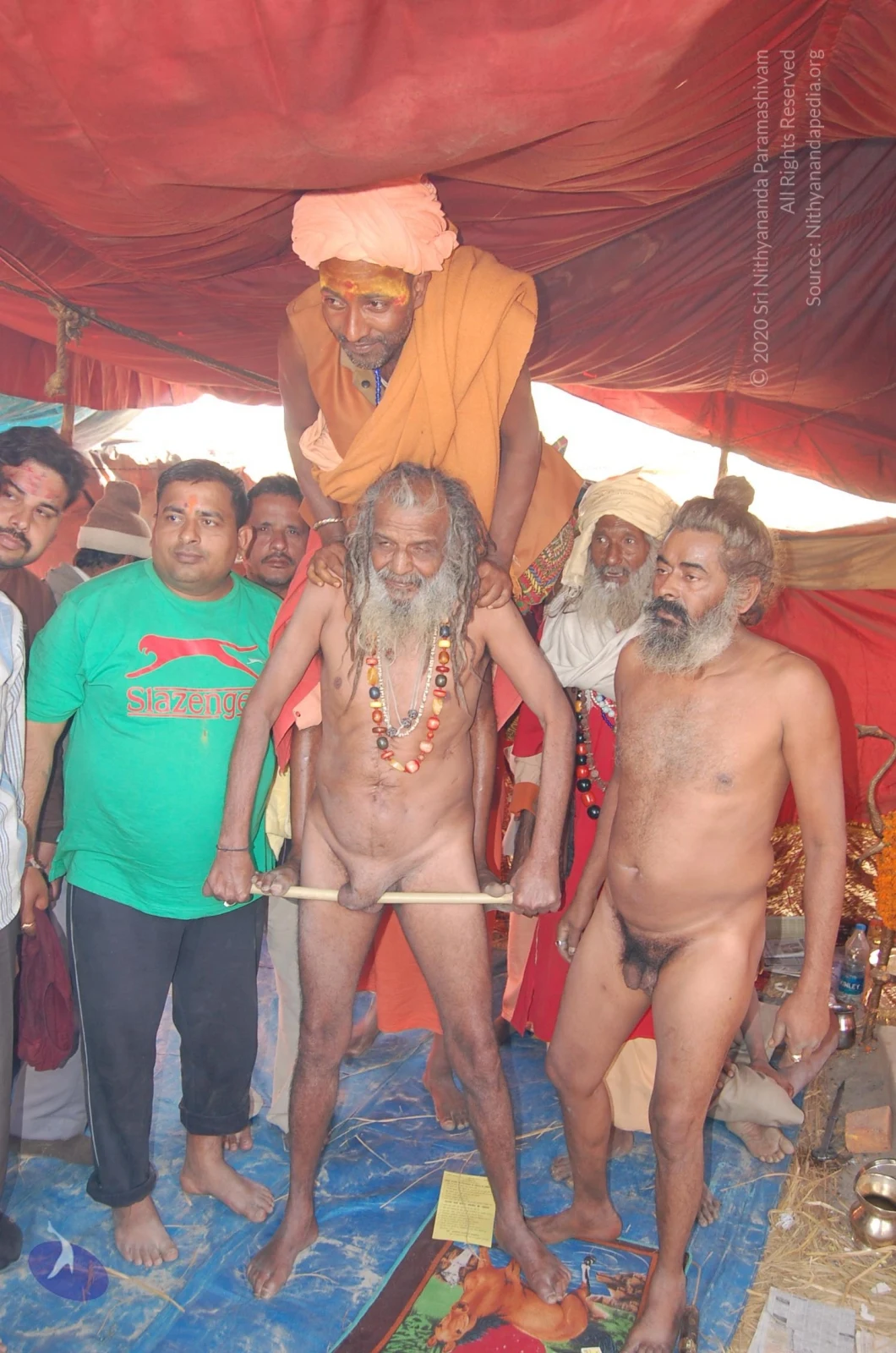
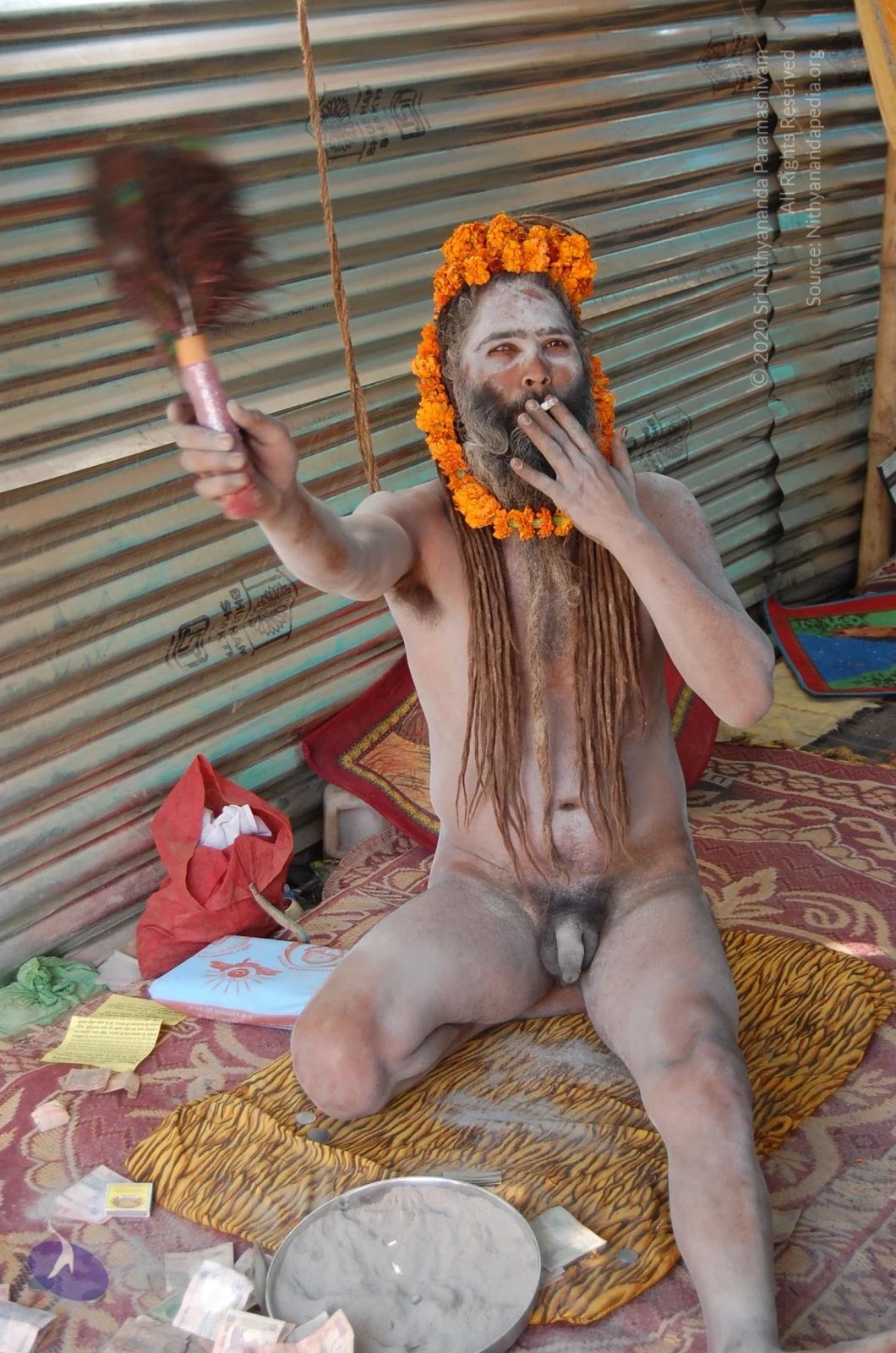
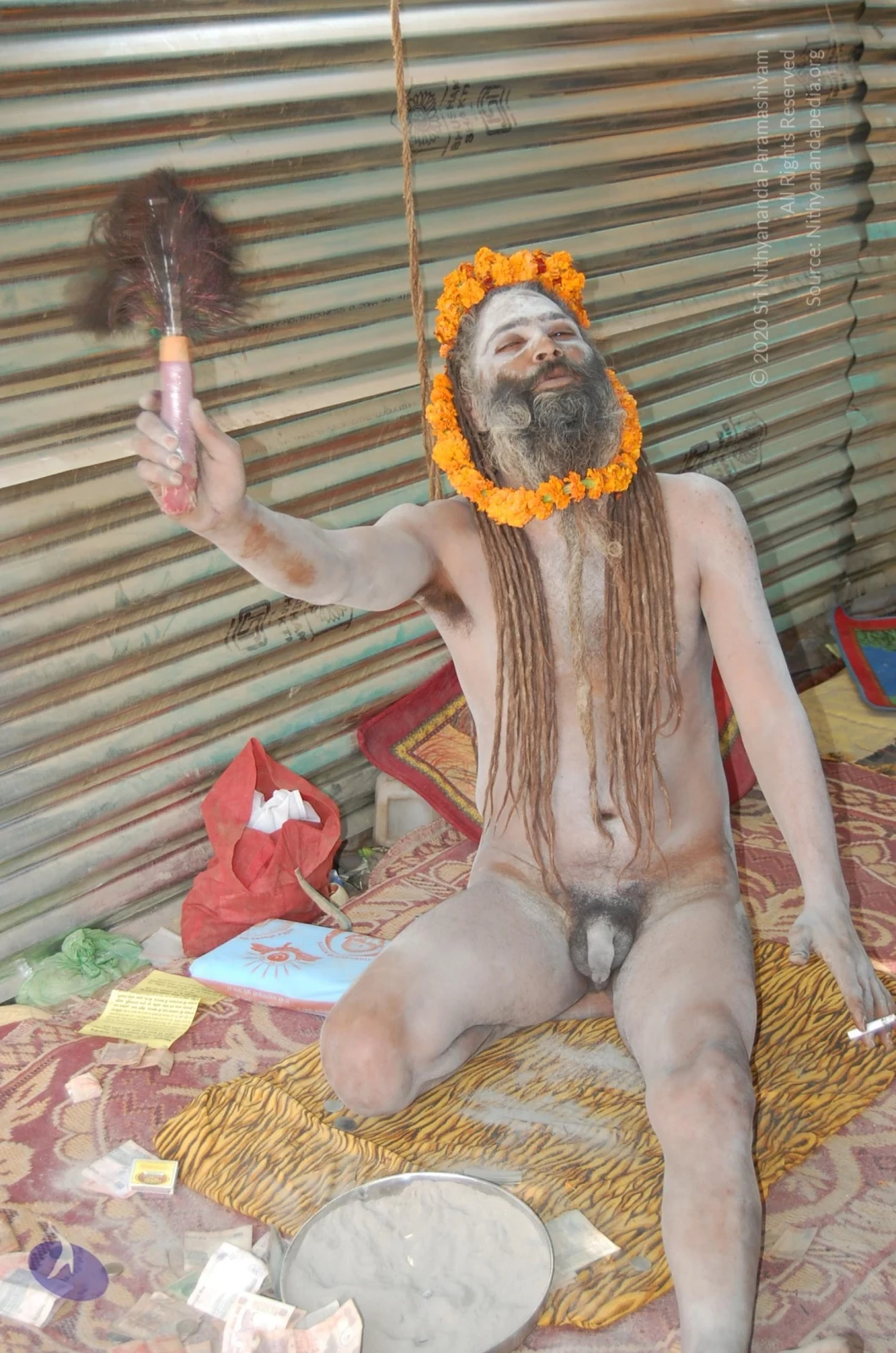
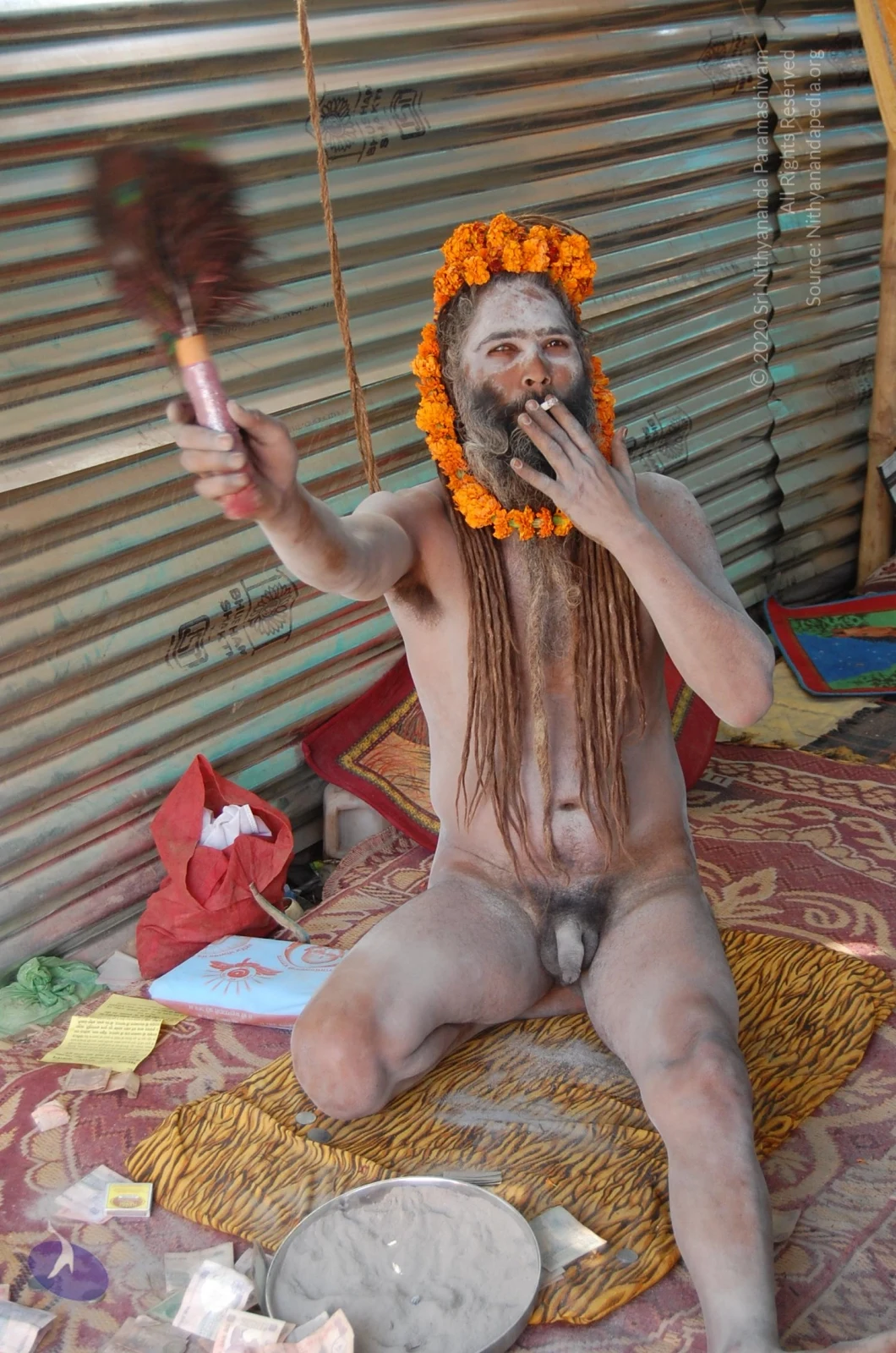
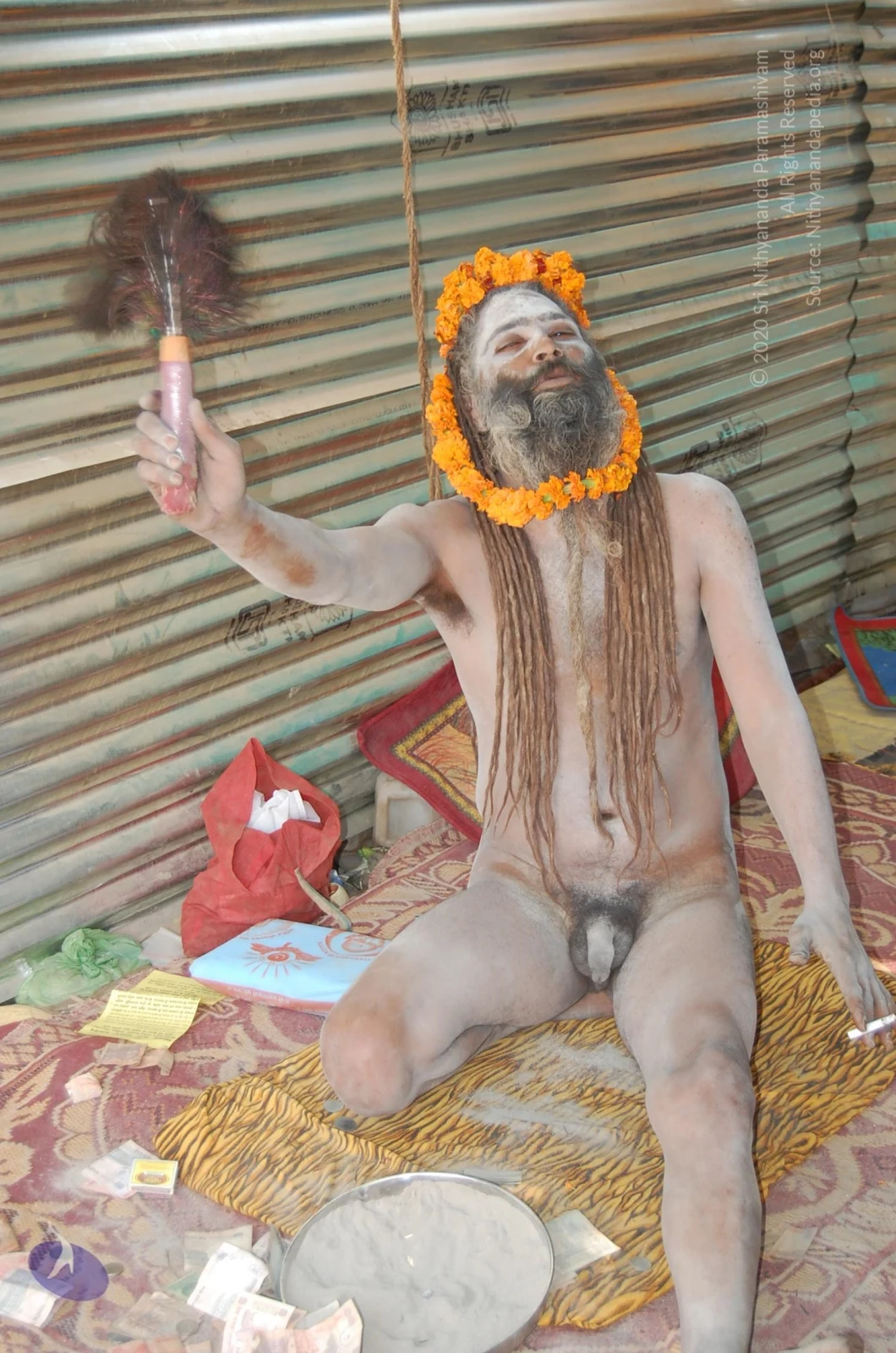
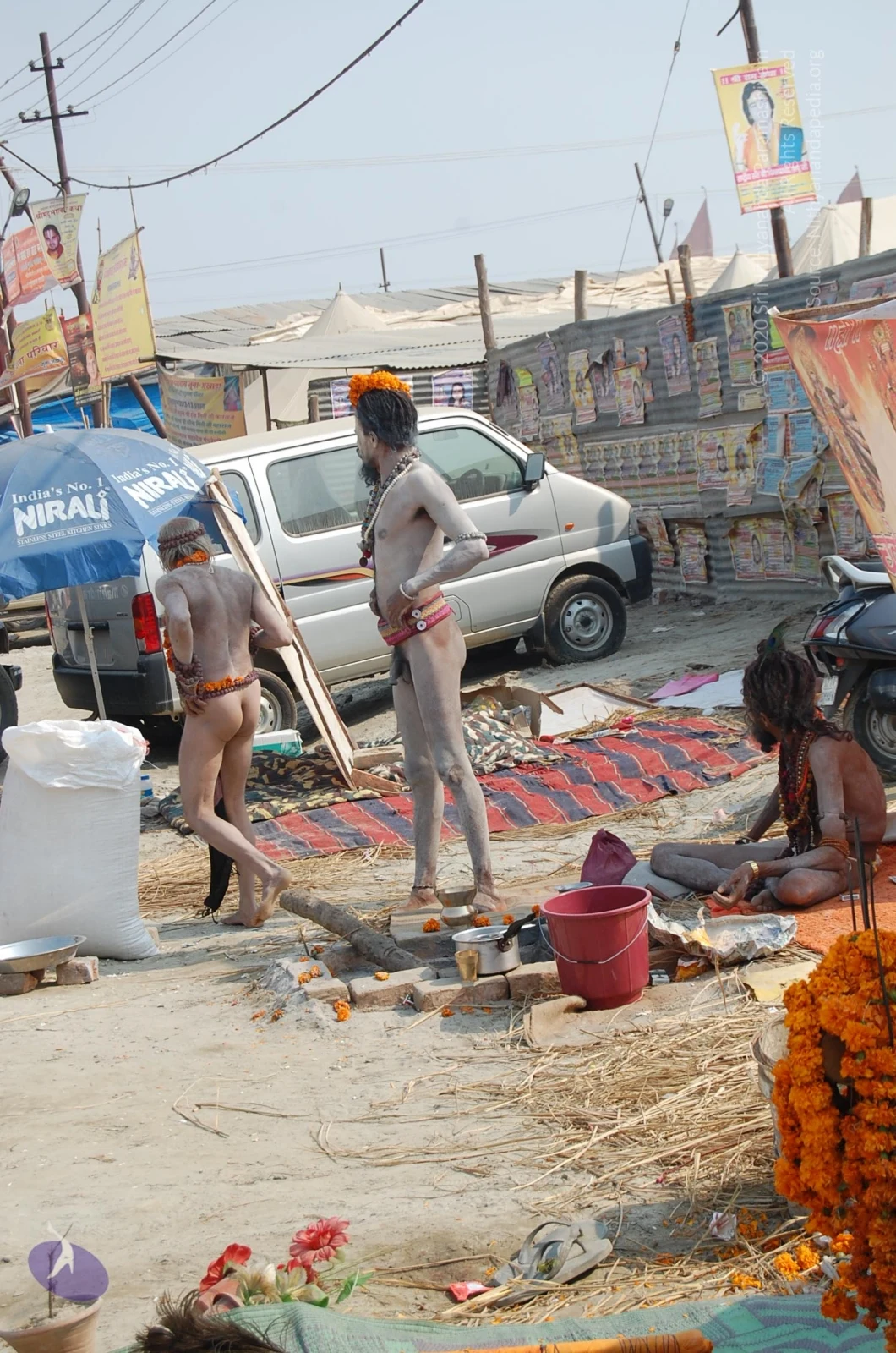
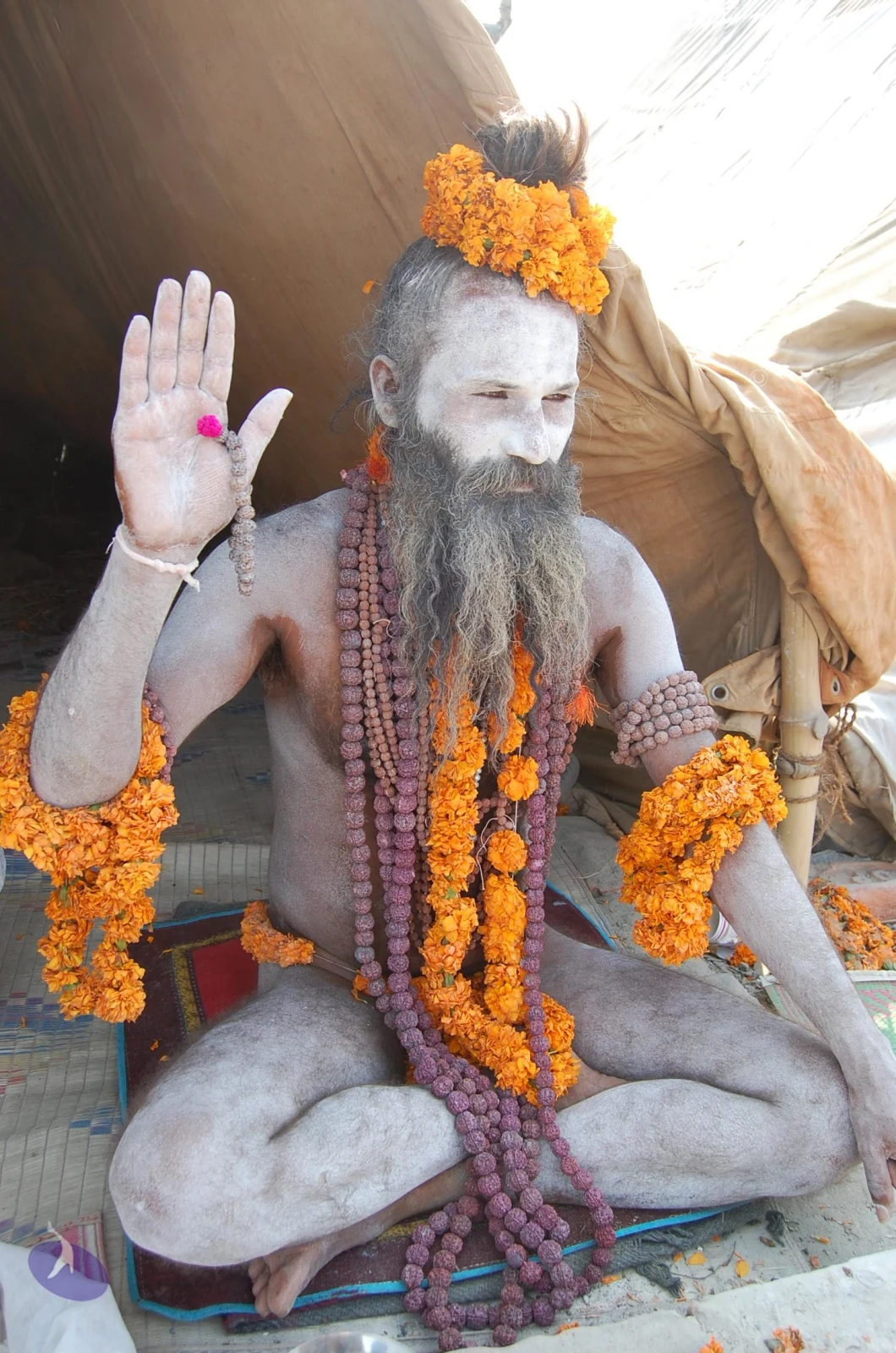
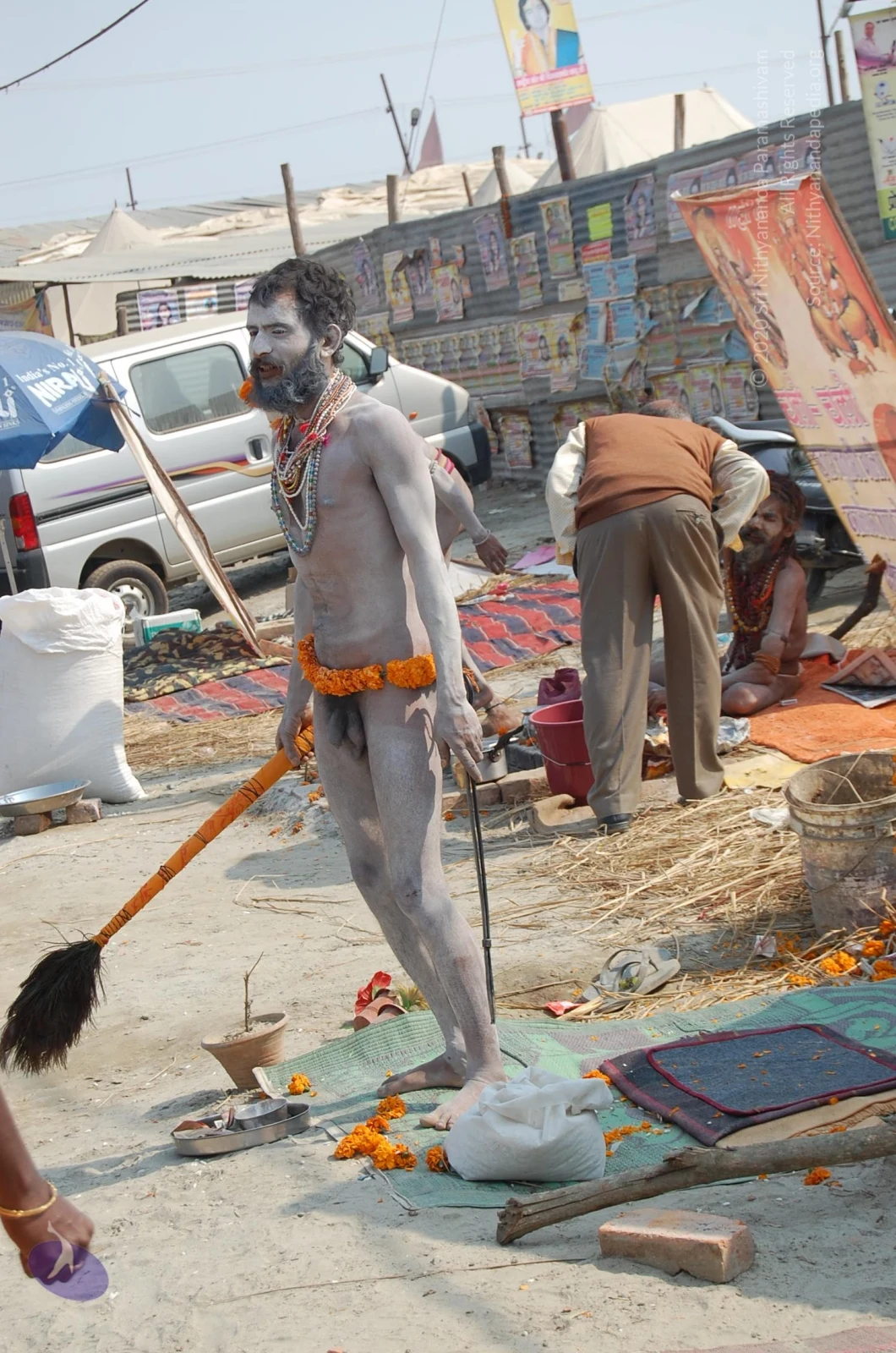
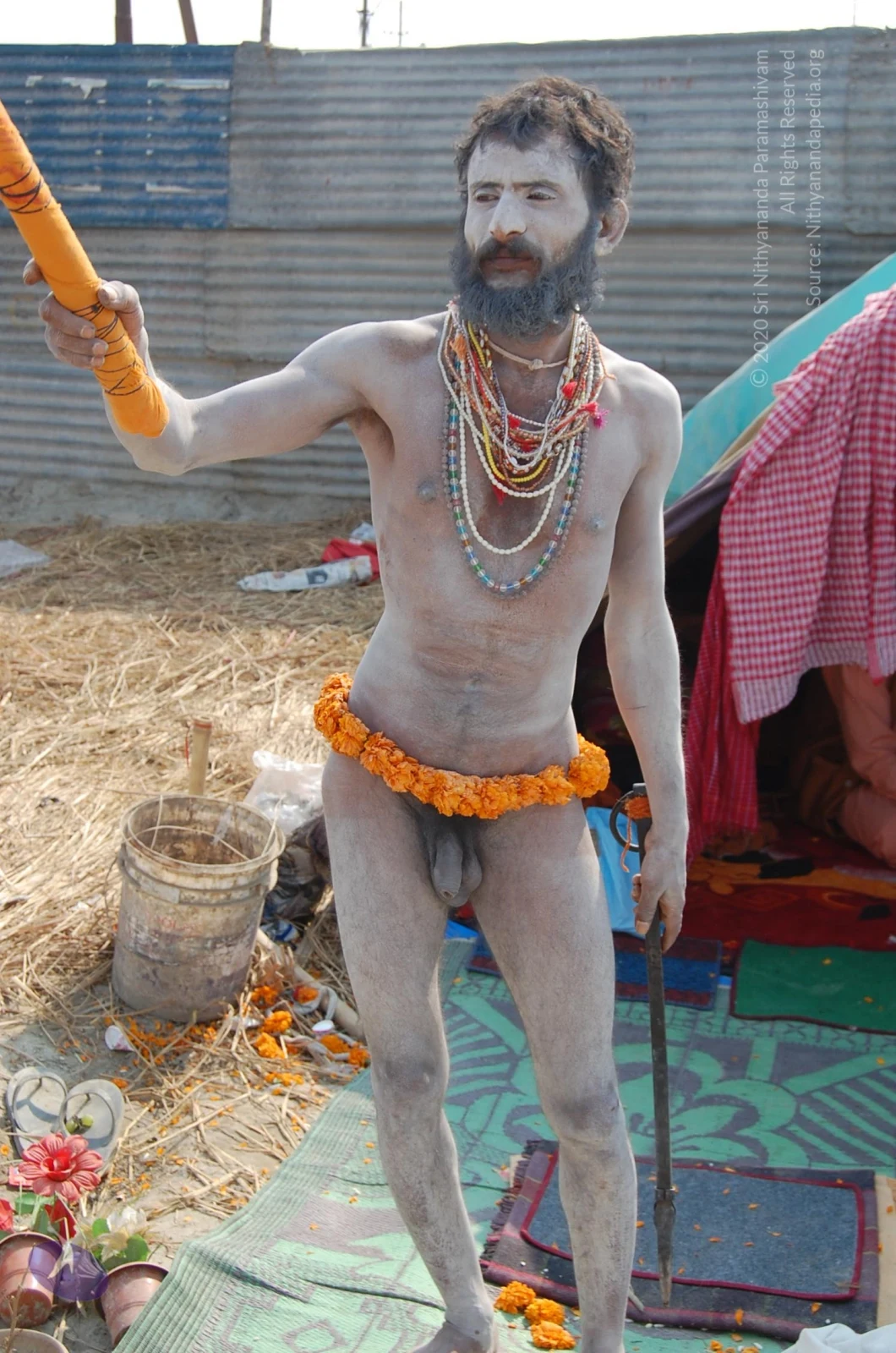
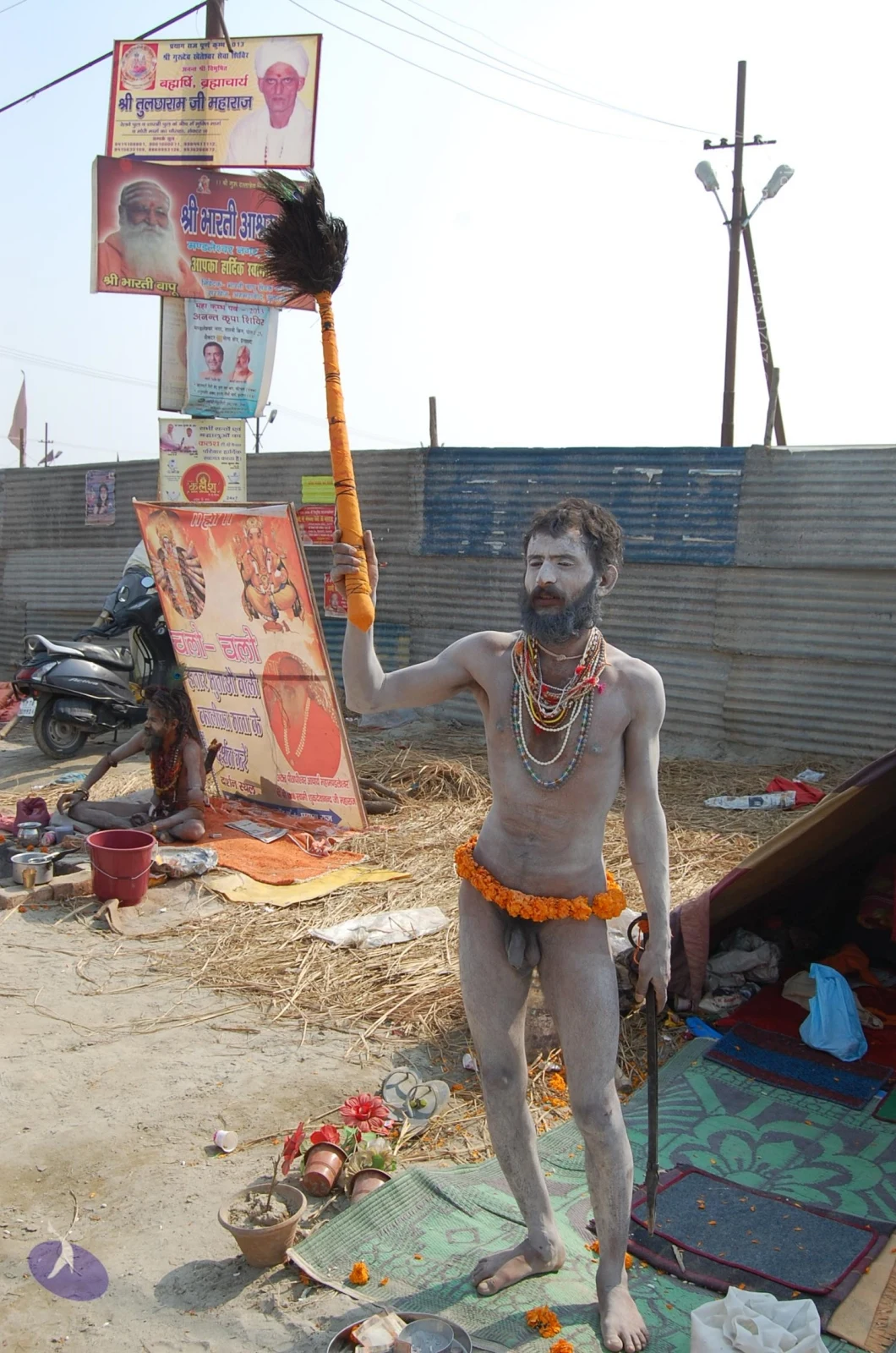
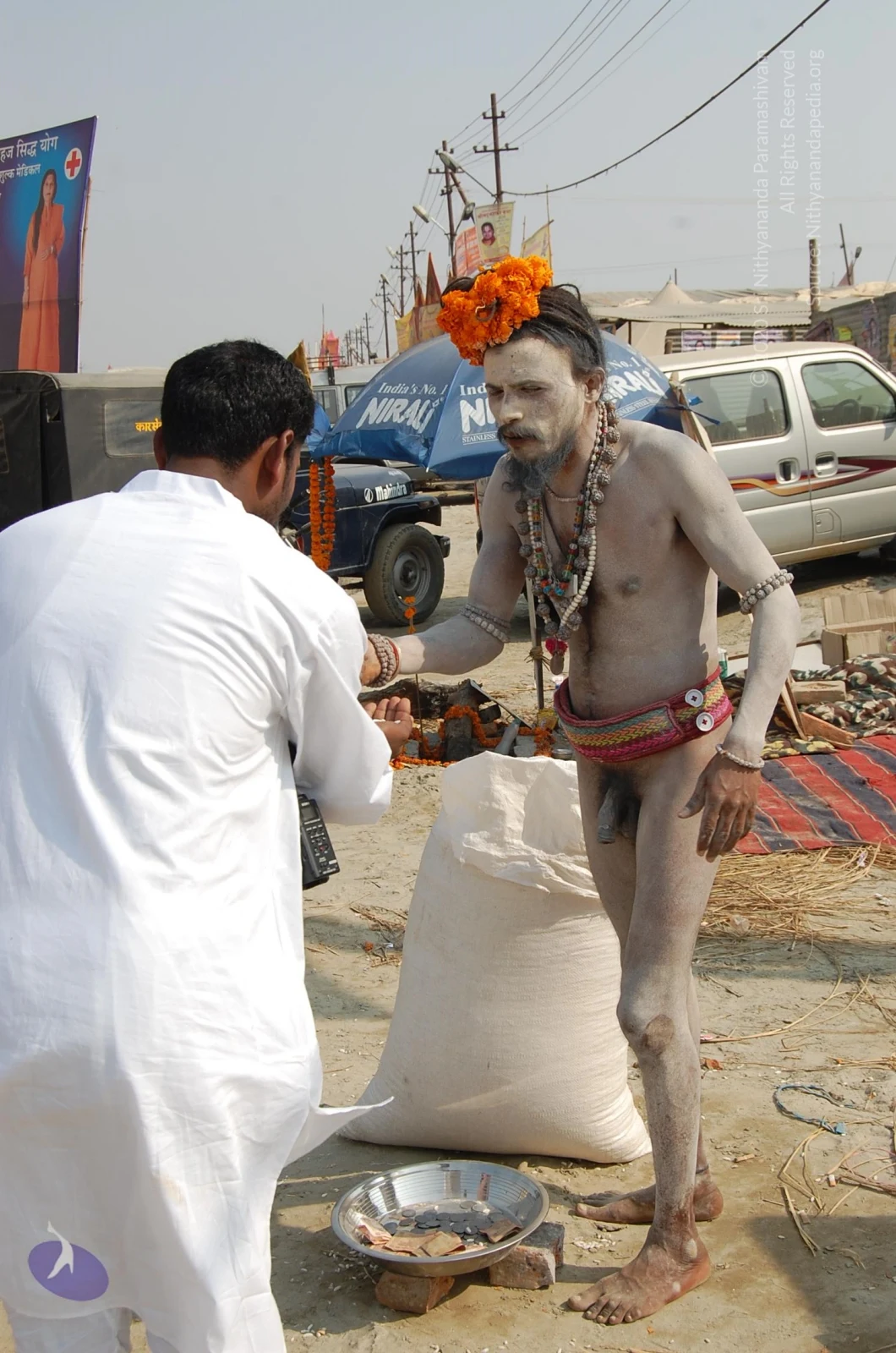
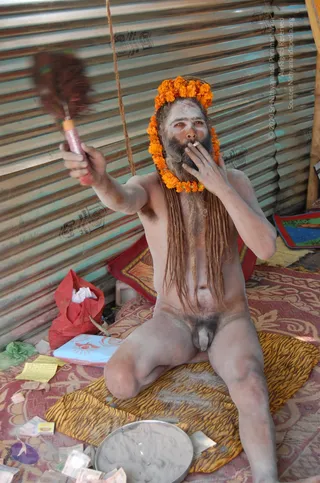
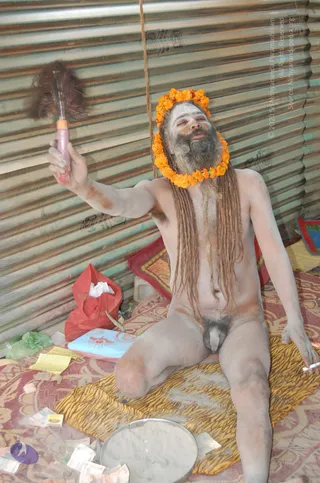
A naked, bearded ascetic with long matted dreadlocks and layered beaded necklaces stands barefoot on a painted cloth mat inside a red tent, holding a long wooden staff. Behind him a seated man in white kurta, pink shawl and beaded necklace holds a brass vessel, a feathered headdress-wearing man sits to the left, and a saffron-robed attendant stands in the background. Printed pamphlets and a small book lie on the blue tarpaulin, with a steel pot at the edge of the frame. No candidate matches the page's a person identification by visible cues, so the figures are described by role only.Photo taken from above at a Kumbh Mela camp. A sadhu in orange robes with a pink turban sits on straw beside a colourful patterned cloth, holding a wooden staff and resting a hand on a metal bowl of water containing a flat stone and scattered coins. Beaded rudraksha-style necklaces, a beaded bag and gold bangles are visible. Behind him, a second man in a leopard-print top and orange cloth sits partly out of frame, and two pairs of legs in trekking shoes stand at the upper edge beside a blue tarpaulin. A small framed picture leans at the left edge.Photograph taken inside a red tent at a Kumbh Mela camp. A standing sadhu in an orange wrap, a pink turban and yellow-orange tilak paint stands on the shoulders of a bearded, long-haired ascetic who holds a wooden pole. Two other nude sadhus stand beside them, one with a topknot and beaded necklaces, and a man in a green Slazenger t-shirt watches at left. Marigold garlands, water bottles and metal vessels sit on a blue tarp at right and bottom.A photograph taken under a red tent at a Kumbh Mela camp. A naked, long-bearded sadhu with matted dreadlocks and beaded necklaces stands on a blue tarp, gripping a wooden pole held horizontally across his chest, while a sadhu in an orange shawl and pink turban with a yellow tilak stands on his shoulders. Beside him stands a bare-bodied bearded sadhu with hair tied in a bun. A man in a green Slazenger t-shirt and dark trousers watches at left, and an elderly white-clad bearded man stands behind. A yellow paper lies on the tarp near a brass pot and a water bottle at right. The person on the shoulders wears orange and cream clothing, with no distinctive a person cues such as a crown or rudraksha-bedecked ornate dress, so his identity is uncertain.A photograph of a naked sadhu seated cross-legged on a red and gold patterned rug inside a corrugated metal tent, his body and face dusted with grey ash. He wears a thick necklace and crown of orange marigold garlands, has long matted dreadlocks and a beard, and smokes a cigarette while raising a brown fly-whisk (chauri) in his right hand. Nearby are a red cloth bag, a metal plate of ash, scattered banknotes and small papers, and a tiger-striped cloth under him. The setting suggests a Kumbh Mela camp.A photograph of a naked sadhu seated on a striped cloth over a patterned rug in a tent-like space with corrugated metal walls. He wears an orange marigold garland around his neck and head, has long matted dreadlocks and an ash-smeared body and face, and holds a feathered fly-whisk aloft in one hand while a cigarette rests in the other. Around him lie scattered loose banknotes, a red plastic bag, a small tray of ash and a folded paper.

Around-the-Kumbh-Mela

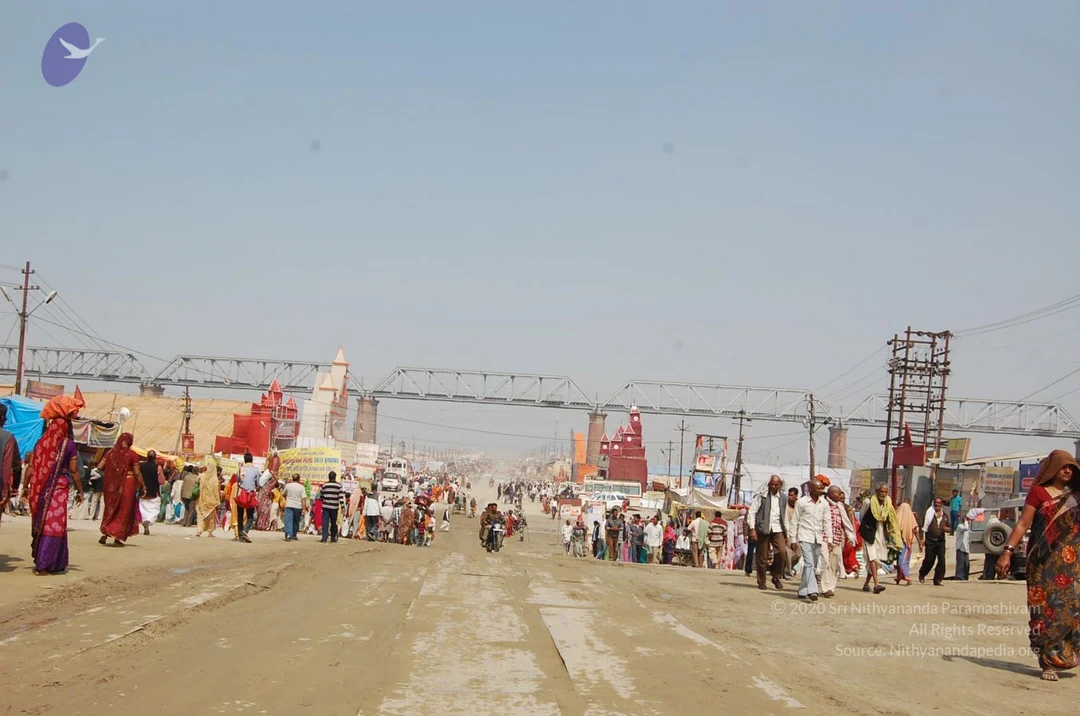
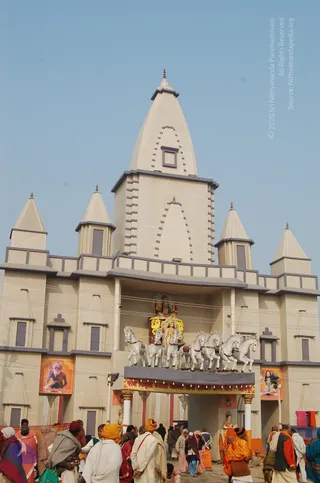
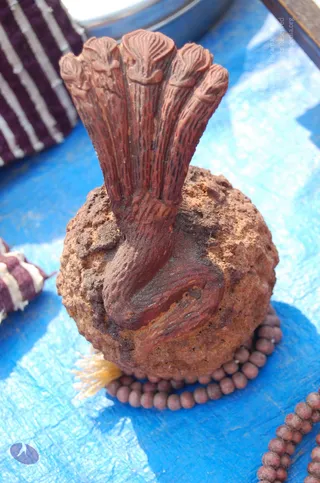
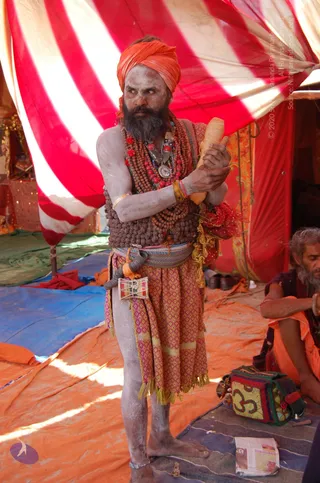
19 photosSource gallery
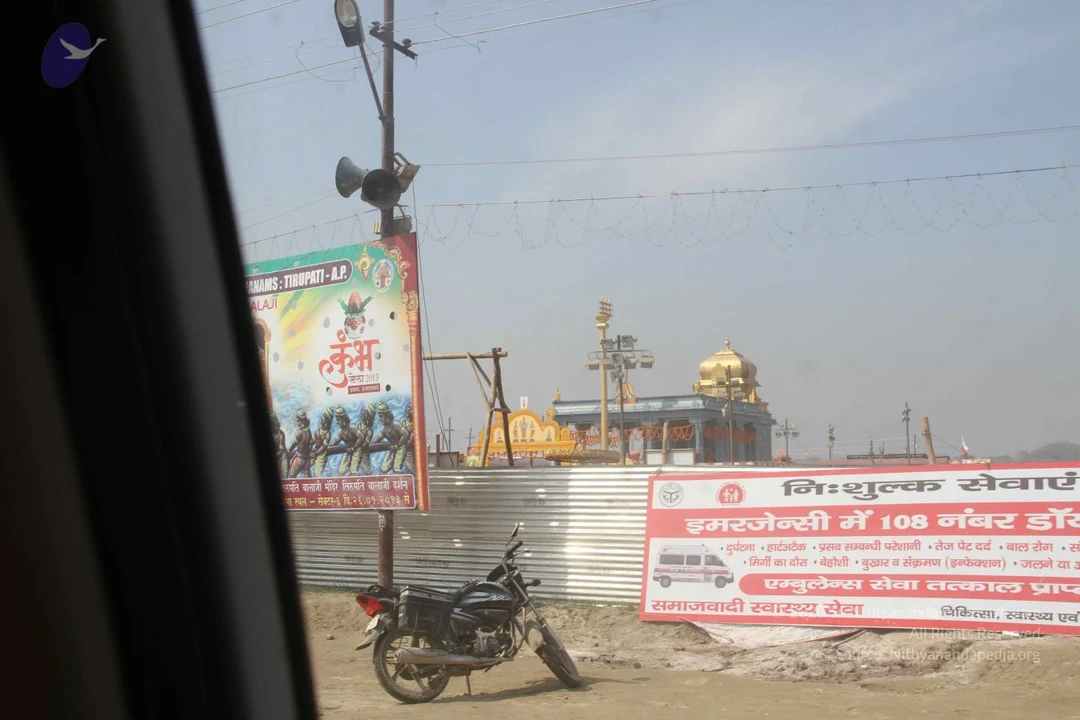
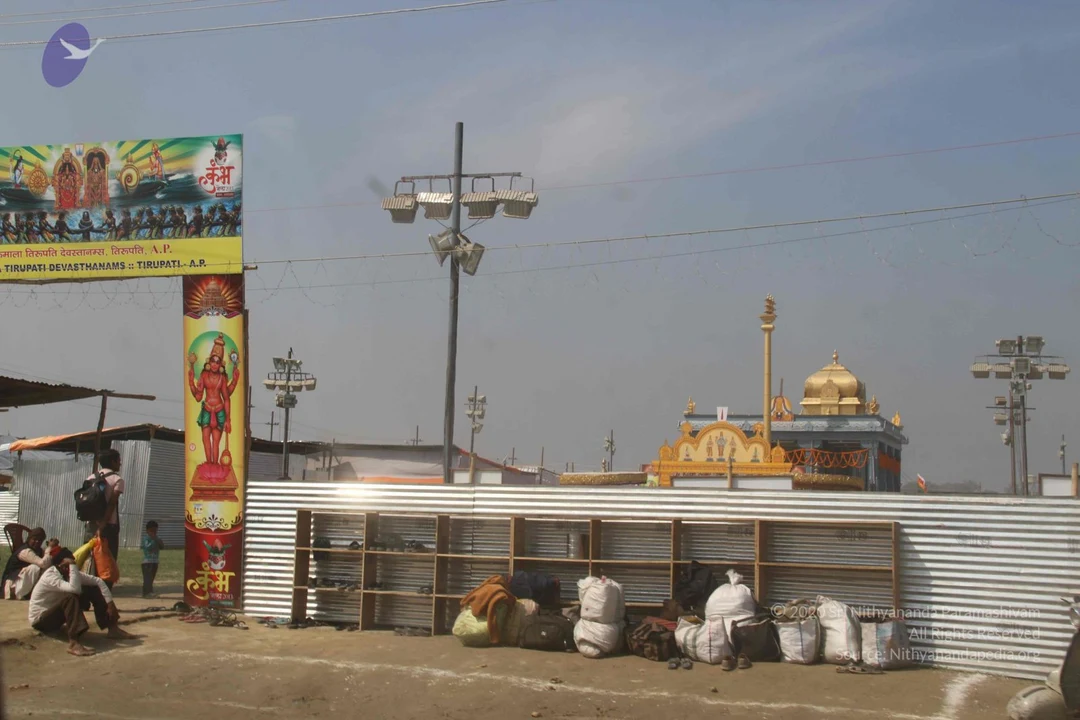
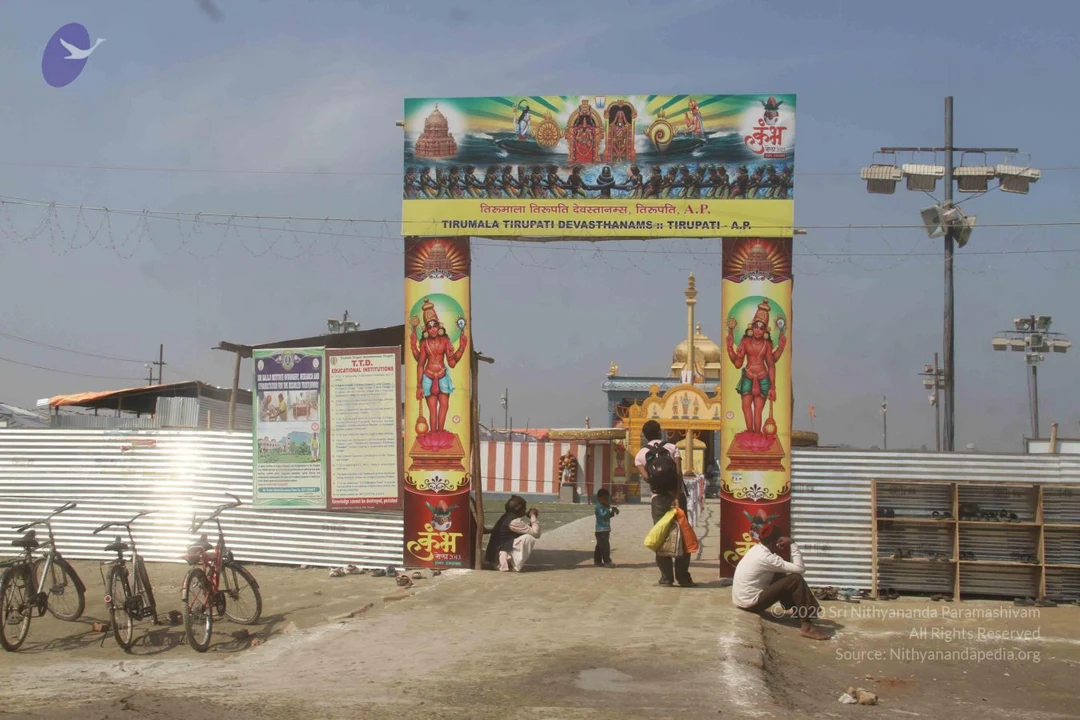
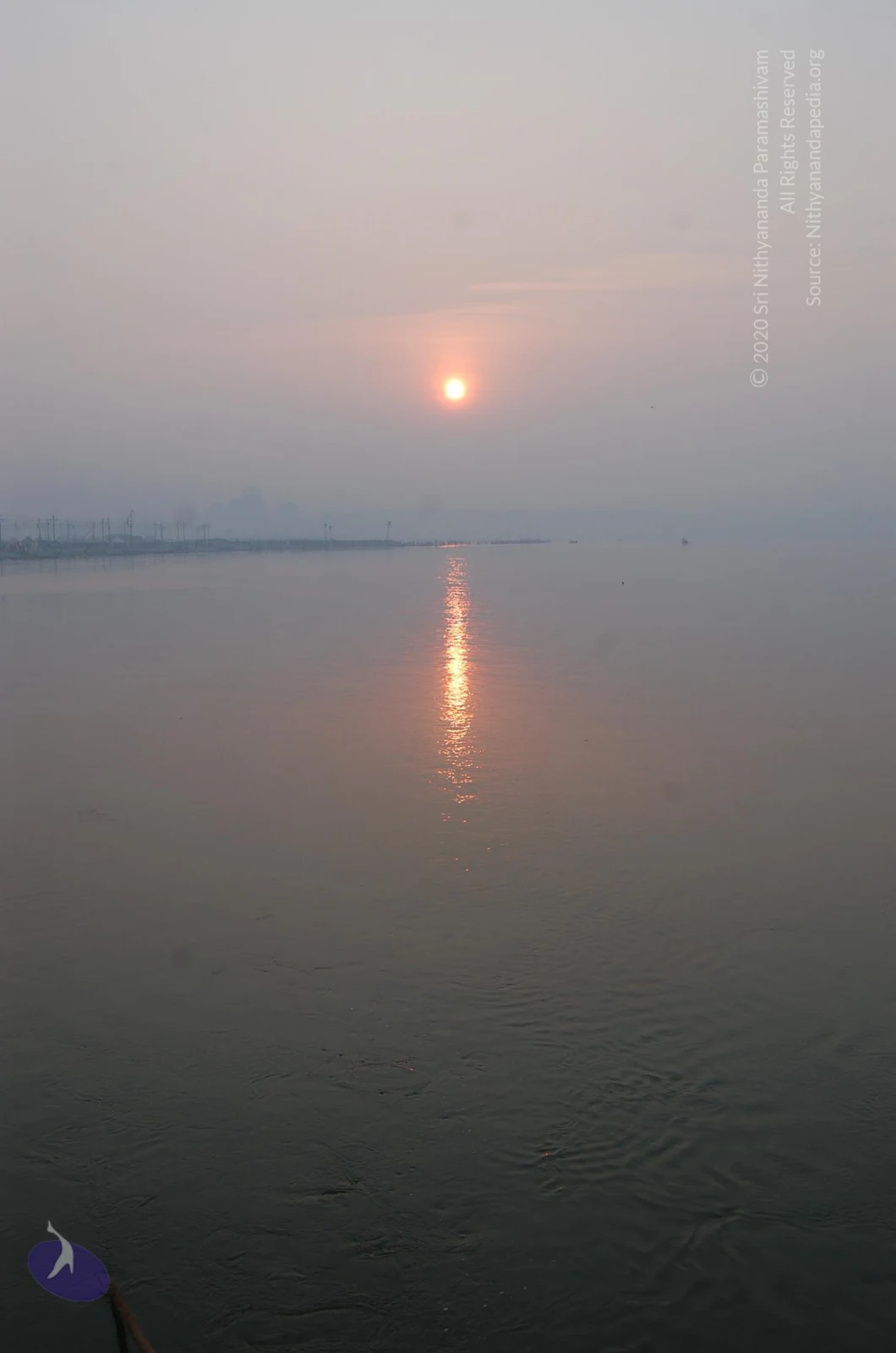
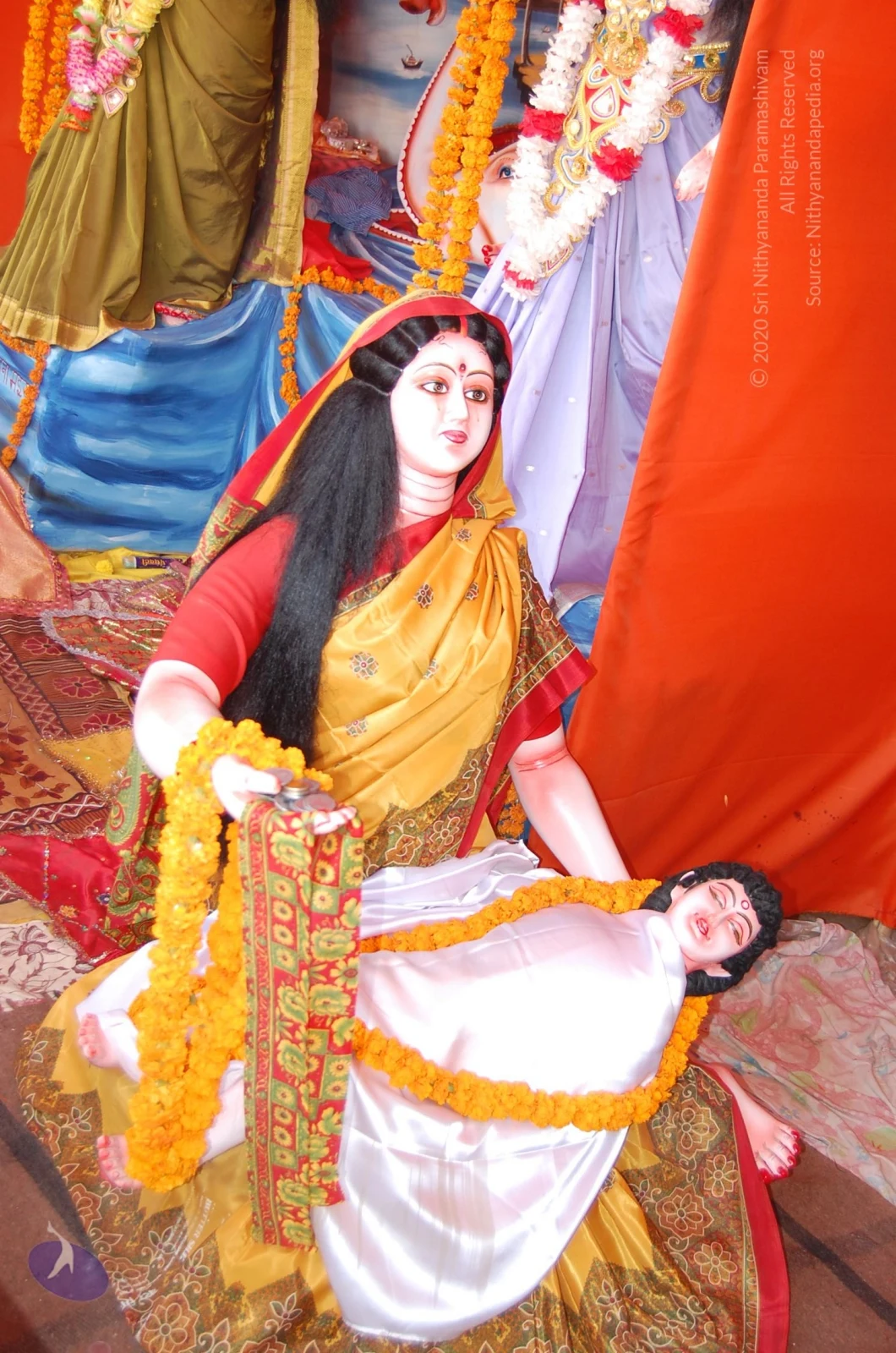
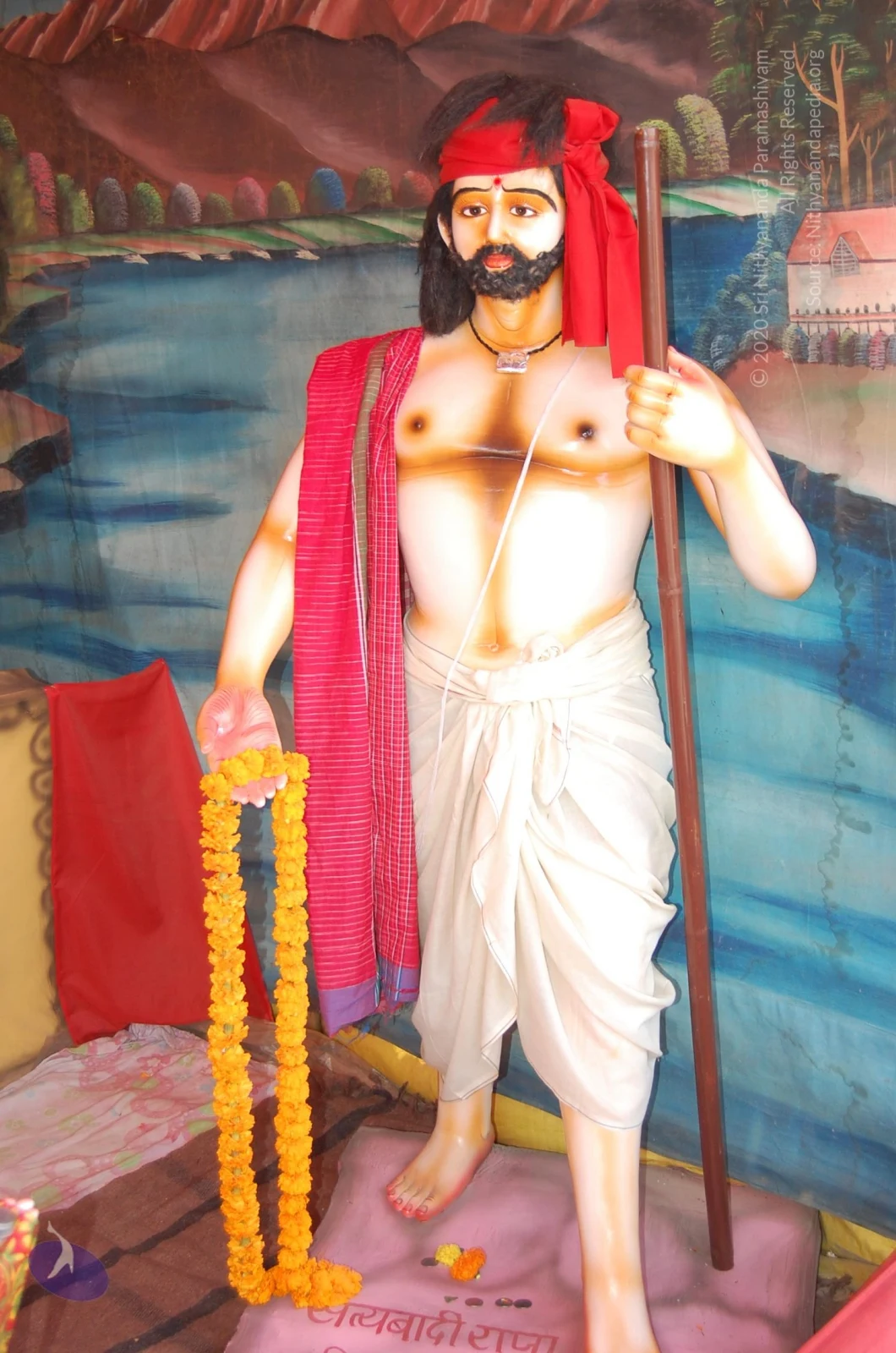
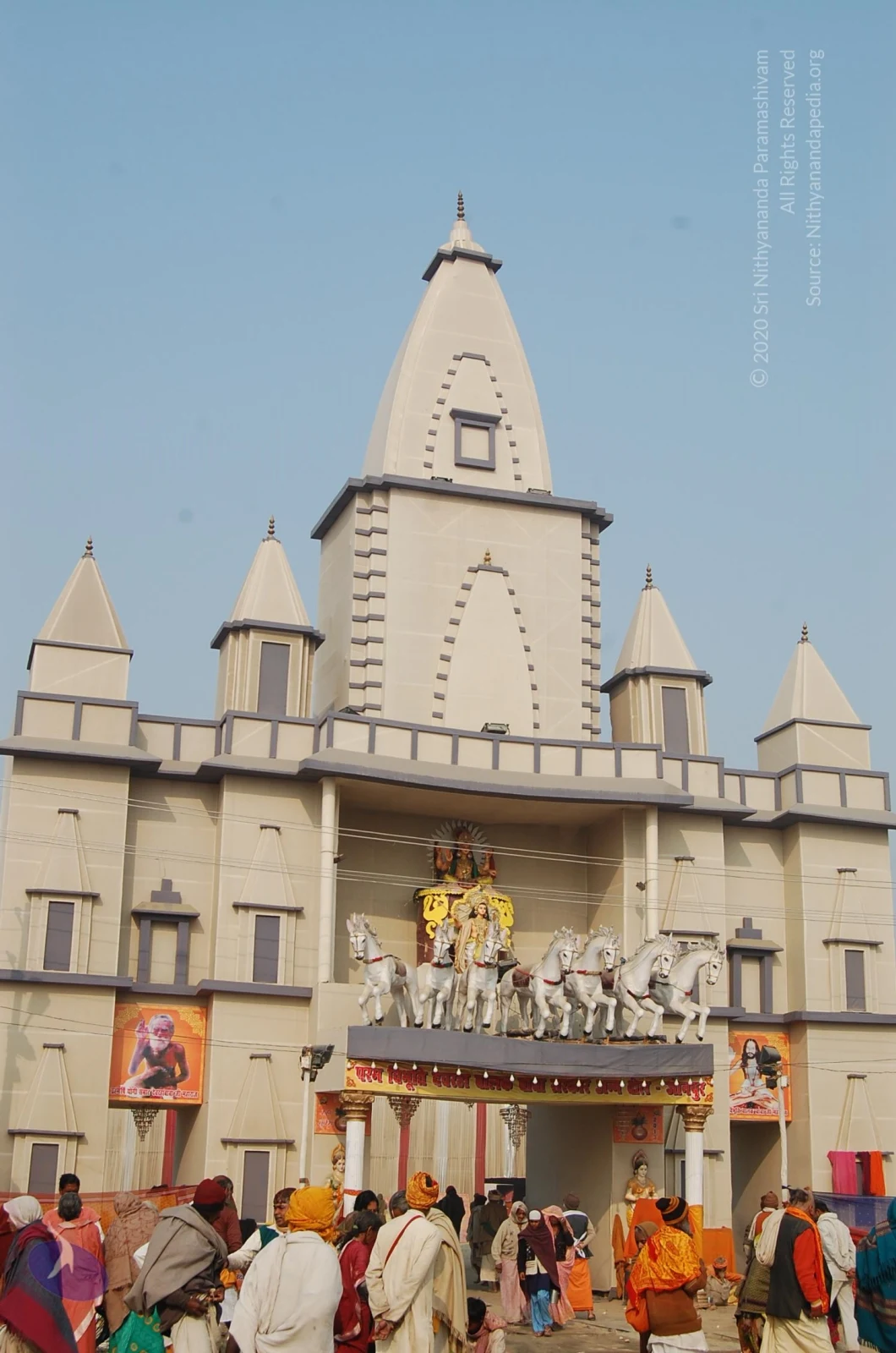
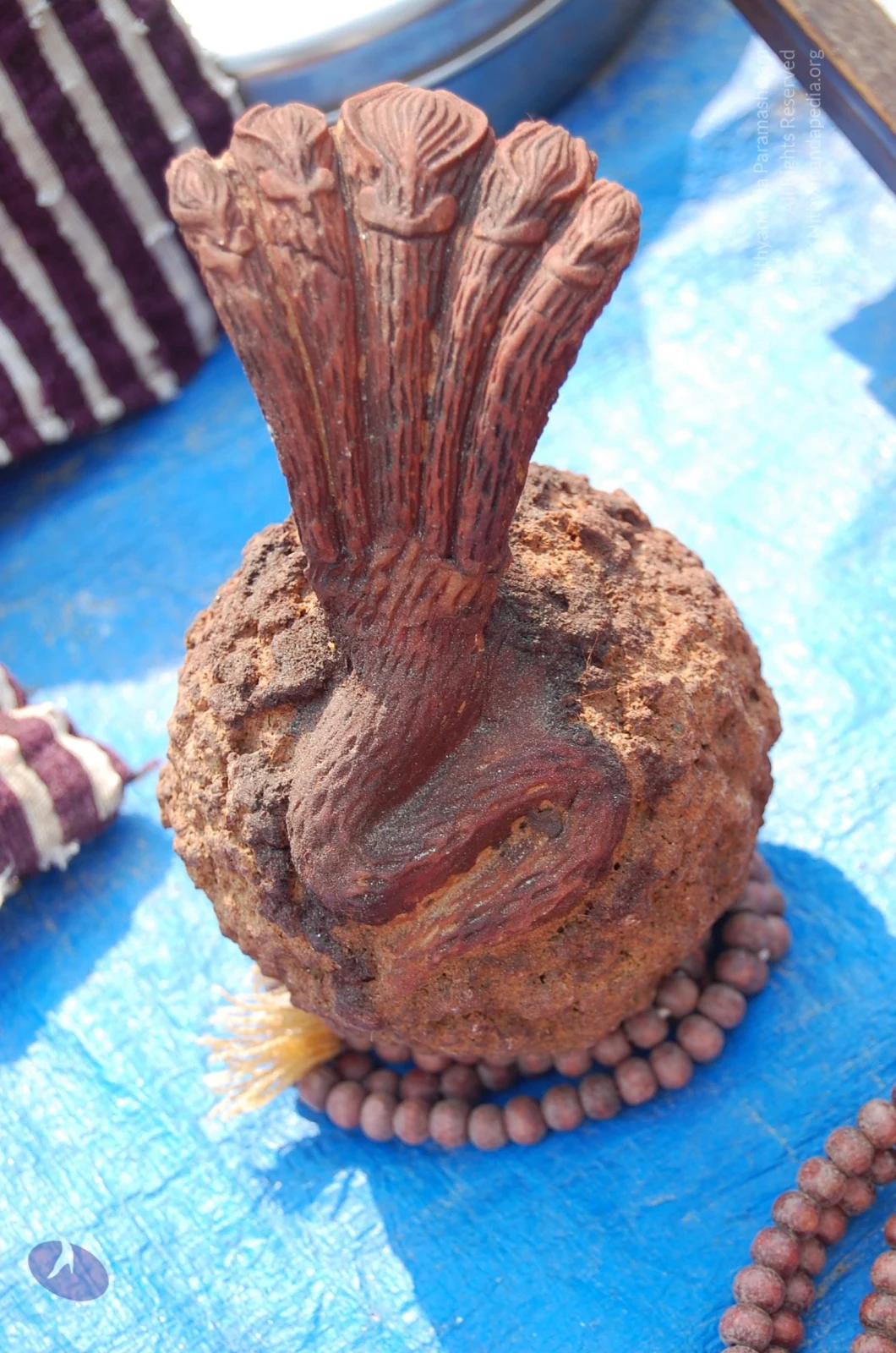
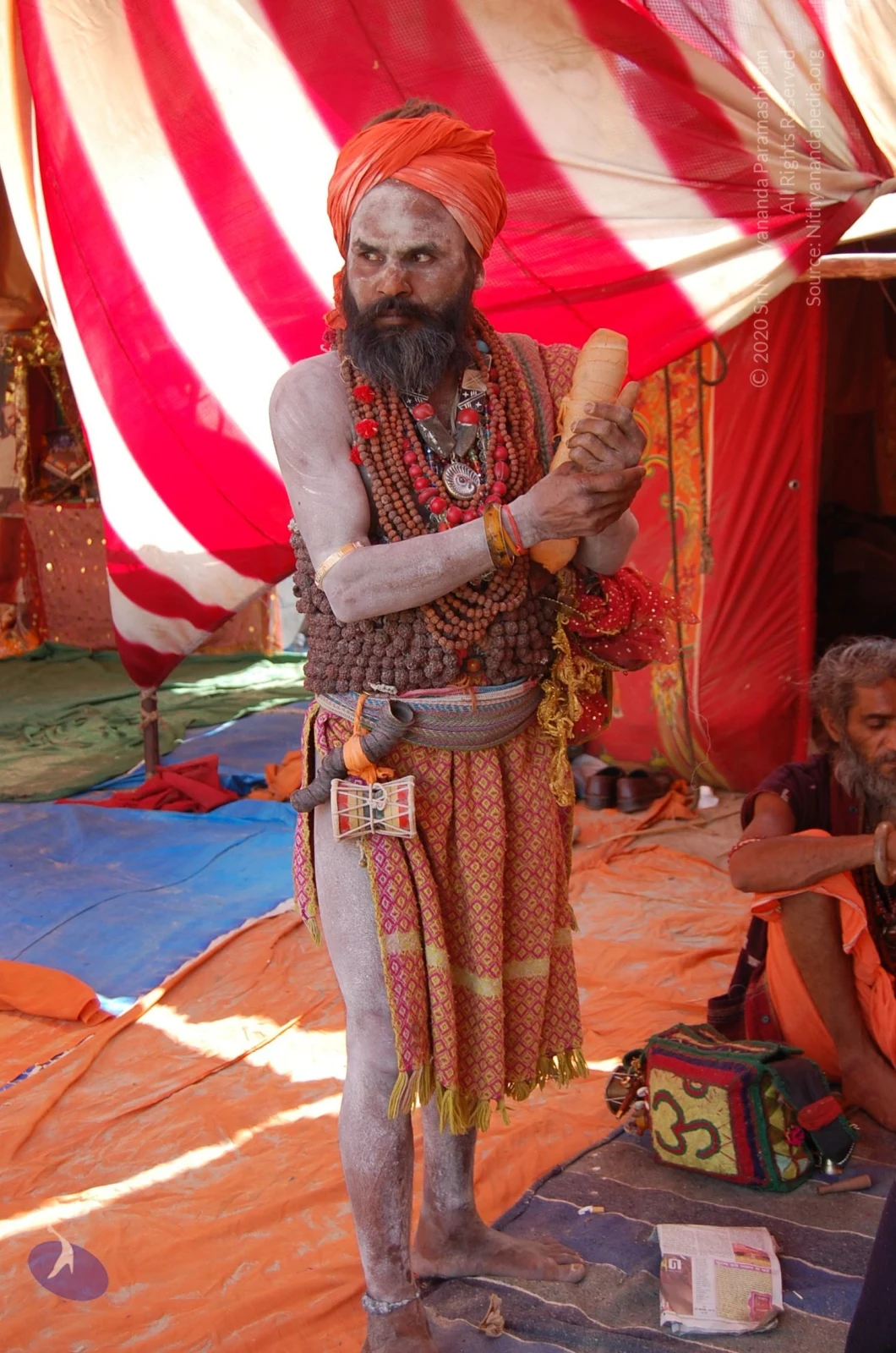
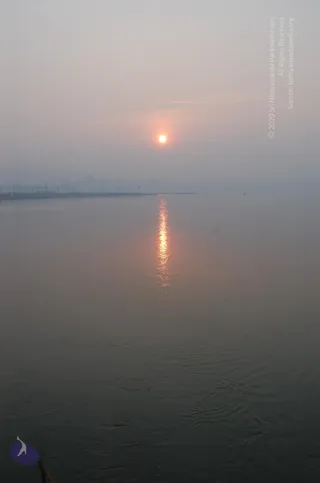
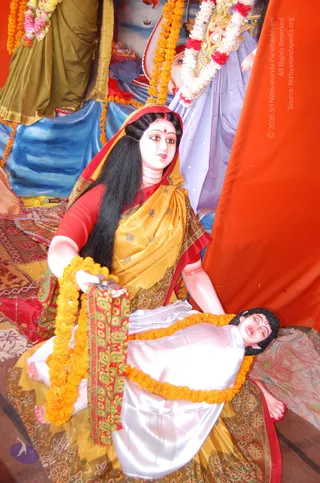
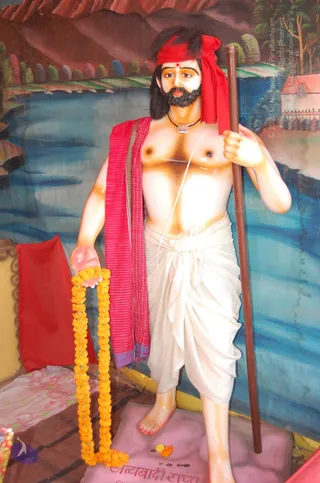
A hazy sunrise over a wide, calm river at the Maha Kumbh Mela. A pale orange sun sits low in a misty grey-lilac sky, and its reflection forms a shimmering column across the still water. A faint shoreline of poles and structures runs along the far bank. No people are visible; the scene is an empty riverscape at dawn.A life-sized figurative tableau of a woman in a yellow and red sari with a red border, long black hair and a red bindi, cradling a reclining white-clad figure with a black-haired head draped in marigold garlands. Both figures appear to be statues or painted mannequins rather than living people. Behind them stand a painted backdrop of blue waves and a large orange cloth, with more marigold and white-red floral garlands hanging nearby. The scene looks like a decorated festival display or devotional installation.A life-sized statue of a bare-chested male saint stands on a pink pedestal in front of a painted backdrop of blue water, hills and trees. The figure wears a red headband, a red and white striped shawl over the shoulder, and a white dhoti, and holds a long wooden staff in one hand while the other holds a marigold garland. A black thread necklace with a pendant is visible. A red cloth hangs at left. Pink text is partly visible on the pedestal. No living people are present; the figure is a statue, so no appearance-based a person candidate is established.A large cream-coloured temple-like gateway with shikhara spires and a central tower stands under a clear blue sky at a Kumbh Mela camp. Above the entrance, a chariot sculpture of white horses pulls a golden carriage bearing a figure, with a deity image in a niche above. Banners flank the structure, one showing a seated bearded sadhu. Crowds of pilgrims in white dhotis, orange and saffron shawls, turbans and sarees gather at the base, including a man in an orange turban and a figure in an orange-and-black garment. The site appears to be a festival camp entrance.Close-up photograph of a rough, rust-brown rock-like sphere topped by a carved reddish-brown five-pronged trident form with a curled base, resting on a blue cloth surface beside brown rudraksha-style beads and a striped purple cloth. No people visible.A photograph of a standing sadhu at a Kumbh Mela camp, a bearded man with ash-smeared bare skin wearing an orange turban and a dense layered stack of rudraksha beads over his chest and shoulders. He wears red and gold beaded necklaces, bangles, and a patterned pink-and-yellow cloth wrapped at the waist, holding a wooden staff-like object. Behind him stand red and white striped canvas tent walls. A seated man in orange cloth sits at right beside a colourful om-embroidered bag on an orange tarpaulin. The figure is not a clear a person candidate by appearance, so the depiction is of an unidentified sadhu.