Skip to content
Monday

3 December 2012

Supreme Pontiff of Hinduism HDH Bhagavan Sri Nithyananda Paramashivam

Dated photos
8
Source pages
1
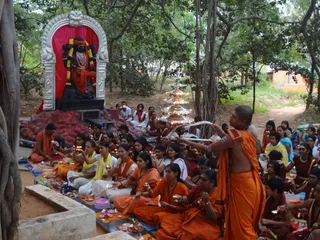
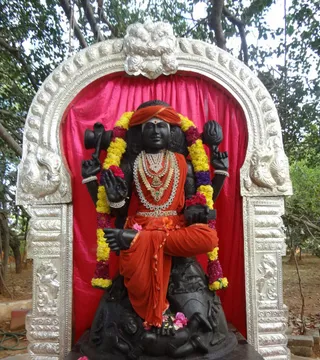
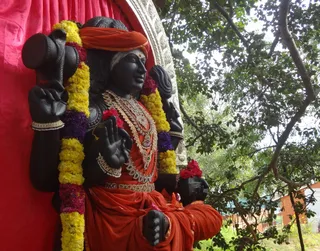
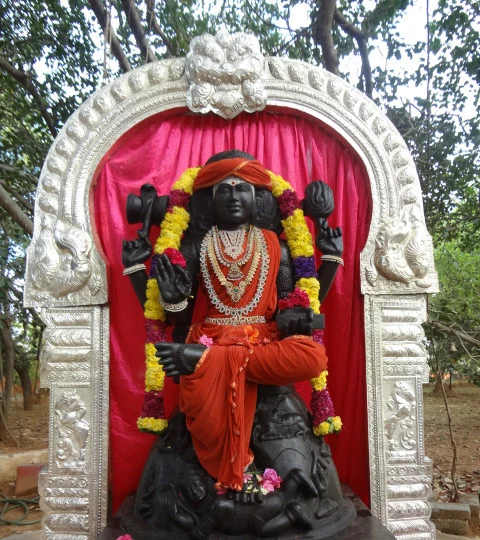
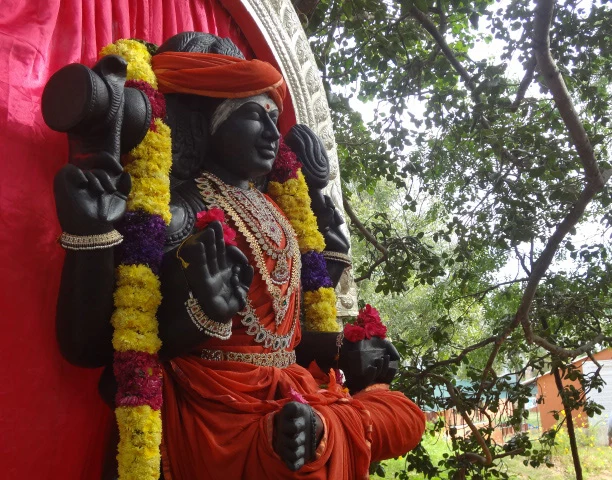
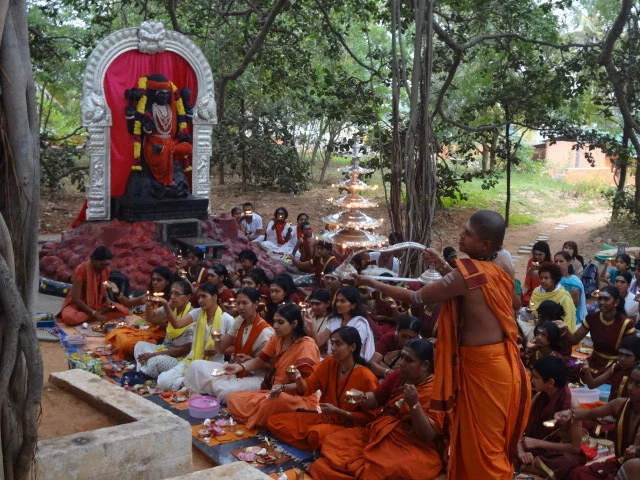
Outdoor puja beneath shady trees in an ashram setting. A shaved-headed priest in saffron-orange dhoti and shawl stands at right, pouring water from a silver vessel over a tiered brass lamp stand, with a stream of water falling. Behind him, a deity murti in a carved stone arch, draped in red fabric and decorated with flower garlands and an orange-robed figure. Seated devotees in saffron, orange, yellow and white saris and robes hold oil lamps and offering plates on the ground, with rows of brass lamps and flower offerings arranged before them. A bare-brick building and dirt path are visible in the background.A black stone statue of a deity stands within an ornate silver arch set before a red drape, outdoors among trees. The figure wears an orange saffron wrap, an orange turban-style headpiece with a tilak mark, layered gold and red necklaces, and is adorned with a garland of yellow and purple flowers. Its upraised hands hold ritual implements, and pink flowers lie at its base. The statue is a deity murti, not a living person, so no physical people are present; the a person candidate can only be a depiction and its appearance is too uncertain to confirm.A large dark stone statue of a sage-like figure stands outdoors beside a red fabric backdrop and green trees. The statue wears an orange-red turban, an orange-red robe, layered ornate necklaces, and armlets, and raises a hand in blessing. Its arms are adorned with garlands of yellow marigolds and magenta and purple flowers. Behind it, foliage and a red building appear. No living people are visible.

December 03 2012

Original wiki page
Contents

Title:

Supreme Pontiff of Hinduism HDH Bhagavan Sri Nithyananda Paramashivam

Photos From The Day:
Photos Of The Day:

Malaysia
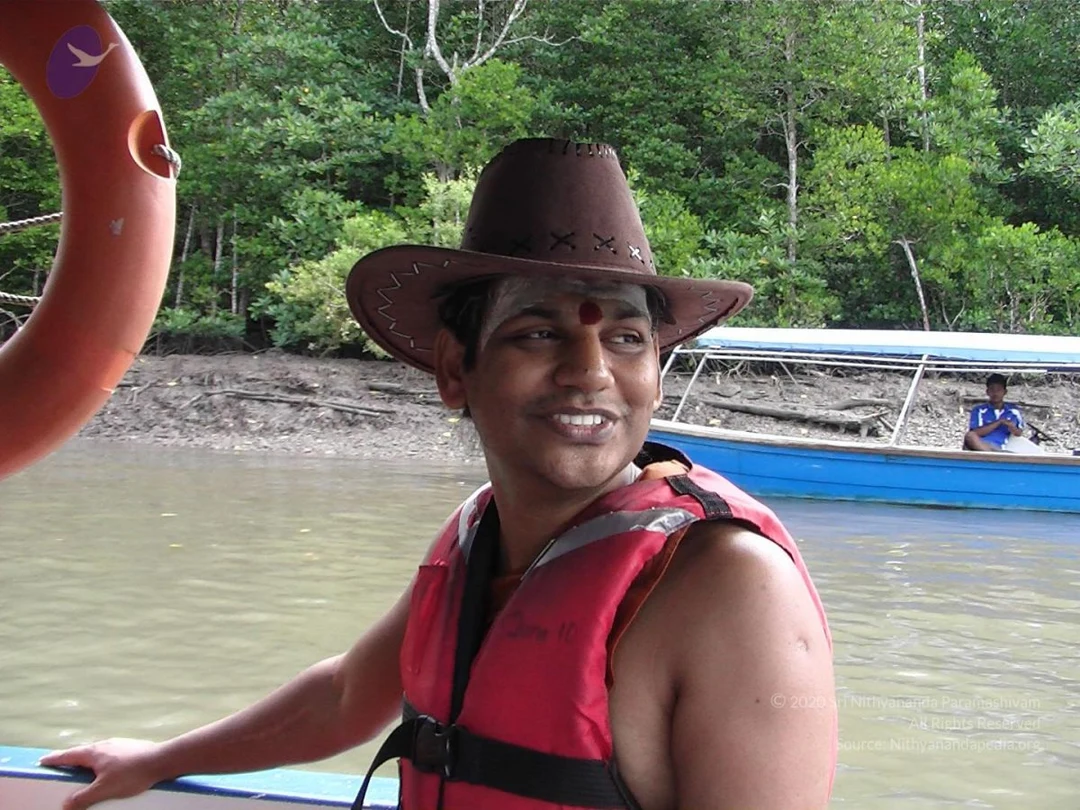
Photos from this day

View all 8 photos
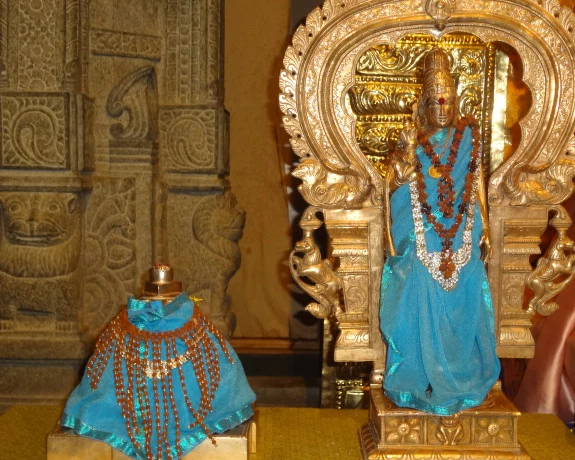
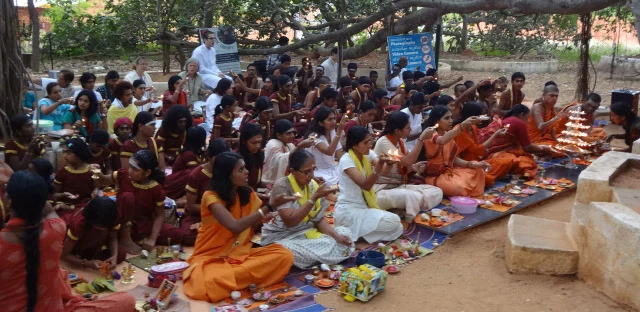
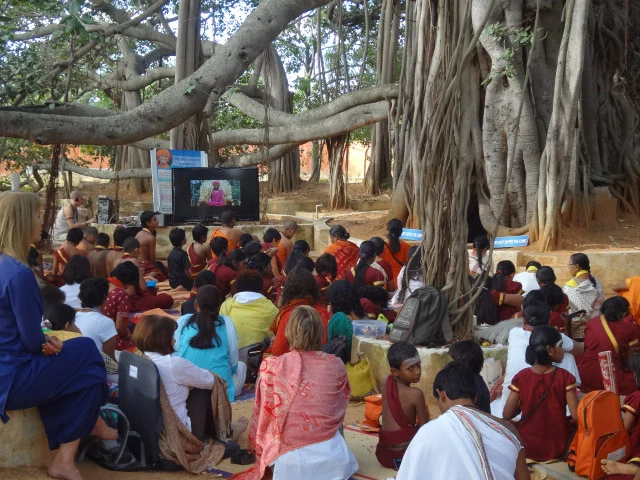
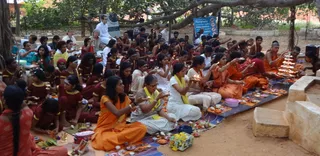
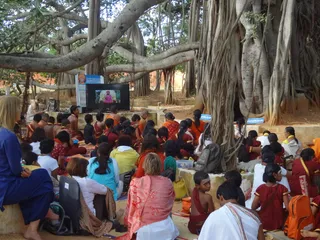
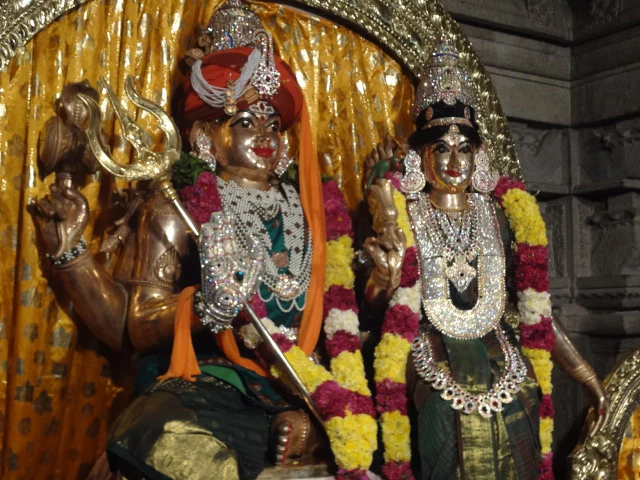
Two gilded metal murti of a deity couple stand before a shimmering gold cloth backdrop in a temple setting. The figure on the left holds a trident in one hand and wears a red and gold crown, silver jewellery and an orange-white sash over green attire. The figure on the right wears a silver crown and heavy silver necklaces and is draped with garlands of yellow, pink and red flowers. Both murti are richly adorned with silver ornaments and garlands, and no living people are visible in the image.Two deity murtis dressed in turquoise-blue silk cloth with rudraksha mala and gold chains stand in a gilded setting. The larger standing figure on the right holds one hand raised and wears a silver-white necklace, a multi-strand rudraksha mala and a red tilak on the forehead, with a golden crown. It stands before an ornate gold throne-like peetha with carved lion and floral motifs. To the left, a smaller murti is draped in a matching blue cloth with a rudraksha mala and gold chains, set on a gold-toned pedestal. Behind them, a carved stone wall shows lion reliefs. No people are visible.A black stone statue of a deity stands within an ornate silver arch set before a red drape, outdoors among trees. The figure wears an orange saffron wrap, an orange turban-style headpiece with a tilak mark, layered gold and red necklaces, and is adorned with a garland of yellow and purple flowers. Its upraised hands hold ritual implements, and pink flowers lie at its base. The statue is a deity murti, not a living person, so no physical people are present; the a person candidate can only be a depiction and its appearance is too uncertain to confirm.A large dark stone statue of a sage-like figure stands outdoors beside a red fabric backdrop and green trees. The statue wears an orange-red turban, an orange-red robe, layered ornate necklaces, and armlets, and raises a hand in blessing. Its arms are adorned with garlands of yellow marigolds and magenta and purple flowers. Behind it, foliage and a red building appear. No living people are visible.Outdoor puja beneath shady trees in an ashram setting. A shaved-headed priest in saffron-orange dhoti and shawl stands at right, pouring water from a silver vessel over a tiered brass lamp stand, with a stream of water falling. Behind him, a deity murti in a carved stone arch, draped in red fabric and decorated with flower garlands and an orange-robed figure. Seated devotees in saffron, orange, yellow and white saris and robes hold oil lamps and offering plates on the ground, with rows of brass lamps and flower offerings arranged before them. A bare-brick building and dirt path are visible in the background.A photograph taken outdoors beneath a large shady tree. Many people sit cross-legged on mats and cloth in rows, most dressed in orange, saffron and maroon clothing, with some in white. Several women in orange saris hold brass plates and lamps. At right, a tiered brass aarti lamp with multiple lit wicks sits on a mat among small offering plates, flowers and bowls. A standing man in white clothes stands near the back at upper centre. Stone steps and a blue signboard appear at right. Ritual activity with devotees seated on the ground.Outdoor gathering beneath a large banyan tree with thick aerial roots. Dozens of seated attendees face a flat-screen TV on a stand, which shows a figure in pink-and-gold robes seated on a throne-like seat. Many attendees wear saffron and orange robes, maroon and red school-style uniforms, and white dhotis; a few wear yellow and pale blue saris and a red sari. A woman in a blue outfit sits at the left edge, and a bald man in white sits near the front right. Some children sit cross-legged on a stone platform while others sit on mats. Blue banners and a small table with equipment sit at the left, and a flower-decorated structure is visible behind the screen.A three-panel collage of close-up photographs of a concrete walkway. The top panel shows a white powdery mark on grey concrete. The lower-left panel shows a pair of feet in white socks and dark trousers standing beside the same white mark. The right panel shows a wider view of a paved path leading to a dark doorway beside beige walls, with a small blue sign and a white powdery spot on the concrete. No ritual, deity or ceremony is visible.