Skip to content
Wednesday

21 March 2012

Be an Inspired and Inspiring Leader.

Dated photos
15
Source pages
1
Media
2
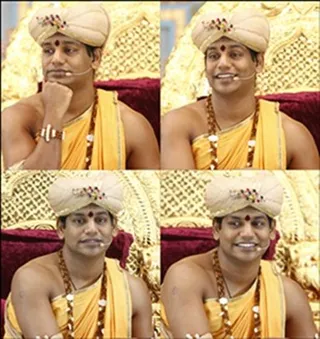
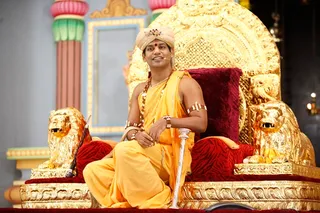
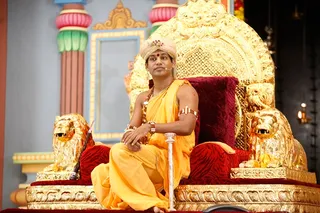
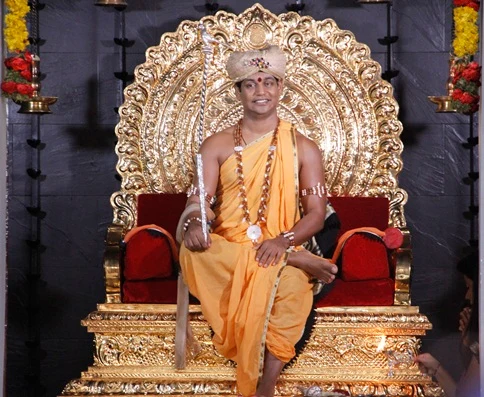
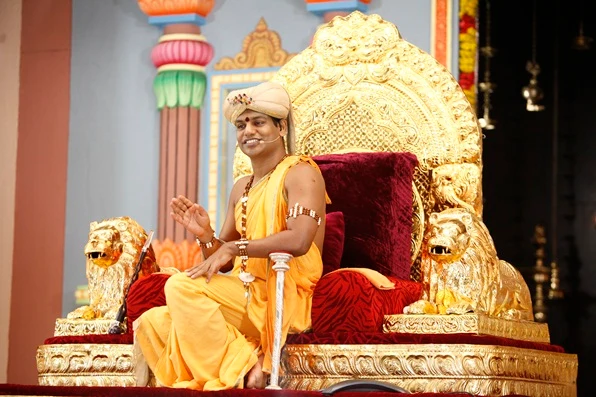
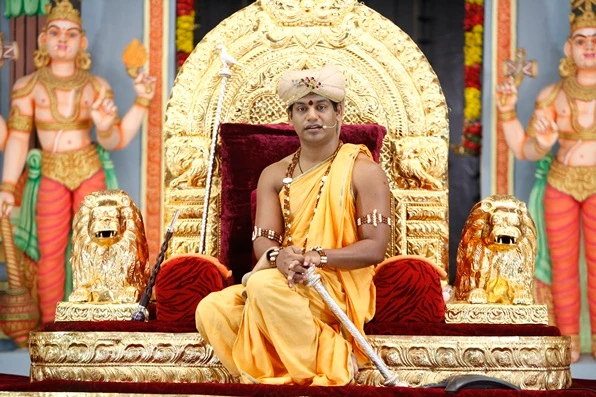
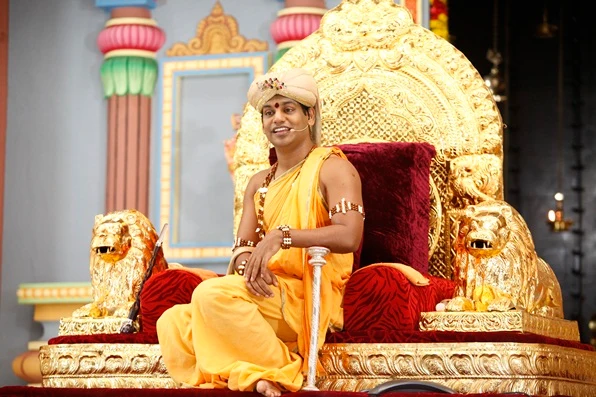
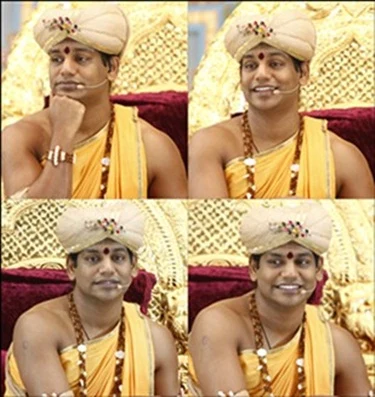
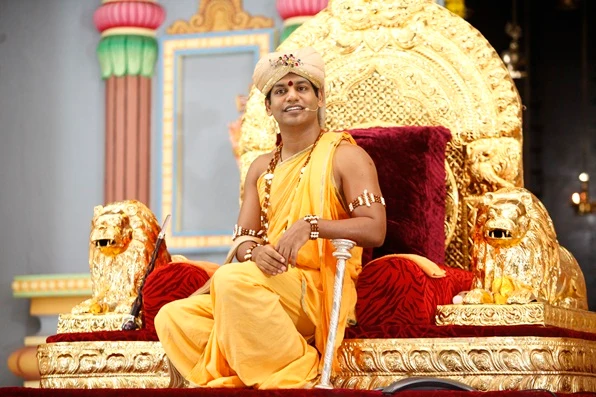
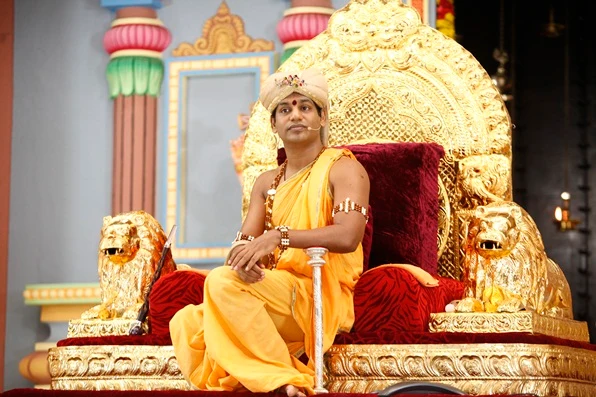
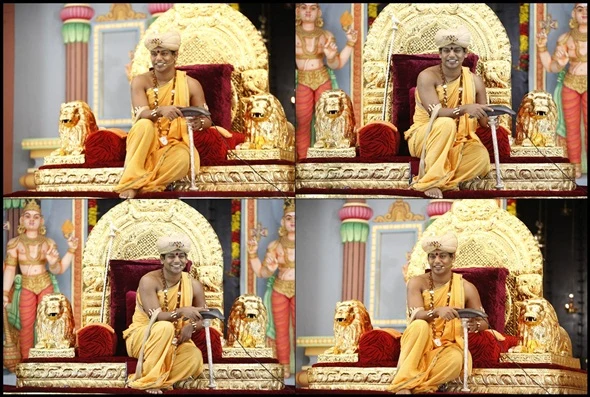
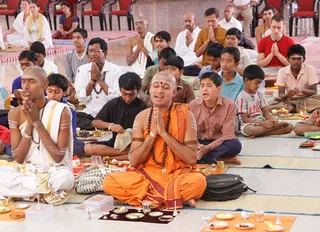
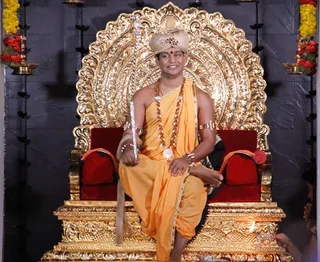
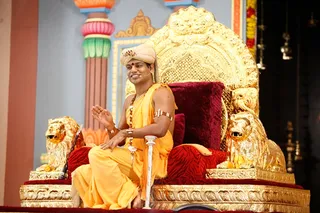
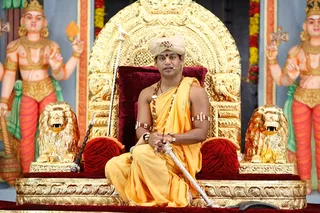
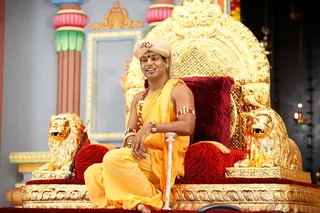
A four-panel collage of photographs showing the same man in saffron-orange draped clothing and a tall pale-gold turban with small coloured ornaments and a bindi on his forehead. He wears rudraksha beads and a ceremonial gold necklace, sits against gold and maroon cushions, and has a small microphone clipped near his face. In the panels he rests his chin on his hand, smiles, and looks toward the side. The collage is graphic, with no physical people beyond the pictured man. Captions identify the event page's Satsang, which is not visible in the image.A man seated on an ornate golden throne flanked by two golden lion sculptures with red cushions. He wears a saffron-orange draped garment, a pale peach turban, a rudraksha-style bead necklace and gold armbands, and holds a silver staff upright in his right hand. Behind him stand pink and white decorated columns on a blue-and-white painted backdrop. The setting resembles a satsang stage.A man in saffron-orange robes and an orange-and-cream turban sits on an ornate golden throne carved with lion heads, with red velvet cushions. He wears rudraksha beads, gold bangles on his upper arm and wrist, and a ceremonial gold necklace, and holds a long silver-tipped rod upright beside him. A small microphone is clipped near his face. Behind him stand golden columns with pink and yellow decorative bands and a gold-framed panel. Appearance-based candidate: a person, seated on the throne as the presenter of the satsang.

March 21 2012

Original wiki page
Contents

Title:

Be an Inspired and Inspiring Leader.

Narration

On this day, the Supreme Pontiff of Hinduism Bhagavan Sri Nithyananda Paramashivam explained that “To inspire others , we should first be passionate about our vision. SPH further shared that we win the game , when others are not able to put their ideas into us. When our perception about ourselves is strong ,others will not be able to change our perception we have about ourselves. Whatever we feel as ourselves, believe as ourselves, any action we do that is in tune with ourselves, will not make us tired.

That day’s Presidential Address-Nithyananda Satsang was conducted by the Supreme Pontiff of Hinduism Bhagavan Nithyananda Paramashivam on 21 March 2012 in Adi Kailasa, Bengaluru, Karnataka, India.

Link to Video:

VideoAudio

Photos From The Day:

Photos from this day

View all 15 photos
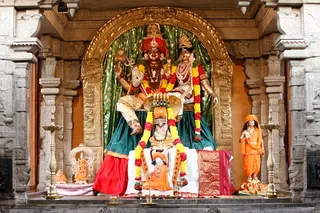
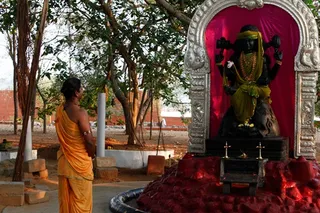
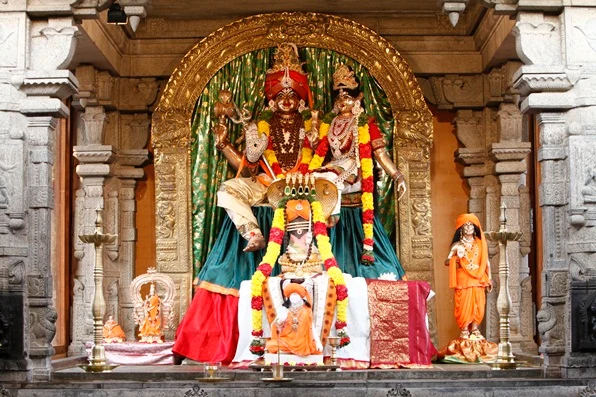
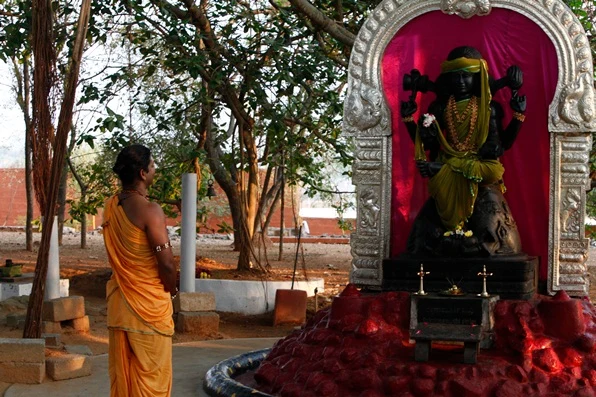
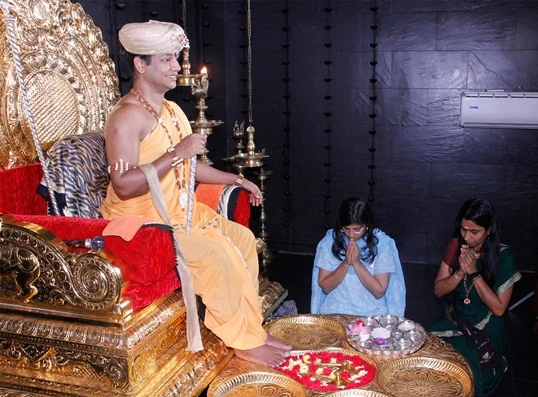
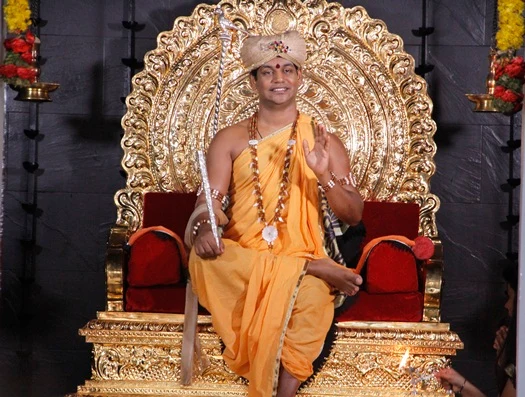
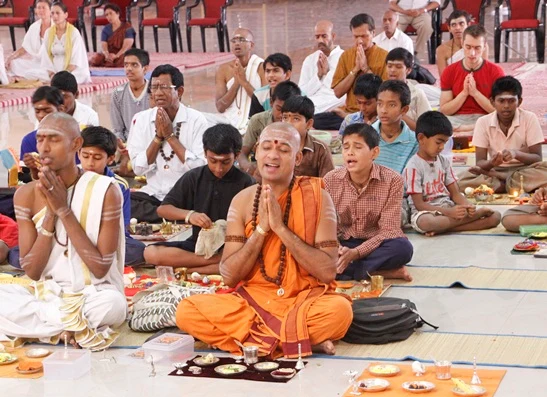
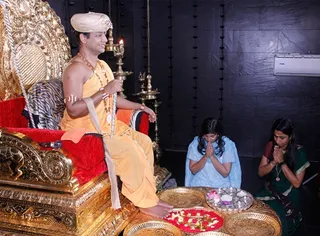
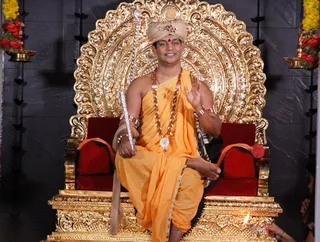
Ornate temple sanctum with carved stone pillars and a gilded arch framing a green silk backdrop. Central deity murti pair, a male and female figure seated on a raised dais, adorned with marigold garlands, with a small figure seated before them on the platform. Brass oil lamps stand on both sides, and a standing statue on the right wears orange robes and holds a small object. A decorated stone niche with a small figure appears at lower left.A woman in an orange-yellow sari stands with her back partly toward the camera, facing a black stone deity murti in an arched silver-framed shrine with a bright red backdrop. The murti wears a yellow-green cloth, garlands, and a necklace, and has multiple raised arms. Red-coated ground surrounds the shrine, with bare trees, a white pillar, and a small brass lamp stand nearby.A photo inside a dark-walled hall showing a man seated on an ornate golden throne with red cushions and a zebra-print cloth. He wears a cream turban, an orange-saffron dhoti and shawl, a rudraksha-style mala, and bangles, and holds a small object in his right hand. Two young women kneel barefoot on the floor in front of a brass tray with flower petals, a small silver dish, and oil lamps. One wears a light blue salwar and the other a green sari with a red dupatta, and both have hands joined in namaste. Brass oil lamps stand behind them and a wall air conditioner is visible.A man seated on an ornate gold throne with a large gold backrest and red velvet armrests, against a dark backdrop with floral garlands and lit oil lamps at the sides. He wears a saffron-orange dhoti-style wrap, a saffron turban with a red tilak, layered rudraksha mala beads, a ceremonial gold pendant, and bangles on his wrists. He raises one hand in a blessing gesture and holds a silver staff or sceptre in the other. Lamp flames glow in the lower right corner. Appearance-based cues for the page's Swamiji candidate include the saffron clothing, turban, rudraksha mala and ceremonial gold necklace, so this is a probable Swamiji (probable) seated in a throne-based presentation at a satsang setting.A seated group of devotees with palms pressed together in namaskar during a satsang in a hall with a bamboo-mat floor. In the centre foreground, a shaved-headed man in saffron-orange robes with a rudraksha mala and sandalwood-marked arms sits with eyes closed, hands folded, before a small tray of offerings and a brass lamp. To his left, a man in white dhoti and shawl with tripundra markings sits in prayer. Behind them, rows of men and boys in white, red, black and checked shirts sit cross-legged, many holding plates and small offerings. Several sit on mats with bags and bottles nearby. The scene conveys collective prayer during a discourse-style gathering.A man in saffron-orange robes sits on an ornate gold throne with a large gold arched backrest and red velvet cushions, against a dark backdrop flanked by yellow and red flower garlands and lit oil lamps. He wears a light orange turban with a red mark on the forehead, a rudraksha mala and a ceremonial gold necklace, and holds a long staff upright in one hand. Another person is partly visible at the right edge. a person: the seated man has a turban, saffron clothing, rudraksha mala and gold necklace, and sits on a peetha-style throne, consistent with a presiding spiritual leader at a satsang.A person seated on an ornate golden throne with carved lion-head armrests and a red cushioned seat, in a decorated hall with pink and orange pillars and hanging lights. The seated figure wears a saffron-orange robe over a bare shoulder, a pale yellow turban, a rudraksha mala, gold armbands and bangles, and a gold necklace, and gestures with raised hands while smiling.A seated man in saffron-orange robes and an orange turban sits on an ornate gold throne with a deep red cushion, flanked by two golden lion figures. He wears rudraksha-style beaded necklaces, gold armbands and bangles, and holds a white ceremonial staff across his lap, with a small red tilak on his forehead. Behind him stand large painted deity statues in gold jewellery and red-green dhotis, with a banner of marigold garlands above. Appearance-based cues (orange turban, saffron robes, ornate gold regalia, beaded malas) suggest Swamiji (probable) as the person seated on the throne.A man seated on an ornate golden throne with carved lion armrests and red velvet cushions, smiling, wearing a cream turban, saffron-orange robe draped over one shoulder, gold armbands, beaded necklaces and a red tilak on his forehead. He holds a silver staff, and a microphone is visible near his face. Behind the throne stand pastel pillars with gold trim and a decorated golden canopy.A four-panel collage of photographs showing the same man in saffron-orange draped clothing and a tall pale-gold turban with small coloured ornaments and a bindi on his forehead. He wears rudraksha beads and a ceremonial gold necklace, sits against gold and maroon cushions, and has a small microphone clipped near his face. In the panels he rests his chin on his hand, smiles, and looks toward the side. The collage is graphic, with no physical people beyond the pictured man. Captions identify the event page's Satsang, which is not visible in the image.A man seated on an ornate golden throne flanked by two golden lion sculptures with red cushions. He wears a saffron-orange draped garment, a pale peach turban, a rudraksha-style bead necklace and gold armbands, and holds a silver staff upright in his right hand. Behind him stand pink and white decorated columns on a blue-and-white painted backdrop. The setting resembles a satsang stage.A man in saffron-orange robes and an orange-and-cream turban sits on an ornate golden throne carved with lion heads, with red velvet cushions. He wears rudraksha beads, gold bangles on his upper arm and wrist, and a ceremonial gold necklace, and holds a long silver-tipped rod upright beside him. A small microphone is clipped near his face. Behind him stand golden columns with pink and yellow decorative bands and a gold-framed panel. Appearance-based candidate: a person, seated on the throne as the presenter of the satsang.