Skip to content
Monday

27 February 2012

THE SUPREME PONTIFF OF HINDUISM HDH BHAGAVAN NITHYANANDA PARAMASHIVAM

Dated photos
15
Source pages
1
Media
1
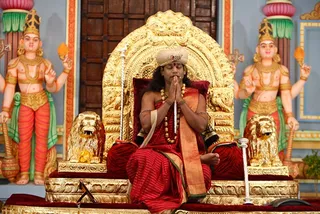
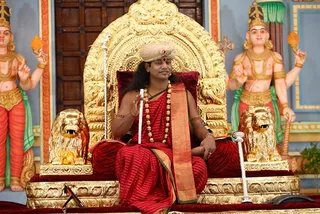
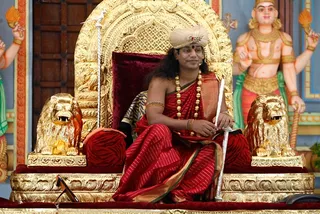
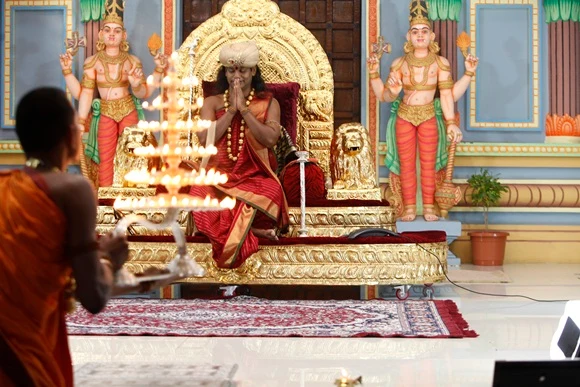
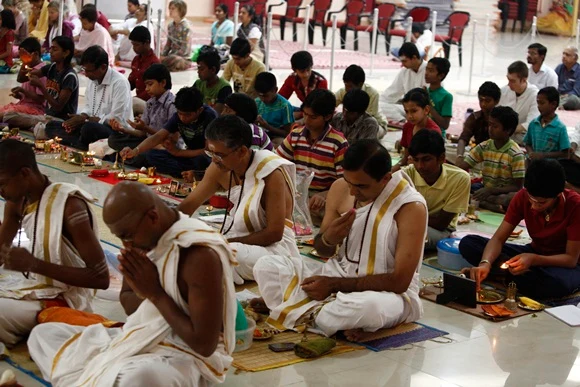
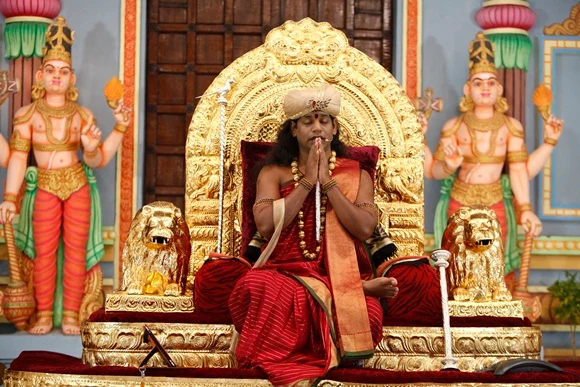
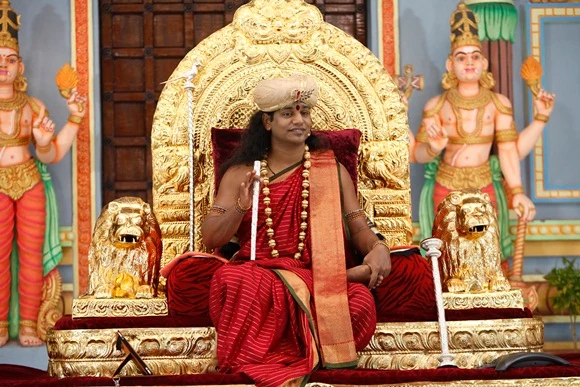
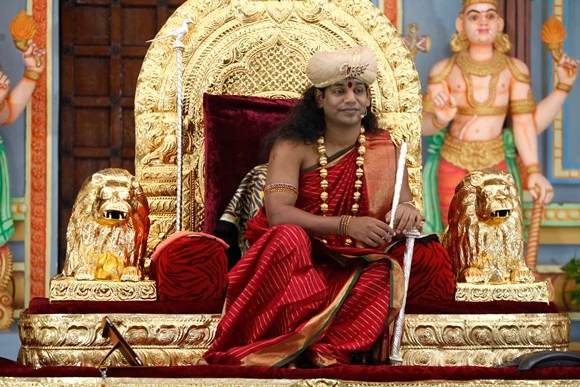
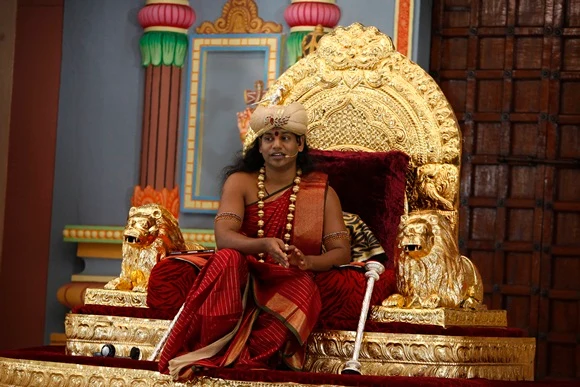
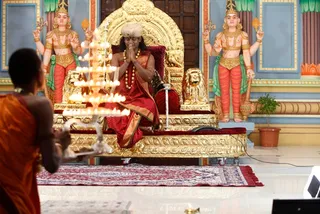
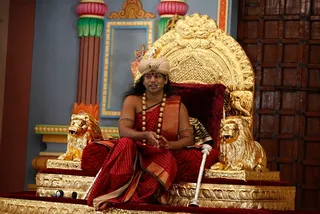
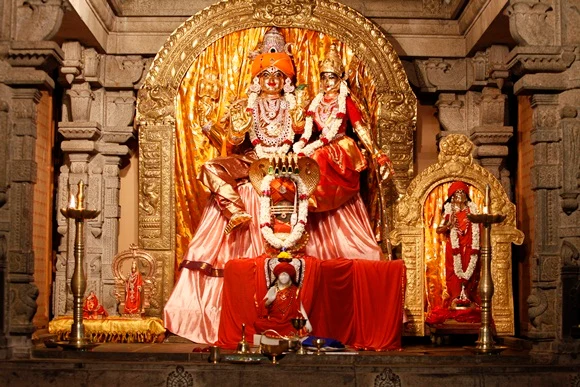
A seated figure in a gold ornate throne with lion armrests and gold finials sits in a temple-like hall with painted pillars. The central figure wears a cream turban with a red mark, a red-and-gold robe with an orange shawl, layered rudraksha malas and gold necklaces, and holds hands in namaste at the chest, eyes closed. Flanking the throne are two painted standing deity murtis with multiple arms, holding lamps and ritual objects, in gold and red attire. A gold-framed plaque and ornate metal rods stand beside the throne.A seated man on an ornate gilded throne with lion-armrest supports, wearing a cream turban with a red tilak, a red-and-gold saffron-toned robe with a gold border, and a long multi-strand rudraksha-style bead necklace. He holds a whisk-like chamara and a staff, with a gold ceremonial ornament at his hand. Two large gilded deity murtis flank him, each holding a gold lamp-like object, against a blue and gold painted temple interior. Swamiji (probable): the seated figure's turban, rich red-and-gold robe, bead mala and throne cues match the page's claim, so this depicts the.Swamiji (probable) seated on an ornate golden throne flanked by two golden lion sculptures, holding a silver staff across his lap. He wears a cream turban with a red mark, long swept-back dark hair, a red and gold striped garment draped over his shoulders, multiple rudraksha-style beaded necklaces and gold bangles. Behind him stand painted deity murti figures holding ceremonial staffs against a pale blue wall with a golden arched canopy.

February 27 2012

Original wiki page
Contents

Title

THE SUPREME PONTIFF OF HINDUISM HDH BHAGAVAN NITHYANANDA PARAMASHIVAM

Photos From The Day:
Sakshi Pramana:

Sharing from Other (Specify)

Photos from this day

View all 15 photos
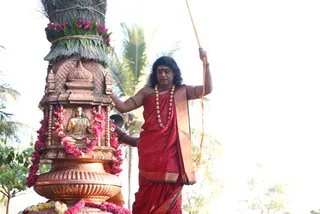
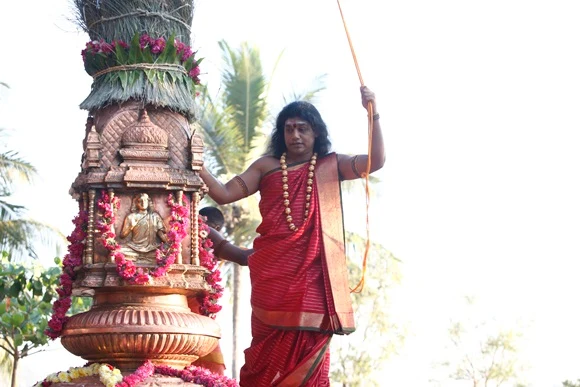
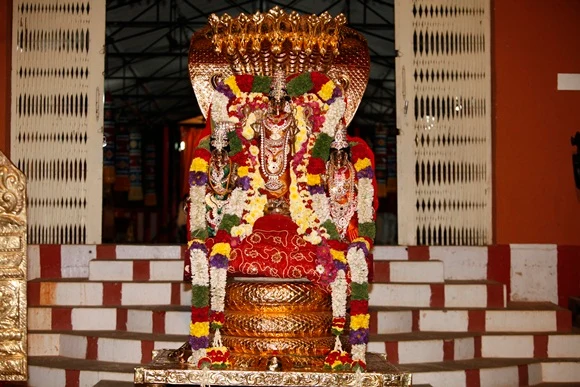
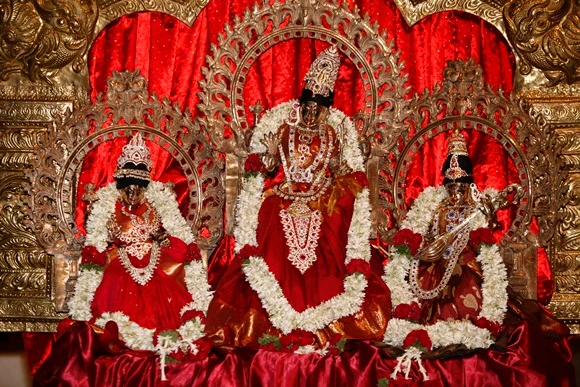
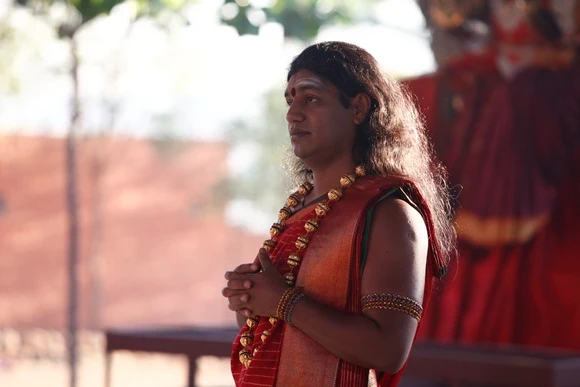
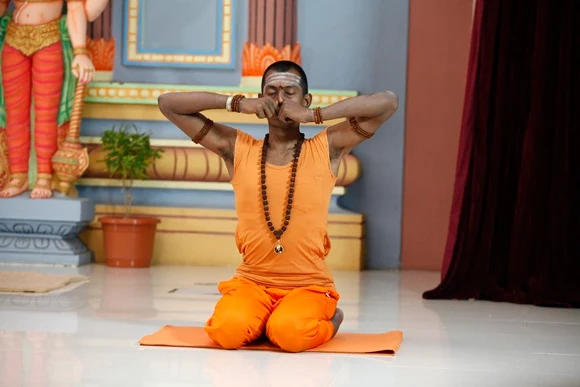
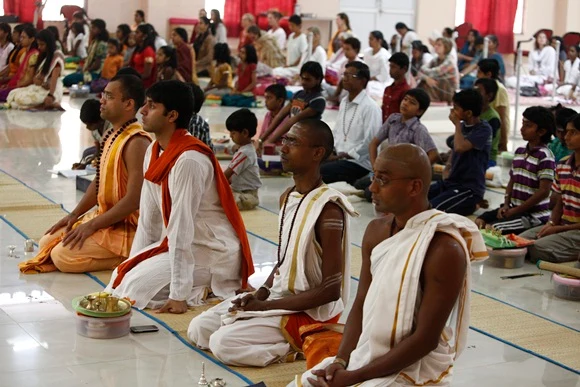
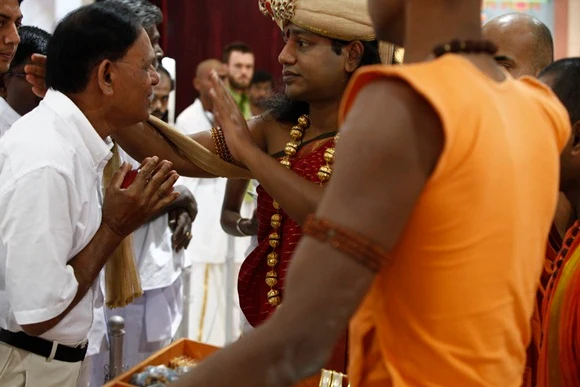
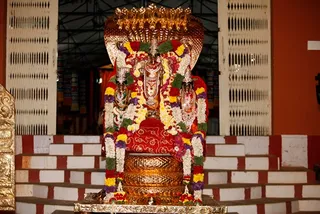
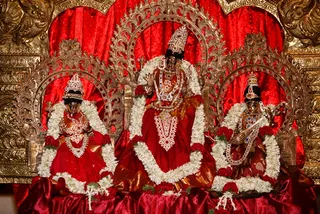
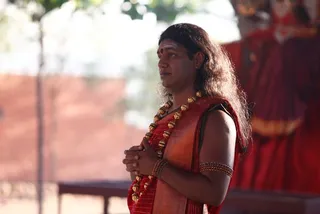
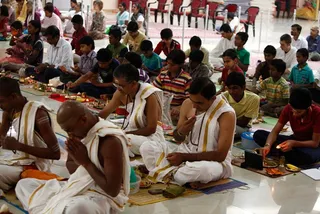
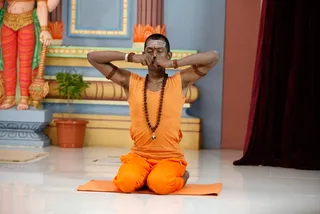
A temple sanctum shrine with carved stone pillars and an ornate gilded arch framing golden drapery. Two large murti figures stand side by side on a raised platform, each in pink and red robes with garlands and jewelled crowns, holding a shared shivalinga-like object decorated with flowers. Brass oil lamps flank the shrine, and a smaller red-clad figure sits in front of a red cloth draped on the altar. No living people are visible.A photograph of an outdoor procession scene with palm trees behind. A man with long dark swept-back hair, bare-shouldered and wearing a red-and-maroon striped dhoti-style garment with a gold border, a rudraksha mala and bangles, stands beside a decorated golden ratha or palanquin-like structure. He holds a long orange-yellow whip or cord raised in one hand while his other hand rests on the structure. The structure has a golden base, a small temple-shaped canopy with a seated golden deity murti, pink and white flower garlands, and a crown of coconut fronds and leaves on top. A second person is partially visible behind him. The man matches the presentation cues of the Swamiji candidate (long hair, rudraksha, ornate clothing), so he is identified as Swamiji (probable) physically present.An empty ornate golden throne (peetha) at the top of a short tiered step platform in a temple-like hall. The seat is draped in red cloth and heavily decorated with multicoloured garlands of marigold-like flowers in yellow, orange, purple and green. A large gold canopy shaped like a multi-headed cobra (naga) arches above the seat, with a golden figure and ornaments at its centre. Gold-framed decorative panels flank the throne, and the steps are painted in red and white. No people are visible in the frame.Three deity murtis are decorated in a shrine set against red draped cloth and ornate gold arched frames. The central figure wears a red and gold sari, a tall crown, a layered gold necklace and a white flower garland, and holds a lotus-like object. The figures on either side wear red and gold saris, crowns, and white and red flower garlands. No physical people are visible; the image shows only the decorated murtis.A photograph of a man standing outdoors in profile with hands pressed together in anjali mudra at chest height. He has long dark hair swept back, wears a rudraksha-style gold bead necklace and gold bracelets on his upper arm and wrist, and is draped in a red and orange shawl. Behind him a large red-robed deity murti stands in a sunlit courtyard with blurred foliage and a low wooden bench. The appearance is consistent with a probable Swamiji (probable) figure in devotional posture, with saffron-red clothing, long hair and ceremonial gold ornaments; the identification is appearance-based only.A seated man in a golden throne with lion armrests sits centrally, dressed in a red and maroon garment with a white head wrap, rudraksha mala beads and gold ornaments, hands pressed together in front of his chest. A devotee in an orange robe stands in the lower left foreground, holding a lit multi-tiered oil lamp aarti toward him. Two gilded deity murtis with four arms flank the throne against a blue wall. A red patterned carpet covers the platform and a potted plant sits at right. Appearance-based label: a person, seated on the throne receiving aarti.A photograph of a large hall where a group of priests in white dhotis and cream shawls with gold borders sit cross-legged on mats, performing a puja. In the foreground, a shaved-headed priest with hands pressed together in prayer sits beside others holding small brass plates, oil lamps and offerings, with a silver puja tray at the front. Behind them, rows of seated boys and young men in colourful shirts and a few adults watch the ritual, and women in saris sit near the back of the room. The floor is covered with pale mats and a polished stone surface.A seated figure in a gold ornate throne with lion armrests and gold finials sits in a temple-like hall with painted pillars. The central figure wears a cream turban with a red mark, a red-and-gold robe with an orange shawl, layered rudraksha malas and gold necklaces, and holds hands in namaste at the chest, eyes closed. Flanking the throne are two painted standing deity murtis with multiple arms, holding lamps and ritual objects, in gold and red attire. A gold-framed plaque and ornate metal rods stand beside the throne.A seated man on an ornate gilded throne with lion-armrest supports, wearing a cream turban with a red tilak, a red-and-gold saffron-toned robe with a gold border, and a long multi-strand rudraksha-style bead necklace. He holds a whisk-like chamara and a staff, with a gold ceremonial ornament at his hand. Two large gilded deity murtis flank him, each holding a gold lamp-like object, against a blue and gold painted temple interior. Swamiji (probable): the seated figure's turban, rich red-and-gold robe, bead mala and throne cues match the page's claim, so this depicts the.Swamiji (probable) seated on an ornate golden throne flanked by two golden lion sculptures, holding a silver staff across his lap. He wears a cream turban with a red mark, long swept-back dark hair, a red and gold striped garment draped over his shoulders, multiple rudraksha-style beaded necklaces and gold bangles. Behind him stand painted deity murti figures holding ceremonial staffs against a pale blue wall with a golden arched canopy.A man seated cross-legged on an ornate gold throne carved with lion heads, with a red cushioned seat and red-and-gold drapery. He wears a gold-and-cream turban, a red and gold striped garment over his bare upper body, a long rudraksha-style beaded mala and a gold necklace, and gold armbands. He holds his hands together in front of him and gazes forward. A white-stemmed ceremonial staff rests against the throne. Behind him are painted red and green pillars and a carved wooden door.A man kneels cross-legged on an orange mat on a white tiled floor, performing a breathing or yoga practice with both hands raised to his face and fingers pressed near his nose. He wears an orange sleeveless top and orange dhoti-style pants, a rudraksha mala around his neck, a pendant, beaded bracelets and a horizontal white forehead mark. Behind him stands a painted statue of a deity in red and gold dress, a potted green plant sits beside a pale stone pedestal, and a dark red curtain hangs at the right. The setting suggests a temple hall used for yoga or meditation.