Skip to content
Wednesday

22 February 2012

Every Action Is An Energy

Dated photos
21
Source pages
1
Media
2
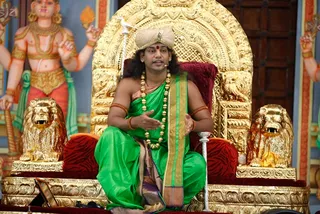
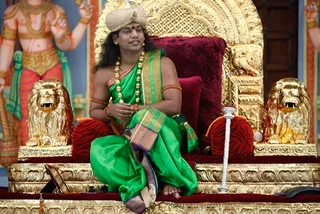
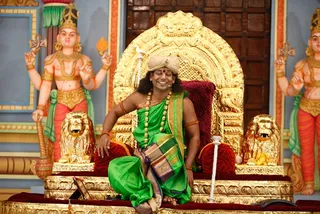
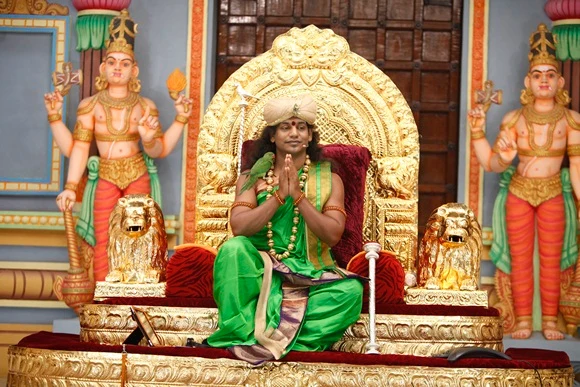
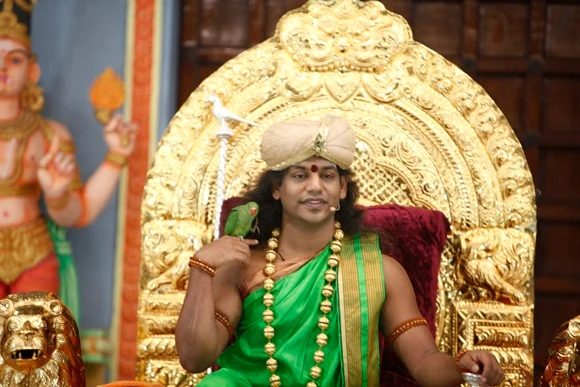
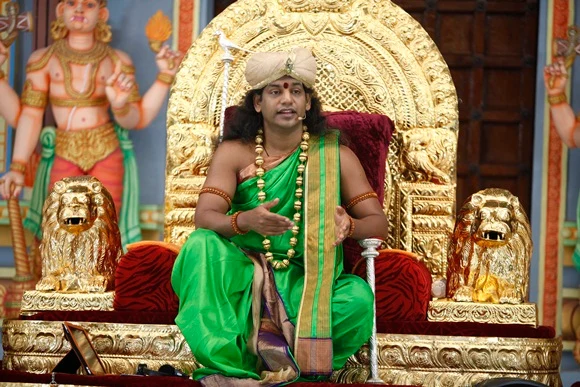
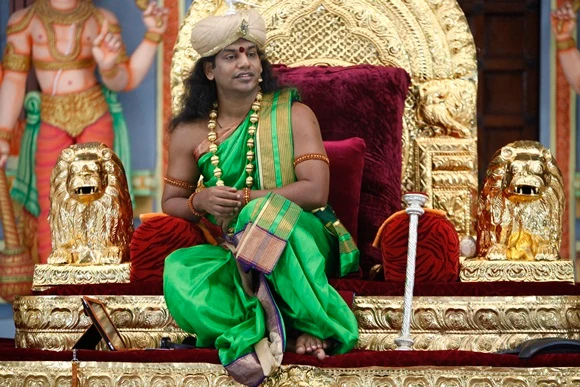
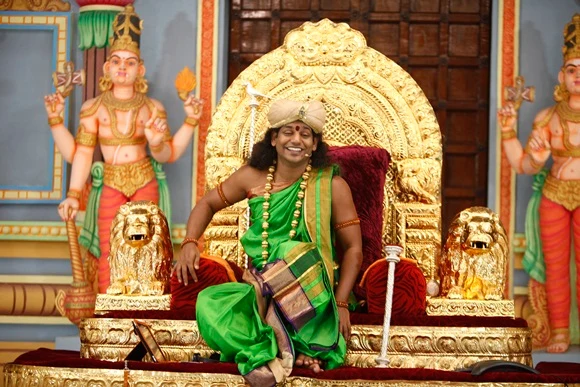
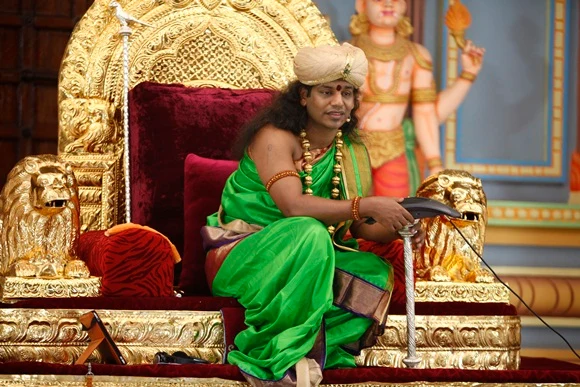
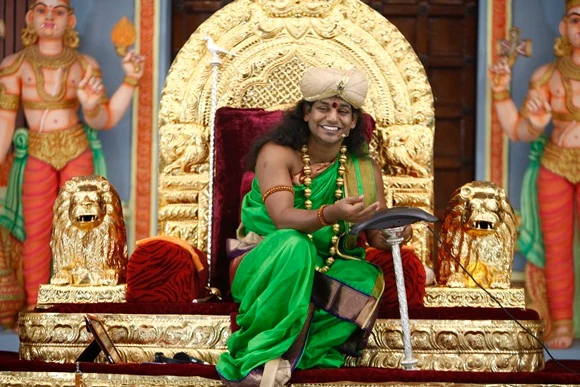
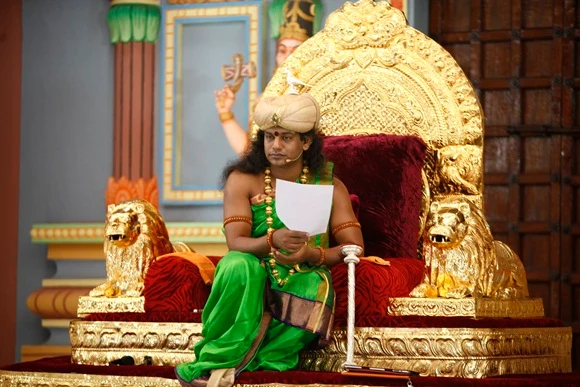
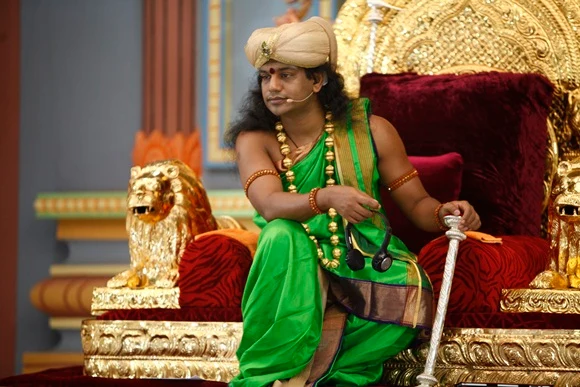
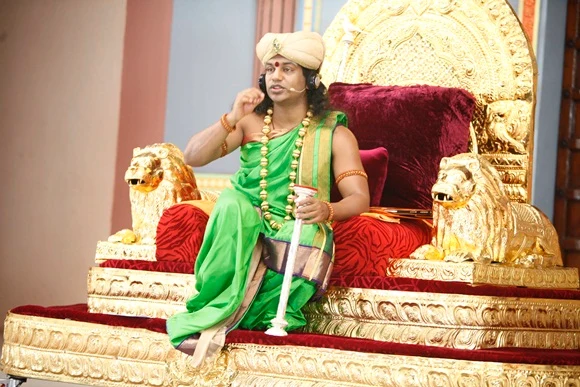
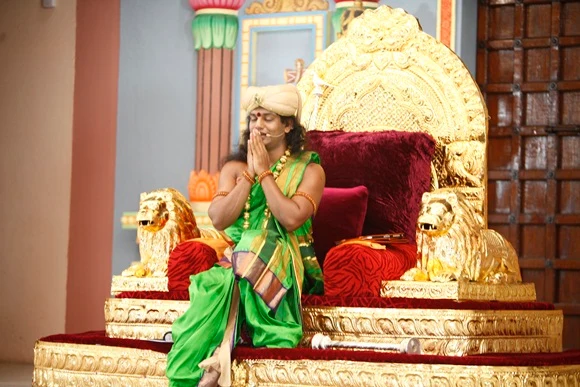
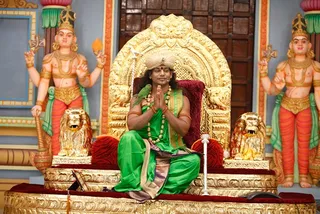
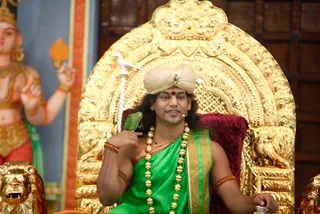
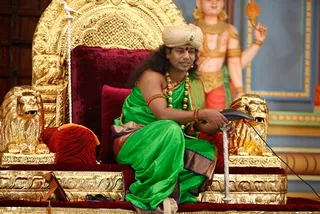
A man seated on a gold ornate throne flanked by two golden lion sculptures, speaking to an audience while gesturing with his right hand. He wears a cream turban, a green sash with gold border over a green garment, bare arms with gold armlets, and a long gold ceremonial necklace and rudraksha-style beads. Behind him a painted mural shows a multi-armed deity holding a trident and other implements, with a golden kalasha-like ornament. a person appears as the speaker, matching the discourse context; the throne and lions suggest a satsang discourse setting.A man seated cross-legged on a gilded throne with carved golden lion armrests and a red velvet cushion, speaking to an unseen audience. He wears a golden-yellow turban with a red bindi, a green and gold silk garment draped over the shoulder and wrapped at the waist, and a heavy beaded gold necklace with rudraksha-style beads. Gold bangles adorn his arms. Behind him, a large painted deity figure in red and green garments with raised hands is visible on the wall, and a gilded frame surrounds the throne.A man seated on an ornate gold throne flanked by two gold lion sculptures, smiling broadly. He wears a cream turban, a green and gold brocade dhoti-style garment with a gold-bordered shawl, several beaded malas around his neck, and gold armlets and bangles. A white bird perches near his head. Behind him stand painted deity statues with multiple arms holding objects, wearing gold crowns and jewelry, against a blue and ornate wall. A red cushion and a small sword-like staff rest near the throne. The setting appears to be a temple hall. a person is seated centrally on the throne in the green robes and malas, and the page describes this as a talk on the Bhagavad Gita.

February 22 2012

Original wiki page
Contents

Title

Every Action Is An Energy

Description

Date: Wed, 2012-02-22 07:16

Bhagavad Gita (Song of God) is a timeless treatise on the essence of living enlightenment. The Gita was imparted by the enlightened Hindu incarnation Sri Krishna to the warrior-prince Arjuna over 5000 years ago. Amazingly, the spiritual wisdom and life solutions offered in the Gita are so universal and current that it is even today used as a personal transformation guide. In today’s talk on Bhagavad Gita, Chapter 4, Verse 12, Paramahamsa Nithyananda (Swamiji) explains that each action by a super-conscious being becomes an independent intelligent entity. For example, Vishnu is a super-conscious being. His action of showering abundance becomes the independent persona of Lakshmi. Paramahamsa tells us that when we connect directly with these deities, who personify the desires we want to achieve in life, we receive swift response to our prayers.

Link to Video:

VideoAudio

Transcript

Status: Rough transcript Transcript in English: Wednesday, February 22, 2012

In Bhagavad Gita, 4th chapter, Jnana Sanyasa Yoga, 12th verse -

“kanksantah karmanam siddhim yajanta iha devatah |ksipram hi manuse loke siddhir bhavati karma-ja ||”

Translation – “Those who long for the result of an action worship with rites the divine energies, for, in this mortal world the success of an action comes immediately”

The sacred secret of this verse is every action done in the cosmos becomes independent energy. Please understand, for example Shiva cut the Brahma’s fifth head and removed his ego. That action becomes independent energy that is what is called Kaala Bhairava. Shiva killed Daksha’s head, cut his ego. That action become independent energy. That is what is called Veerabhadra. Every action of the Shiva’s energy the ultimate energy becomes one one deity. If you connect with those deities, those independent intelligent energies, many of the things which you want to achieve in life you can achieve.

Vishnu’s very action of showering blessings on the world becomes Lakshmi! Brahma’s very action of constantly sharing the wisdom becomes Saraswathi. So many of your very actions, many of the actions of the ultimate becomes independent intelligence and energy. See your actions impacts, influences only your body and may be people who are around you the close people their body and mind. But an enlightened being, an incarnation’s action even if it is small, it affects the whole universe. The simple action of enlightened being giving one boon can affect the whole world. Just on Maha Shiva Raathri day I announced – let all the good things happen, let all the negativity disappear. Now you will see the power of it. How it influences the whole world and changes the whole course of action. When an incarnation does even a small action, that very action becomes an independent intelligence. That intelligence becomes a deity. Shiva did the action of begging from the Taaraka Vana Rishis to teach them a lesson, to take their pride away. That action became Bhikshatana. Shiva destroyed a demon who was hiding as an elephant. That action became independent deity Gaja Samharamurthy. Same way in ecstasy he danced and that action became Nataraja. Shiva saved Markandeya from death and that become independent deity Kaala gala. So actions of God becomes independent intelligent. When you connect with those independent intelligence those deities, whatever you want immediately happens. Immediate results are achieved by connecting with those deities. In this world, this can be a powerful method through which you can achieve whatever you want in your life.

“kanksantah karmanam siddhim yajanta iha devatah |ksipram hi manuse loke siddhir bhavati karma-ja ||”

Whatever result you want, worship with rites, those divine energies which are personification of those specific actions. If you want to destroy demon, then worship Gaja samhara murhty, if you want to destroy ego, then worship Kaala Bhairava, if you want to worship the fellow who is not ruling properly like Daksha Prajapati, then worship Veerabhadra….

“kanksantah karmanam siddhim”

Because in the world success immediately comes when you connect with these divine energies also. If you want wealth, connect with Lakshmi. When you connect with these deities, the success becomes very quick and immediate.

Photos From The Day:
Tags

Bhagavad Gita, Paramahamsa Nithyananda, action, super-conscious, independent, intelligent, Vishnu, abundance, Lakshmi,deities, desires, achieve, life,receive, swift, response, prayers.

Photos from this day

View all 21 photos
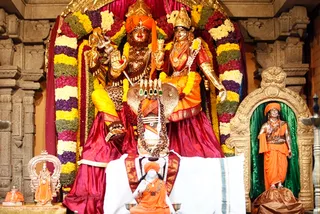
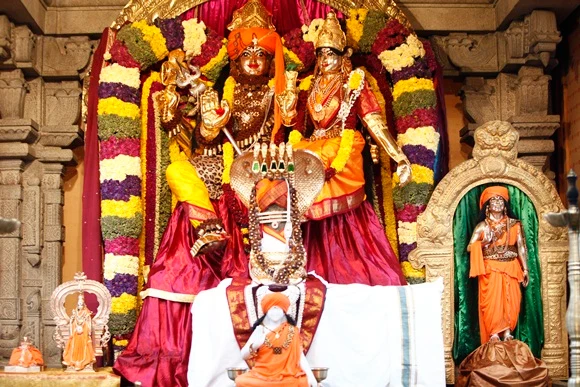
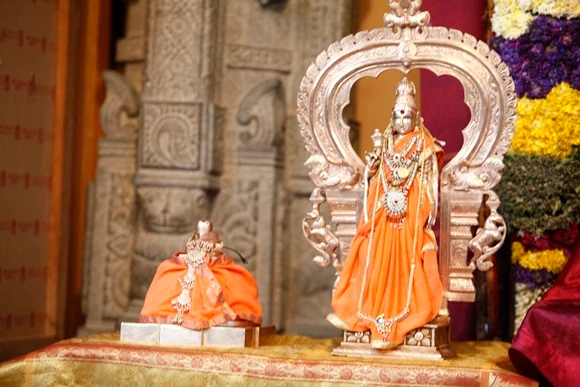
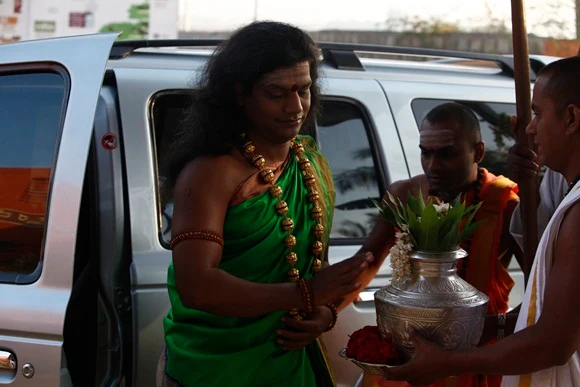
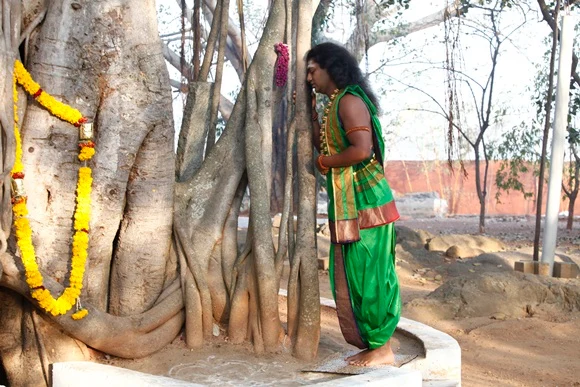
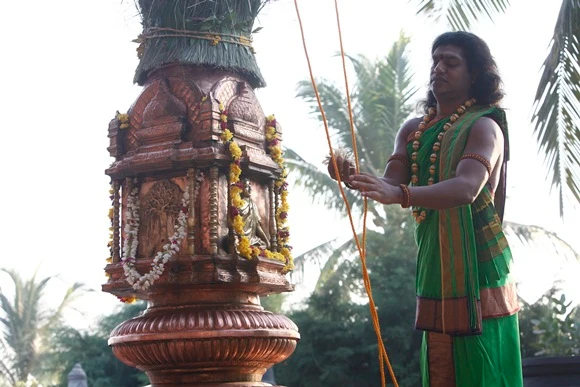
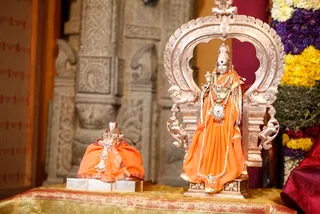
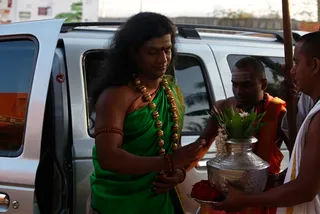
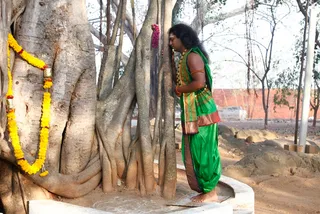
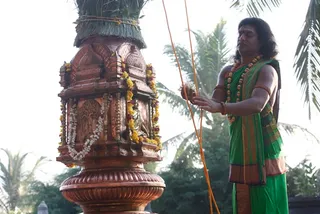
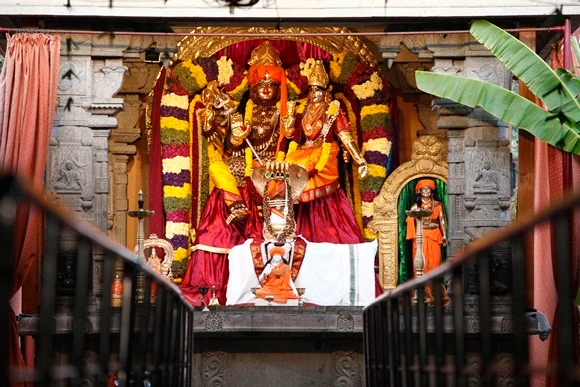
A decorated temple shrine with three deity murtis on a raised platform draped in red and white cloth. The central figure wears a tall golden crown and a red garment, flanked by two figures in red and yellow costumes with golden crowns. Garlands of yellow and orange flowers frame the arch above. Ornate stone pillars and a carved stone doorway surround the shrine, and a small figure in orange robes stands at the right side. Red curtains hang at the left edge, and a green banana plant leaf appears at the top right. A metal railing runs across the foreground.Photograph of a temple sanctum with two large deity murtis draped in red and magenta garments and ornamented with gold crowns, jewelry and garlands in yellow, purple and white. A priest in white dhoti and orange head cloth sits in front of the murtis, facing forward with hands raised in a ritual gesture. A smaller figure in orange robes stands in a green-curtained niche at right, and a small golden deity figure appears at left. Ornate carved stone pillars and a floral garland frame the scene.Photograph of two deity murti figures on a gold-draped altar. The larger standing figure wears a flowing saffron-orange dress, a silver-gold crown and multiple layered gold necklaces, and stands within an ornate silver arched frame. A smaller seated murti in orange cloth with silver ornaments sits on a white pedestal in the foreground. Behind them, a carved stone wall and a border of yellow and purple flower garlands frame the shrine, with a red cloth draped at the right edge. No physical people are visible.A photograph taken beside a silver SUV with its rear door open. A long-haired man in a green shawl and gold bead necklace with rudraksha malas stands at centre, his hands extended over a silver kalasha of green leaves and white flowers that a shaven-headed man in orange robes holds. Behind them a third man in white holds a wooden staff and a tray of red powder. The setting is an outdoor roadside with a pale building and palms. Appearance-based identity is probable: Swamiji (probable), the long-haired figure in green with rudraksha malas and gold necklace, performing a ritual welcome with a kalasha while attendants in orange and white assist.A barefoot man with long dark swept-back hair stands beside a large banyan tree on a raised circular stone platform. He wears a green sleeveless blouse with red trim and a green dhoti-style garment with a red border, plus gold armlets. A yellow marigold garland with a gold clasp hangs around the tree trunk, and a red cloth is tied to a branch. The ground is dry earth with a low wall behind. a person cannot be confirmed from appearance alone, so the figure is described by role as a devotee at a sacred banyan tree.Outdoors under palm trees, a man in a green dhoti-style garment with a copper-orange border stands beside an ornate copper-coloured kalasha-style pillar. The pillar is wrapped with white and yellow flower garlands and topped with a bundle of green foliage, and has carved panels. He wears a long rudraksha mala, multiple bead necklaces, and bangles, with long dark hair. His eyes are closed as he holds a bunch of thin orange threads gathered in one hand, while his other hand rests on the pillar. One person is visible. Swamiji (probable) is shown here with rudraksha mala, long hair and ceremonial dress, performing a ritual at the pillar.A seated man in a green dhoti-style garment with a gold-bordered sash and a maroon-and-gold turban sits on an ornate gold throne with red cushions, hands joined in namaste and a rudraksha mala draped over his chest. Flanking the throne are two large gold lion figures and two colourful painted statues of standing deities holding trident-like and other ceremonial implements, with gold armlets and red-orange dhotis. The setting is a richly decorated hall with pink and turquoise pillars and a carved wooden door behind. The seated figure is the Swamiji (probable) candidate: the throne, the turban, the rudraksha mala and the ornate green attire are the qualifying cues, and the photo is a single in-person view.A man seated on an ornate gold throne with carved lion armrests, wearing a cream and gold turban with a red-and-green jewel, a green and gold silk garment draped over one shoulder, and a long gold bead necklace. He holds a small green parrot on his raised forearm and gestures with his other hand. Behind him stands a painted deity murti with four arms, red-and-gold clothing and a crown, beside a dark wooden wall. a person by visible cues: a turban, ornate gold necklace and throne seating, presented as the speaker on the throne.A man seated on a gold ornate throne flanked by two golden lion sculptures, speaking to an audience while gesturing with his right hand. He wears a cream turban, a green sash with gold border over a green garment, bare arms with gold armlets, and a long gold ceremonial necklace and rudraksha-style beads. Behind him a painted mural shows a multi-armed deity holding a trident and other implements, with a golden kalasha-like ornament. a person appears as the speaker, matching the discourse context; the throne and lions suggest a satsang discourse setting.A man seated cross-legged on a gilded throne with carved golden lion armrests and a red velvet cushion, speaking to an unseen audience. He wears a golden-yellow turban with a red bindi, a green and gold silk garment draped over the shoulder and wrapped at the waist, and a heavy beaded gold necklace with rudraksha-style beads. Gold bangles adorn his arms. Behind him, a large painted deity figure in red and green garments with raised hands is visible on the wall, and a gilded frame surrounds the throne.A man seated on an ornate gold throne flanked by two gold lion sculptures, smiling broadly. He wears a cream turban, a green and gold brocade dhoti-style garment with a gold-bordered shawl, several beaded malas around his neck, and gold armlets and bangles. A white bird perches near his head. Behind him stand painted deity statues with multiple arms holding objects, wearing gold crowns and jewelry, against a blue and ornate wall. A red cushion and a small sword-like staff rest near the throne. The setting appears to be a temple hall. a person is seated centrally on the throne in the green robes and malas, and the page describes this as a talk on the Bhagavad Gita.A man seated on an ornate golden throne with carved lion armrests and a deep red cushioned seat, wearing a green silk garment with gold borders, a cream and gold turban, a multi-strand beaded necklace and bangles. He rests one hand on the armrest and holds a small object in the other lap area. Behind him stands a painted deity murti with a red-orange garment and raised hand, plus a decorated backdrop. A microphone stand is visible at right. Only one physical person is present. The turban, throne and beaded adornments are visible cues, and the page identifies this event as a person talk, so the appearance is a probable match.