Wednesday
1 February 2012
THE SUPREME PONTIFF OF HINDUISM HDH BHAGAVAN NITHYANANDA PARAMASHIVAM
- Dated photos
- 24
- Source pages
- 1
February 01 2012
Original wiki pageTitle
THE SUPREME PONTIFF OF HINDUISM HDH BHAGAVAN NITHYANANDA PARAMASHIVAM
Transcript
Date: Wed, 2012-02-01 20:36
Transcript Status: Rough Transcript in English: In BG 4th chapter, Jnana Karma Sanyasa Yoga, 4th verse –
Arjuna uvaacha Aparam bhavato janma param janma vivas vataha | katham etad vijaa neeyaam
tvam aadau proktavaan iti ||
Translation “Arjuna said: Your birth is posterior and the birth of the Sun is remote past. How
do I comprehend that this science of intense action was uttered by you in the beginning?
I think your laughter of yours is commentary for this verse. The greatness of Krishna is he is
going to answer this question. But of course Krishna’s greatness lies in that. Arjuna is asking
…I really doubt now after reading this Arjuna’s doubt, even our Gurukul child will not have
this doubt. Our Gurukul kids are more intelligent than Arjuna. Especially to be an archer you
need to knowt he knowledge of past life. Archery is not just the art related to the outer goal
alone. See if you are a master archer, your inner space will be so fine tuned and sharpened.
Any mysteries in life the moment you concentrate you will understand. Just three days before
we ordered bow and arrows. We are going to teach archery to our Gurukul kids. I am going to
teach some of the Bodhi Dharma’s methods and techniques. Arjuna is a great archer. I don’t
know how he managed this dumbness and archery together. There is a beautiful Bodhi
dharma’s sutra and his follower Saraha one lady enlightened master who was a highly evolved
soul. She was a Tibetan Buddhist Tantric. She writes in her poem when you send the arrow not
only the …if you attack a point, a goal, you need to understand what is the distance, where is it
exactly. From long distance your inner space need to come to many conclusions – what is the
distance, height, length and the speed with which you need to attack that point. So many extra
senses has to happen for archery. That is why Saraha describes when you practice archery, it is
not just the extra sensory perceptions in outer world is achieved, even in inner world it is
awakened. The understanding of the goal is achieved. For example, if you need to eat food, so
many things have to be understood. The angle in which your hand needs to travel to reach the
mouth very smoothly. So many understandings have to happen in you. both of these are in you
only but still so much co-ordination is needed. Still many fellows cannot eat in the dark. Even
this eating where you need to put your hand in your mouth even this needs so much
coordination. Sending the arrow somewhere needs more coordination. Please understand your
7th sense needs to be awakened – calculating, judging, perceiving, making the decision and
sending the arrow so many things need to awakened. Archery is the art where any idea you
look into you will grasp if you are a successful archer. That intense concentrated mind will be
straight away useful to understand the truths of life and getting enlightened. In all the post
Pandya spiritual traditions Archery was used. Arcehery into the science of enlightenment was
introduced by Meenakshi. All the post Pandya civilizations of course from pallava it went to
China to Bodhi Dharma and from there it went to Zen. Source of Archery is Meenakshi.
Archery needs so much of understanding, concentration, ability to perecieve the truth. I don’t
know what is happening to this Arjuna. Is he is some low mood, depression. No doubt Arjuna
is the greatest archer. Understand he conqured Shiva. Shiva came to test Arjuna and actually
Shiva got defeated. He is an extraordinary archer. No doubt. But how did he not understand
with that power of concentration this great truth of past birth, or the Krishna’s honesty. I am
really surprised but I tell you after reading this verse I can forgive any of my disciple. If Arjuna
can be so ignorant, then I cannot be expecting any intelligence from anybody. See in the whoel
Maha Bharatha nobody is attributed with different language skills. Vyasa is not speaking at all
about different language skills in 18 of his puranas. Only when he describes Arjuna he says the
man who speaks all languages of all the 54 deshas. ..Only to Arjuna Vyasa gives this title.
Please understand in those 18 puranas no where is mentioned any language existed other than
Sanskrit. Only when he describes Arjuna he describes him as person with ability of multiple
languages.
Arjuna uvaacha Aparam bhavato janma param janma vivas vataha | katham etad vijaa neeyaam
tvam aadau proktavaan iti ||
Very low a villager level question. See it is not that easy to learn languages in those days. There
is no DVD kit. See picking up a language is not a joke in those days. You need to go and live
in that society because you don’t have any DVDs or books. I don’t know how many years
Arjuna lived. …Vyaasa is not telling either in MB or Bhagavatha that Krishna had ability to
speak multiple languages. No where there is record. But only for Arjuna he says man who can
speak multiple languages because when all of them watned to come to Rameshwaram for
Teertha Yatra to see Ramanatha Swamy, they wanted their whole army for protection. But they
were all at that time in the forest. So they can’t get the army to protect them. Army wont be
there with them, they are already in exile. But Arjuna says I know the language lets go. So
Arjuna brings them during exile period and they come up to Trikonamalai, near Srilanka. In
those days, it was always close to India and the bridge was there. Still there is a place in
Trikonamalai called Pandava Kupa. Another one important description Vyasa gives for Arjuna
he was so handsome. Not just women, even men will fall for him. extraordinary sensory
perceptions. Pl und his ability of archery, crosses even Rama because to marry Sita, Rama just
bended the Shiva’s bow. When Rama did that the whole bow broke. With Arjuna he did that
job without breaking the bow, above the bow, one fast moving chakra above which there is a
fish. Without touching the wheel, he has to penetrate the wheel through the arrow between the
carves of the wheel he has to send the arrow, which is supposed to toucht he eye of the fish.
He cannot look up. He has to look down. Below there is water and in that reflection he has to
see and hit it. Originally Draupadi is Arjuna’s wife. I don’t know what happened after that! but
surely Draupadi was a chaste woman. One full year she will stay with one person, end of the
year she will do fire walking, she will enter into the fire and come out to prove that she was
chaste and she did not think of any other man in that past one year. Sita entered into fire only
once. Draupadi entered fire every year after her marriage. Sita was in suffering only for 3
months when Ravana took her away. And Rama will not even look at anyone else. There is
another description of Arjuna – Savyasaachi, ambidextrous – he can use both hands freely, he
can use right hand equal to left hand and he can shoot arrows in dark. I tell you for homo
sexuals and gays, right leg will not function freely. For lesbian, left leg will not move freely.
Transgender and bisexual are ambidextrous. Arjuna was bisexual that is why his whole body
was alive. He can change his gender at will. He was blessed by Sri Krishna for this. With so
much of capacity, how did he miss the ability to see the great mysteries of life. That was the
question with which yesterday night I slept. How can the Arjuna who can speak in multiple
languages, who is the greatest archer of the world. as I said archery is not just associated to the
art of the outer world, it has something to do with the power of concentration which is directly
useful to enlightenment. With all these capabilities how Arjuna could not understand this basic
truth. Can’t he recognize the honesty in the Krishna’s eyes? Please understand another one
thing, an archer has the capacity to penetrate into your eyes and look inside. How Arjuna
missed Krishna’s honesty and integrity. We can have answer for this question in the next
verse. The way Bhagavan handles this question why Arjuna was like this. Another one thing,
Arjuna is a gudaakesha, the man who conquered sleep. He can shoot arrows in the dark and the
arrows reach the goal. That is the main thing. he can shoot arrows in the dark and it will reach
the goal. Why with all this intelligence Arjuna missed we will see in the next Satsang, ….
Bhagavad Gita Morning Rough transcript English
Photos From The Day:
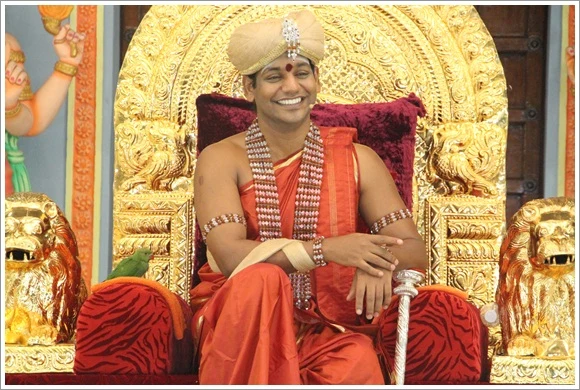
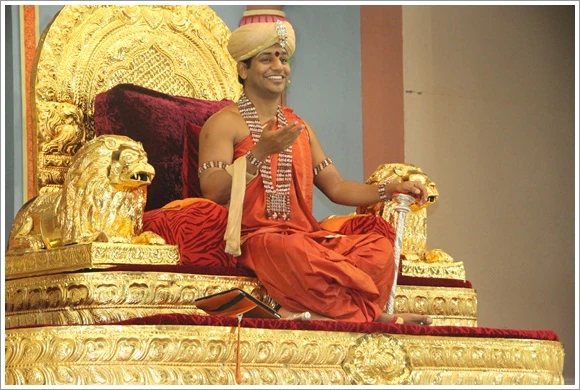
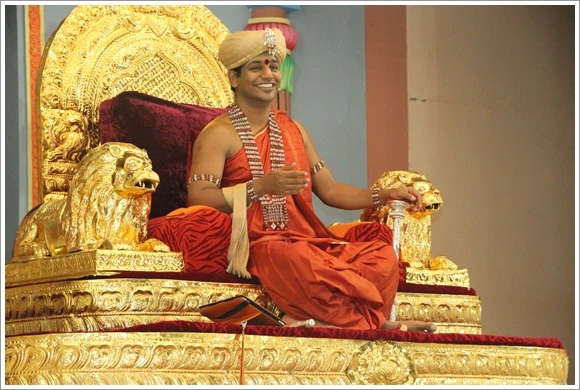
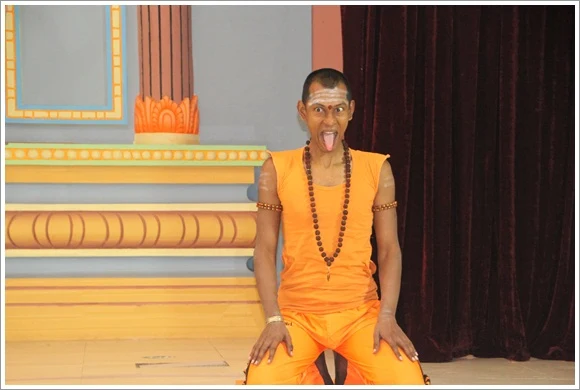
Photos from this day
View all 24 photos