Skip to content
Tuesday

31 January 2012

THE SUPREME PONTIFF OF HINDUISM HDH BHAGAVAN NITHYANANDA PARAMASHIVAM

Dated photos
25
Source pages
1
Media
2
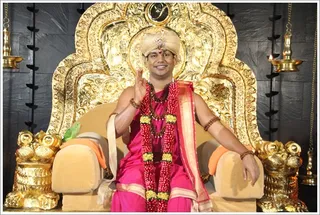
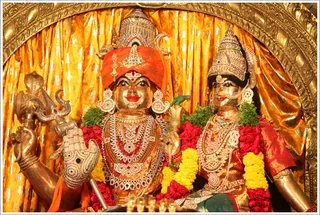
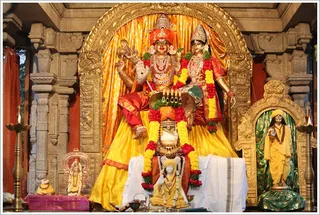
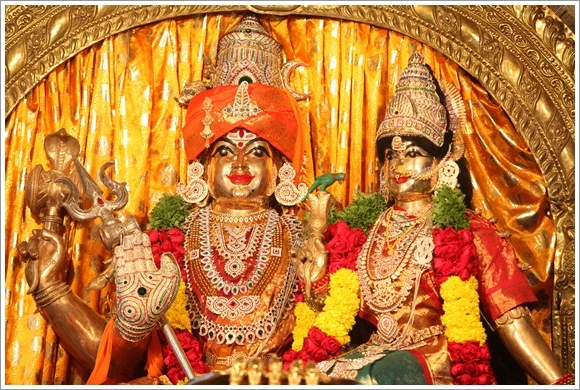
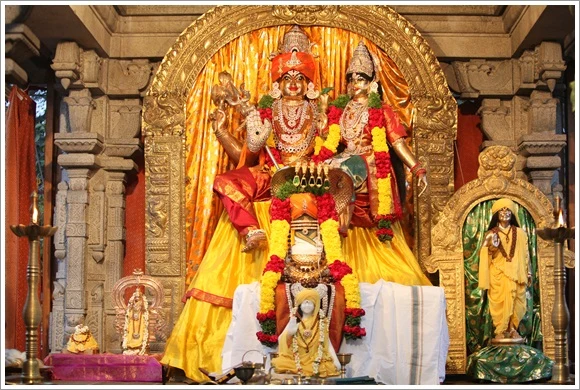
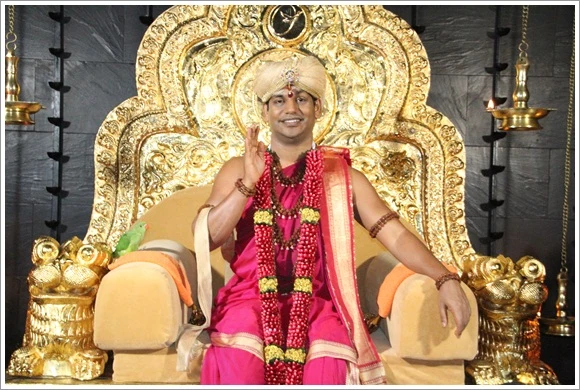
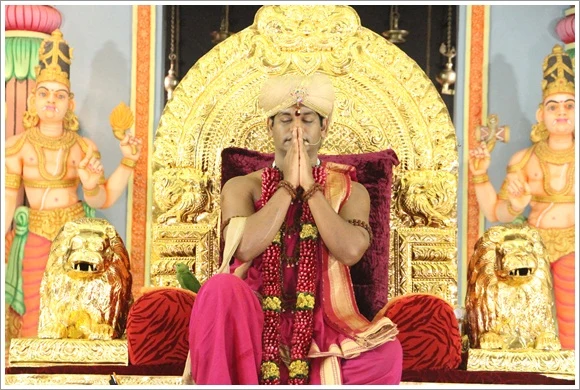
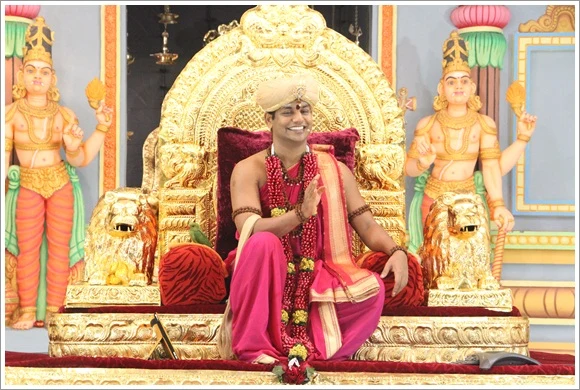
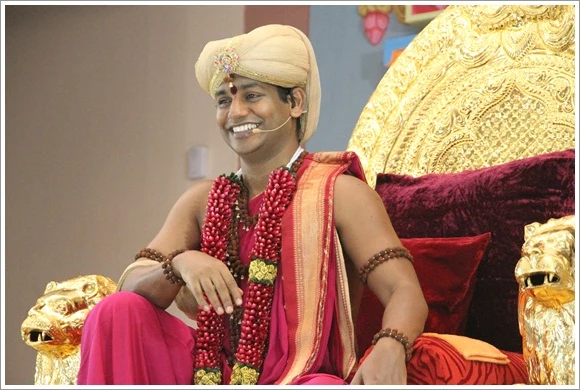
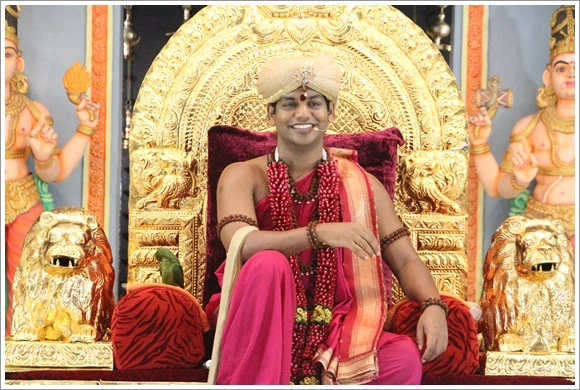
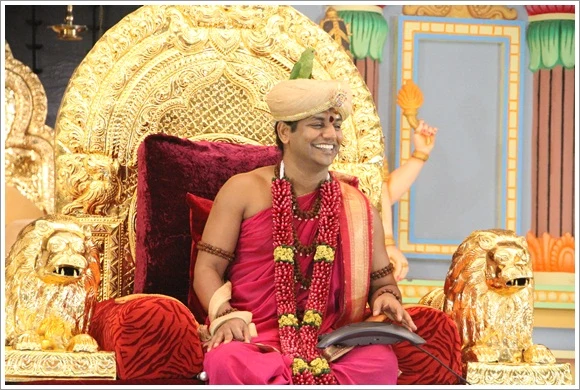
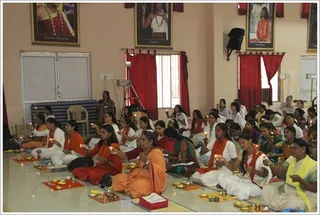
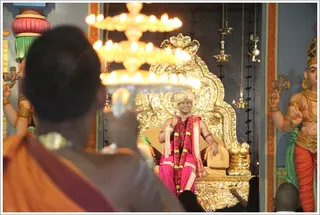
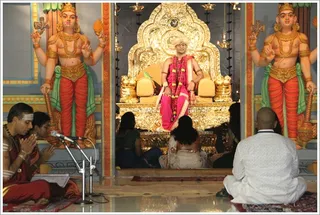
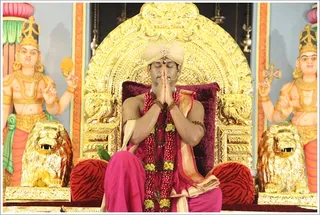
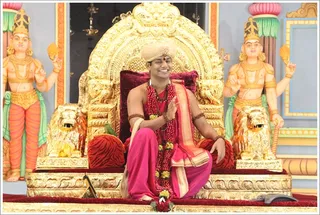
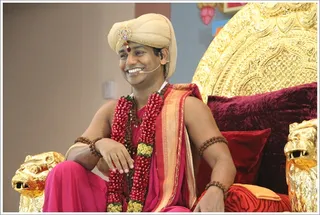
A seated man on an ornate gilded throne with carved lion-footed armrests and a golden back panel, with a lit oil lamp at the upper right. He wears a pale saffron-and-gold turban, a pink dhoti with a gold-bordered orange shawl, a garland of pink and white flowers with yellow blossoms, a rudraksha-style bead mala and bangles, and raises two fingers in a blessing gesture while smiling. Dark stone-textured walls form the backdrop. Appearance-based candidate: Swamiji (probable), seated in a pink garment with a floral garland and a turban, on a golden throne.Two gilded metal deity murti stand side by side in front of a golden draped backdrop. The figure on the left wears an orange-red crown or turban, a heavy layered gold necklace and jewelled earrings, and holds a trident-like staff in one raised hand. The figure on the right wears a tall ornate crown, rich gold jewellery and a red garment, and is garlanded with red roses, yellow marigolds and green leaves. Both have painted red lips and bindi marks.A photograph of a temple shrine with two large gilded deity murtis seated side by side on a raised golden platform, draped in yellow silk and decorated with red and orange marigold garlands and gold jewellery. A small figure of a seated deity sits in a lower alcove at the bottom centre, with a smaller standing figure in yellow robes in a green-curtained niche at right. Brass oil lamps stand on either side of the shrine, and a white cloth covers the altar base beneath the murtis. Ornate carved stone pillars and an arched golden frame surround the shrine. No physical people are visible.

January 31 2012

Original wiki page
Contents

Title:

THE SUPREME PONTIFF OF HINDUISM HDH BHAGAVAN NITHYANANDA PARAMASHIVAM

Link to Video:

VideoAudio

Photos From The Day:
Photos from this day

View all 25 photos
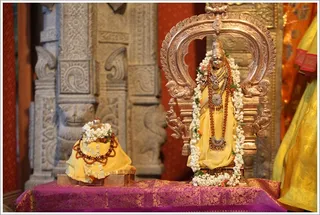
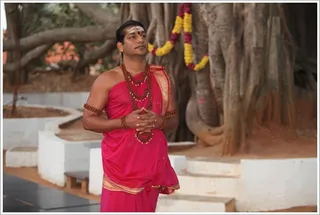
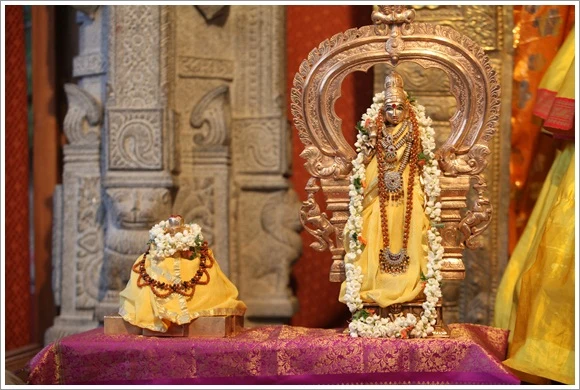
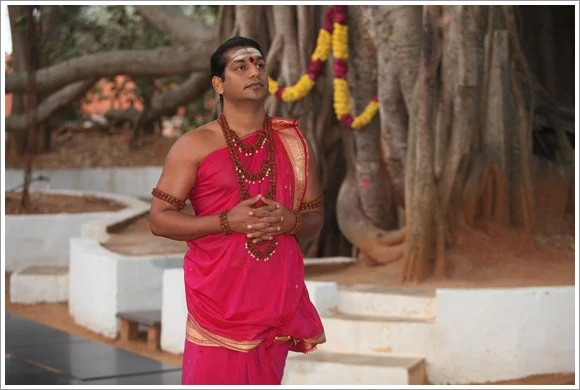
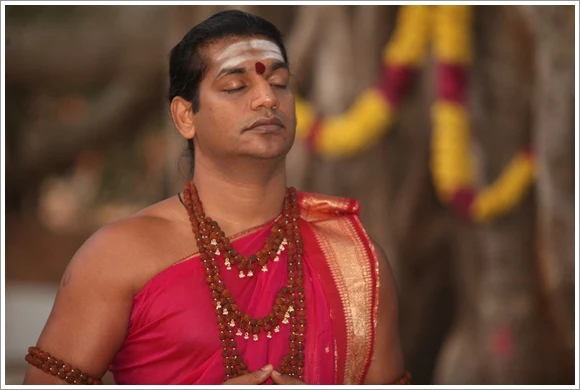
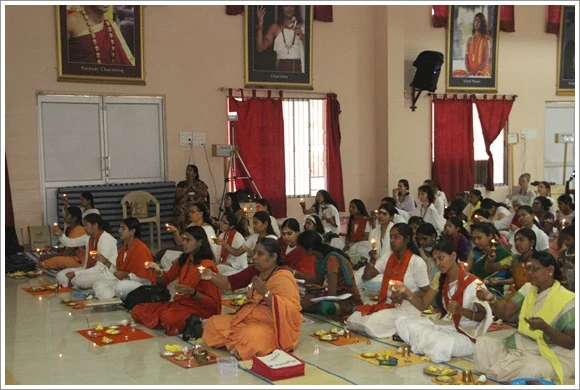
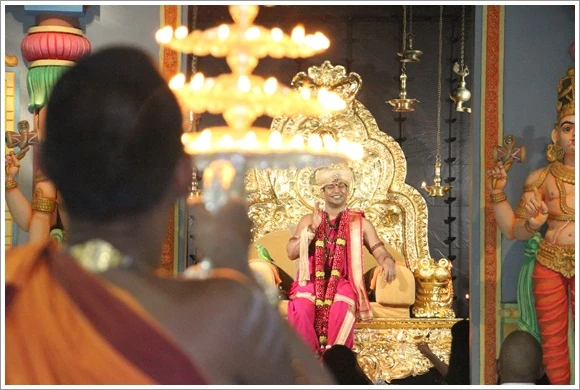
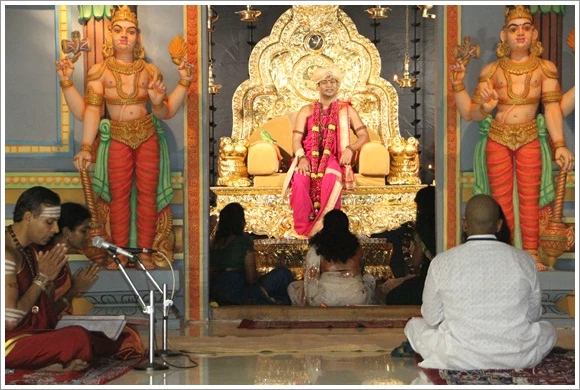
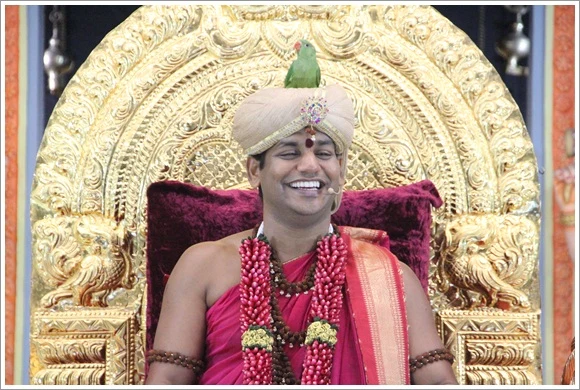
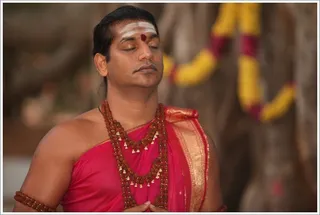
Two gilded metal deity murti stand side by side in front of a golden draped backdrop. The figure on the left wears an orange-red crown or turban, a heavy layered gold necklace and jewelled earrings, and holds a trident-like staff in one raised hand. The figure on the right wears a tall ornate crown, rich gold jewellery and a red garment, and is garlanded with red roses, yellow marigolds and green leaves. Both have painted red lips and bindi marks.A photograph of a shrine altar with two murti figures draped in yellow silk garments and adorned with white jasmine garlands and rudraksha malas. The larger figure stands beneath an ornate golden arched prabhavali (halo) and wears a gold necklace and crown-like headdress; a smaller figure sits on a wooden stand in front. The altar is covered with a purple and gold brocade cloth, with carved stone pillars and red and orange hangings behind. No physical people are visible.A photograph of a temple shrine with two large gilded deity murtis seated side by side on a raised golden platform, draped in yellow silk and decorated with red and orange marigold garlands and gold jewellery. A small figure of a seated deity sits in a lower alcove at the bottom centre, with a smaller standing figure in yellow robes in a green-curtained niche at right. Brass oil lamps stand on either side of the shrine, and a white cloth covers the altar base beneath the murtis. Ornate carved stone pillars and an arched golden frame surround the shrine. No physical people are visible.A man stands outdoors in front of a large banyan tree with aerial roots and a garland of yellow and red flowers draped on its trunk. He wears a bright pink dhoti-style garment with a gold border, a pink shawl draped over one shoulder, multiple rudraksha malas around his neck, and bracelets on his arms. He has a tilak mark on his forehead, his hands are pressed together in a namaste-like gesture at his chest, and he gazes upward. White low walls and a dark mat sit on the ground beside him. The scene shows one person in a devotional posture, with no visible identification of who he is.Photograph of a man seated outdoors with eyes closed in meditation, hands joined in front of his chest. He wears a magenta silk shawl with a gold zari border draped over his bare shoulders, multiple rudraksha malas and a gold-and-pearl necklace, and a copper-coloured armlet. A horizontal white tilak and red bindi mark his forehead. Behind him, yellow marigold garlands hang against a large tree trunk with dense foliage.A seated man on an ornate gilded throne with carved lion-footed armrests and a golden back panel, with a lit oil lamp at the upper right. He wears a pale saffron-and-gold turban, a pink dhoti with a gold-bordered orange shawl, a garland of pink and white flowers with yellow blossoms, a rudraksha-style bead mala and bangles, and raises two fingers in a blessing gesture while smiling. Dark stone-textured walls form the backdrop. Appearance-based candidate: Swamiji (probable), seated in a pink garment with a floral garland and a turban, on a golden throne.A photograph of a hall with cream walls and red curtains, where a large group of women sit cross-legged on the floor in rows, many holding small lit oil lamps (diyas) and performing an aarti-style ritual. Many wear orange, saffron and white saris or kurtas, and one woman in the foreground wears an orange sari and sits before a small brass plate with a red cloth. Framed portraits hang on the wall above, and a single figure stands at the far left edge near a chair. The scene reads as a group ritual with oil lamps and trays of offerings laid on red mats.Photograph inside a temple hall with a large ornate golden throne at centre. A seated man in a white turban, pink dhoti-style lower garment and pink shawl, wearing a red and orange garland, raises his right hand in blessing toward devotees. In the foreground a figure in orange robes with shaved head is seen from behind, and a glowing chandelier hangs above. Flanking the throne are colourful multi-armed deity murti statues, and brass oil lamps hang from the ceiling.A seated man in a gilded ornate throne sits centrally in a temple hall, wearing a pink and red dhoti-style garment, a white turban-like head covering, and a red-and-white garland with rudraksha-style beads, flanked by two large golden-skinned multi-armed deity murtis in red and green dhotis holding ritual objects. In front, a woman in a white sari and others sit on the floor facing the throne, while a bald man in white kneels at right. At left, two men in red and orange ritual clothing with white tilaka sit with hands folded in prayer before a microphone stand. The setting is a satsang or darshan with ornate gold and blue decoration. The seated figure is an appearance-based candidate, but cues are limited, so identity is uncertain.A seated man in pink dhoti and pink-and-gold shawl sits on an ornate gold throne with a deep red cushion, hands pressed together in anjali mudra with eyes closed. A red-and-yellow flower garland and a red rudraksha-style mala hang around his neck, and a gold-coloured turban sits on his head. Flanking the throne are two gold-painted deity statues with crowns and raised hands, and at the base are golden lion sculptures. The setting suggests a satsang or darshan seat.A seated man sits on an ornate gilded throne flanked by carved golden lion armrests and colourful painted standing deity statues with raised arms. He wears a saffron-orange turban with a red tilak, a red rudraksha mala with a white floral garland, a pink dhoti and an orange-pink shawl, and he smiles with palms pressed together in greeting. Ornate gold-framed panels and a red-draped dais form the setting. Swamiji (probable): the seated man shows a turban, saffron-orange clothing and rudraksha mala cues.A smiling man sits on an ornate golden throne with plush burgundy cushions and carved golden lion heads at the armrests. He wears a cream and gold turban with a red bindi, a pink and red silk shawl over a pink dhoti-style garment, and a garland of red and white flowers with gold accents around his neck. Rudraksha bracelets are on his upper arm and wrist, and a small microphone is clipped near his face. The setting appears to be a formal stage or hall. Swamiji (probable) is shown in an in-person seated pose with a turban, ornate ceremonial attire and rudraksha adornments, with the throne and garland as additional cues.