Skip to content
Sunday

15 January 2012

THE SUPREME PONTIFF OF HINDUISM HDH BHAGAVAN NITHYANANDA PARAMASHIVAM

Dated photos
46
Source pages
1
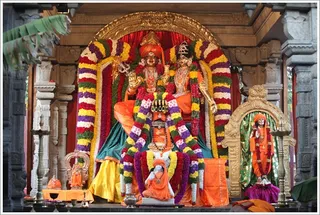
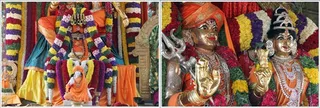
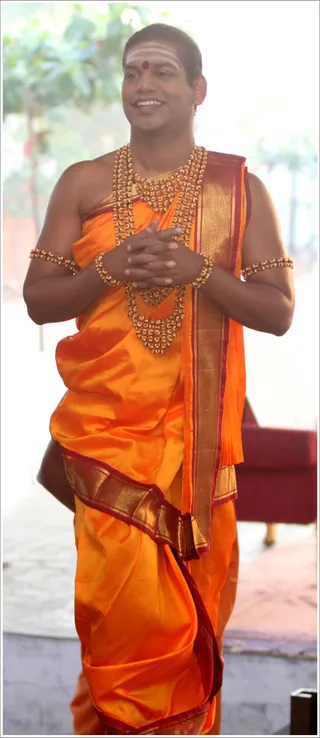
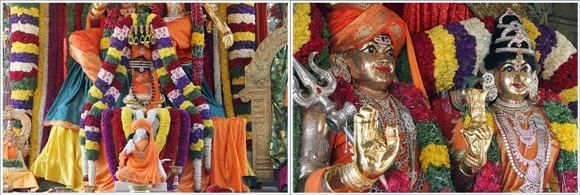
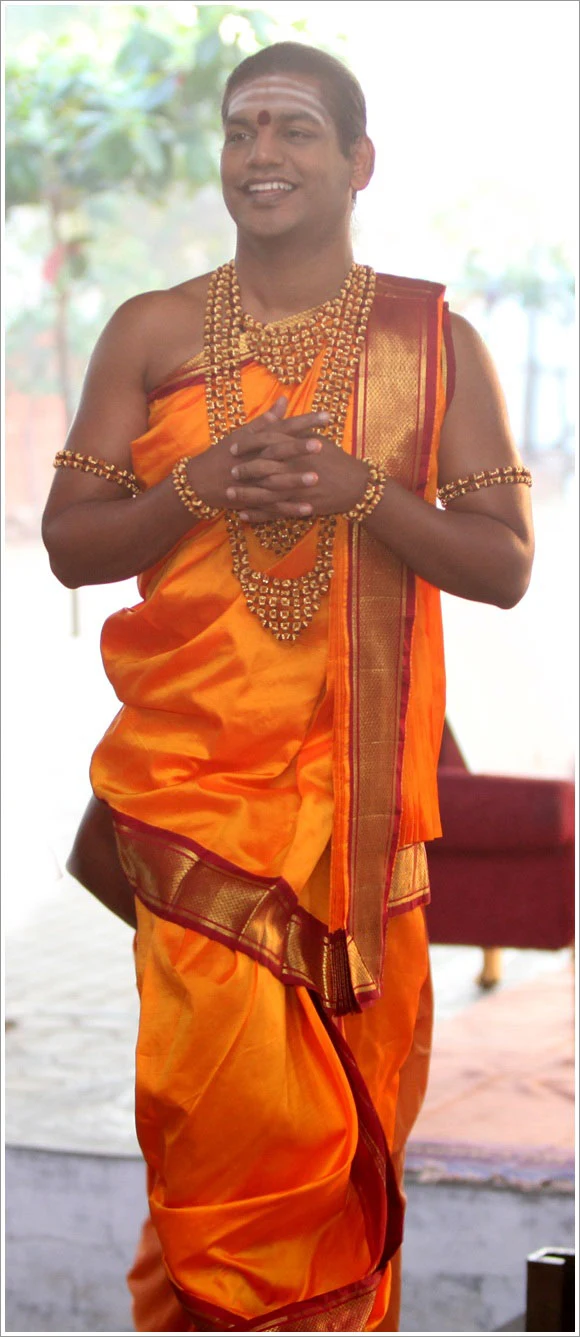
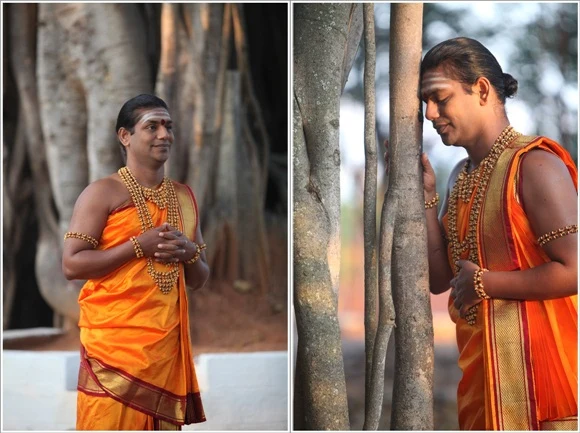
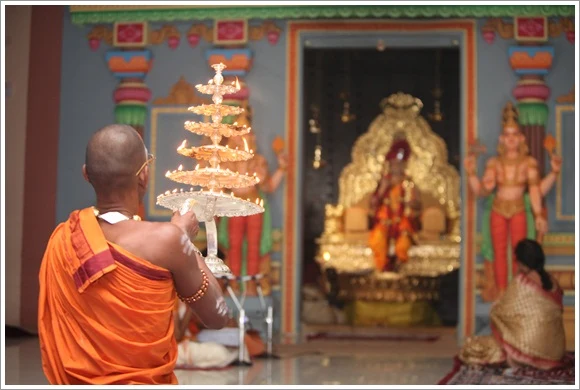
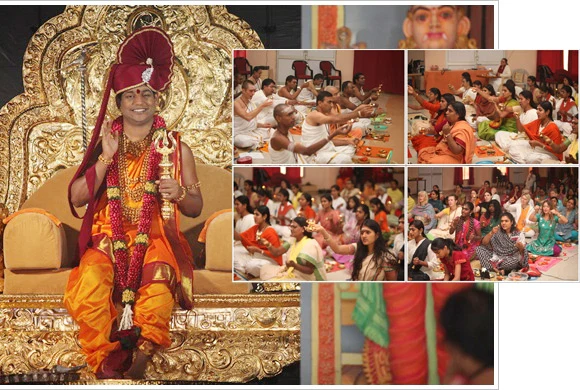
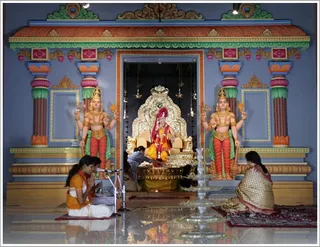
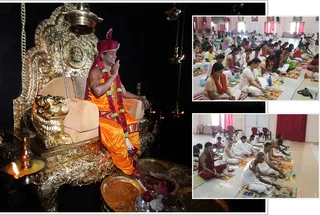
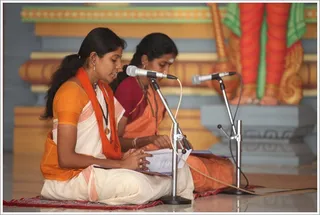
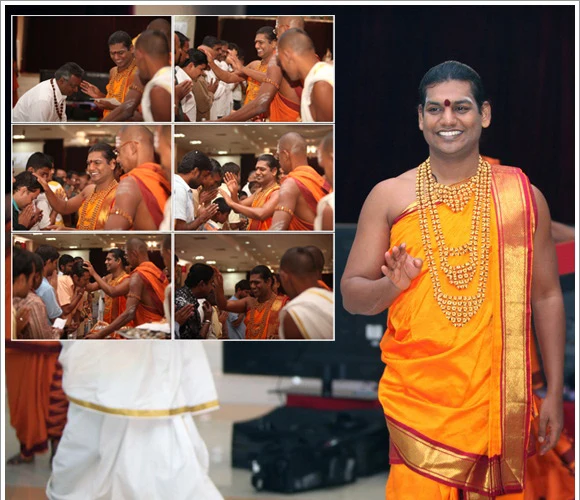
A decorated shrine with a seated deity murti under an ornate gold arch, draped in red, orange and green cloth and wrapped in thick garlands of orange, yellow, red and purple flowers. The central seated figure wears a red crown and gold ornaments, flanked by a second seated figure. A small orange-clad figure sits at the base among offerings. Carved stone pillars frame the shrine, with a smaller decorated niche and lamps at the right. No living people are visible.A two-panel collage of photographs showing deity murti decorated with dense garlands of marigolds and multicoloured flowers, with orange, yellow and purple blooms. The left panel shows a seated figure in orange and gold robes beneath flower garlands in an ornate shrine setting. The right panel shows a close view of a golden-faced deity murti wearing an orange turban, holding a silver trident and a gold mace, with a rudraksha-style necklace, next to a second deity with a crown and jewelled ornaments. No physical people are visible; the figures are statues in the decorated shrine.A smiling man stands with palms pressed together in namaste, wearing a saffron-orange silk dhoti and matching shawl with a maroon and gold zari border. He wears layered gold ceremonial necklaces of beads, gold bangles on his wrists and gold armlets. A white and red tilak marks his forehead. A red-upholstered sofa and a blurred green garden appear in the background. Appearance cues including the saffron silk, ornate gold necklaces and tilak are consistent with a person in a ceremonial role, though the appearance is not certain enough to confirm identity.

January 15 2012

Original wiki page
Contents

Title

THE SUPREME PONTIFF OF HINDUISM HDH BHAGAVAN NITHYANANDA PARAMASHIVAM

Photos
Photos from this day
View all 46 photos
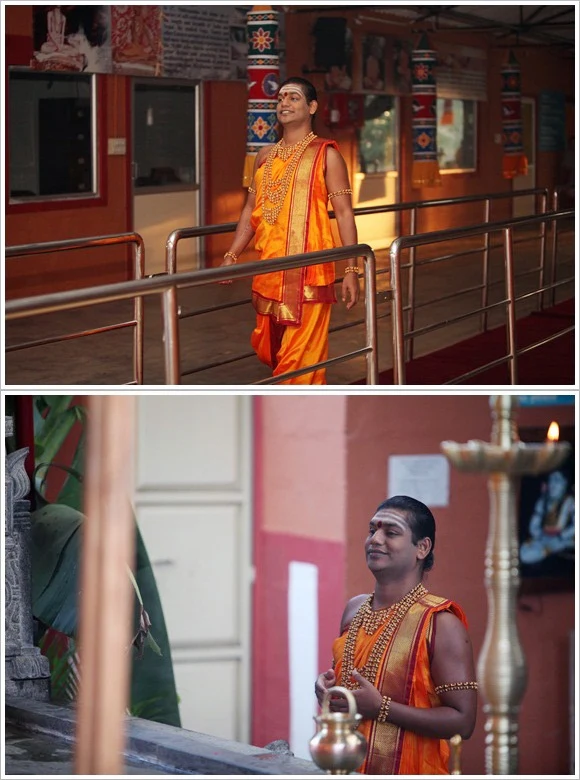
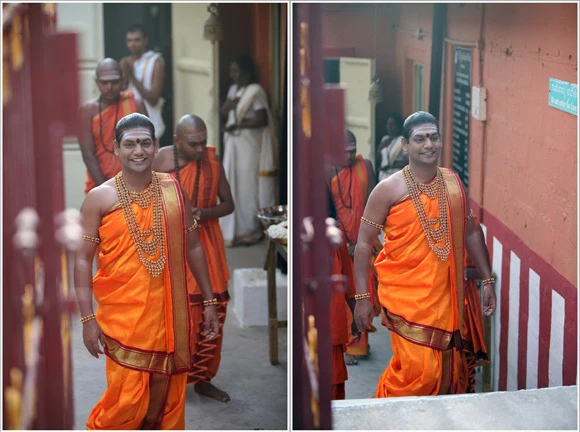
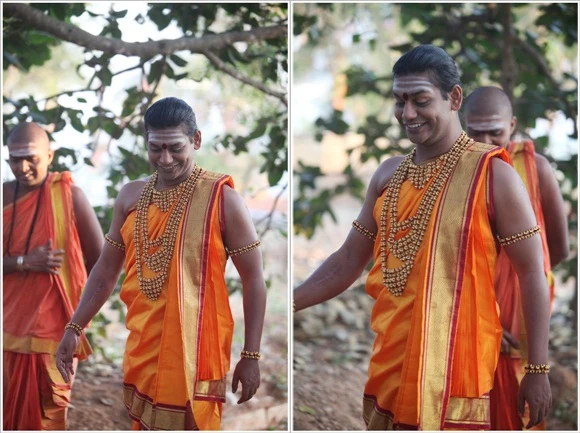
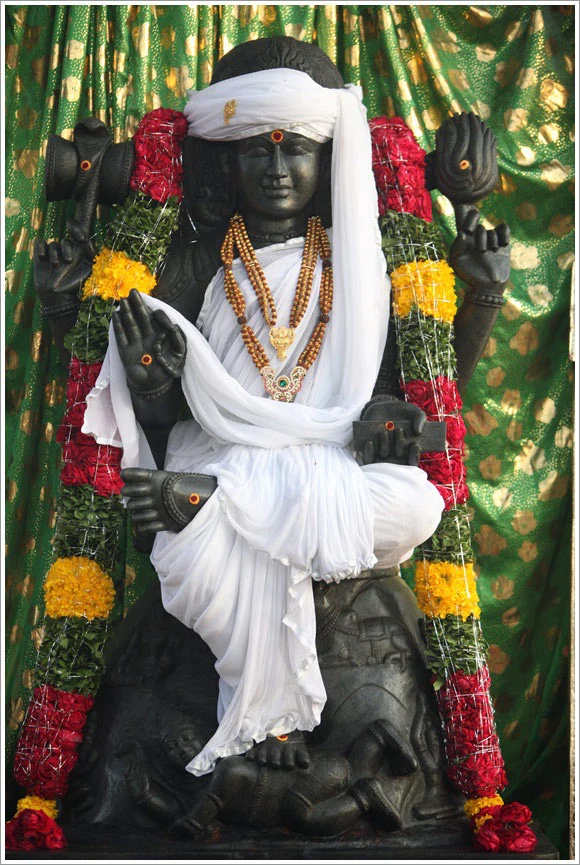
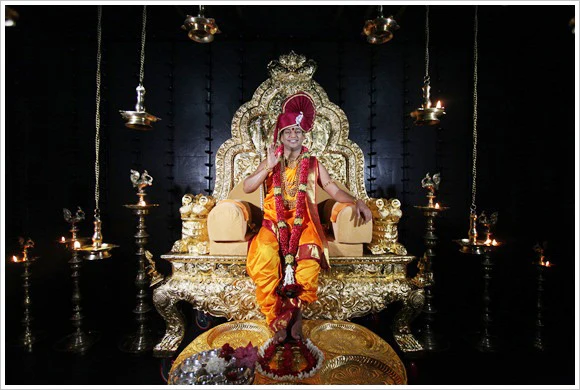
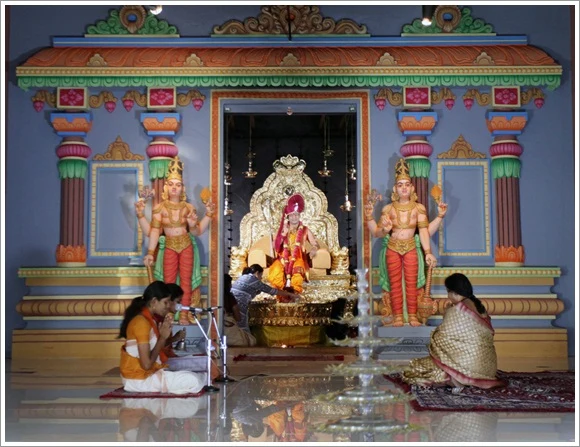
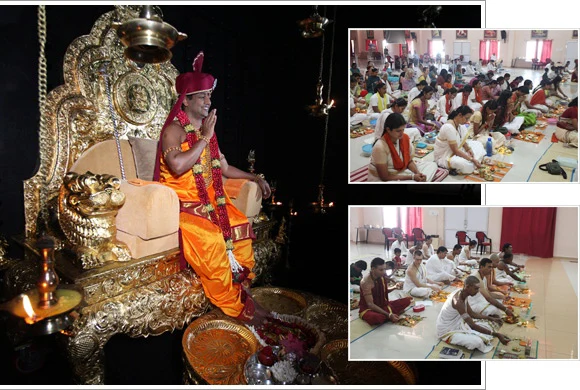
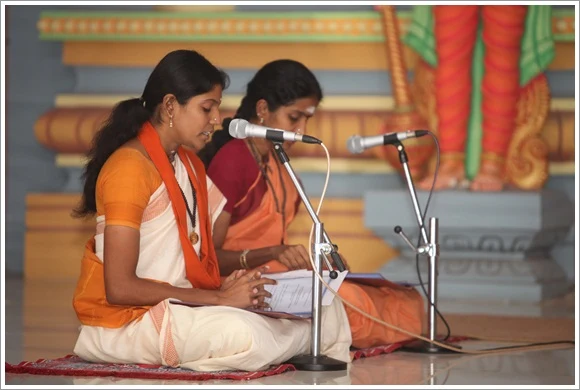
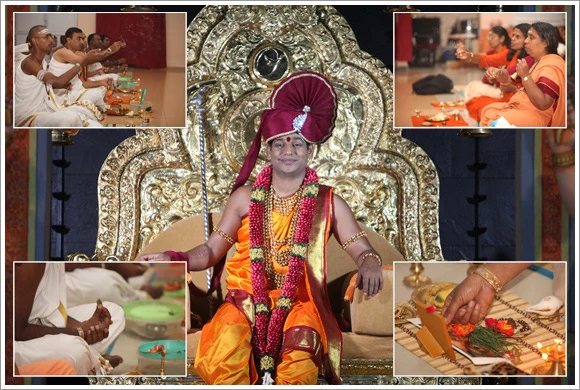
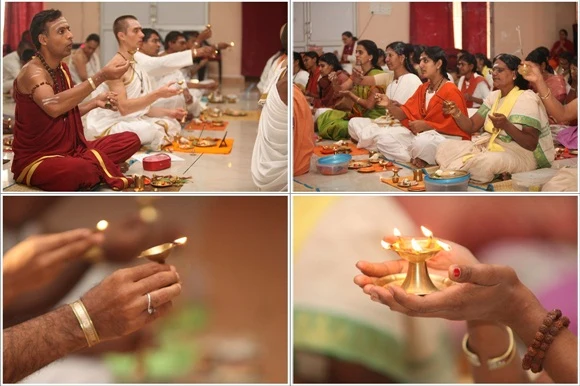
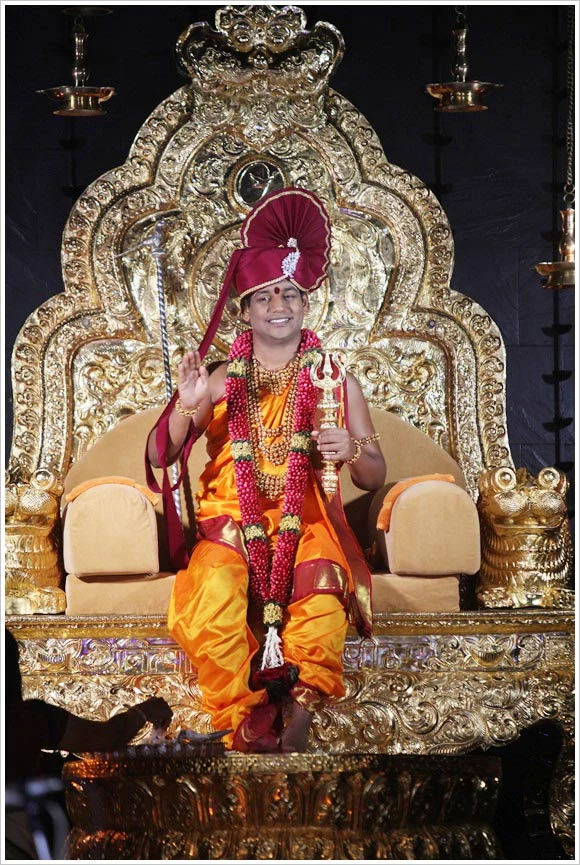
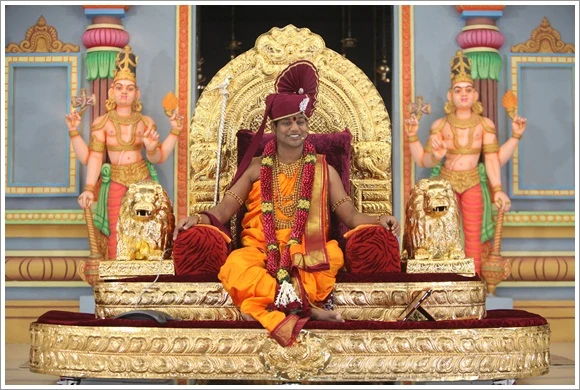
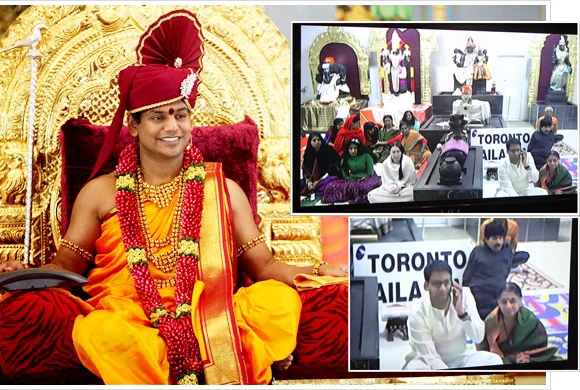
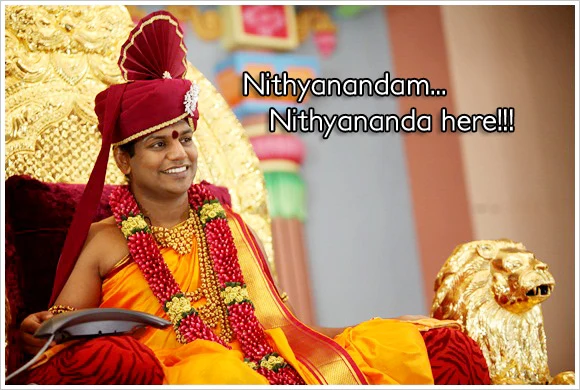
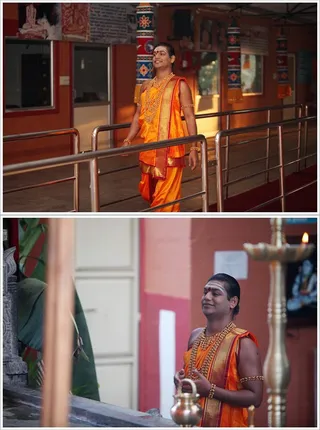
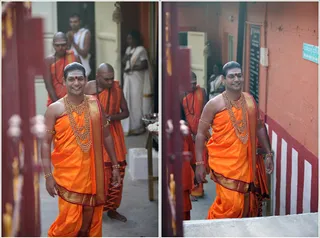
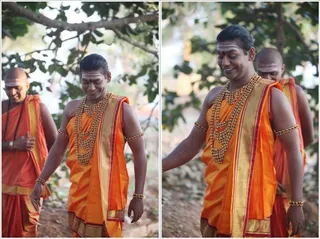
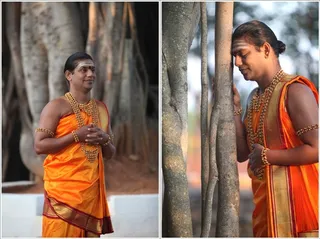
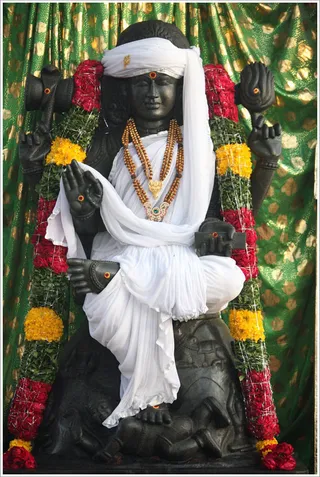
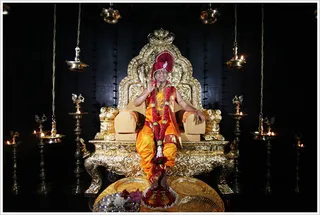
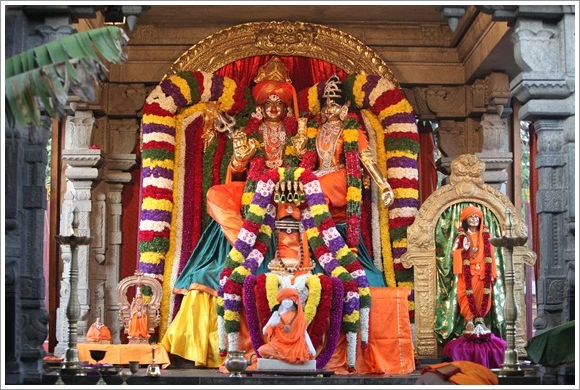
A decorated shrine with a seated deity murti under an ornate gold arch, draped in red, orange and green cloth and wrapped in thick garlands of orange, yellow, red and purple flowers. The central seated figure wears a red crown and gold ornaments, flanked by a second seated figure. A small orange-clad figure sits at the base among offerings. Carved stone pillars frame the shrine, with a smaller decorated niche and lamps at the right. No living people are visible.A two-panel collage of photographs showing deity murti decorated with dense garlands of marigolds and multicoloured flowers, with orange, yellow and purple blooms. The left panel shows a seated figure in orange and gold robes beneath flower garlands in an ornate shrine setting. The right panel shows a close view of a golden-faced deity murti wearing an orange turban, holding a silver trident and a gold mace, with a rudraksha-style necklace, next to a second deity with a crown and jewelled ornaments. No physical people are visible; the figures are statues in the decorated shrine.A smiling man stands with palms pressed together in namaste, wearing a saffron-orange silk dhoti and matching shawl with a maroon and gold zari border. He wears layered gold ceremonial necklaces of beads, gold bangles on his wrists and gold armlets. A white and red tilak marks his forehead. A red-upholstered sofa and a blurred green garden appear in the background. Appearance cues including the saffron silk, ornate gold necklaces and tilak are consistent with a person in a ceremonial role, though the appearance is not certain enough to confirm identity.Two-panel photo collage of a man in saffron-orange silk robes with red and gold borders and layered gold necklaces. The top panel shows him walking along a corridor with copper railings past red-walled shrines and decorative pillars. The bottom panel shows him holding a small silver pot beside a tall brass oil lamp, a lit flame visible at the top, with a deity image on the wall behind. Appearance-based candidate with several cues: saffron-orange ornate clothing, multiple gold necklaces and bangles, and a visible forehead mark; the page names a person for this event, so the label is probable. Shown in person across both panels.A two-panel collage of a temple-style corridor with red pillars and white stripes. In both panels a man in saffron-orange dhoti and shawl, with a bare shaved head, multiple gold chain necklaces and beaded rudraksha-style necklaces, and gold bangles walks forward smiling. Behind him, shaven-headed attendants in orange robes and a man in white dhoti stand by a doorway with a tray of offerings and a white cloth-covered table. A teal sign hangs on the right wall. Because the image is a collage of two photographs, the pictured people are counted once as physical people in the scene.Two-panel photo collage of outdoor scenes under leafy trees. In both panels a man with short dark hair walks in an orange and gold-bordered shawl over saffron clothing, wearing layered gold-coloured rudraksha-style necklaces, gold bangles and a gold armband. Behind him a shaved-headed companion in orange robes walks along. The left panel shows the man looking downward; the right panel shows him smiling. The shawl's gold borders and the gold ornaments are the most visible details. a person cues are the layered ornate necklaces and saffron-gold attire; the man is walking with a companion, so the count is two physical people.A two-panel collage of photographs showing a man in saffron-orange draped robes with gold-bordered cloth. In the left panel he stands before large tree trunks with hands pressed together in namaste, wearing a multi-strand gold necklace, gold armlets and bangles, and a white-and-orange forehead mark. In the right panel he leans his forehead against a tree trunk with eyes closed, hands folded at his chest, wearing the same gold necklaces and armlets with his hair swept back. The tree trunks are thick banyan-like roots. The collage shows two physical people in the photographs with saffron robes, gold ornaments and devotional posture.A dark stone murti of a seated deity, draped in white cloth with a white headcloth and a red bindi on the forehead. Multiple rudraksha-style beaded malas and a gold pendant hang on the chest. Four hands are raised holding objects, and the figure sits on a carved pedestal with small figures at its base. Red, orange and yellow marigold and rose garlands wrap both sides, set against a green gold-dotted cloth backdrop. This is a statue, not a living person, so no physical people are shown.A seated figure in saffron-orange clothing sits on an ornate gilded throne with carved lion-like armrests and a tall decorated back, within a dark hall. He wears a red-and-gold turban-style crown, a long red and white garland, and a tall dark tilak-style headpiece with ornaments. His right hand is raised in a blessing gesture. Brass oil lamps with lit flames hang from chains and stand on pedestals on either side. At the base of the throne, a gold tray holds flower petals and offerings. The room is dimly lit, with the throne as the focal point. Swamiji (probable): the figure wears a crown, saffron clothing, a garland and ornate regalia, consistent with the page's Swamiji reference.A photograph inside a temple-like hall with blue walls and painted pillars. At centre, a figure in orange and gold robes with a red head covering sits on an ornate golden throne (peetha) before a brass puja vessel, with hanging lamps above. Two tall painted deity murtis with multiple arms flank the throne. In the foreground, a woman in a white sari sits on a mat playing a harmonium-style instrument, another seated woman in a gold-patterned sari sits to the right, and a man in white kneels near the throne. Polished floor reflects the scene and brass lamps stand at the lower right.A collage of three photographs. The large main panel shows a man in saffron-orange robes and a red turban, with a multi-strand red and white garland, seated on an ornate gilded throne carved with lion-like figures. He has his palms pressed together in greeting and a brass oil lamp burns beside him, with a brass offering tray at the base of the throne. The two smaller panels show rows of people seated on the floor of a hall, many in white with orange or red sashes, with brass plates and oil lamps in front of them, apparently taking part in a seated ritual. The image is a graphic collage, with no physical people counted from the panels themselves beyond those visibly seated in the photographs.Two women sit cross-legged on a red mat before microphones on stands, reading from papers in their laps. The woman on the left wears an orange blouse, a white sari with a red border, and an orange shawl, with a pendant on a cord and her hair pulled back. The woman beside her wears a maroon blouse and an orange sari. Behind them stands a large painted pillar with orange and gold decoration and a painted figure's legs in red and green garments. No a person candidate is visible.