Skip to content
Monday

11 July 2011

THE SUPREME PONTIFF OF HINDUISM HDH BHAGAVAN NITHYANANDA PARAMASHIVAM

Dated photos
22
Source pages
1
Media
1
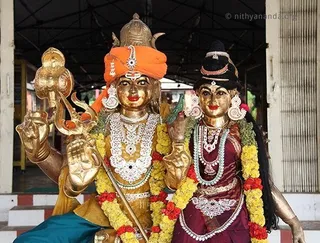
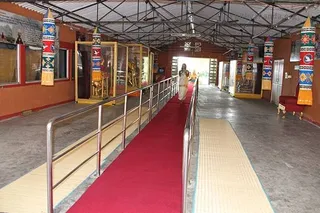
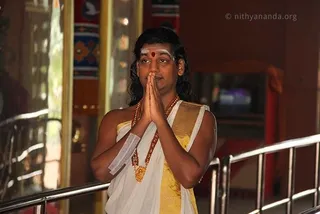
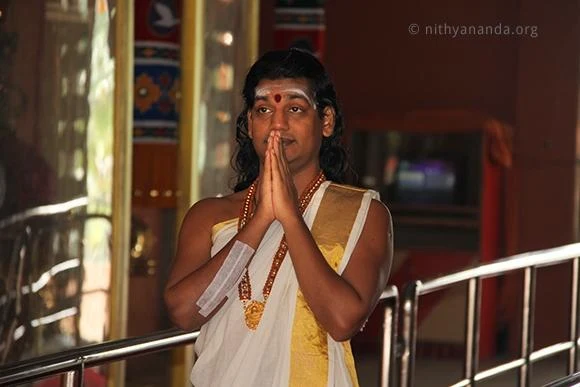
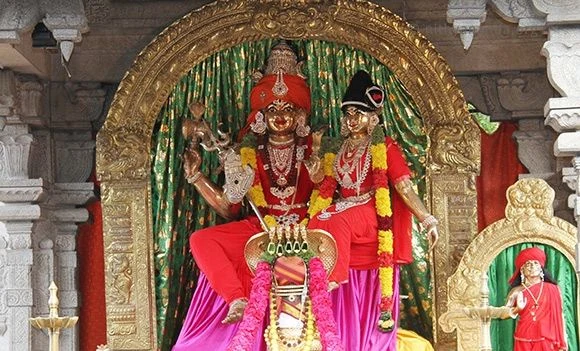
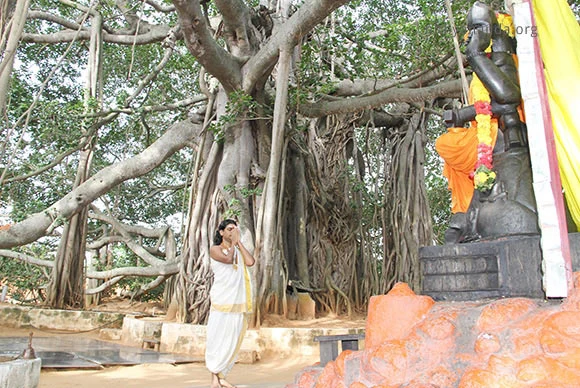
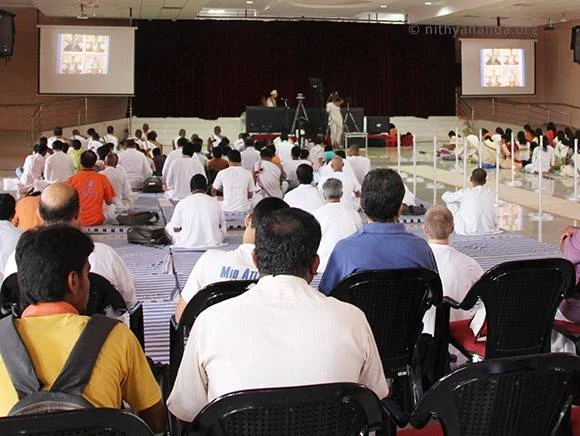
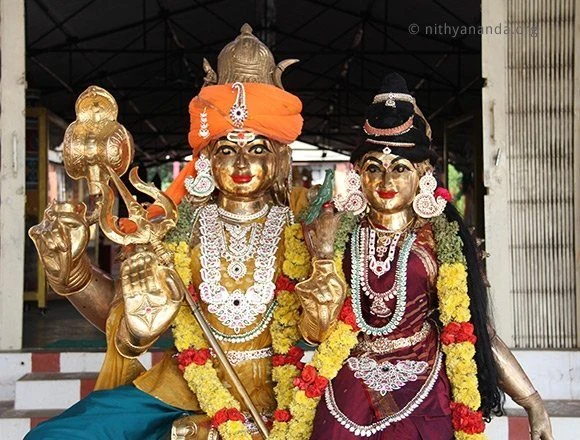
Two golden metal murti statues sit side by side under a open pavilion roof. The figure on the left has a saffron-orange turban, gold crown-style headdress, a white and silver necklace, and holds a golden trident-like staff. The figure on the right wears a deep maroon garment, layered jewelled necklaces, large earrings and a dark braided hairstyle. Both are draped with garlands of yellow and red flowers. This is a deity murti statue display, not living people.A long covered hall with a red carpet runner down the centre and metal handrails along both sides, lined with tall decorative banners in red, blue and yellow patterns. On the left, glass cases hold golden deity figures and small altars. A single person in white clothing walks away from the camera toward a bright doorway at the far end, where a golden murti is visible. The floor has pale woven mats at the edges and the ceiling is corrugated metal.A man stands with palms pressed together in namaste at chest height, greeting the camera. He wears a white dhoti-style garment with a gold-bordered yellow shawl draped over one shoulder, a red-and-orange rudraksha-style bead necklace and a gold chain, and has white vibhuti lines and a red bindi on his forehead. Long dark hair falls past his shoulders. Behind him are a metal railing, pale columns and a colourful painted wall panel. The page indicates a candidate for Swamiji is present; appearance cues include the long hair, rudraksha beads, gold ornaments and ceremonial yellow-bordered white dress, so this is a probable in-person identification.

July 11 2011

Original wiki page
Contents

Title:

THE SUPREME PONTIFF OF HINDUISM HDH BHAGAVAN NITHYANANDA PARAMASHIVAM

Photos:
Sakshi Pramana:

Sharing from responsibility

Photos from this day

View all 22 photos
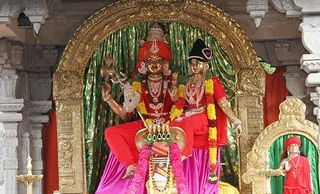
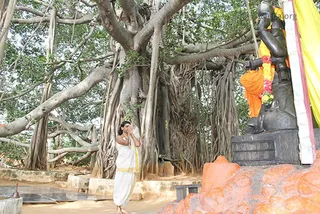
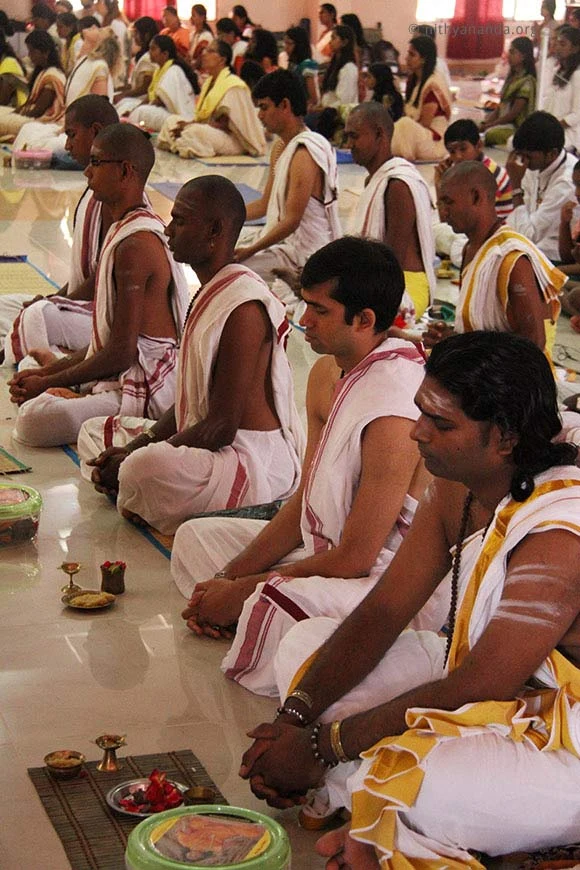
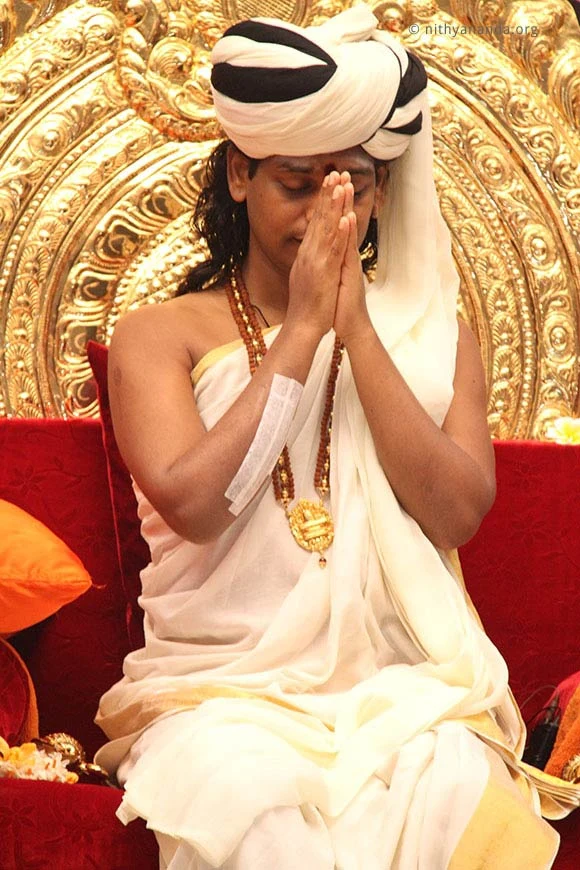
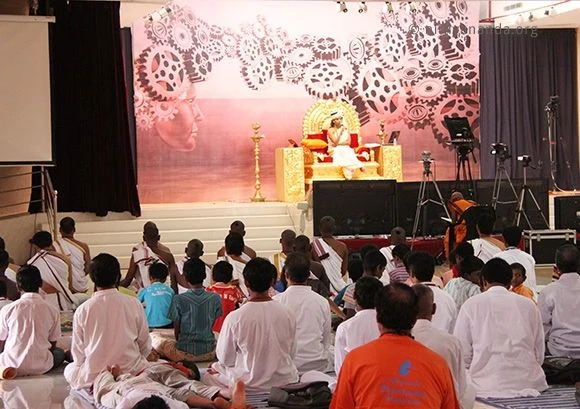
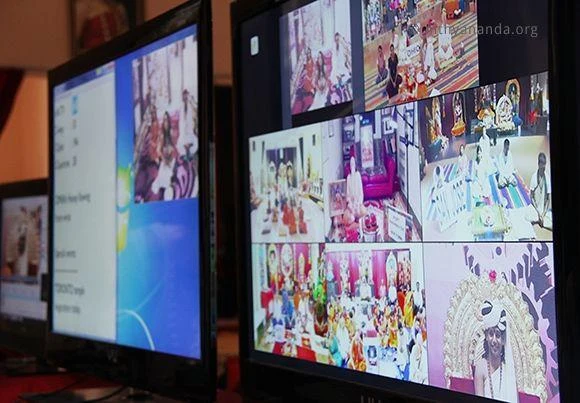
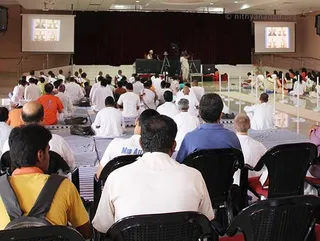
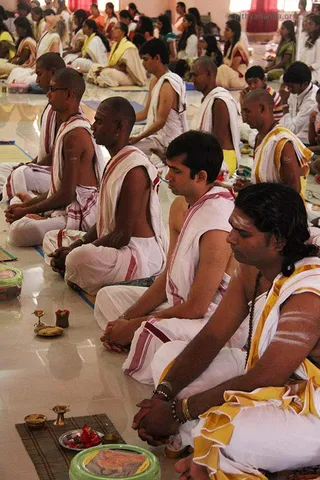
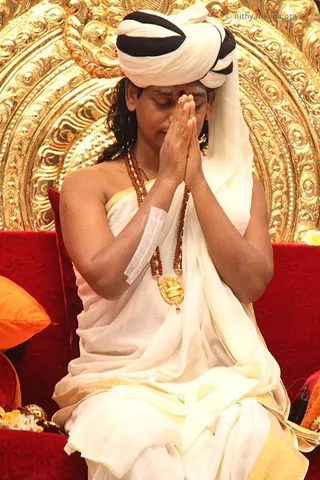
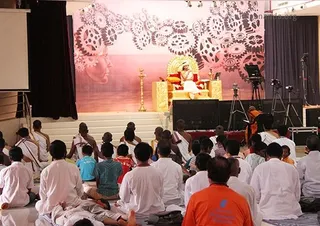
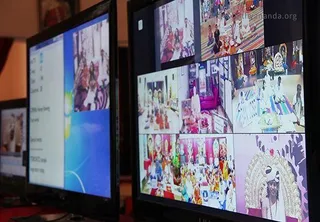
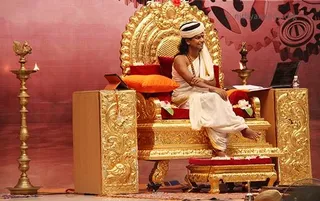
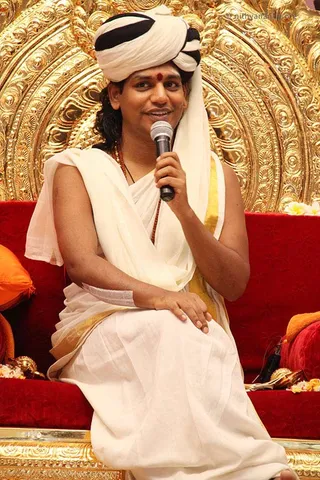
Two golden metal murti statues sit side by side under a open pavilion roof. The figure on the left has a saffron-orange turban, gold crown-style headdress, a white and silver necklace, and holds a golden trident-like staff. The figure on the right wears a deep maroon garment, layered jewelled necklaces, large earrings and a dark braided hairstyle. Both are draped with garlands of yellow and red flowers. This is a deity murti statue display, not living people.A long covered hall with a red carpet runner down the centre and metal handrails along both sides, lined with tall decorative banners in red, blue and yellow patterns. On the left, glass cases hold golden deity figures and small altars. A single person in white clothing walks away from the camera toward a bright doorway at the far end, where a golden murti is visible. The floor has pale woven mats at the edges and the ceiling is corrugated metal.A man stands with palms pressed together in namaste at chest height, greeting the camera. He wears a white dhoti-style garment with a gold-bordered yellow shawl draped over one shoulder, a red-and-orange rudraksha-style bead necklace and a gold chain, and has white vibhuti lines and a red bindi on his forehead. Long dark hair falls past his shoulders. Behind him are a metal railing, pale columns and a colourful painted wall panel. The page indicates a candidate for Swamiji is present; appearance cues include the long hair, rudraksha beads, gold ornaments and ceremonial yellow-bordered white dress, so this is a probable in-person identification.A temple shrine with two ornate statues seated on a raised platform under a gold-framed arch, with green curtains behind. The central figure is a murti with a red turban, four arms, gold jewelry and a red-and-pink dhoti-like garment, decorated with yellow and orange marigold garlands and red-and-pink flower garlands. The second figure wears a black and gold crown and red attire with a rudraksha-style necklace. Oil lamps and a small figure in red stand at the sides, with carved stone pillars around. These are statues, not living people.A woman in a white sari with a gold border stands barefoot with palms pressed together in namaskar beside a large black stone deity murti. The murti is draped in orange cloth and garlanded with flowers. Behind her, a massive banyan tree with many hanging aerial roots spreads over a stone platform, and a yellow cloth banner hangs at right. The setting appears to be an outdoor shrine.Photograph from behind of a seated audience in a large hall facing a stage at the front. Many attendees wear white clothes, some in orange or yellow shirts, and most sit on the floor on striped mats or in black chairs. Two projection screens flank the stage, showing images, and a speaker at the front is partly visible beside a lectern and stand. Visible chairs and mats indicate a satsang or discourse setting. The count of visible people is above twenty.Photograph of a large seated group of men and women in a bright hall with a light tiled floor, many dressed in white dhotis and shawls with red or yellow borders. In the foreground, a bare-chested man with a rudraksha mala and white horizontal forehead marks sits with hands folded, and beside him a man in a white dhoti with red borders sits with palms together. Brass oil lamps, a plate of red flowers and a small brass bowl sit on a mat in front of them, indicating a puja. Other participants sit in rows behind with eyes closed in meditation. No identifiable central figure is clearly visible.A seated figure in white robes sits on an ornate golden throne with red cushions on a raised platform at the front of a hall. Behind him is a large pink-and-white backdrop decorated with stylized gear and wheel motifs and a painted face. Rows of people sit cross-legged on the floor facing the throne, many in white clothing, with a few children among them. One man in an orange shirt stands at the right edge near a camera tripod. Video cameras on tripods and a speaker are set up at the side, and a projection screen hangs at the left. The setting resembles a discourse or satsang hall.A photograph of two flat-screen monitors displaying a multi-panel video feed of a temple event. The right monitor shows a grid of tiled camera views: stage scenes with decorated altars, colourful drapery, garlands, lamps and seated devotees. A lower-right panel shows a close-up of a figure in an ornate golden headdress with a painted face and decorative adornments. The left monitor shows a desktop-style window with a blue background and a partial camera view. The screens sit in a room with a red wall and framed picture; the event is shown only as live-feed screens, not as people in the room.