Skip to content
Tuesday

29 March 2011

Who is a Siddha - Patanjali Yoga Sutras 139

Dated photos
31
Source pages
1
Media
5
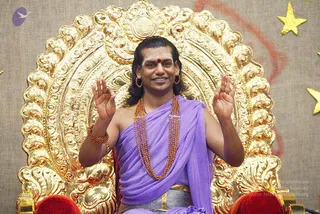
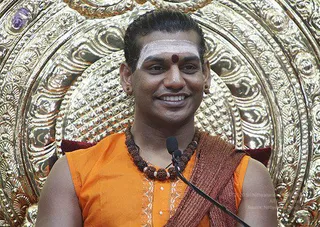
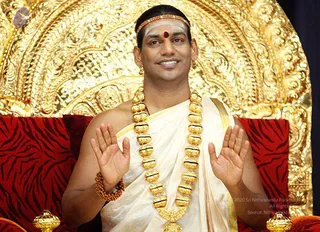
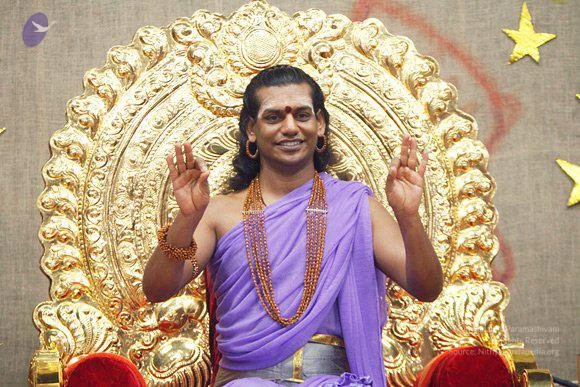
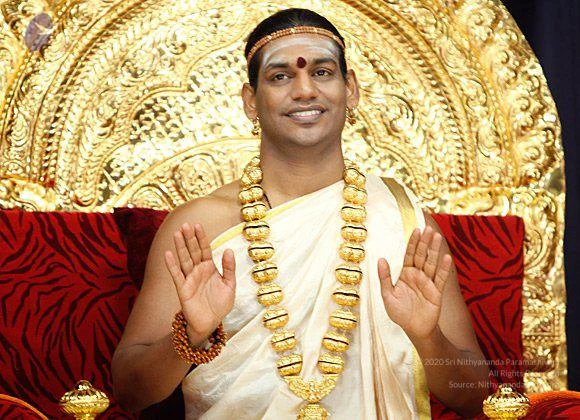
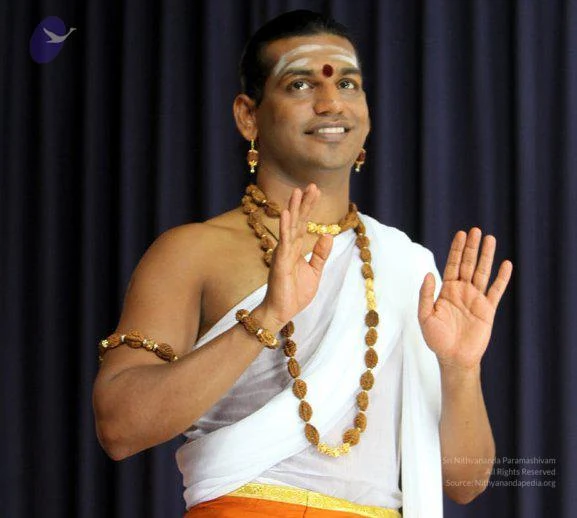
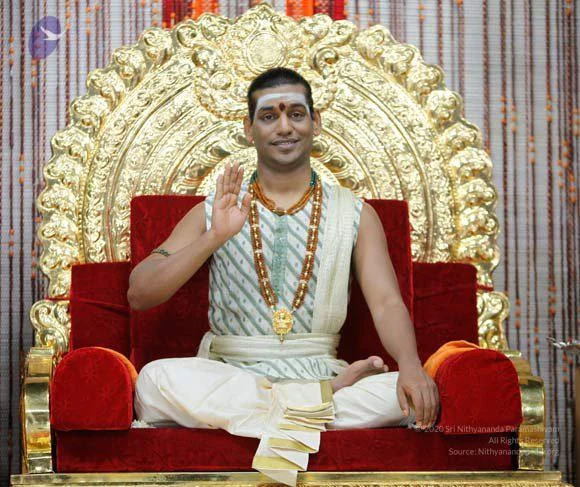
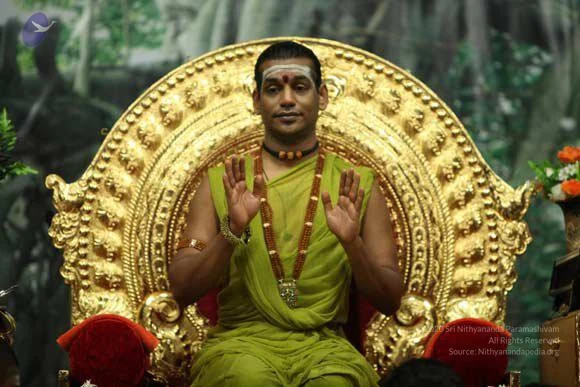
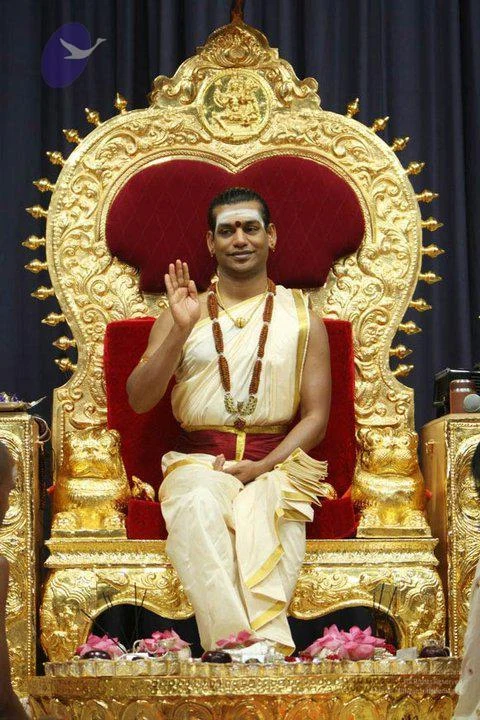
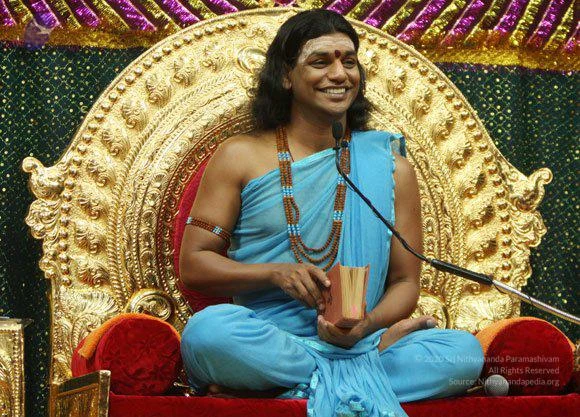
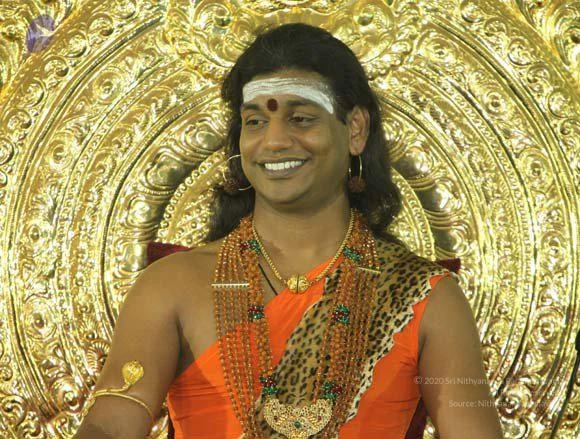
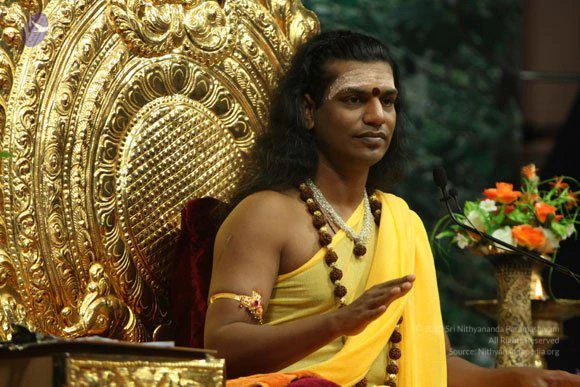
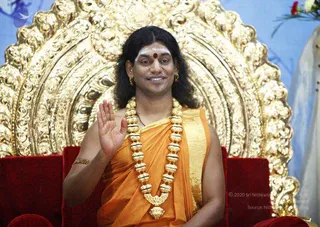
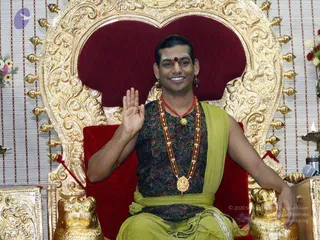
A seated man on an ornate gold throne with carved scrollwork and red cushions, smiling with both palms raised in a blessing gesture. He wears a lilac-purple dhoti-style wrap over bare shoulders, a gold-and-rudraksha mala of reddish beads, a gold waist belt, gold bangles and gold hoop earrings, with a red tilak on his forehead. Gold star cutouts decorate the background. The man's appearance, with swept-back long hair, ceremonial gold ornaments and rudraksha beads, is consistent with Swamiji (probable), seated on a throne in a teaching or blessing pose.A smiling man in an orange sleeveless top with a saffron-and-cream shawl draped over one shoulder stands at a microphone in front of an ornate gold repoussé backdrop. He wears a white vertical forehead mark with a red bindi, a rudraksha mala with a large bead necklace, and small ear studs, and his hair is swept back. The gold-patterned panel behind him suggests a formal stage or throne-style seat. Pictured with his distinctive orange robes, rudraksha necklace and swept hair, he is a person candidate, and his appearance is consistent with the page's attribution, though this is an appearance-based label only.A smiling man with short dark hair sits on an ornate golden throne with red and zebra-striped cushions, his palms raised facing outward in a blessing gesture. He wears a white dhoti-style garment with a gold border, a heavy multi-bead gold necklace, a gold bracelet, a red bindi and a thin sandalwood-coloured forehead band. Two small gold kalasha-style finials appear at the bottom of the frame. a person: the figure is shown in a throne setting with a gold necklace and white robes, and the page identifies a person for this event; the appearance cues are a seated teacher with gold ornaments and a throne, which is fairly consistent.

March 29 2011

Original wiki page
Contents

Title:

Who is a Siddha - Patanjali Yoga Sutras 139

Link to Video:

In this short "nithyananda videos", Paramahamsa Nithyananda describes who is a siddha. This clip is taken from Patanjali Yoga Sutras.

VideoAudio

Title:

Retrieve your Akashik Records - Patanjali Yoga Sutras 138

Link to Video:

VideoAudio

Title

Meet the masters | Patanjali Yoga Sutras 138 | 29 Mar 2011

Link to Video:

Transcript:

Sadāshiva samārambām shankarācharya madhyamām Asmadācharya paryanthām vande guru paramparām.

[00:52]

I welcome you all with My love and respects. Todays subject, extraordinary subject, extraordinary samyama, extraordinary technique, ‘MEET THE MASTERS’. Patanjali directly gives cell phone number and video conferencing facility for all the Masters who lived in the planet earth. All the masters who happened on the cosmos in the planet earth, Patanjali is giving us a methodology, technology to relate with them.

[02:05]

The sutra मूर्धज्योतिषि सिद्धदर्शनम् ॥ moordhajyotishi siddhadarshanam// Swami Vivekananda translates as: on the light emanating from the top of the head sight of the siddhas. Swami Prabhavananda translates as: by making samyama on the radiance within the back of the head one becomes able to see the celestial beings. Swami Sachidananda translates as: by samyama on the light at the crown of the head visions of the Master and adepts are obtained. Osho says, Osho translates as: by performing samyama on the light under the crown of the head comes the ability to contact all perfected beings.

[02:53]

Siddha, Master is a person, who doesn’t have perishable identity; because of it, has eternal identity. Understand, his identity is made out of material which is imperishable. There is no perishable component in the identity he created for himself. When the breeze flows over the water, the shapes and drawings created on the water…. there is a huge water body, breeze flows over the water body, small waves are happening or some drawings or figures appear on the water, in that figure there is no perishable component.

[04:16]

That figure, the source, cause effect everything is just water. When the breeze flows again that same wave will happen, when the breeze stops the wave will settle down into the water. Same way whenever a strong devoted samyama, strong devoted samyama is the breeze, water is the pure consciousness. Whenever the strong devoted samyama from a disciple happens over the conscious water, Master’s forms appear and blesses you, graces you, and again it relaxes back into the same water. There is no perishable component. Please understand, there is no perishable component in the system. Because there is no perishable component it is eternal identity.

[05:49]

Siddha is a being whose all seven shareeras does not have any perishable component; means, any engram is perishable component. When all the engrams have disappeared, that body has become such a pure liquid, it creates different shapes, shades, wave’s , visuals based on the breeze flowing over it. The lake has no interest to take some shape. The flow of the breeze decides the shape.

[06:44]

Master is a being happening without any perishable component. He is just a beautiful rhythmic play; the pure non-perishable experience happening in the source. That is the reason any siddha happened in the planet earth is available forever, for anybody to connect with or have the benefit of his presence and energy. Understand, any siddha, any Master happened in the planet earth is available eternally for anybody to relate or connect with, experience his presence, knowledge or initiation.

[08:17]

Please understand, any action you do just based on the physical body will leave its wave and the archive in physical layer. All your physical actions get gathered and archived in the physical layer of the cosmos. Understand even a small act you do, like a simple eating, gets recorded in your file in the cosmic physical archives. Same way any small thought crosses your mind, like, I think I should go and lie down and sleep. Even this simple thought gets recorded in your mental layer as a file and stored in the cosmic archives. Anything happened from the beginning in all seven levels in all beings is available alive.

[09:32]

Understand, 3000 yrs before when you were in the pig body or buffalo body or elephant body or dinosaur body, what you thought on particular day and particular moment can be retrieved without any corruption or mismanagement or alteration. Whole thing is available. If the action which you did is performed from the first layer, it will be available in first layer file, if it is from the second layer it will be available from the second layer file. If it from third layer of your body it will be available from third layer of the file.

[10:32]

But one important thing is, billions and billions of first layer files are available, millions and millions of second layer files are available, but only thousands of third layer files are available because people don’t function from second layer and third layer. Understand, so when you go deeper and deeper and deeper only few thousand or few hundred files are available from the seventh layer actions. If it is first layer, more perishable components, so those files are dumped which is very difficult to find, search, seek, but it can be retrieved. Second layer - little less difficult but millions are there or I should say first layer trillions of files are there. Second layer billions of files are there.

[11:37]

Learn this technology to relate with the Master it will help you not only to relate with the Masters who are no more in the body, even to relate with the Masters who are in the body. I will give you the exact technique. Visualize in this circle, in this area, crown area. It will be very useful if you wear the rudraksha on your top of the head. See yesterday I was wearing just rudraksha band. Wear the rudraksha band. Visualize this whole area you have a strong current, like a laser beam, laser beam light coming out of your head over the sky to the eternal distance. Just visualize like a, how in US and all to attract your attention for advertisements they put a laser beam light to the sky, same way visualize you have a strong laser beam towards the sky.

[13:11]

Please understand, samyama on the intense light on the crown. Visualize there is a intense light beam; it’s a very powerful samyama. I can say you may not need more than 11 days to relate with any siddha through this samyama. In the initial level if you want immediately to have experience, you can relate with the Masters who are very easily available. If you are My disciple you can relate with Me: you will see Me in your room. You will see Me in your bedroom, you will listen to Me in your bedroom without Skype or video conferencing; directly. Or if you are a type of a person who wants to see some Masters who don’t have the body now, who left the body; I can give you few names who are readily available for any call. One Mahavatar Babaji, another one Ramakrishna, Raghavendra swami, Nerur Sadashiva Brahmendral; these are the Masters readily available, Shirdi Saibaba. They are all readily available.

[14:45]

Understand, when you do the samyama, wear the rudraksha around the head. That rudraksha on the head, that technique itself is for this kind of samyama only. Actually when you wear that in the traditional mutts and monasteries that mala will be the original mala of the founder. So when he leaves the body he gives that mala to his disciple. When you wear that mala and do this samyama you will take the decisions exactly as your Master wanted. That is to keep your brain straight and connected to the Master. You will exactly make the decisions as he wants. That is almost like a medium connection, giving you the Skype connection or video conferencing connection. Then when second Master leaves the body, he will hand it over to his next disciple. So when that mala is used for generations, the person who is wearing will take exactly the decisions as his founder and all the Masters wanted. That is the reason the mala on the crown is used.

[16:07]

It’s like a cell phone number; when you have a problem just connect with that mala and that samyama ask what decision should I make, you will be there with right decision; you will see they are there with the right decision guiding you. It is not just an ornament wearing rudraksha on the crown. It is a powerful initiation.

[16:40]

Strongly visualize the light beam, like laser beam. Remember the Master with whom you want to connect. Just 21 minutes a day, 11 days is enough. You will be able to connect with the Master whoever you want. You will be able to receive answers from them, have darshan of them and experience them. If you want to do samyama on Me, do it. I will be there. If you want to do samyama on any other Master, just say I gave you the technique you will see them immediately, quickly. It’s a recommendation reference. The source through which you are introduced also plays a role. Not only that, when you connect with those Masters you will have the right guidance and advice about your spiritual practice and understanding.

[18:10]

I will guide you into this Samyama. Sit and visualize, if you want you can wear your mala on the top of your head. Tie it around the forehead and visualize strong light beam through your head to the sky to the cosmos. You can just wear it on your crown and tighten it. How I was wearing yesterday, the same way. Yesterday I was wearing rudraksha band on your forehead. Same way just tighten it. You have to wear tightly so that it helps for samyama.

[19:21]

Visualize intense light. Close your eyes and visualize intense light through your crown to the cosmos, intense light beam, with closed eyes. And now remember whoever you want to connect with. If you want to connect with Me, connect with Me. If you want to connect with some other Masters who are no more in the body remember them. Not only connecting with enlightened Masters, you can even connect with scientists and adepts, other people, through this Samyama. If you want to connect with Einstein you can do the same thing. Please understand, if you are going to read some Einstein’s book, before that just do this samyama, connect with Einstein and read; simply you will know what exactly Einstein wants to tell through that book in your system without even completing the reading. It will just get downloaded.

[20:55]

Even now before reading anything if you are observing Me very closely, you will see I will fall into some mood then start reading; because the whole thing will get downloaded. This is the samyama I fall into before I read or connect with anything.

[21:17]

I bless you all. Let you all achieve, experience, live, express, radiate and share the eternal bliss, Nithyananda. Thank you.

[21:33]

Photos Of The Day:

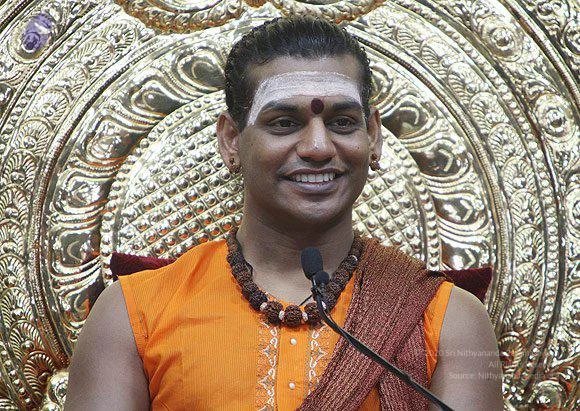
01-HDH-Energy-Beads
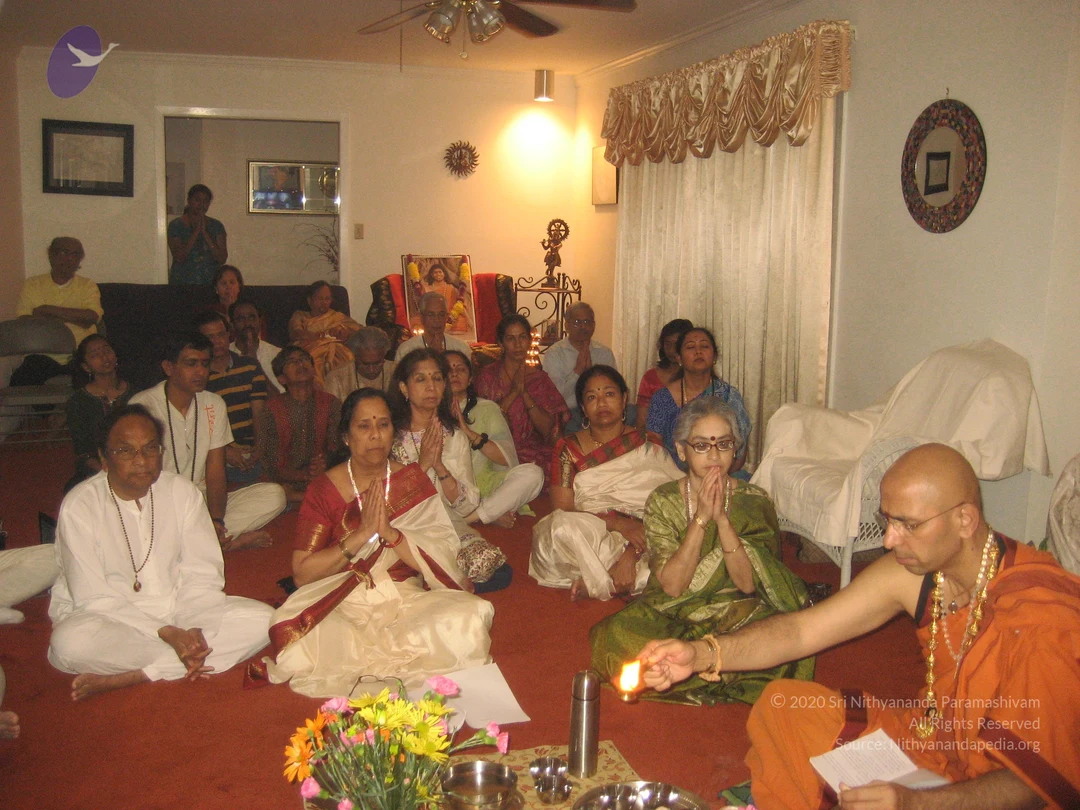
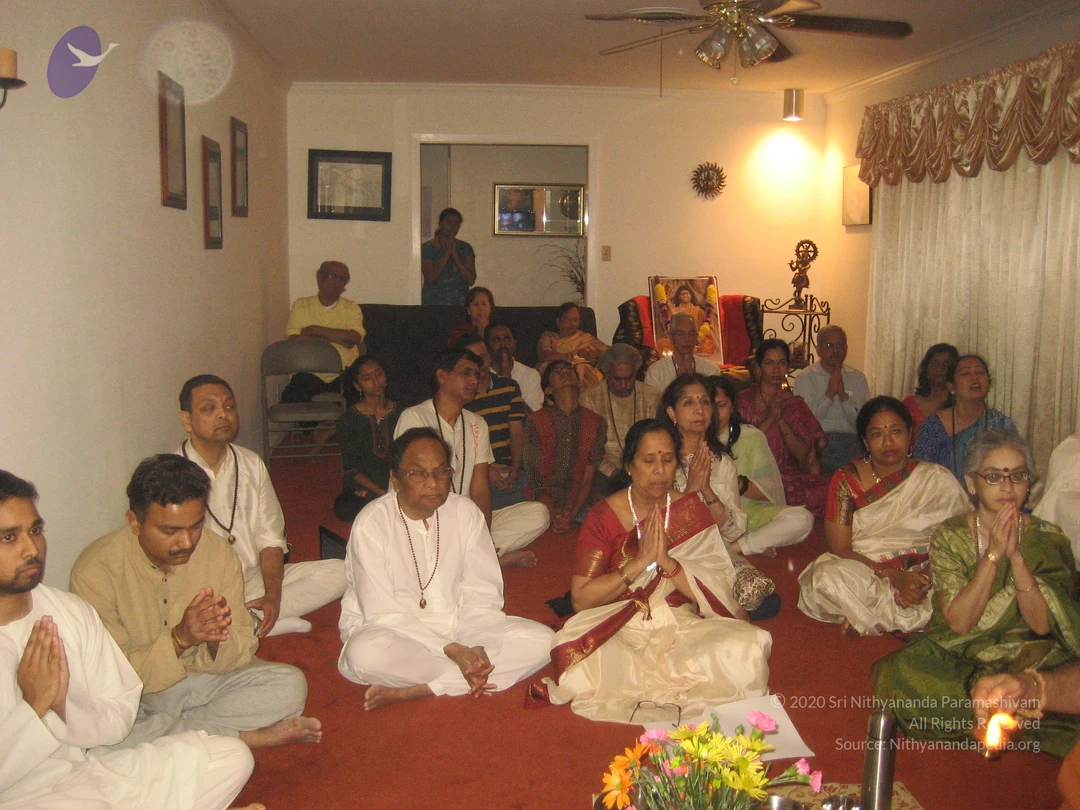
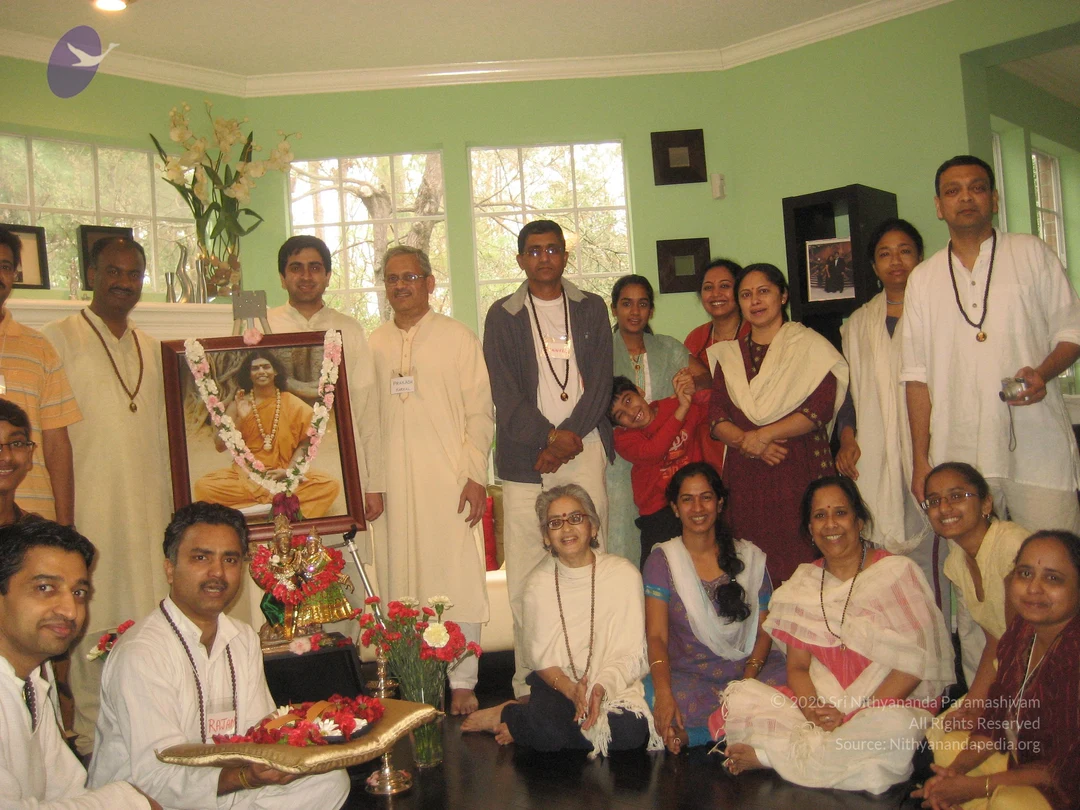
02-Houston-Center
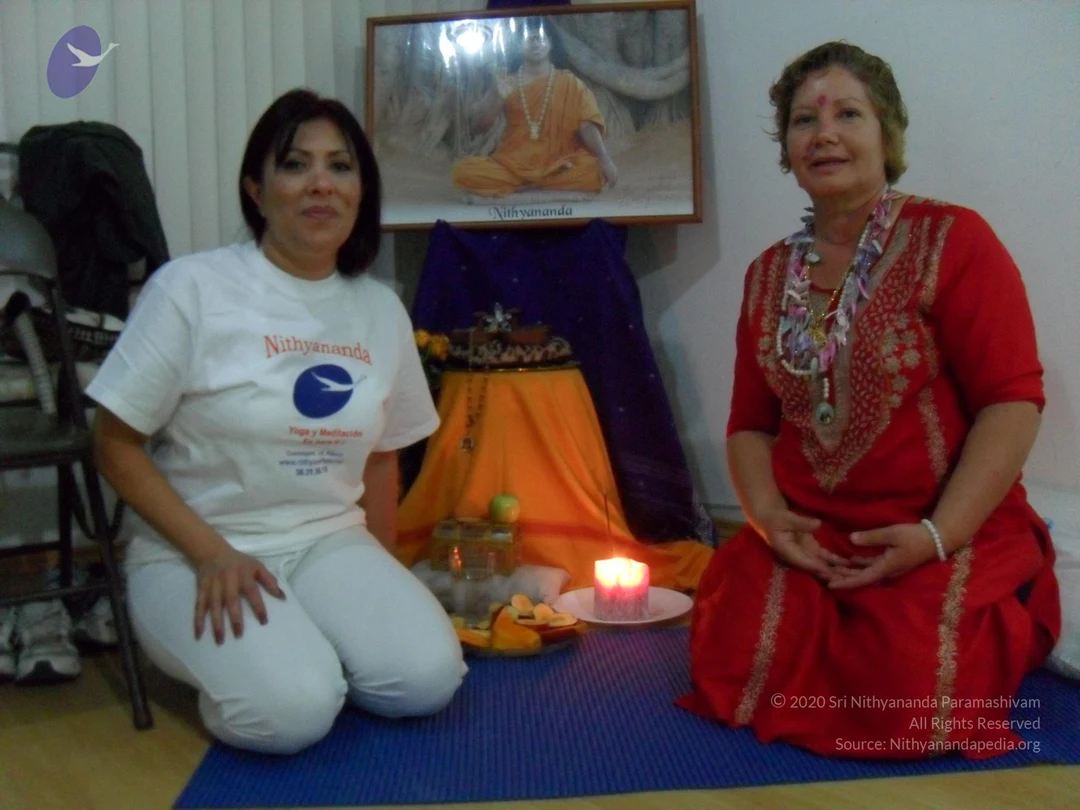
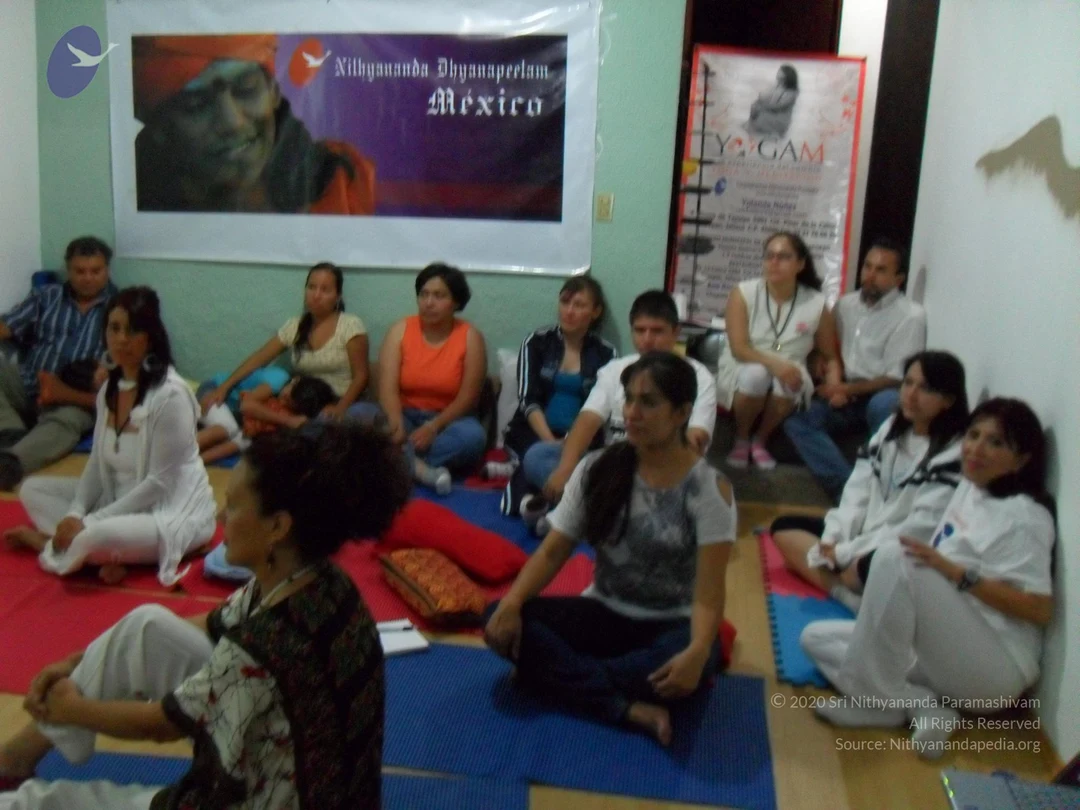
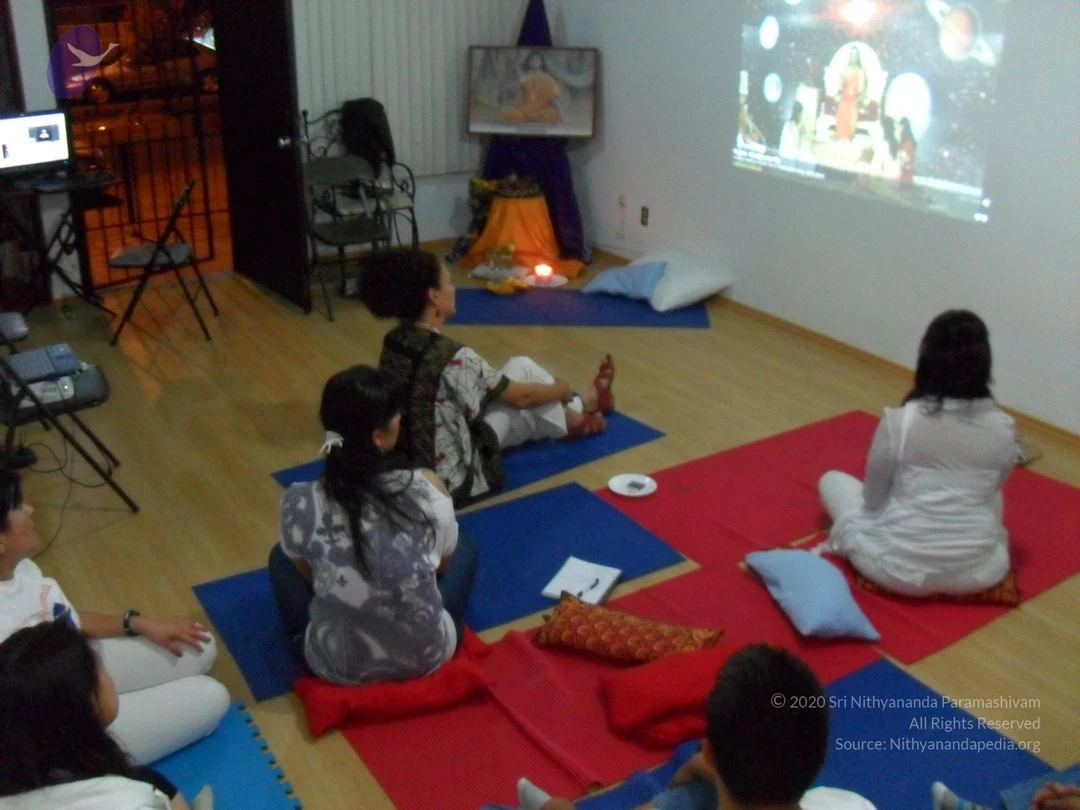
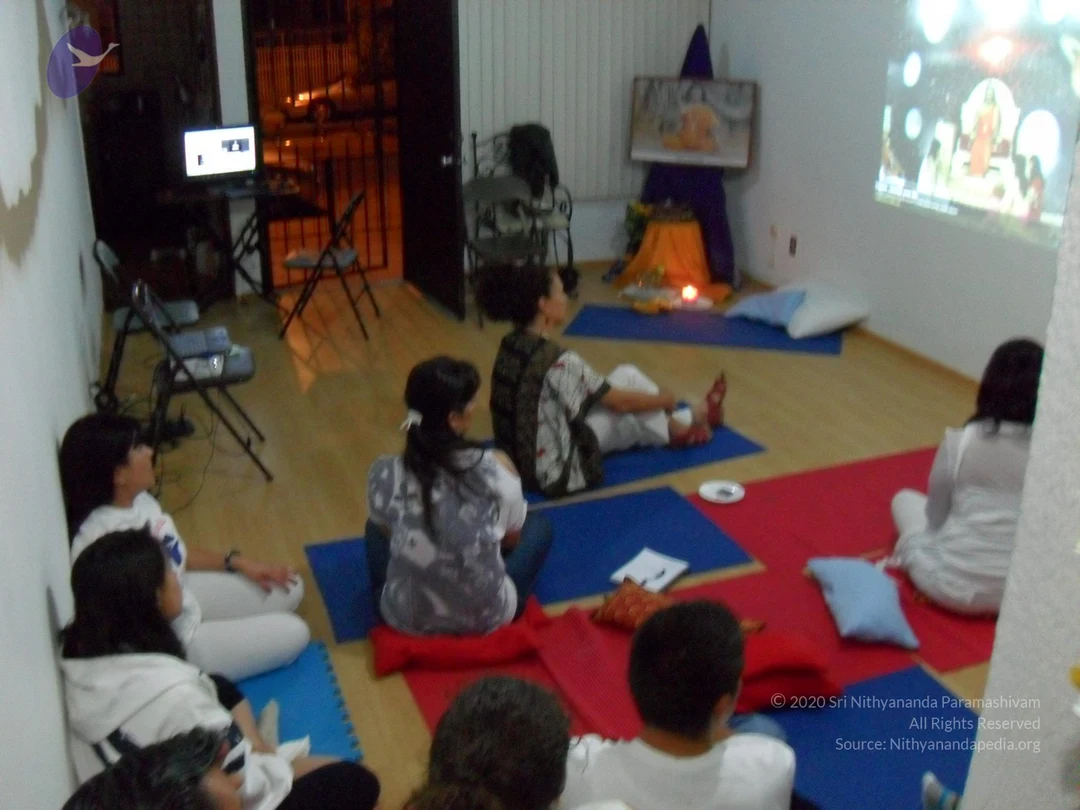
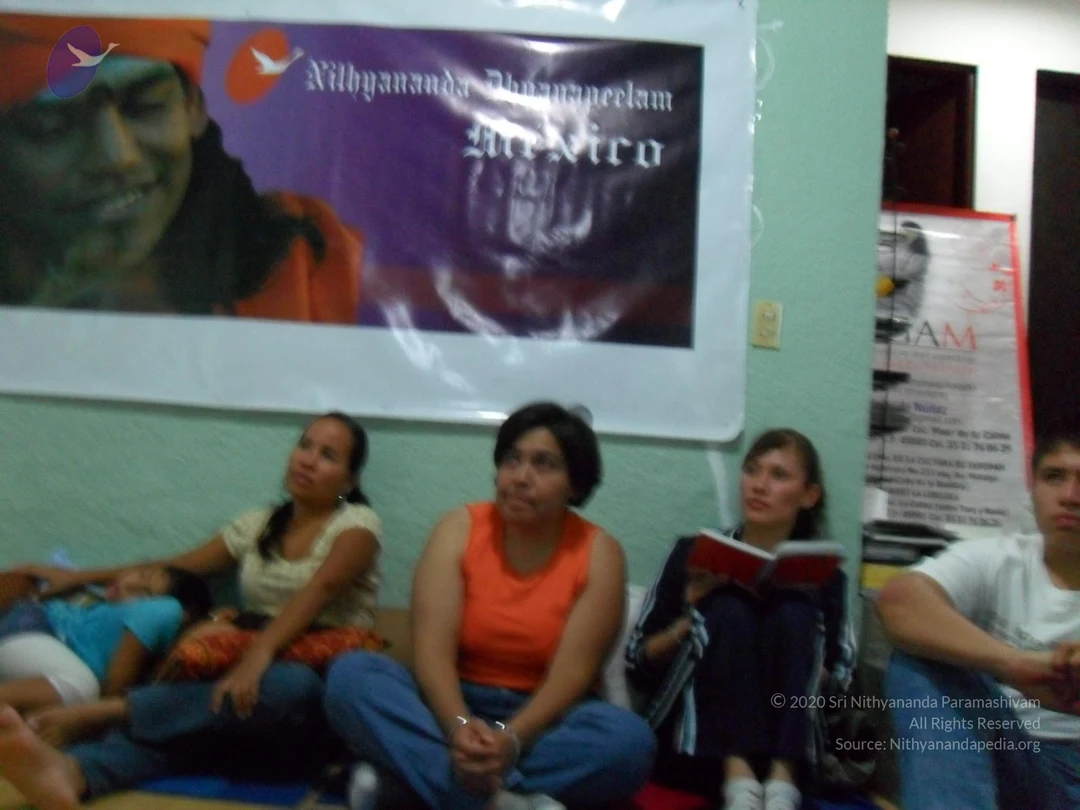
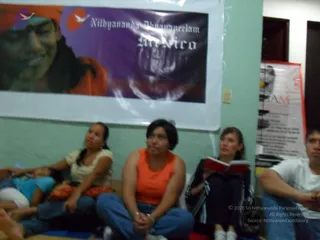
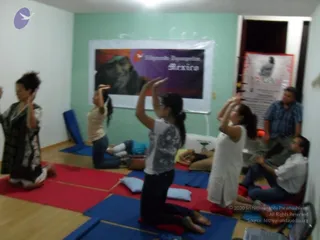
03-Mexico-Center

Photos from this day

View all 31 photos

01-HDH-Energy-Beads

16 photosSource gallery
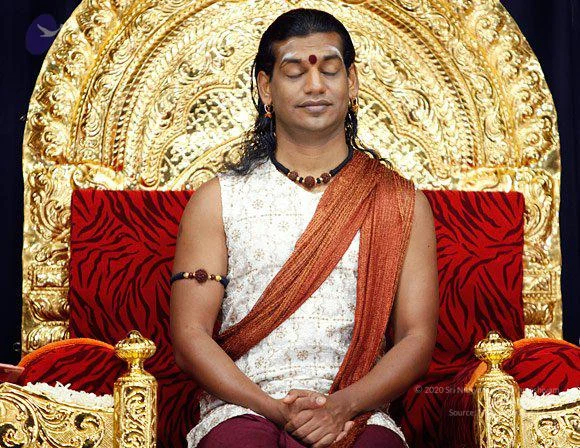
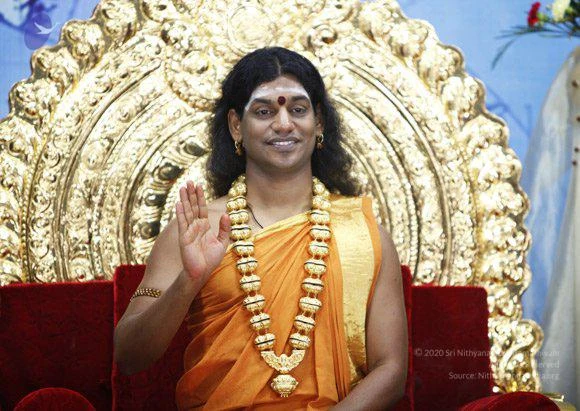
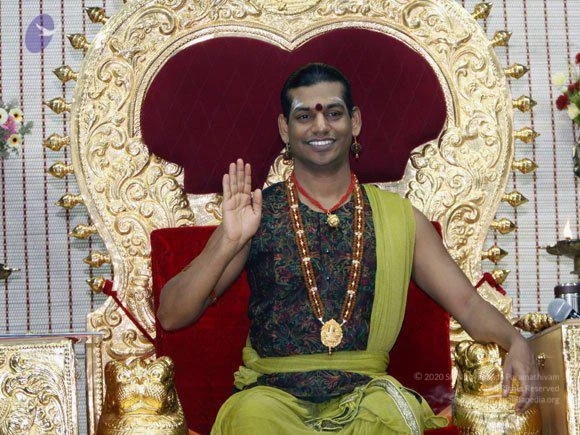
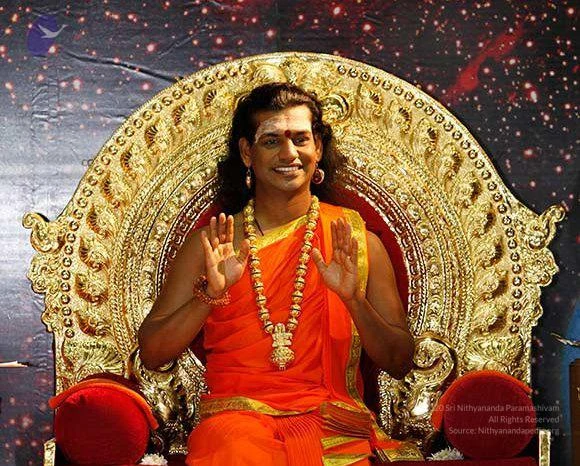
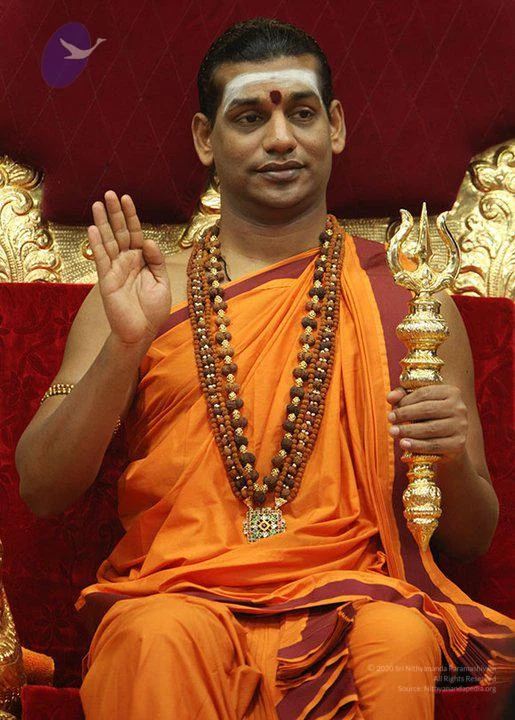
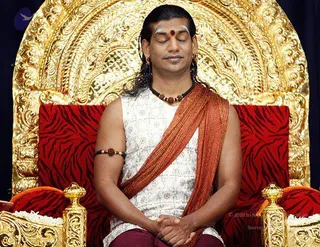
A smiling man in an orange sleeveless top with a saffron-and-cream shawl draped over one shoulder stands at a microphone in front of an ornate gold repoussé backdrop. He wears a white vertical forehead mark with a red bindi, a rudraksha mala with a large bead necklace, and small ear studs, and his hair is swept back. The gold-patterned panel behind him suggests a formal stage or throne-style seat. Pictured with his distinctive orange robes, rudraksha necklace and swept hair, he is a person candidate, and his appearance is consistent with the page's attribution, though this is an appearance-based label only.A seated man on an ornate gold throne with carved scrollwork and red cushions, smiling with both palms raised in a blessing gesture. He wears a lilac-purple dhoti-style wrap over bare shoulders, a gold-and-rudraksha mala of reddish beads, a gold waist belt, gold bangles and gold hoop earrings, with a red tilak on his forehead. Gold star cutouts decorate the background. The man's appearance, with swept-back long hair, ceremonial gold ornaments and rudraksha beads, is consistent with Swamiji (probable), seated on a throne in a teaching or blessing pose.A man with long dark hair swept back sits cross-legged on an ornate gold throne with red zebra-striped cushions, eyes closed in meditation. He wears a sleeveless white embroidered garment, an orange-brown shawl draped over one shoulder and across the body, a dark rudraksha-style mala necklace, a red bindi on his forehead, and a red and gold bracelet on his upper arm. His hands rest folded in his lap. The gold backdrop behind the throne is ornately carved, and white flower petals are scattered at the base of the throne.A smiling man with short dark hair sits on an ornate golden throne with red and zebra-striped cushions, his palms raised facing outward in a blessing gesture. He wears a white dhoti-style garment with a gold border, a heavy multi-bead gold necklace, a gold bracelet, a red bindi and a thin sandalwood-coloured forehead band. Two small gold kalasha-style finials appear at the bottom of the frame. a person: the figure is shown in a throne setting with a gold necklace and white robes, and the page identifies a person for this event; the appearance cues are a seated teacher with gold ornaments and a throne, which is fairly consistent.A seated man in saffron-orange robes raises his right hand in a blessing gesture while smiling. He wears a long gold-bead ceremonial necklace with a gold pendant, gold earrings, a red bindi and white forehead markings. Behind him is an ornate gold throne with carved scrollwork on red cushions, with a blue backdrop and floral arrangement at the right edge. Swamiji (probable): long swept-back dark hair, saffron-orange ornate clothing and ceremonial gold necklace, seated on a gold throne; the man is a teacher giving a blessing.A smiling man with short dark hair and a red bindi sits on an ornate gold throne with a red velvet back and carved golden lion-like armrests. He wears a dark patterned sleeveless top, a lime-green draped cloth over one shoulder and waist, and several beaded red and orange malas with a gold pendant. He raises his right hand in blessing while his left hand rests on the armrest. Behind him are red and white flowers, a lit oil lamp on the right, and a pleated backdrop.

02-Houston-Center
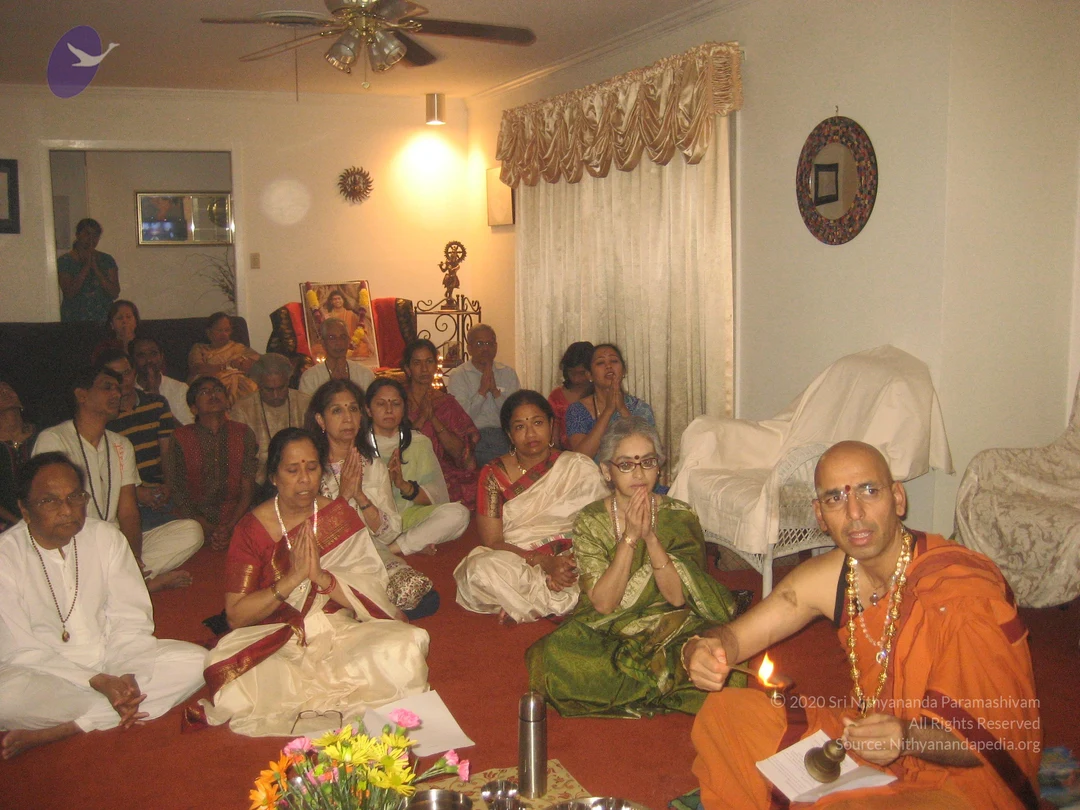
7 photosSource gallery
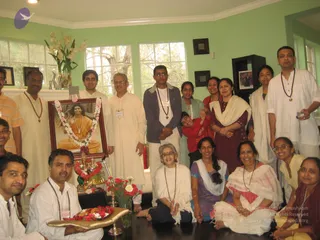
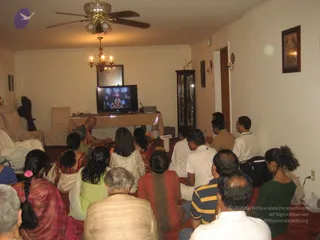
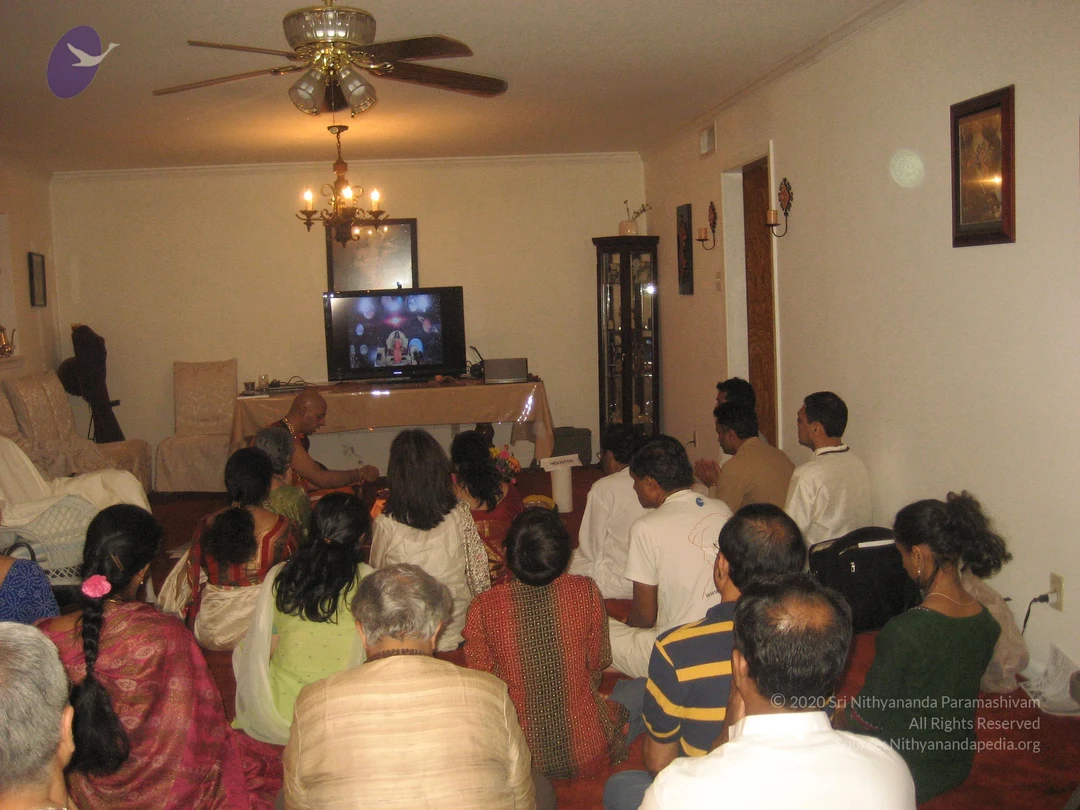
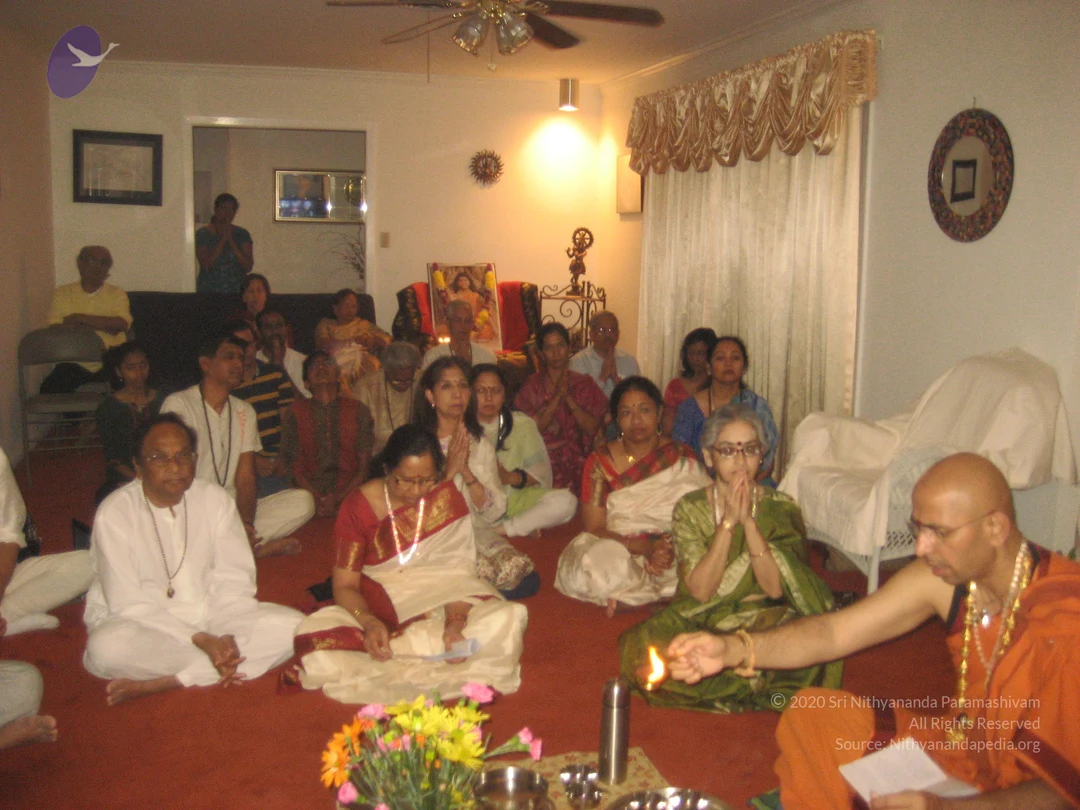
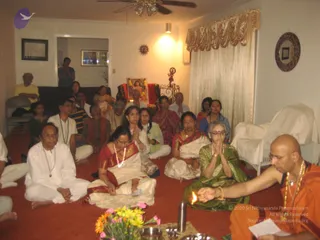
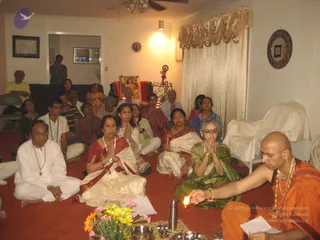
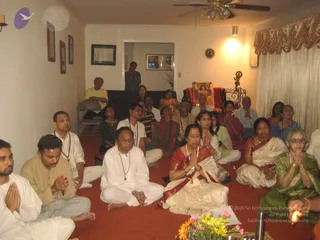
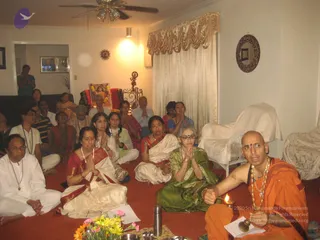
A group of about twenty people posed in a bright green living room with large windows and garden trees outside. A framed portrait on a stand shows a figure in orange robes with a flower garland seated in meditation, with a golden deity murti and red and white flowers in front of it. A man in front left holds a gold tray with red flowers, wearing white with a rudraksha mala. Several women in saris and salwar kameez sit on the floor in front, and standing people in white kurtas, grey and blue clothing crowd behind. A small framed photo sits on a shelf at right, and white and yellow flowers stand in a tall vase at left.A seated group of devotees sits on a red carpet in a living room, facing a television screen on a draped side table where a video plays. A bald man in an orange-brown garment sits near the table, gesturing toward the screen; a woman in a green sari and a woman in a red patterned top are among the audience, many with their backs to the camera. Some attendees wear white or striped shirts and pale kurtas. A ceiling fan and chandelier hang overhead, with framed pictures on the walls and a glass cabinet in the background. Count of visible people is roughly a dozen.A photograph of a devotional gathering in a living room with red carpet and cream walls. In the foreground at right, a shaved-headed man in an orange robe with a gold-beaded necklace holds a lit oil lamp toward a seated woman in a green sari with gold border, who presses her palms together. Across the floor, seated devotees in white, red and green saris and white kurtas sit with folded hands, facing a framed picture of a deity and a small metal figure. Yellow and pink flowers and brass bowls sit on a cloth in front, and a few people stand or sit in the background near a sofa. The scene resembles aarti in a home gathering.A group of seated devotees in a living room, with a bald man in orange robes and rudraksha beads on the right holding a lit flame in his hand toward a brass tray of offerings and a flower bouquet on a patterned mat. Around him, men and women sit on a red carpet with palms pressed together in prayer; several women wear white or green saris, and a man in white kurta sits at left with a rudraksha mala. Behind them, a framed portrait of a deity and oil lamps sit on a small table near a dark statue. Some standing people are visible at the back wall, and a ceiling fan and curtains frame the room.Indoor satsang or puja in a home living room with a red carpet. About fifteen people sit on the floor and on a sofa, many with palms pressed together in anjali mudra, some with eyes closed. In the foreground, a man in white kurta with rudraksha mala sits centre-left, and a woman in cream sari with red border and red blouse sits beside him with hands folded. To the right, a woman in green sari and glasses prays with hands together. A small framed photo with flower garland and a lit oil lamp sits on a low altar near a bronze deity murti with a wheel-like halo. Flowers in yellow and orange lie on the floor in front. Framed pictures hang on the left wall.A photograph of a group satsang in a living room with cream walls, a ceiling fan, and red floor covering. A man in saffron-orange robes with rudraksha malas and a gold necklace sits at the lower right, holding a small oil lamp in one hand and a bell in the other, and a printed sheet rests before him. Around him, about a dozen seated devotees have hands folded in prayer: a man in white on the left, women in red-bordered white saris, and a woman in a green sari. Behind them, more people stand or sit near a framed deity picture and a small metal murti of a dancing figure on a stand. A bowl of yellow and pink flowers sits in the foreground.

03-Mexico-Center

8 photosSource gallery
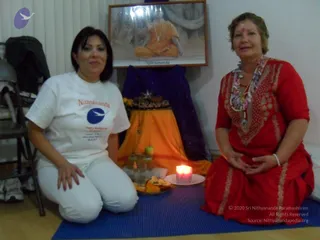
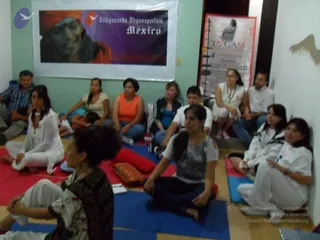
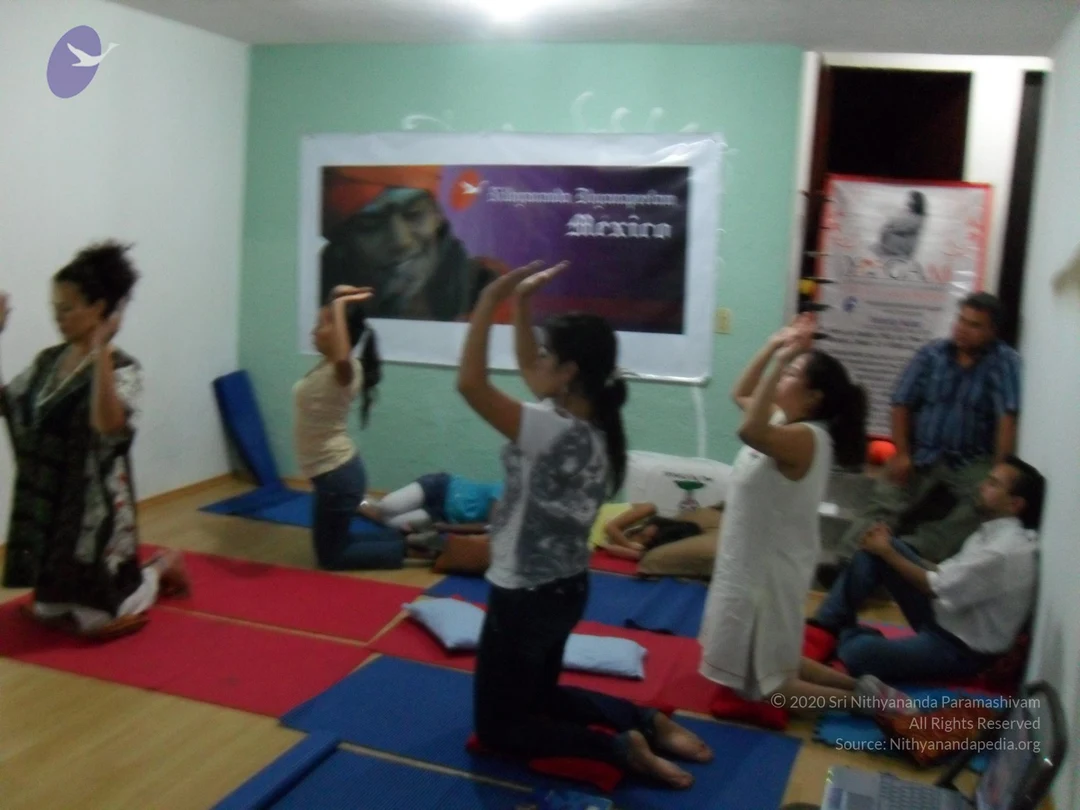
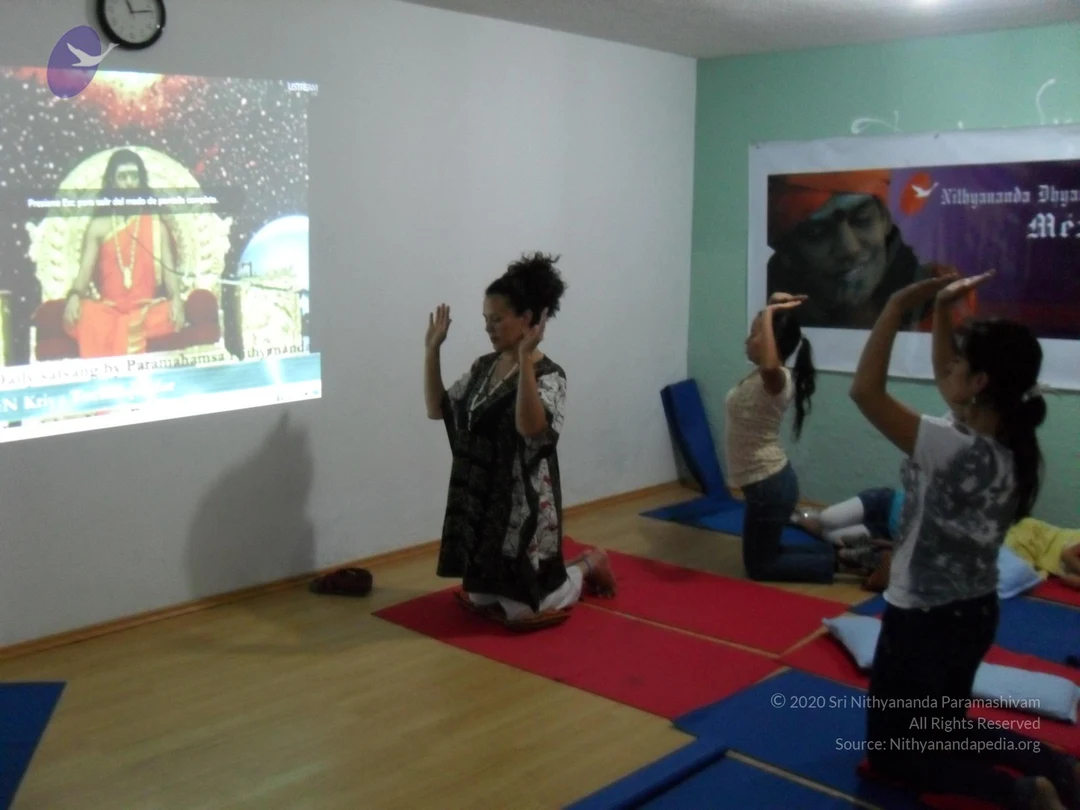
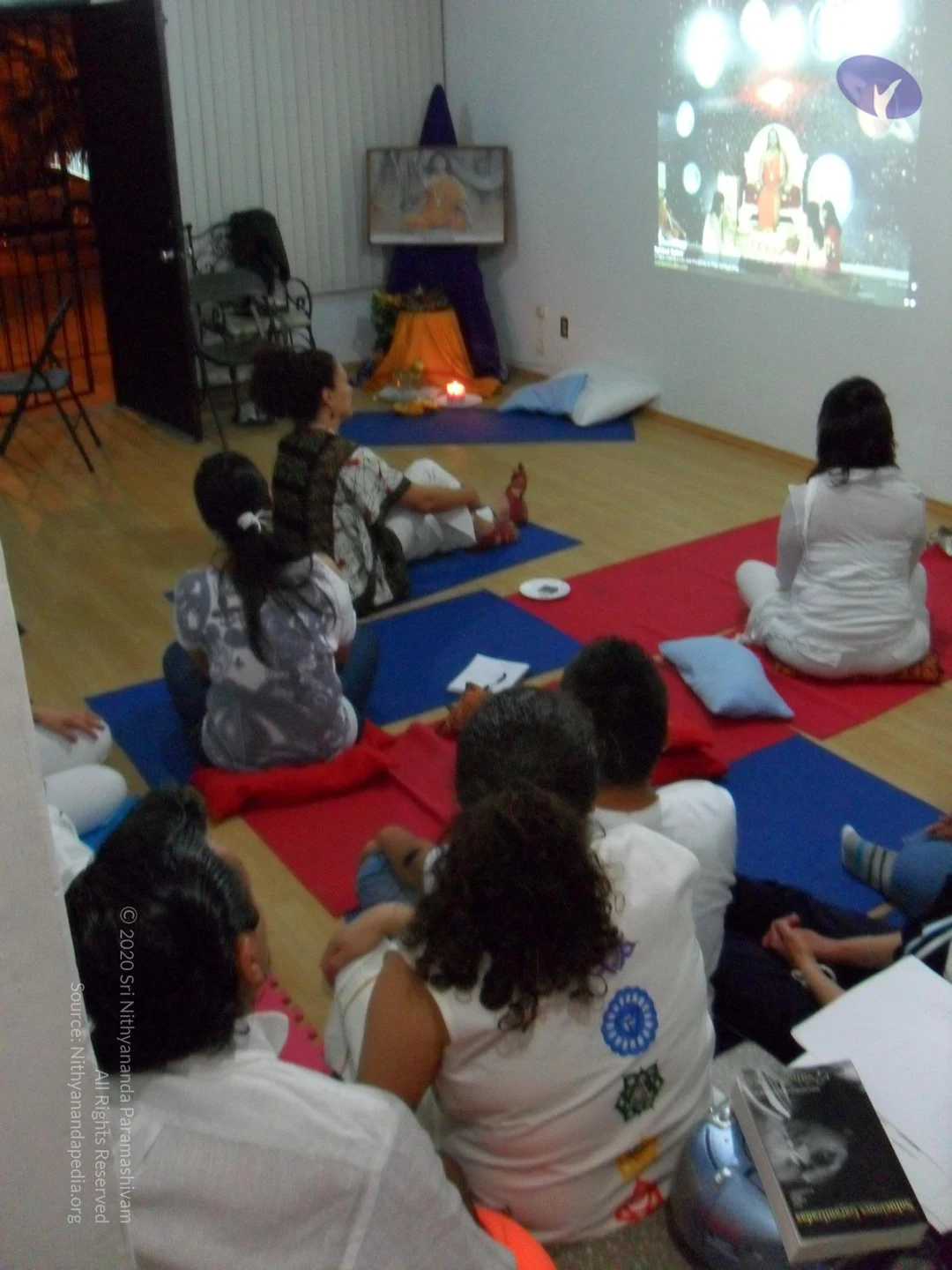
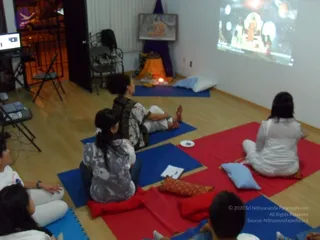
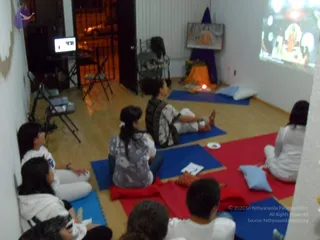
Two women kneel on a blue mat in a small room with white walls and wood floor, in front of an altar. Above the altar hangs a framed painting of a figure in orange robes seated in meditation with a pearl mala, labelled Nithyananda. Beneath it a purple cloth and an orange draped cloth support a small decorated shrine, with fruit slices, an apple, a glass, and a lit candle on a plate. The woman on the left wears a white t-shirt with a person logo and white trousers. The woman on the right wears a red embroidered kurta, layered beaded necklaces and a bindi, with hands folded in her lap. The framed painting is a depiction, not a physical person.A group of about a dozen people sits on blue and red yoga mats and cushions in a small room with pale green walls, listening attentively. A large banner reads "Nithyananda Dhyanapeetam México" and shows a face in orange-toned tones. A tall poster beside them reads "YOGAM". Clothing includes white outfits, an orange sleeveless top, a striped blue shirt and dark jeans. A woman in a white top and white trousers sits at the front right, and a woman with curly hair in a patterned top sits in the front left. No one is clearly identified as a person in this photo; the banner portrait is a printed image rather than a physical person.A photograph of a small meditation room where several people sit on blue and red mats and cushions facing a projector screen showing a video of a seated figure with a crowd of people in a space setting. Foreground participants wear white and grey-patterned clothing. A framed painting hangs on the wall above a small altar with a lit candle, an orange cloth, flowers and offerings, beside a purple draped stand. A laptop and audio equipment sit on a desk at left. The screen image is not a visible person in the room.A small indoor room in the evening where a group of students sits on blue and red yoga mats watching a projected video on the wall at right. Most viewers face away from the camera, wearing white and casual clothes. A small table with an orange cloth, a lit oil lamp and flowers stands near a purple-draped stand holding a framed picture of a deity. Folding chairs and a small television are at the left.A photograph of seated devotees in a room with mint-green walls at an evening gathering. A large banner above them reads "Nithyananda Dhyanapeetam Mexico" beside a portrait of a smiling man with dark hair and an orange garment. Four people sit on blue mats and cushions: a woman in a cream blouse with a dark ponytail, a woman in a bright orange sleeveless top and blue jeans with hands clasped, a young woman in a dark tracksuit reading a red book, and a young man in a white t-shirt on the right. A child lies partly visible at the far left. A white and red poster with a tall tree-like graphic hangs on the right wall.A photo of a small room with pale green walls and wooden flooring, where a group practices seated and kneeling exercises on blue, red and maroon mats with cushions. Several participants, mostly women in light tops and dark trousers, have their arms raised overhead with palms together. A woman in a dark patterned wrap on the left stands with arms raised. A man in a blue striped shirt stands at the back right, and a man in a white shirt sits on the right. A large banner printed with a portrait of an elderly bearded man in orange-toned light reads Nithyananda Dhyanapeetam Mexico. A red poster hangs on the right wall. No identifiable a person depiction is present in a clearly legible form, so the candidate status is uncertain.