Skip to content
Saturday

18 December 2010

Ashtanga Yoga: Taming Mind: Patanjali Yoga Sutras 85 - Nithyananda Morning Satsang 18 Dec 2010

Dated photos
675
Source pages
1
Media
2
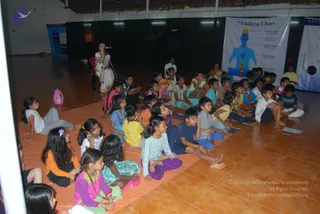
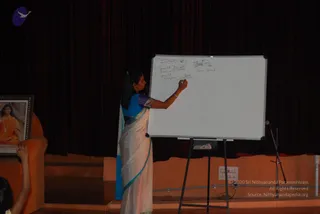
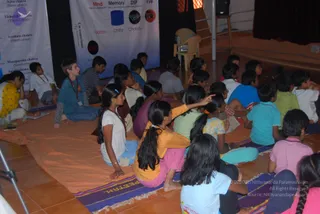
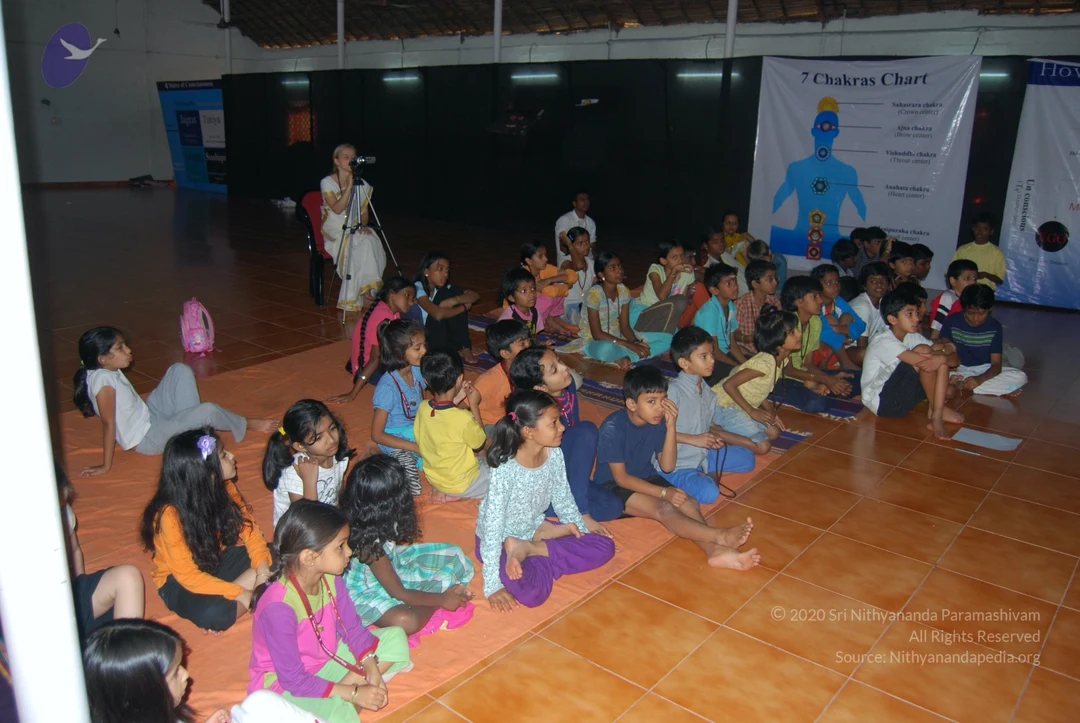
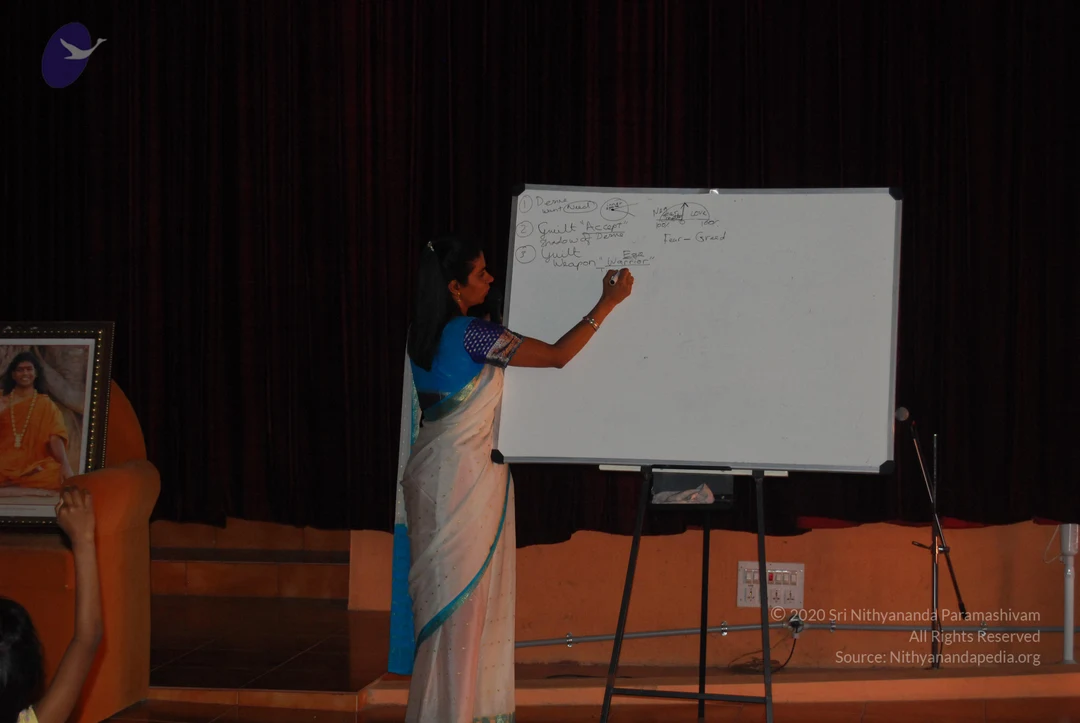
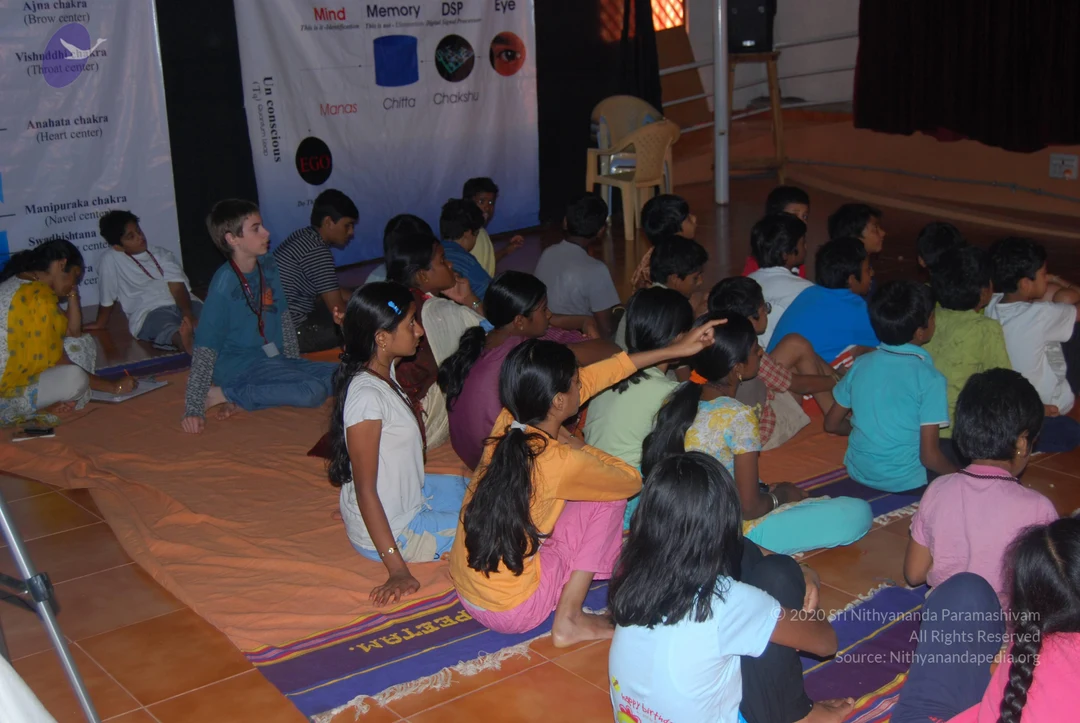
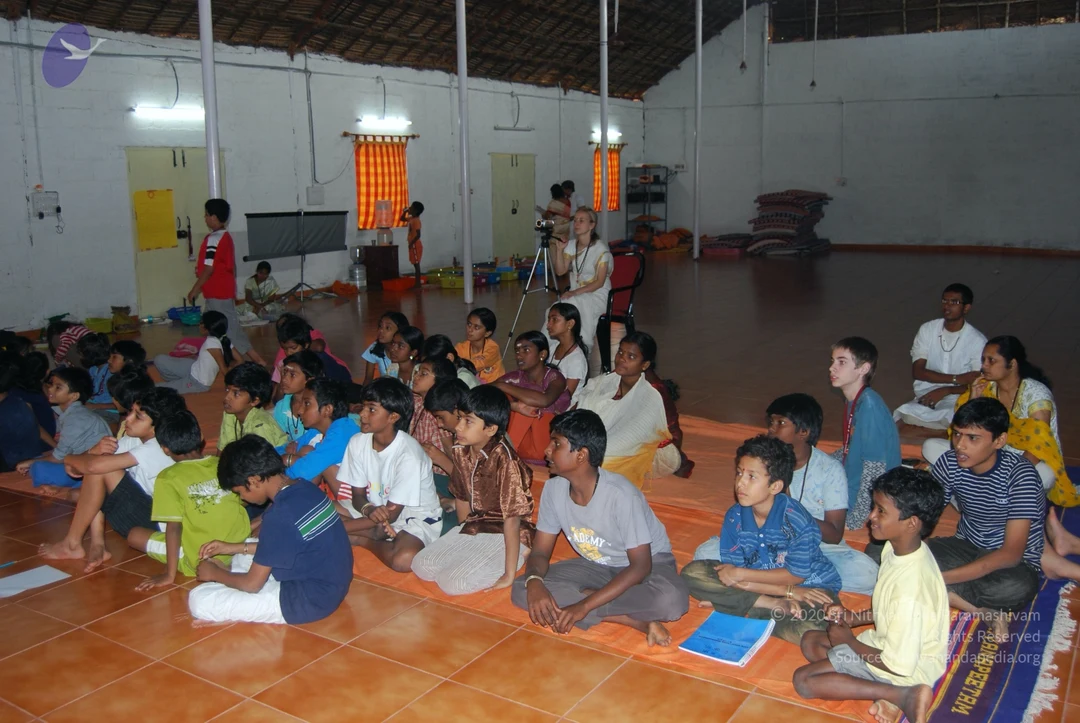
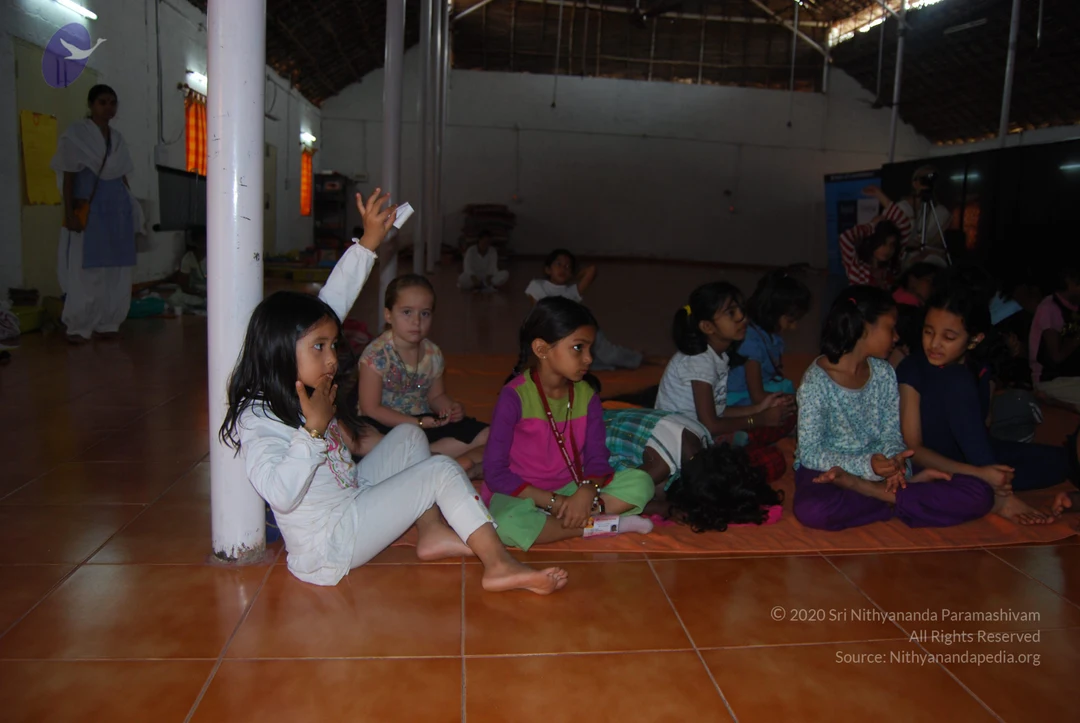
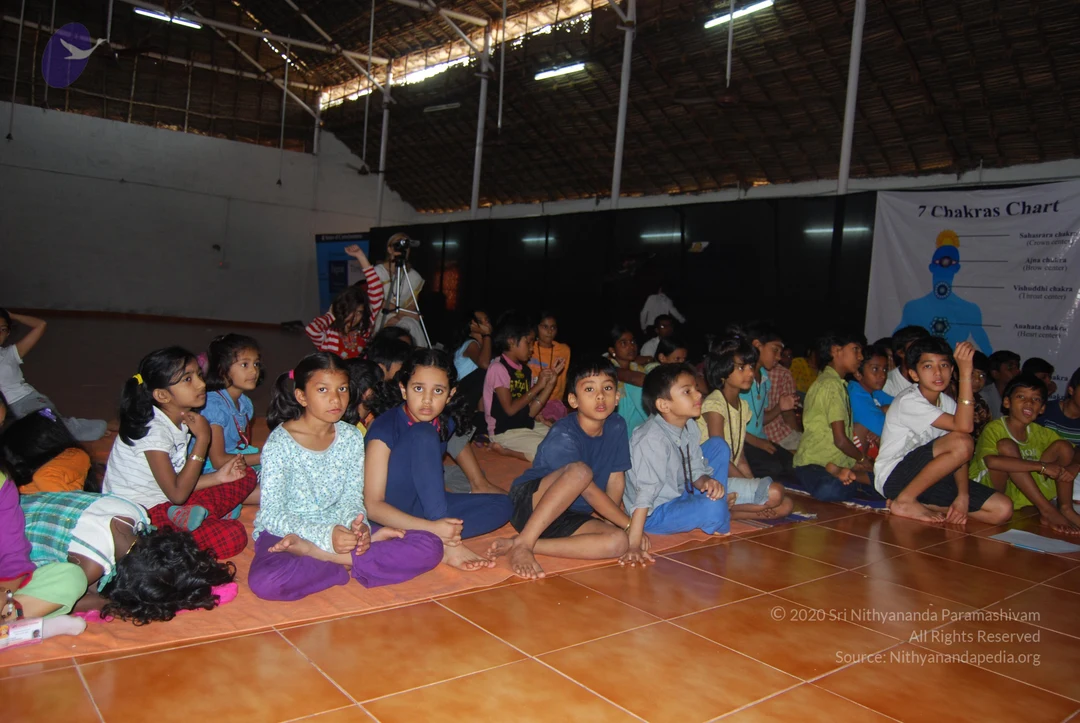
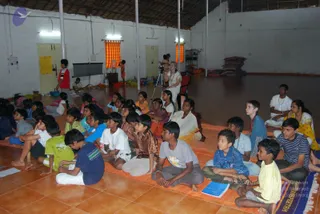
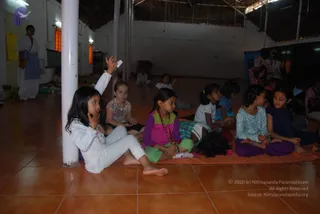
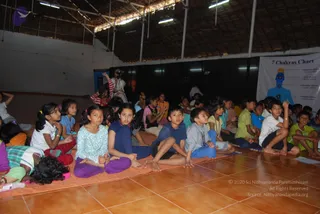
A photo of a large indoor hall with an orange-tiled floor where many children sit cross-legged on orange and blue mats in rows. Children wear bright yellow, pink, orange, green and blue clothes. Behind them a standing white-robed instructor holds a camera on a tripod. A tall banner on the right shows a 7 Chakras Chart with a blue human figure and labelled chakras. Another banner is on the left, and a white-and-blue banner is at the far right. The room's ceiling has wooden beams and fluorescent lights.A woman in a white saree with a light blue border and a blue blouse with purple trim stands at a whiteboard on a stage, writing with a marker. The whiteboard holds handwritten notes including numbered lines and words like guilt and fear, plus a sketch. Behind her a dark curtain hangs over an orange-toned stage, and at left a framed portrait shows a figure in orange robes with a beaded necklace seated on an orange chair. A small child's hand is visible at the lower left edge, and a microphone stand stands at right.A photograph of a seated group of children and young teenagers on an orange floor mat with purple-bordered rugs in a hall with terracotta tiles. Most face toward the front, sitting cross-legged or with legs folded. A girl in a white top and blue pants in the foreground points toward the front, and a child in a yellow top and pink pants sits nearby. A young adult in a teal top with a lanyard sits to the left. Behind them, white banners list chakras with their centers, including Ajna chakra (Brow center), Vishuddha chakra (Throat center), Anahata chakra (Heart center), Manipuraka chakra (Navel center) and Swadhishthana chakra, and another banner shows Mind, Memory, DSP, Eye, Chitta and Chakshu labels. A microphone stand and a stage curtain appear at the upper right.

December 18 2010

Original wiki page
Contents

Title:

Ashtanga Yoga: Taming Mind: Patanjali Yoga Sutras 85 - Nithyananda Morning Satsang 18 Dec 2010

Narration:

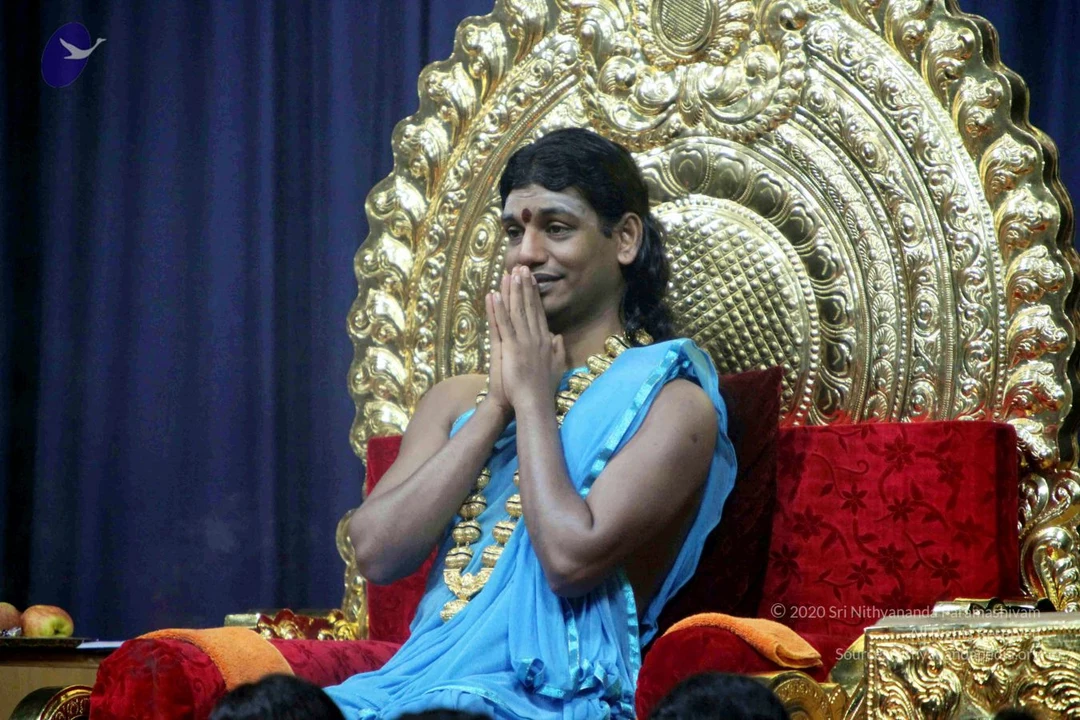
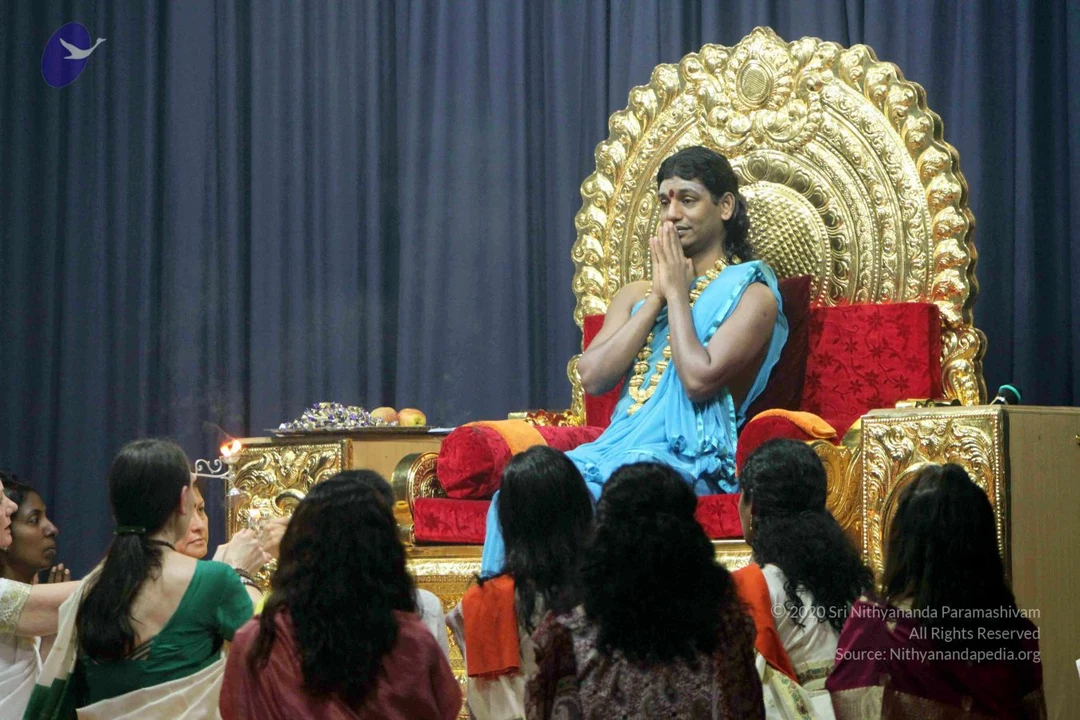
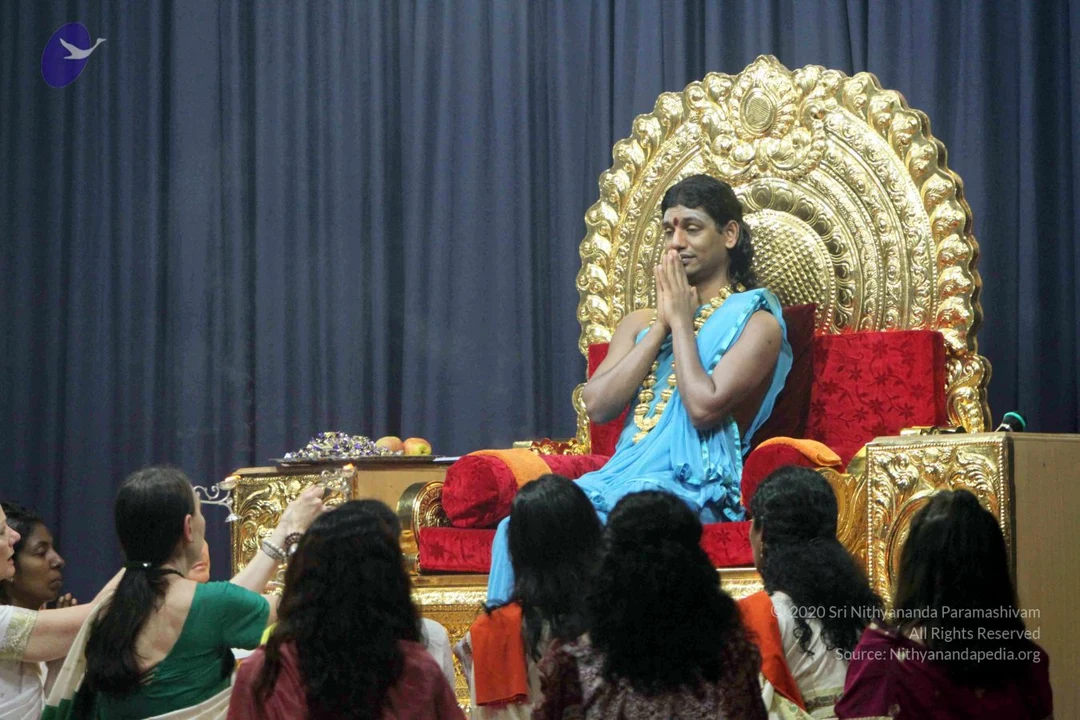
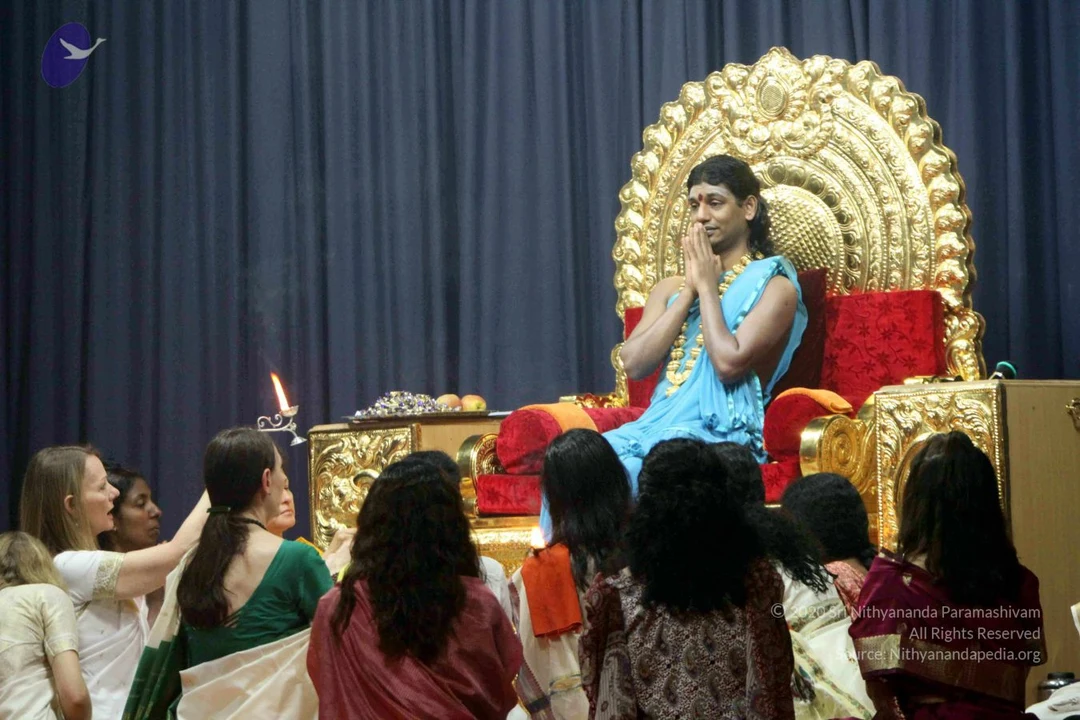
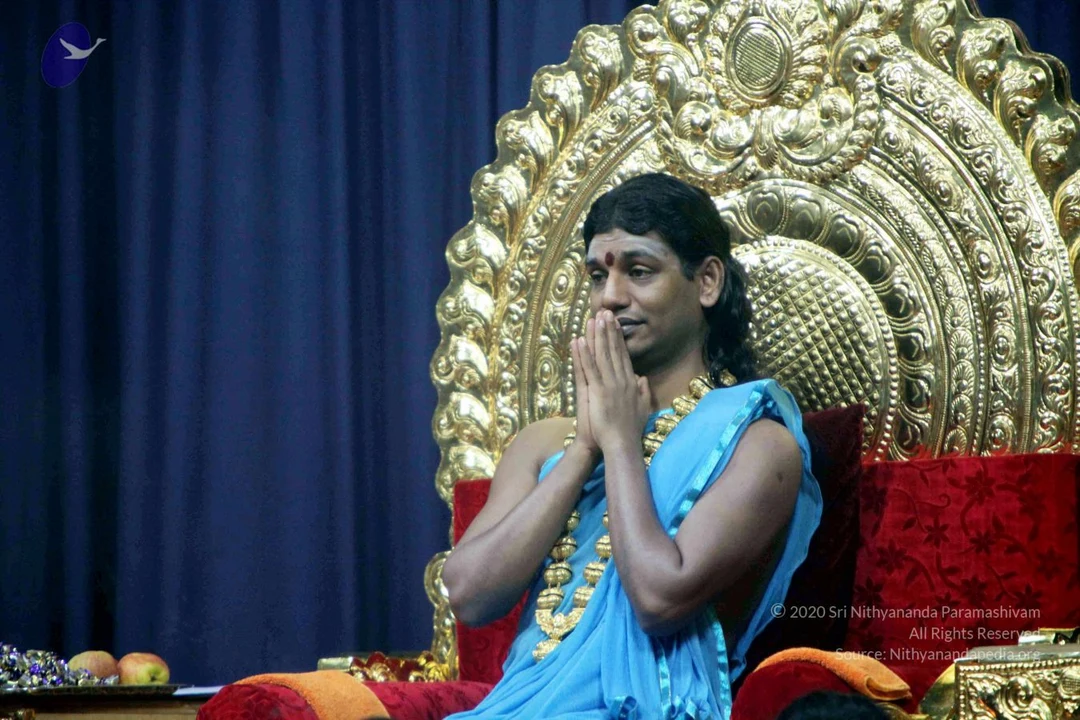
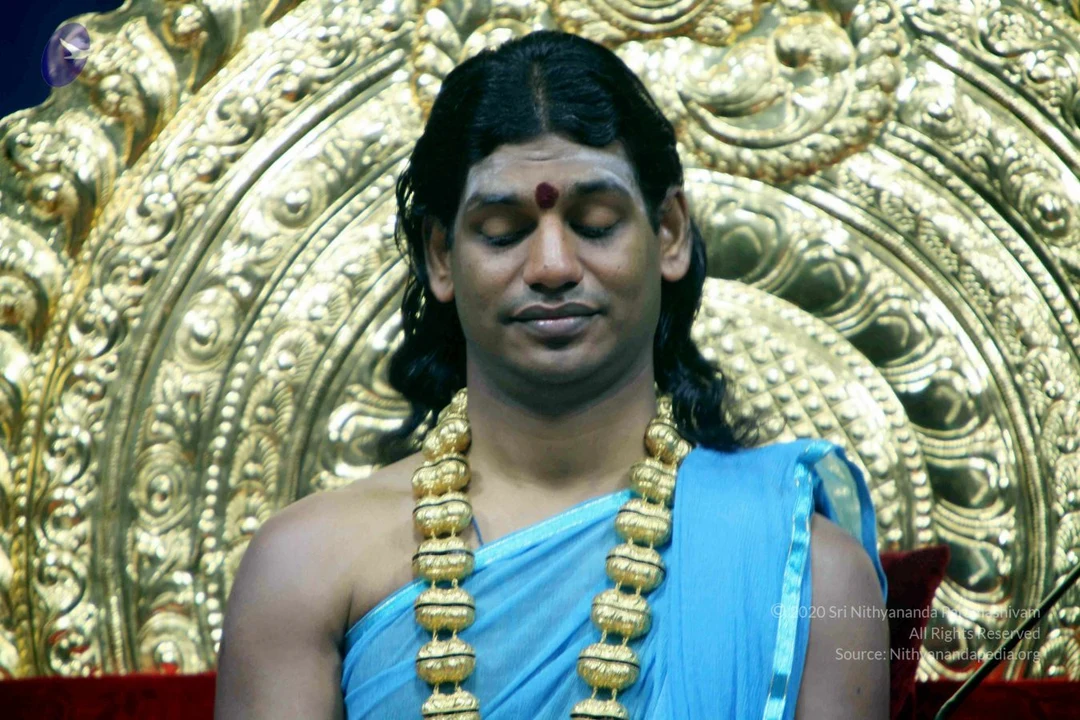
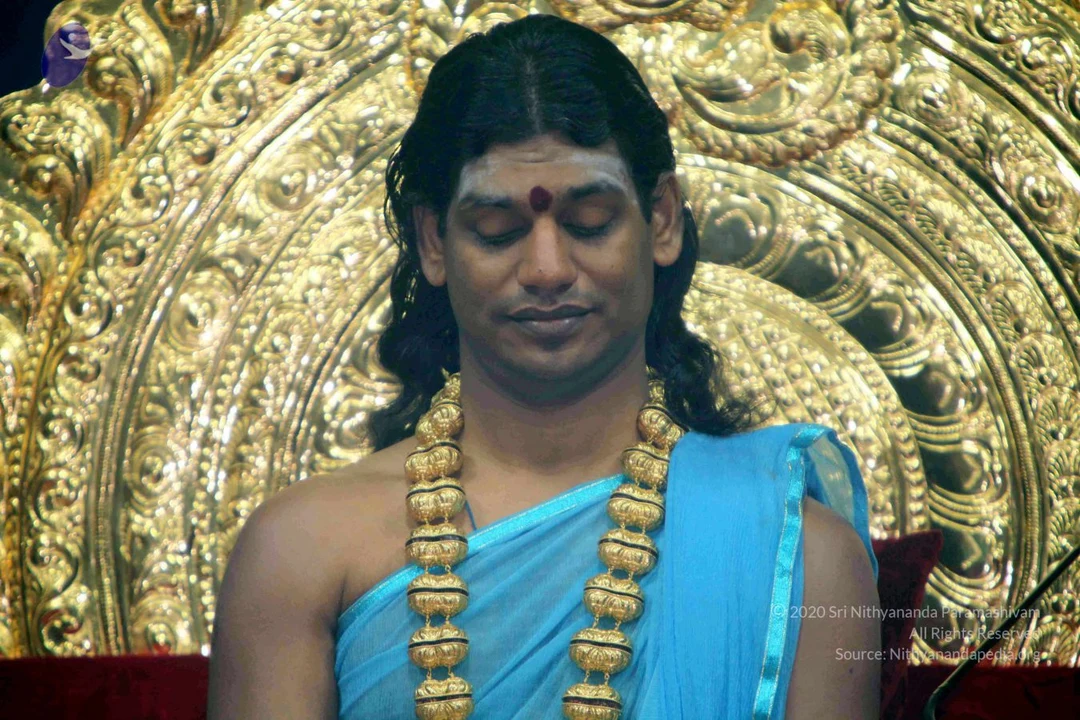
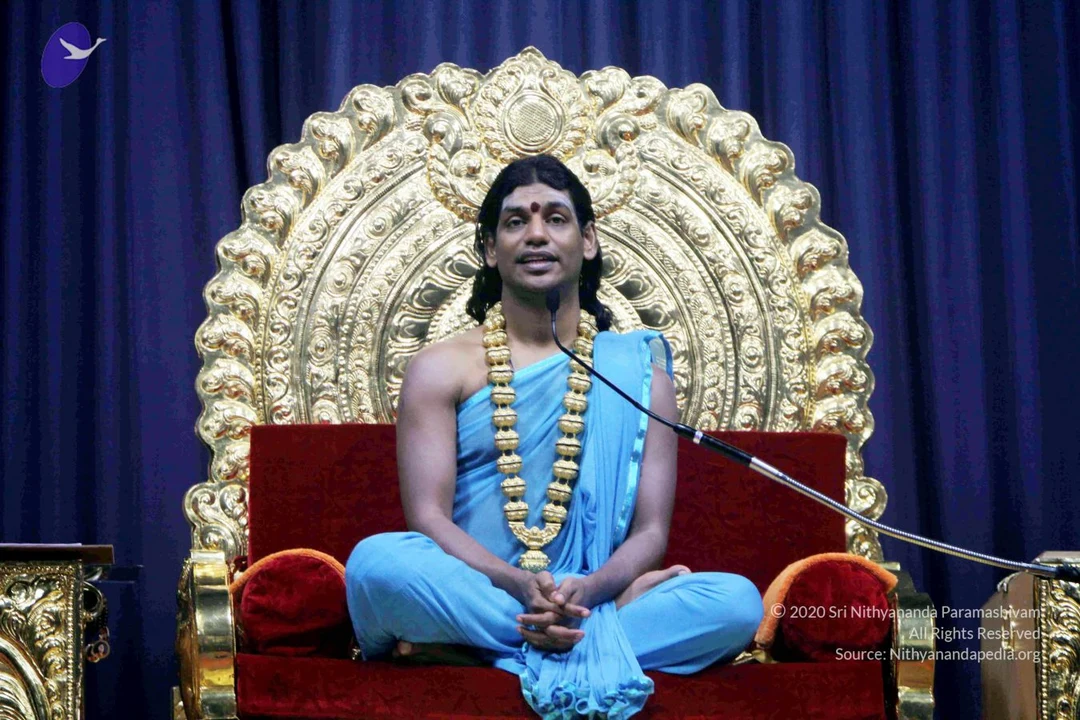
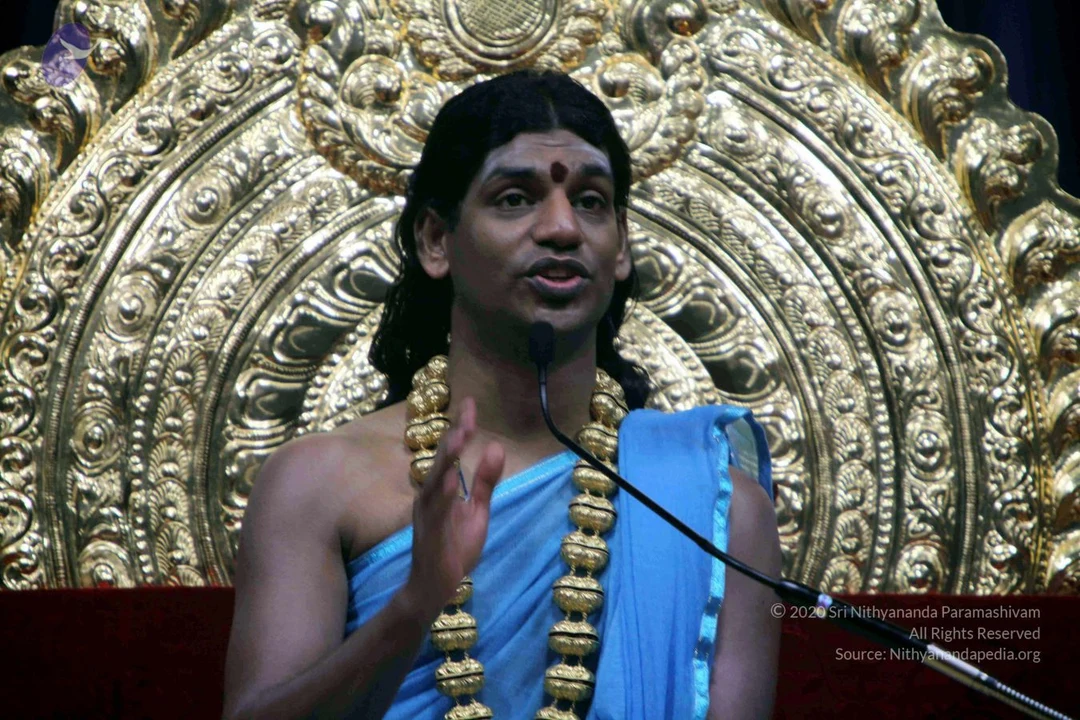
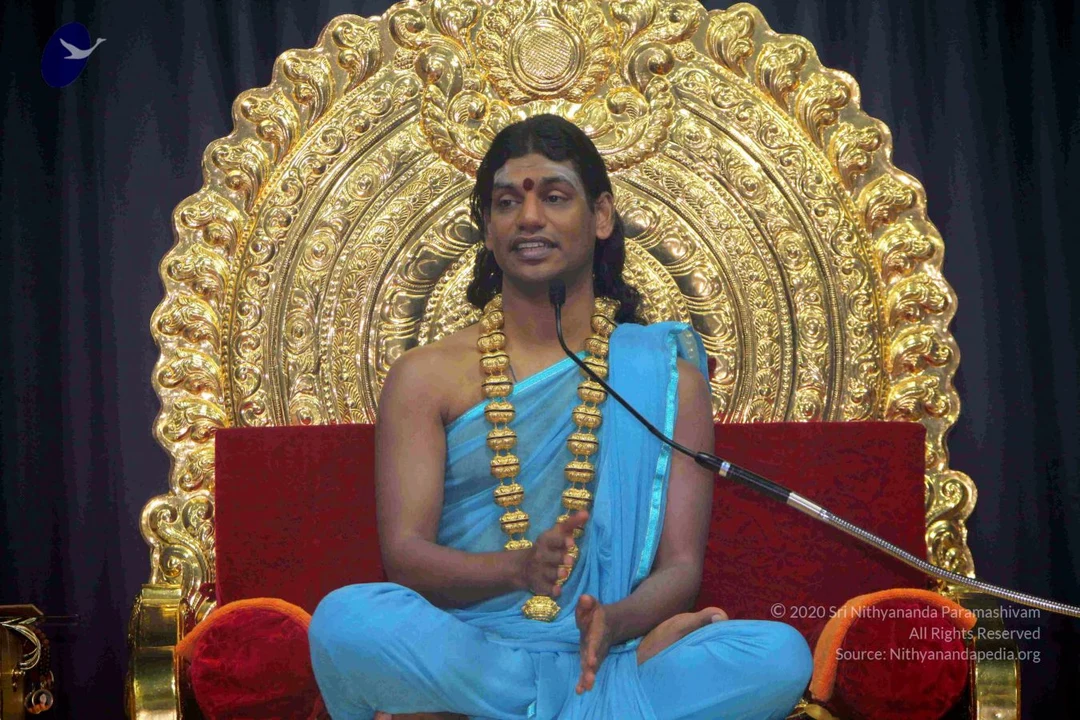
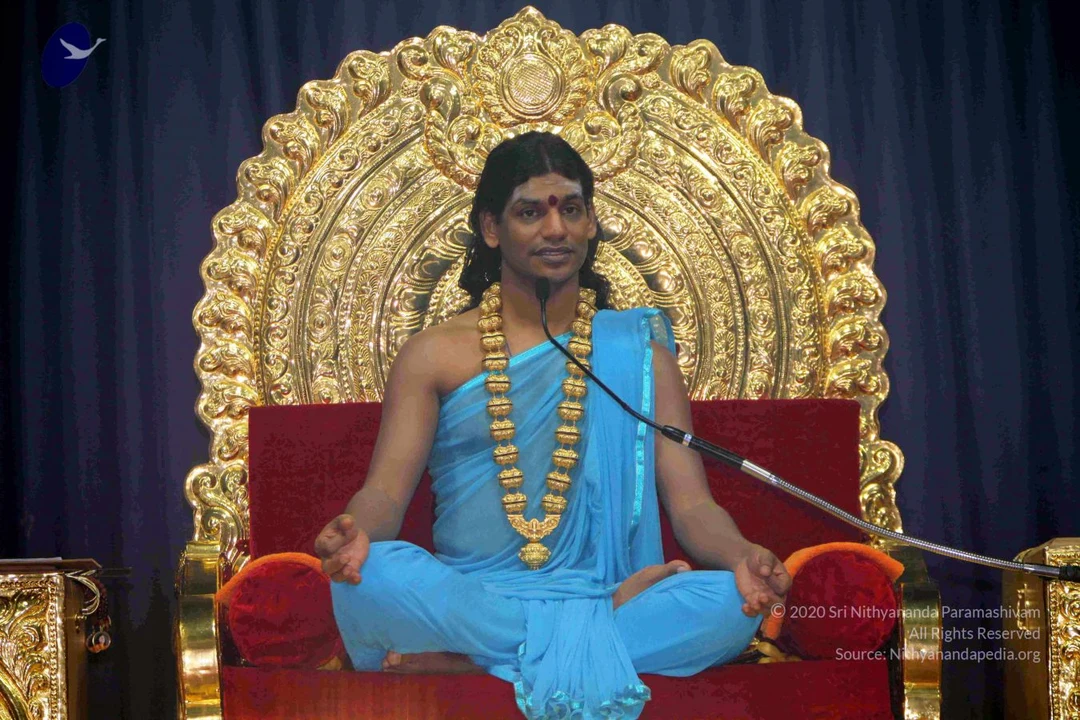
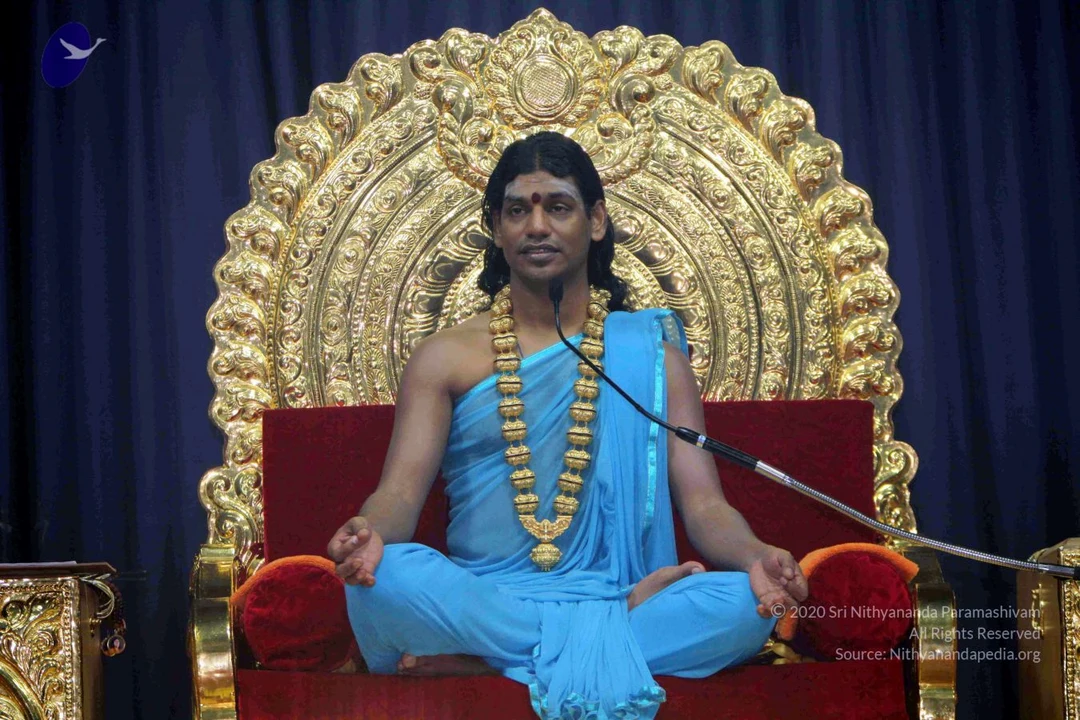
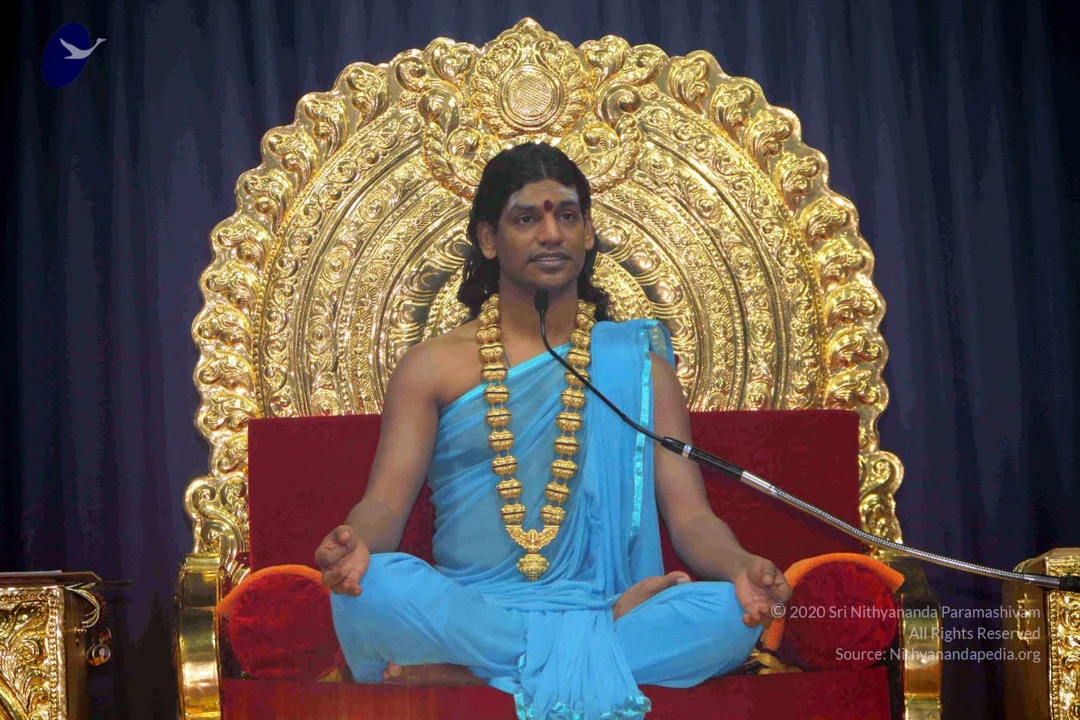
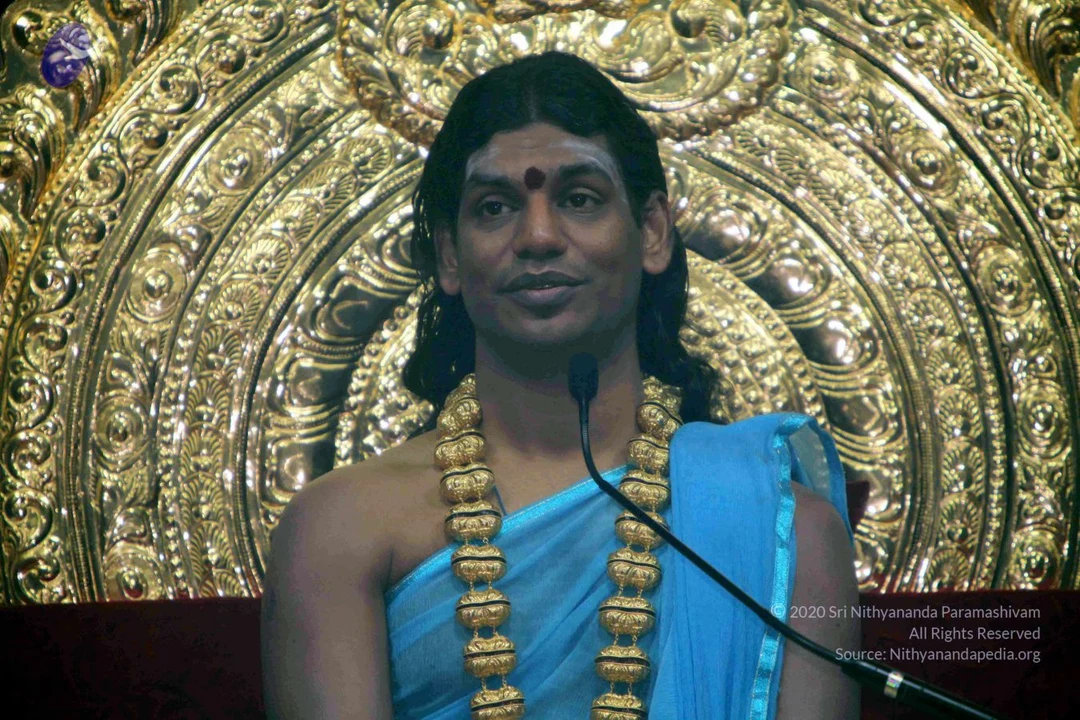
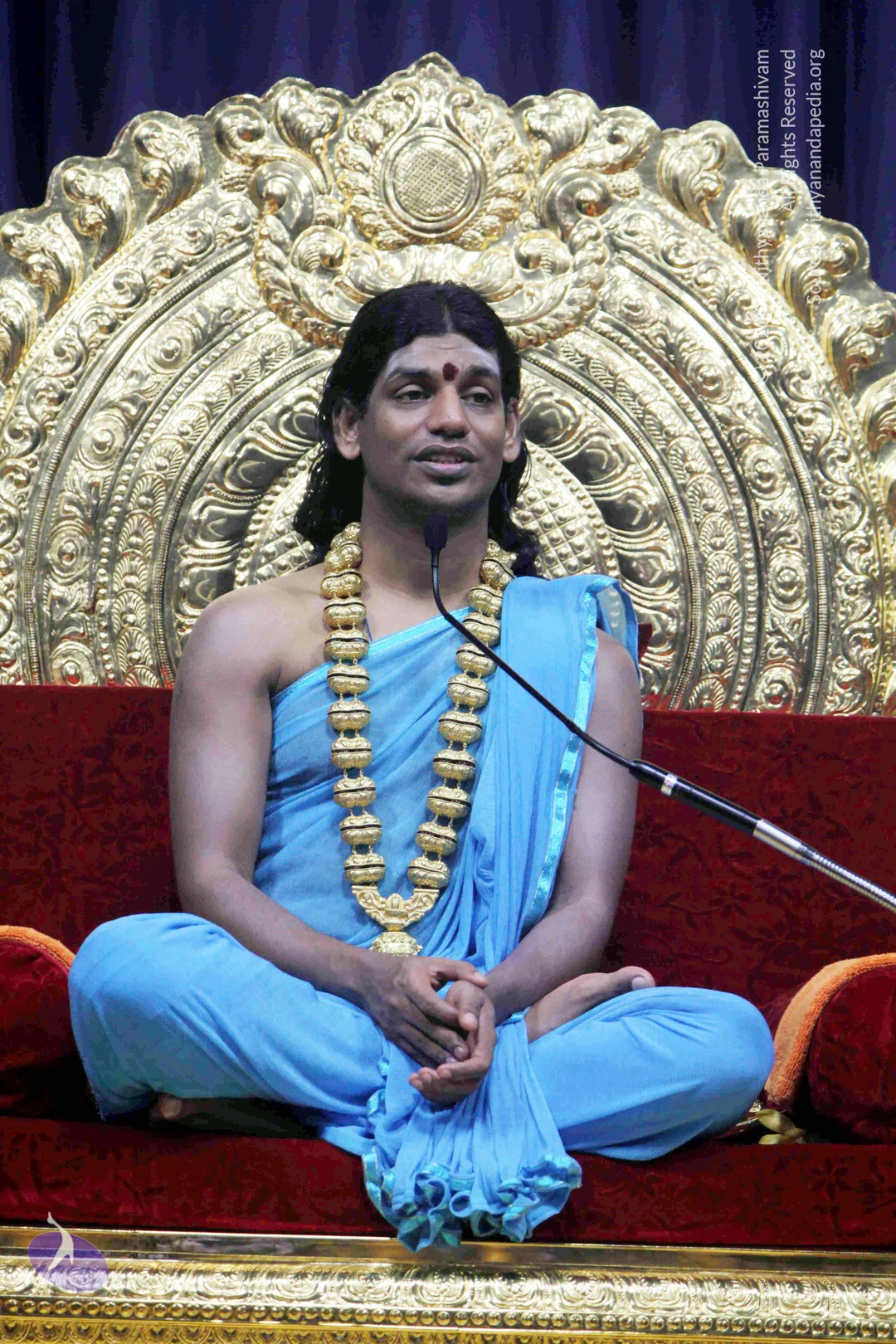
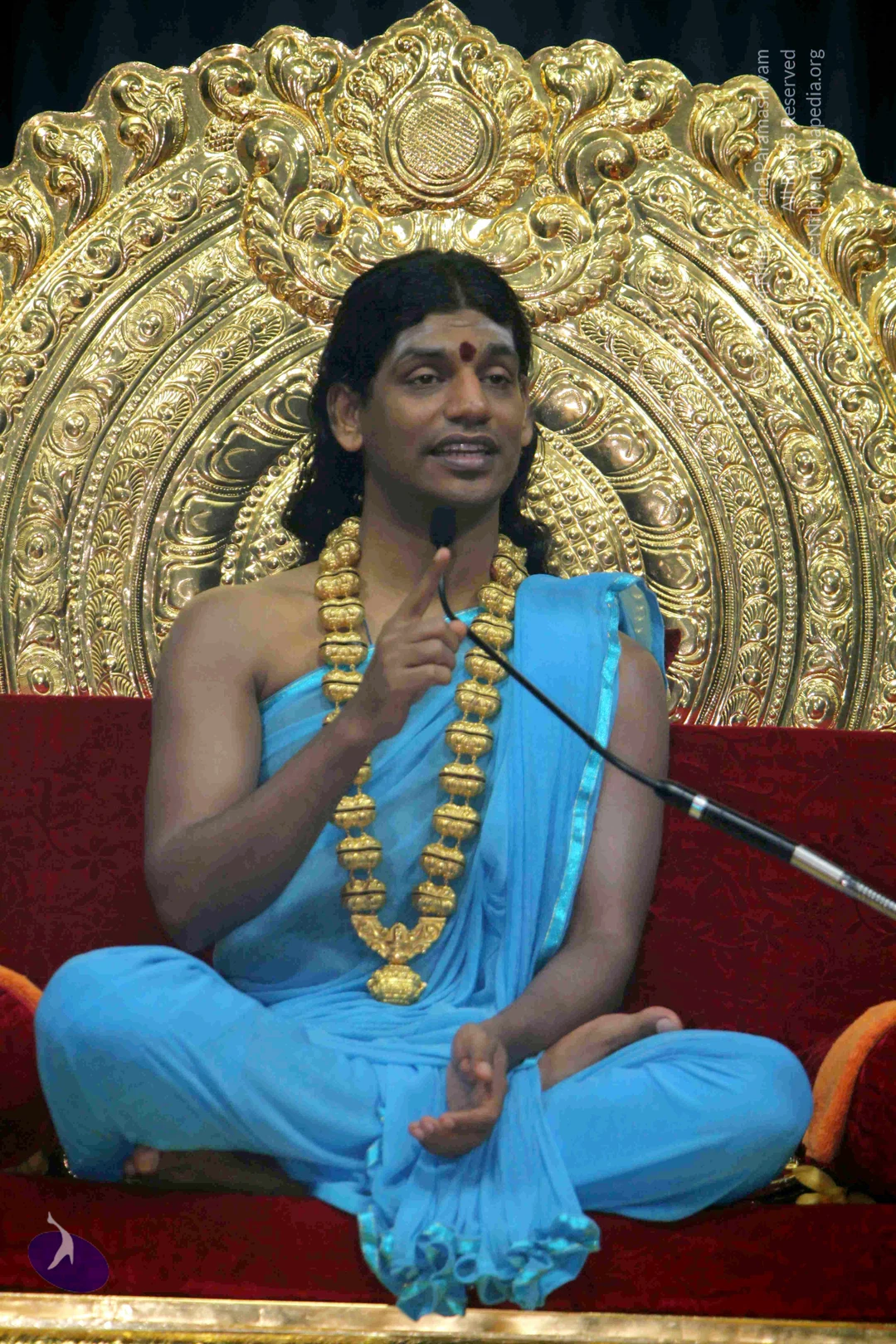
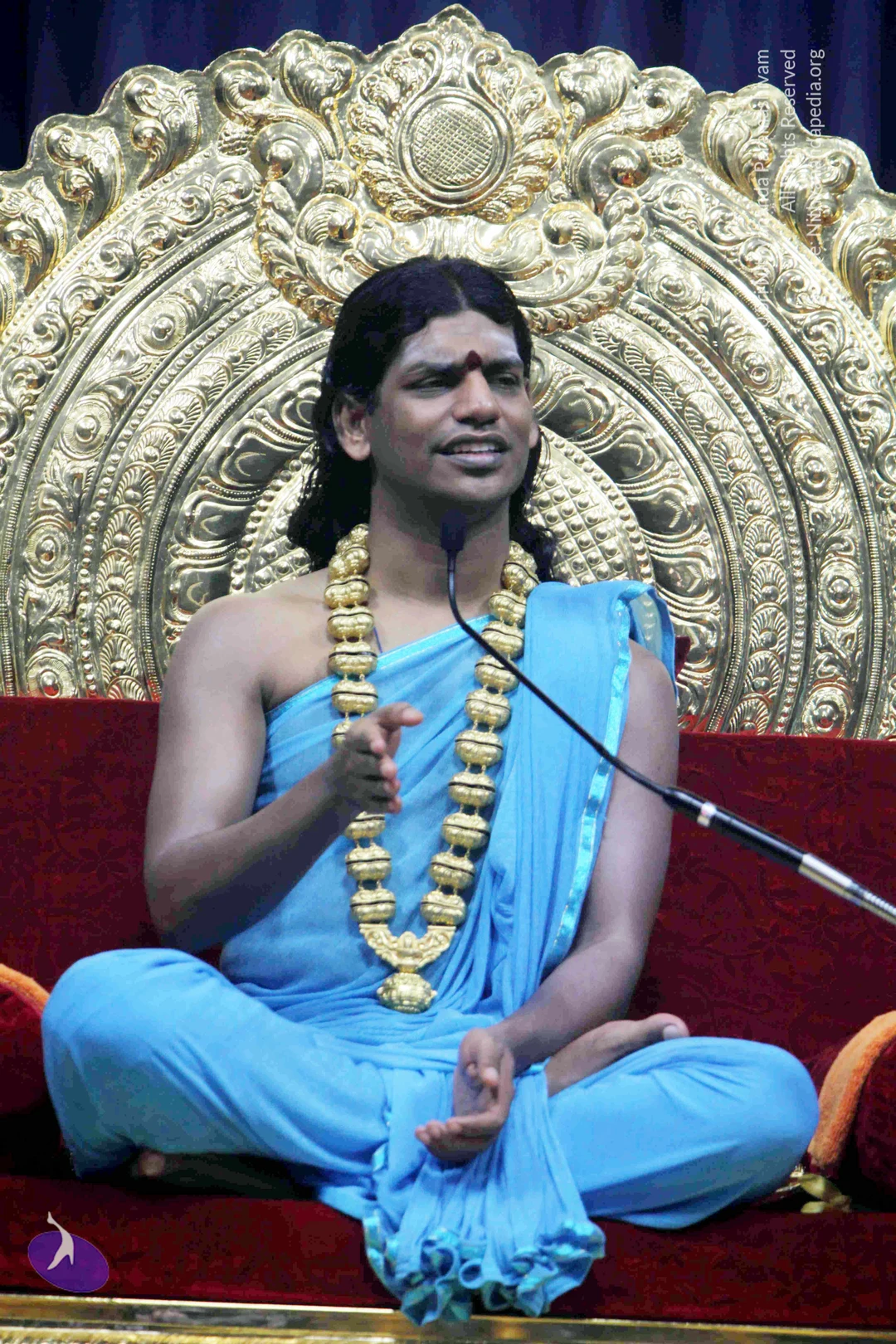
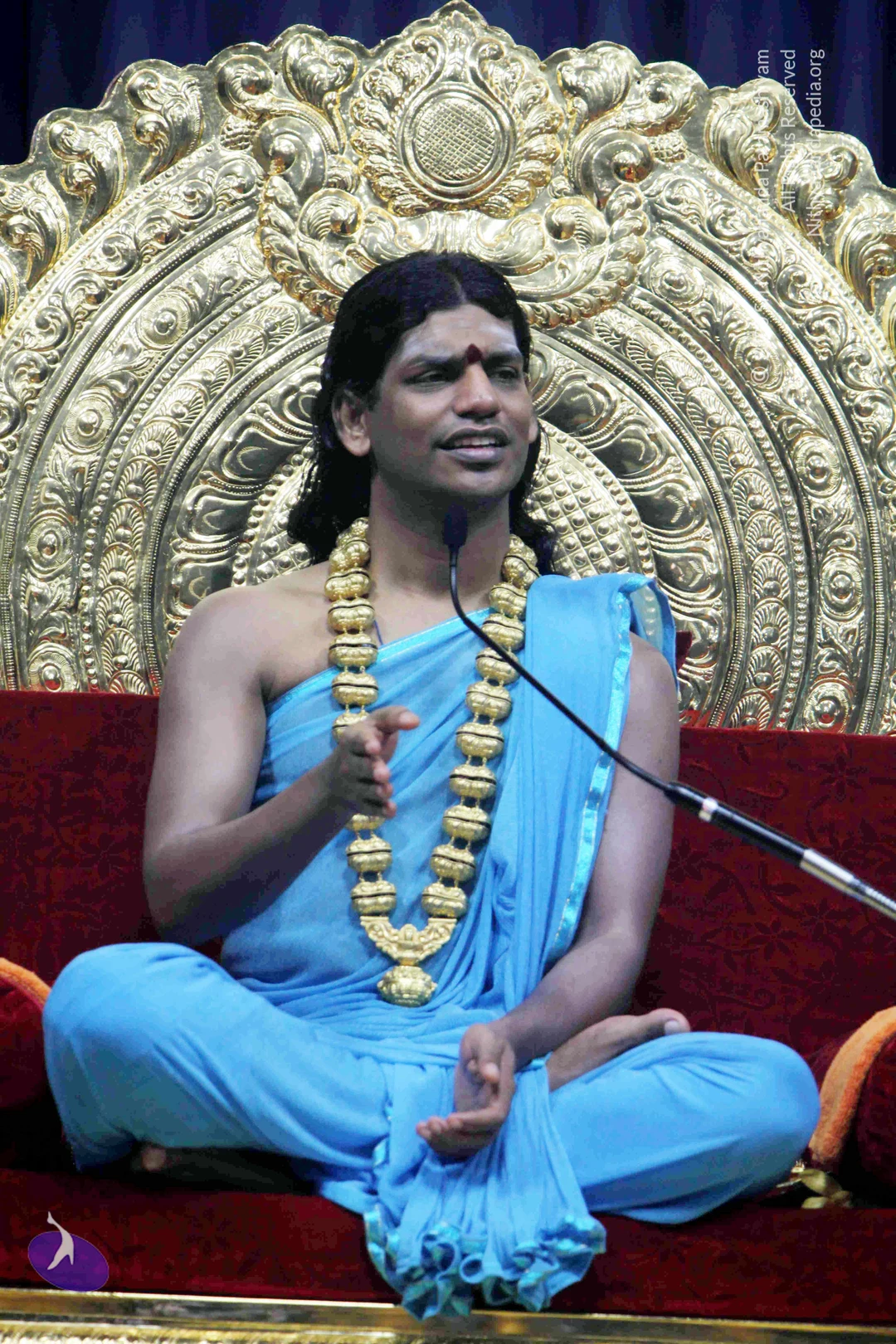
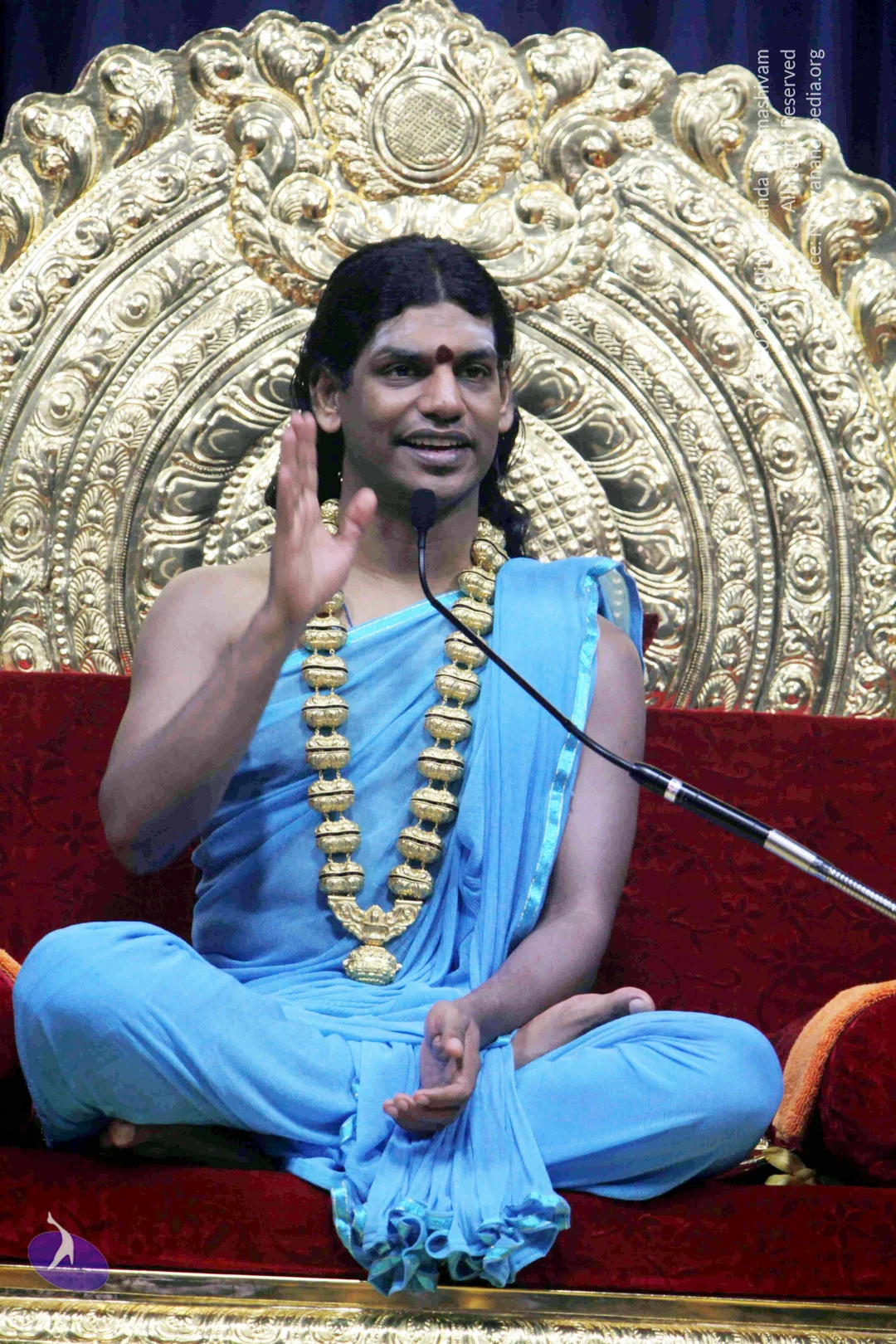
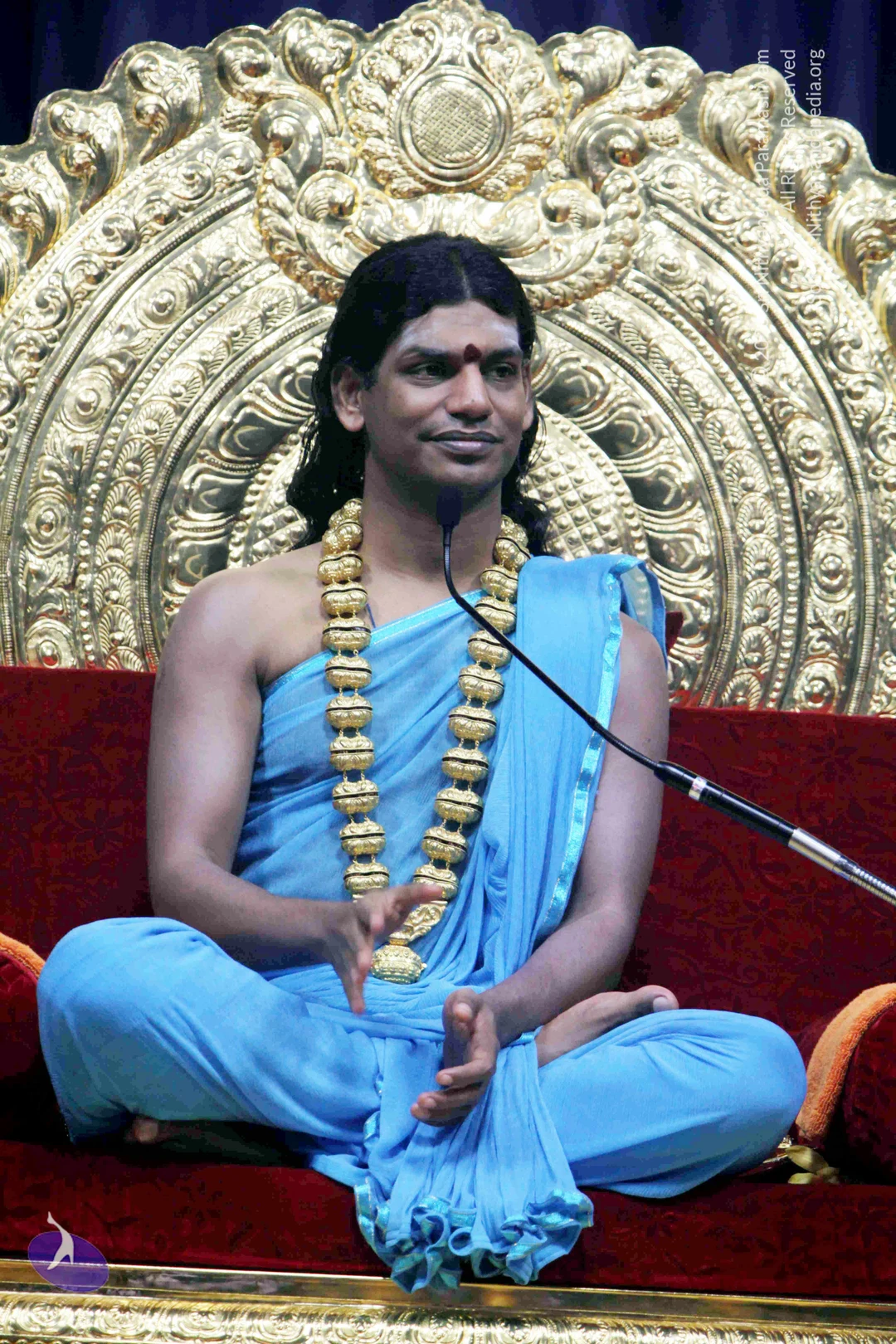
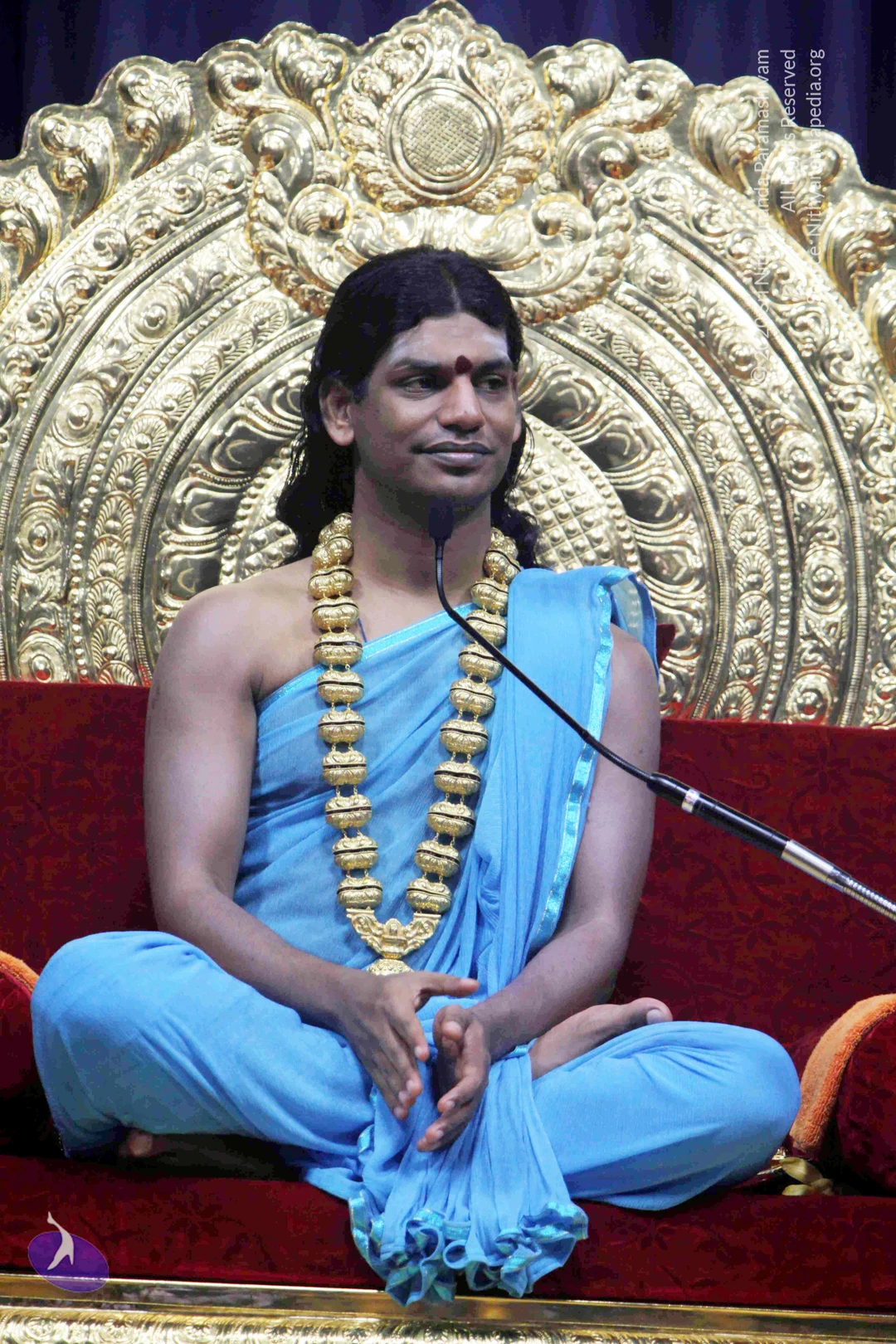
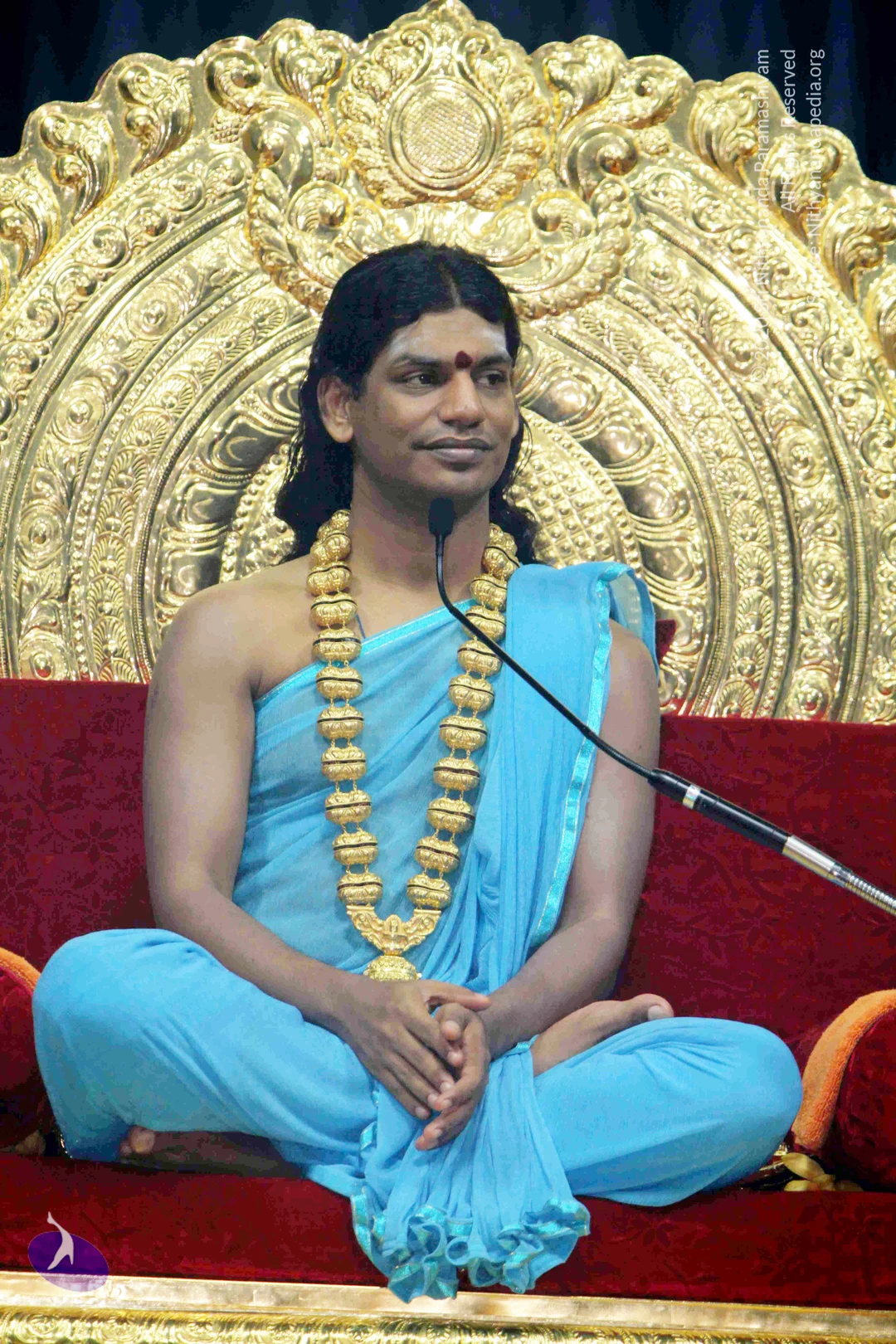
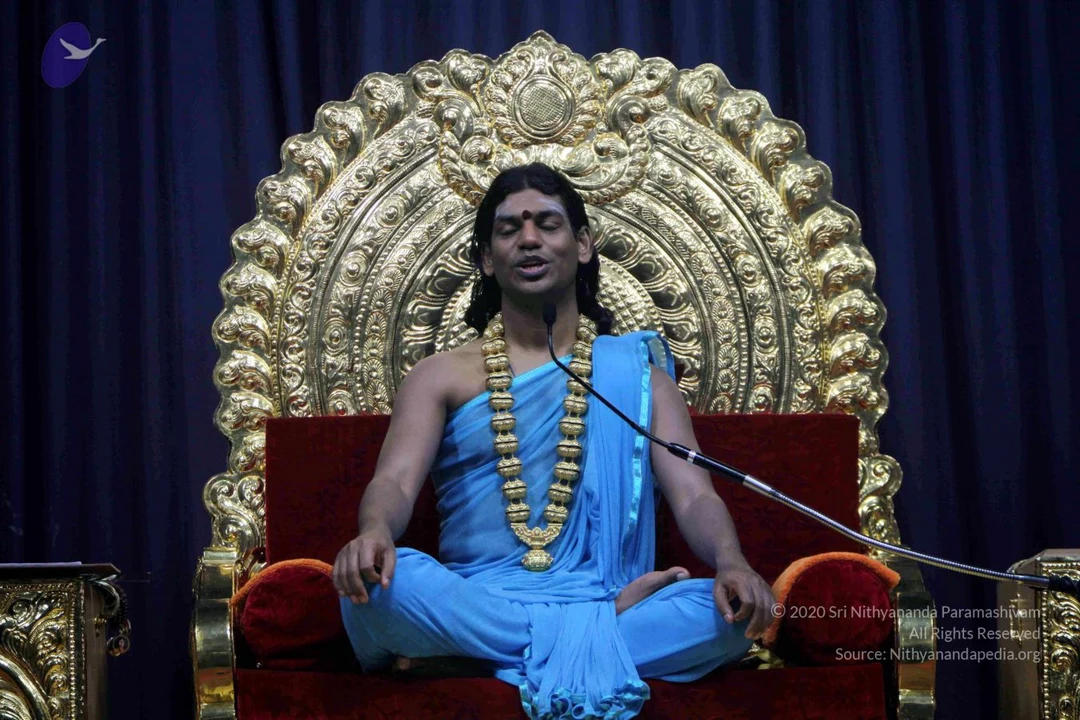
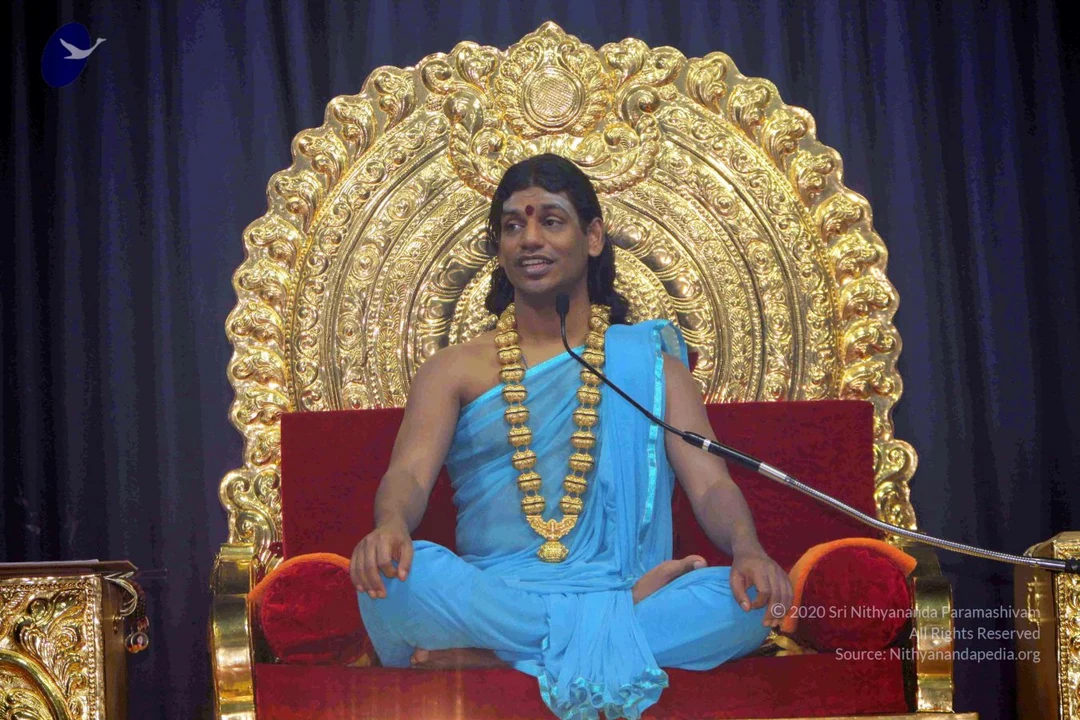
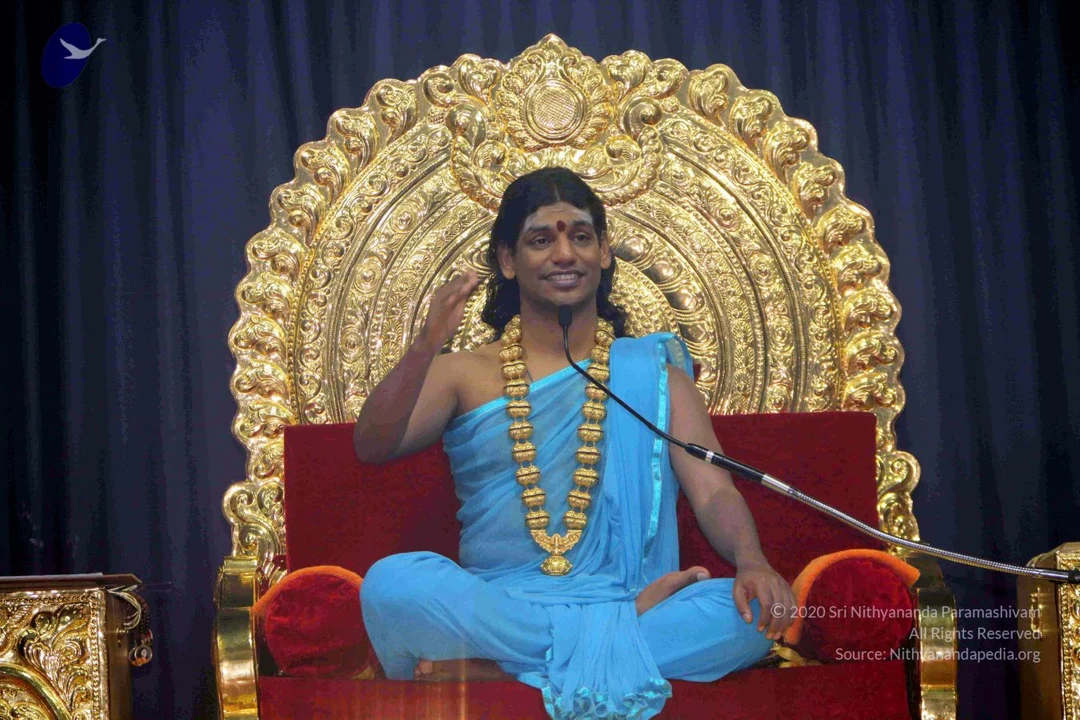
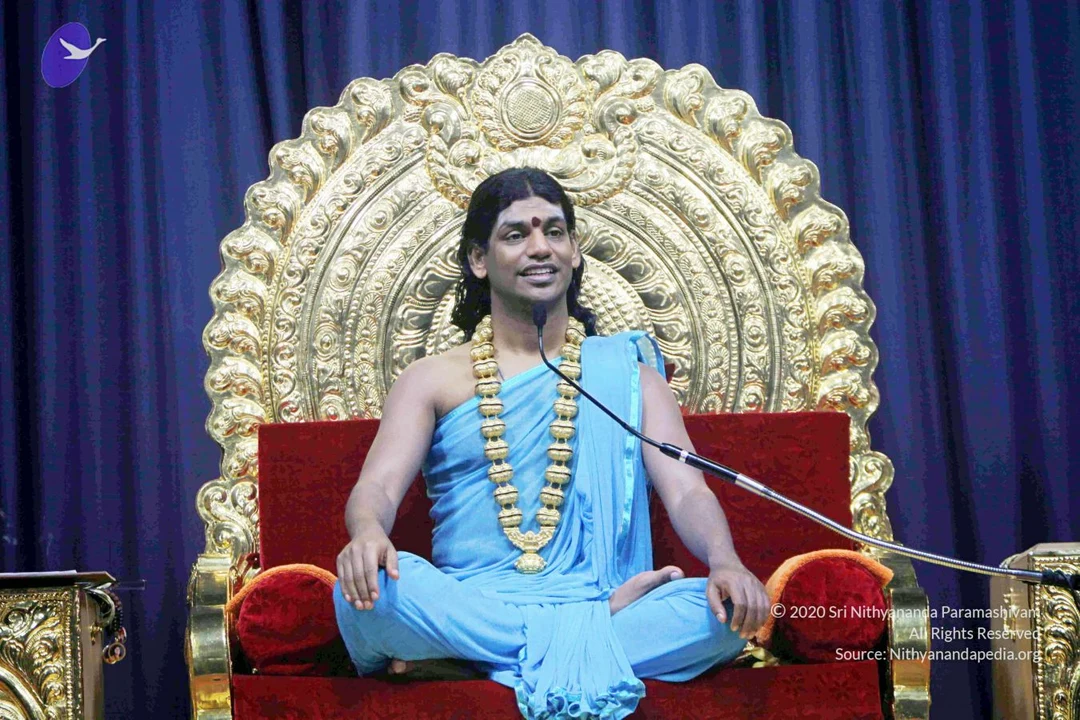
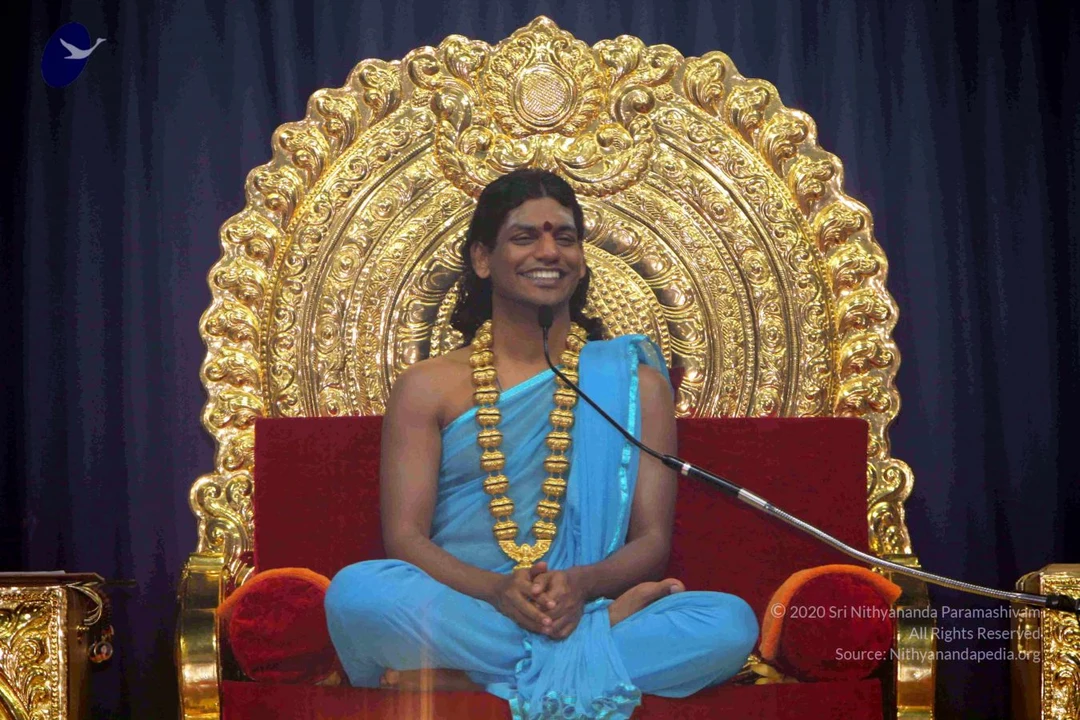
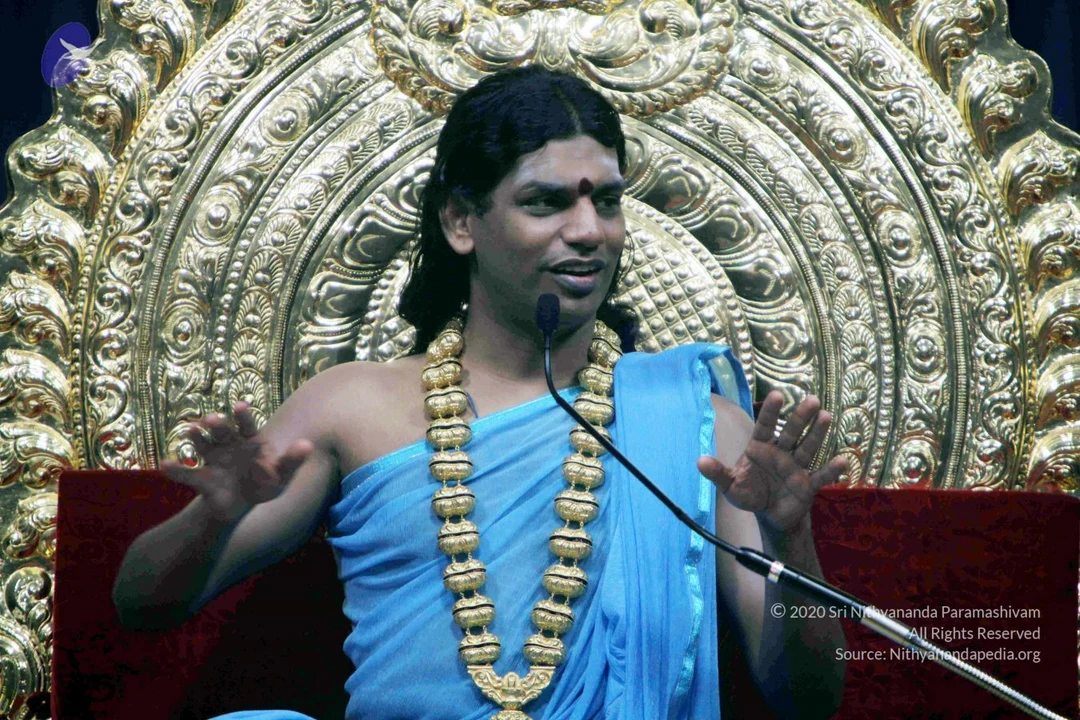
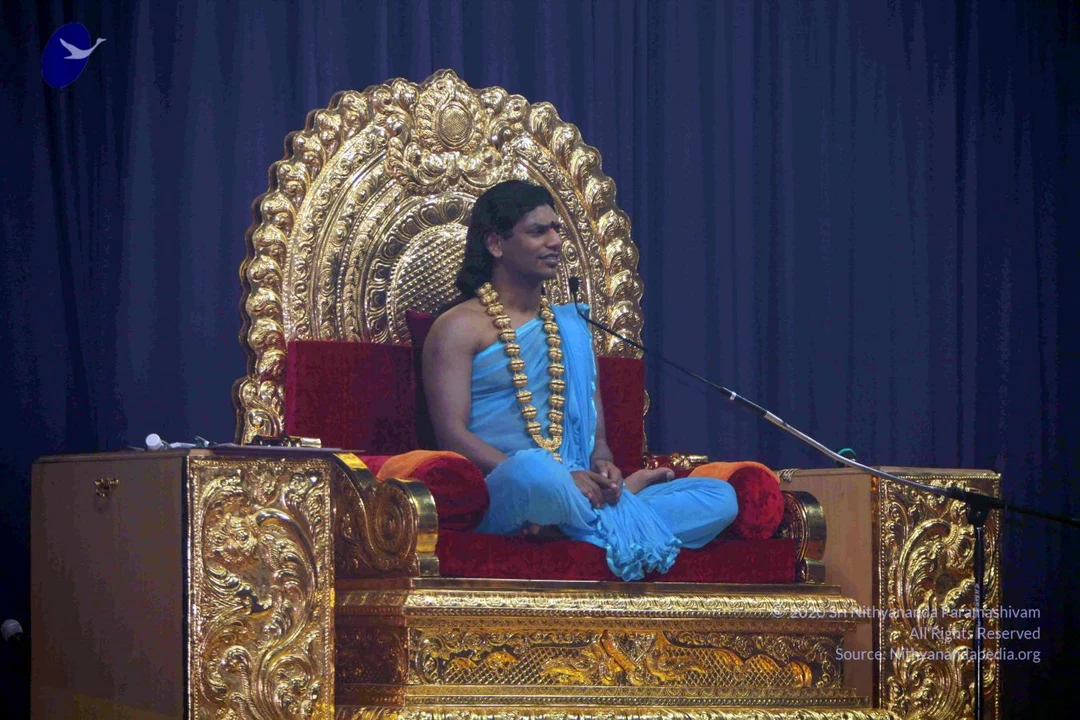
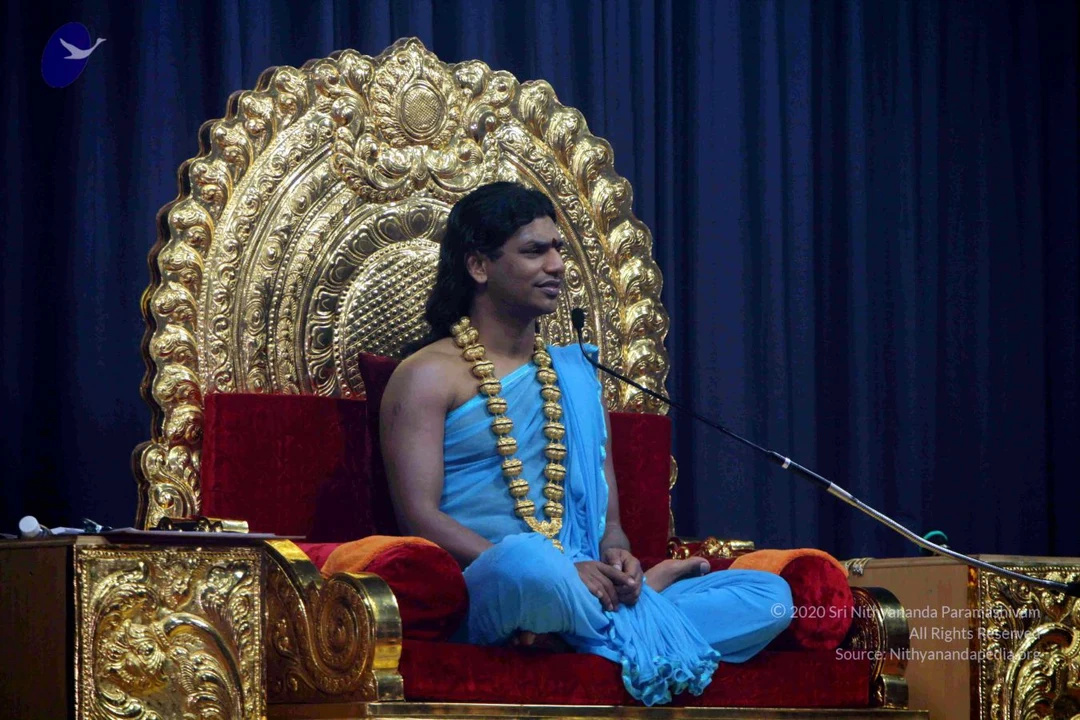
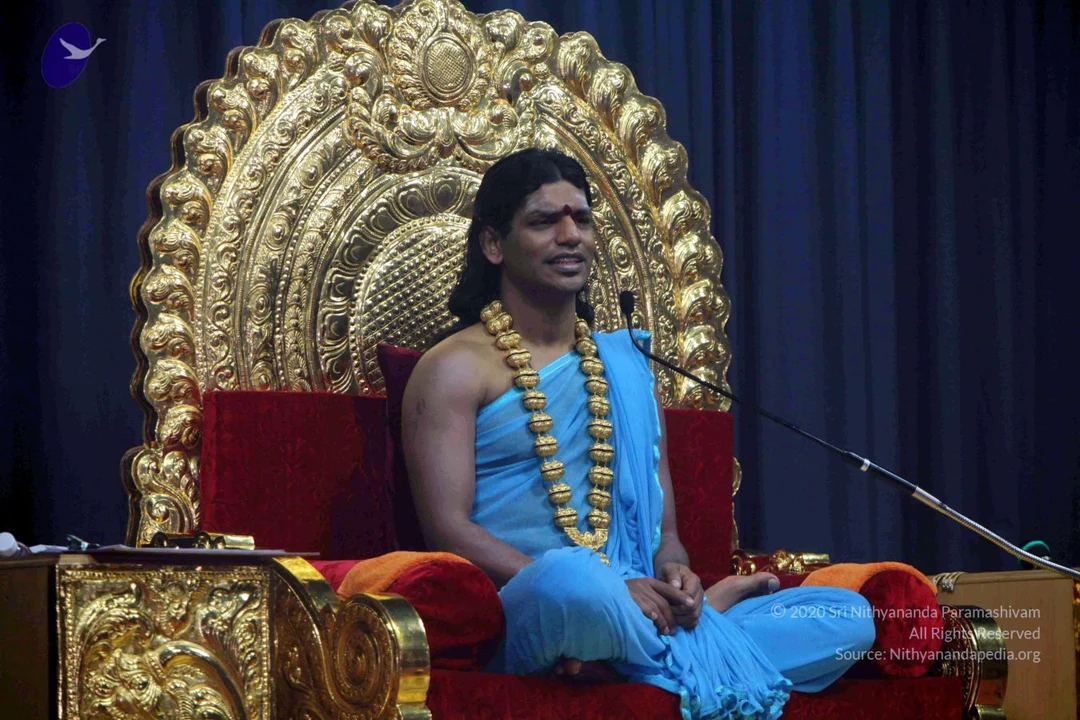
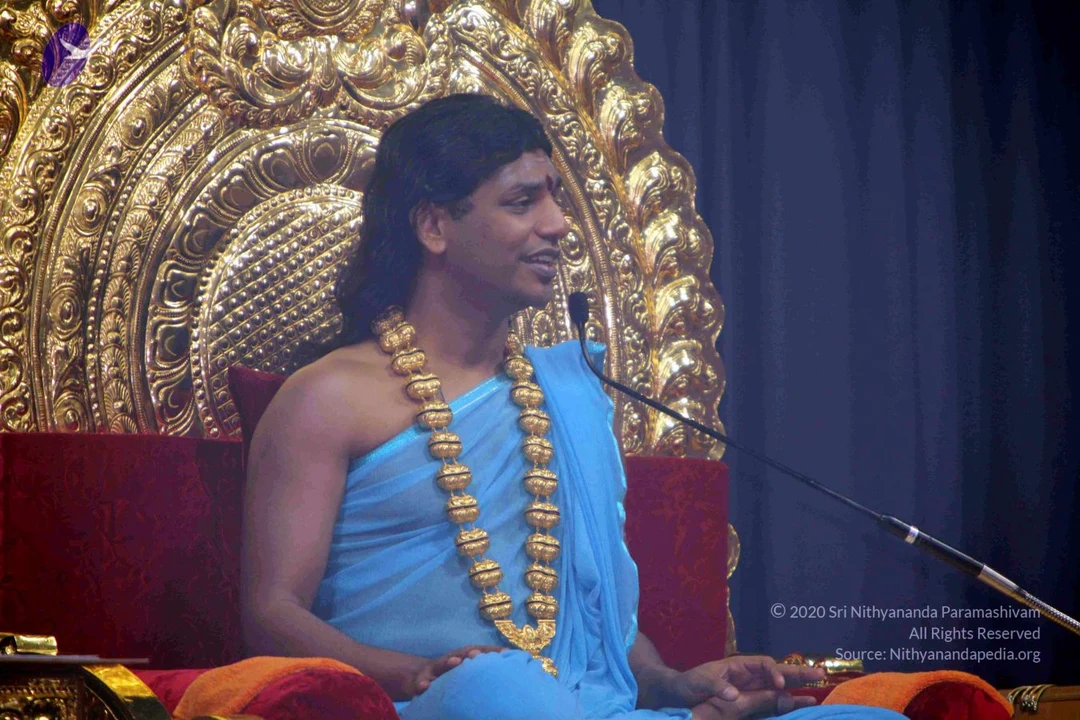
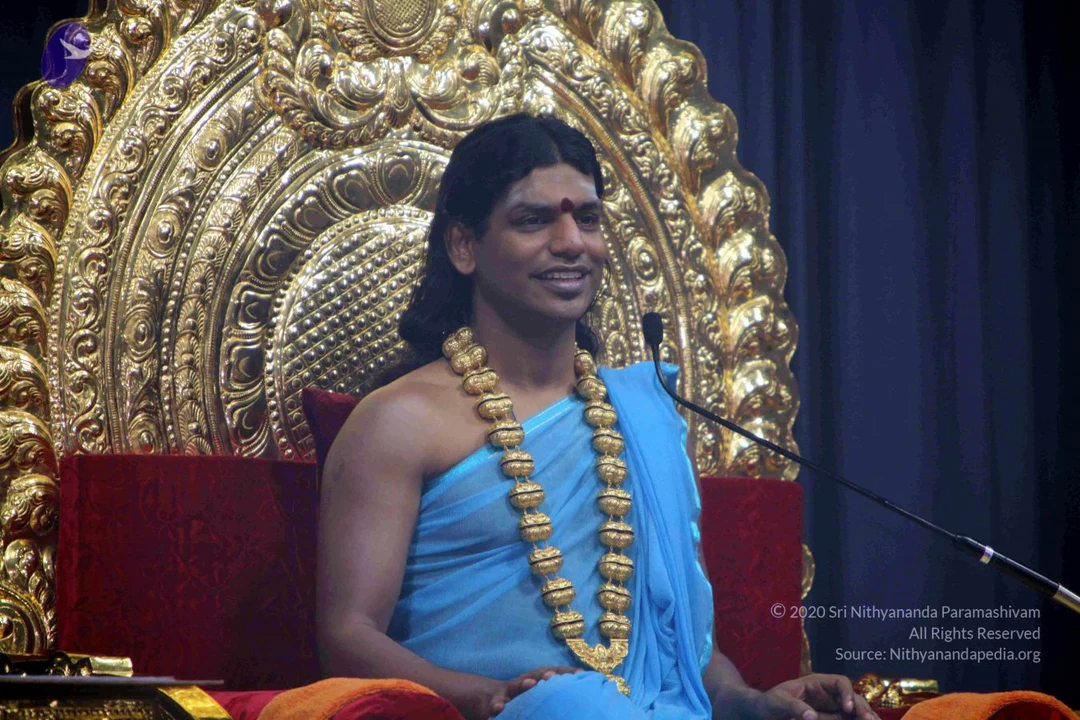
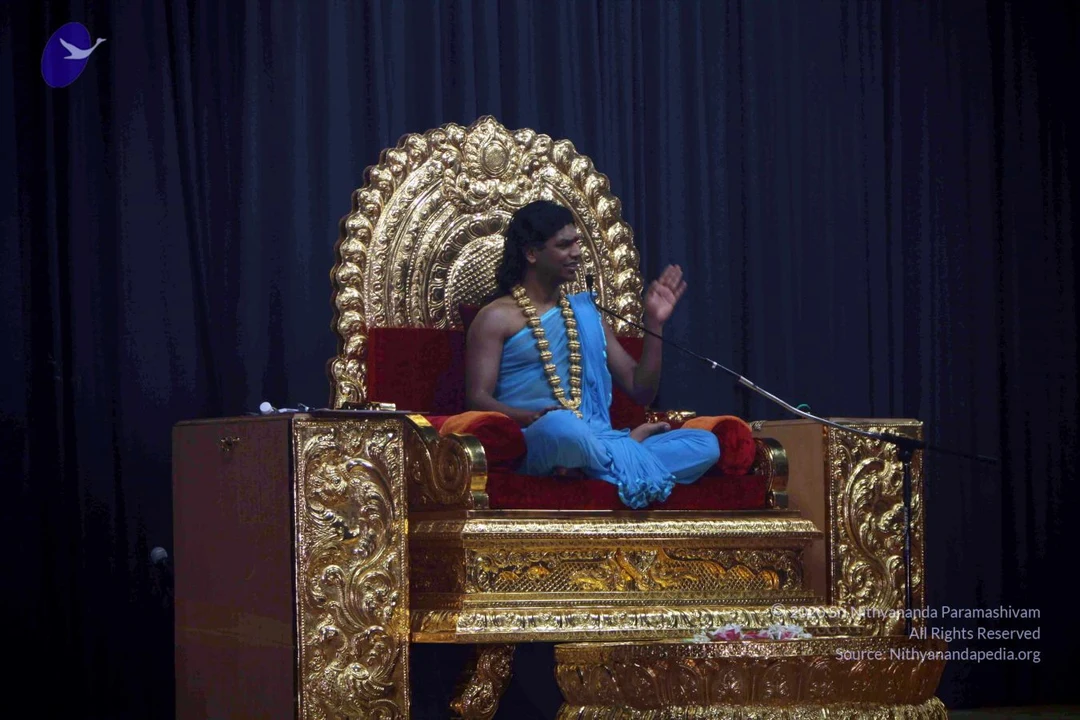
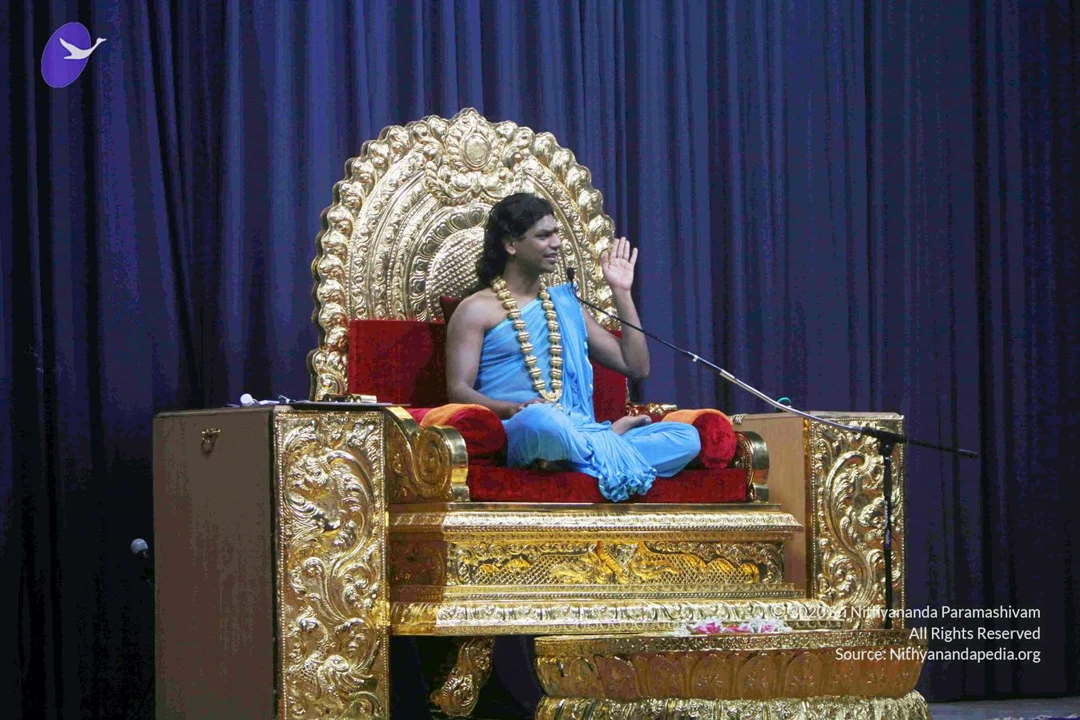
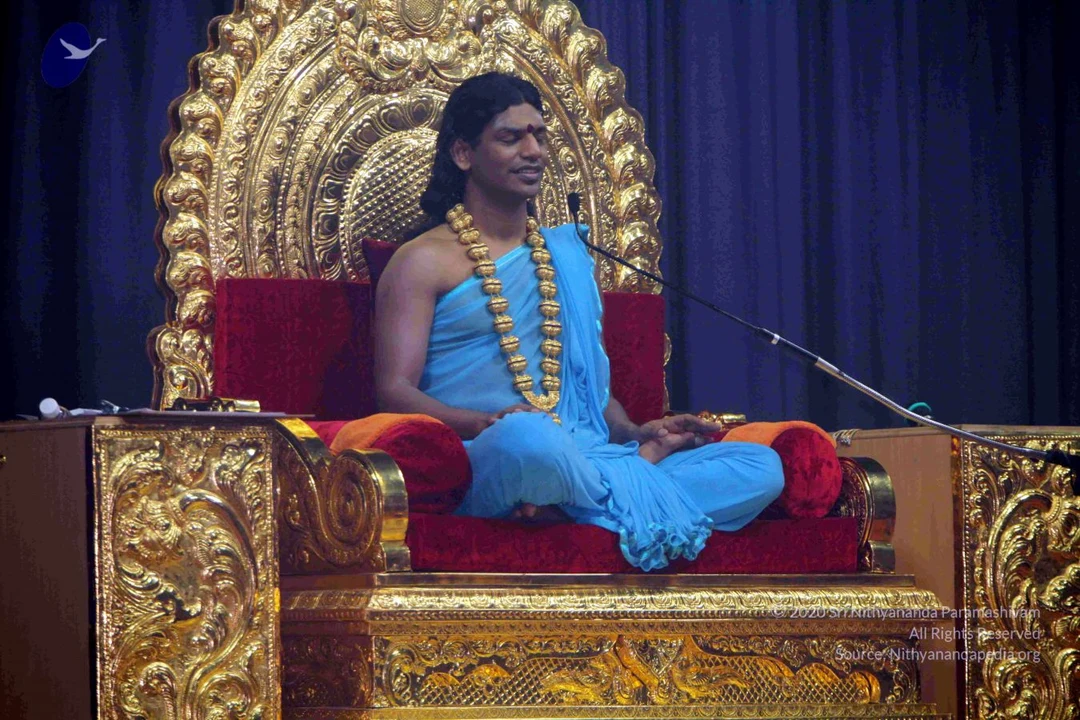
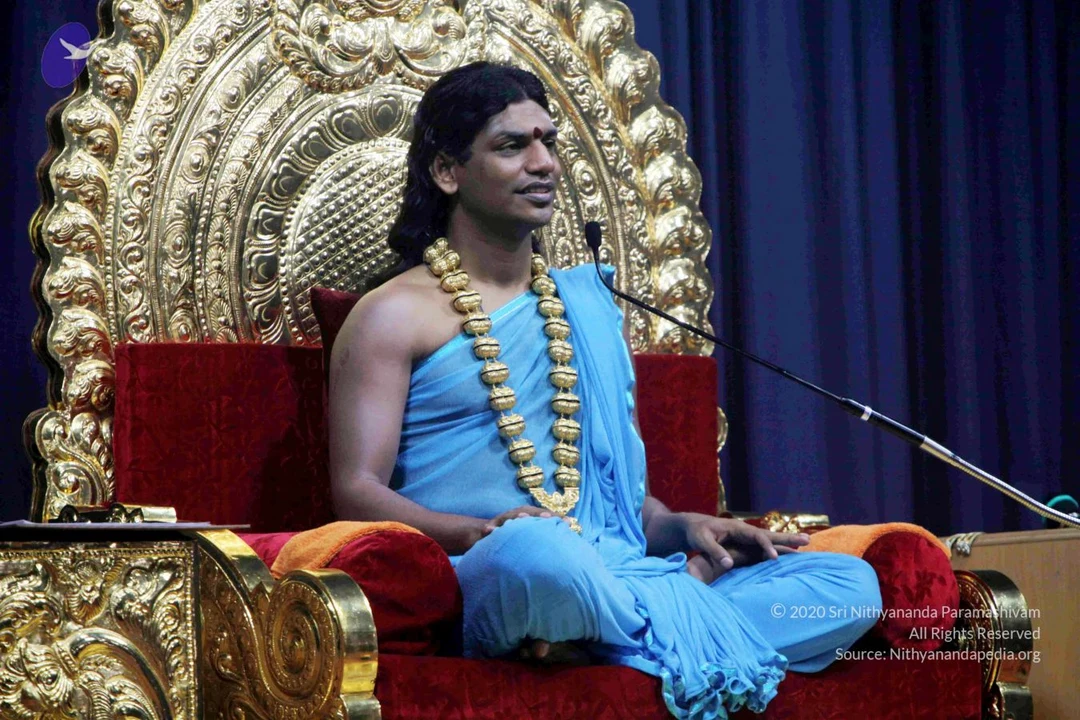
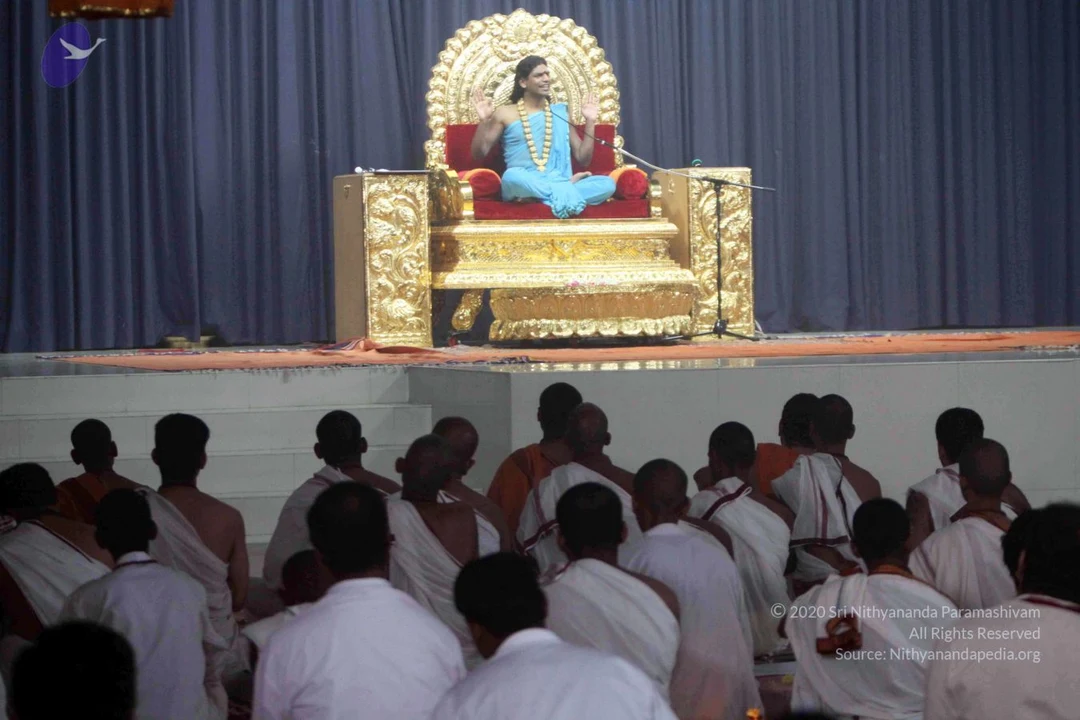
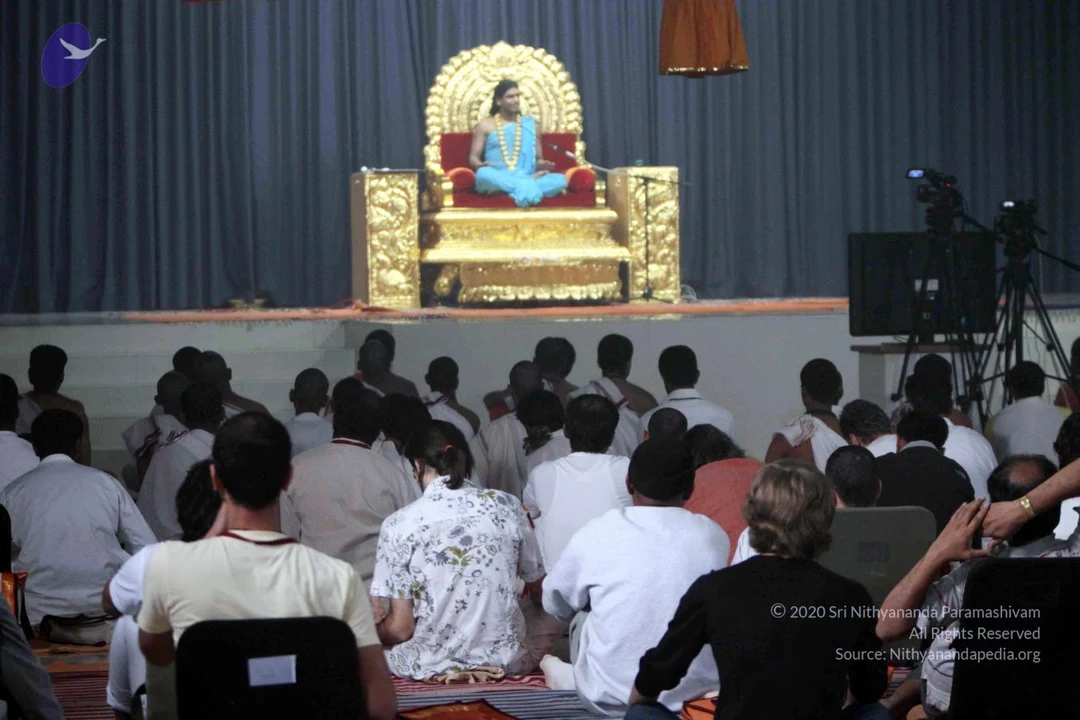
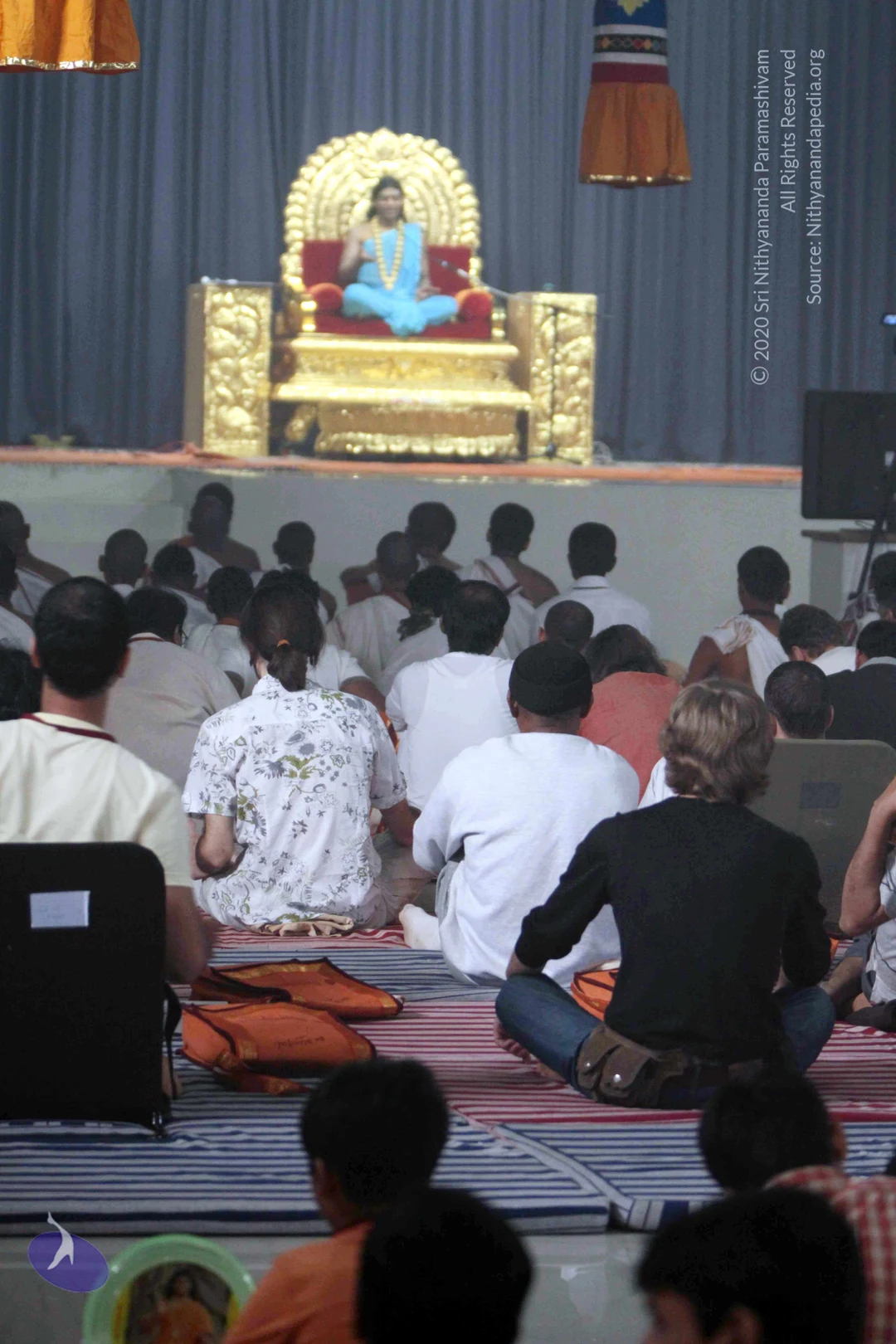
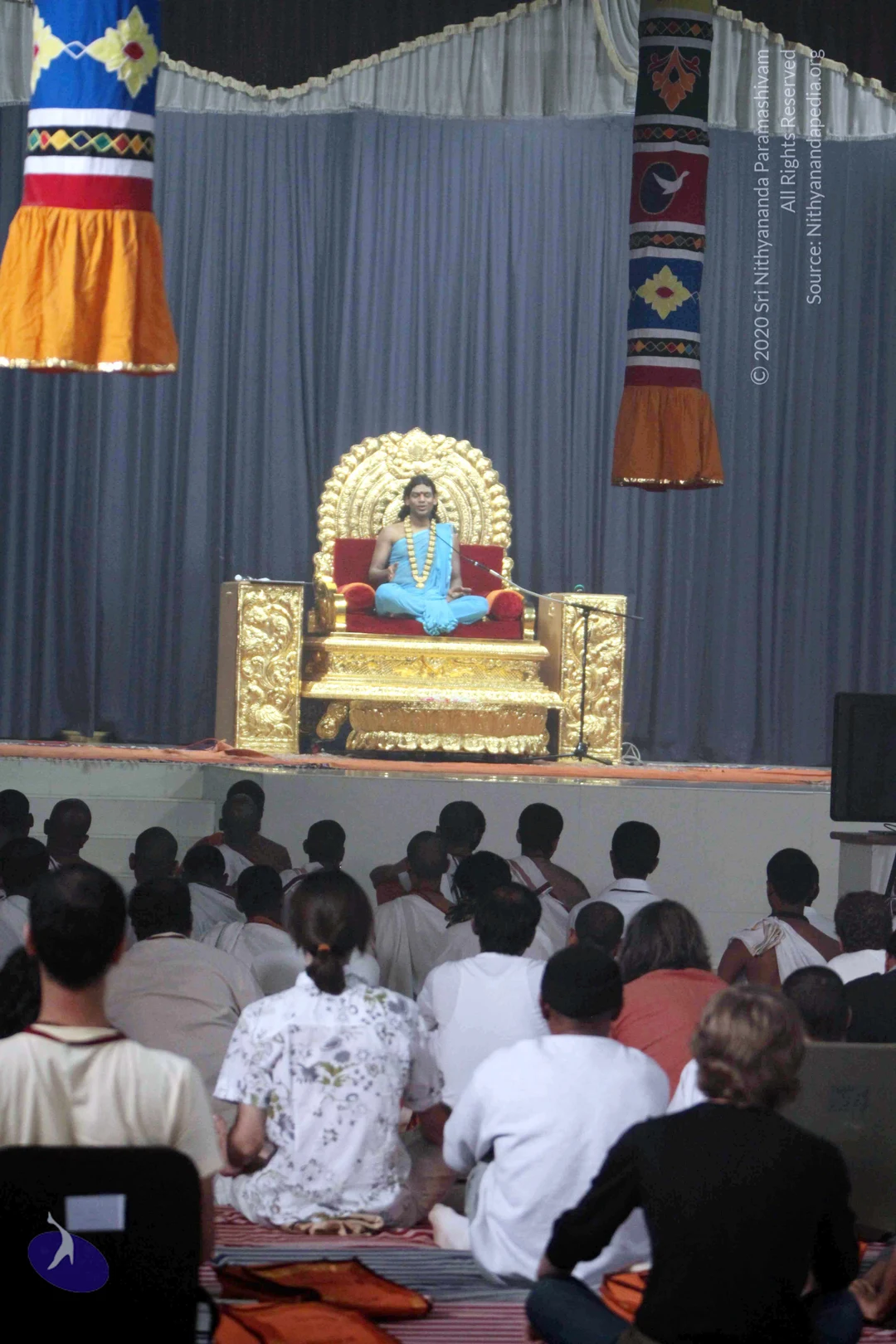
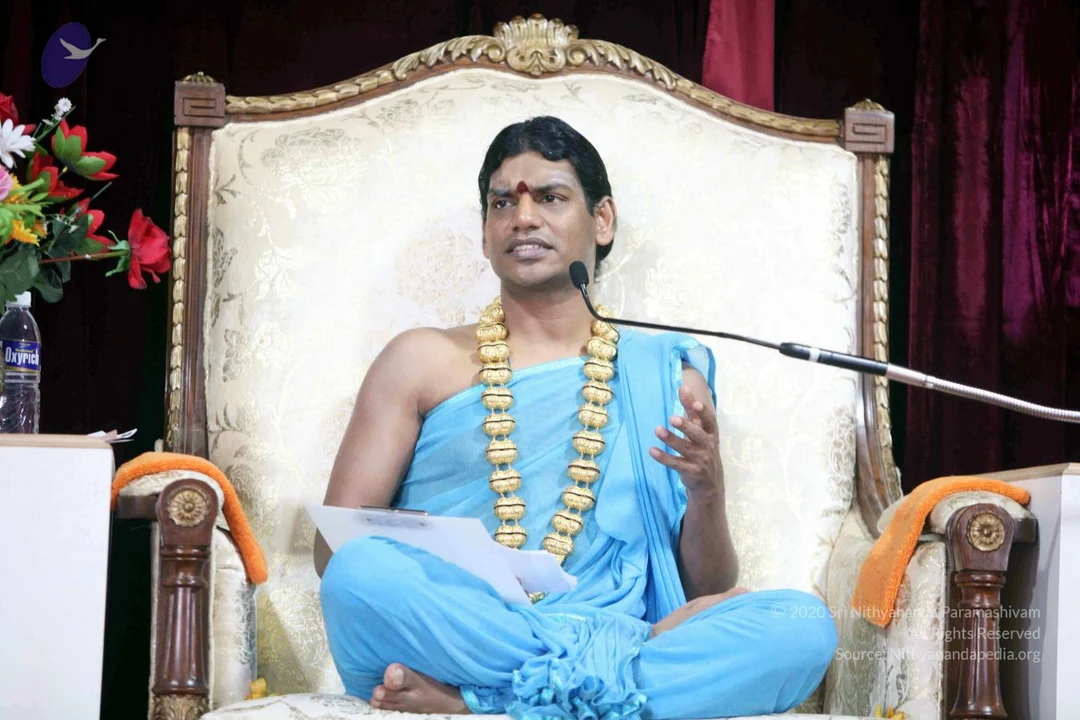
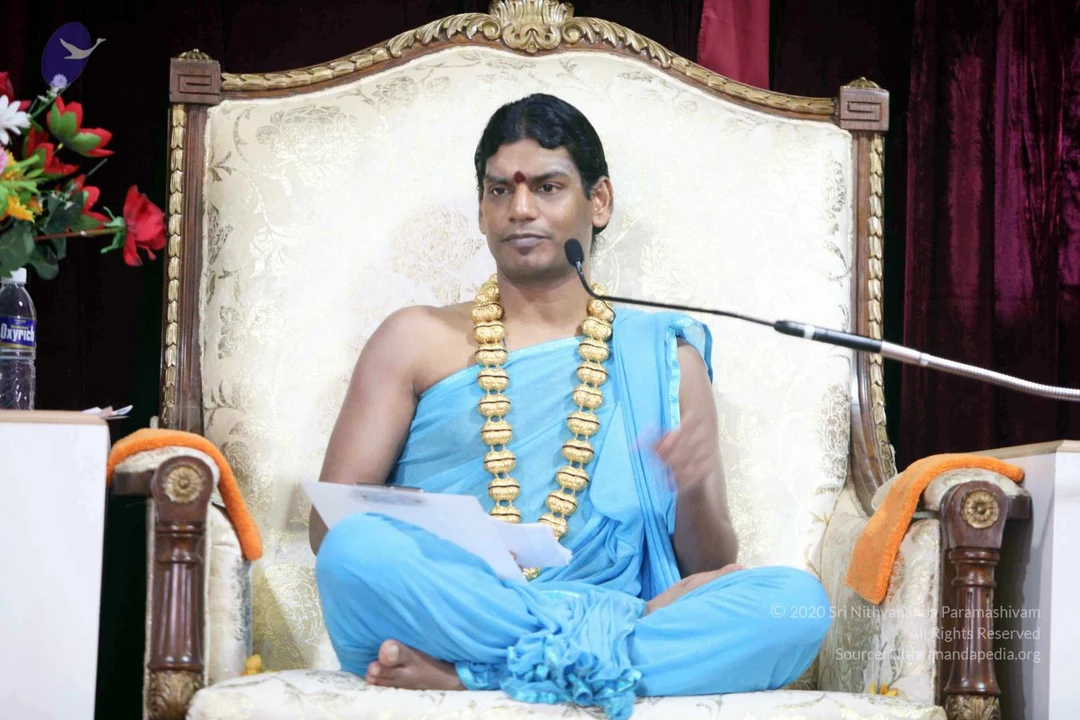
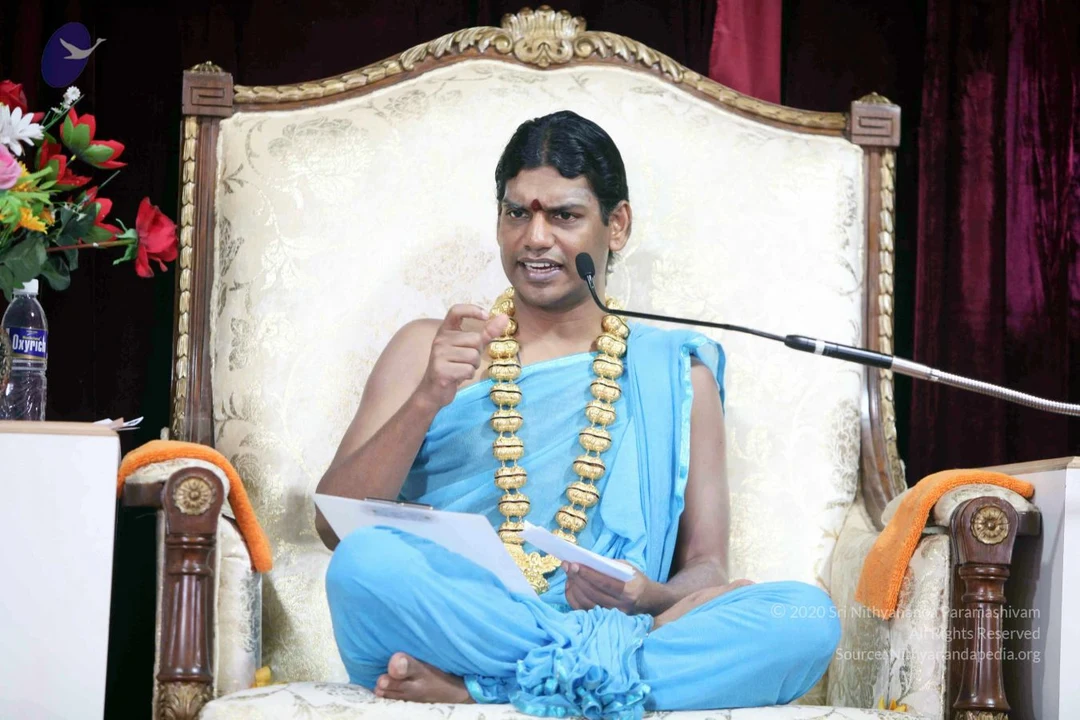
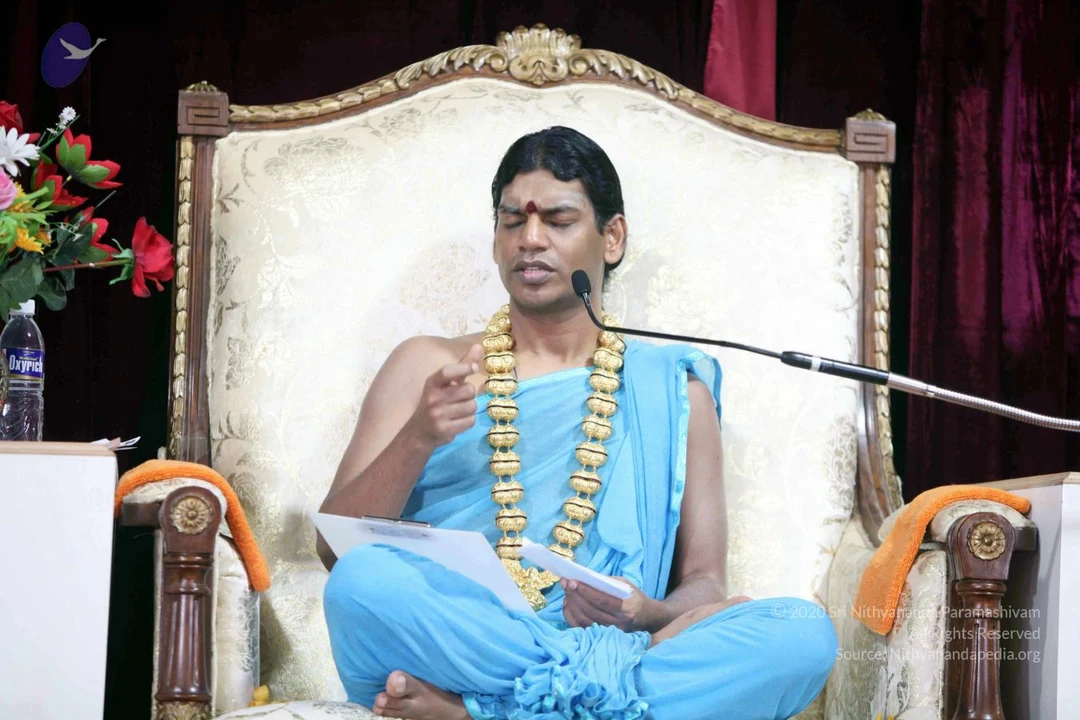
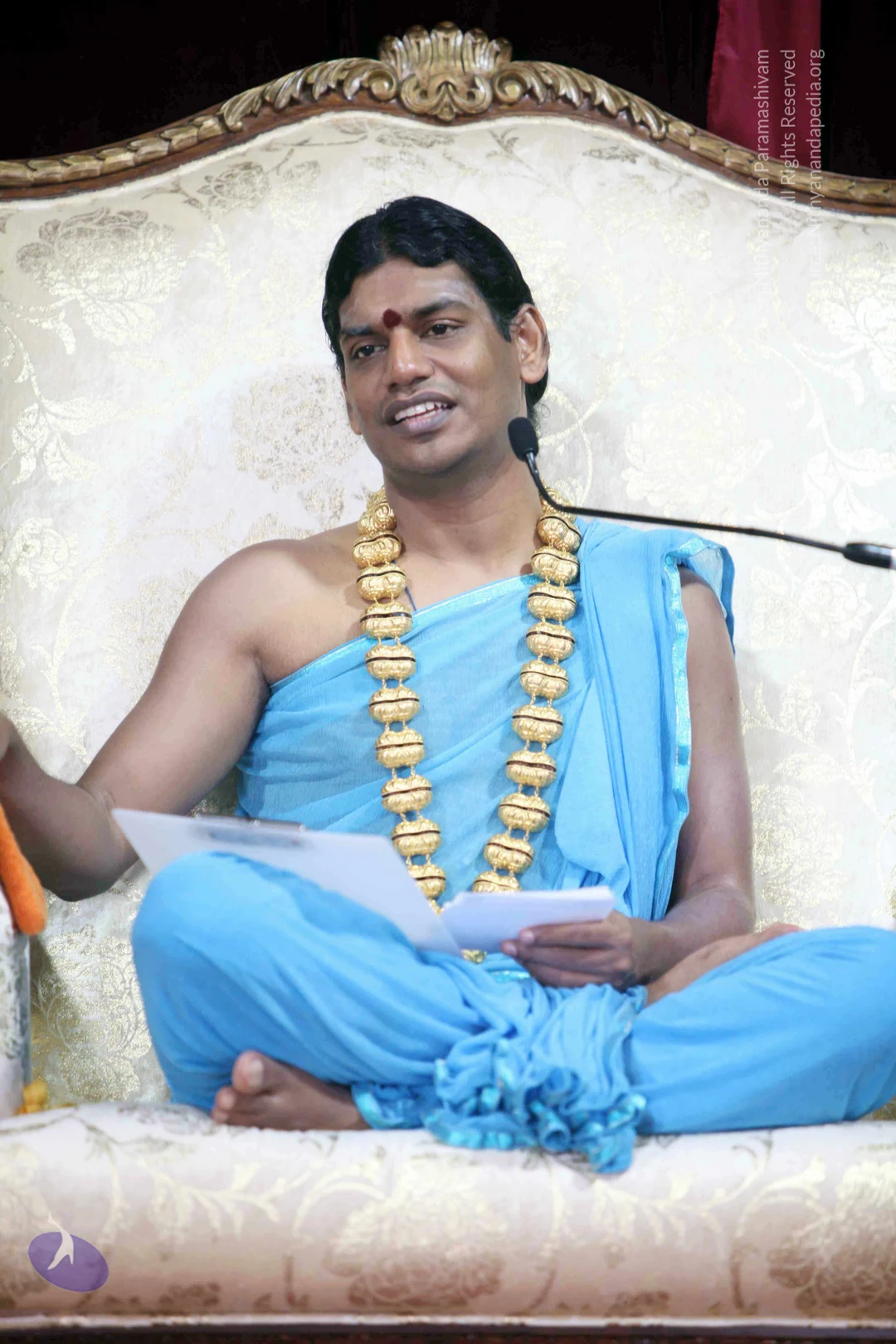
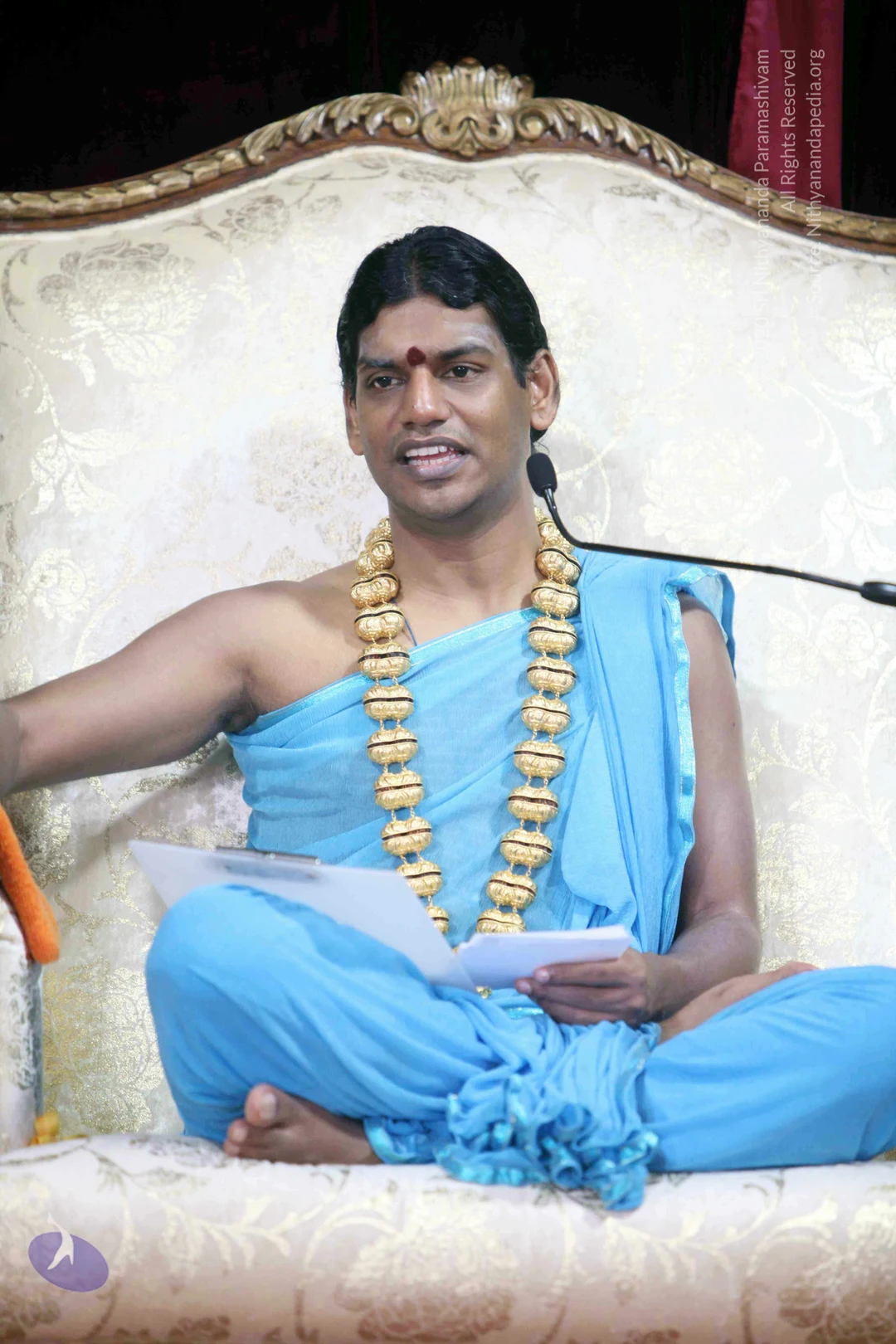
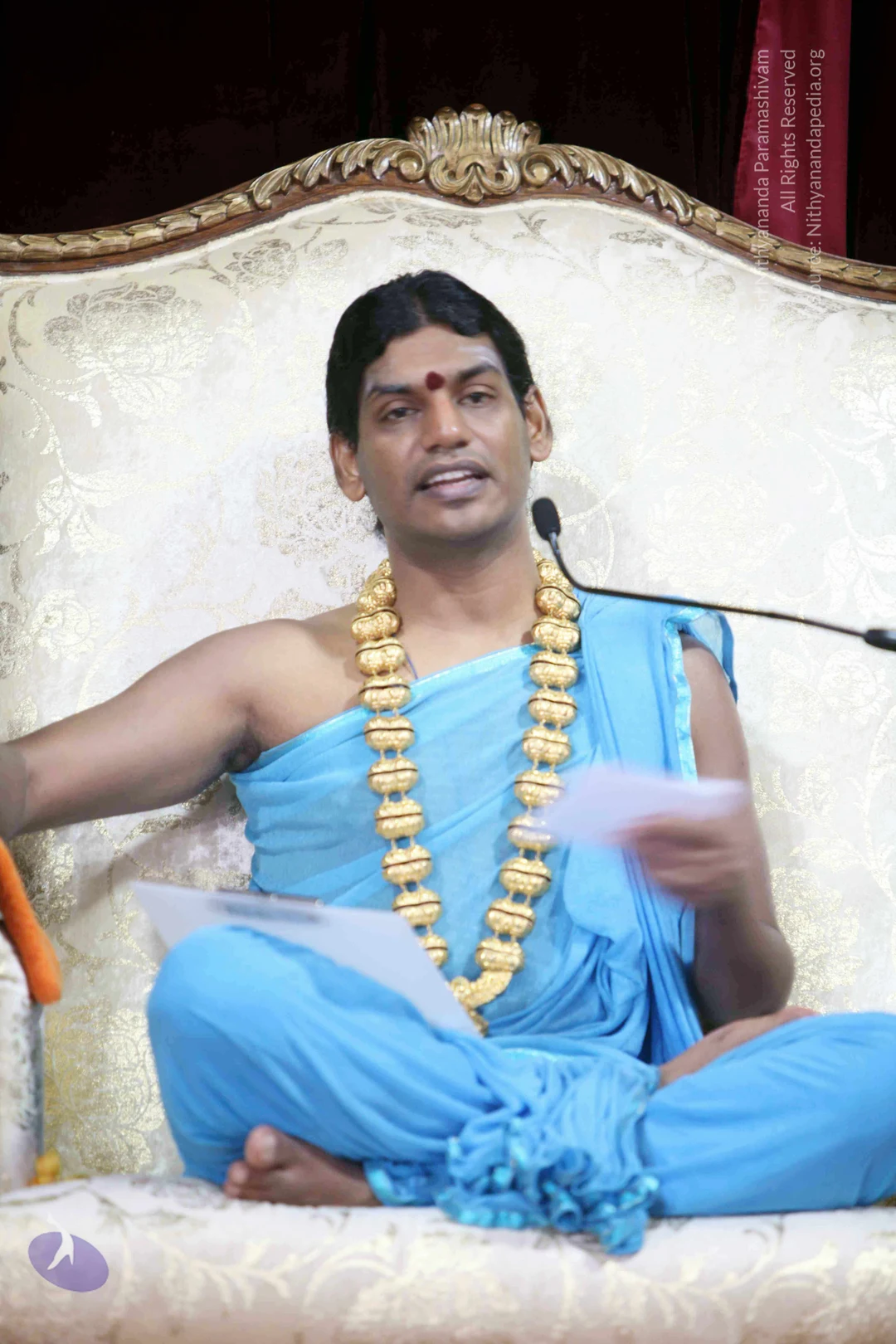
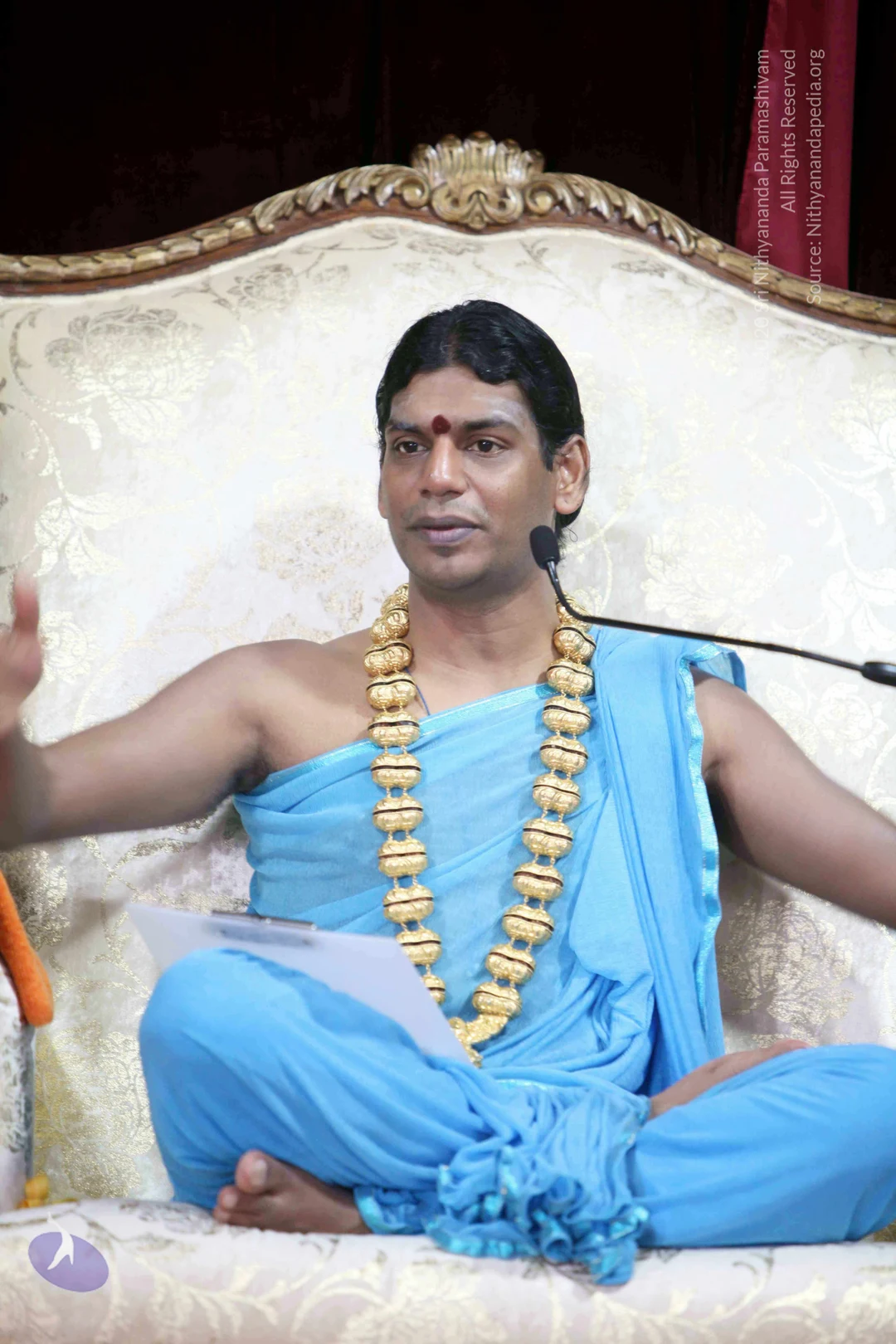
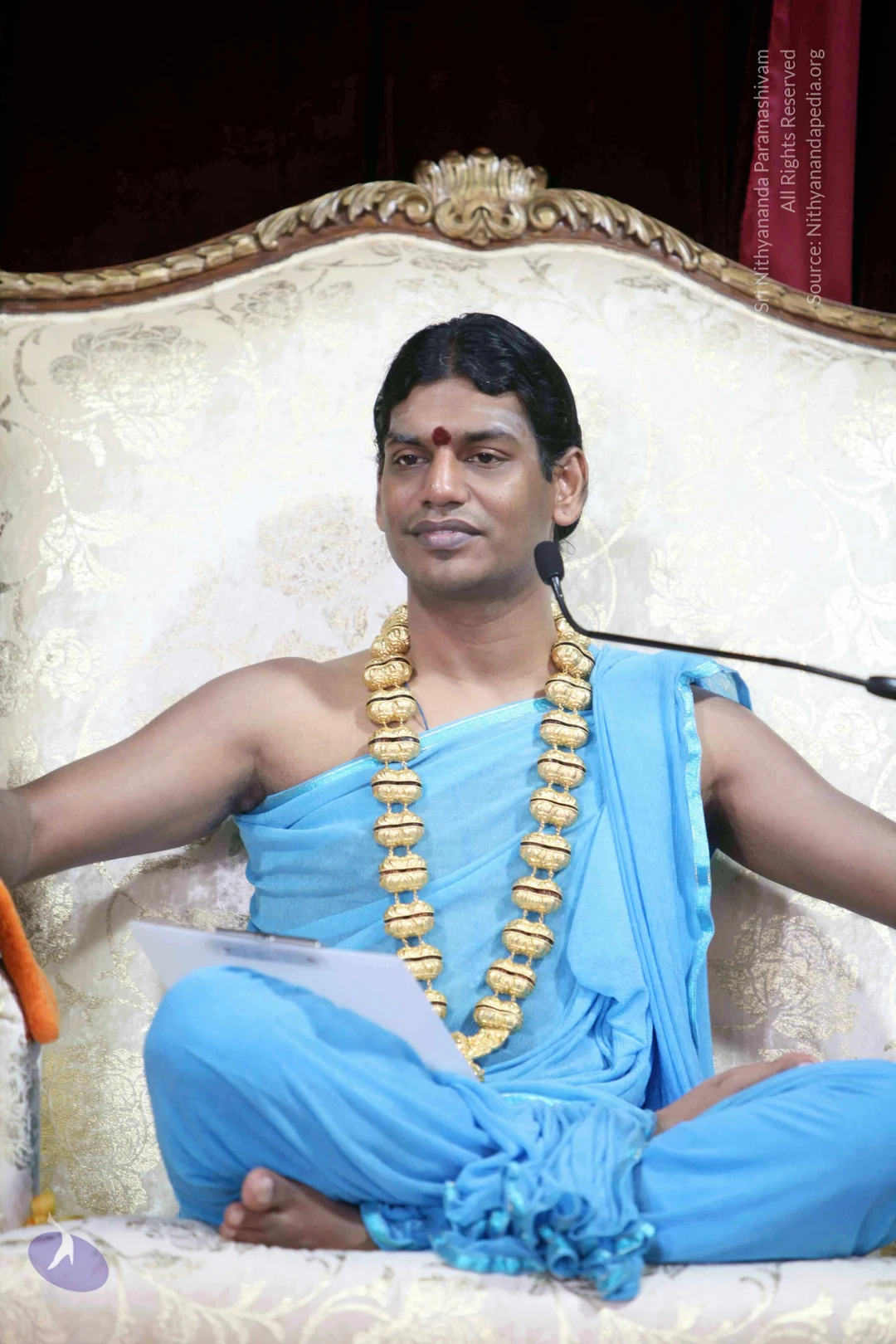
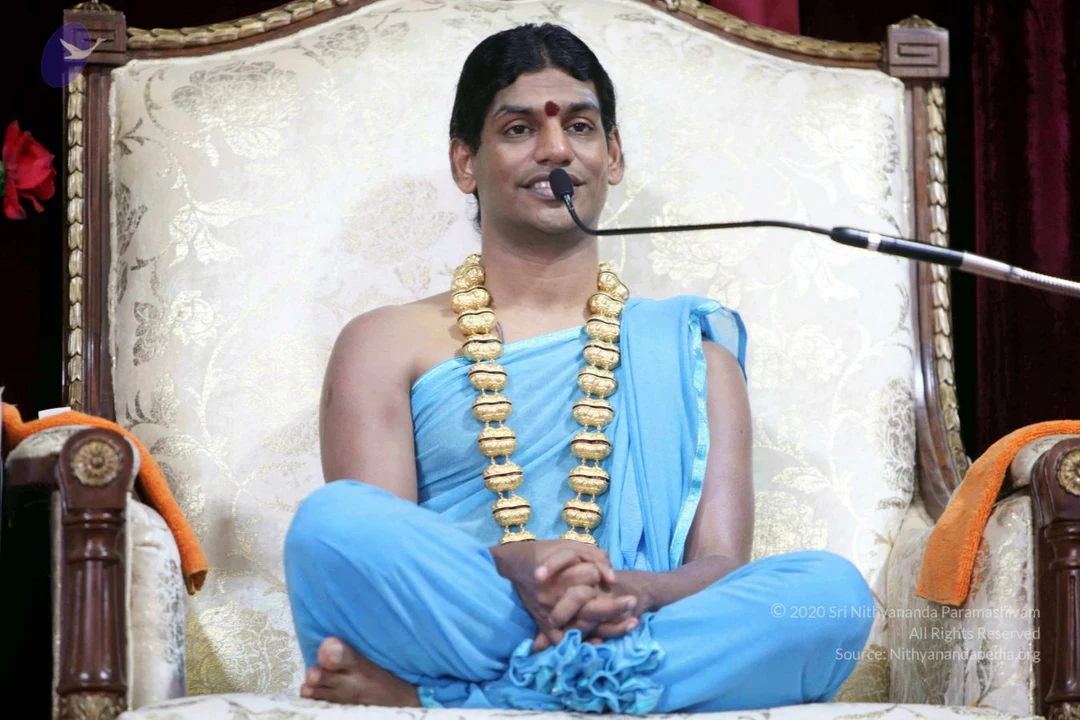
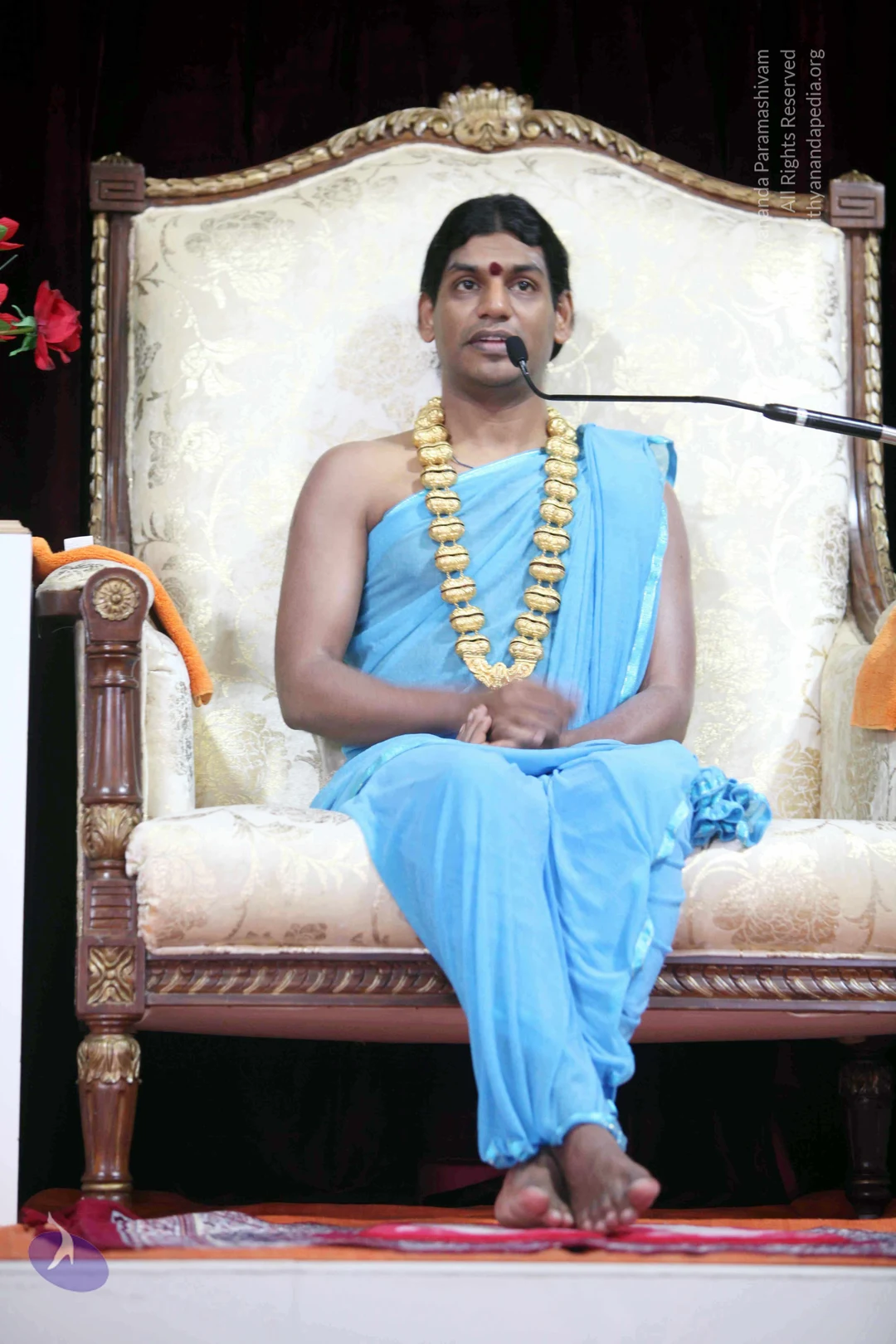
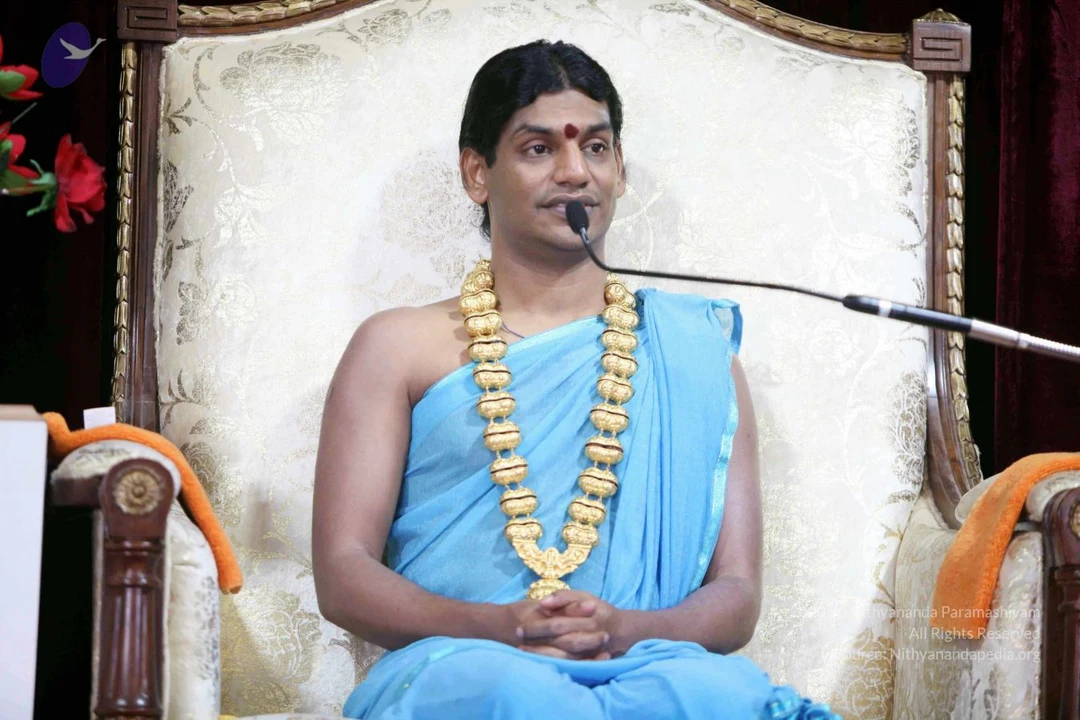
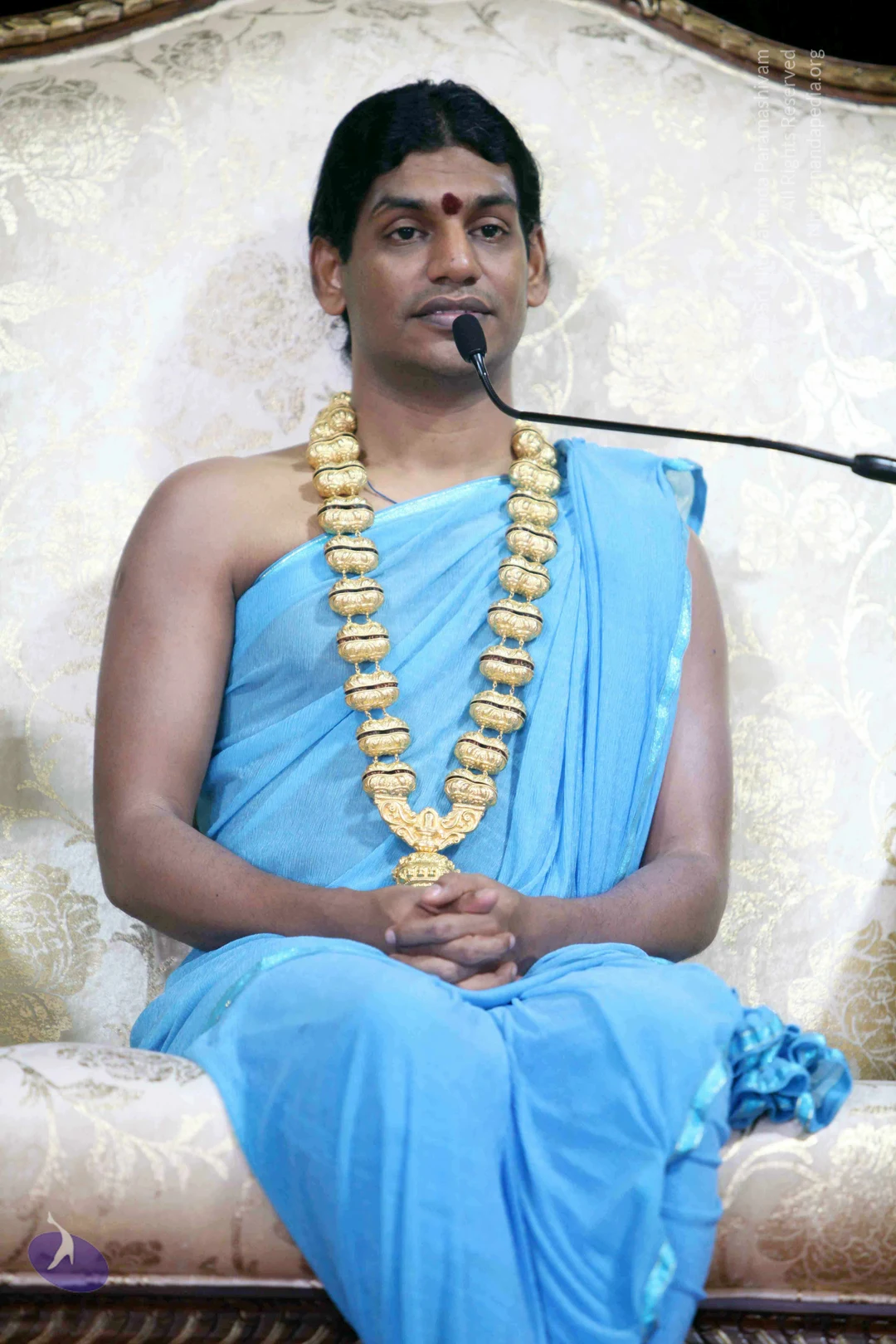
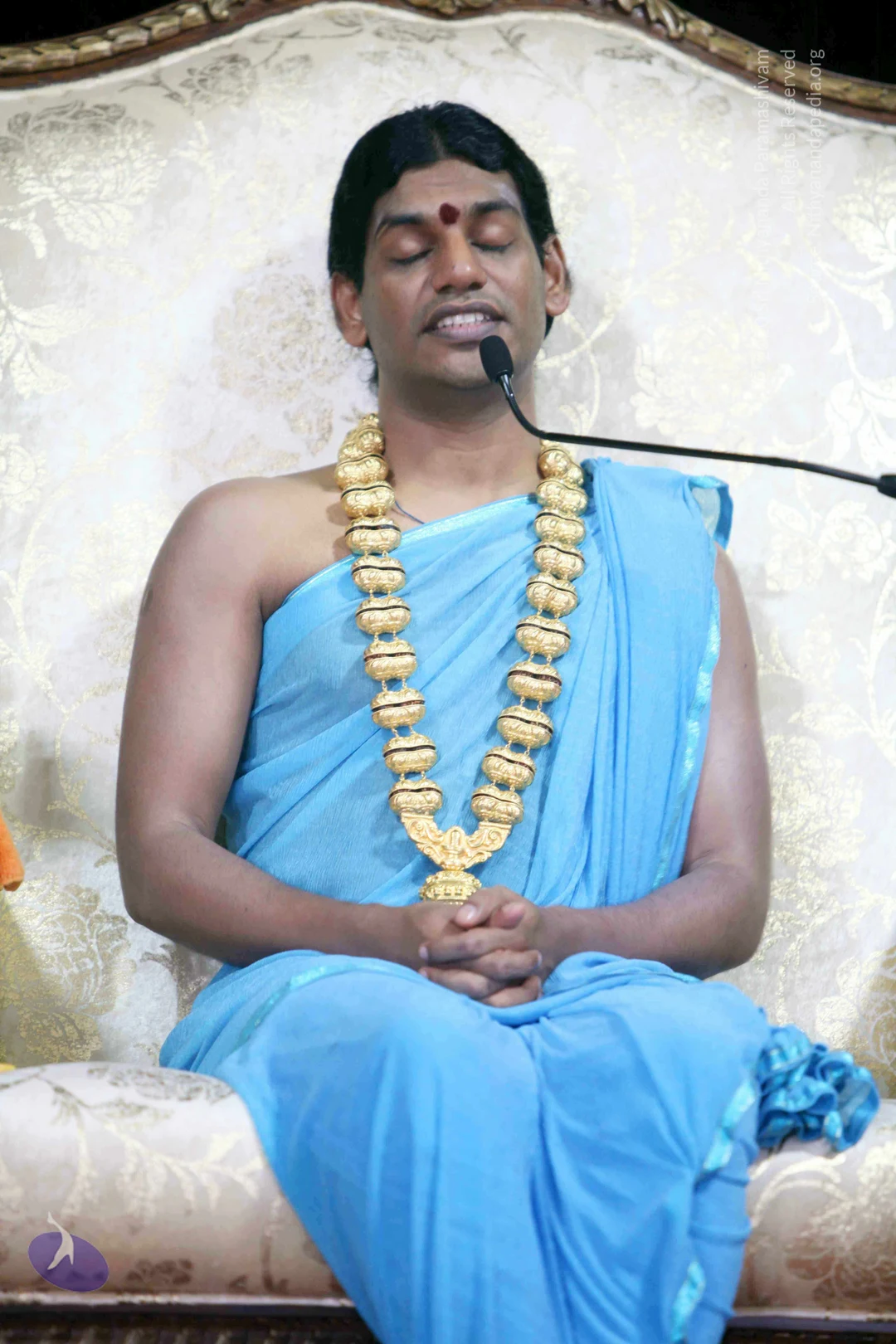
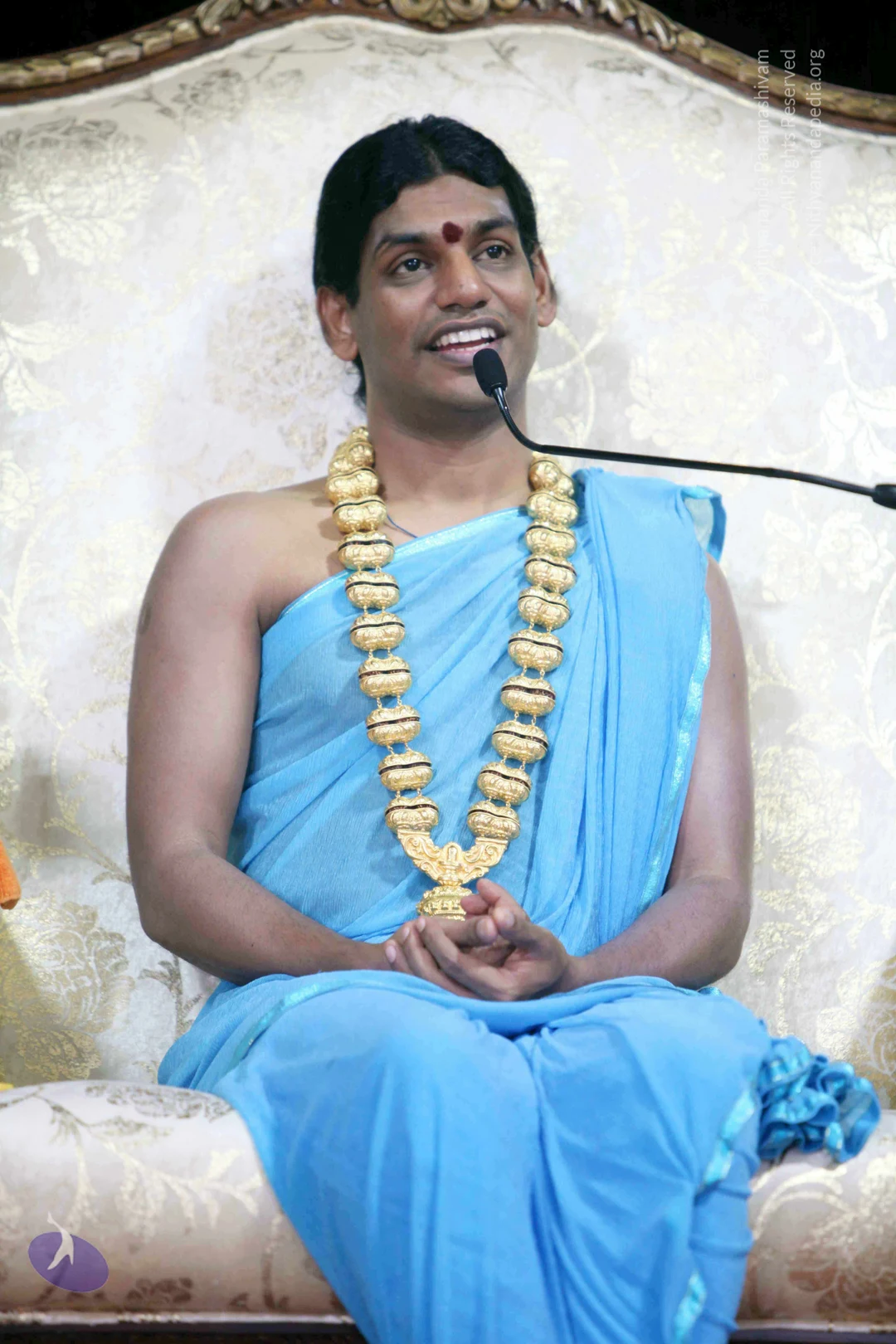
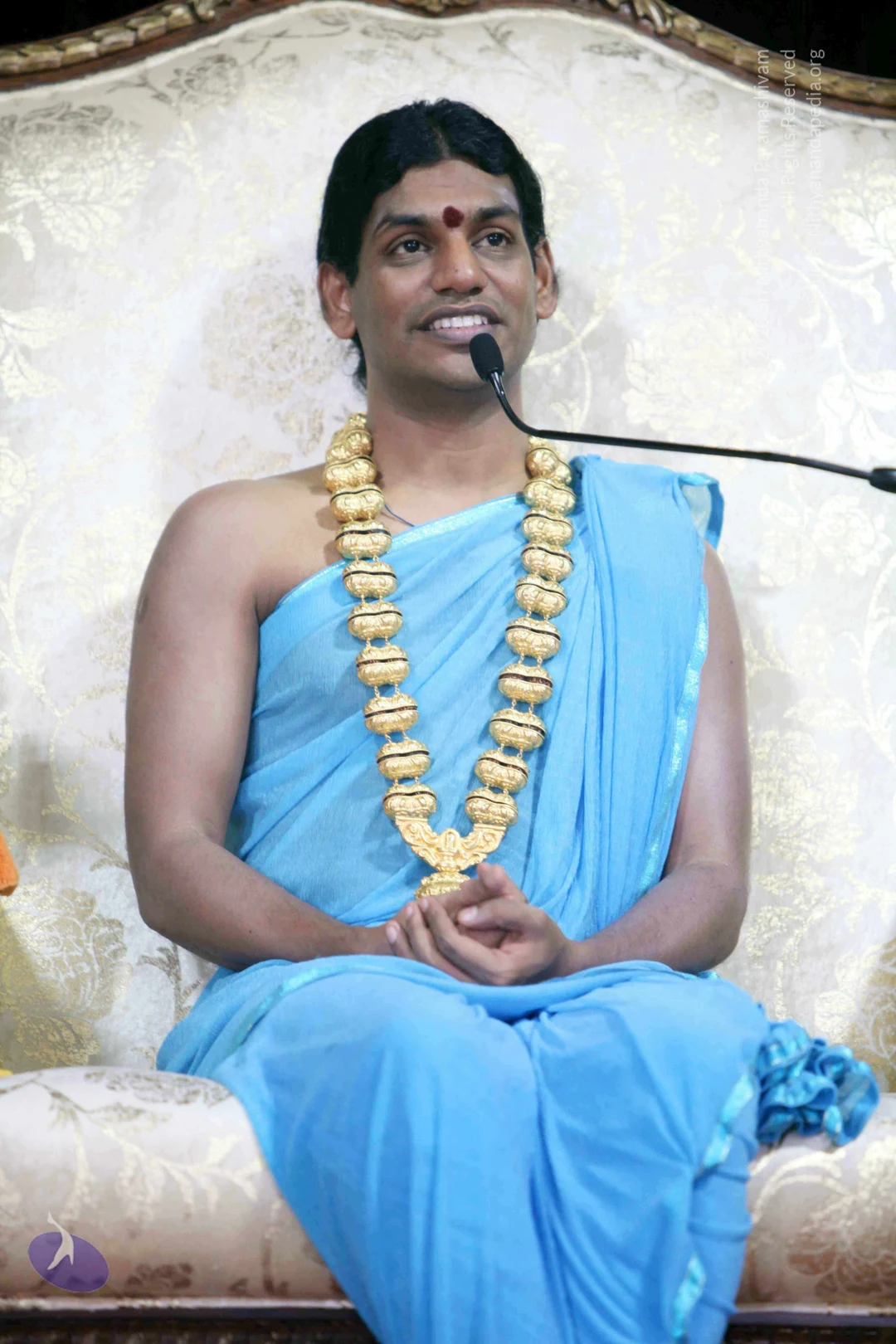
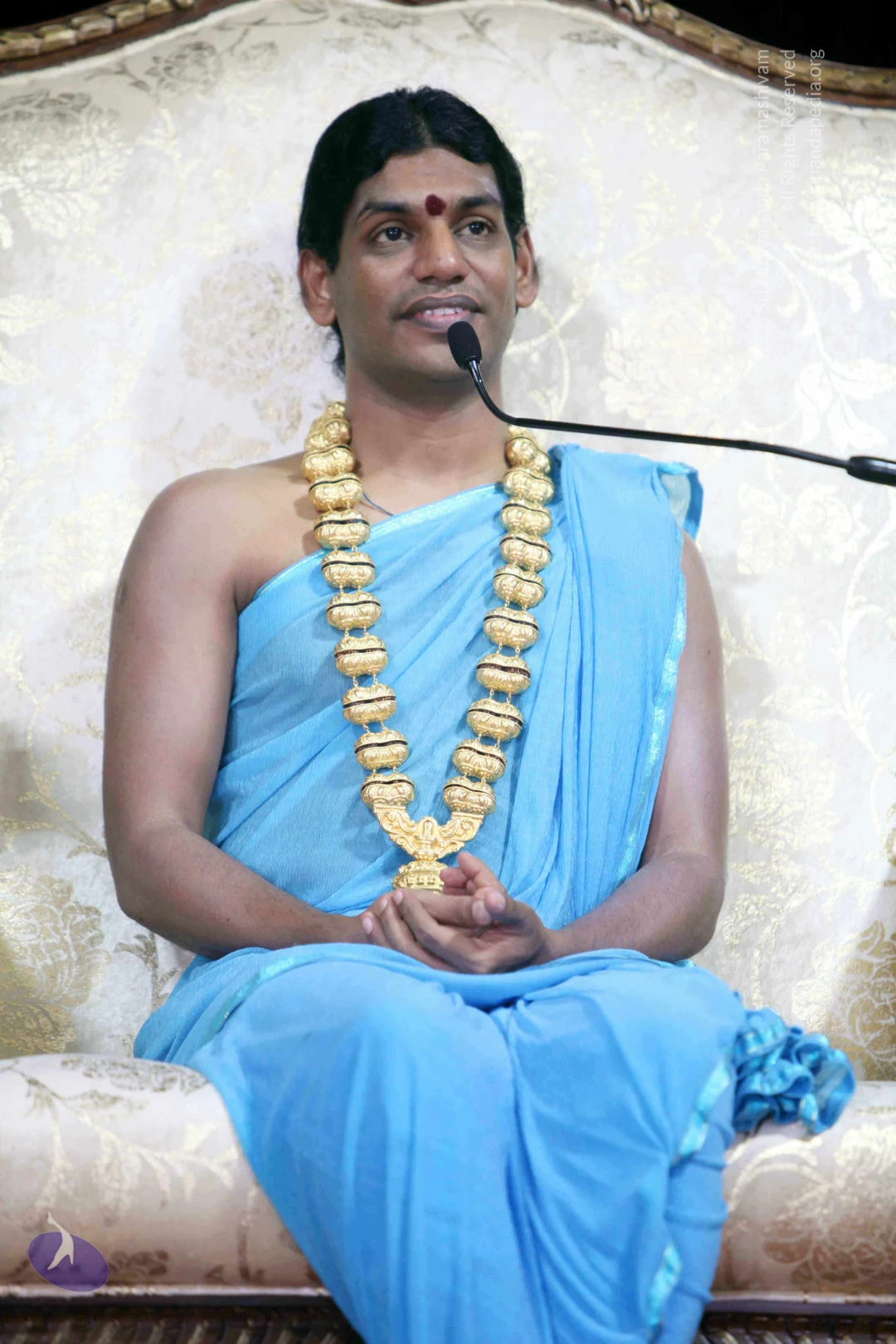
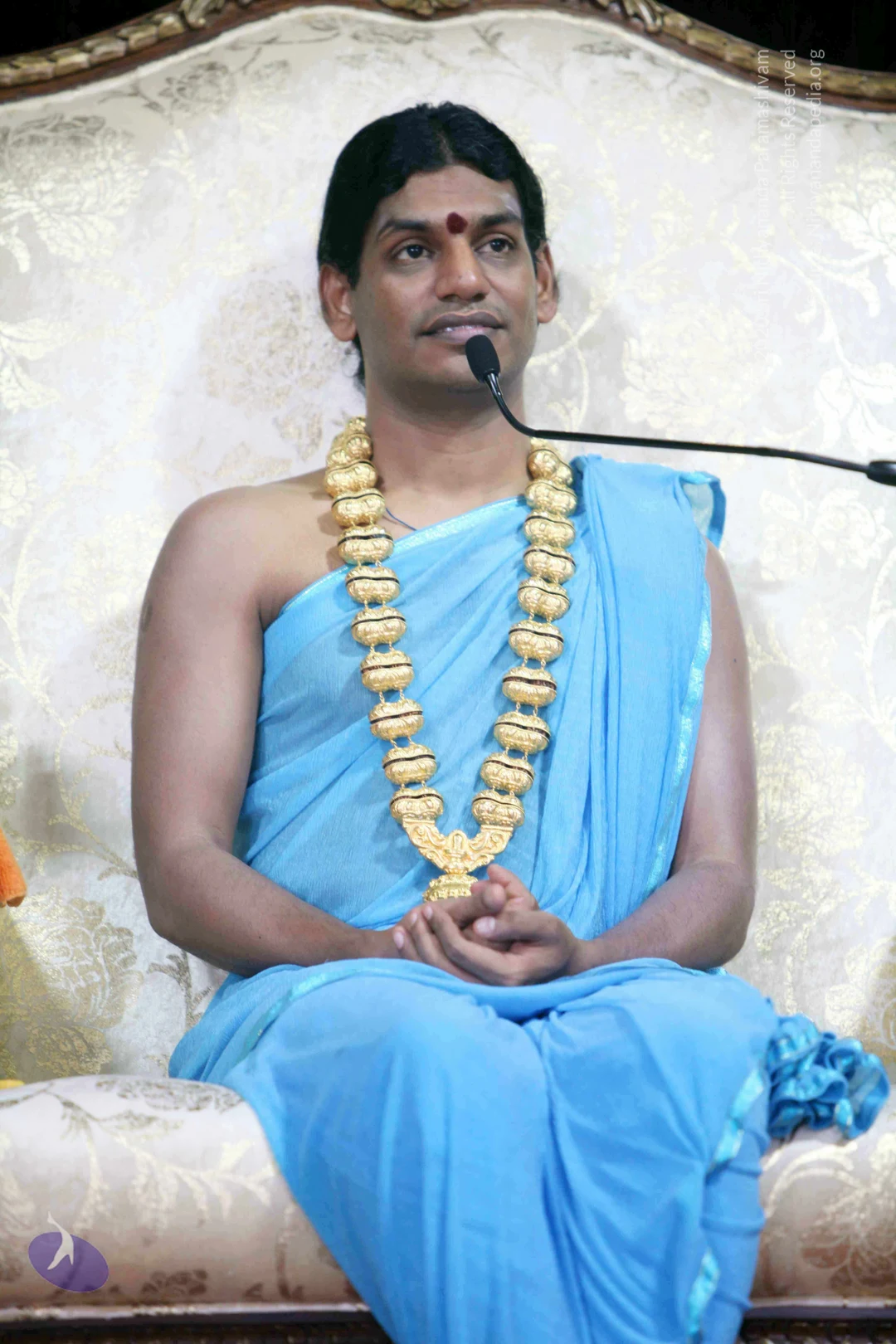
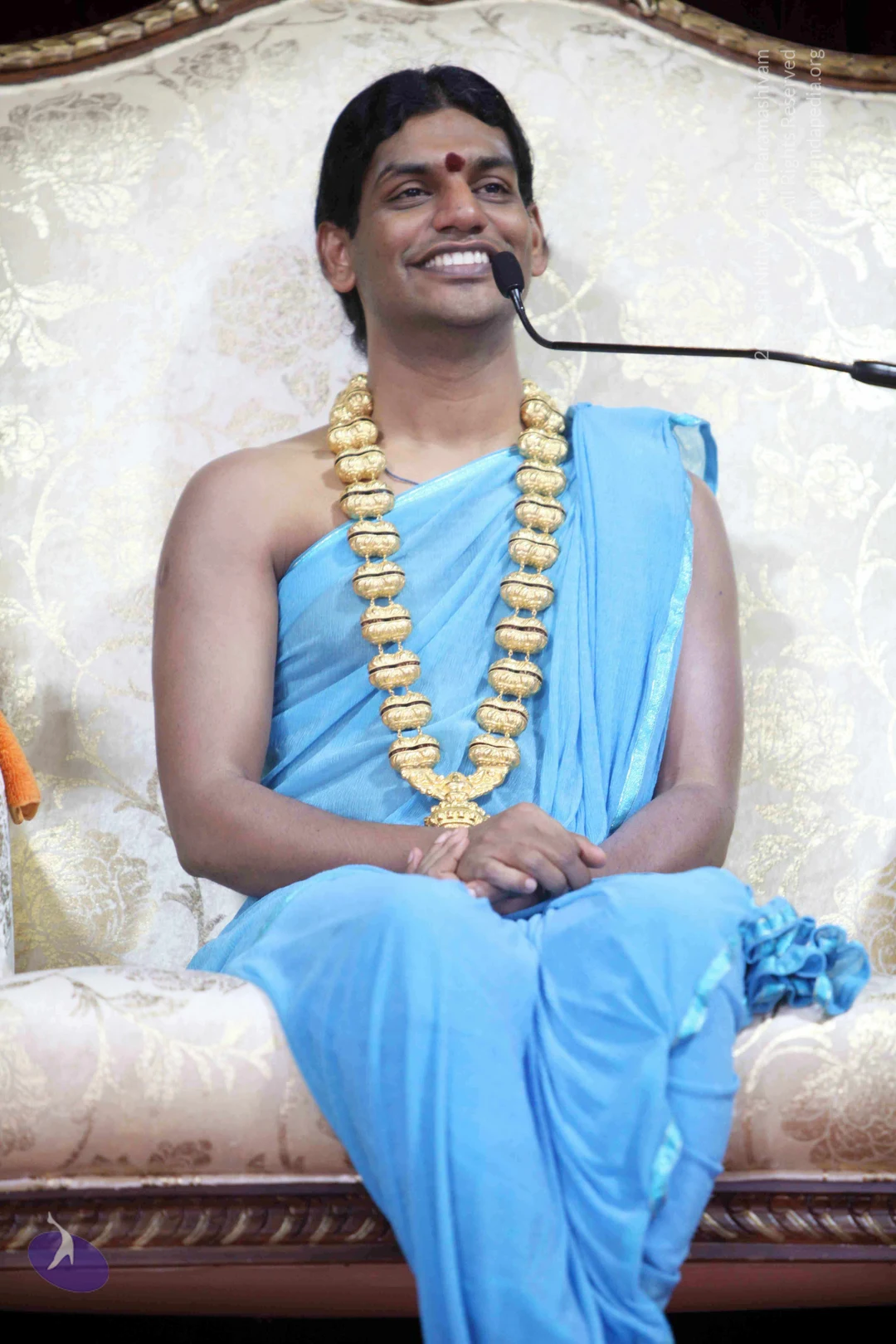
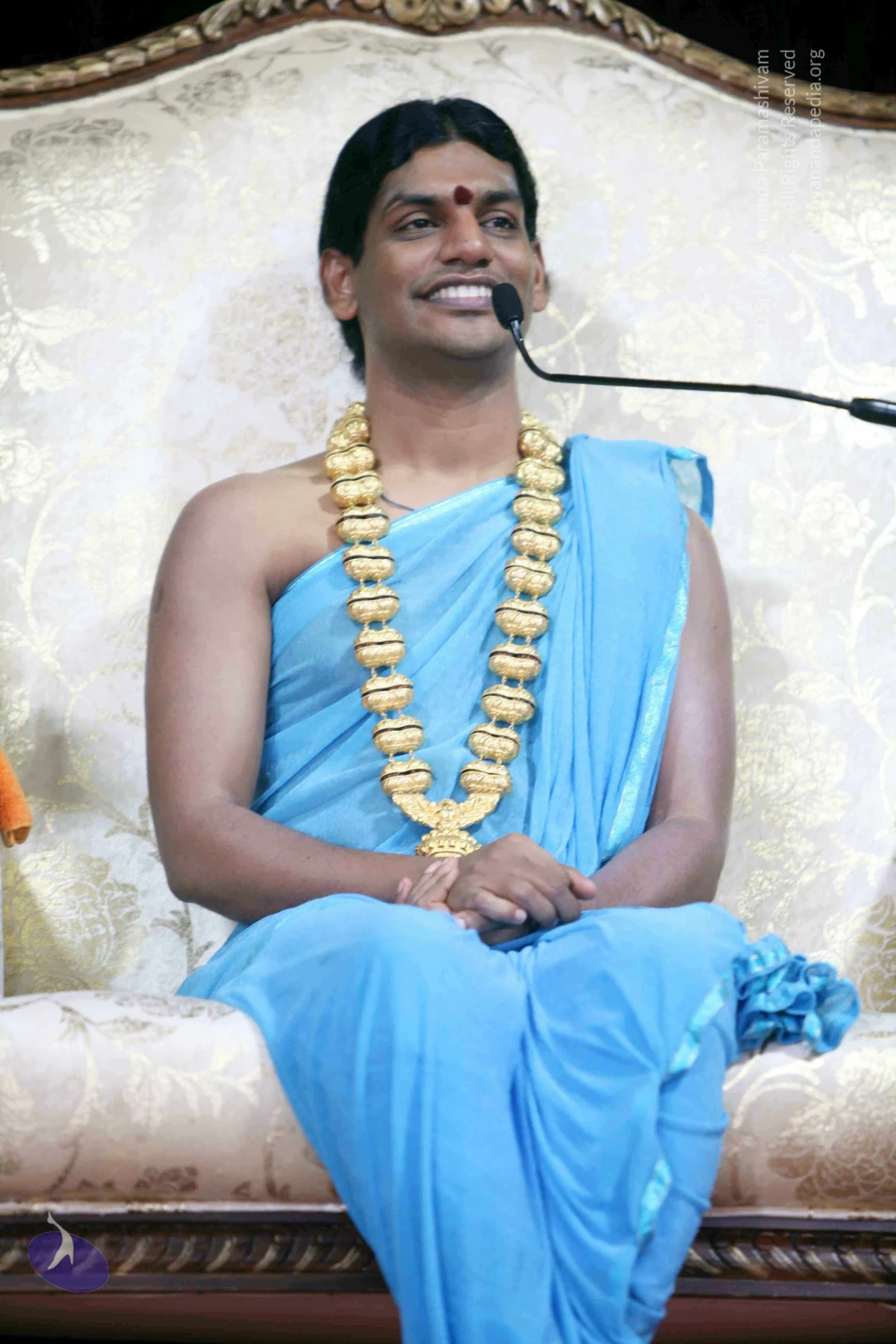
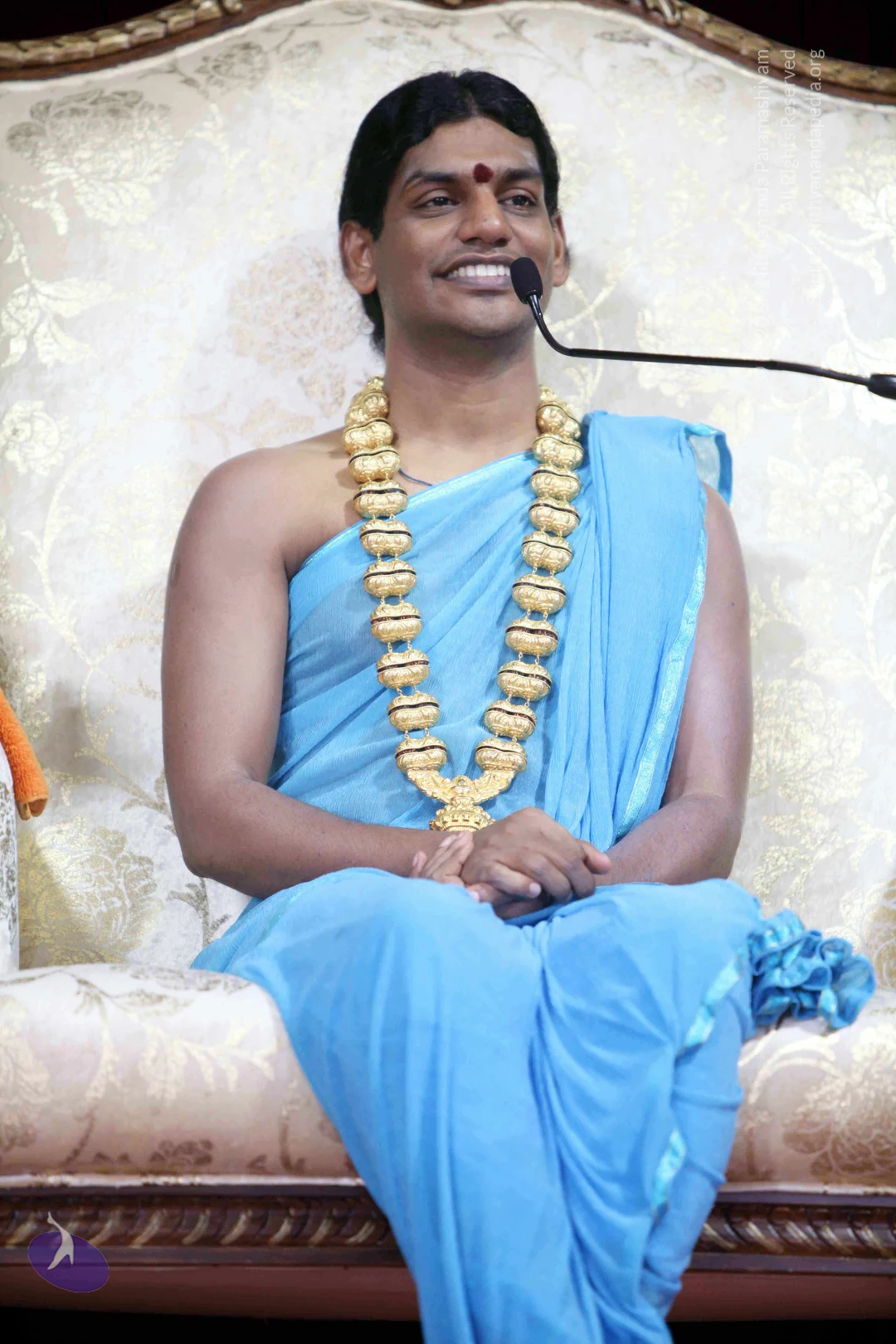
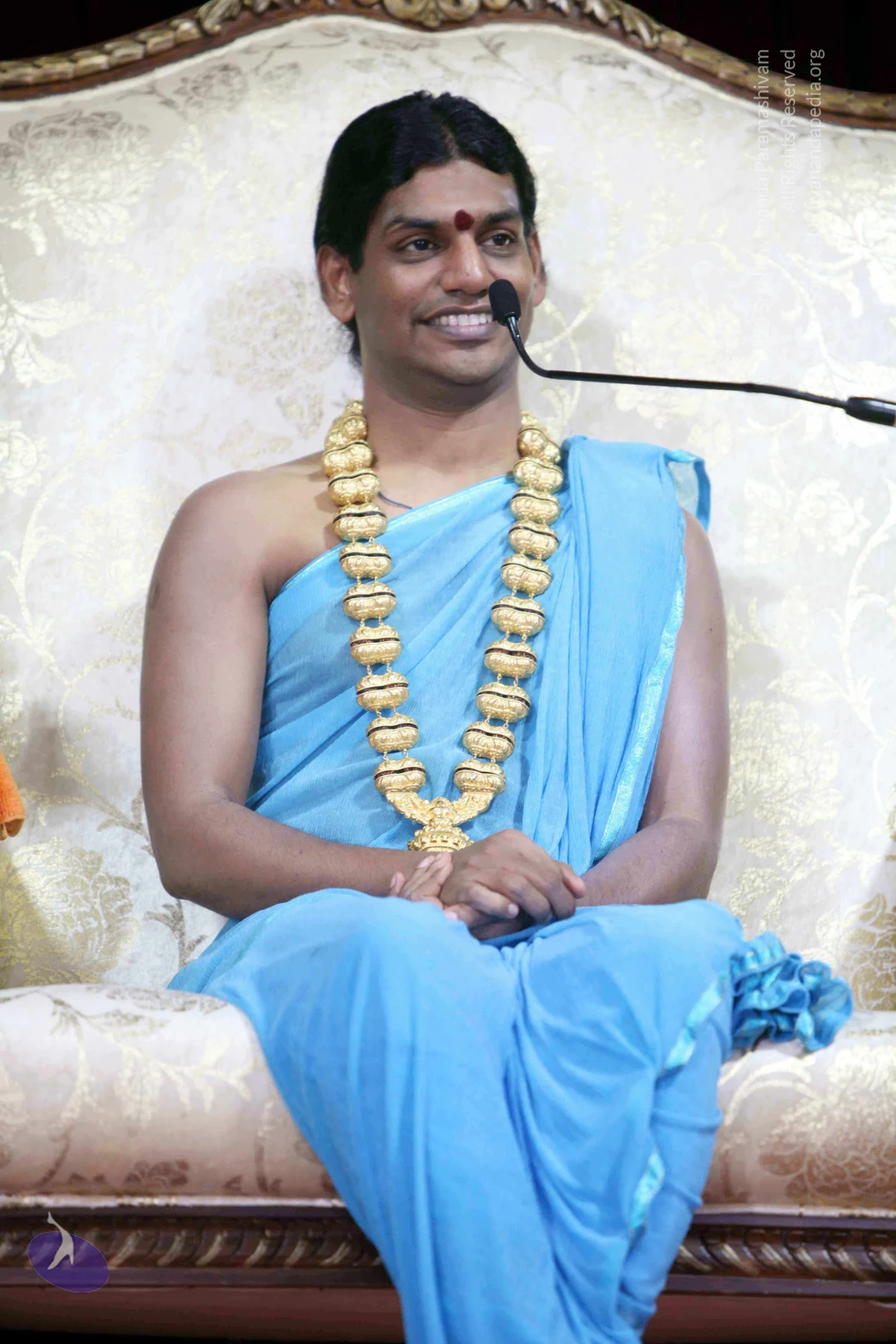
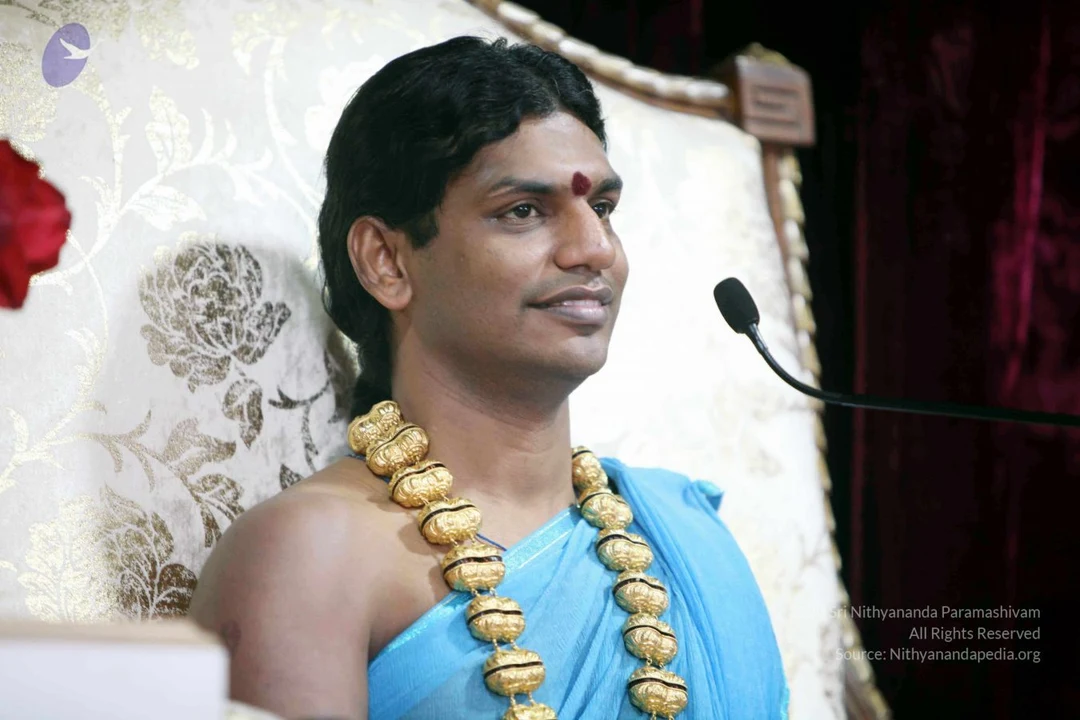
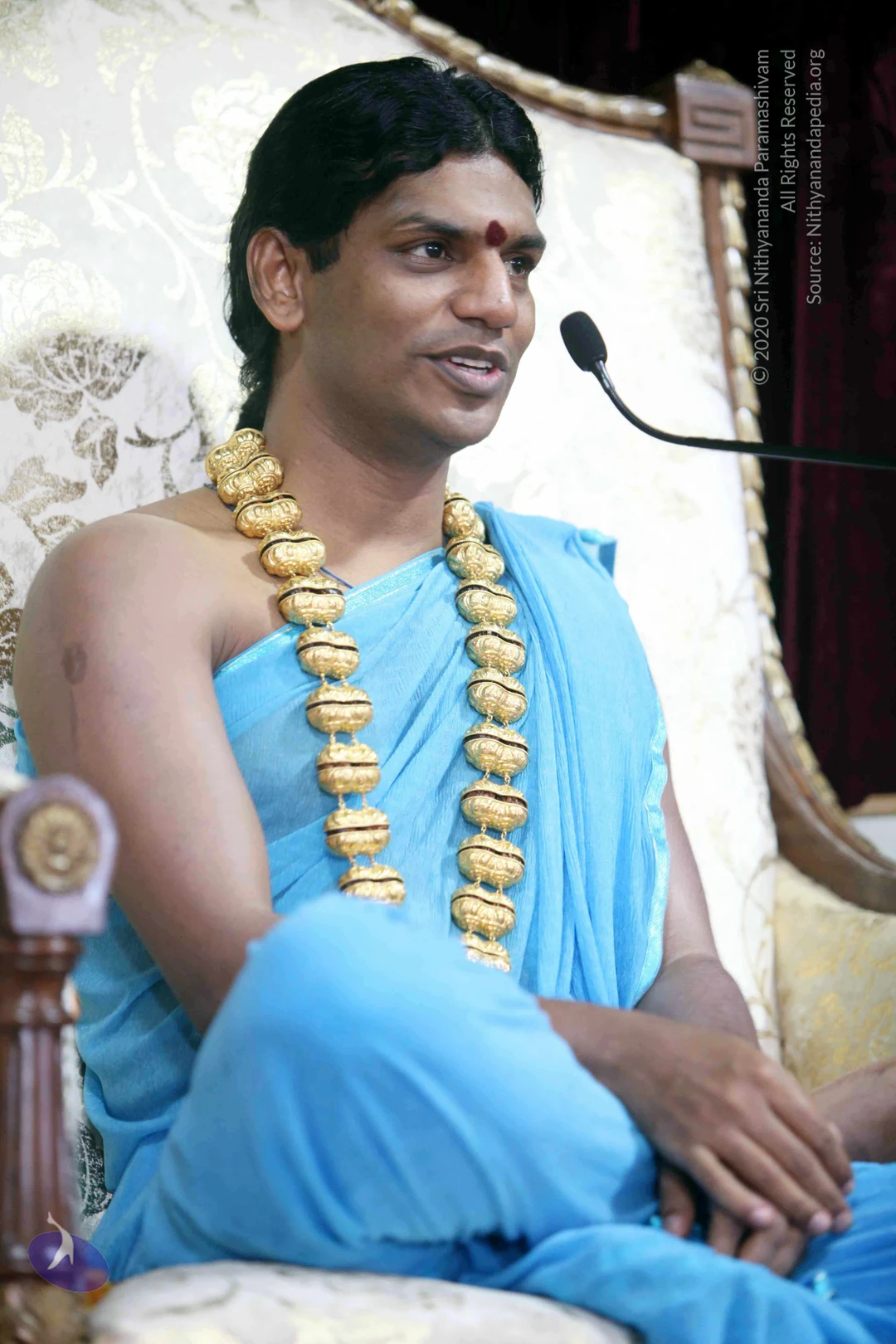
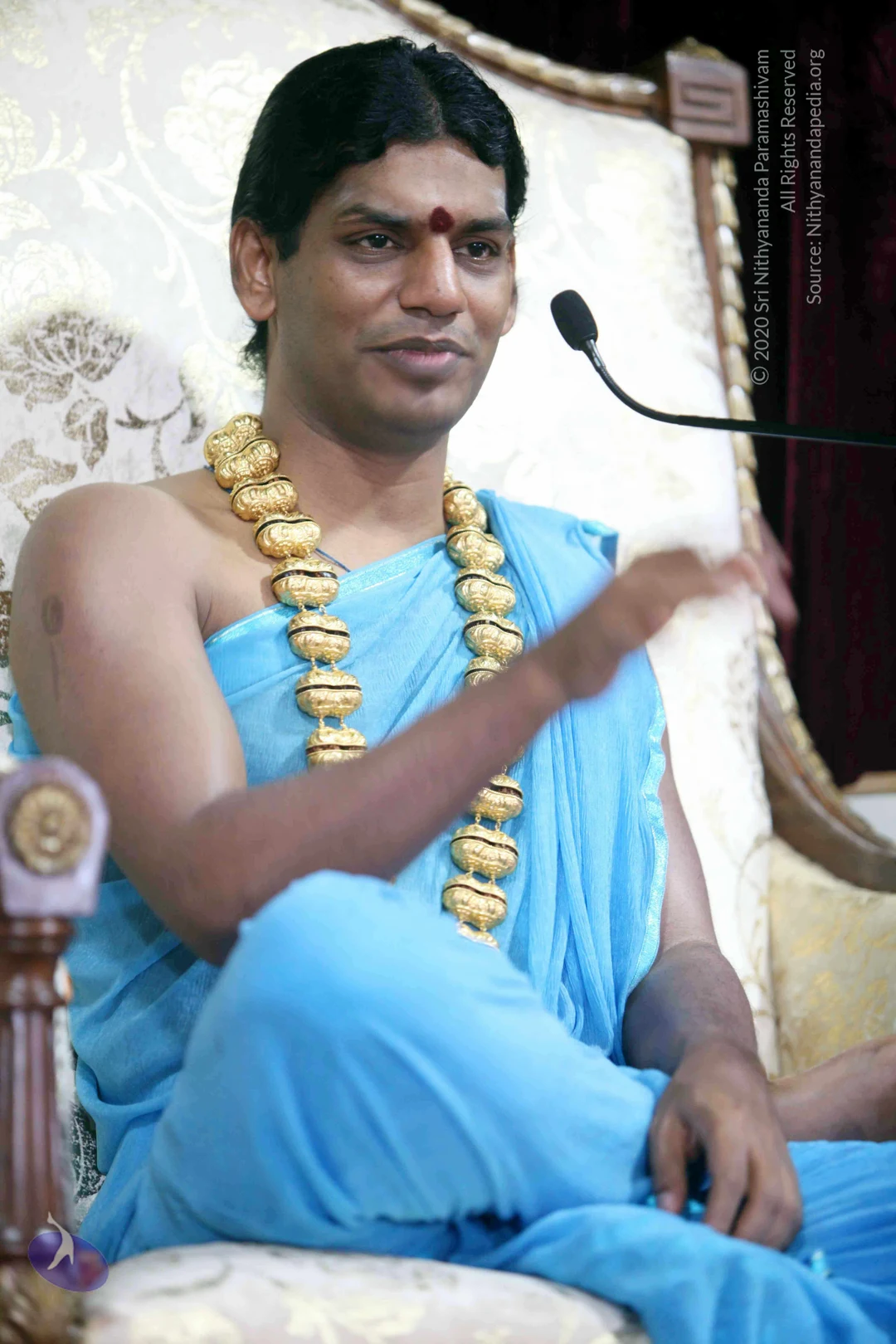
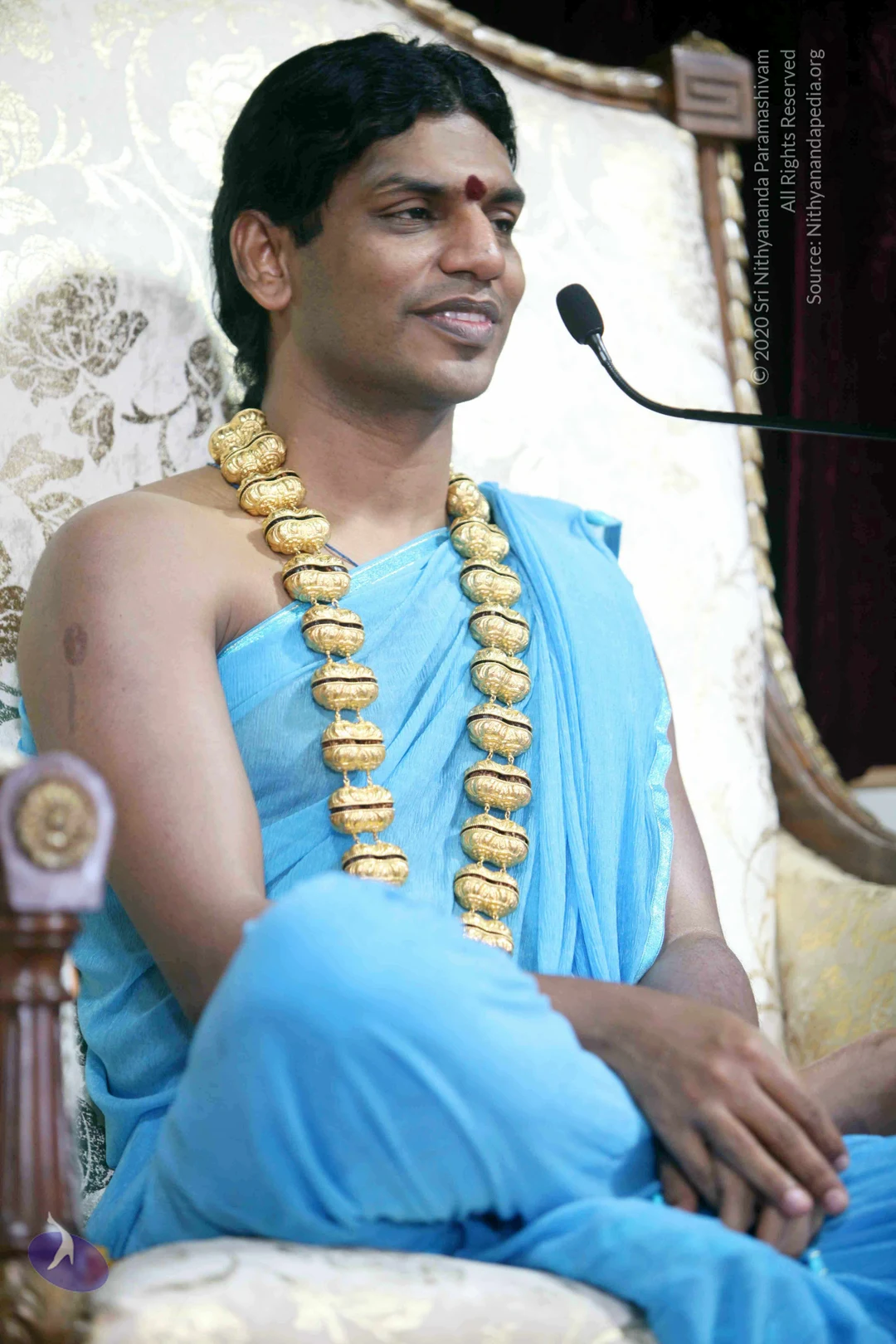
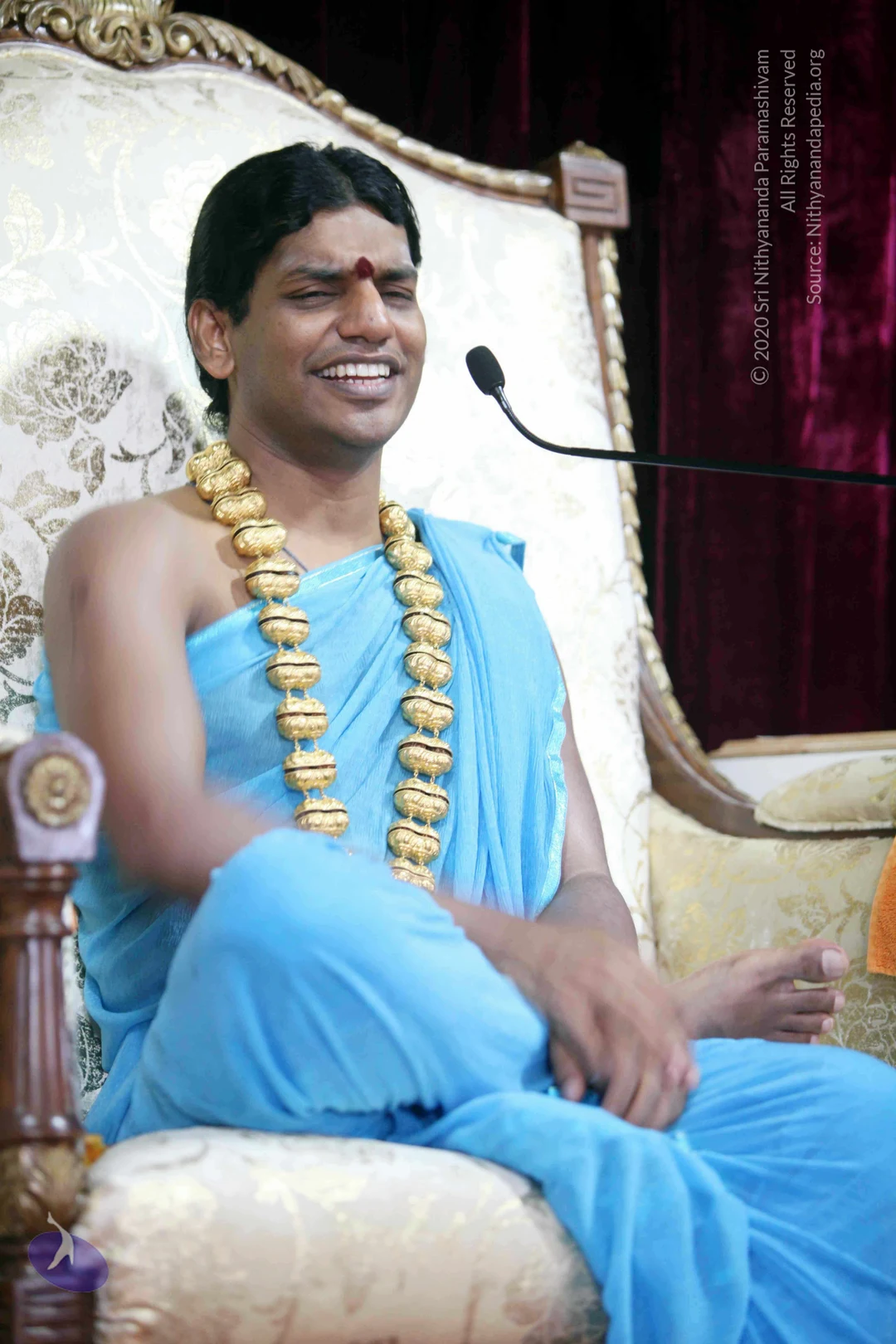
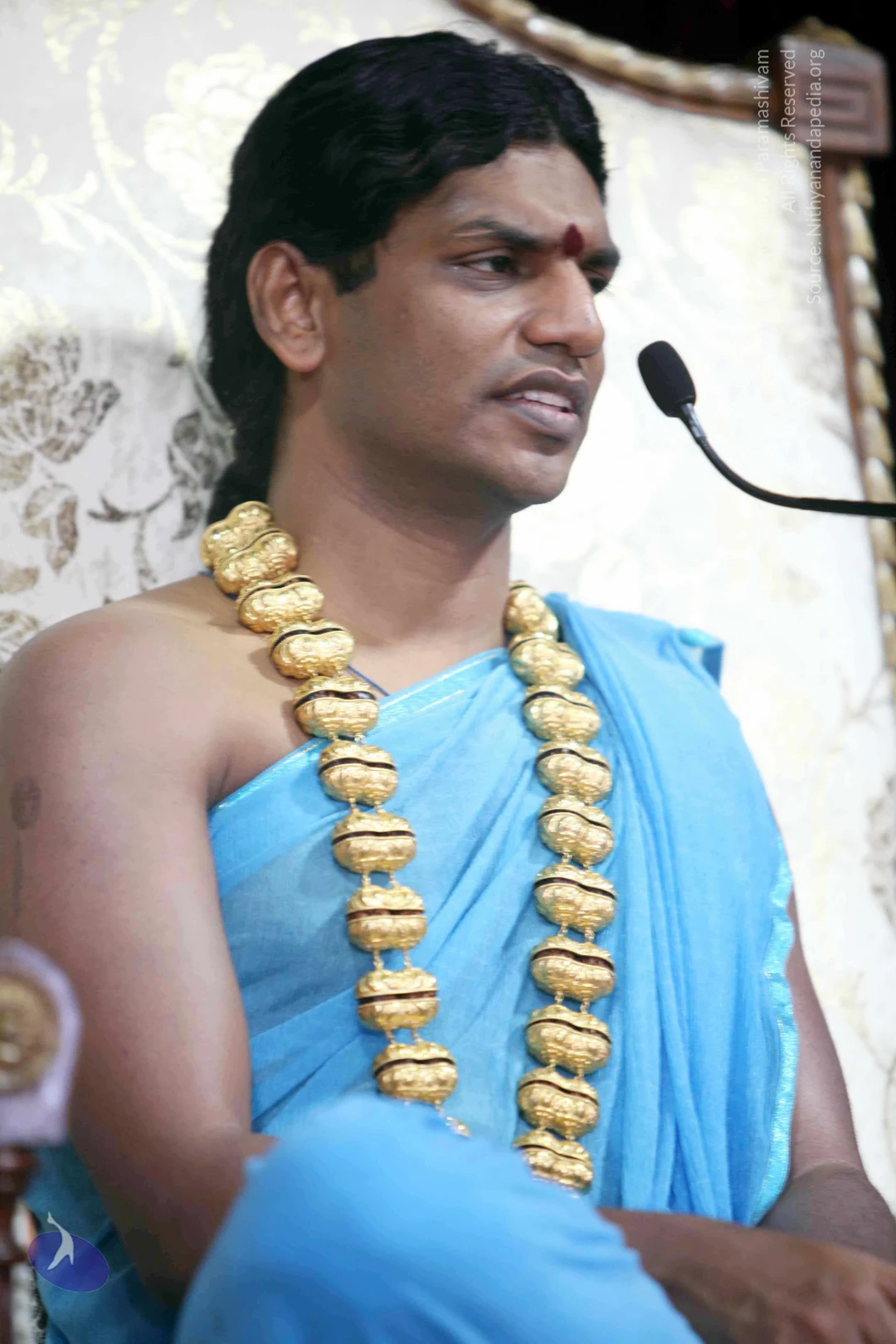
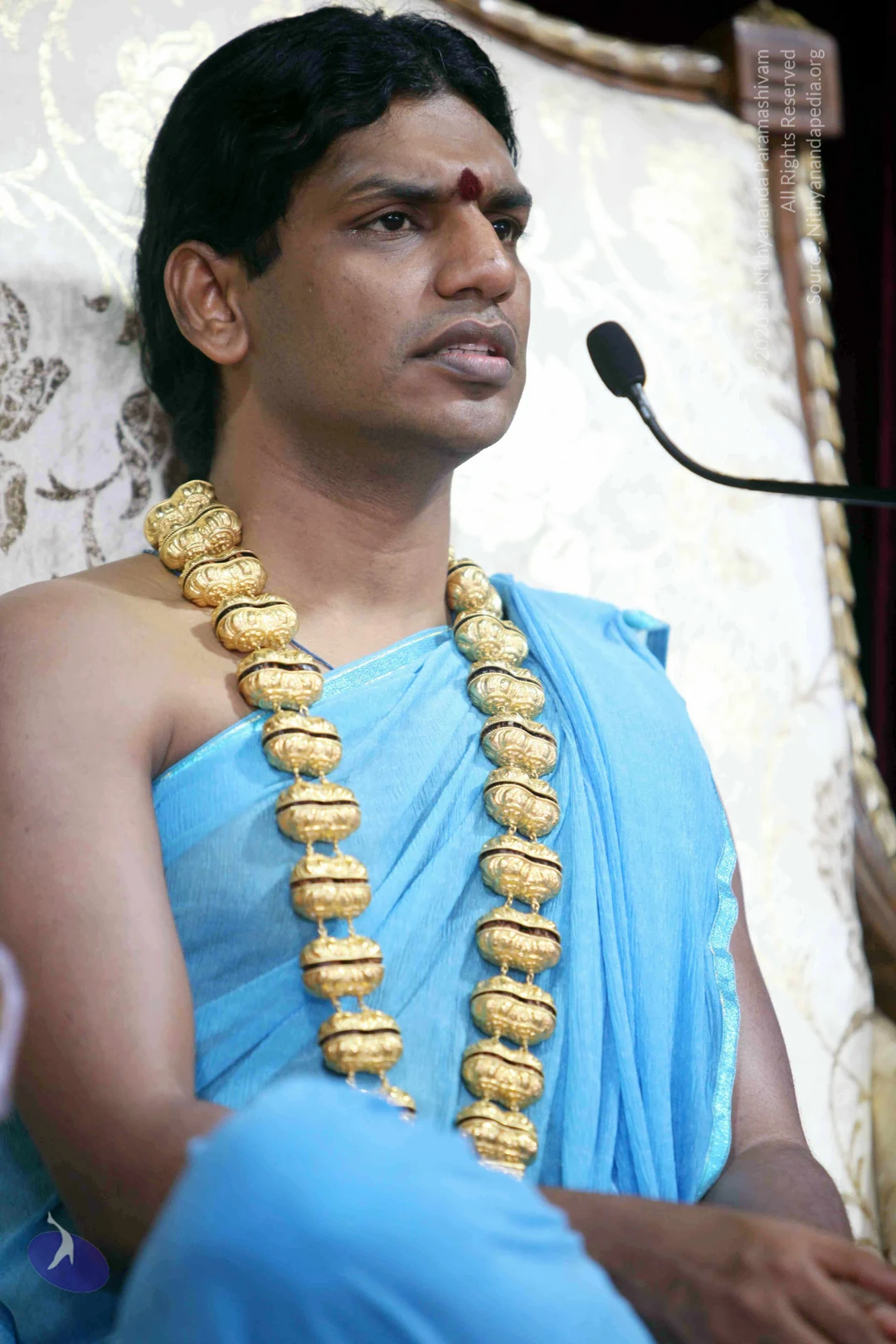
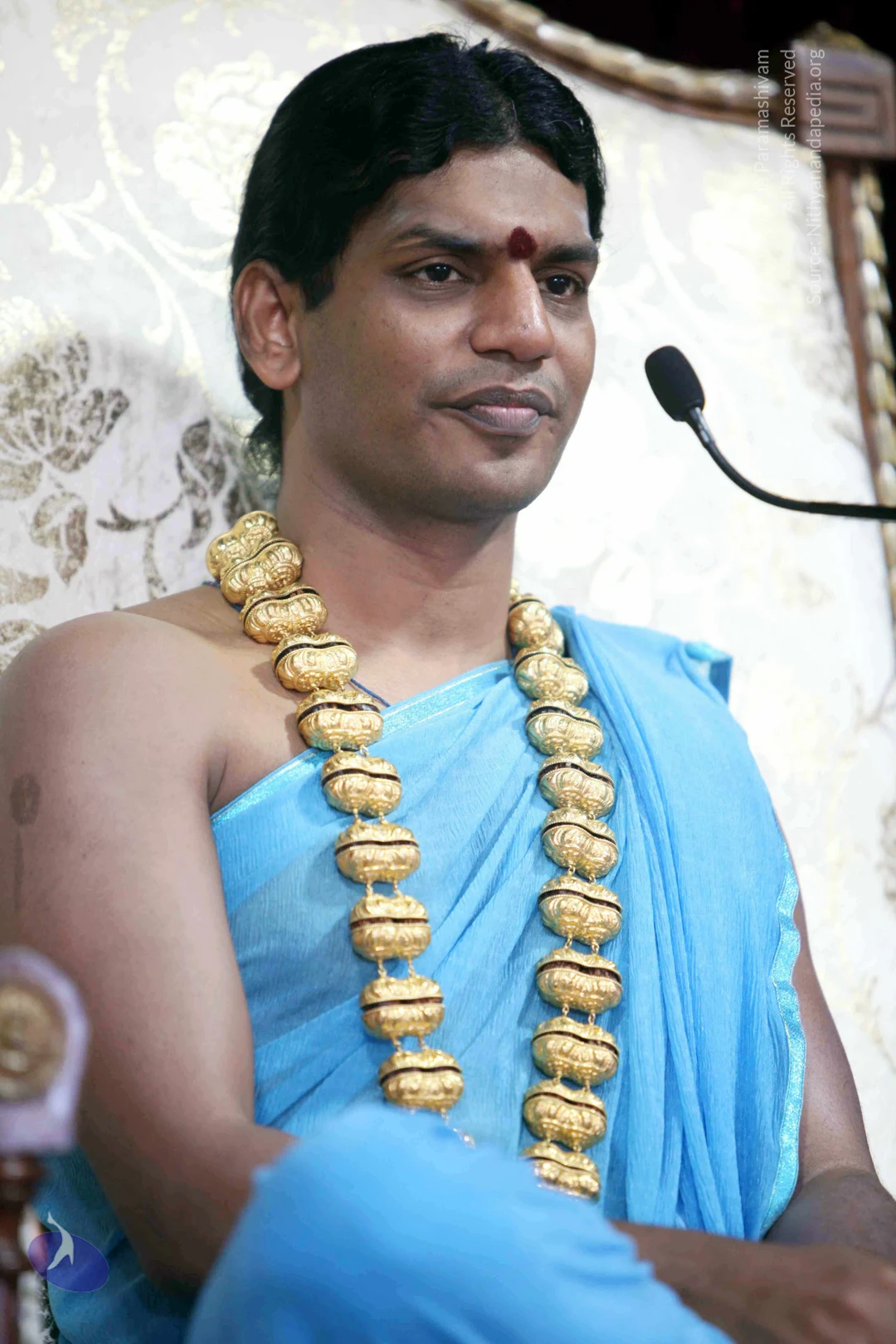
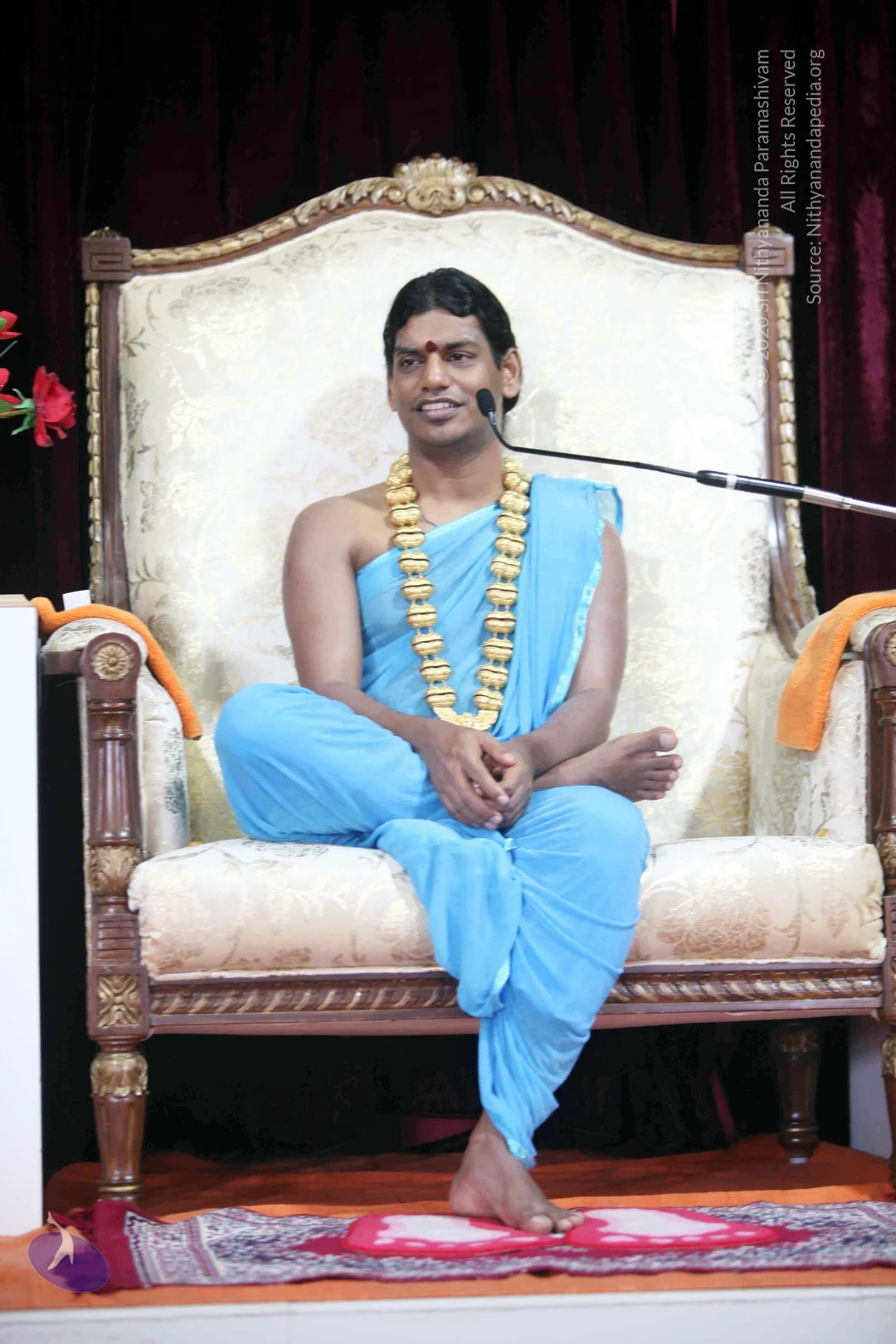
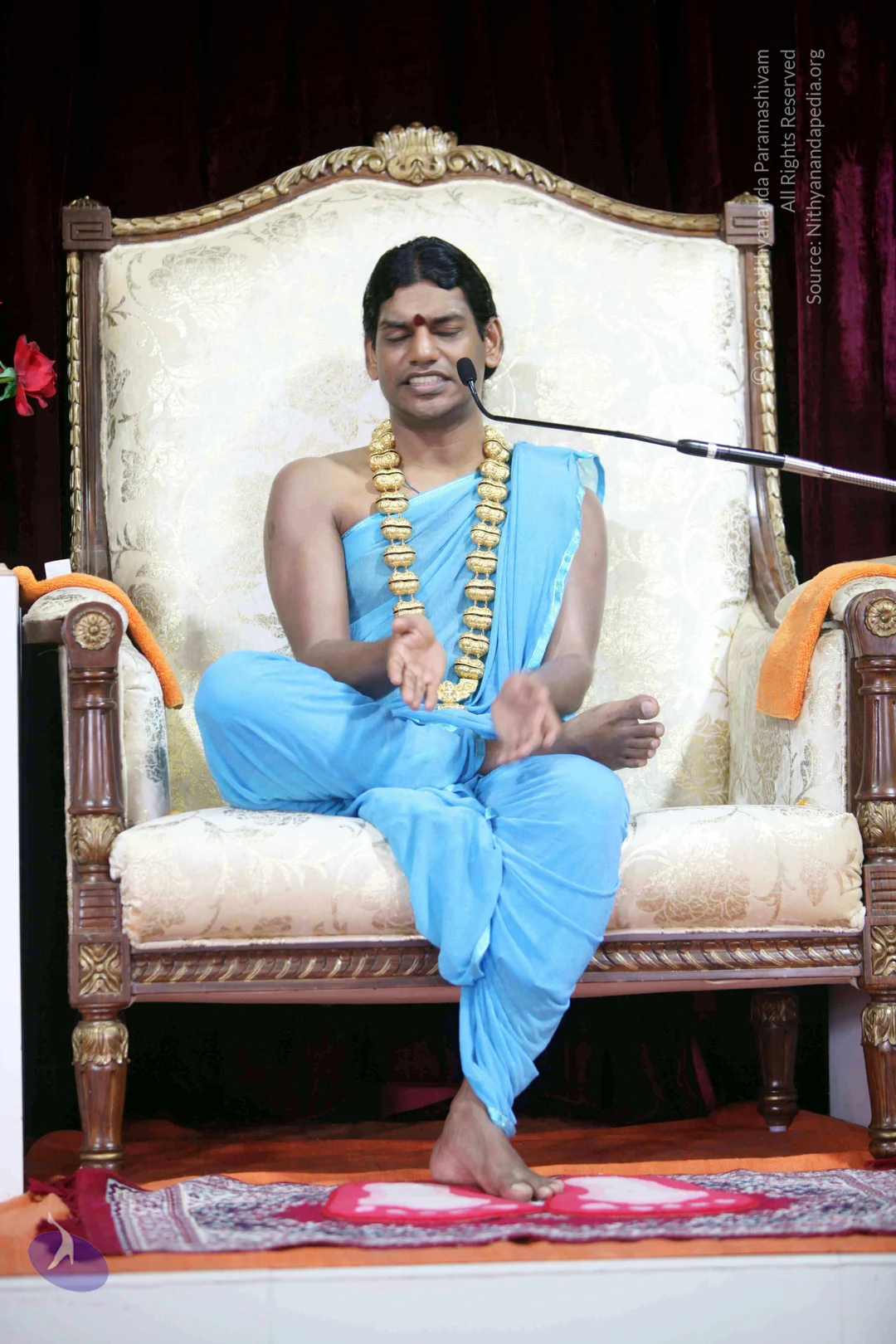
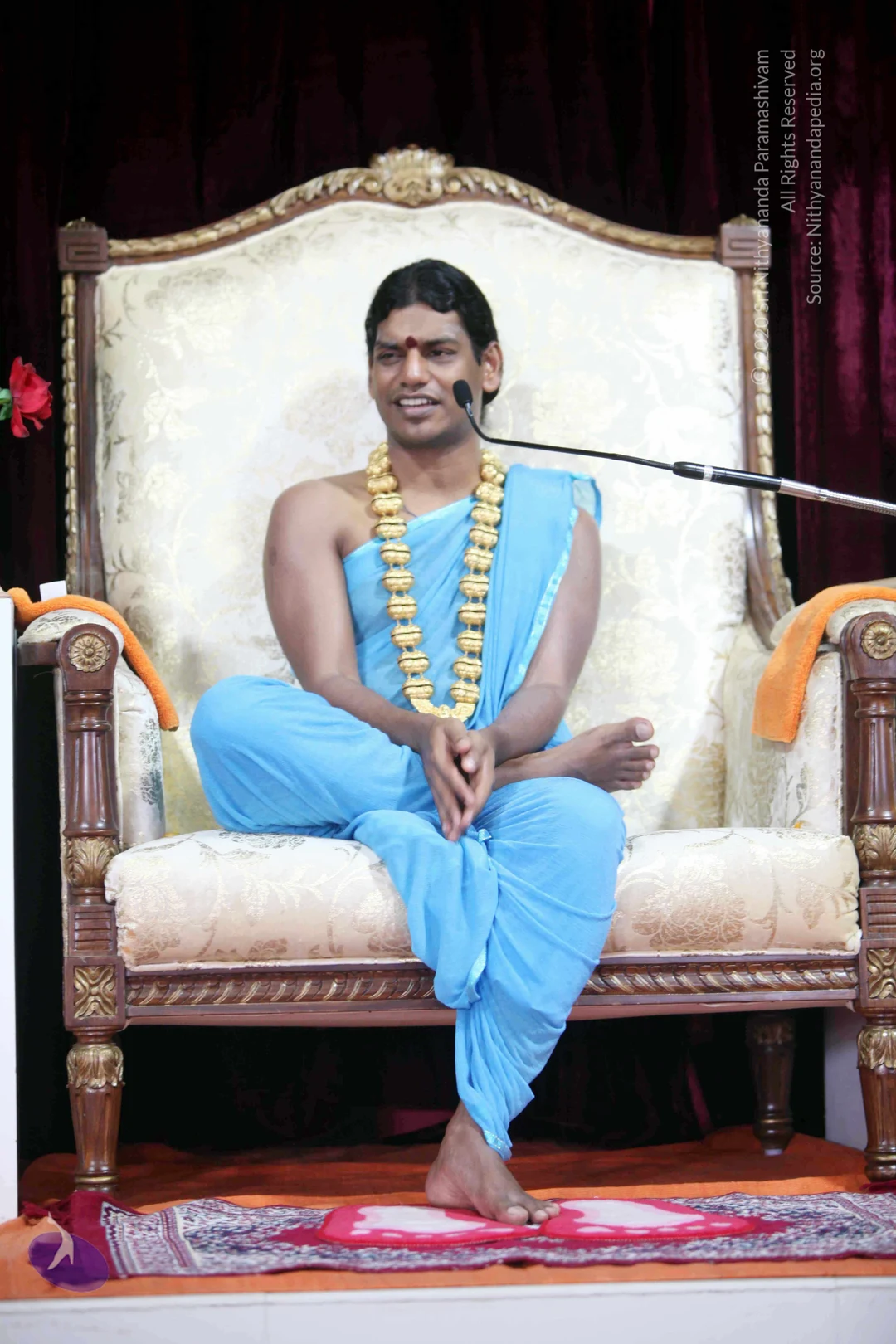
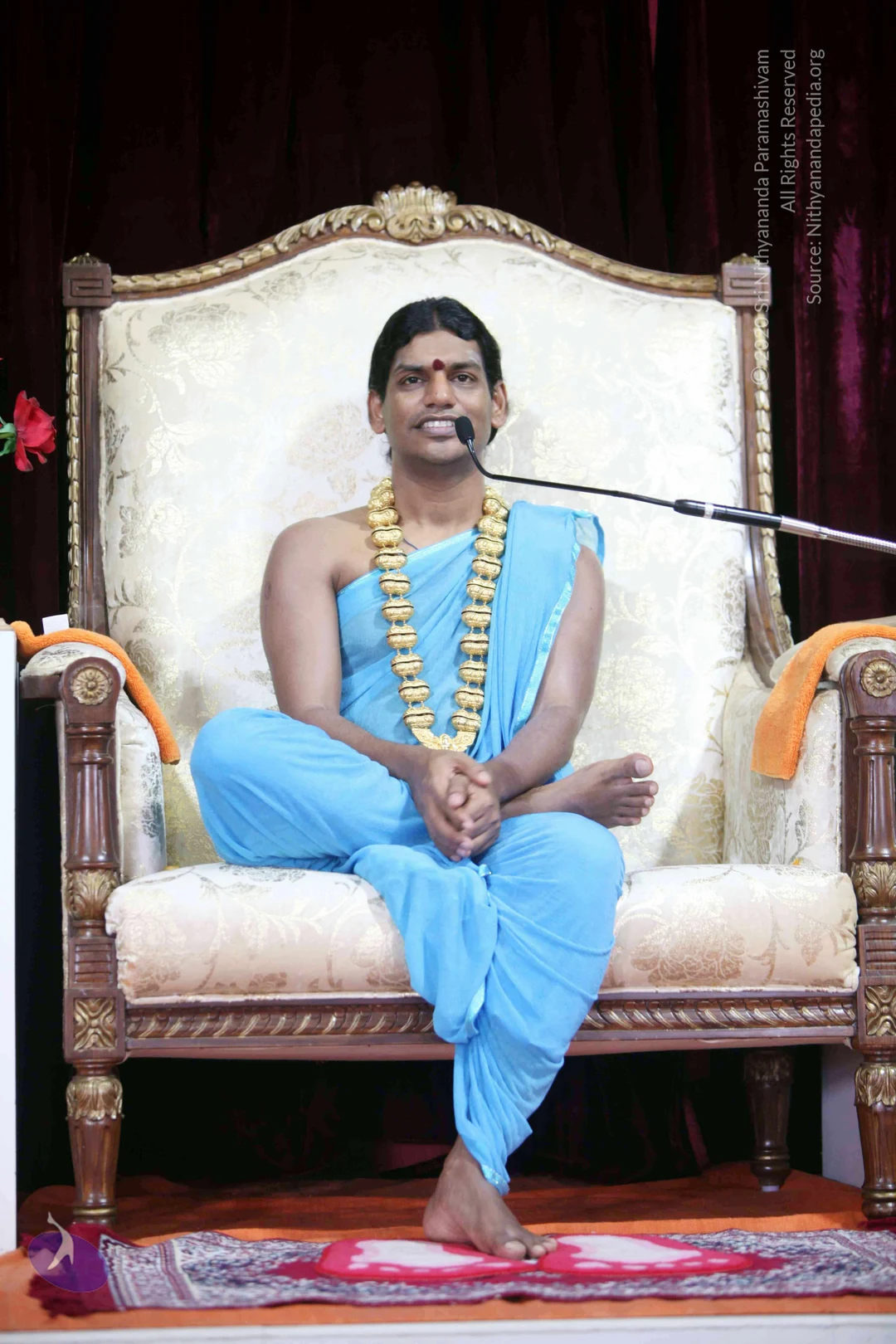
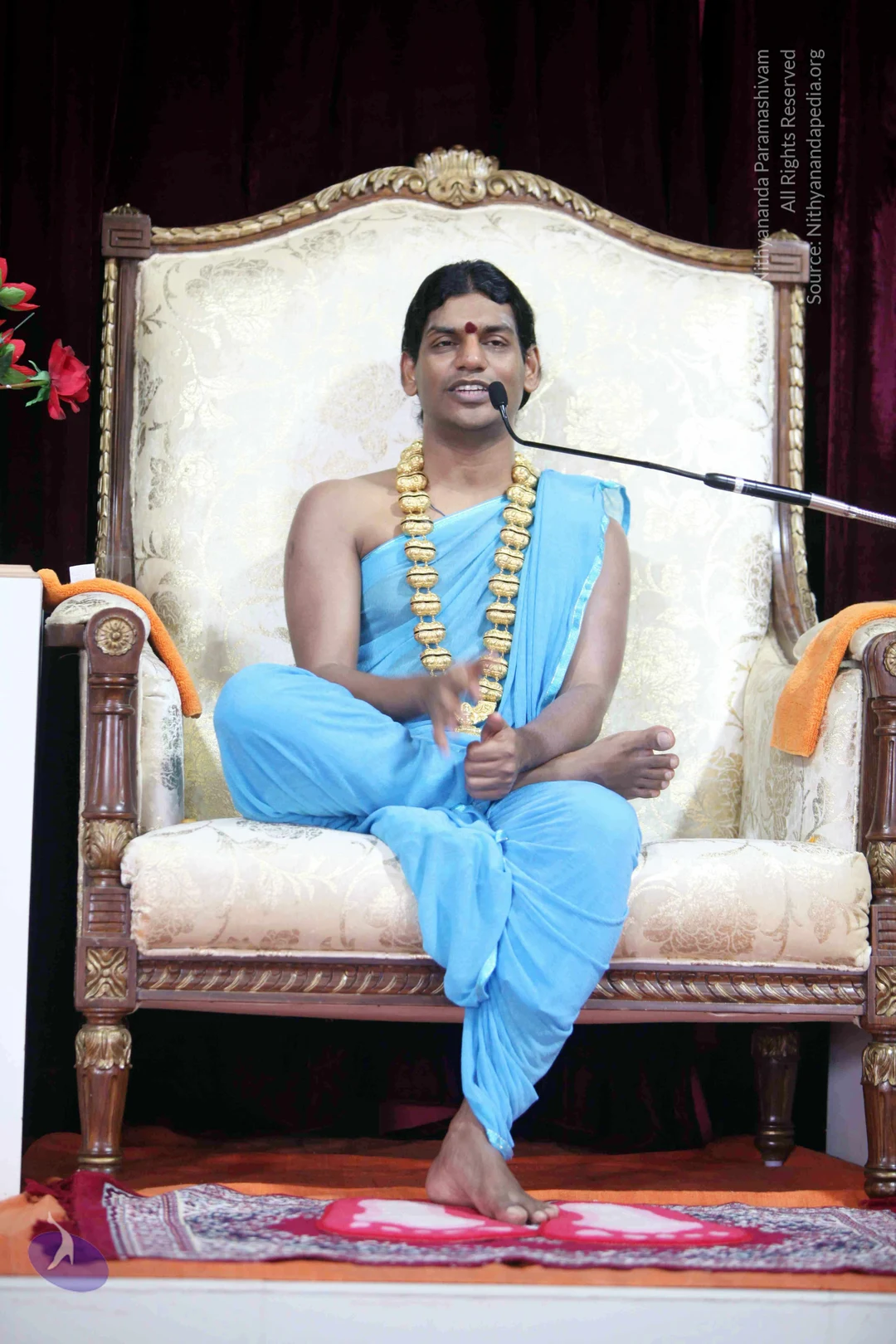
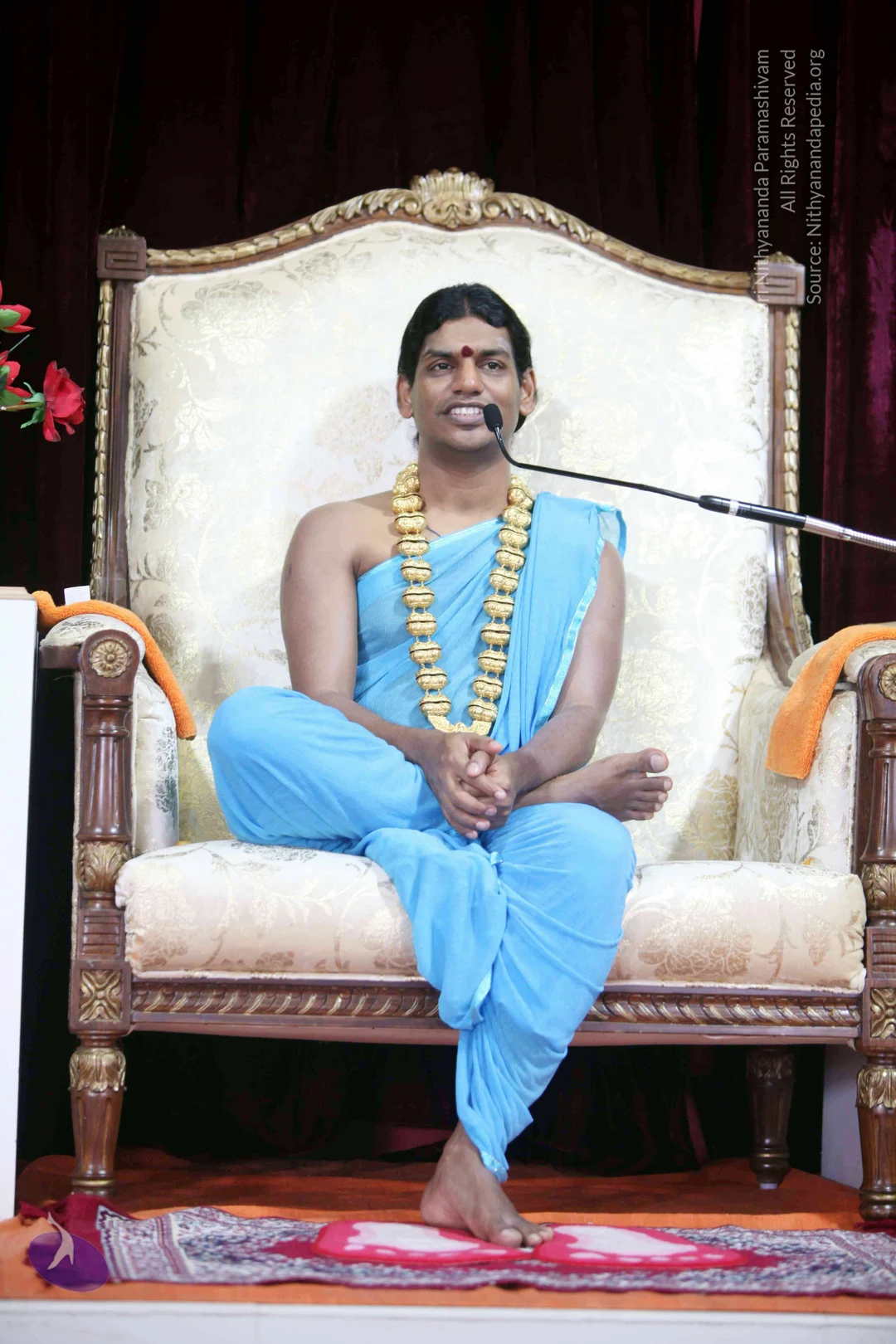
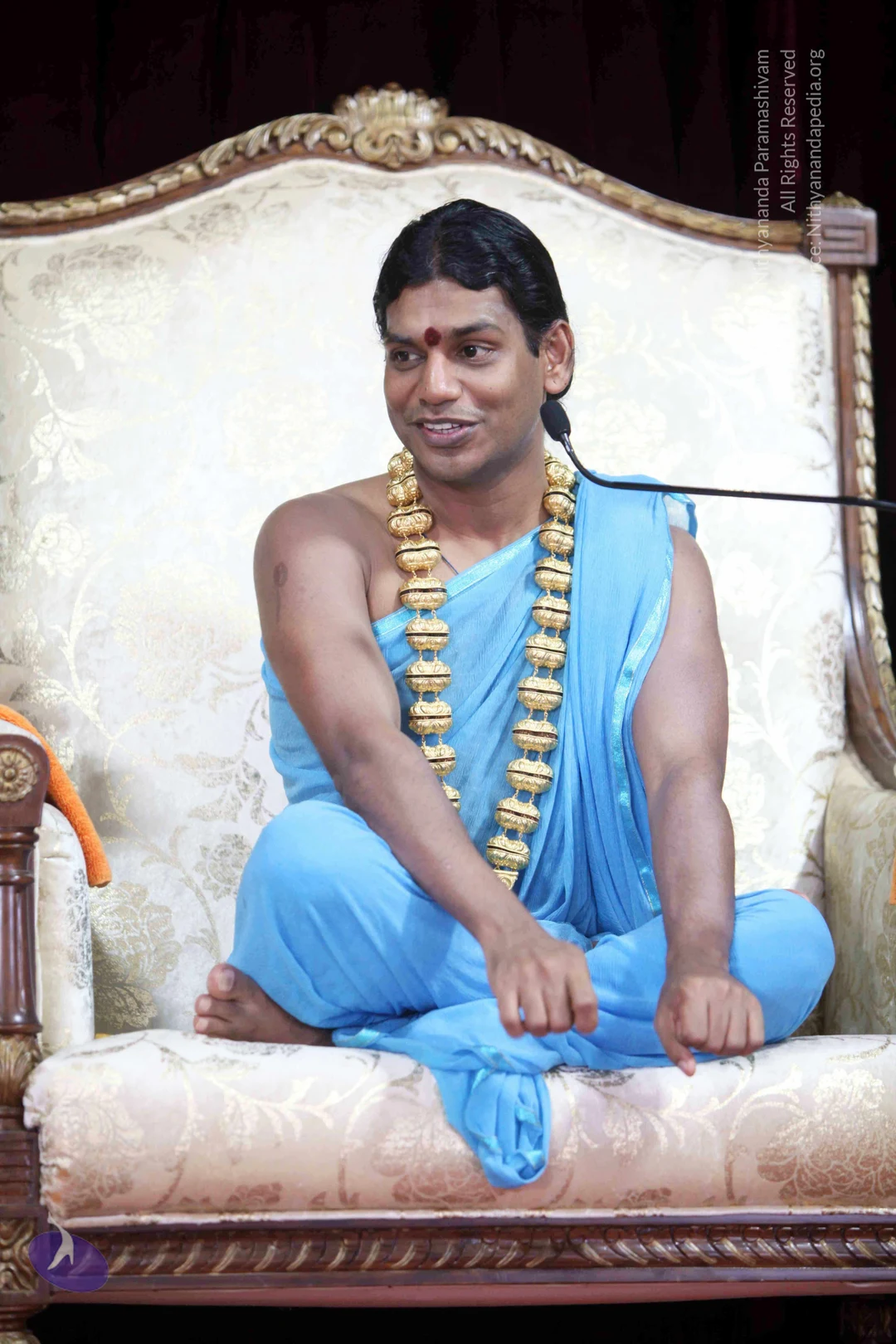
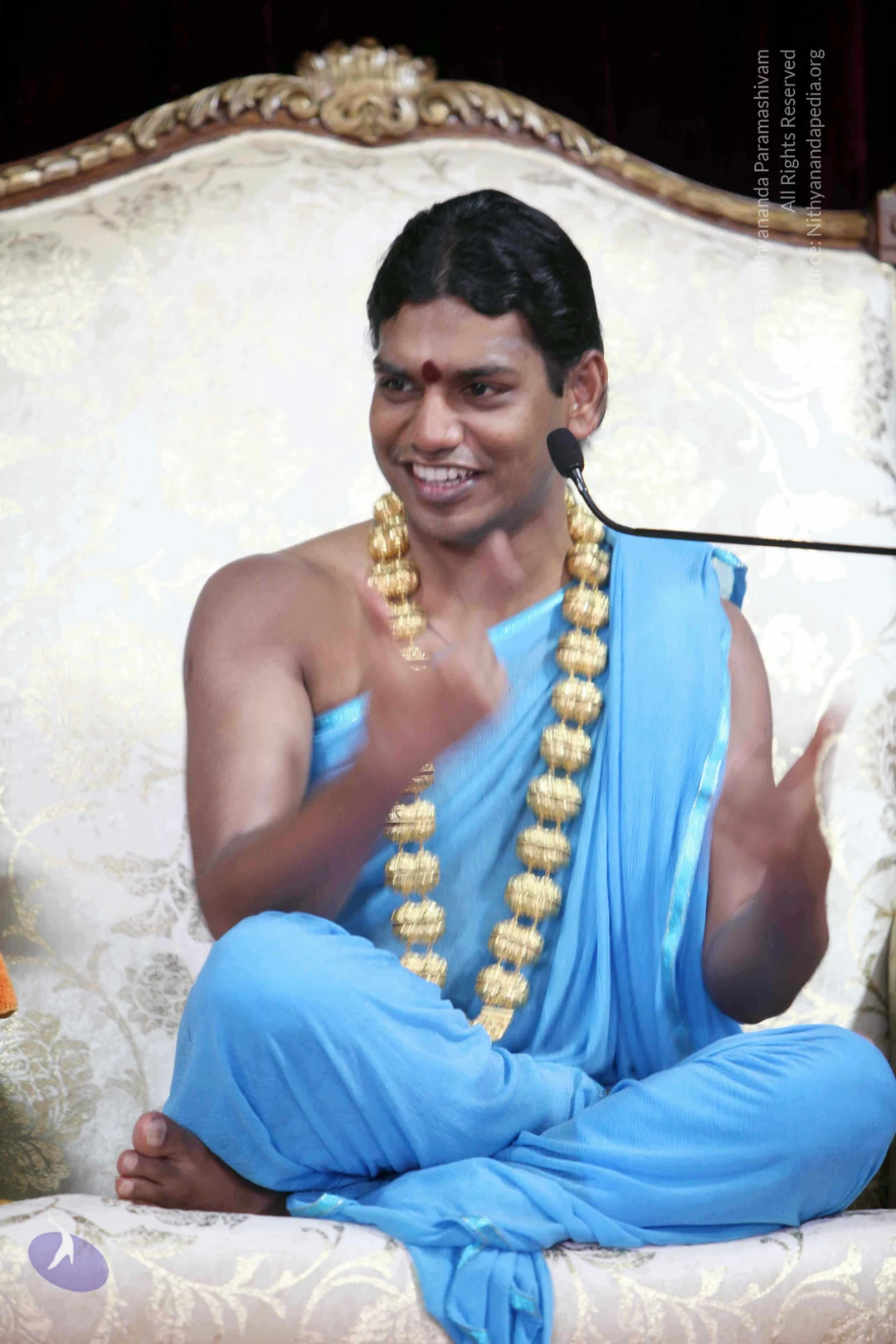
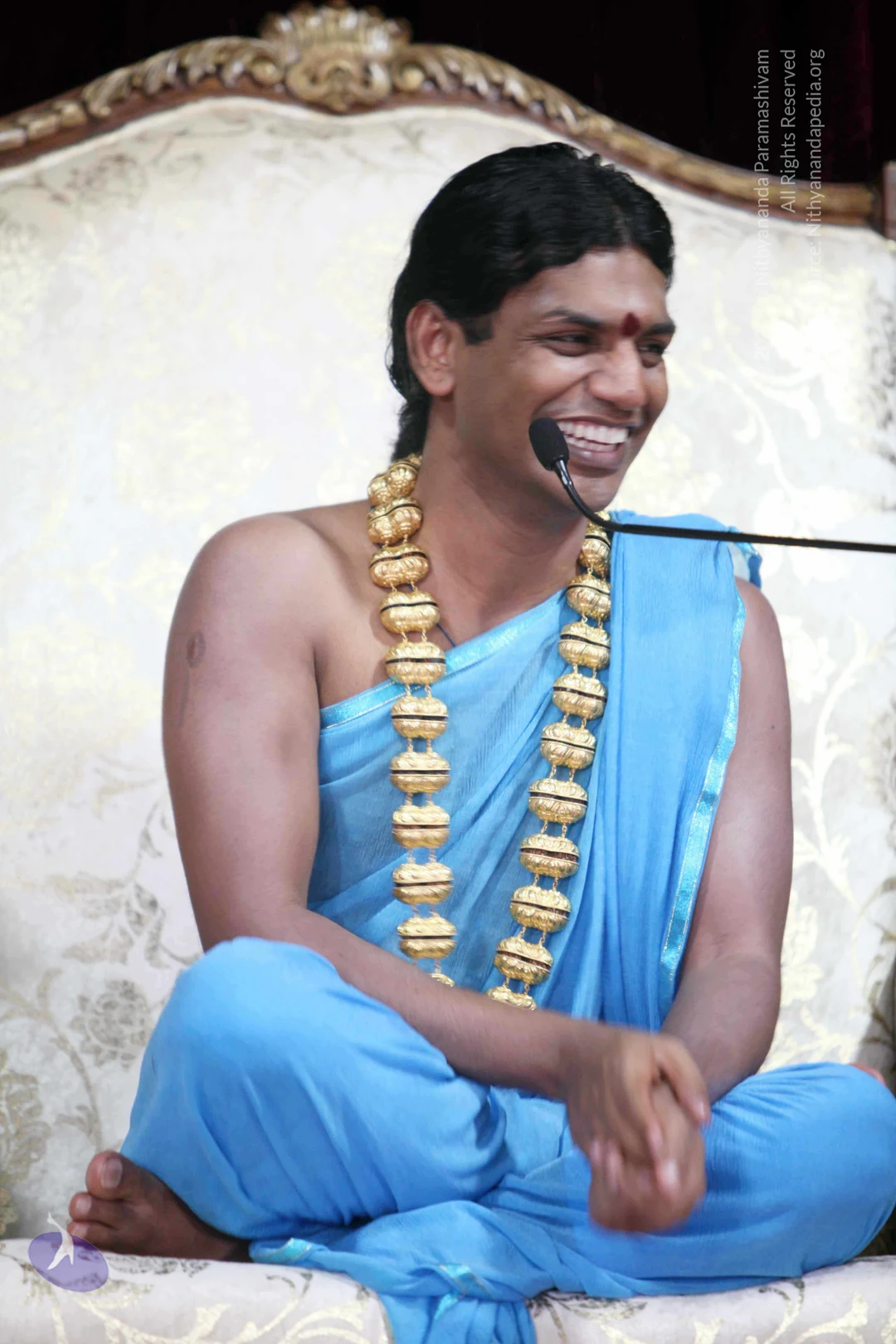
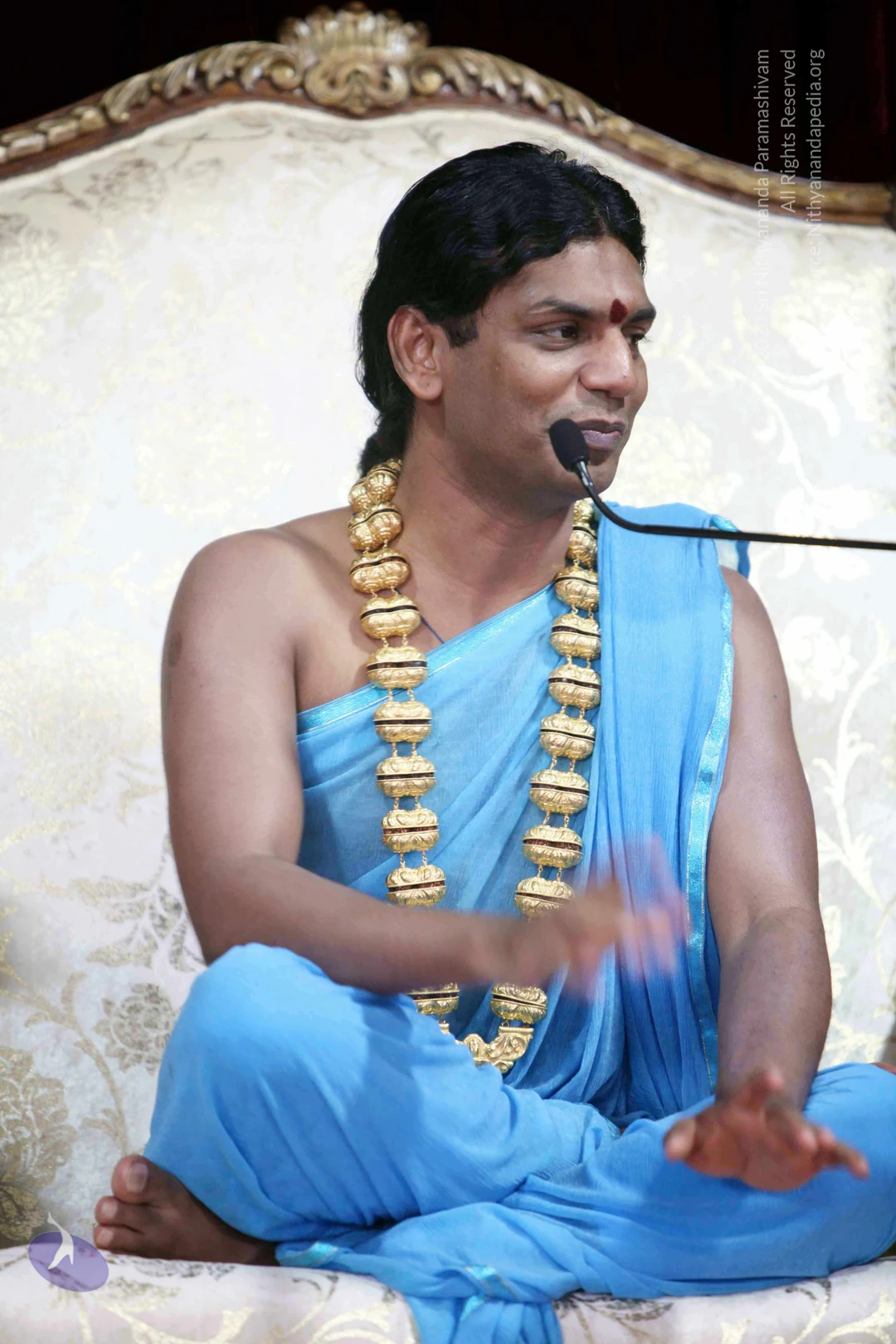
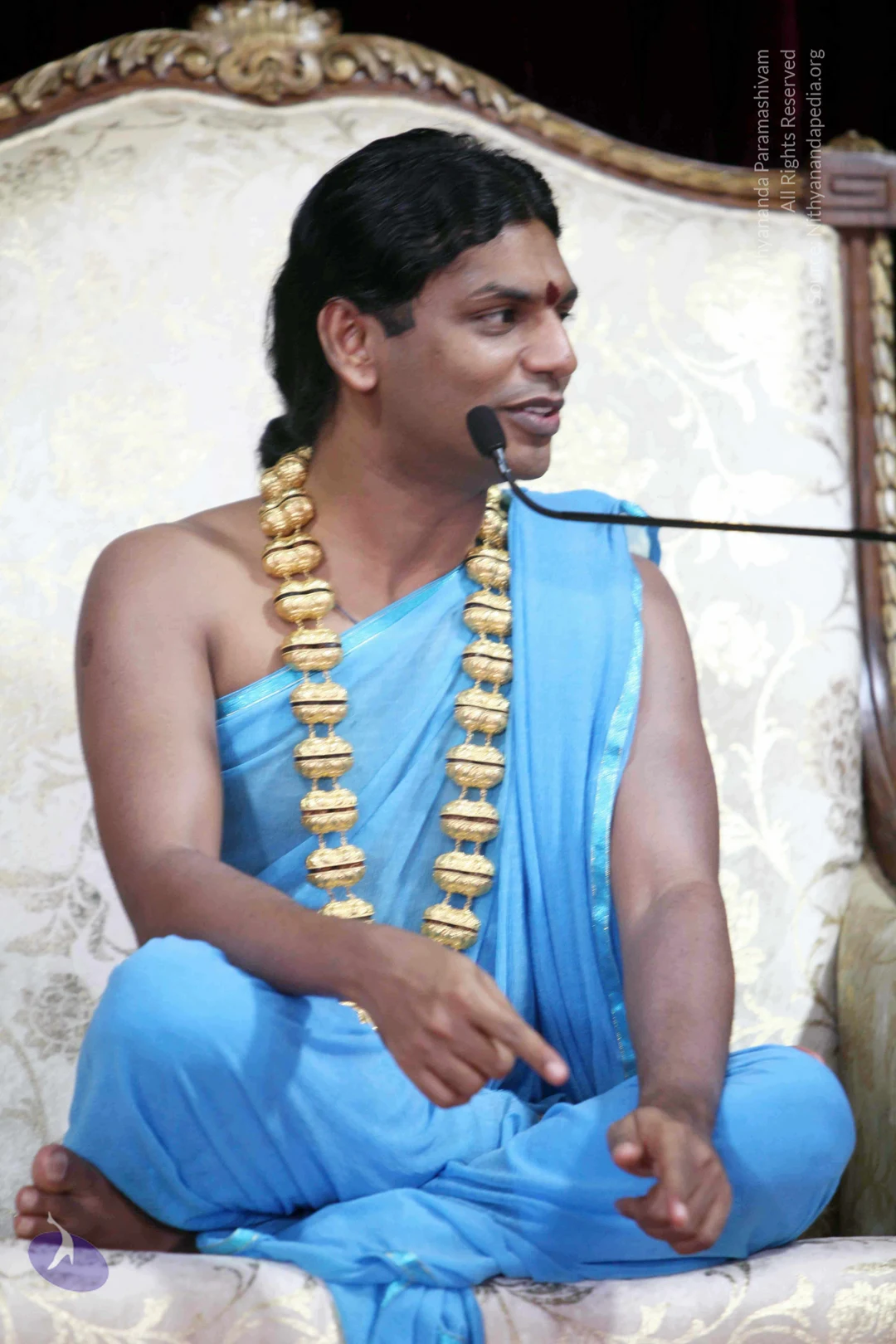
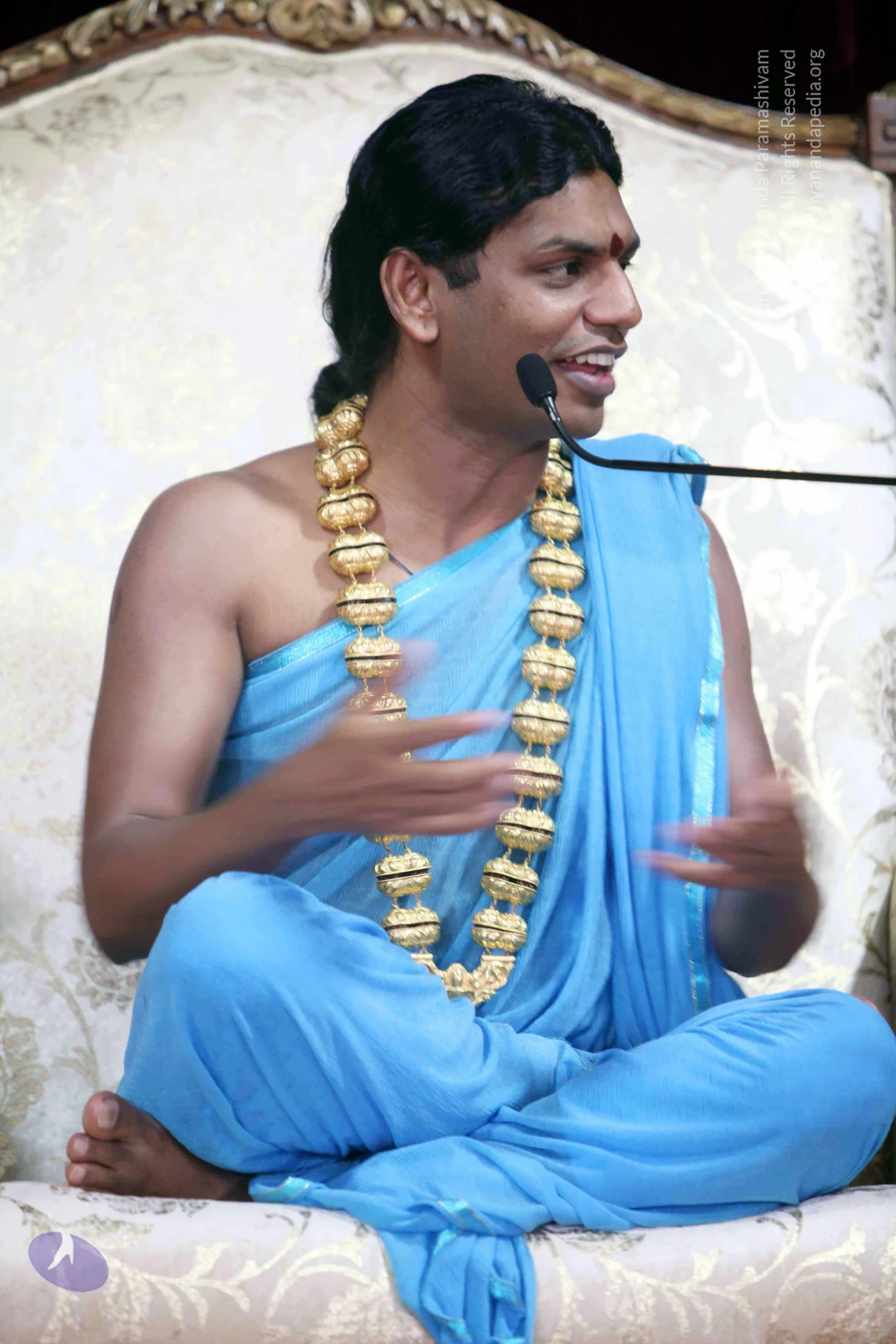
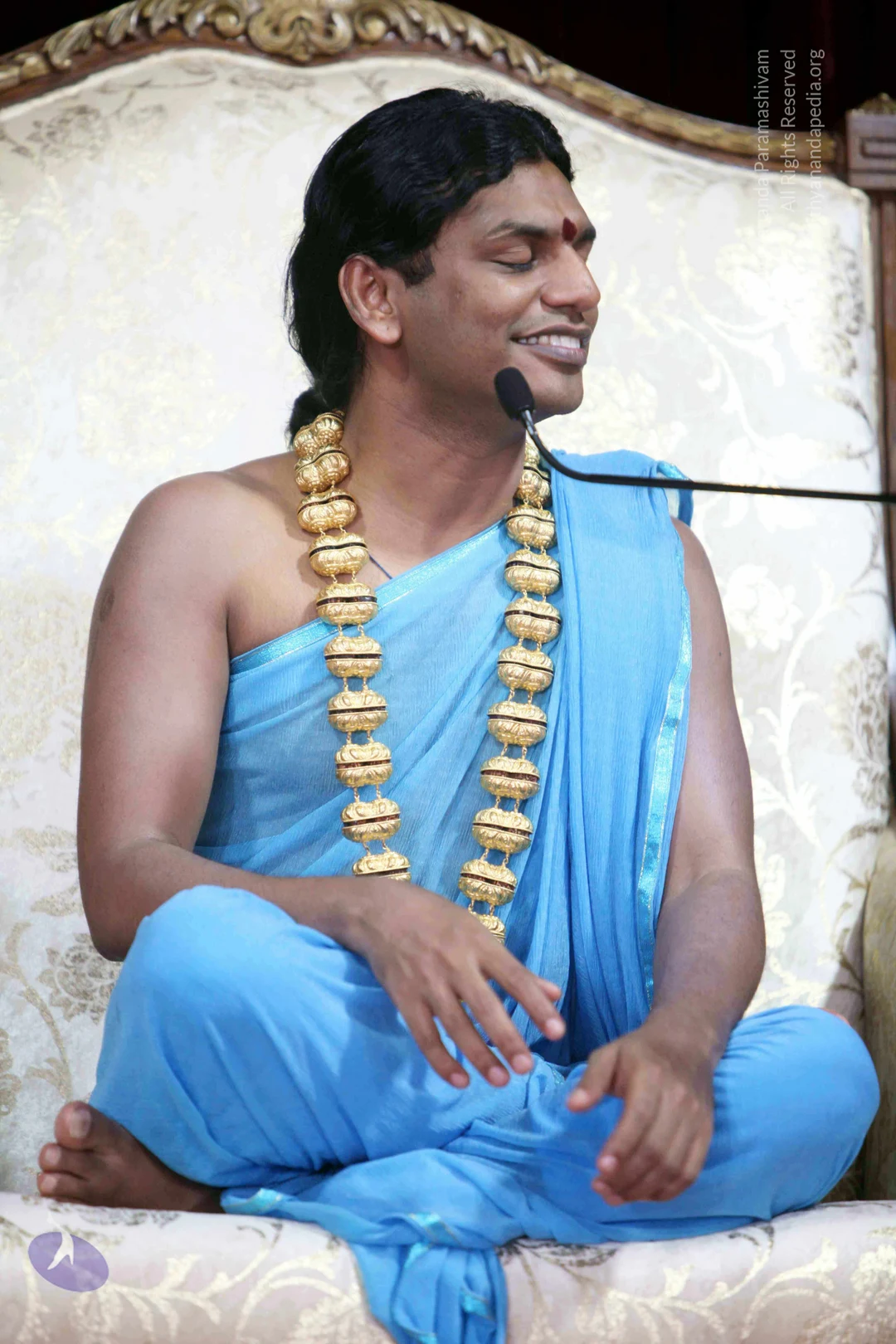
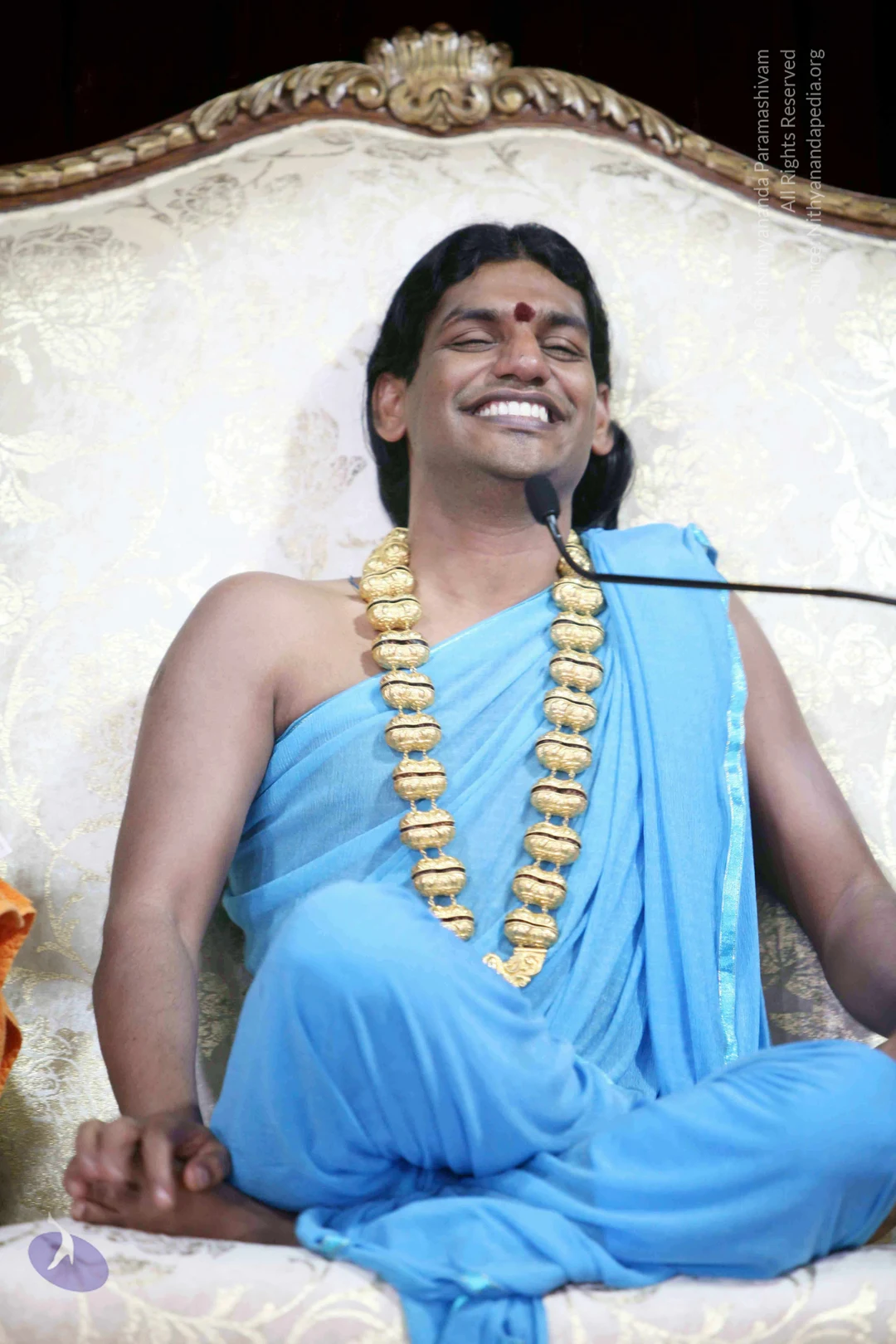
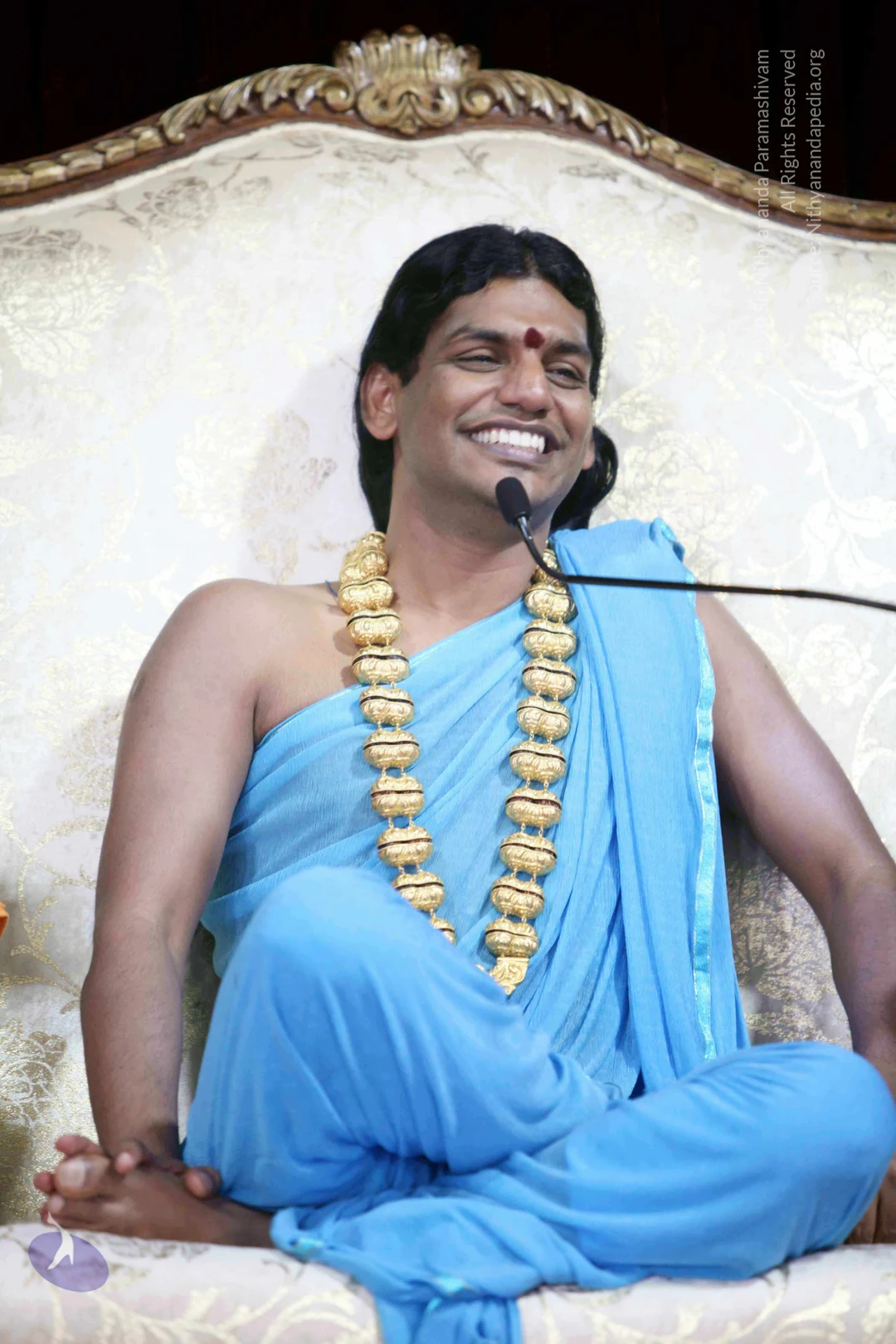
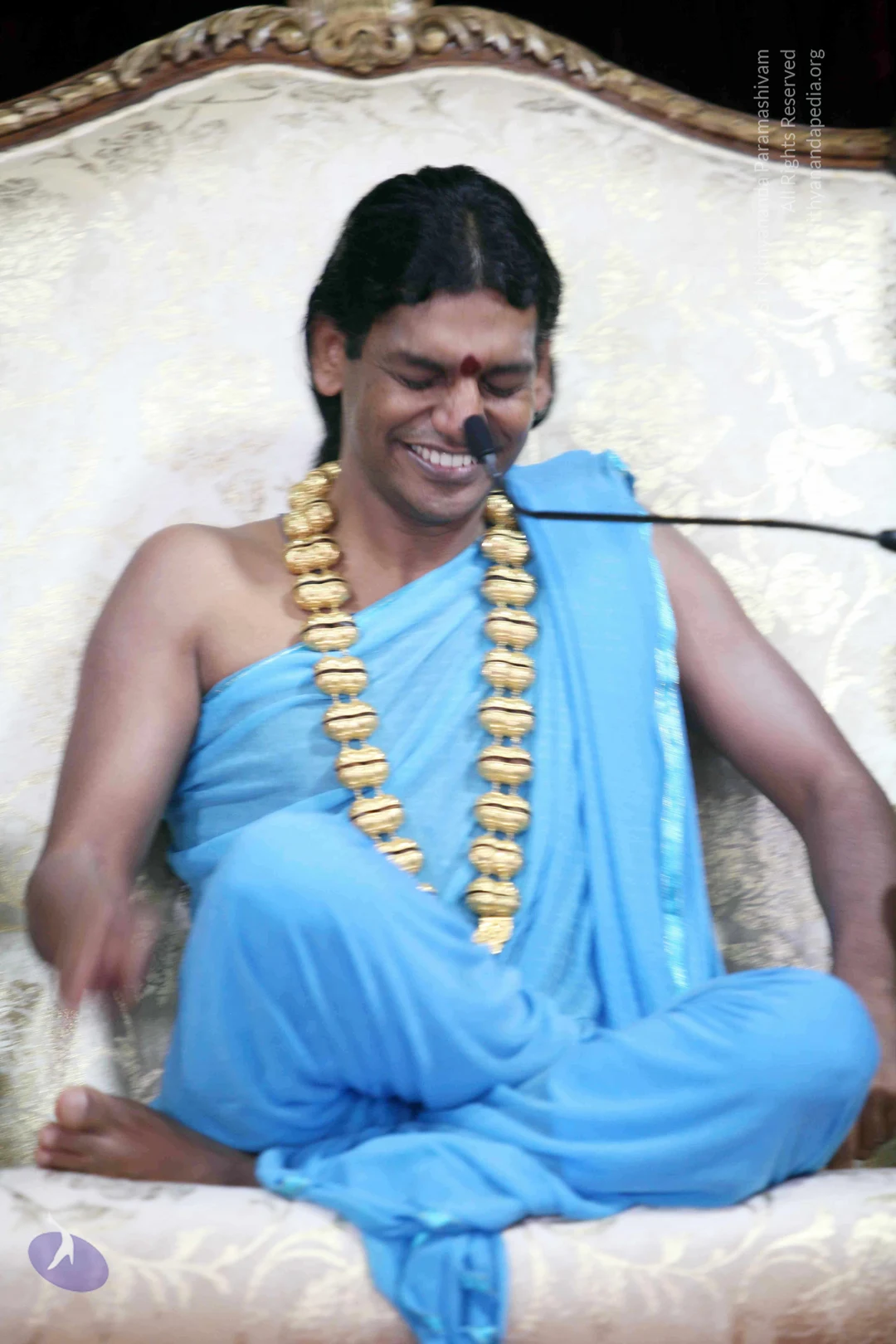
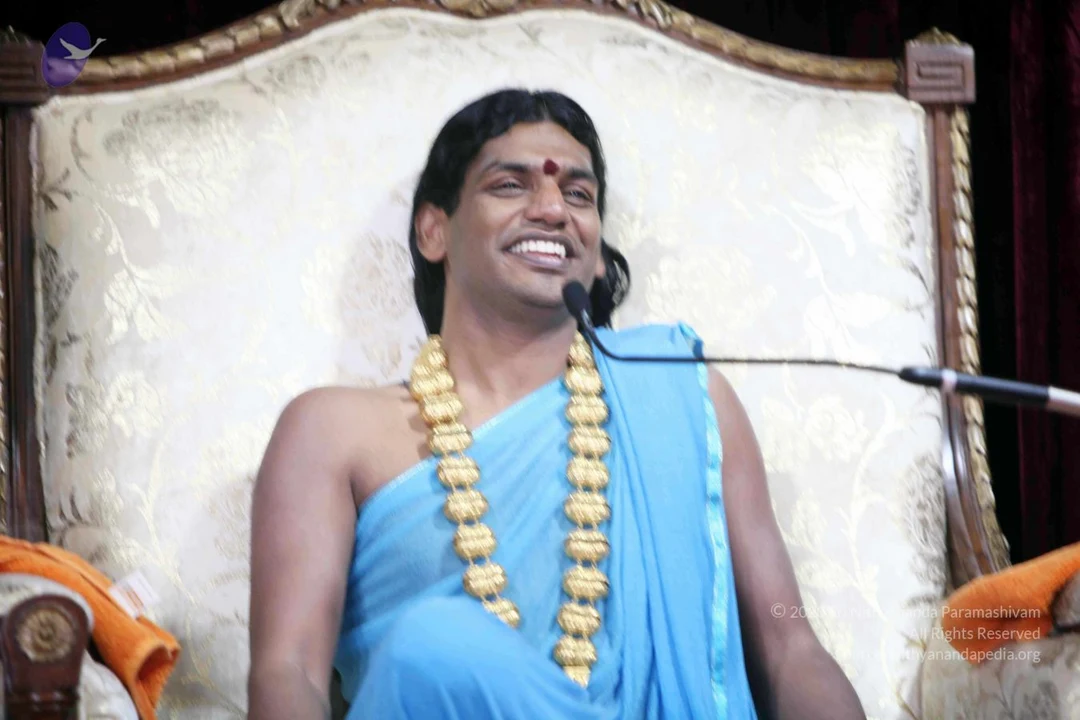
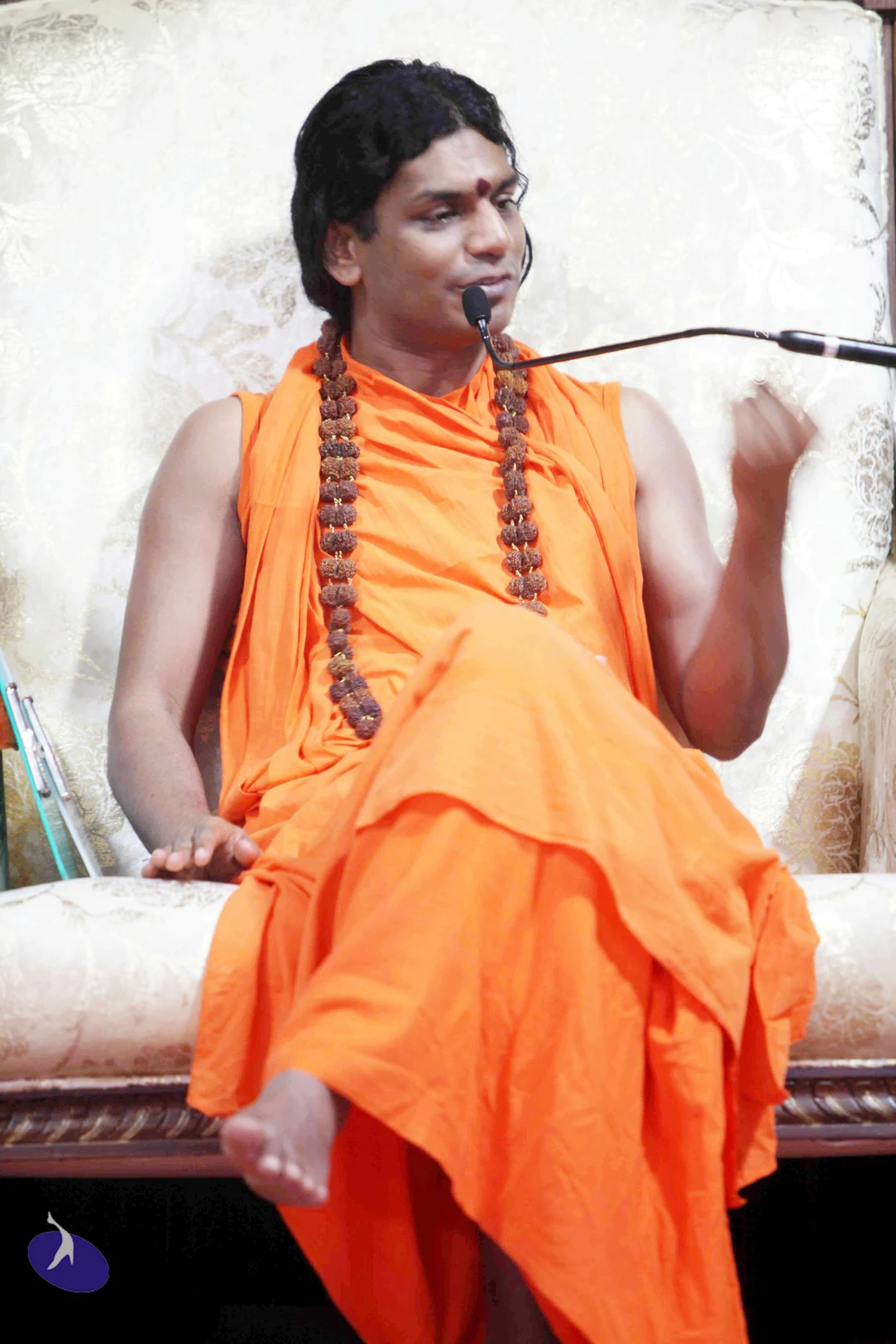
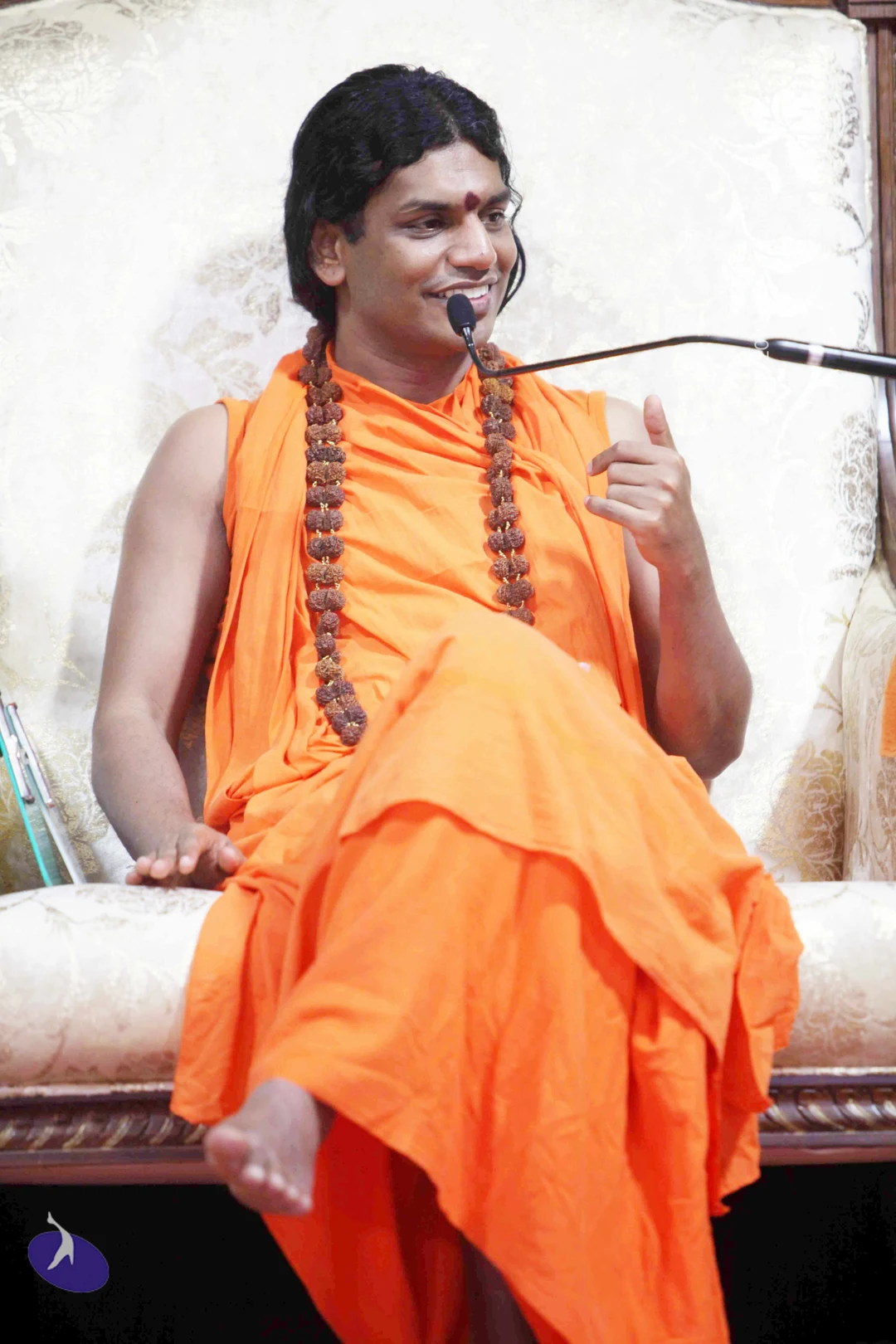
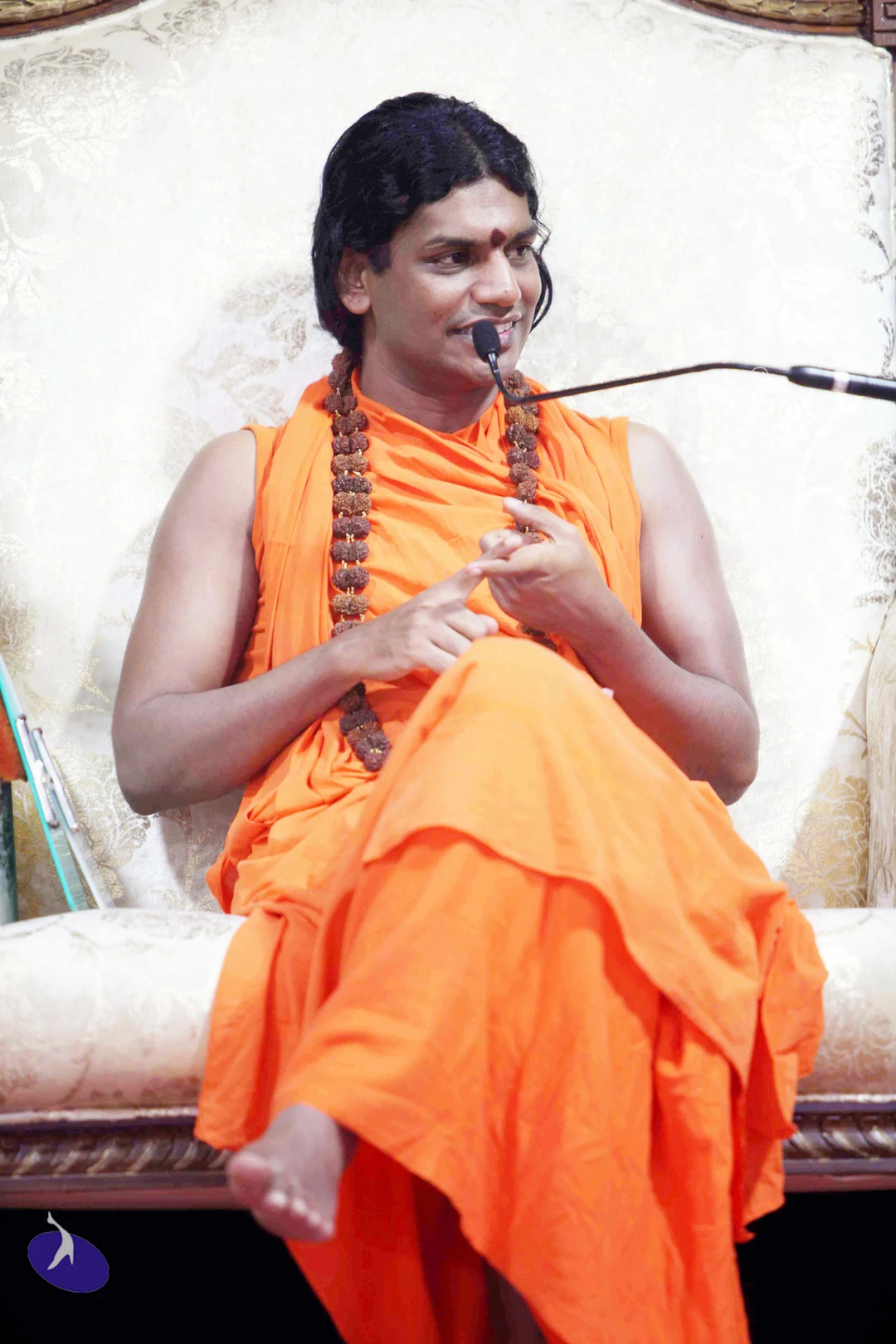
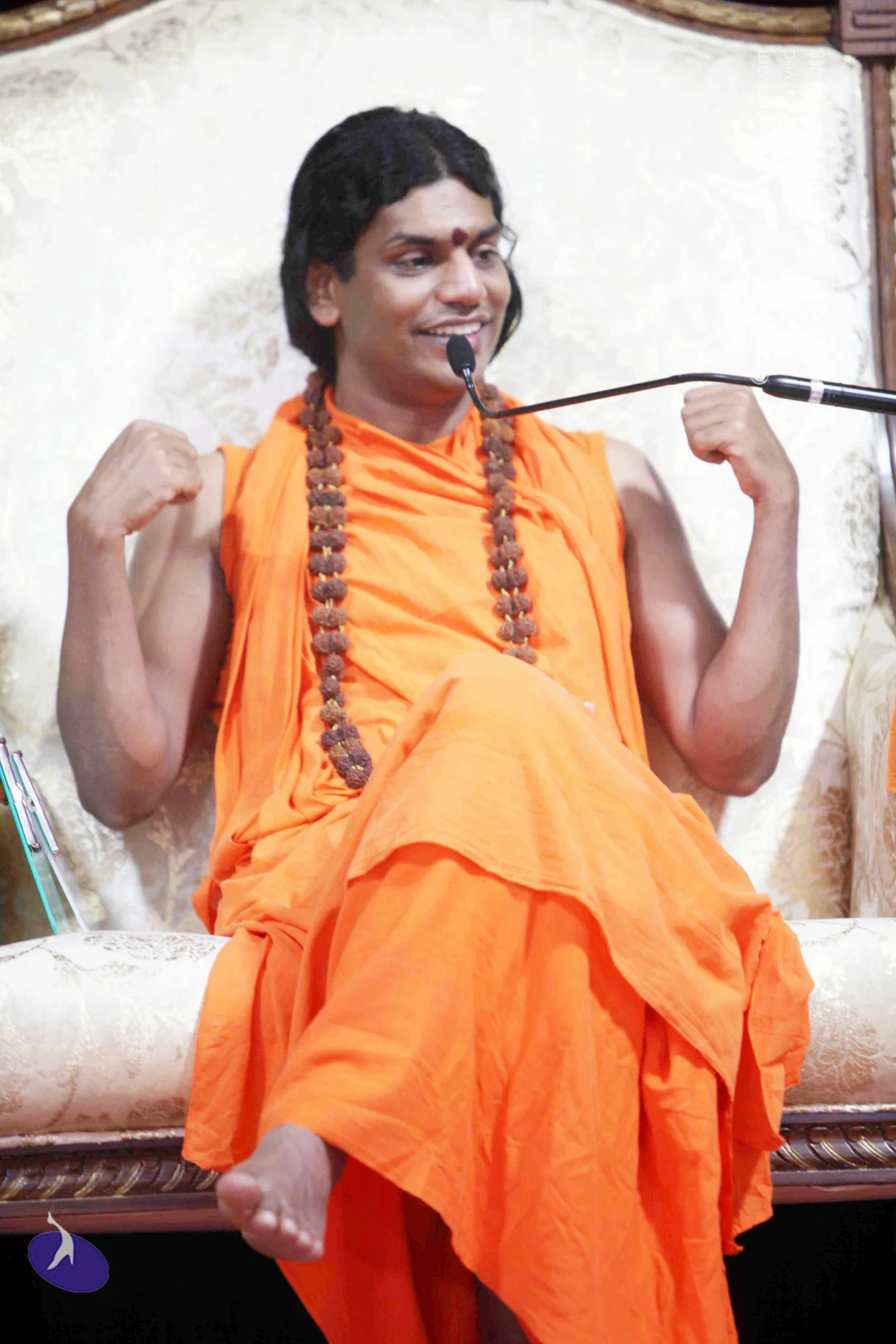
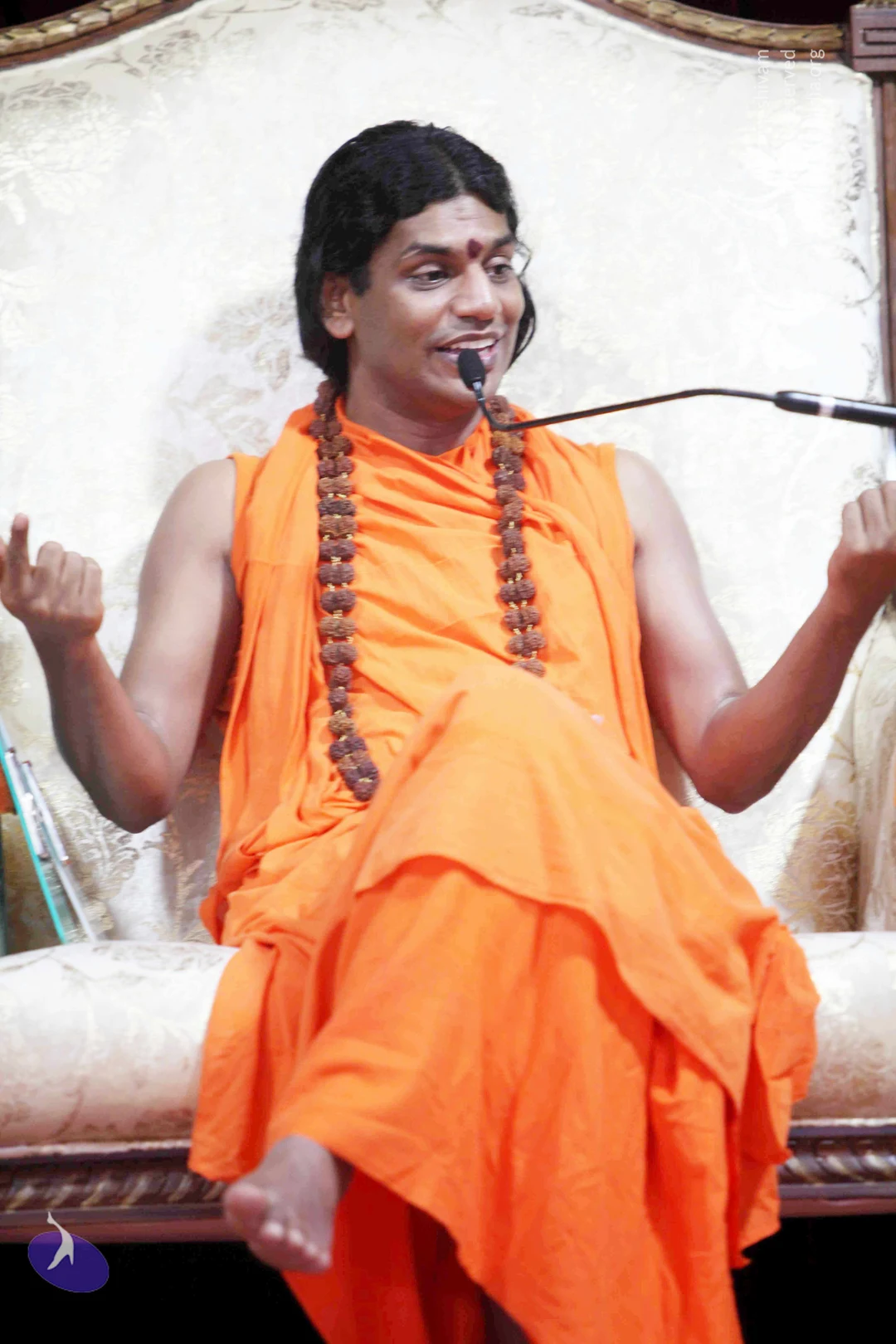
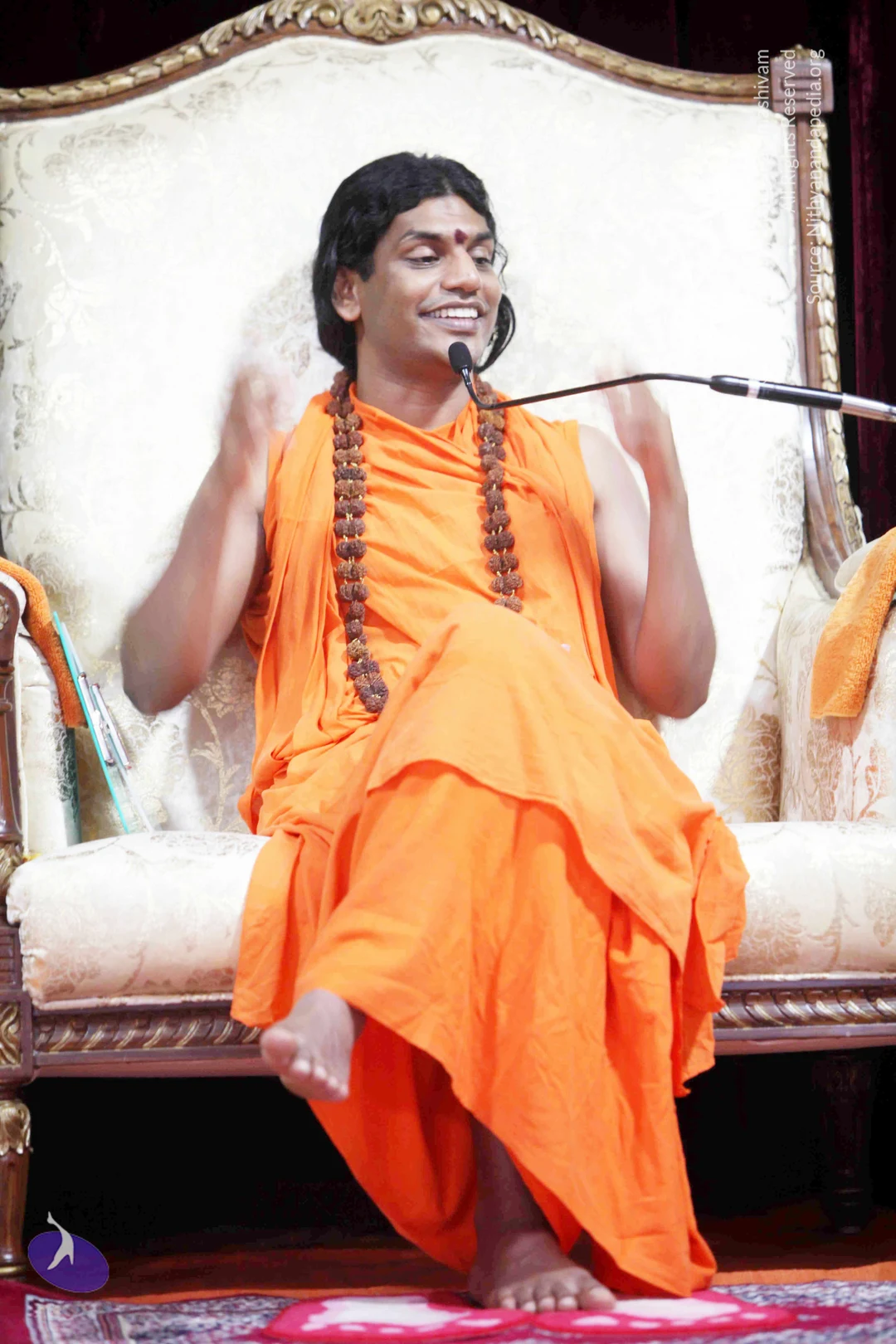
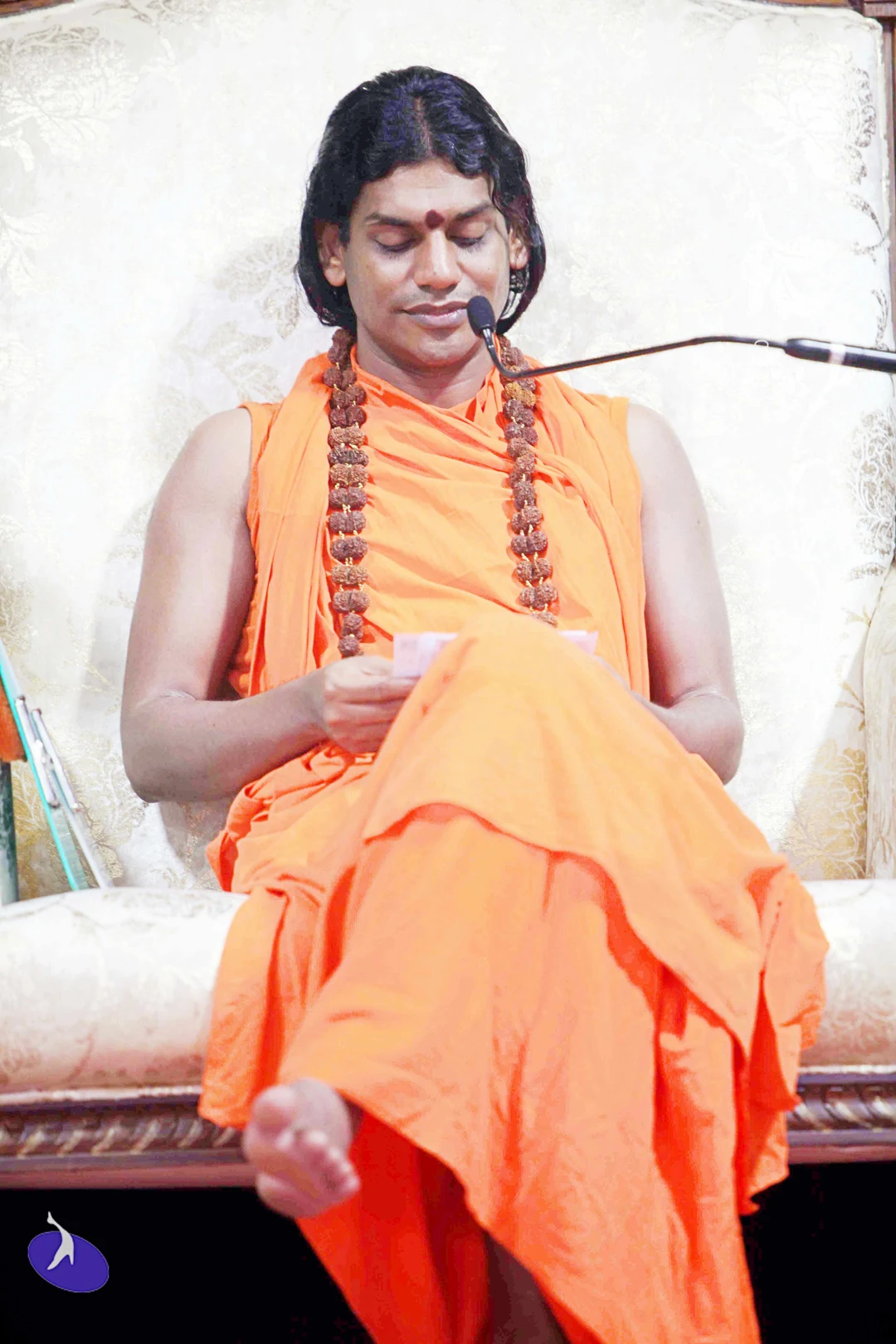
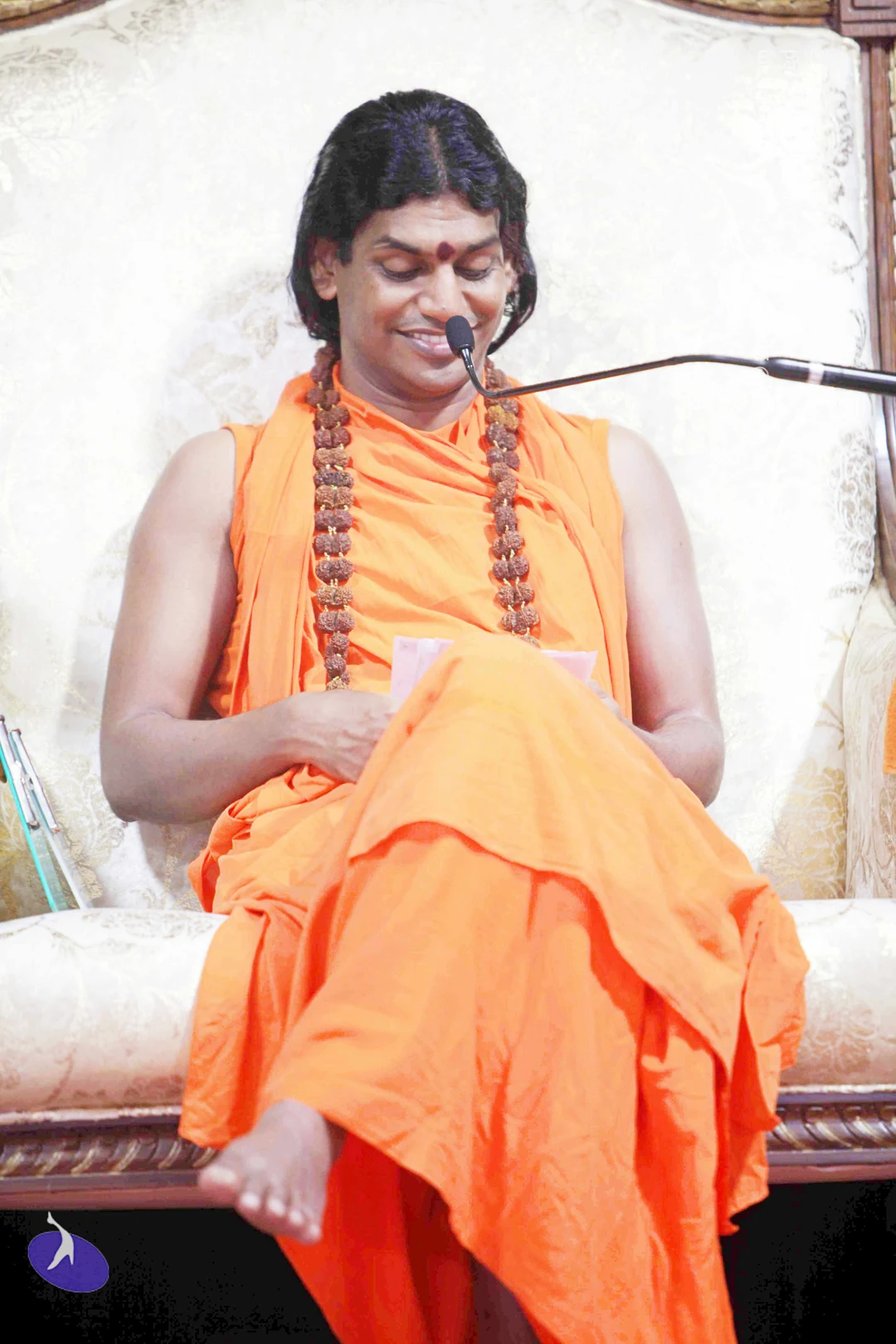
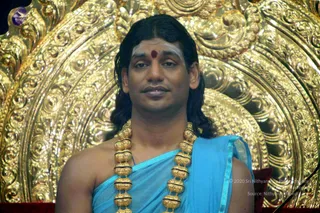
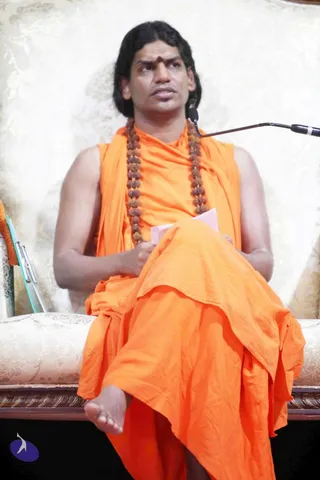
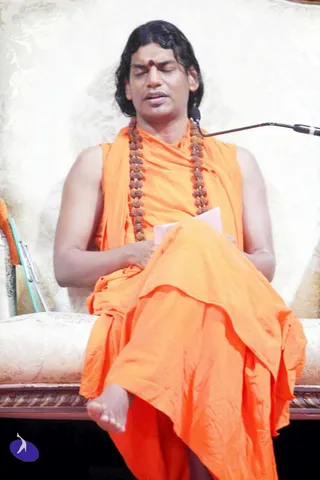
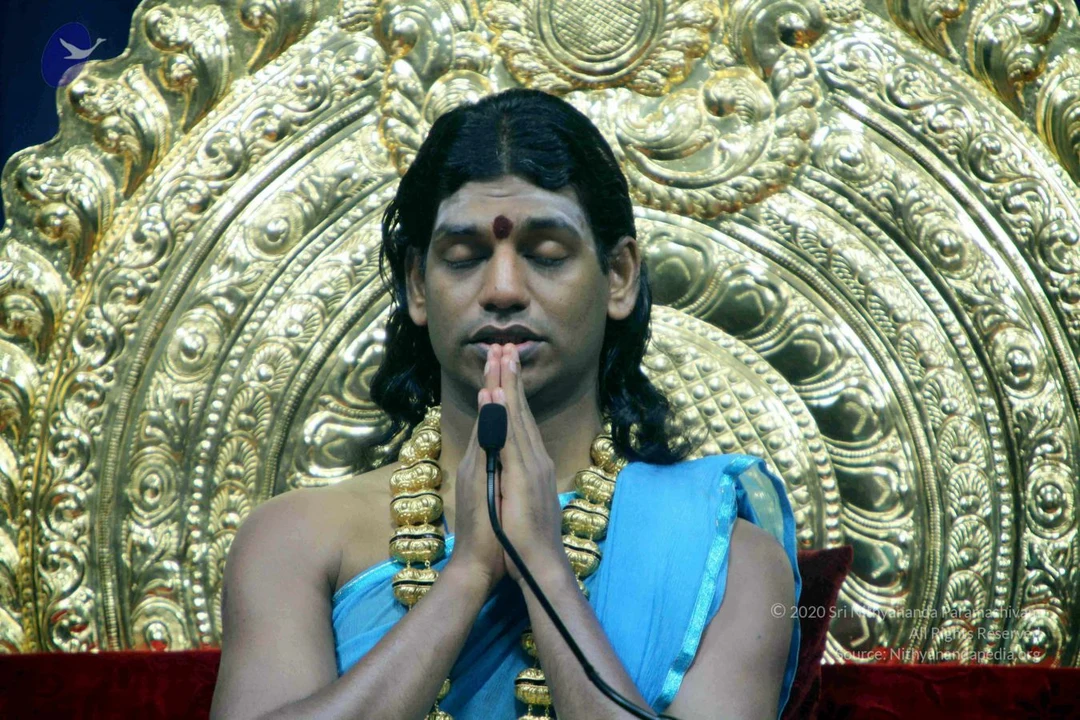
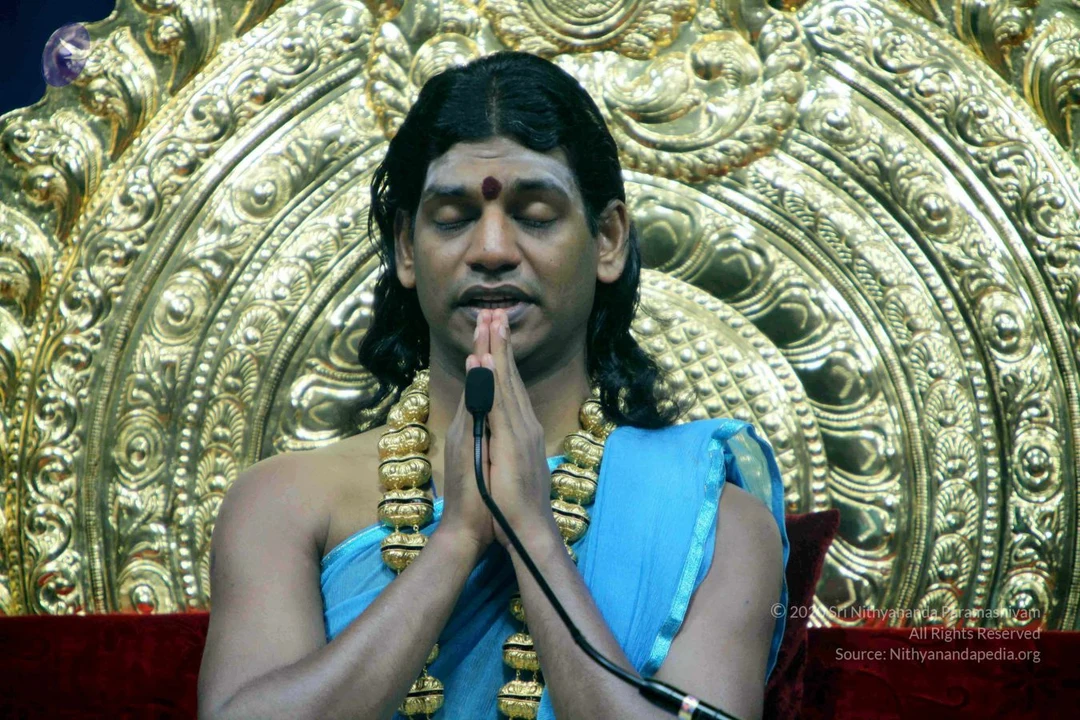
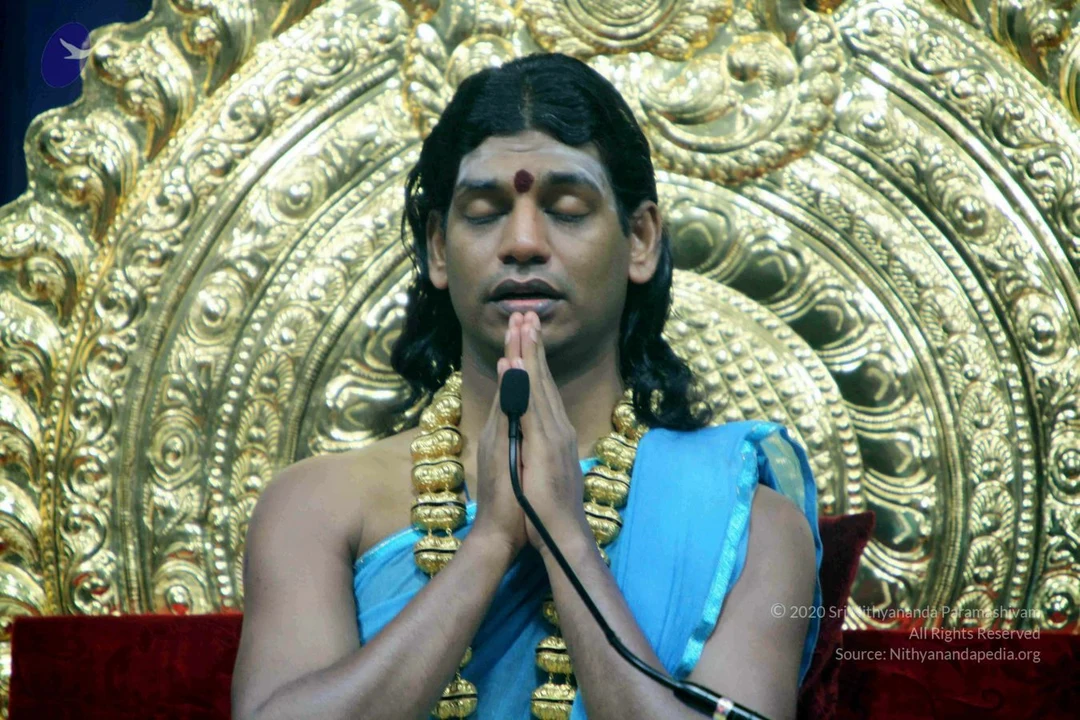
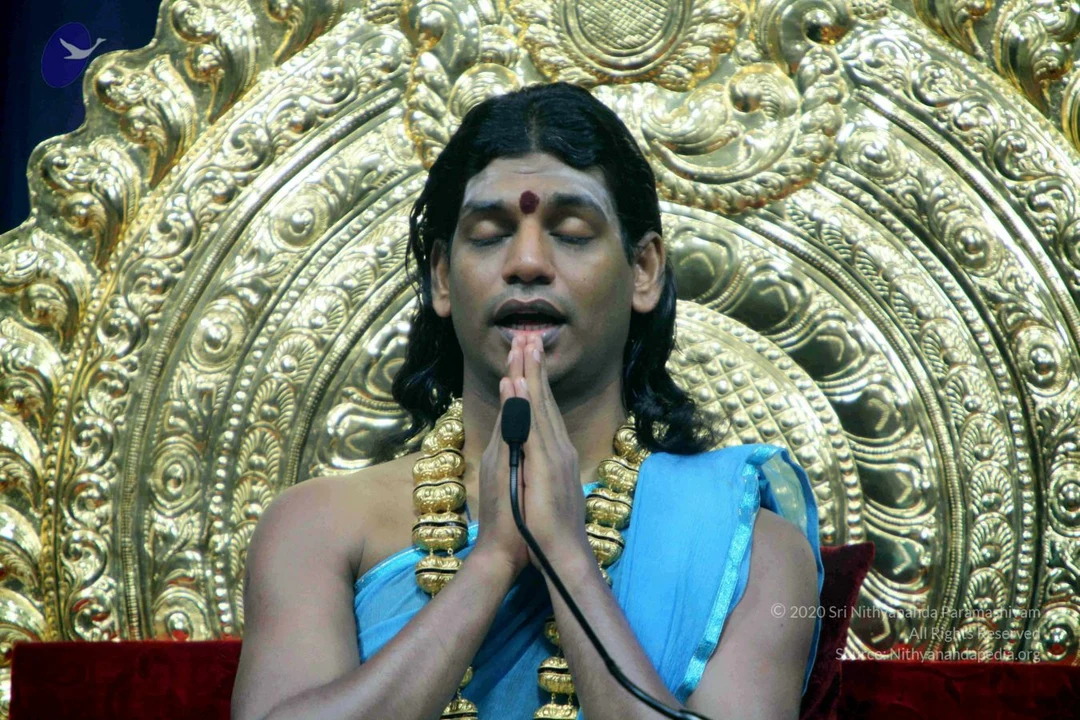
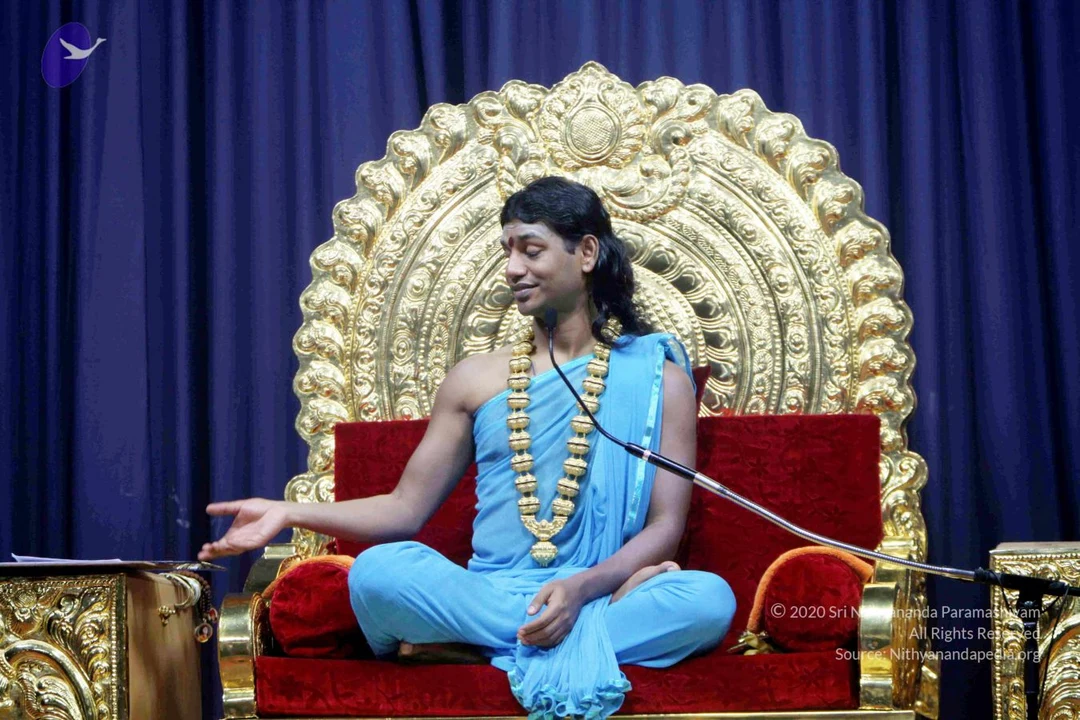
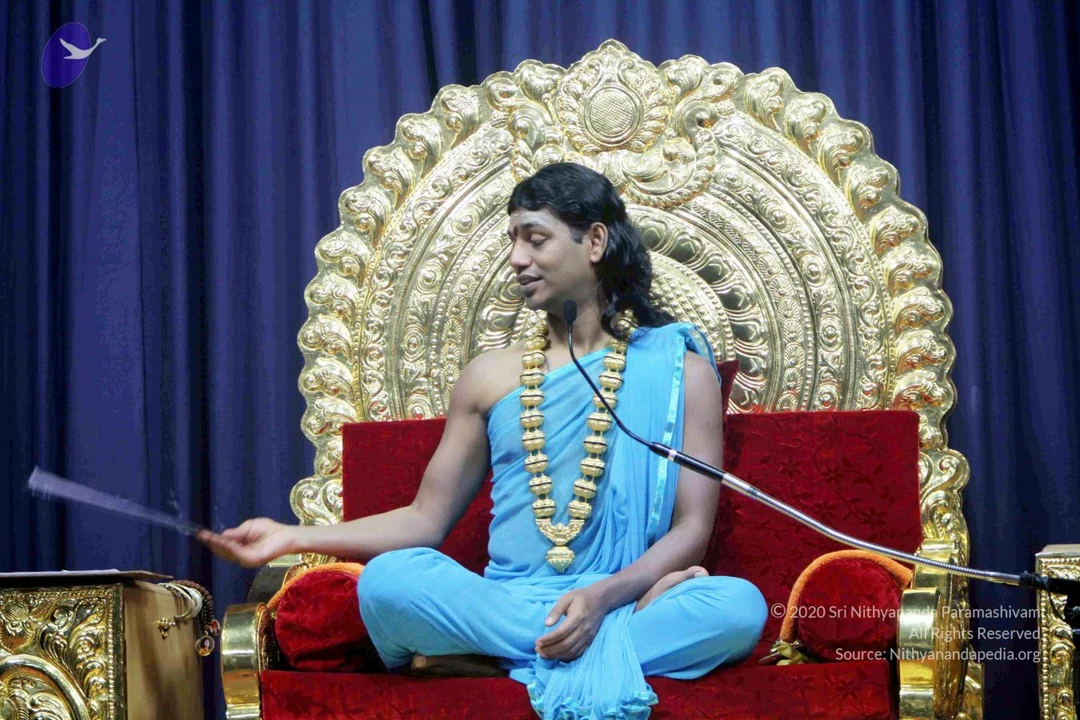
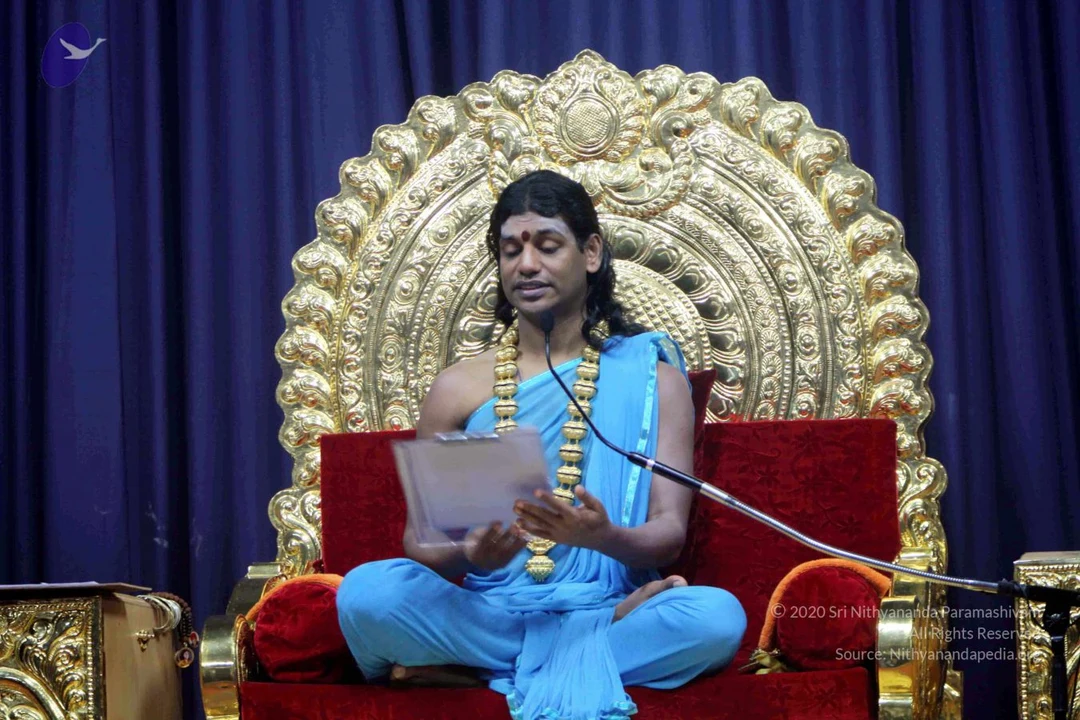
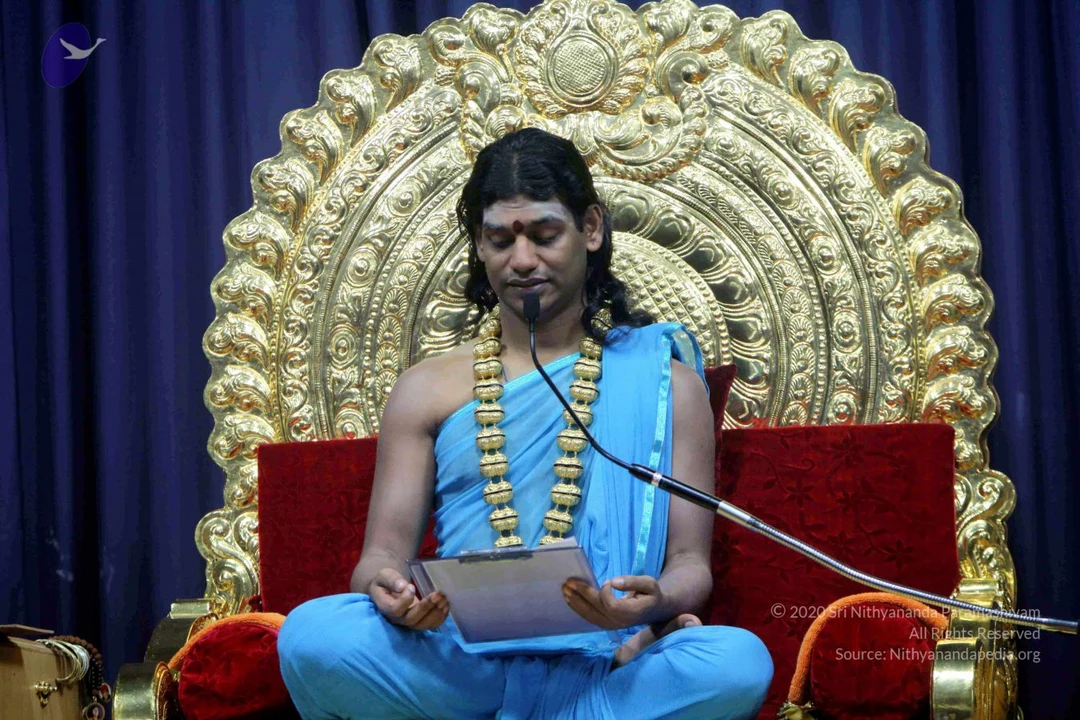
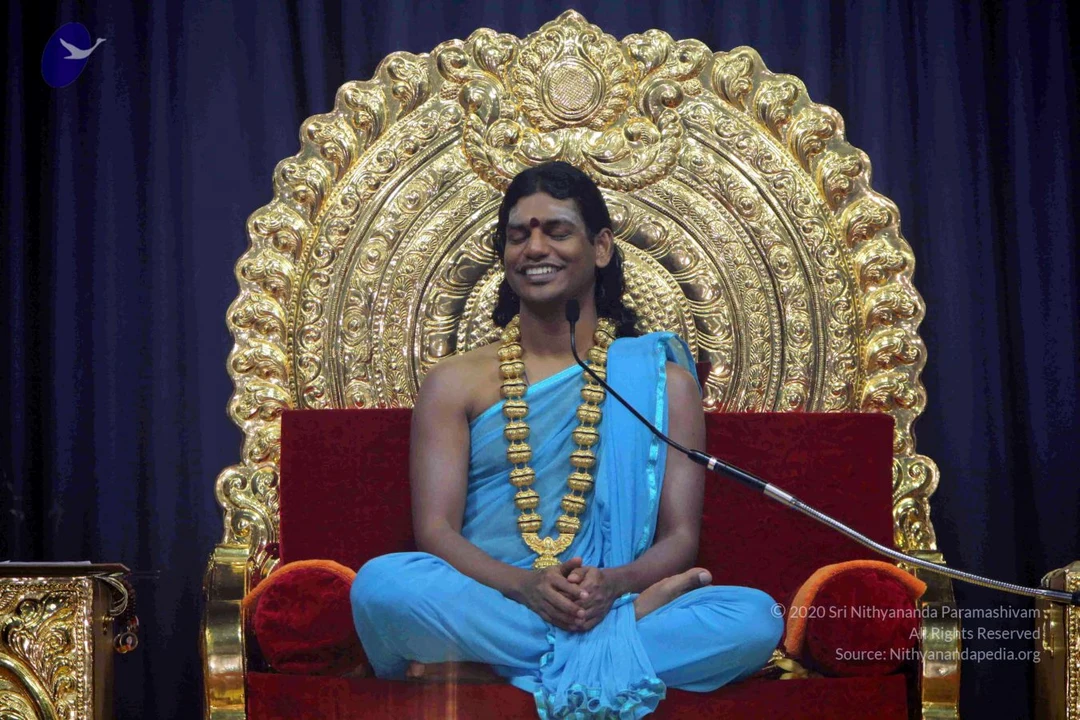
The Supreme Pontiff of Hinduism, Jagatguru Mahasannidhanam, His Divine Holiness, Bhagavan Nithyananda Paramashivam, expounded on the Cosmic Principles of Patanjali Yoga Sutras during the live public talk - Nithyananda Satsang. In this talk entitled Ashtanga Yoga: Taming Mind (Patanjali Yoga Sutras 85), The Supreme Pontiff of Hinduism shared that the highest possible coherence becomes a happening in you when you are in the middle path, madhya panthaha, when neither you are beaten by the extreme fear nor caught in the extreme greed. He explained that decisions taken in the highest possible coherence keeps you in yama (law) and niyama (positive coherence) and if your decisions are in highest coherence you will be fulfilled and If you are fulfilled the world will be fulfilled because the world is you, you are the world.

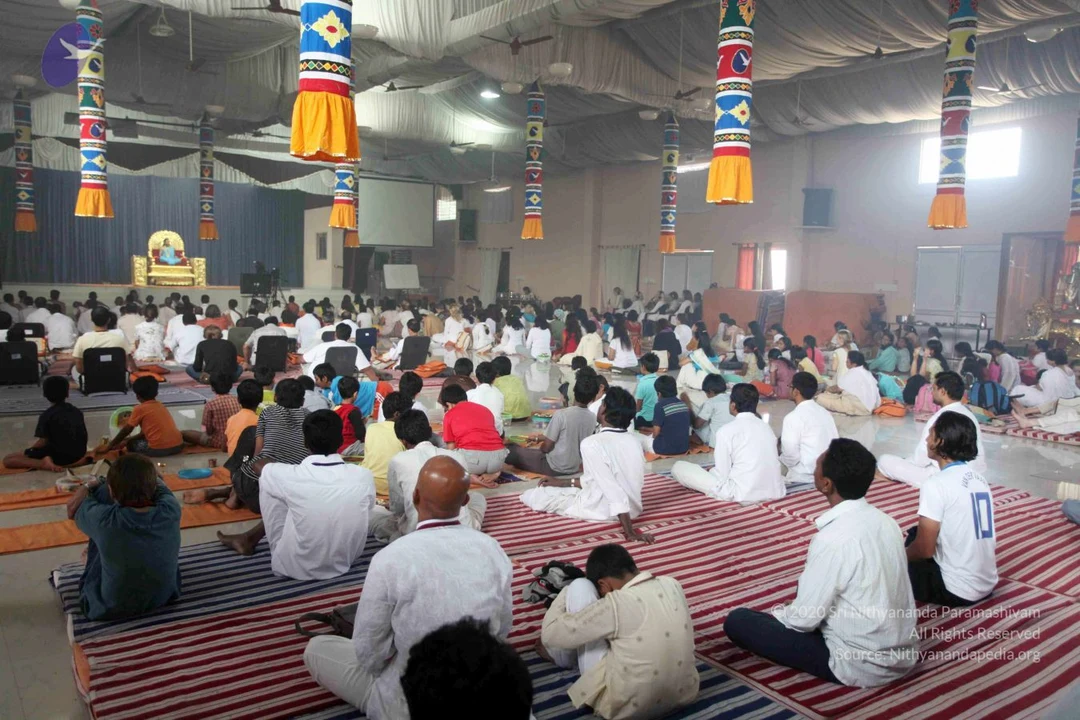
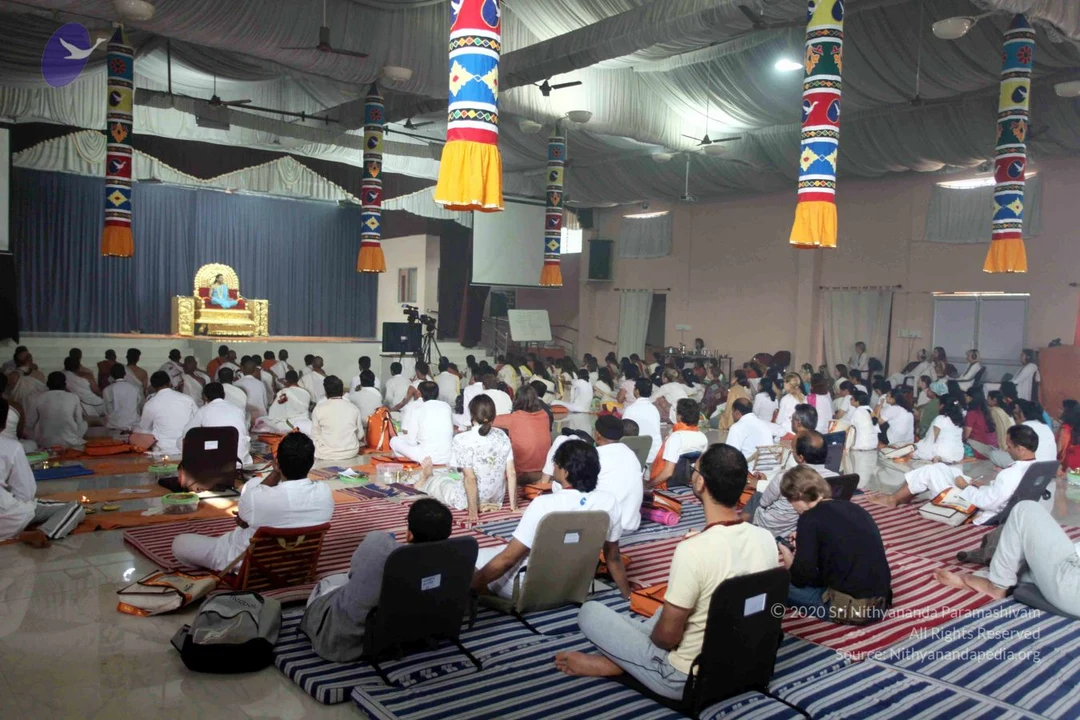
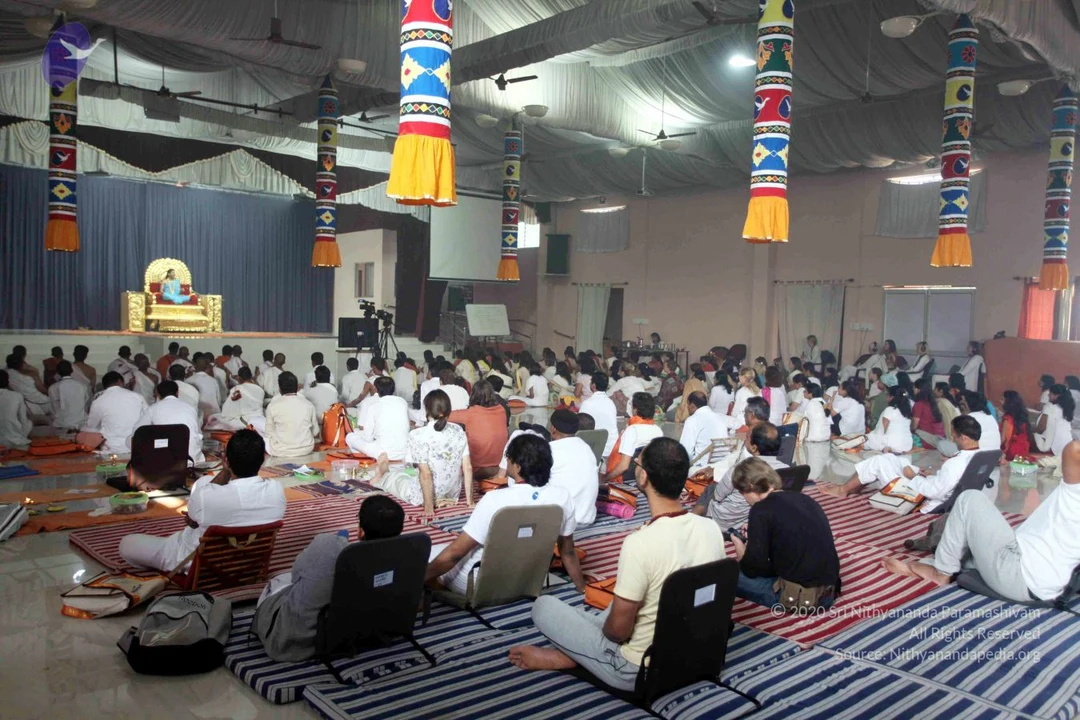
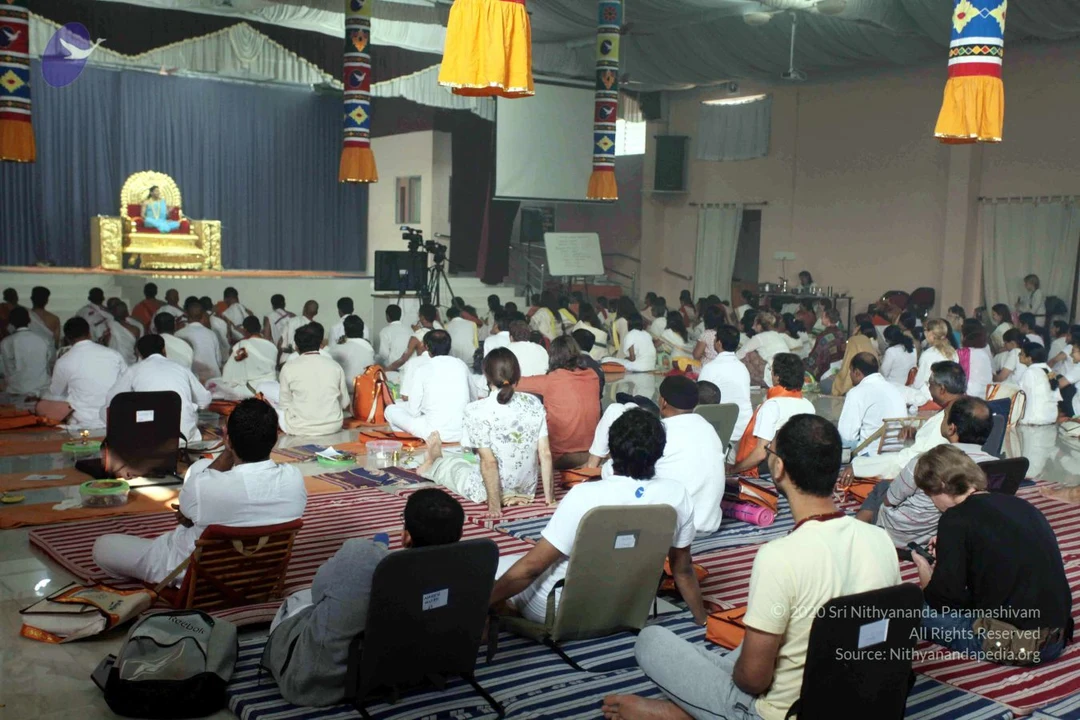
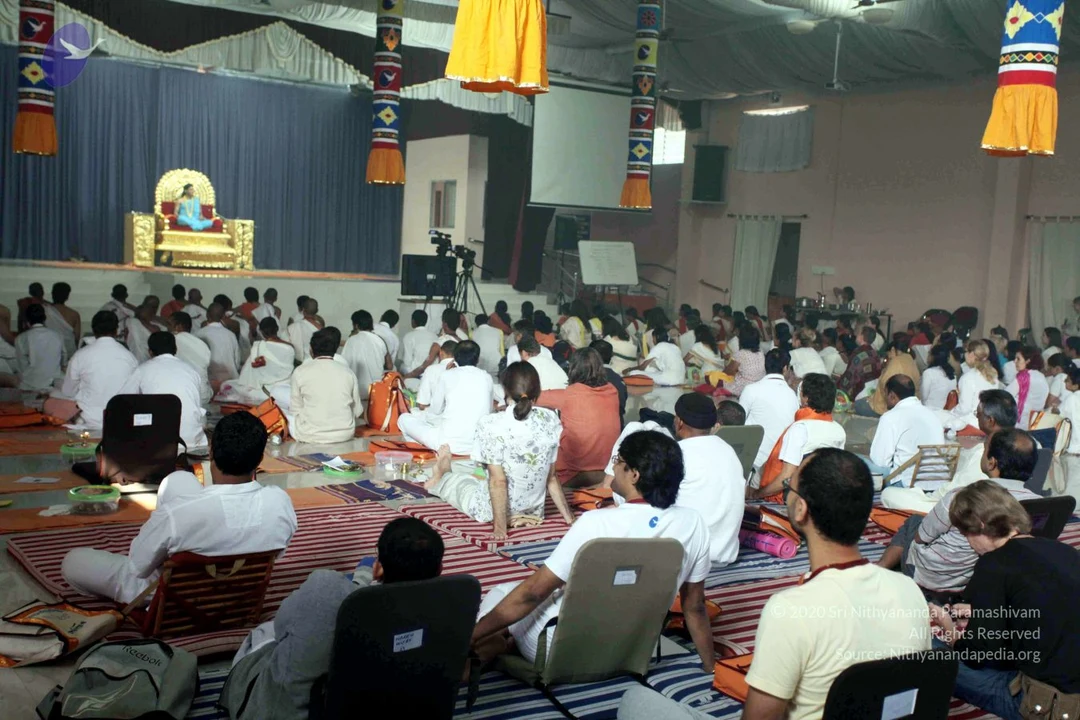
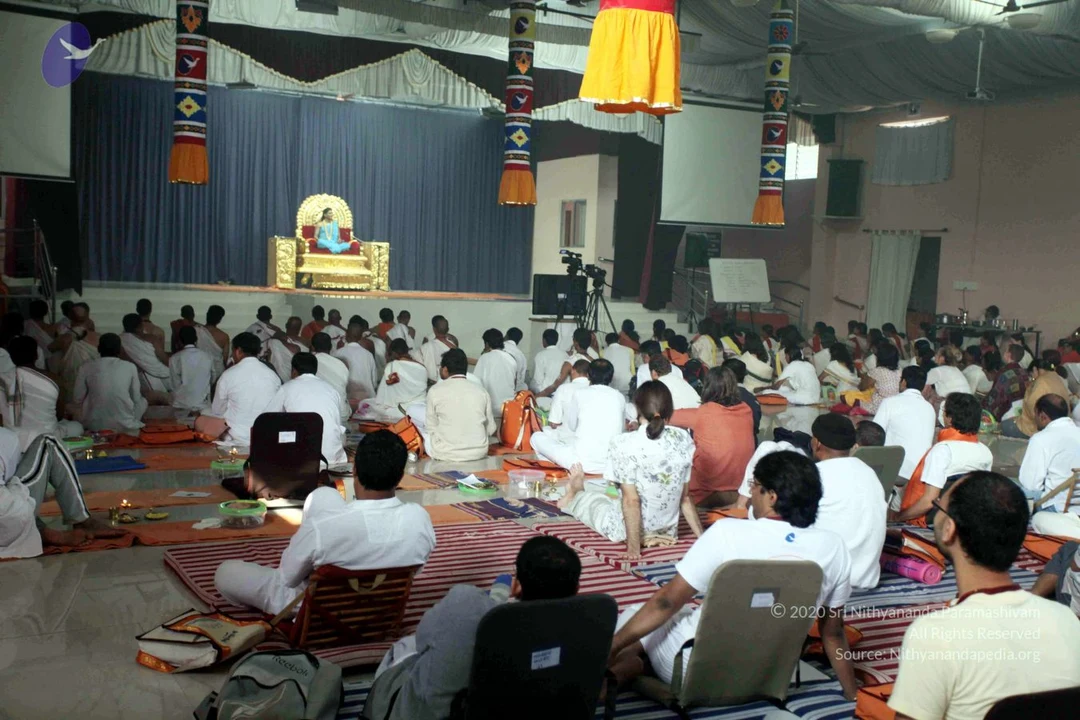
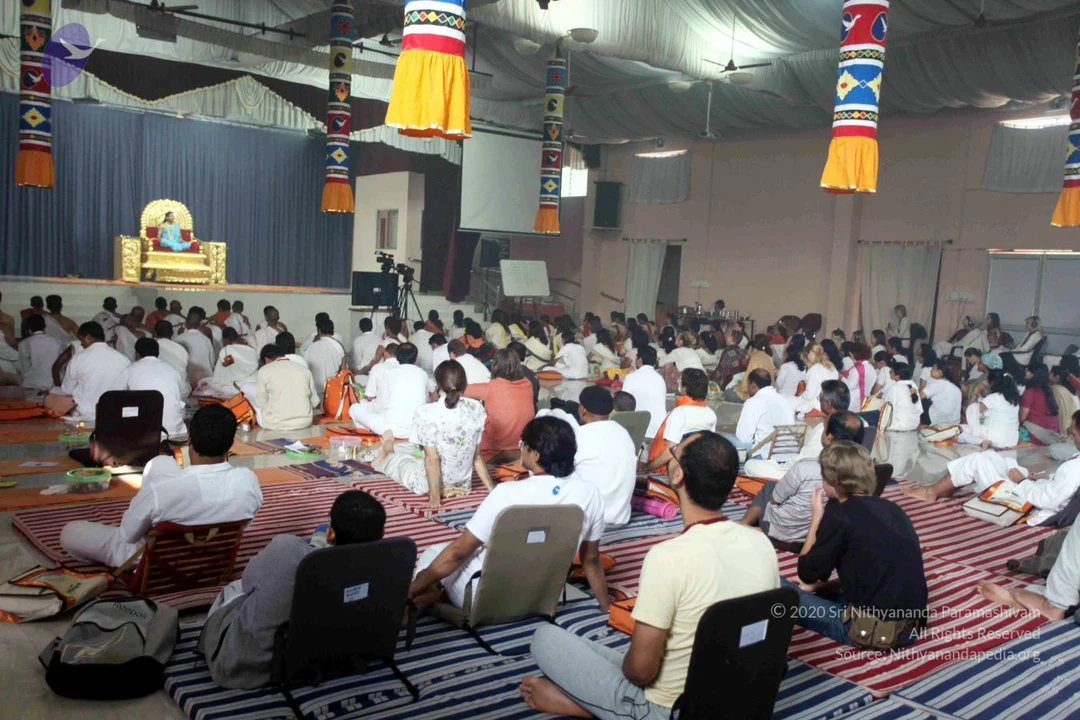
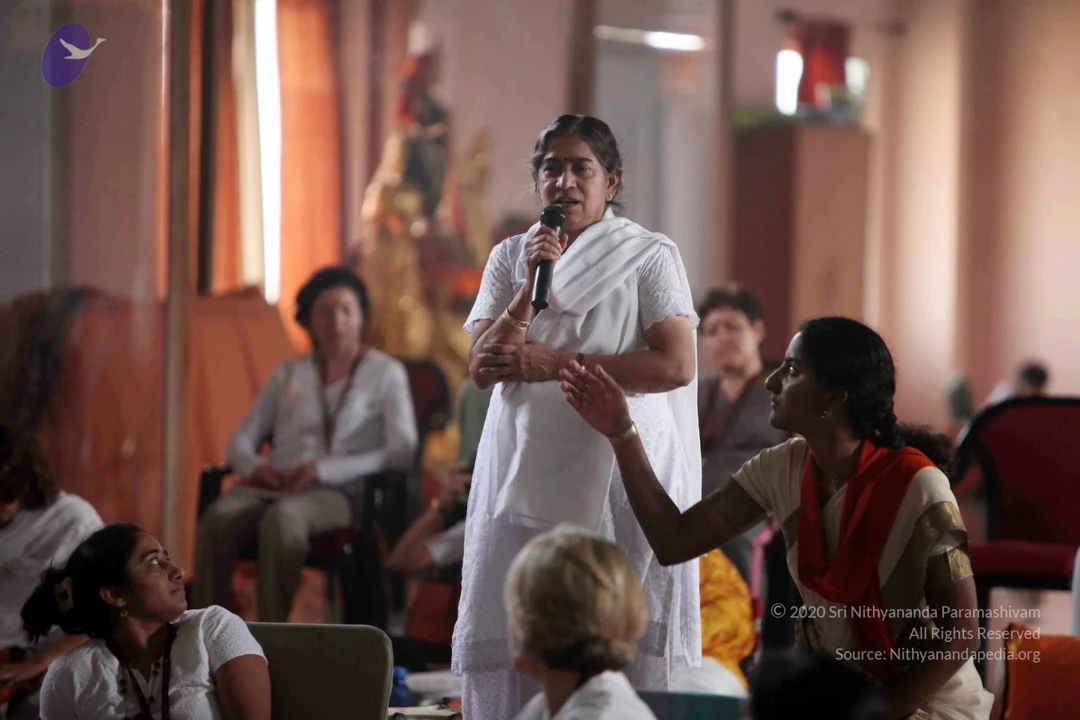
Today during Day 18 of the Inner Awakening Program, delegates experienced powerful Sessions with His Divine Holiness.

Video and Audio:

Ashtanga Yoga: Taming Mind: Patanjali Yoga Sutras 85

VideoAudio

Transcript:

Sadashiva samarambam shankaraacharya madhyamaam Asmadaacharya paryanthaam vande guru paramparaam.

0:53 I welcome you all with my love and respects. Today’s subject for satsang ‘Ahimsa - Door to global peace’. Before entering into the today’s sutras I'll share few more understandings about yesterday’s sutras yesterday’s aphorism; Pratipaksha bhavanam; that is the key word of yesterday’s aphorism.

1:54 Human mind basically oscillates between fear and greed. It continuously moves from this extreme to that extreme and that extreme to this extreme. The oscillation between the fear and greed is mind. Please understand it’s like if I have to give a example of a web camera. Web camera is this end and that end, that camera continuously moves to this end to that end, looking this corner to that corner. That camera is consciousness and the movement from this end to that end is called mind. Your consciousness’s attention, when it moves from the fear and greed and greed and fear, the extremes, that movement only is called as mind. As long as that movement is there the highest possible coherence does not happen in you. Highest possible coherence happens when that consciousness just stays without oscillation. When that consciousness stays in restful awareness then the highest possible coherence happens in your system.

4:05 How that consciousness can stay without jumping between those extremes. Whenever your unconsciousness pulls you towards the fear extreme, consciously slap it with greed; then it will come to the center. When the unconsciousness was rushing towards the greed consciously slap it with fear; it will come to the center. Understand that is what Patanjali means when he says pratipaksha bhavanam. Whenever your fear is awakened you forget greed. You forget about your future. I have seen people when they get into the fear they forget about their possible future and do more and more nasty things; get into big mess; which I know for sure many people are doing now. They have the fear that one mistake which they did is going to finish them off. But that fear makes them forget about the possible future they can have and the greed disappears about the future and do more and more messy things and get into deeper and deeper troubles. Instead of one crime, now they will have to face hundreds of crime; that is the unconscious flow of mind. Don’t get into that mess.

6:00 Same way whenever you are caught in greed you forget about the fear and you do some foolishness; only after that you even remember the side effects and after effects. So the greed when it takes over you unconsciously, slap your unconscious consciously with fear; it will come to the centre. When the fear takes over consciously slap it with greed; it will come to the centre. Being in the center suddenly raises you to the highest possible coherence. That is what I call niyamaha. So whether it is related to non violence or non stealing or non greed or truthfulness or living like God; any vow, any law, any flow, whatever may be, please understand whatever it may be, when the fear takes over slap it with the greed, when the greed takes over slap it with fear, so that you are in centre continuously and experience the highest coherence.

7:36 What Buddha calls as the middle path is exactly this. Constantly be in the center. Many time when people take sanyas decision I tell them no...Don’t…. If you take whether sanyas or marriage or any decision based on the extreme fear or extreme greed you will be a failure. If you take sanyas or marriage or any decision about life when you are in the middle, suddenly you will see you are taking the decision out of the niyama; highest possible coherence. Any decision taken in the highest possible coherence only should be executed. That is your life. But any decision taken in the extreme fear extreme greed you are in mess; even if you are successful in that decision you will be completely depressed and missing something vital in the life.

8:58 Just yesterday some volunteer did not respect the department head’s instruction. He was brought to me. First thing I said is this only, means that person is not interested or the person has not taken the decision in coherence; in niyama. No. The person has taken the decision of volunteering in extreme fear or extreme greed. Get her out first. If the person has taken the decision of volunteering without the extreme fear or greed on the highest possible coherence, the middle path, then the person will not have any problem with working with the department head; because the person who is in charge of the department is supposed to be coordinating, thinking through, elevating, evolving the ideas. When you have a continuous tiff, it means the decision is not from the highest possible coherence. So any decision comes out of highest possible coherence will fulfill you and fulfill the world; because you are the world.

10:17 There is a very beautiful sutra; tasmin tushte jagat tushti prenite prenitam jagat. If you are satisfied whole world is satisfied, if you are happy whole world is happy. This is chanted towards Krishna by a devotee. If you are happy then everything is ok. tasmin tushte jagat tushti prenite prenitam jagat. It is not only towards Krishna, towards every one of you. If your decisions are in highest coherence you will be fulfilled; means the whole world will be fulfilled. If you are fulfilled the world will be fulfilled because the world is you, you are world. The best way to put you constantly into the highest possible coherence, the niyama, I’ll give you the process. Please understand the best way….. take the life lightly and go on be in joy. Take the whole world lightly. What is there ...ok...And I tell you any worst situation…… only till you enter into it the fear will be there.

11:55 I tell you even prison. After staying there for few days the fear went away. I can really tell you. Of course earlier also I did not have the fear. Ultimately the being is fearless. But just even that social so called ohhh ooooh.....I tell you the same way the death also. Only because you have not entered into it consciously, so much fear. Just be casual; when it comes naturally, consciously enter into it. Understand don’t try to create death. No. Then it is suicide... dangerous... no... Suicide will not lead you to enlightenment. When a natural death comes, mentally be prepared, consciously face it, go through it. Suddenly you will see Oh God! Just for this, with this fear, I wasted whole my life....I have been cheated so much. Same way when you enter into the death consciously suddenly you will realize Oh God! Such a simple thing just for this so many fellows exploited me showing this dumu dumu .... hoooo hooo... chow chow...showing this foolish fear so many fellows have exploited me; society politicians…..so many.

13:33 Take the life lightly. It is not worth of suffering. Life is not worthy of suffering. When you take the life lightly, joyfully, casually, suddenly you fall into the highest possible coherence. Things become more alive, things become more liked, things become more practical, things become more happening. Understand as on now, many of your spiritual knowledge is not a happening. It is just there like a godown. When a Master happens in your life all the spiritual treasure becomes happening. It is just day to day thing.

14:38 Just yesterday in the healing initiation one devotee asked me, ‘From the young age I am filled by Narasimha. Can I have you also along with the Narasimha in me?’ I said don’t even bother about me, Narasimha, two, where will you keep; 60-60 or 40-40 or 50-50. Don’t bother just look……... see Narasimha that’s all. I don’t know what happened to her. I said have the experience of Narasimha and you don’t need to bother about that 50-50 whether 60-40 or 30-70…... No. Just have the experience of Narasimha you will see that only one will be there inside. There will not be two thing. When the highest possible coherence happens the conflict disappears. There will not be any conflict between the Narasimha and the Master. I know what she has experienced immediately. Till now Narasimha was a knowledge for her, when the Master happens in your life it has become a happening now. Narasimha is now living experience; happening.

16:28 Whenever the happening happens conflicts disappear. When a Master happens in your life all your spiritual visualization, imagination, meditation or ideas, thoughts, knowledge, everything becomes happening in your life. My only job is to make everything as a happening in you. So now the yama niyama all this you read; heard enough, read enough, tried to practice enough. Now suddenly when the Master happens by.... it becomes a happening. It is a happening. The highest possible coherence becomes happening in you when you are in the middle path, madhya panthaha; neither beaten by the extreme fear nor caught in the extreme greed. Decisions taken in the highest possible coherence keeps you in yama and niyama. Understand yama and niyama are not set of rules. It is being in the highest possible coherence. Because those set of rules if you start practicing as rules you will never be successful. I tell you. As rules they will be utter failure. Patanjali is not an impractical master.

18:44 I know there was a quack doctor in my village. Quack doctor means he doesn’t know much; but somehow whatever little he knows with that he tries to manage the scene. Means he would have been an assistant for some doctor. Five six years when you are assistant to doctor you will know for stomach pain white tablet, for leg pain black tablet, for head ache green tablet, for kidney problem yellow tablet. With color you come up with some idea. And you make a chart based on color. And if some company changes the color of the tablet what will happen? So this quack doctor, whenever people go to him if he is not able to diagnose, understand, he will come up with some impractical medicine. In Tamil there is a proverb we will say that Kallichidiya anivera ........I have to translate kalli is a big plant. You will have to remove the plant without cutting the roots; the whole plant should be removed without even losing the smallest root and after cleaning that plant you will have to swallow the whole thing without that touching your small tongue. Is it ever possible? Then you know you are going to die with the disease. And at least you will not blame the doctor he doesn’t know medicine.

20:40 Patanjali is not that that kind of a person who gives impractical solution. If you understand yama niyama with your own translation in superficial way, then that is what you will think. When will I master the non greed and non violence, truthfulness? By the time I master I will become old then when will I start my asana and pranayama, pratyahara, dharana, dhyana…..already I am in samadhi. No... So yama and niyama are not laws and rules. It is the process of putting you into the highest possible coherence; highest possible coherence. So understand the essence is, when you are slapped by your unconscious with fear, push yourself with greed and bring into the center. When you are slapped by your unconscious by greed, push yourself consciously with fear and bring yourself to the center. When you are in center always you are in the highest possible coherence, centeredness.

22:35 I bless you all to achieve, experience, live, express and radiate the eternal bliss, Nithyananda. Thank you. 22:49

Photos

Panchatapas
Paadapooja

Nithya satsang

sarvadarshan

Inner Awakening session

Inner Awakening Session- 2

Photos Of The Day:

1-En-Genius-LE

2-En-Genius-Meditation

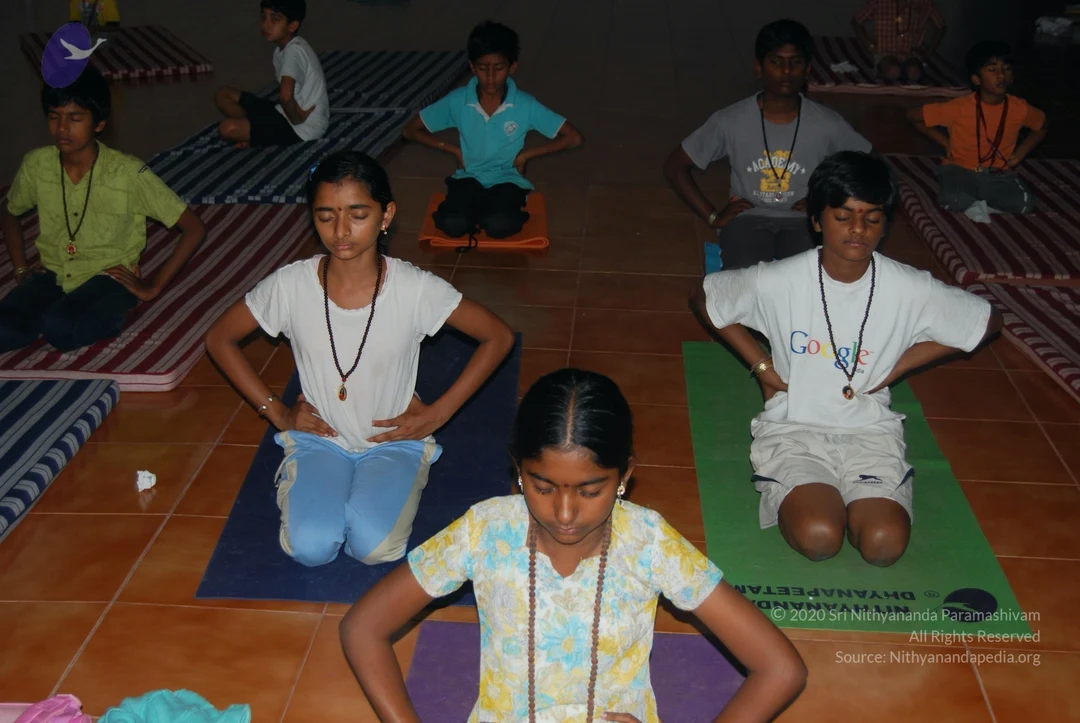
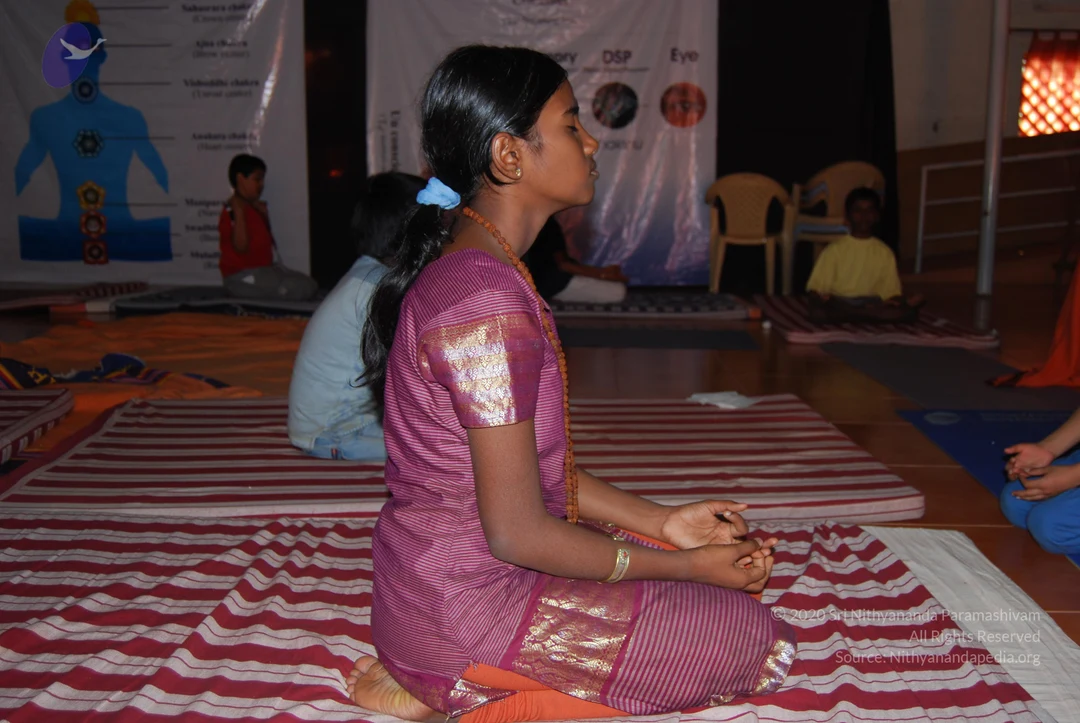
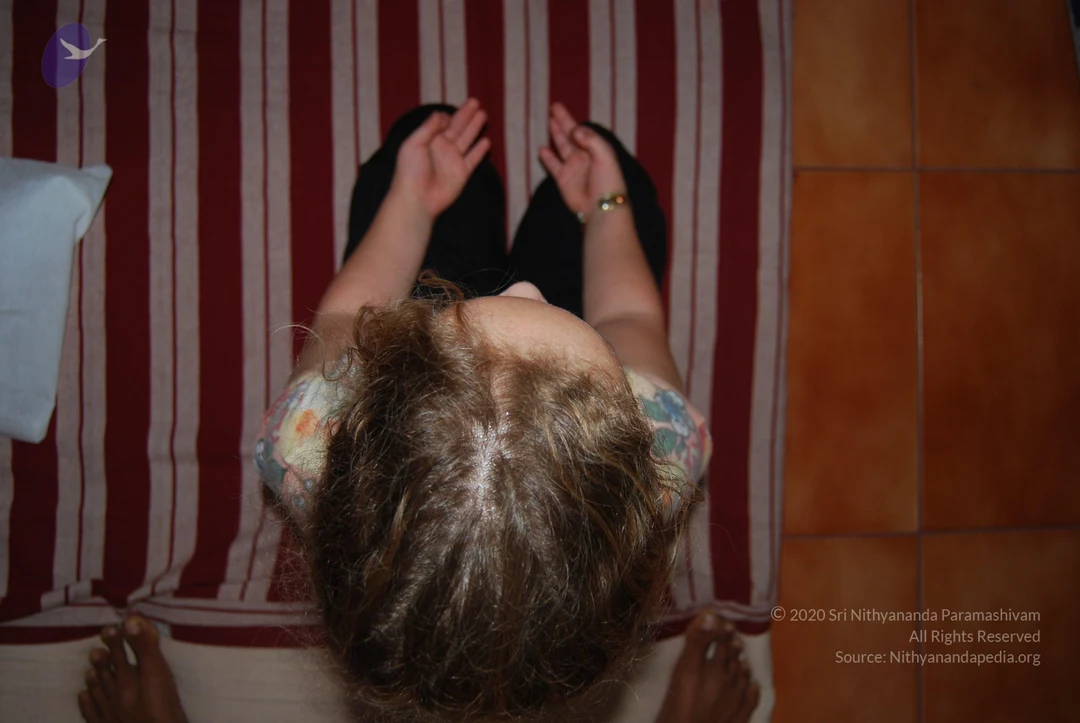
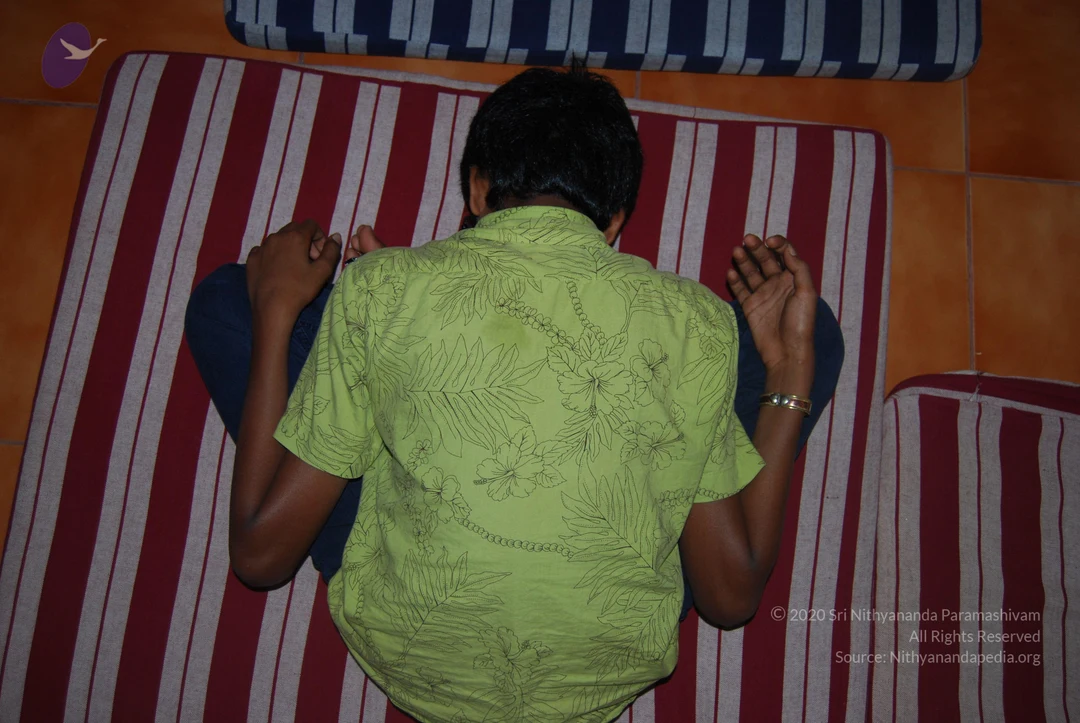
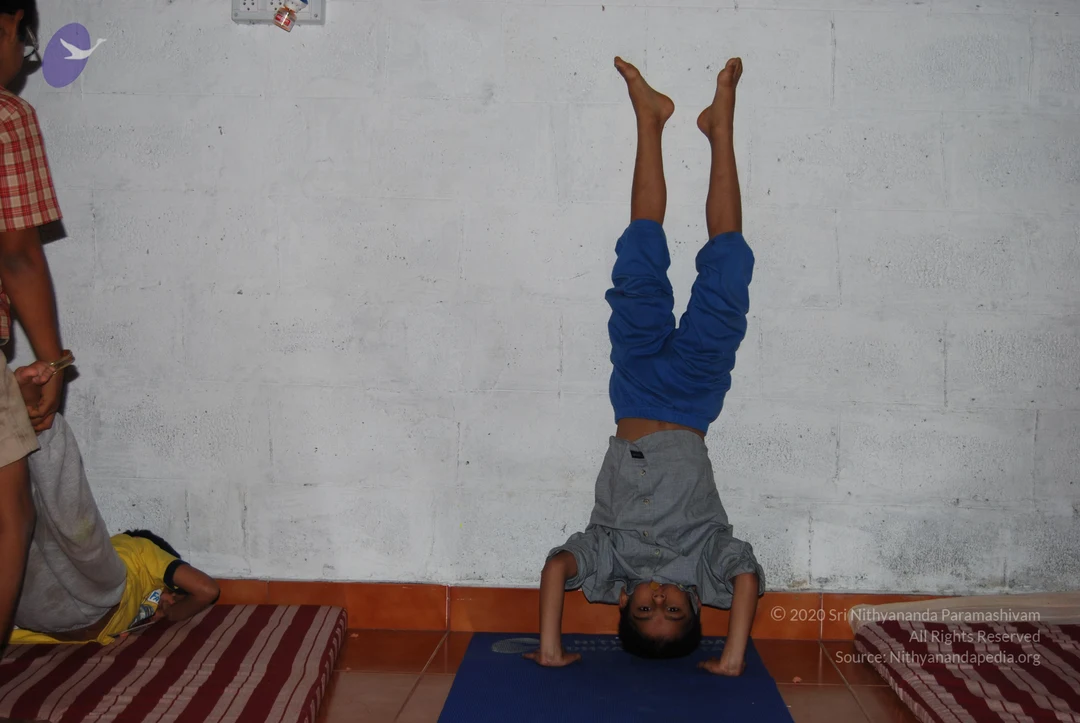
3-En-Genius-Yoga

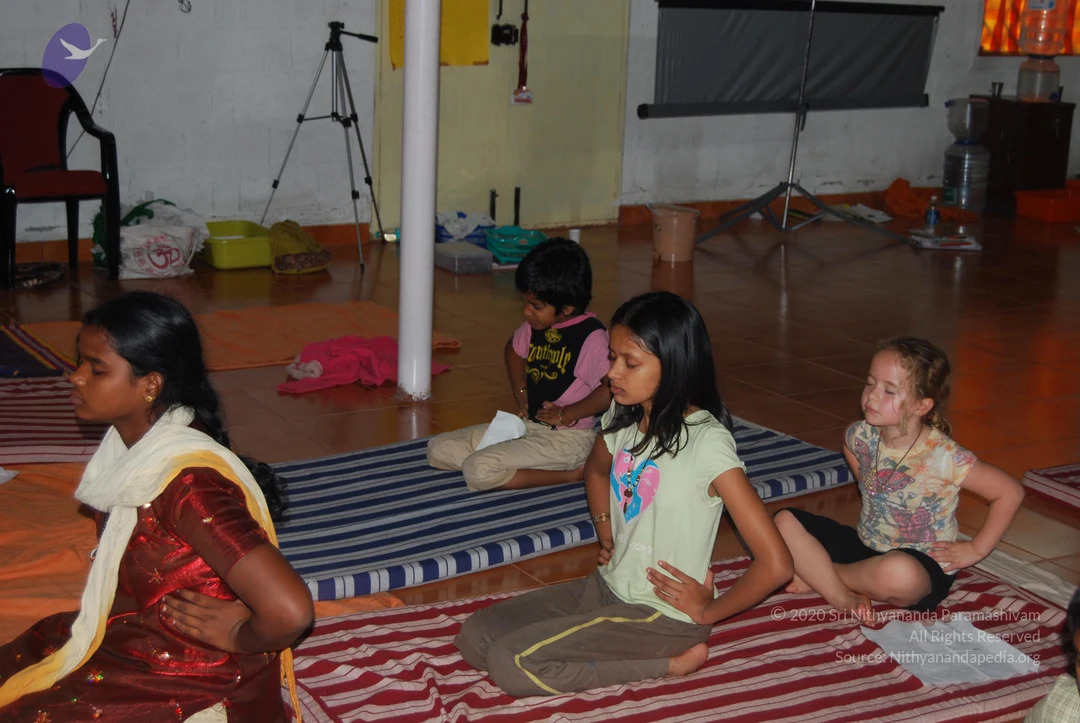
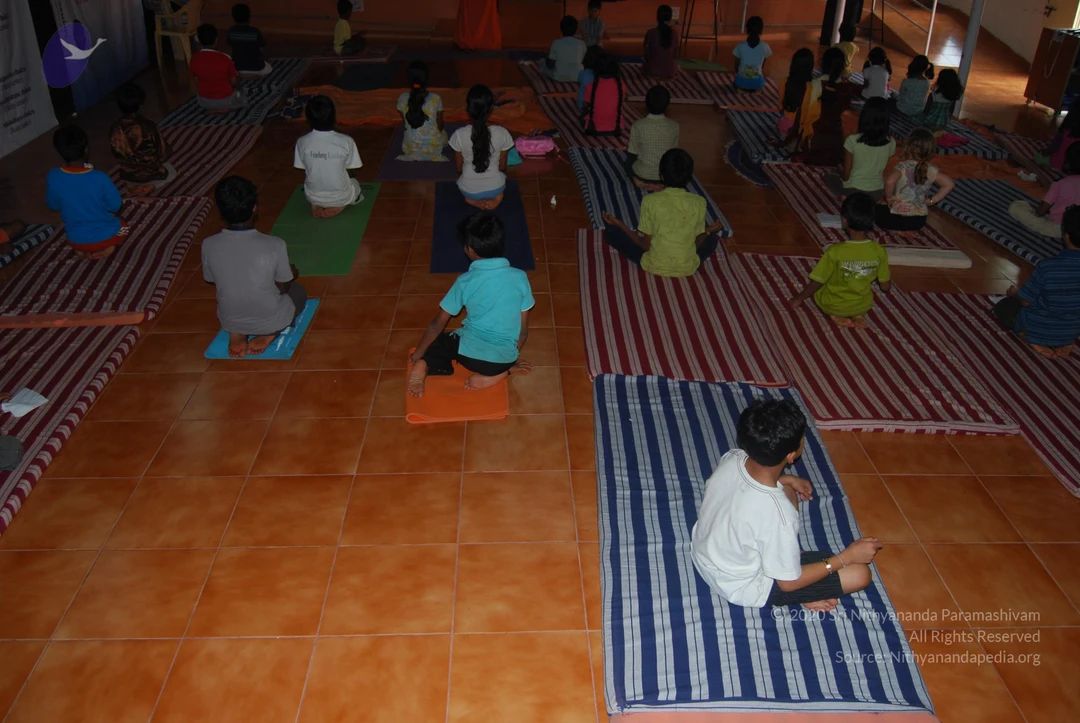
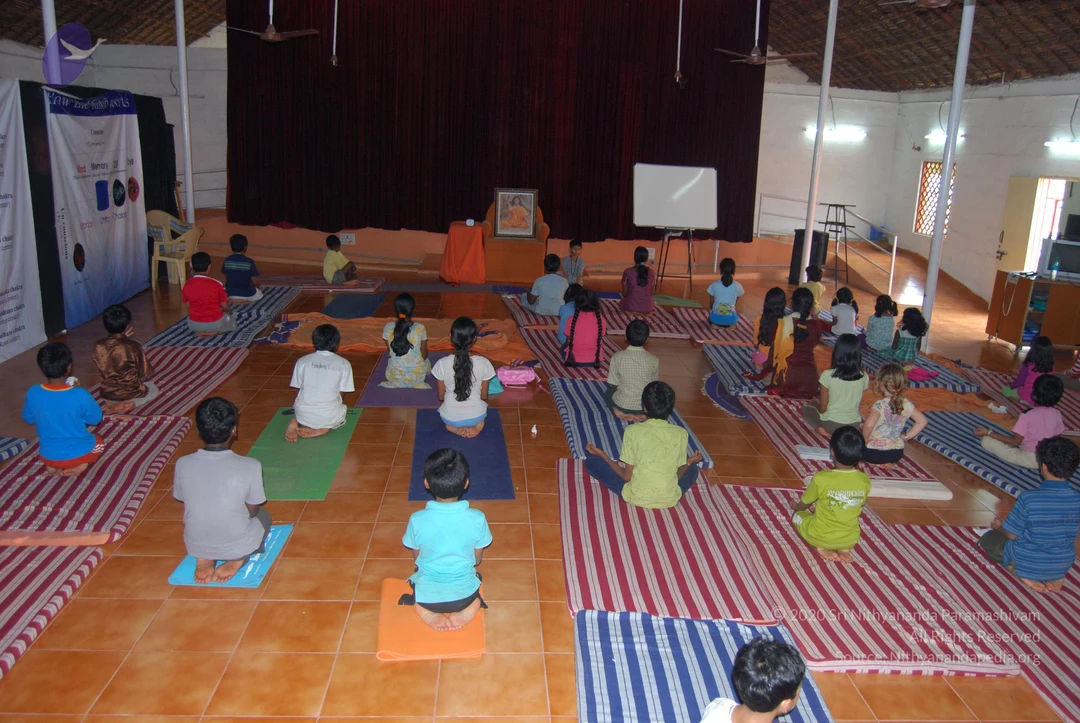
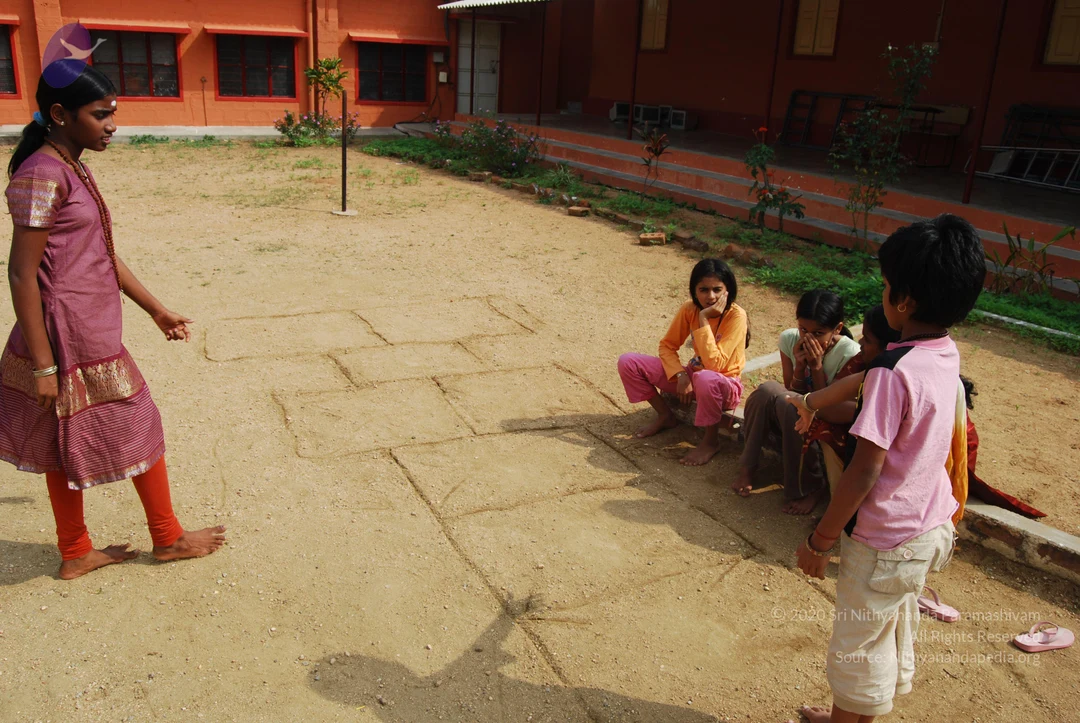
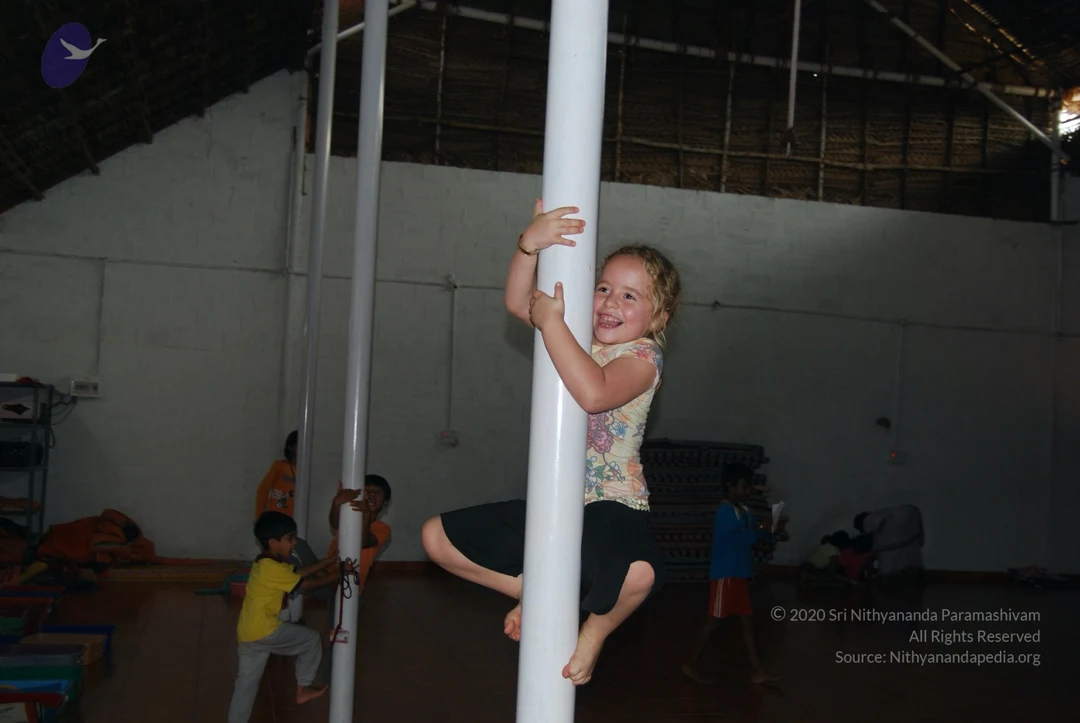
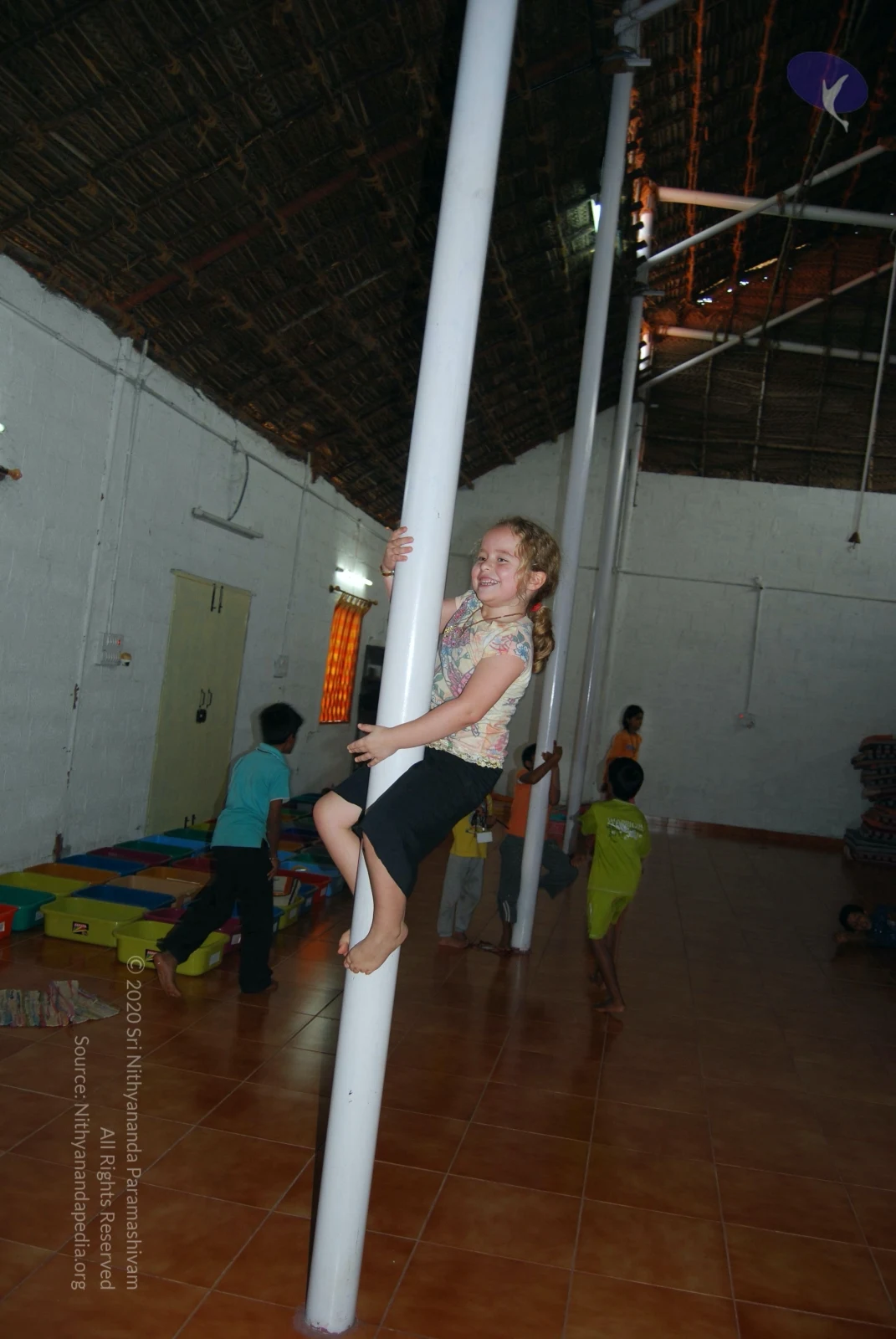
4-En-Genius-Children

Photos from this day

View all 675 photos

Panchatapas
77 photosSource gallery
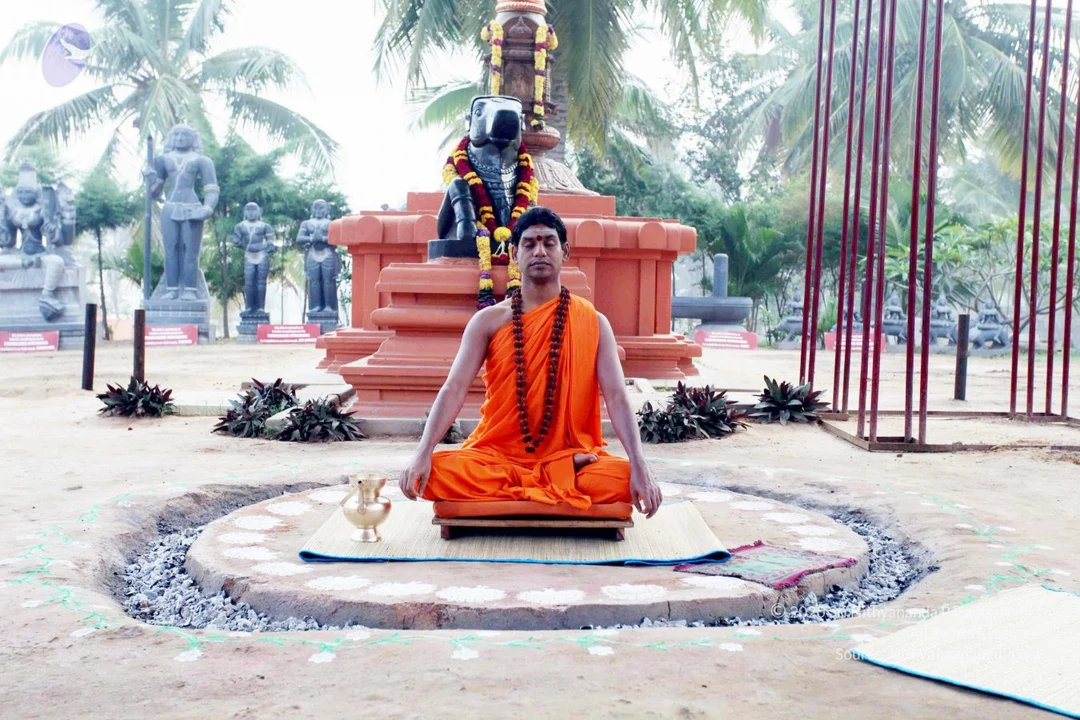
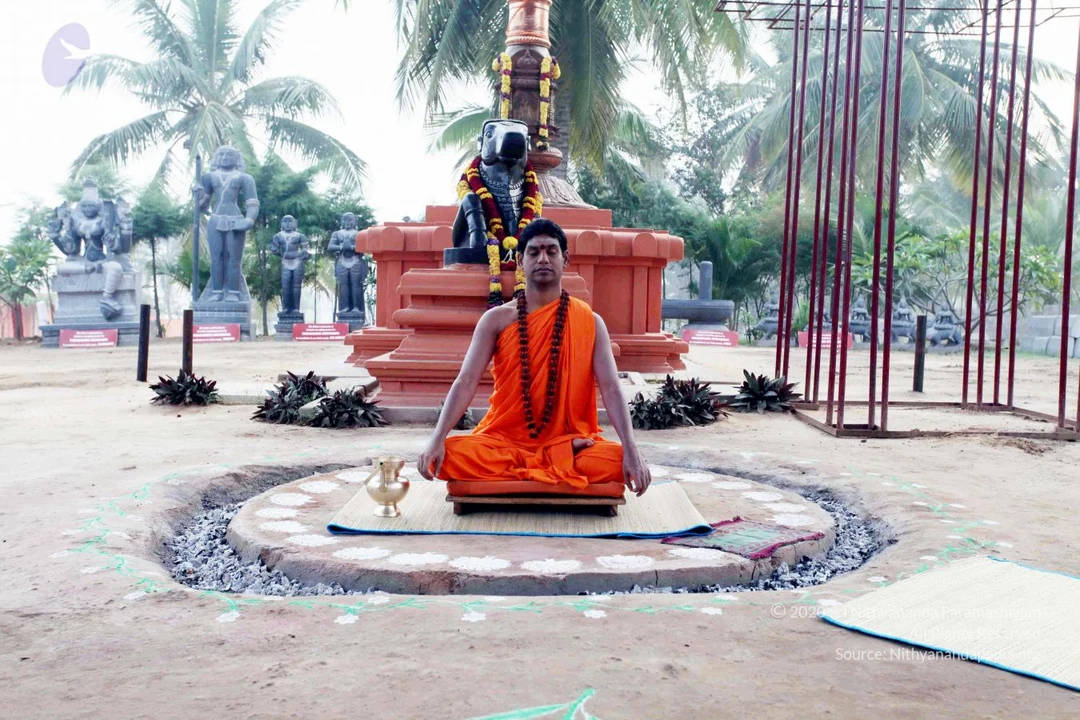
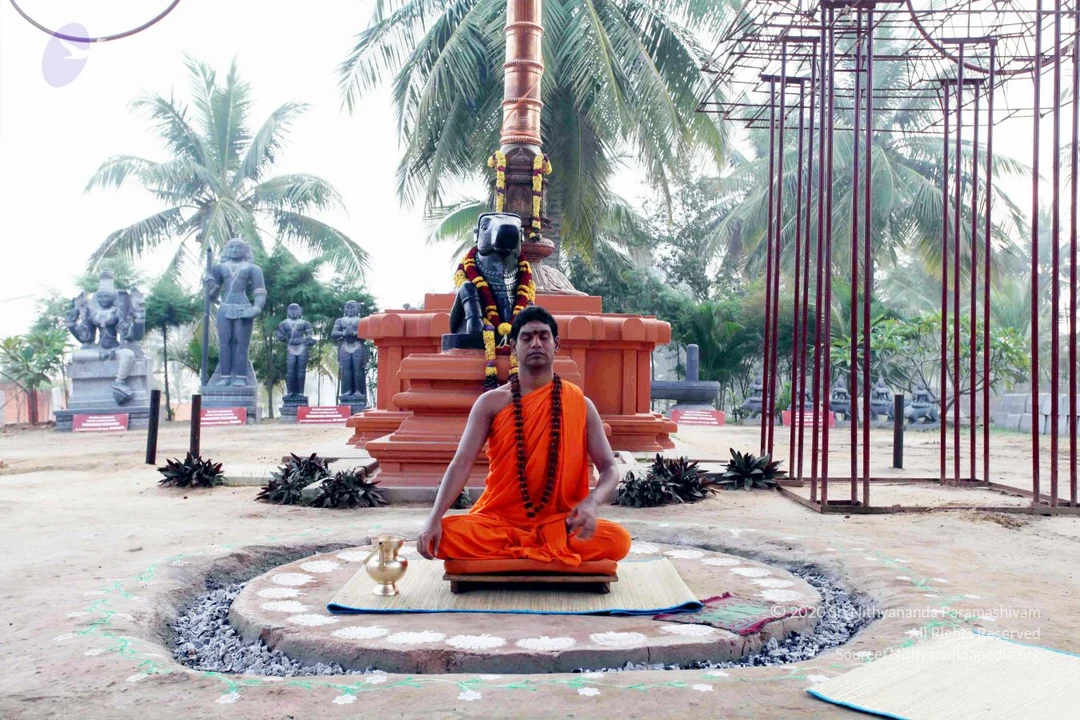
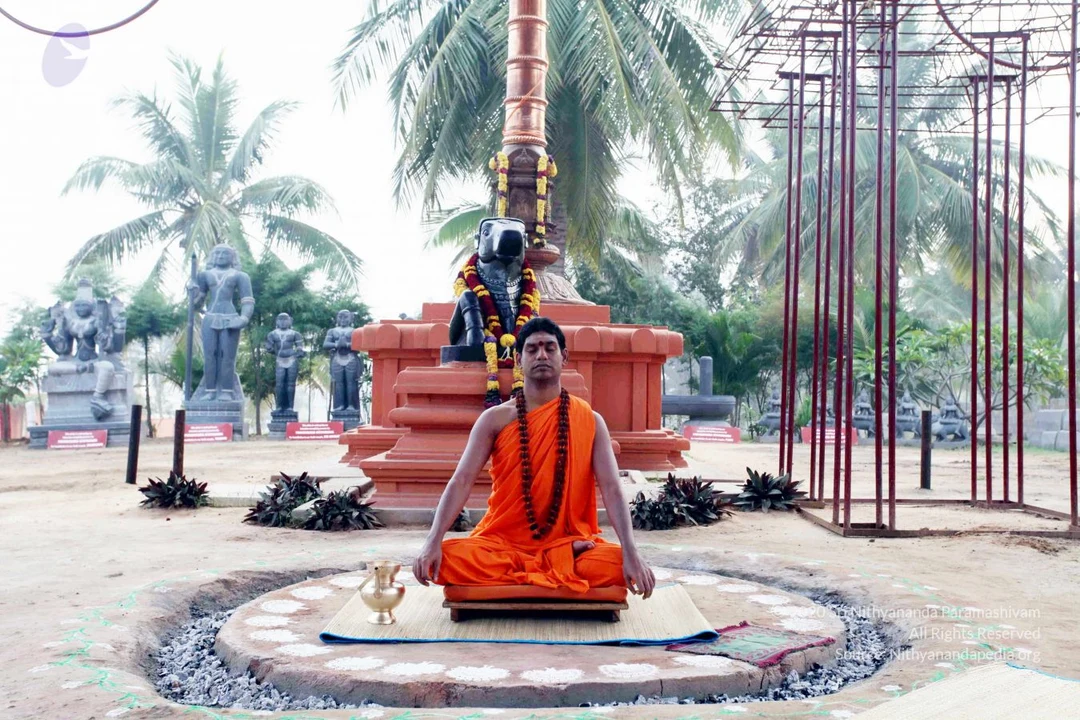
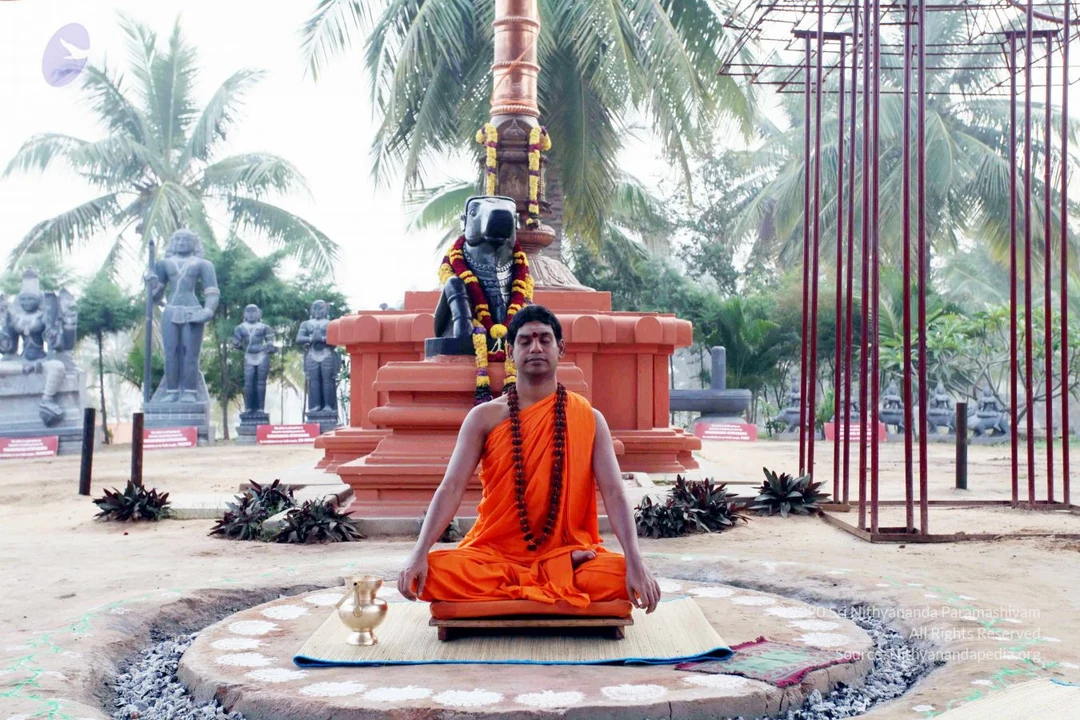
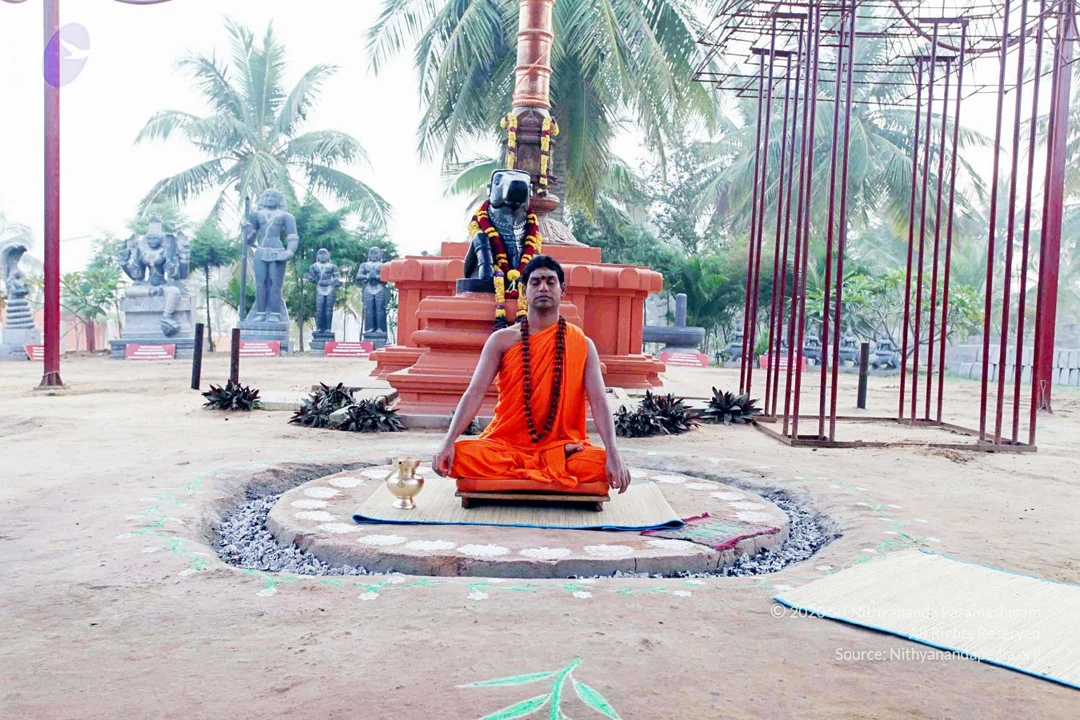
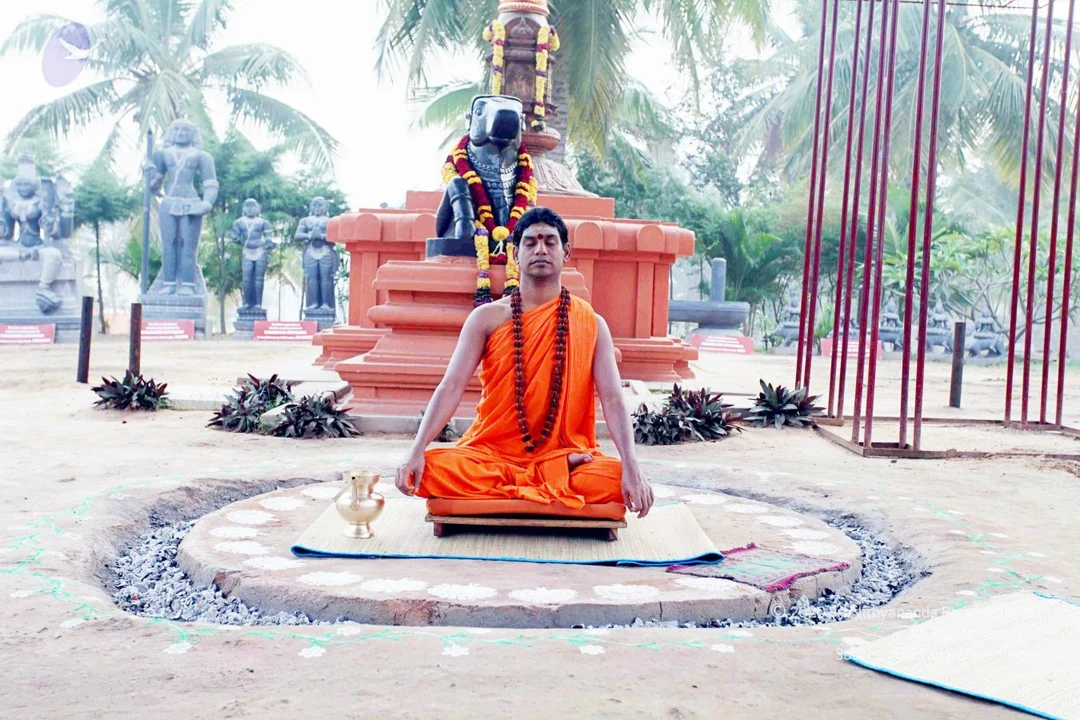
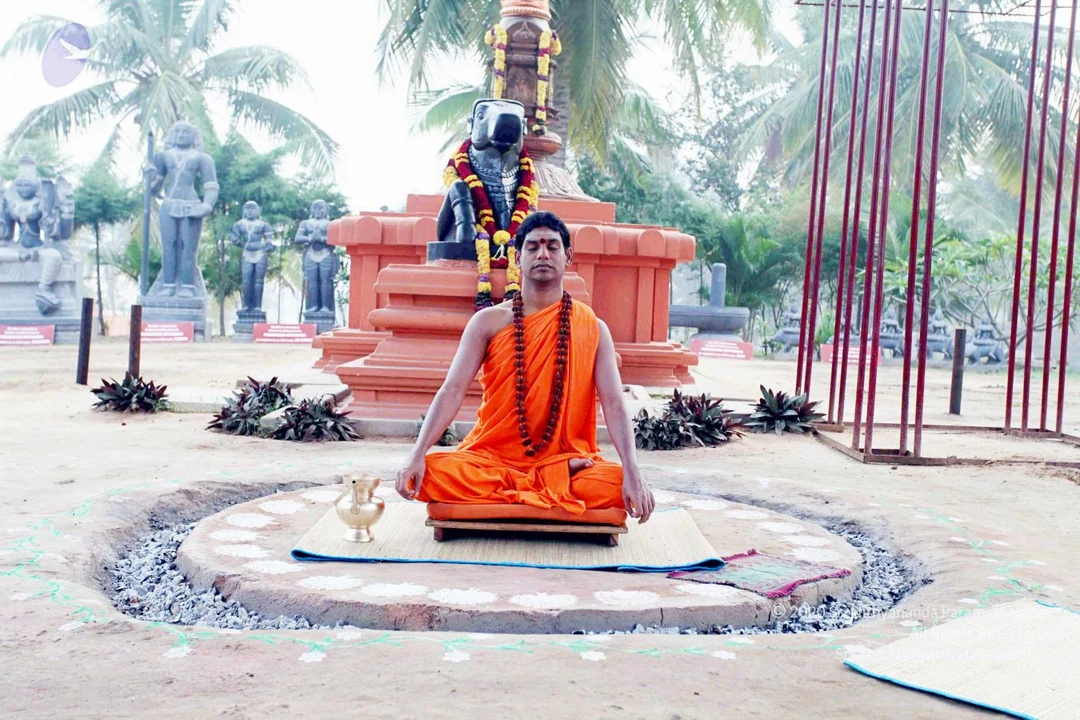
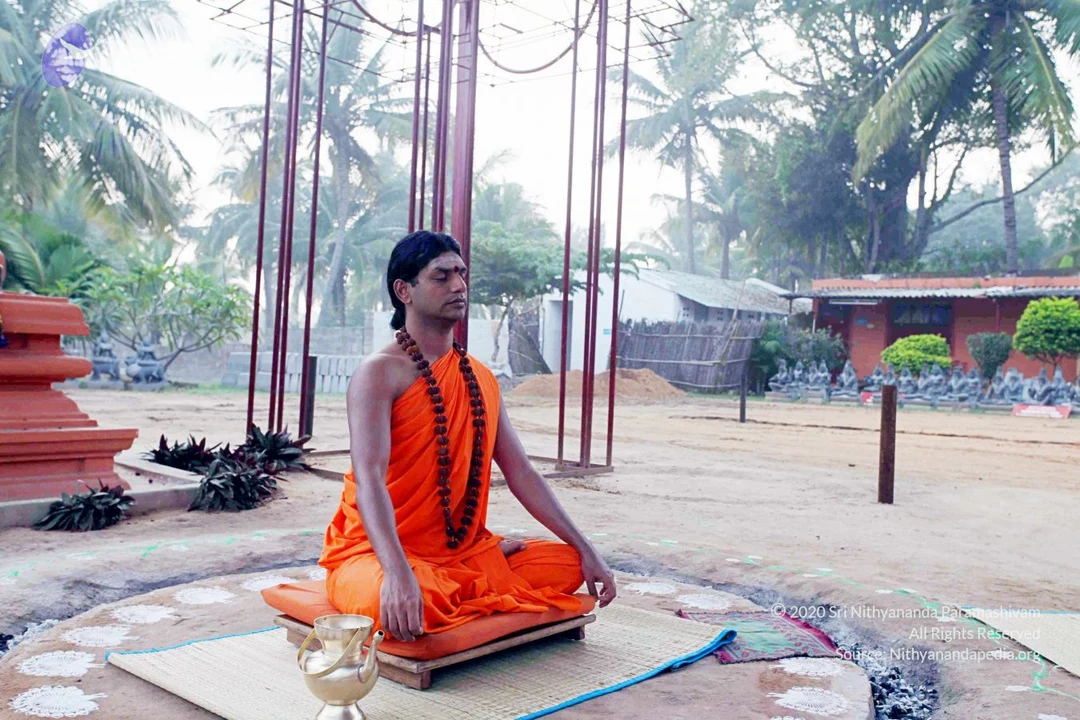
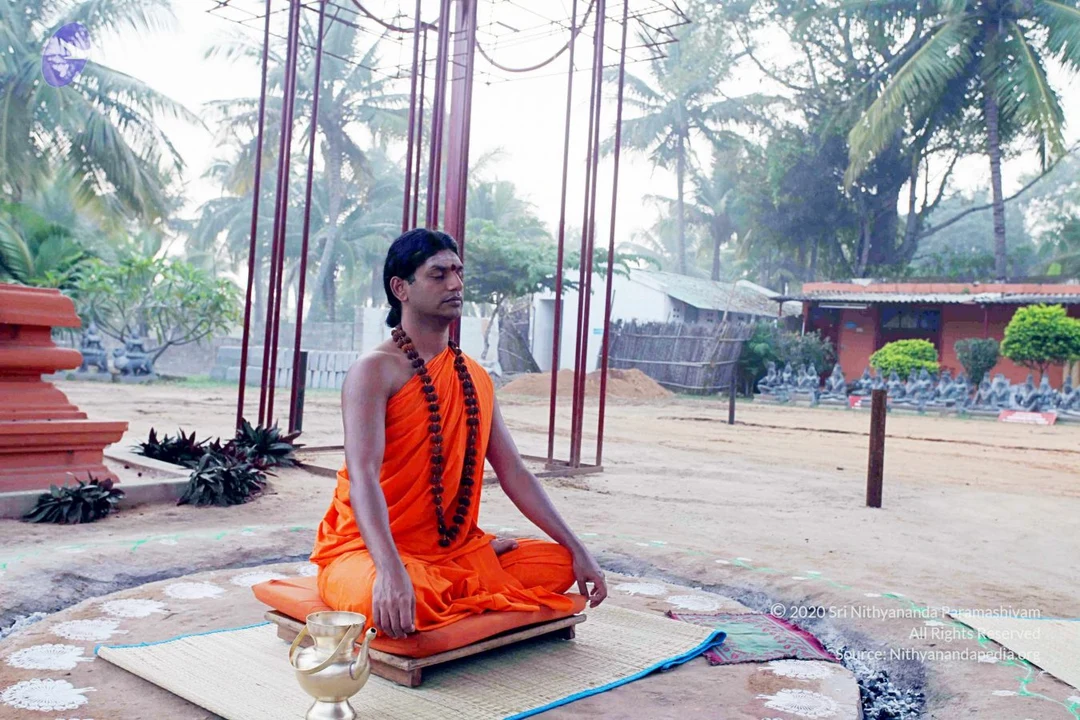
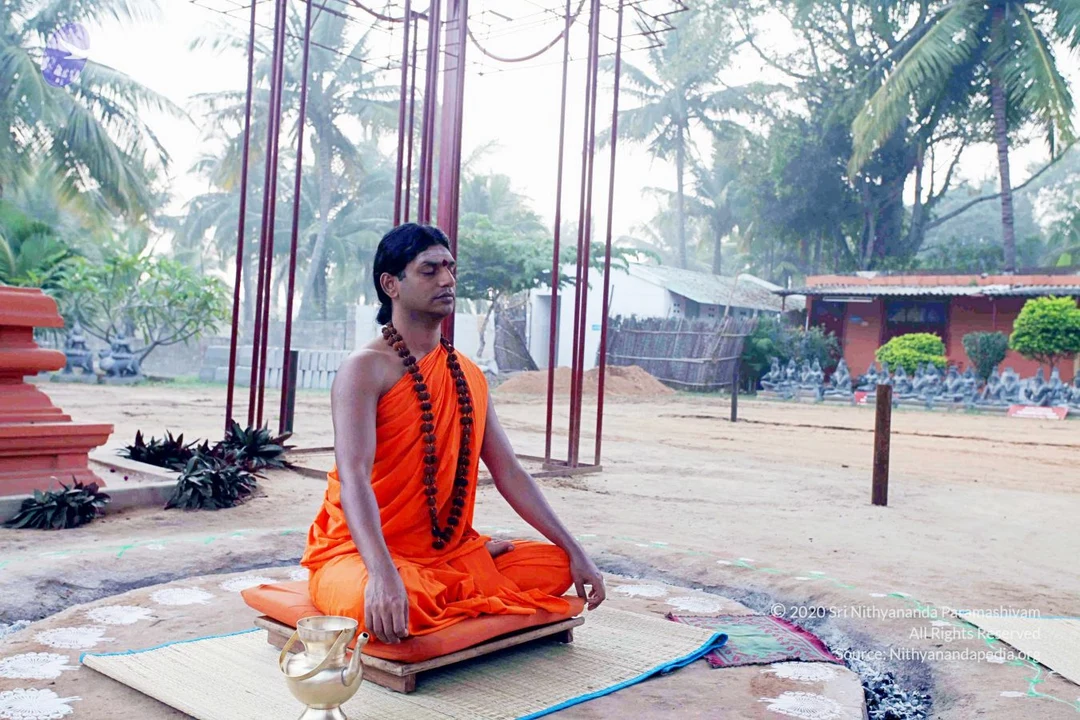
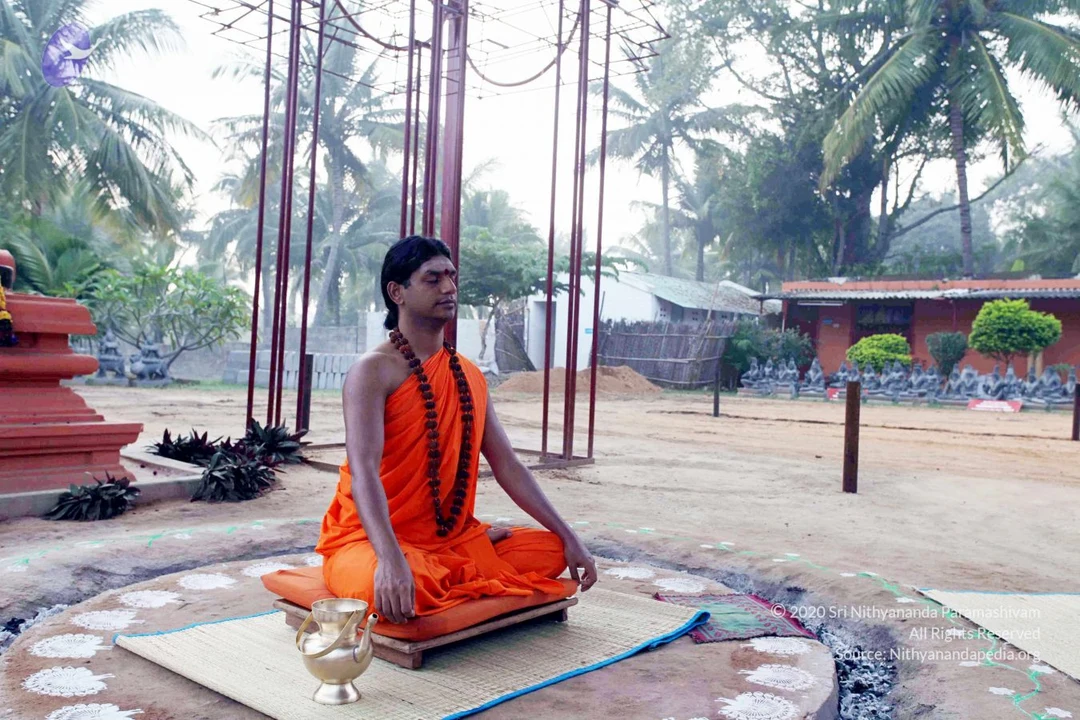
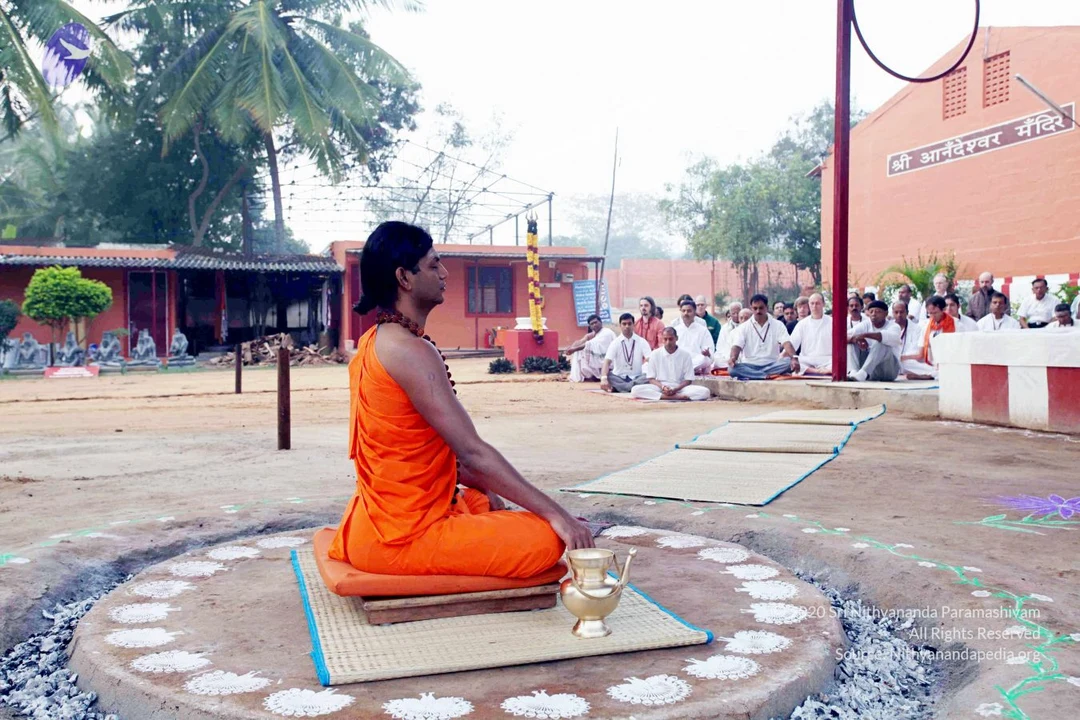
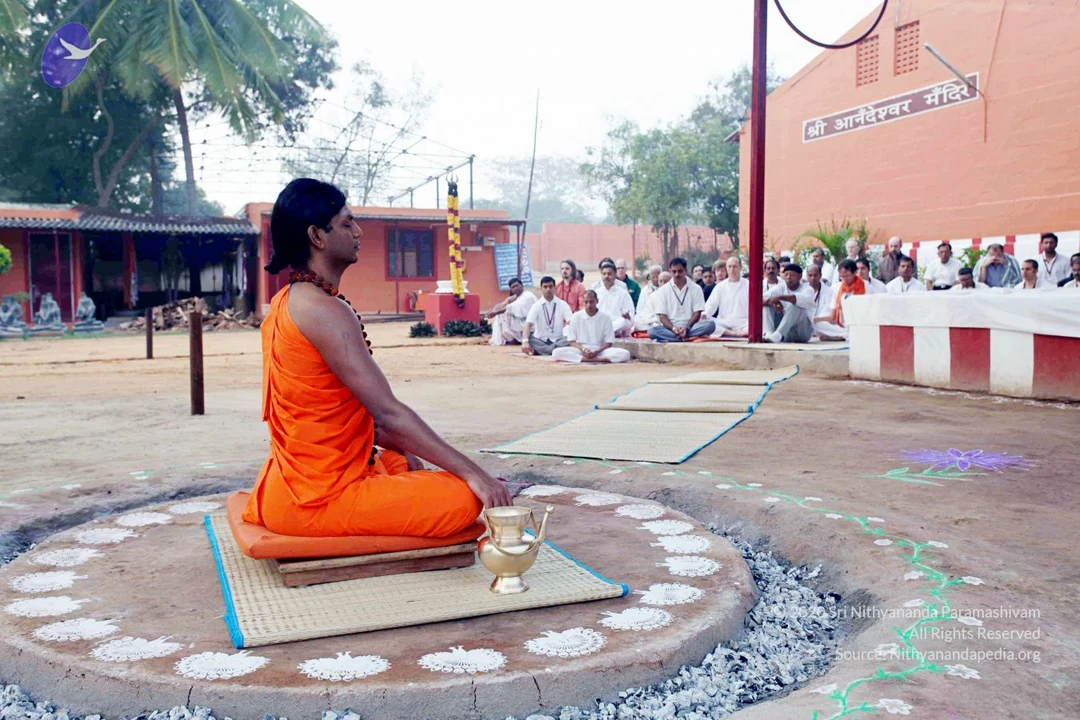
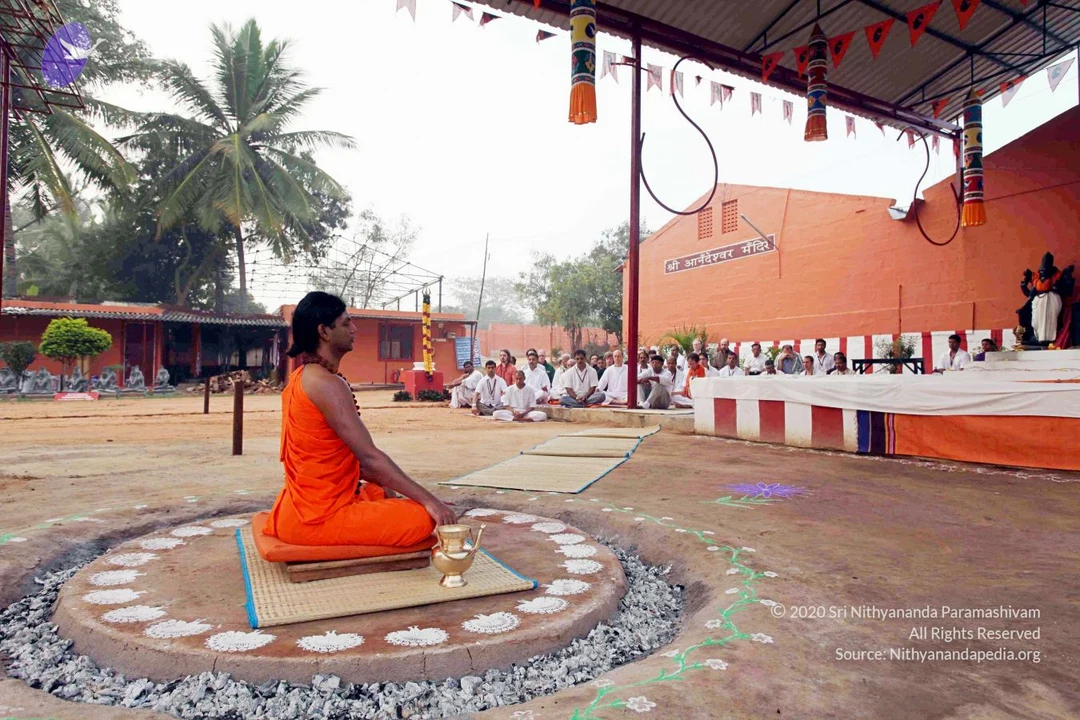
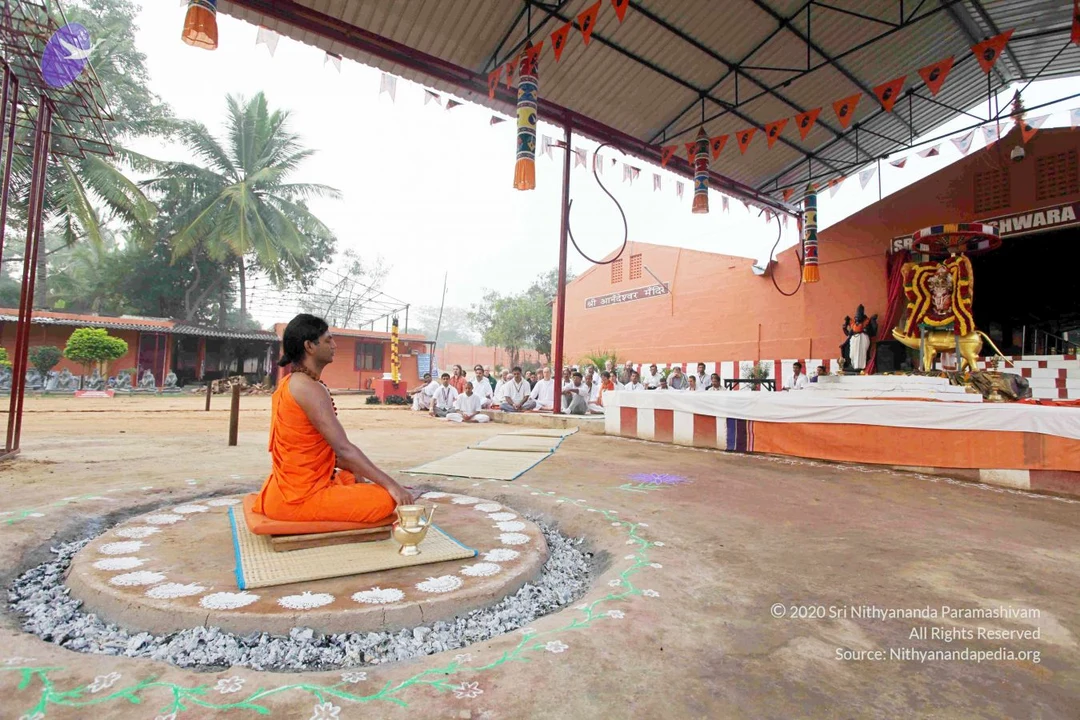
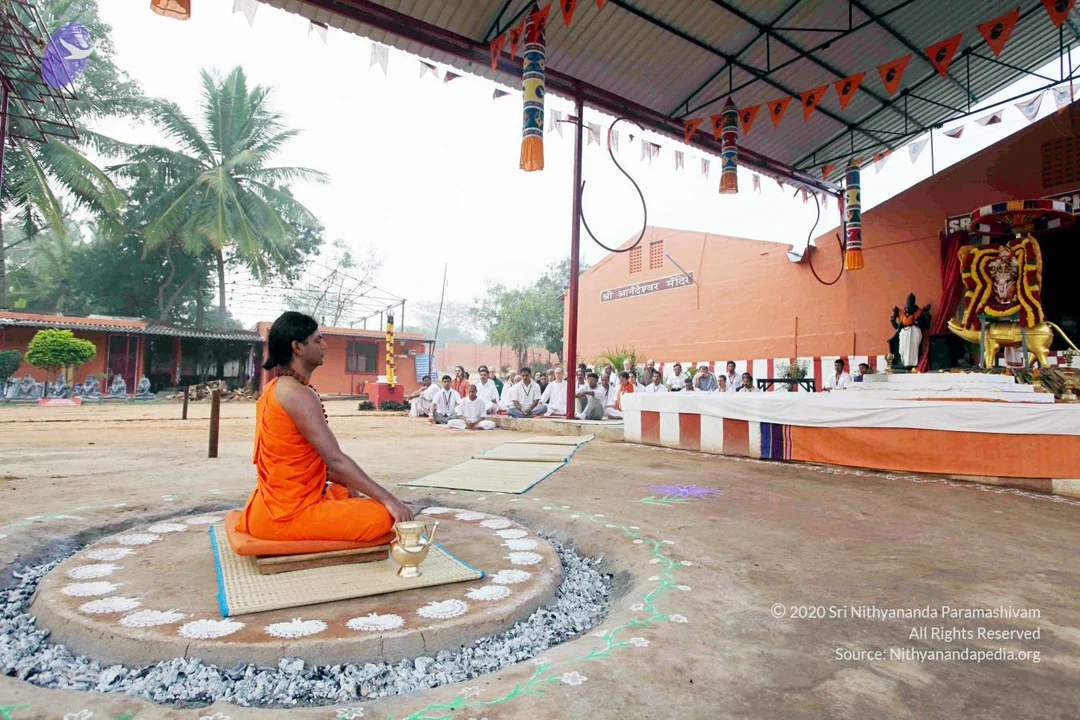
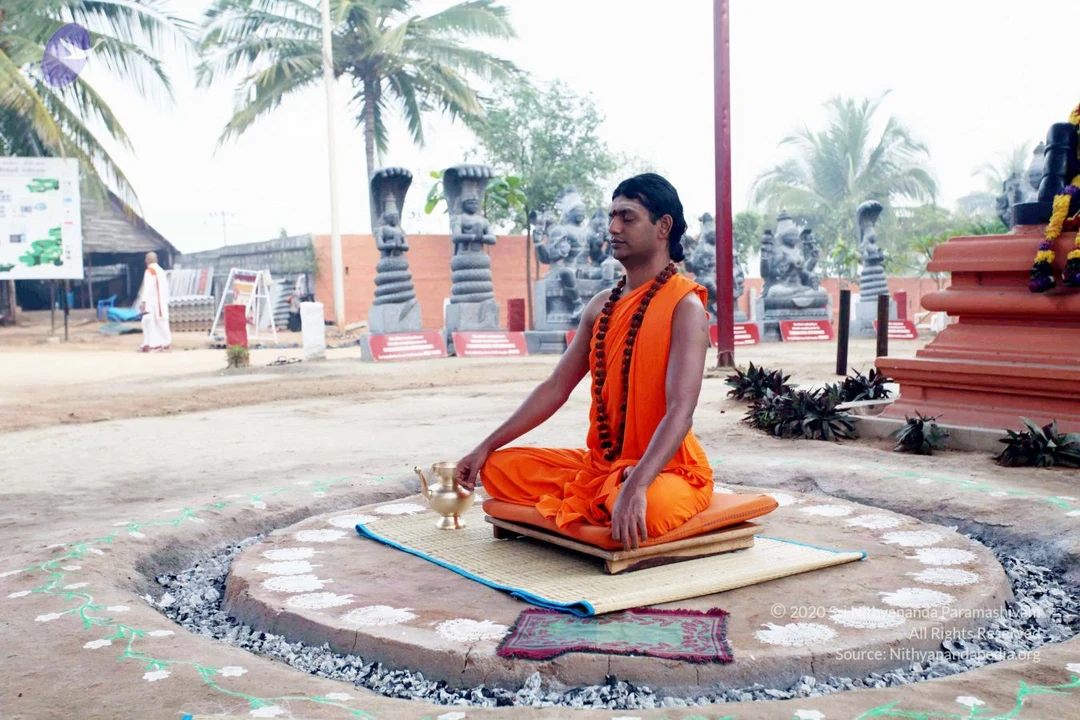
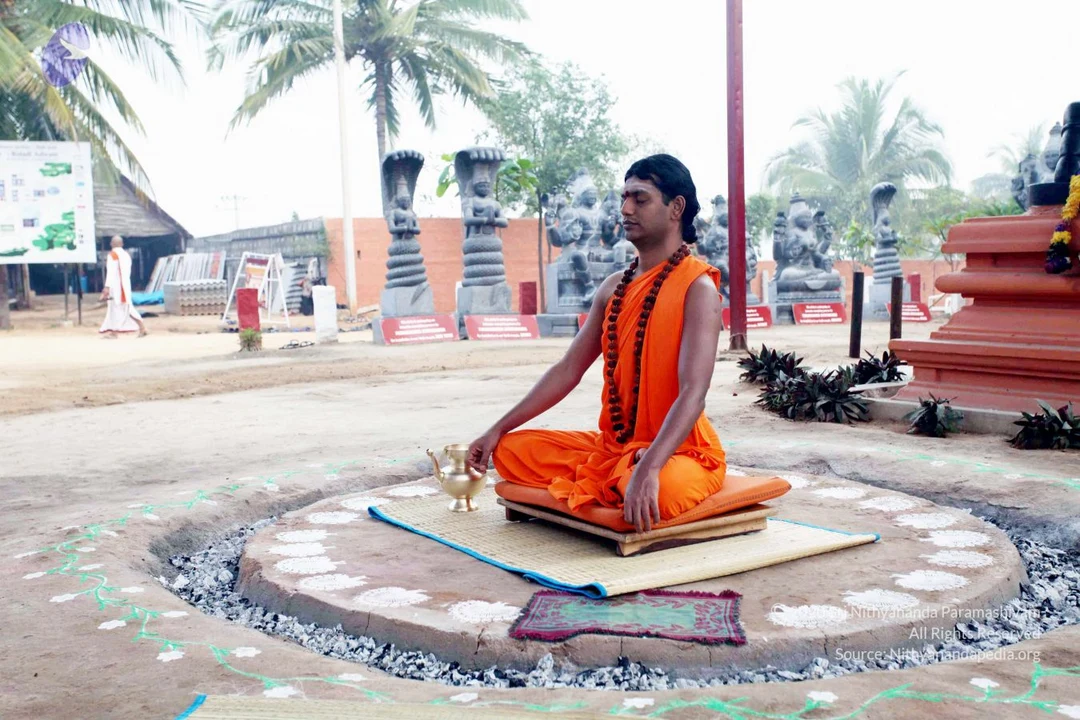
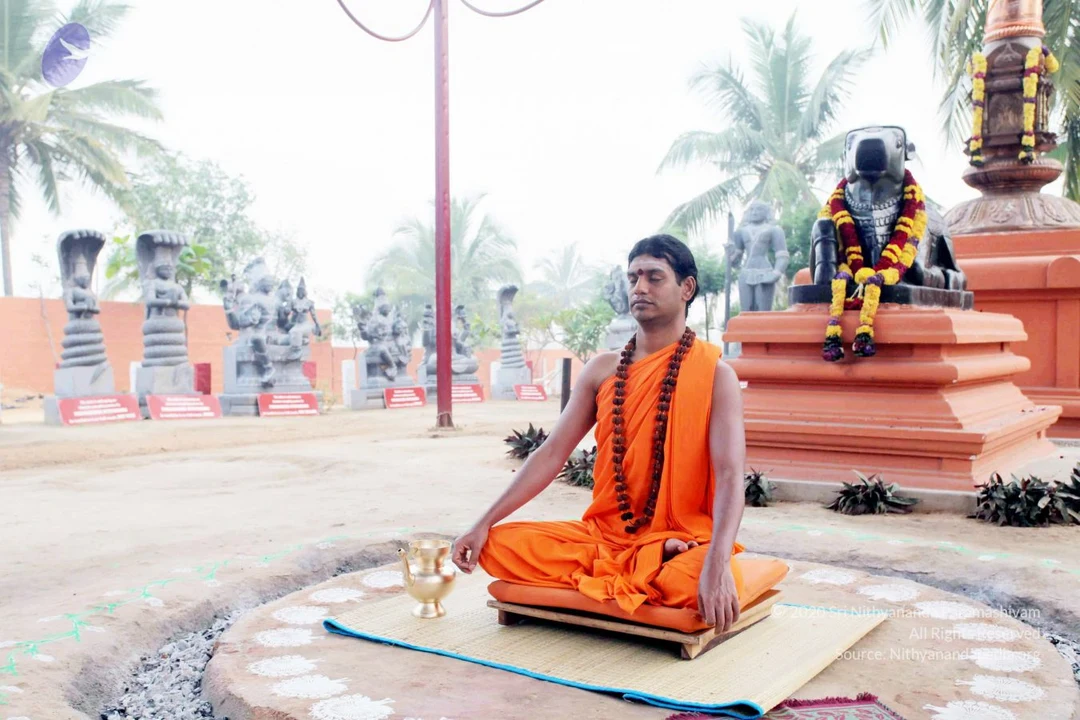
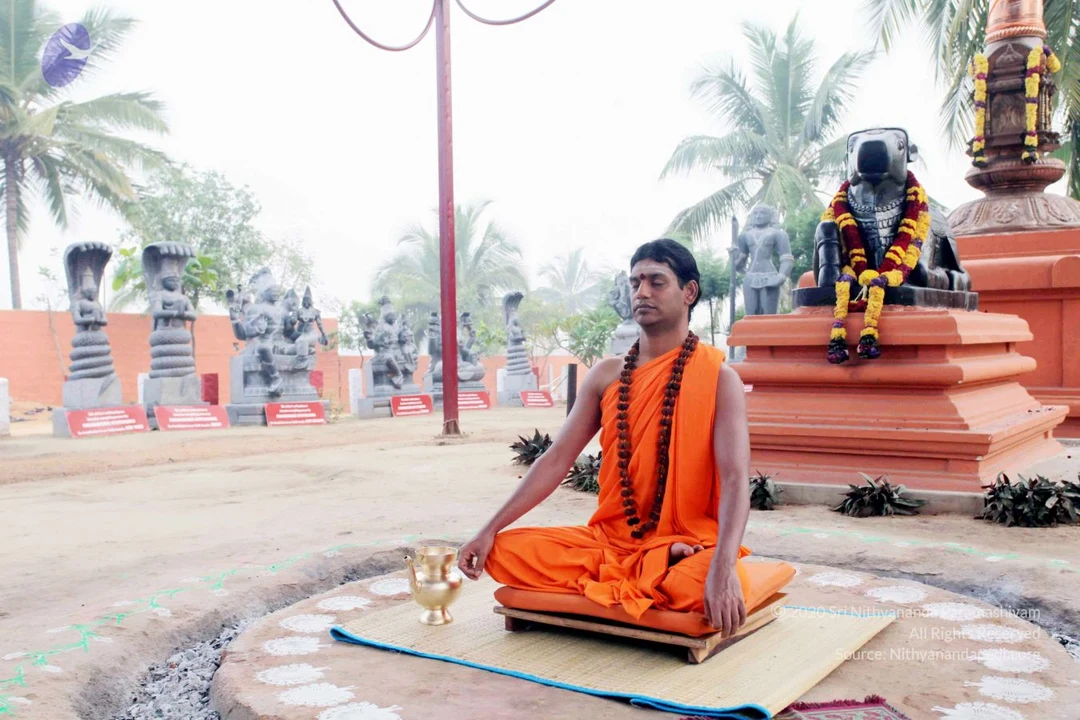
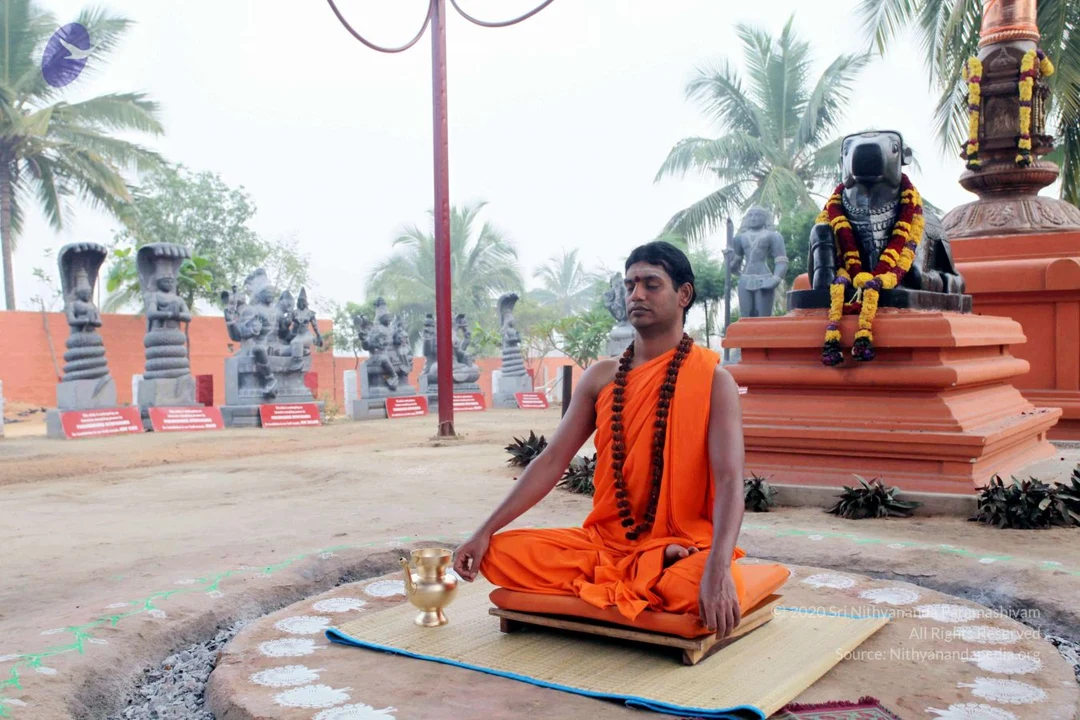
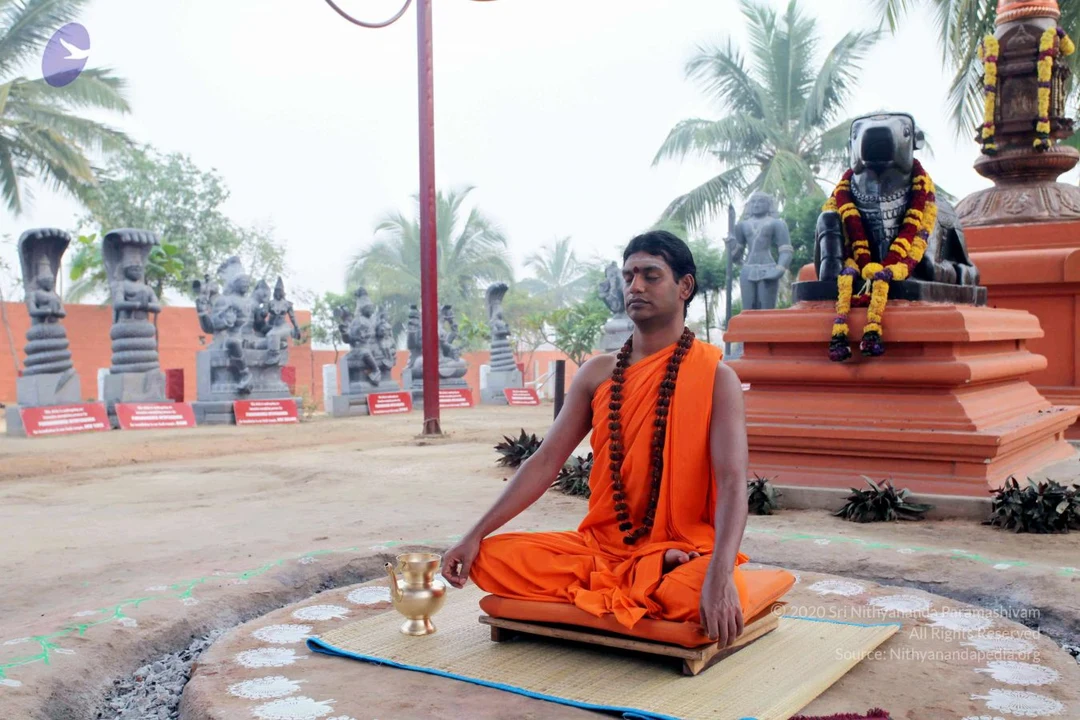
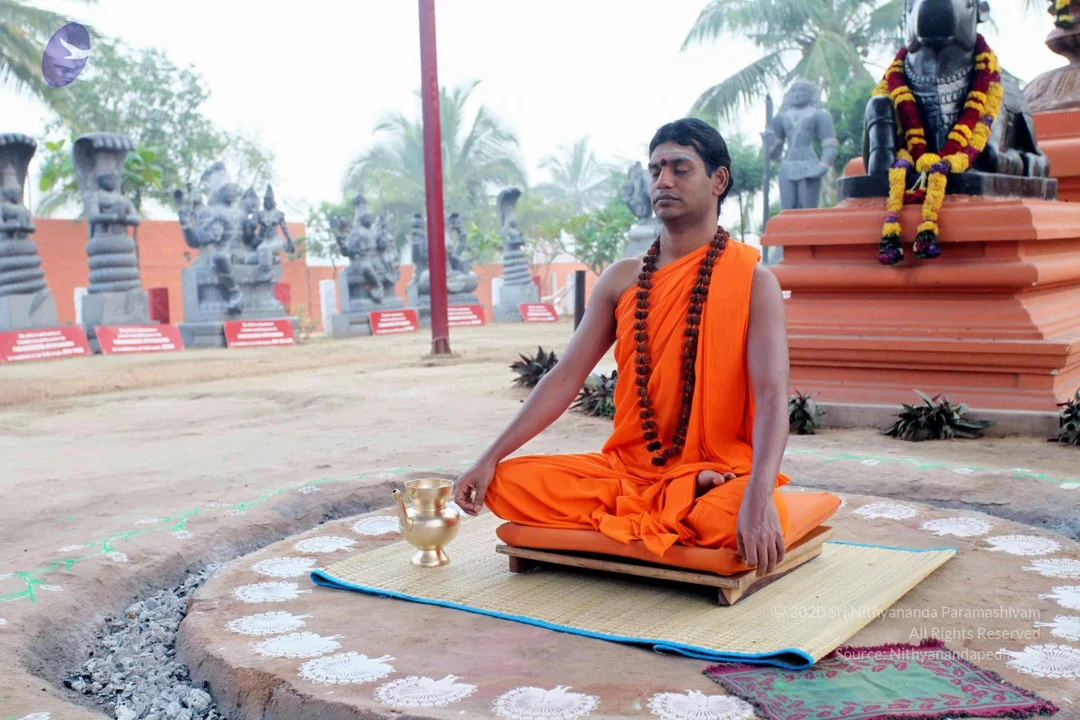
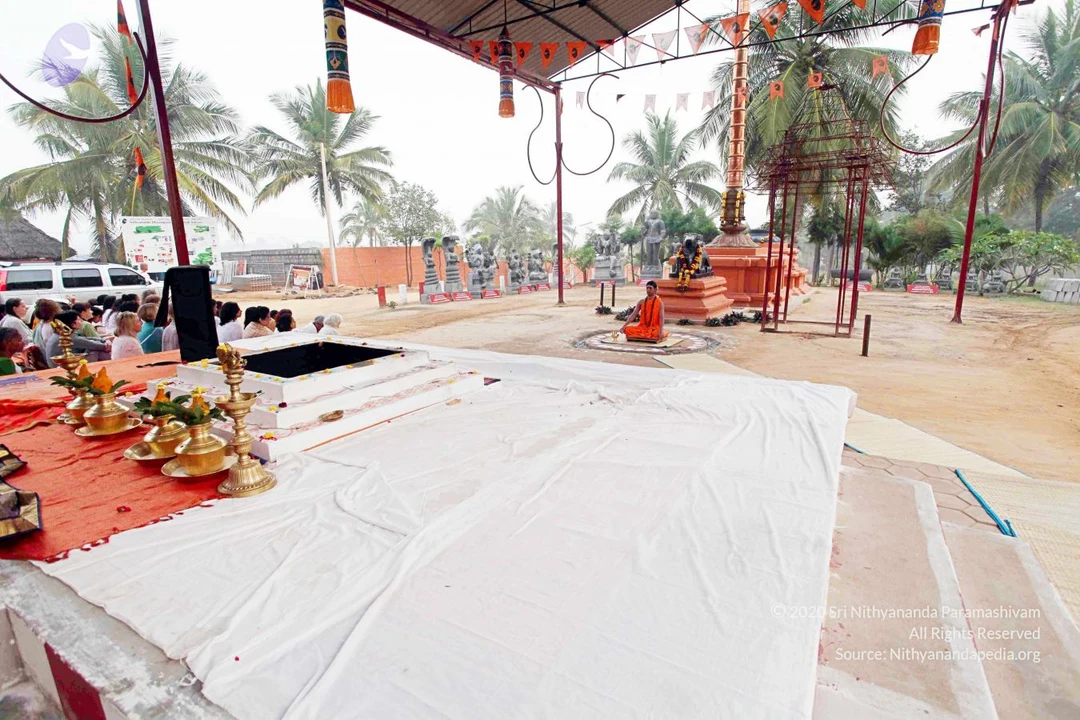
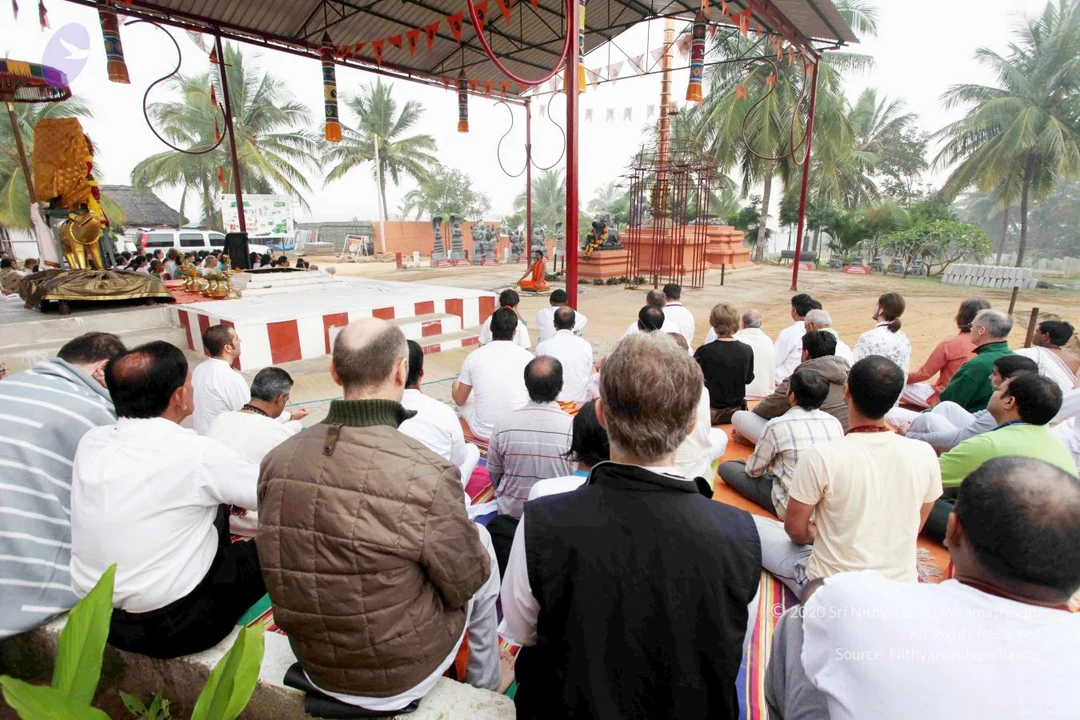
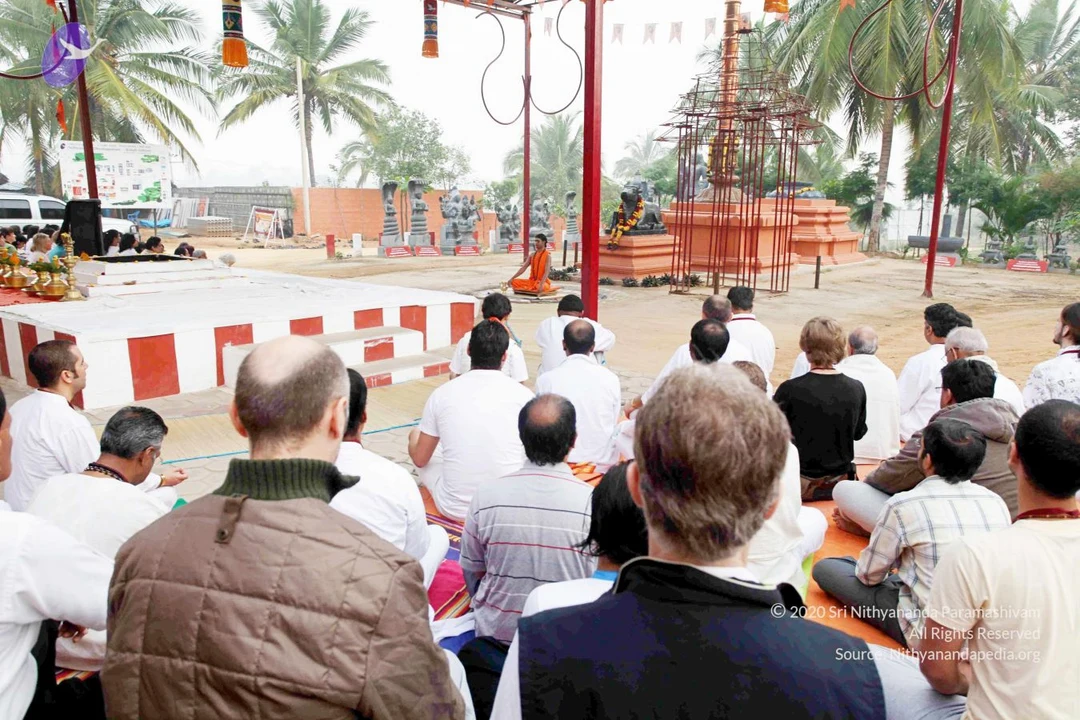
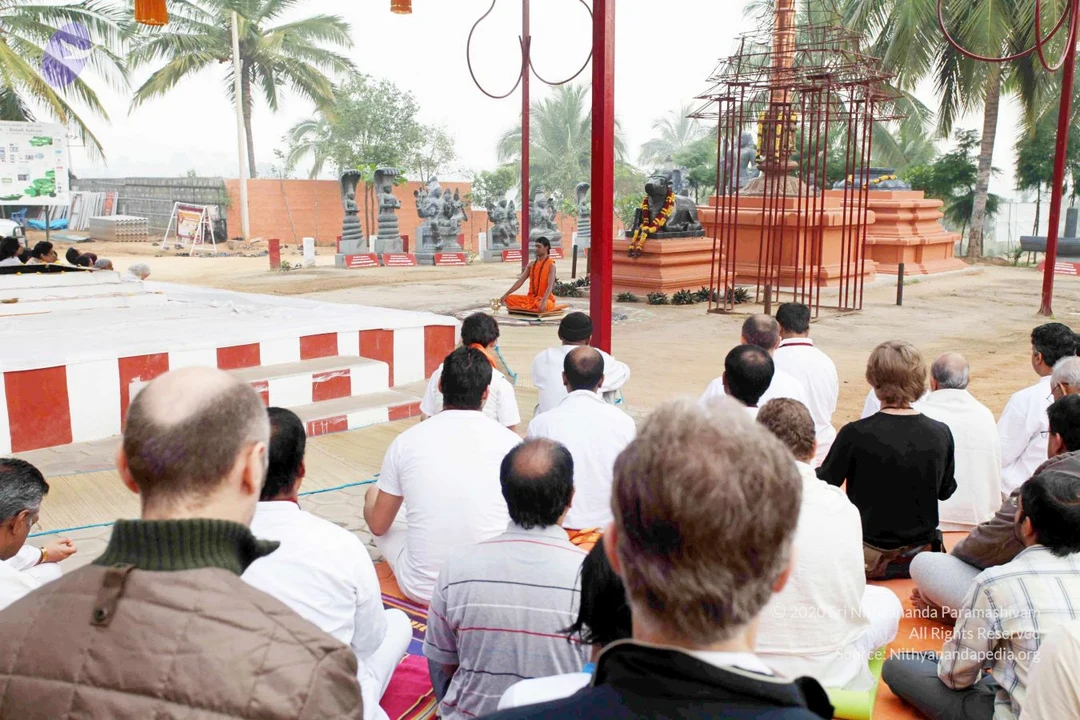
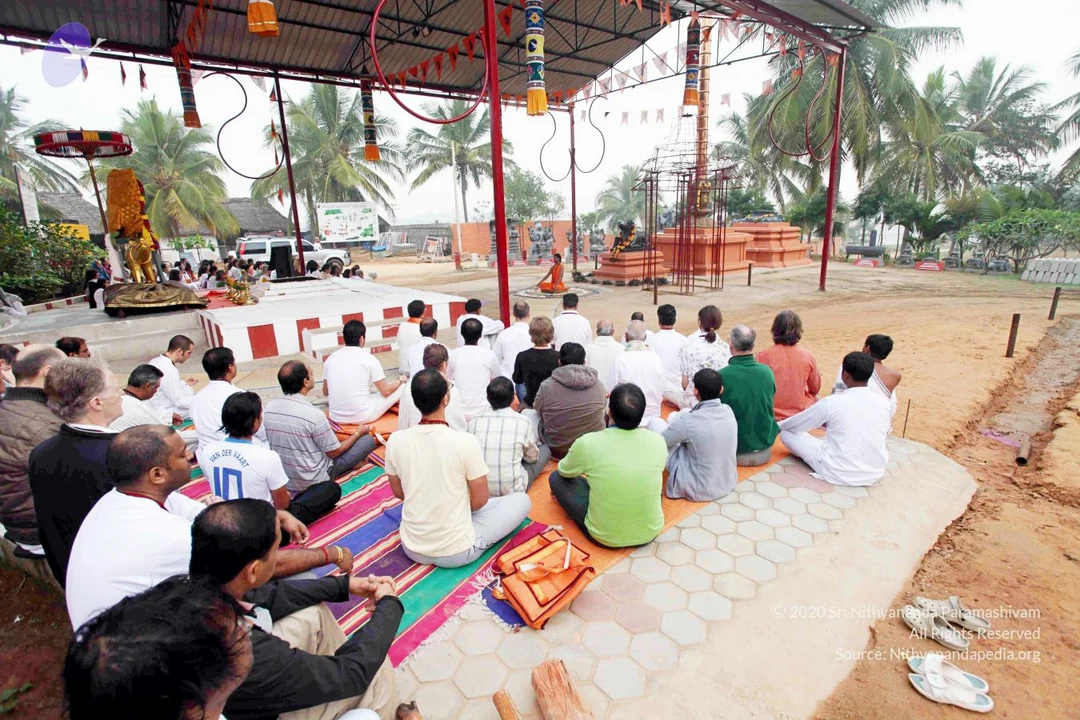
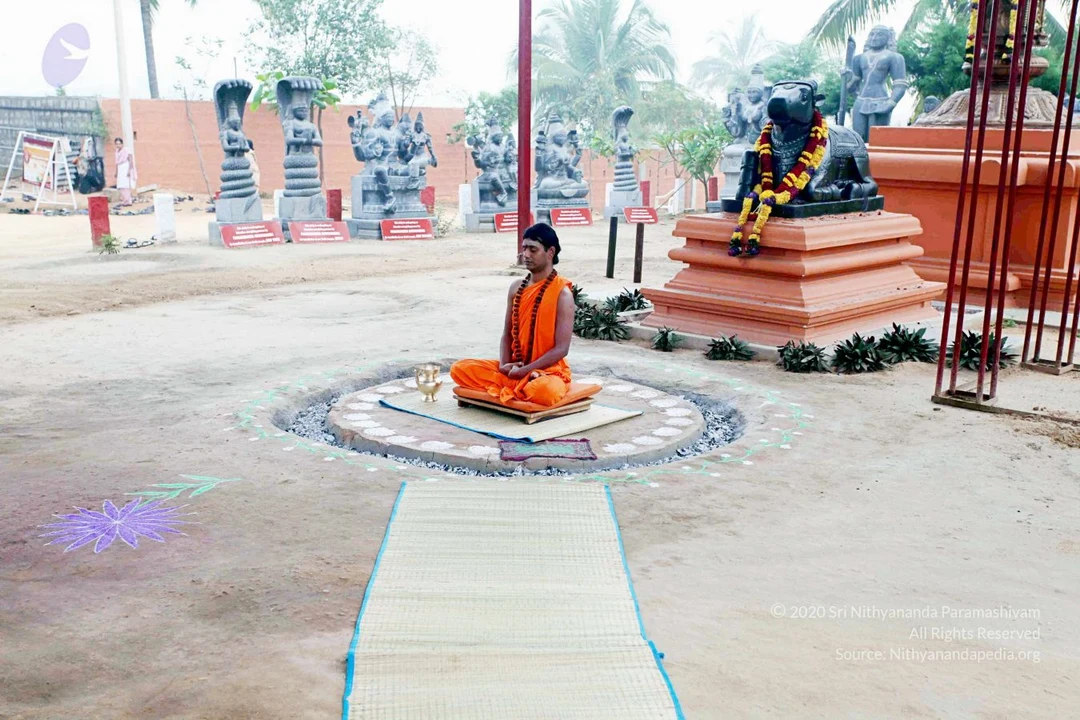
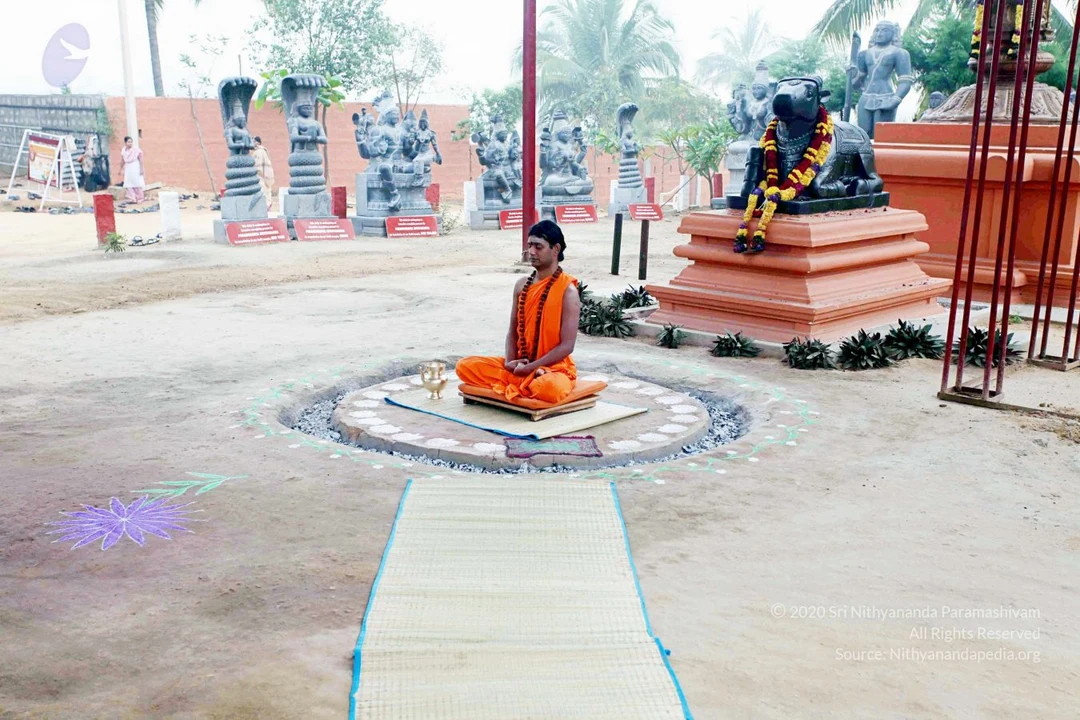
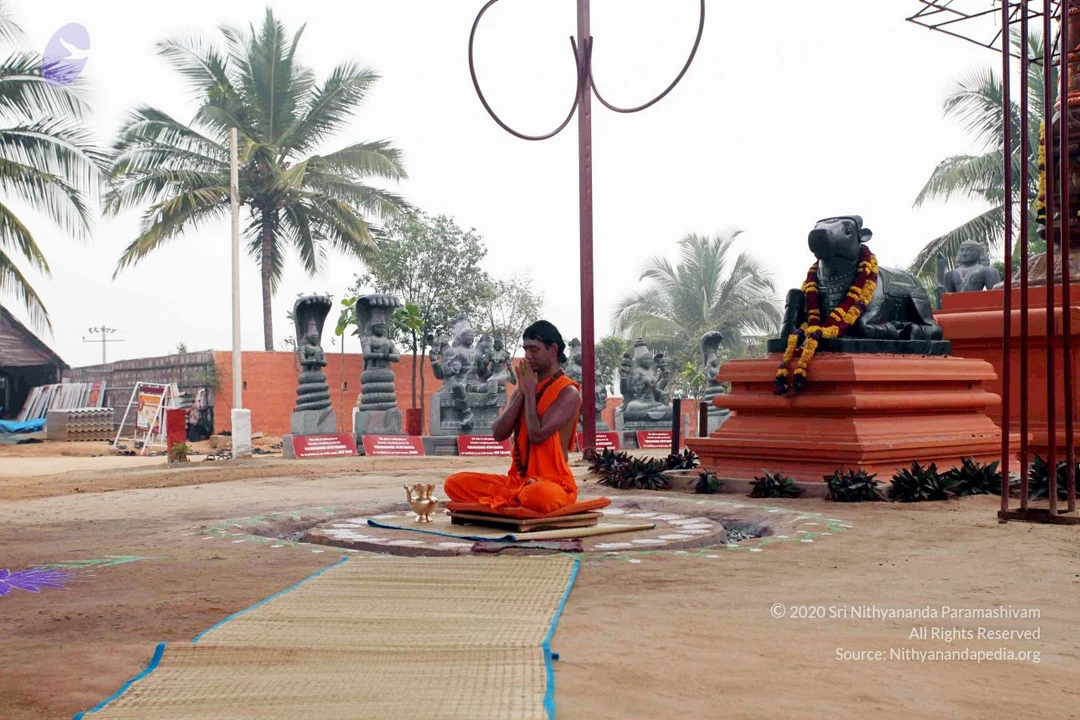
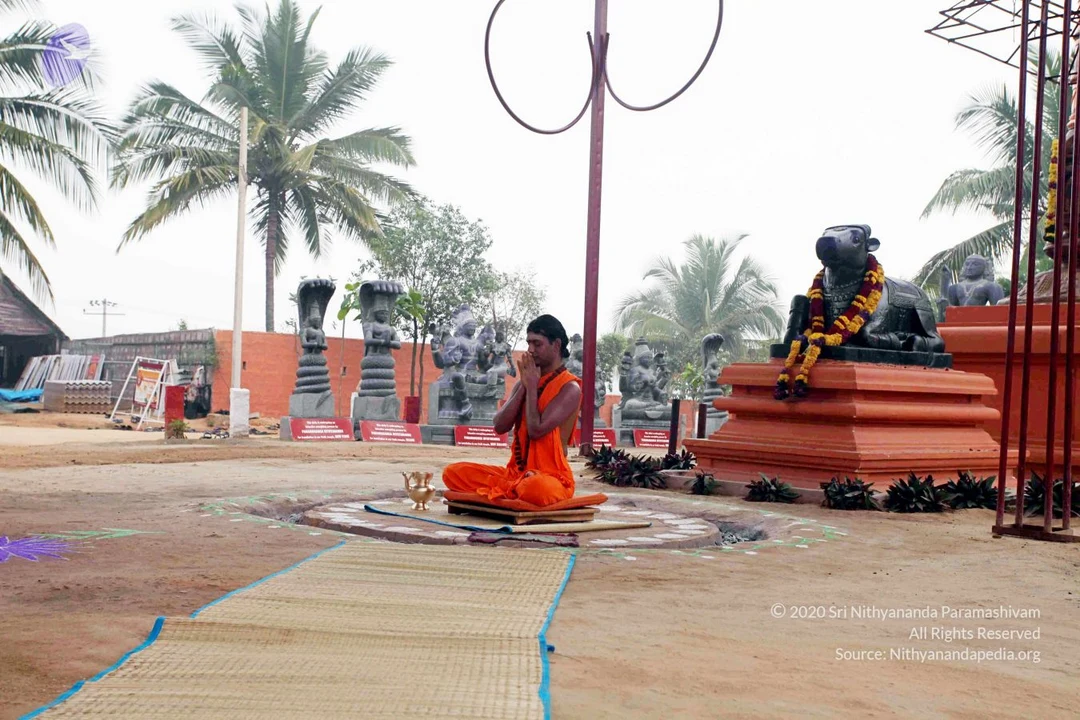
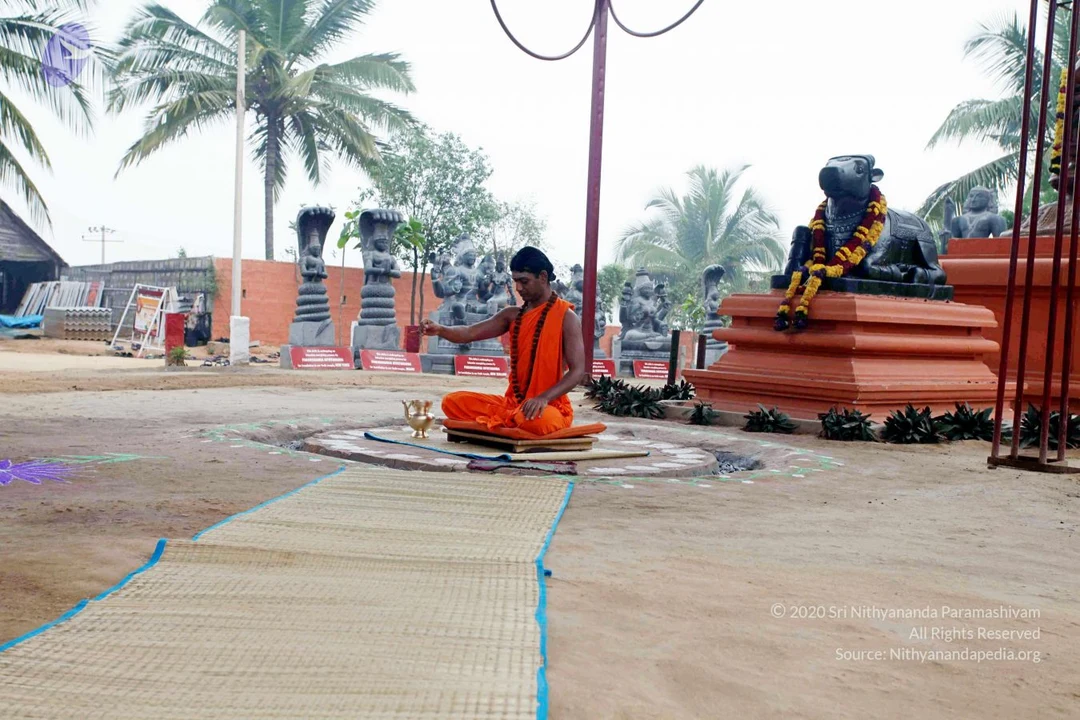
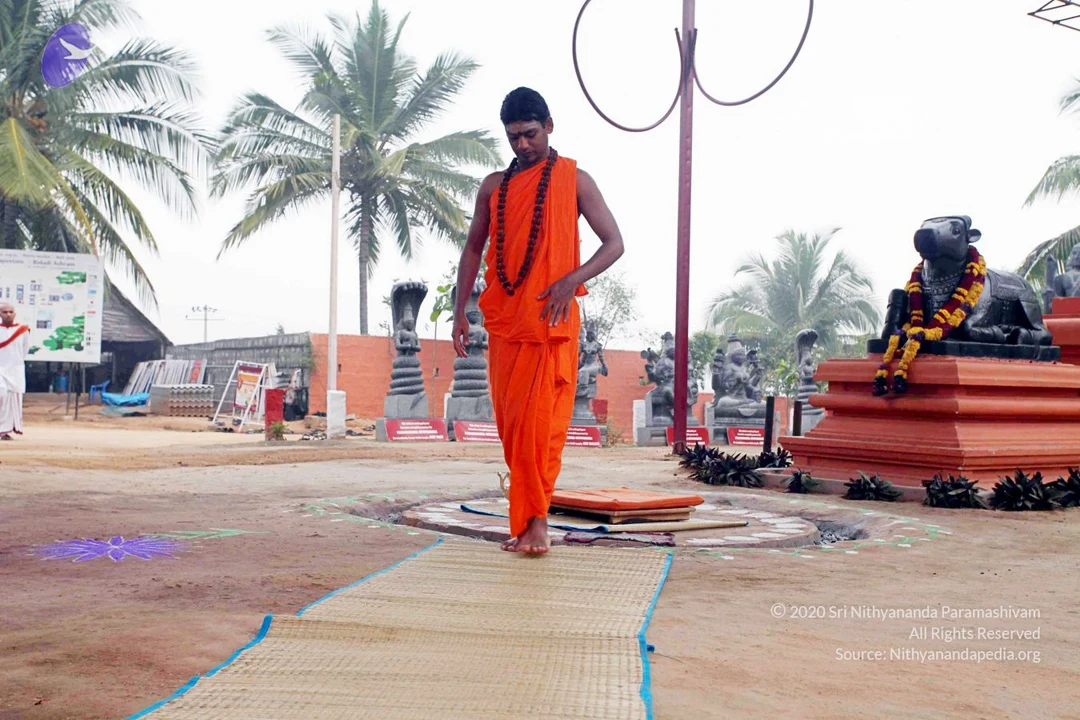
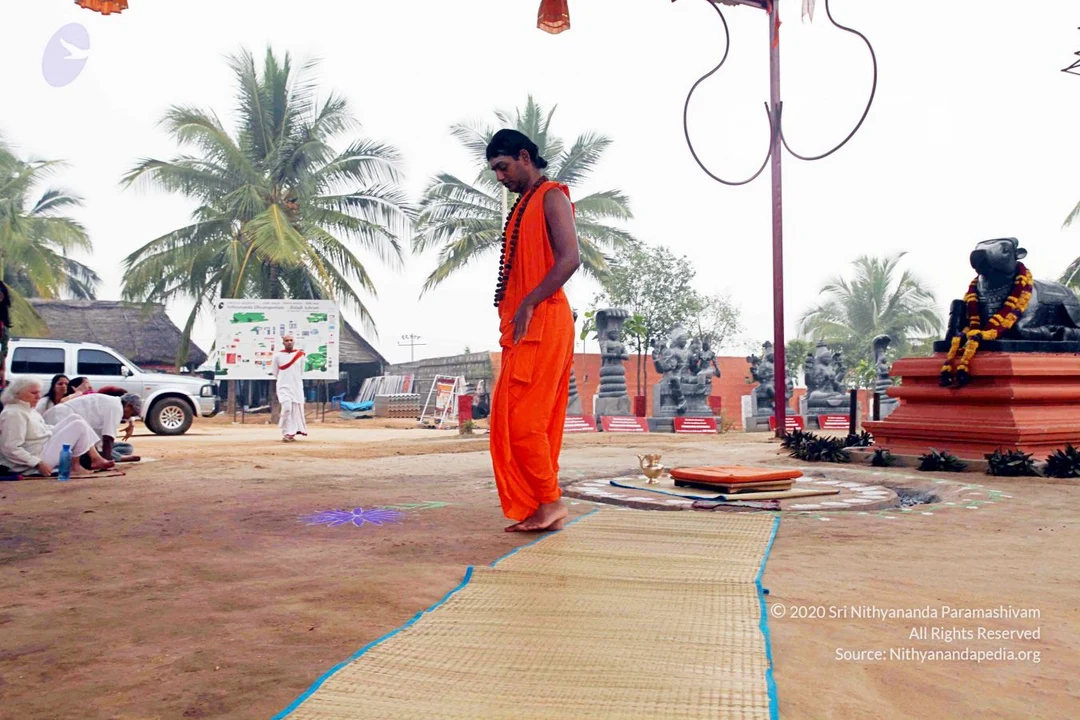
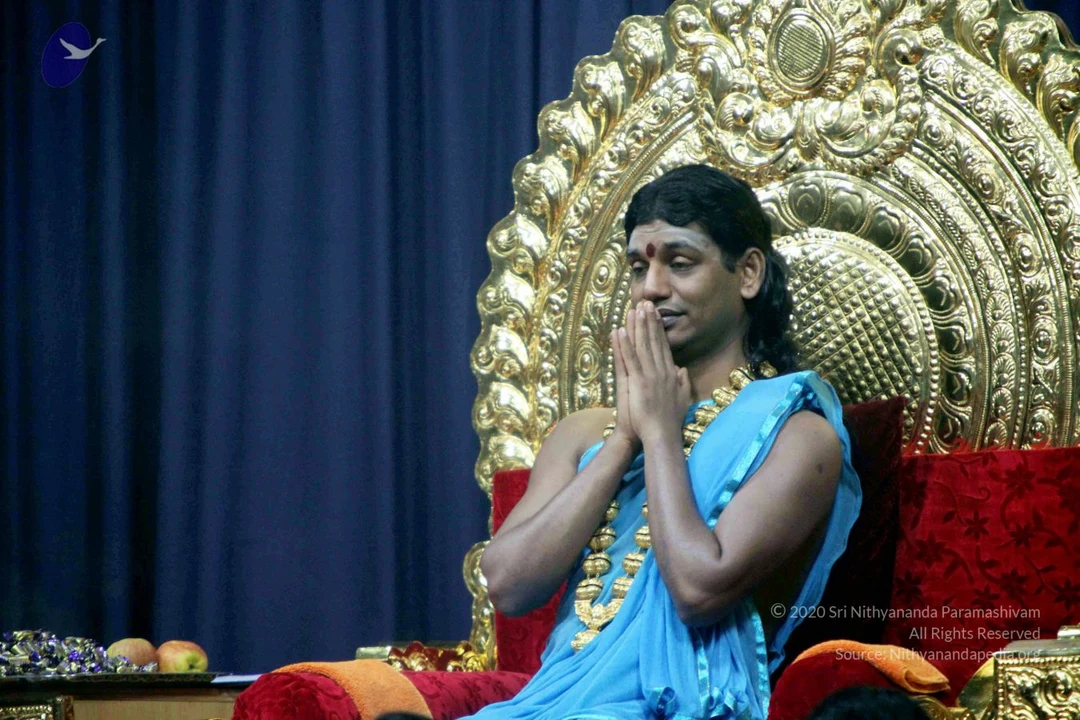
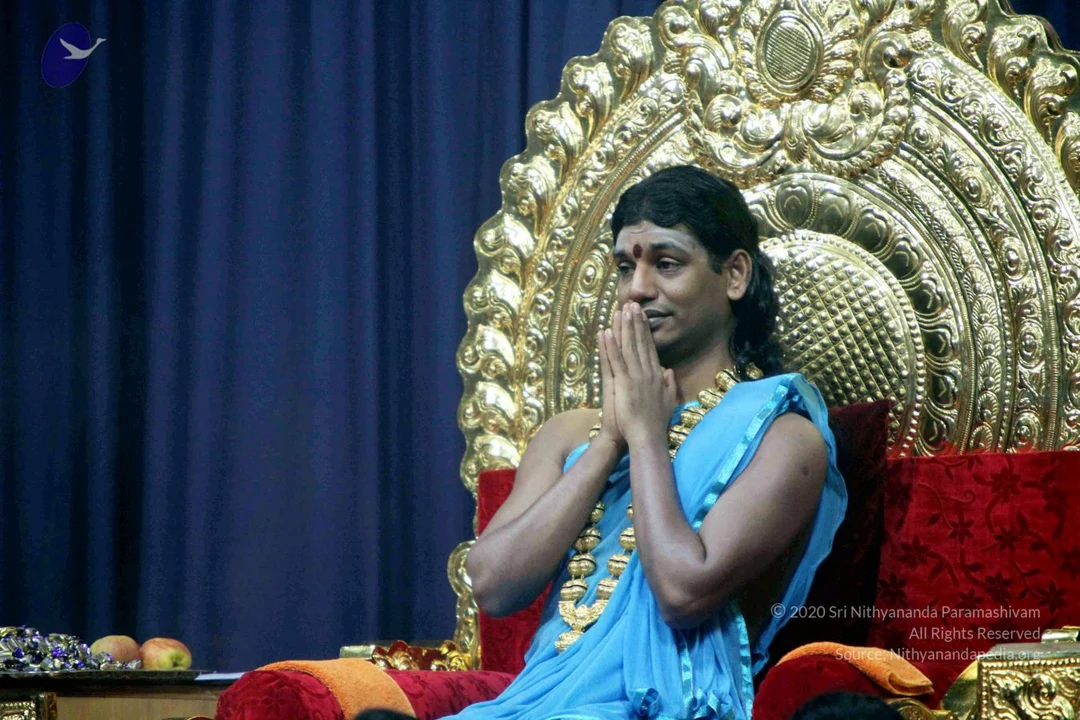
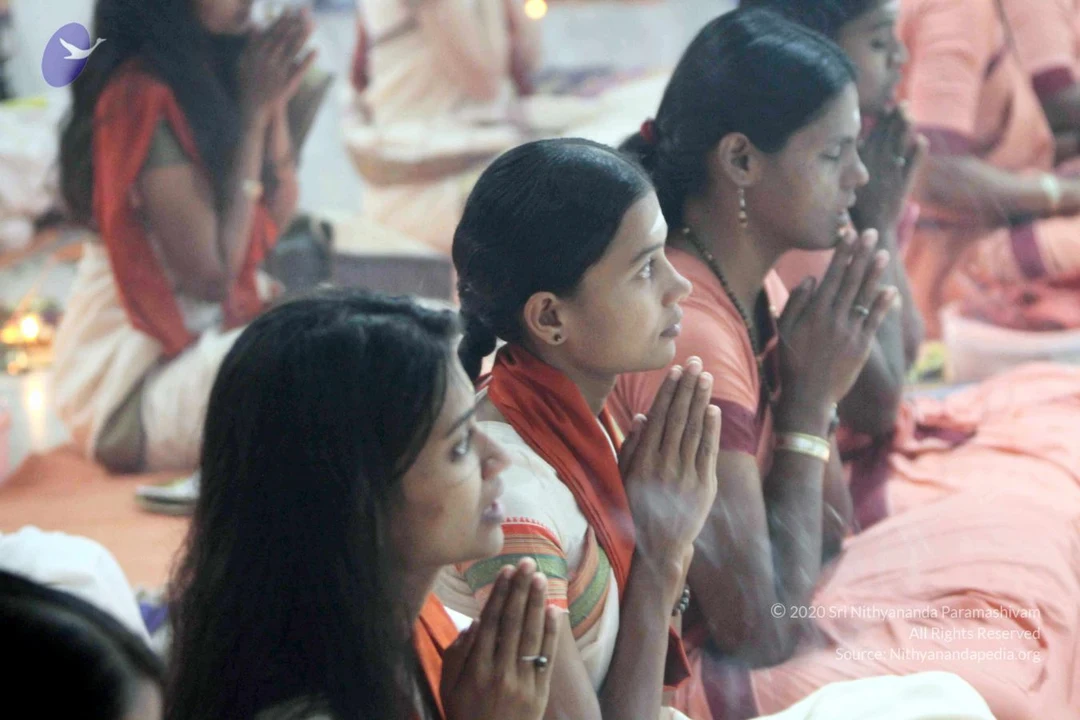
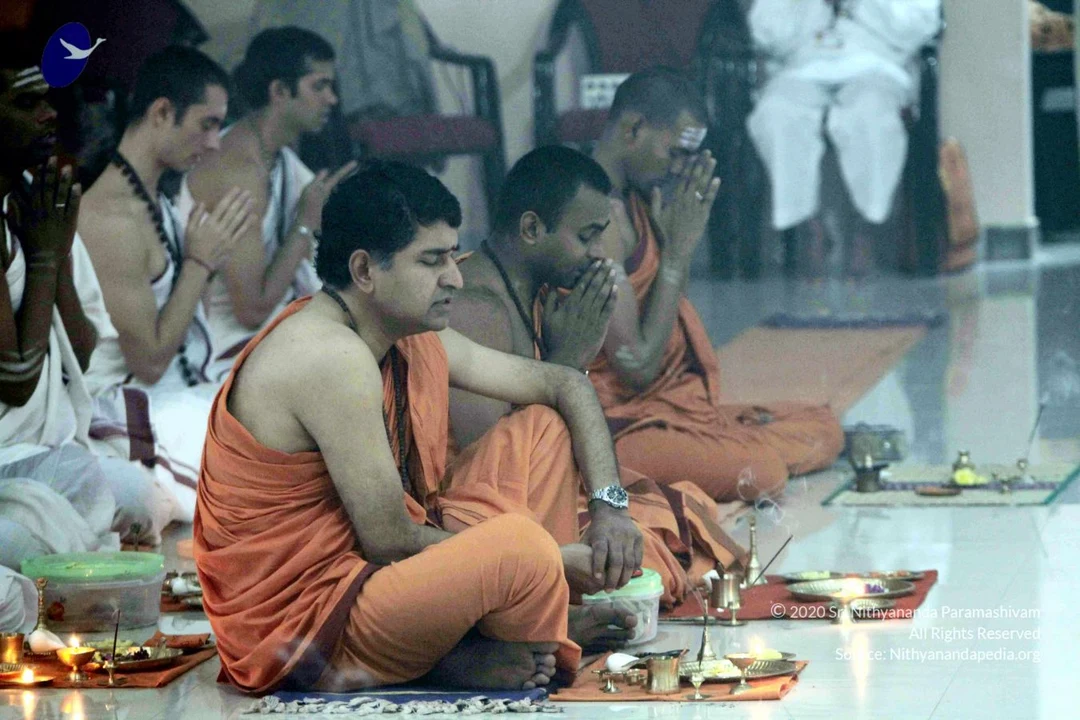
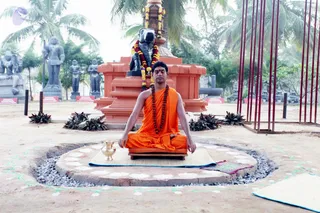
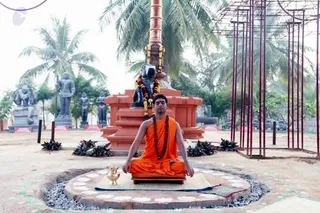
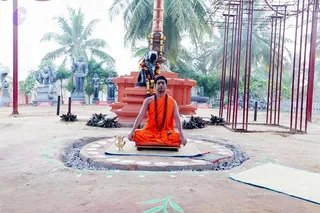
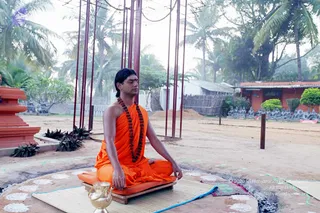
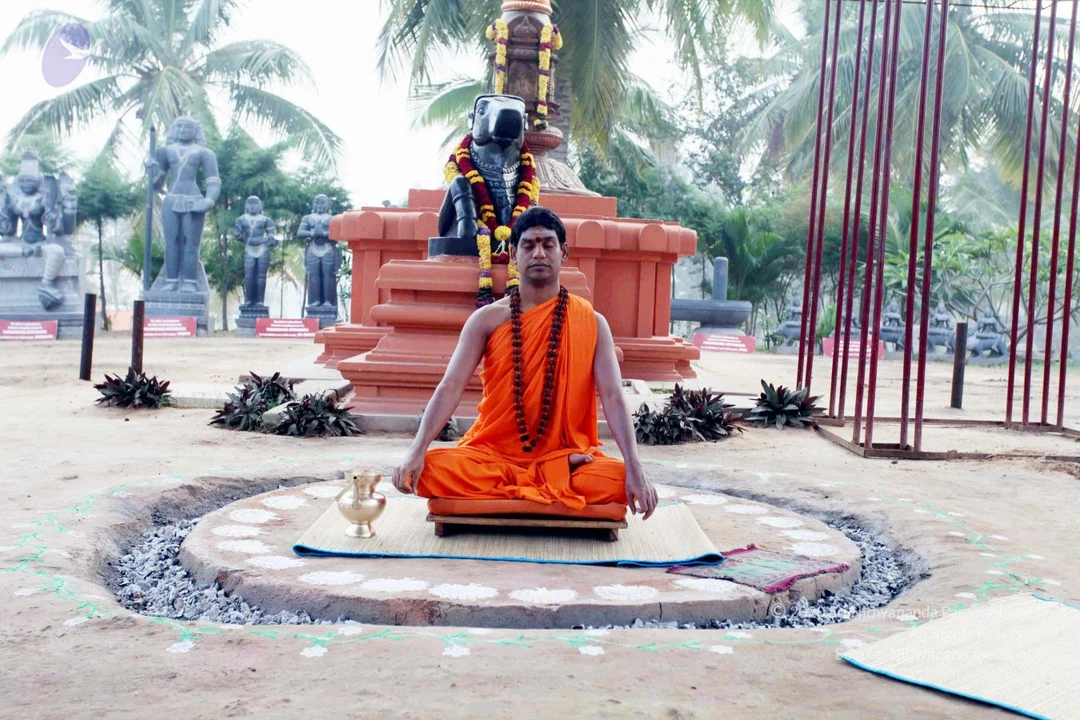
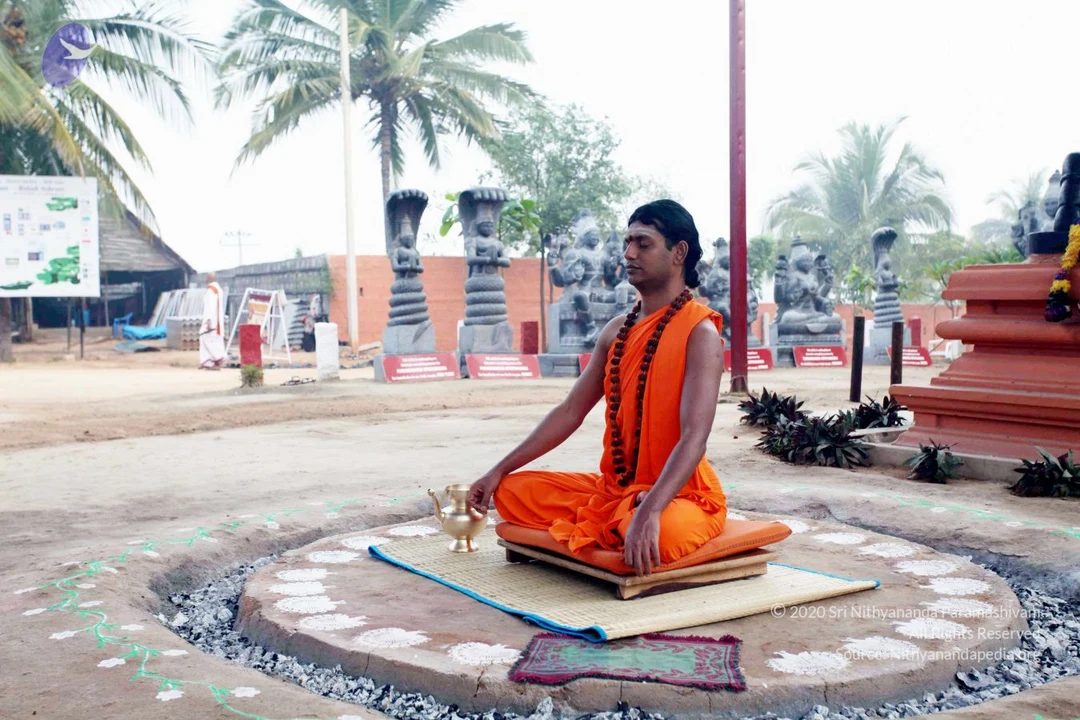
A seated man in orange saffron robes and a rudraksha mala sits cross-legged in meditation on a wooden seat over a mat at the centre of a circular stone platform with white dot patterns and grey ash in a ring. Behind him stands a dark stone deity figure with a red-orange plinth, draped in a garland of red and yellow flowers. A small brass vessel sits beside the mat. Stone sculptures of figures stand in the background among palm trees and pillars with red bars. Swamiji (probable): the man has long swept-back hair, a red forehead mark, a rudraksha mala and saffron robes, consistent with the page's note that Swamiji attended this event.A man with a shaved head sits cross-legged in meditation on a raised stone platform inside a circular ring of white-dotted rangoli and grey ash, at an outdoor temple grounds. He wears a saffron-orange robe draped over his shoulders and a dark rudraksha mala around his neck, with a red tilak on his forehead and his eyes closed. Behind him stands an orange brick pedestal bearing a black Shiva lingam decorated with a garland of red and yellow flowers. A brass kalasha sits to his left on a woven mat. Grey stone statues of deities stand in the background among palm trees, and a row of red metal rods frames the right side. The scene suggests a meditation or puja setting. a person: the saffron robe, rudraksha mala and sitting posture match the page's description of a meditating teacher.A man with a shaved head sits cross-legged in meditation on a woven mat atop a circular stone platform outdoors, eyes lowered. He wears an orange-saffron robe and a long rudraksha mala, with a red tilak on his forehead. Behind him a large black Shiva lingam draped with marigold garlands rises from a tiered red-orange pedestal. Grey stone deity statues and kalasha-like forms stand among palm trees, and a metal frame structure stands to the right. A brass pot sits beside him in the foreground. Small red signboards are visible along the grounds.A seated man in saffron-orange robes meditates in lotus-style posture on a low wooden seat placed on a round raised platform of pale stone filled with gravel and marked with white dots. He wears a rudraksha mala around his neck and a garland of orange and yellow flowers. Behind him stands a red-brick plinth holding a black Shiva linga draped with flower garlands, with a tall saffron-painted pillar above. Grey stone deity sculptures stand on the left, a dark stone figure with a trident in the background, palm trees behind, and a metal scaffold frame on the right. A small brass kalasha sits at the edge of the platform, and a woven mat lies on the sand.Outdoor photo of a man seated cross-legged in meditation on a low wooden platform with a cushion, placed on a woven mat with white floral patterns drawn on the ground. He wears an orange-saffron cloth draped over his shoulders and a long rudraksha mala with a red tilak on his forehead, with eyes closed and hands resting on his knees. Beside him stands a brass kalasha-style vessel. Behind him are tall red metal poles, palm trees, a red-roofed structure and rows of small stone figures along a path. The seated figure has distinctive saffron clothing and a rudraksha mala, though no name is printed on him.A man sits cross-legged in meditation on a low wooden seat with an orange cushion, placed on a woven straw mat with white painted floral motifs on sandy ground. He wears a saffron-orange dhoti and shawl, a long rudraksha mala hangs over his chest, and his long dark hair is swept back. Beside him stands a brass kalasha-style vessel. Behind him are metal support frames, palm trees, a red-roofed building and rows of small stone statues. Appearance-based label: Swamiji (probable) seated in meditation, wearing orange robes, long swept-back hair and a rudraksha mala. The image shows one physical person.
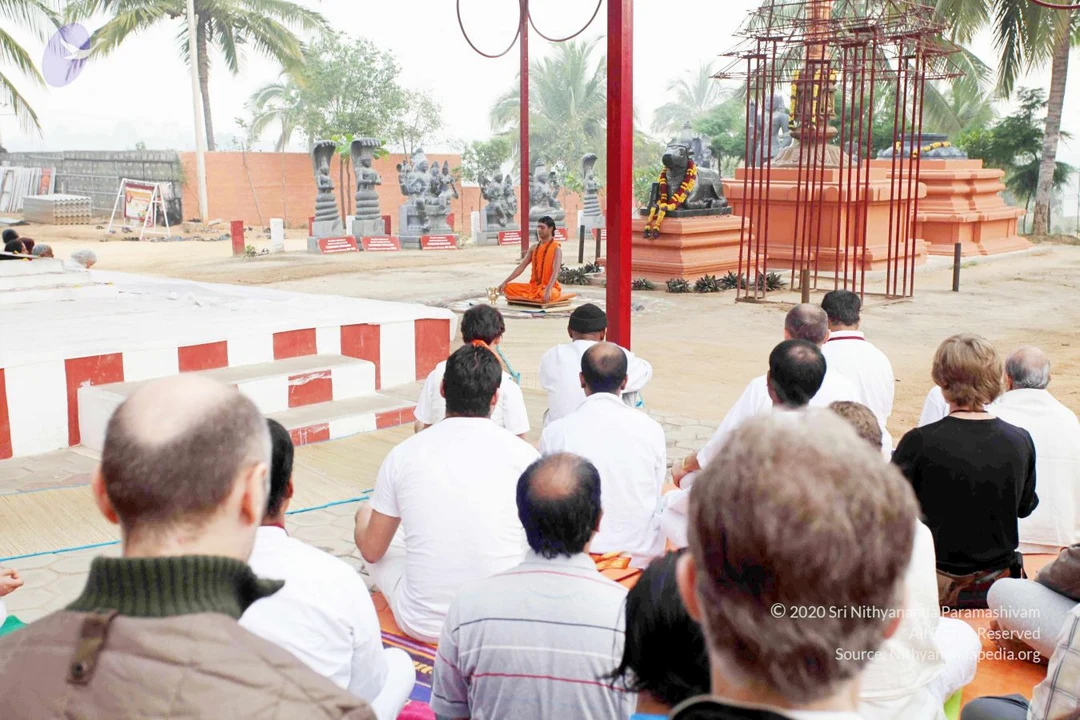
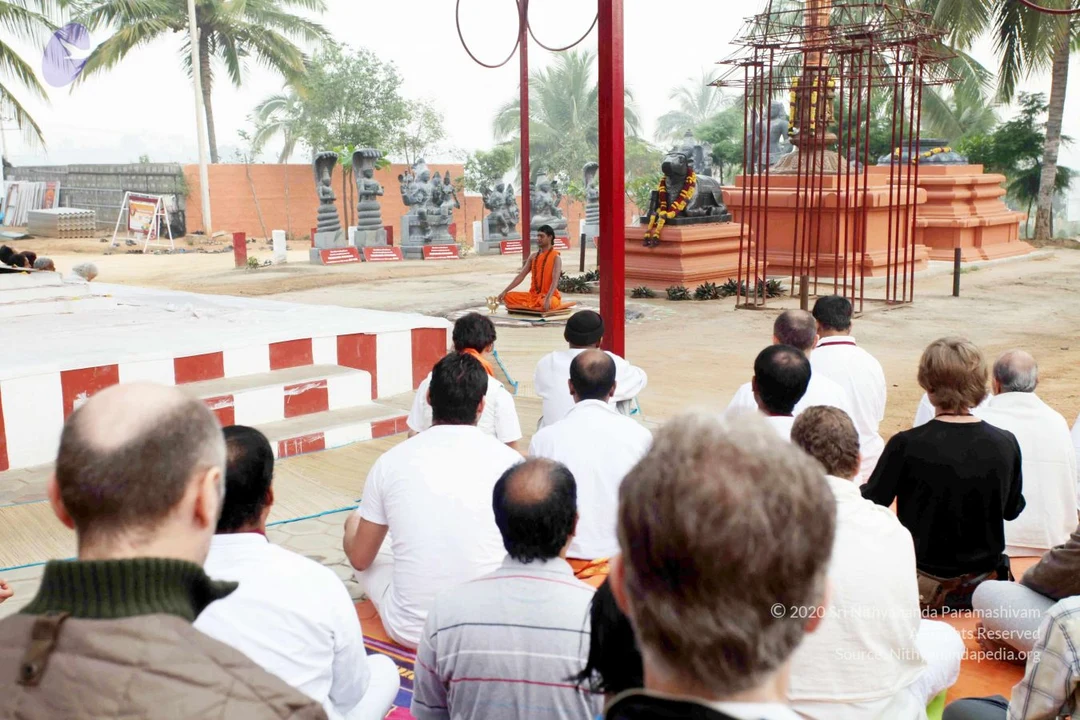
Paadapooja
128 photosSource gallery
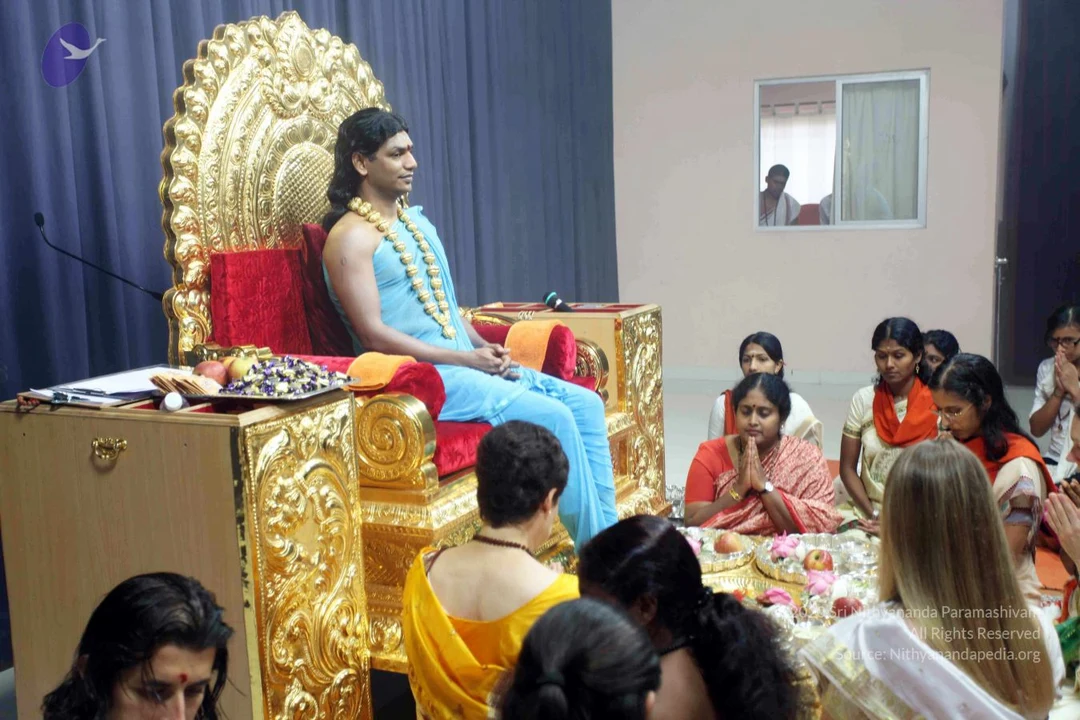
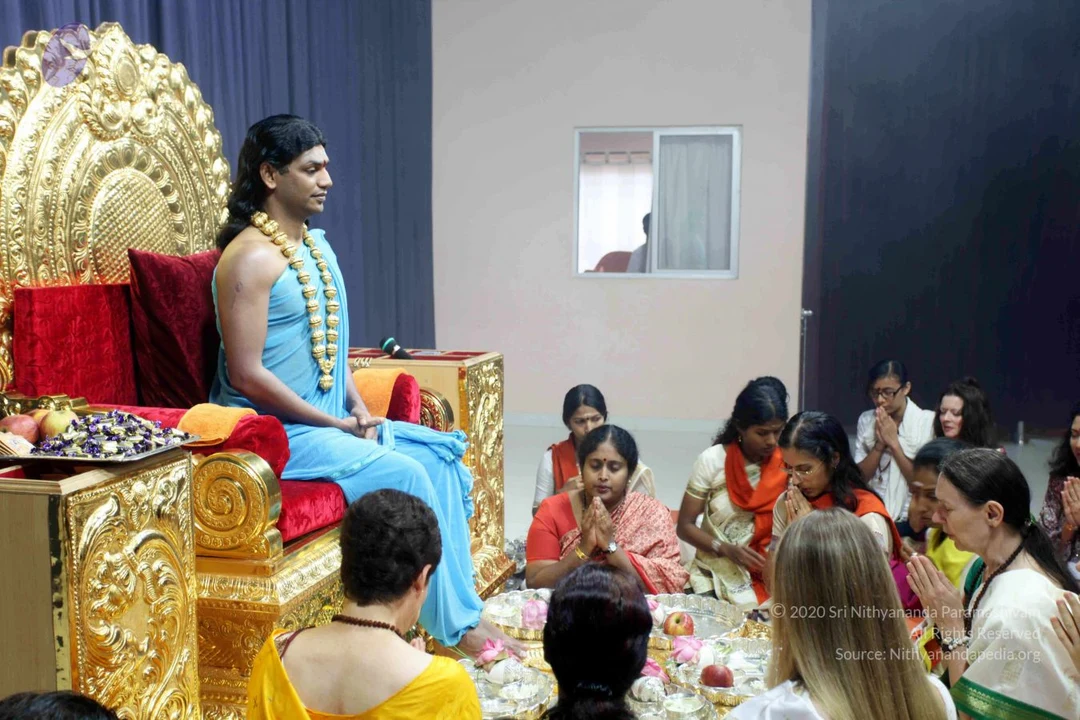
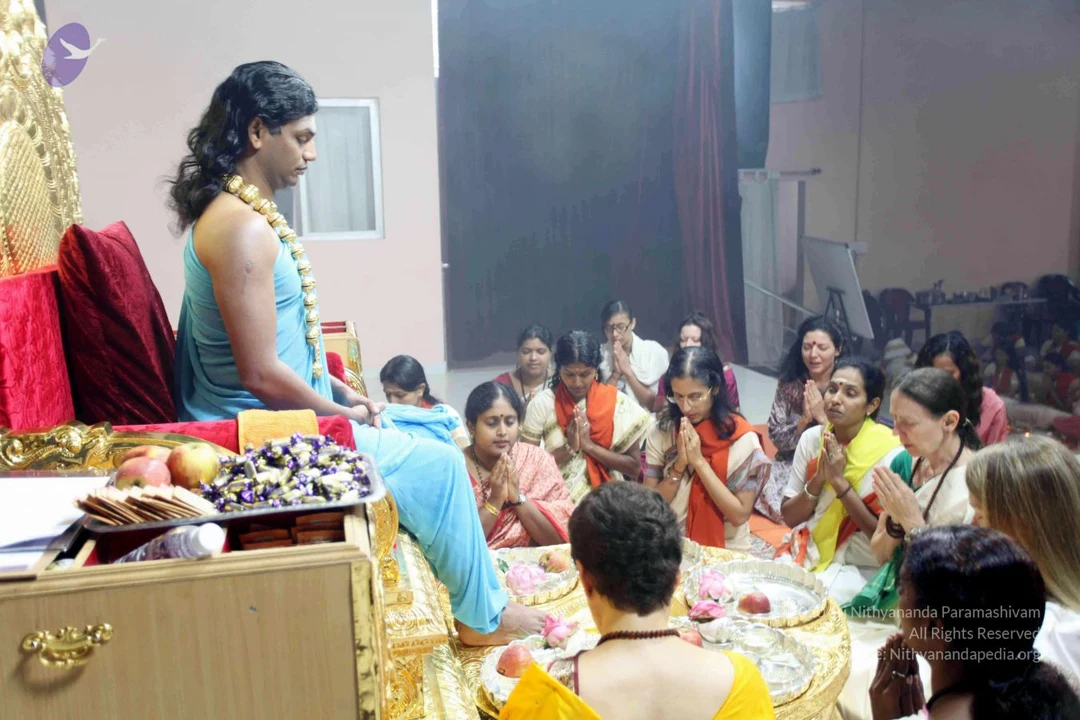
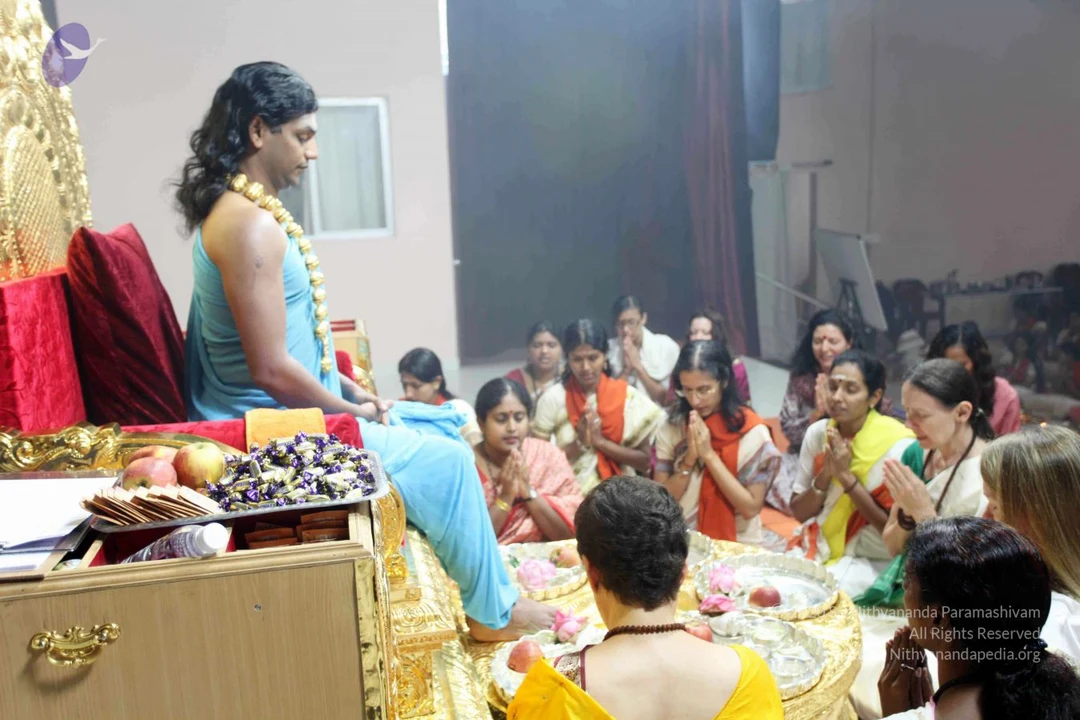
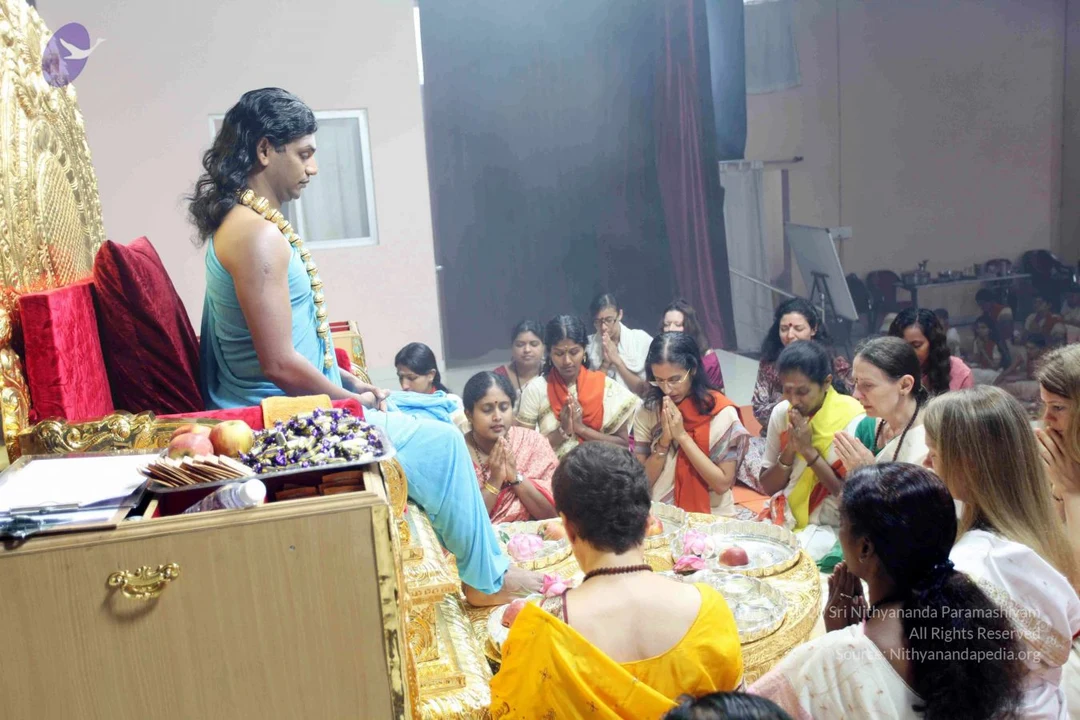
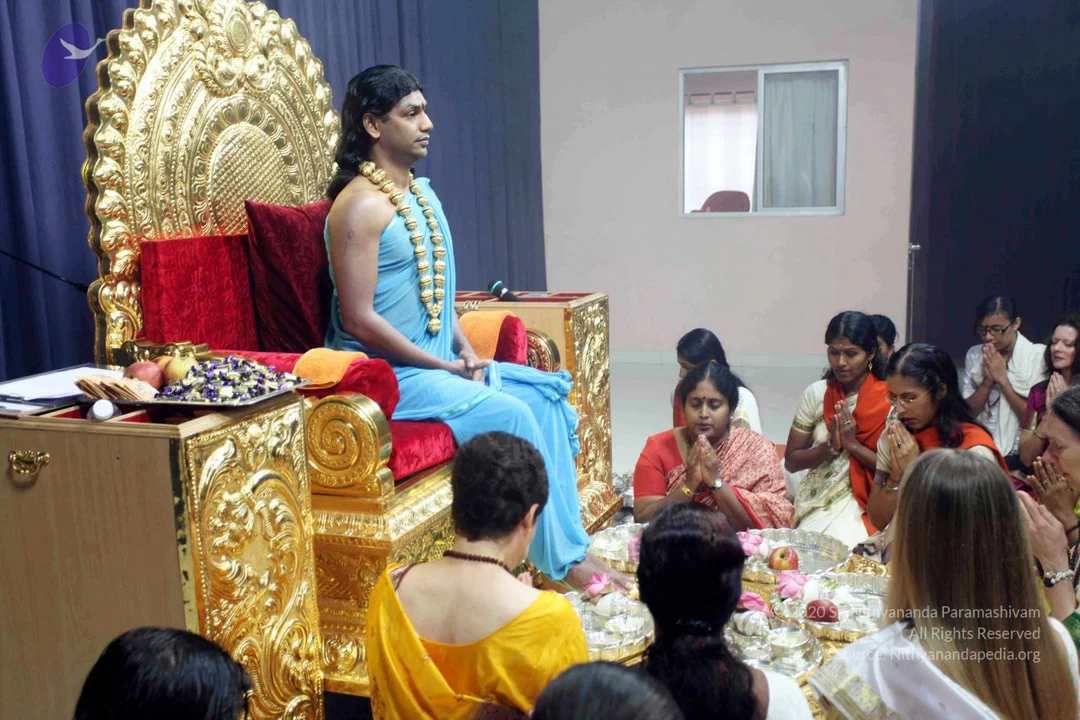
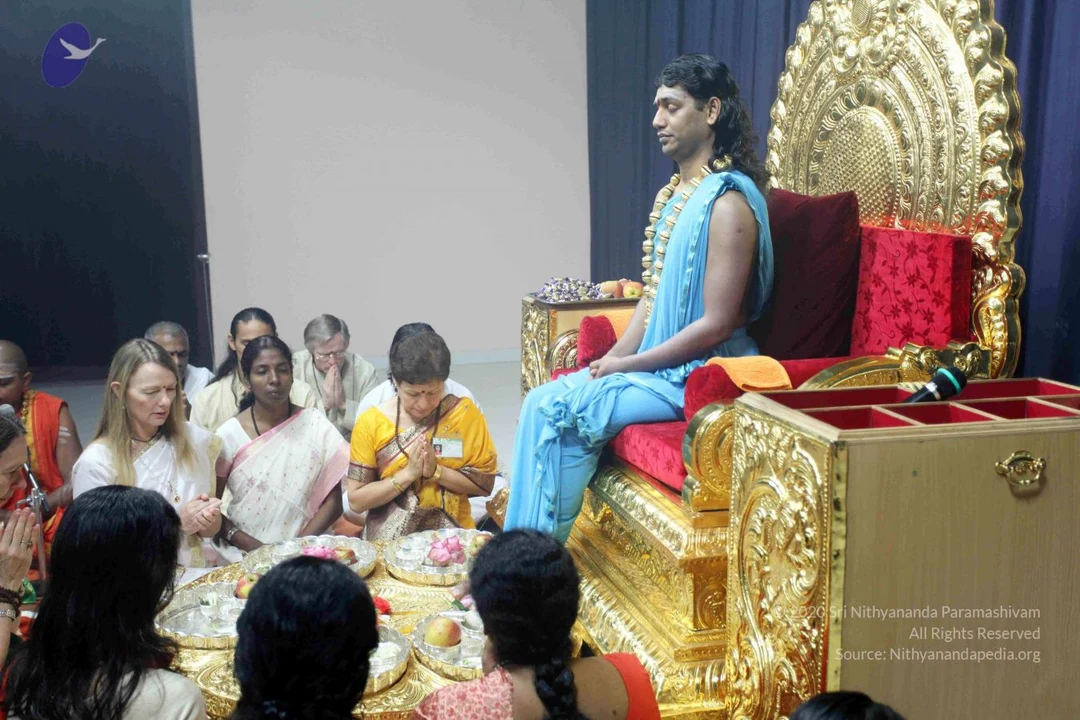
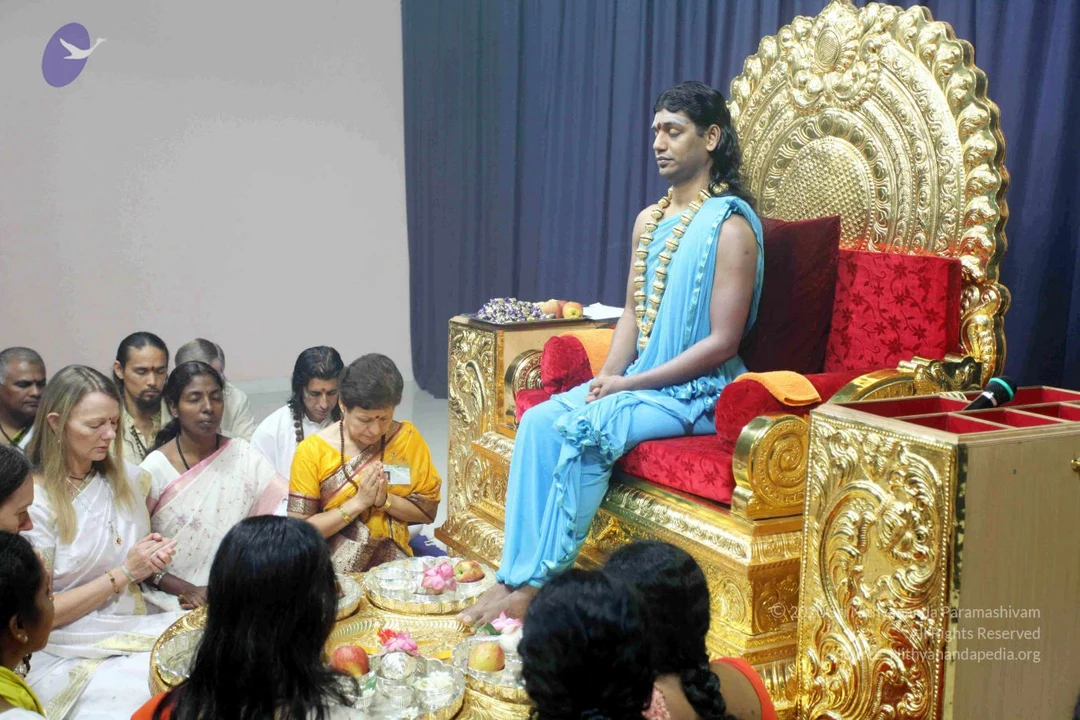
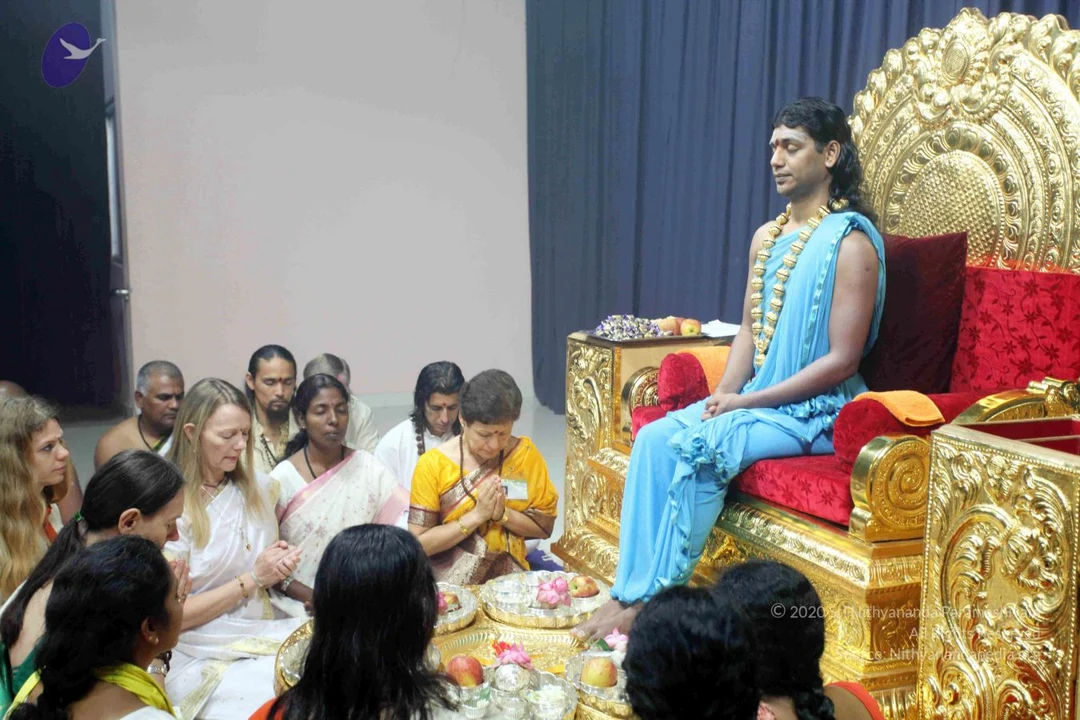
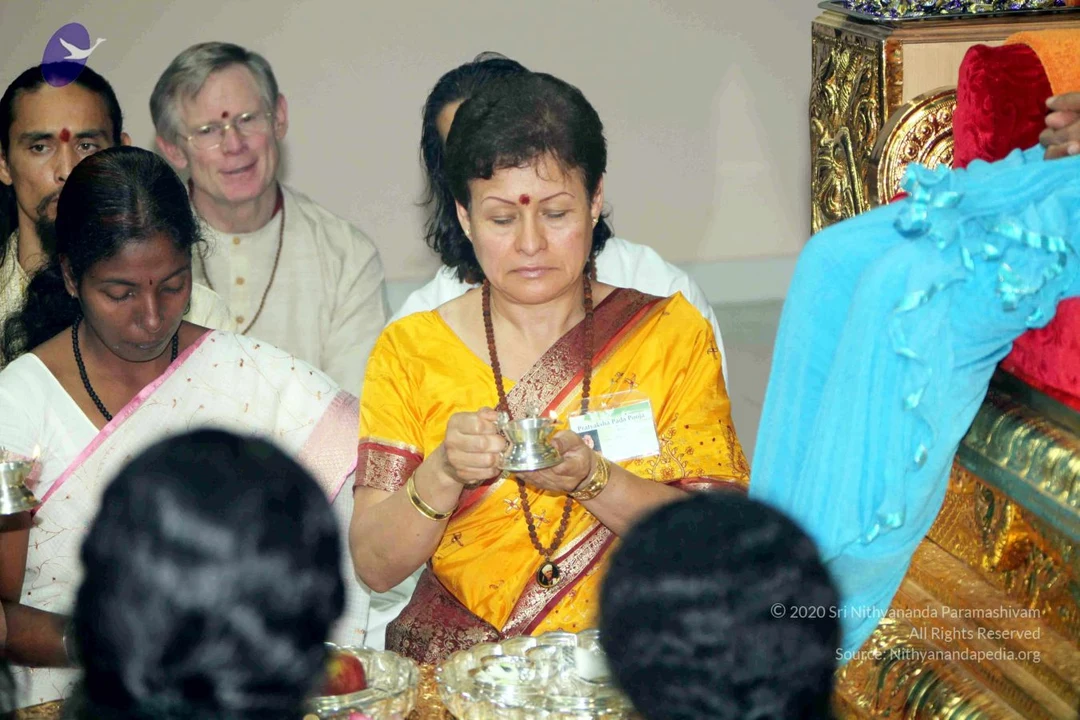
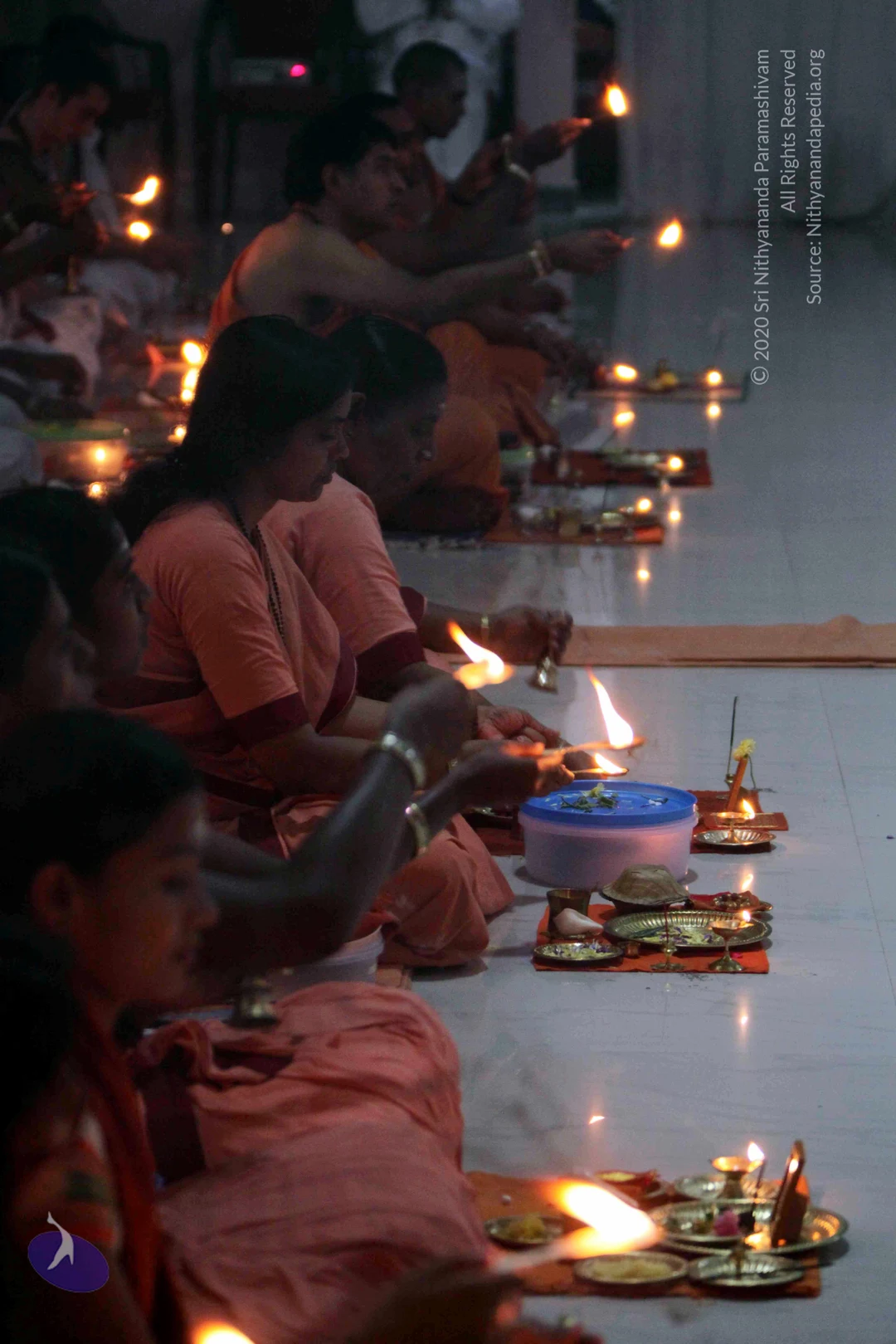
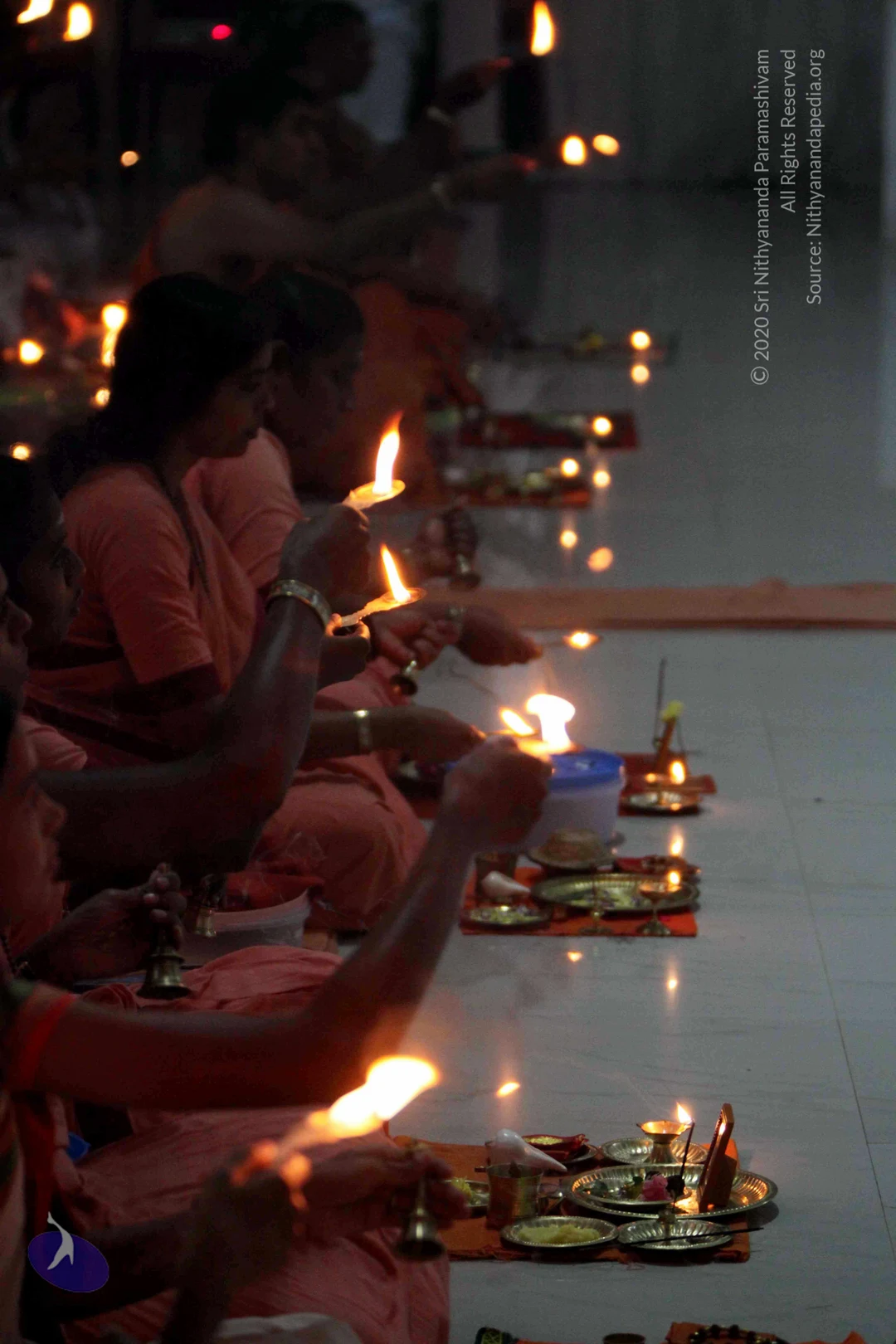
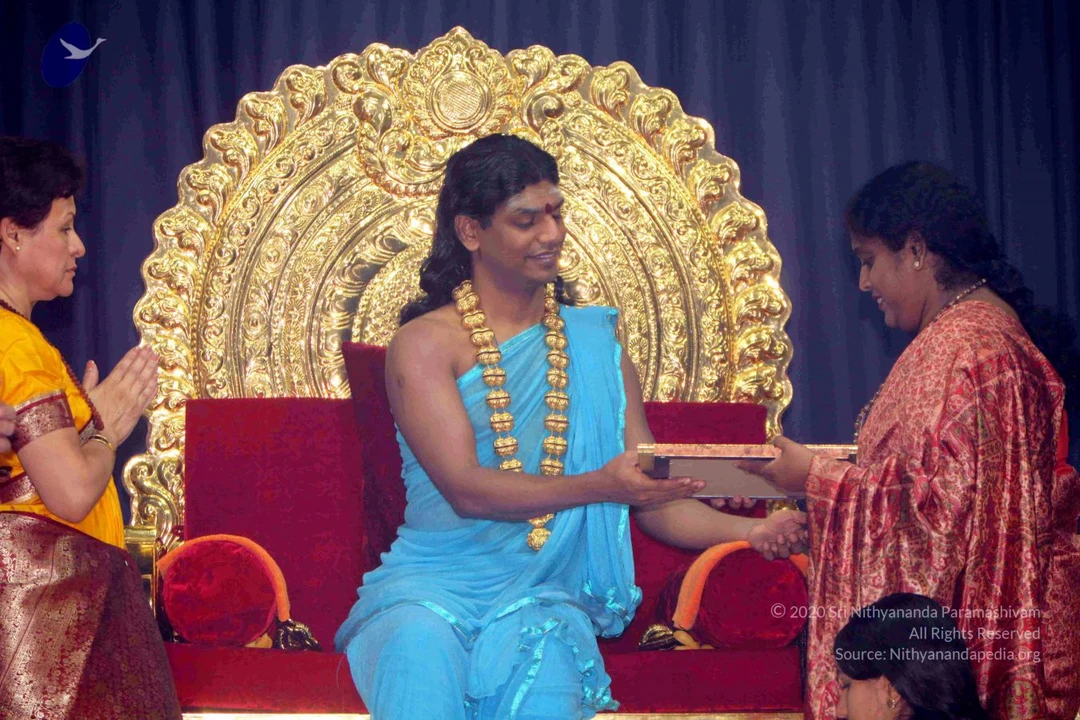
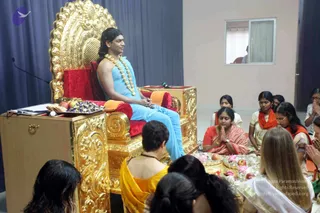
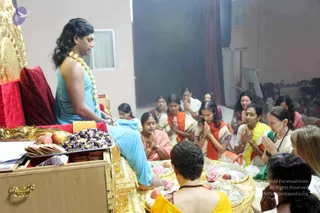
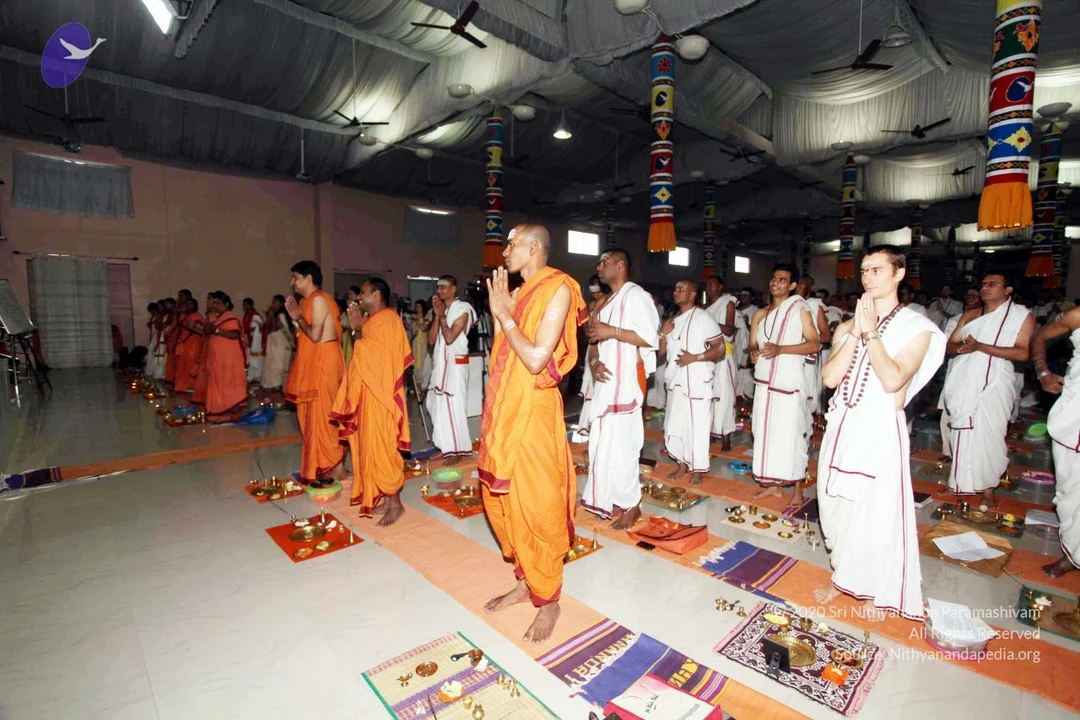
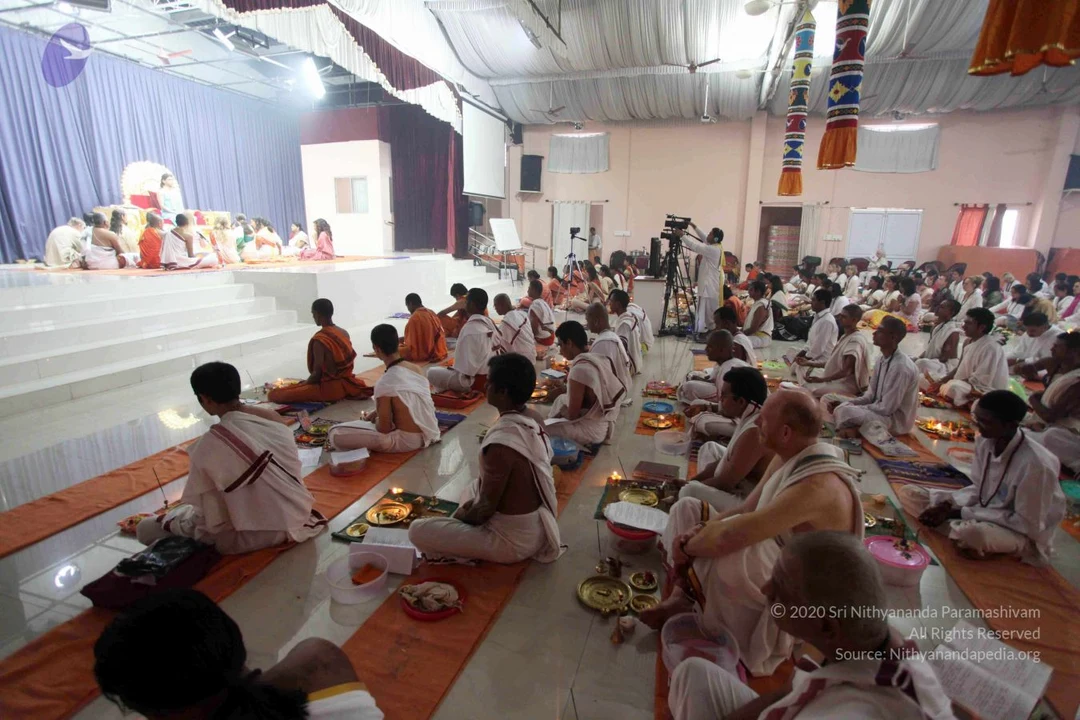
A large hall with a white canopy ceiling and colourful cloth-wrapped pillars shows a row of men standing with palms pressed together in namaskar on mats before small brass puja plates and oil lamps. On the left, several men wear saffron/orange robes; on the right, men wear white dhotis with red-bordered shawls. A standing man in orange with a shaved head and sandalwood-marked forehead stands in the foreground, barefoot, hands folded. Nearby, a sannyasi in saffron and a young man in white with a red-beaded mala face the same direction. Small kalasha-style brass vessels and offerings rest on purple and orange cloths on the floor, indicating a group puja or meditative gathering. Persons only; no clearly identifiable candidate is verifiable by appearance.Indoor photograph of a large hall under white draped ceiling fabric with ceiling fans and tall colourful striped pillars with tassels. Men stand in rows with palms pressed together in anjali mudra, facing forward during a ritual gathering. Several men in front wear saffron-orange robes and are barefoot on orange mats. Behind them, men in white dhoti-style garments with maroon or pink borders stand in prayer. Each mat has brass plates and small oil lamps with offerings of fruit and sweets. A woman in a pink sari stands at the far left with her hands folded. Several people stand in prayer; one man in the front row wears a rudraksha mala. Pooja and satsang setting.A seated satsang on an orange-carpeted stage before blue drapery. A person in a light blue top and rudraksha-style beaded mala sits on a gilded peetha throne with a red cushion, speaking into a microphone. Around the stage, devotees in white and cream clothes, saffron-robed sannyasis and a man in a white dhoti sit in rows, many with hands joined in anjali. A small brass bell and offering trays with orange cloth lie on the front of the stage. Right side shows a white wall with a window and a man seen through it.A seated man with long swept-back hair wears a sky-blue draped garment and a white-and-gold flower garland, sitting on an ornate gold-and-red throne with a microphone stand beside him. Hands are folded in front of his chest. In front of the throne, a row of devotees kneels with palms pressed together; a woman in a red sari with a red blouse sits prominently in the centre, another in an orange shawl and a woman in an orange sari to the right. Brass and silver offering plates holding fruit, pink flowers and a small tray of apples sit on a low table, and a wooden podium with a microphone stands at left. A man in a yellow-orange wrap sits with his back to the camera at lower left, and a woman with a white sari stands at lower right. Plain blue curtains and a pale wall with a small window form the background.A seated man with long dark hair, wearing a light blue wrap and a thick gold-beaded necklace, sits on an ornate gold-and-red throne (peetha) in a hall with a window behind him. Before him, several devotees kneel and sit in folded-hand namaskar; a woman in an orange-red sari and a woman in a cream sari with an orange shawl are prominent, and a woman in yellow with a rudraksha mala sits at the lower left. Trays of apples, flowers and offerings are set in front of the throne, consistent with a satsang or puja setting. A microphone is visible near the seated figure. The seated man has distinctive long swept hair, a gold necklace and light blue robes, but the appearance is only partially clear.A seated man with long swept-back dark hair, a gold ceremonial necklace and a light blue shawl sits on a gold-and-red throne, his bare foot extended toward a gold tray. Before him, a woman in a yellow-and-orange sari kneels with pink lotus flowers and apples on gold plates. Around them, about a dozen women in saris, several in orange and white, sit on the floor with palms pressed together in prayer. A tray holds apples, purple flowers and sweets. a person is seated on the throne and receiving padapuja-style devotion from the kneeling devotees in a hall with red curtains.
Nithya satsang

103 photosSource gallery
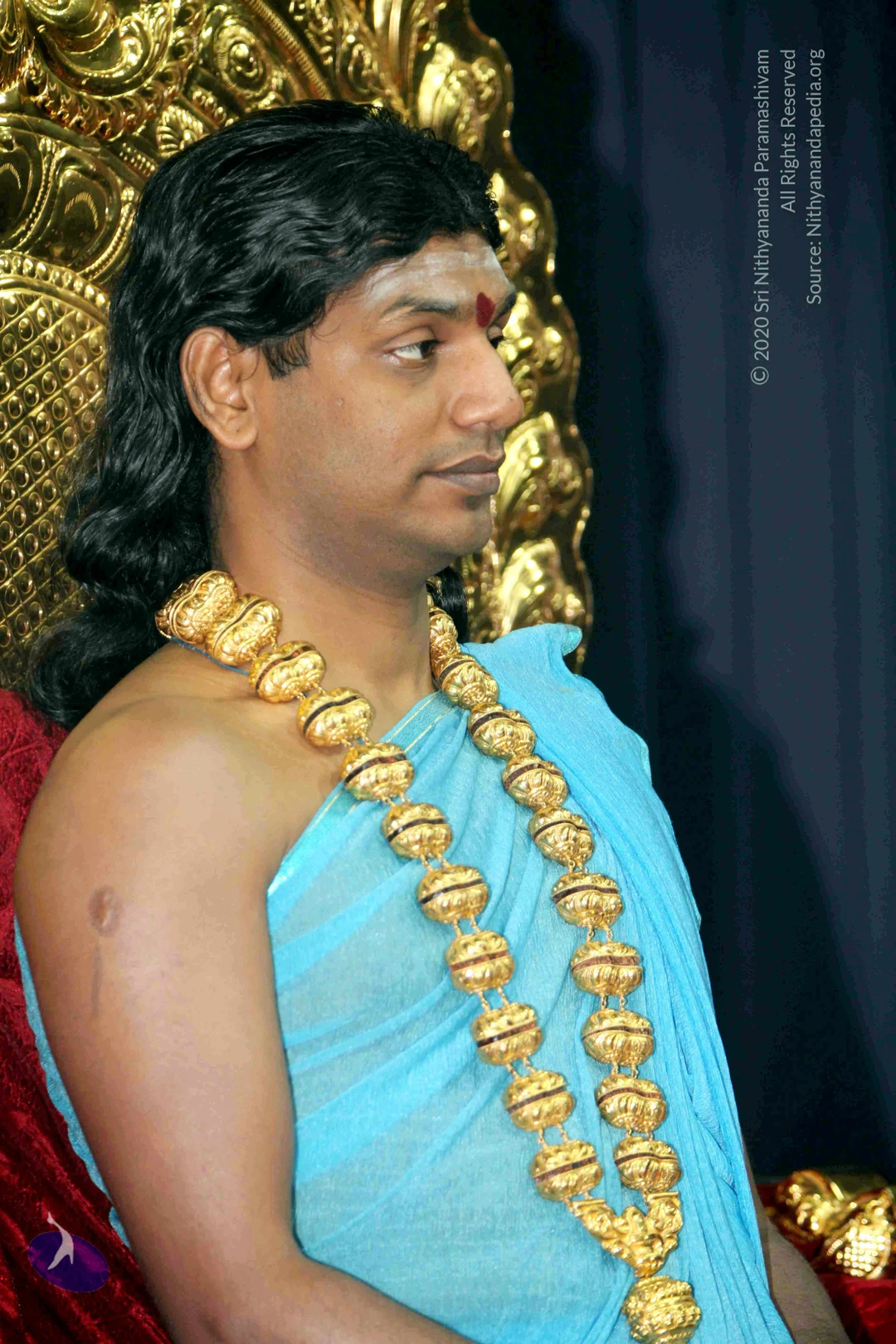
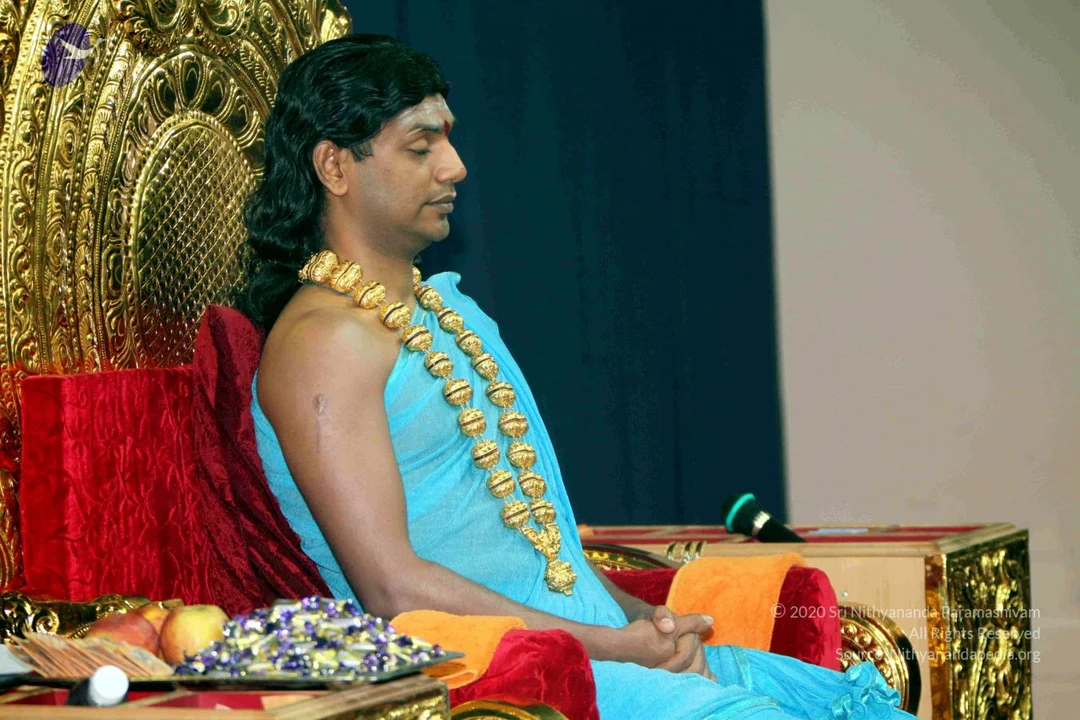
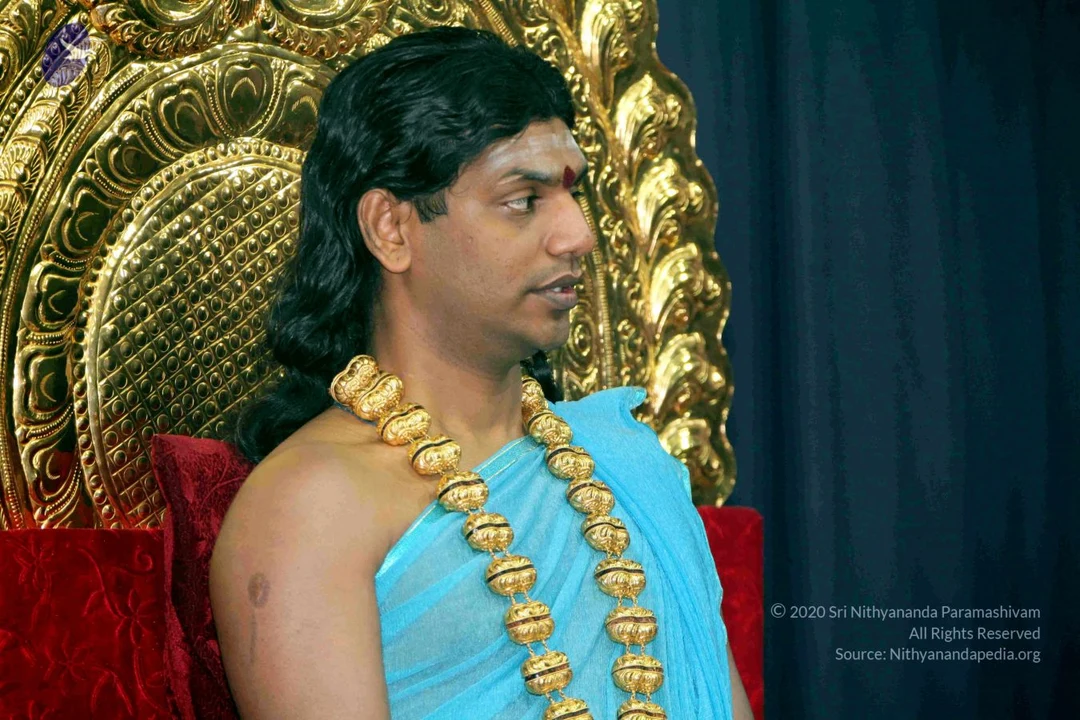
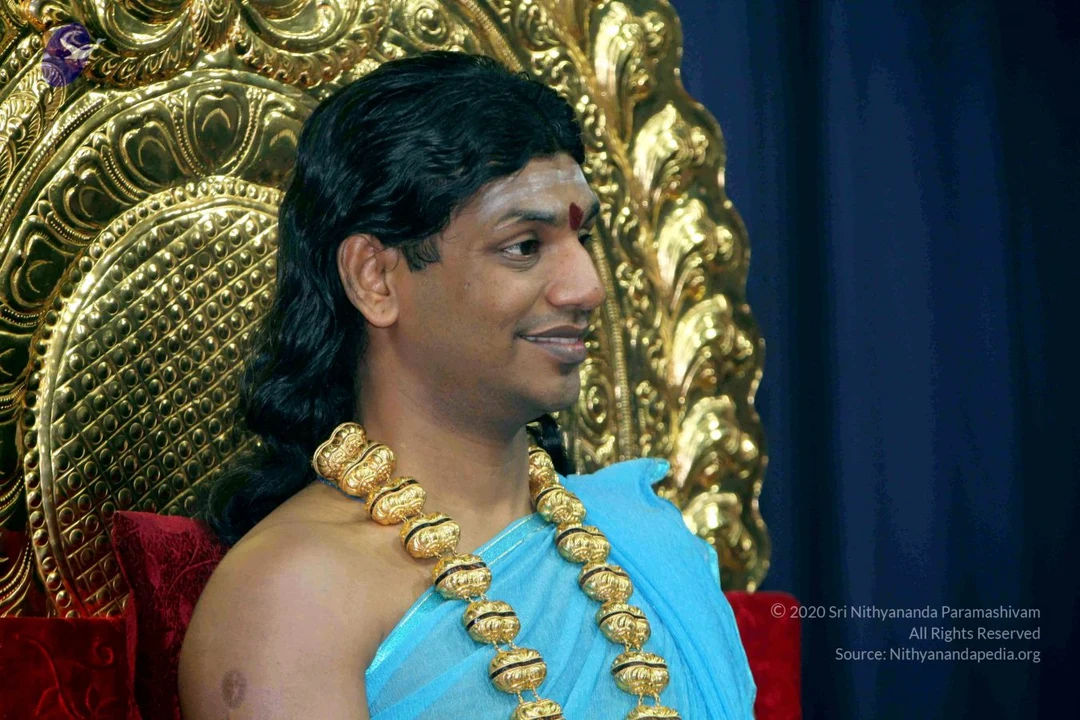
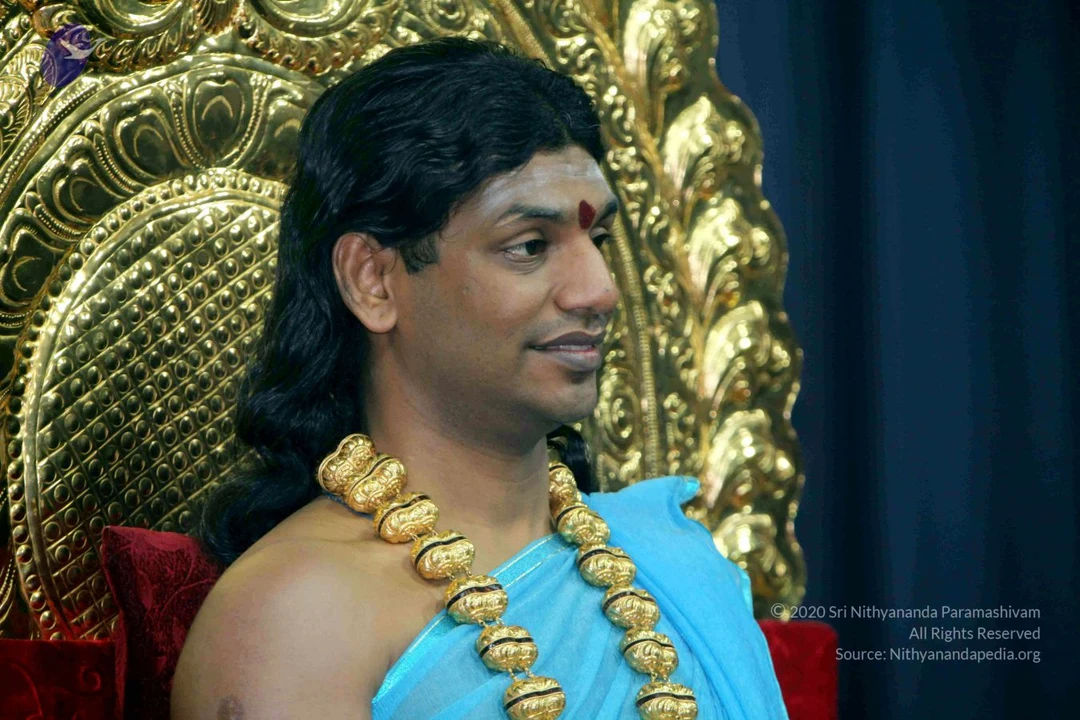
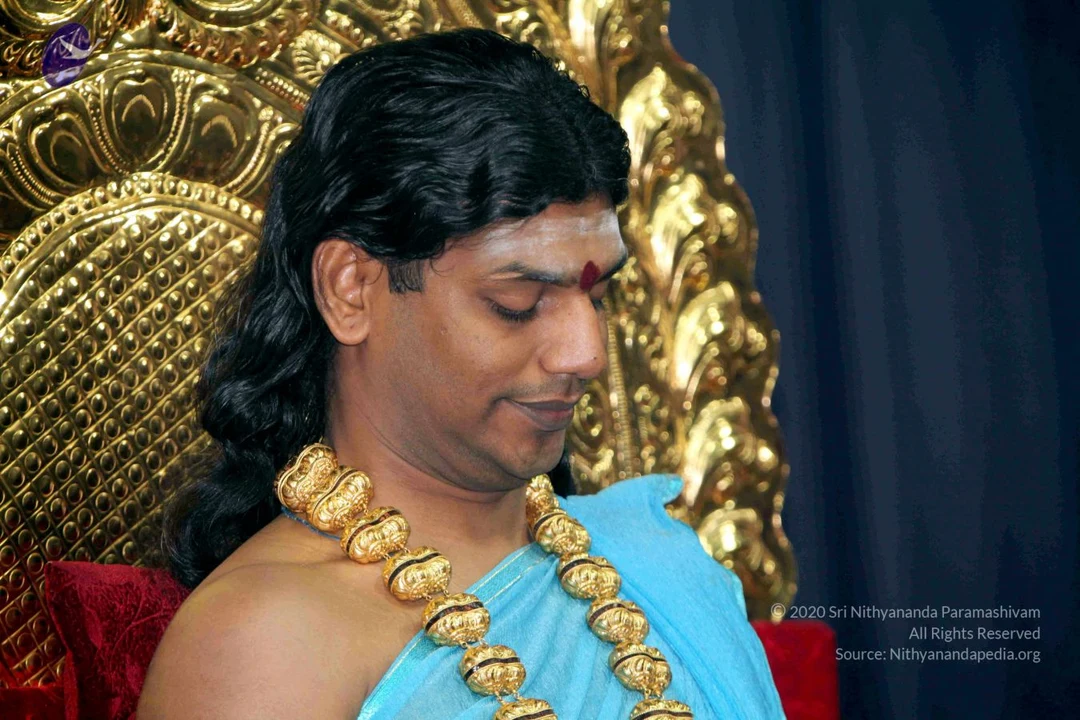
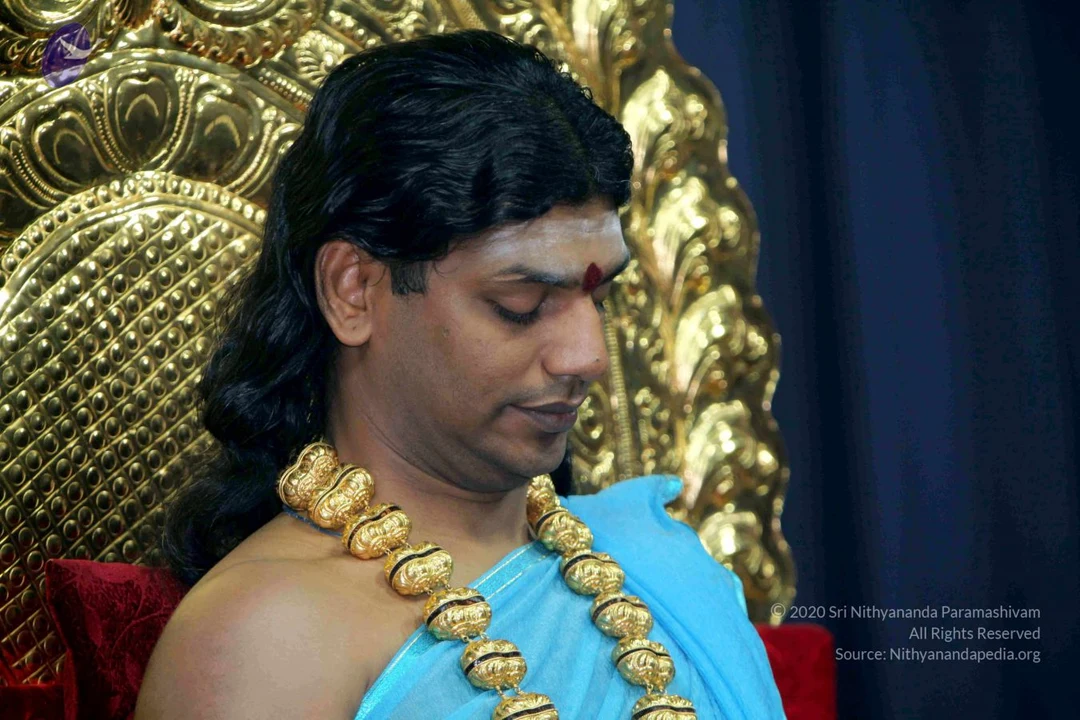
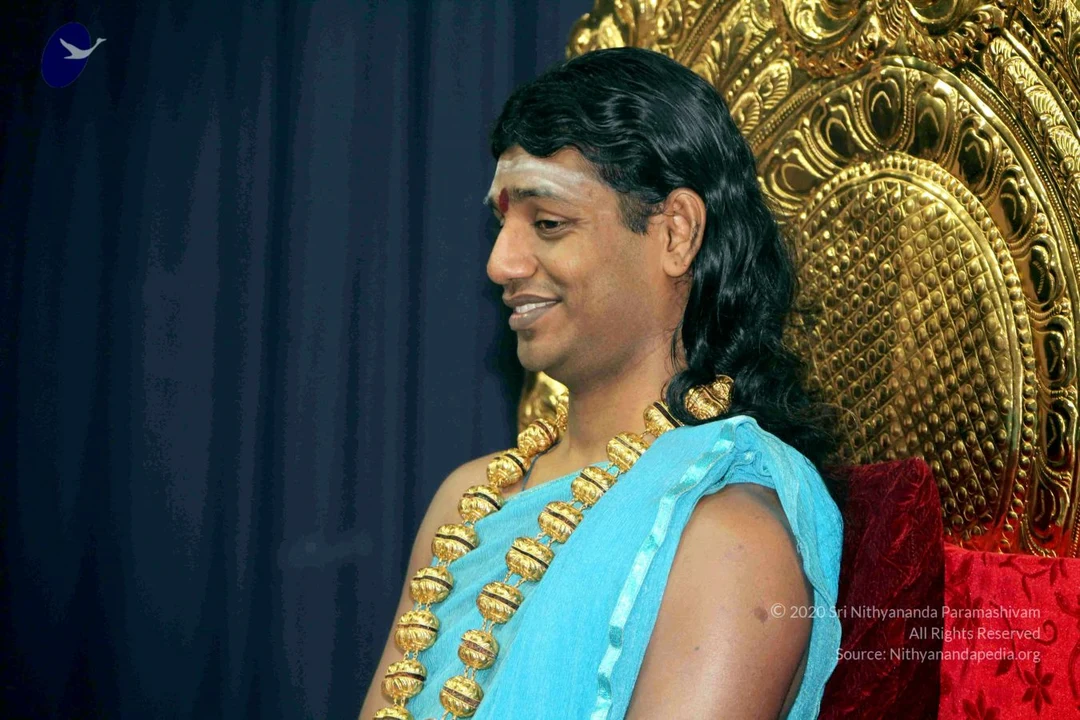
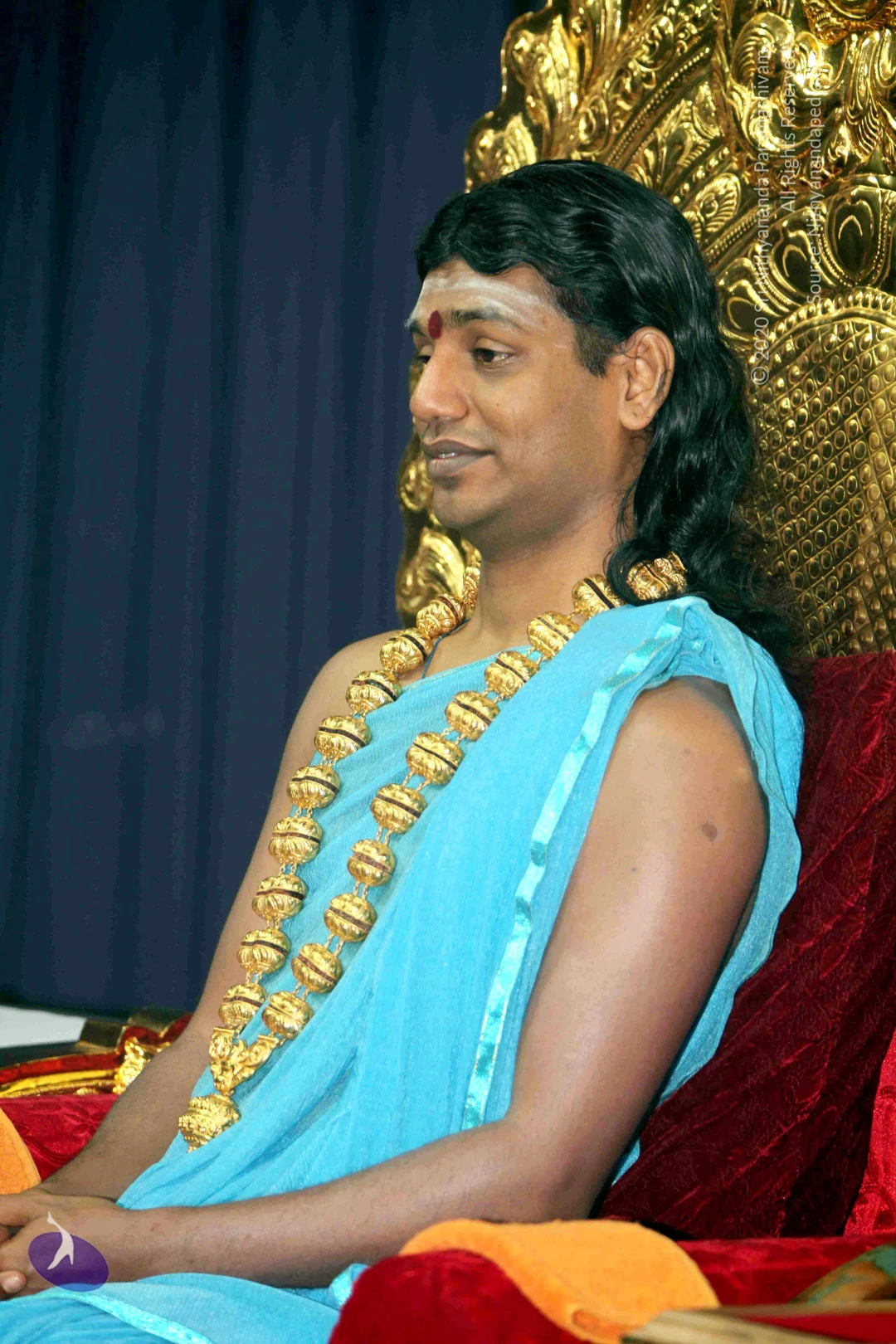
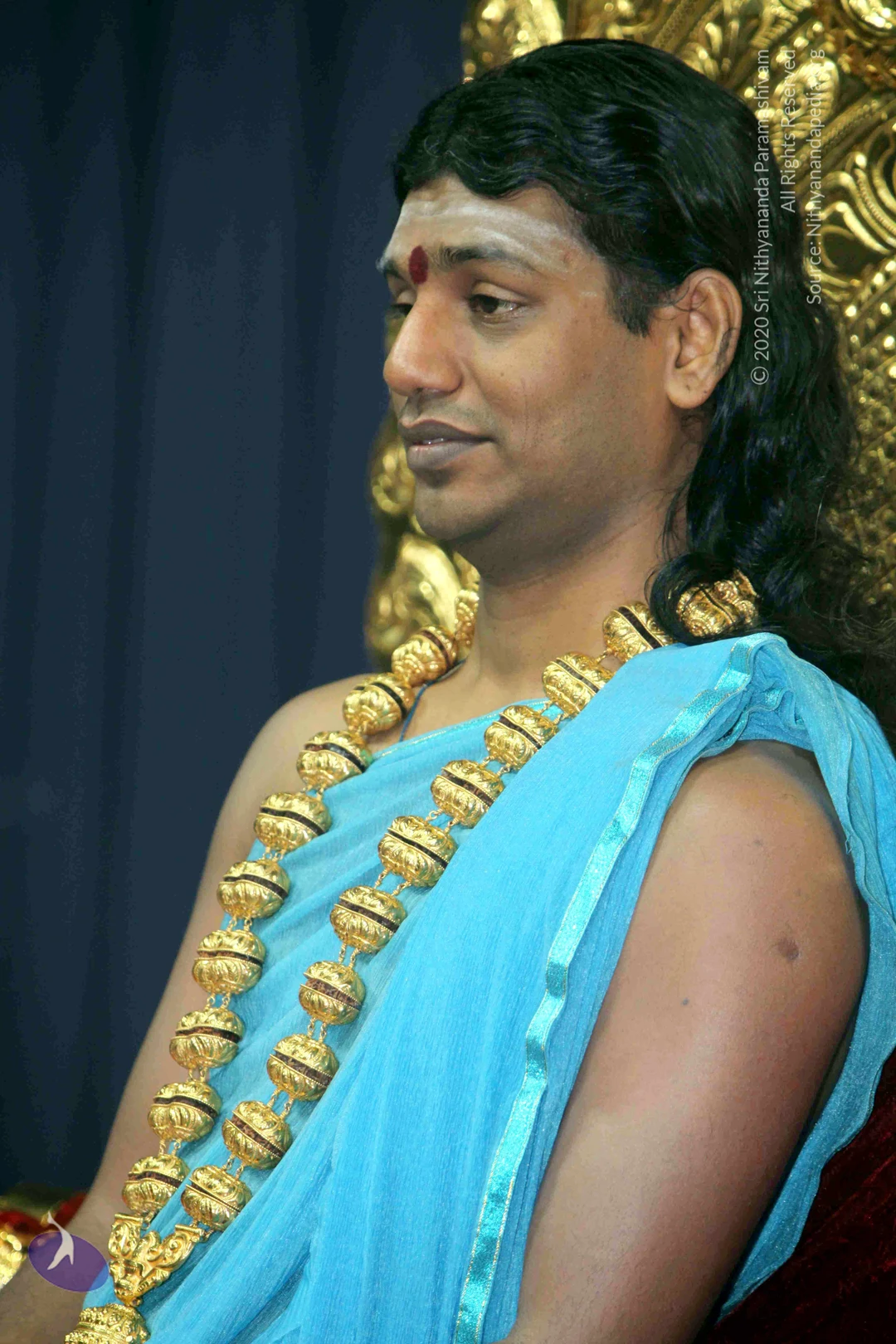
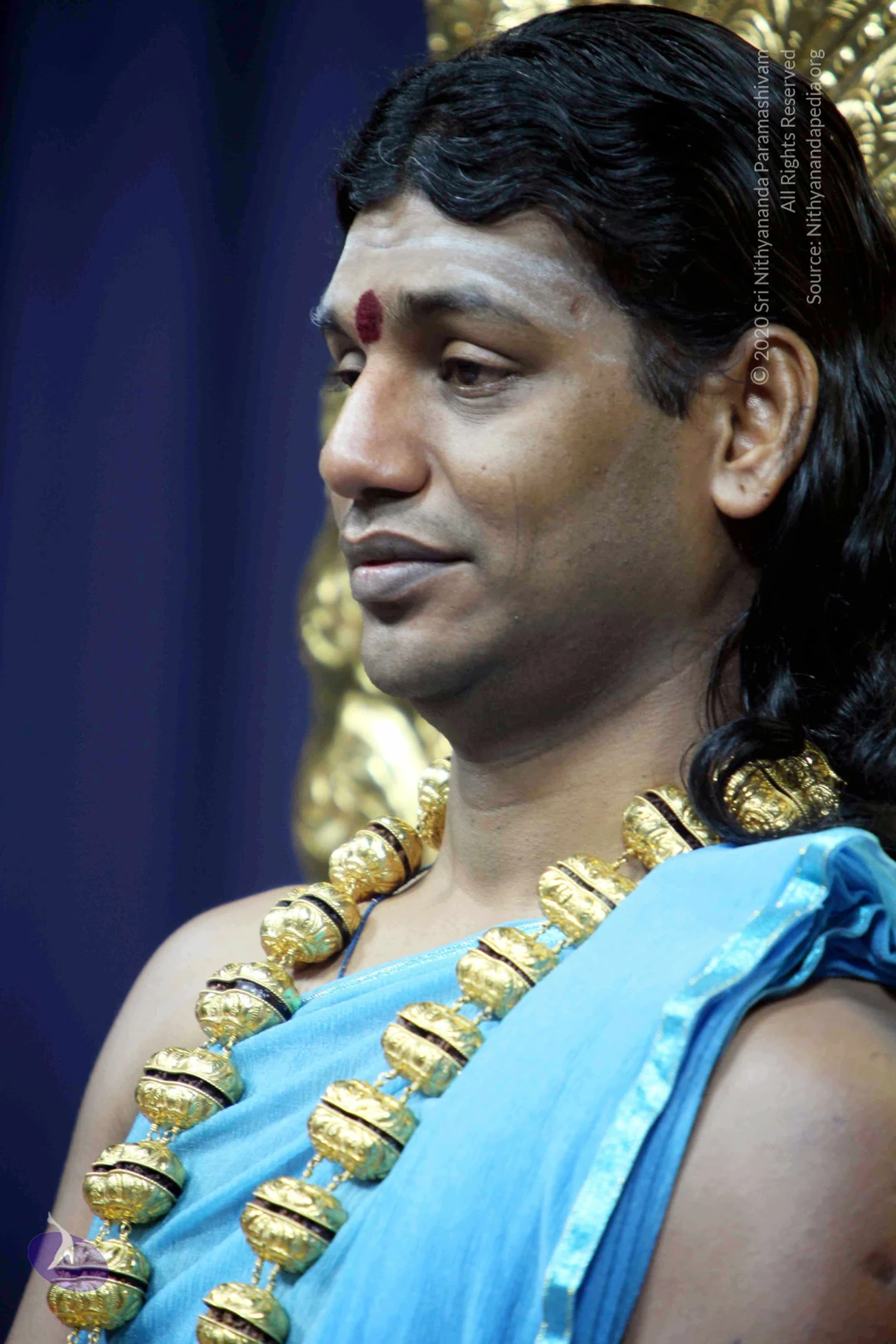
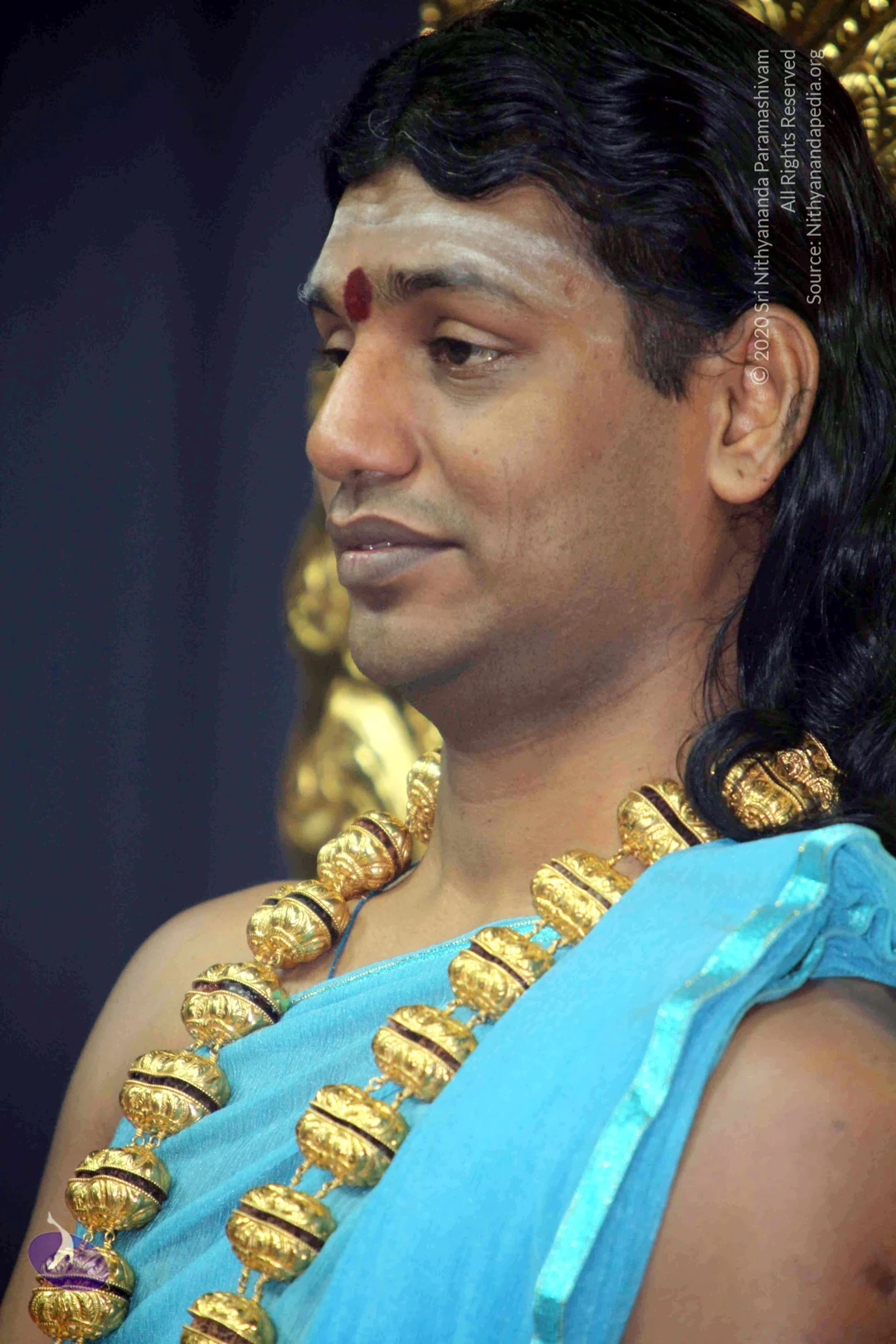
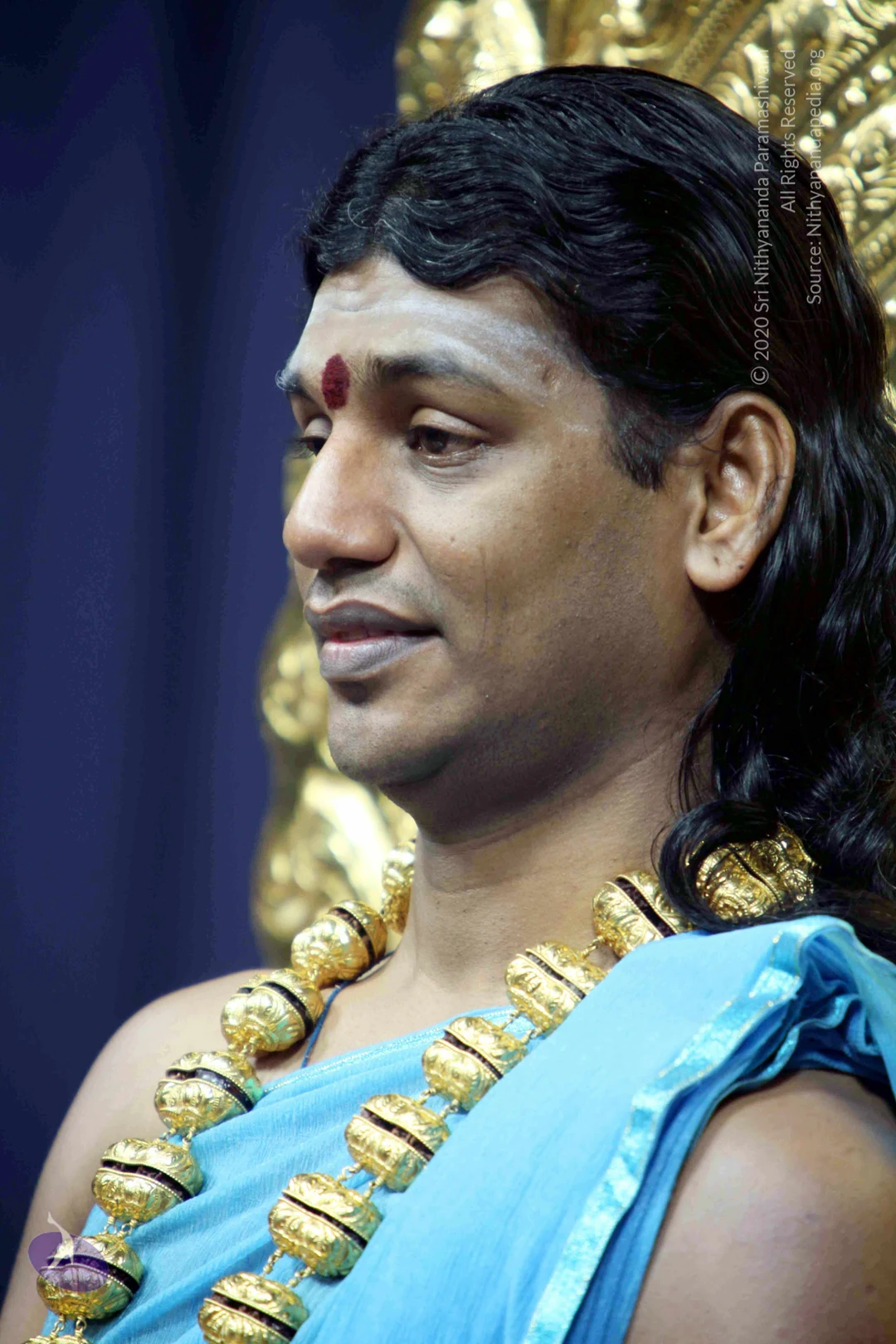
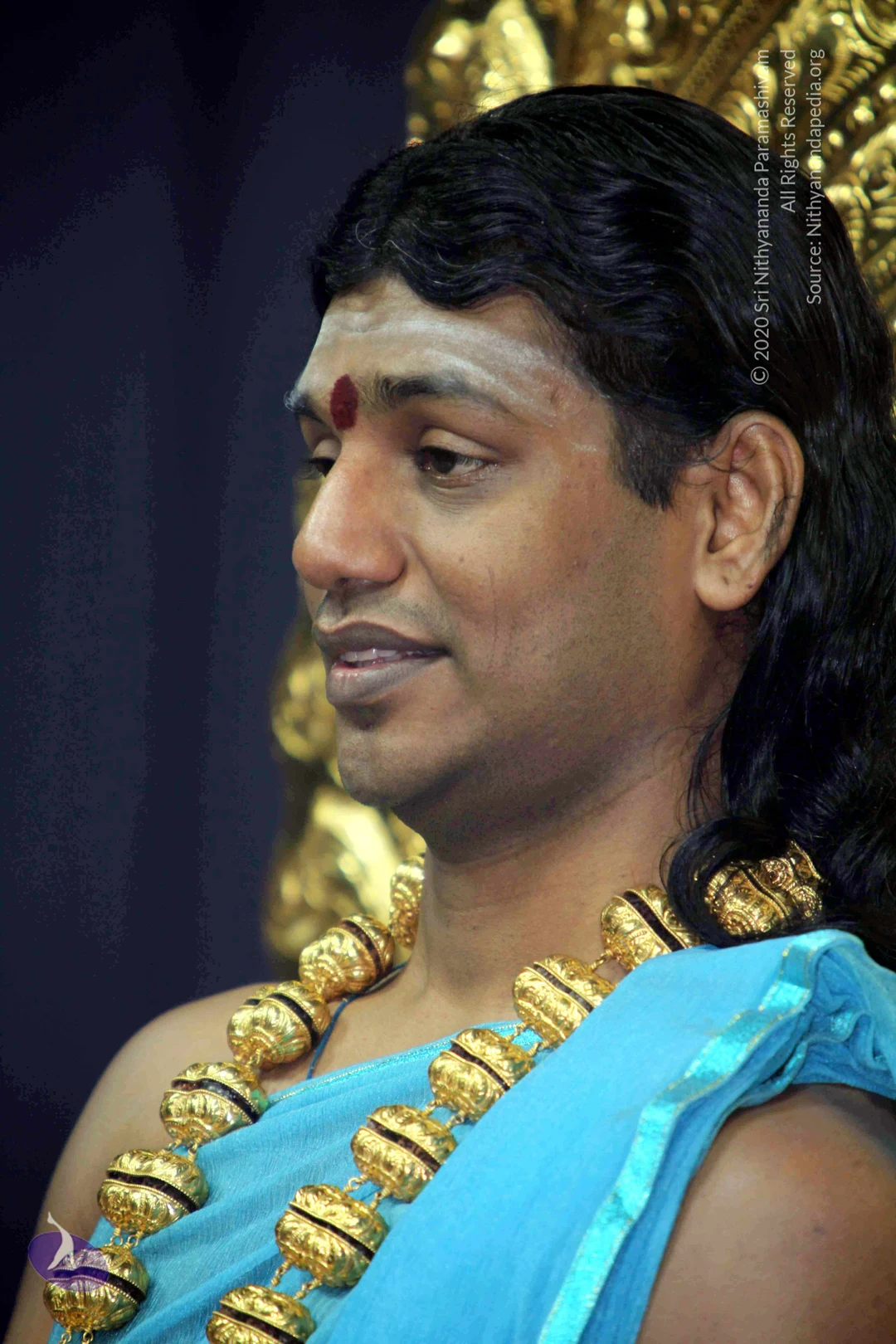
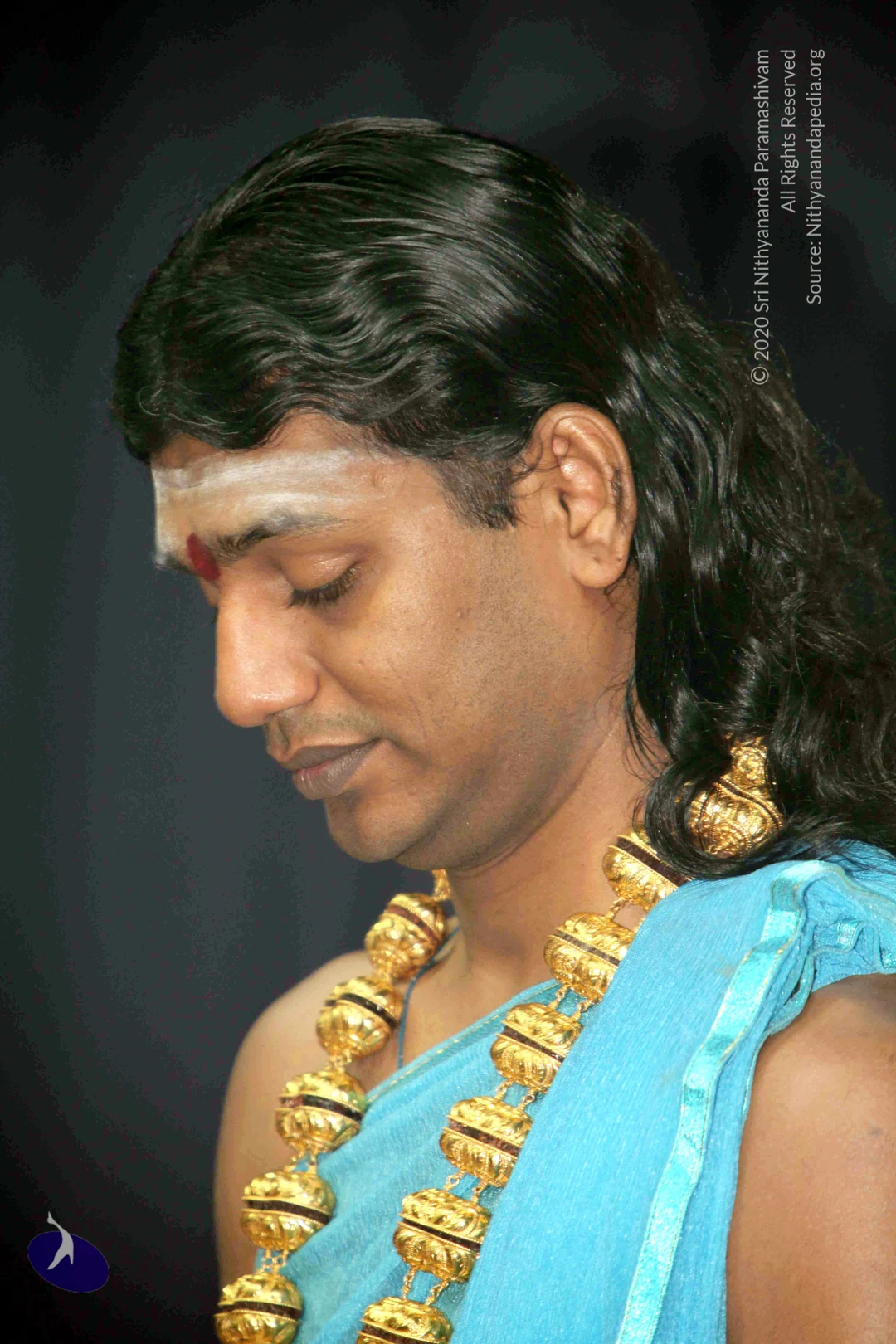
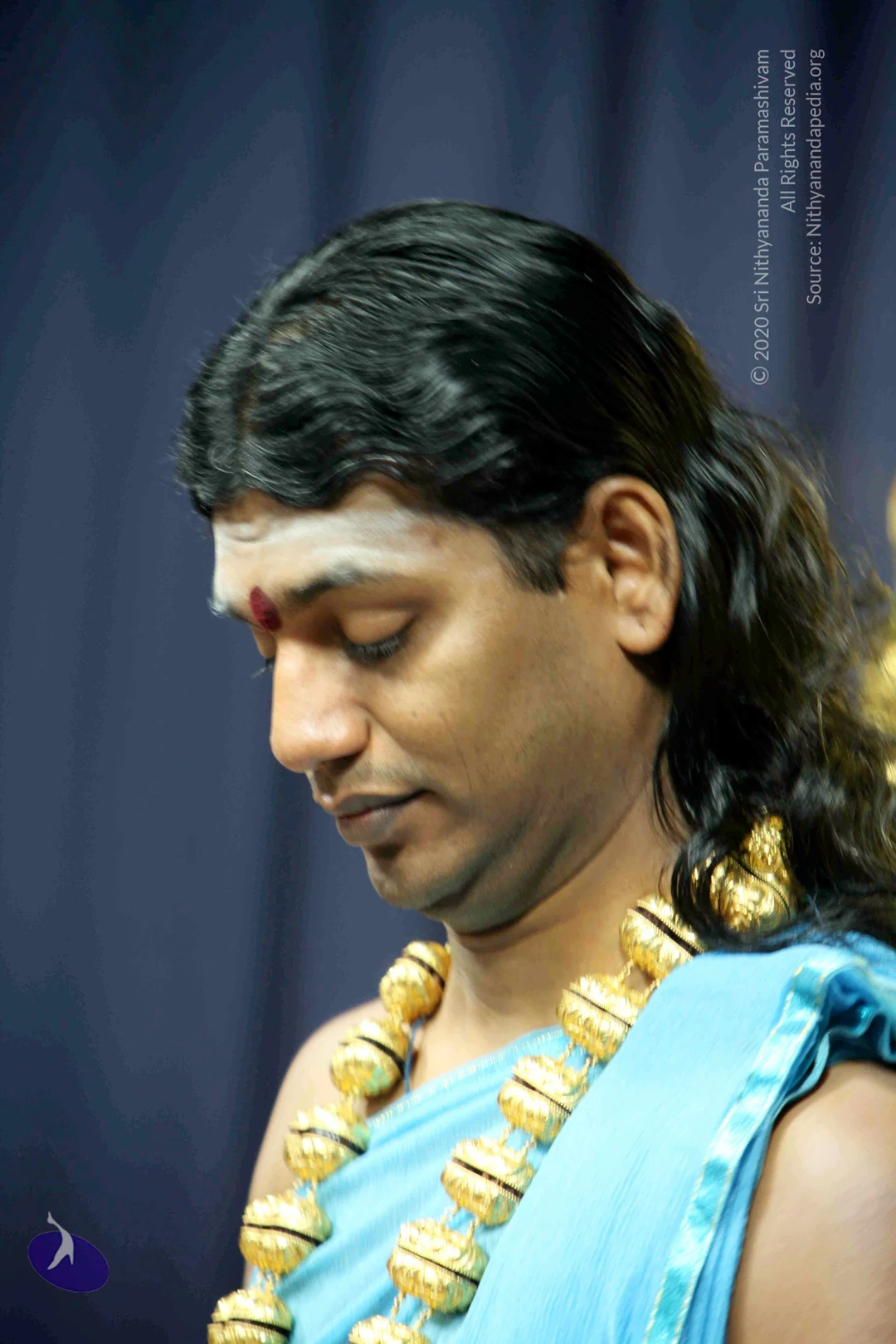
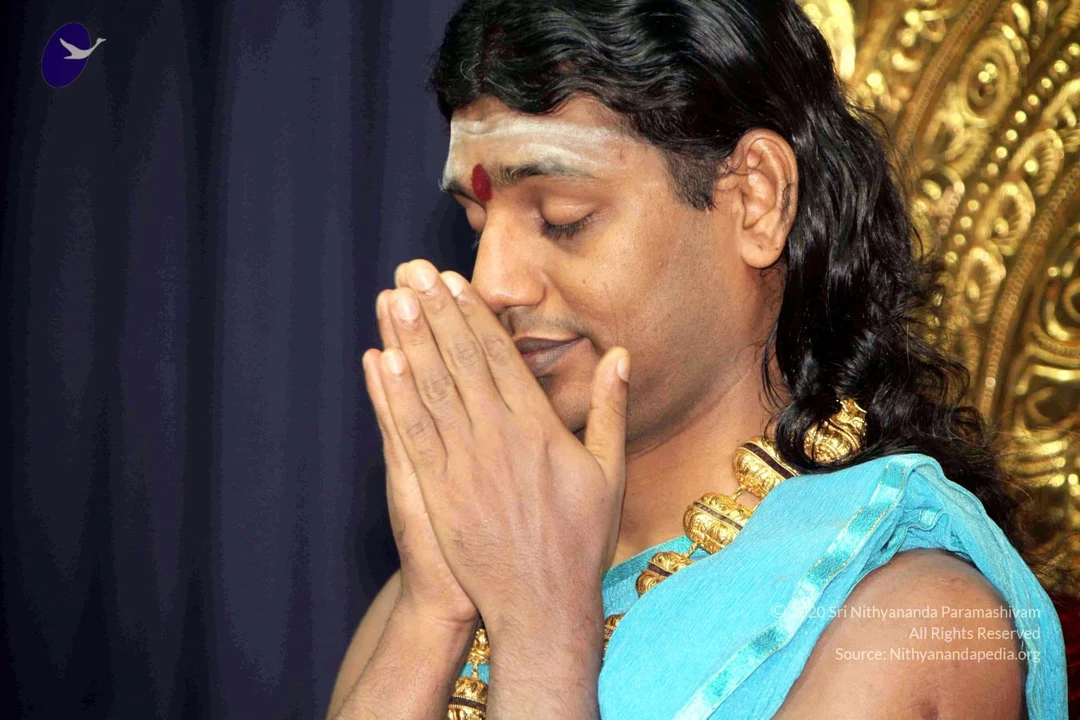
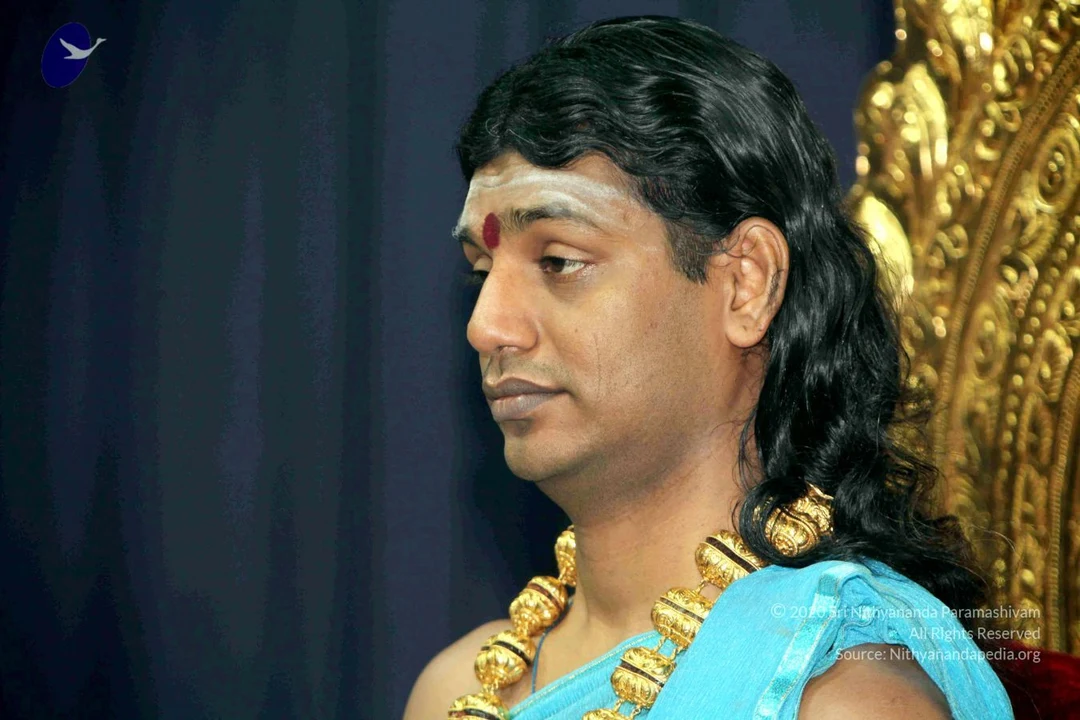
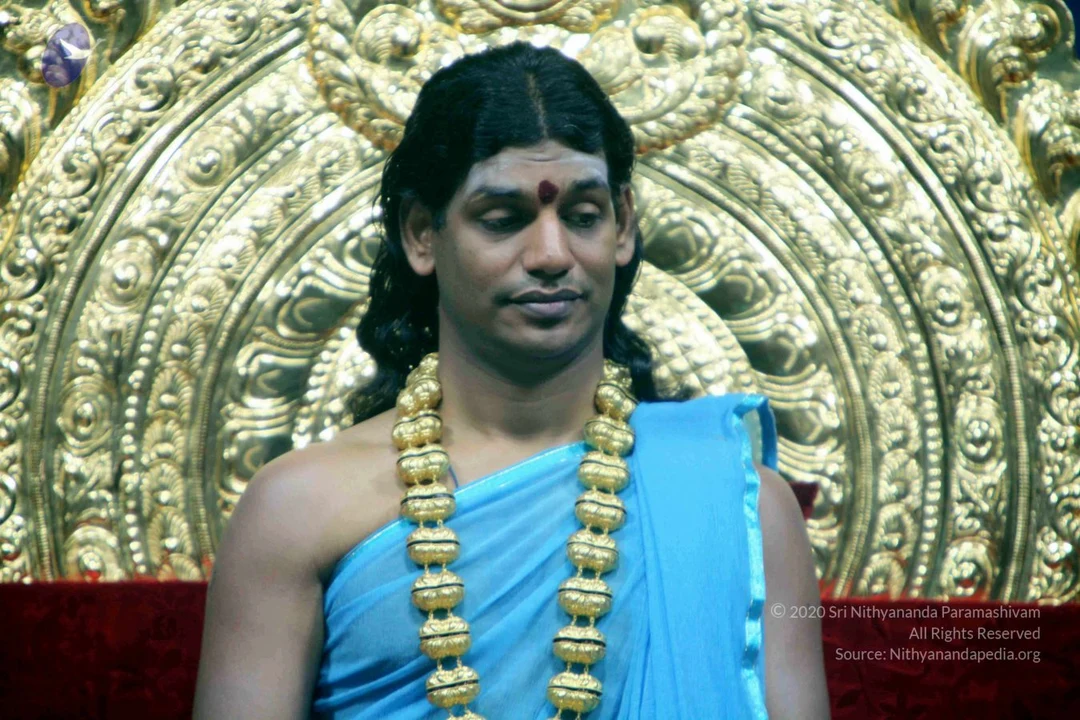
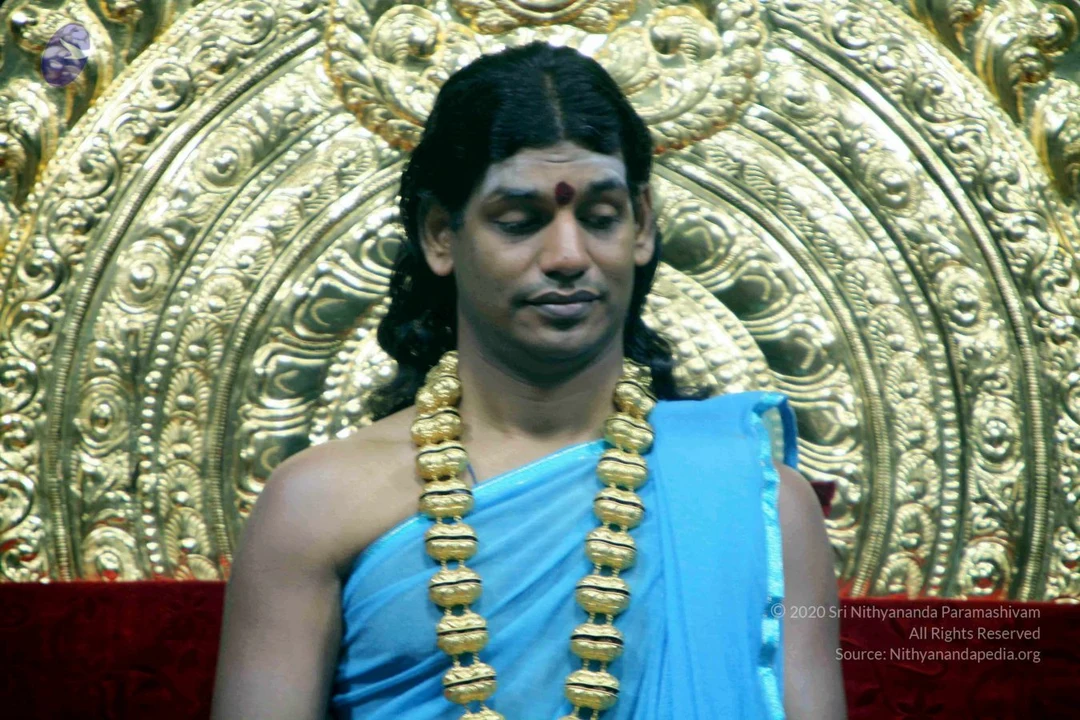
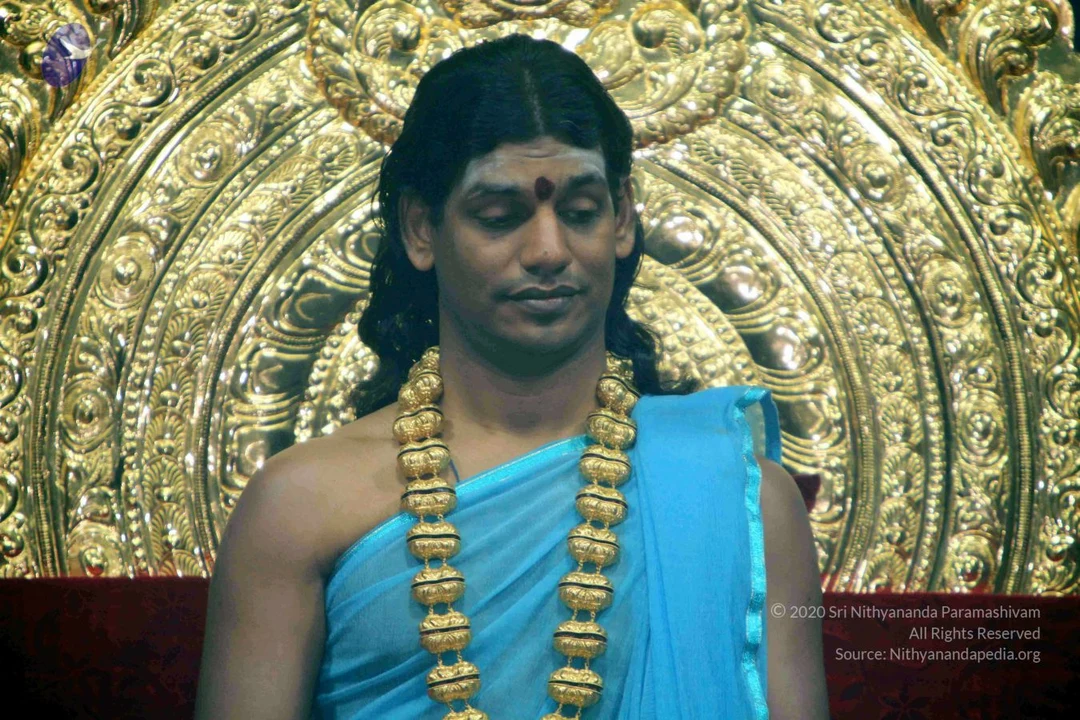
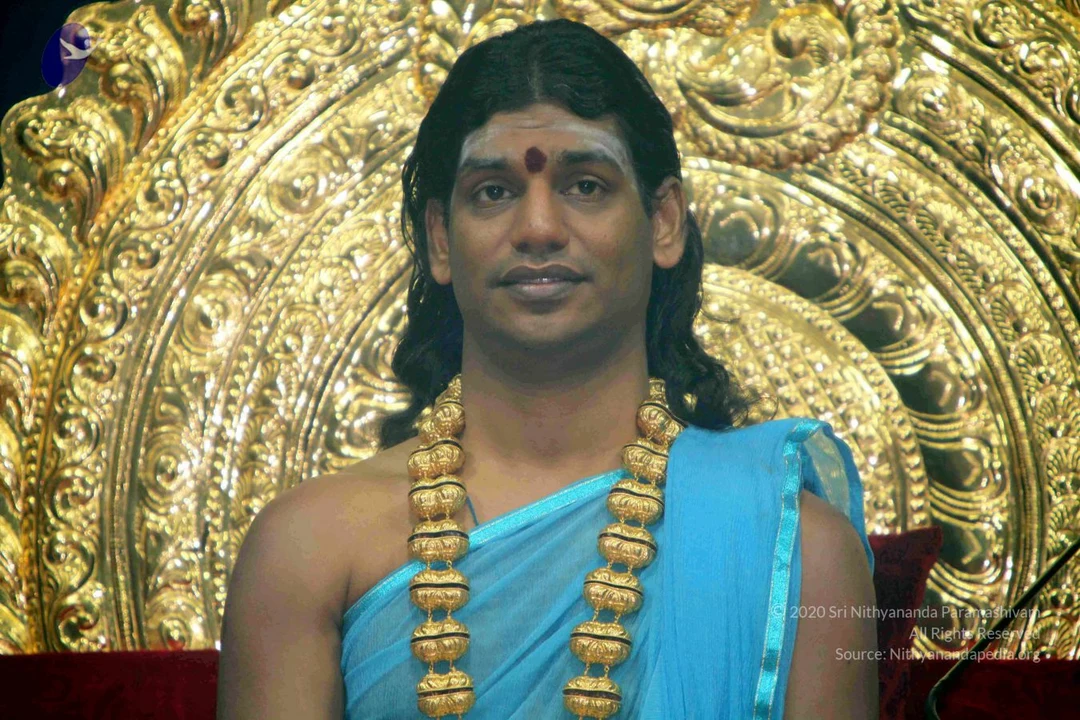
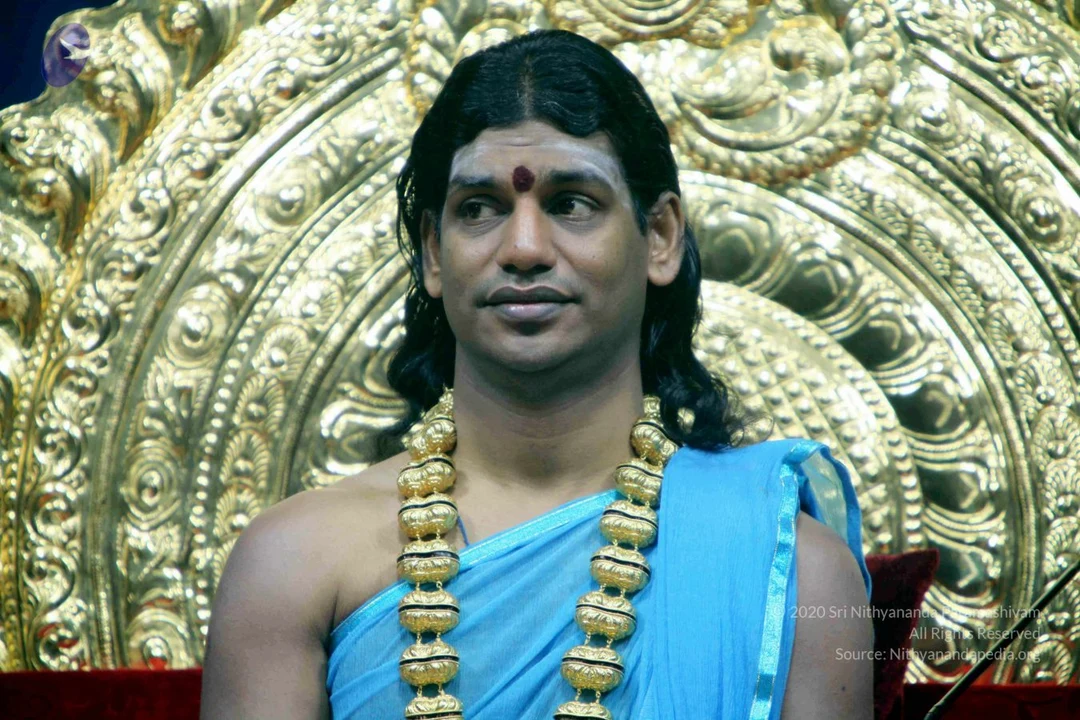
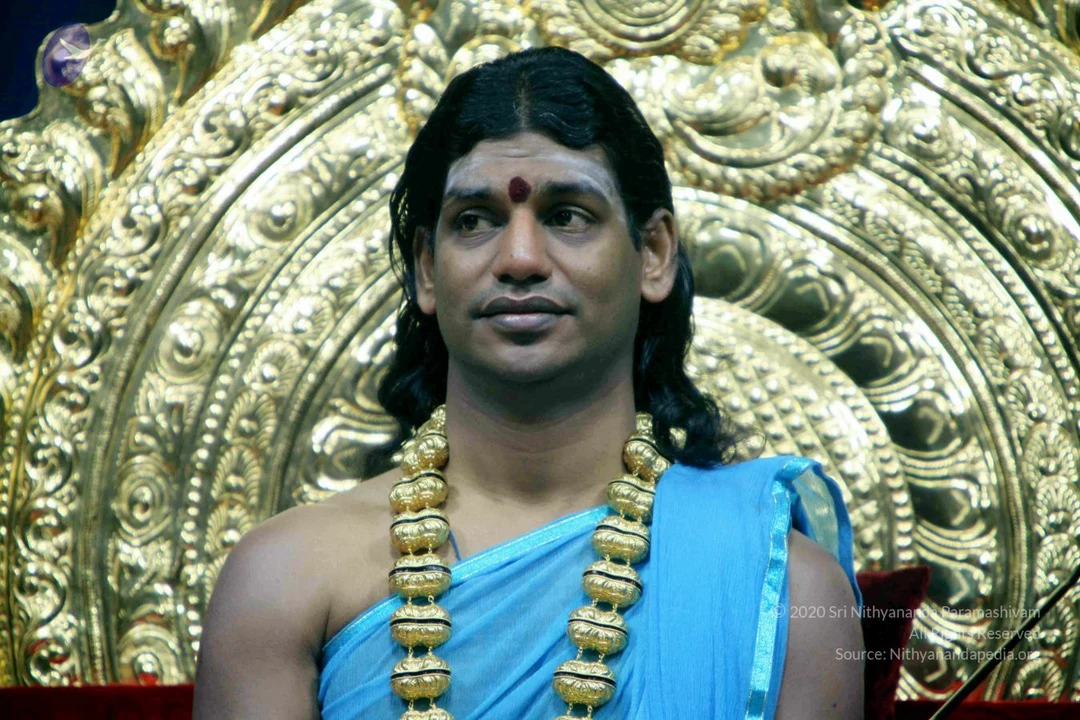
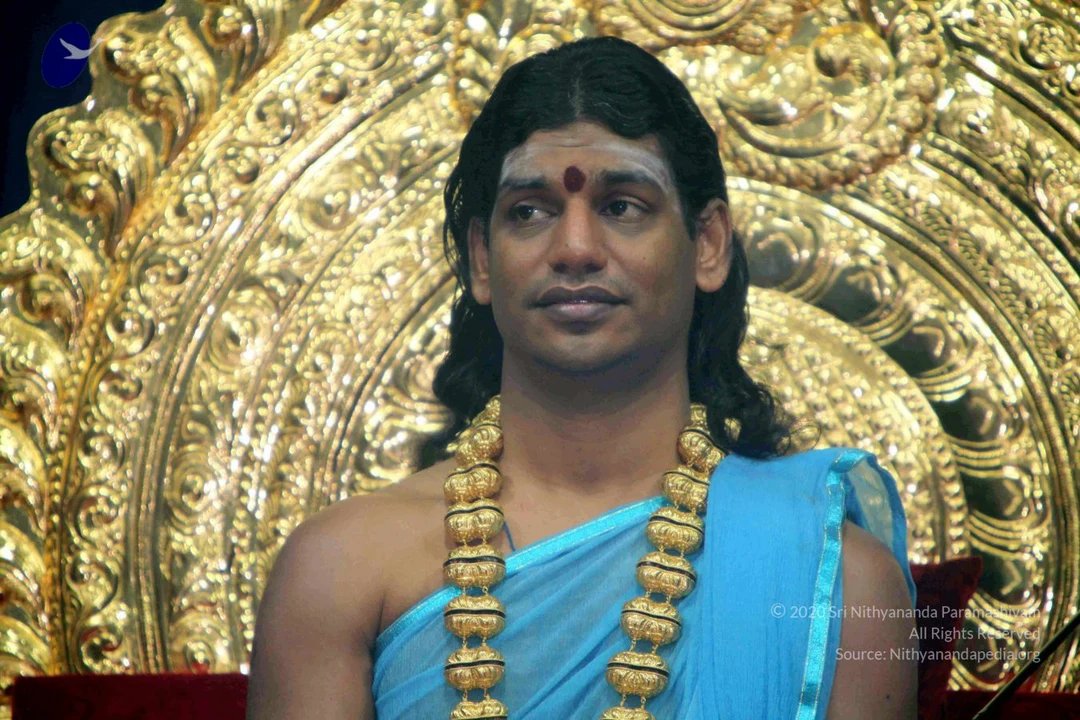
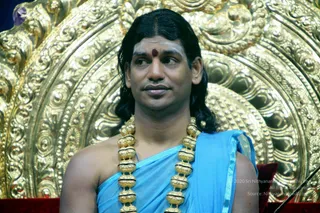
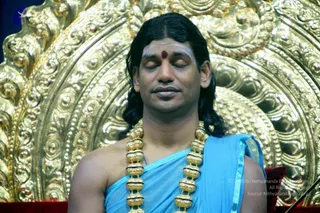
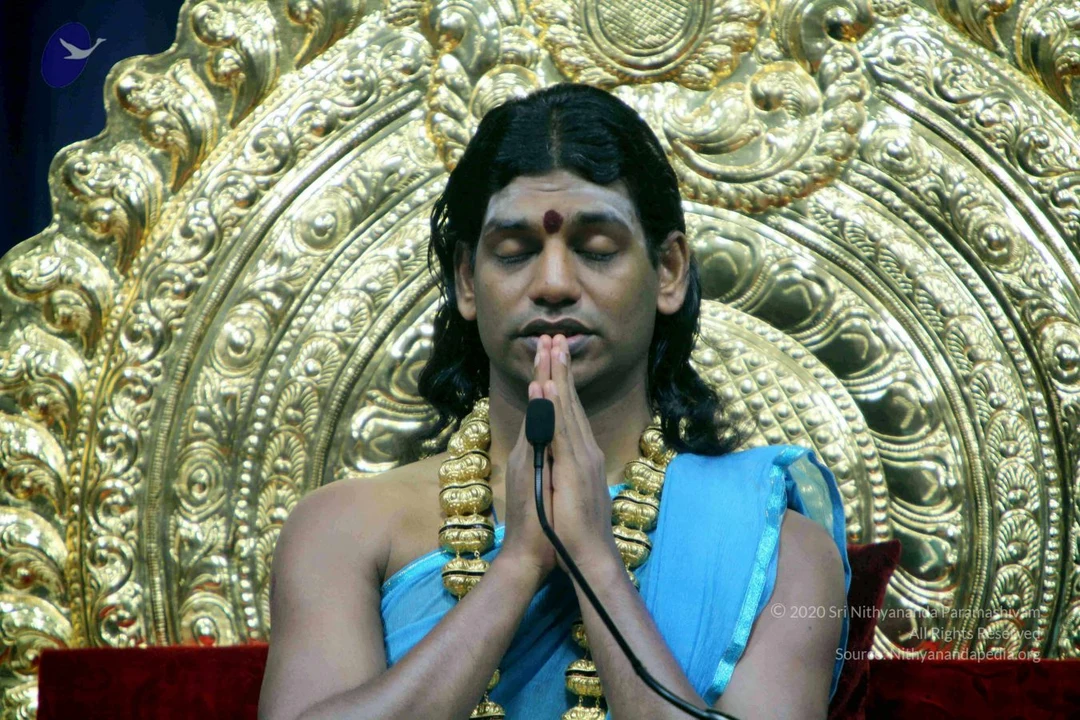
A man with long dark hair swept back sits before an ornate gold repoussé backdrop, wearing a light blue draped shawl edged with a thin lighter stripe over bare shoulders. He wears a red kumkum dot on his forehead and a heavy ceremonial necklace of large gold beads with black spacers, a double strand across the chest. Swamiji (probable): the long swept-back hair, ornate gold jewellery and dignified seated pose match the appearance cues of the Nithyananda Paramashivam. His gaze is turned to the side.A man with long, swept-back dark hair and a red bindi sits with eyes closed in front of an ornate gold repoussé backdrop. He wears a light blue shawl over his bare shoulders and a heavy ornate gold necklace of large beads. The image is a close-up, showing only his upper body.A man with long dark hair seated before an ornate gold repoussé backdrop. He wears a light blue sheer wrap draped over bare shoulders and a heavy multi-strand gold necklace of bead-like links, with a red bindi and white marks on the forehead. He sits upright and gazes forward calmly. Behind him, gilded floral and scrollwork panels frame the seat. Appearance-based label: a person, seated in the role of a teacher giving satsang.A man with long swept-back dark hair and a red bindi sits cross-legged with eyes closed and hands folded in his lap on an ornate red-cushioned gold throne with a large gilded backrest. He wears a light blue draped garment and a multi-strand gold-toned necklace of large beads. Behind him hangs a deep purple curtain, a microphone stand stands at his side, and gilded side tables flank the throne. The scene suggests a seated meditation during a satsang.A man sits cross-legged on an ornate gold-carved throne with red velvet cushions before a deep blue curtain. He wears a sky-blue shawl over one shoulder with a blue dhoti, a long gold ceremonial necklace, and a small red bindi on his forehead, with his hands folded in his lap. A microphone stand angles toward him from the right and a gilded side table sits at the left. The setting matches a seated satsang talk.A man with long dark hair and a red bindi sits cross-legged on a red velvet throne with gold filigree back panel, against a deep blue draped curtain. He wears a light blue sleeveless wrap and a heavy gold bead necklace, hands folded in his lap. A microphone stands beside him and gold-carved side tables flank the throne. Appearance-based probable Swamiji (probable) seated in an ornate throne with long swept-back hair, a blue wrap and gold necklace, consistent with a satsang setting.

sarvadarshan

15 photosSource gallery
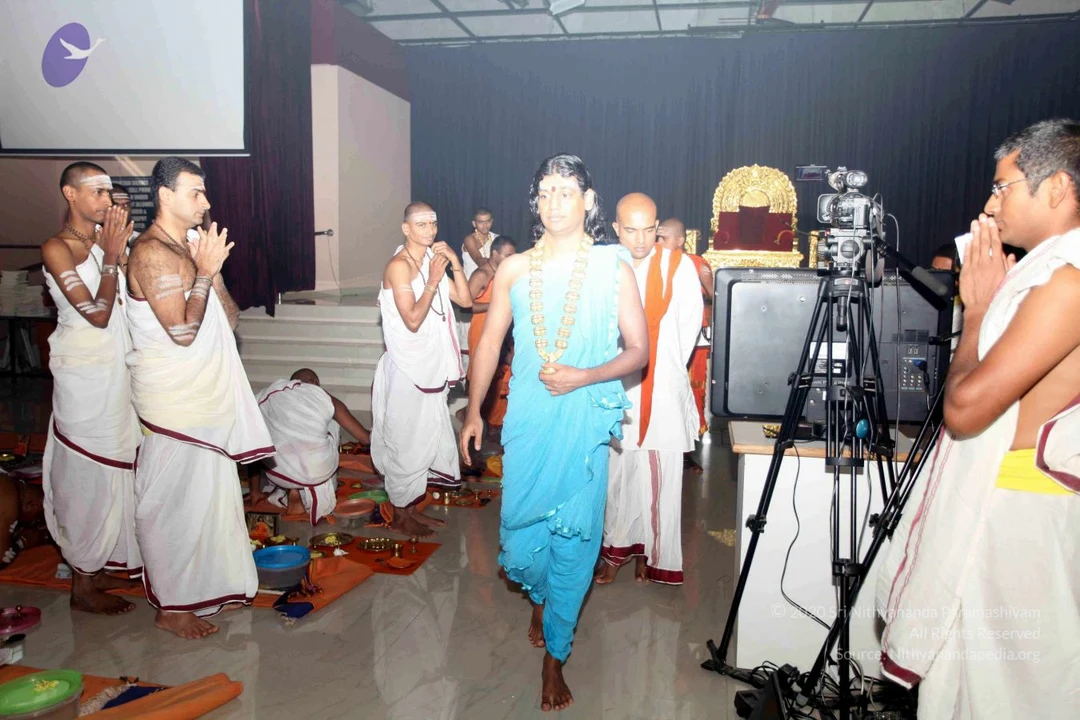
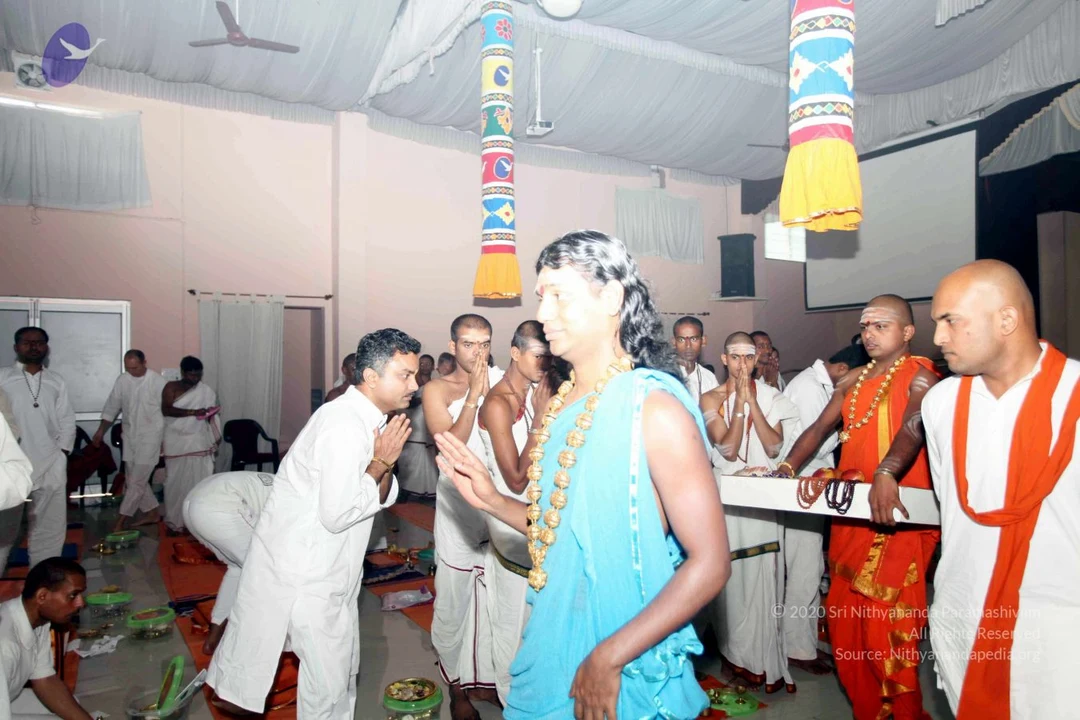
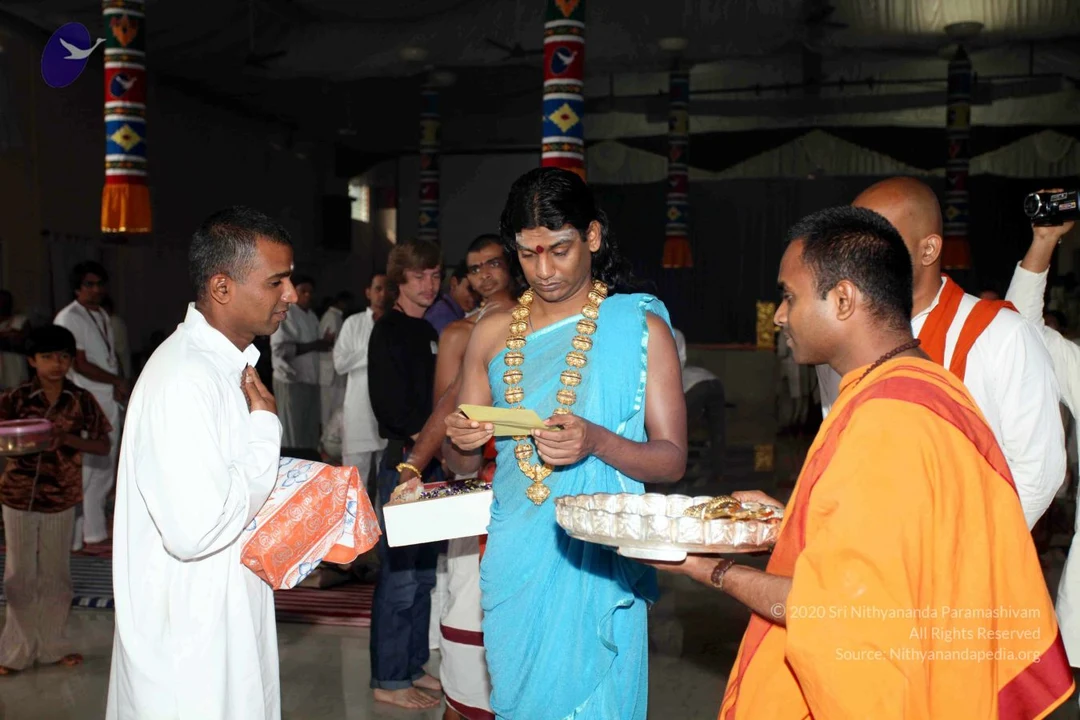
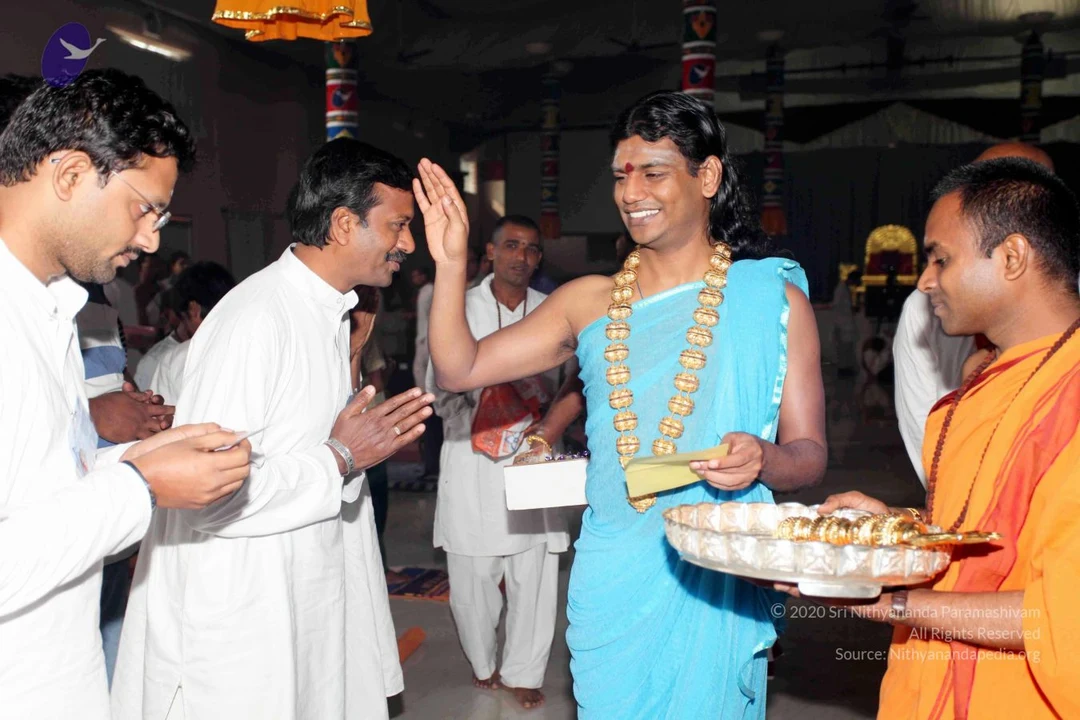
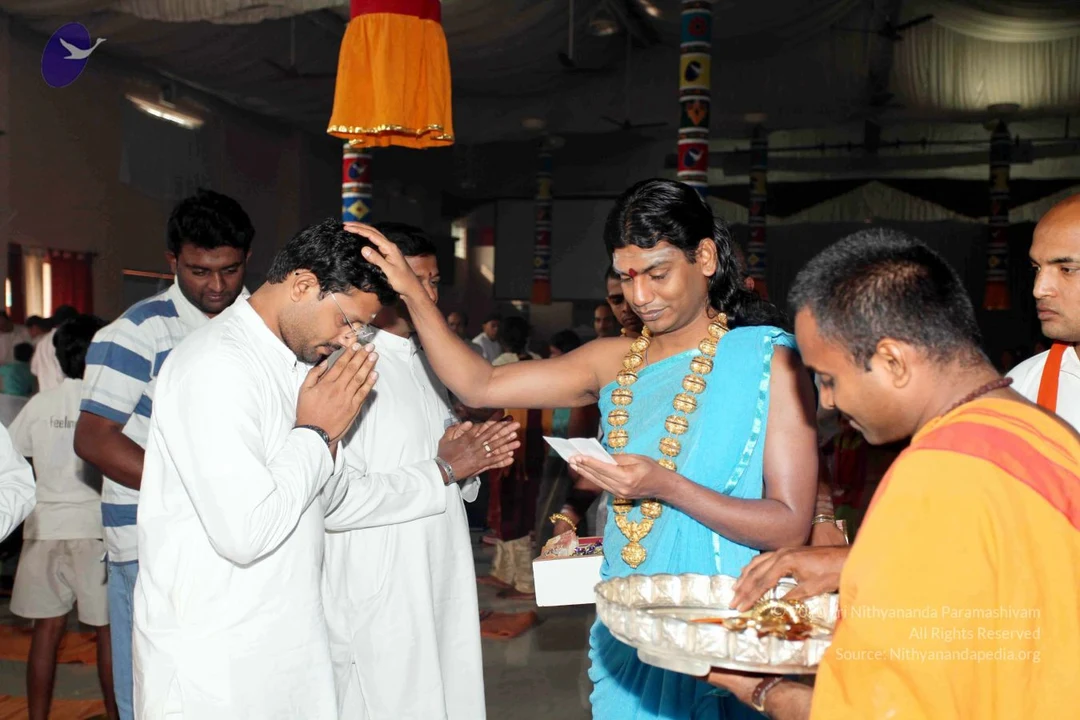
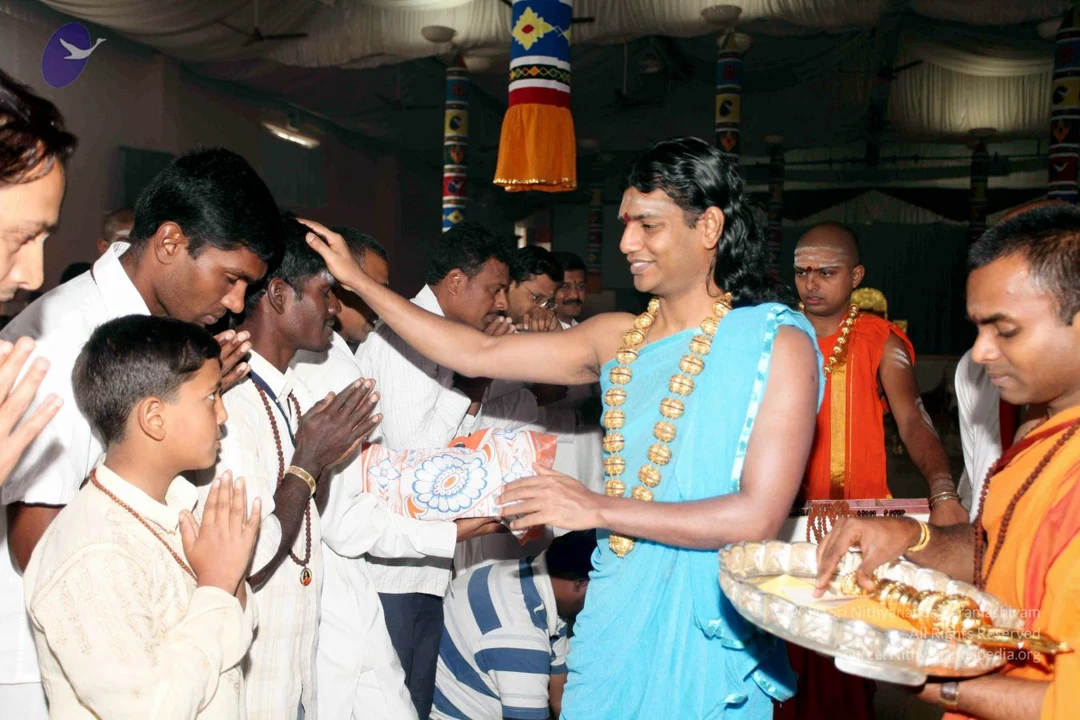
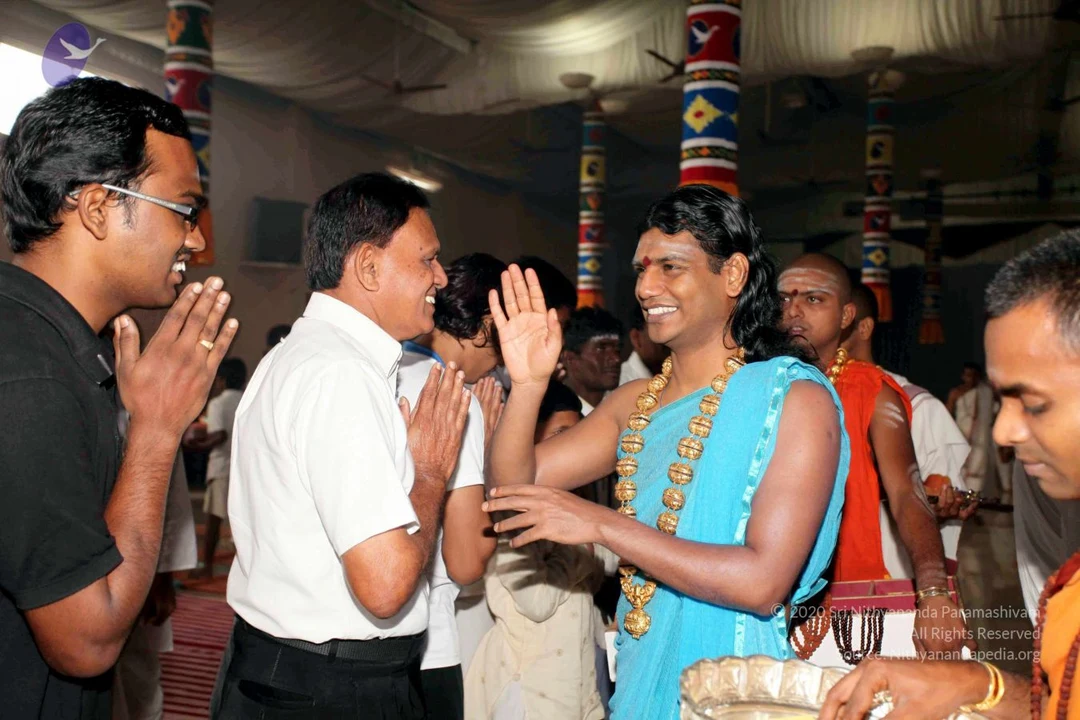
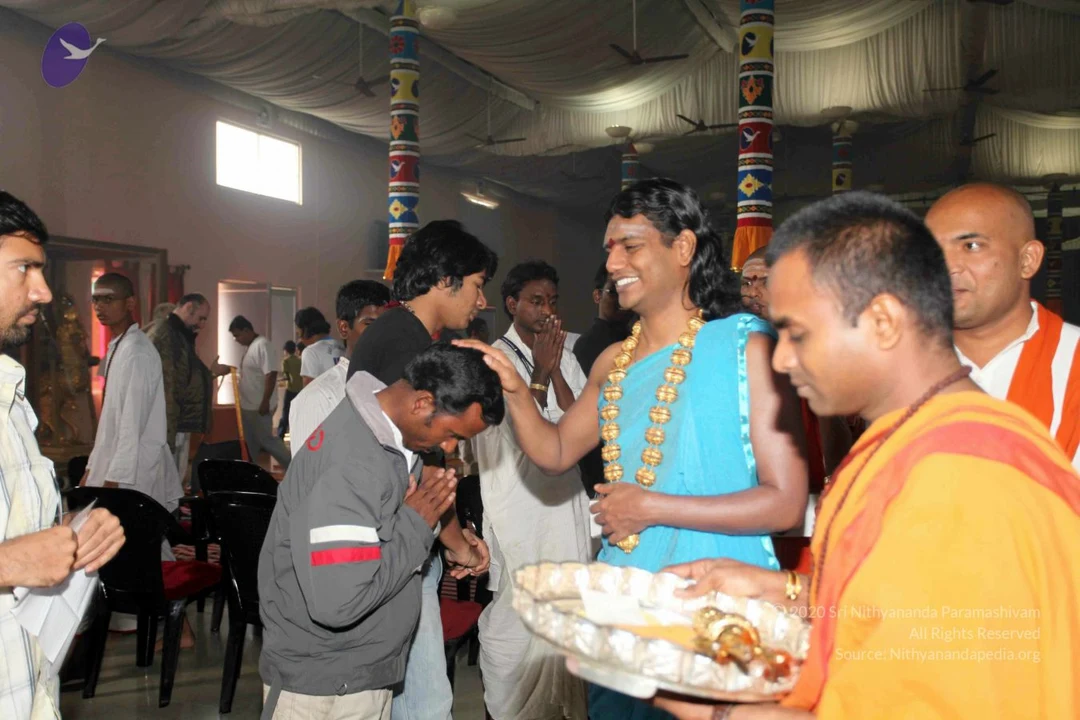
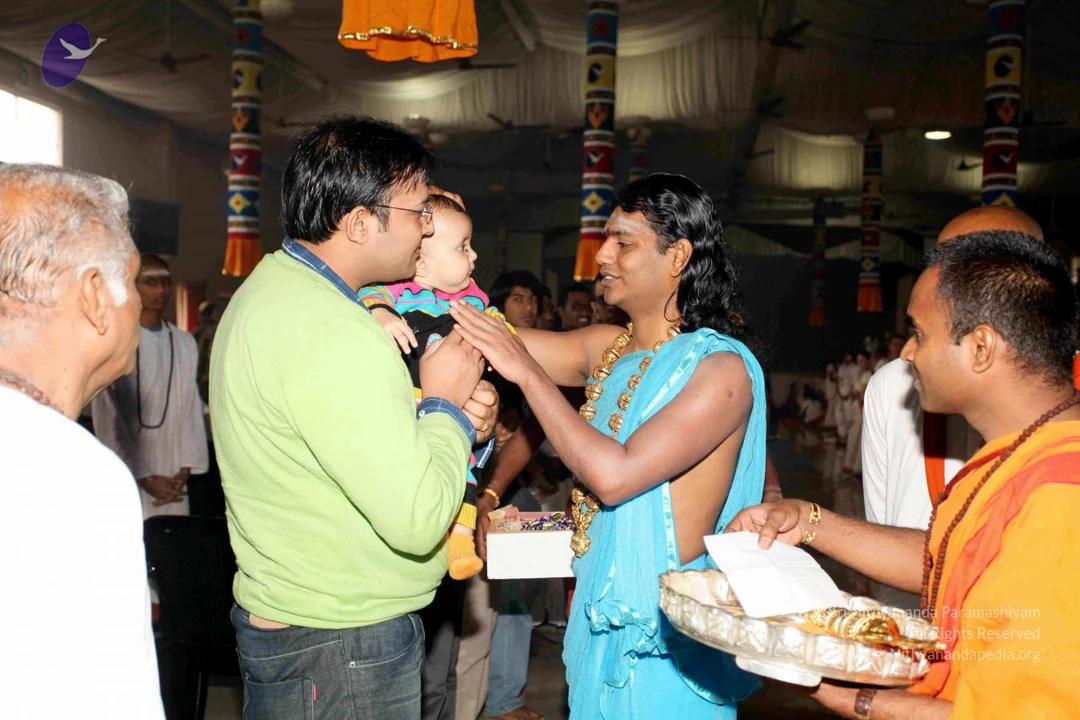
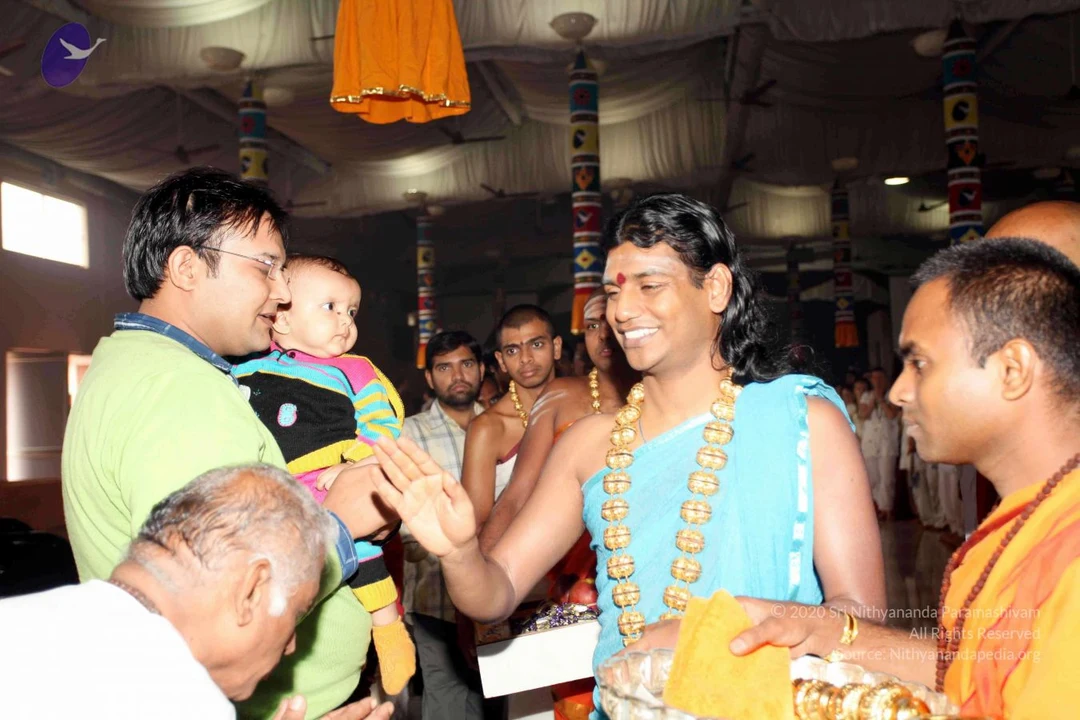
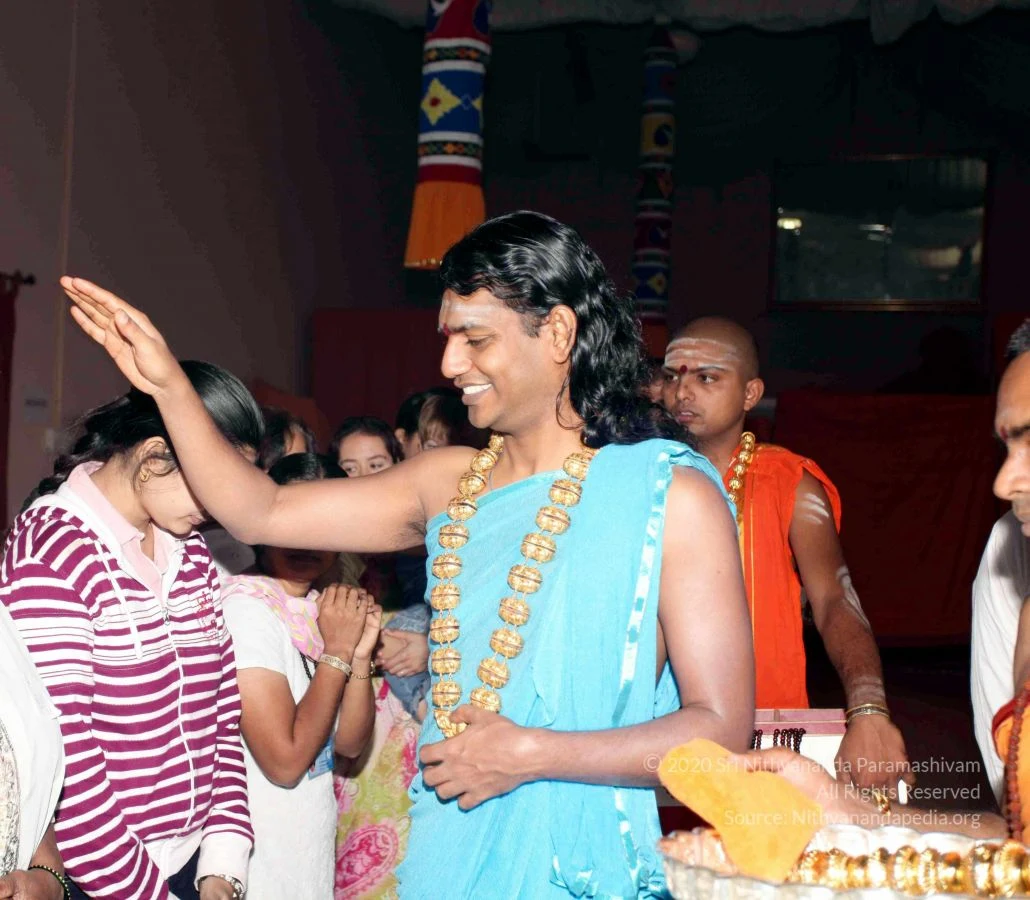
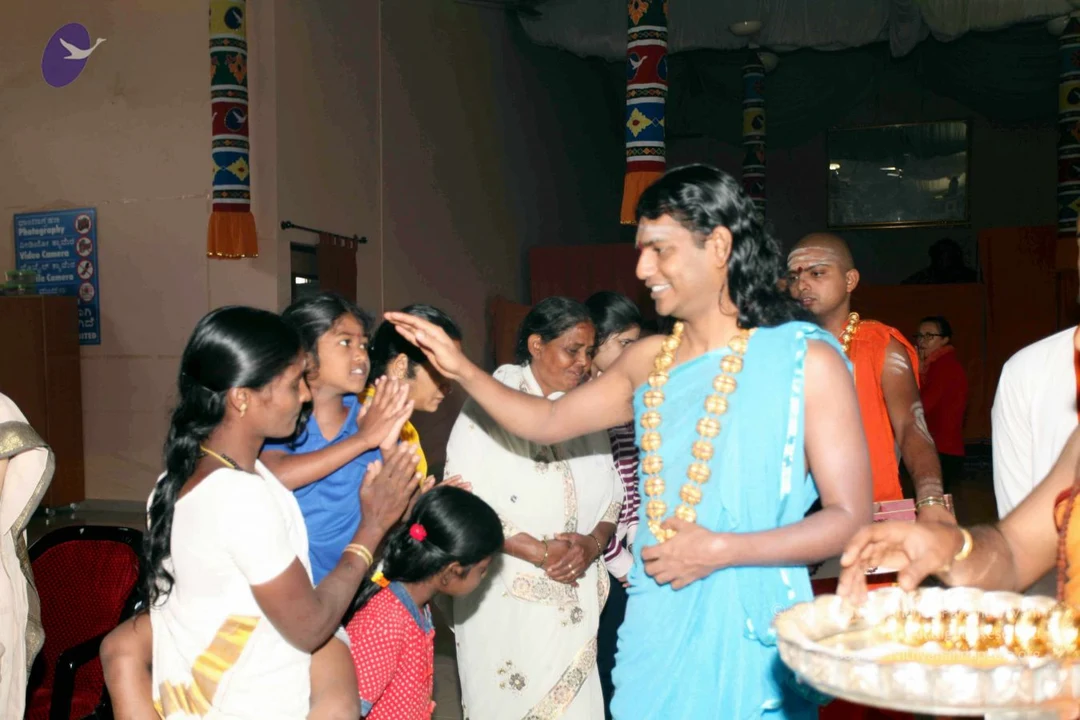
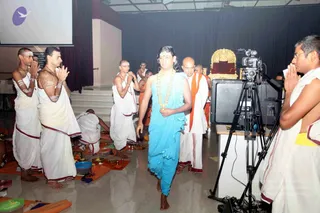
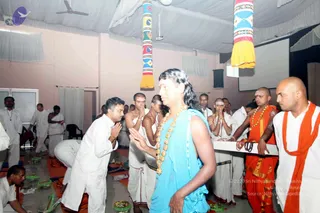
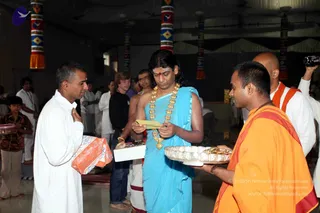
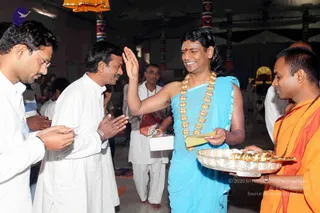
A barefoot figure in a turquoise-blue dhoti and matching shawl, with a long rudraksha-style bead necklace and a red bindi, walks forward through a hall while several men in white dhotis with red borders stand in anjali mudra with palms together. Long dark hair falls past the shoulders of the central figure. Orange-cloth ritual mats hold brass plates and offering vessels on the floor, a gold-and-red throne stands in the background, and a video camera on a tripod and a monitor sit at right beside a man in white with folded hands. A projected slide appears at top left.Indoor ritual hall with a white tent ceiling and two tall striped cloth banners in red, yellow and blue hanging from above. Around him, men in white dhotis and shawls stand with palms pressed together in namaskar, and a man in white bows low at left. Two shaven-headed priests in saffron-orange cloth with sandalwood marks and rudraksha-style beads stand at right, one carrying a white tray of beads and offerings. Brass and green-rimmed plates with oil lamps and flowers sit on orange mats on the floor. A projection screen is visible at upper right.Indoor photo of a ceremonial moment in a hall with decorated pillars wrapped in red, blue and white bands. A figure with long swept-back dark hair, a gold necklace and a light blue wrap, with a small red mark on the forehead, holds a small yellow card while looking down. Beside him a man in white clothes holds an orange cloth bundle and a white box, and a man in saffron-orange robes on the right holds a silver tray with gold items. Behind them devotees in white stand around, and a cameraman in the upper right films.Indoor photograph of a man in a turquoise-blue wrap with long swept-back hair, a red bindi and a heavy gold bead necklace, smiling and raising a palm toward a man in white kurta clasping his hands in greeting. Another man in white holds a small white box and a yellow envelope; a man in saffron robes with a rudraksha mala holds a silver tray of gold items. Several others stand in white behind them, with colourful pillars and a gold-fringed canopy above. a person: the central figure has long swept-back hair, ceremonial gold beads and a bindi.A photograph of a devotional blessing inside a hall with hanging decorative pillars and an orange-and-yellow fabric canopy overhead. A person in a turquoise sari with a long gold coin necklace and a red bindi places a hand on the head of a man in white who has his hands joined in a namaskar gesture. Behind them stands another man in white with his hands folded. At lower right, a man in an orange garment with a saffron sash holds a silver tray with a small lamp and ritual items. Several other people in white and striped shirts are in the background. The scene suggests a puja or blessing ritual.A photograph of a devotional blessing in an indoor hall with draped white fabric and colourful striped pillars overhead. A long-haired man in a turquoise-blue wrap and a heavy gold bead necklace extends his right hand to bless a line of devotees, touching the head of a man in a white shirt with a rudraksha mala. Before him a young boy in cream clothes presses his palms together in namaste, and devotees in white shirts stand with folded hands. At right, a shaved-headed priest in orange robes holds a silver plate of offerings. A distinctive long-haired figure in blue with ornate gold beads matches the page's a person cues.
Inner Awakening session

58 photosSource gallery
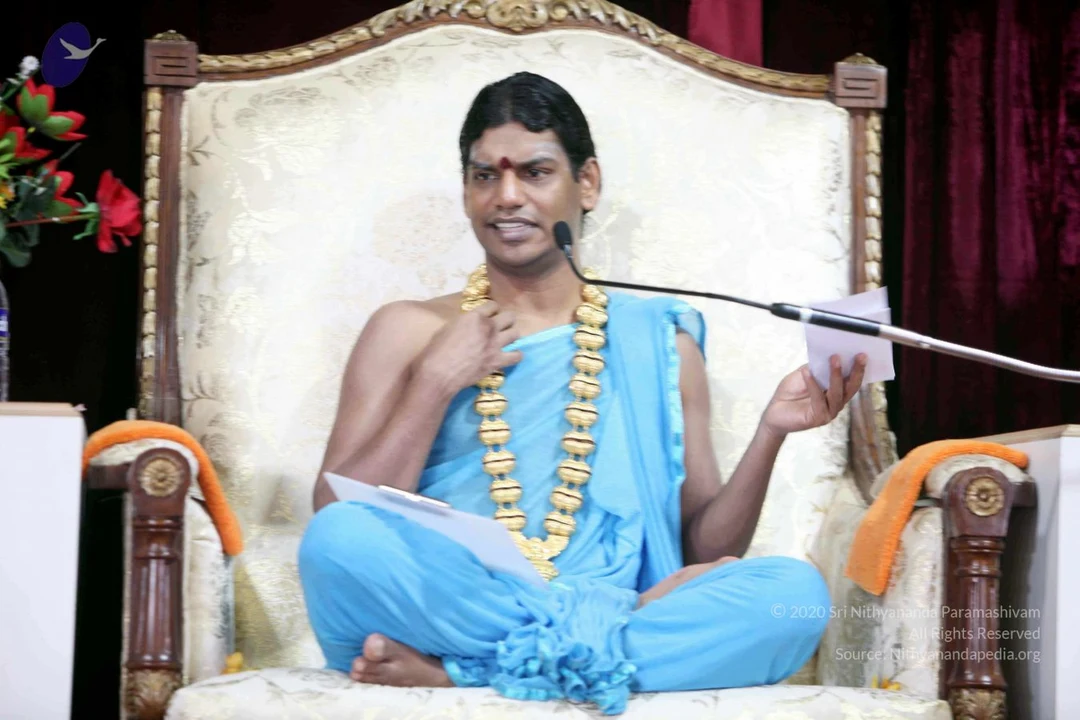
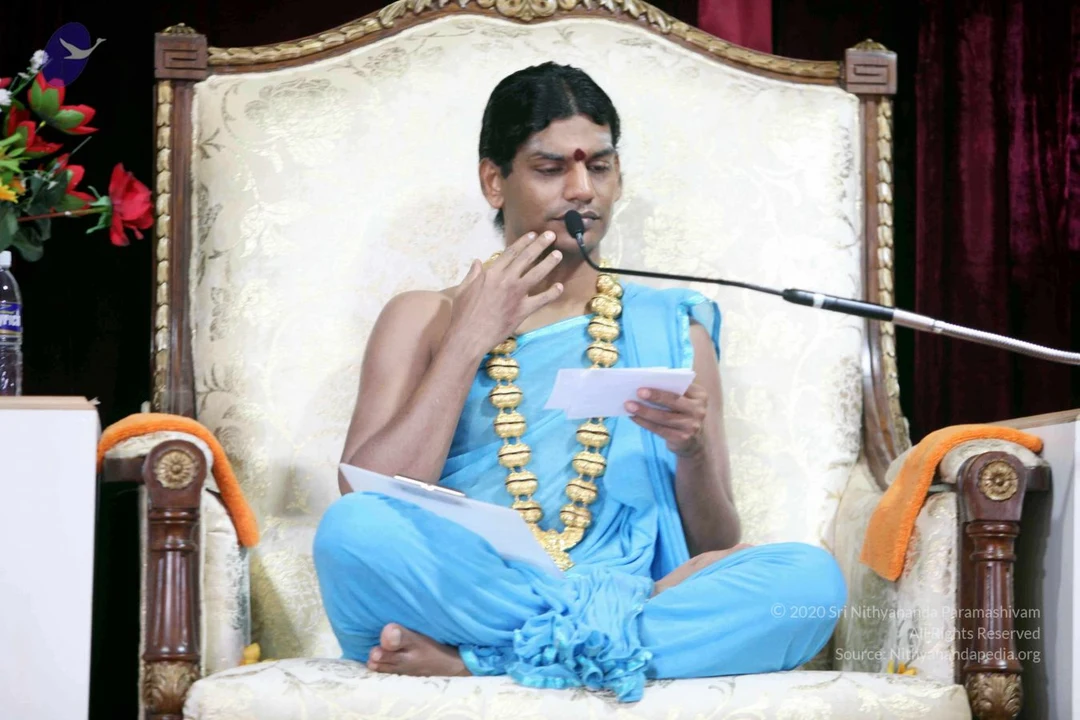
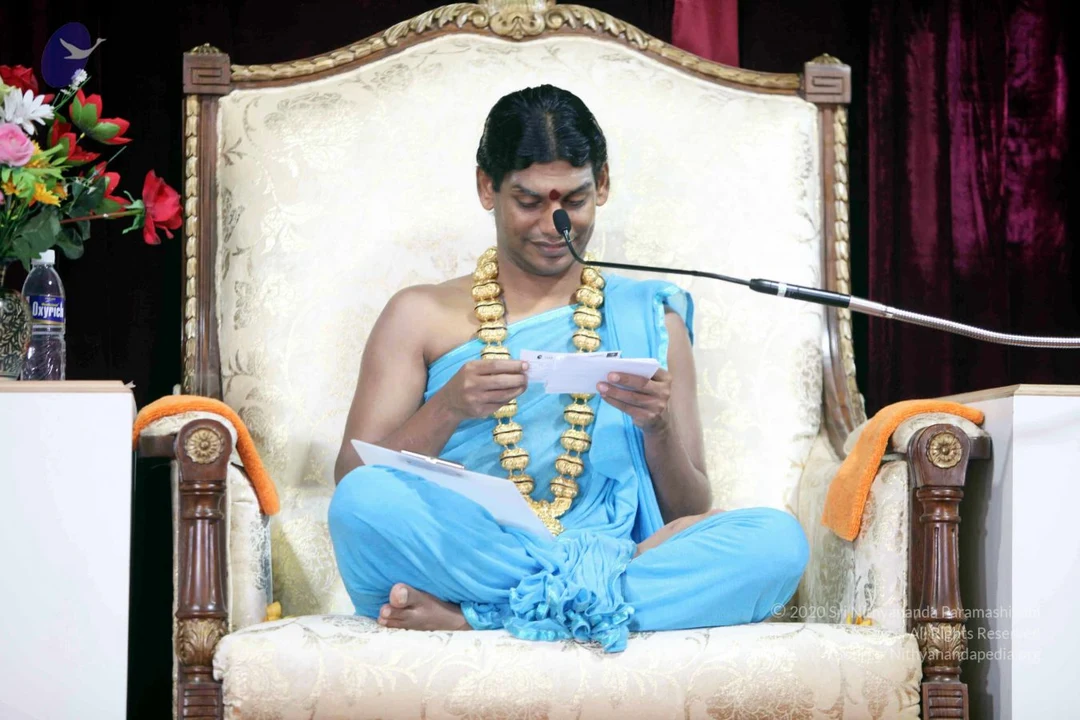
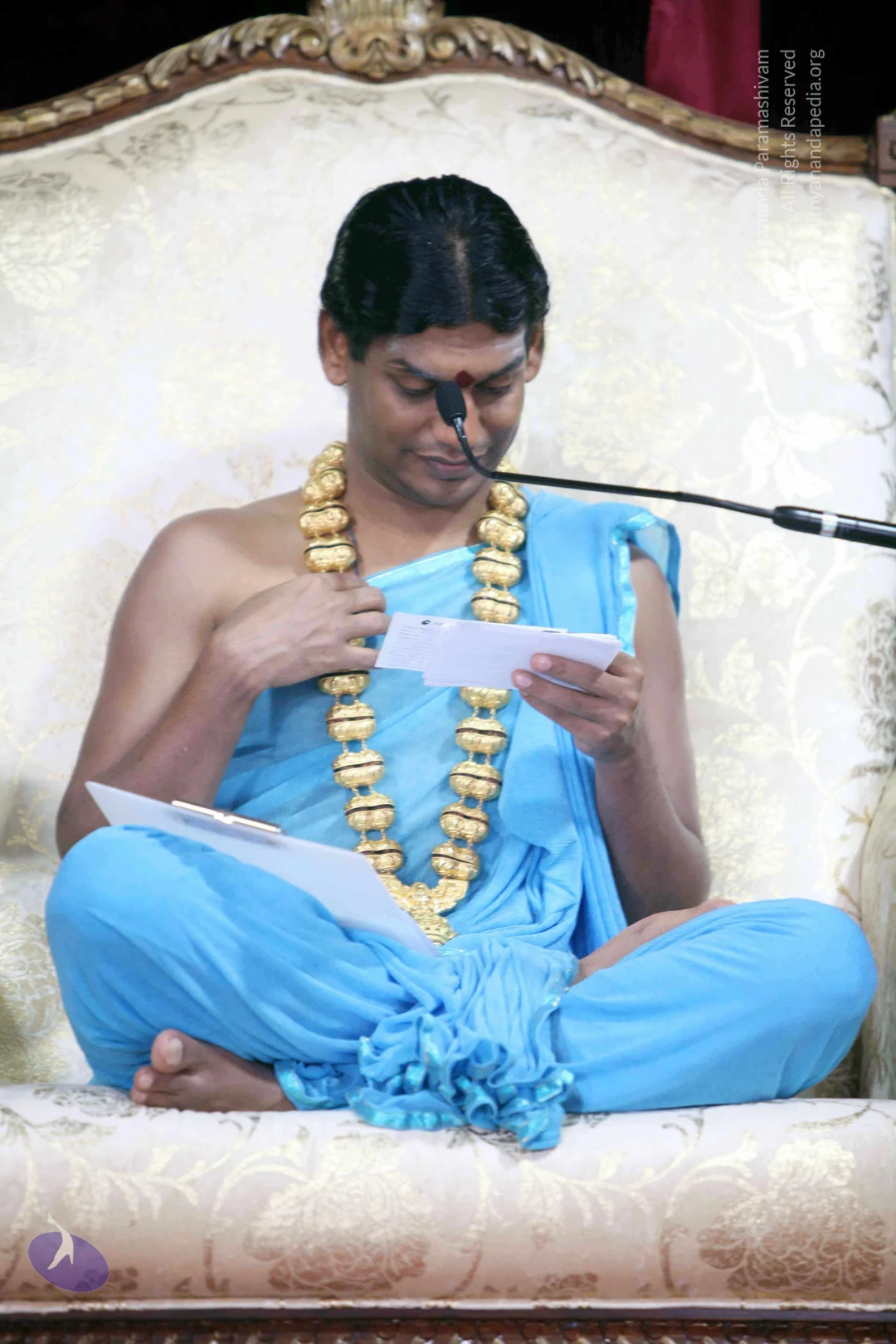
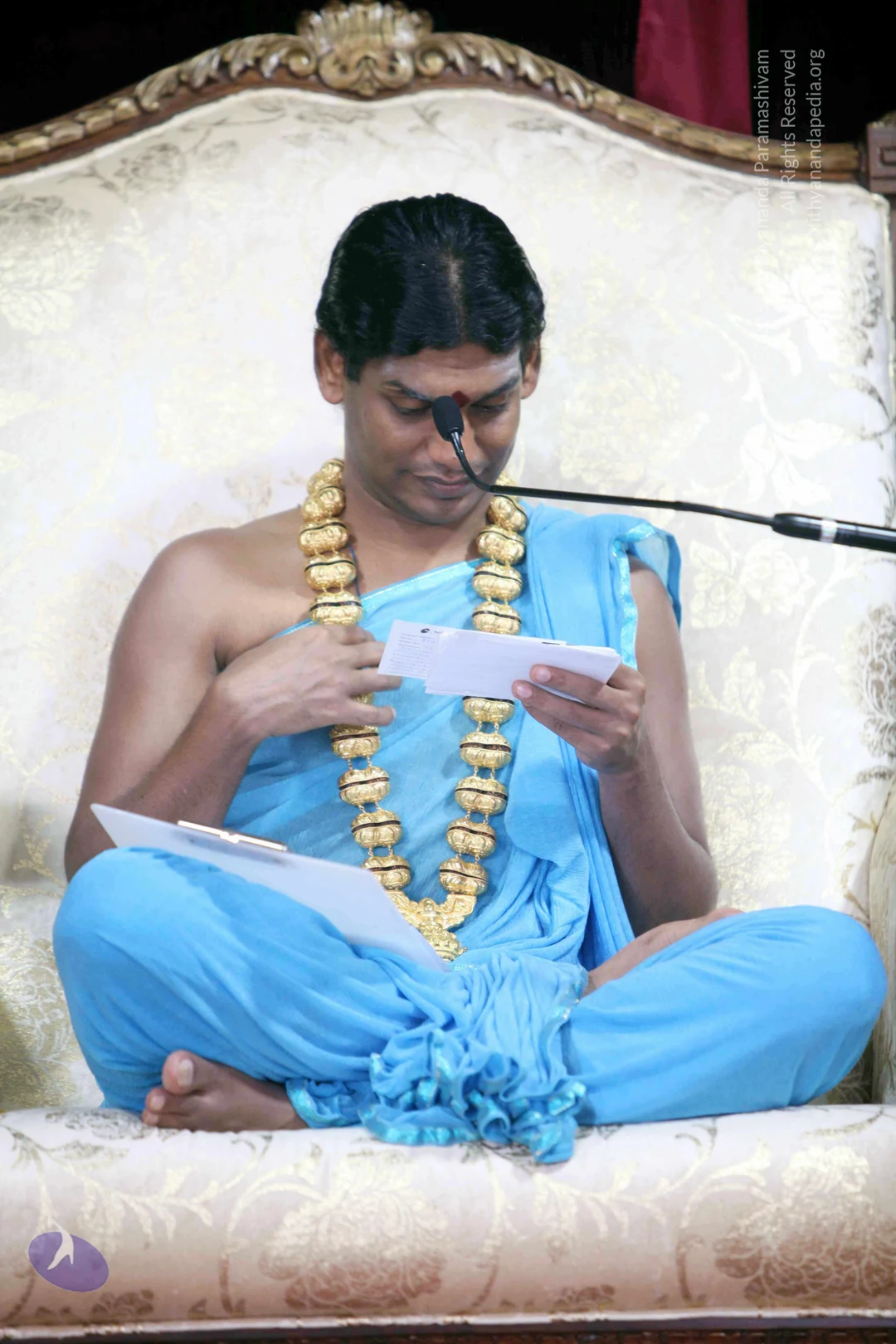
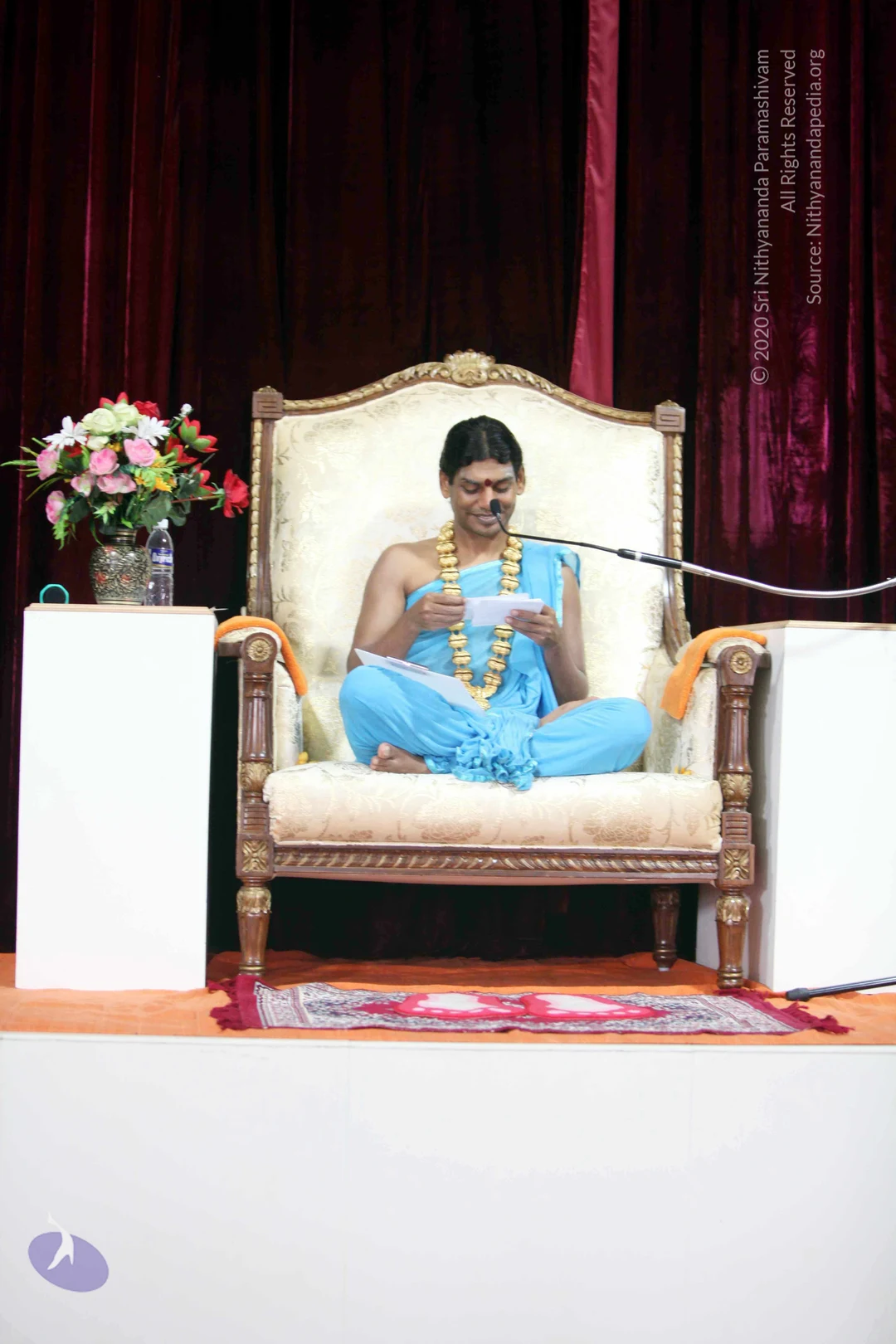
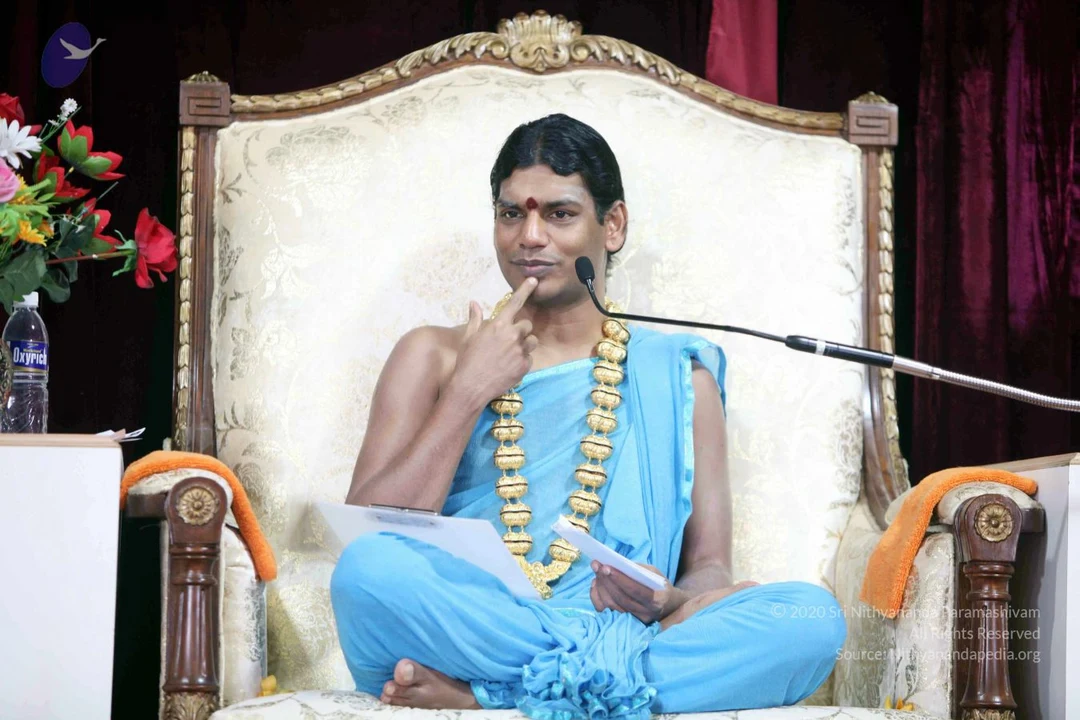
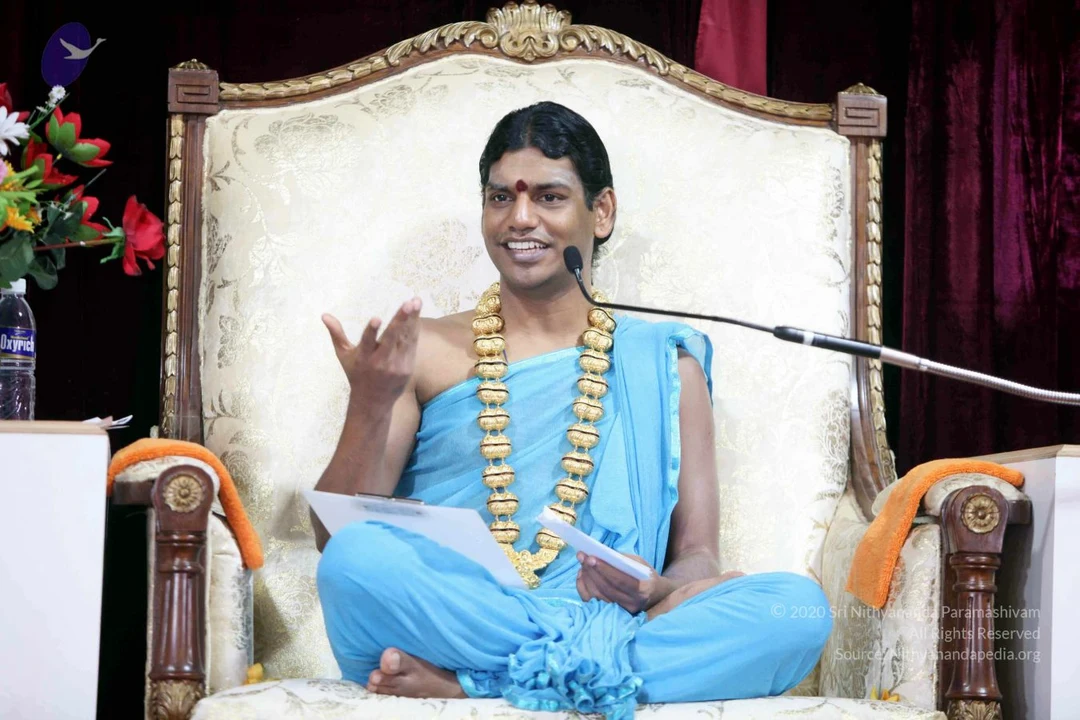
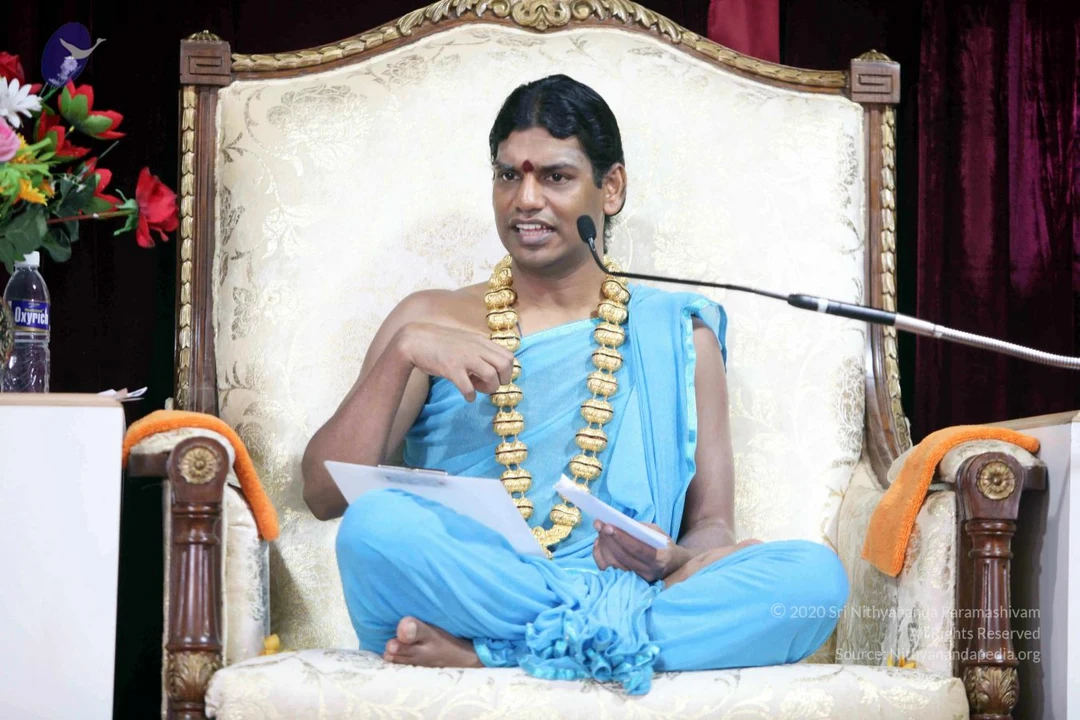
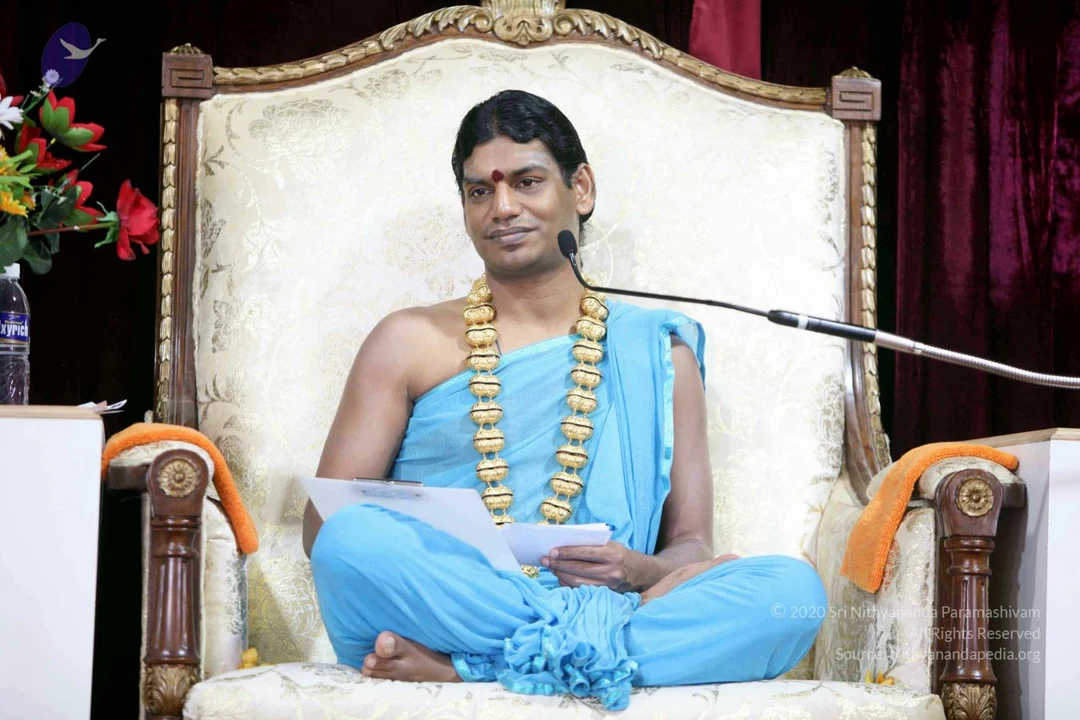
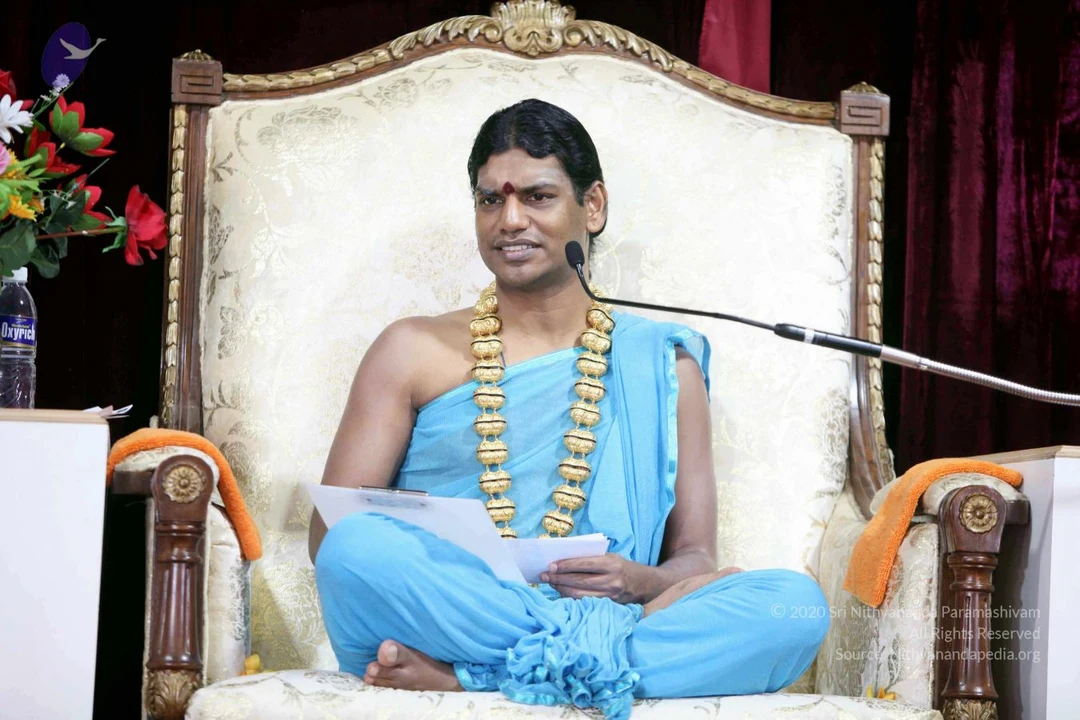
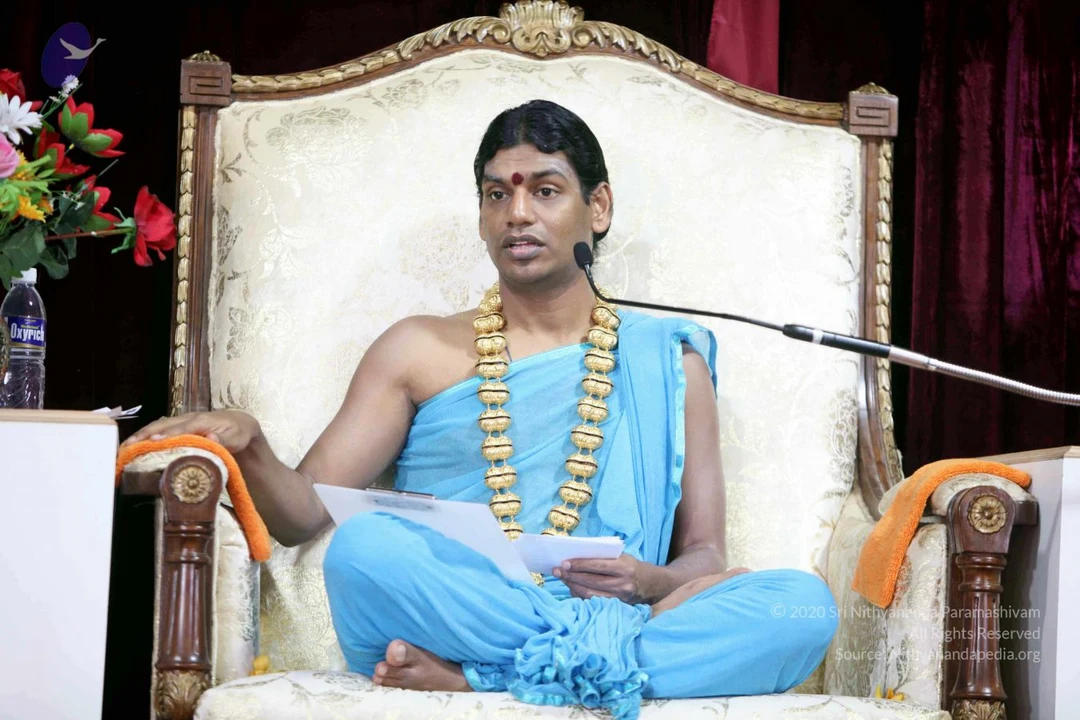
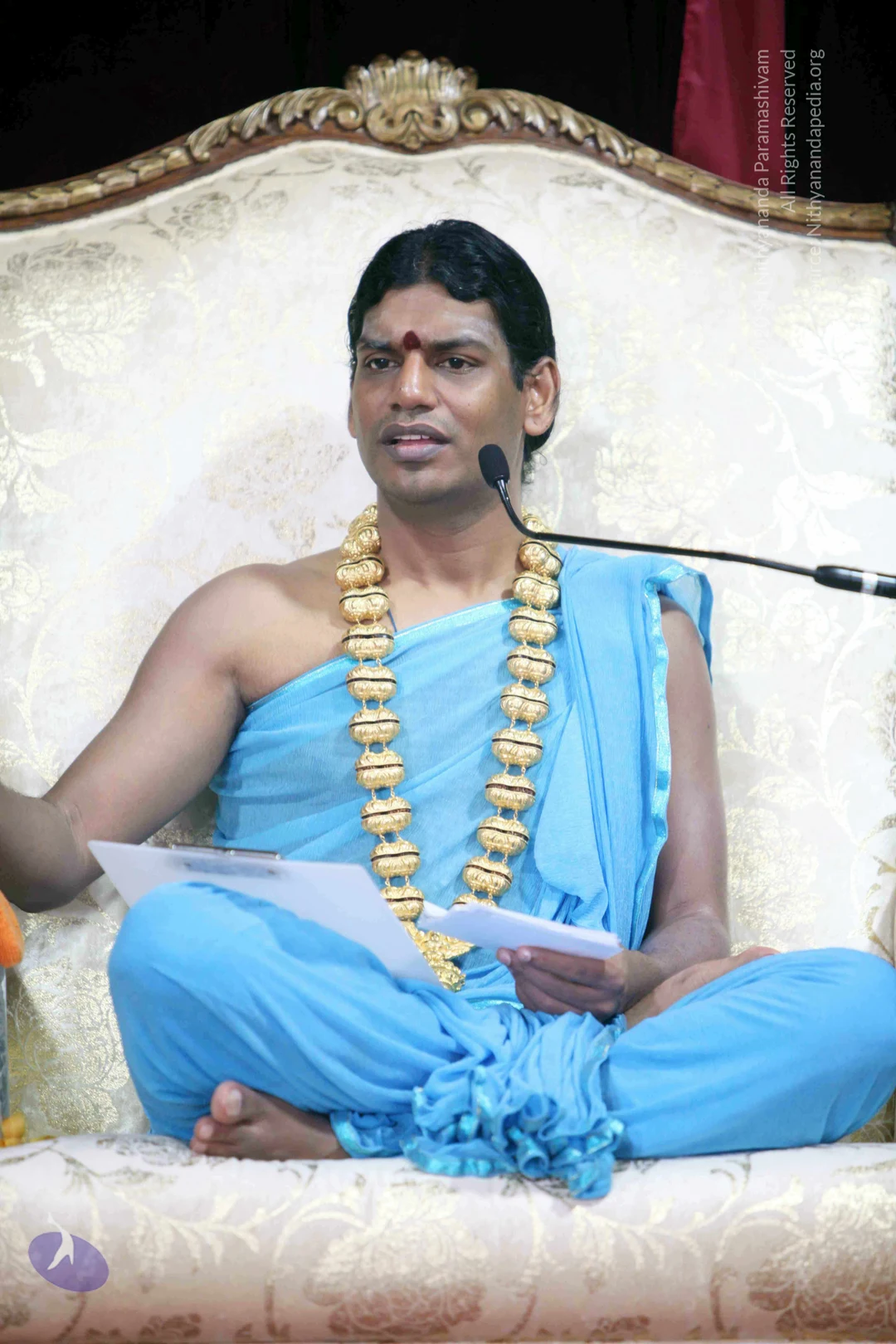
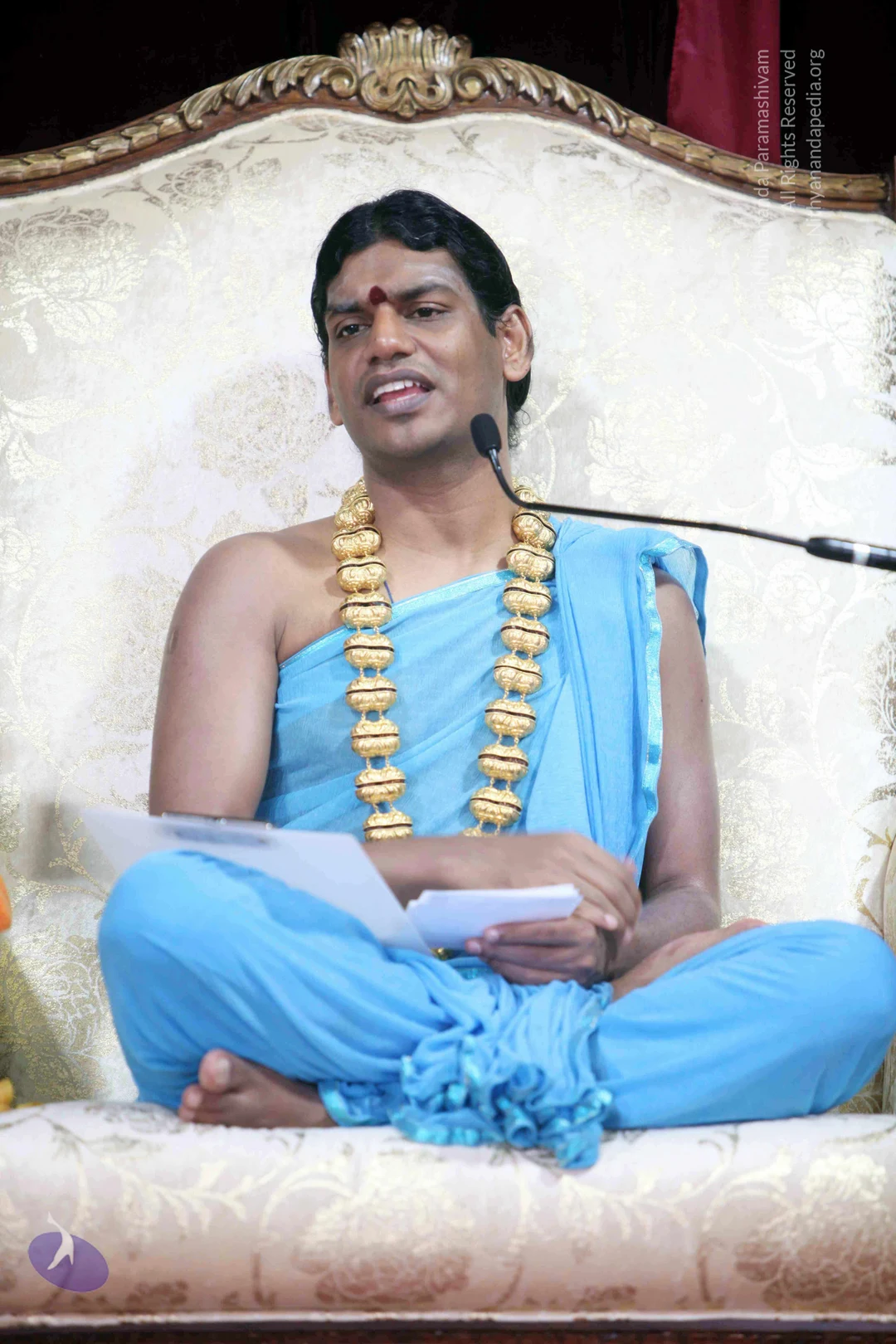
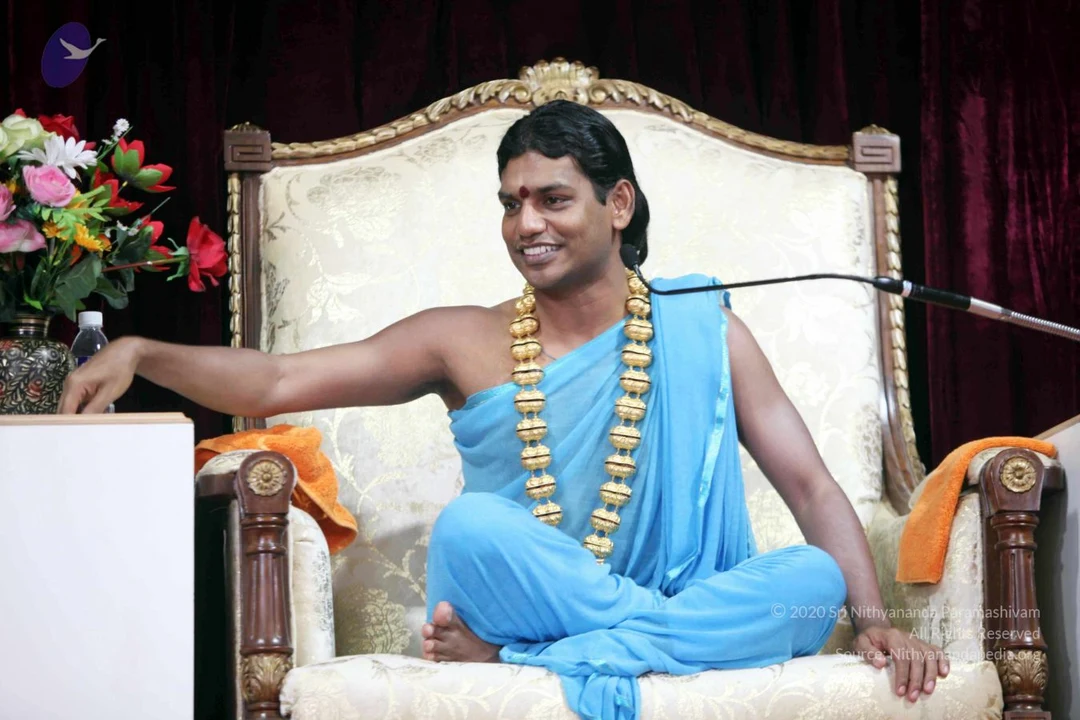
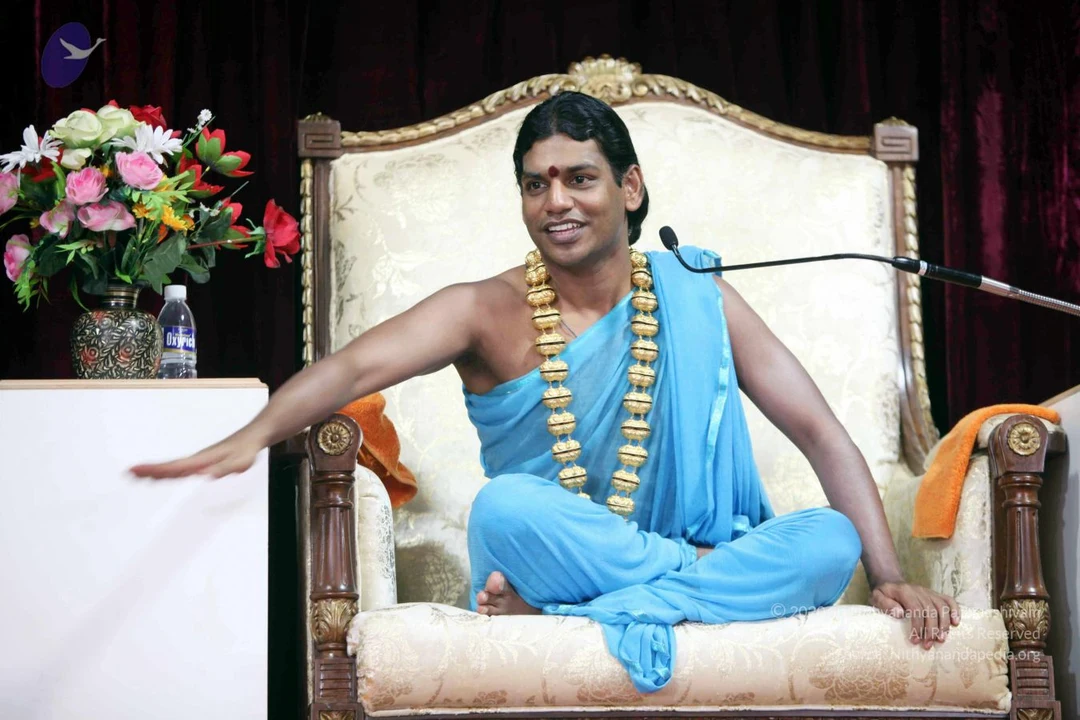
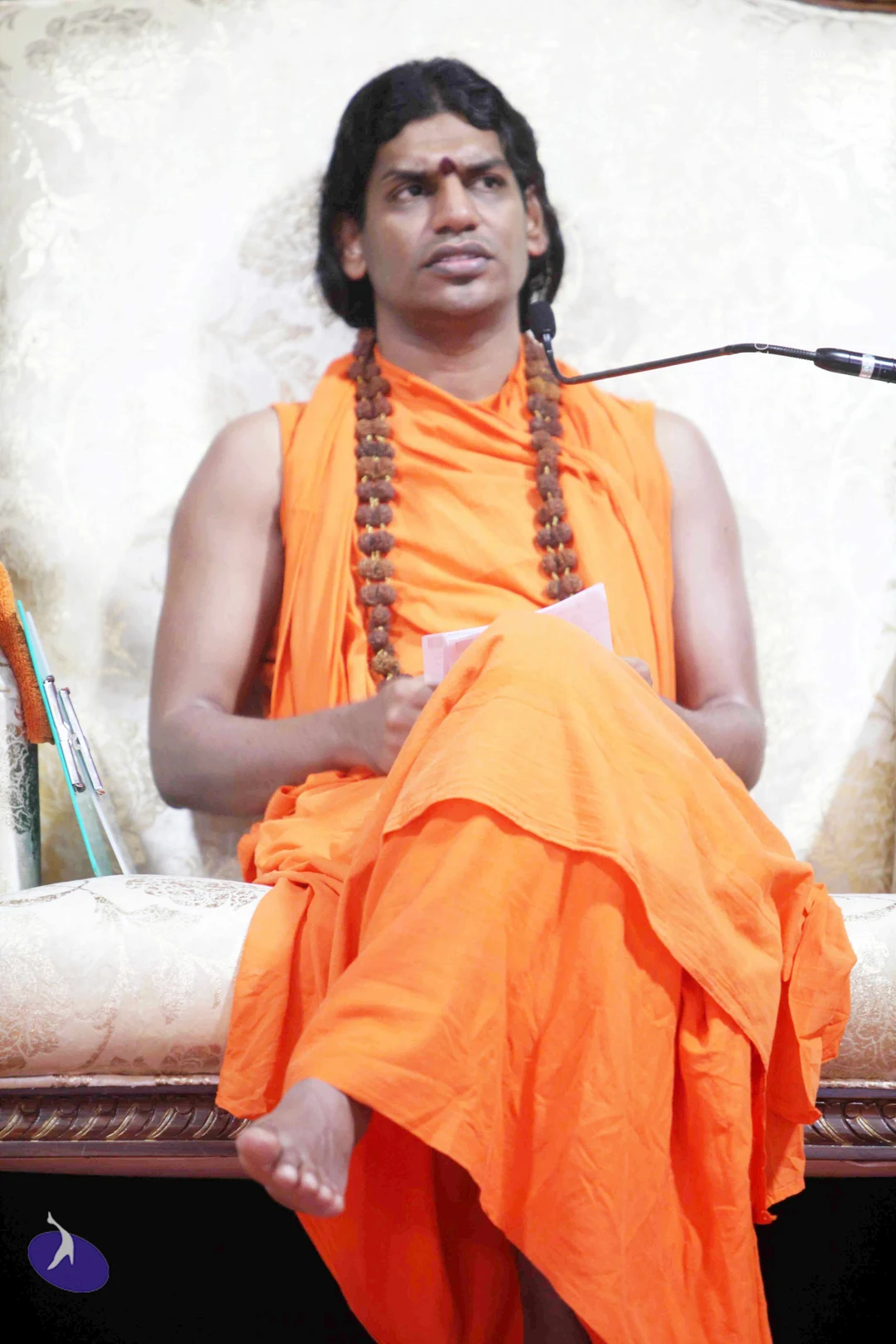
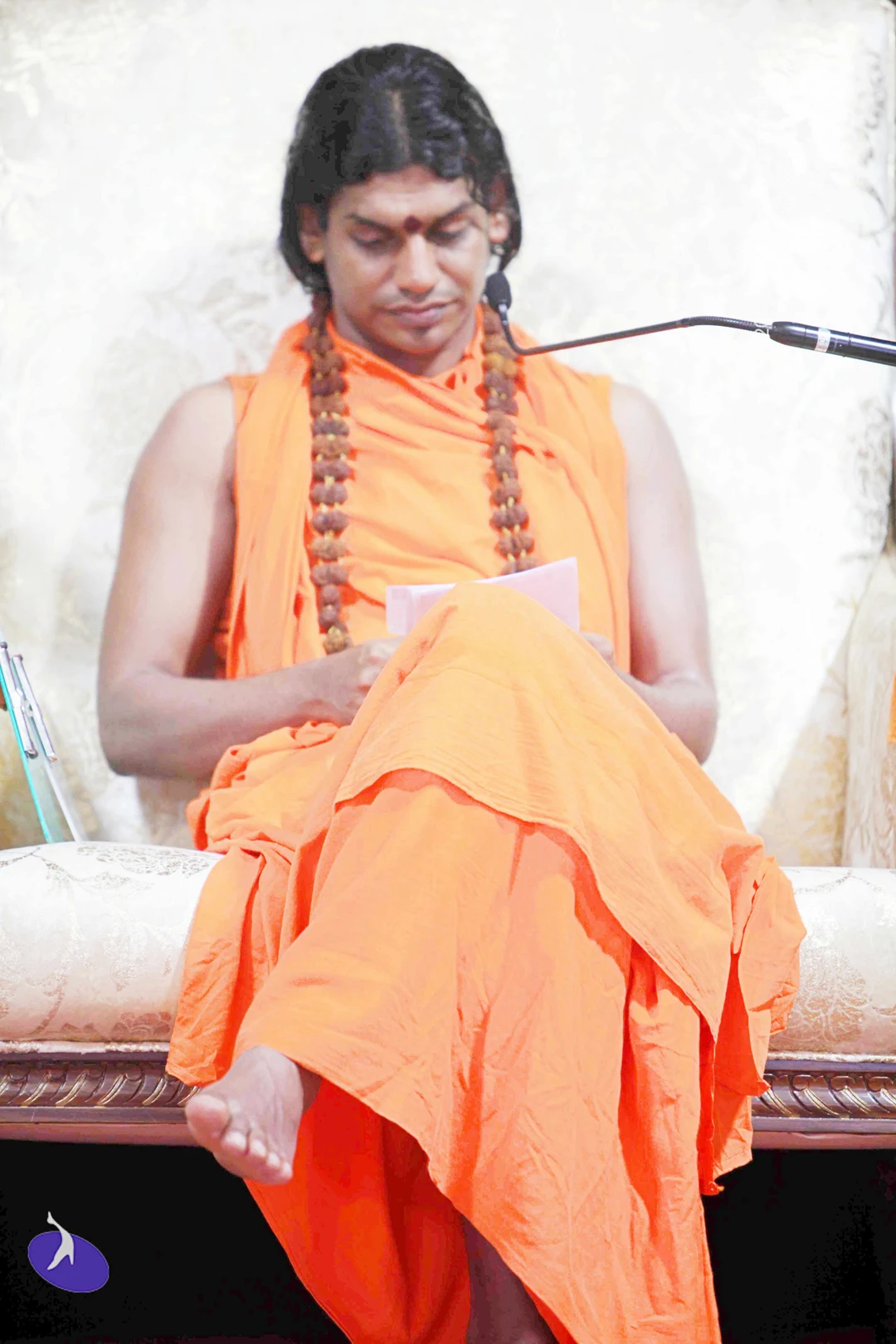
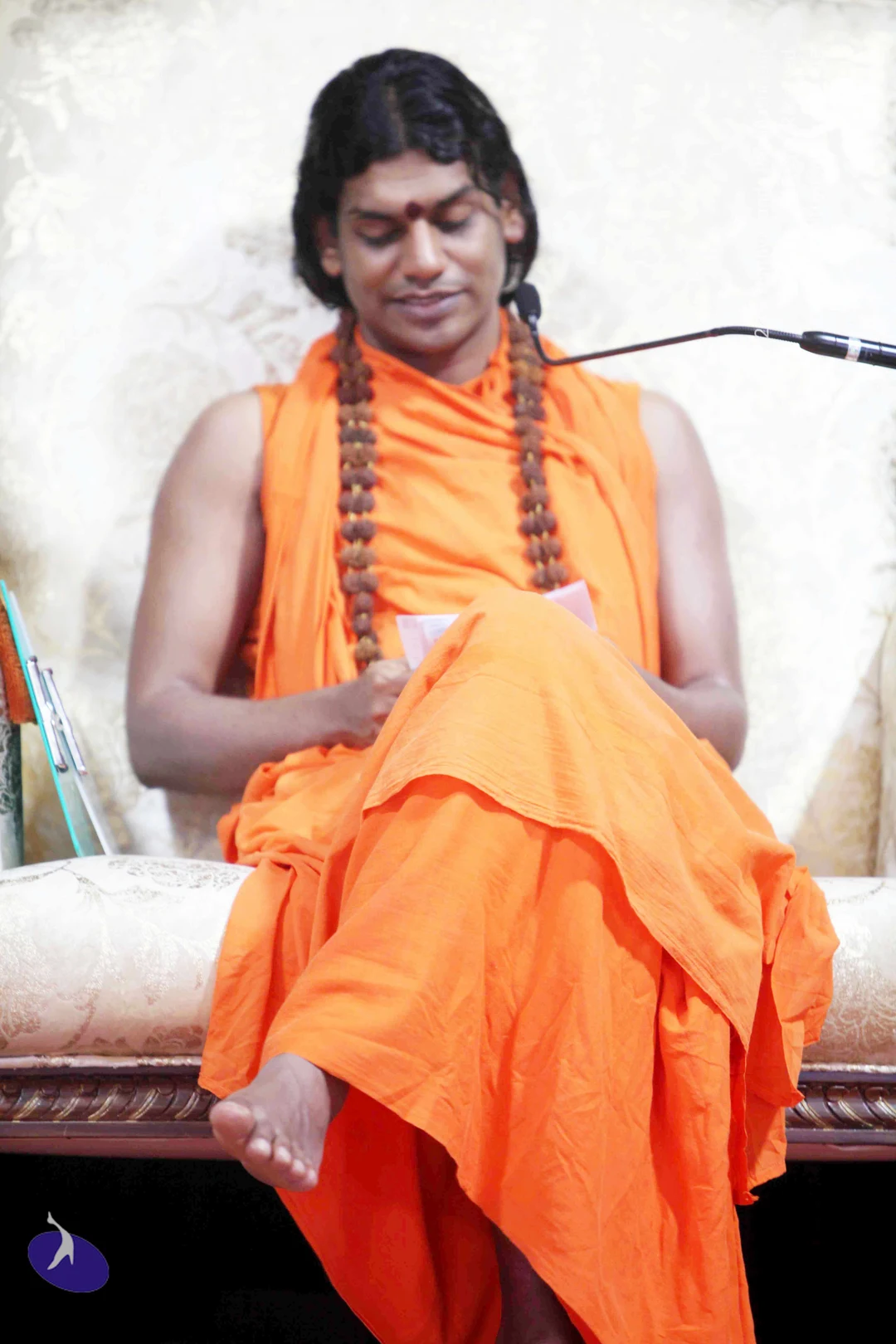
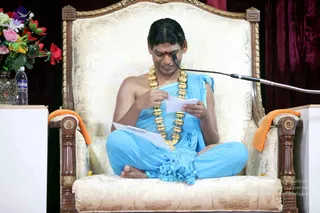
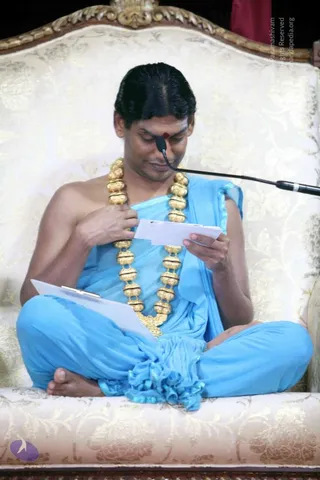
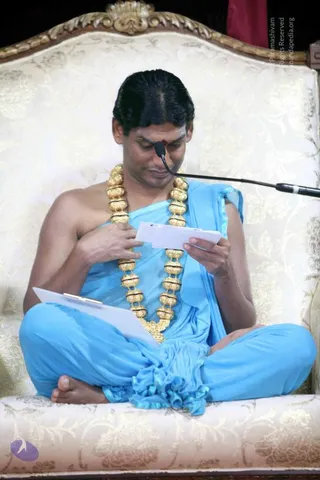
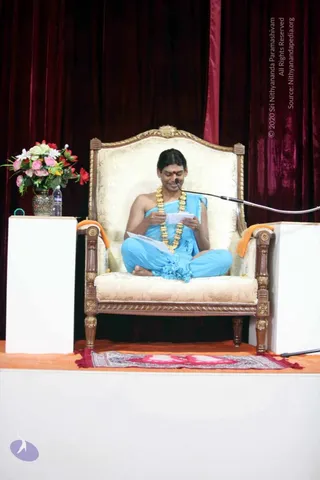
A man seated cross-legged on an ornate cream upholstered throne with gold carved wooden arms, draped in orange cloth. He wears a sky-blue dhoti and wrap, a heavy gold bead necklace, and a small red bindi, and holds a sheet of paper while touching his chin in thought. A microphone on a stand is in front of him, with red flowers and a water bottle at the left edge and red curtains behind. Appearance-based label: a person, seated on a throne with ceremonial gold necklace and blue robes, giving a talk.A seated man in a light blue draped garment sits cross-legged on an ornate cream upholstered throne with gold floral patterns. He wears a heavy ornate gold necklace with bead-like links and a red dot on his forehead. He holds a sheet of paper in one hand and a clipboard on his lap, reading while a small microphone is positioned before him. His hair is swept back and he is barefoot.A man seated cross-legged on an ornate cream upholstered throne with gilded wooden armrests, draped with orange cloths. He wears a sky-blue unstitched robe over the shoulder, long golden bead necklace, and a red bindi, and reads from a sheet of paper while a microphone stand is positioned at his face. A floral arrangement of red and pink flowers and a water bottle sit beside the throne against a maroon curtain. The appearance is consistent with the a person candidate on the page, but the presentation cues are limited to a golden necklace and sky-blue robe, so the identity is uncertain.A seated man sits cross-legged on an ornate cream upholstered throne with gold floral patterns. He wears a light blue draped garment with blue trim over bare shoulders and a heavy gold bead necklace. A red tilak mark is on his forehead and a microphone is positioned near his face. He holds papers in one hand while the other hand rests on his necklace, and a clipboard rests on his lap. He appears to be reading during a talk. The appearance-based cues (long swept-back hair, ceremonial gold necklace, blue ceremonial dress, throne) fit the page's description of a talk by Swamiji, so this is a probable Swamiji appearance seated in person on a throne. One person is visible.A seated man in a light blue draped garment and trousers sits cross-legged on an ornate cream upholstered throne with gold floral patterns. He wears a heavy gold bead necklace with dark accents and a red tilak on his forehead, holding loose papers in one hand and resting a clipboard on his lap while reading. A microphone stand is positioned beside his face. The man's appearance, dark hair swept back, gold necklace and blue robe, is consistent with the page's a person reference, but the presentation is only partly distinctive, so the identification is uncertain.A man seated cross-legged on an ornate cream upholstered throne-style armchair with carved gold-tone wooden frame and orange armrest covers, on a raised stage before dark red velvet drapes. He wears a light blue draped garment, a heavy gold bead necklace, and a red tilak on his forehead; his hair is pulled back. He holds white papers and reads, with a microphone stand angled toward him. A vase of pink, white and red flowers and a water bottle sit on a white side table to the left, and a patterned rug with red cushions lies at his feet. The stage edge and white platform are visible below. Appearance cues are limited to a shaved-back hairstyle and a blue garment, so identity is uncertain.

Inner Awakening Session- 2

36 photosSource gallery
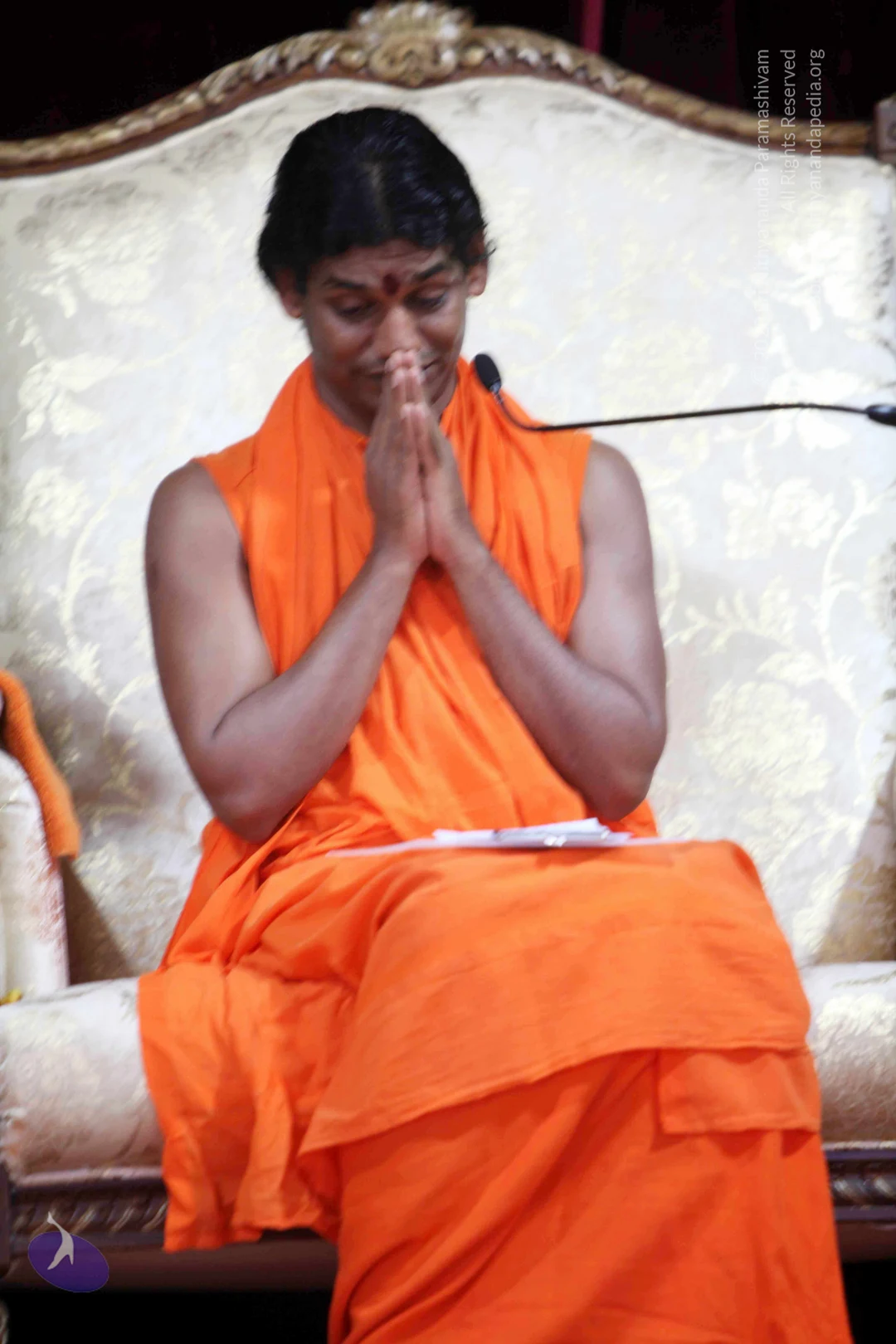
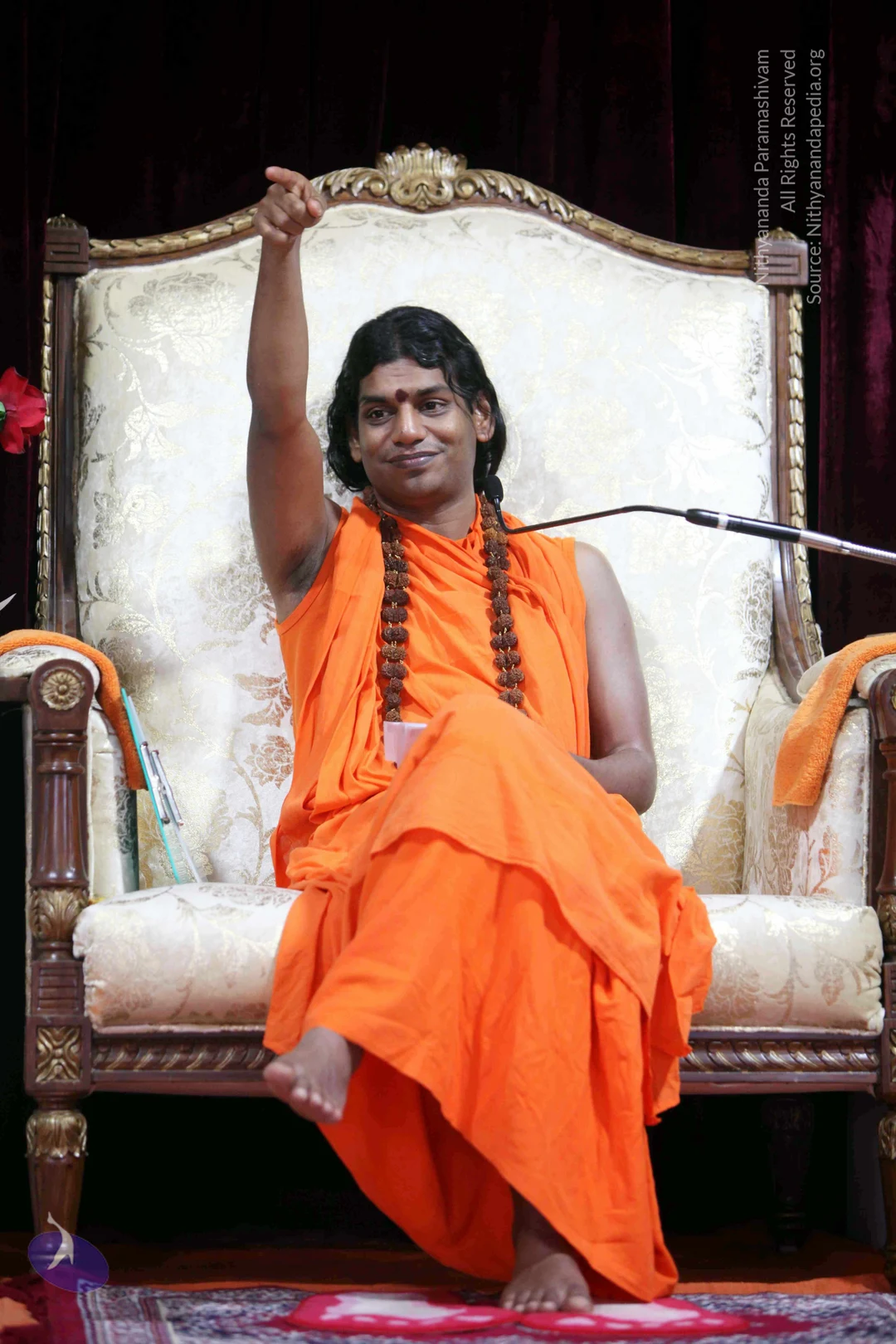
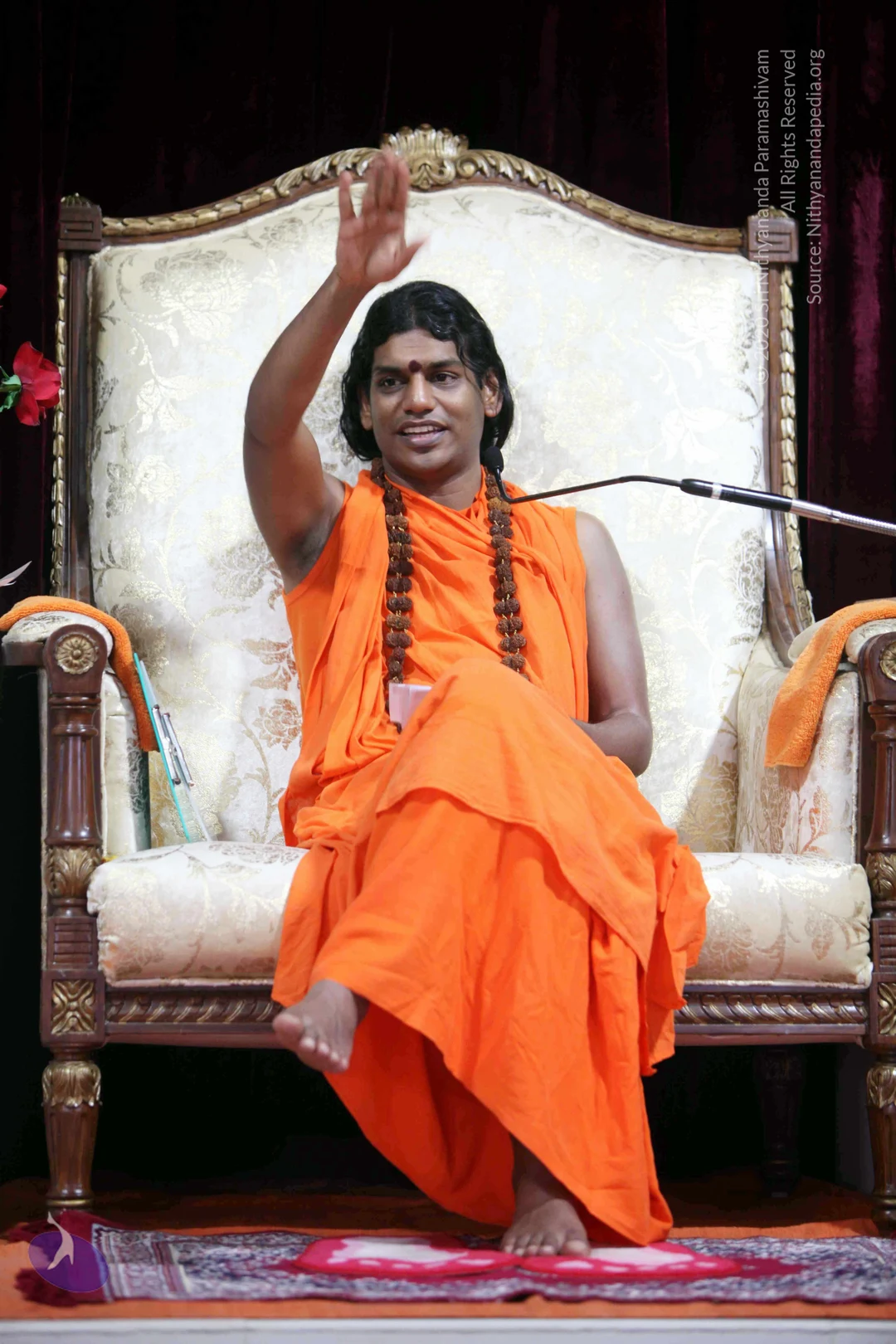
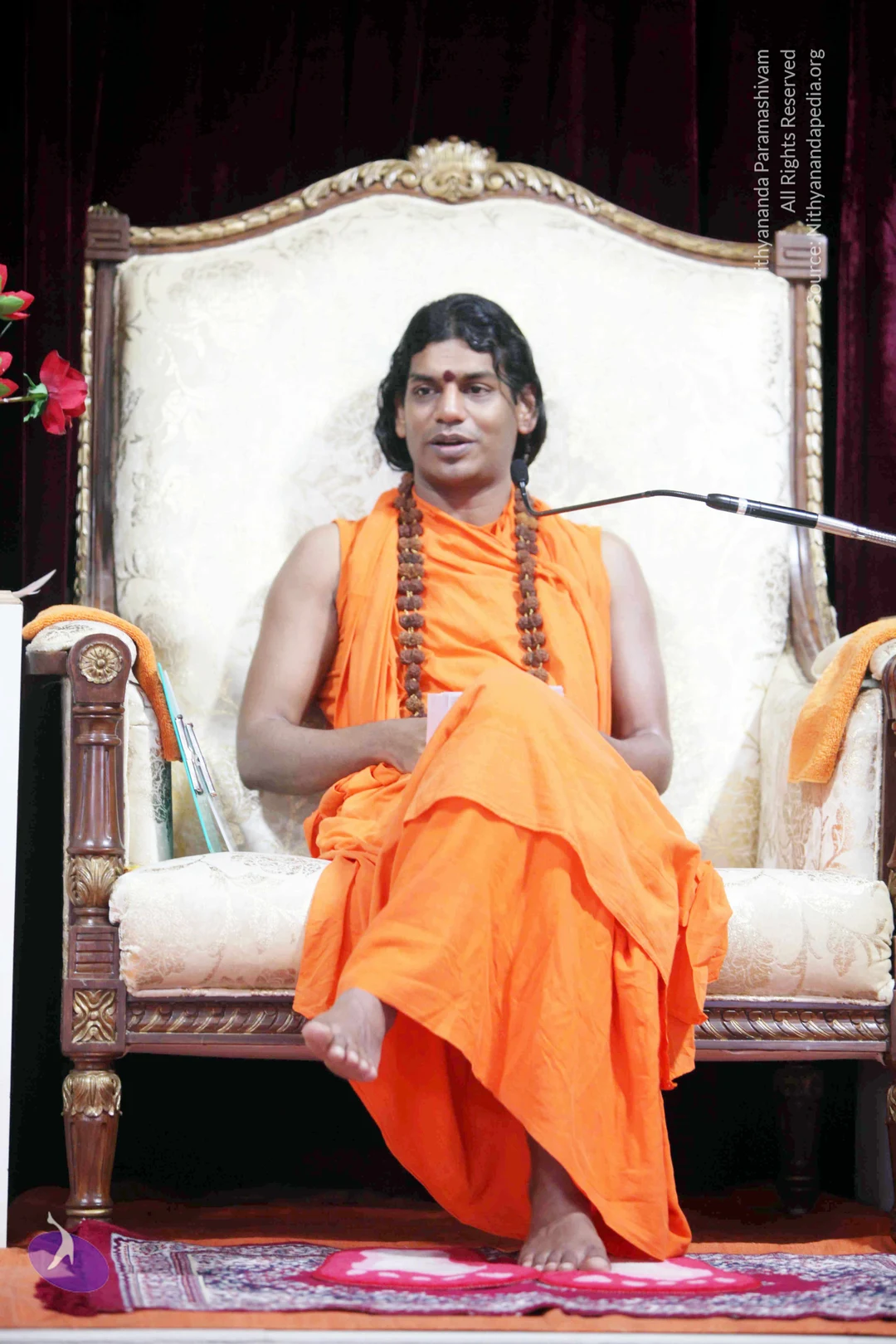
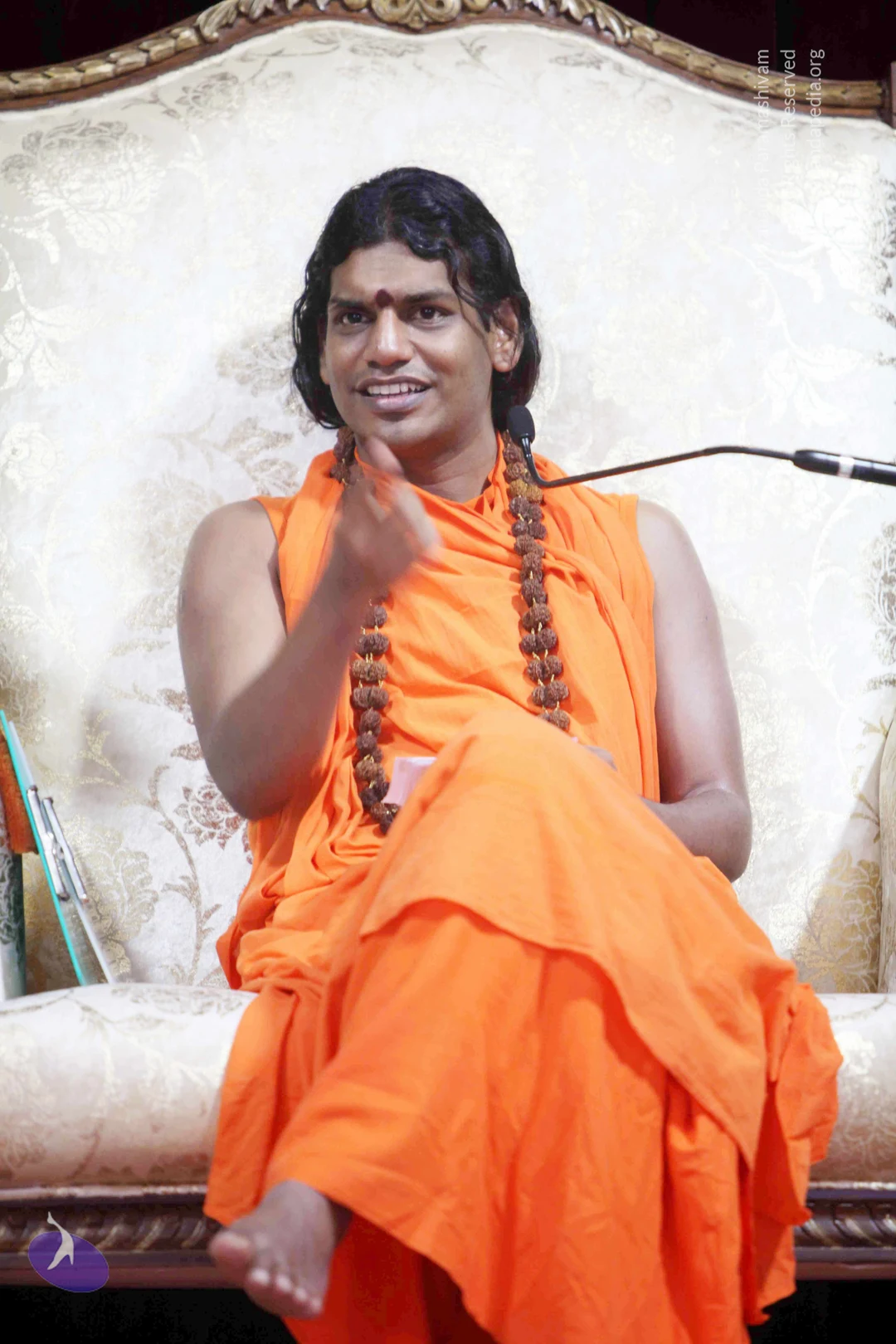
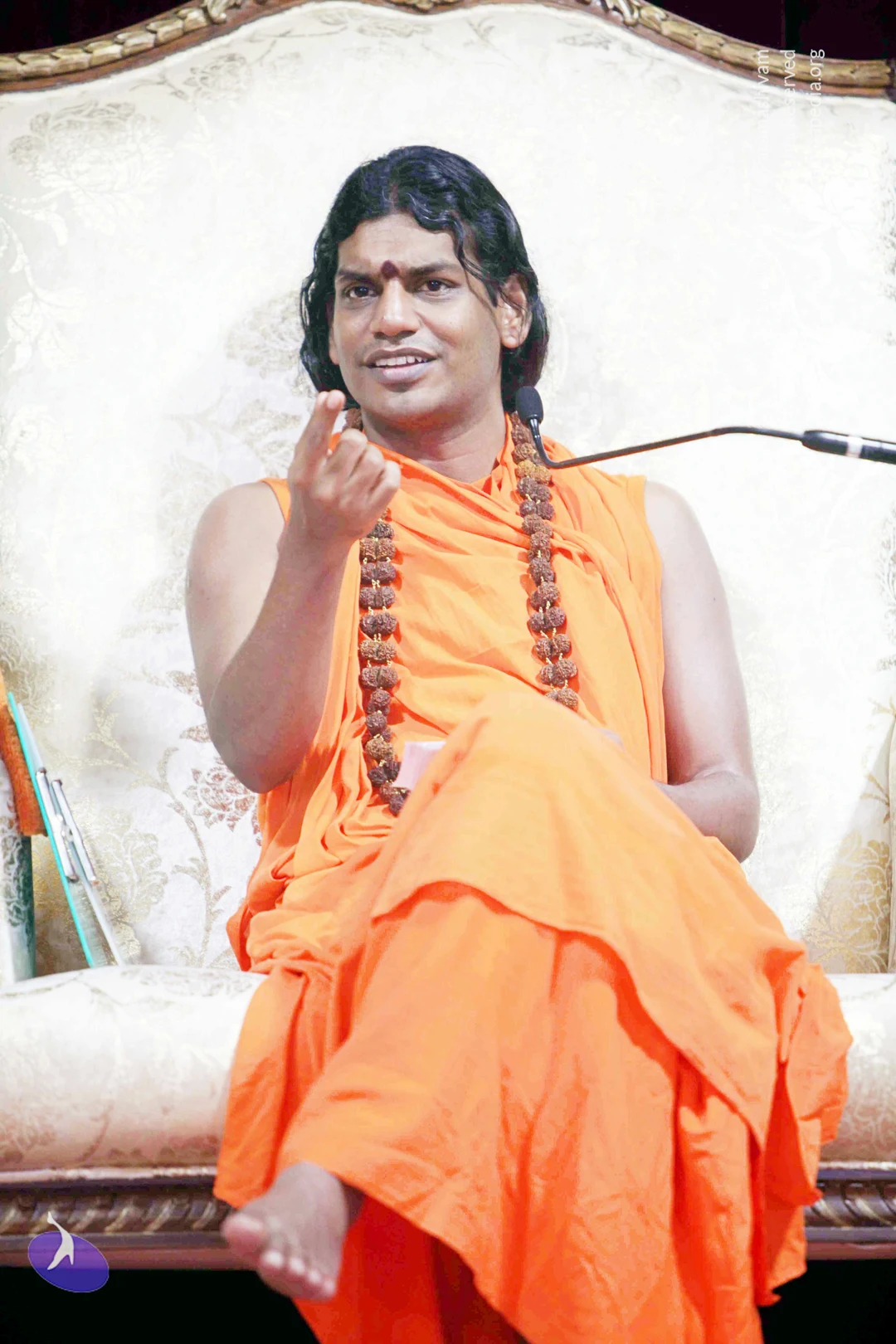
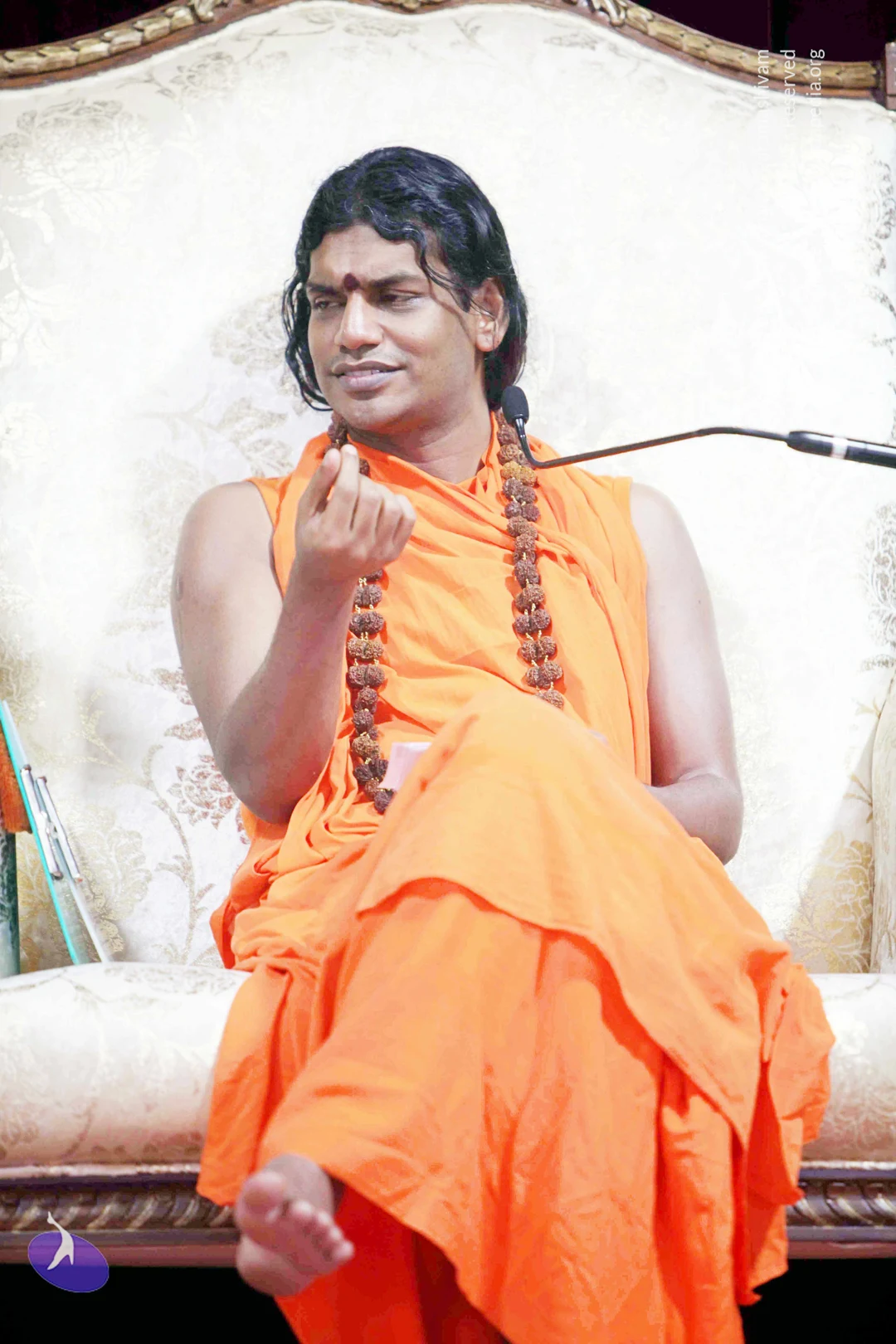
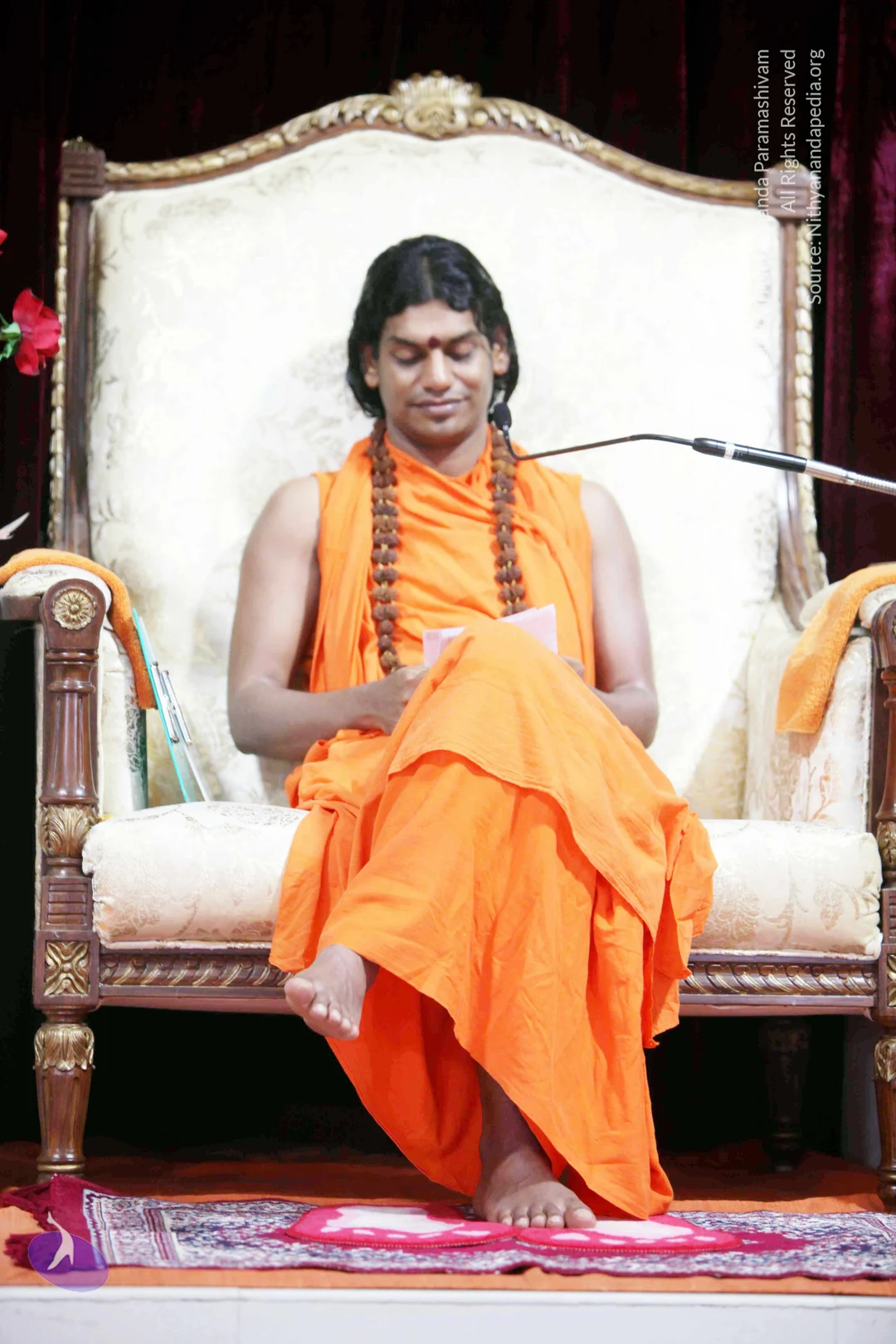
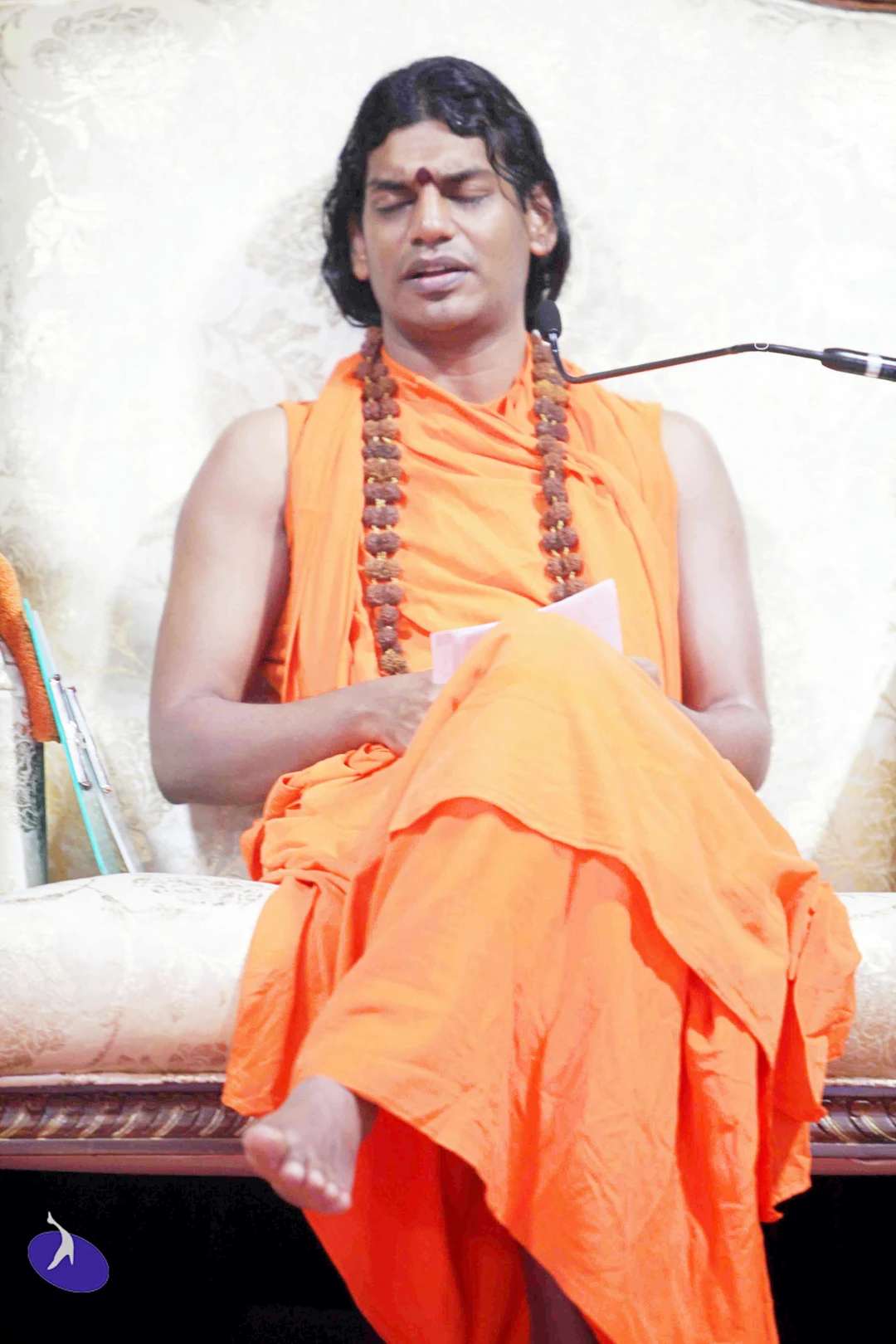
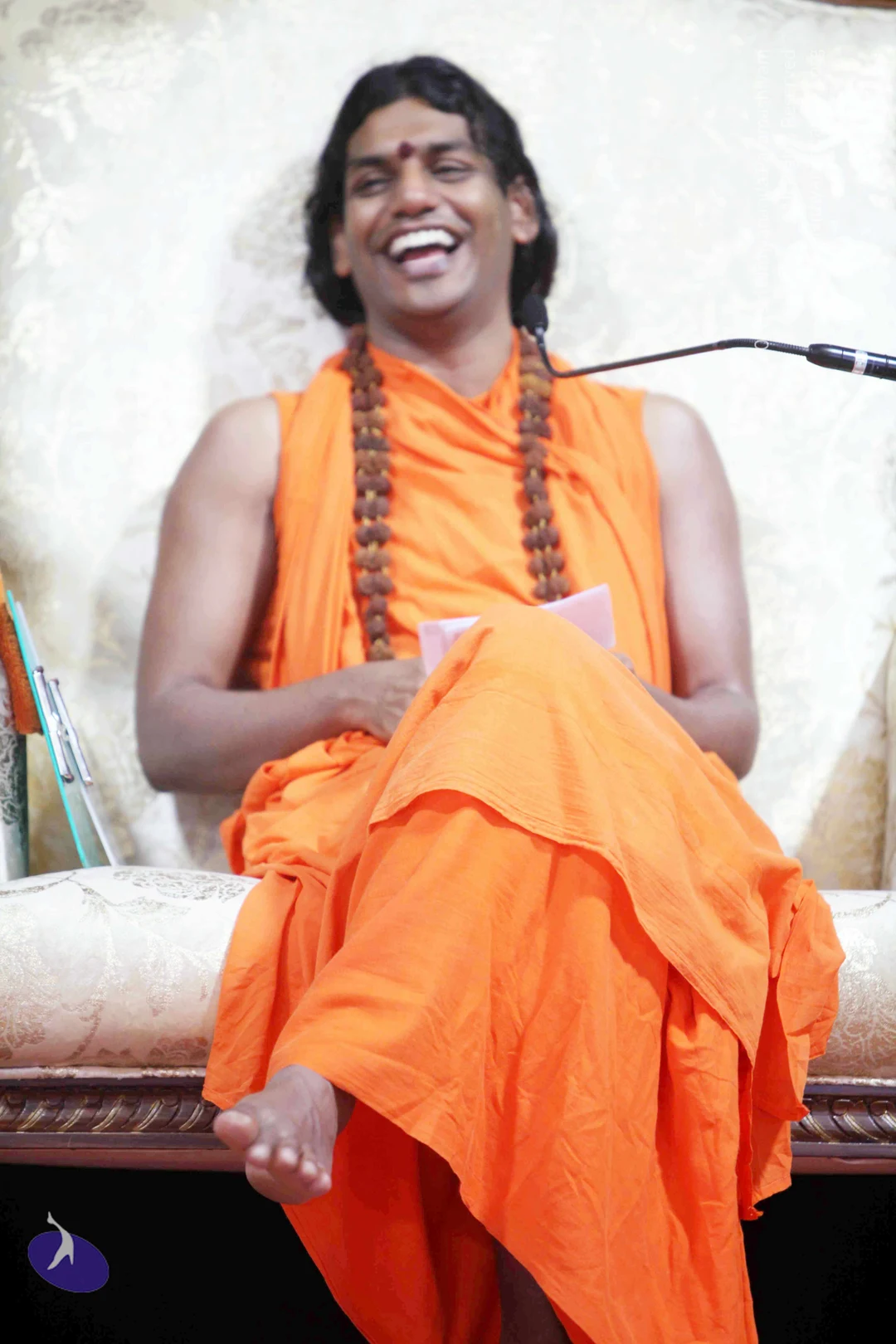
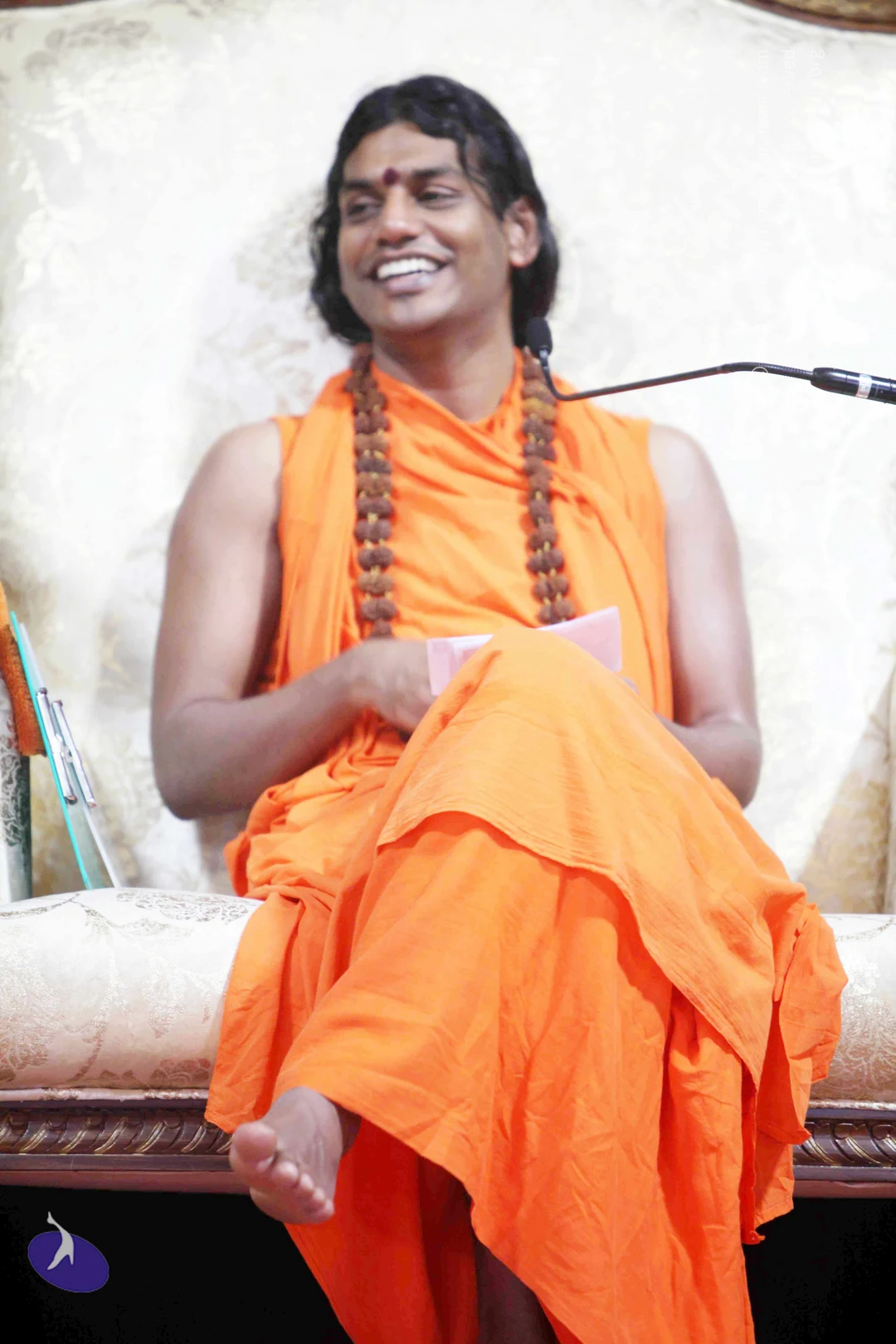
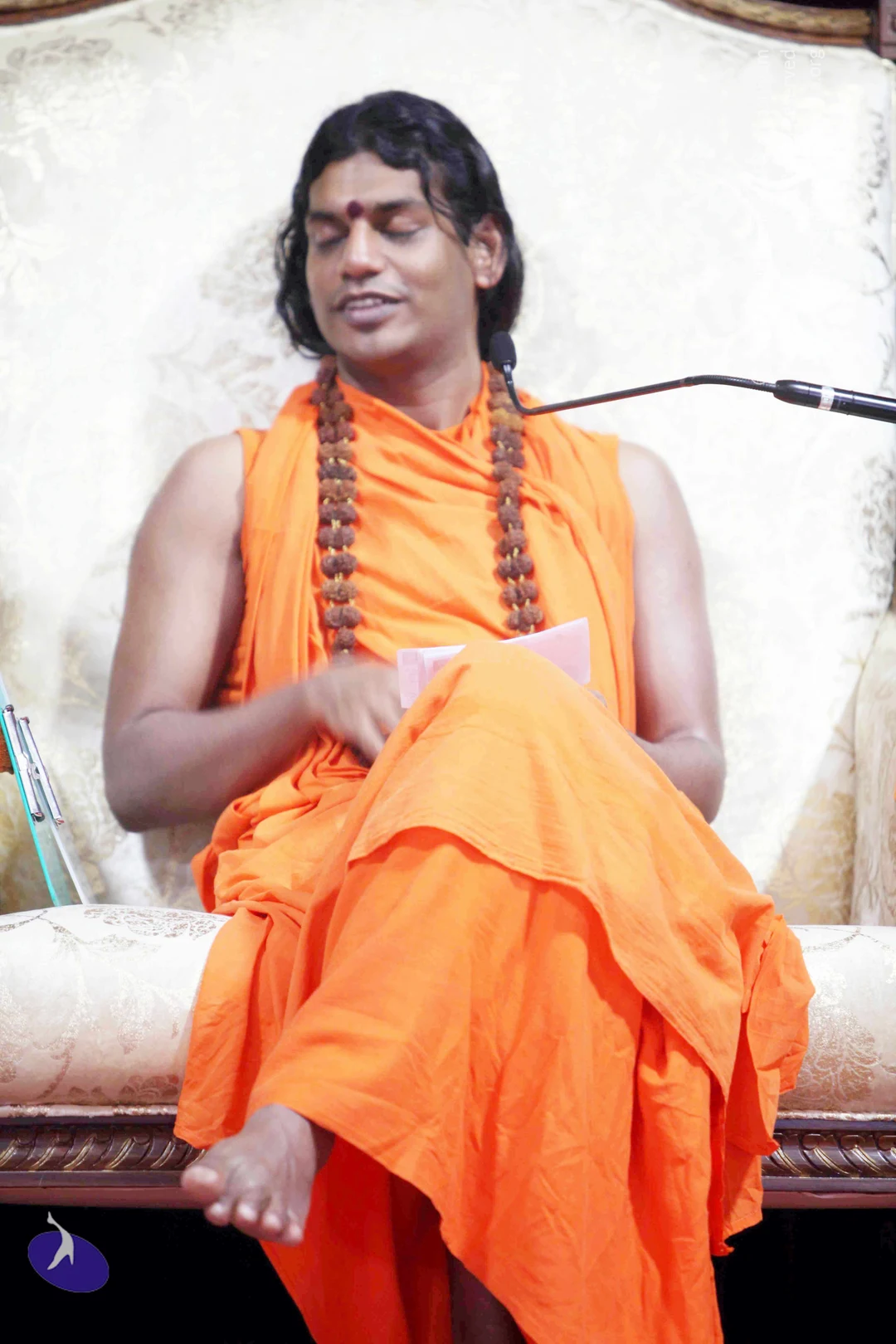
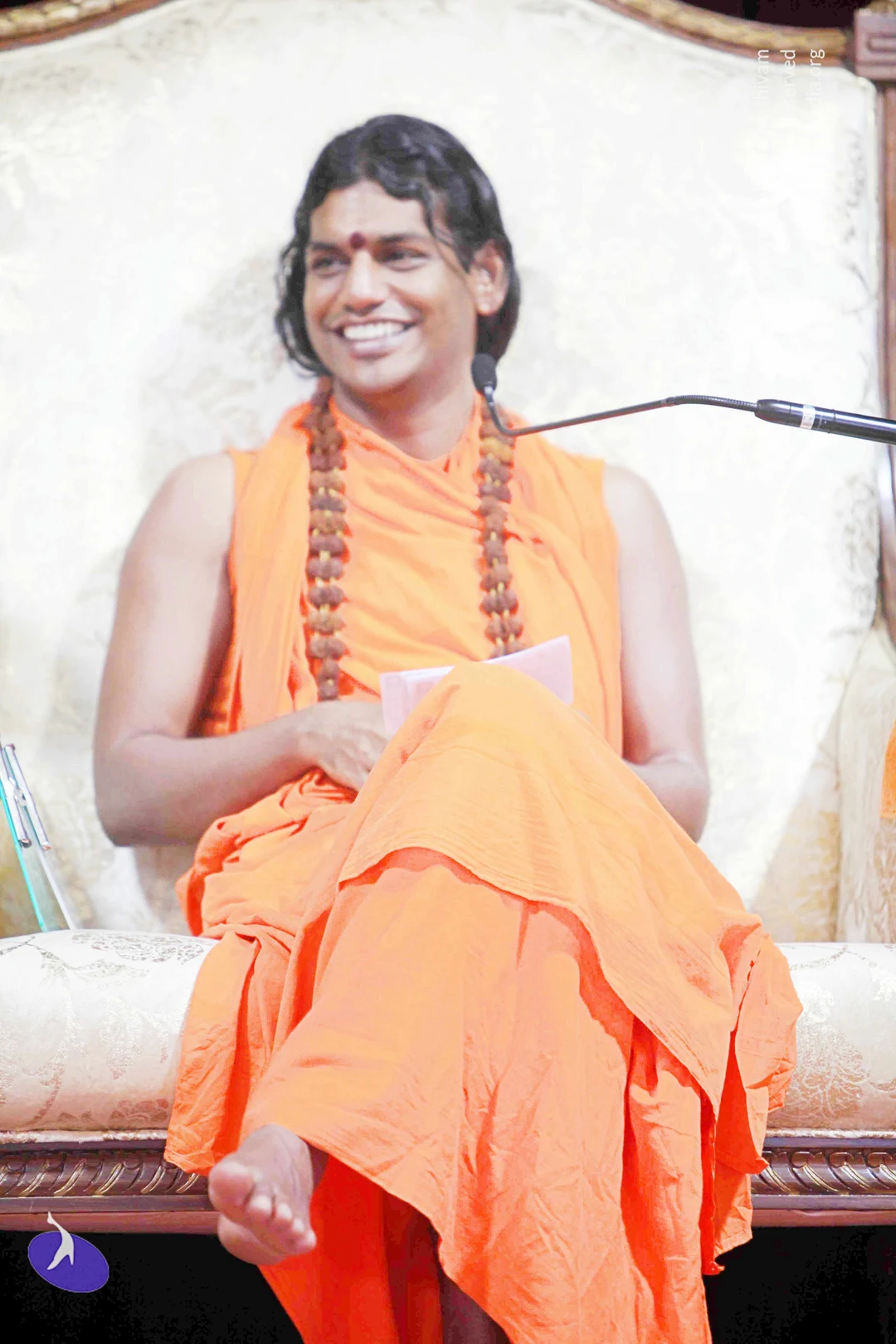
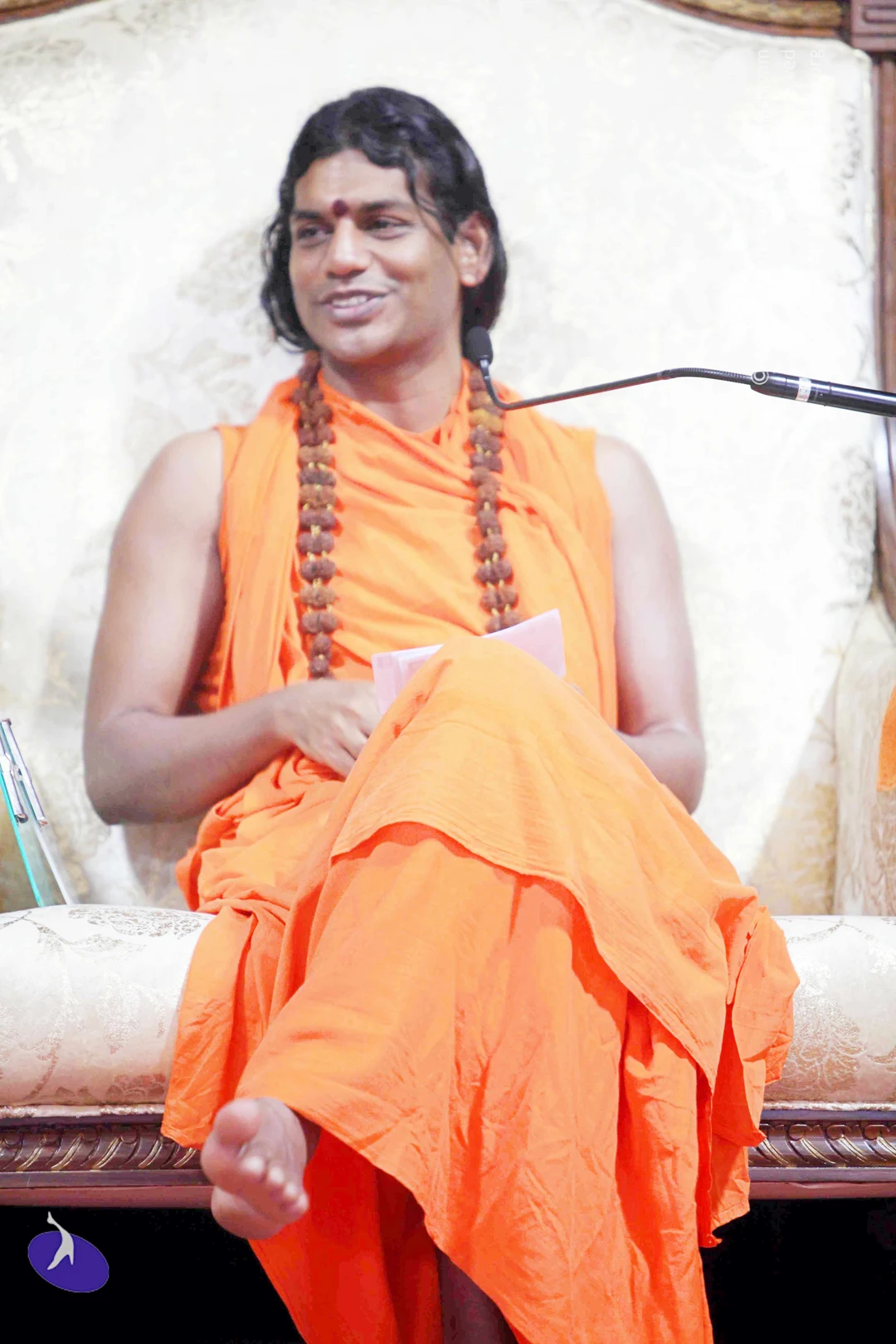
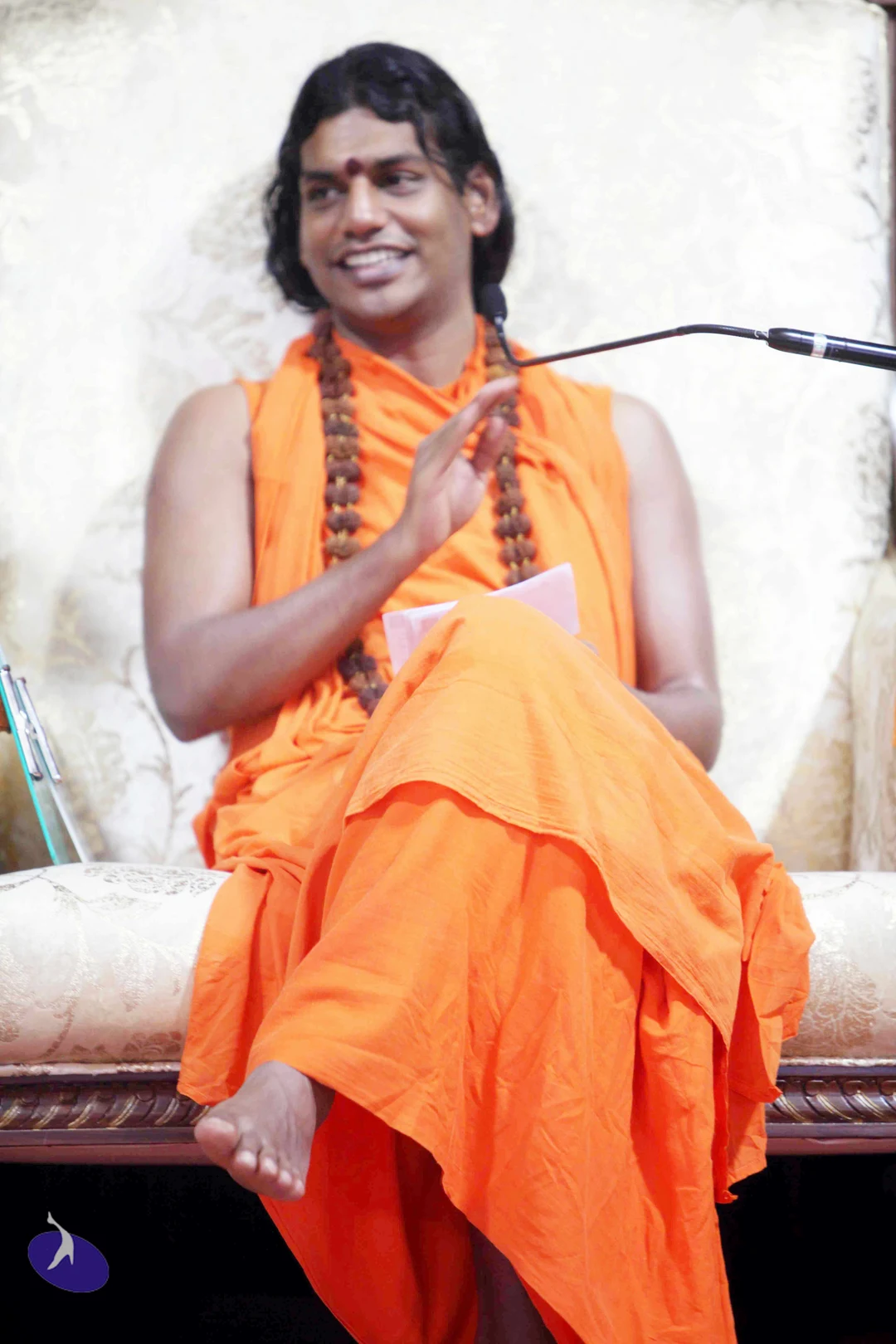
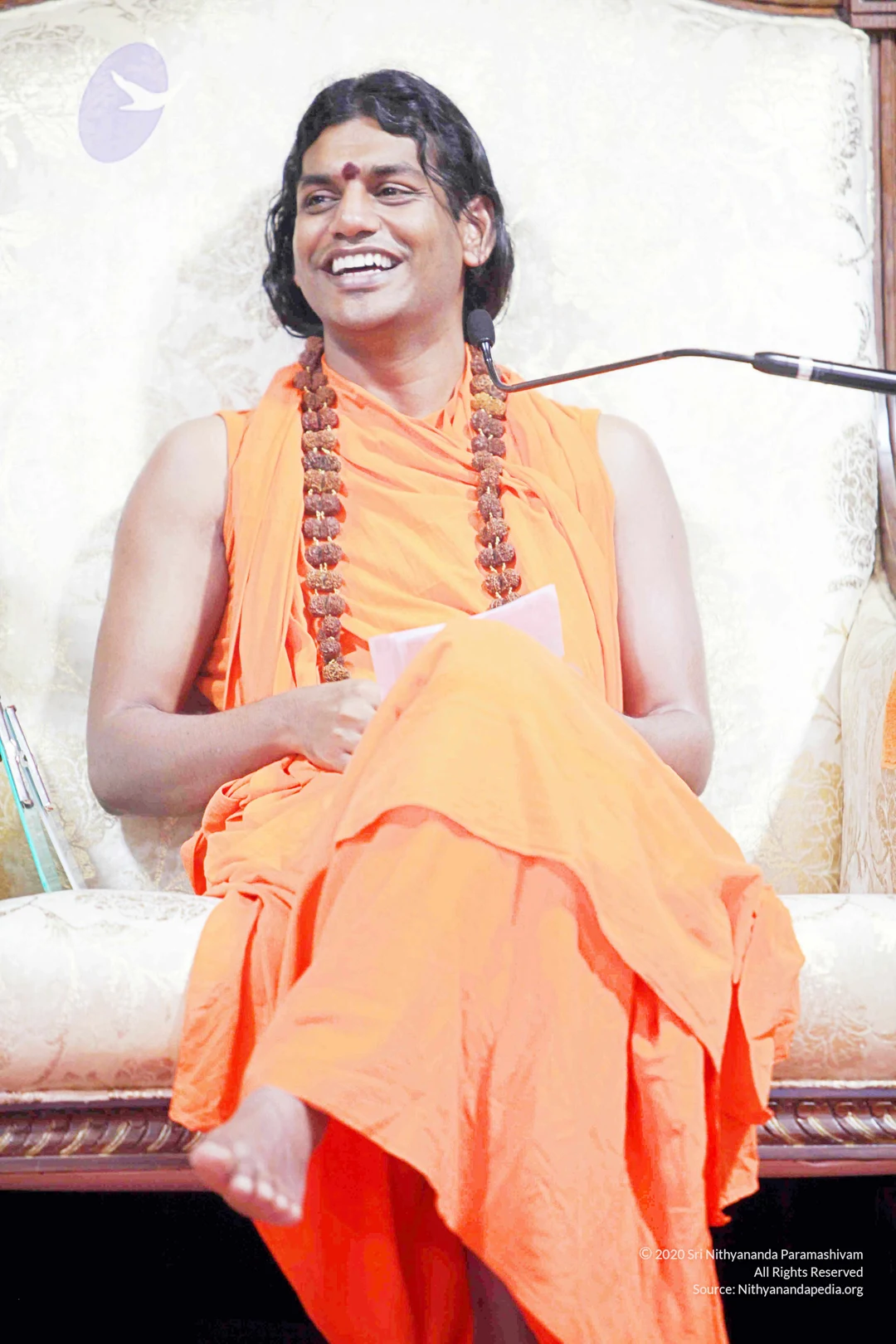
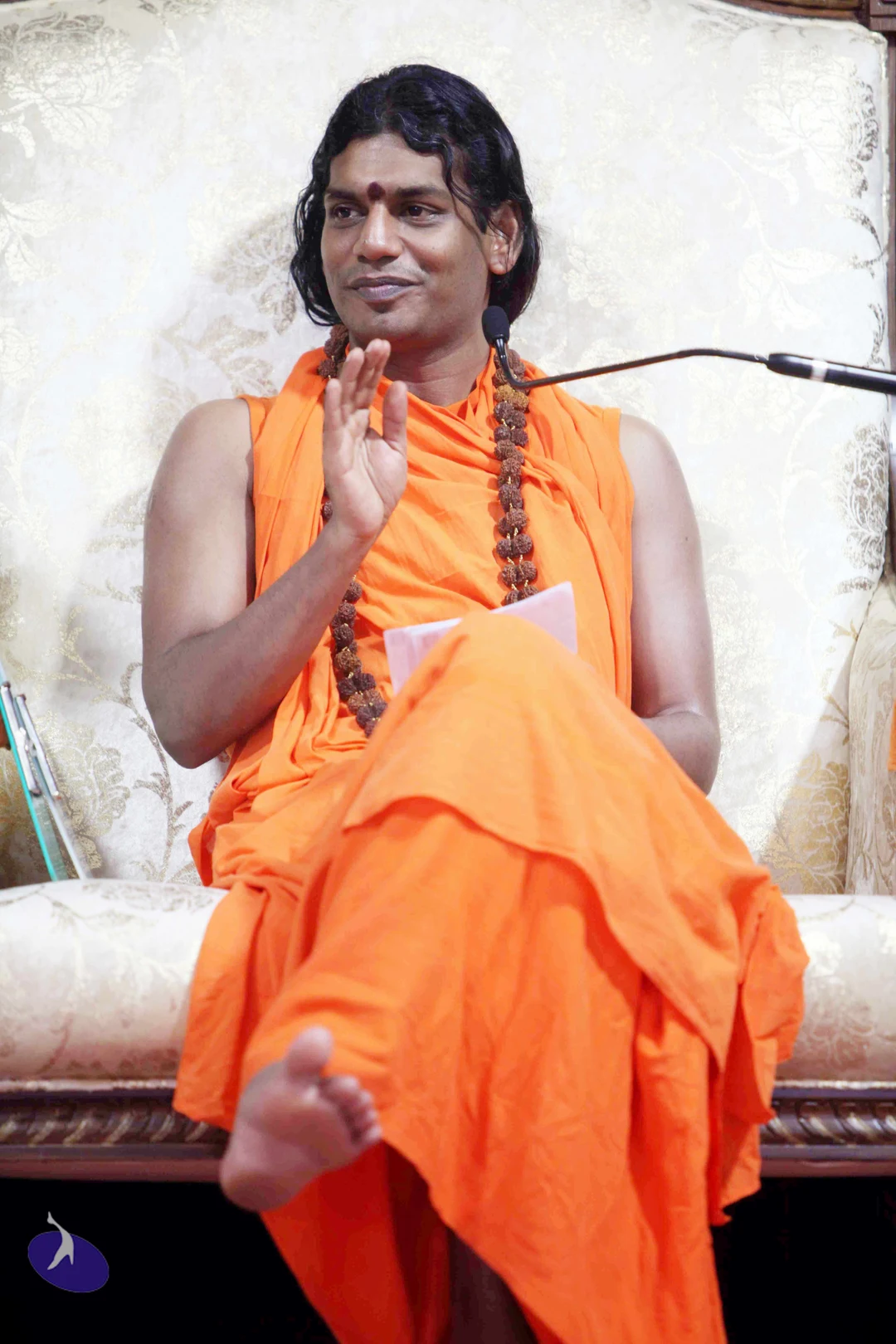
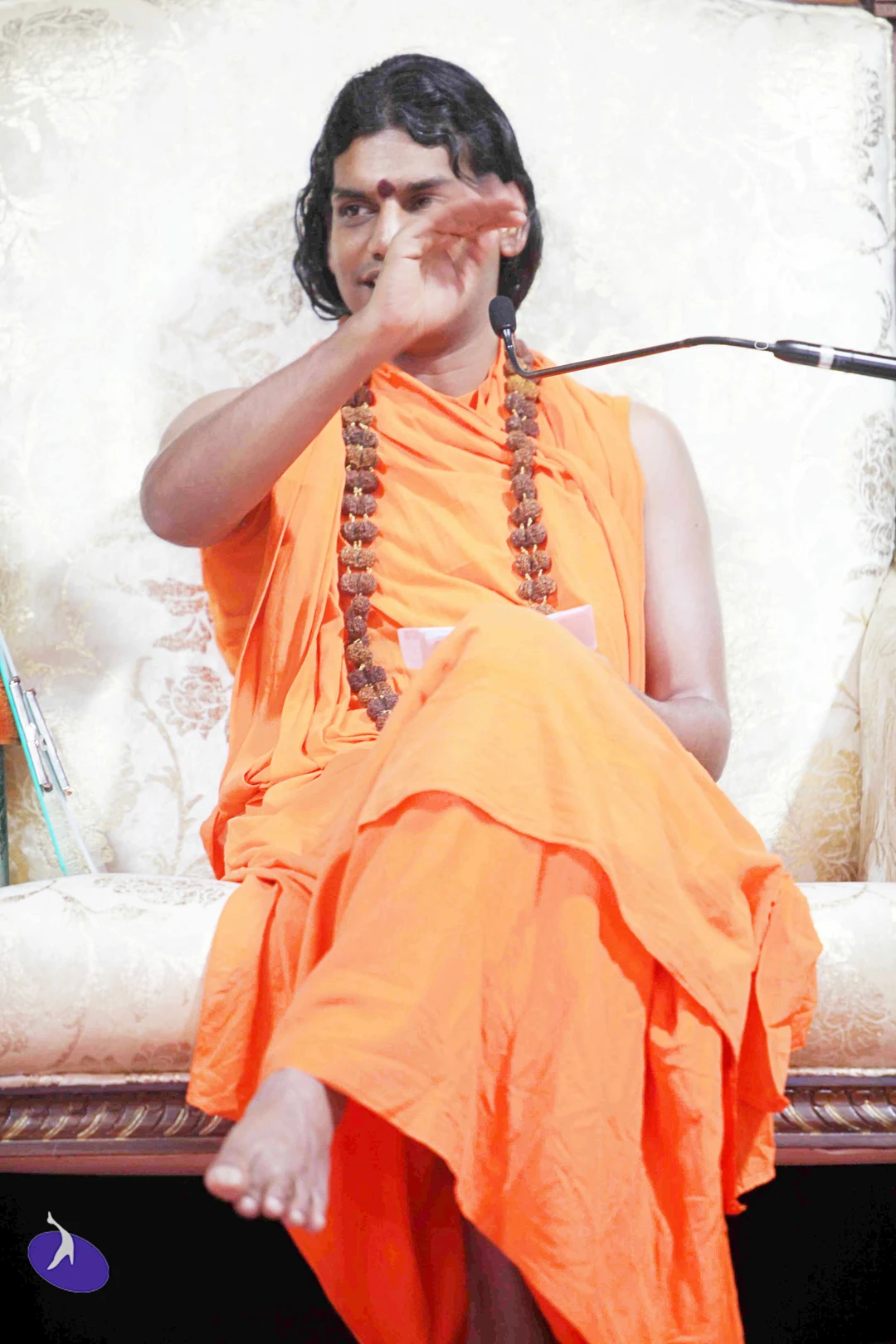
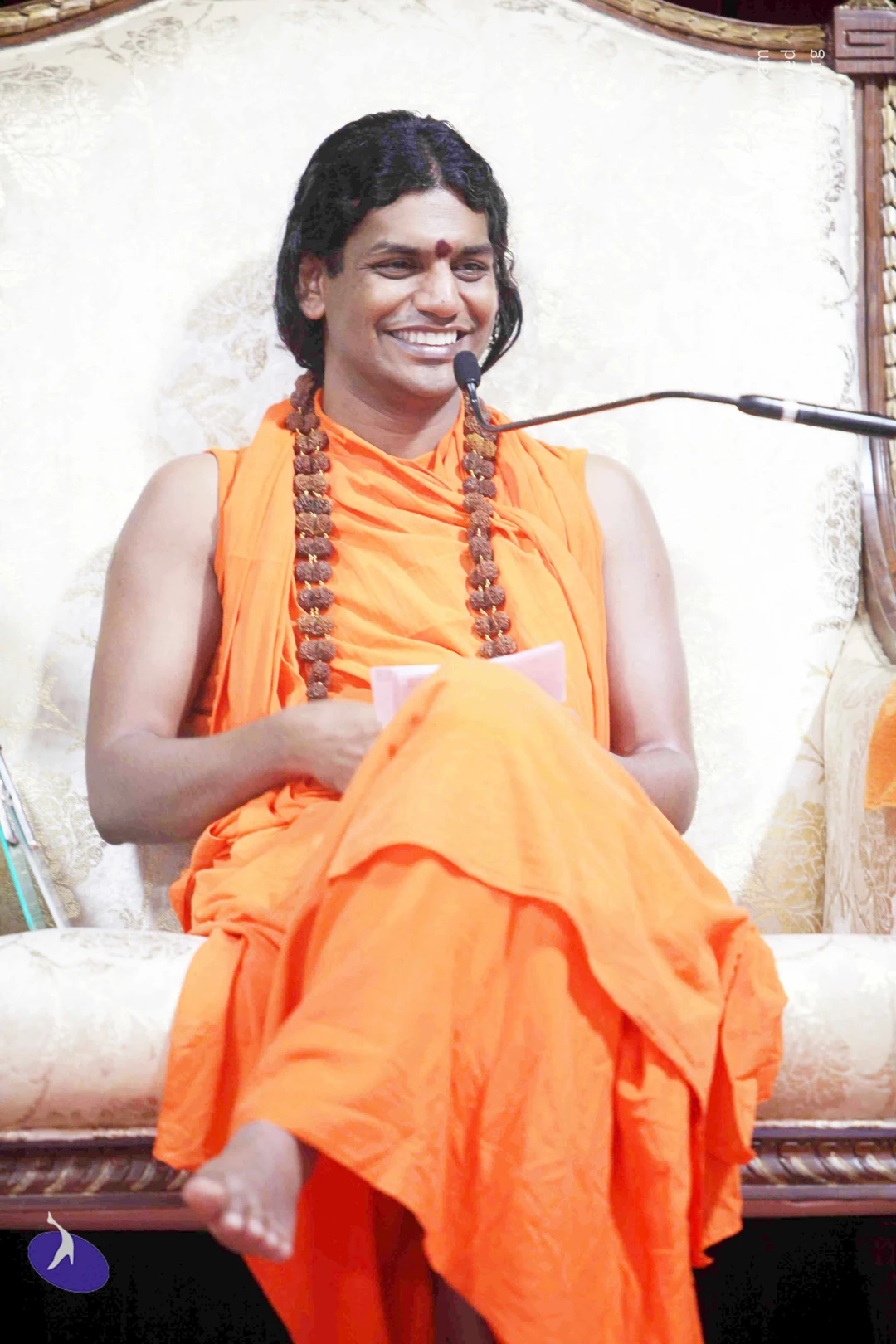
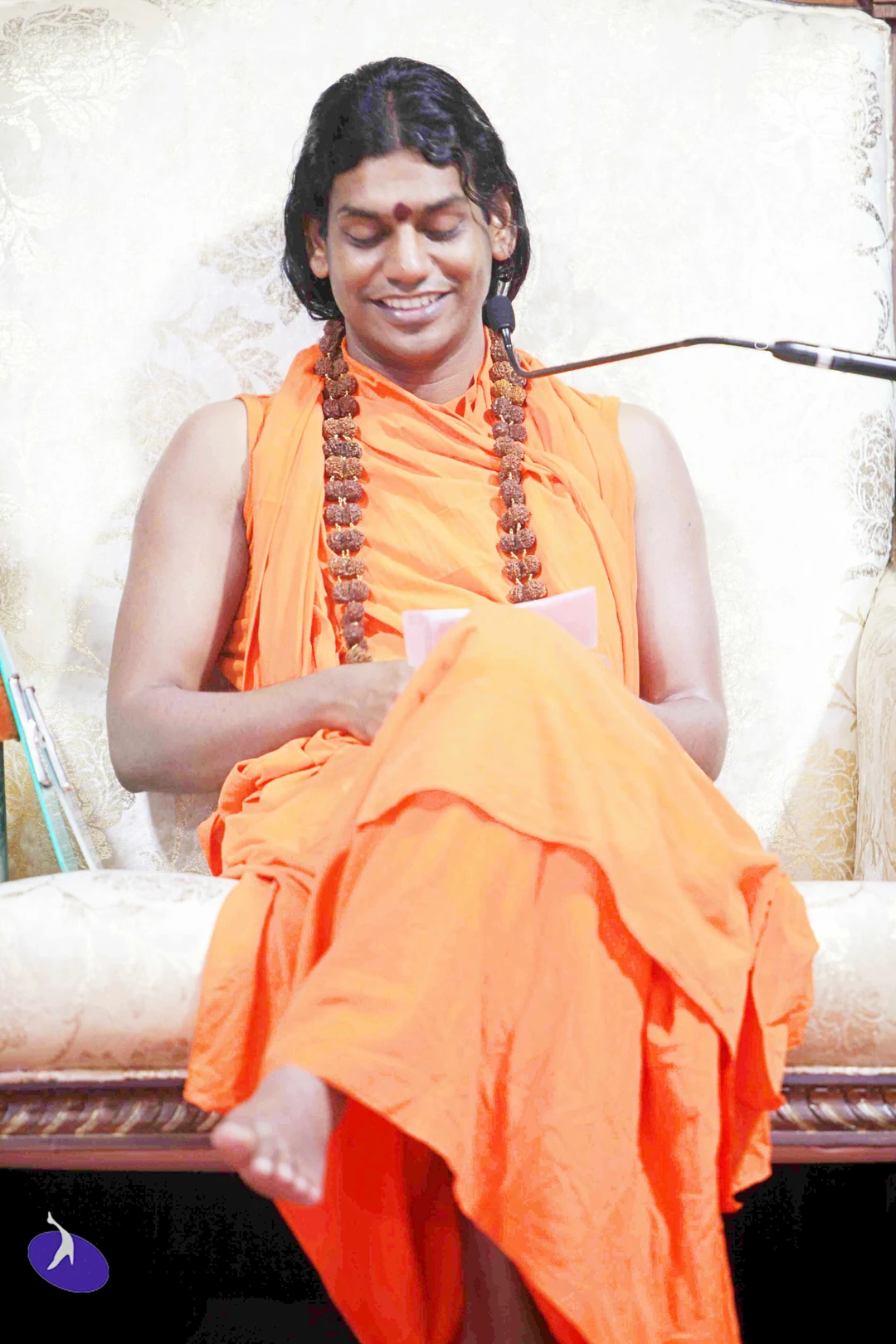
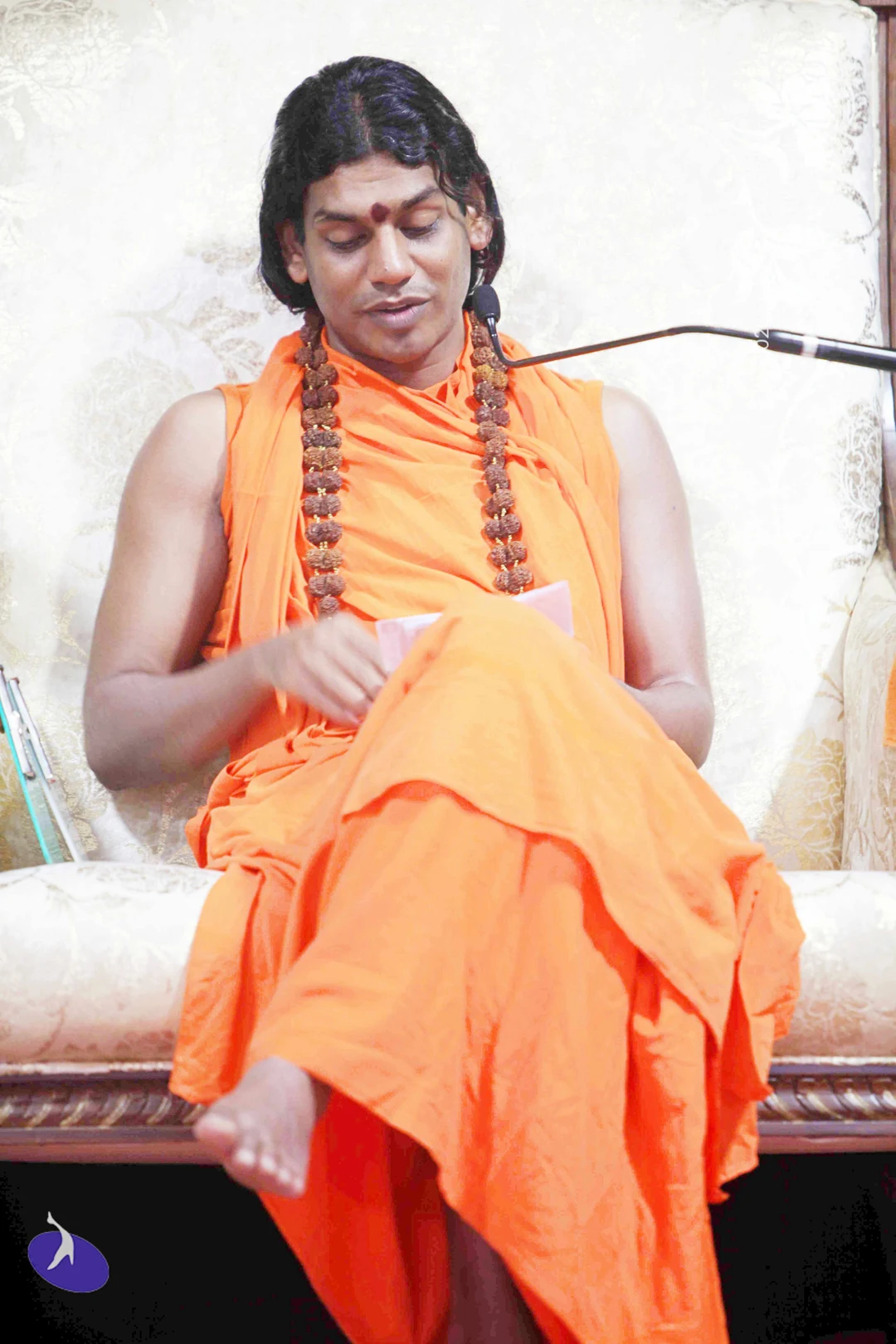
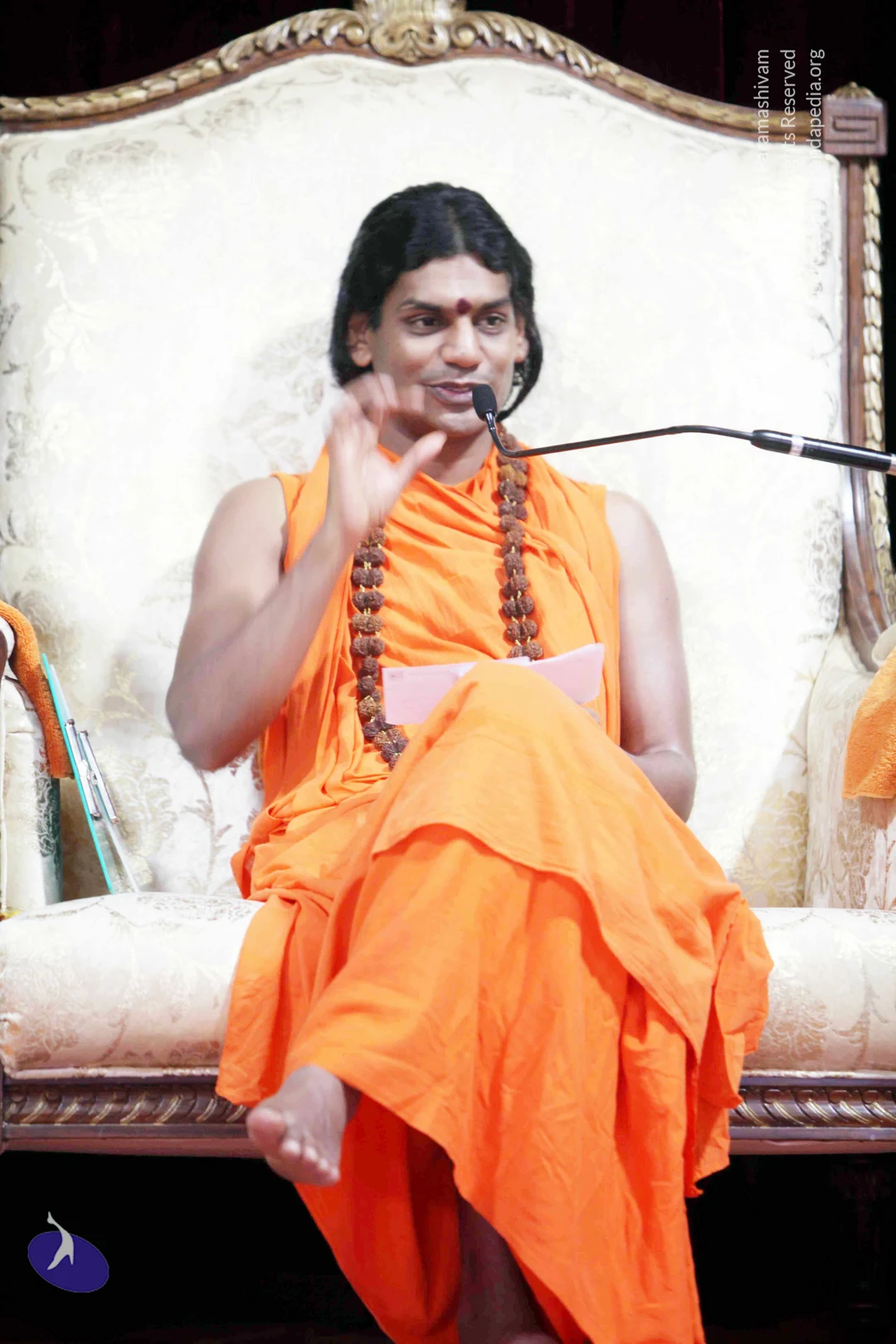
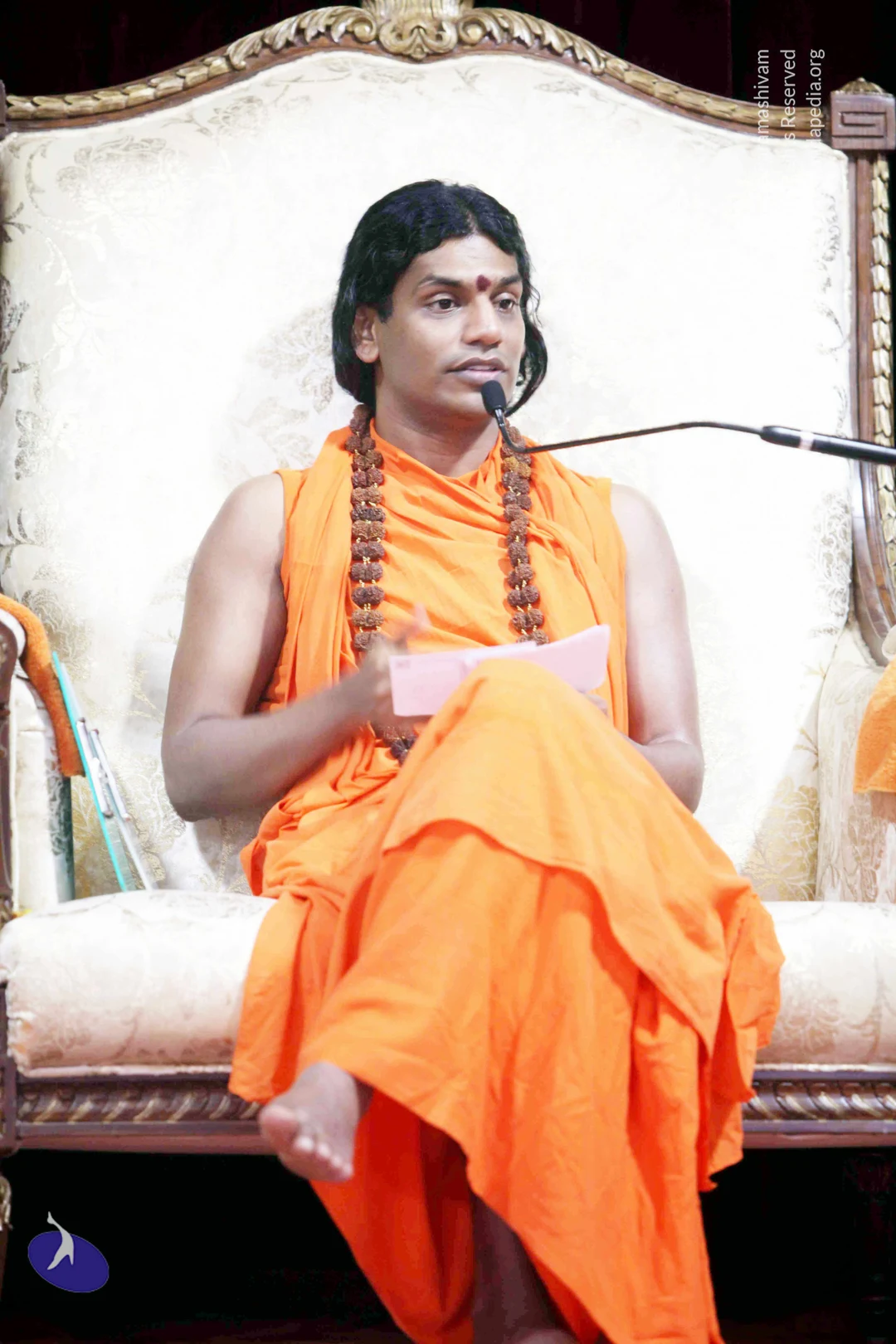
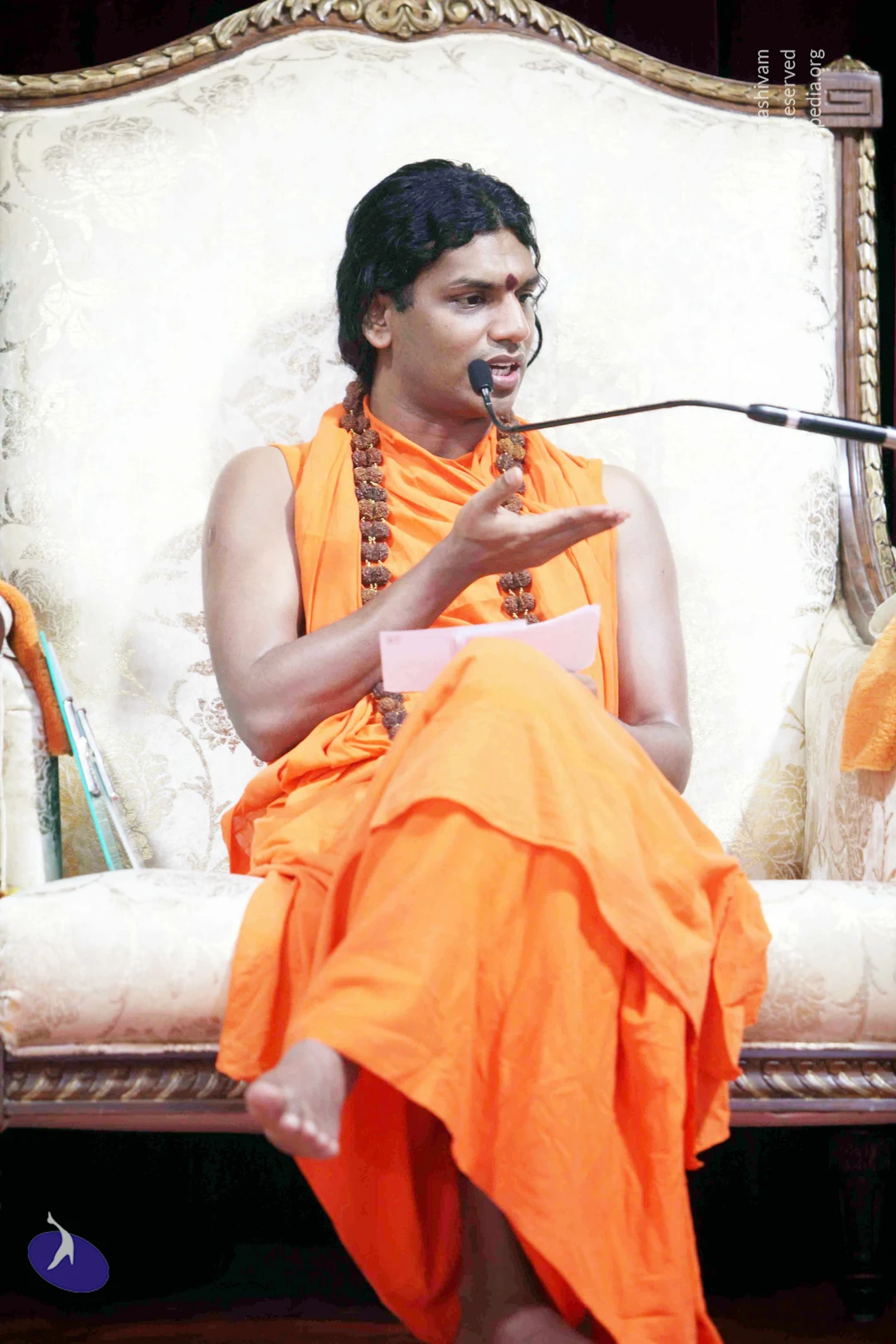
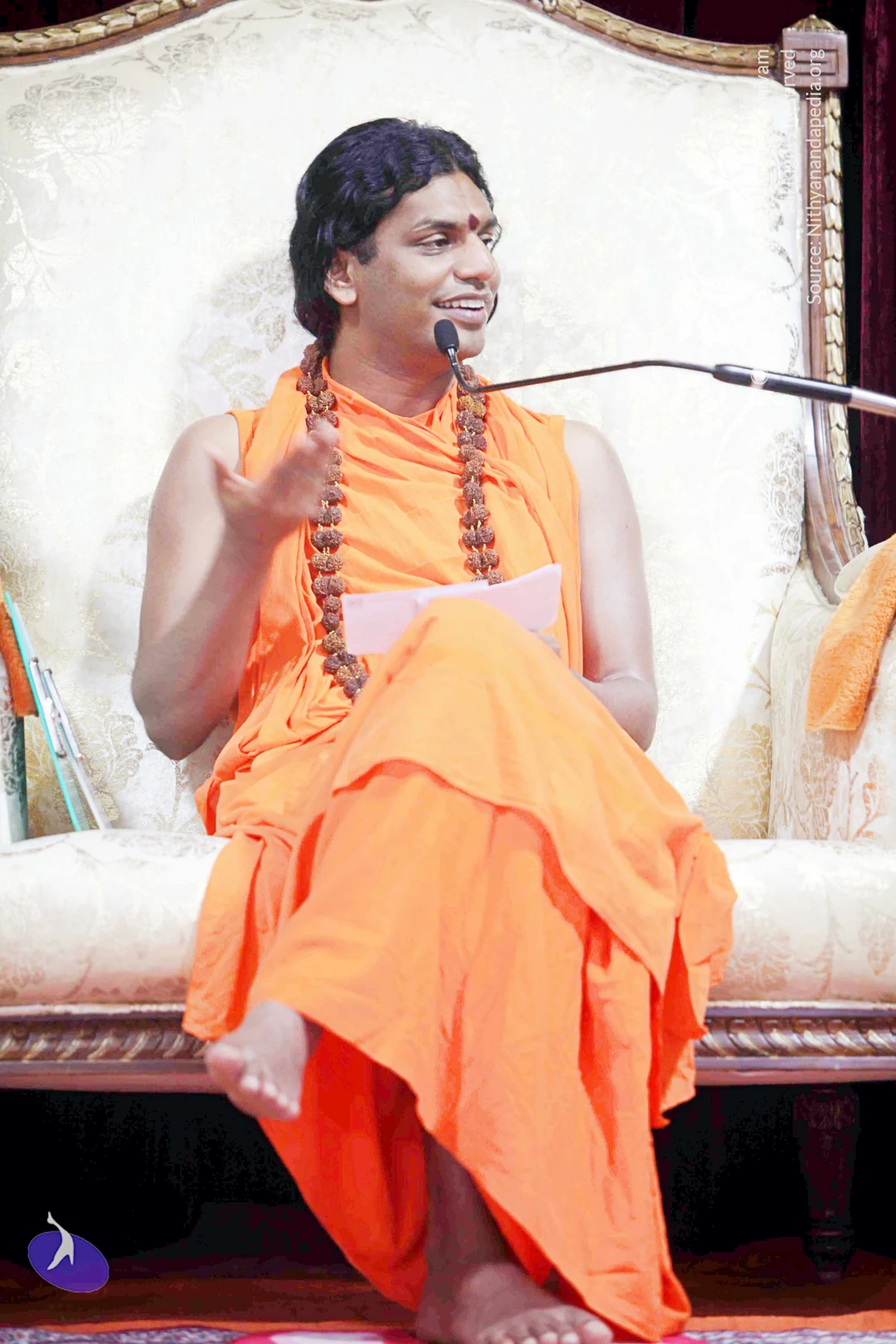
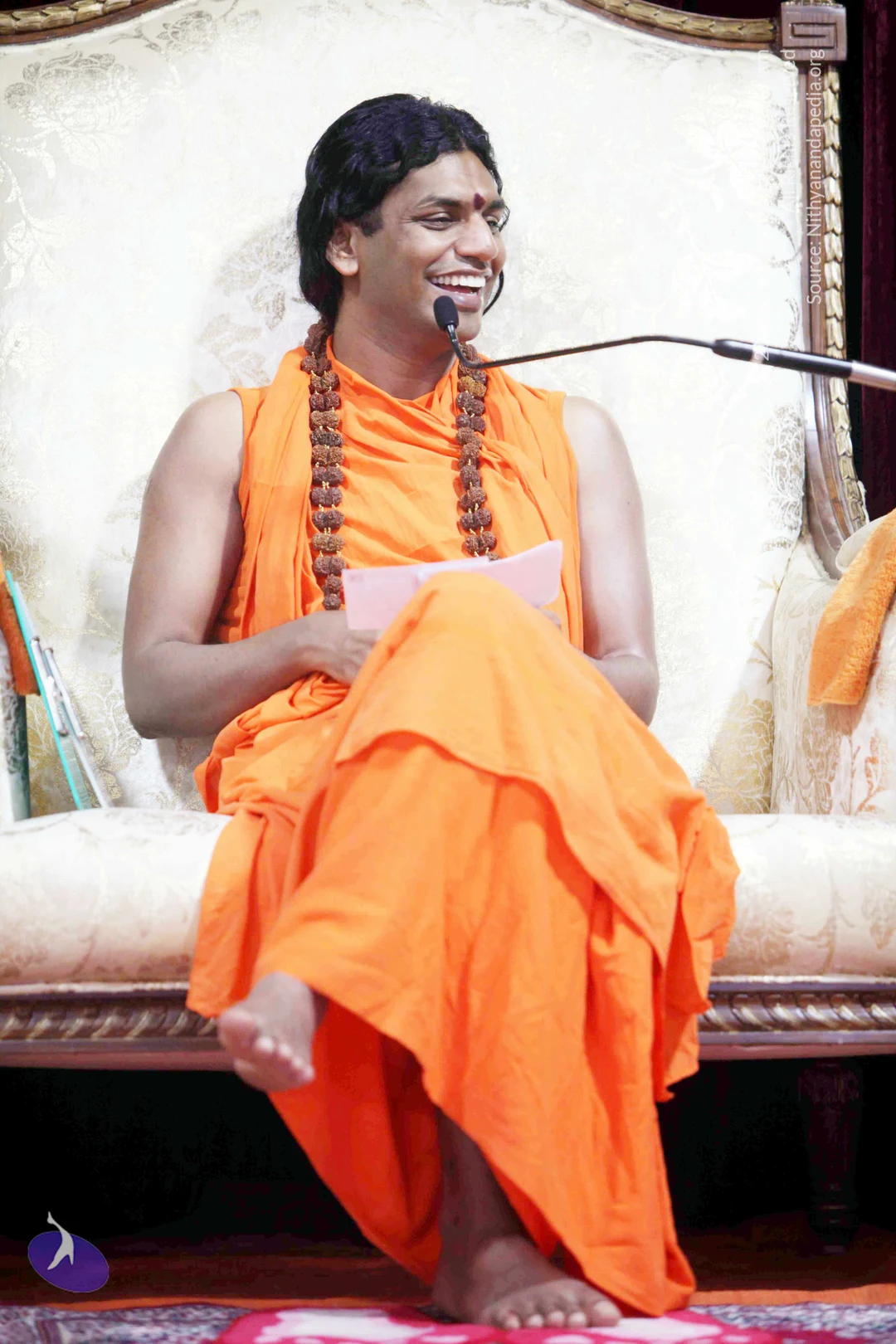
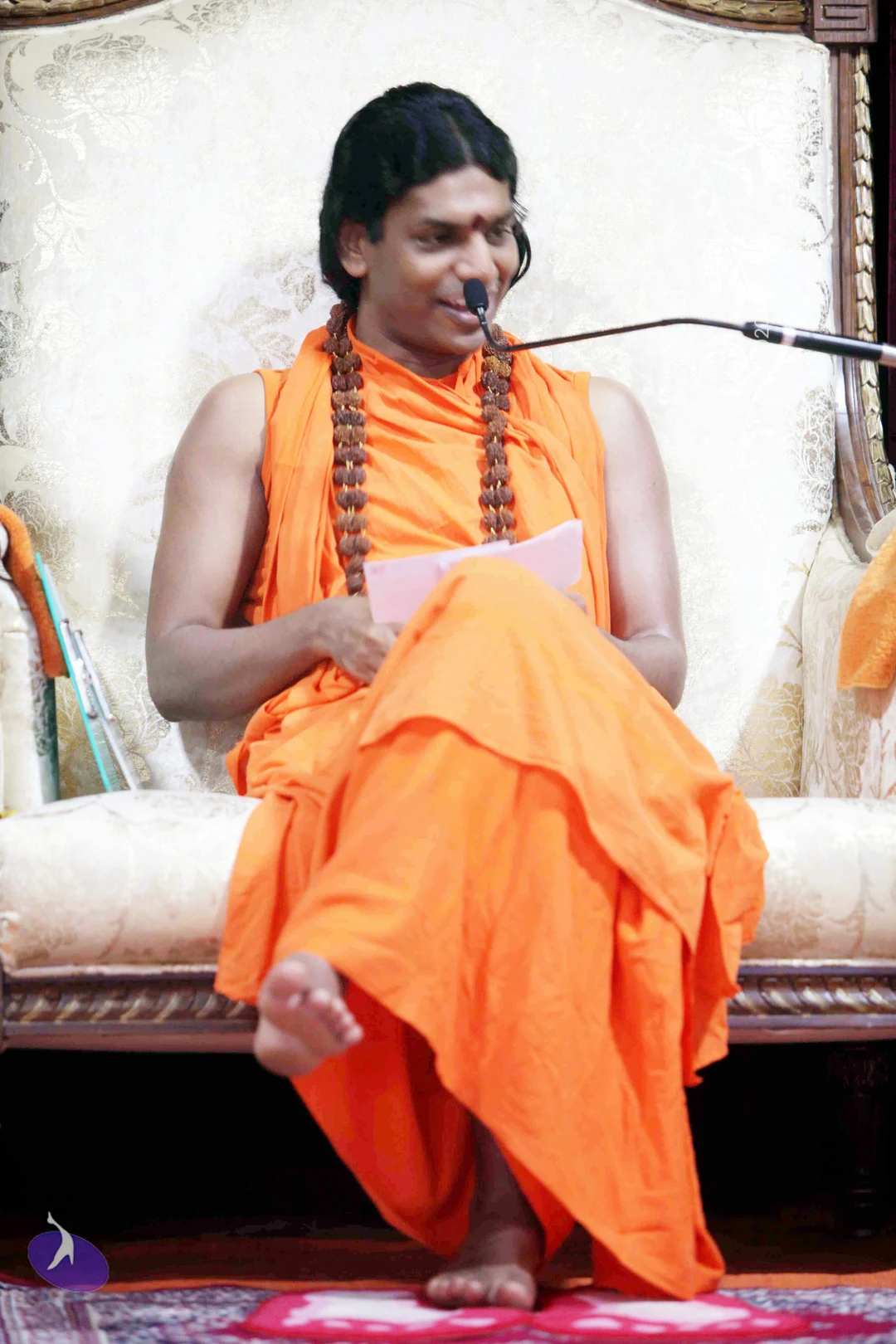
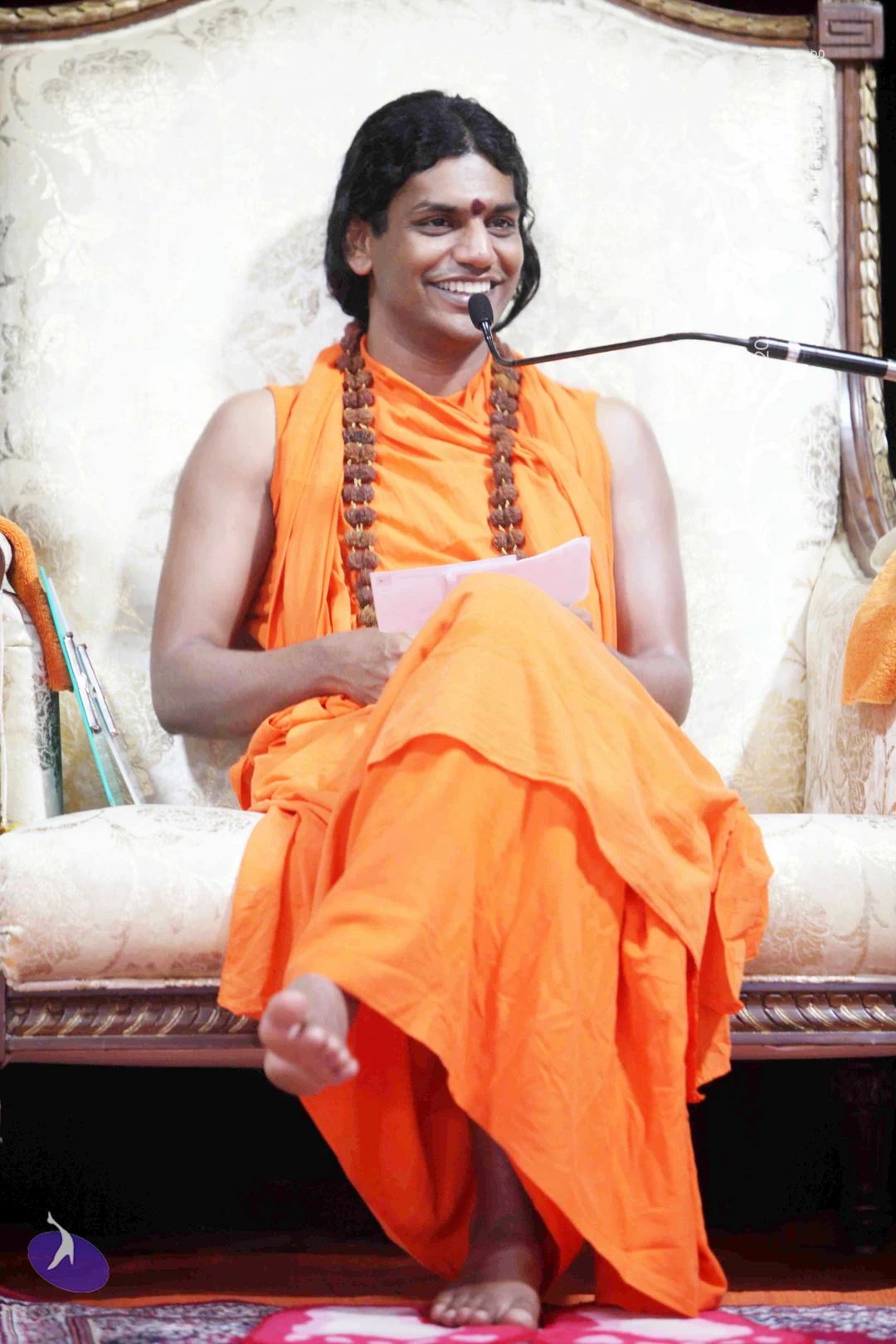
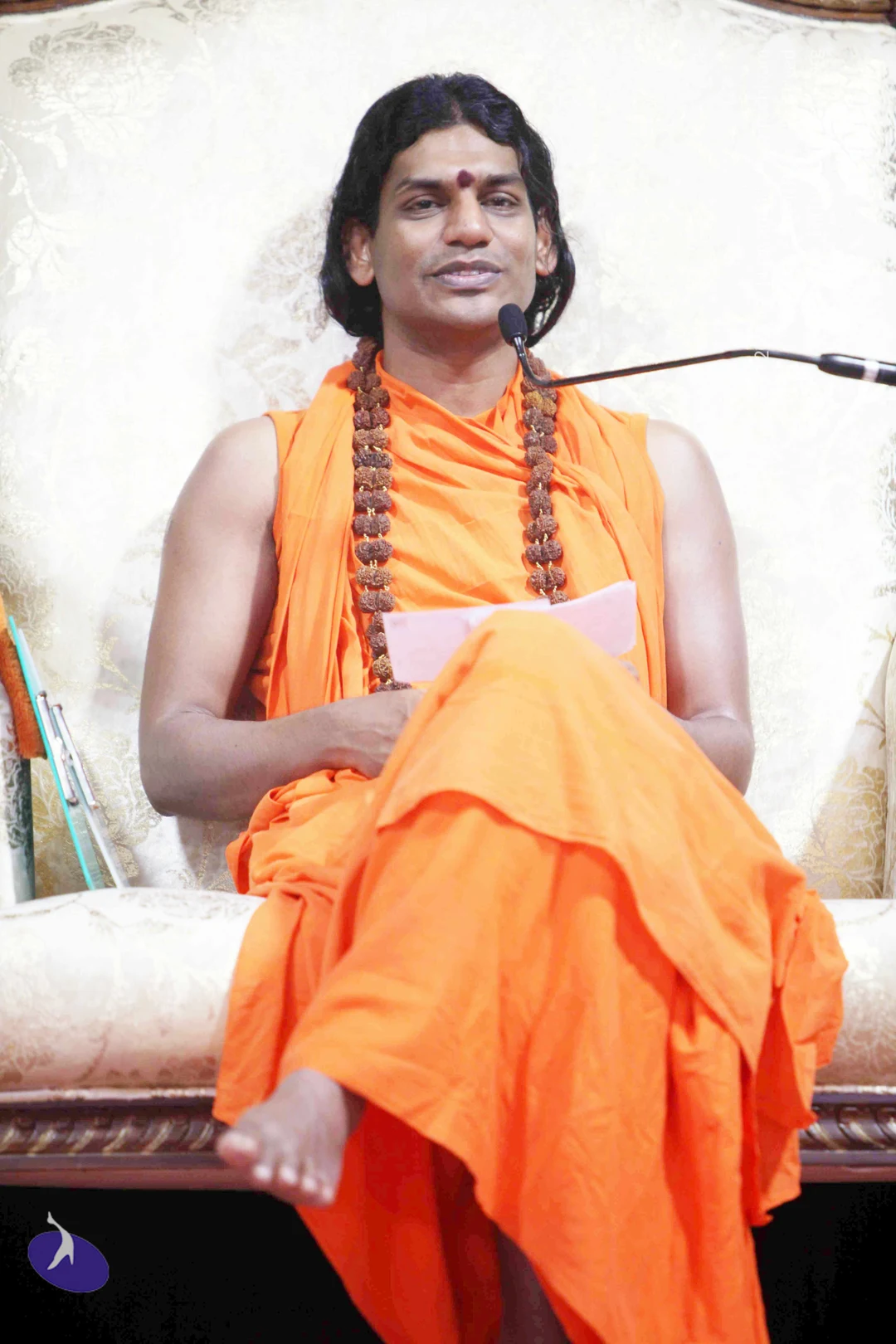
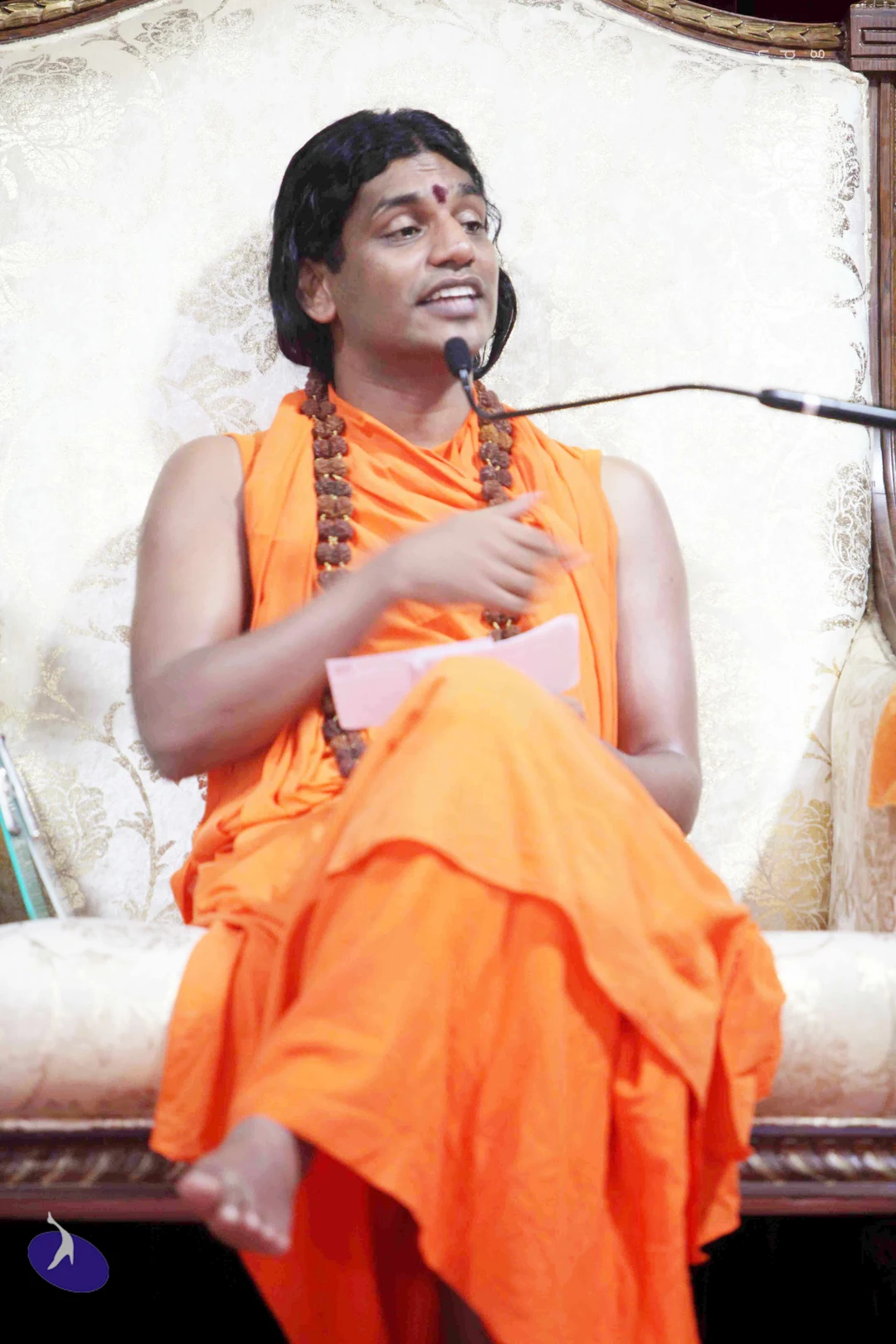
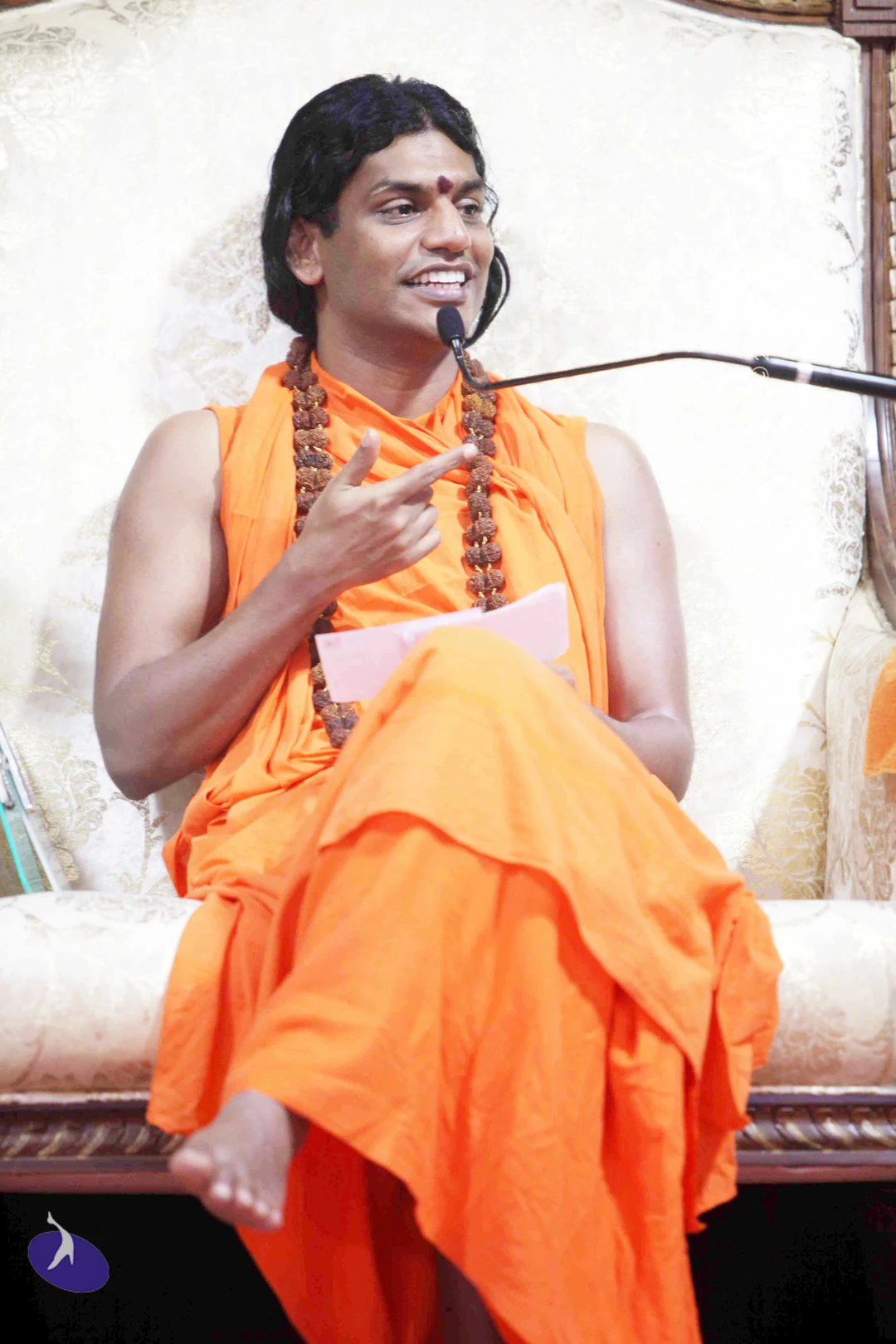
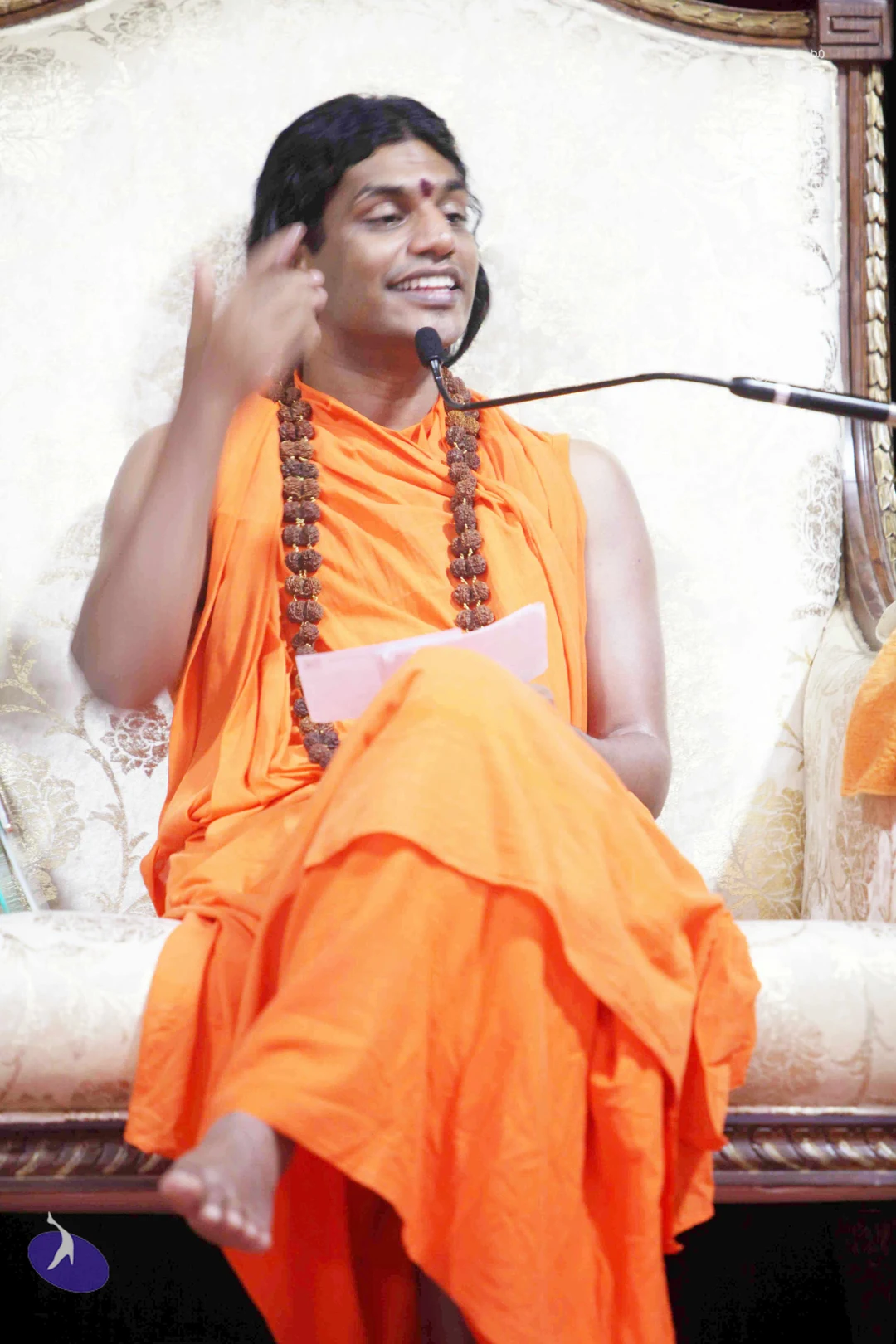
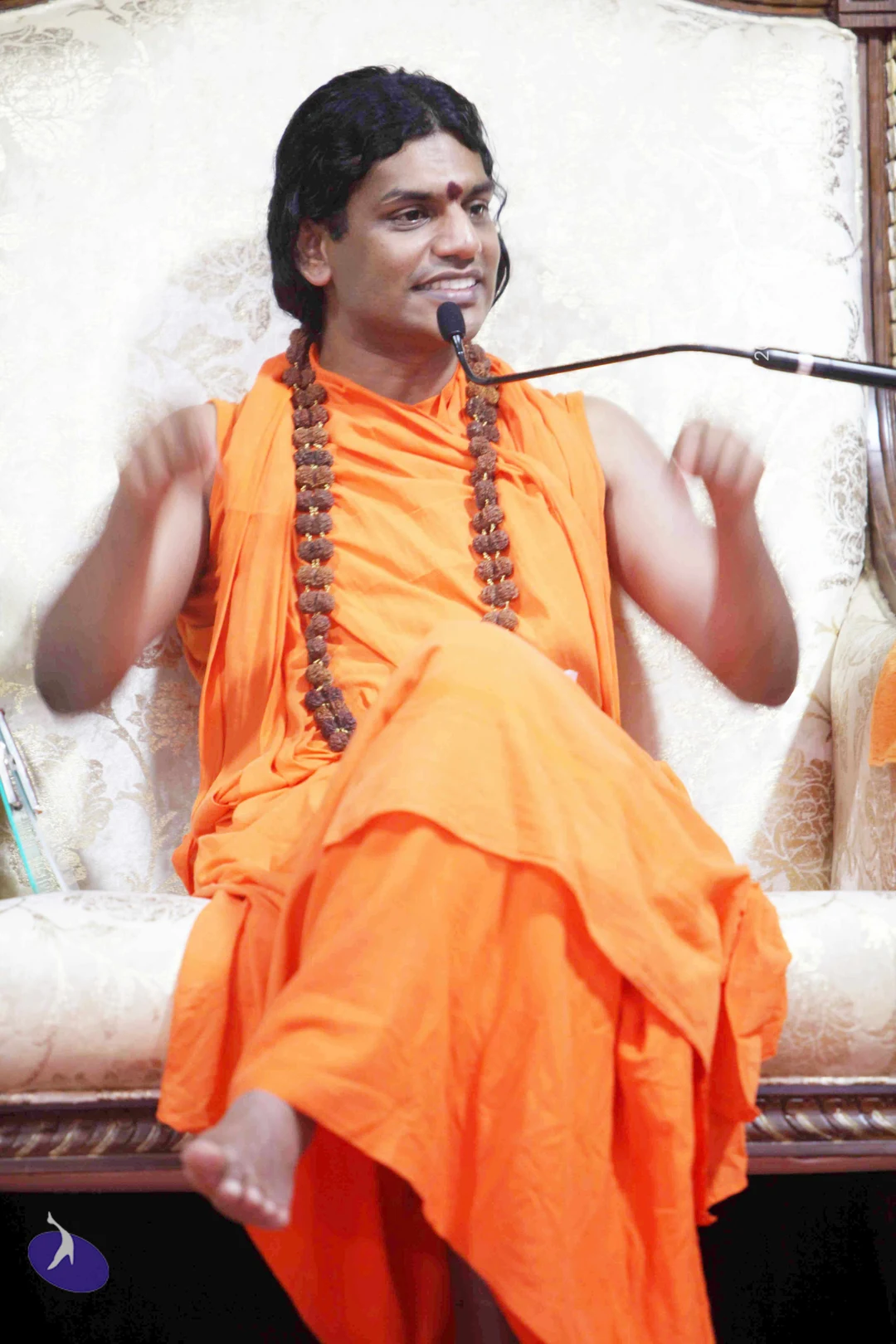
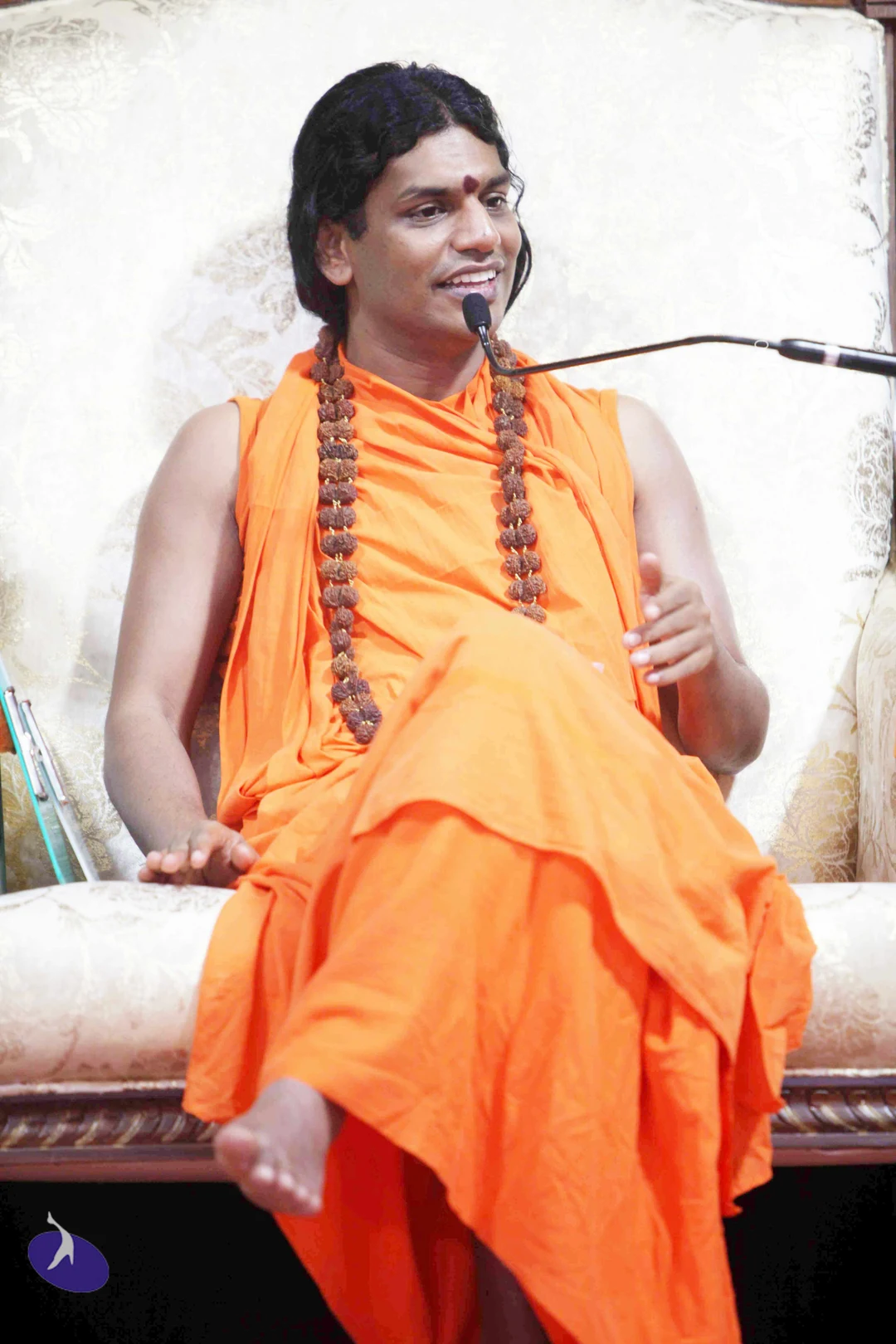
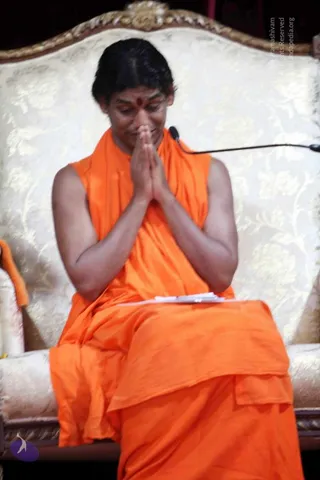
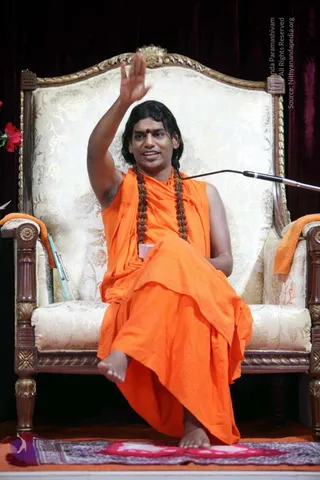
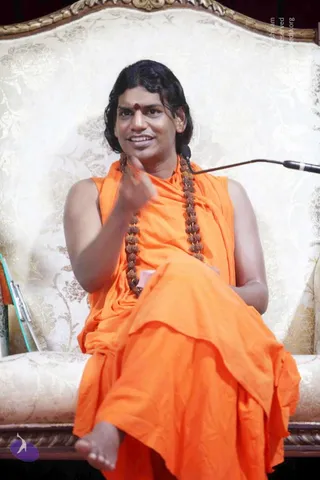
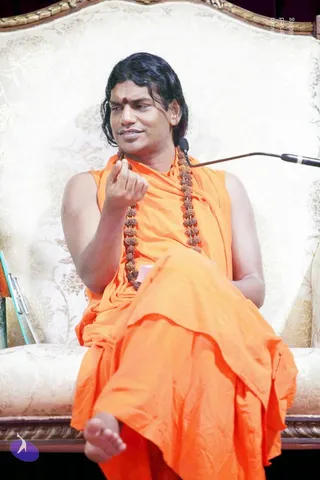
A photograph of a man seated on an ornate cream upholstered throne-style chair with gold-carved wooden trim. He wears an orange saffron robe draped over his shoulders and sleeveless upper body, with a red bindi on his forehead, and sits with palms pressed together in anjali mudra with his eyes lowered. A small white paper rests on his lap and a microphone on a black cable is visible at the right. Only one physical person is present. Appearance cues of long swept-back hair, saffron clothing and a throne setting are consistent with a person depiction, but identity is uncertain from appearance alone.A man seated in an ornate gilded armchair with white and gold floral upholstery and a carved wooden frame, speaking into a microphone on a stand. He wears an orange saffron wrap over a sleeveless orange garment, with a long rudraksha mala around his neck, a red bindi on his forehead, and bare feet with one foot raised on the seat. His right arm is raised in an open-palm gesture while he teaches. Behind him hang dark maroon drapes, and a red flower is visible at the left edge. A patterned rug and red cushions lie at his feet. Appearance suggests Swamiji (probable), a teacher giving a satsang discourse on yoga, with the matching cues of long swept-back hair, saffron clothing and rudraksha beads.A man with long, swept-back dark hair sits on an ornate cream and gold floral throne-style chair, speaking into a clip microphone on a stand at right. He wears a sleeveless saffron-orange robe draped over one shoulder and across the body, with multiple long rudraksha mala strands hanging on his chest. A small red bindi marks his forehead. His right hand is raised in a gesture of explanation while his left leg is crossed and bare foot visible at the bottom. The setting suggests a seated satsang talk. a person: the long swept hair, saffron robe and rudraksha malas are the qualifying cues for the speaking teacher seated on the throne.A man sits on an ornate cream floral upholstered throne-style chair during a satsang talk, gesturing with his right hand raised near his chest. He wears a loose orange saffron wrap draped over one shoulder with bare arms, and a long rudraksha mala of brown beads hangs across his chest. He has long dark swept-back hair and a red tilak on his forehead, and one bare foot is visible at the lower frame. A microphone on a stand is visible to the right, and the lower left shows a corner of a blue-and-white object. Appearance cues are distinctive (long swept hair, saffron wrap, rudraksha mala, throne seating), consistent with the page's identification of a person. The a person field is set to in_person on that basis, with the identification presented as probable.A man seated on an ornate cream upholstered couch speaks into a microphone on a boom stand at right. He wears an orange saffron wrap draped over one shoulder with a sleeveless orange garment, long rudraksha mala beads of several strands around his neck, and a small red tilak on his forehead. His long dark hair is swept back. He holds a folded pink paper or booklet in his hands on his lap, one leg crossed over the other with bare feet visible. A small circular logo appears in the lower left corner. The background is a pale damask fabric.A seated man in saffron-orange robes speaks into a microphone during a satsang talk. He has long dark hair, a red bindi on his forehead, and a rudraksha mala with bead necklaces draped over his shoulders. His eyes are closed, and he holds a folded pink paper in his lap while resting one bare foot on the cushioned seat. The upholstered chair has a floral pattern. Appearance-based label: Swamiji (probable), seated and speaking, in saffron robes with rudraksha beads and long hair. A small logo appears in the bottom-left corner.
1-En-Genius-LE

6 photosSource gallery
A photo of a large indoor hall with an orange-tiled floor where many children sit cross-legged on orange and blue mats in rows. Children wear bright yellow, pink, orange, green and blue clothes. Behind them a standing white-robed instructor holds a camera on a tripod. A tall banner on the right shows a 7 Chakras Chart with a blue human figure and labelled chakras. Another banner is on the left, and a white-and-blue banner is at the far right. The room's ceiling has wooden beams and fluorescent lights.A woman in a white saree with a light blue border and a blue blouse with purple trim stands at a whiteboard on a stage, writing with a marker. The whiteboard holds handwritten notes including numbered lines and words like guilt and fear, plus a sketch. Behind her a dark curtain hangs over an orange-toned stage, and at left a framed portrait shows a figure in orange robes with a beaded necklace seated on an orange chair. A small child's hand is visible at the lower left edge, and a microphone stand stands at right.A photograph of a seated group of children and young teenagers on an orange floor mat with purple-bordered rugs in a hall with terracotta tiles. Most face toward the front, sitting cross-legged or with legs folded. A girl in a white top and blue pants in the foreground points toward the front, and a child in a yellow top and pink pants sits nearby. A young adult in a teal top with a lanyard sits to the left. Behind them, white banners list chakras with their centers, including Ajna chakra (Brow center), Vishuddha chakra (Throat center), Anahata chakra (Heart center), Manipuraka chakra (Navel center) and Swadhishthana chakra, and another banner shows Mind, Memory, DSP, Eye, Chitta and Chakshu labels. A microphone stand and a stage curtain appear at the upper right.A large hall with white walls and a thatched roof sees a group of about thirty children and young people seated cross-legged on orange mats, watching attentively toward the front. Most wear everyday shirts and shorts in bright colours, including green, blue, yellow and striped tops. Among them, a woman in a white sari with a yellow border and a young man in white stand near the front, and a woman in a yellow and white sari sits at the right edge. A camera on a tripod stands near the front and a projector screen is set up on the left. Orange and yellow striped curtains hang on the walls, and stacked mats and cushions sit in the corner. The setting suggests a satsang session.Photograph of a satsang hall with a tiled floor and white pillars, where a group of children sit cross-legged on an orange mat. A girl in white clothes at the left raises one hand, while a girl in pink, purple and green clothing with a red beaded necklace sits centre-front. Other children wear floral tops and purple trousers. In the background a woman in white robes with a blue shawl stands near the wall, and a person with a camera stands at the right. No deity or throne is visible.A photograph of a large hall with a terracotta-tiled floor and a thatched roof, where many children sit cross-legged on mats in a seated satsang-style gathering. Girls in white, blue, purple and pink tops and boys in blue, green, and white shirts face forward, attentive. A cameraman with a tripod stands at the back near the wall. To the right hangs a white banner titled 7 Chakras Chart showing a blue silhouette of a seated figure with labelled chakras including Sahasrara, Ajna and Vishuddhi. No a person candidate is visible in the frame.
2-En-Genius-Meditation

23 photosSource gallery
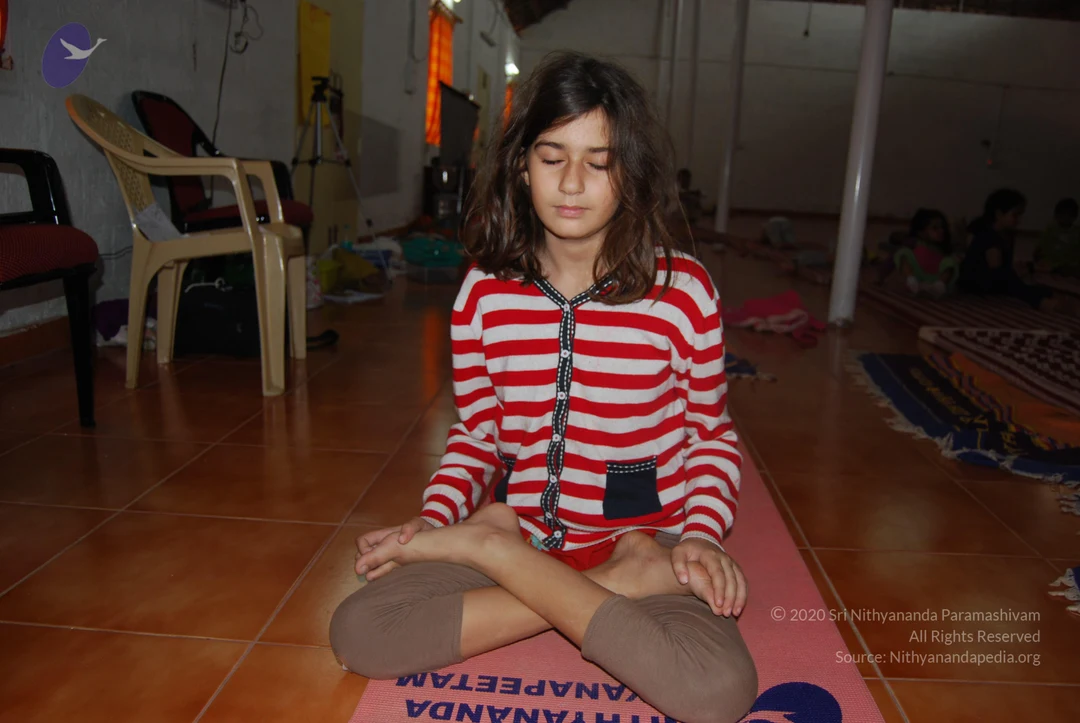
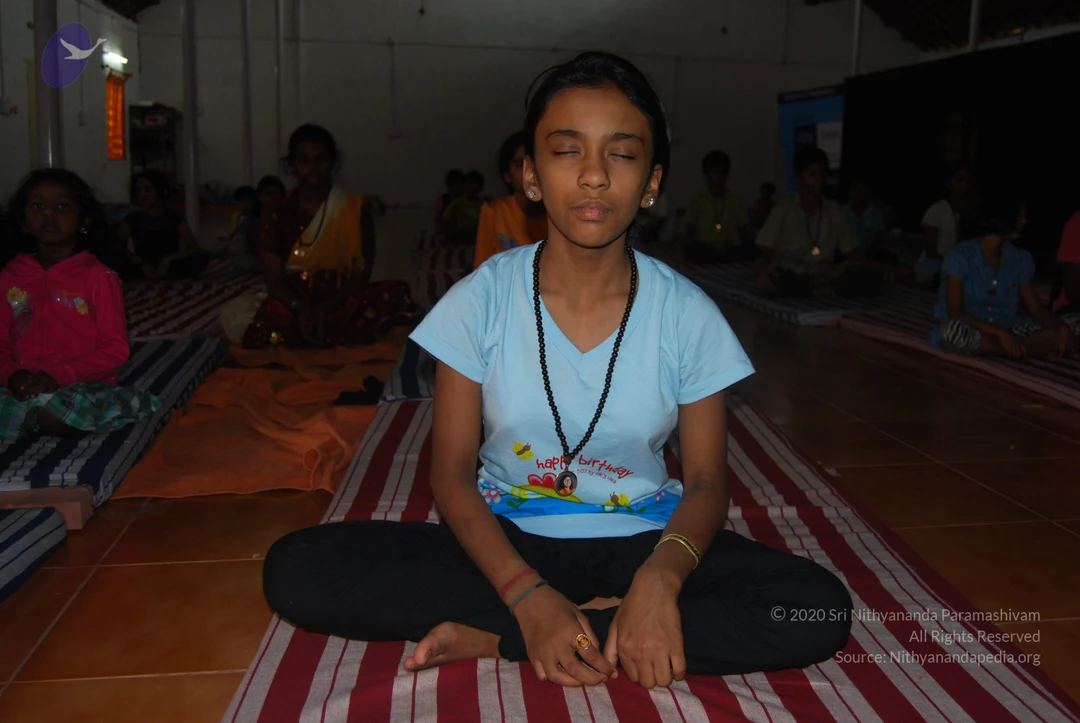
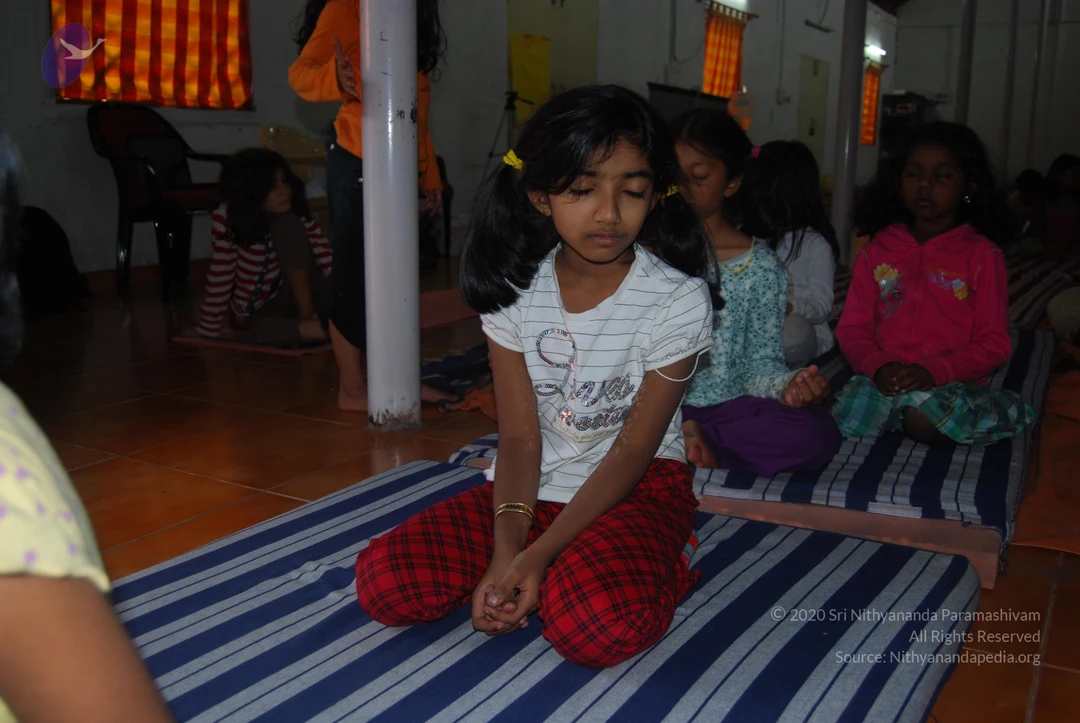
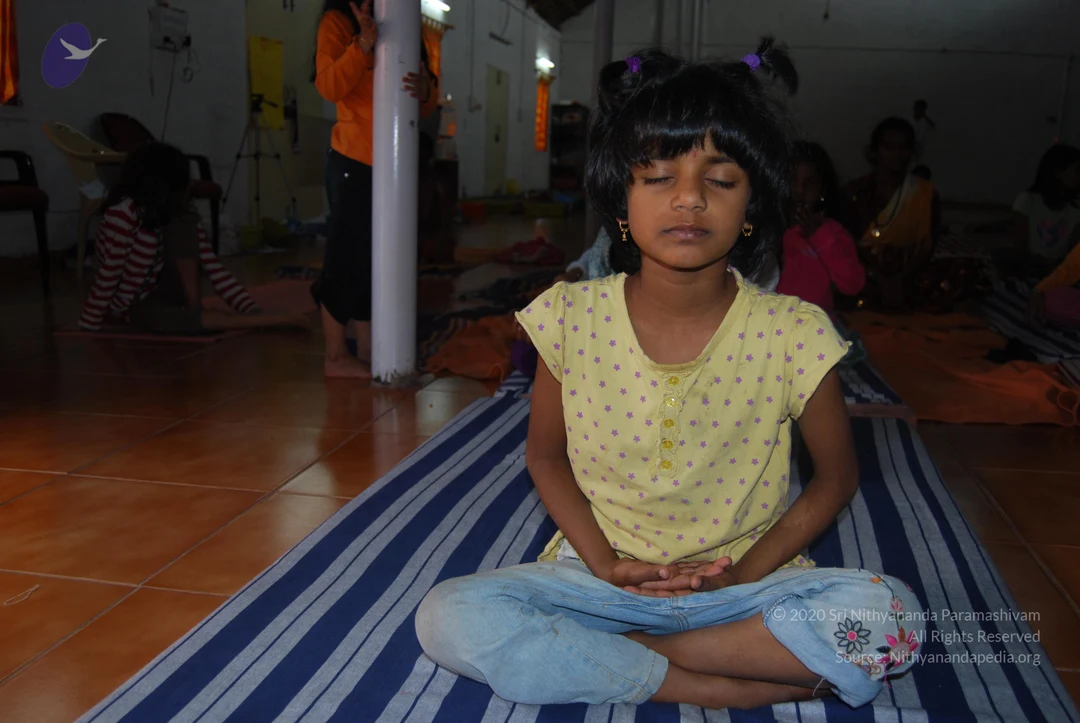
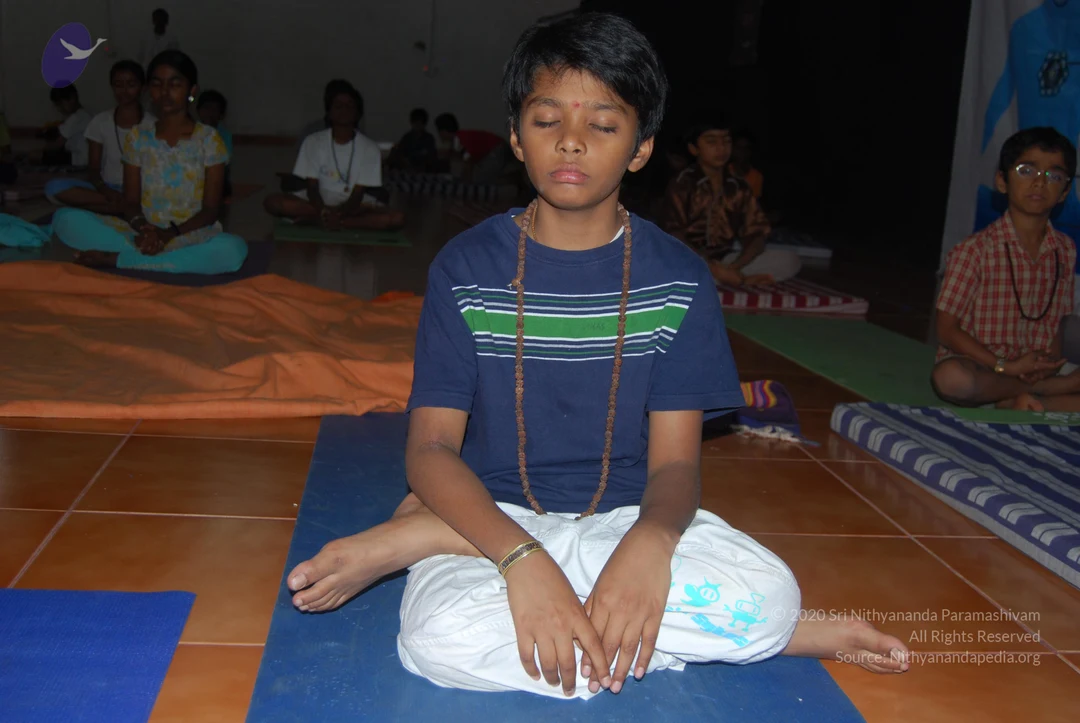
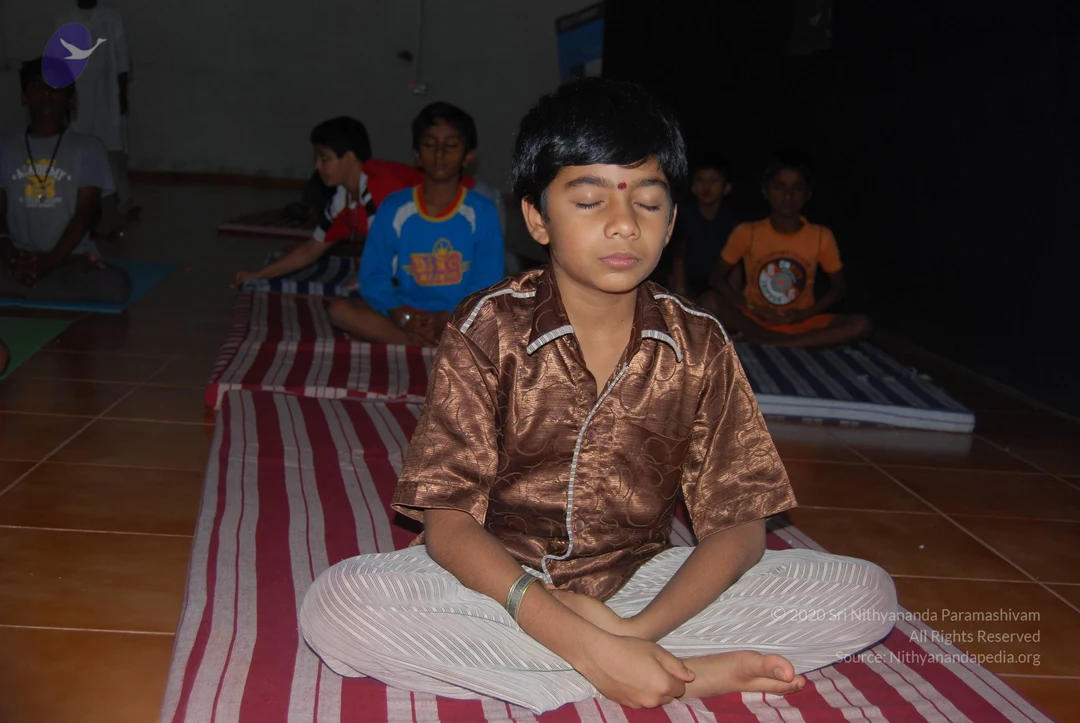
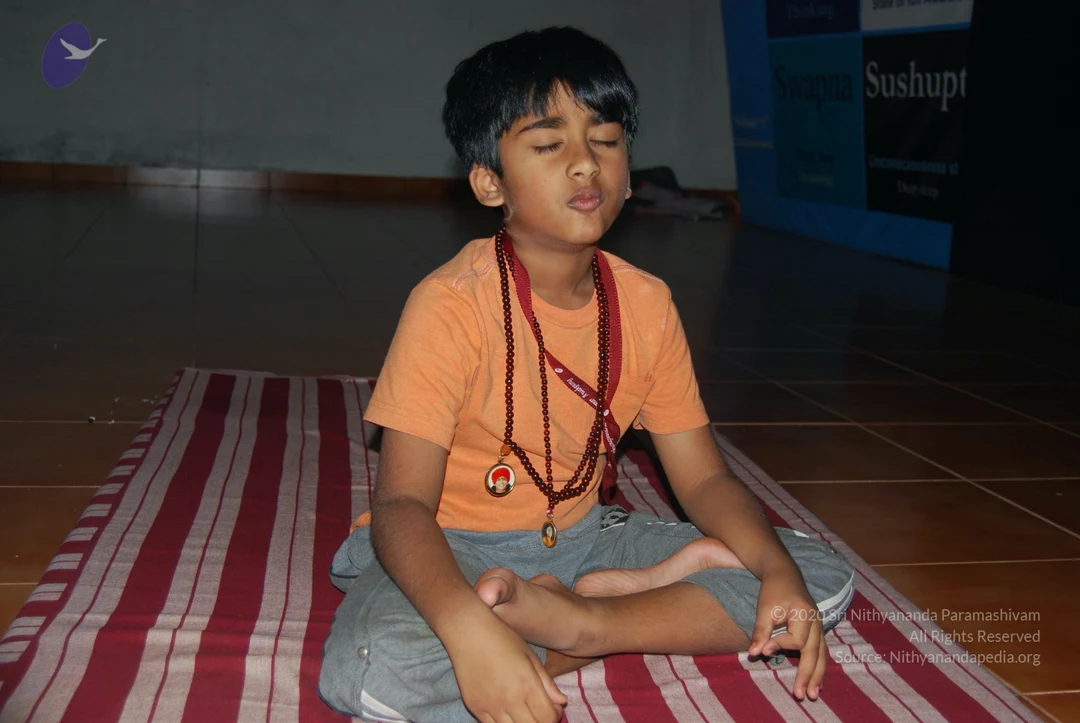
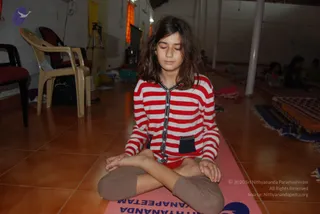
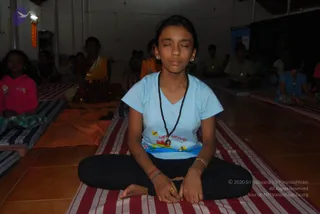
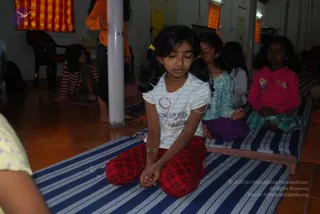
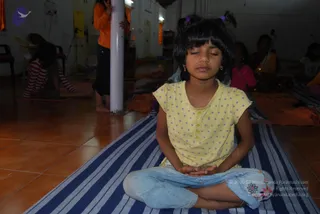
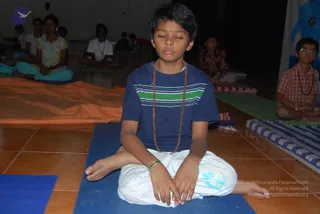
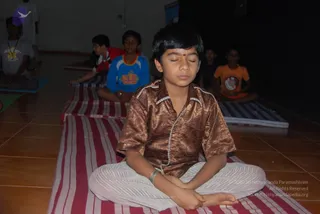
A girl with long wavy brown hair sits cross-legged with eyes closed on a pink mat in a tiled hall, meditating. She wears a red and white striped cardigan with a dark pocket and brown leggings. The mat has printed text reading Nithyananda Dhyanapeetam. Behind her, other people sit on mats and cushions in the room, with white pillars, plastic chairs and a tripod in the background.A young girl sits cross-legged with eyes closed in meditation on a red and white striped mat in a plain hall. She wears a light blue t-shirt with a cartoon print, black trousers, a black beaded mala necklace, a gold bangle and red and white thread bracelets. Behind her, rows of seated participants and children meditate on striped mats, with an orange cloth and a small orange lamp on the left wall.A photograph of children seated in meditation in a hall with a tiled floor and a white pillar. In the foreground a girl with pigtails and a white striped t-shirt sits cross-legged on a blue and white striped mat, hands clasped in her lap, eyes lowered, wearing red plaid trousers and a gold bangle. Behind her, other children sit on striped mats; one in a pink hooded top and green plaid trousers, another in a light blue top and purple skirt. An adult in orange stands at the left, and orange and yellow checked cloths hang on the wall. No a person is visible.A young girl with a bob haircut and purple hair clips sits cross-legged on a blue-and-white striped mat, eyes closed and palms resting together in her lap, meditating. She wears a yellow top with small purple star print and light blue jeans with embroidered flowers. Behind her, other participants sit on orange and blue mats in a hall with orange tiled floors, white walls and a white pillar, some in orange and pink clothing. A yellow poster is visible on the wall. Several people are visible in the background.A young boy sits cross-legged on a blue mat in meditation with eyes closed and hands resting in his lap. He wears a navy blue t-shirt with green and white horizontal stripes, white pants, a brown rudraksha mala around his neck and a gold bangle on his wrist. Behind him, several seated children and teenagers in white, yellow and plaid clothing sit on mats on a tiled floor with orange and blue cloth nearby. A large blue painted figure appears at the right edge. No a person candidate is visible.A young boy sits cross-legged on a red-and-white striped mat with eyes closed in meditation on a tiled floor. He wears a brown shiny short-sleeved shirt, white trousers, a small red bindi and a silver bangle. Behind him, several other children sit in meditation on mats, including a boy in a blue and red jersey and a boy in an orange t-shirt. A dim indoor hall with a plain wall forms the setting.
3-En-Genius-Yoga
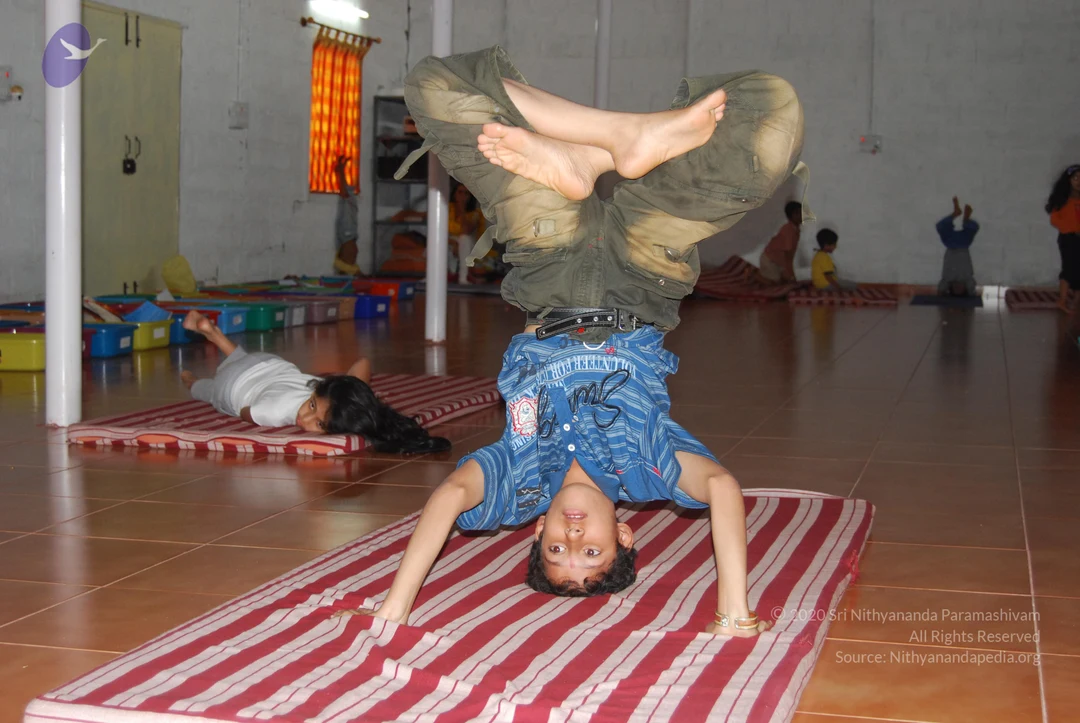
10 photosSource gallery
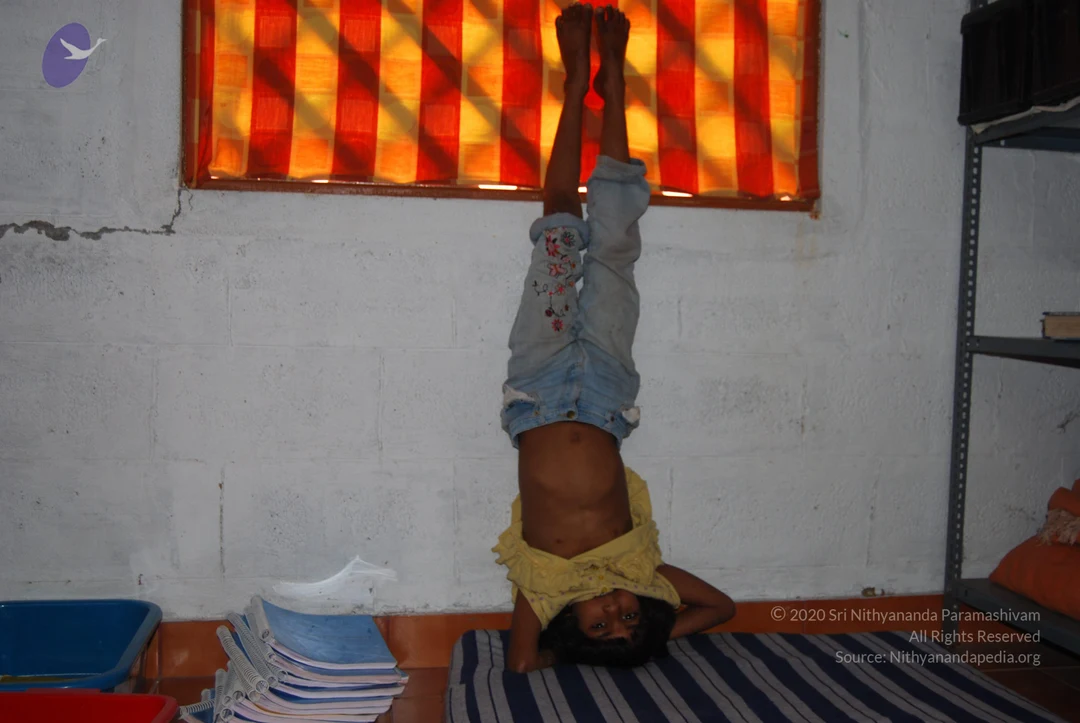
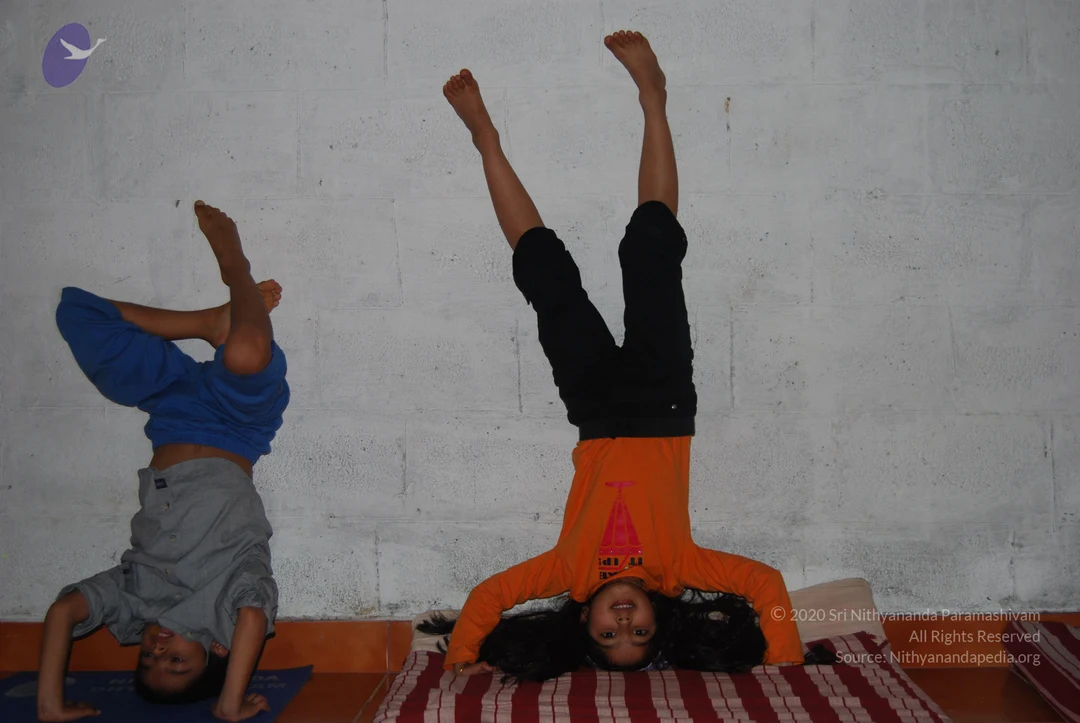
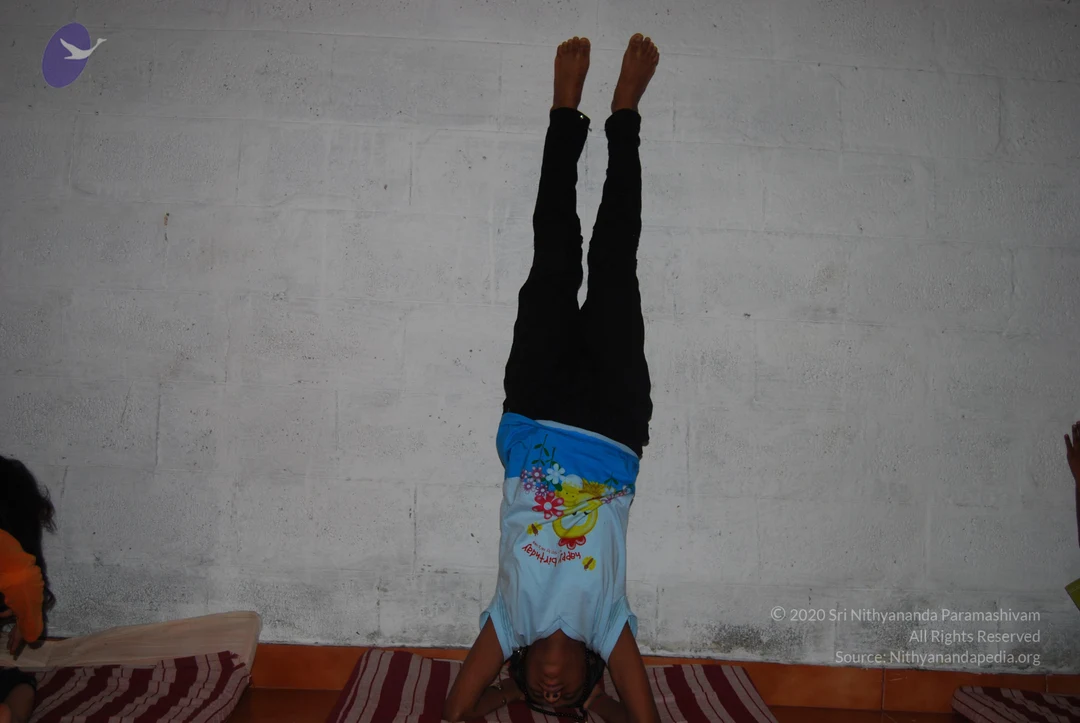
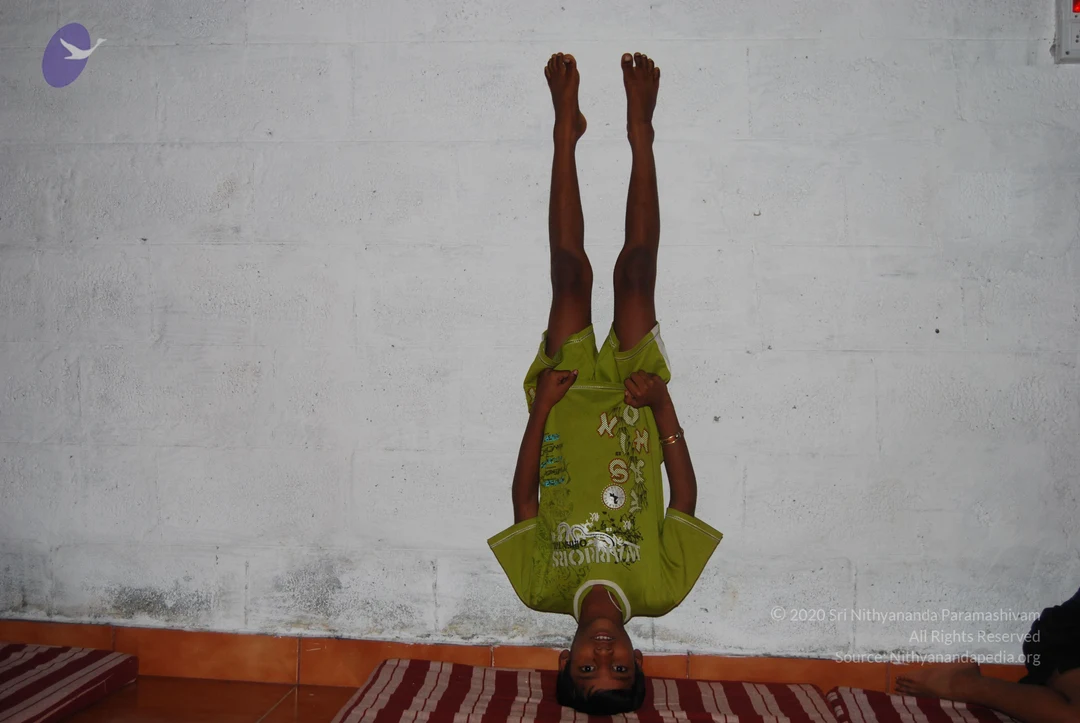
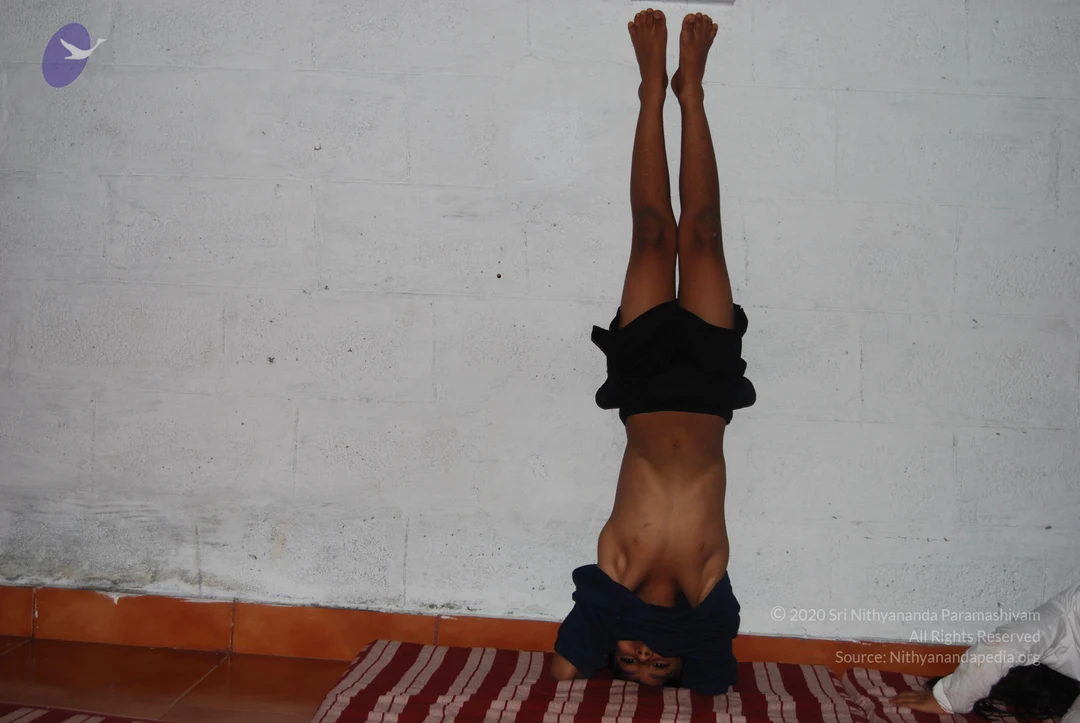
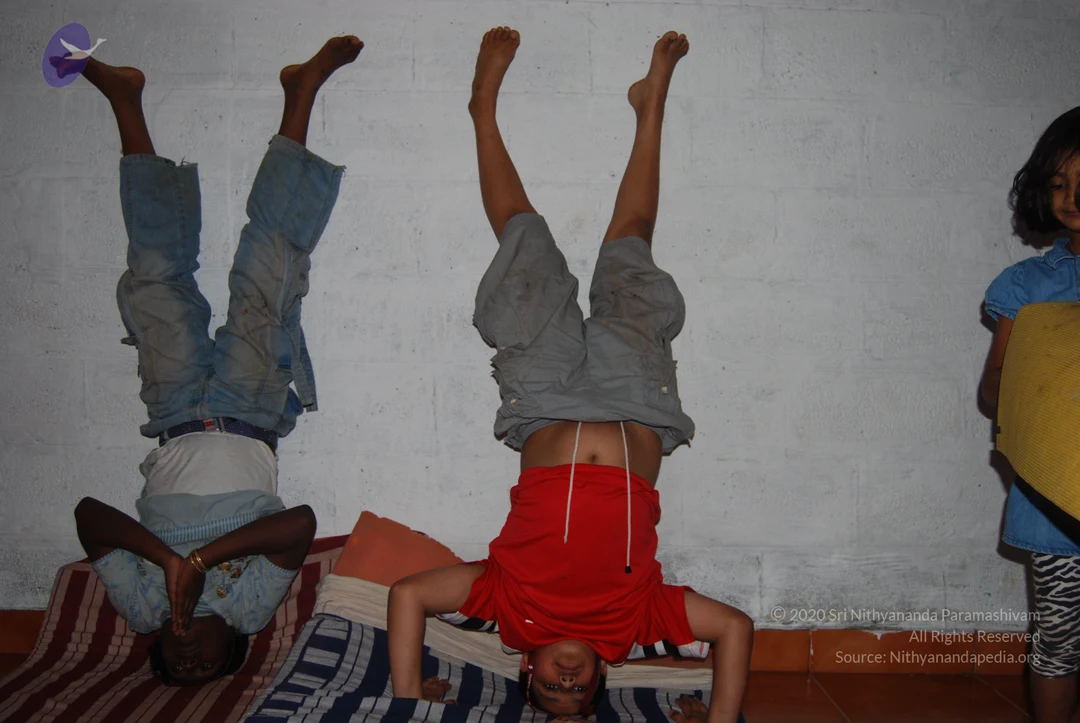
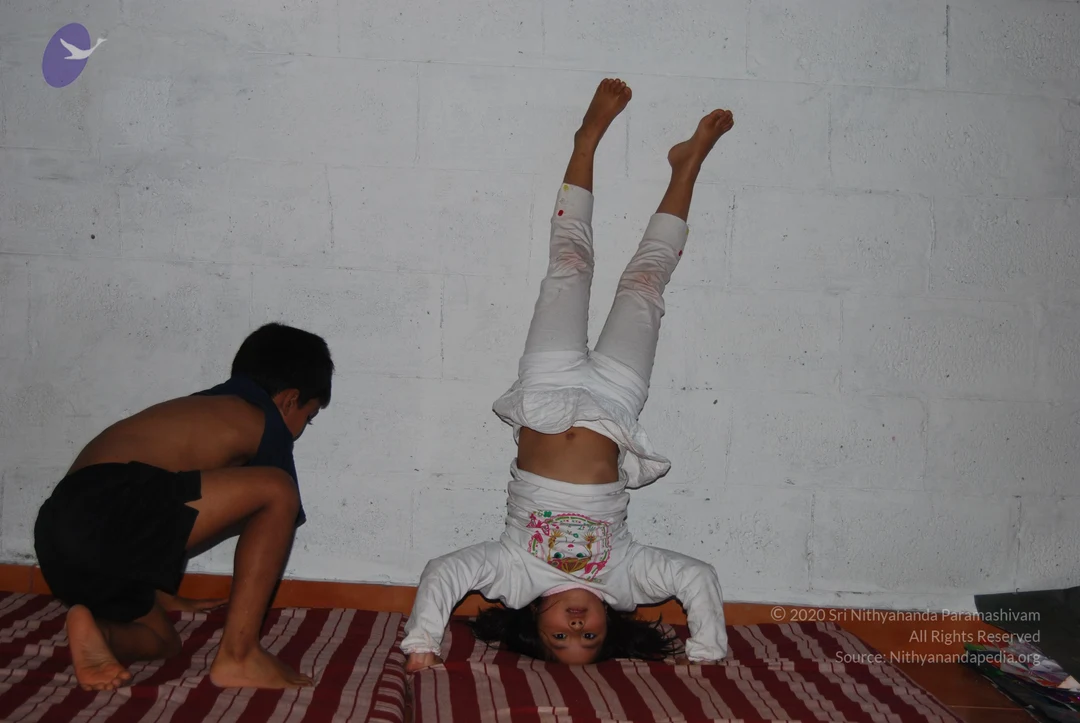
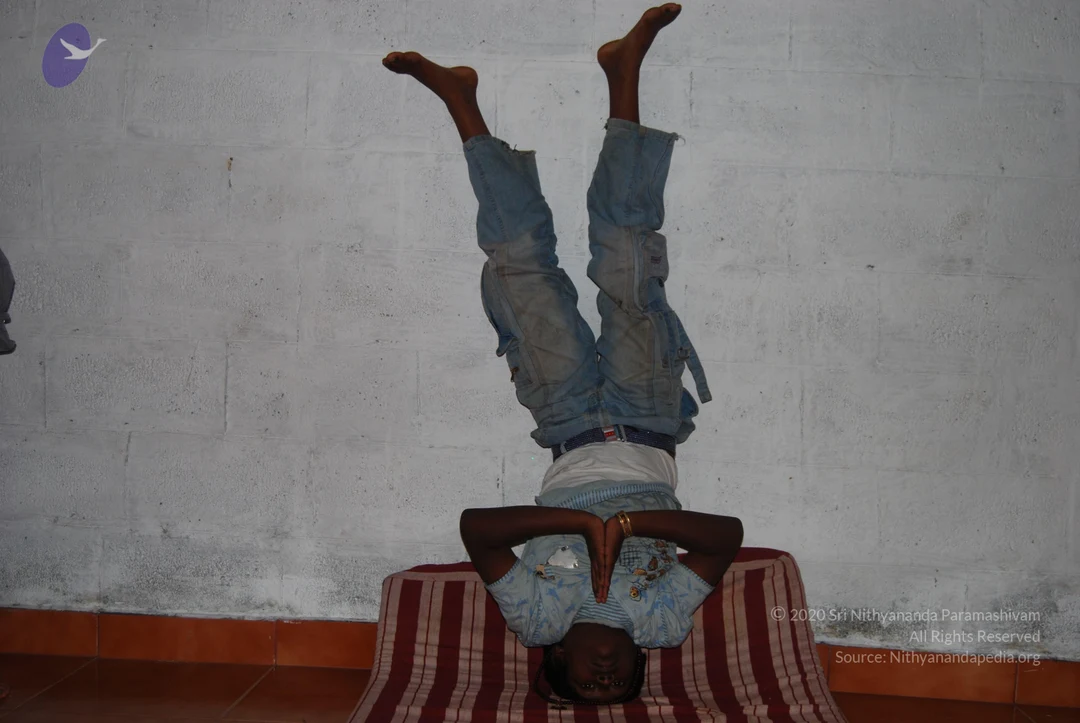
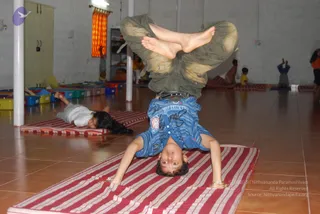
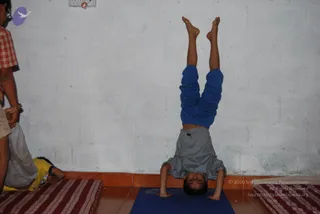
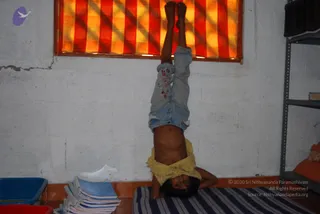
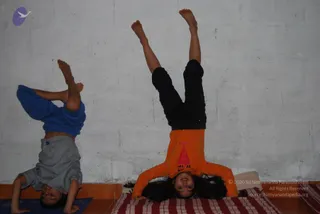
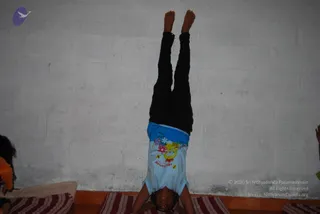
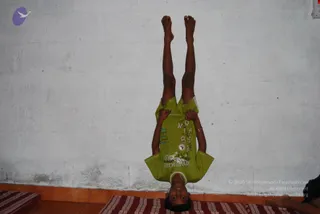
A child in a blue striped short-sleeved shirt and olive cargo trousers performs a headstand on a red-and-white striped mat on a tiled floor. Behind, another child lies prone on a red-striped mat, and further back several people sit or stand in a bright hall with yellow and blue mats stacked along the wall and an orange-and-yellow patterned curtain near a white door. The setting suggests a yoga or meditation session.A young boy in a grey shirt and blue trousers performs a headstand on a blue yoga mat against a plain white wall, his hands planted on the mat and legs straight up. Beside him on the left, another child in a yellow top lies on a red-and-white striped mat, and a third child in a checked shirt stands at the edge of the frame. No a person candidate is visible; the setting is a plain tiled room used for yoga practice.A young girl performs a headstand indoors against a white cinder-block wall. She wears a yellow sleeveless top and light blue jeans with embroidered floral details at the cuffs, her hands braced on a blue-and-white striped mat. Behind her a window with a red and yellow checked curtain casts warm light. Stacked white folded mats and a blue tub sit on the left, and a metal shelf stands on the right.Two children perform headstand yoga poses against a plain whitewashed concrete block wall. On the left, a child in a blue top and grey pants is inverted with legs straight up, resting on a blue mat. On the right, a child with dark curly hair in an orange long-sleeved top with a pink emblem and black pants stands on their head on a red-and-white striped cushion, legs extended upward. An orange-tiled floor is visible at the bottom.A child performs a headstand (sirsasana) inverted against a plain whitewashed concrete wall, legs straight up in black trousers, body in a light blue top decorated with flowers and a cartoon print. The child rests on folded red-and-white striped mats on an orange tiled floor. Another person's arm and an orange garment are partly visible at the left edge, and a hand appears at the right edge. No a person candidate is visible.A young boy in a lime-green short-sleeved t-shirt with white and beige printed lettering and graphics performs an inverted yoga pose, a headstand or shoulder-stand variant, with his legs straight up against a plain white wall. His hands are clasped beneath his head on a red-and-white striped mat over a terracotta tile floor. A bangle is visible on one wrist. Another person's arm and a dark sleeve appear at the lower right edge of the frame.

4-En-Genius-Children
44 photosSource gallery
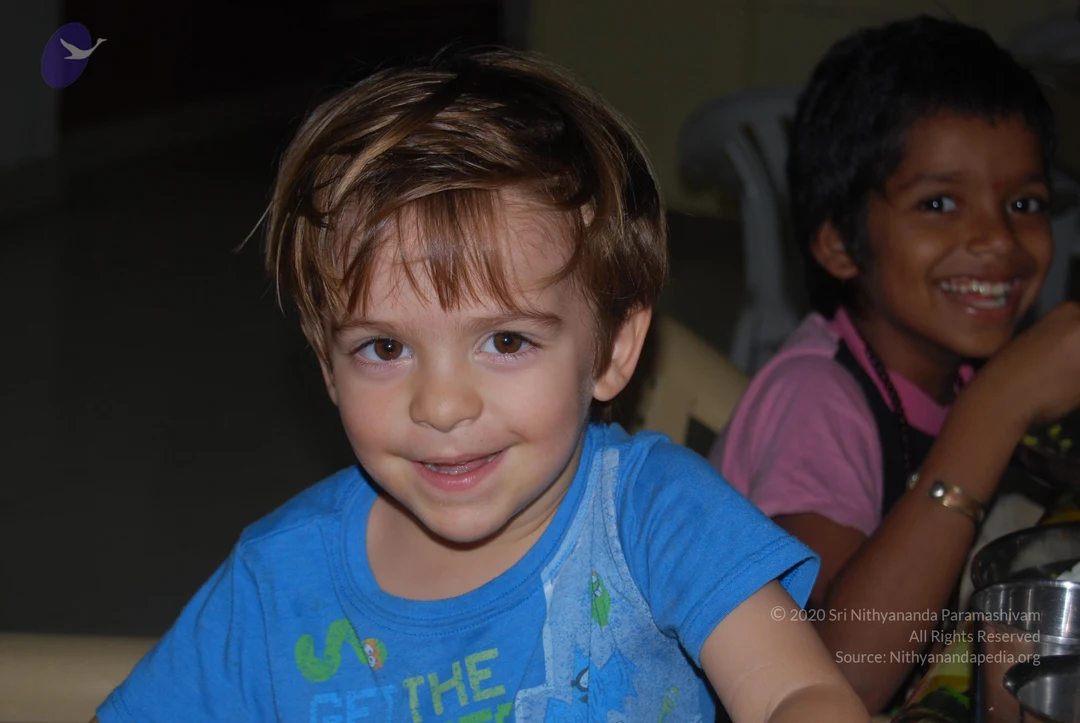
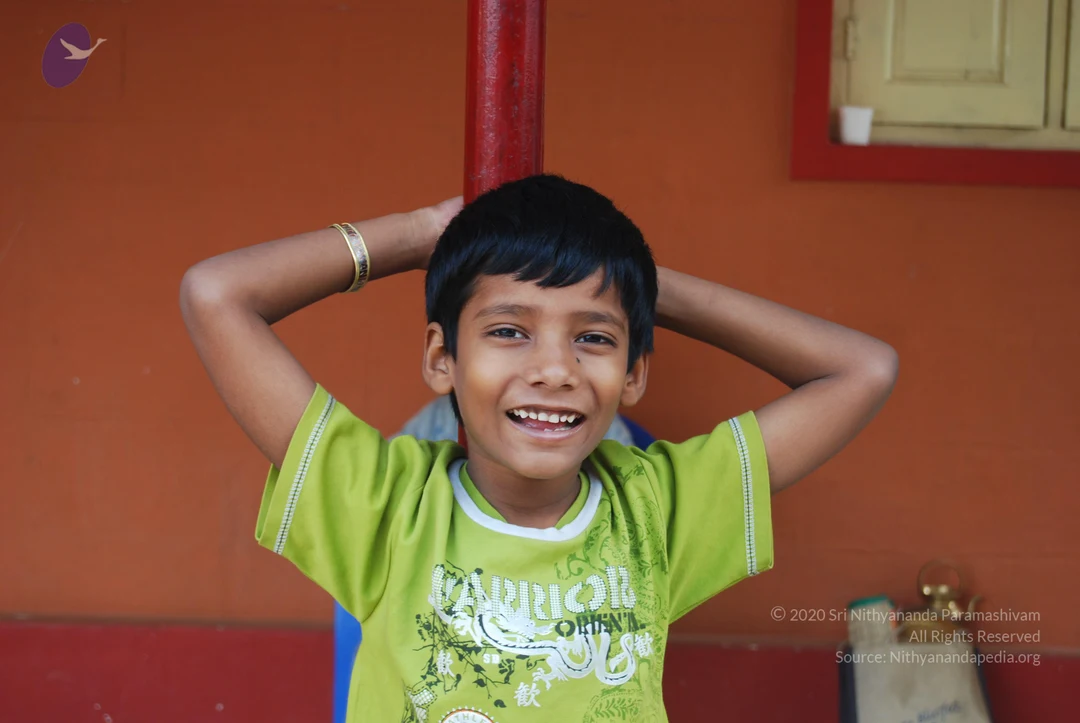
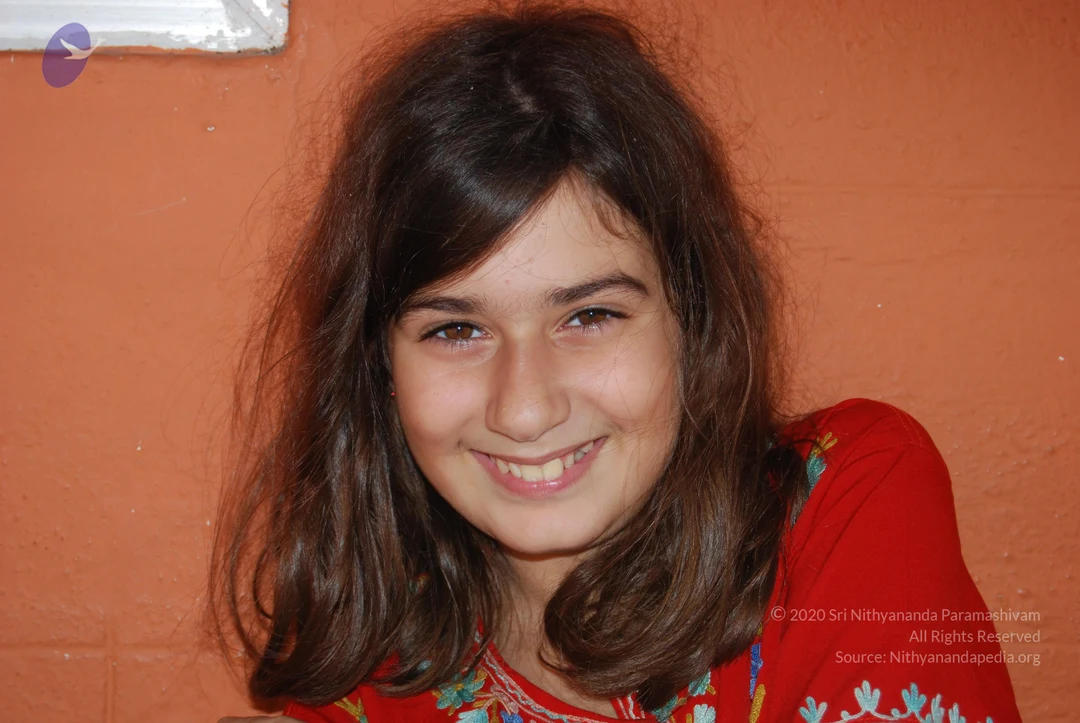
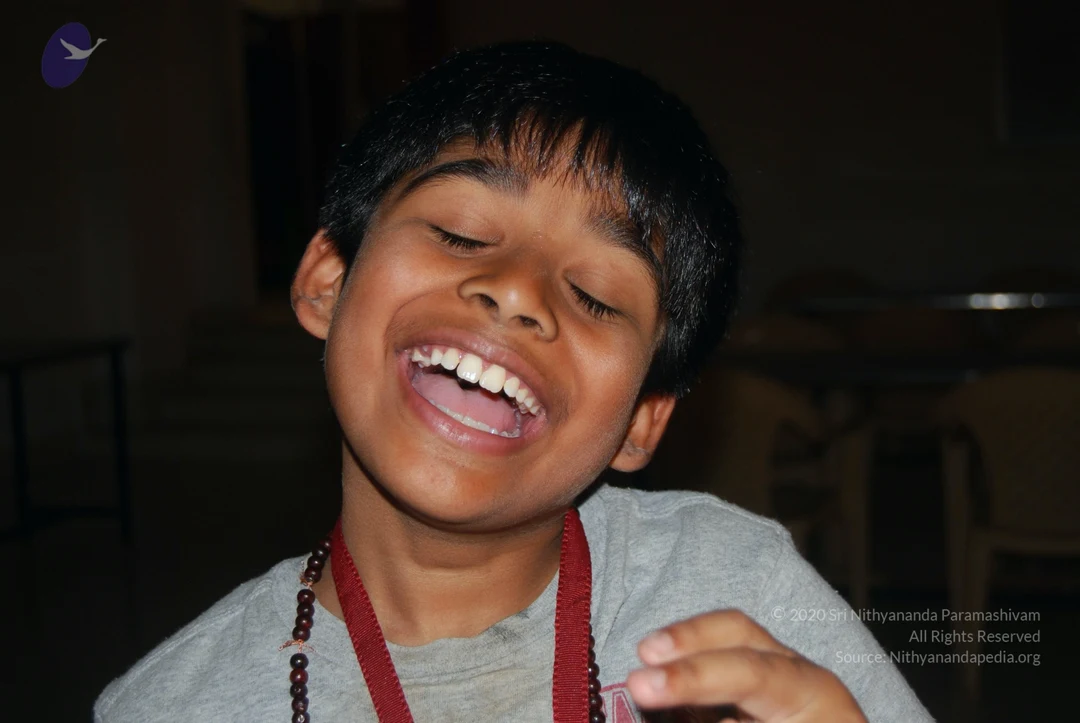
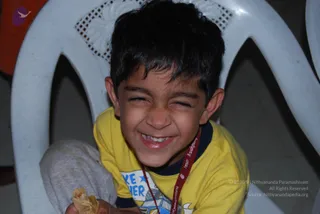
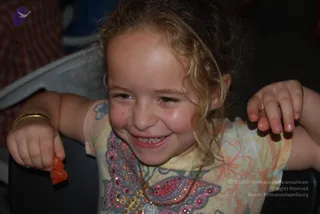
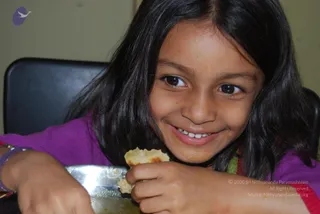
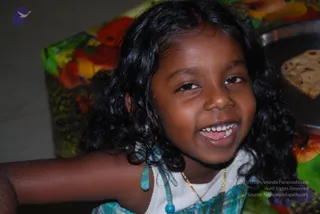
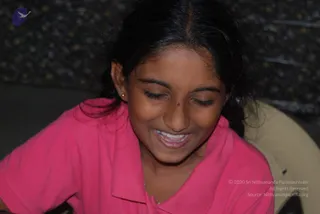
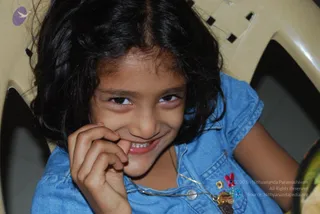
Close photo of a smiling young boy with short dark hair and eyes squeezed shut in a wide grin. He wears a yellow t-shirt with navy collar and printed letters, and a red lanyard around his neck. He sits on a white plastic chair and holds a bit of food in one hand. A purple logo sits in the upper left corner.A smiling young girl with curly light-brown hair sits in a dark room, holding a small piece of orange-red food in her left hand while her right arm is raised near her shoulder. She wears a pale yellow t-shirt decorated with a large pink and grey embellished floral motif, a brown beaded necklace, and a thin gold bangle on her wrist. Behind her is a white plastic chair and a red checked fabric. No a person figure is visible.A smiling young girl with long straight dark hair sits at a table, leaning forward with her arms resting on the surface. She wears a purple top and a colourful bangle on her wrist, and holds a piece of flatbread or roti in one hand above a shiny steel plate. A black chair sits behind her against a plain pale wall. The scene looks like a casual meal in an ashram or community dining setting. No a person candidate is visible.A close-up photo of a smiling young girl with long, wavy black hair and a wide open-mouthed grin, showing her teeth. She wears a white tank top with a green and blue checked garment and turquoise beaded necklace and gold chain. Behind her is a colourful painted or printed surface with red, orange and green fruit-like patterns, and a flatbread is visible at the upper right. No a person candidate is visible; the scene shows a child in an everyday setting.Close-up photograph of a smiling young girl with dark hair pulled back, wearing a bright pink collared polo shirt and a small red bindi on her forehead. She looks down and laughs with her eyes lowered, seated in front of a dark floral-patterned background.A close-up photograph of a young girl with shoulder-length dark wavy hair smiling broadly with her index finger touching her lower lip. She wears a blue denim short-sleeved top with a pocket and colourful embroidered flower patches in pink, yellow and blue, and a thin gold chain with a small charm. Behind her is a cream-coloured curved surface with dark rectangular vents.