Skip to content
Thursday

16 December 2010

Ashtanga Yoga: Be in Yama Niyama: Patanjali Yoga Sutras 84 - Nithyananda Morning Satsang 16 Dec 2010

Dated photos
832
Source pages
1
Media
4
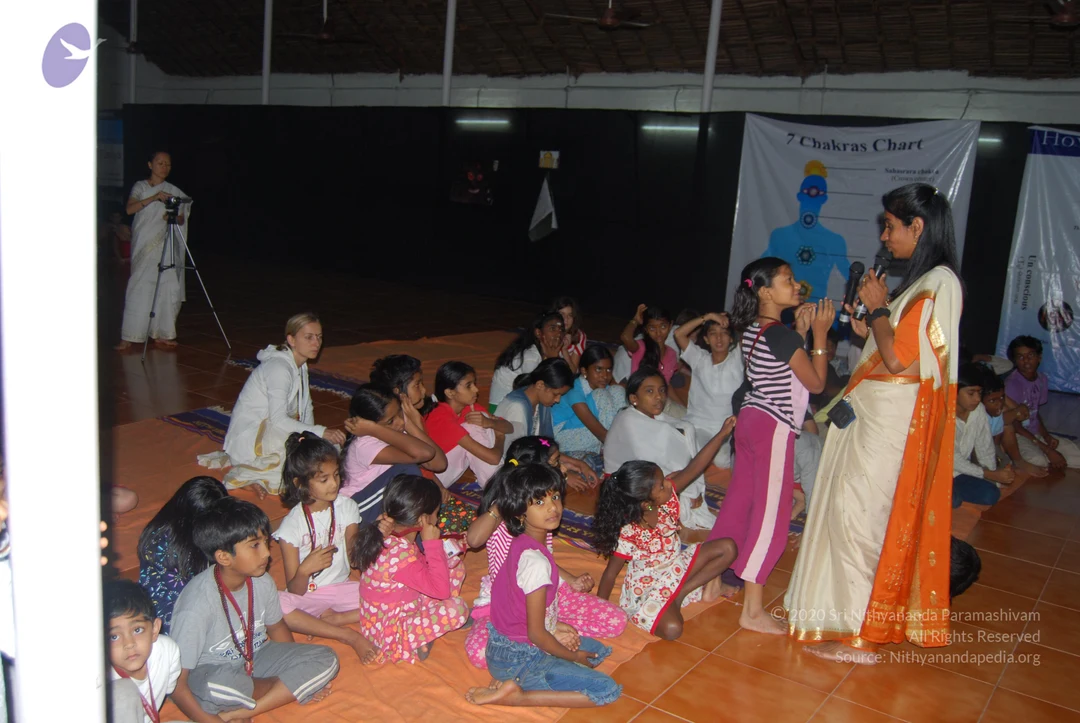
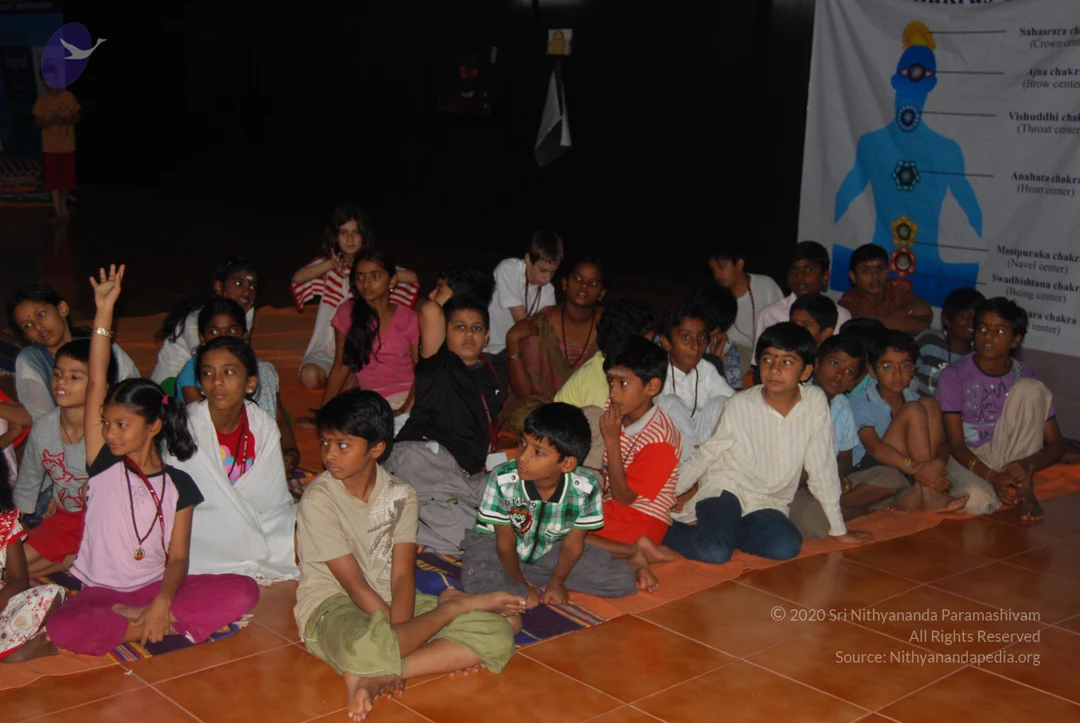
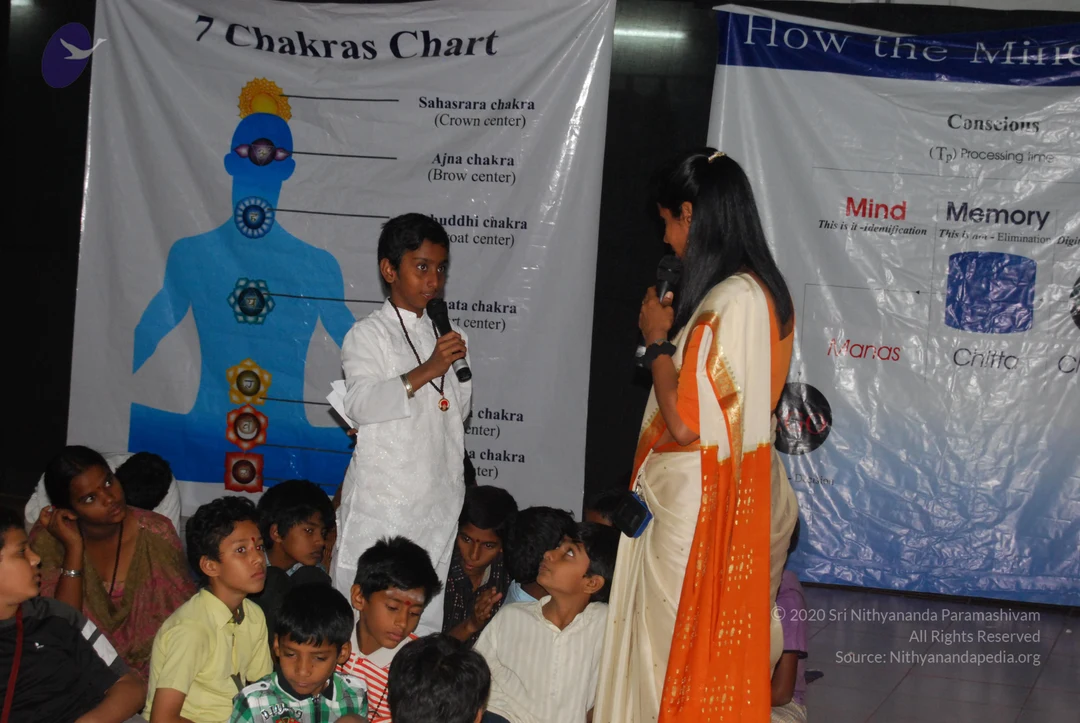
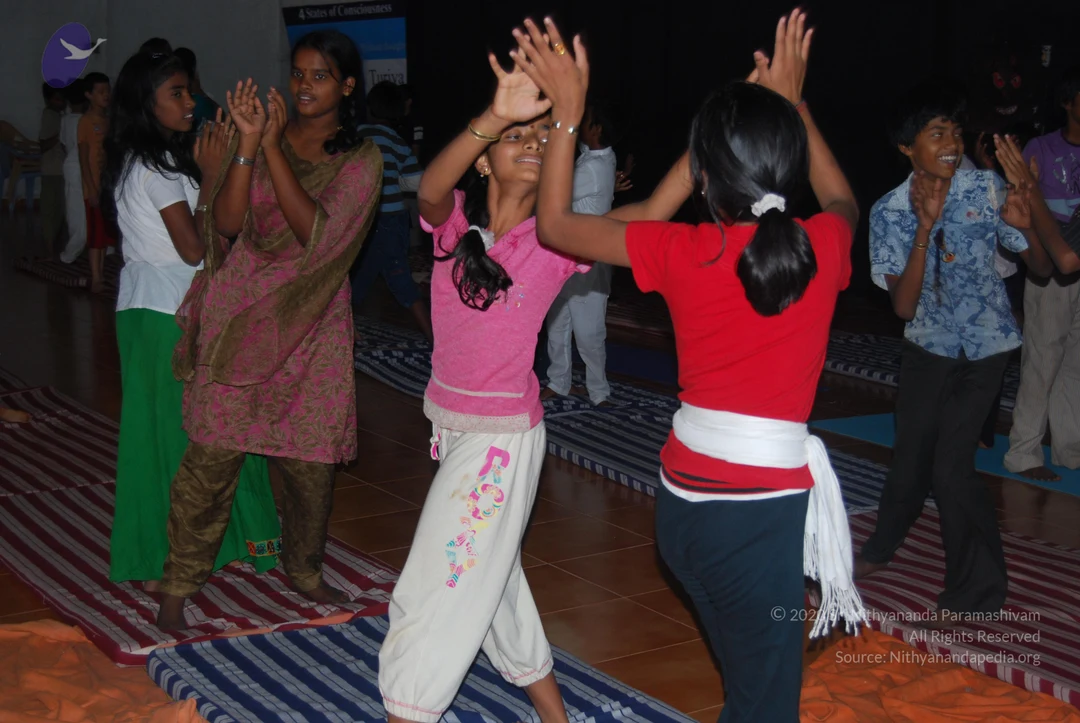
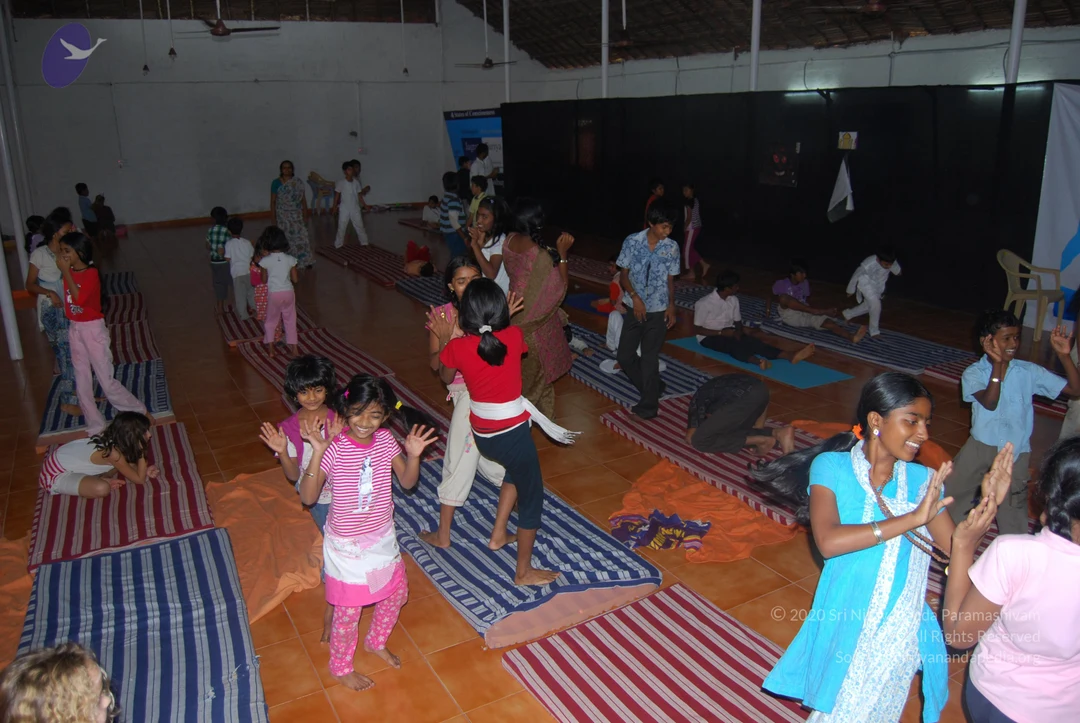
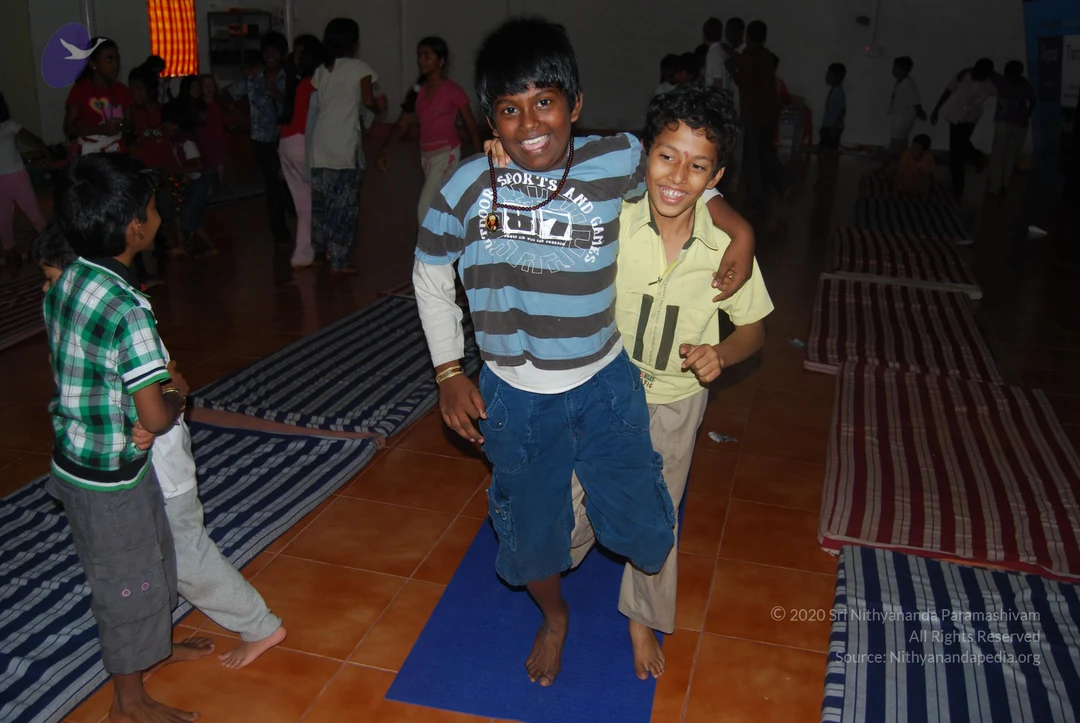
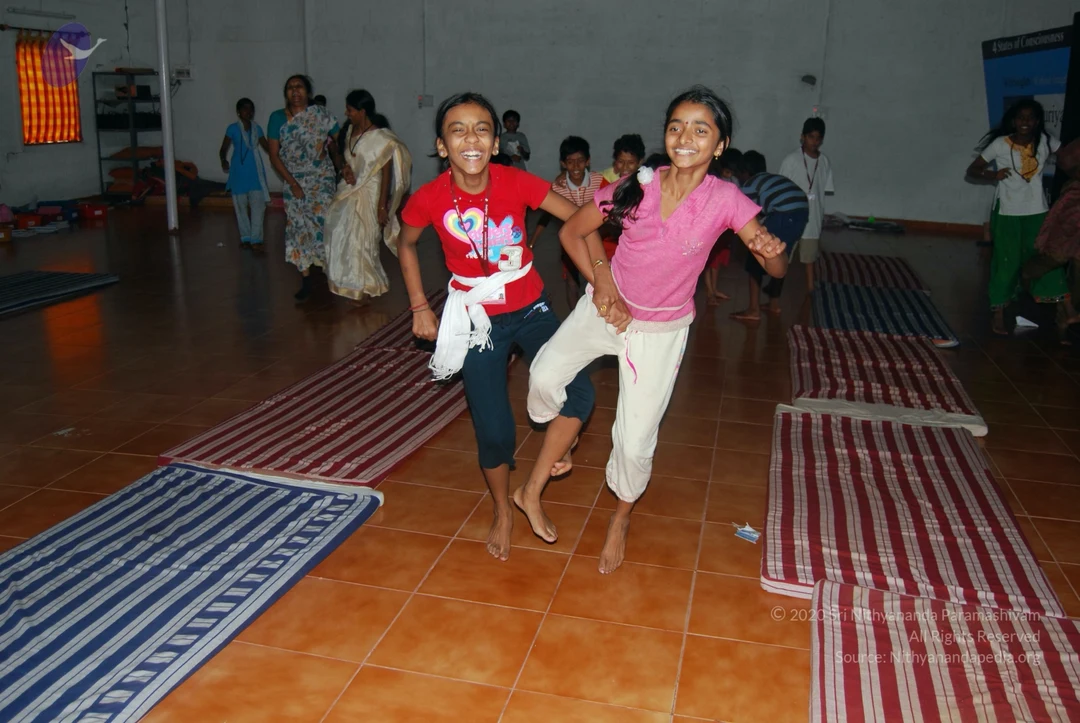
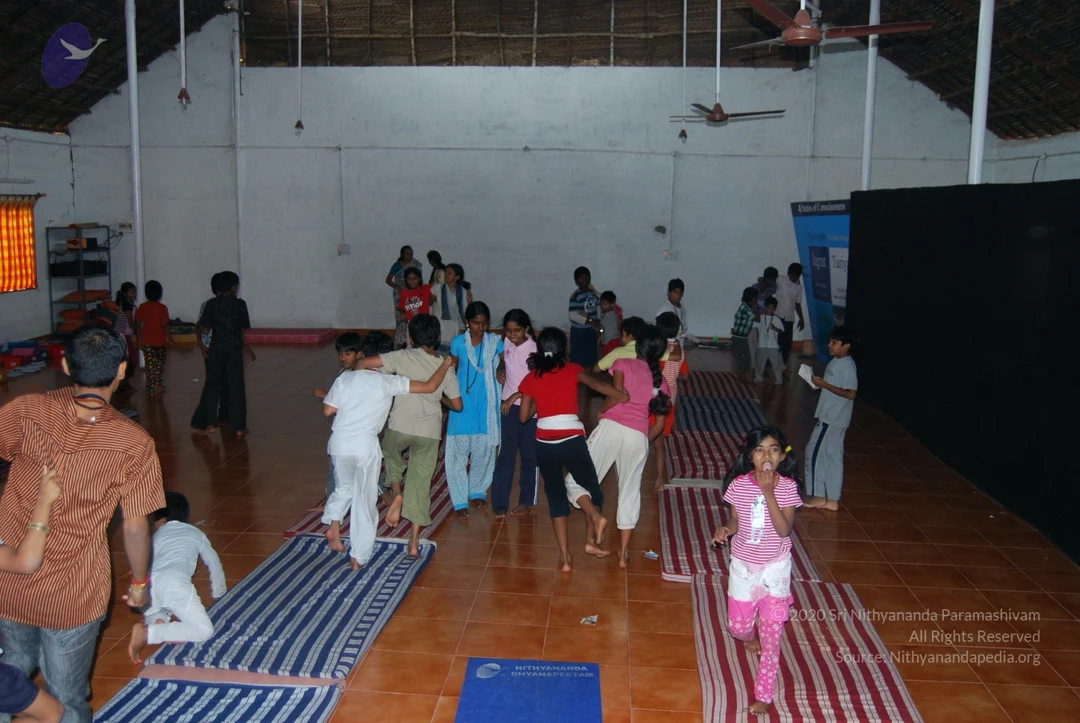
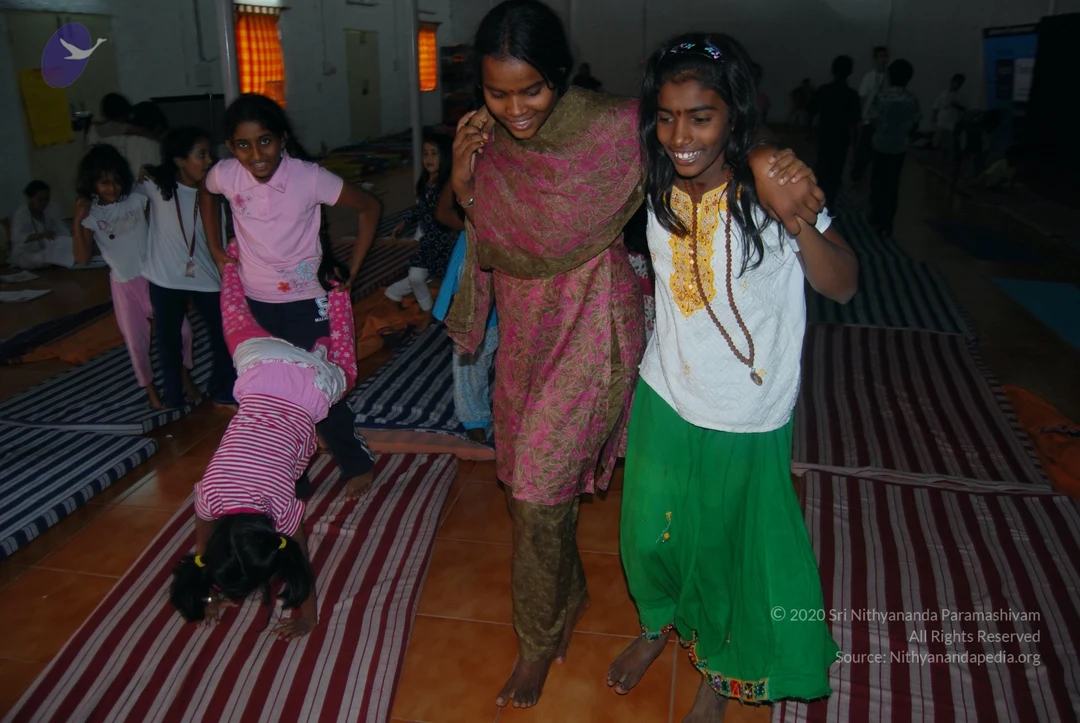
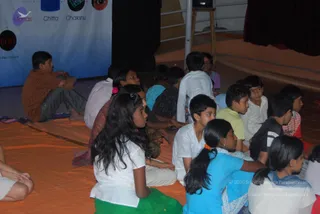
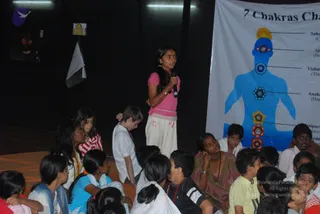
A dim indoor hall with a thatched roof shows a woman in an orange and cream saree standing at the right holding a microphone, speaking to a group of children seated on orange mats and rugs. Many children wear pink, red, grey and striped clothing, some with red lanyards. A woman in white stands at left beside a tripod-mounted camera, and another woman in white sits near the left with children. Behind them hang a banner titled 7 Chakras Chart showing a blue human figure with chakra points, and a second partly visible banner at right. The scene appears to be a children's session led by a female teacher.A group of children sits cross-legged and seated on orange mats on a tiled floor in a dim hall during a satsang. In the foreground a boy in a khaki shirt and green shorts sits with bare feet, and a boy in a green checked shirt sits beside him. A girl in a pink top and magenta pants raises her hand. Behind them, a boy in white kurta sits with a tilak on his forehead, and other children wear red and maroon beaded necklaces. On the right a large banner shows a blue seated meditating figure with labelled chakras, from Sahasrara (Crown center) at the top down to Swadhishthana (Sacral center). A small figure stands at the far left. No a person candidate is visible.A photograph of a children's session in a hall with an orange tiled floor. Many children sit cross-legged on orange mats, several raising hands, while a woman in a cream sari with an orange and gold border stands at right holding a microphone and a marker. Behind her are an orange draped table and a dark curtain. A blue banner at upper left reads How the Mind Works with a diagram of Conscious and Unconscious mind labels including Mind, Memory, DSP, Eye, Manas, Chitta and Chakshu. Roughly two dozen children and a few adults are visible; no clearly identifiable a person figure is present.

December 16 2010

Original wiki page
Contents

Title:

Ashtanga Yoga: Be in Yama Niyama: Patanjali Yoga Sutras 84 - Nithyananda Morning Satsang 16 Dec 2010

Narration:

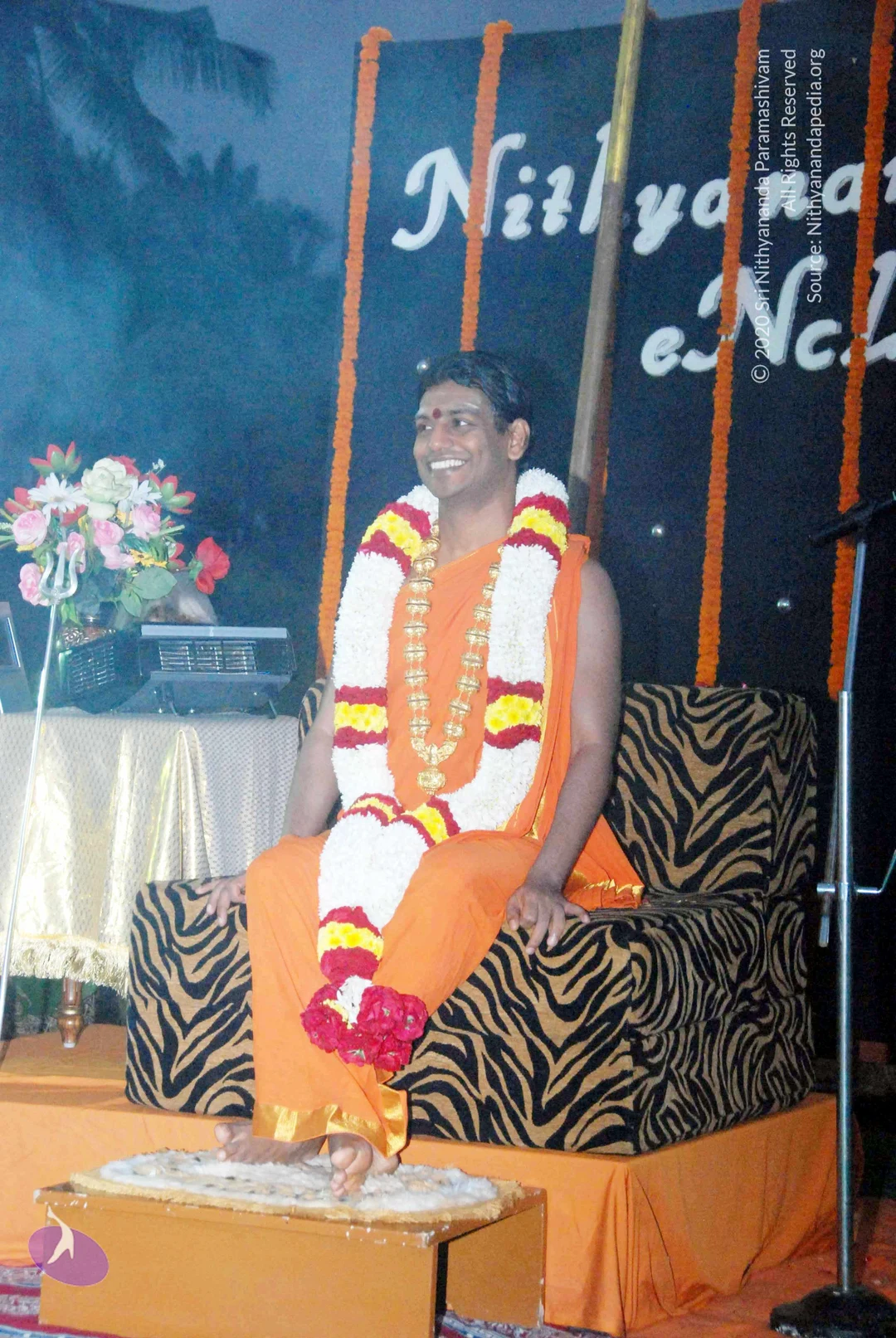
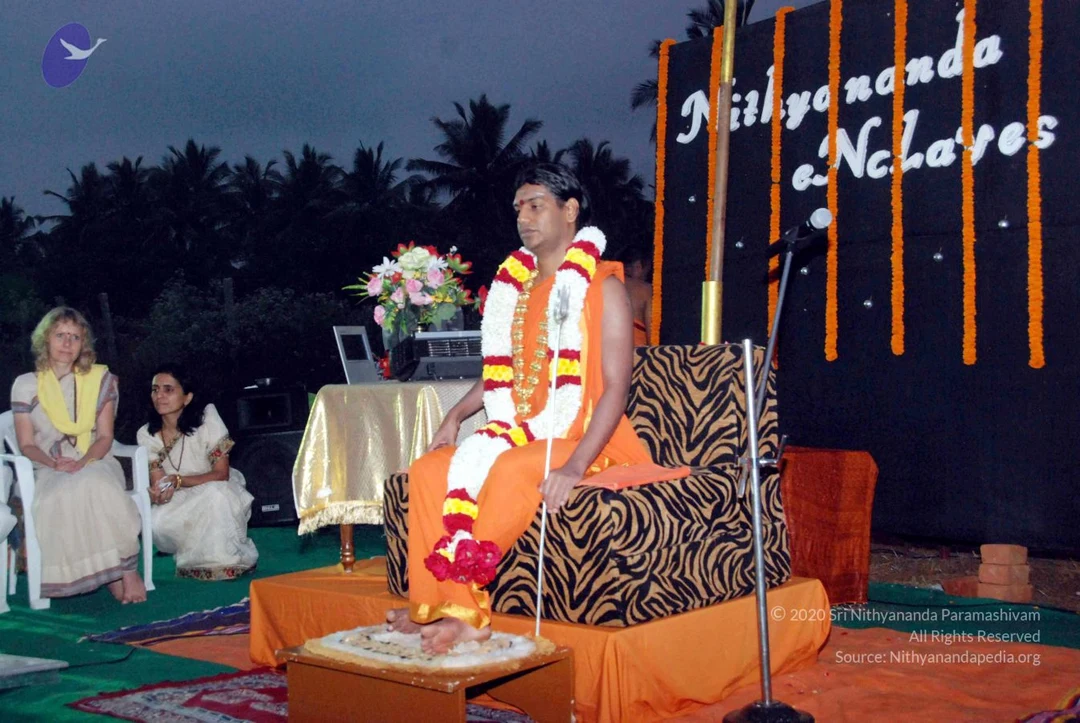
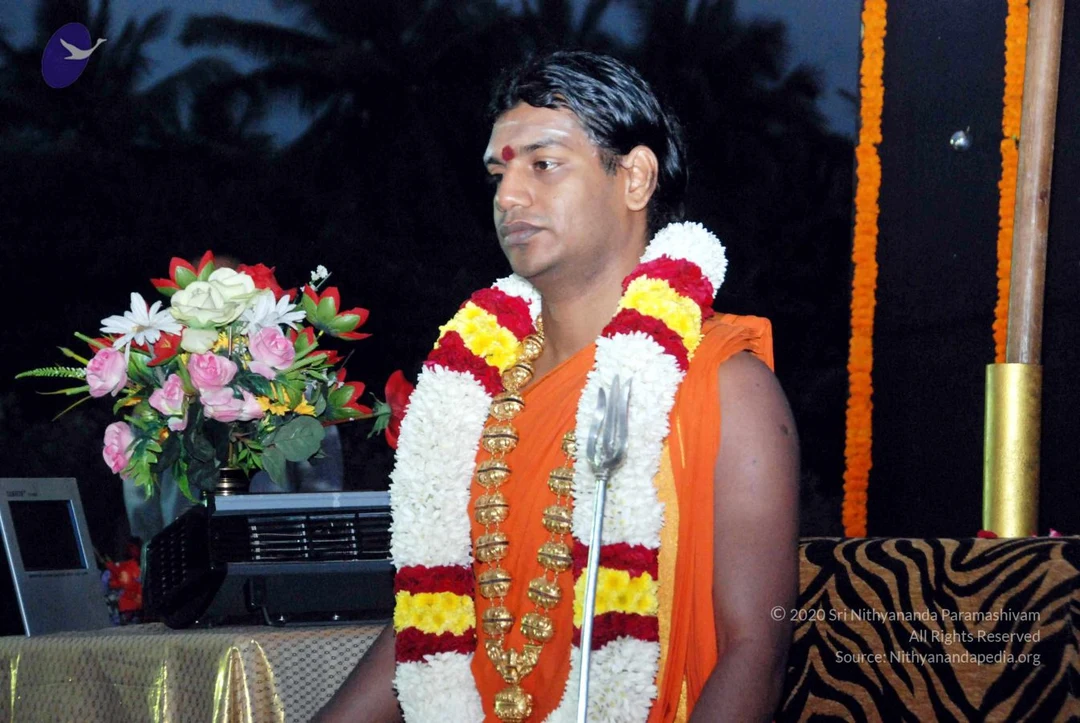
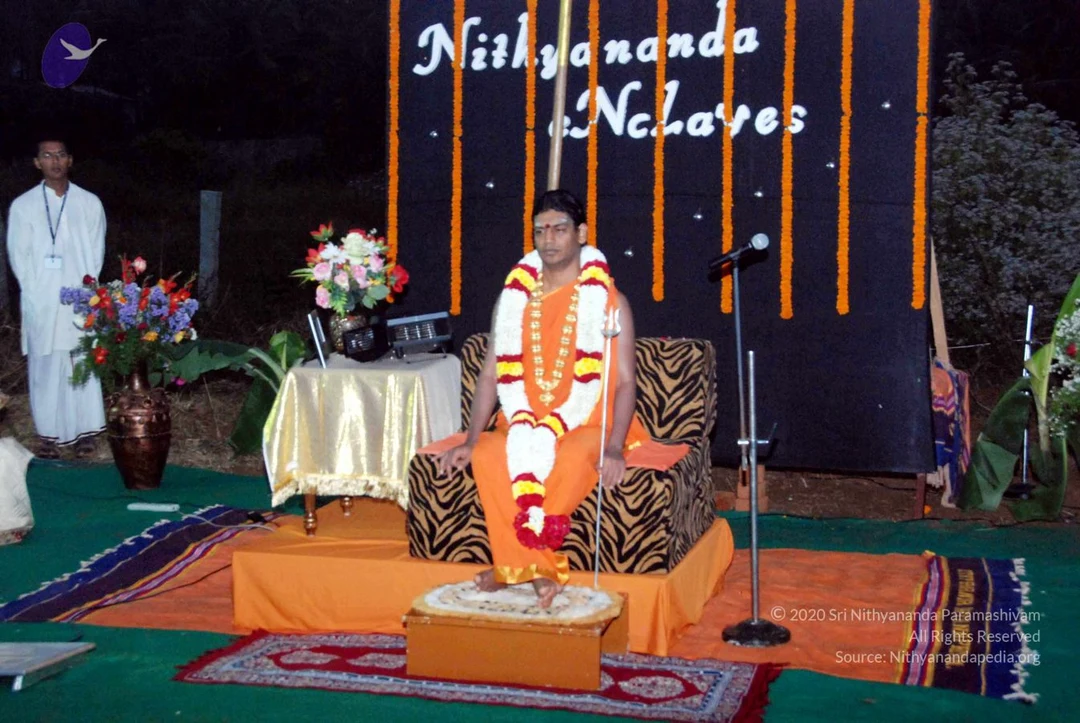
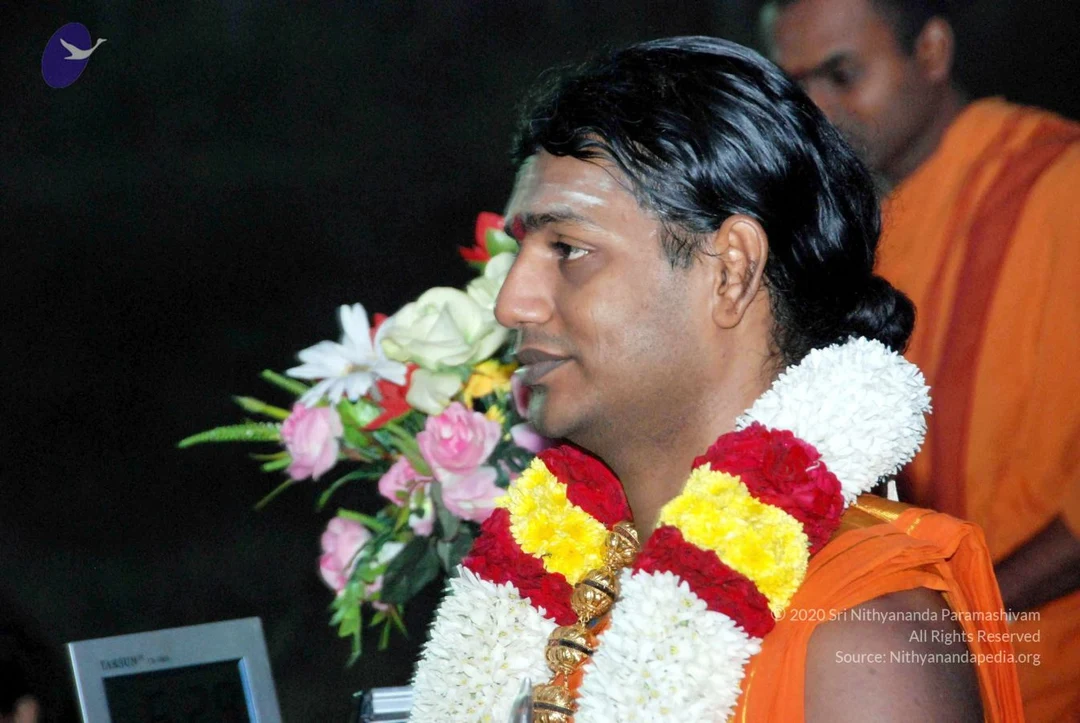
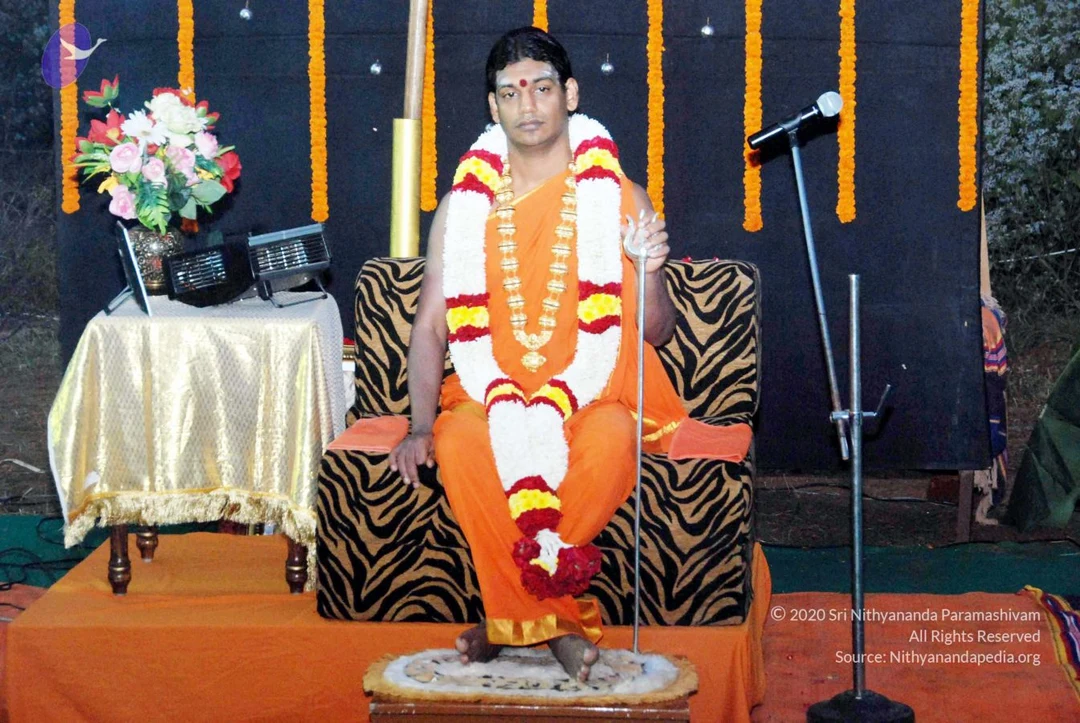
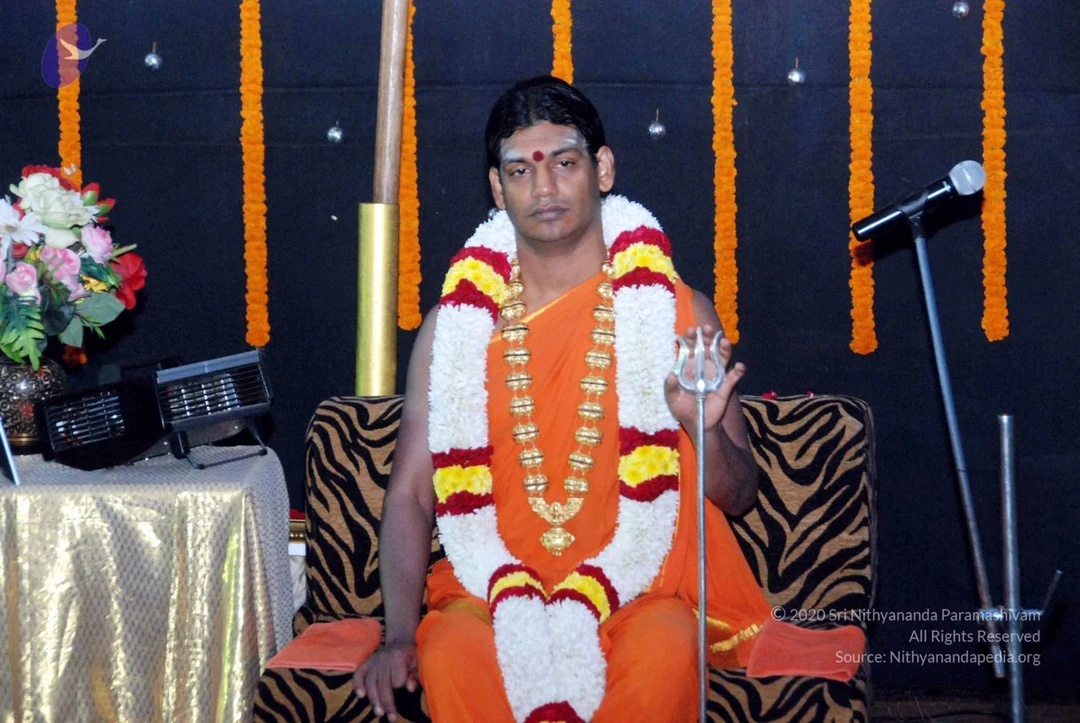
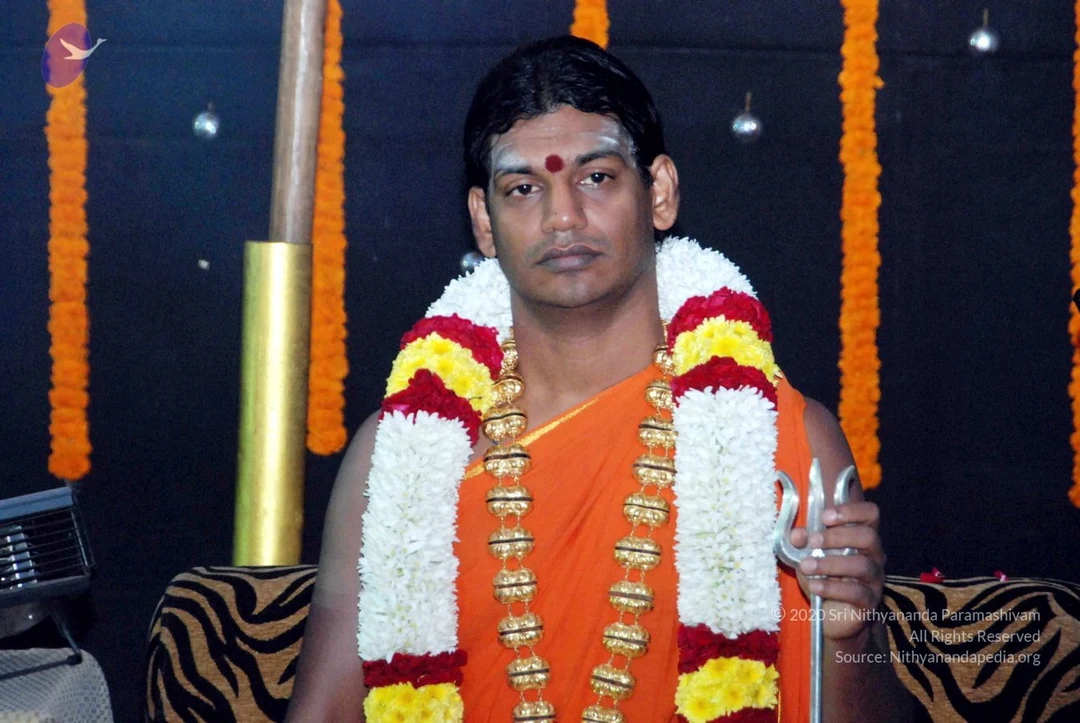
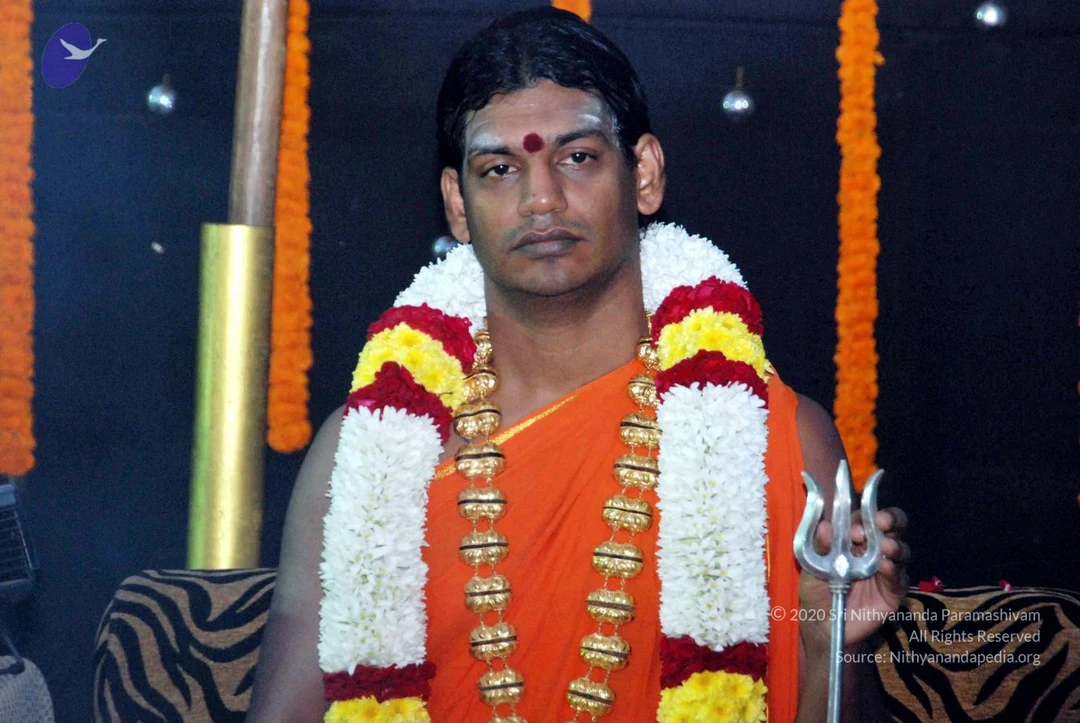
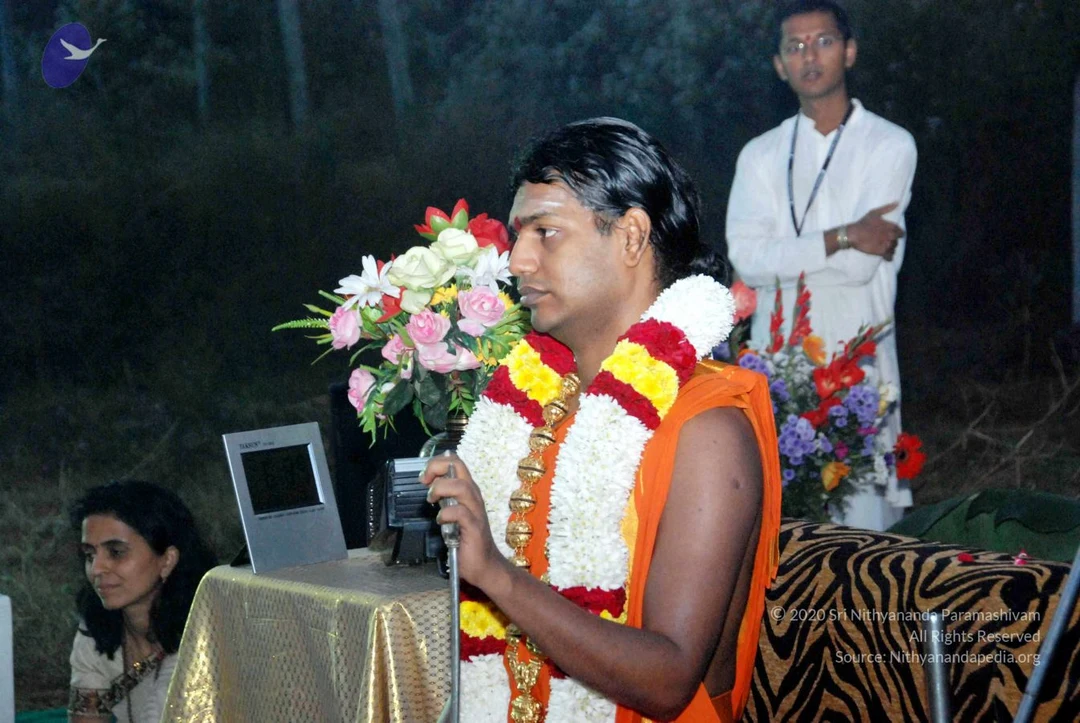
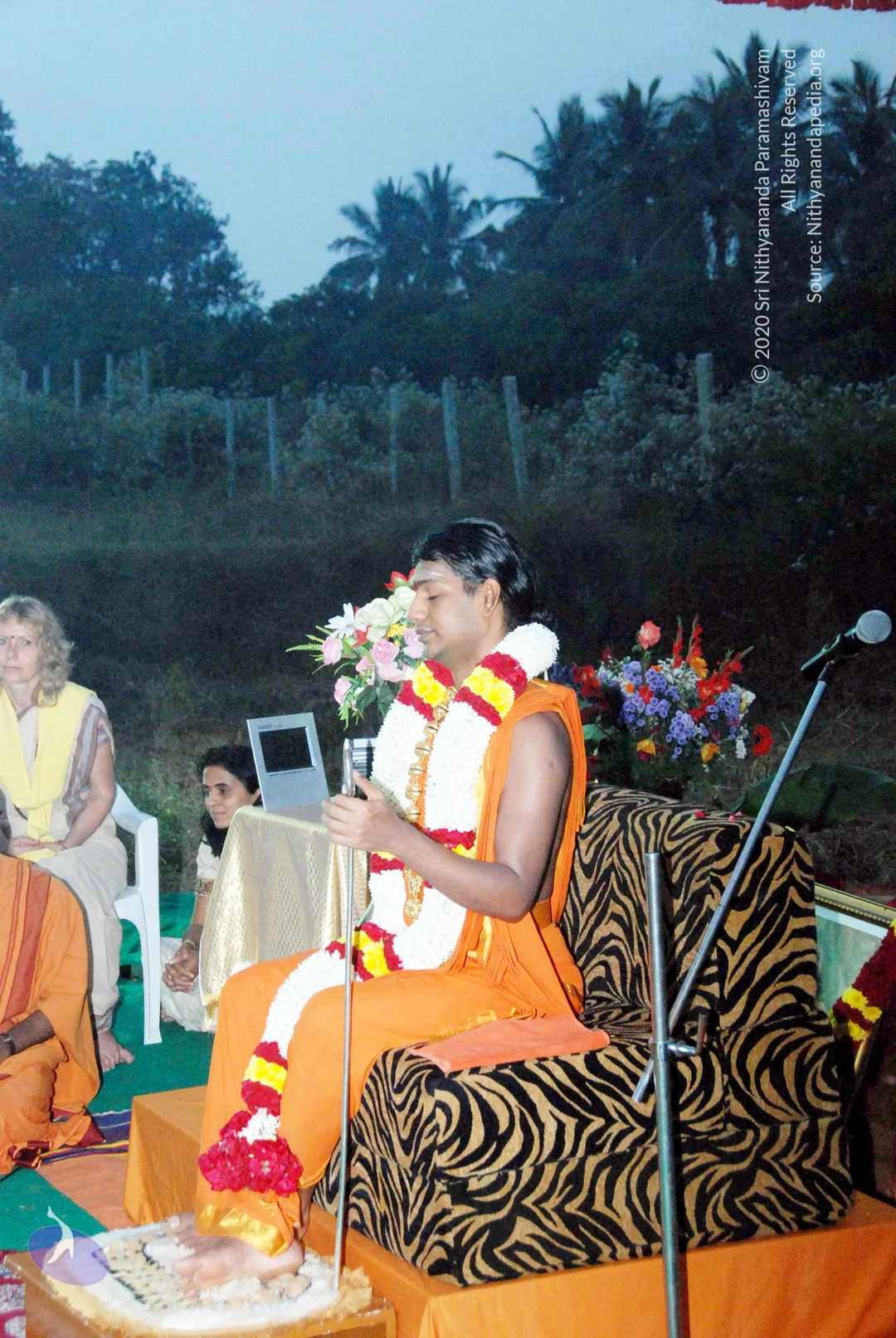
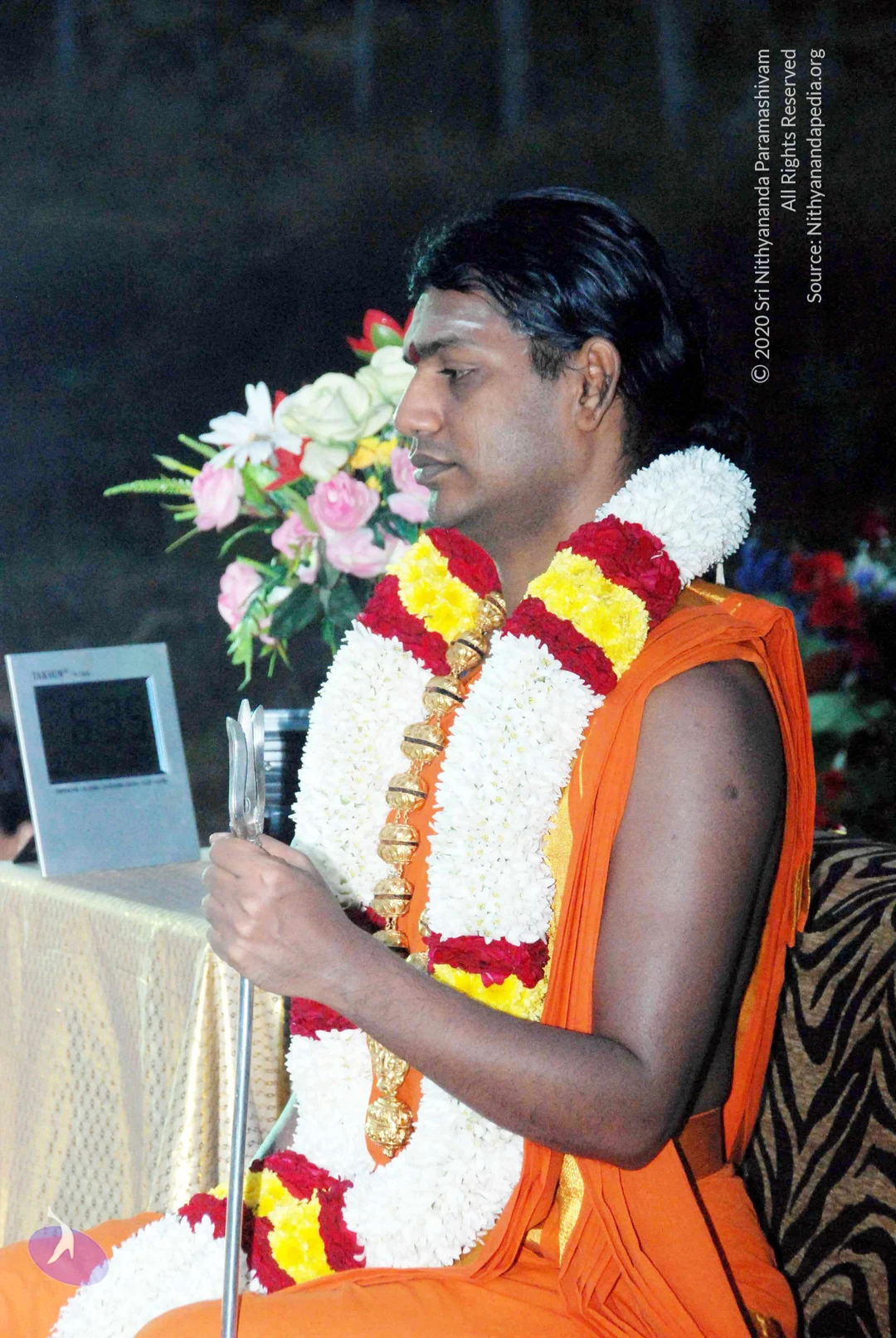
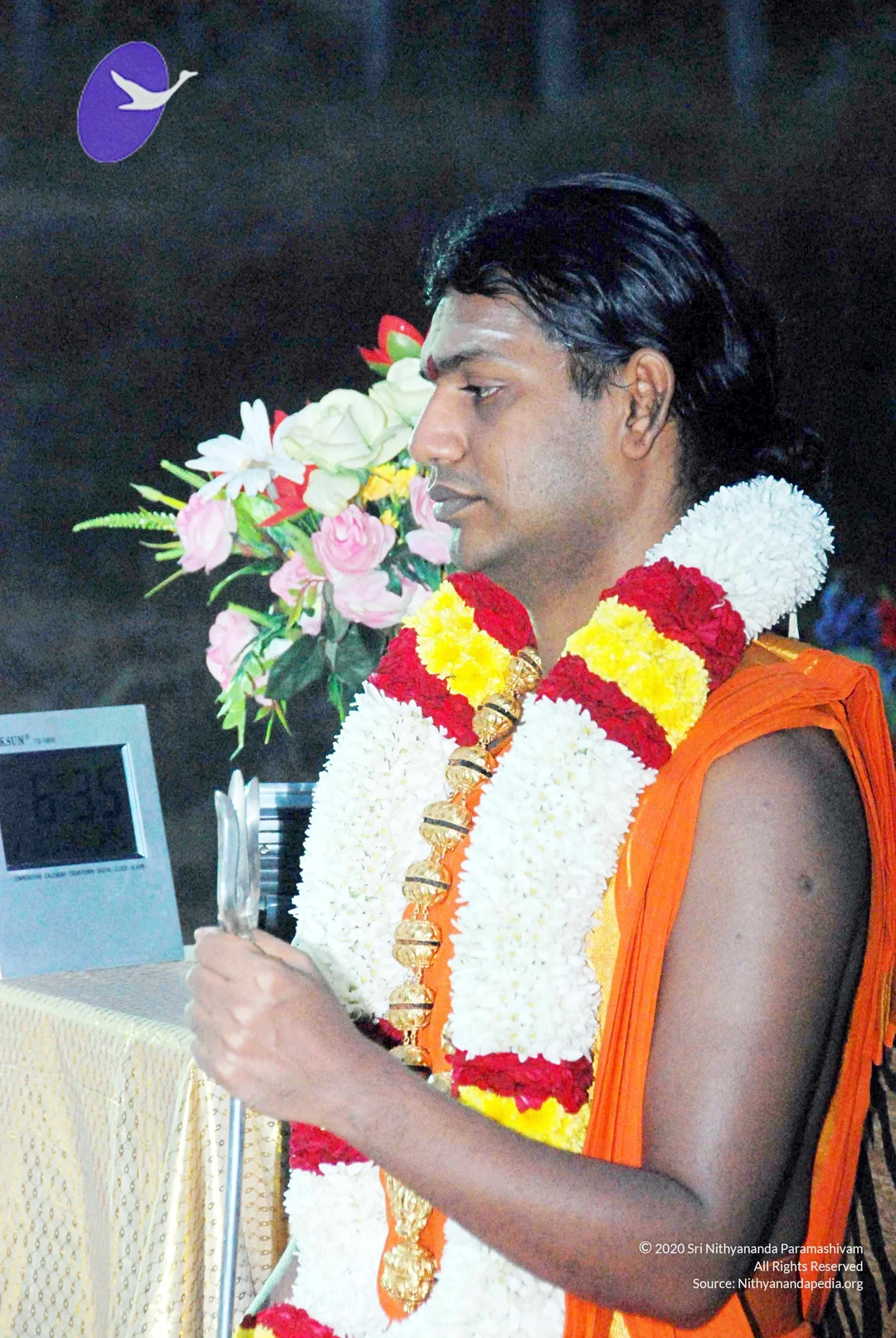
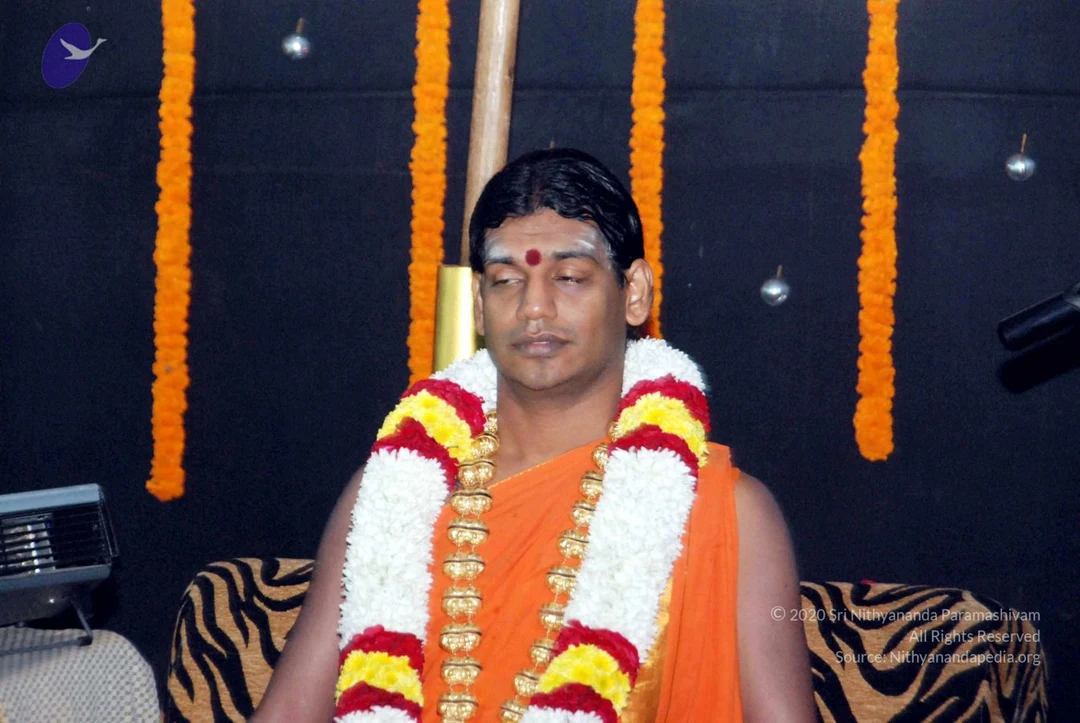
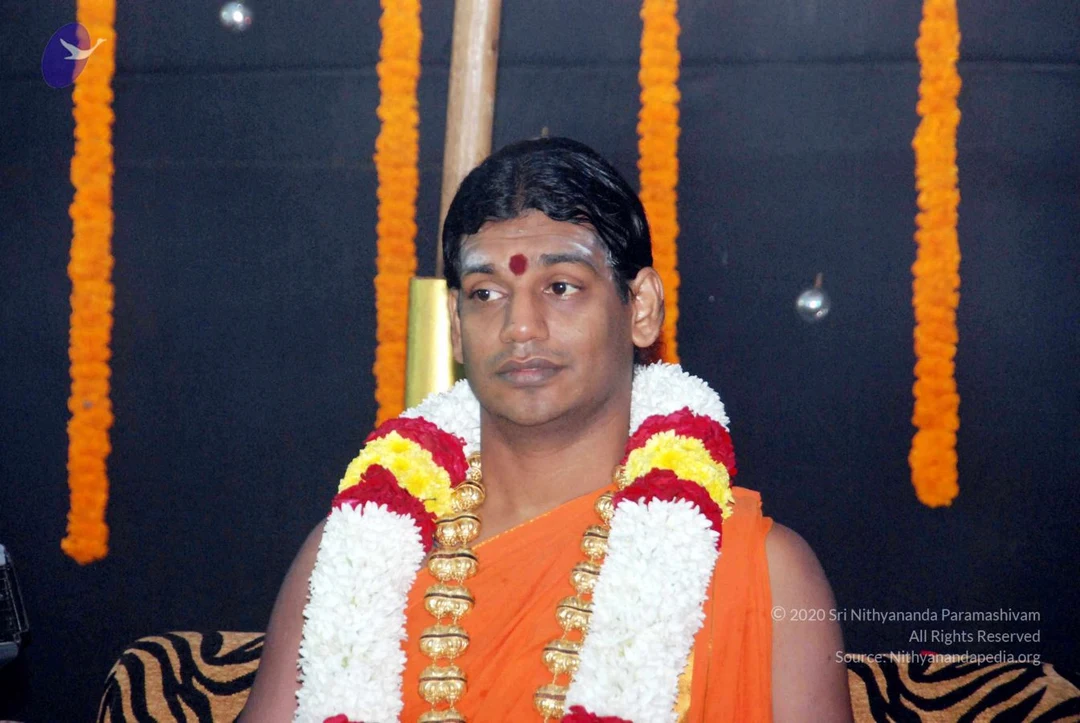
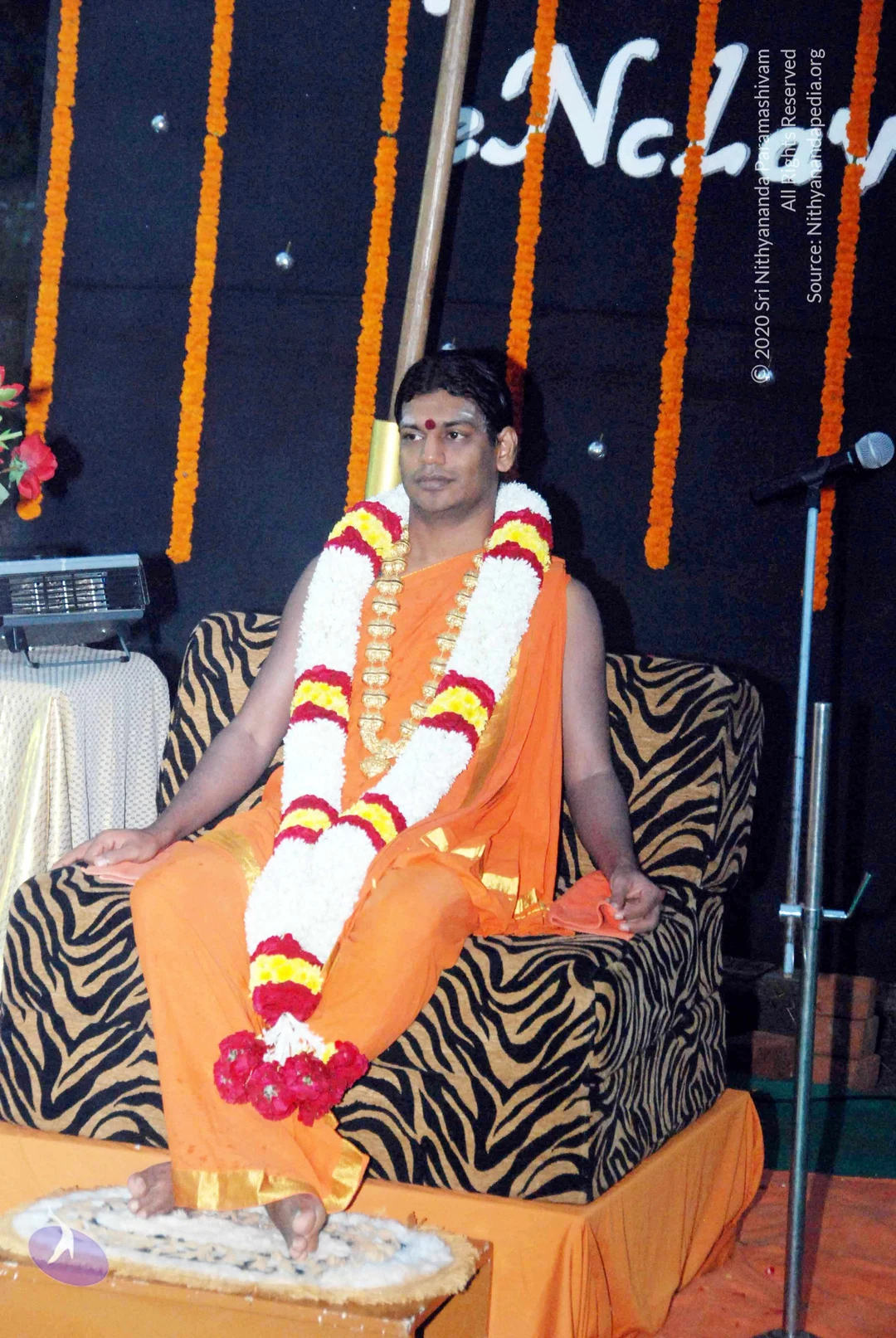
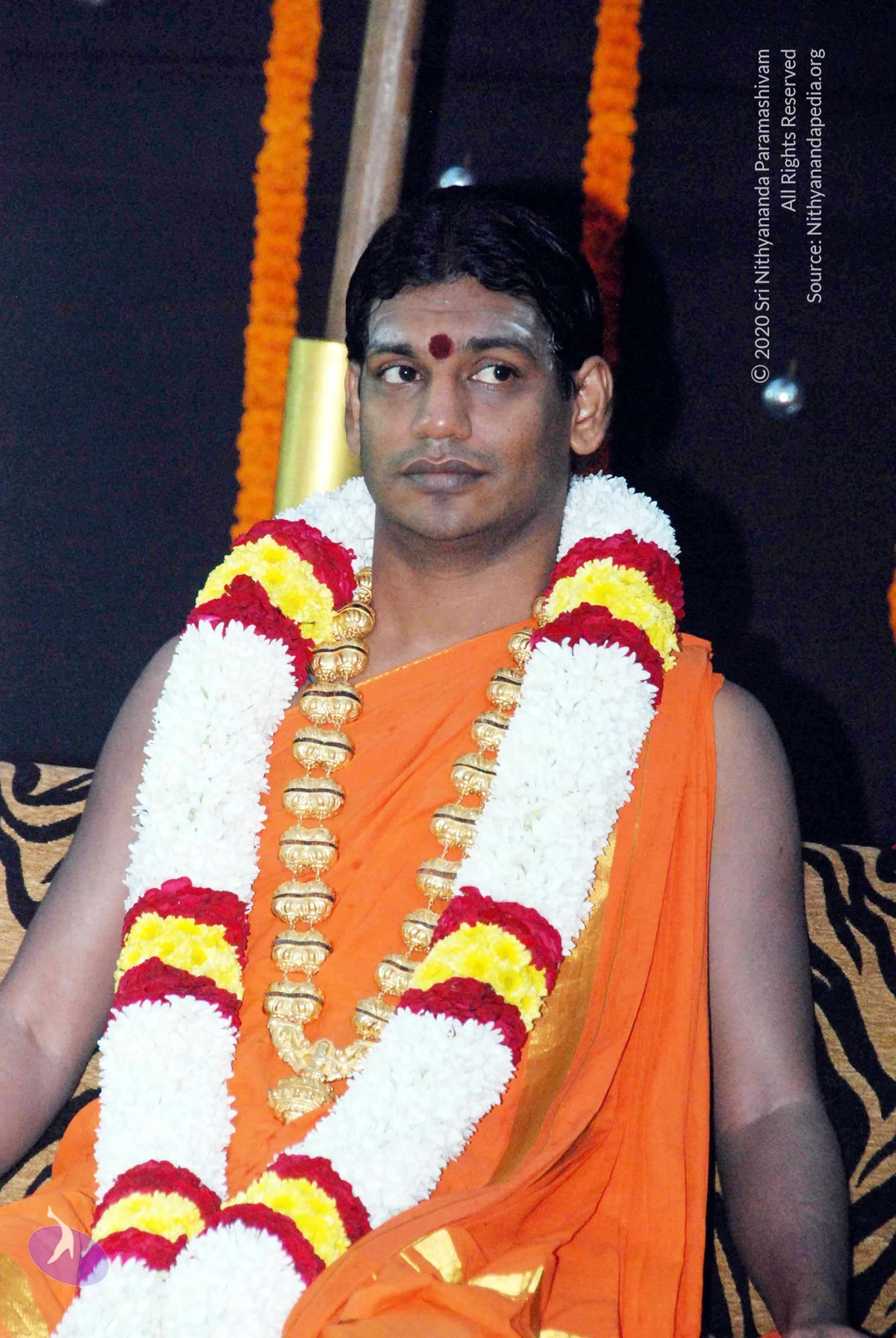
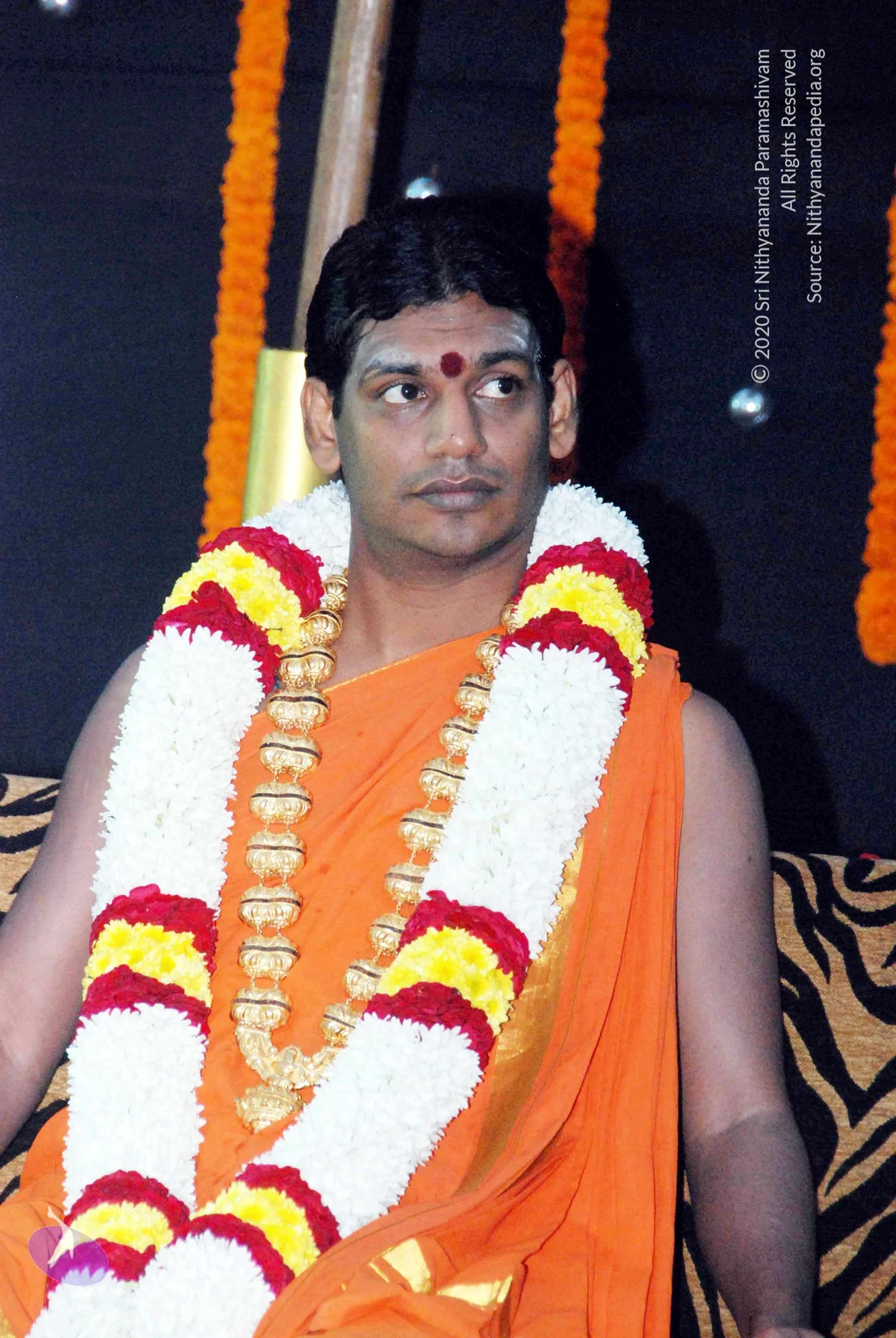
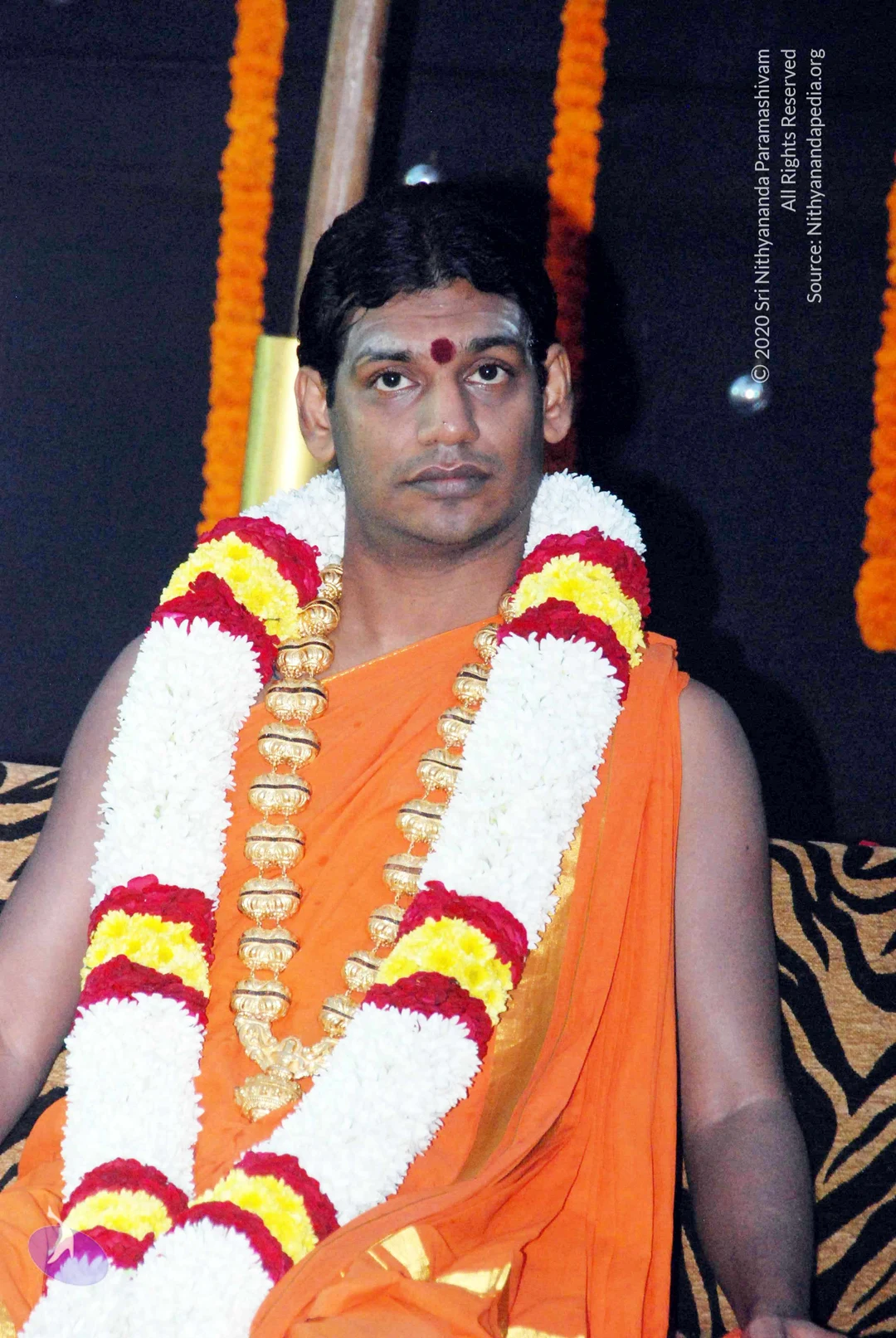
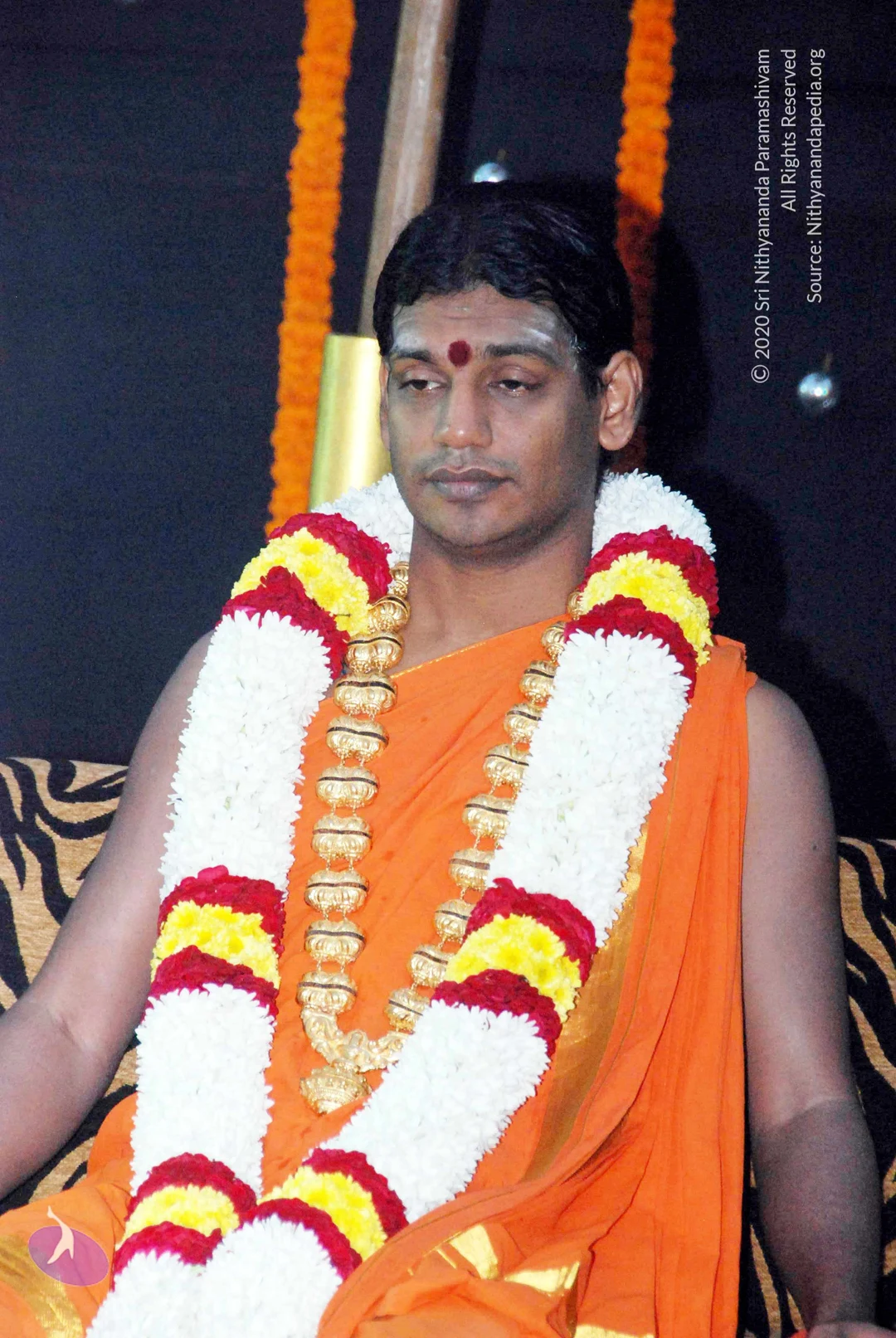
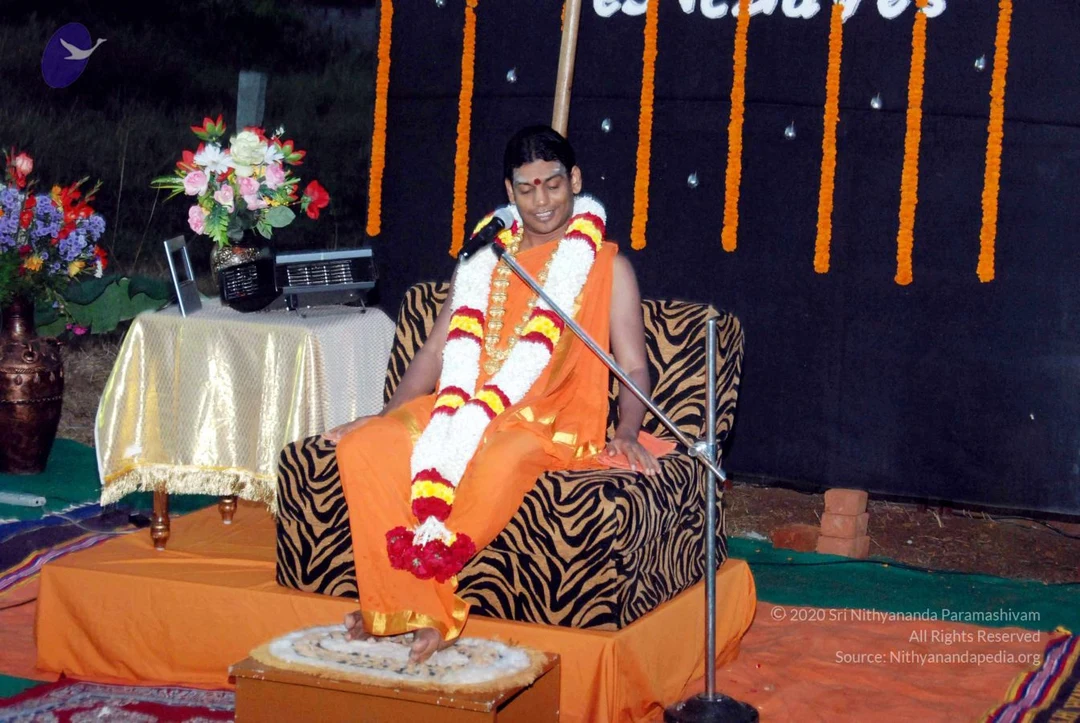
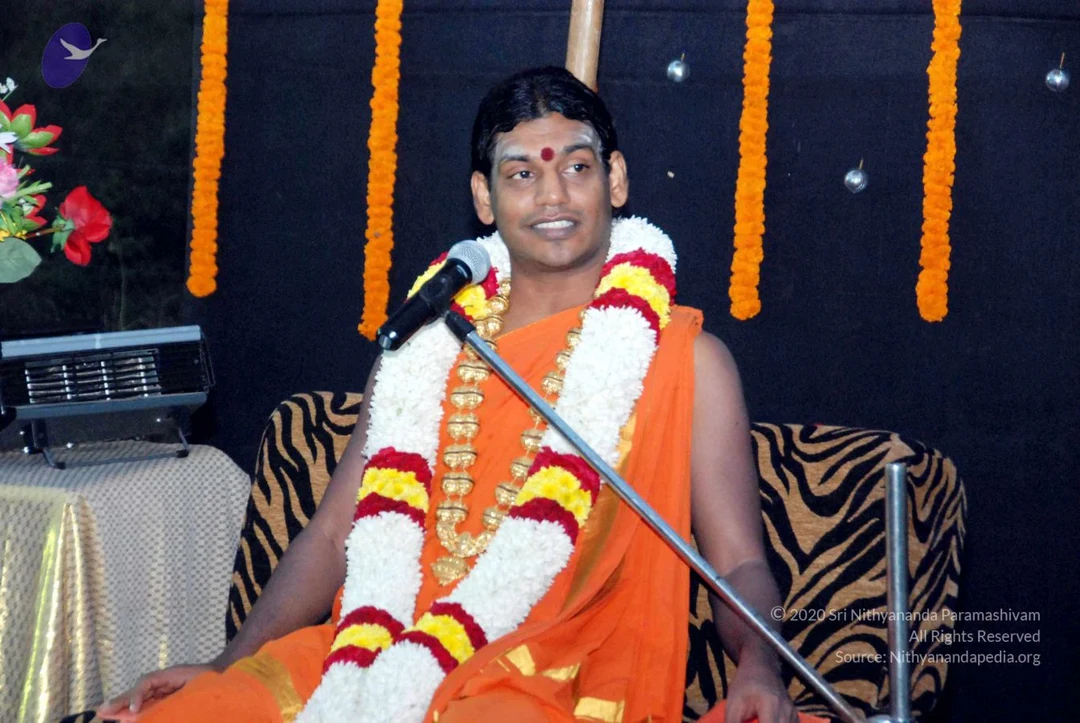
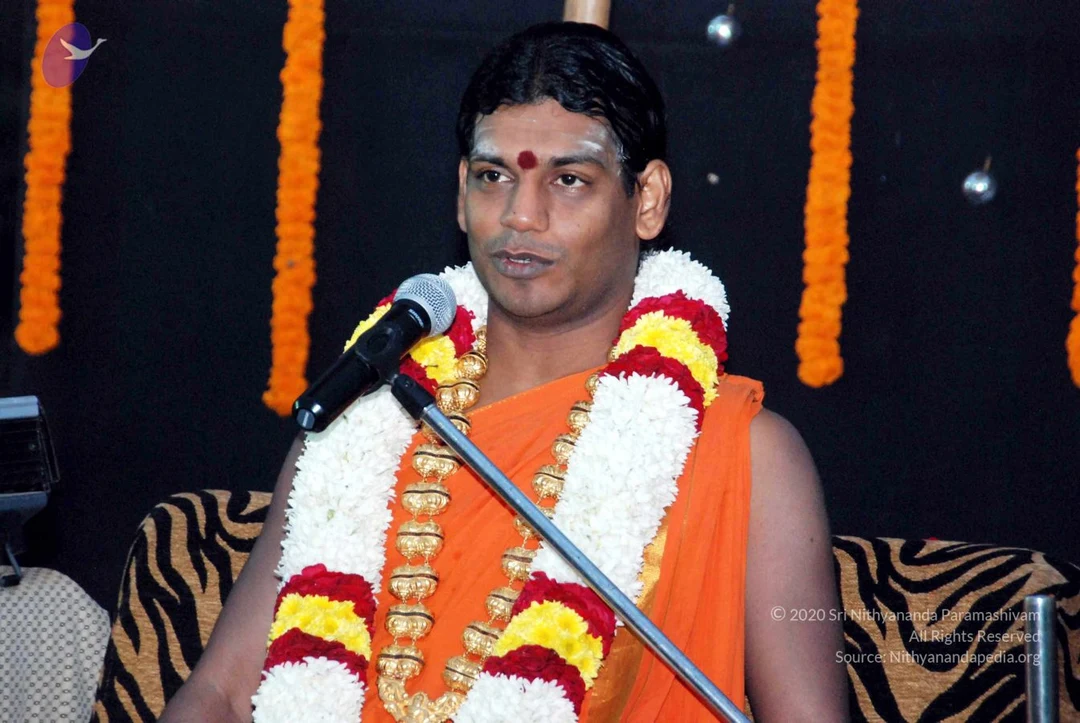
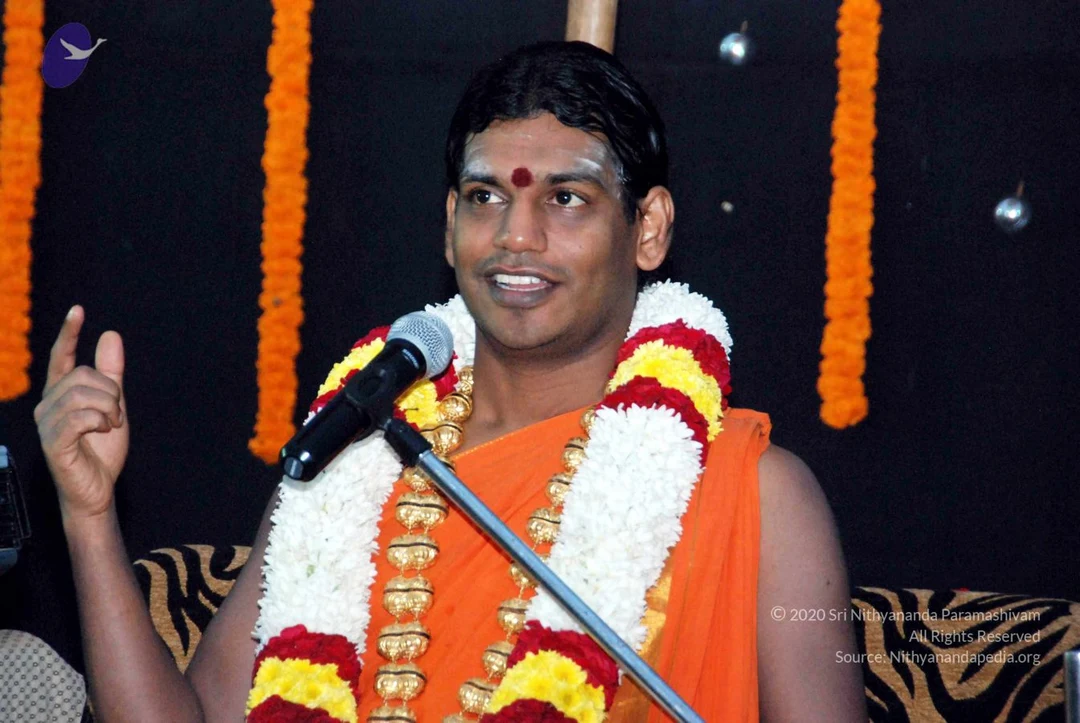
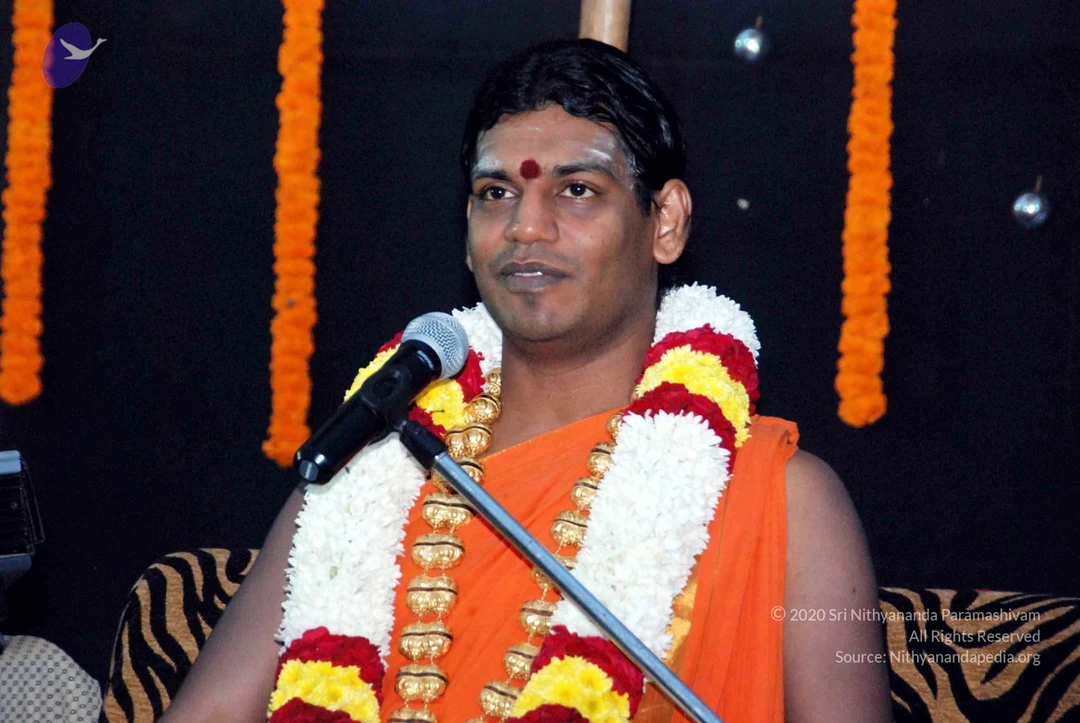
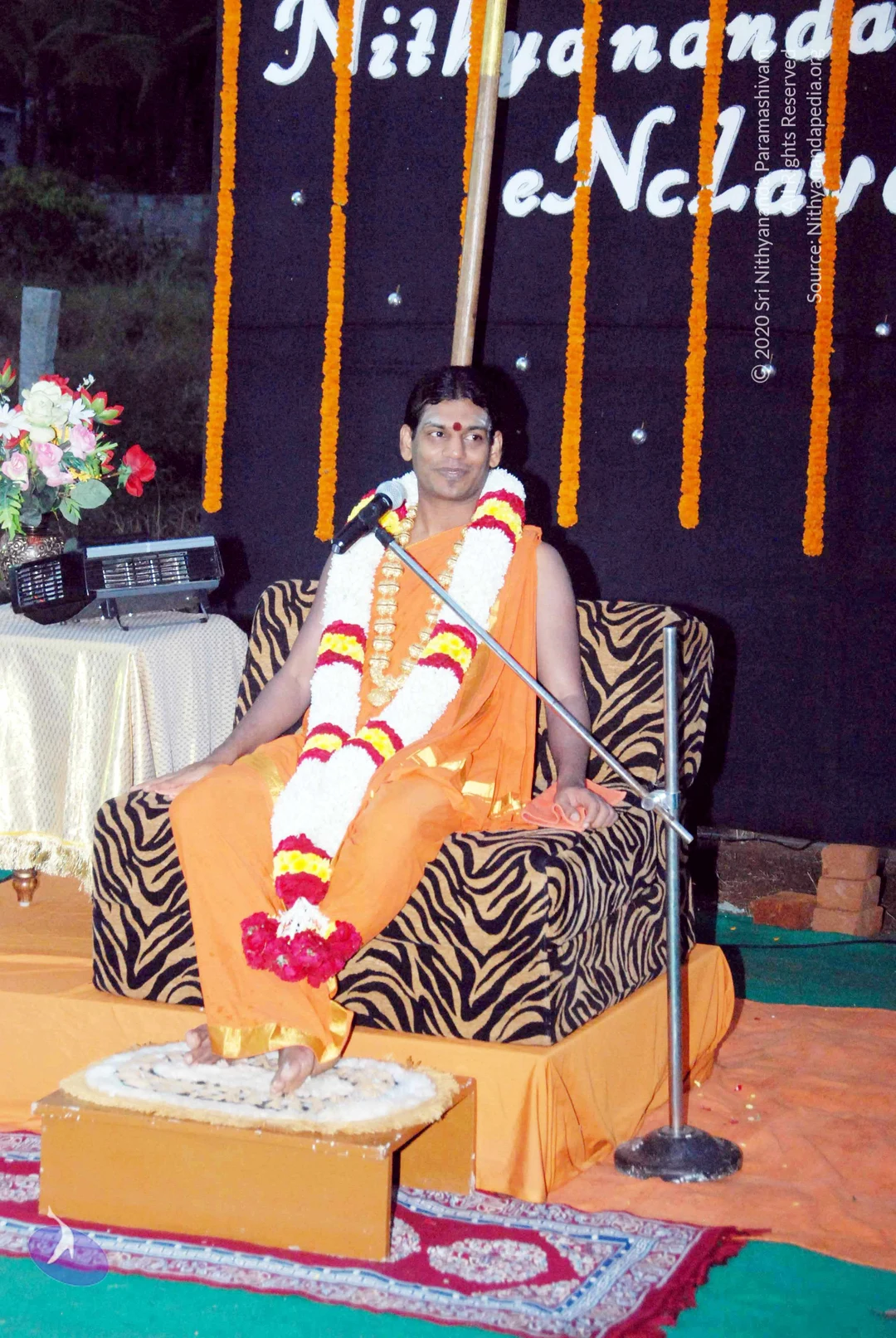
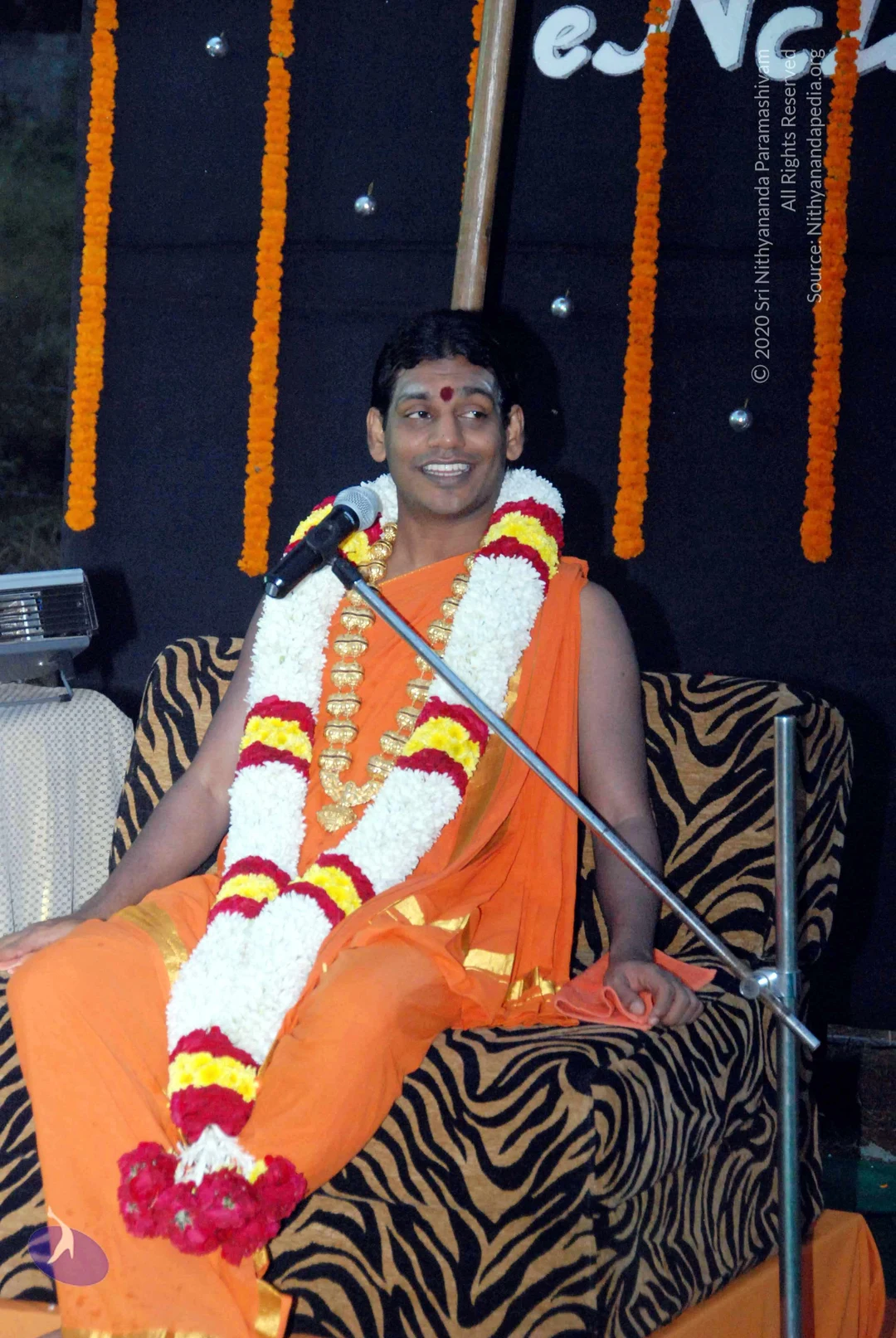
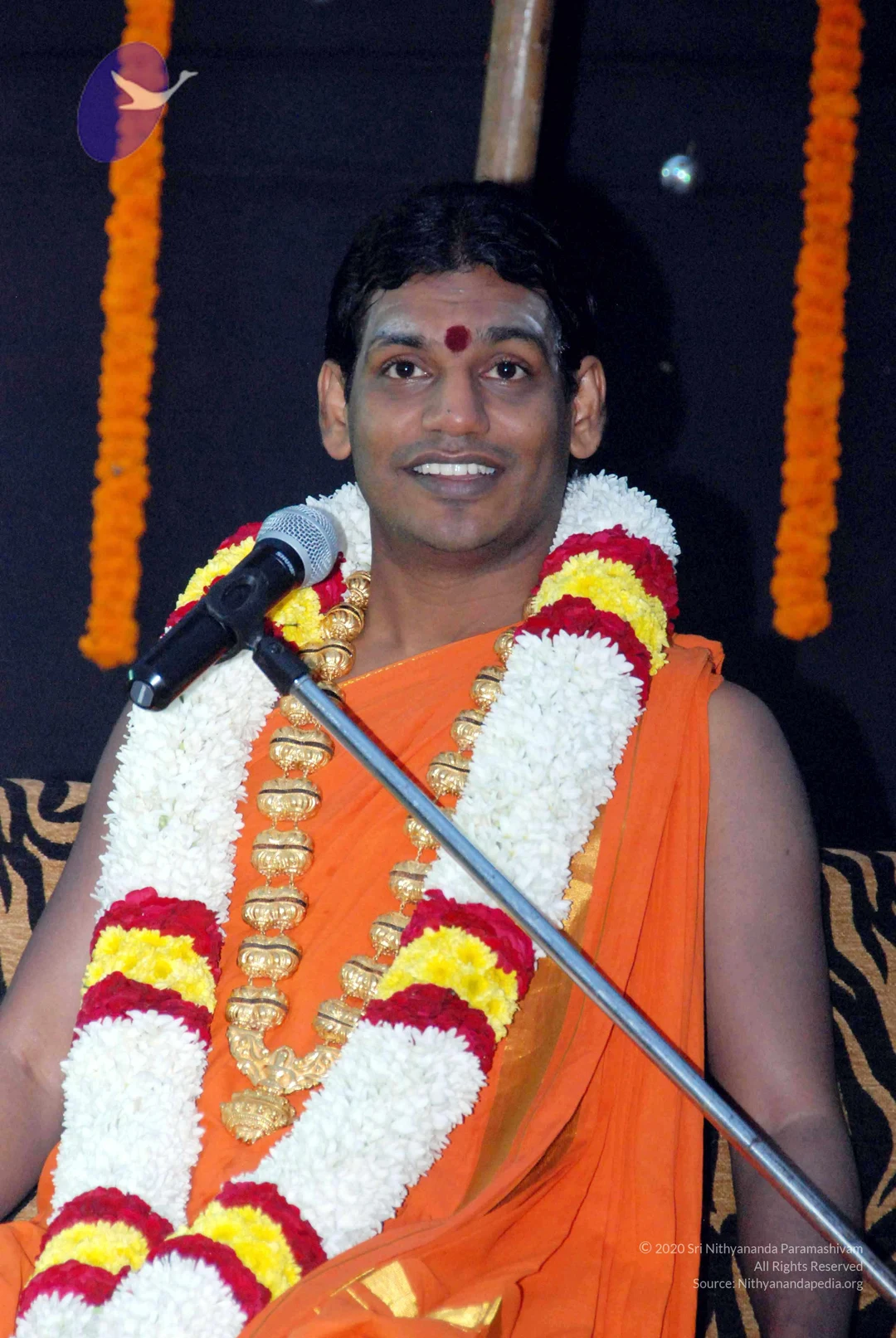
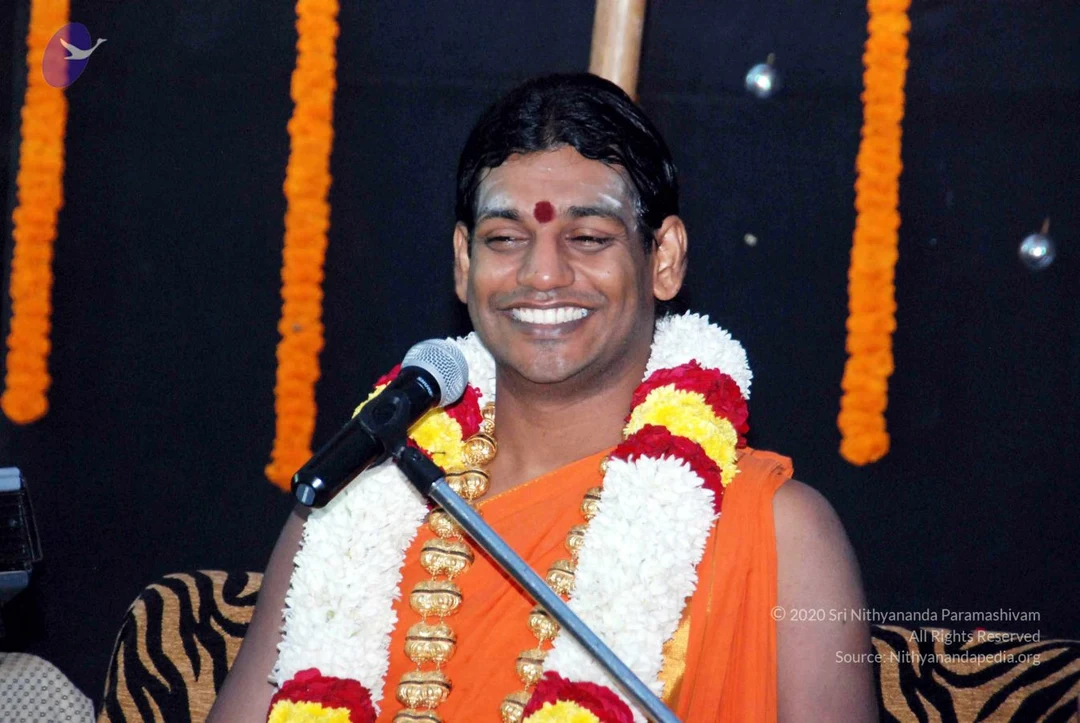
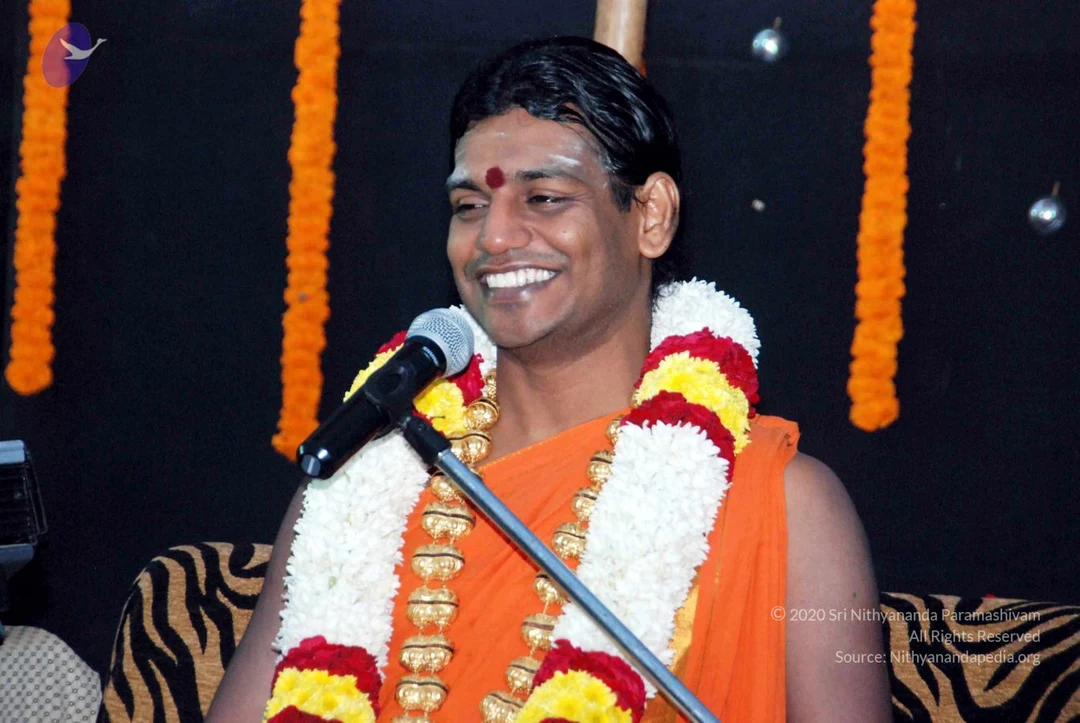
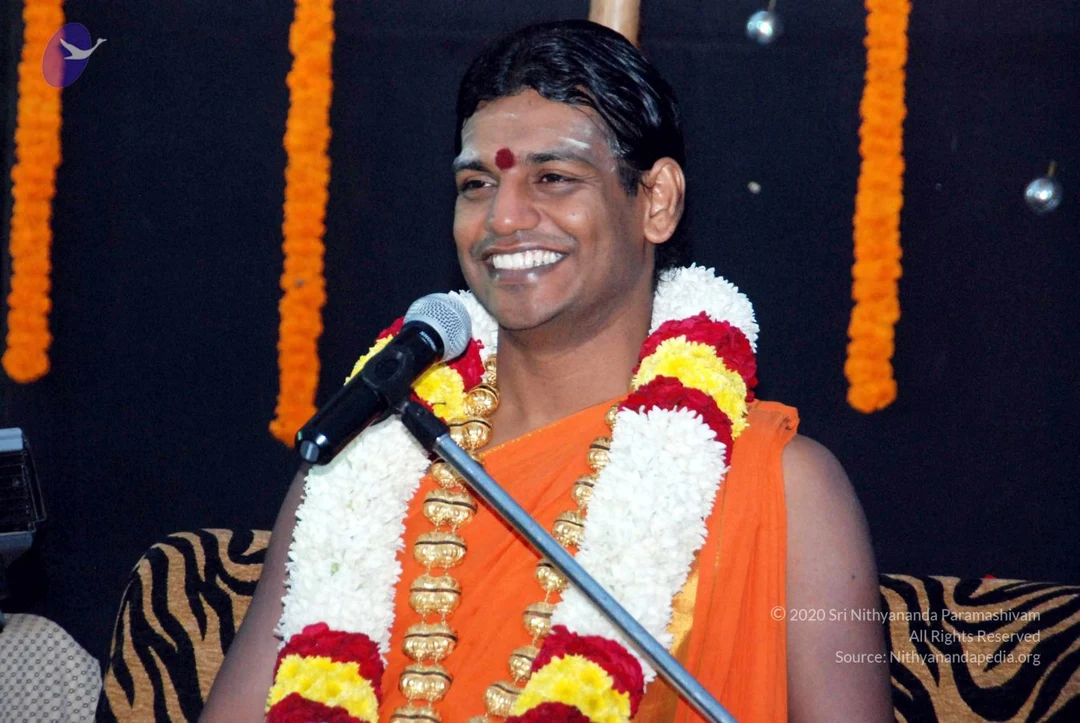
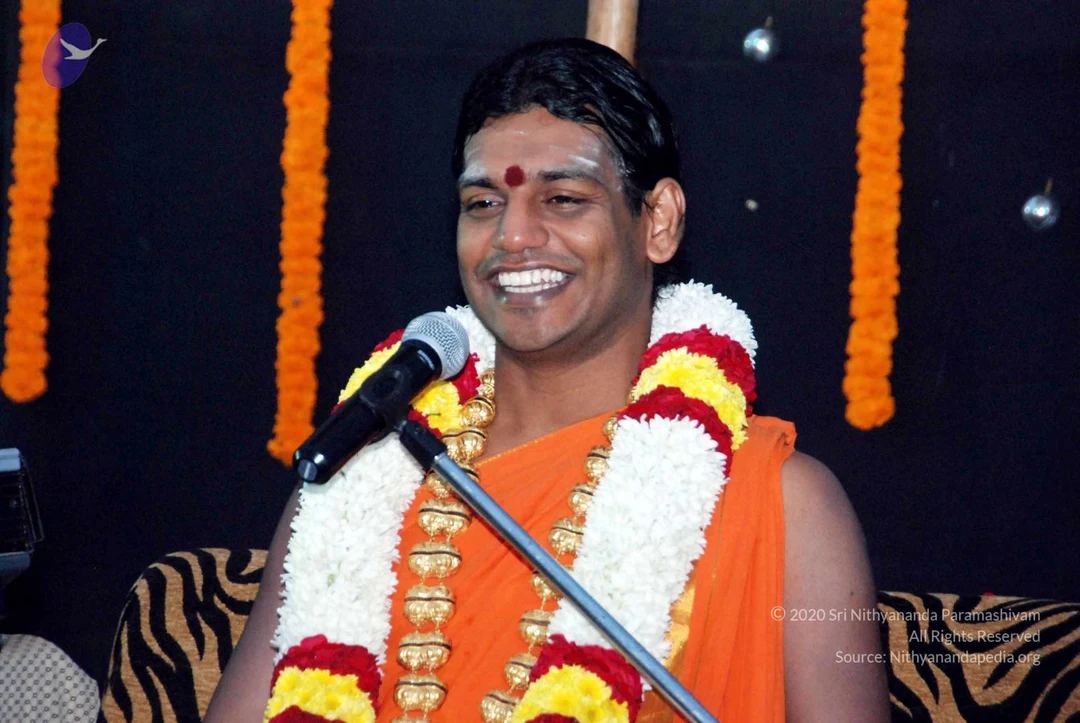
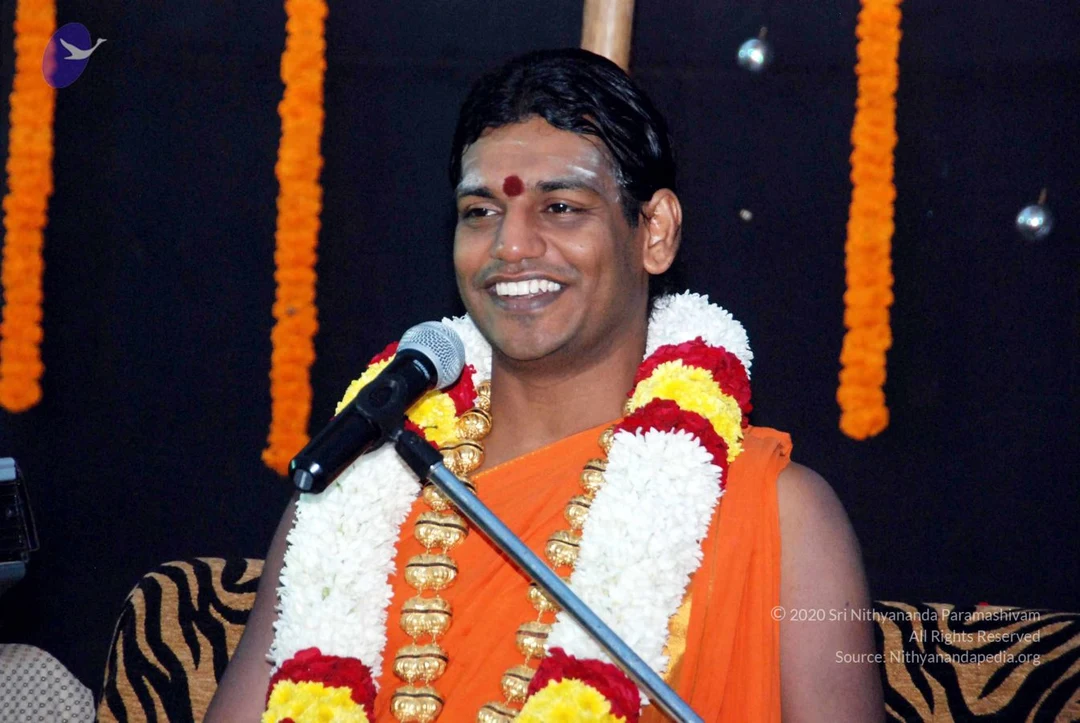
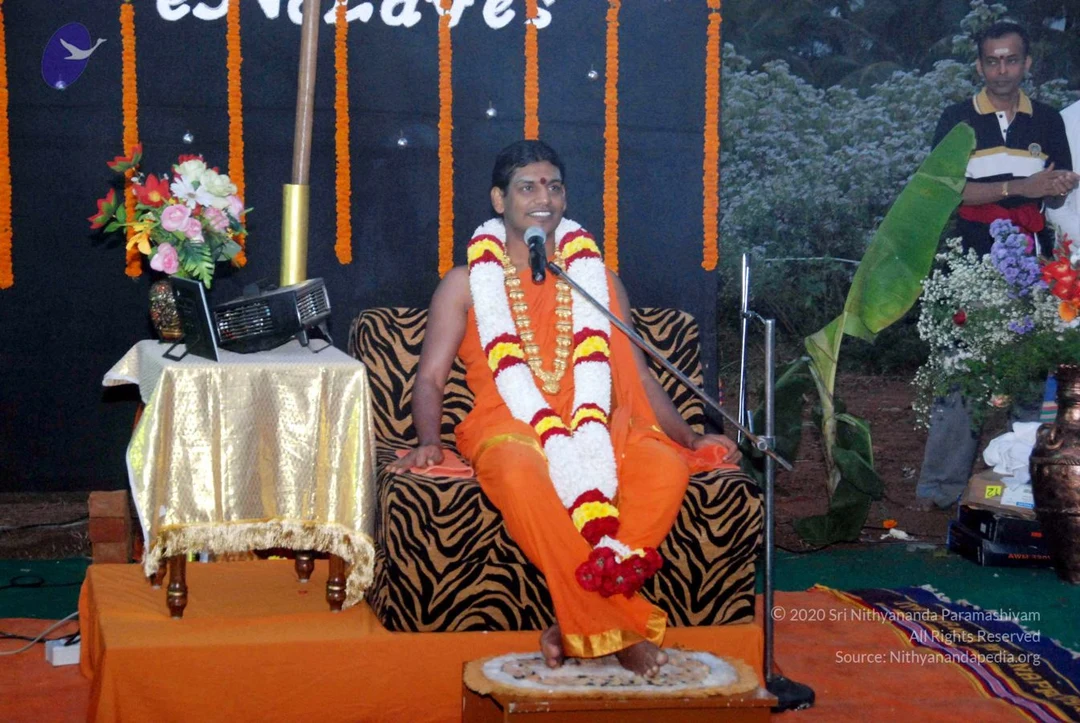
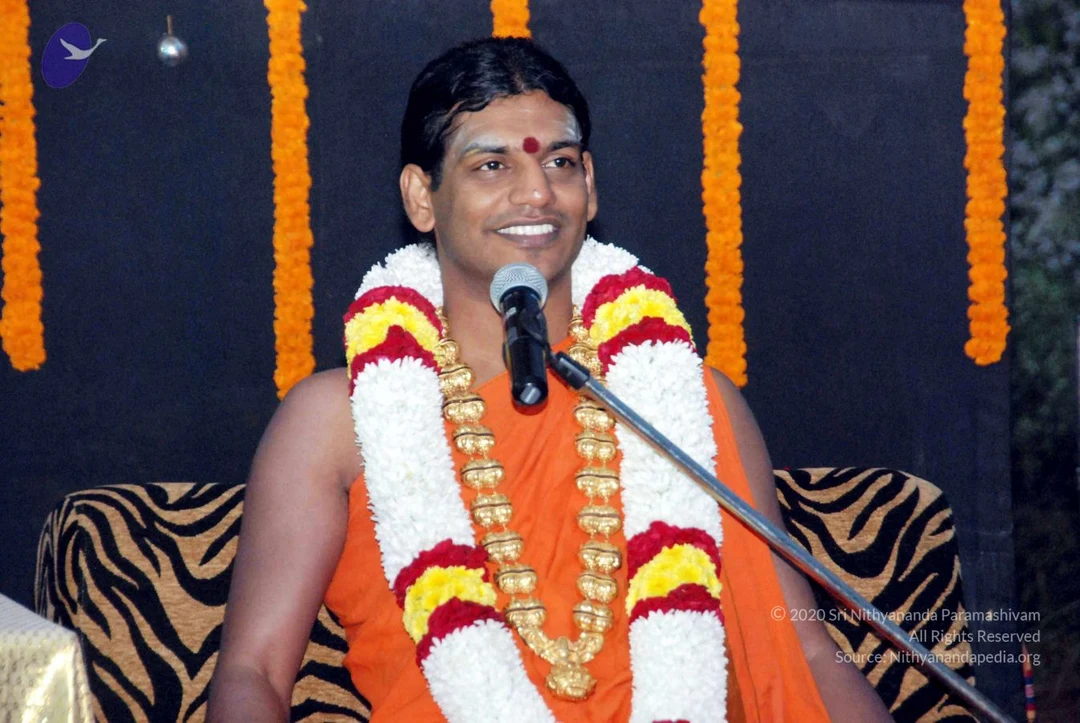
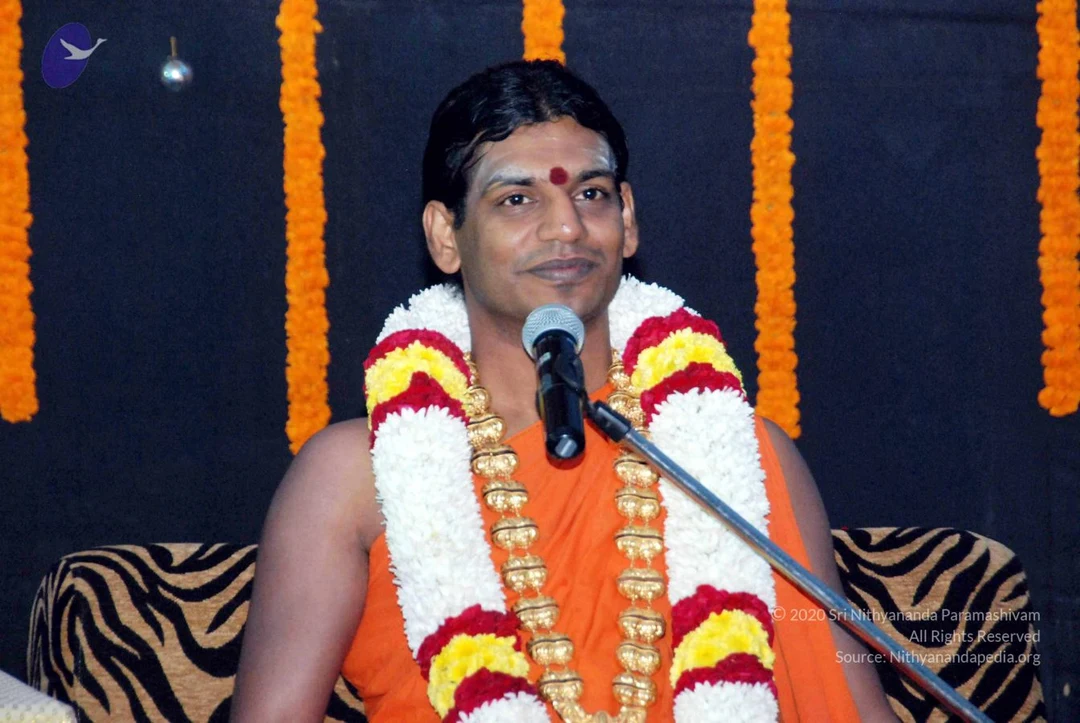
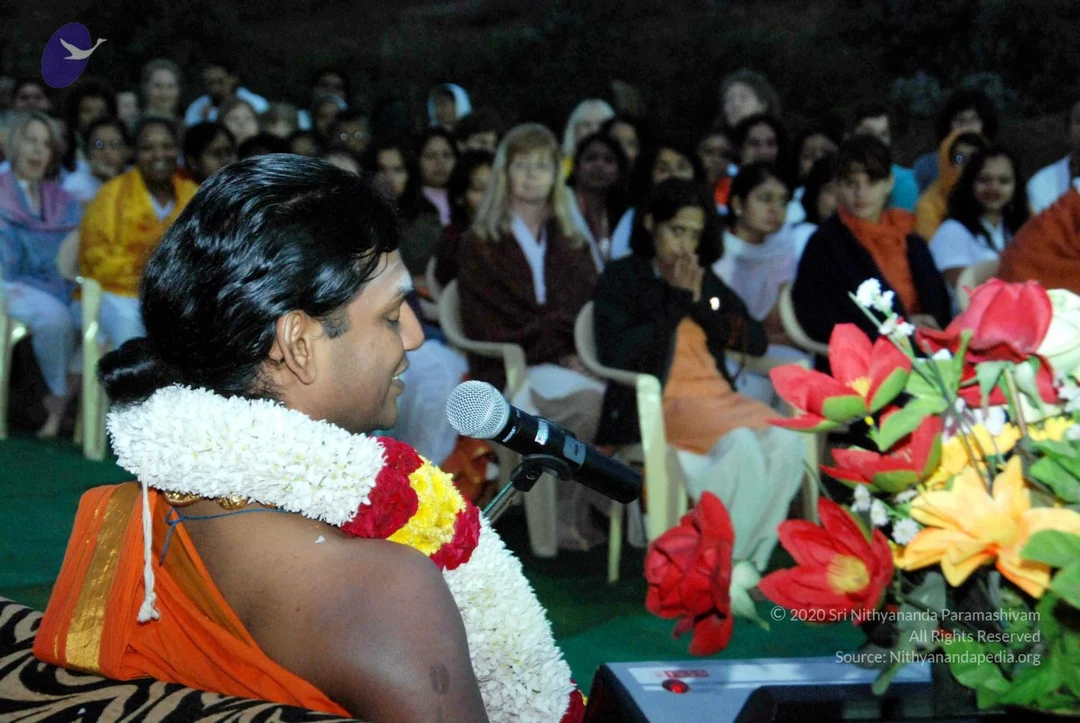
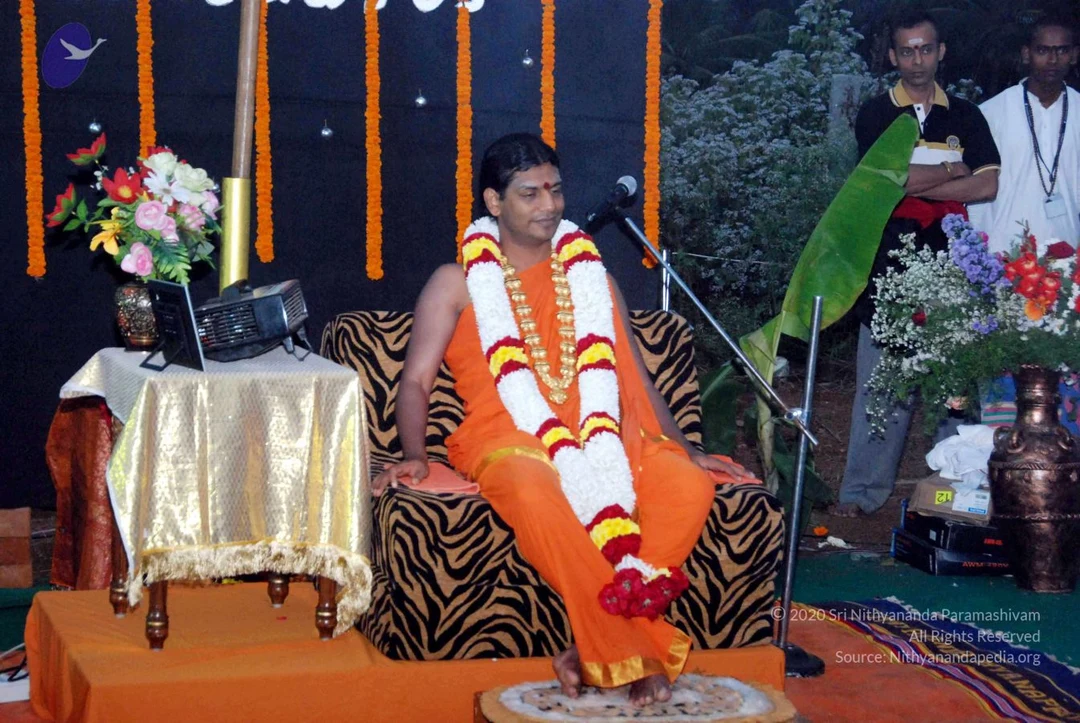
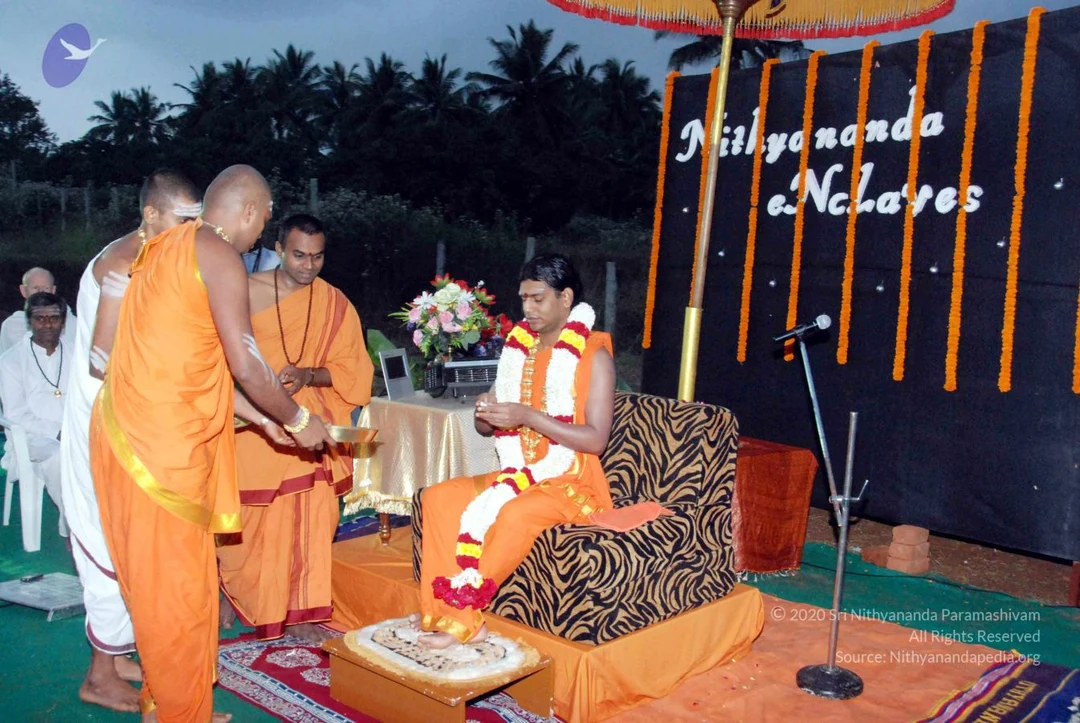
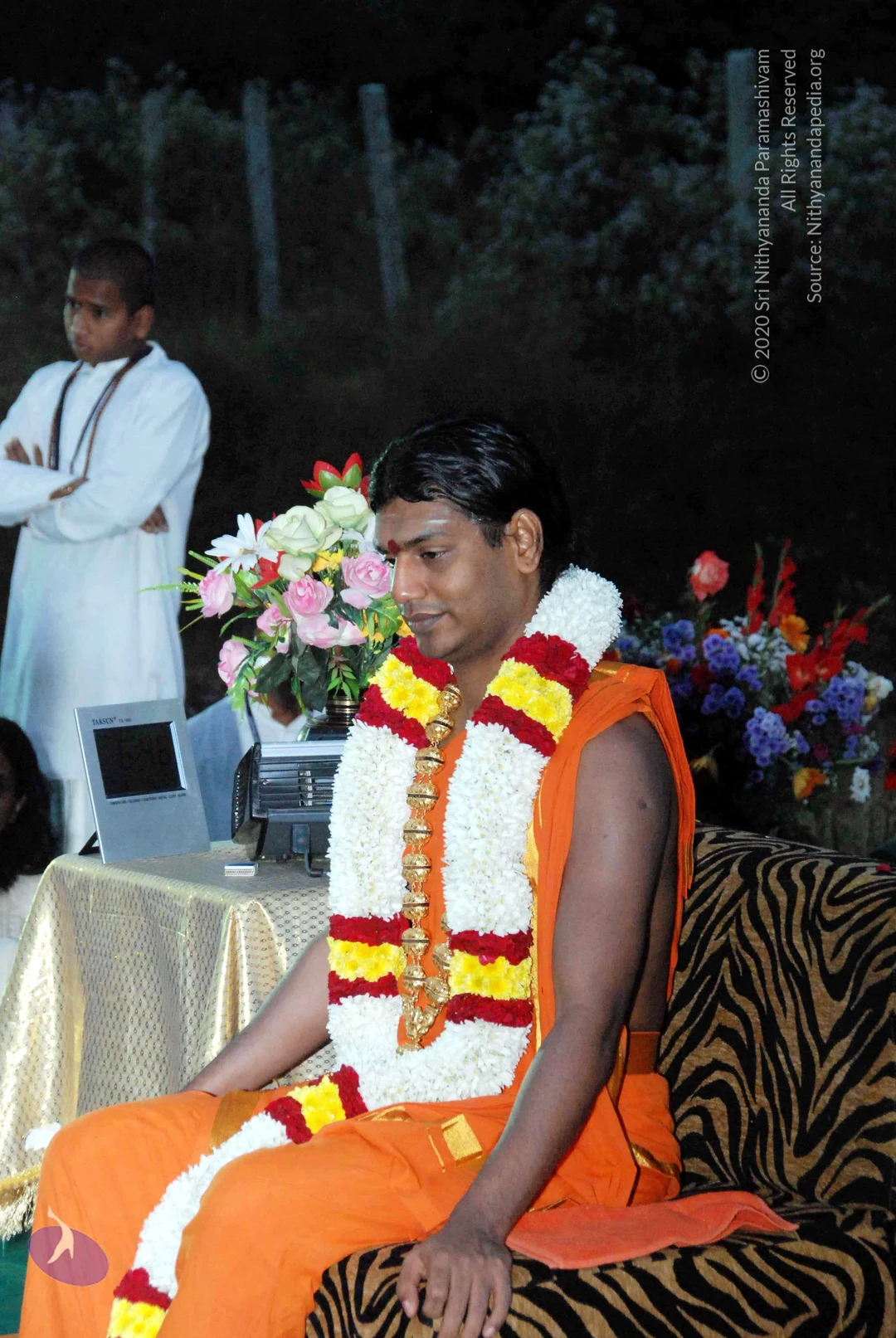
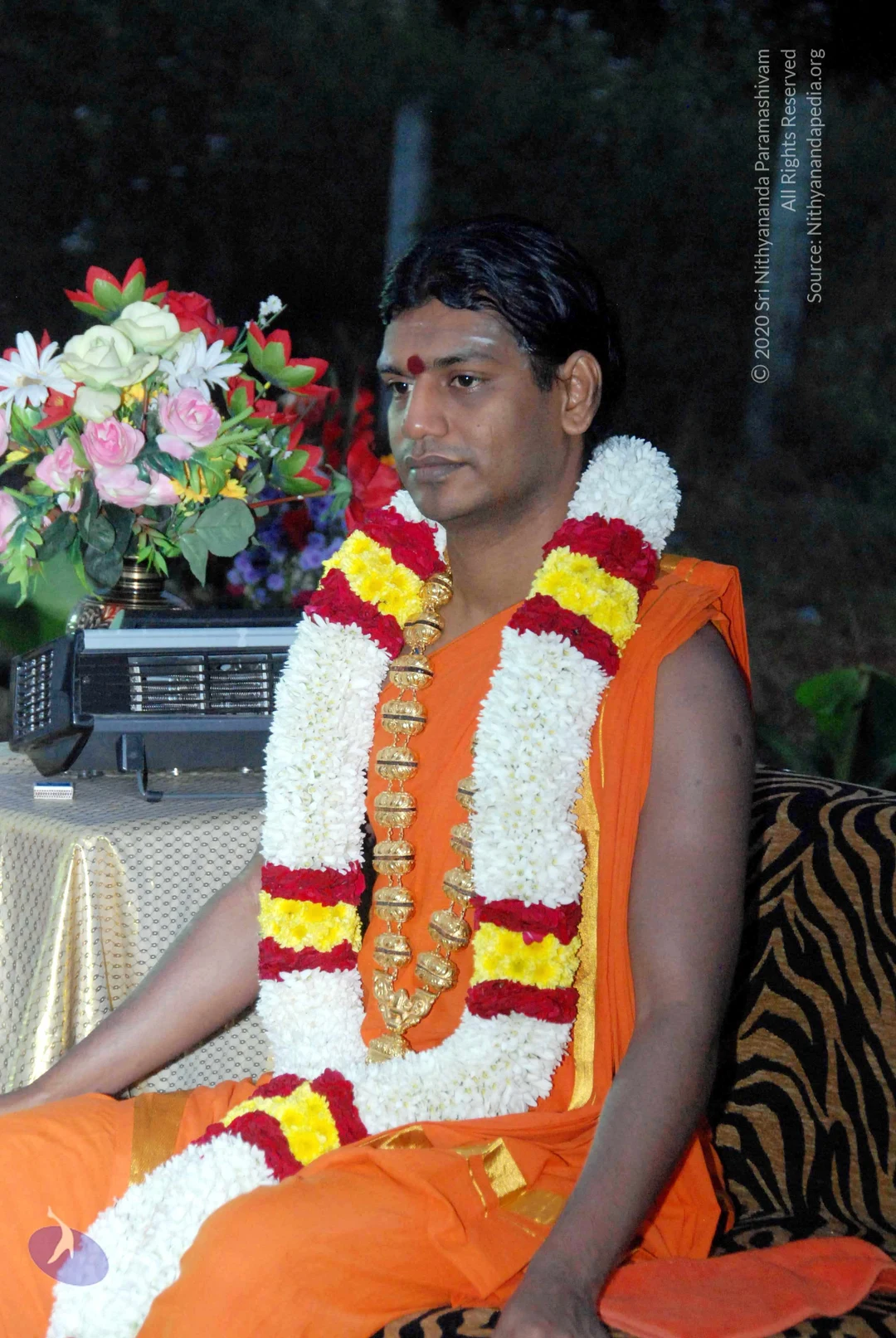
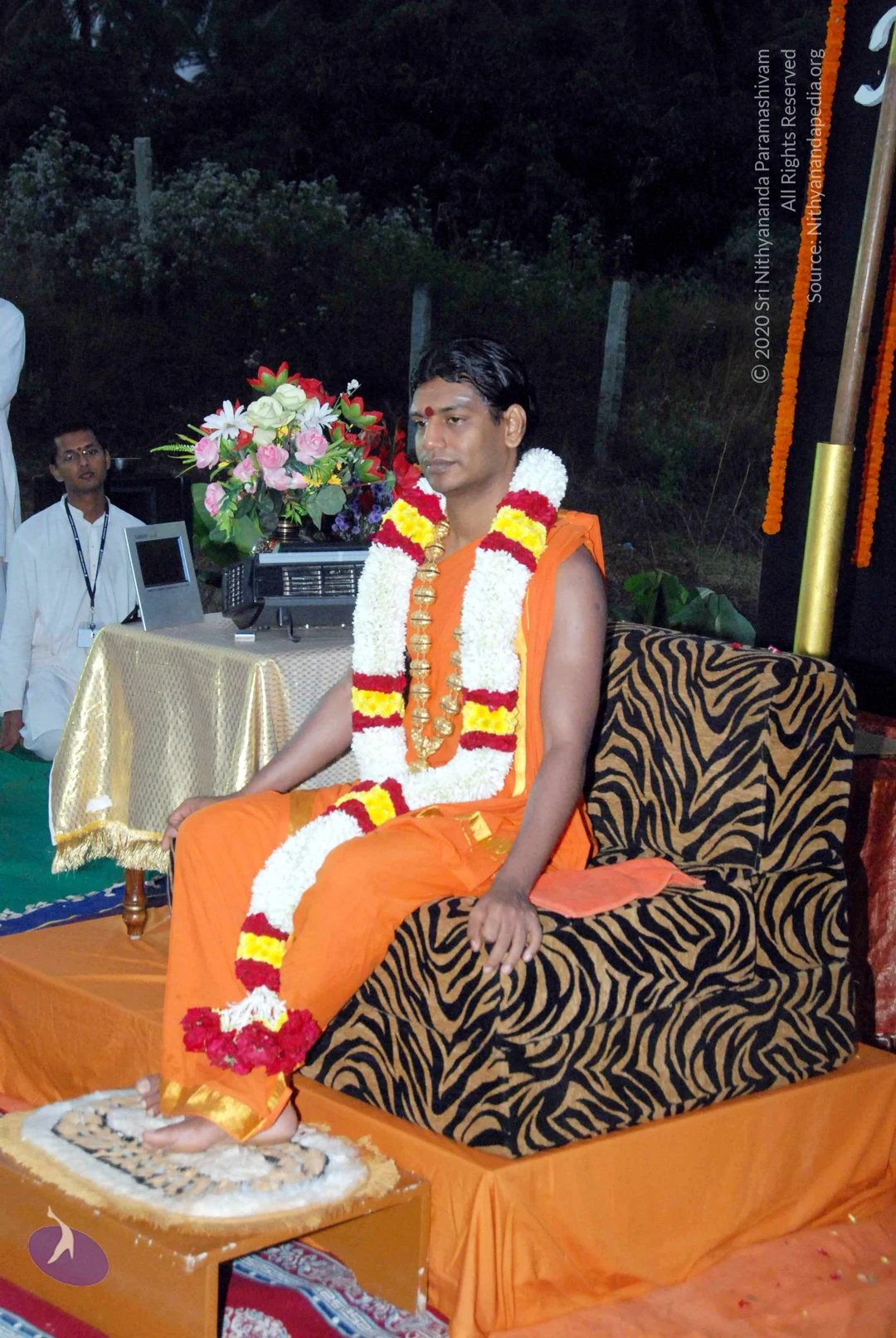
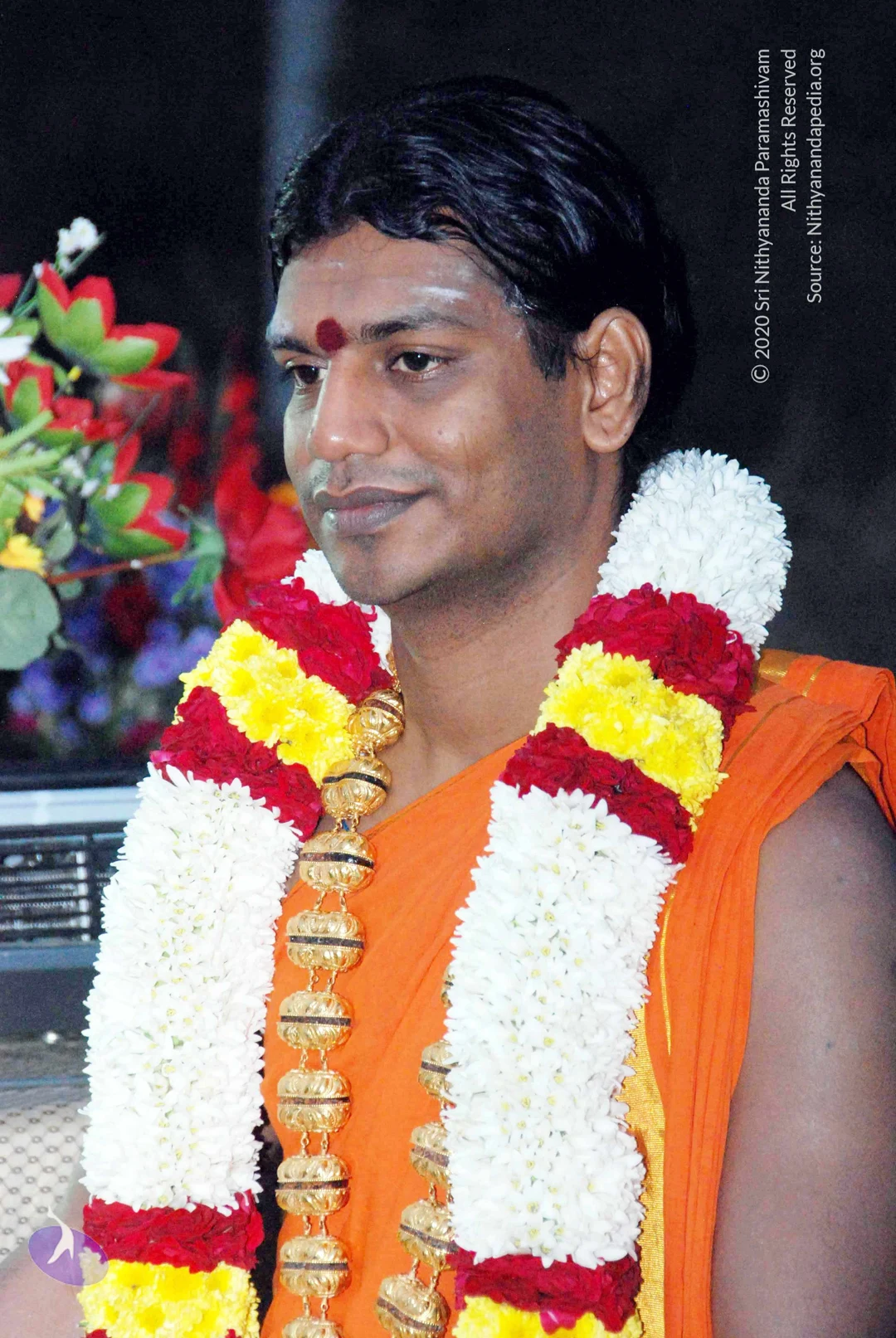
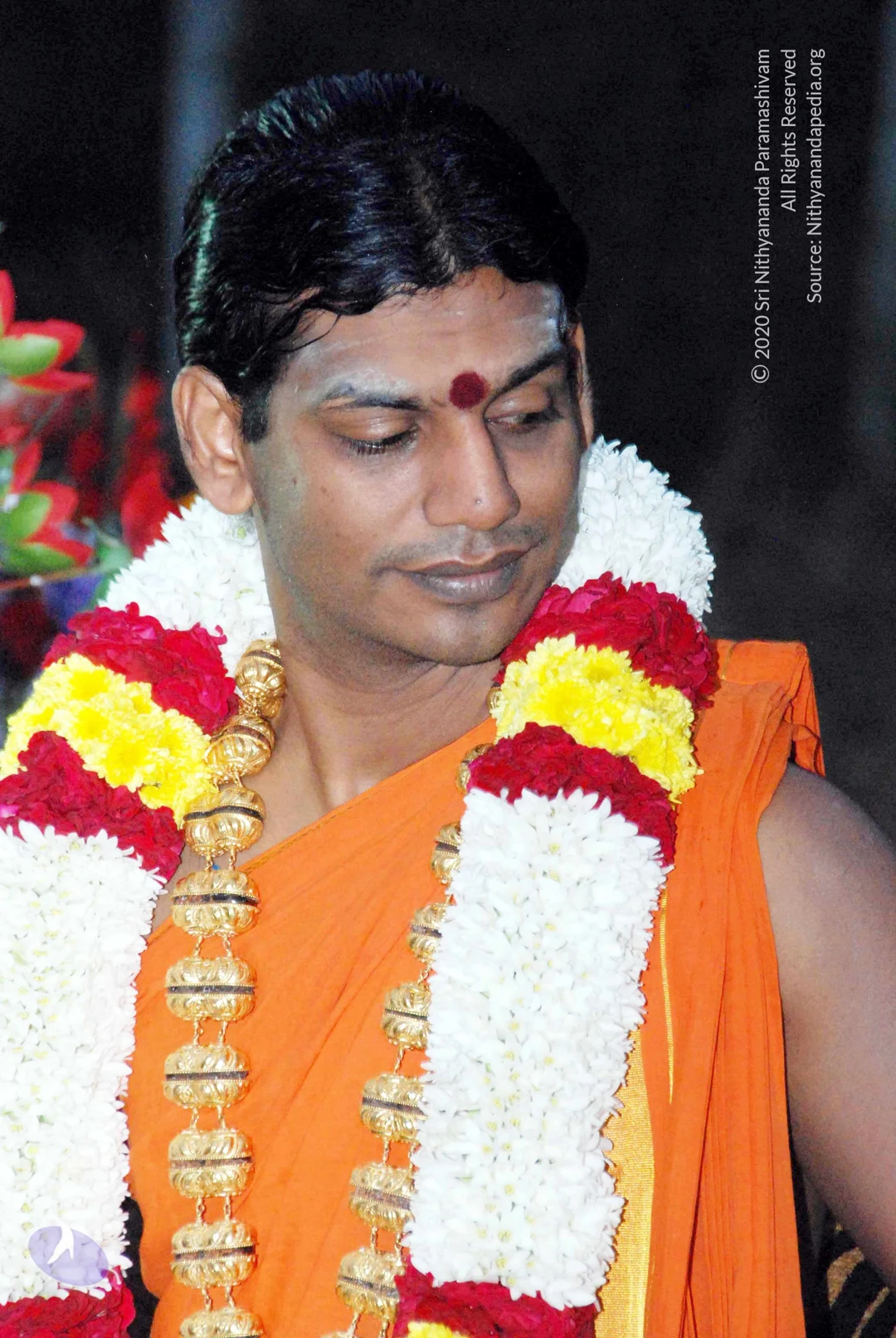
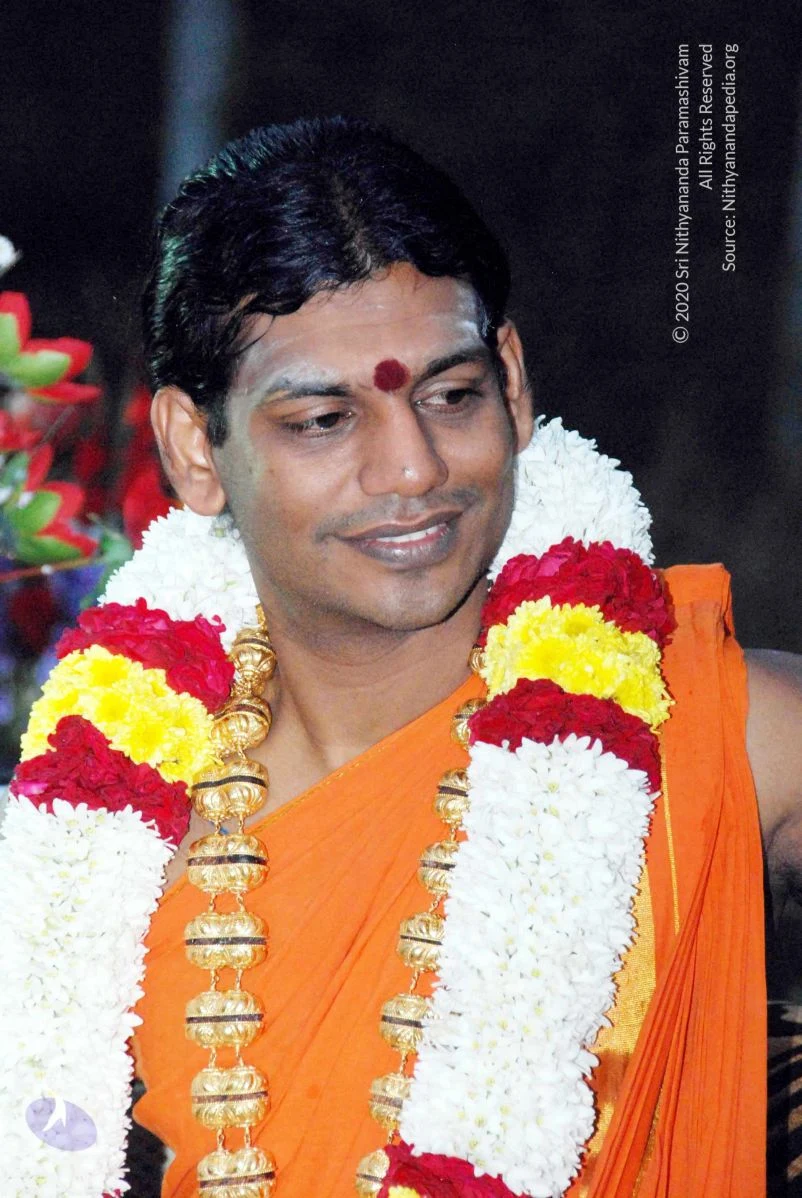
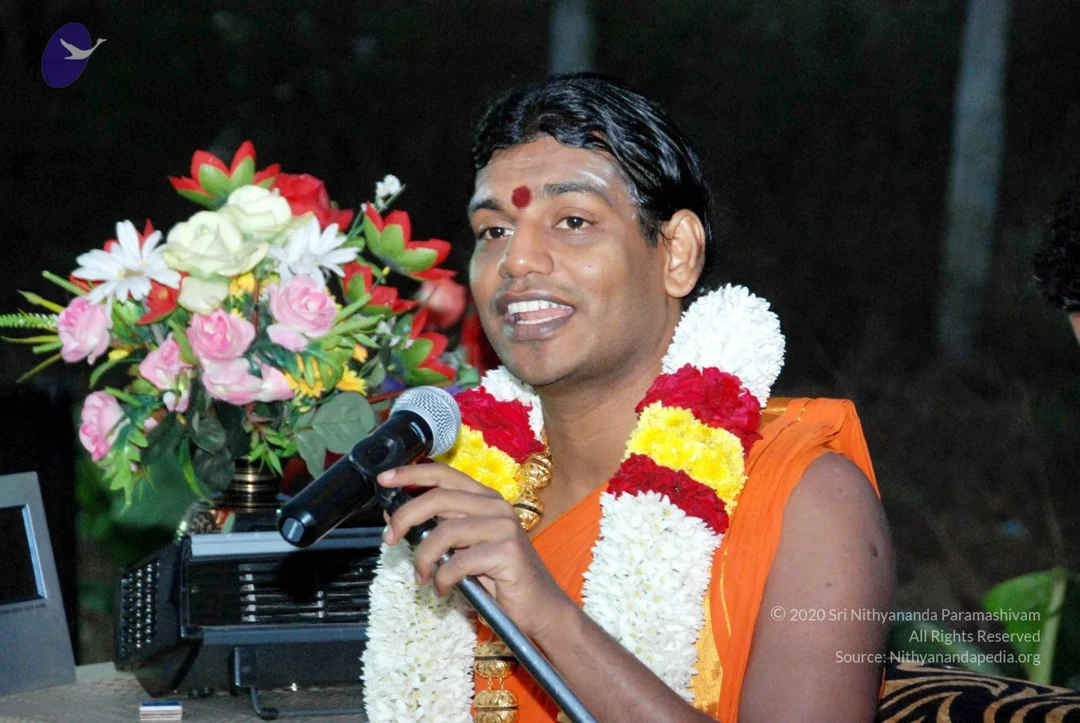
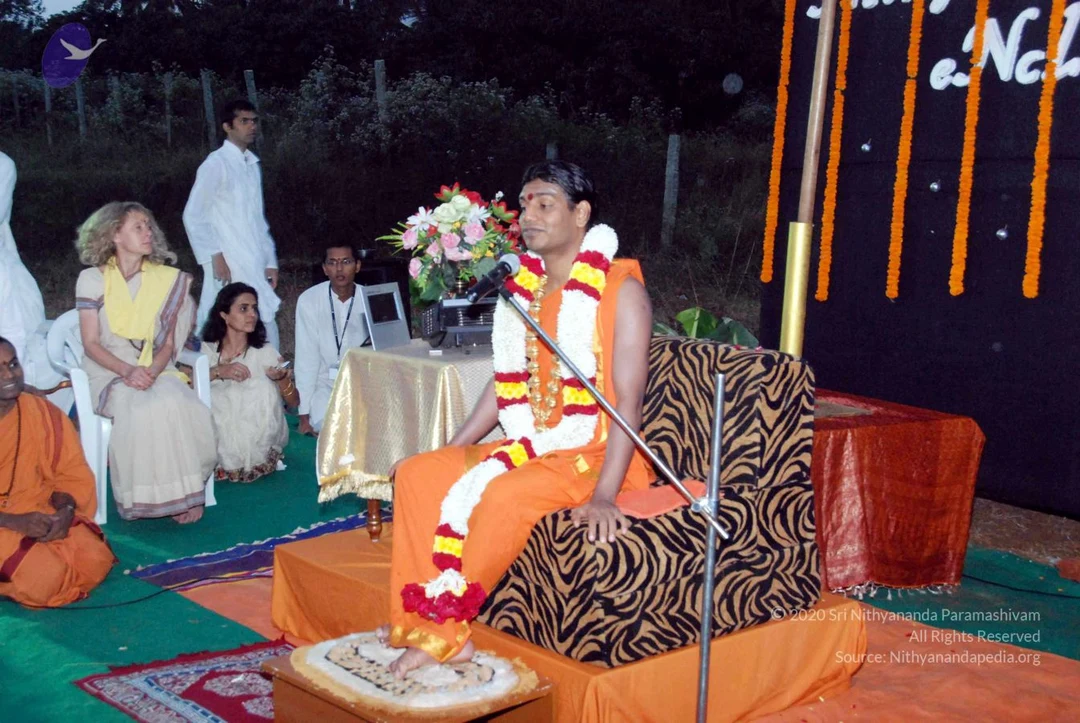
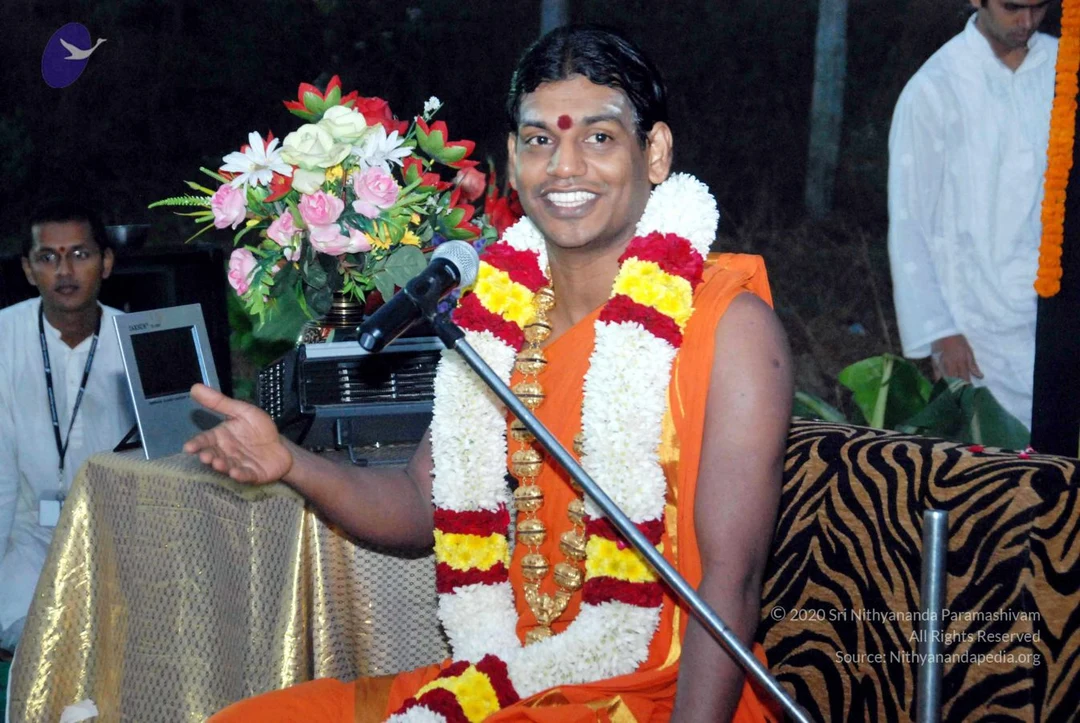
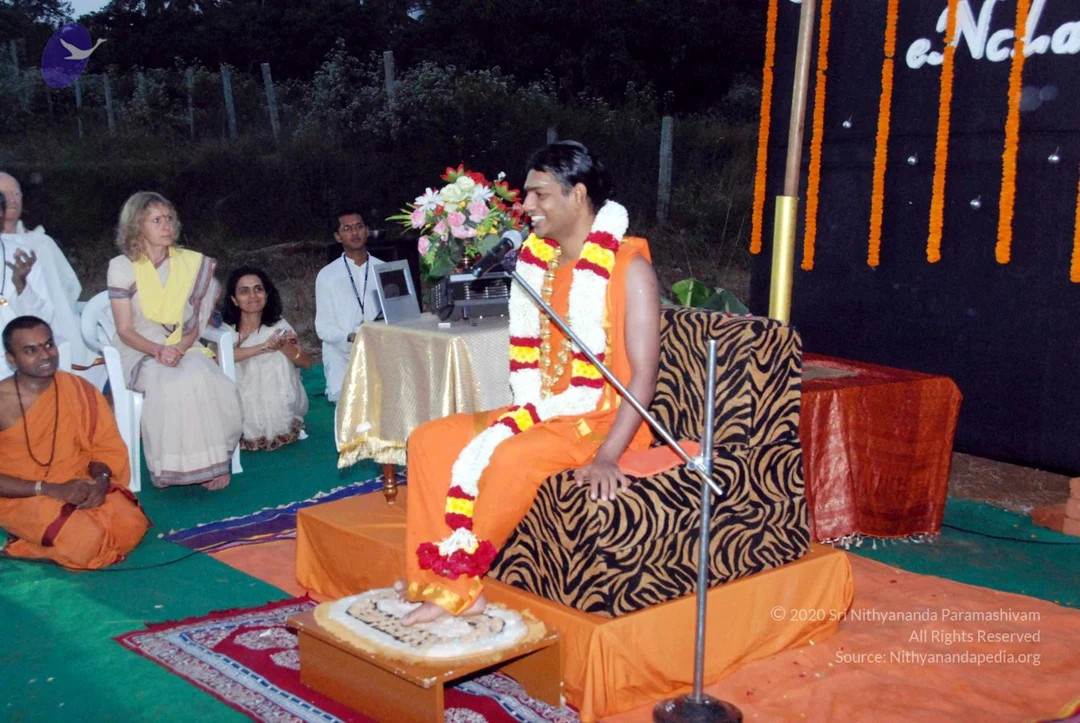
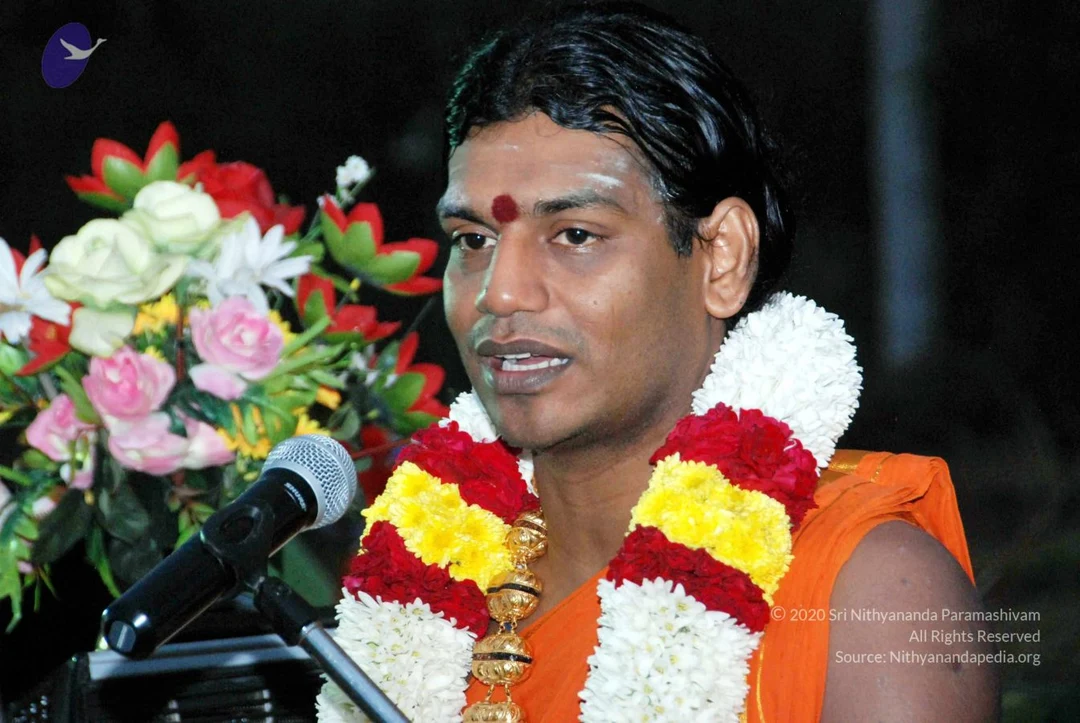
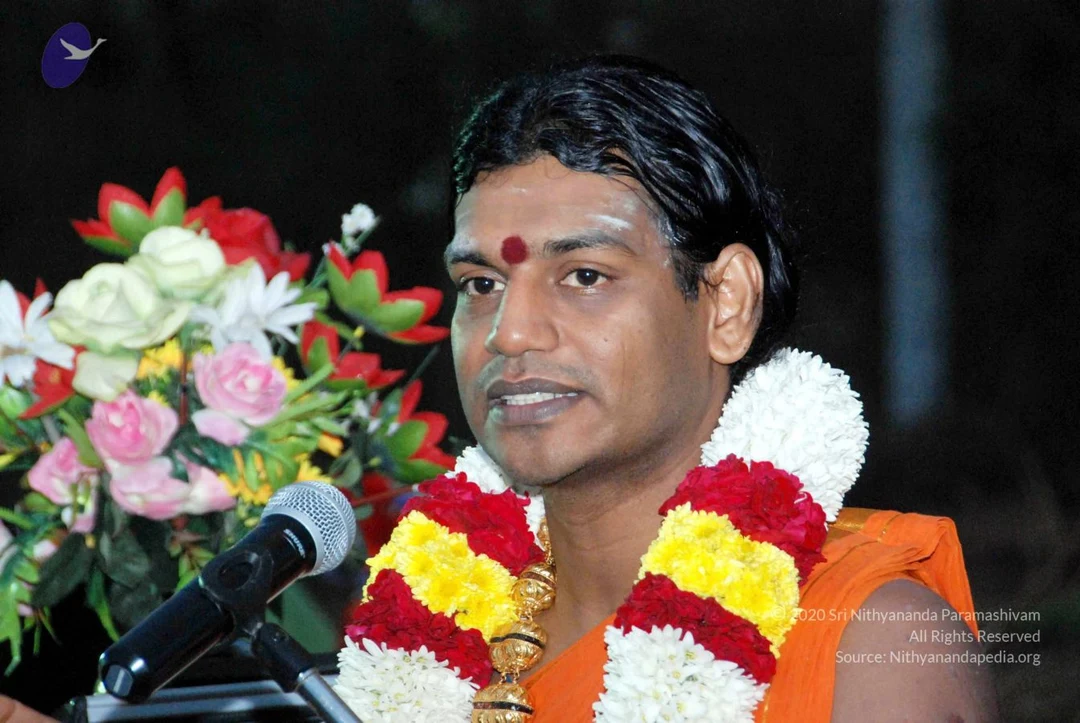
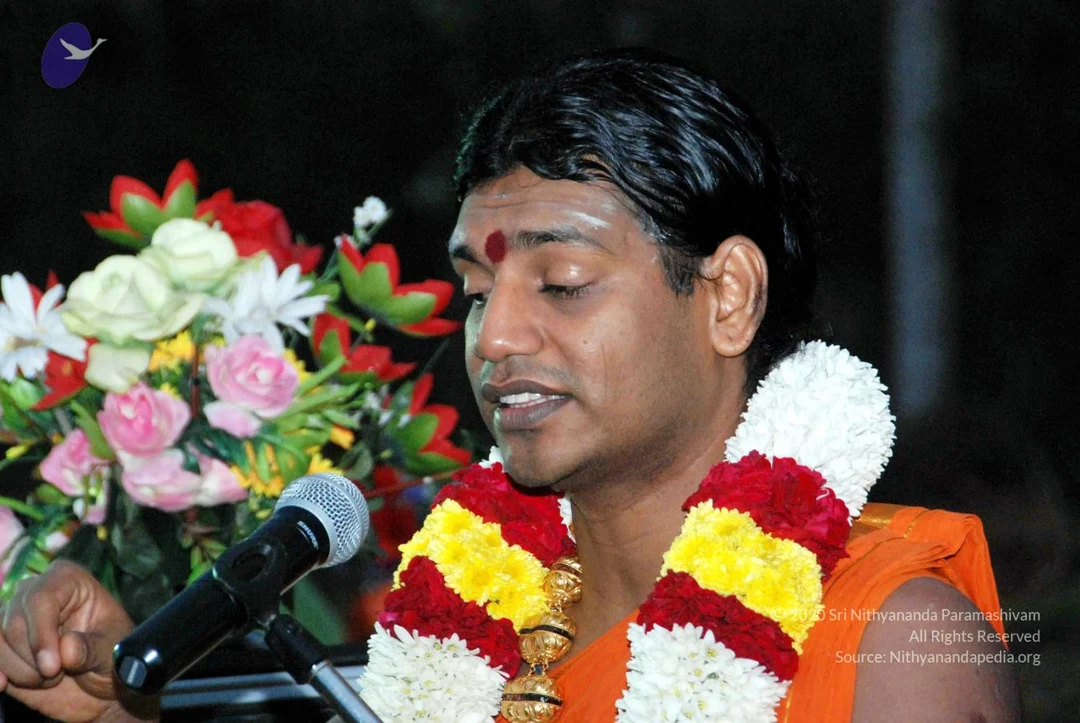
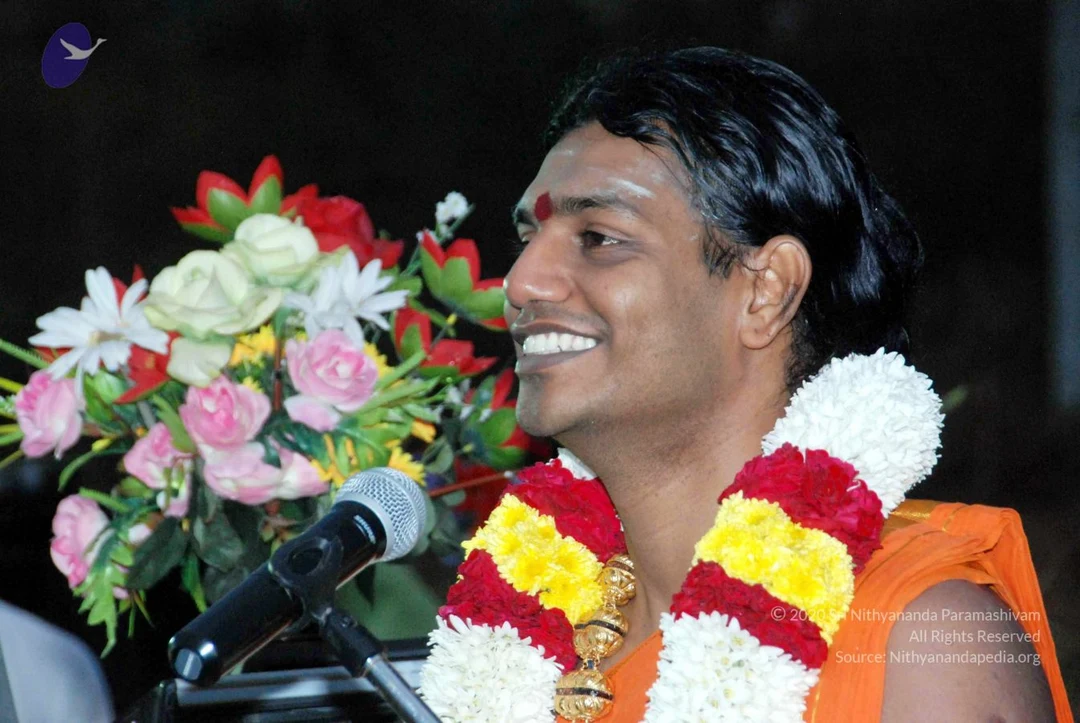
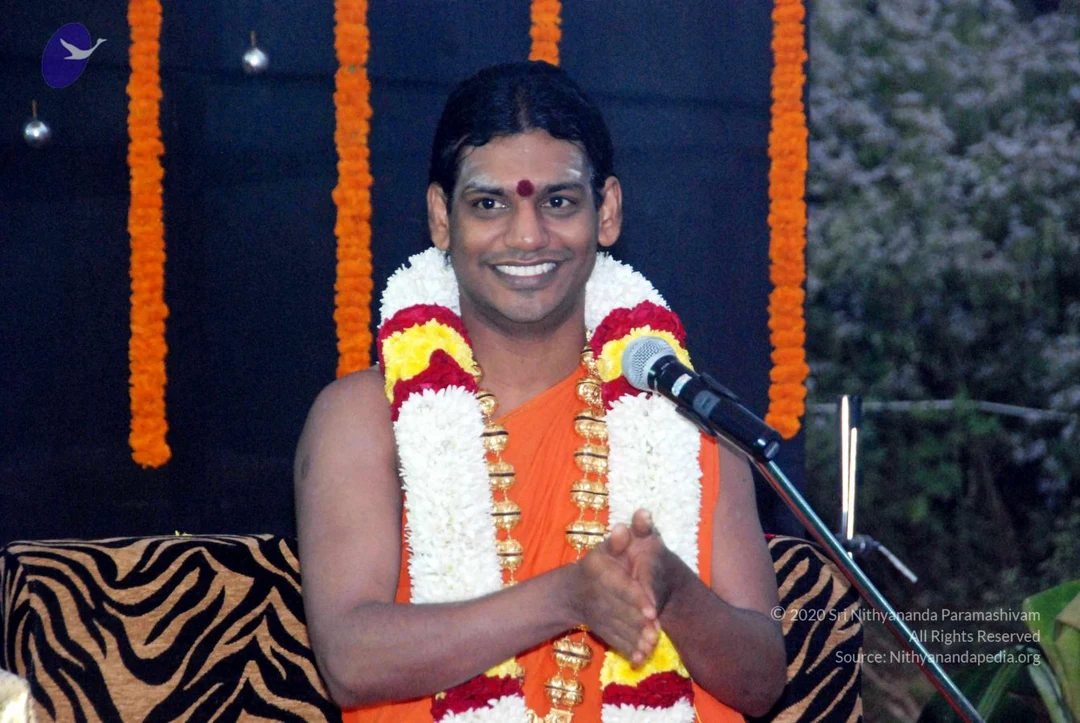
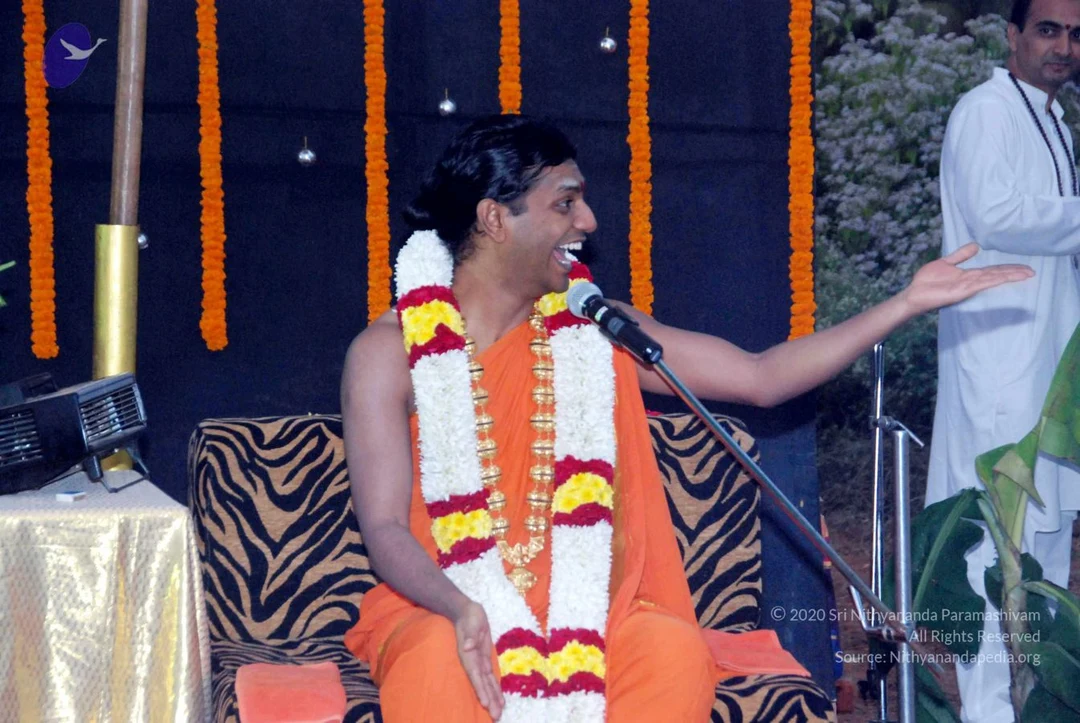
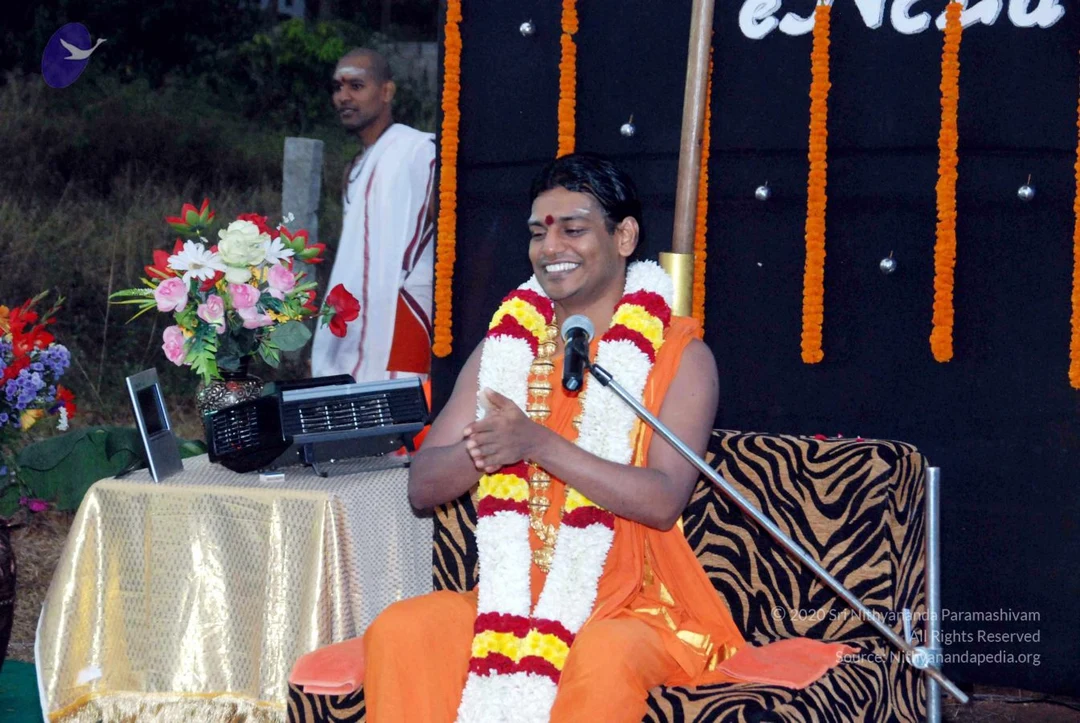
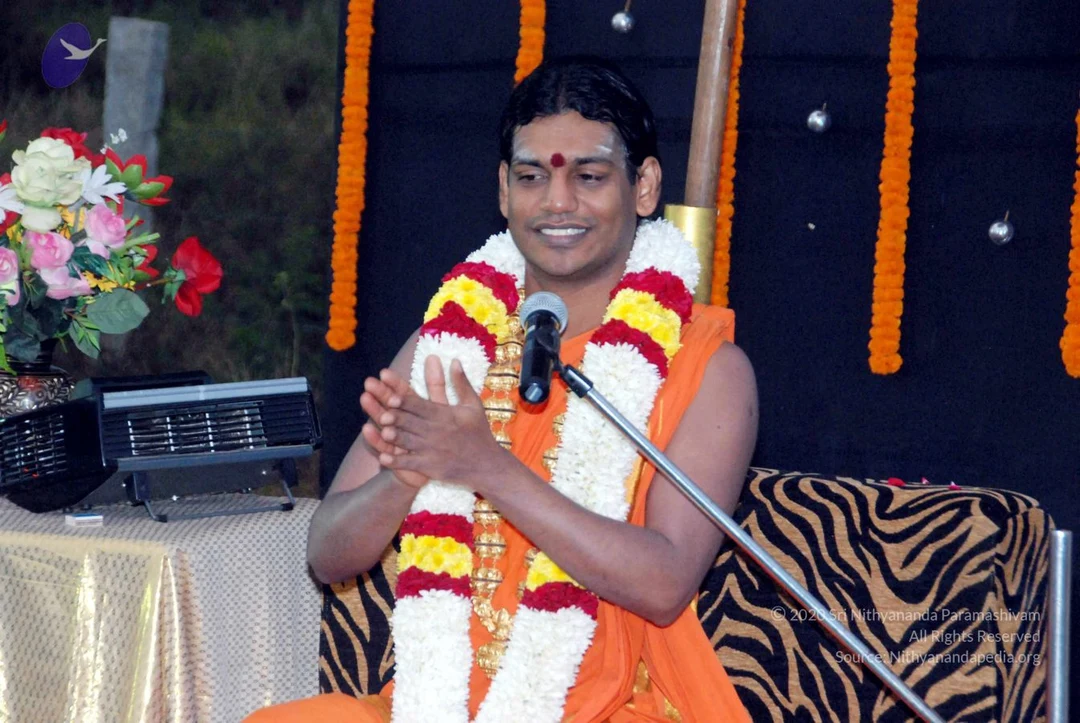
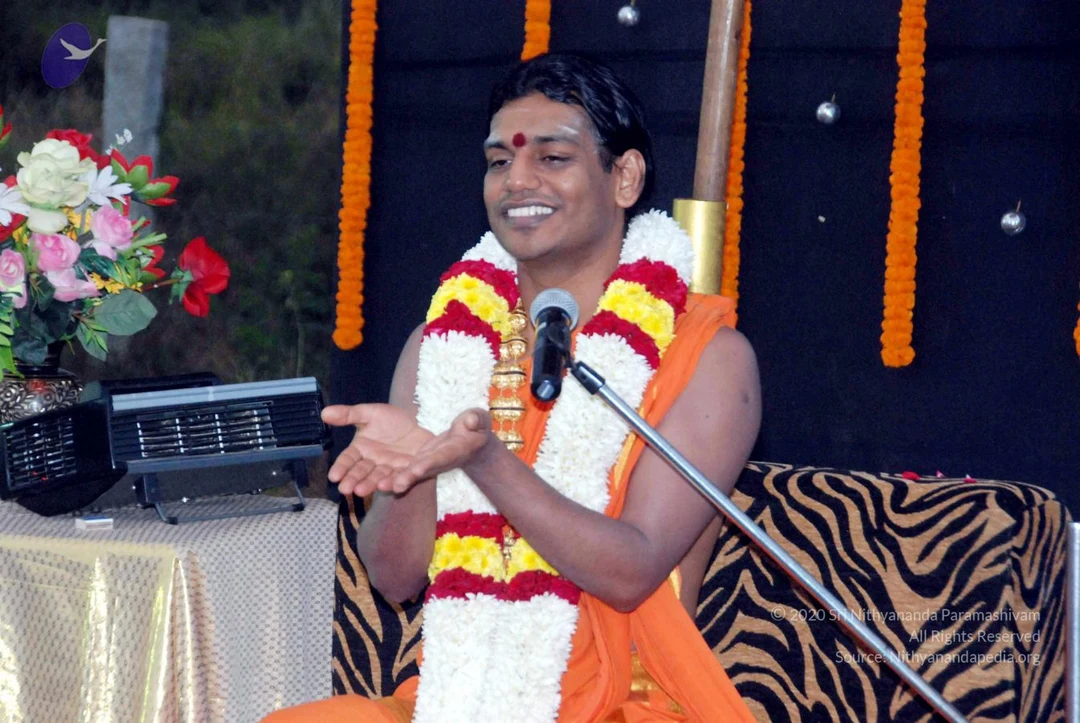
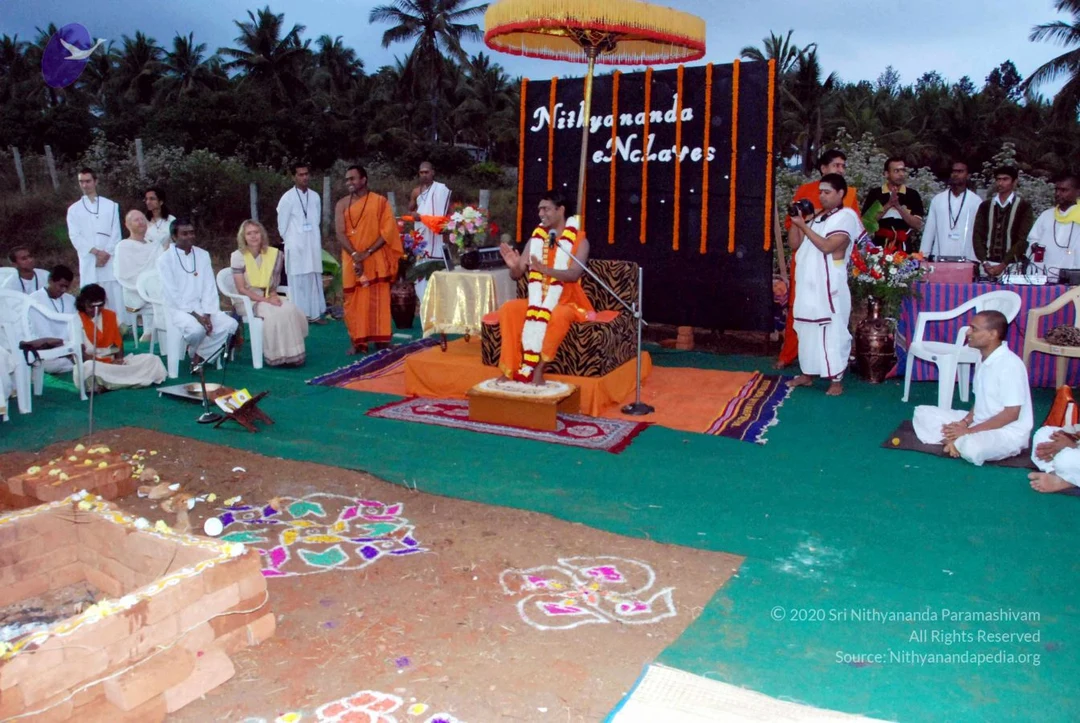
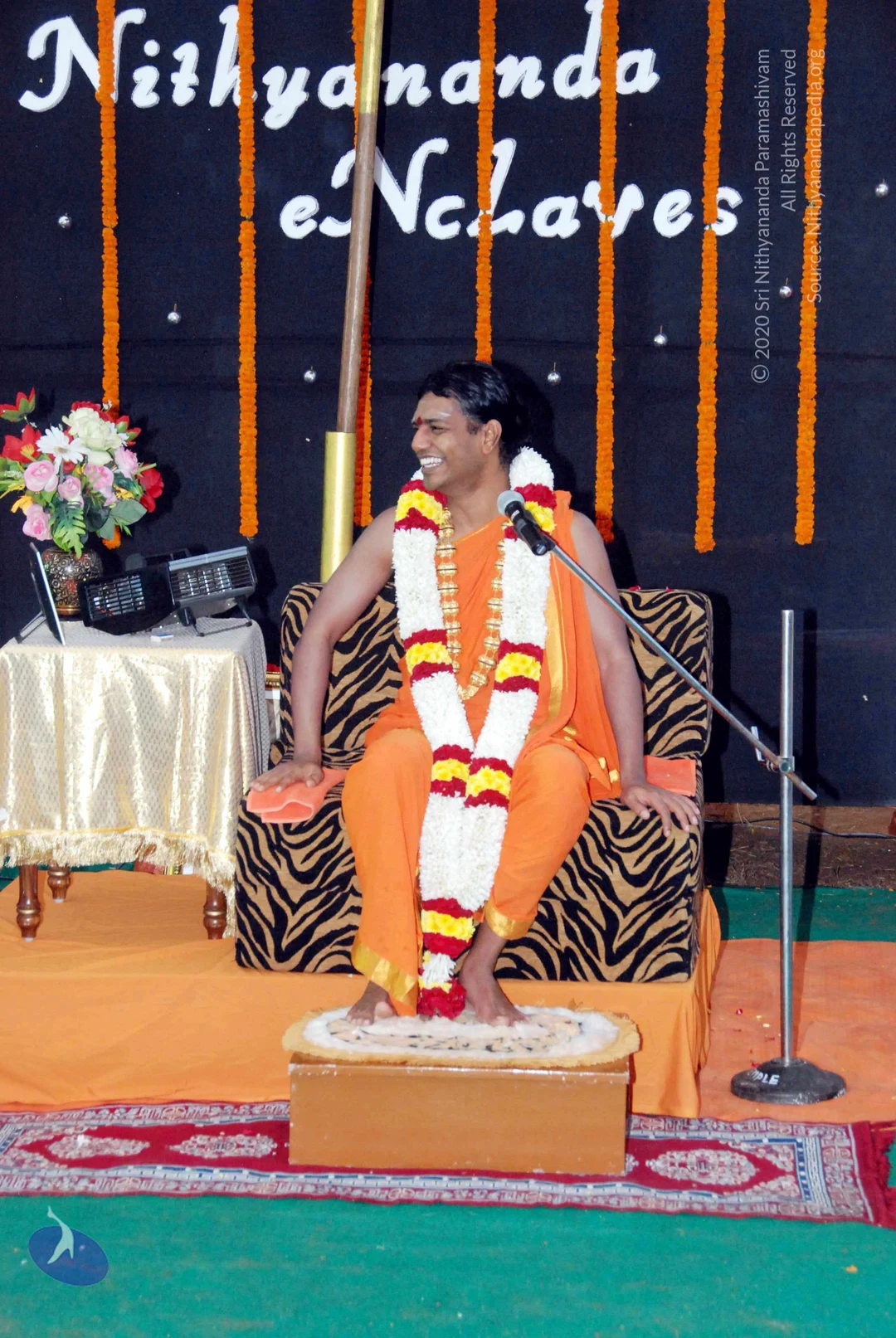
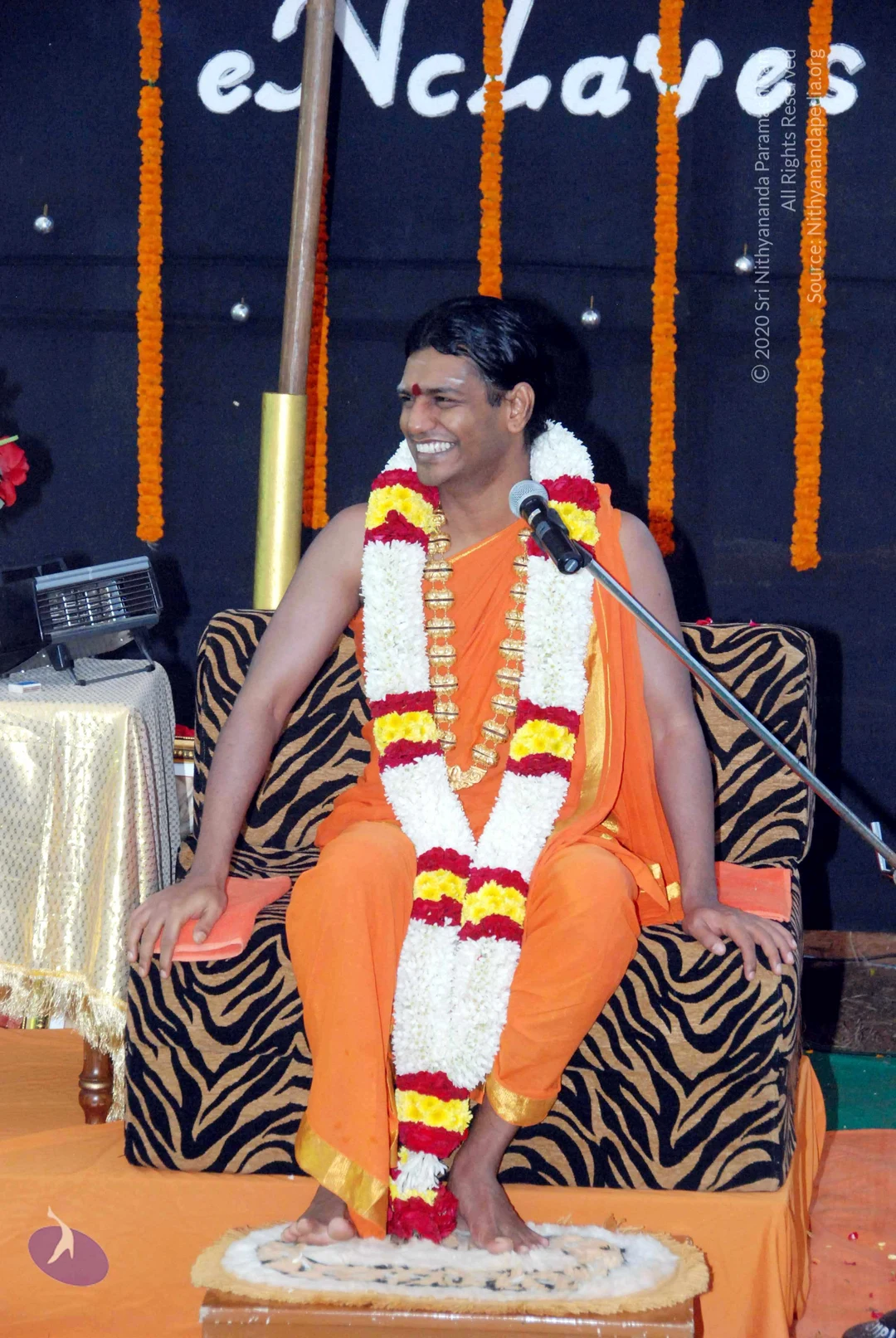
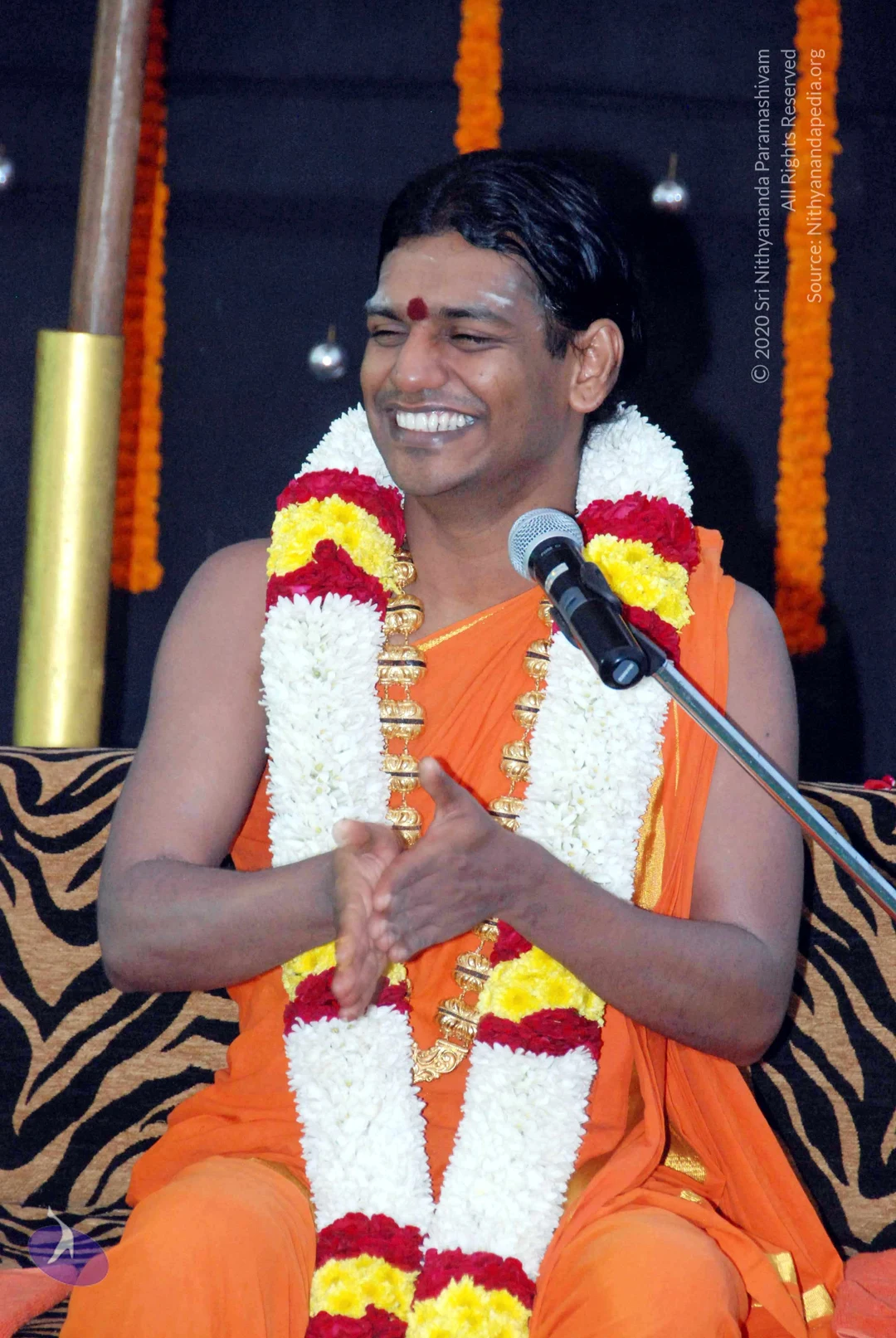
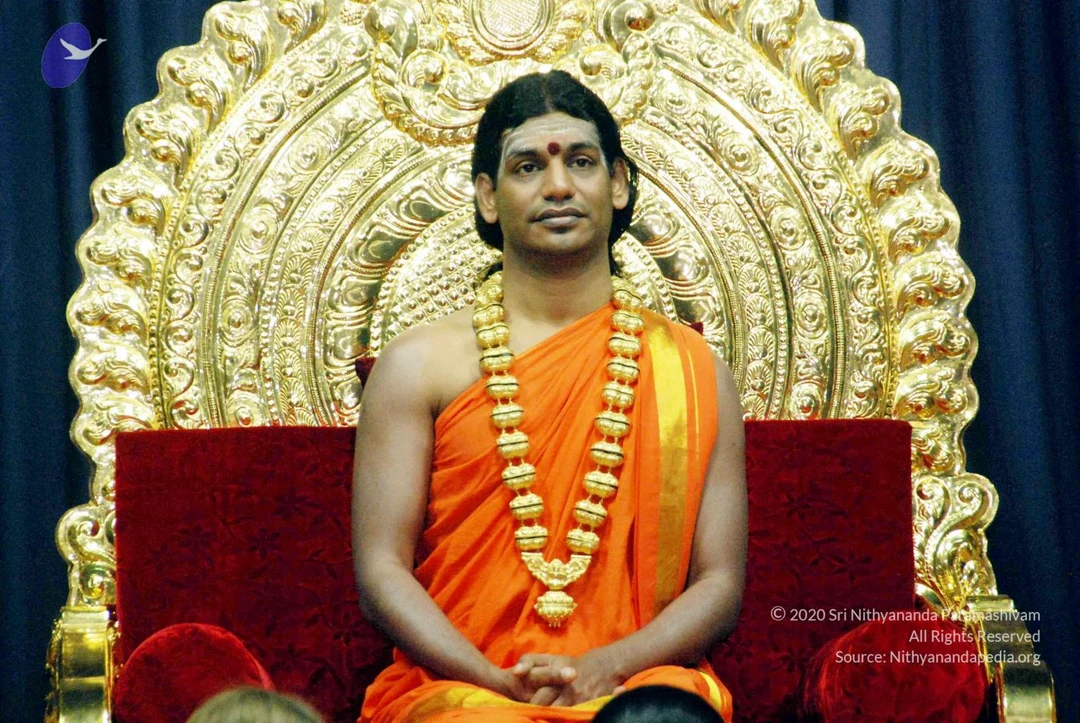
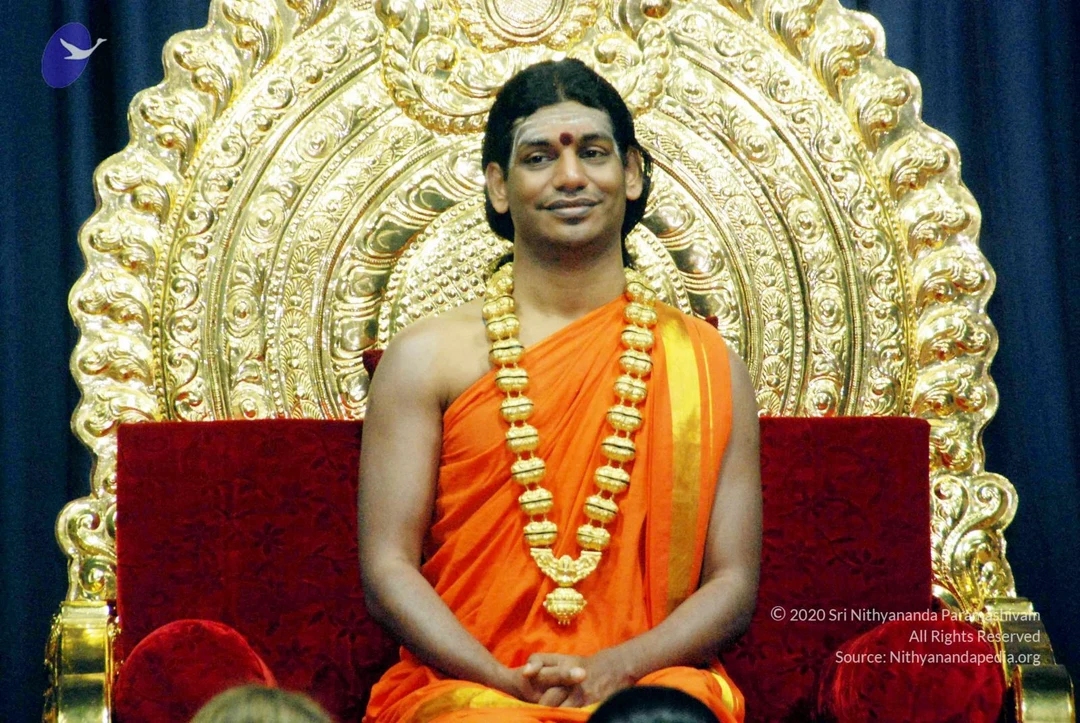
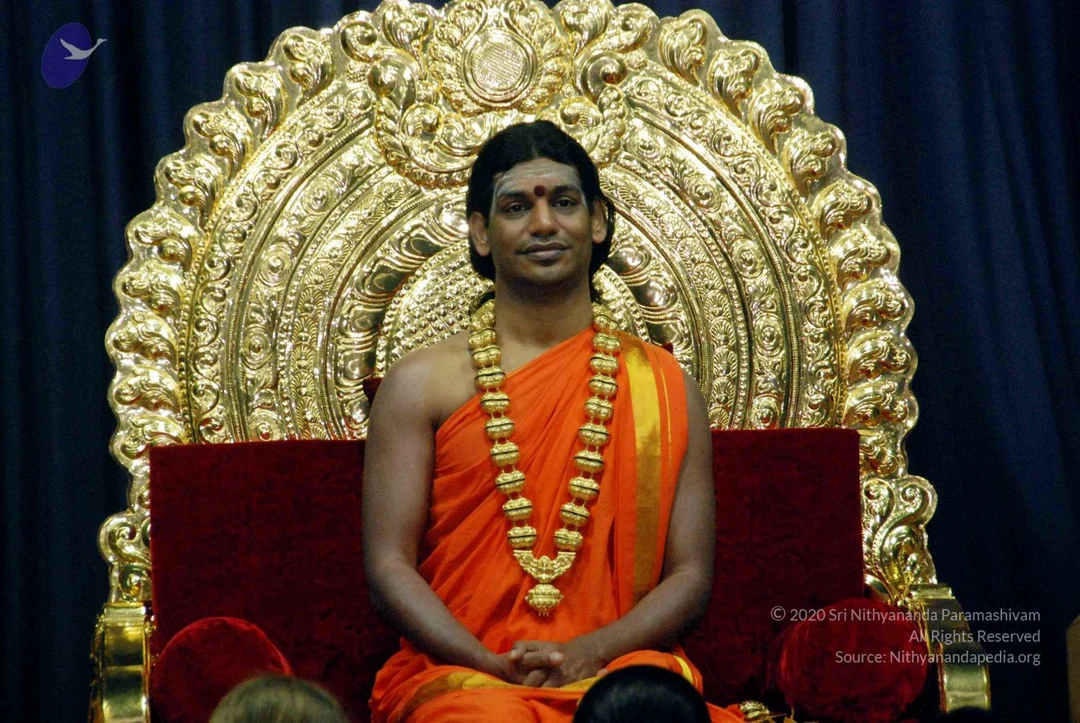
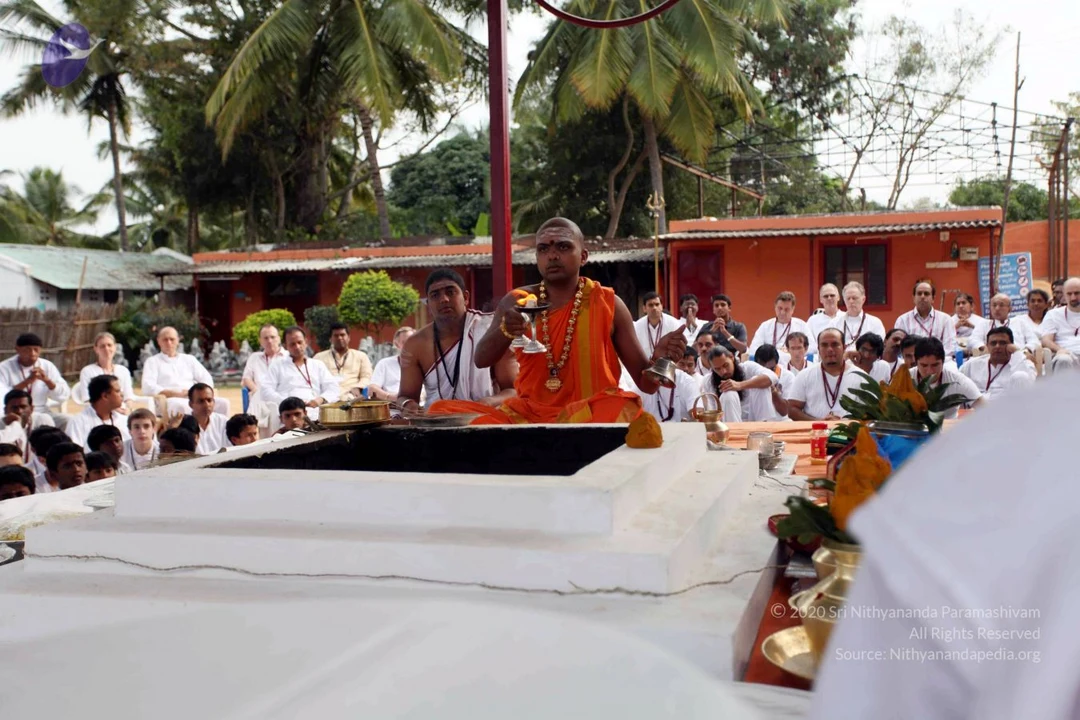
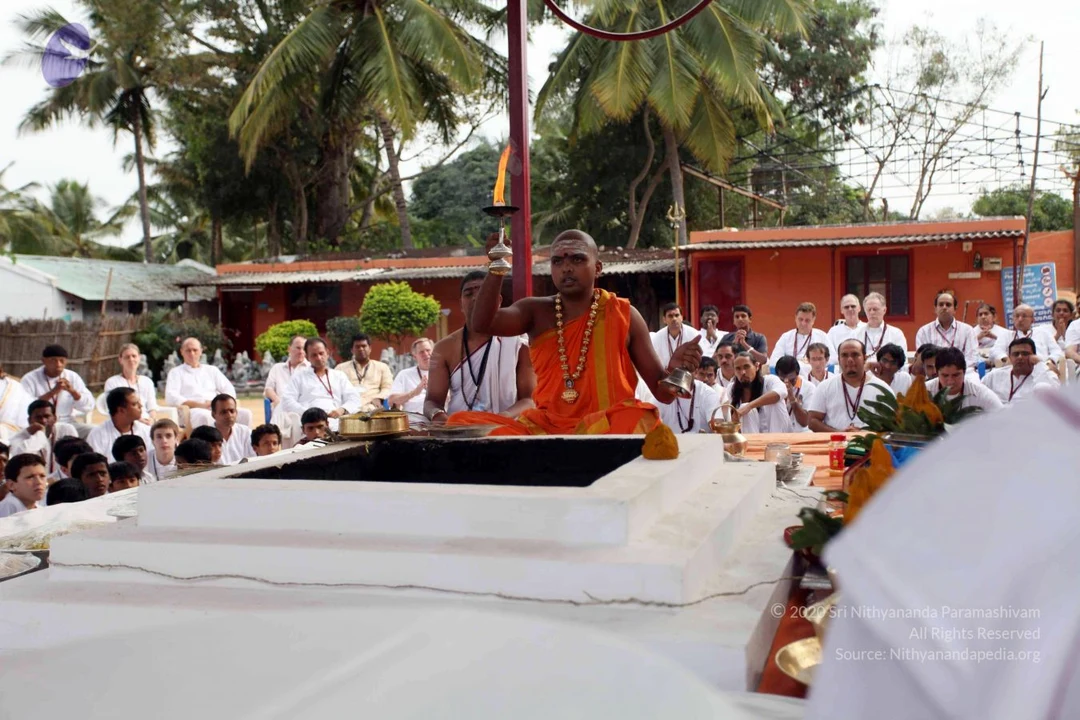
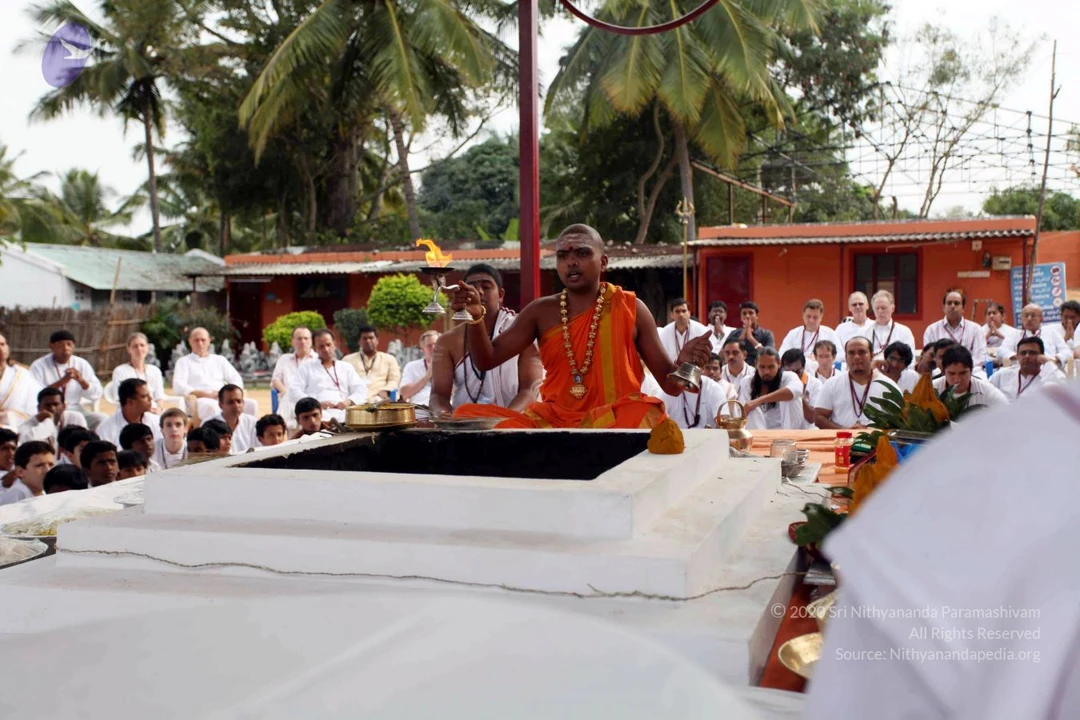
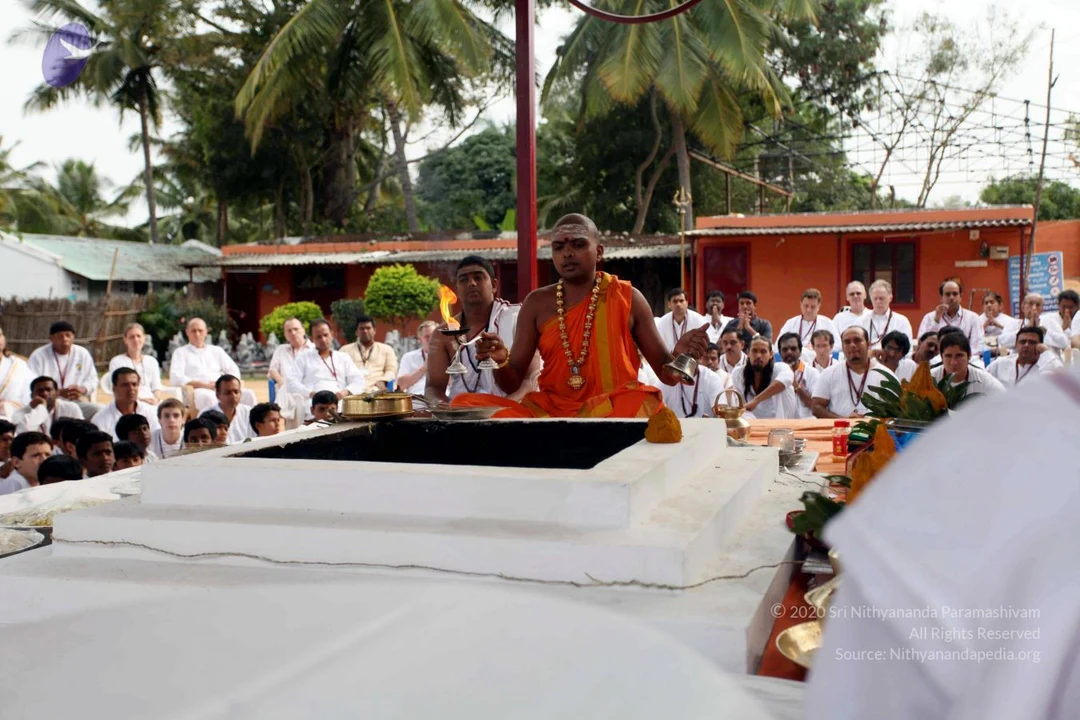
The Supreme Pontiff of Hinduism, Jagatguru Mahasannidhanam, His Divine Holiness, Bhagavan Nithyananda Paramashivam, expounded on the Cosmic Principles of Patanjali Yoga Sutras during the live public talk - Nithyananda Satsang. In this talk entitled Ashtanga Yoga: Be In Yama Niyama (Patanjali Yoga Sutras 84), The Supreme Pontiff of Hinduism shared how Patanjali is giving us a very simple but powerful technique to make Yama(law) and Niyama (highest coherence) possible in one's life. He explained that Yama and Niyama are not laws and rules, but rather it is the source from which laws are executed. He shared that when you understand this, whenever your body and mind are not interested in following the yama and Niyama, you will create the right thoughts. His Divine Holiness explained that when you keep the internal and external purity, you will raise your family to the highest coherence sharing further that If you have the ability to accept and bear the suffering, without causing pain, you will raise the community to the highest coherence, which is Tapas.

Today during Day 16 of the Inner Awakening Program, delegates experienced a powerful Session entitled: Q And A Session: God, The Big Bang, and Unclutching covering a variety of questions and answers from His Divine Holiness.

Video and Audio:

Ashtanga Yoga: Be in Yama Niyama: Patanjali Yoga Sutras 84

VideoAudio

Transcript:

Sadashiva samarambam shankaraacharya madhyamaam Asmadaacharya paryanthaam vande guru paramparaam.

0:47 I welcome you all with my love and respects. Today’s subject for morning satsang ‘Vitarka: the ultimate reasoning’ 84th sutra in Patanjali sutras; in chapter II, 33rd verse. Vitarka bhadane pratipaksha bhavanam. Let us enter into the sutra.

1:54 Swami Vivekananda translates this sutra as: when thoughts obstructive to yoga arise contrary thoughts should be employed. Swami Prabhavananda translates this sutra as: to be free from thoughts that distract one from yoga, thoughts of an opposite kind must be cultivated. Swami Sachidananda translates as: when disturbed by negative thoughts opposite positive ones should be thought of. This is pratipaksha bhavana.

2:44 Here the word vitarka has to be understood in a different way. The word is used with so many different meanings in so many different places. I use that word more for logic which leads you to the beyond logic, the right logic, feeling connection; the ultimate experience. Here you need to understand the sutra. Vitarka bhadane pratipaksha bhavanam. When thoughts obstructive to yoga arise, contrary thoughts should be employed; pratipaksha bhavanam. Patanjali is giving us a very simple but powerful technique to make yama and niyama possible in your life.

3:45 Please understand whenever the yama or niyama is taken as a rules and regulation, your mind always deviates and doesn’t want to do; because the moment it becomes a rule, law of life, you want to resist. You say no…..how can I escape. The whole mind starts doing project planning, strategy planning. It develops all kinds of reasons. I have this pain….. I have that pain……. I think I am going to get fever………...I may catch cold……….. And if I catch the cold and if the same thing continues it may become wheezing……….. then it may become asthma then I may die………. better today I don’t need to go to pada puja. Mind always plays. That is why I told you understand the yama and niyama. Yama means not just law; the power of executing law, the power which executes law. So don’t be just person below the law. Be the being which executes law. If you understand the yama properly it’s a wealth; power. The source, you will stay in the source from where the laws are executed.

5:42 In the whole world there are only two way. People again and again ask me, Swamiji why this universe? Why all this problems? Why all this? I tell them you have only two option. One; go on questioning, questioning, questioning and be a fighter and die. Or become an insider and see the grandeur of the universe and enjoy. These atheists, they go on promoting the universe does not have an independent intelligence. I tell you no... That is why all these fellows who sincerely believe in atheism will be in deep depression. If you only preach atheism, do not believe it; you are saved. You are saved from the net which you created. You are saved from the poison which you are supplying. There are few people intelligent. They preach but don’t believe. At least they are able to save them self.

7:02 I tell you universe is independent intelligence. Your questioning or your inability to understand its grandeur logically is not going to stop it; is not going to hinder it; is not going to disturb it. Either you develop your logic and catch its juice; become an insider and enjoy the whole cosmos. That’s what I call enlightenment or go on questioning like a dog which stands in the street one corner and barks, barks, barks, barks, barks till it drops dead seeing the elephant walking from the river. Elephant will not even know dogs are barking. Sometime by mistake elephant turns towards the direction of the dog, not to look at the dog……..for some other reason. Suddenly these dogs they don’t even turn back and run. They will just..... They won’t even have intelligence and energy to turn back. They will put their foot back tuk tuk tuk and disappear.

8:52 I am telling all the atheists…… come on it is time. I am turning my eyes towards you all. Disappear into some atala paatala sutala talaaatala some lokas or better disappear from all lokas; so the cosmos is free. The logic which can’t grasp the independent intelligence of the cosmos is the source of atheism. I tell you become an insider of cosmos. You will be in the source from where the laws are executed. Become yama dharma so that you don’t need to be bothered about the yamas. But till you become yama dharma who executes the laws you will be tortured, suffering by the laws.

9:29 Same way niyama it is not rules; it is raising your life to a highest coherence. As I was describing yesterday; soucha santosha tapah swadhyaya ishwara pranidhanani soucha santosha tapah swadhyaya ishwara pranidhanani; When you keep the internal and external purity you will raise yourself to highest coherence. When you keep yourself always blissful the family in which you are living, you will raise the whole family to the highest coherence. If you have tapah; ability to bear the suffering, have tapas, ability to accept and bear the pain but not causing, through tapas only you will inspire the whole community; you will raise the whole community’s frequency to the highest coherence. It is my tapas, the ability to bear, the tremendous patience, that is raising huge international spiritual community to the highest possible coherence. I am seeing all over the world our community our disciples, millions of disciples are raising them self to the highest possible coherence. Just seeing the tapas, ability to bear but not cause pain, ability to bear the pain but not causing the pain, strength.

11:46 Swadhyaya means reading, understanding and raising your intellectual capability to grasp the truth, to be in the highest possibility. If this is done the whole civilization will be put into the highest possible coherence. That’s what I am doing every day through the morning satsang. Swadhyaya; again and again and again giving this great understandings I am creating shastra dharis. Understand shaastra shastra dharis not just weapon; warriors who are having shaastra shastra, knowledge weapon; shaastra dhaaris, who embody them self in the great spiritual understanding, constantly raising the spiritual understanding. I am helping the whole civilization to its highest possible spiritual coherence.

13:26 Ultimately ishwara pranidhanani - surrendering completely and relaxing into the cosmos. Even if one person relaxes into the cosmos the whole cosmic consciousness raises to the next level. So by the ishwara pranidhanani you bring the whole cosmos to the highest coherence. So yama and niyama are not laws and rules. It is the source from which laws are executed and highest coherence possible in you and the cosmos. When you understand this, whenever your body and mind is not interested in following the yama and niyama, you will create the right thoughts.

14:30 Patanjali says pratipaksha bhavana; early morning if your body says no I don’t want to get up……. no……. tomorrow we will go for satsang…….I’ll see the discourse and the pada puja. Just tell yourself this is the way you are wasting the life. I am not going to listen. Pratipaksha bhavana strong will. No……... jump out of bed…….. Run to the bathroom………. pour cold water on your body……… be here in two minutes. Pratipaksha bhavana. That is what Patanjali says, if your mind is slipping from brahmacharya.... No... This is my life. Pratipaksha bhavana; creating opposite thoughts and aligning yourself to the yama and niyama; in the initial level this needs to be practiced. Again and again and again raising yourself; whenever kutarka comes bring vitarka back. In the initial level spiritual practice, without this pratipaksha bhavana, millions waste their whole effort and just disappear. So pratipaksha bhavana, is such basic important truth, raising yourself to the right understanding by the right logic and right thinking; create vitarka to remove kutarka. That is what Patanjali calls pratipaksha bhavana.

16:38 So just meditate on this one truth today. Put all your mind, will power, energy, intellect to align yourself to this yama and niyama. Anything against the yama niyama happens in your mind just uproot that thought; uproot that idea and create vitarka to yama and niyama. Install yourself, establish yourself; instill yama and niyama in you. Establish yourself in yama and niyama. Don’t waste your life in unawareness and not practicing; especially when you take Master for granted that’s where these problems come. Morning 5 o clock……..its ok we can go for yoga tomorrow………we can go for dhyaan tomorrow…....we can go for satsang tomorrow. No!!! Yama and niyama is life; life breath. That is why Patanjali says, create vitarka and remove kutarka through the pratipaksha bhavana. Creating opposite to the negative thoughts, establish yourself in ultimate vitarka. Just take this one message today and digest it.

18:25 I bless you all to achieve, experience, live, express and radiate the eternal bliss, Nithyananda. Thank you. 18:41

Title:

Q and A session on God, Unclutching®, BigBang

Description:

In this video His Holiness Bhagawan Sri Nithyananda Paramashivam answers Inner Awakening delegates Questions about how matter gets created from big bang, What is brahma?, Bhakthi, clarification on practicing Unclutching®. An eclectic mix of questions being answered in Swamiji's inimitable style - with amazing truths being revealed!

Video and Audio:

Q and A session on God, Unclutching®, BigBang

VideoAudio

Transcript:

(0:12)

Swamiji - Big Bang?

Participant - Yes

Swamiji - What do you want to know? It’s actually Consciousness exploding and converting one part of it into matter. Anything else you want to know? Especially specific questions I will answer.

Participant - Time will be the another part of Consciousness?

Swamiji - No, no; From Consciousness only, matter...the space and time gets created. Out of that space and time meeting with each other, matter gets created. From the matter, the planets get created. From the planets, the life starts happening. Okay? Then?

(1:01)

Participant - Swamiji

Swamiji - Yes.

Participant - In regards to the question he just asked, I read in one of the spiritual books... and I know you will say I’m comparing, but I just I’m just trying to understand, it said that when God, after Prayala?

Swamiji – Pralaya

Participant - Ya Pralaya, did I say right?

Swamiji - Yes.

Participant - So from what I could understand, it said that God wakes up, finds nothing around him, and then He…..

Swamiji - Not God... Brahma wakes up.

Participant - Brahma?

Swamiji - Yes

Participant - Okay

(1:33)

Swamiji - Because, in...if you use the word God, it will...it may confuse. The God is the ultimate Consciousness, who is source, even for Brahma. Brahma only can sleep or wake up. God cannot sleep or wake up.

Participant - So out of God comes Brahma, who wakes up…

Swamiji - Yes

Participant - And finds nothingness and then begins to remember…

Swamiji - Then he creates, that’s all. That’s the way Creation happens.

Participants - So Brahma is part of Brahma Vishnu Mahesh, but Brahman is God.

Swamiji - Ah, yes. Brahma is part of Brahma Vishnu Mahesh, Brahman is God, Right. You are right. You got the point.

(2:11)

Participant - Okay and in the Upanishad, when it talks about realizing the Self, that’s the Brahman.

Swamiji - Yes, that is the Brahman, not Brahma.

Participant - Okay

Swamiji - Not the Puranic 4-headed Brahma

(2:25)

Participant - Swamiji

Swamiji - Yes.

Participant - How to develop Bhakti in ourselves?

Swamiji - Bhakti...Bhakti you can’t develop, it has to happen. I am creating all the process and space where Bhakti will happen. Don’t worry.

Participant - Thank you Swamiji.

(2:43)

Participant - Swamiji

Swamiji - Yes?

Participant - I have a question about unclutching. When I tried to do unclutching, the first few thoughts I can easily unclutch. But, sometimes I get stuck on some deeper thoughts and then it takes me on a wild ride. And then I realize that…

Swamiji - That is the moment you really need to unclutch.

Participant - I realize that after a while and then say, “Oh, I need to unclutch”, so I come back.

Swamiji - Yes, that is enough. When you realize if you unclutch, that’s all.

Participant – okay. Then, after a while, like 15-20 minutes, my mind, my brain goes...it’s kind of dead, and it’s kind of feeling sleepy, then I wake up and then okay try to do unclutch again.

Swamiji - Oh.

Participant - Is that okay Swamiji?

Swamiji - Yes, that is okay.

Participant - Thank you Swamiji.

(3:30)

Photos

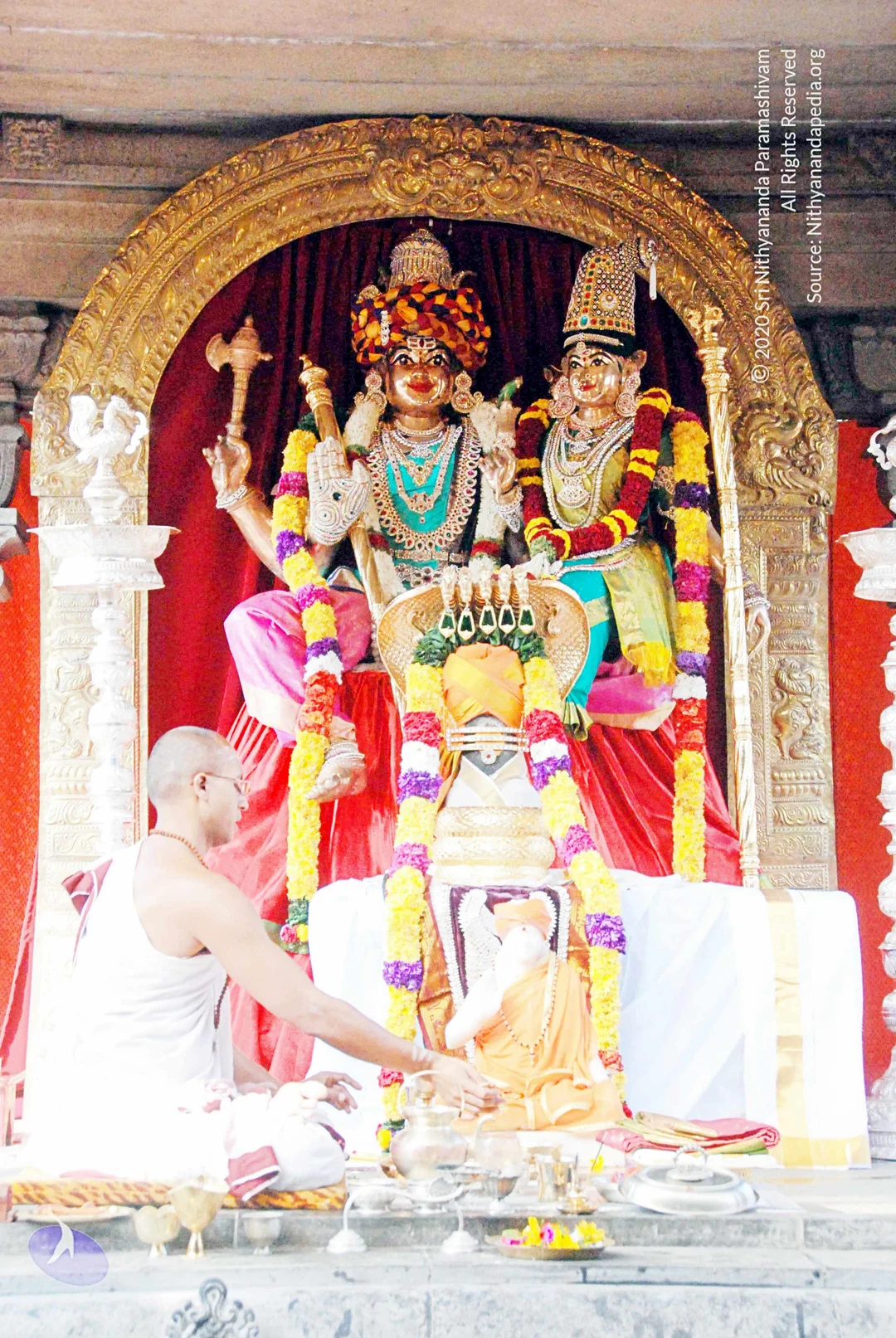
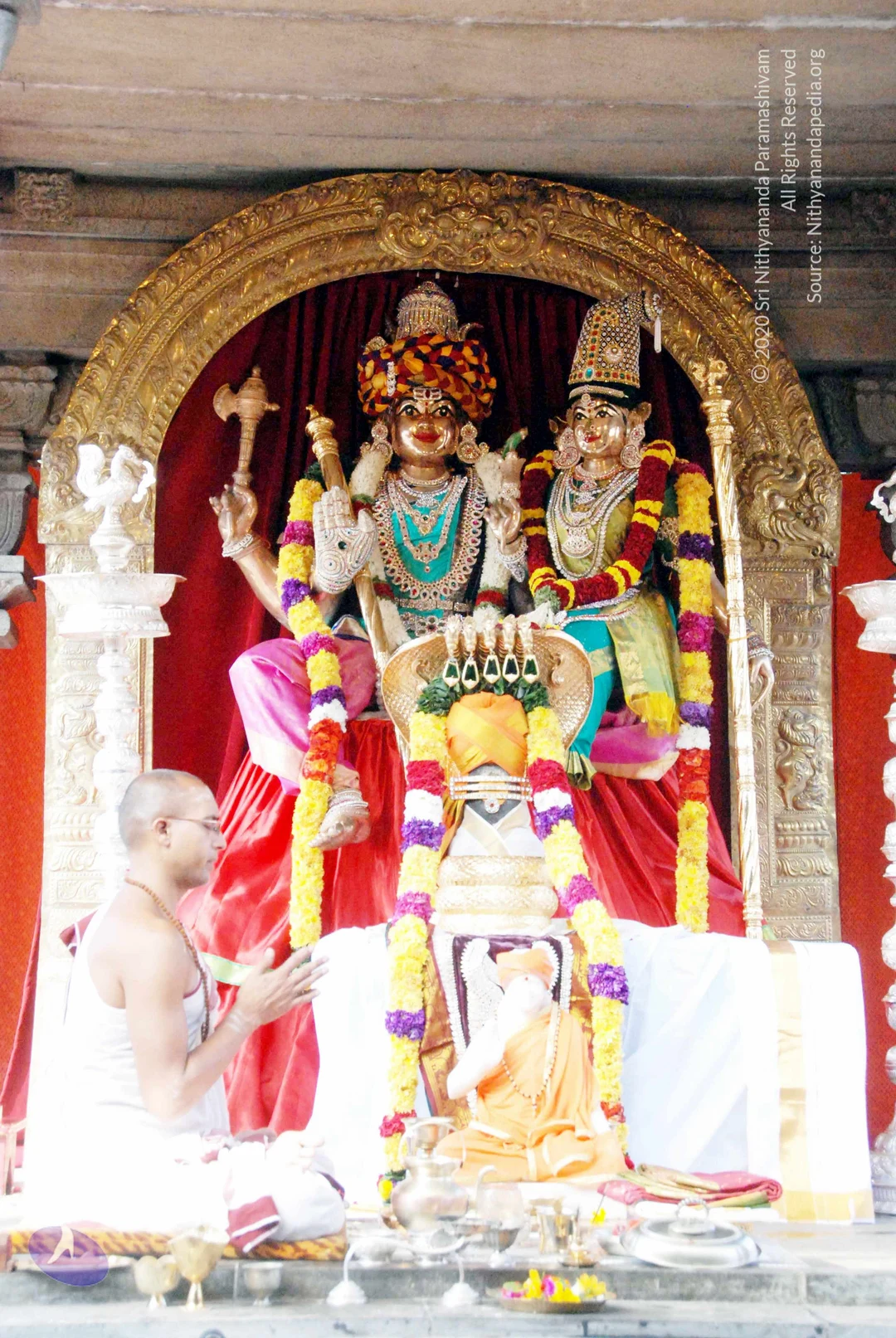
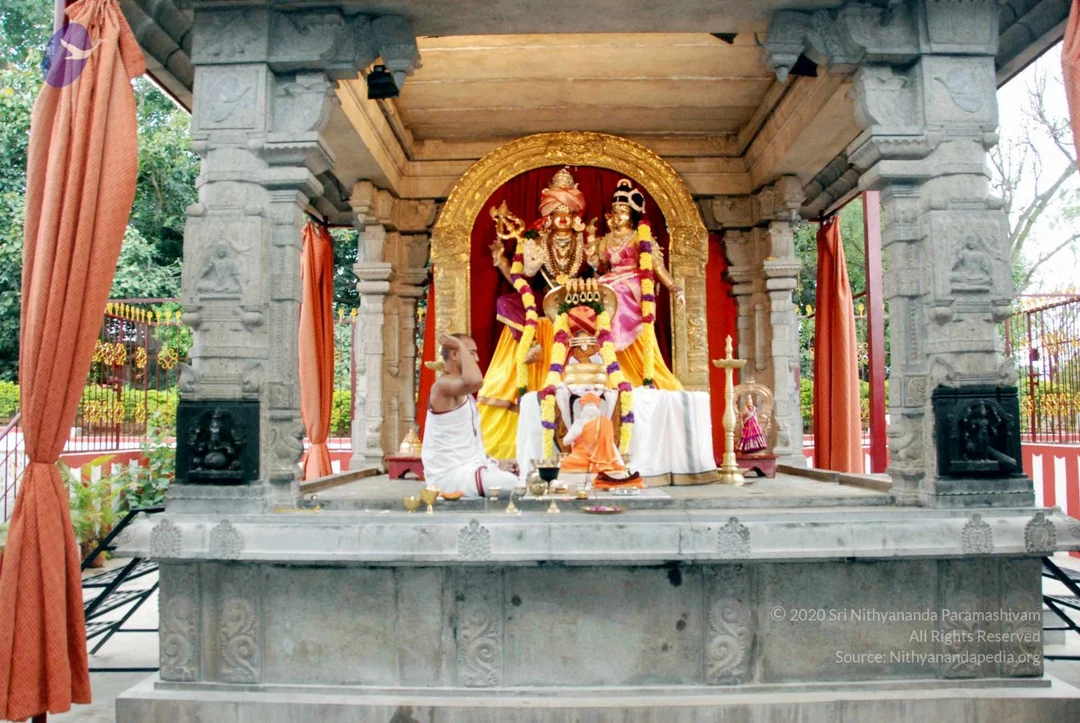
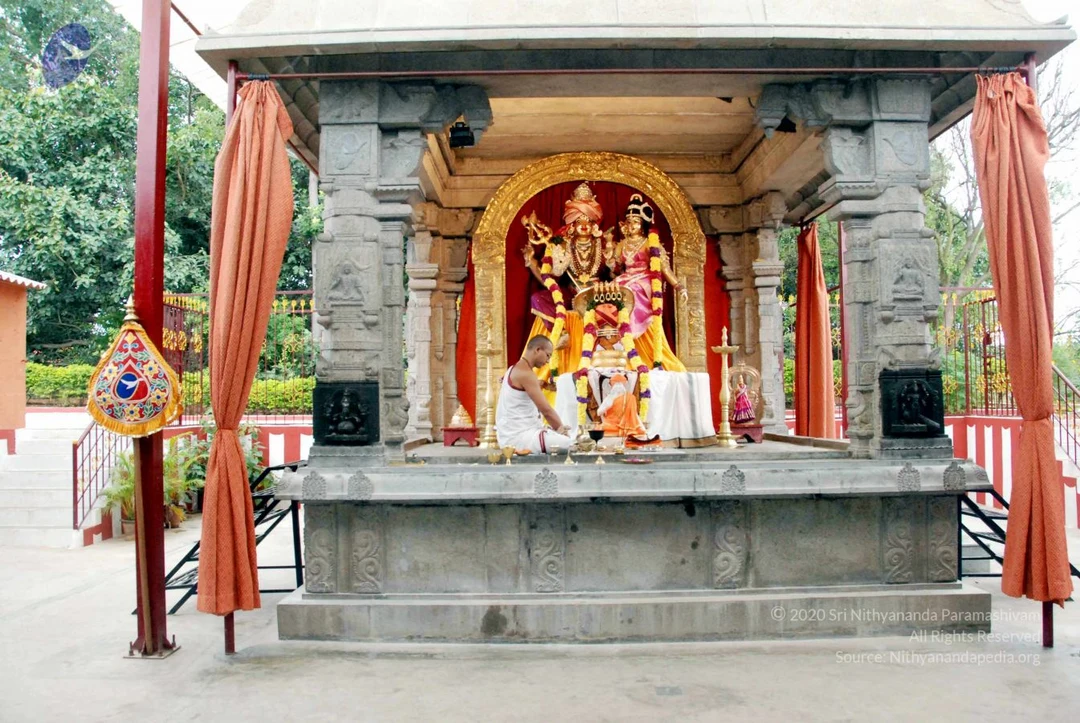
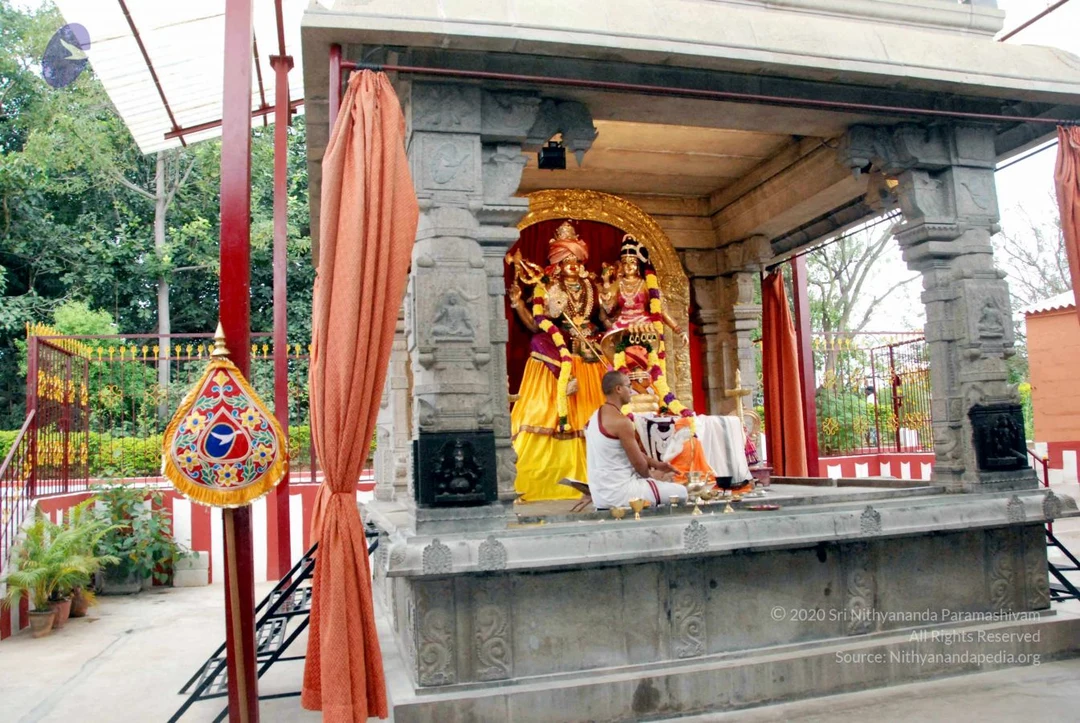
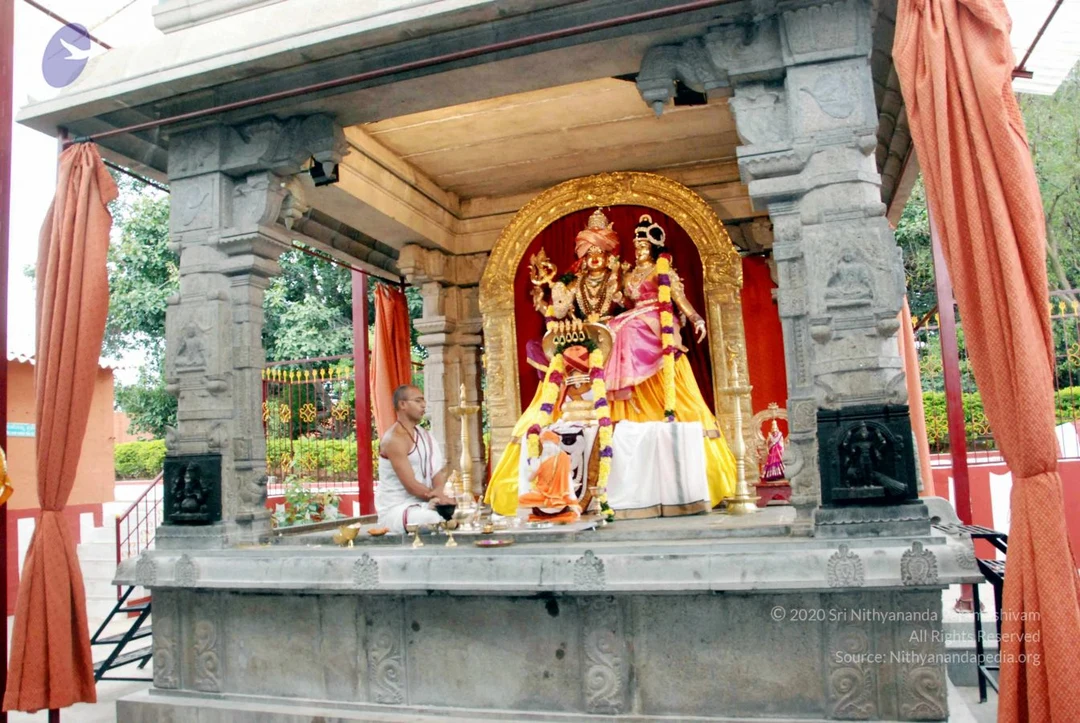
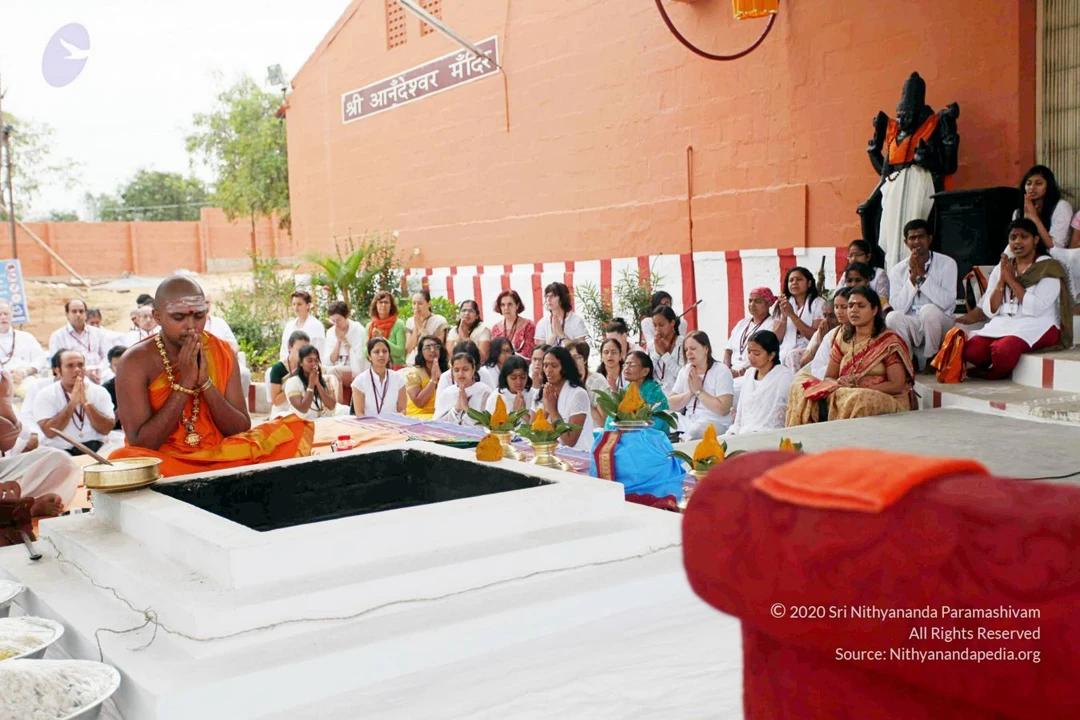
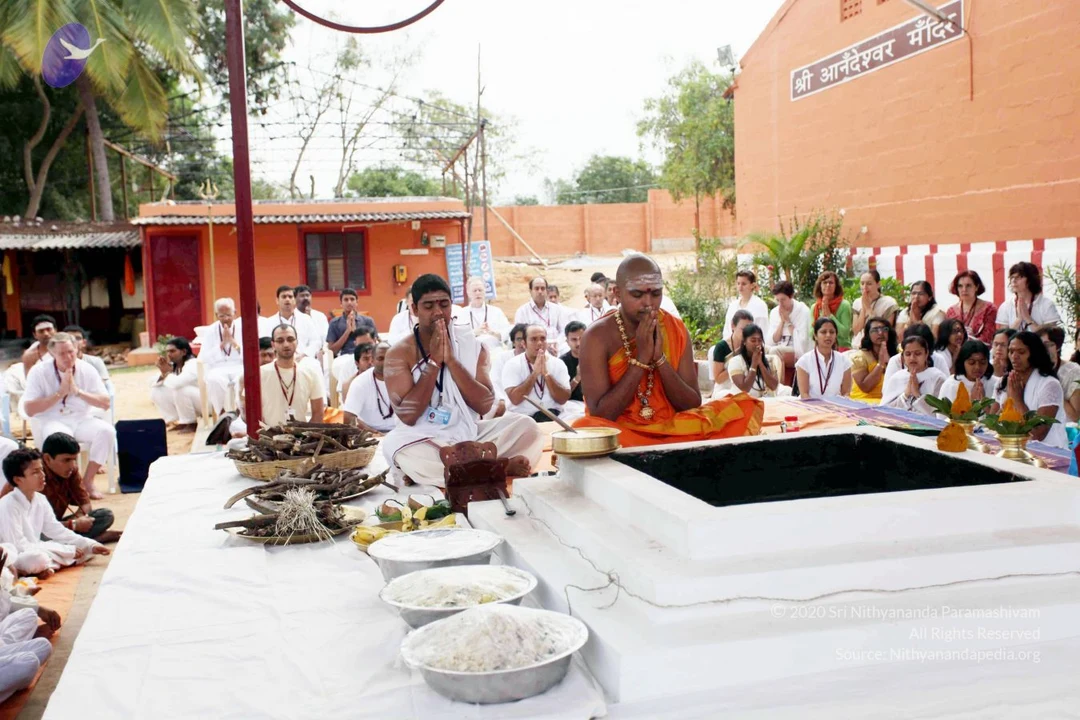
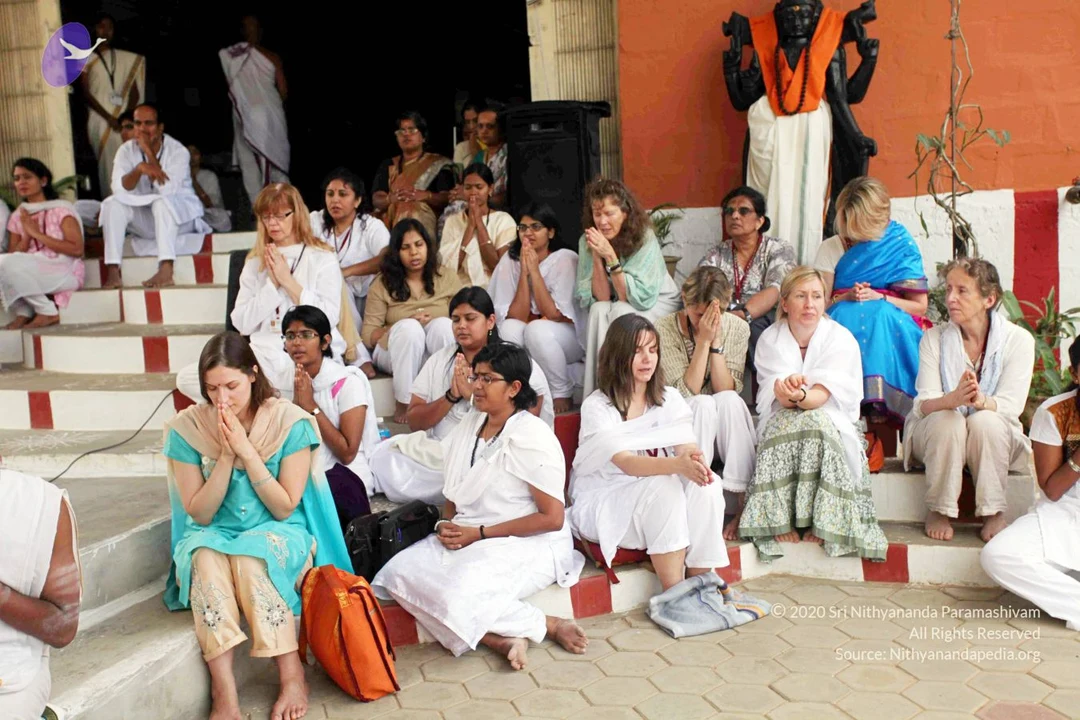
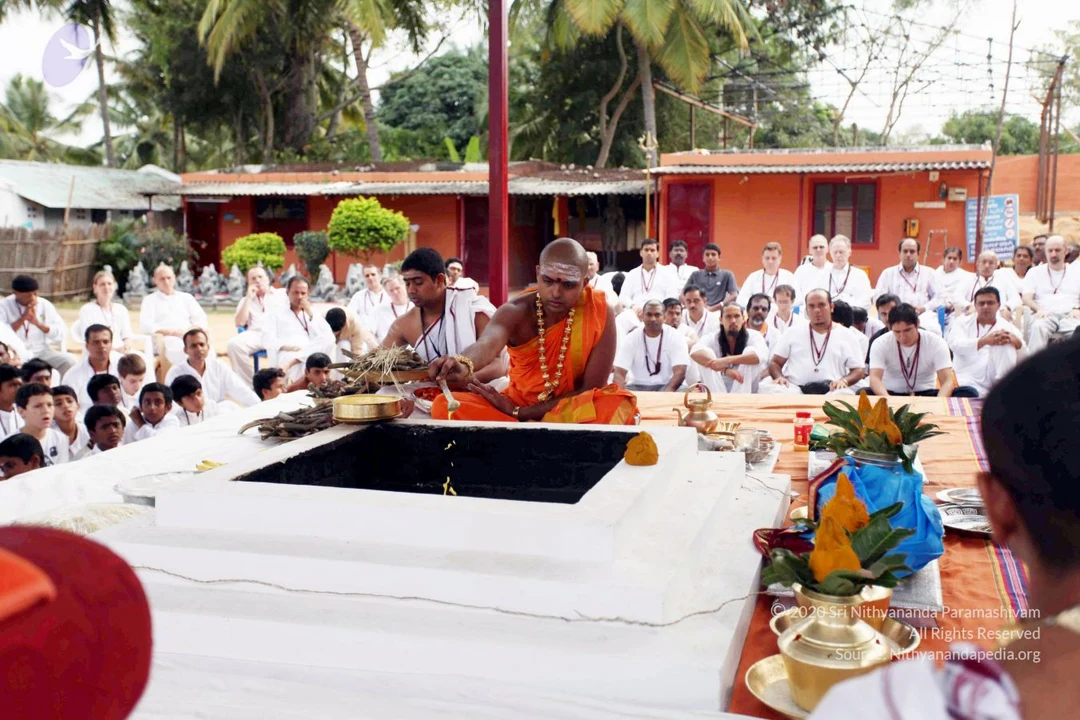
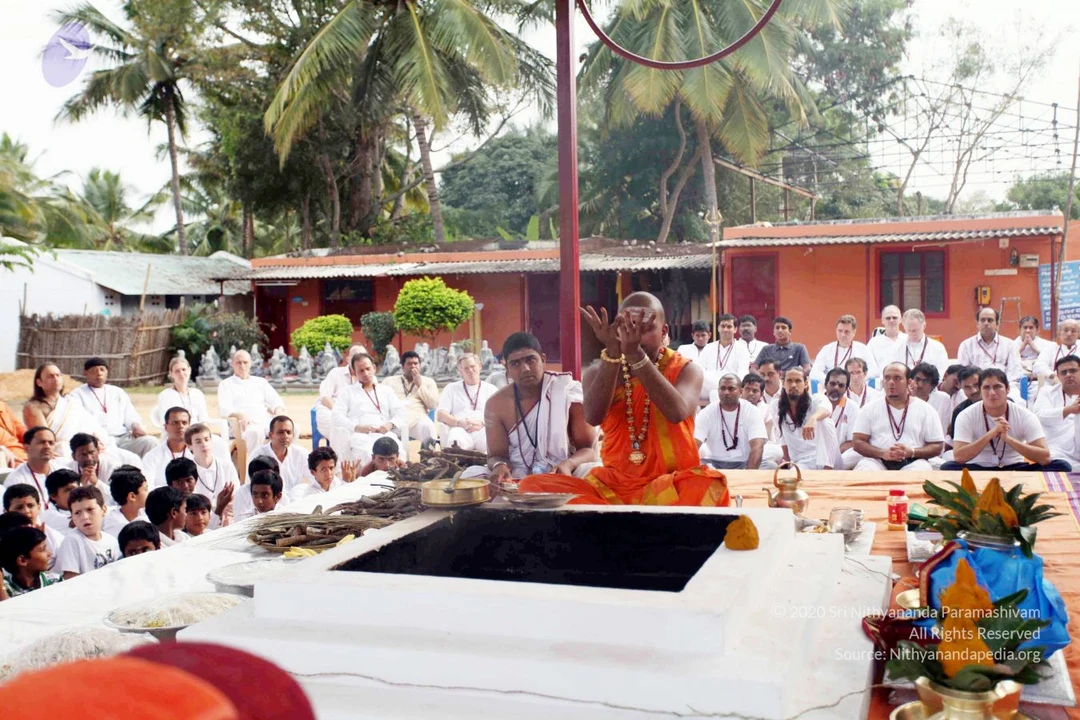
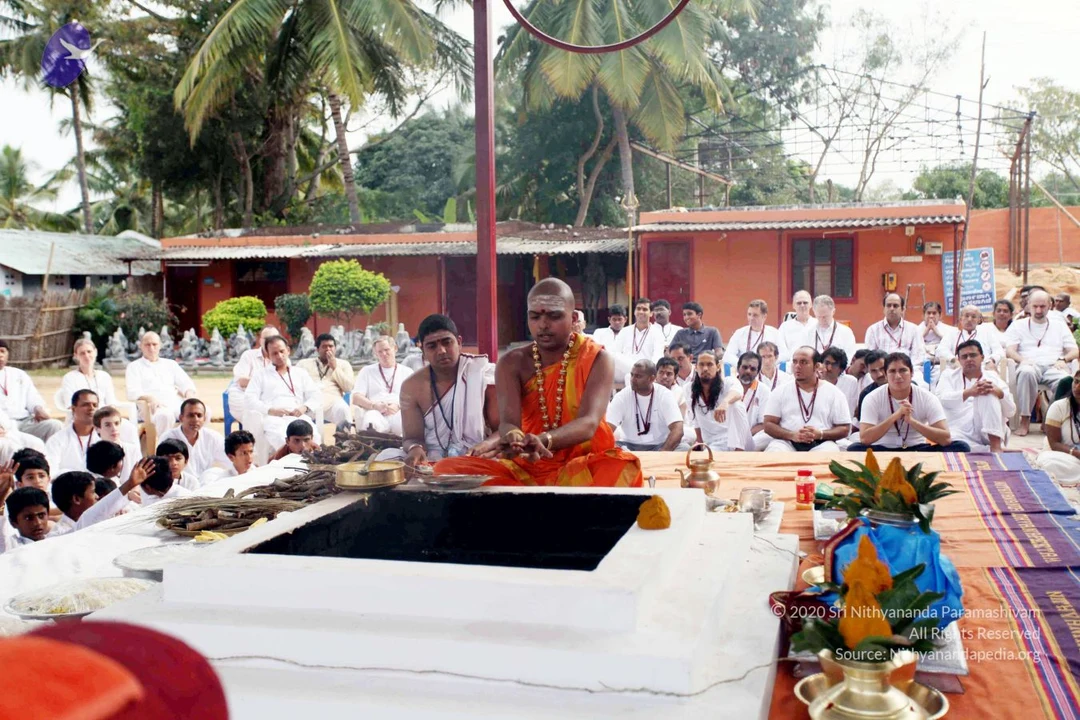
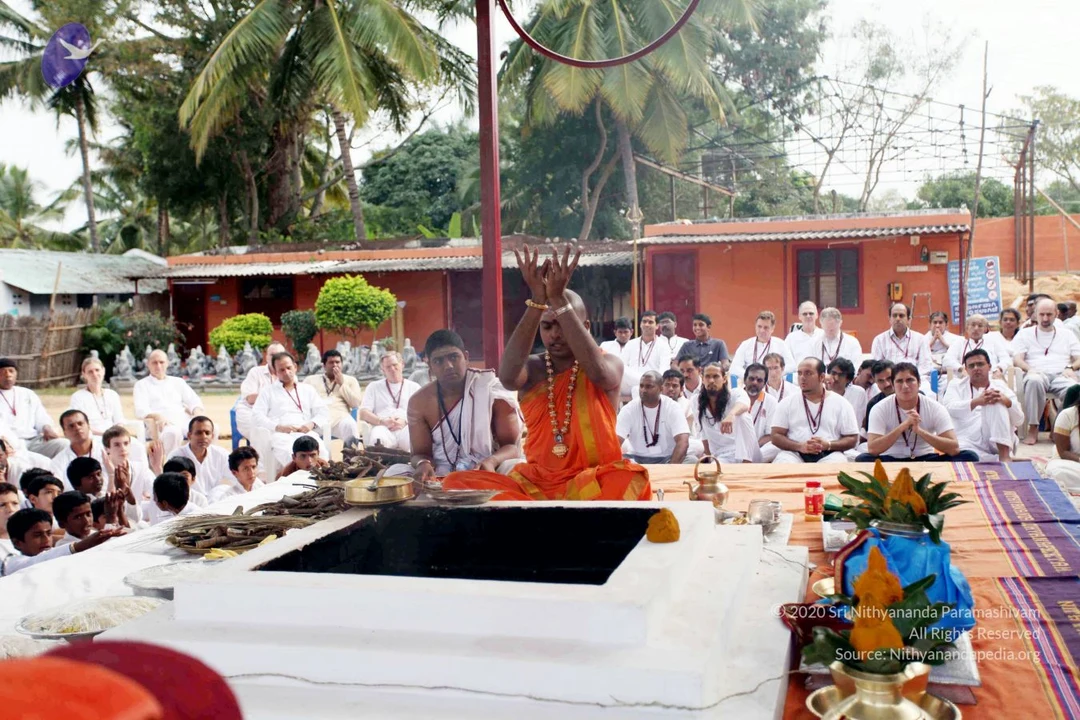
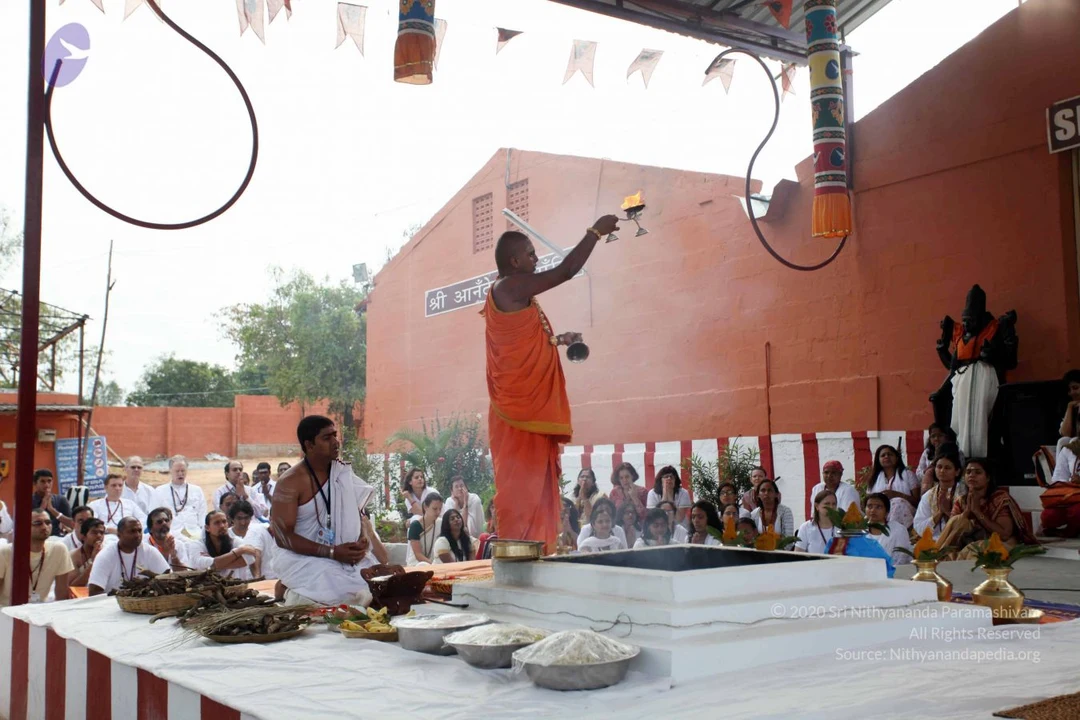
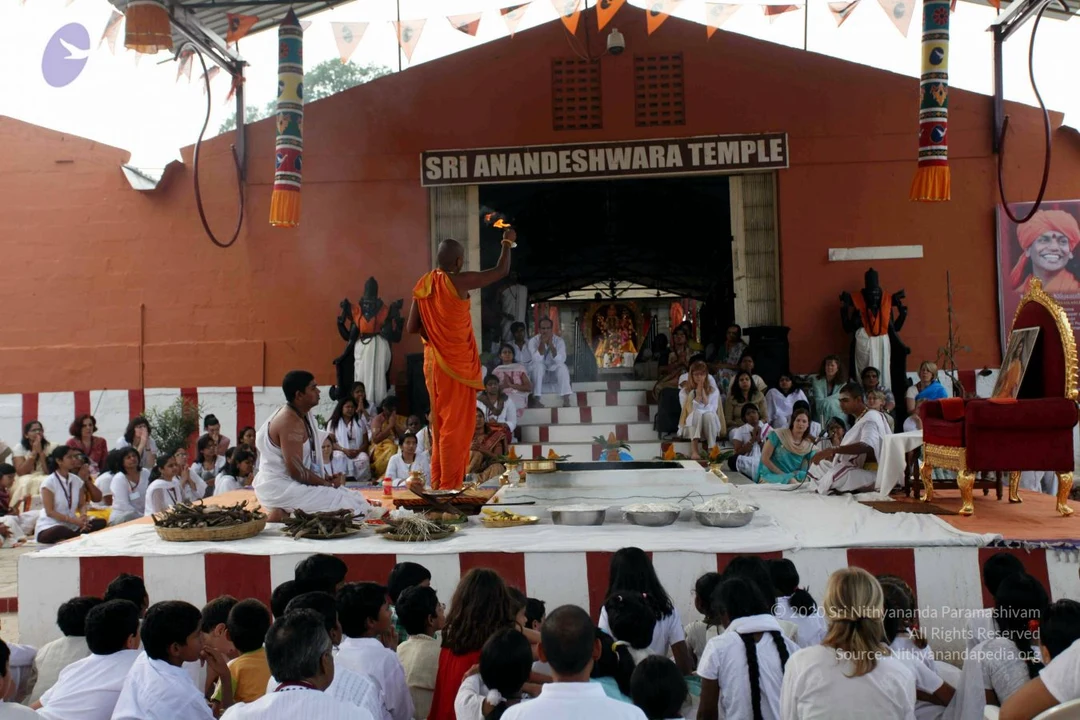
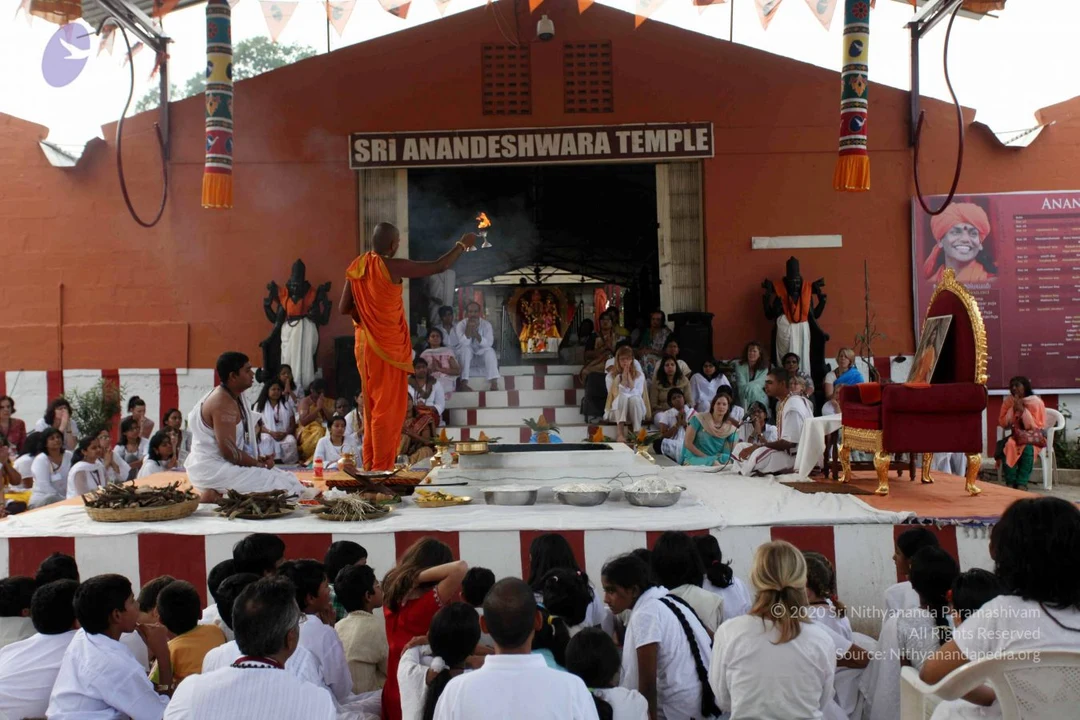
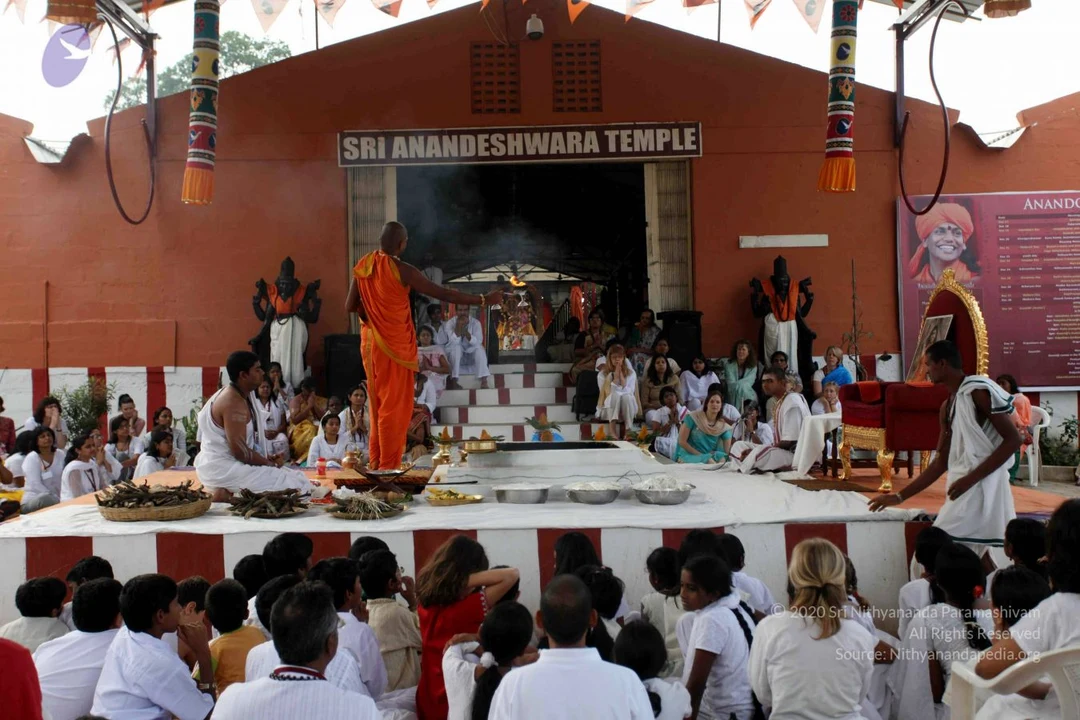
Nithyanandeshwara Paramashiva Devalayam
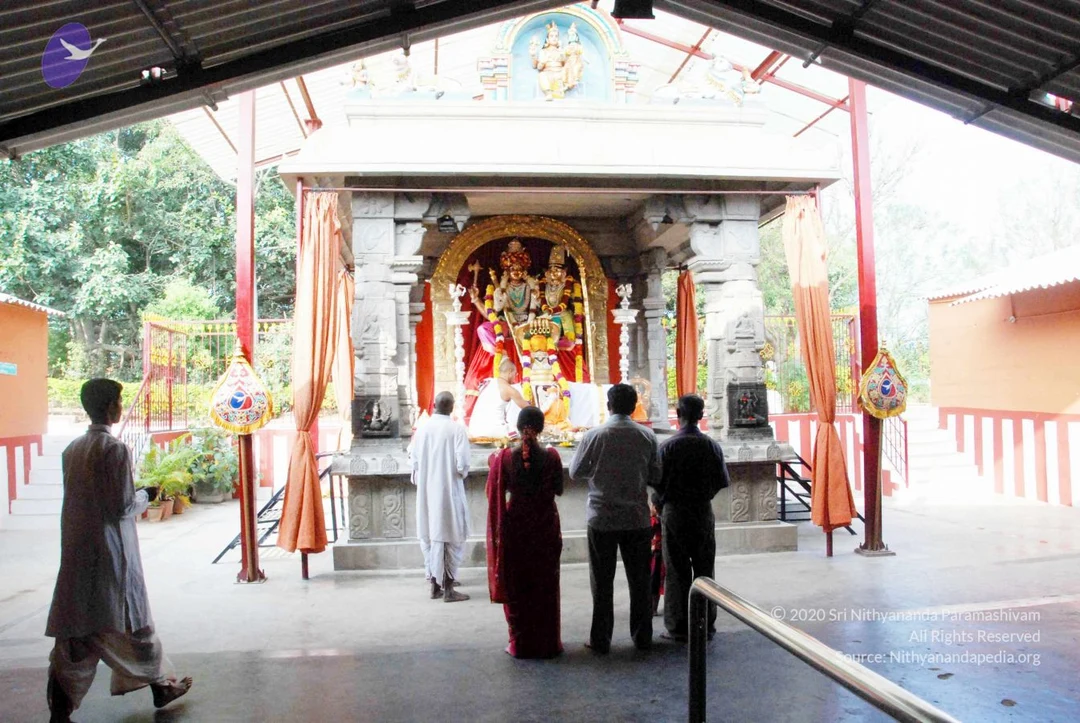
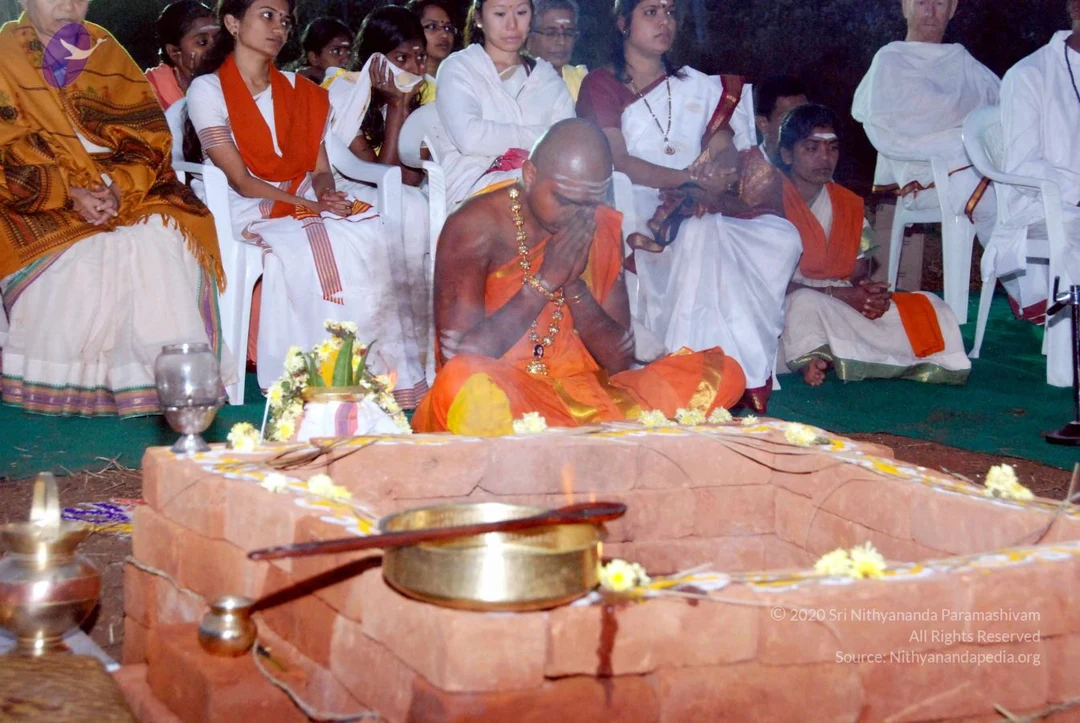
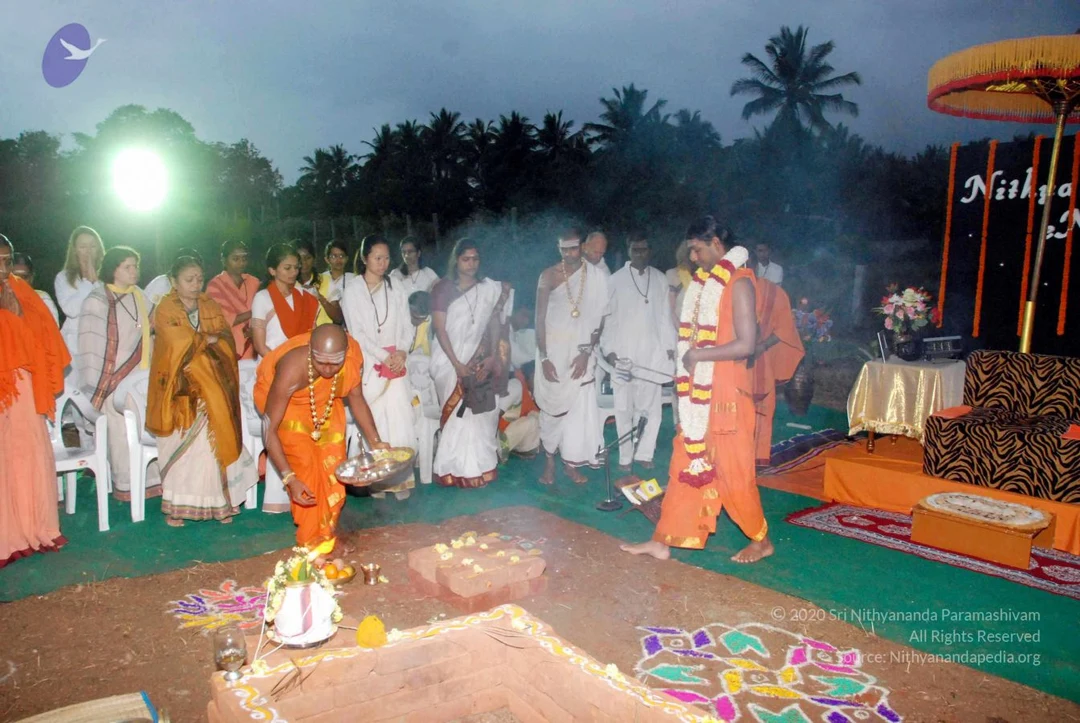
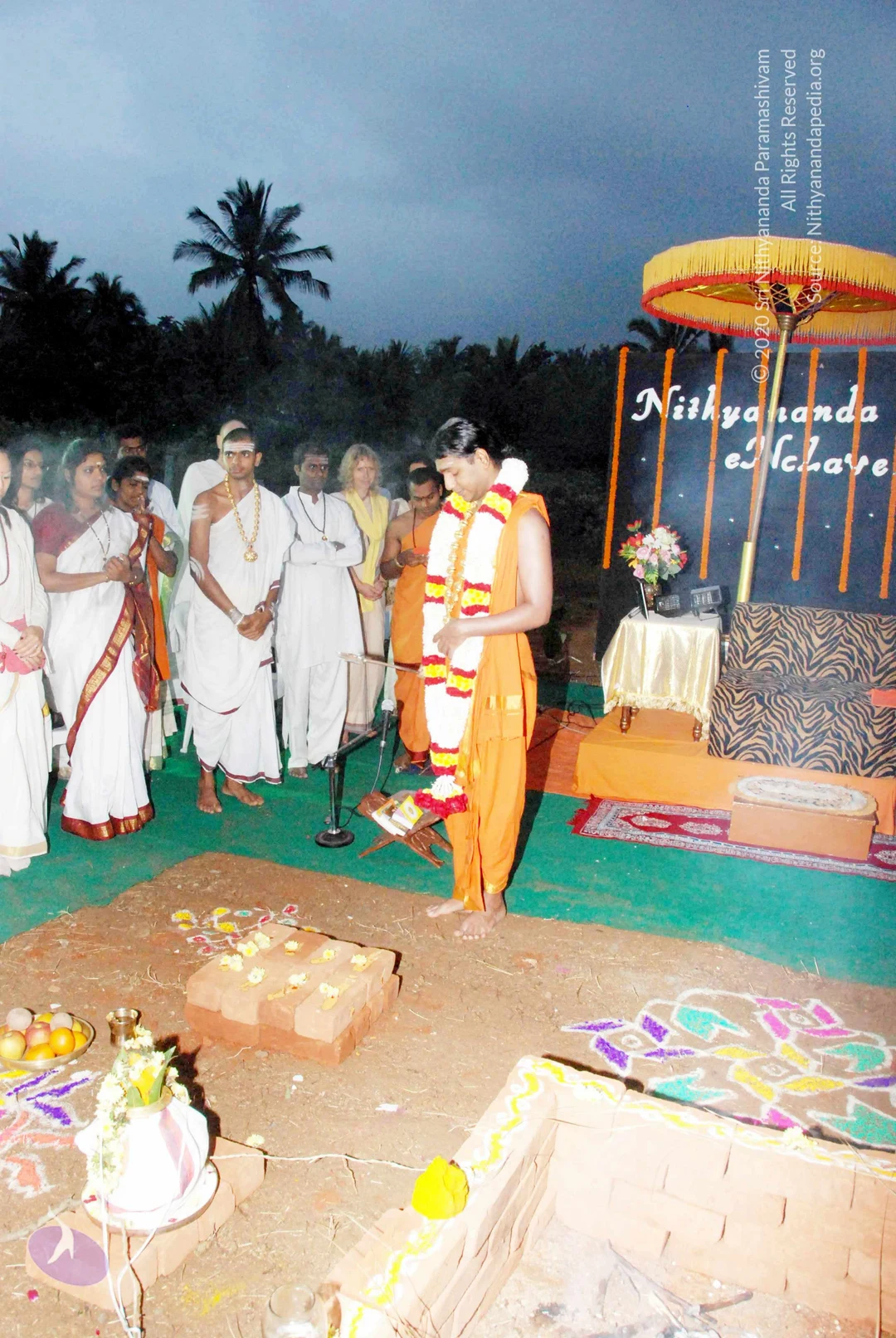
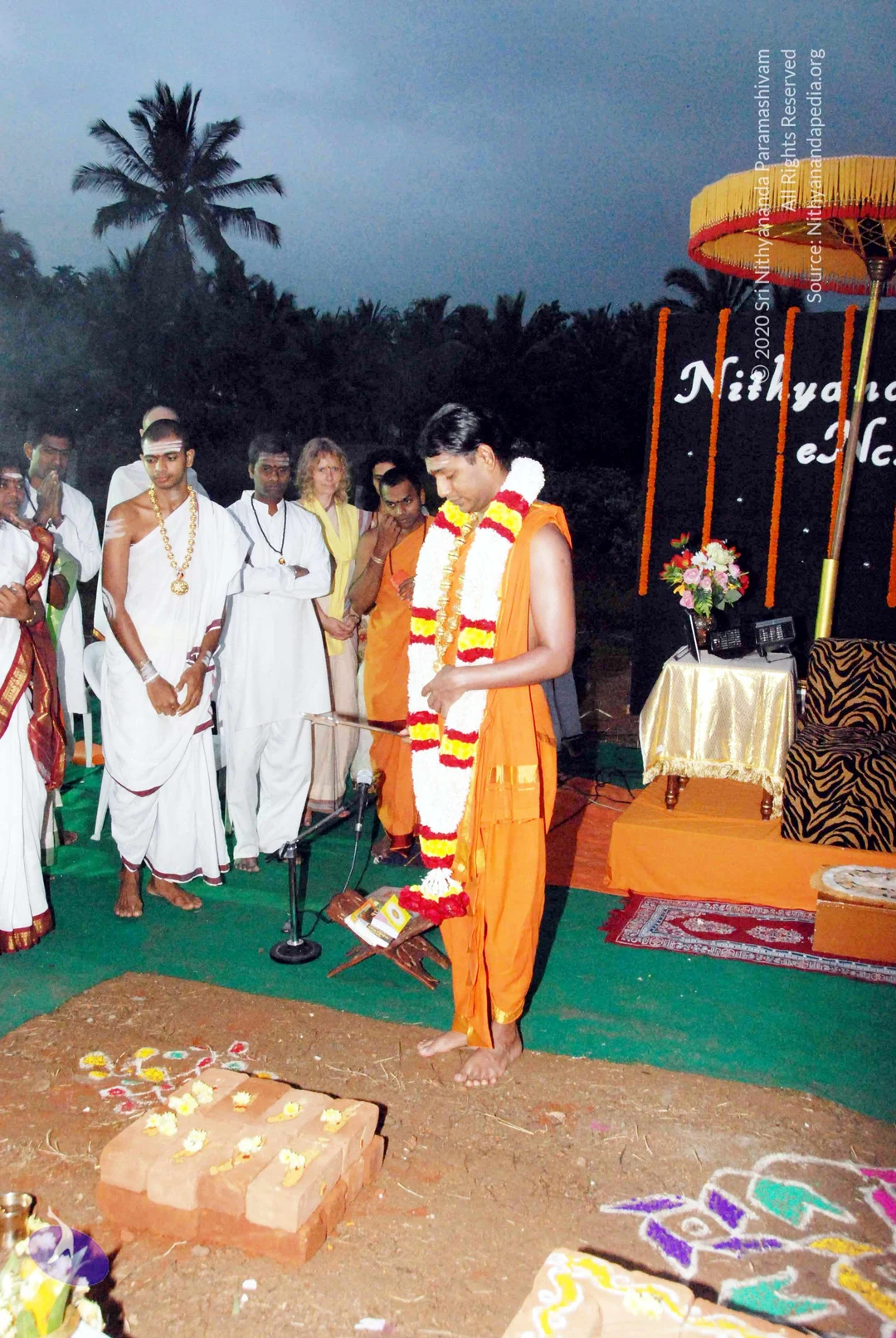
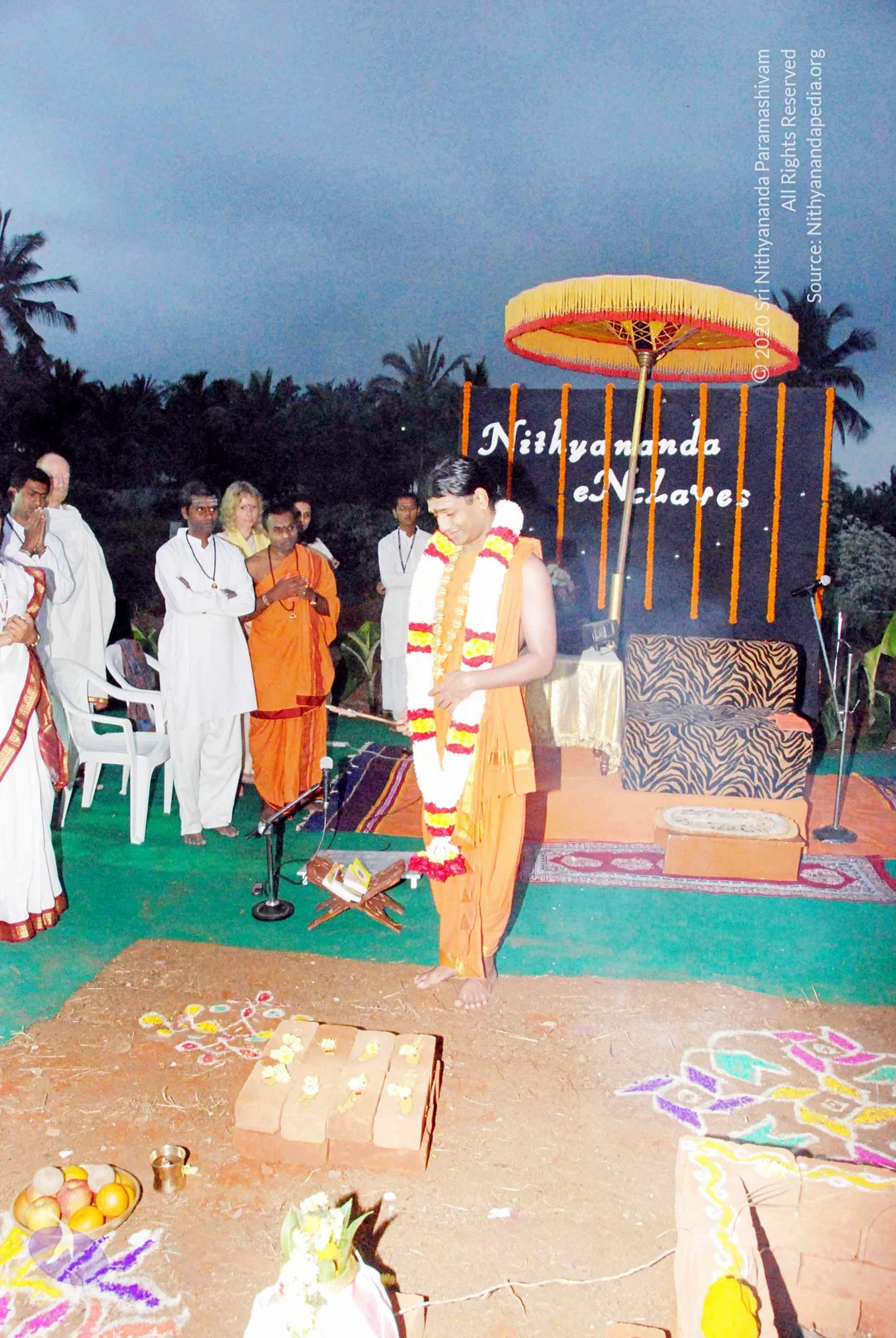
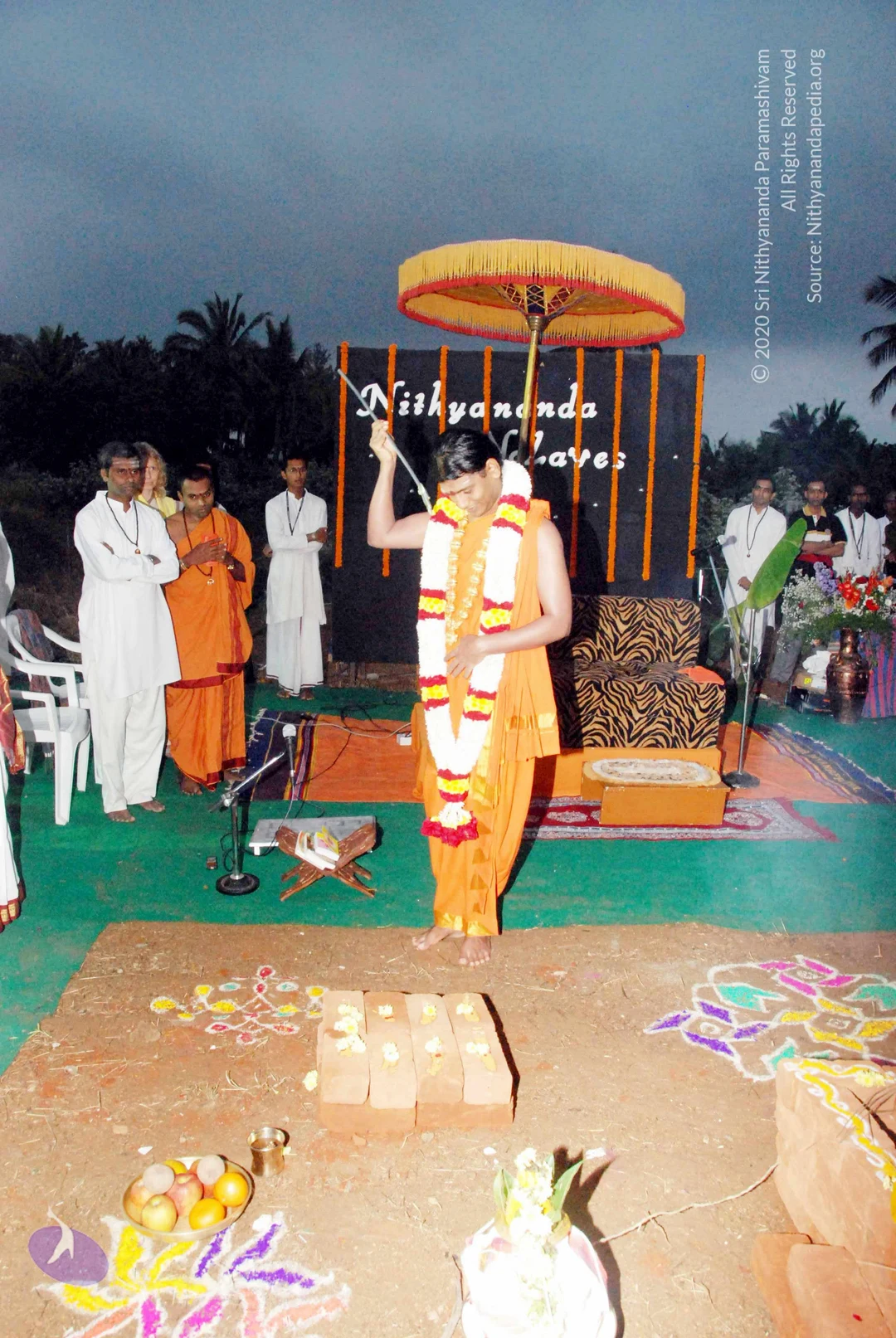
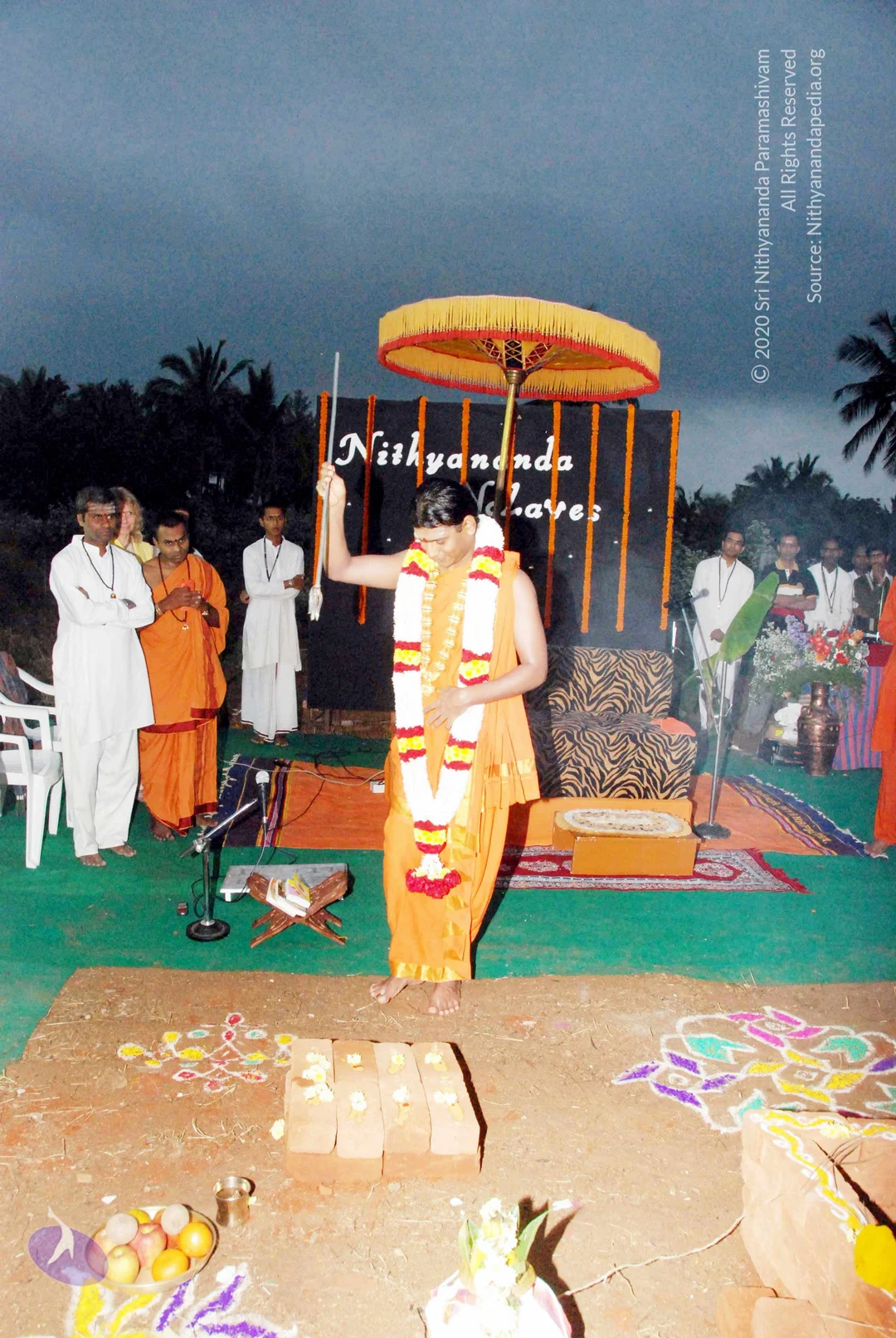
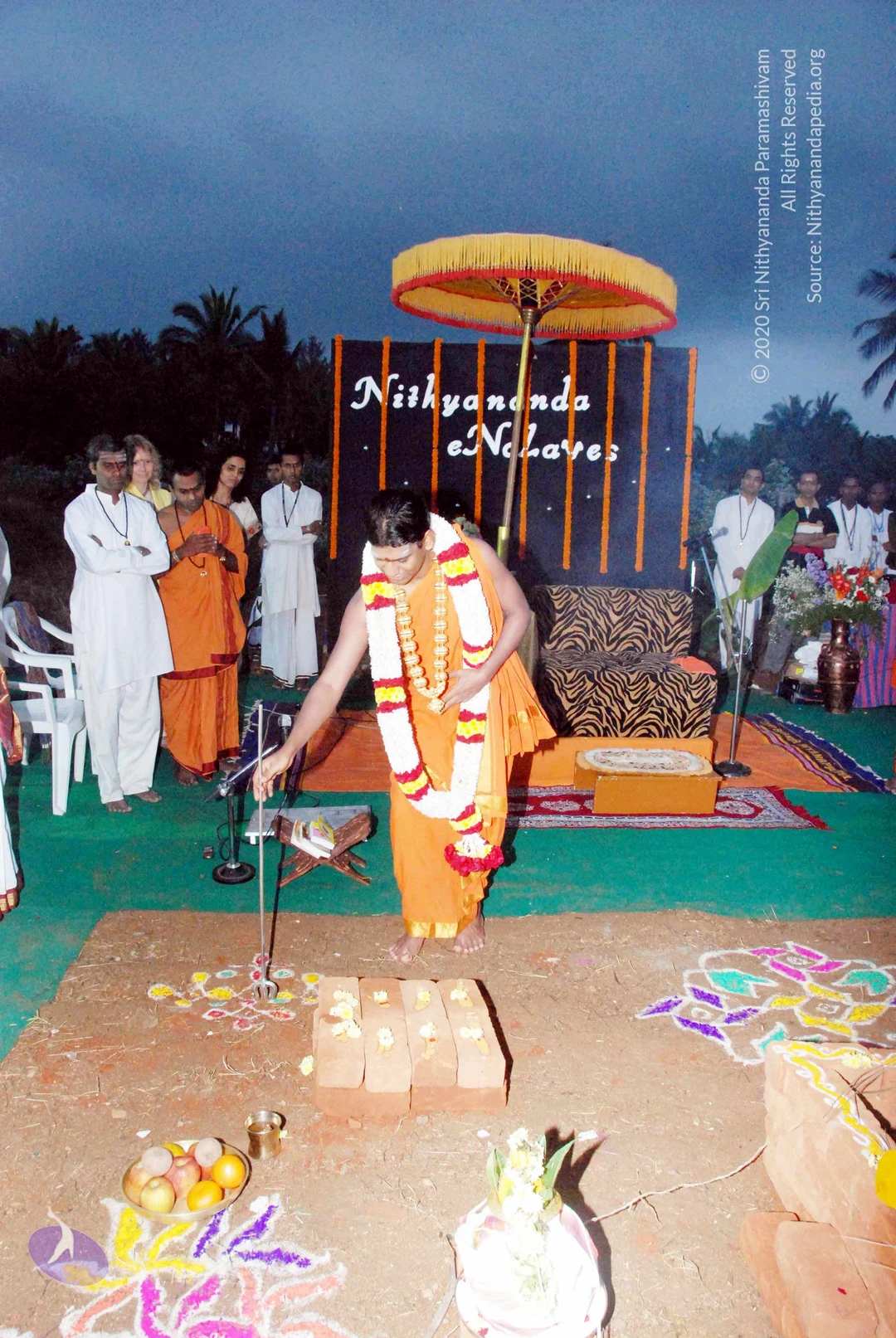
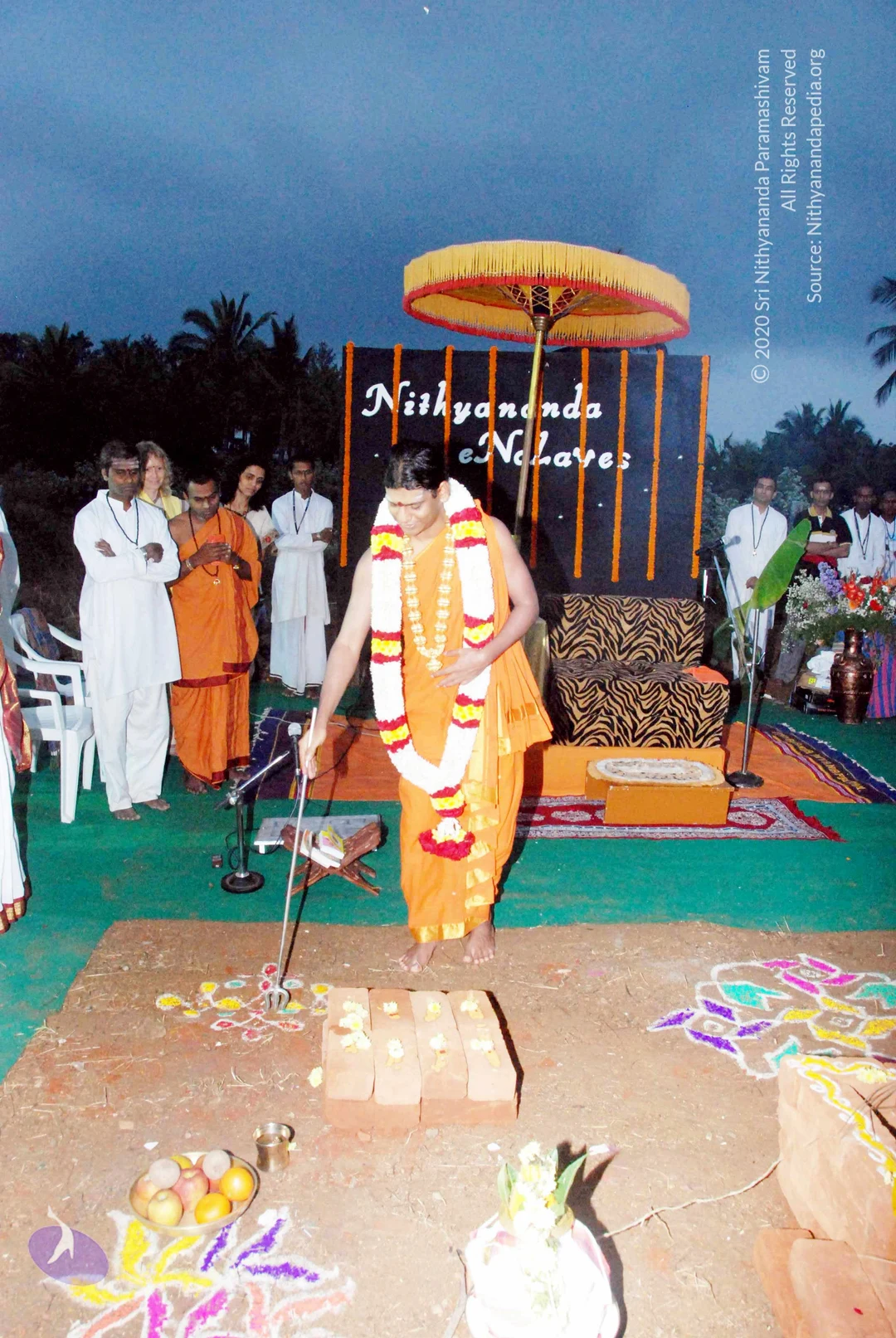
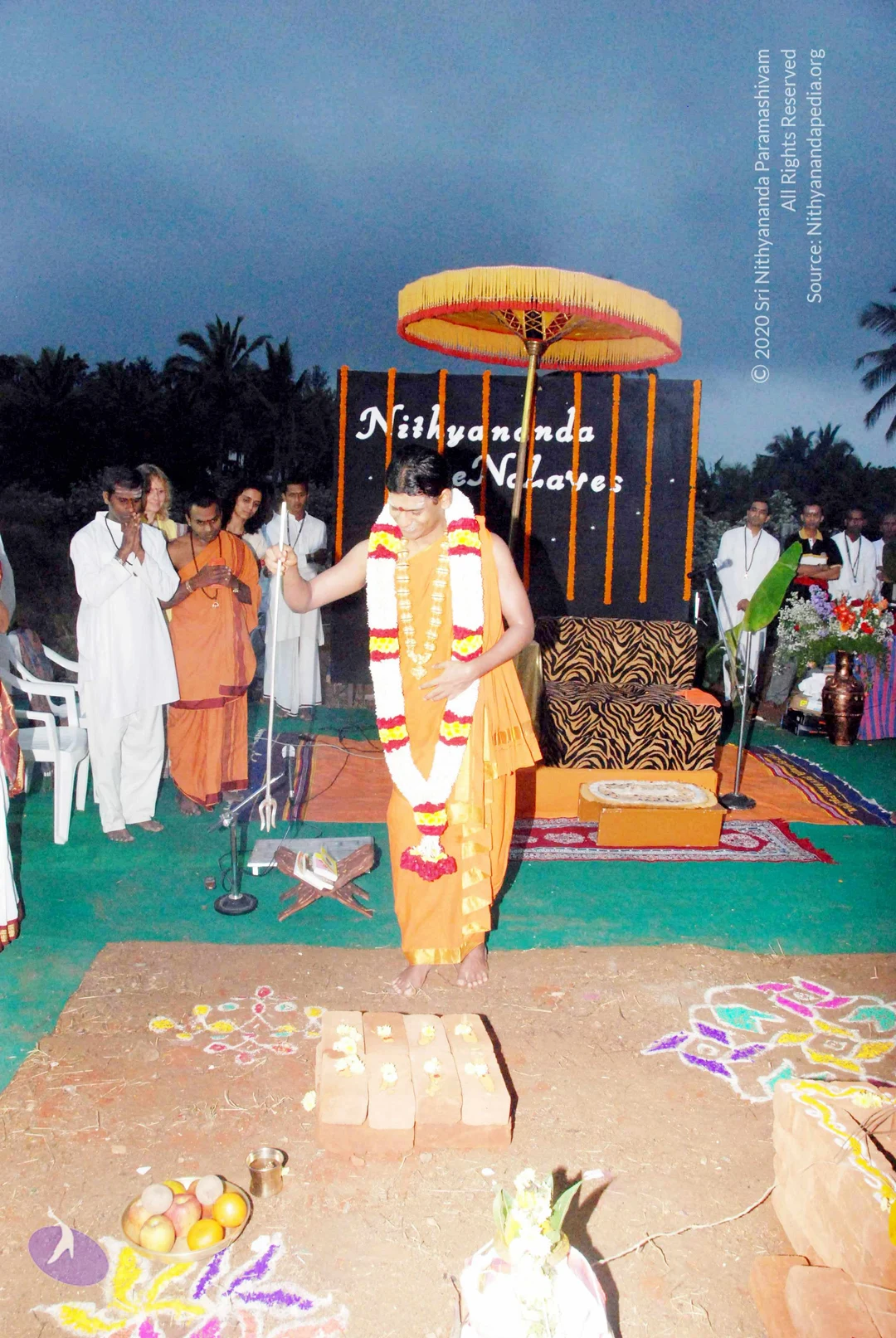
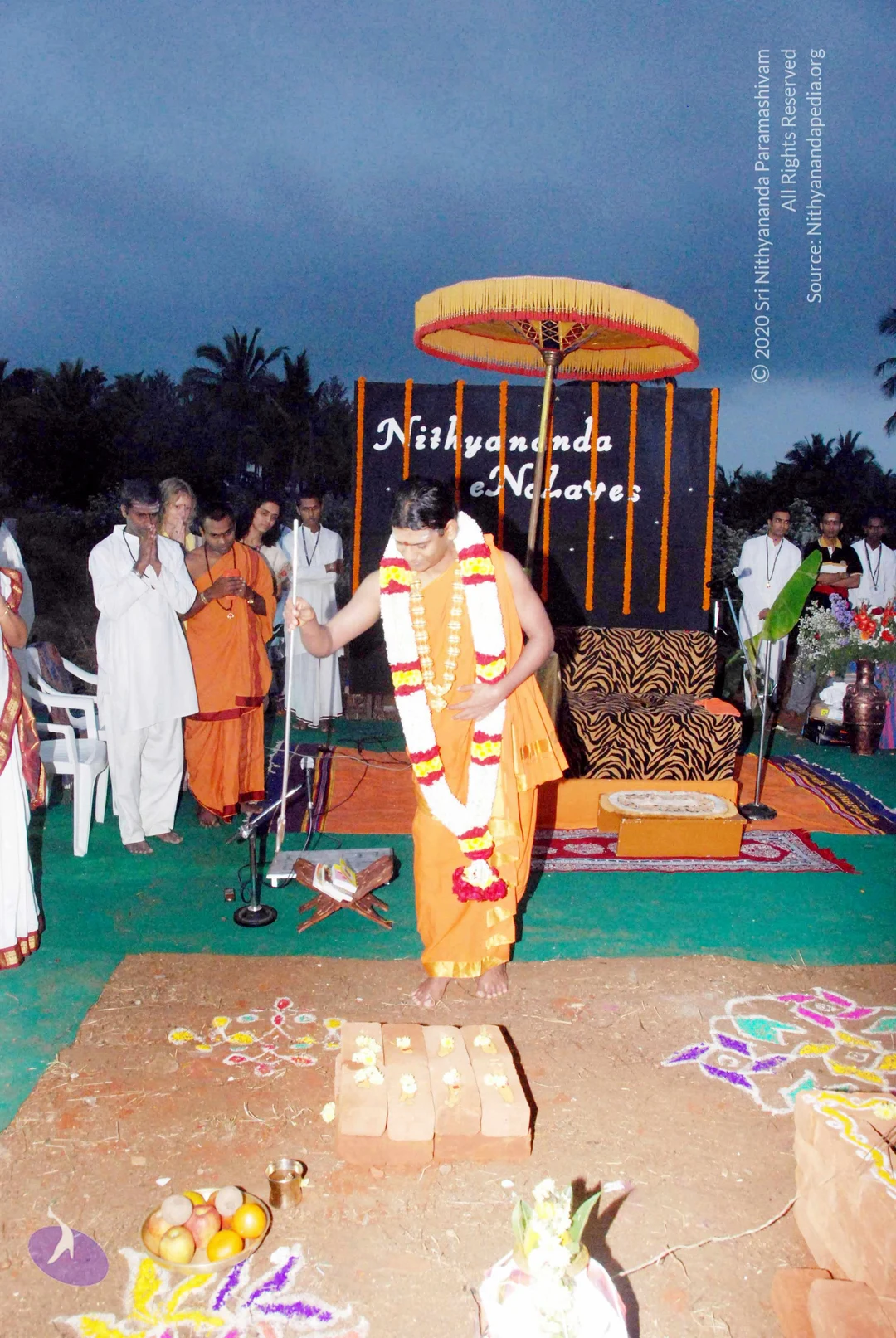
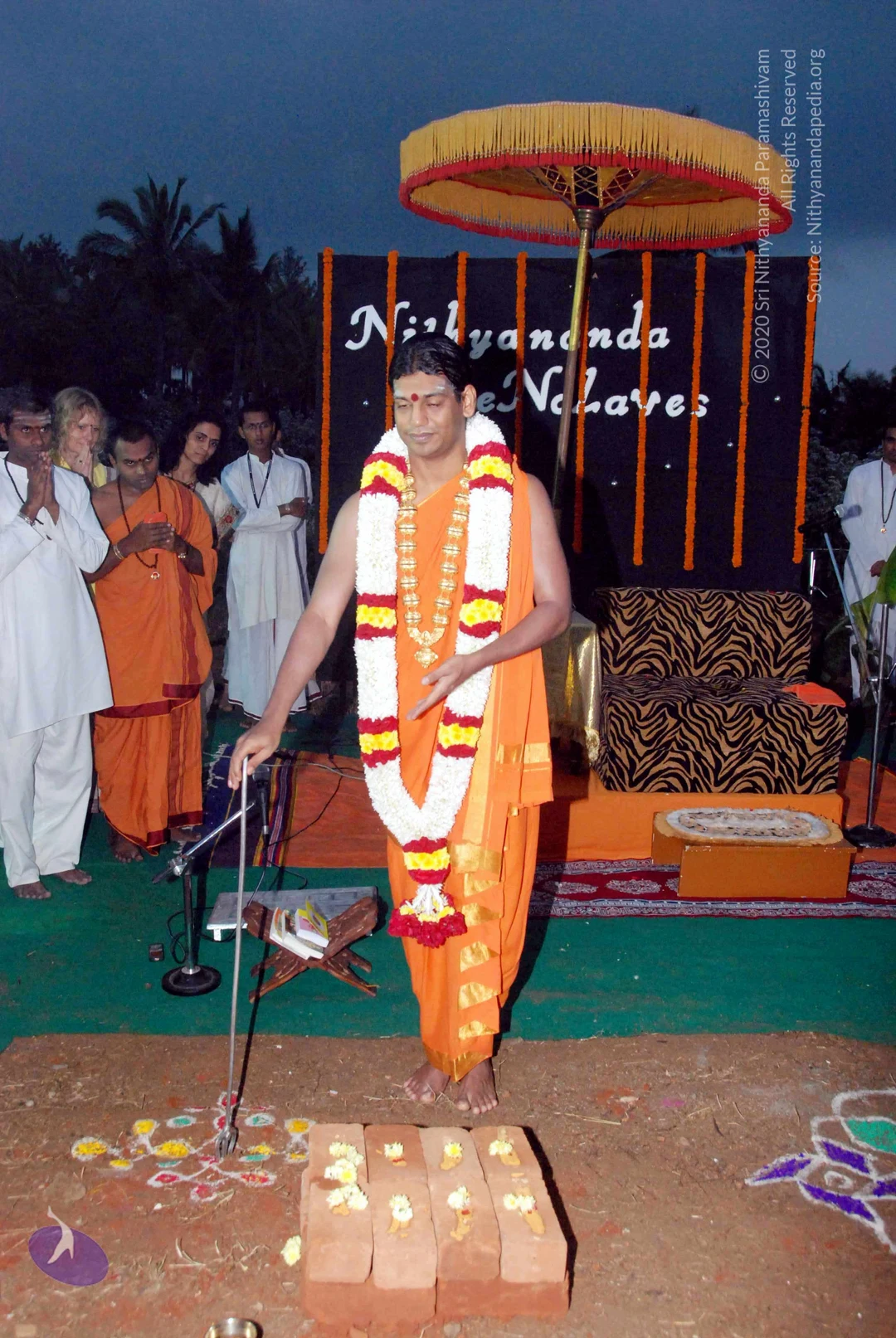
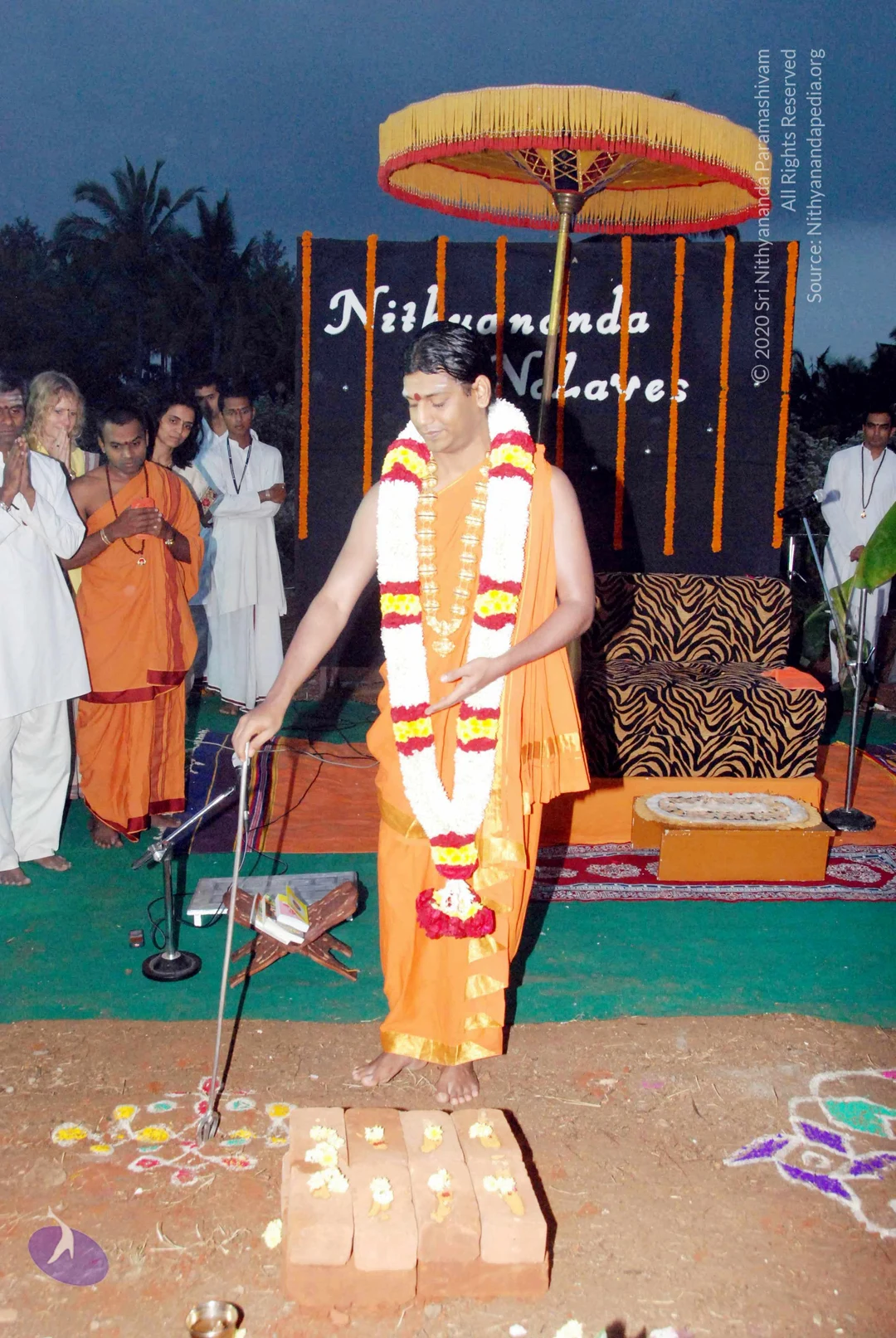
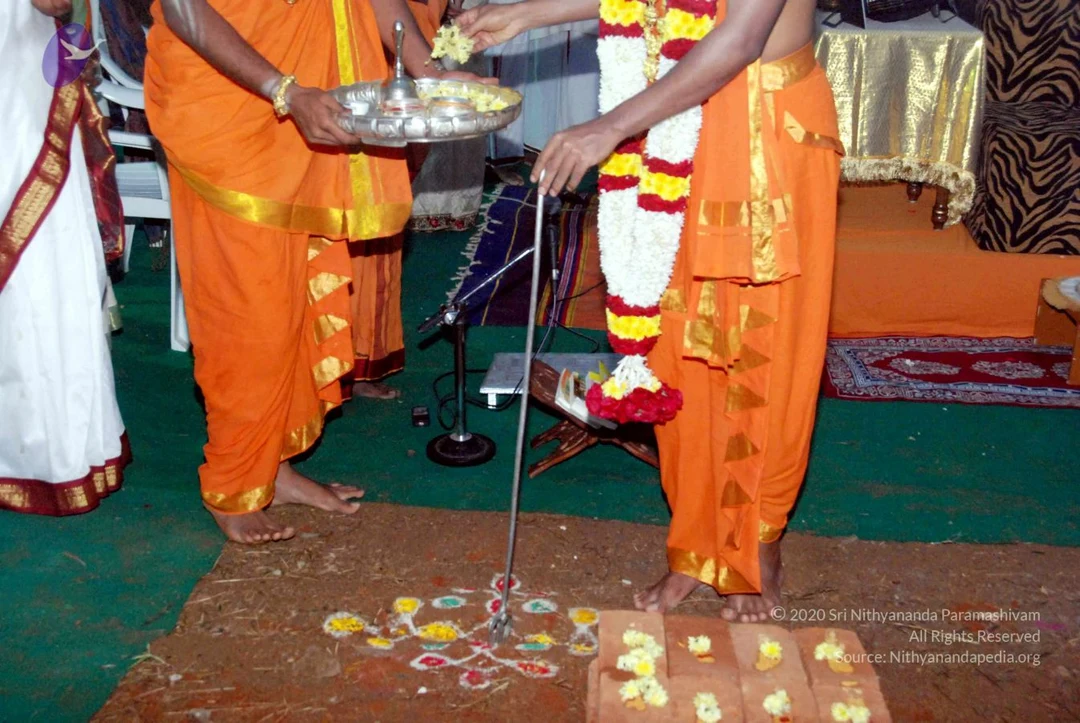
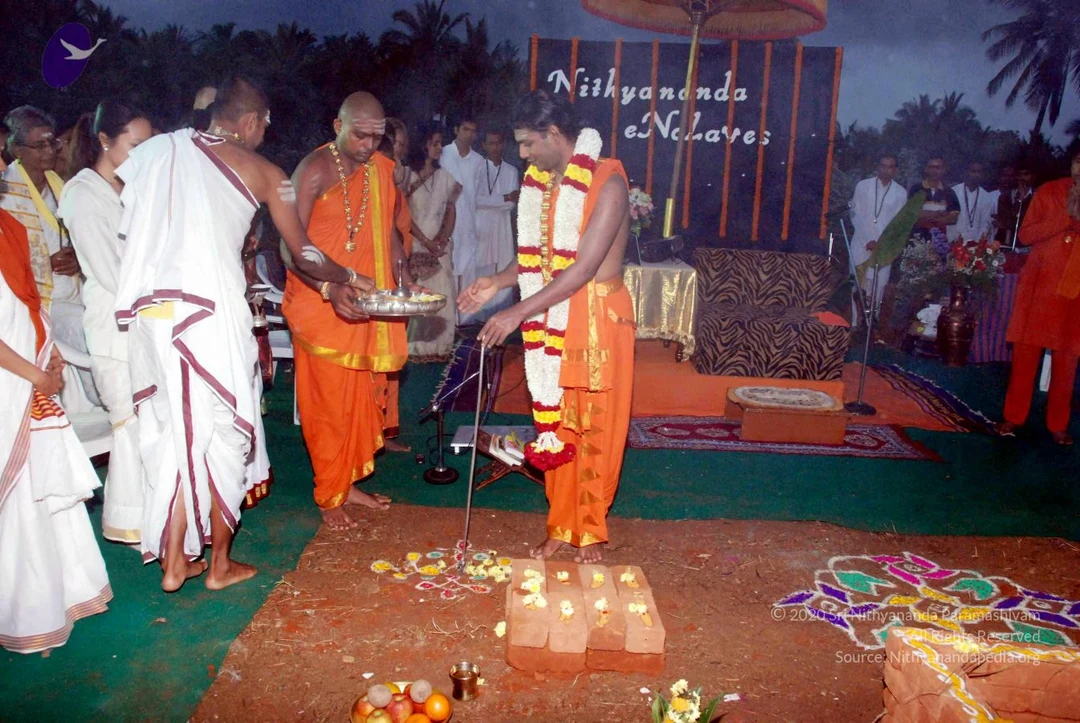
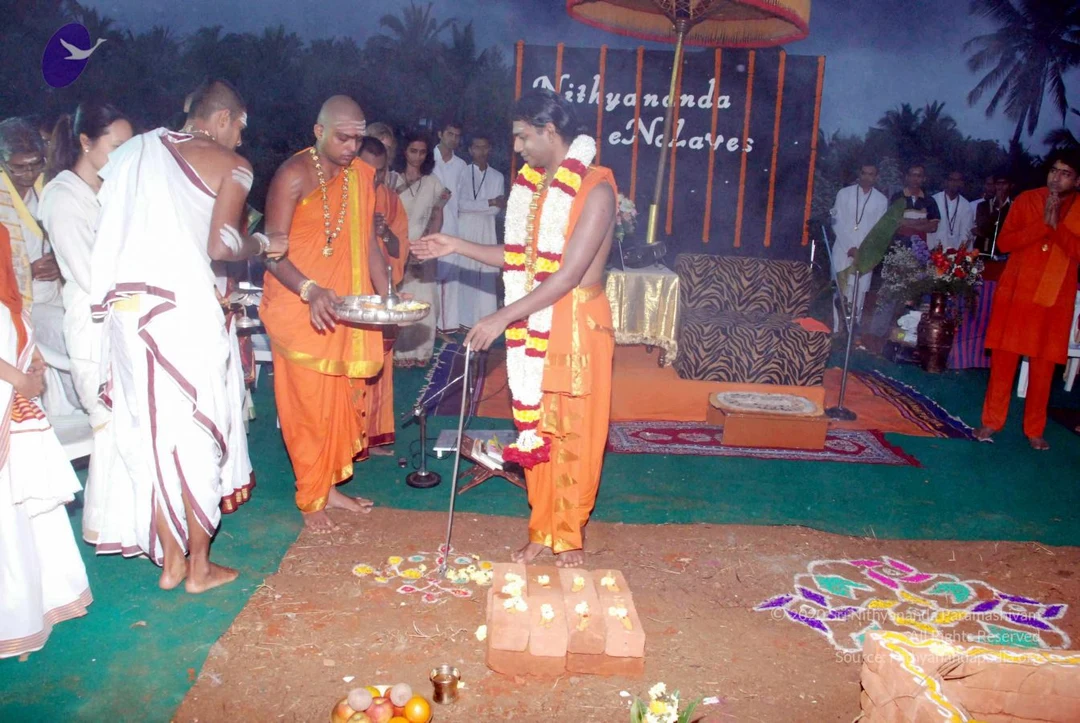
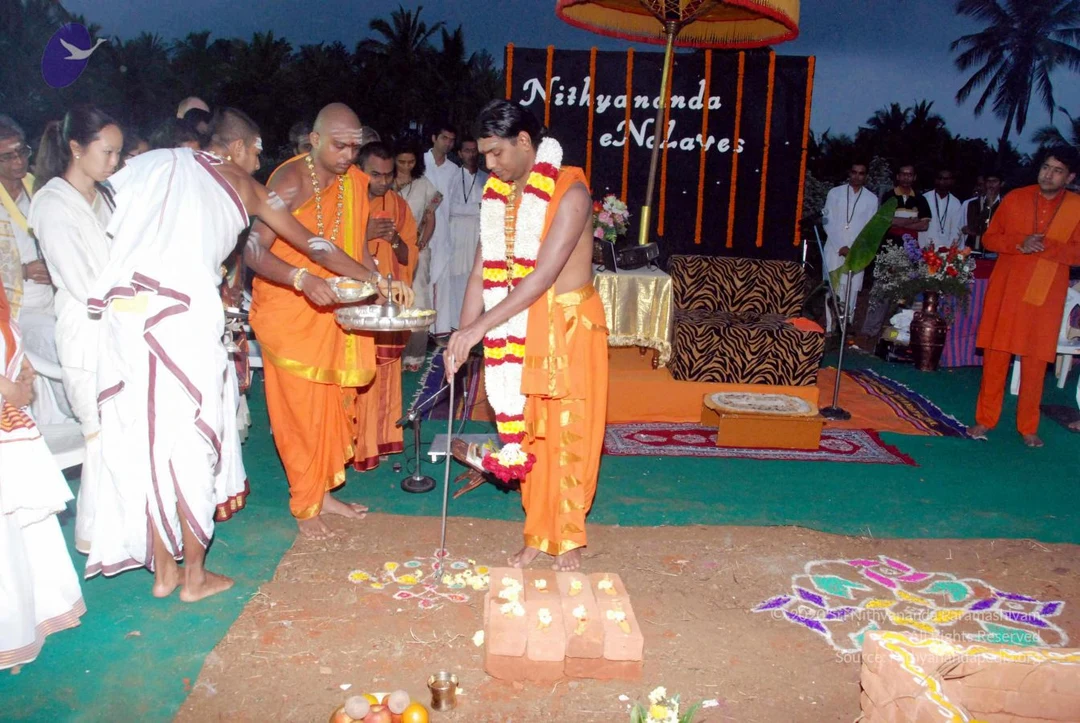
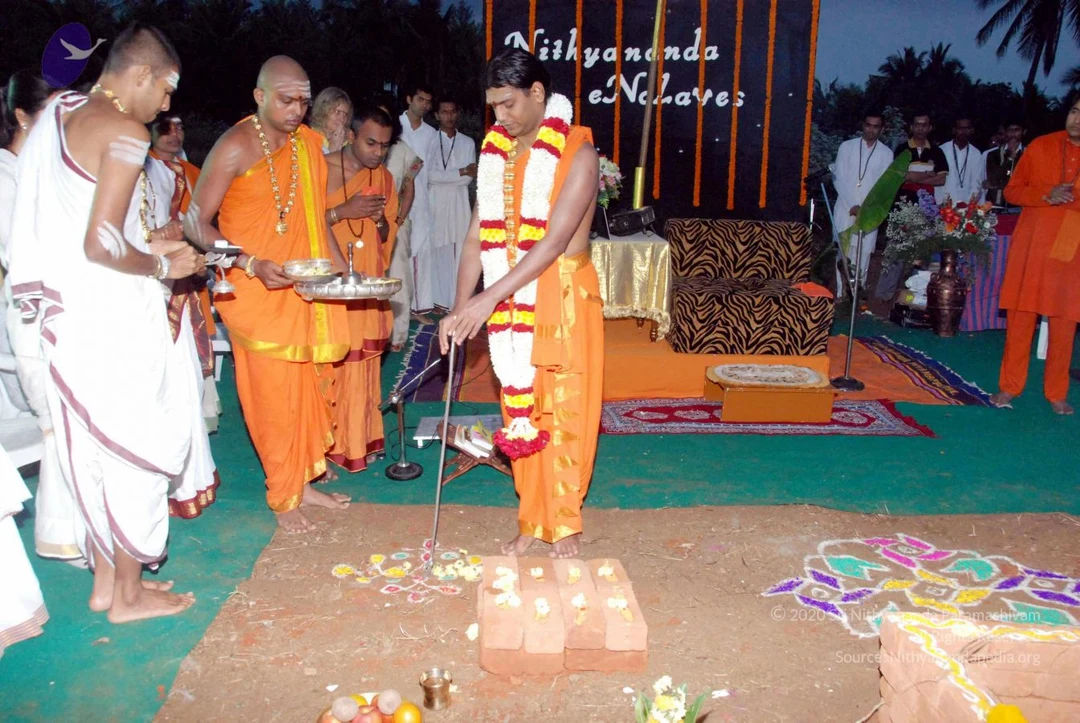
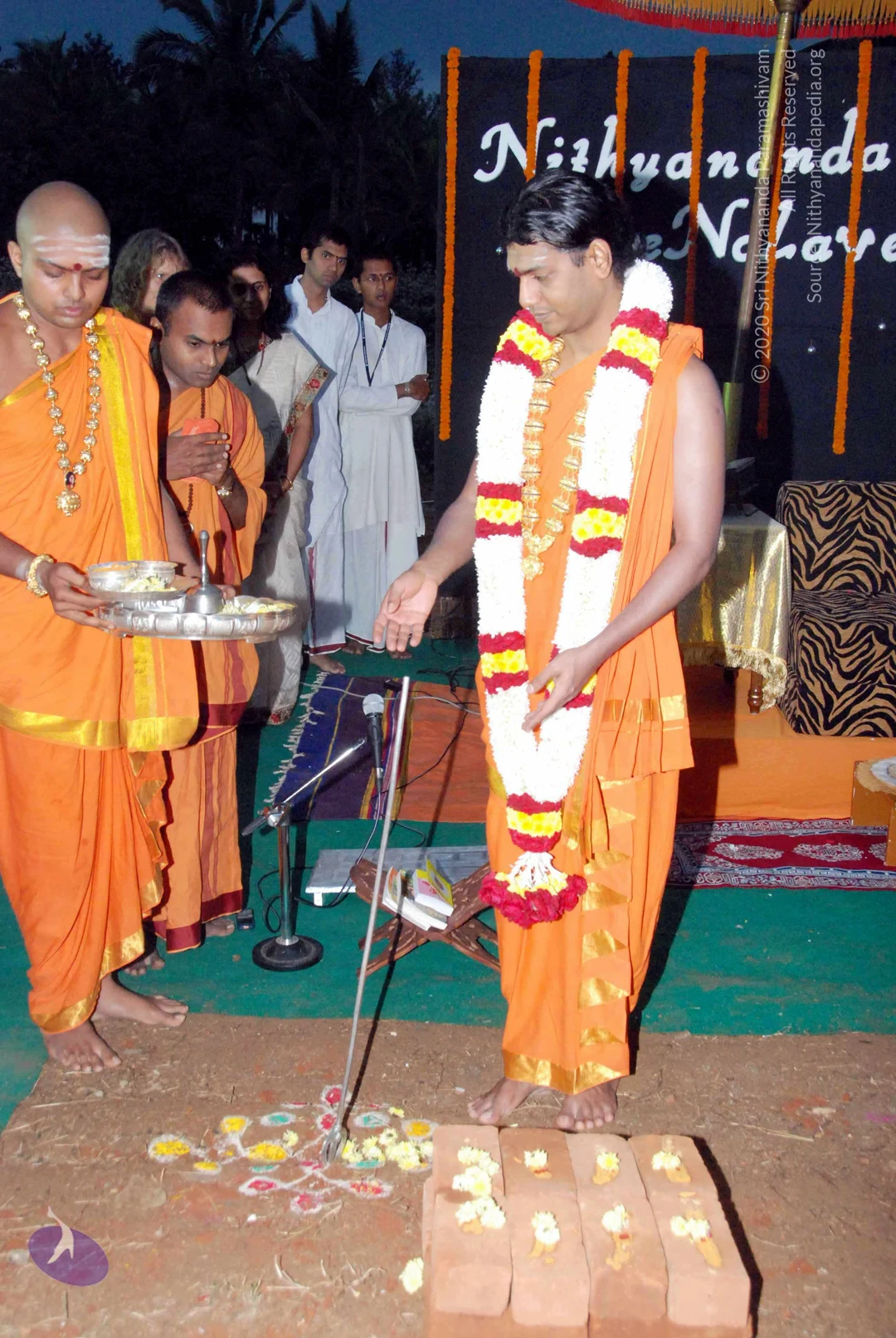
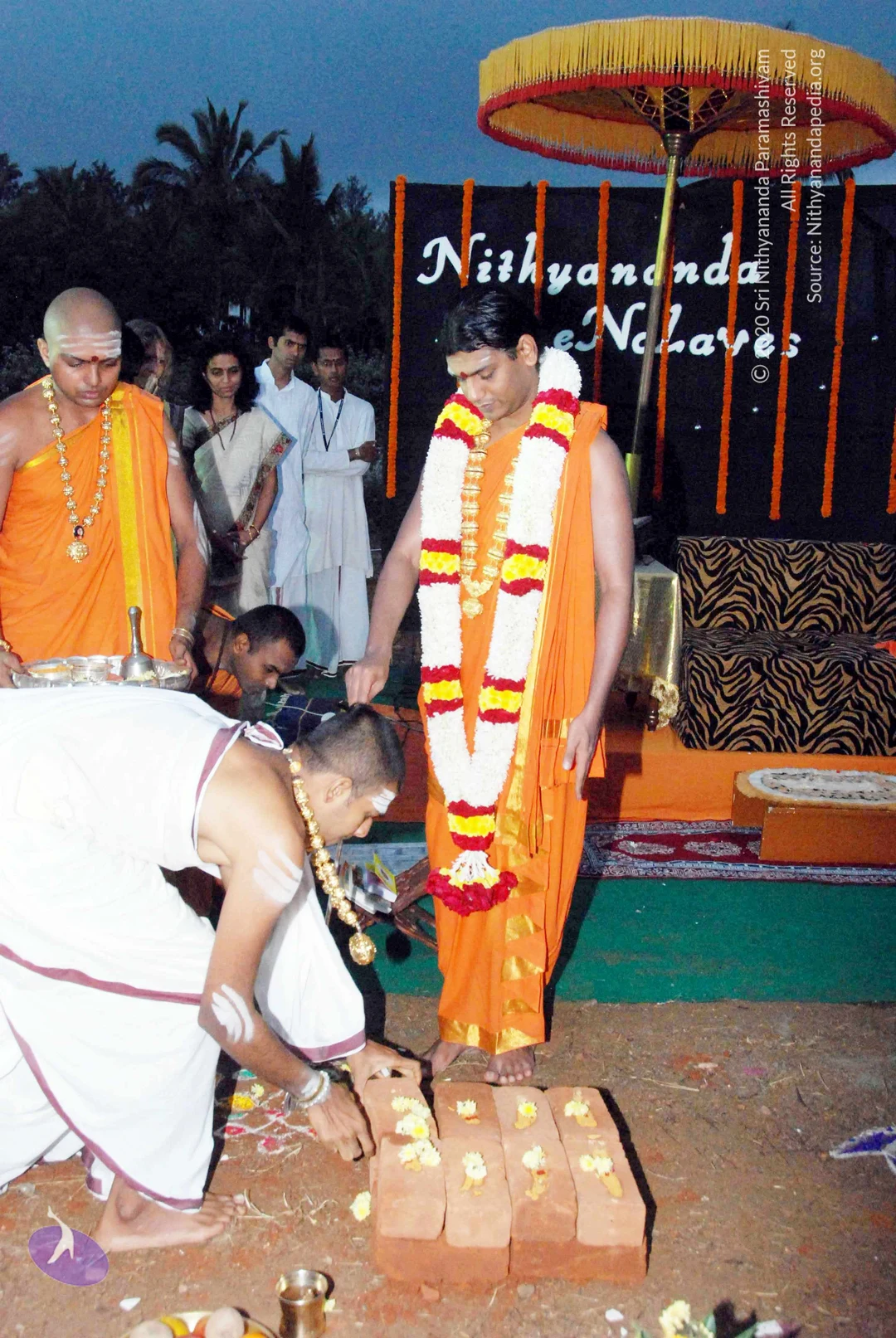
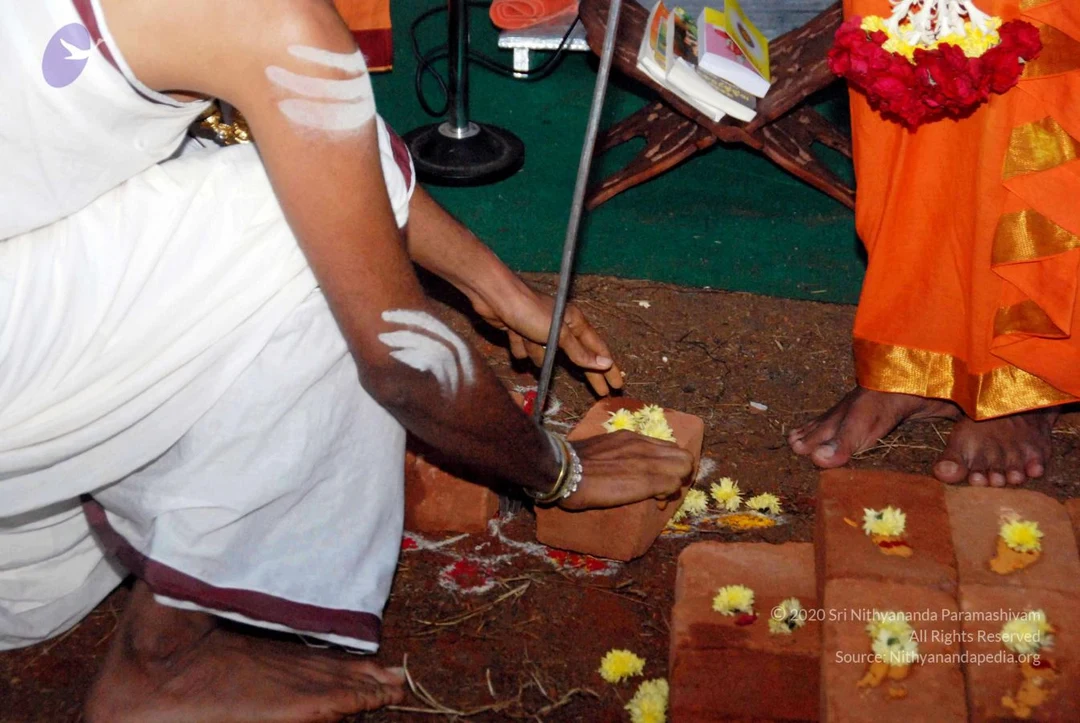
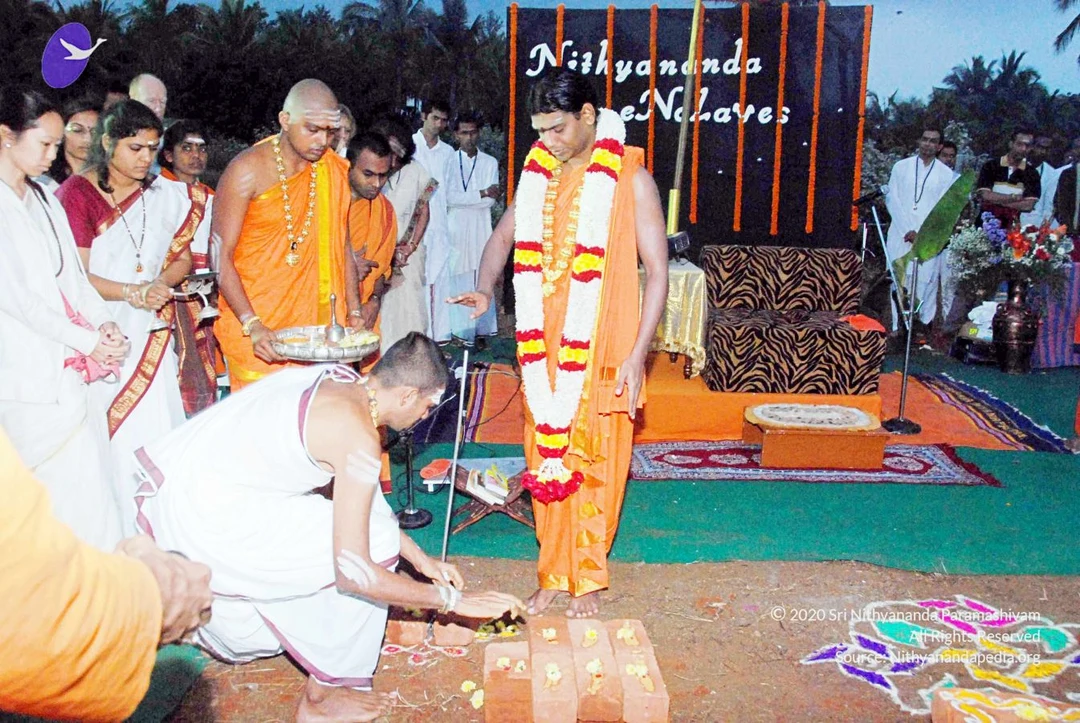
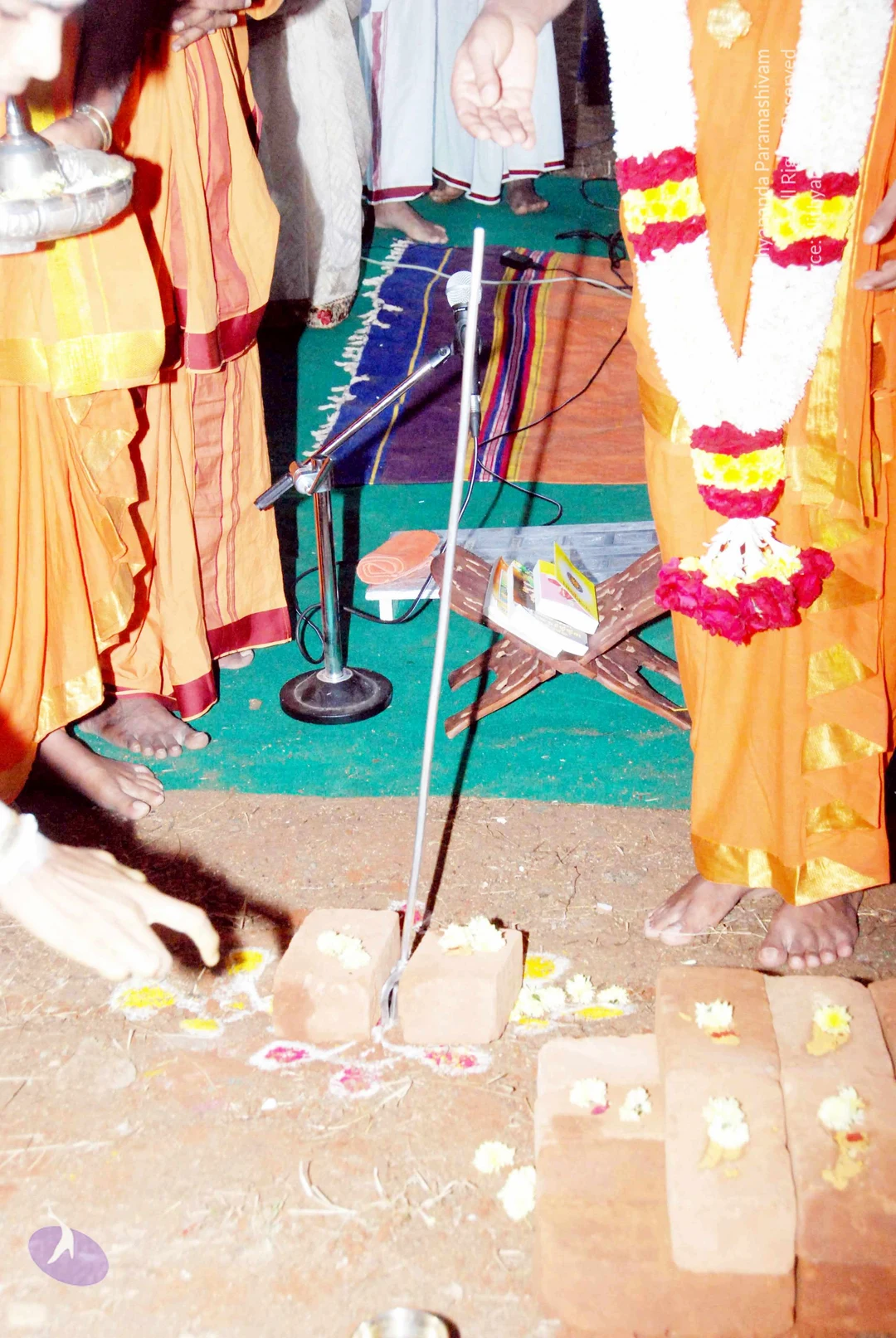
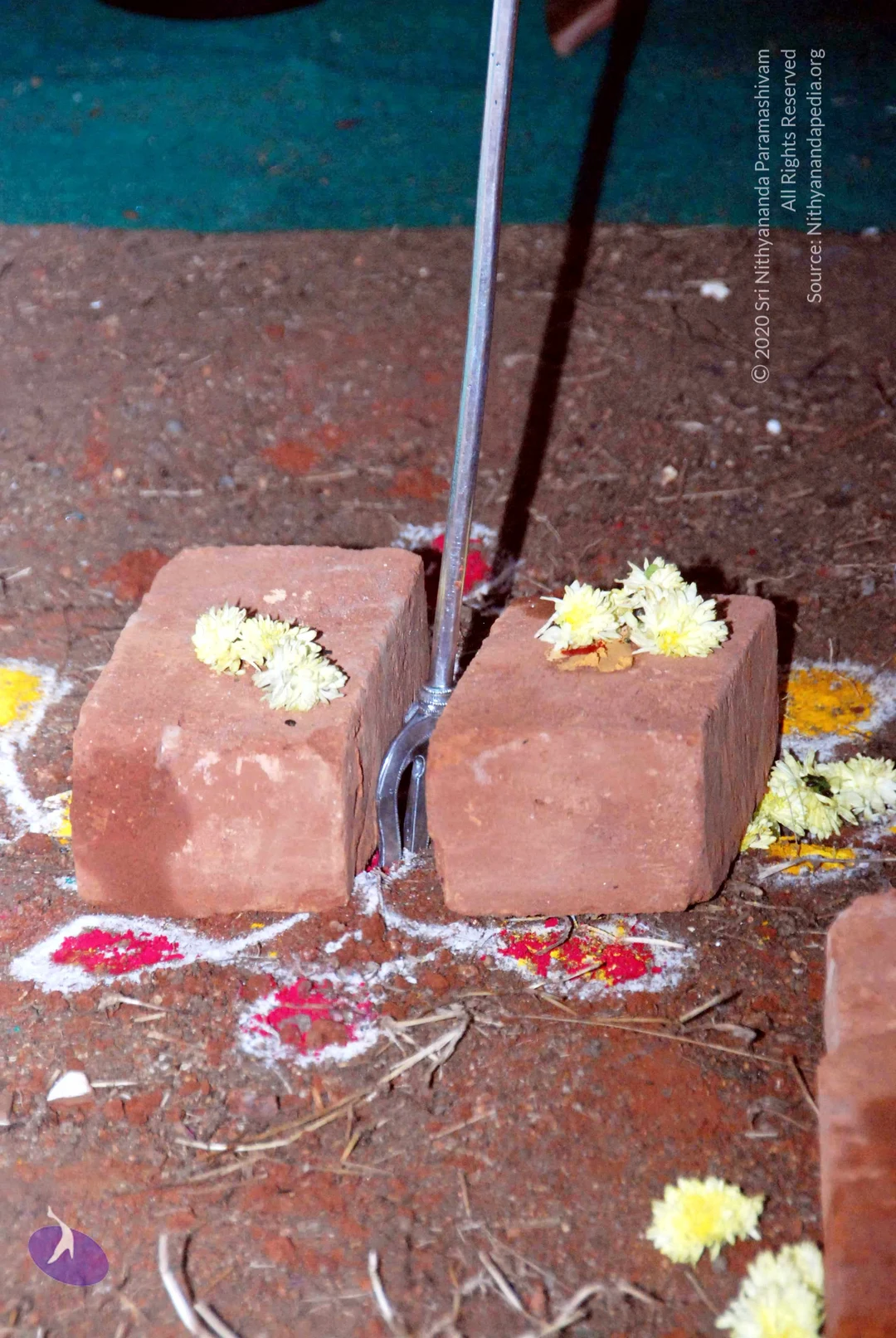
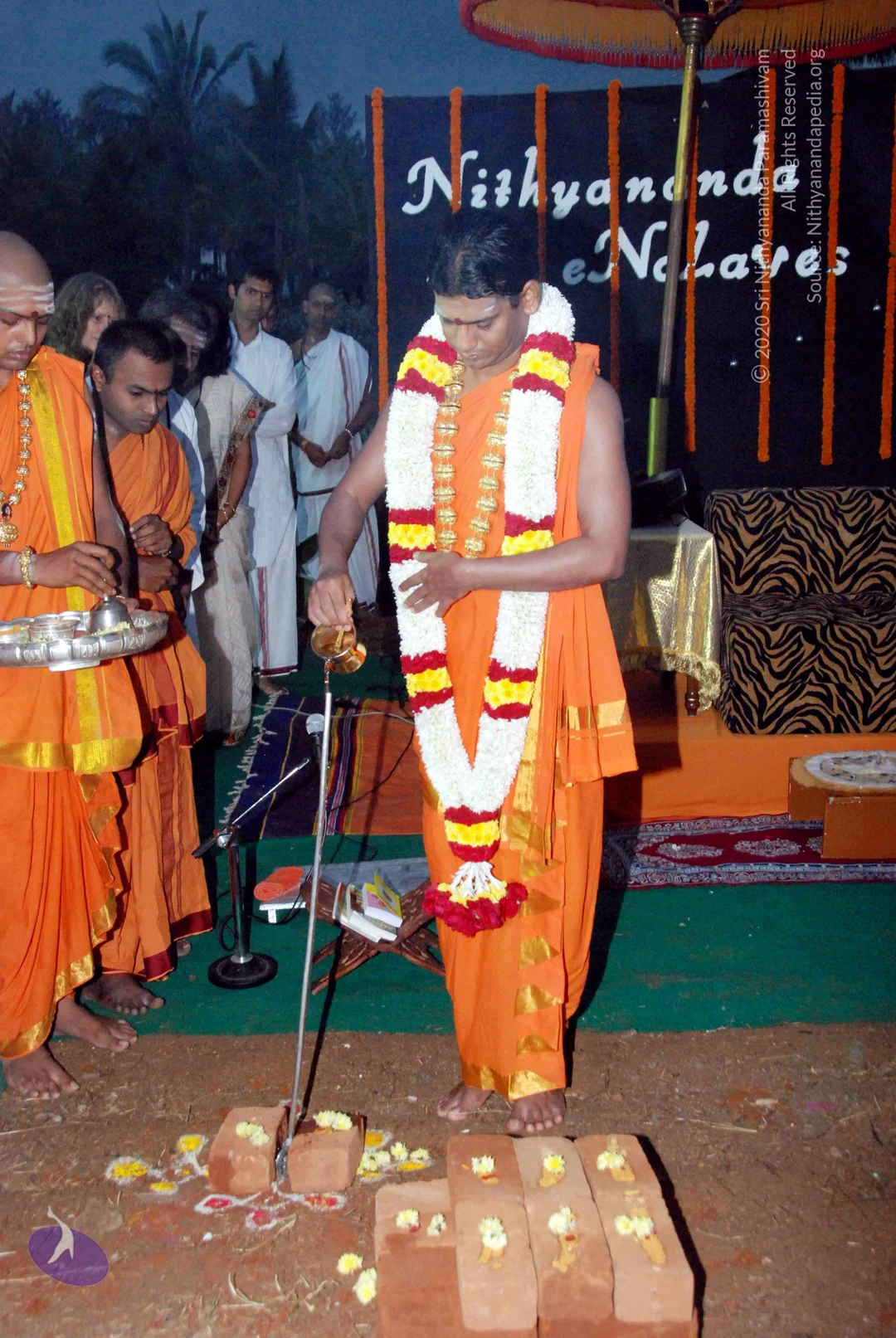
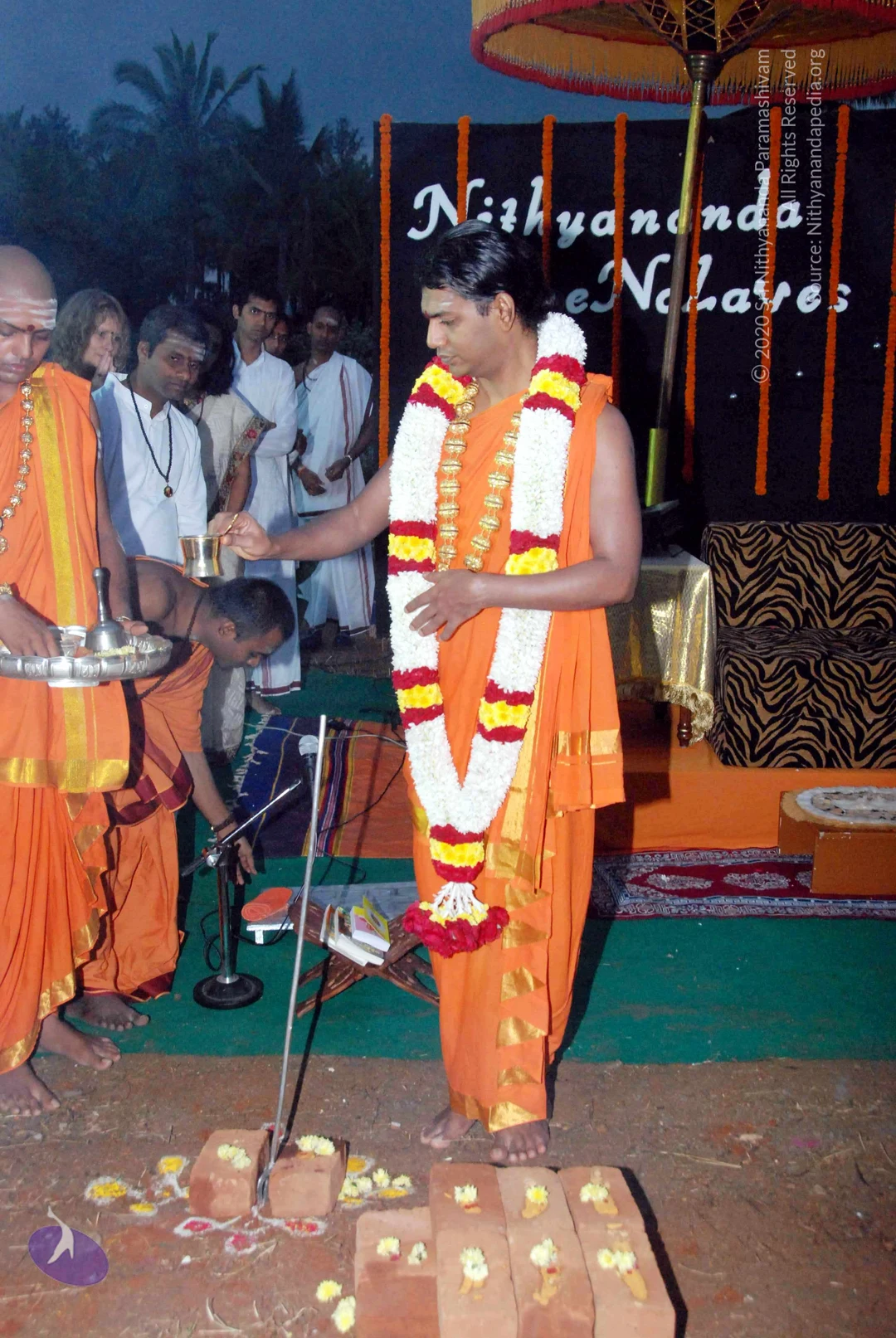
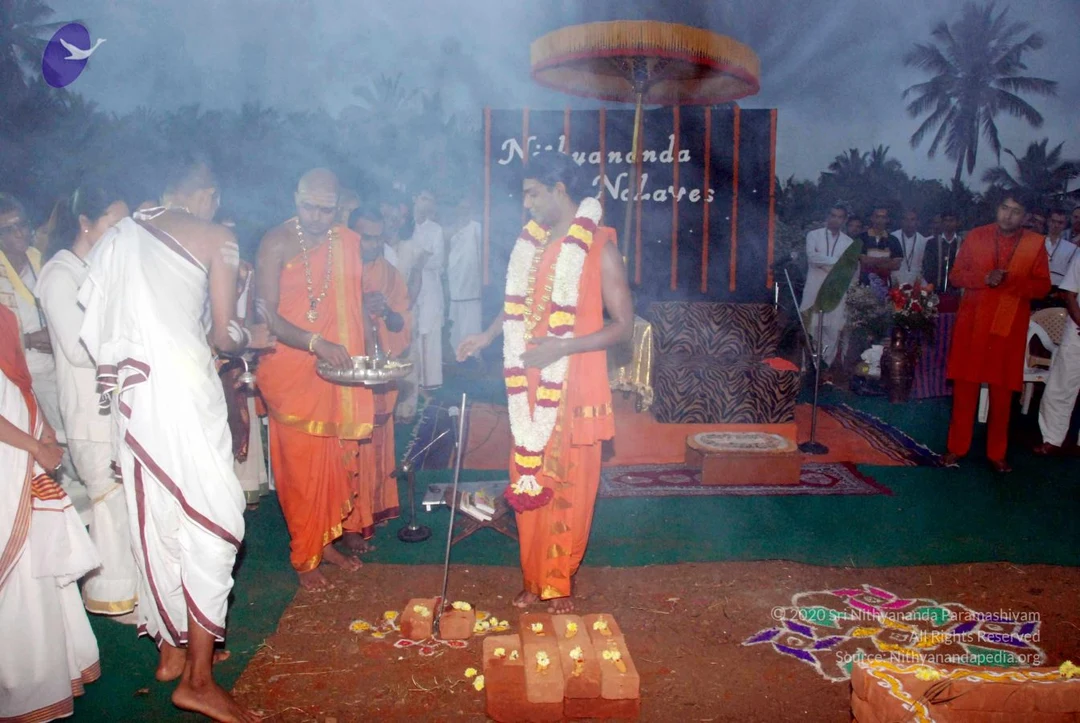
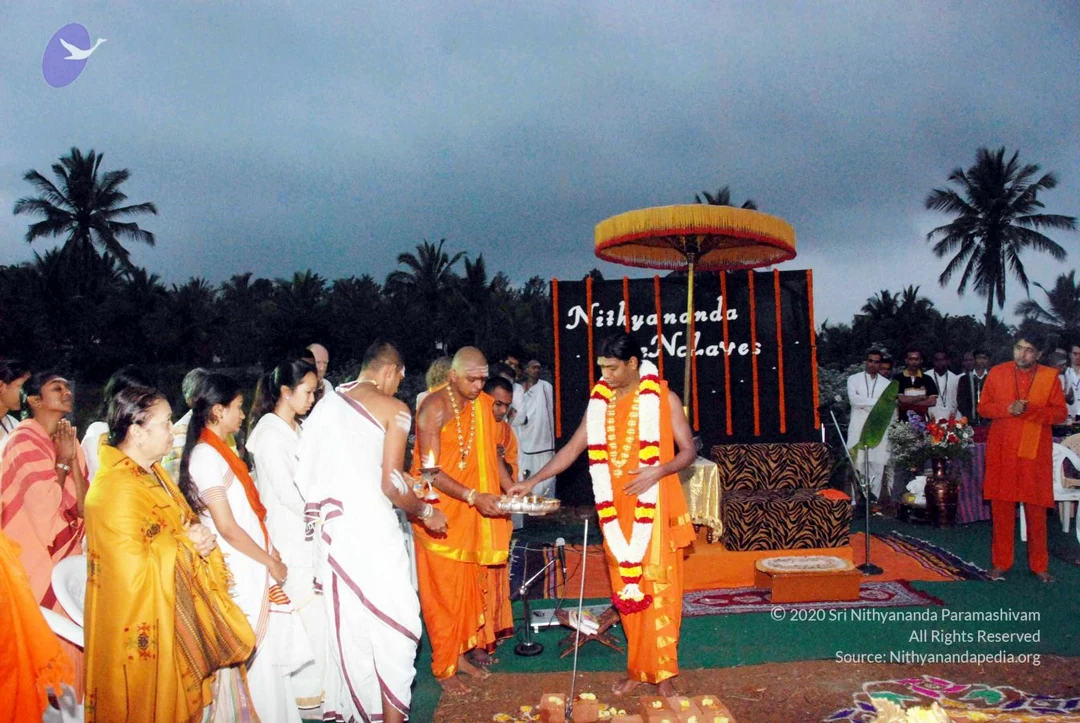
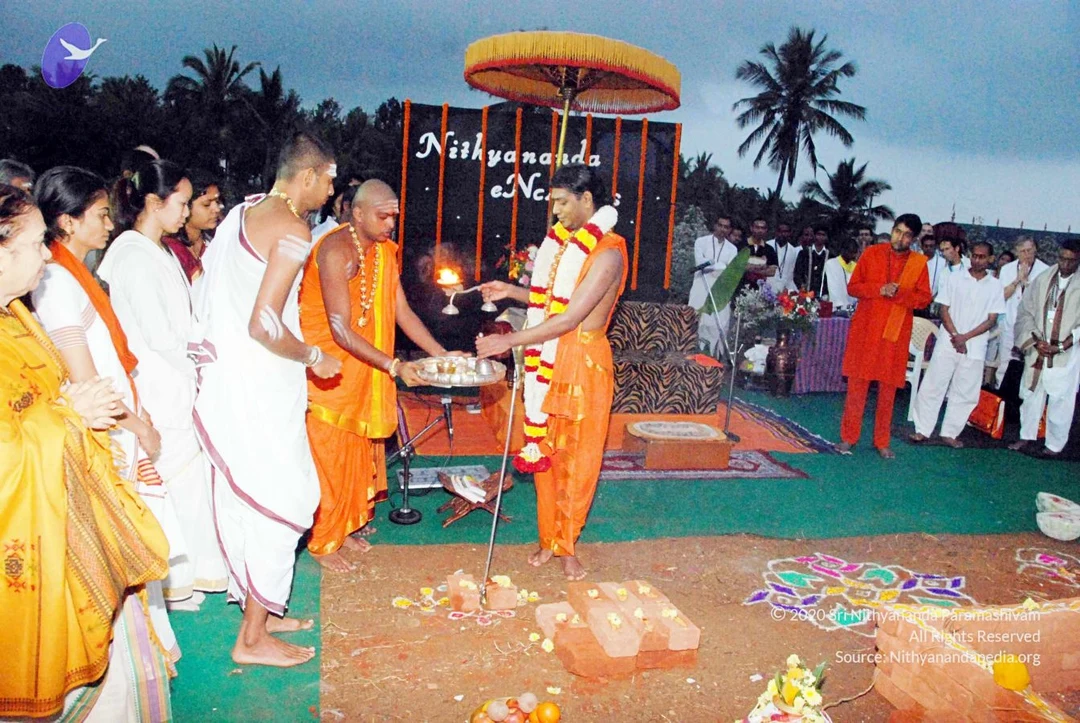
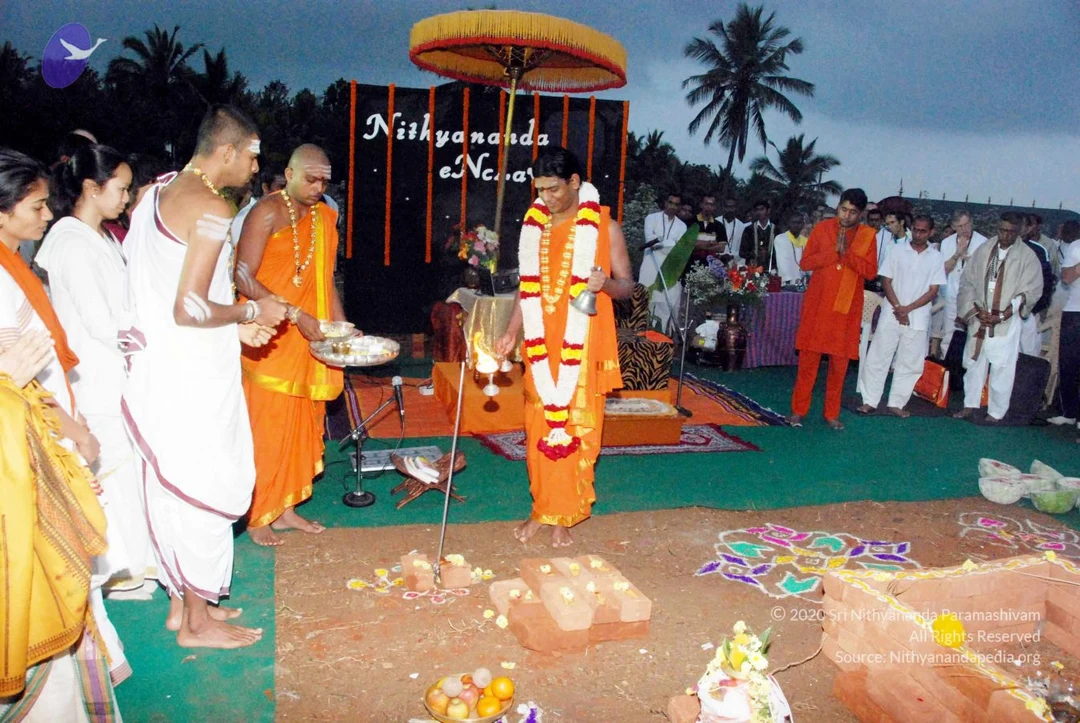
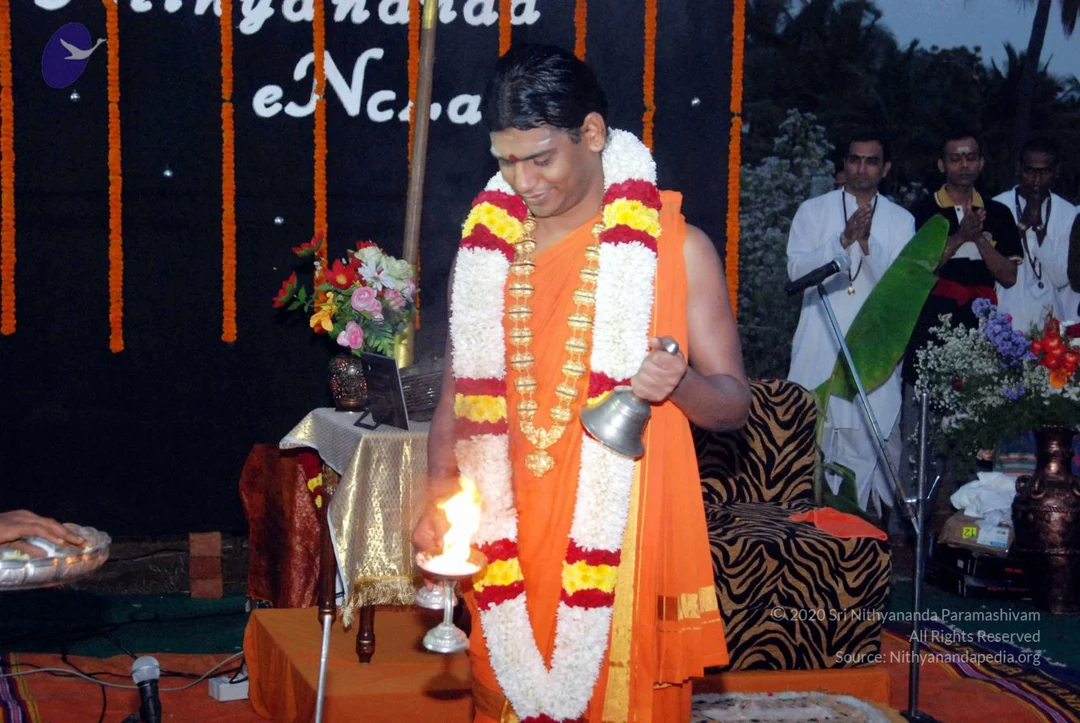
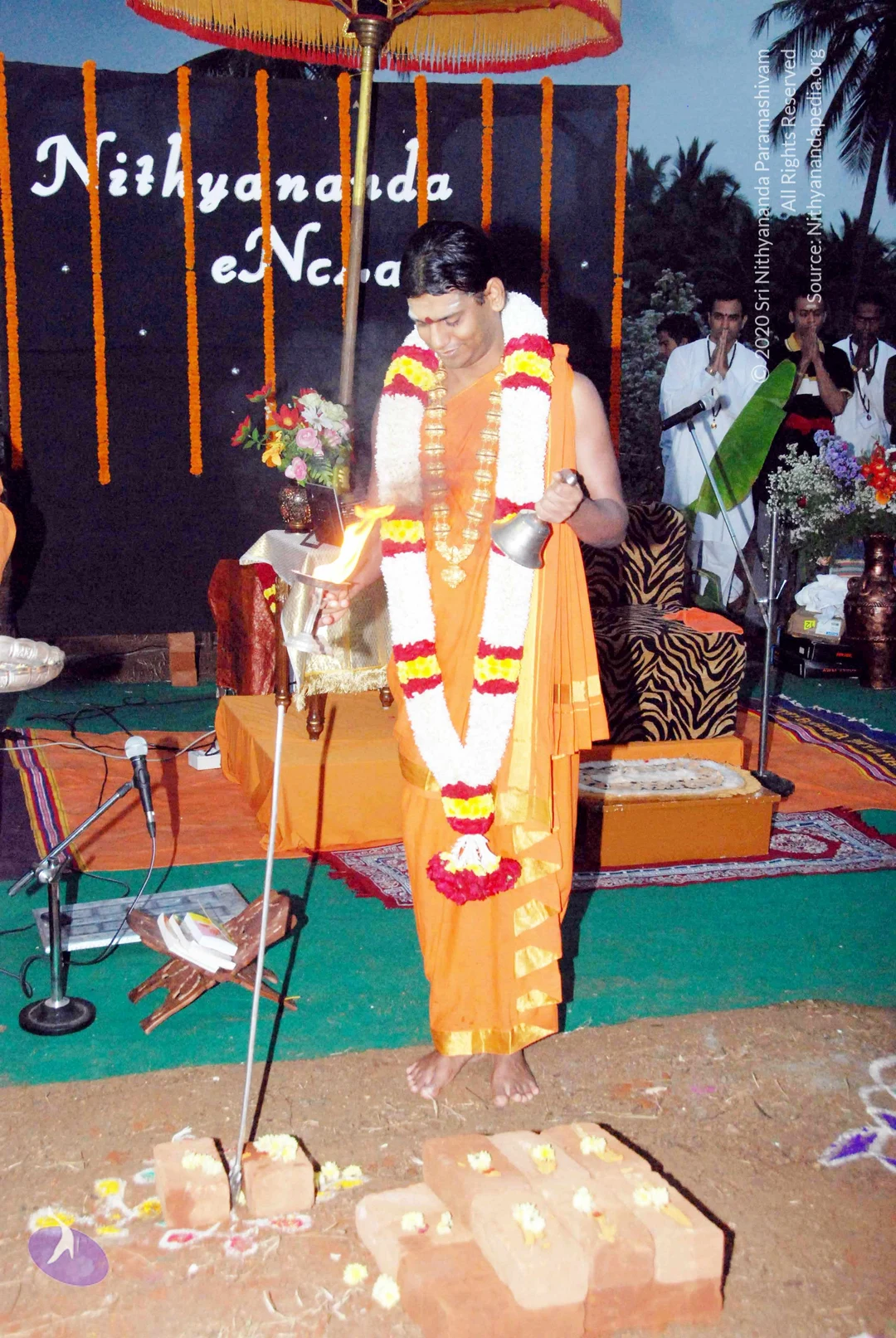
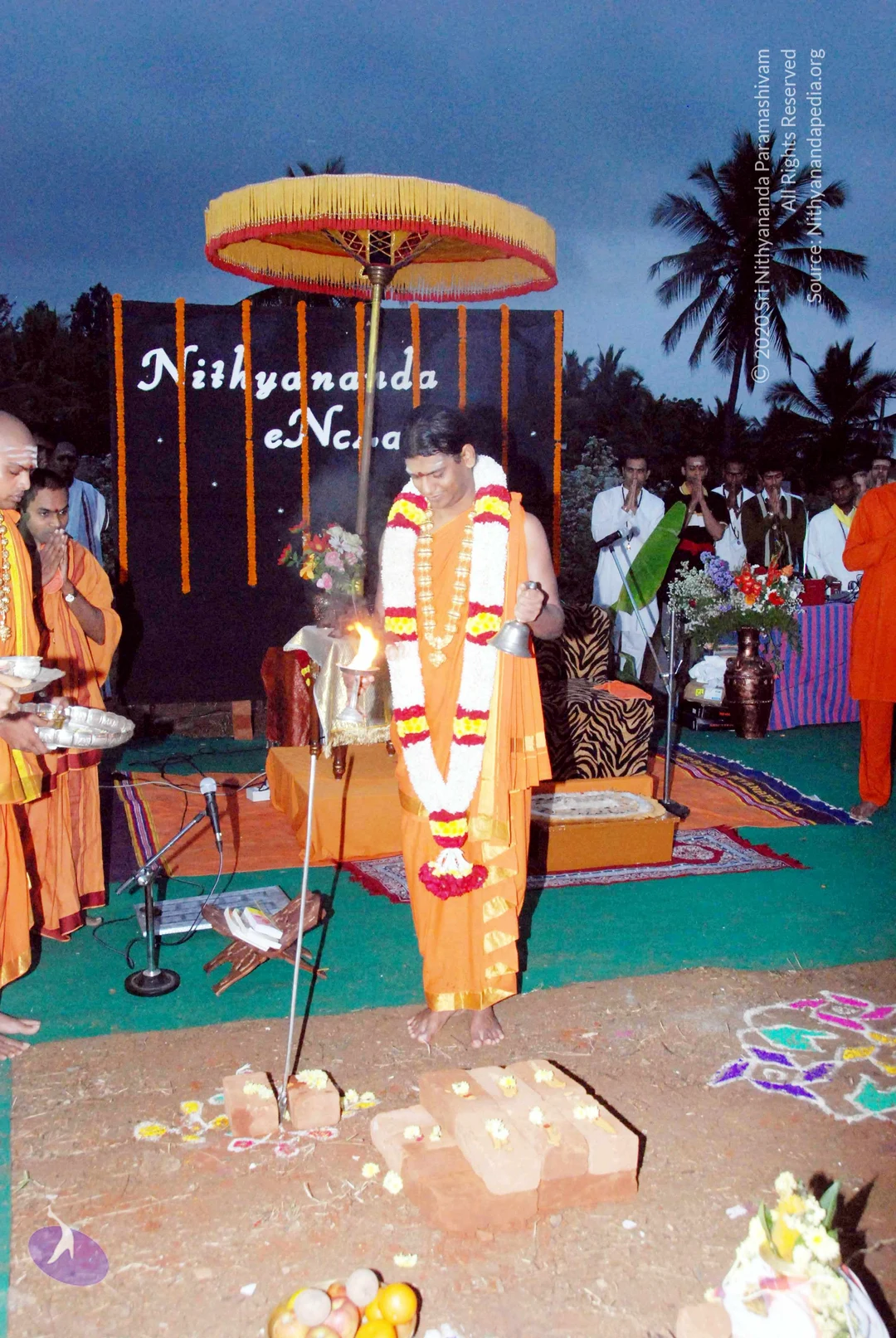
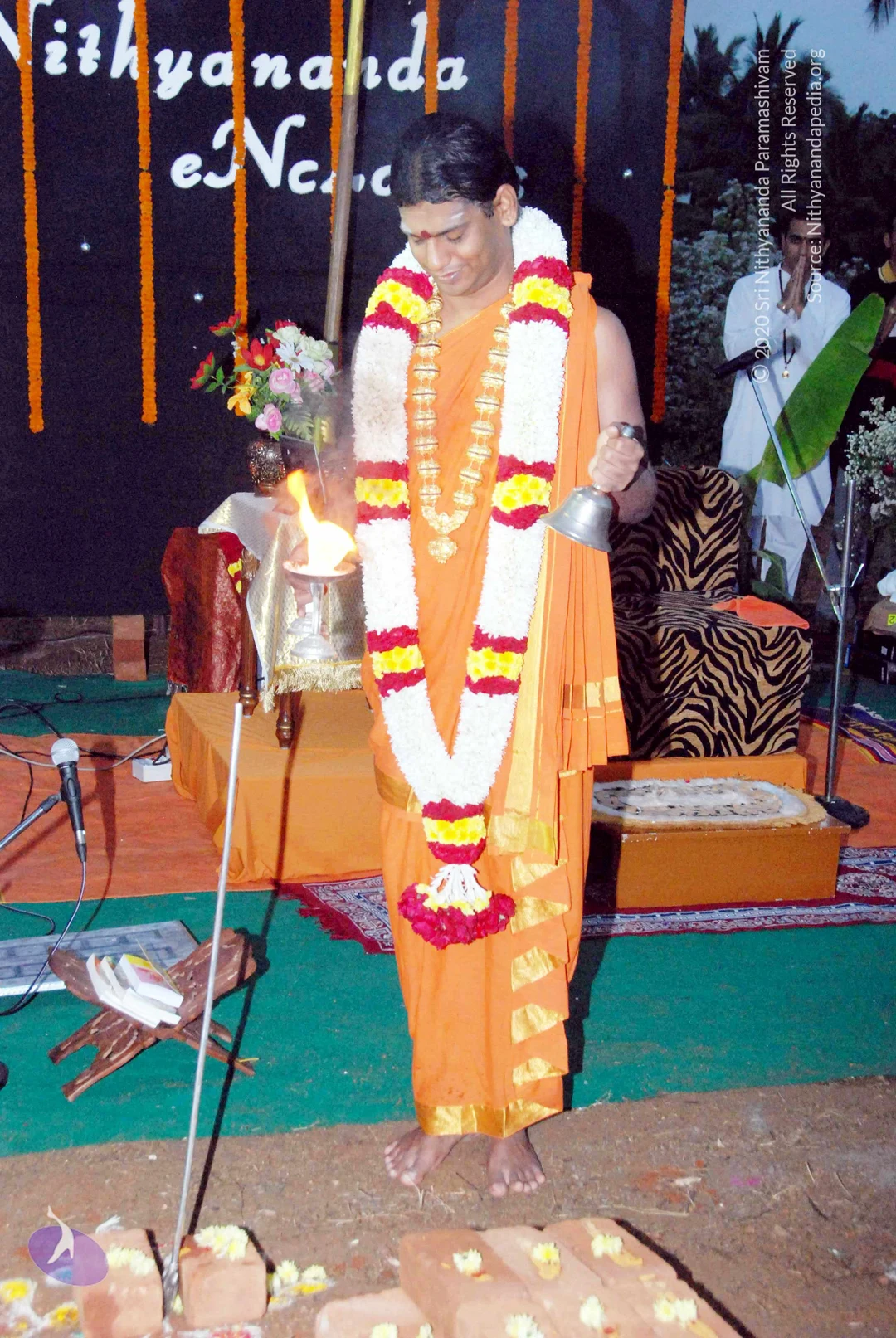
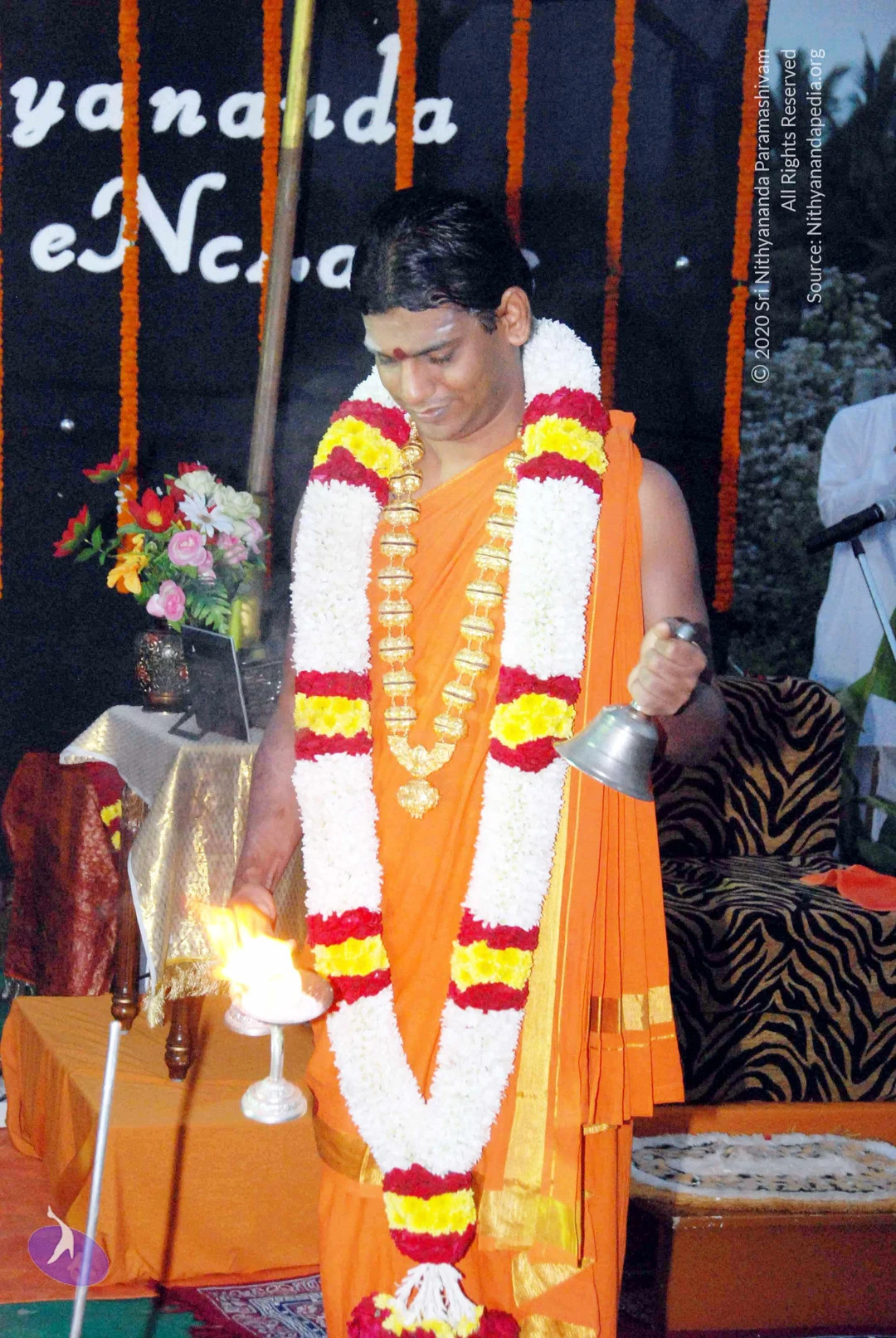
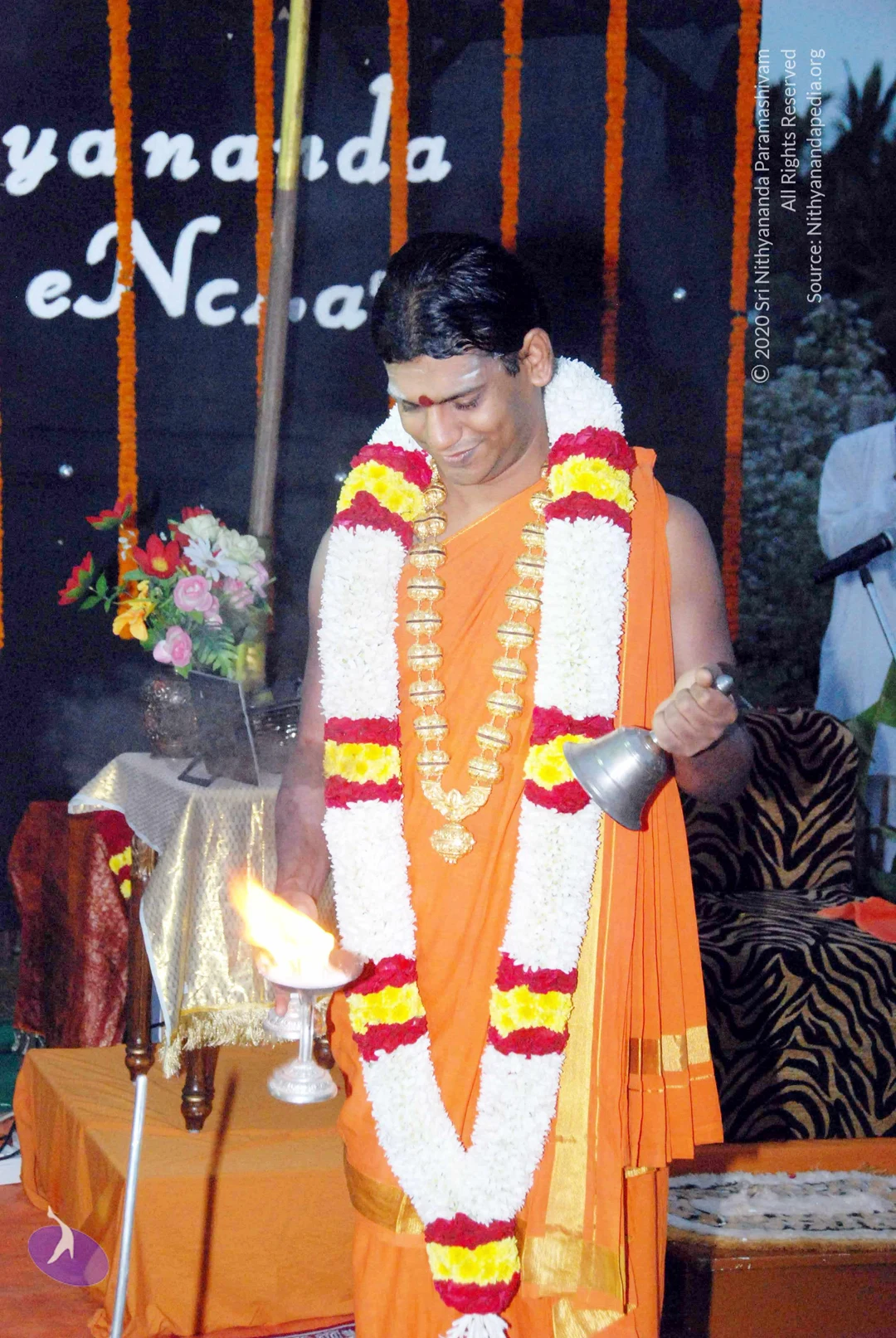
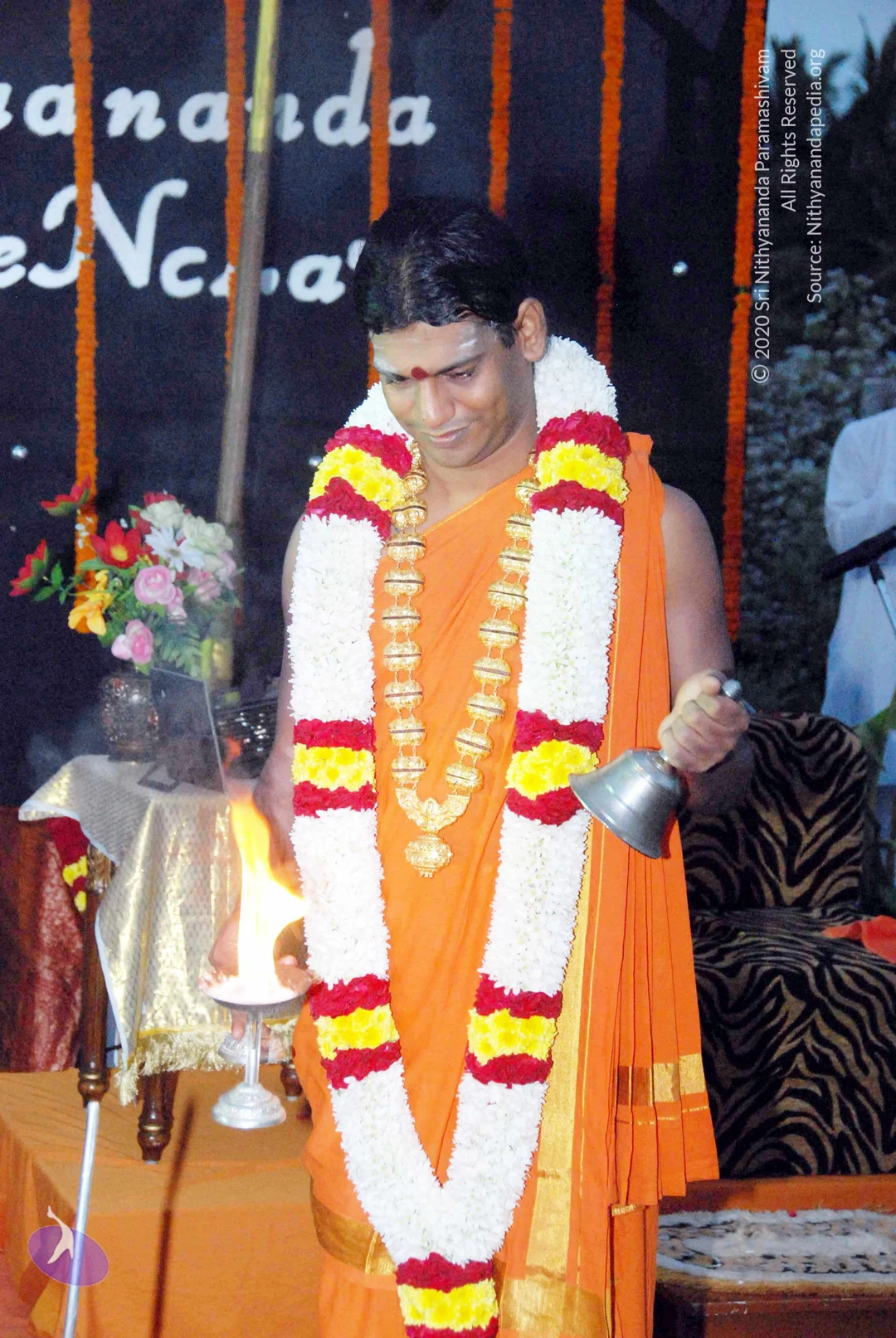
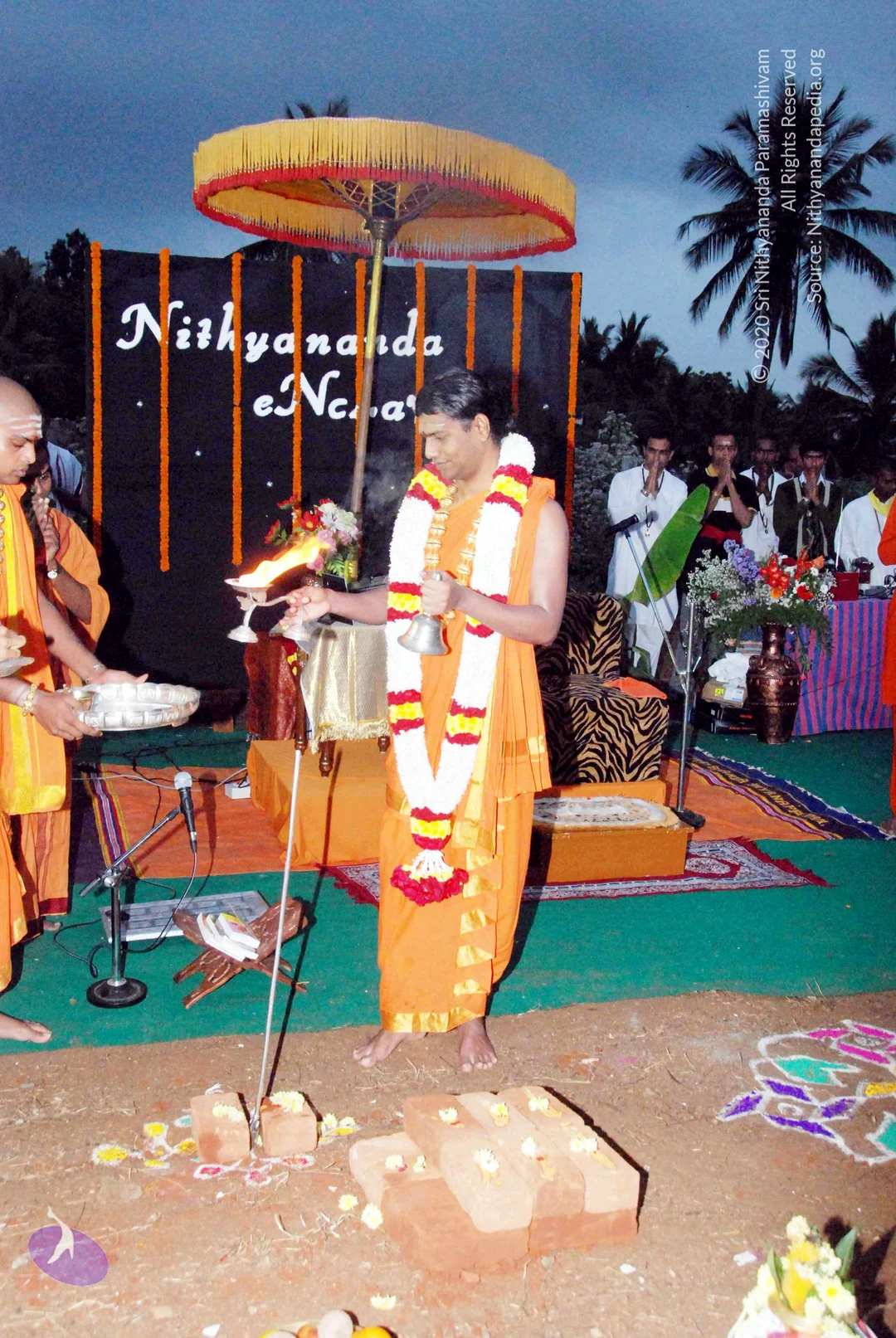
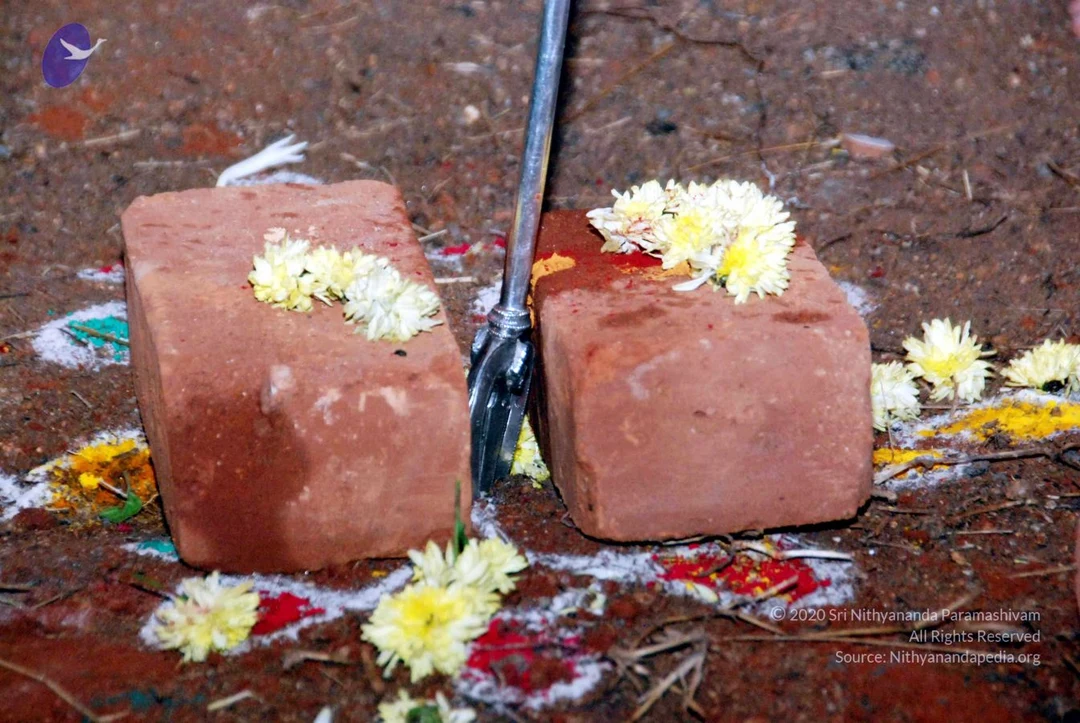
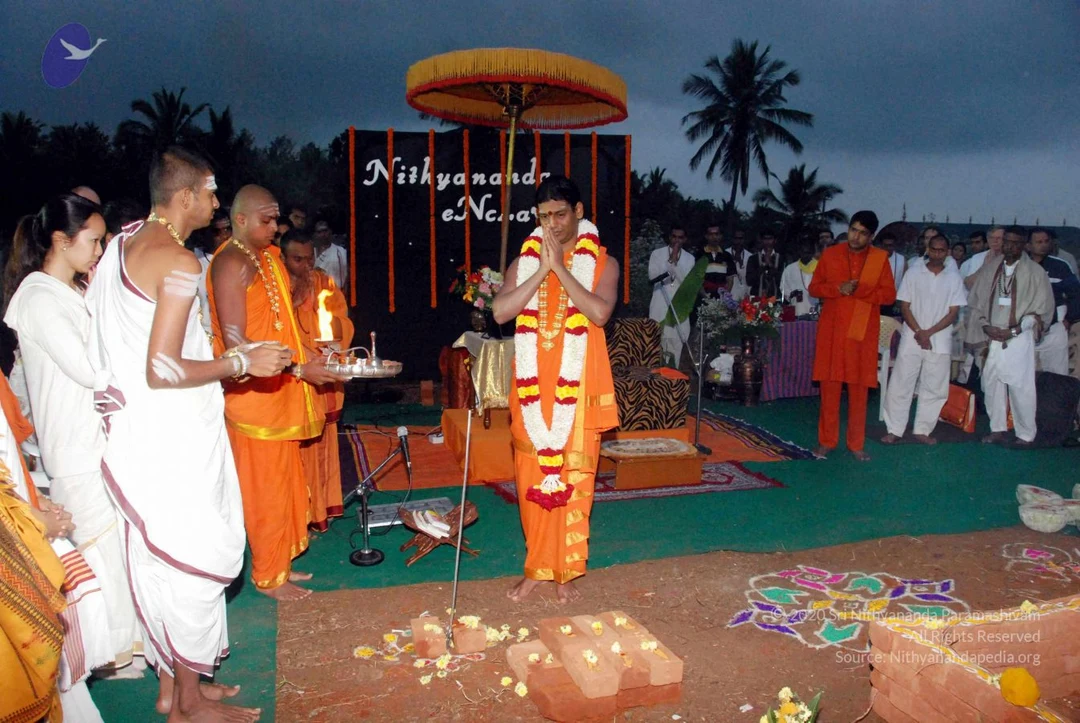
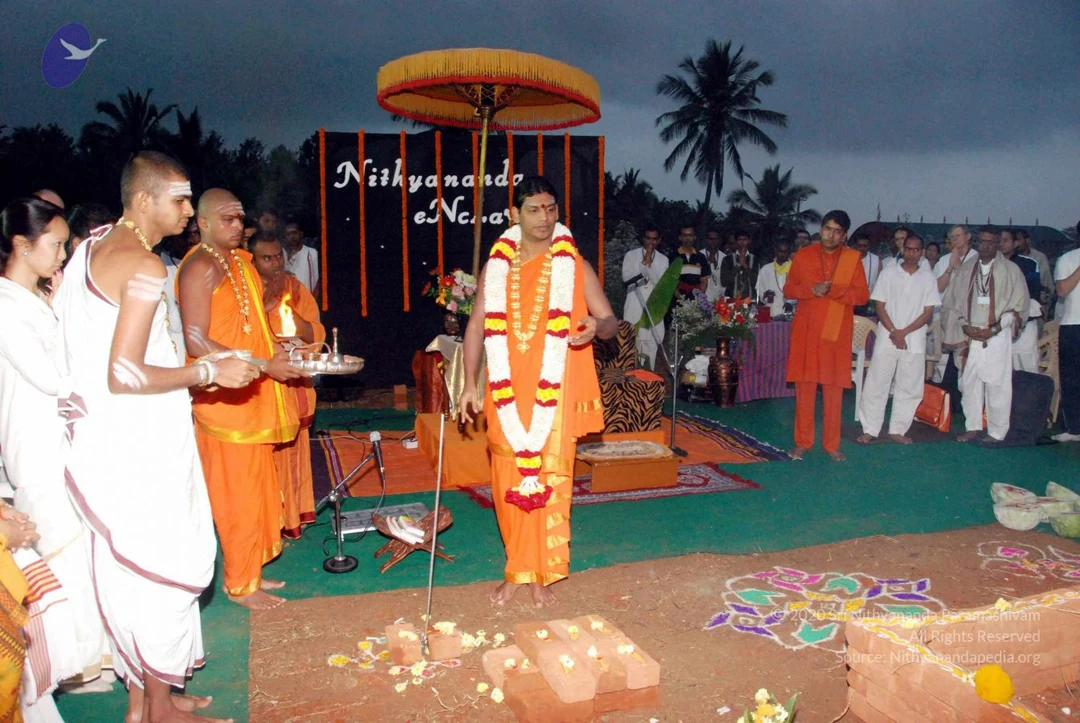
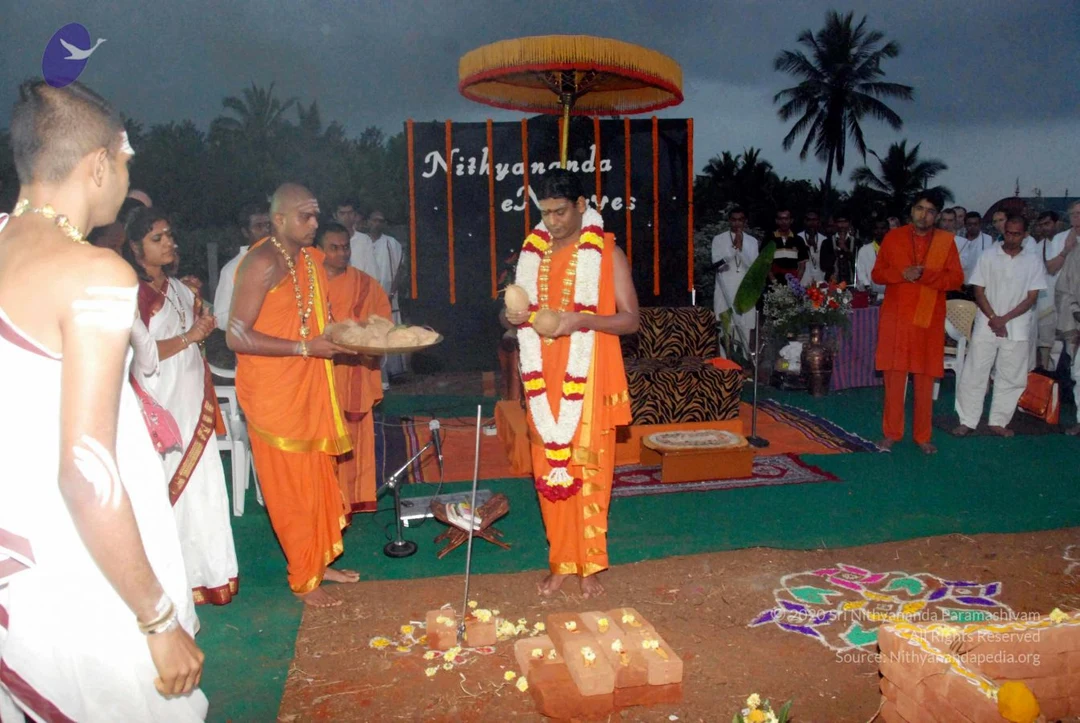
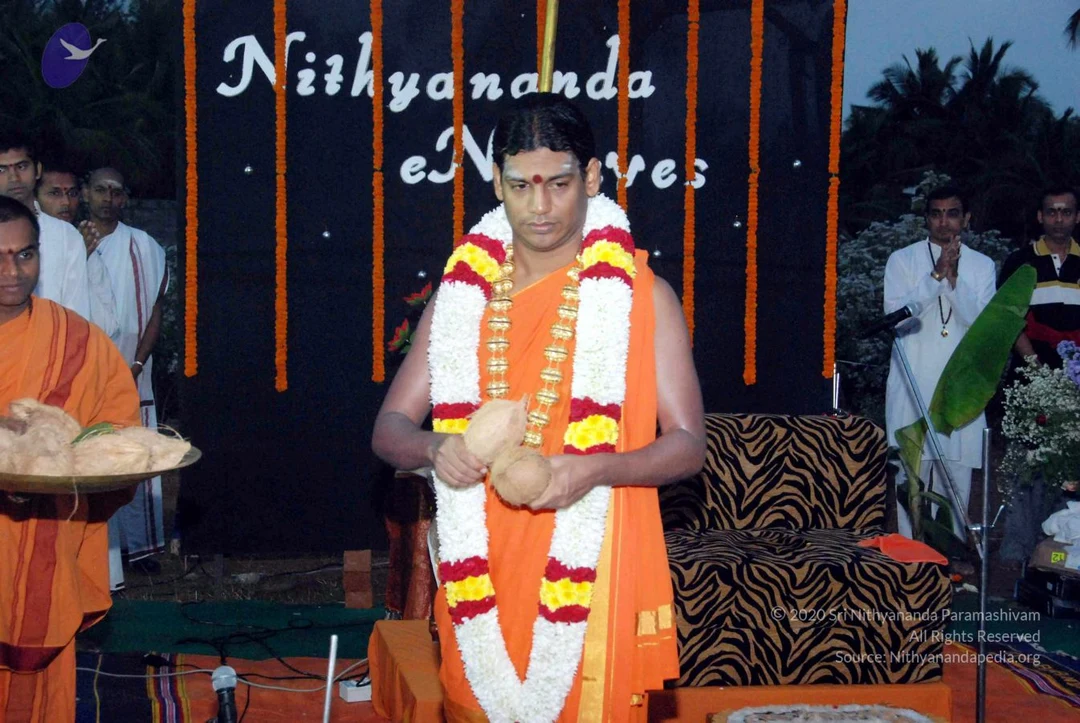
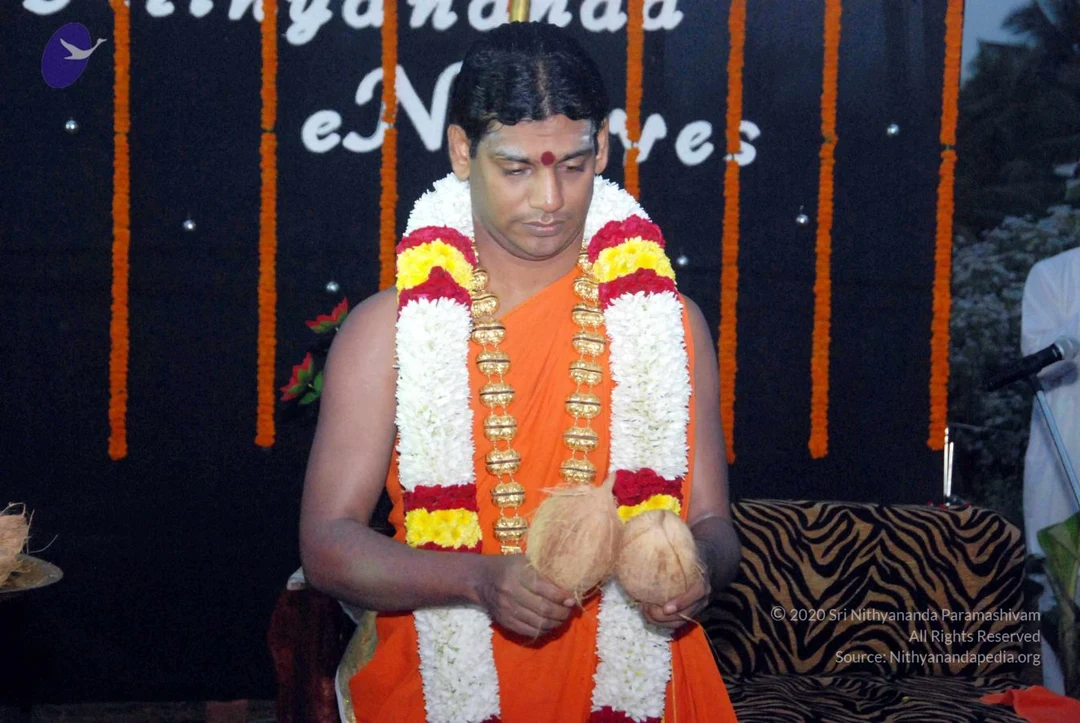
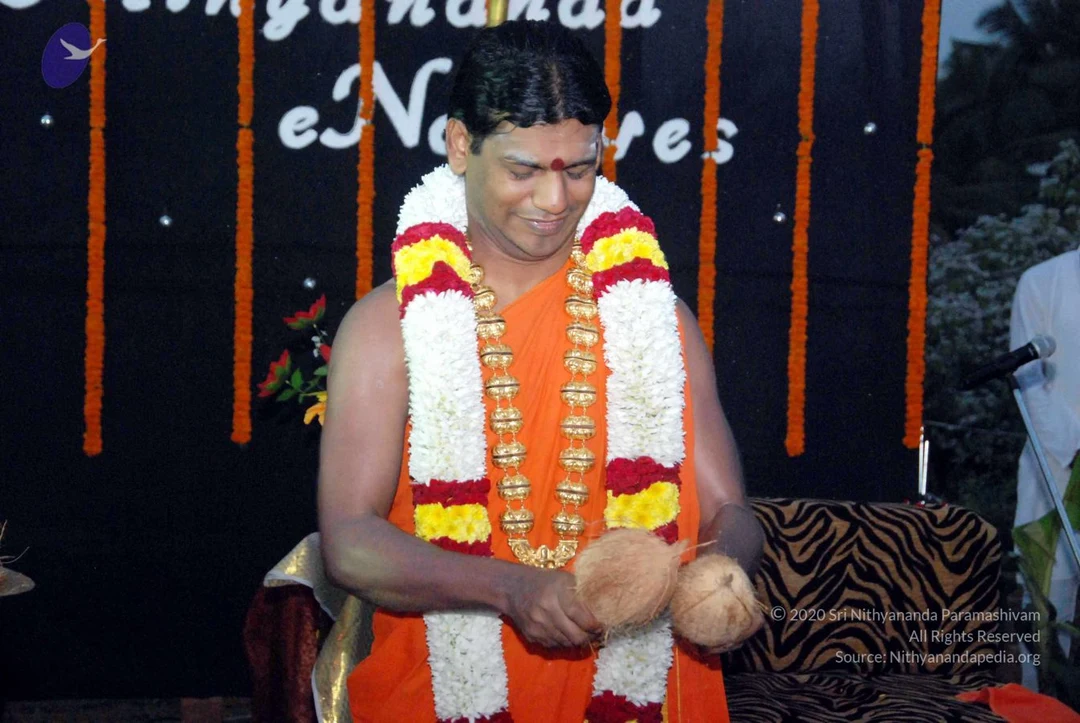
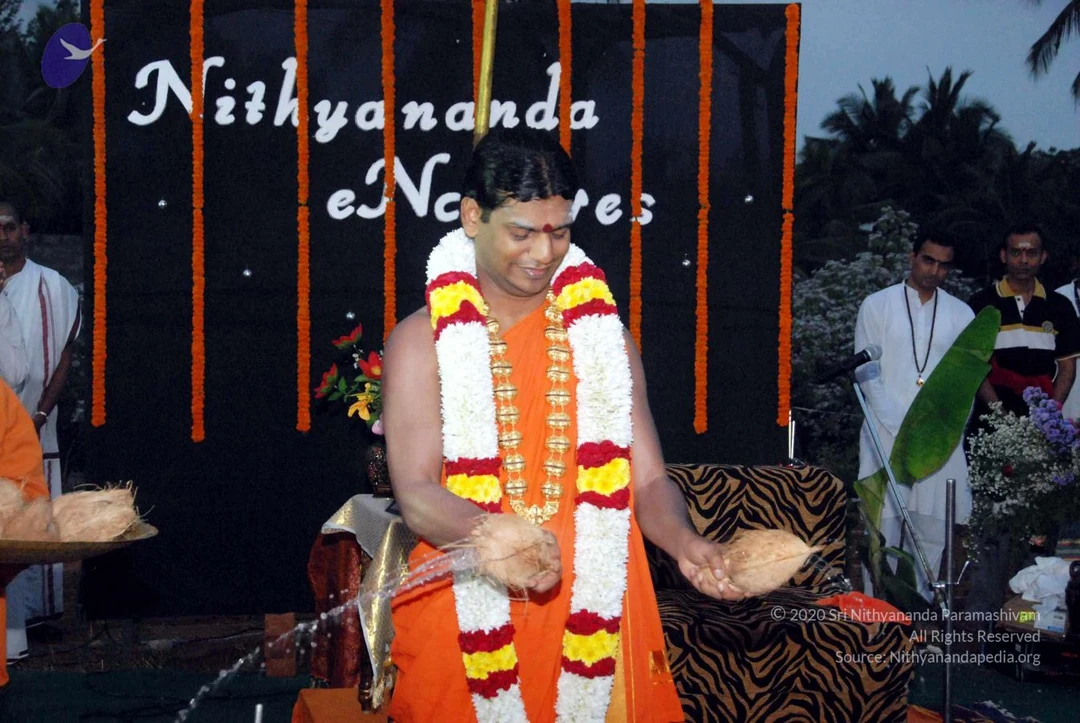
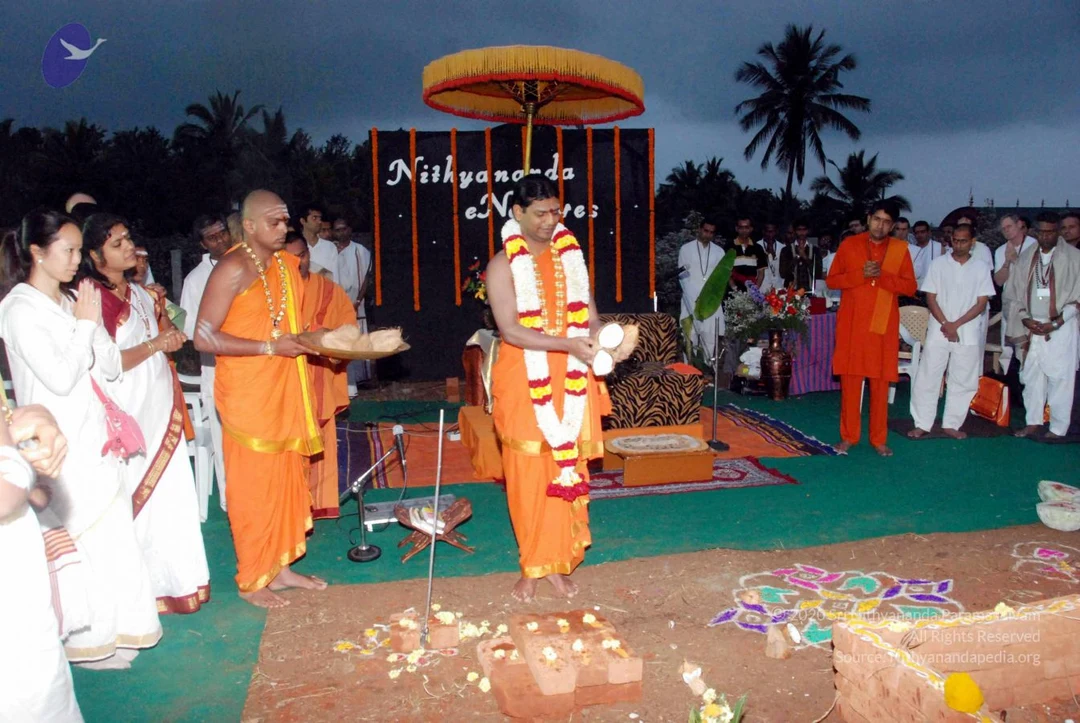
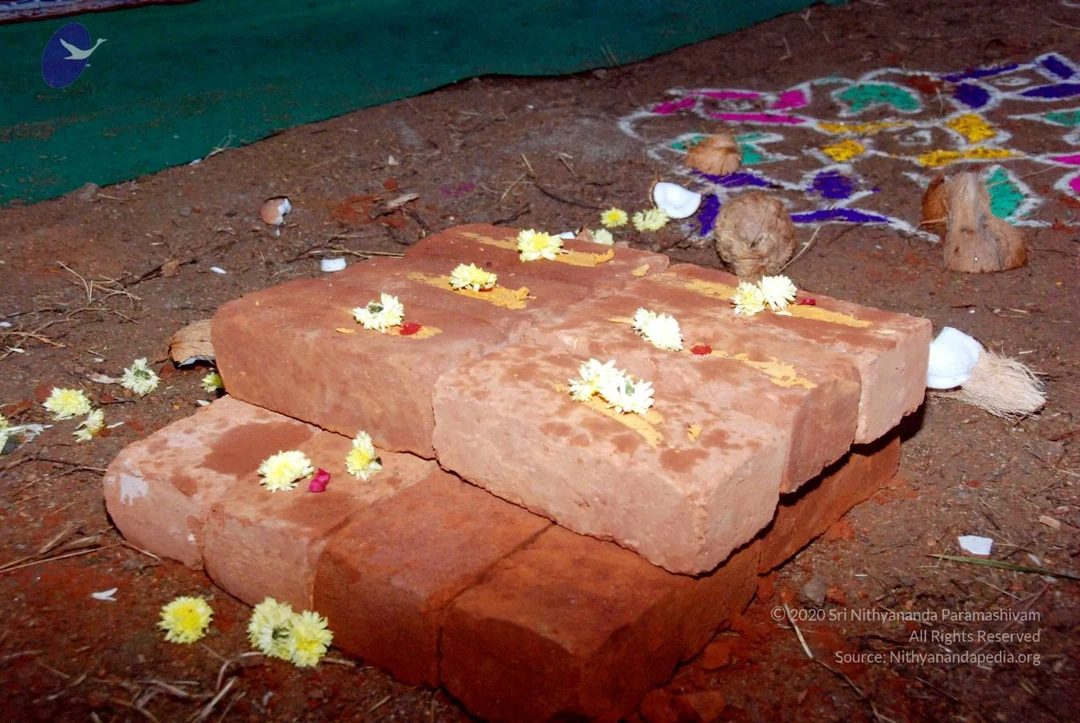
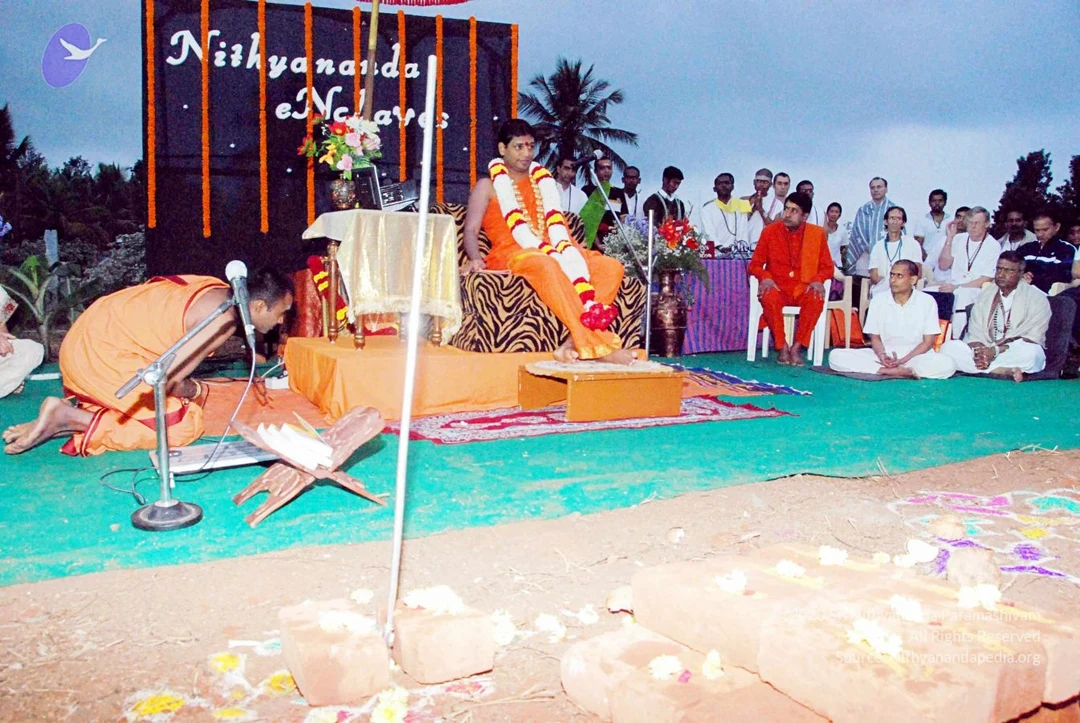
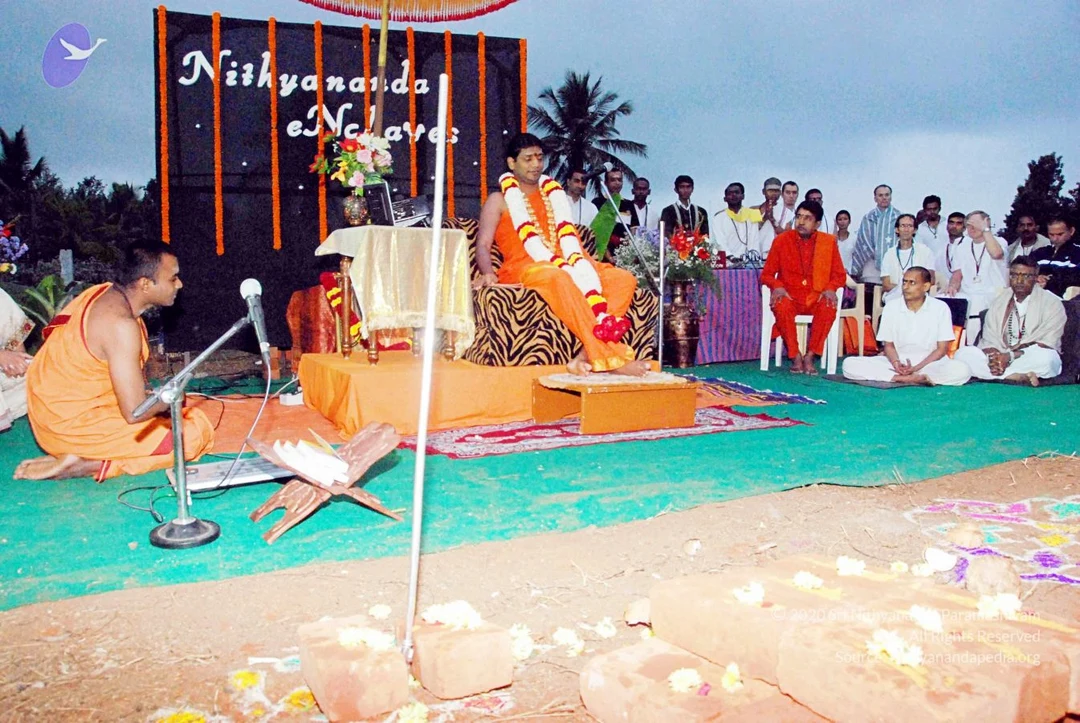
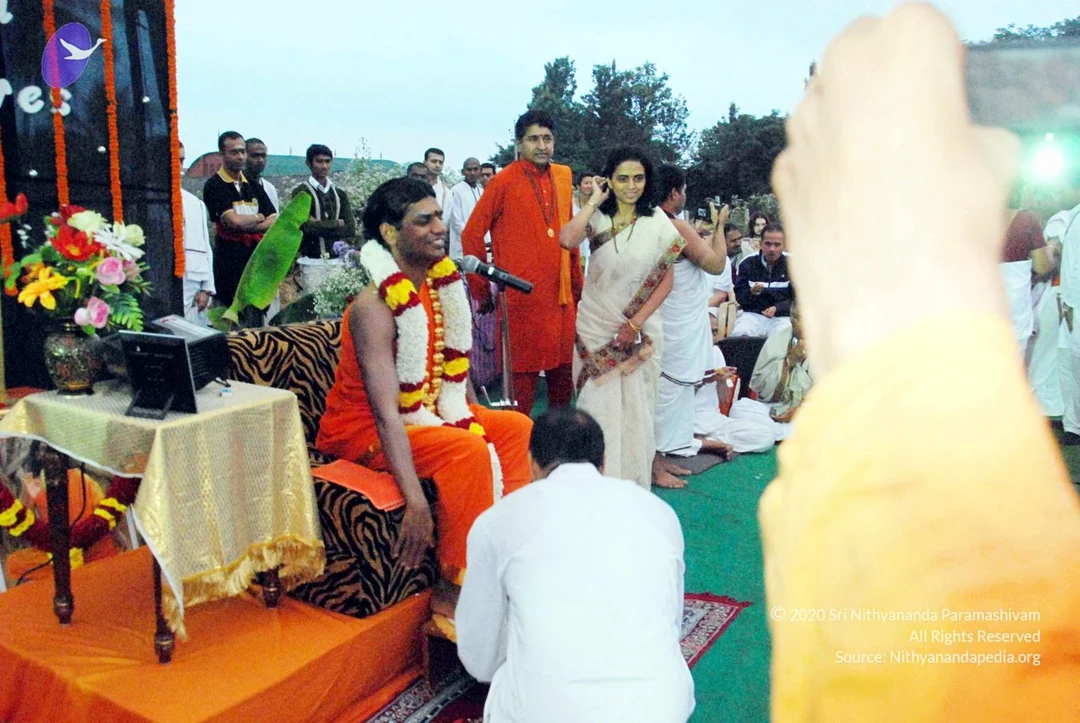
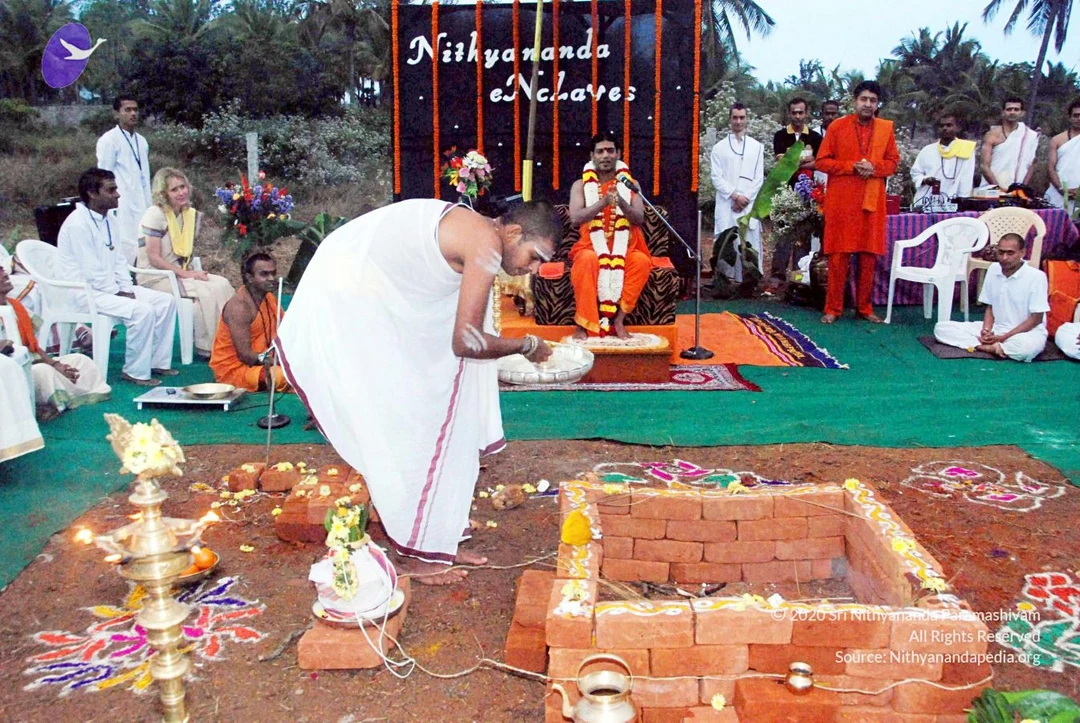
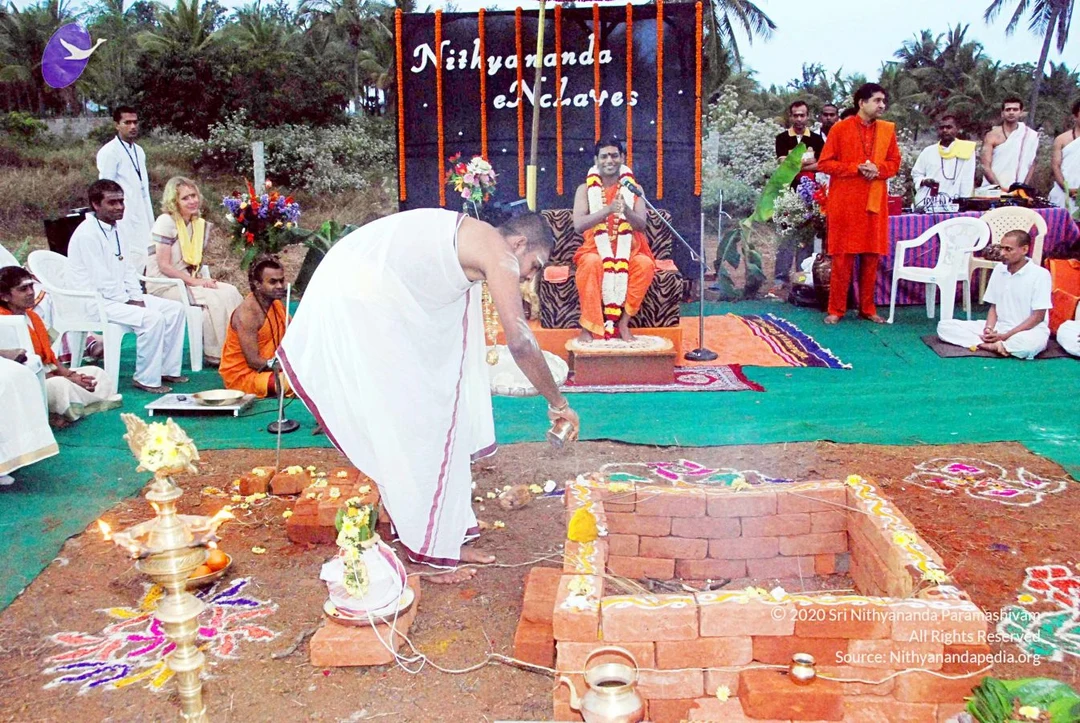
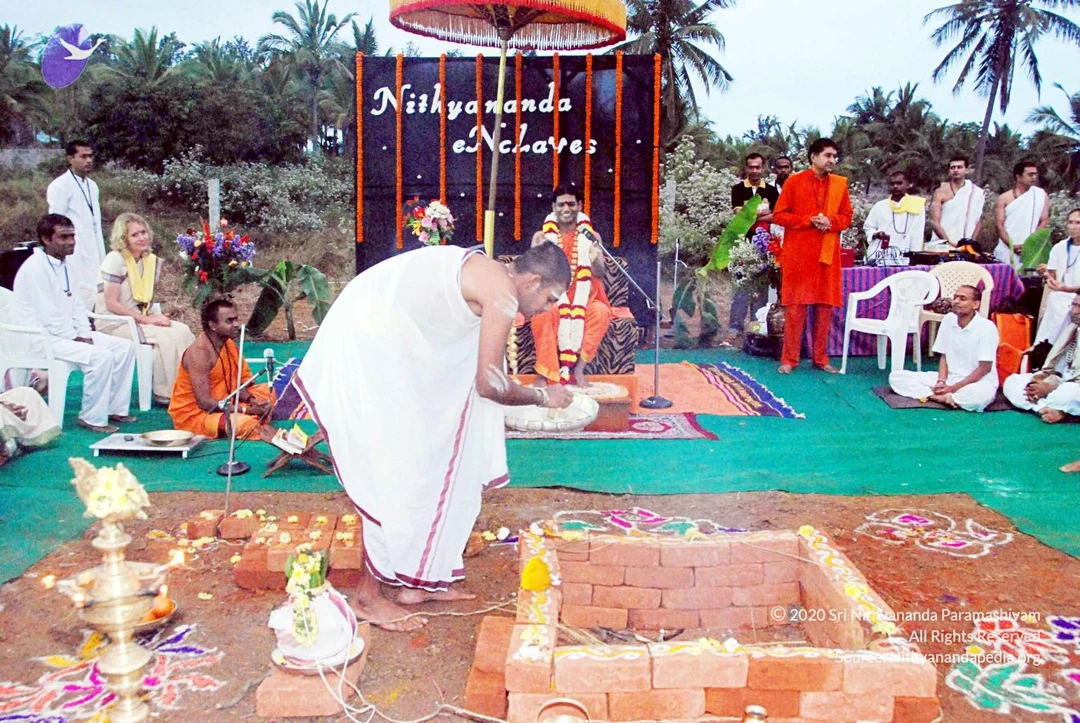
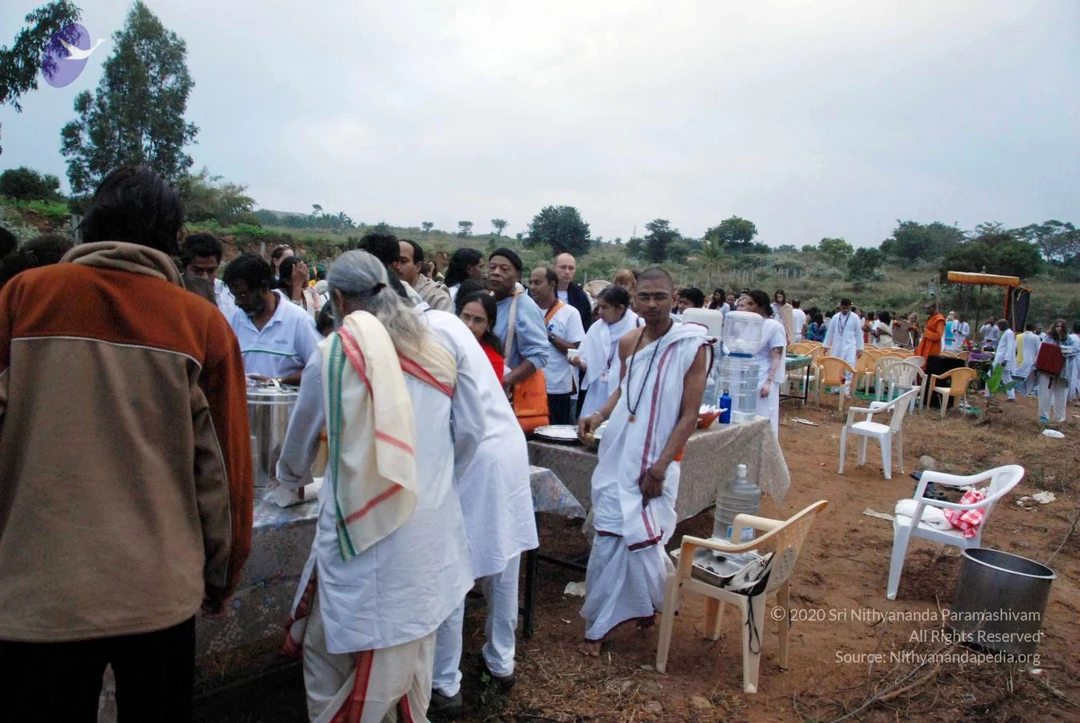
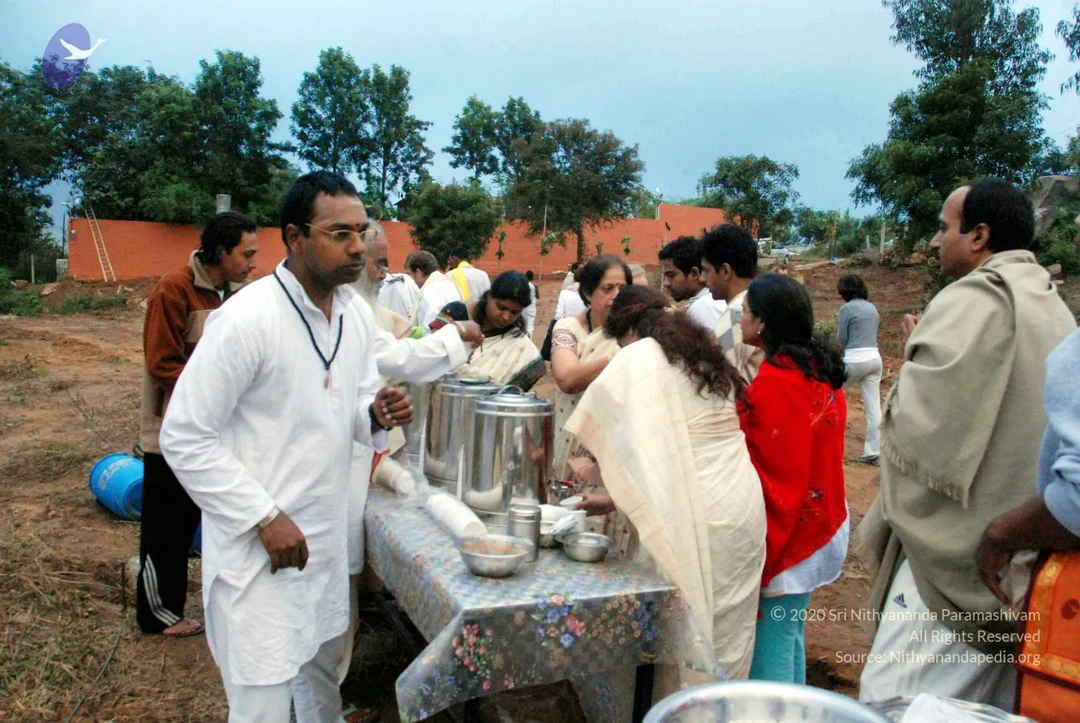
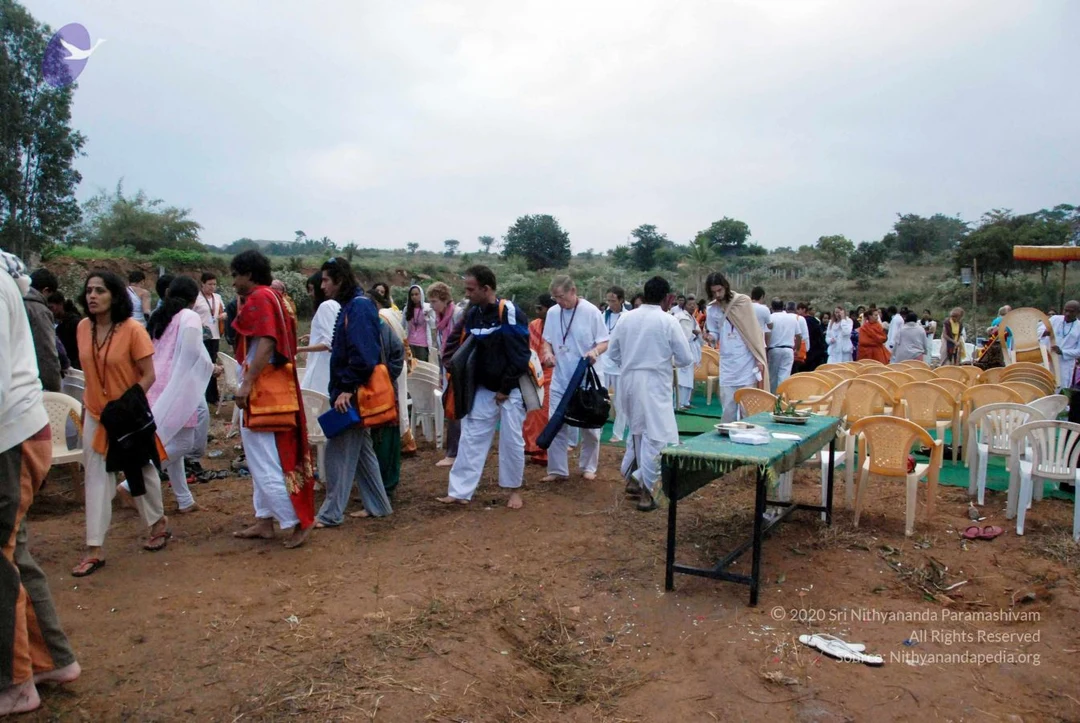
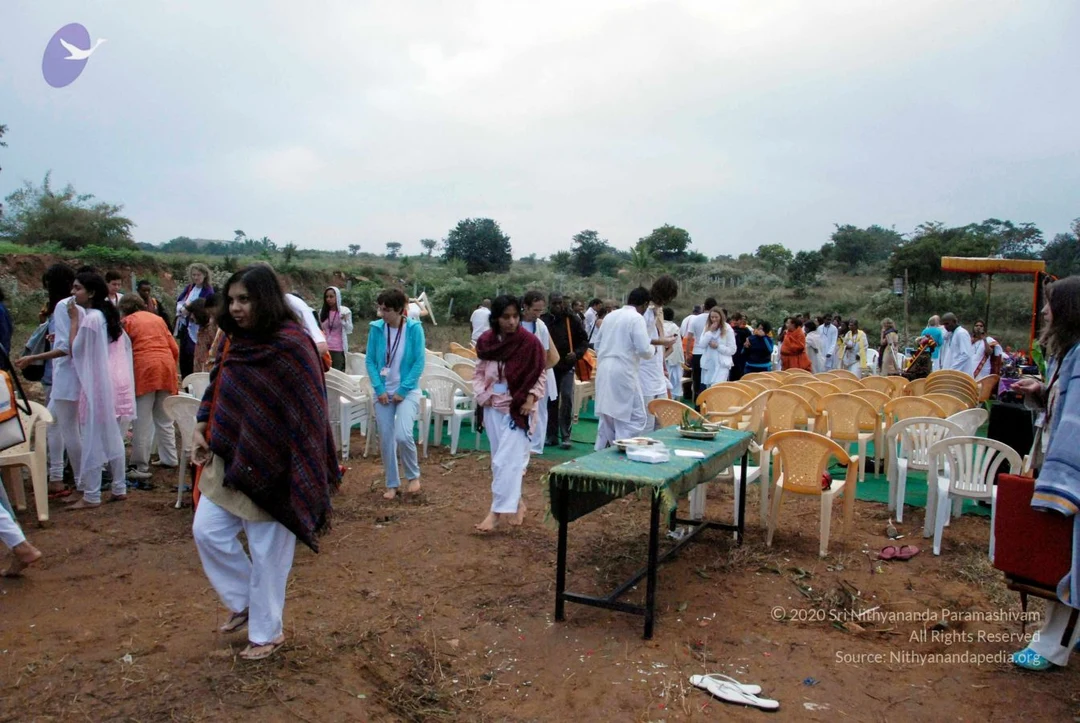
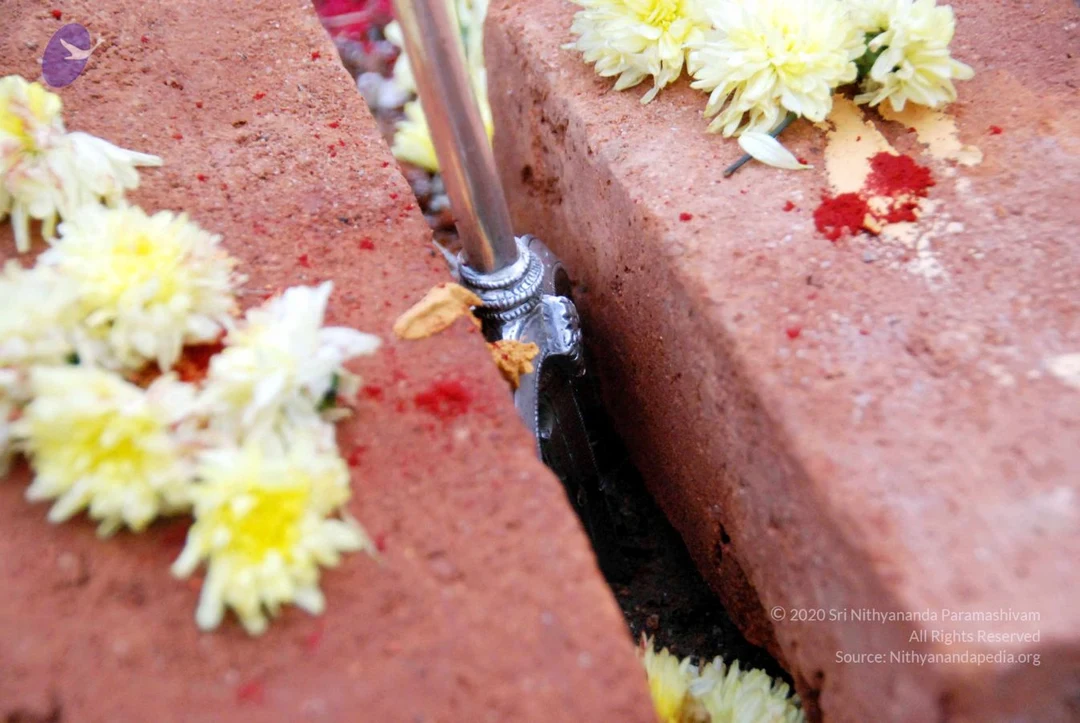
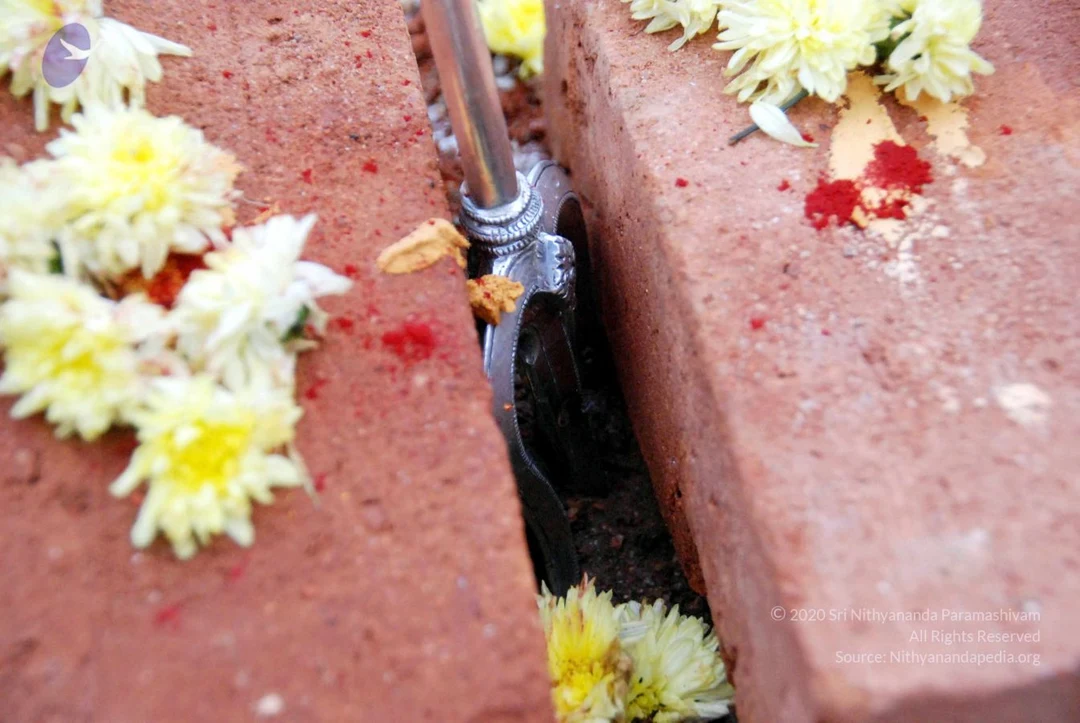
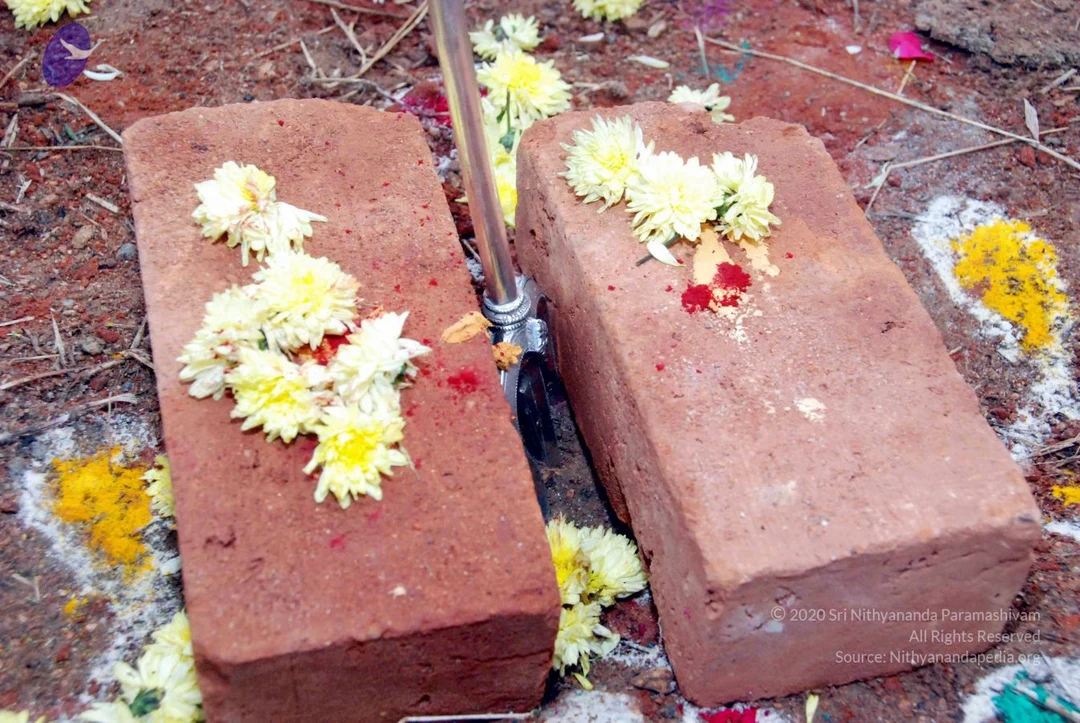
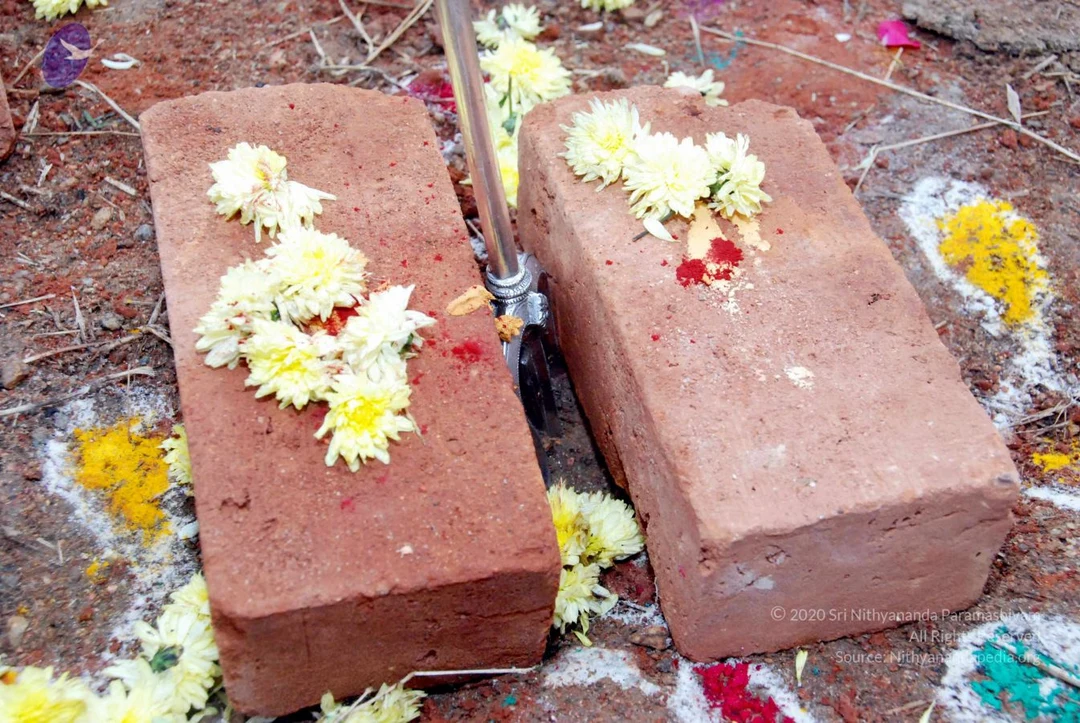
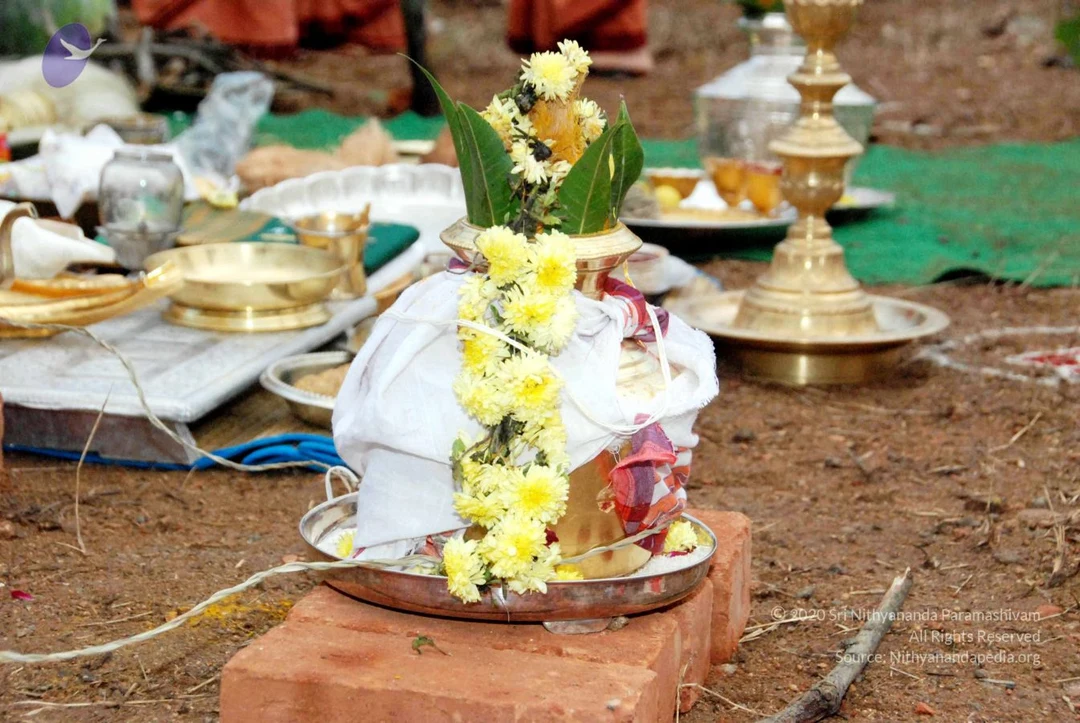
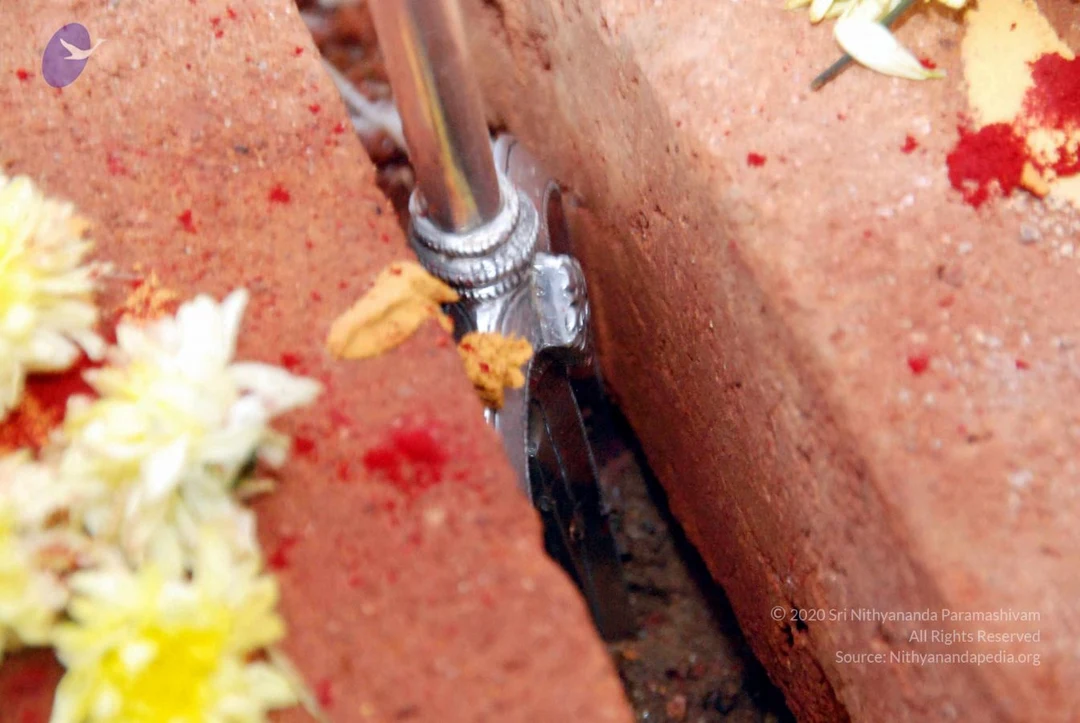
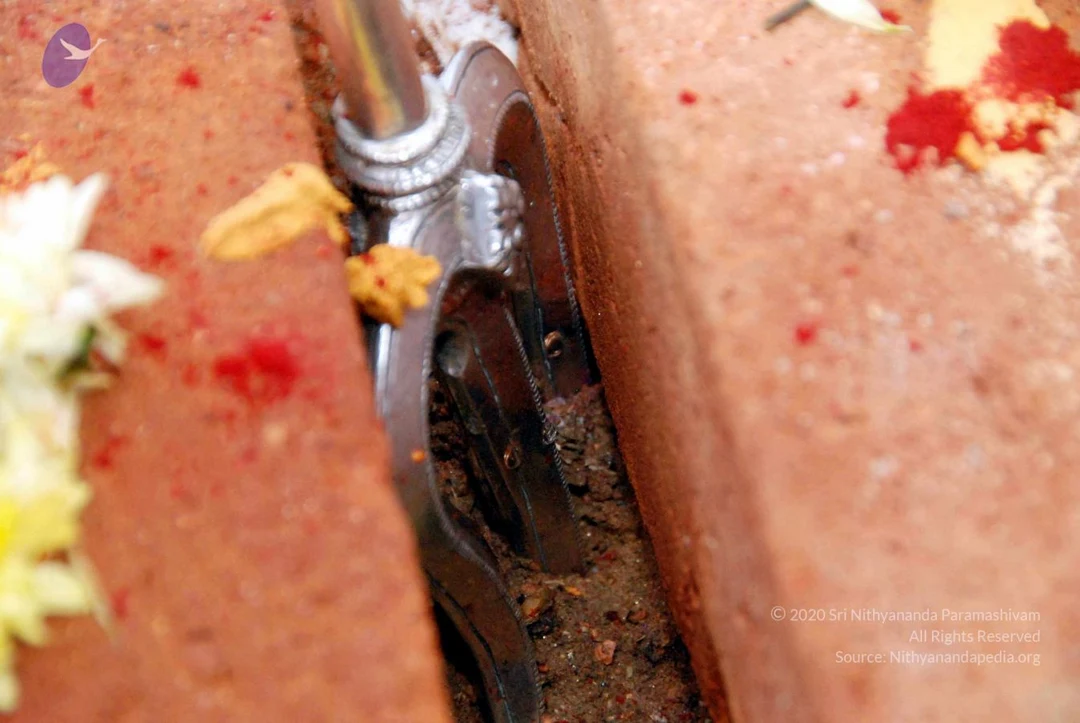
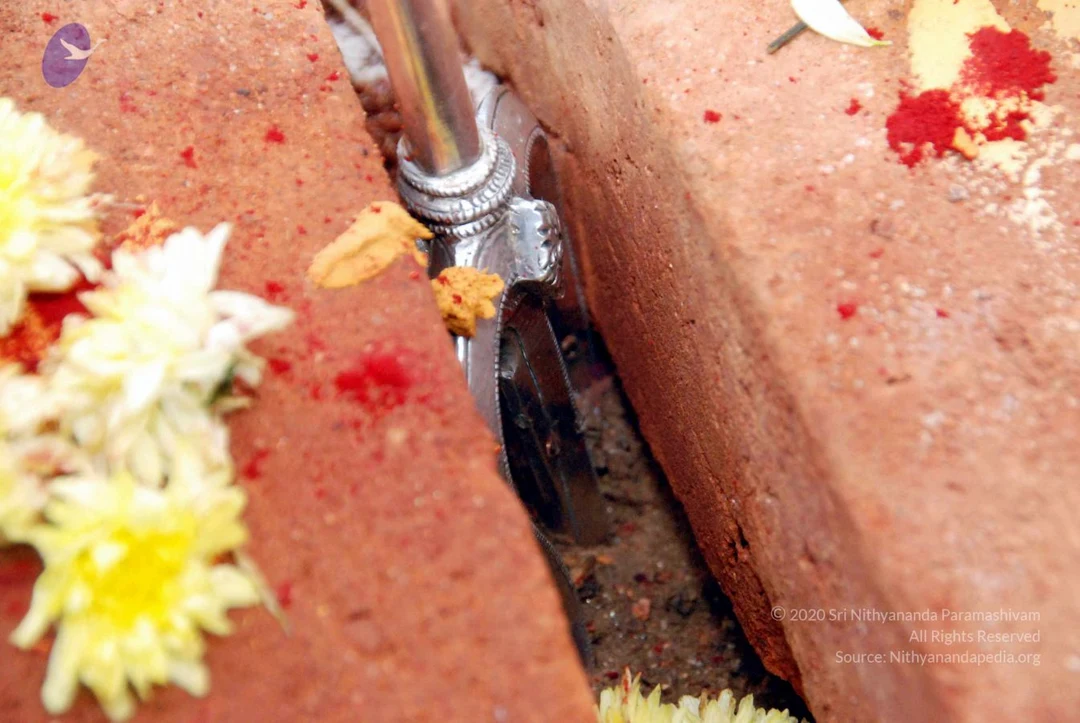
bhoomi pooja

Photos Of The Day:

1-En-Genius-LE

2-En-Genius-Brain-Gym

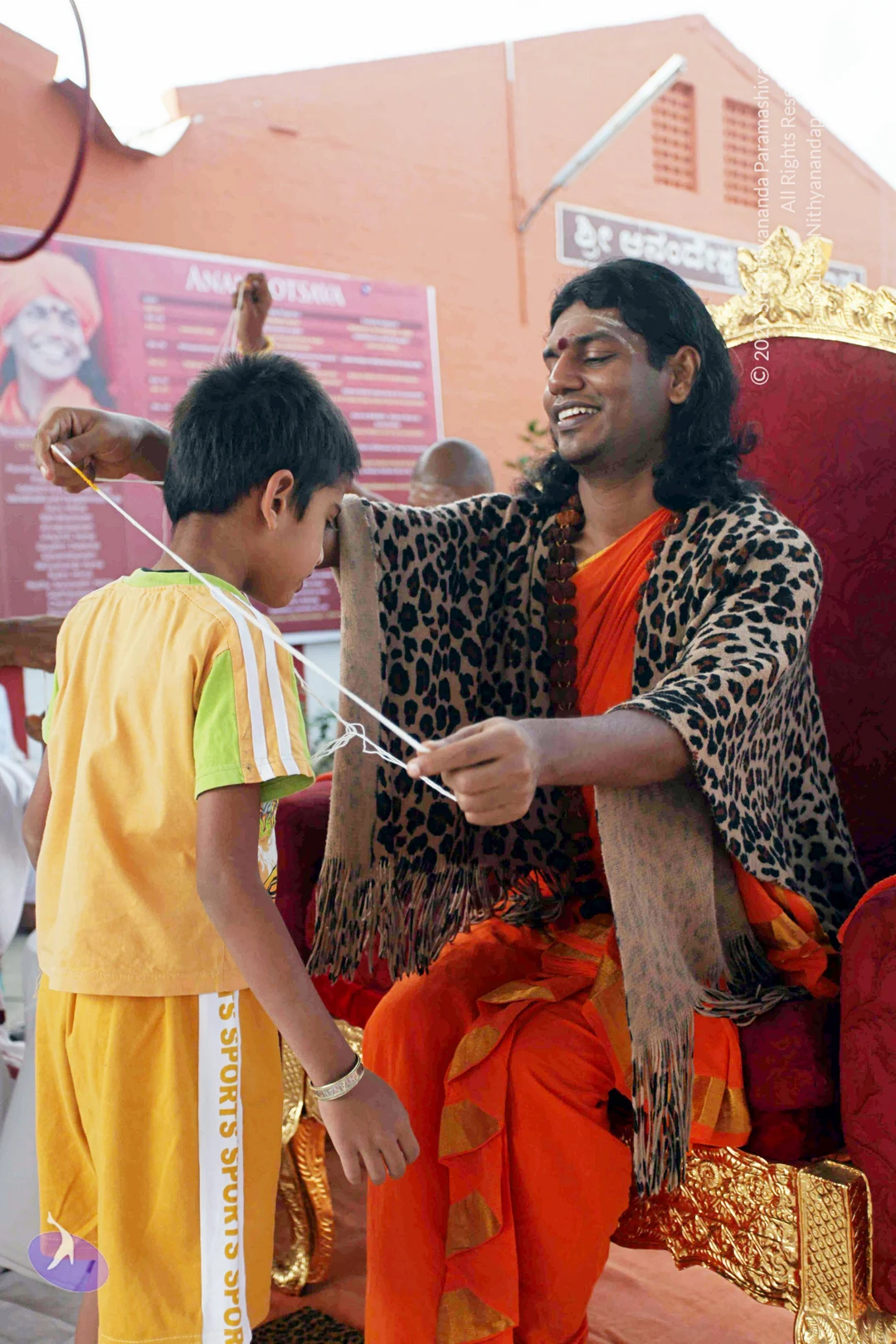
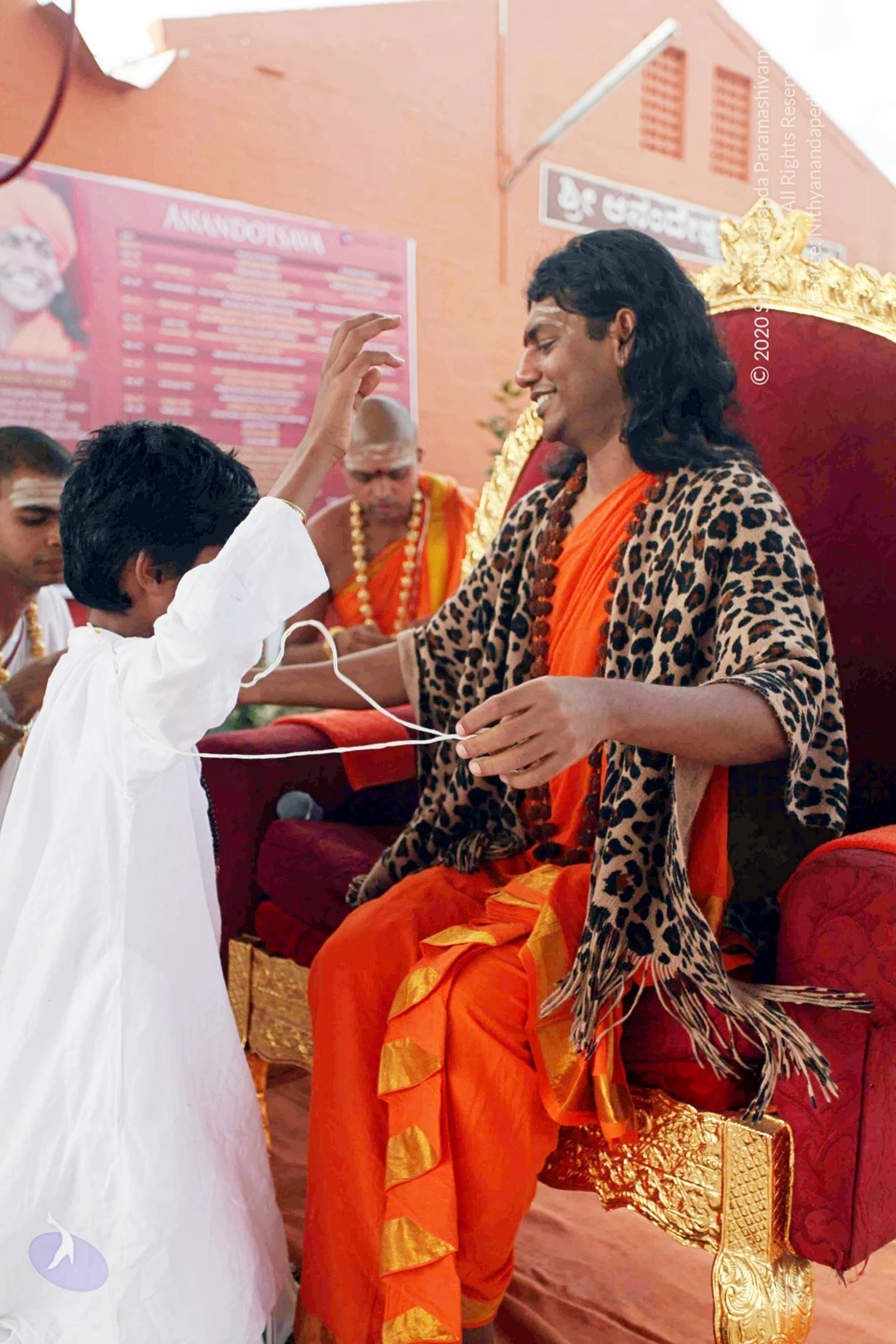
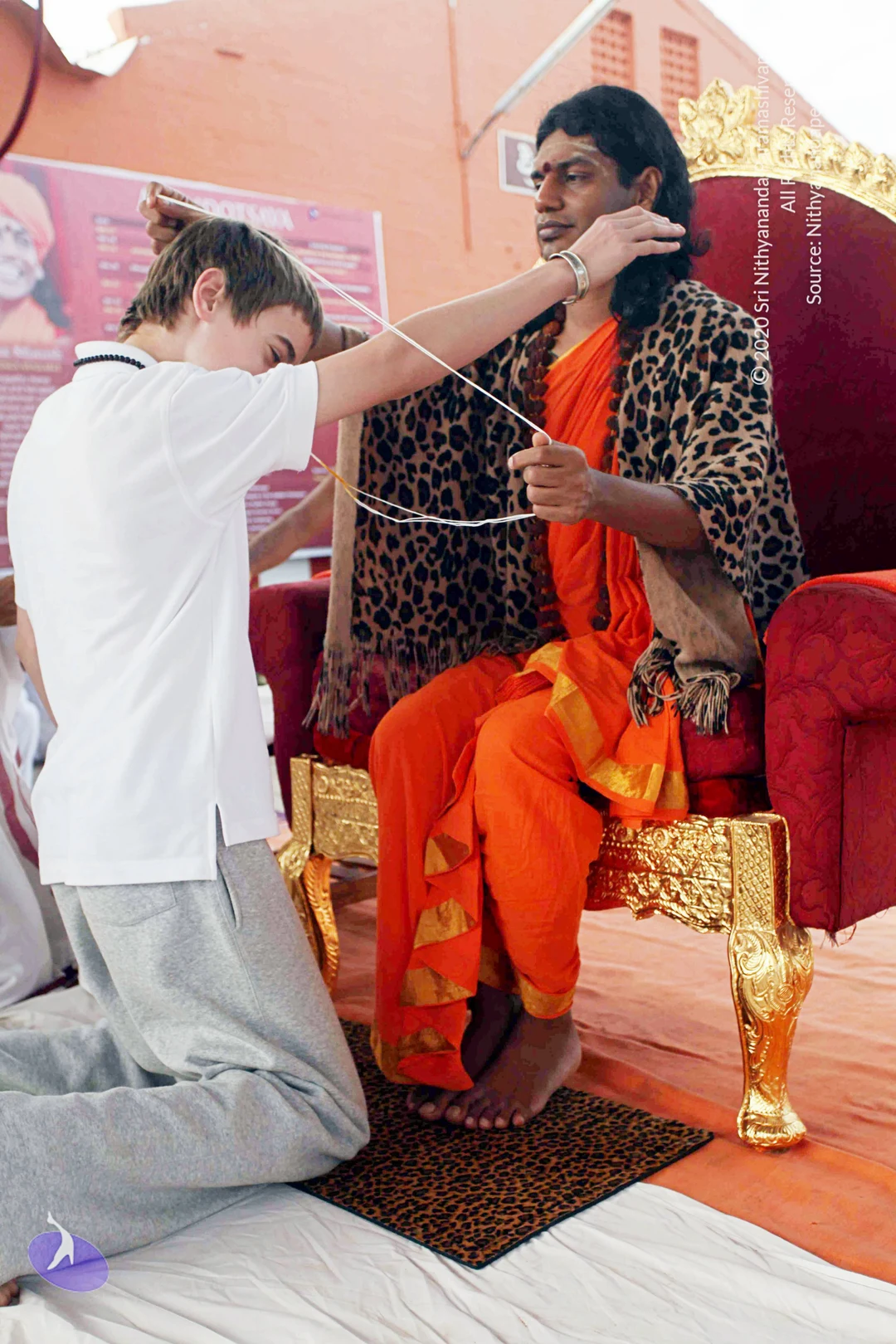
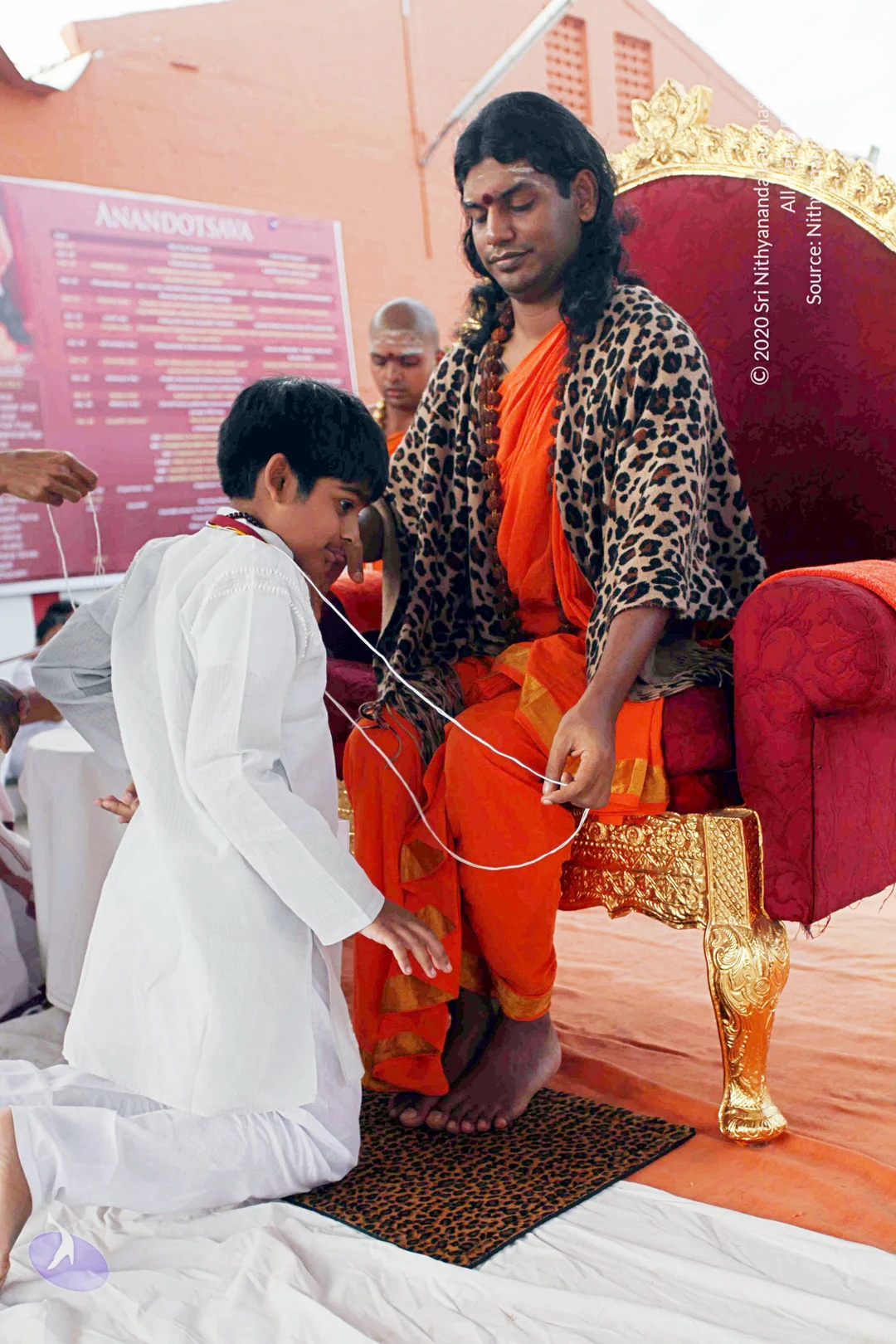
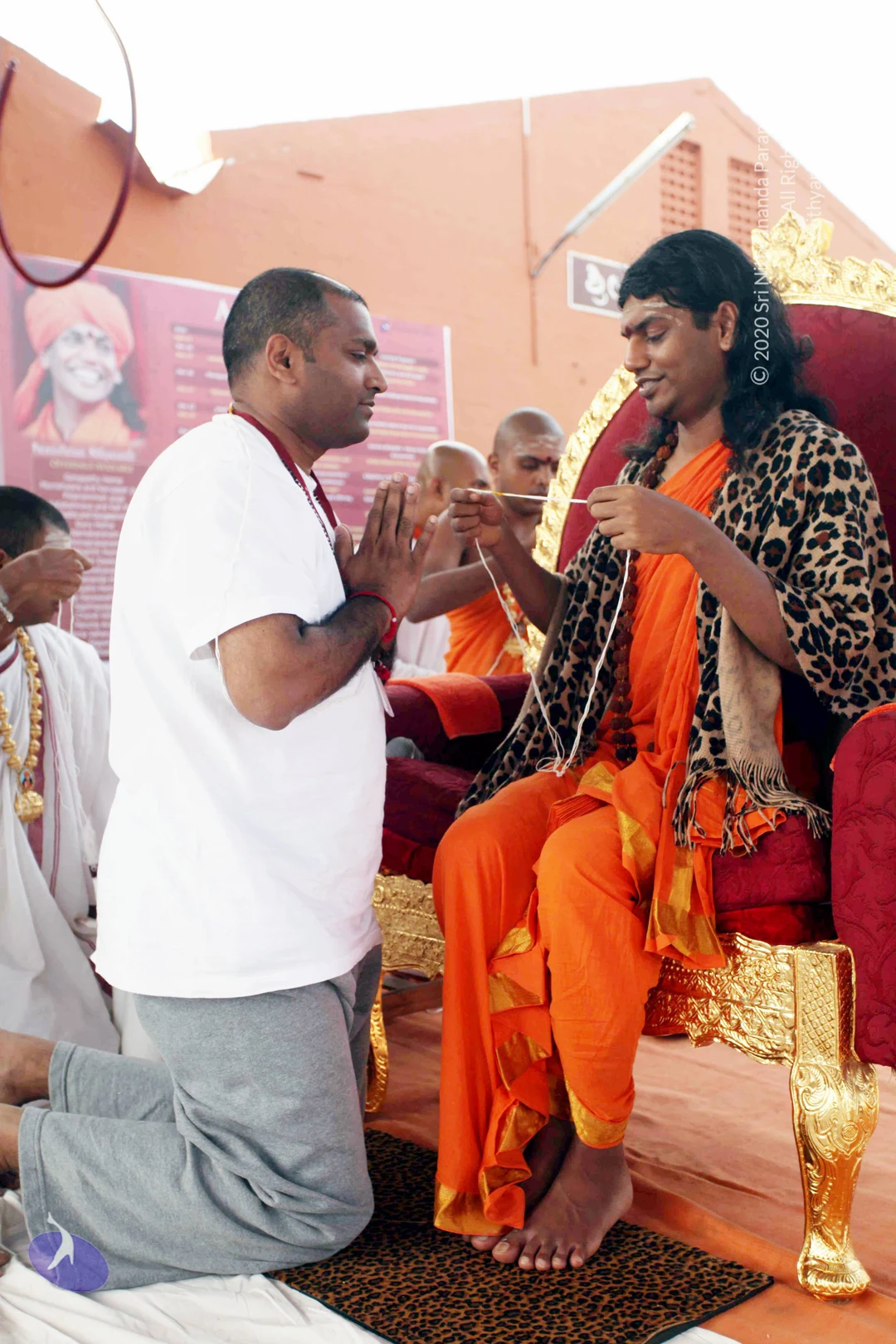
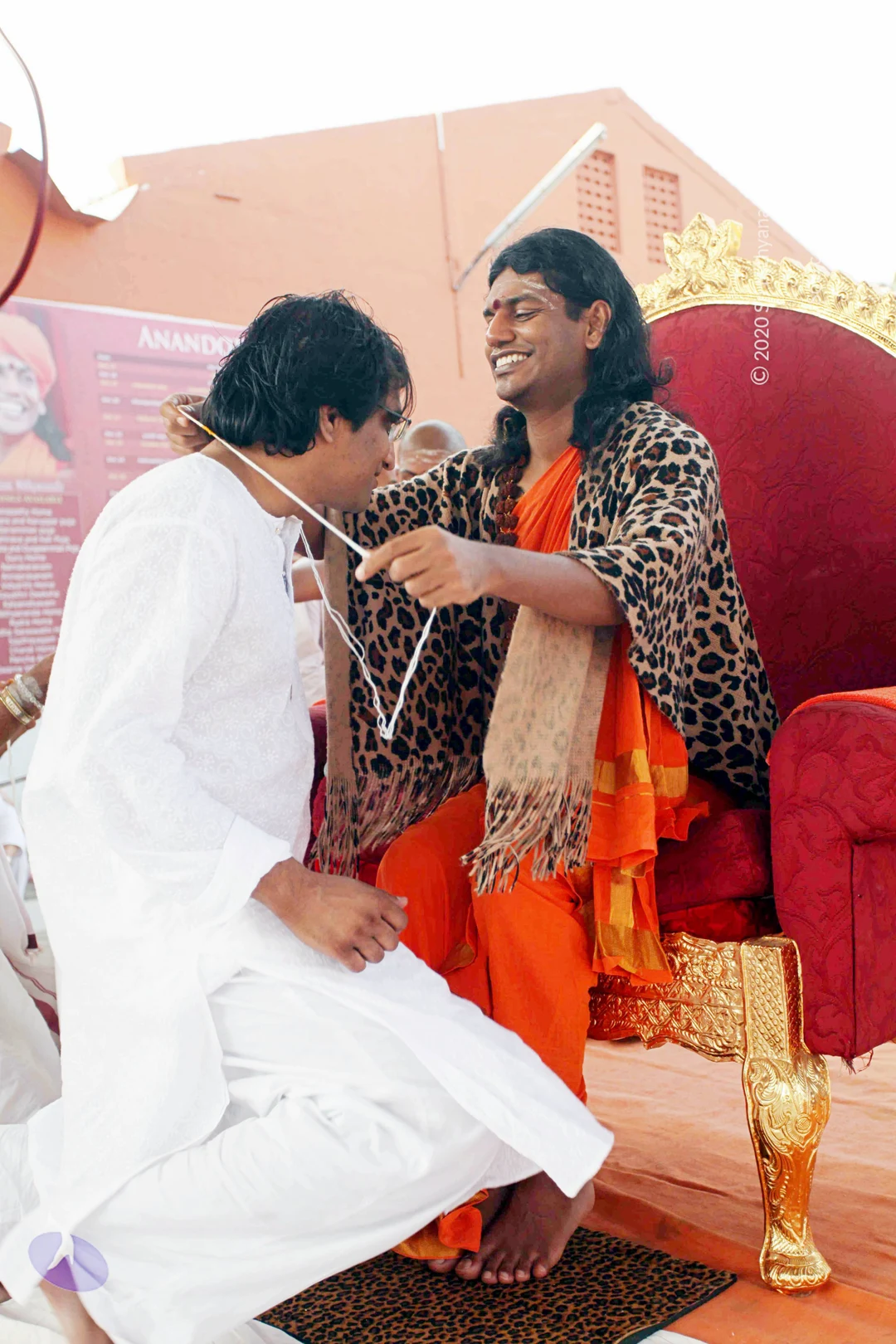
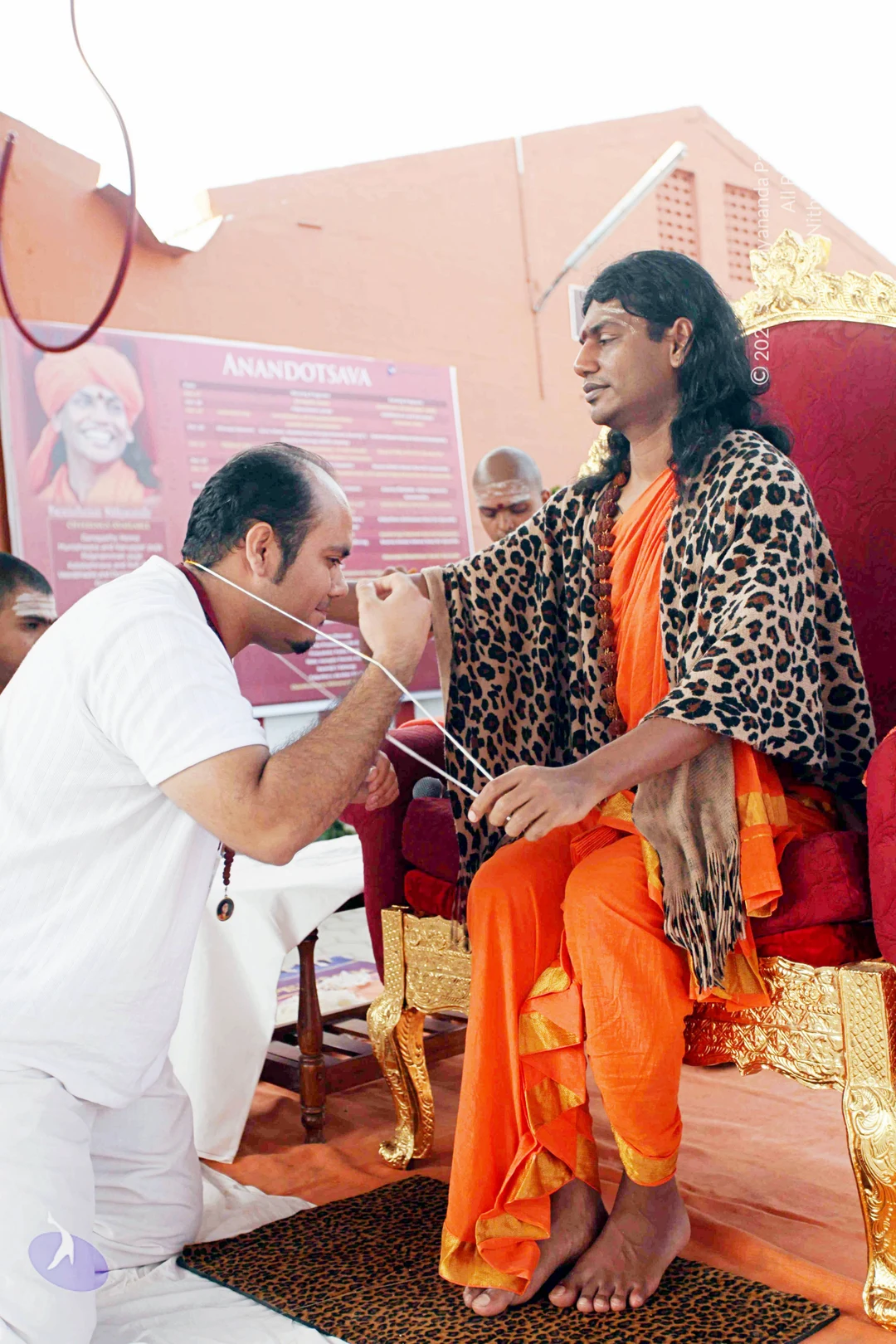
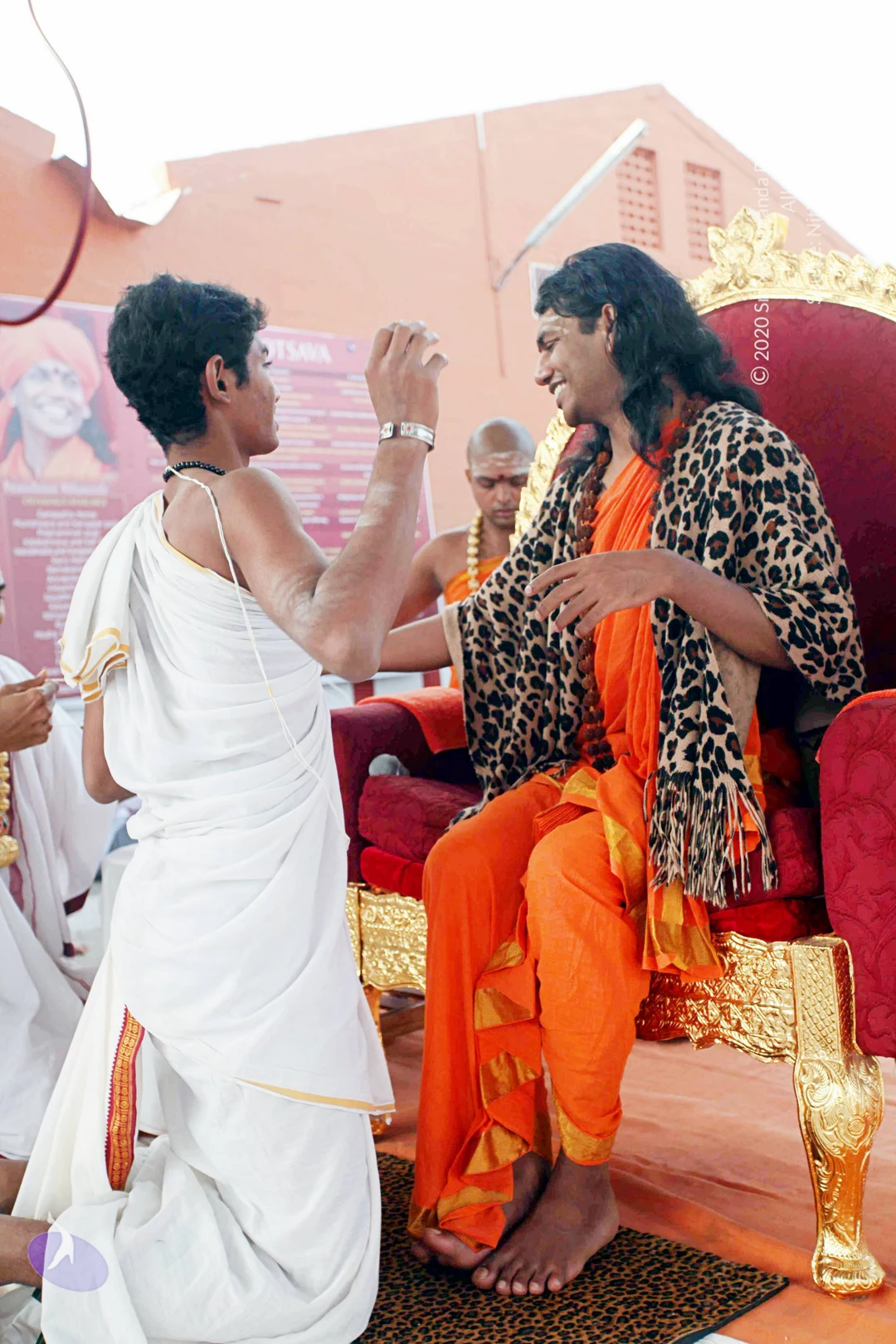
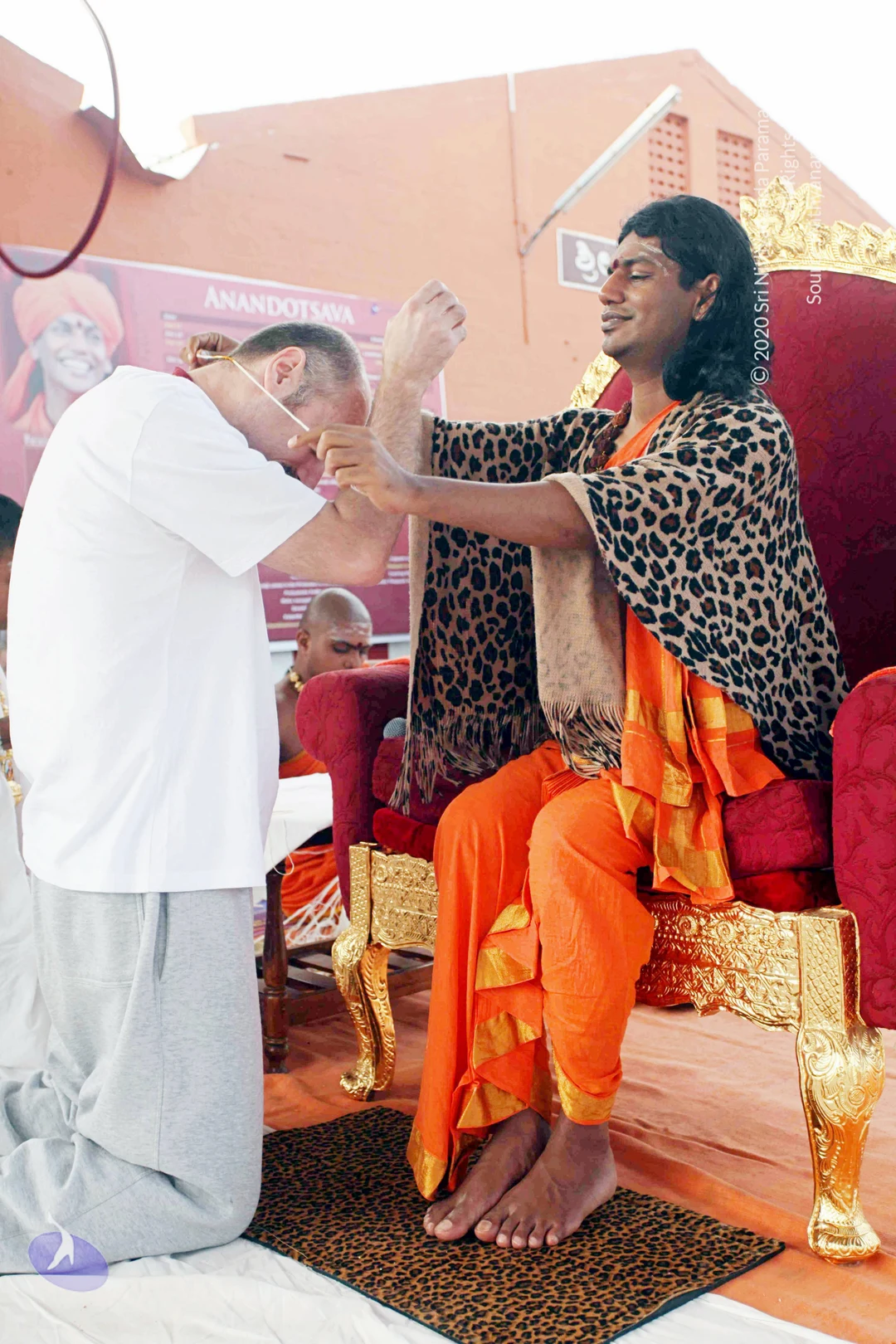
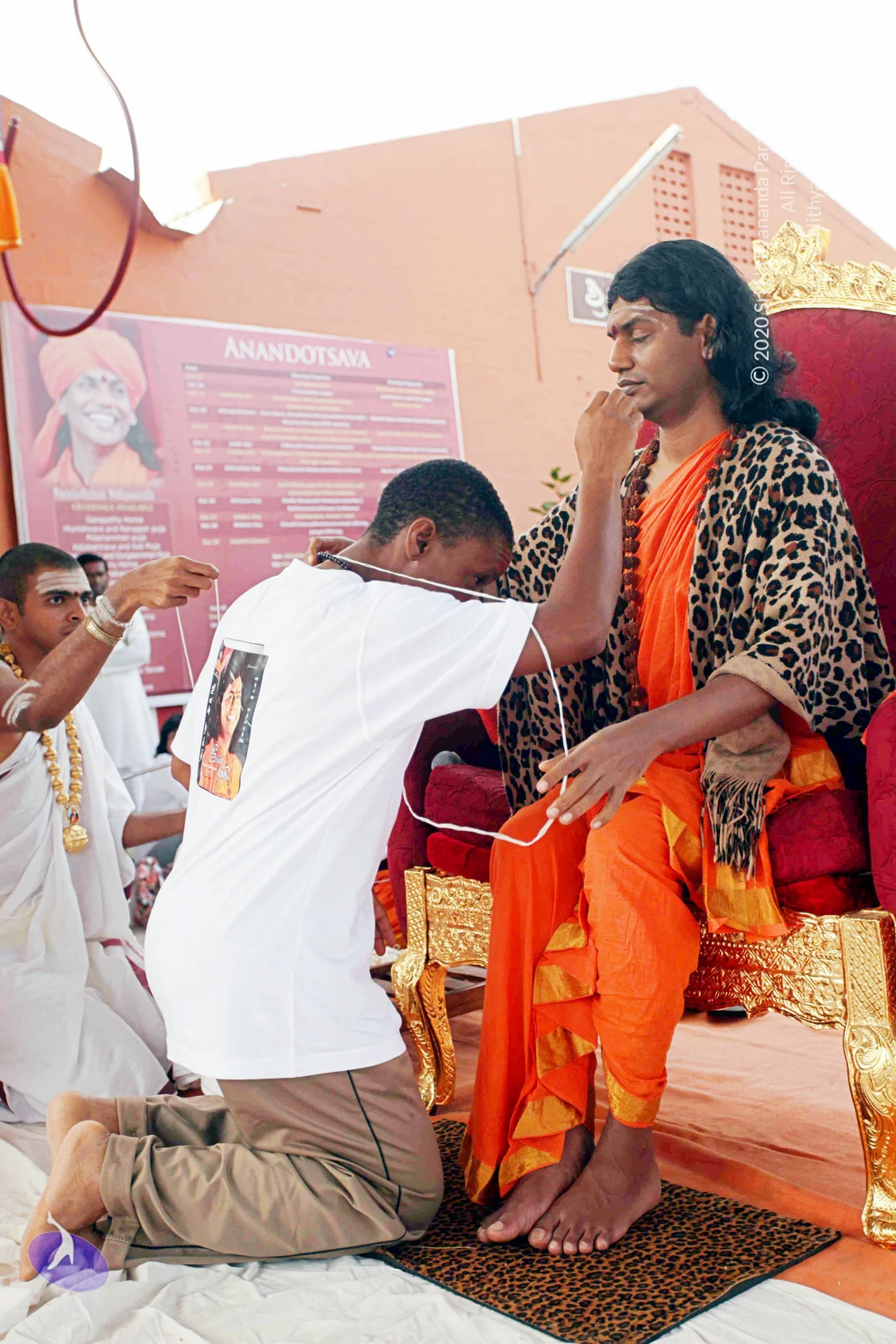
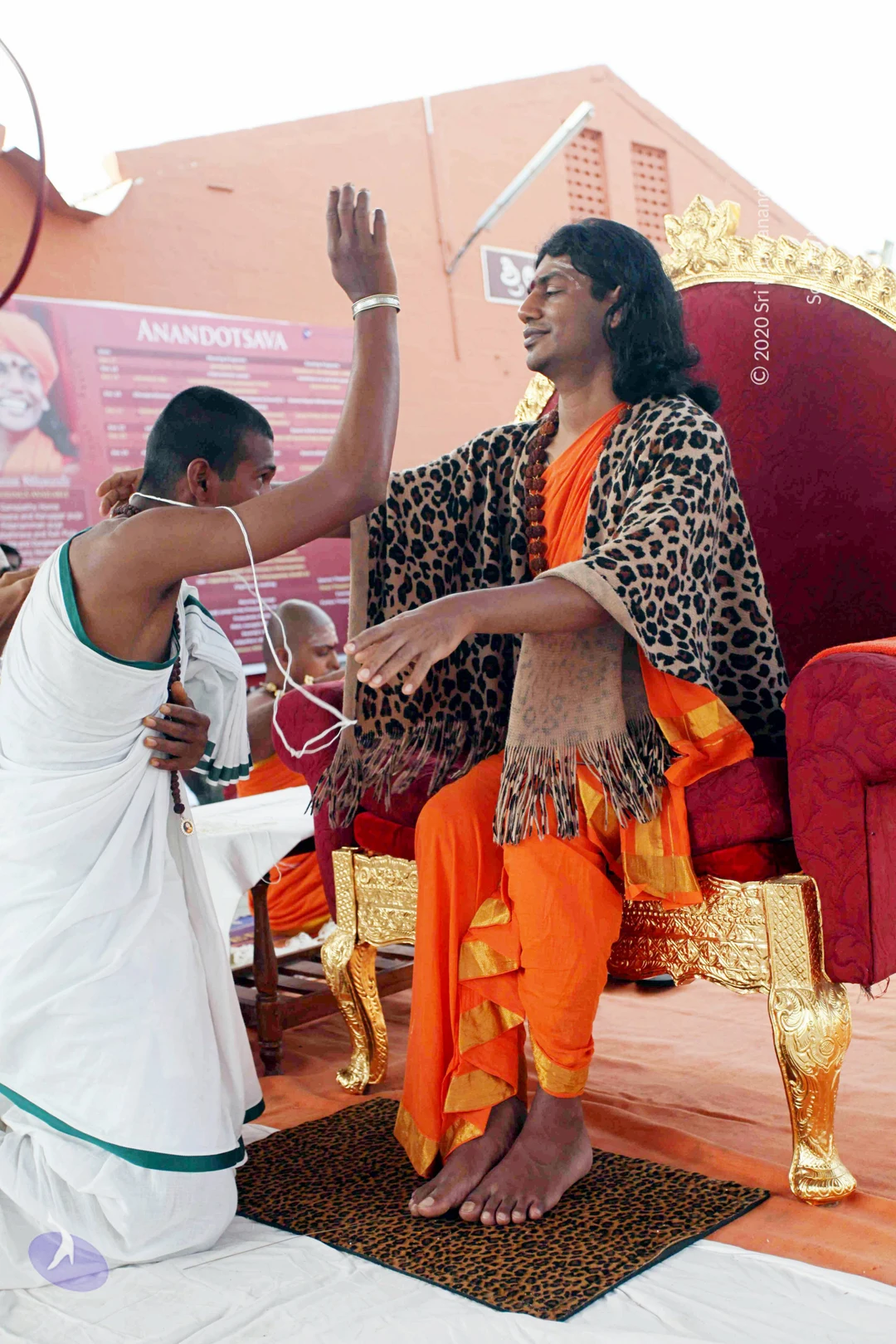
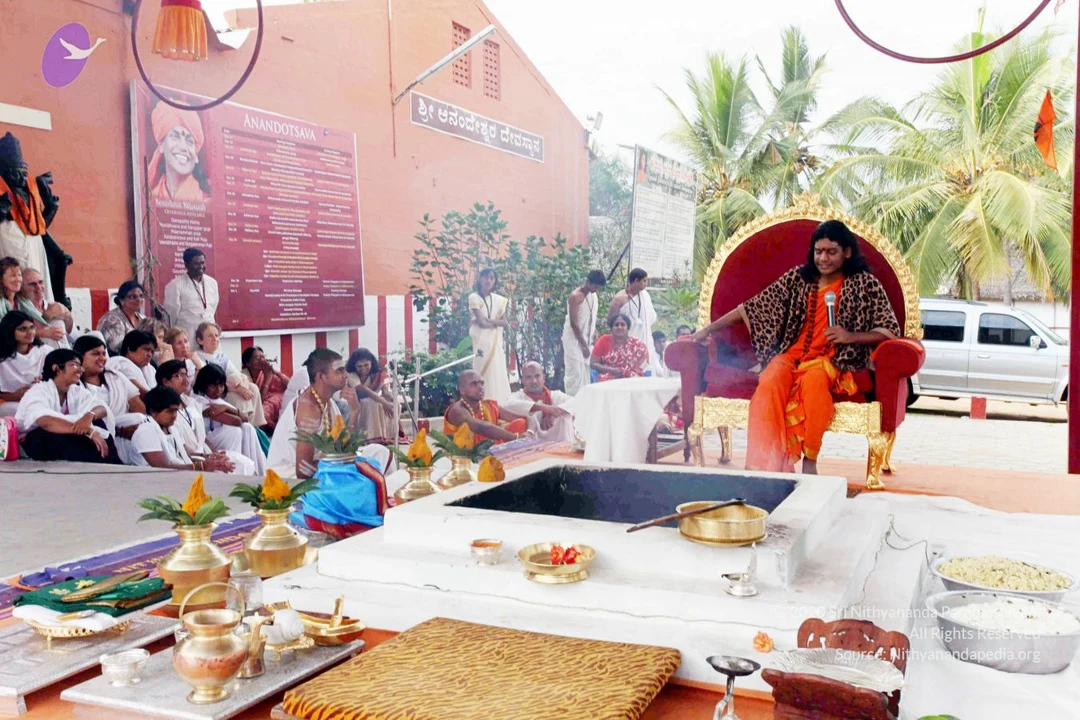
Gayatri Initiation by SPH JGM

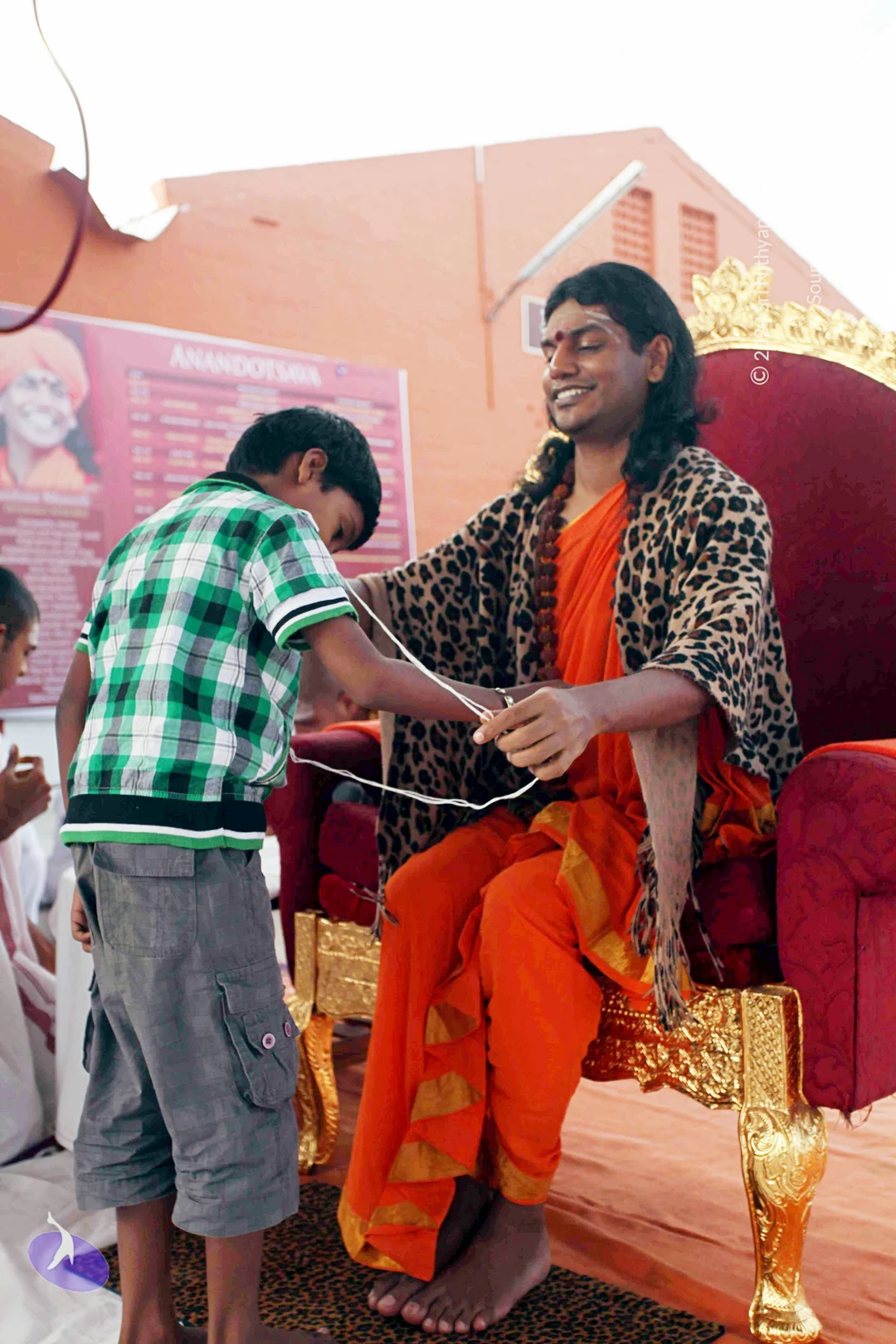
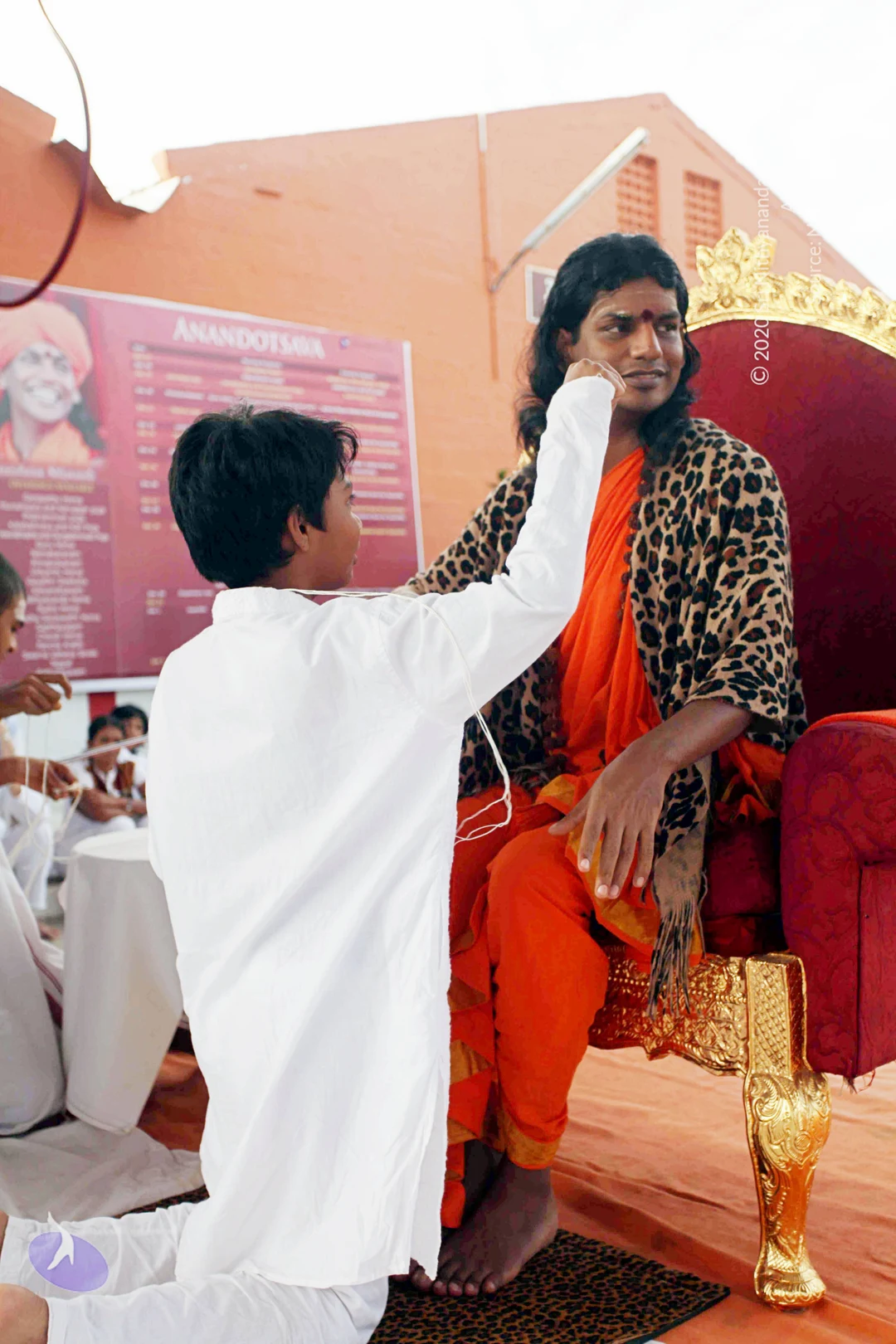
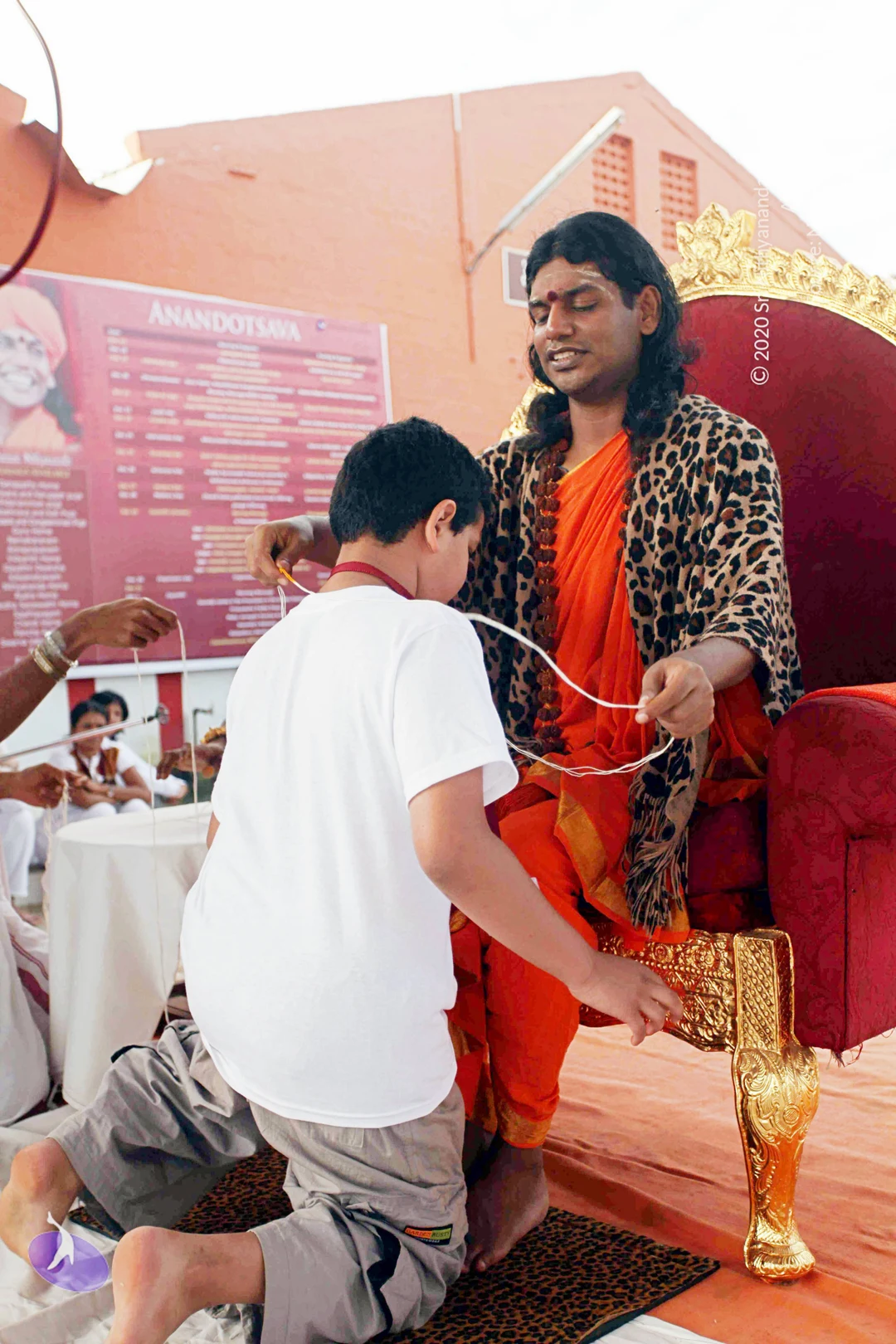
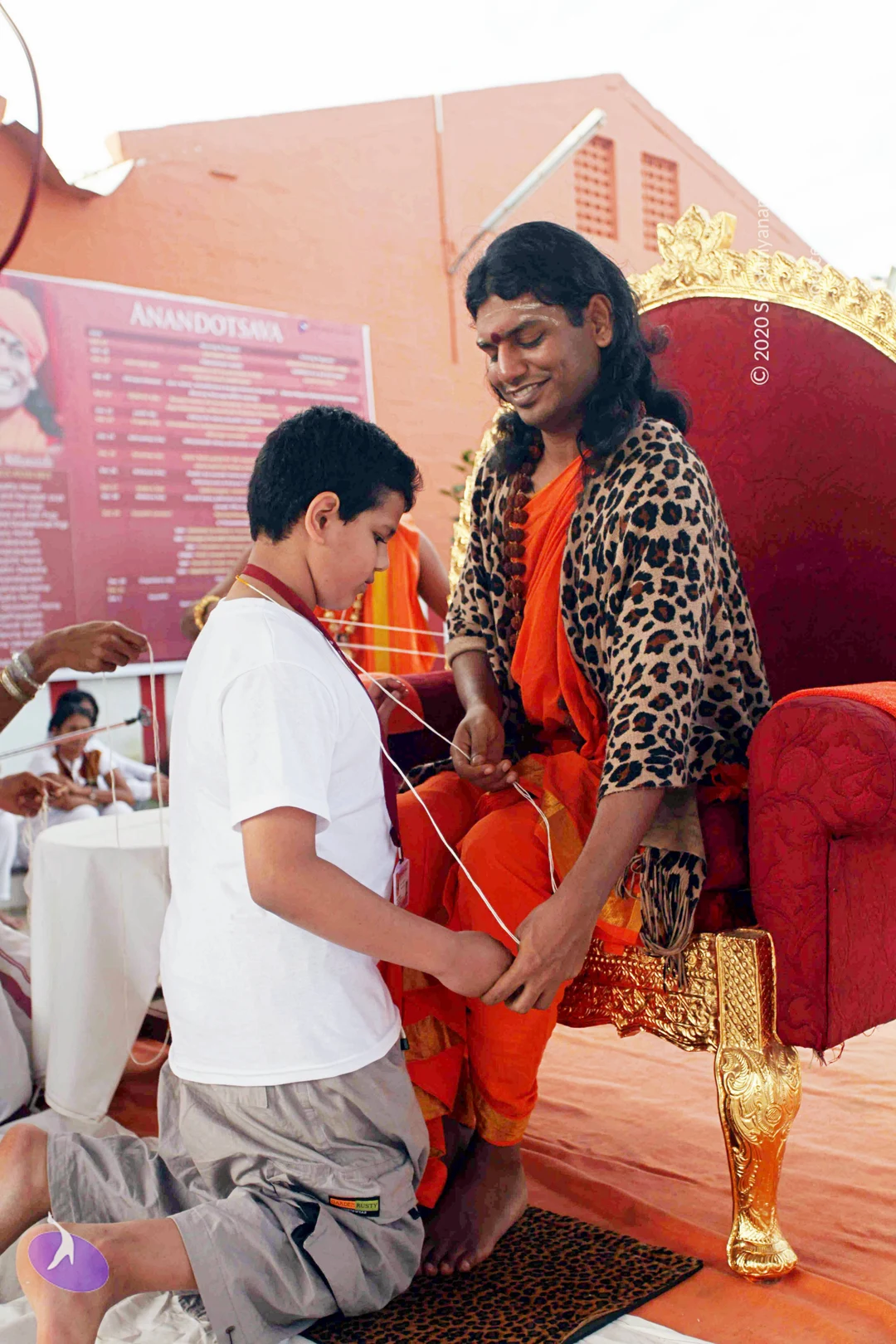
Photos from this day

View all 832 photos

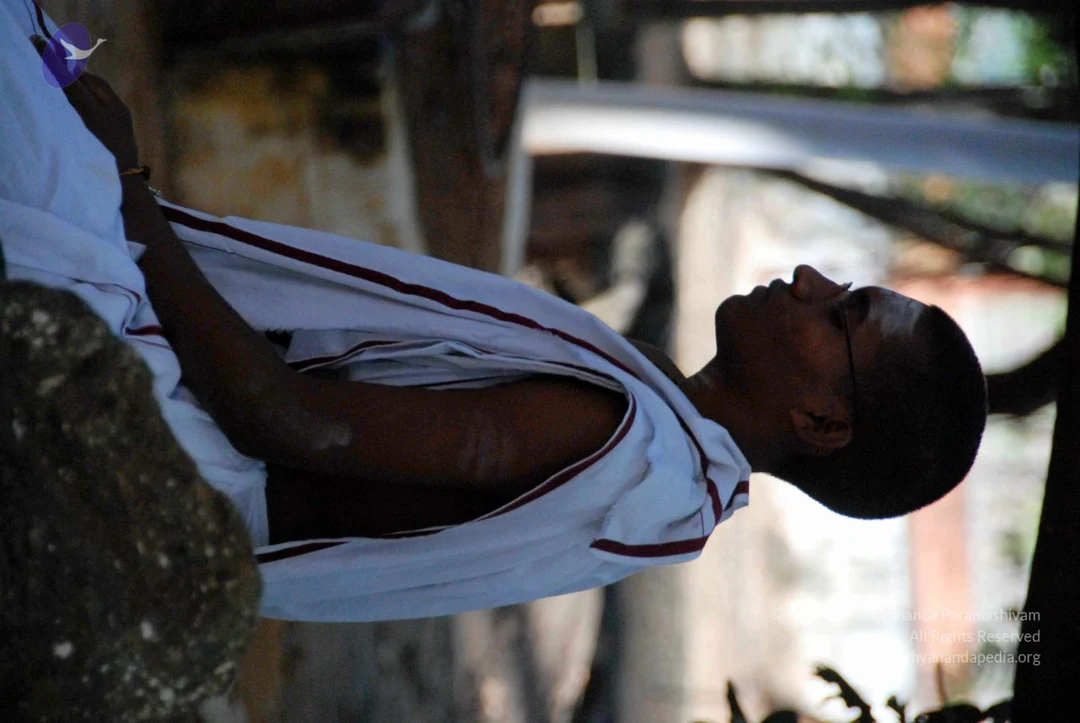
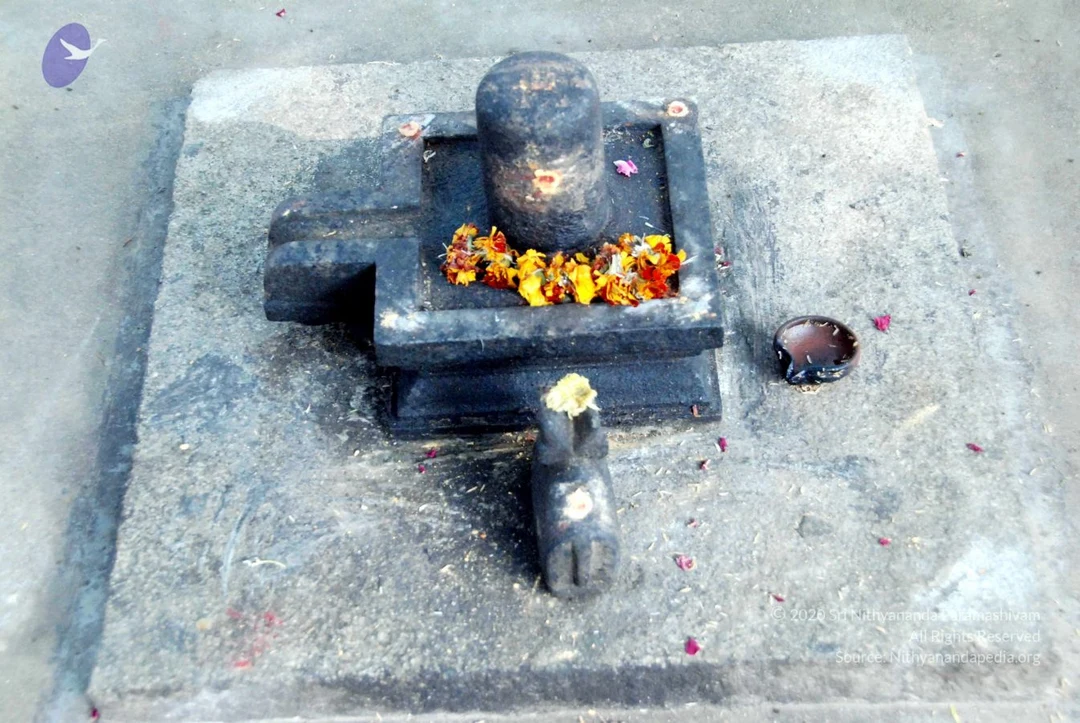
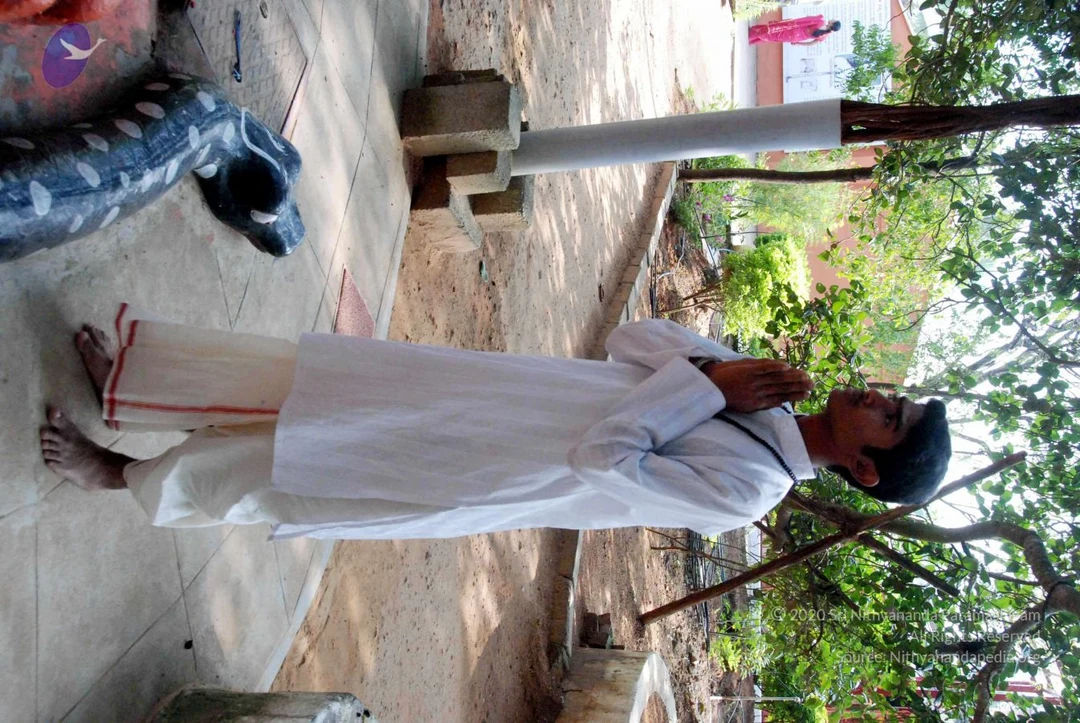
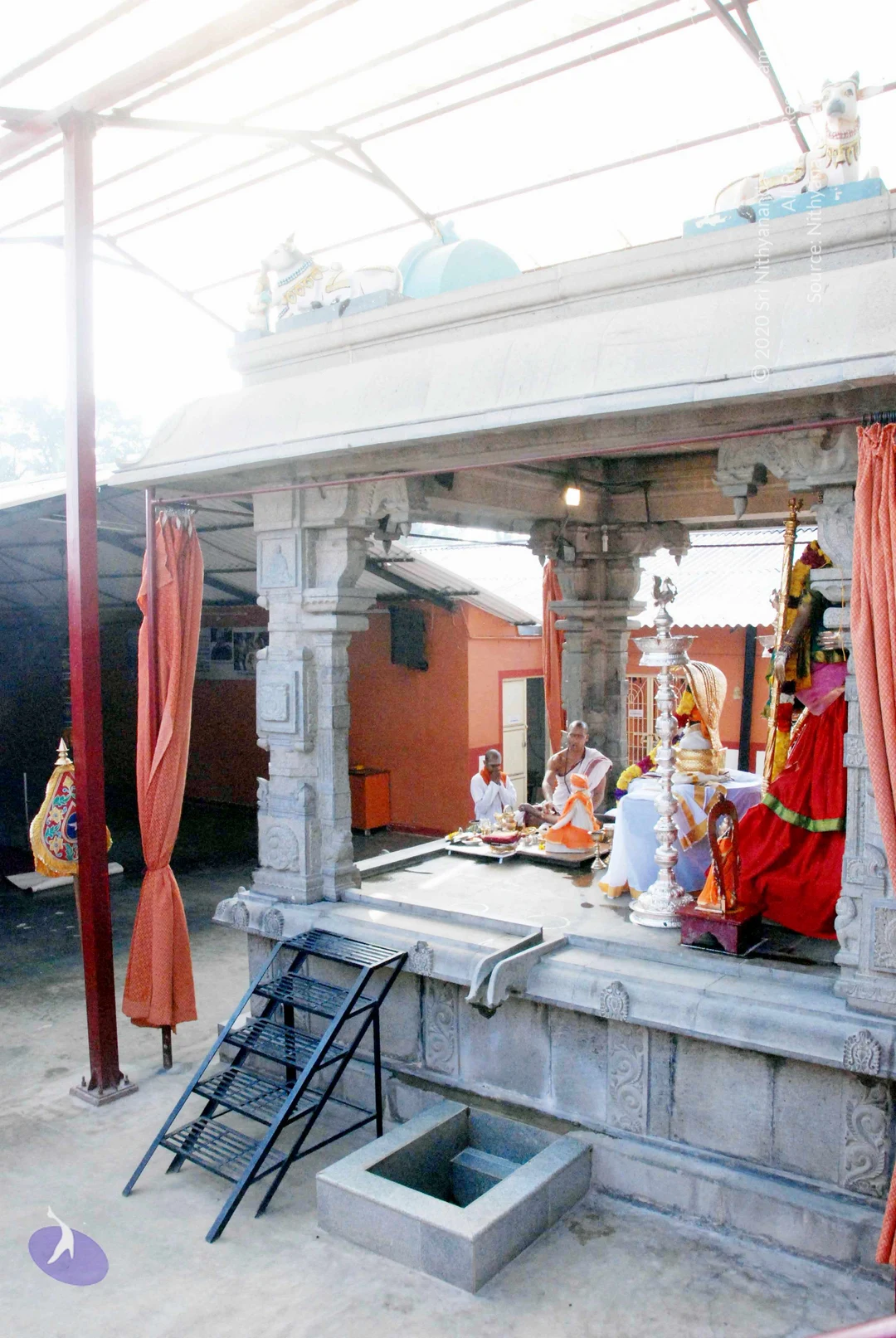
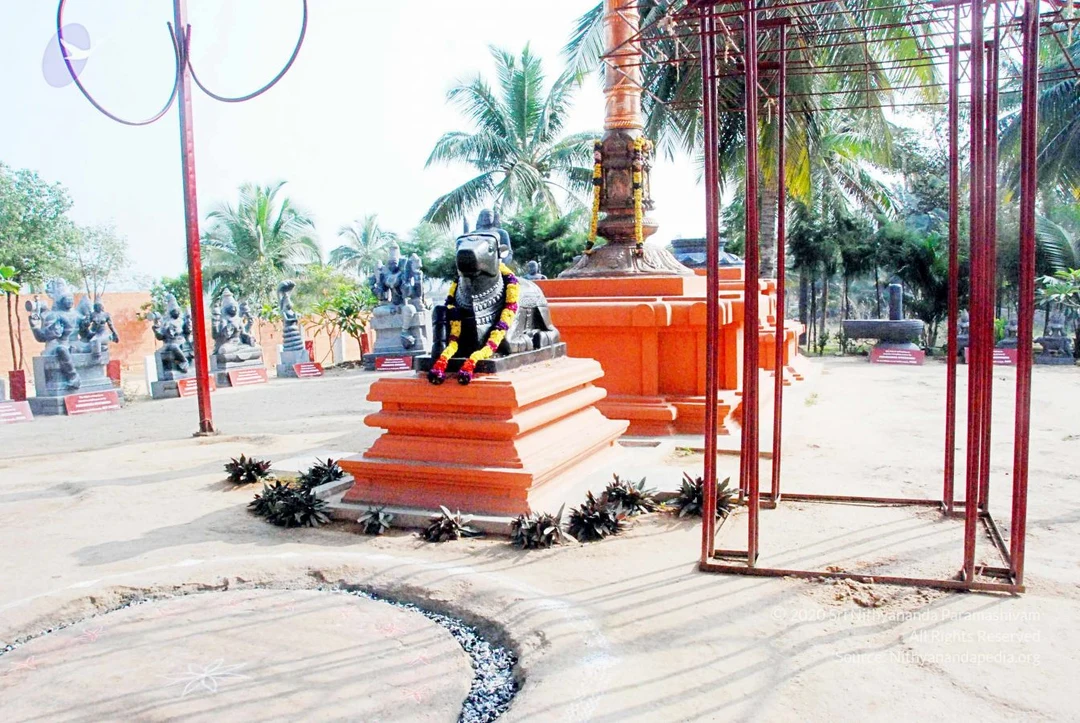
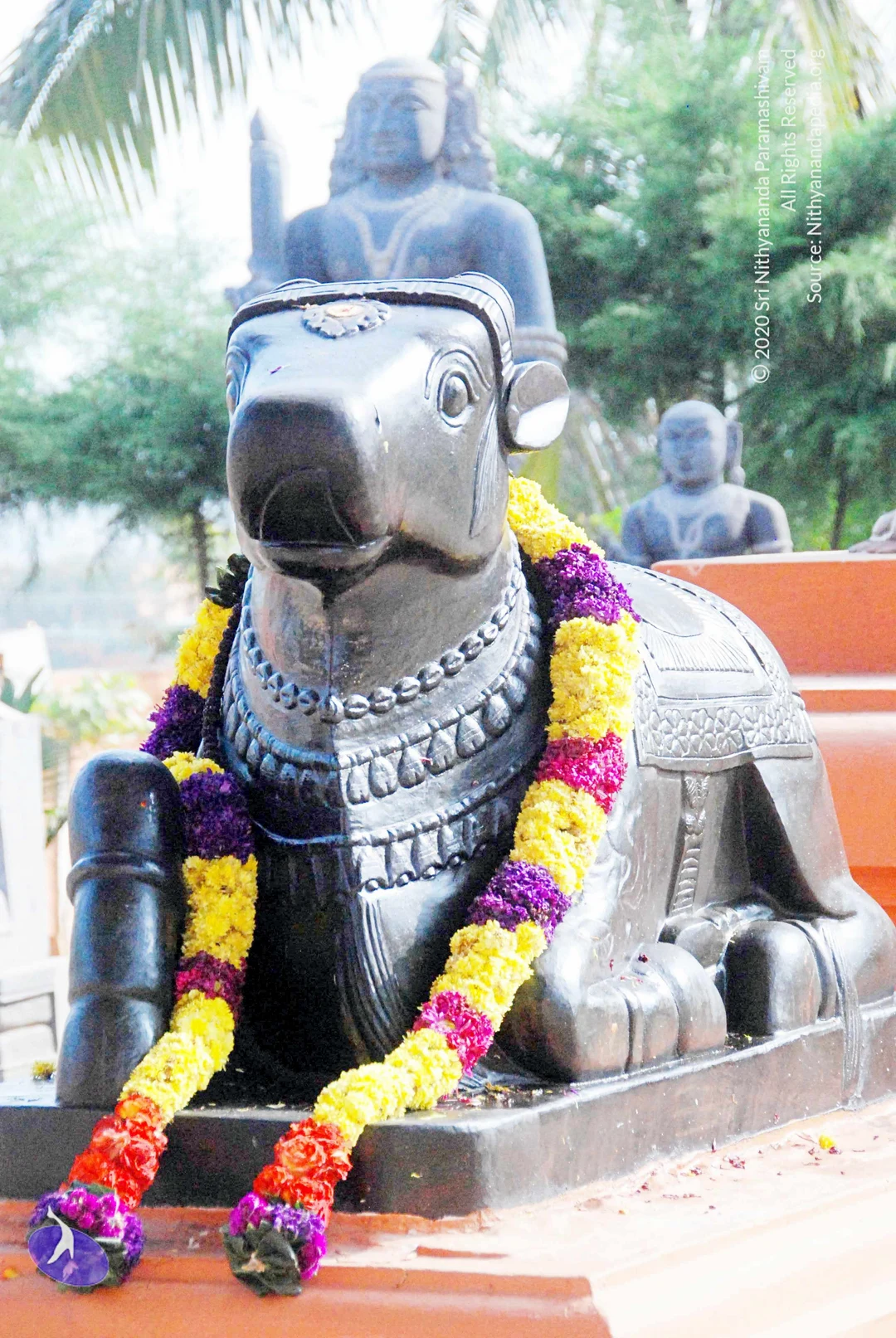
Nithyanandeshwara Paramashiva Devalayam
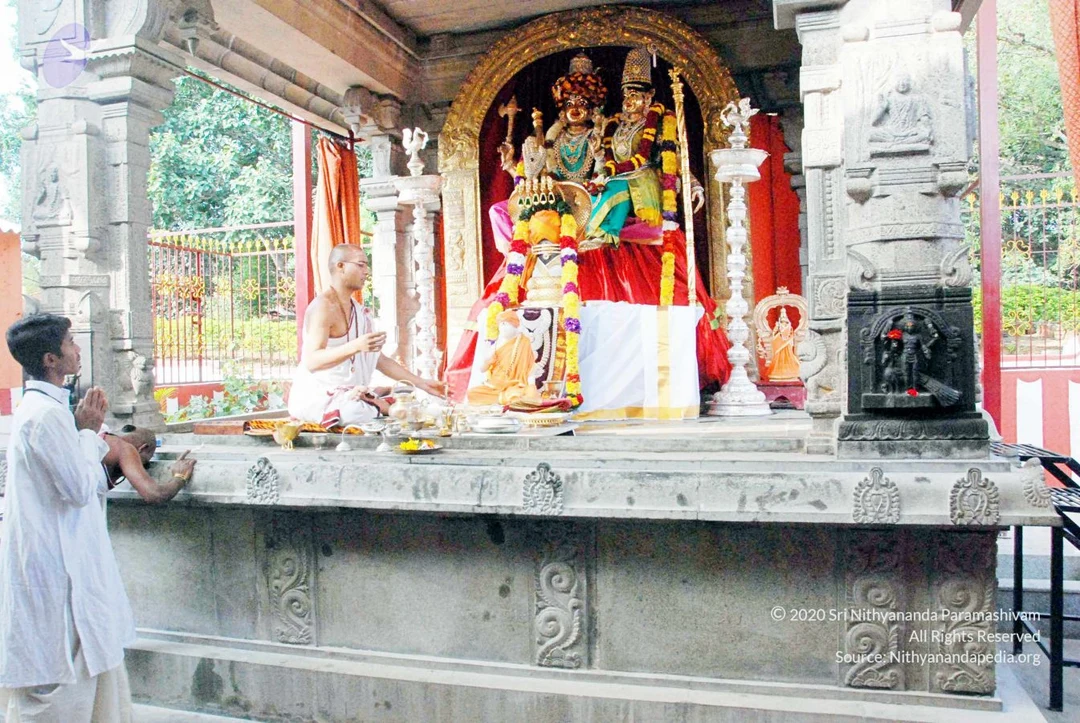
41 photosSource gallery
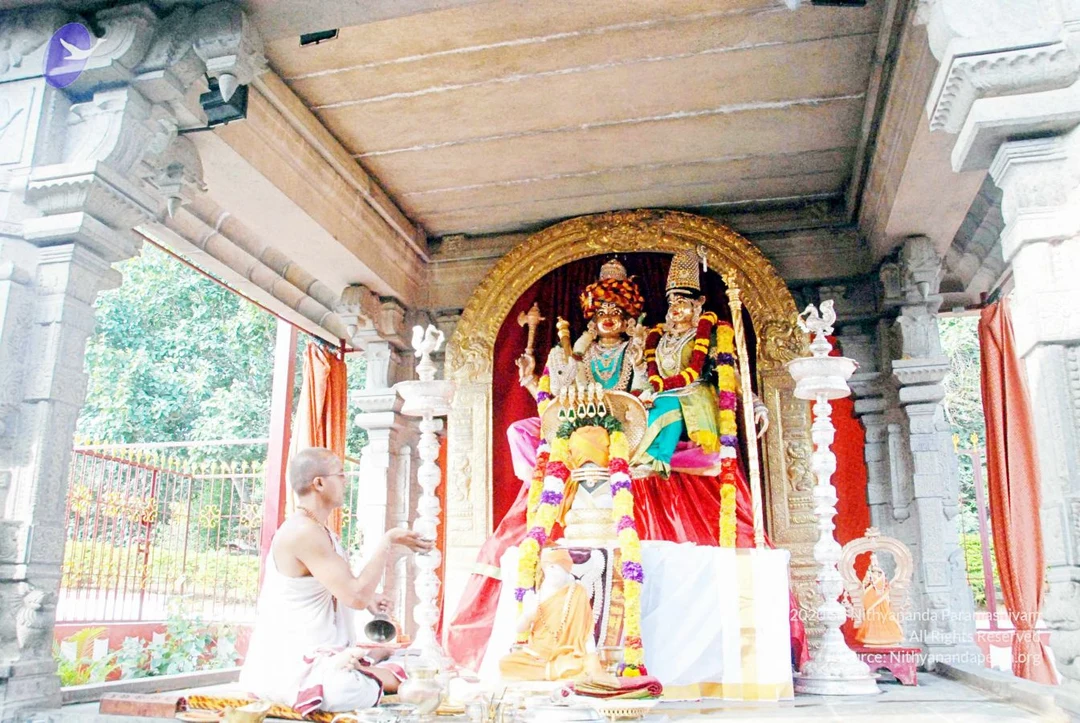
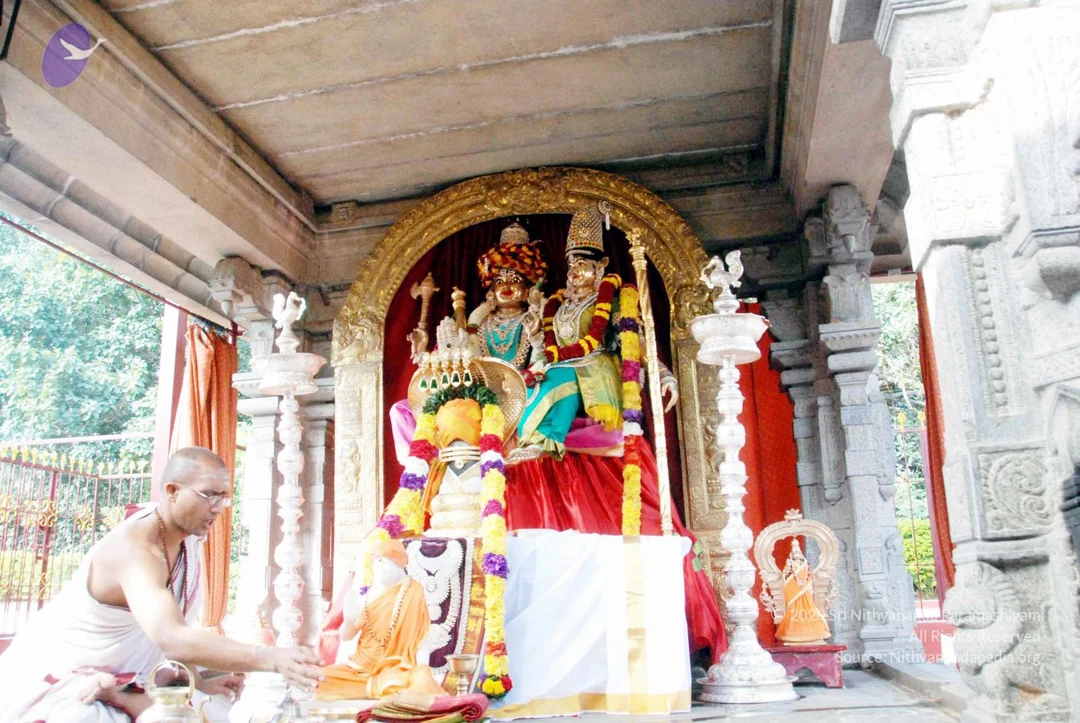
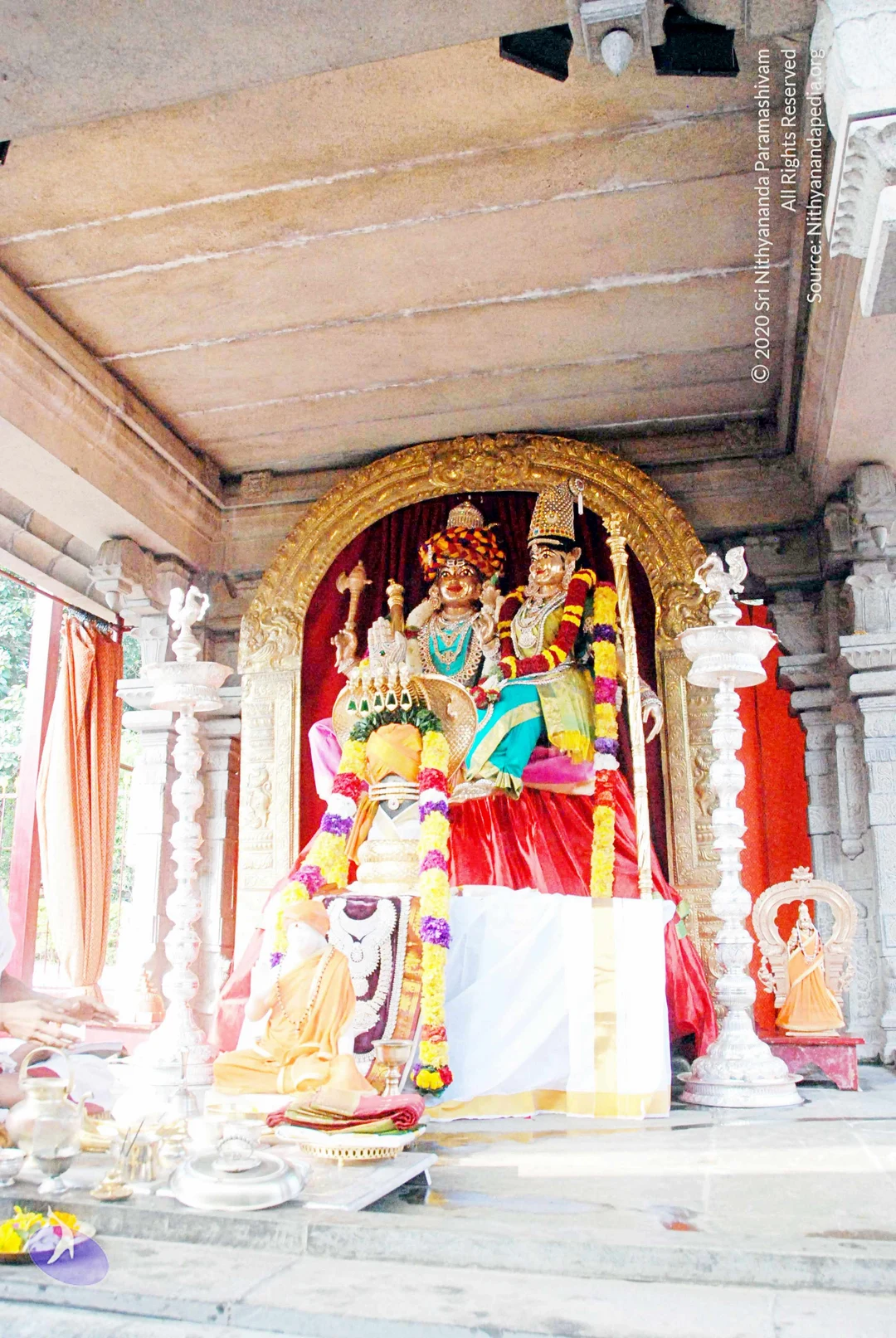
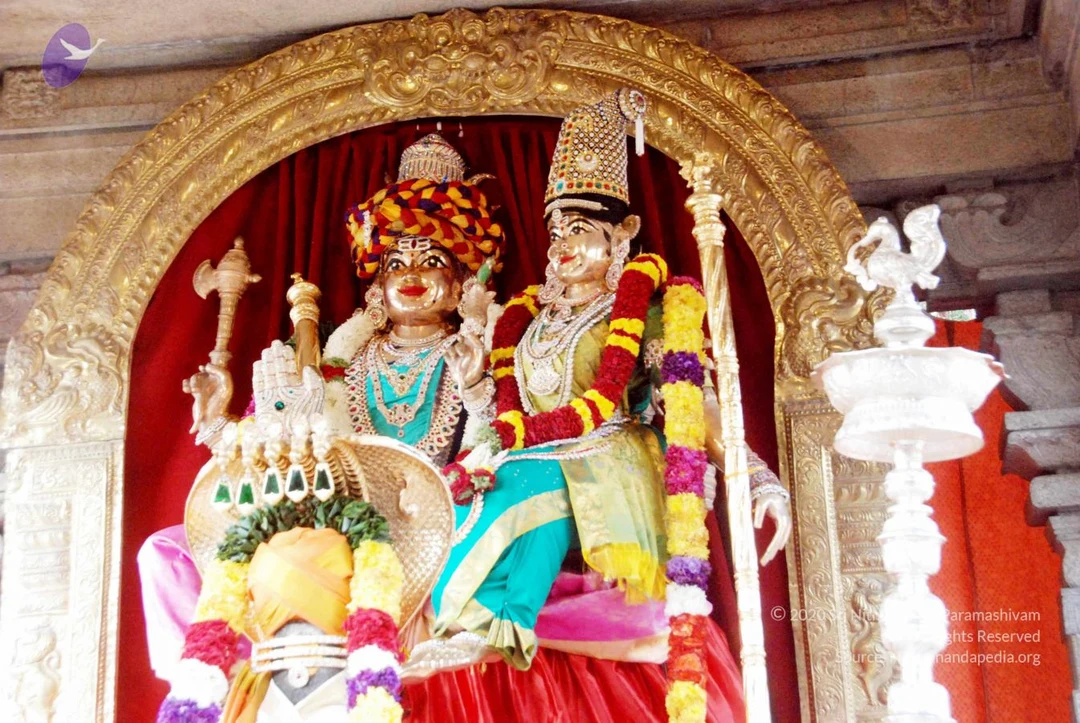
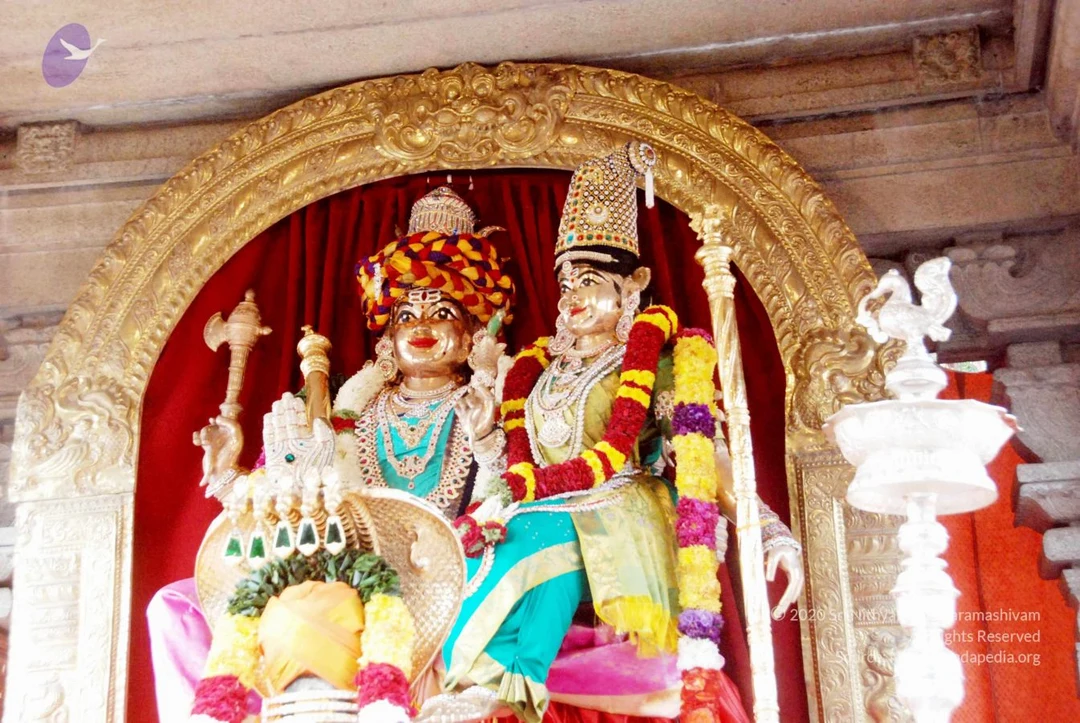
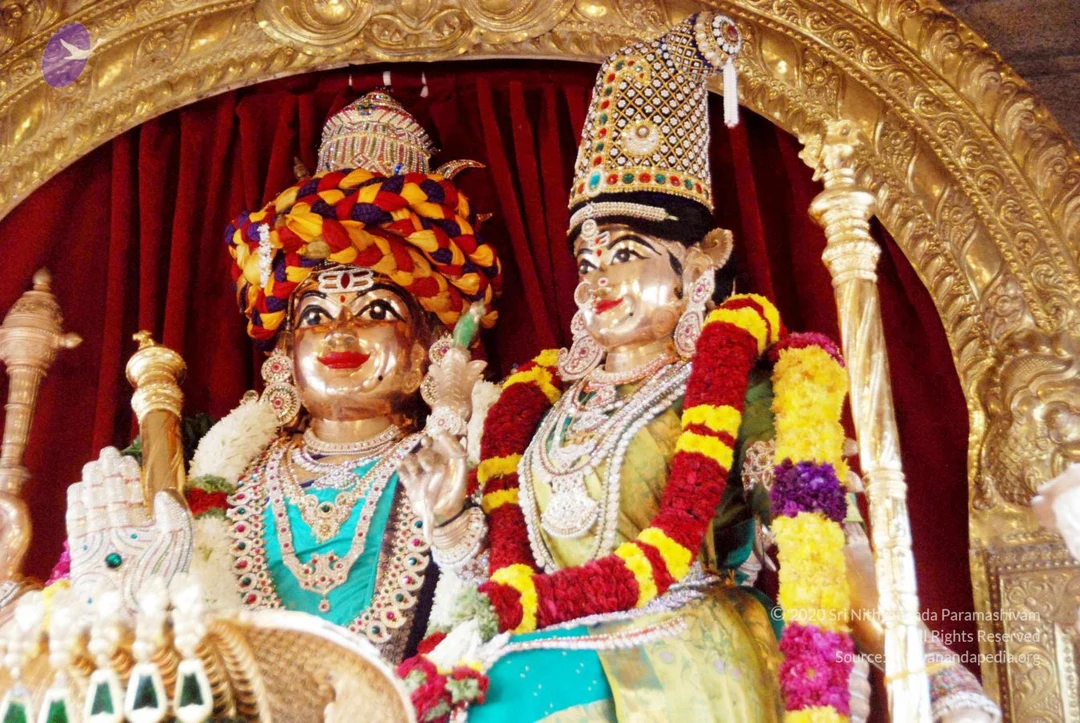
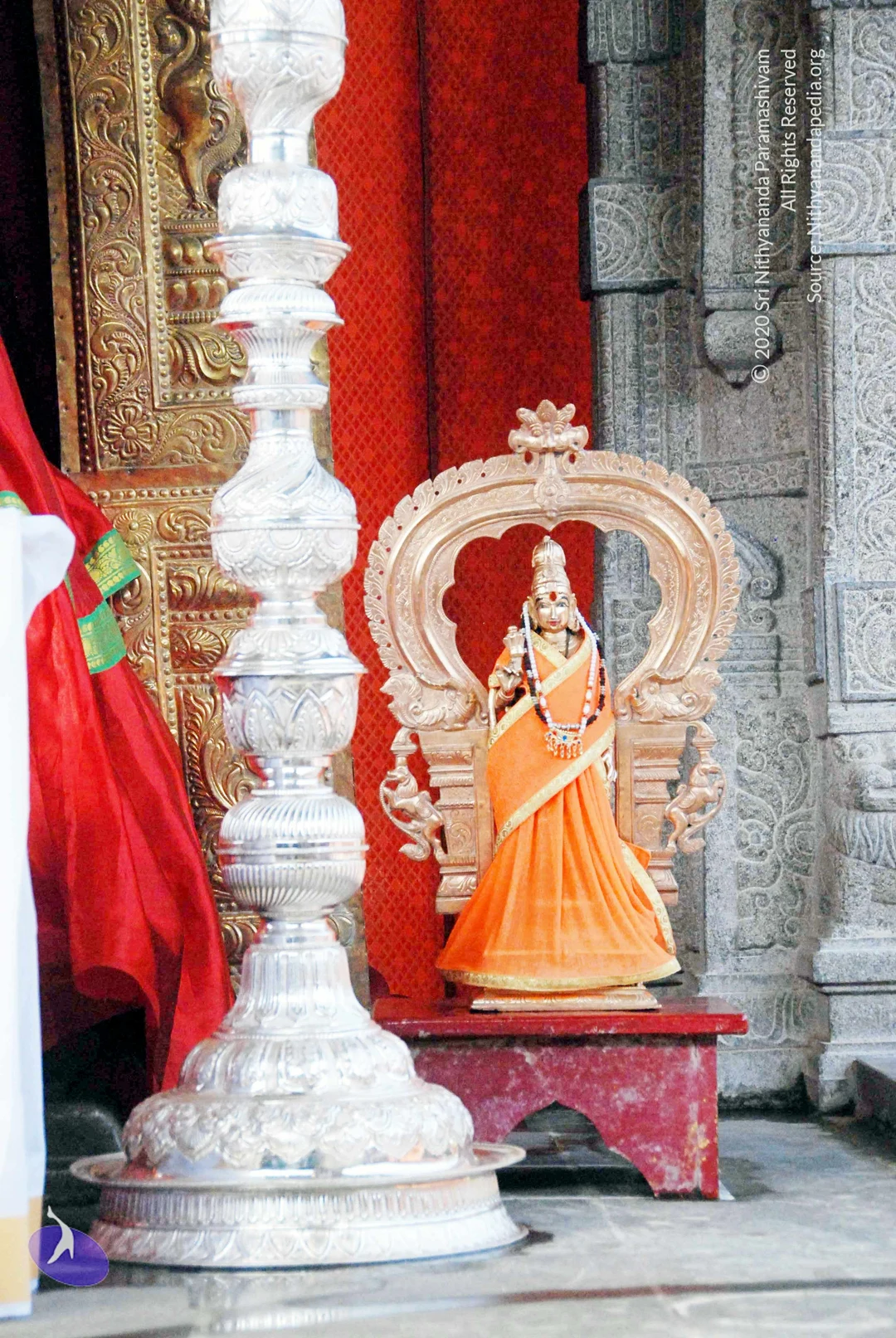
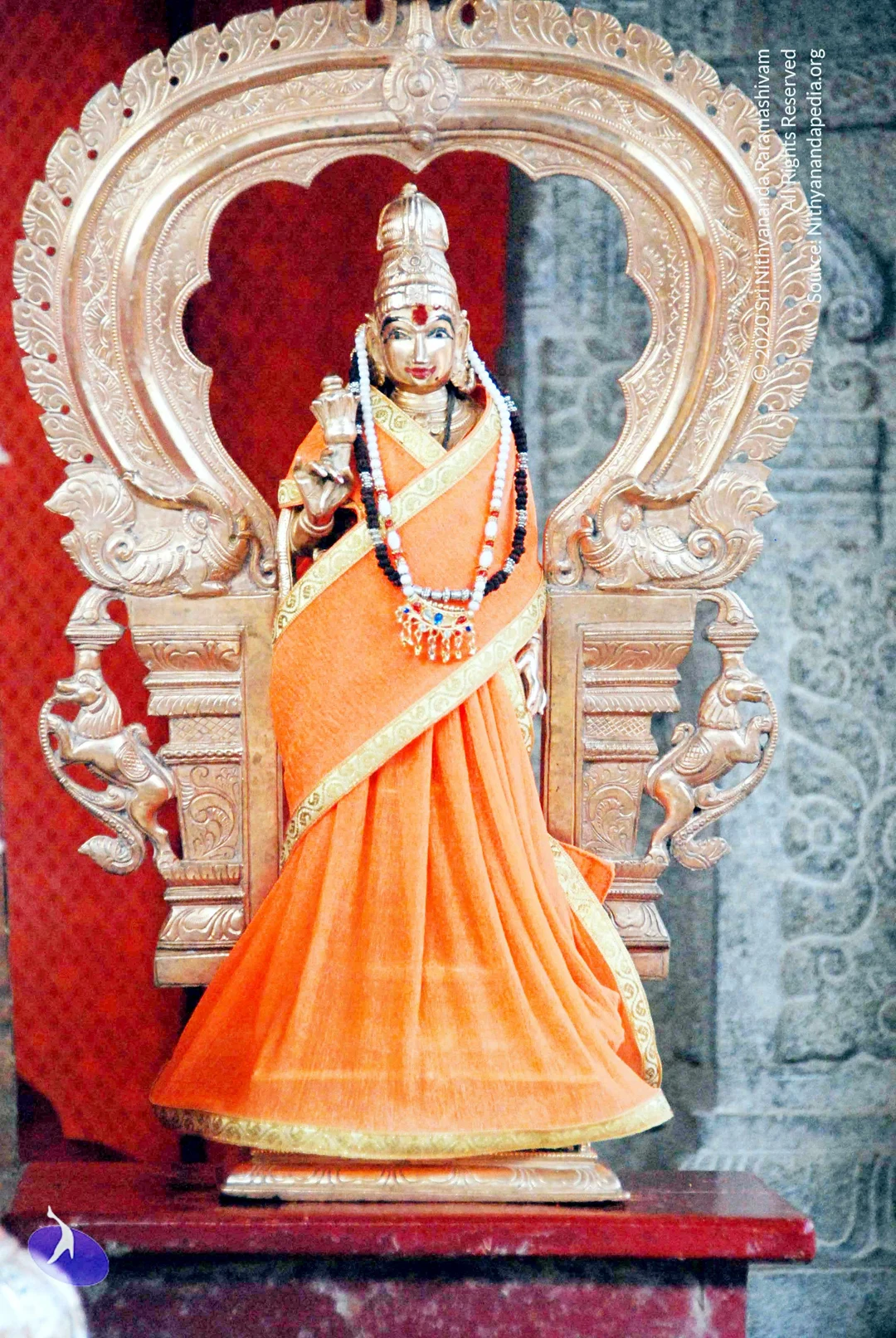
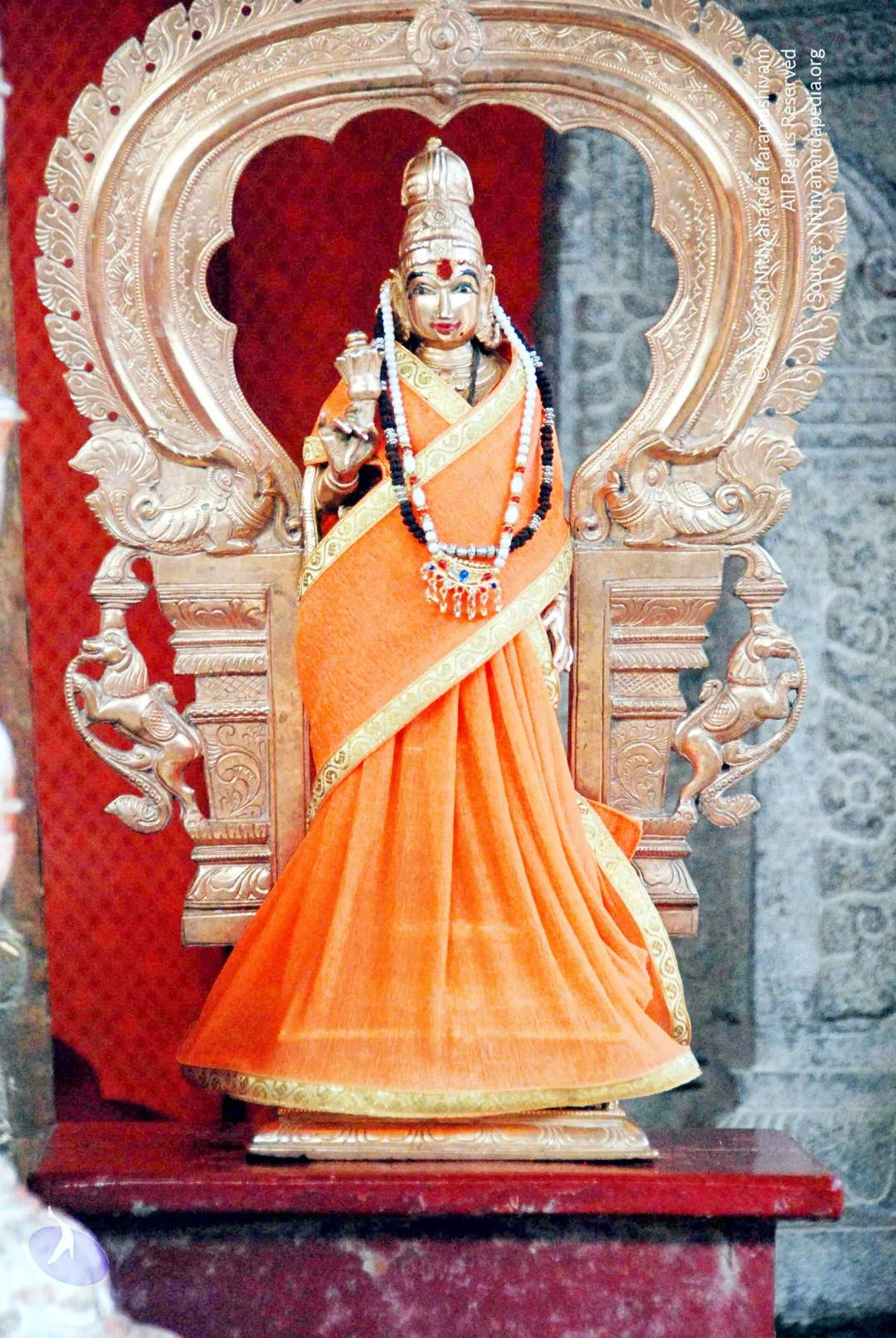
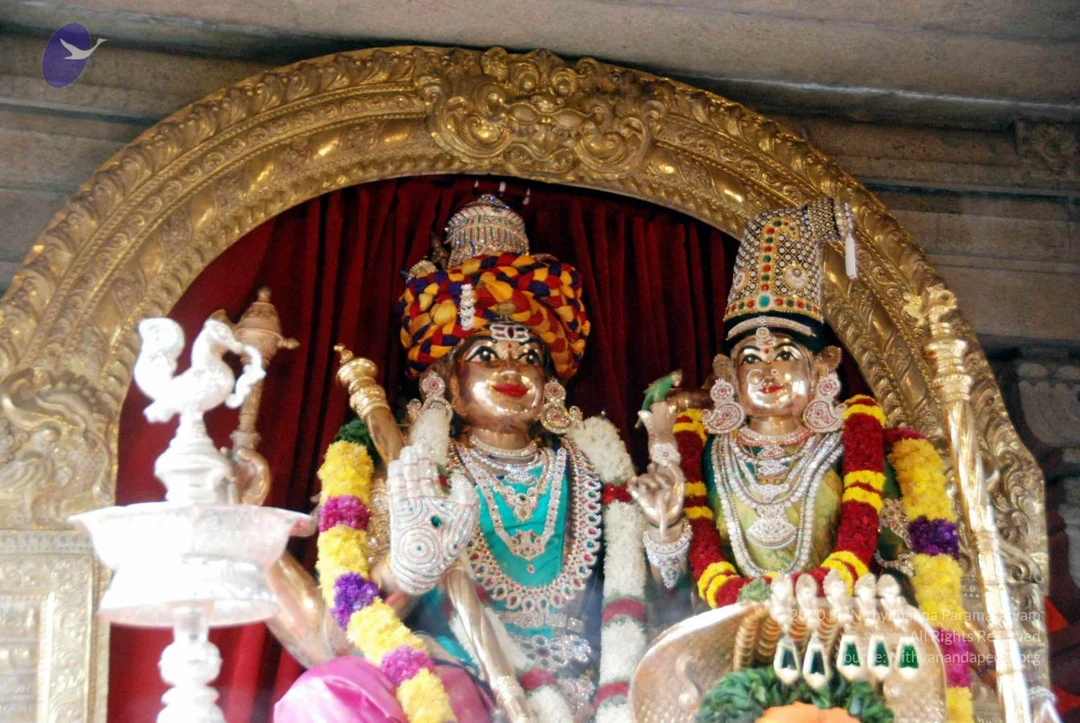
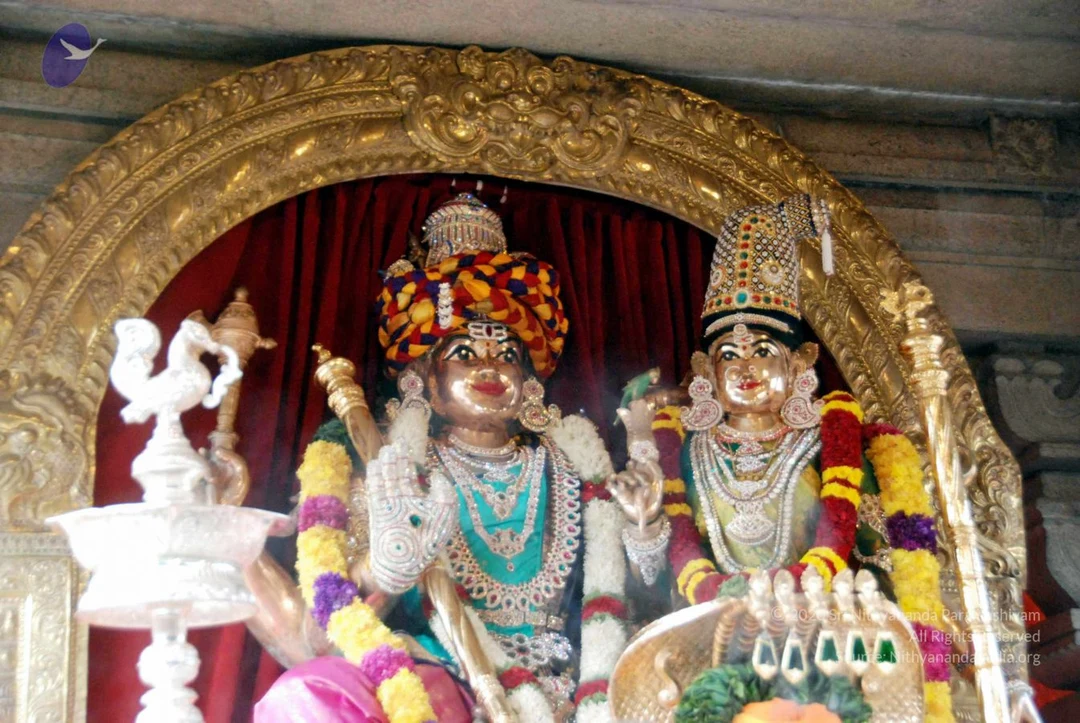
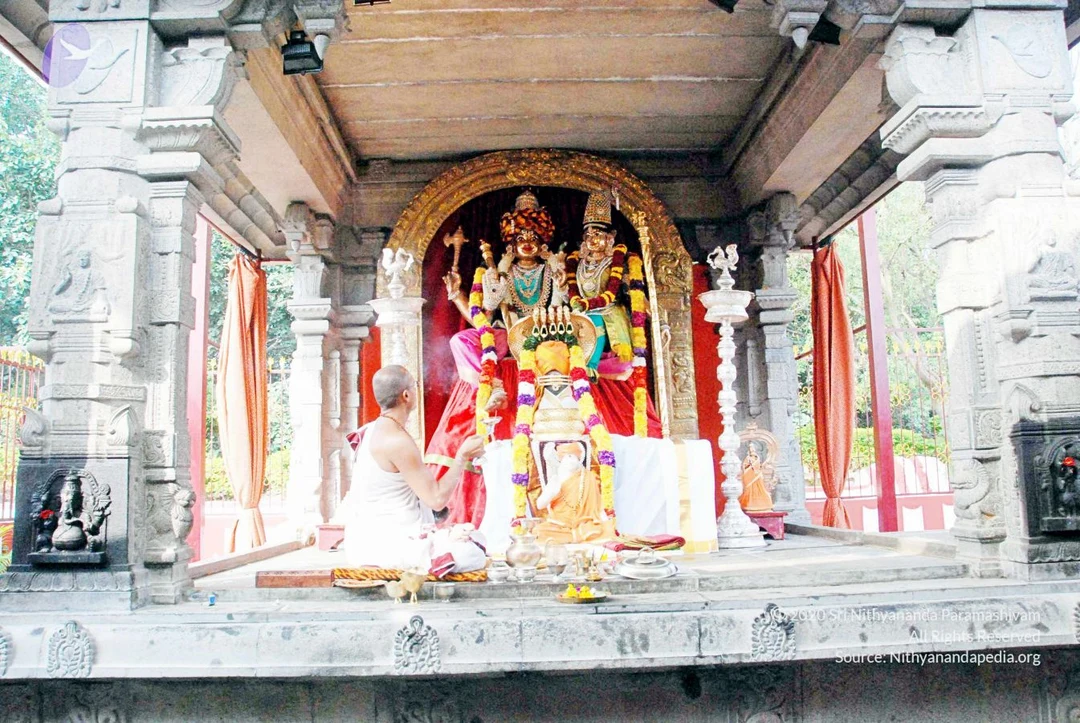
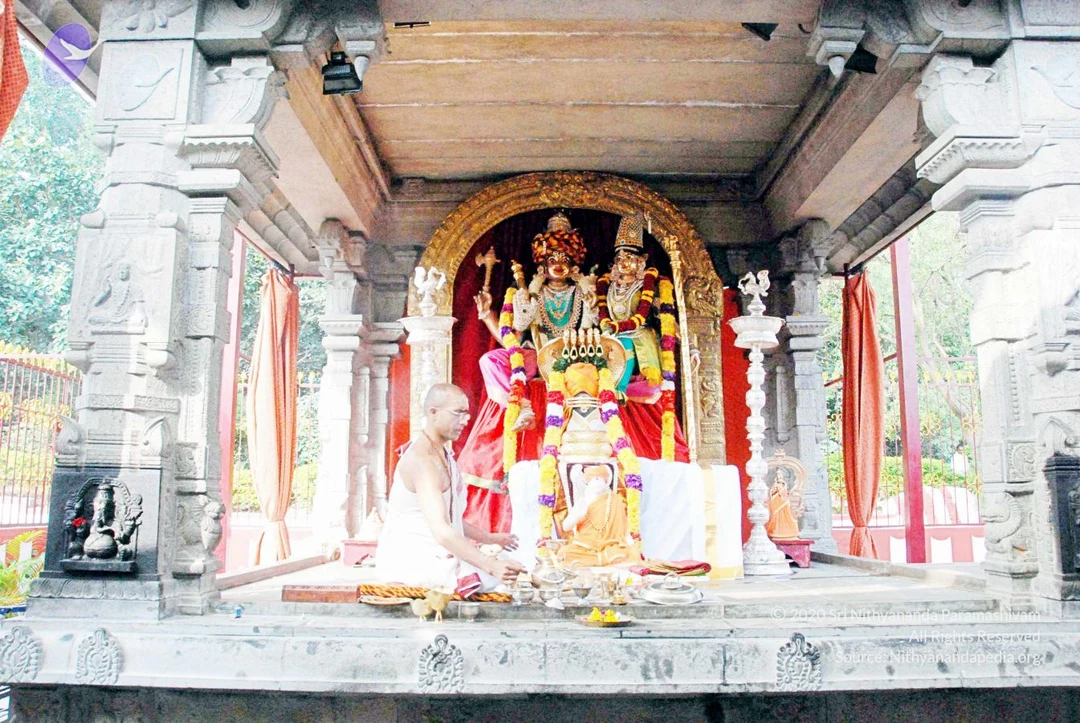
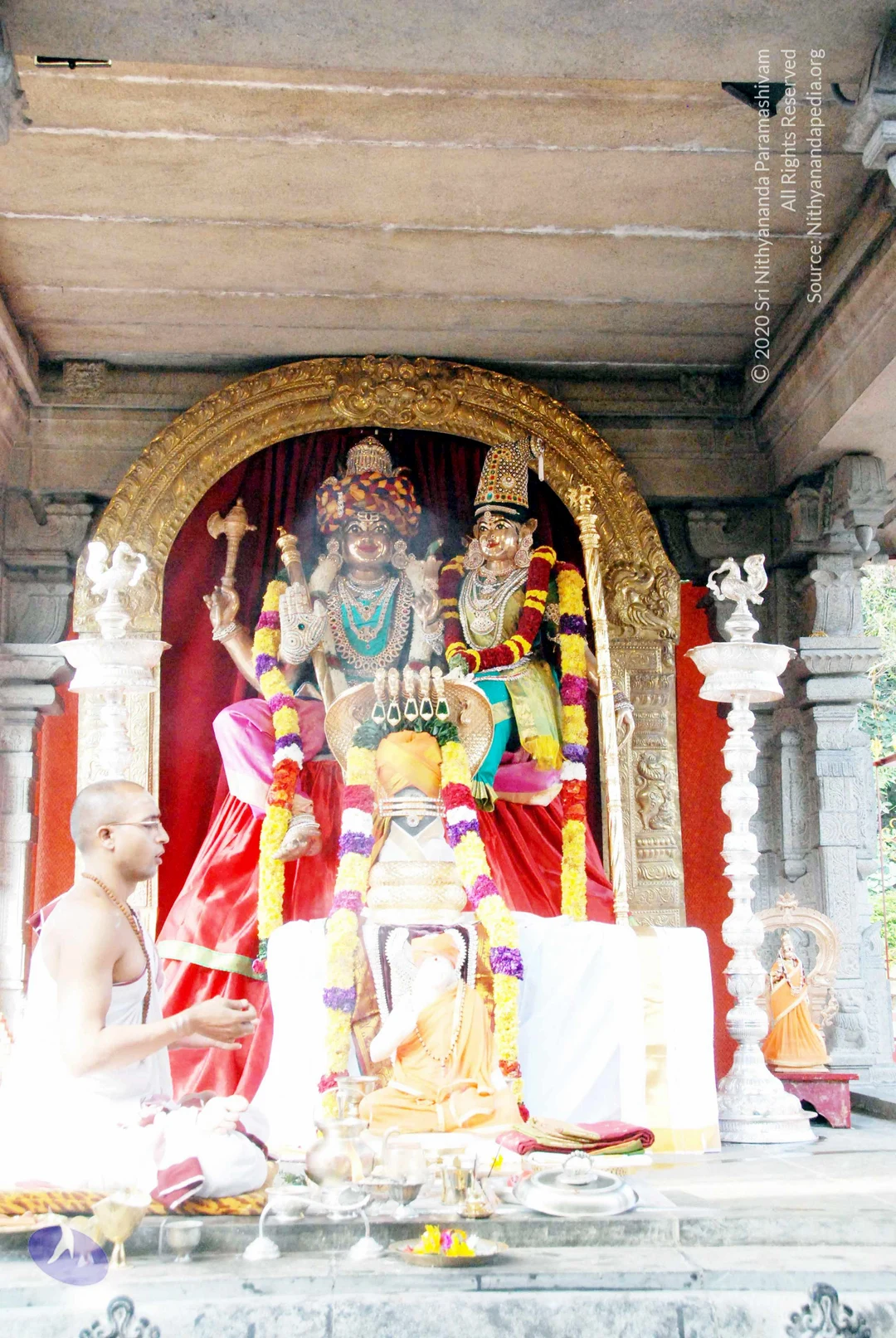
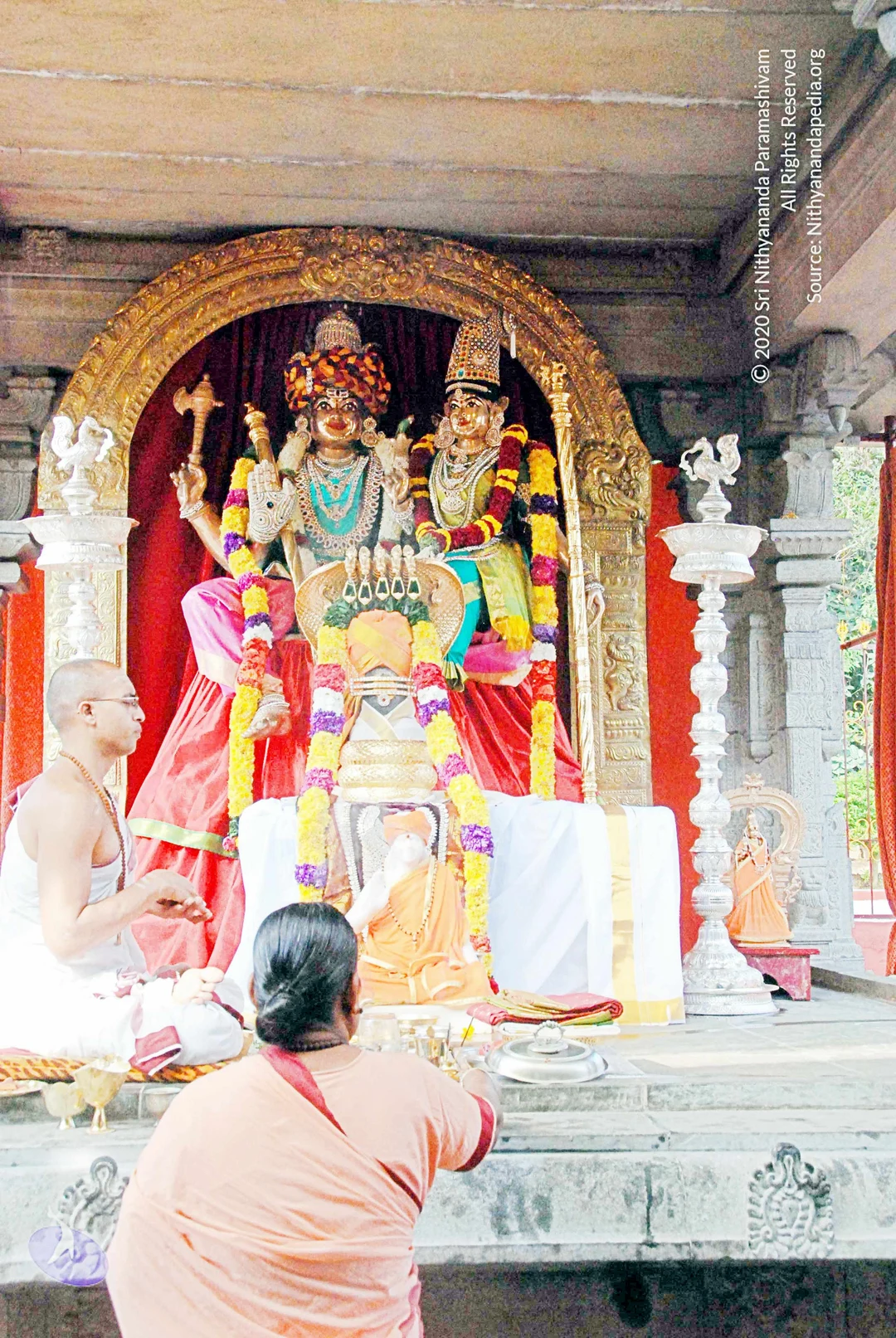
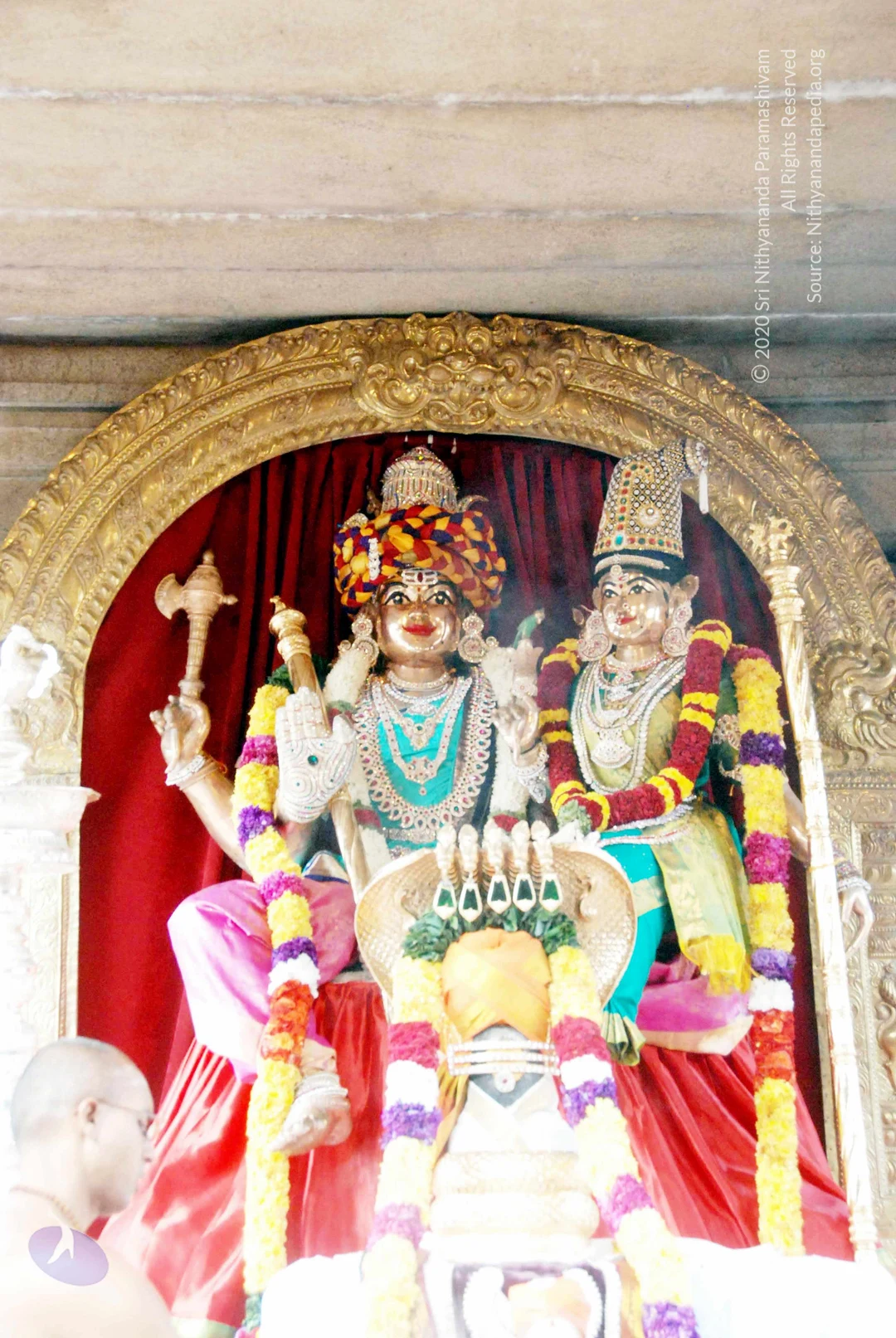
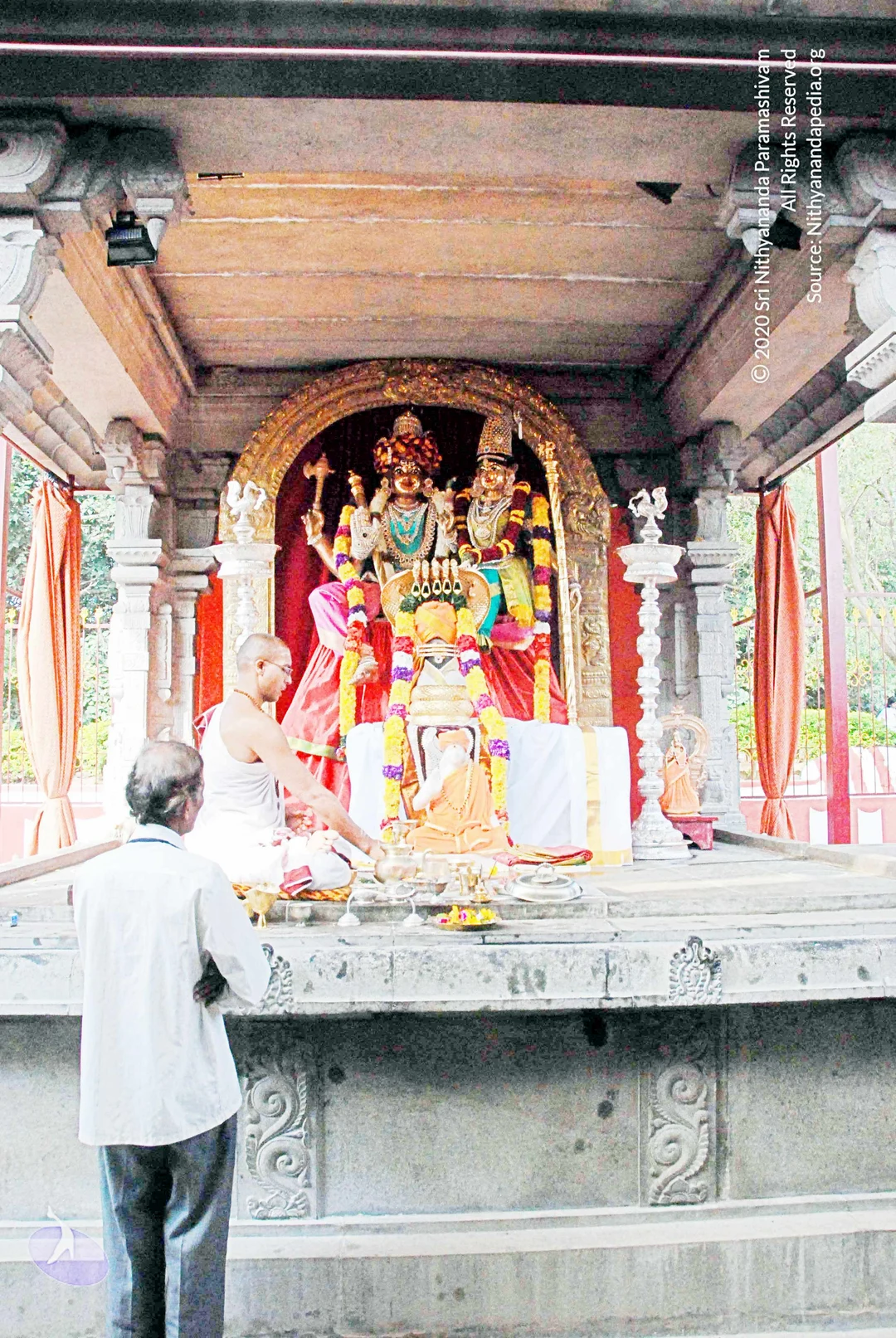
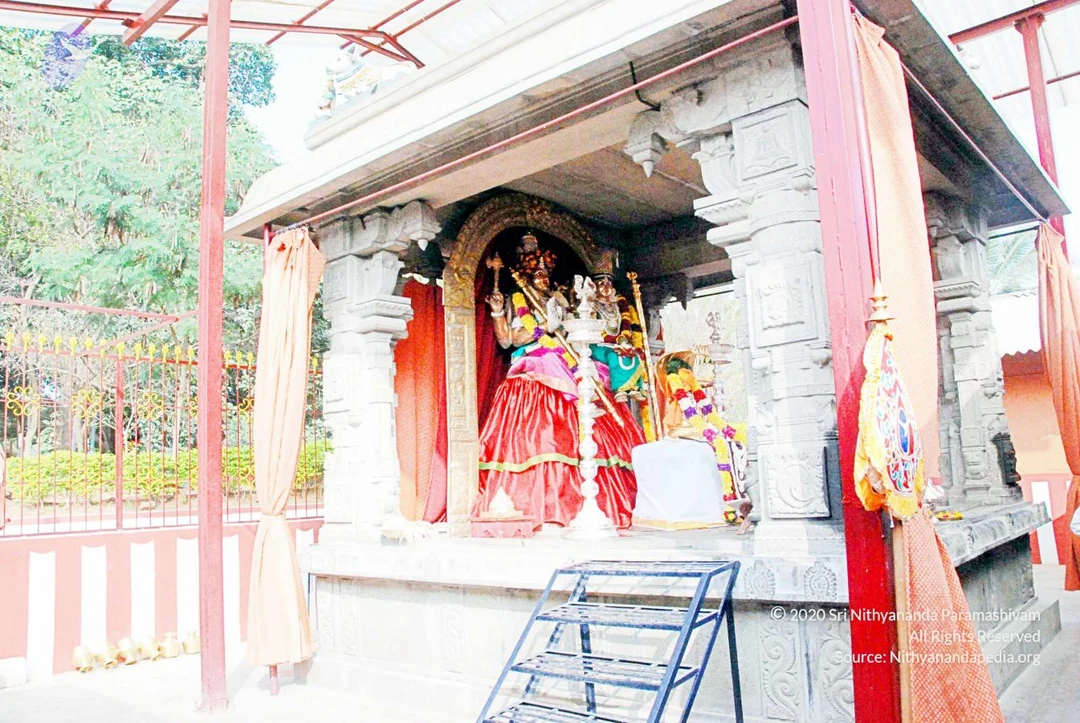
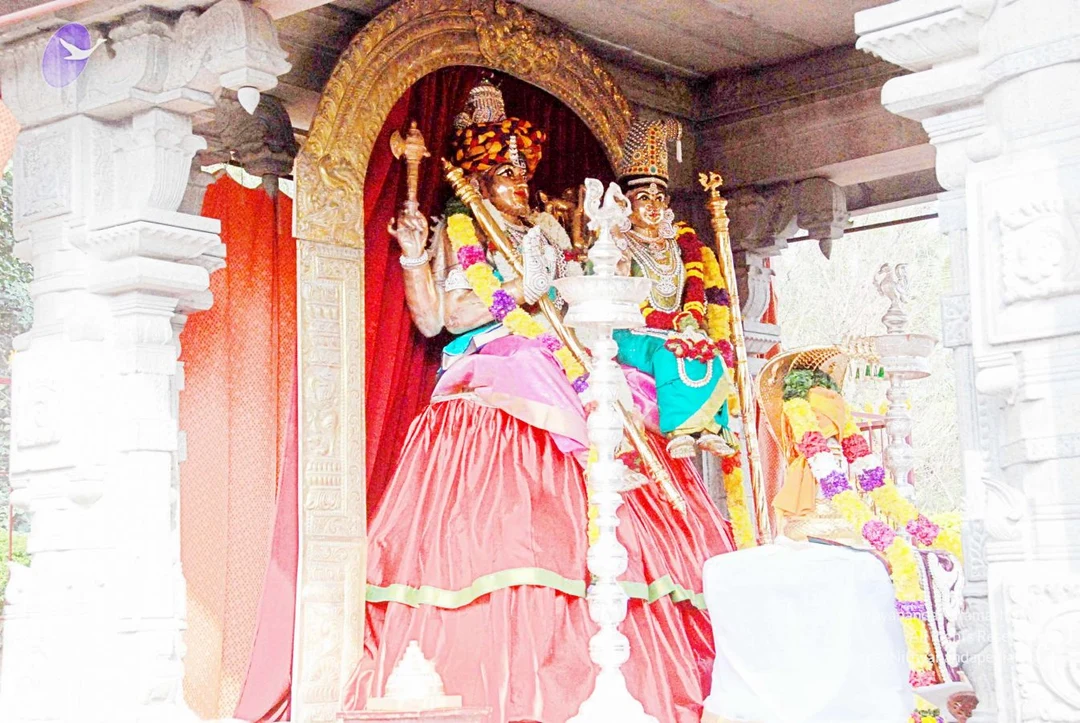
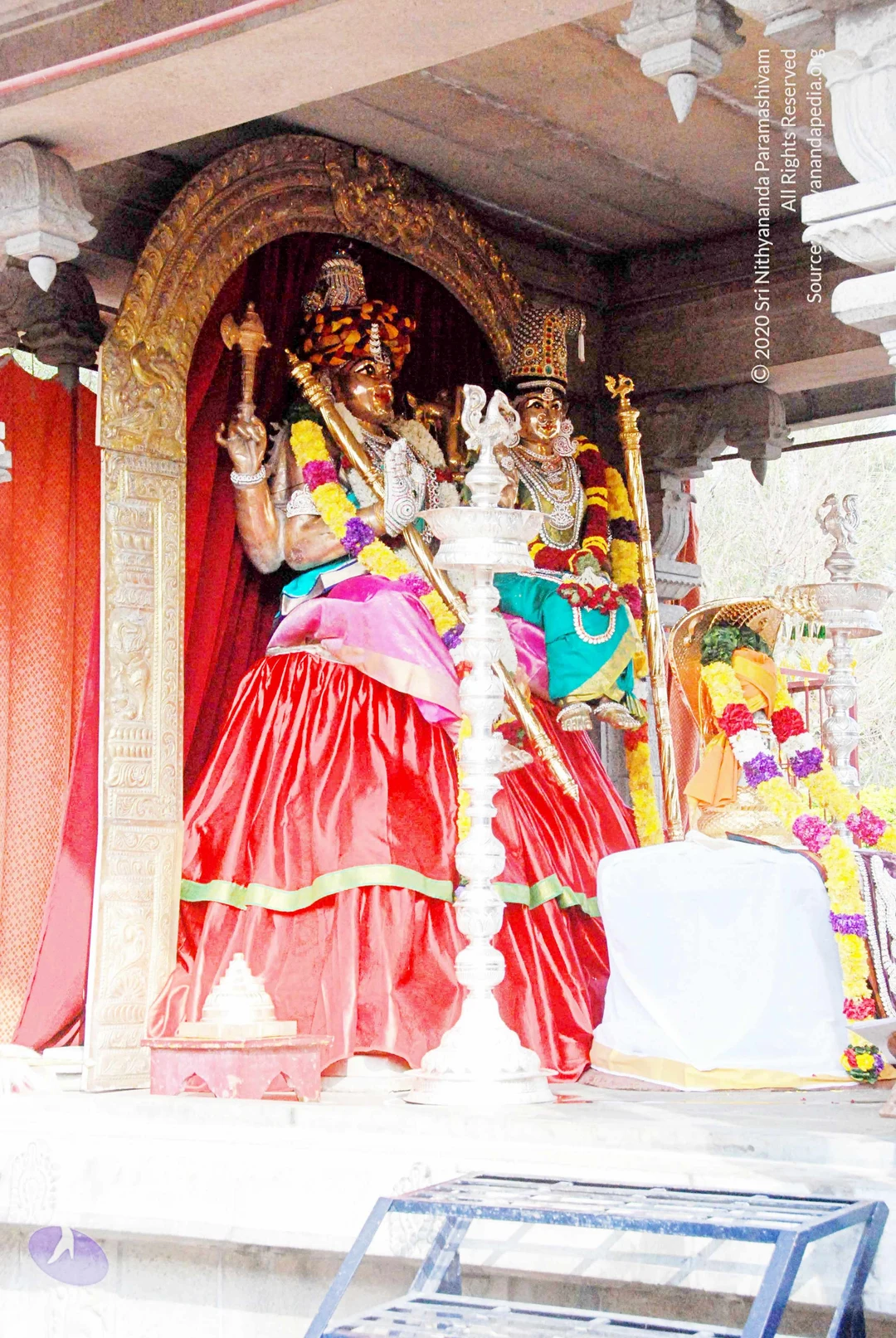
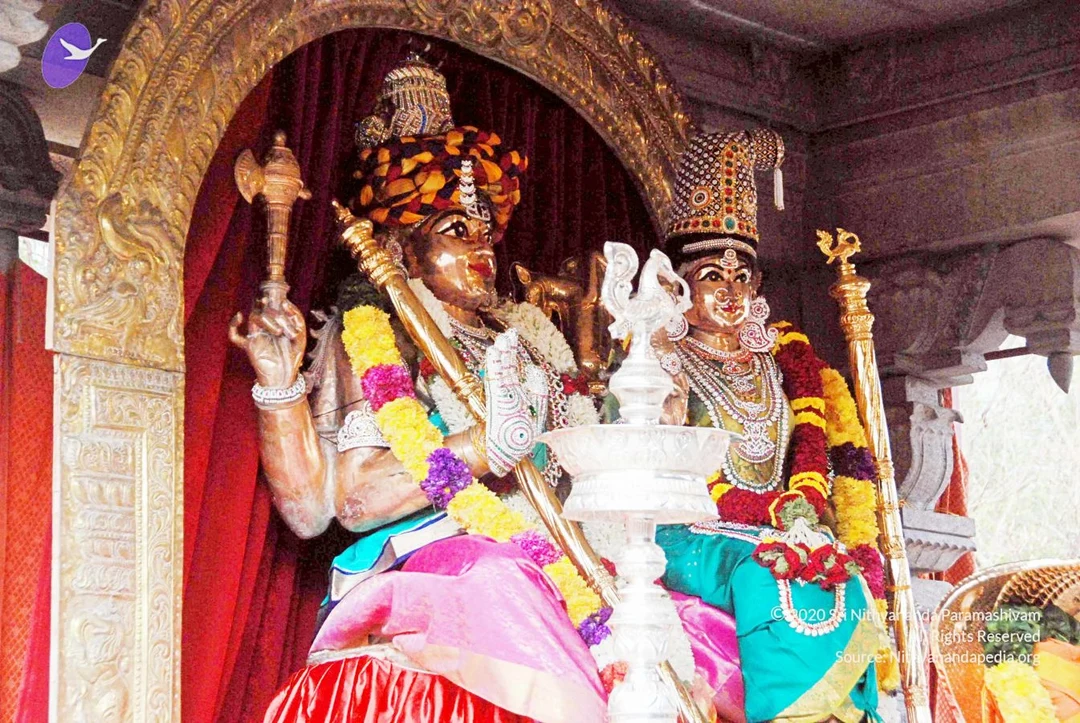
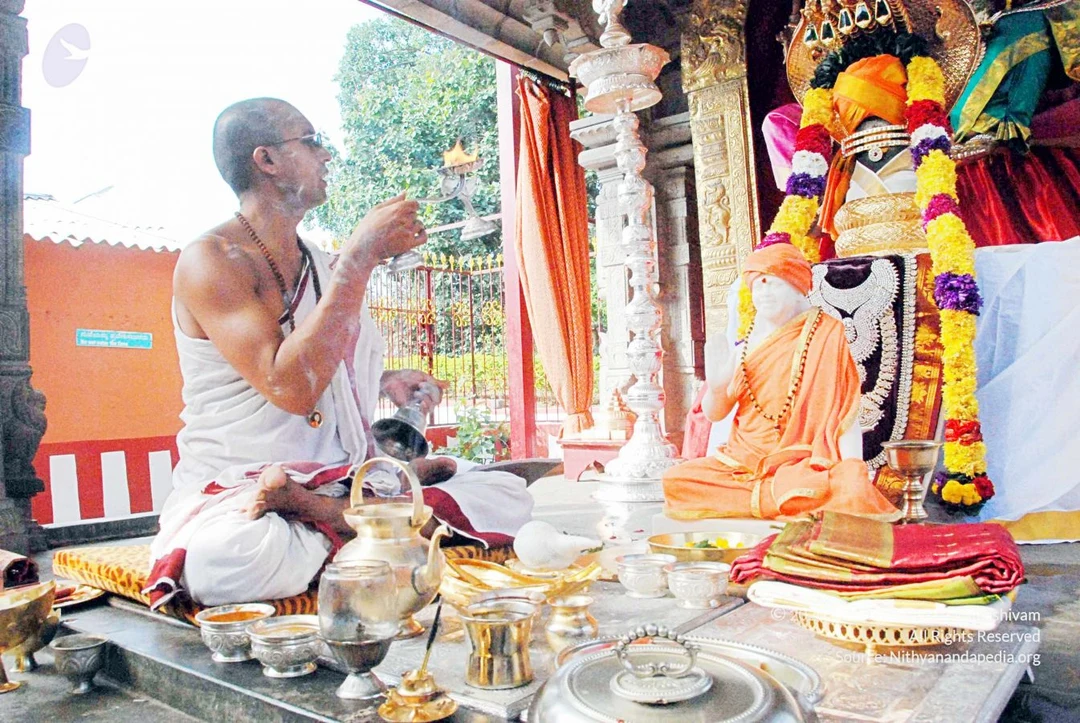
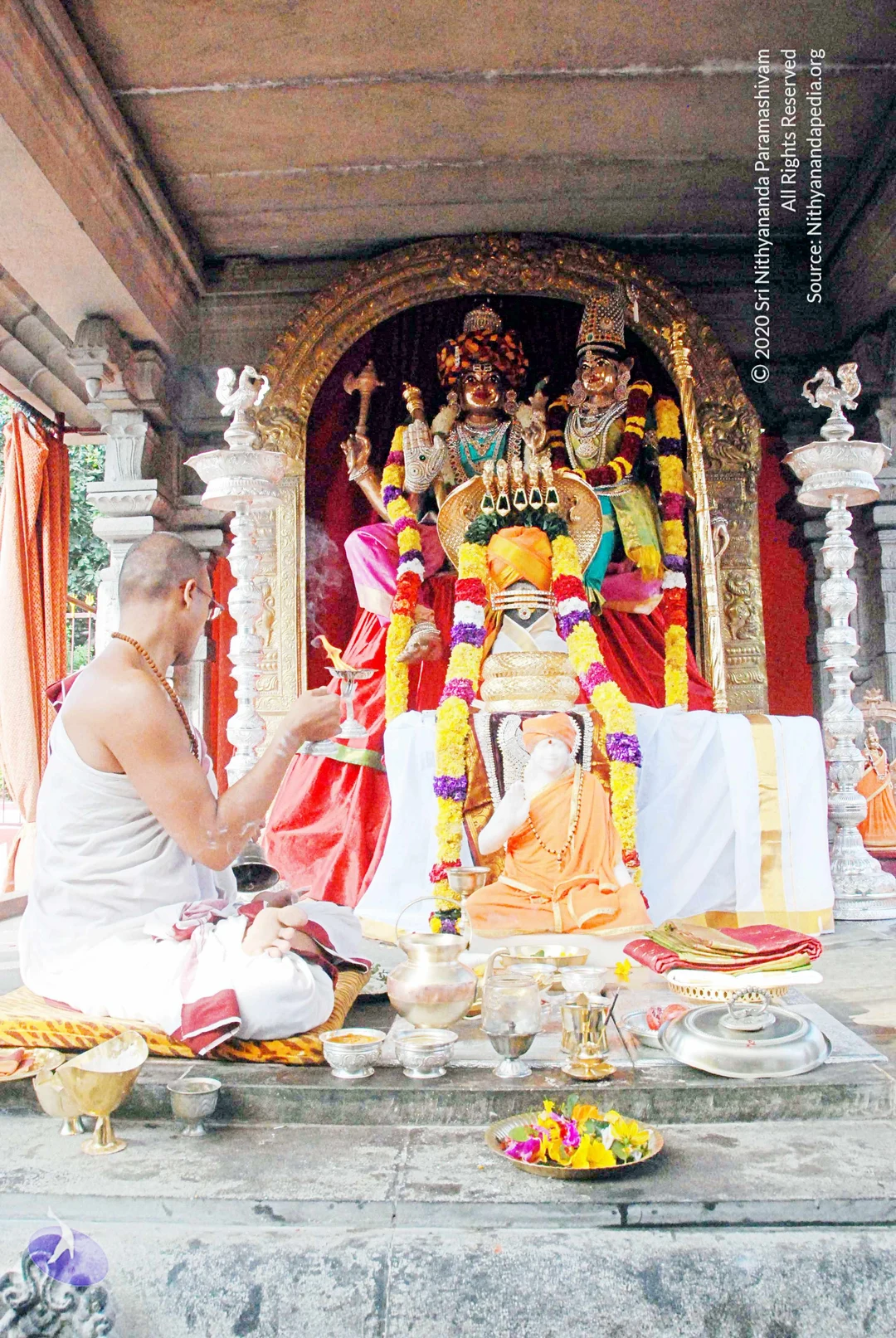
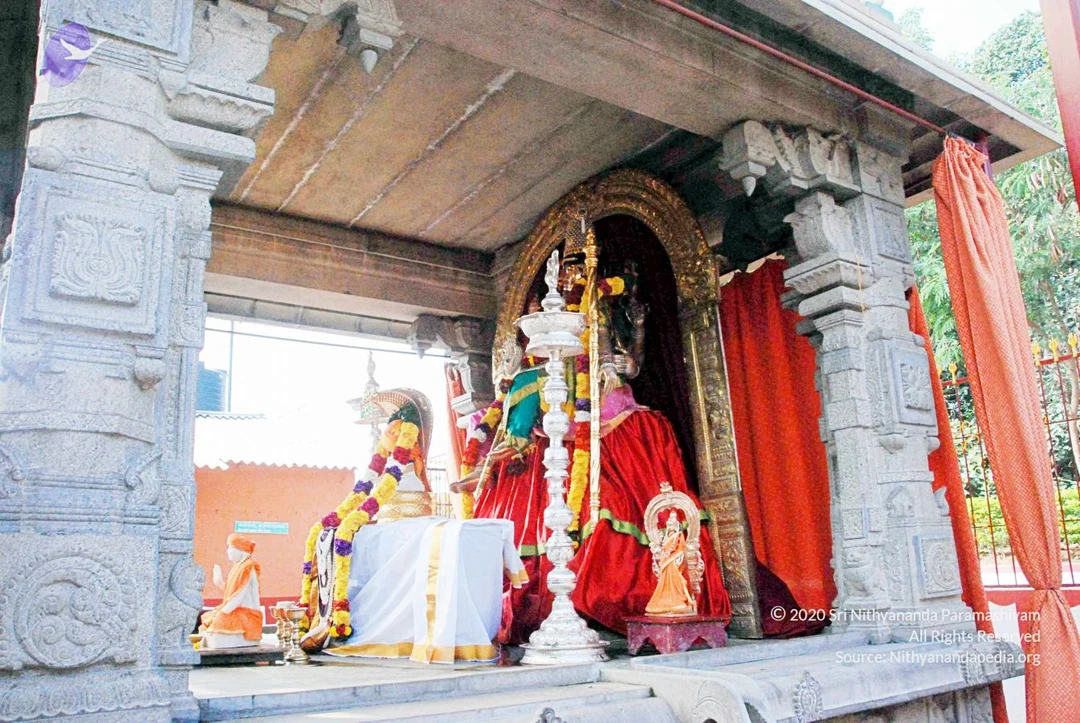
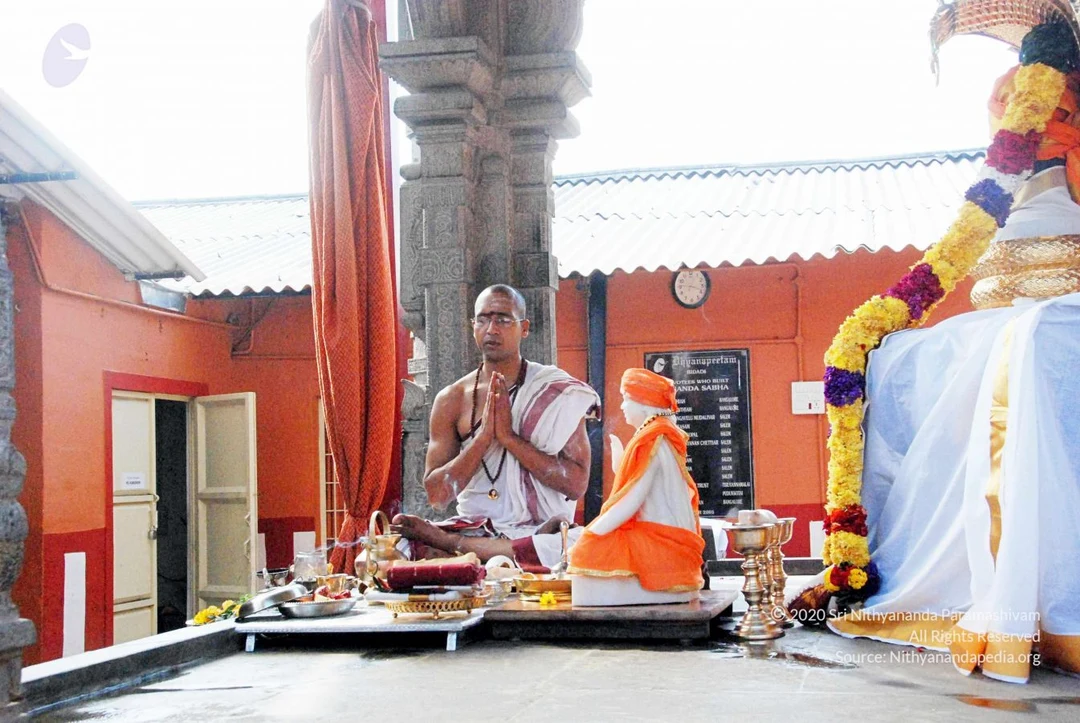
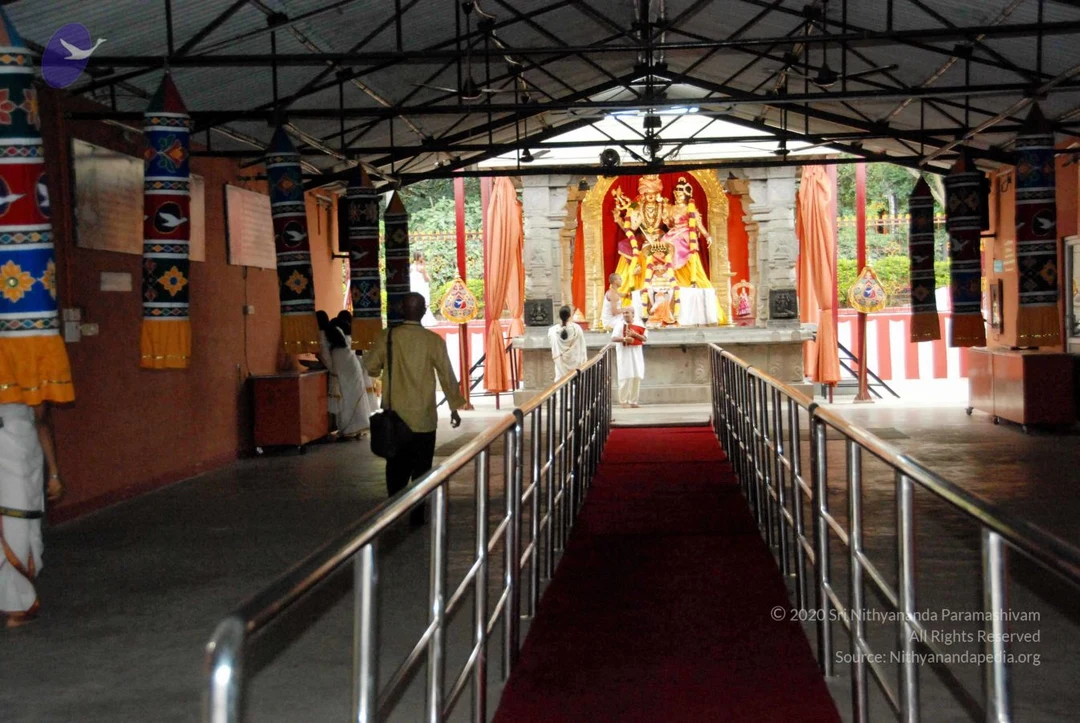
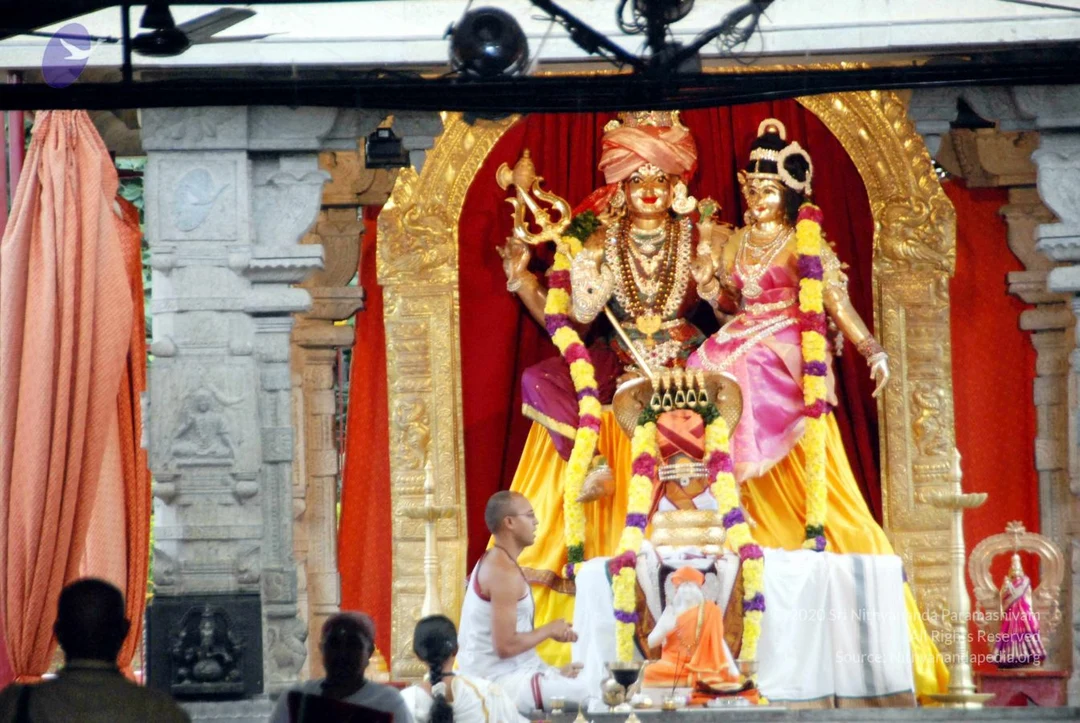
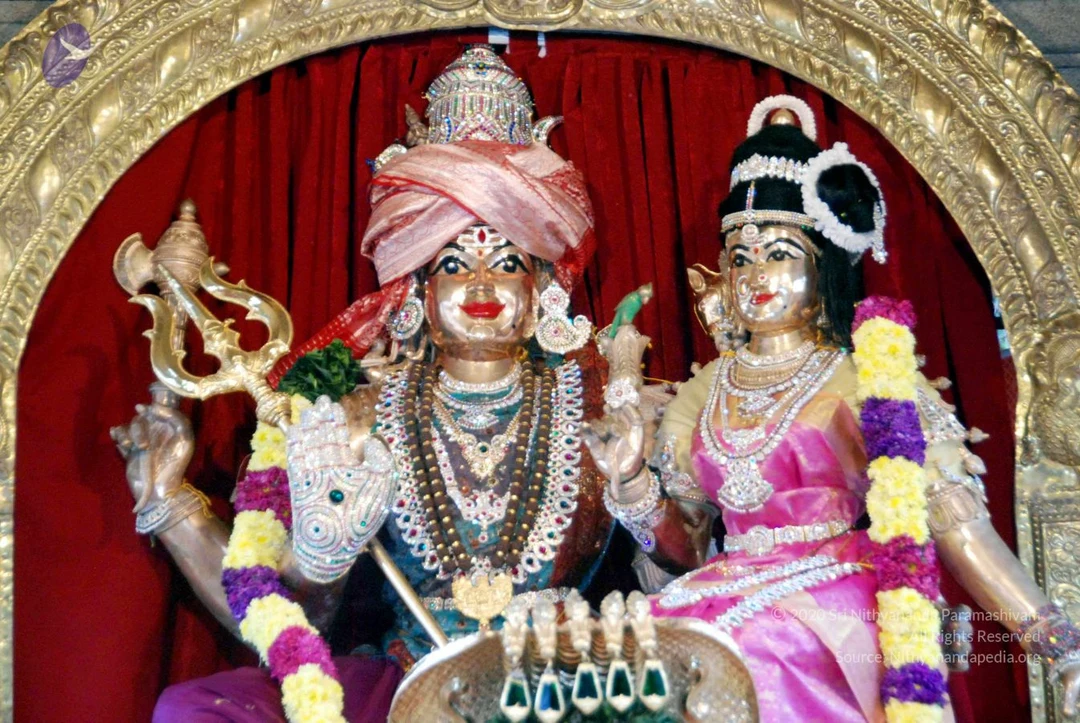
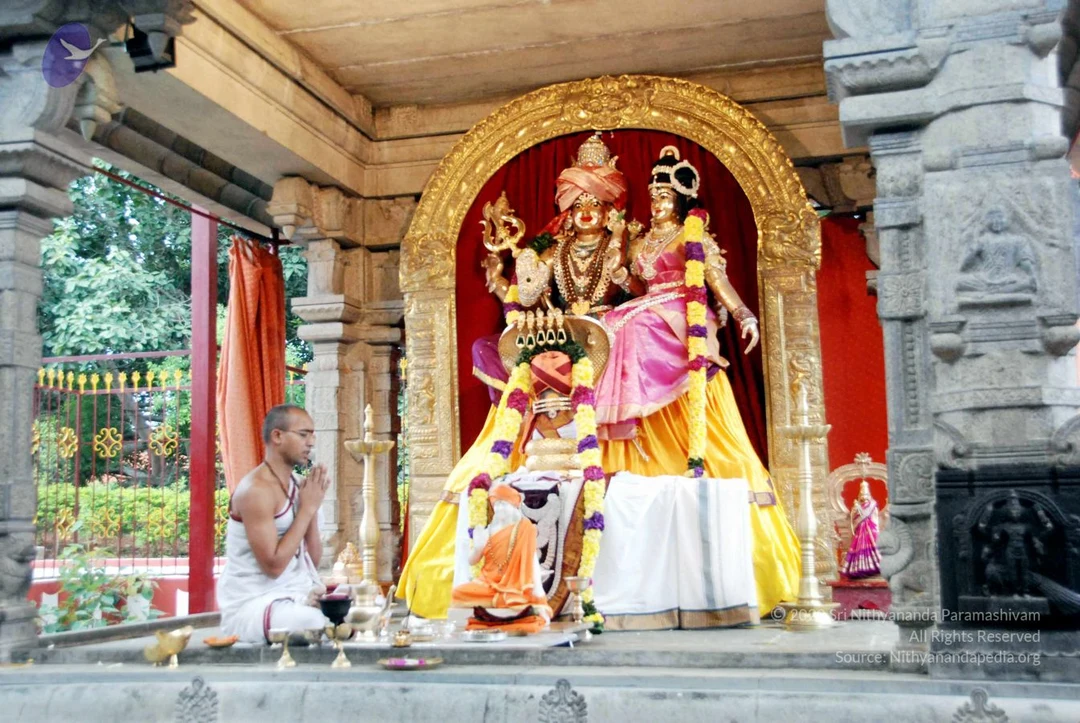
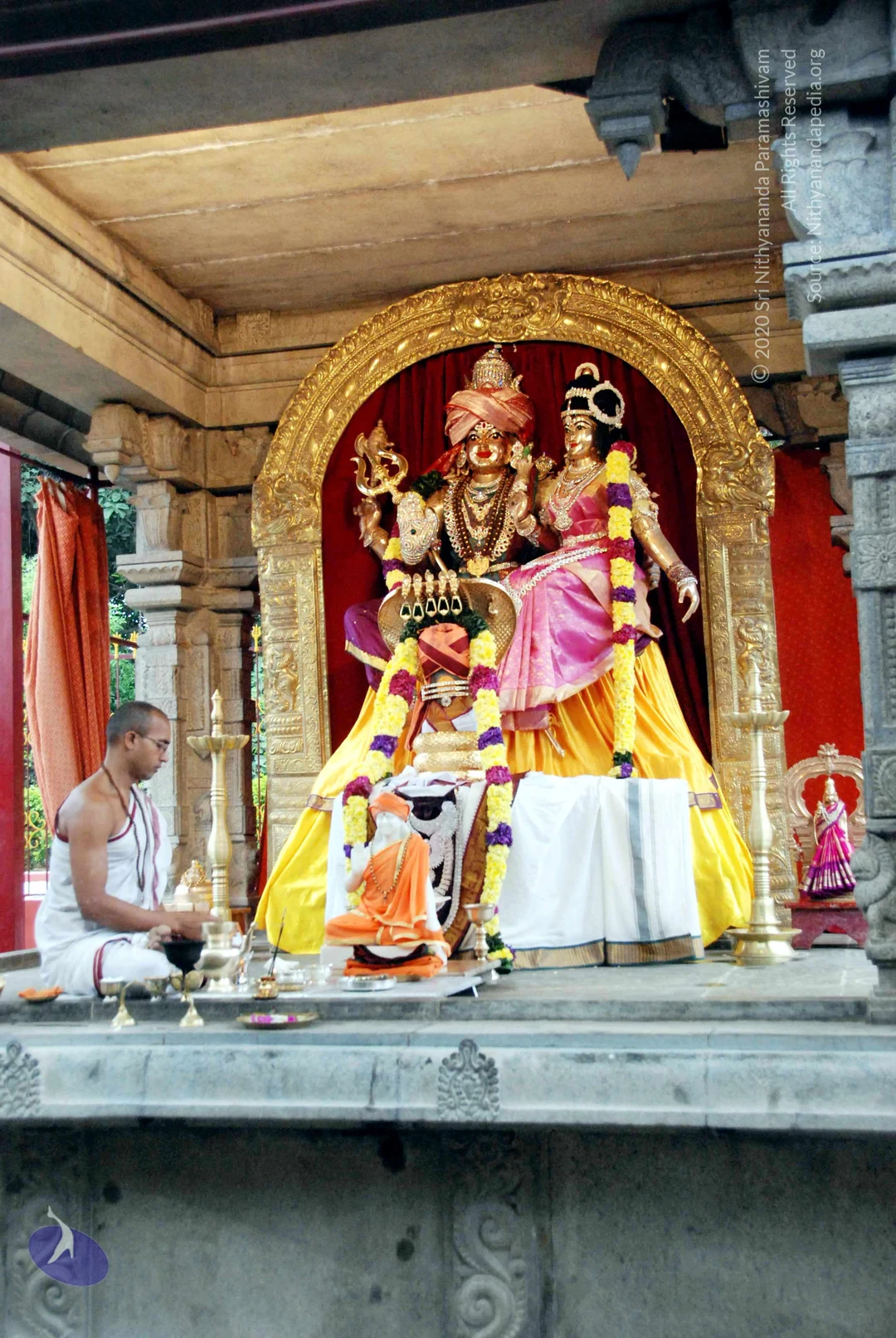
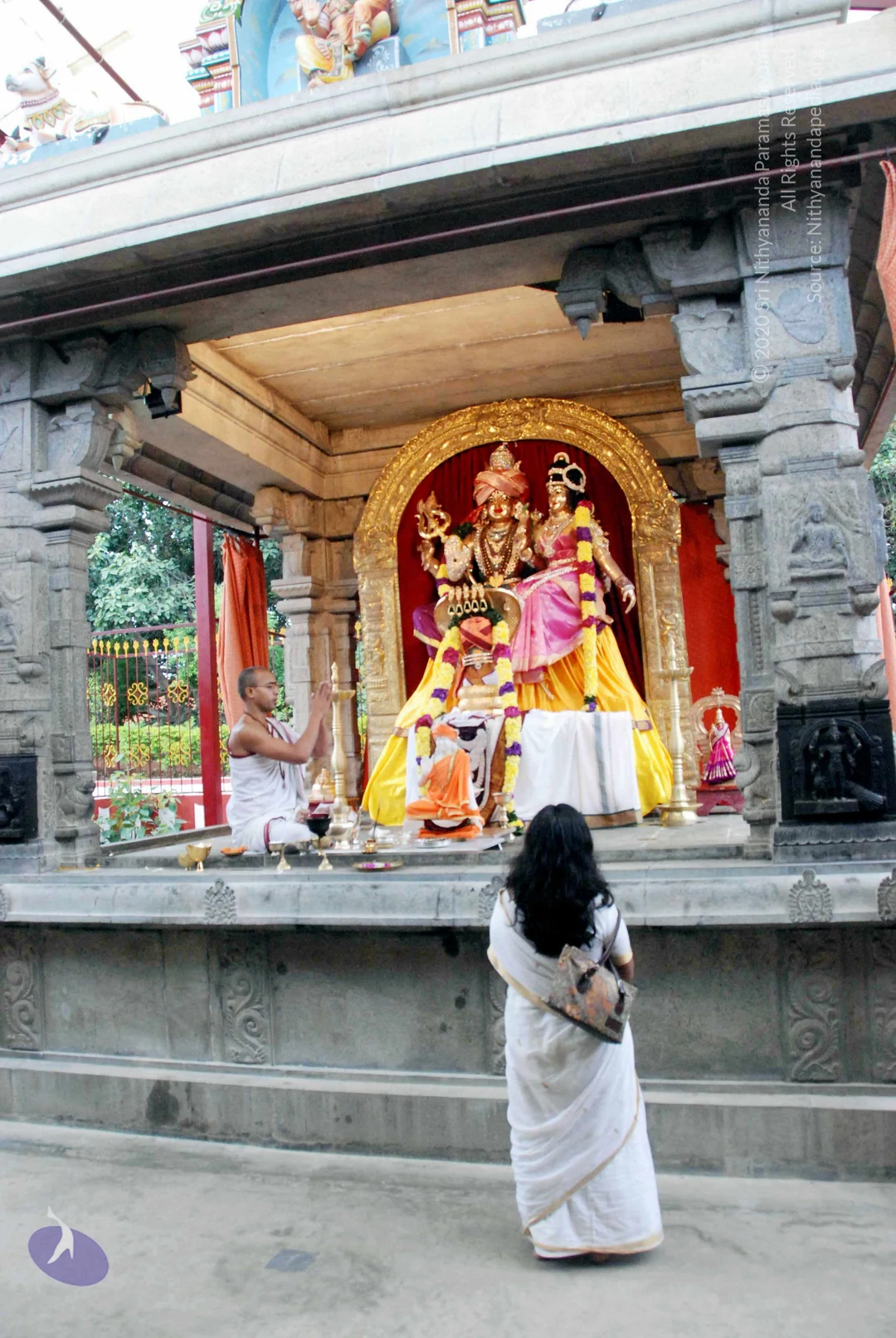
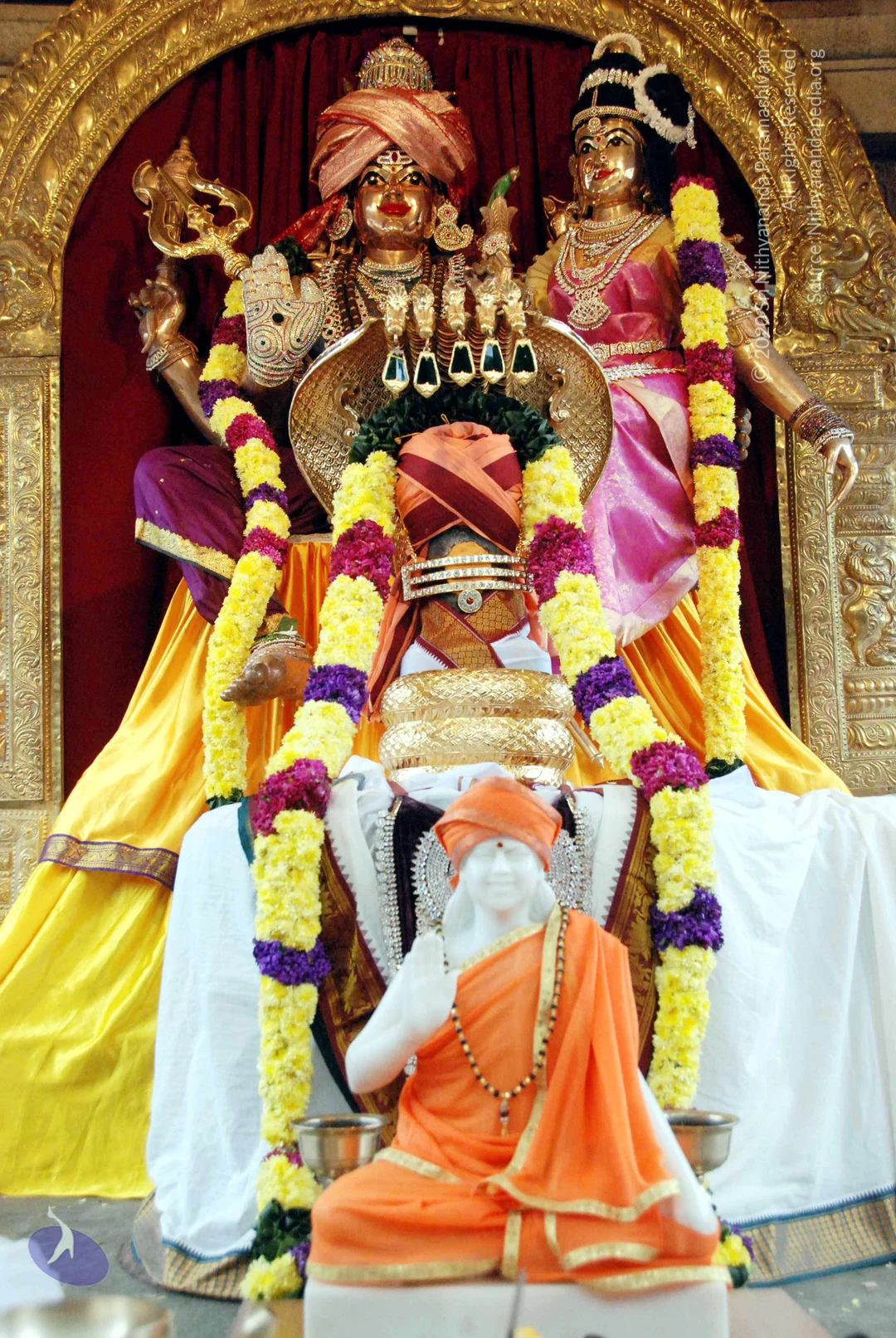
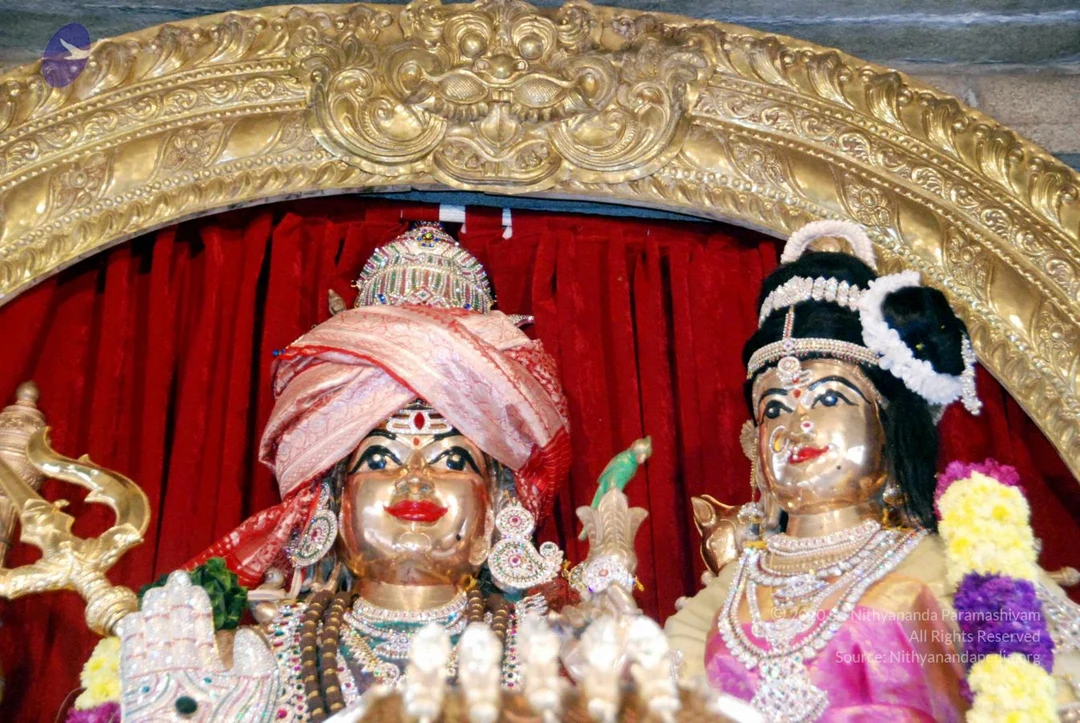
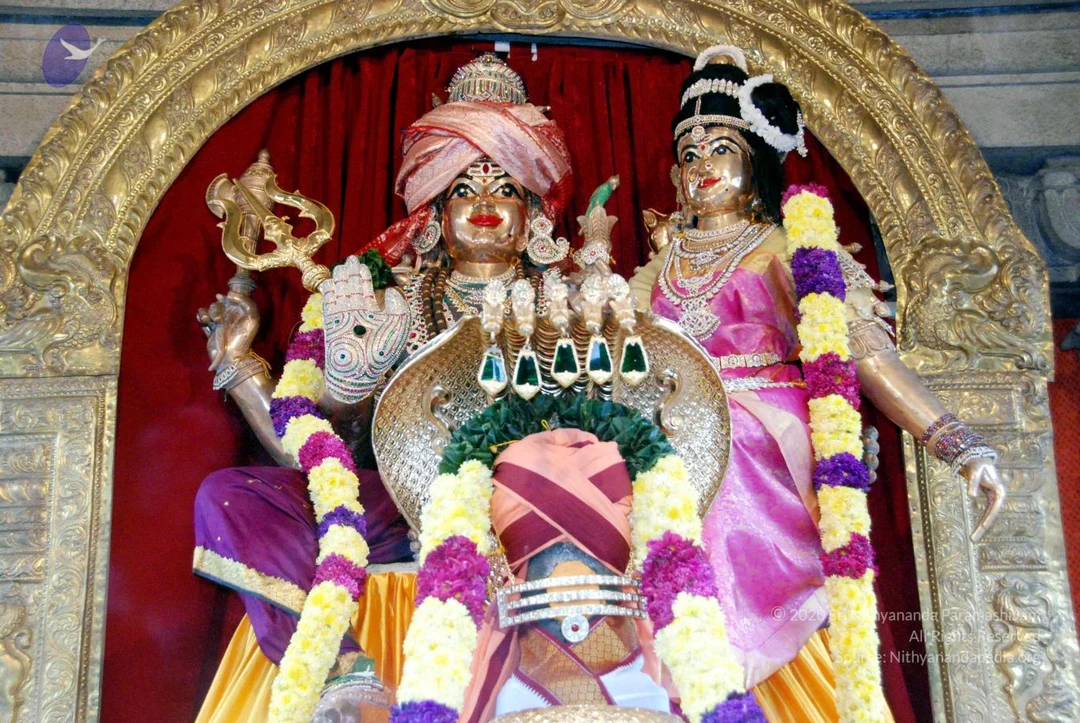
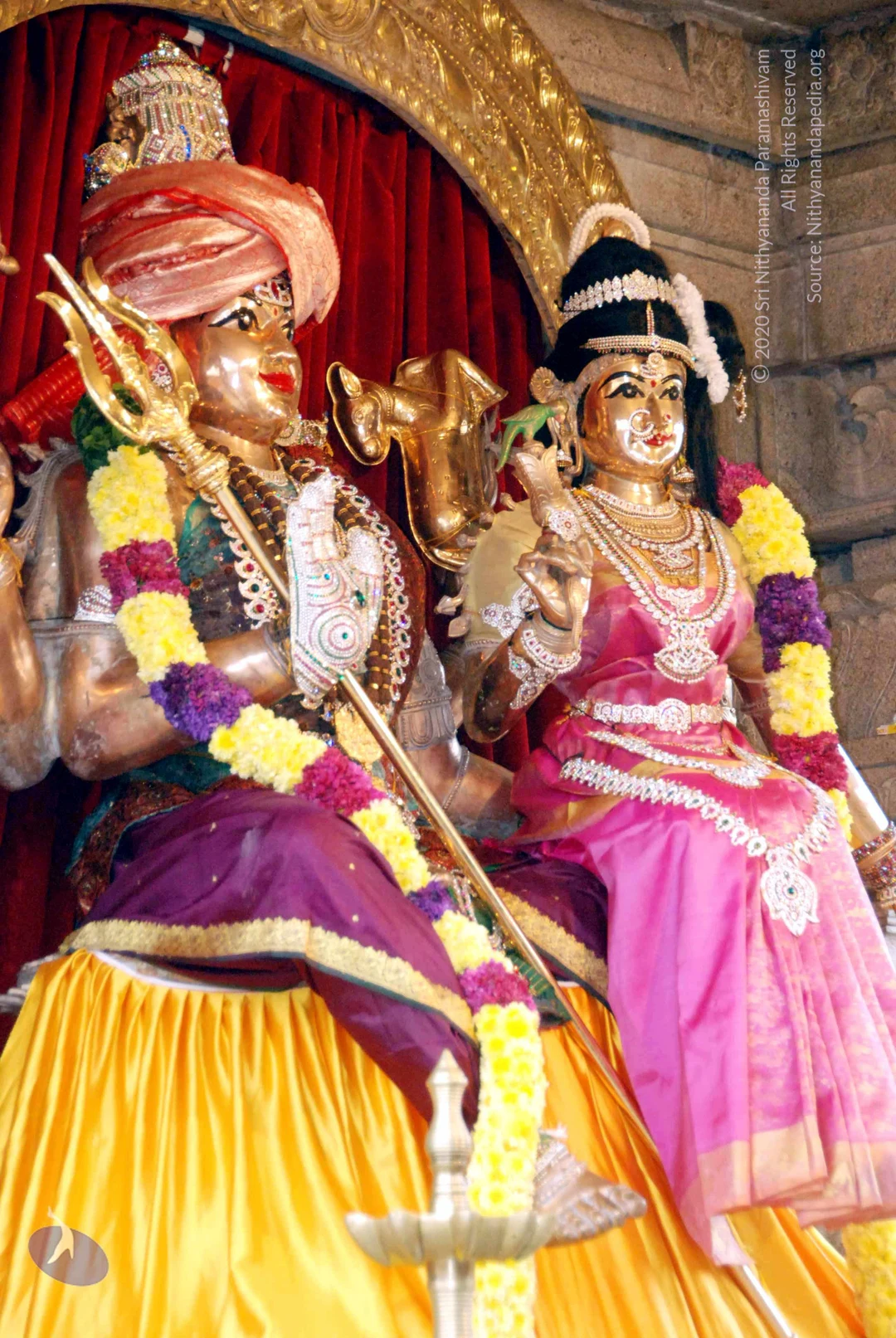
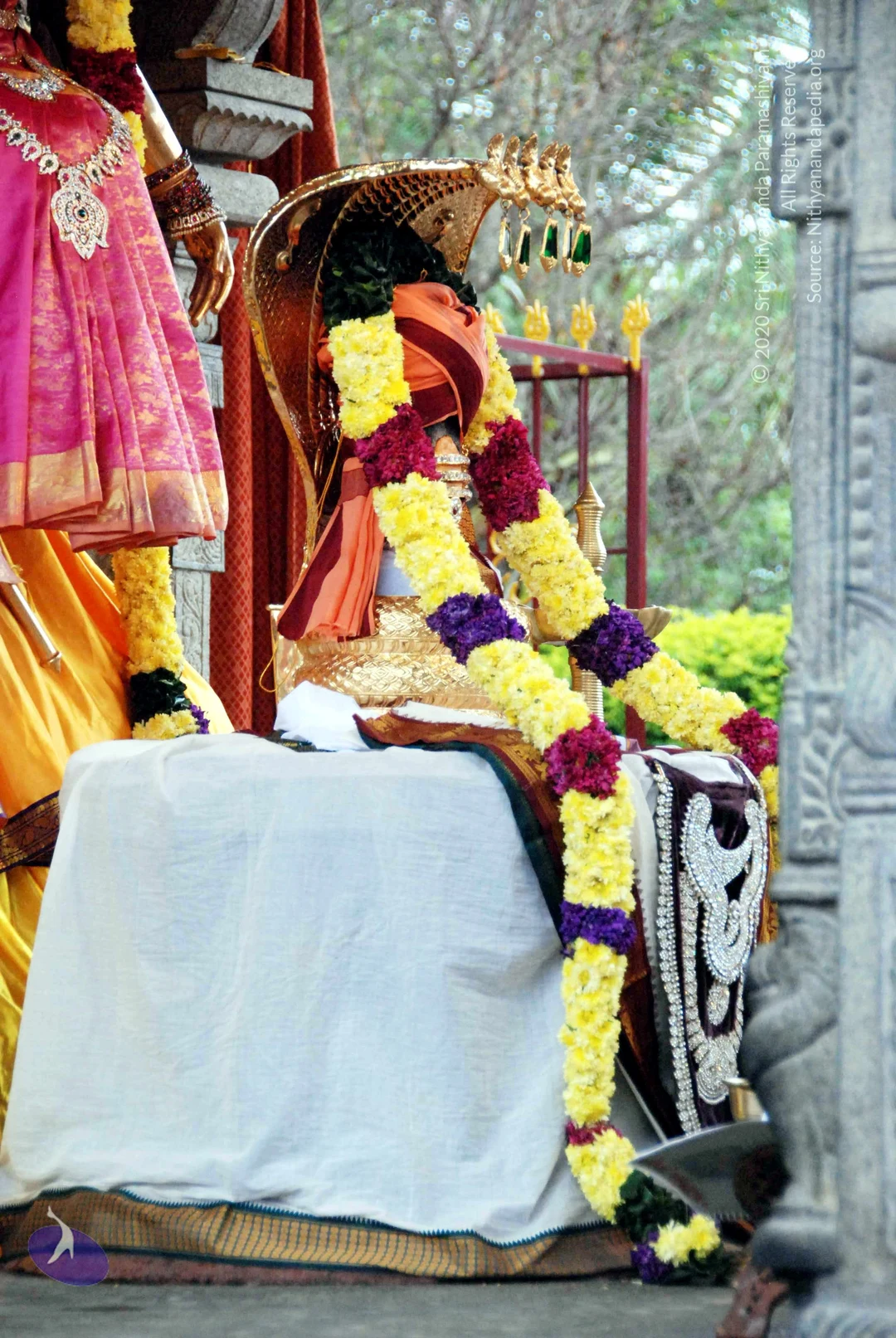
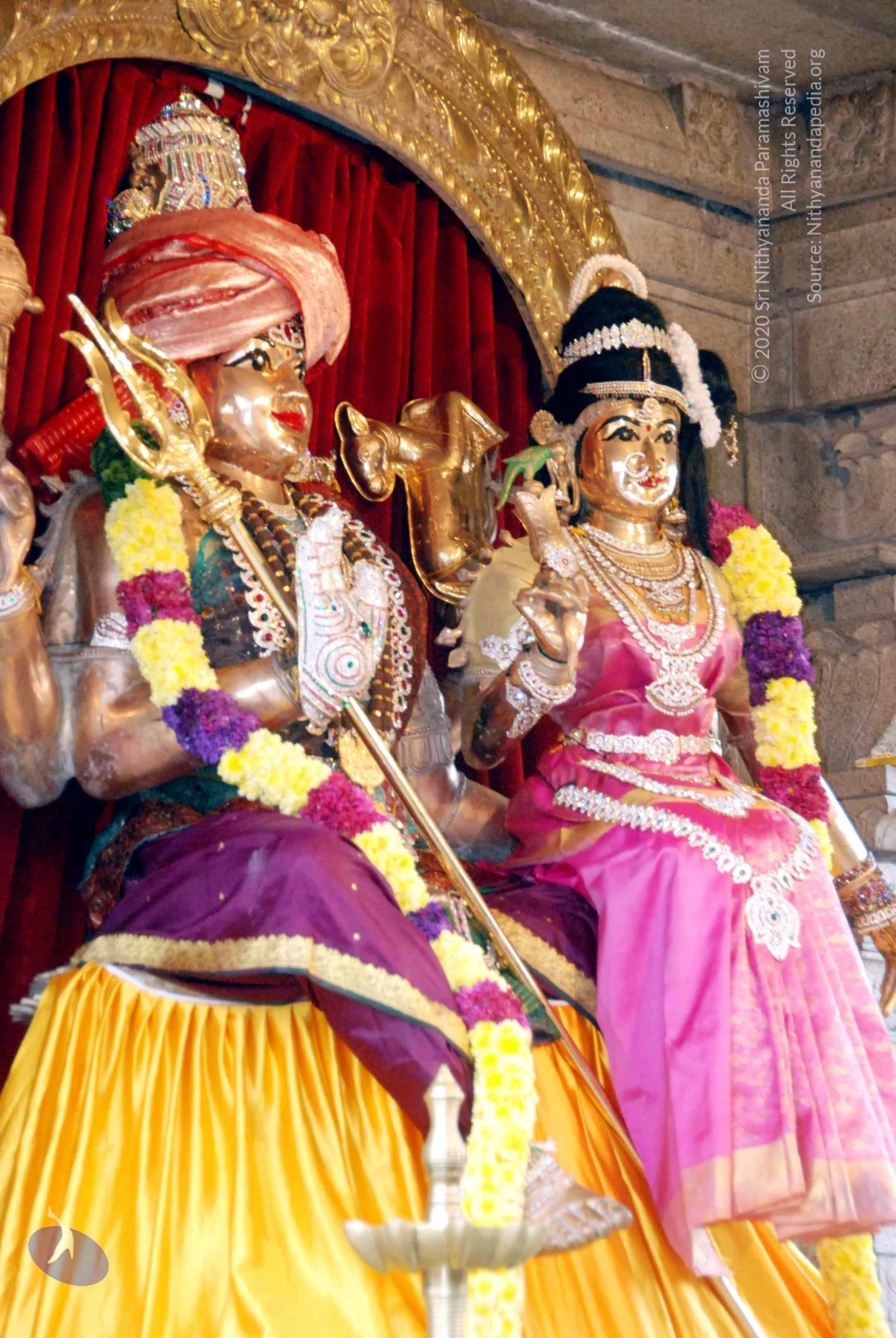
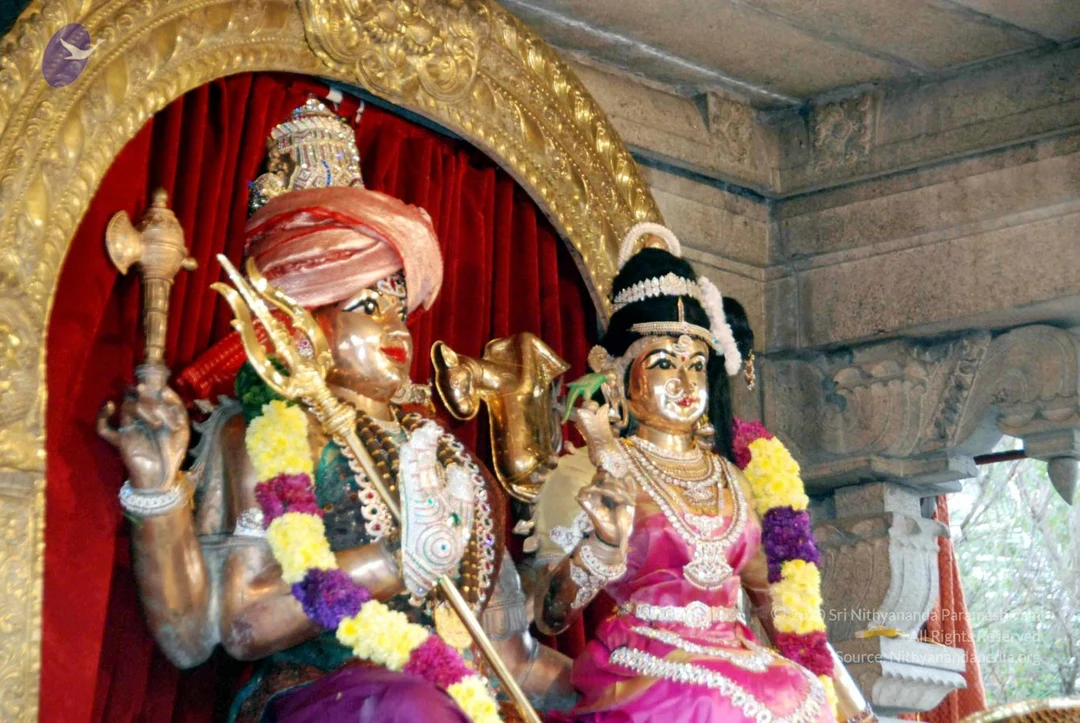
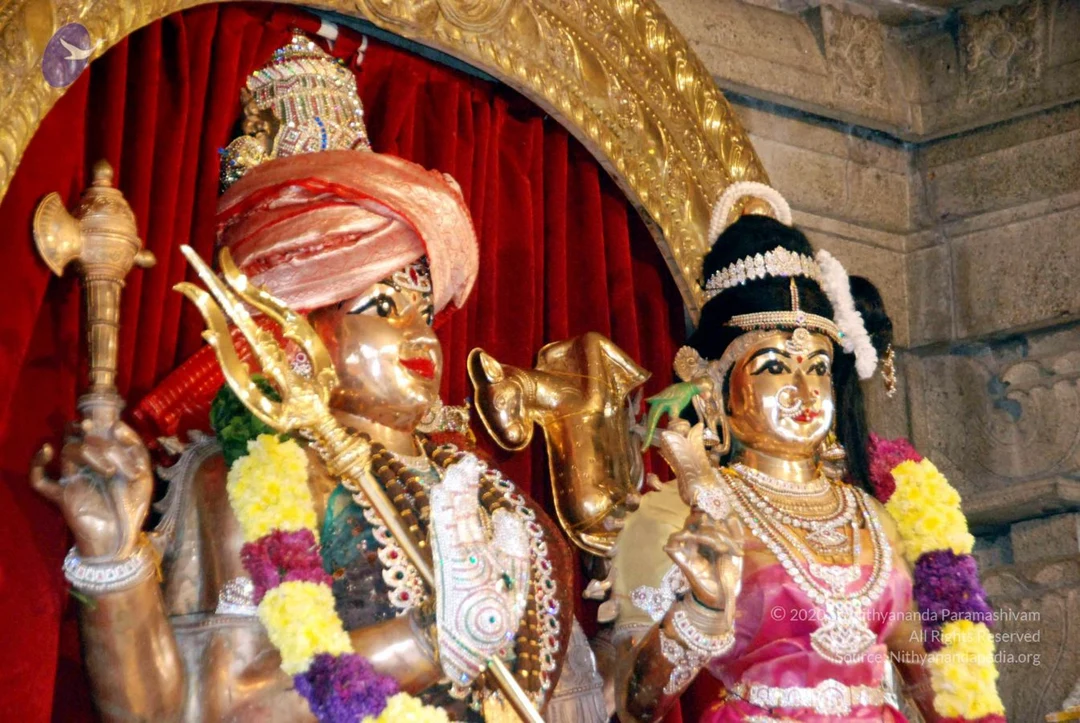
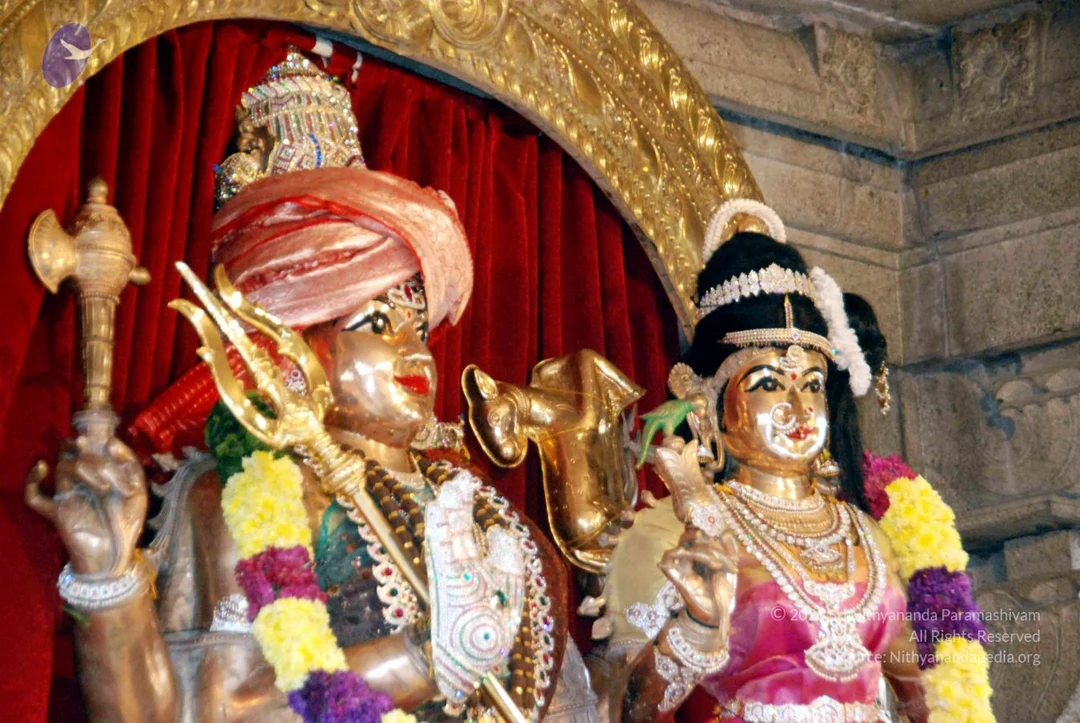
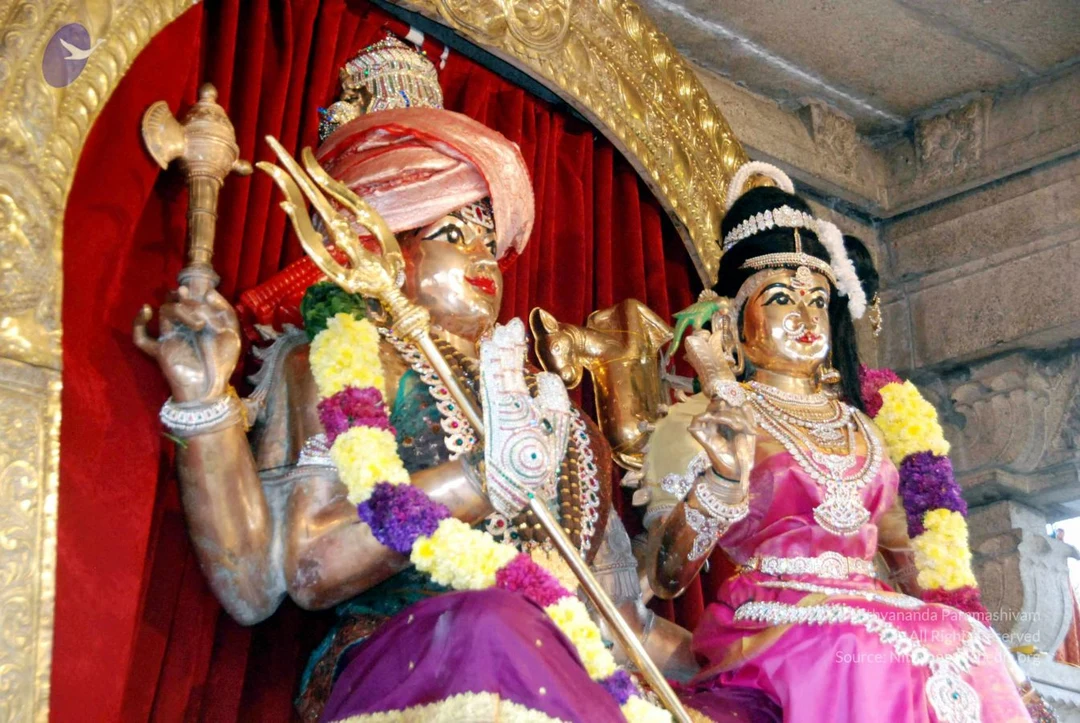
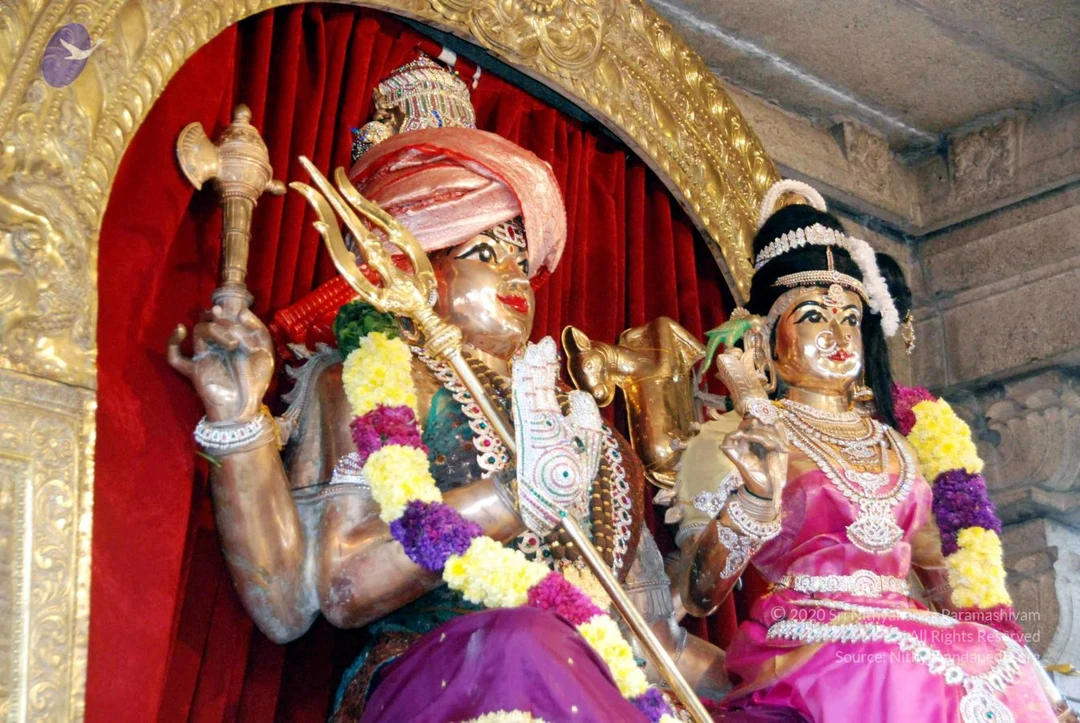
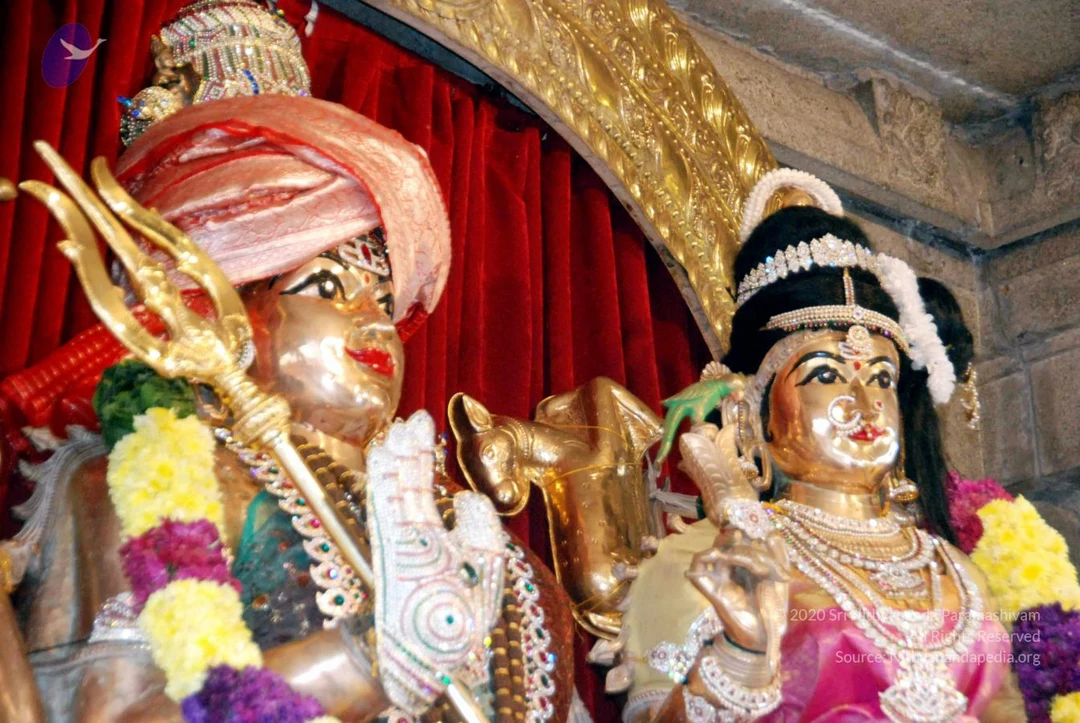
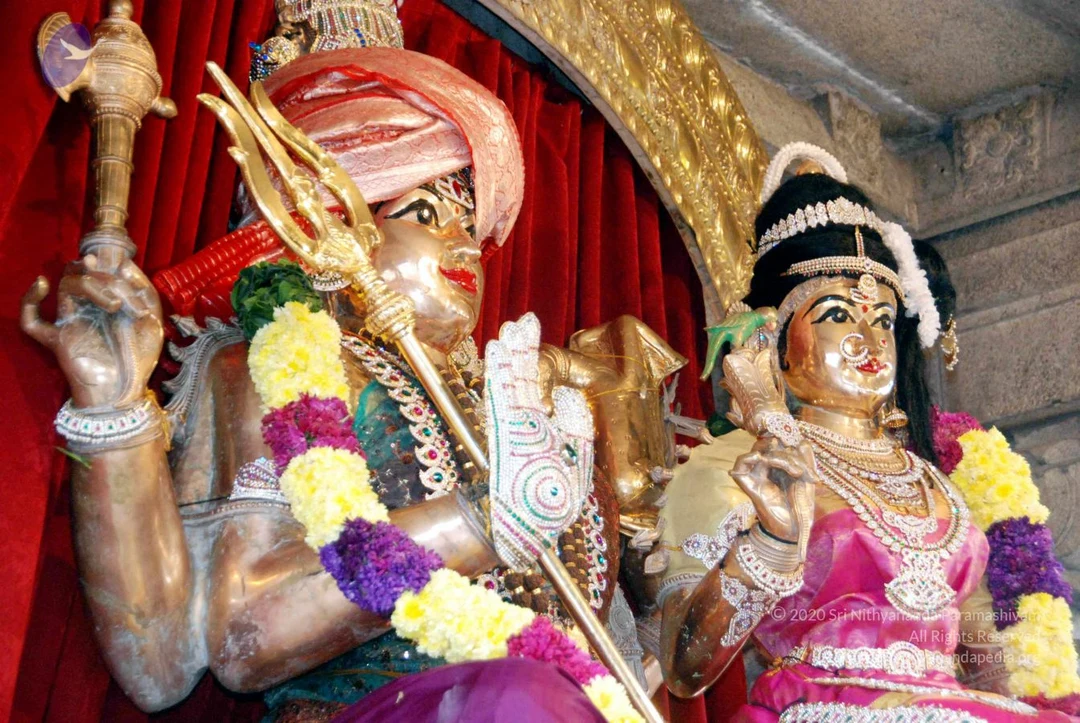
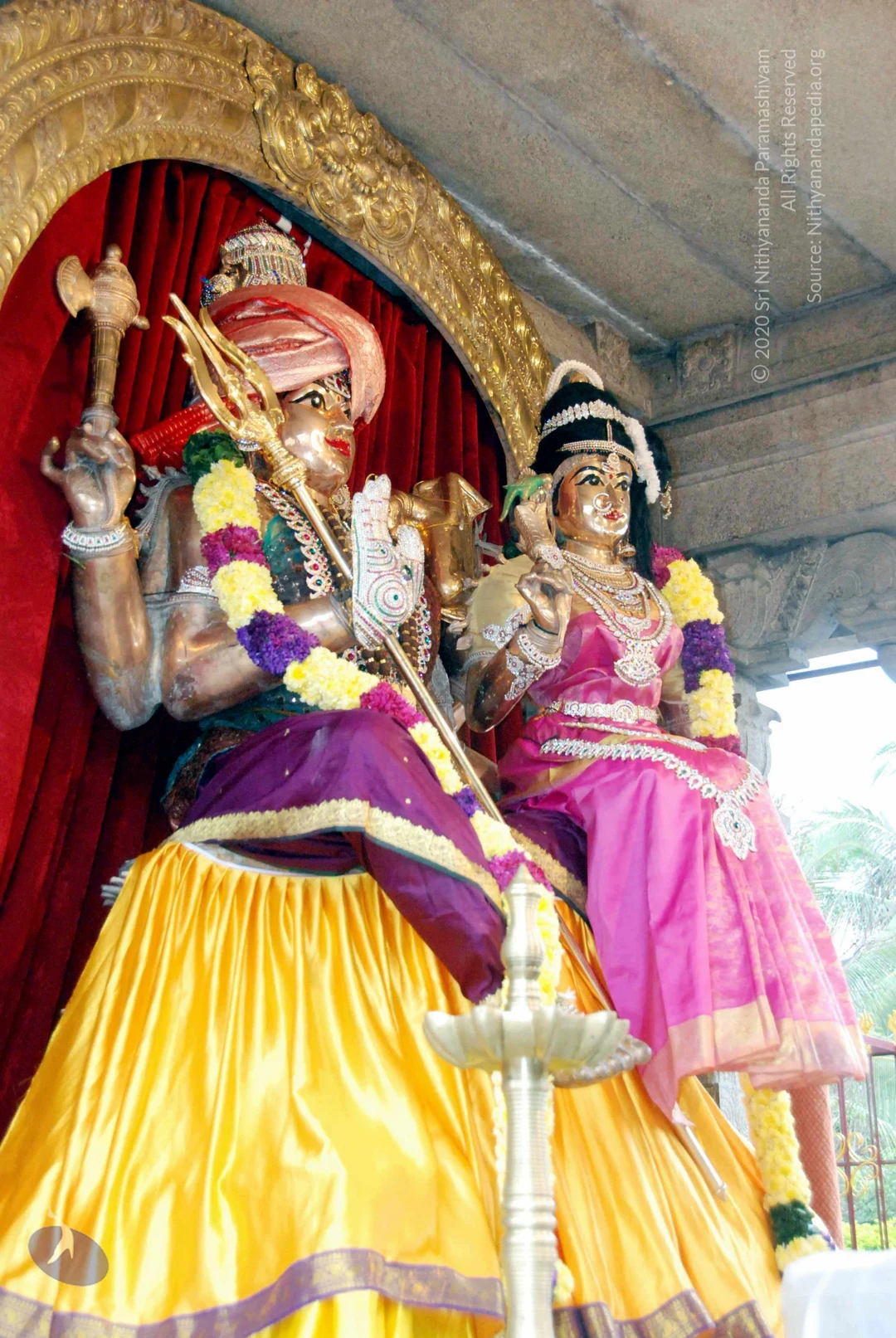
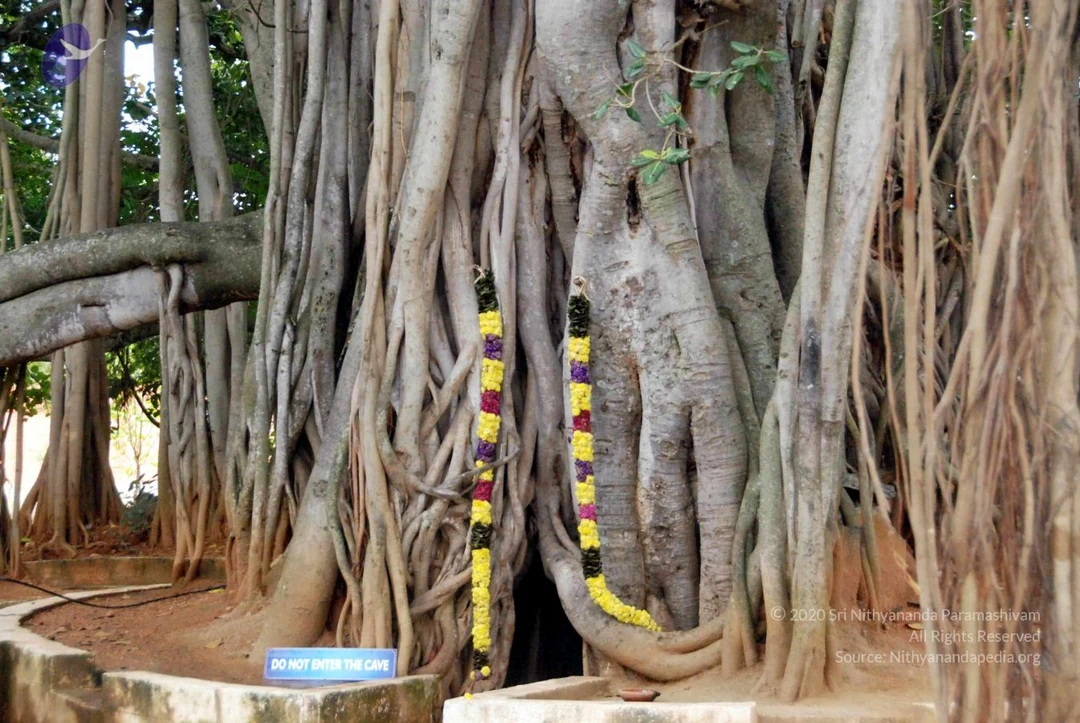
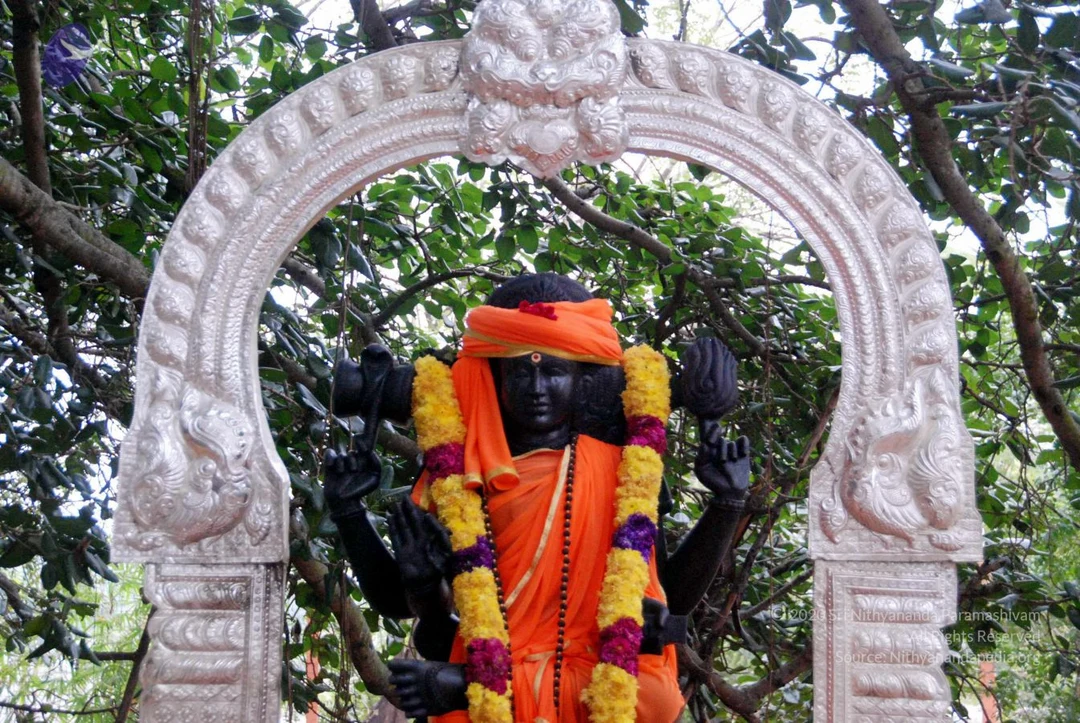
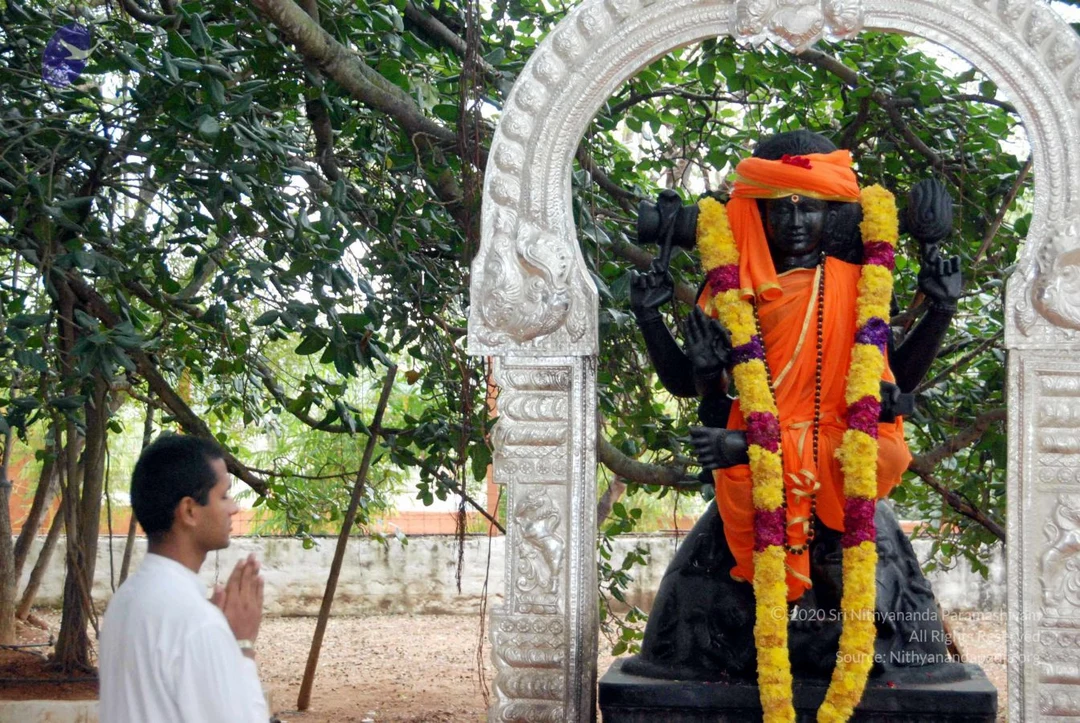
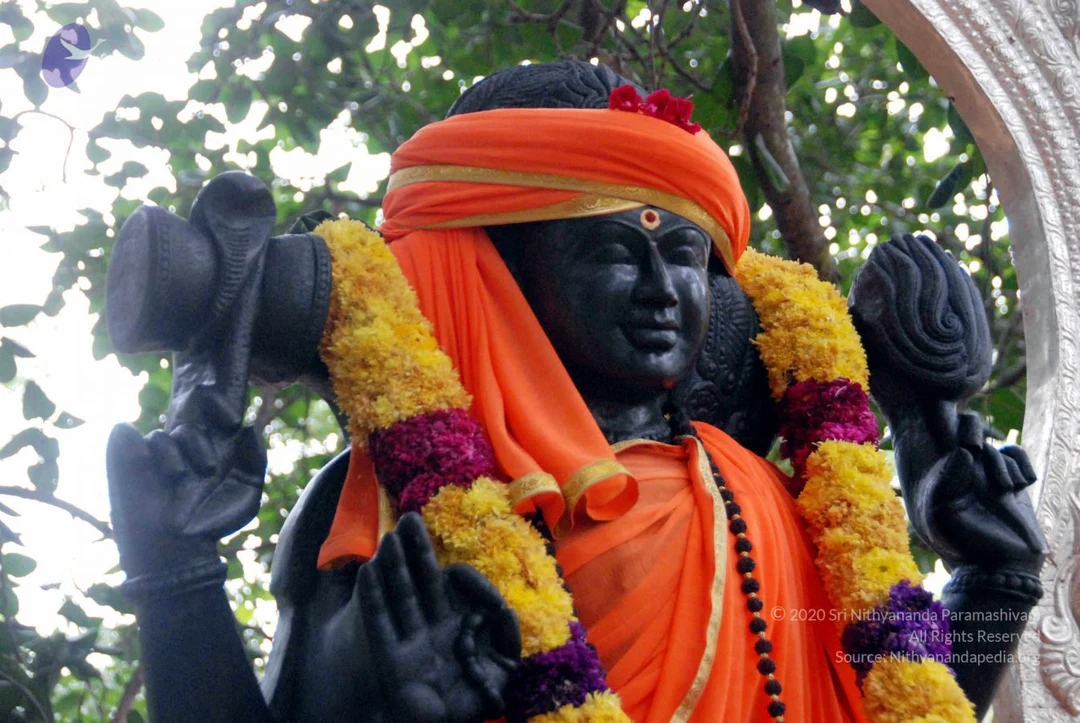
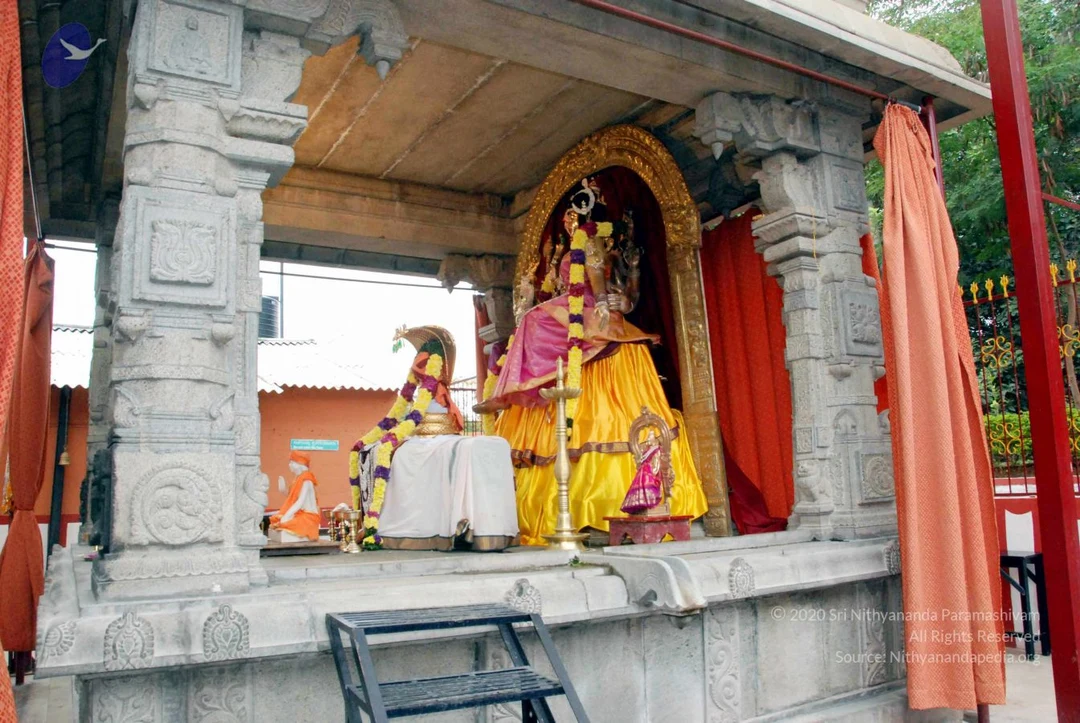
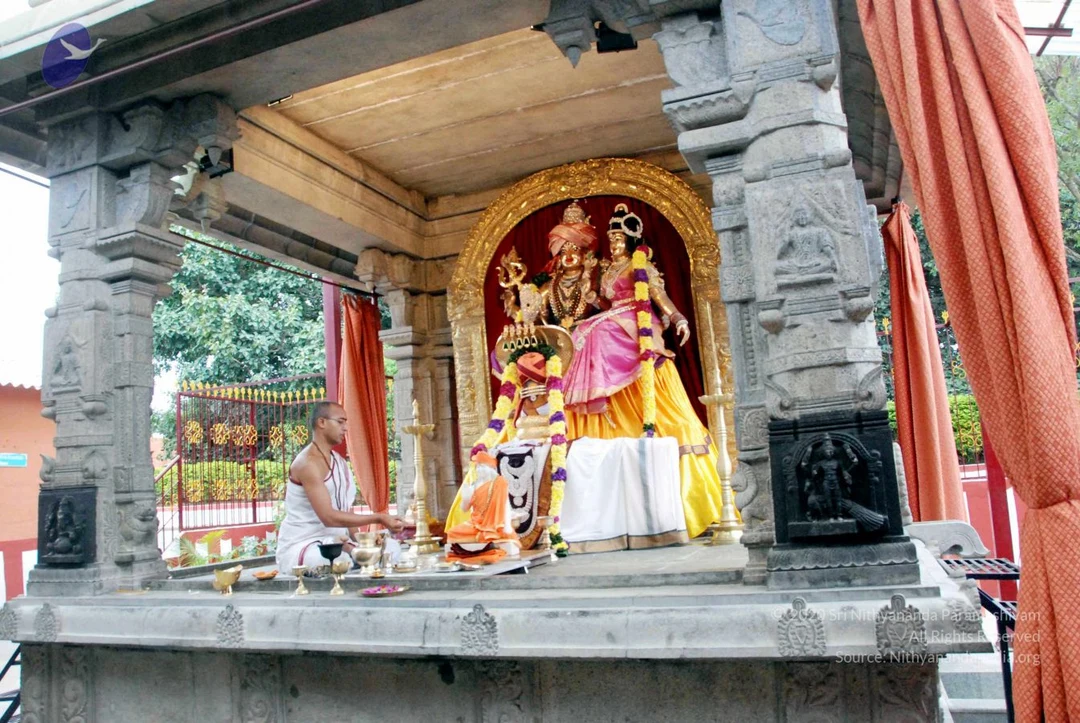
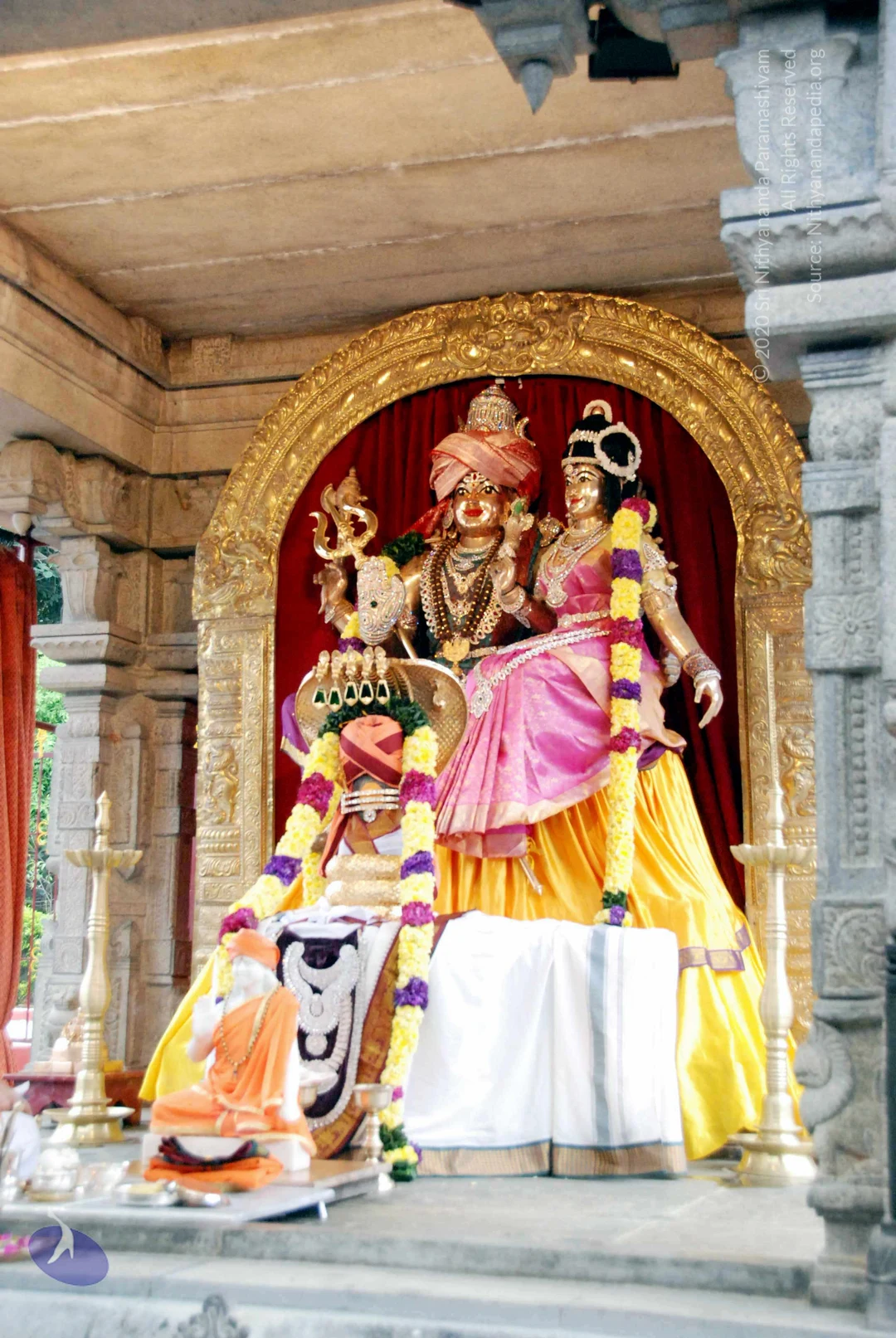
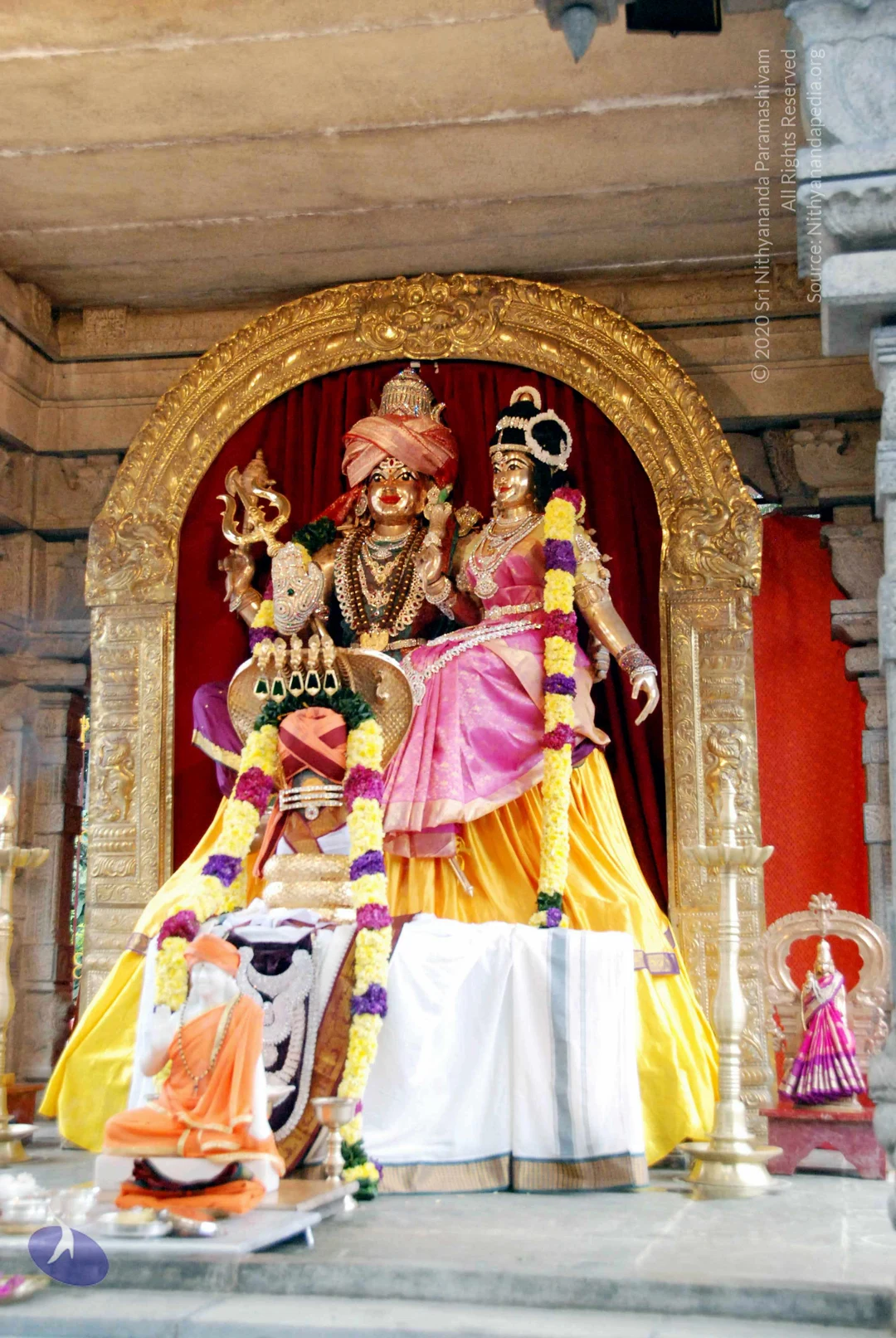
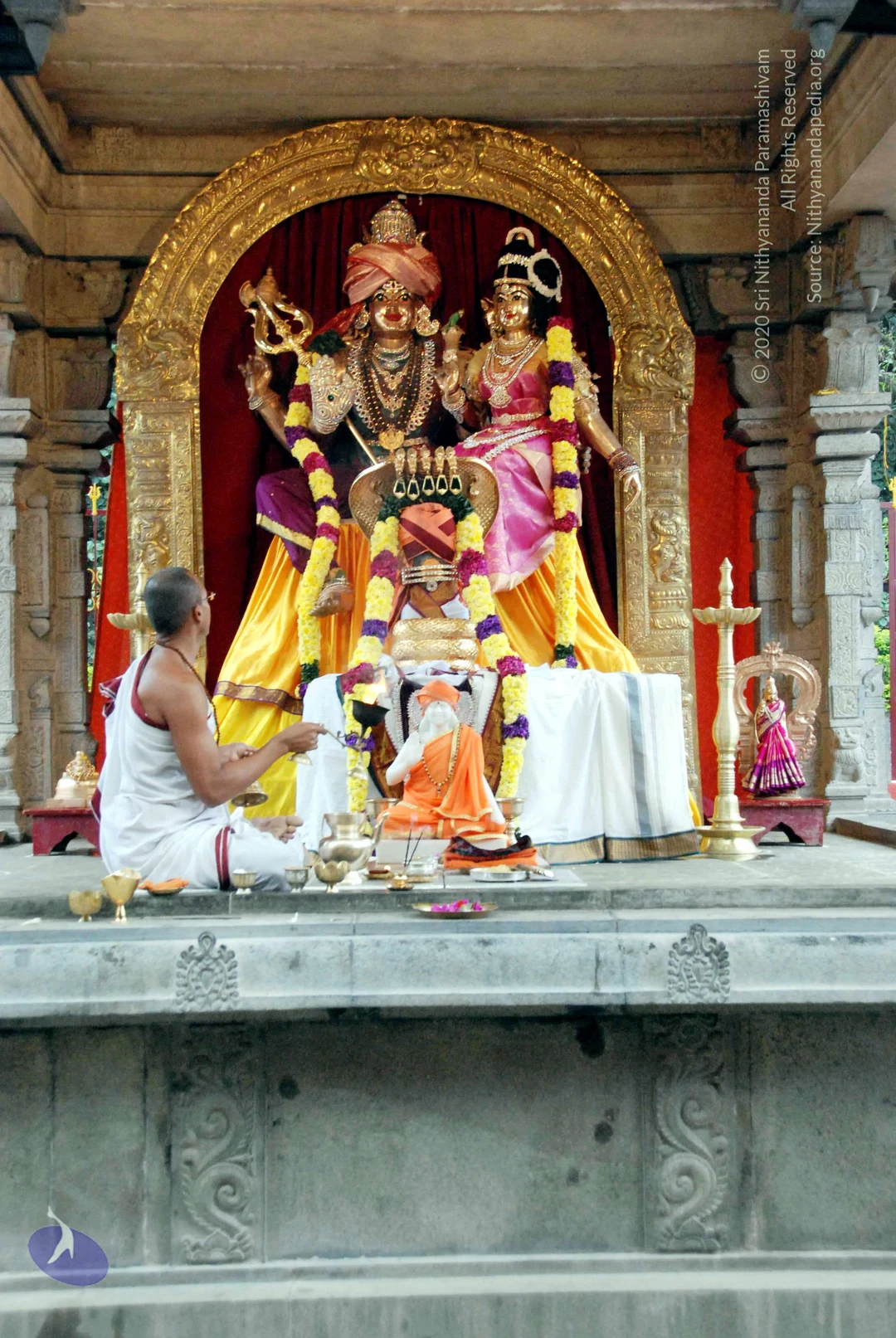
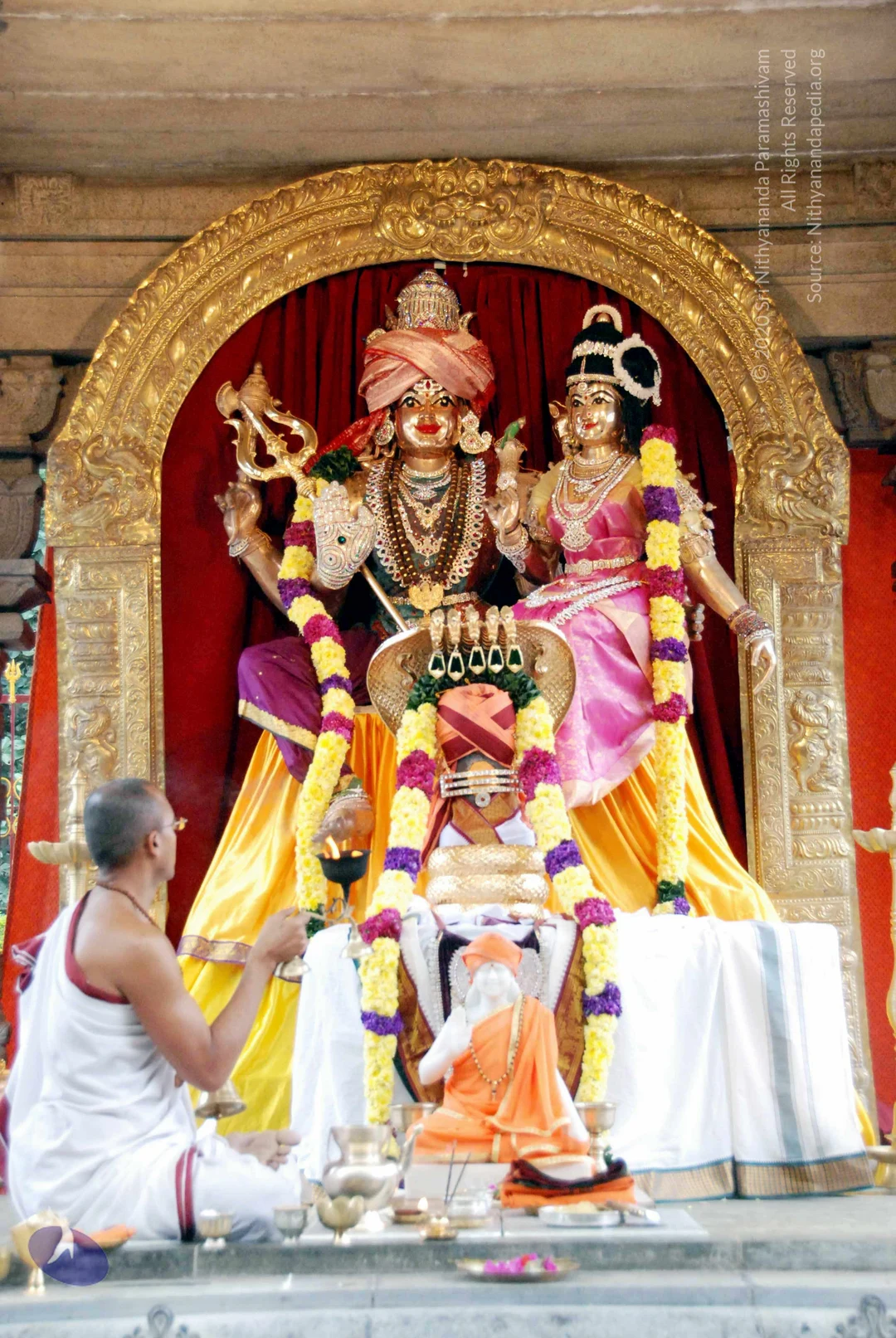
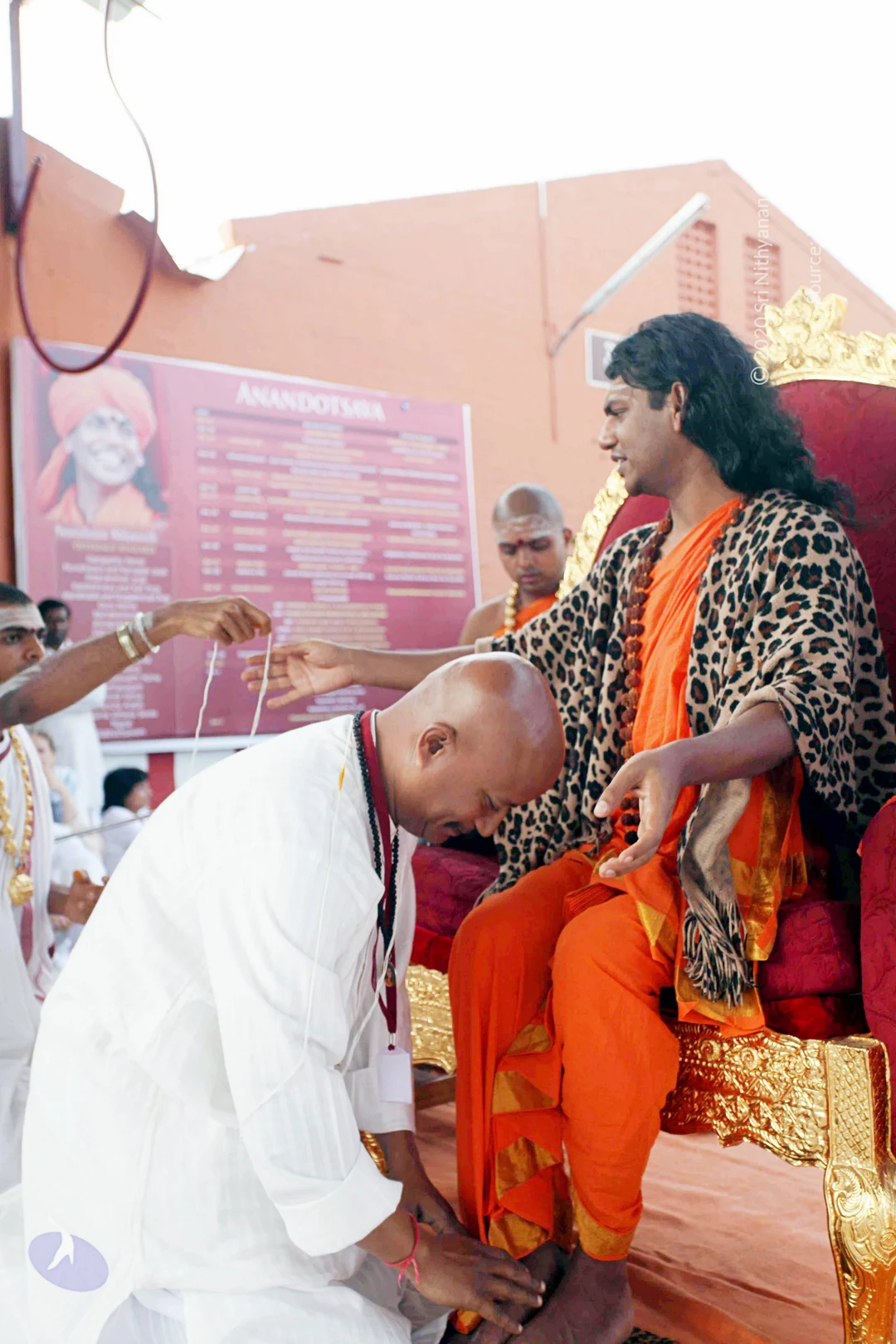
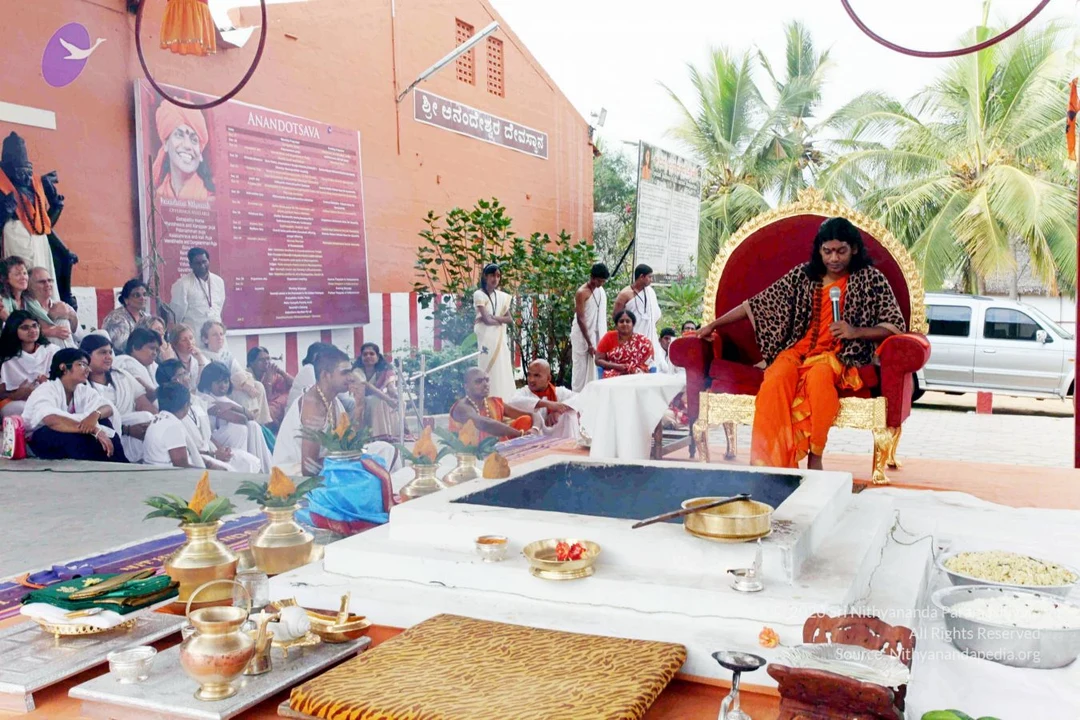
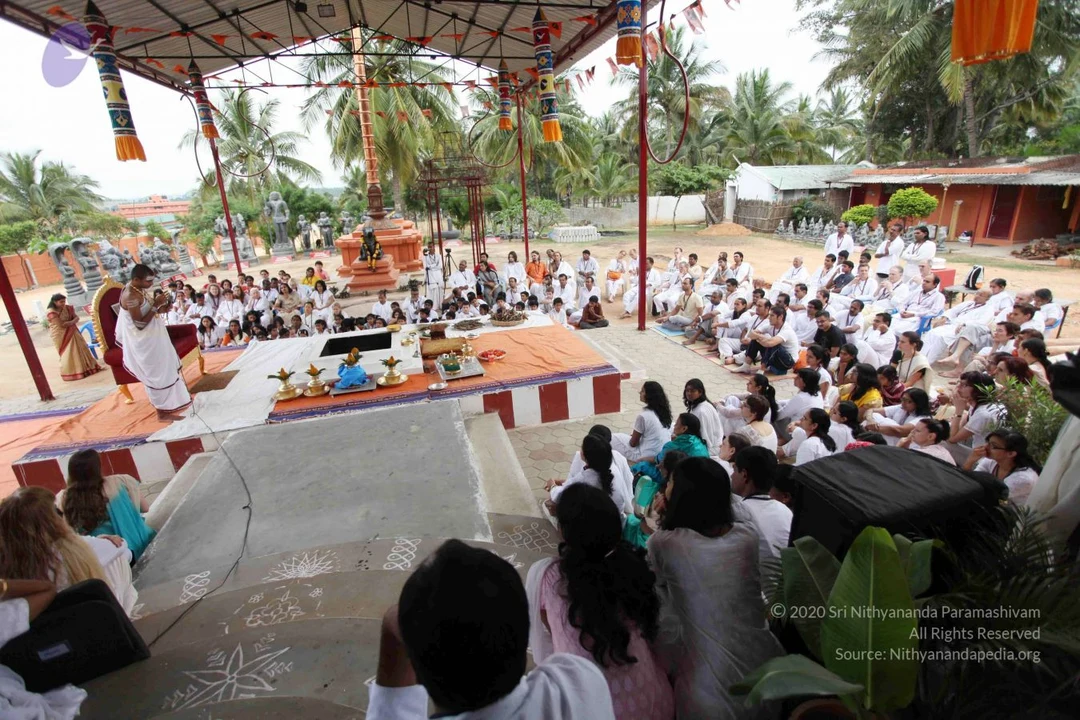
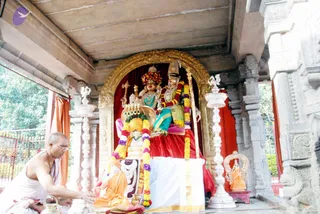
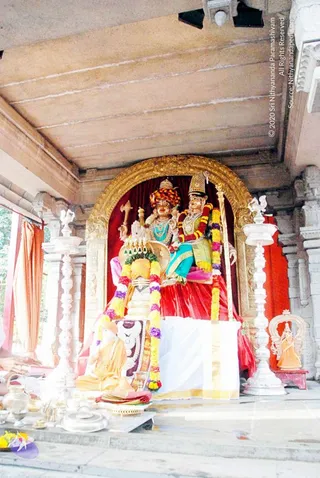
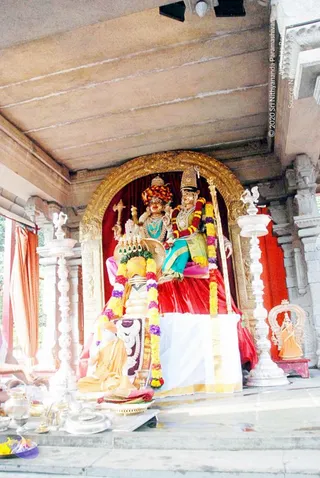
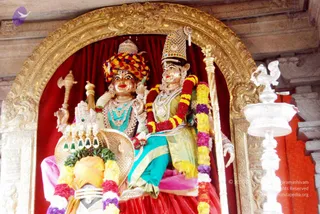
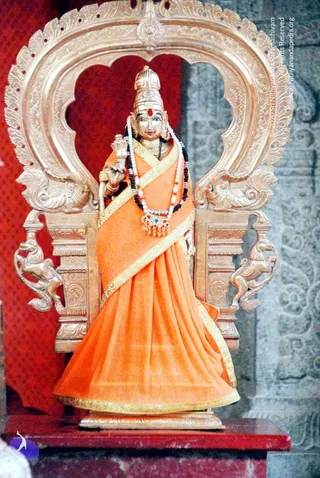
A photograph of a shrine inside a stone-pillared temple pavilion. A shaved-headed priest in white dhoti and shoulder cloth kneels at the lower left, holding a small brass bell in one hand and a bowl-like vessel in the other, facing a deity murti. Two seated deities are dressed in red and turquoise with gold and orange crowns, garlanded with long bands of marigolds in orange and purple. Tall white pedestal lamps with oil lamps stand on either side, a small brass kalasha and offerings sit before the murti, and a red curtain hangs behind the shrine. A small figure in orange is seated near the base. The setting suggests puja or aarti.A shaved-headed priest in white dhoti and shawl kneels at the left edge of a stone shrine, reaching toward a seated pair of deity murtis in a gilded arched niche. The central figures wear turbans and crowns, turquoise and gold ornaments, and are draped with multicolour marigold garlands. Red cloth backs the niche, with silver lamp stands, a silver kalasha-style vessel and a small saffron-robed figure below. Brass vessels sit on the floor near the priest. Text in the lower right reads 2010 Sri Nithyananda Paramashivam, , andPhotograph of a shrine inside a stone-pillared pavilion with a gold-framed arch and red velvet backdrop. Two deity murtis sit on a red throne-like seat: a figure with a tall gold and orange turban and a figure in a teal and gold garment, both draped in marigold garlands and wearing ornate necklaces. In front stands a white silver-toned sculpture of a figure in orange and gold robes with a gold garland, beside a silver kalasha, a brass lamp and a small plate of flowers. Tall silver lamp stands flank the shrine, and a small figure in orange sits on a side pedestal. No physical people are visible.Photograph of a temple shrine with a golden arched frame and red drapery containing a pair of deity murtis seated on a red-draped throne. The larger figure on the right wears a tall ornate crown, green-and-gold garment and layered necklaces, and holds a staff; the figure on the left wears an orange-and-red crown and turquoise garment. Both are garlanded with marigold and multicolour flower strands. In front, a seated saffron-robed figure statue with a rudraksha-style necklace sits beside a white cloth on the platform. Silver lamp stands with ornate bases flank the shrine, and brass and silver puja vessels, a kalasha and a small offering tray sit on the floor in the foreground. The ceiling is plain stone beams and columns are carved stone.A photograph of a shrine niche framed by an ornate gilded arch with a red velvet backdrop. Two gold-faced deity murtis are seated side by side on a red cushioned dais, the left one wearing a multicoloured striped turban, a trident-like staff and layered gold necklaces, the right one wearing a tall jeweled crown, a teal blouse and a yellow-green sari with a fringed border. Both are garlanded with marigolds and purple flowers. In the foreground a silver lamp stand and a silver bird ornament stand near the shrine, while a small bowl of green leaves sits at the lower left. No physical people are visible.A gilt metal statue of a deity murti stands within an ornate golden arch with carved foliage, rearing lion-like figures and pillars against a red cloth backdrop. The figure wears a tall crown, a red tilak on the forehead, and an orange draped garment with gold border, and holds a ritual object in one raised hand. Strands of white and black beads, a red-and-white mala, and a pendant hang from the neck. A purple logo appears in the lower left corner. No physical people are visible.

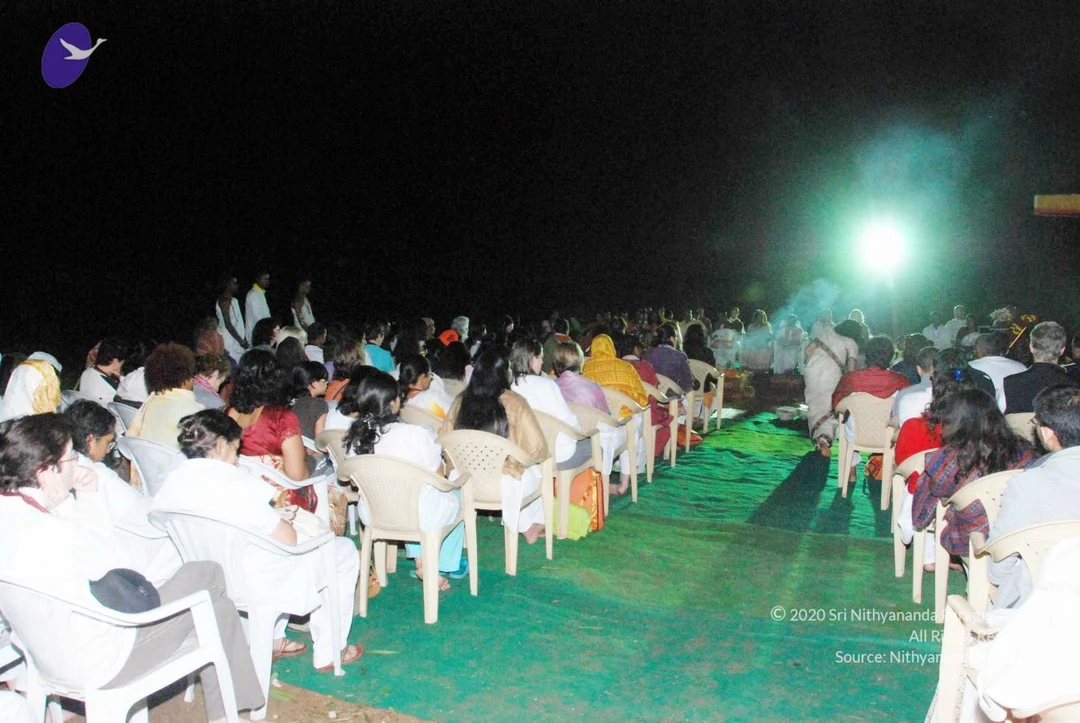
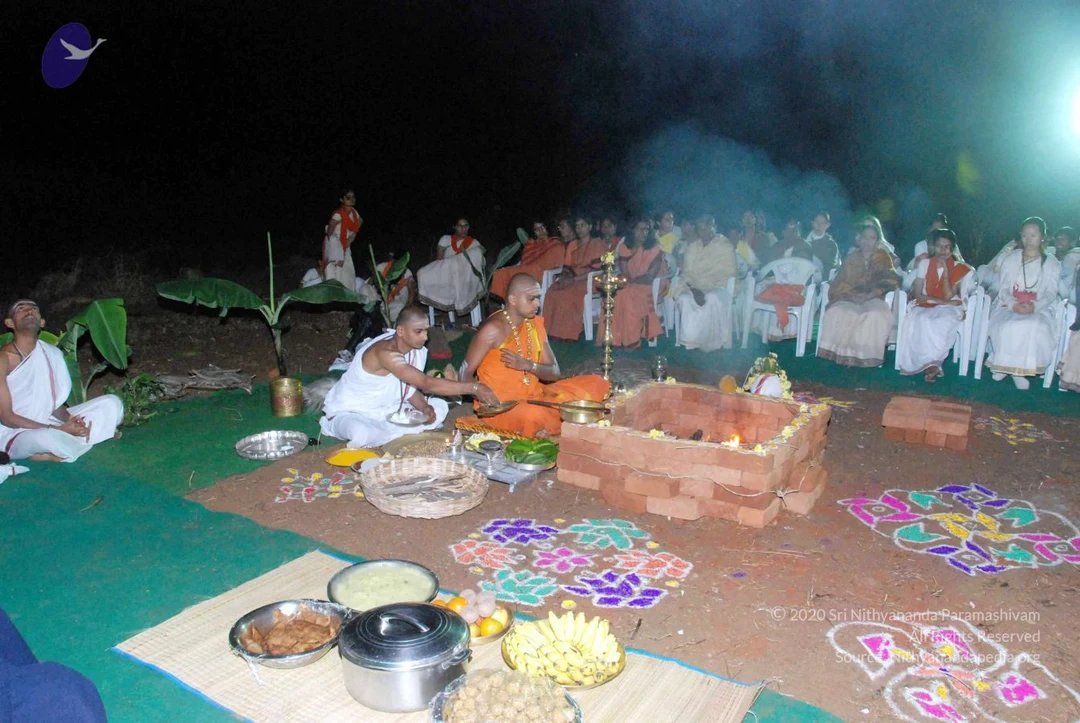
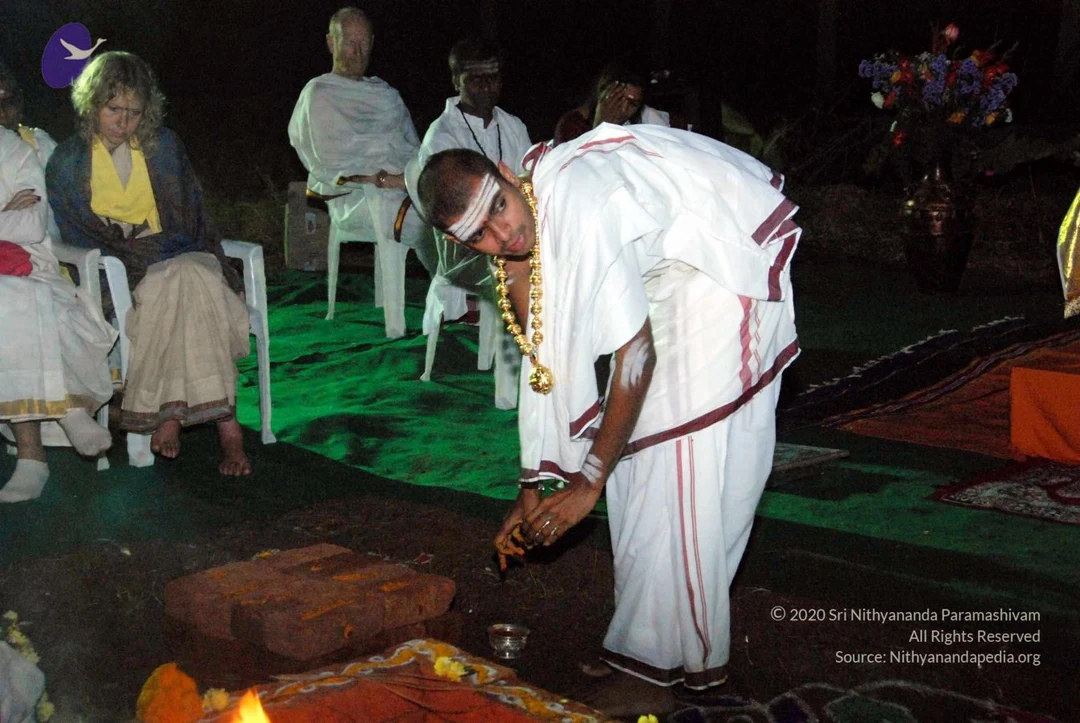
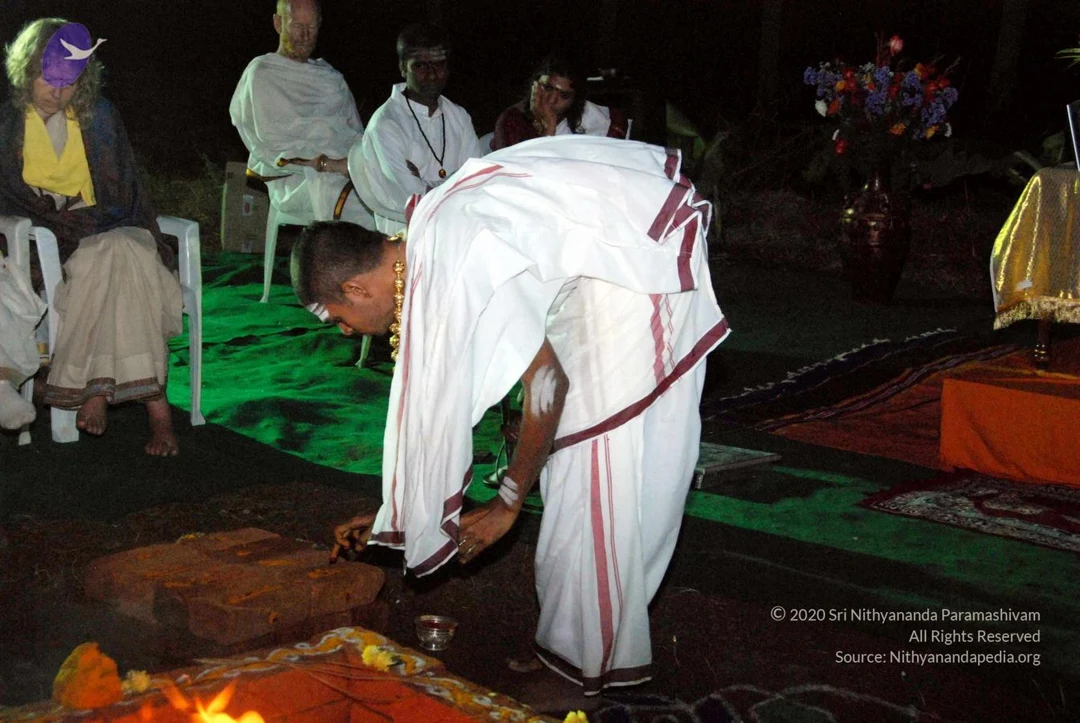
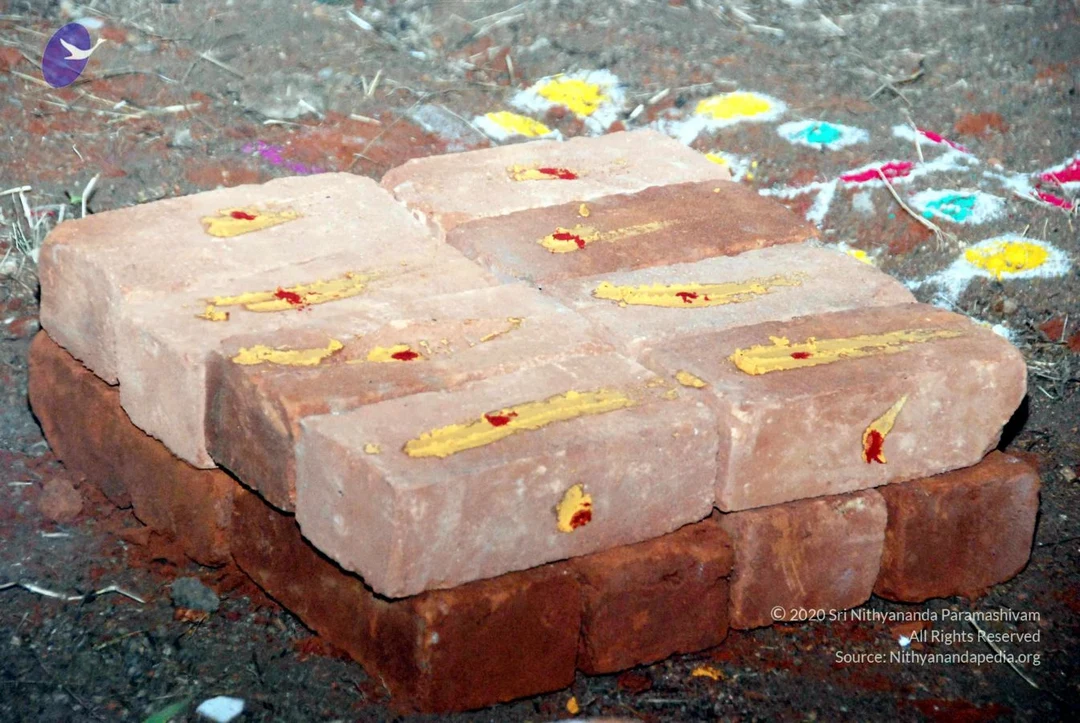
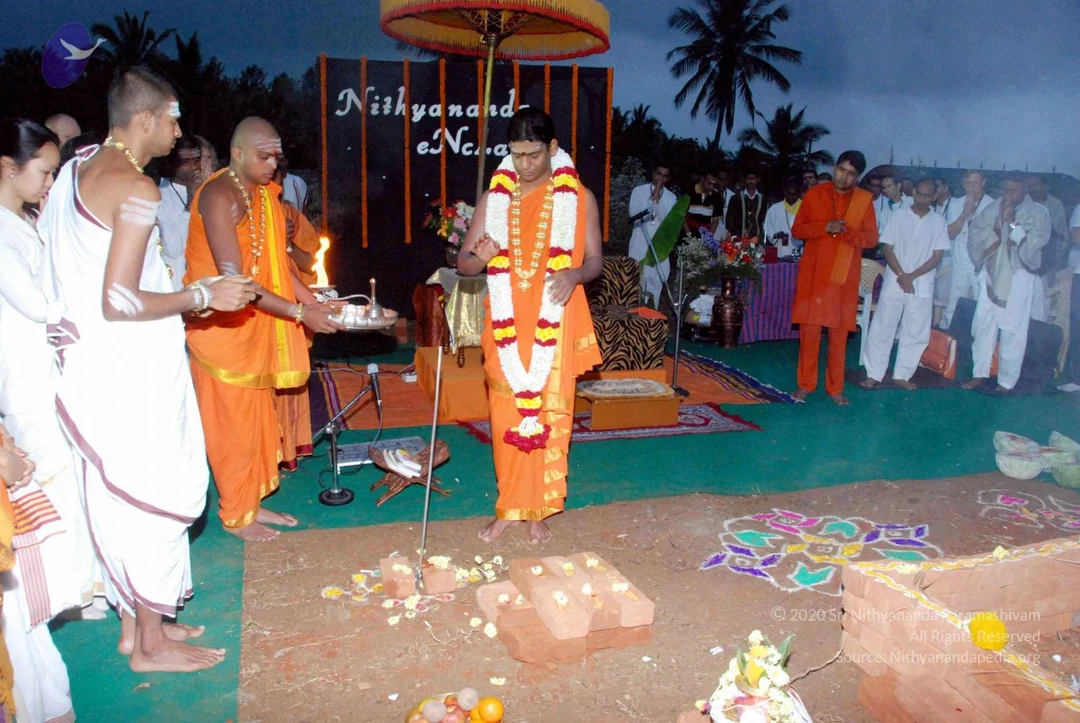
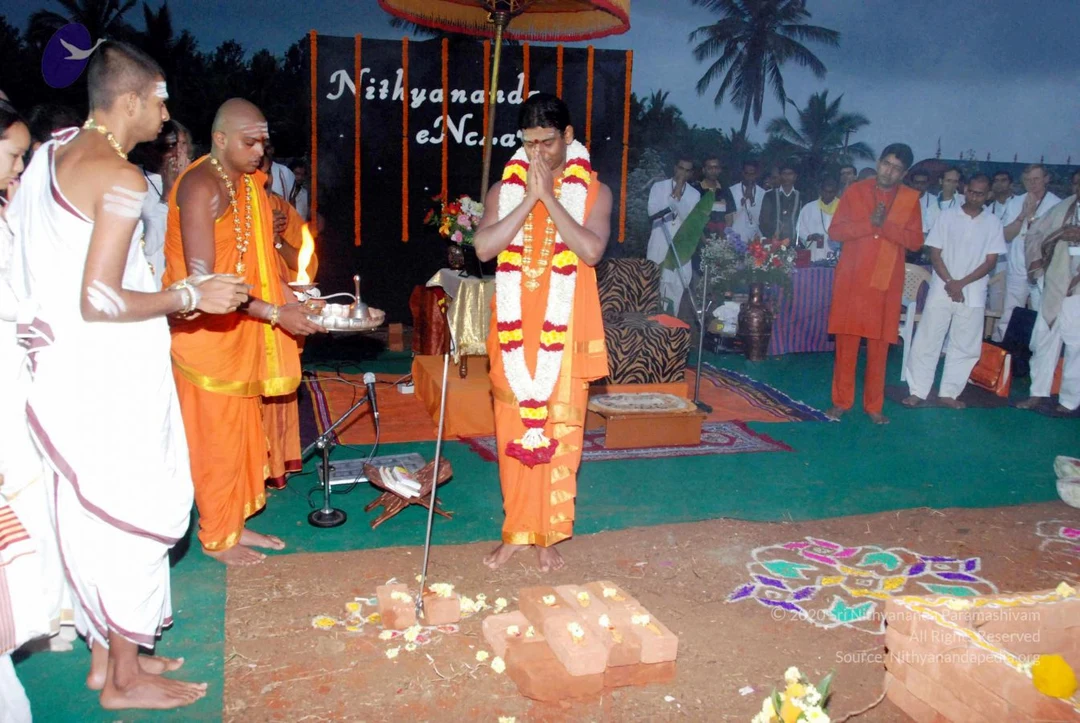
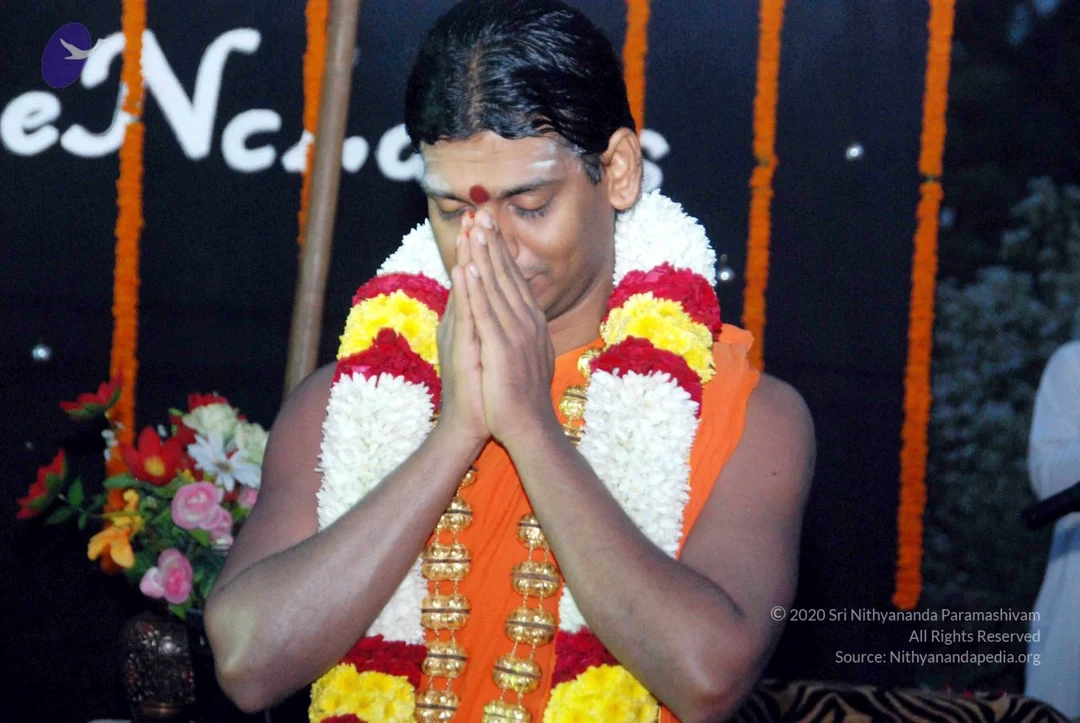
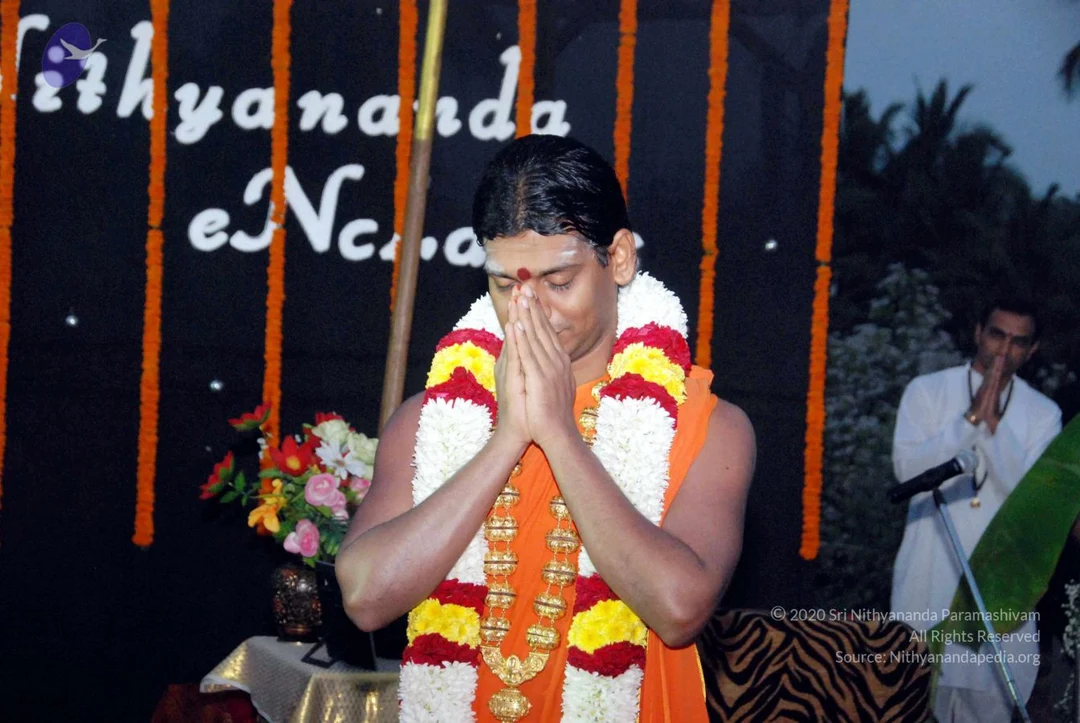
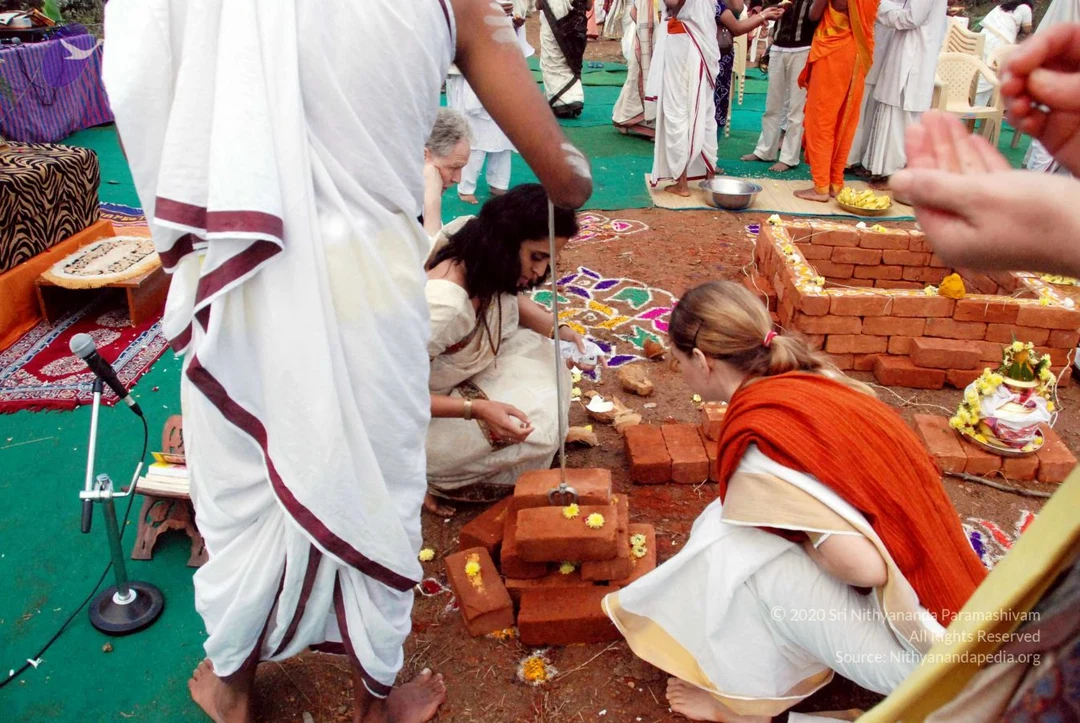
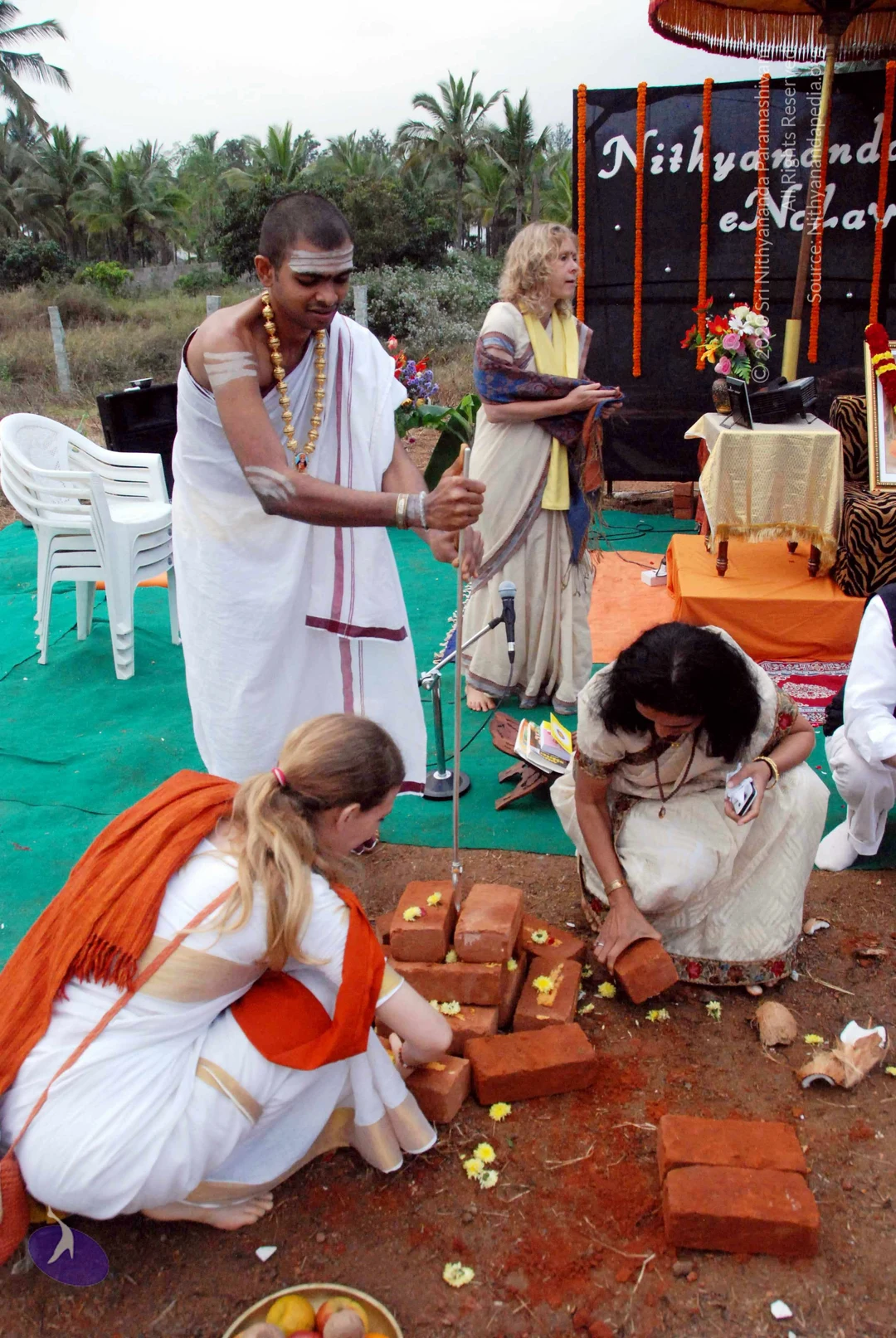
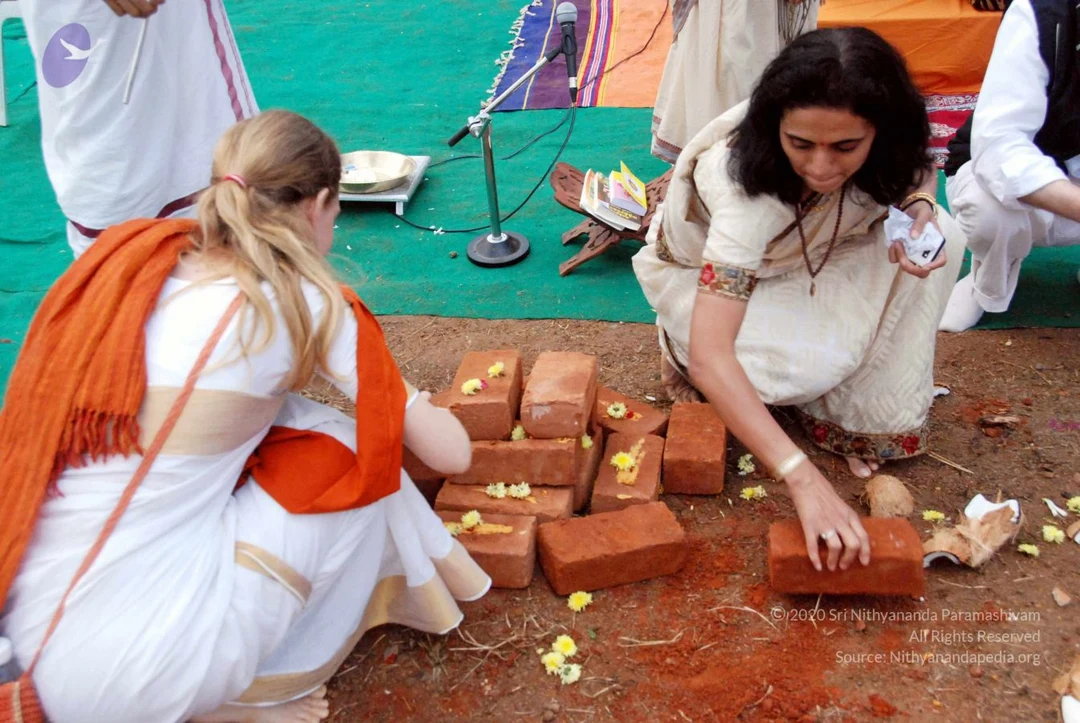
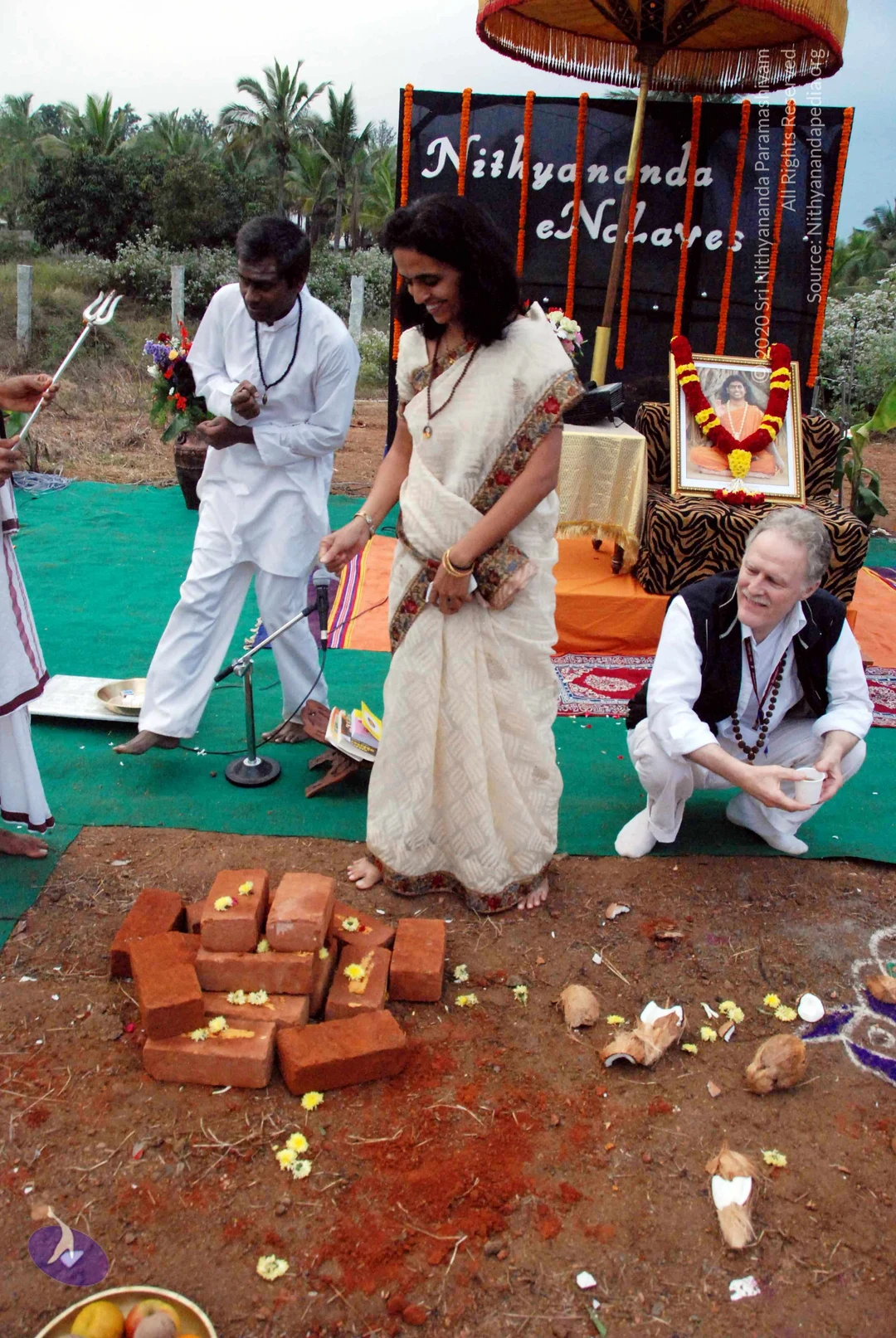
bhoomi pooja

302 photosSource gallery
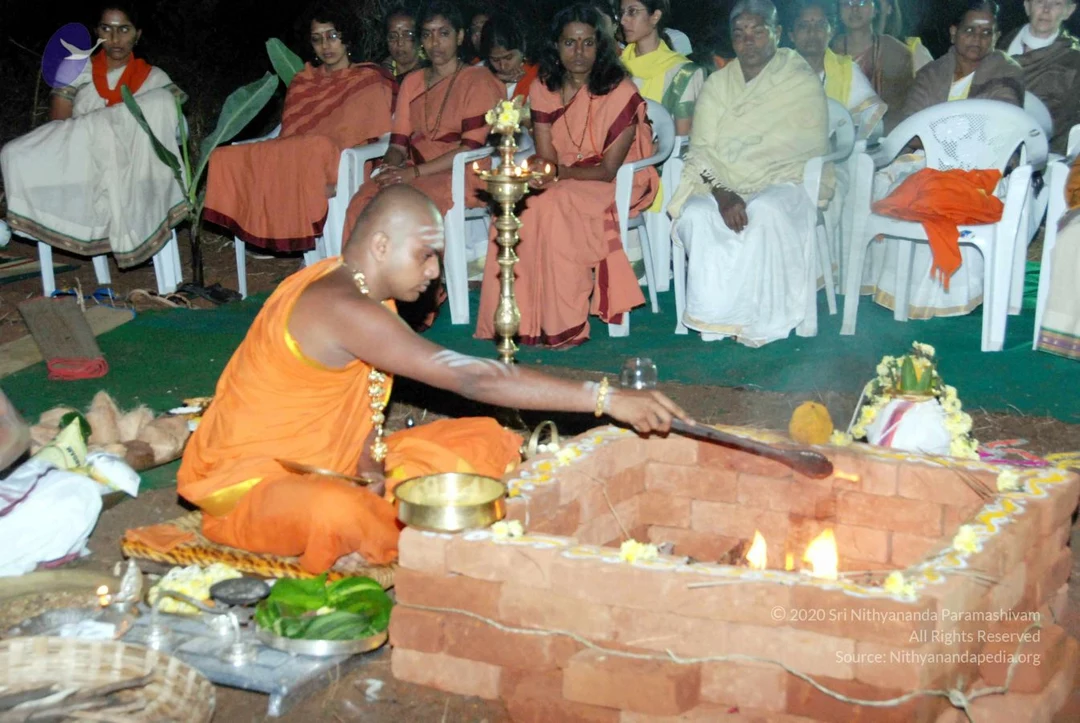
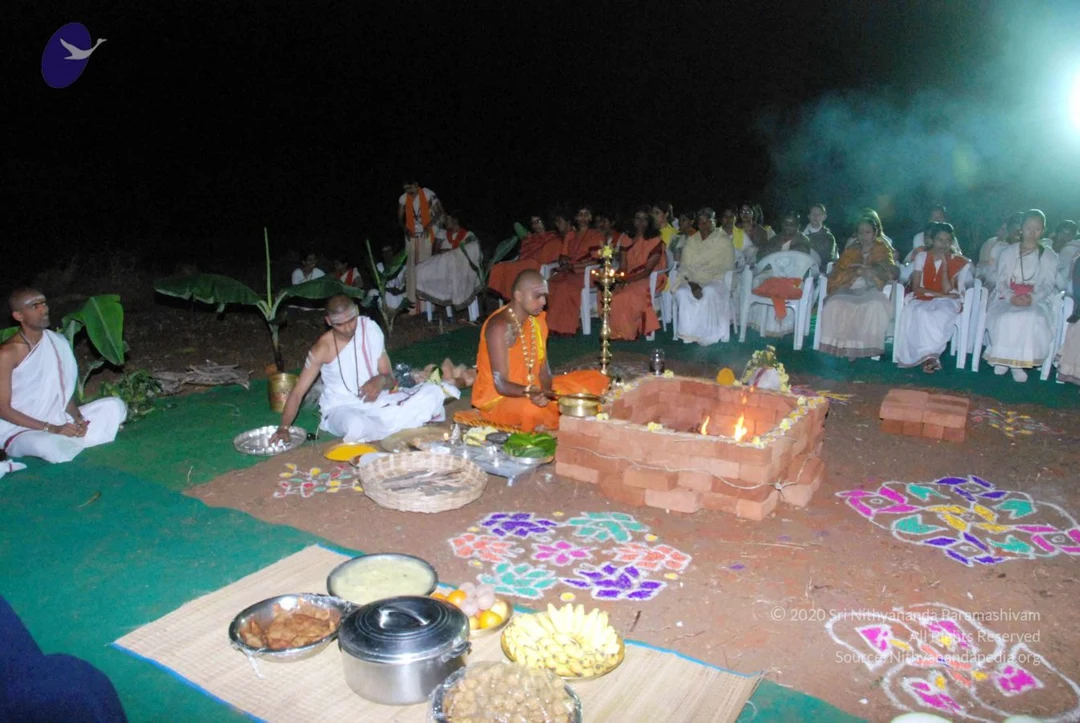
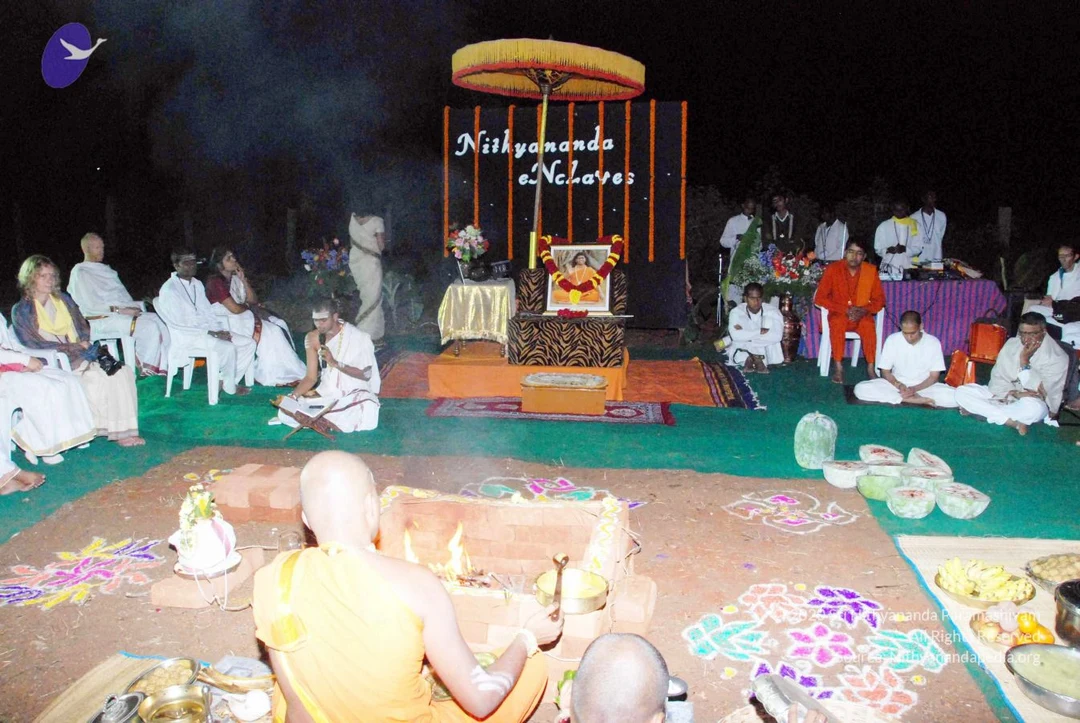
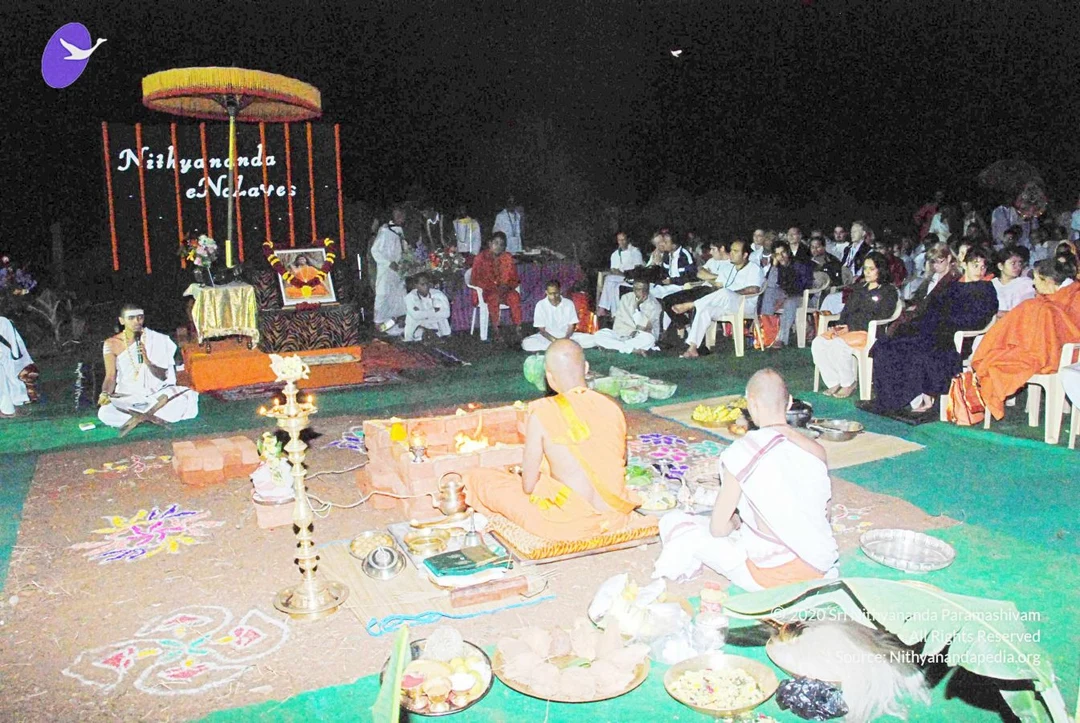
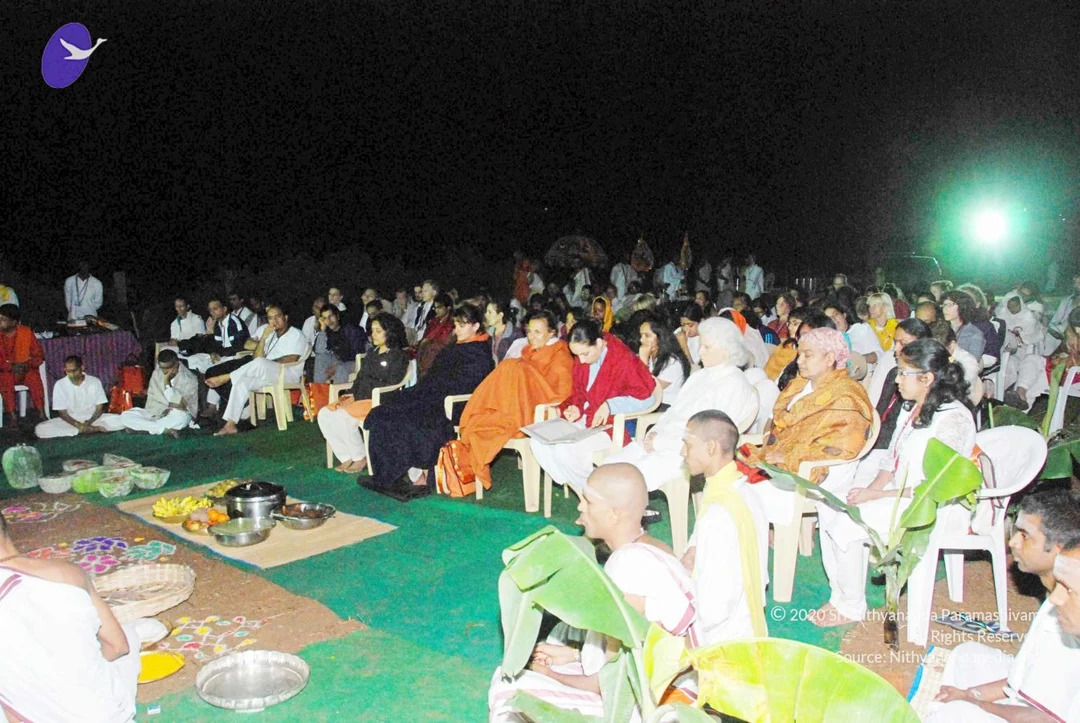
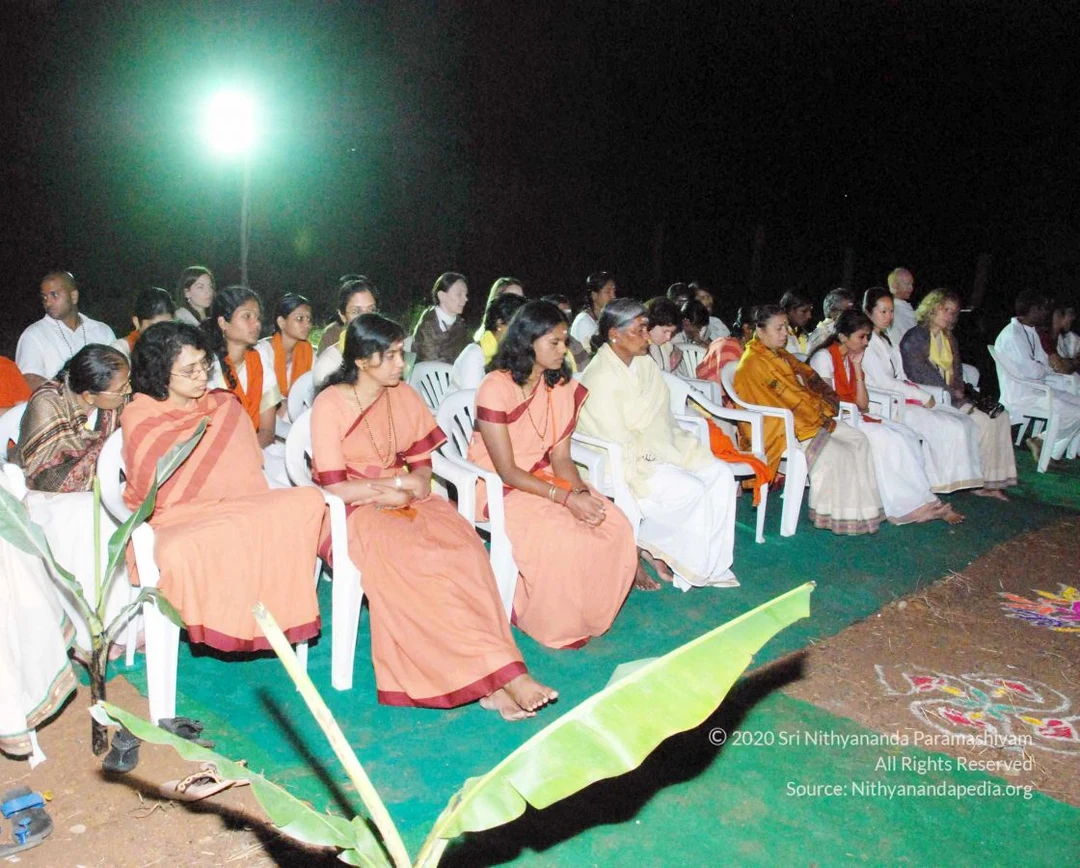
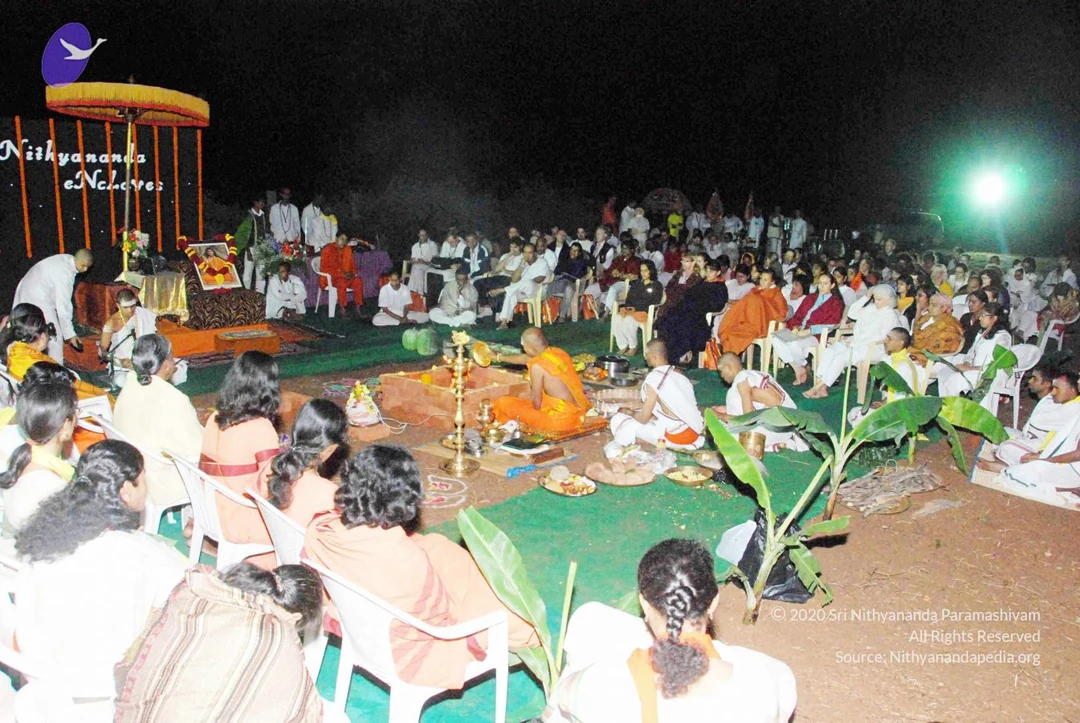
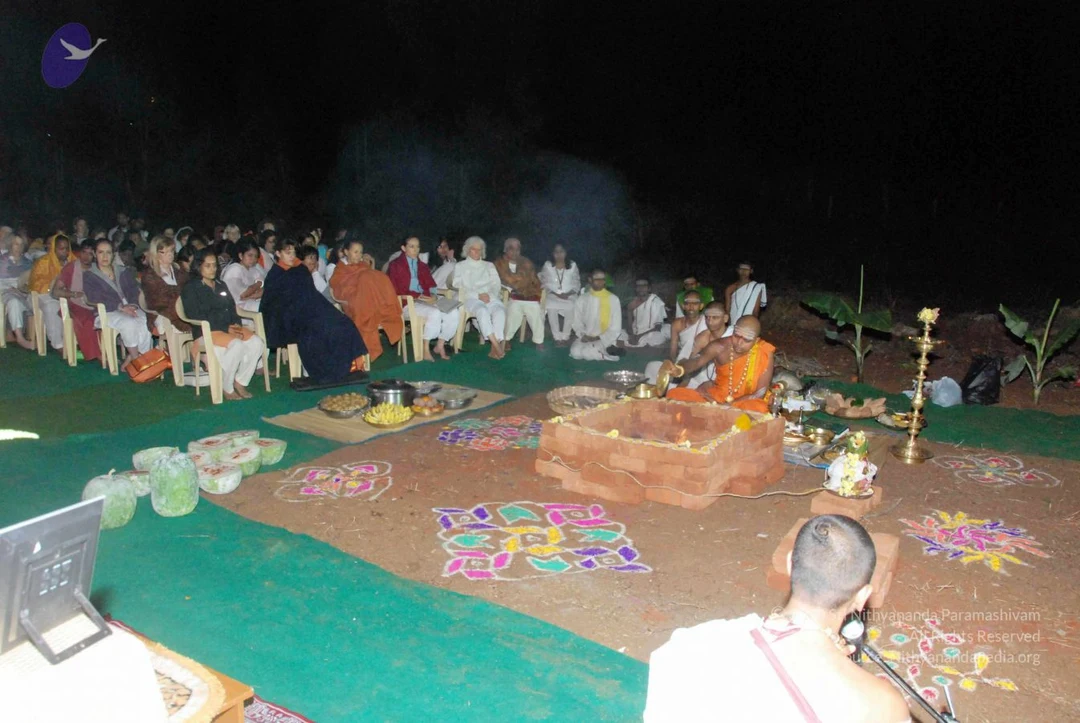
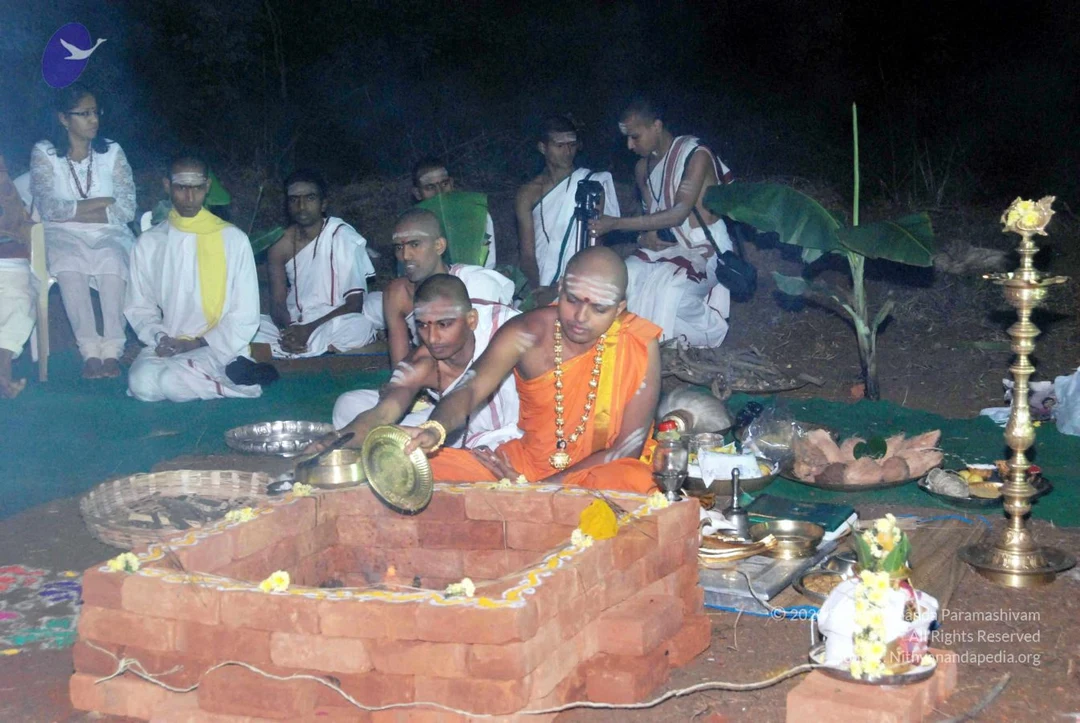
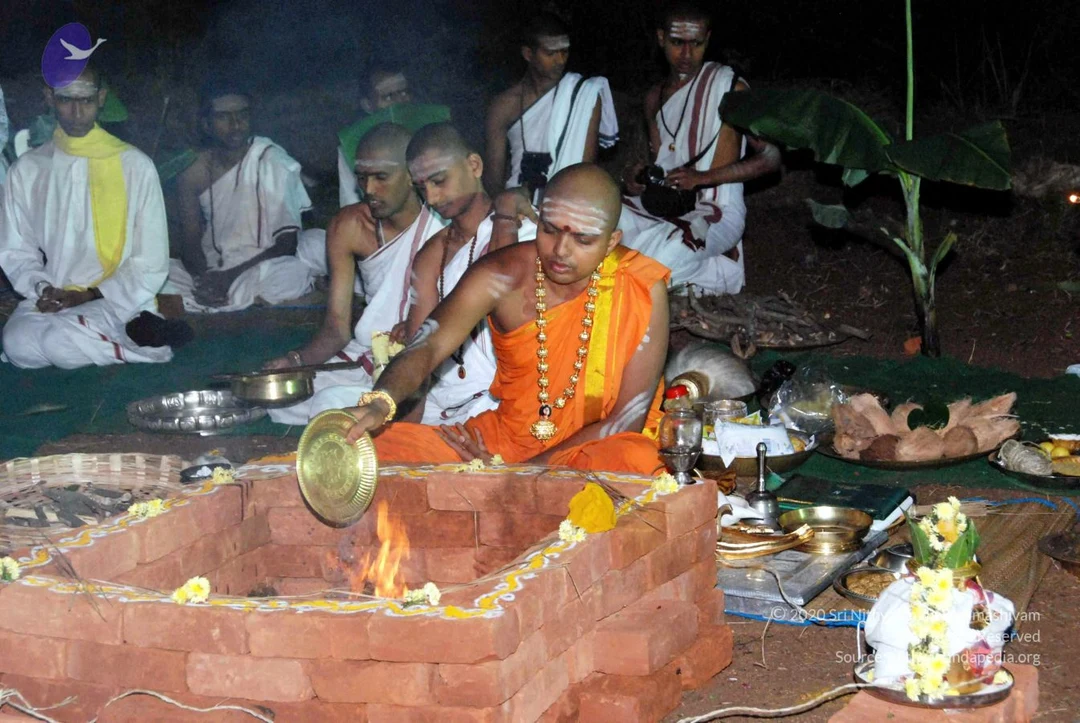
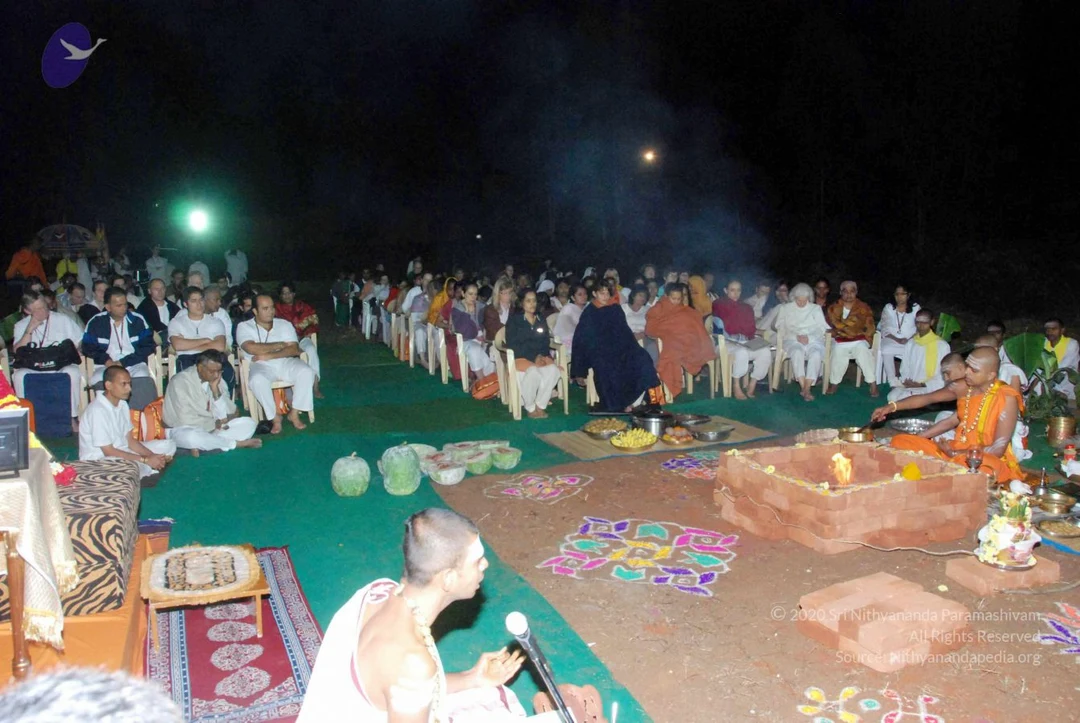
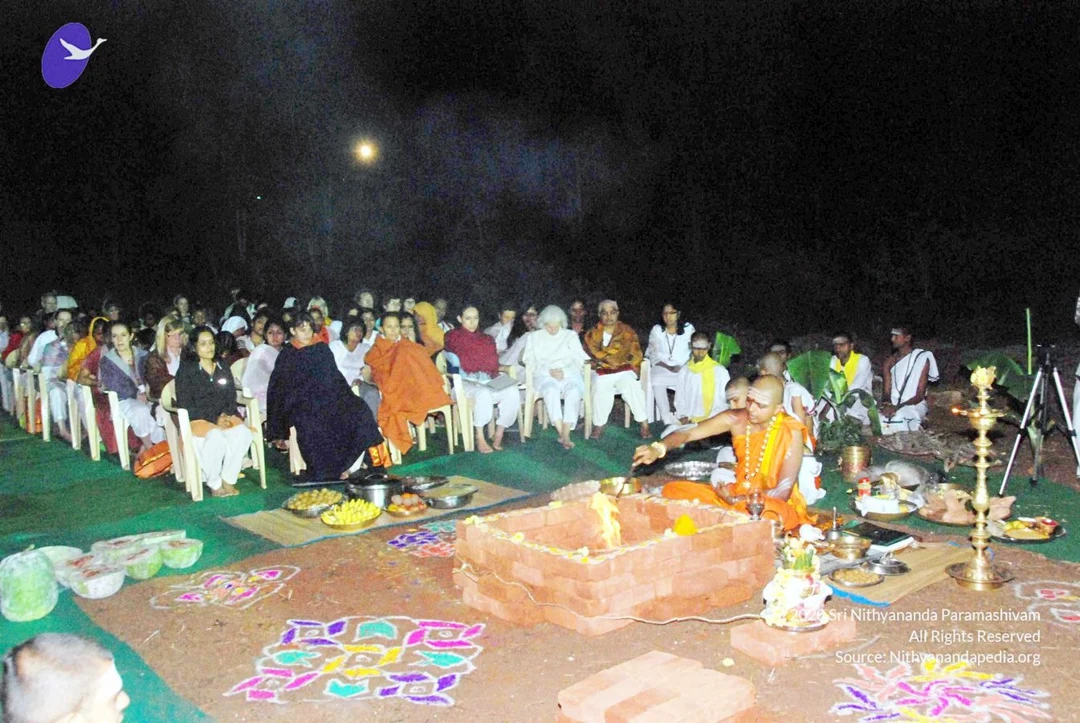
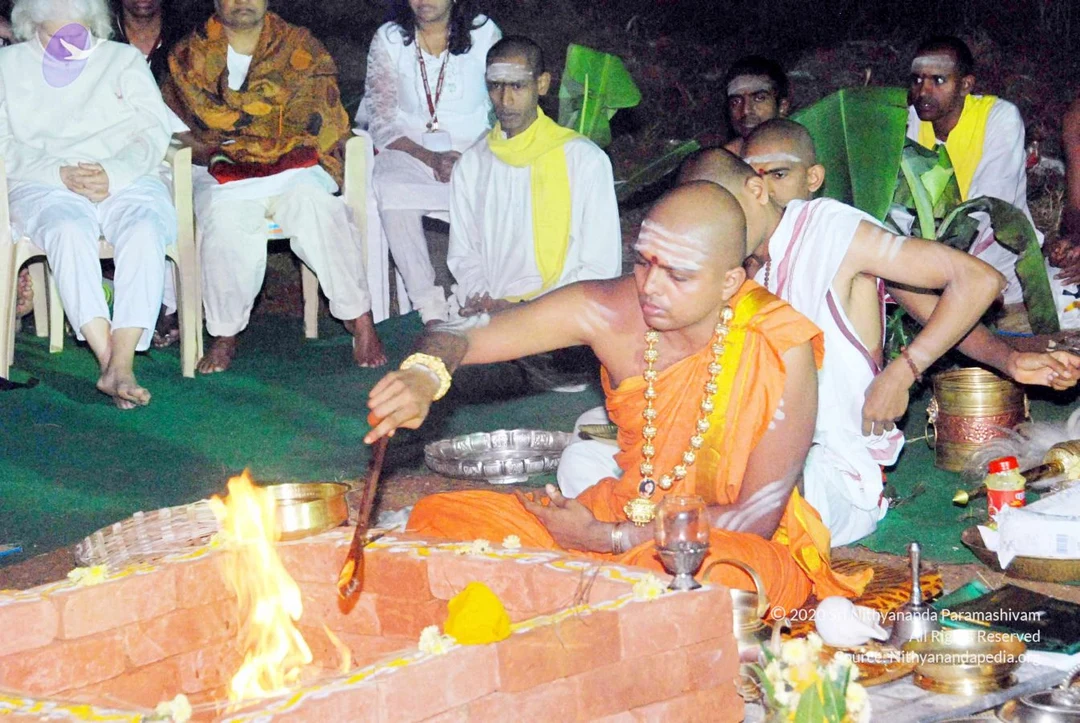
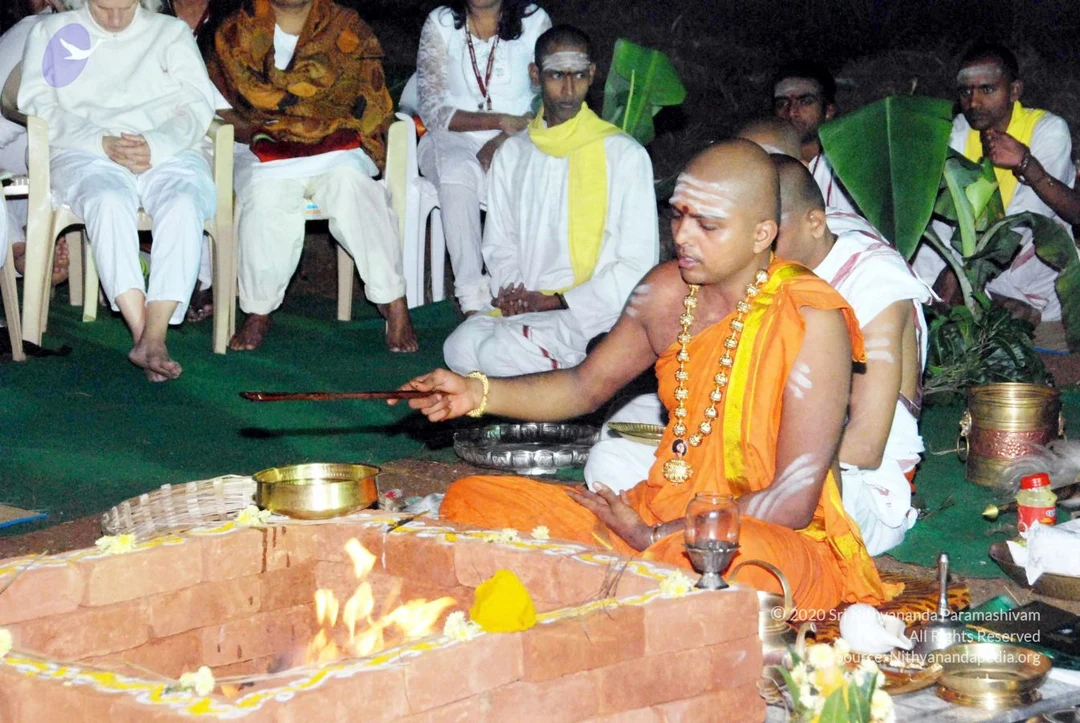
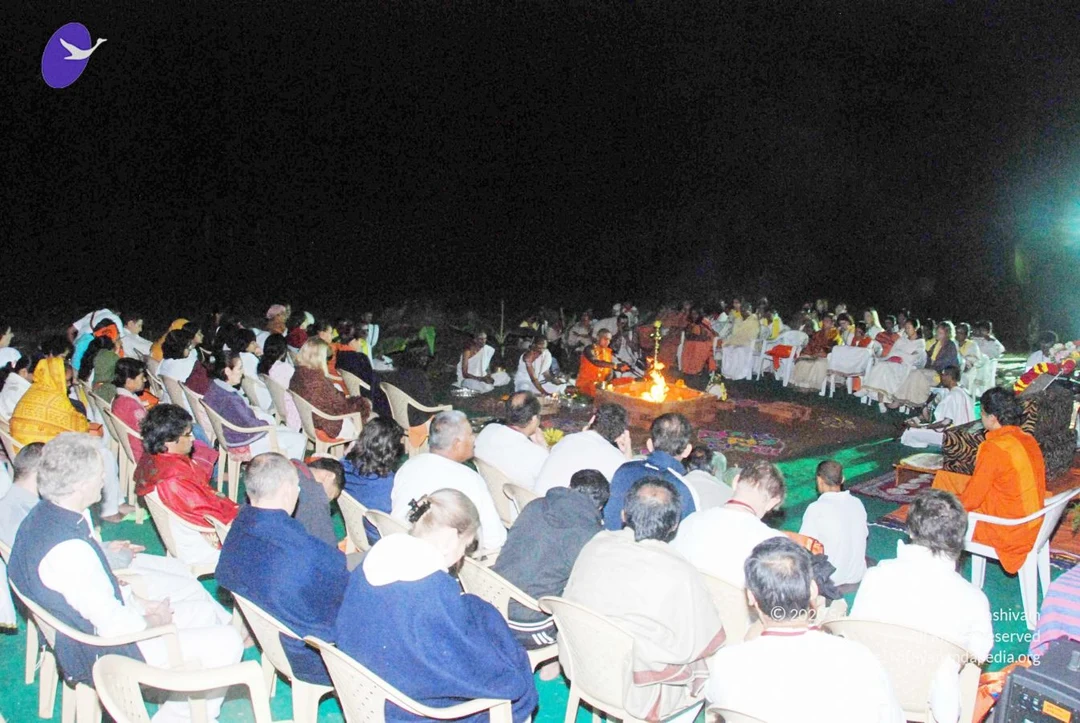
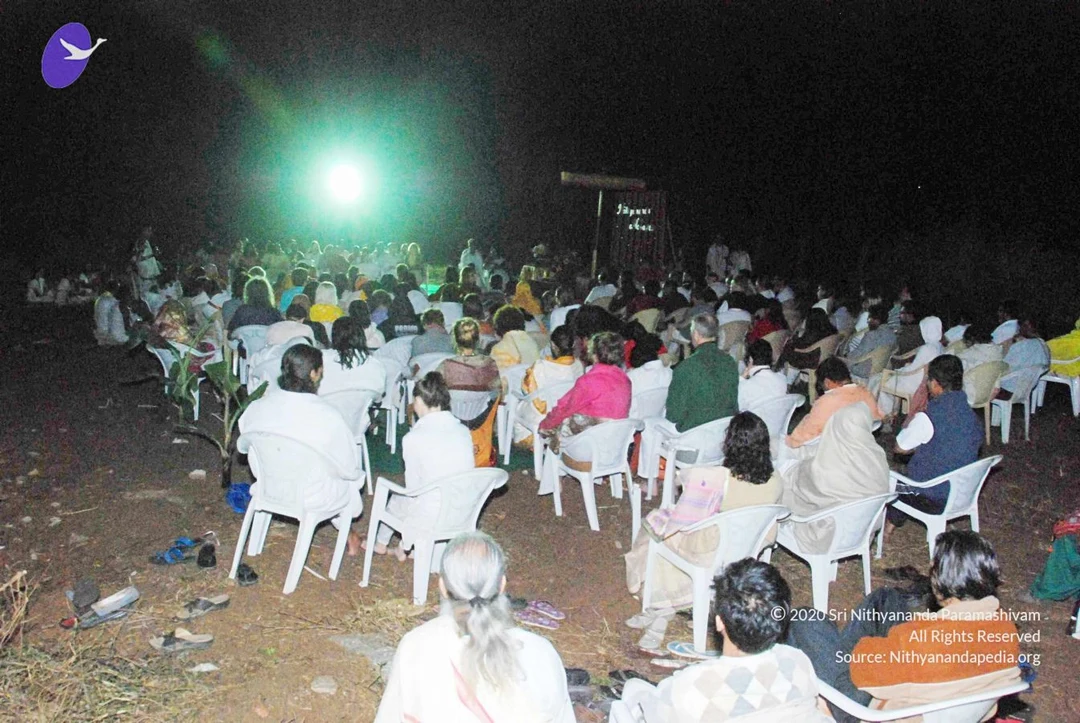
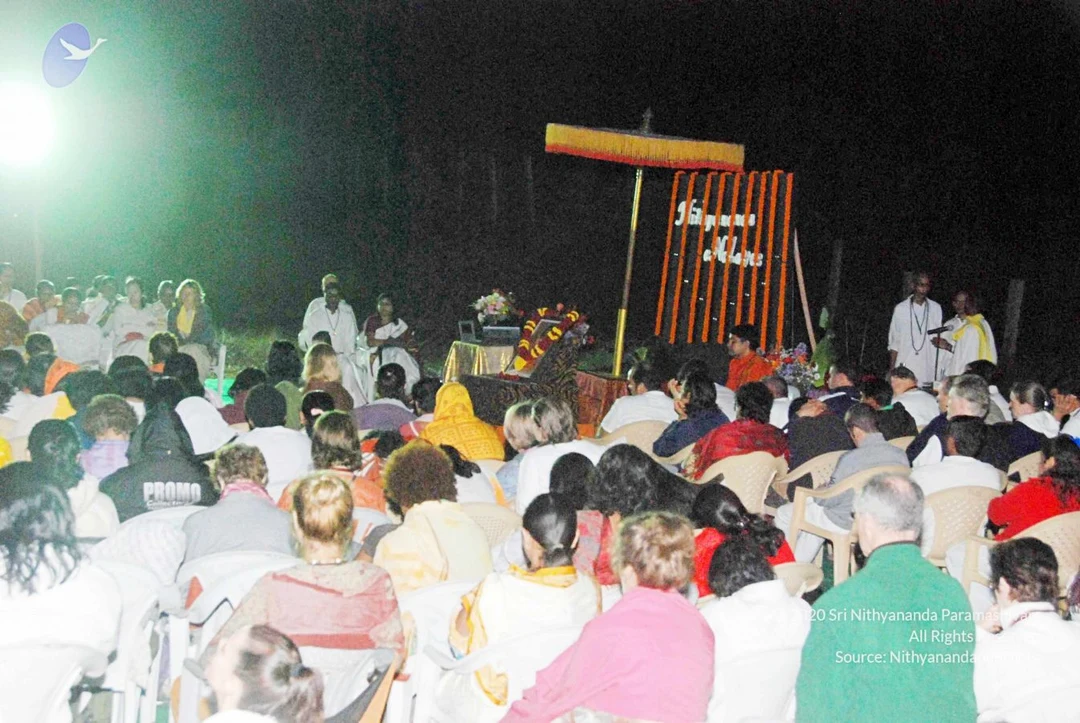
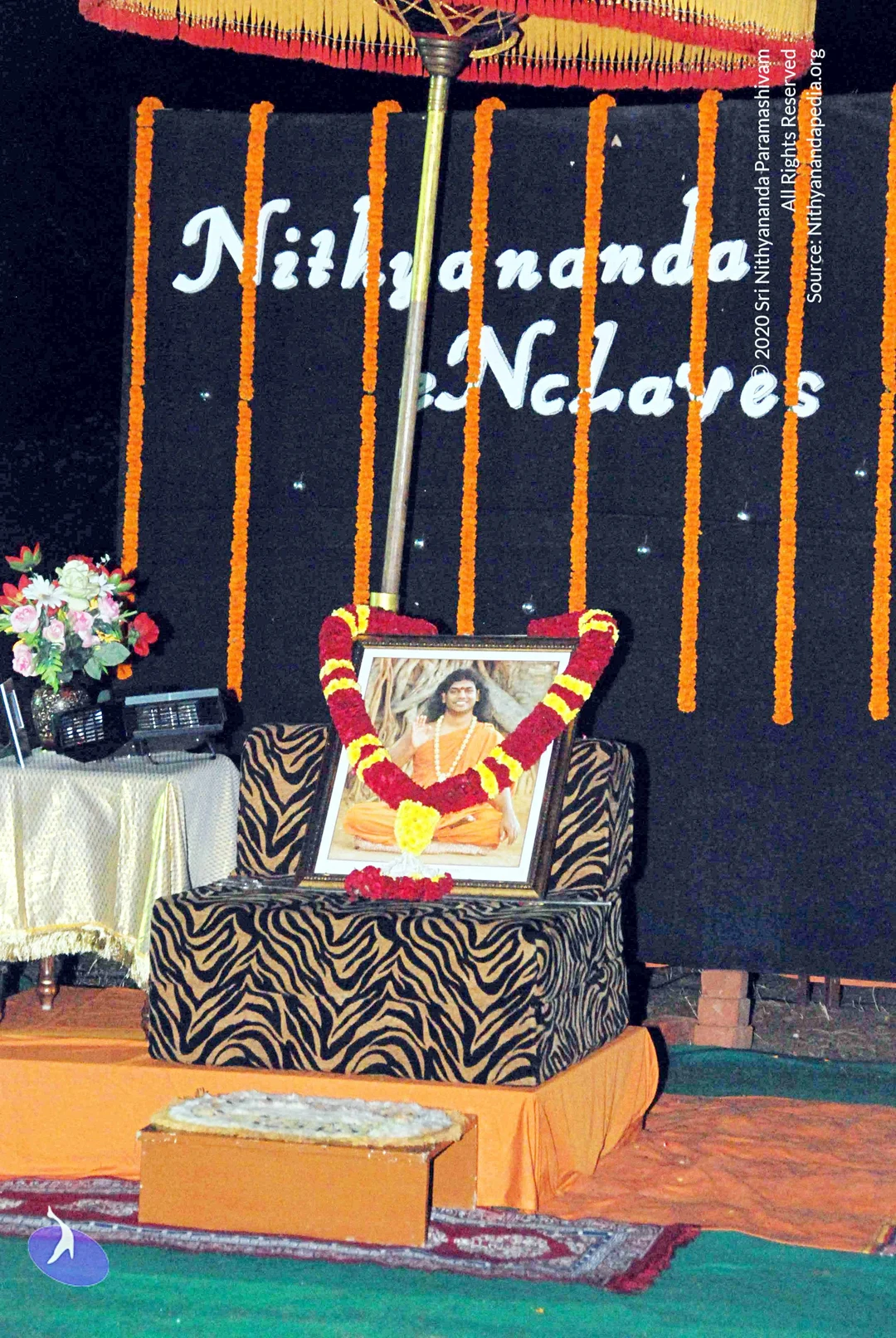
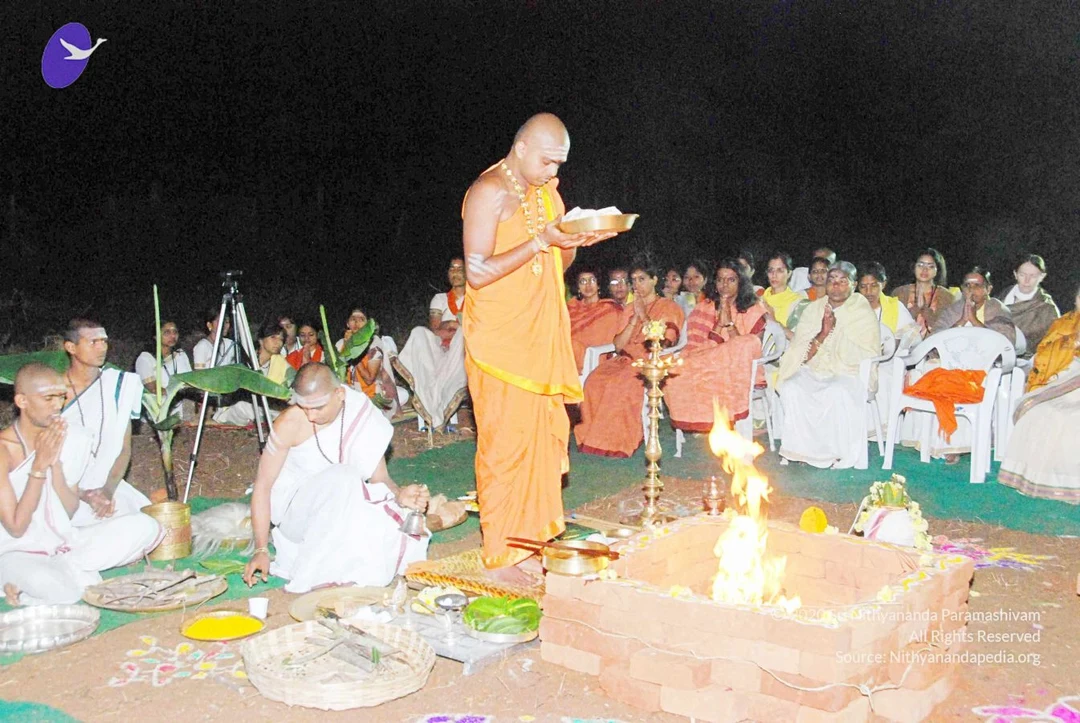
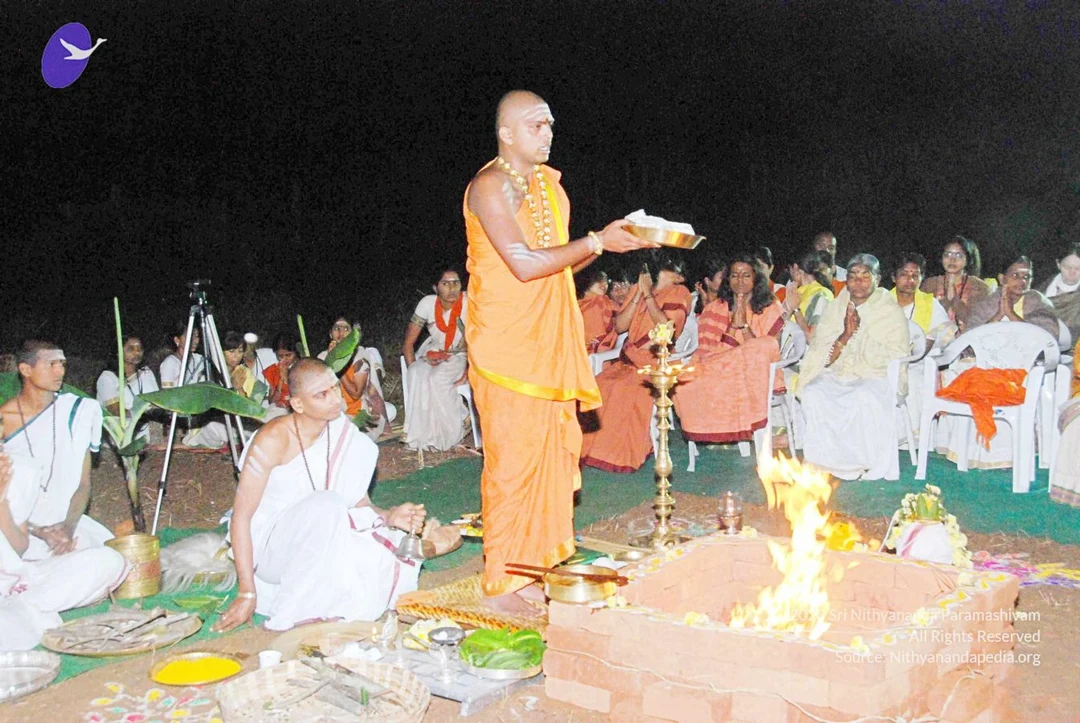
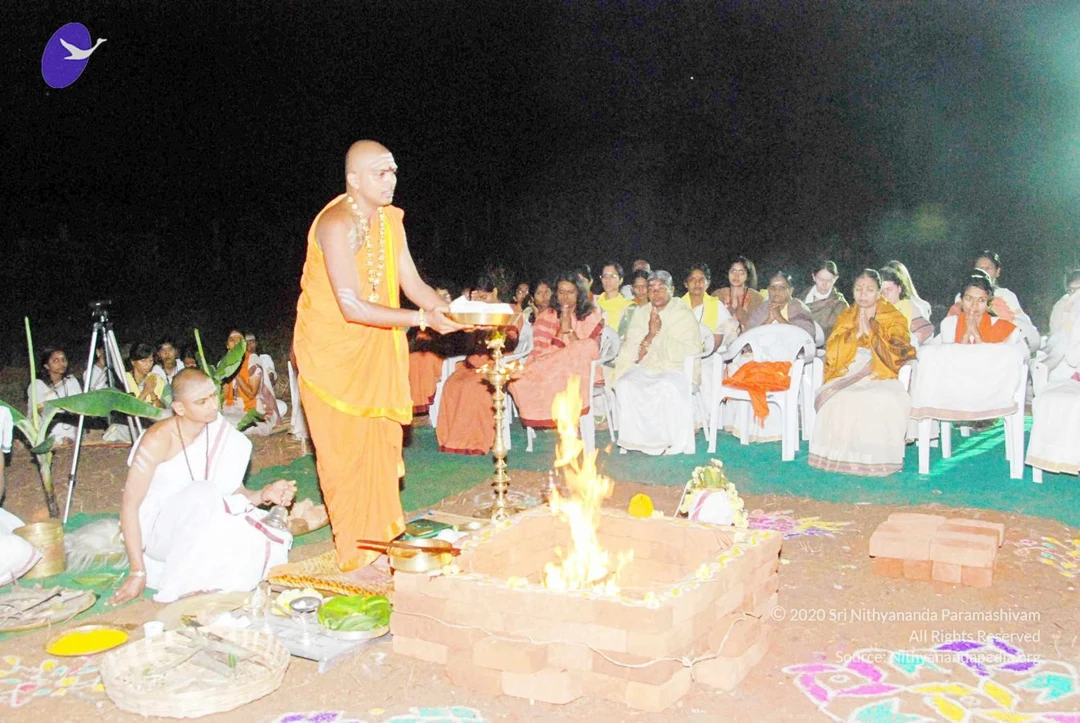
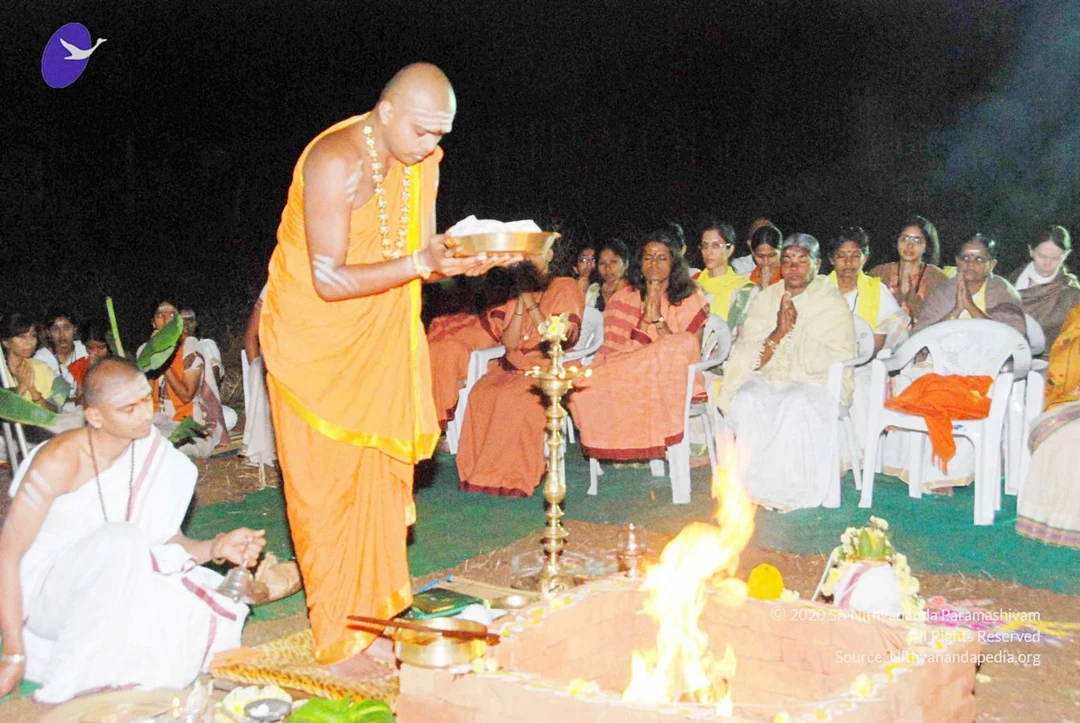
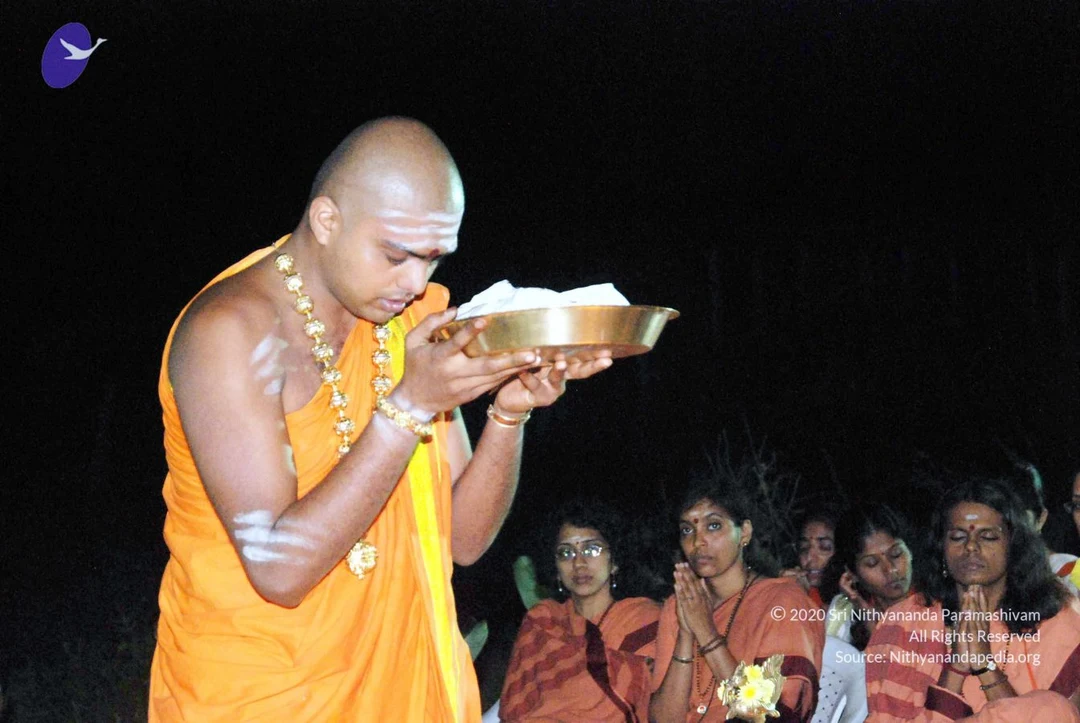
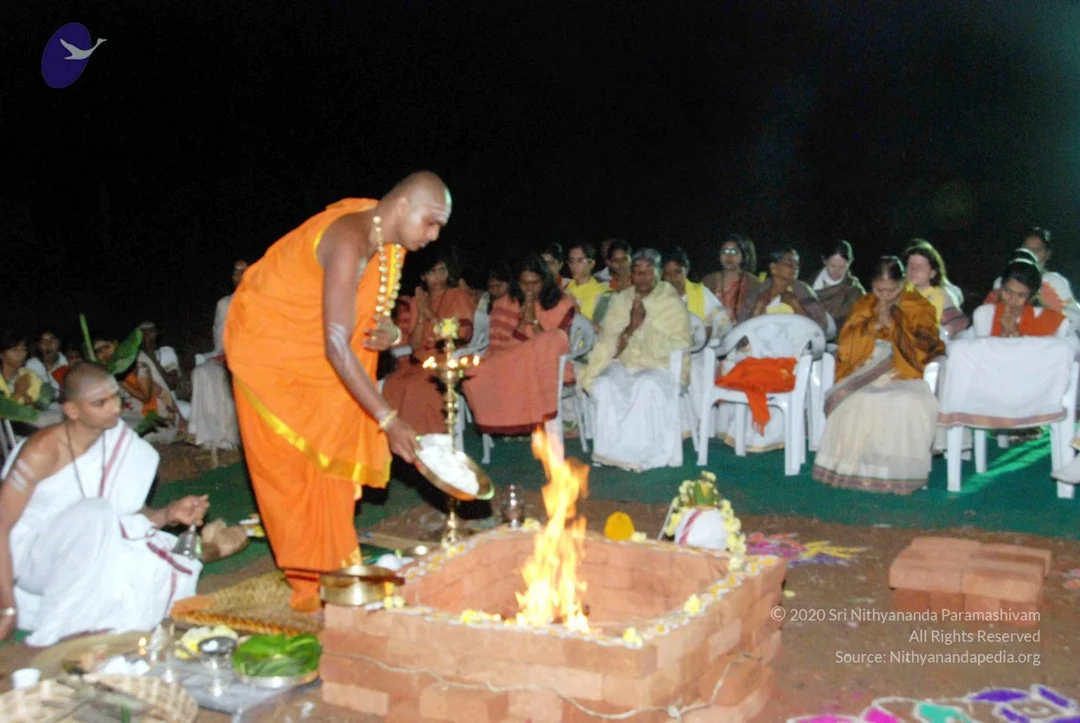
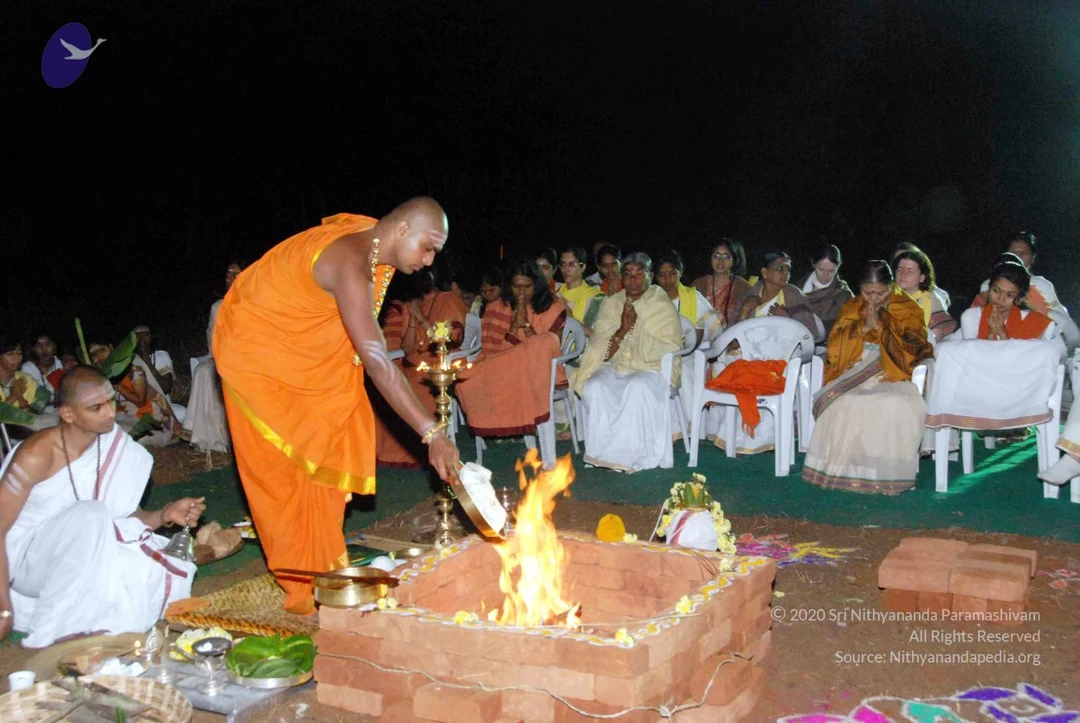
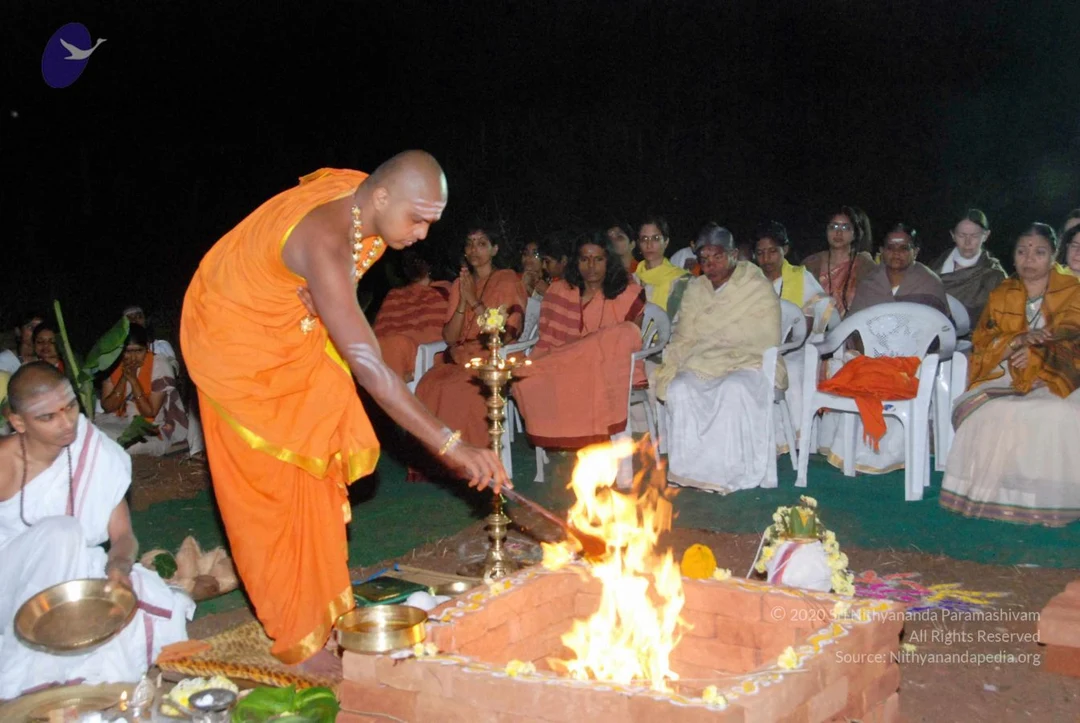
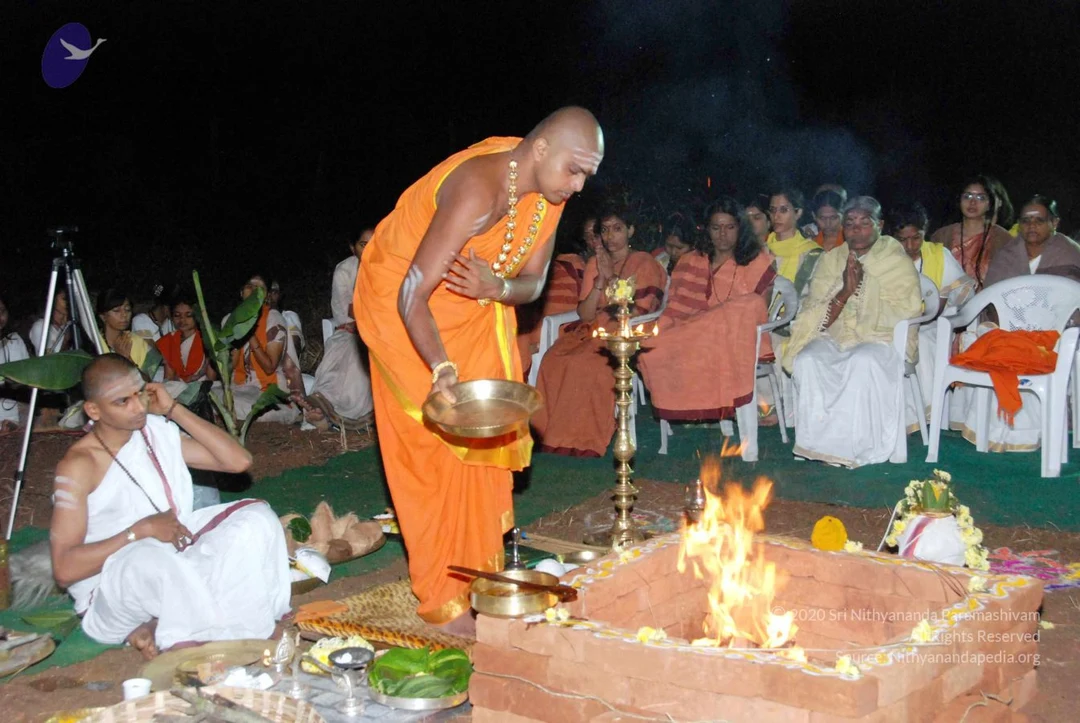
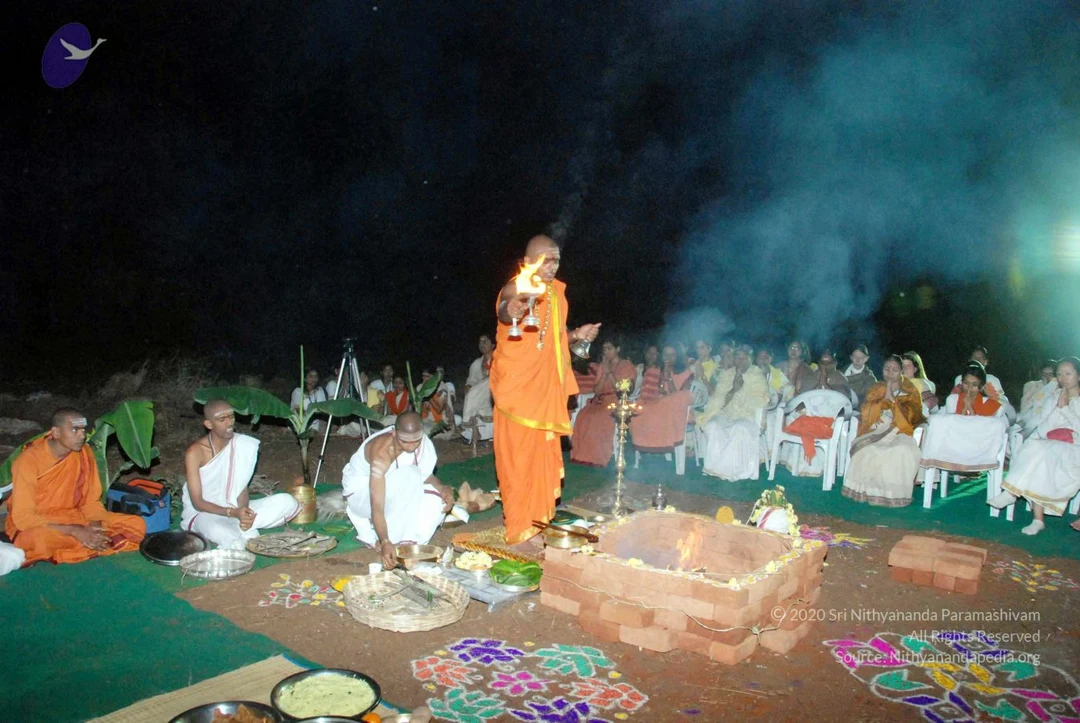
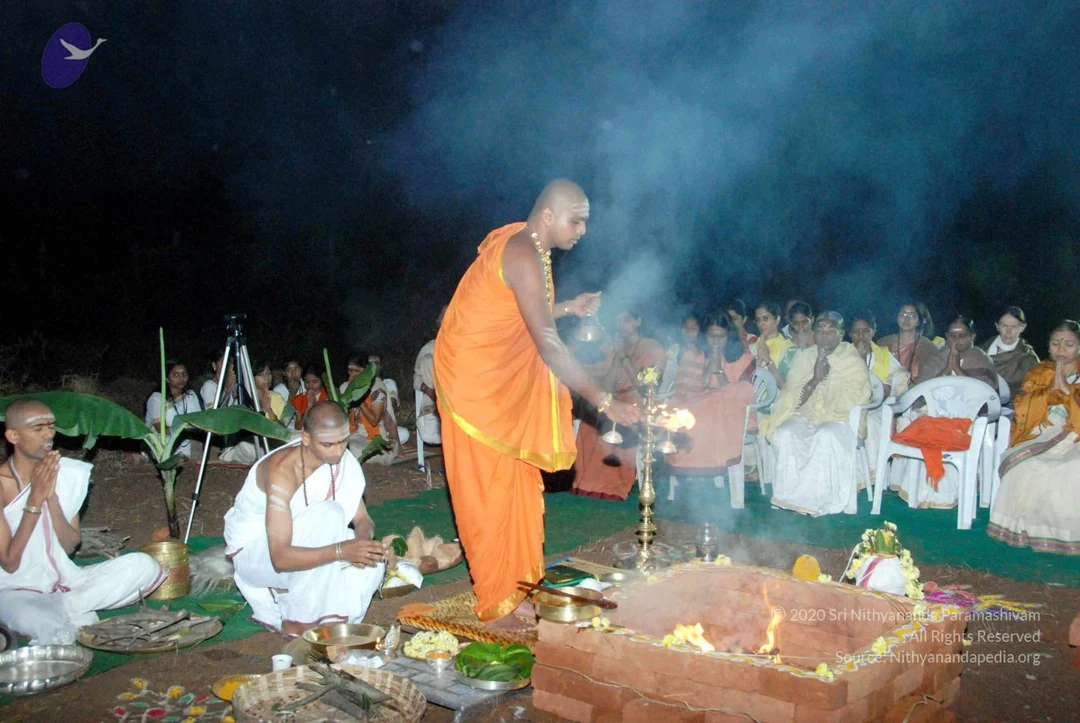
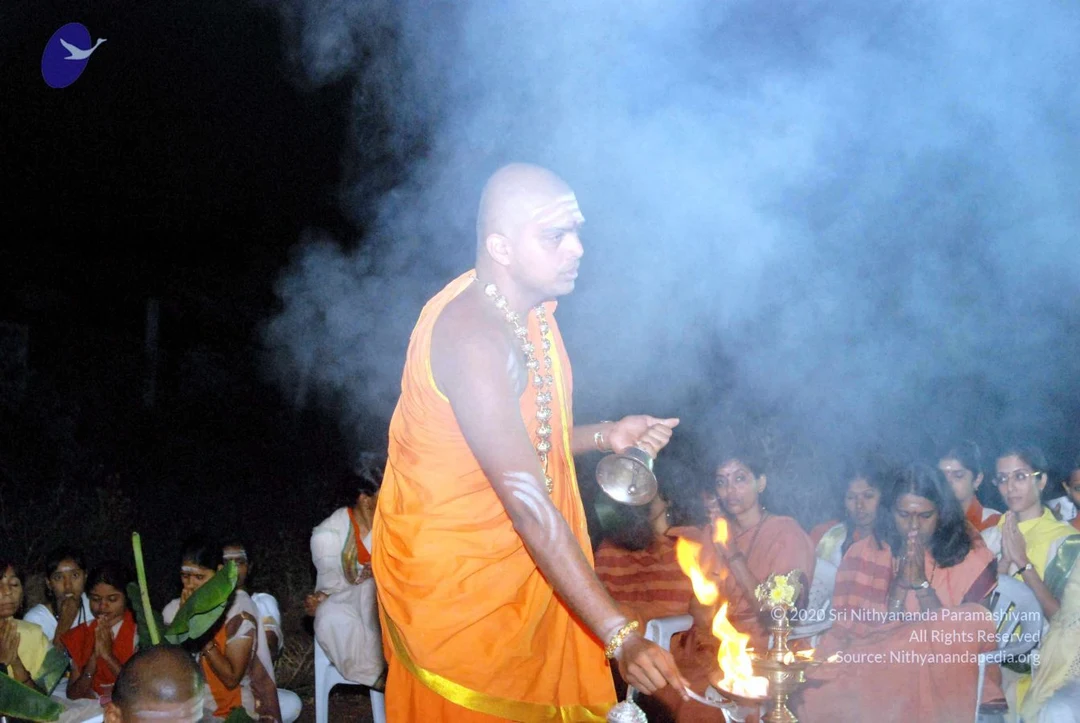
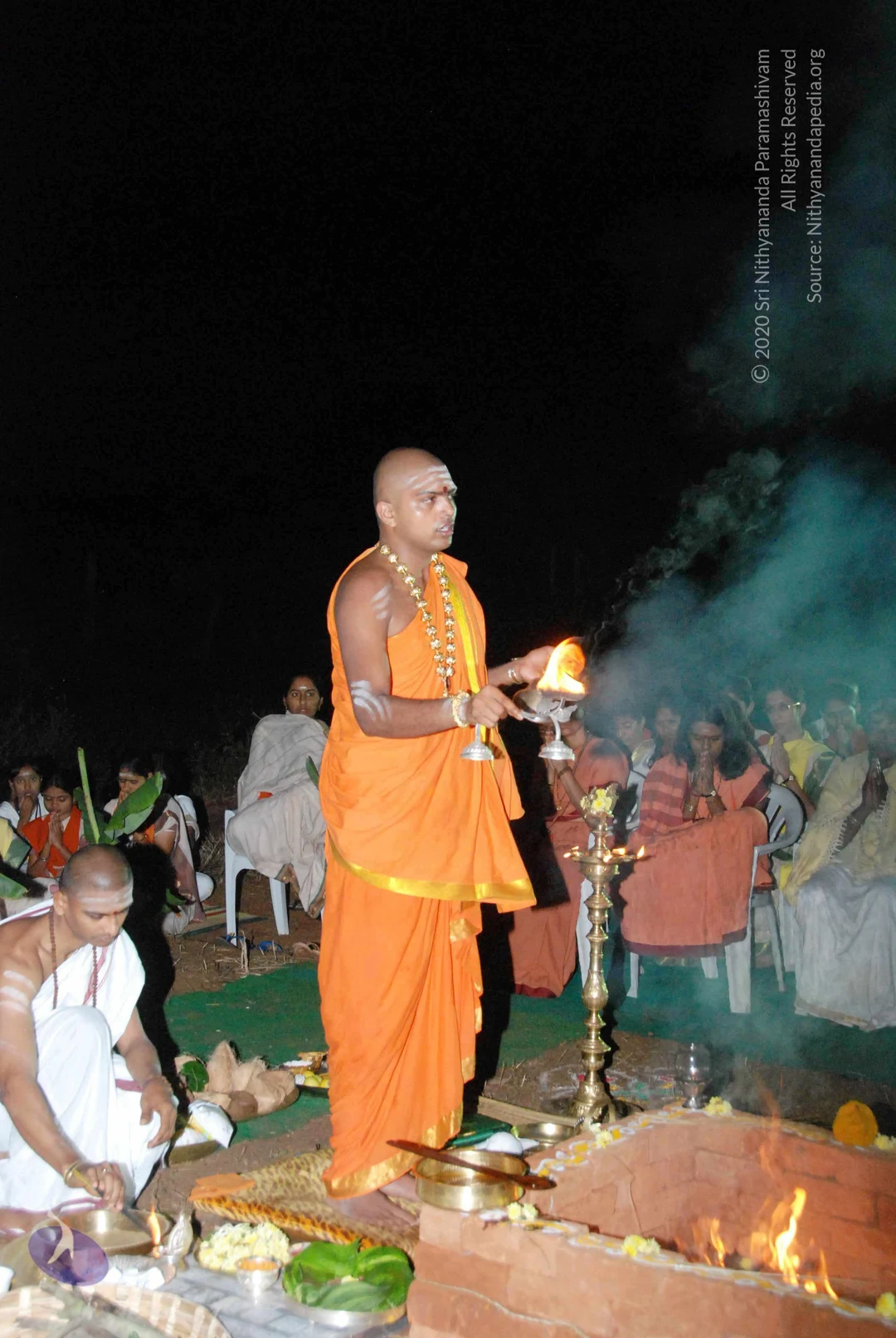
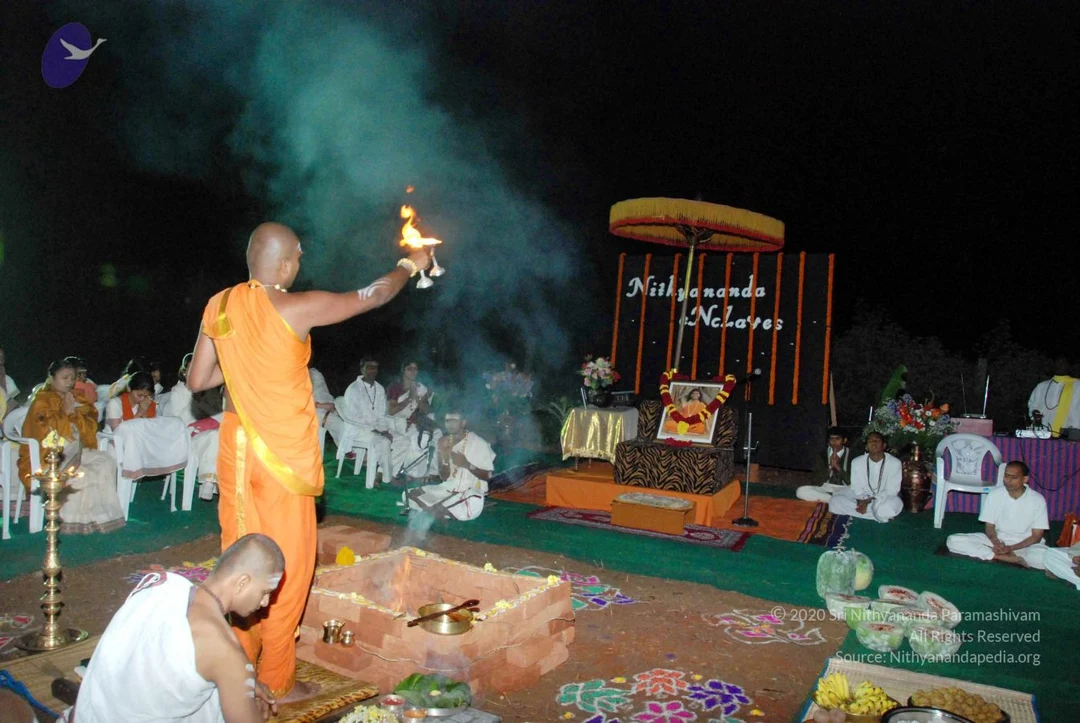
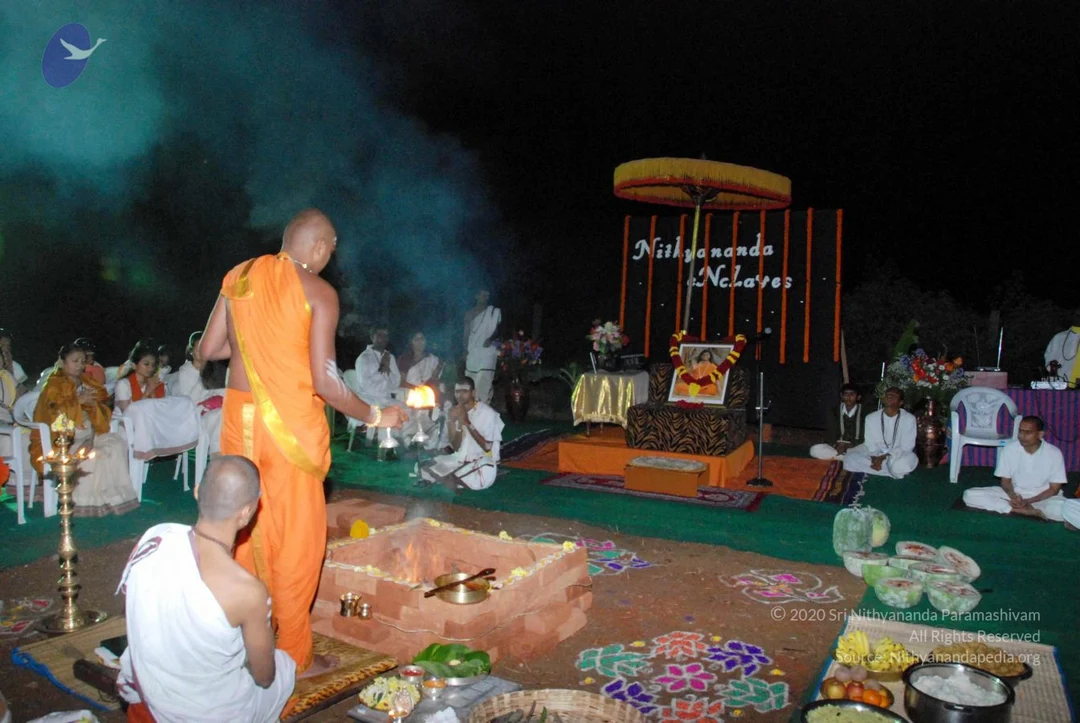
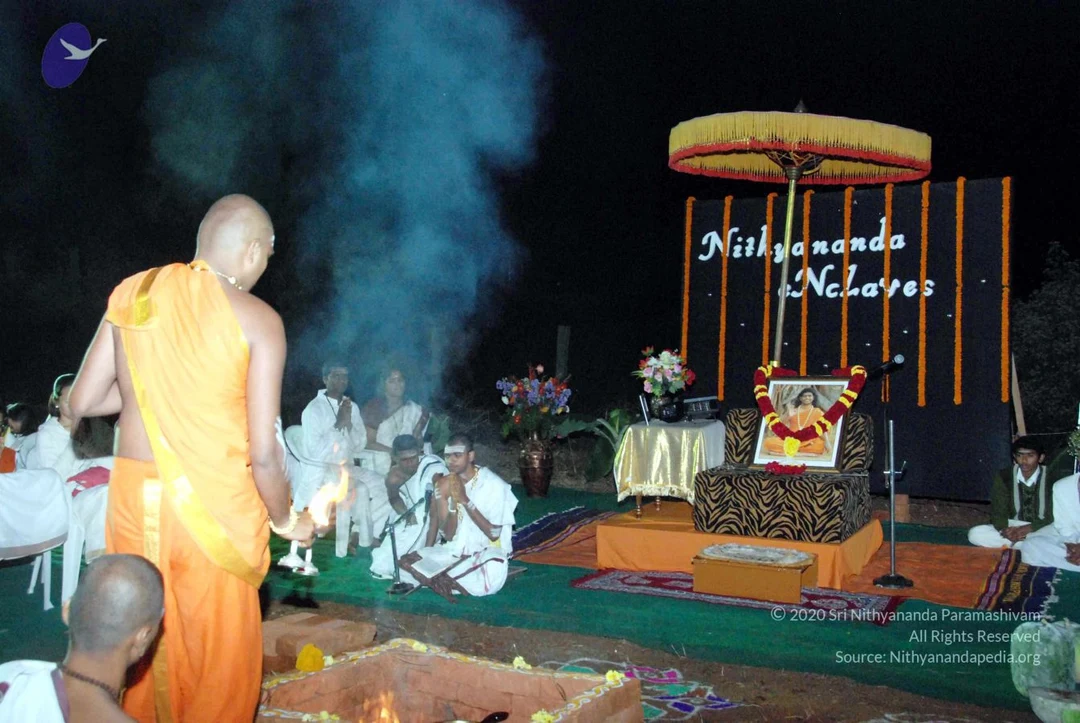
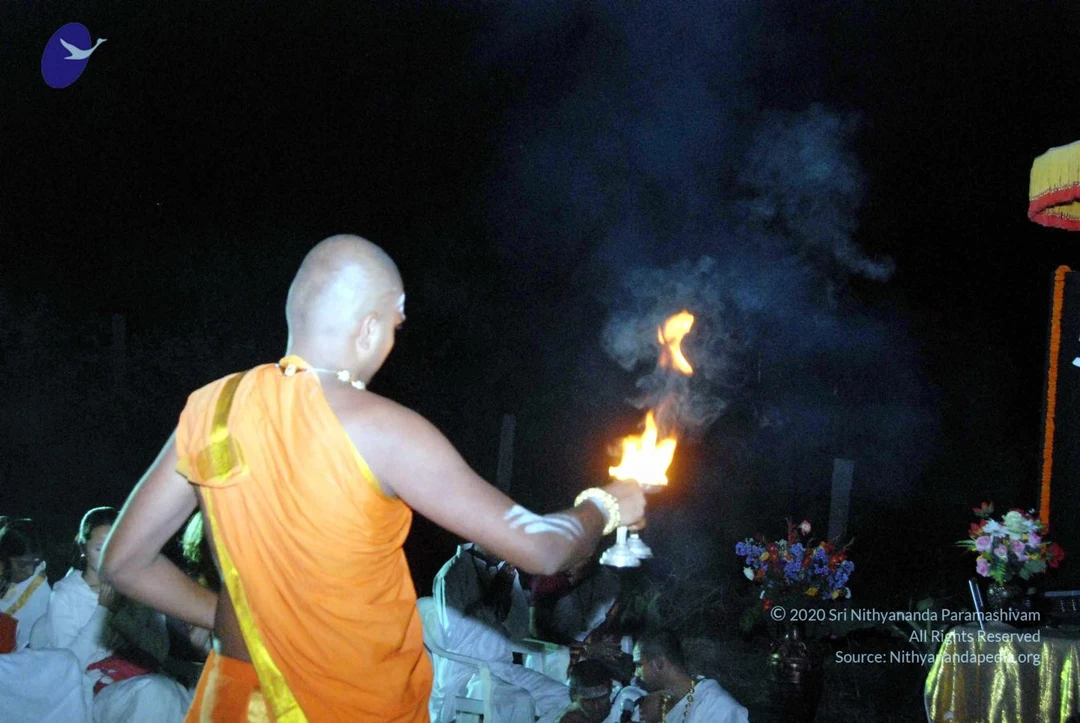
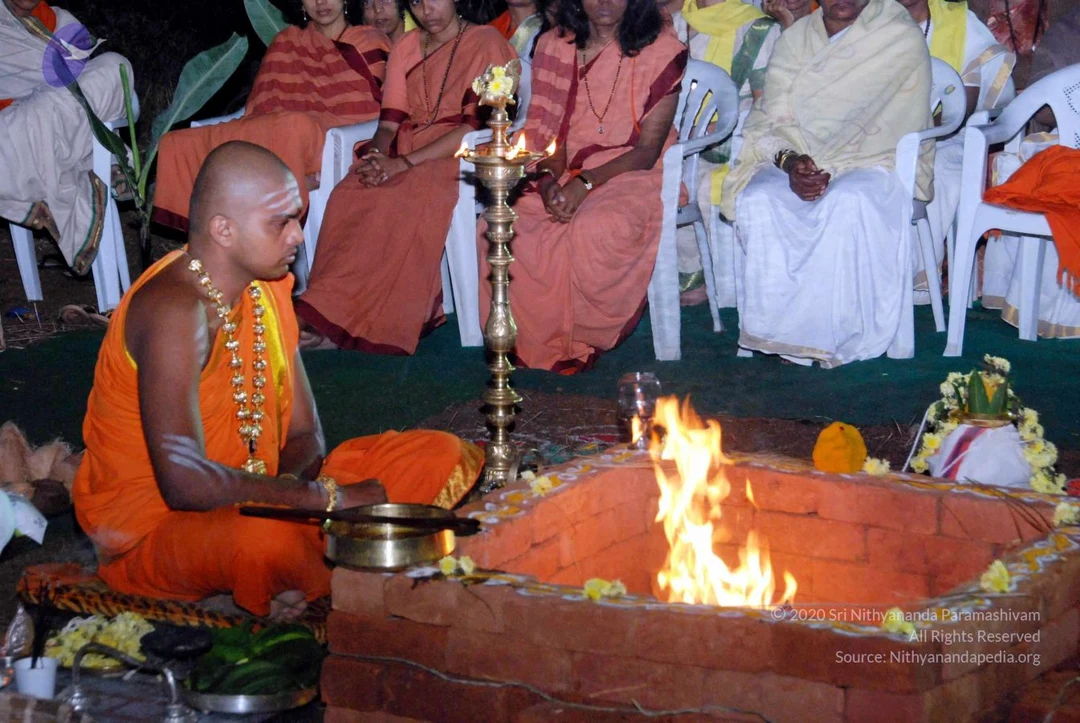
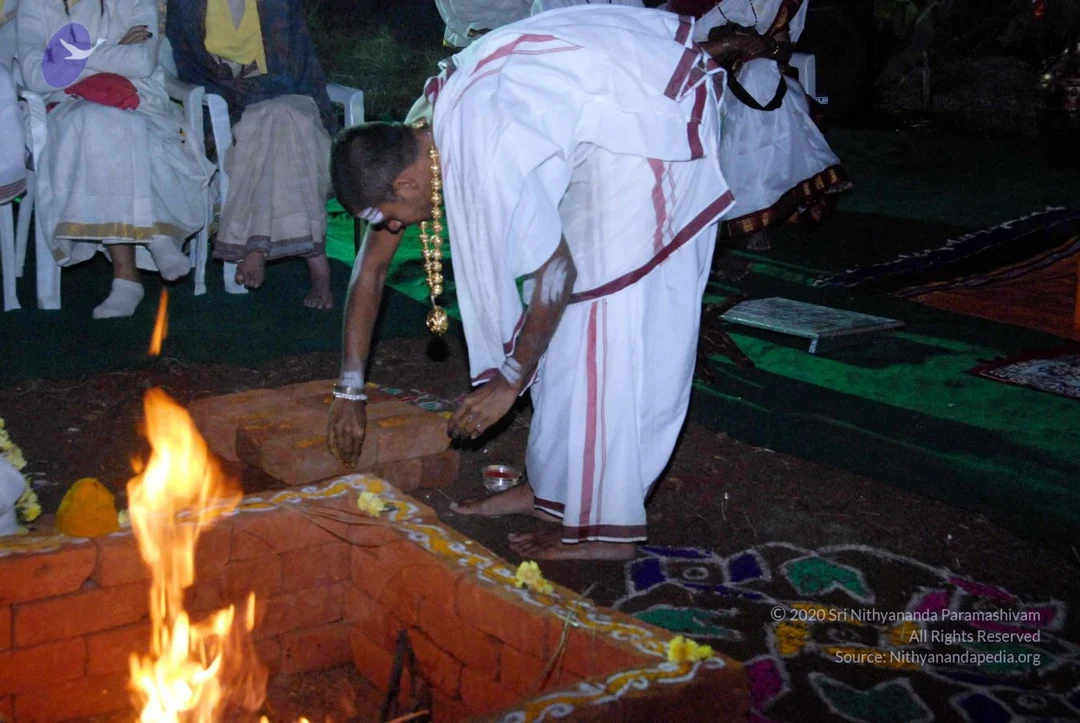
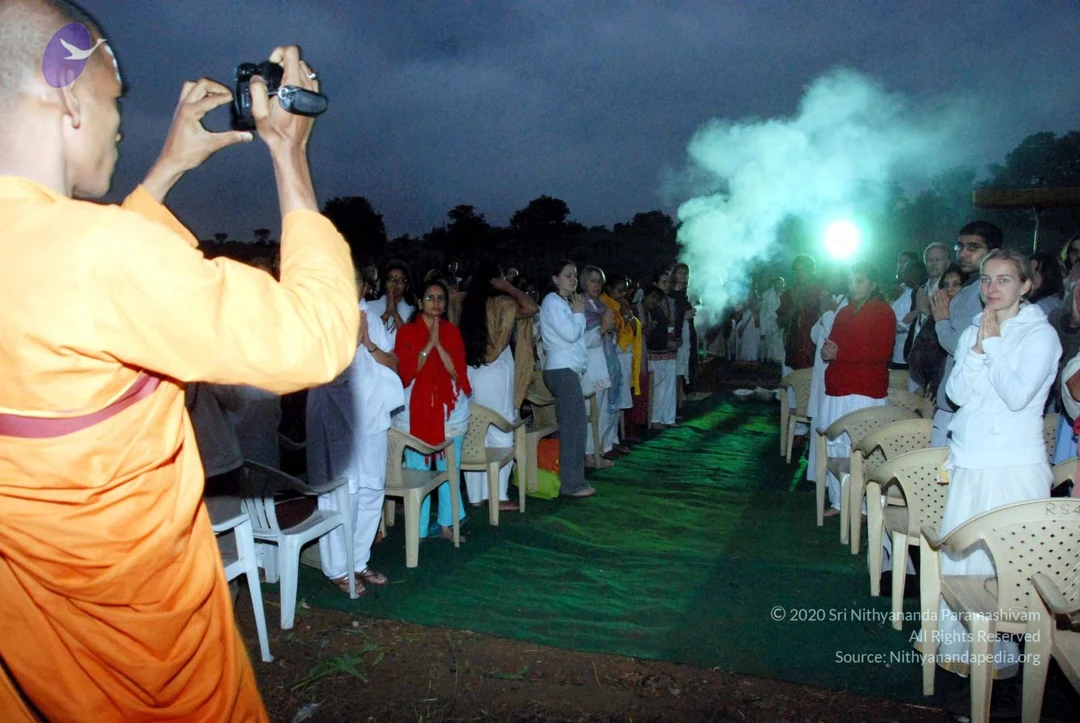
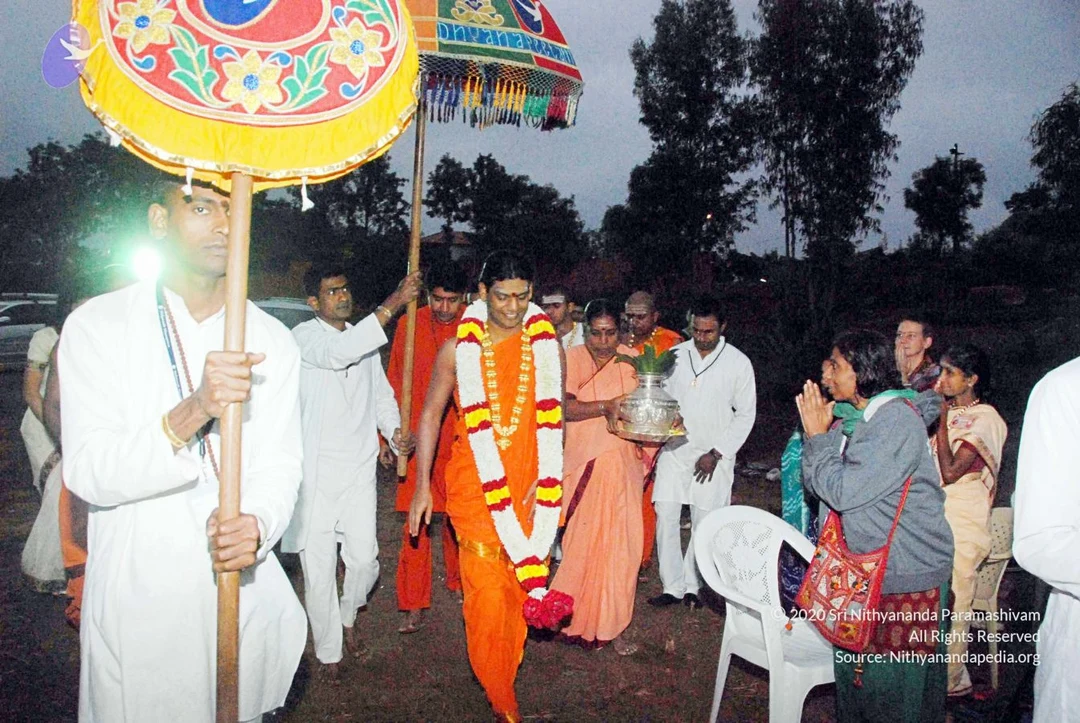
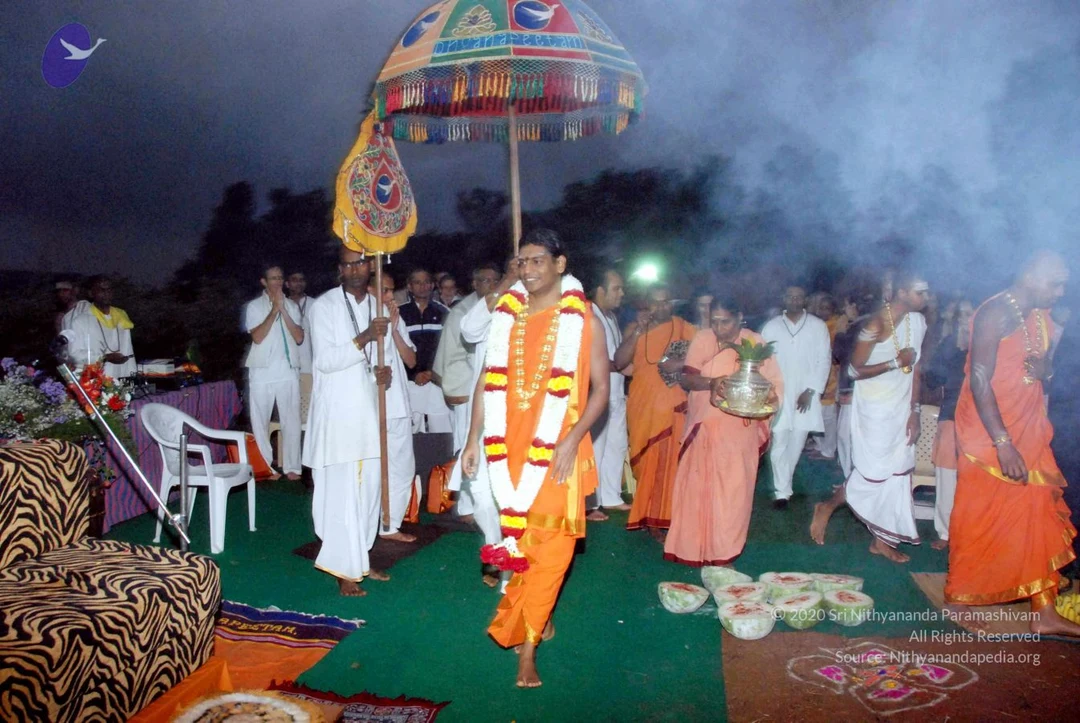
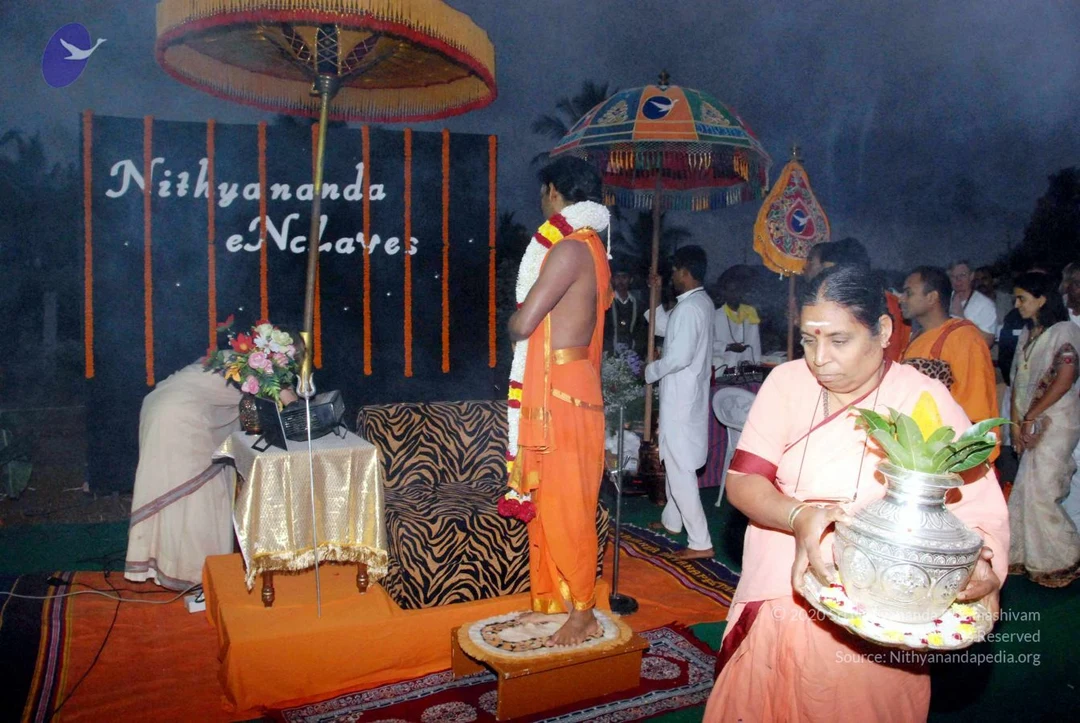
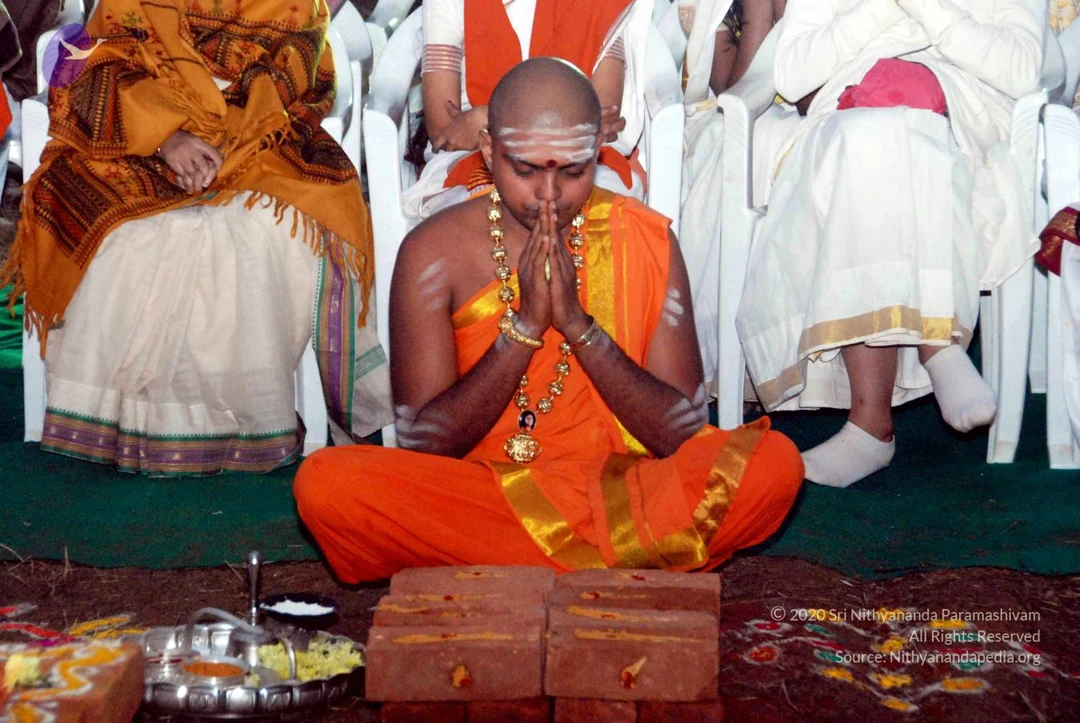
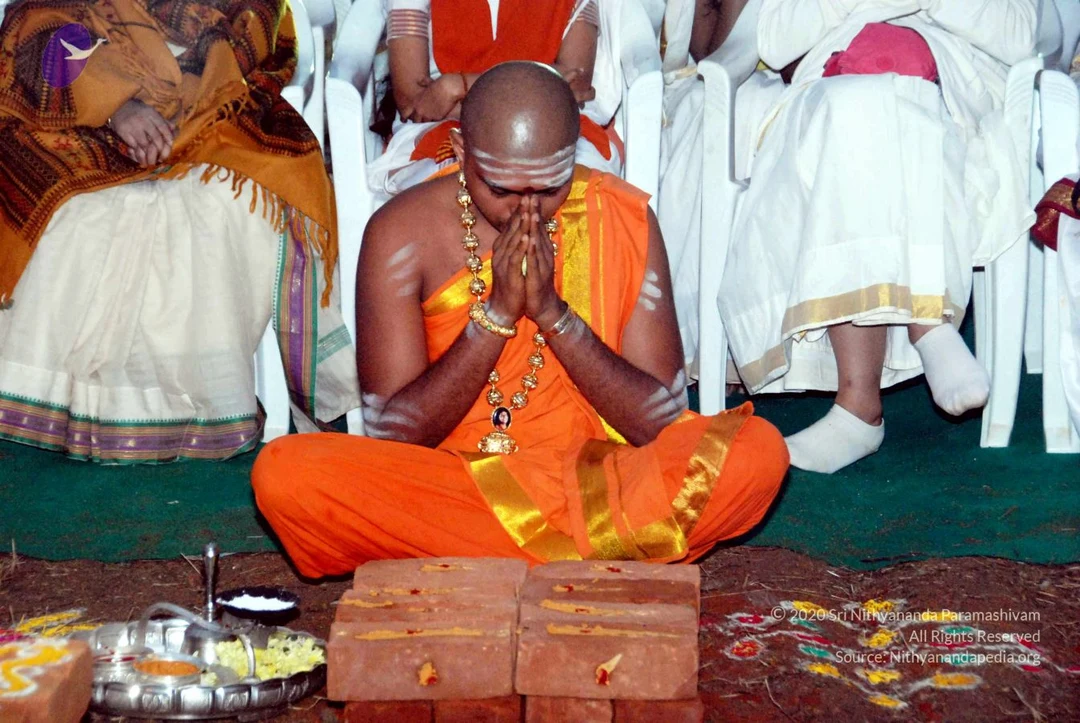
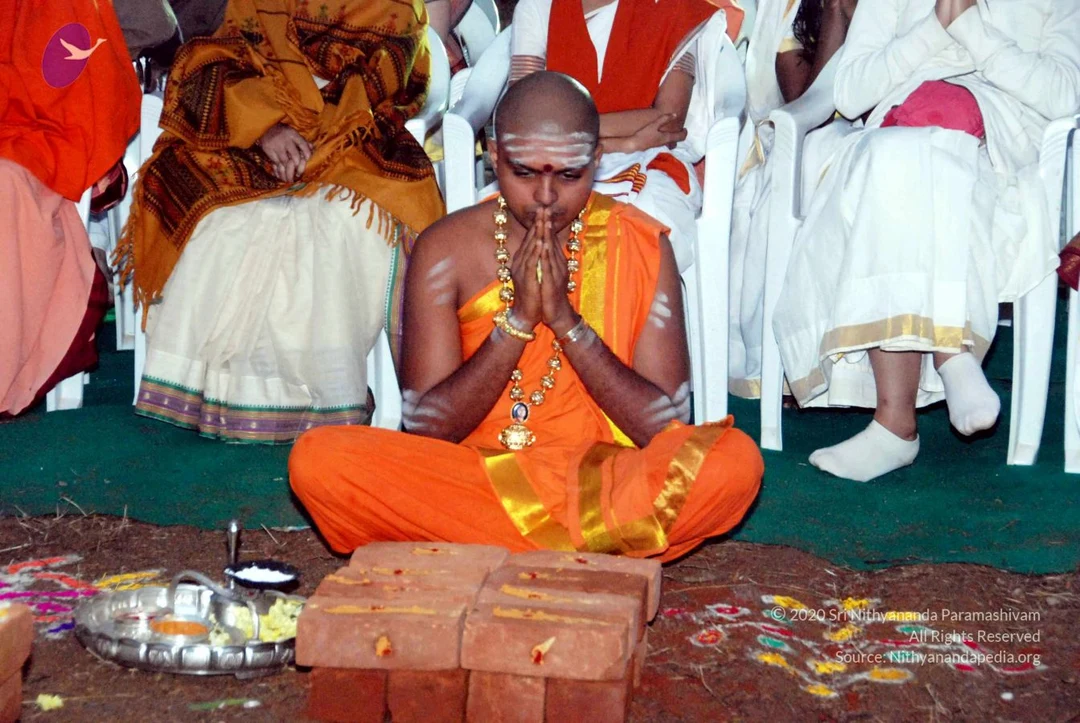
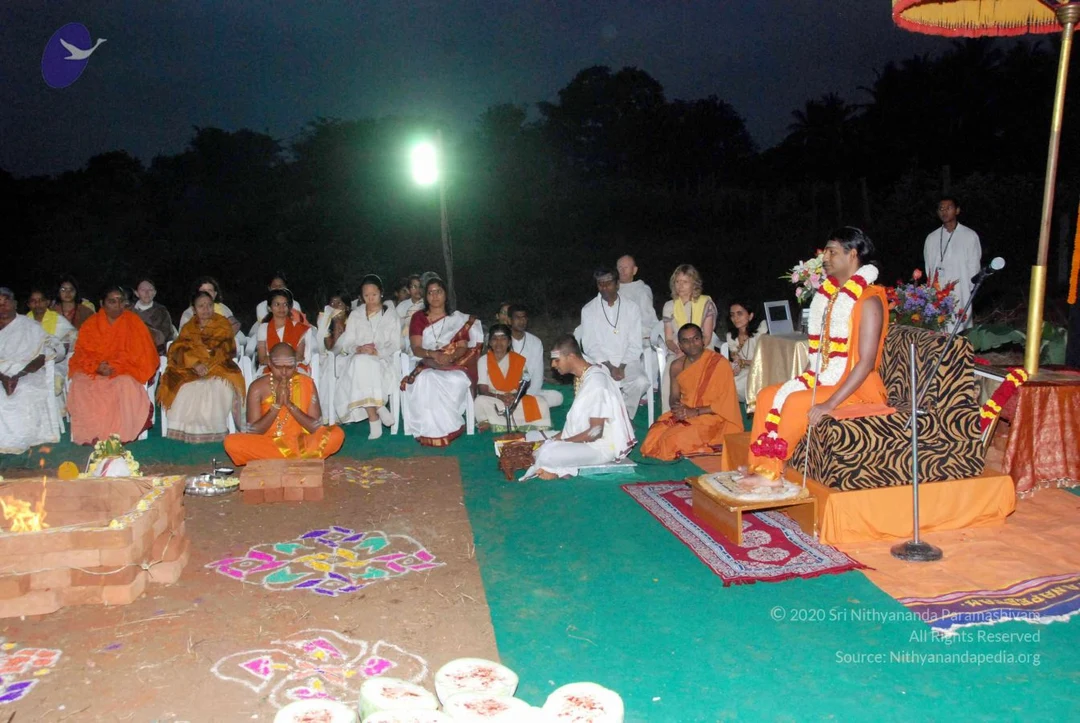
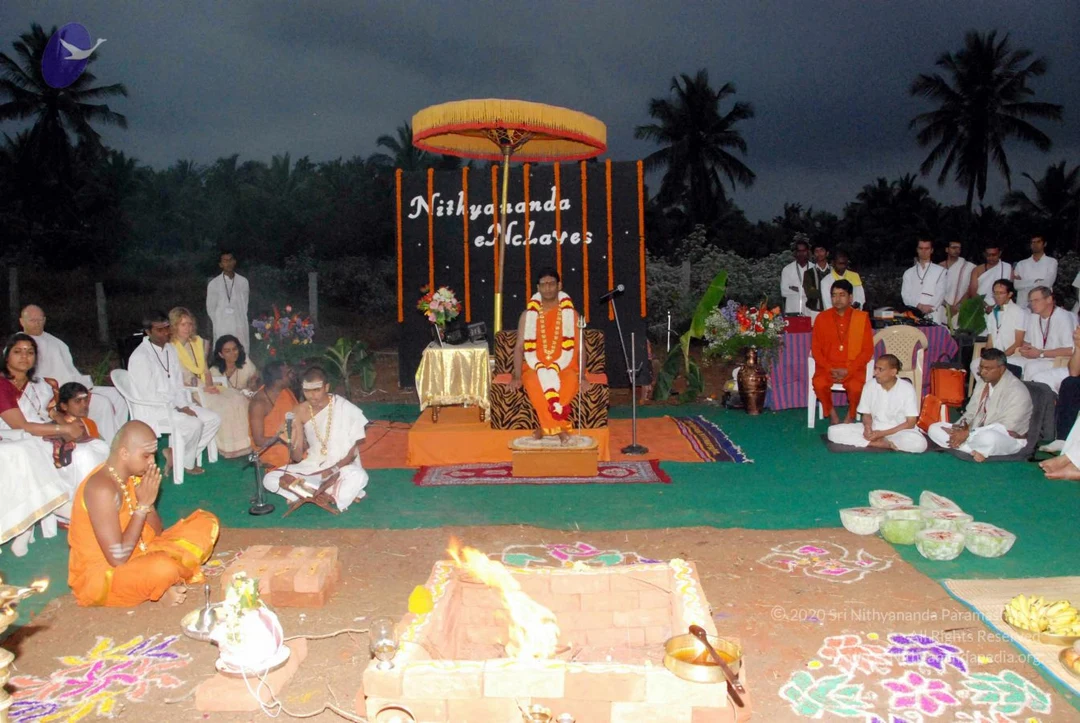
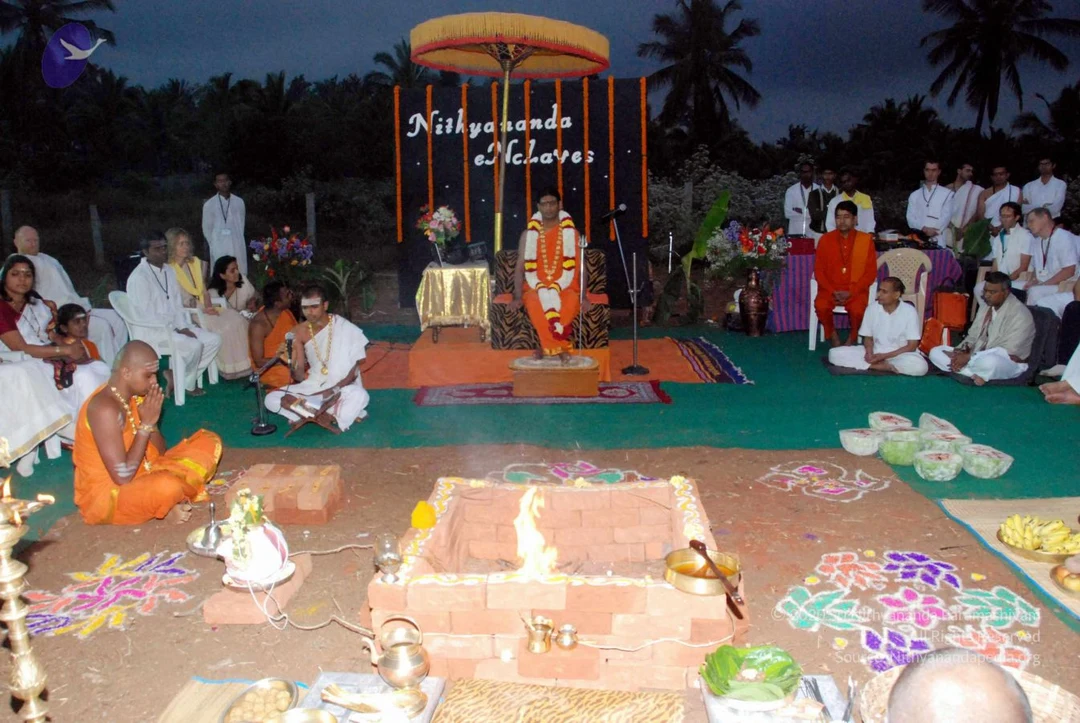
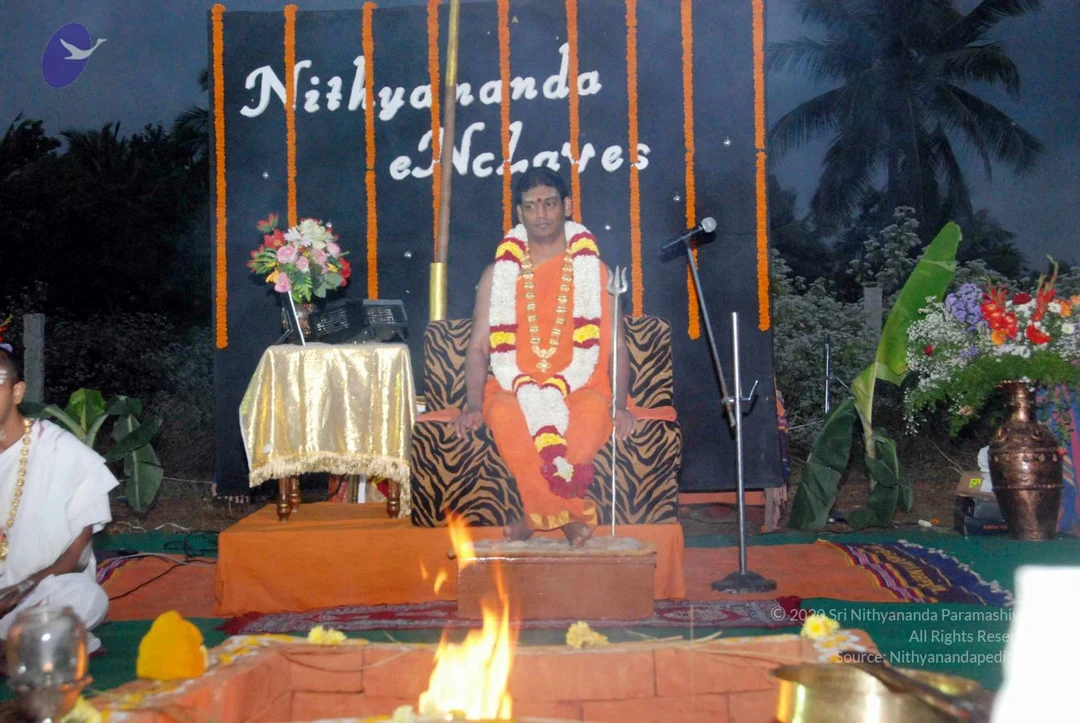
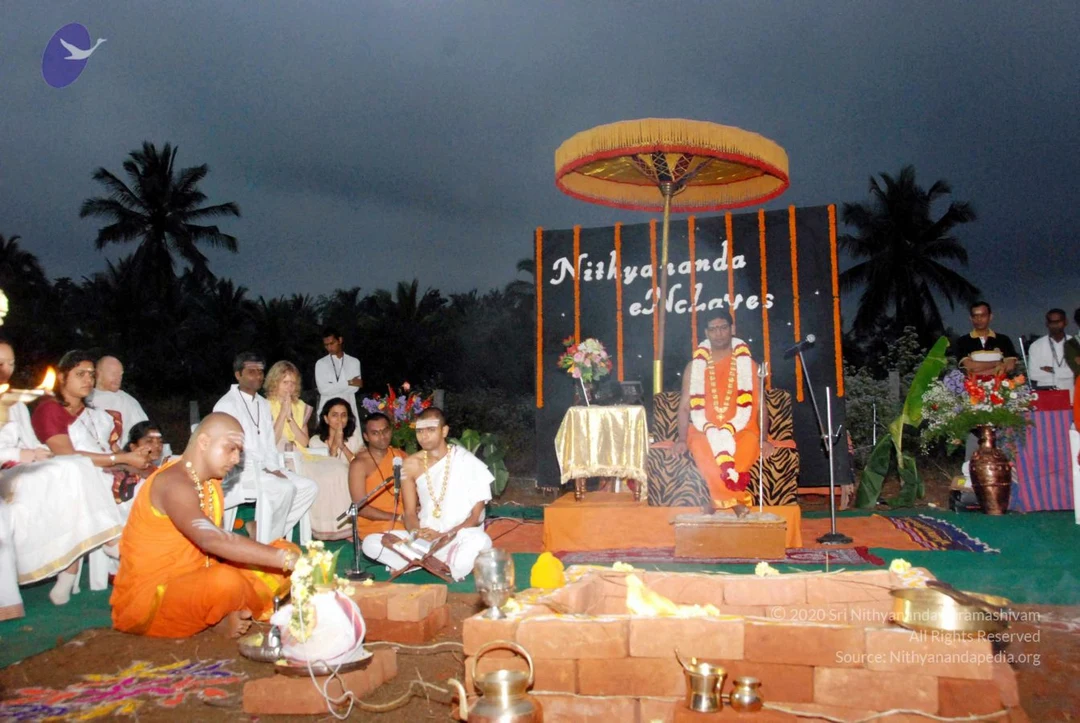
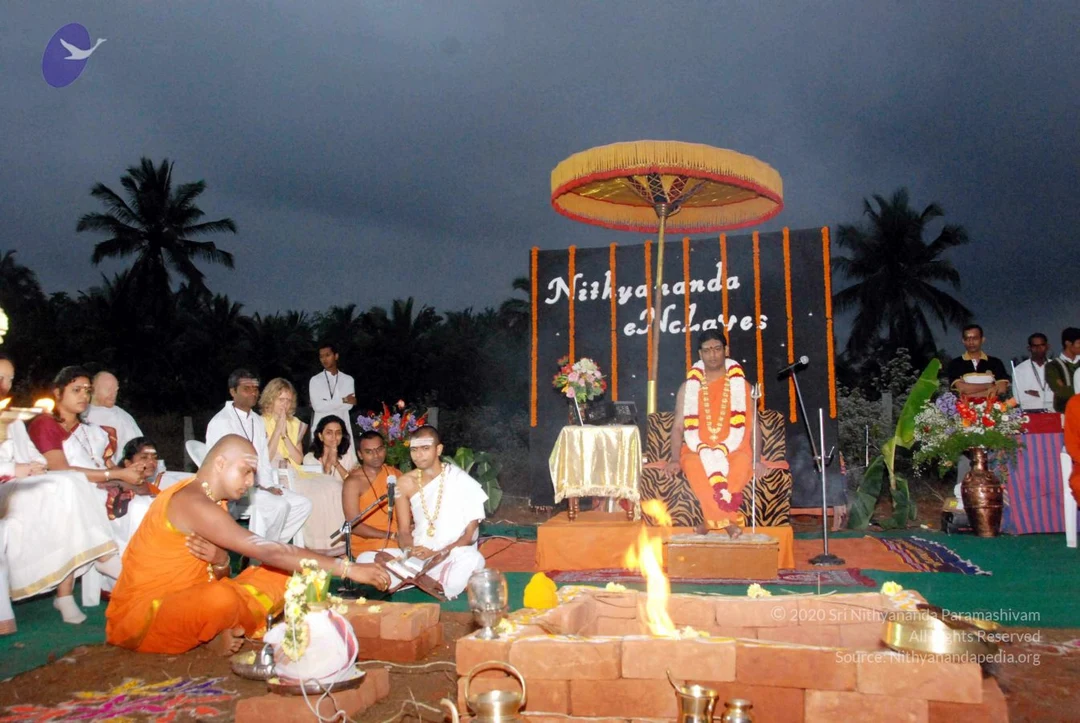
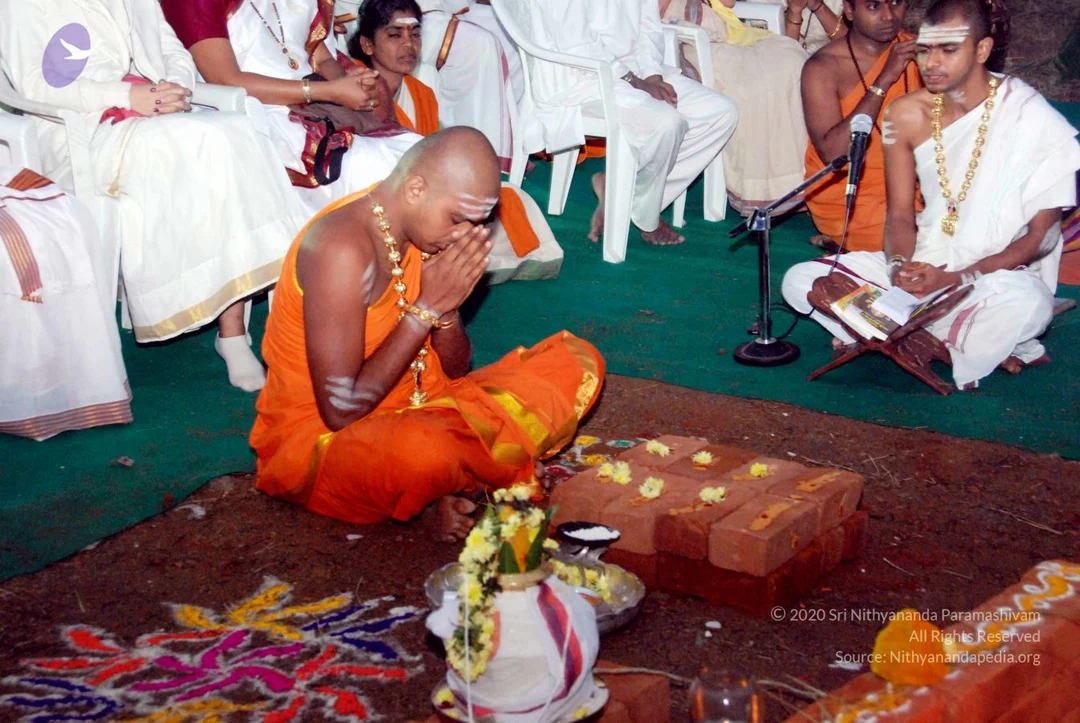
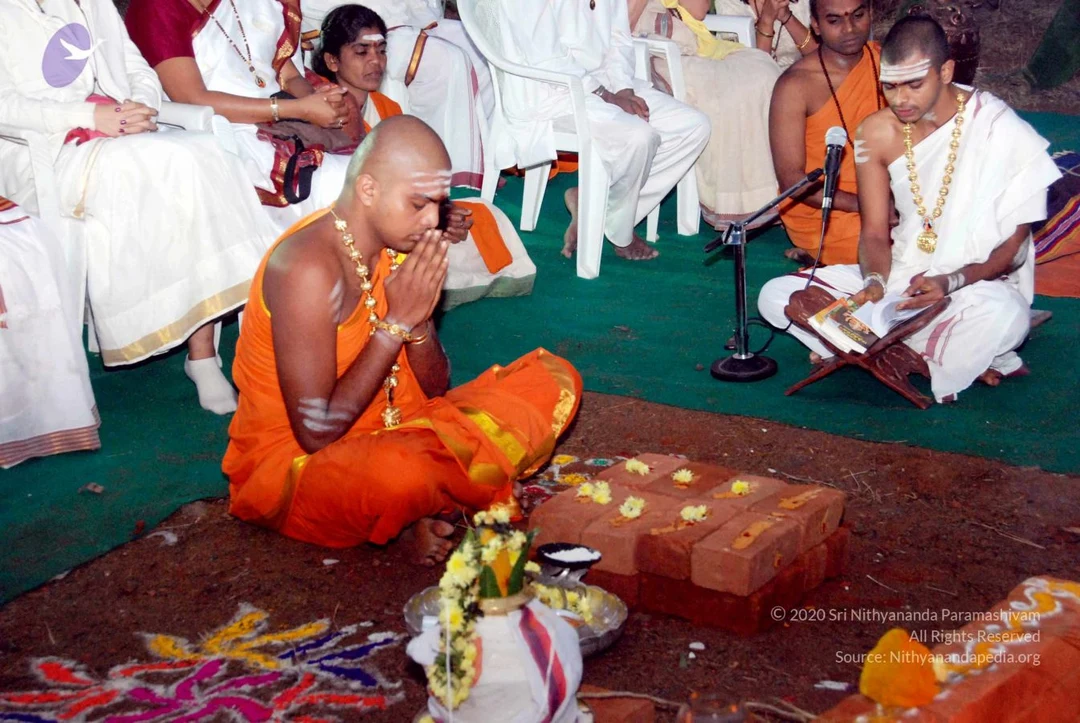
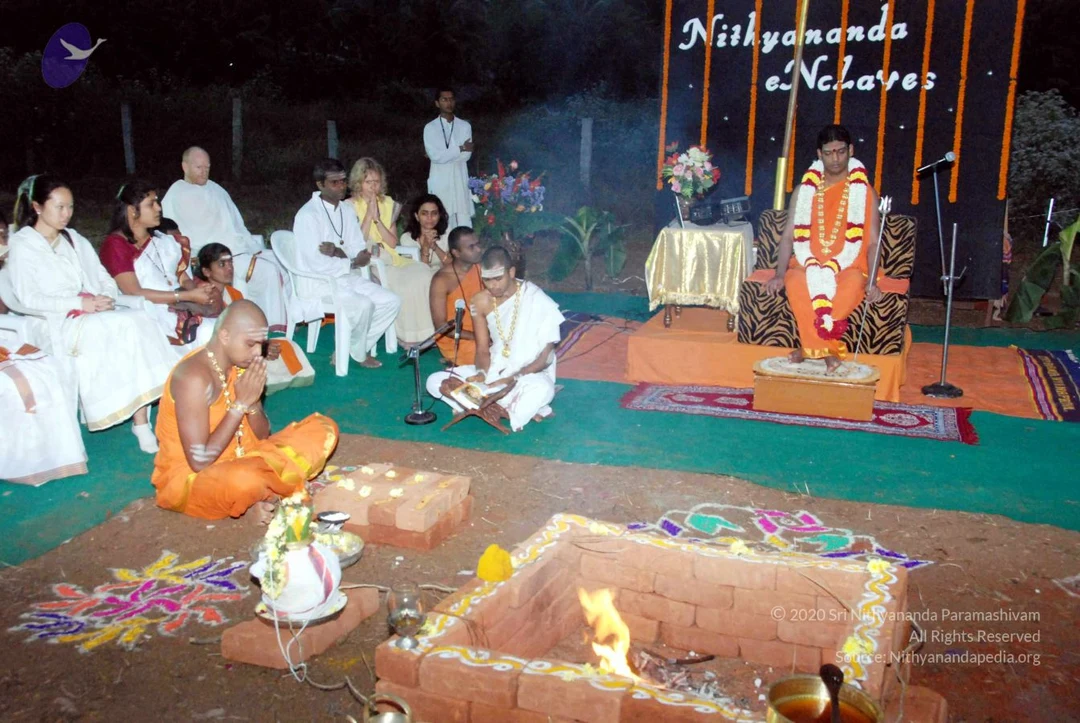
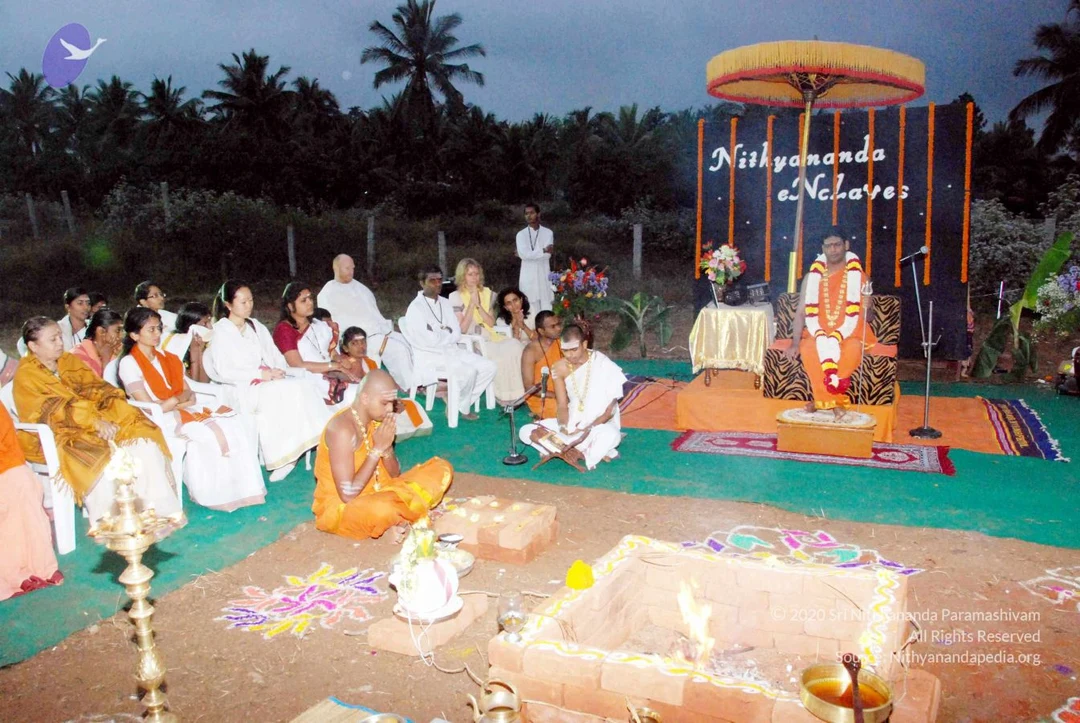
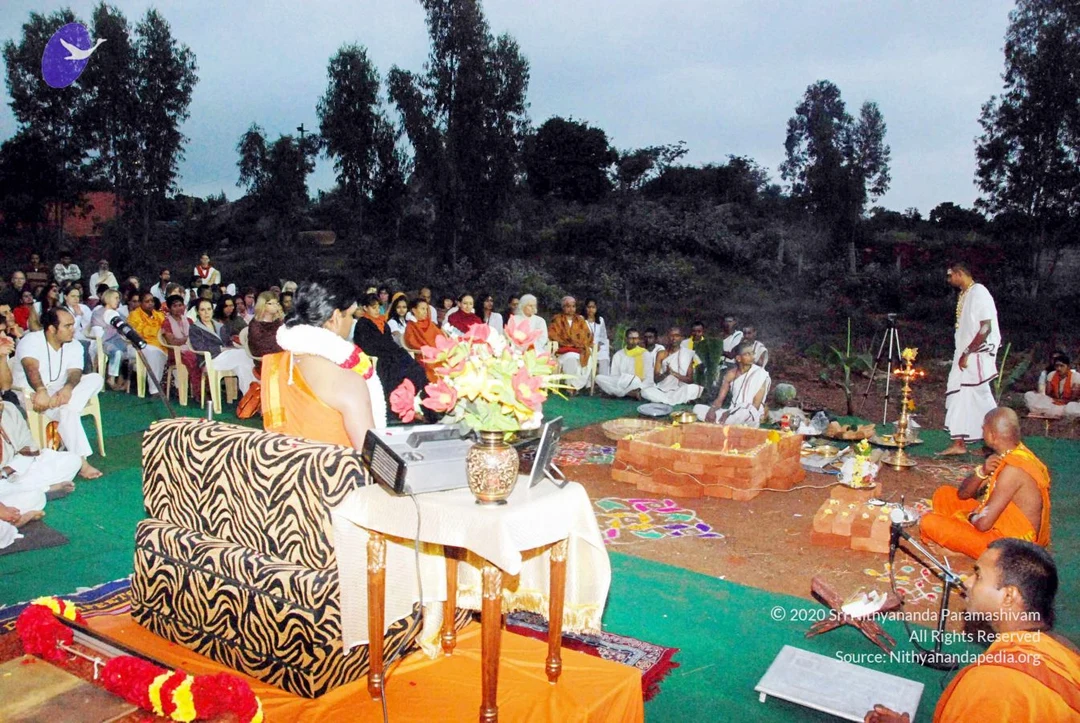
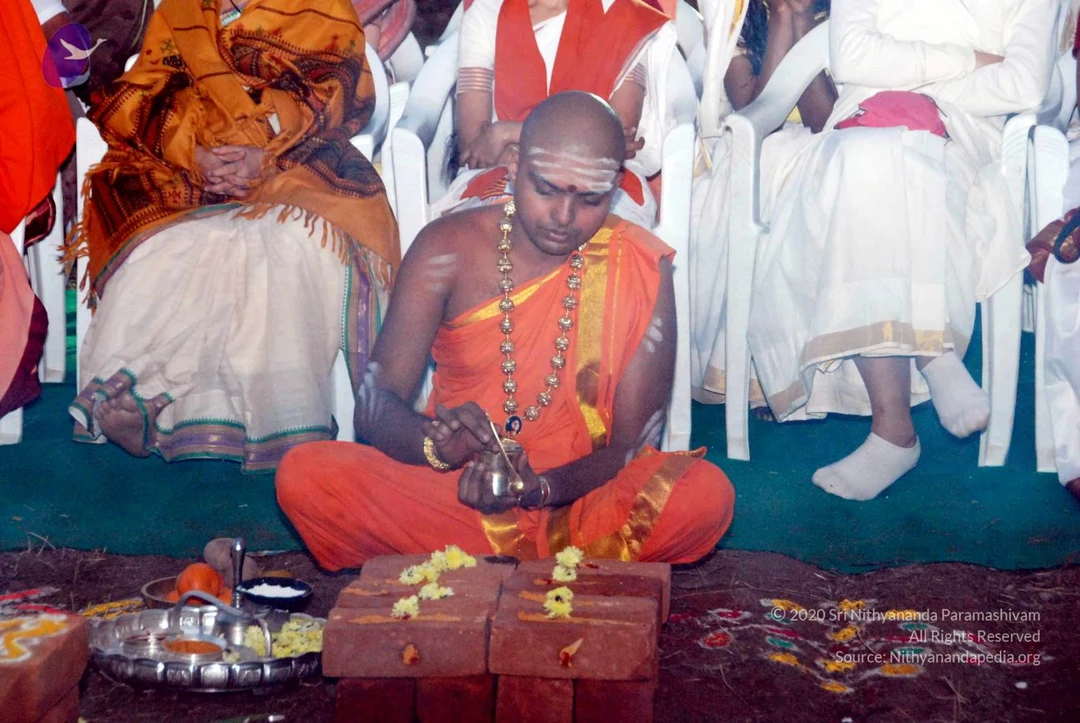
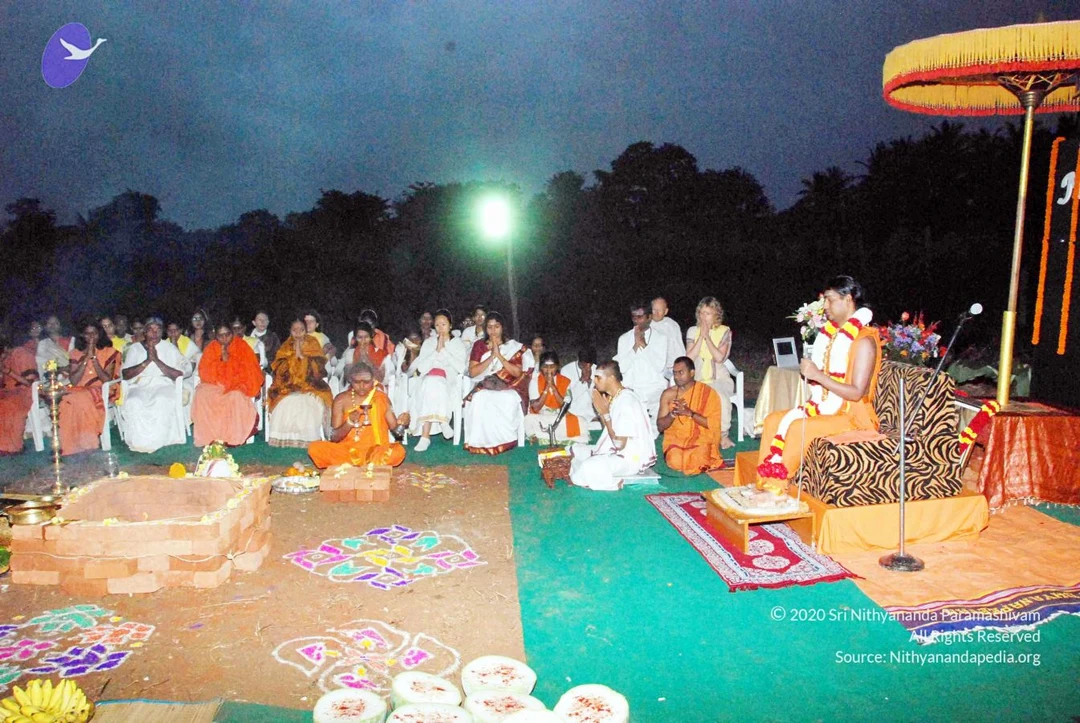
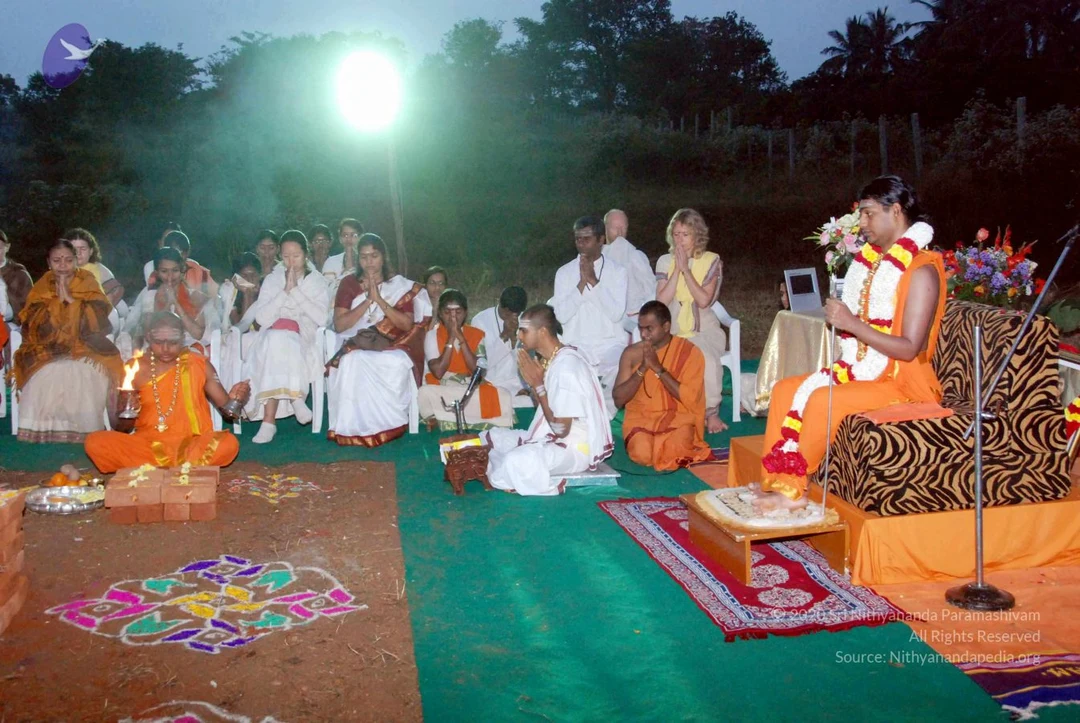
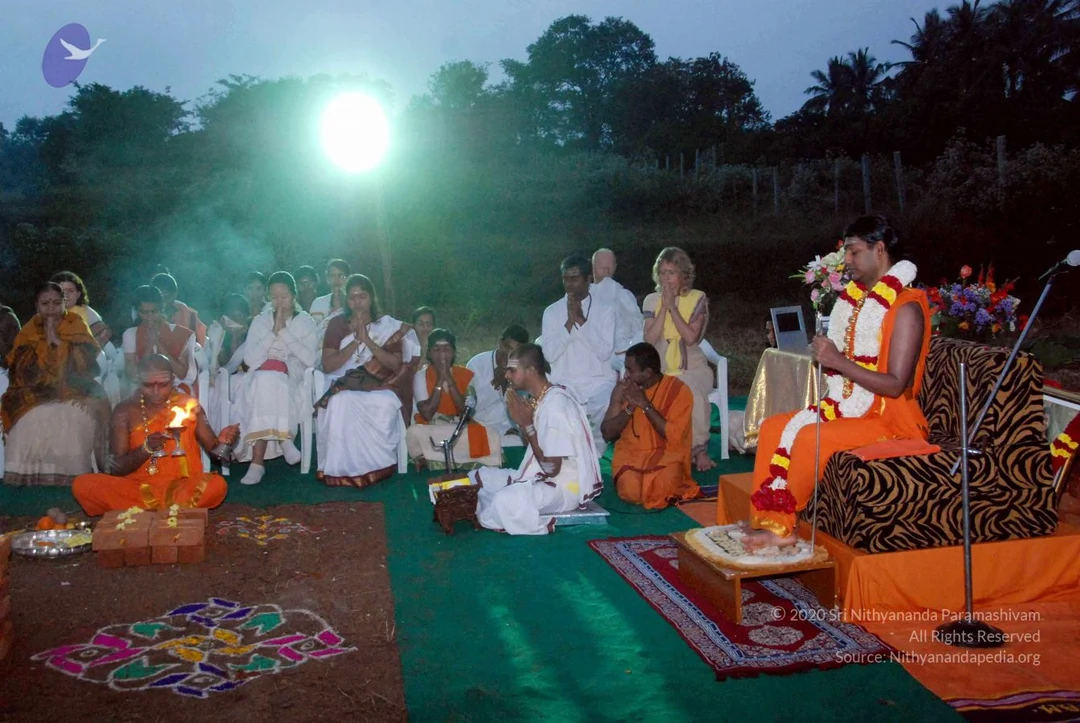
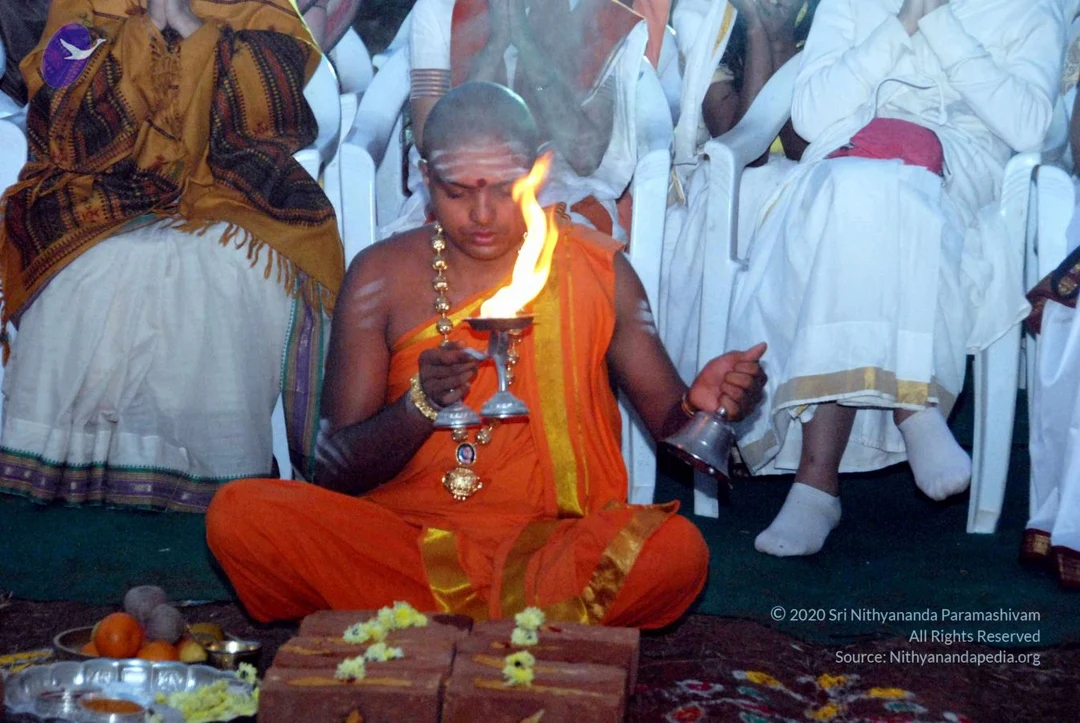
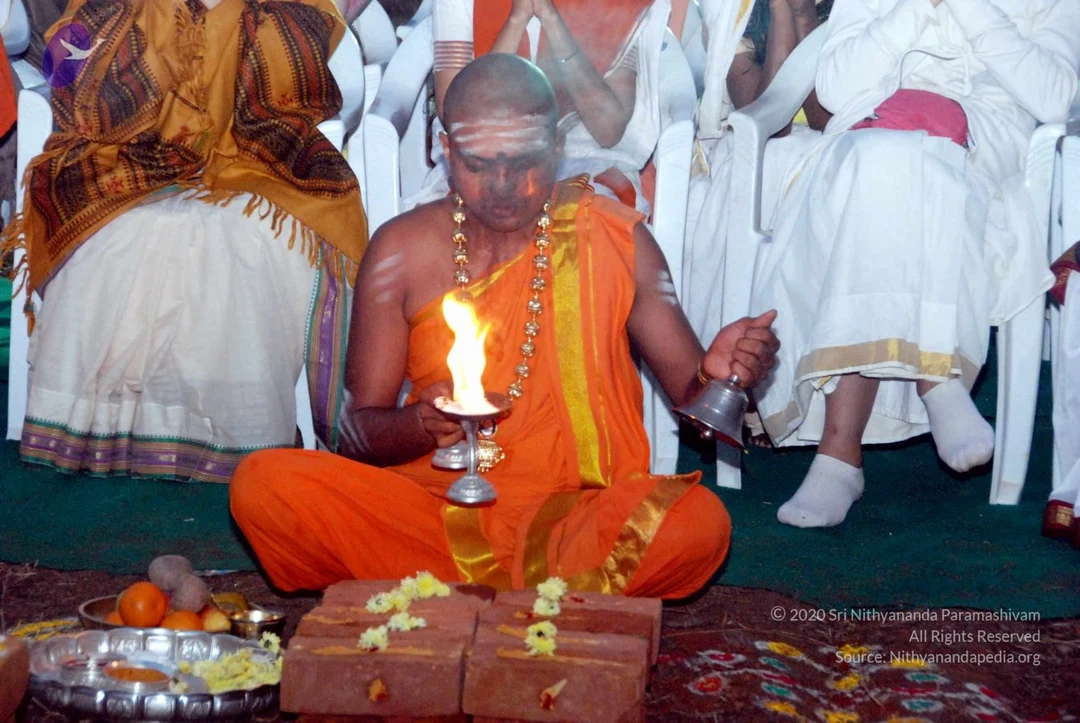
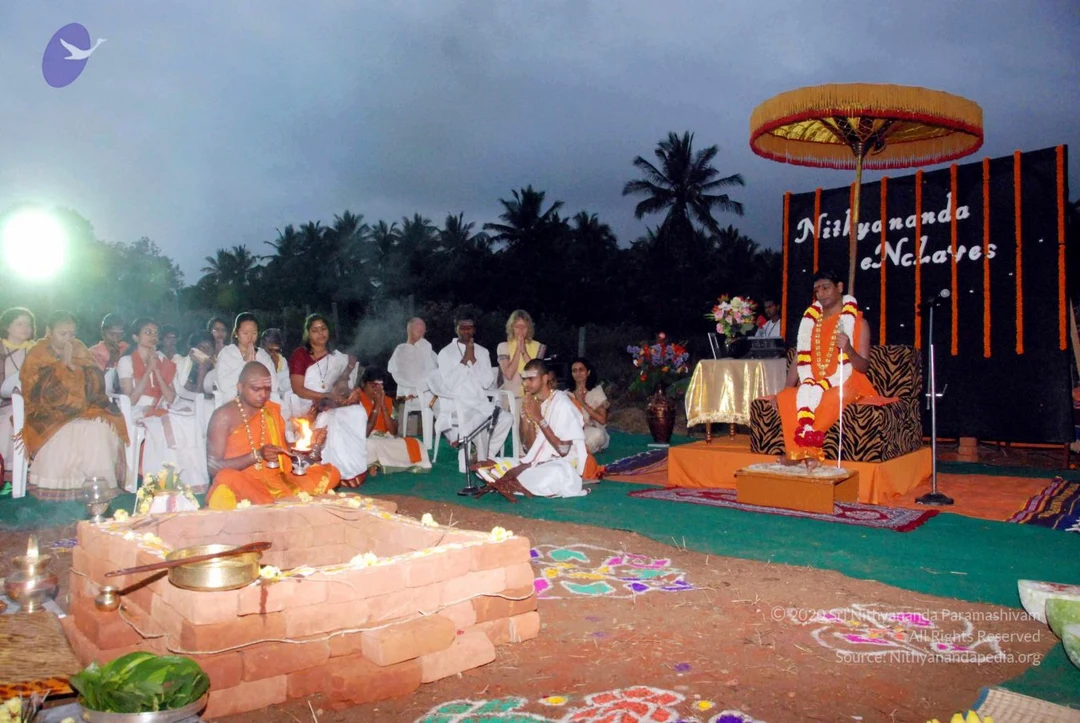
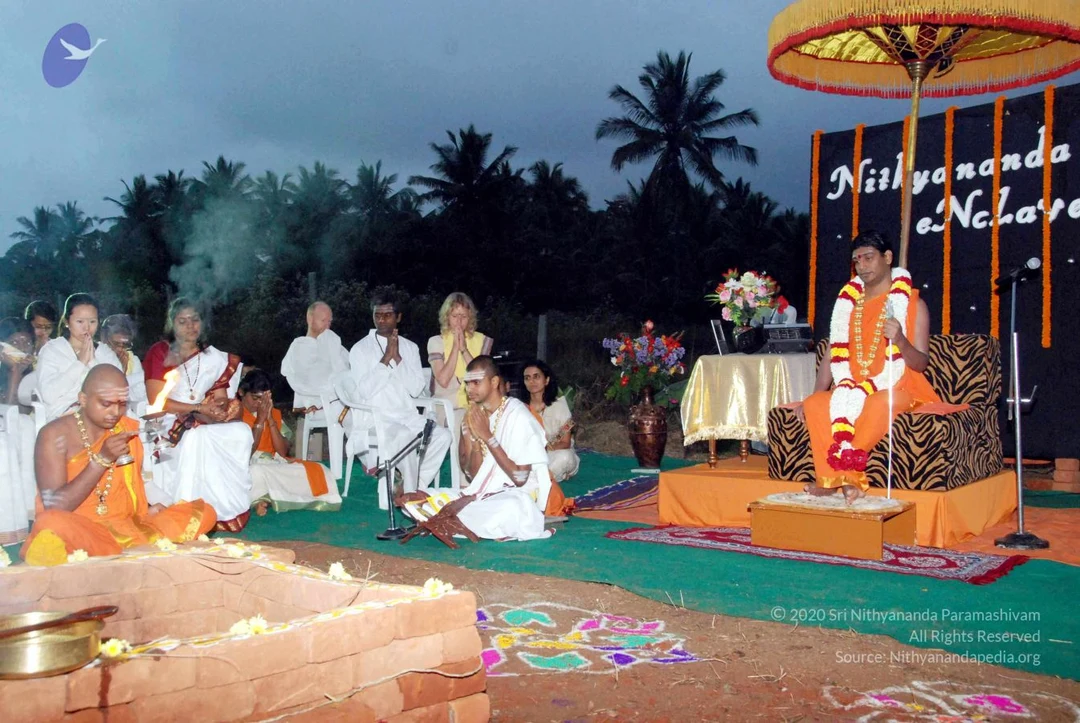
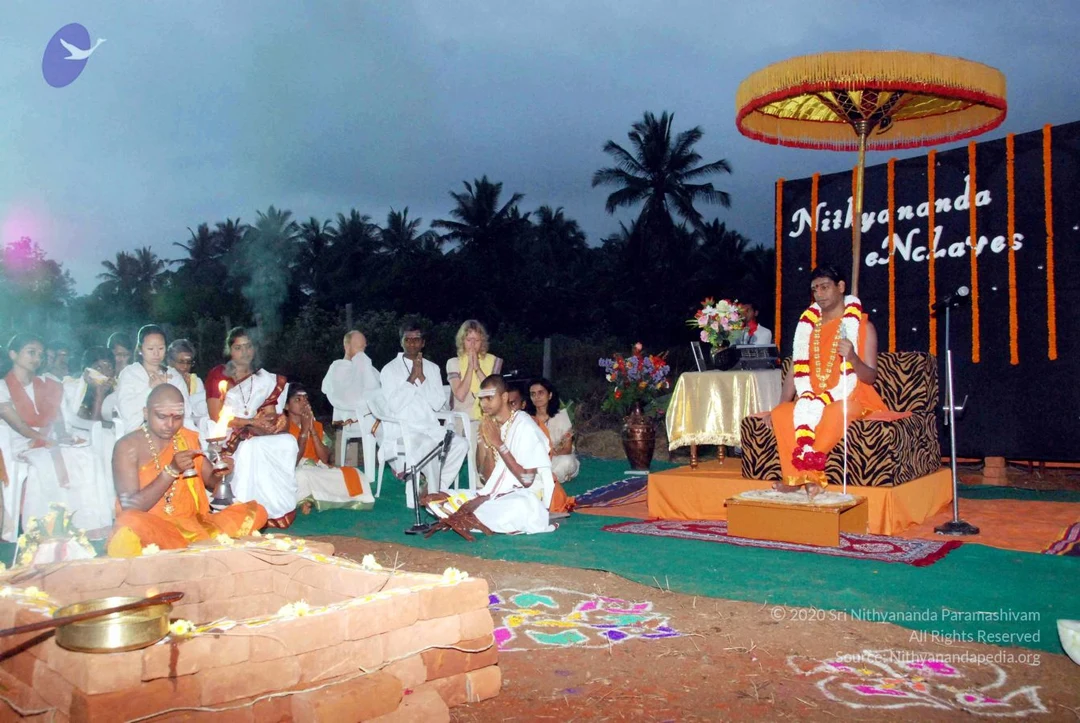
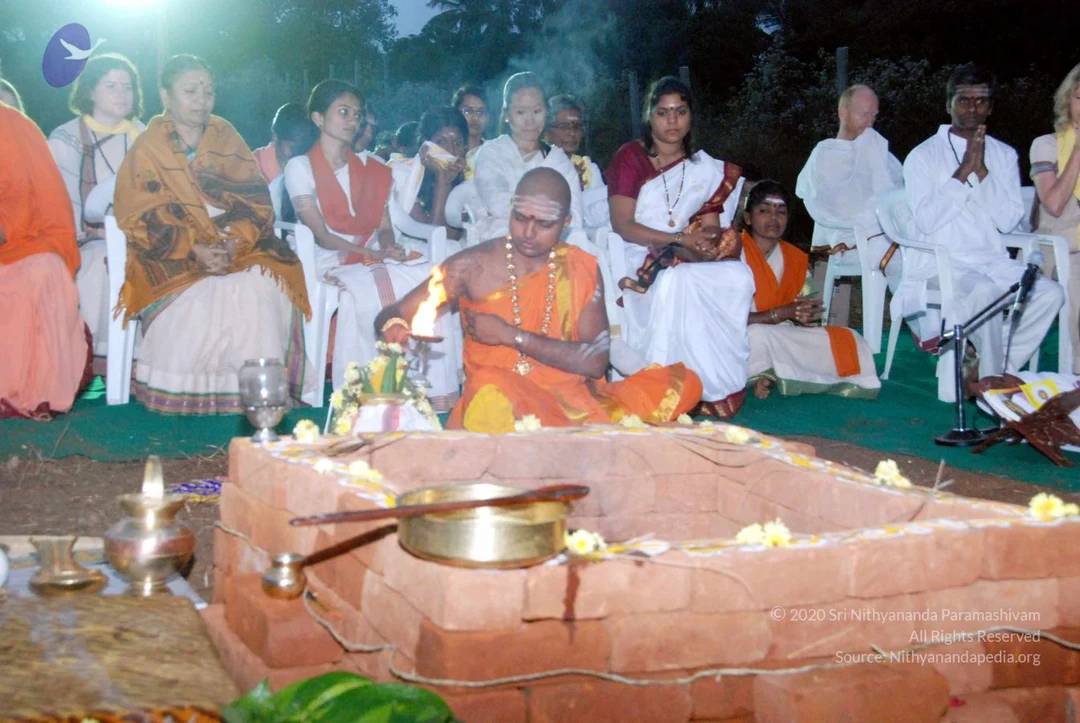
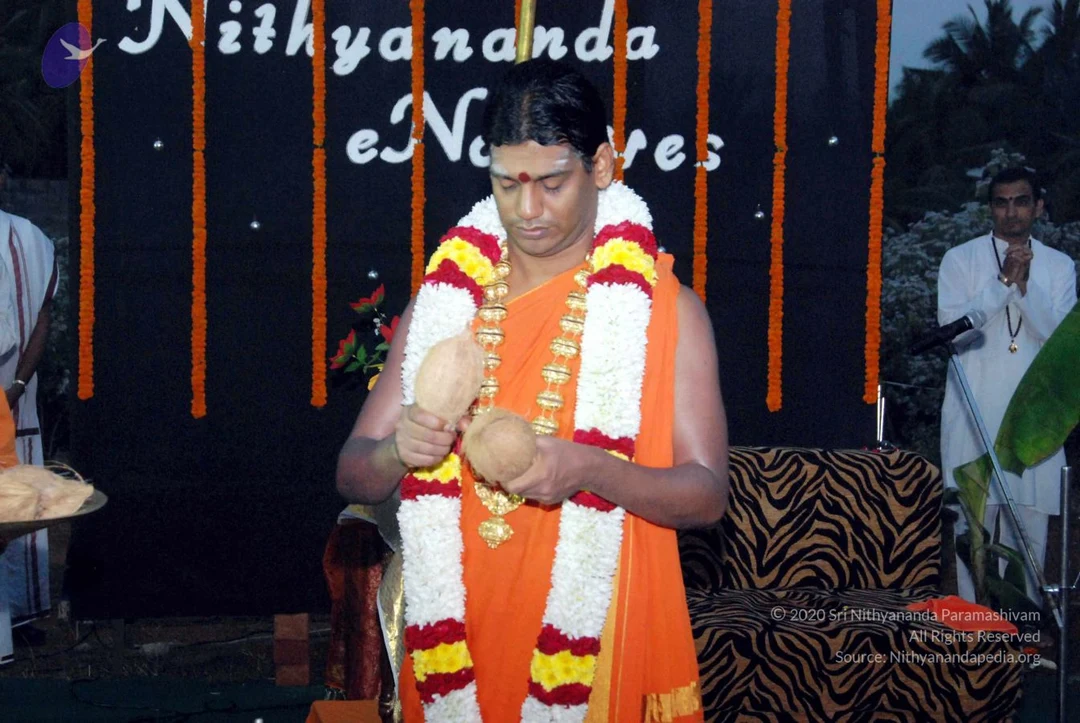
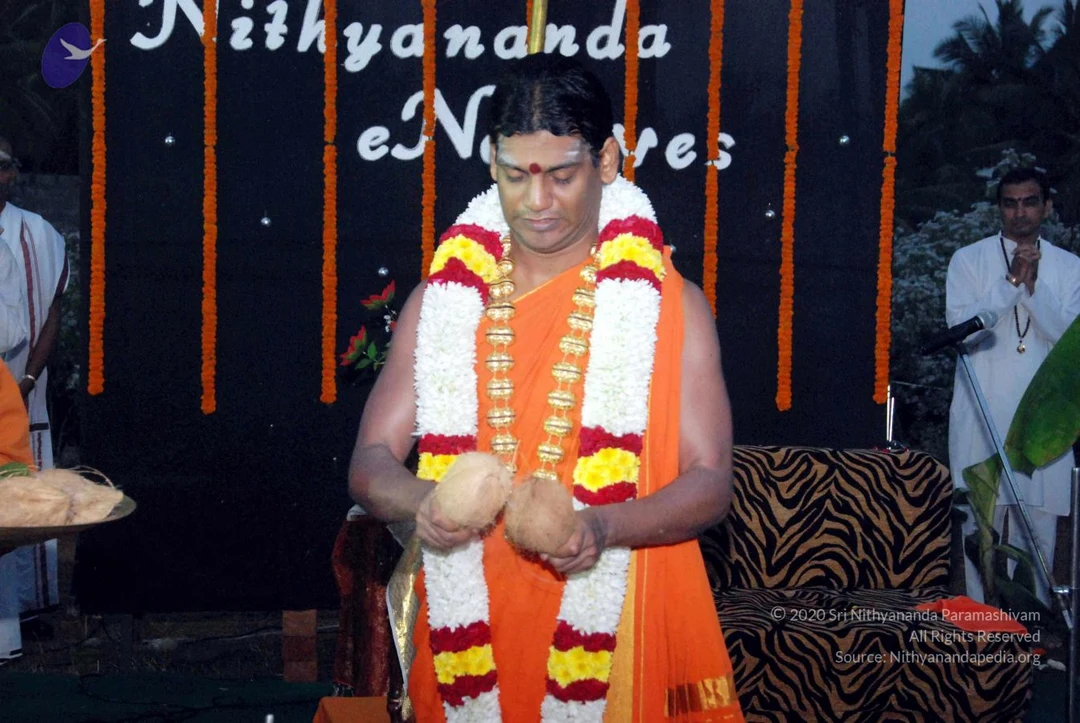
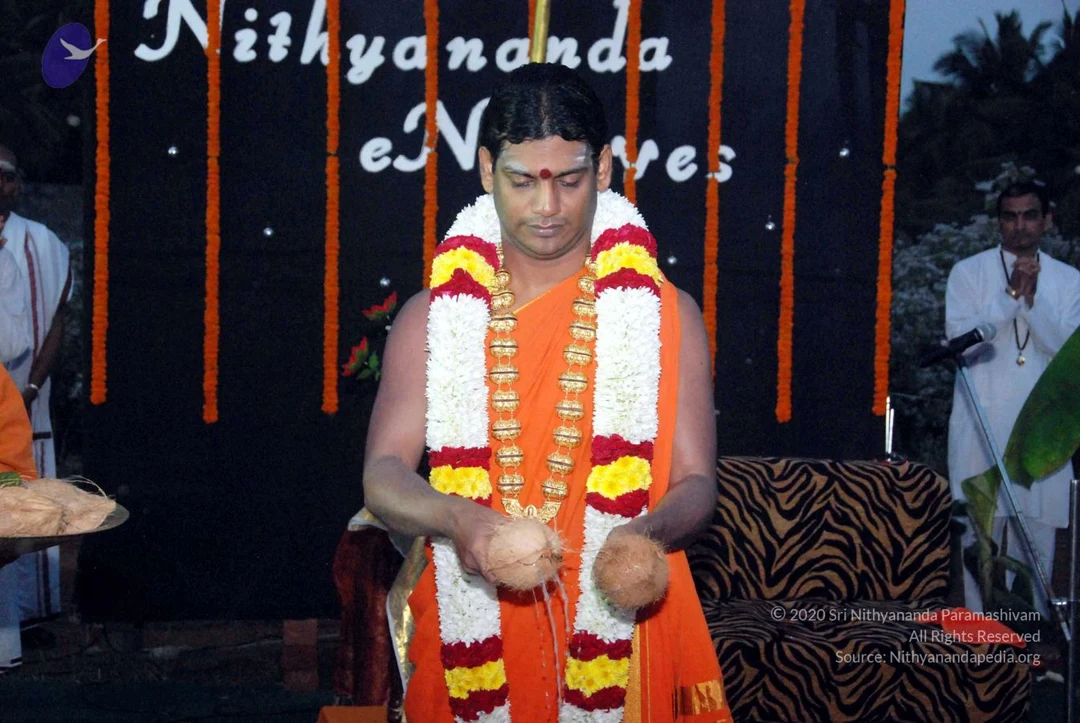
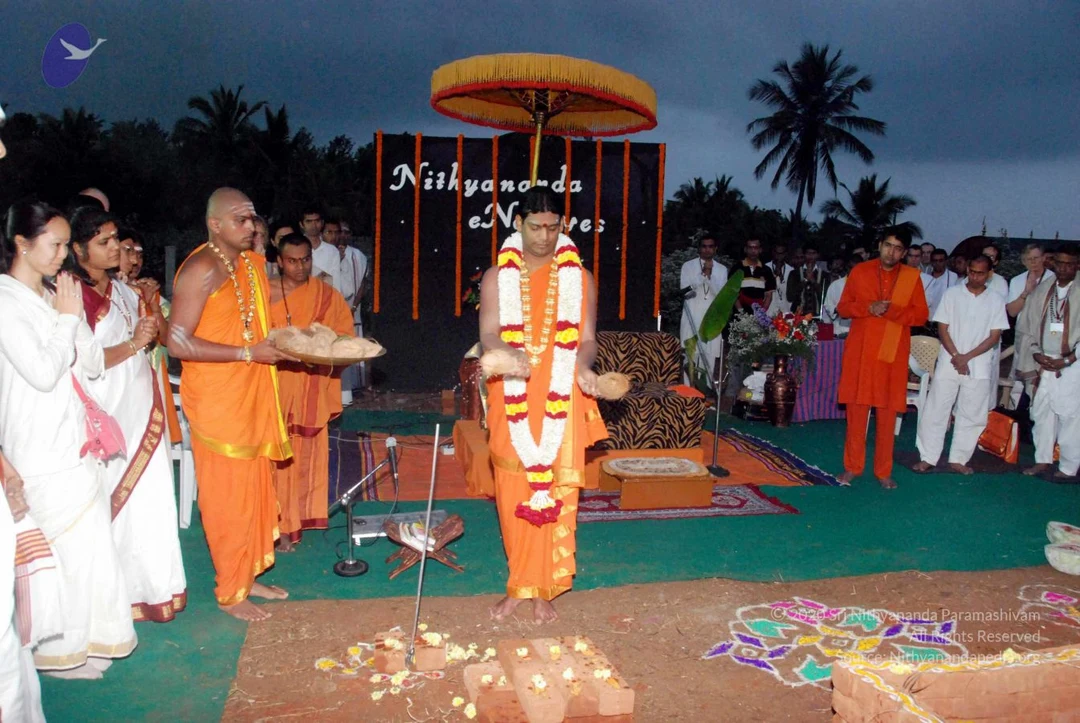
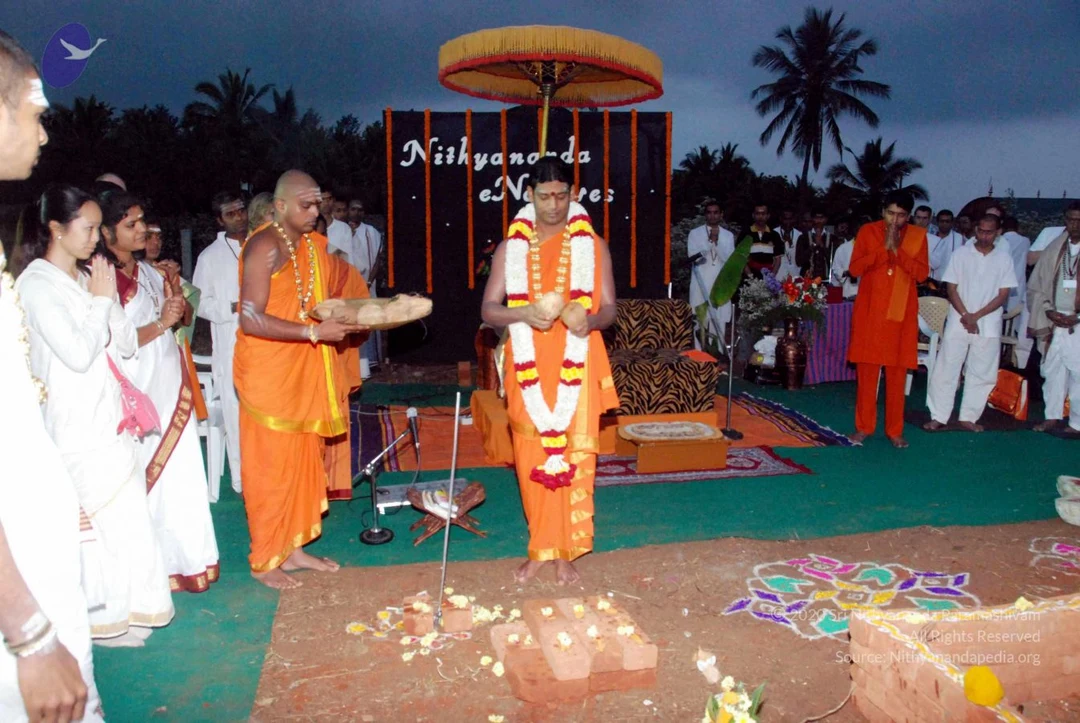
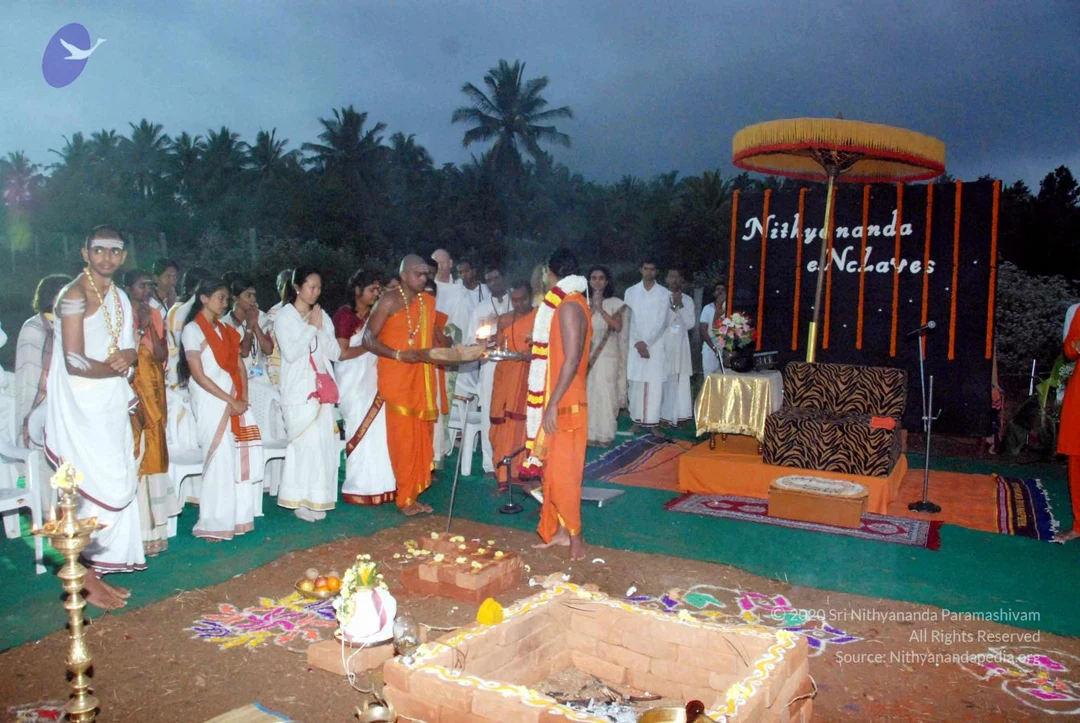
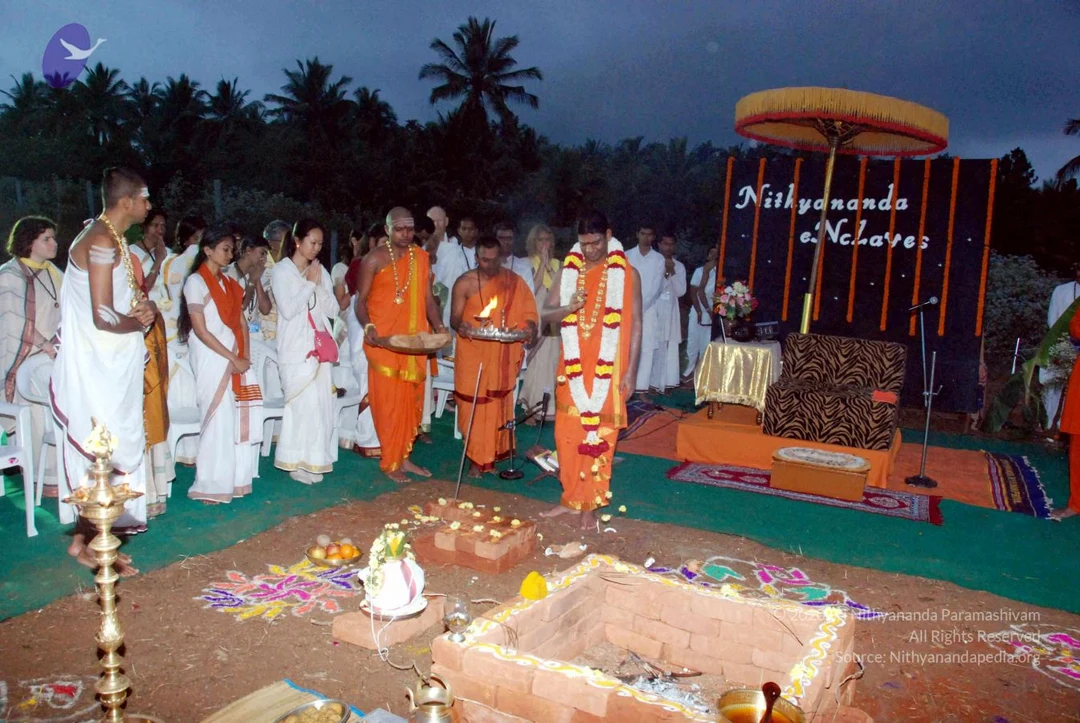
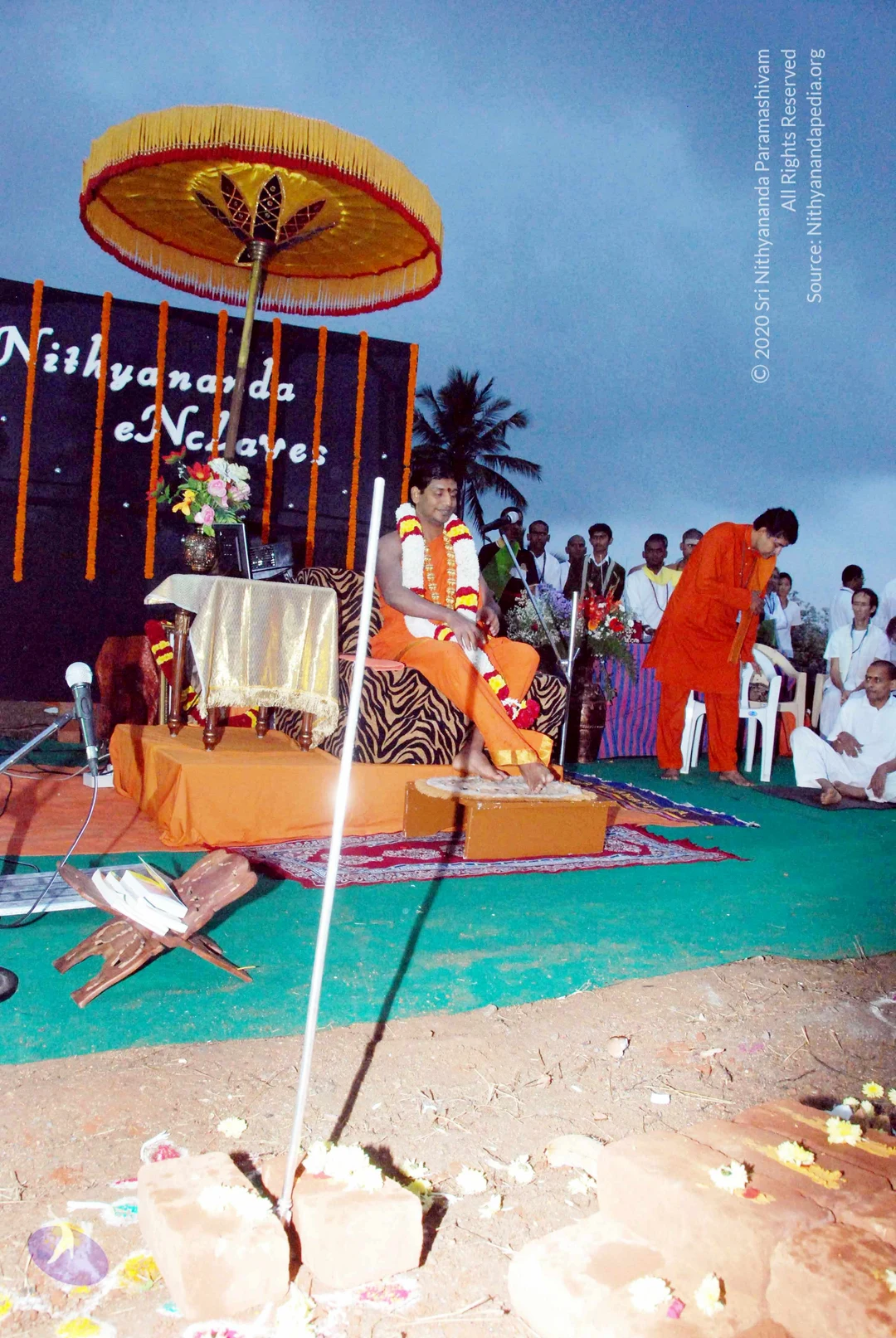
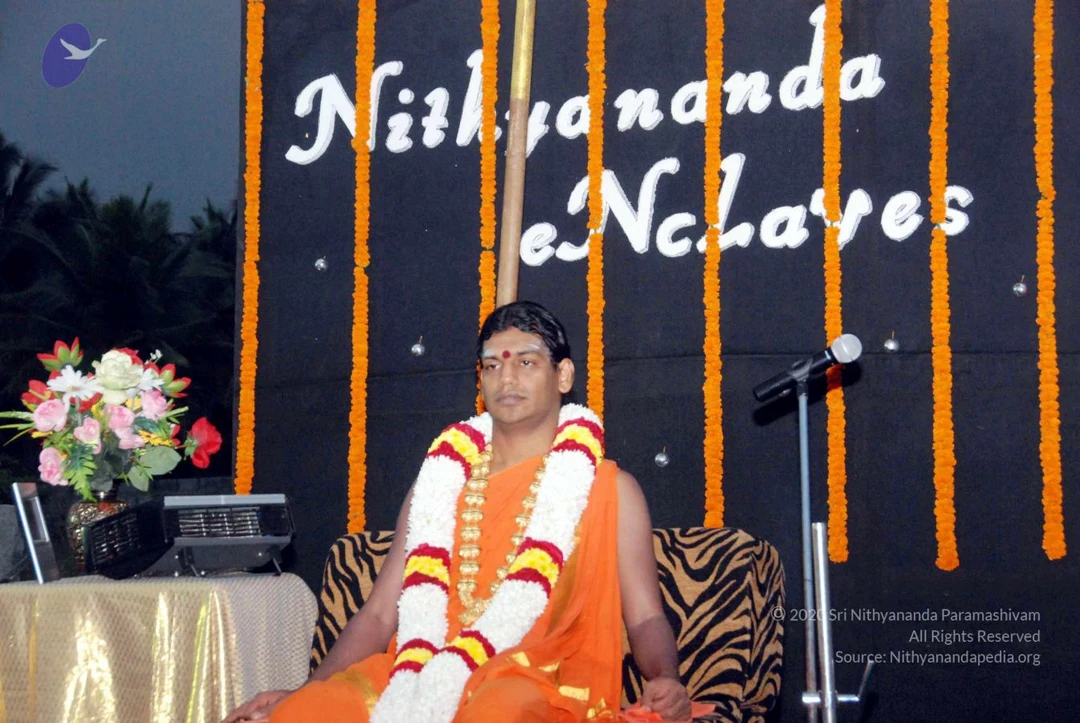
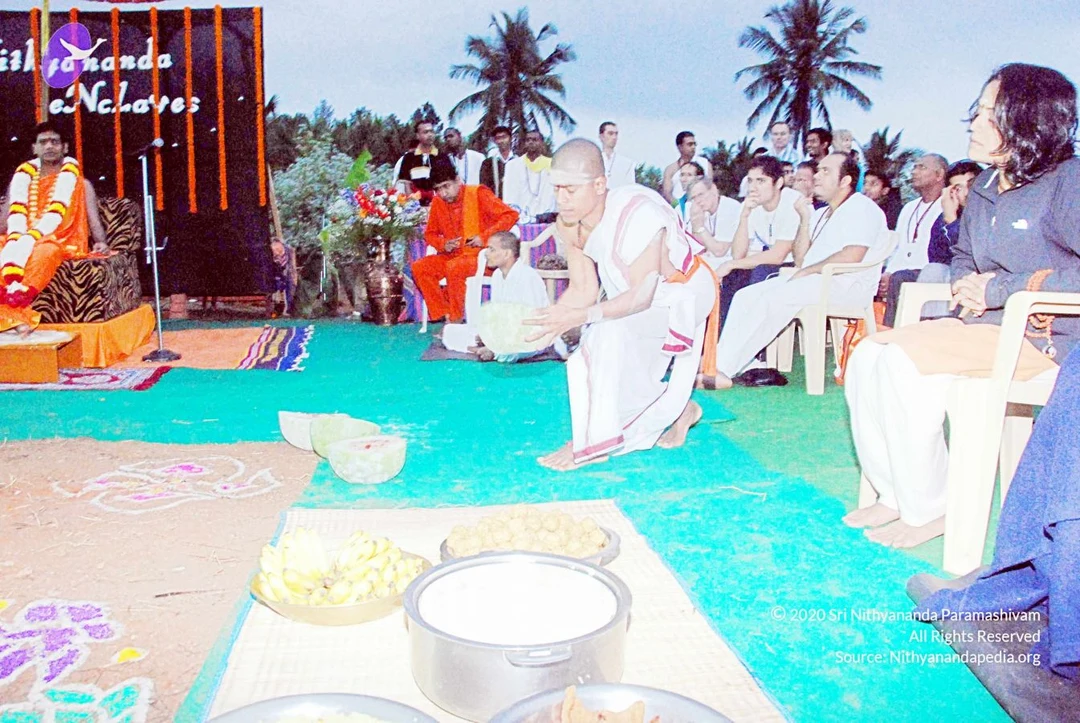
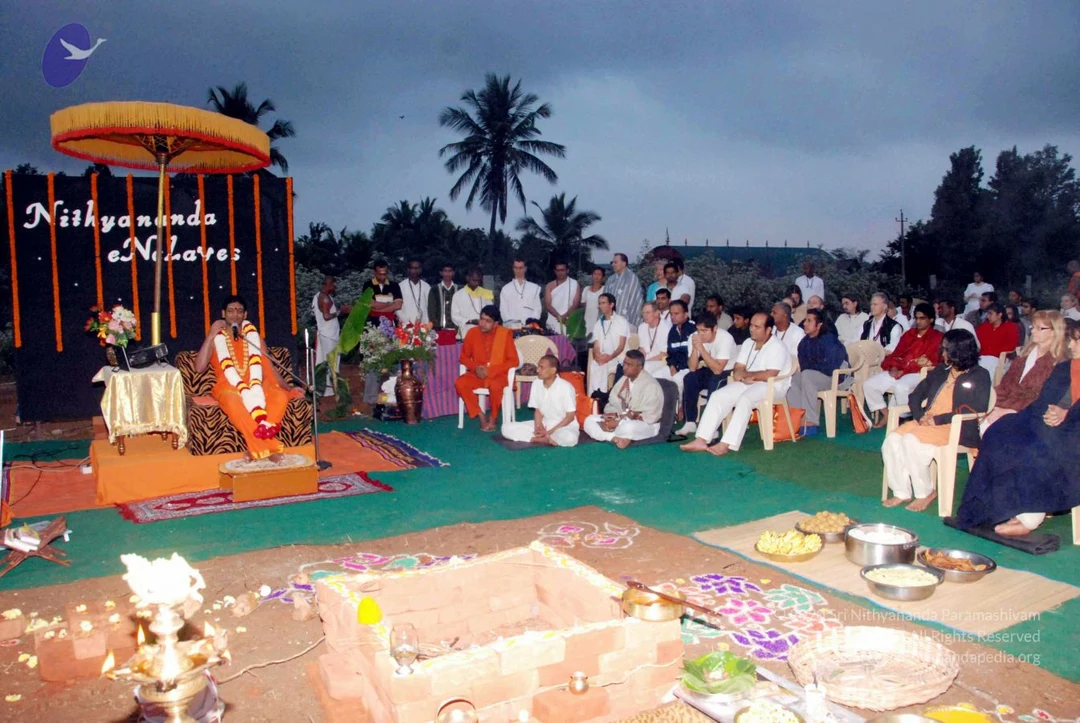
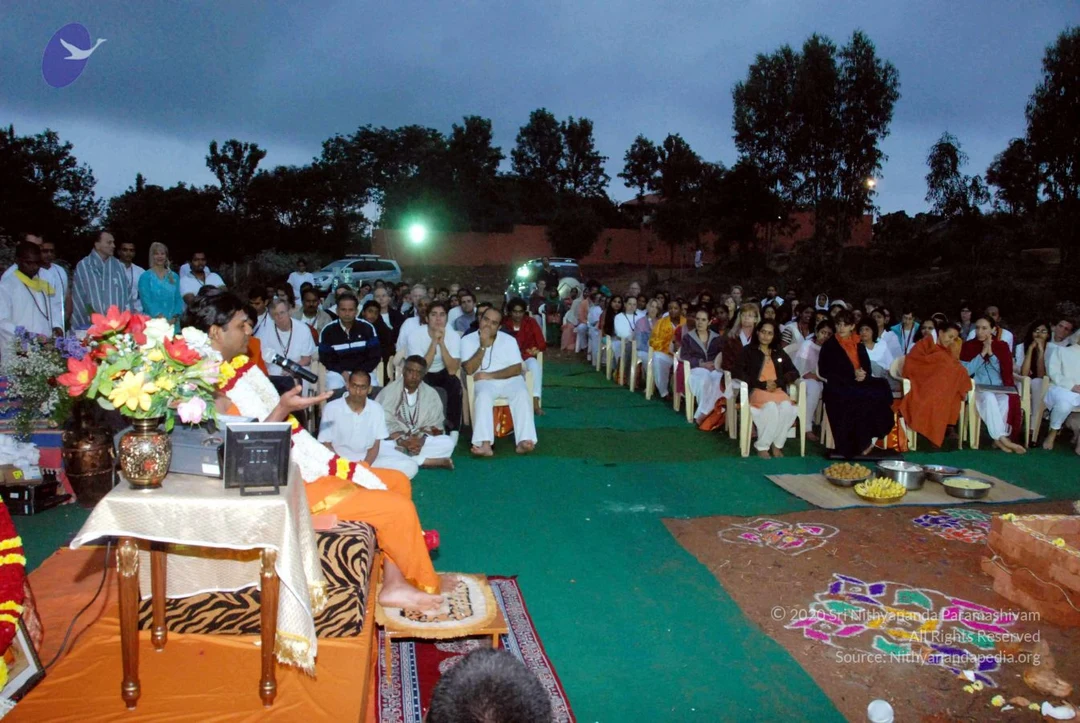
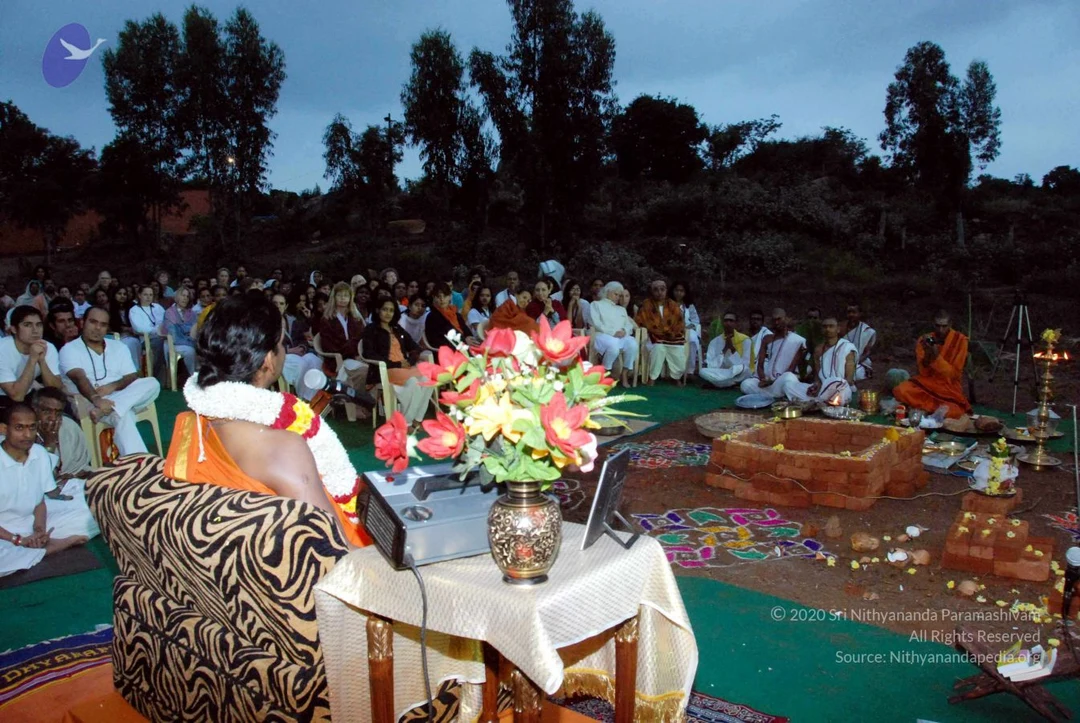
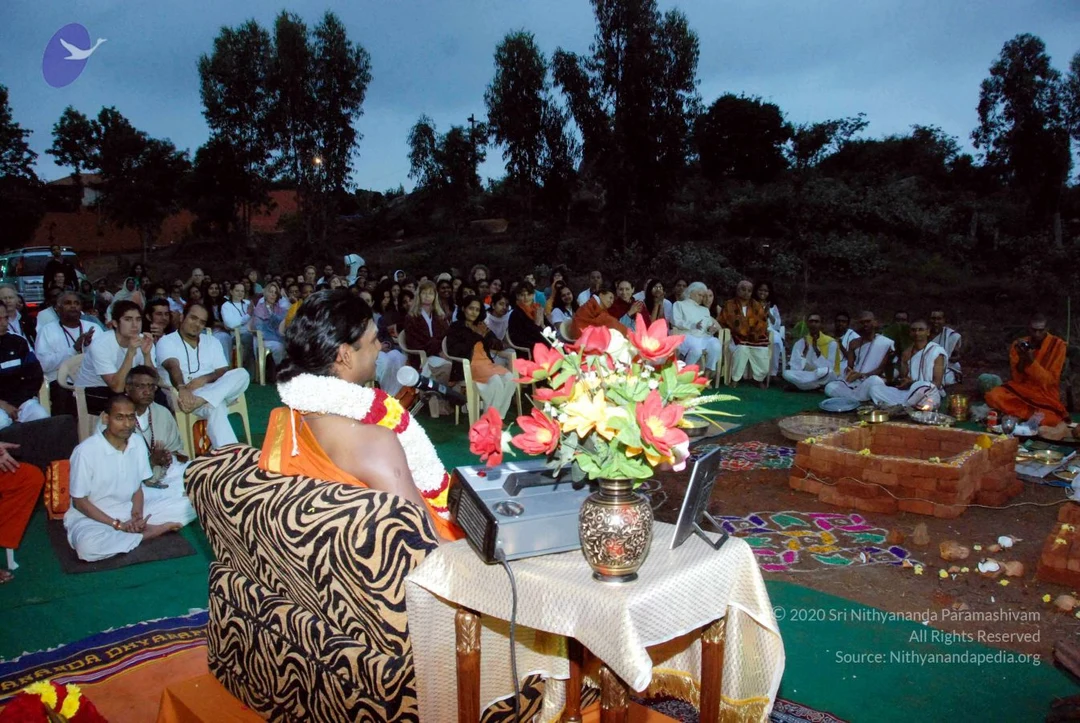
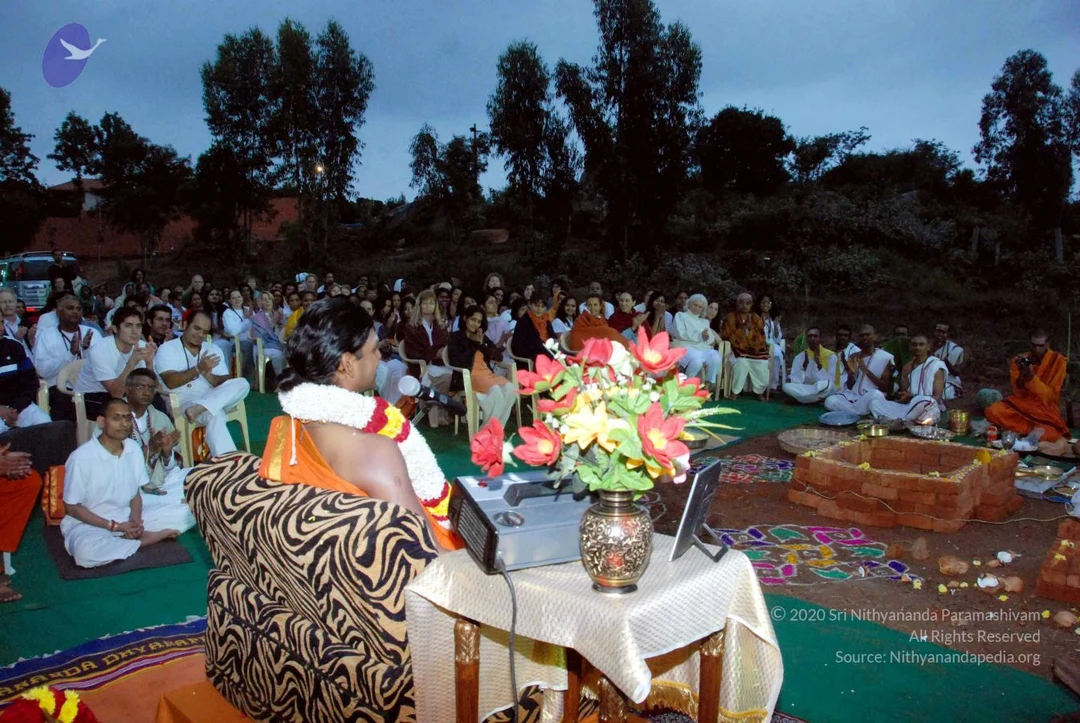
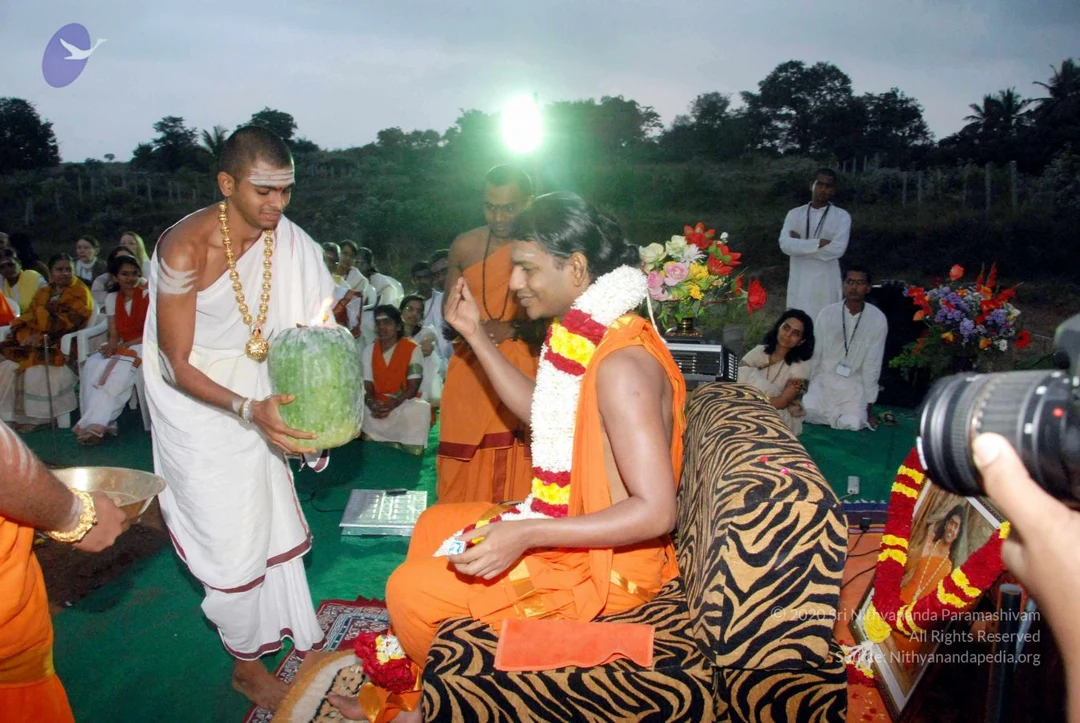
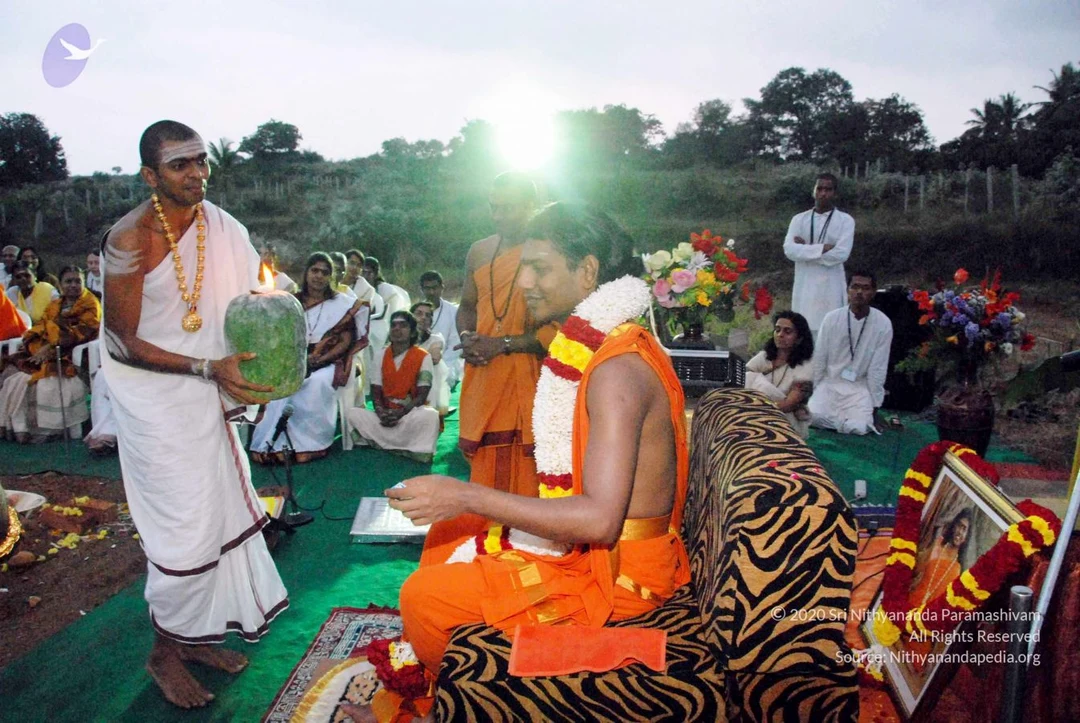
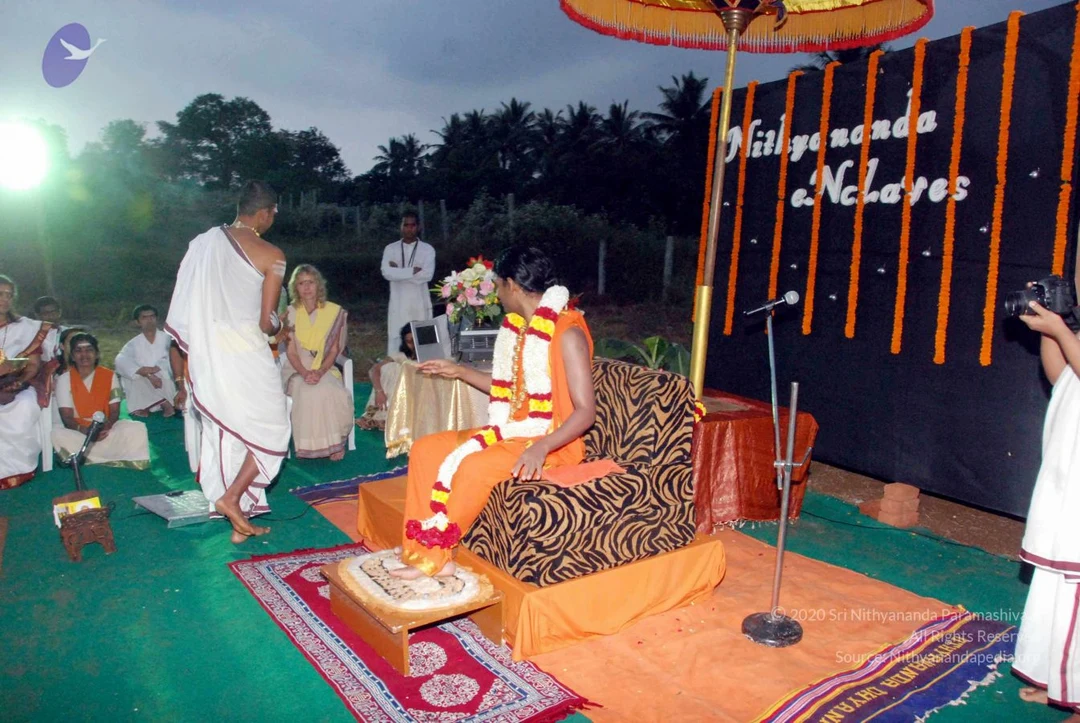
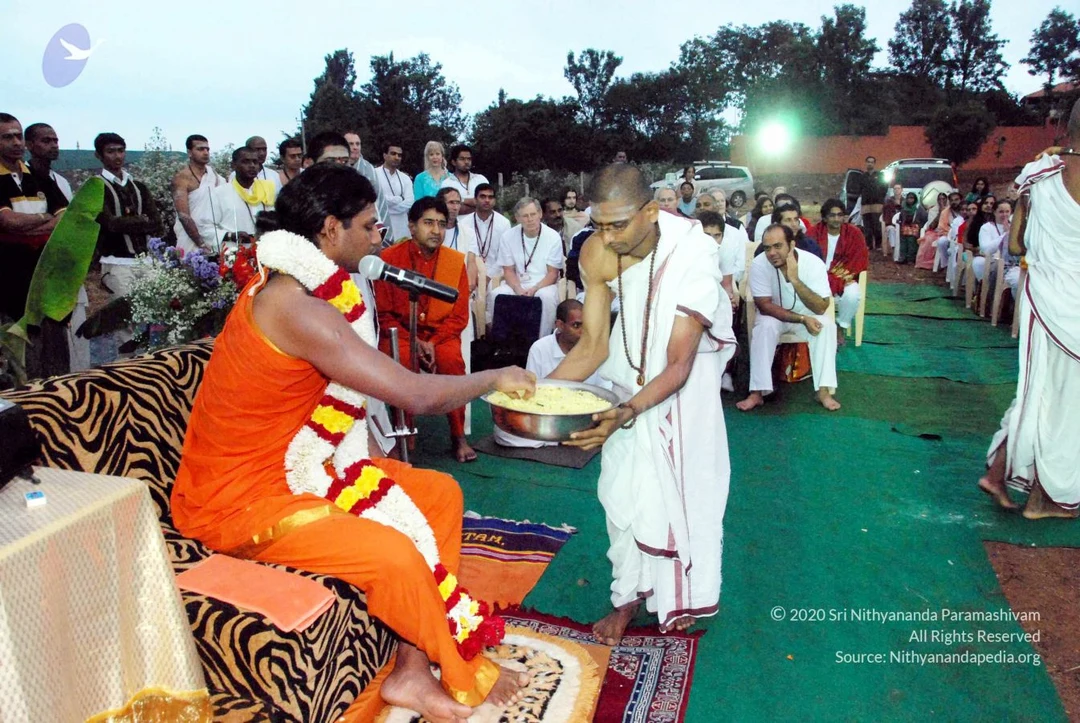
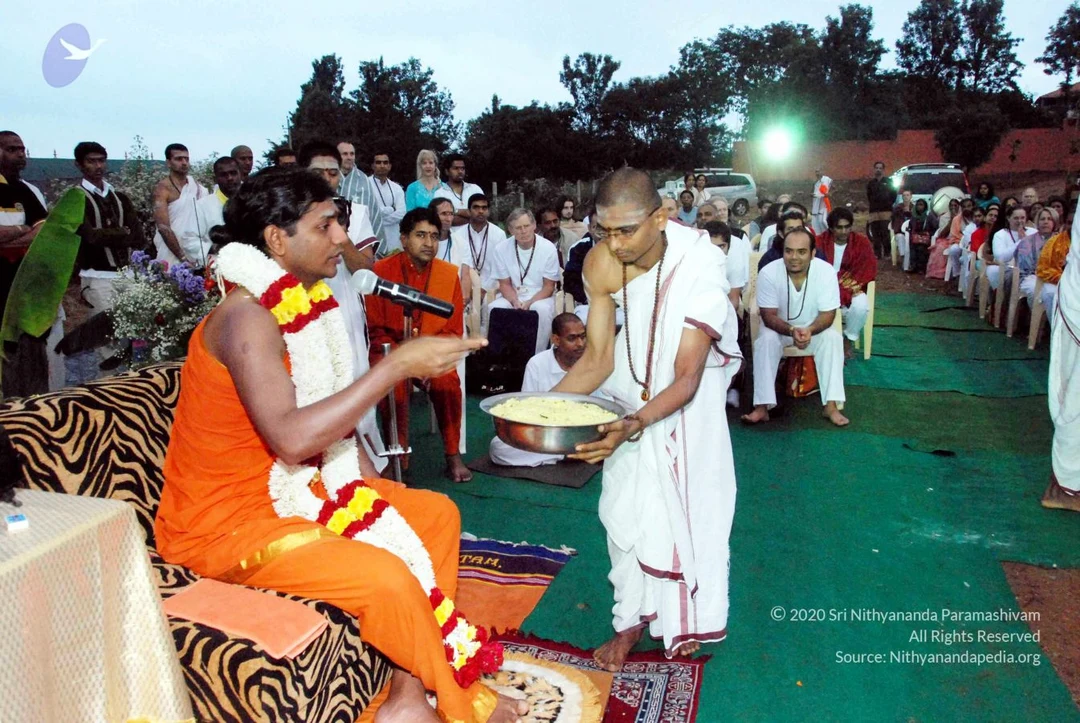
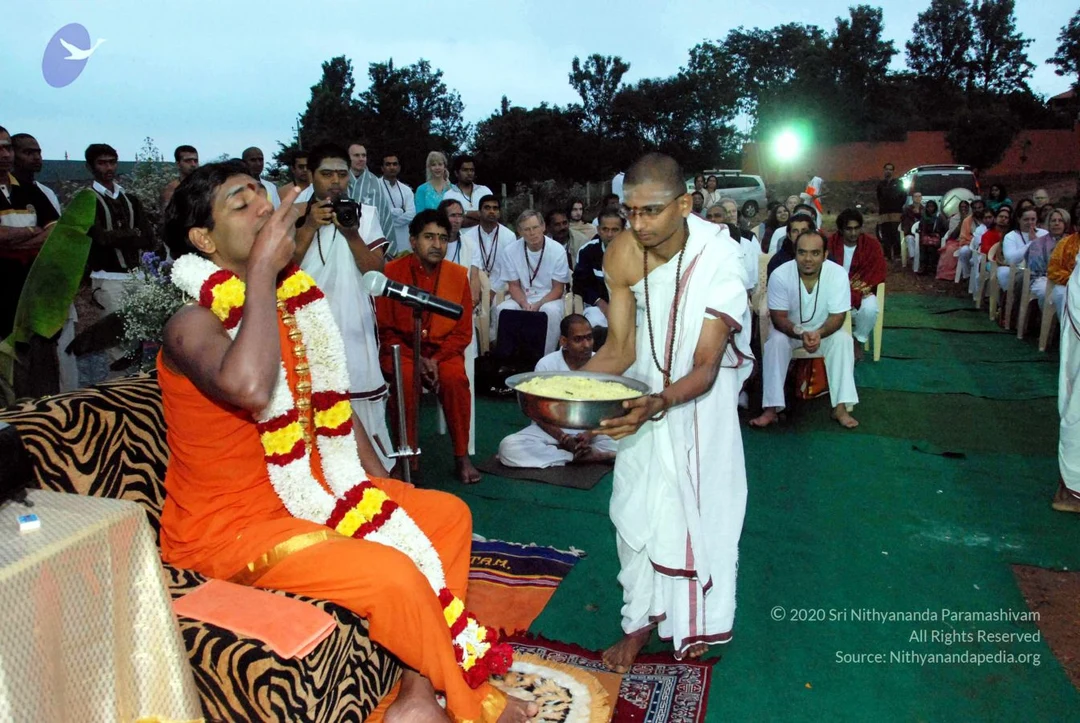
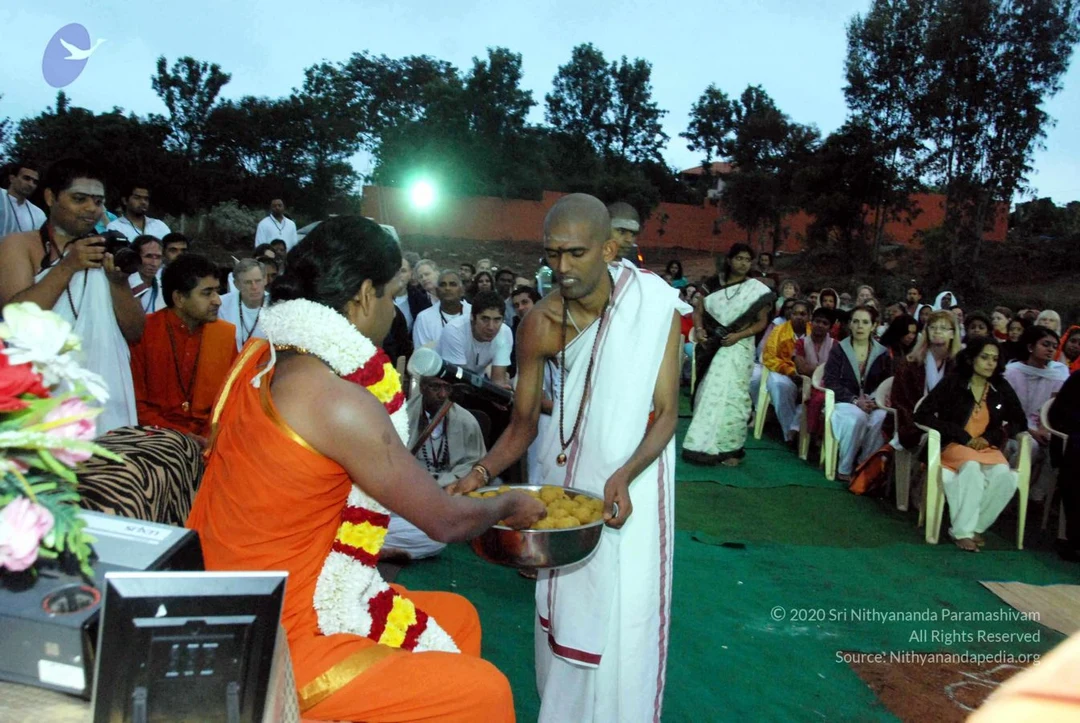
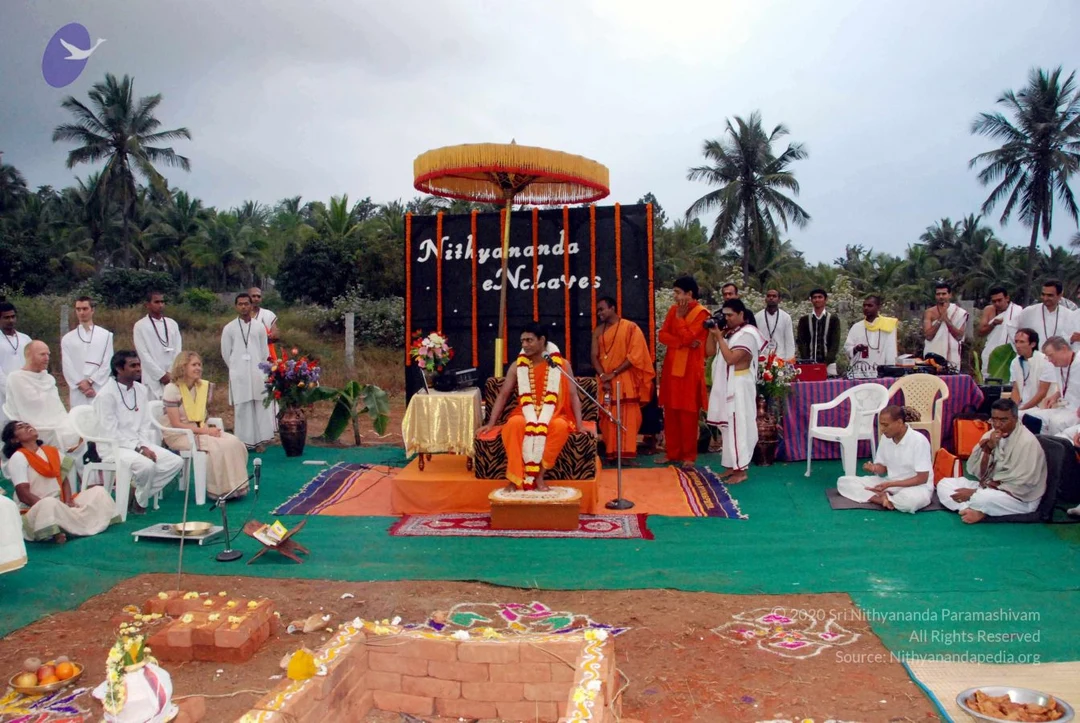
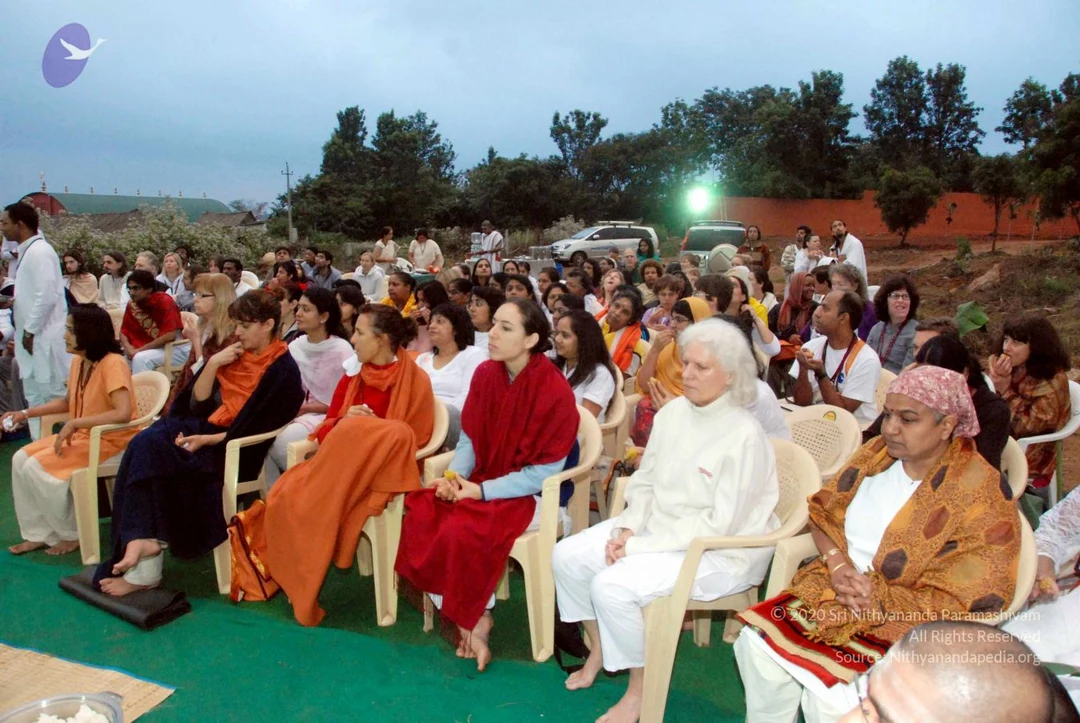
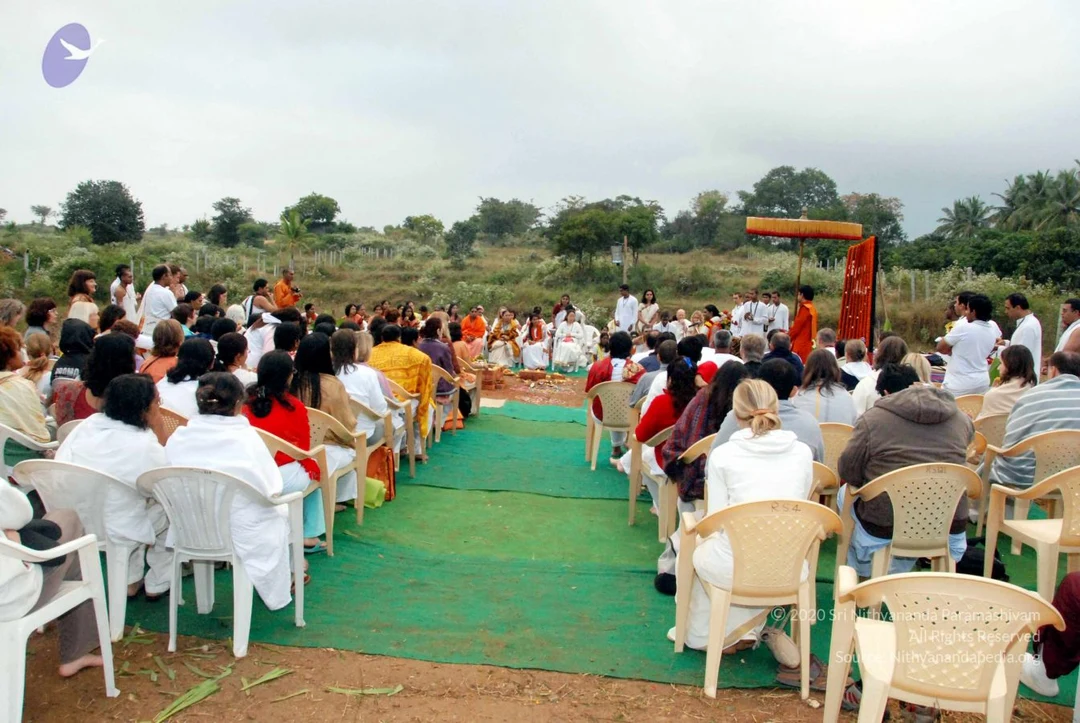
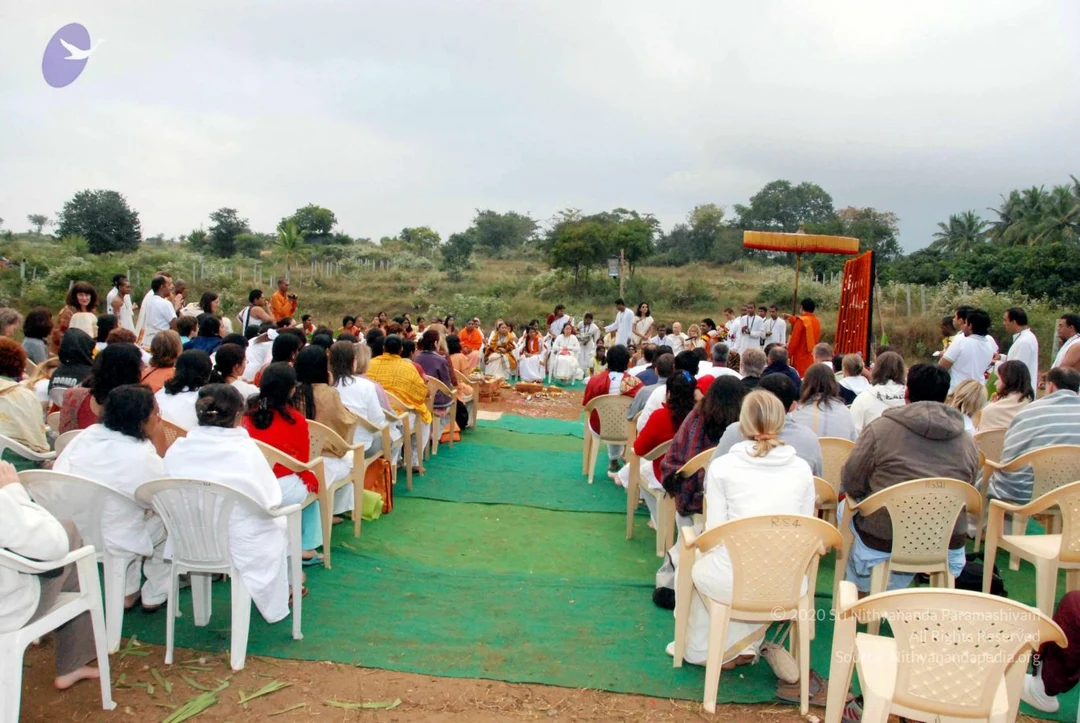
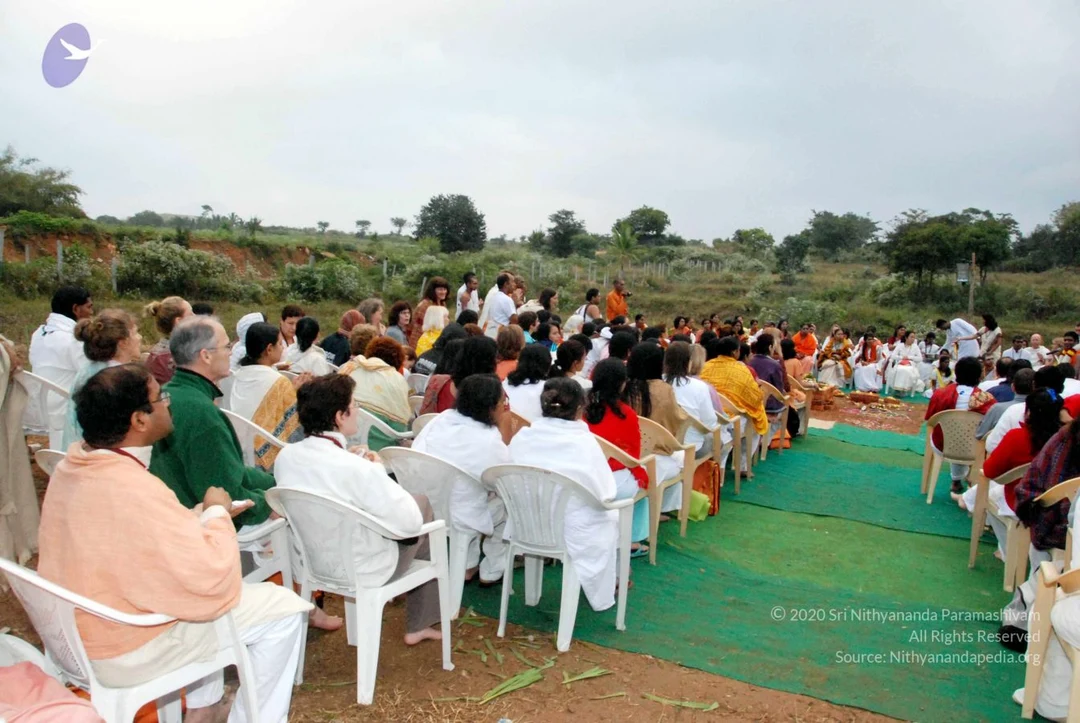
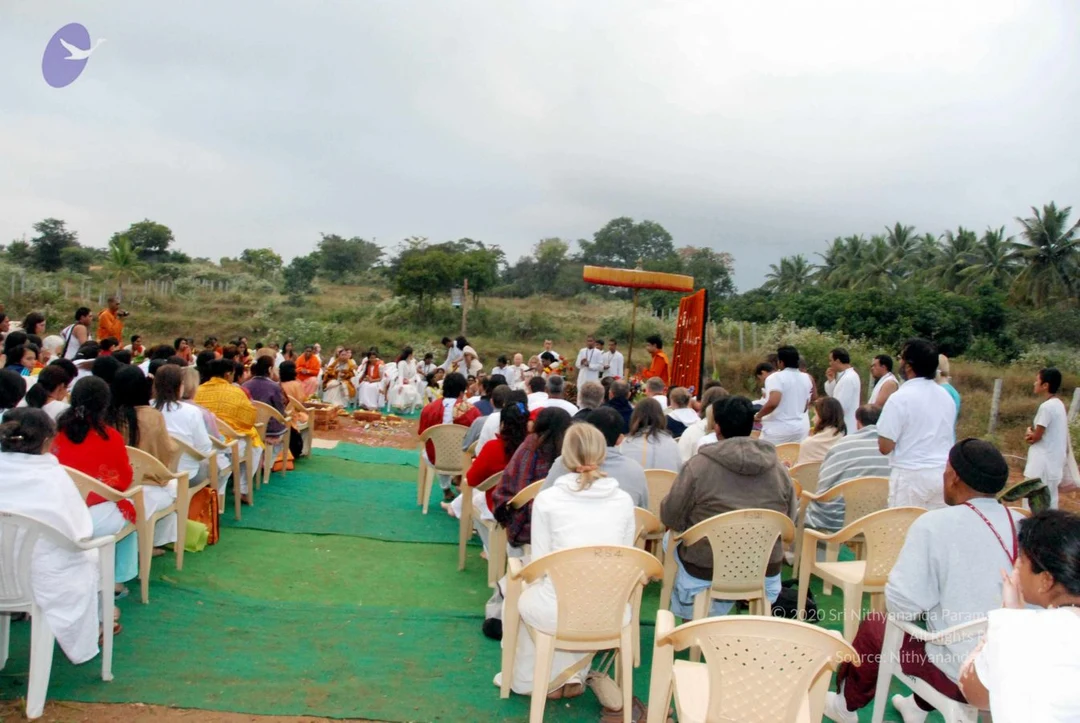
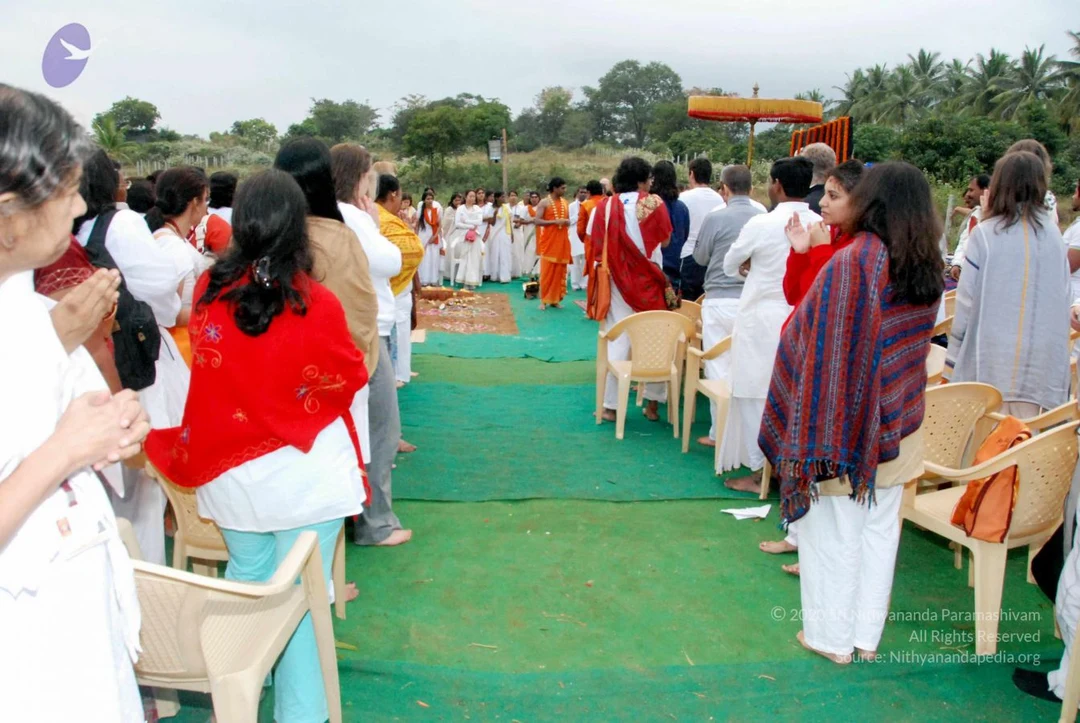
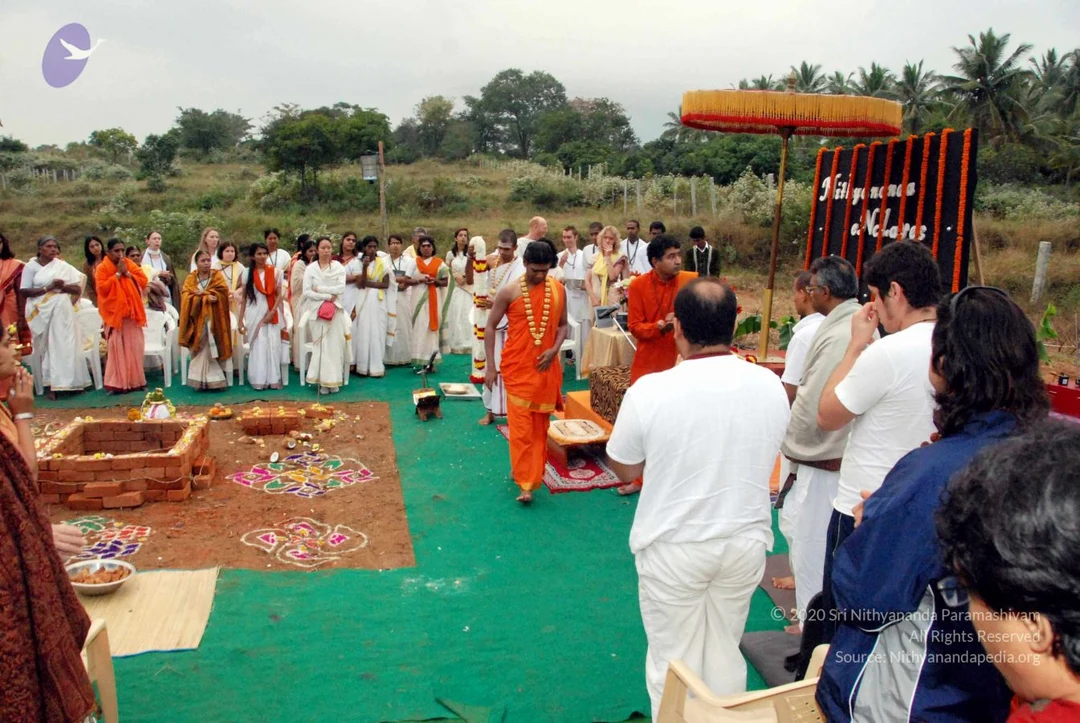
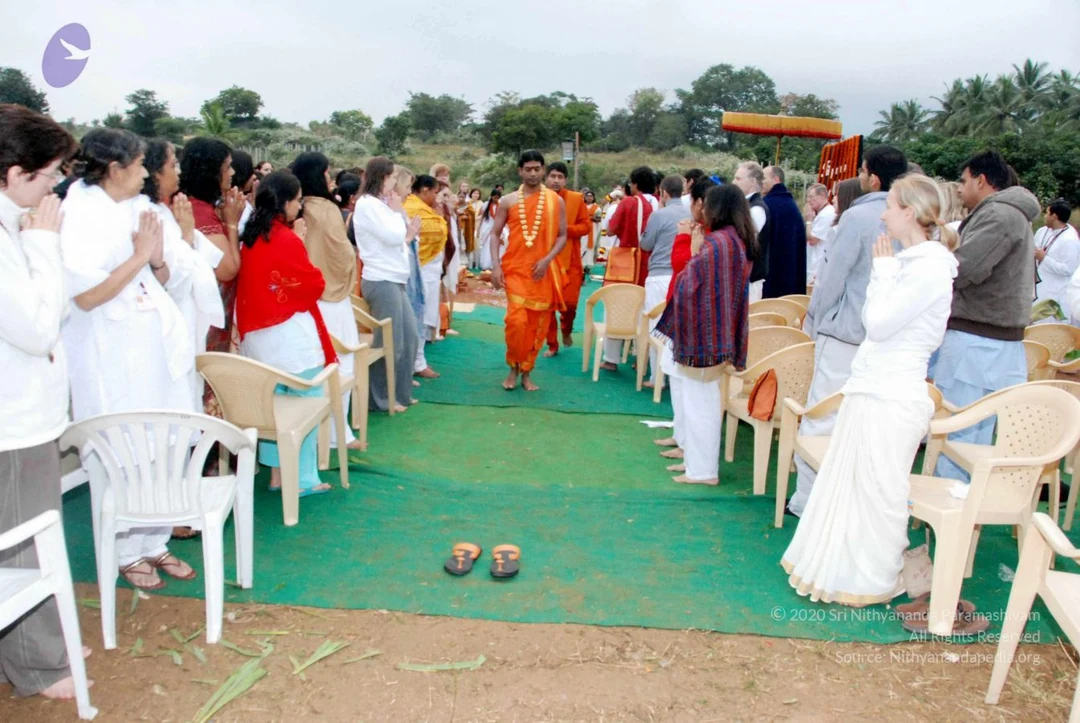
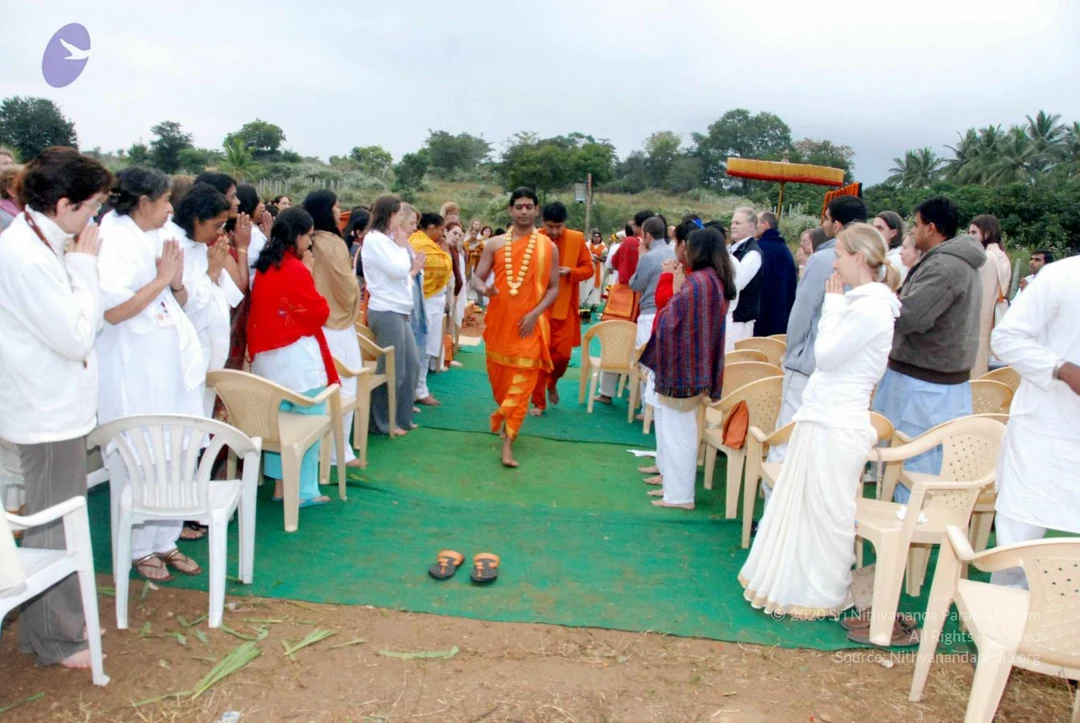
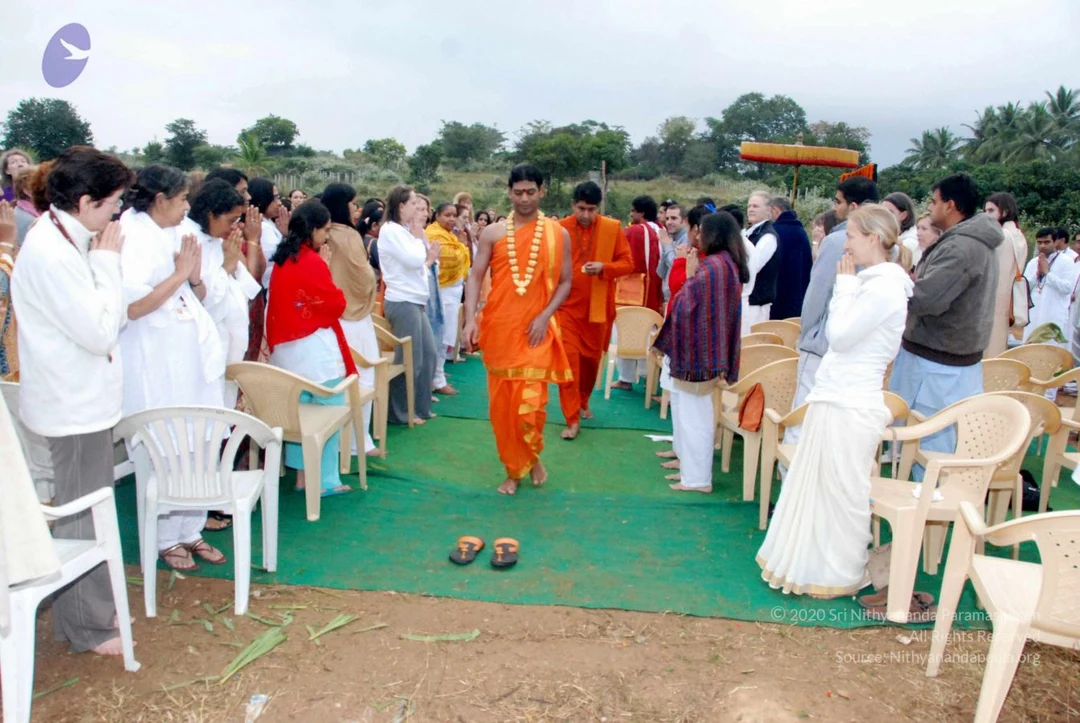
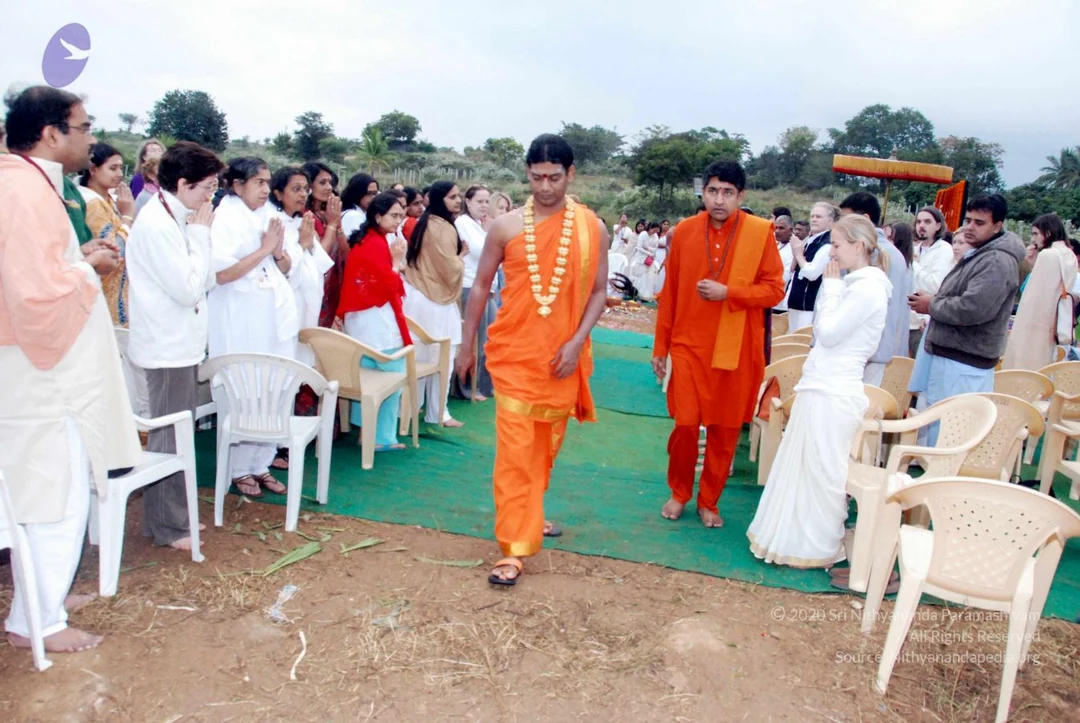
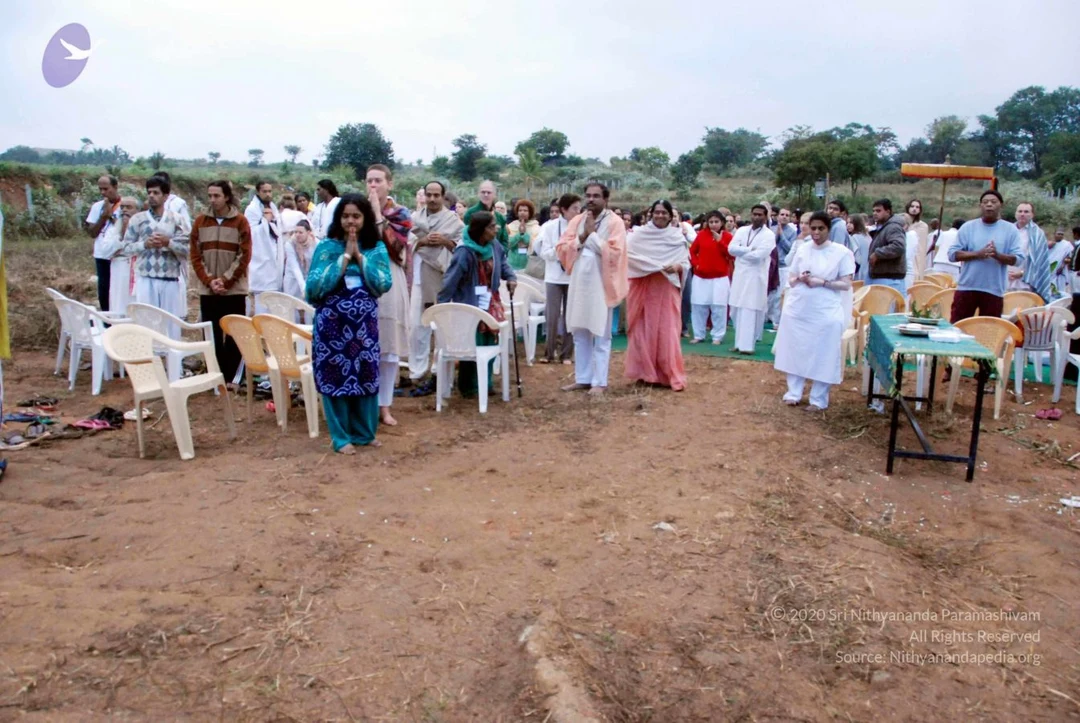
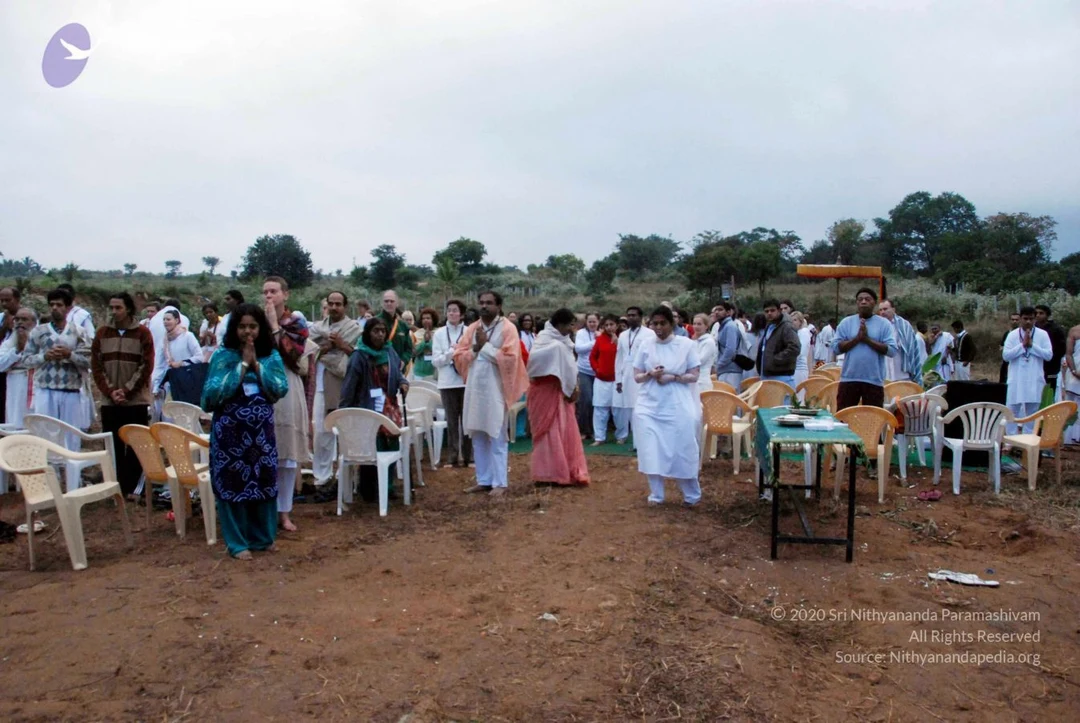
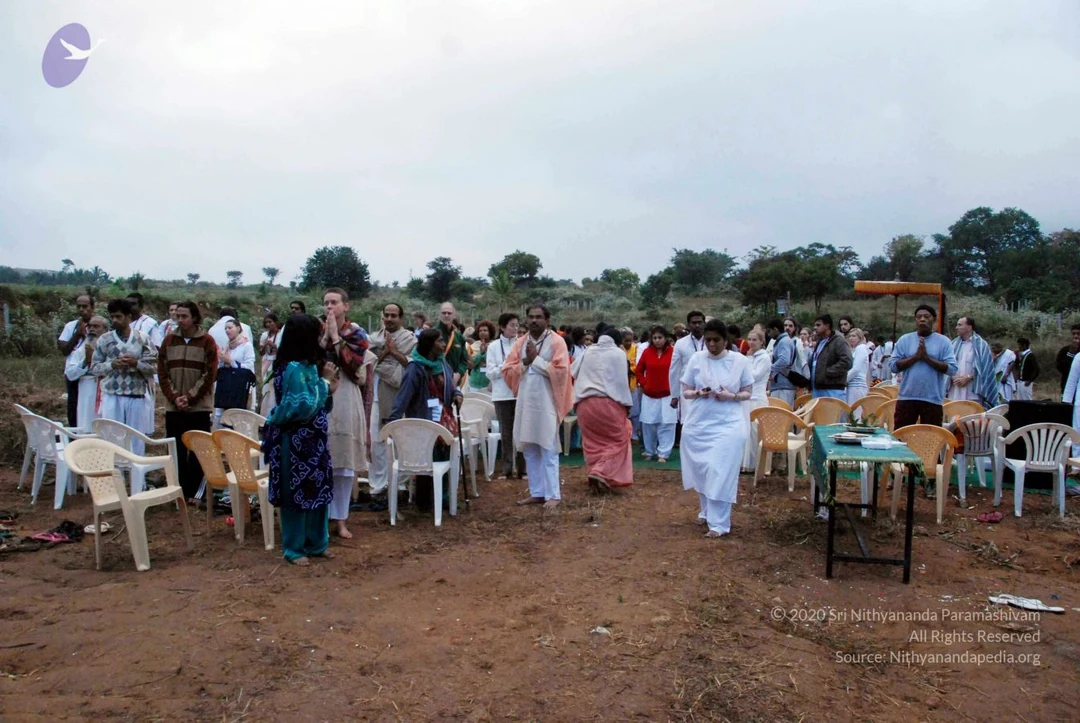
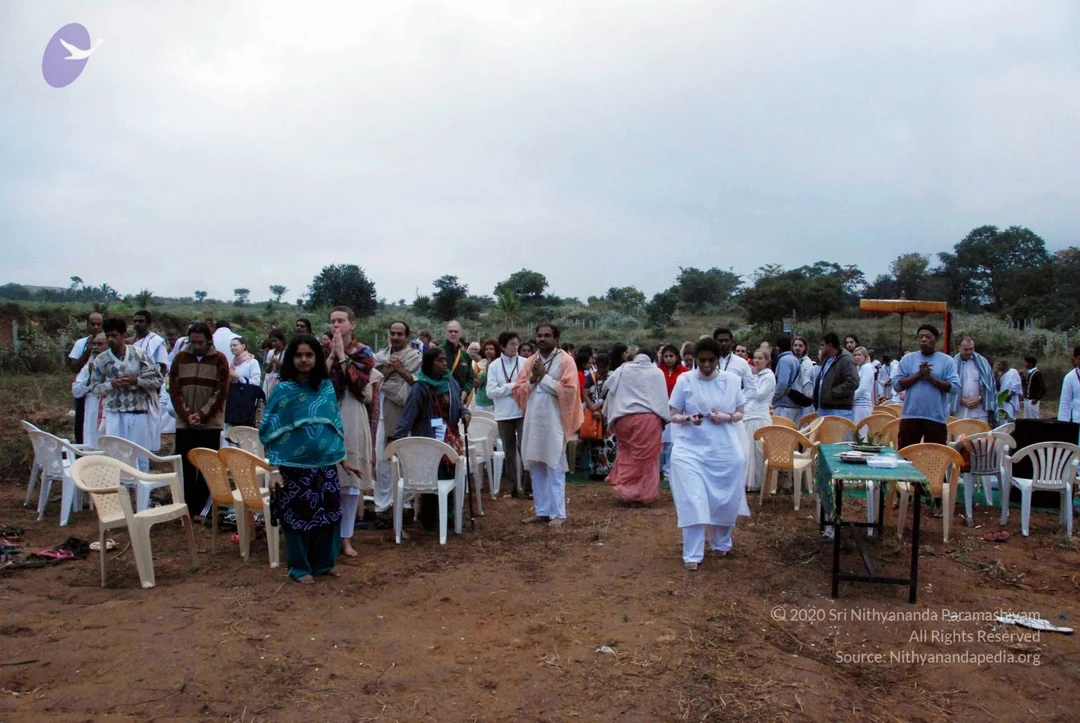
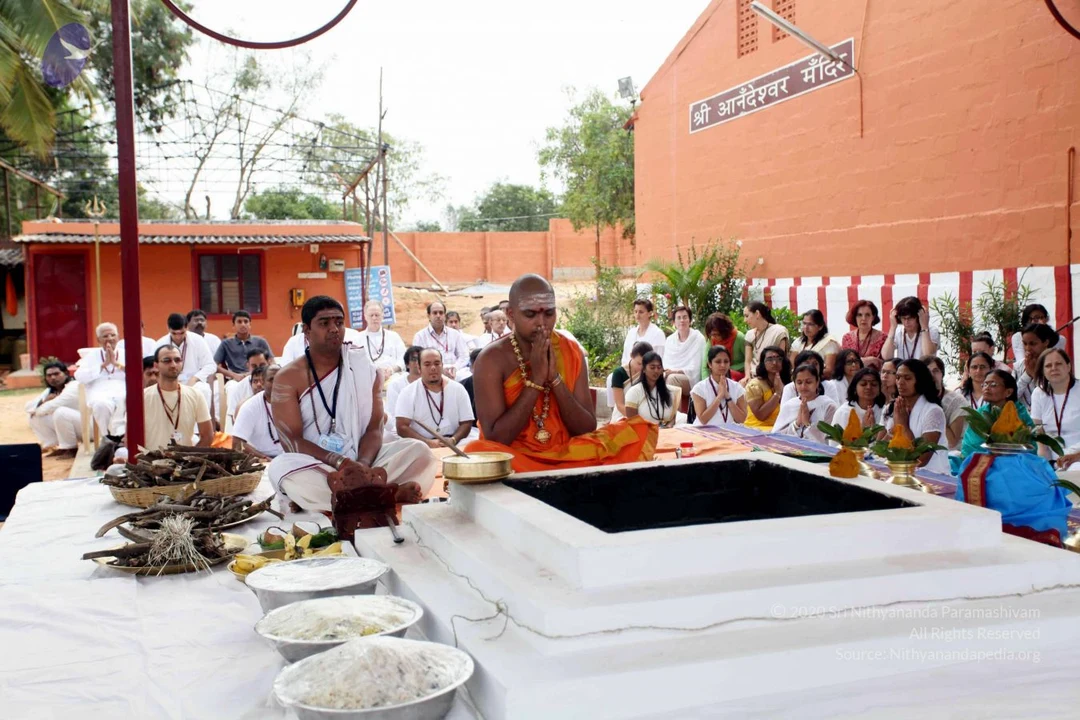
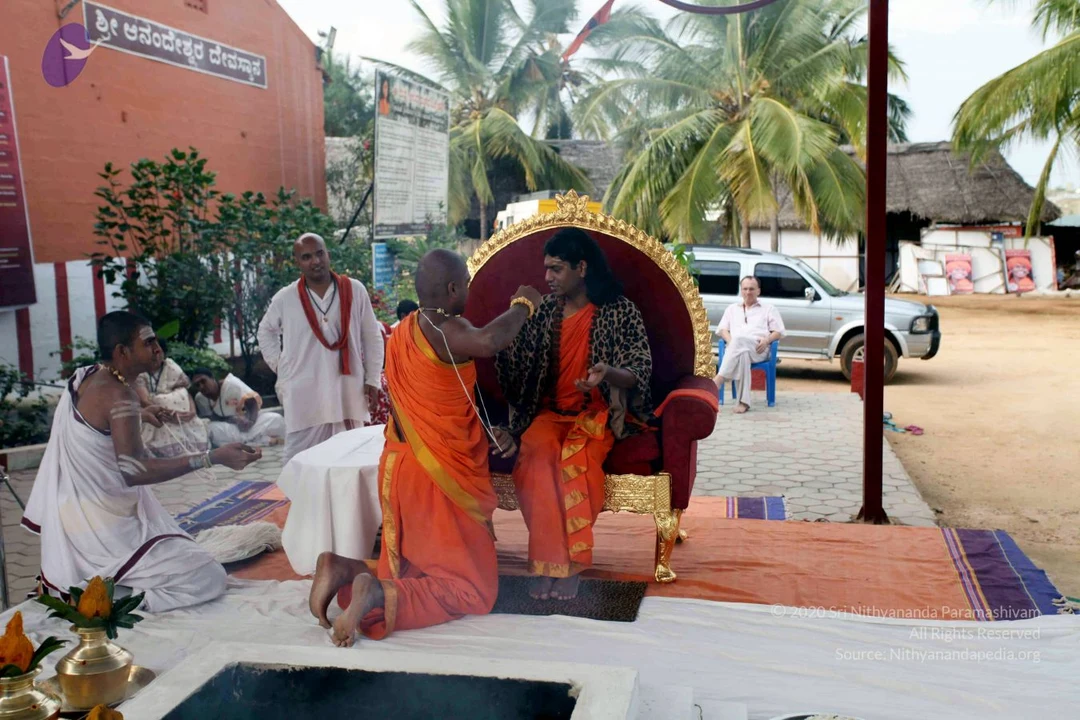
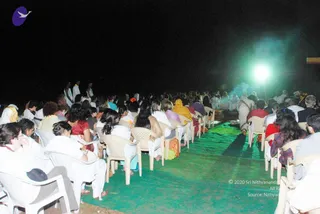
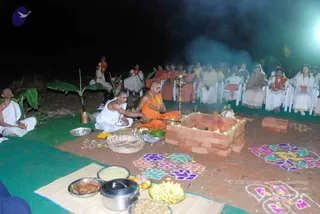
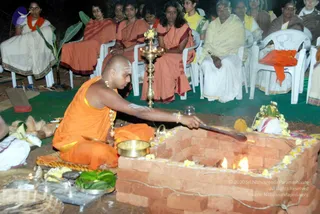
Night outdoor gathering with a large seated audience on white plastic chairs facing a green carpeted aisle lit by a bright spotlight. Many attendees wear white, cream and colourful saris, shawls and kurtas, with a few in orange and yellow. Several figures in white stand at the far end near a smoky light, and a few people stand at the left side of the stage area. Dark sky above, with the framing of the rows of seated devotees emphasised.Night outdoor homa at a brick fire pit on a green mat, with a large kalasha-style brass lamp beside it. A shaved-headed man in saffron robes and a rudraksha mala sits cross-legged at the pit, holding a ladle and offering to the fire, while a man in white dhoti sits beside him tending the offerings. Baskets, bowls of food, bananas and a pot lie on a mat in front; colourful rangoli designs decorate the ground. Seated rows of devotees in white and saffron face the fire, and a bright floodlight glows in the background.Outdoor night homa at a brick fire pit bordered with yellow flowers and white ash-like marks. A man in saffron-orange robes with a gold necklace and white tripundra forehead marks kneels at the pit, stirring it with a long wooden ladle; flames rise from the pit. Behind him, a brass oil lamp with a tall stem burns, and a kalasha decorated with flowers and mango leaves sits nearby, alongside banana leaves and a brass vessel. Seated on white plastic chairs on a green mat, about a dozen women and men wear red-brown, orange and cream clothes, some with rudraksha malas. The homa area is in the foreground, with the audience behind it.Night outdoor homa at a brick fire pit lit with a burning fire, decorated with marigold garlands and surrounded by colourful rangoli floor designs. A man in saffron-orange robes with rudraksha beads sits cross-legged before the fire, with a brass oil lamp (deepa) beside him. A second man in white dhoti and shawl sits to the left, and a third person in white sits at the far left near banana plant leaves. Offerings are arranged on the mat in the foreground: bananas, fruit, a steel pot, sweets and bowls of food. Behind them, rows of white plastic chairs hold seated devotees, many in white and orange, some women in white saris. Fire-lit smoke rises at the right.Night outdoor homa at an open-air satsang ground. In the foreground a shaved-headed priest in saffron robes sits cross-legged before a brick fire pit (kund) with flower and fruit offerings, a brass oil lamp (deepam) and a kalasha-style vessel nearby. Beside him a white-clad priest in a white dhoti tends the ritual. Rangoli-style colored powder patterns decorate the green mat. Behind, a banner reads Nithyananda eNclaves and a golden umbrella hangs over a raised dais with flower garlands and a framed portrait. Seated devotees in white, a woman in saffron and women in dark saris watch from plastic chairs. A priest at the left plays a small instrument.Outdoor evening satsang on a green mat under a bright floodlight at night. Rows of white plastic chairs hold seated devotees, mostly women in salmon-pink and orange saris with maroon borders, some in white and saffron. A woman in a yellow-gold sari sits near the front right, and a man in a white kurta sits at the far left. A banana leaf and a rangoli design decorate the ground in the foreground, and the group is seated quietly facing forward.
1-En-Genius-LE

12 photosSource gallery
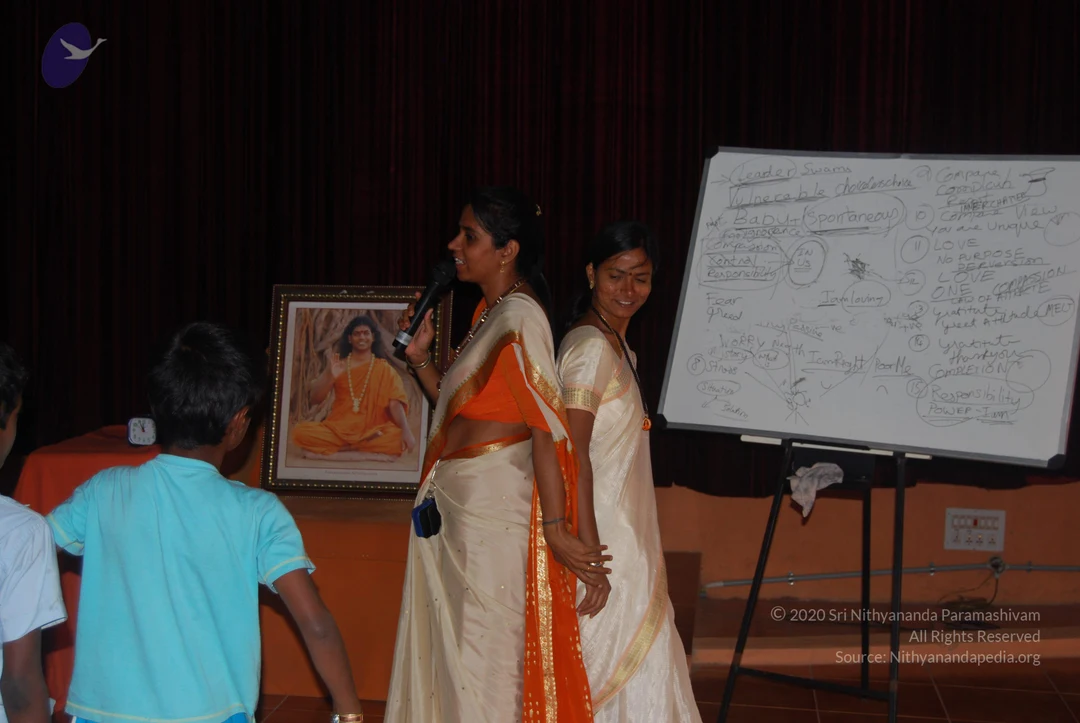
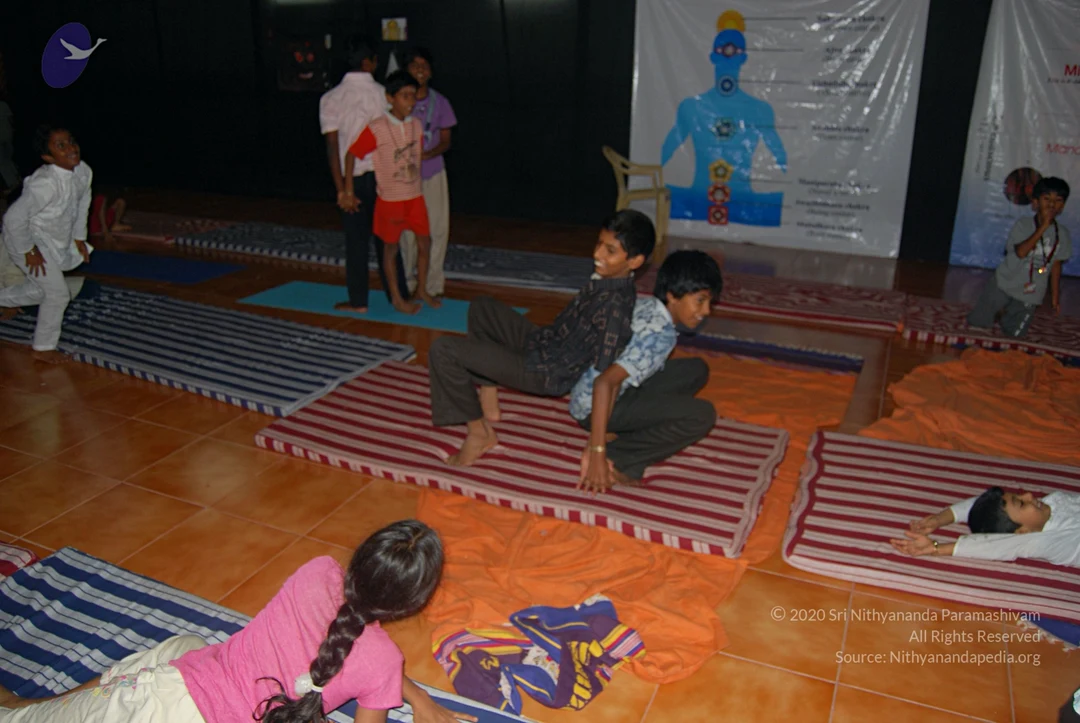
A dim indoor hall with a thatched roof shows a woman in an orange and cream saree standing at the right holding a microphone, speaking to a group of children seated on orange mats and rugs. Many children wear pink, red, grey and striped clothing, some with red lanyards. A woman in white stands at left beside a tripod-mounted camera, and another woman in white sits near the left with children. Behind them hang a banner titled 7 Chakras Chart showing a blue human figure with chakra points, and a second partly visible banner at right. The scene appears to be a children's session led by a female teacher.A group of children sits cross-legged and seated on orange mats on a tiled floor in a dim hall during a satsang. In the foreground a boy in a khaki shirt and green shorts sits with bare feet, and a boy in a green checked shirt sits beside him. A girl in a pink top and magenta pants raises her hand. Behind them, a boy in white kurta sits with a tilak on his forehead, and other children wear red and maroon beaded necklaces. On the right a large banner shows a blue seated meditating figure with labelled chakras, from Sahasrara (Crown center) at the top down to Swadhishthana (Sacral center). A small figure stands at the far left. No a person candidate is visible.A seated group of children and a few adults sit on orange mats in a dimly lit hall during a satsang session. In the foreground, several children wear red and black rudraksha-style malas; one girl in a white top and pink bottoms sits centrally, and a boy in a grey t-shirt sits at left. Behind them, a woman in white clothing with a long beaded necklace sits with hands folded, and a standing figure in white trousers is partly visible at the top edge. A woman in a blue top sits at right with eyes closed. A small purple emblem sits at the top left corner.A photograph of a children's session in a hall with an orange tiled floor. Many children sit cross-legged on orange mats, several raising hands, while a woman in a cream sari with an orange and gold border stands at right holding a microphone and a marker. Behind her are an orange draped table and a dark curtain. A blue banner at upper left reads How the Mind Works with a diagram of Conscious and Unconscious mind labels including Mind, Memory, DSP, Eye, Manas, Chitta and Chakshu. Roughly two dozen children and a few adults are visible; no clearly identifiable a person figure is present.A seated audience of children and some adults sits on an orange floor covering in a hall, facing toward a stage area. In the foreground a girl in a white top and green skirt with long dark hair sits near a girl in a blue top with her hair tied in a ponytail with an orange band. Boys in white shirts and a few in colourful tops sit behind them, and a man in a brown striped shirt sits at left near a blue banner showing the words Manas, Chitta, Chakshu and EGO. A black curtain and a stool with a speaker are visible at the back. No a person candidate is visible in this frame.A group of children and a few adults sit cross-legged on an orange floor in a dark hall during a class or satsang. A girl in a pink top and white skirt stands at center holding a microphone and speaking. Behind her, a large white banner shows a blue human silhouette with coloured chakra symbols and labels reading Sahasrara, Ajna, Vishuddhi, Anahata, Manipura and Swadhisthana. A woman in a pink sari with a beaded necklace sits to the right, and a boy in a dark shirt sits in front. Smaller framed pictures hang on the dark wall at left.

2-En-Genius-Brain-Gym

26 photosSource gallery
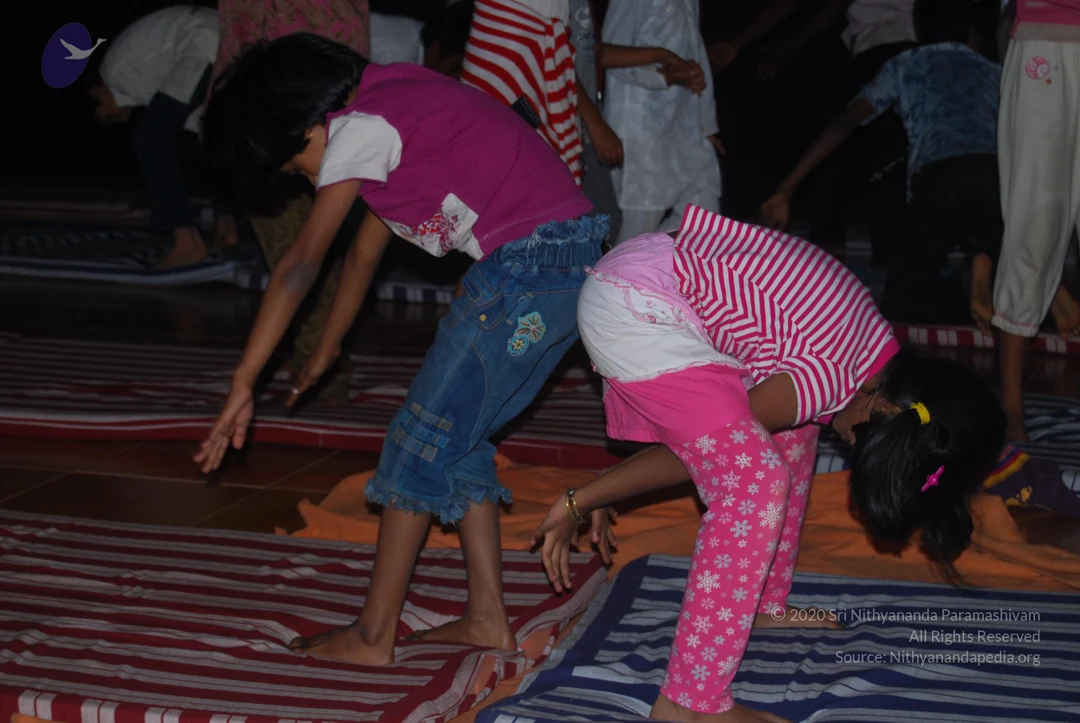
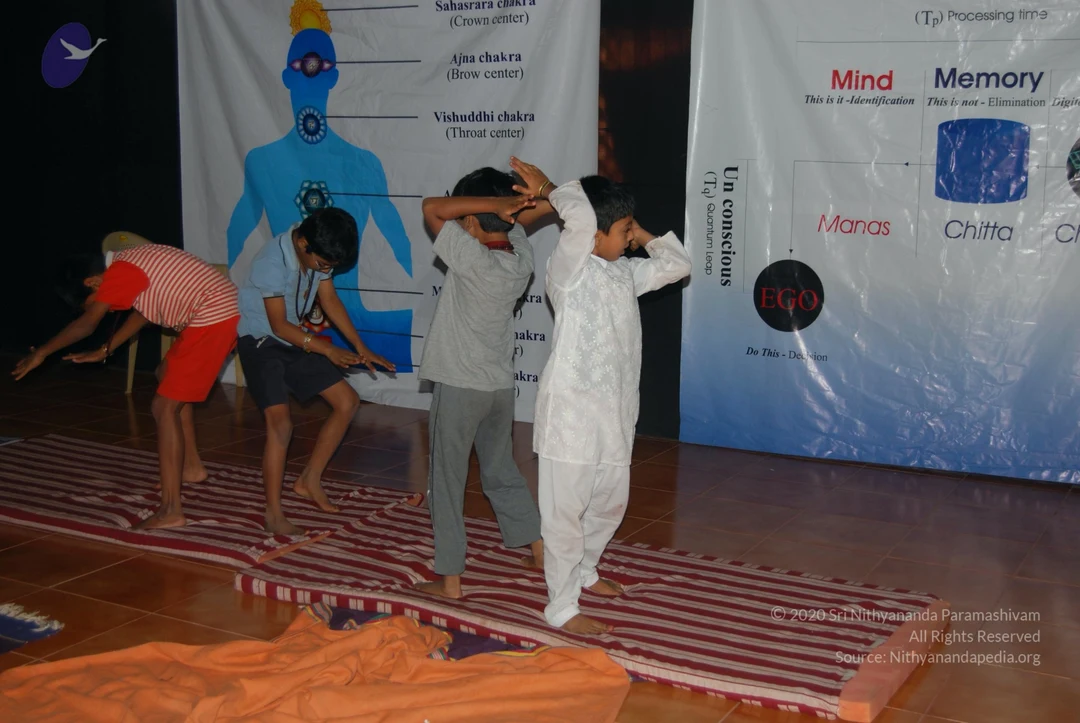
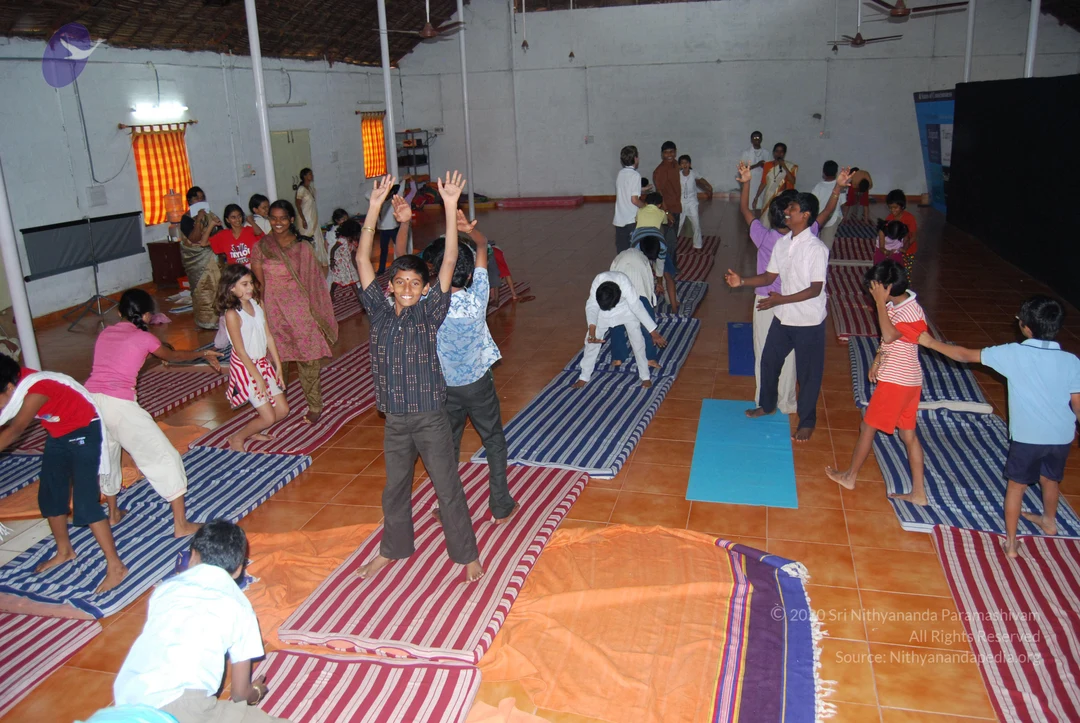
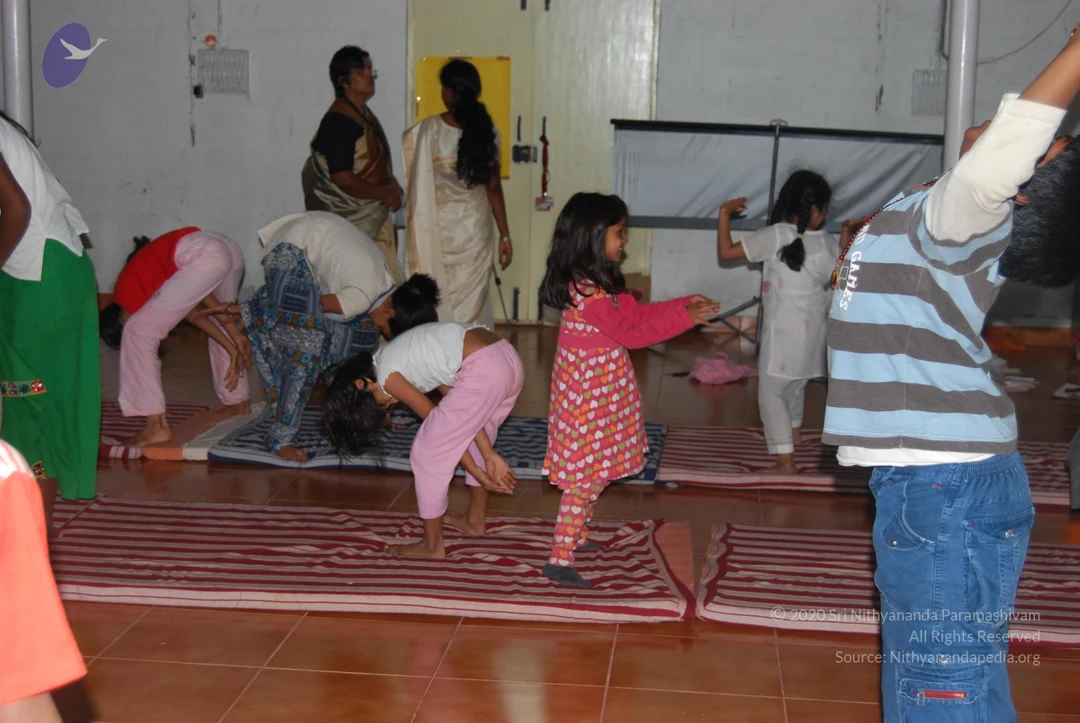
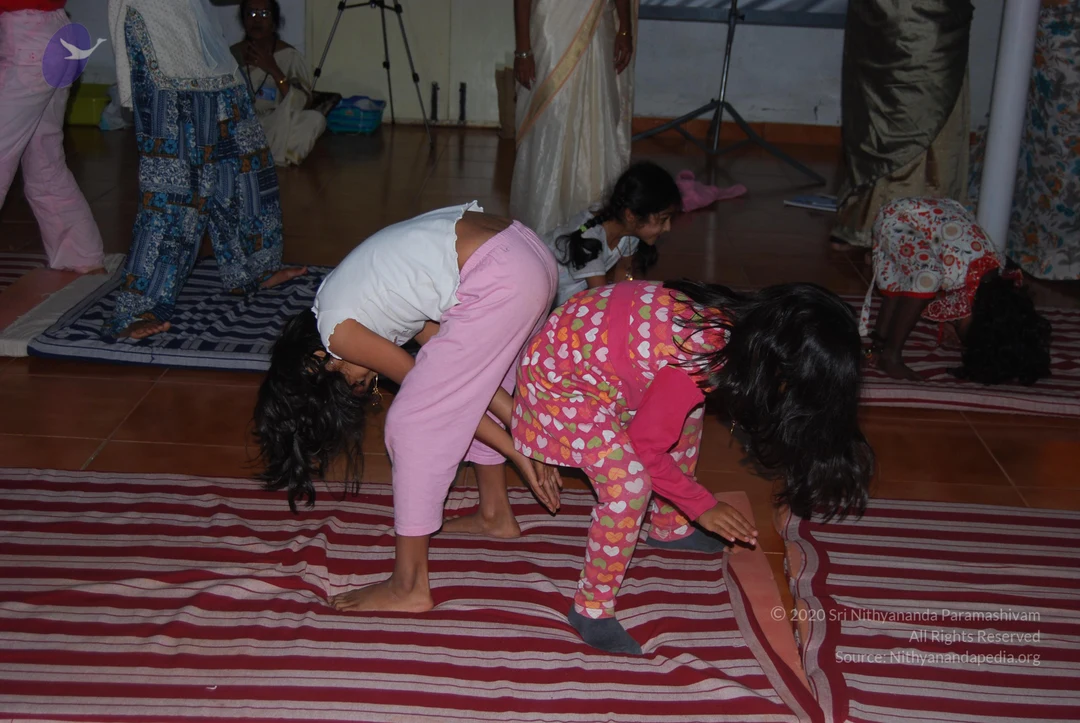
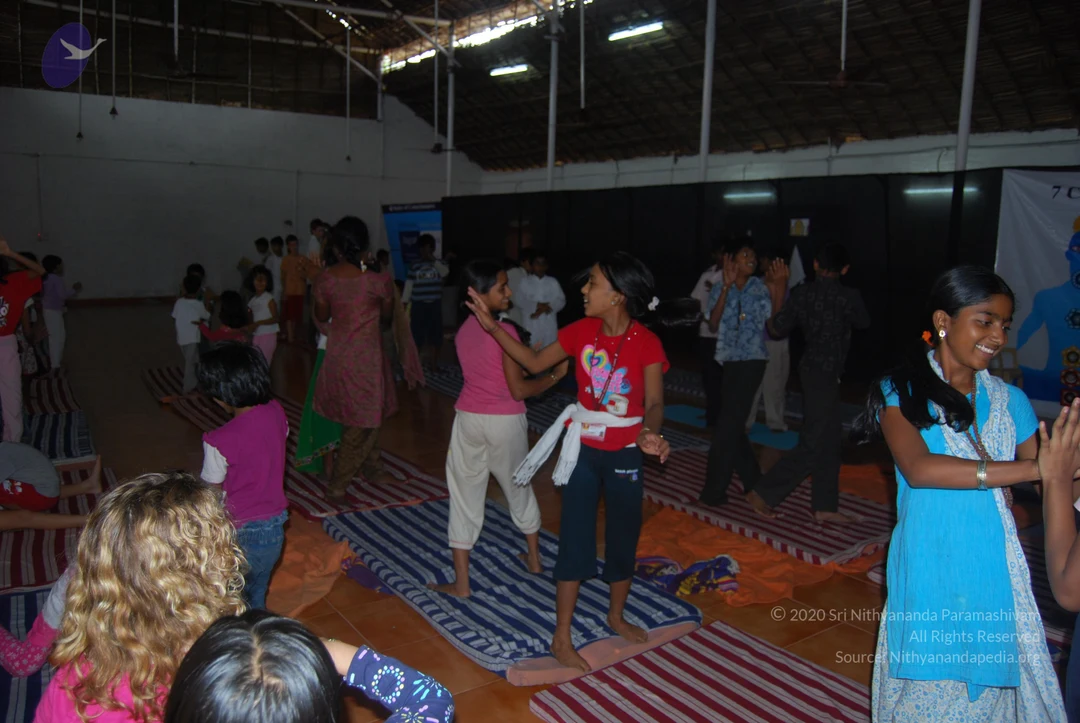
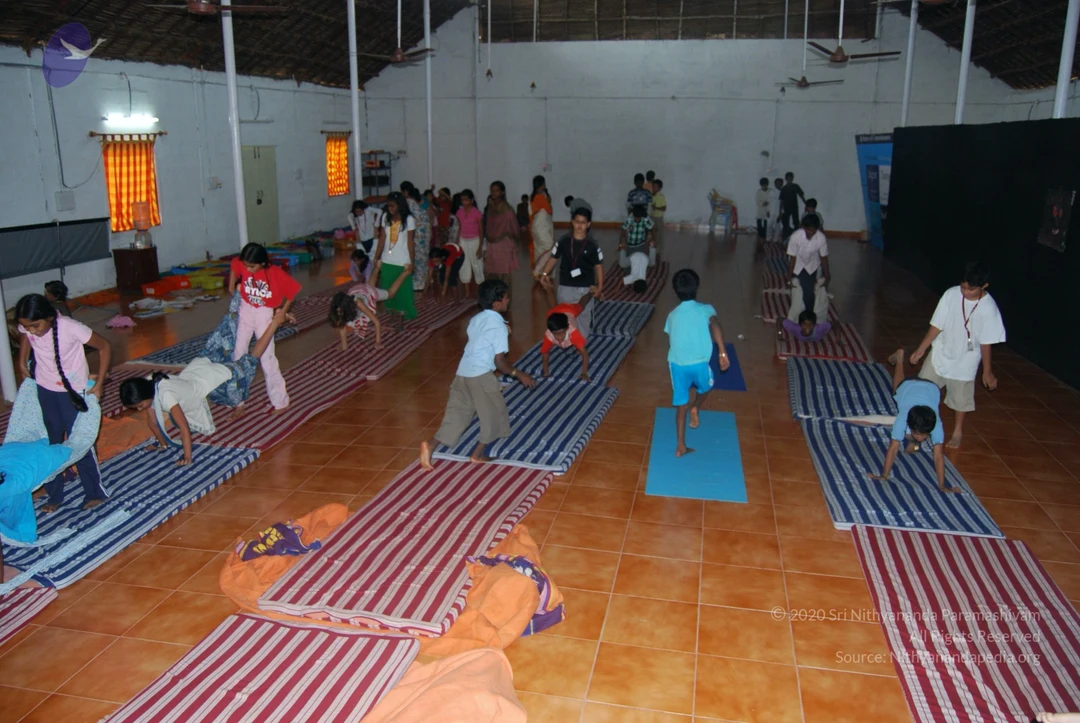
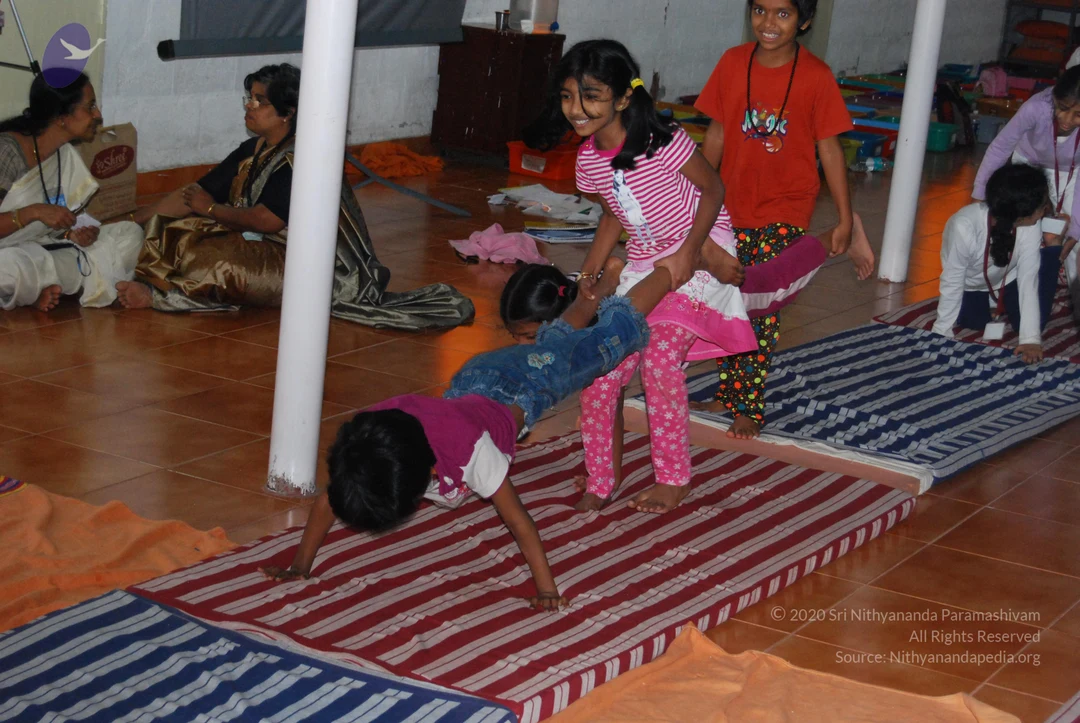
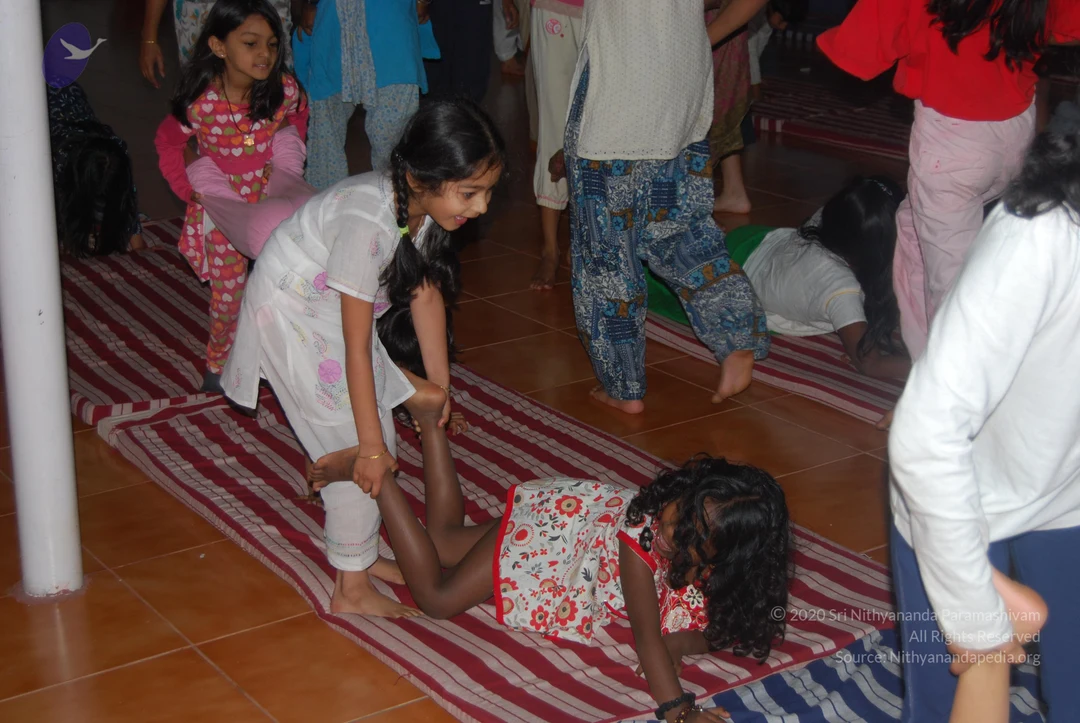
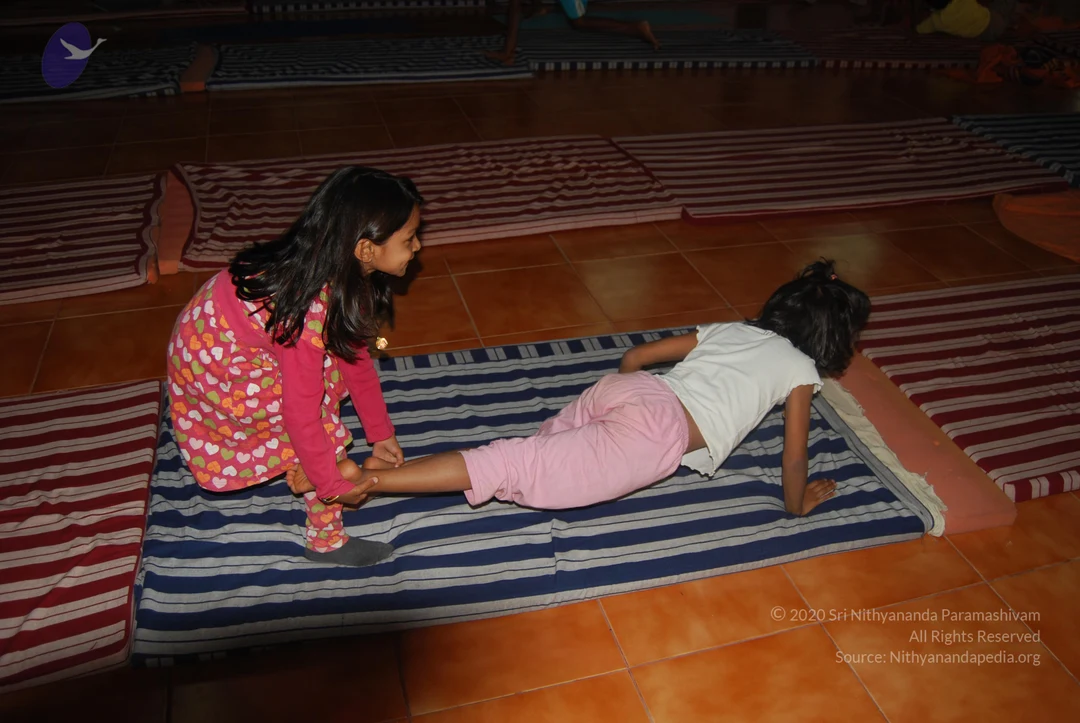
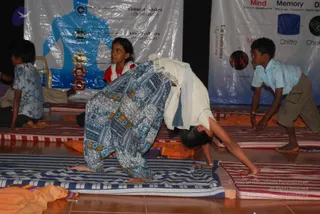
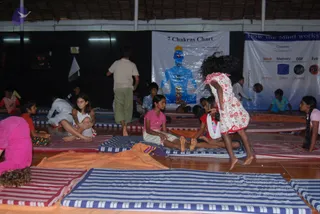
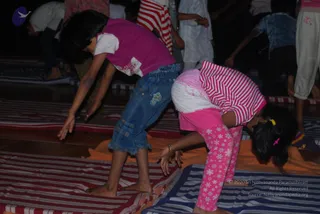
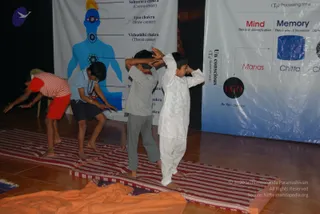
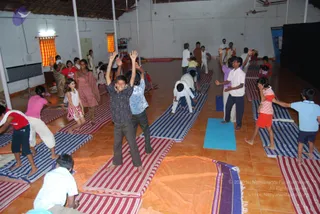
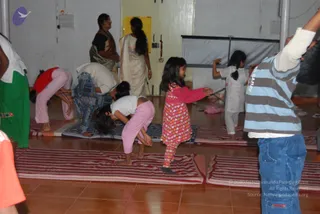
A photograph of children practising yoga on striped mats in an indoor hall. In the foreground a girl in a blue patterned salwar and white top arches into a backbend, hands on the floor. Behind her a girl in a red top watches, and boys in shirts stretch on mats. Behind them hang large plastic banners: one shows a blue human body outline labelled Vishuddhi chakra (throat centre) and Anahata chakra (heart centre) with a chakra diagram, the other shows a Mind, Memory and Chitta diagram with a KGO mention. Orange cloths lie on the floor. No adult teacher is visible in the frame.A indoor hall with a thatched roof and dark backdrop where children sit and move on striped blue, red and white mats. A girl in a white dress with red floral print stands barefoot on a mat at right, and a girl in pink sits cross-legged nearby. Behind them a man in a beige shirt and green trousers walks through the room. Two hanging banners show aA photograph of children practising yoga on striped mats in a dim hall. In the foreground a girl in a magenta top and denim capri shorts bends forward with her hands reaching toward the mat, and beside her a girl in a pink-and-white striped top and pink snowflake leggings with a yellow hair clip folds deeply forward. Several other children in white, blue and pink clothing are bent over in similar forward-bending poses on red-and-white, blue-and-white and orange mats behind them. No adult teacher or a person is visible in the frame.Four young boys practise yoga postures on striped red-and-maroon mats on a tiled floor in a dim hall. On the left, a boy in a red-and-white striped top and red shorts bends forward with arms reaching down. Next to him, a boy in a light blue shirt and dark shorts leans forward with hands near his knees. Two boys stand on the right: one in a grey top and grey trousers has his hands on his head, and a boy in white kurta-style clothes stands with his hands raised to his head. Behind them a large banner shows a blue chakra figure labelled with Sahasrara, Ajna, Vishuddhi and other chakra centres. To the right, a banner diagram reads Mind, Memory, Chitta, Manas and Ego. An orange cloth lies in the foreground.A group of children and some adults practise yoga in a tiled hall with white walls, exposed wooden beams and ceiling fans. Most people stand or bend on striped red and blue mats, some with arms raised high and smiling. A boy in a dark checked shirt at centre raises both arms, and a girl in a red top stretches beside him. A woman in a pink salwar kameez stands near the left wall, and a man in an orange cloth stands at the back. A blue yoga mat lies on the floor at centre, with a folded purple cloth in the foreground and a projector screen on the left. Orange curtains hang on the windows.Indoor yoga session on a tiled floor with red-and-white striped mats. Several children and adults bend forward in standing forward-fold poses, with a blue-and-white patterned mat in the middle. A young girl in a pink top with red heart print and pink leggings stands at centre, reaching forward. Two women in sarees stand near a yellow door at the back, and a projector screen is mounted on the wall. A child in a light blue and grey striped shirt and jeans stands at the right edge with arms raised. Walls are plain white with metal pillars.

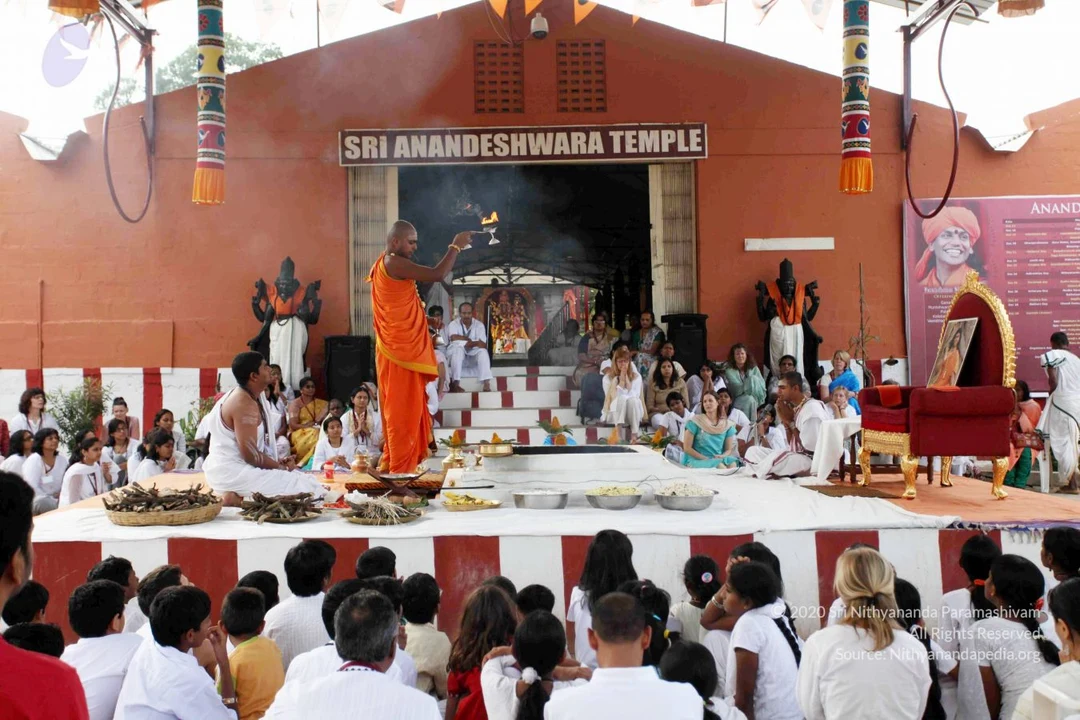
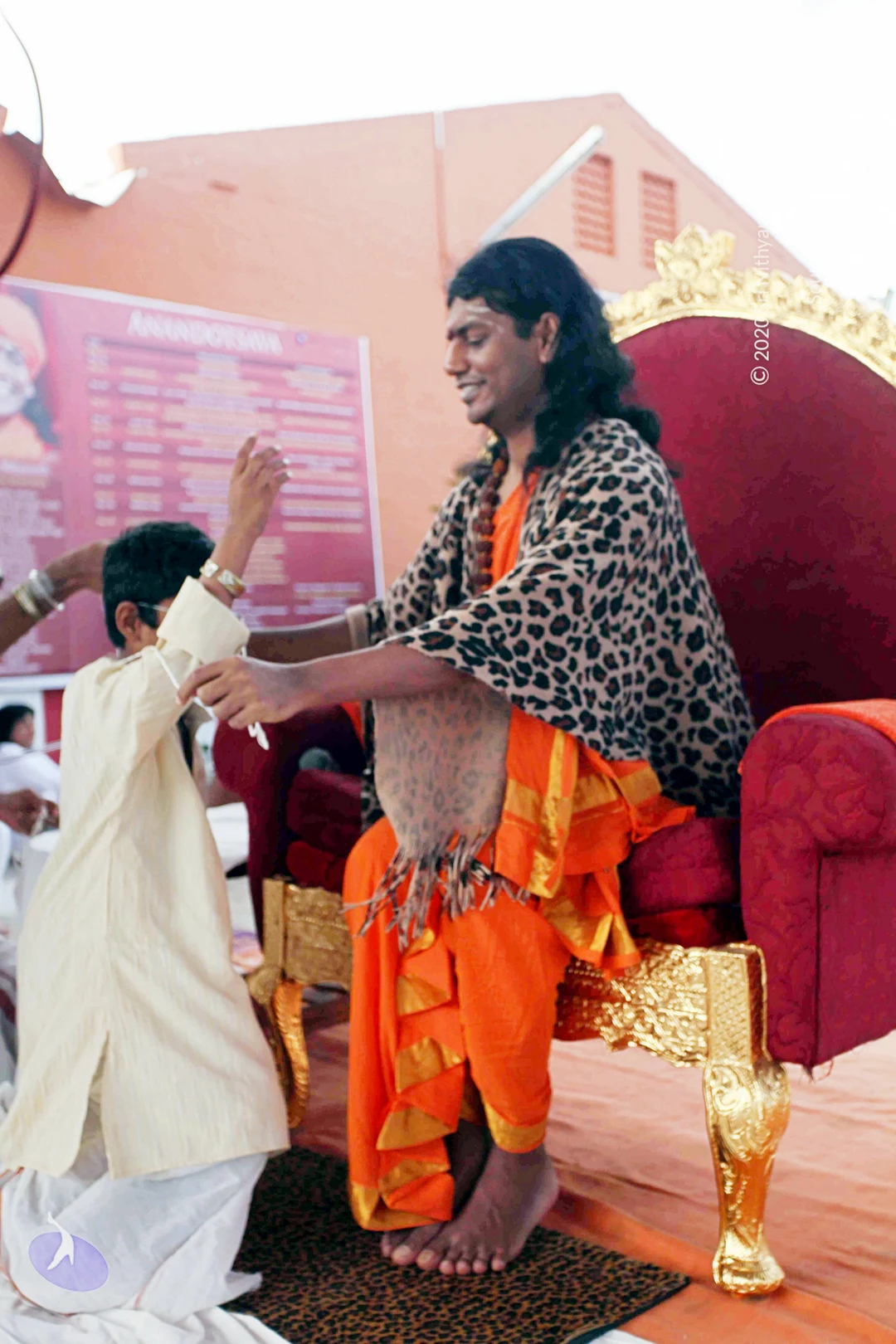
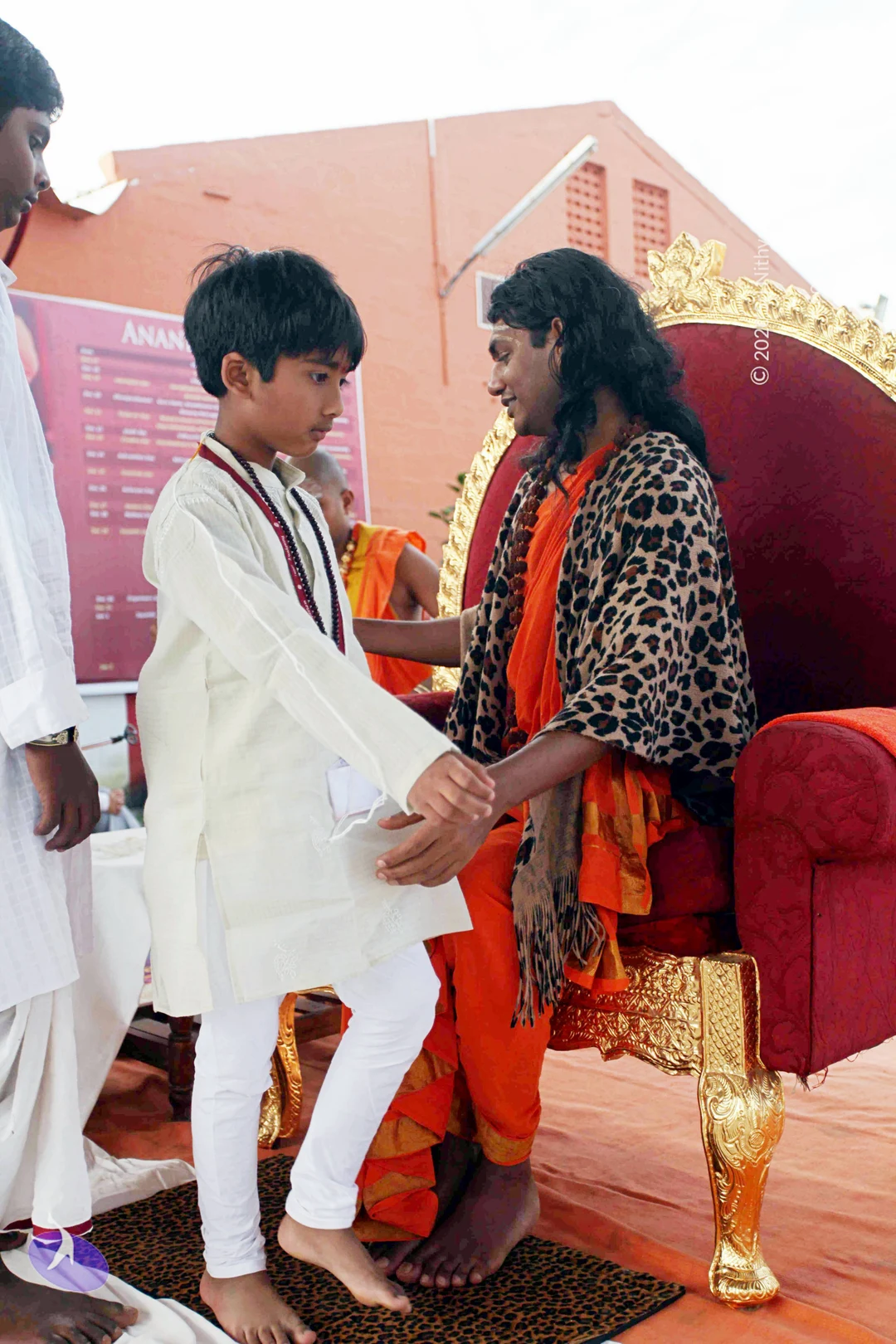
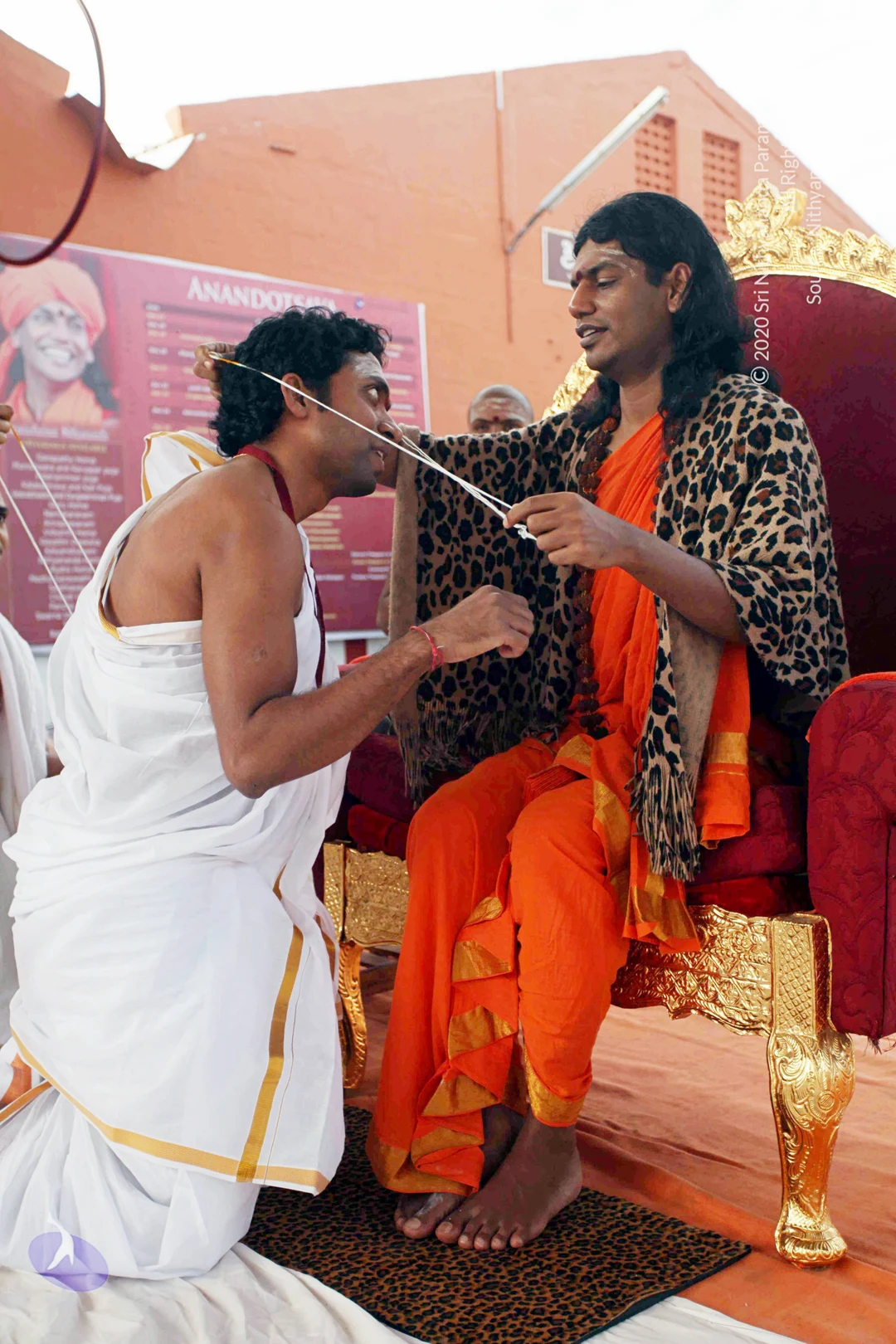
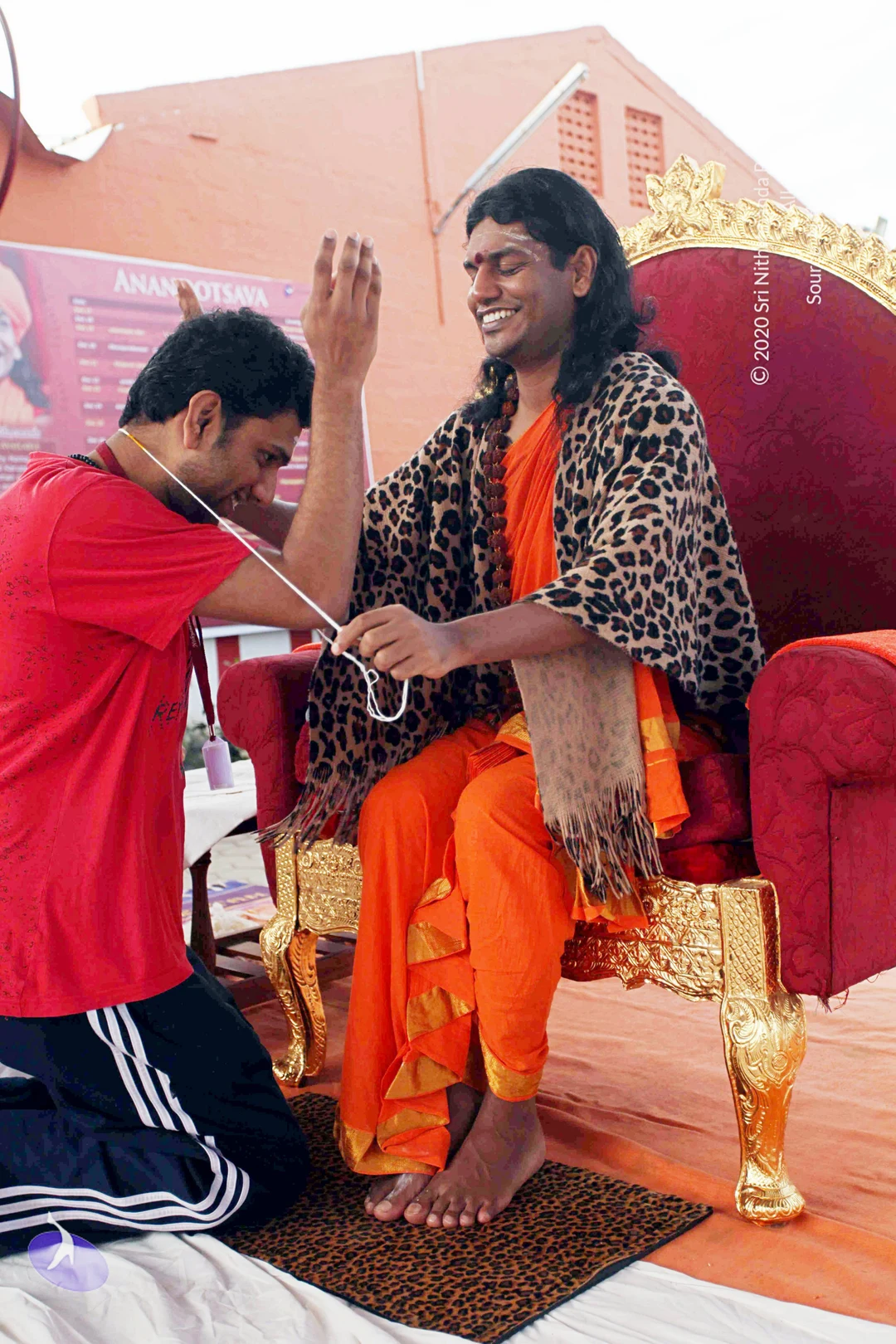
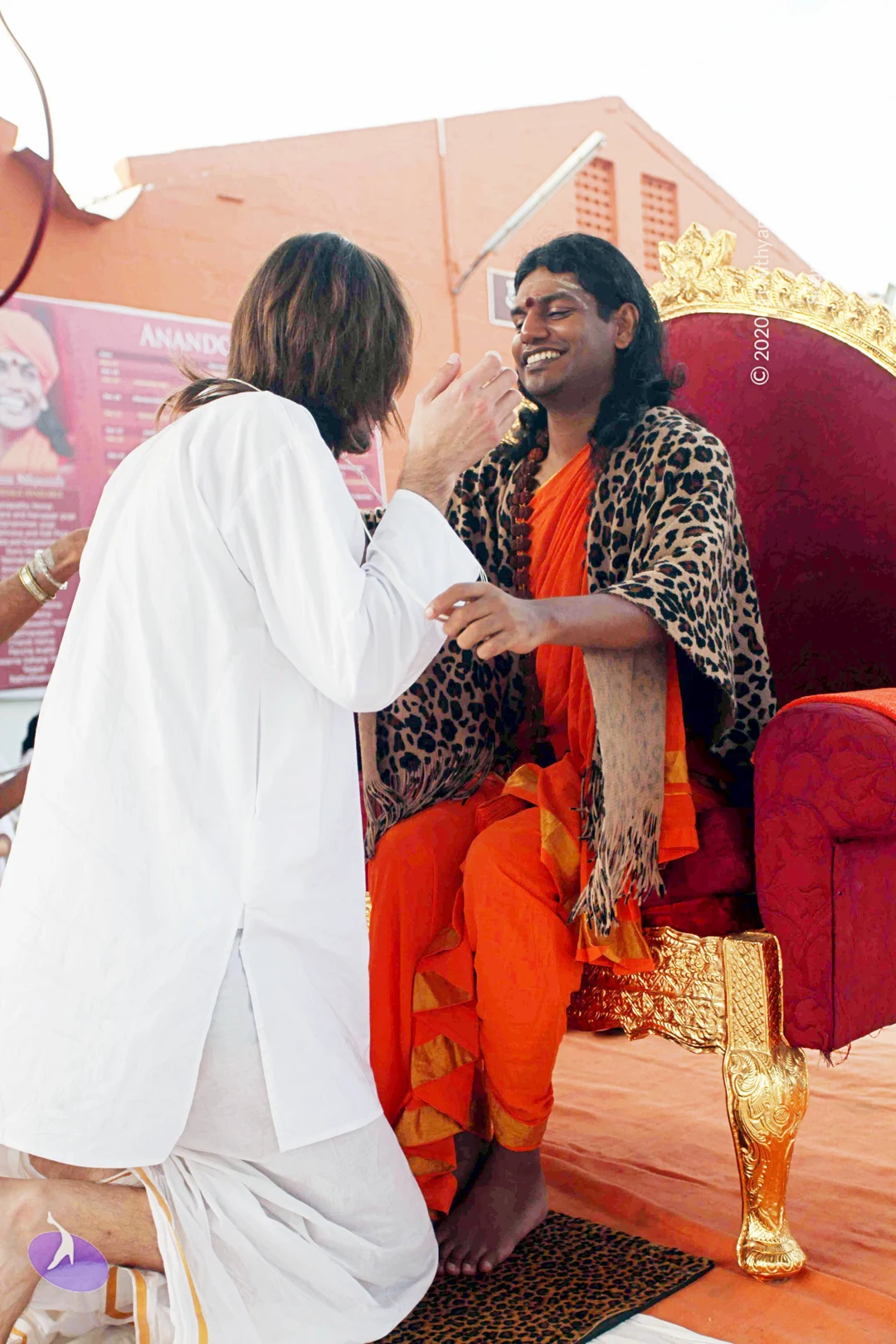
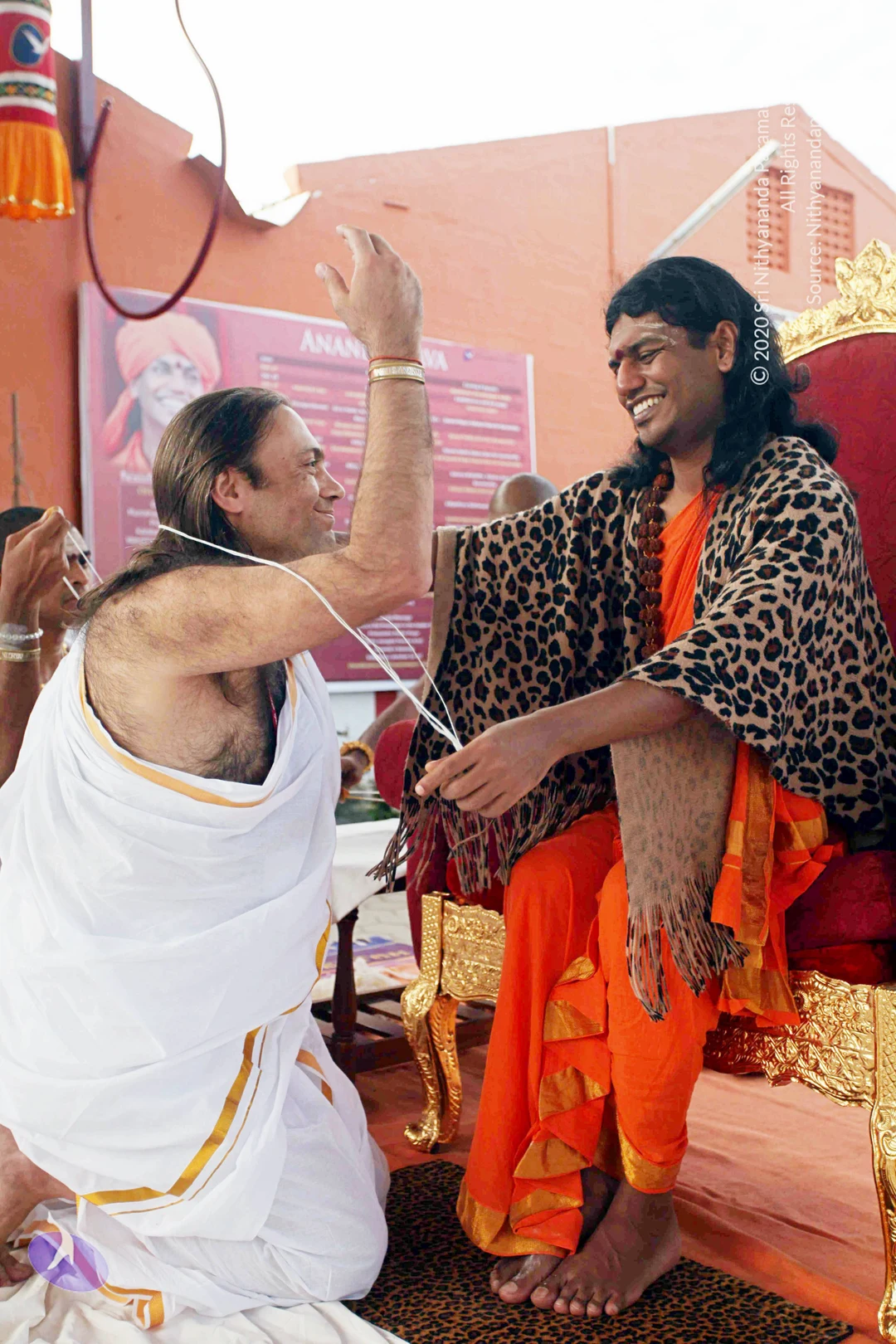
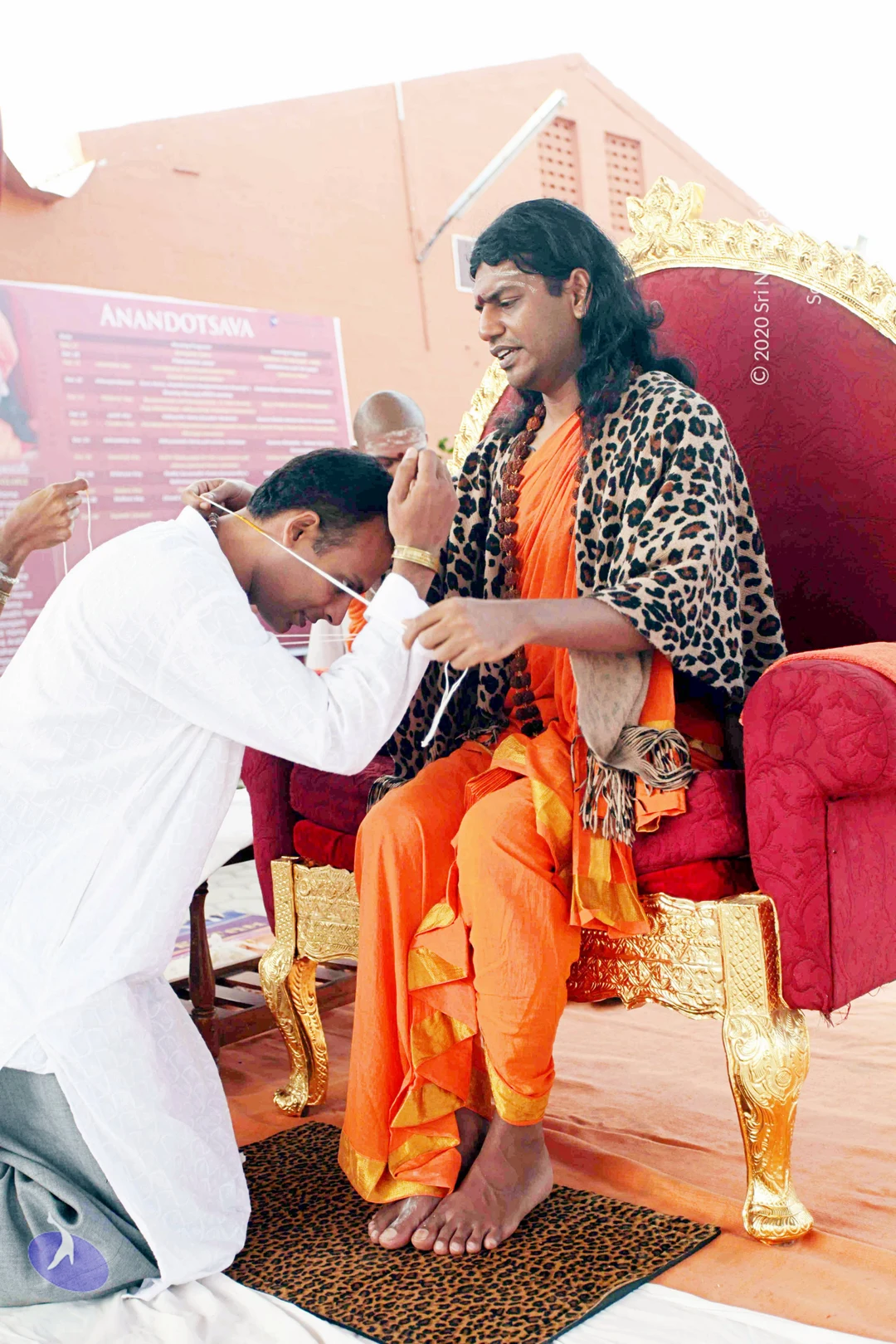
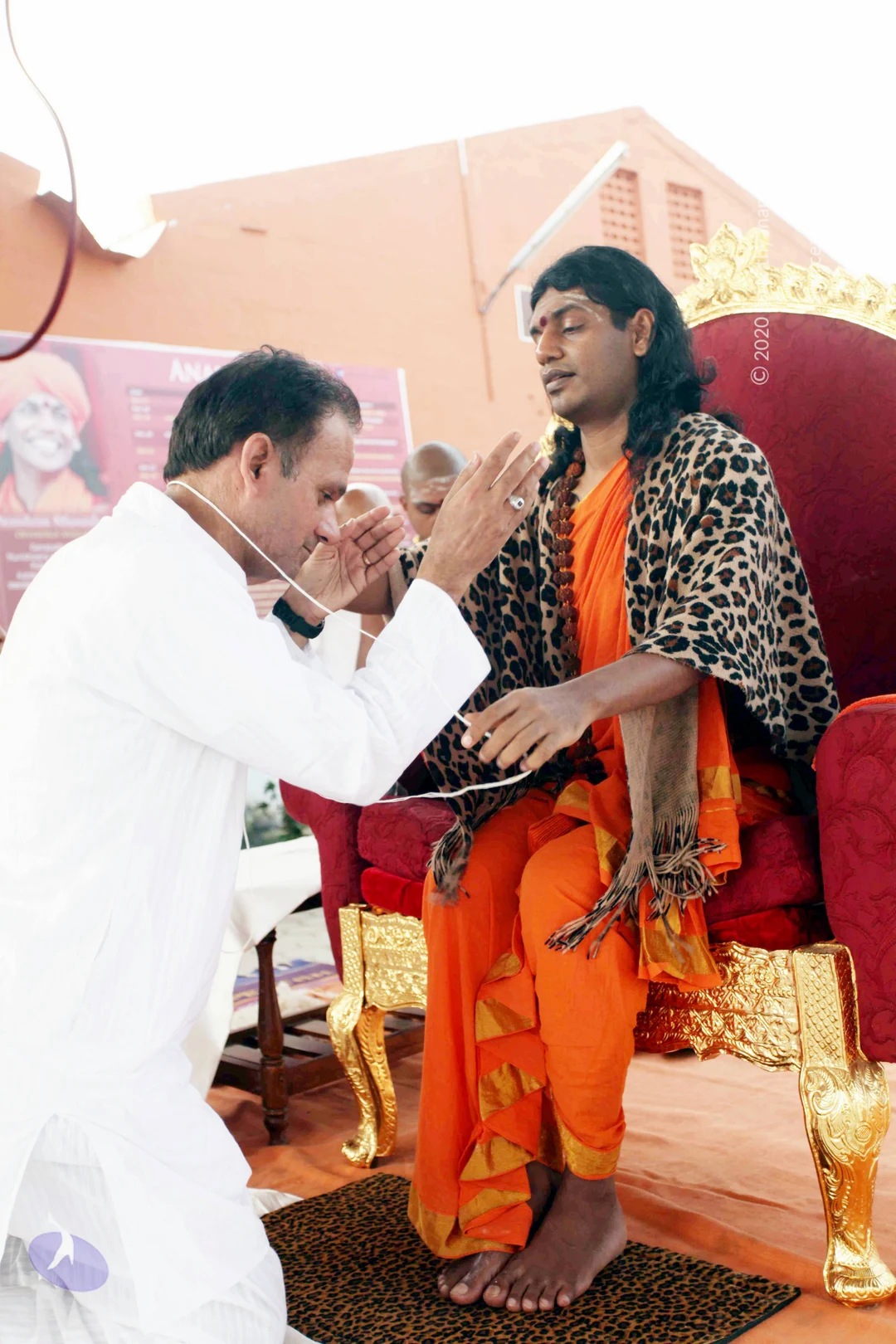
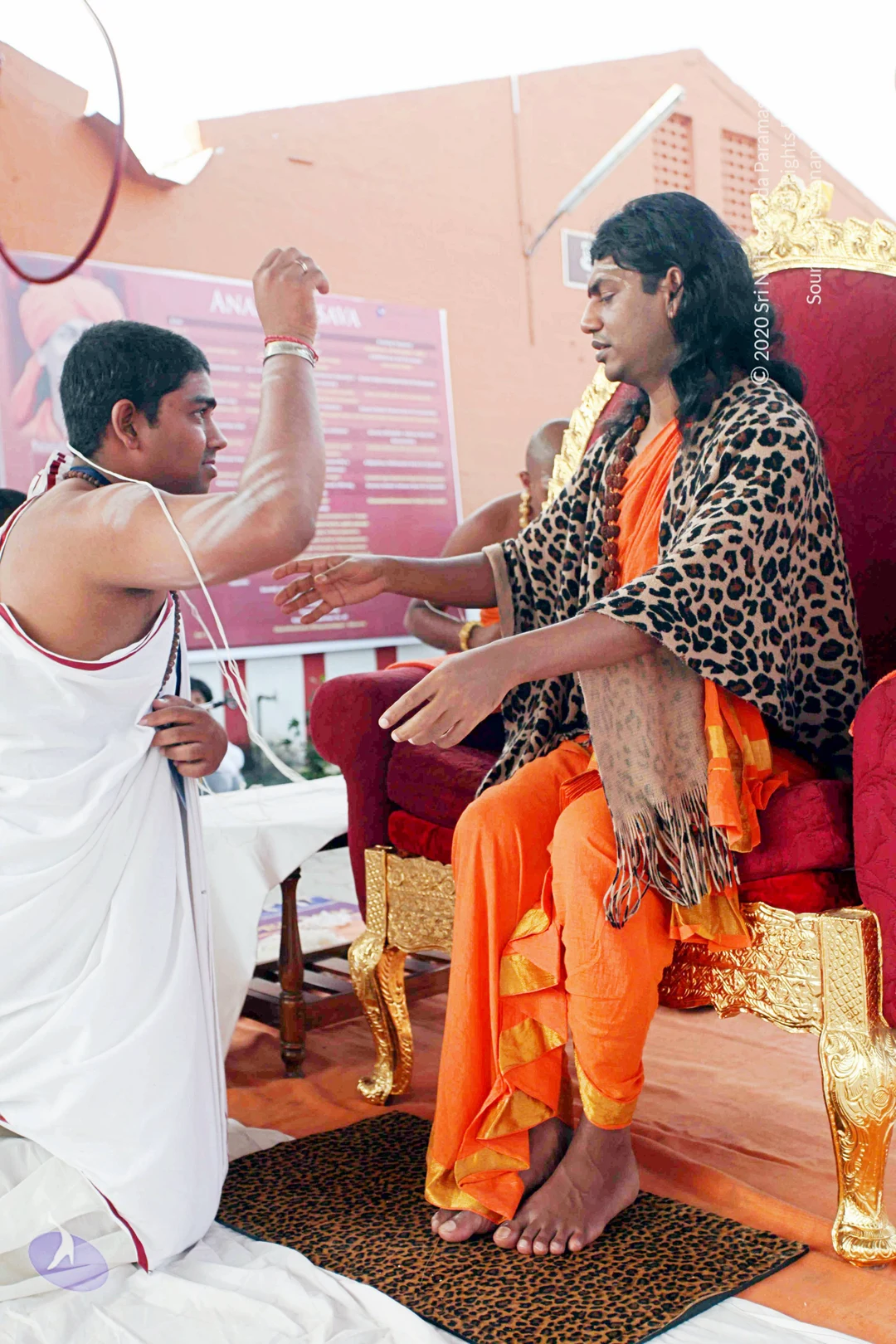
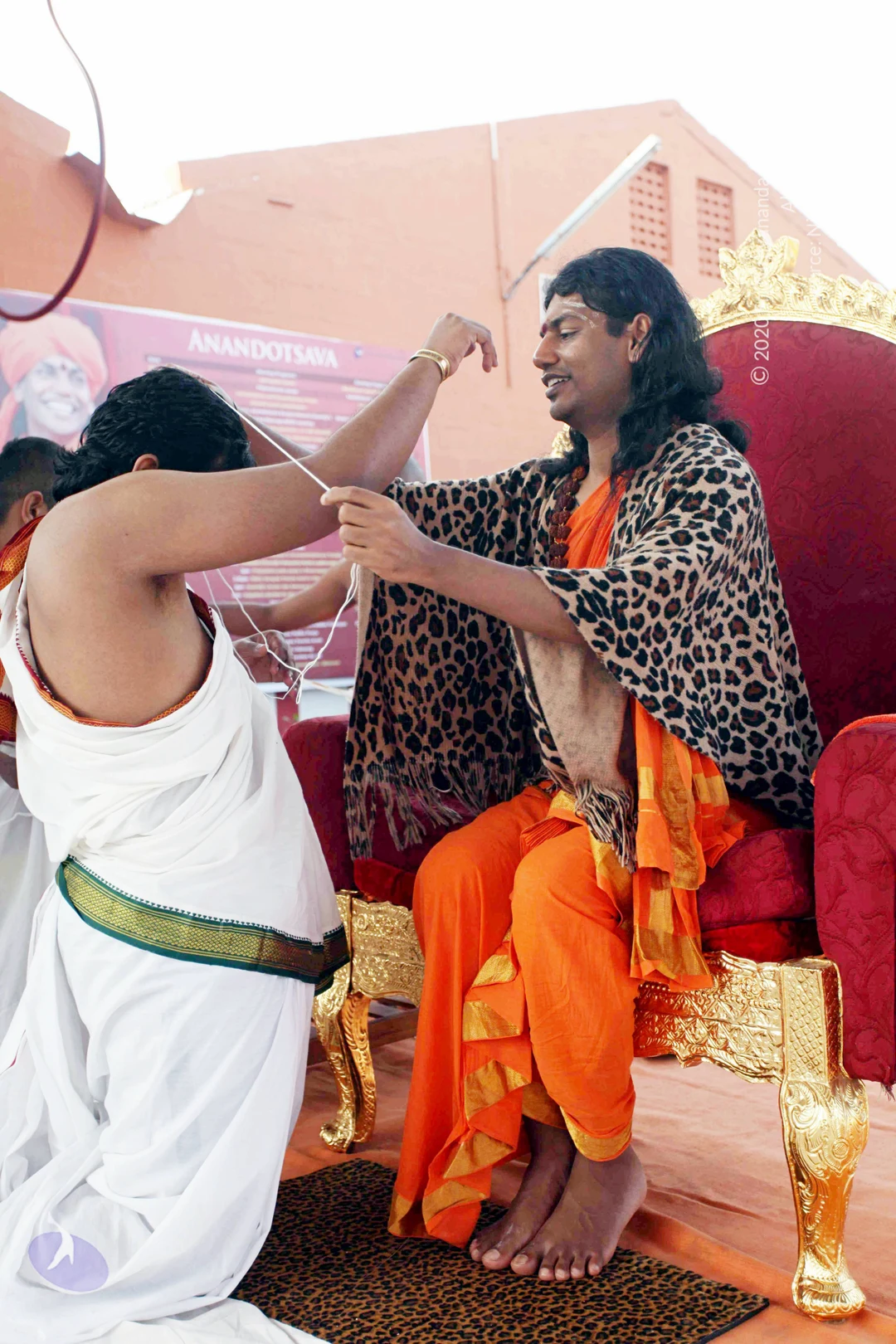
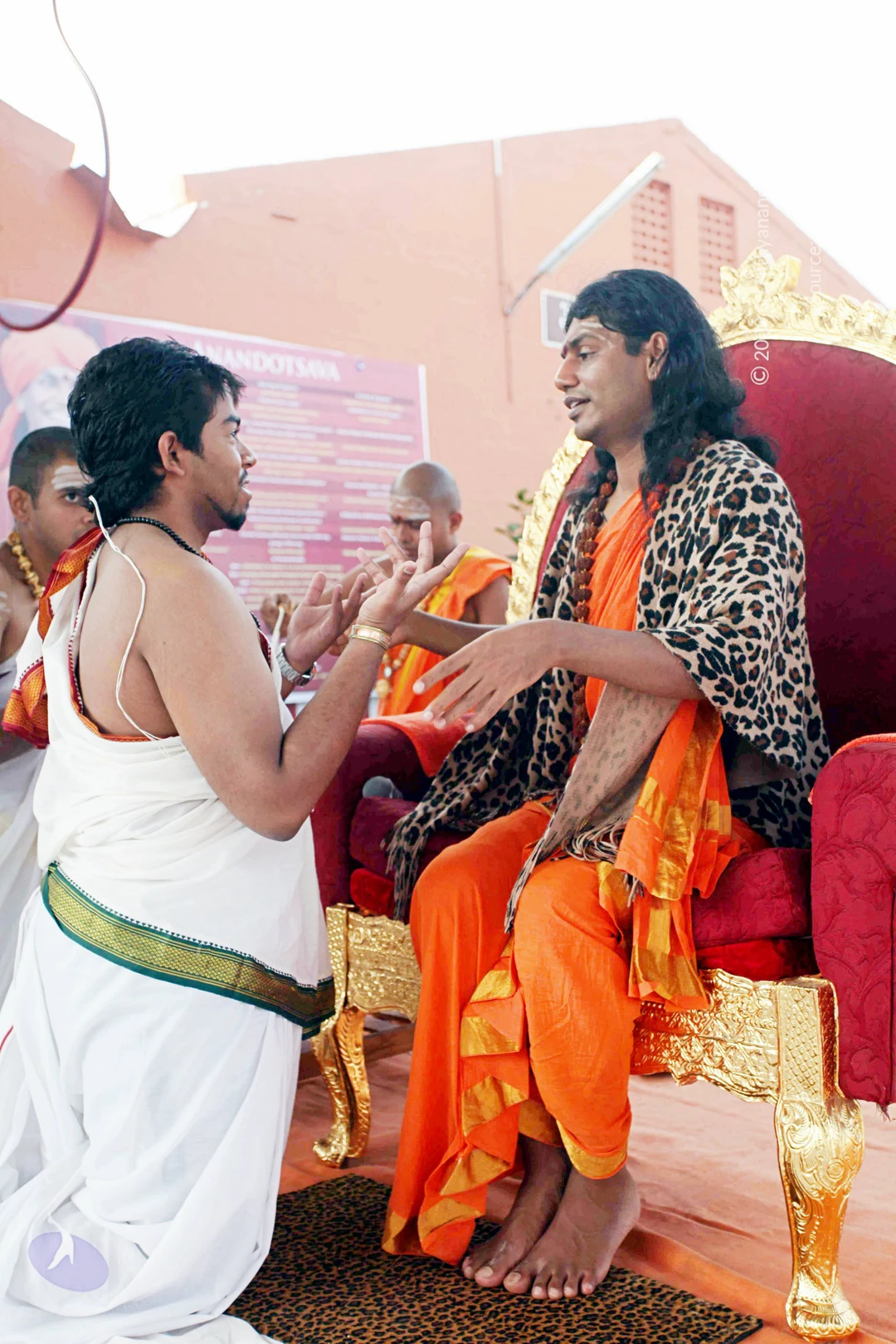
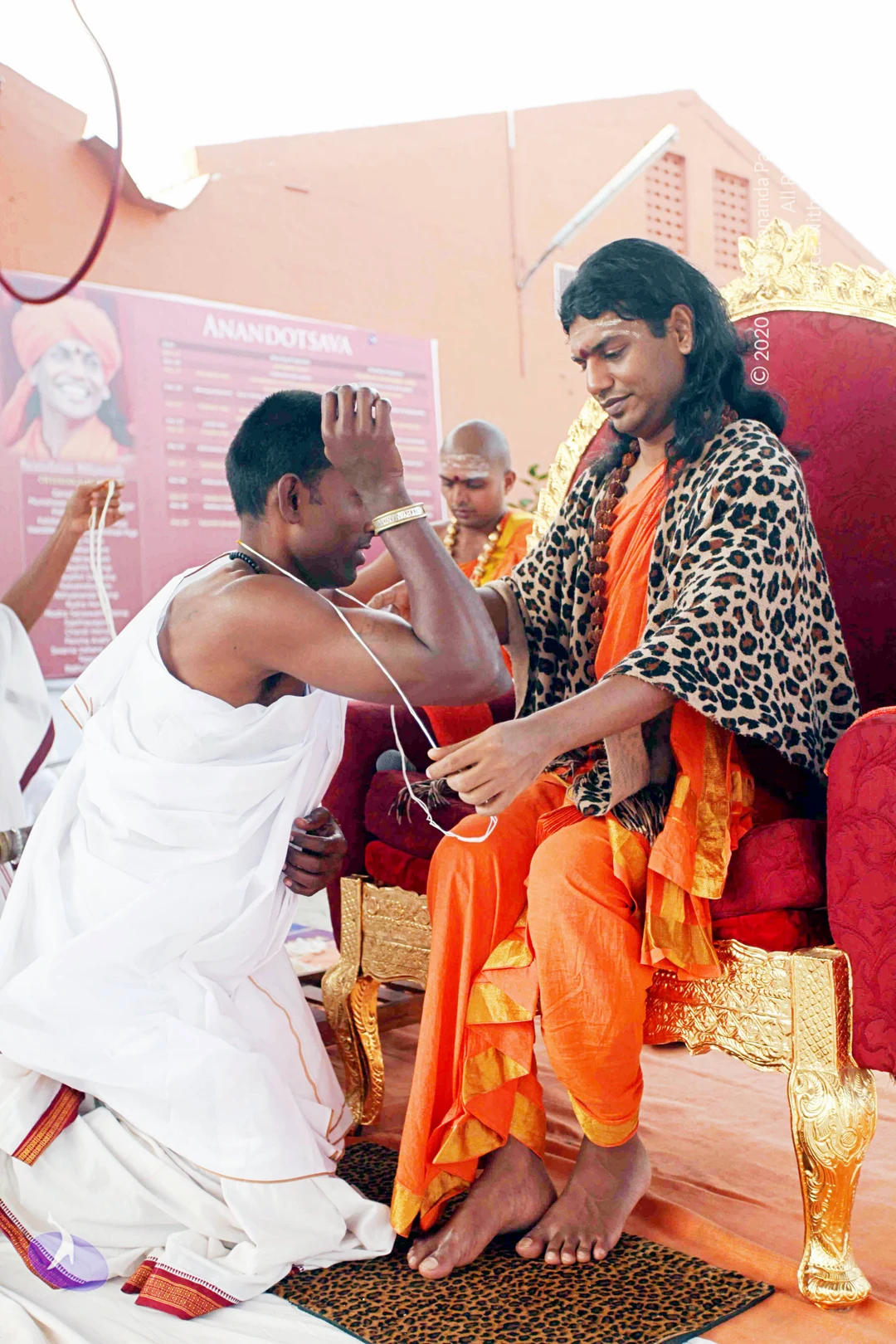
Gayatri Initiation by SPH JGM

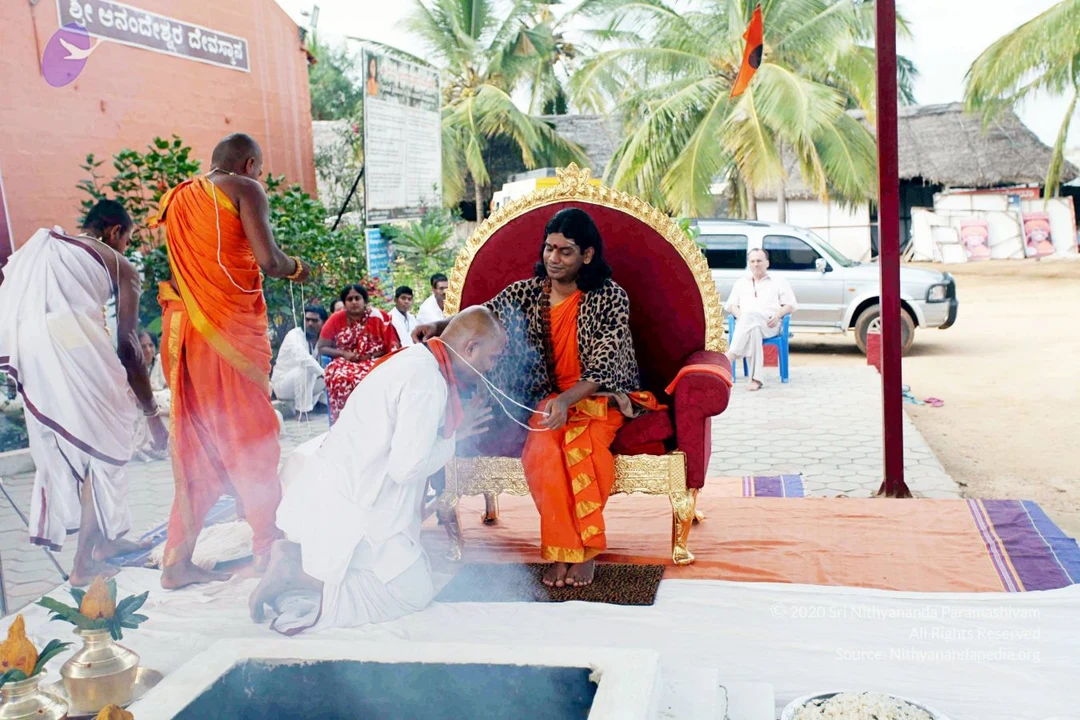
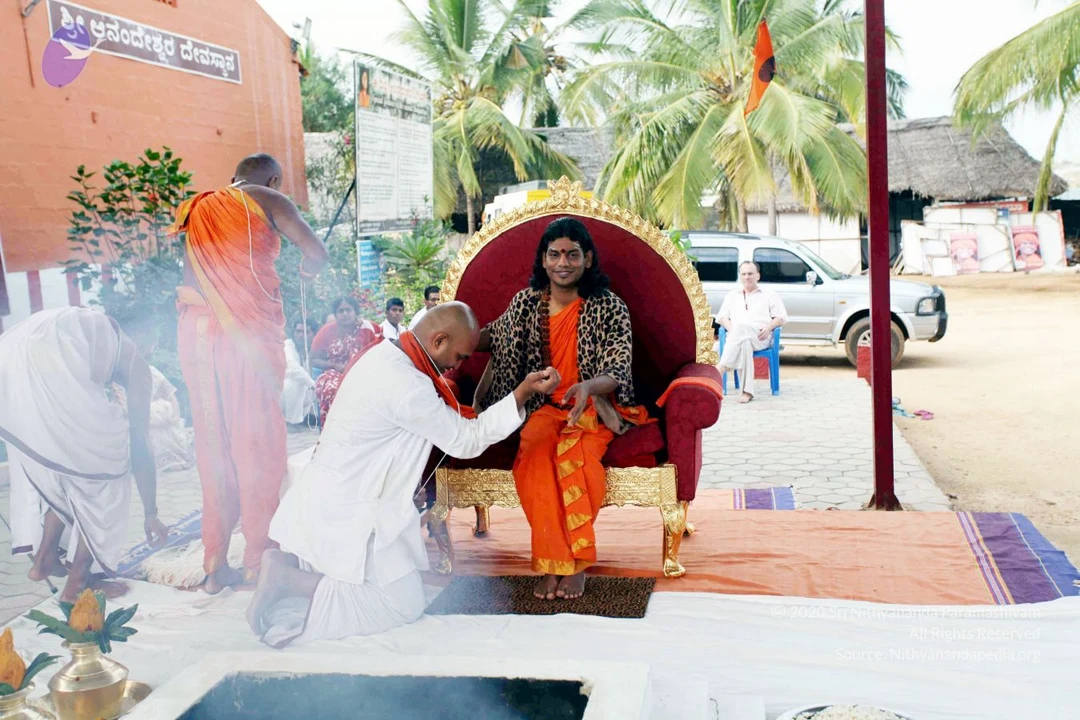
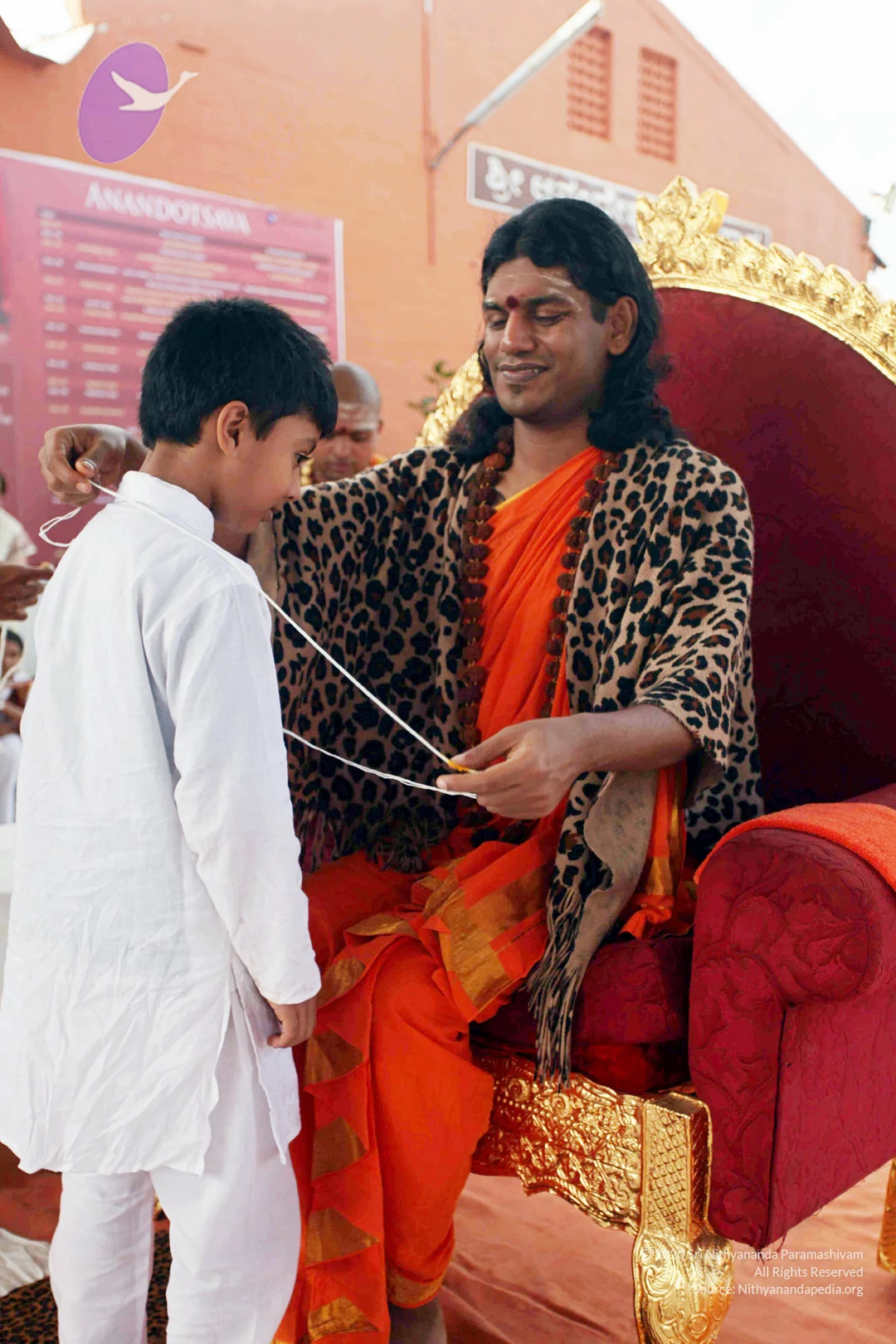
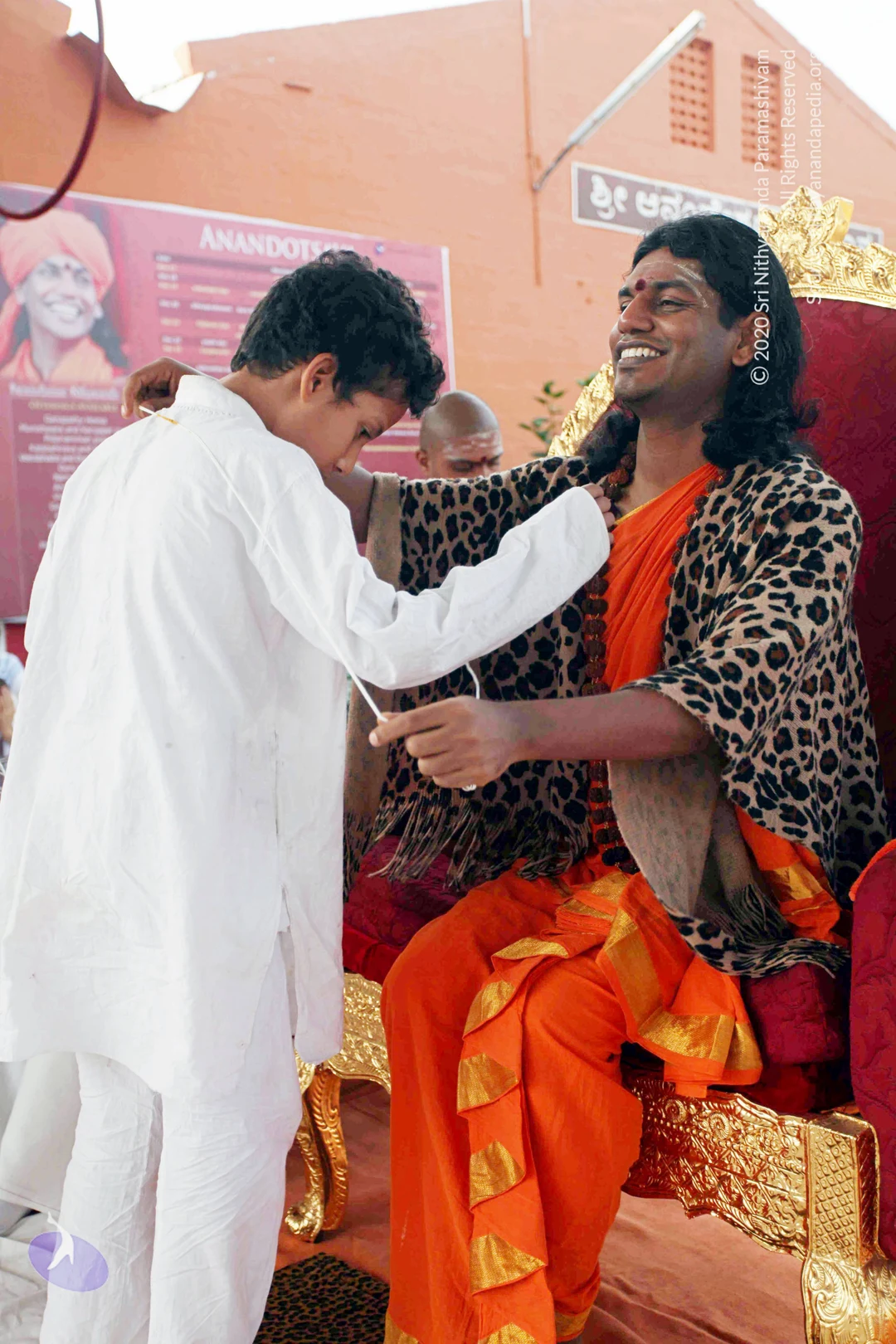
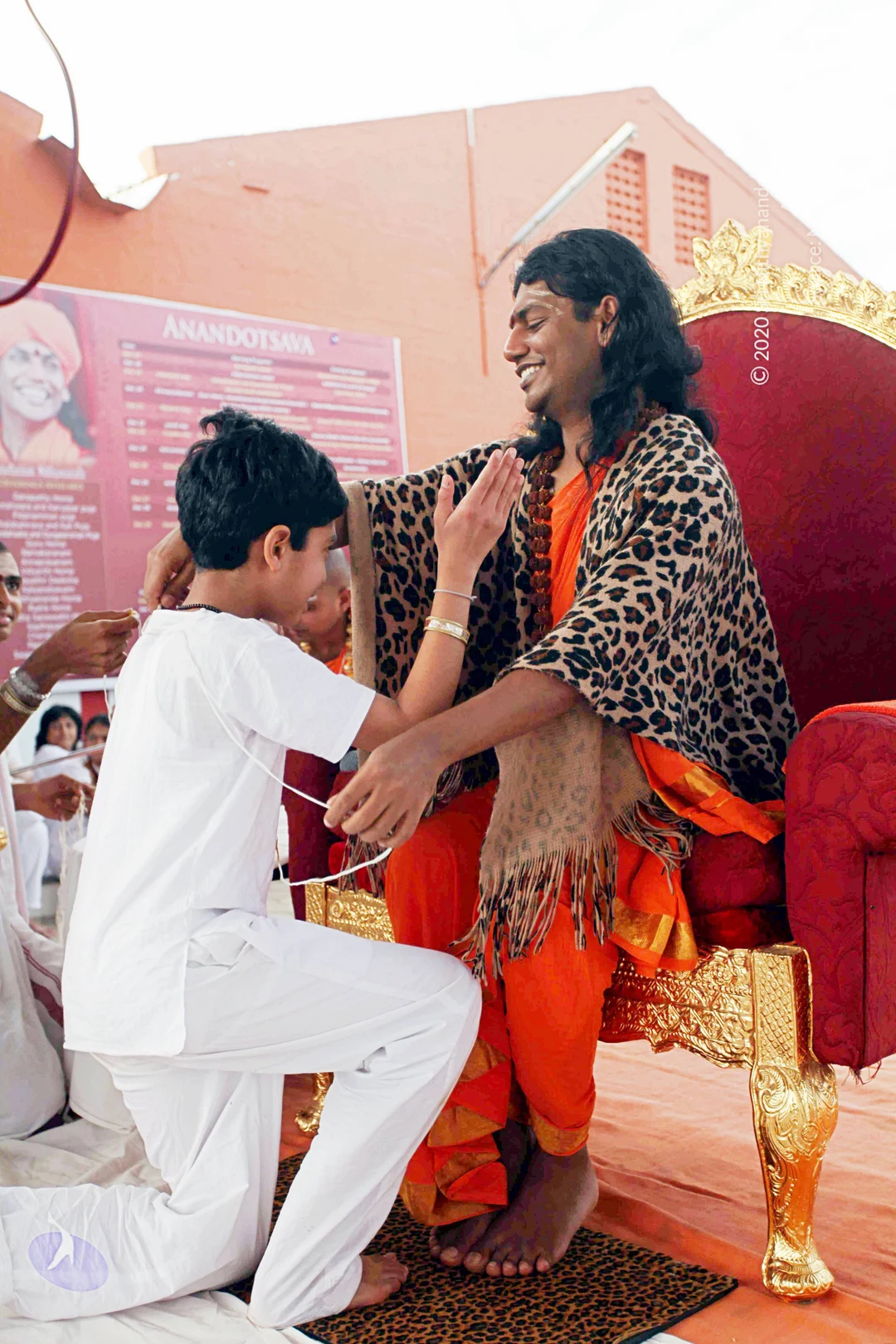
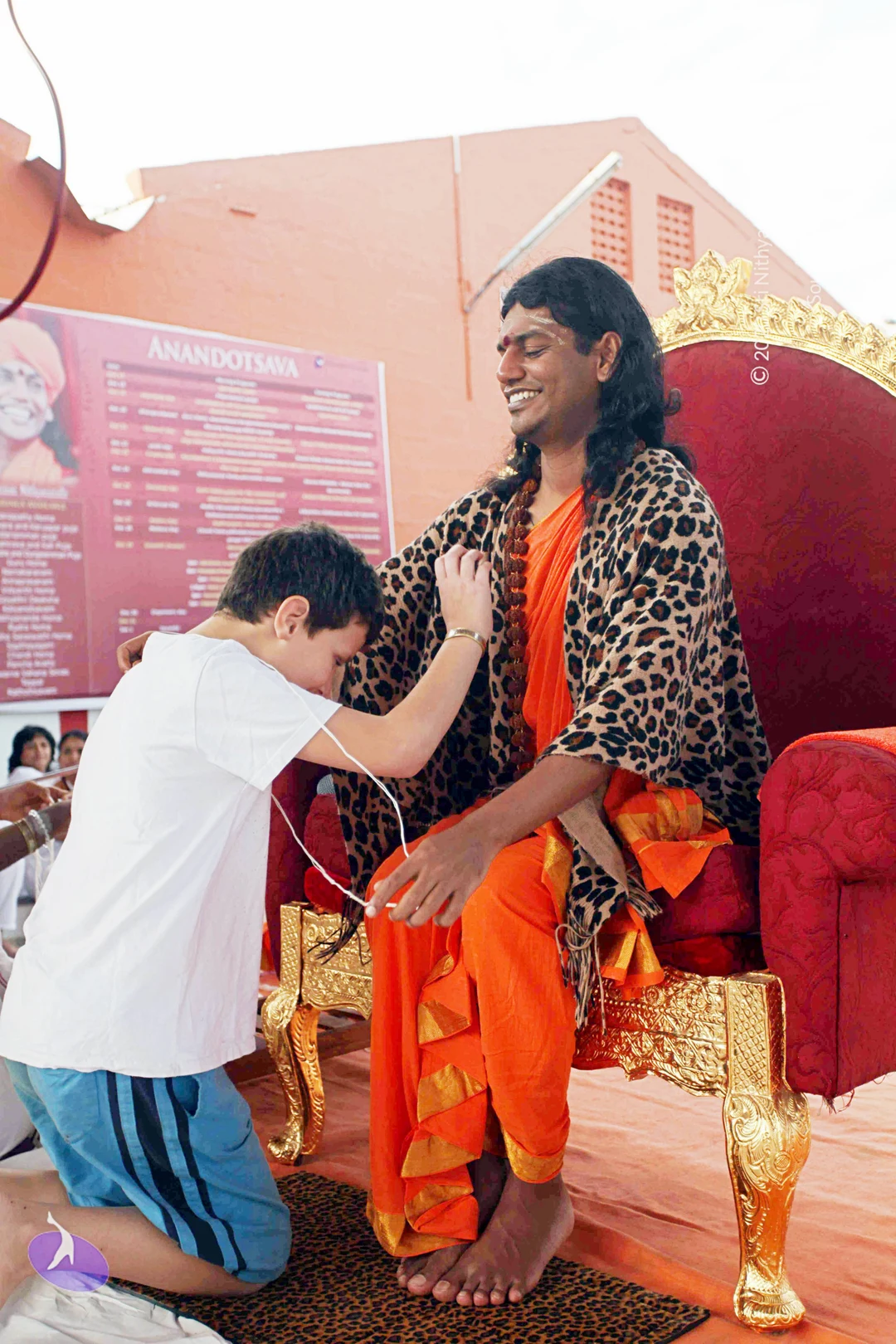
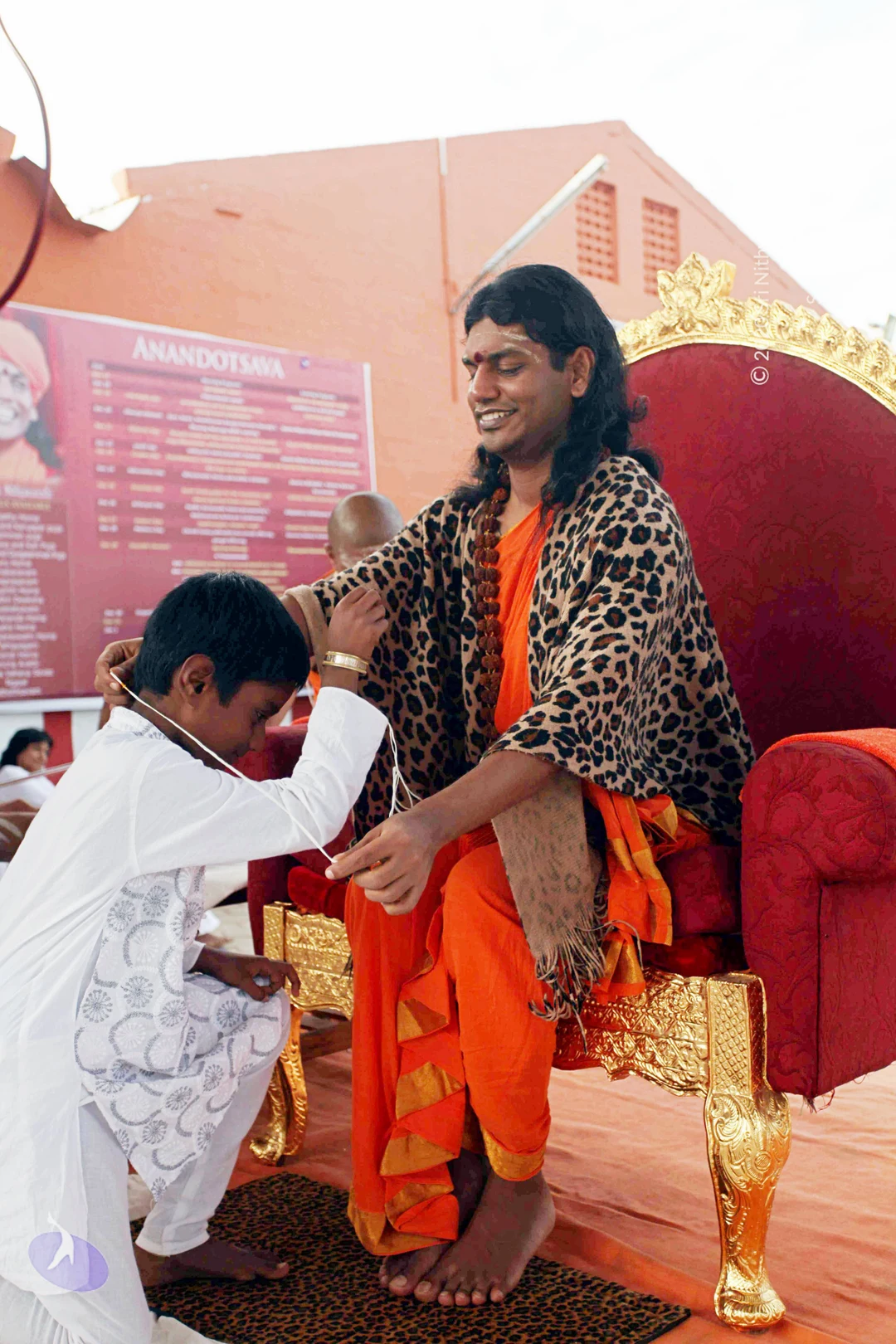
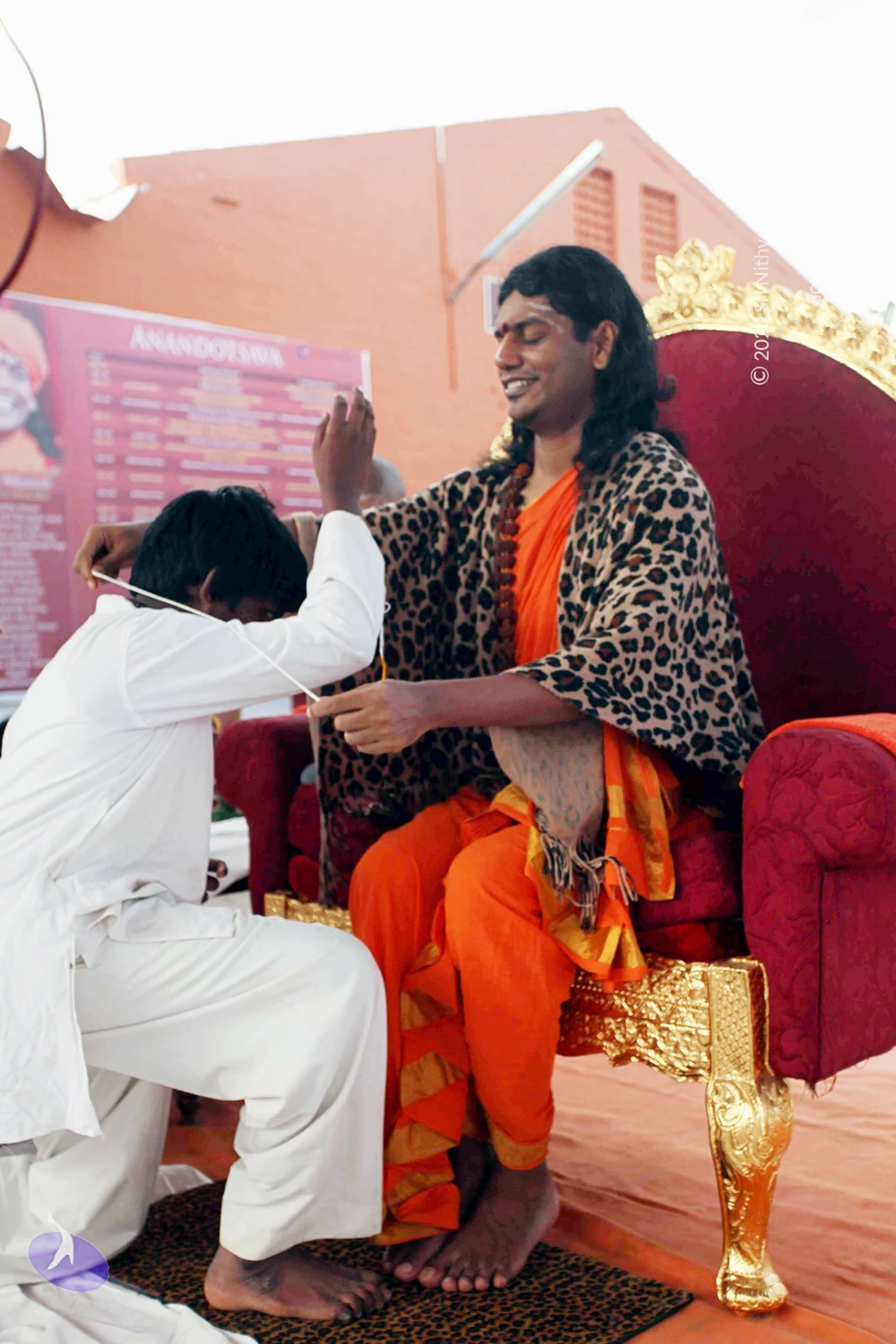
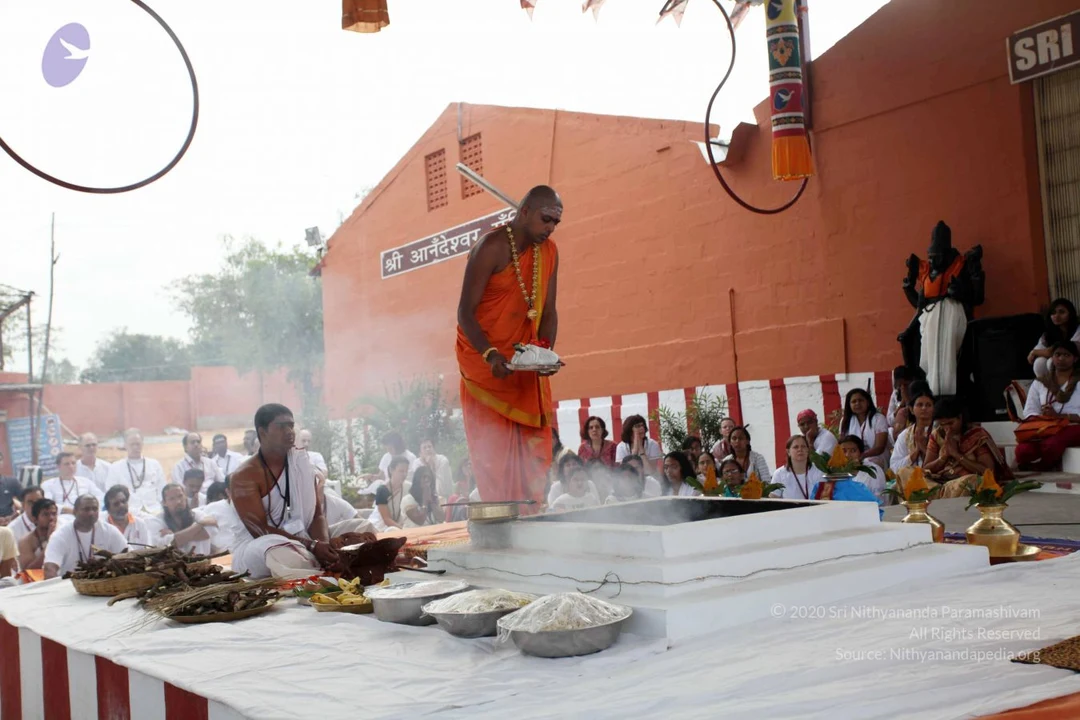
119 photosSource gallery
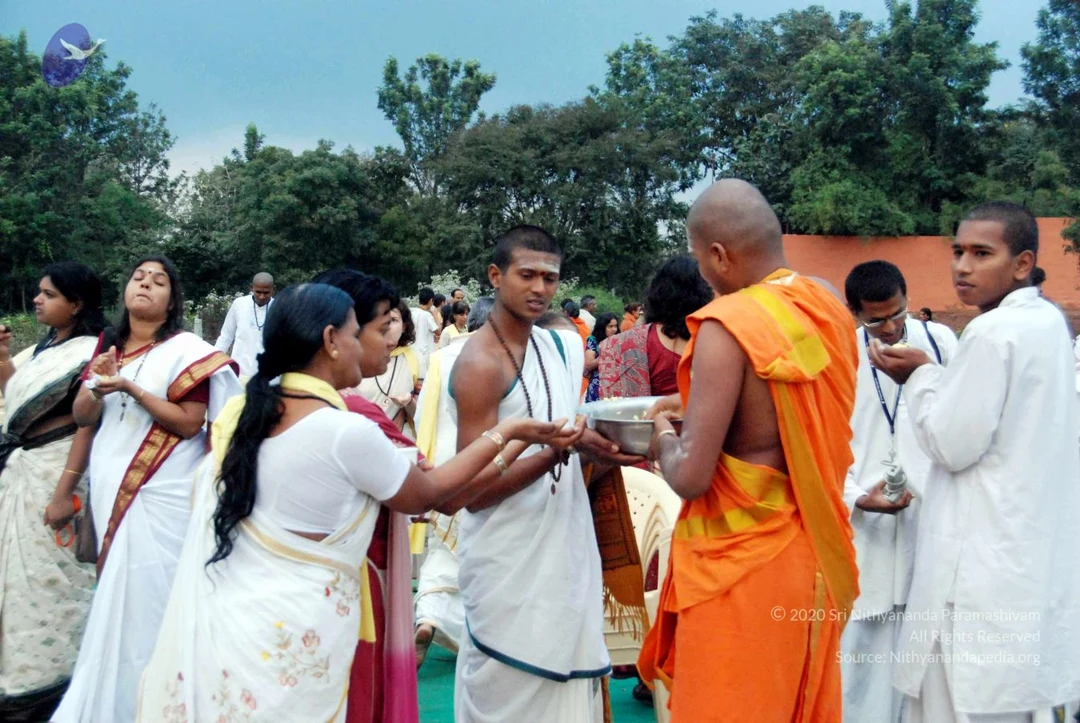
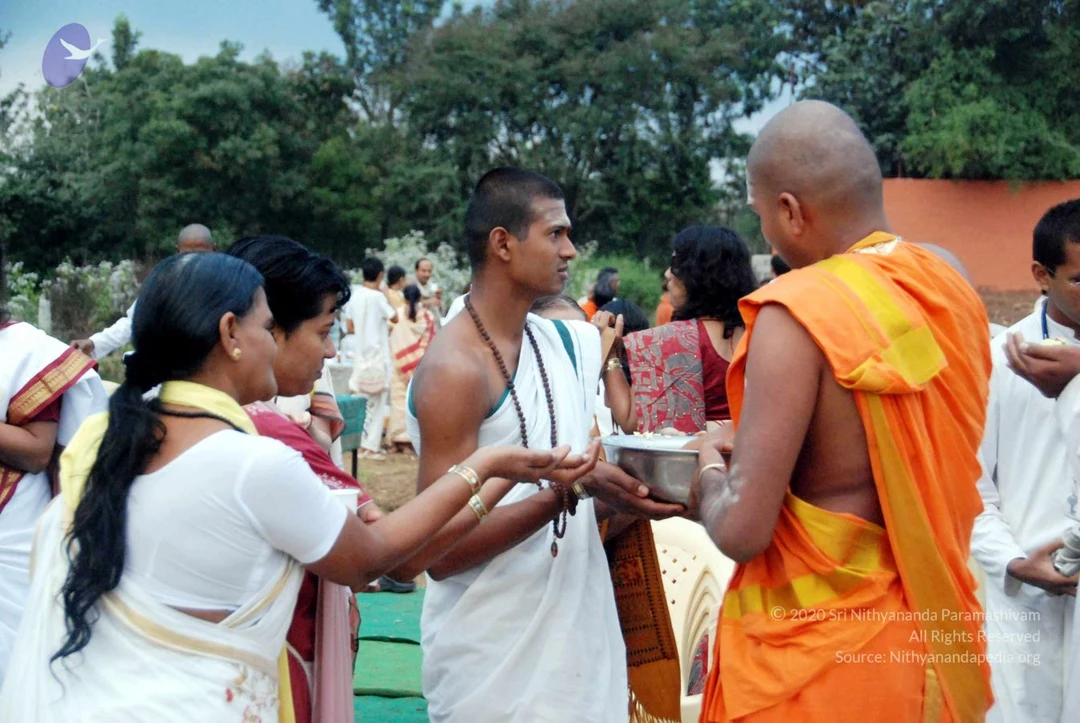
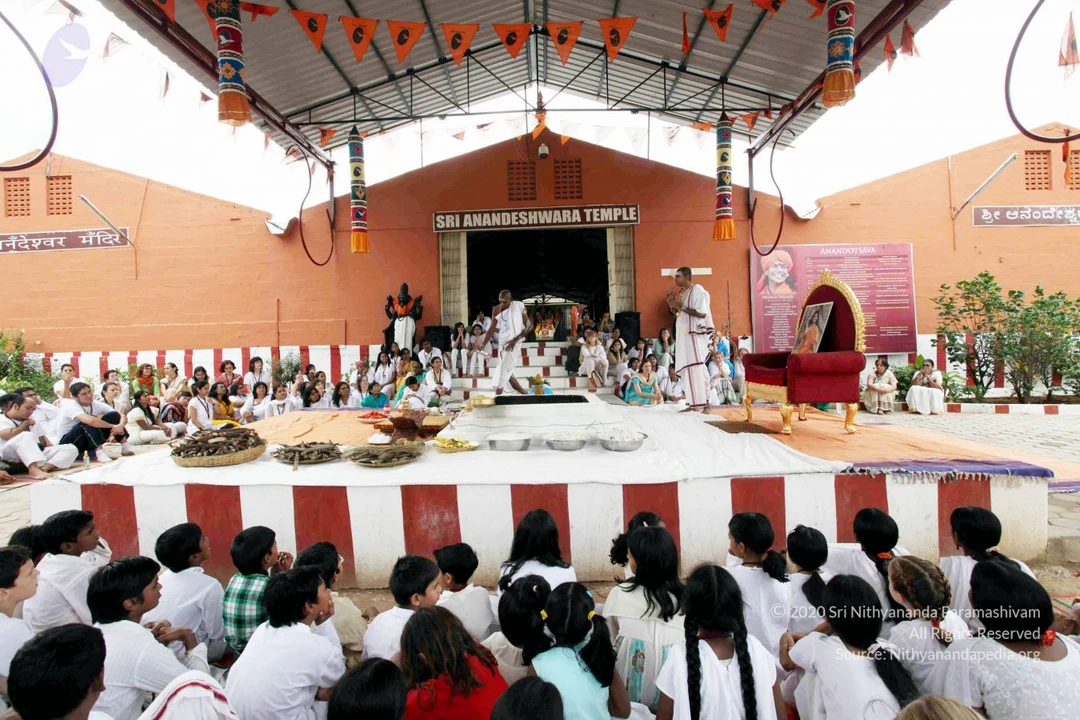
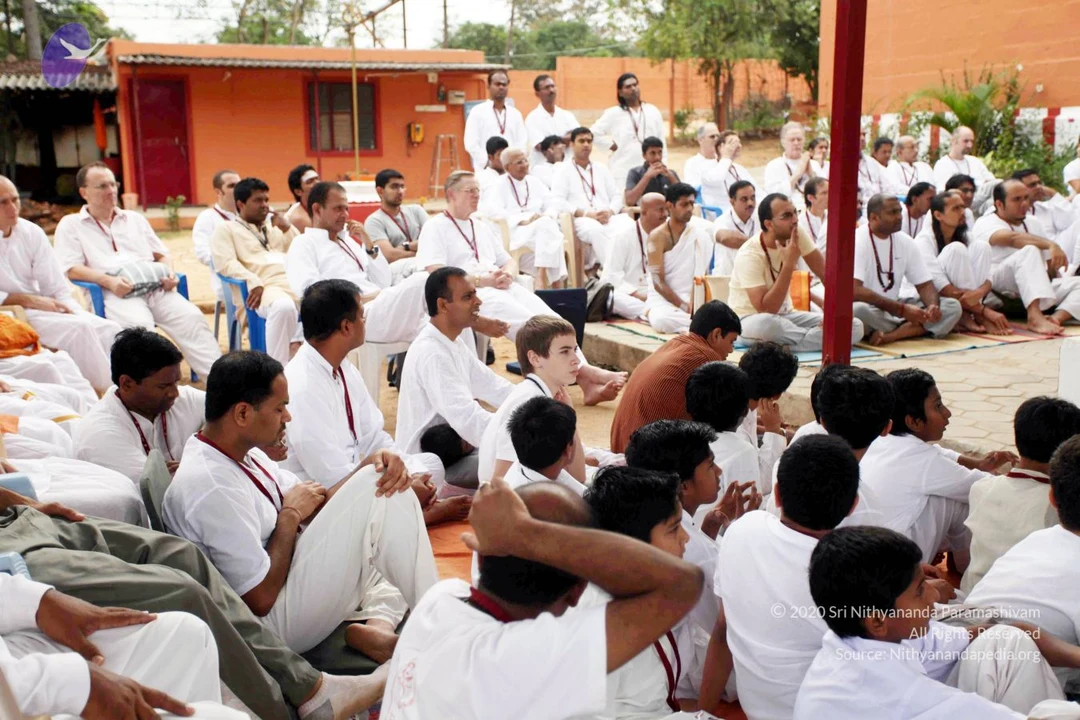
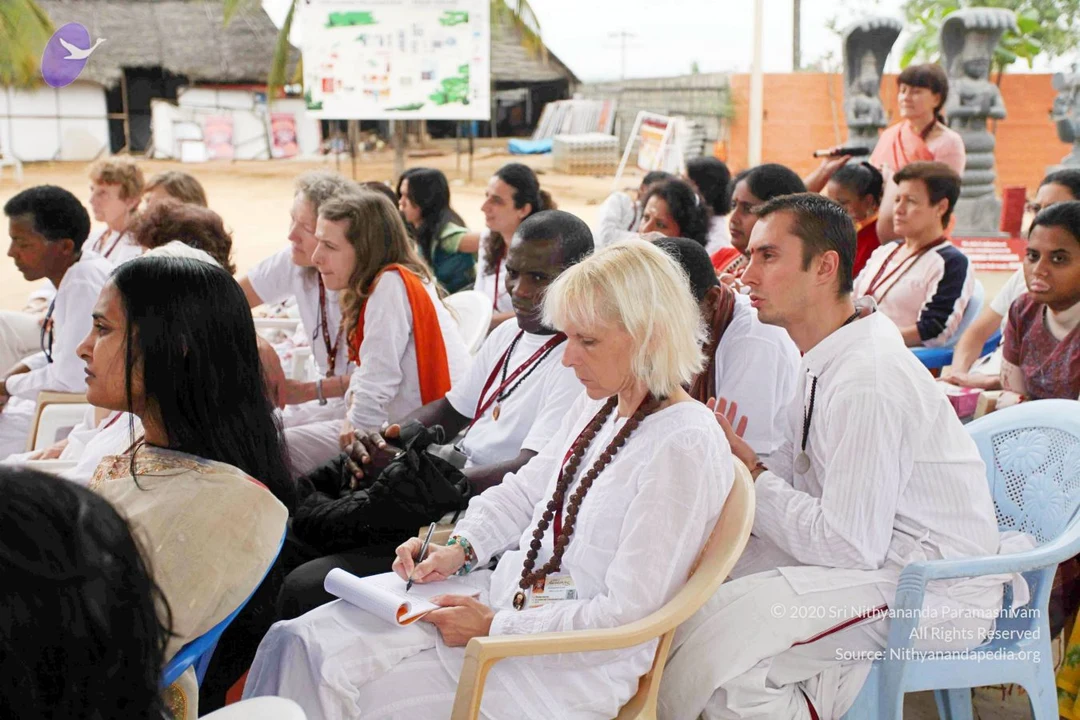
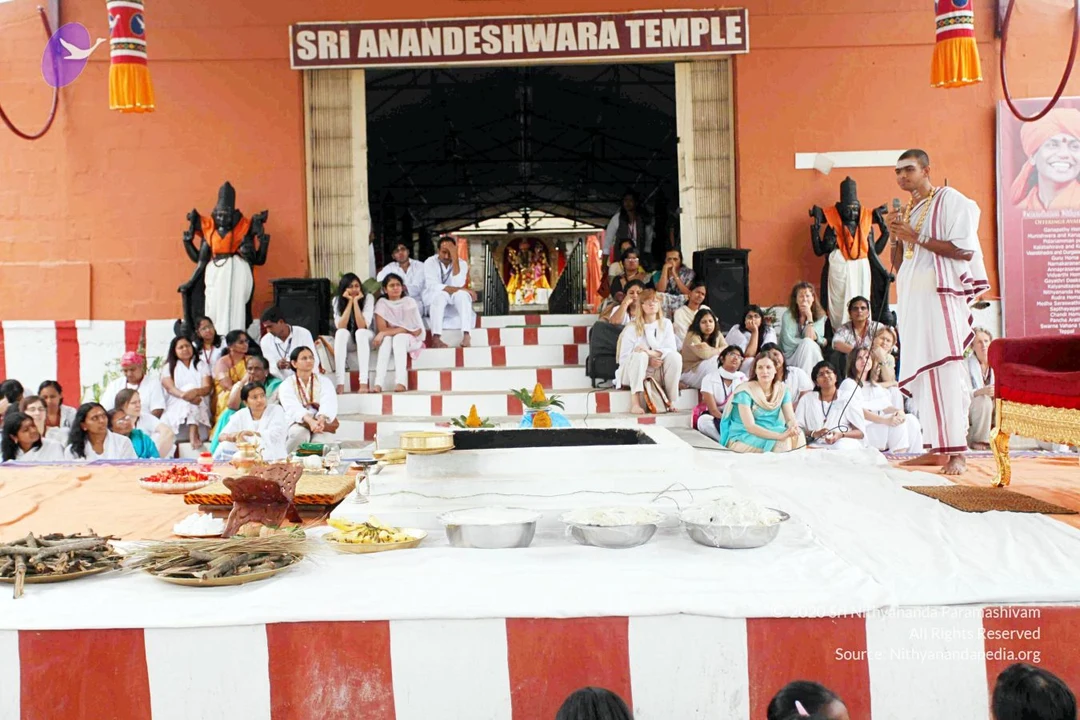
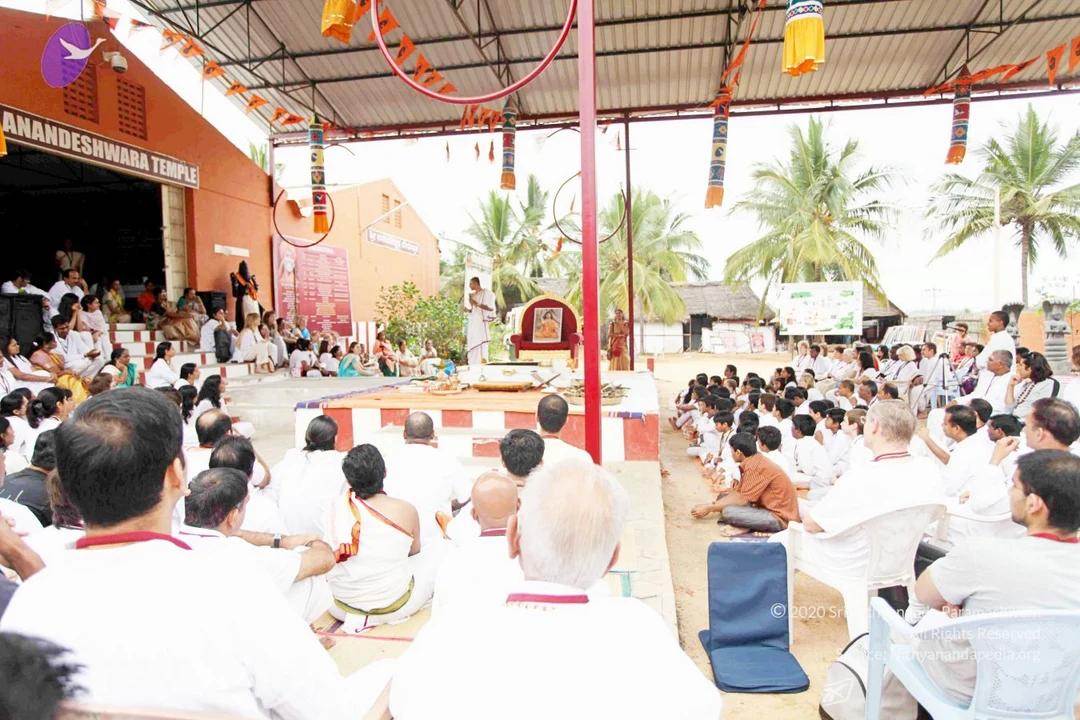
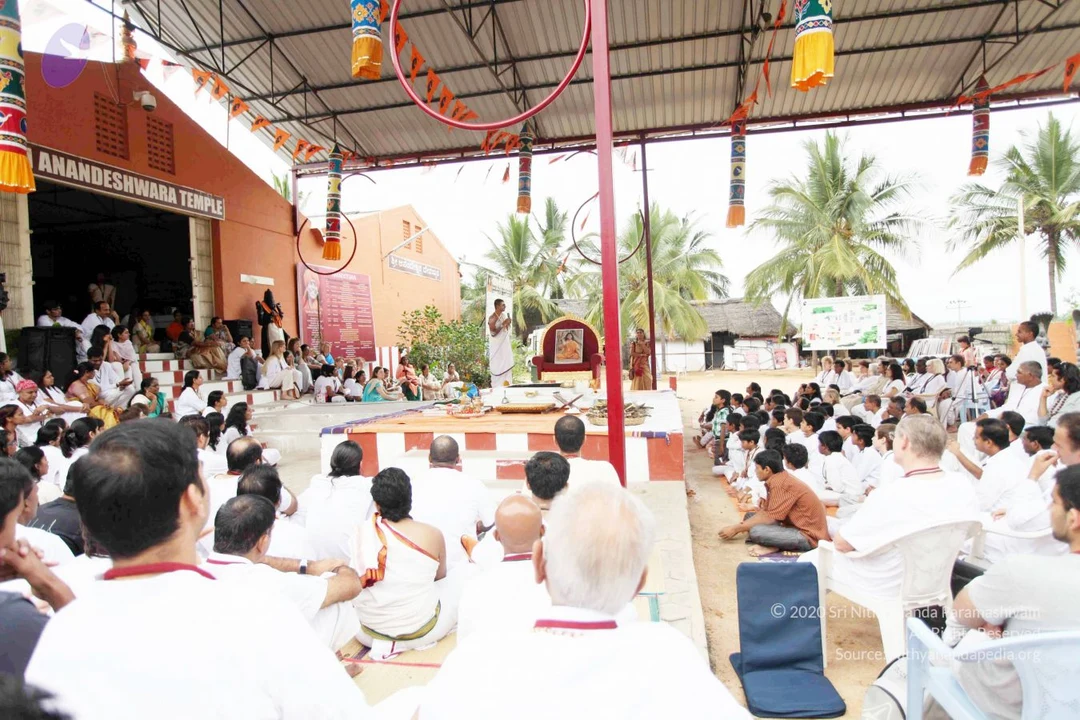
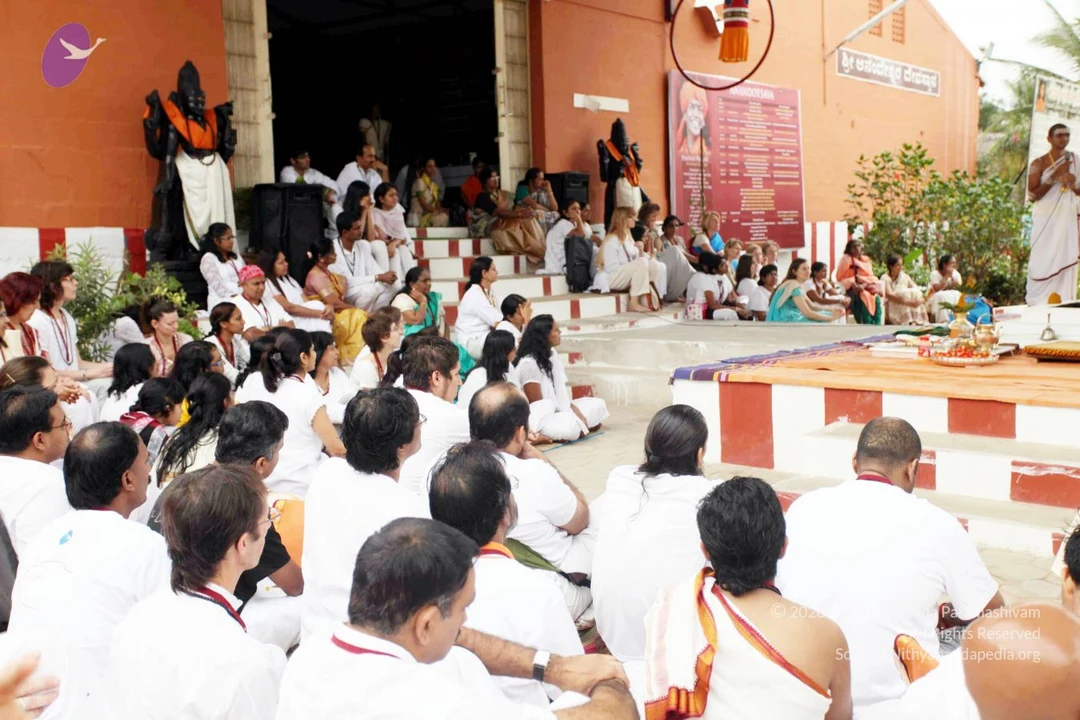
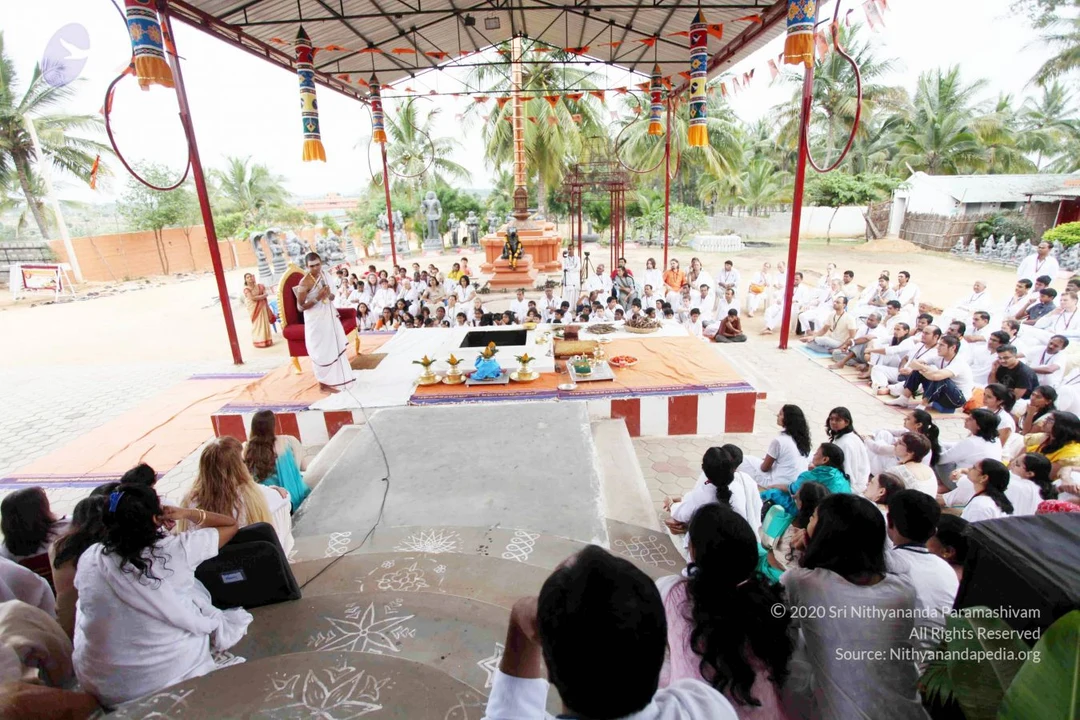
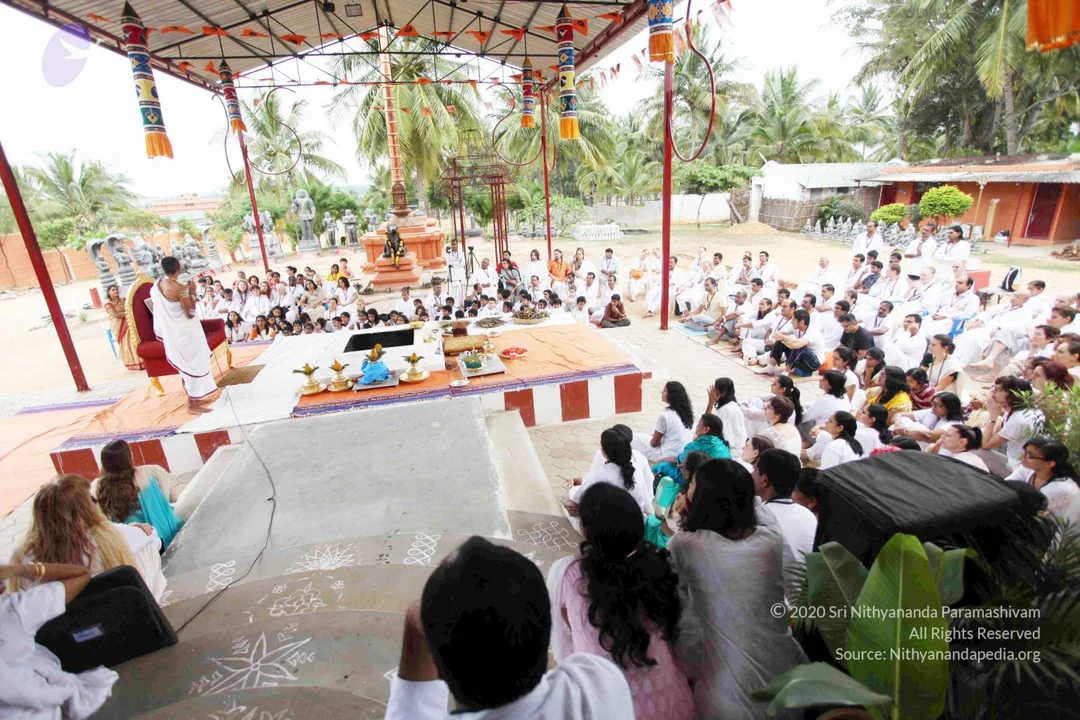
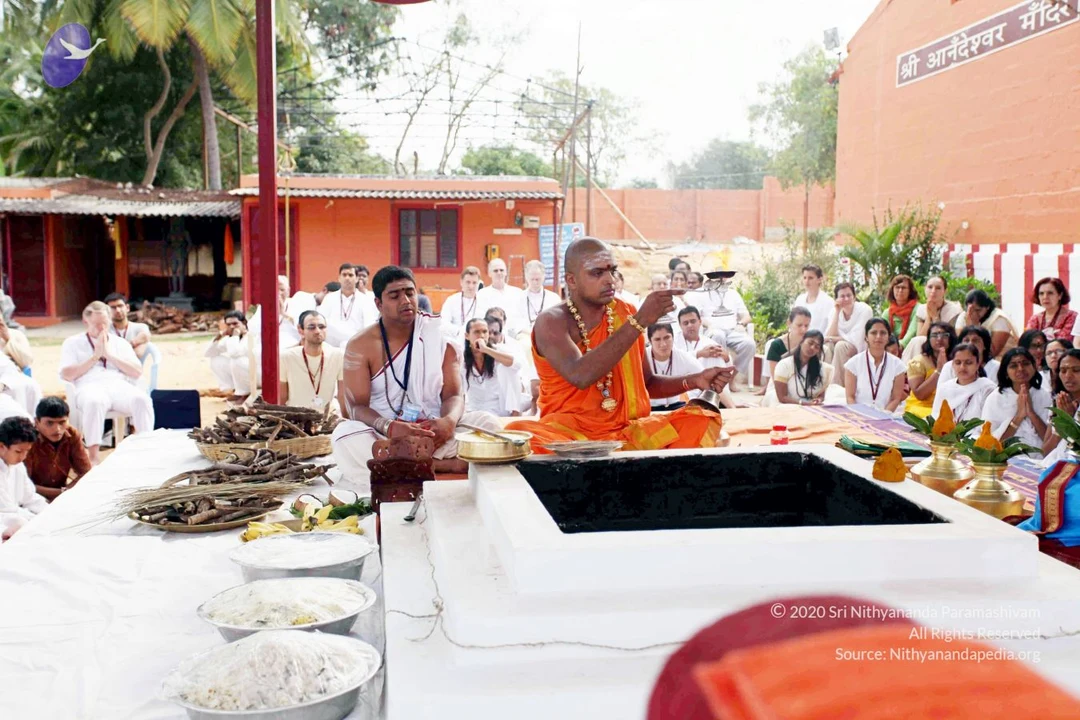
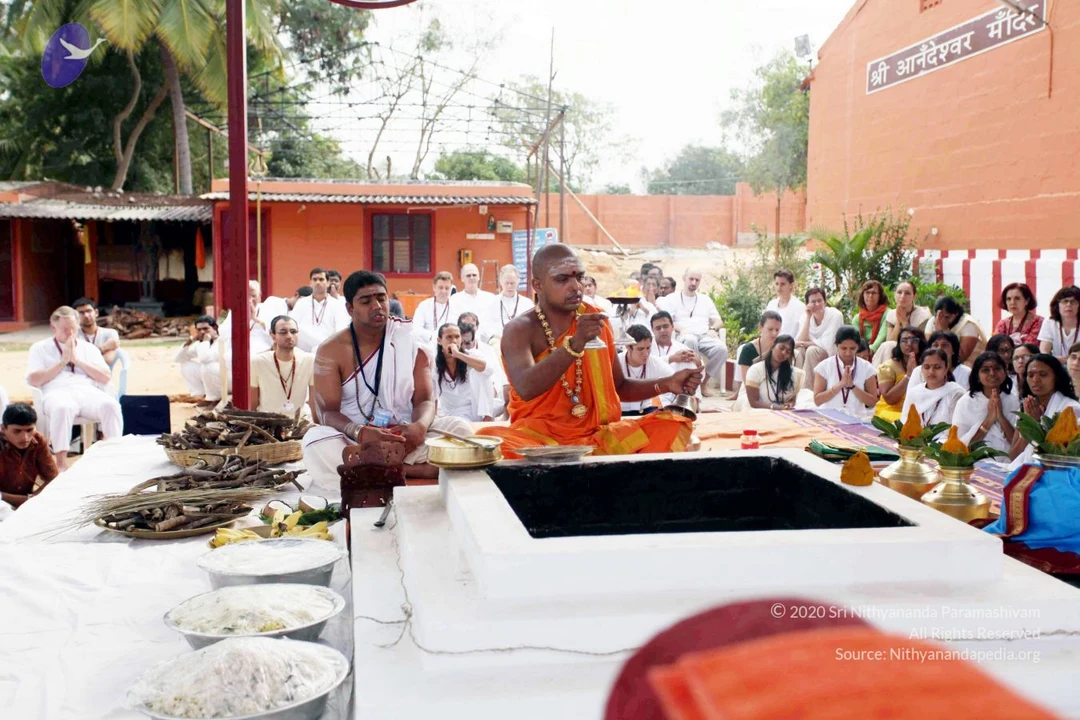
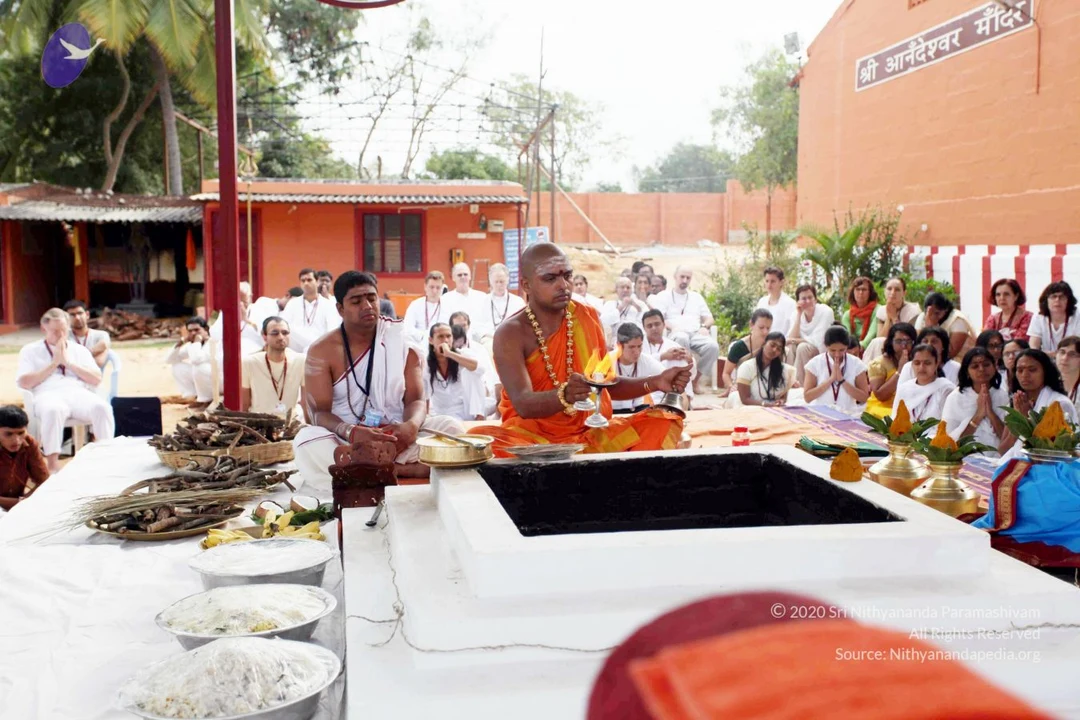
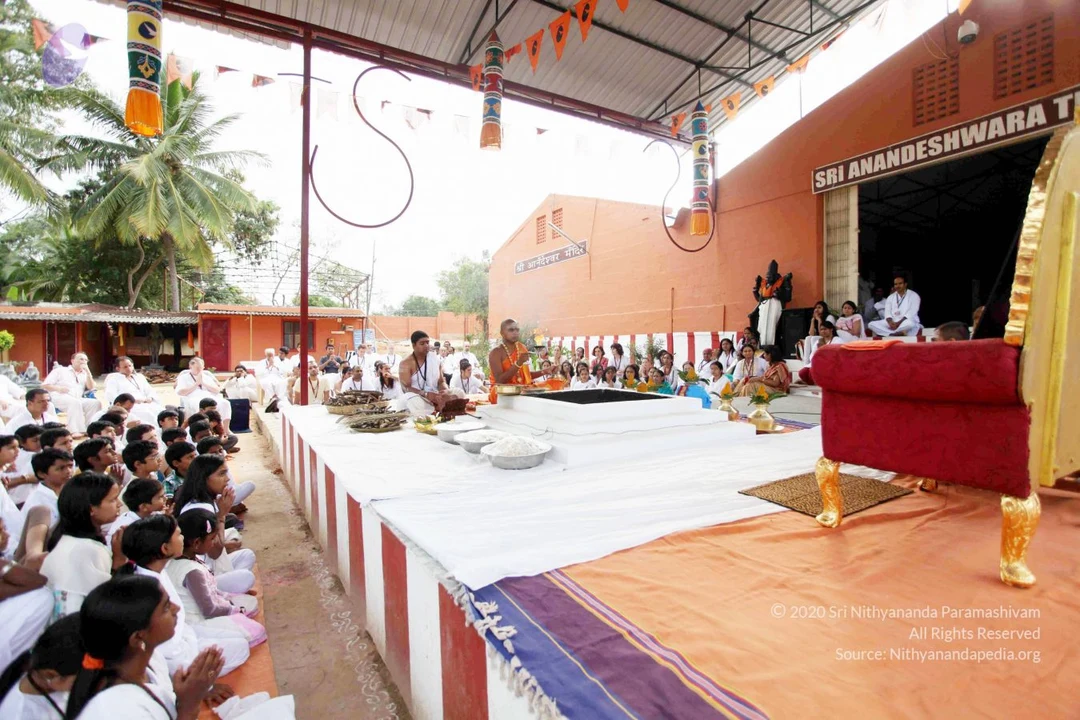
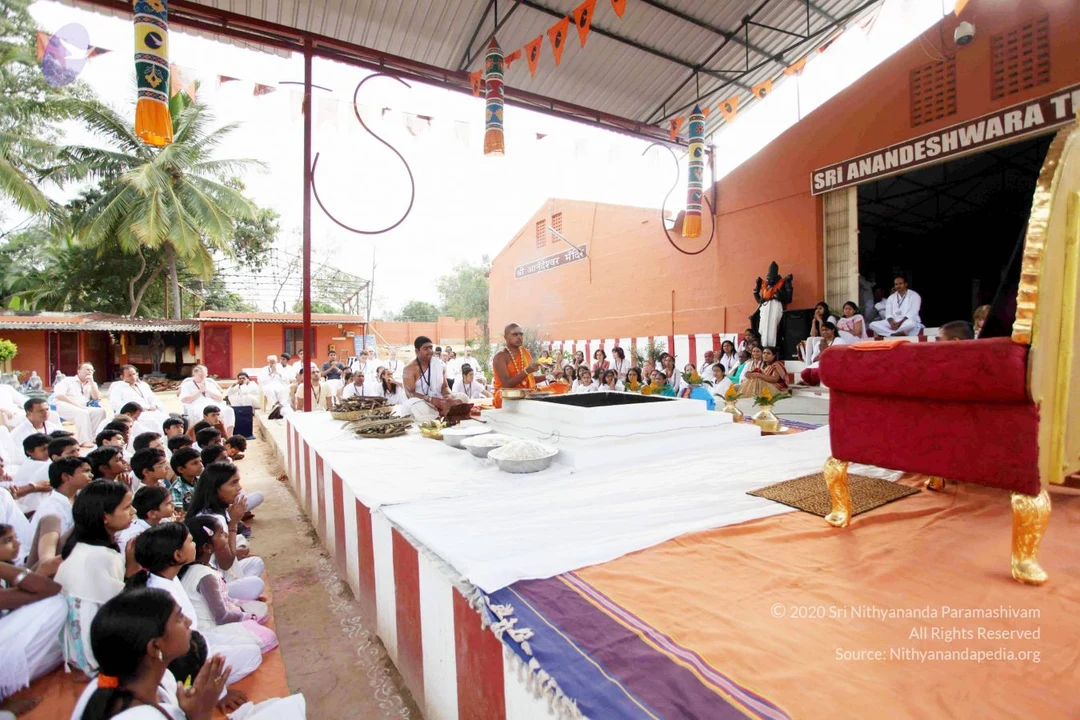
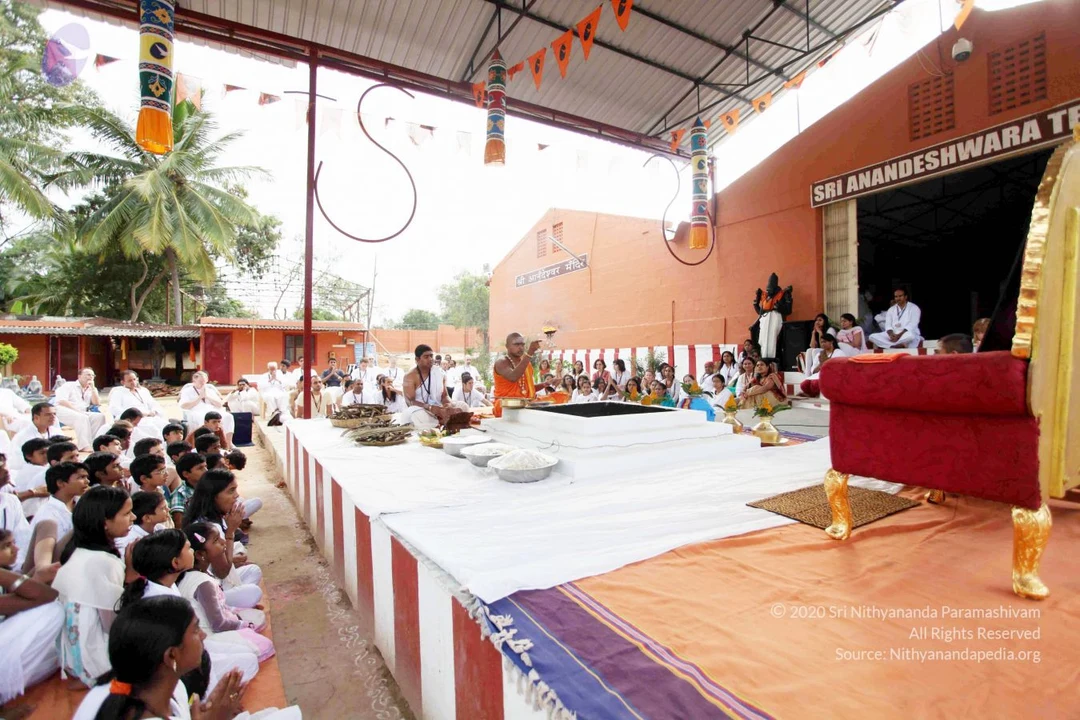
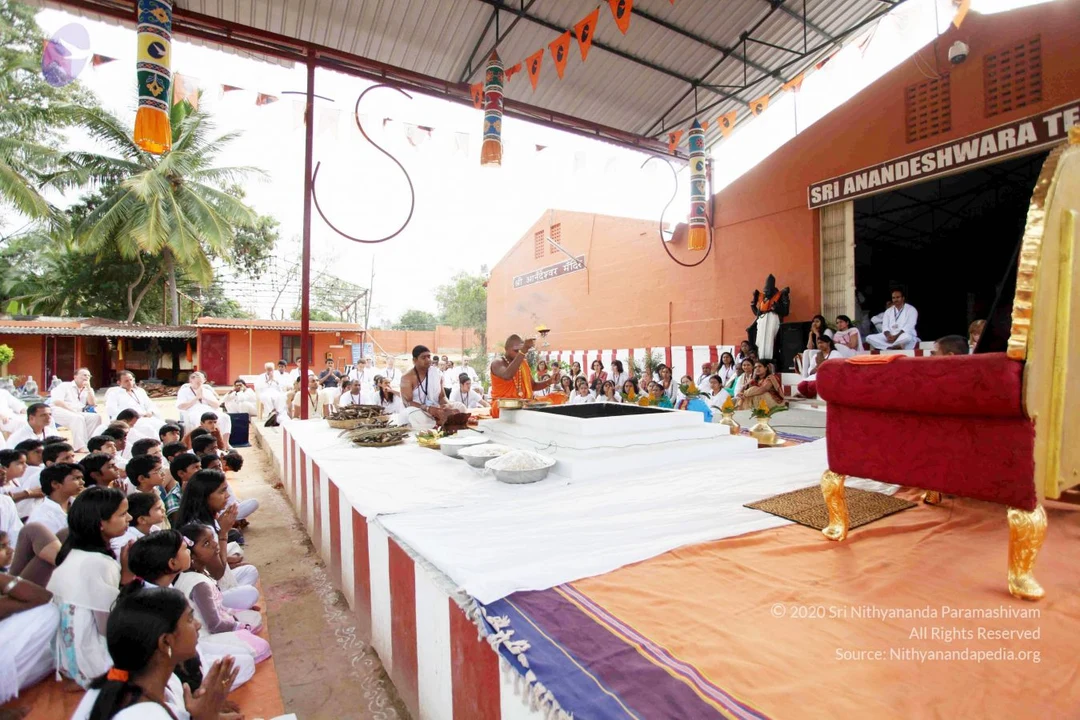
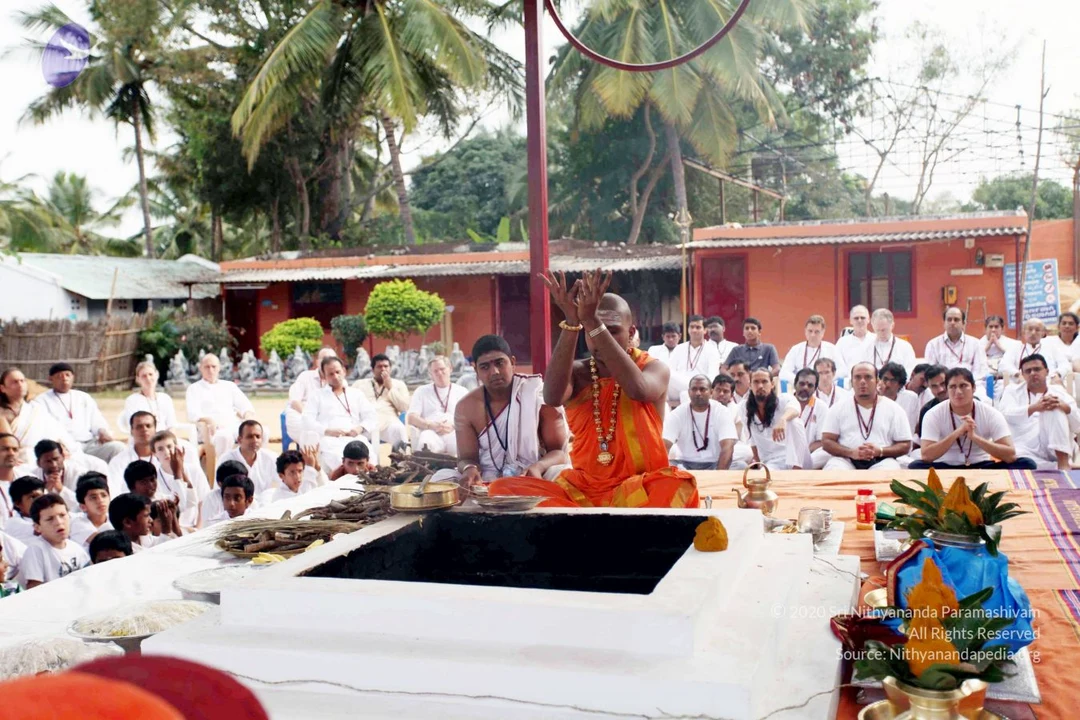
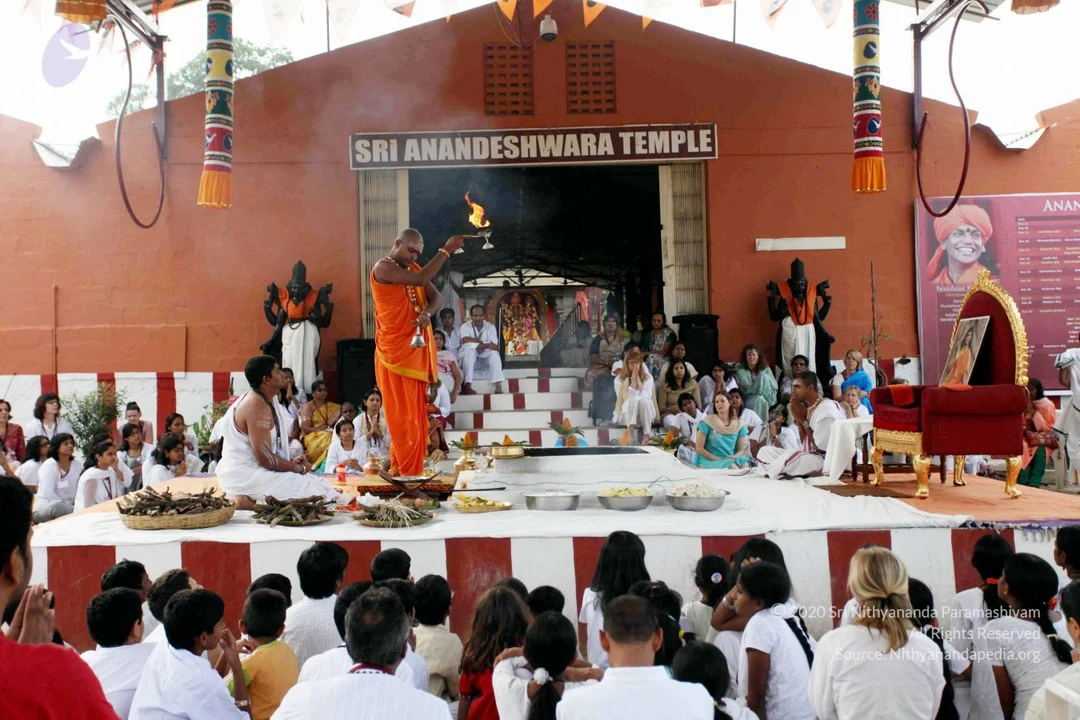
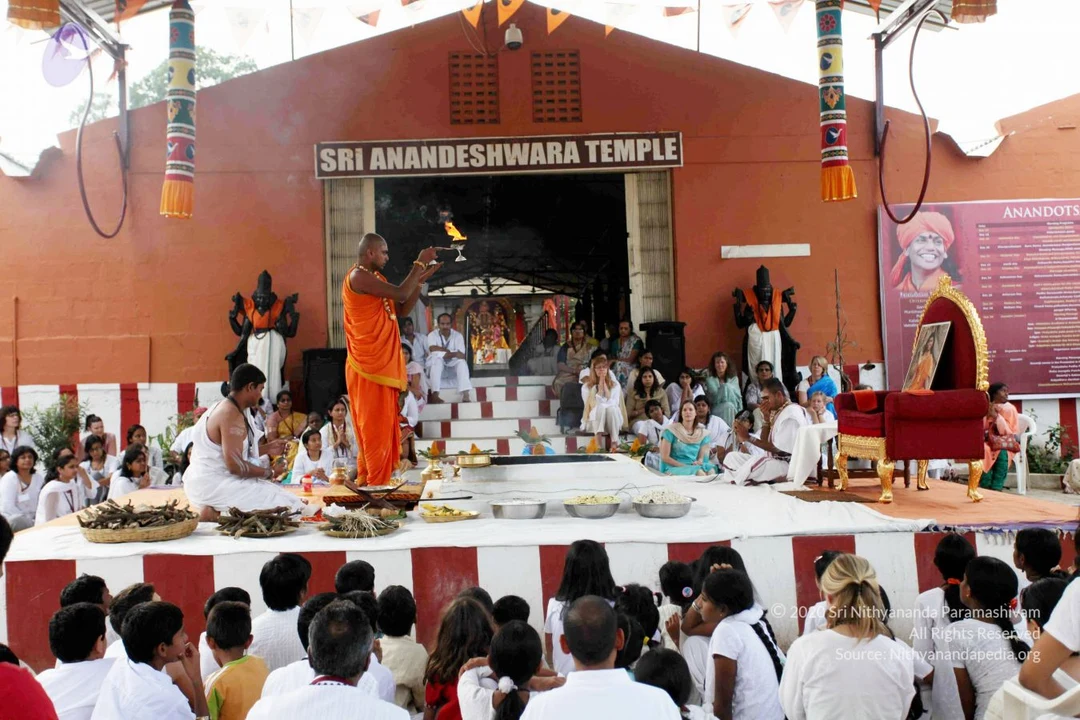
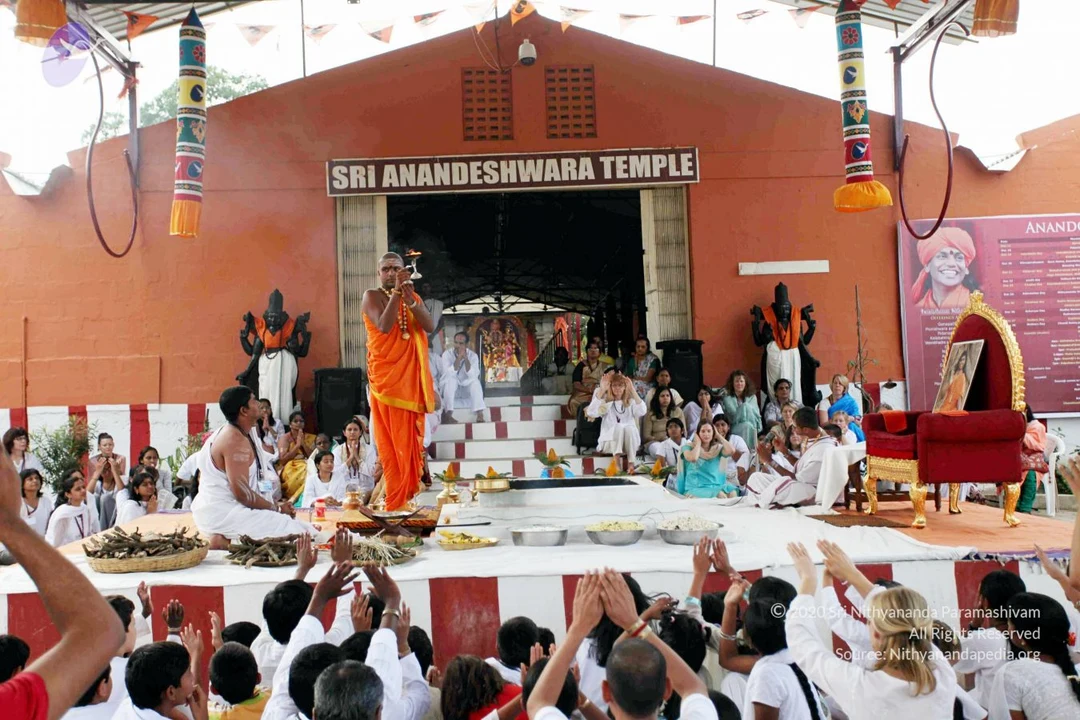
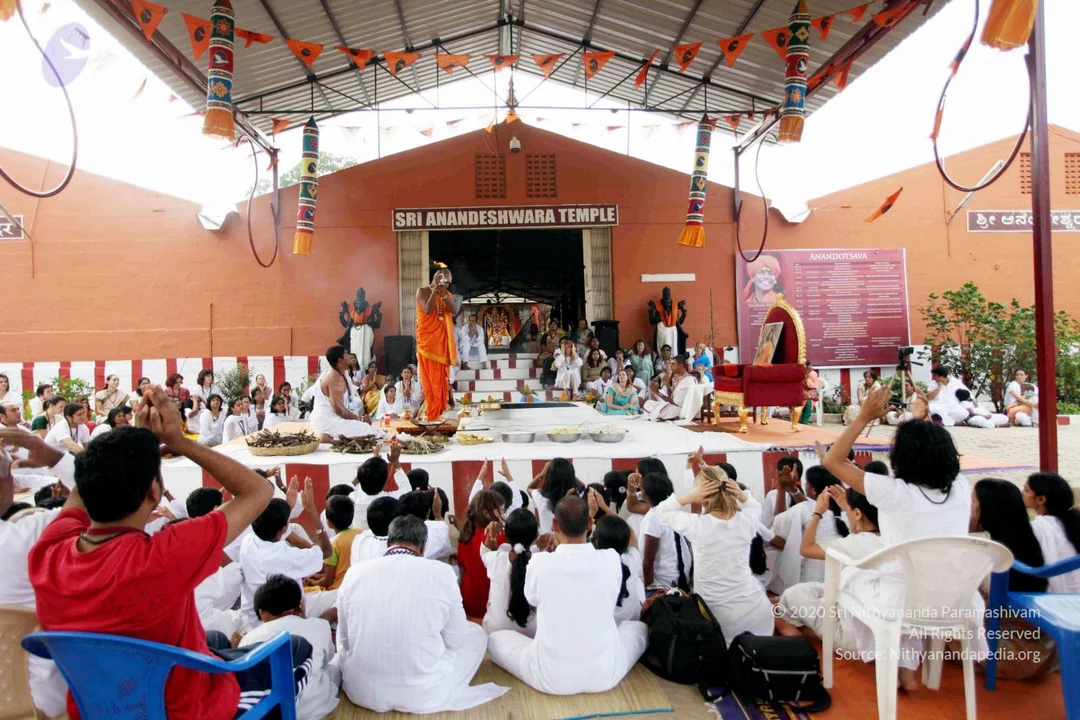
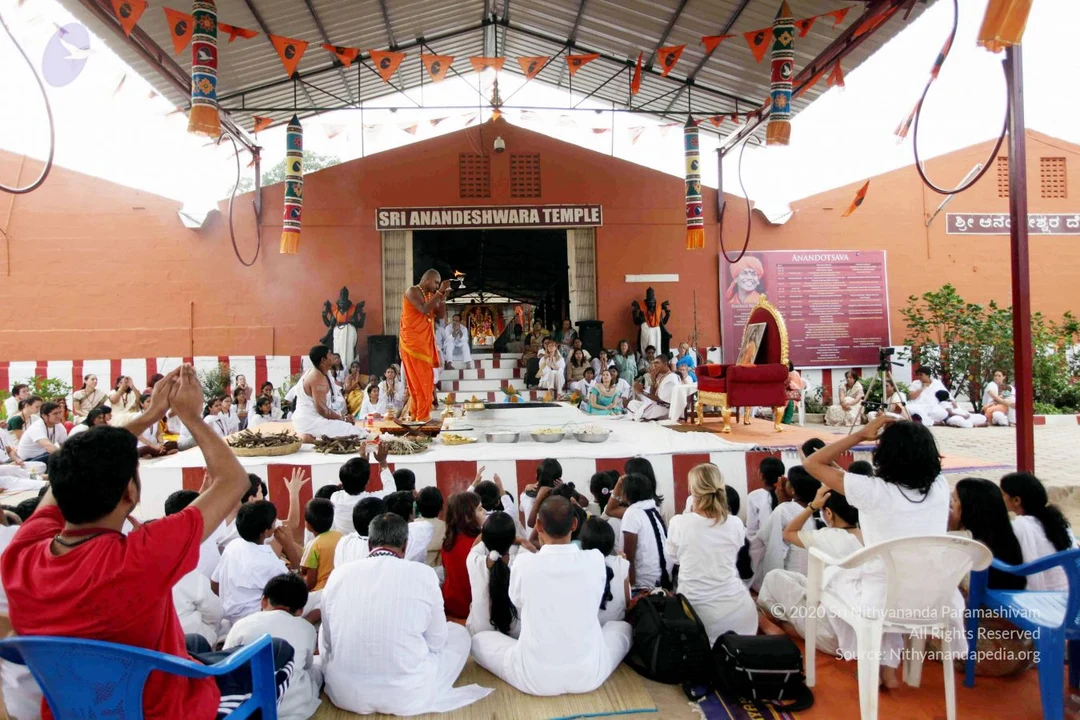
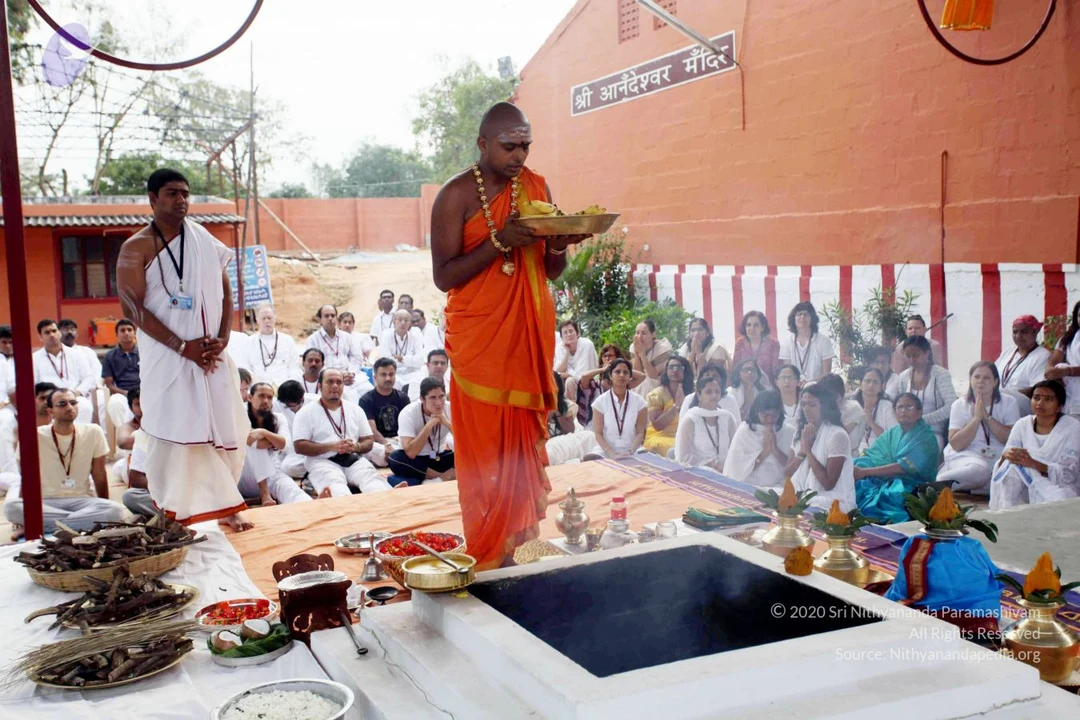
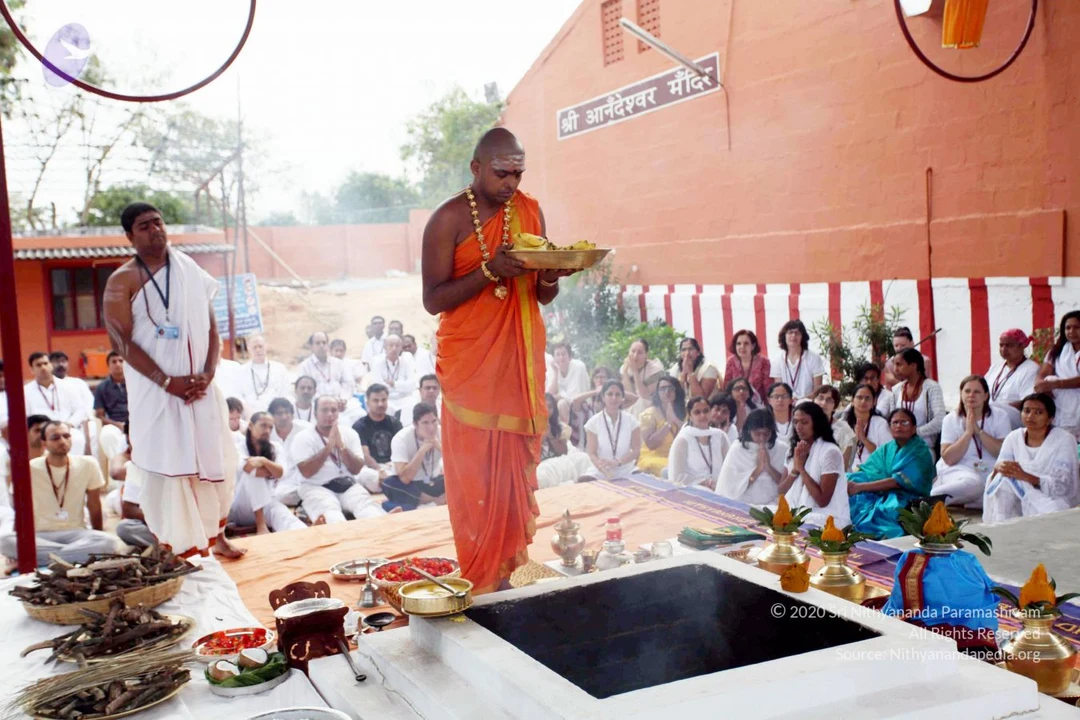
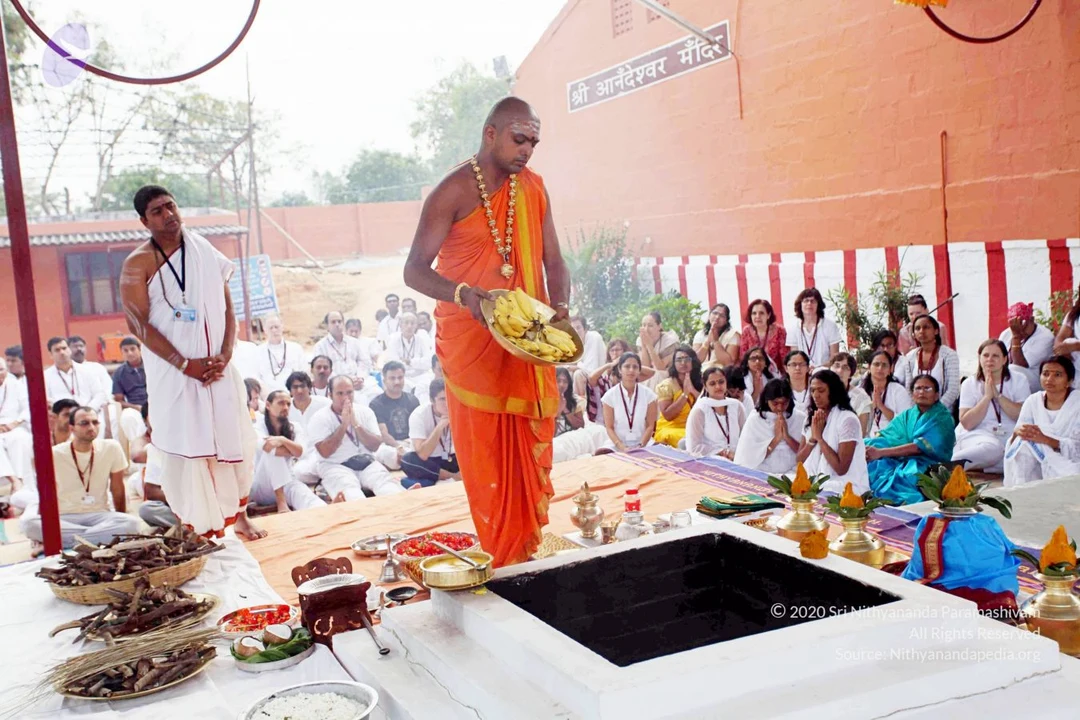
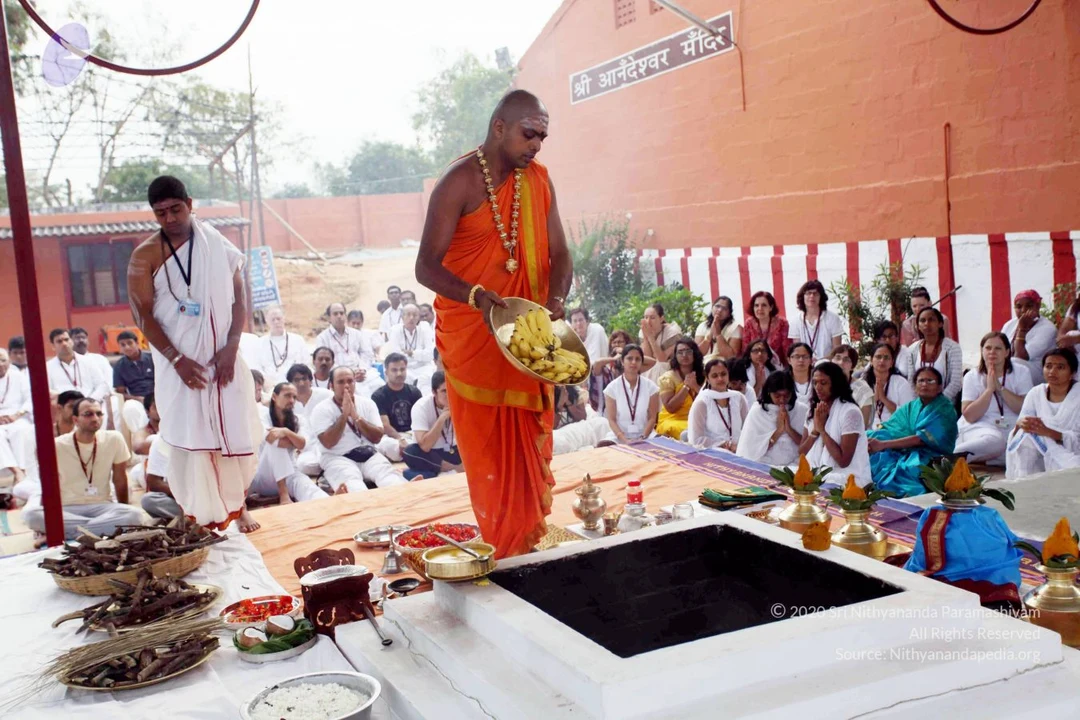
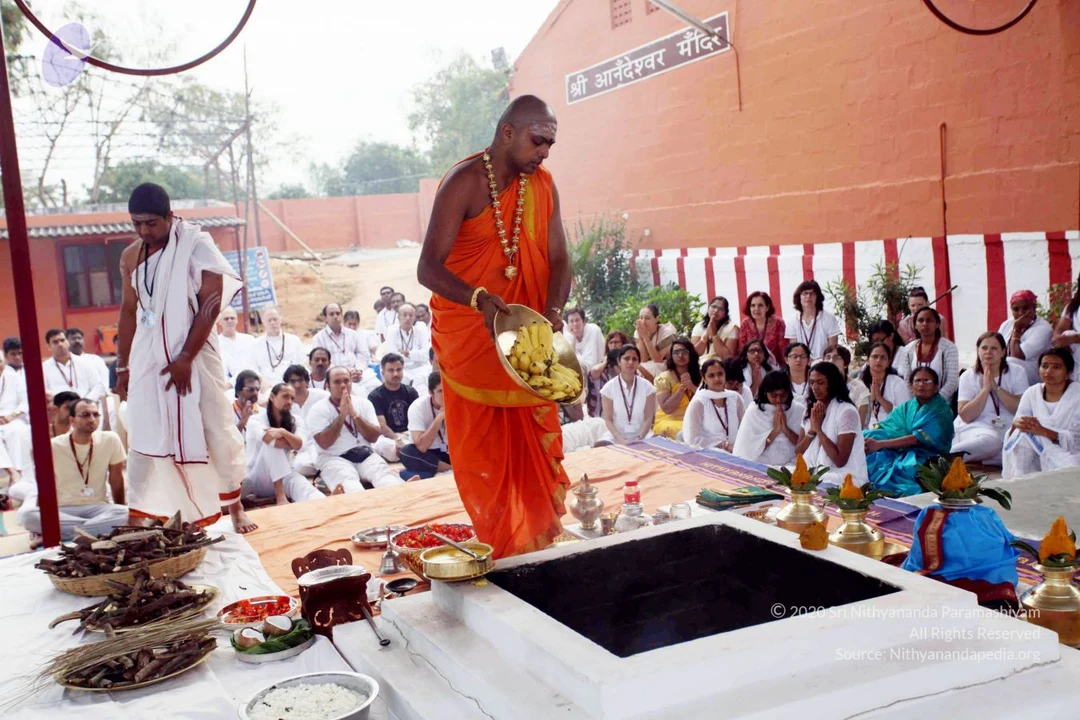
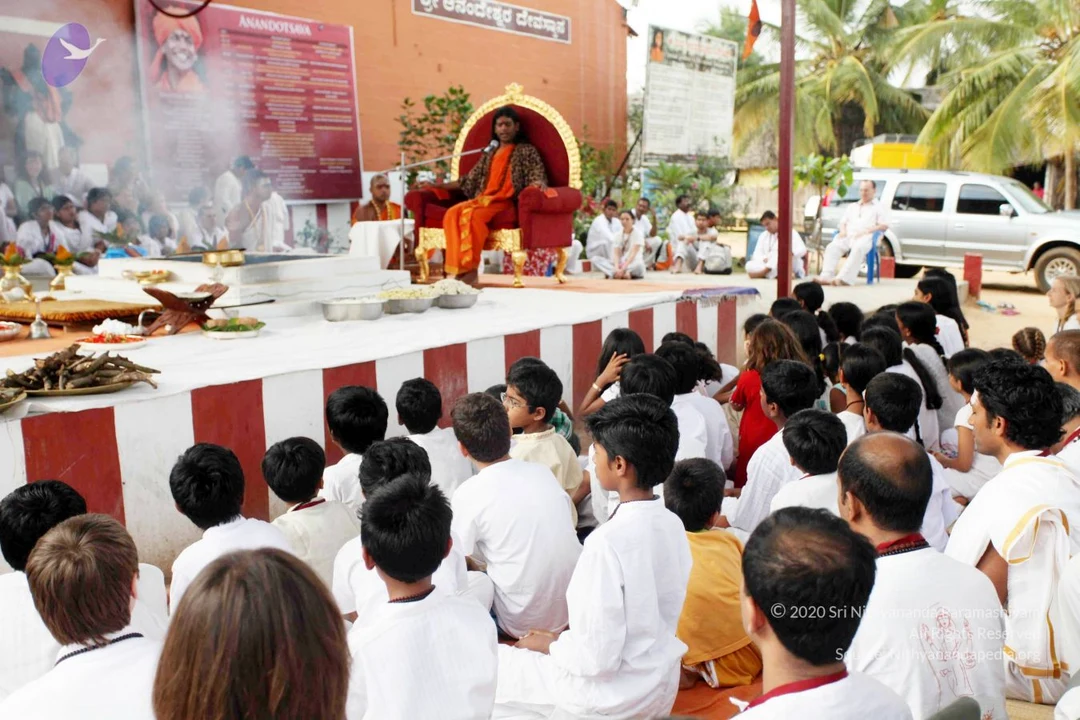
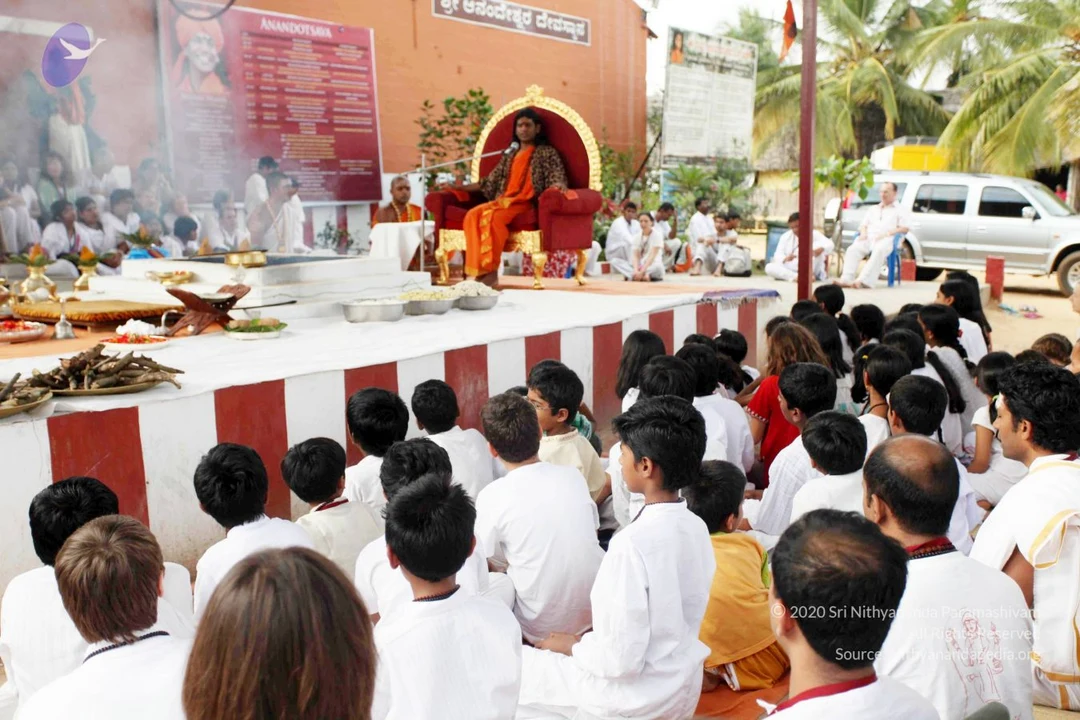
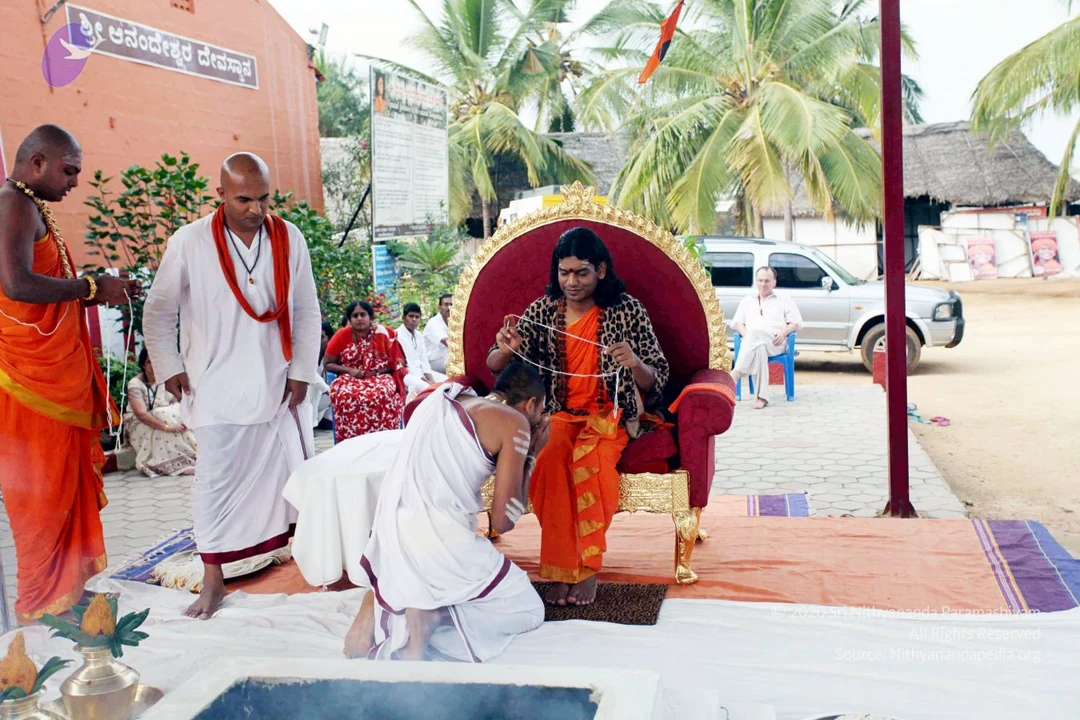
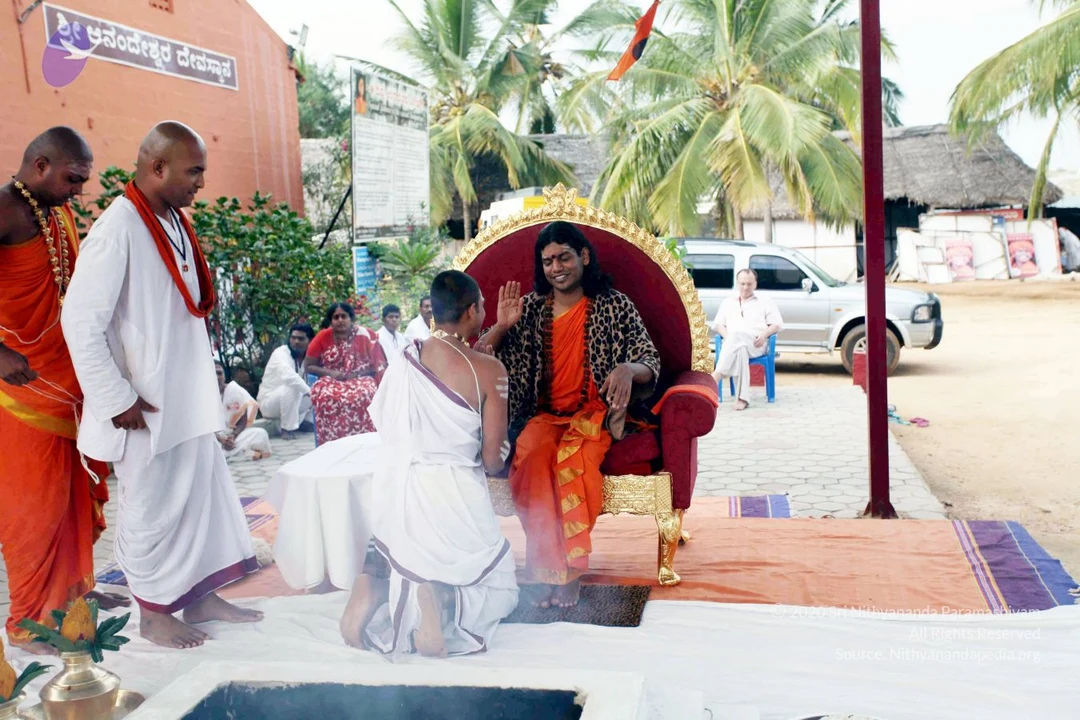
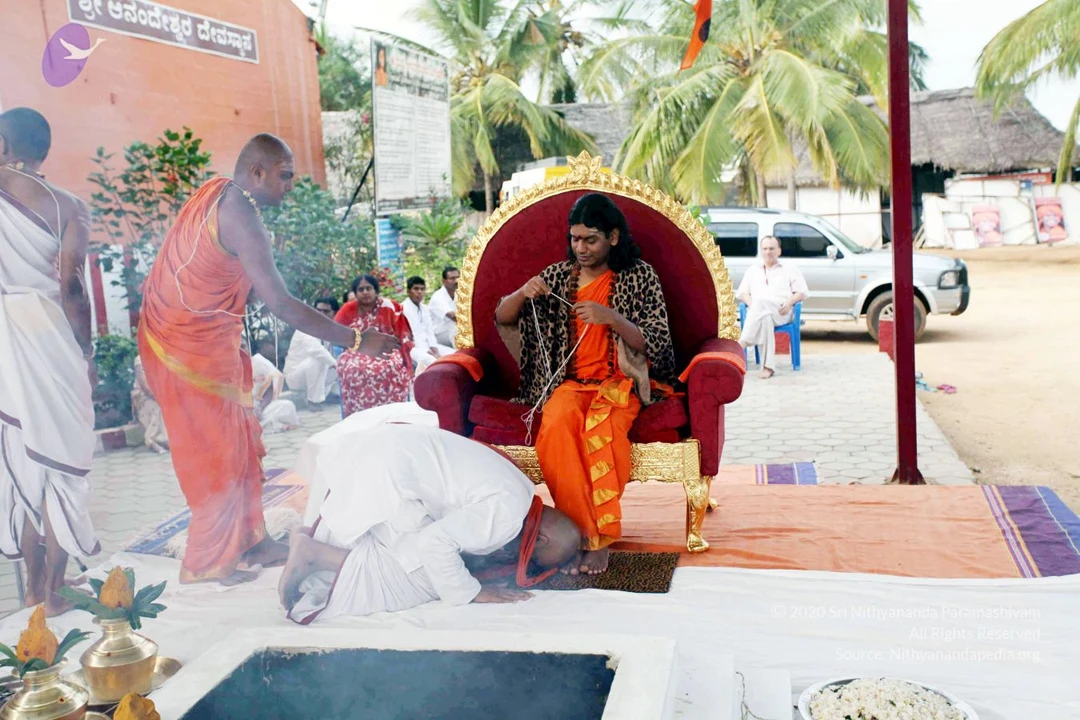
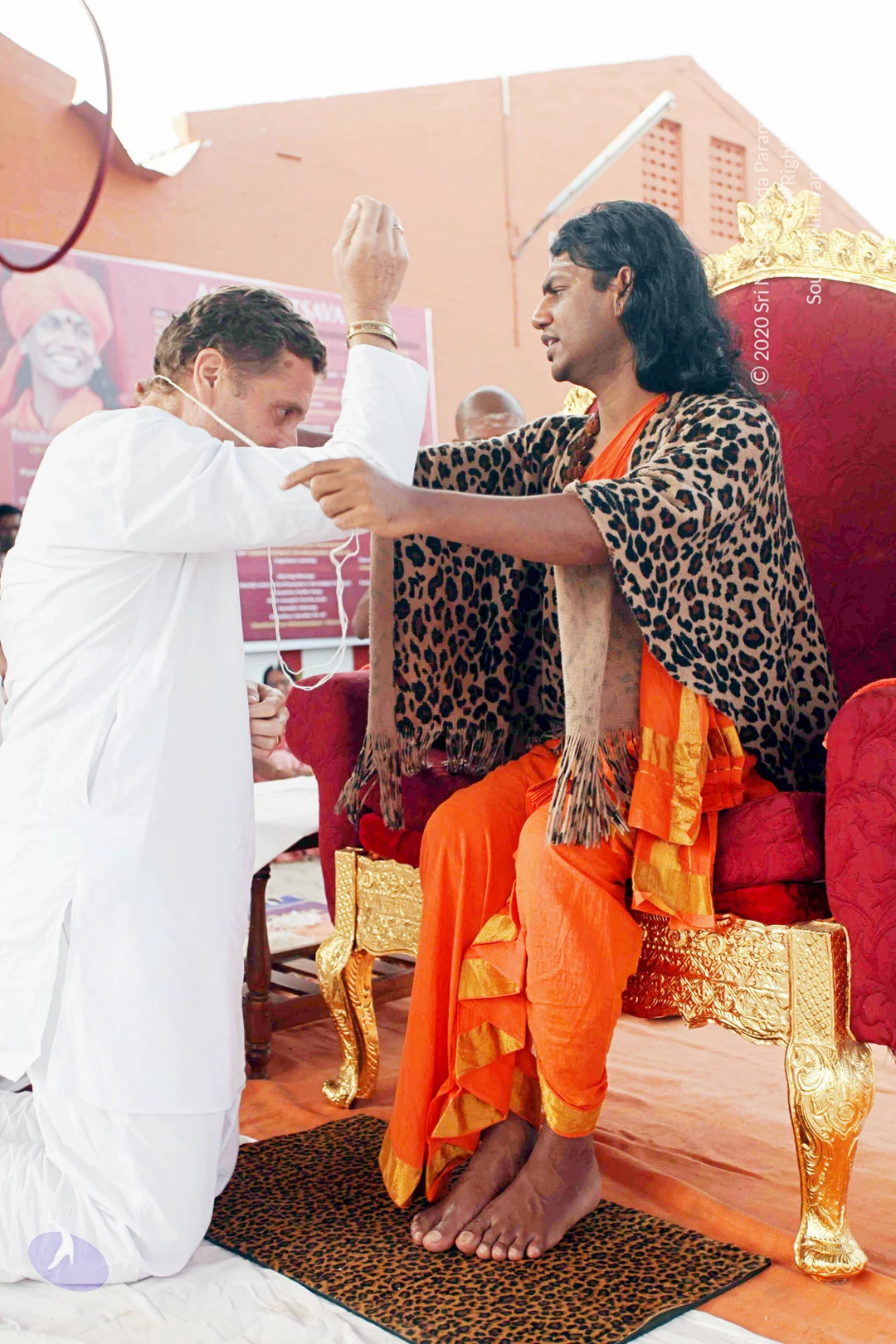
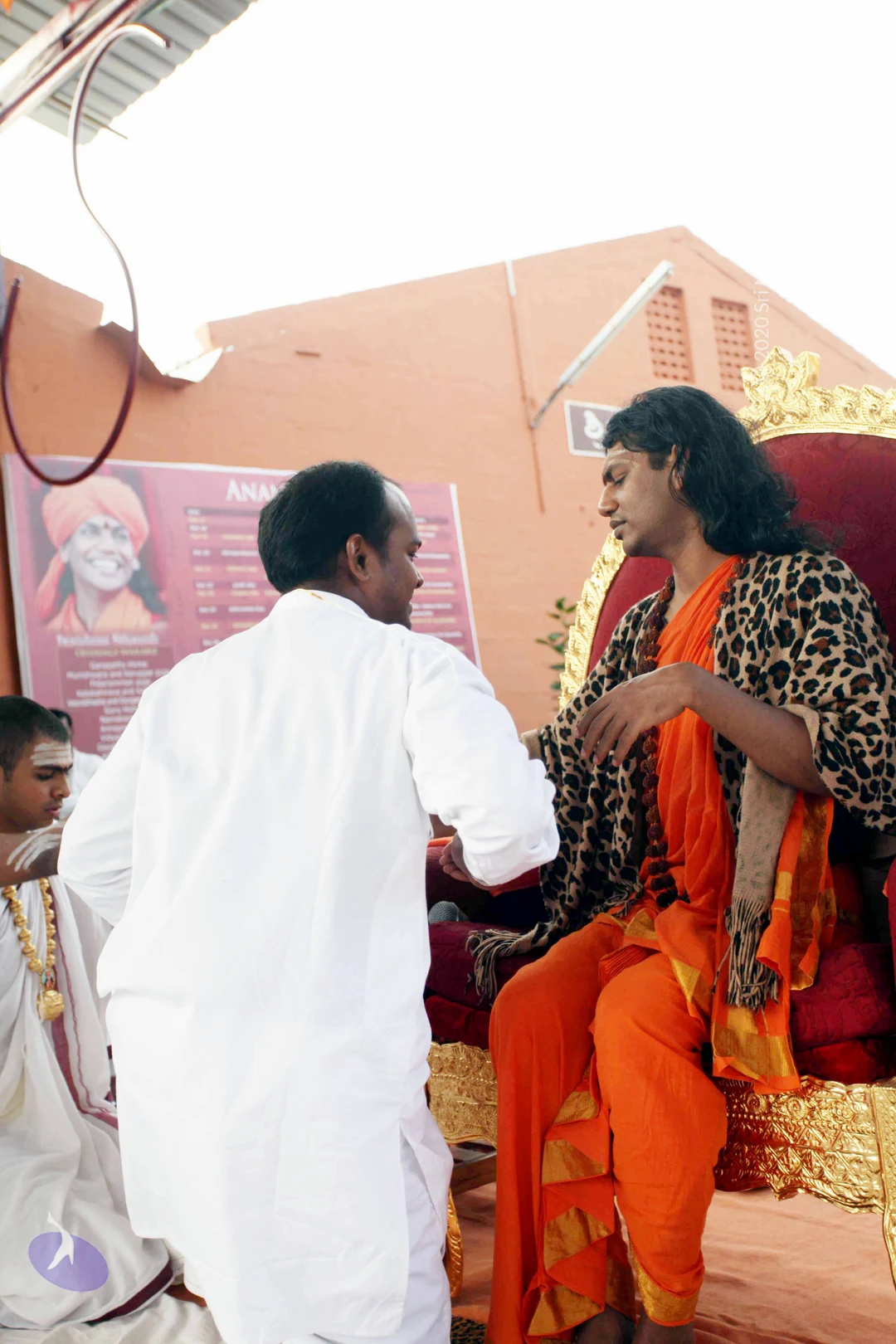
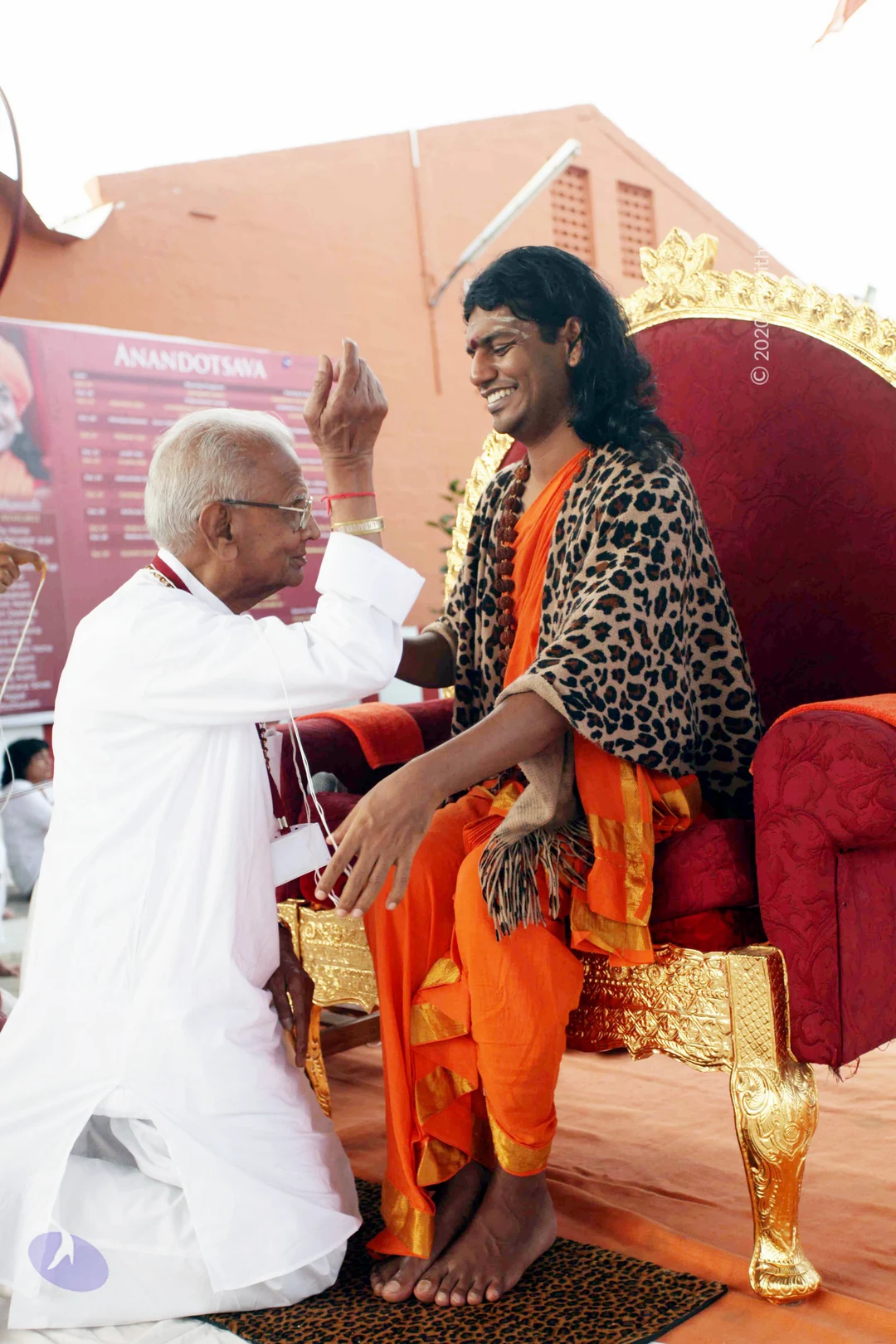
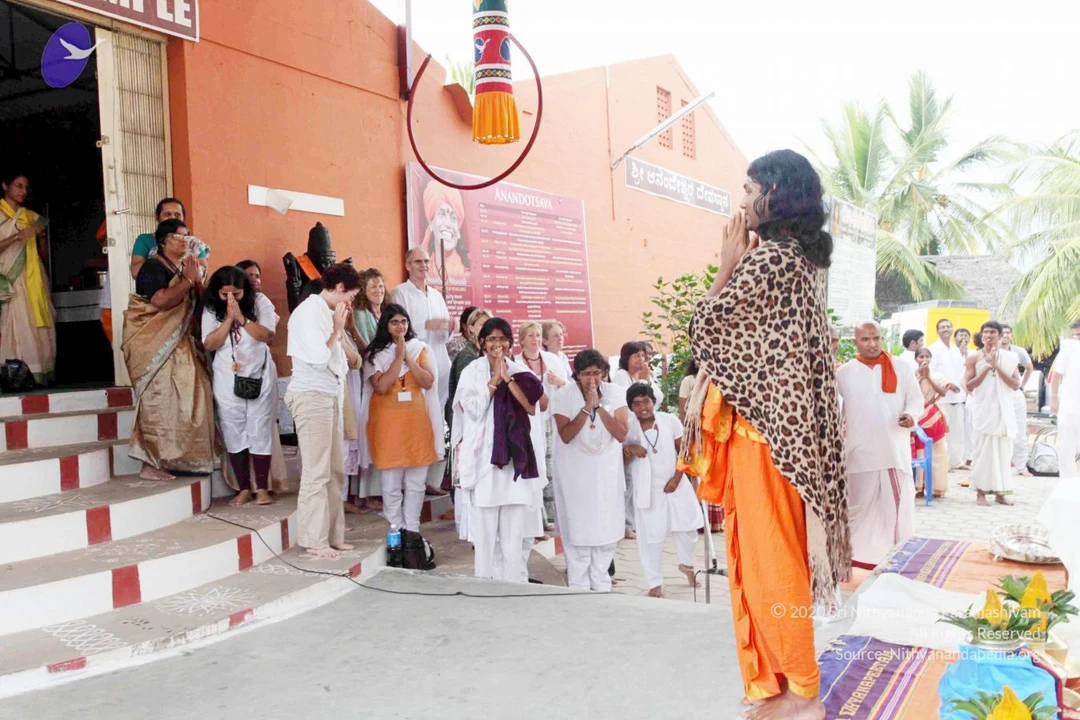
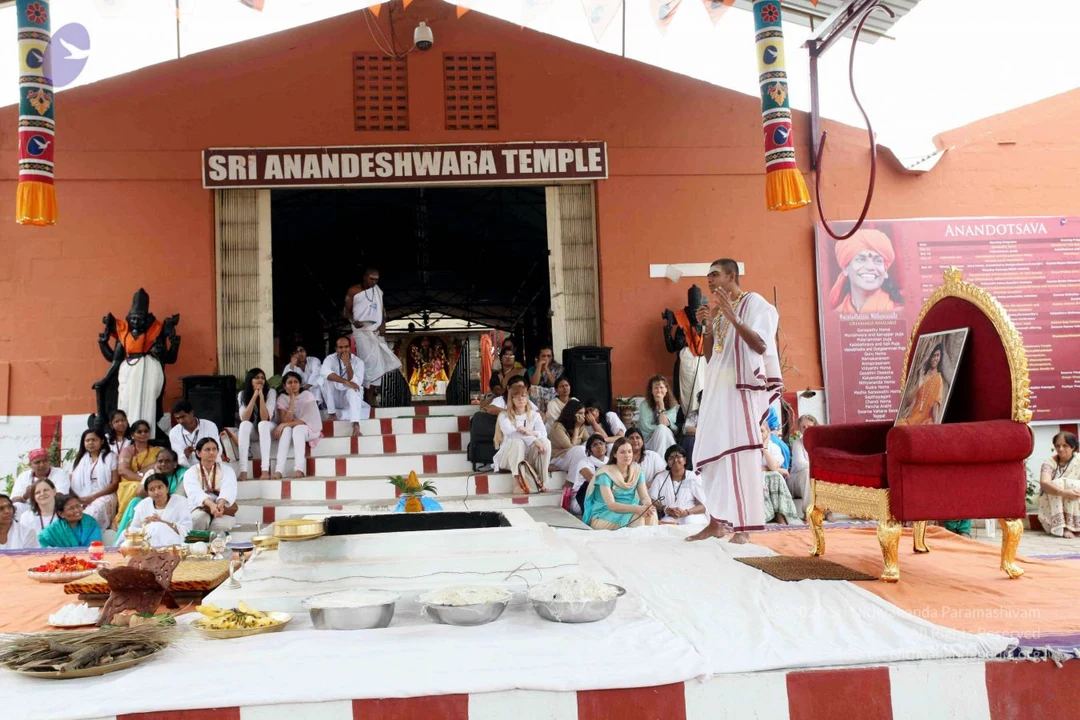
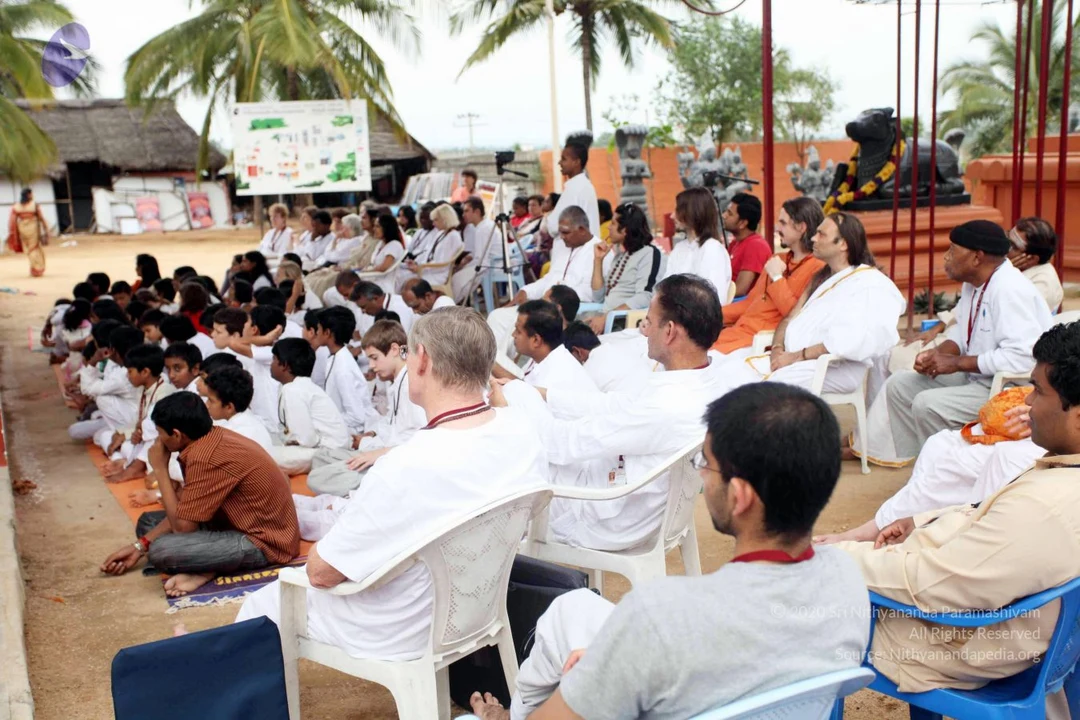
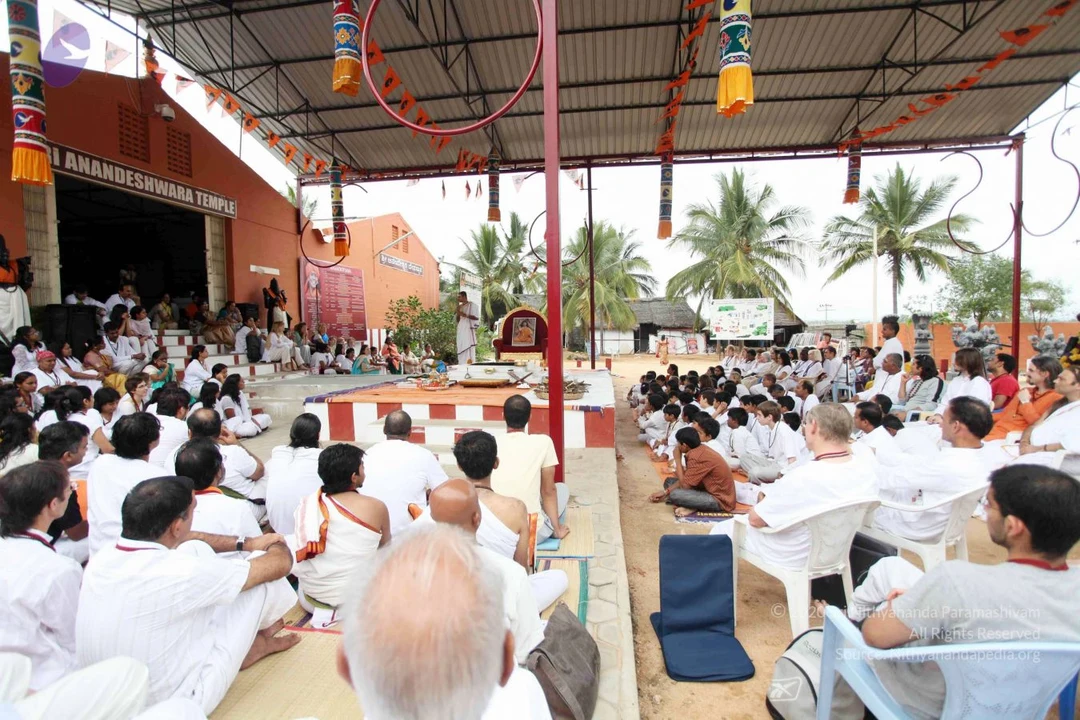
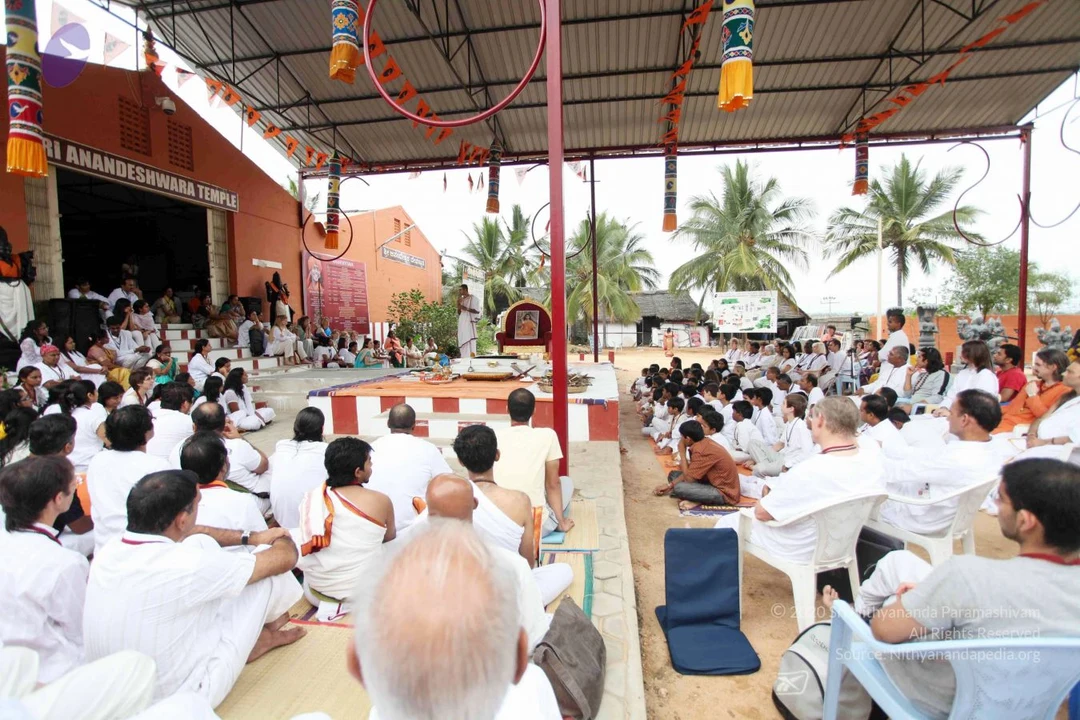
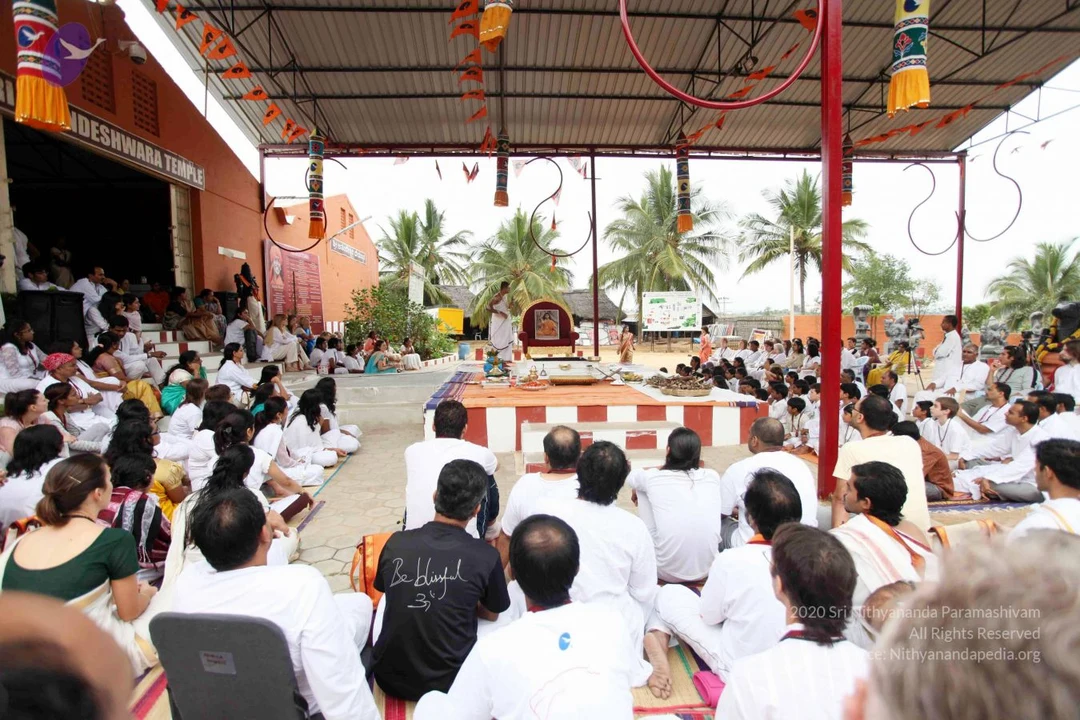
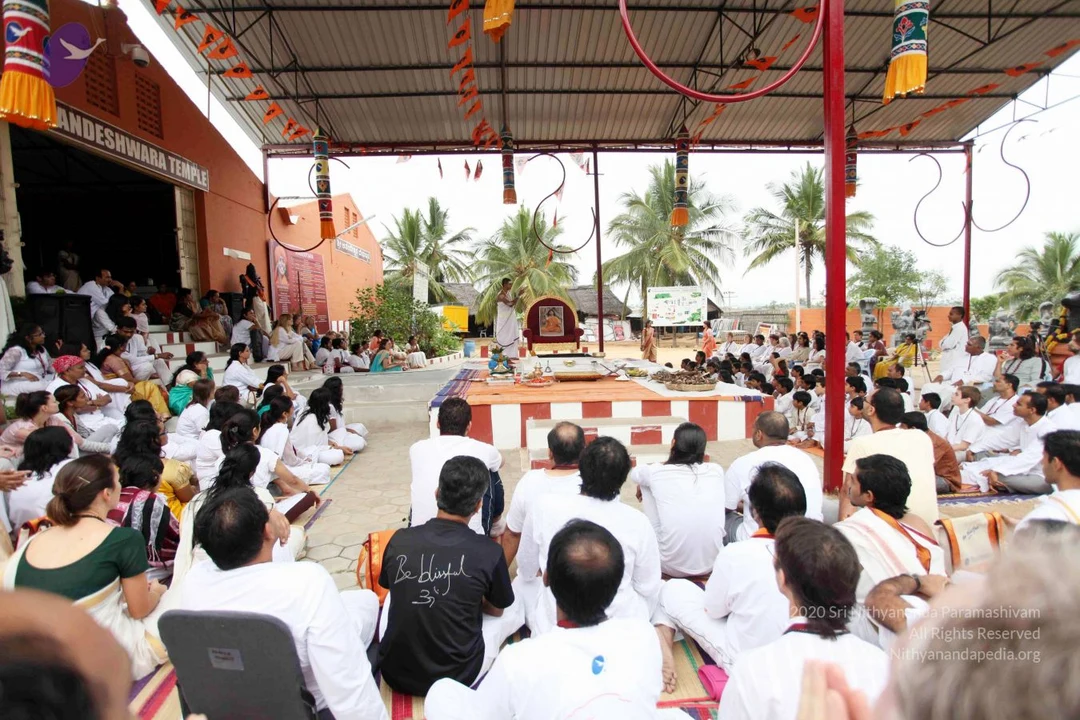
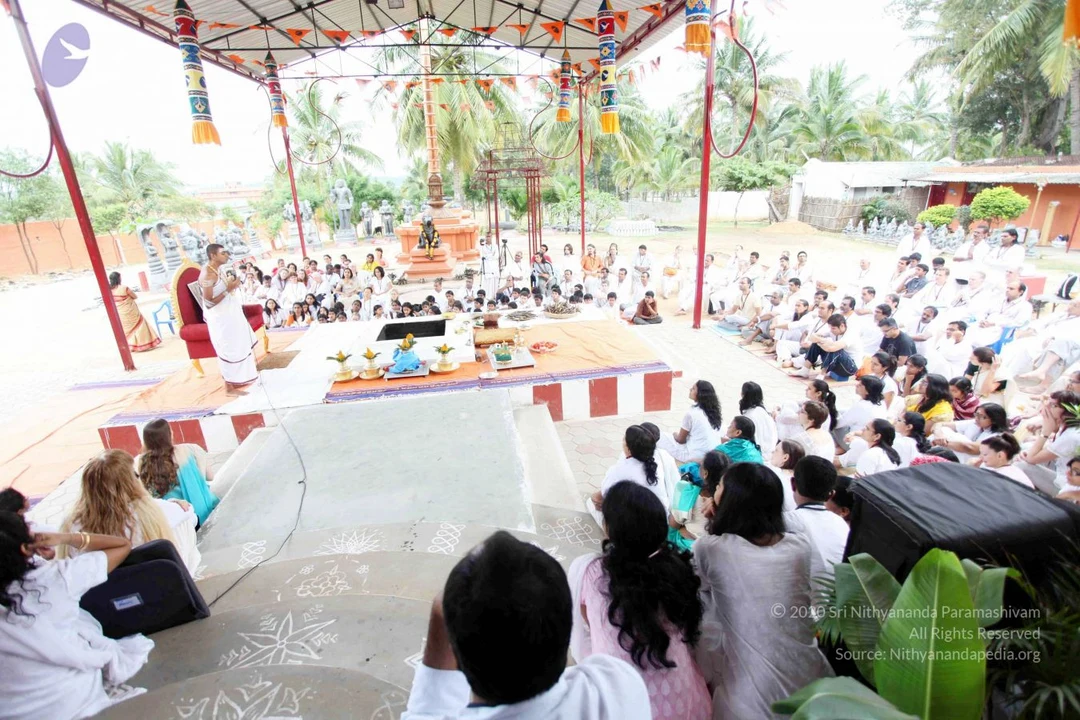
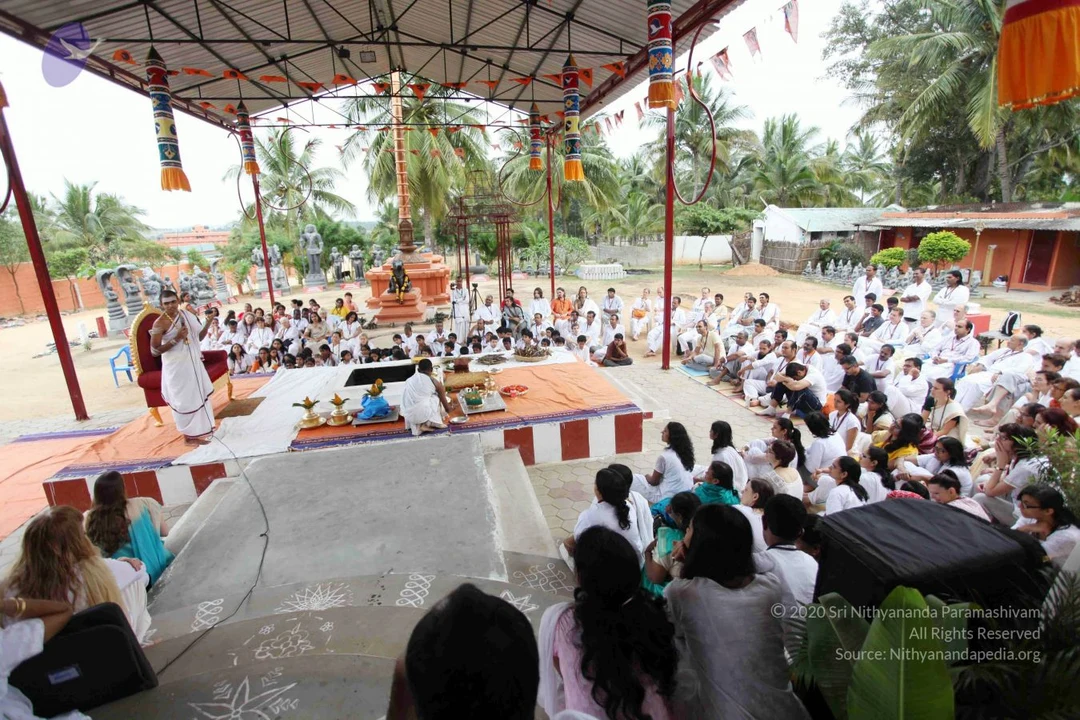
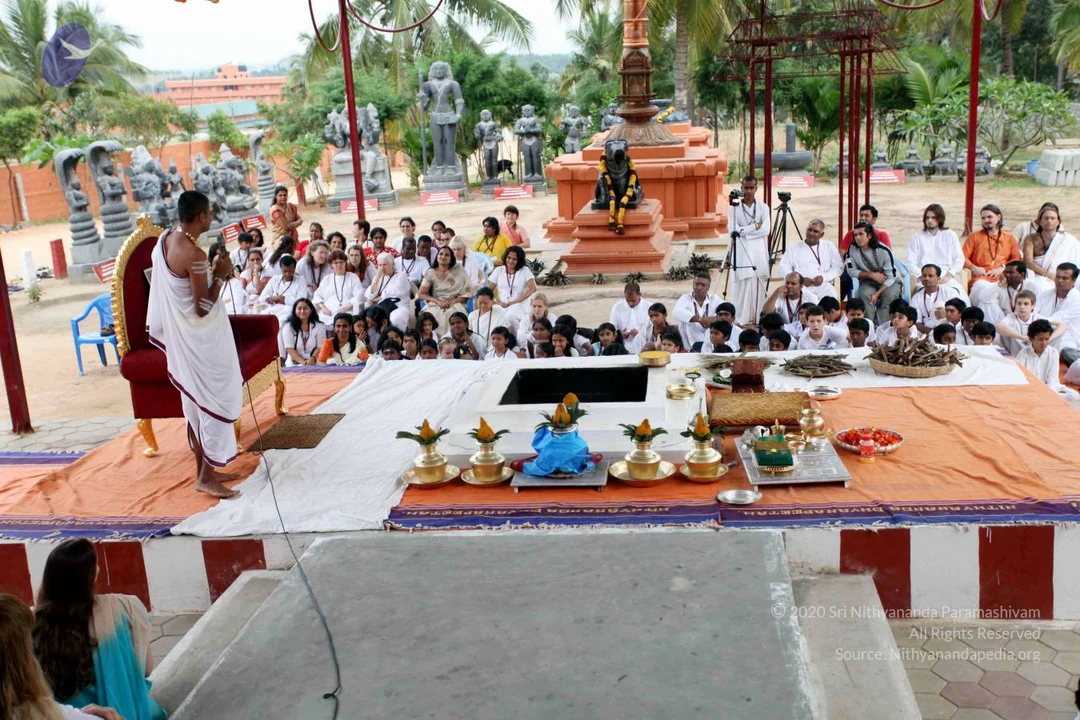
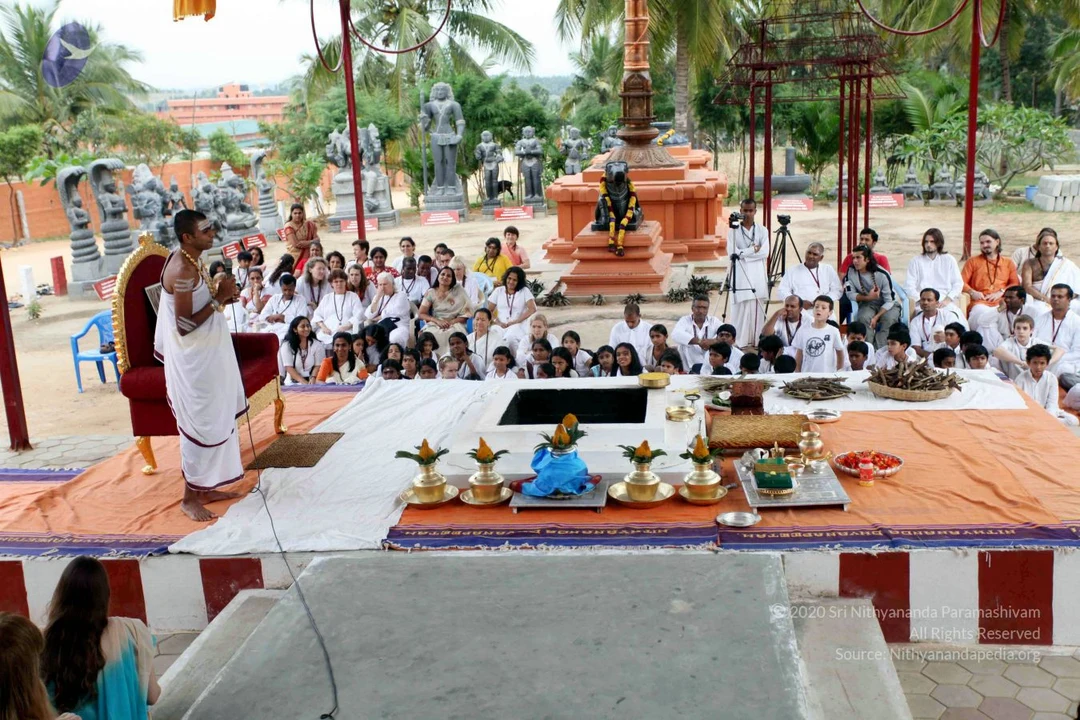
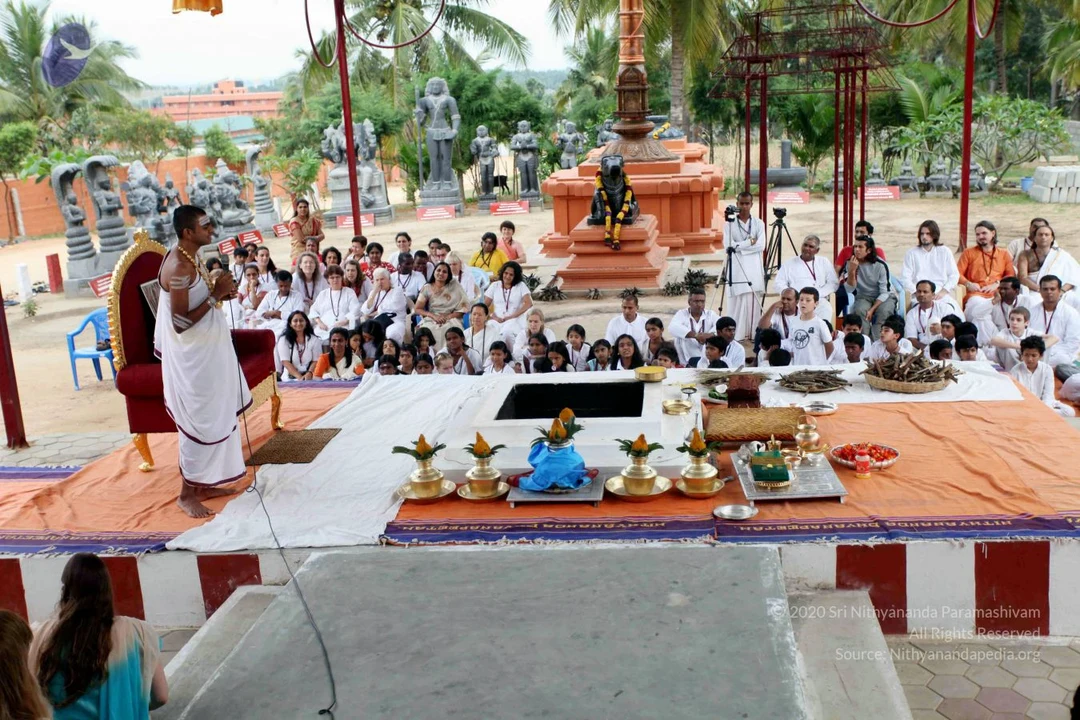
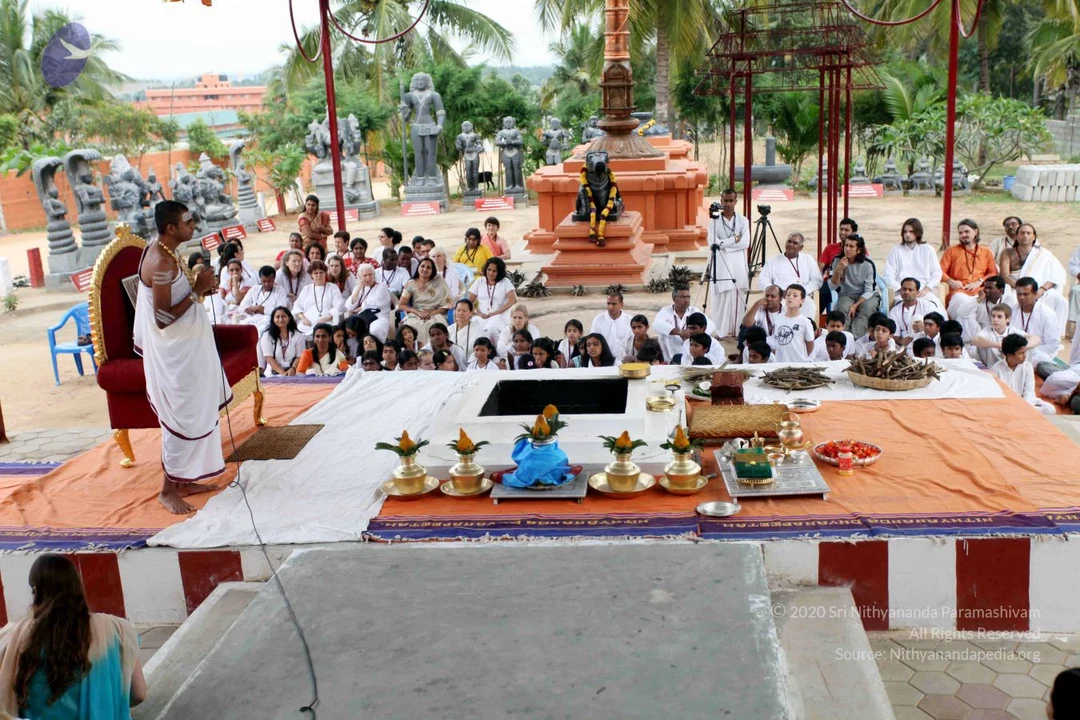
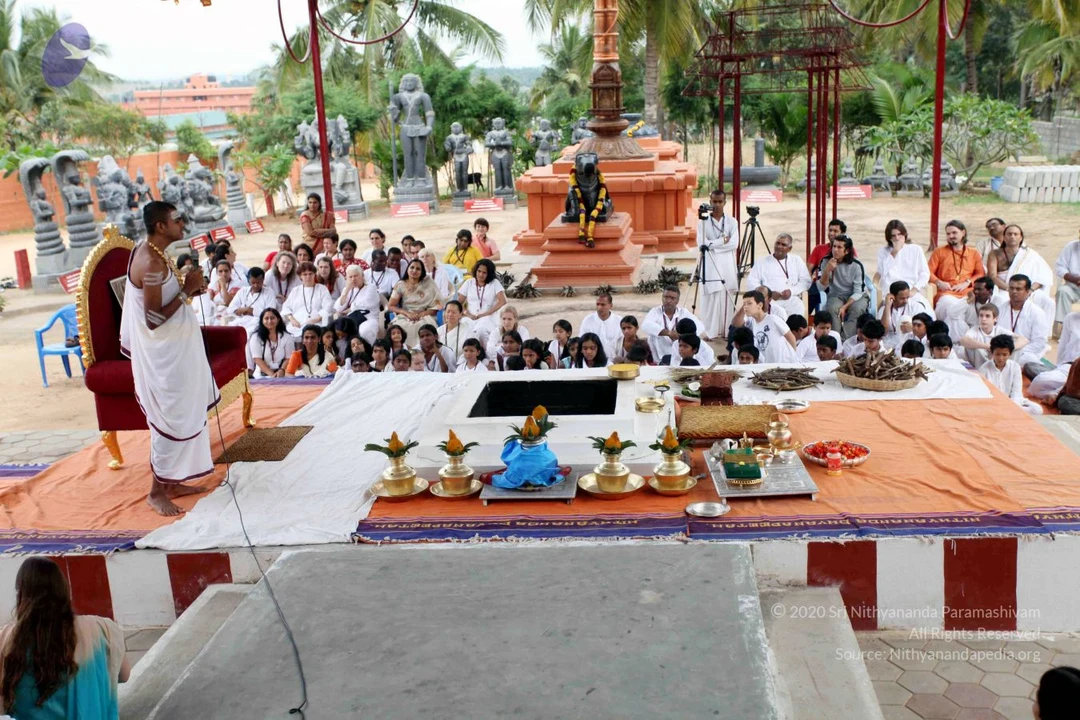
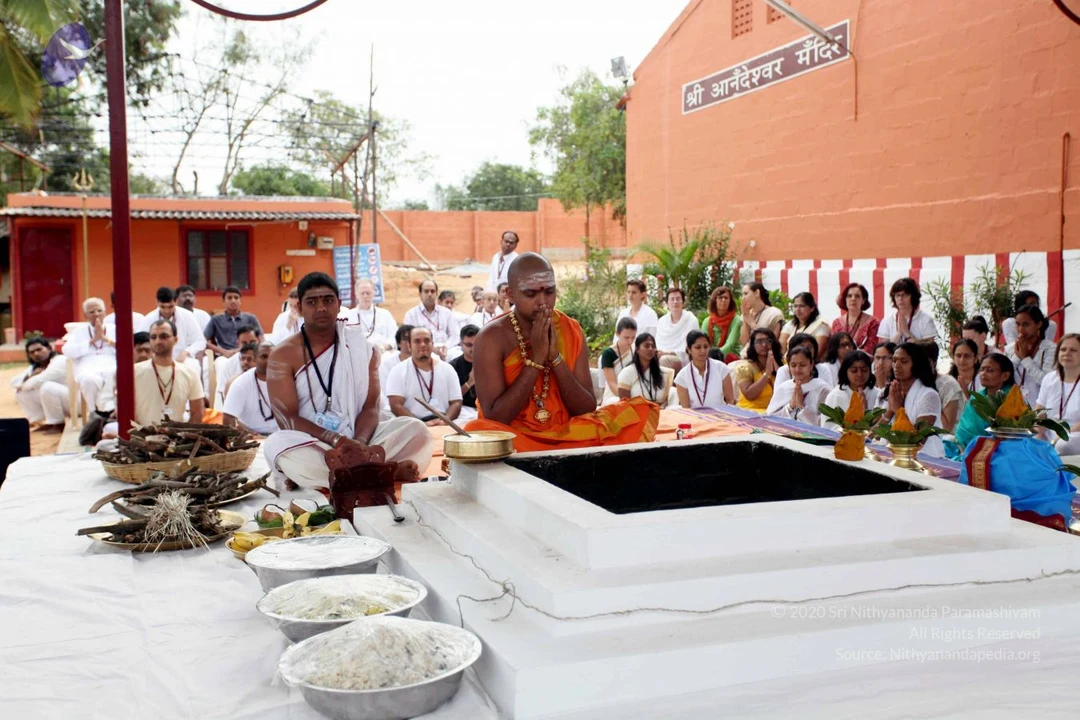
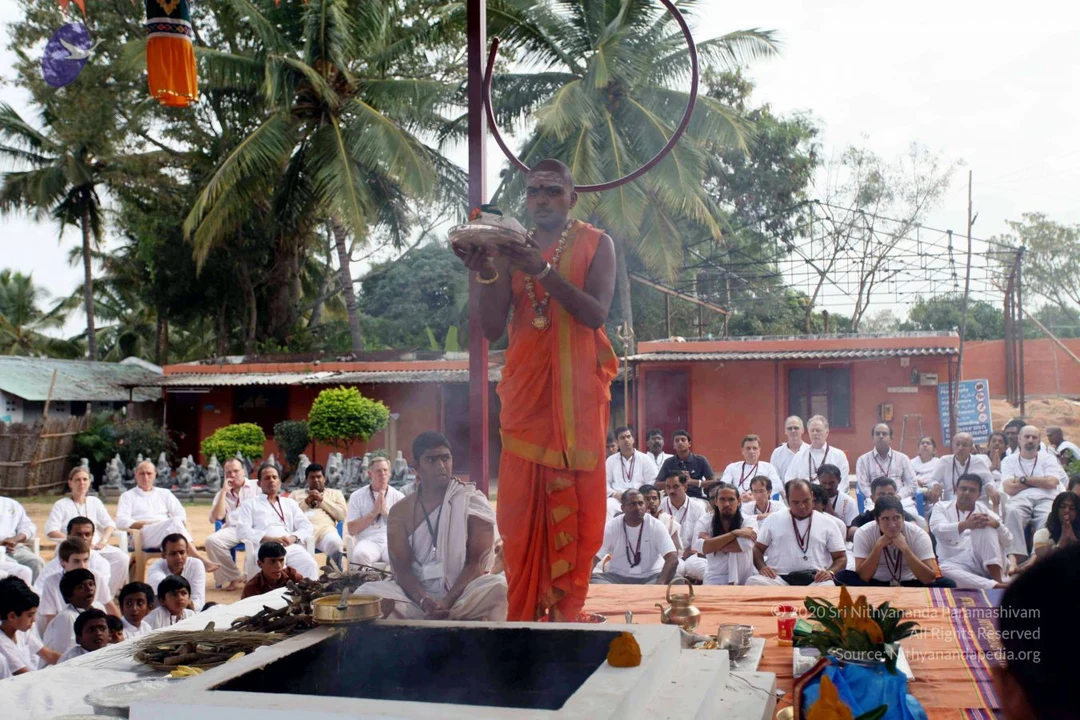
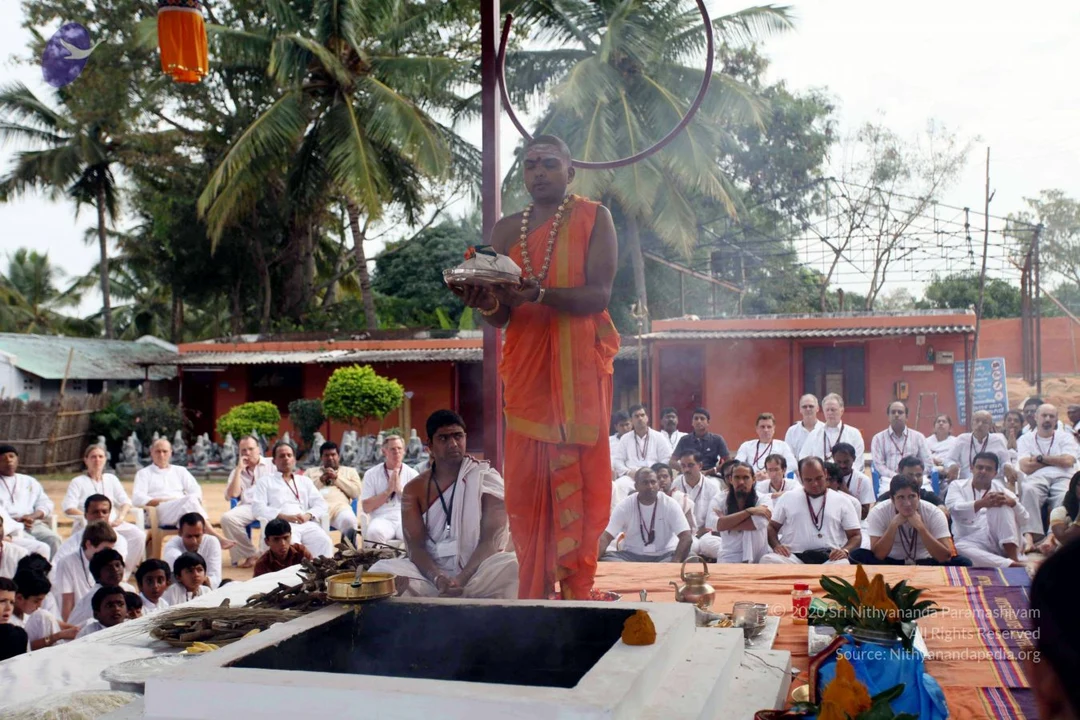
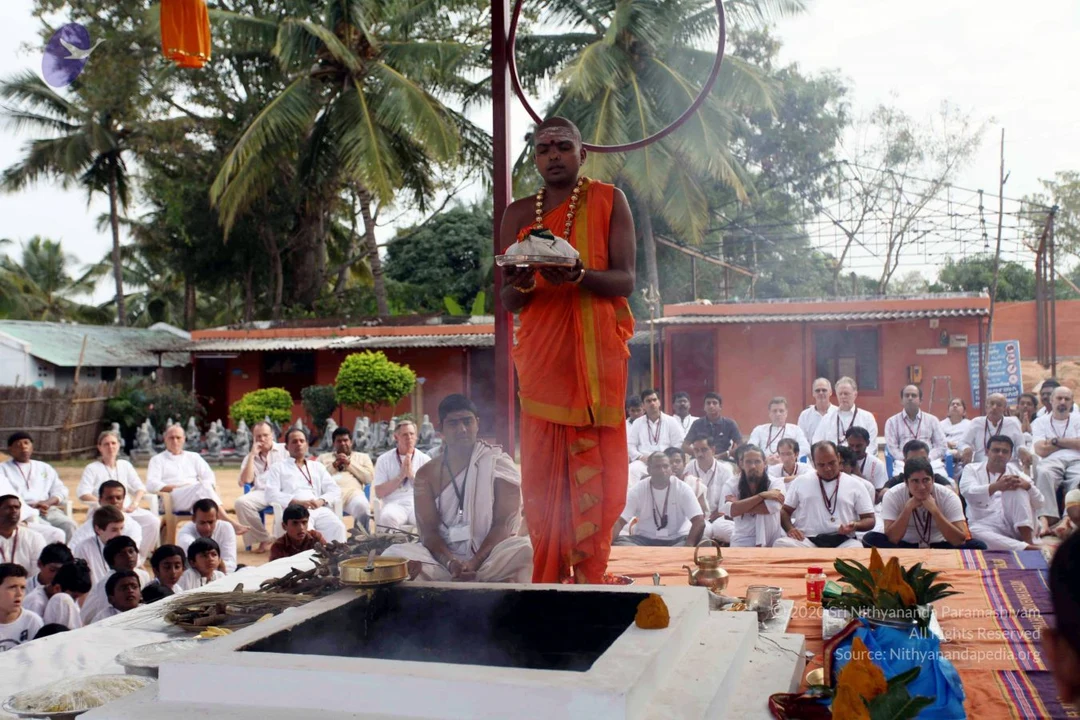
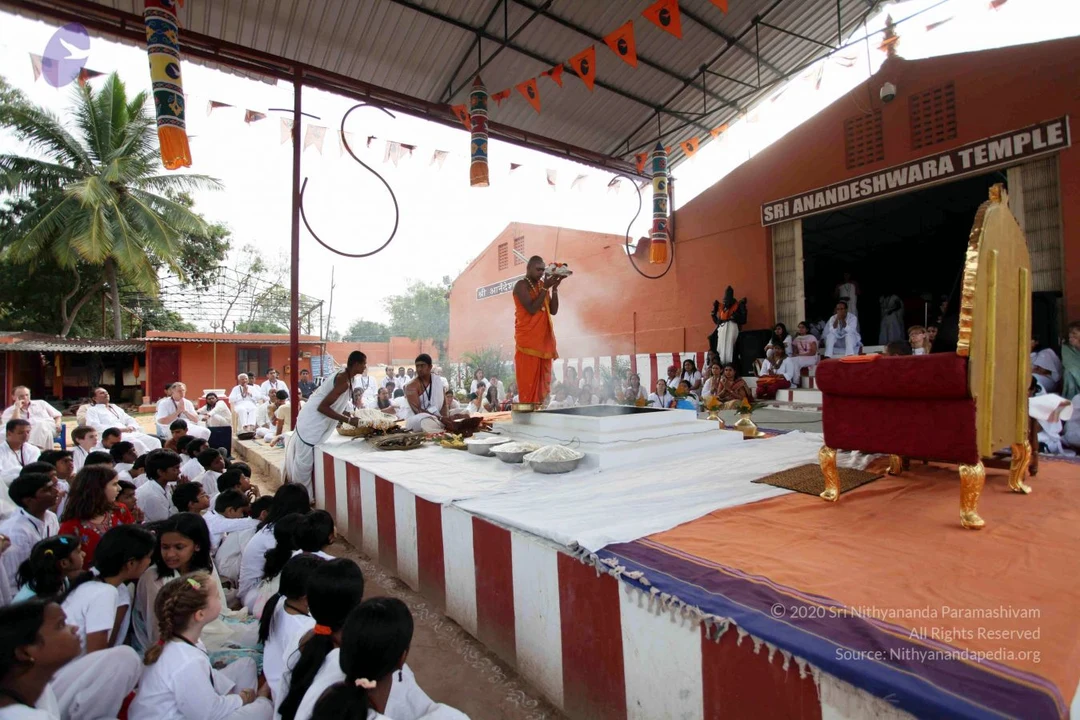
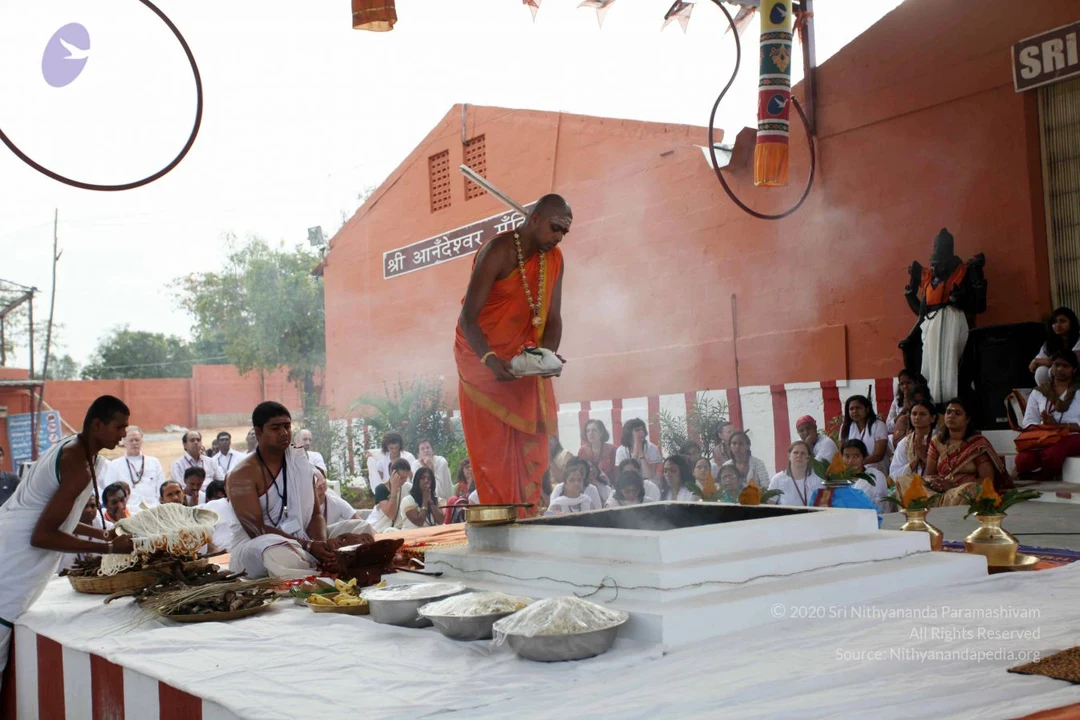
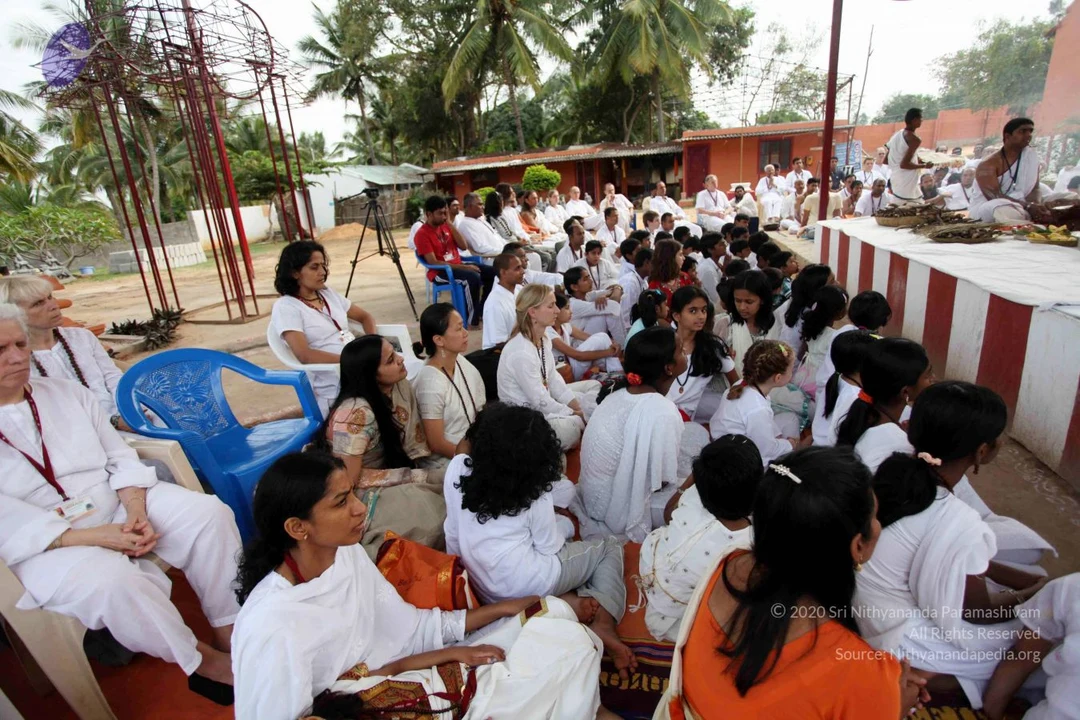
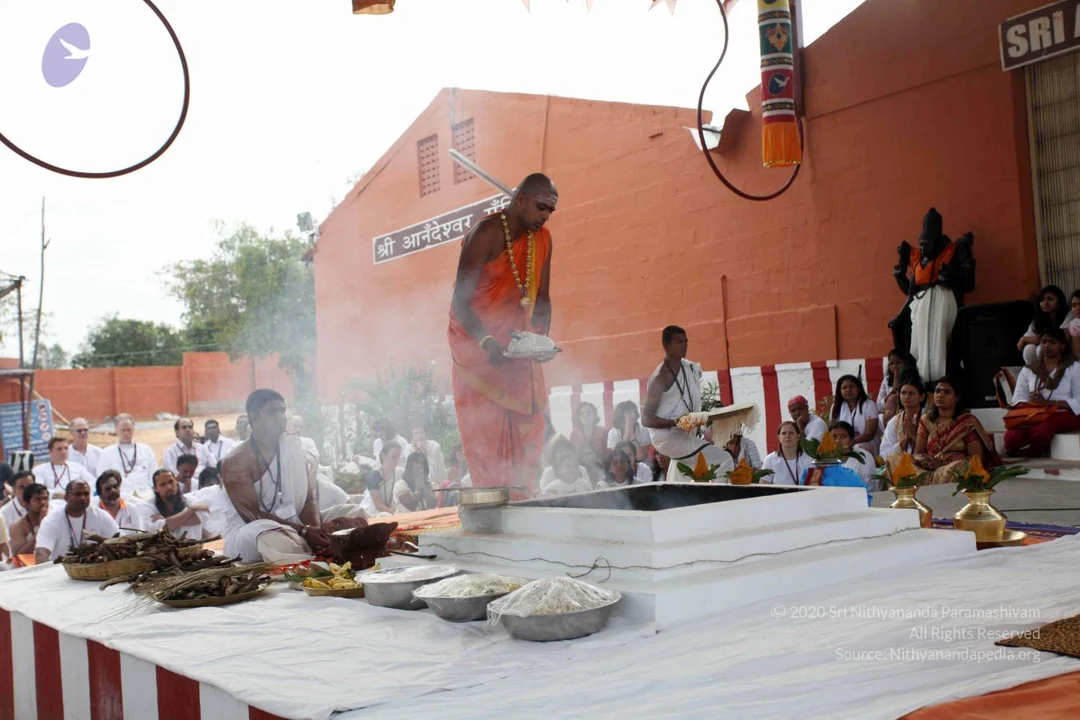
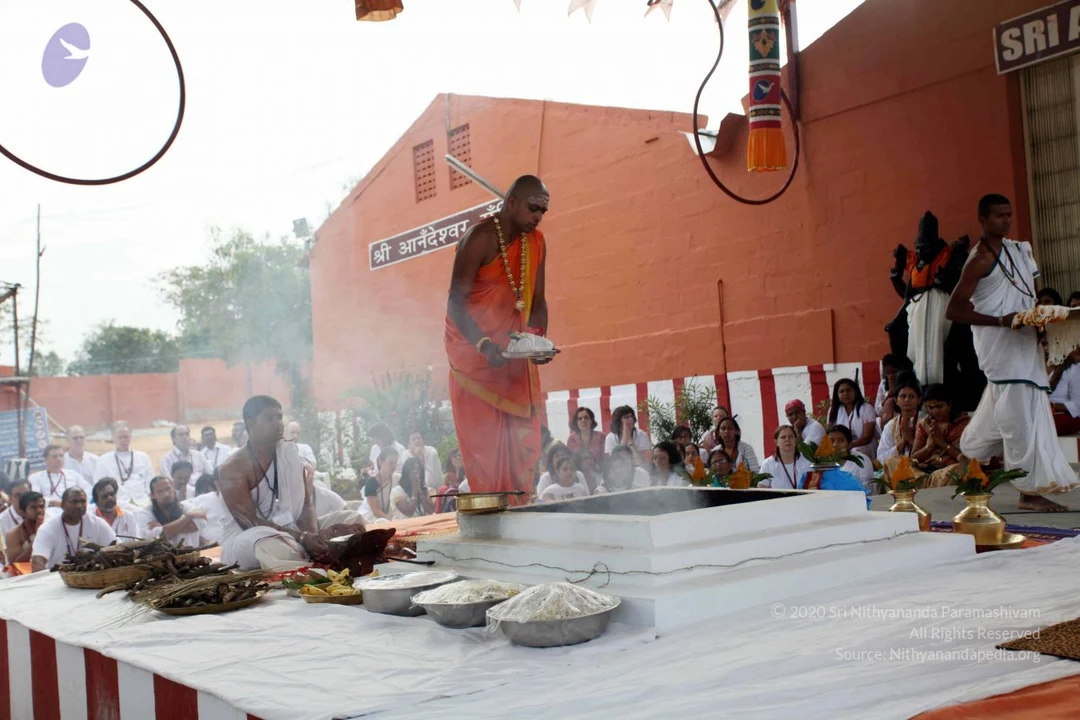
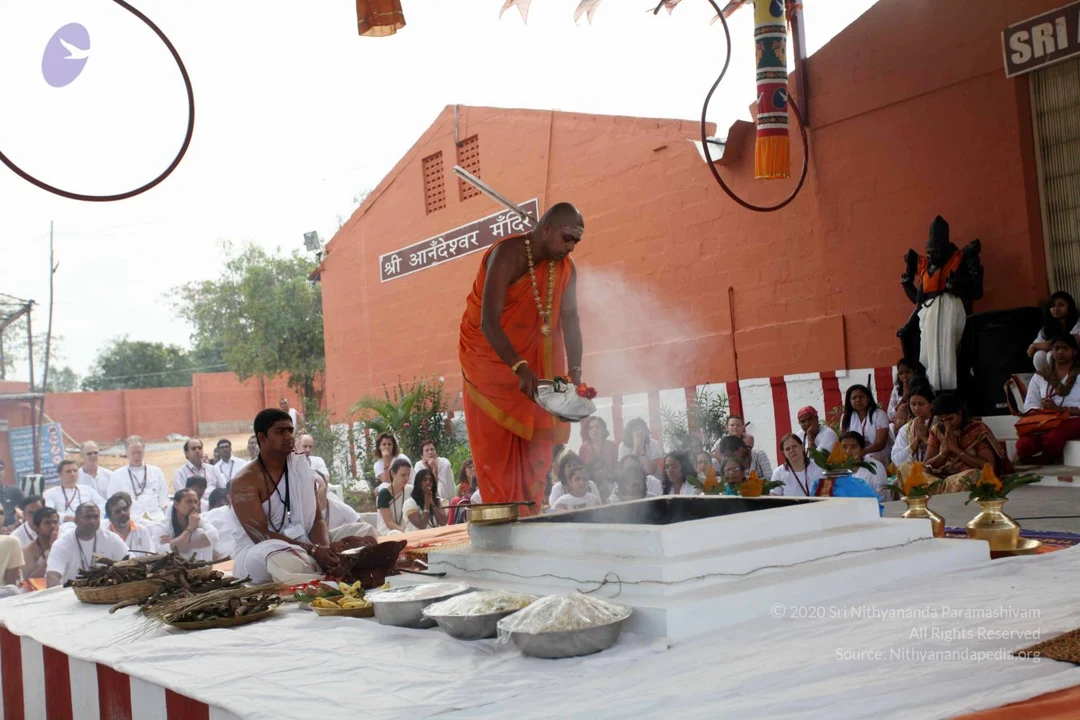
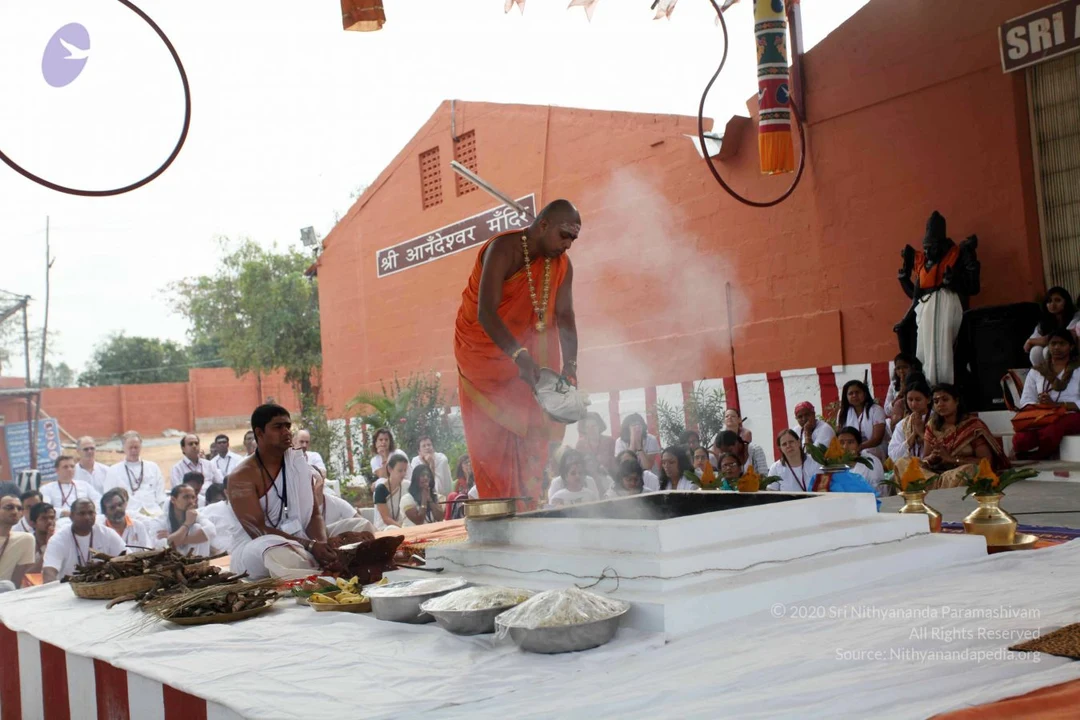
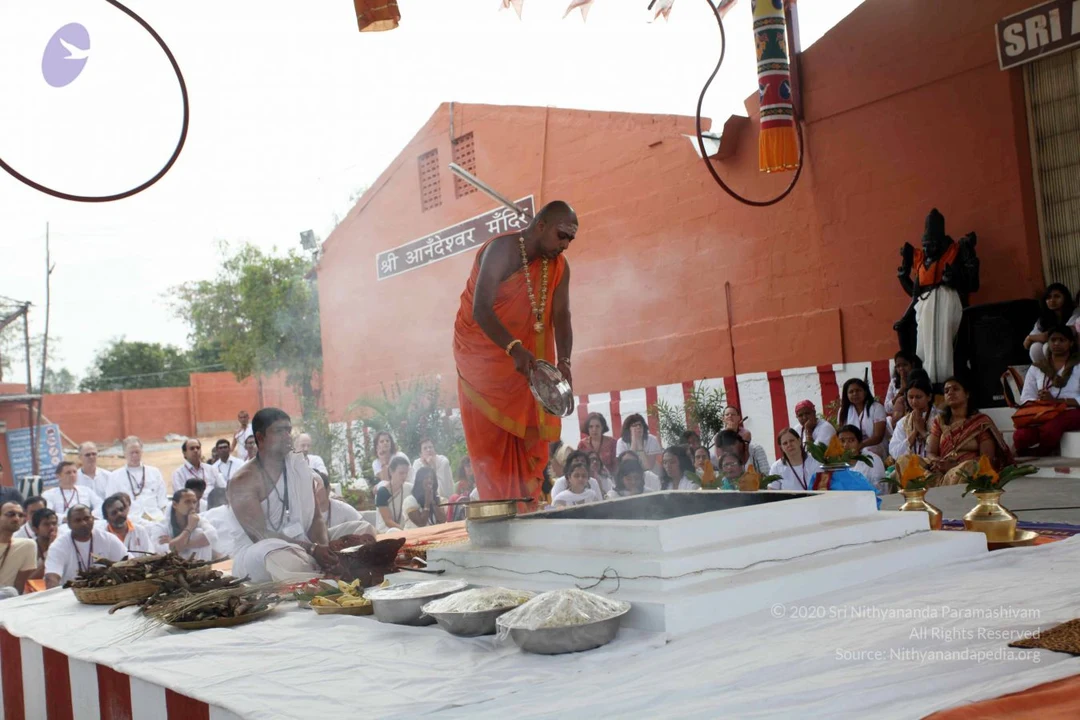
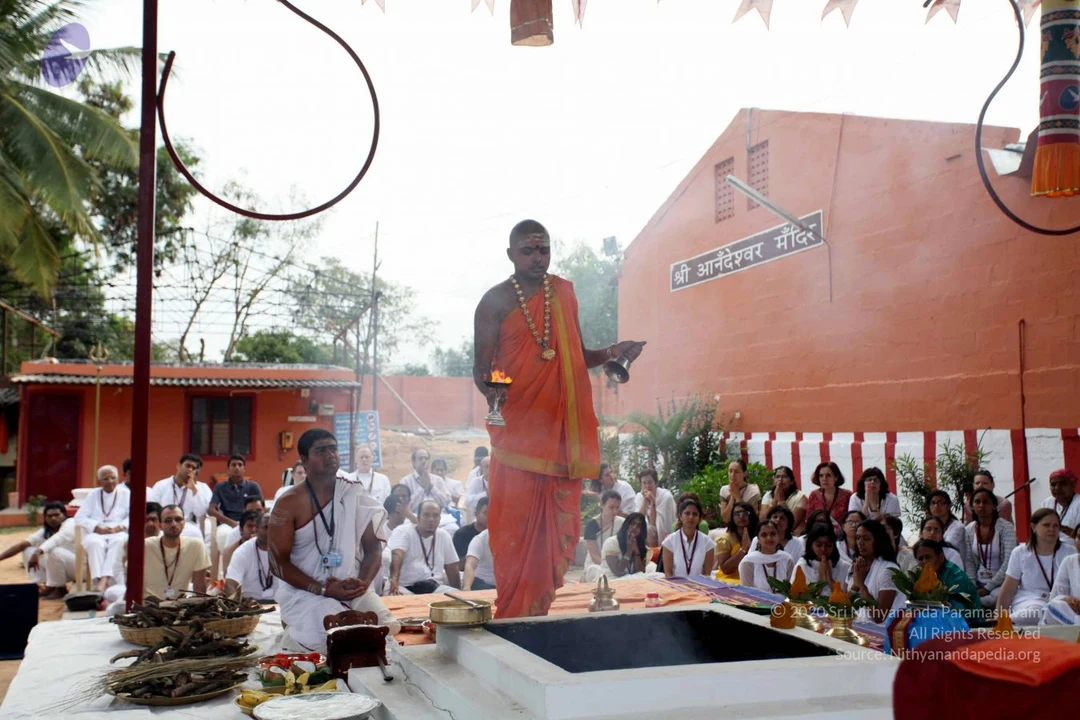
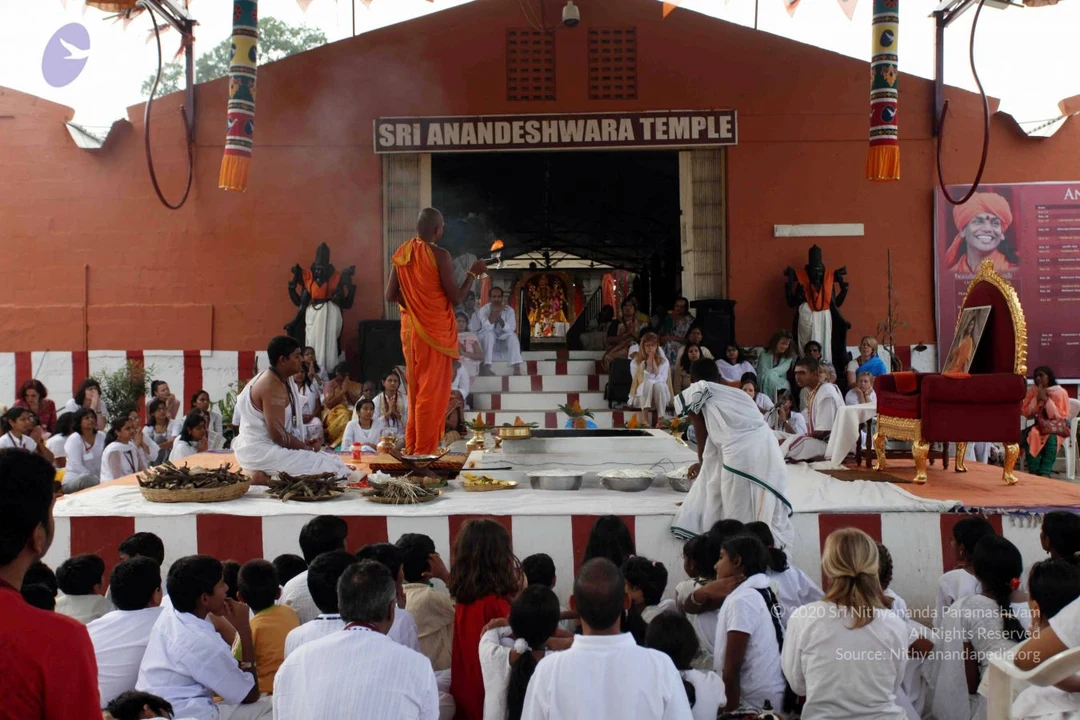
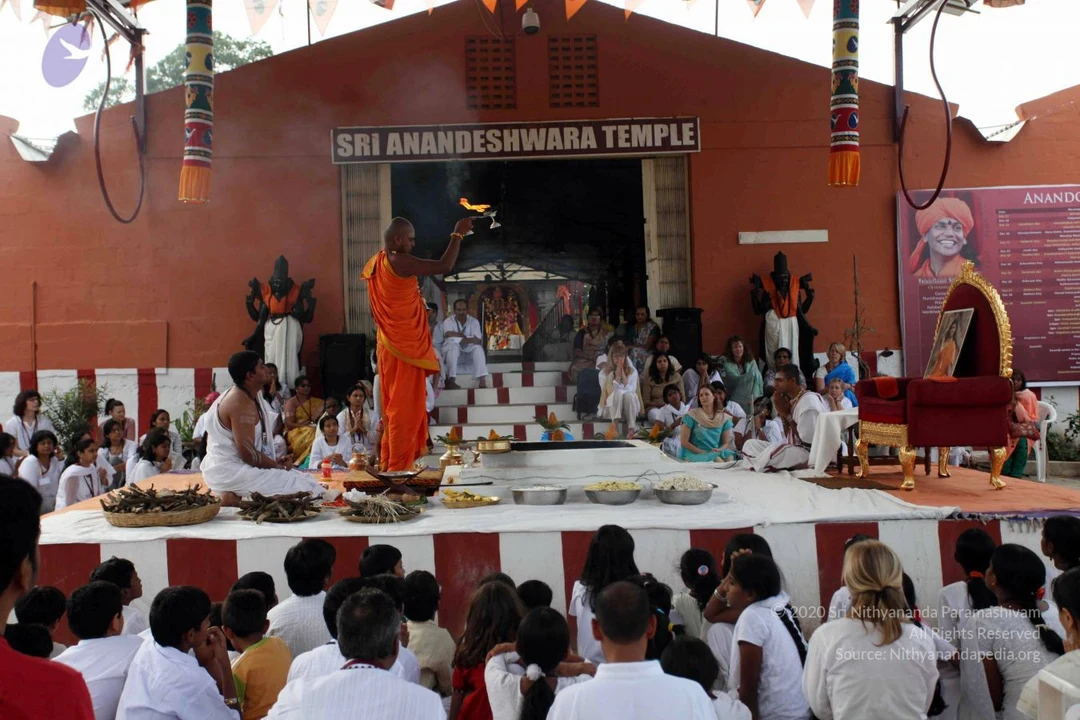
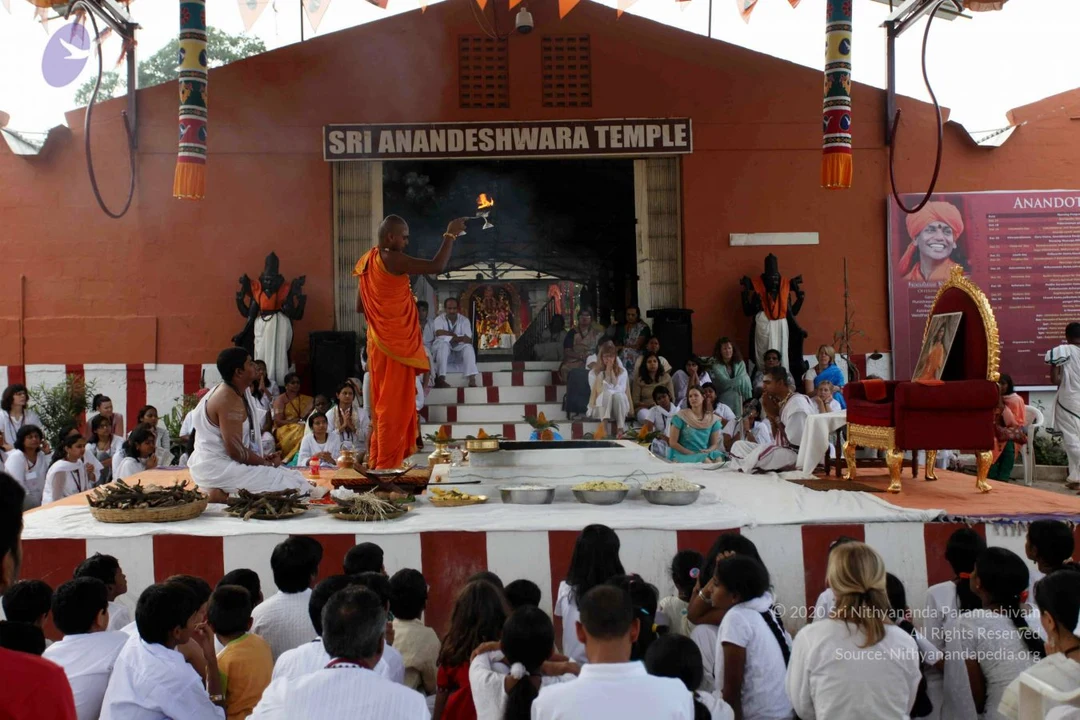
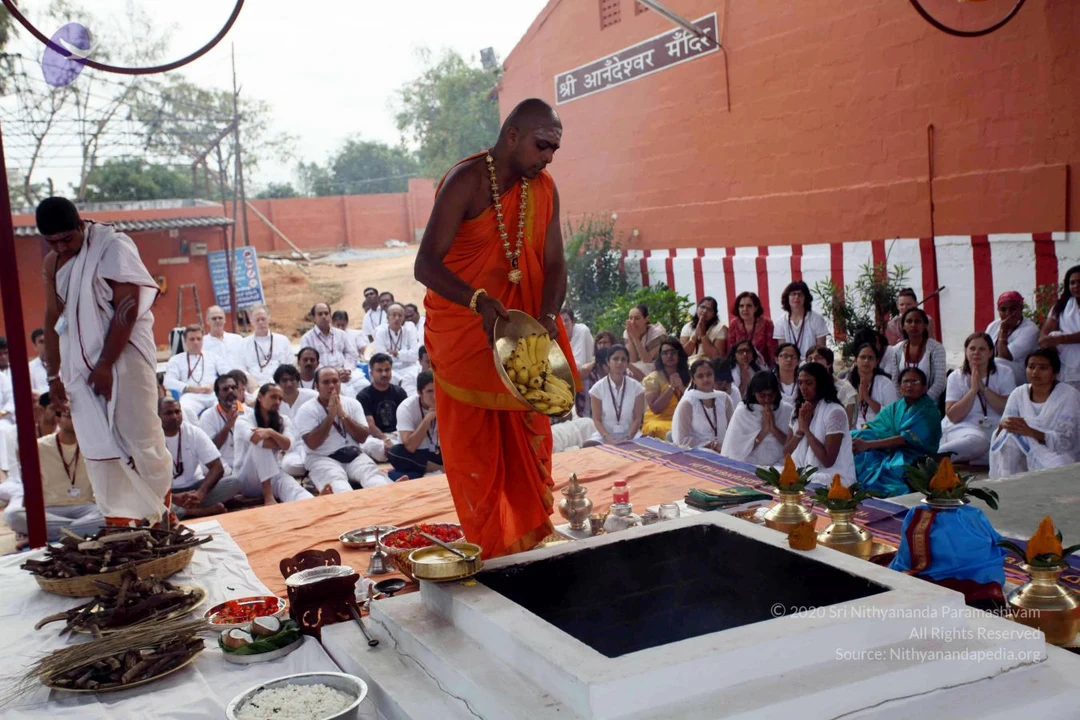
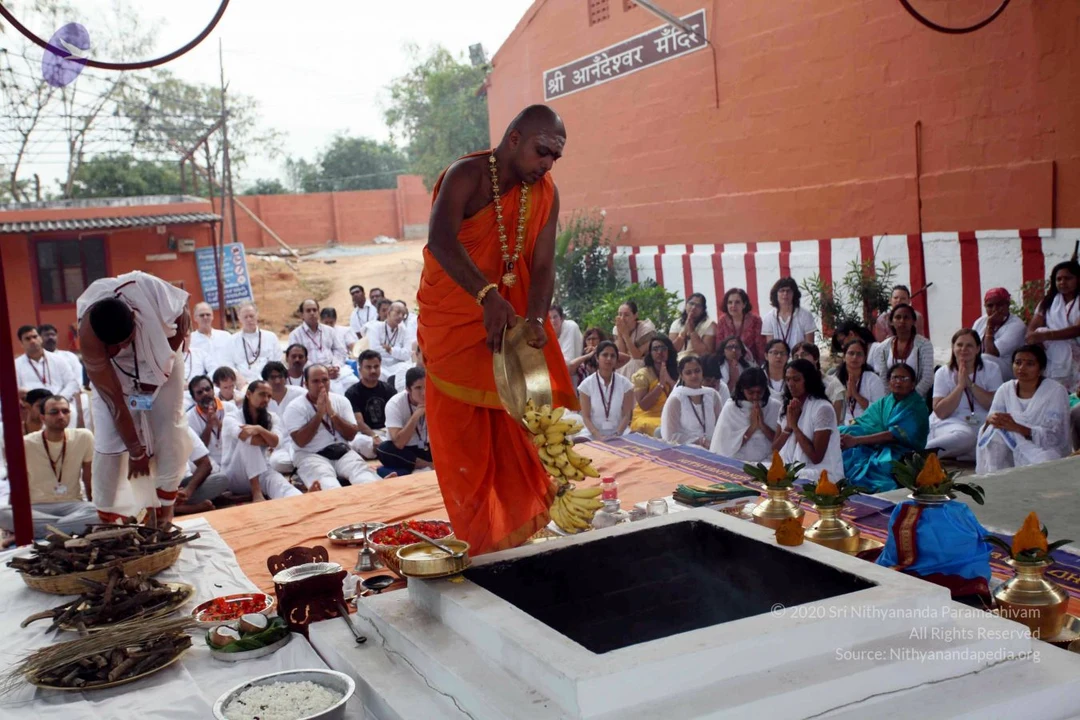
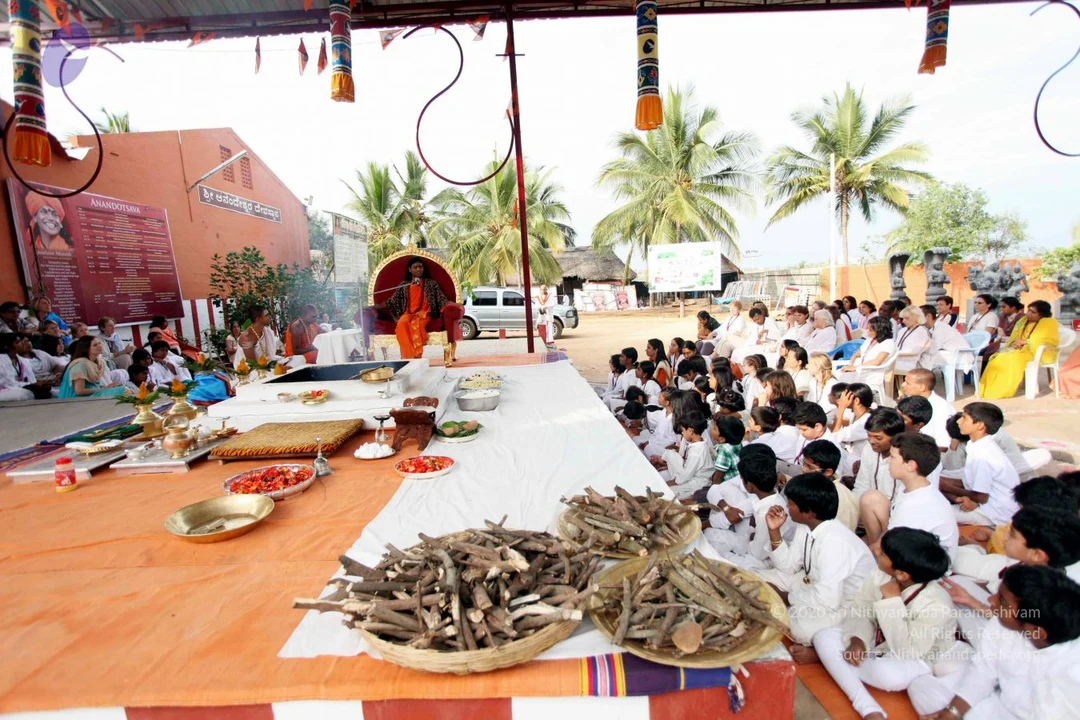
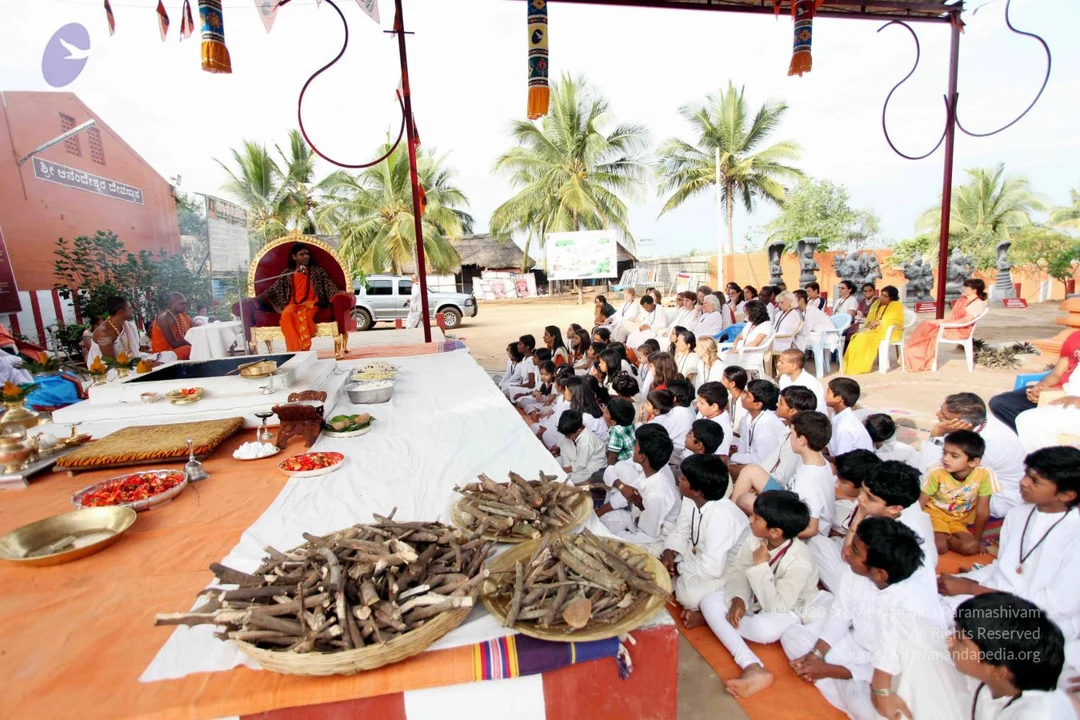
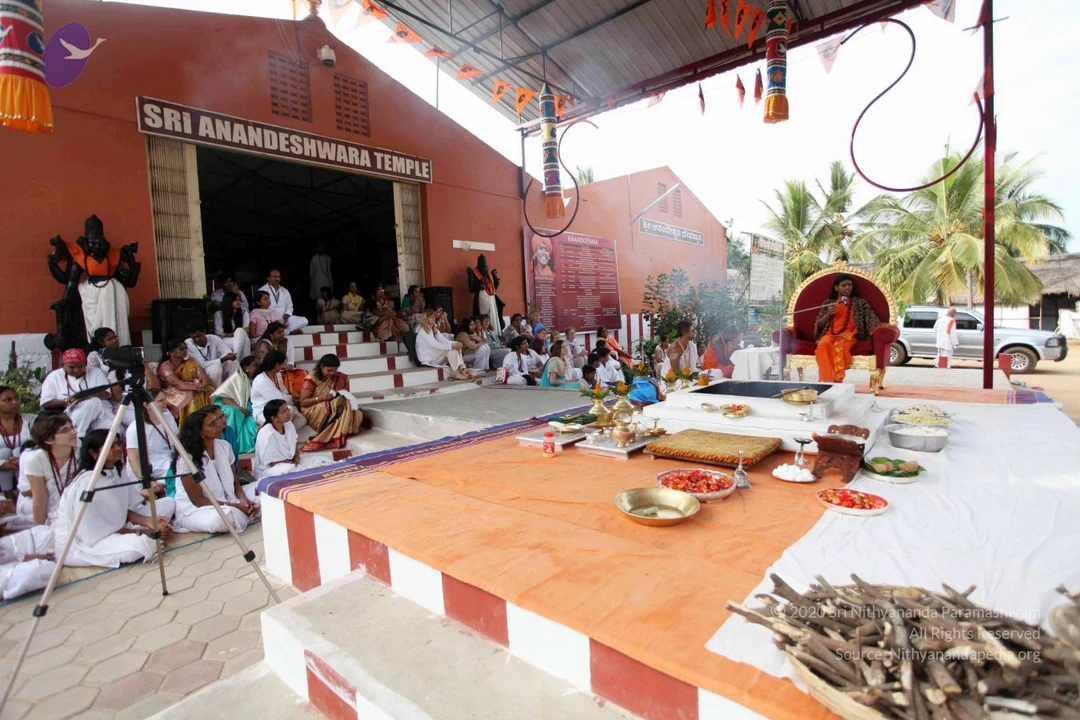
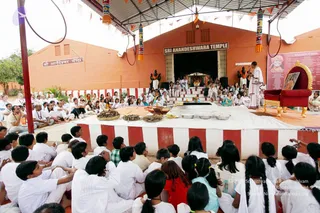
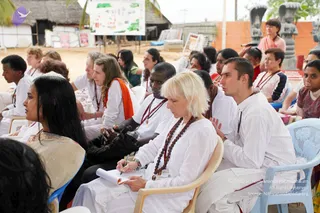
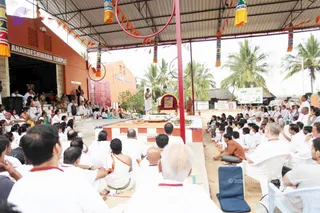
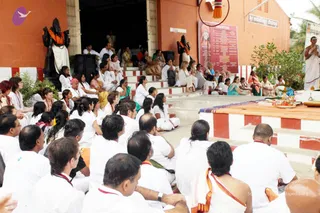
Outdoor temple courtyard with a red-and-white striped platform in front of a brick shrine labelled SRI ANANDESHWARA TEMPLE, with a hanging text sign above reading Sri Anandeshwara Mandir. A large crowd of mostly white-clad devotees, many children, sits on mats facing the platform, which holds brass bowls, a fire pit and a stack of dried offerings. On the right, a standing man in white robes with a white sash gestures while speaking, beside an empty red-and-gold throne and a framed portrait labelled ANANDOTSAVA on a red panel. Strings of pennants and colourful hanging cloths decorate the open shed roof. Several people in the crowd are visibly seated at the platform's edge.A seated audience of many devotees in white ritual clothing attends an outdoor satsang discourse. In the foreground a woman with short blonde hair and a rudraksha mala wears white and writes in a notebook with a pen. Beside her a man in a white shirt and white dhoti-style clothing with a rudraksha mala sits attentively. Behind them rows of people sit on white and blue plastic chairs, several in white with red-brown malas, one woman in an orange shawl. A stone statue of a deity murti stands at the right edge beside an orange wall, and a sign board with a map hangs in the background.Outdoor satsang under a corrugated metal roof strung with colourful tassels and a red hoop, with a sign reading "Anandeshwara Temple" on a terracotta building. A central raised platform holds a red-and-white striped dais with brass vessels and offerings, beside an empty ornate red throne bearing a portrait. Many seated devotees in white clothes and red scarves face the platform, with some on white plastic chairs in front. A standing figure in white dhoti and shawl speaks near the centre, and a woman in orange sari stands by the throne. Palm trees and thatched huts frame the open ground.A large outdoor gathering of seated devotees in white clothes sits on steps and courtyard ground in front of an orange-walled temple building with a dark doorway. Many attendees wear white kurtas and white saris, some with red neck cords, and a few wear orange or teal saris. In the foreground, a man in a white shirt and a man in a white dhoti with orange-striped shawl sit with their backs to the camera. On the right, a man in a white dhoti and shawl stands on a raised platform with a brass kalasha and oil lamps, and a red hanging banner with a poster reads a list in Kannada script. Two dark statues of standing figures flank the entrance, one with an orange cloth. An orange-tasselled hanging item is visible near the top. The scene reflects a satsang or talk.Outdoor satsang under a open-sided pavilion with red support poles and hanging multicoloured tassel decorations. A man in white dhoti and white shirt stands on a raised platform, hands joined, before a seated wooden chair with red upholstery. Before him sits a small blue deity murti on a puja setup with brass oil lamps and offerings. Behind the platform stands a red-and-orange shrine with a central stone sculpture and figures in a stone-lined courtyard. A large group of devotees in white ritual clothes sits on the floor, many women in white and some in pink, teal and blue saris. Palm trees surround the open compound.A photograph of an outdoor satsang held under a canopy with colourful hanging pennants and tassels. A man in white ritual dhoti and shawl stands on a raised platform beside a red-and-gold chair, with a figure in orange-and-gold attire seated near him. In front, a large audience in white clothing sits on the ground in rows, many with hands folded in namaste. On the platform sit brass kalasha-style vessels, lamps and offerings on a white-and-red edged cloth. Palm trees, stone statues and a small orange building frame the courtyard. Several people in the foreground wear white and pink tops.