Skip to content
Saturday

13 November 2010

Siddha Tradition 1: Nithyananda Morning Satsang (13 Nov 2010) Message

Dated photos
353
Source pages
1
Media
2

November 13 2010

Original wiki page
Contents

Title

Siddha Tradition 1: Nithyananda Morning Satsang (13 Nov 2010) Message

Narration

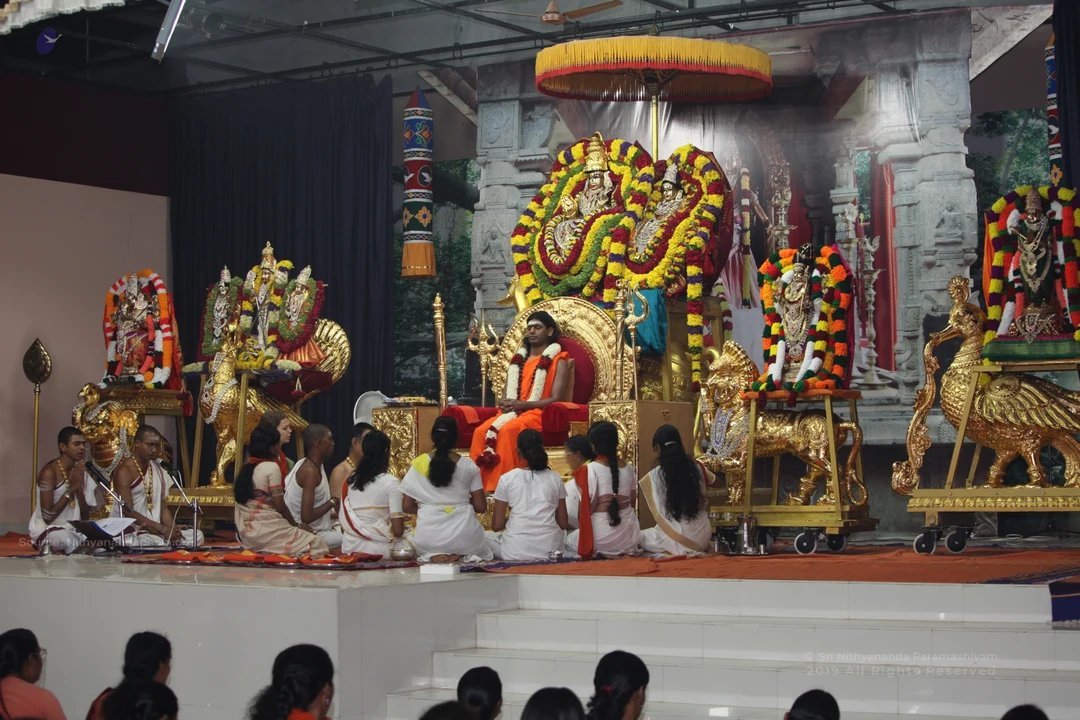
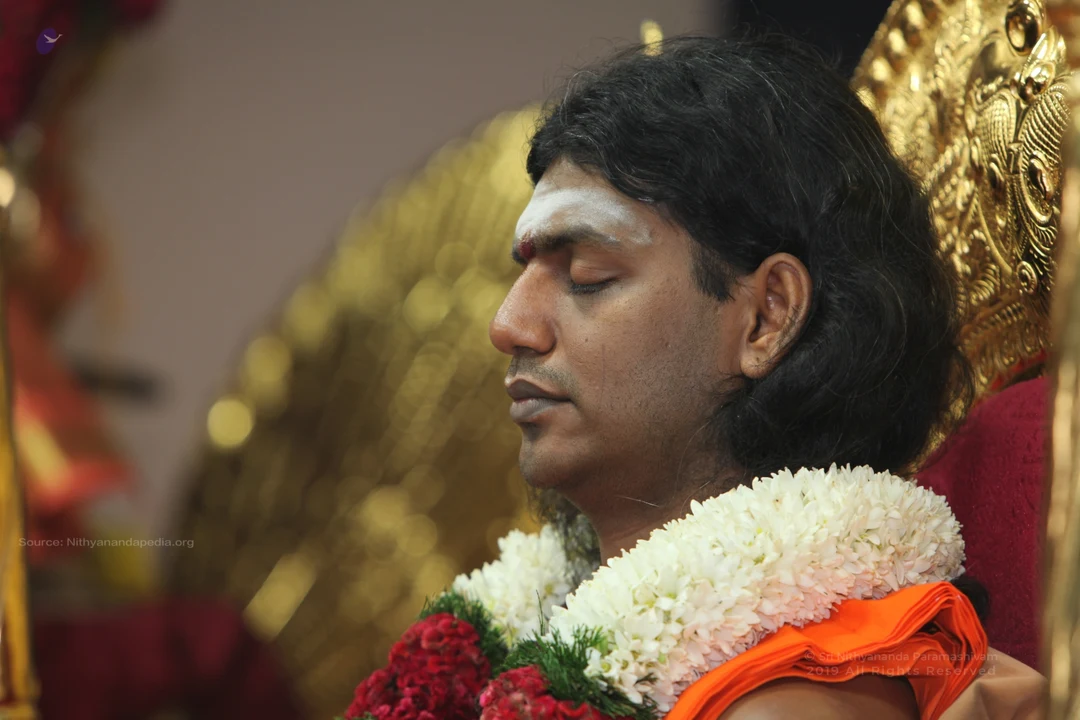
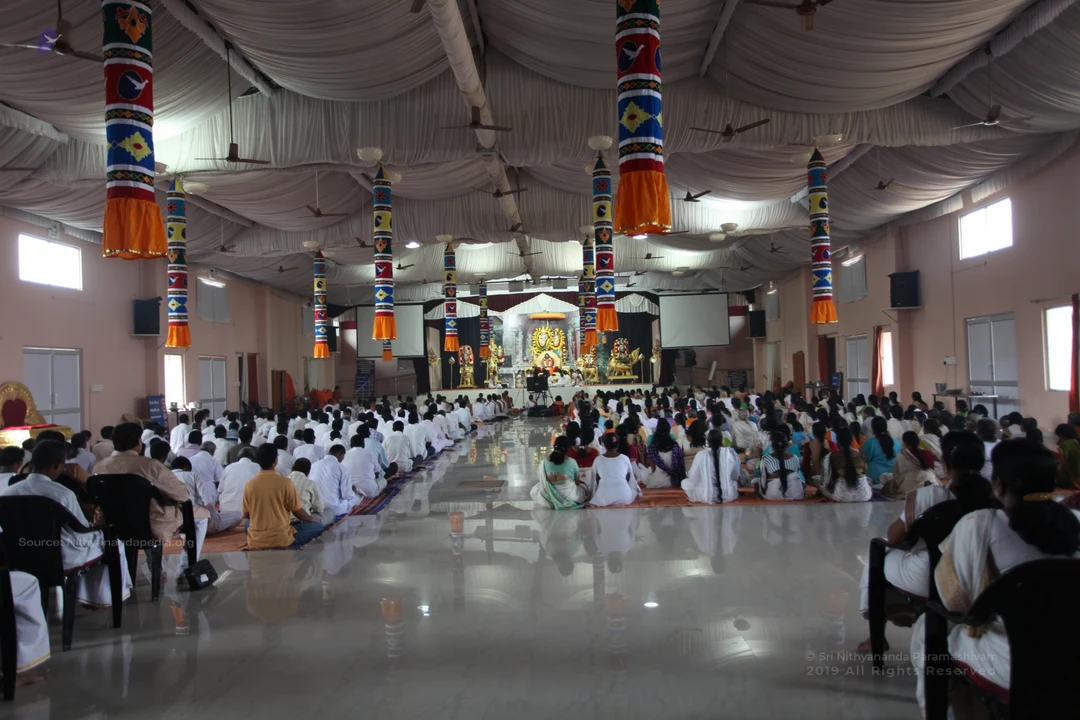
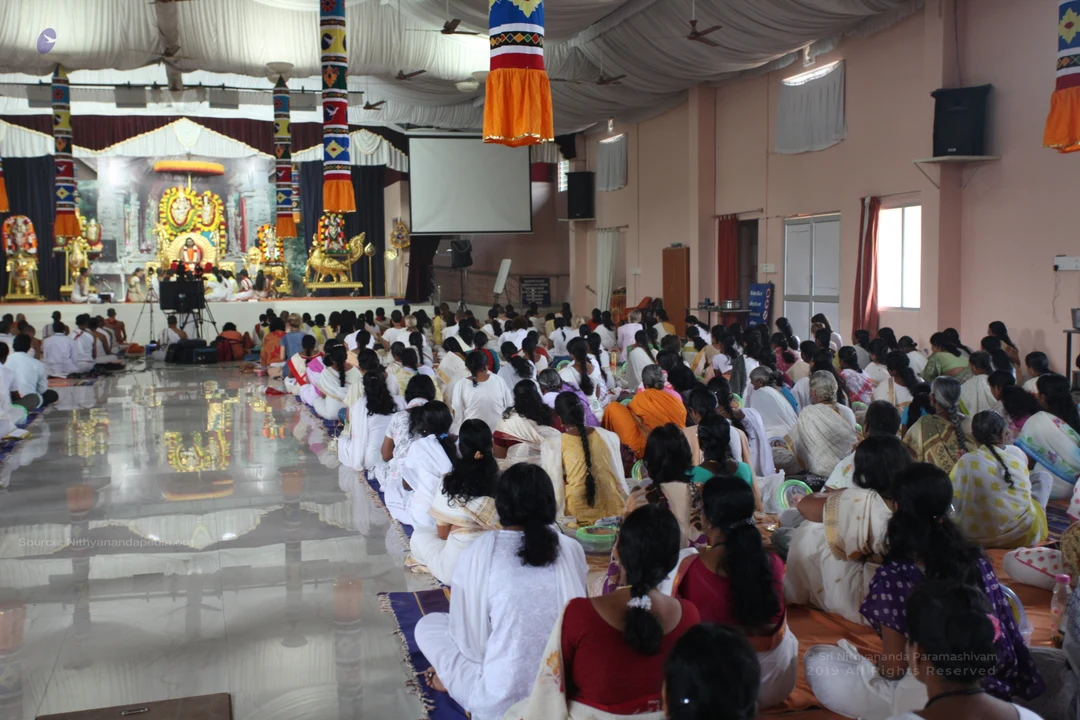
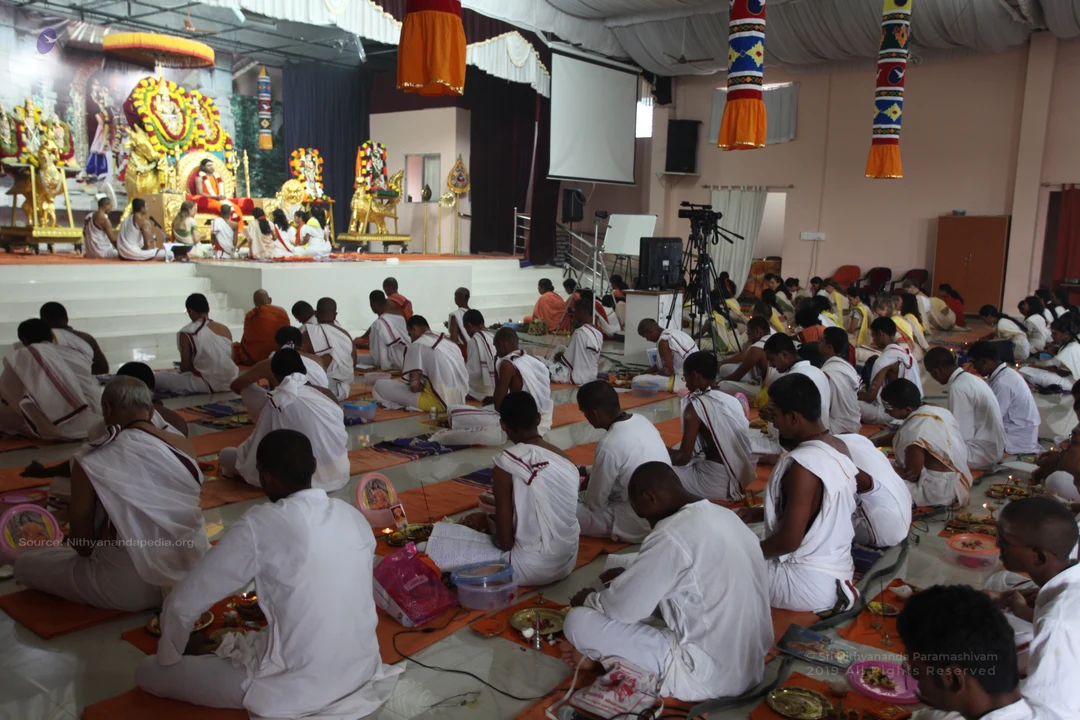
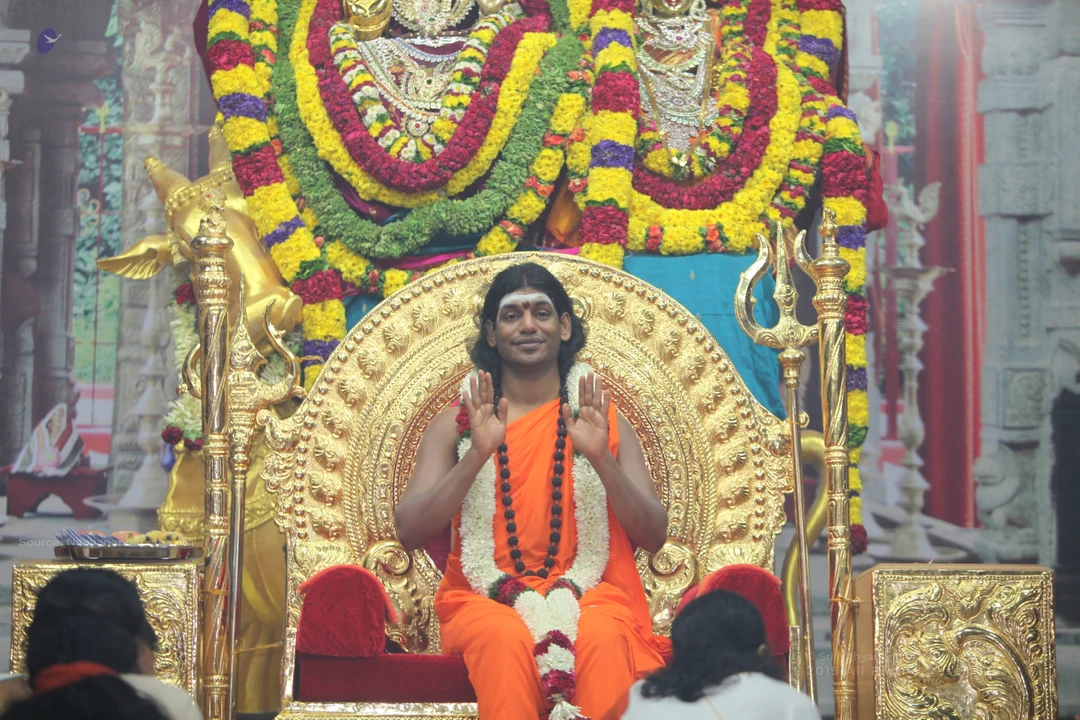
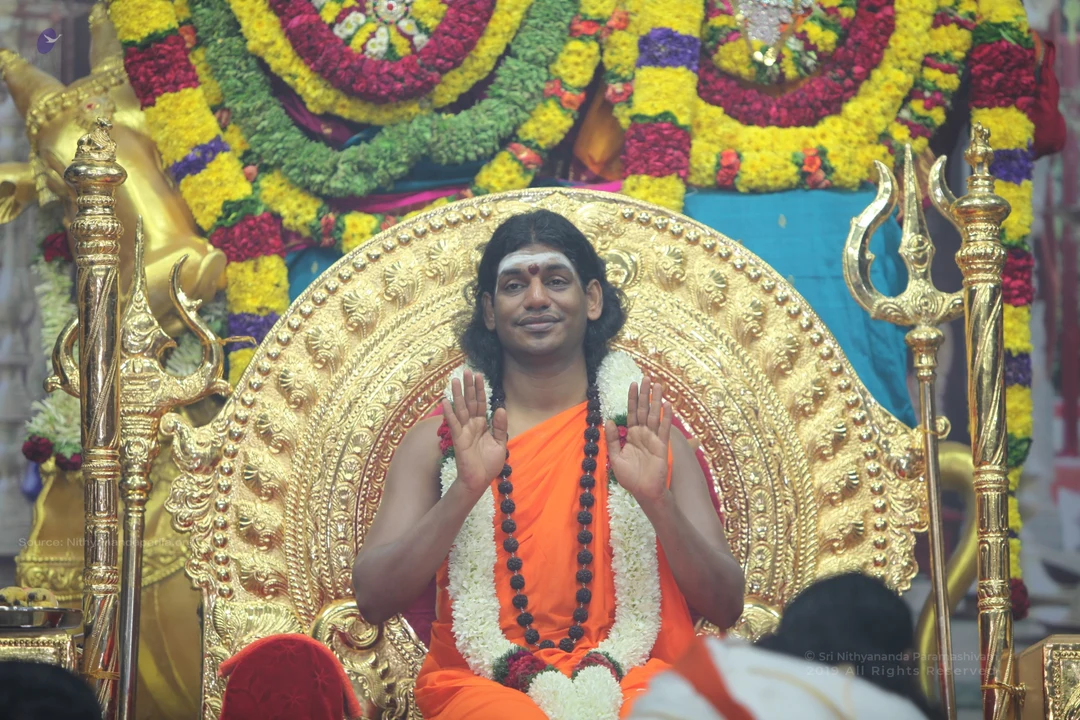
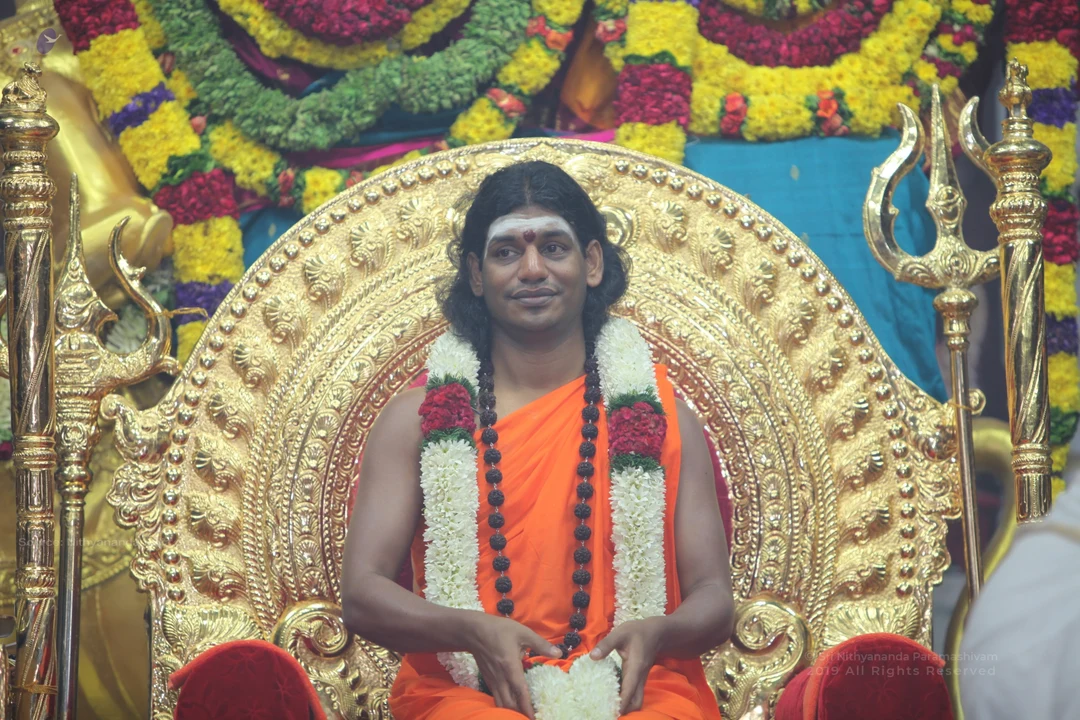
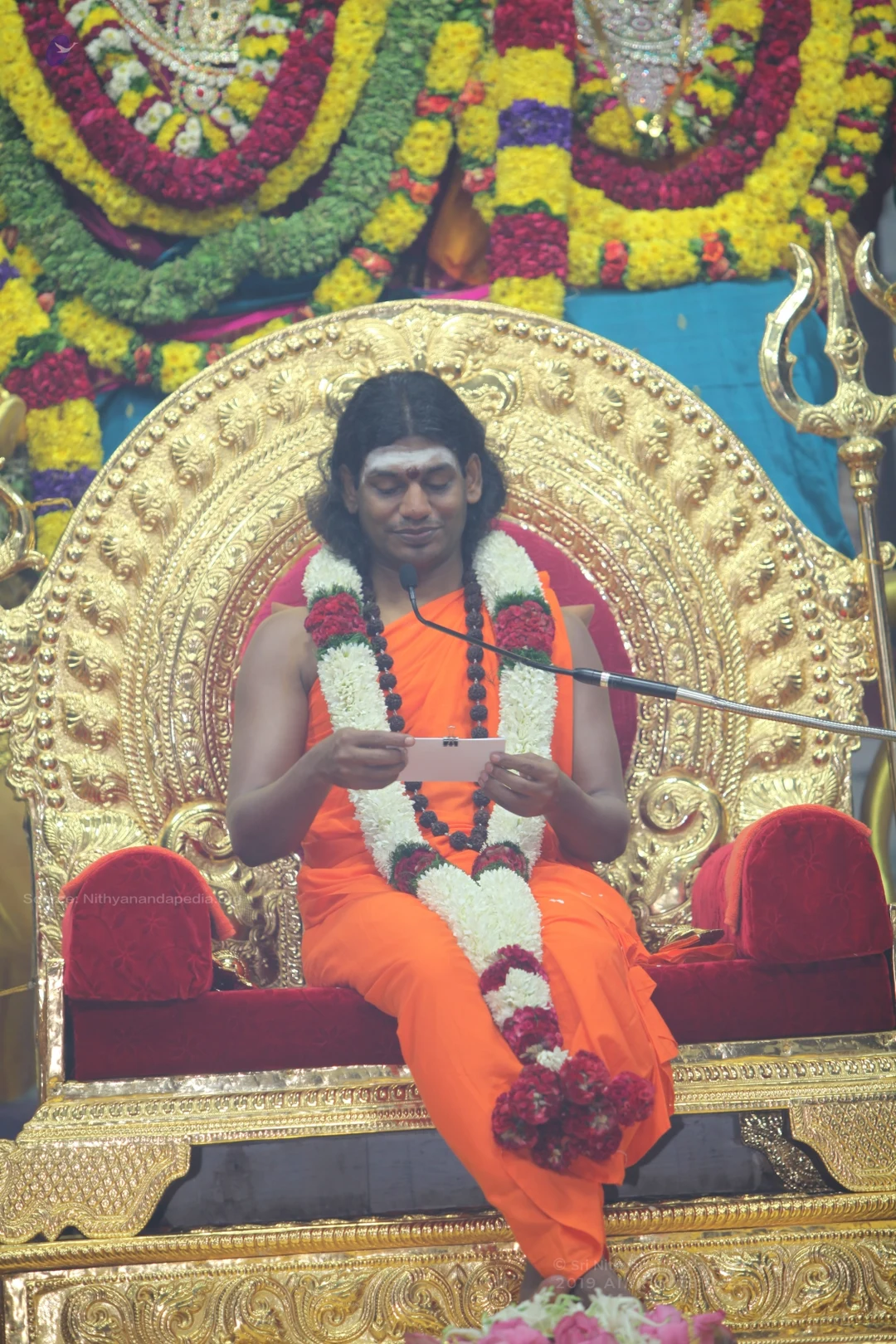
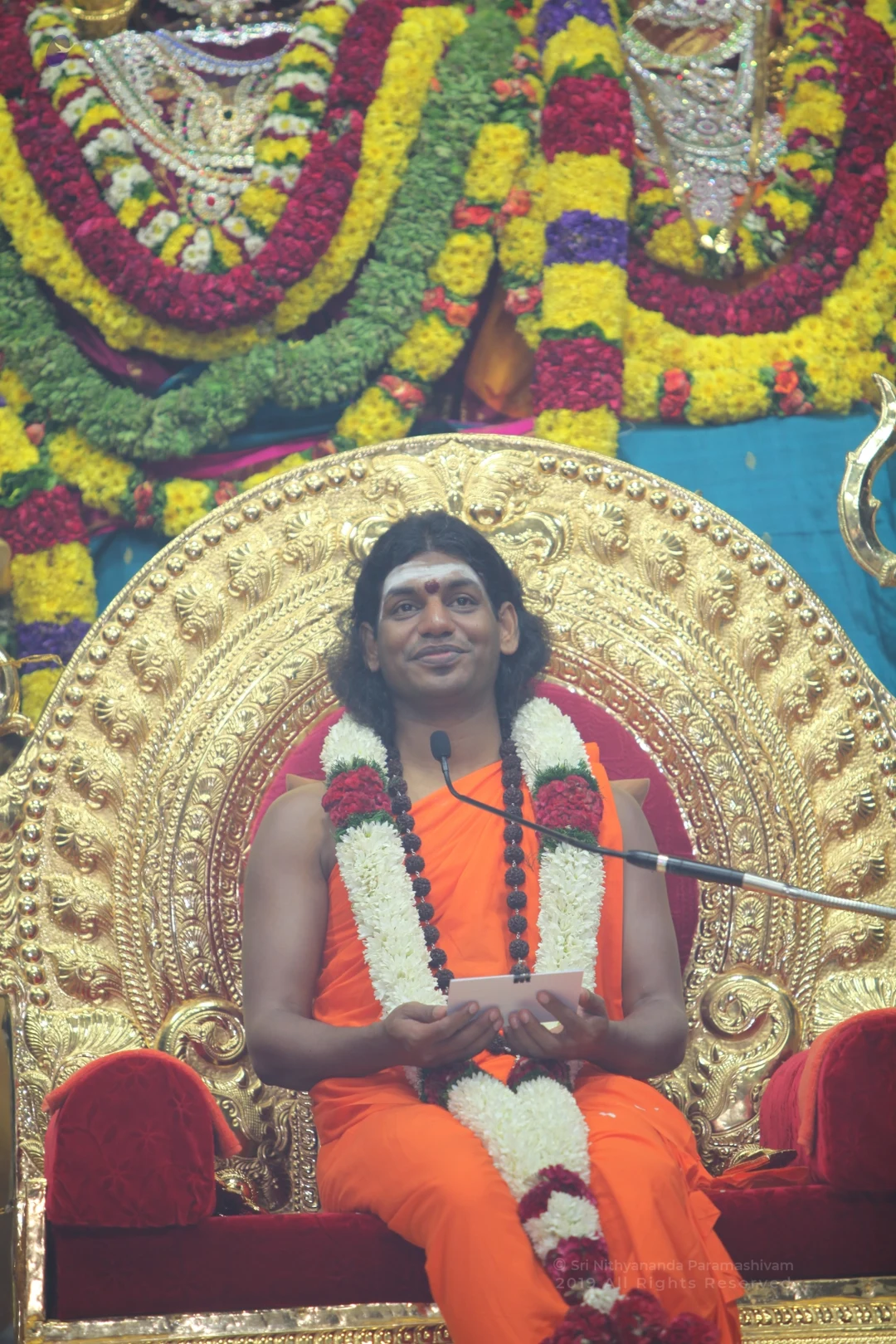
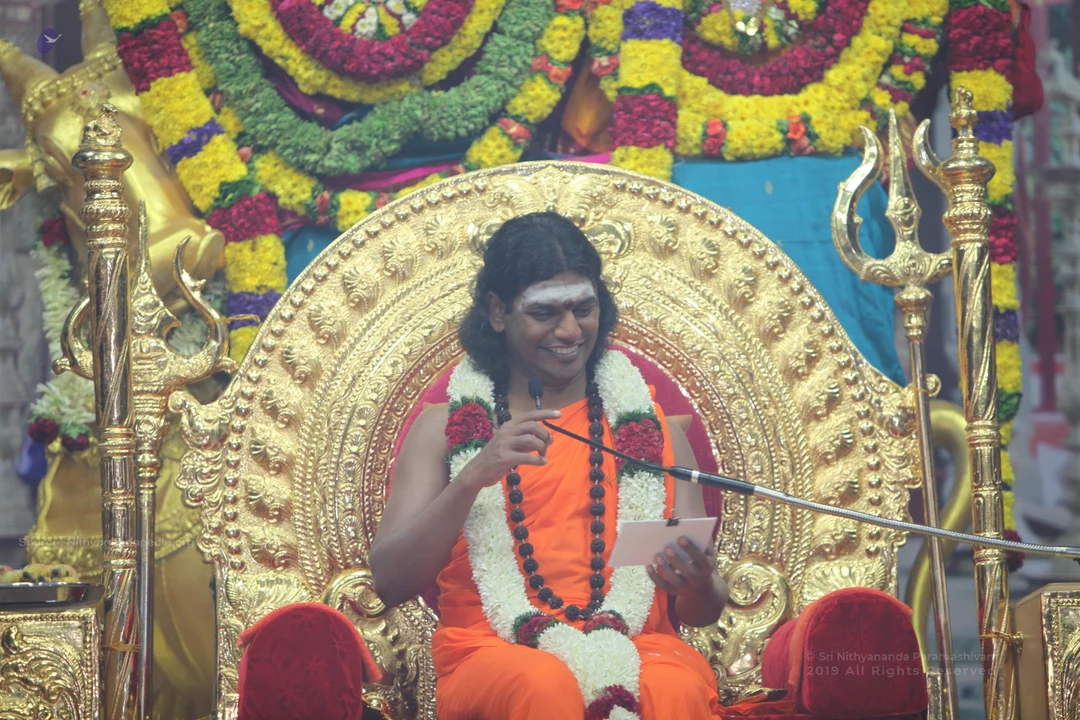
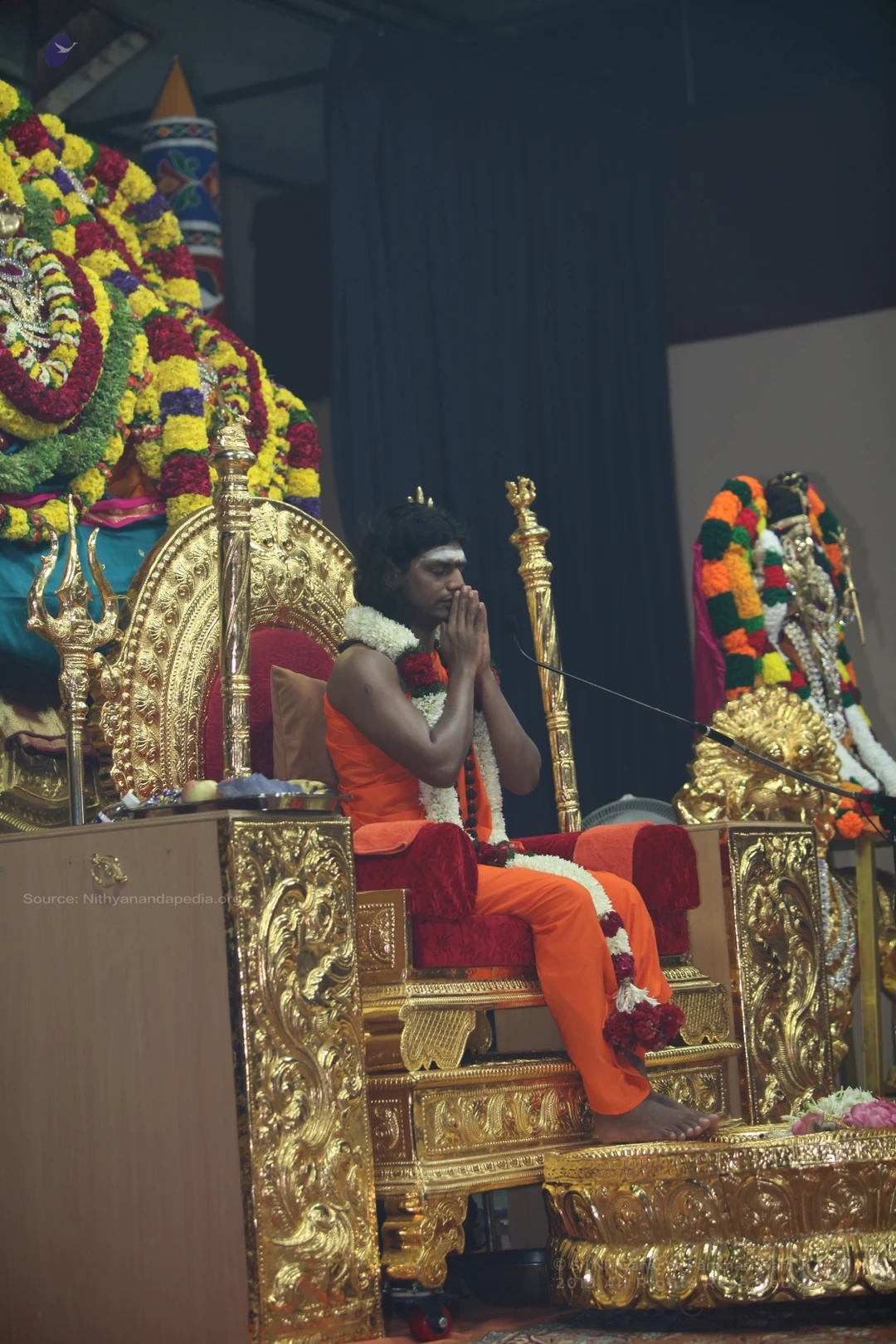
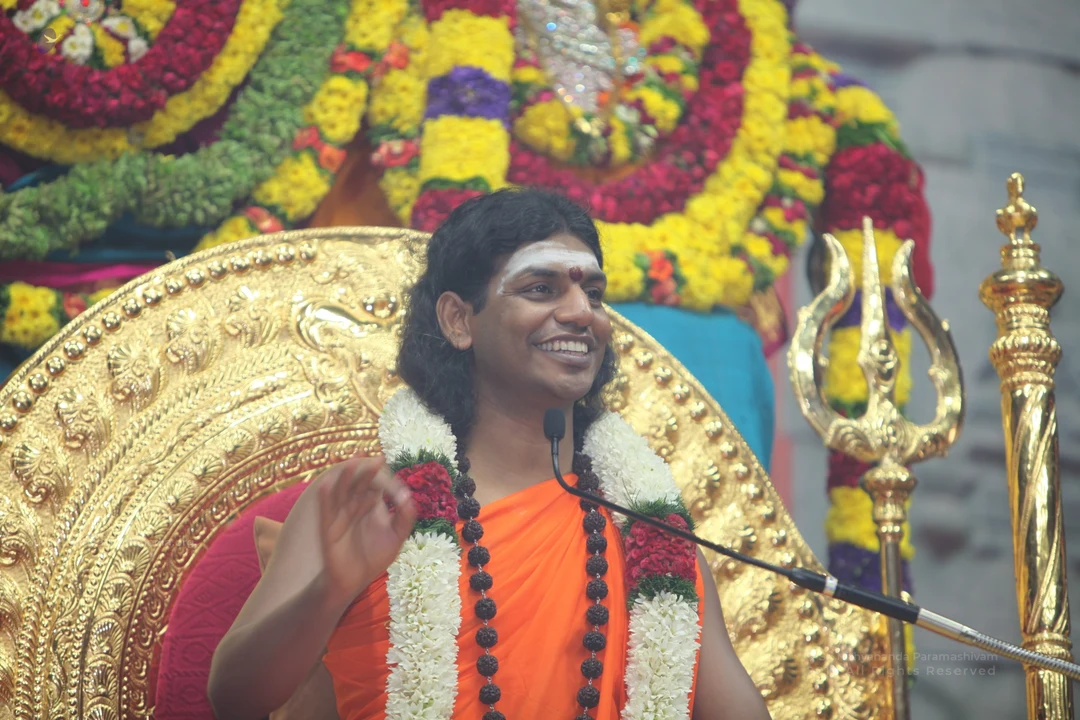
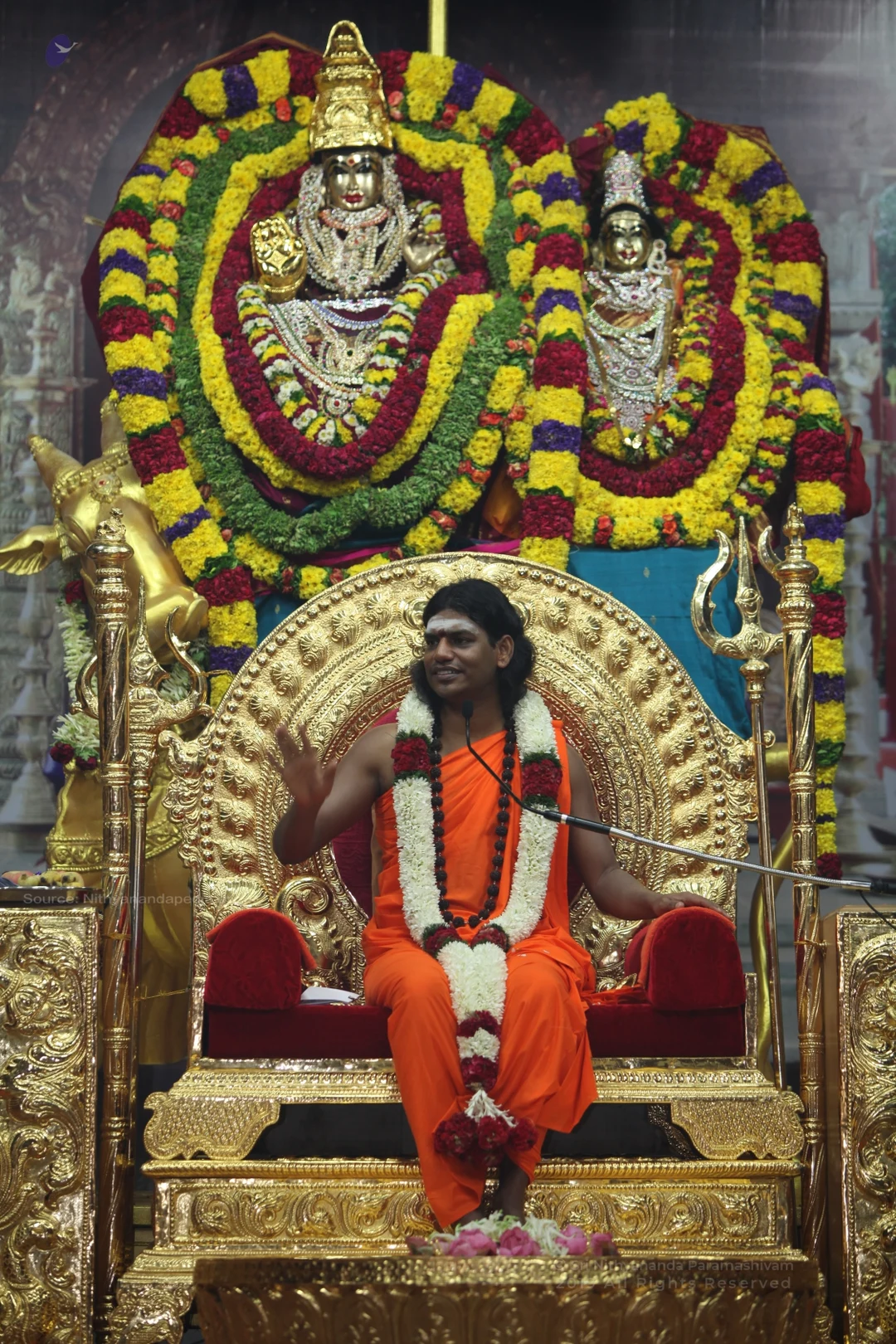
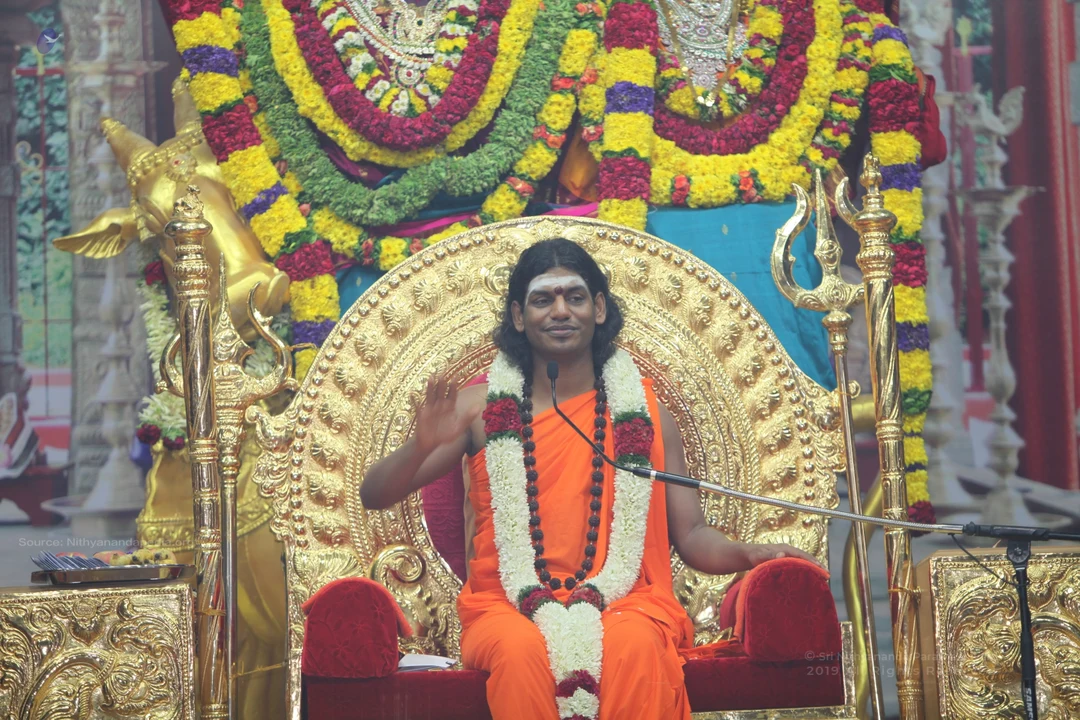
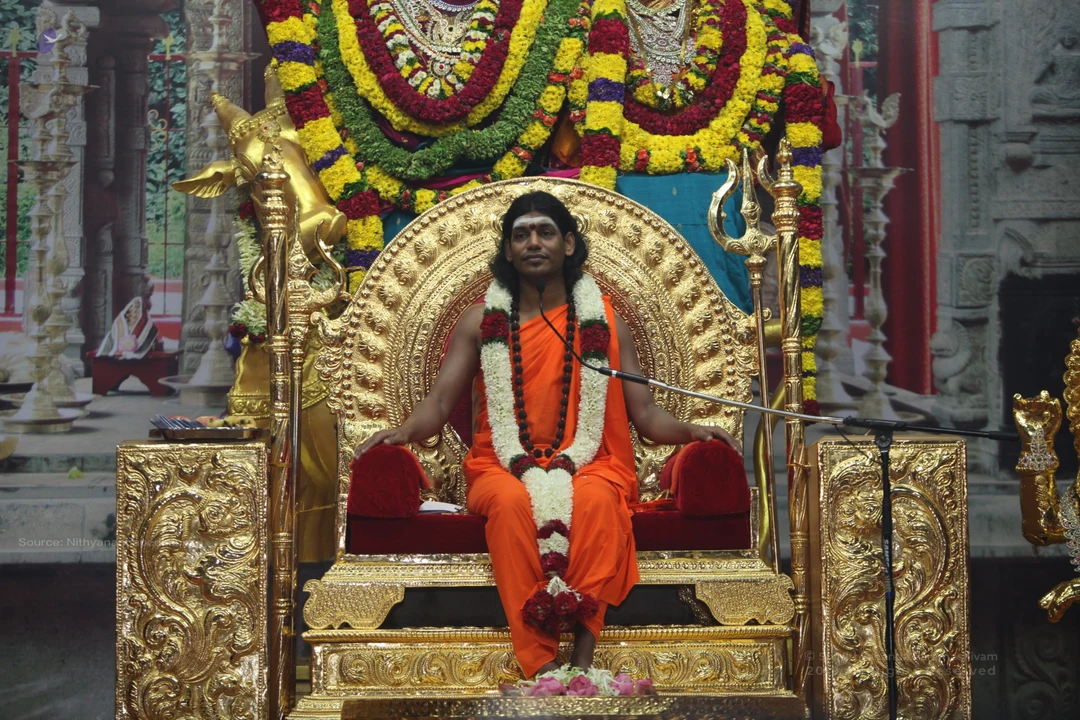
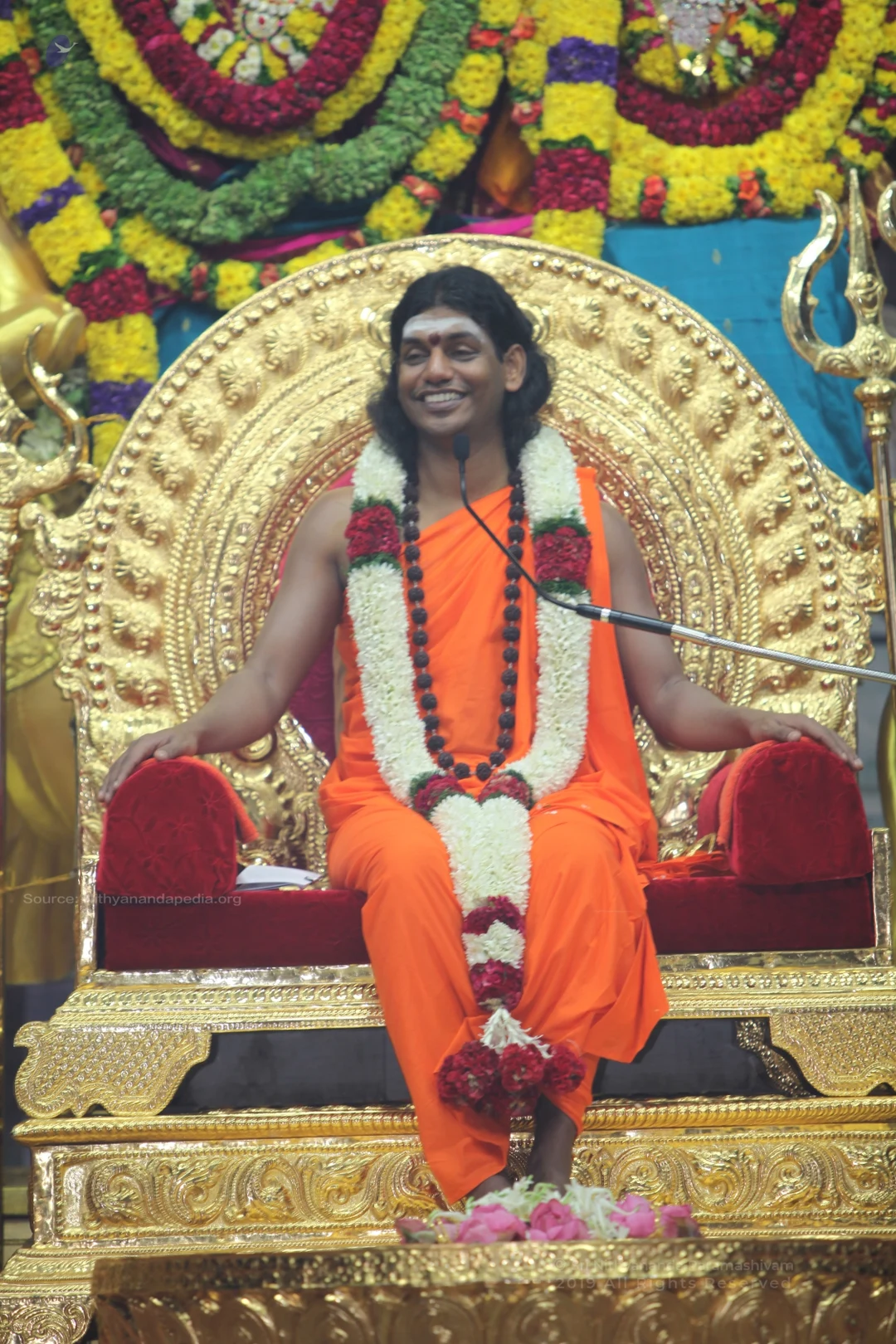
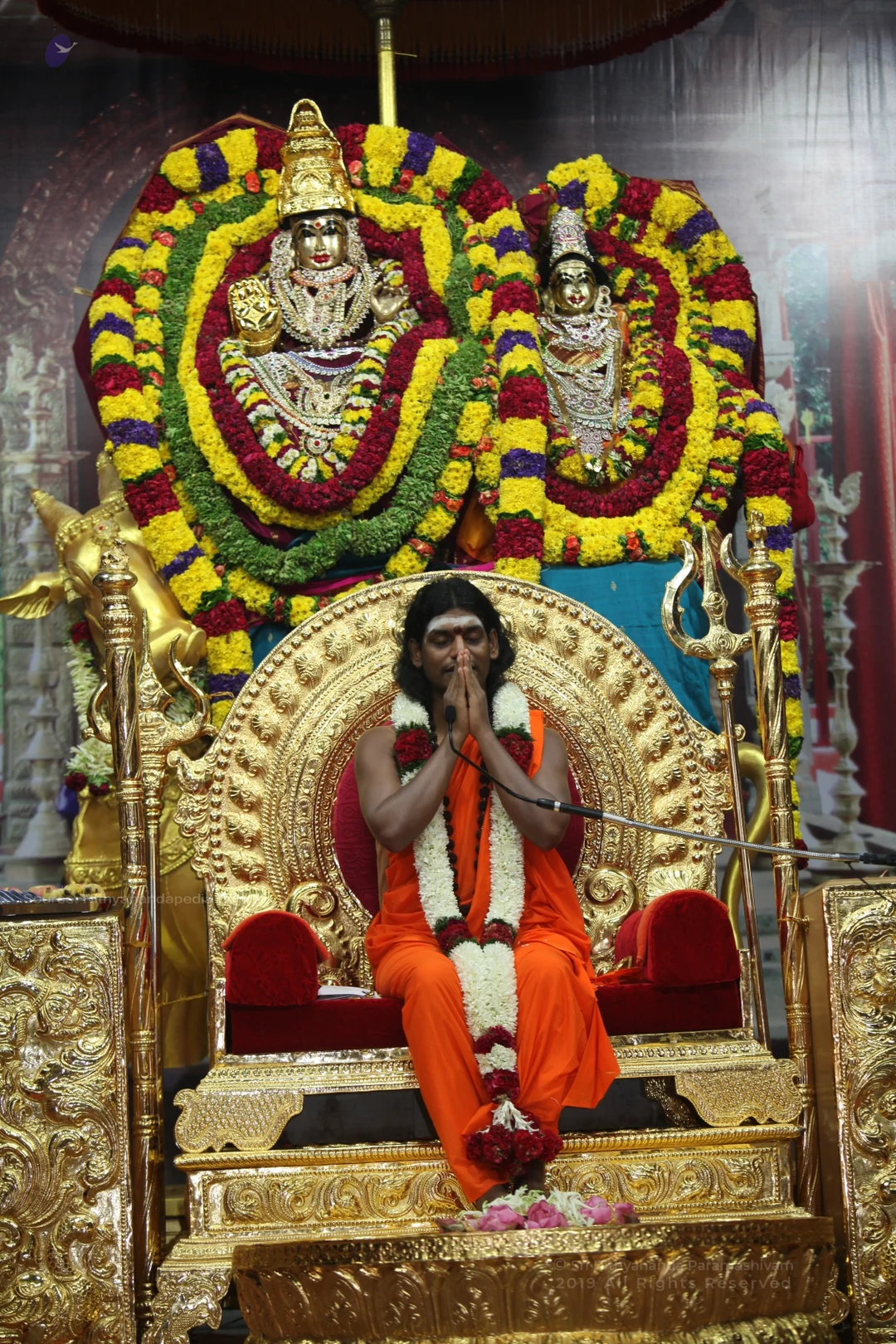
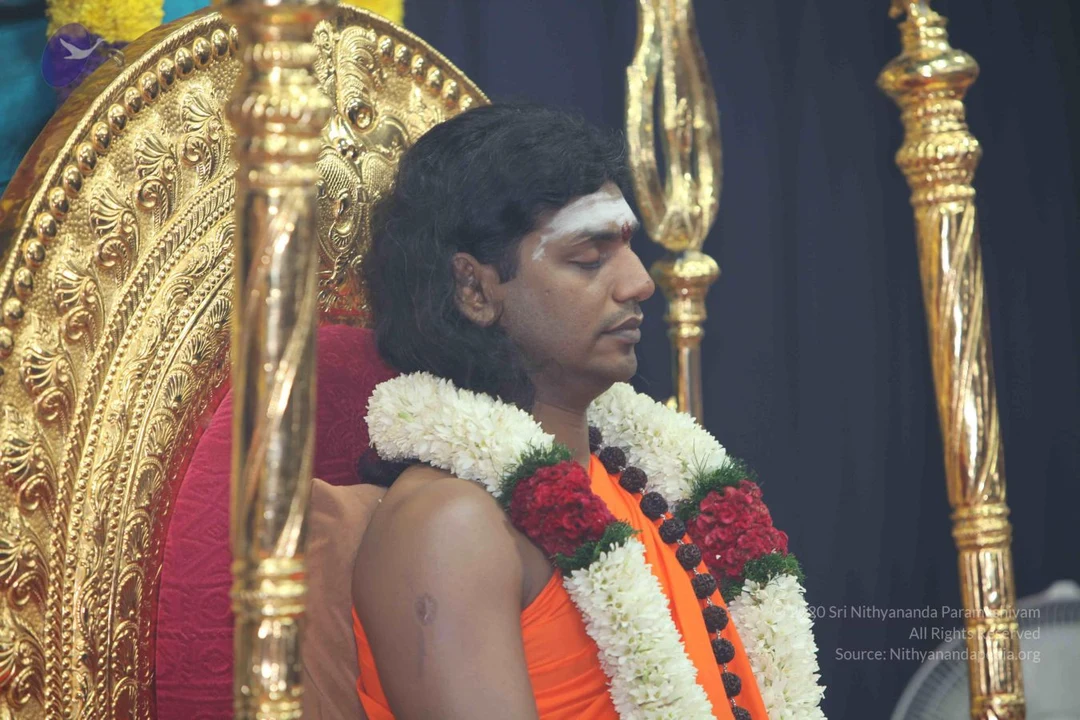
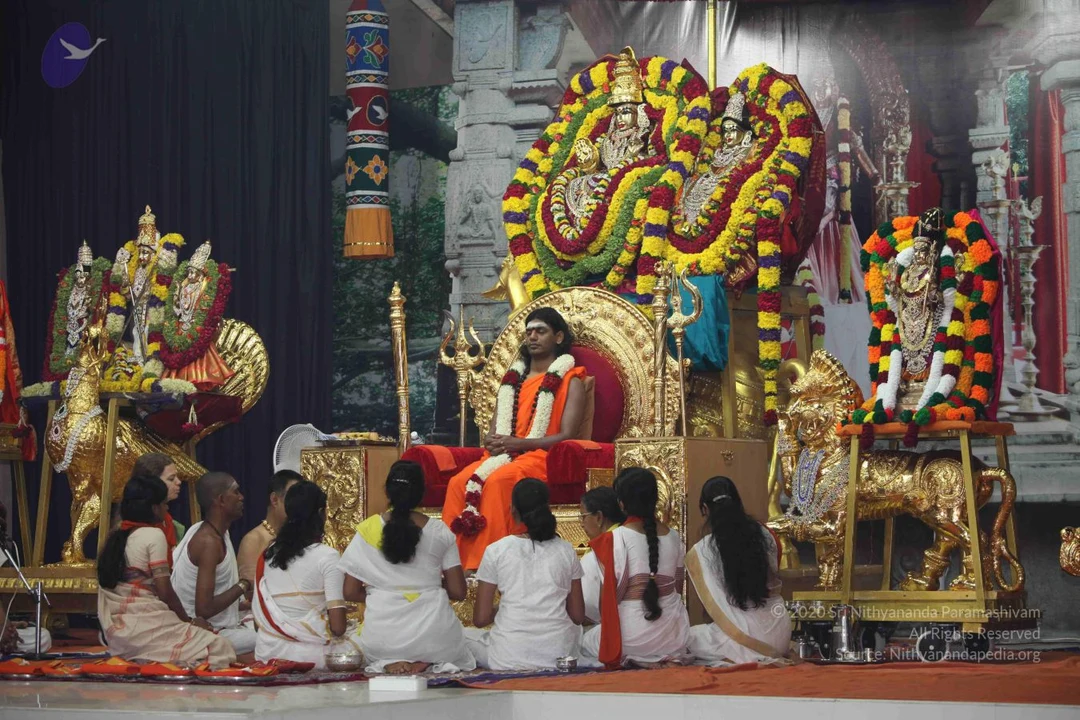
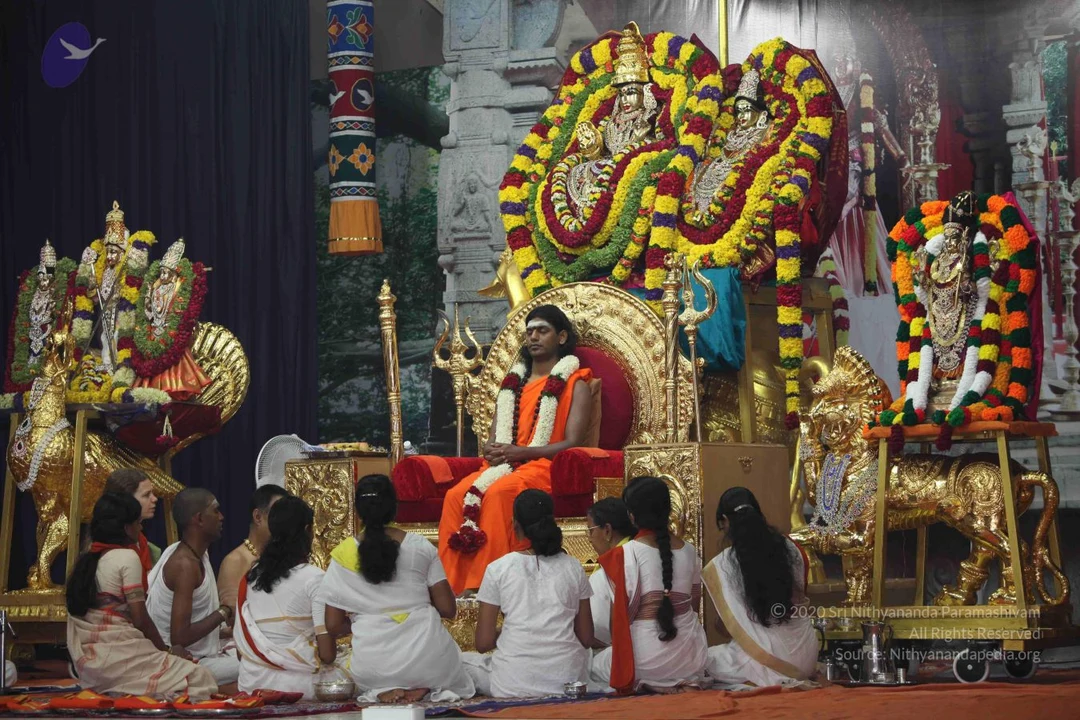
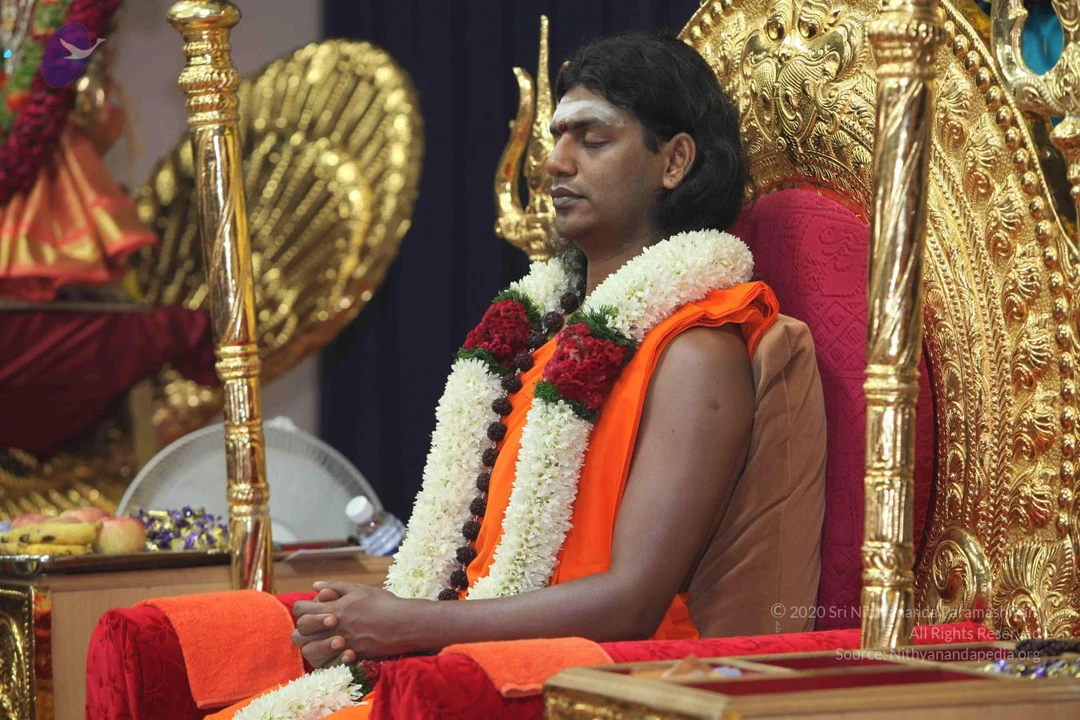
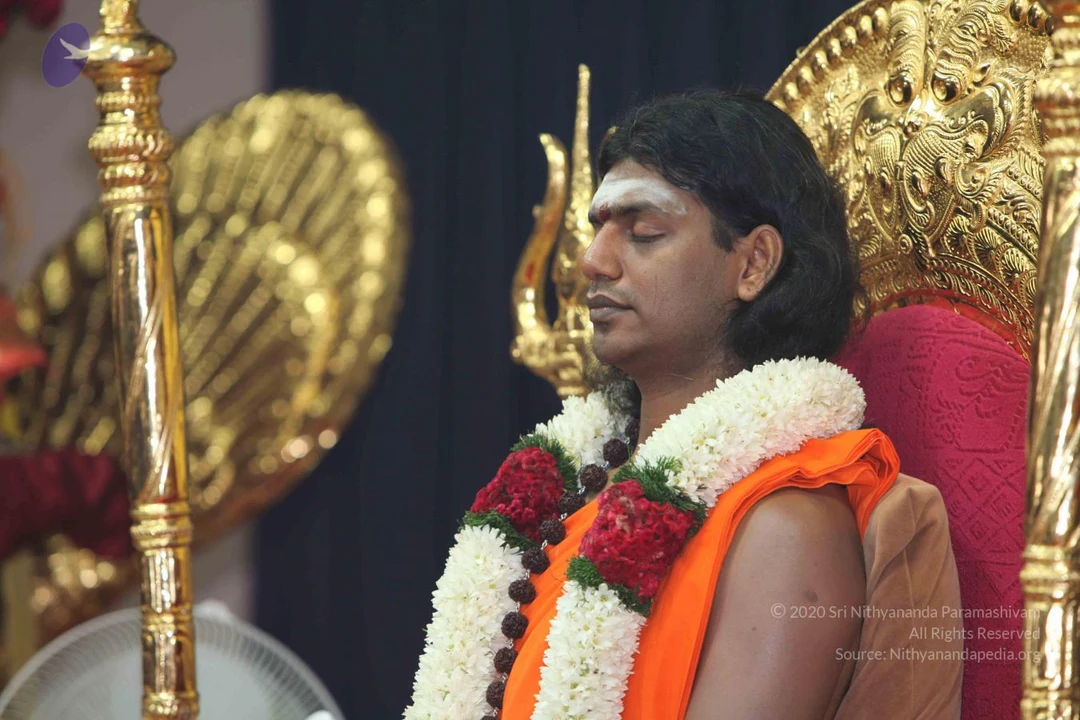
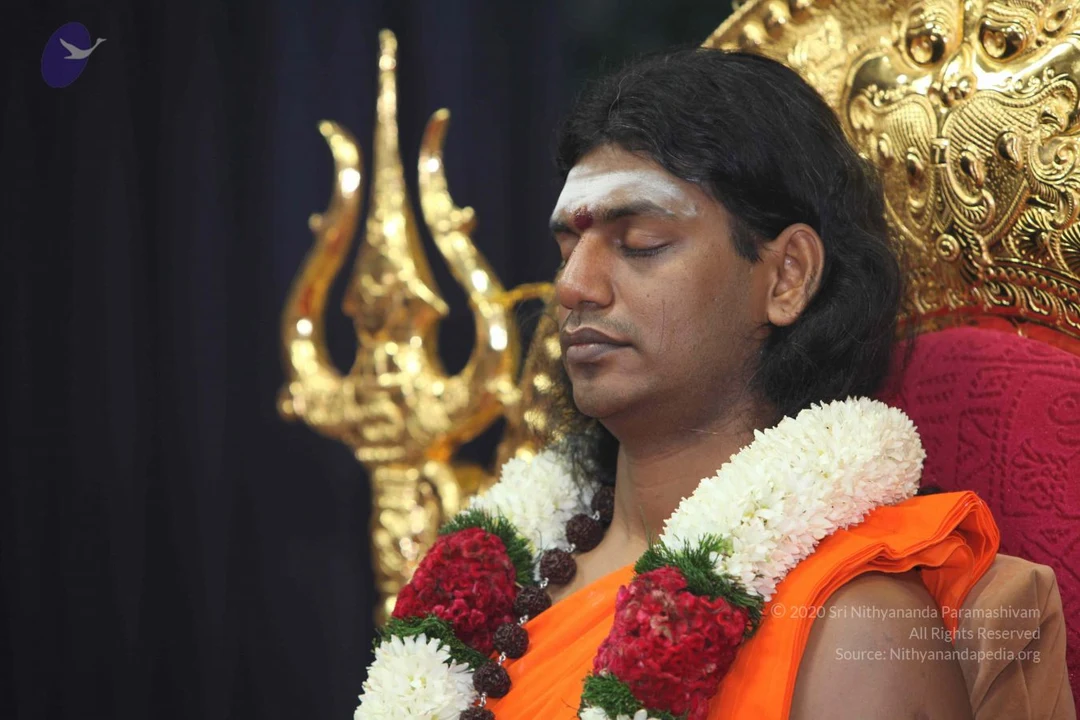
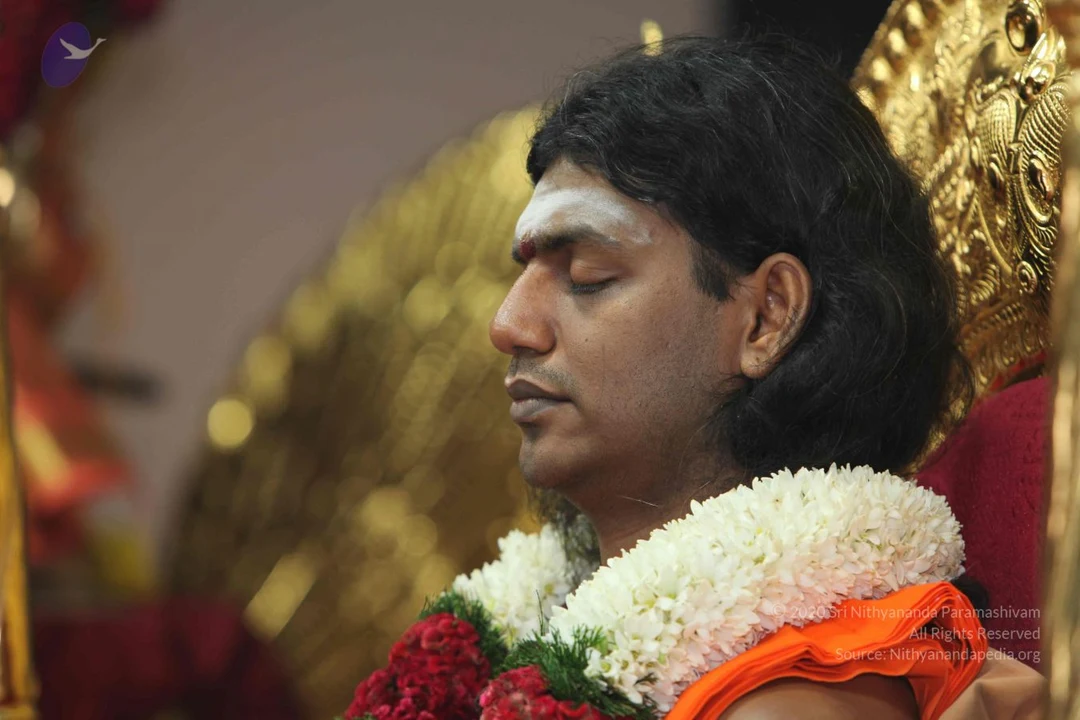
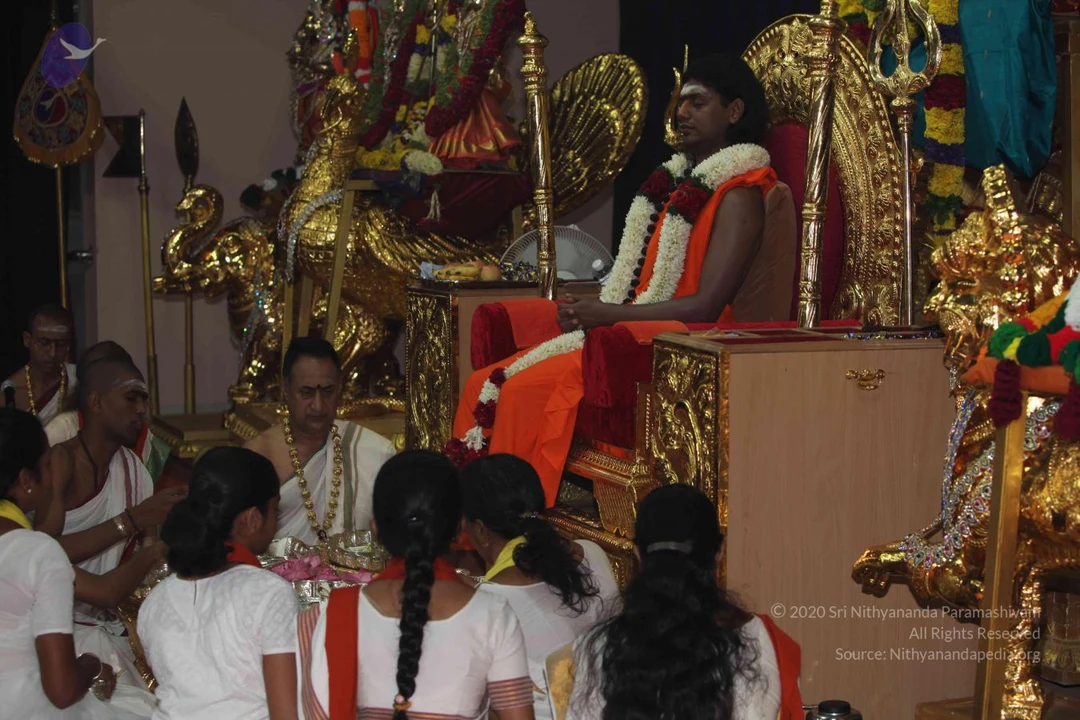
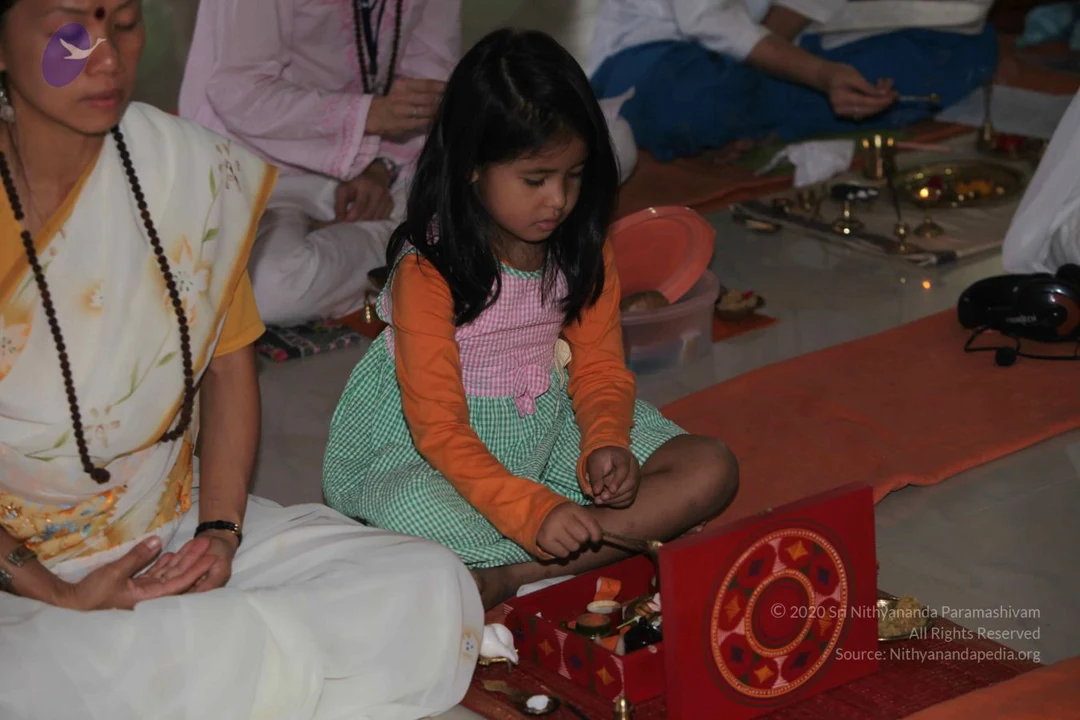
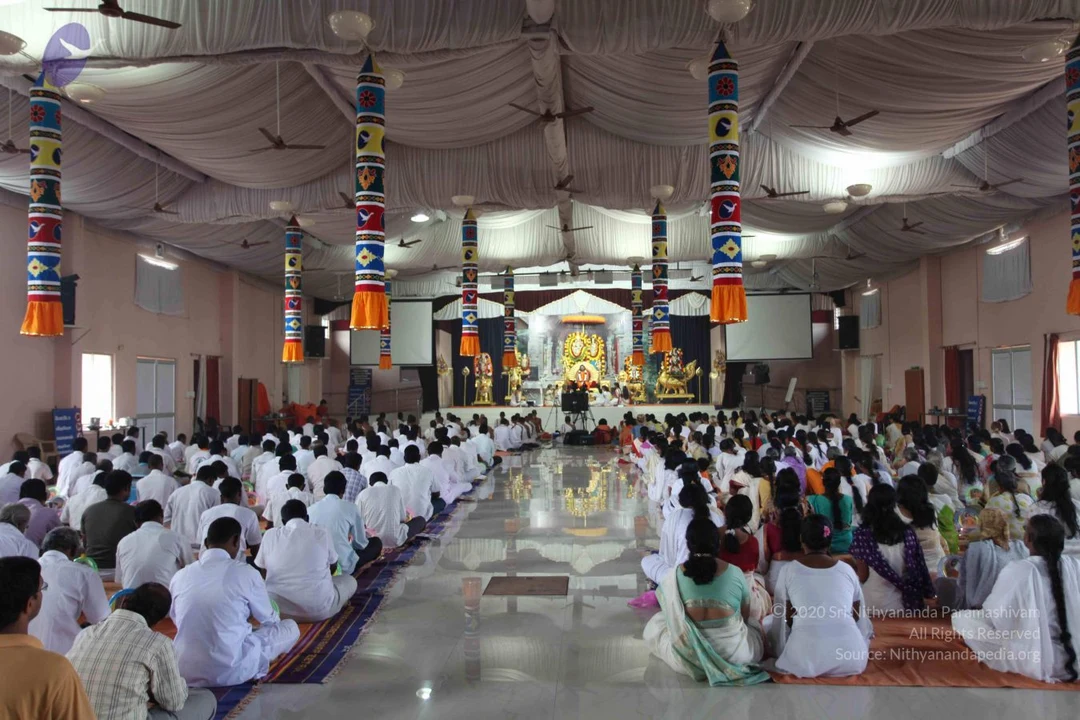
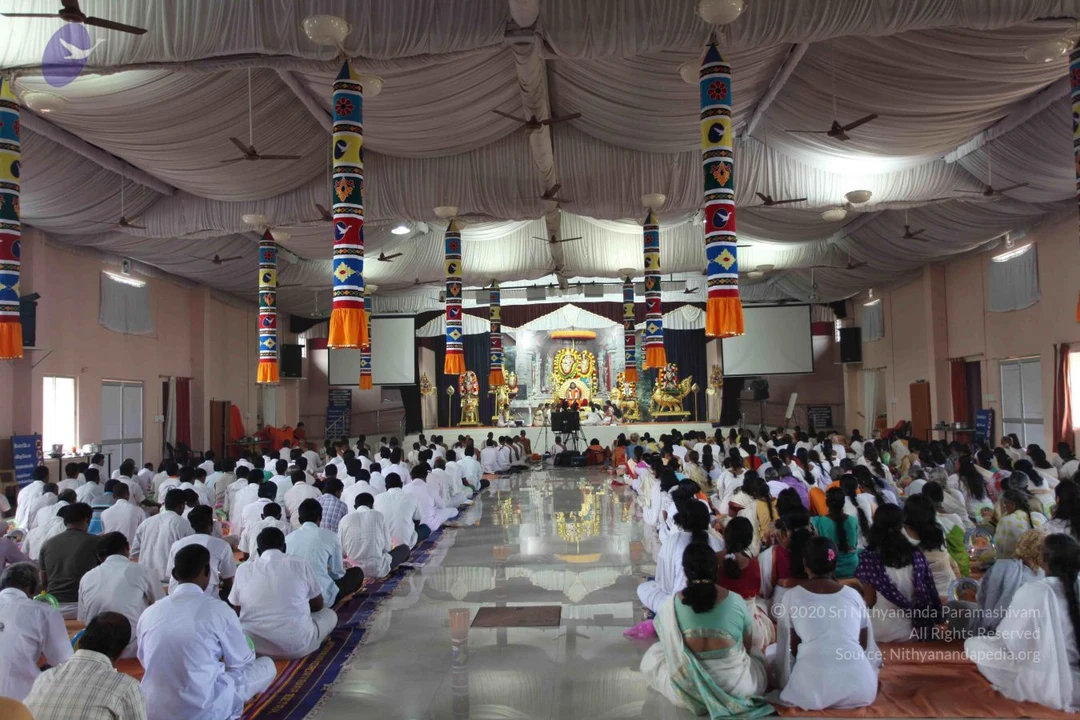
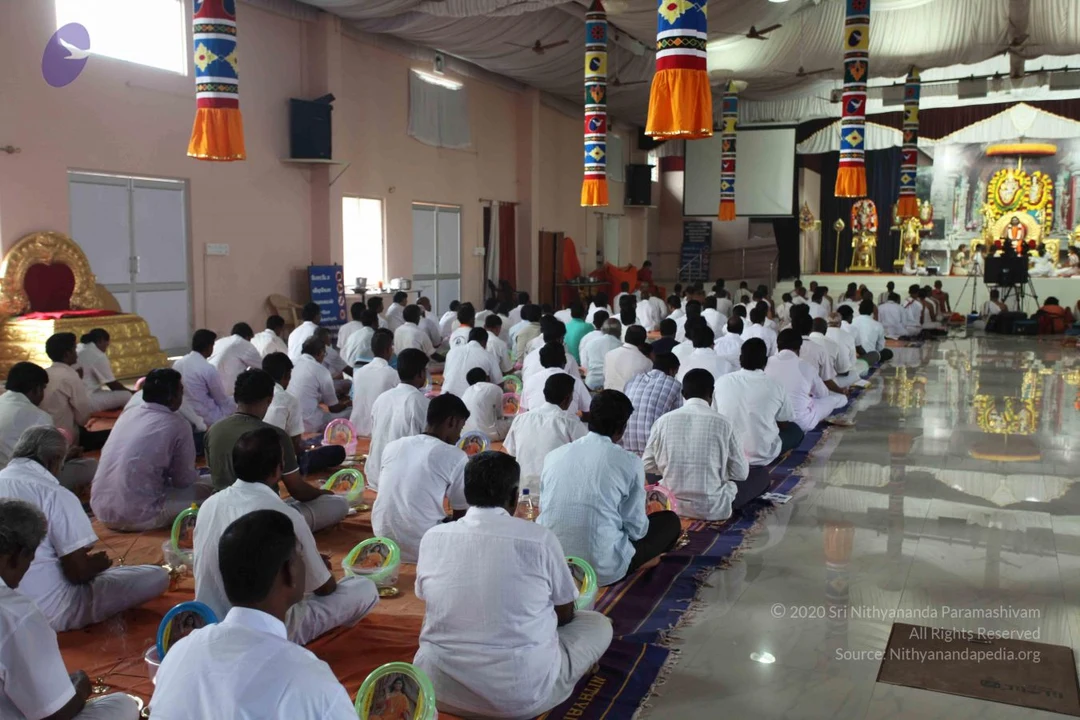
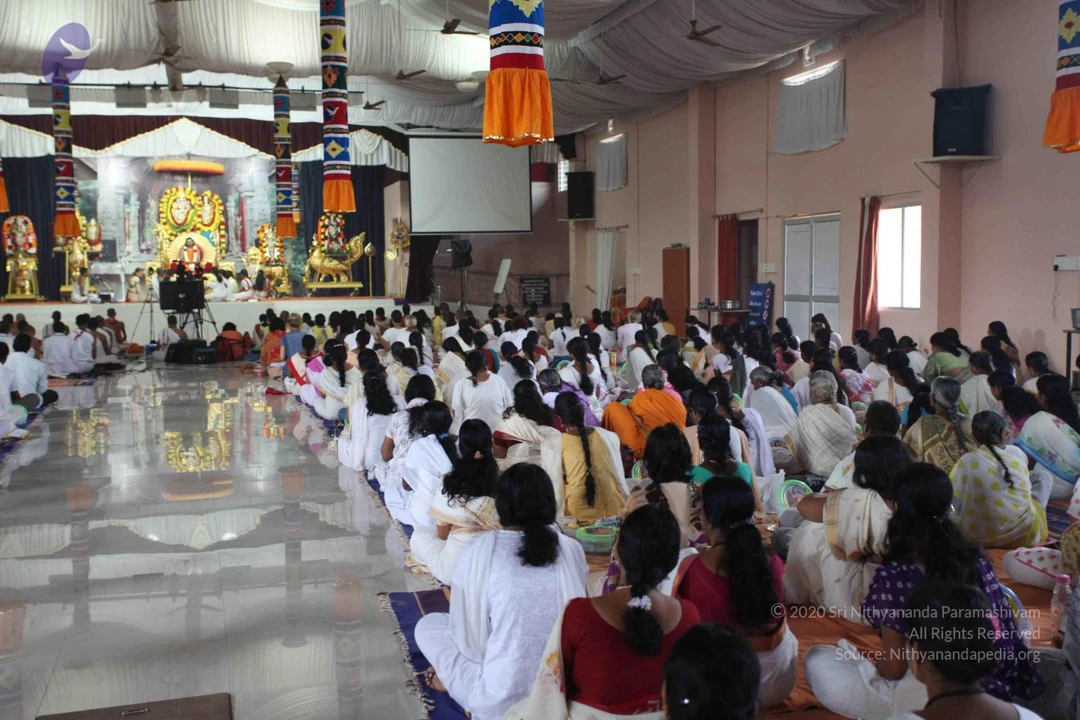
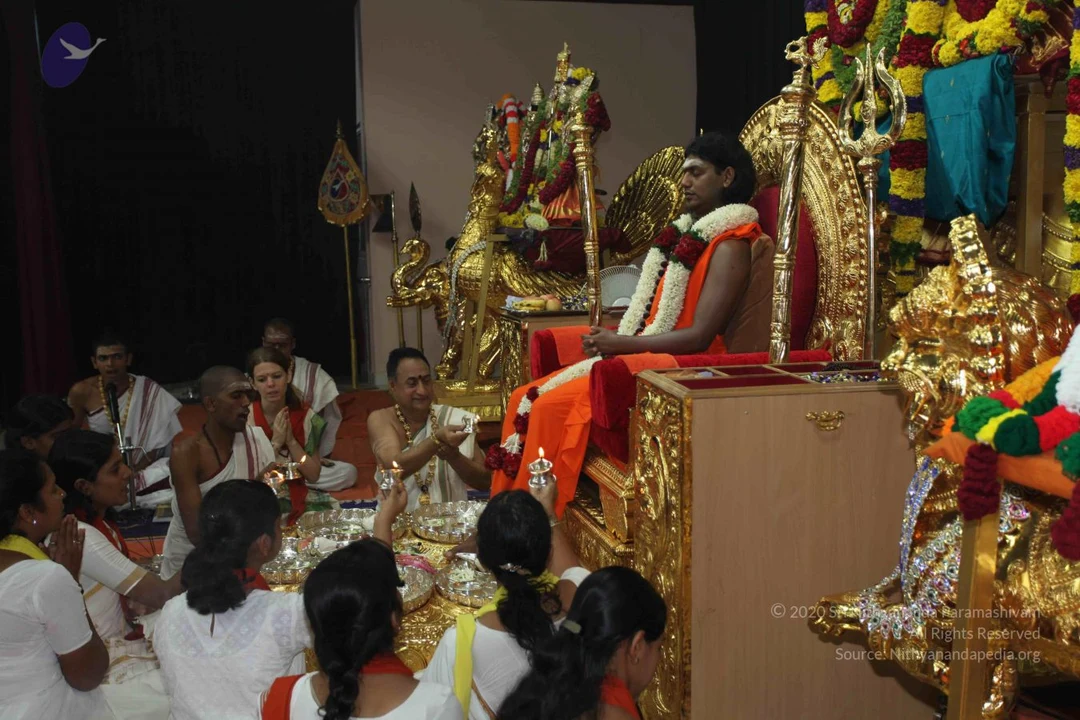
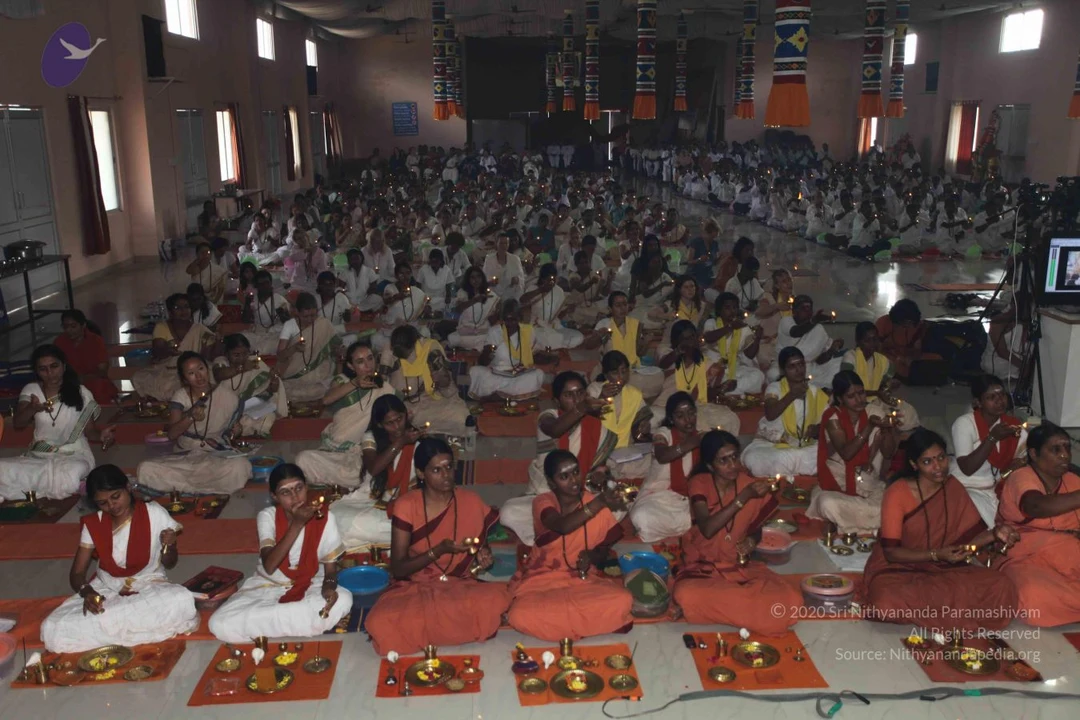
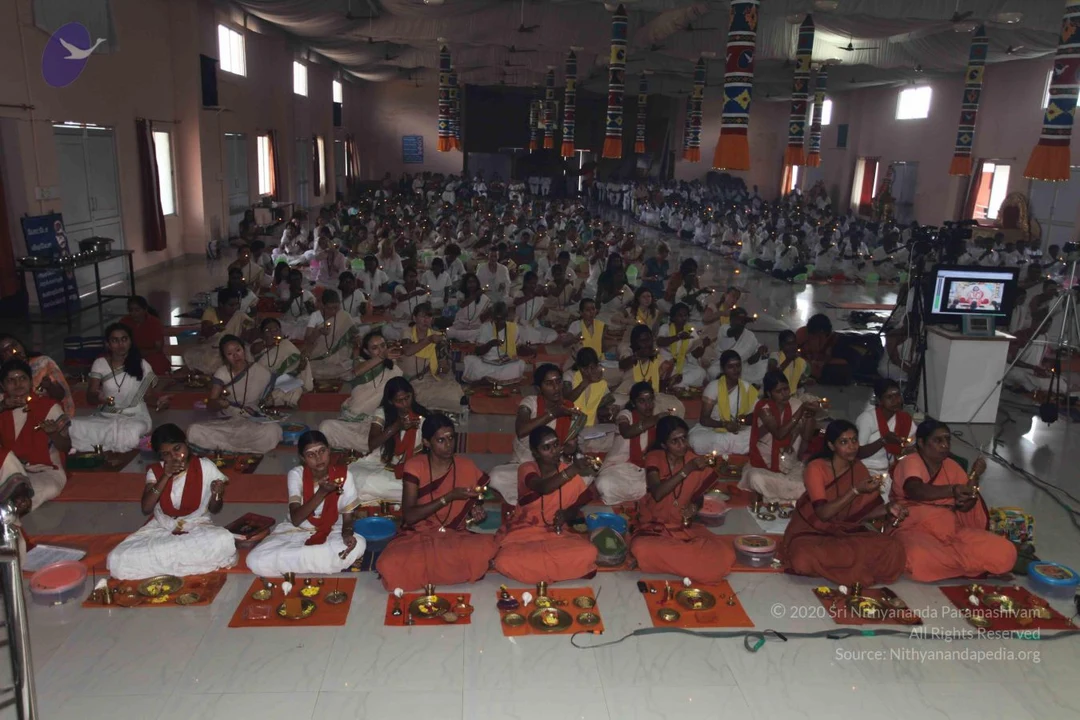
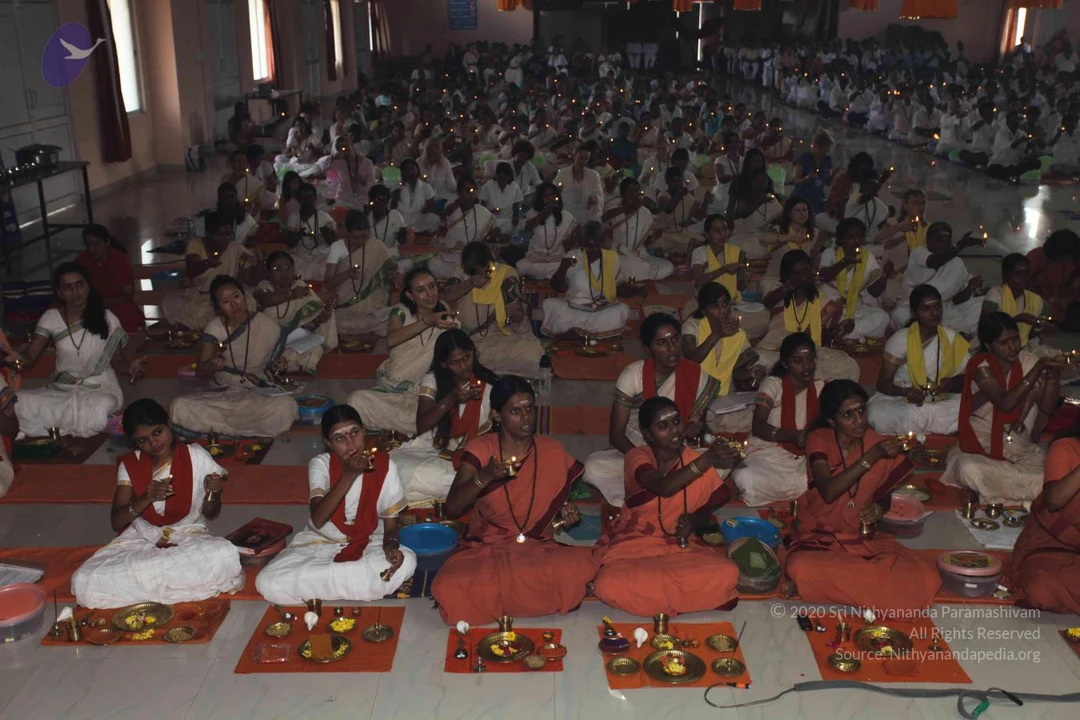
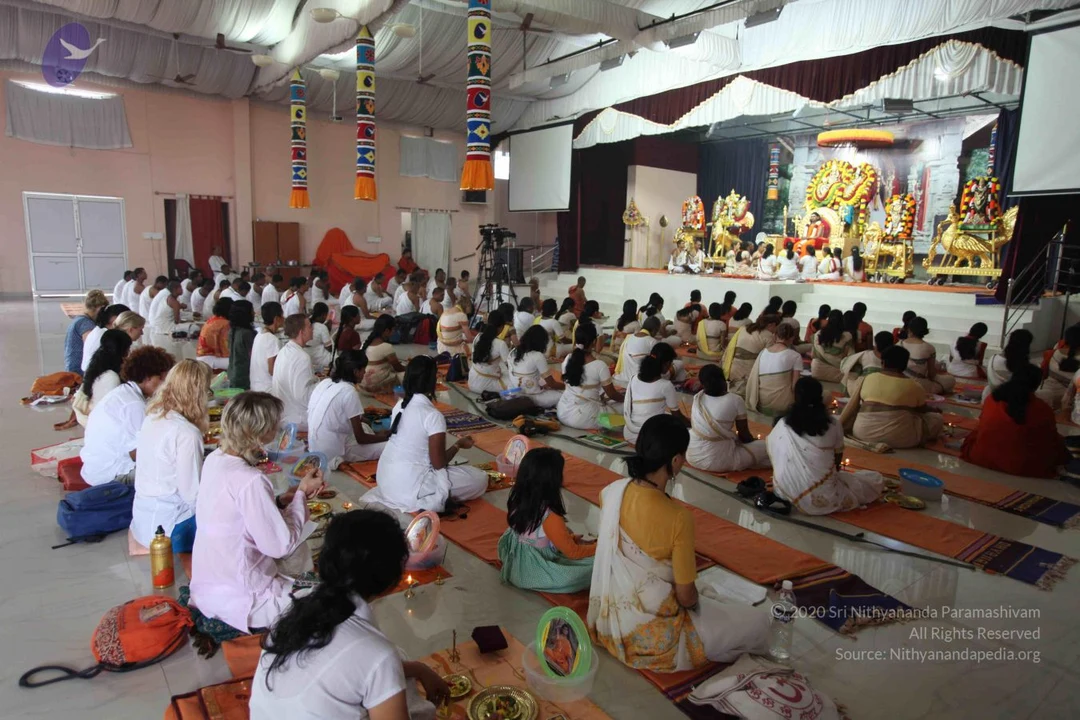
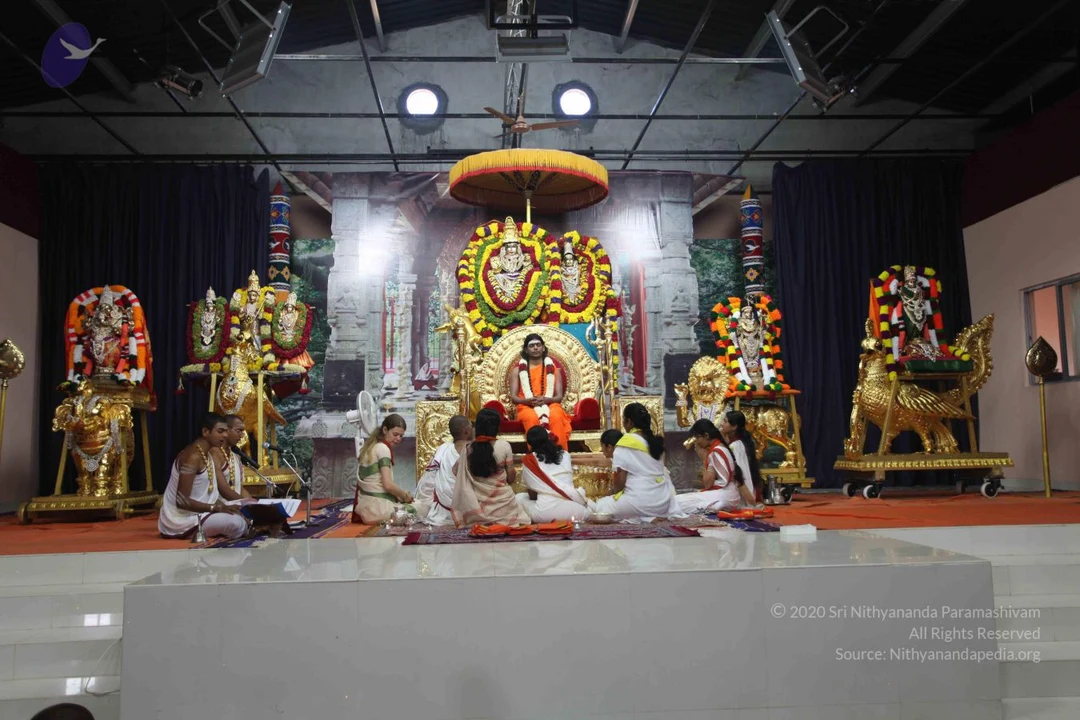
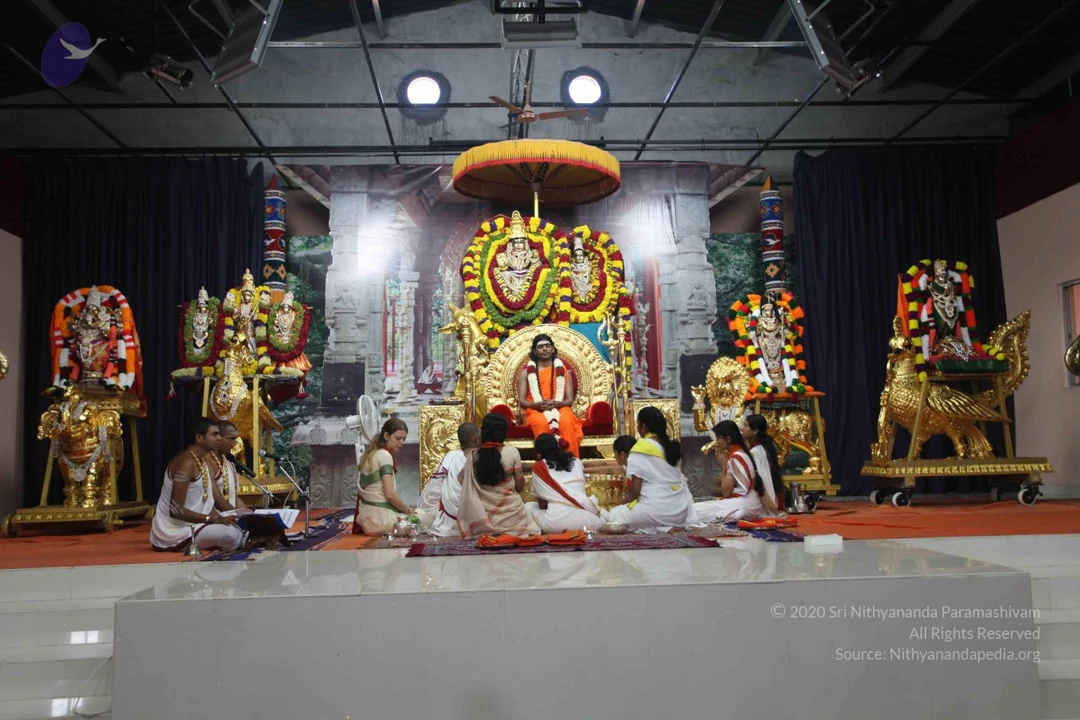
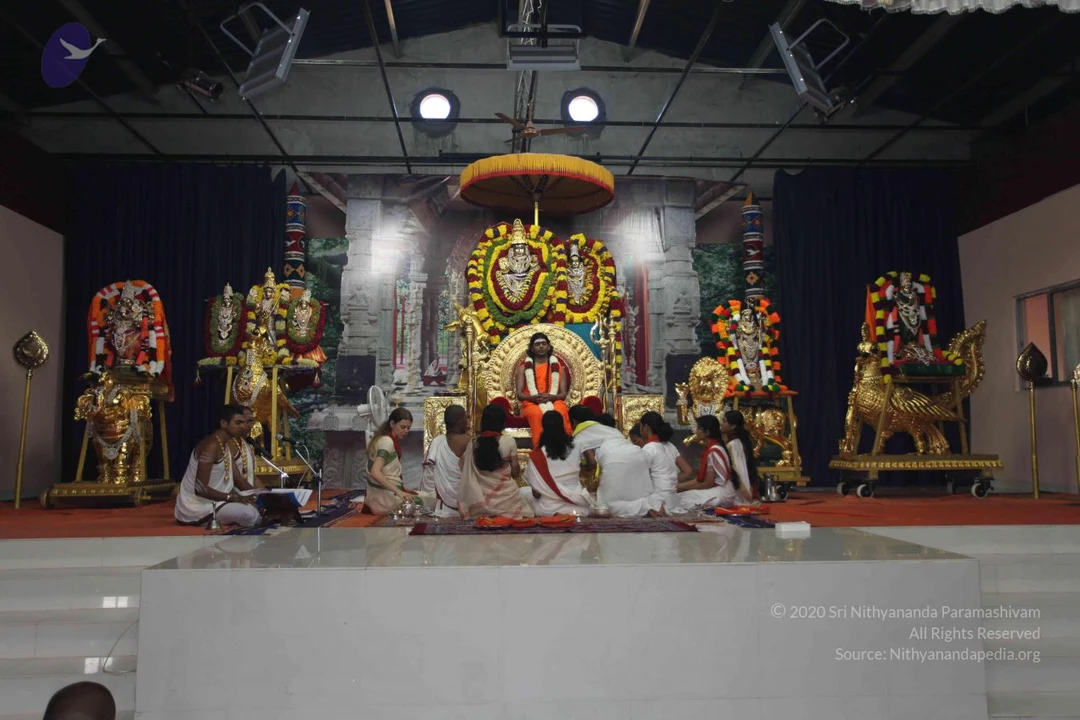
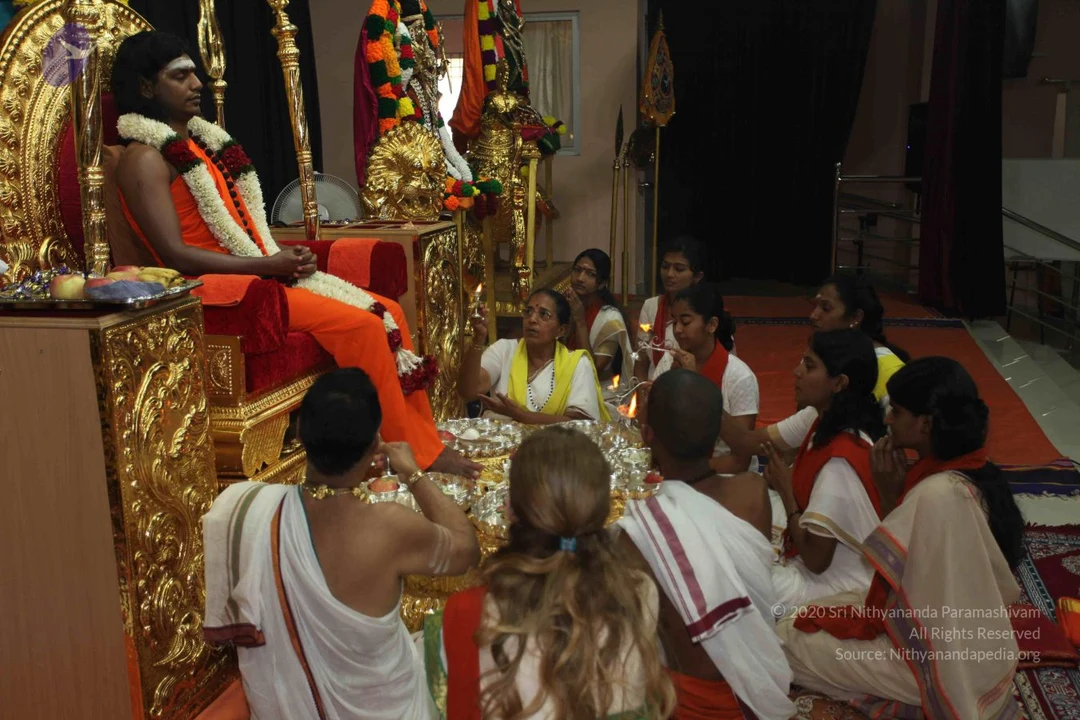
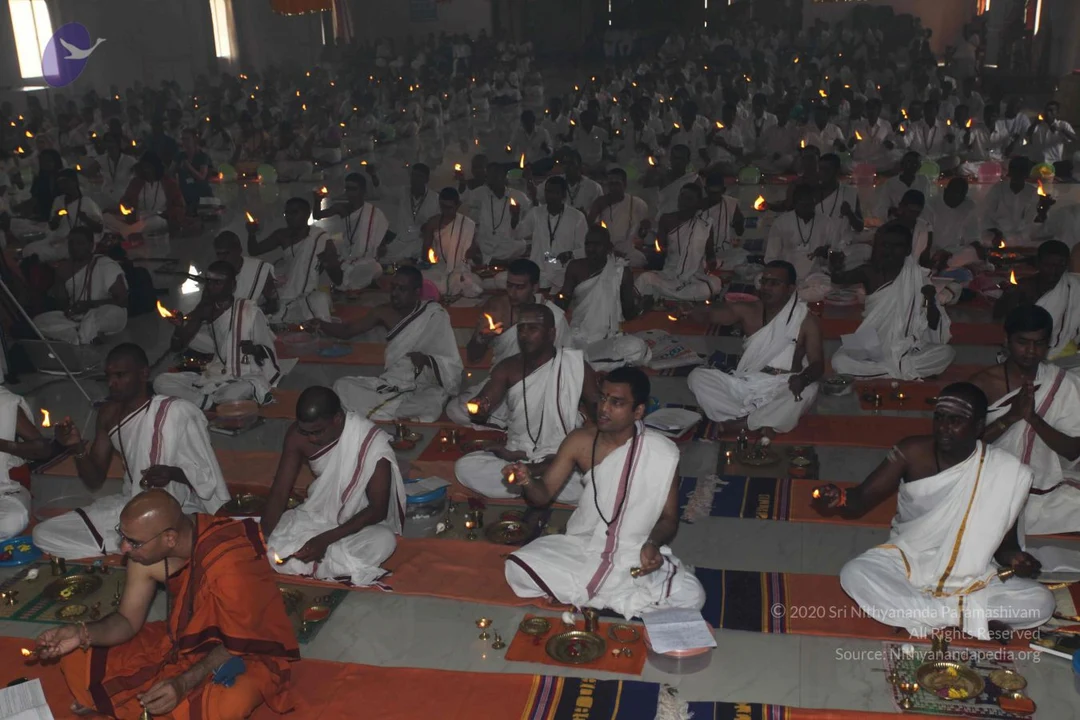
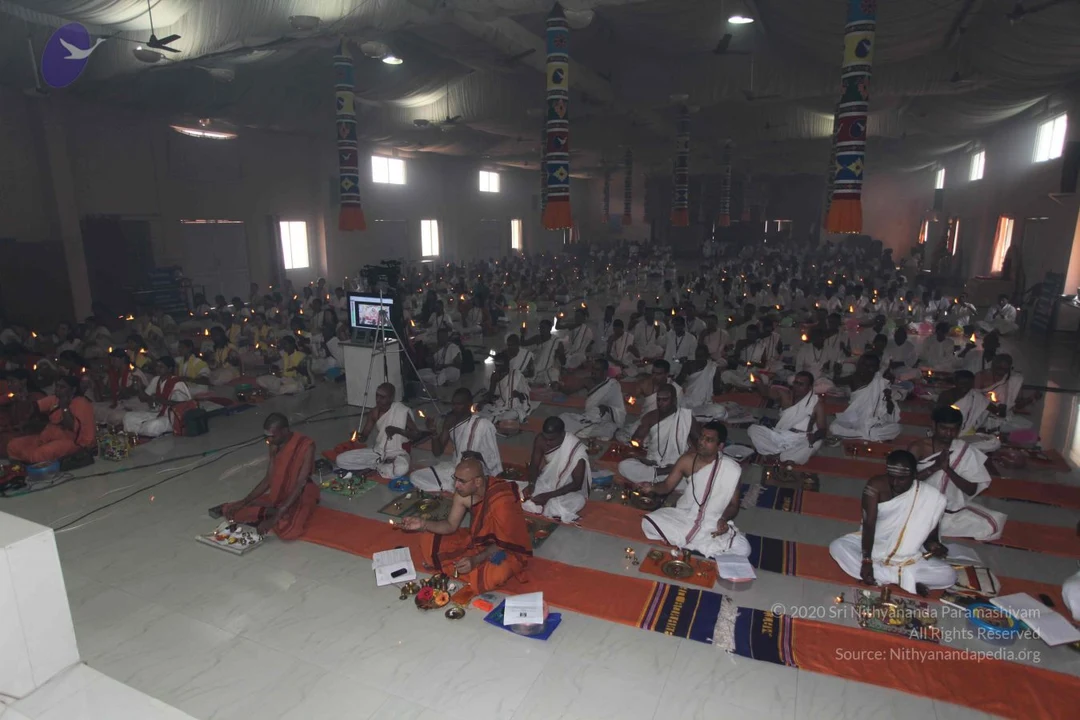
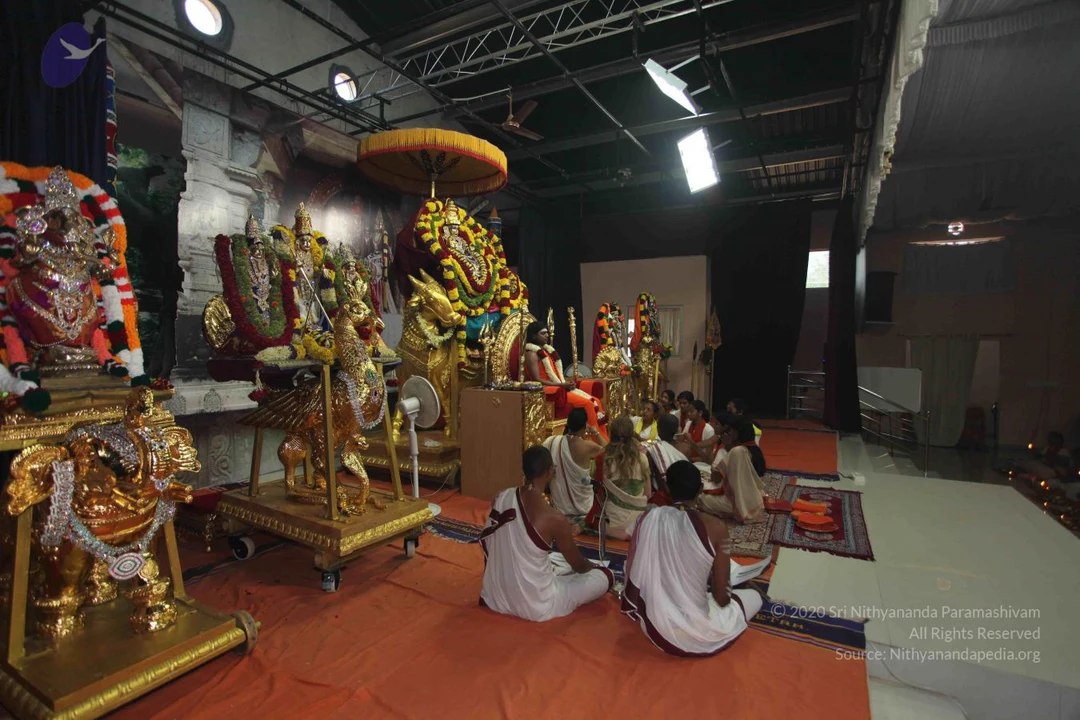
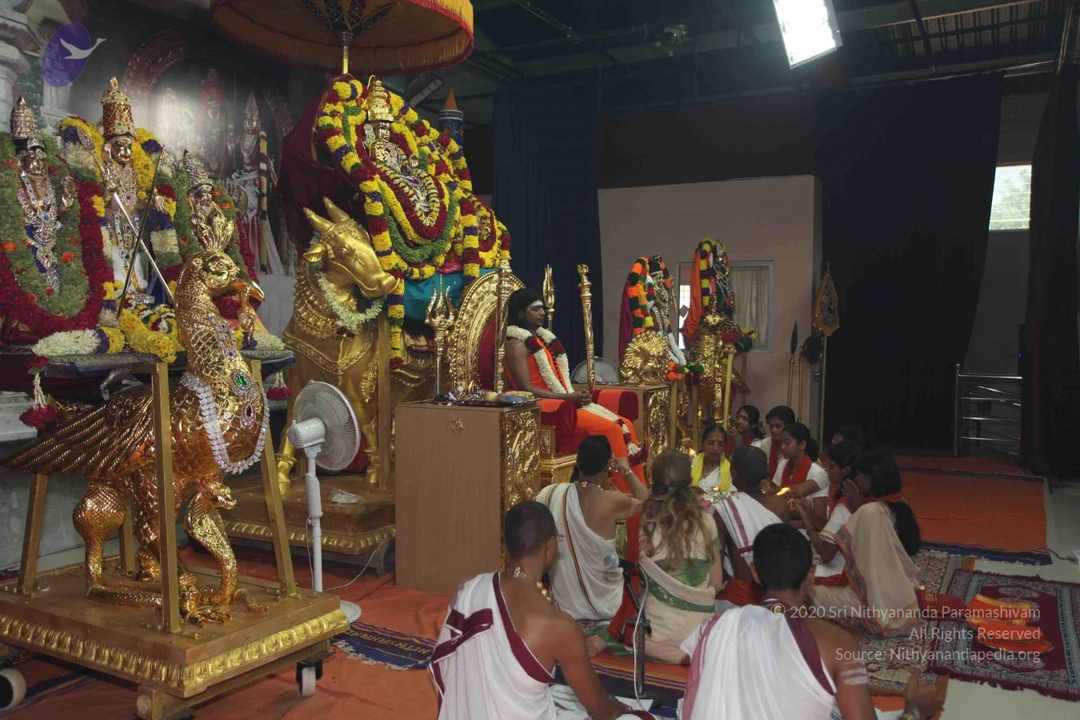
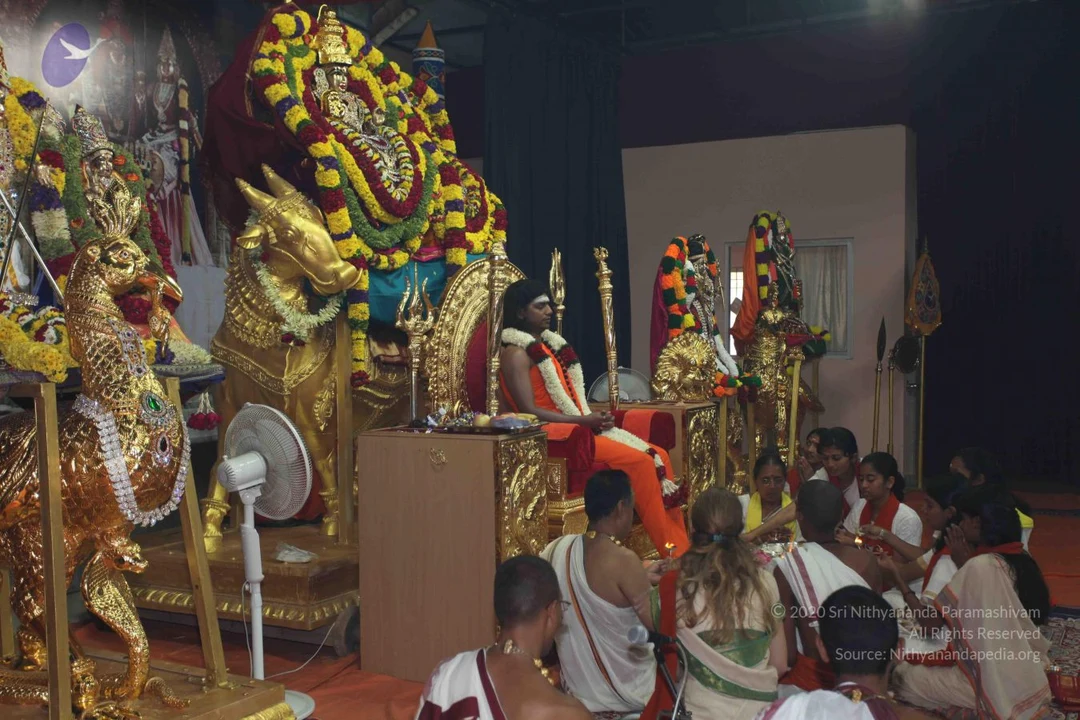
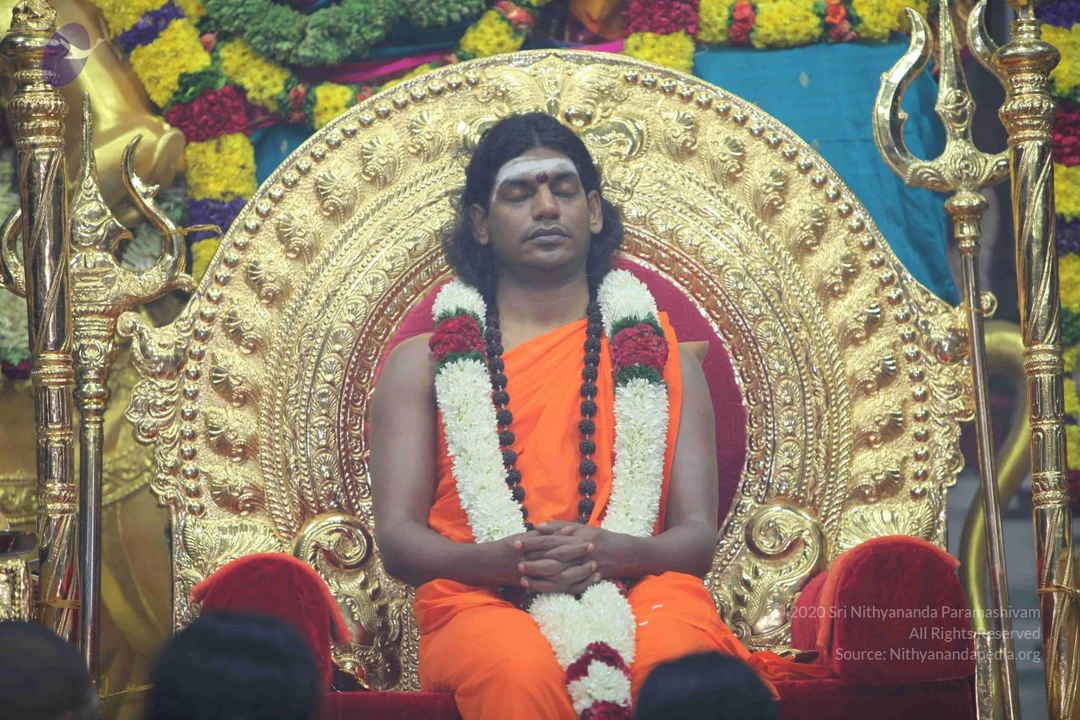
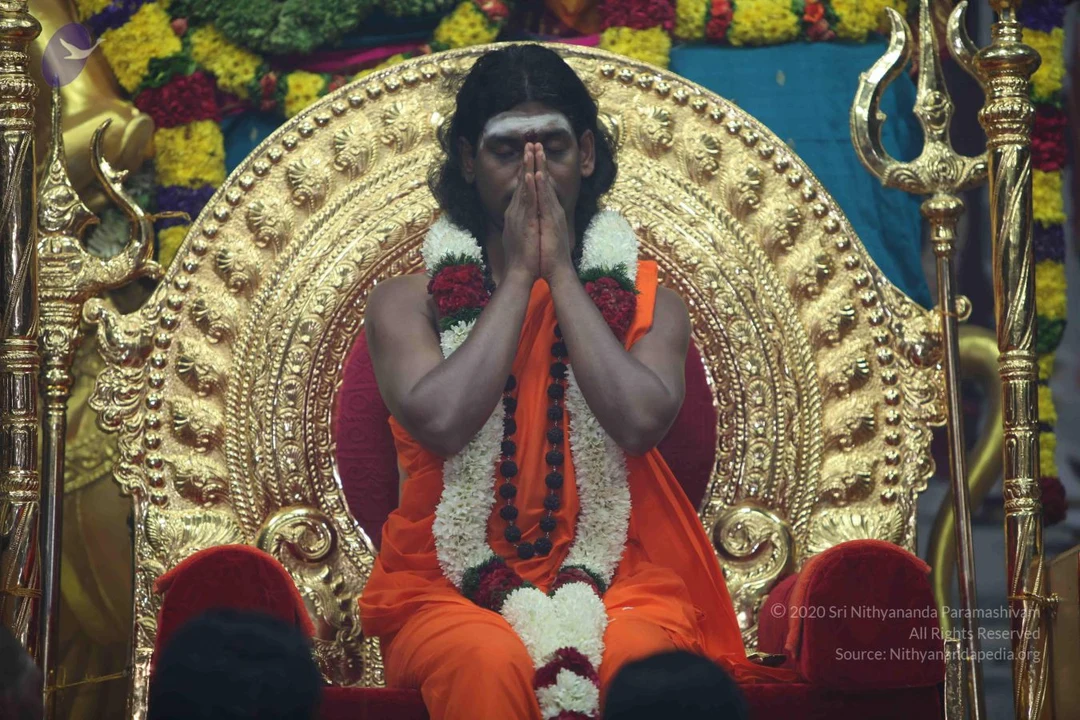
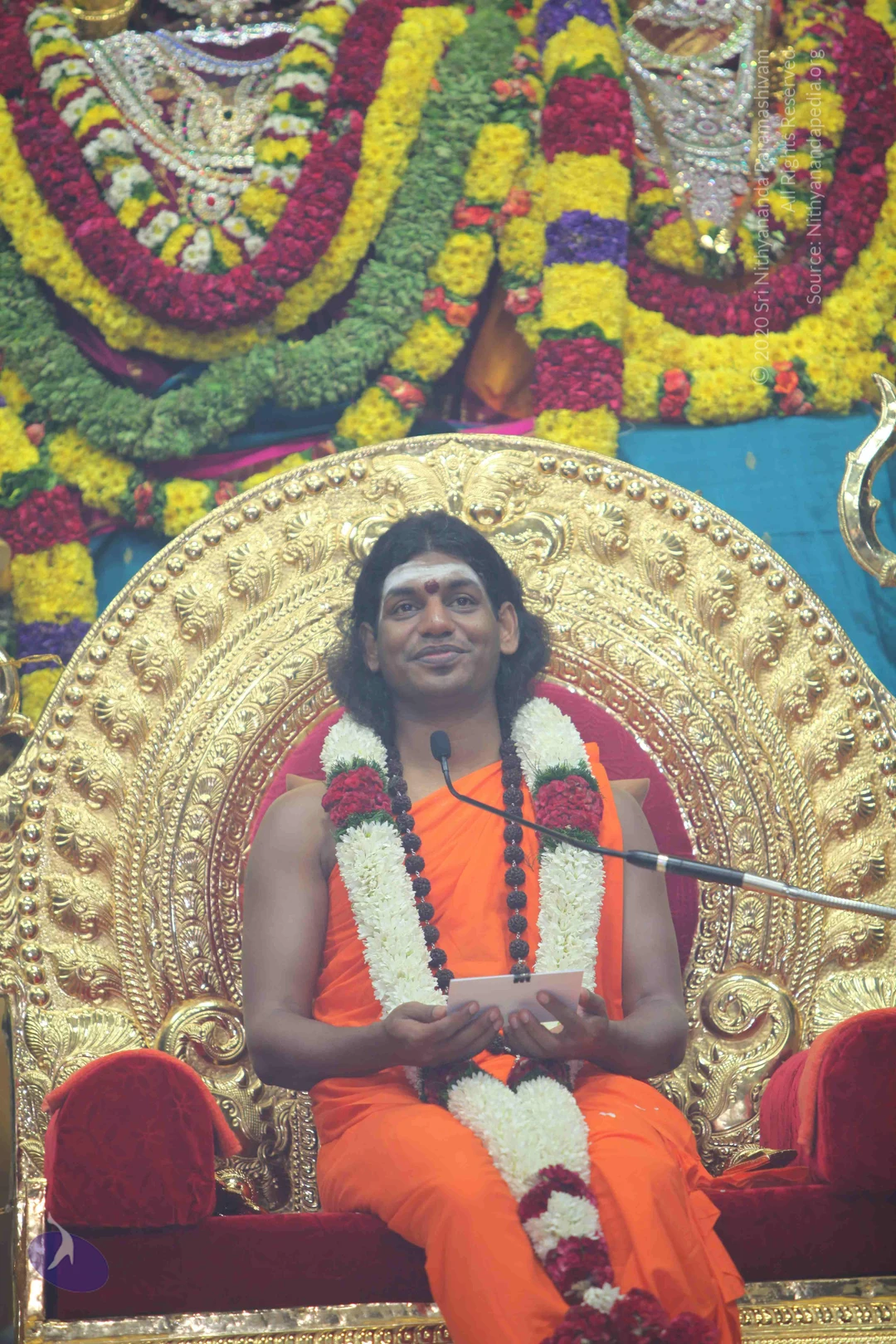
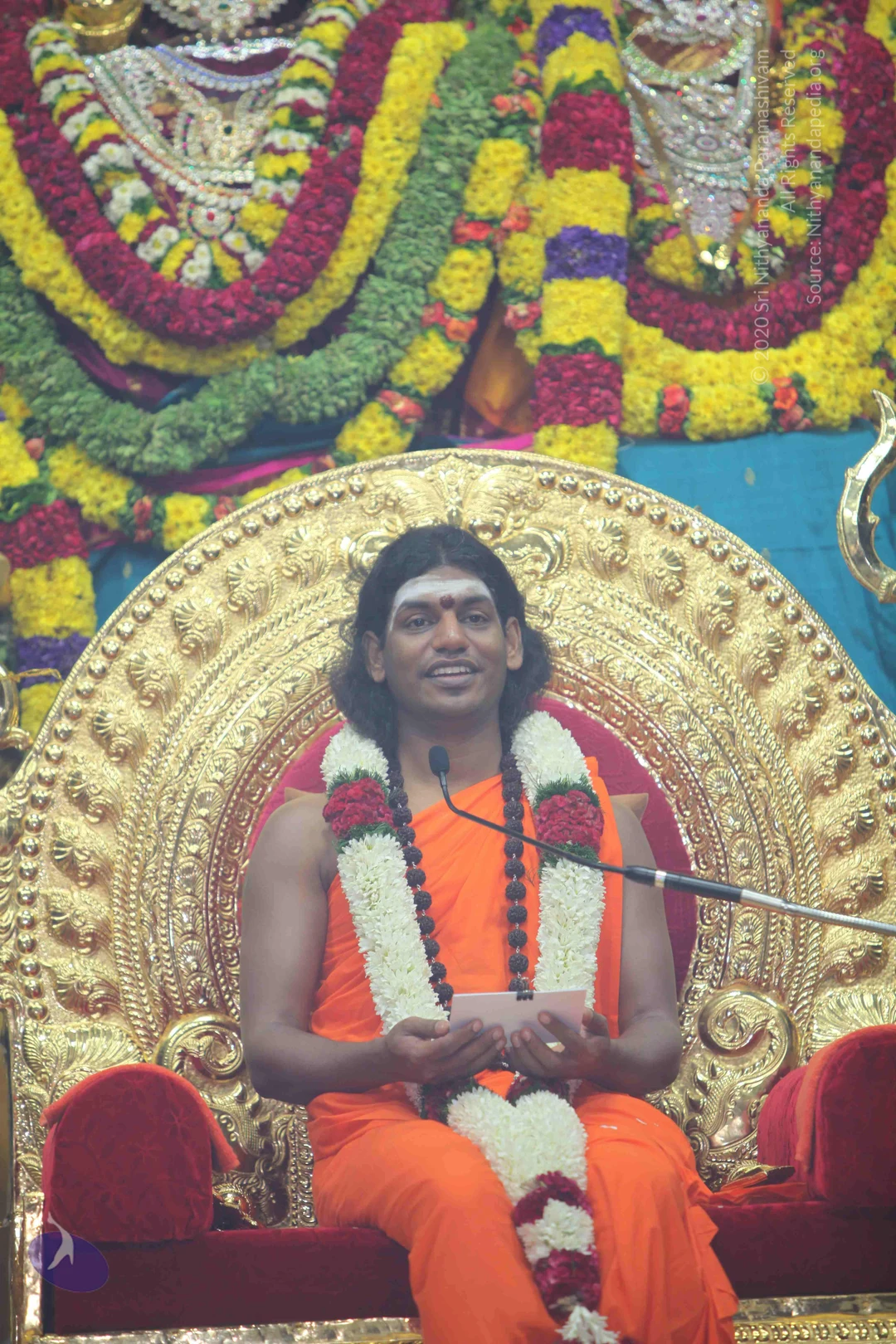
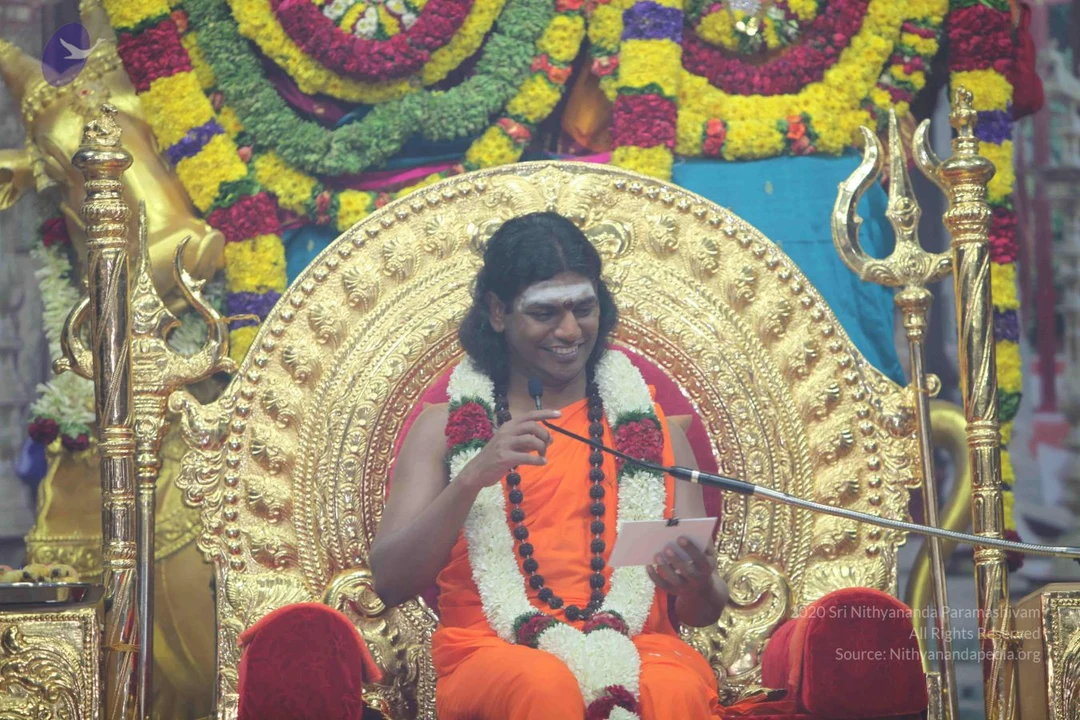
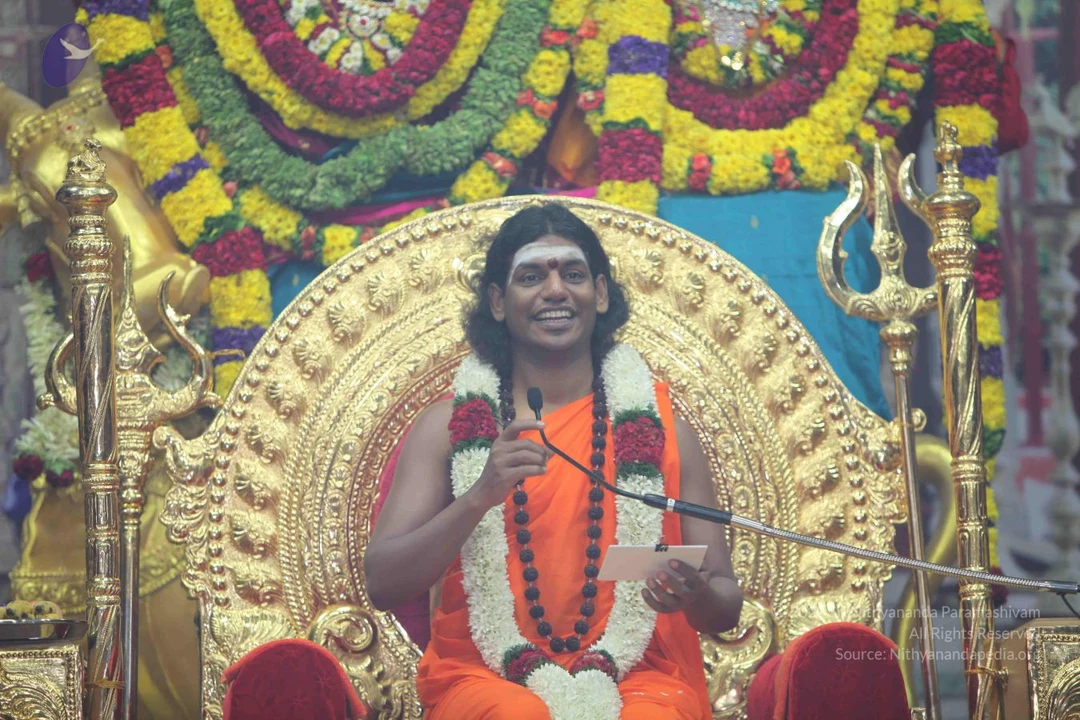
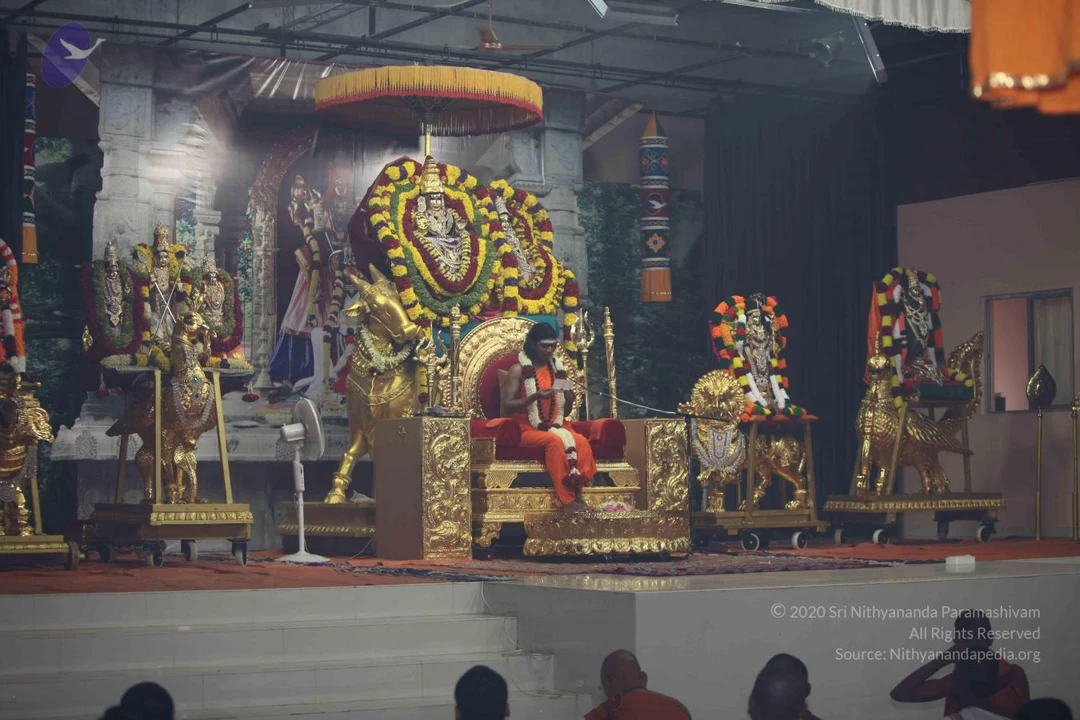
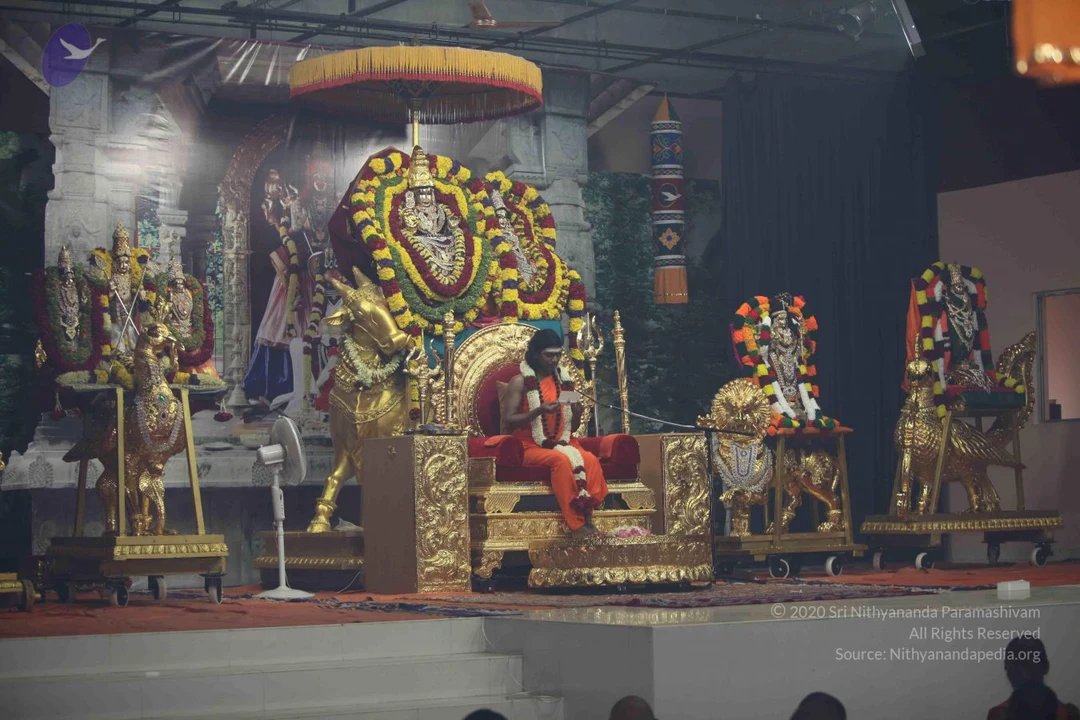
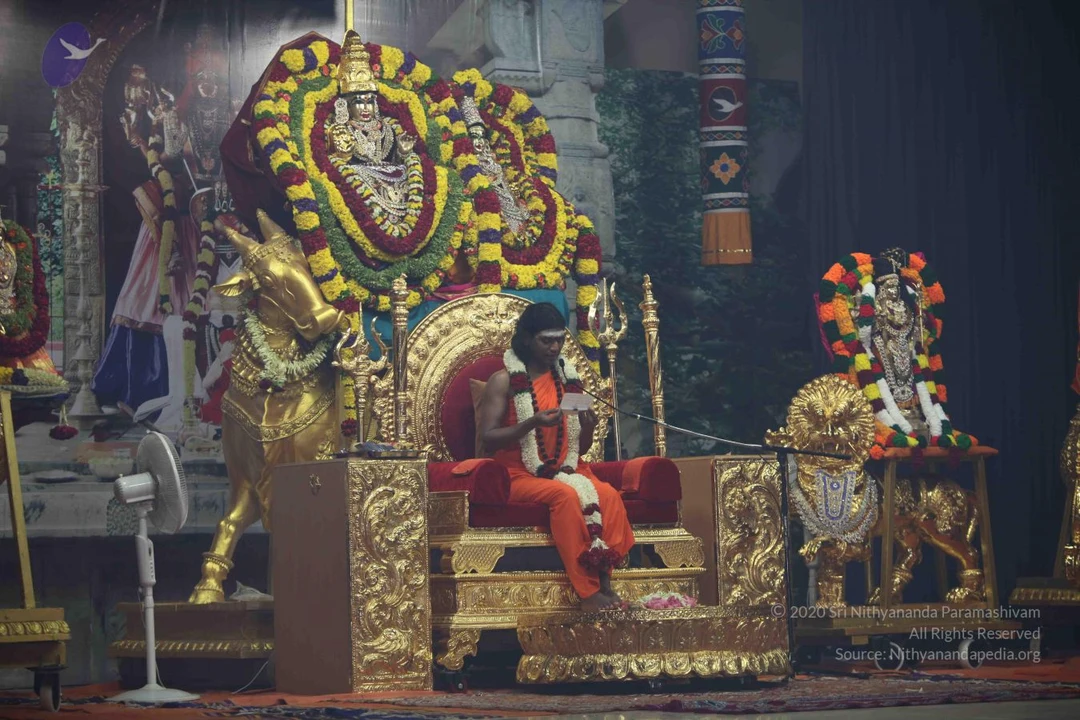
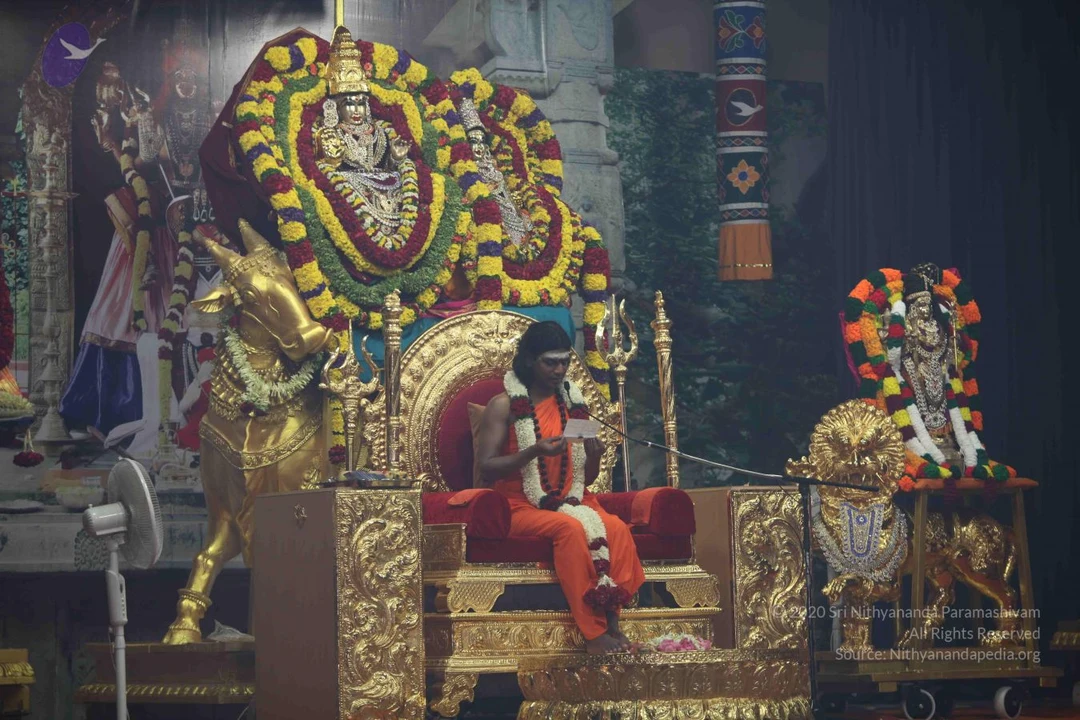
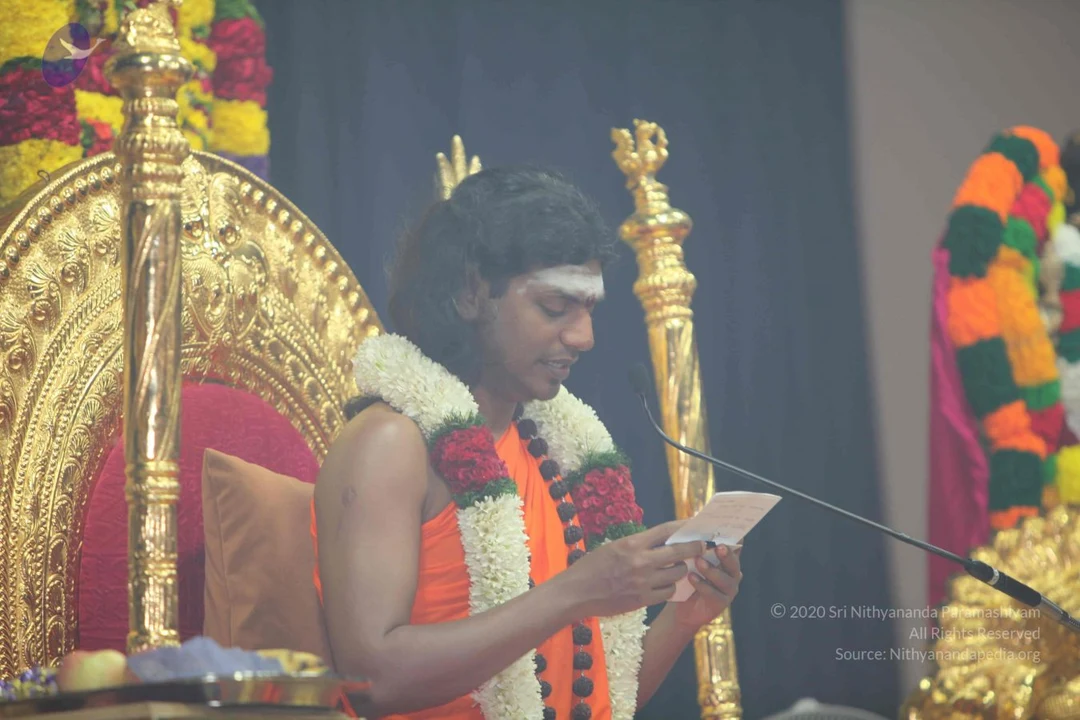
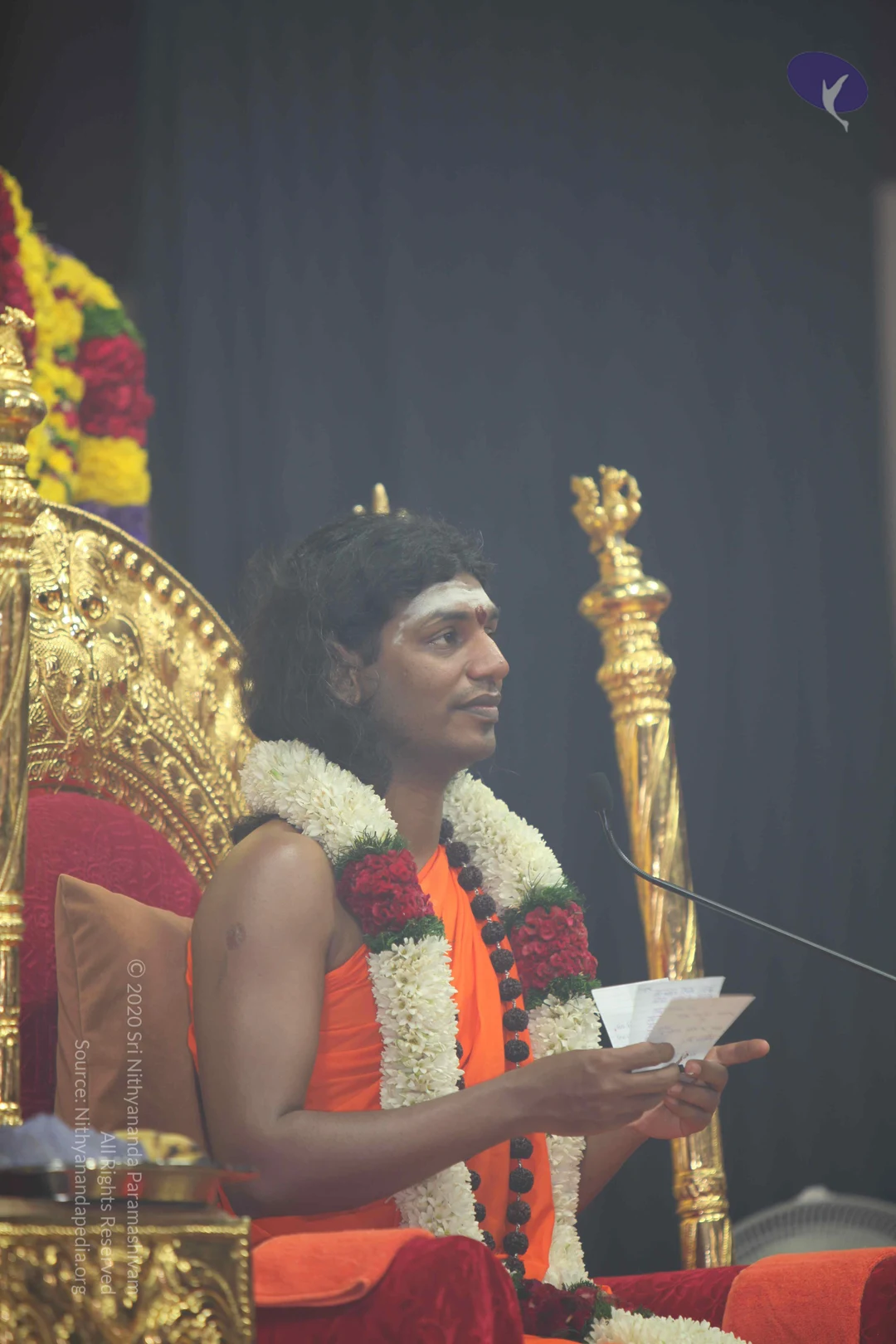
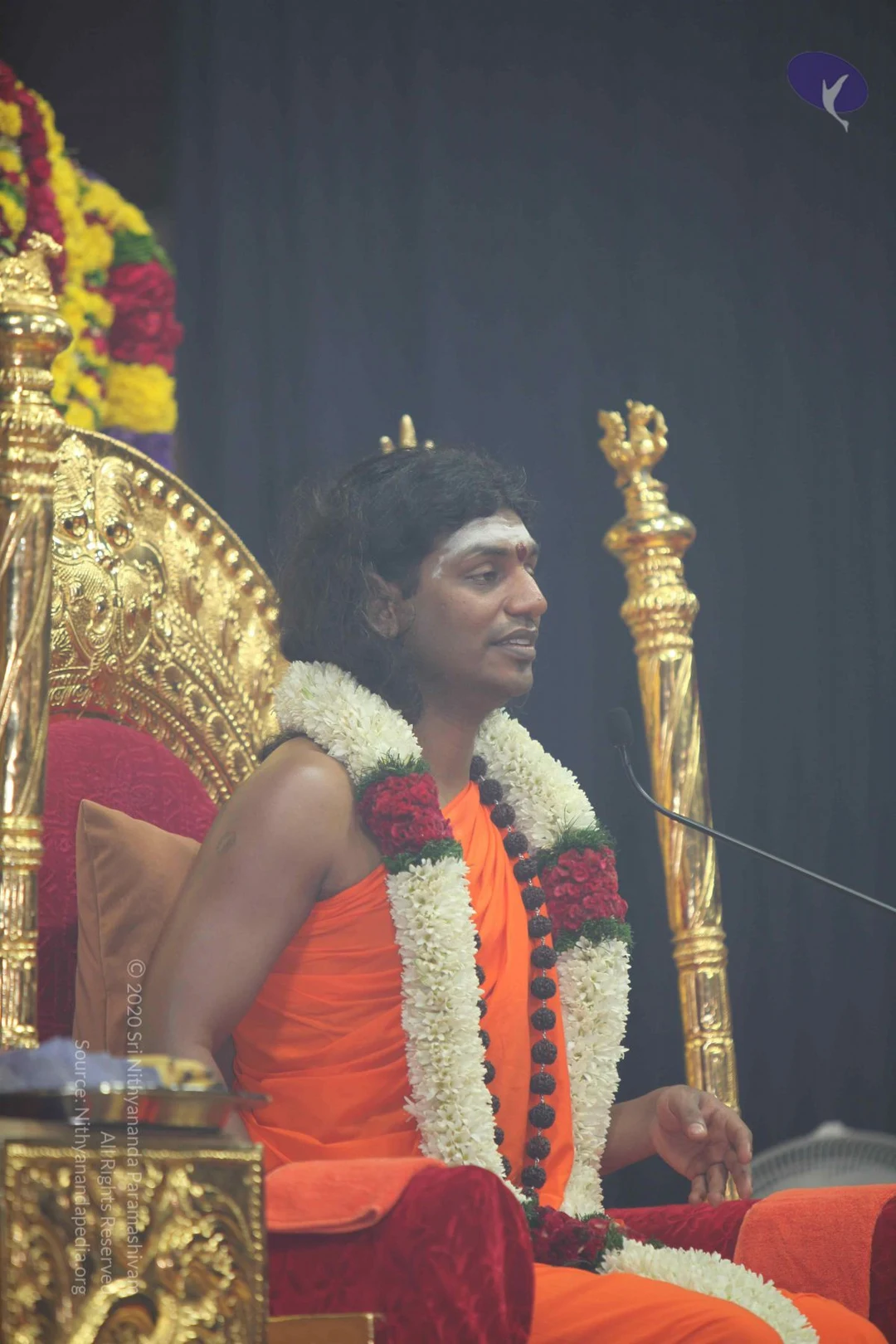
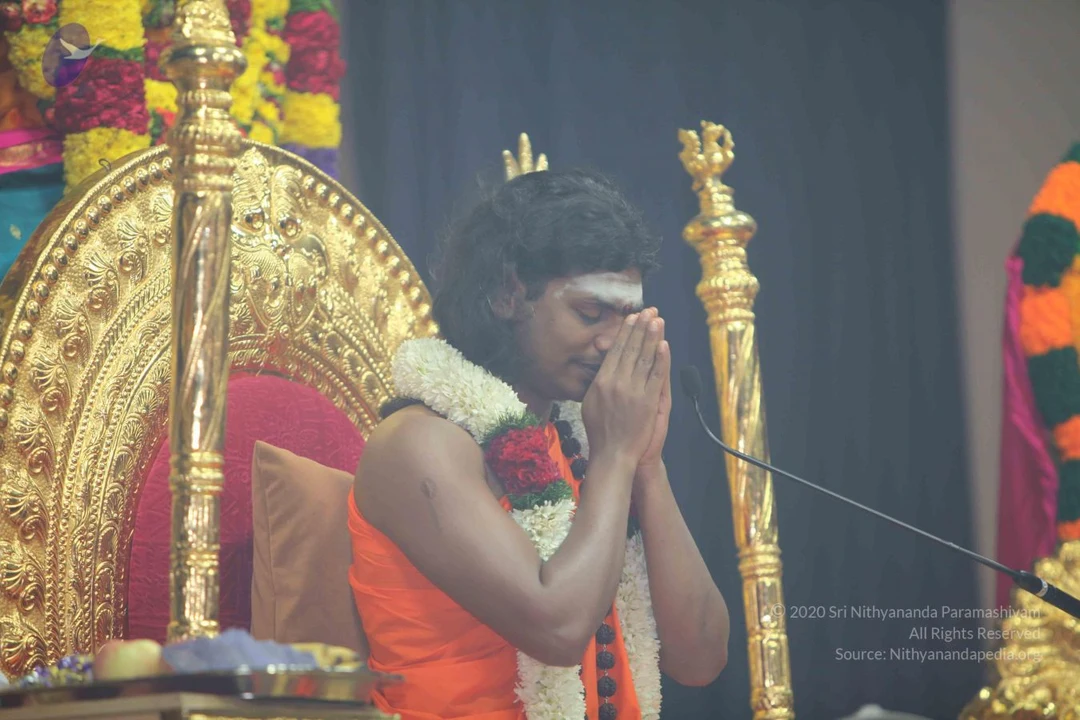
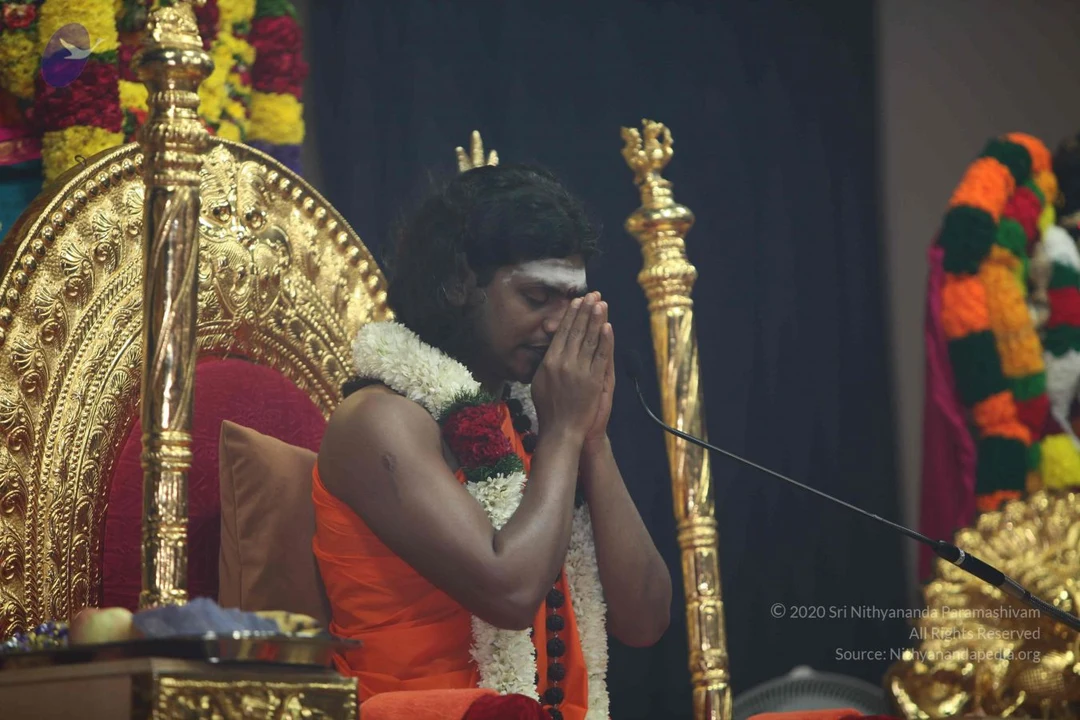
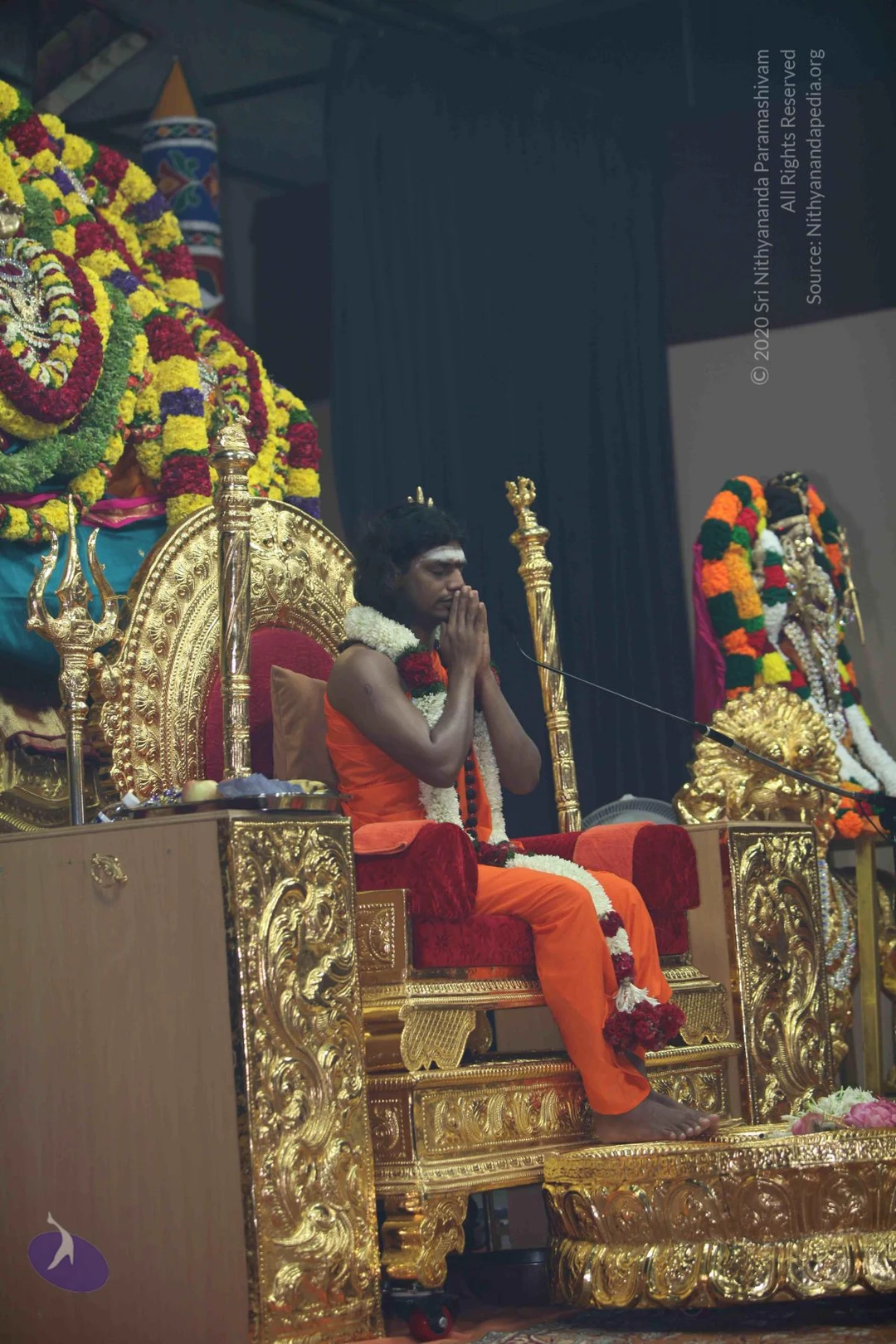
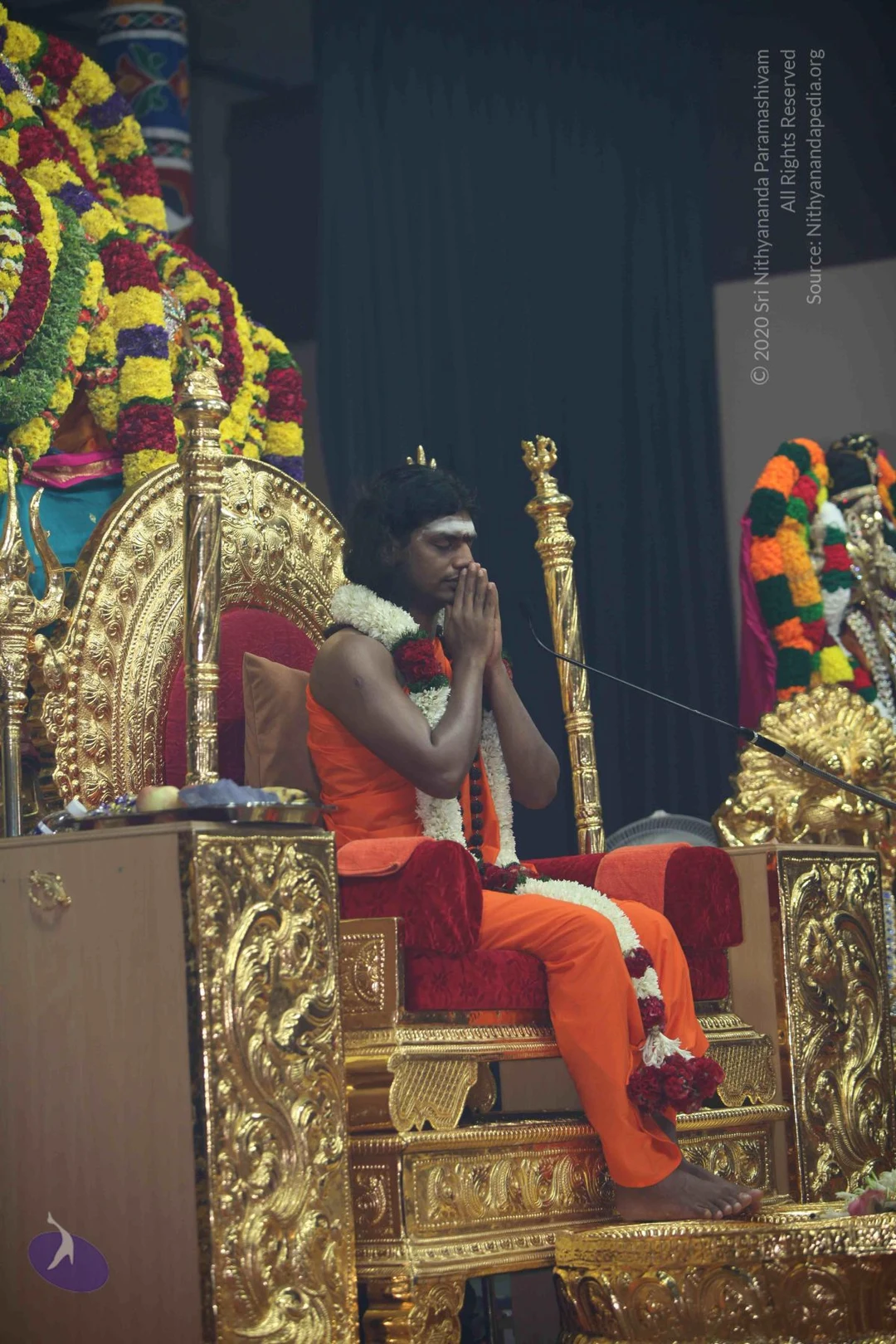
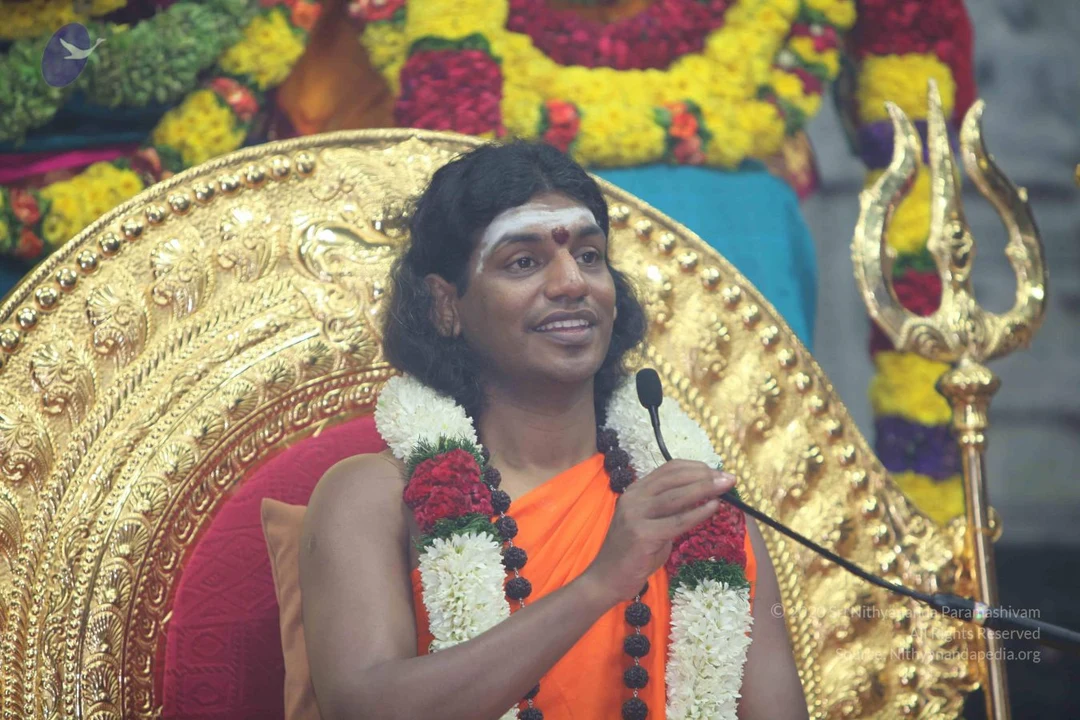
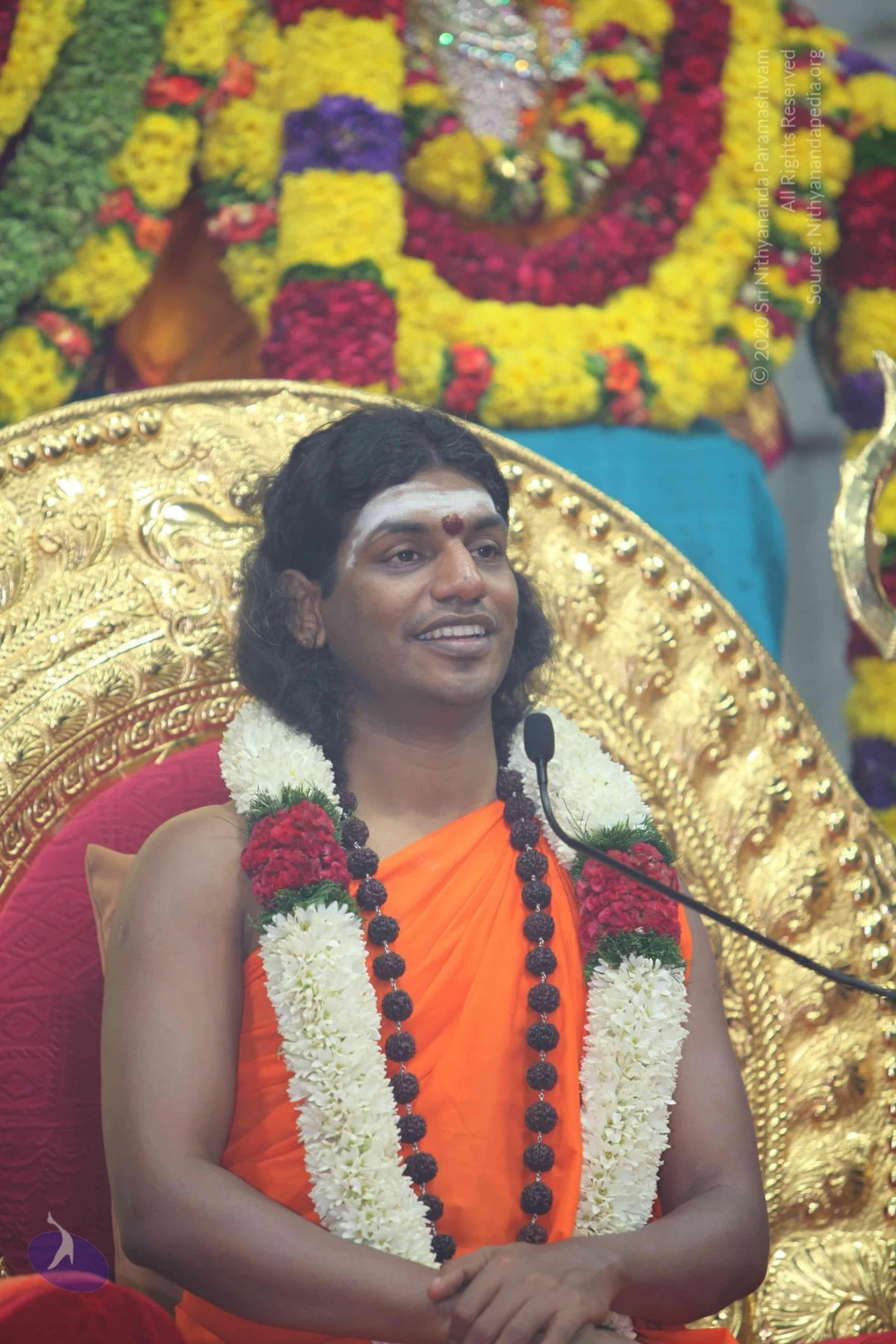
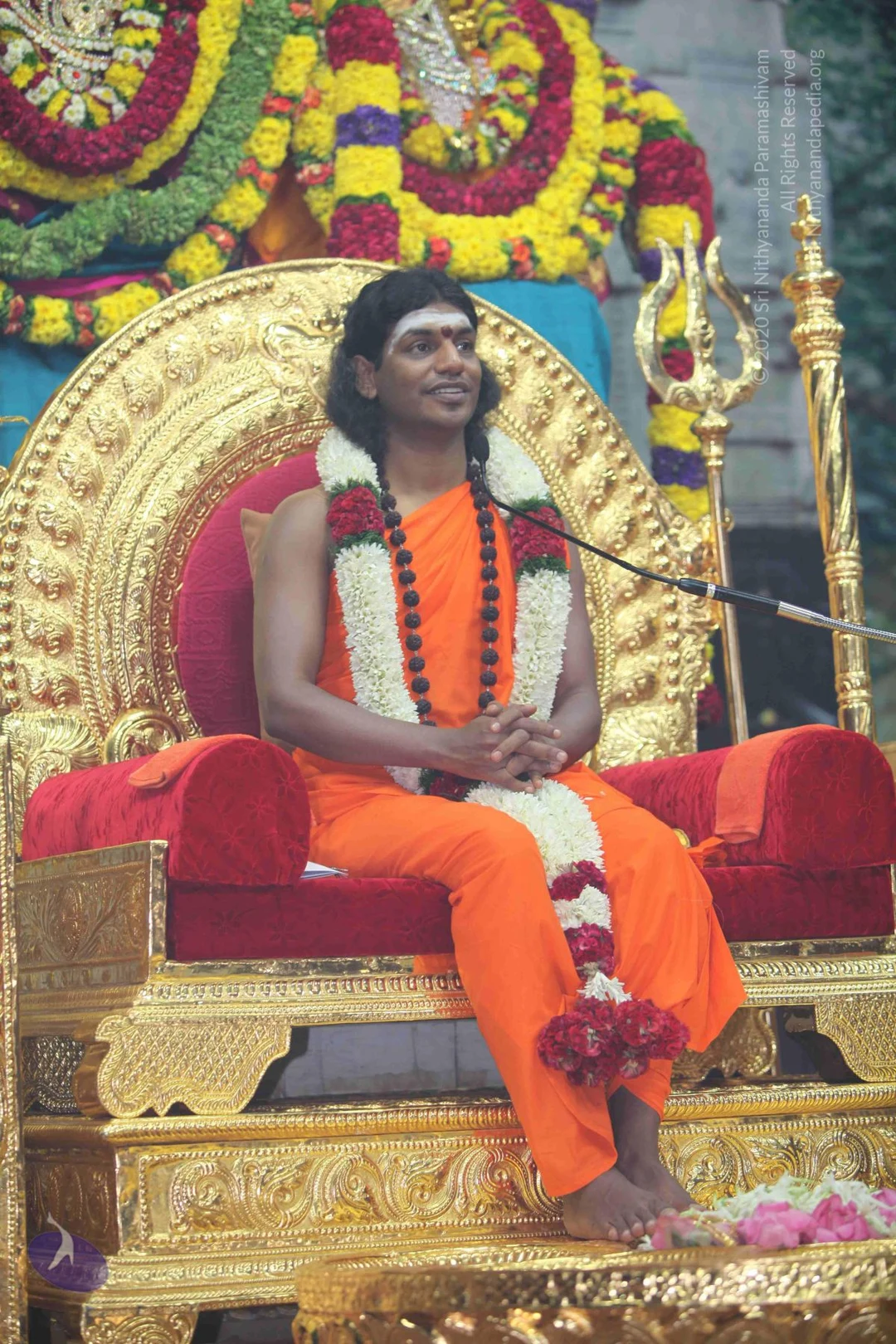
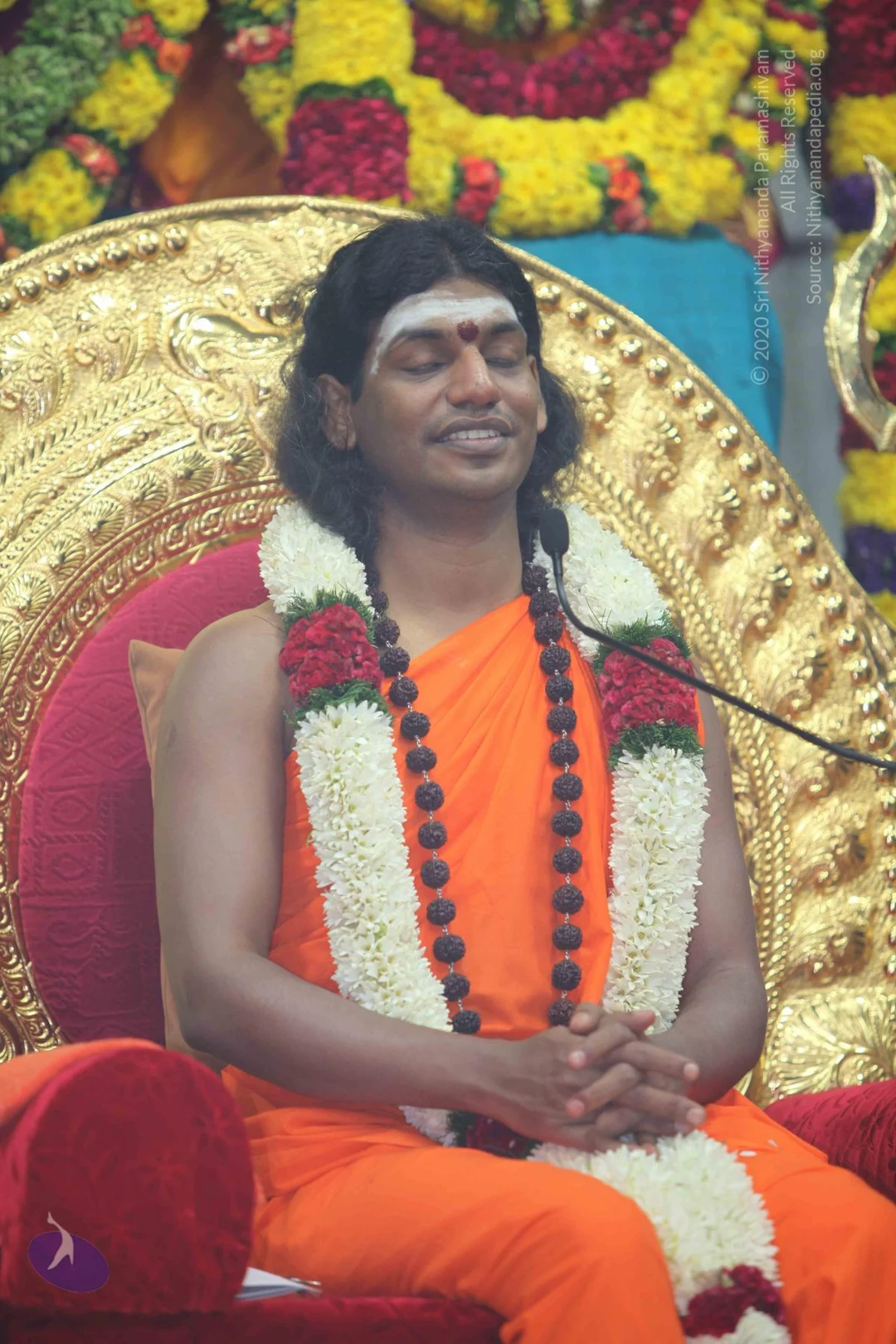
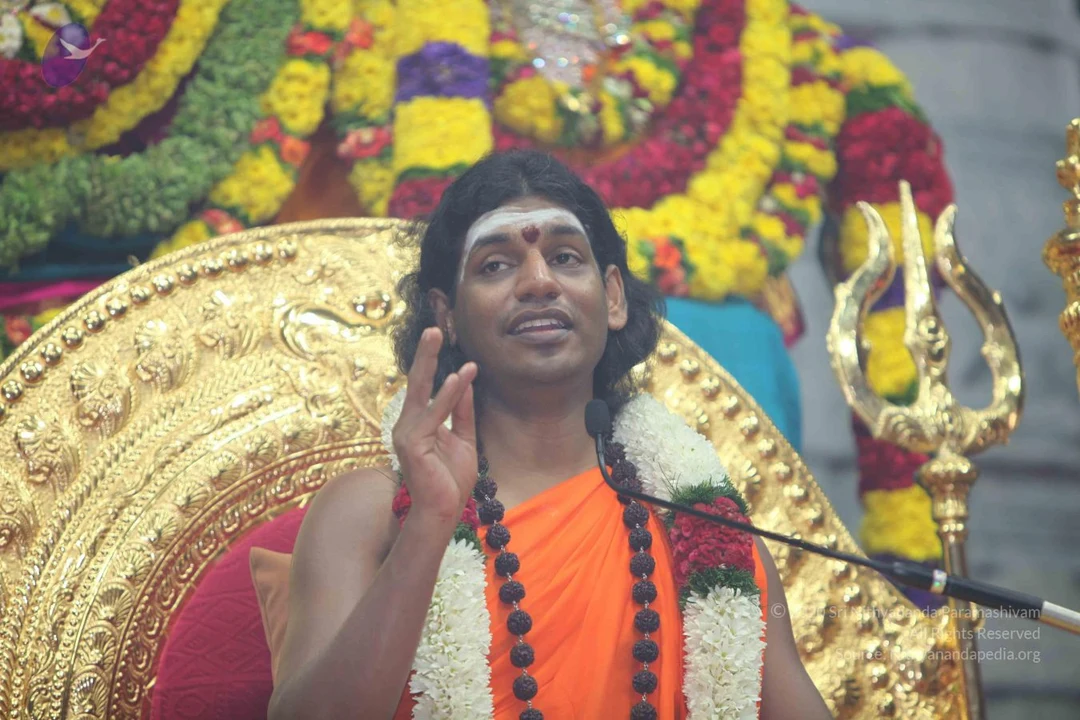
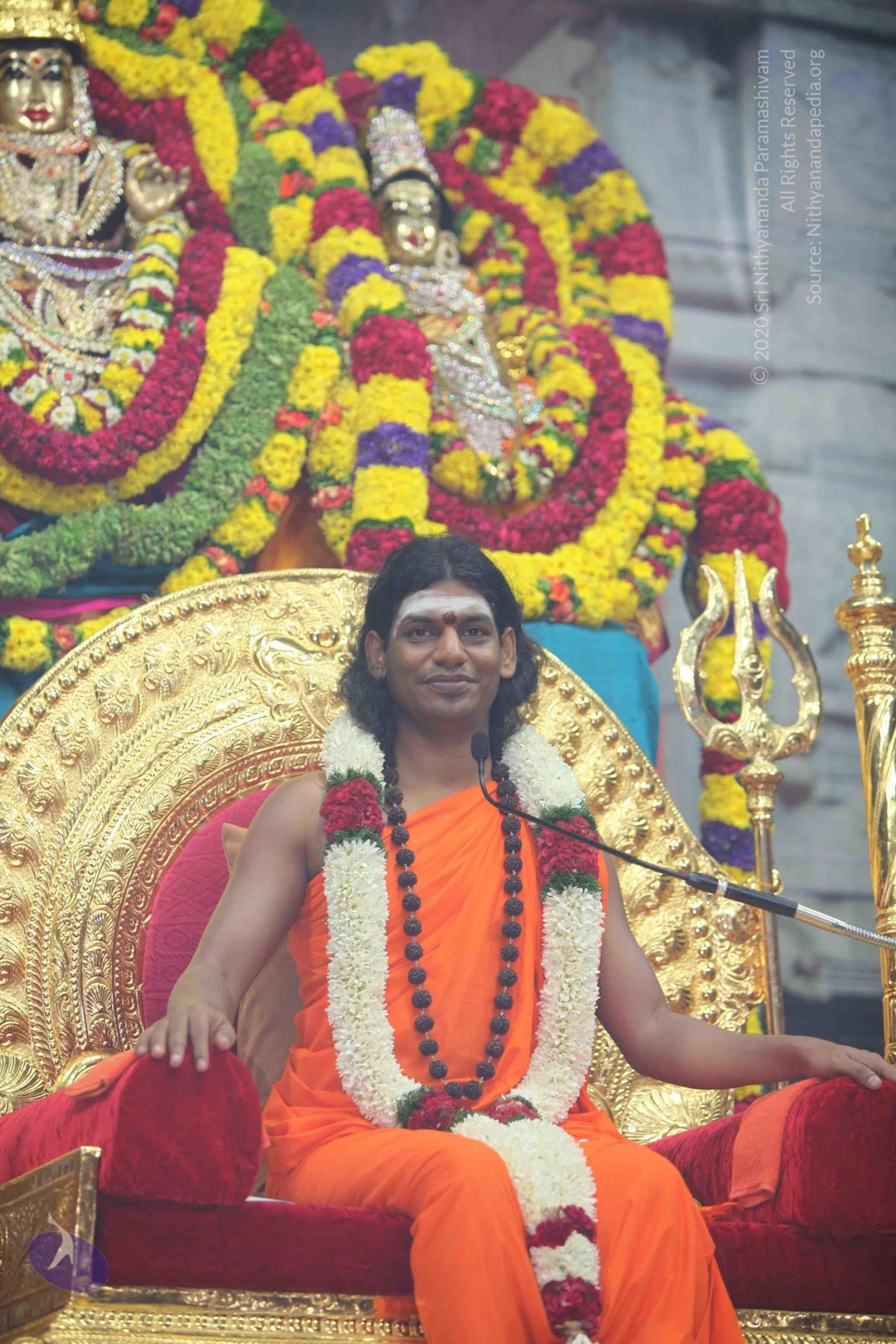
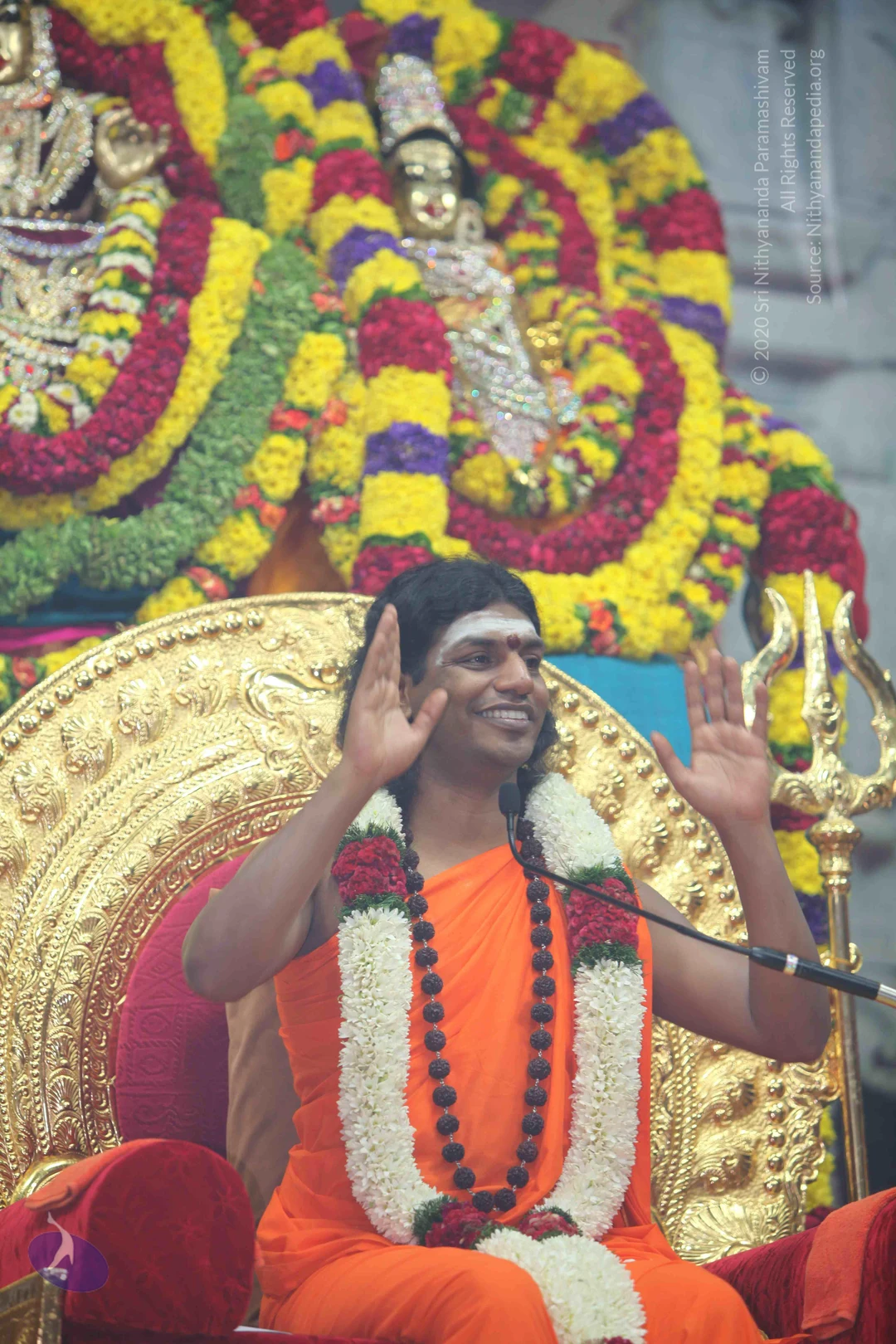
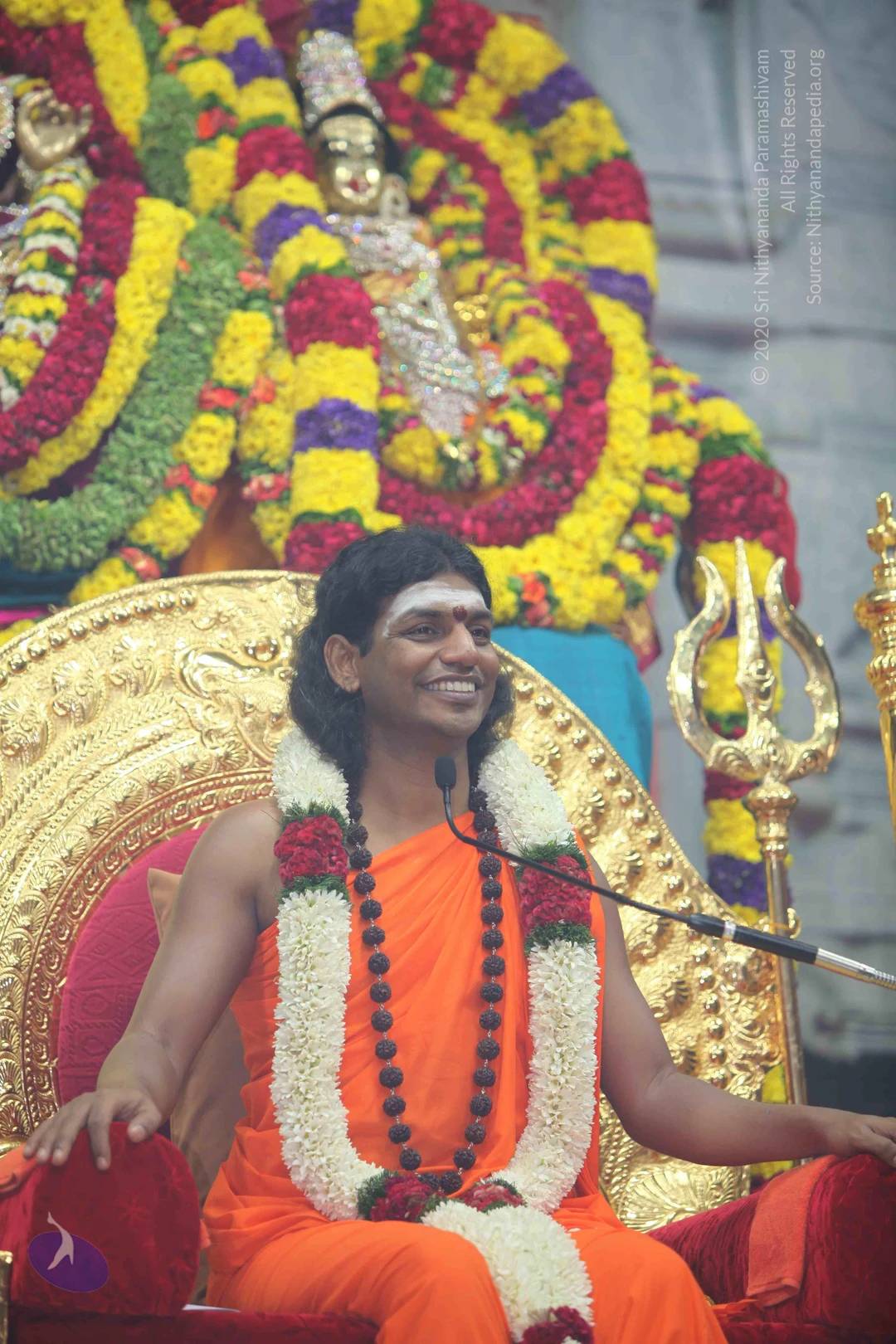
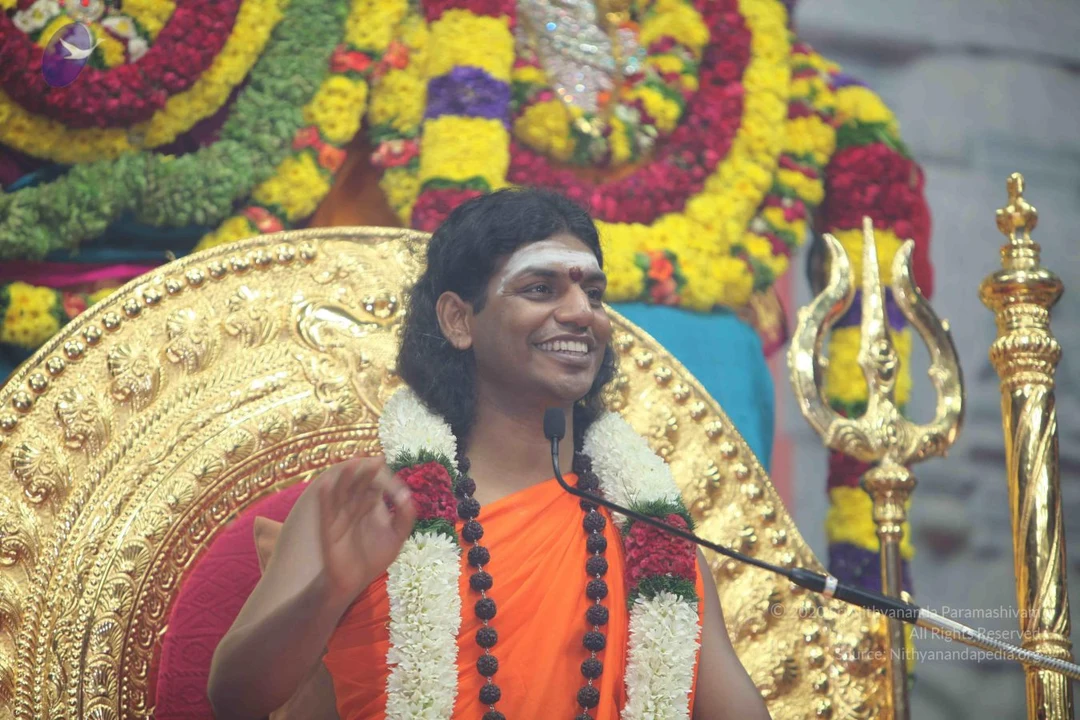
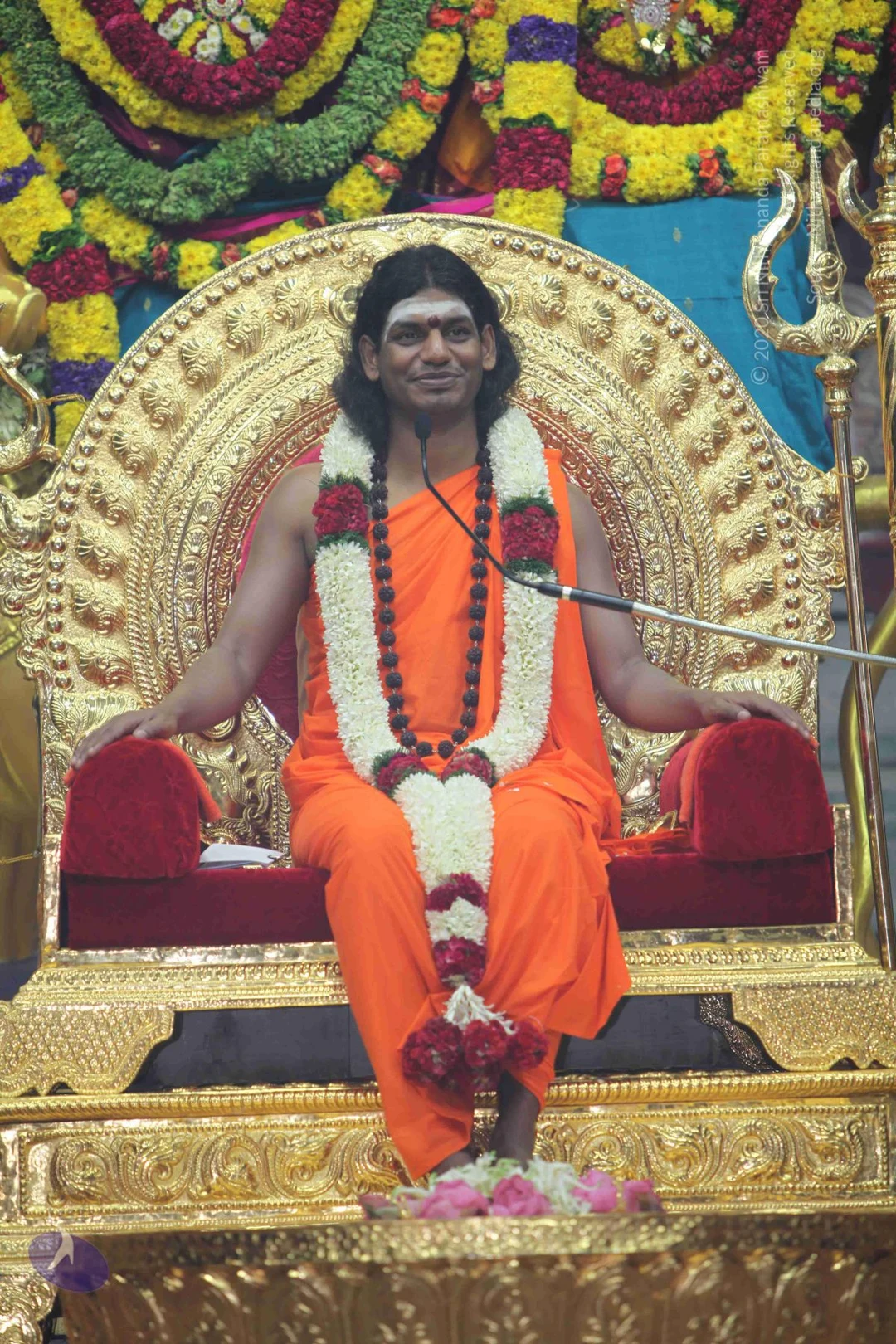
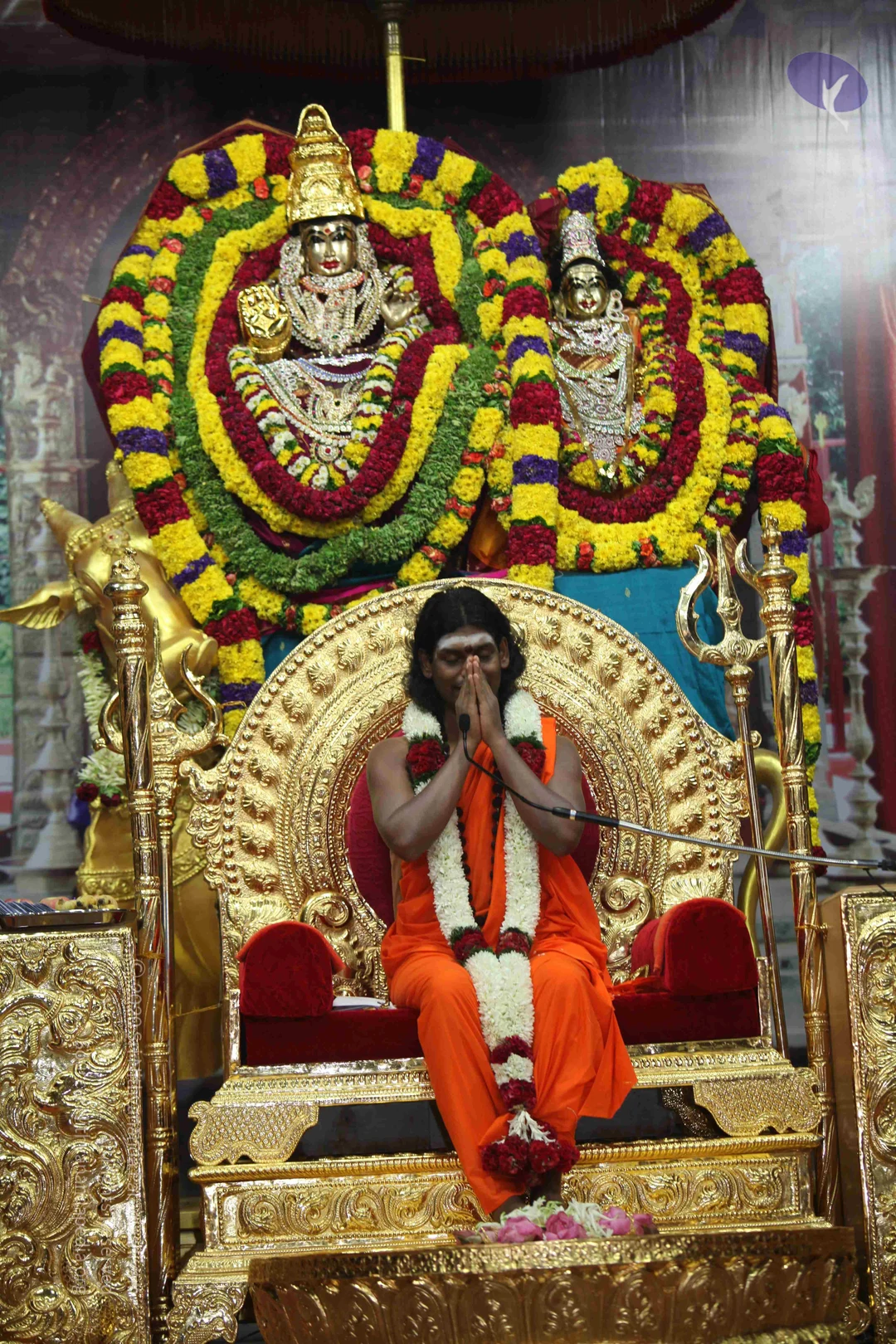
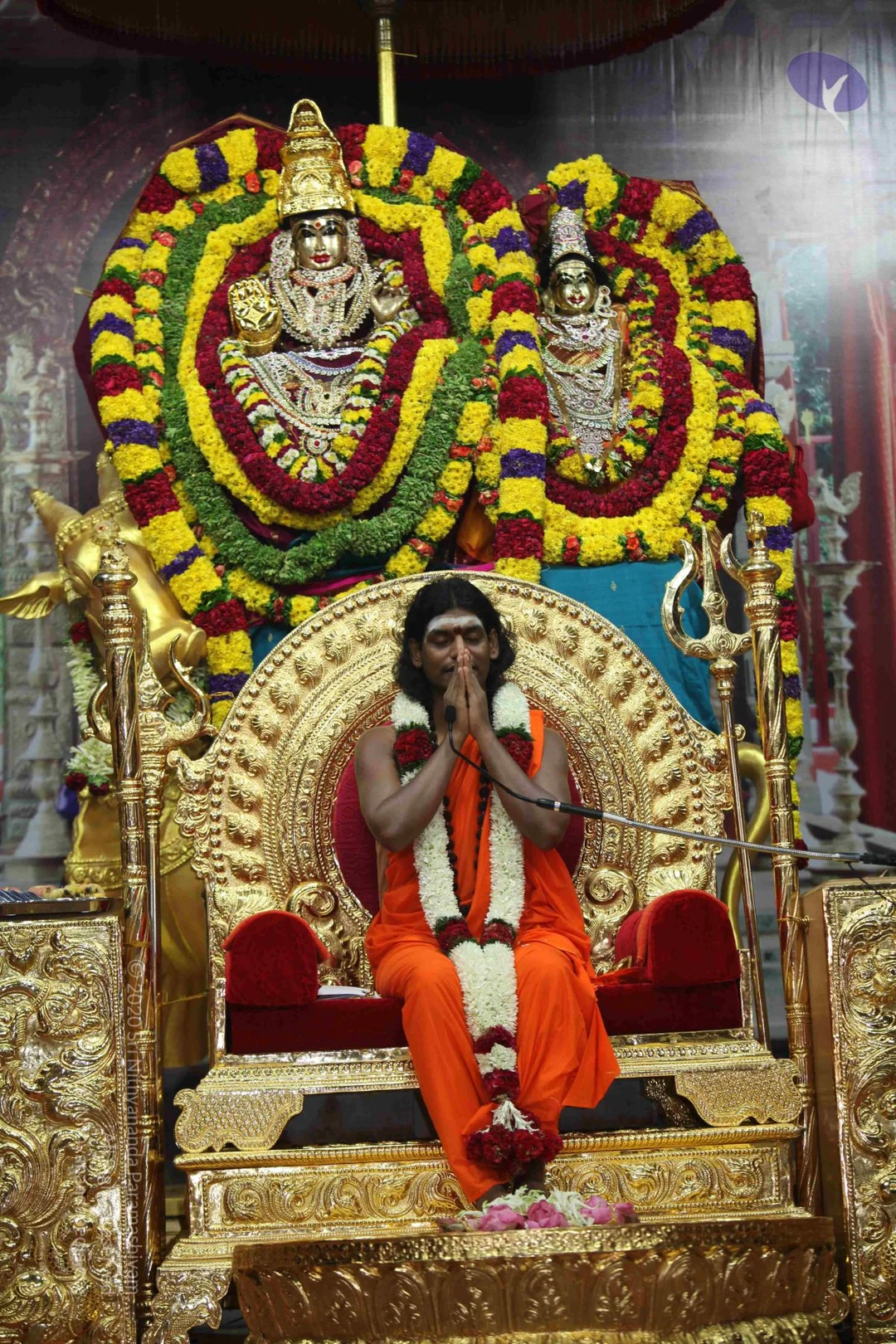
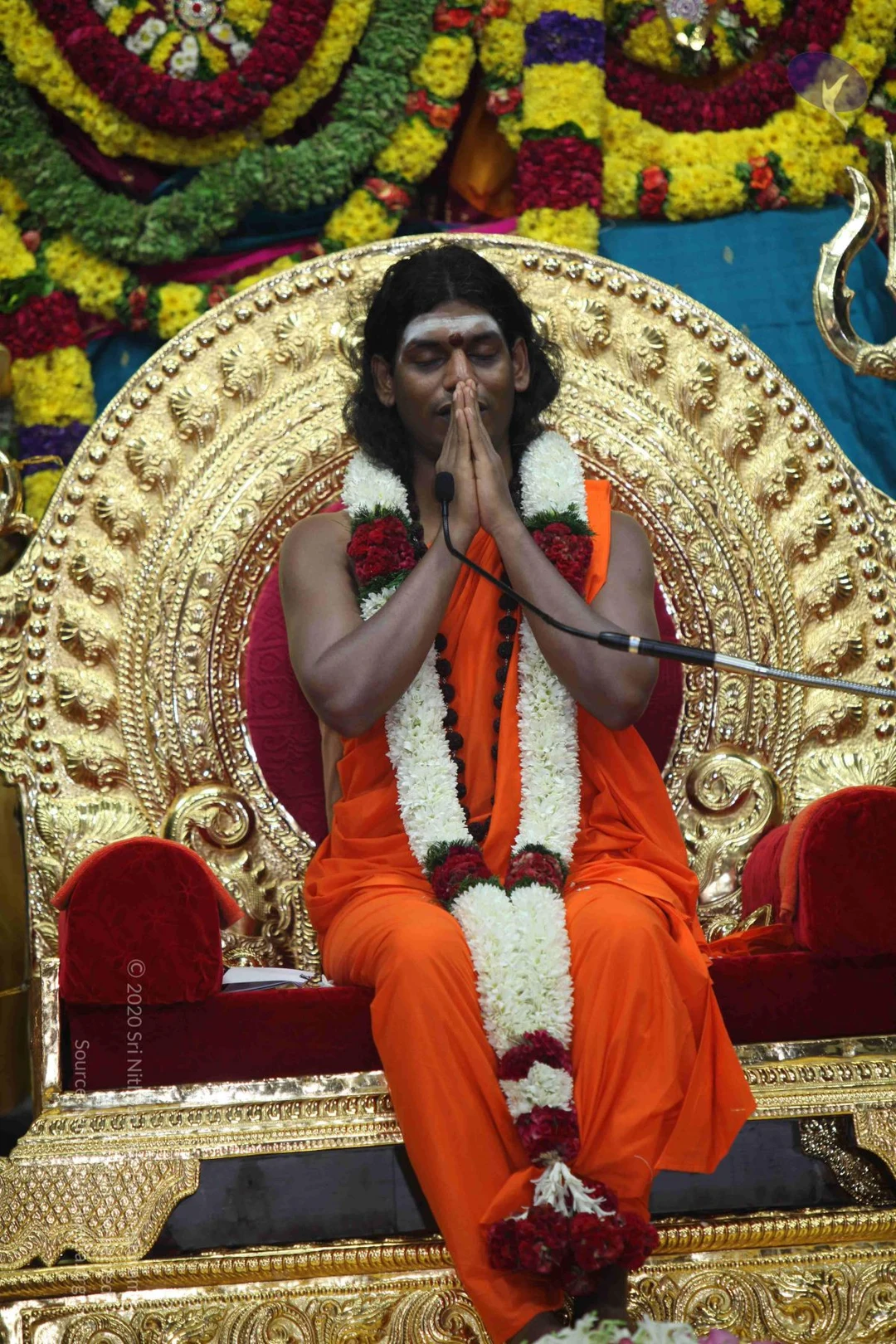
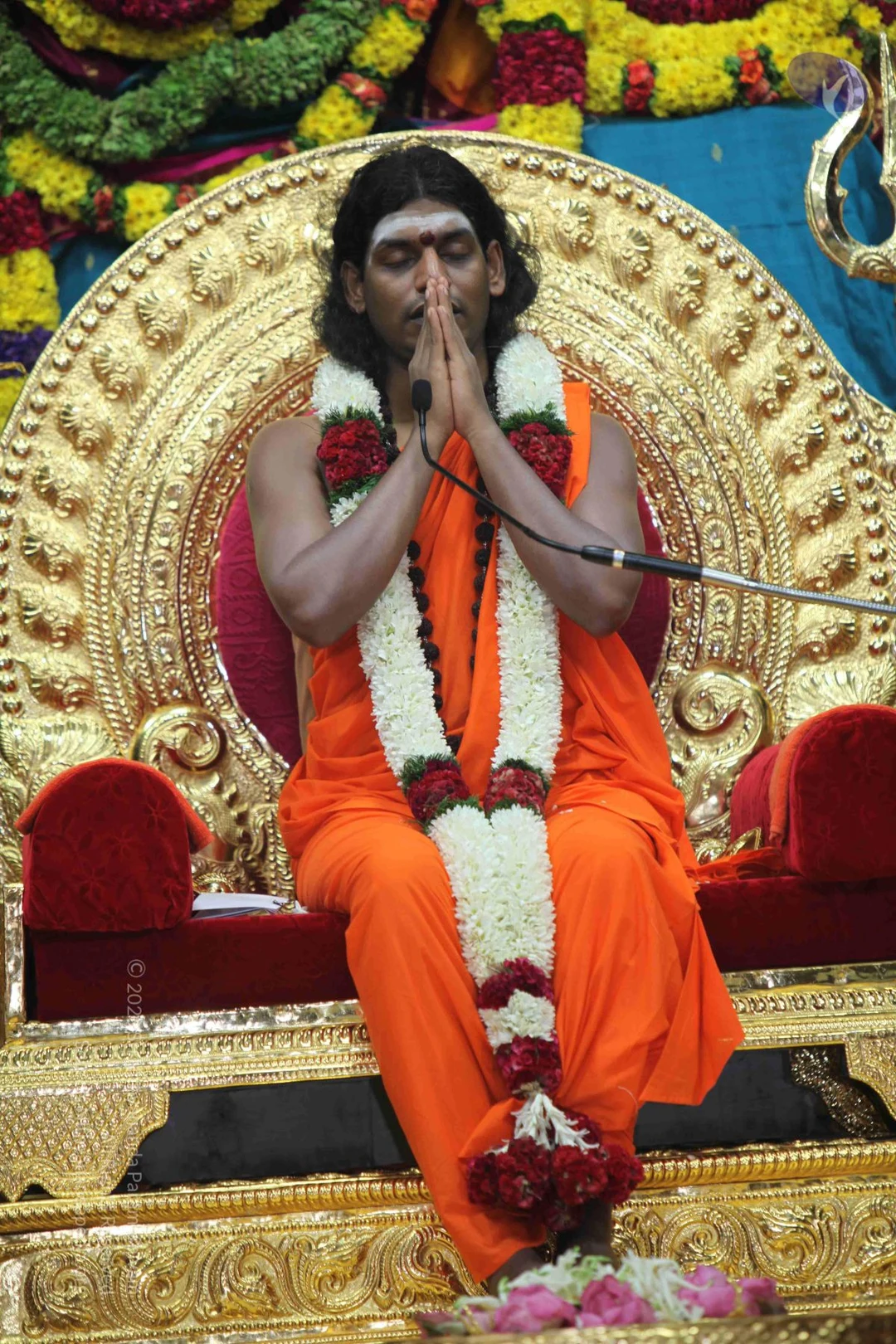
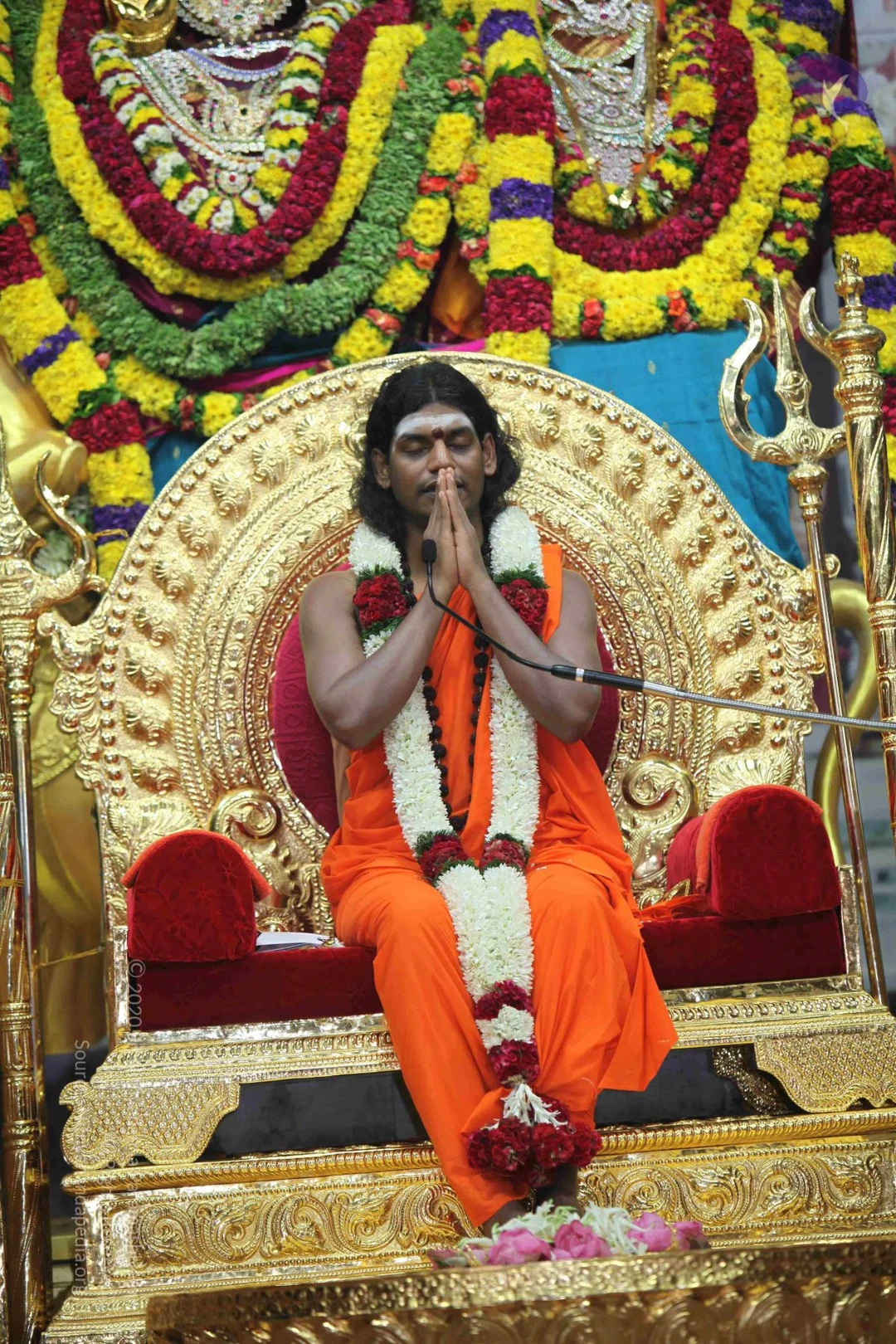
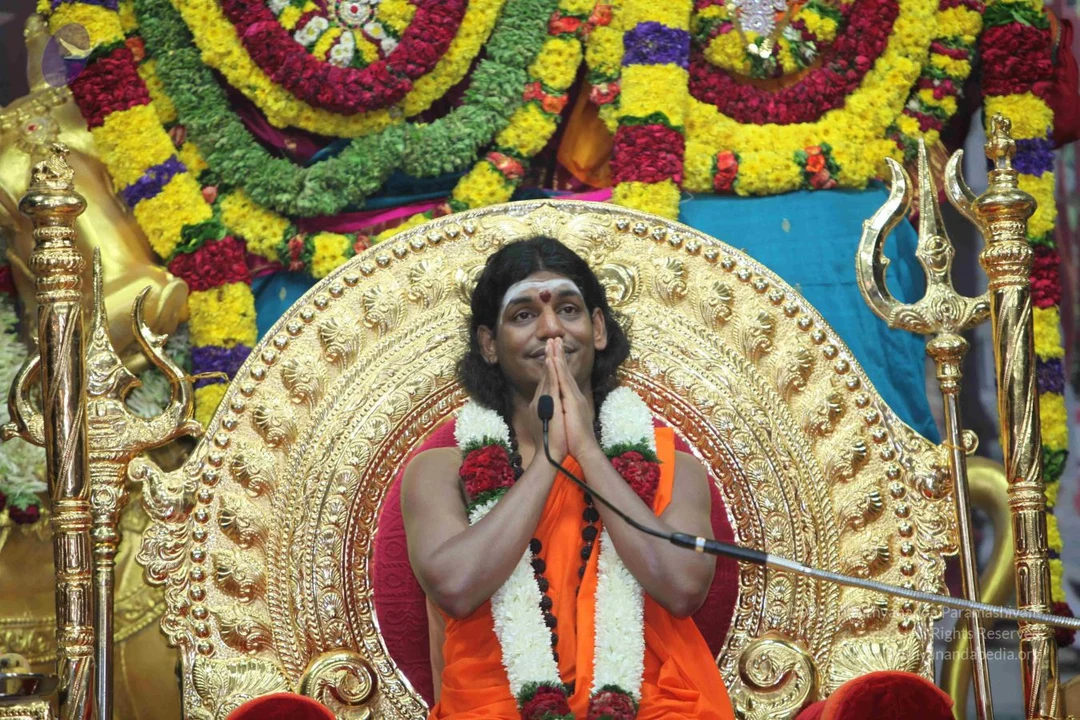
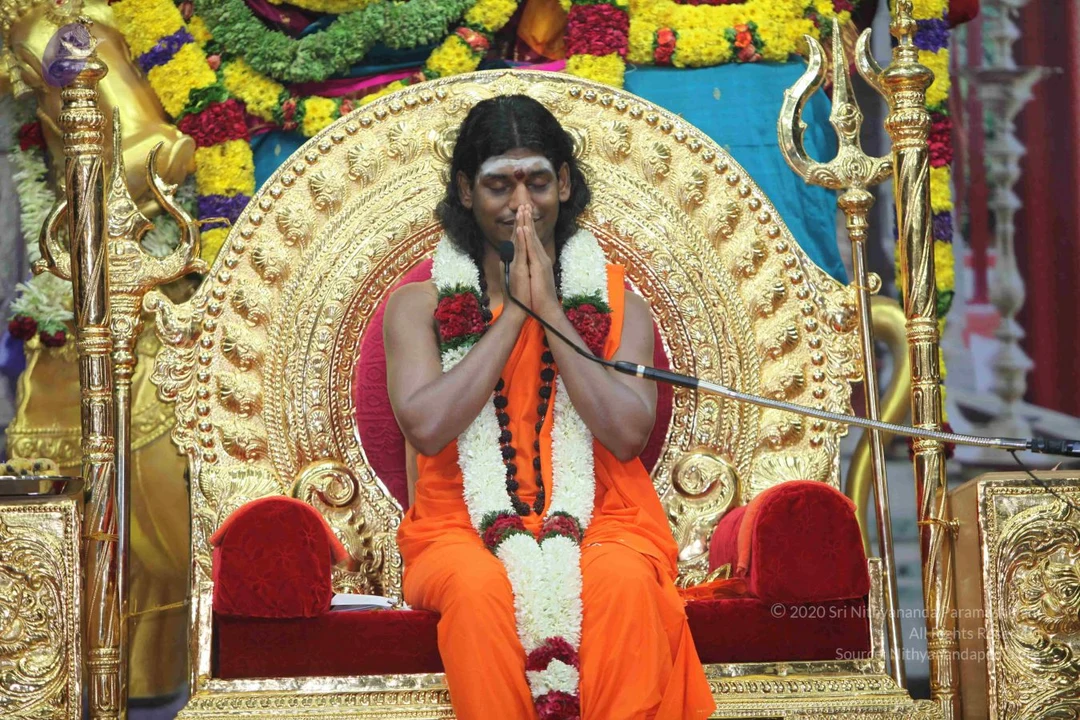
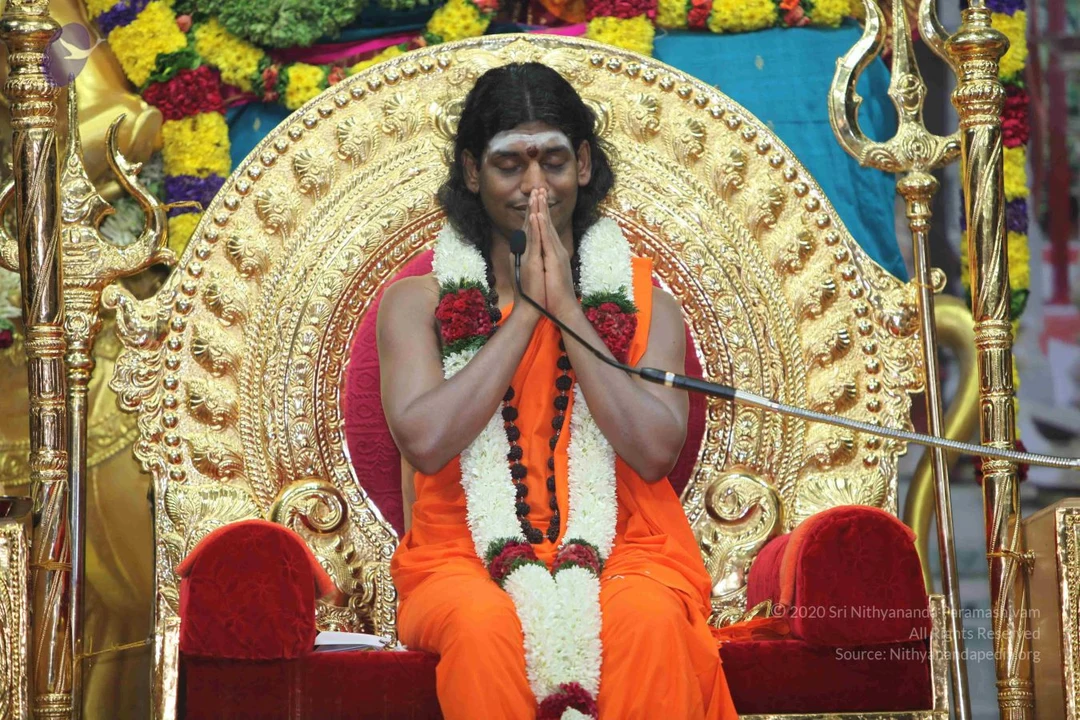
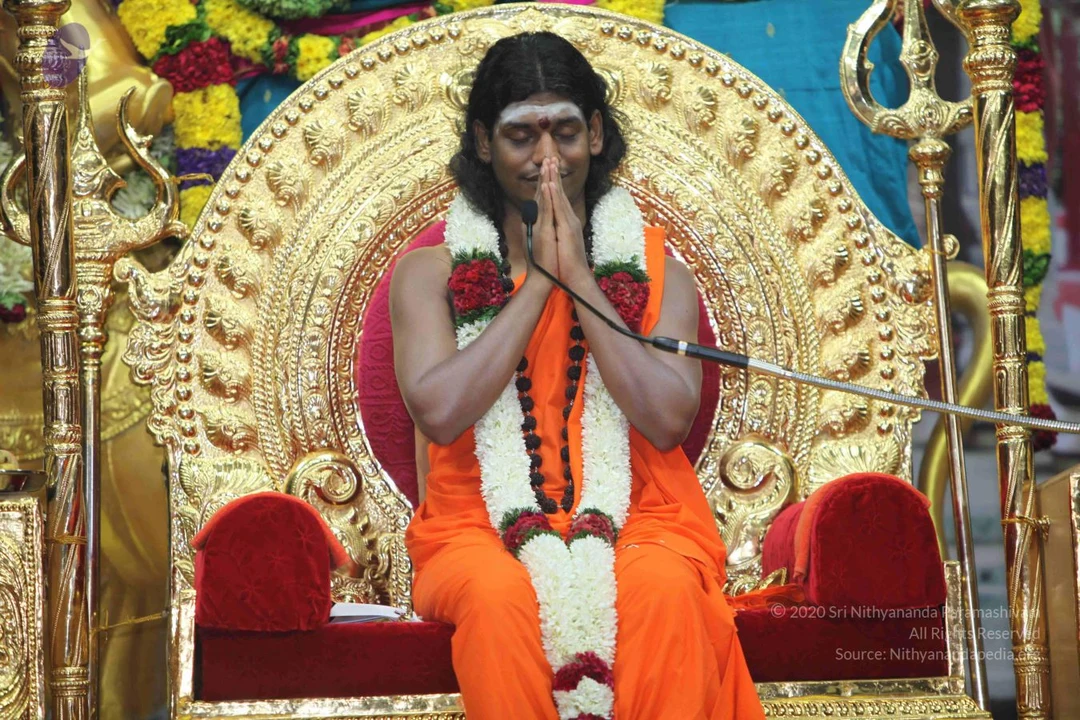
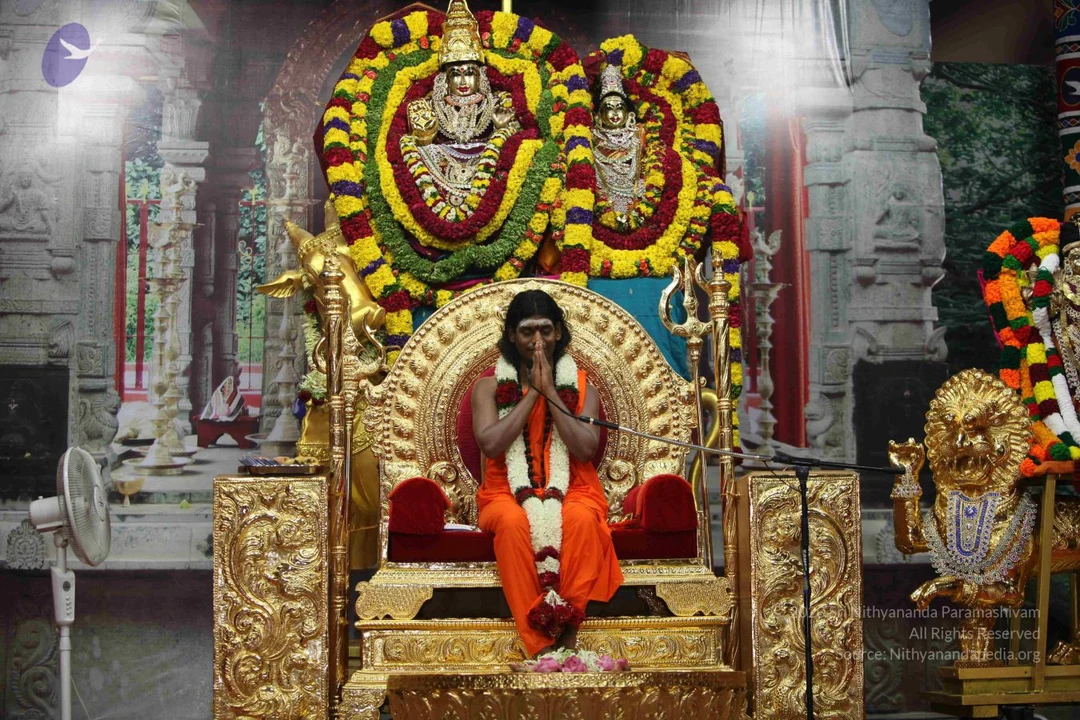
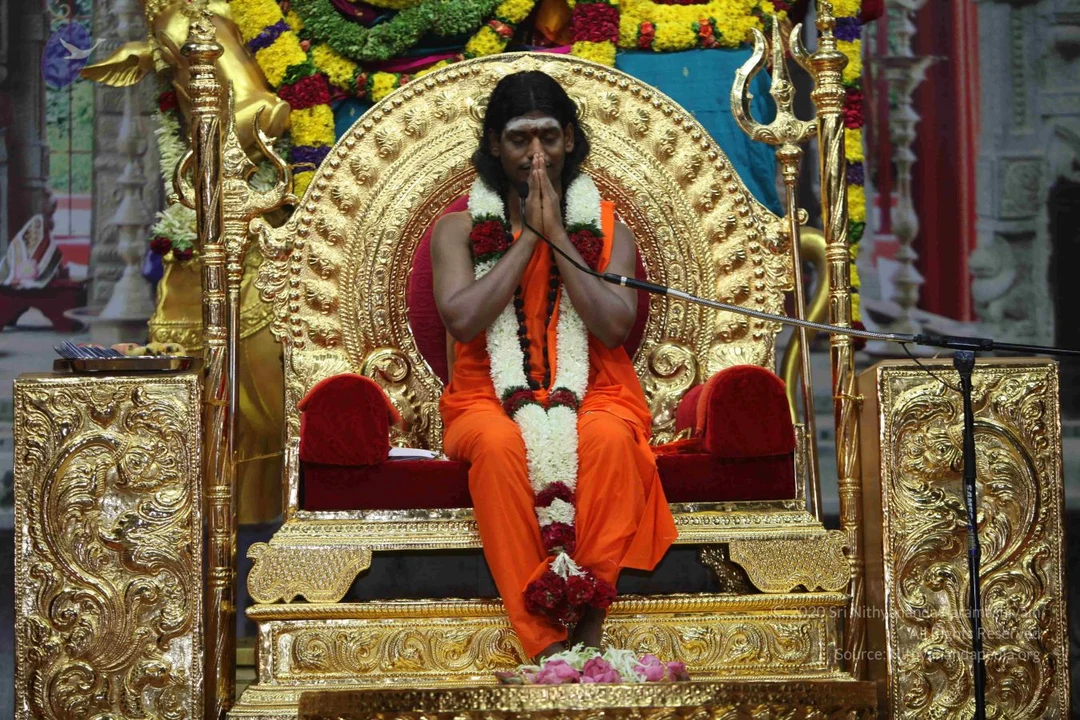
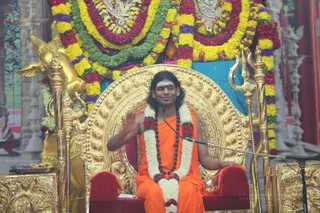
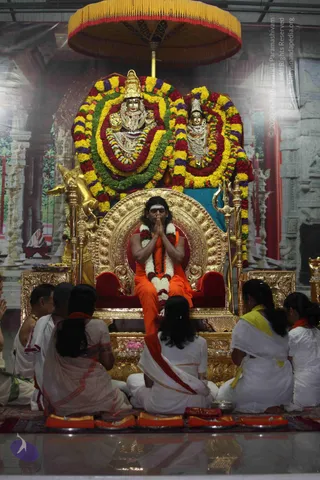
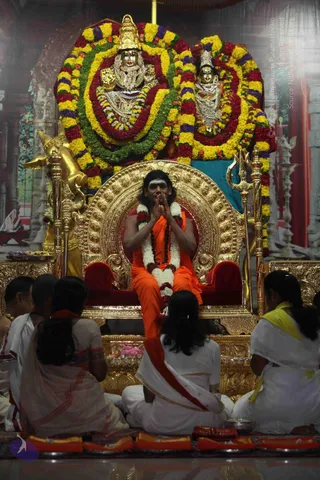
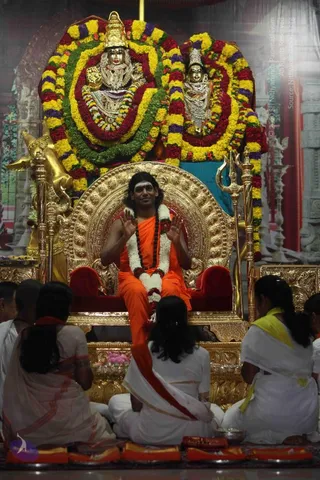
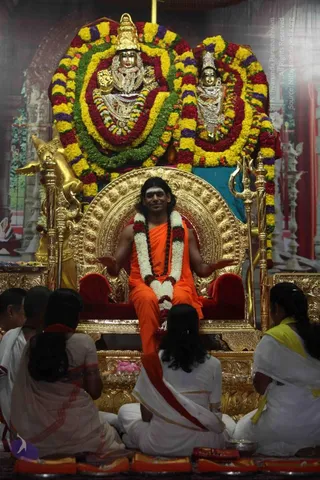
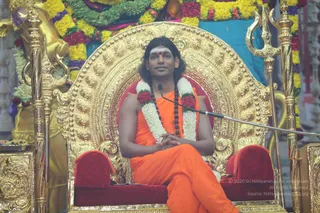
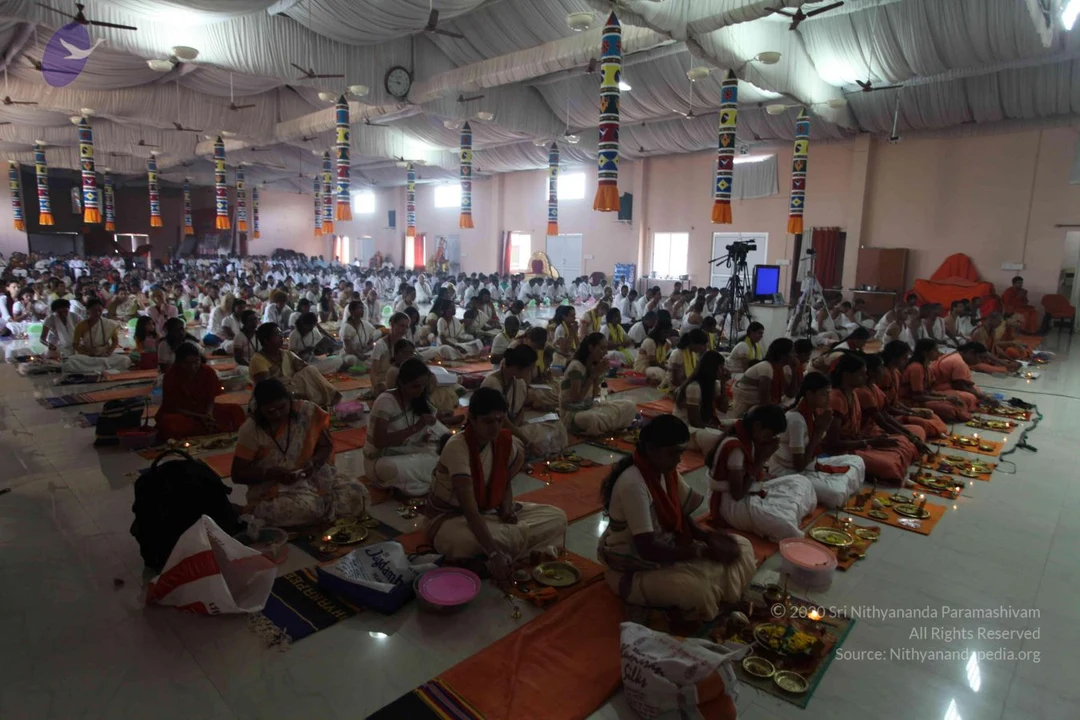
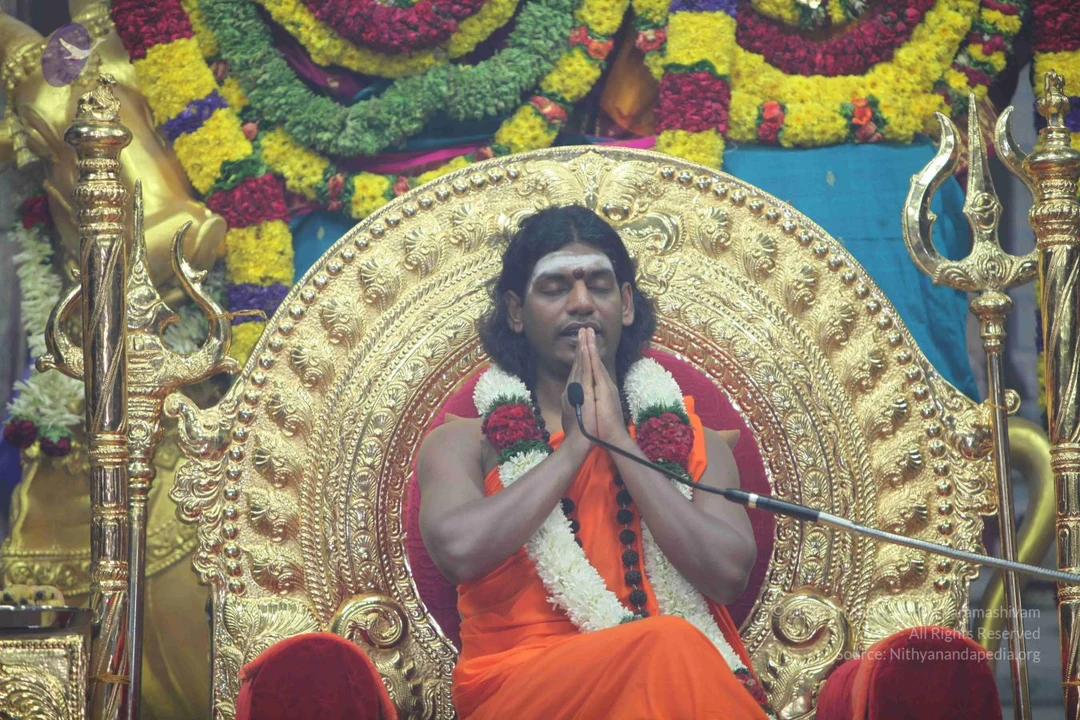
The Supreme Pontiff of Hinduism, Jagatguru Mahasannidhanam, His Divine Holiness, Bhagavan Nithyananda Paramashivam, during the live public talk - Nithyananda Satsang, began a Series on the Siddha Tradition. In this talk entitled Siddha Tradition 1, The Supreme Pontiff of Hinduism shared that the oldest, greatest, most secret and ultimately powerful tradition is the Siddha Tradition. He explained that this tradition is the greatest science of the inner world encompassing all dimensions of the inner world, medicines to heal the body; techniques like yoga, pranayama, kriya, to heal the body and experience extraordinary powers in the body and have spiritual awakening, spiritual experience in the body and more. He invited all to explore this tradition and shared He will introduce one yantra, medicine and technique each day. Today He shared the medicine of turmeric; the Chidambara yantra and the Tantra technique of awareness of kum kum on the forehead. His Divine Holiness called upon everyone to pray to the Siddhas for their blessings for our success in exploring this tradition.

Video and Audio

Siddha Tradition 1: Nithyananda Morning Satsang (13 Nov 2010) Message

VideoAudio

Photos:
Photos Of The Day:

MALAYSIA-ANANDA-SPURANA-PROGRAM-ASP

Photos Of The Day:

PANCHA-TAPAS

BIDADI-TEMPLE

SARVA-DARSHAN

PADA-POOJA

NITHYA-SATSANG

Photos from this day

View all 353 photos

Photos:
7 photosSource gallery
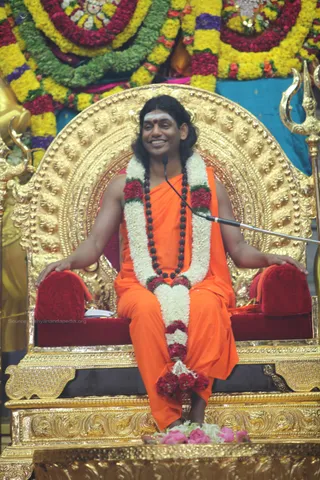
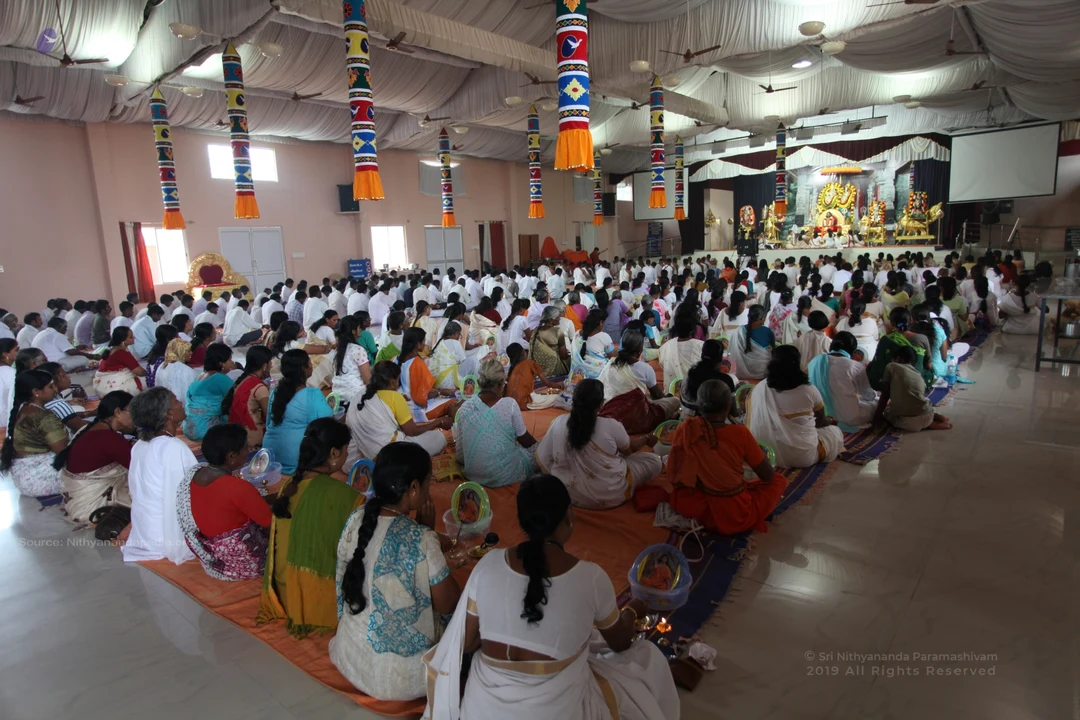
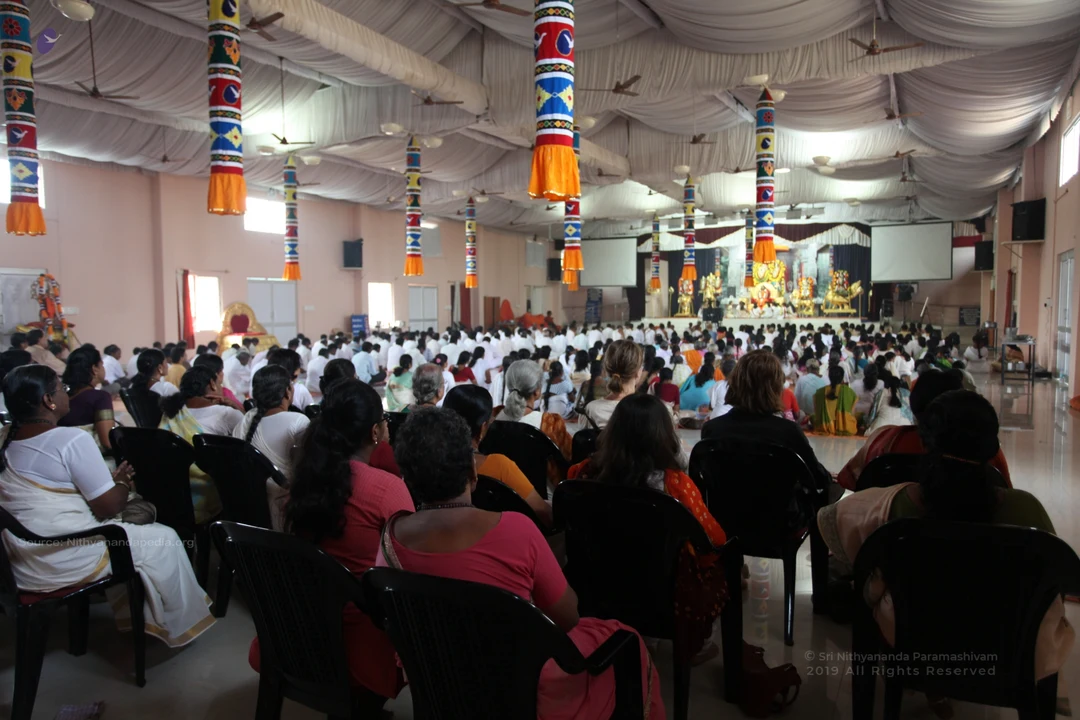
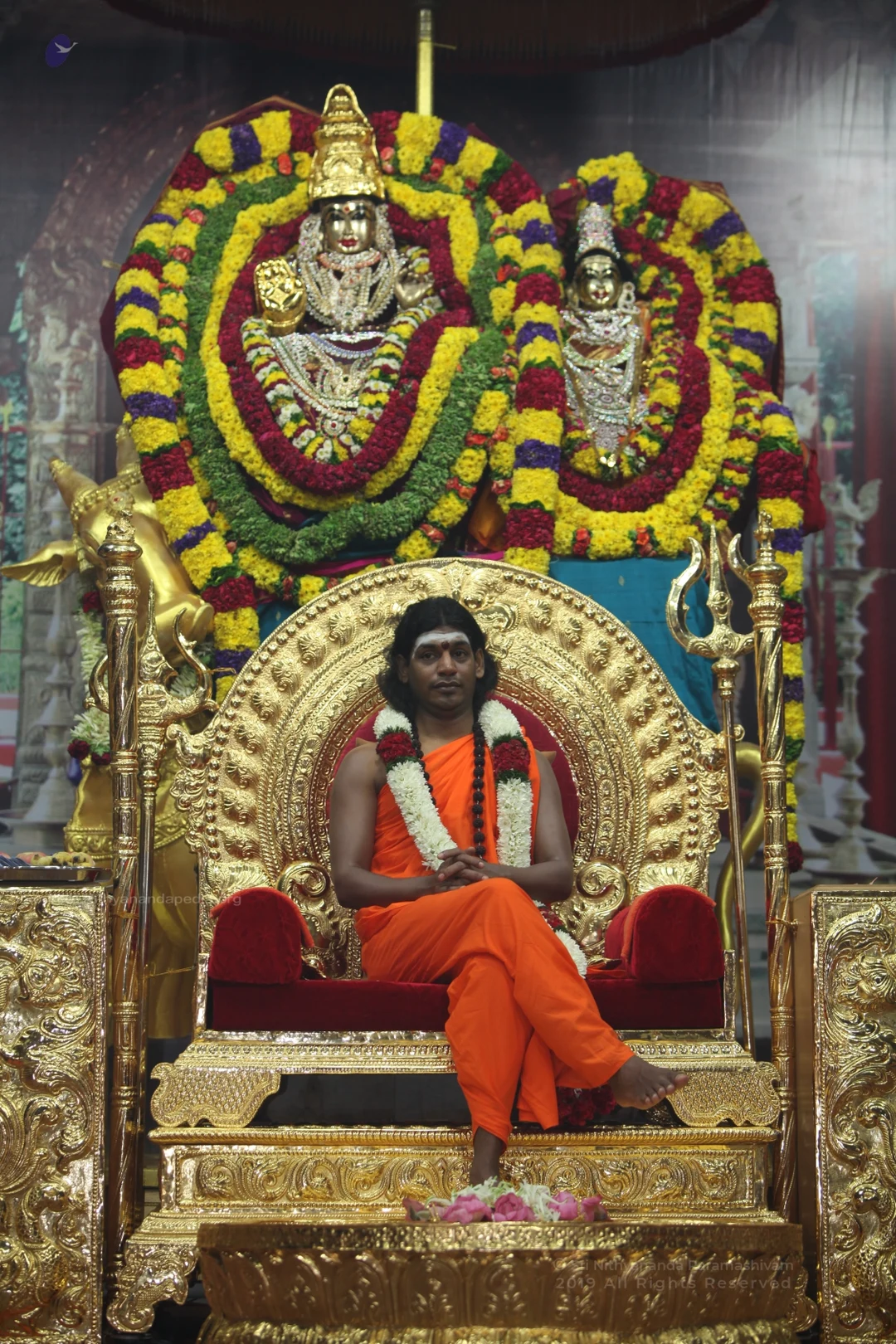
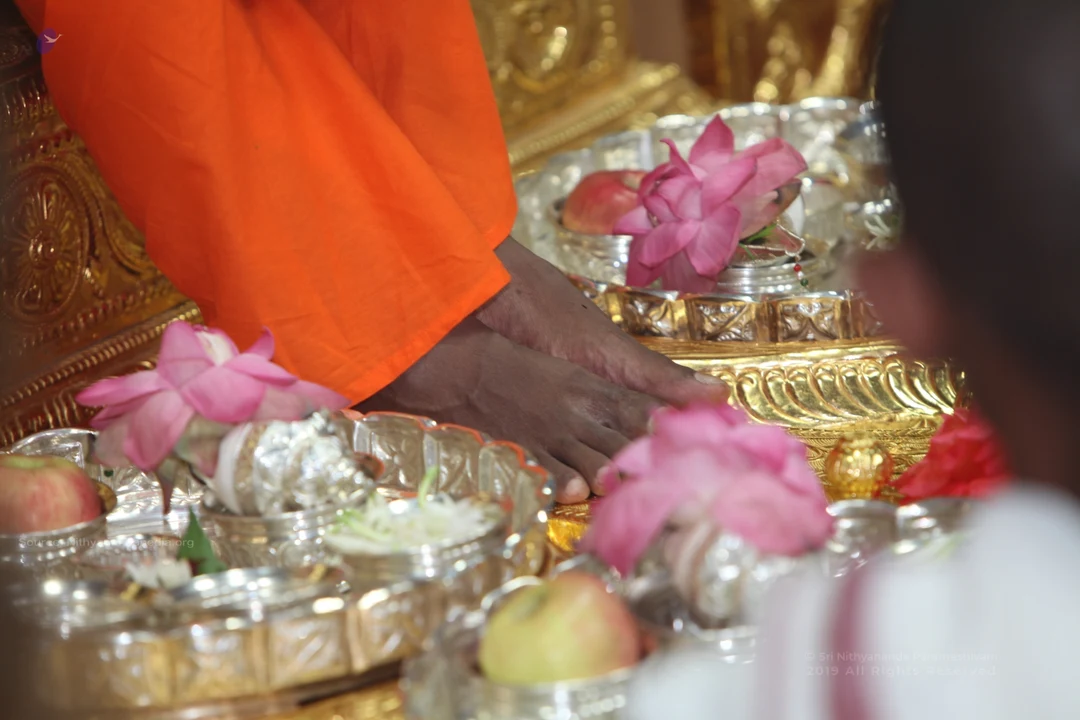
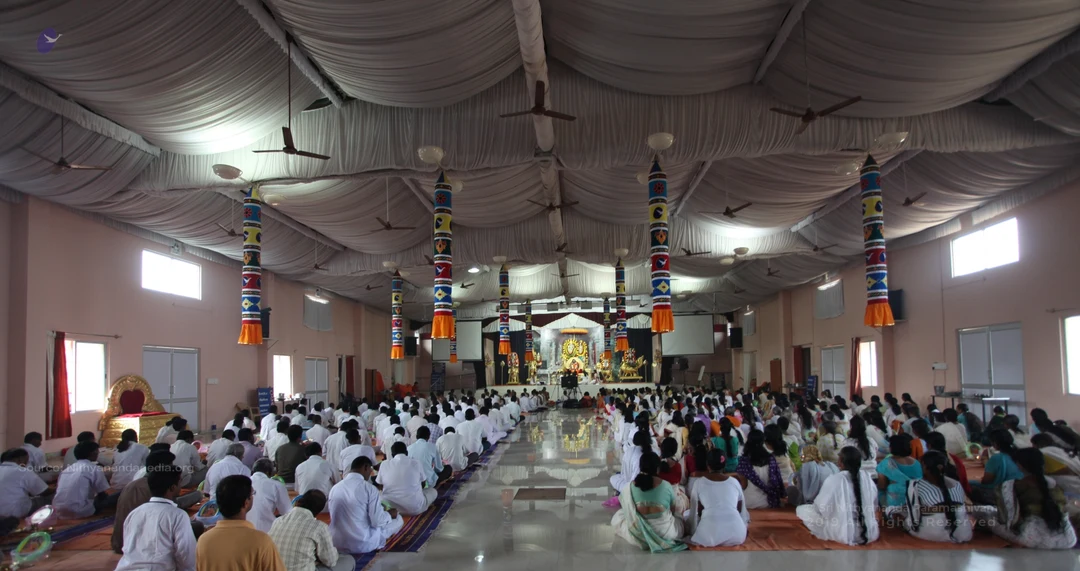
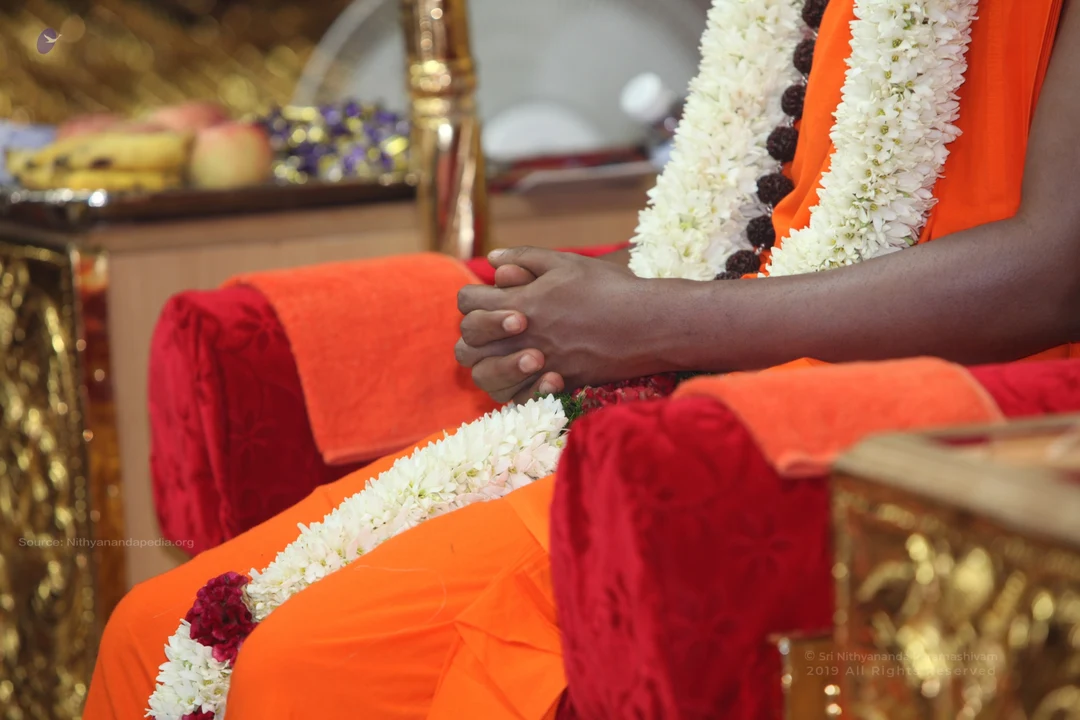
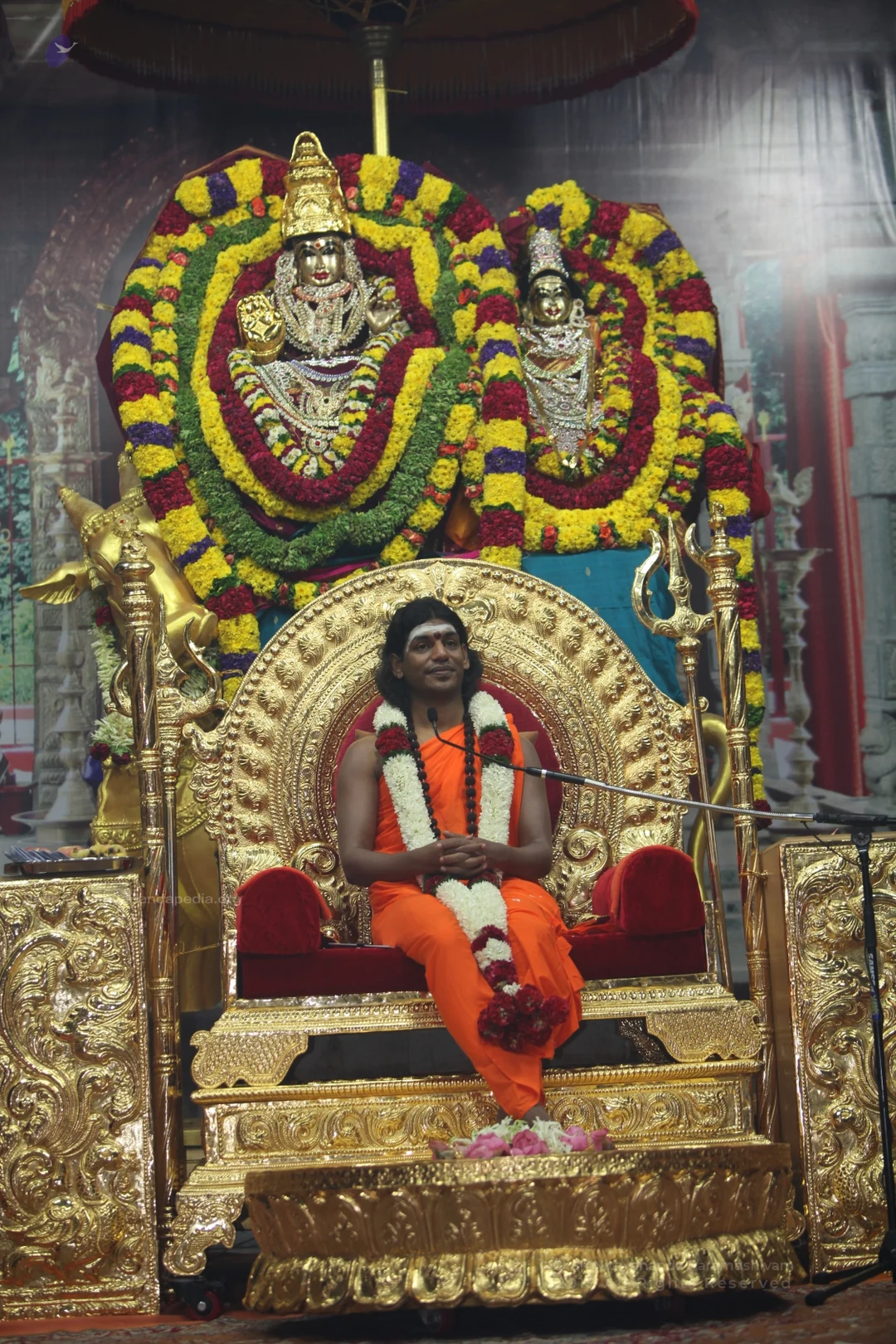
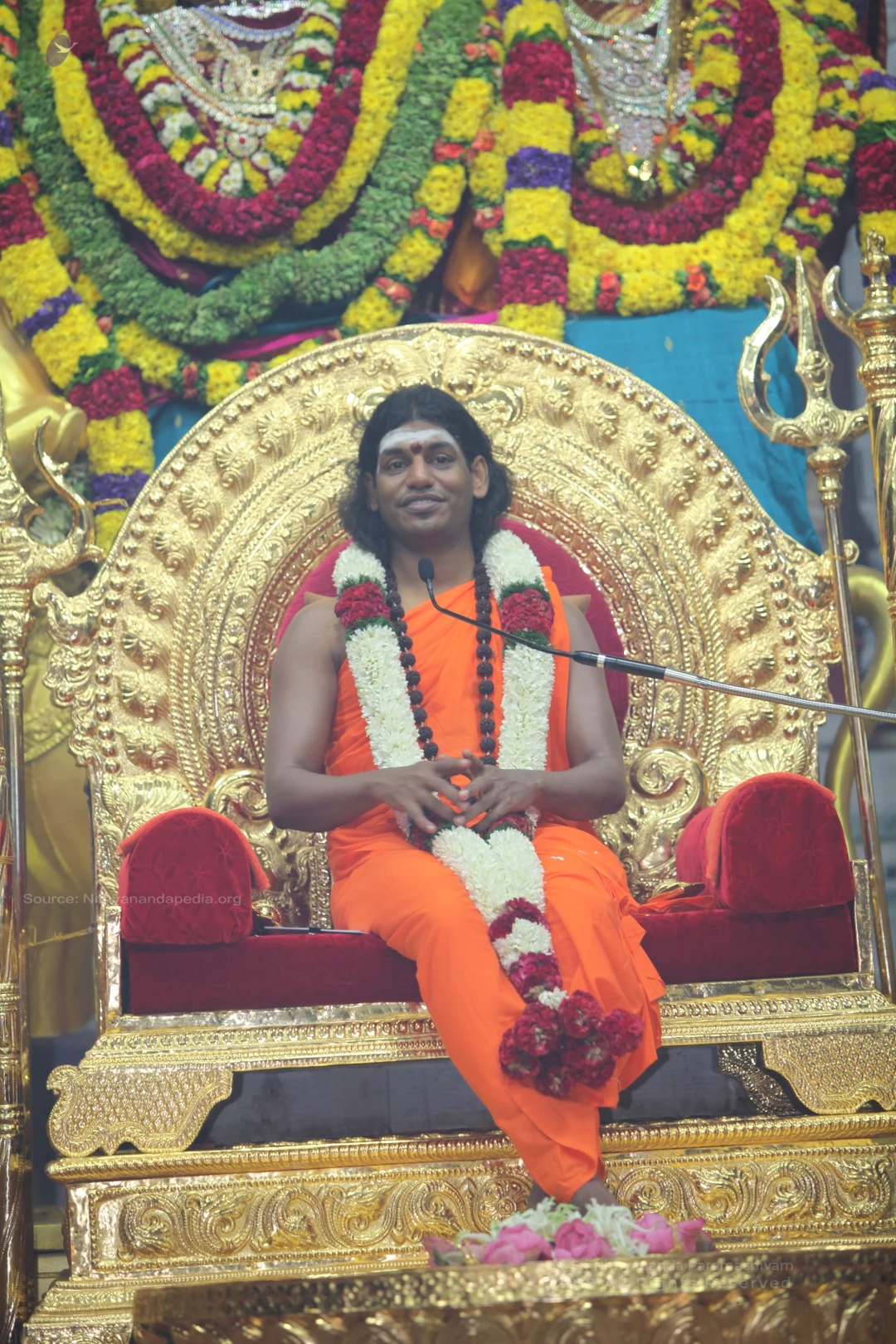
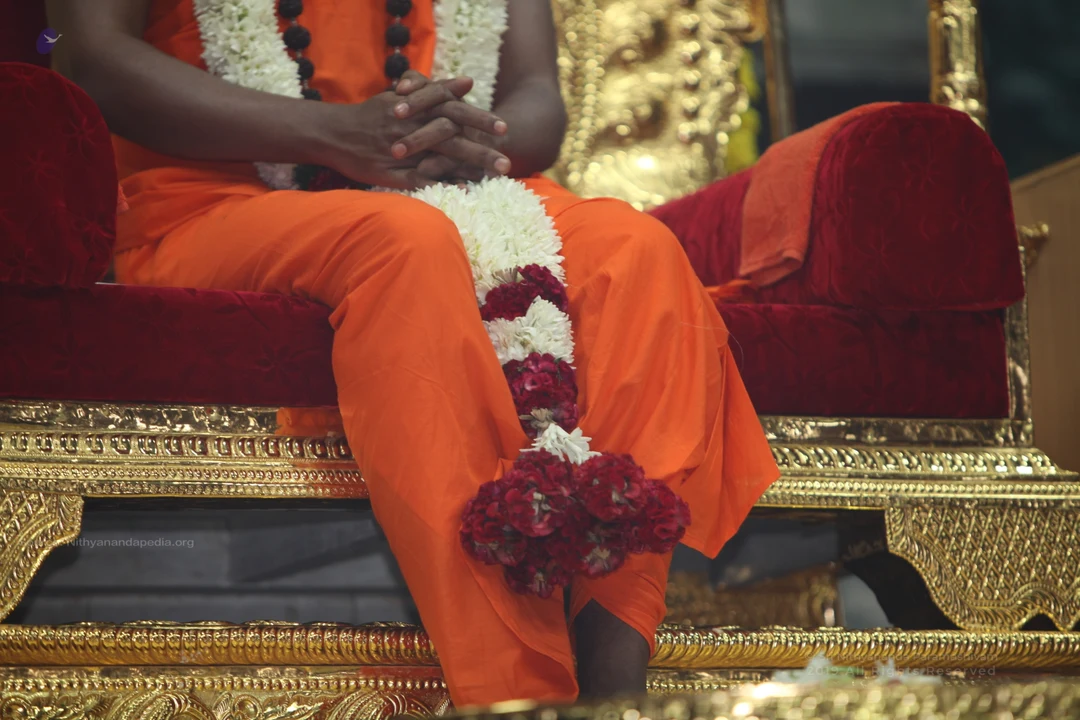
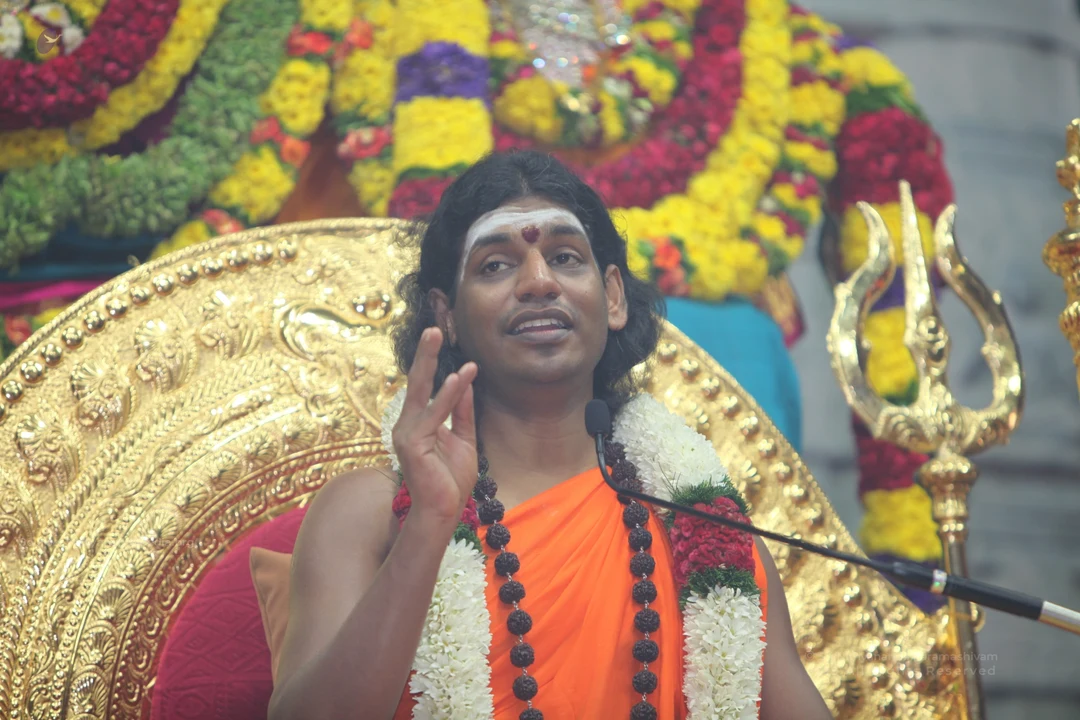
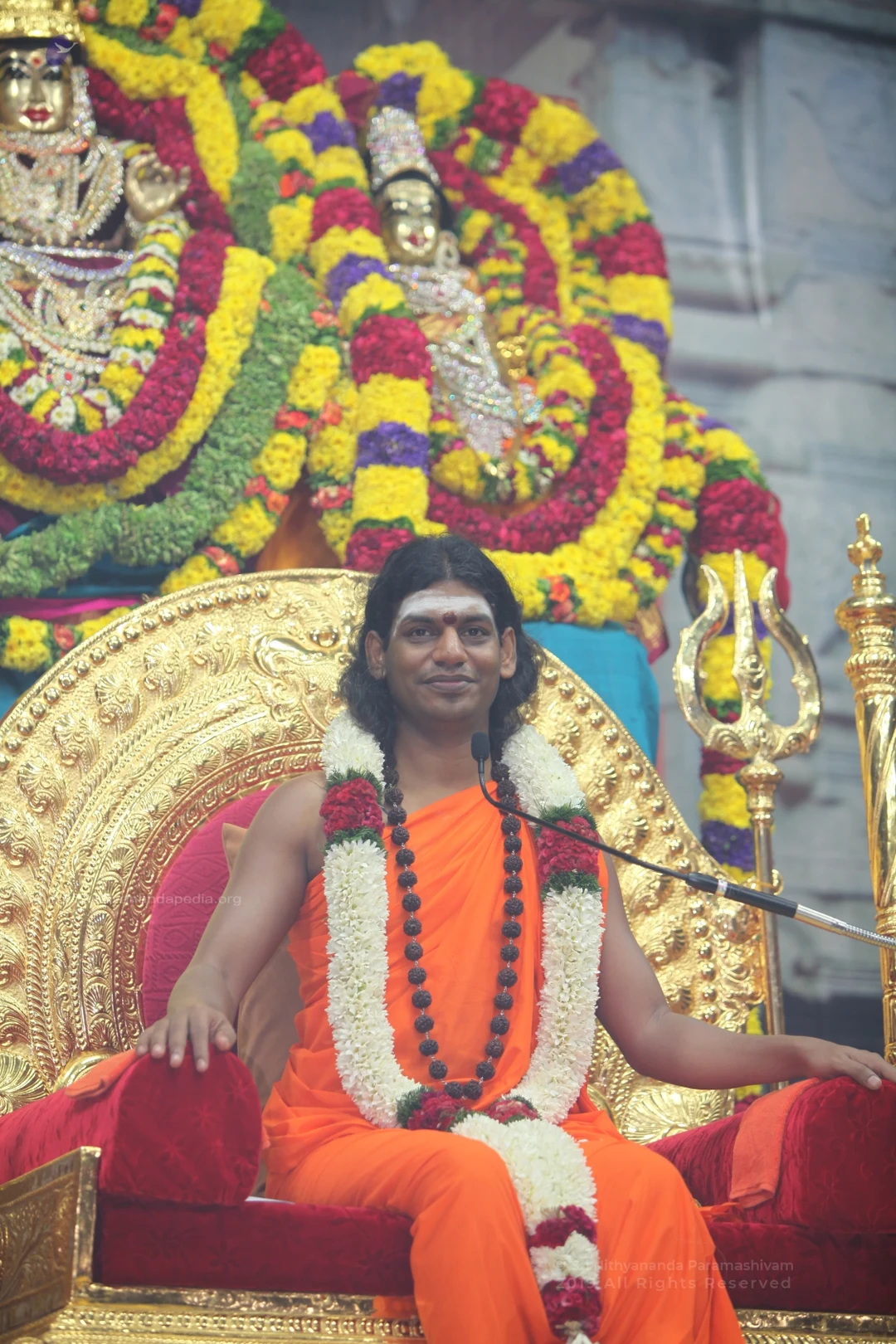
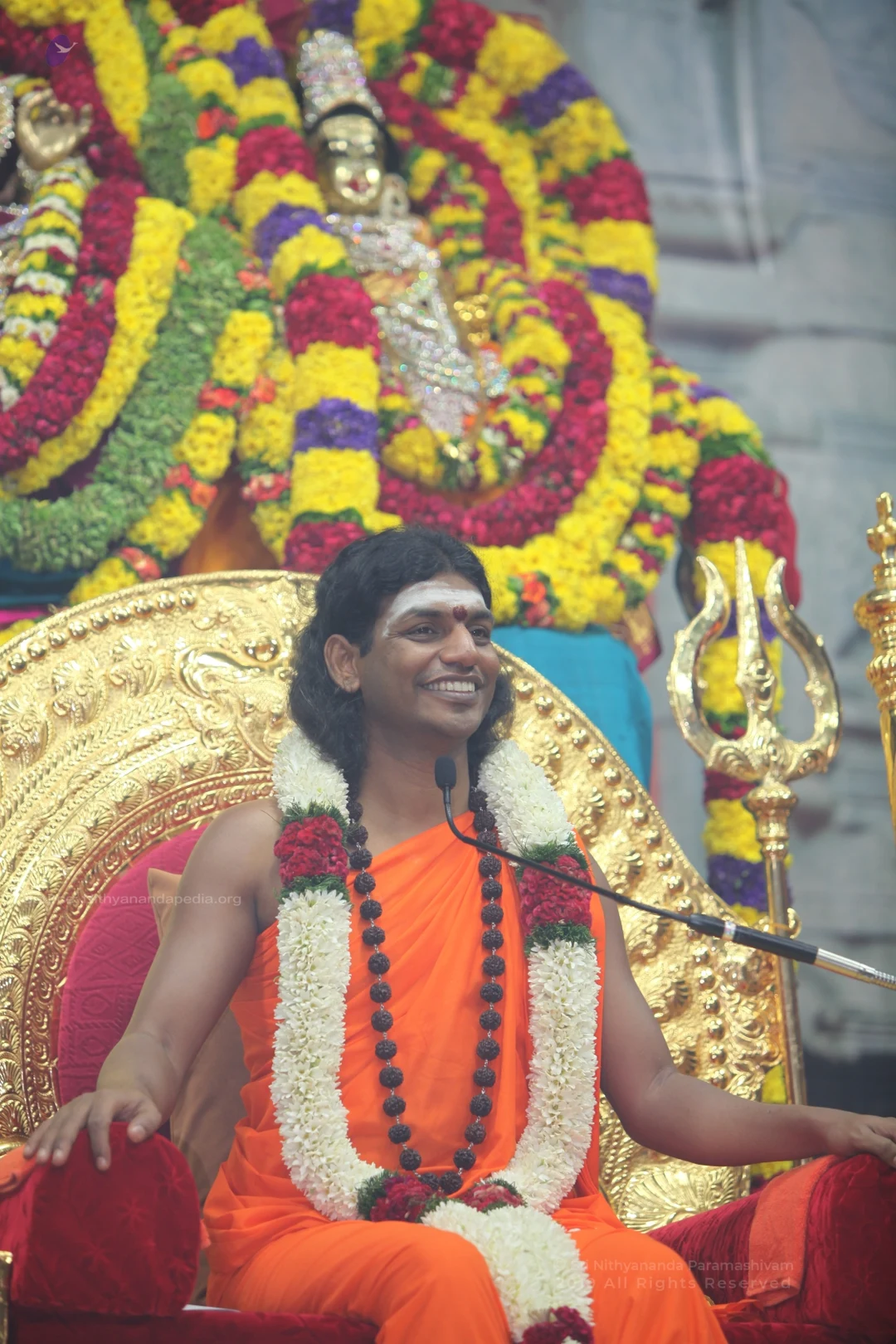
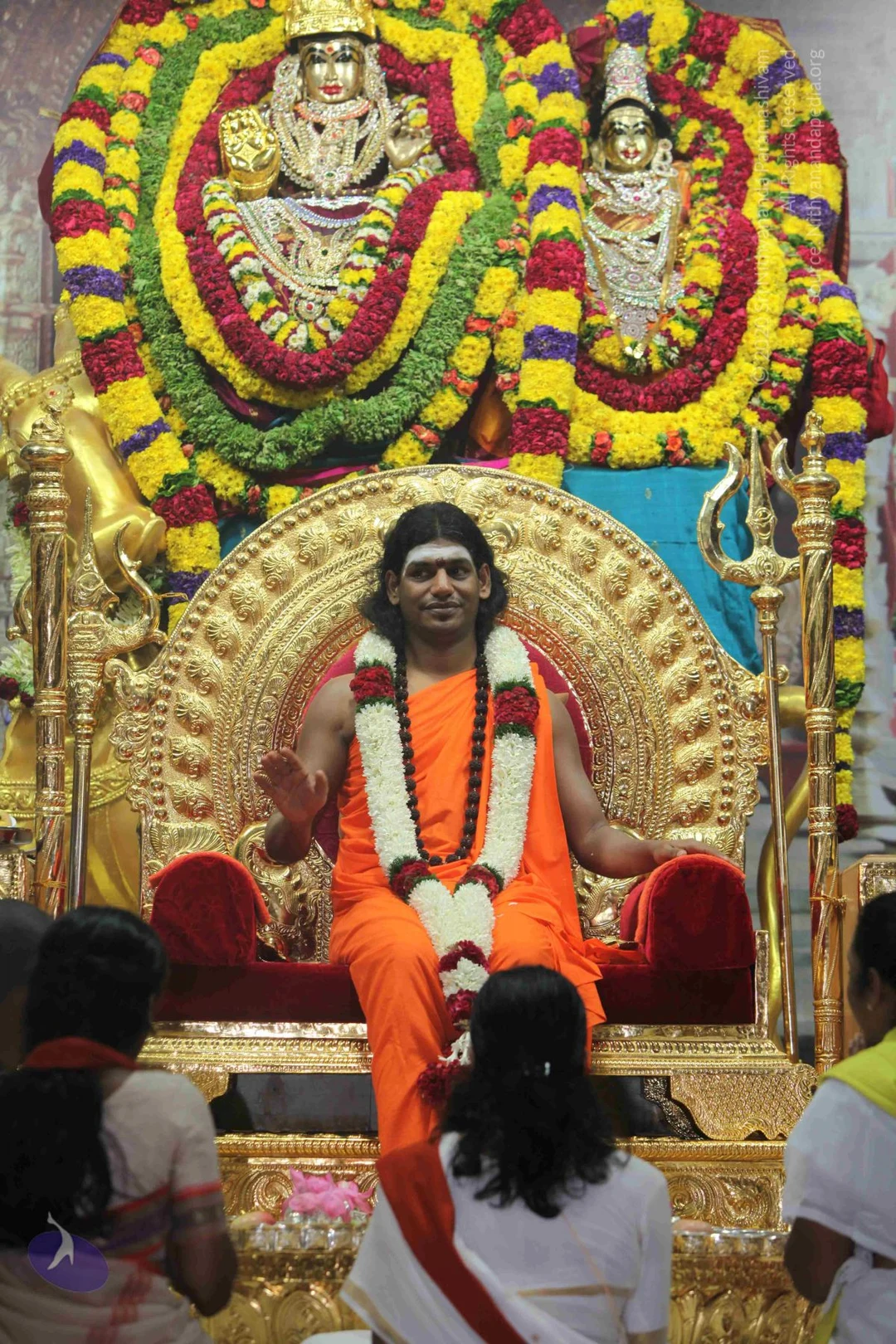
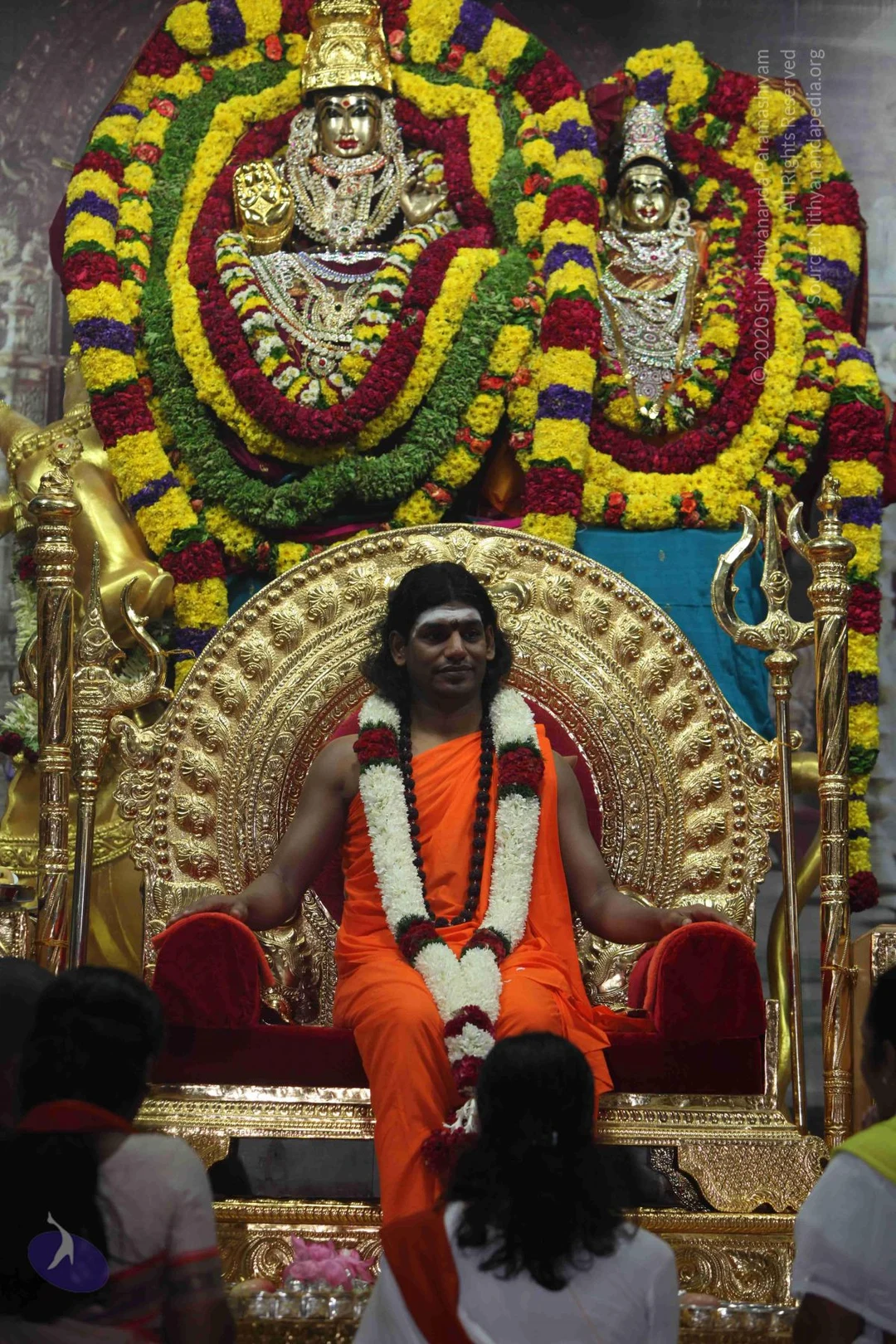
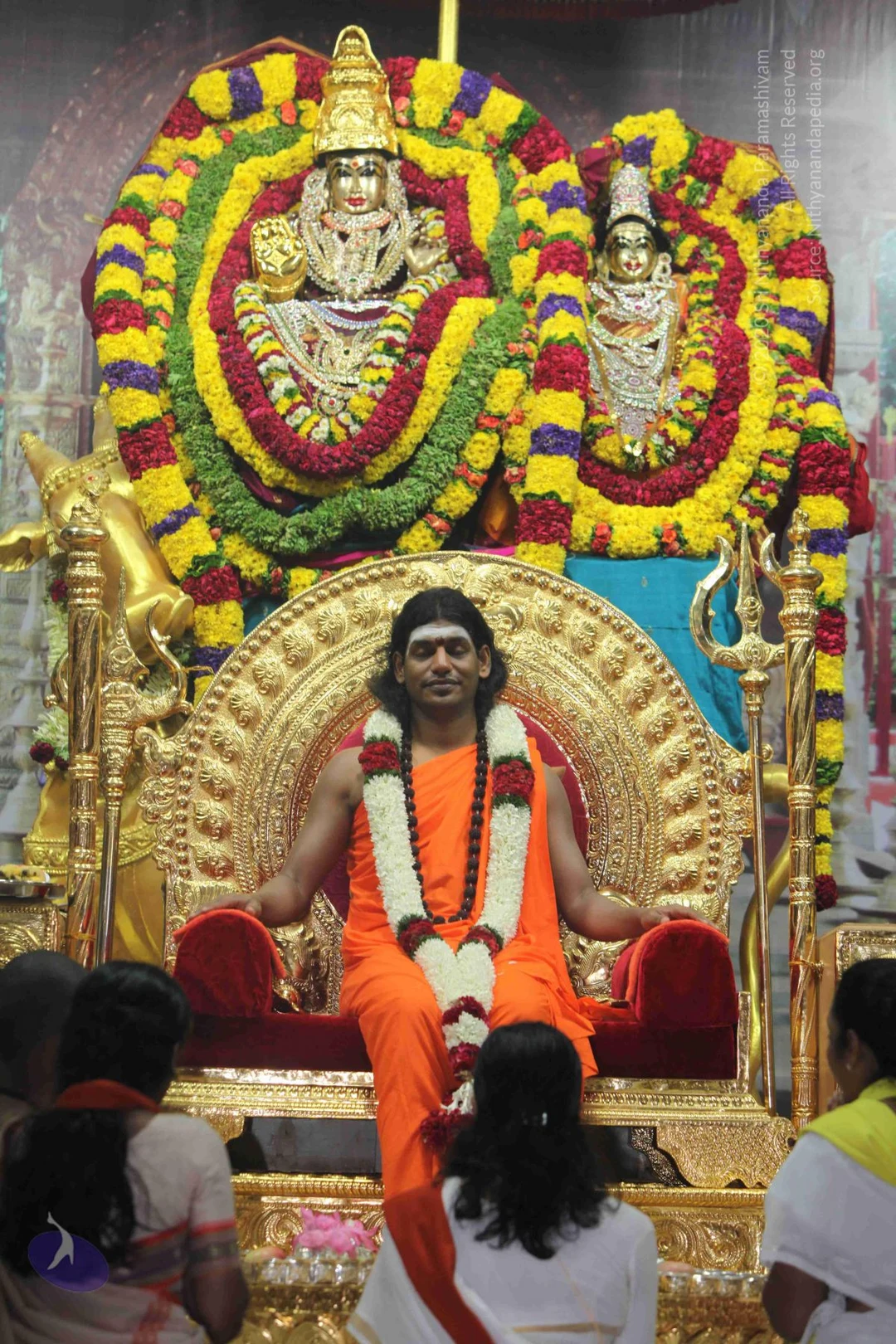
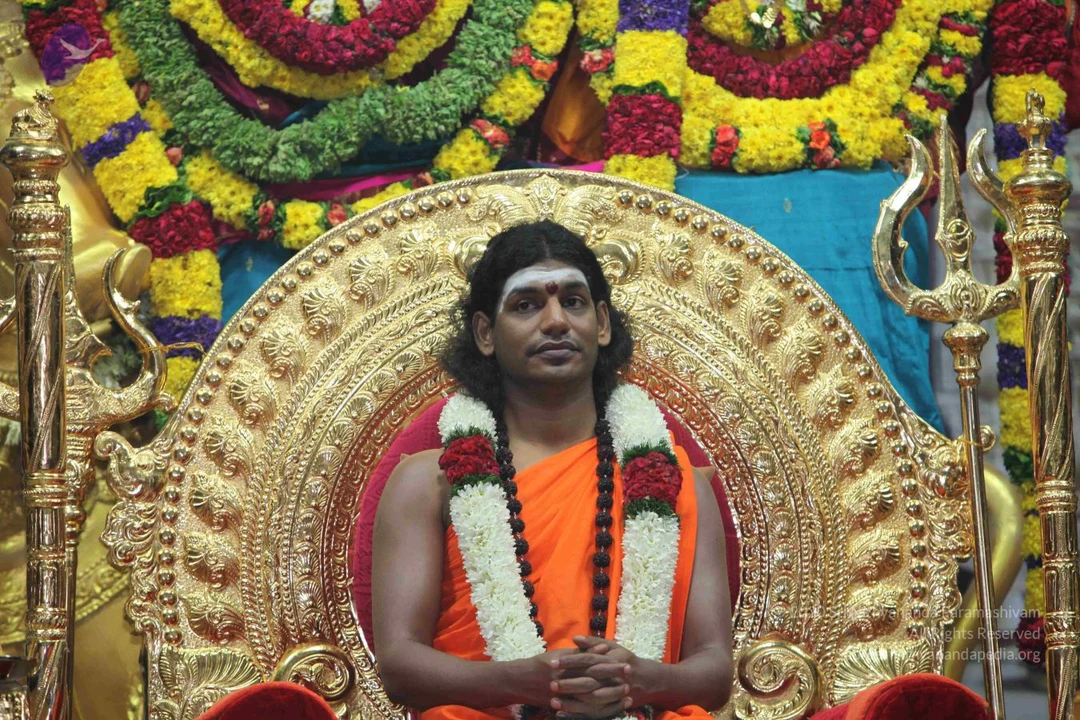
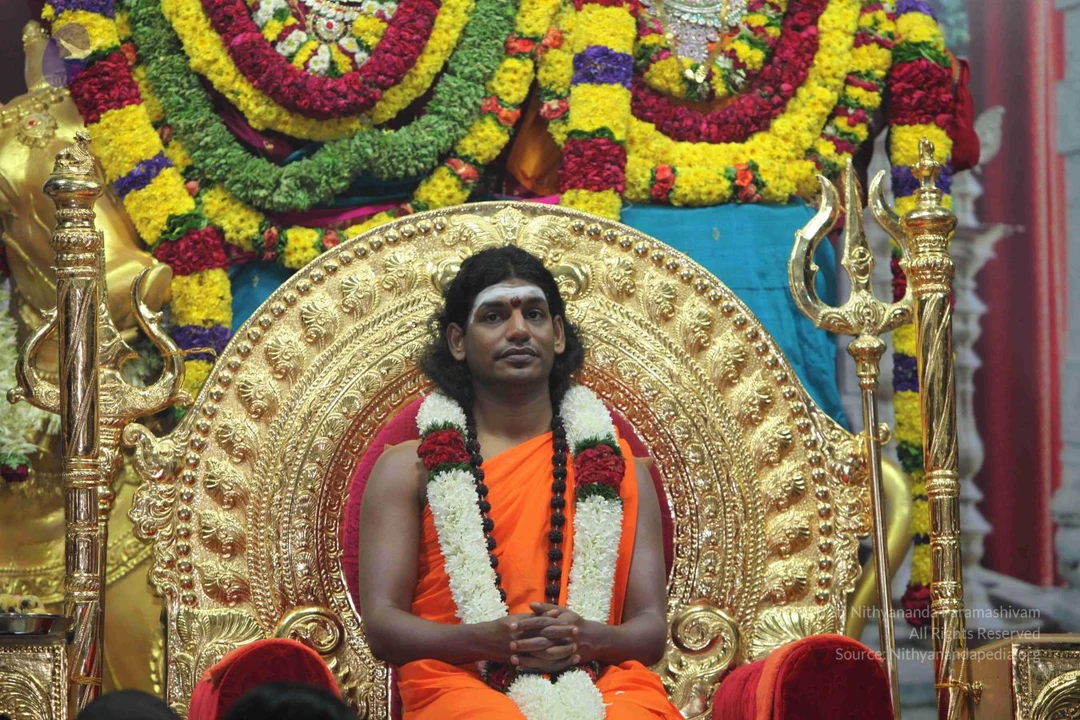
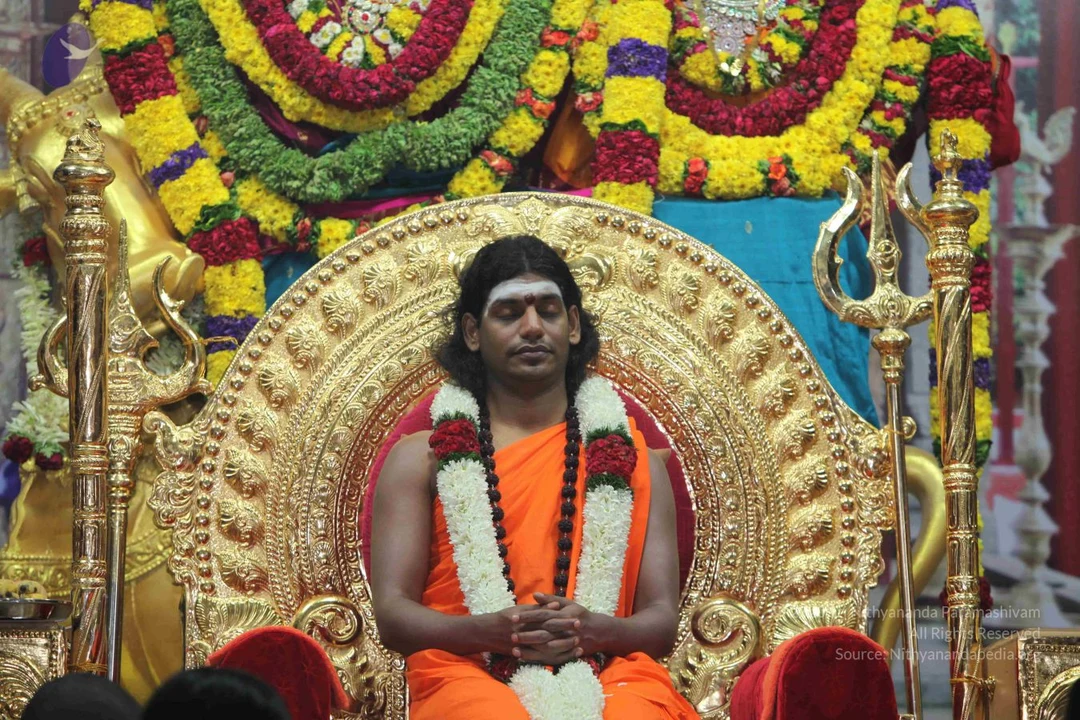
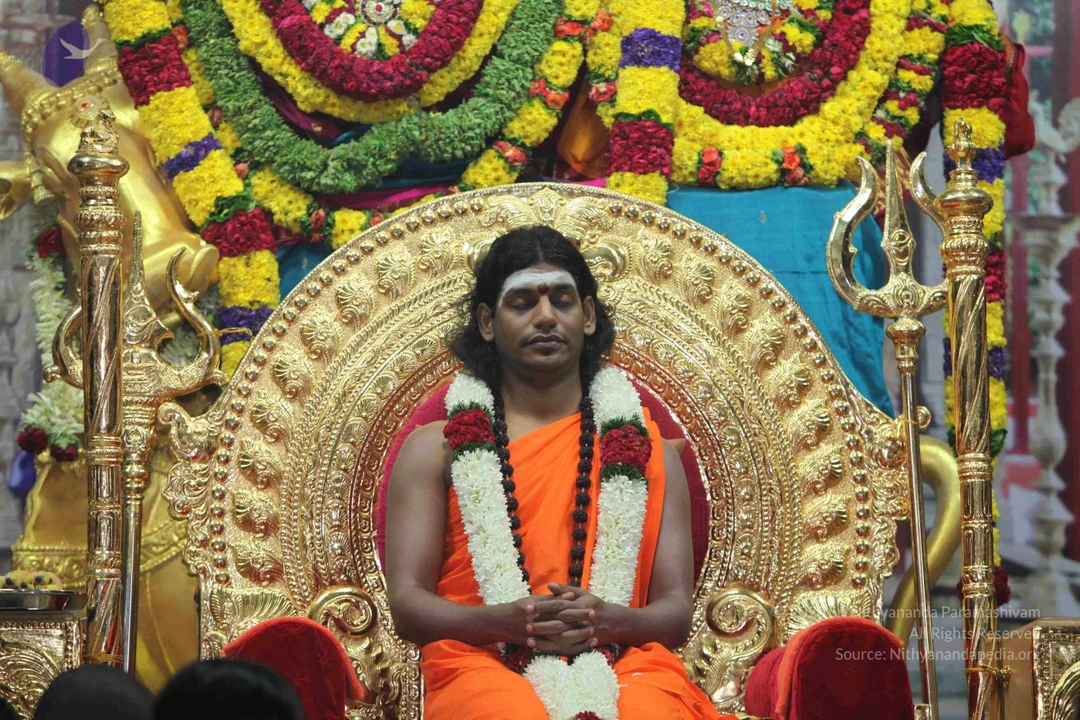
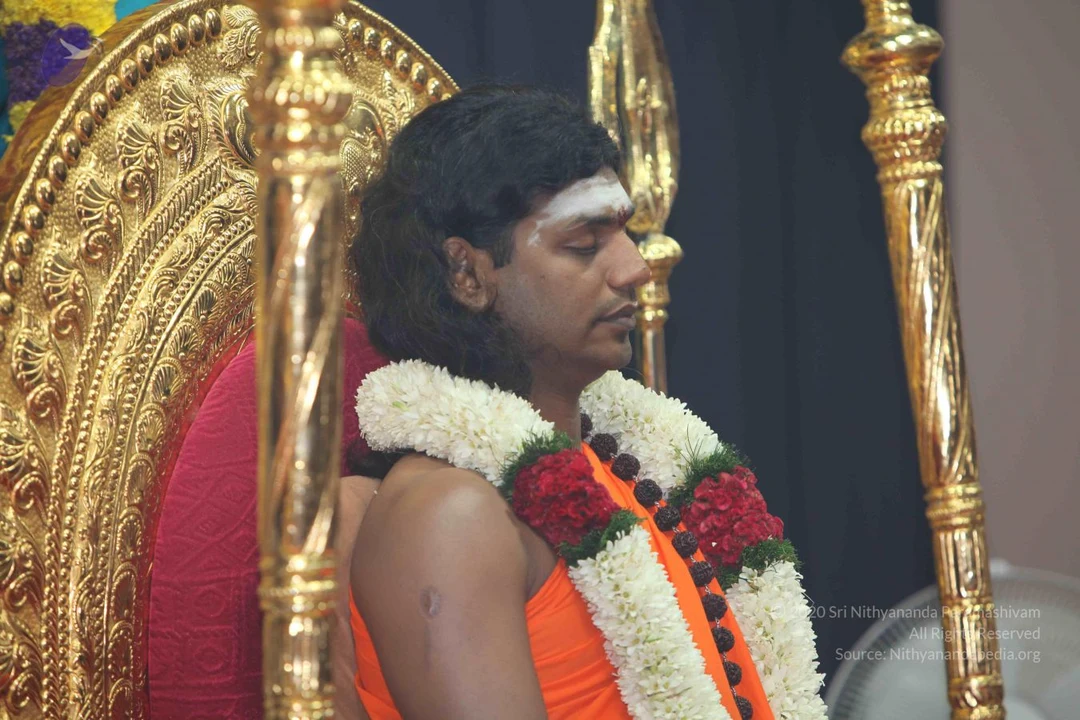
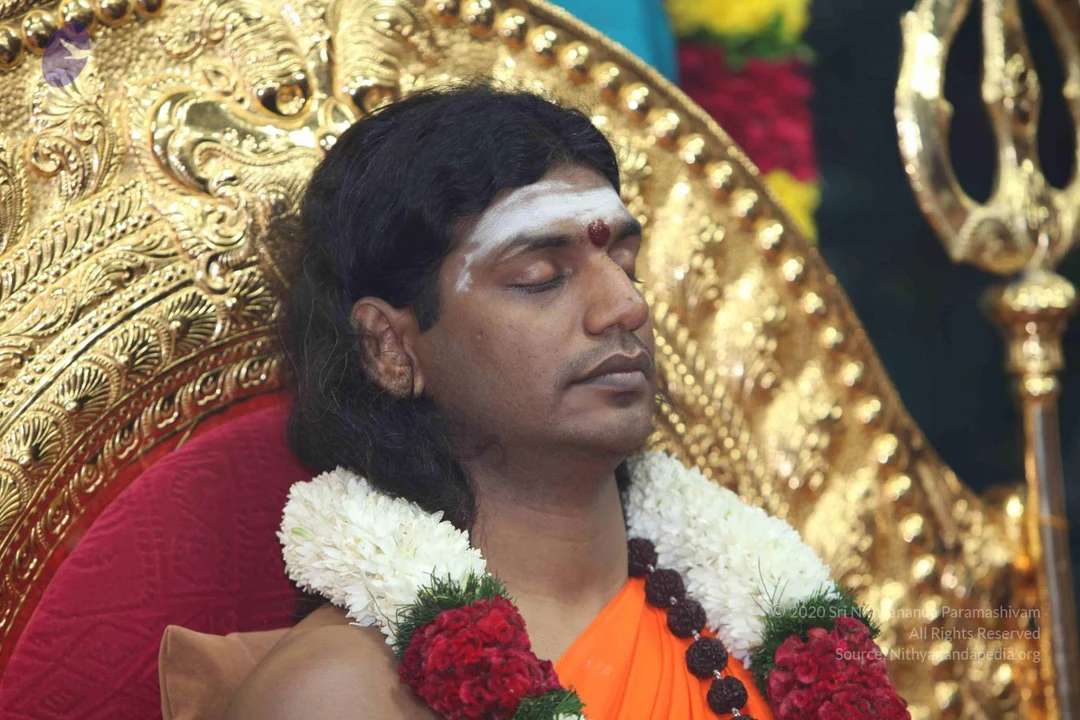
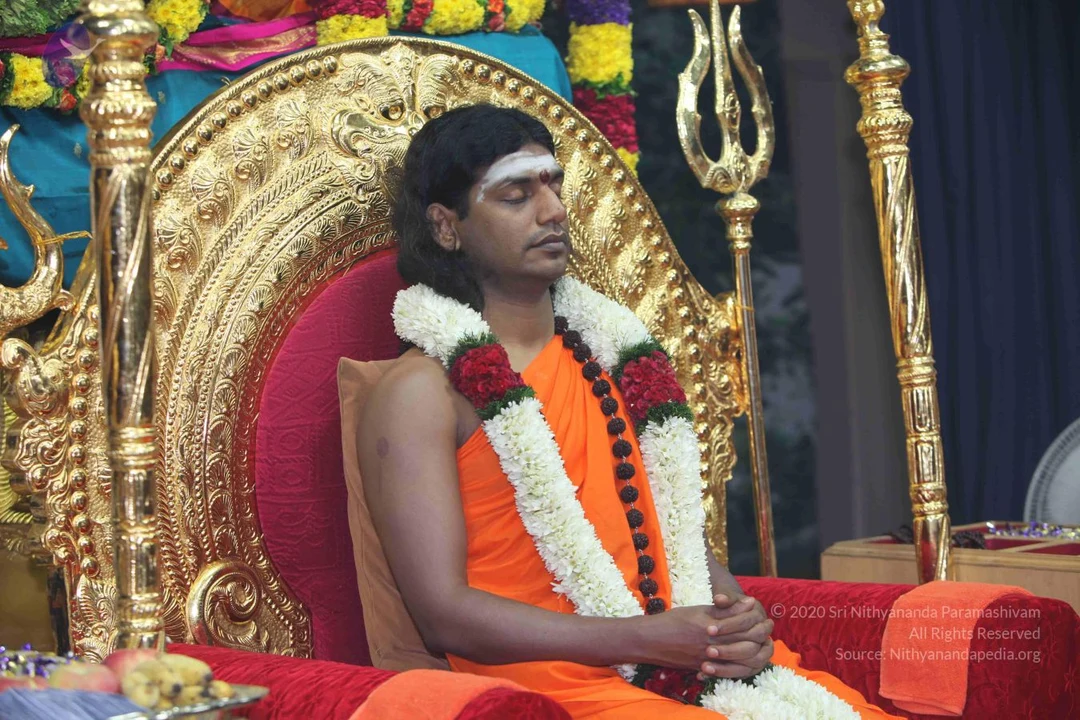
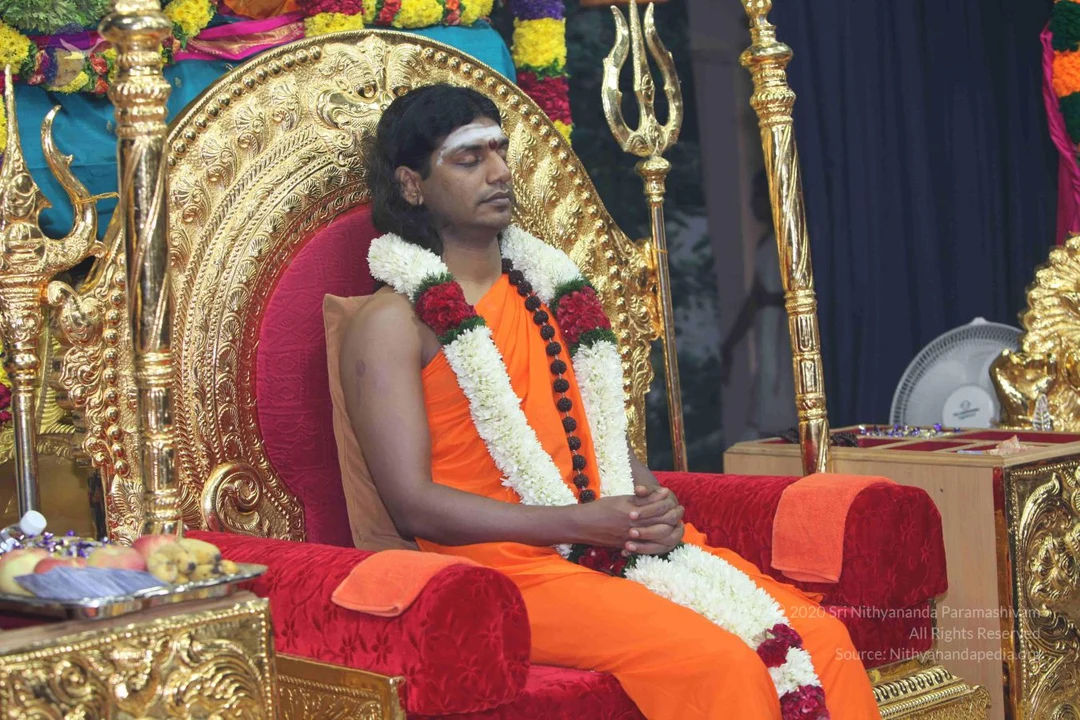
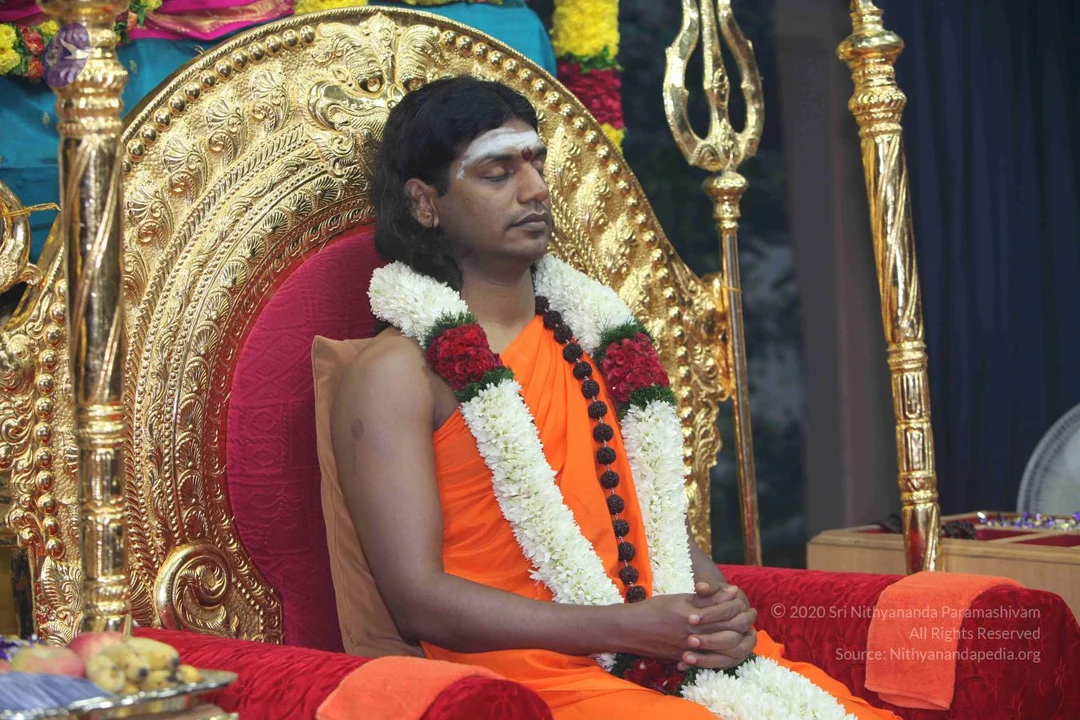
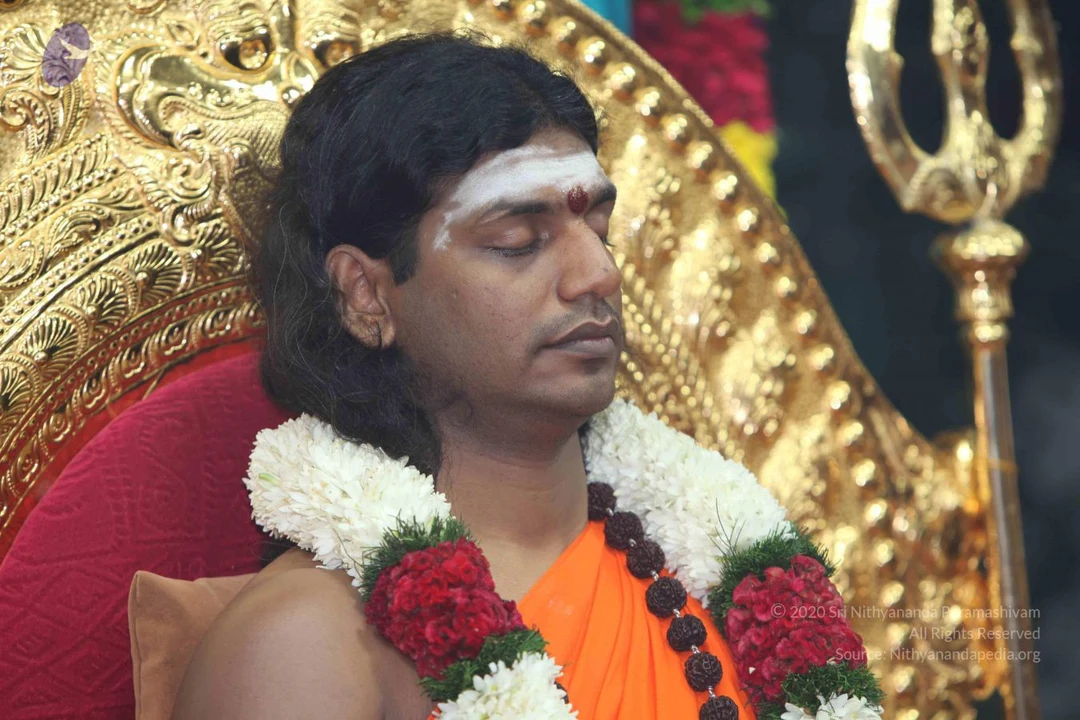
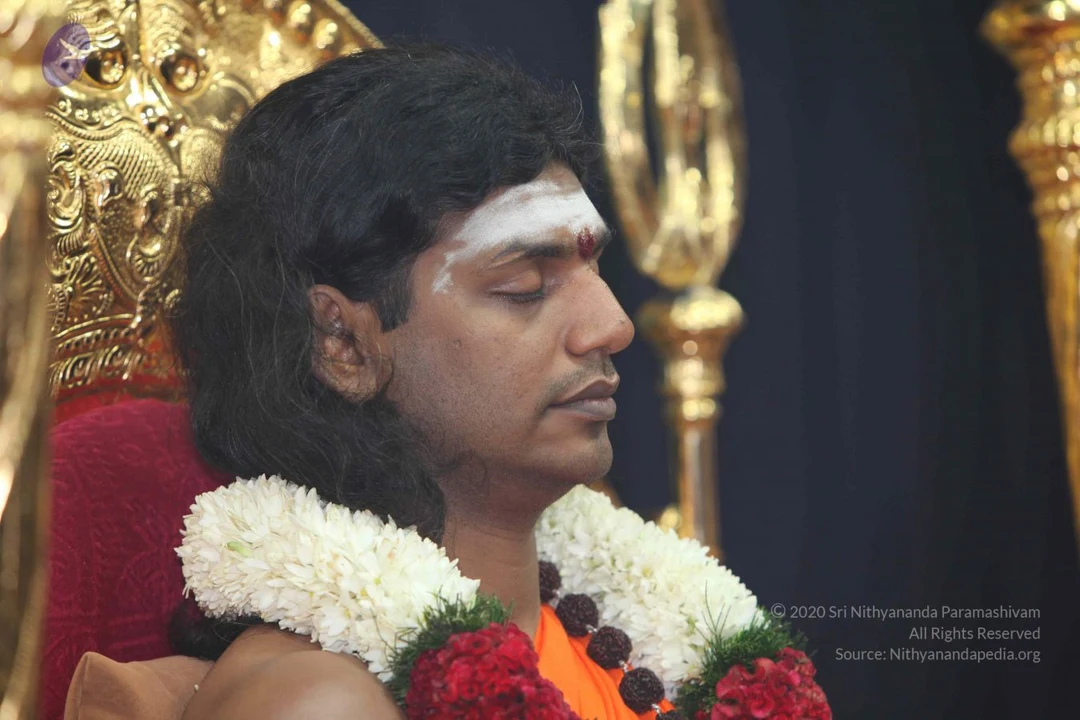
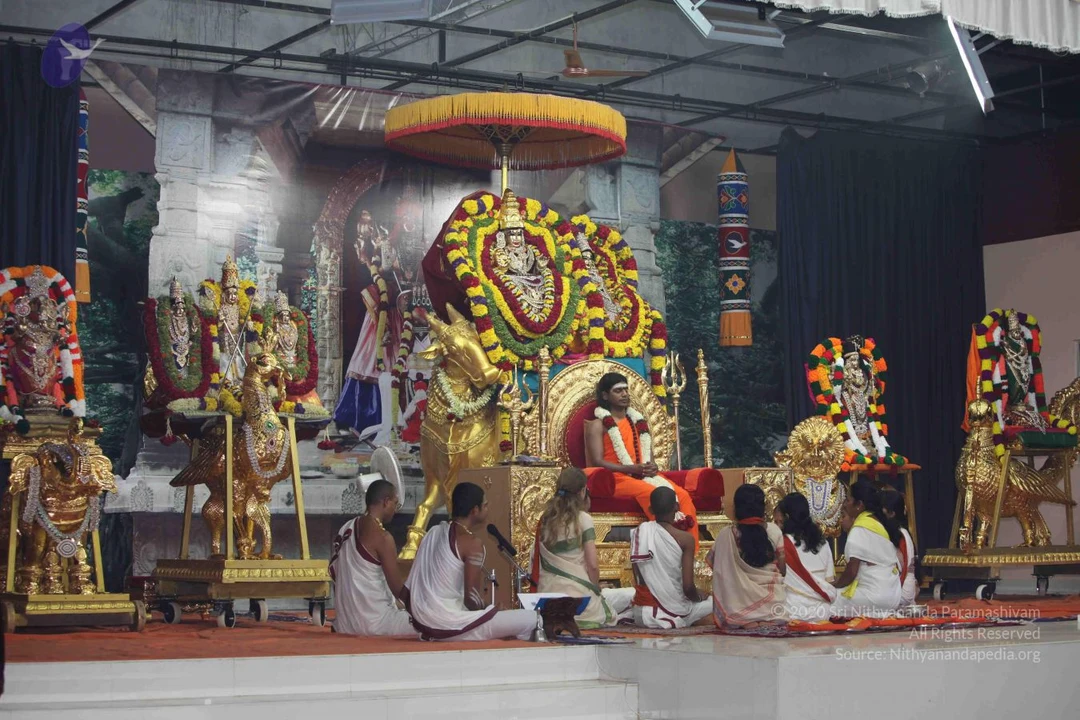
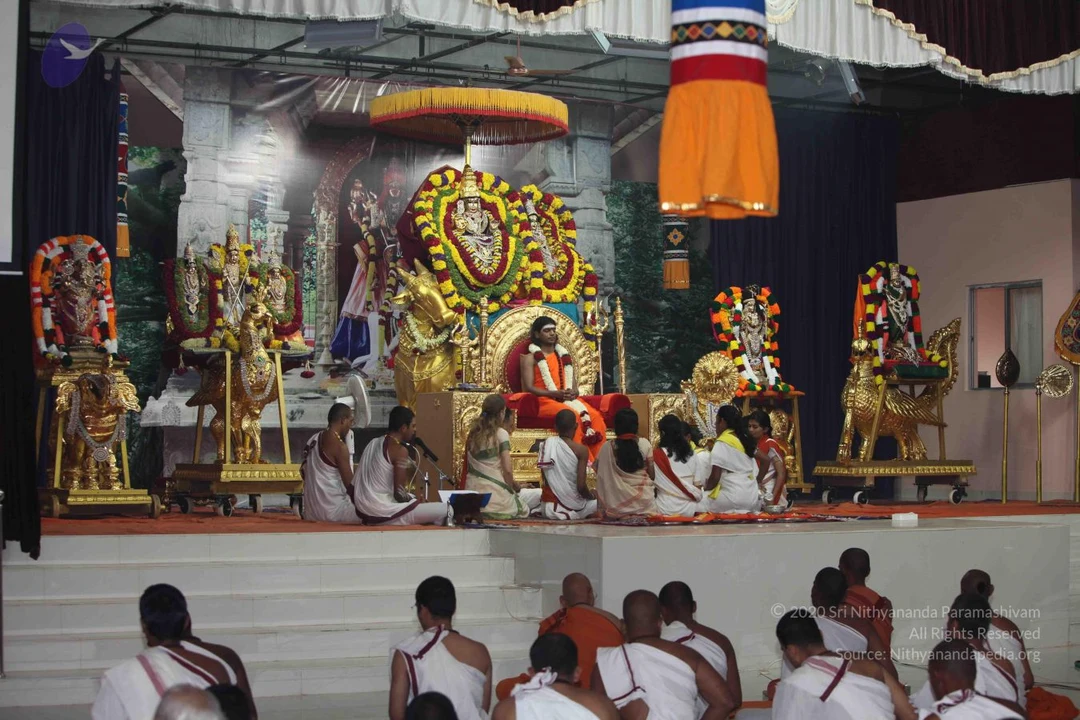
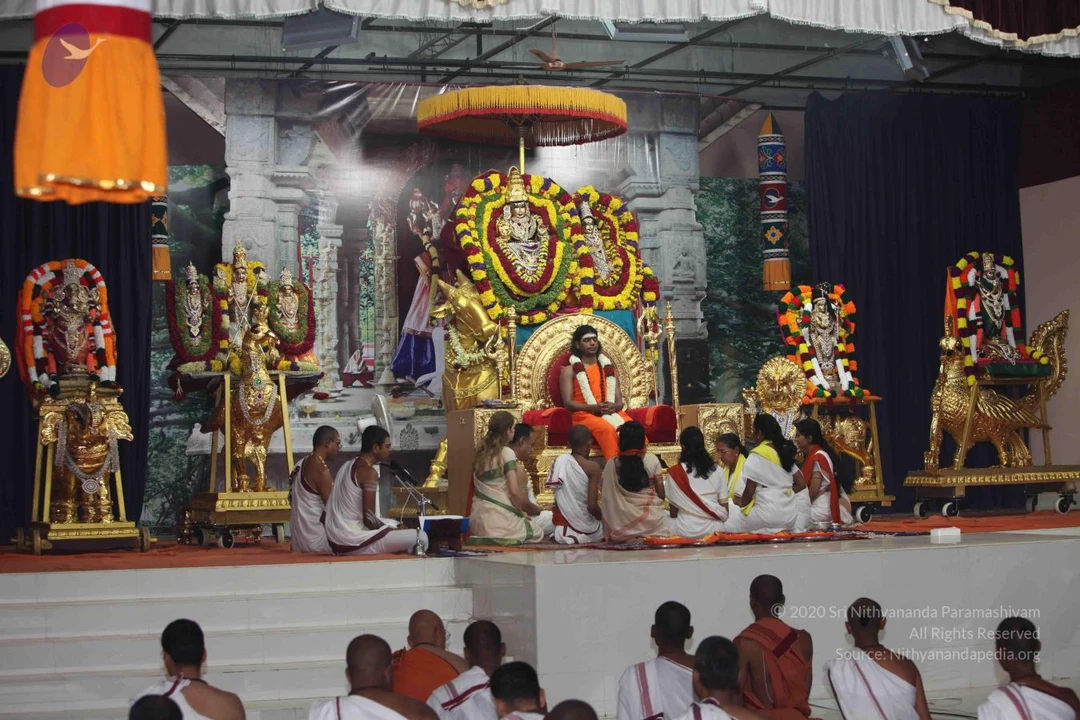
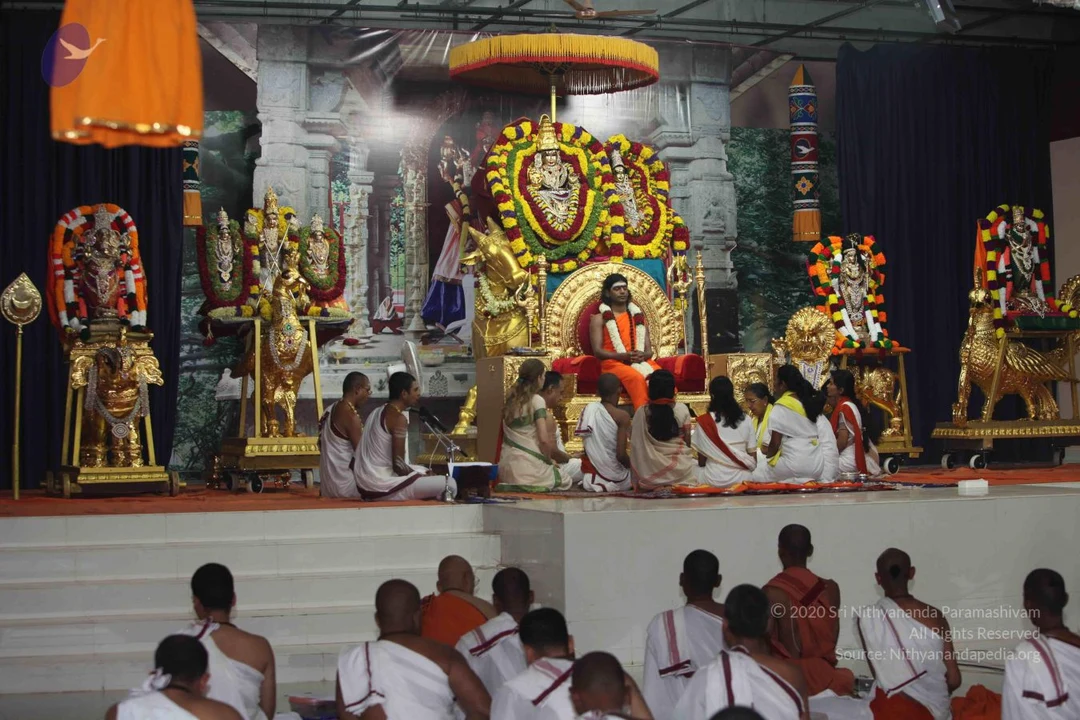
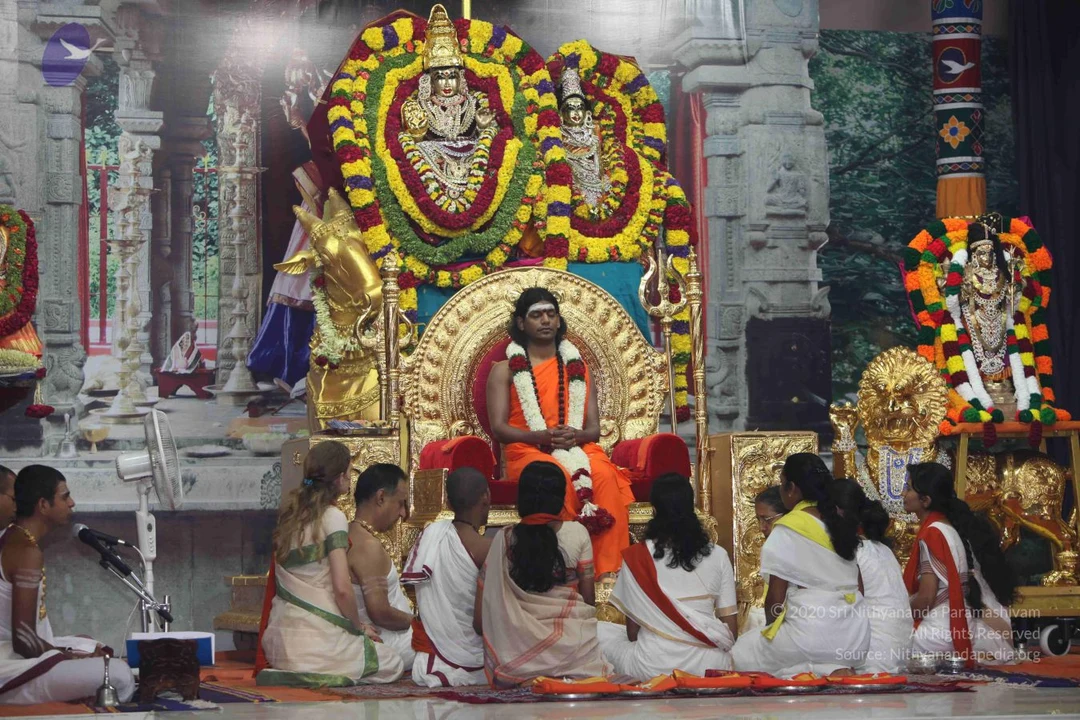
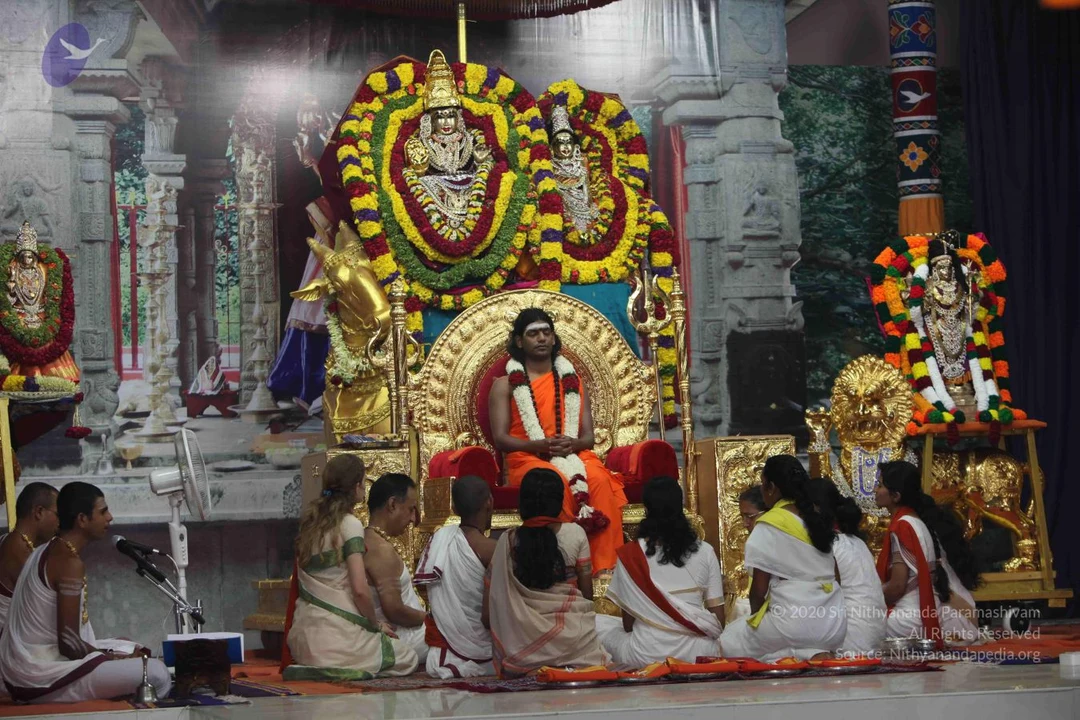
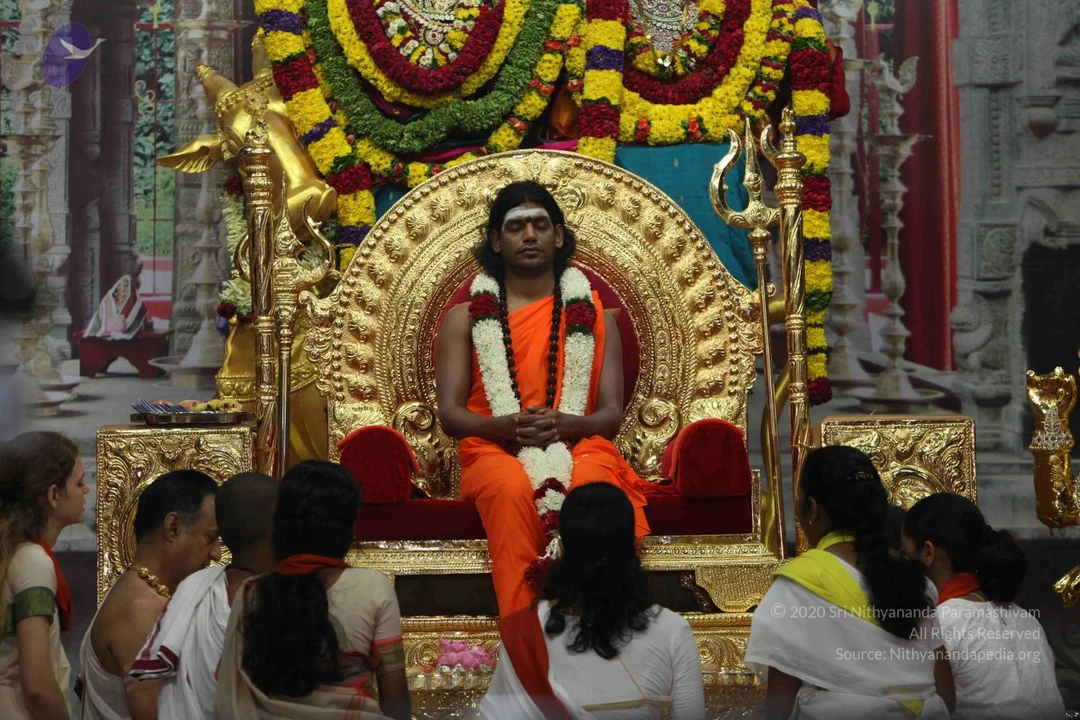
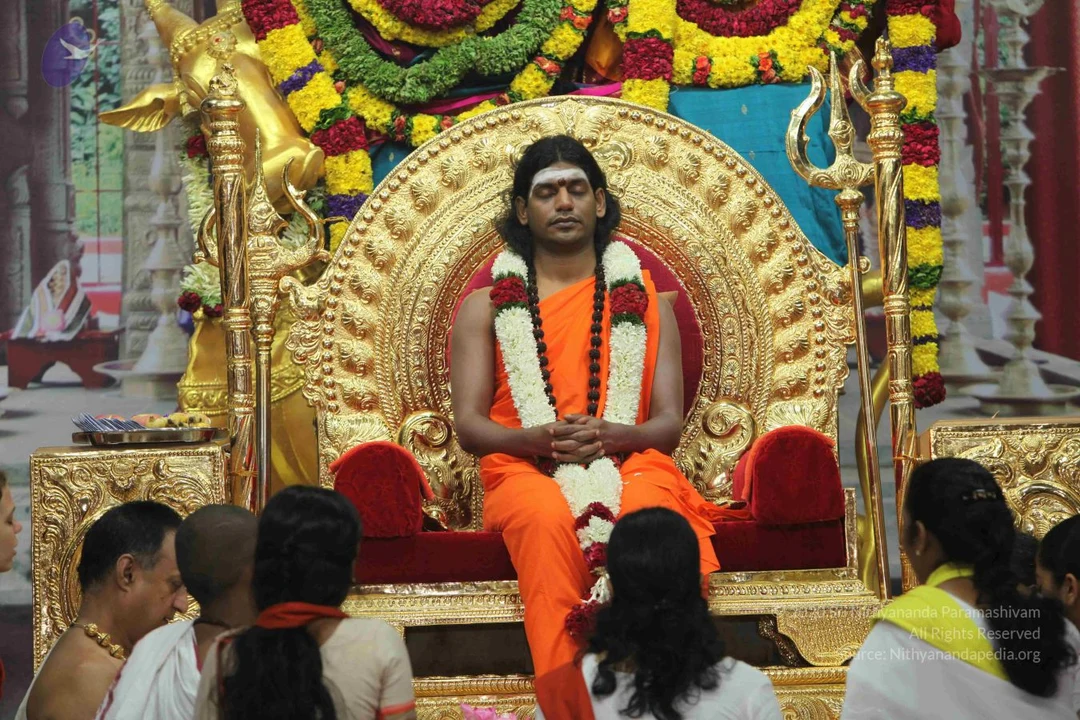
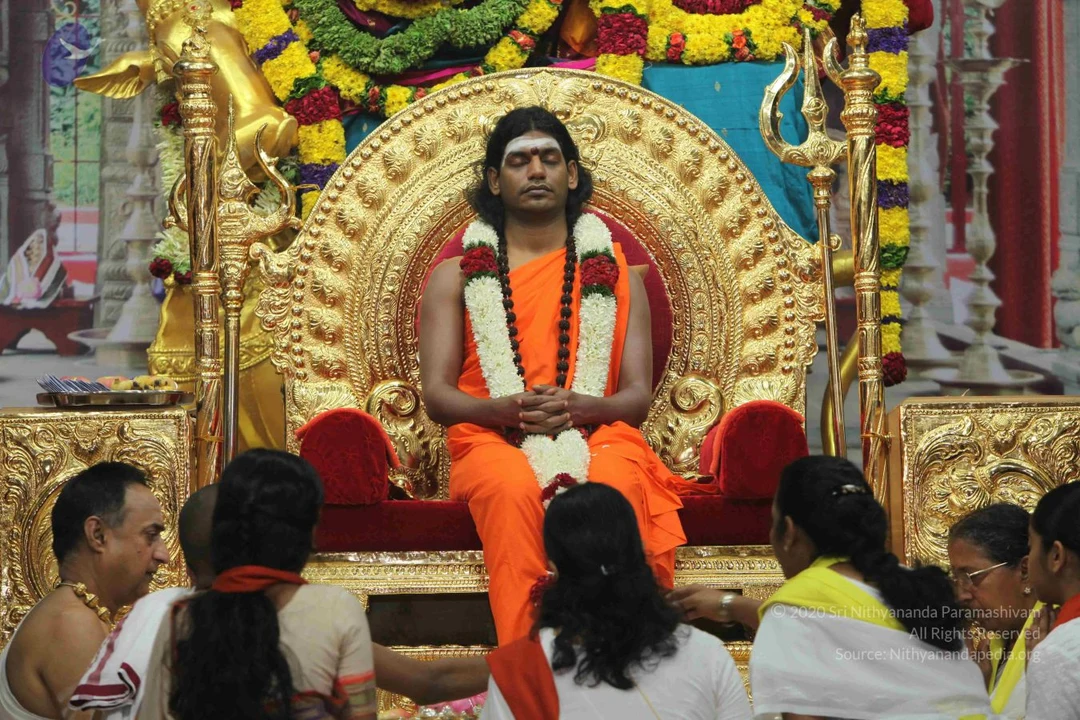
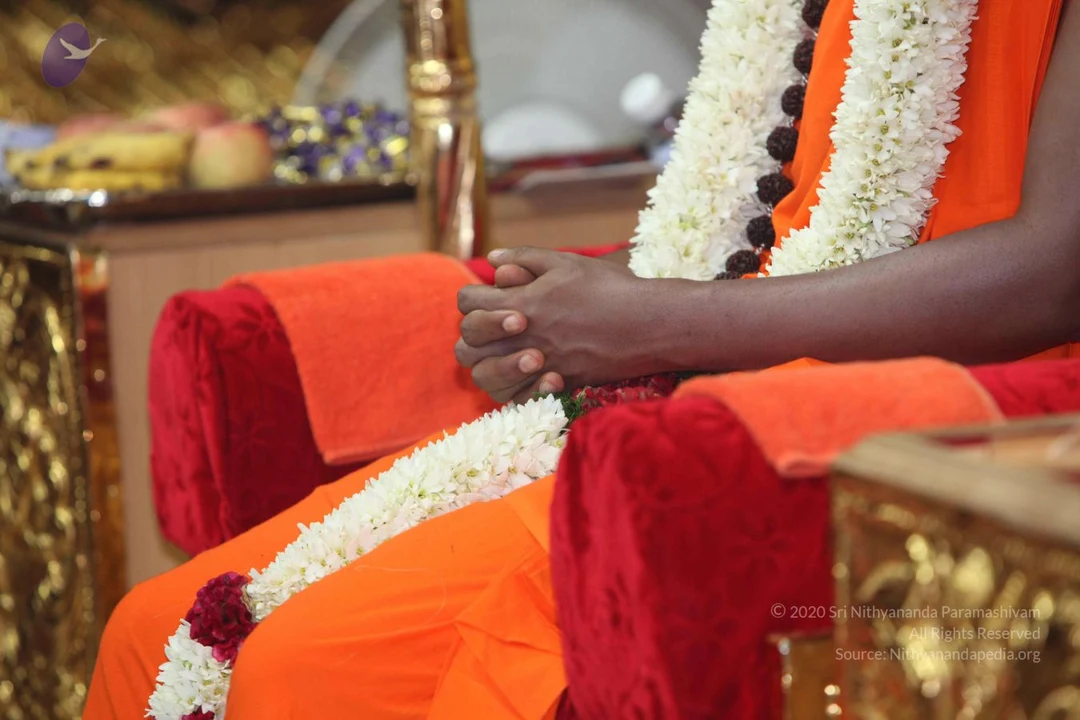
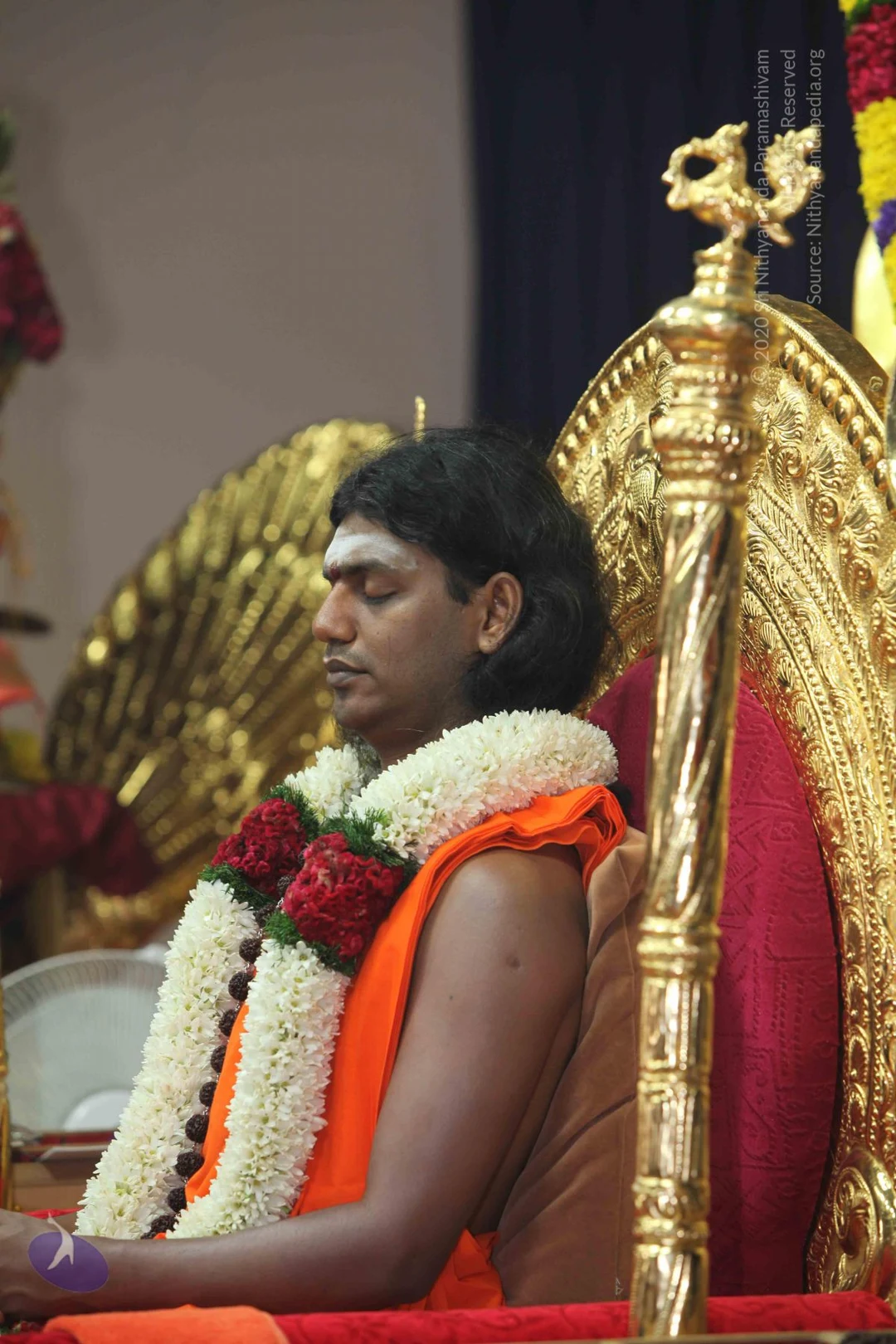
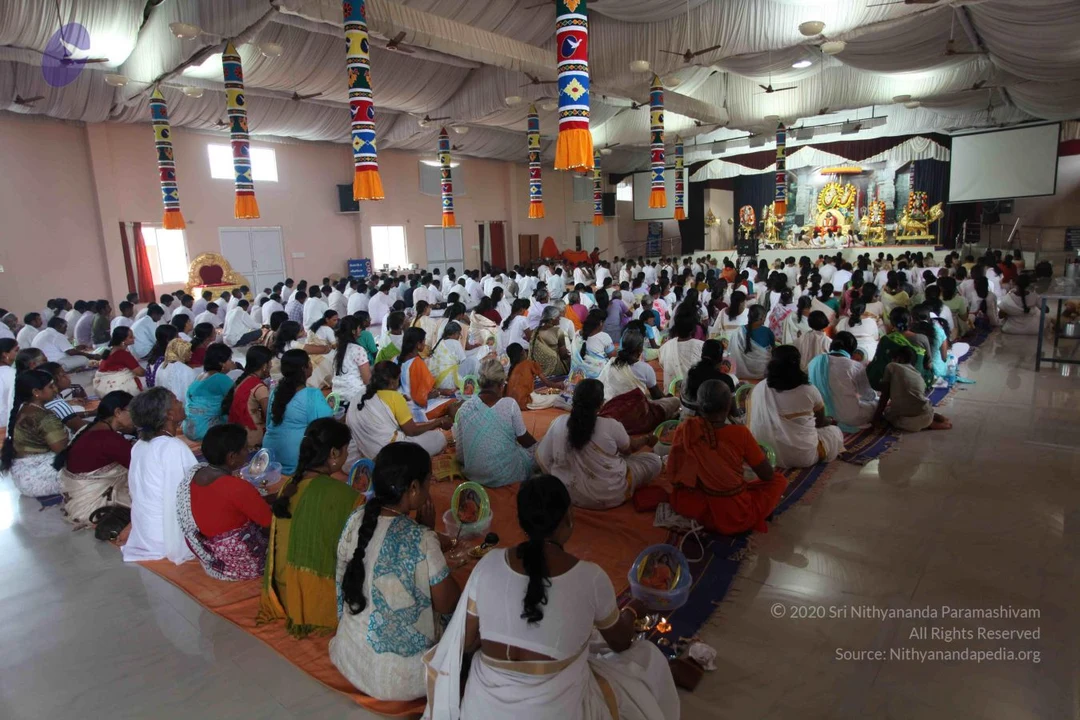
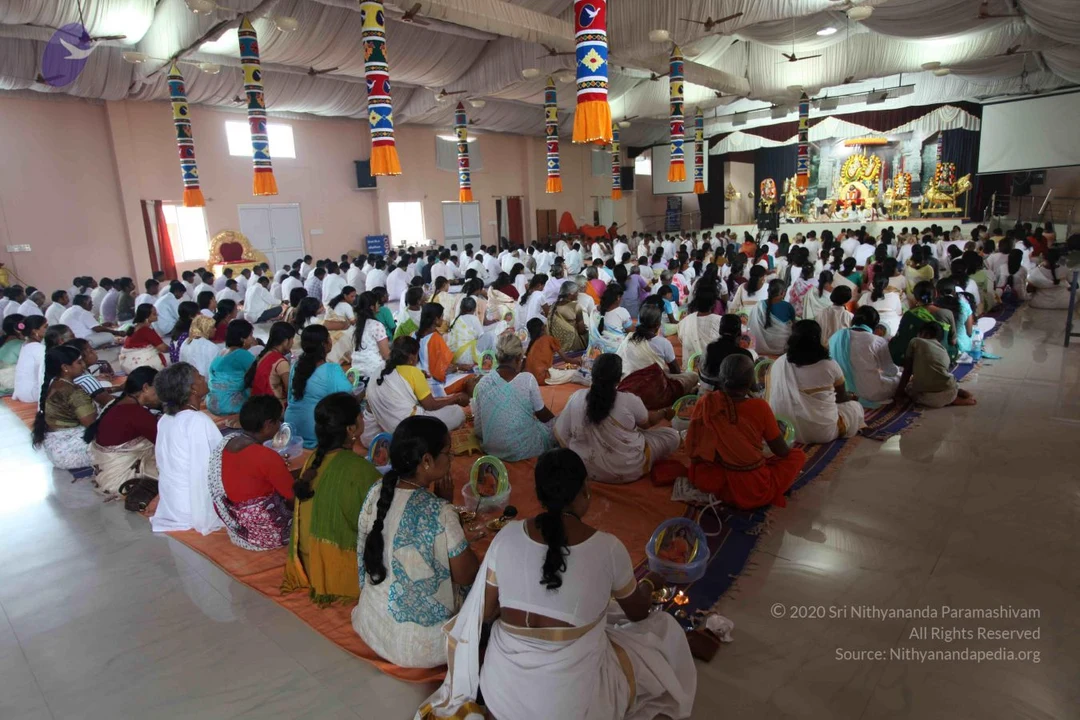
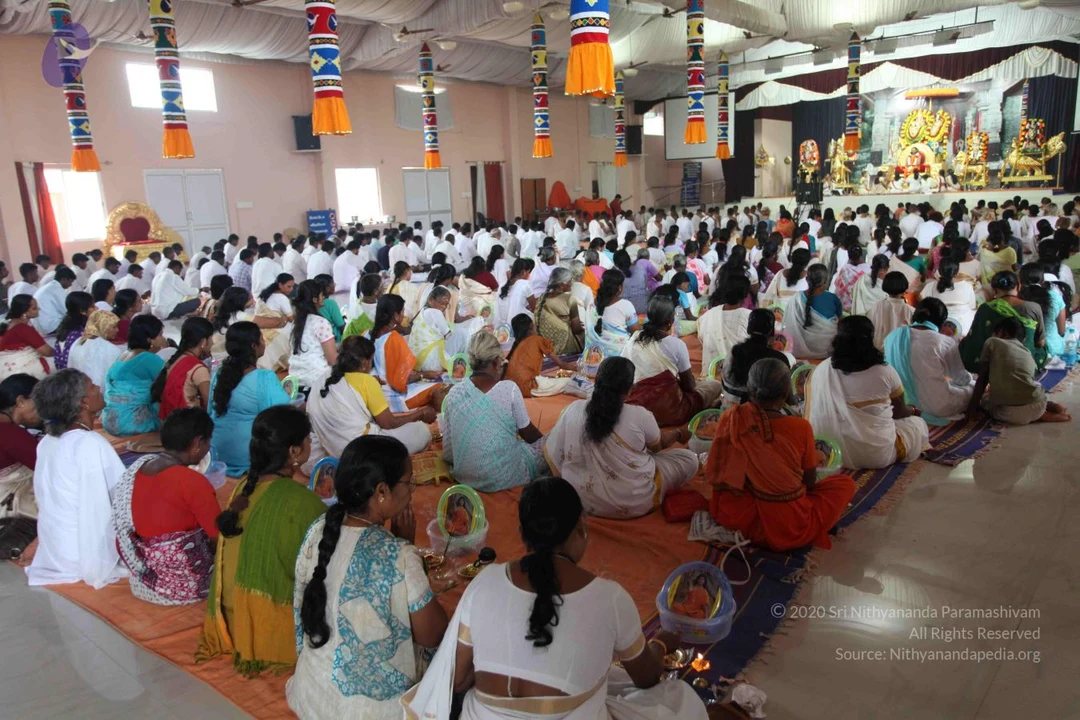
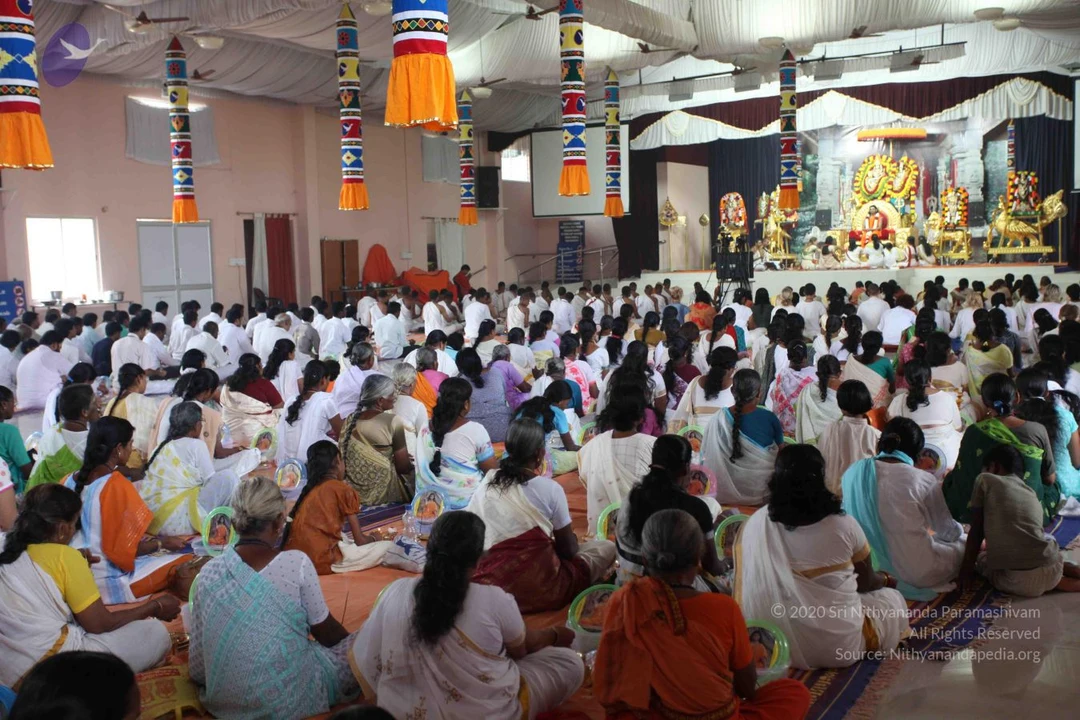
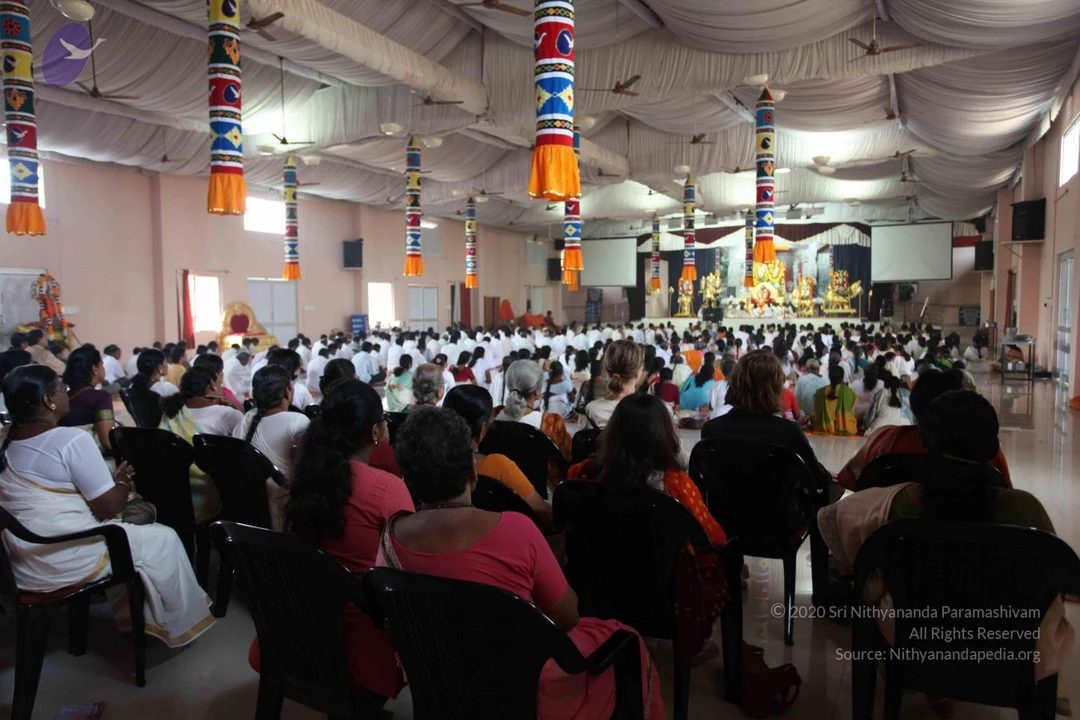
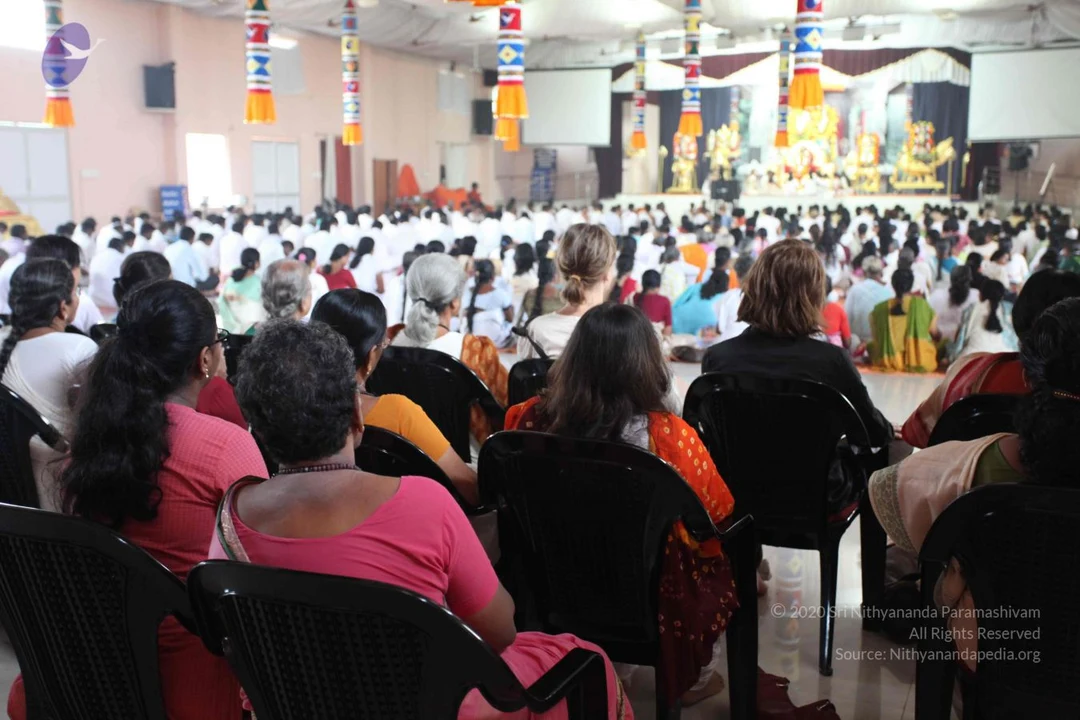
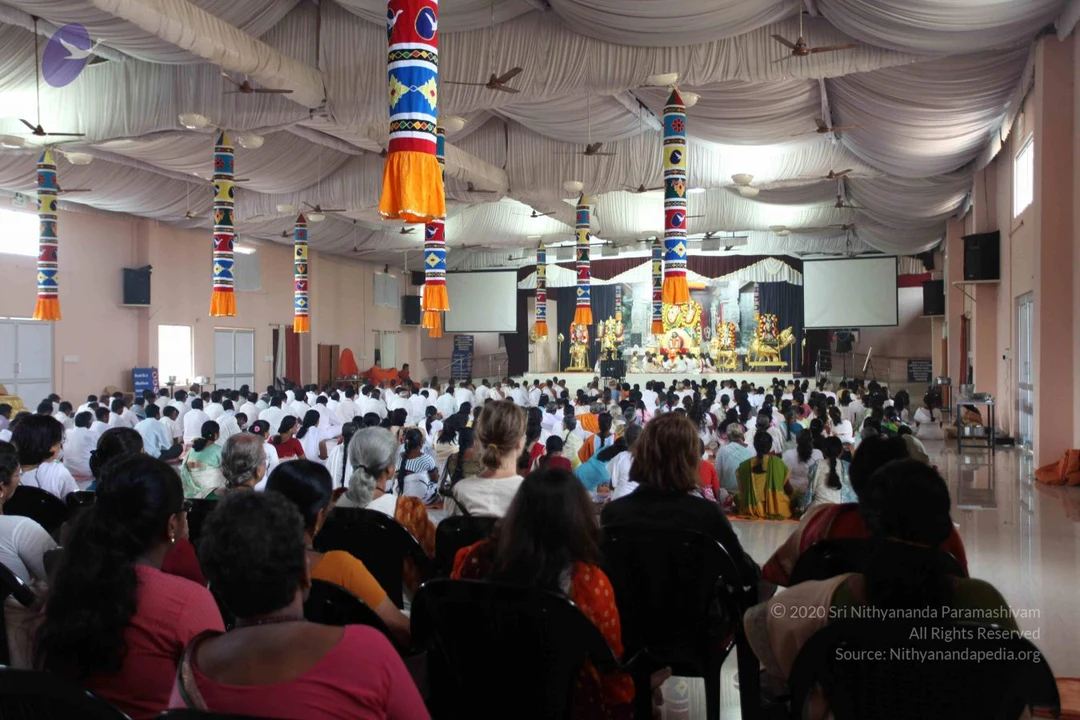
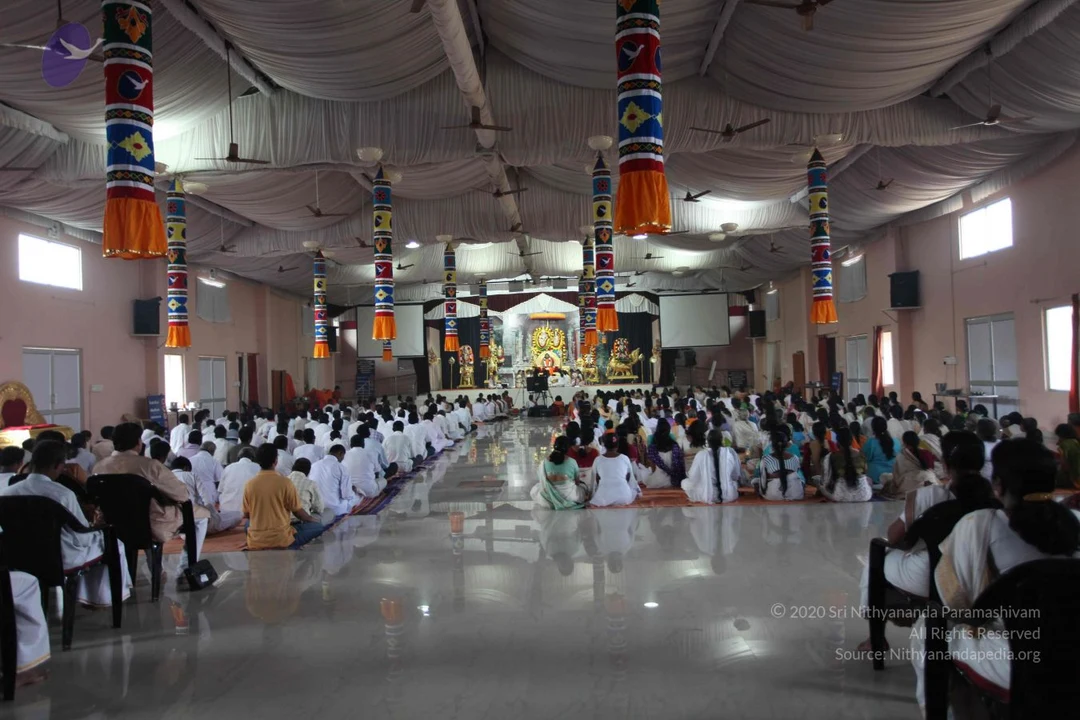
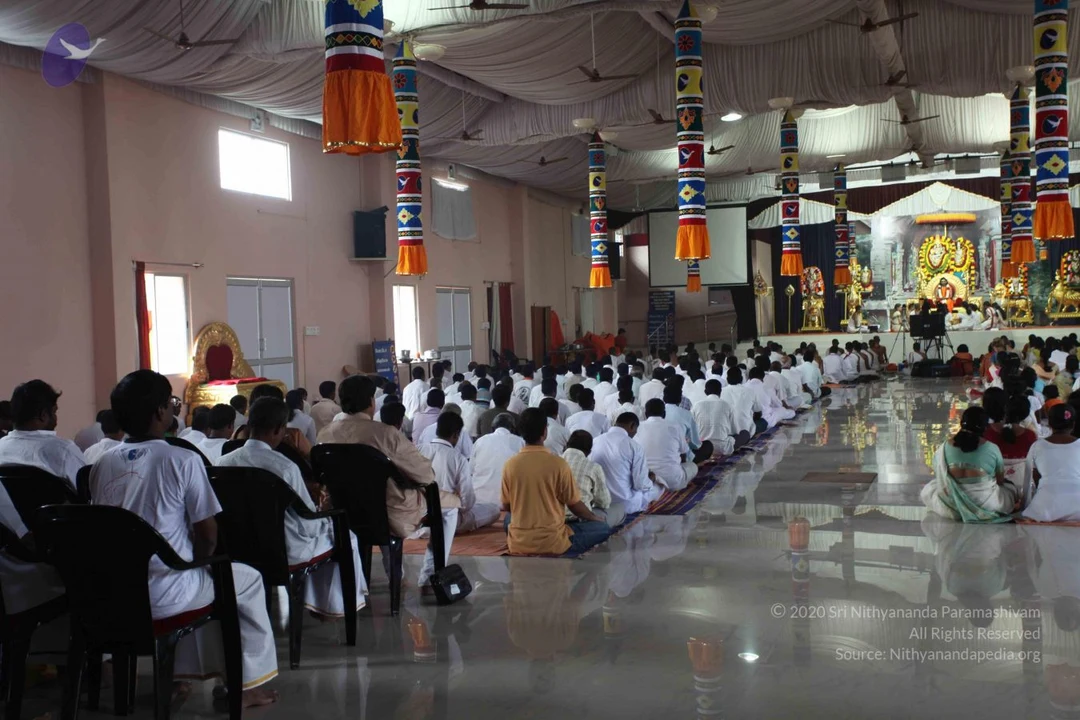
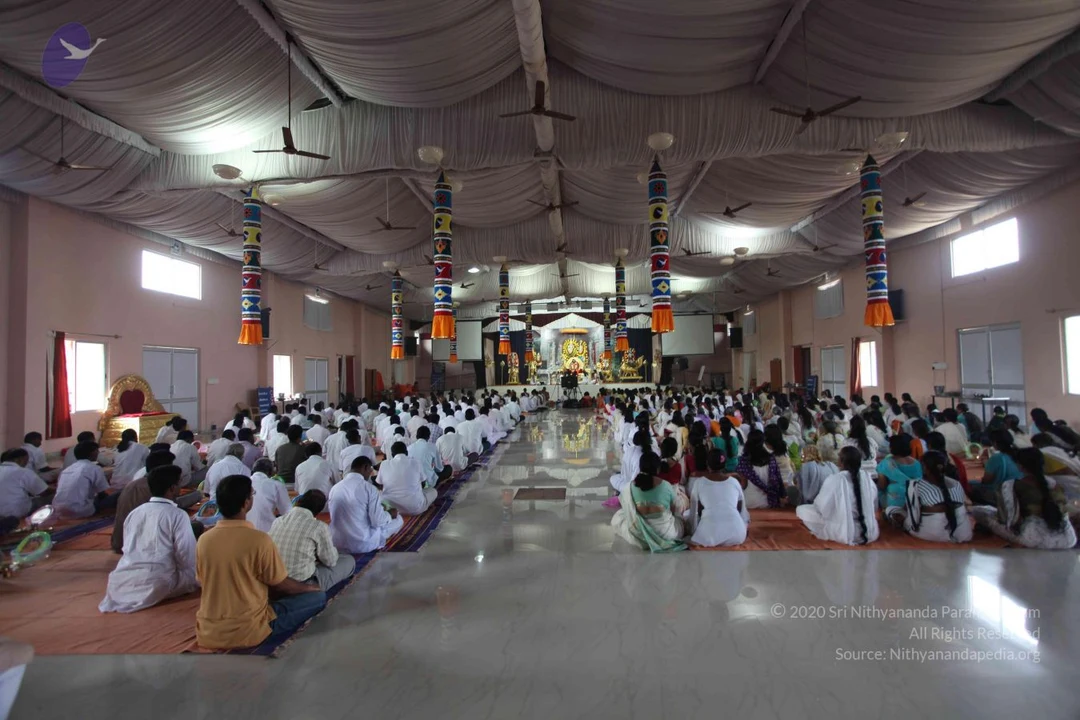
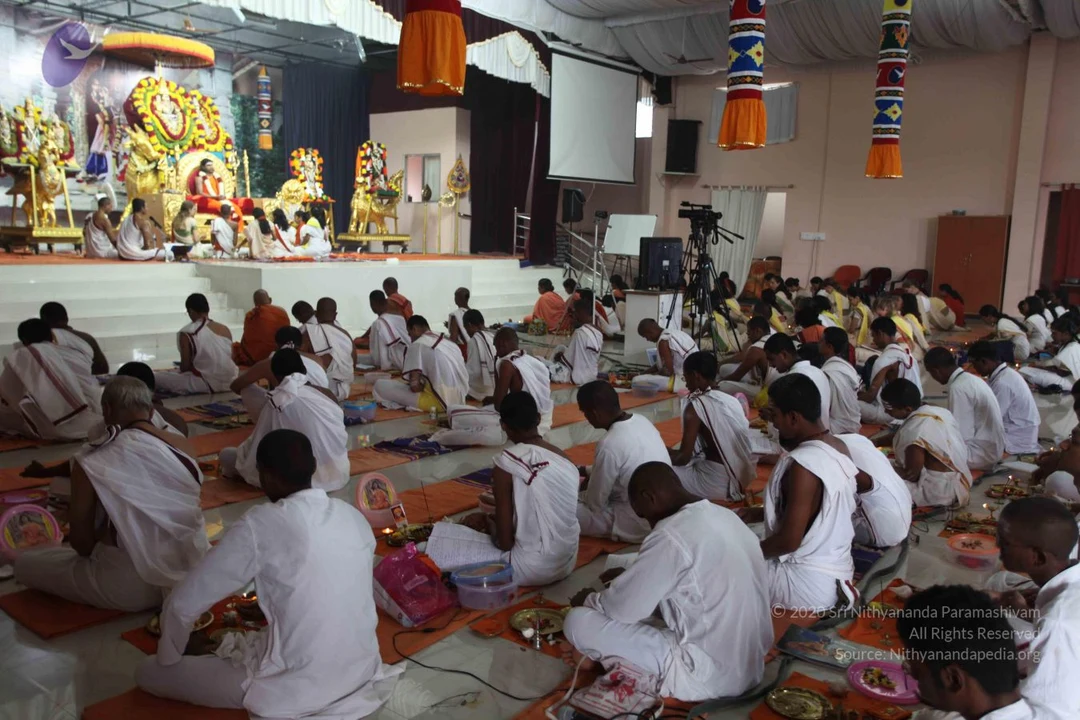
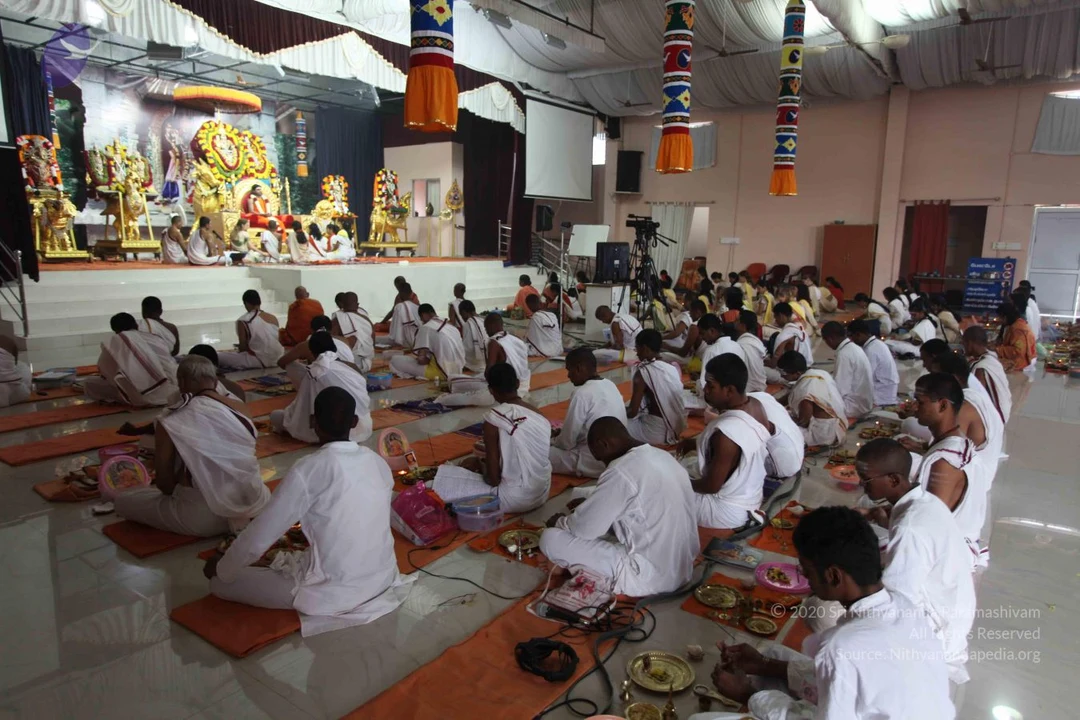
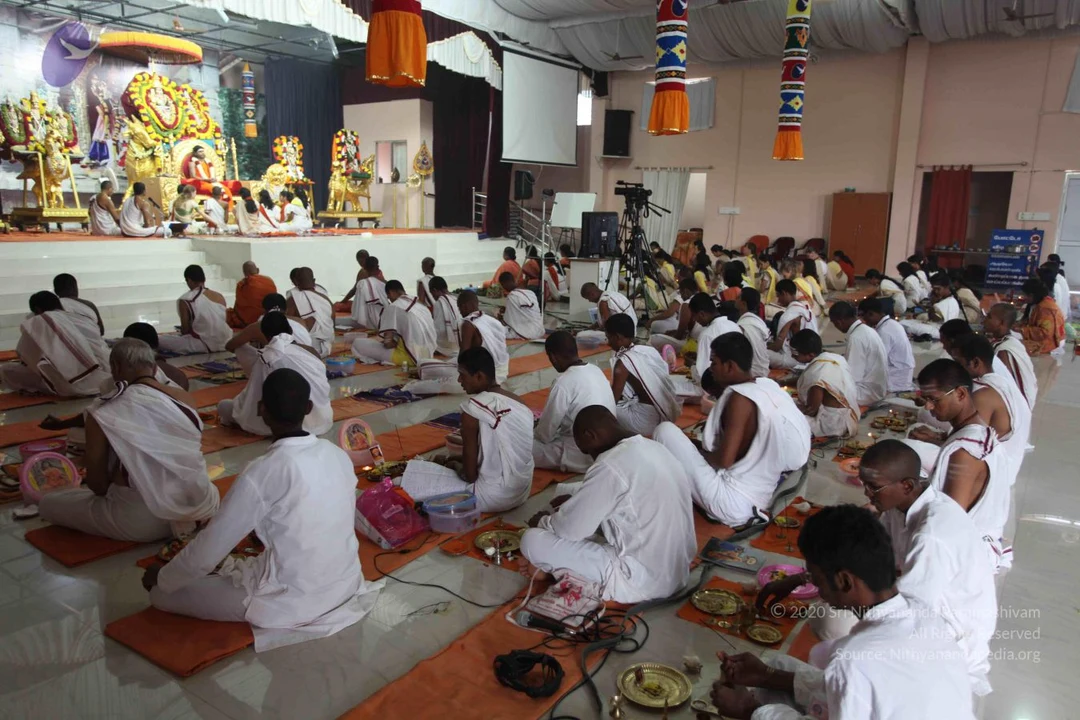
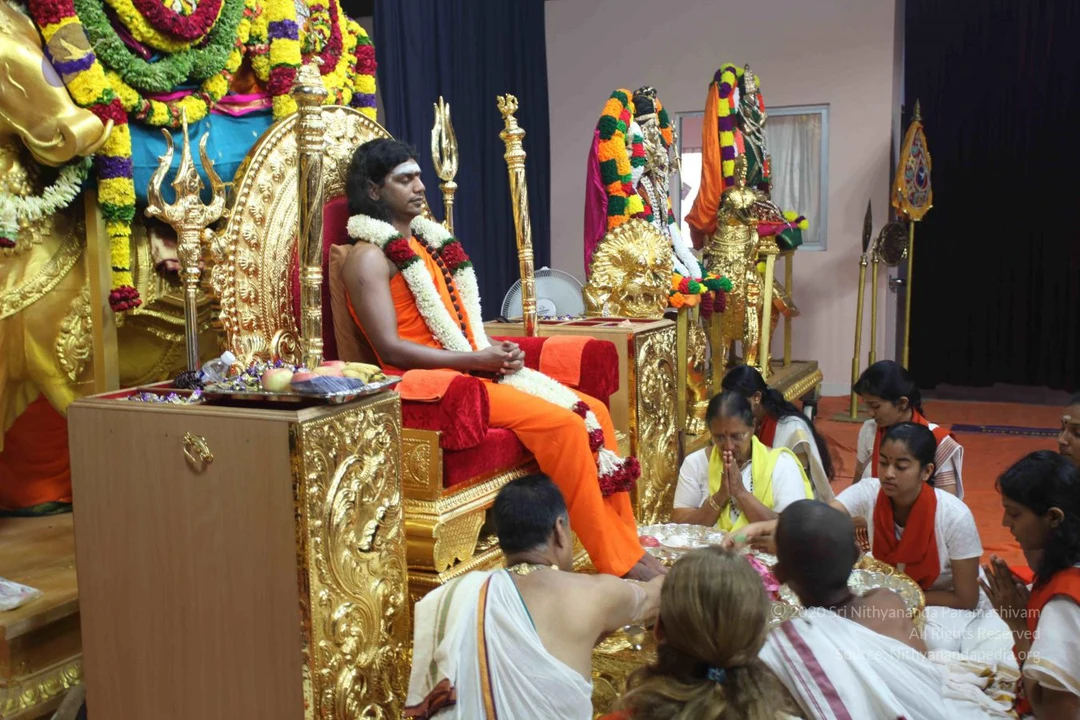
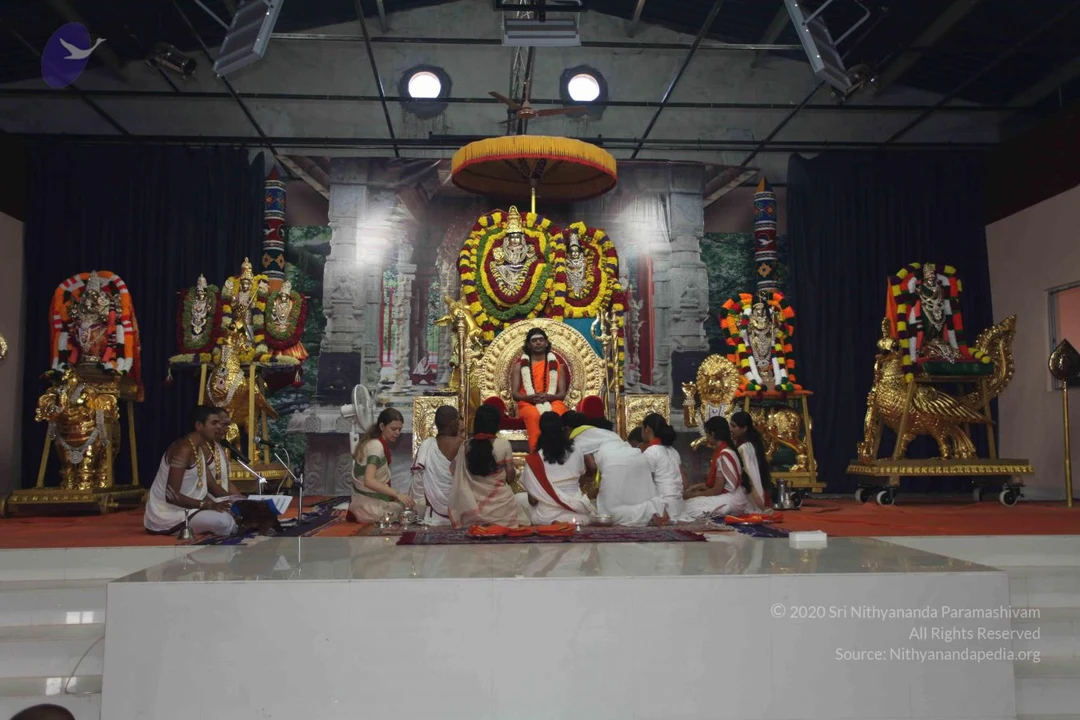
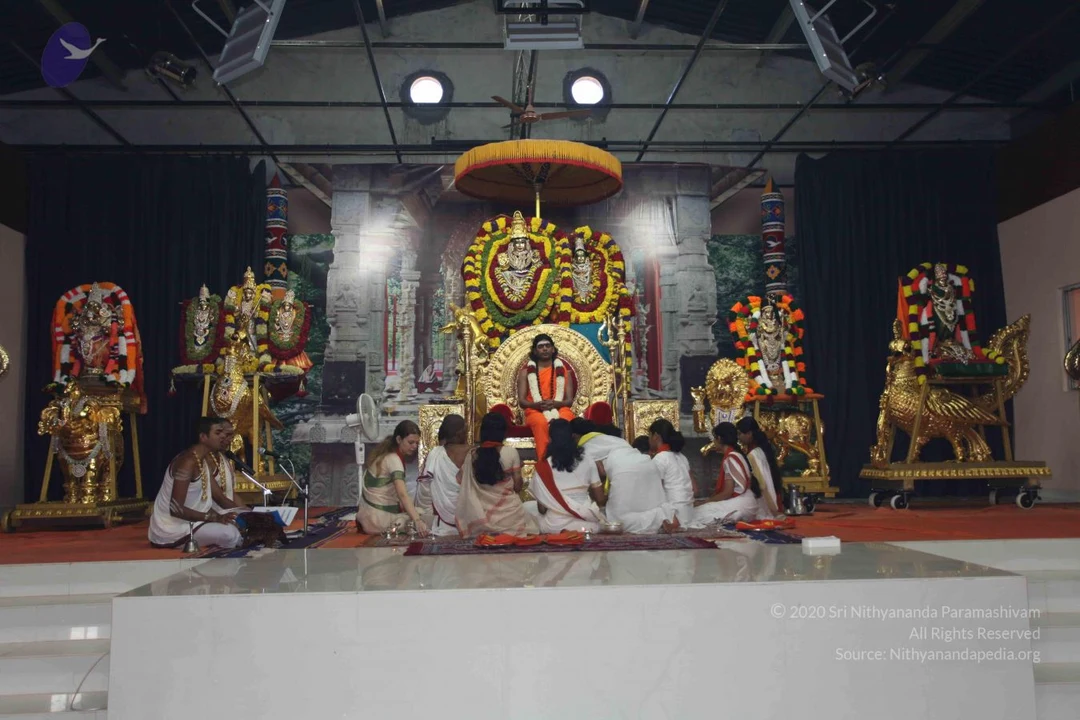
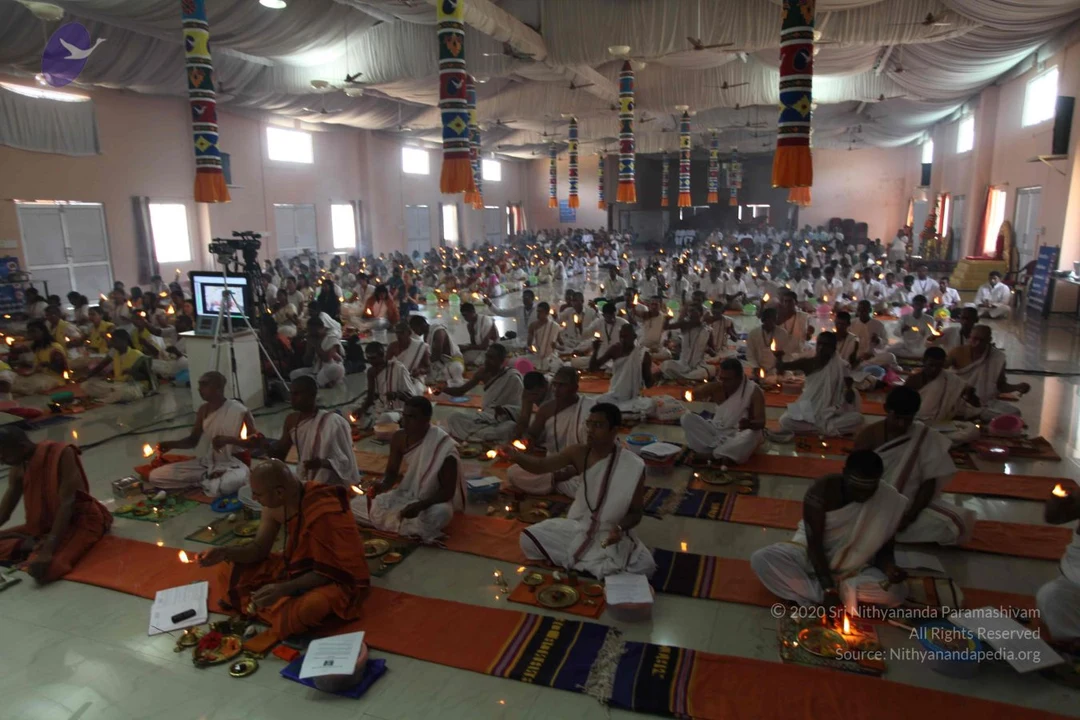
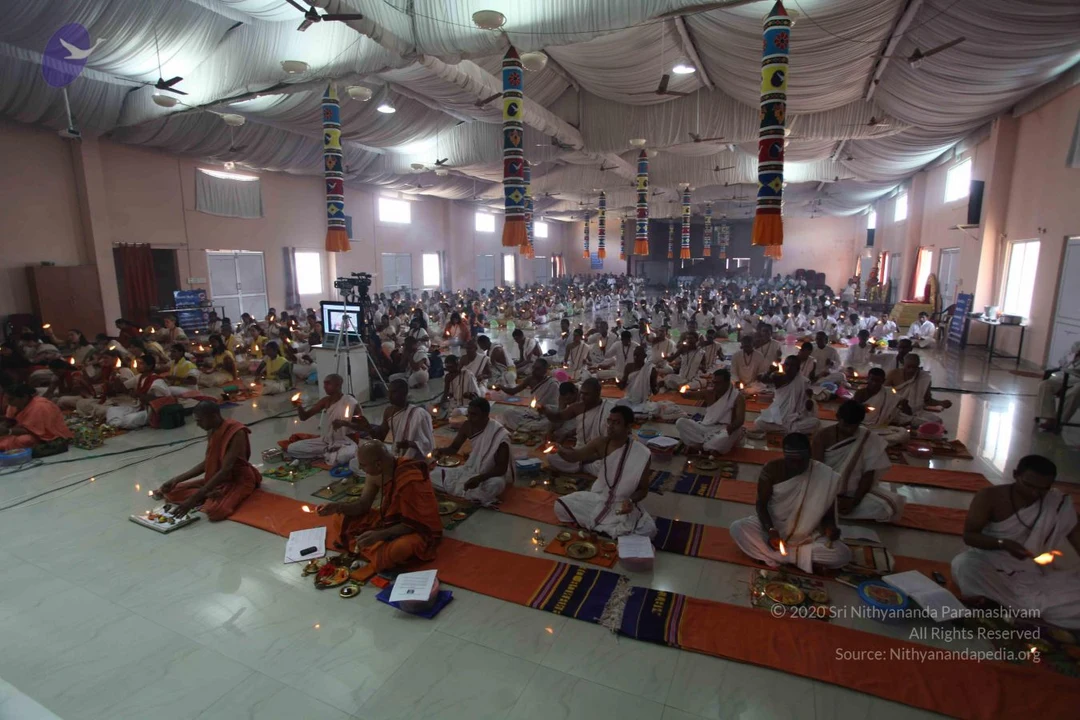
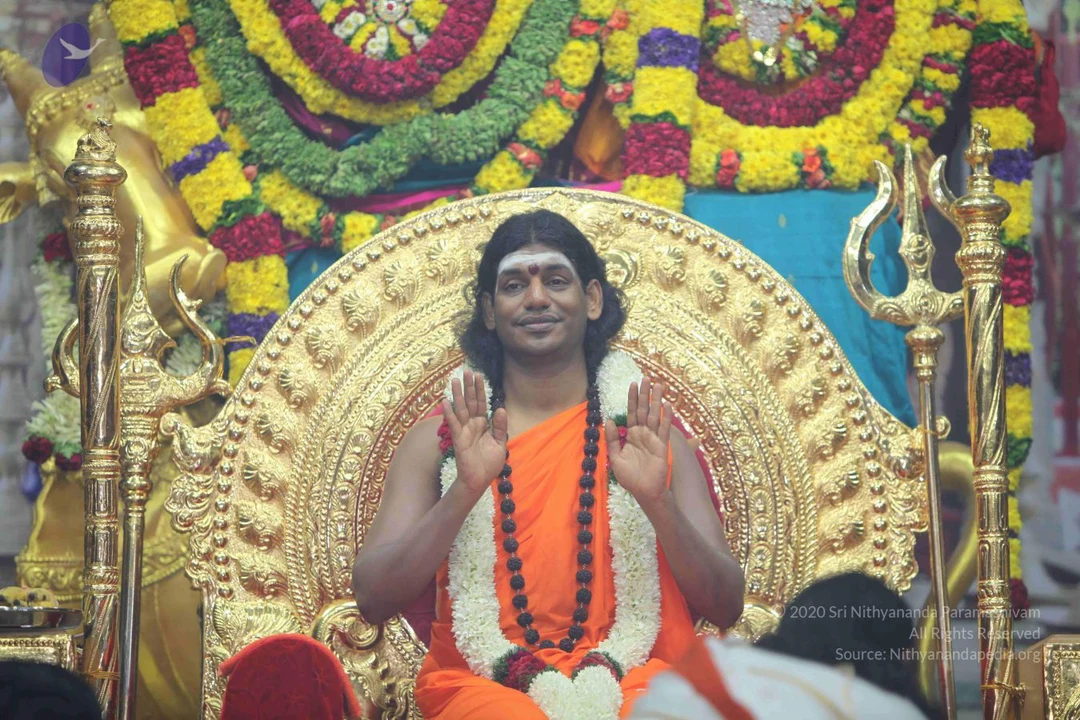
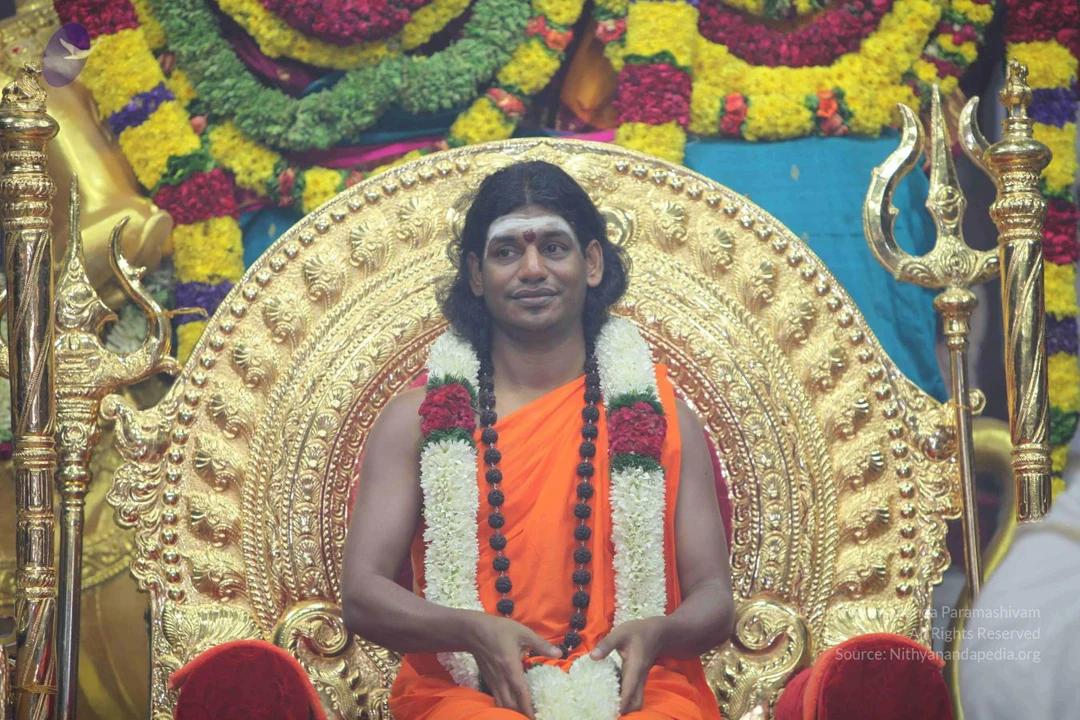
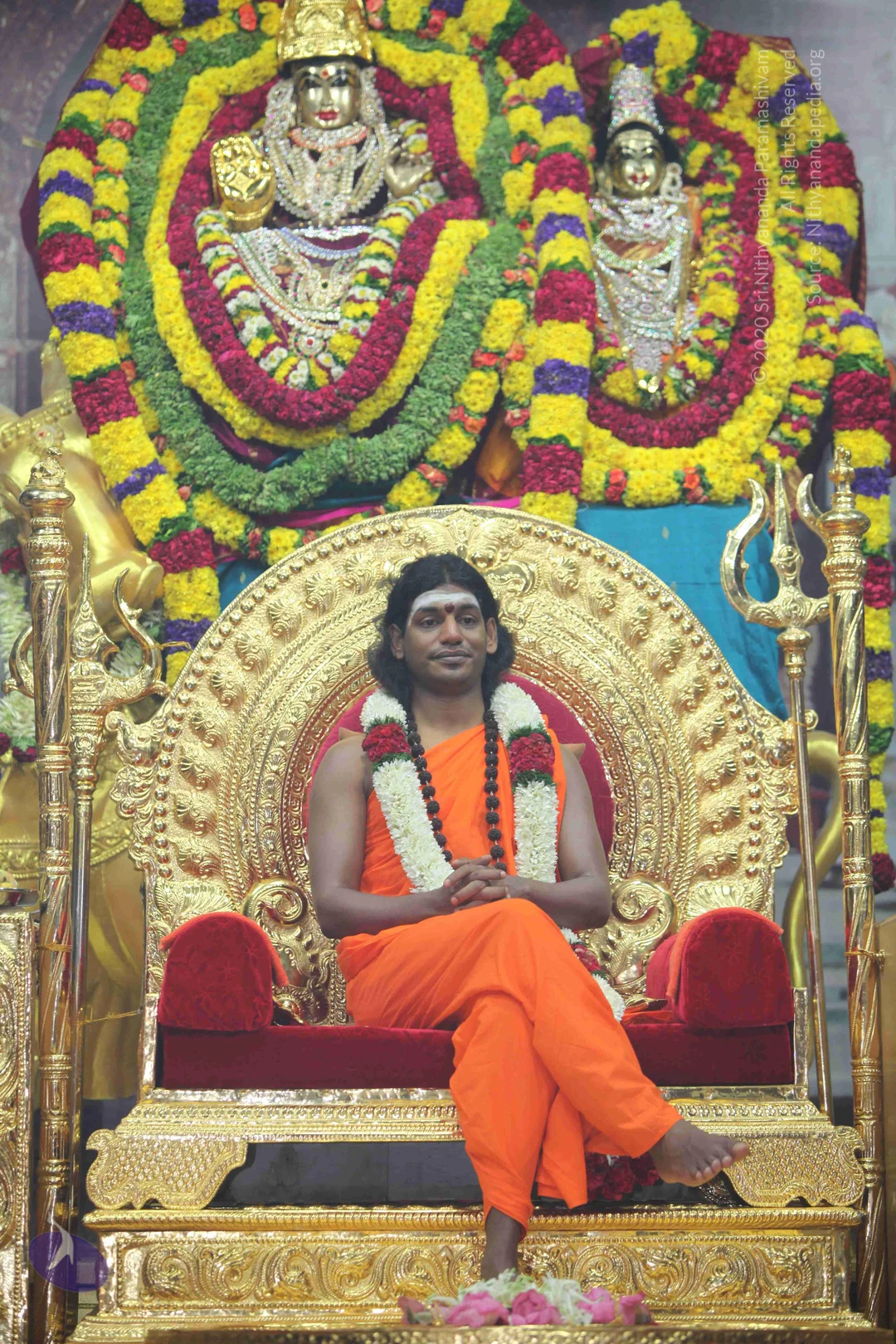
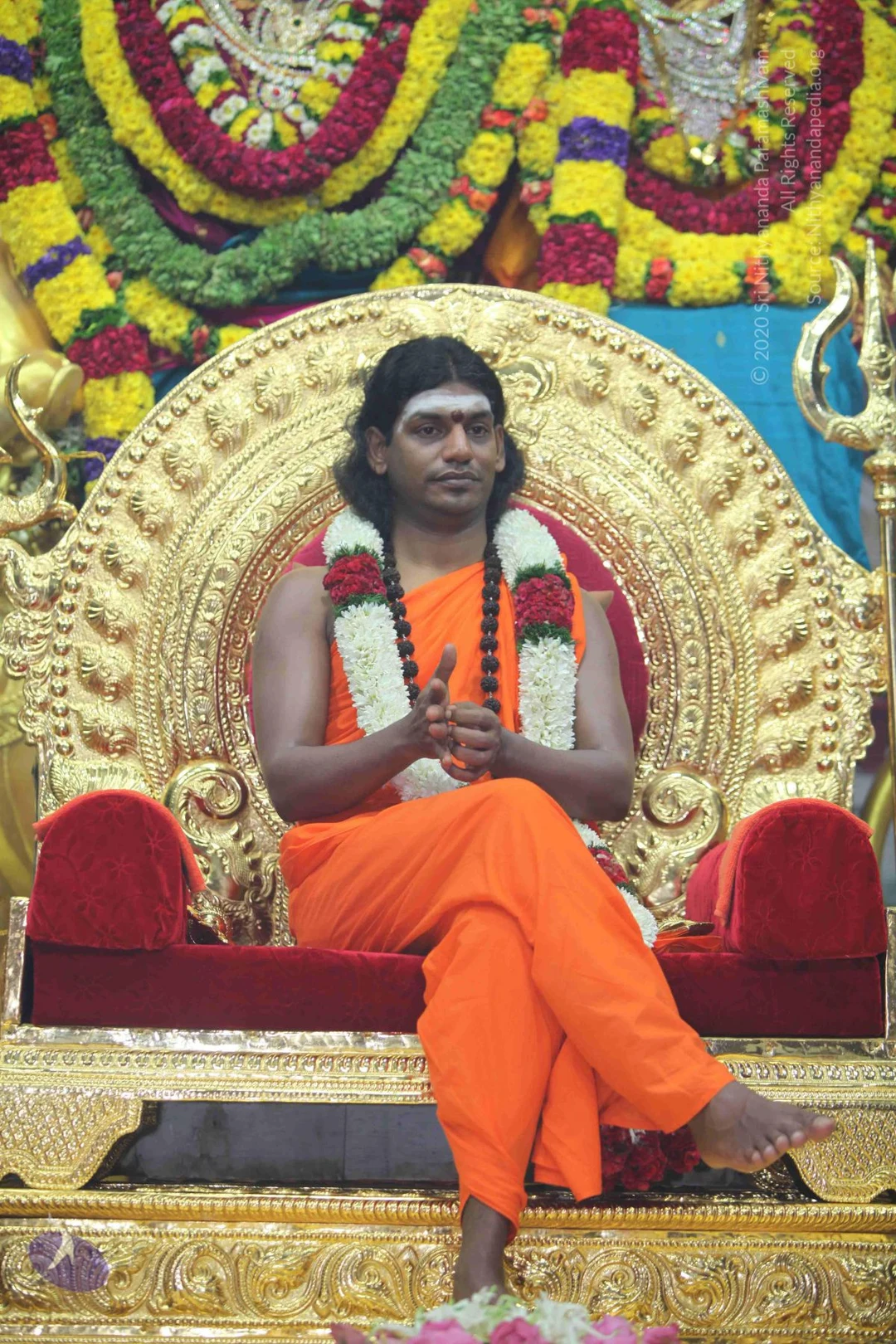
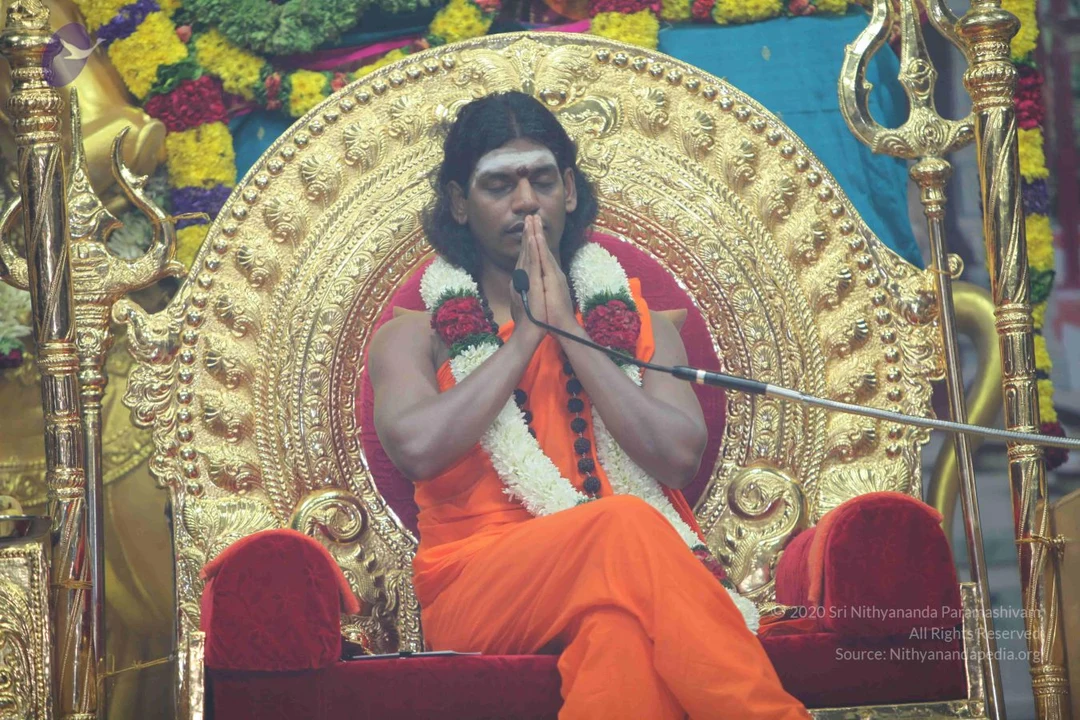
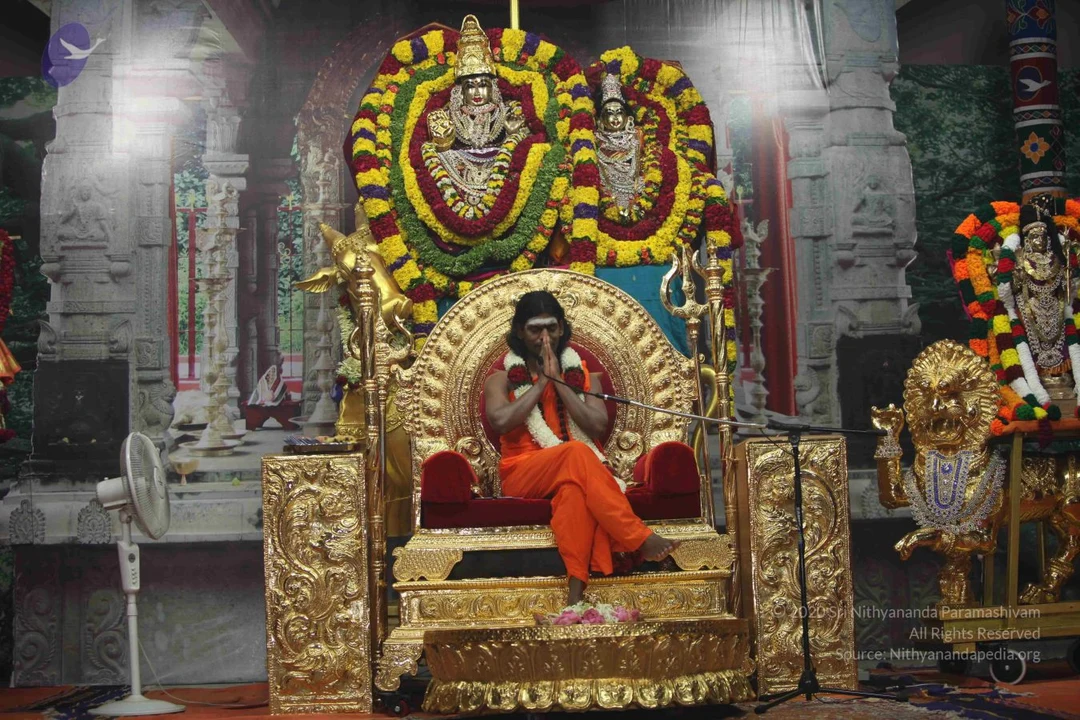
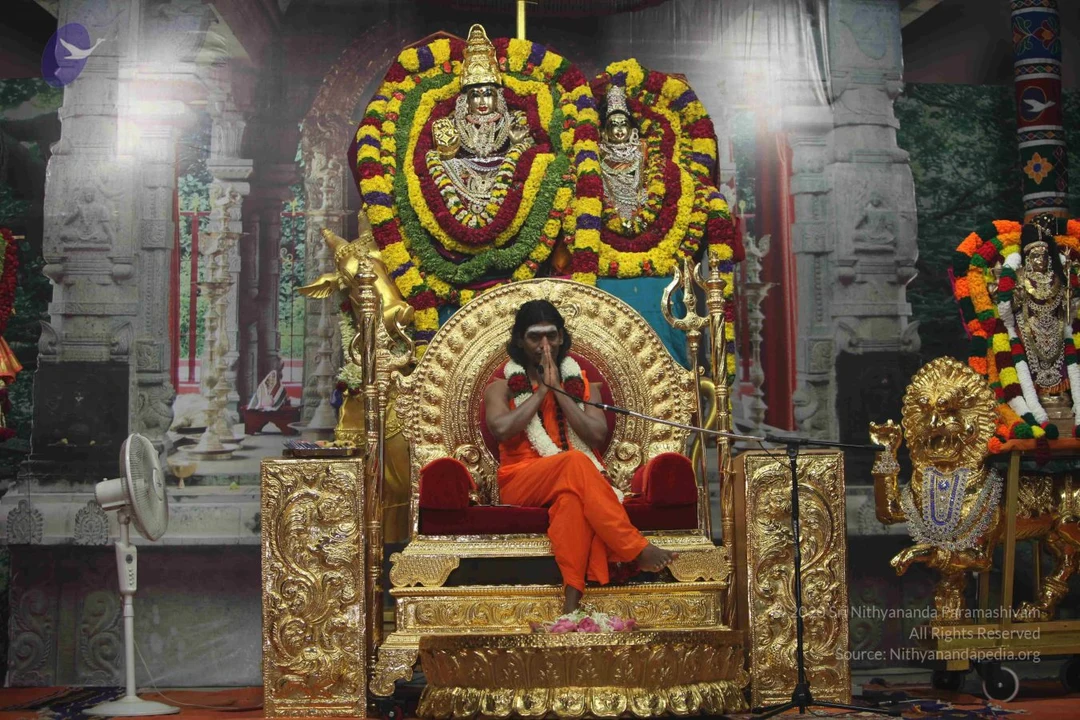
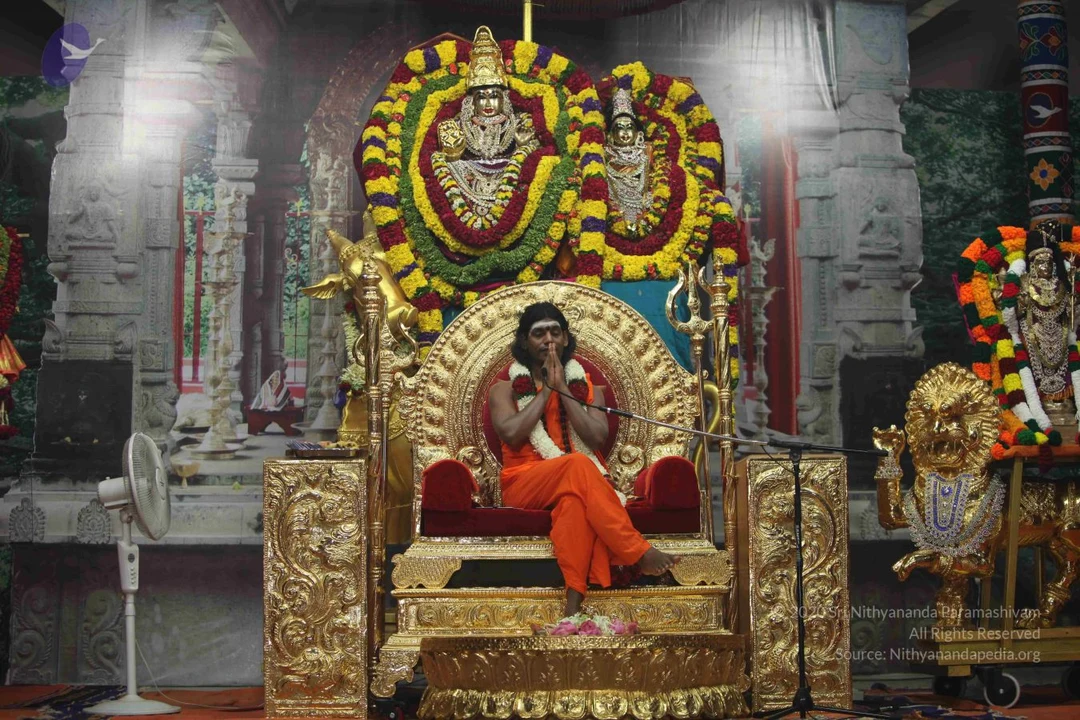
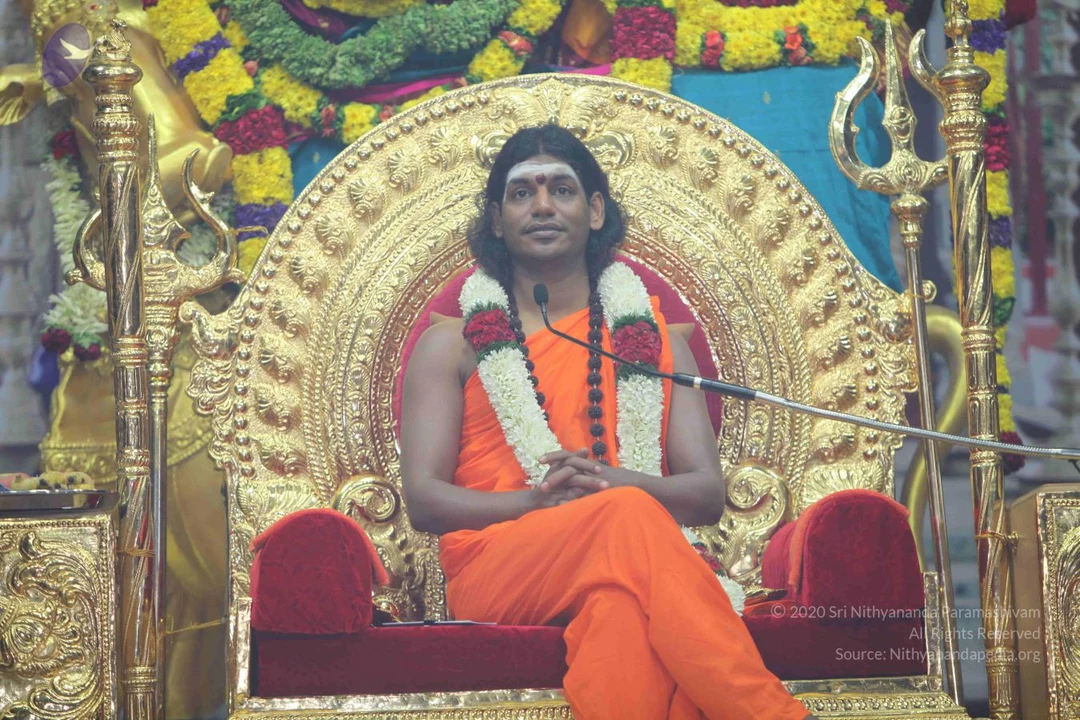
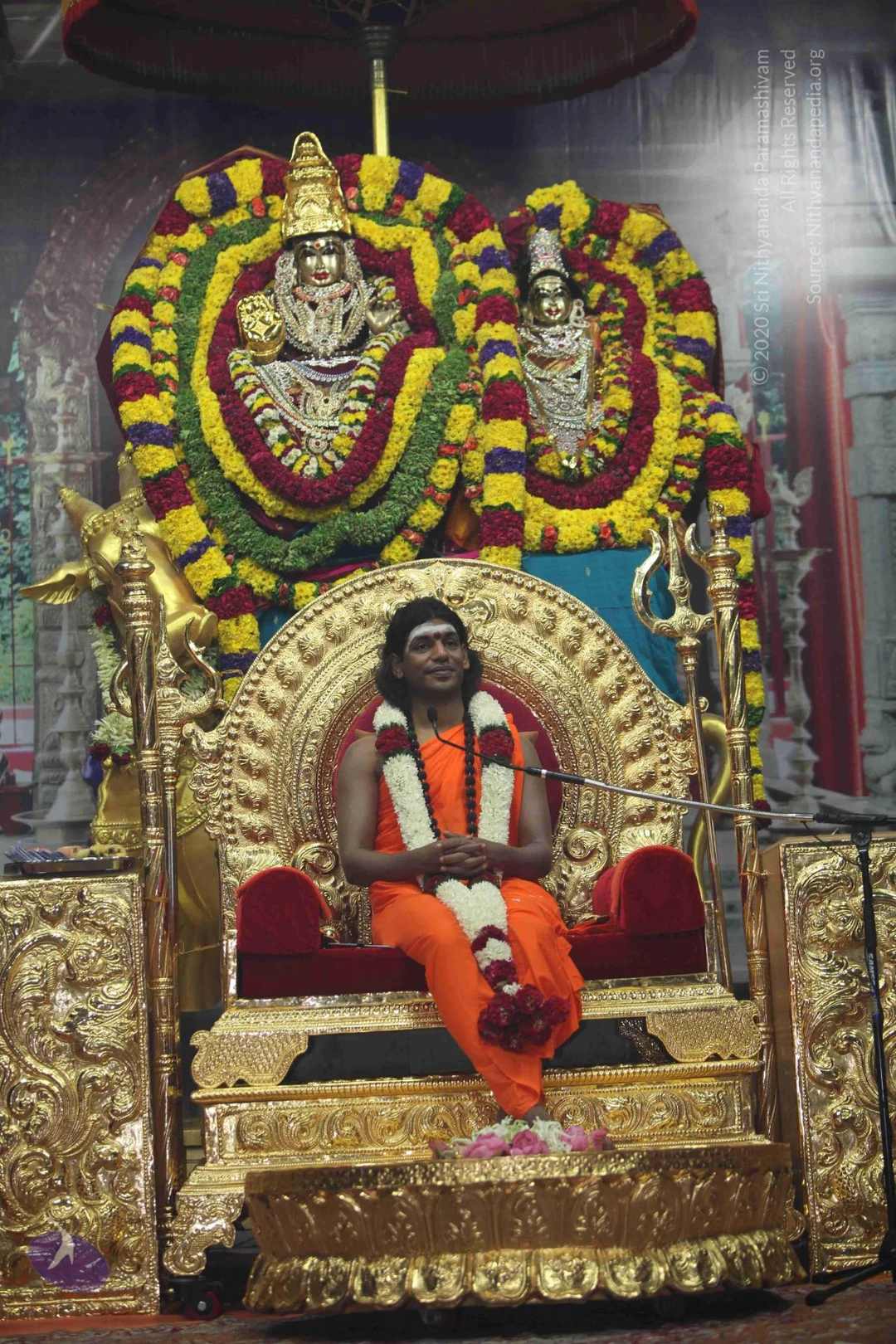
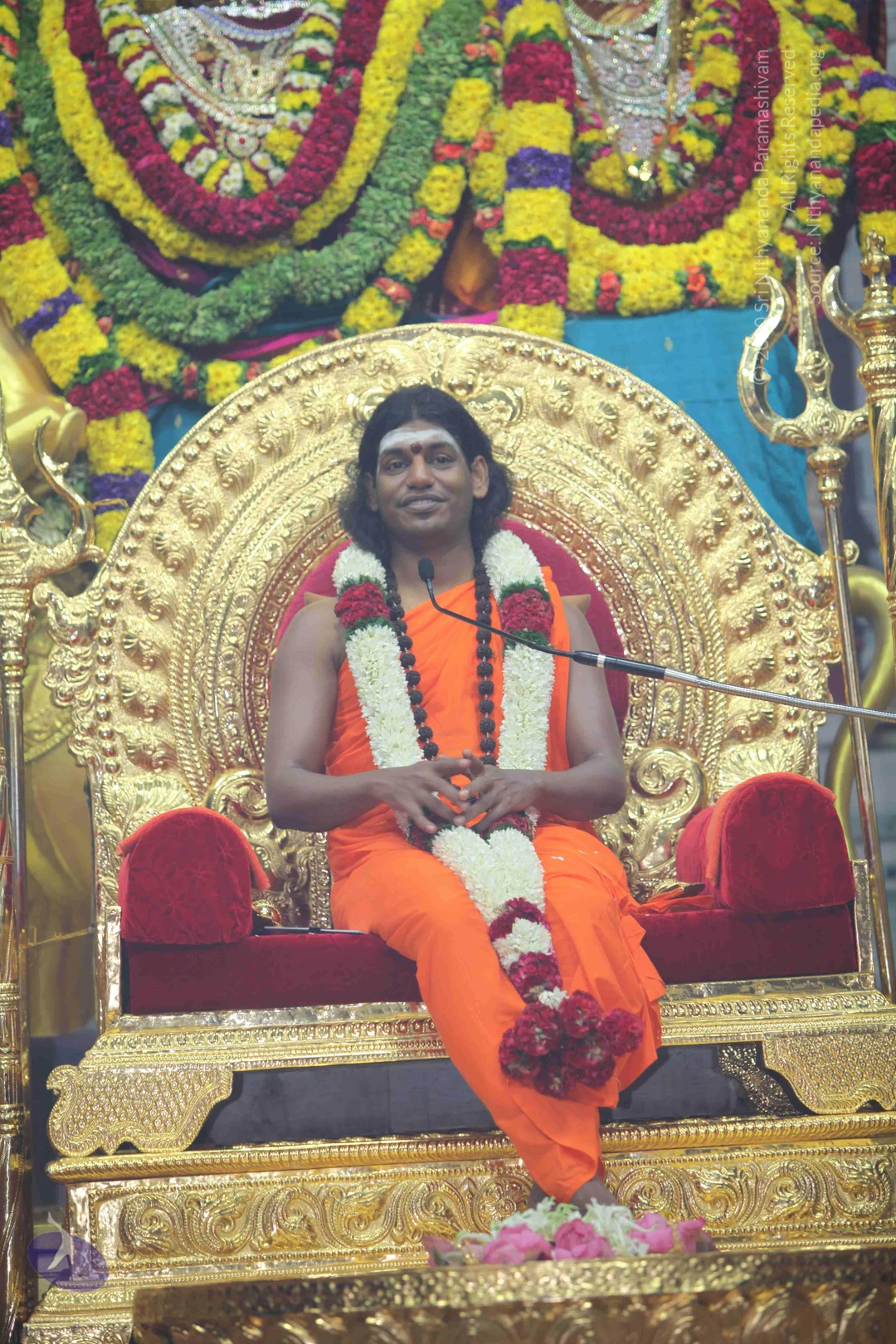
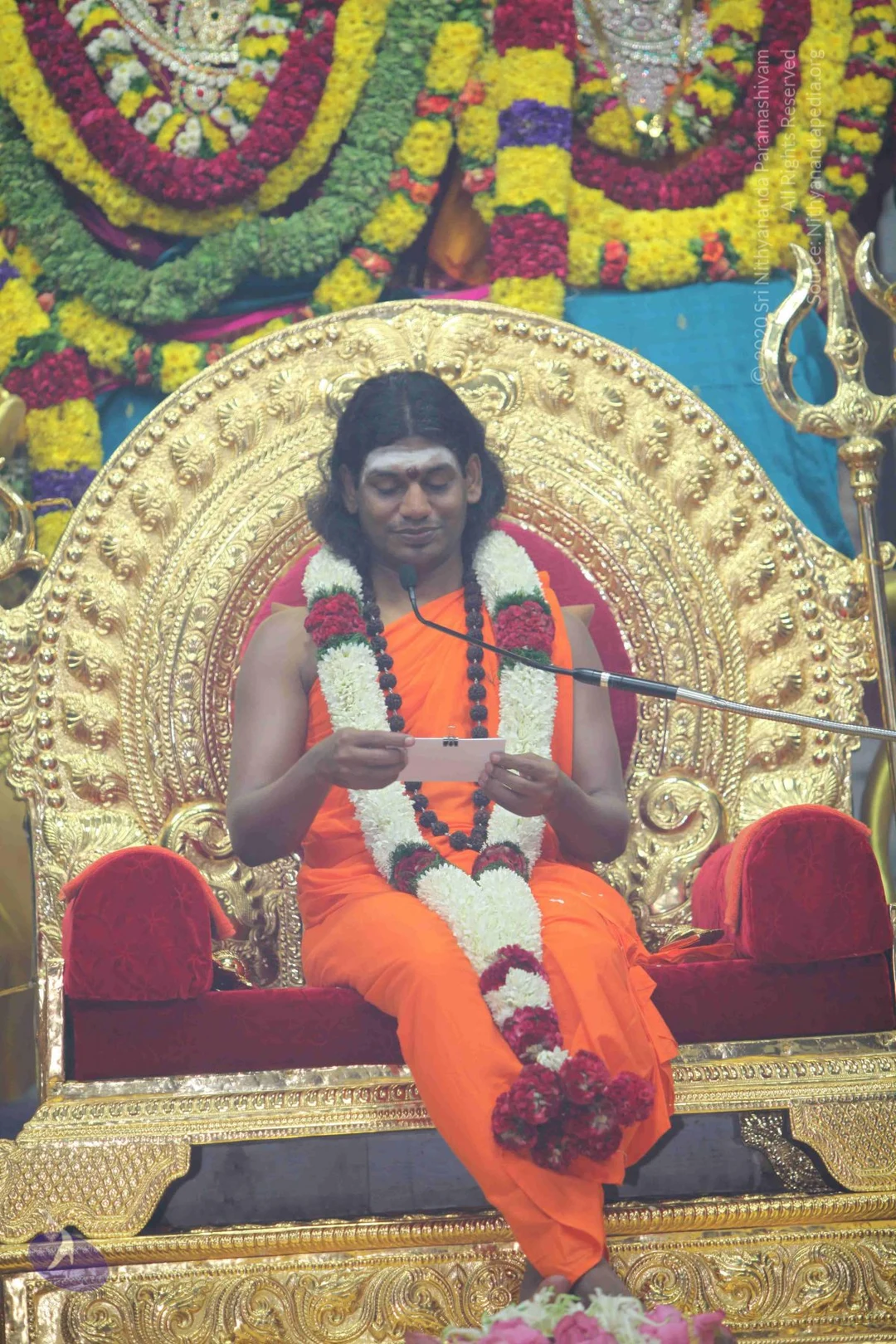
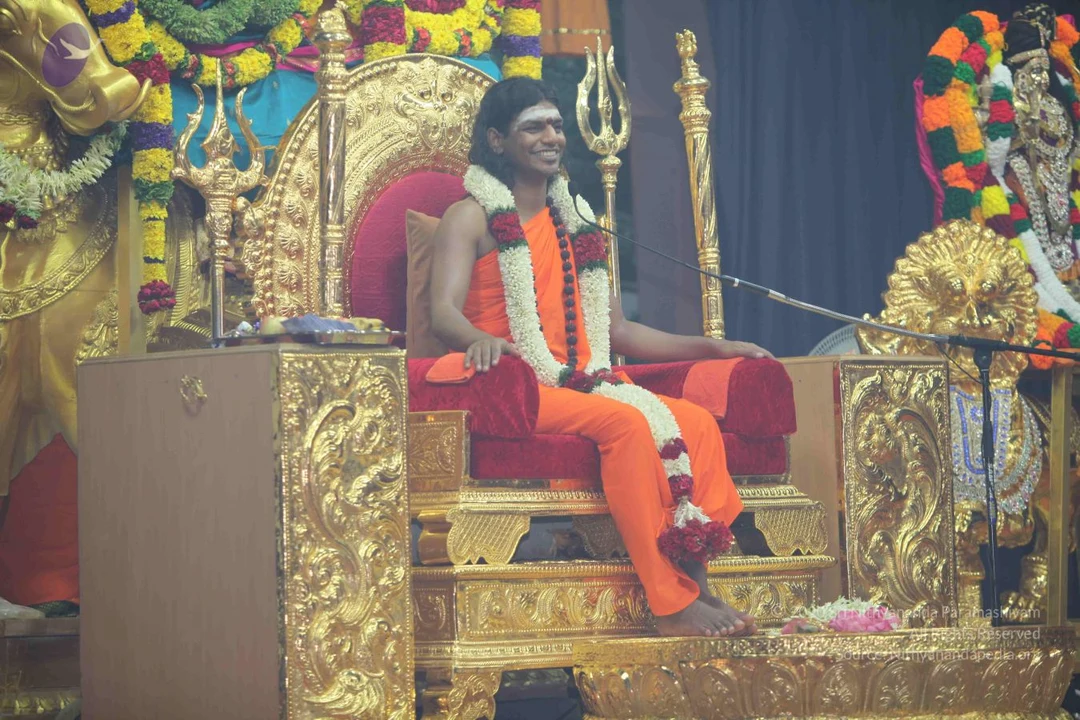
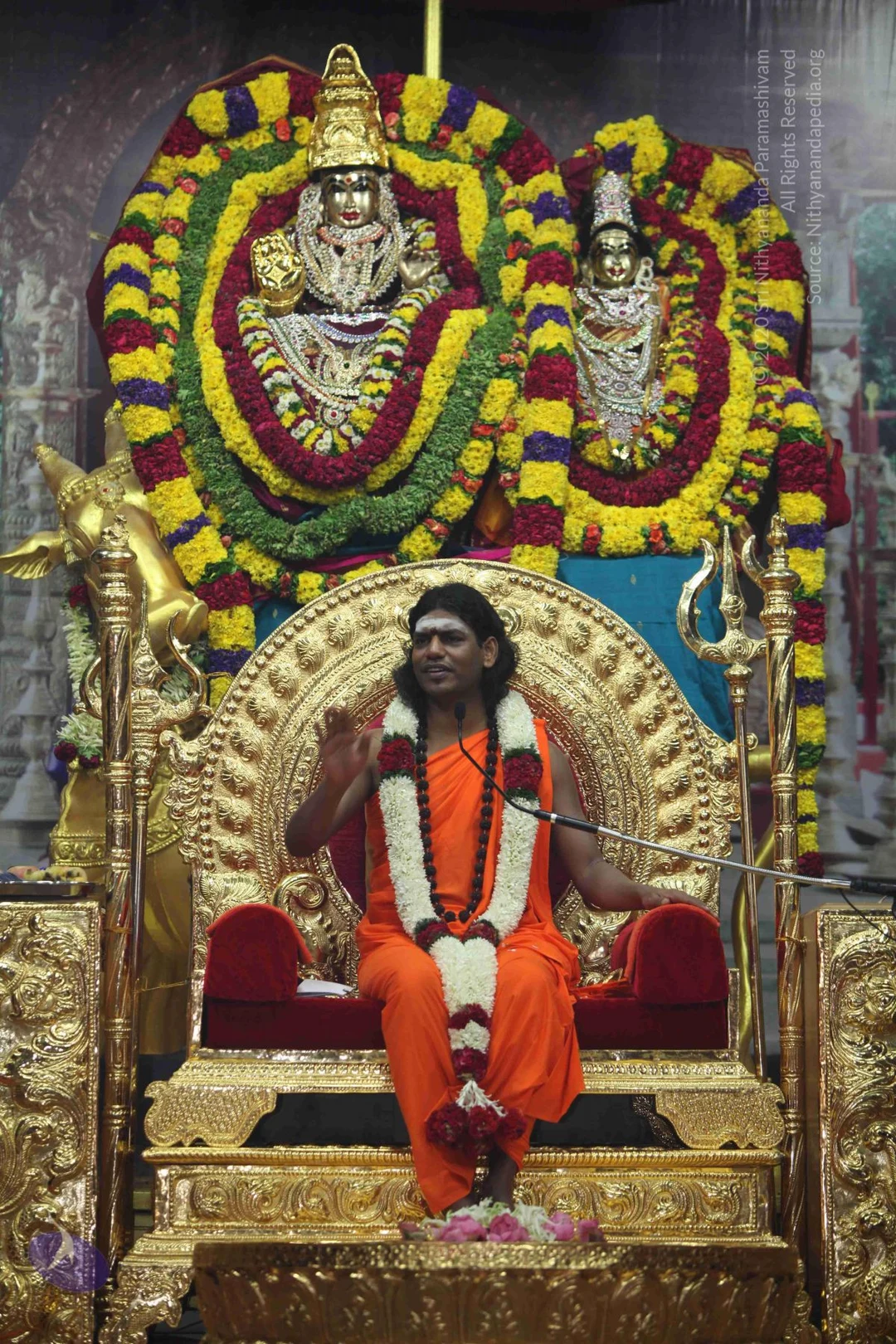
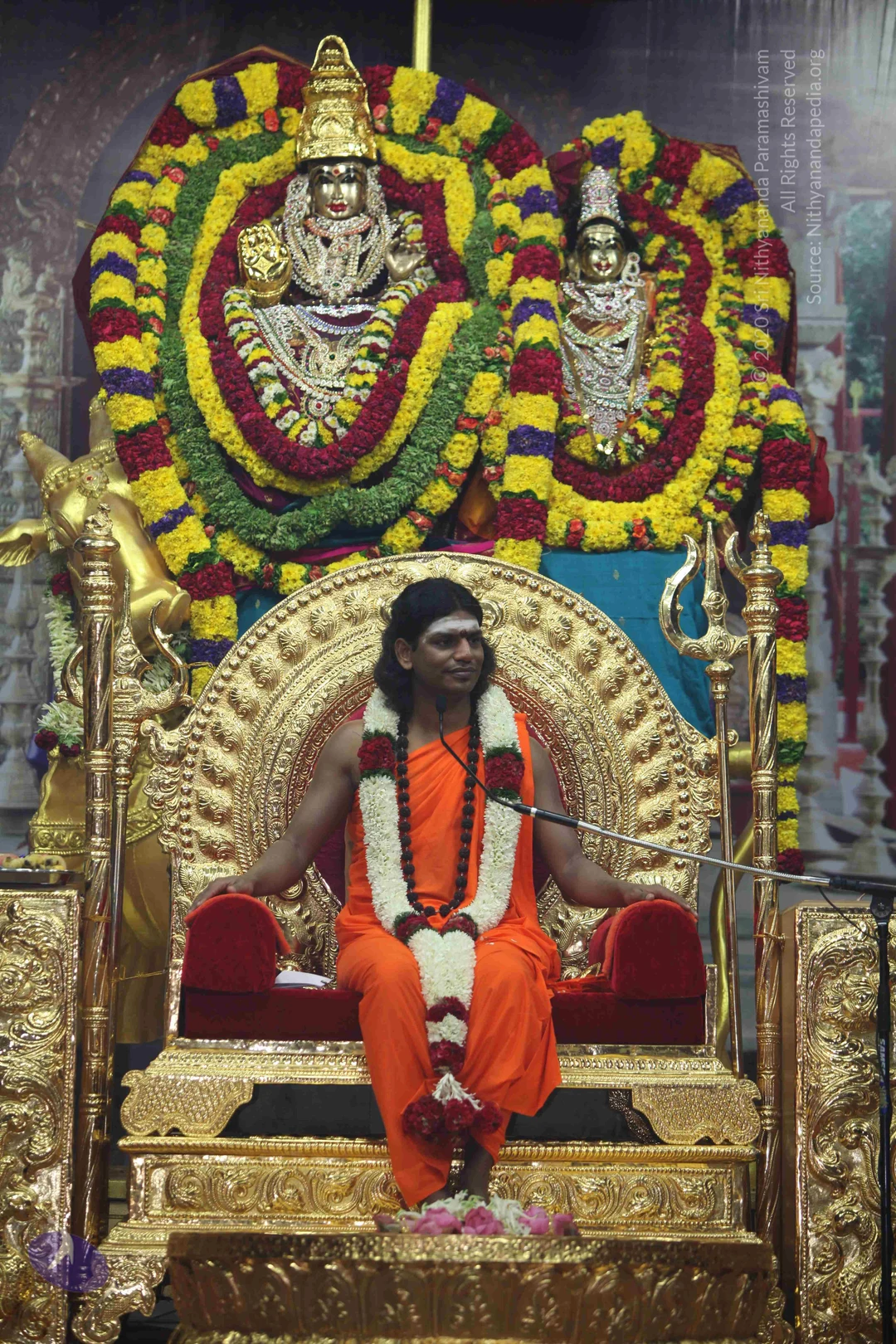
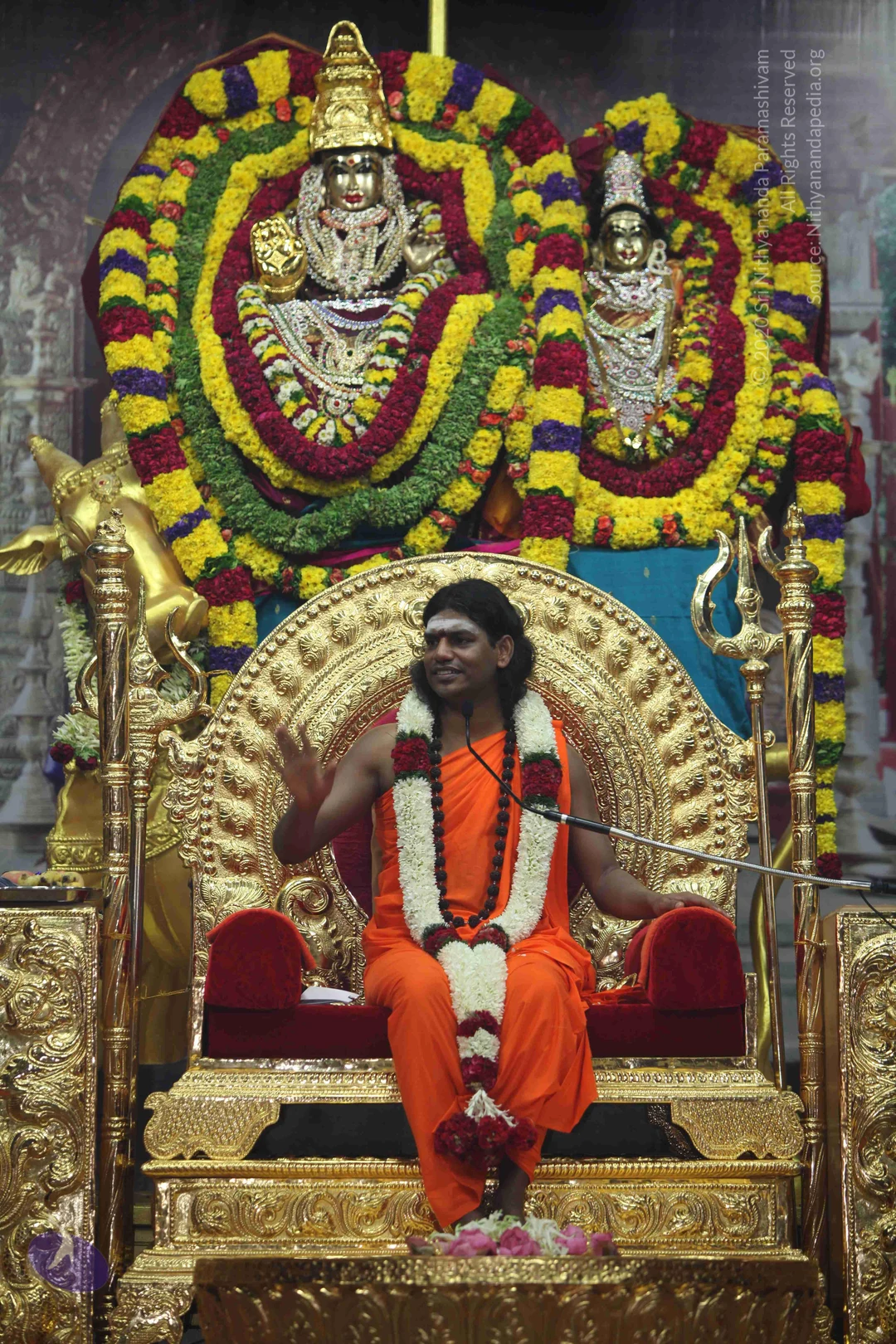
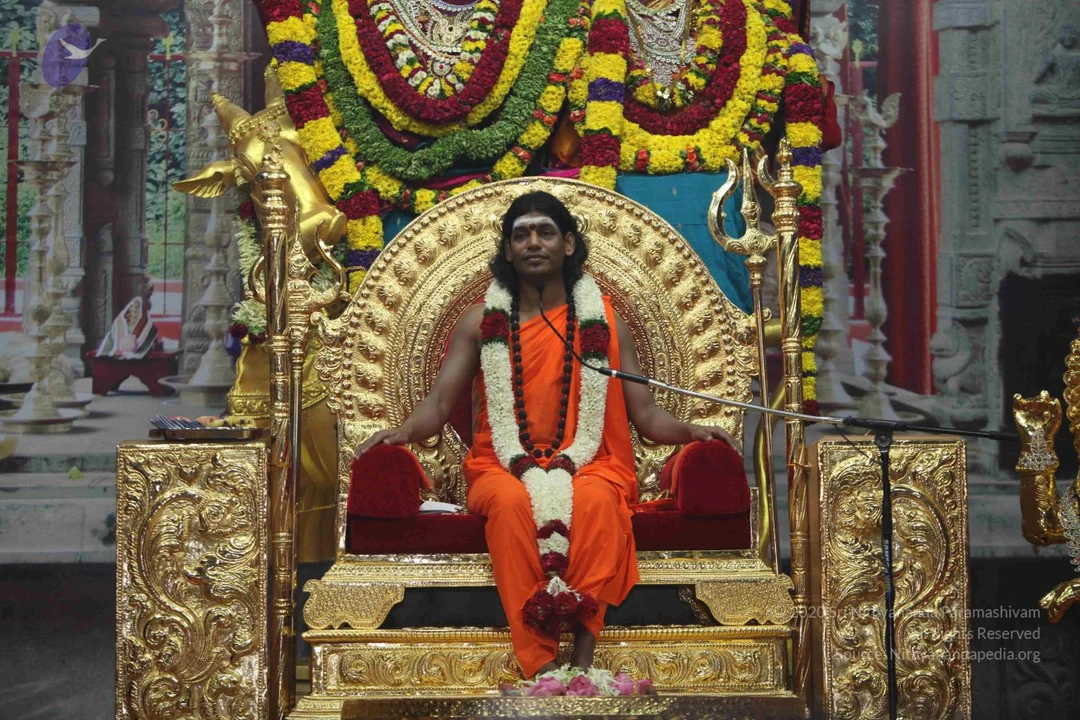
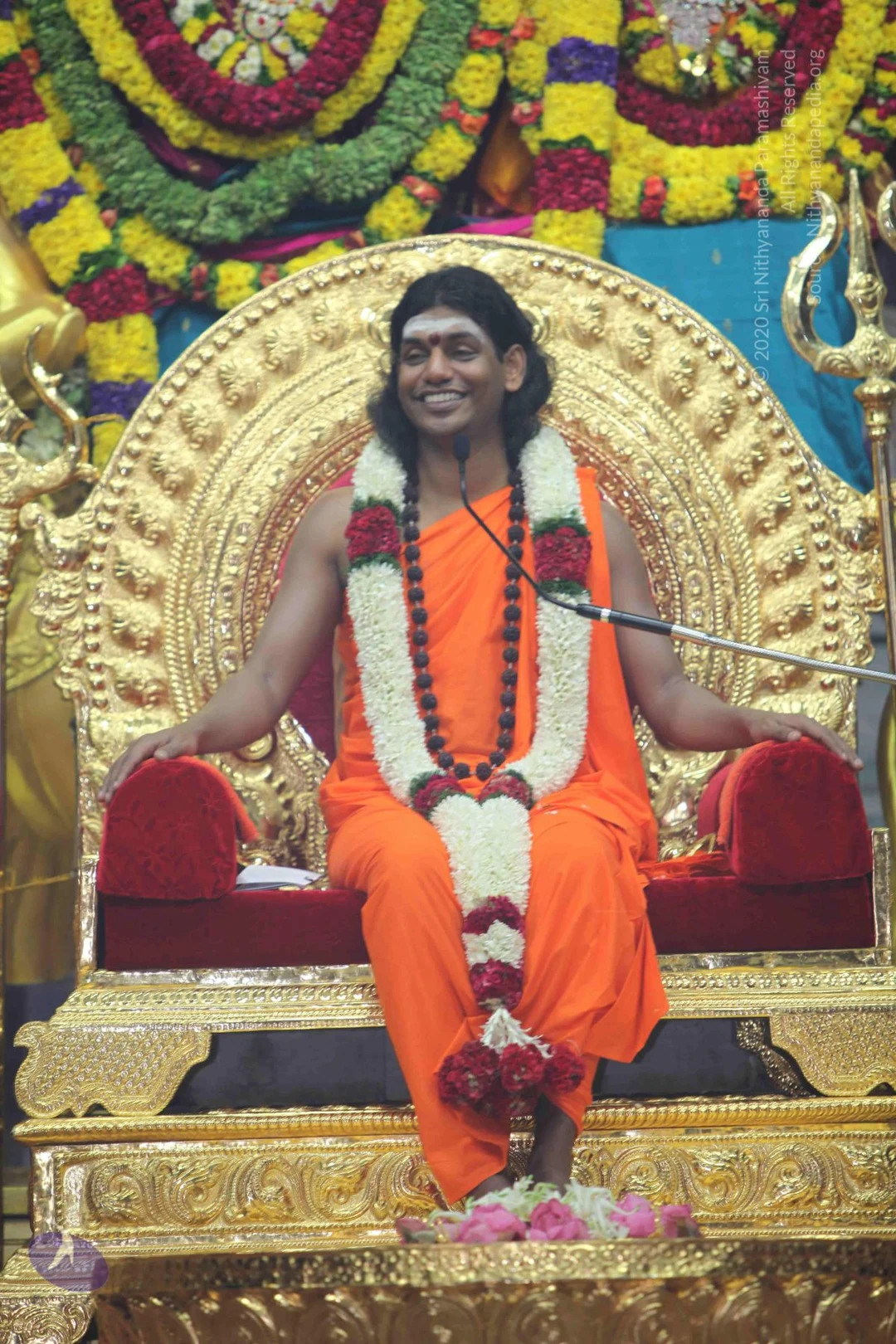
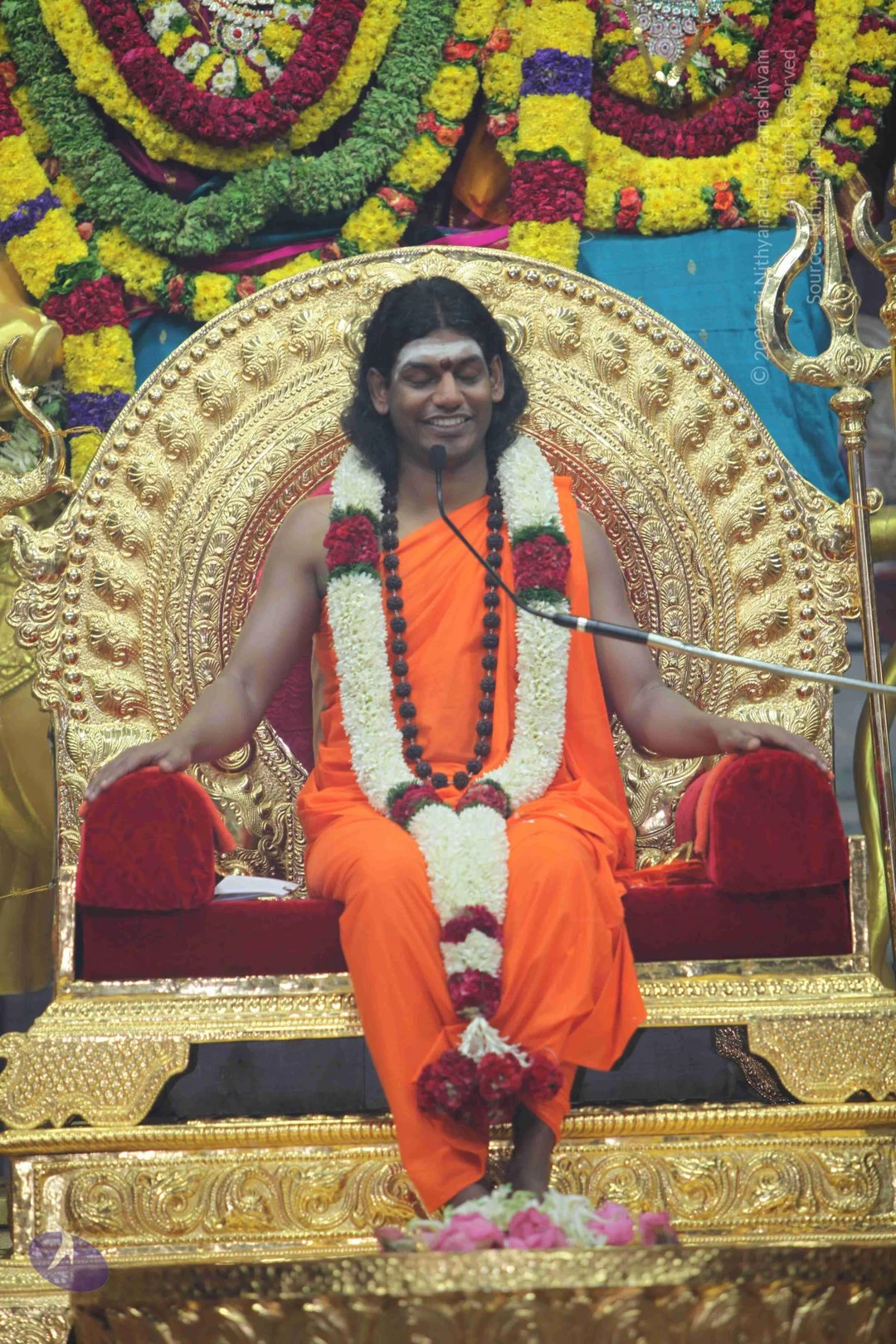
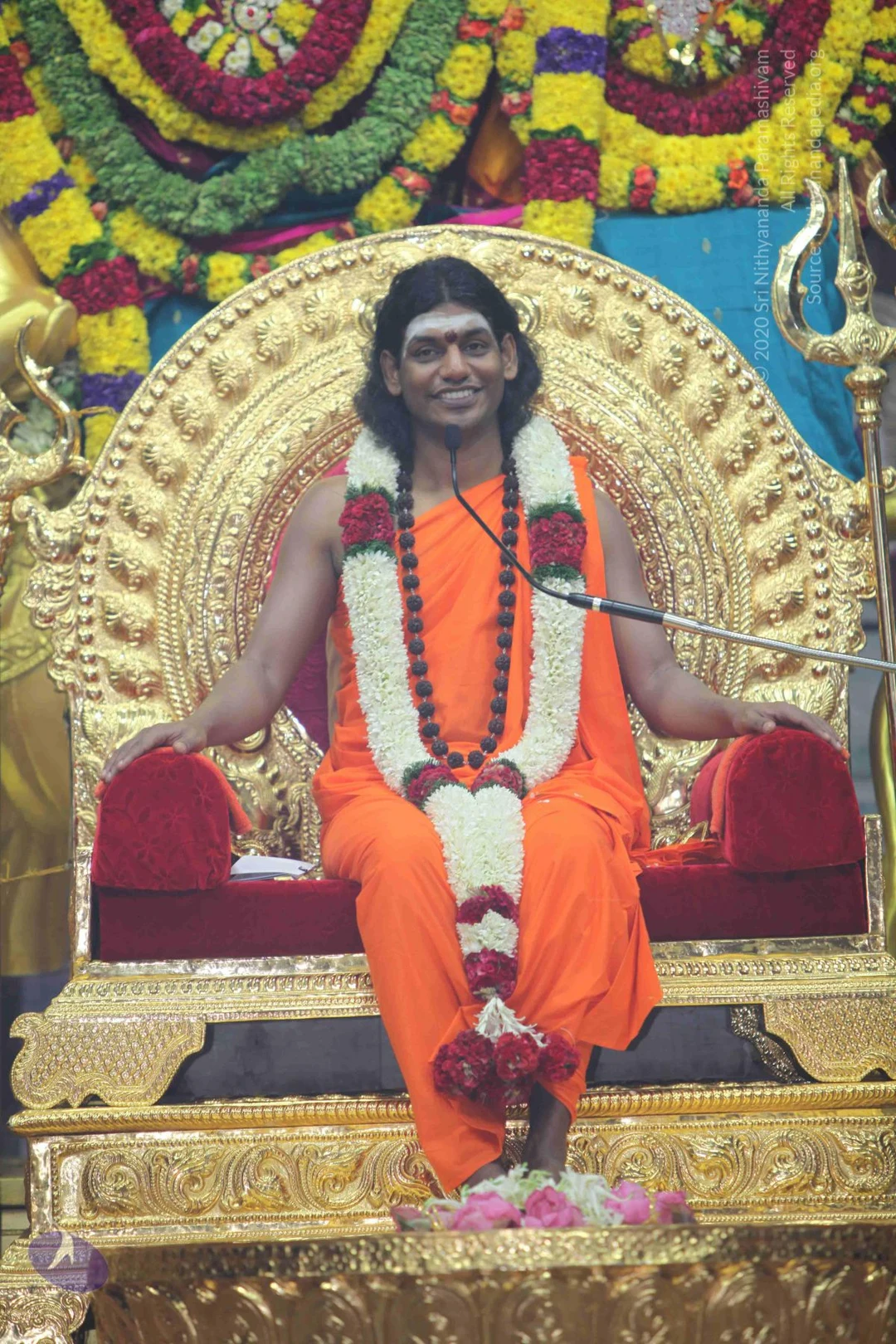
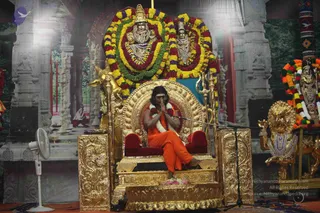
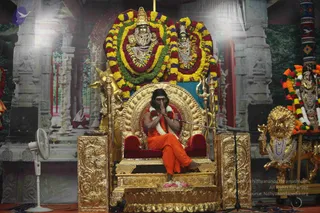
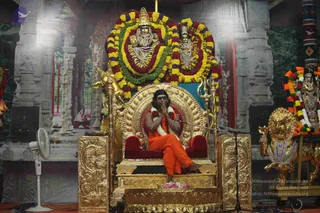
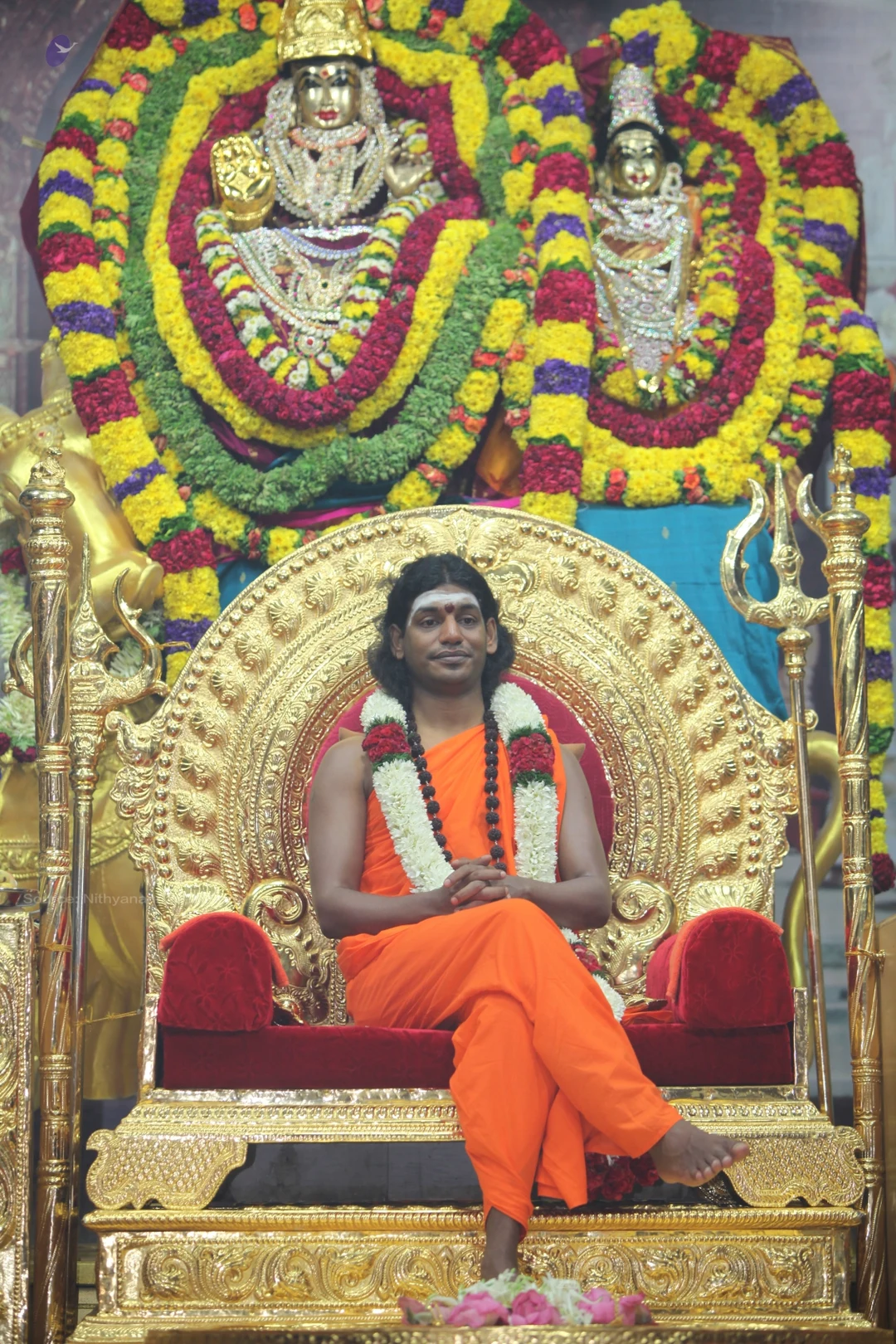
A man seated cross-legged on an ornate gold throne with red velvet cushions, in front of two silver deity murtis draped in yellow, red, purple and green flower garlands. He wears an orange saffron robe, a white flower garland, a rudraksha mala and a white tilak on his forehead, with hands folded in his lap and bare feet resting on pink flowers. Gold trident-topped staffs flank the throne, and a gold bull figure stands behind to the left. The probable Swamiji cues are the long swept-back hair, saffron clothing, rudraksha mala and ornate throne setting, and the page indicates his presence at this satsang.A large hall with a white fabric canopy and colourful striped hanging cylinders from the ceiling, with rows of seated devotees on the polished floor facing a distant altar. Hundreds of people sit cross-legged on mats, most dressed in white, while some women wear green, pink and blue saris. A golden throne-like seat stands at the left edge. At the far end, a decorated altar with golden deity murti and oil lamps sits beneath large projection screens. Ceiling fans hang throughout the hall.A seated man in saffron-orange robes sits on an ornate gold throne with red cushioned armrests during a satsang discourse. He wears a long rudraksha mala and a white and red flower garland, with a red-and-white tilak on his forehead and long swept-back hair. His right hand is raised in a gesture while he speaks into a microphone on a stand. Golden trident-topped staffs flank the throne, and behind him a large golden bull figure and a backdrop of yellow, red and purple flower garlands frame a deity murti. A small tray of fruit sits at lower left.

MALAYSIA-ANANDA-SPURANA-PROGRAM-ASP

9 photosSource gallery
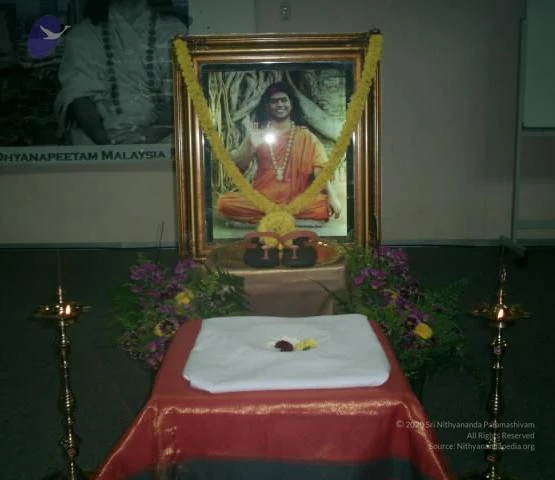
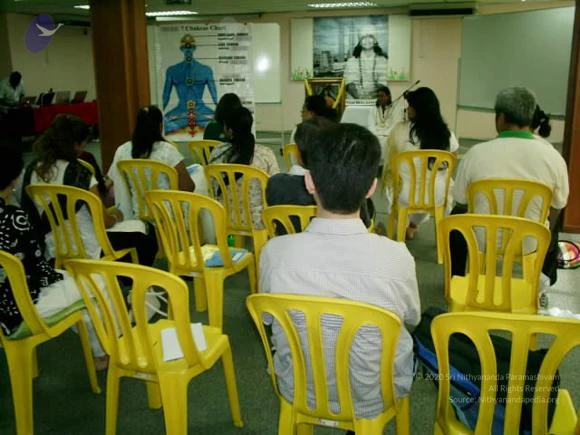
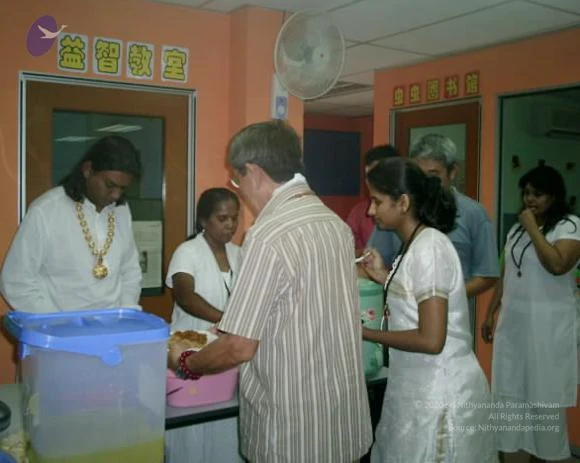
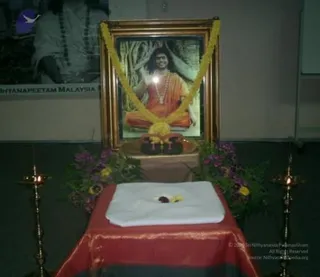
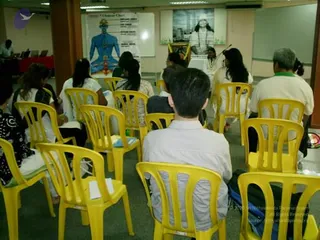
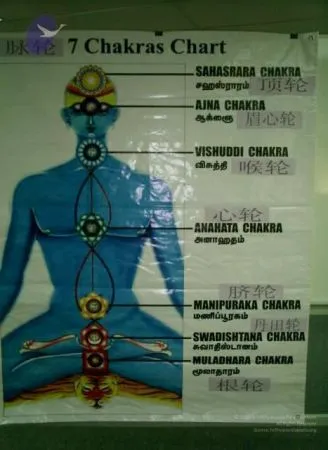
A framed portrait on an altar in a room with a yellow marigold garland draped over the frame. The portrait shows a seated figure in orange robes with a rudraksha mala and a red mark on the forehead, seated before a tree. In front stand a white cloth with a red and yellow flower offering and a brass oil lamp on each side, with purple and yellow flowers arranged on a red and gold draped table. A banner at the upper left reads Nithyanandapeetam Malaysia. The altar is a puja setup with no physical people visible.A photograph of a seated audience in a meeting room with bright yellow plastic chairs, viewed from behind. Attendees in white and light clothing sit facing a front area where a person in white sits near a laptop-style setup. Behind them a large chakra chart shows a blue standing figure with colored energy centers labelled with chakra names, and a framed portrait hangs on the wall above a small floral arrangement. A man in a grey shirt sits in the front row. The scene suggests a classroom or satsang session.A printed wall poster titled 7 Chakras Chart shows a blue silhouette of a seated meditating figure with the seven chakras marked as coloured wheels along the spine, from crown to base. Labels in English, Tamil and Chinese name each chakra: Sahasrara at the crown, Ajna at the brow, Vishuddi at the throat, Anahata at the heart, Manipuraka at the navel, Swadhistana below it and Muladhara at the base. The figure is an illustration, not a physical person.A seated audience in a bright room with yellow plastic chairs faces forward during a satsang. Most attendees wear white clothing, including men in white shirts and women in white or light tops, while a woman in a dark red top sits near the centre and a man in a green shirt sits at the right edge. Some attendees have hands folded in their laps, and a few sit with eyes closed as if in meditation. Visible people number about ten, and no figure is clearly identifiable as a person.A photograph of a small indoor satsang room with rows of yellow plastic chairs facing a low stage. Several seated attendees with their backs to the camera wear white clothes; one child in a red top with a patterned print sits in the front row. On the stage a figure in white sits at a small table with a white cloth, while a framed portrait and a tall lamp stand nearby. A large framed photo of a bearded man in a white hanging behind the stage. The setting appears to be a public talk.A photograph of a classroom-style satsang hall with yellow plastic chairs. Several devotees sit facing forward, mostly women in white clothing, seen from behind. At the front, a woman in white stands speaking into a microphone beside a projected screen showing a figure on a stage. A yellow banner stands at the left front of the room. Fluorescent ceiling lights and a whiteboard are visible.
PANCHA-TAPAS
114 photosSource gallery
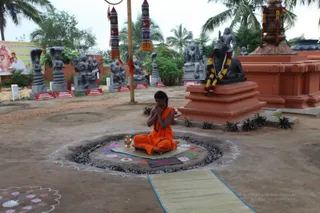
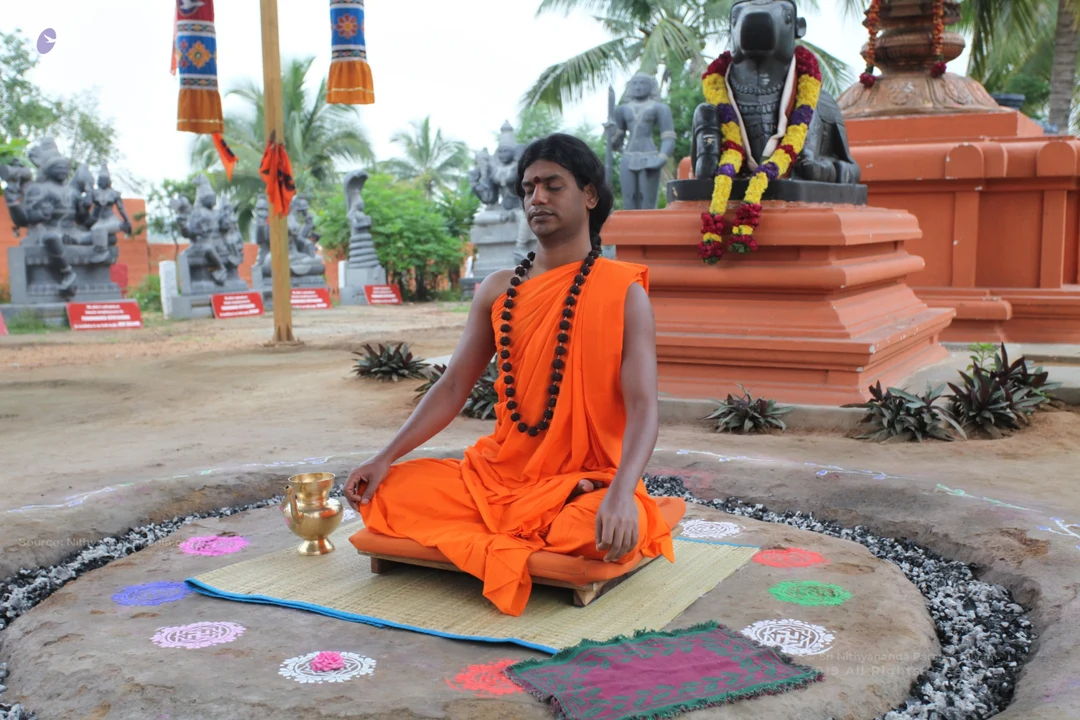
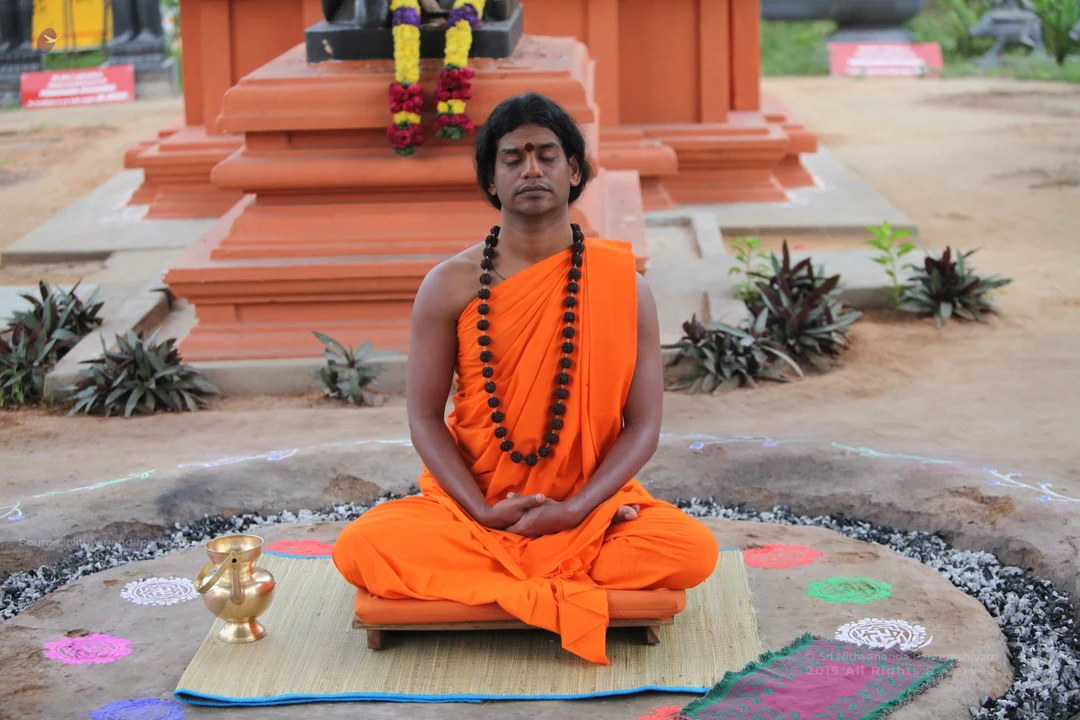
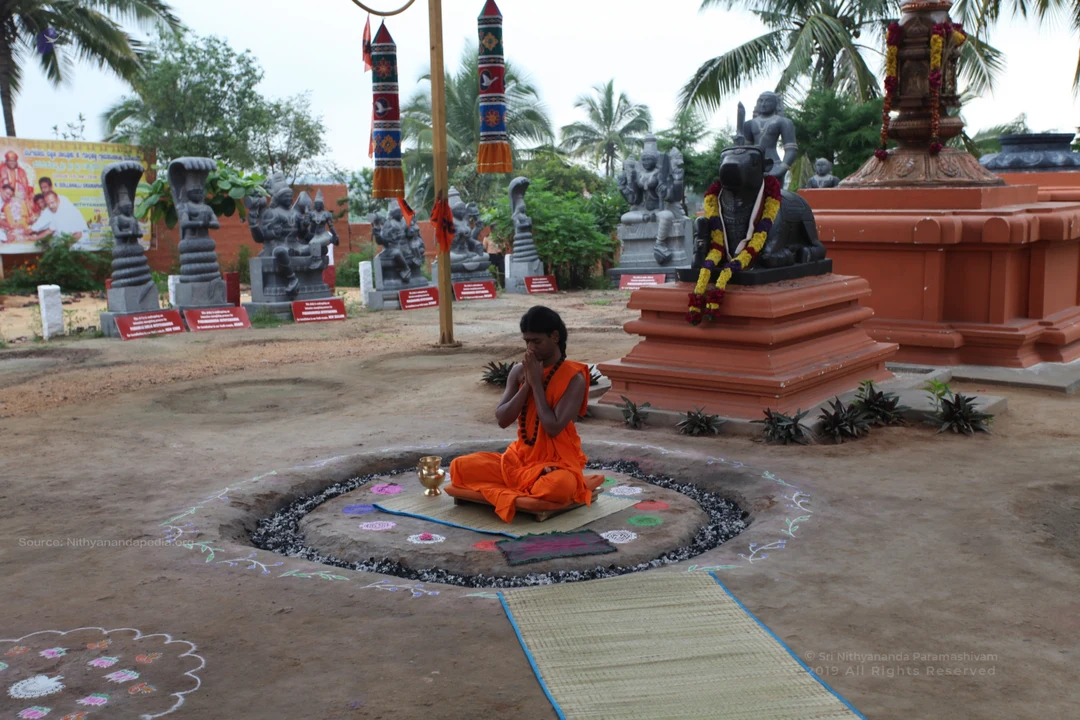
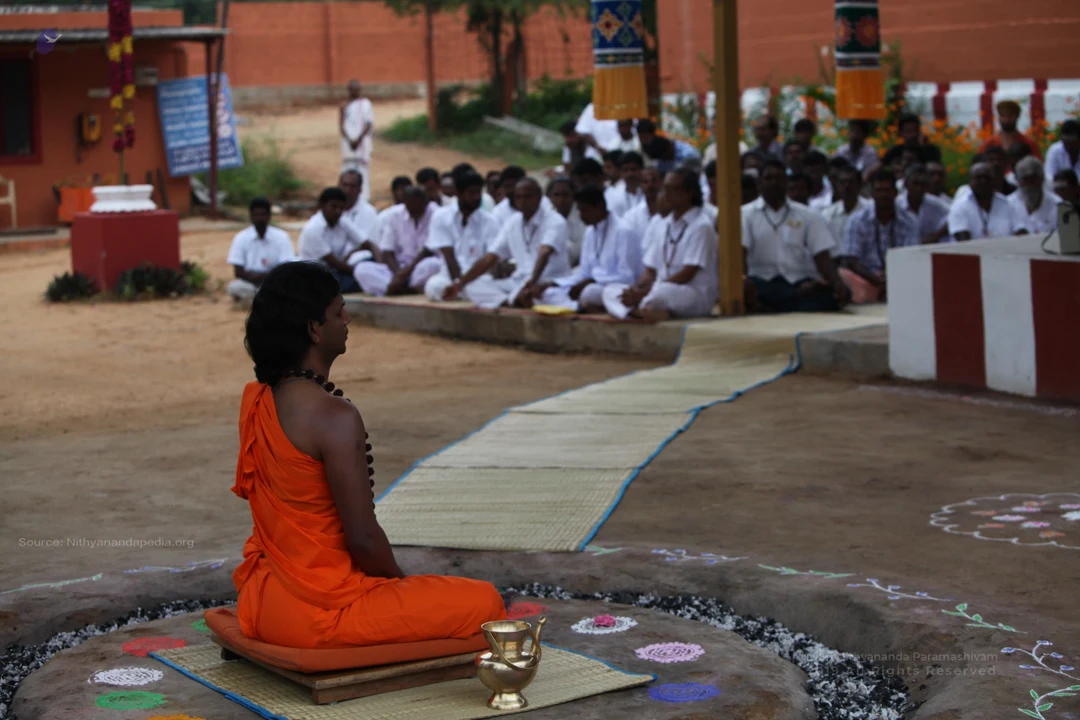
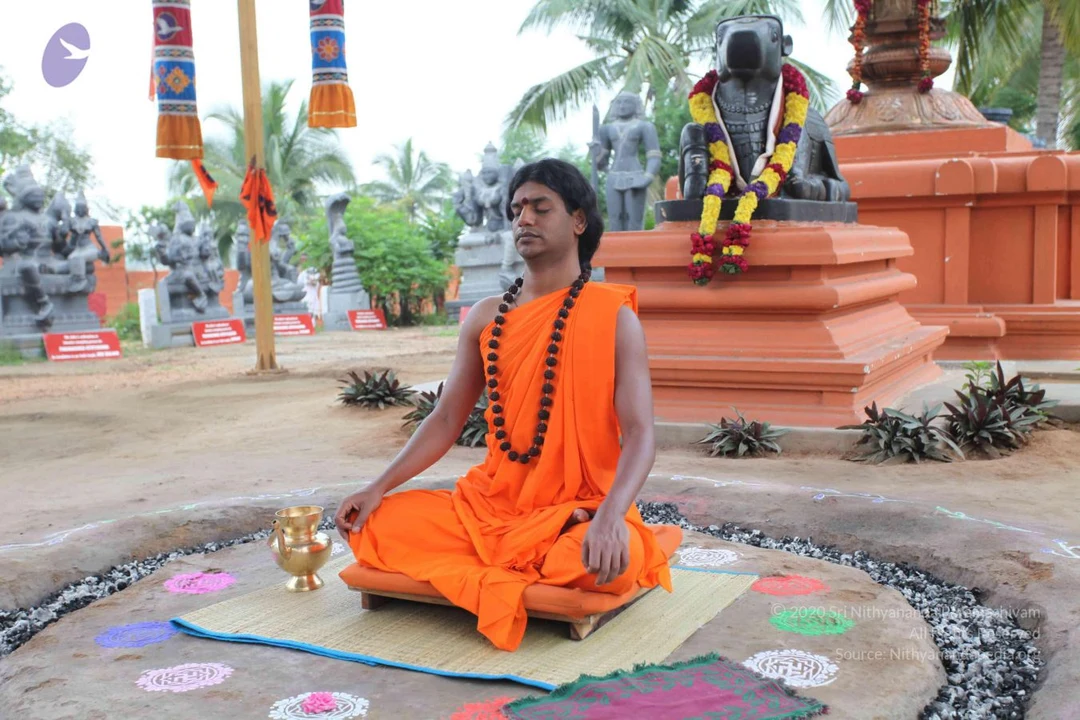
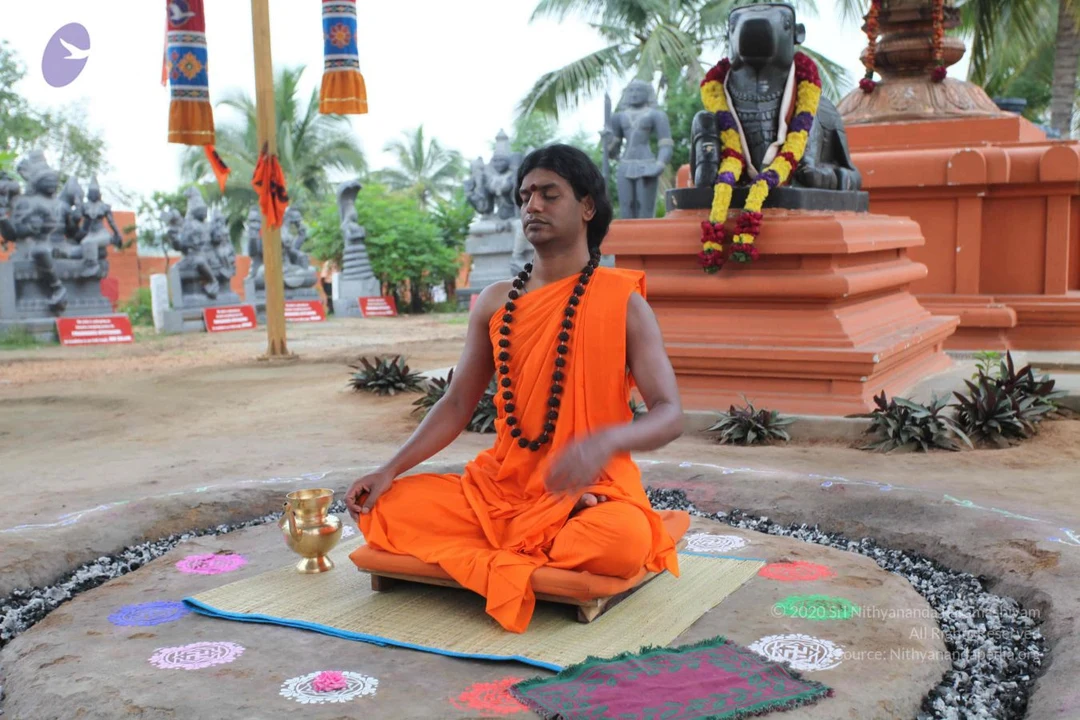
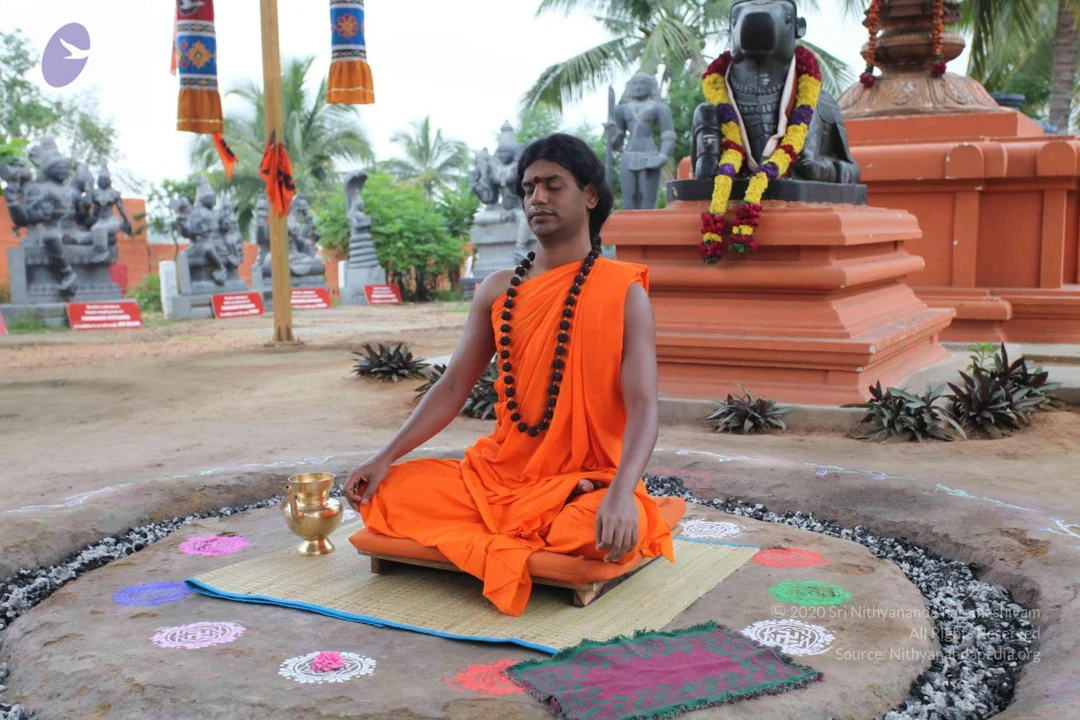
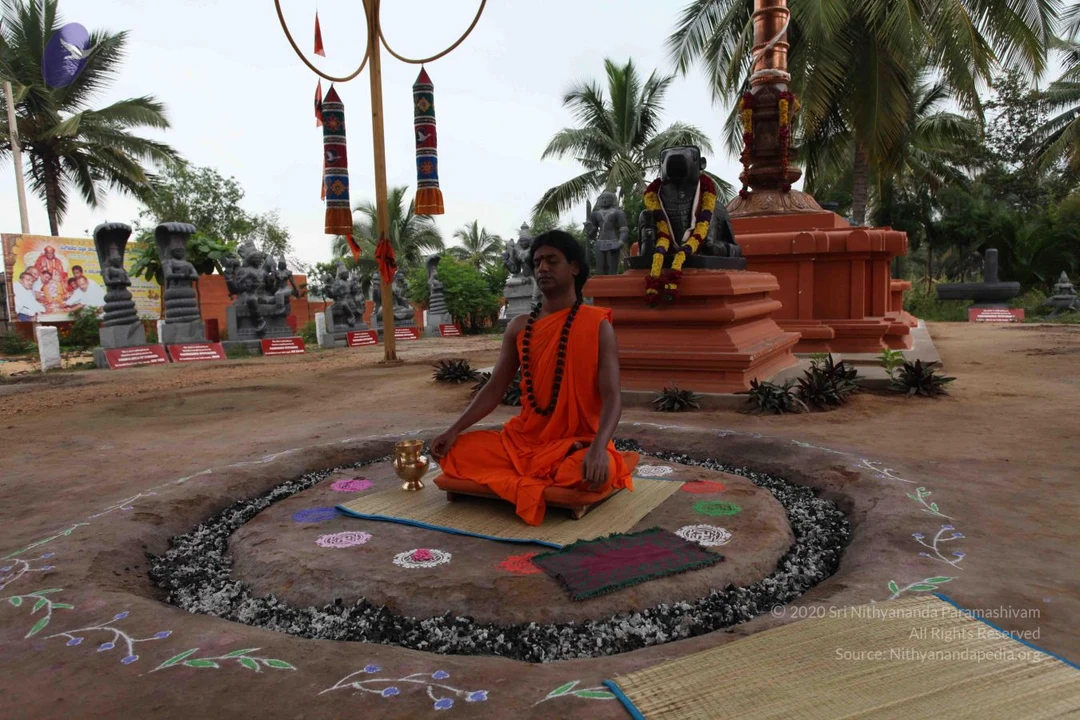
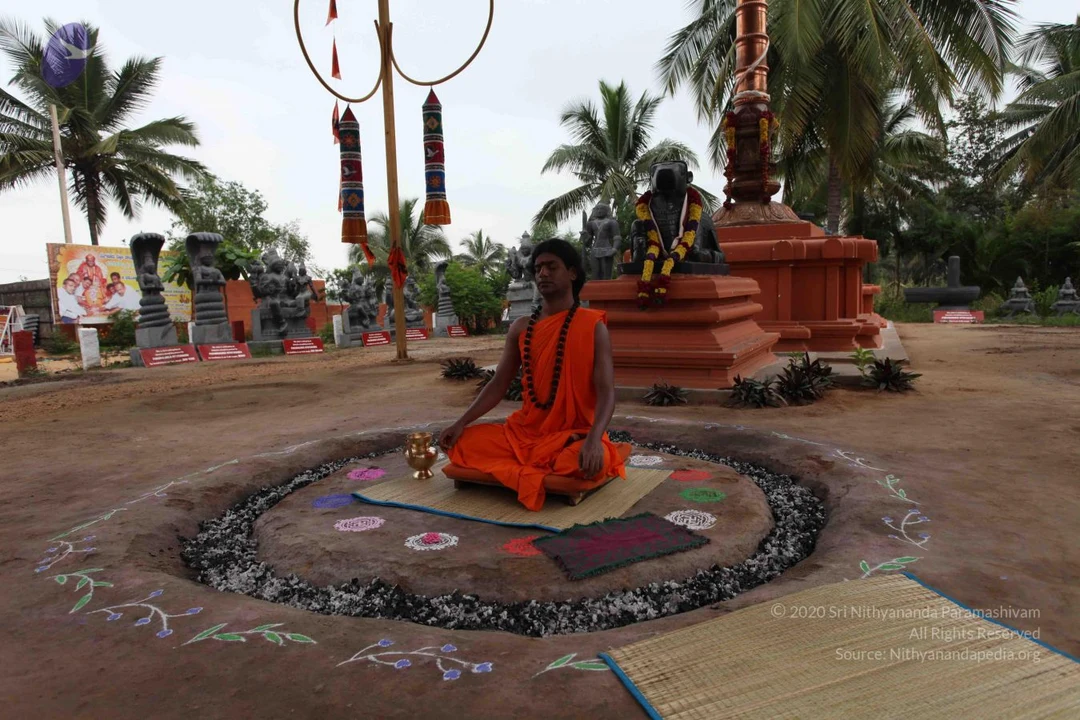
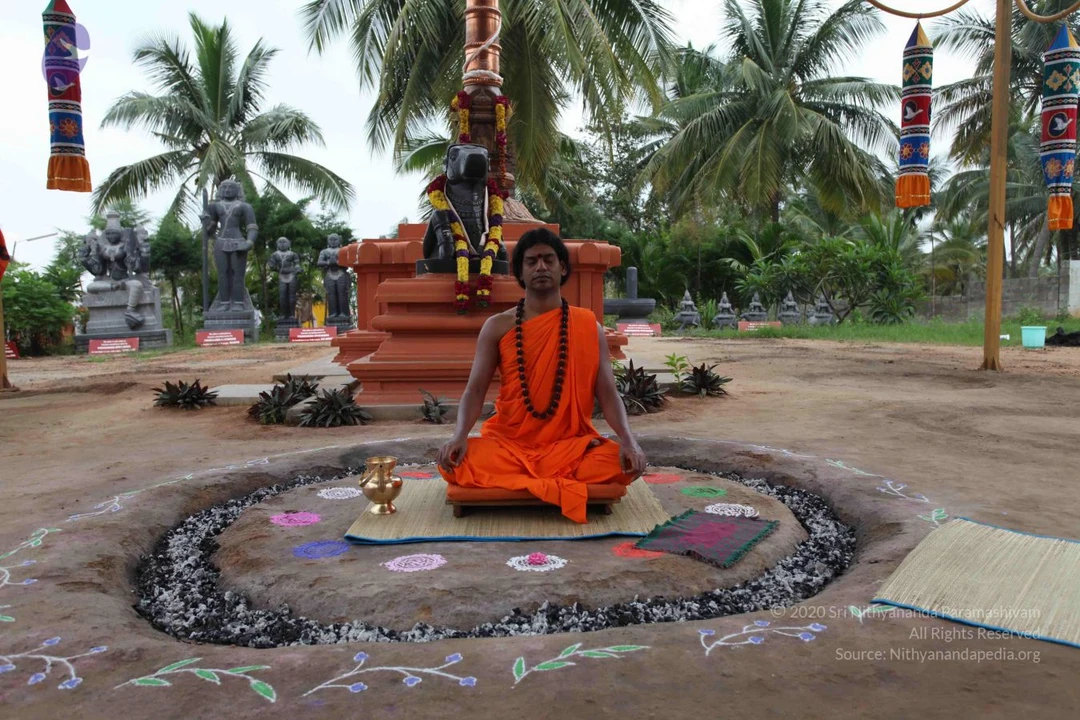
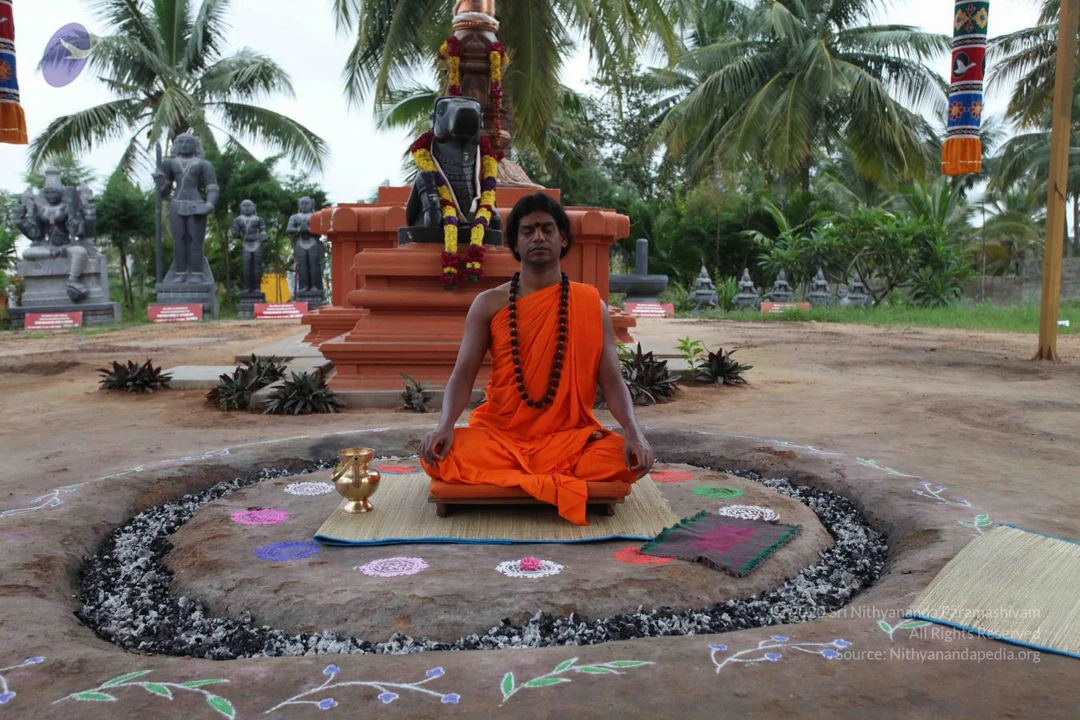
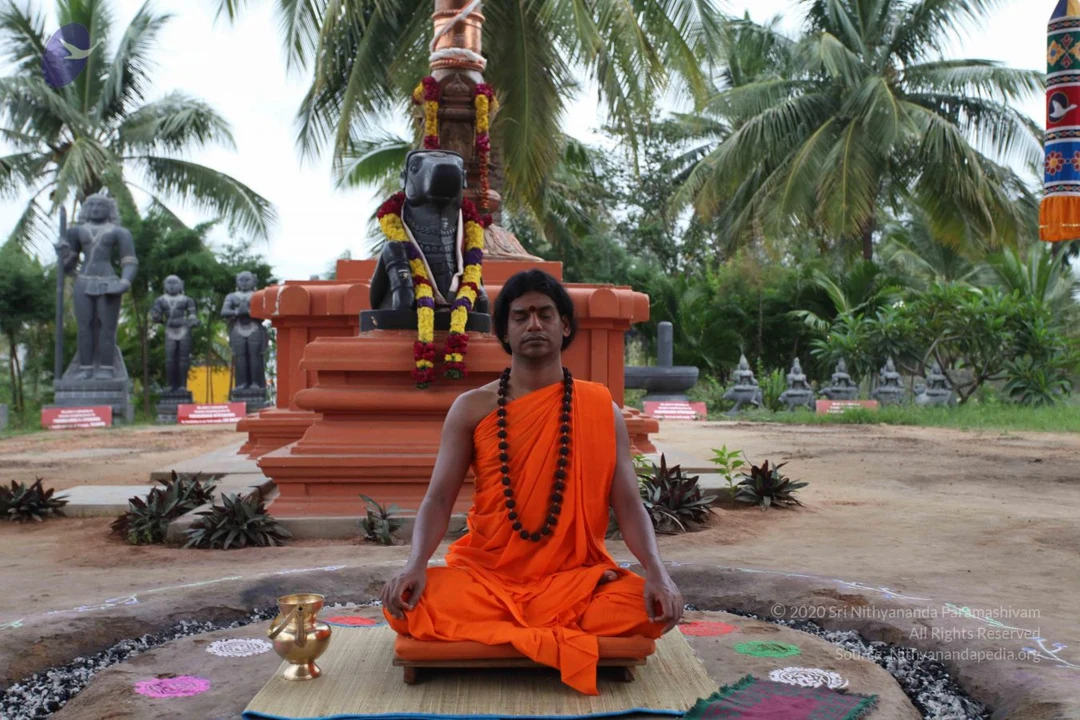
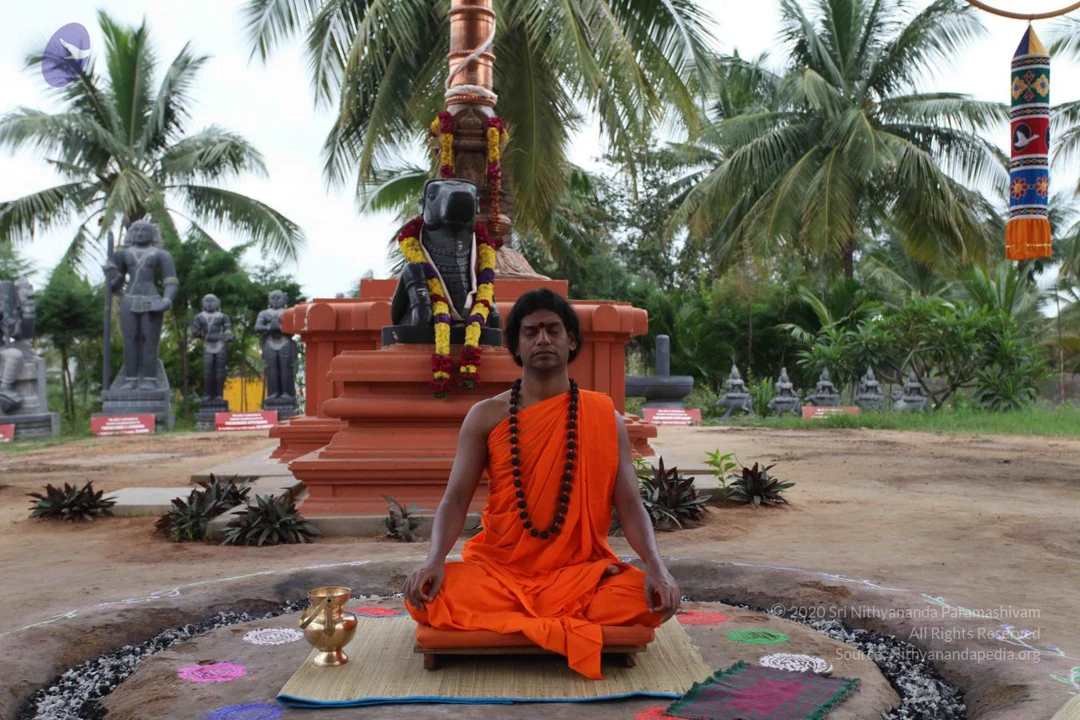
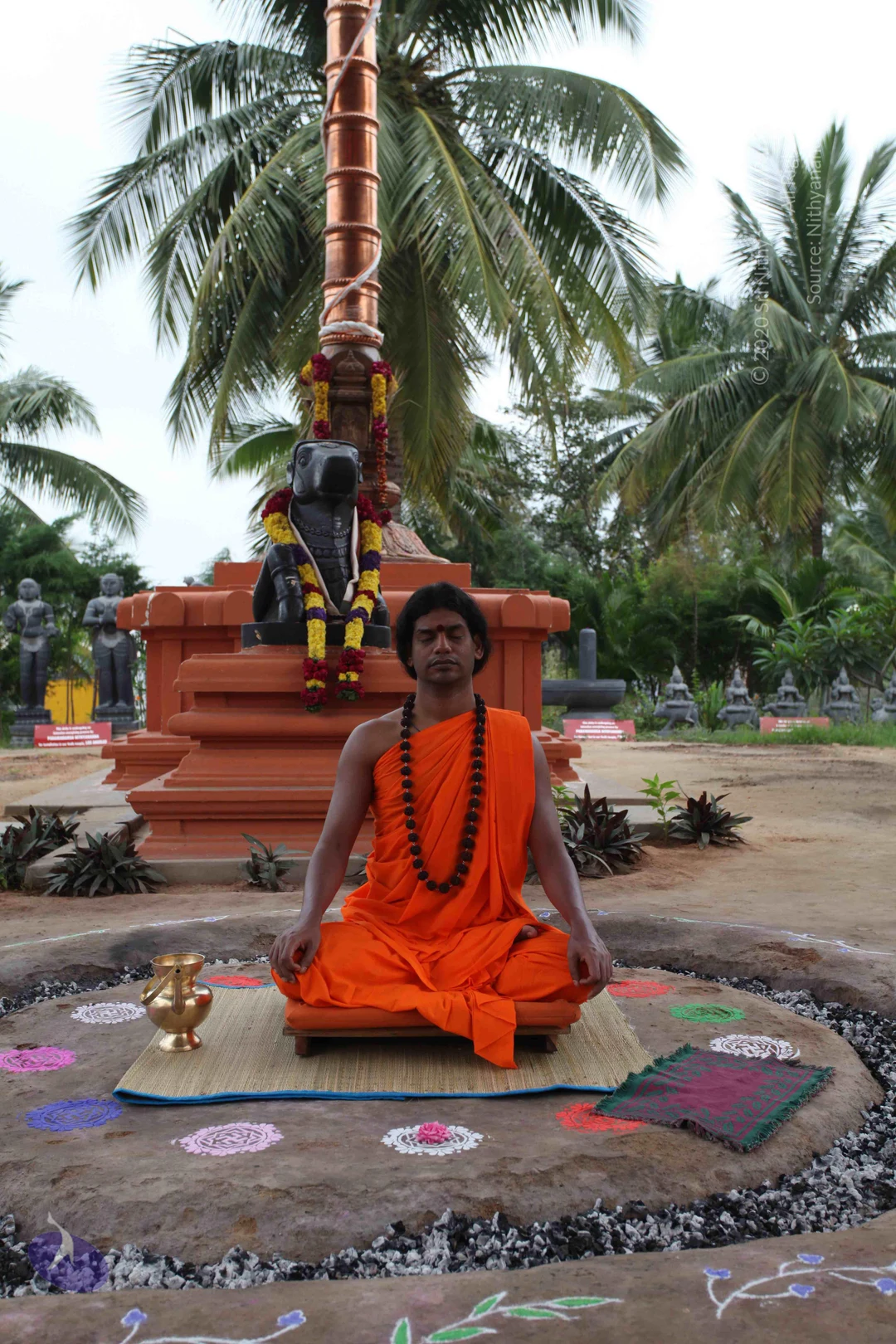
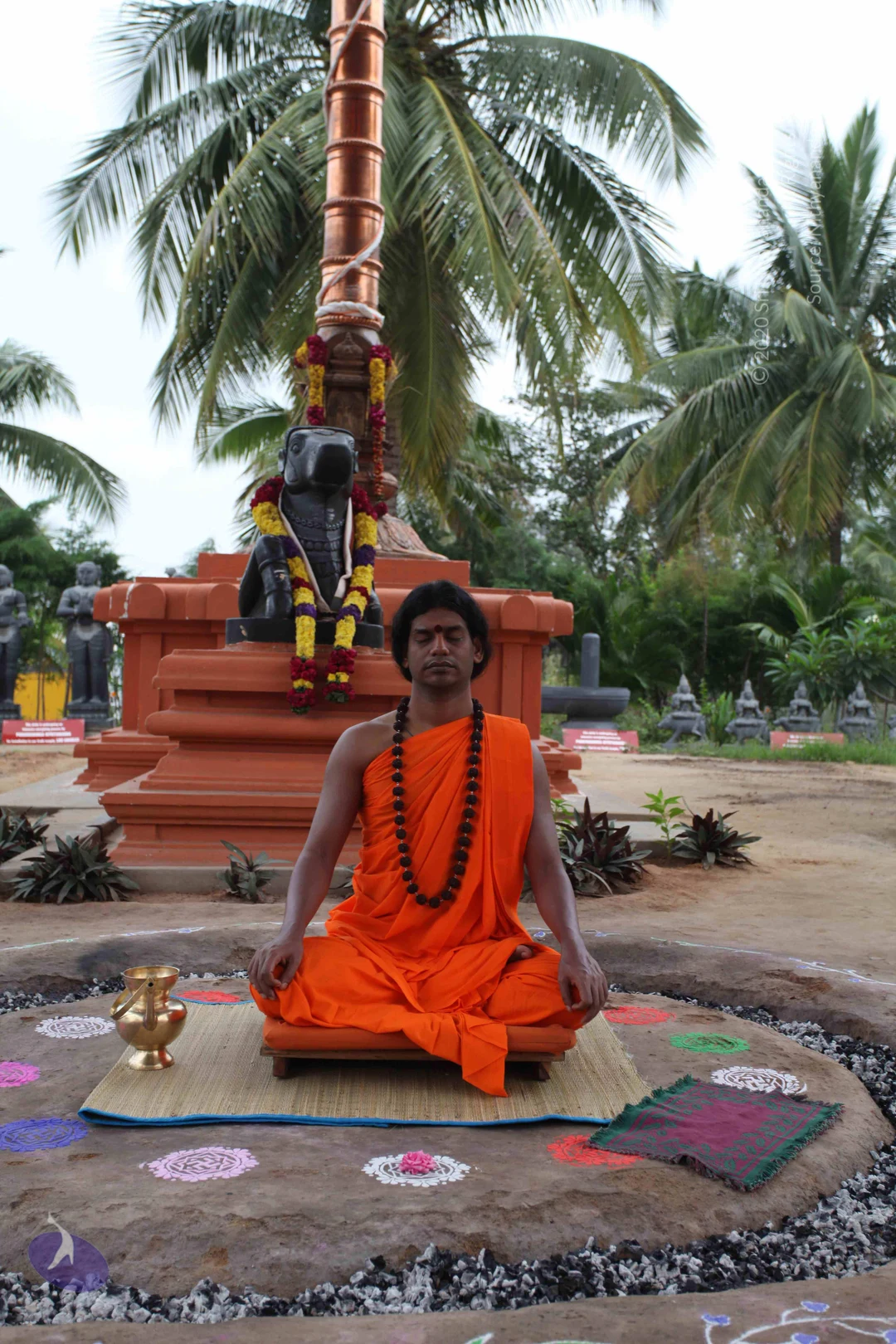
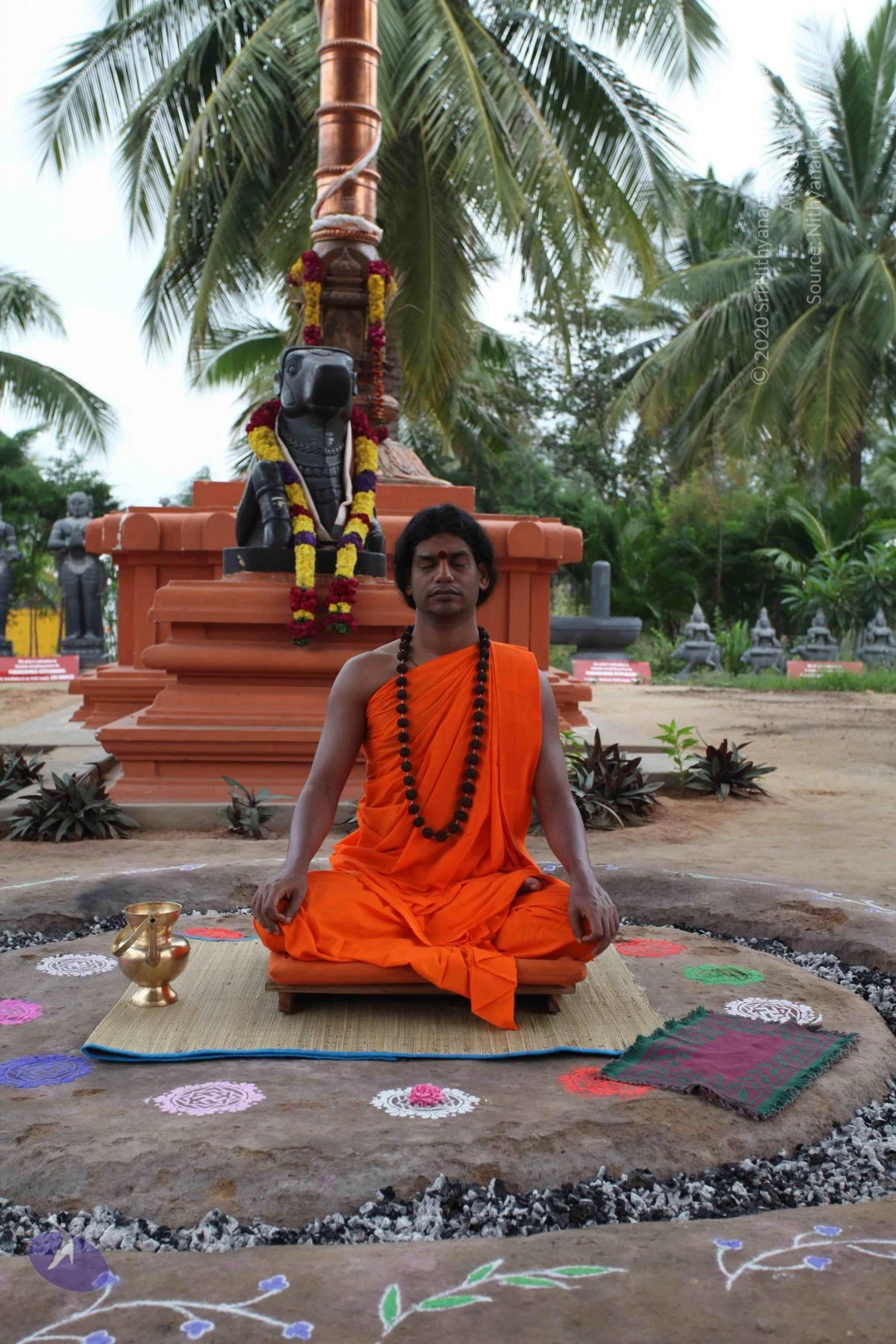
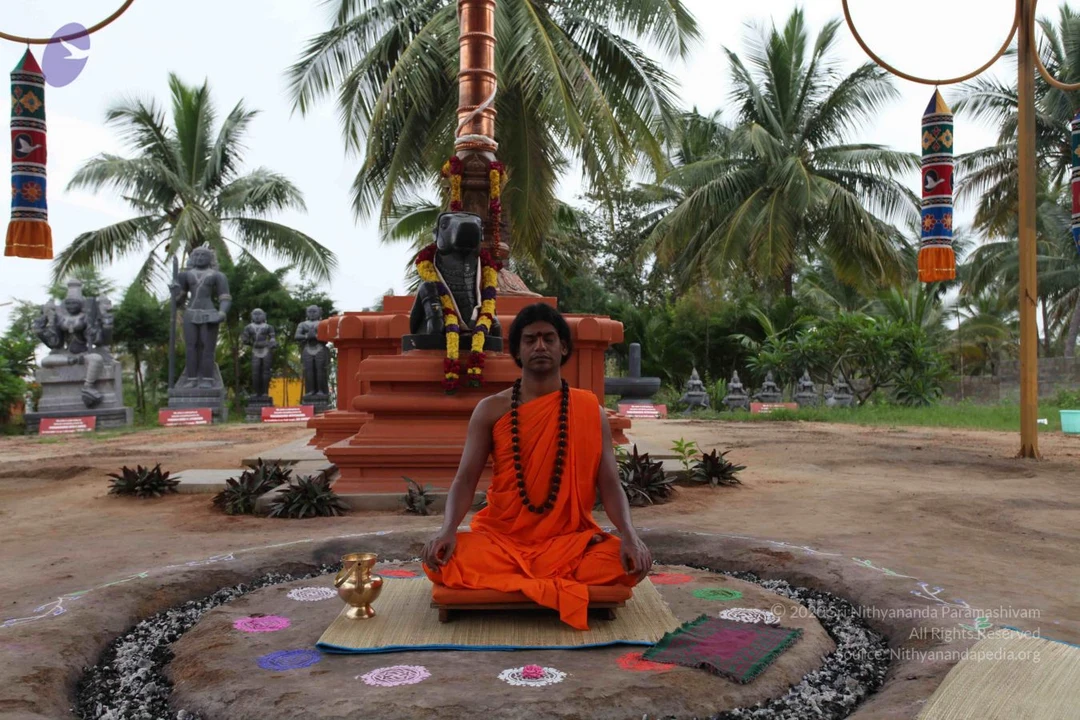
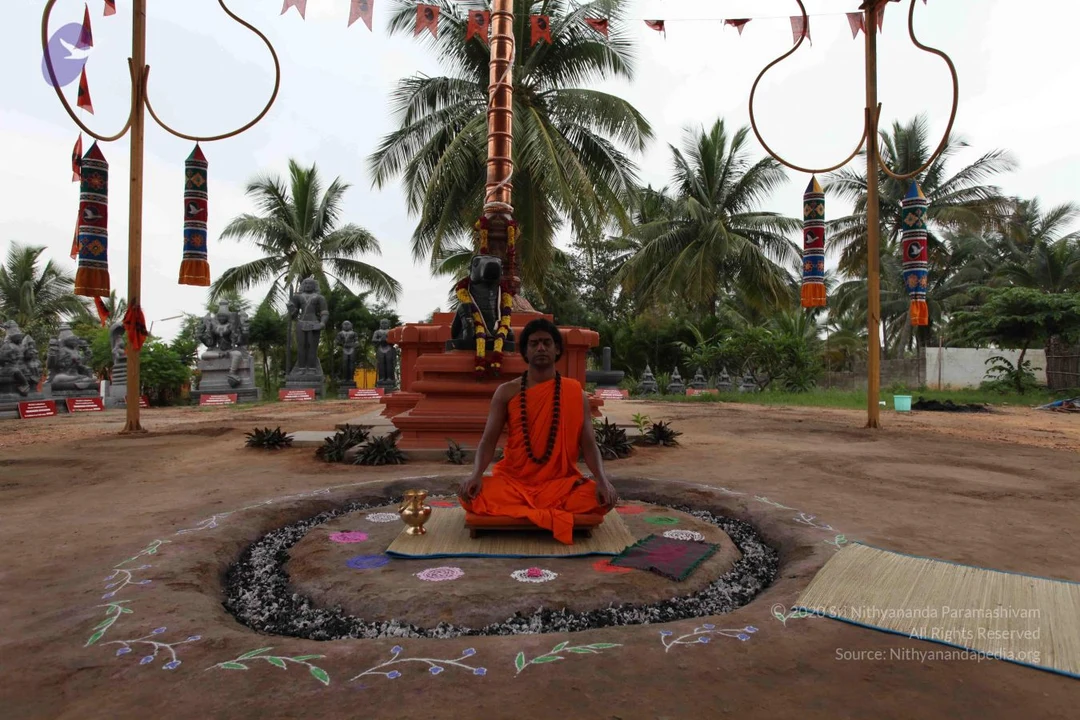
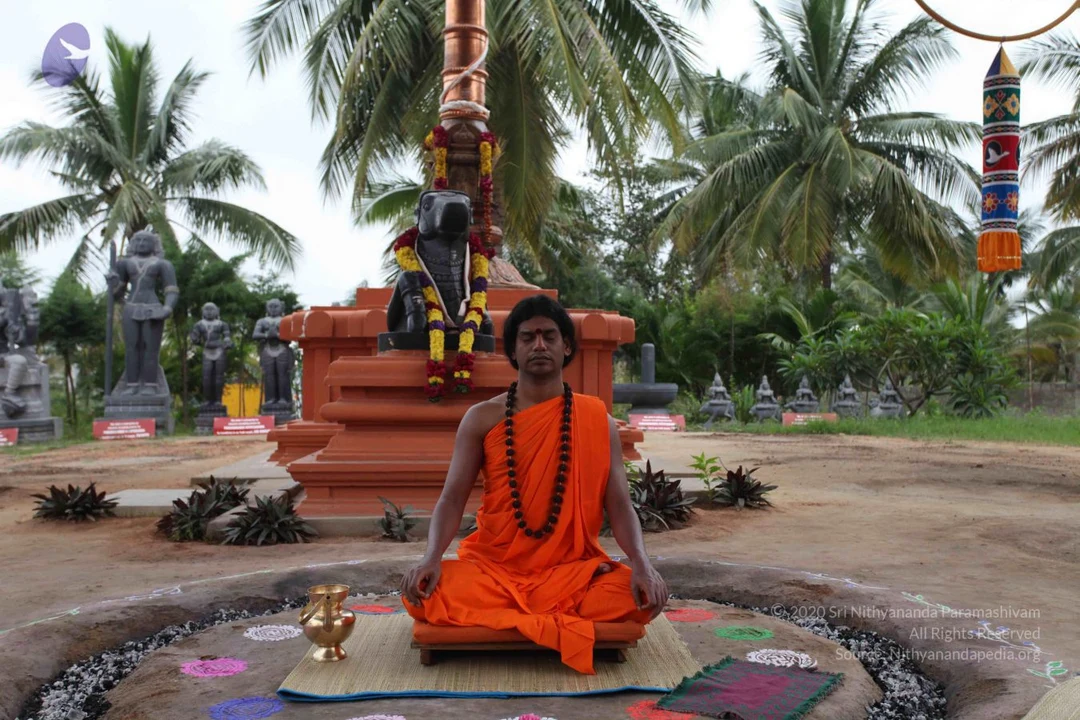
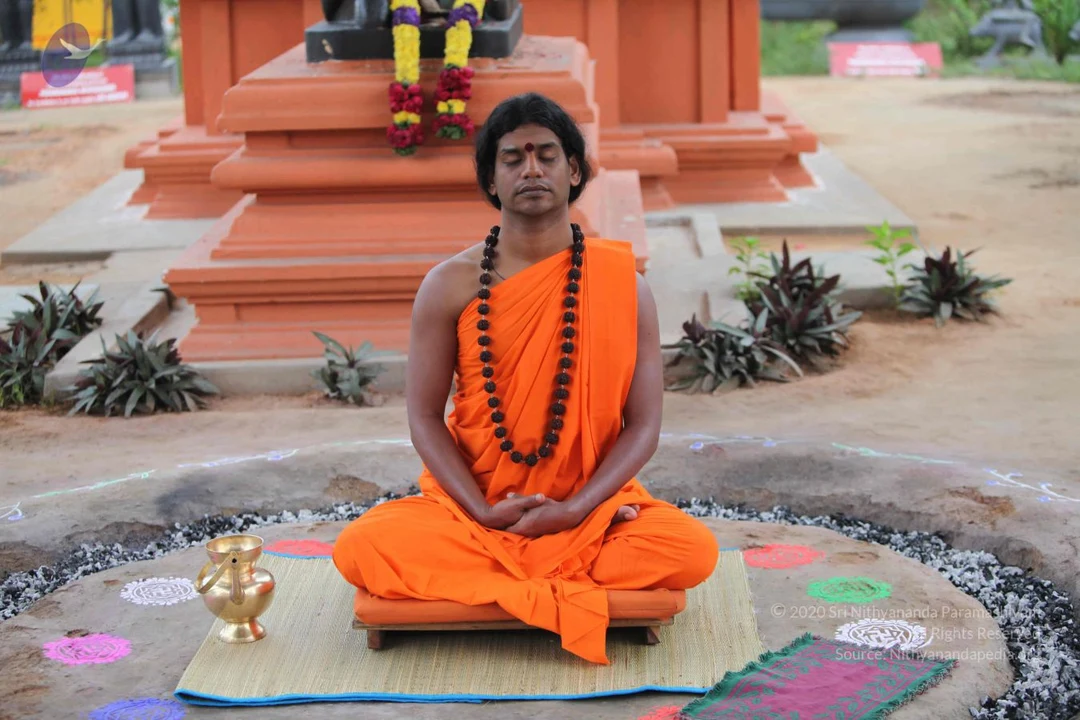
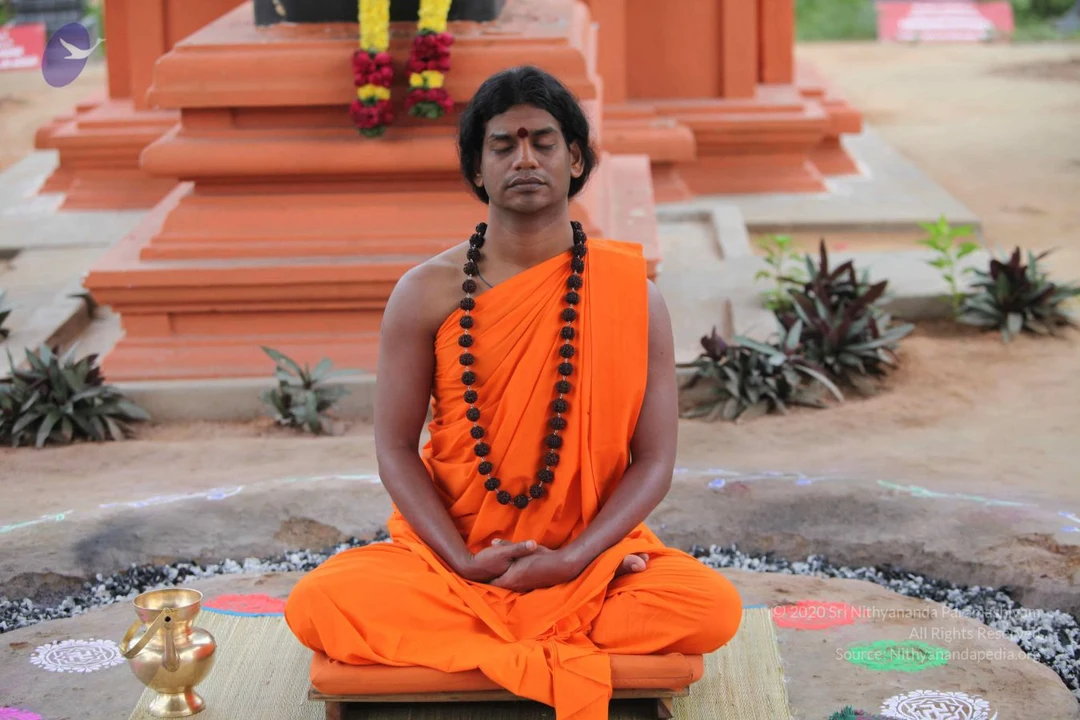
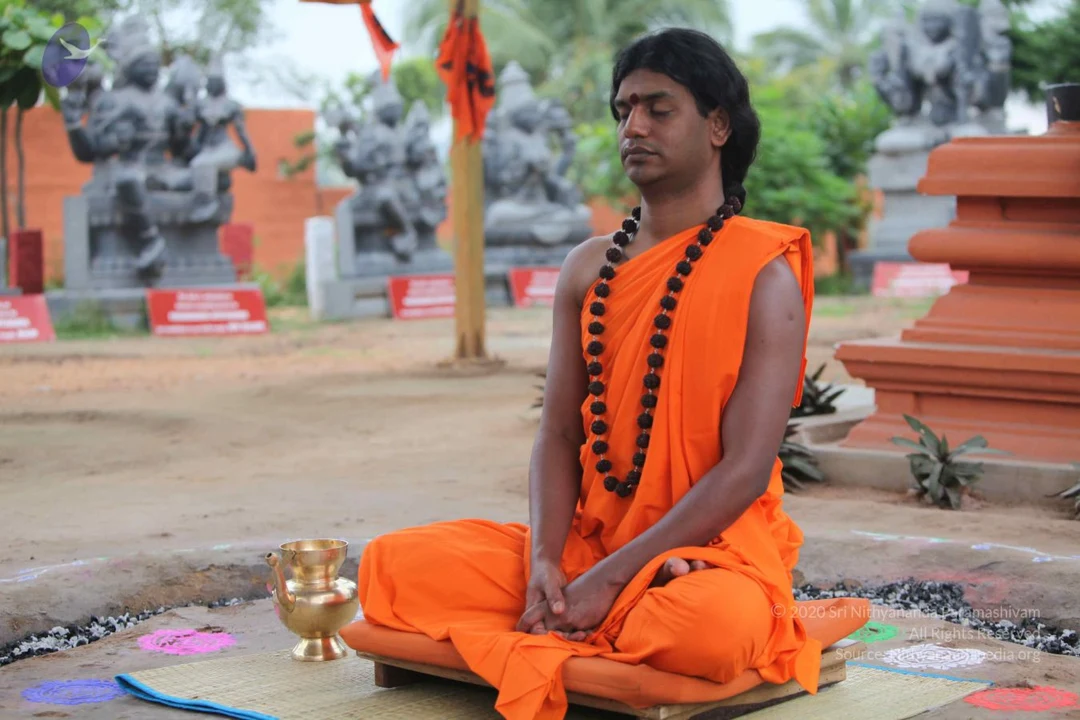
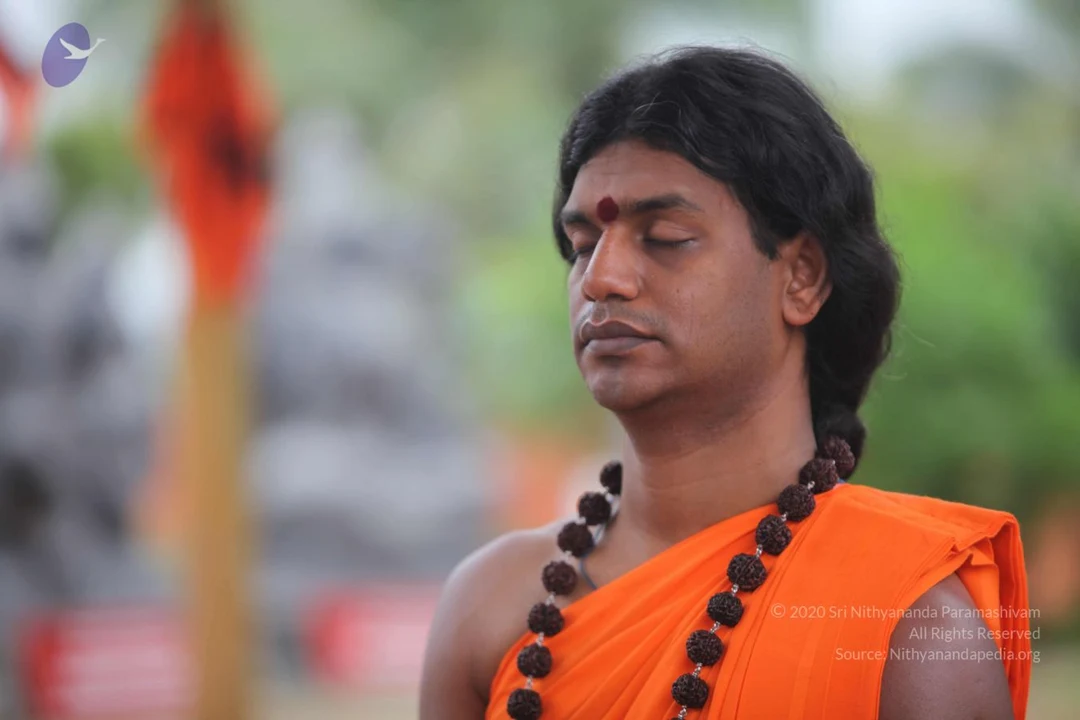
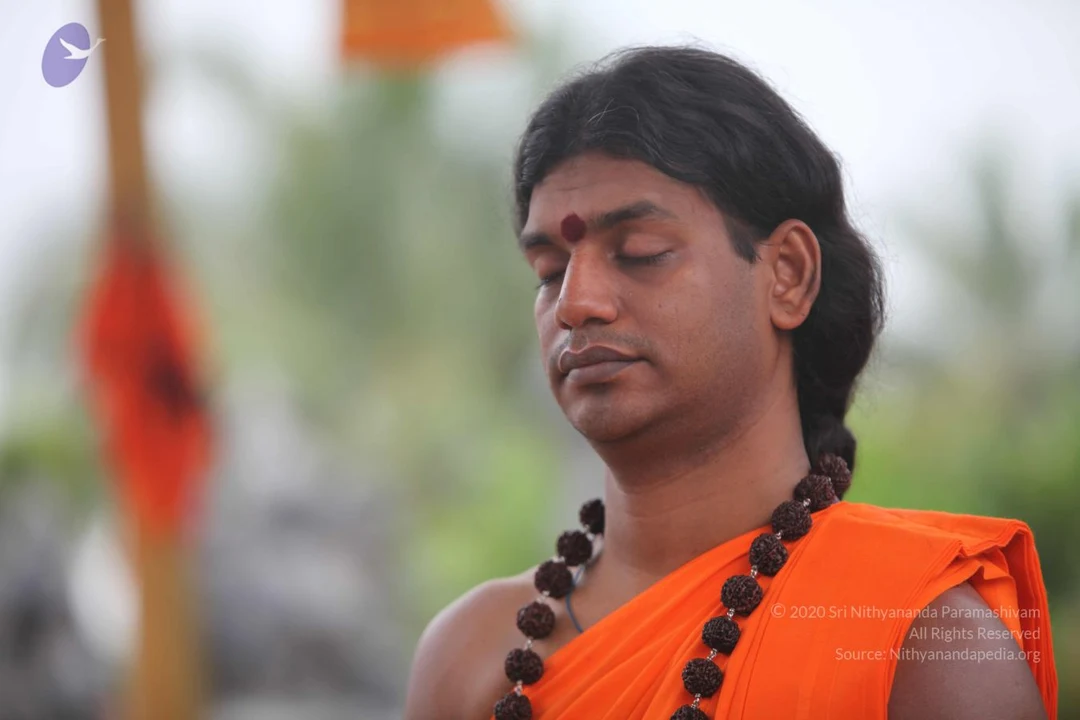
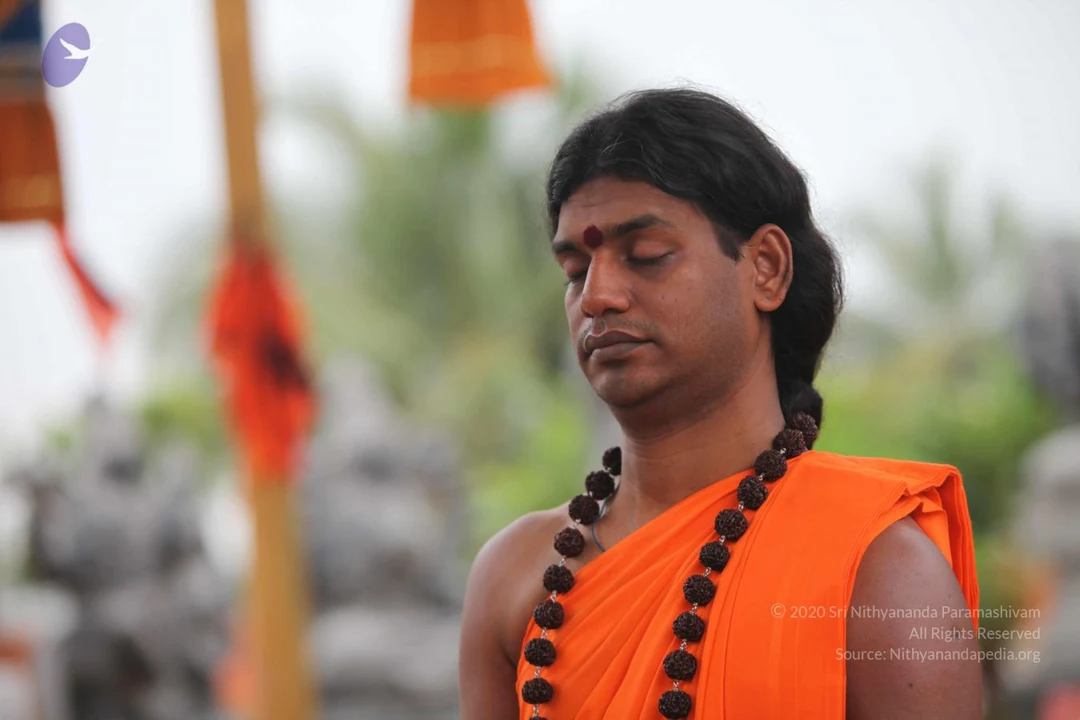
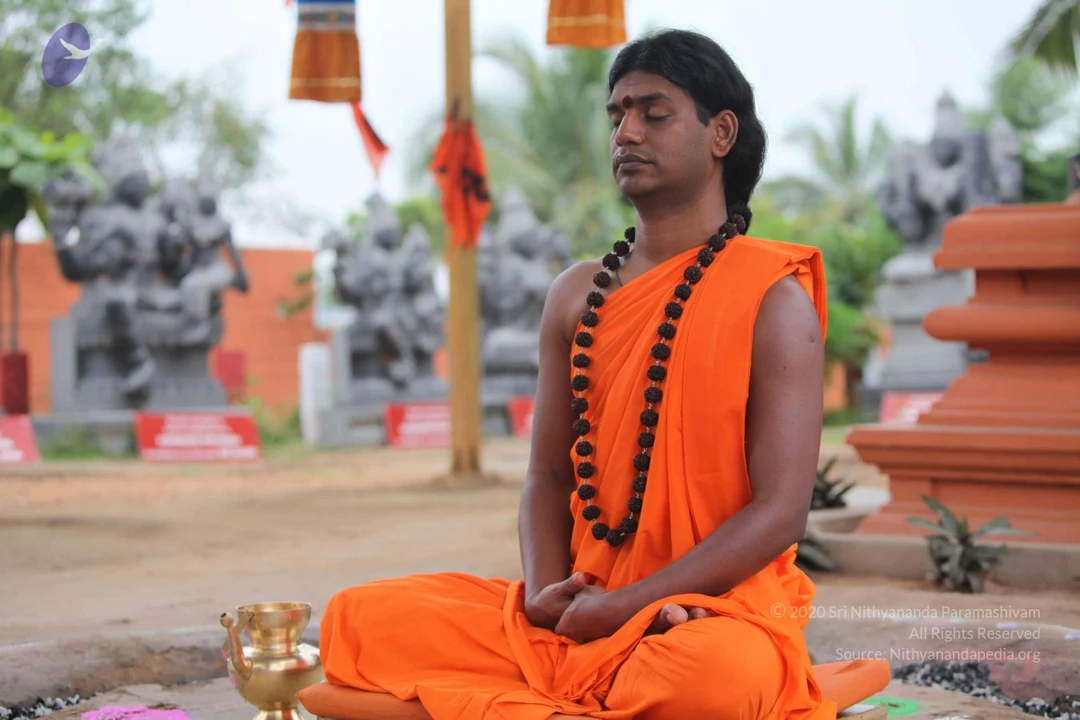
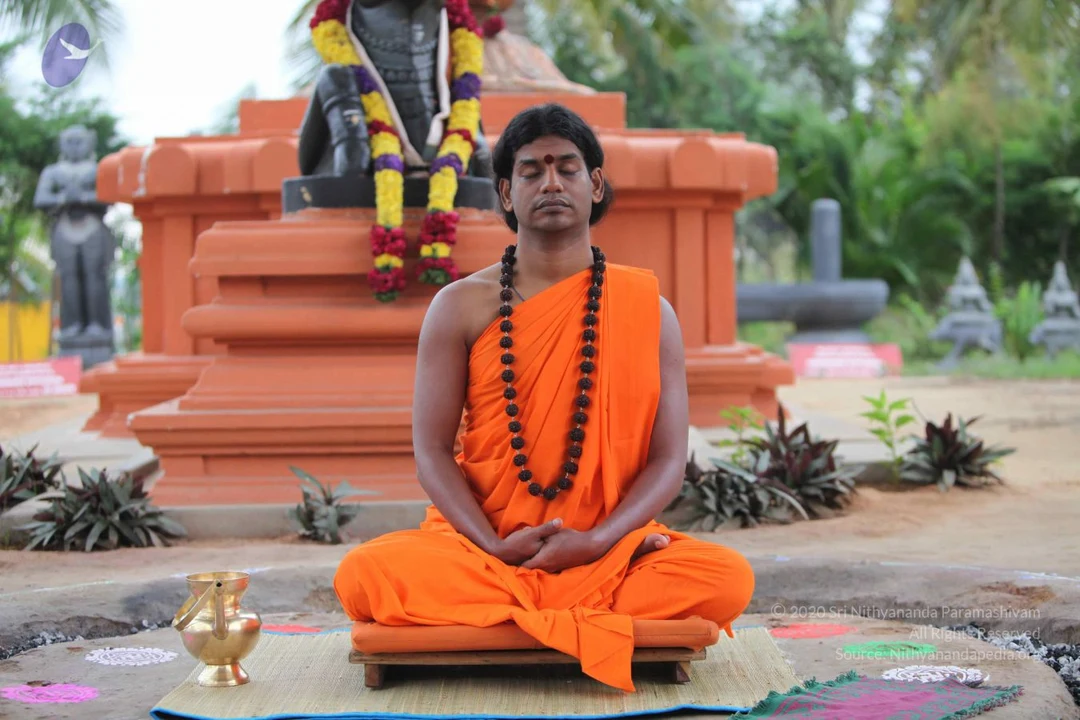
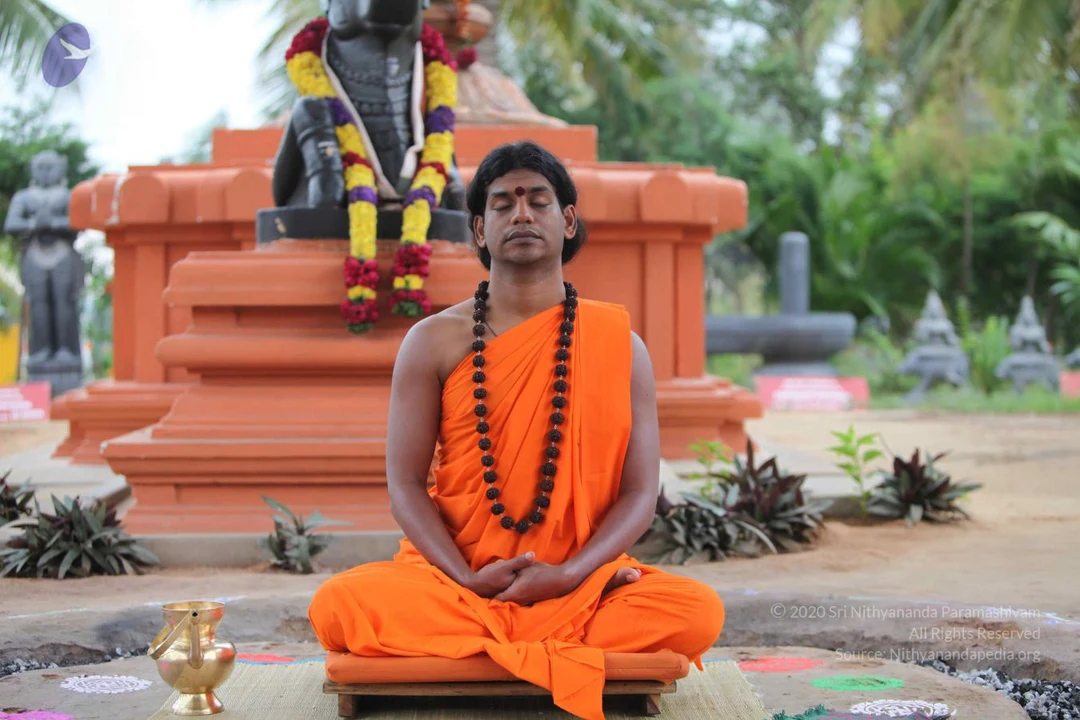
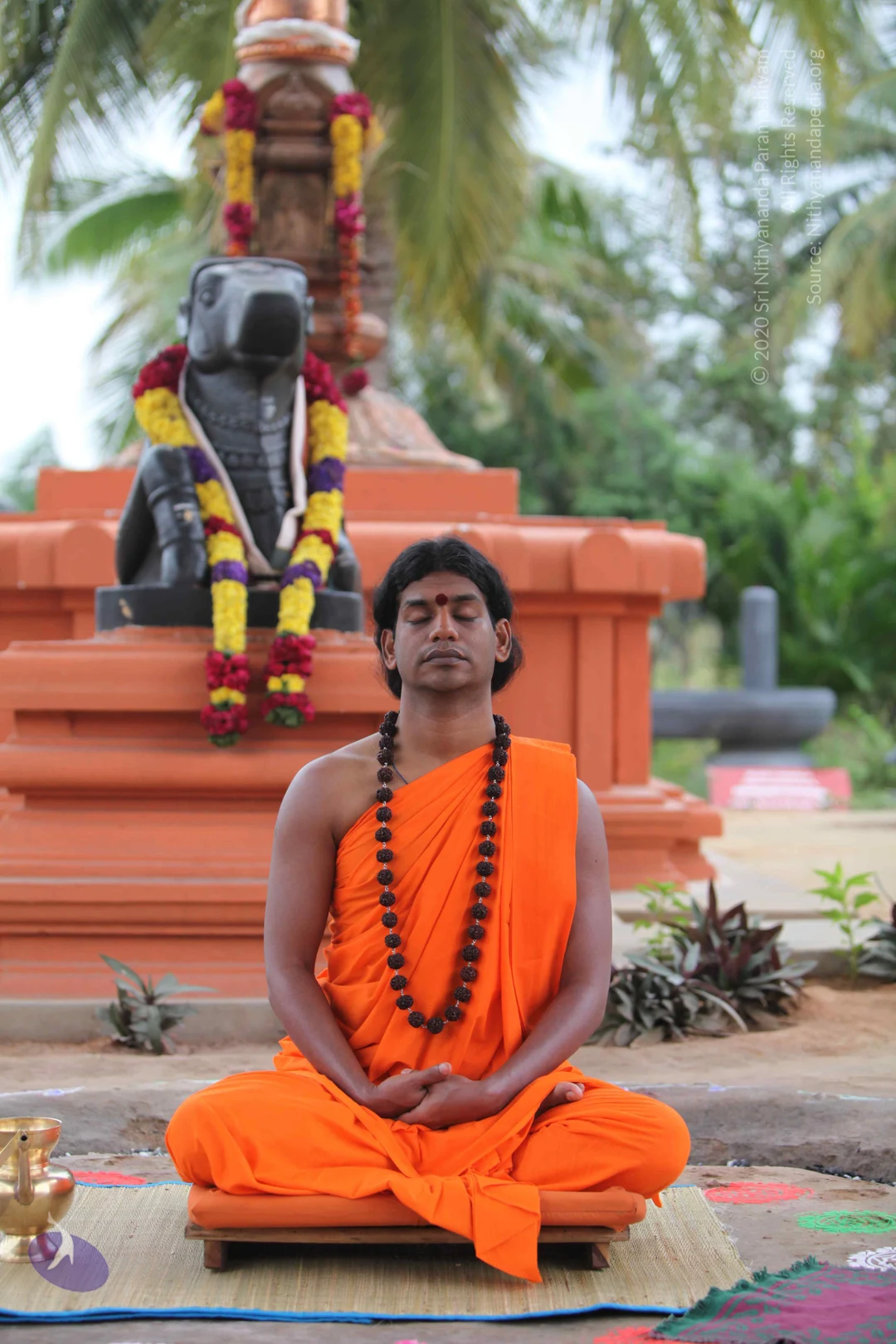
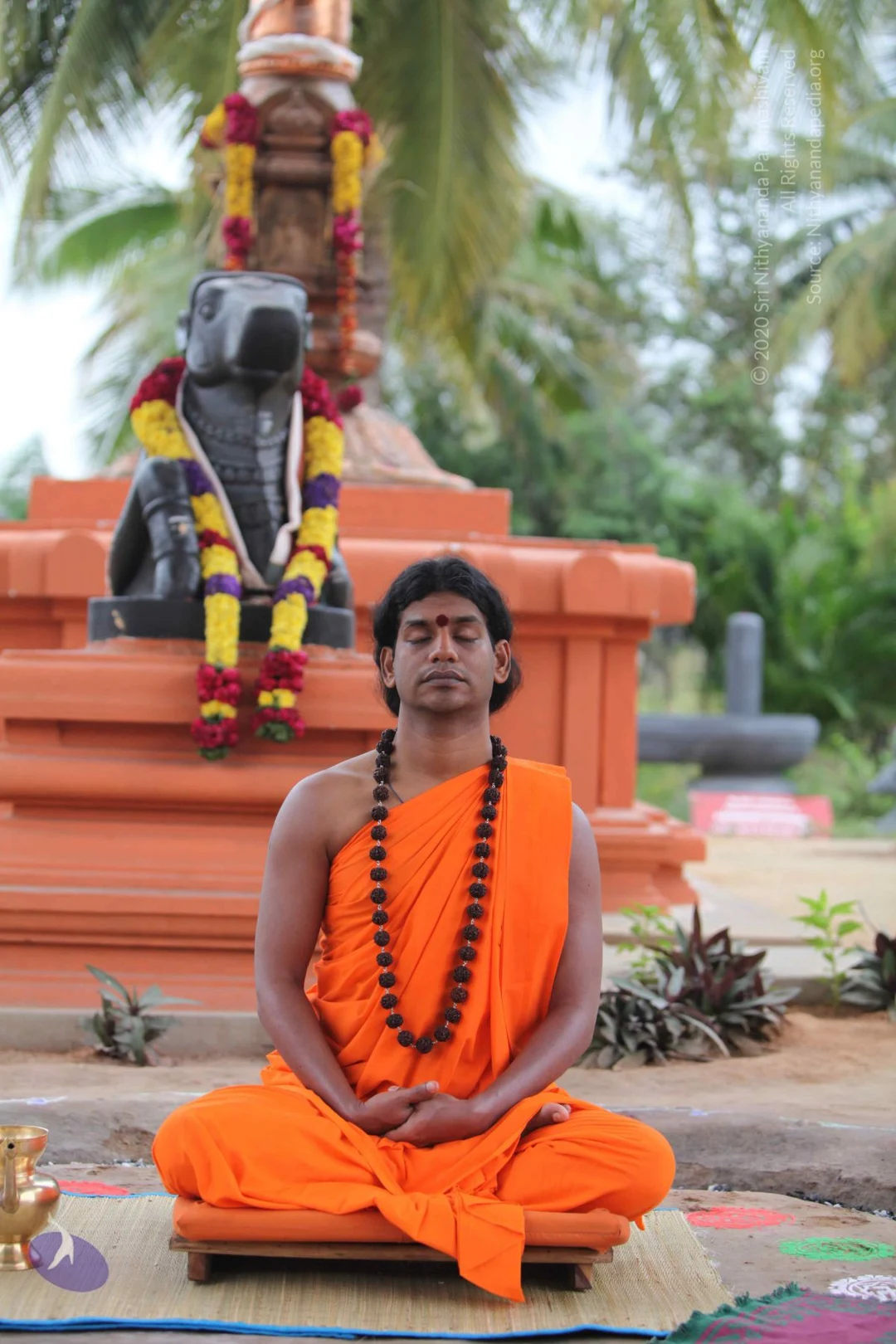
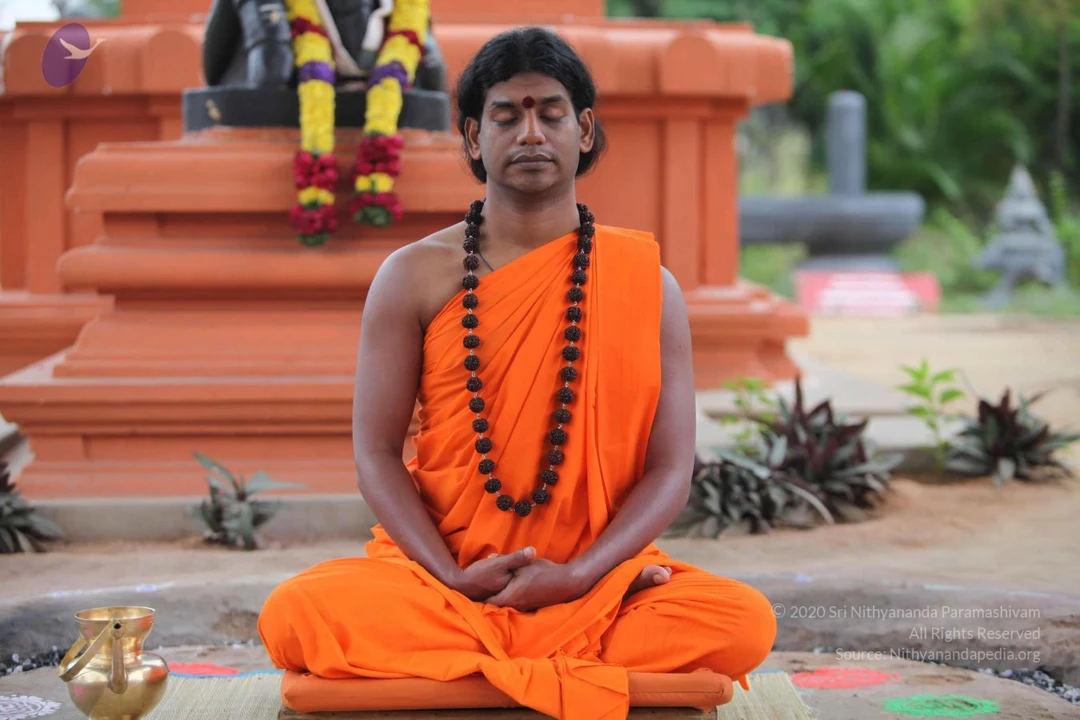
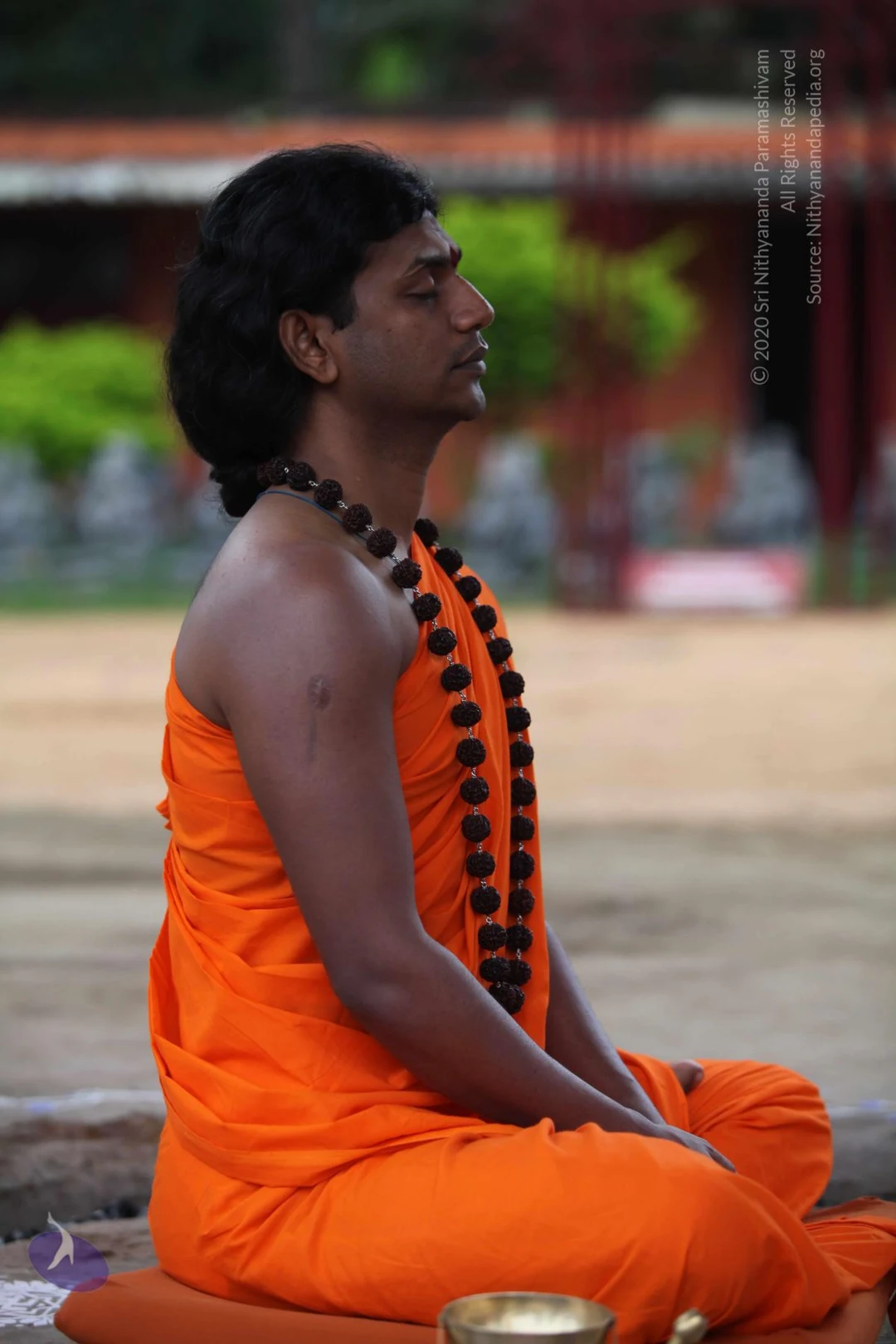
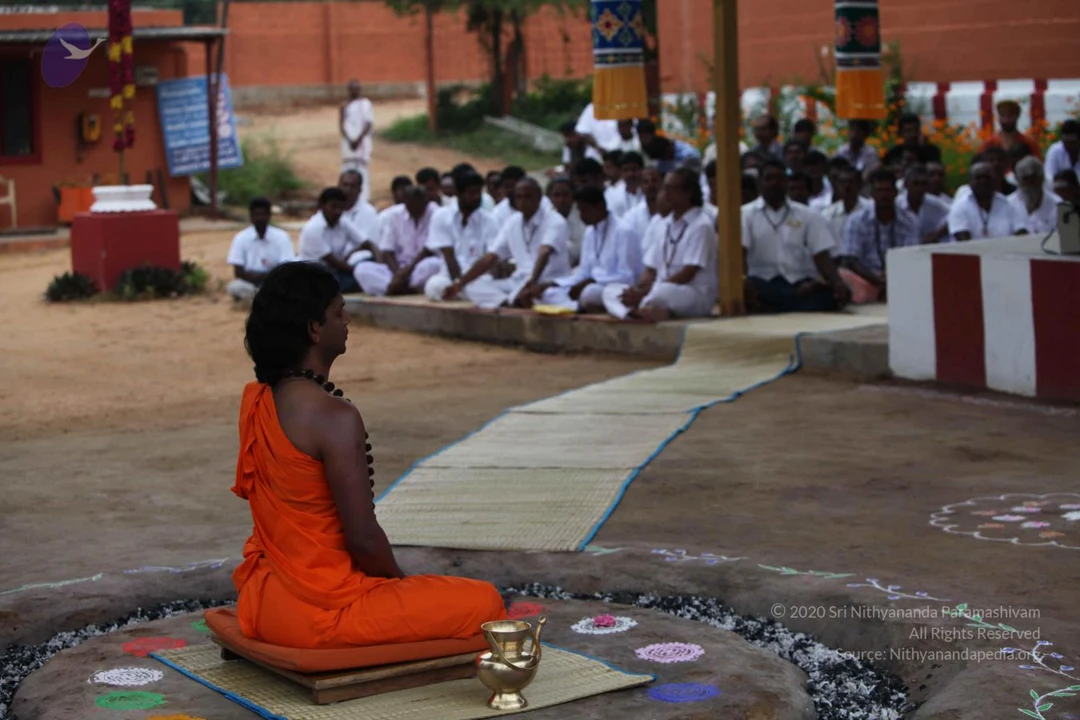
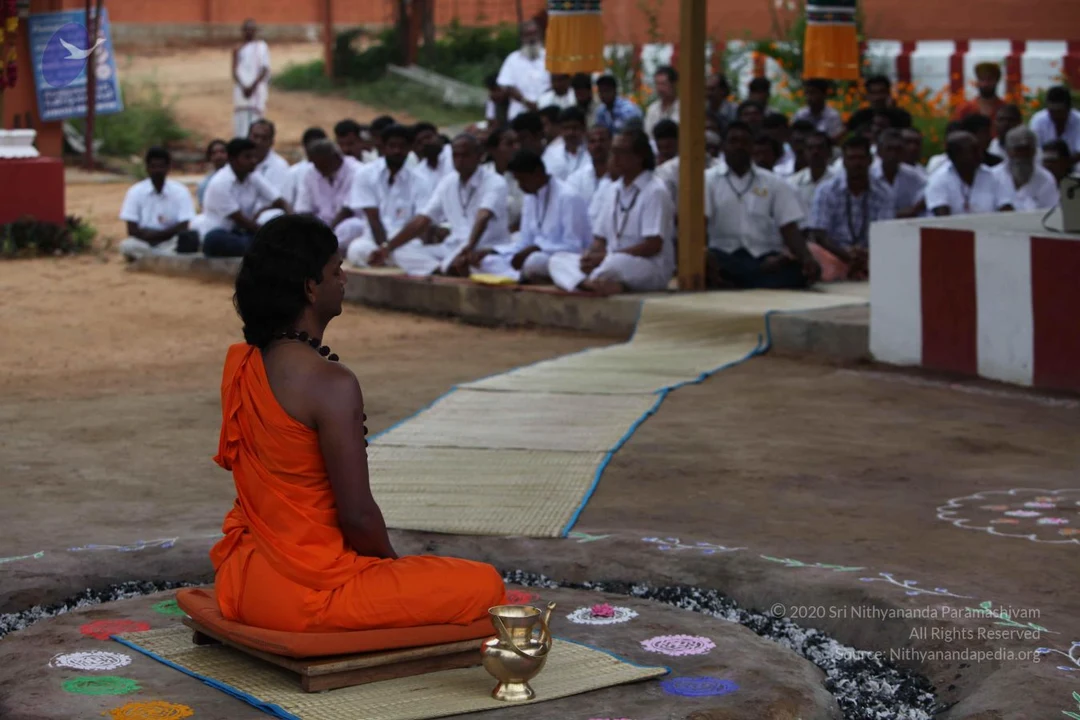
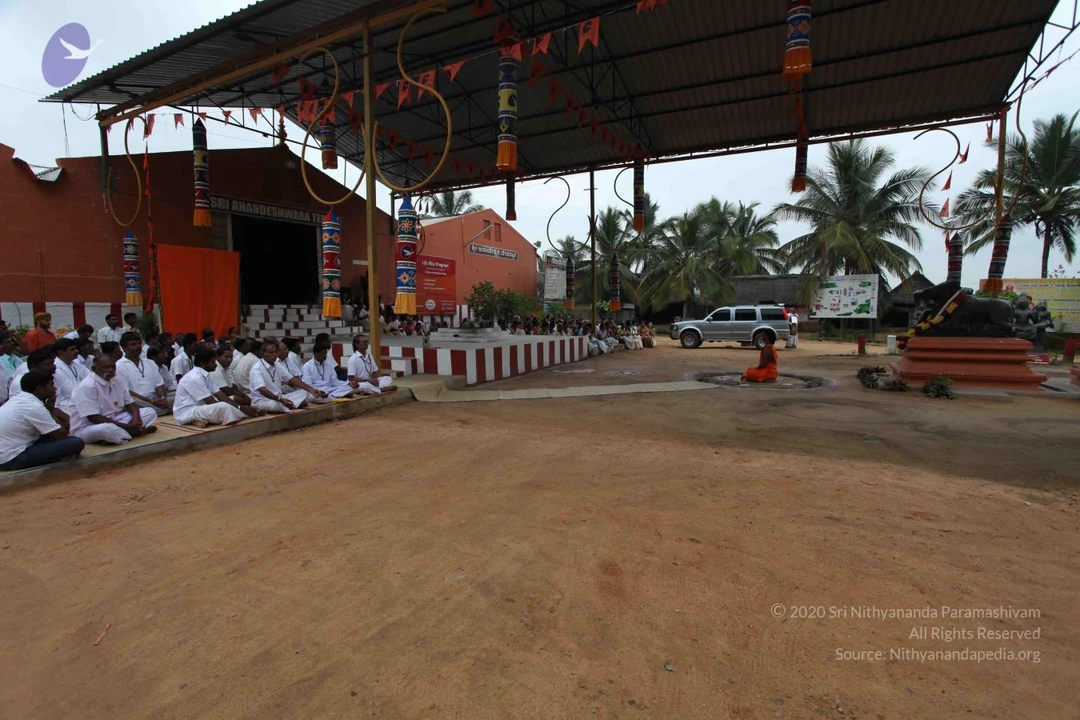
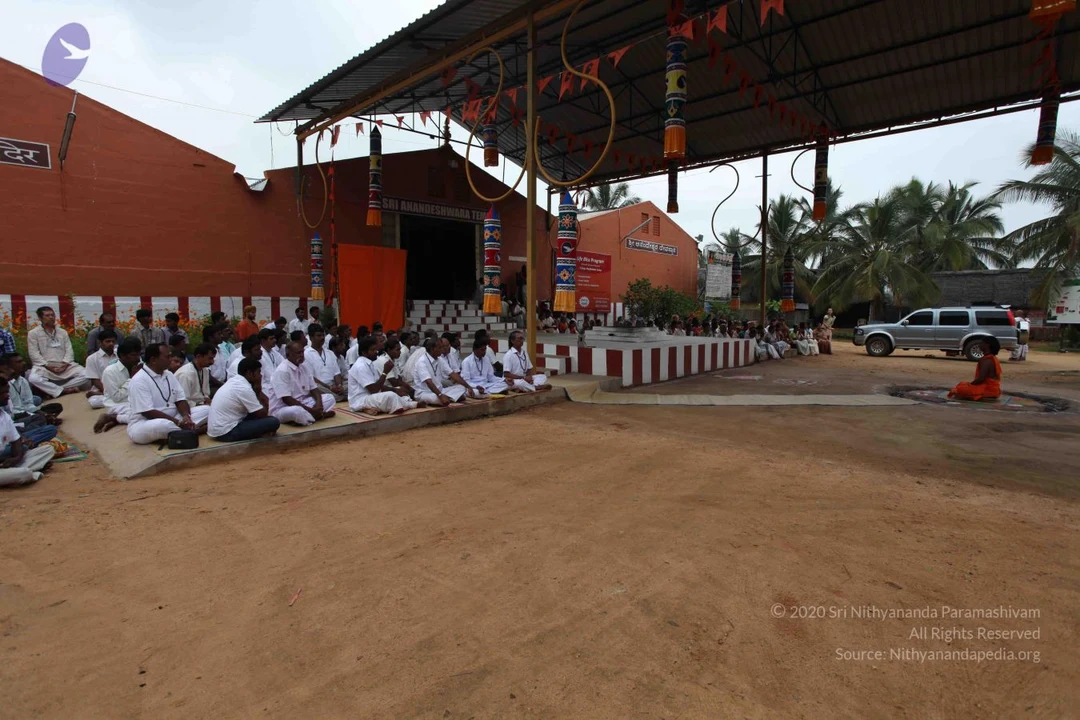
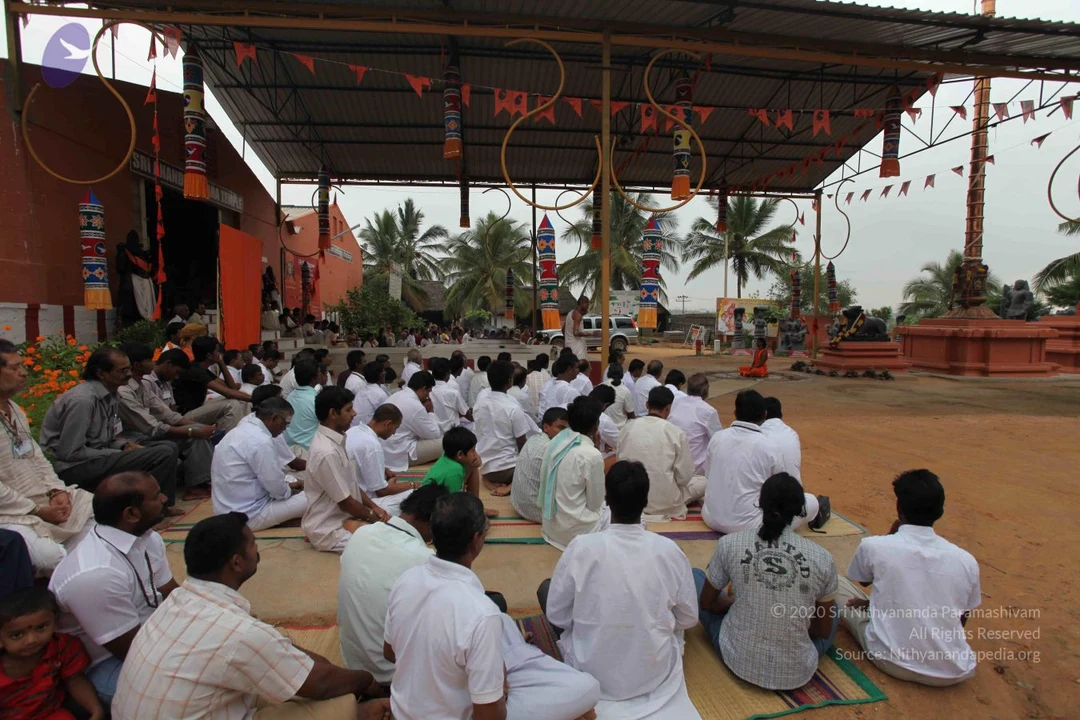
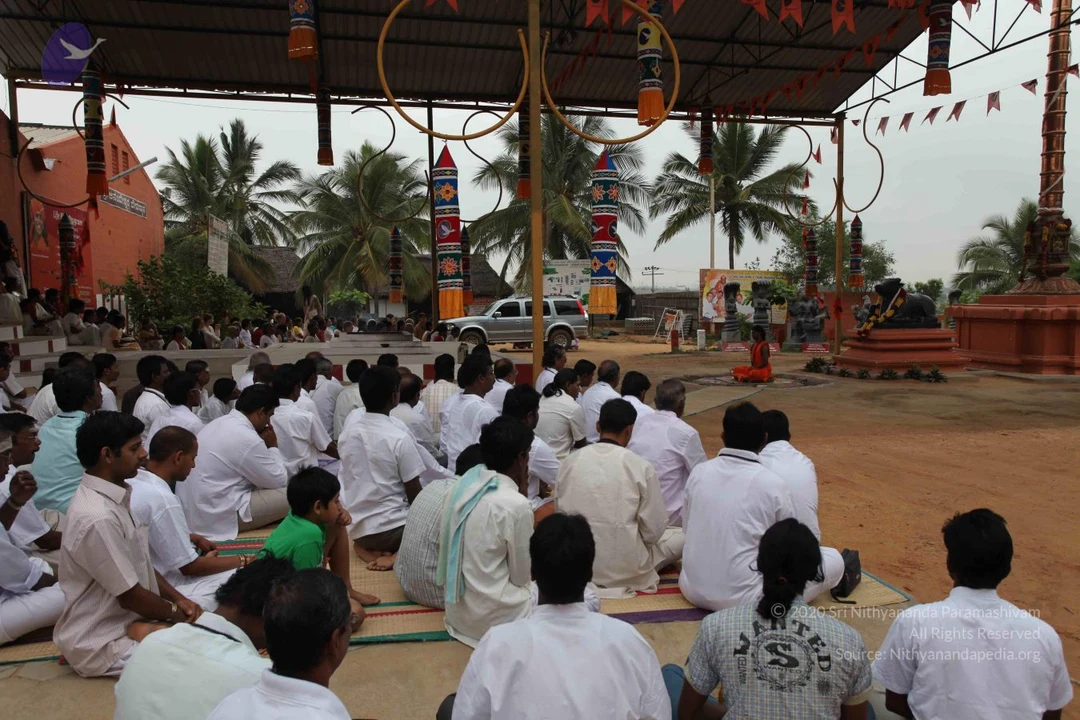
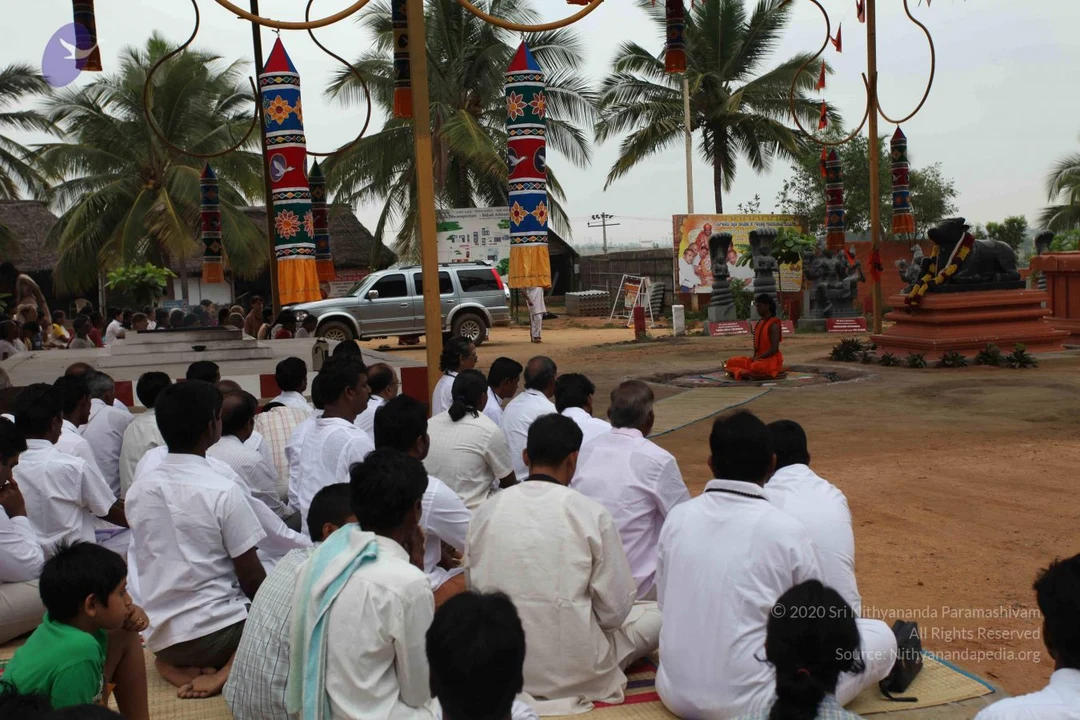
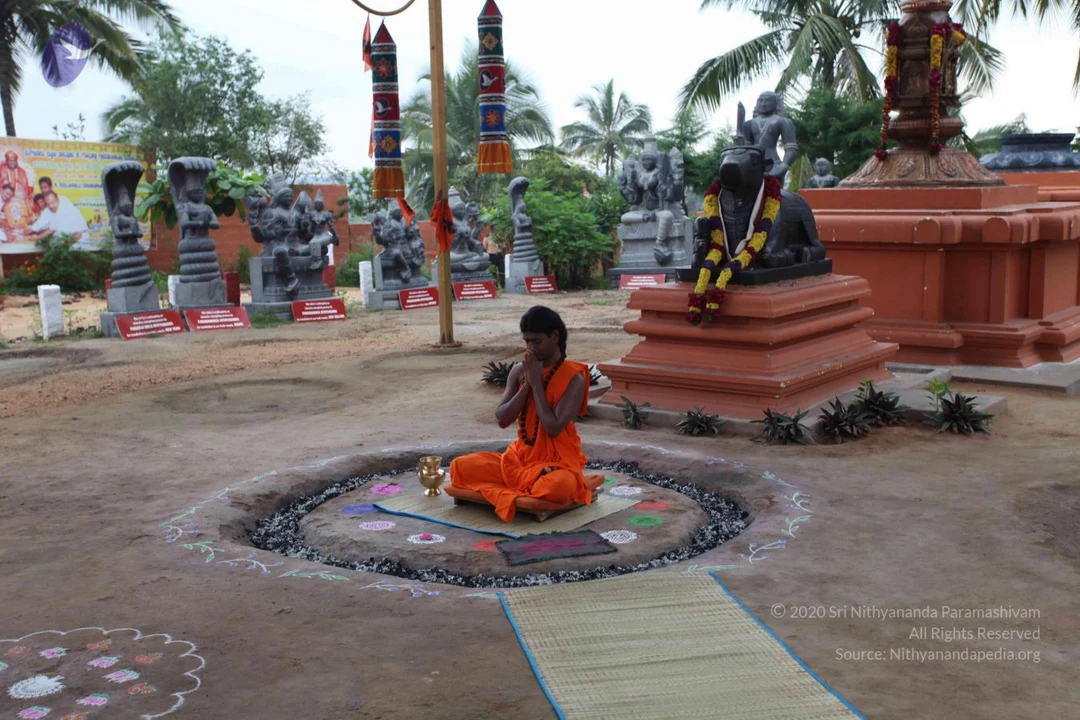
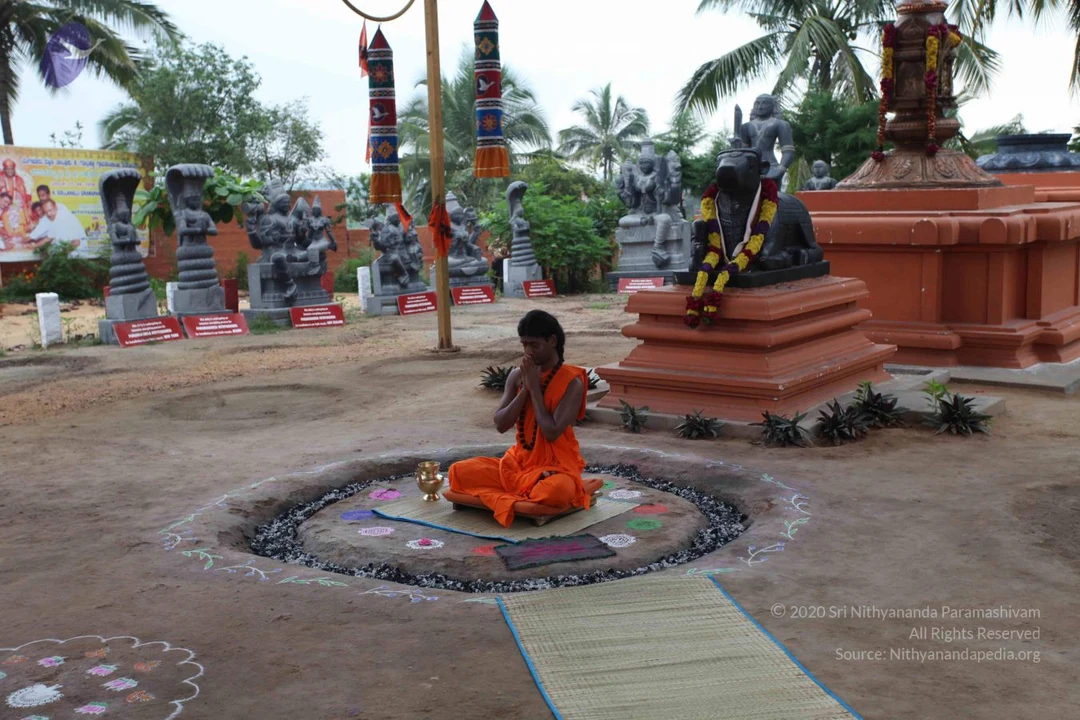
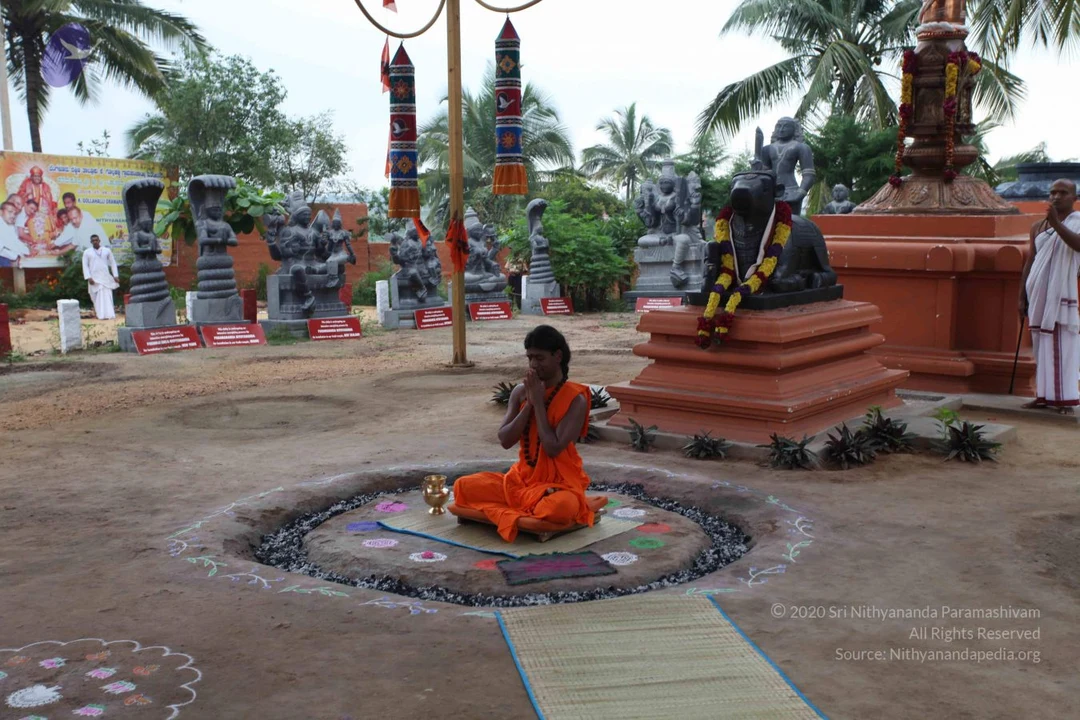
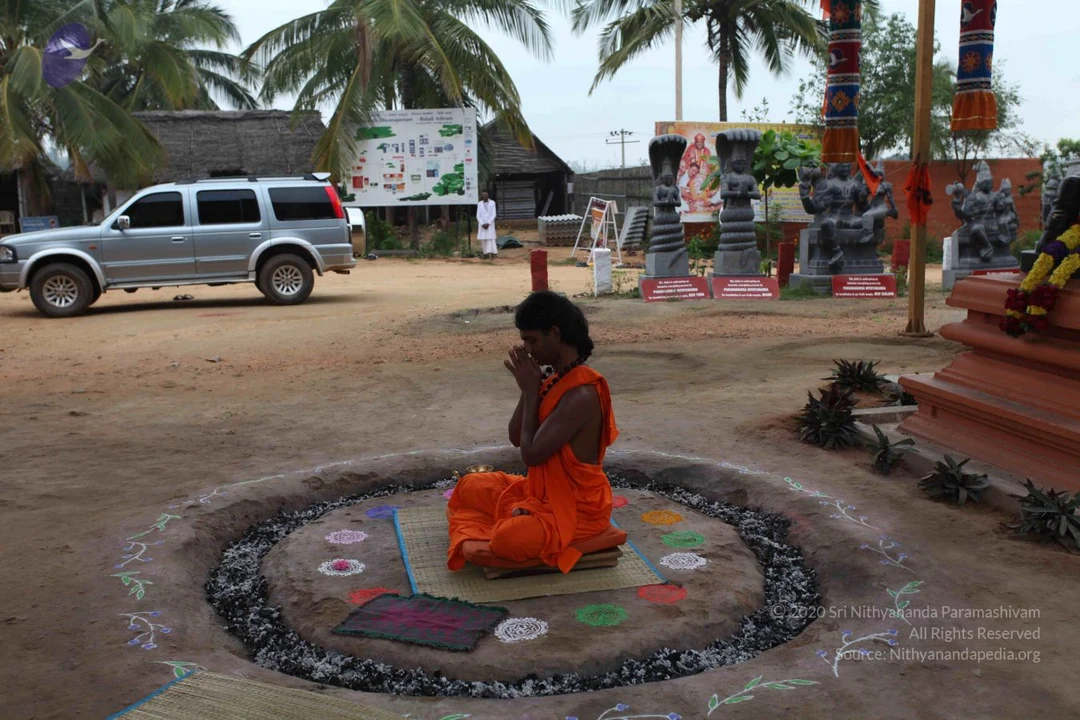
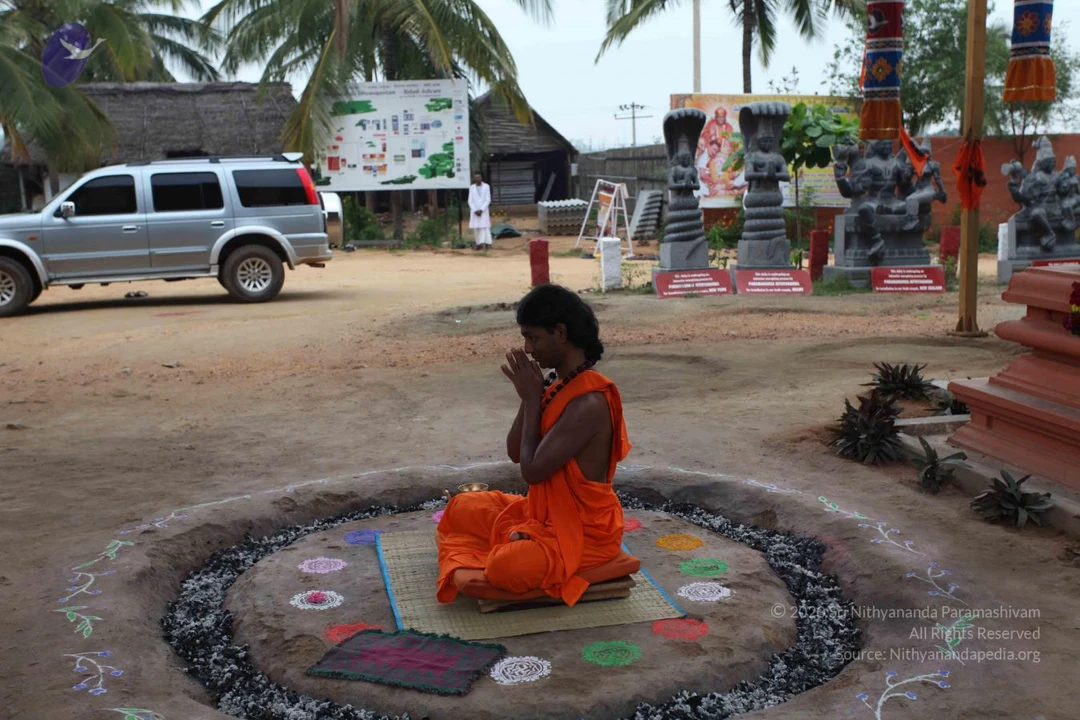
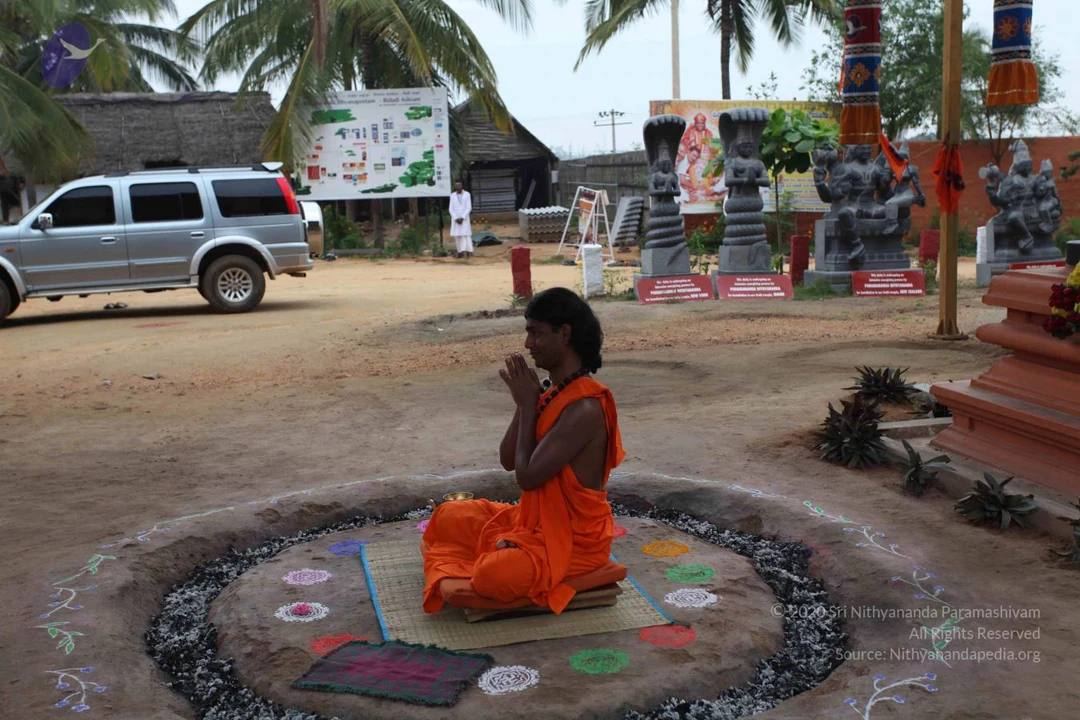
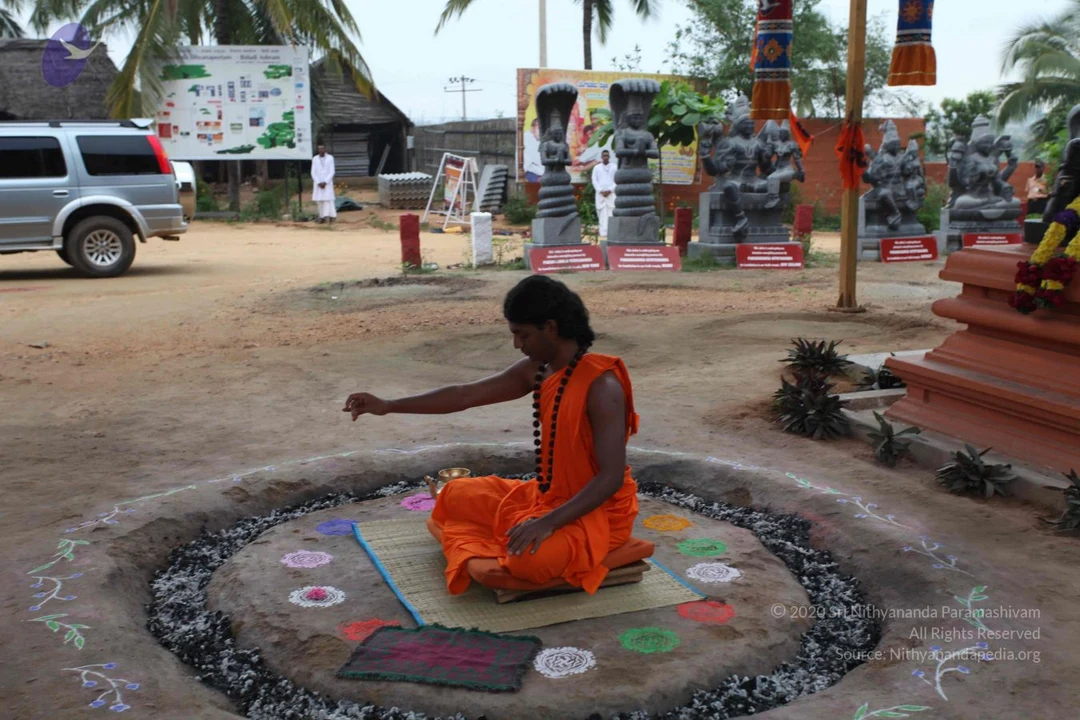
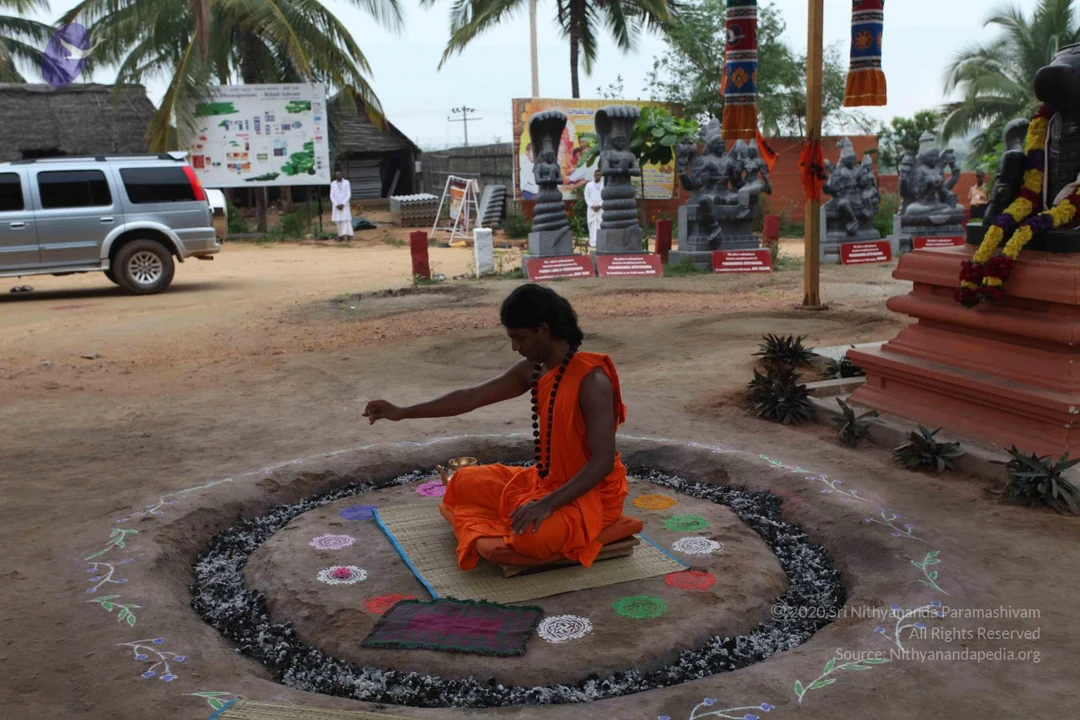
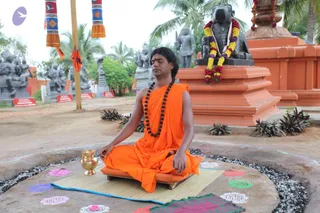
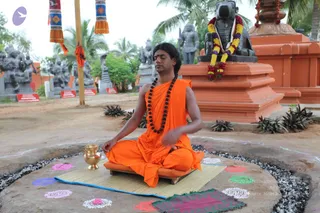
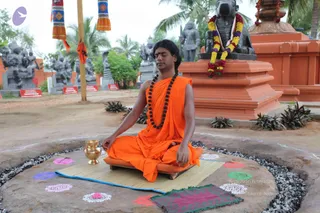
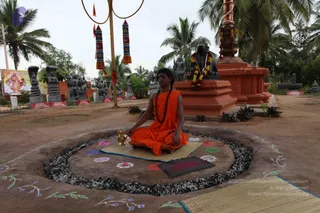
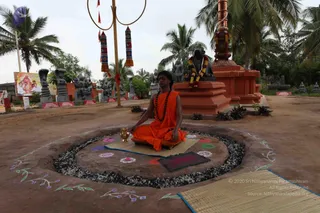
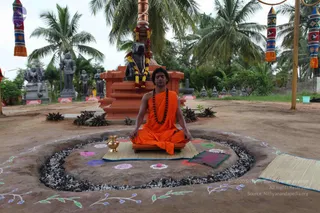
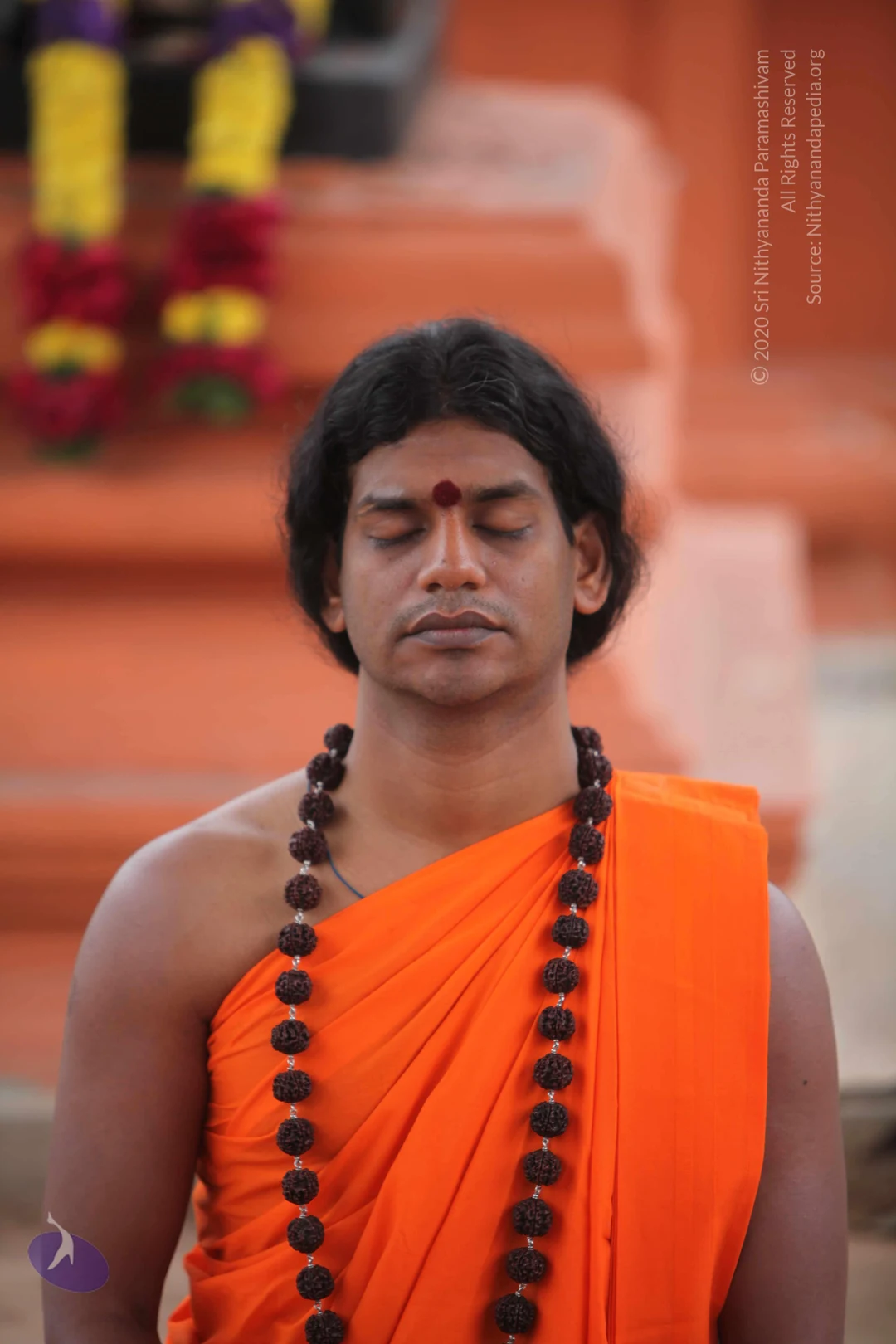
A man seated in meditation on a low wooden platform over a straw mat, in a circle of pebbles and coloured rangoli dots, outdoors. He wears an orange saffron shawl over his shoulders and a long rudraksha mala, with a red tilak on his forehead and eyes closed. A small brass kalasha stands at his left. Behind him a black stone Nandi bull wears a garland of yellow, orange and purple flowers on a tiered orange pedestal, with carved stone deity figures and palm trees beyond. Red placards stand in front of the stone sculptures. Hanging coloured cloths on a pole frame the left side. Appearance-based a person with orange robes and rudraksha cues, seated in meditation at a temple-garden setting.A seated man in saffron-orange robes meditates outdoors in a temple grounds setting, with his eyes closed, a long dark hairstyle, a rudraksha mala around his neck and a red tilak on his forehead. He sits on a low wooden platform on a straw mat, with a brass kalasha beside him. Behind him stands a large black stone Nandi bull draped with garlands of yellow, purple and red flowers, next to orange stone pedestals and grey stone deity murti figures among palm trees. Coloured rangoli designs decorate the ground around him, and red signboards line the background. Swamiji (probable) is shown in an appearance-based label, with his saffron robes, long swept-back hair and rudraksha mala as the cues.A man sits cross-legged in meditation on a low wooden seat placed on a woven mat, inside a circular stone-bordered area decorated with coloured rangoli-style patterns in pink, green, blue and white. He wears a saffron-orange robe draped over one shoulder and a long rudraksha mala with dark beads, a red-orange tilak on his forehead, and has his eyes closed with hands resting on his knees. Beside him stands a brass kalasha-style vessel. Behind him is a dark stone deity murti of a seated figure garlanded with yellow, red and purple flowers on an orange pedestal, with other stone sculptures, red labelled plaques, palm trees and orange-painted shrines in the background. Orange and yellow ceremonial cloth hangs from a tall pole at left. The scene suggests a meditation session in an outdoor sacred garden.A seated man in an orange-saffron robe and a rudraksha mala sits cross-legged on a raised mat within a circular rangoli-bordered ring of black and white pebbles outdoors. His eyes are closed and his hands rest near a small brass kalasha or pot placed on the mat. Behind him stand a row of grey stone deity murti and cobra (naga) sculptures, an orange pillared shrine structure with a garland-draped black Shivalinga, and palm trees. Colourful cloth banners hang from a tall pole on the left. A photographed banner with portraits sits at the far left edge. Appearance-based identification is uncertain, so the central figure is described by role only and marked unsure.A seated man in an orange saffron robe and a rudraksha mala sits cross-legged on a woven mat inside a circular earthen platform bordered with black and white pebbles. Decorative coloured floor designs and leaf-like patterns surround the circle. A brass kalasha-style vessel sits beside him. Behind him stands a dark stone deity murti draped with a marigold garland on a red-orange pedestal, with a tall ceremonial pole hung with coloured tassels, palm trees, and rows of carved stone figures. A printed banner with figures stands at left. The scene appears to be an outdoor meditation or puja space in a temple-like grounds setting.A man with long dark hair sits cross-legged in meditation on a low wooden seat atop a raised circular earthen platform. He wears an orange saffron robe and a long rudraksha mala, with eyes closed. Around him, the platform is ringed with black stones and decorated with coloured kolam designs in pink, purple and green. A brass pot stands beside him and a woven mat lies on the ground. Behind him stands a large black Nandi statue draped with yellow and red marigold garlands in front of an orange pedestal, flanked by grey stone deity statues and palm trees. Colourful striped tassel banners hang from poles at the top corners. The scene reads as an outdoor meditation practice in an ashram-style courtyard.

BIDADI-TEMPLE
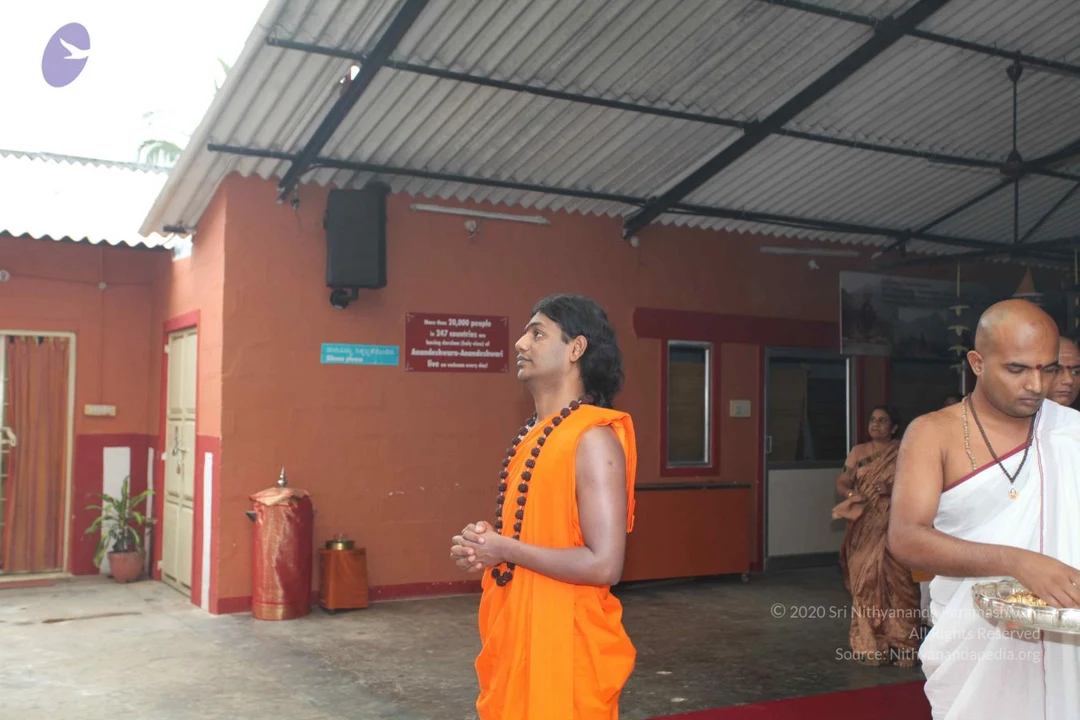
21 photosSource gallery
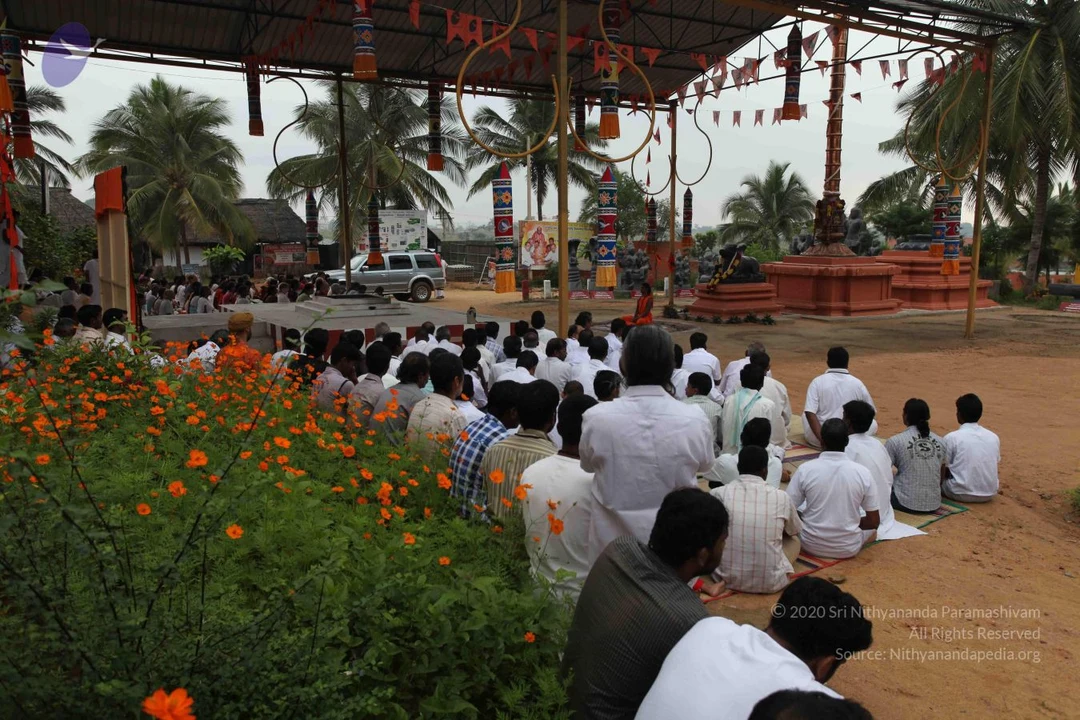
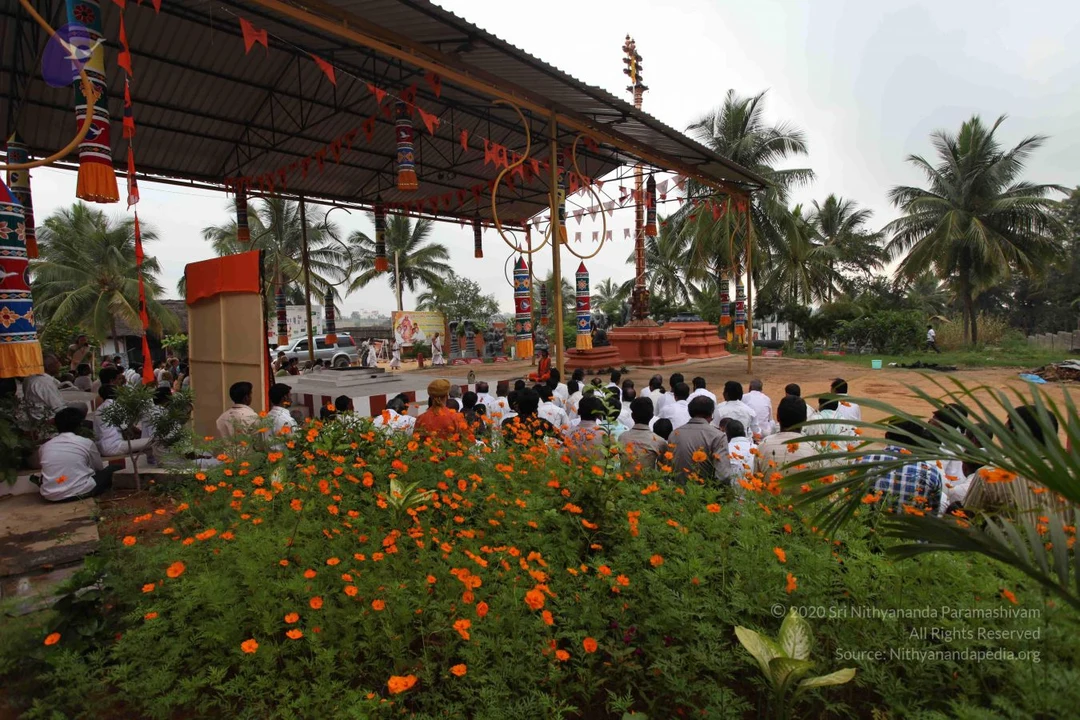
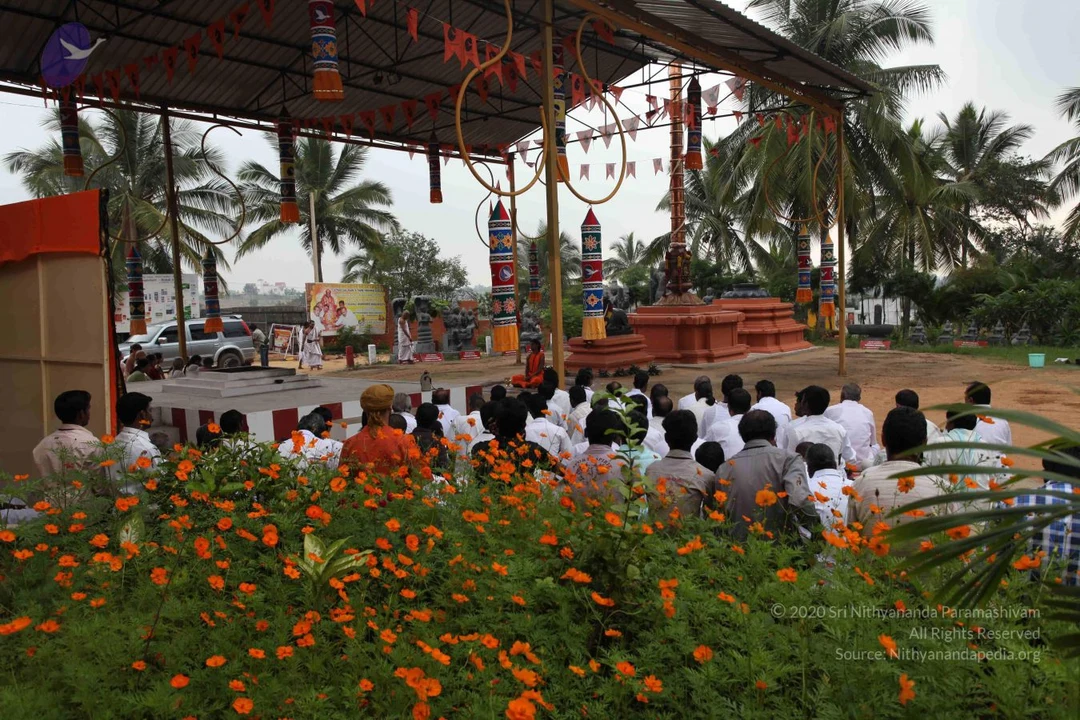
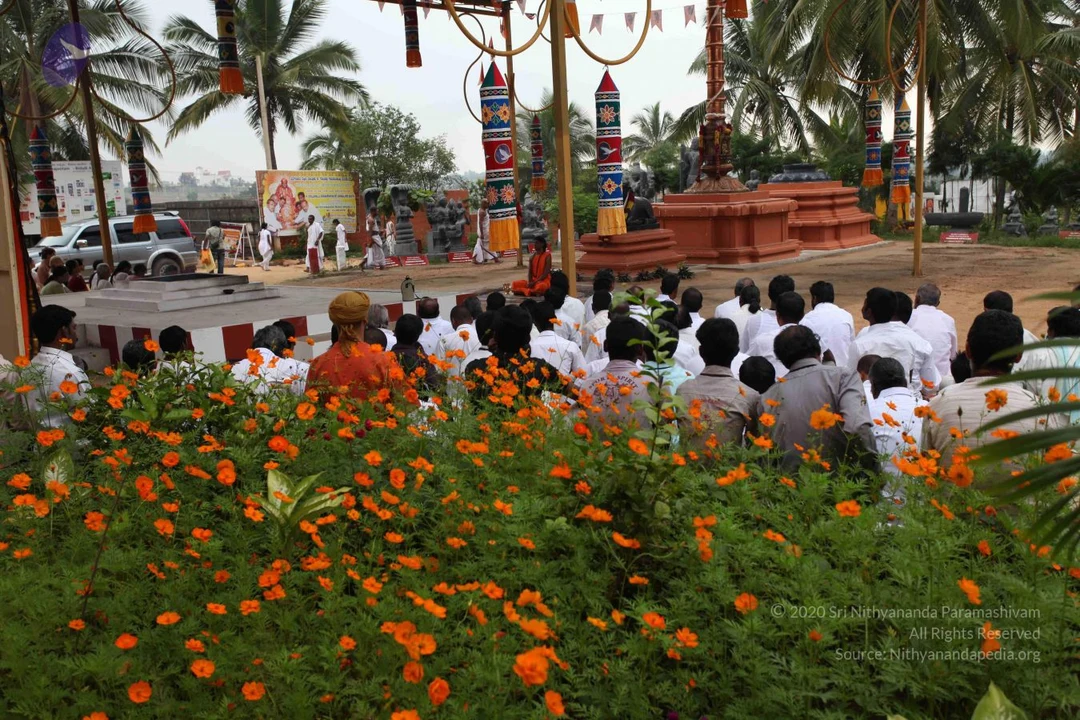
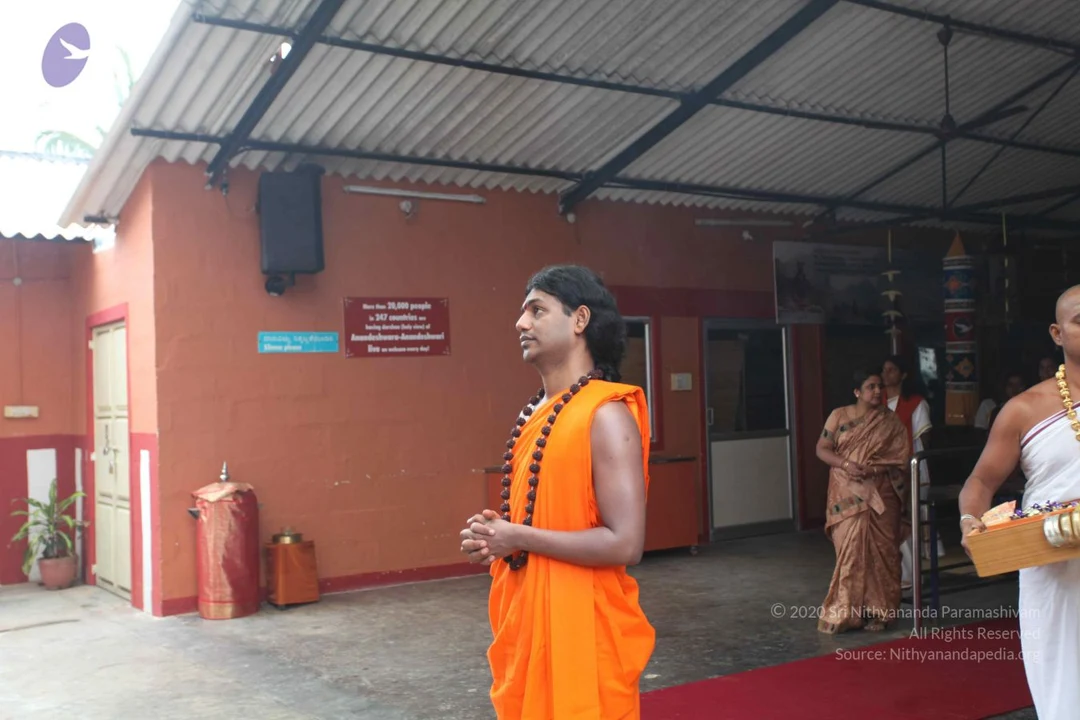
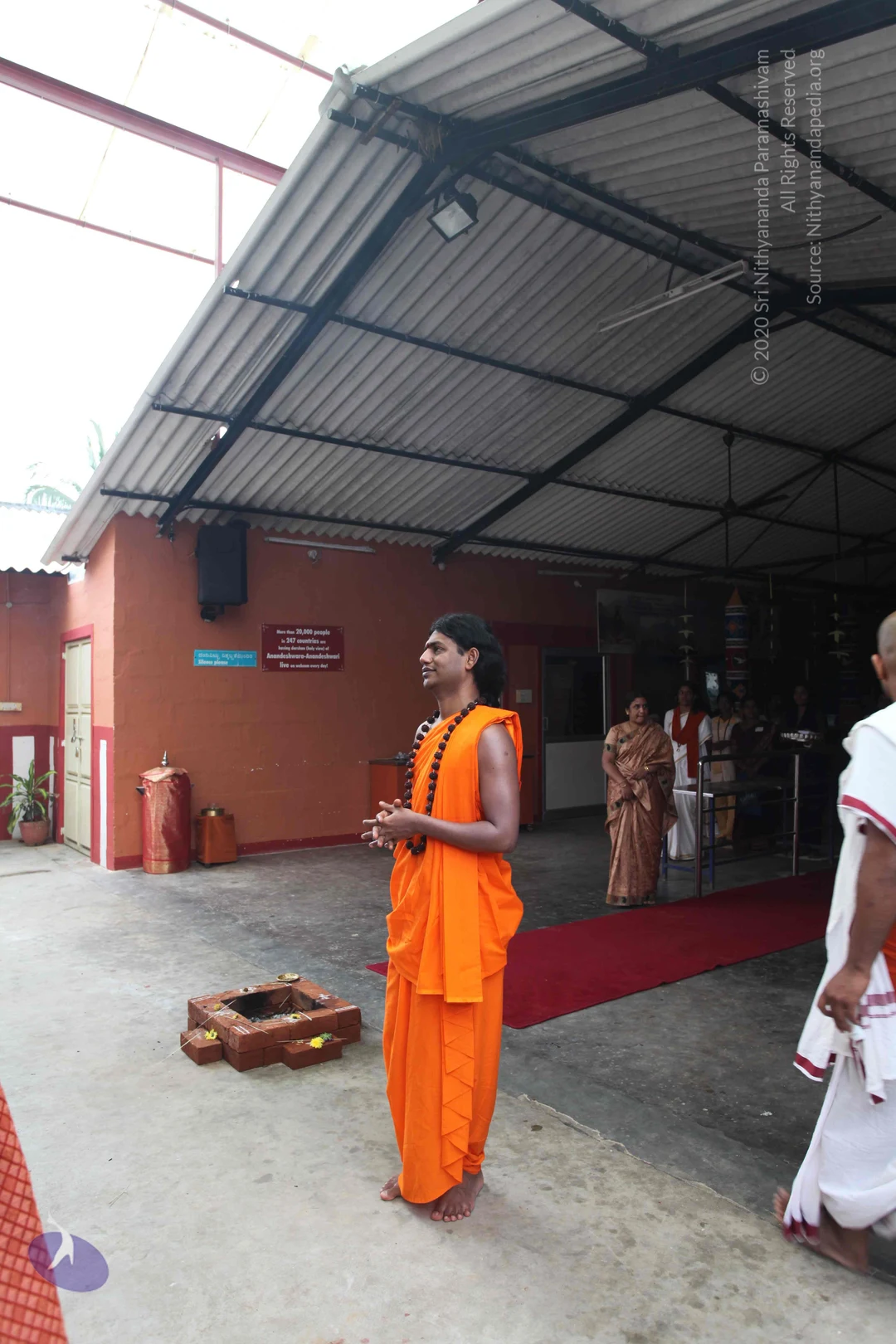
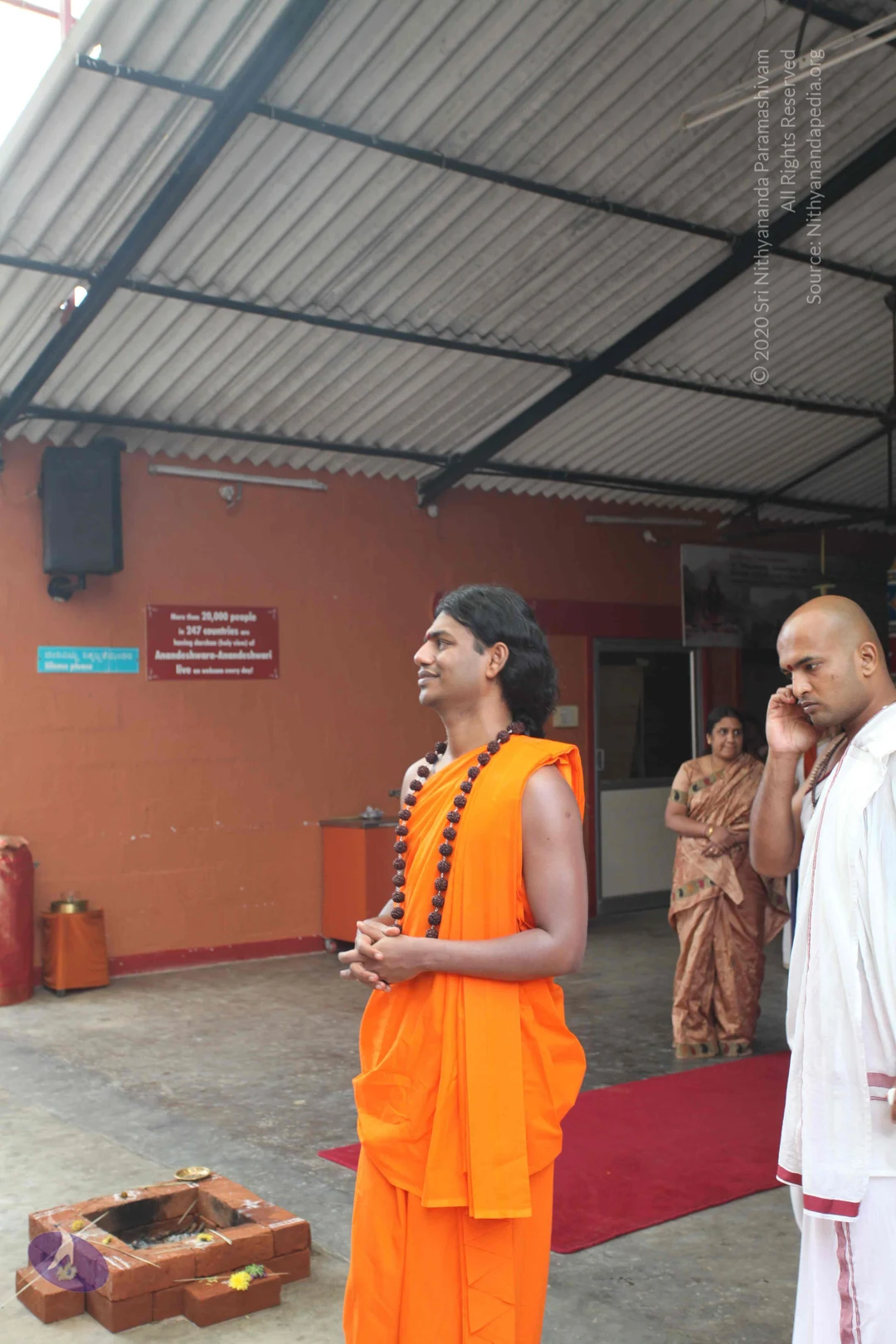
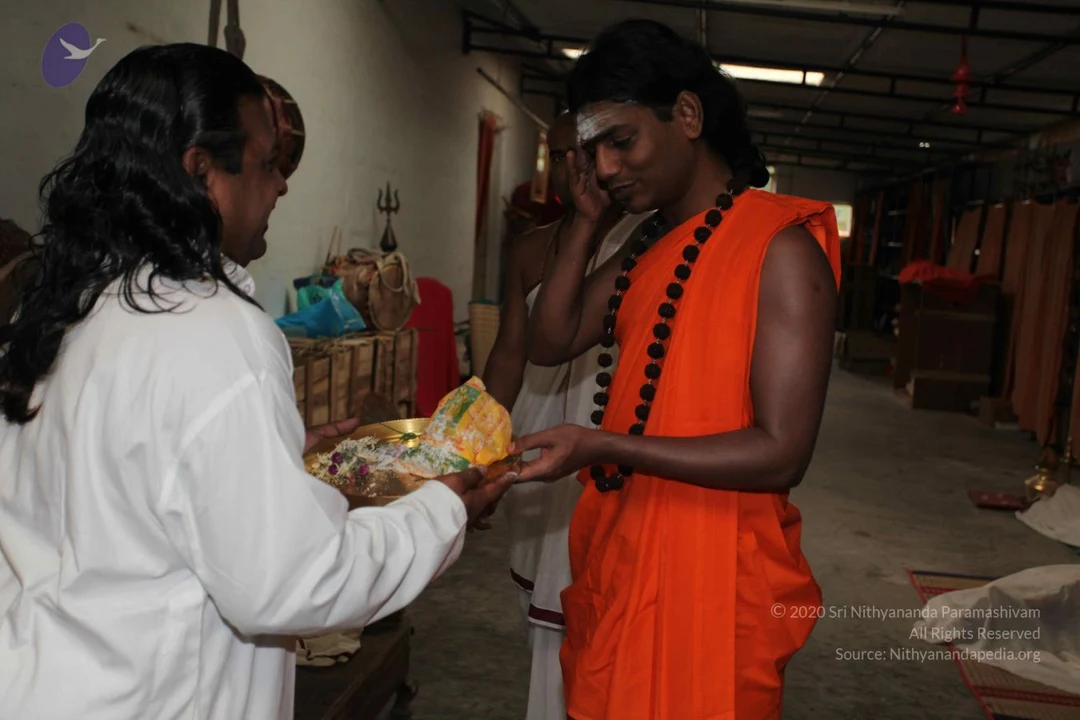
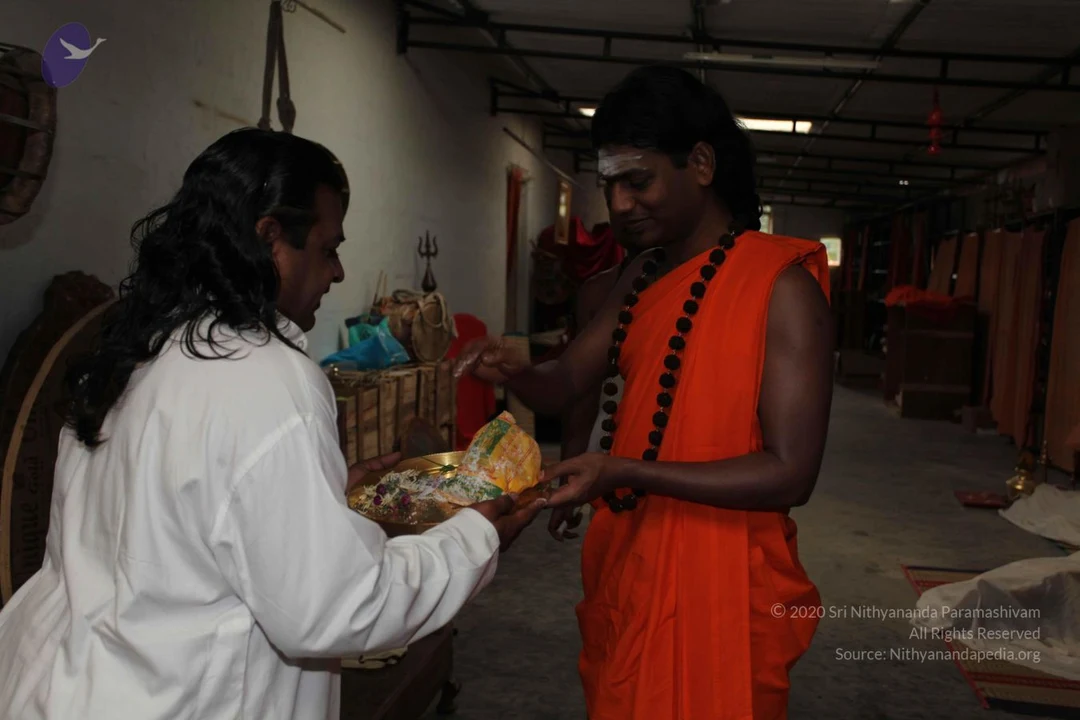
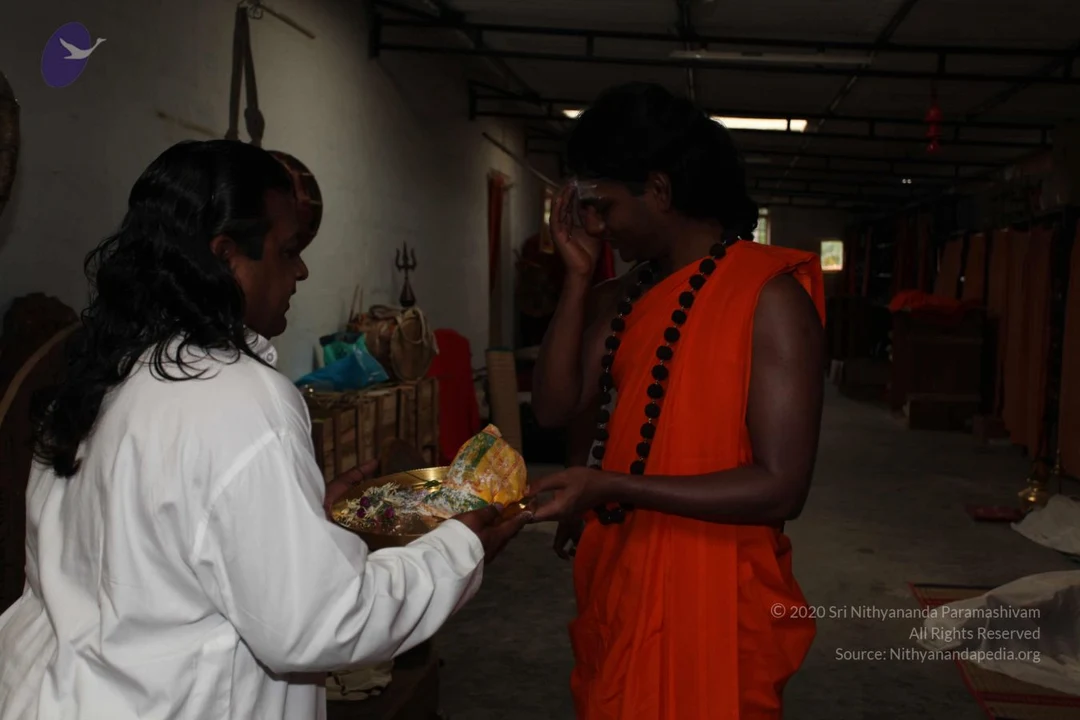
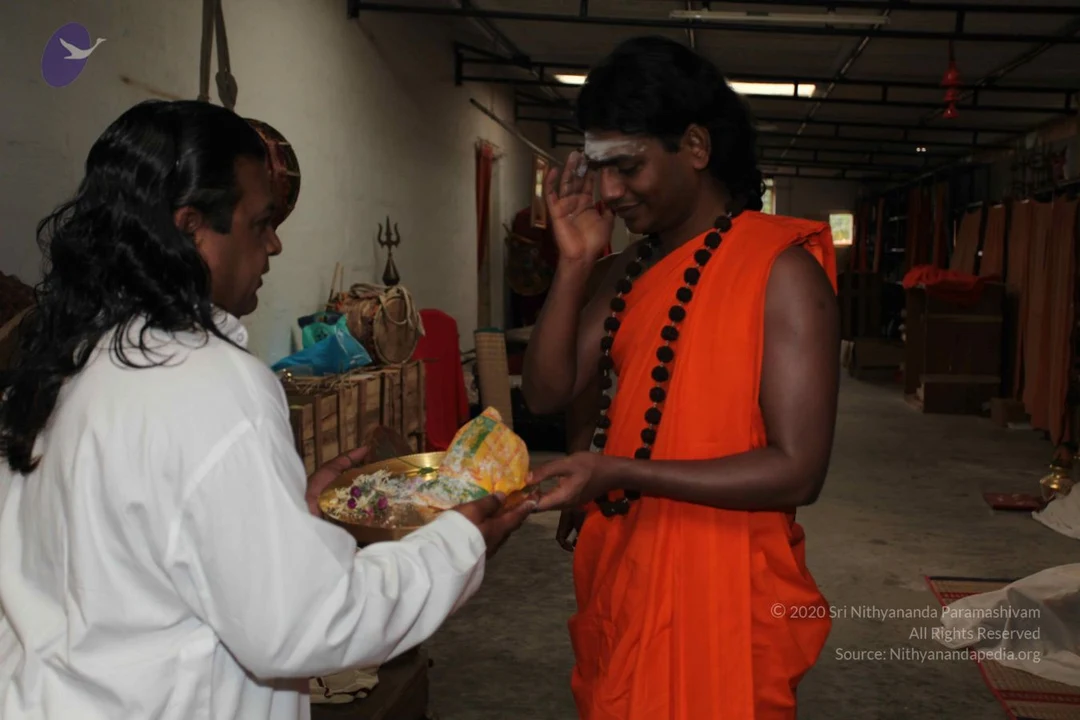
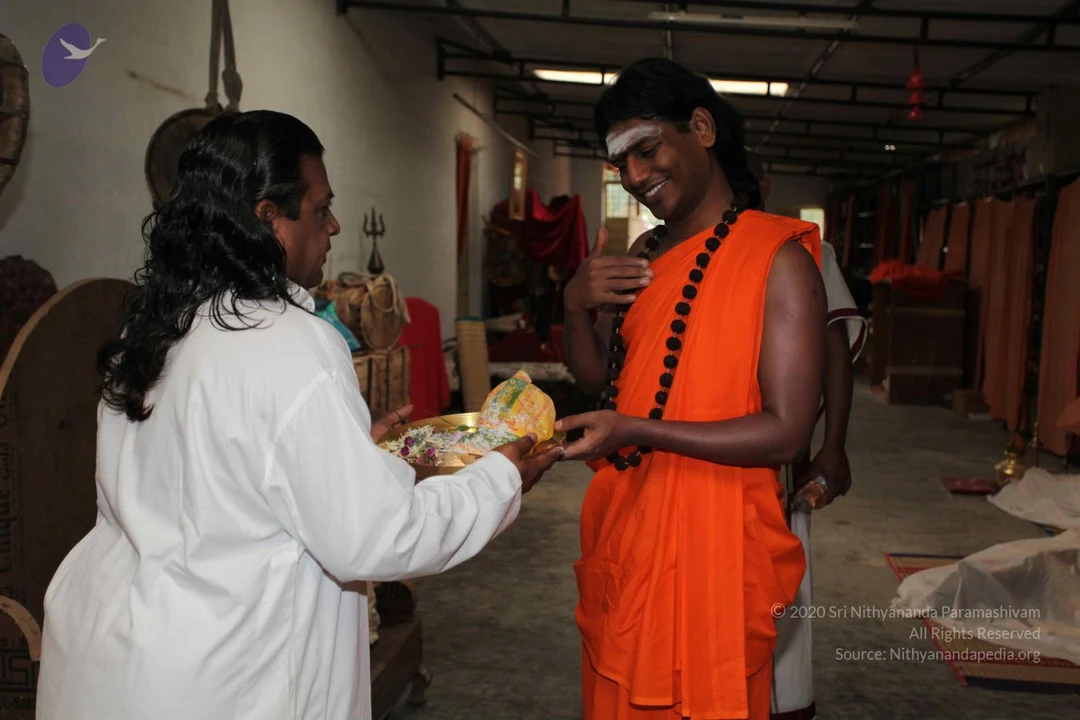
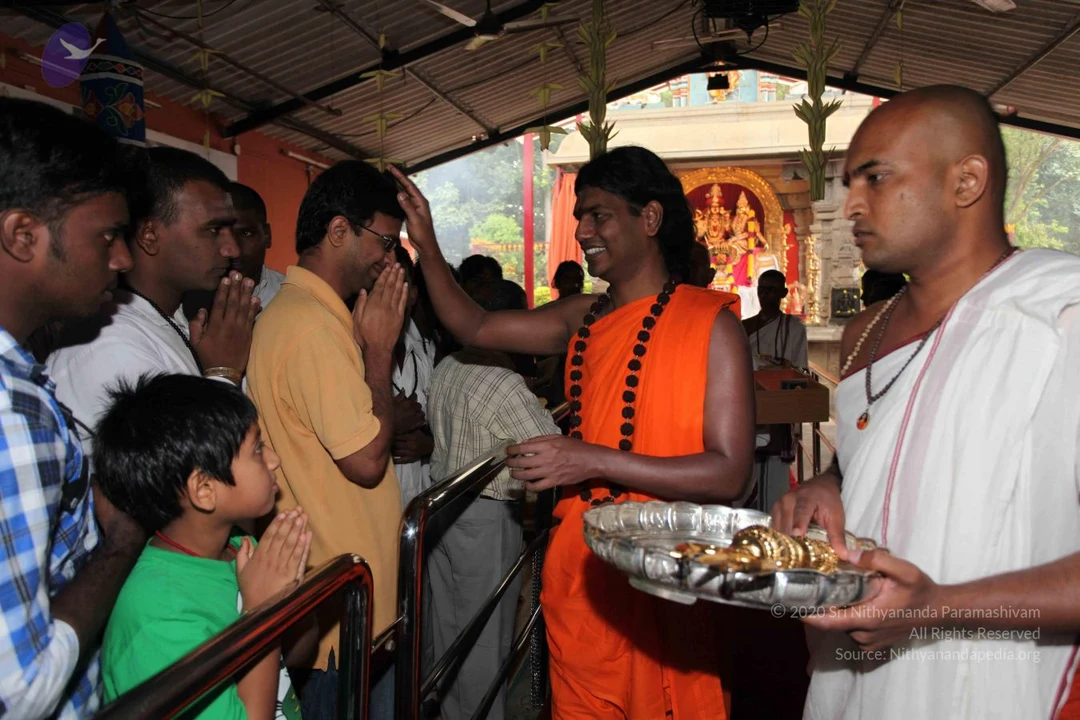
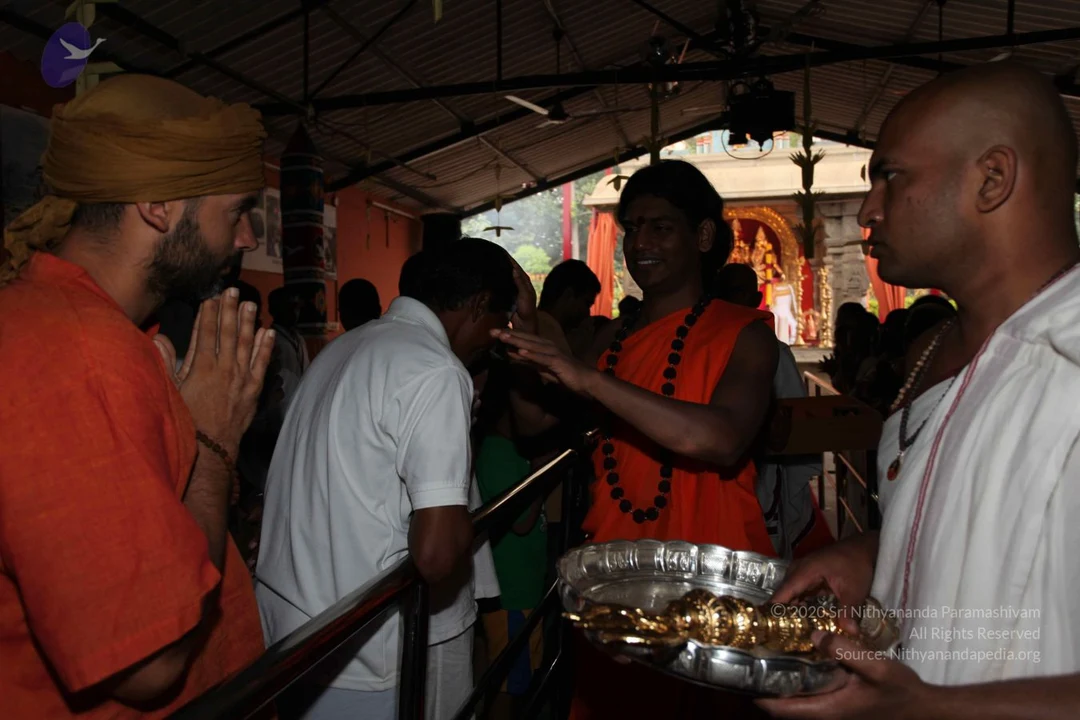
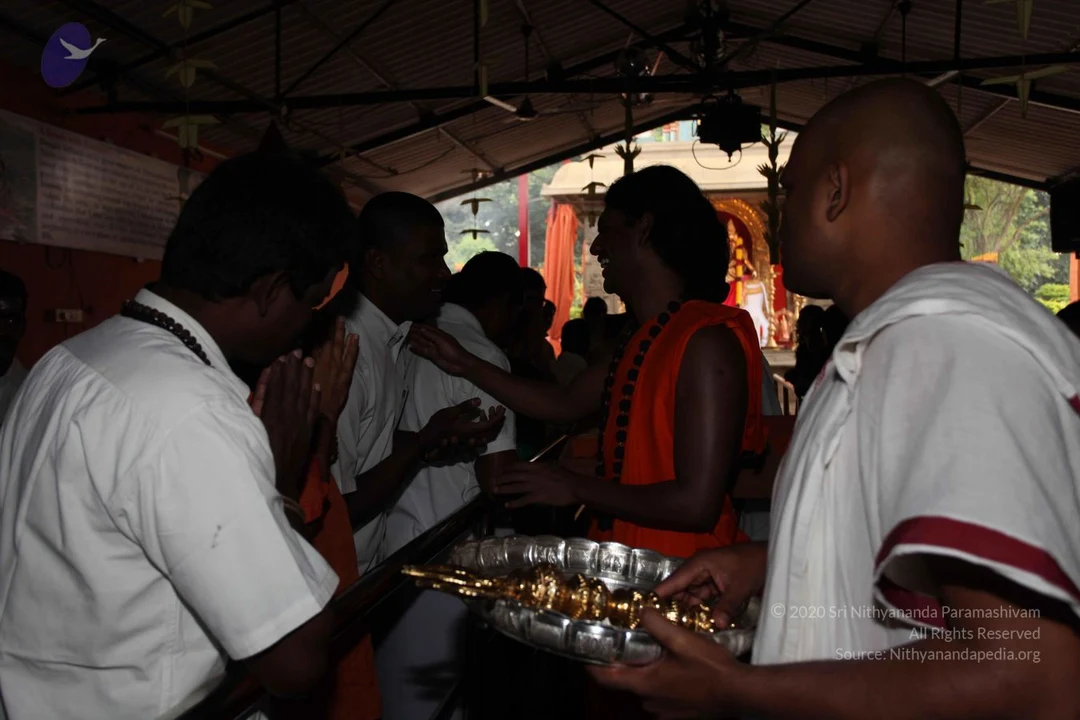
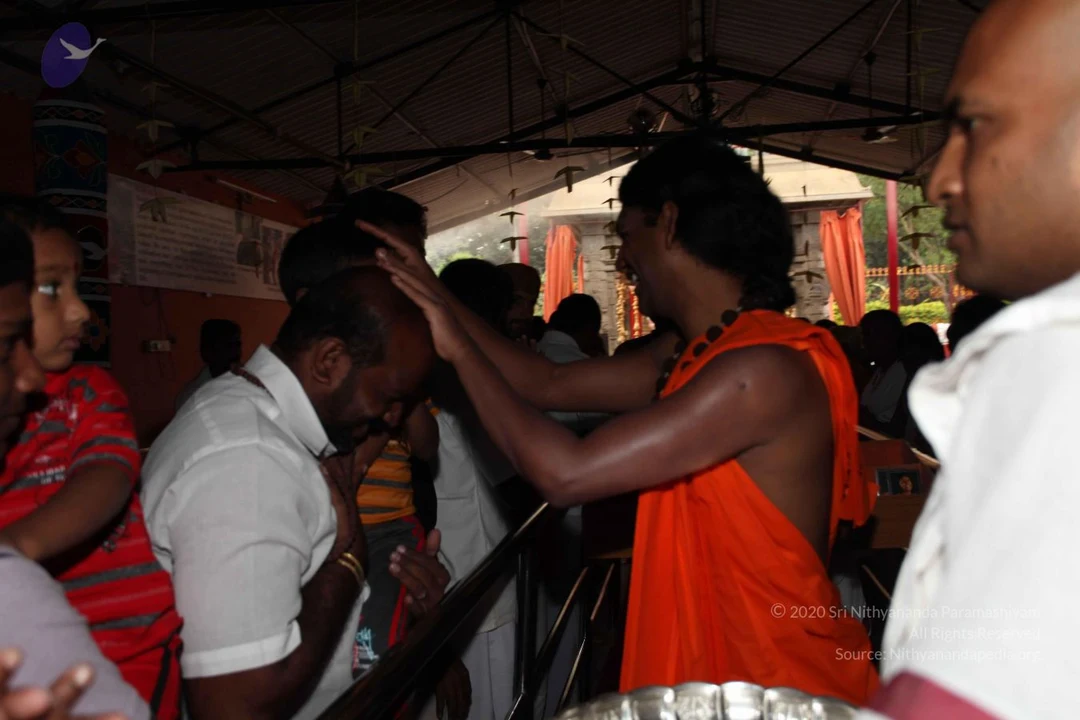
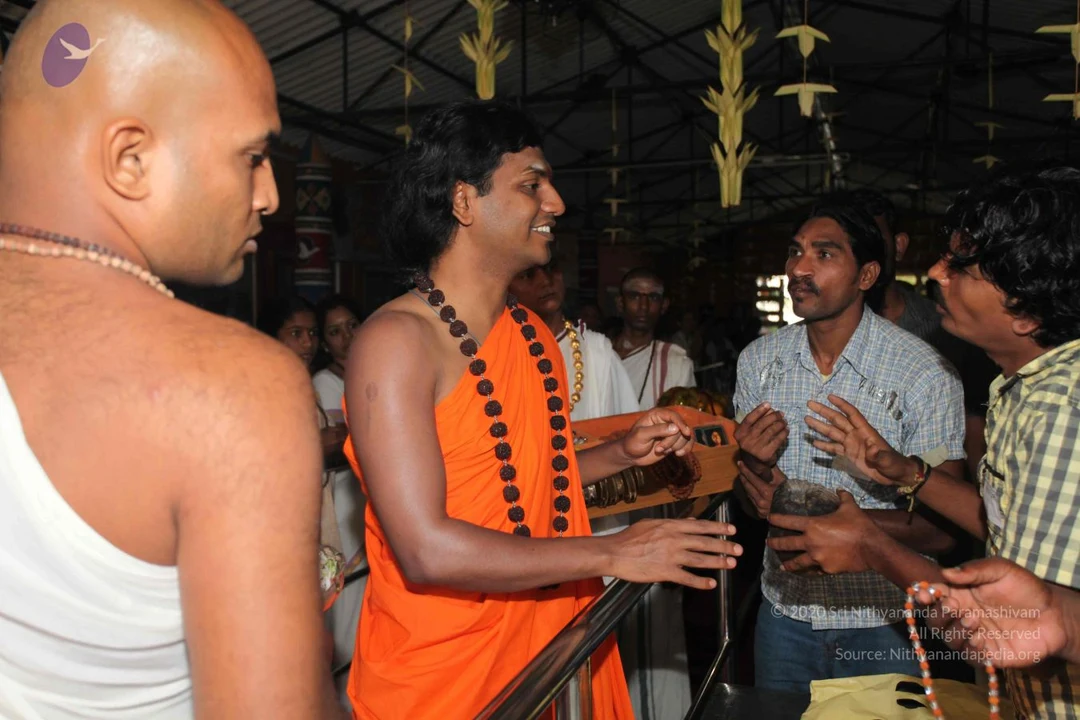
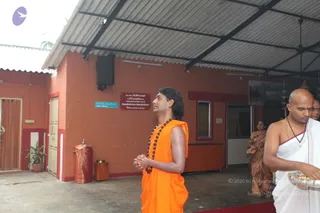
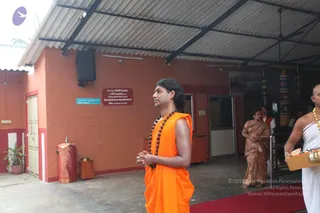
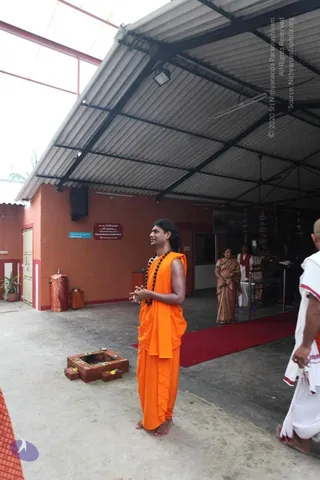
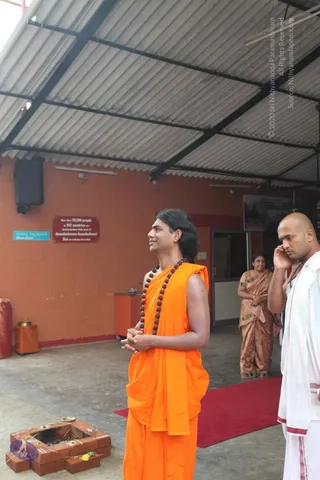
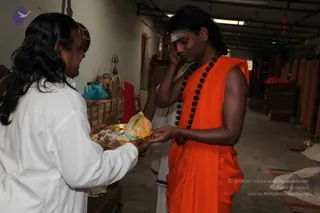
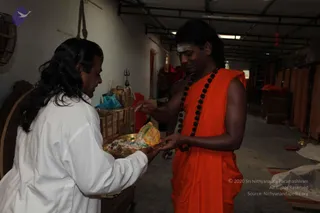
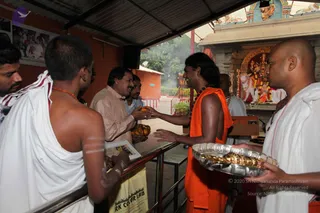
A photograph of a man in saffron-orange robes with a long rudraksha mala around his neck, standing with palms pressed together in a covered open courtyard with a corrugated metal roof. Behind him a bald man in a white dhoti and white shawl with a gold chain holds a silver tray of offerings, and a woman in a brown sari stands further back. A wall plaque in English and a red wall sign are visible, with a tall speaker mounted on the wall and potted plants at the left.A man in a saffron-orange dhoti and shawl, with a long rudraksha mala around his neck and dark hair swept back, stands with palms joined in prayer on a red-carpeted walkway under a corrugated roof, looking upward. Probable Swamiji, identified by long swept-back hair, saffron clothing and rudraksha mala. Behind him a woman in a brown-gold sari walks by, and a shaved-headed man in white dhoti with a gold chain carries a tray of flowers and offerings on the right. A red-walled building with a wall sign, a potted plant and a red-wrapped pillar appear in the background.A man in saffron-orange robes and a long dark rudraksha mala stands barefoot with palms pressed together in namaste on a concrete courtyard under a corrugated roof. Before him is a small square brick fire pit with yellow flowers and a thread wrapped around it. To the right, a barefoot man in white dhoti with red border walks past, and a woman in a brown sari stands on a red carpet near a group of people in white and orange clothing. A red and white wall sign and a red drum-shaped container are visible at left.A photograph inside a covered hall with a corrugated roof and orange-painted walls. A man with long dark swept-back hair, wearing an orange saffron garment and a long rudraksha mala, stands with palms pressed together, looking to the side. Beside him, a bald man in white ritual dhoti and shawl with red border stands holding a phone to his ear. A woman in a brown sari stands in the background near a red carpet. In the foreground is a square brick fire pit with ash and a few flower petals or marigolds placed on it. A red placard on the wall reads about darshan visitors. Probable Swamiji: the standing man in orange with long hair, mala and saffron clothing, described by appearance cues only.A photograph in a plain, bare-walled hall with a concrete floor and fluorescent ceiling lights. On the left, a man in a white shirt with long dark hair and a red-and-white tilak on his forehead holds a brass plate of offerings toward the centre. Beside him, a person in white dhoti stands behind, touching his forehead. On the right, a man in a saffron-orange shawl and a long rudraksha mala with a white-and-ochre tilak on his forehead stands and reaches toward the plate. Behind them are wooden crates, a red cloth, a trident hung on the wall, and shelves of folded fabric.A photograph in a long, narrow hall with a concrete floor and metal roof beams. A man in a white shirt and white trousers, with long dark hair, holds a brass tray of offerings toward a man in an orange-saffron garment with a rudraksha mala and a white forehead mark. The man in orange, with short dark hair, extends his hand over the tray. Behind them are stacked wooden boxes, a trident hung on the wall, cloth bundles and folded orange fabric on shelves. The tray holds flowers, coloured cloth and small items. a person: the man in orange has a rudraksha mala and saffron robe, and the page names him as present.

SARVA-DARSHAN
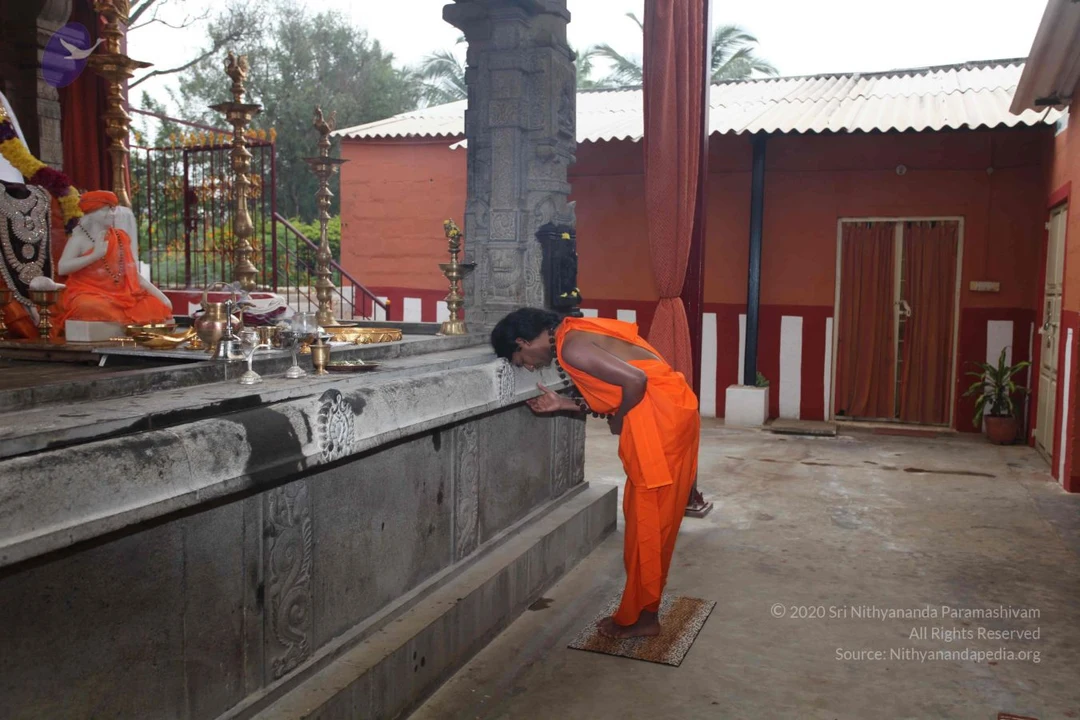
14 photosSource gallery
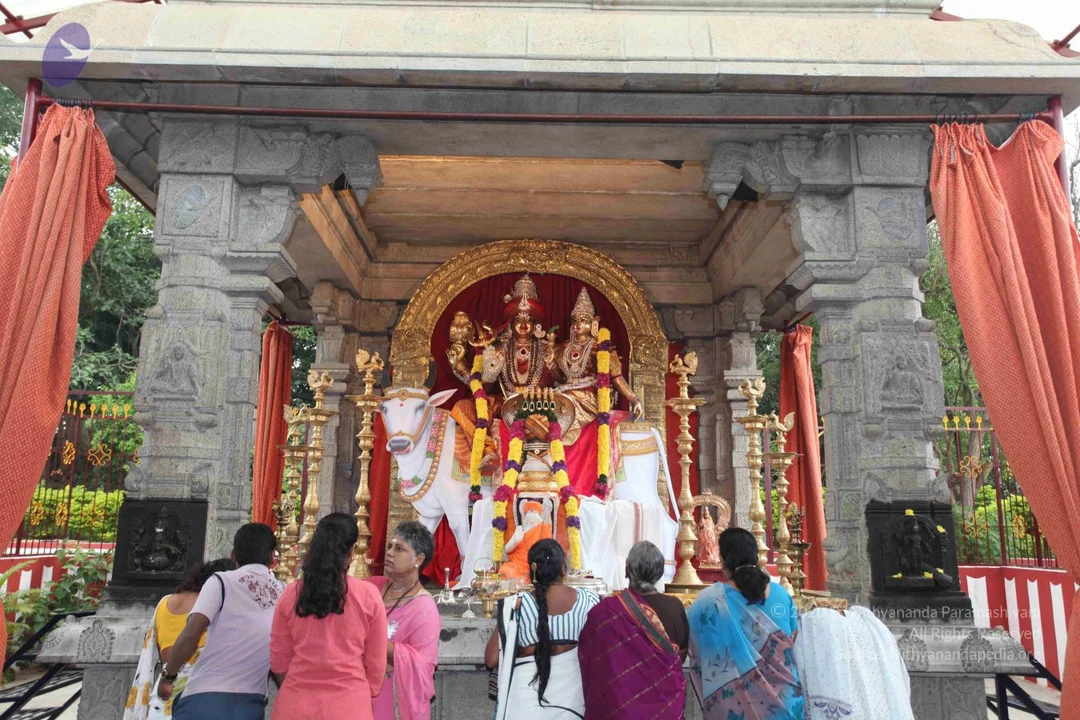
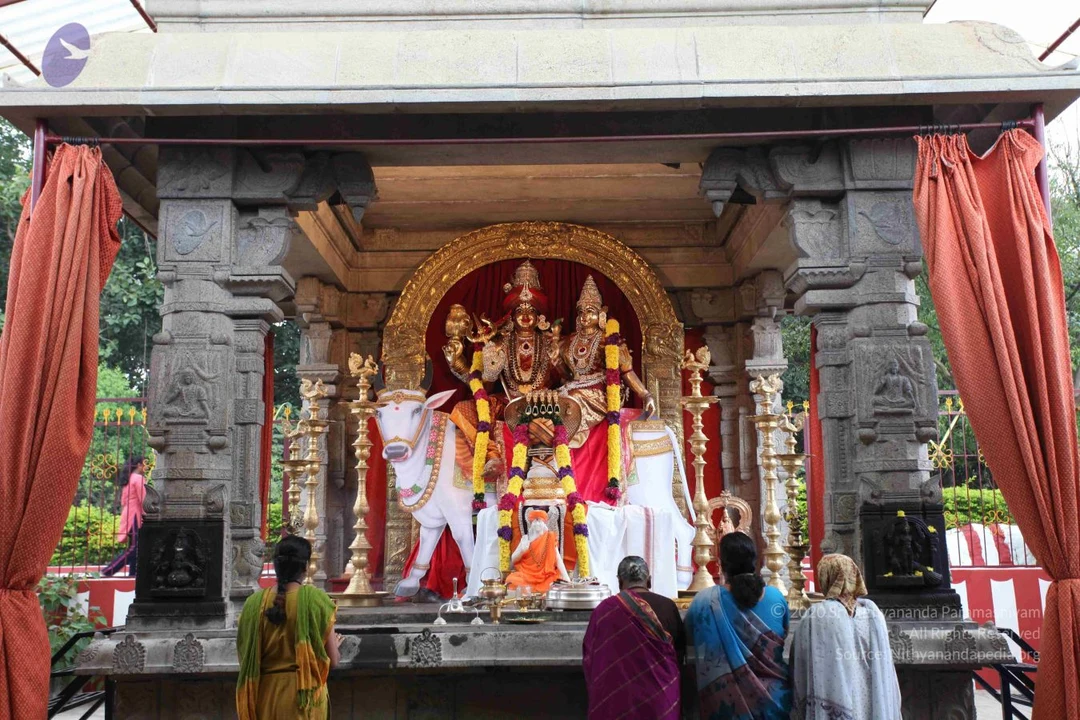
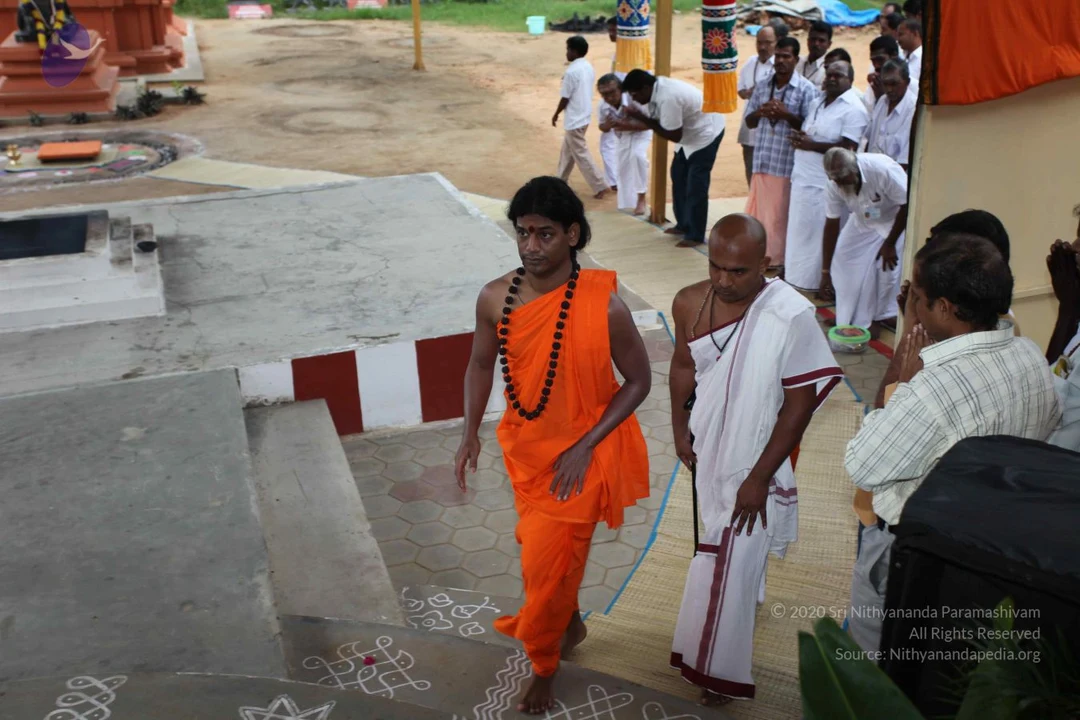
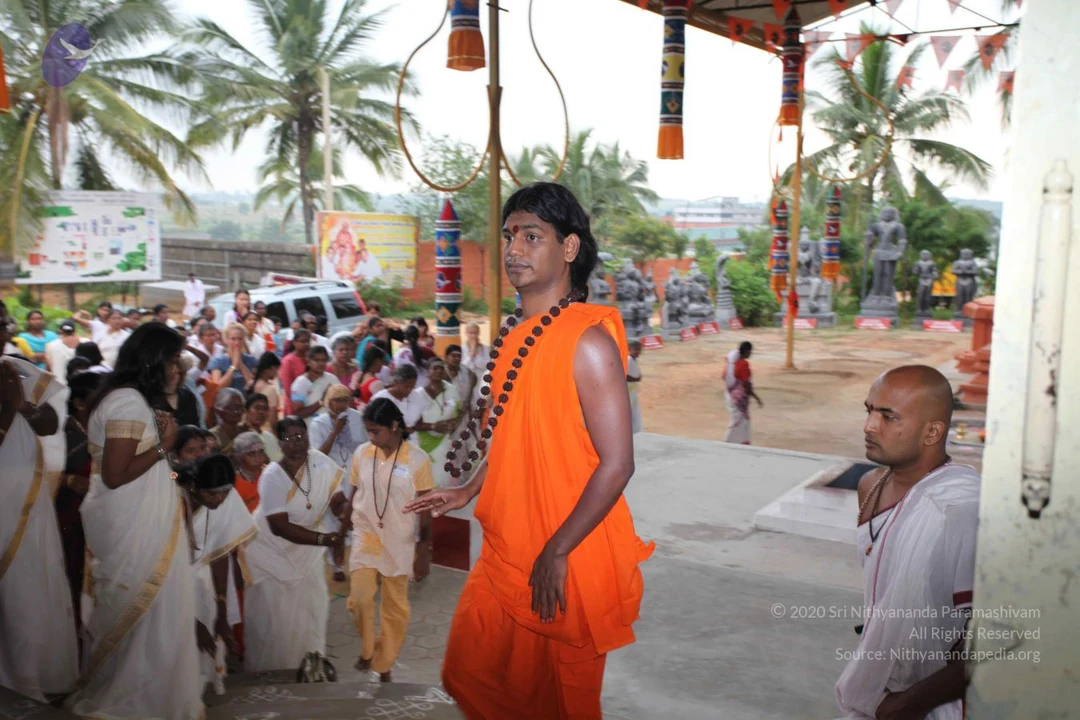
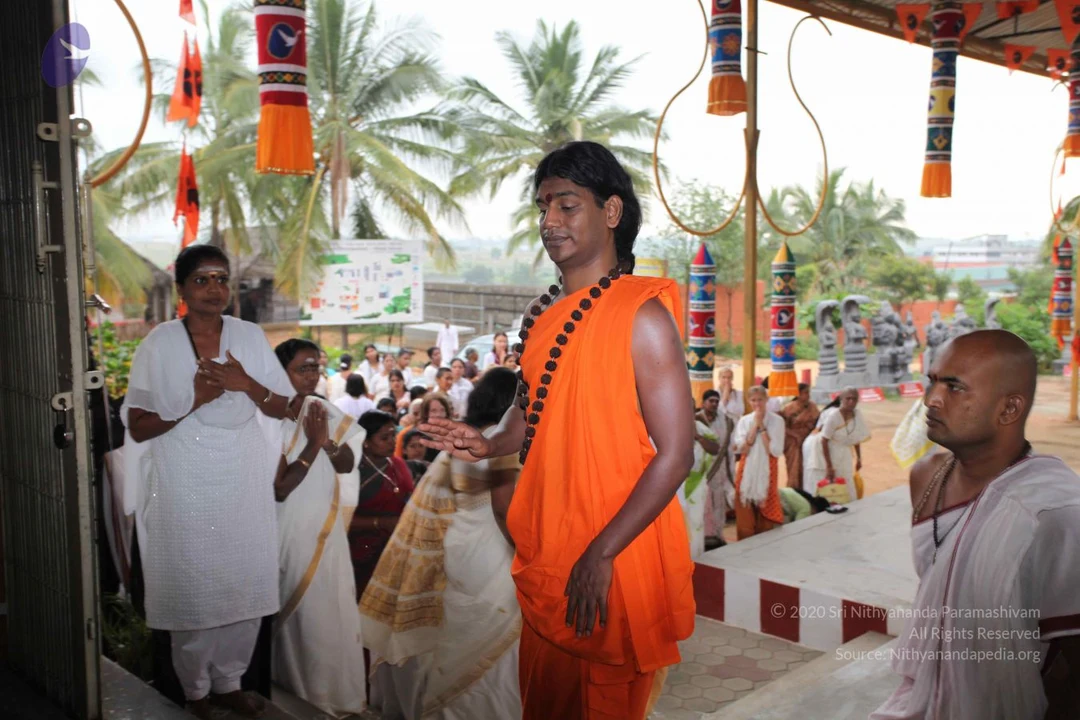
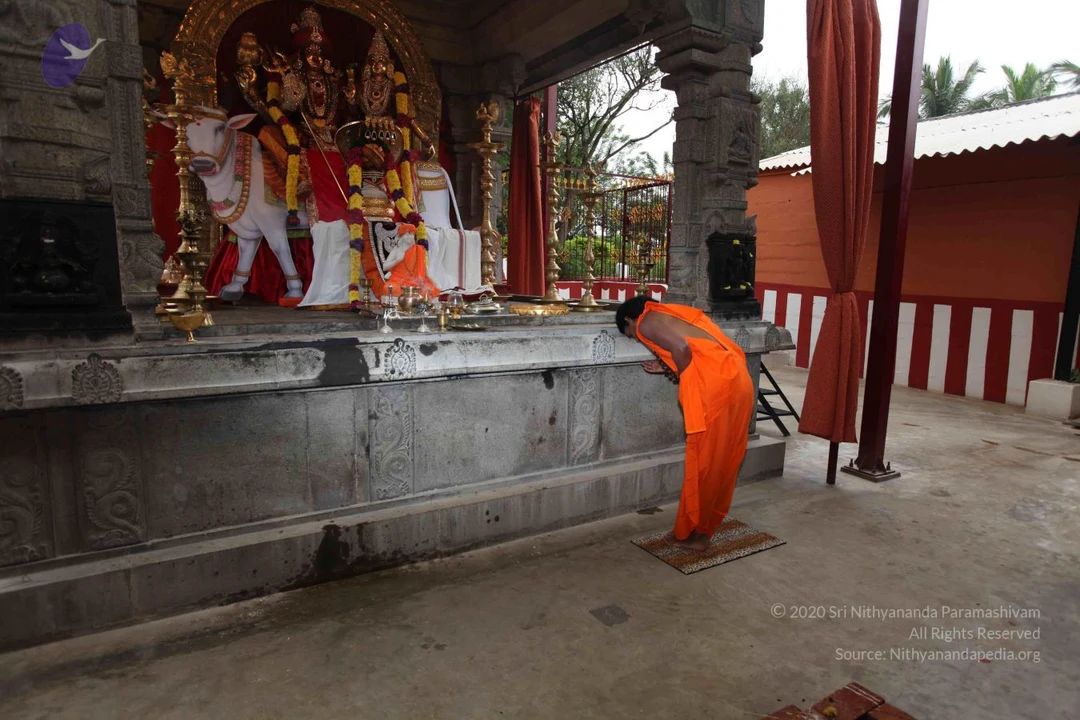
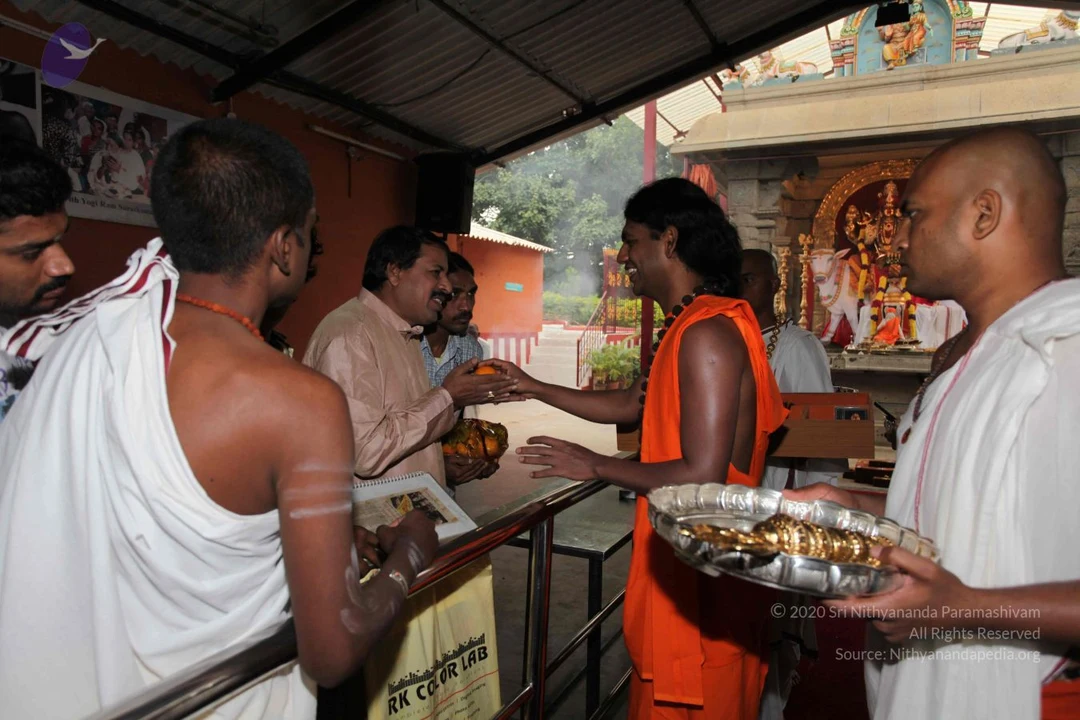
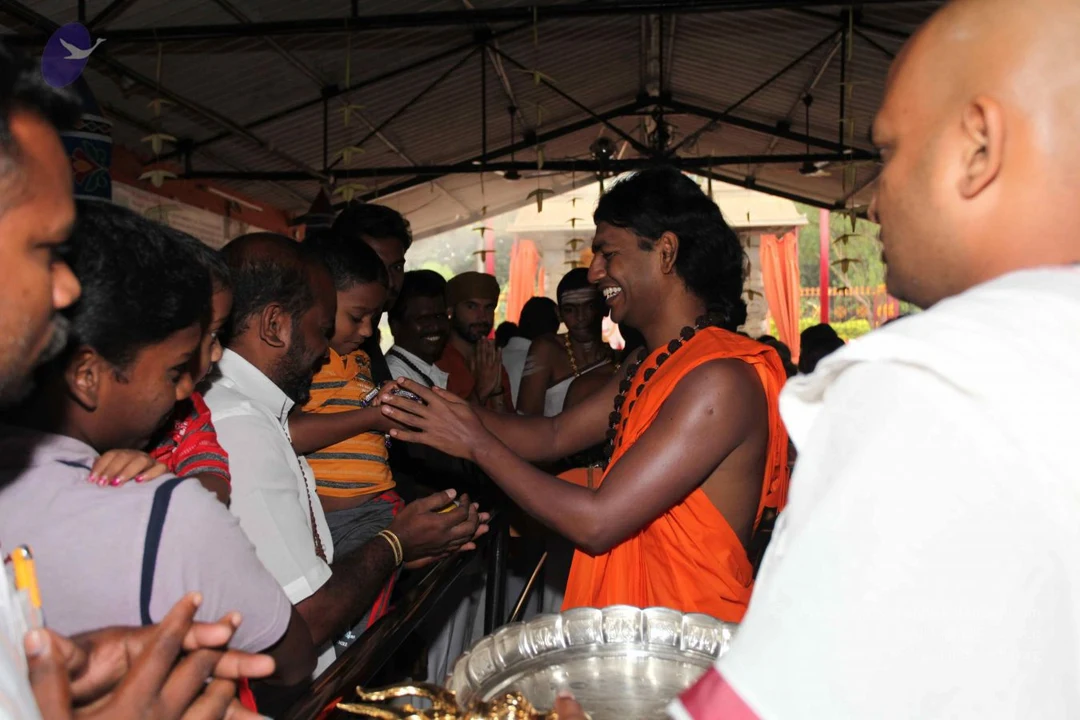
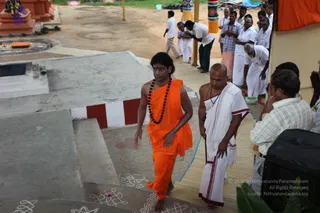
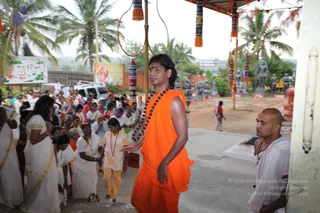
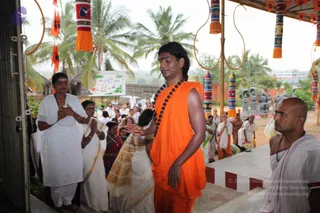
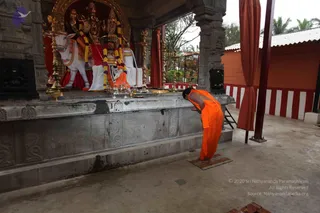
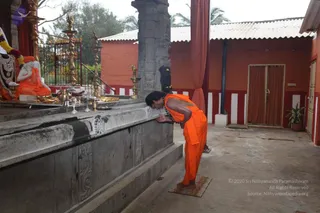
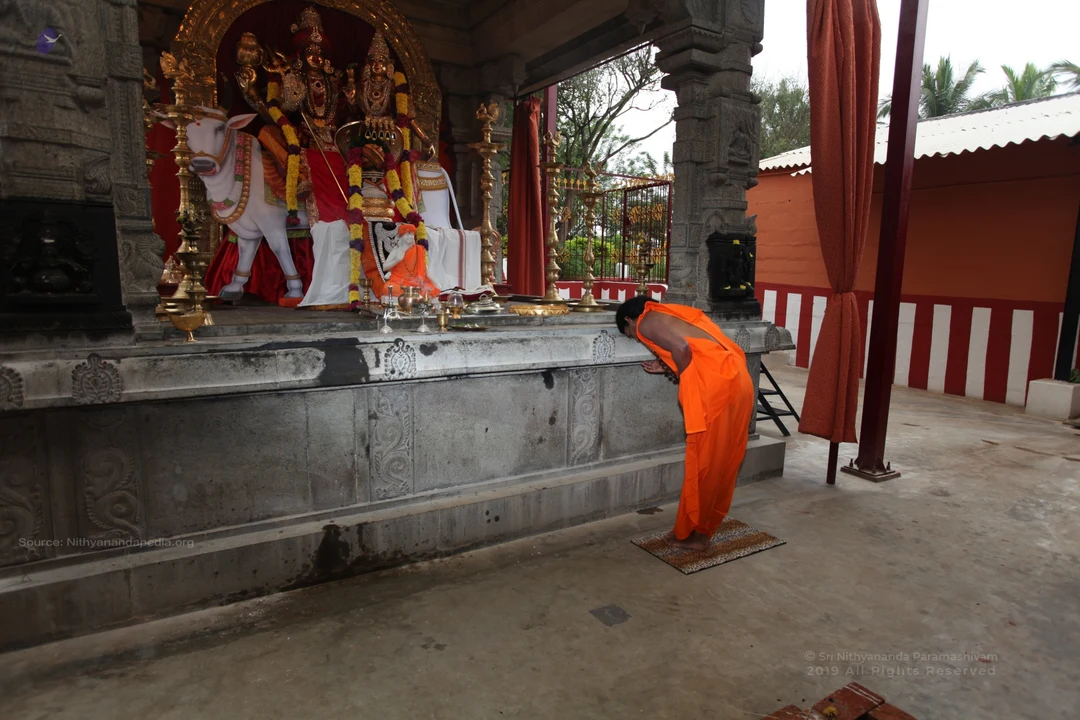
Outdoor temple courtyard with a red-and-white painted step and a grey stone platform. A young man with long dark hair and a dark rudraksha mala around his neck wears a bright orange saffron garment wrapped over his shoulders and bare chest, walking barefoot toward the steps. Beside him, a bald man in a white dhoti and white shirt with a red-bordered dhoti edge, holding a walking stick, follows. Along the right side, several men in white dhotis and shirts stand with hands folded in namaskar and watch. Colourful kolam floor designs are drawn on the ground, and a decorated yellow-and-blue pillar stands at right, with an orange cloth hanging above. The young man has distinctive long swept hair, rudraksha and saffron clothing, so the appearance cues qualify as a person presence, though the face is not used for identity.Outdoor temple courtyard under a covered canopy with hanging orange, yellow and blue tassels and triangular red bunting, with palm trees and grey stone deity statues behind. A man in a loose orange robe with a dark rudraksha mala and a red mark on his forehead walks forward, his long dark hair swept back, with his hands together in front of him. To the right, a bald man in white clothes and a white shawl stands by a pillar. Several women in white saris with gold borders and a few children stand on the left, and more people are visible in the background near a white vehicle. A map-style board and a painted panel stand in the background. Swamiji (probable) is the orange-robed man with long swept-back hair and rudraksha mala, shown walking in the courtyard.A photograph of an outdoor temple-area entrance decorated with hanging colourful tassel banners in orange, red, blue and white. A man with long swept-back dark hair wears an orange saffron robe and a long rudraksha mala, with his right hand extended in a gesture of blessing, and appears to be a person, identified by his long hair and saffron robe with rudraksha mala cues. Beside him a woman in a white blouse and white dhoti-style garment stands with palms pressed together in namaskar, another woman in a white sari with gold border also has her hands folded, and a woman in a red sari stands behind. On the right a bald man in white ritual clothes with a sacred thread and beaded necklace sits near the steps. Palm trees, a signboard and stone sculptures are visible in the background, with more devotees in white and orange behind.A photograph of a shrine with a white Nandi bull and a deity murti decorated with multicolour garlands, set behind a stone platform with brass lamps and offerings. A person in an orange robe with bare upper back bends forward in devotion at the platform edge, standing on a patterned mat. Red-and-white striped curtains hang at the side of the open pillared pavilion, with palm trees beyond.A person in an orange saffron robe bends forward at a grey stone ledge, face lowered toward the stone, hands extended, barefoot on a woven mat in a open-air courtyard. On the left, a seated figure in orange robes with folded hands sits before garlands and brass lamps, flanked by tall brass oil lamps and brass vessels. Behind them are an ornate stone pillar, red-and-white painted walls, a corrugated roof and a red curtain. The bent figure appears to be a devotee performing reverence, with no clear identification of the person.A photograph of a temple shrine area with a tin roof and orange-painted walls. A man in an orange-saffron robe with a dark rudraksha-style necklace stands at the centre, smiling as he receives a yellow-brown fruit from a man in a cream shirt. A bald man in white dhoti and white shawl holds a silver tray of golden-yellow offerings on the right. Another man in white dhoti with a white shawl stands at left, and a man in a checked shirt is behind the counter. Behind them is a shrine with a white bull (Nandi) and a deity murti decorated with garlands and a gold arch. The swami-style figure has long dark hair and distinctive orange clothing and beads, so this is a person in person, though appearance cues are only partly distinctive.

PADA-POOJA
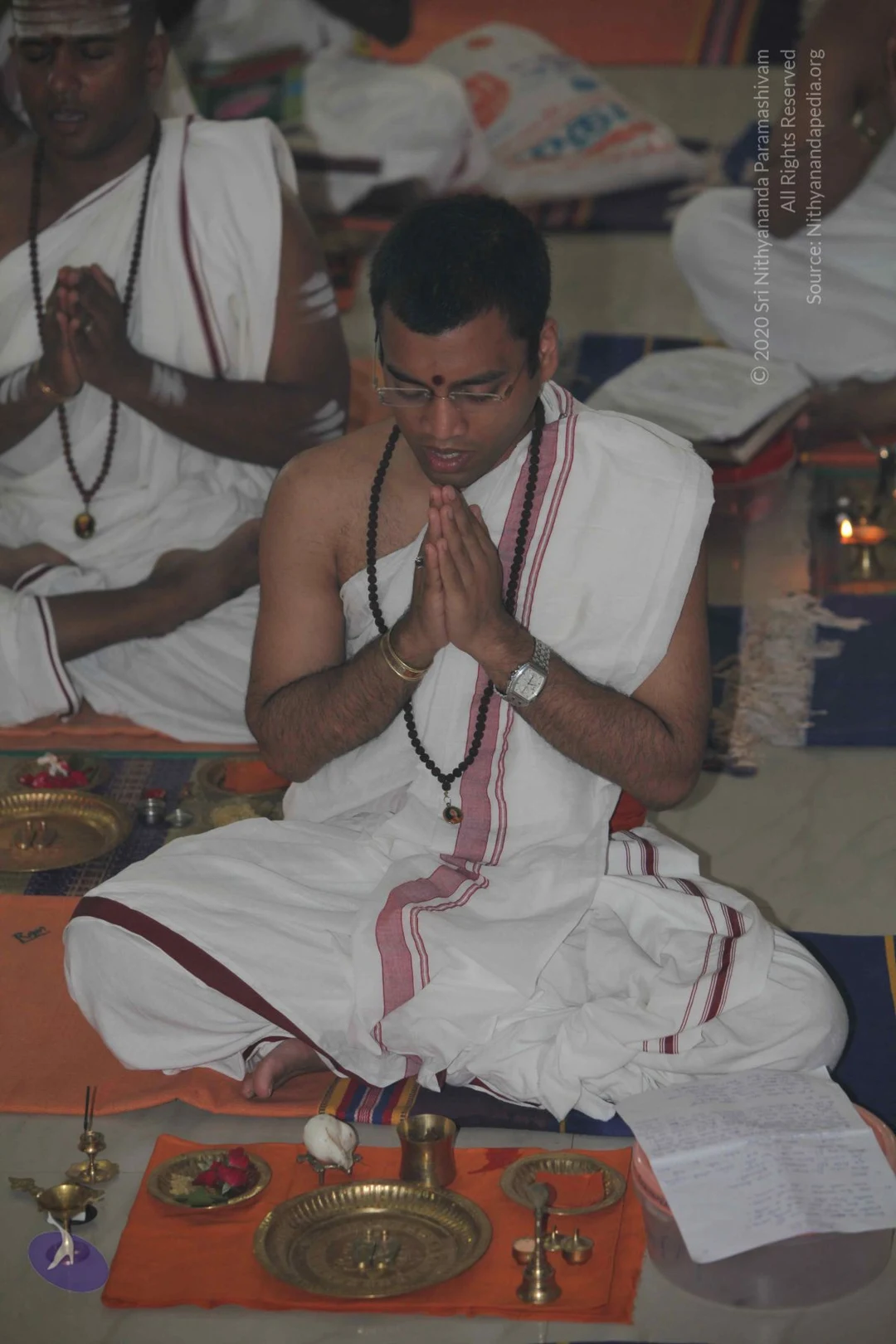
131 photosSource gallery
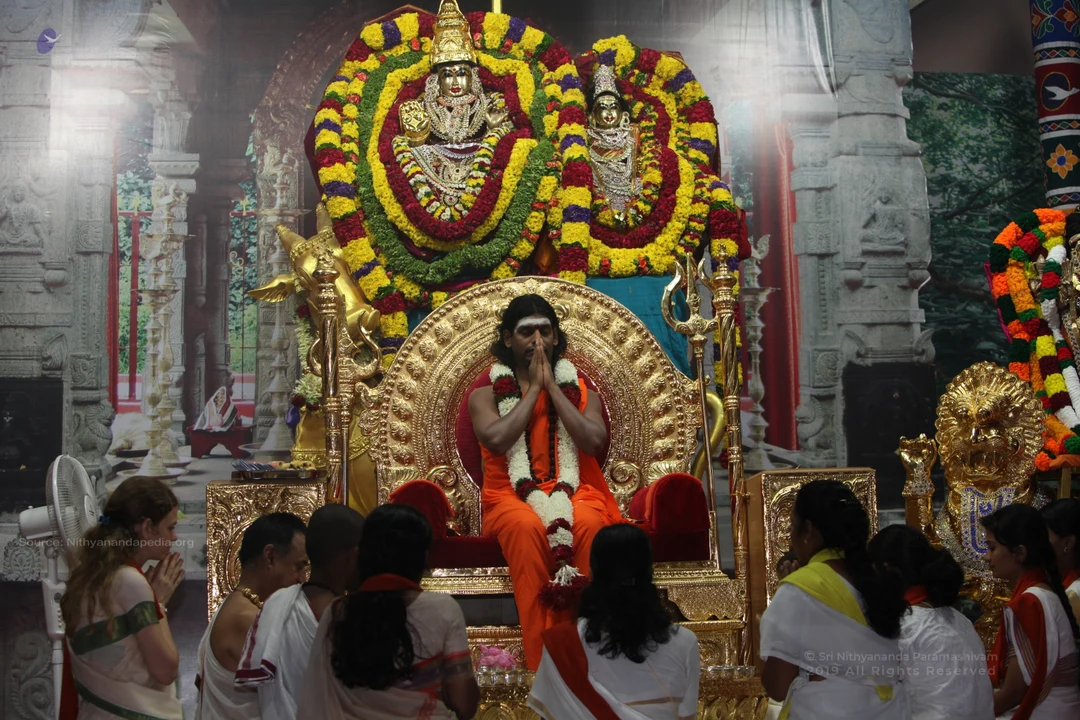
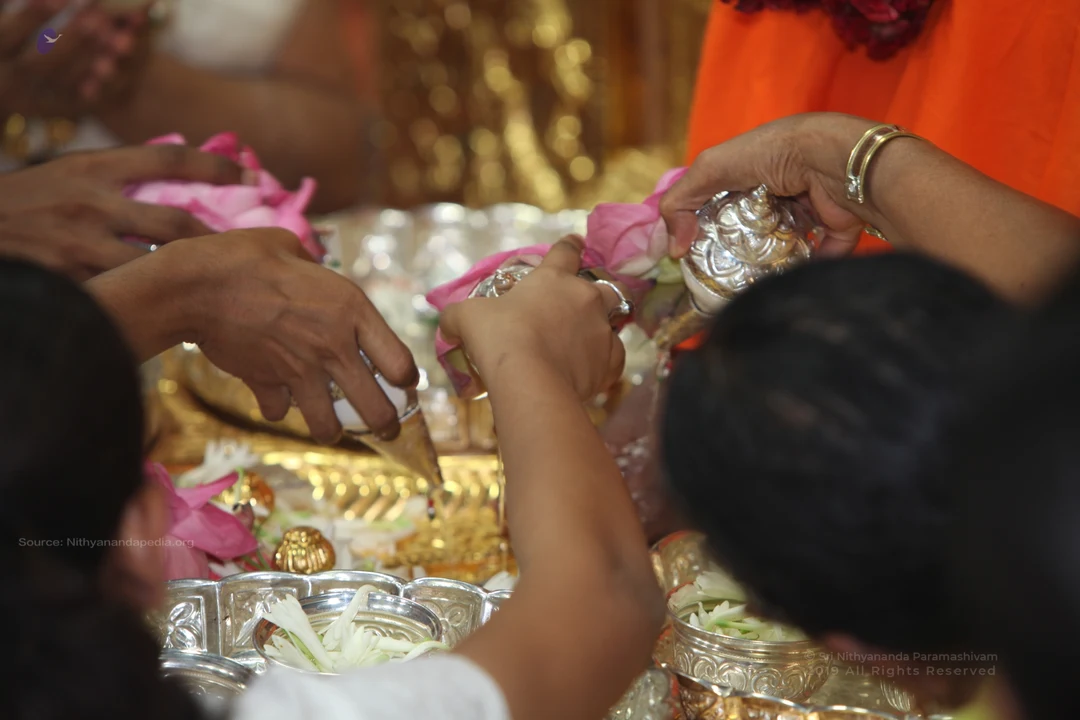
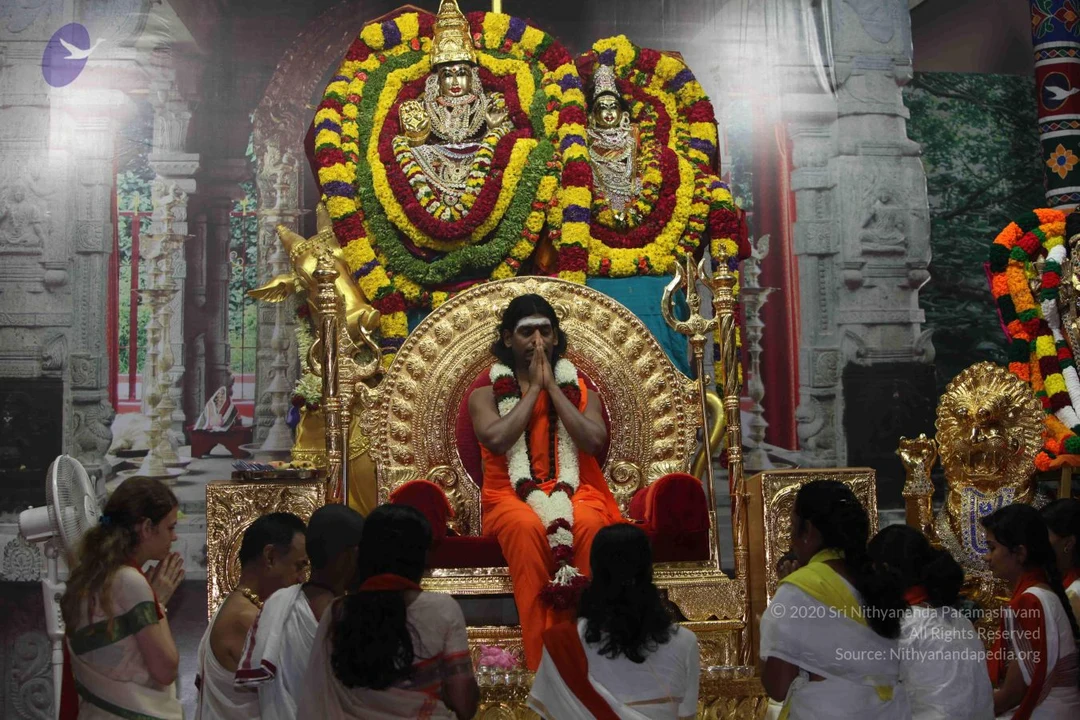
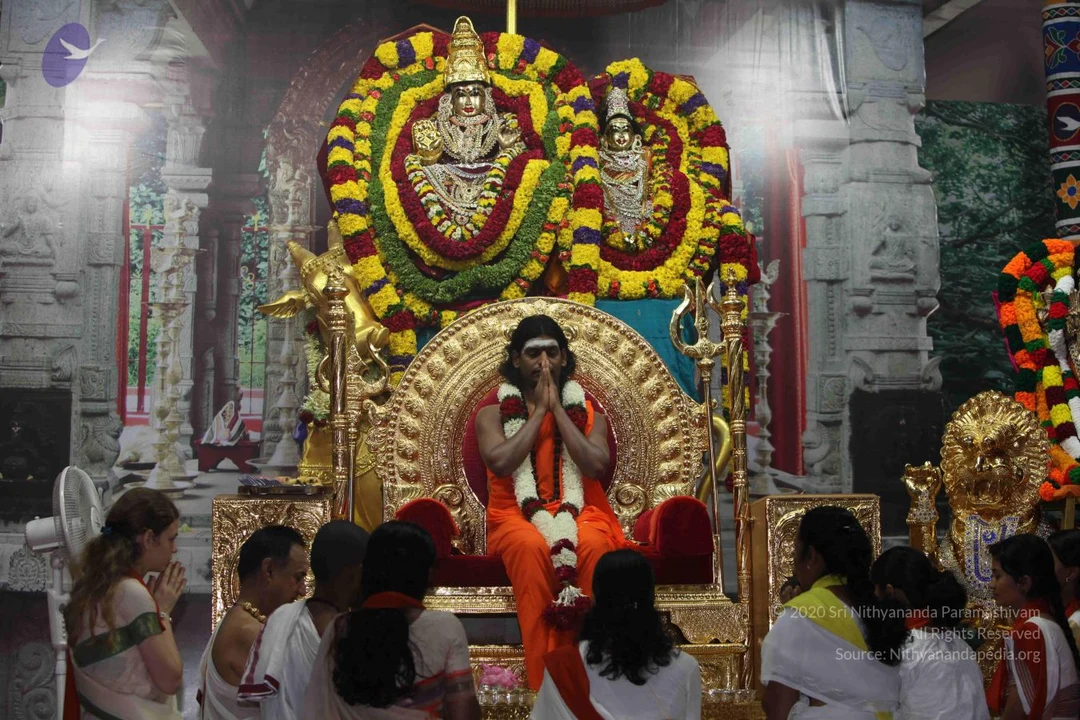
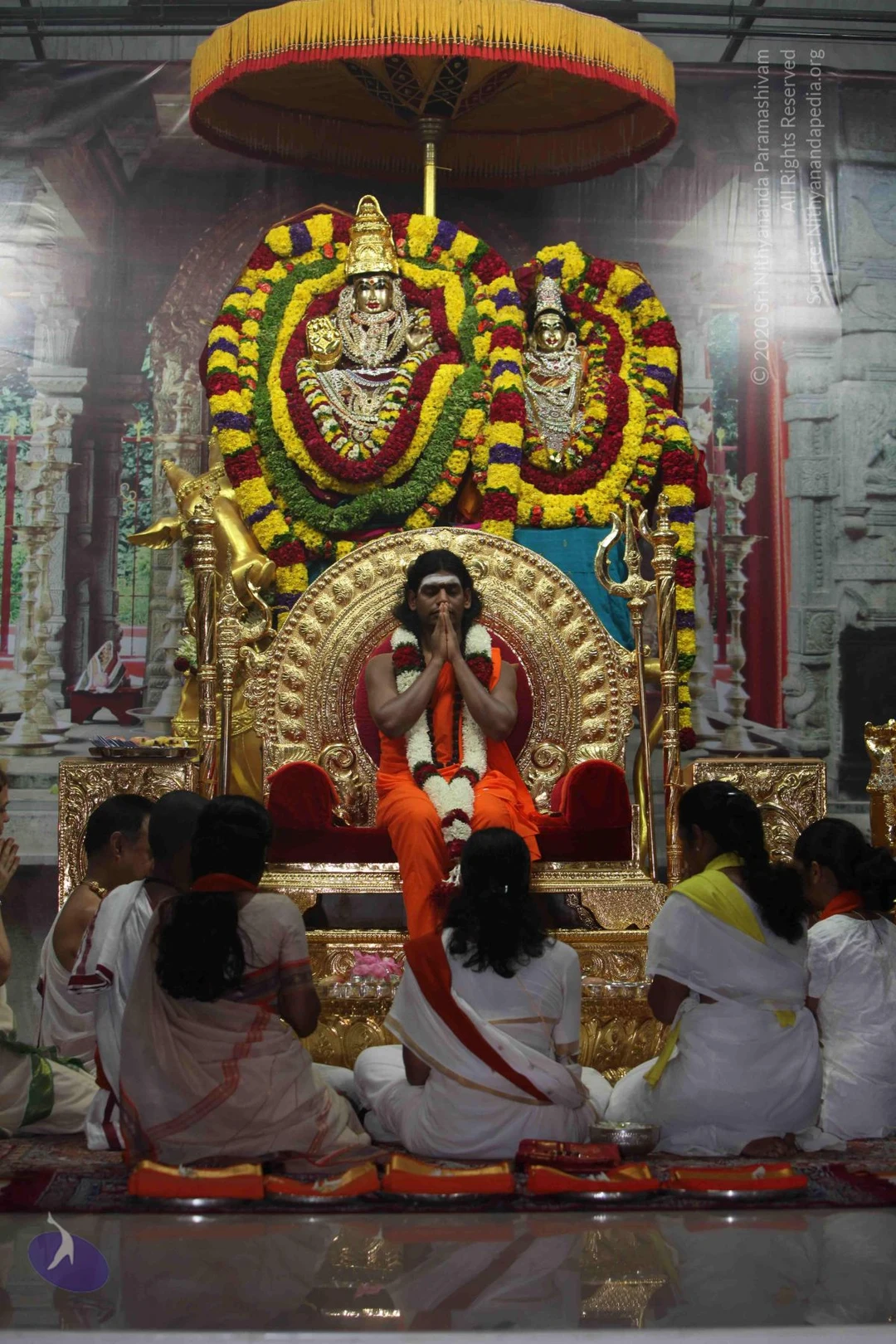
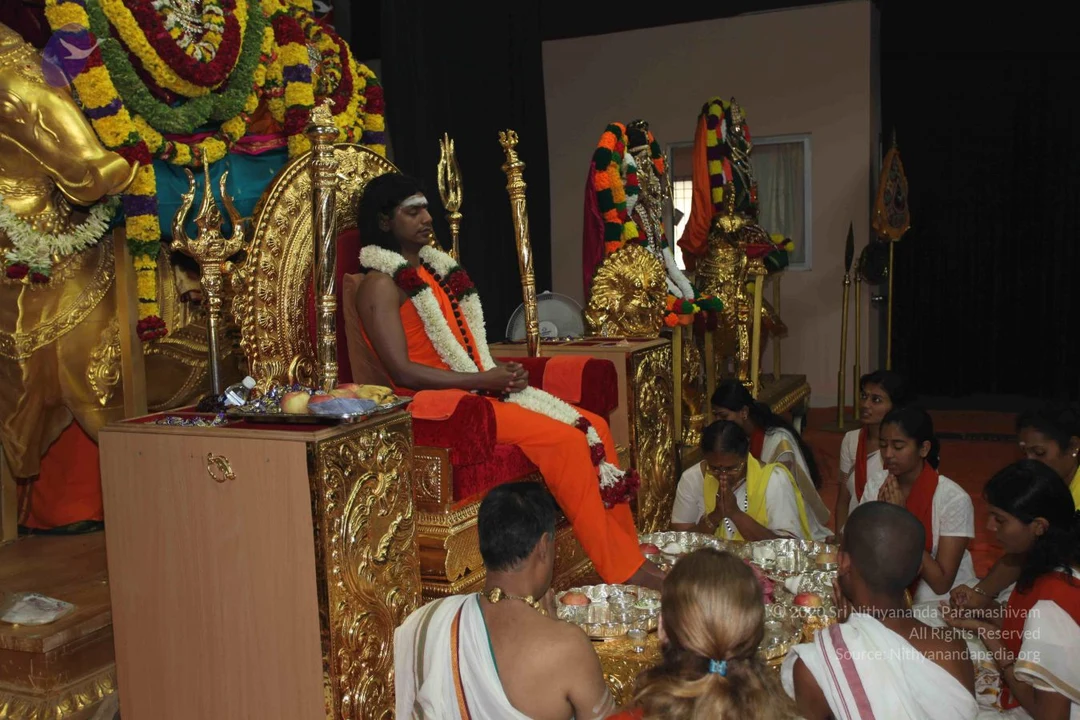
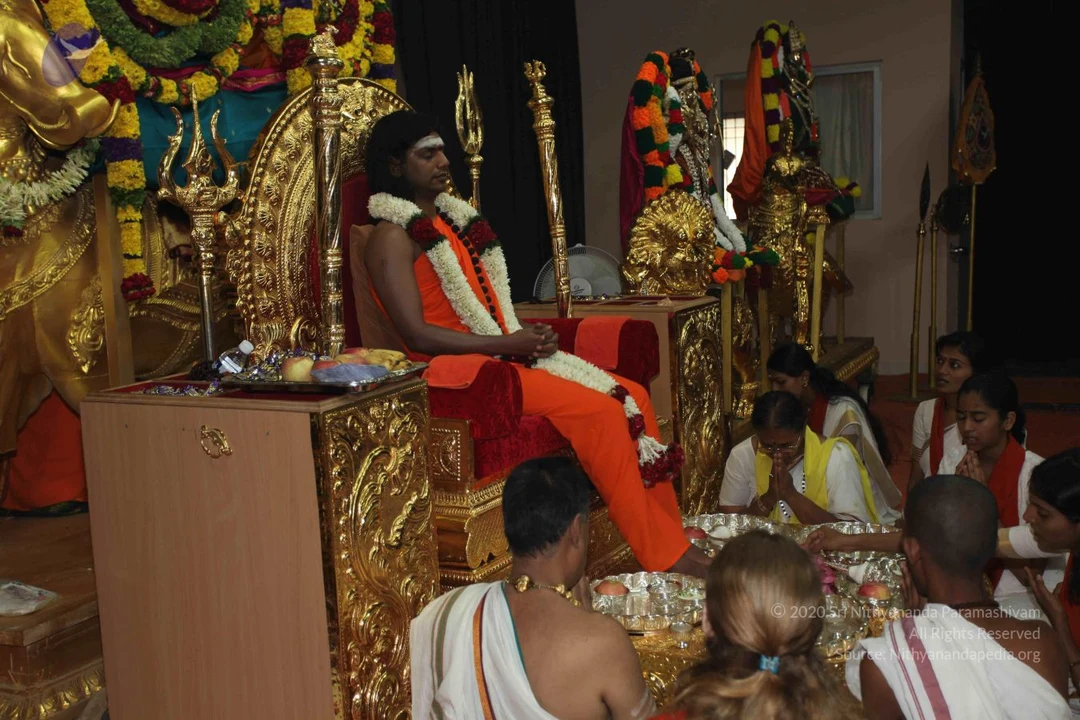
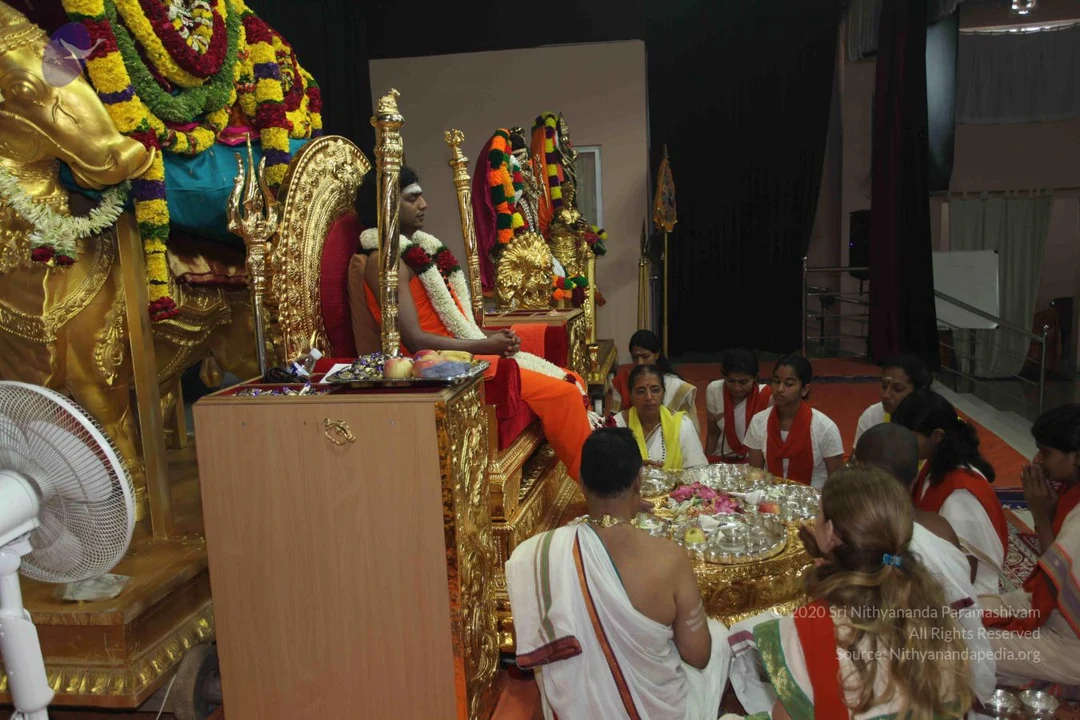
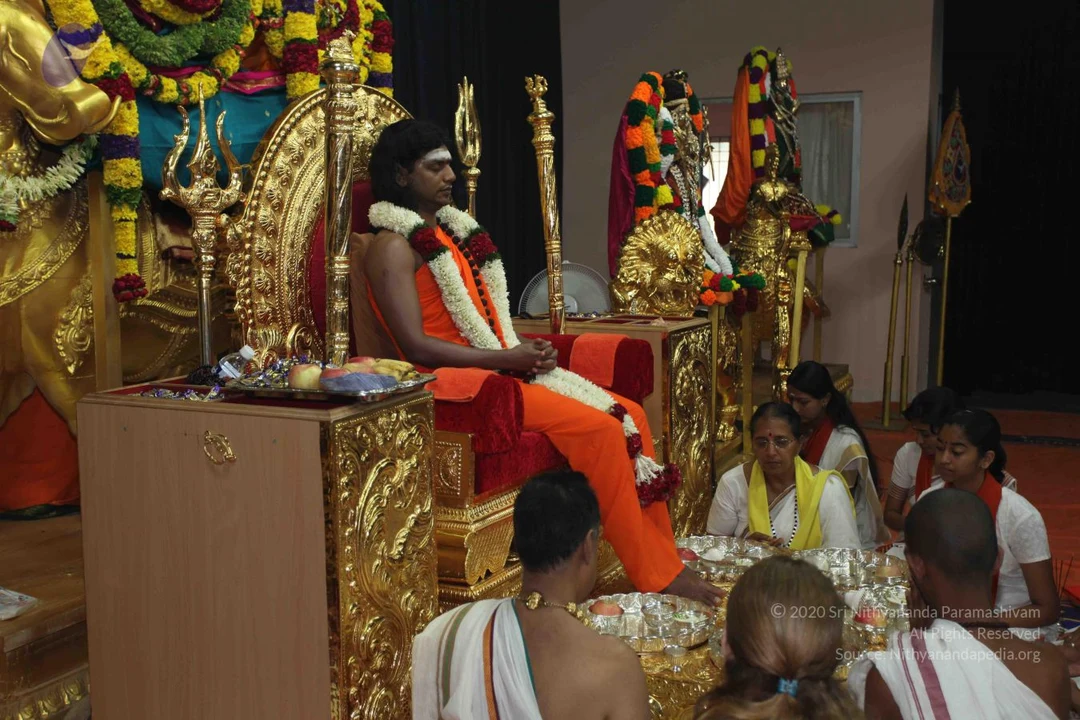
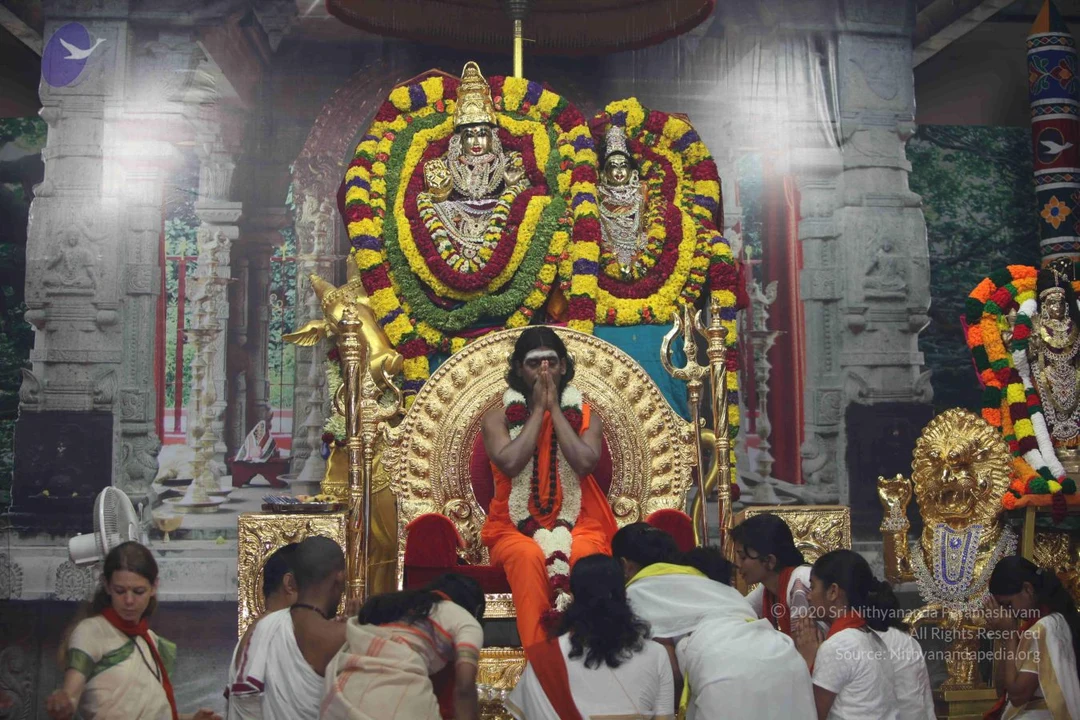
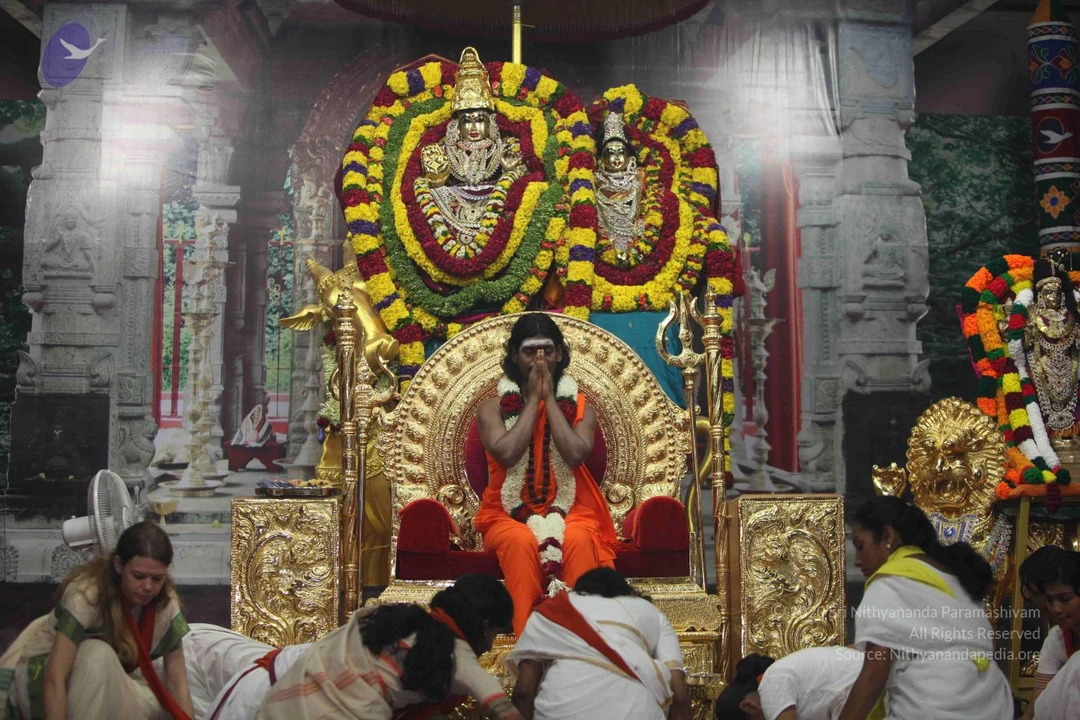
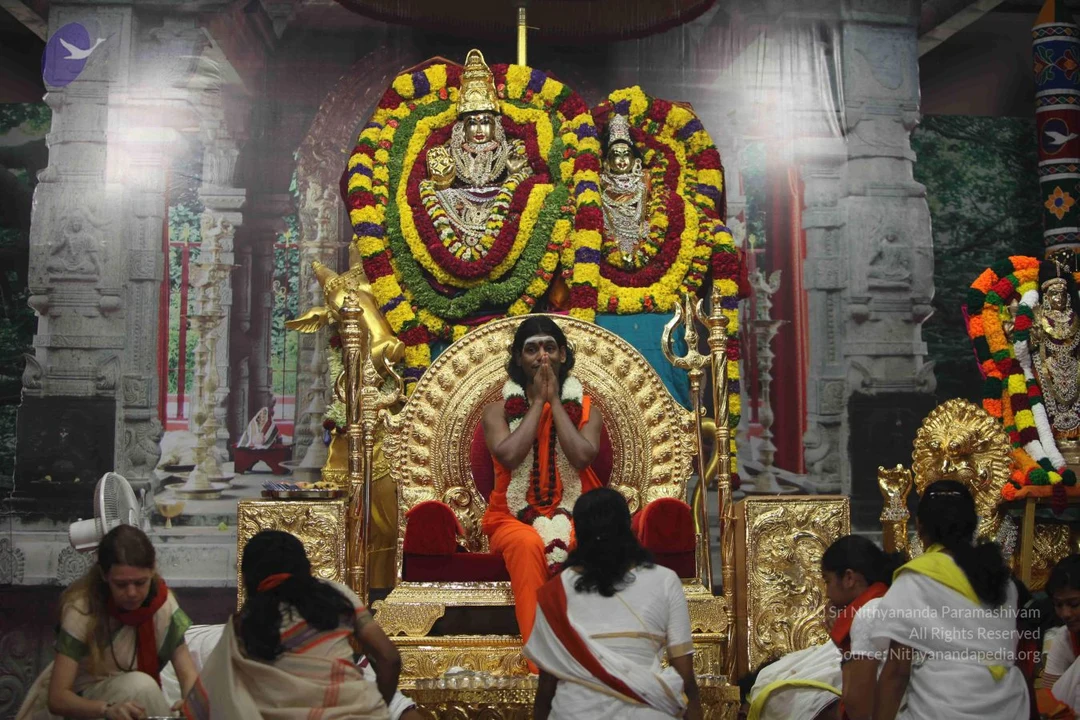
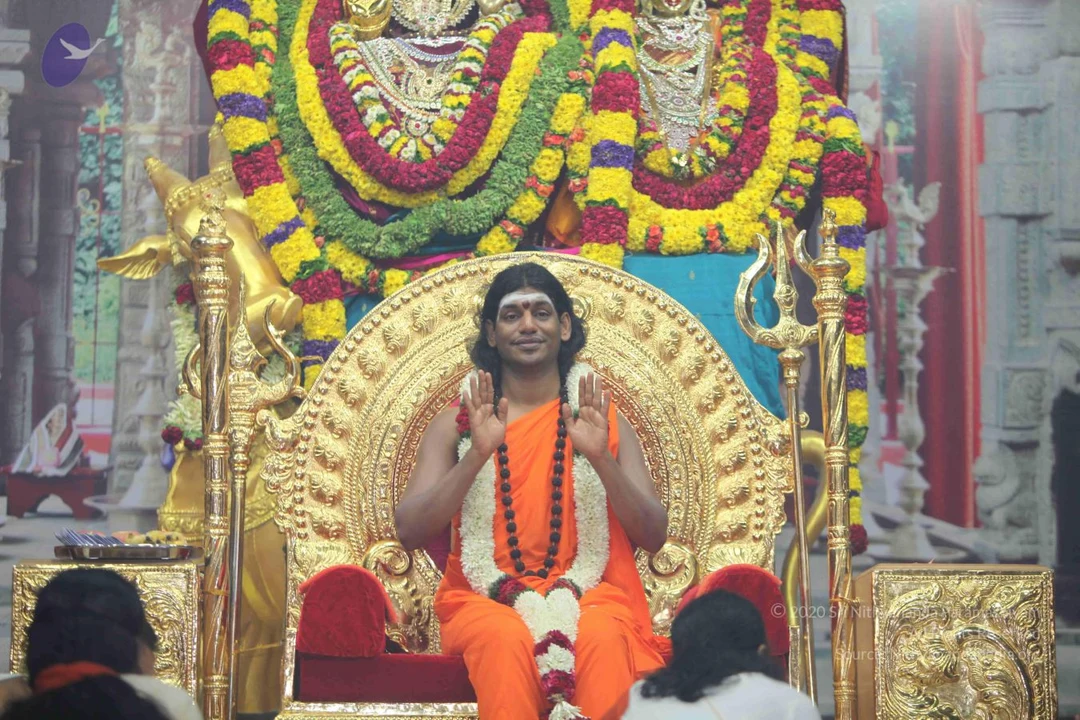
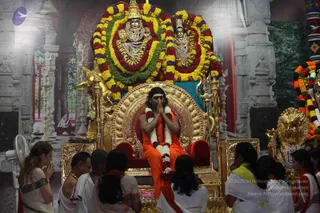
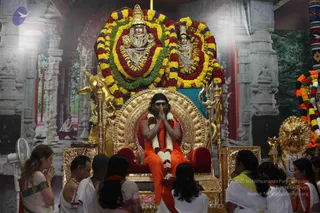
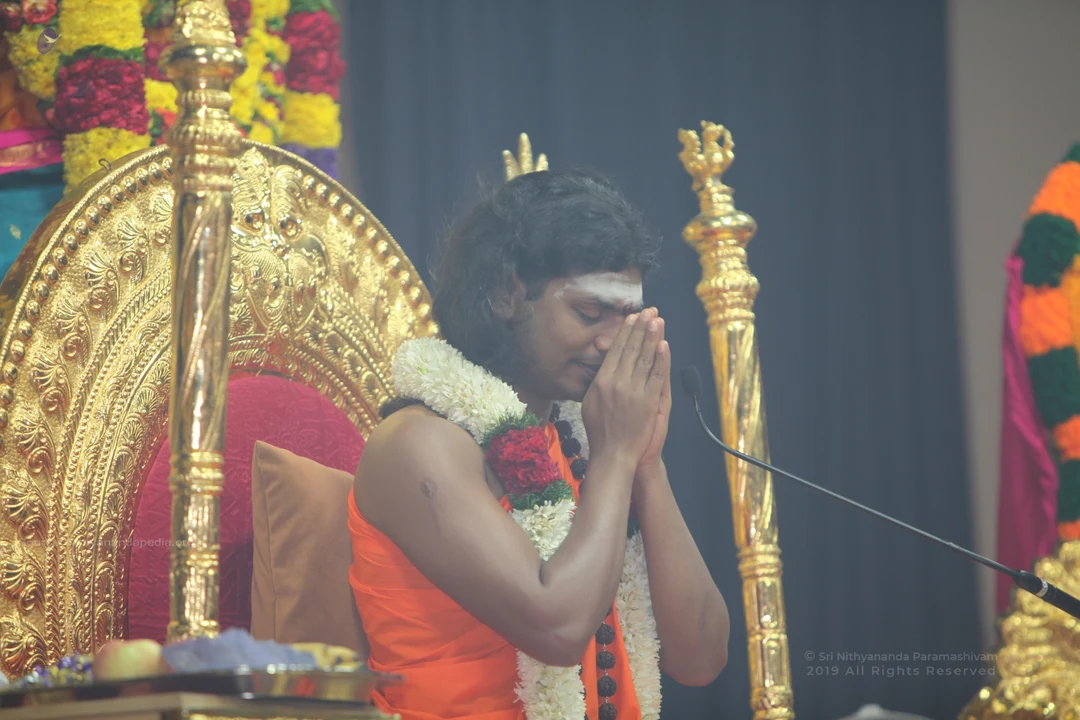
A seated man in an orange saffron robe and long dark hair sits on an ornate gold throne with red cushions, hands pressed together in namaste, wearing a white flower garland. Behind him, deity murti of a goddess with a golden crown and a second figure are framed by large garlands of red, yellow and purple flowers. A golden lion-faced ornament and a trident stand beside the throne. Around him, devotees in white and saffron clothing sit with hands folded, including a woman in a green-bordered sari at left and a man in white at left. A decorative temple-style backdrop with carved pillars and painted scenery surrounds the scene, and a fan stands at the far left. The setting appears to be a satsang with devotees.A seated figure in an orange robe with a long swept-back hair, a white garland and a red and white floral garland, sits with palms pressed together in namaste on a gold ornate throne with red cushions. The figure has a white vertical tilak mark on the forehead and an orange and red cloth draped over the shoulders. Behind the throne two large deity murti statues stand under a garland-draped backdrop of red, yellow and green flowers, and a golden lion-head armrest or decoration sits at the right. Around the throne, people in white and yellow sarees, white dhotis and orange shawls kneel or sit with hands folded in prayer, including a woman in a white and green saree at the left. A pedestal fan and a painted temple-architecture backdrop complete the scene, with a golden trident-like staff standing beside the throne.Photograph of a seated figure in orange-saffron robes on an ornate gold throne with red cushions, hands pressed together in anjali mudra. The man has long dark hair, a white tilak on the forehead and a white-and-red flower garland around his neck. Behind him are large deity murtis of Shiva and Parvati adorned with yellow, red, green and purple flower garlands and golden crowns, beneath a yellow fringed umbrella. A golden trident stands on each side of the throne. Around him sit several devotees in white and cream clothes, some with yellow or orange shawls, seated on the floor on orange cushions, with brass vessels in front. Background shows a painted temple-architecture backdrop and brass lamps. a person: the seated figure in saffron with long hair, white tilak and garland on a throne, presiding over the gathering.A photograph inside a temple hall: a man with long dark hair and an orange saffron robe, wearing a white flower garland with red blossoms and a rudraksha-style mala, sits with palms joined in namaste on an ornate gold throne with red cushions. Behind him, a deity murti pair in gold with a crown, silver ornaments, and dense garlands of yellow, red, green and purple flowers stands beside a gold bull statue; a golden trident rests at the throne's side. Several people in white dhotis and saris sit on the floor in front, seen from behind, with orange cushions and small brass bowls nearby. The man's appearance is consistent with a probable Swamiji through his saffron robe, long hair, mala and ceremonial throne, so he is labeled as such.A man in saffron-orange robes sits on an ornate gold throne with red cushions, a white and red flower garland around his neck and a rudraksha mala, a white tilak on his forehead, and palms raised in an address gesture. Behind him stand two golden murti of deities, decorated with yellow, red, green and purple flower garlands, one wearing a golden crown; a gold trident rests beside the throne. In the foreground, several devotees in white clothes sit on the floor facing him, some with yellow and orange shawls, and brass plates of offerings lie nearby. Swamiji (probable): the seated man has long swept-back hair, saffron robes, rudraksha mala and a ceremonial garland, consistent with the page's reference to a satsang talk.A seated man in an orange saffron garment with a white and red flower garland and a rudraksha-style bead mala sits on an ornate gold throne with red velvet cushions, arms spread in a teaching gesture. Behind him, two large deity murtis, one with a gold crown and the other with ornate gold jewellery, are decorated with yellow, red, green and purple flower garlands. A golden bull figure and a gold trident stand beside the throne. Several devotees in white clothing sit on the floor in front of him, facing the throne, with brass plates and offerings nearby.
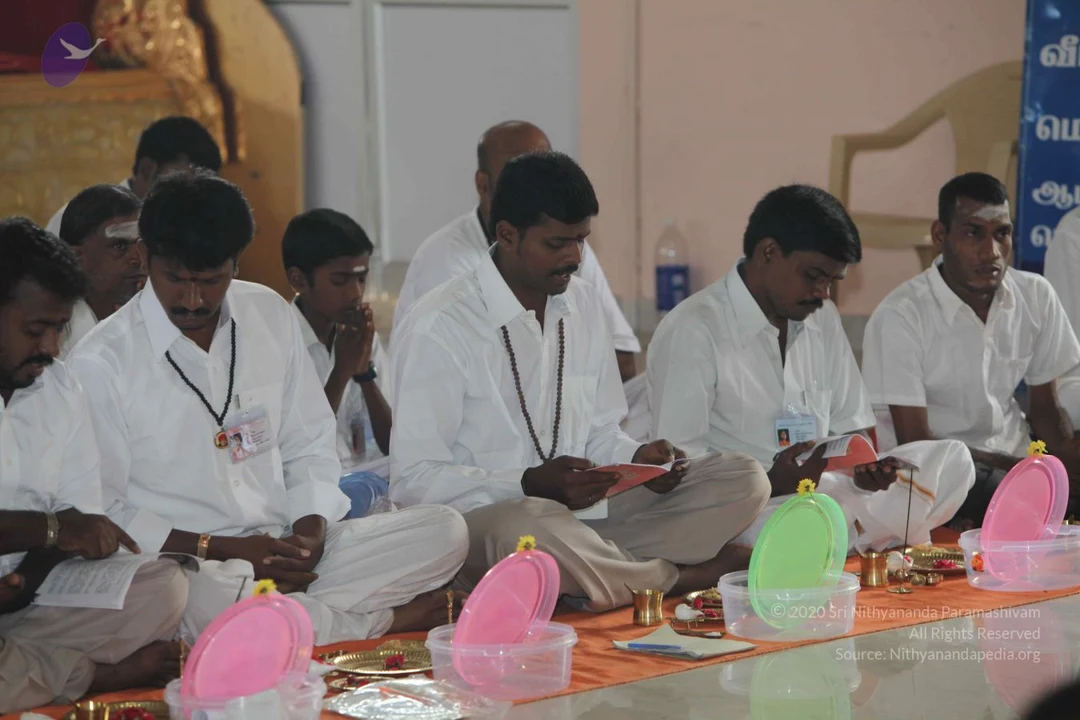
NITHYA-SATSANG
57 photosSource gallery
A man with long swept-back dark hair sits on an ornate gold throne with carved scrollwork and red cushions, palms pressed together in prayer with eyes closed. He wears an orange-saffron robe, a white garland with red and pink flowers, and rudraksha beads, with a white vibhuti line and red kumkum dot on his forehead. A microphone stands before him. Behind the throne are gold trident staffs, a golden deity statue, and a backdrop of yellow, red and green flower garlands with a blue cloth. Swamiji (probable): long hair, saffron clothing, rudraksha mala and throne align with the page's claim.A man seated on an ornate golden throne with a red velvet cushion, eyes closed and palms pressed together in namaste. He wears an orange saffron robe, a white flower garland with red blossoms, and a rudraksha mala. A white-and-red forehead mark is visible, and a microphone stands before him. Gold trident-topped staffs and a golden lion-form armrest flank the throne, with yellow and red marigold garlands behind.A seated man in saffron-orange robes sits on an ornate gold throne with red cushions, palms pressed together in namaste before a microphone stand. He has long dark hair swept back, a white flower garland and a rudraksha-style mala, and a bare-chested build visible at the shoulders. Behind him, large garlands of yellow, red and orange flowers frame two silver-adorned deity murti, and a golden lion stands at the right beside another garlanded figure. A gold pillar-patterned temple backdrop and a standing fan complete the satsang stage.A seated man in orange robes sits on an ornate gold throne with red cushions, hands pressed together in namaskar at a satsang stage. He has long dark hair and a white garland around his neck. Behind him stand two decorated deity murtis, one crowned, framed by large garlands of red, yellow and green flowers. A golden lion figure with a jeweled chest sits at the right, a garlanded deity figure stands further right, and a microphone stand and white pedestal fan are at the left. The backdrop shows a painted temple-like scene.A seated man in saffron-orange robes sits on an ornate gold throne with red cushions, palms pressed together in namaste before a microphone stand. Long dark hair falls past his shoulders and he wears a white flower garland. Behind him are large garlands of yellow, red and green flowers draped over two deity murti figures, one crowned, in a temple-style backdrop with carved pillars. A gold lion-form ornament and a trident stand beside the throne, with a floral arrangement at right and a pedestal fan at left. Photo from a satsang-style public talk.A man with long swept-back dark hair sits on an ornate gold throne with red velvet cushions, wearing an orange saffron robe, a rudraksha mala, and a white and red flower garland. He has a red tilak on his forehead and rests his hands together in his lap. A trident-topped gold staff stands at the right, a microphone is in front of him, and behind him are yellow, red and purple flower garlands with a blue cloth backdrop. Swamiji (probable) is seated in front as the speaker during a satsang discourse, with the orange robes, rudraksha mala and long hair as the distinguishing cues.