Skip to content
Friday

22 October 2010

Awaken Your Extra Sensory Powers Through Super DNA: Nithyananda Morning Message (22 Oct 2010)

Dated photos
538
Source pages
1
Media
2
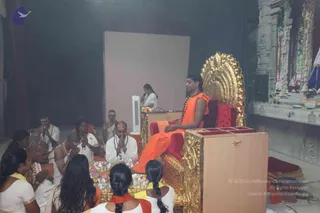
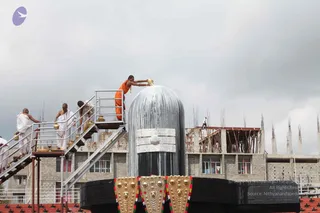
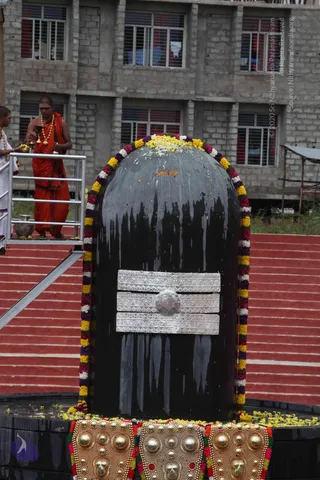
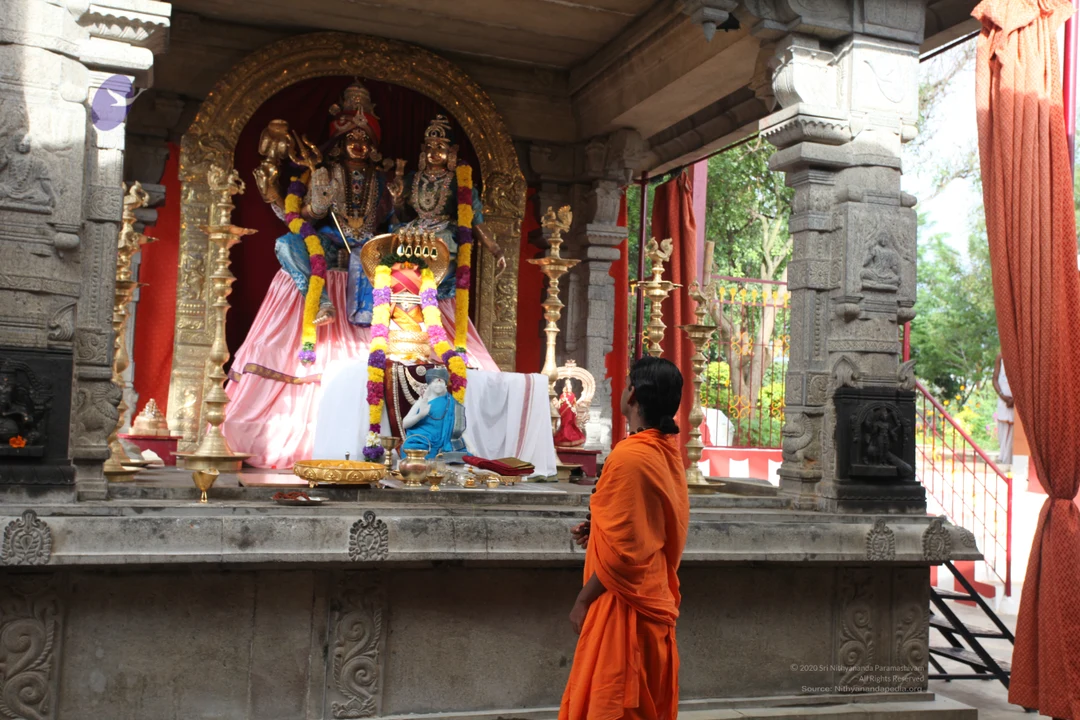
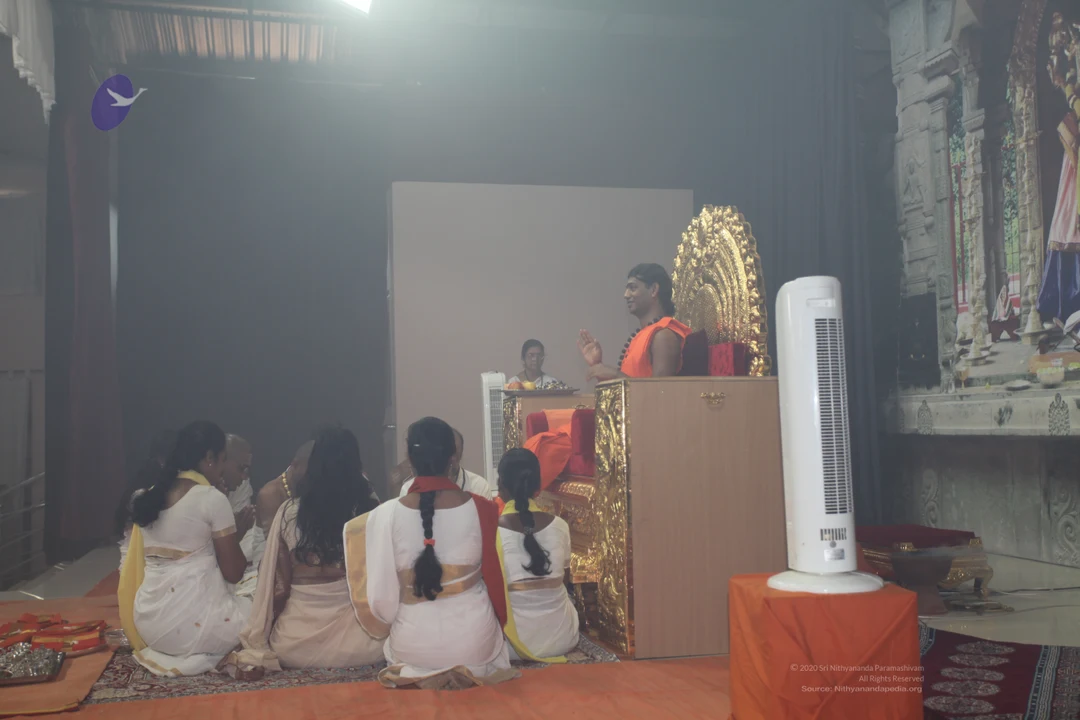
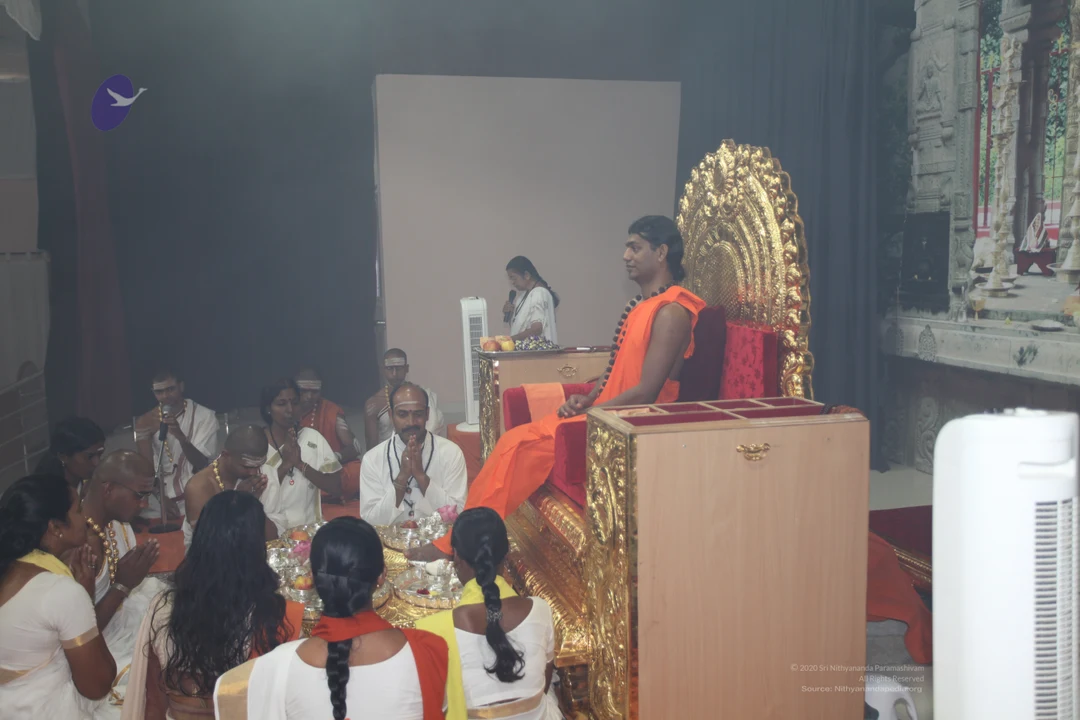
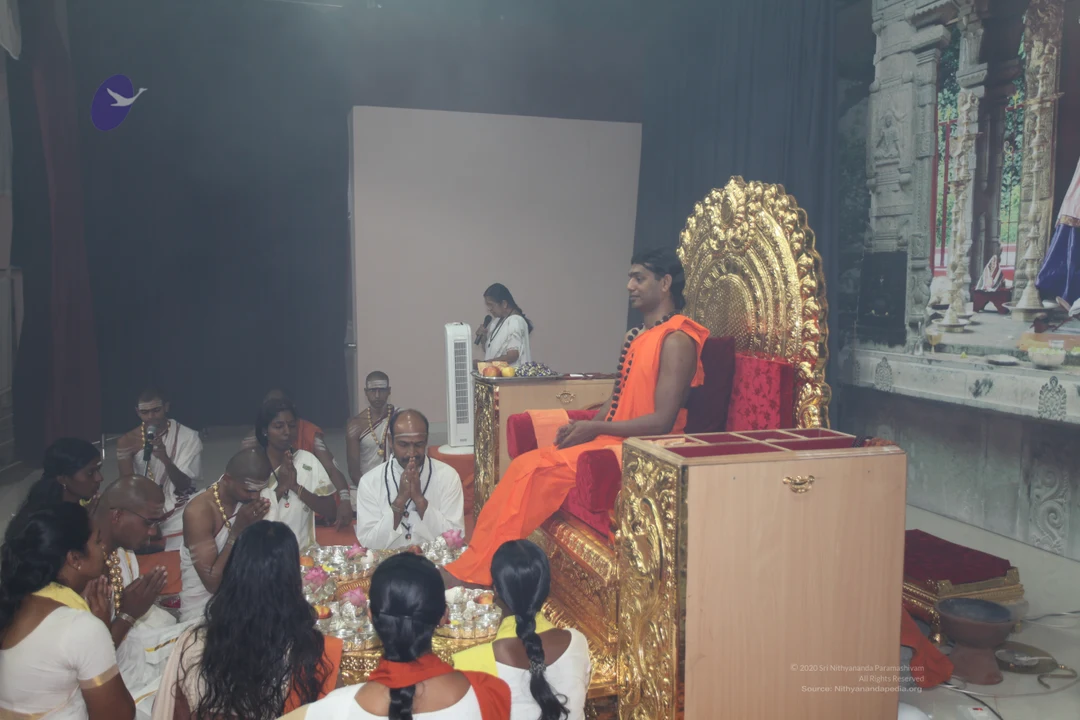
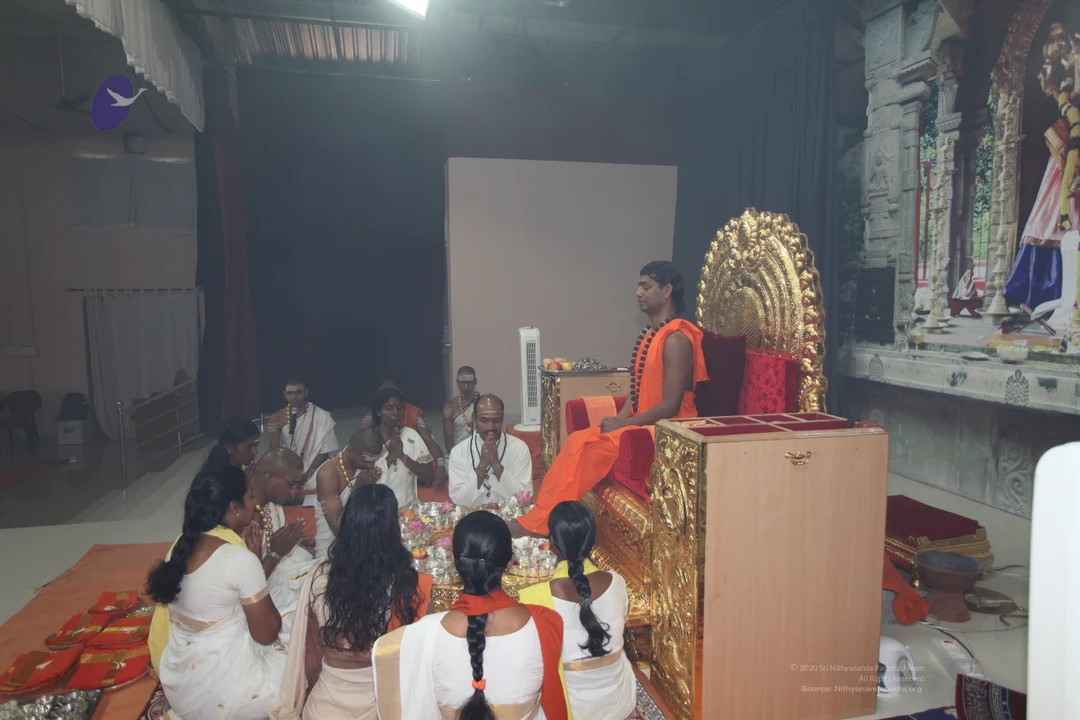
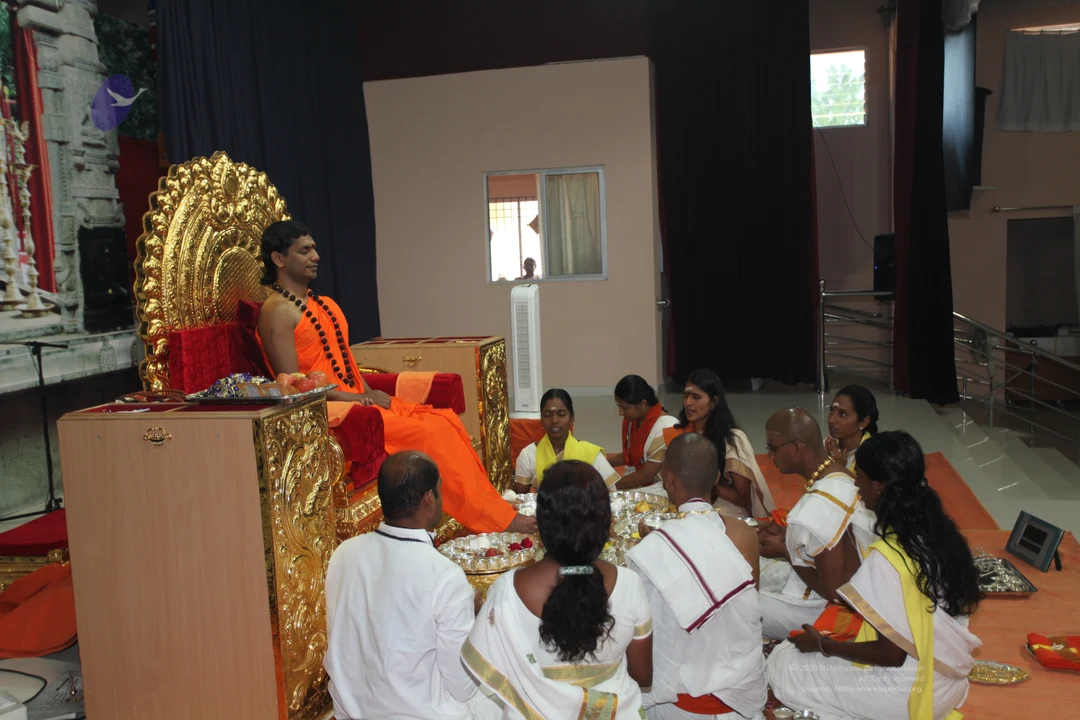
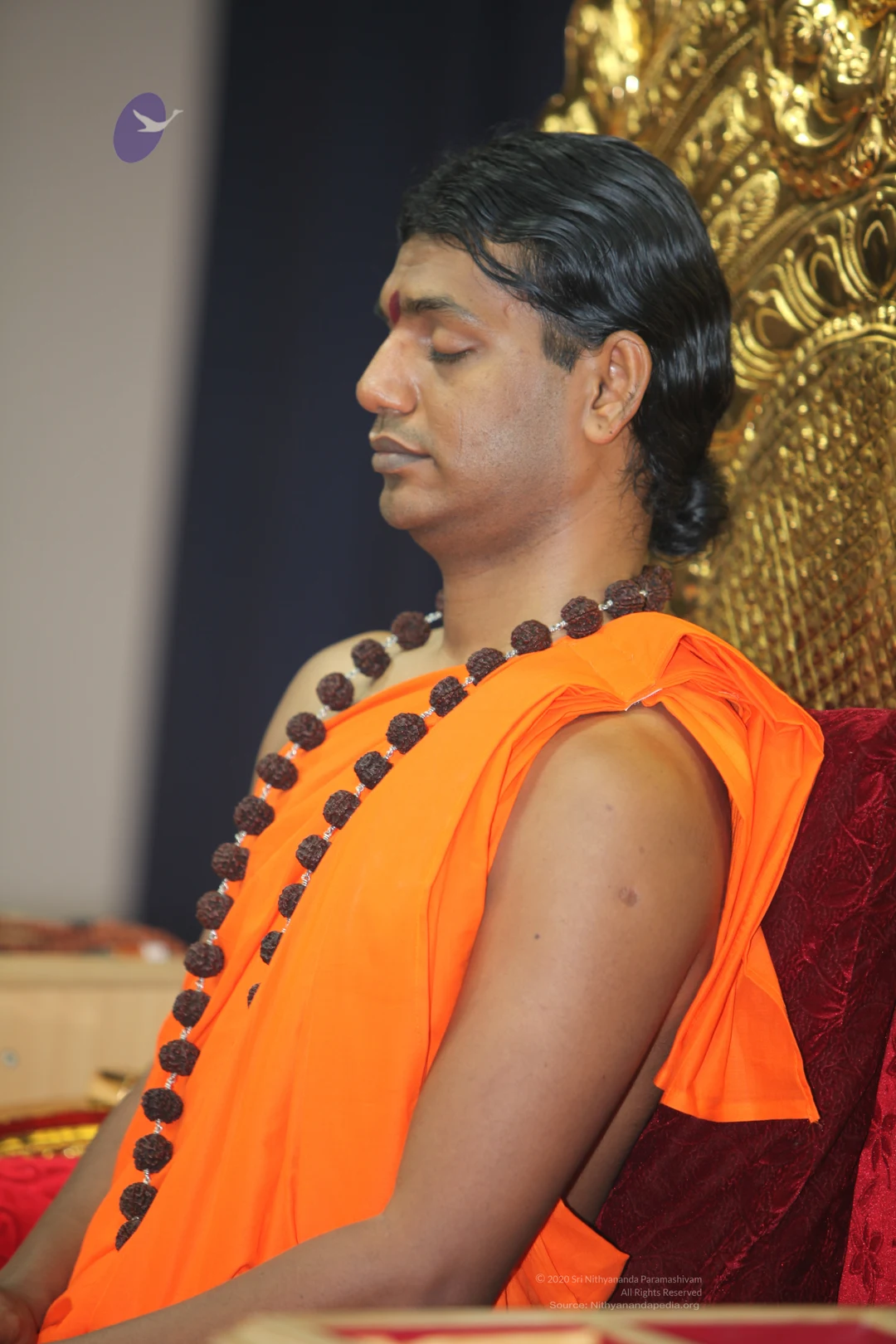
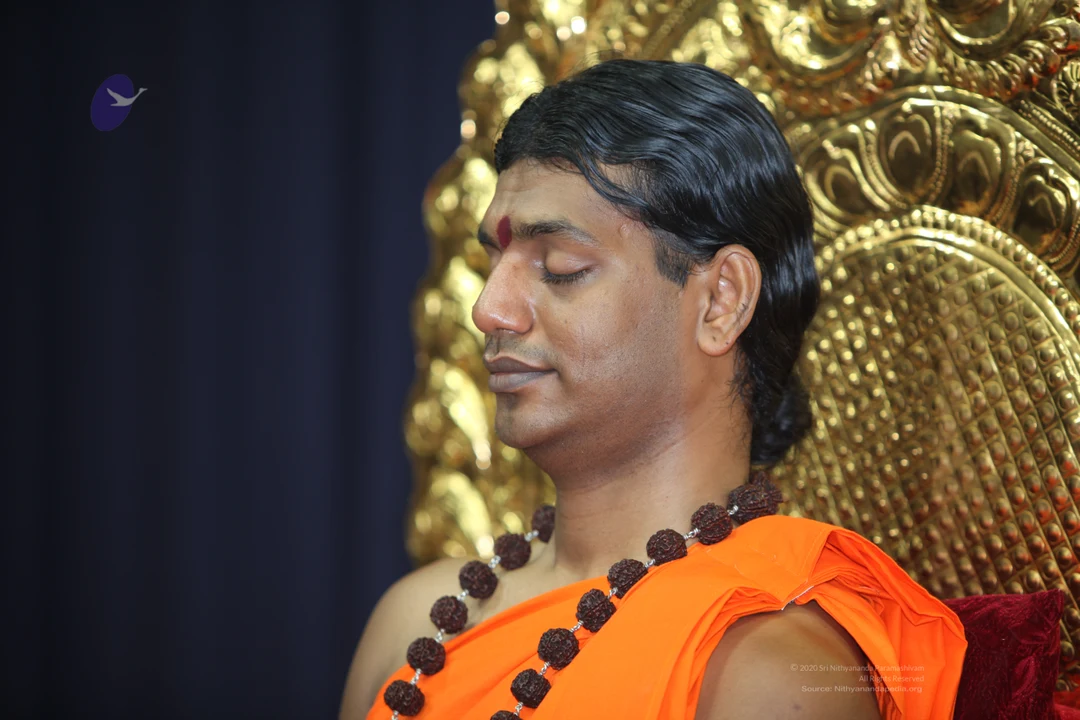
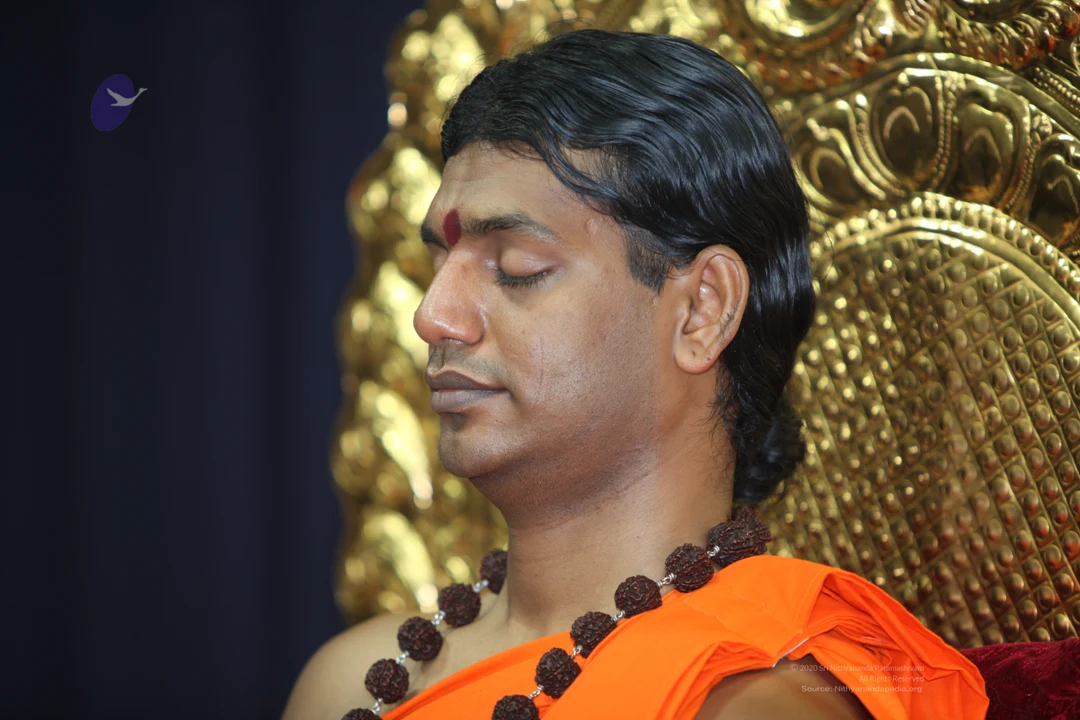
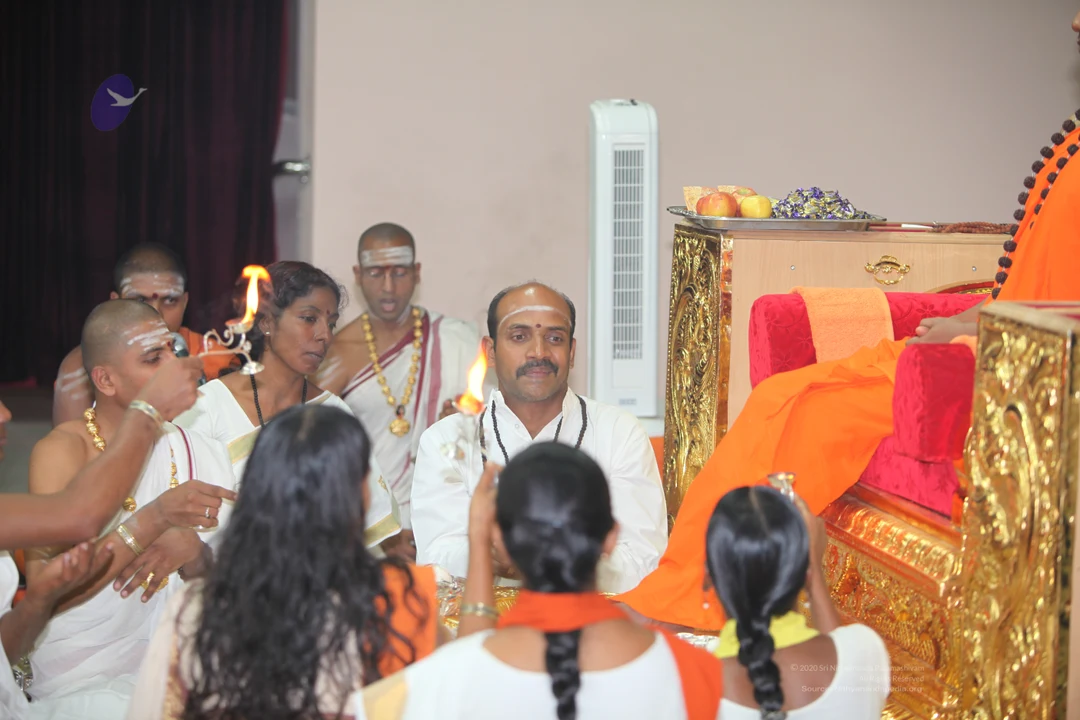
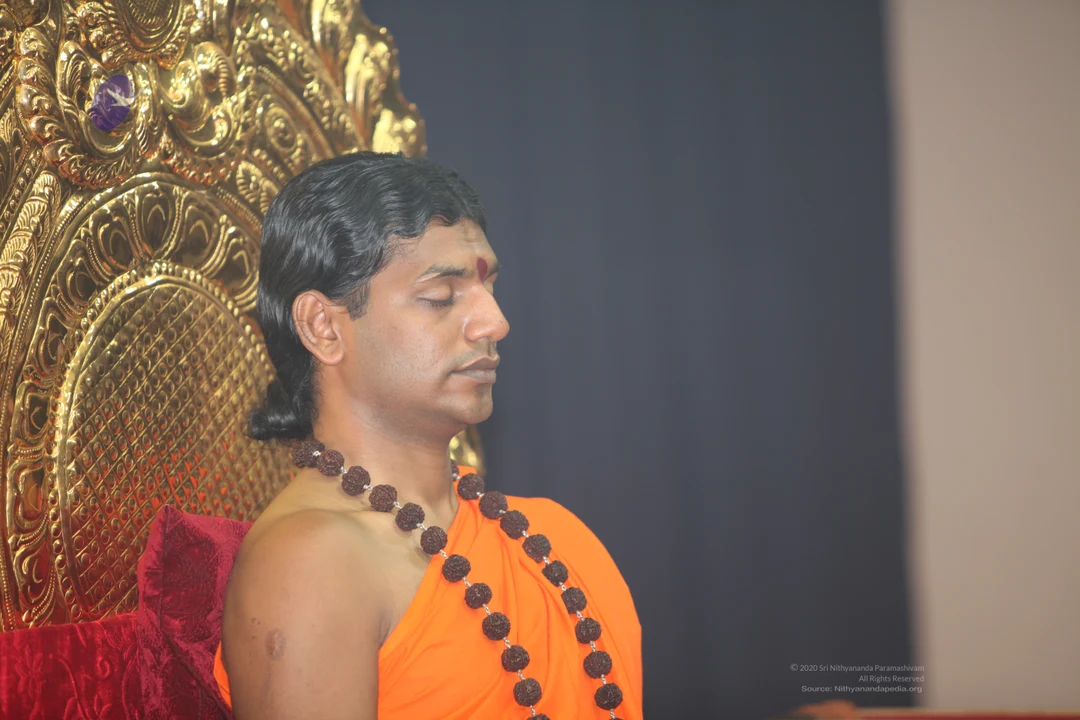
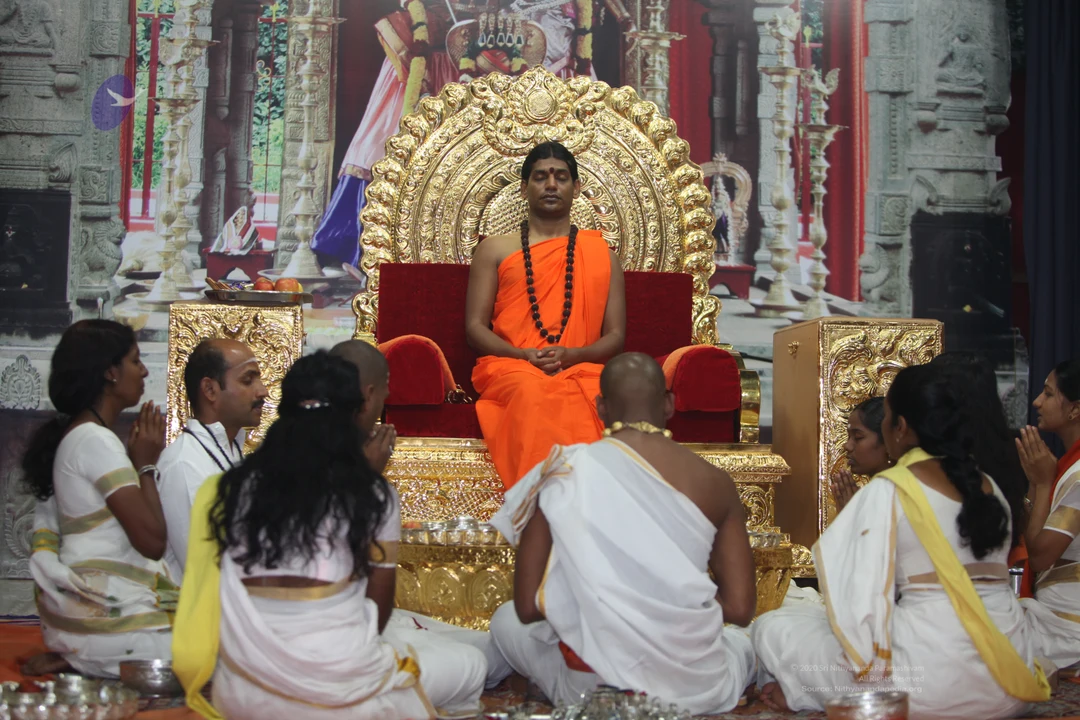
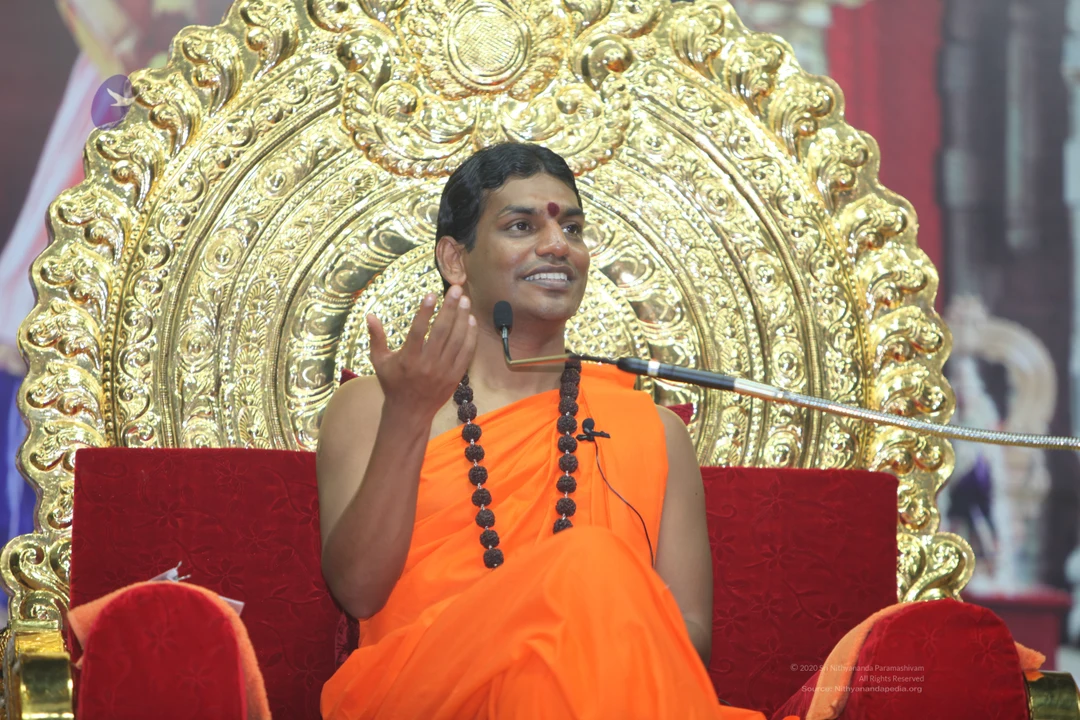
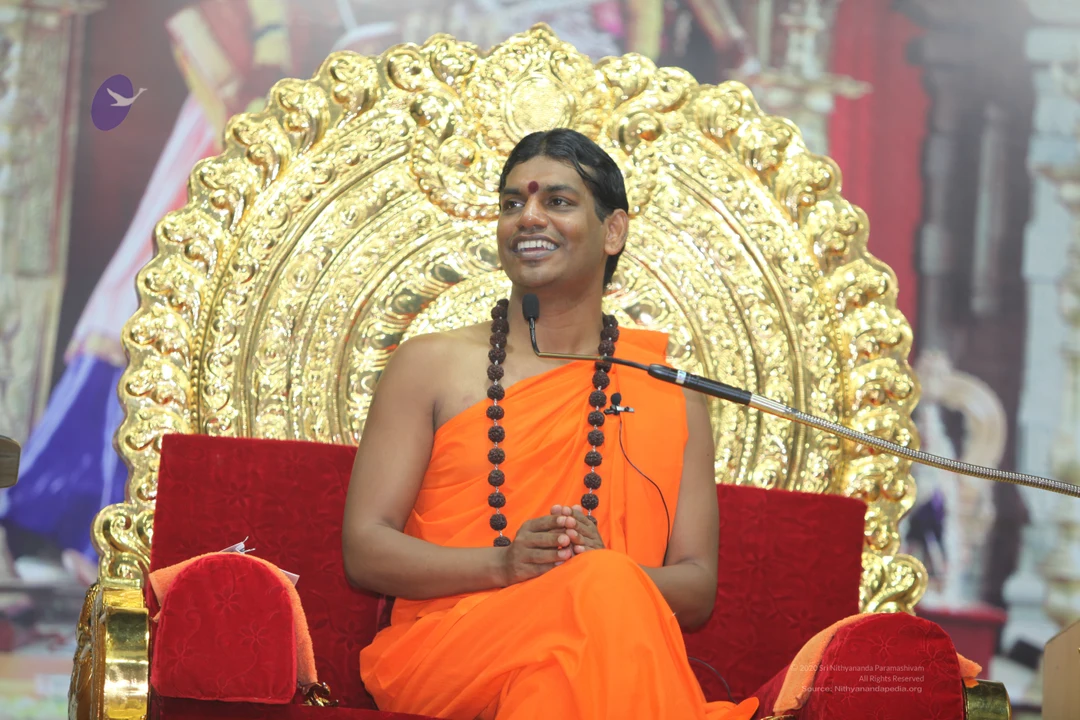
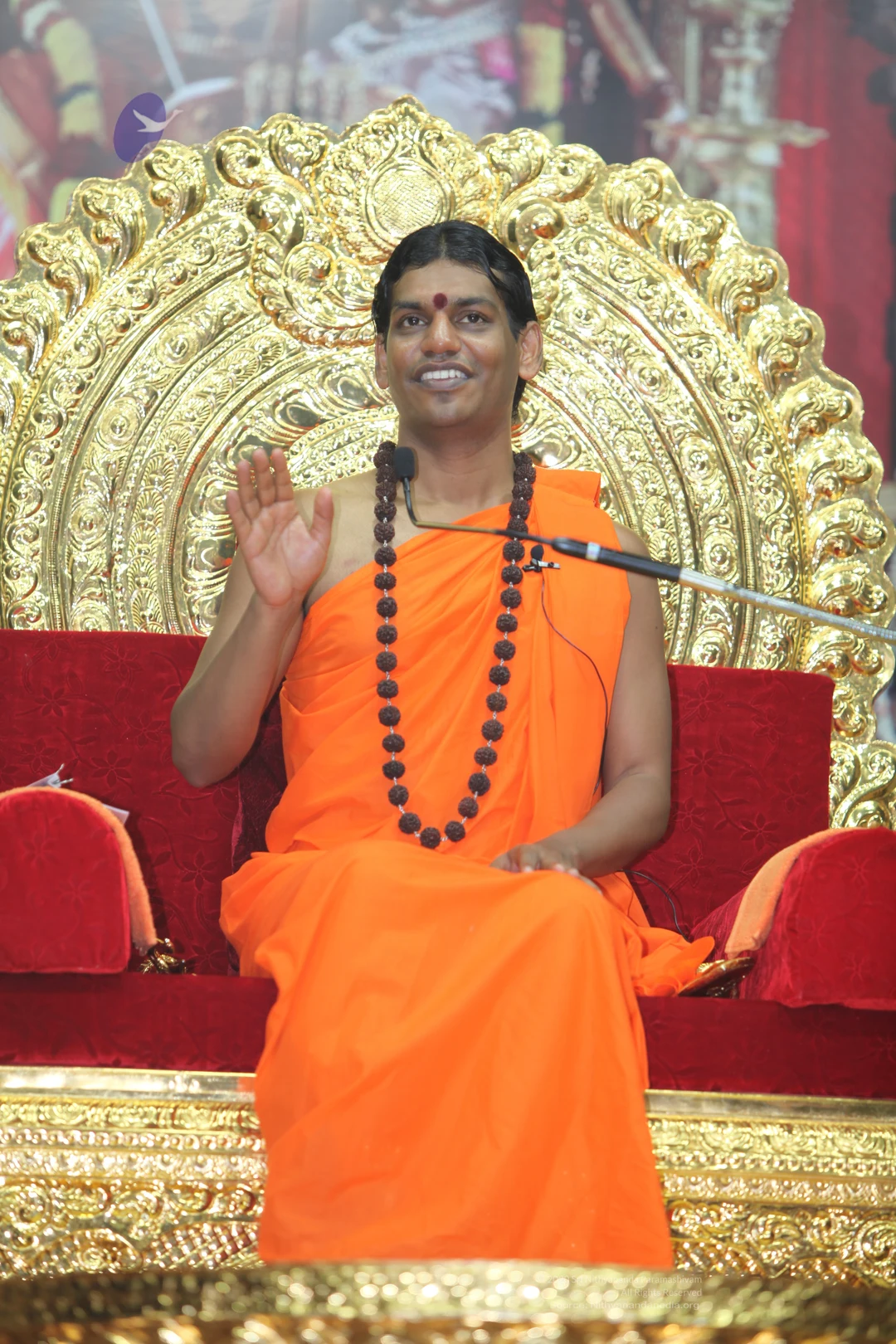
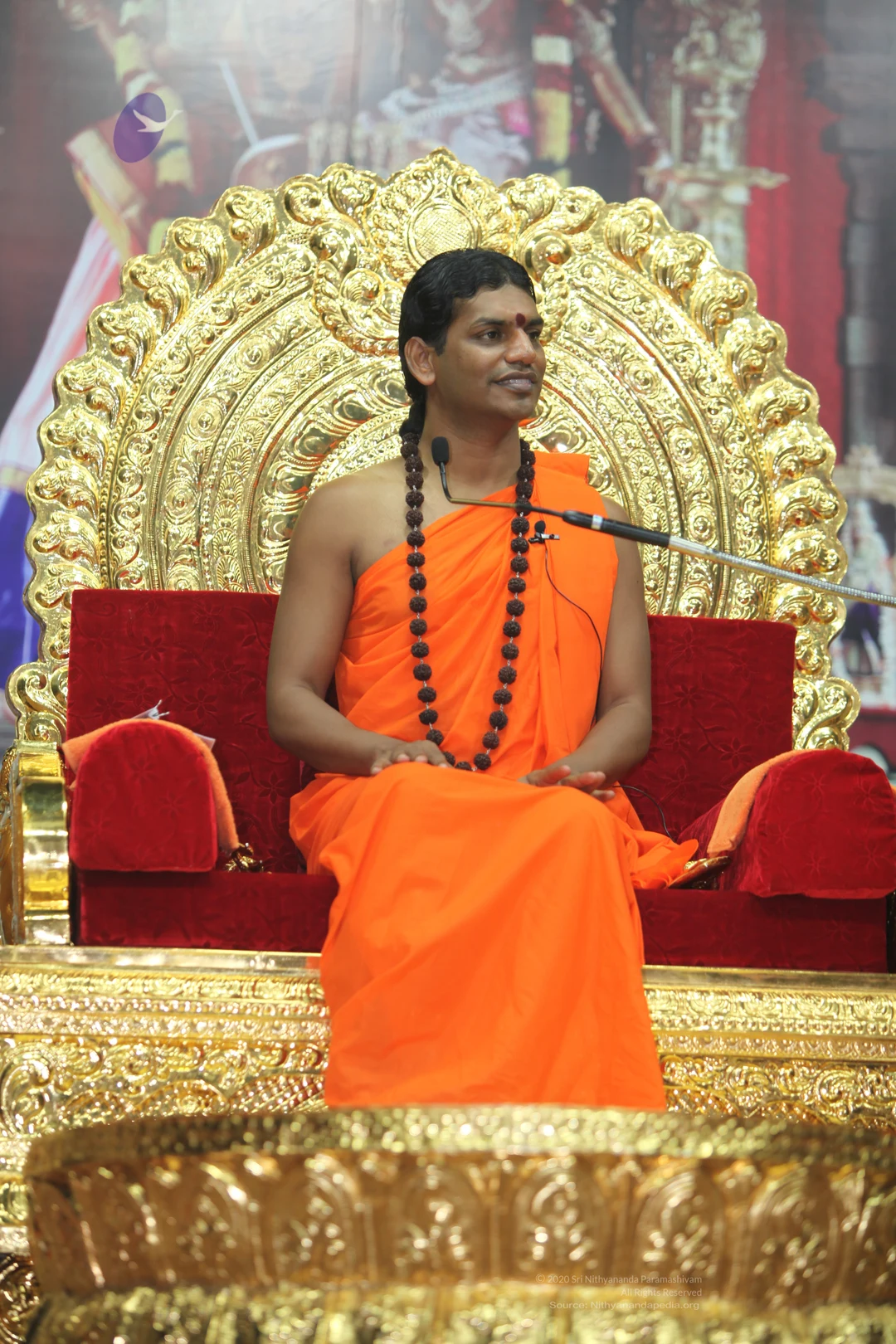
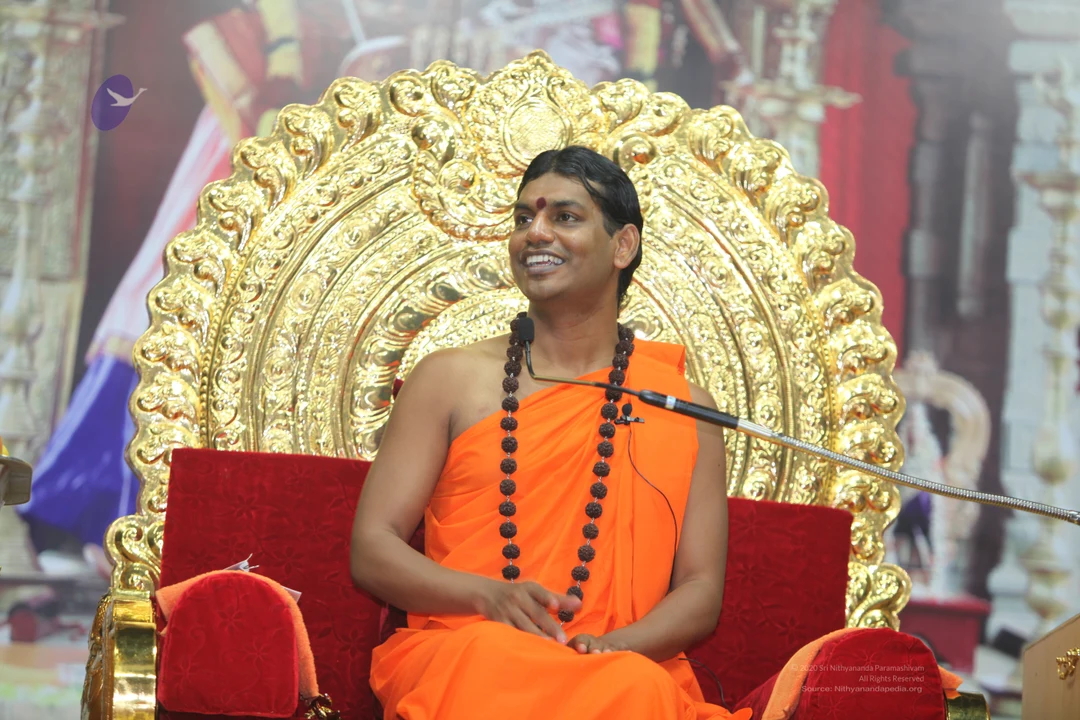
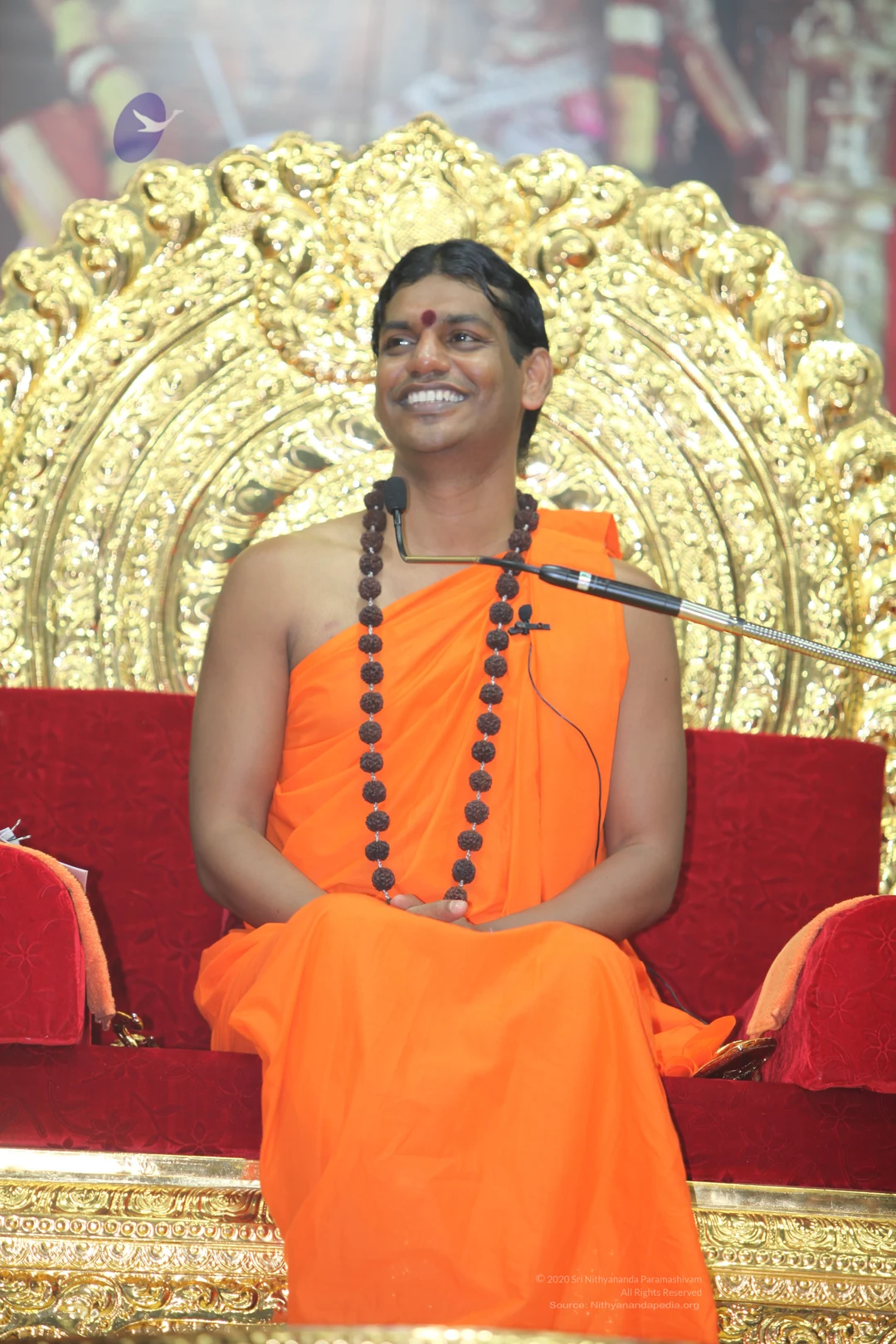
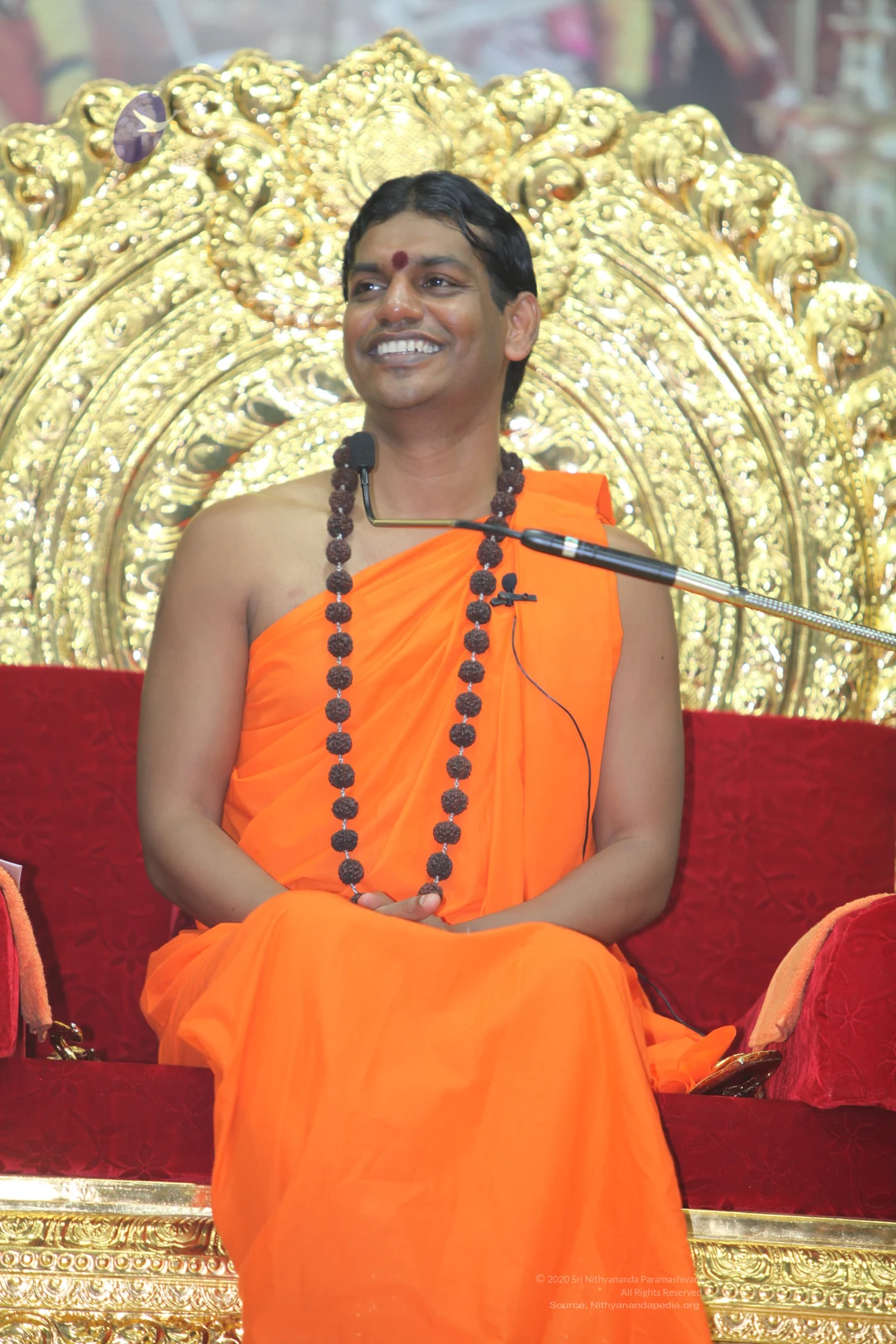
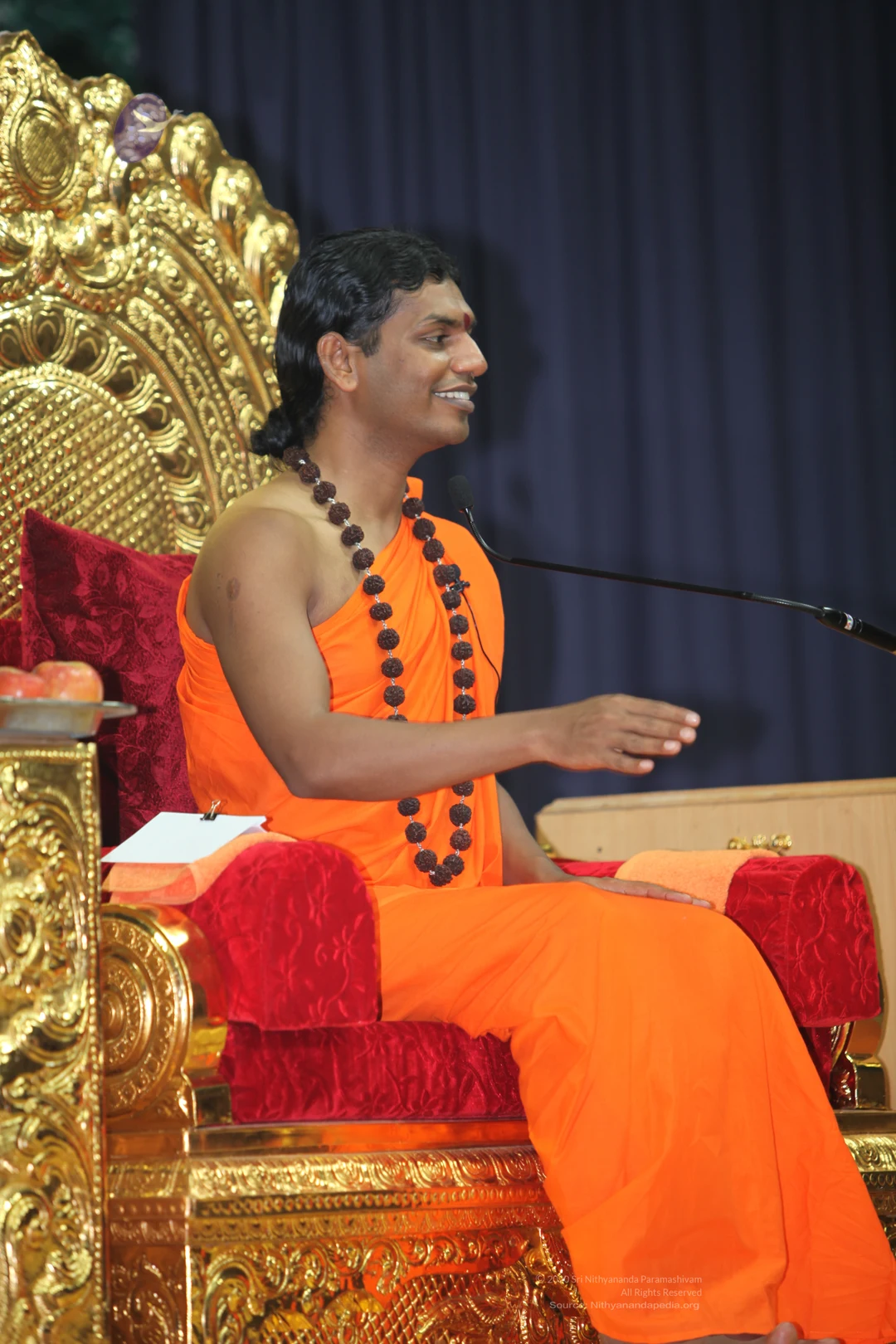
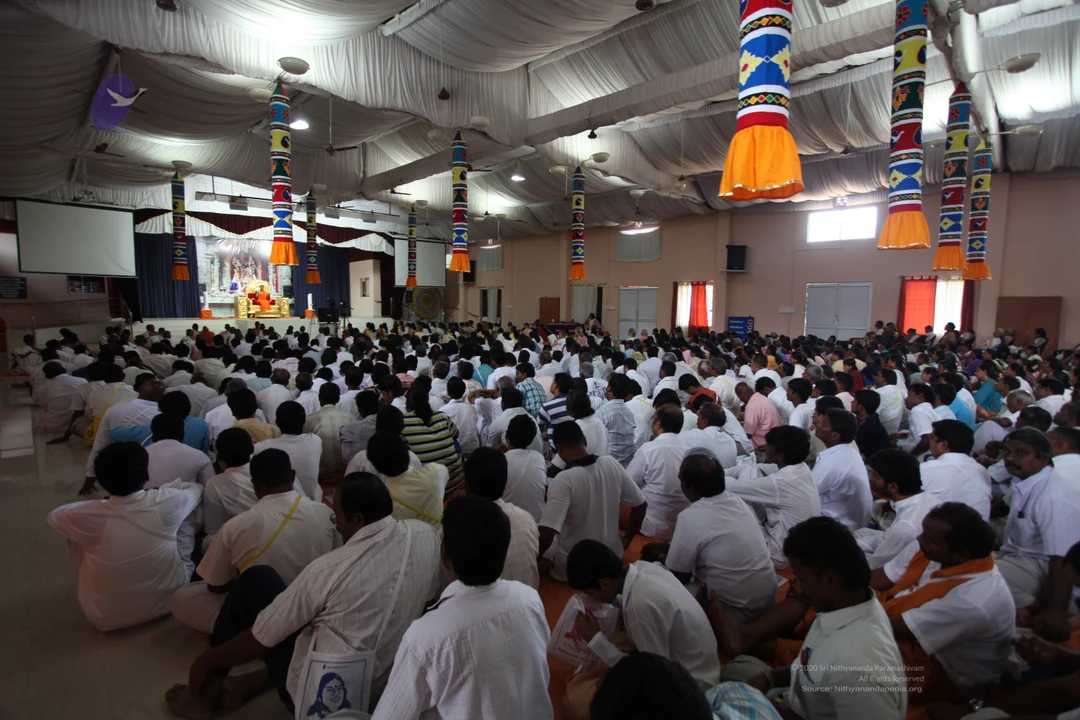
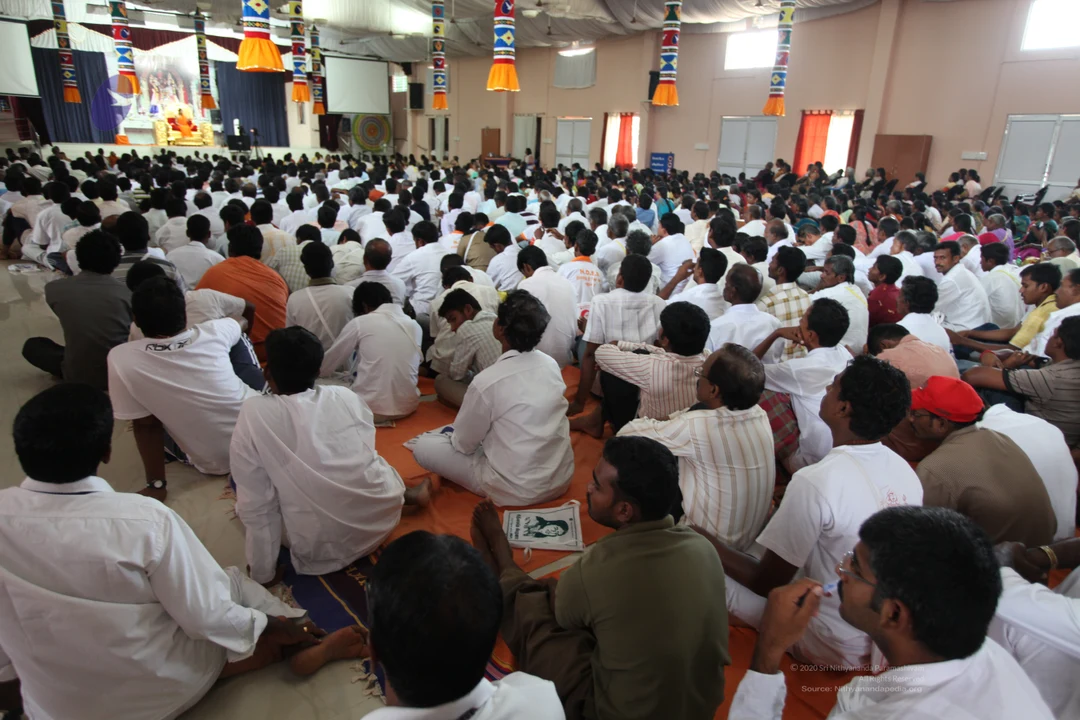
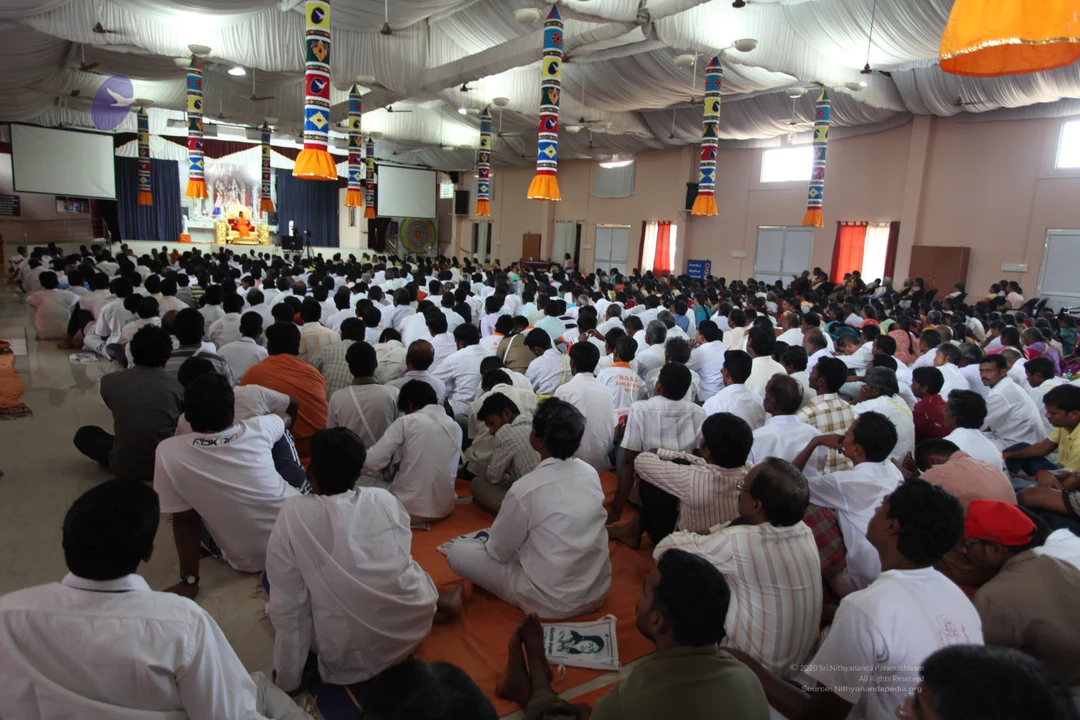
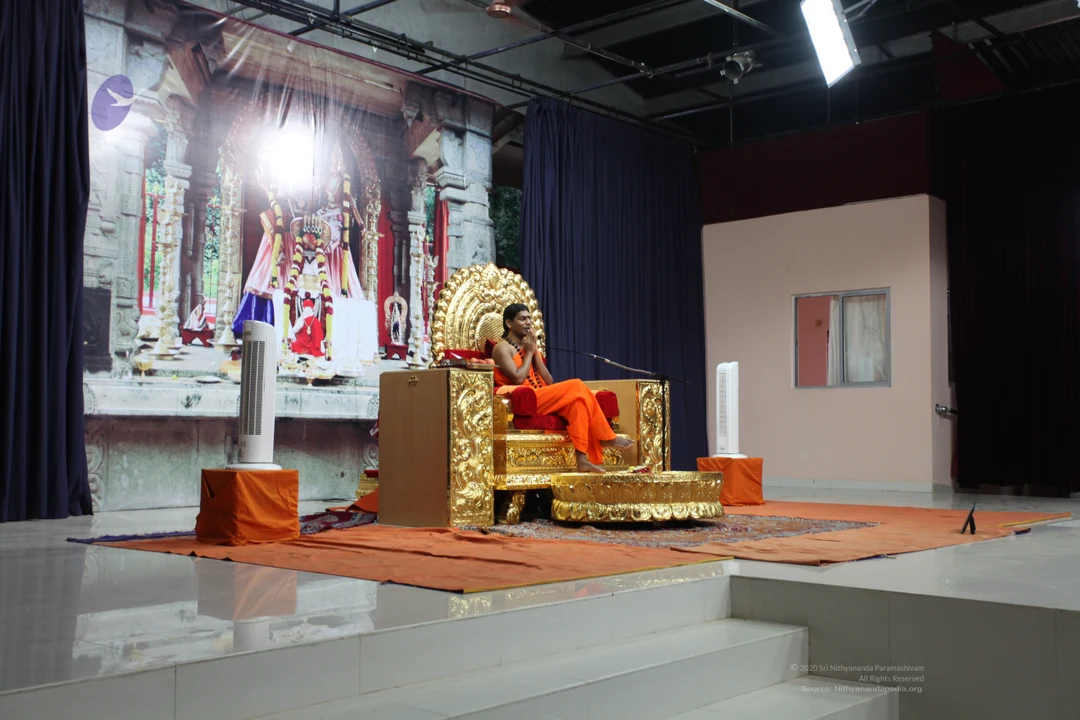
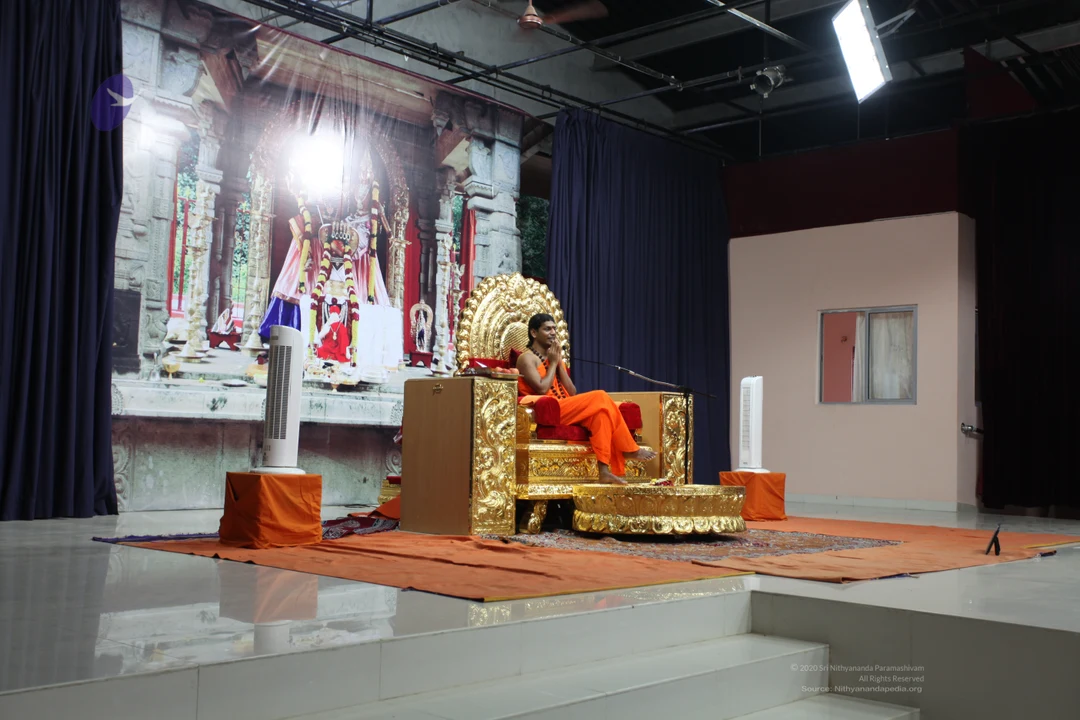
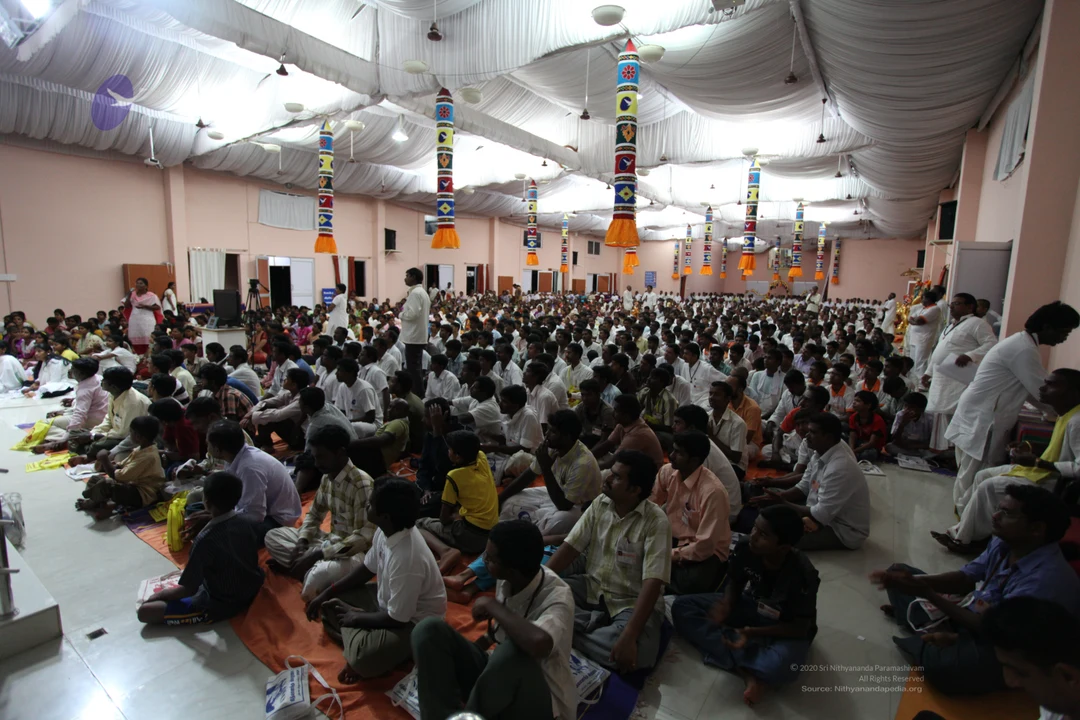
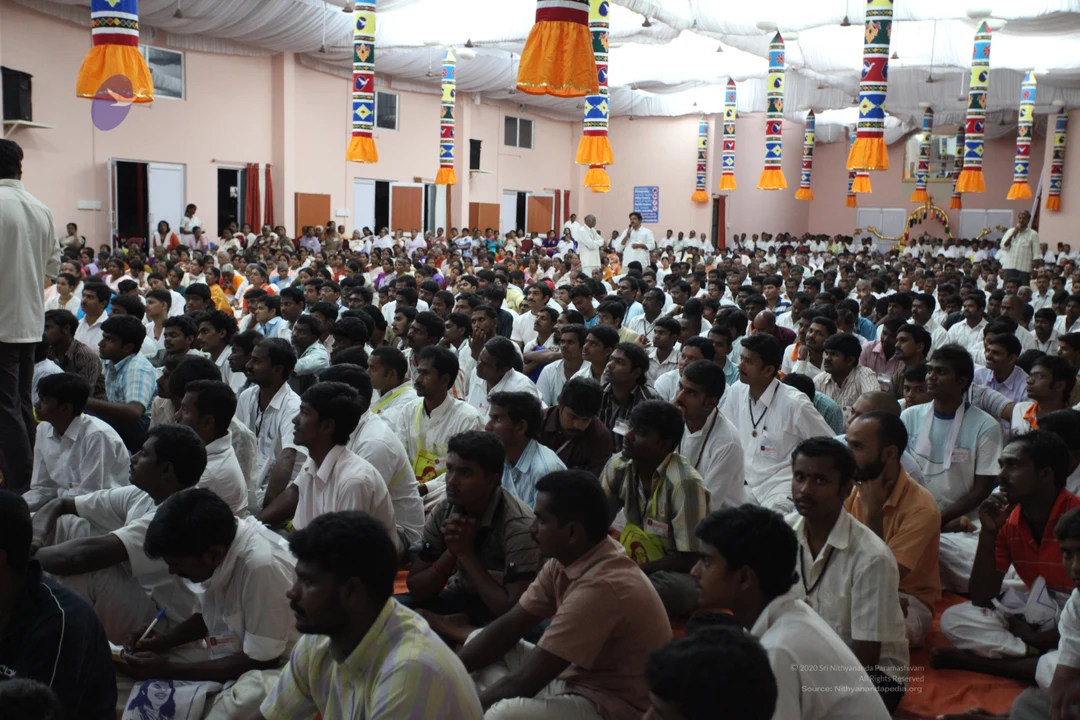
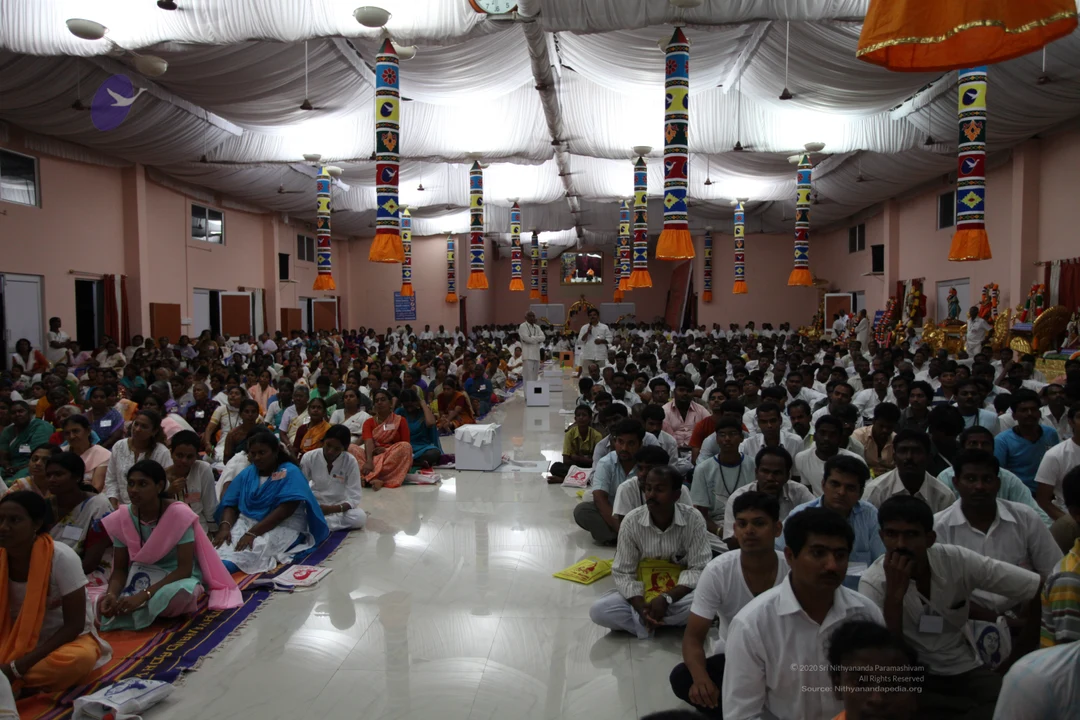
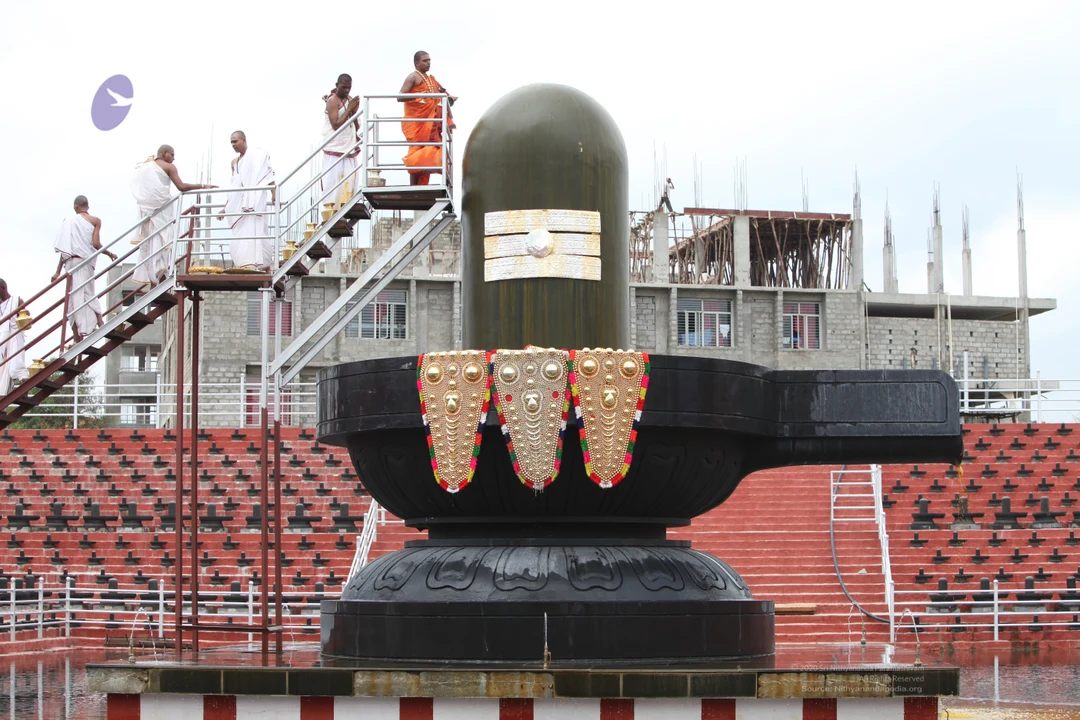
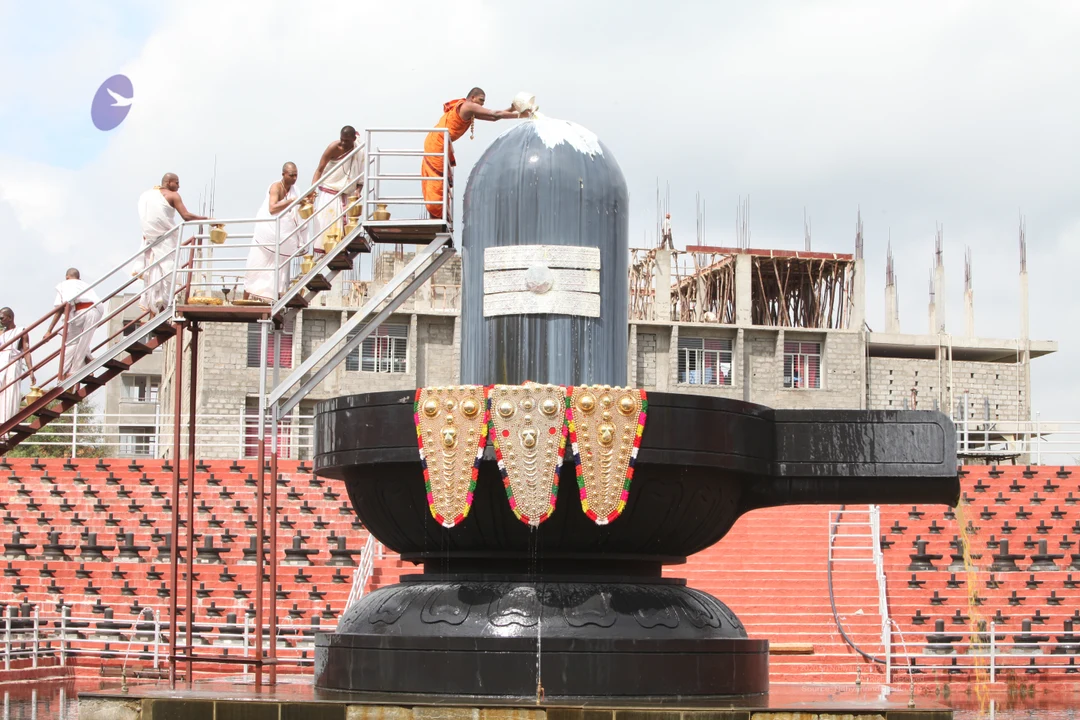
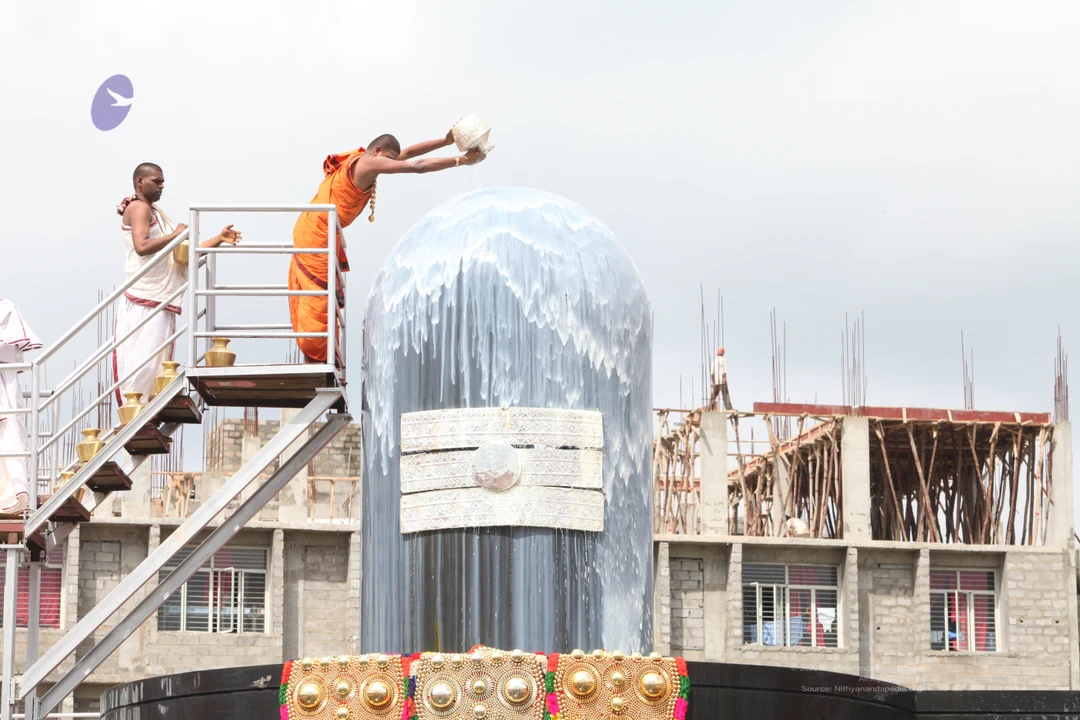
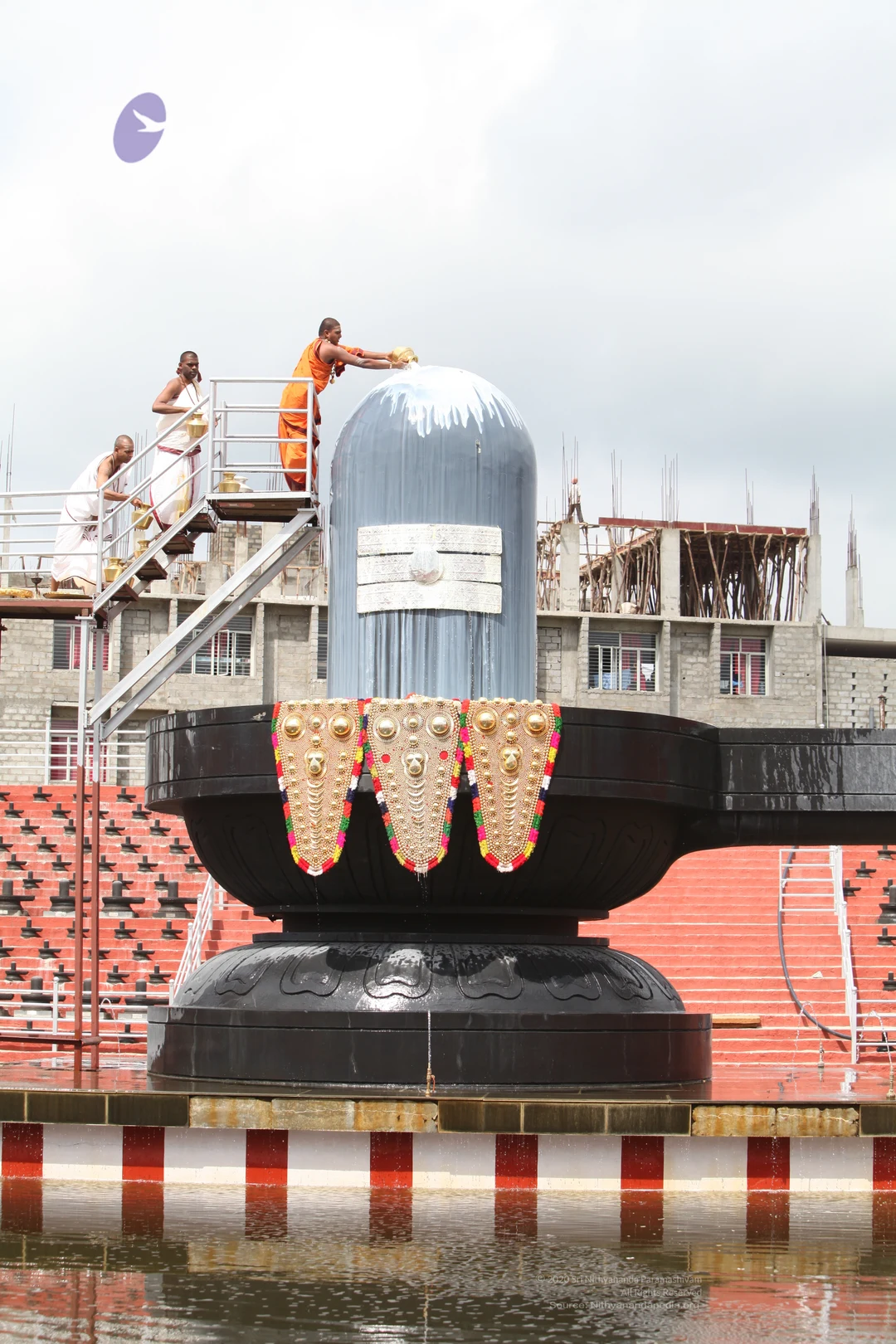
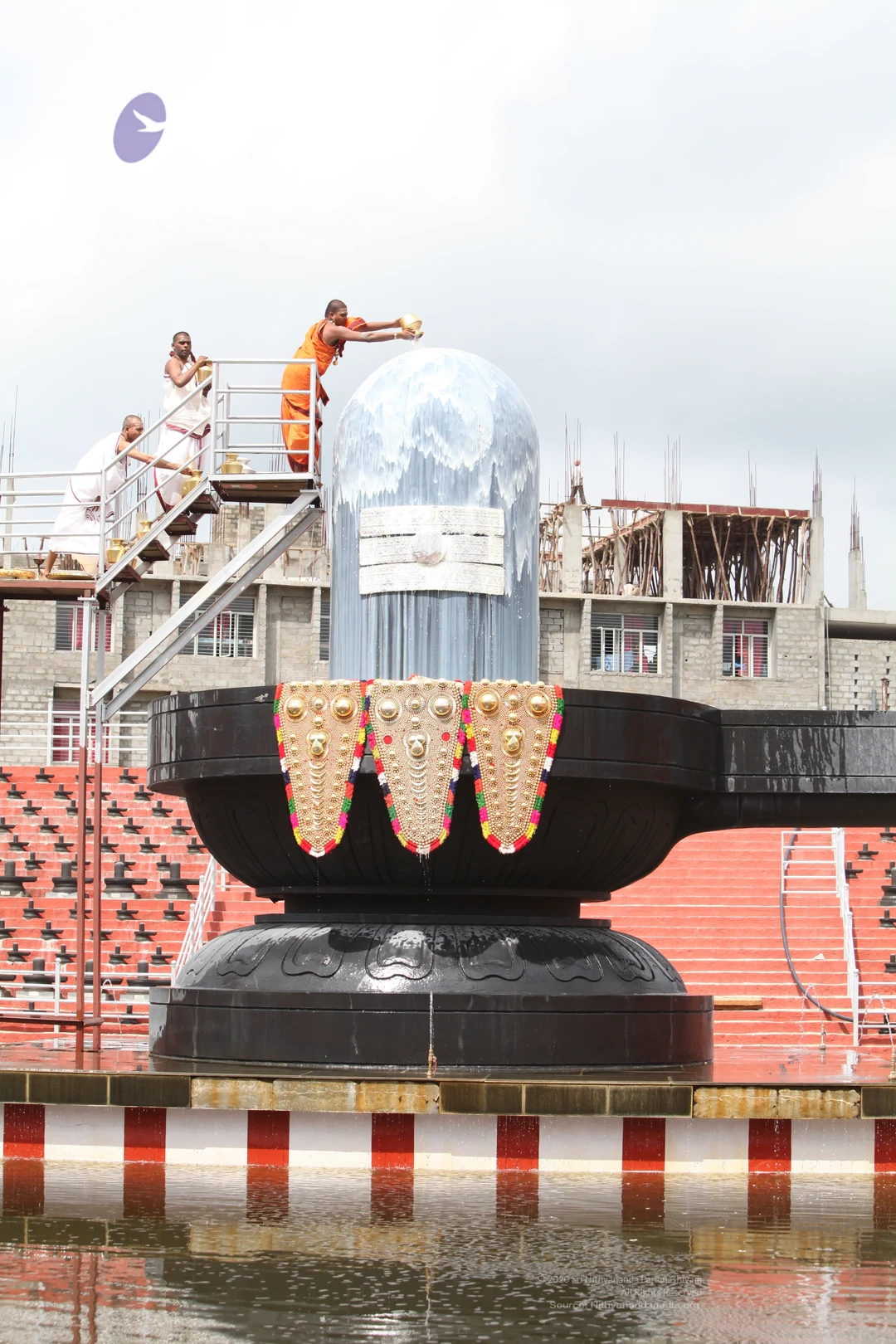
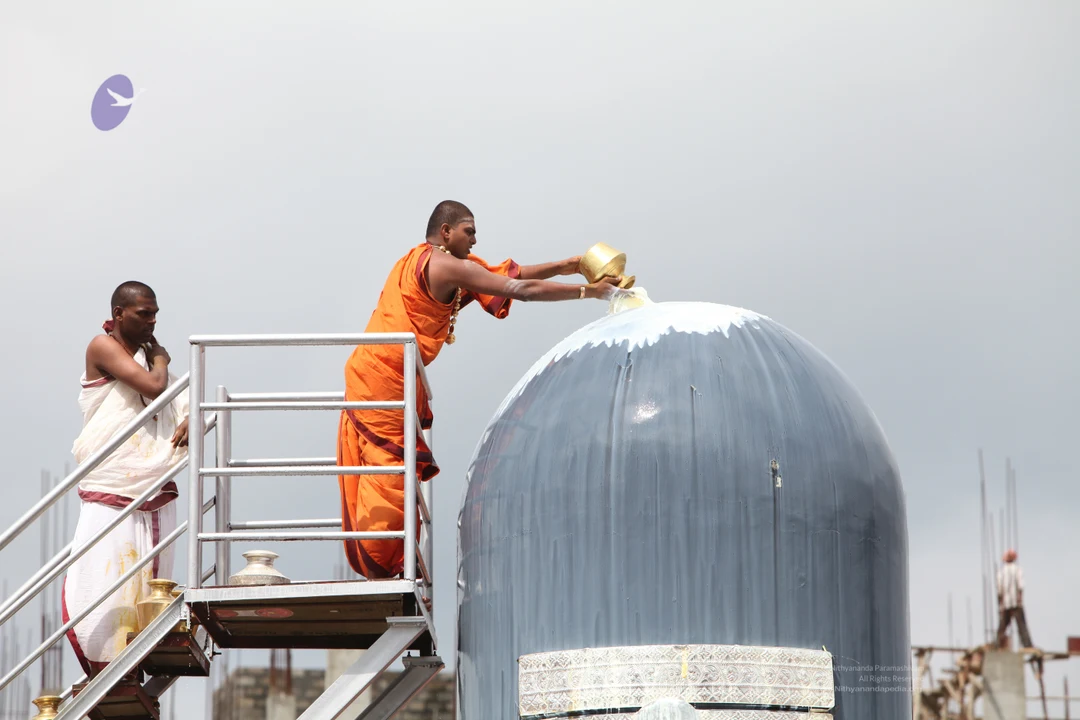
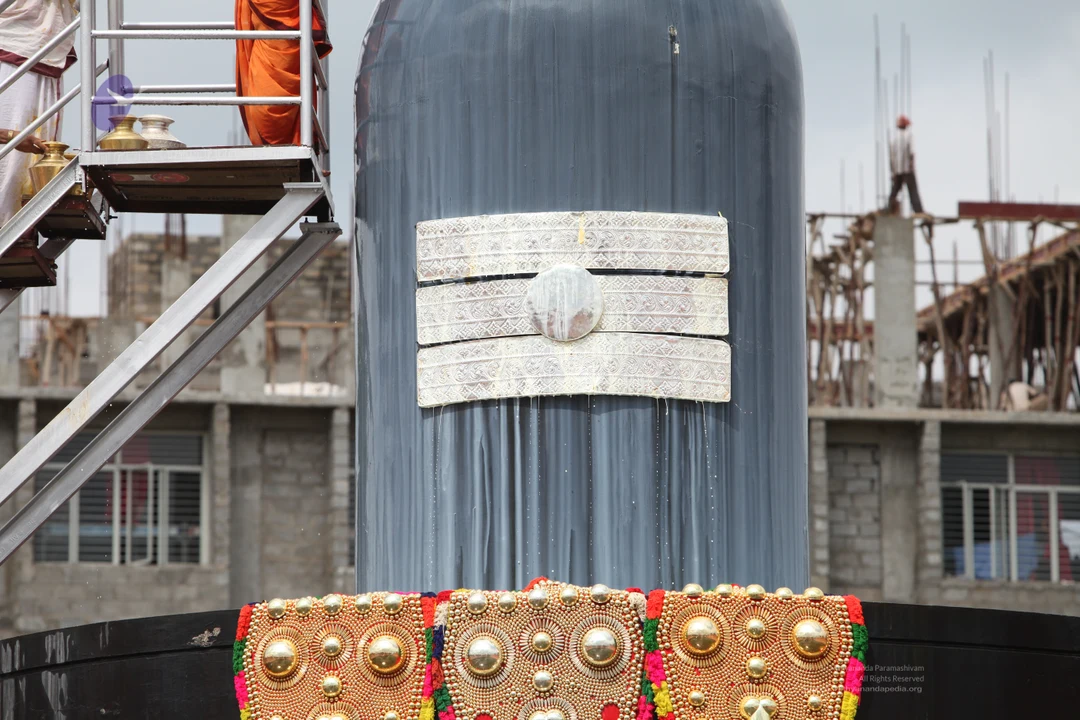
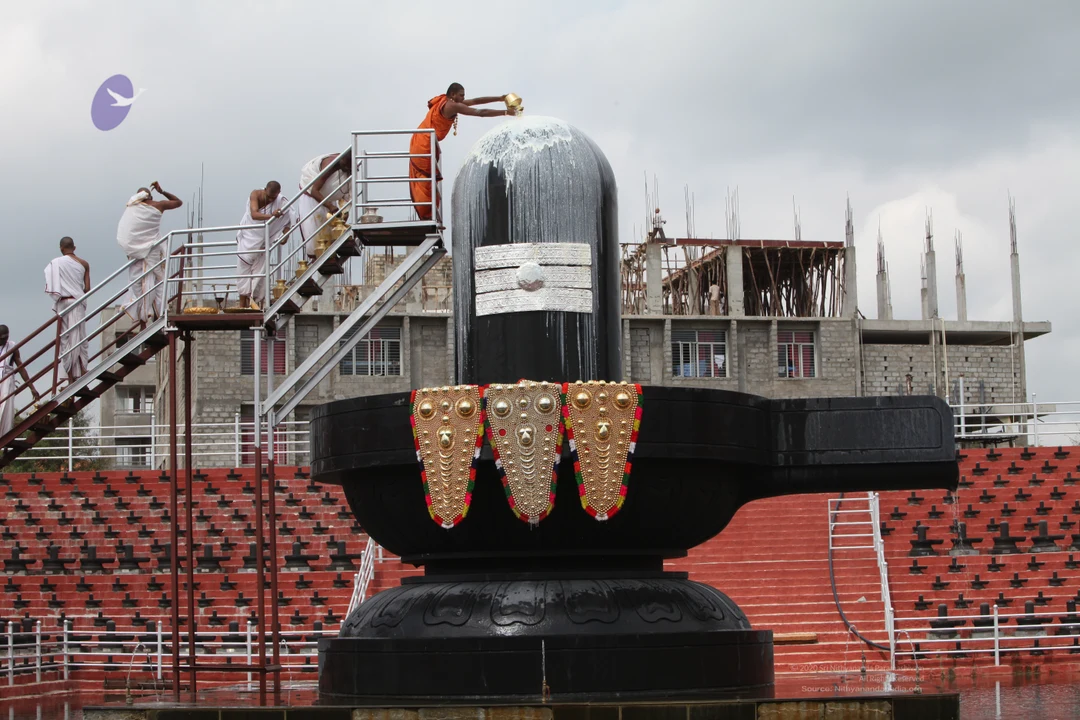
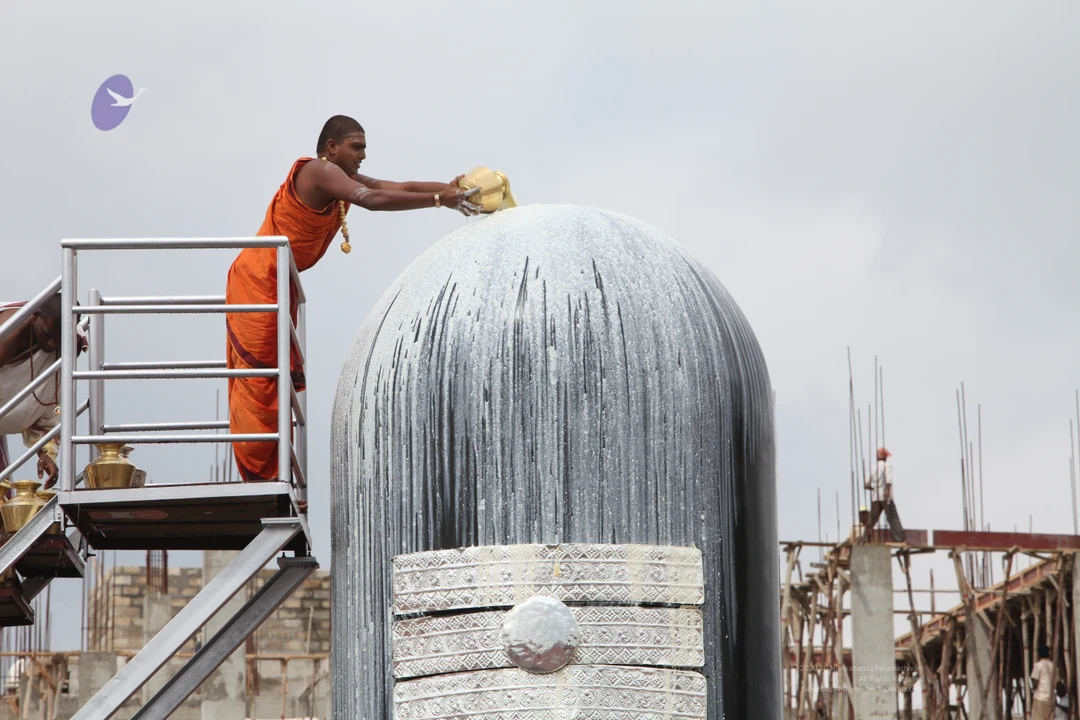
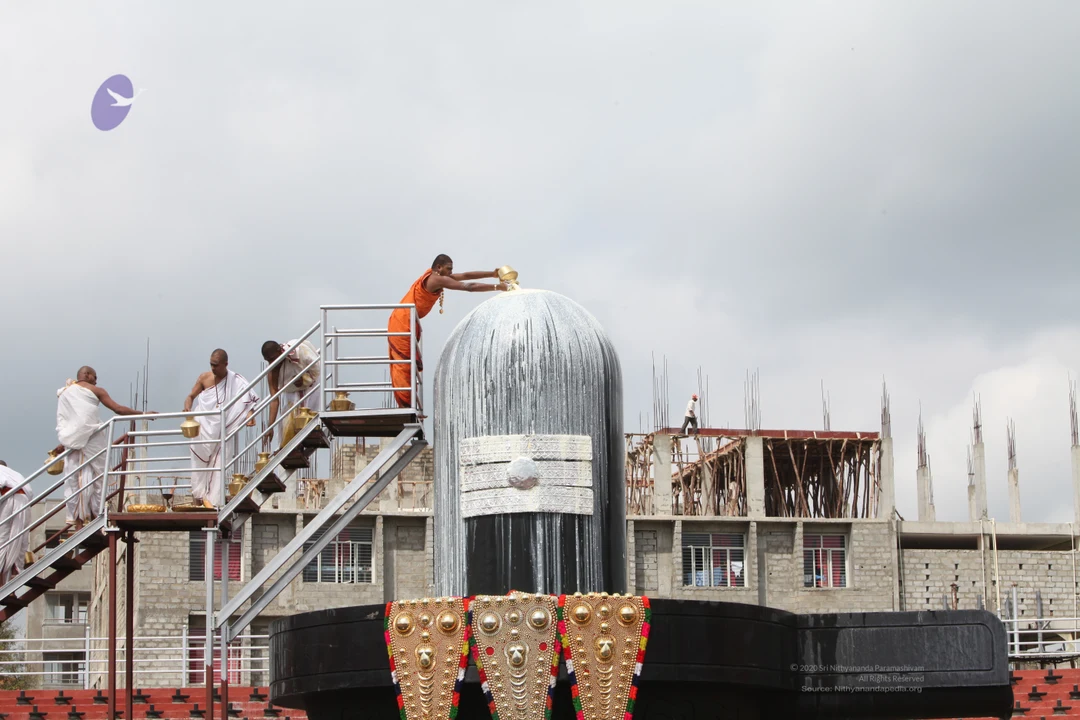
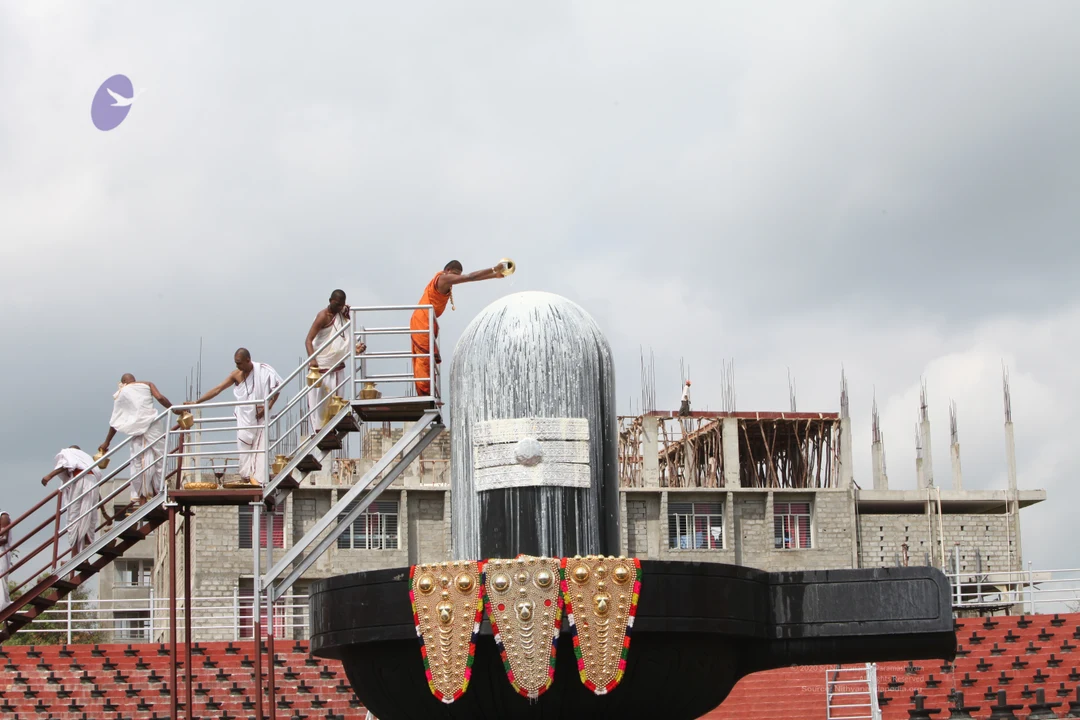
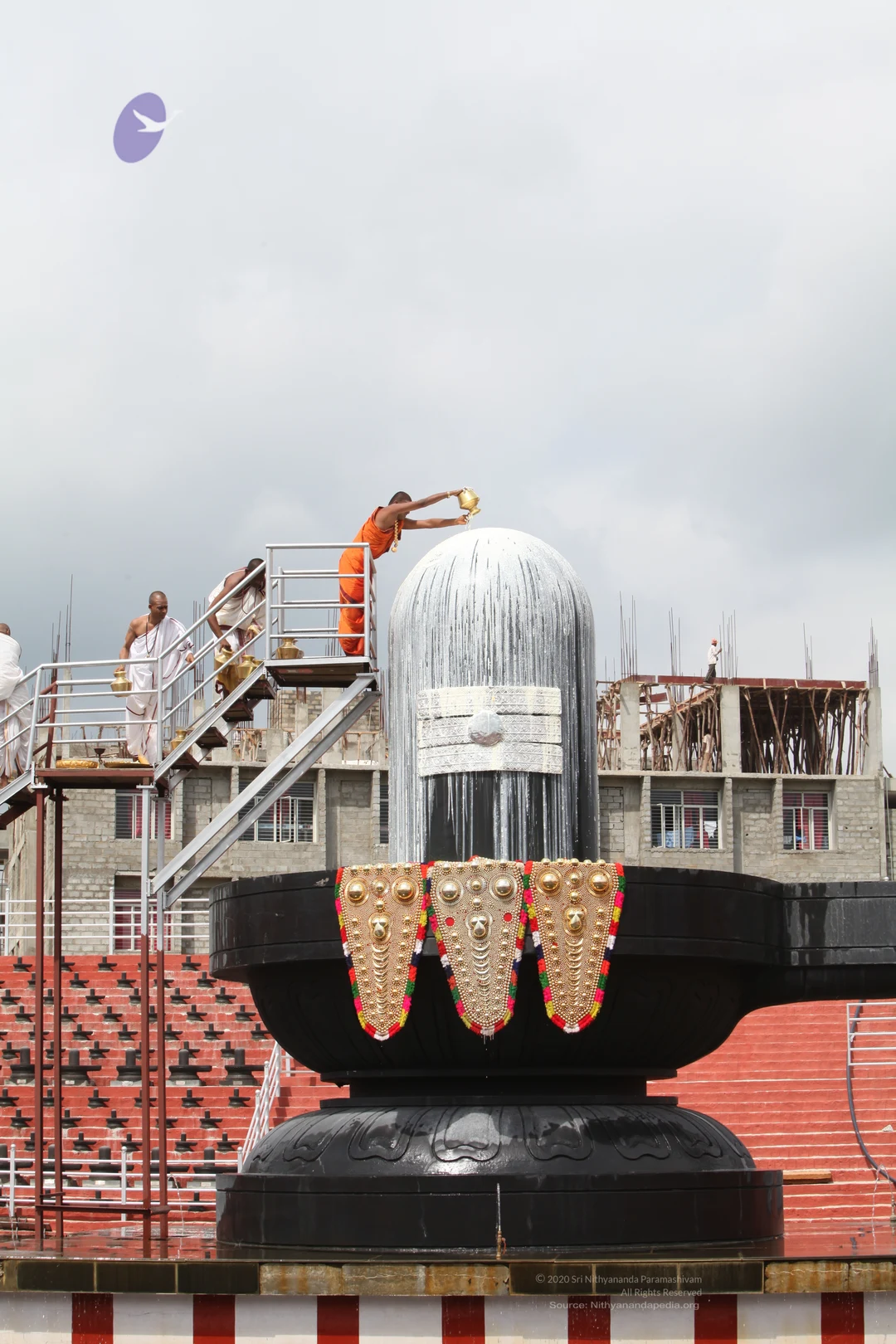
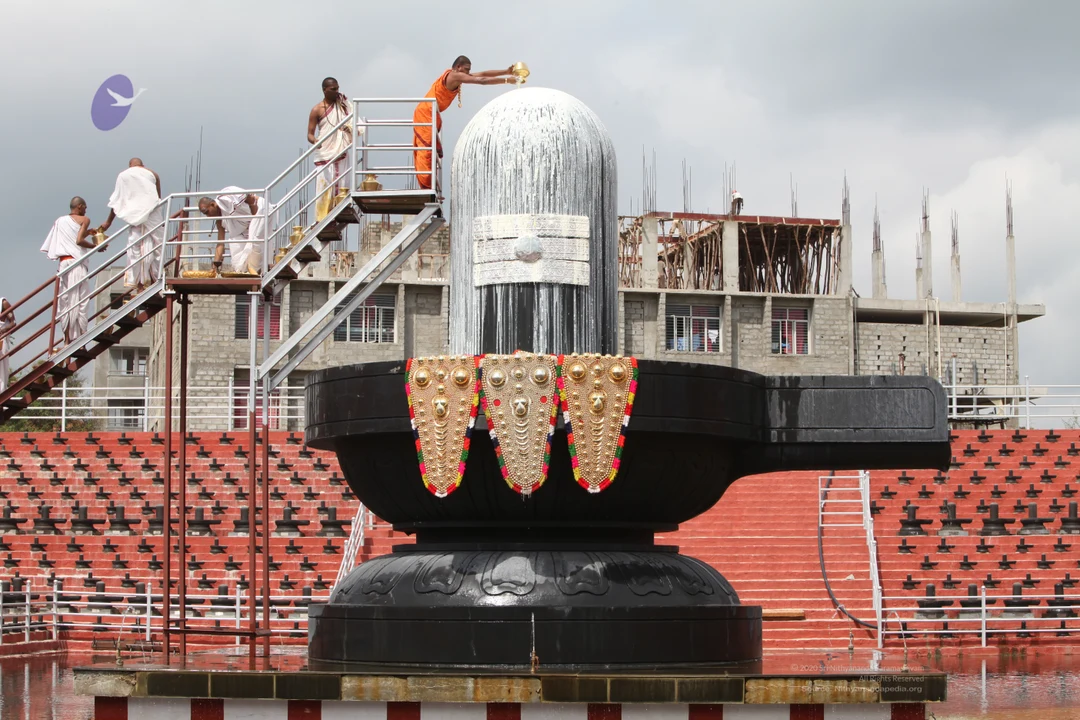
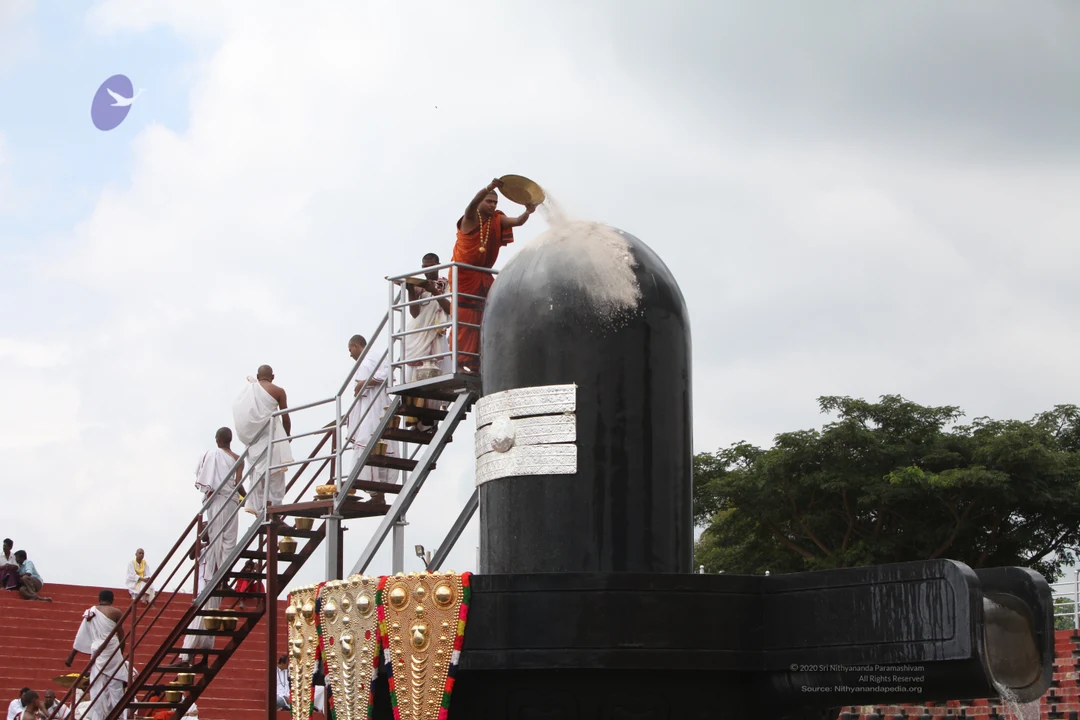
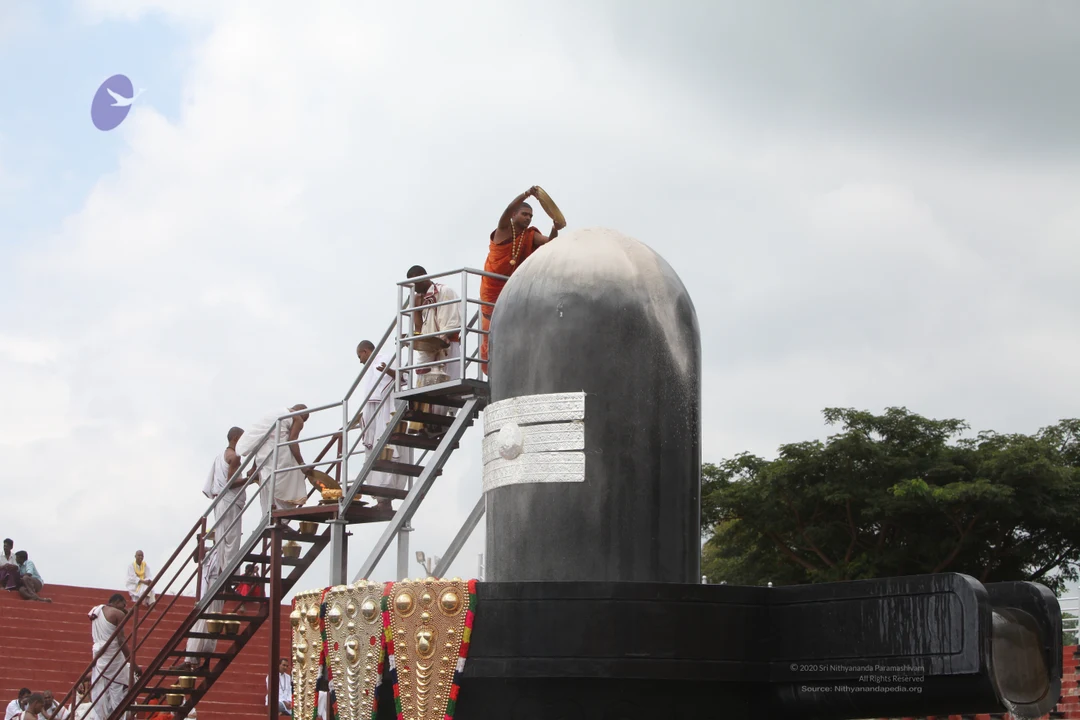
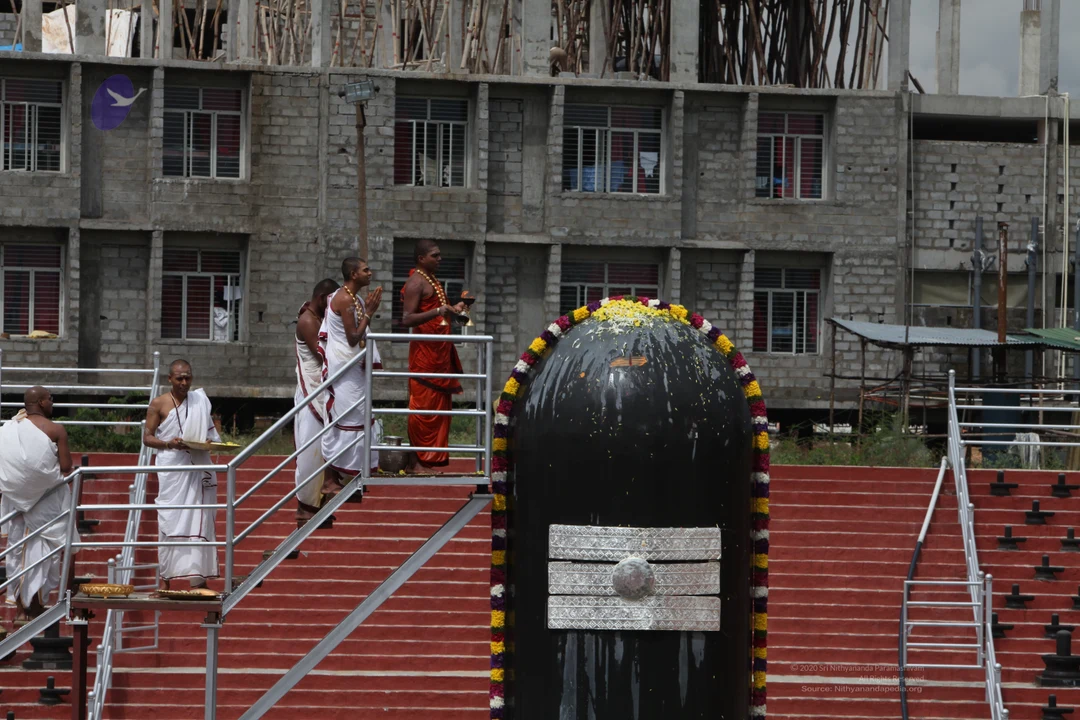
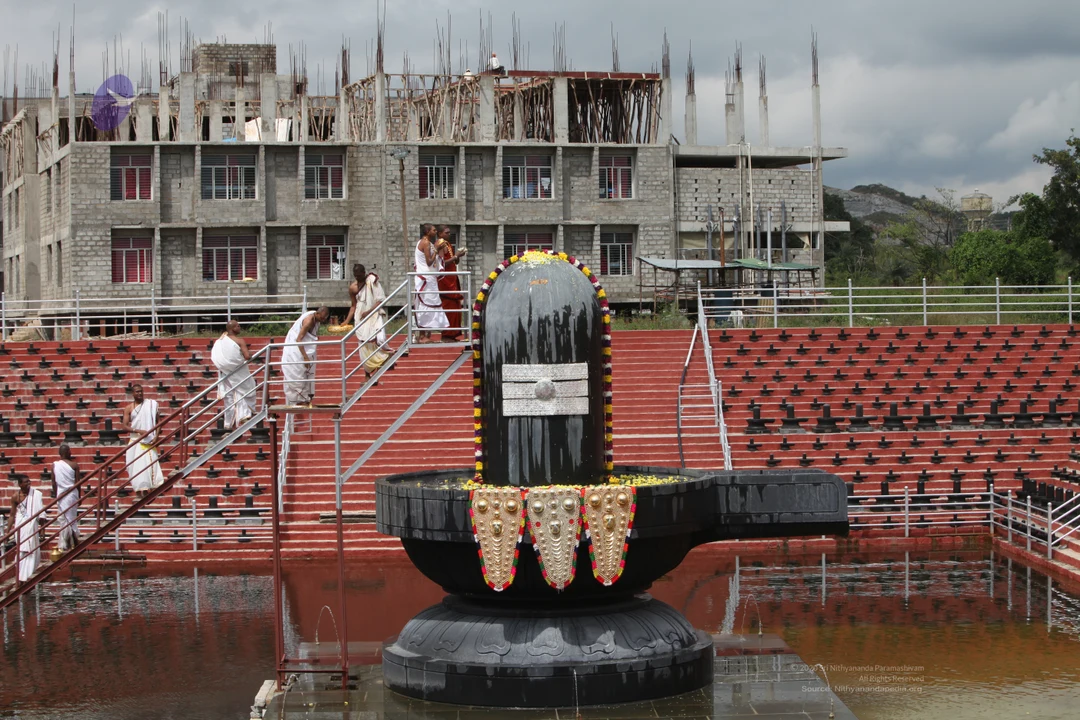
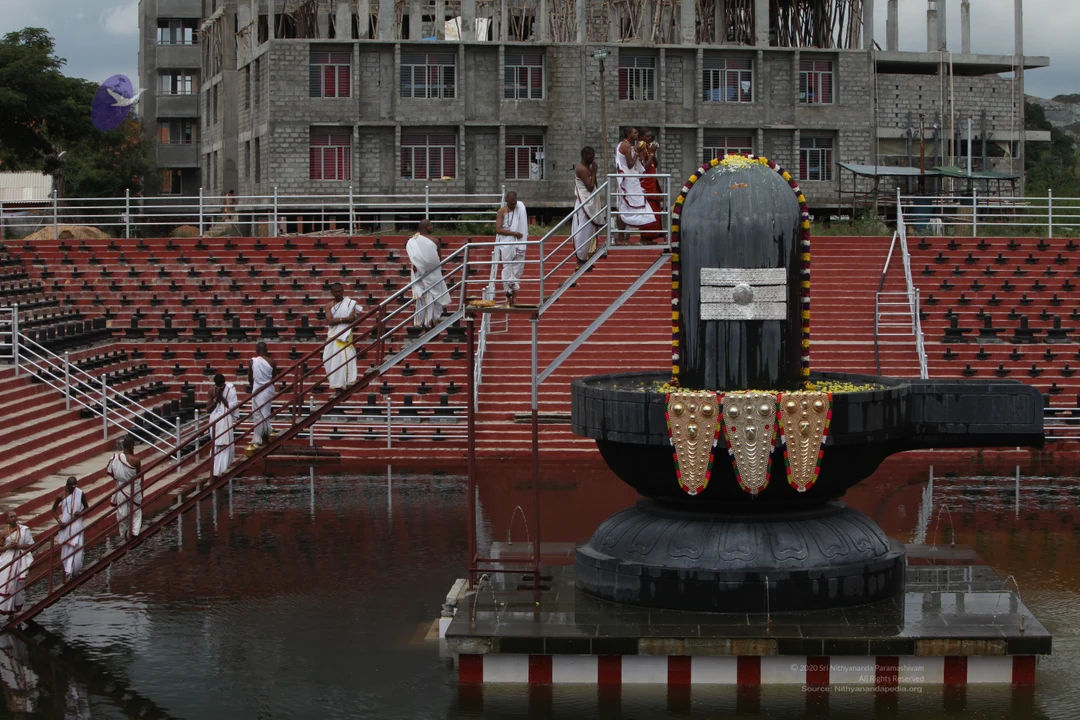
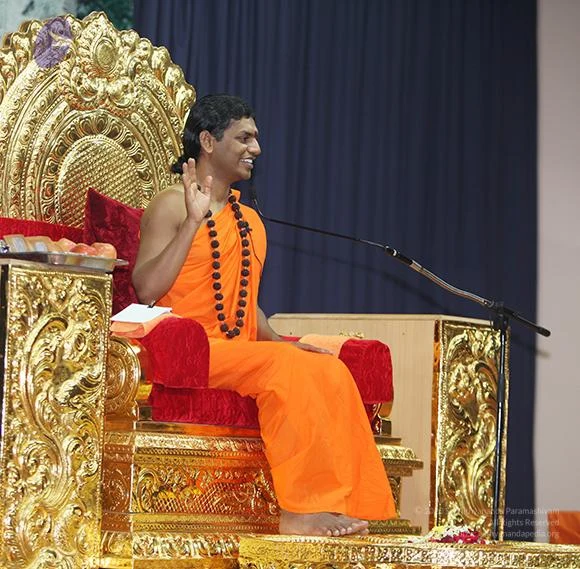
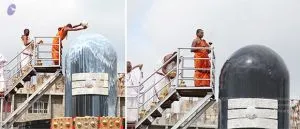
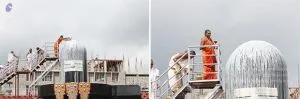
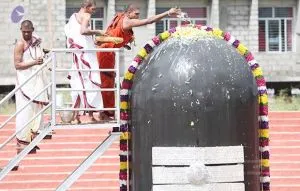
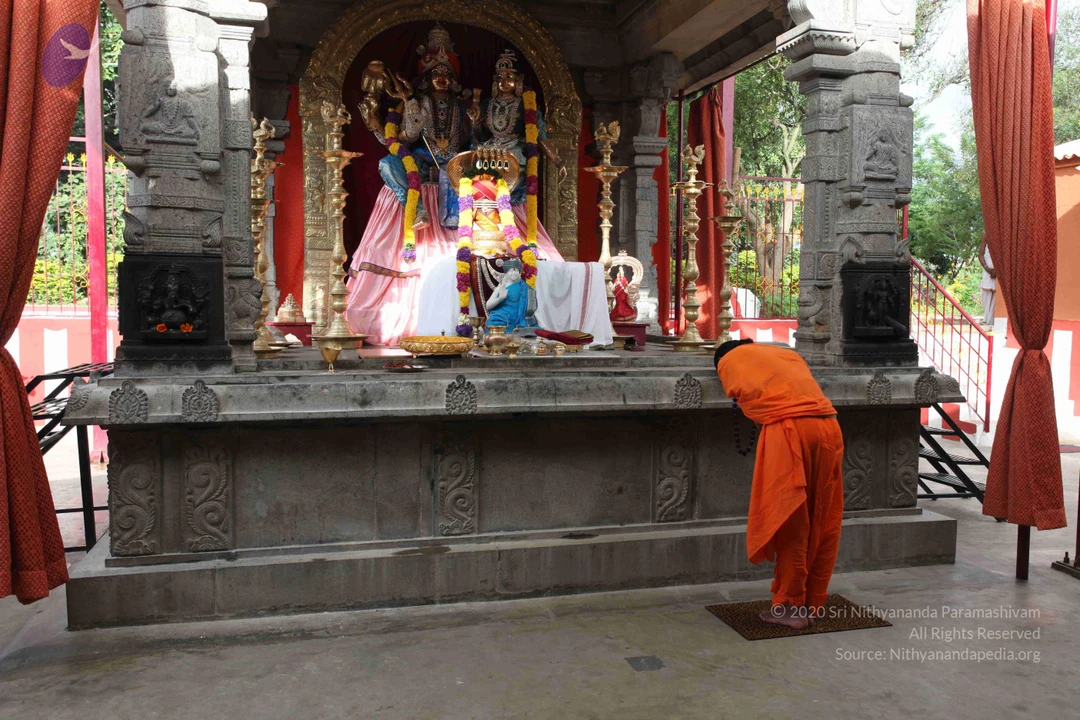
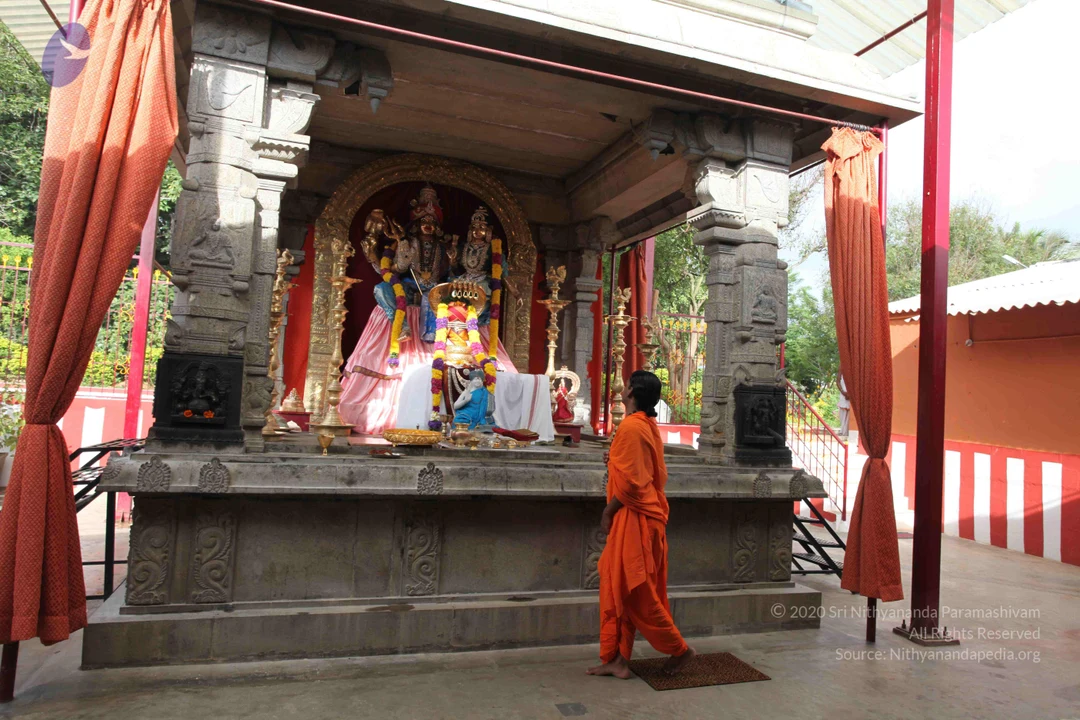
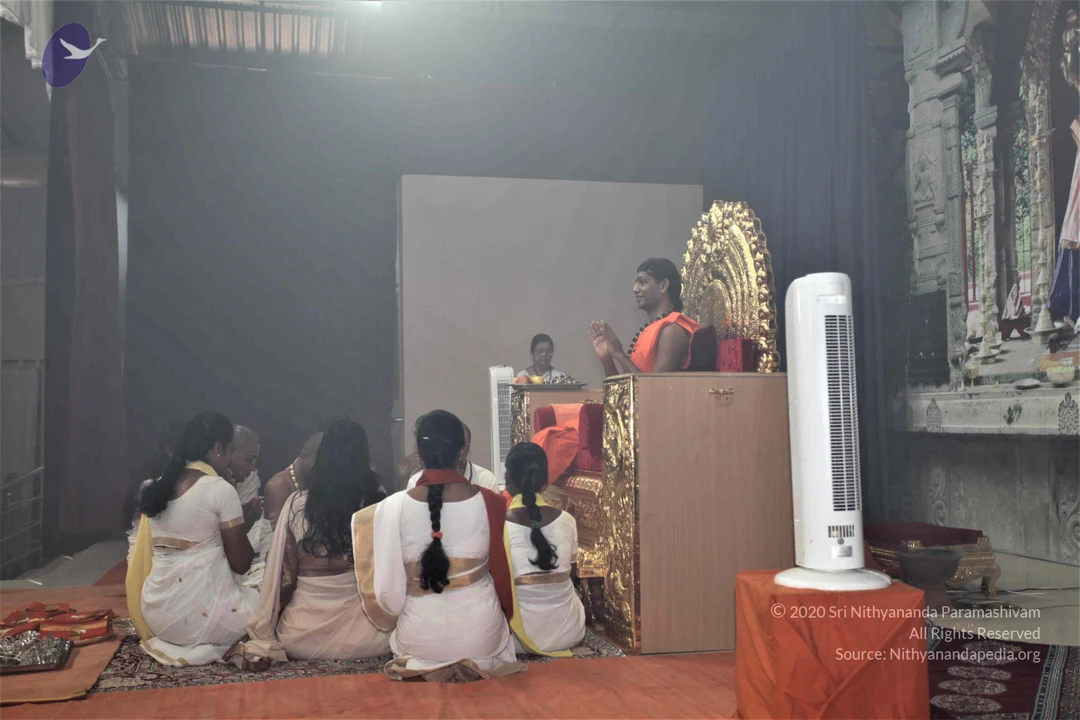
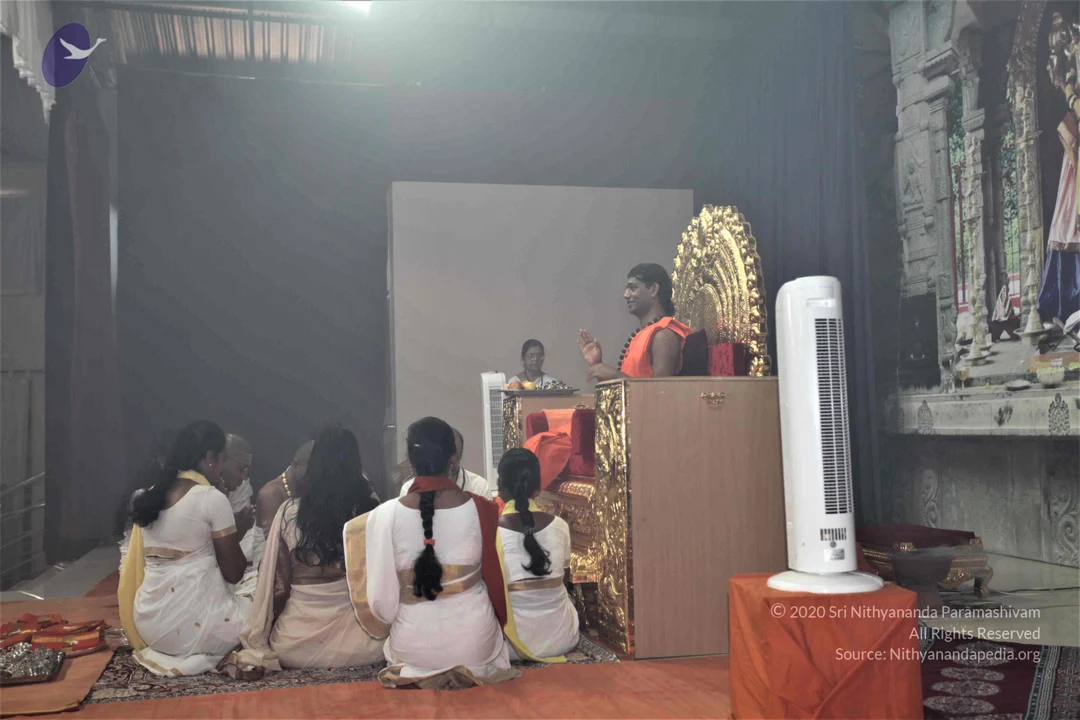
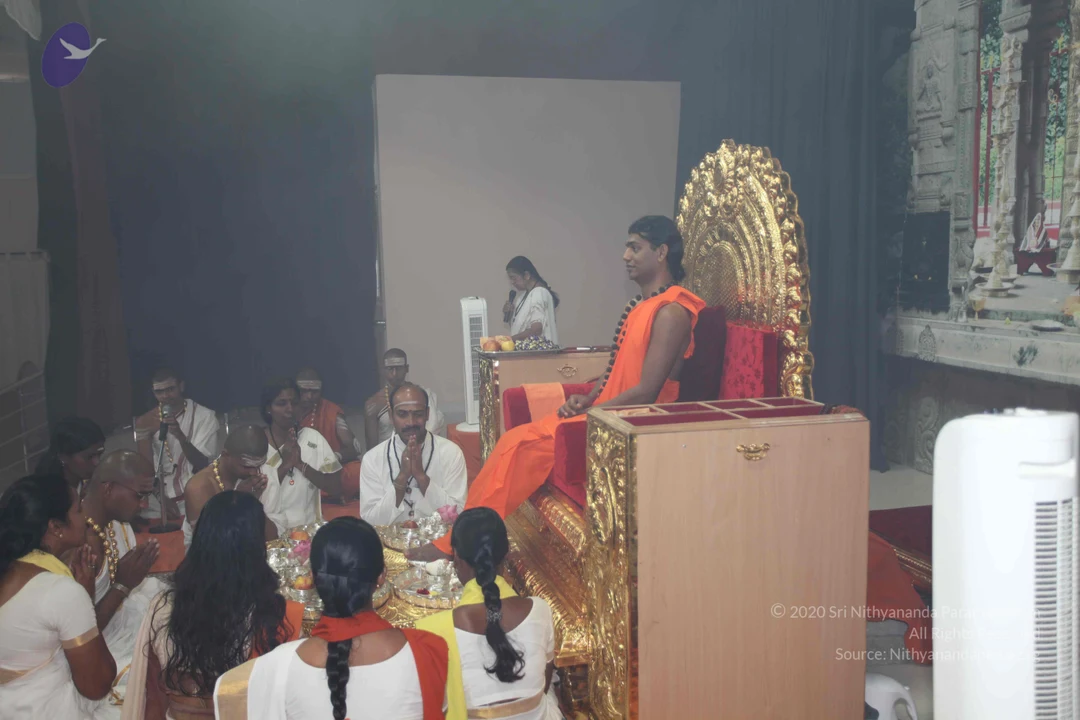
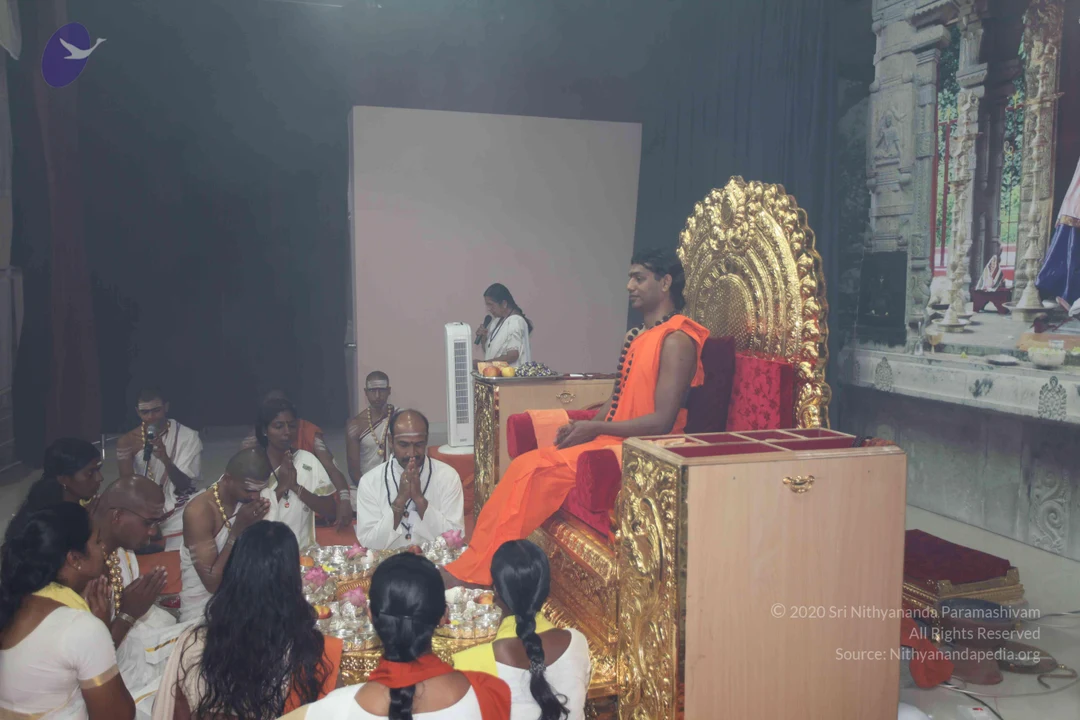
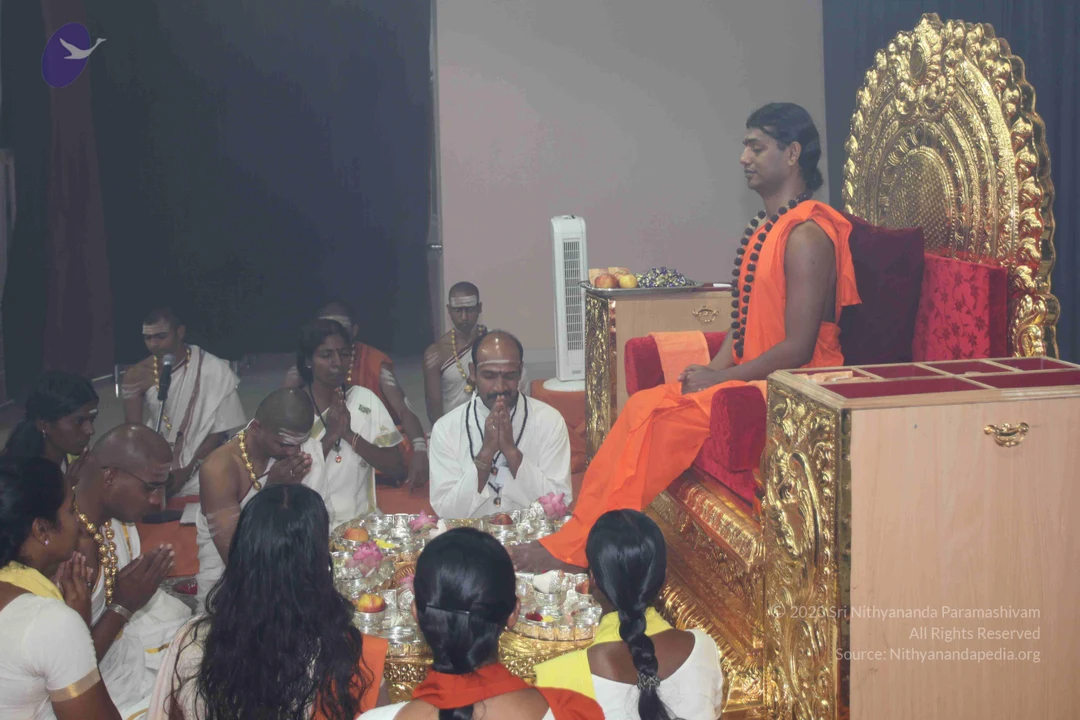
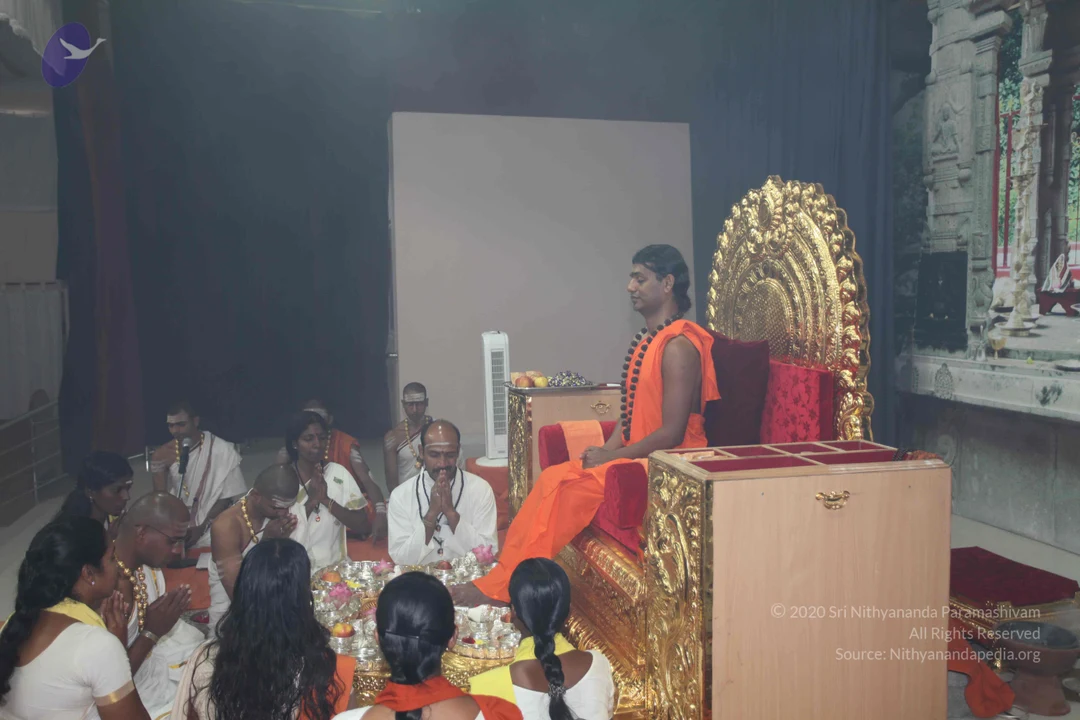
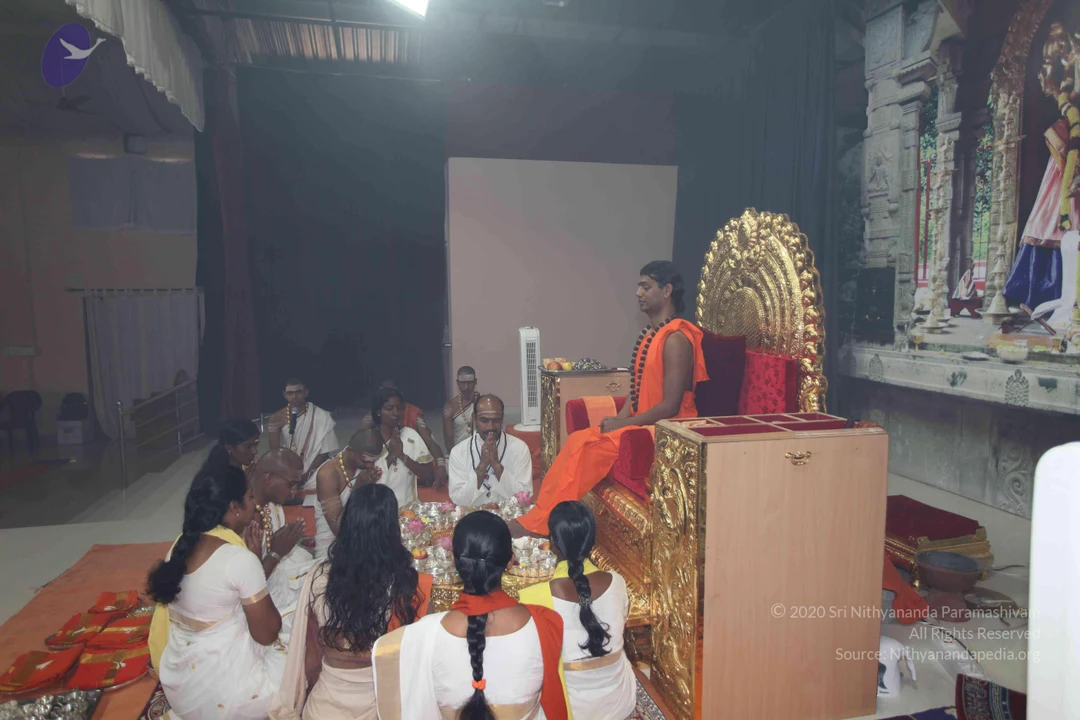
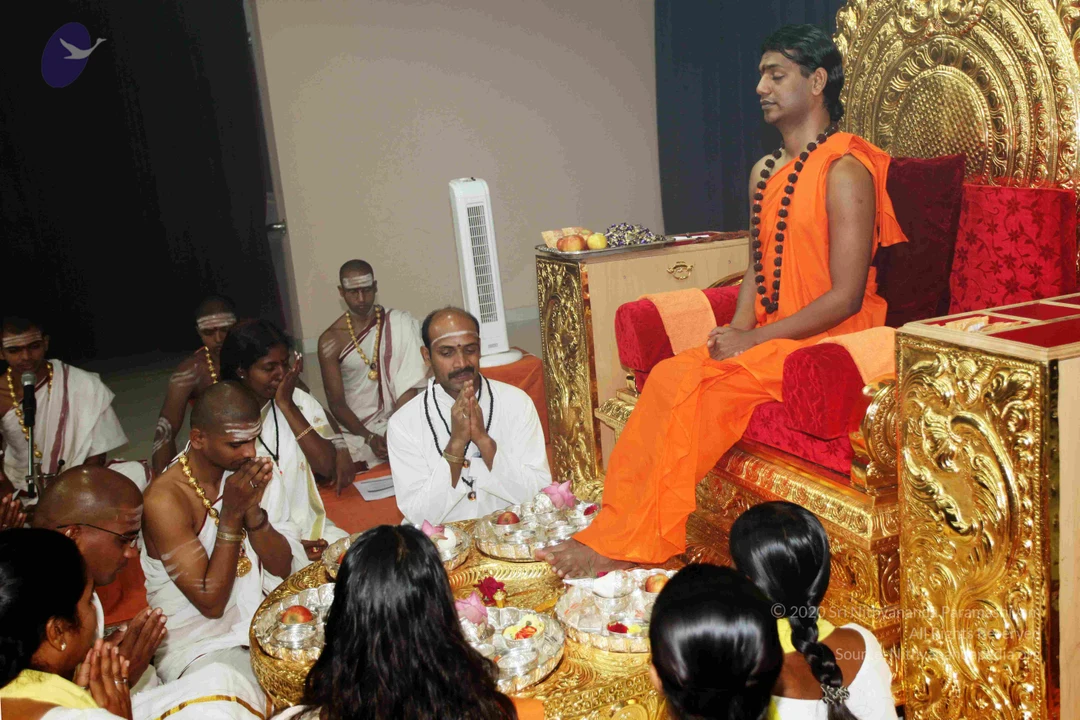
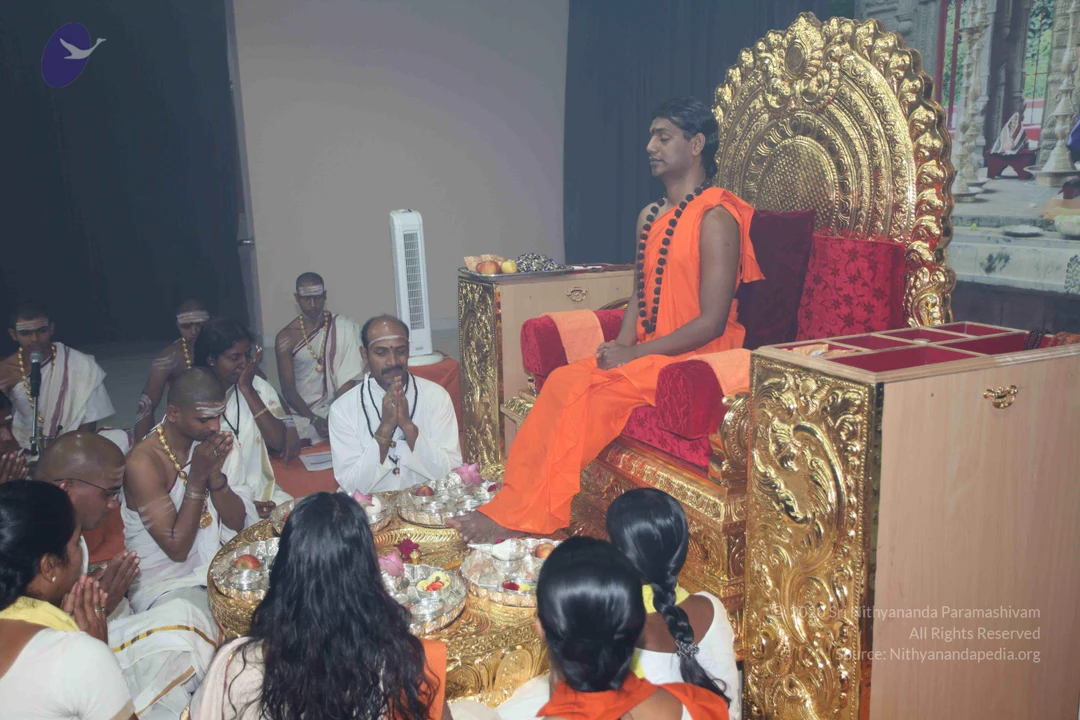
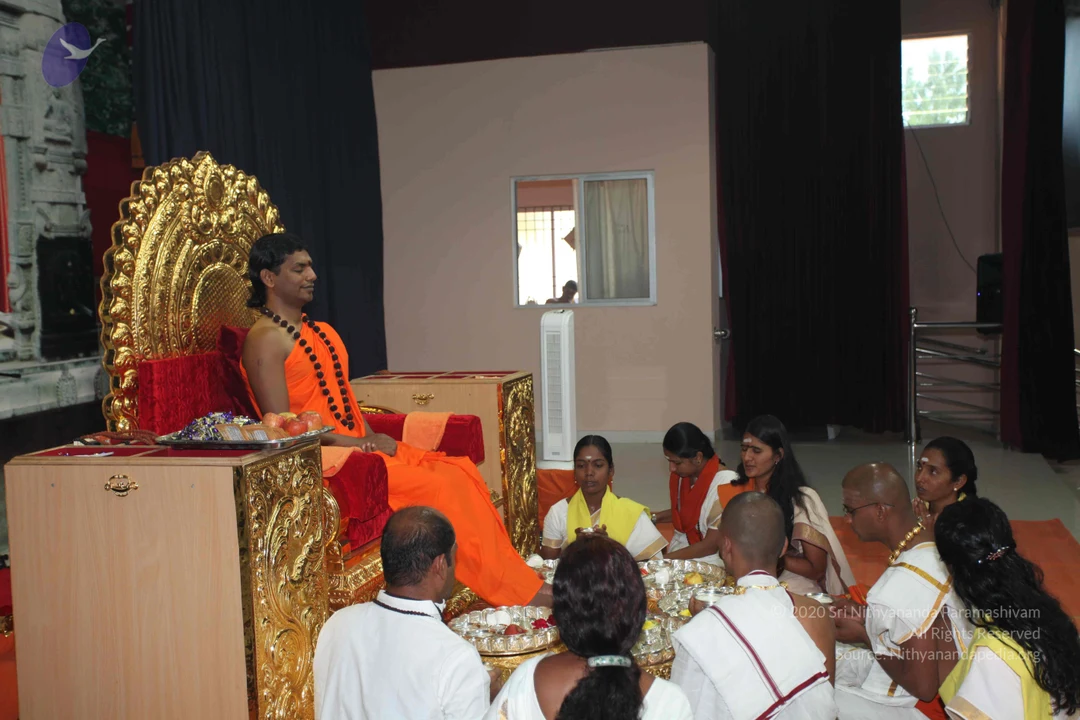
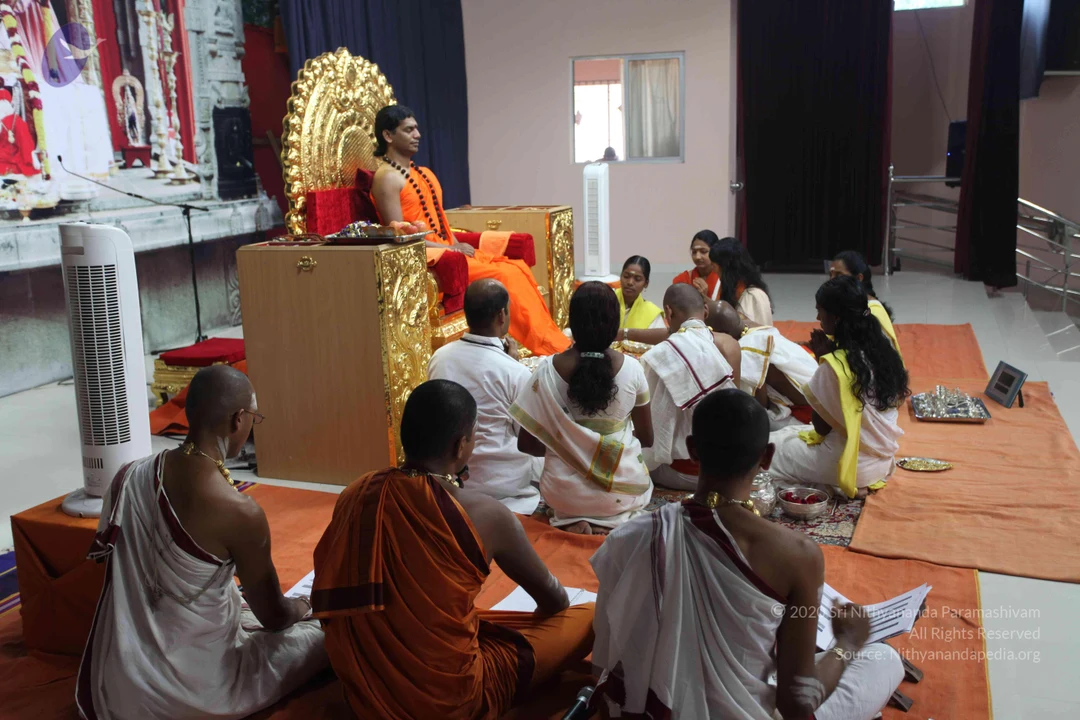
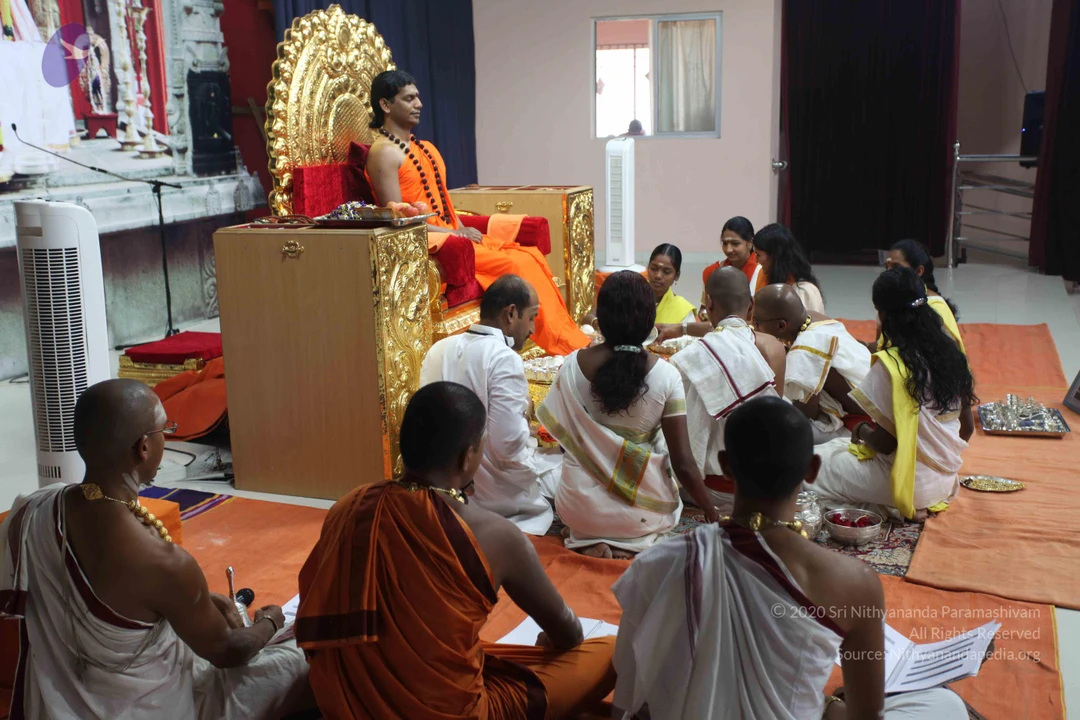
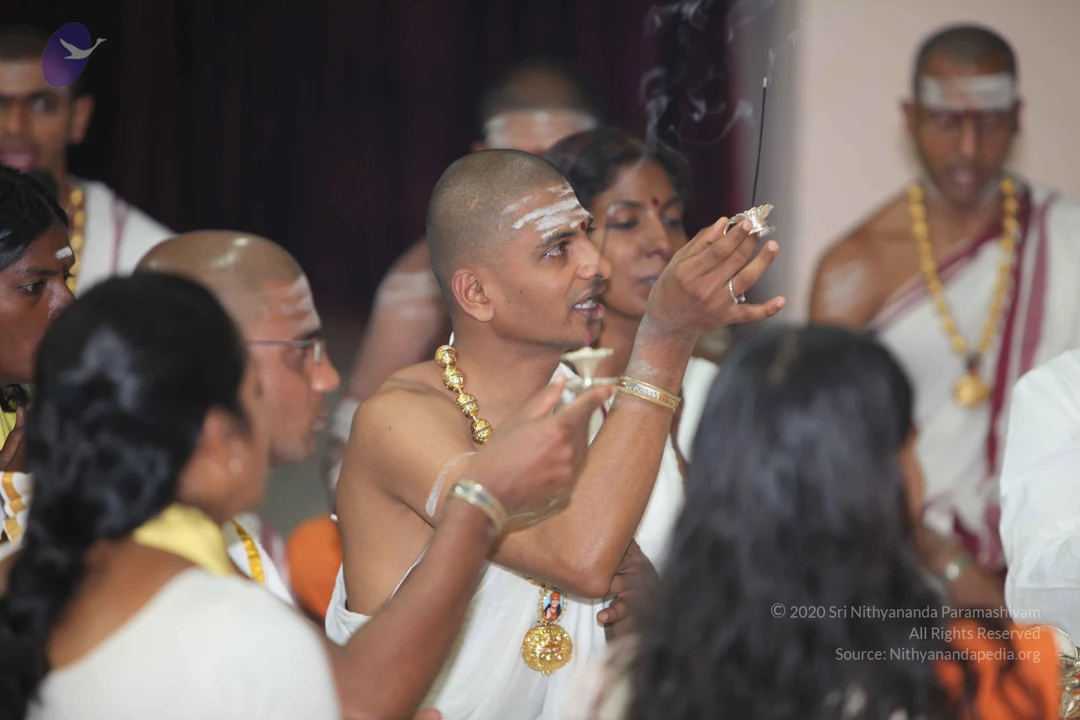
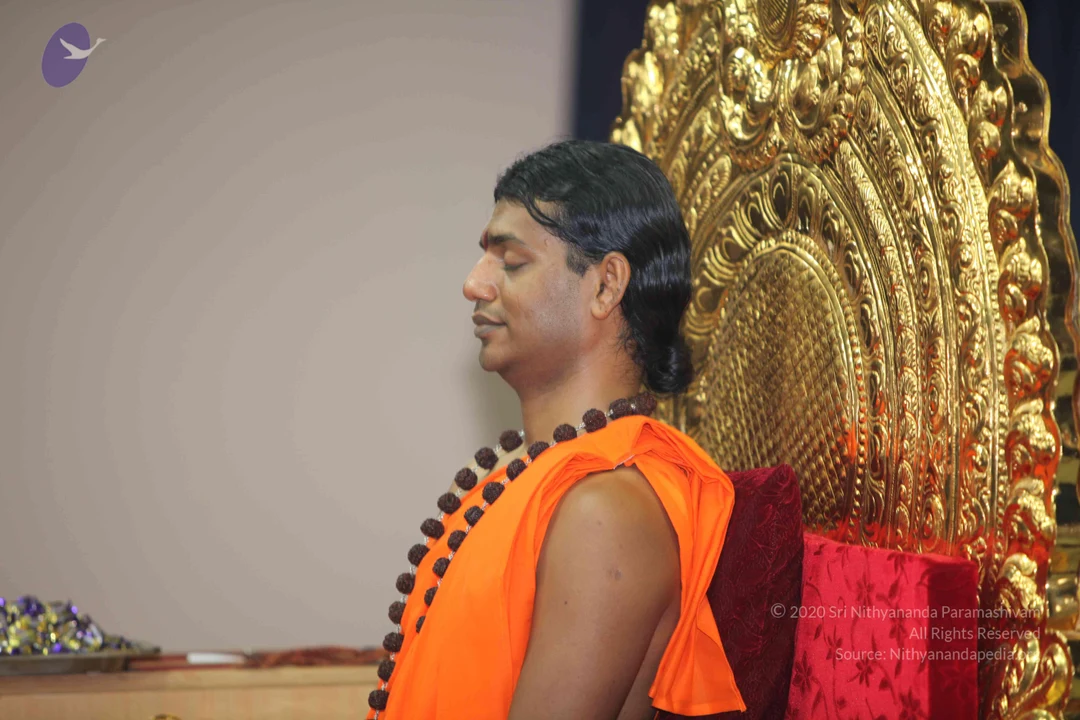
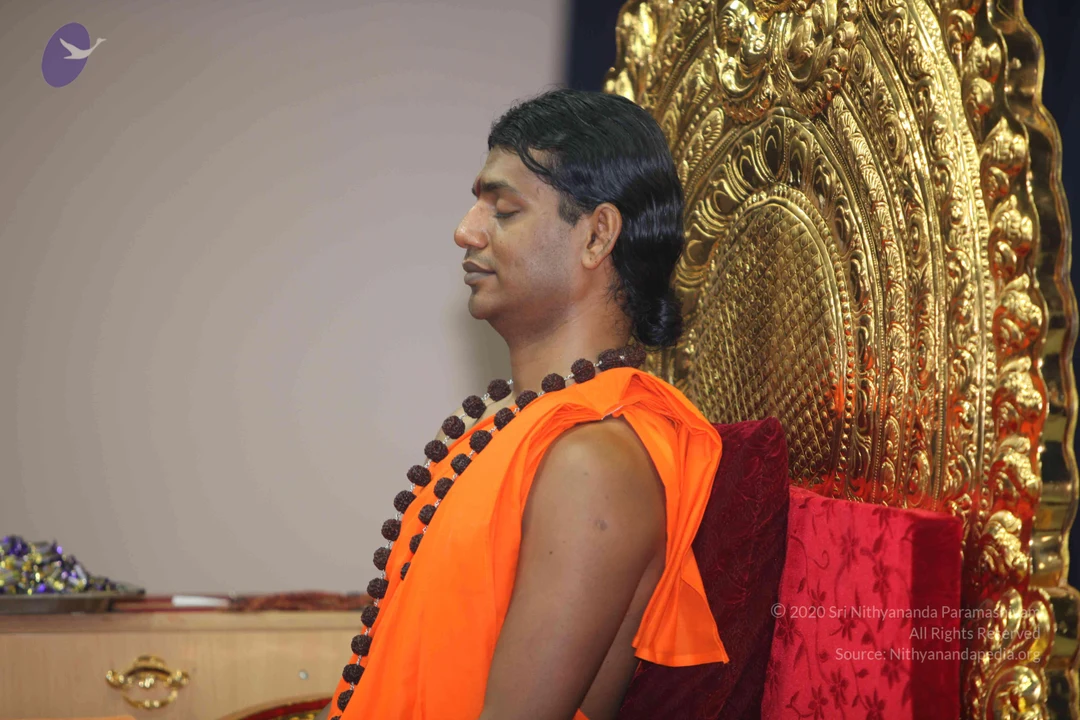
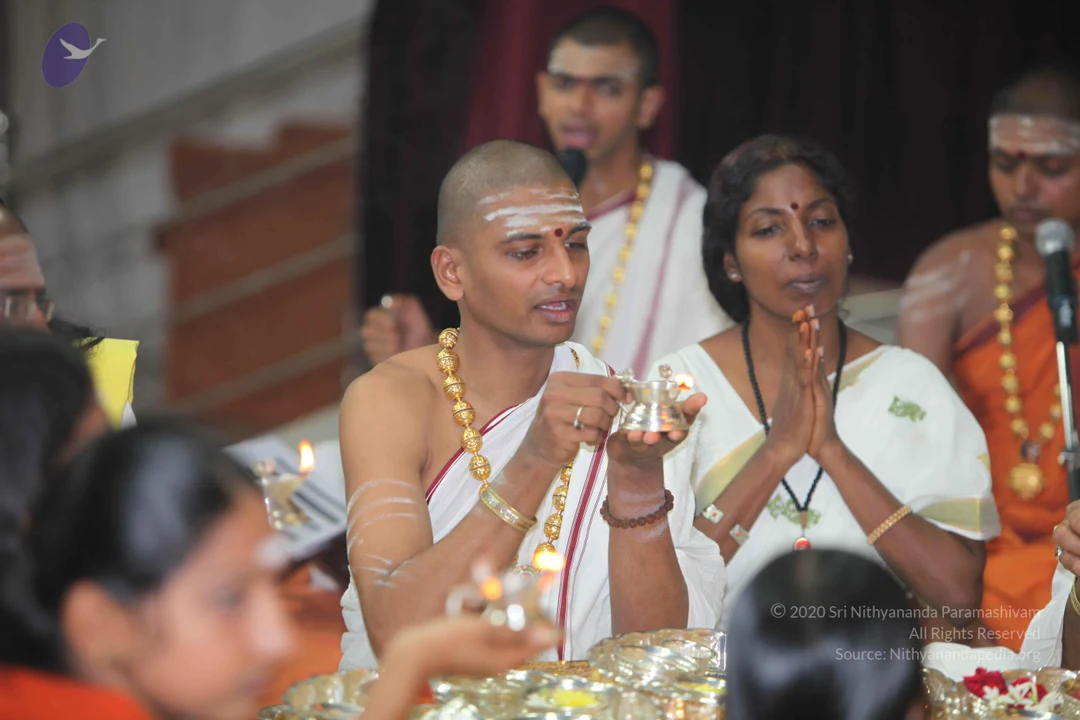
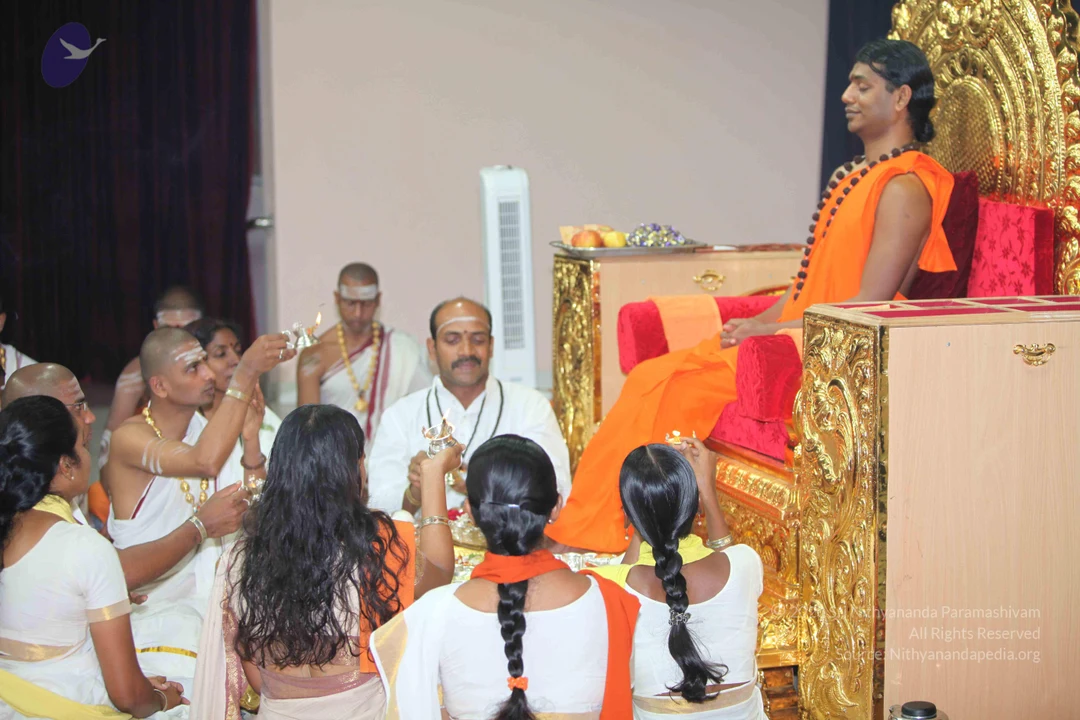
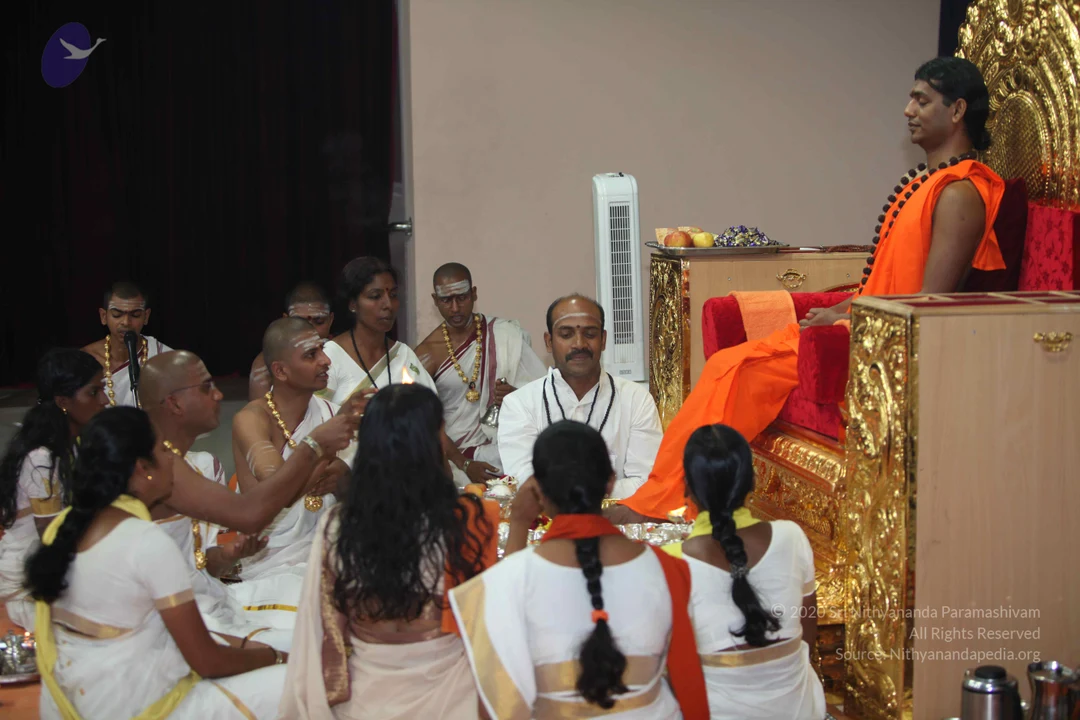
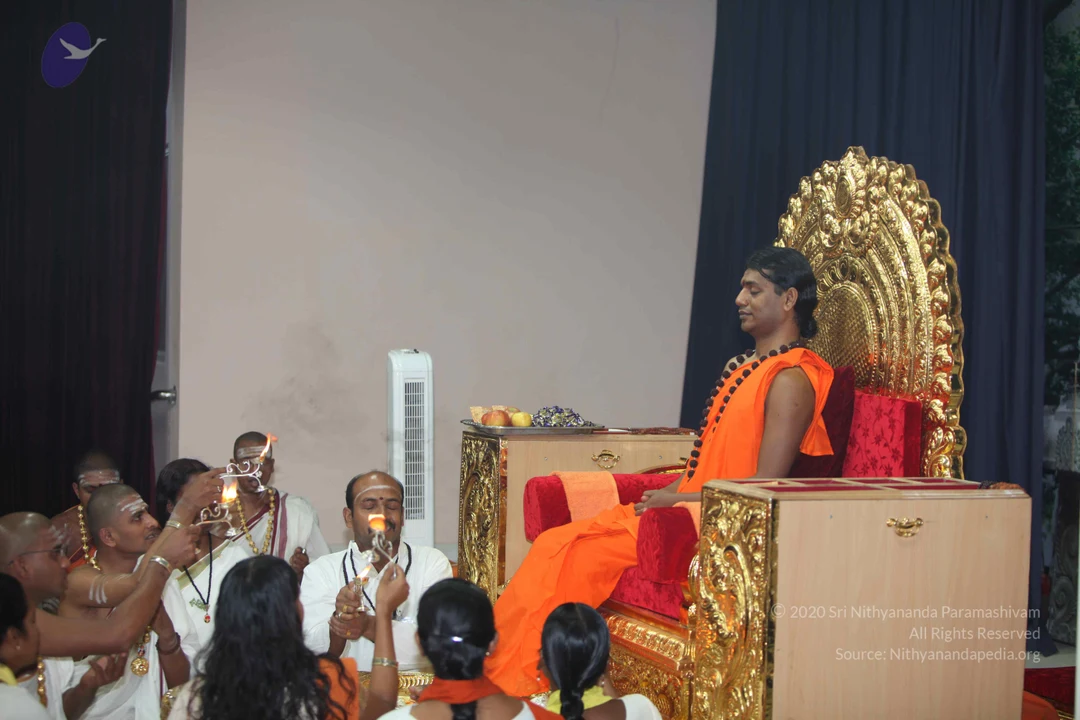
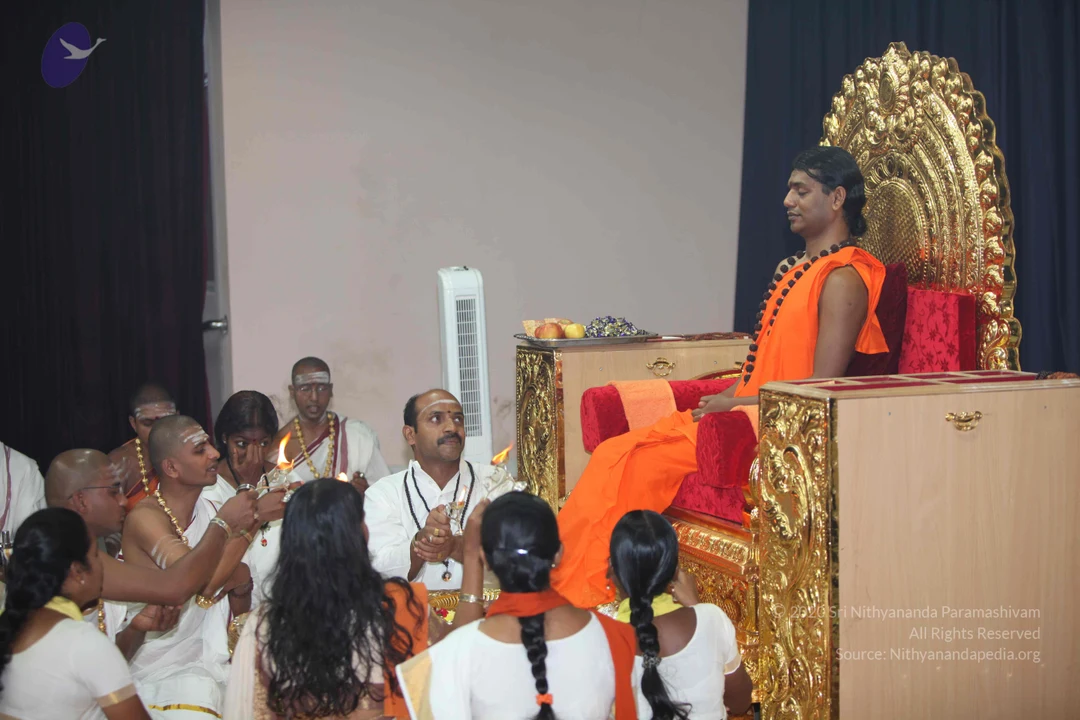
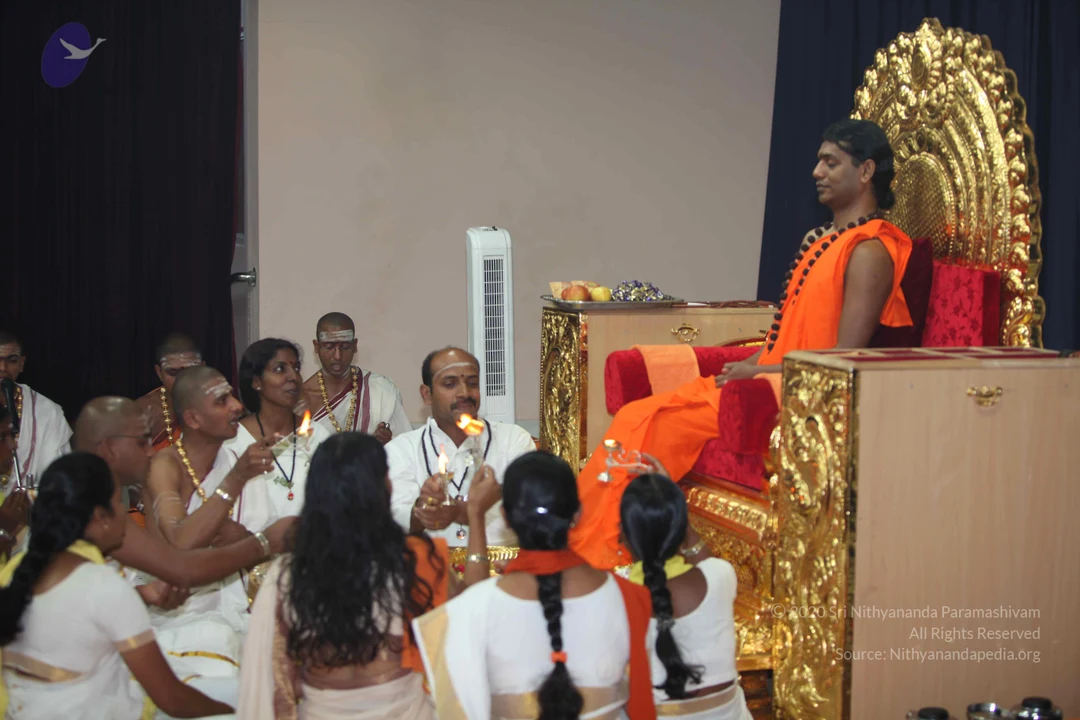
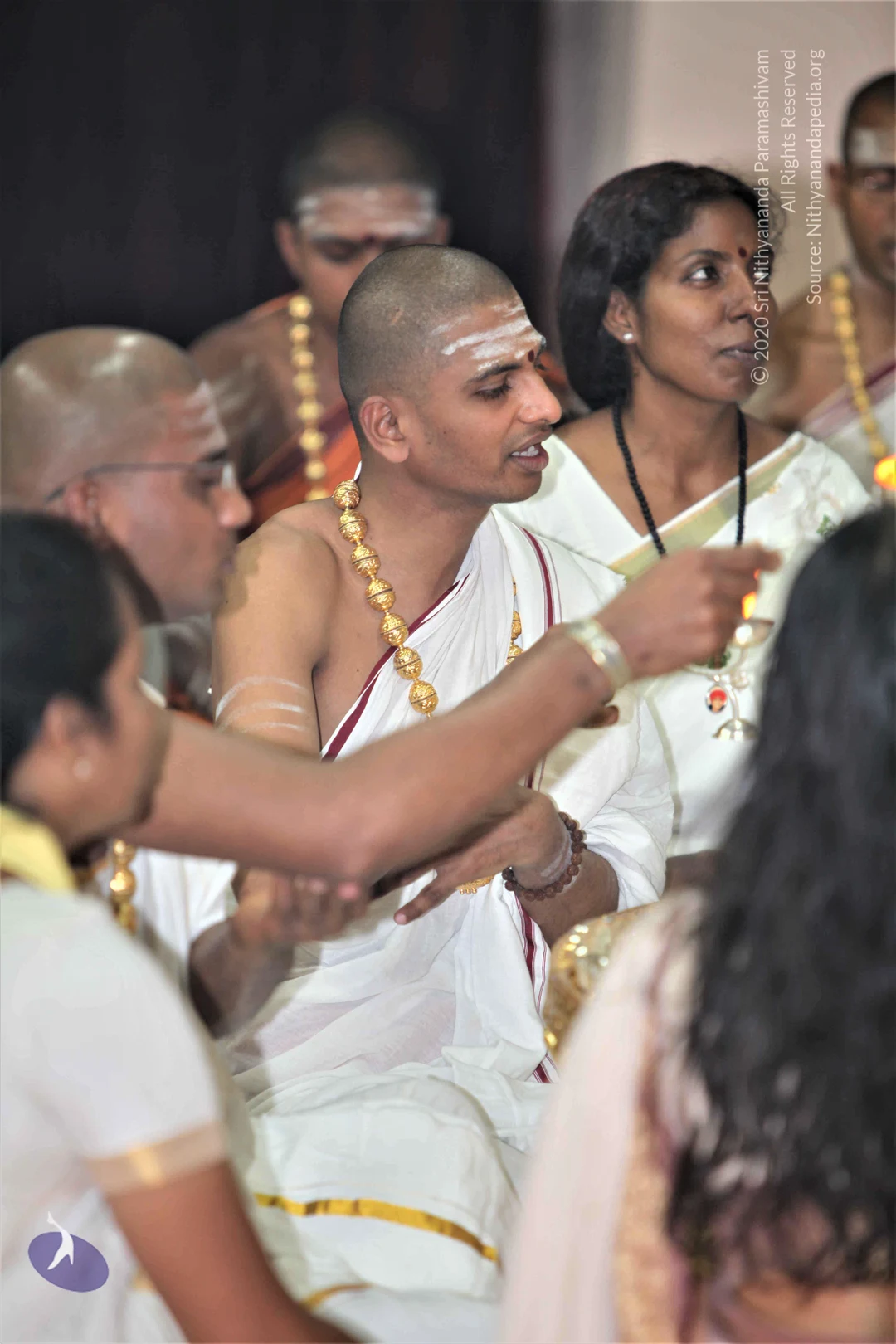
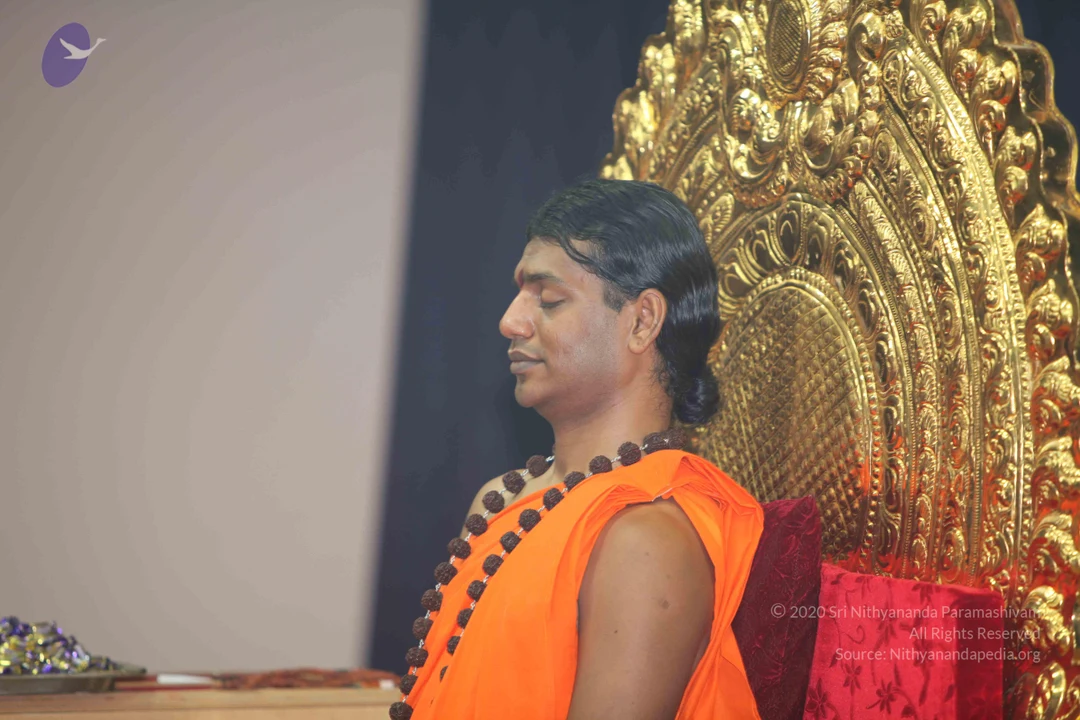
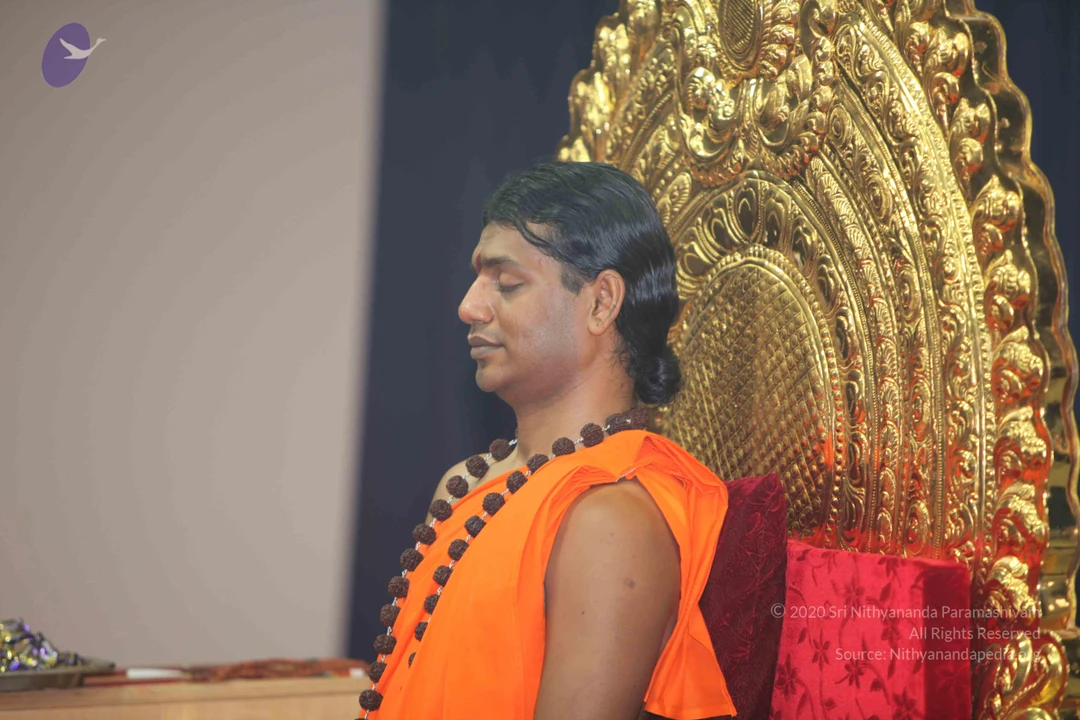
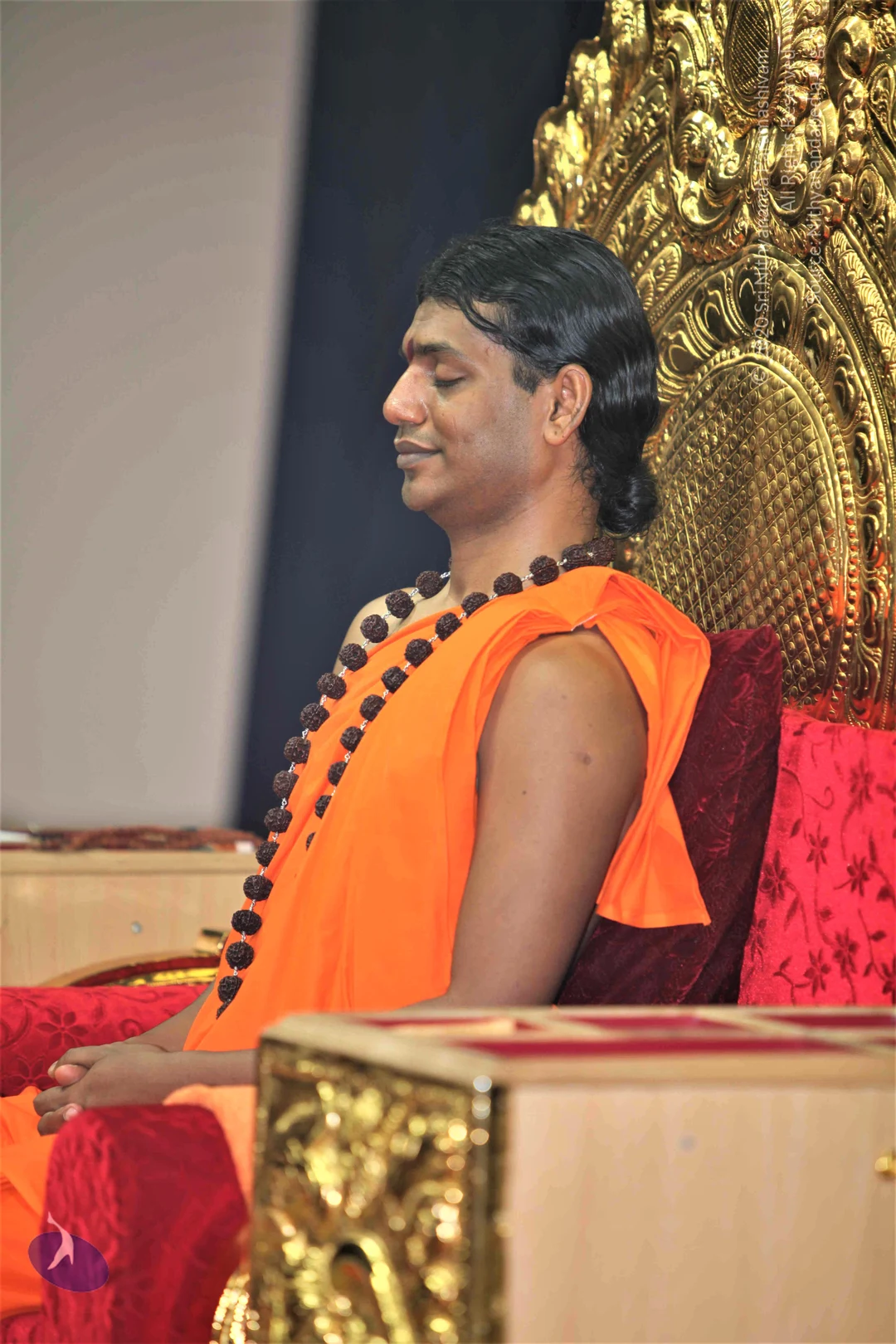
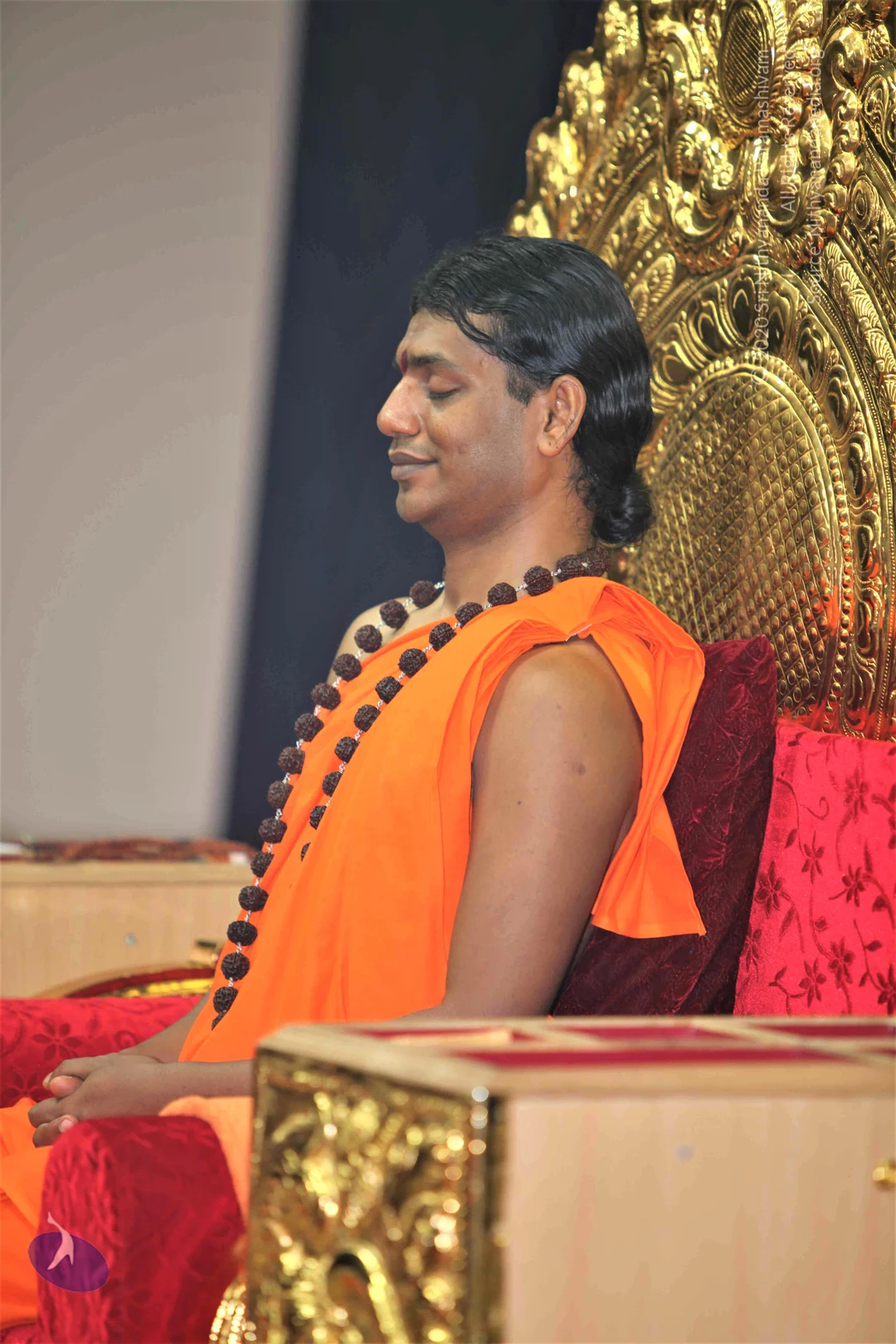
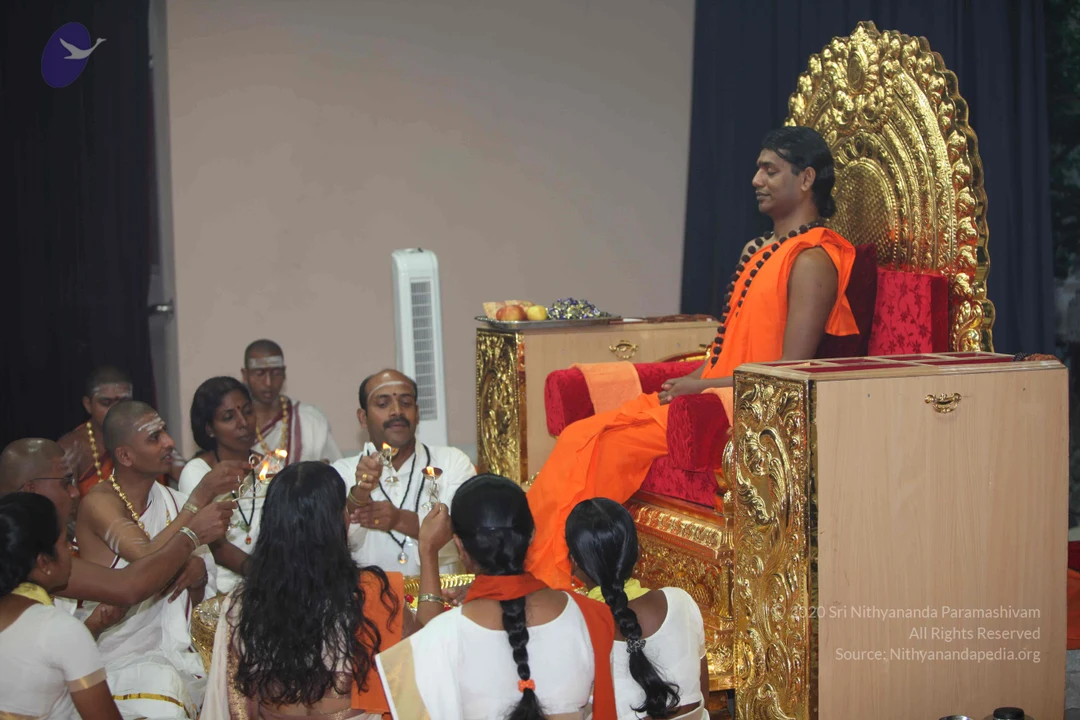
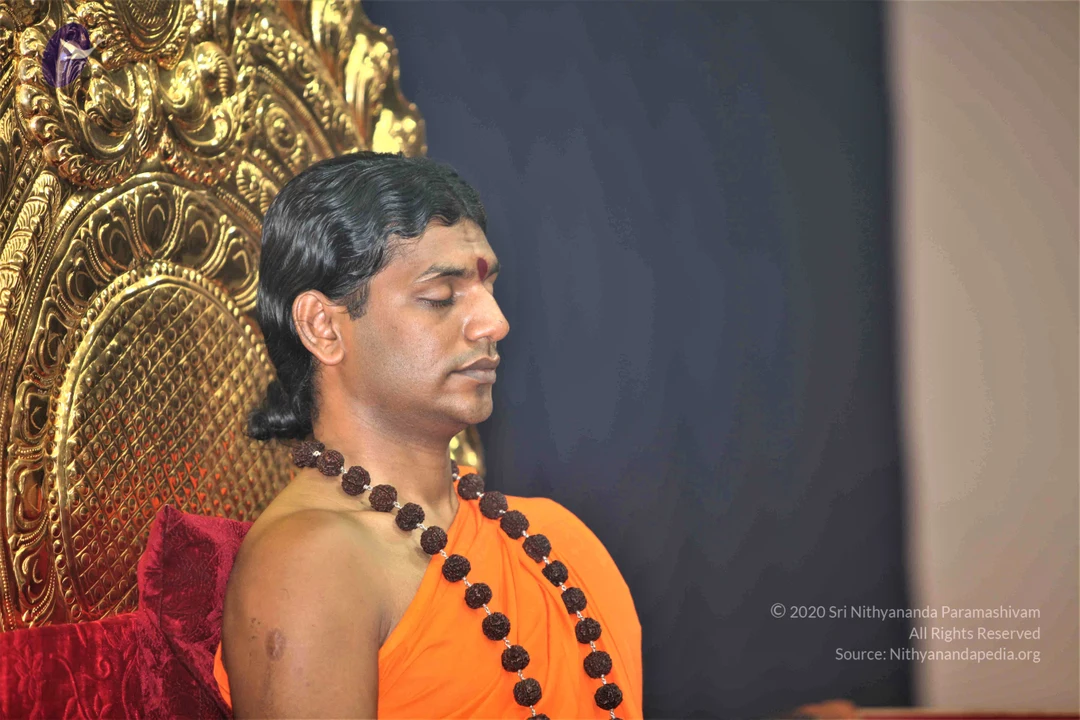
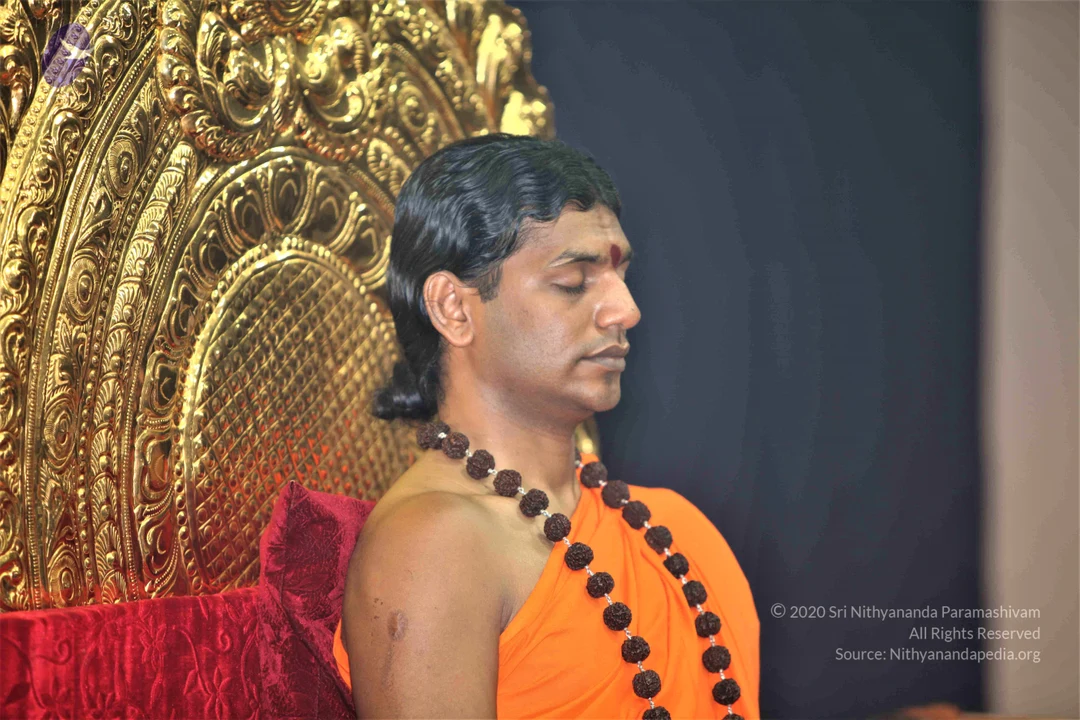
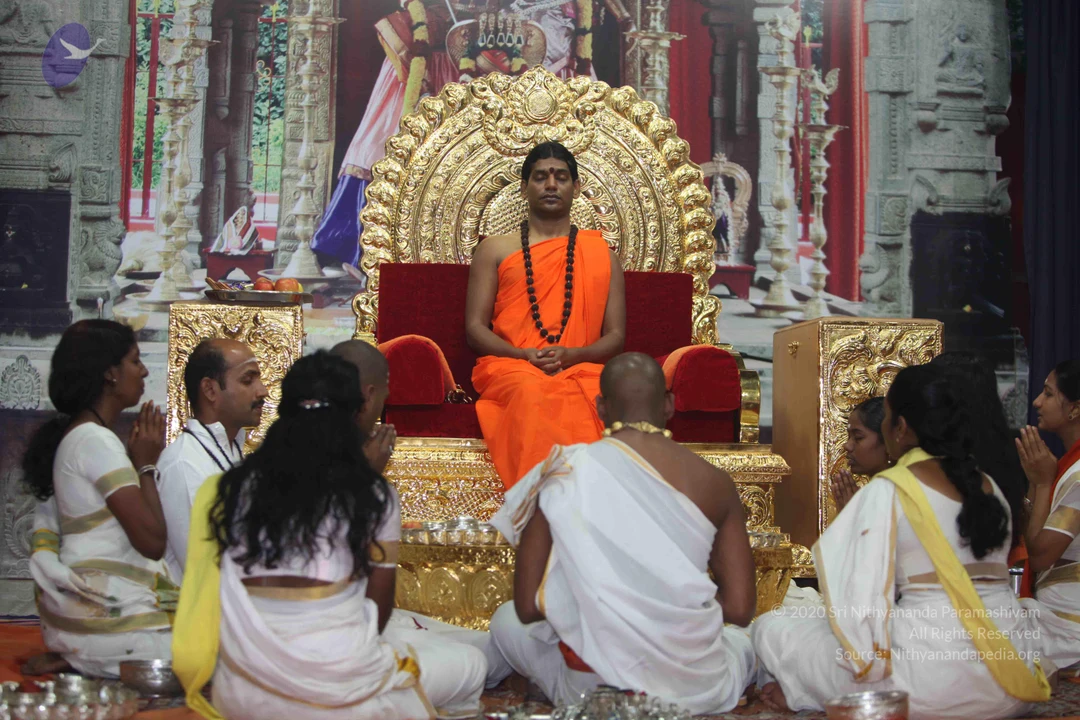
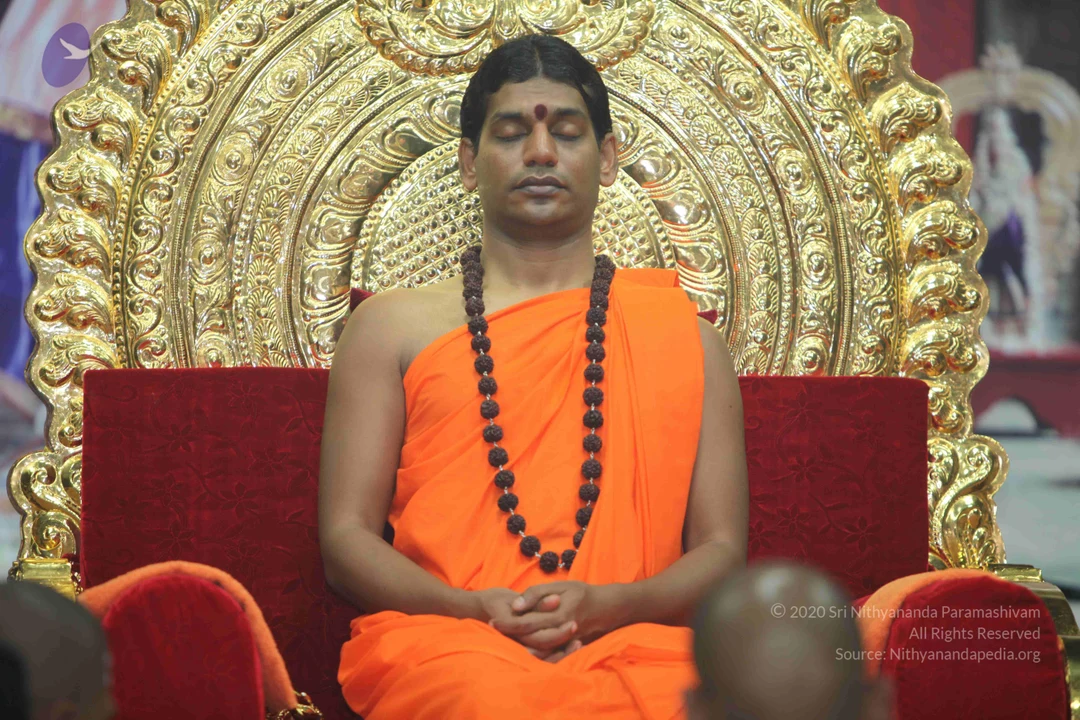
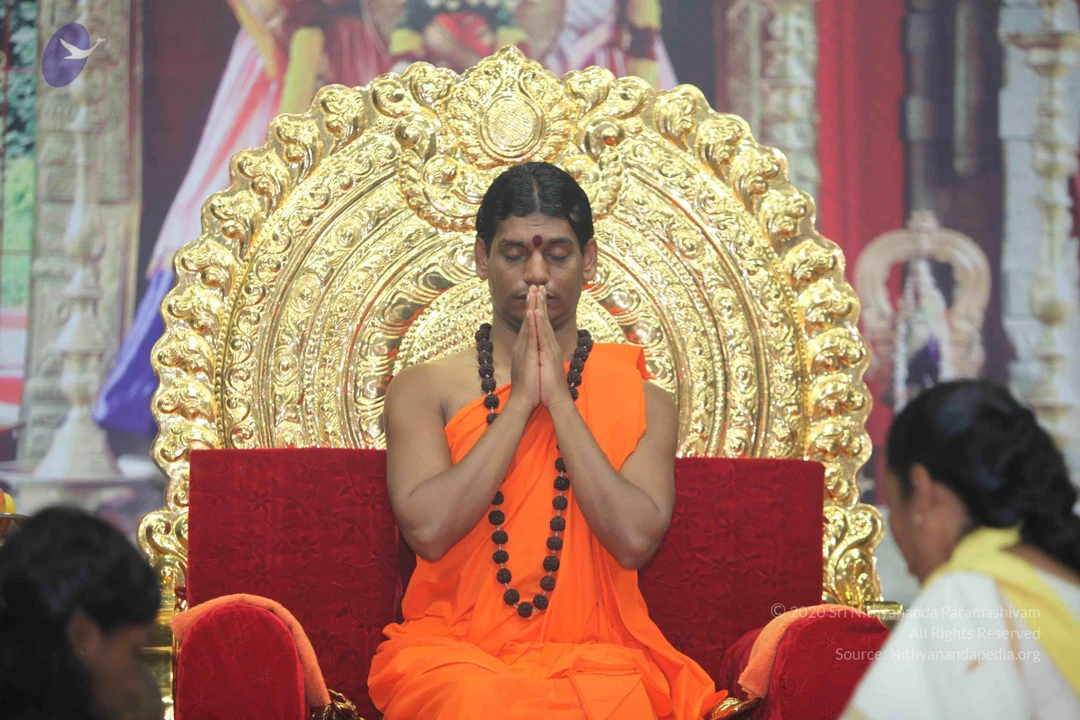
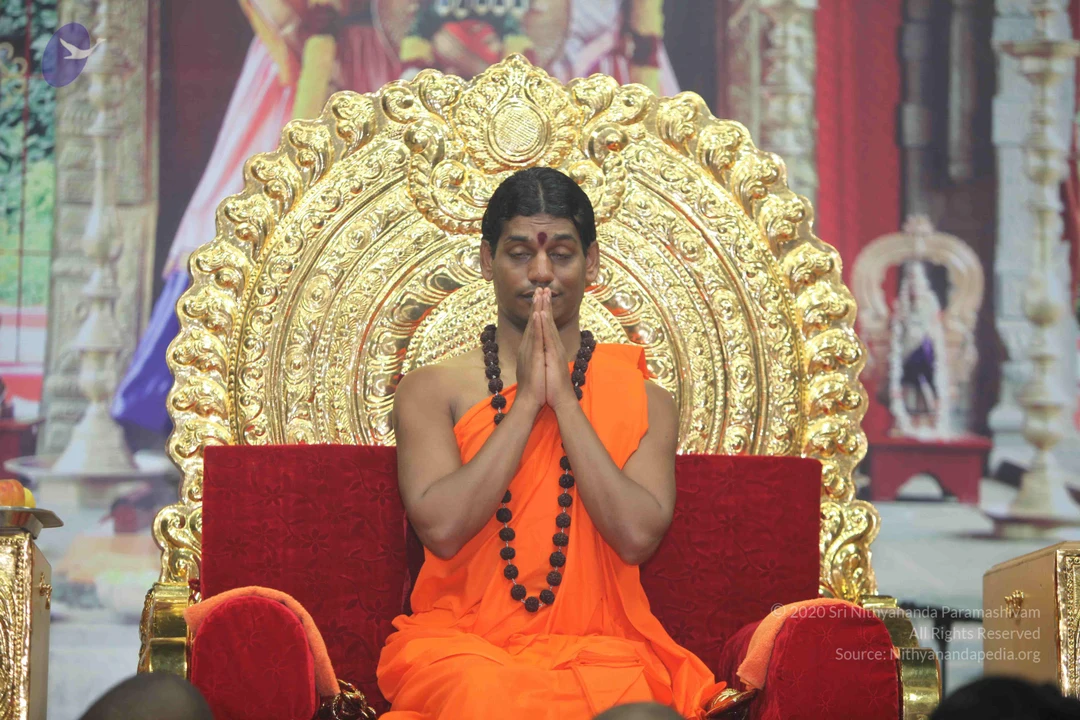
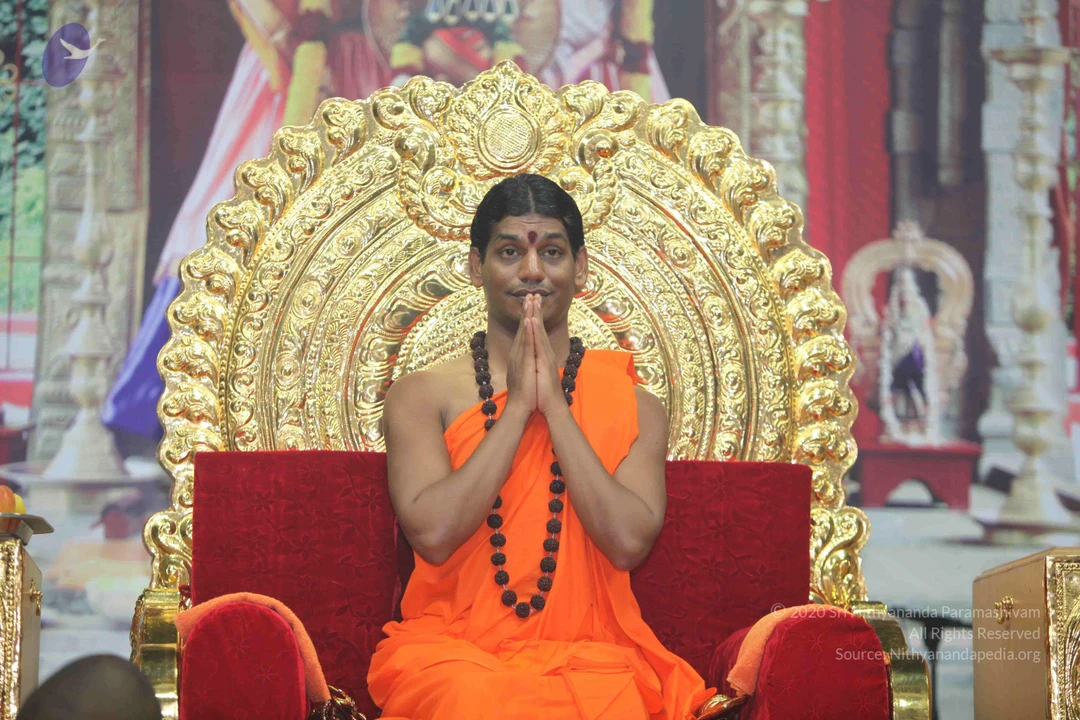
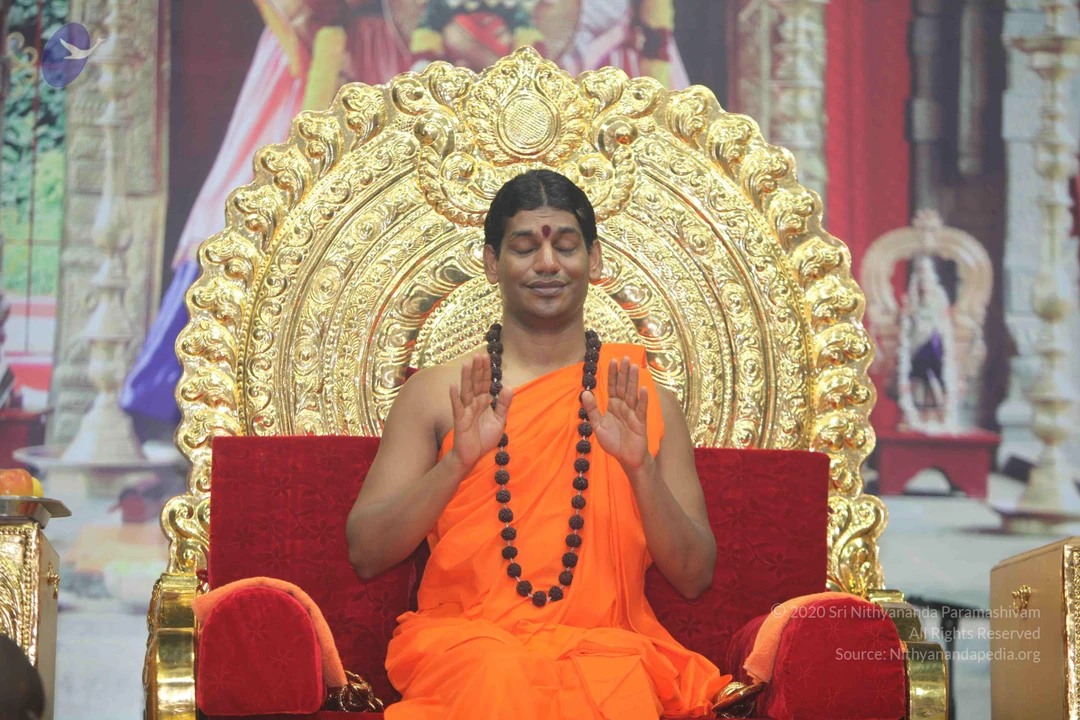
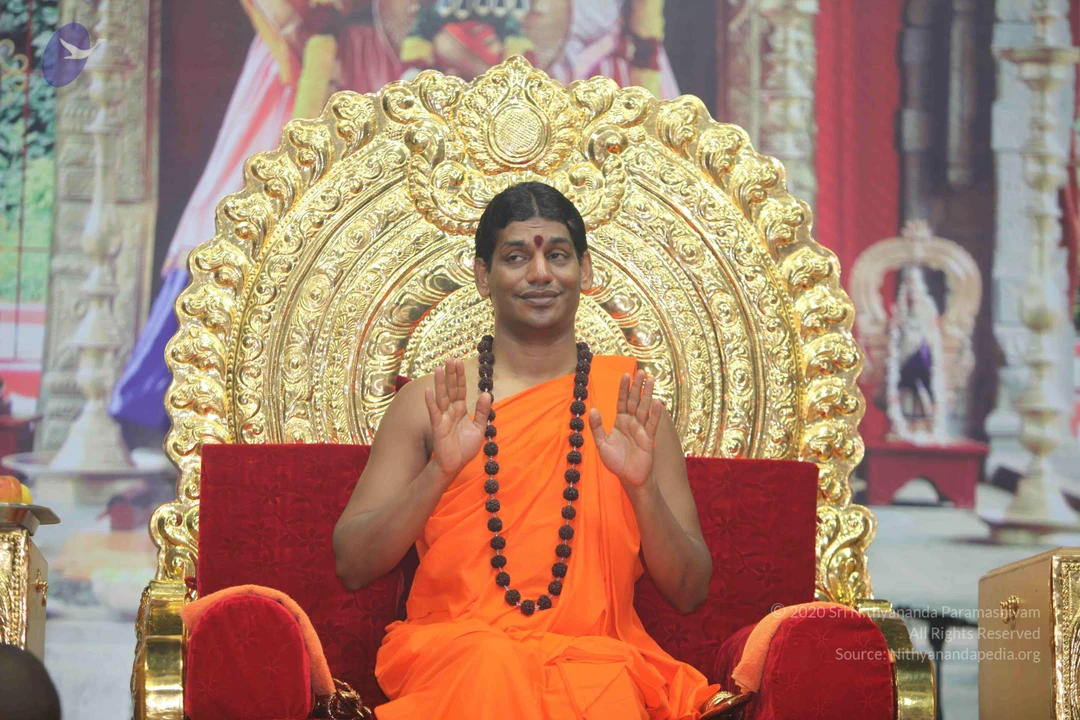
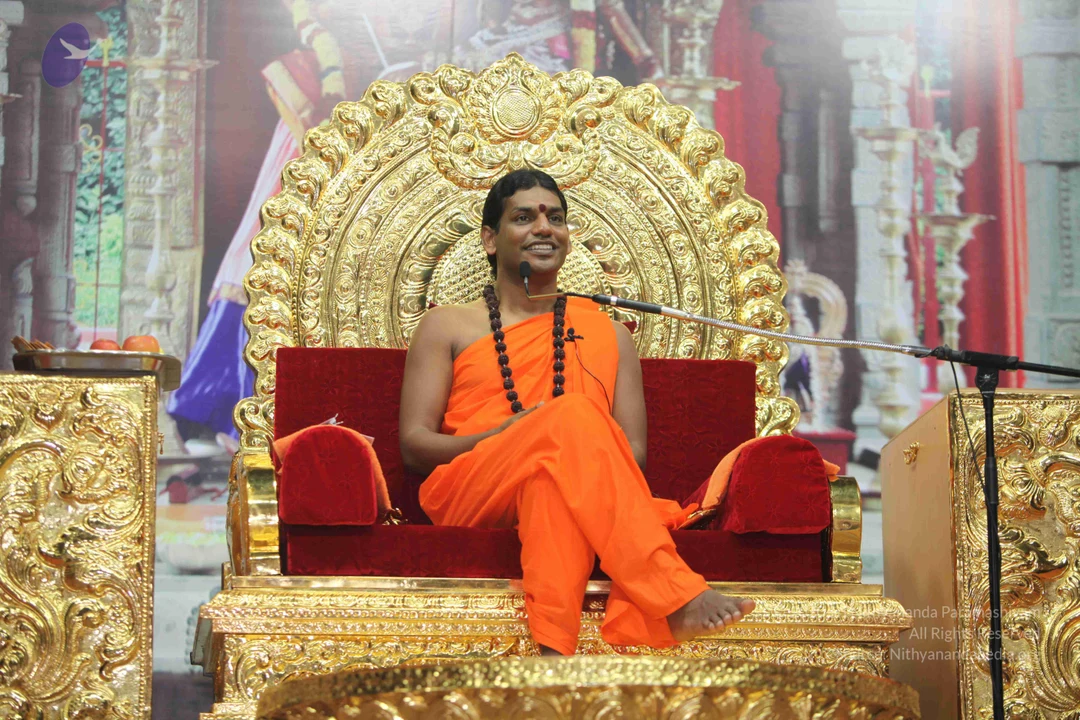
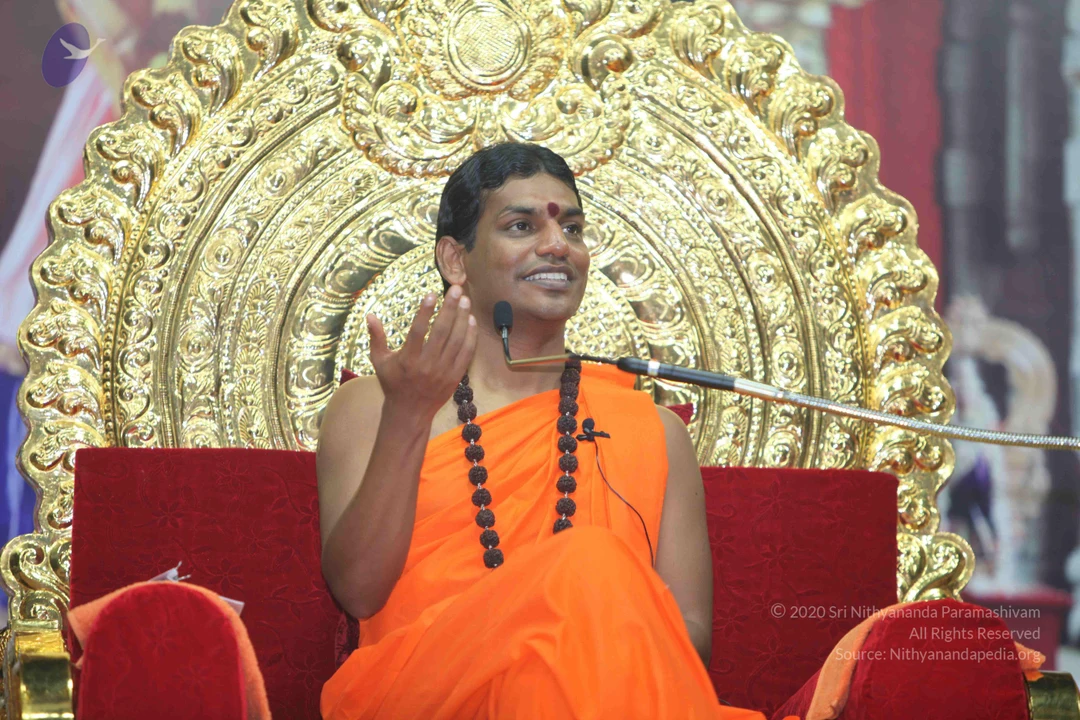
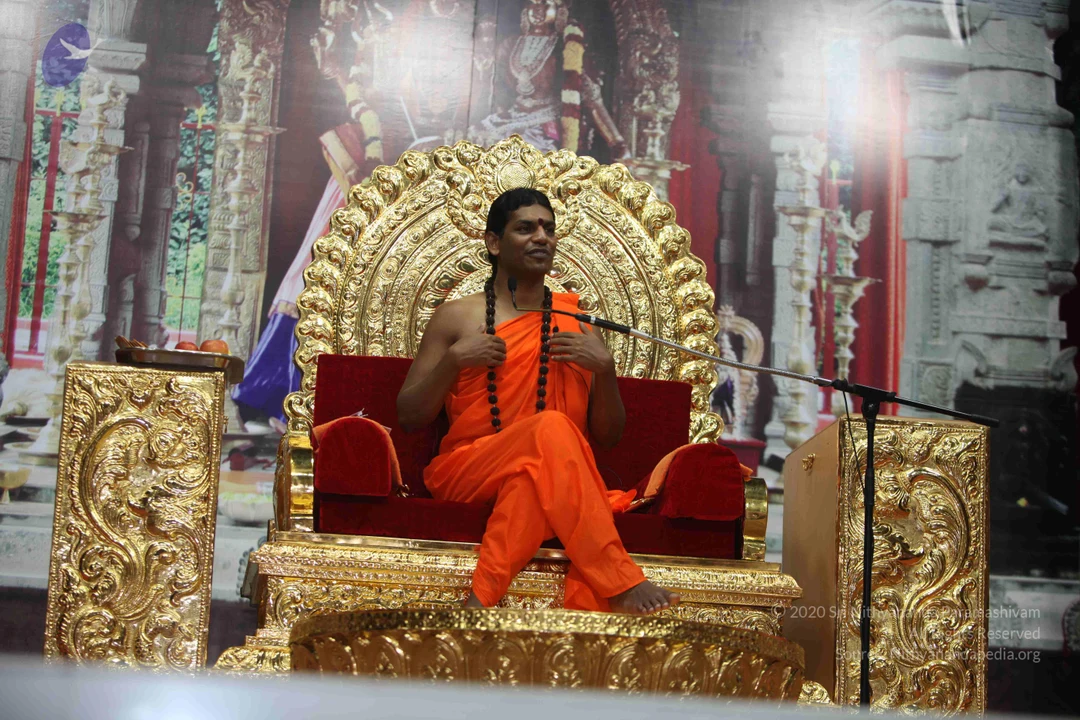
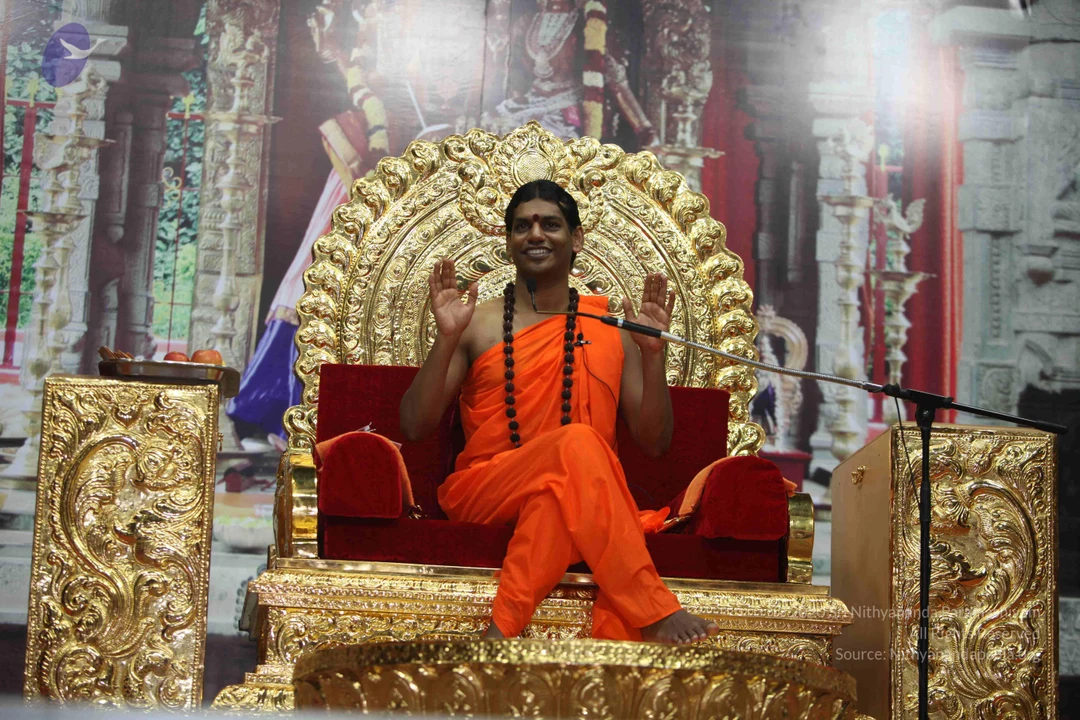
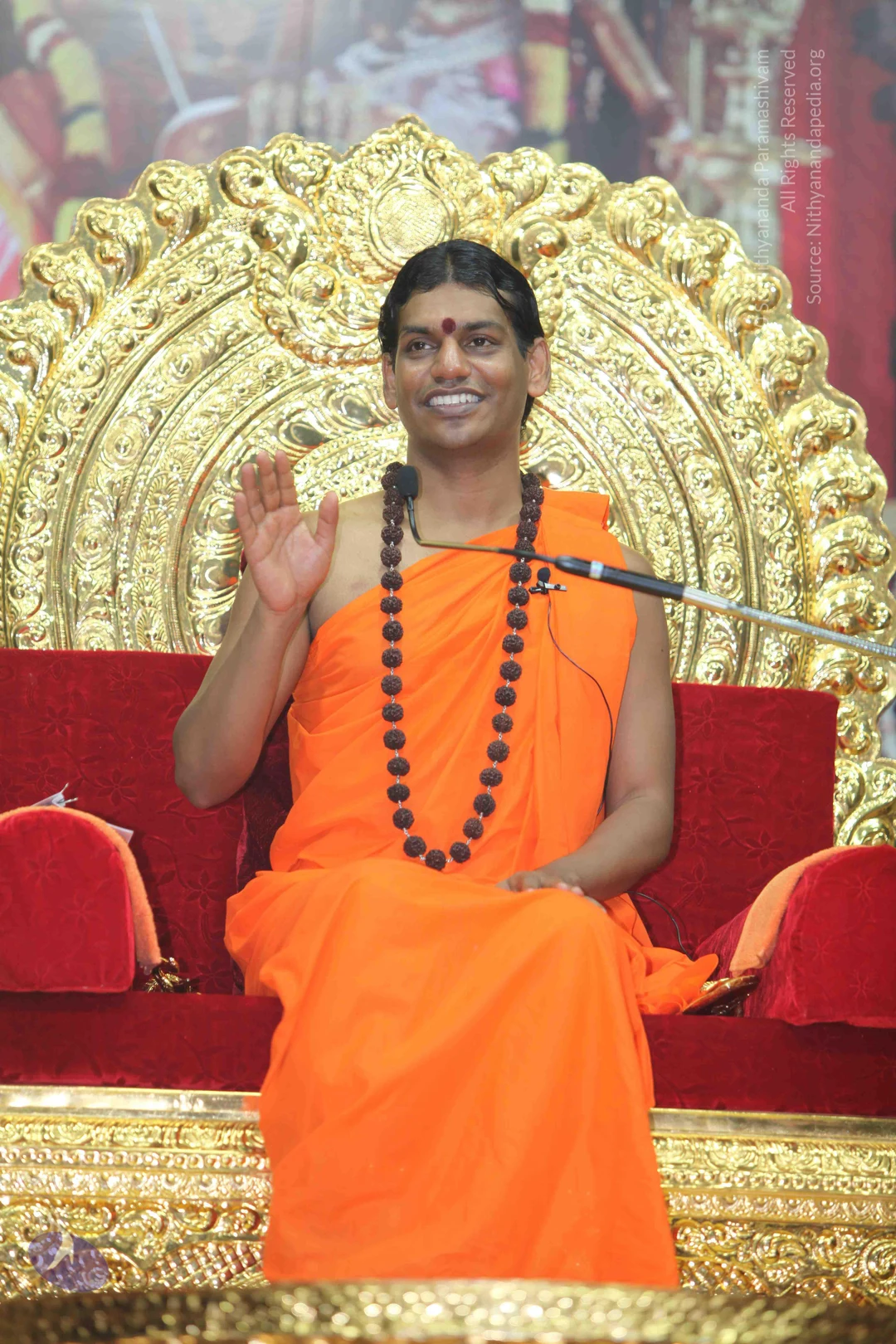
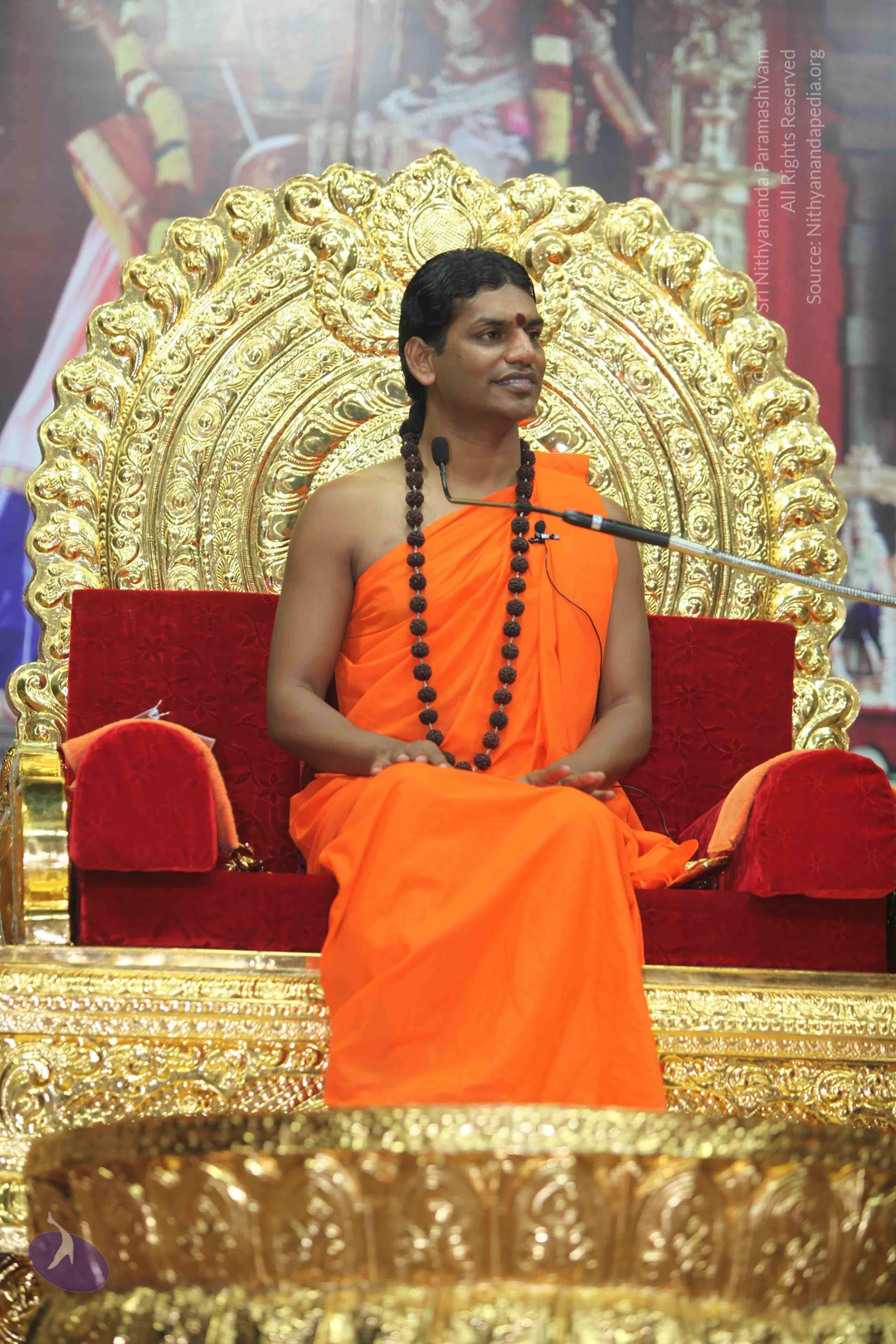
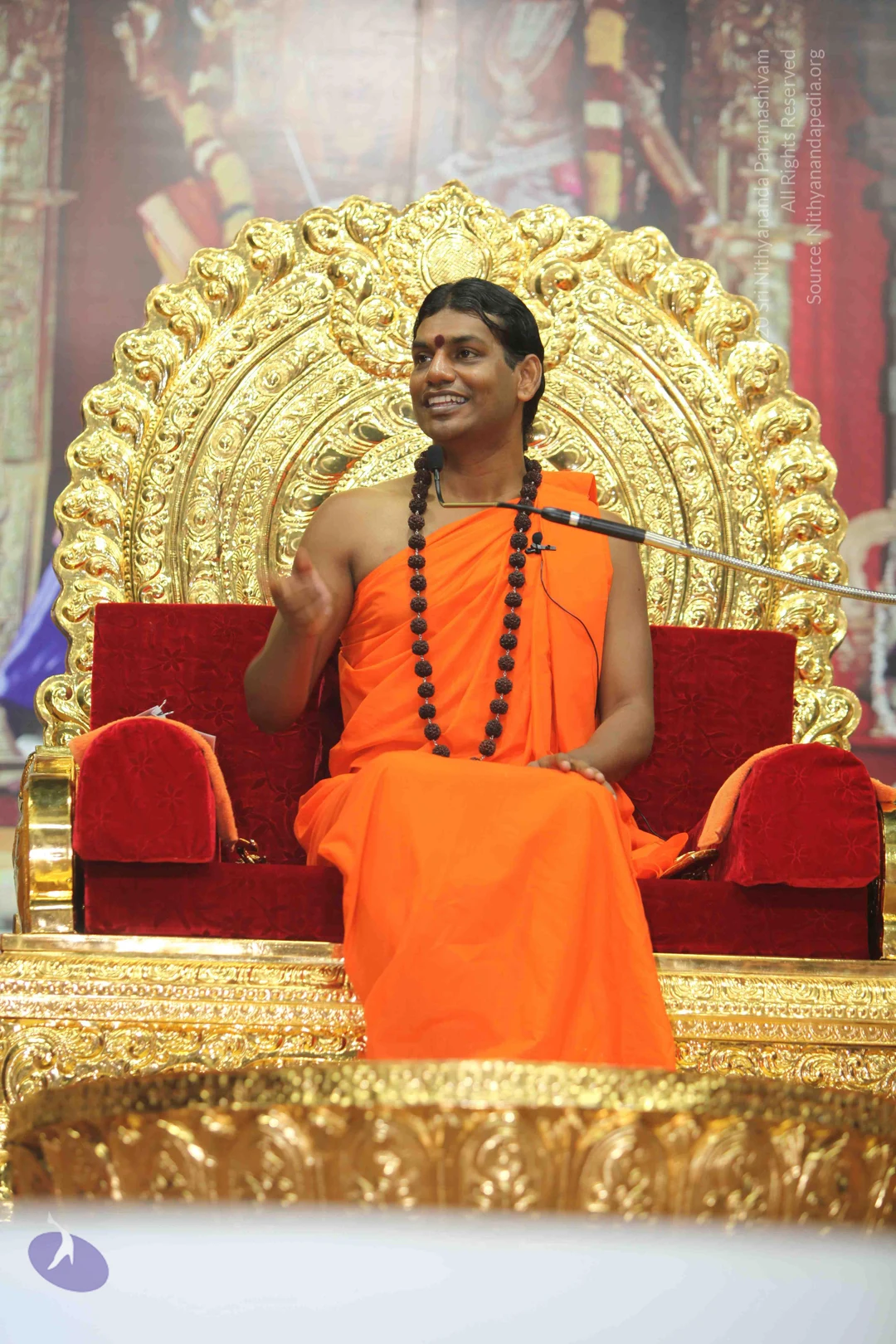
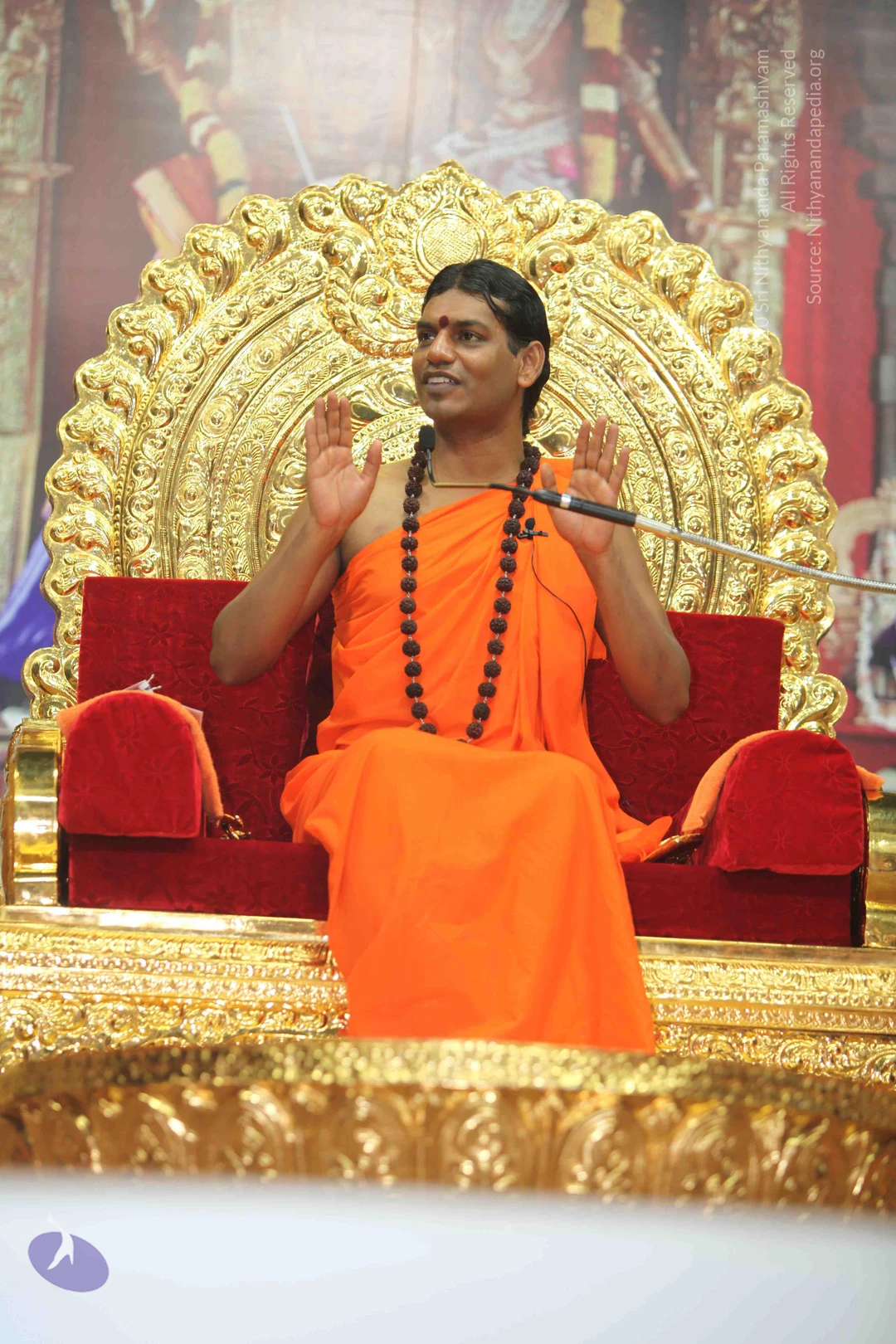
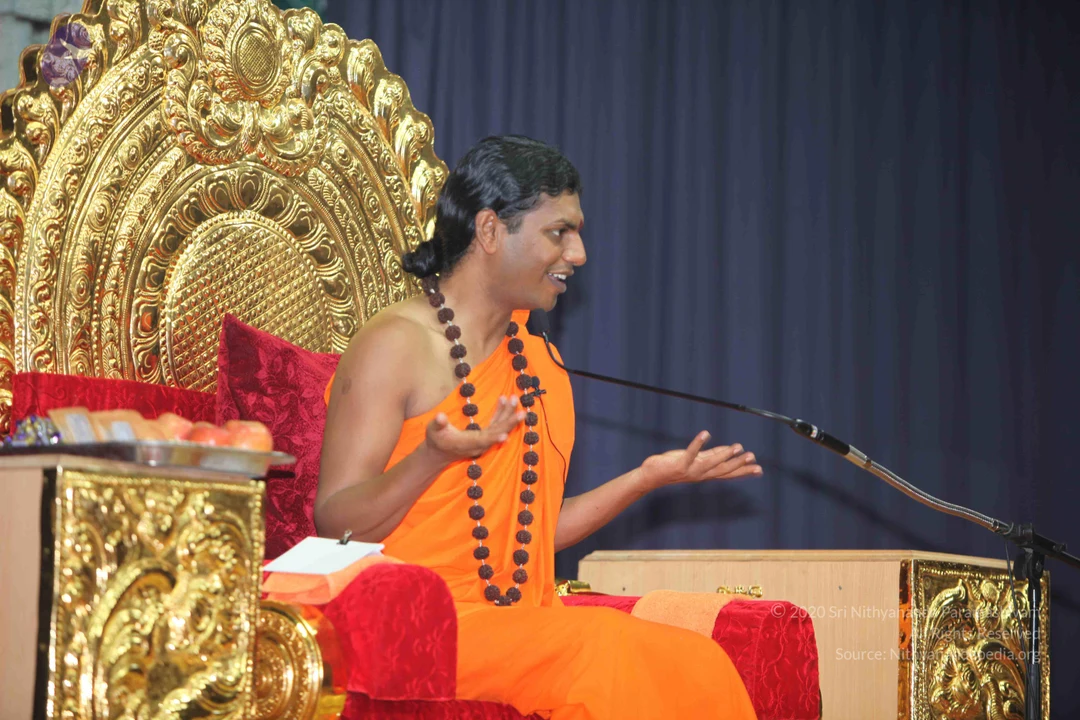
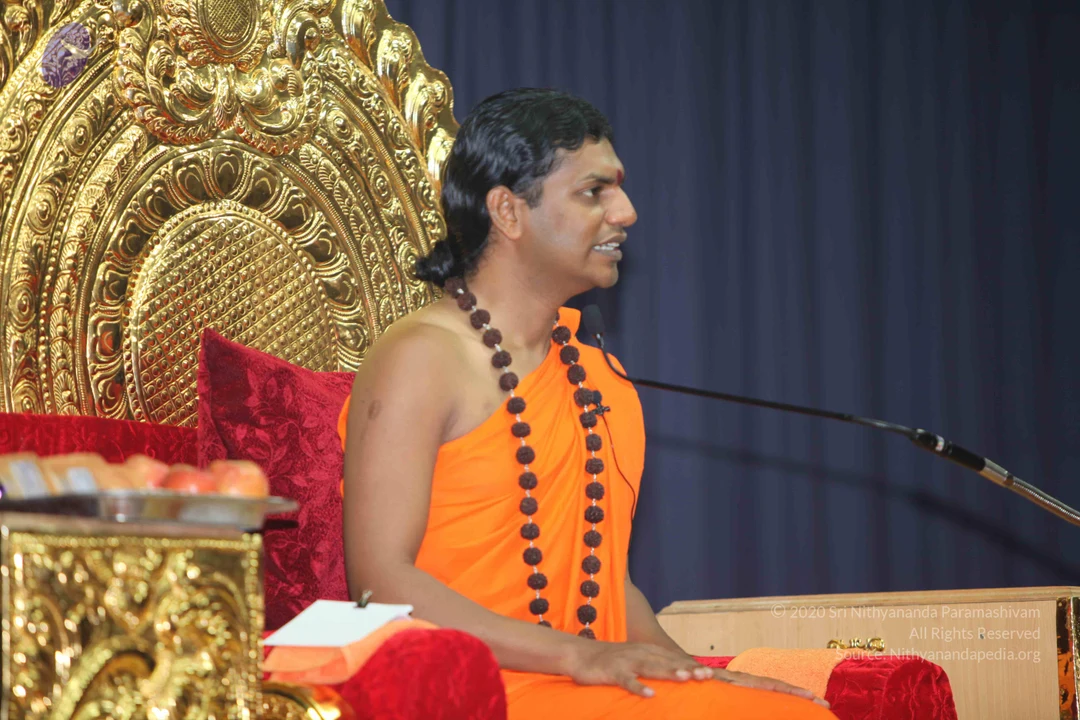
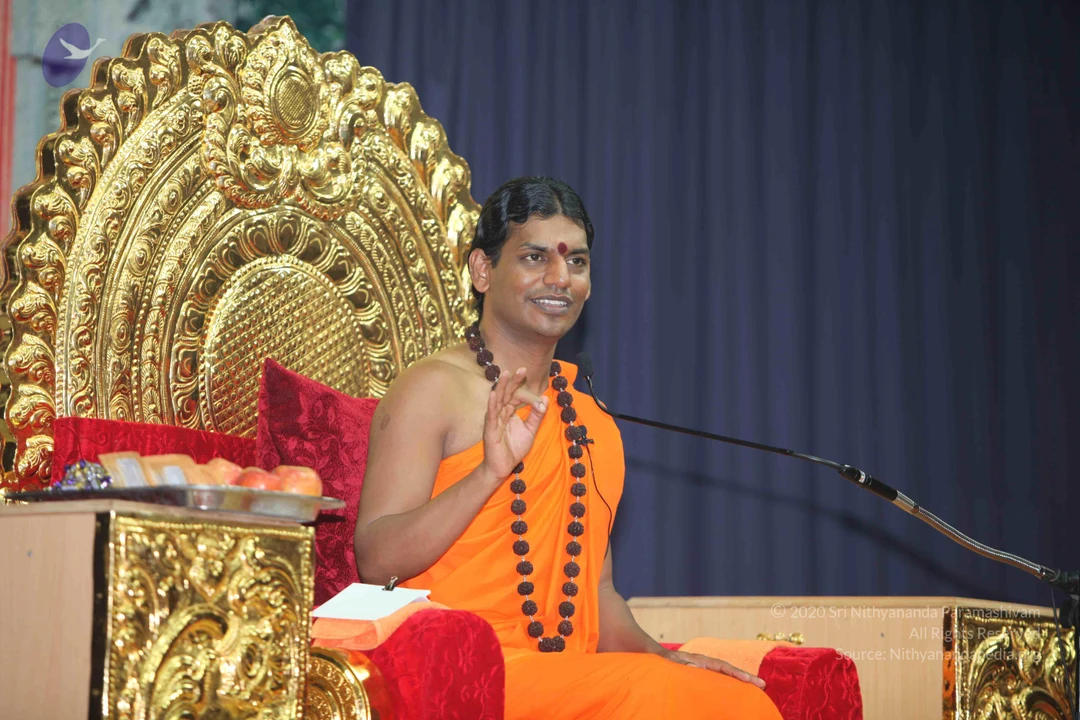
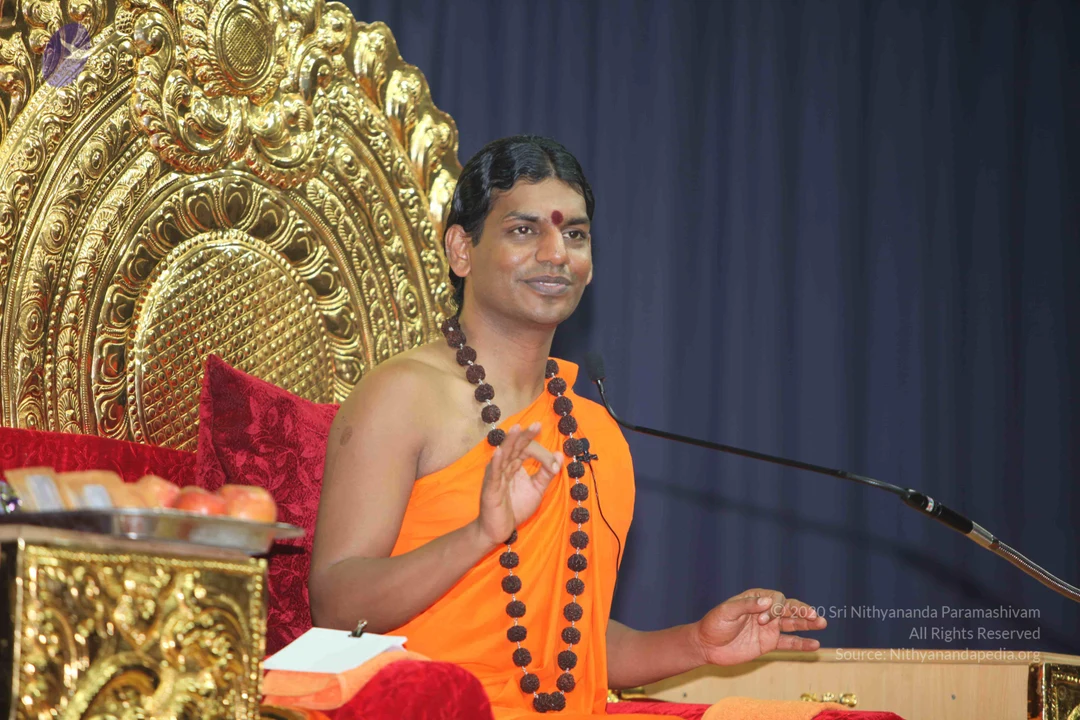
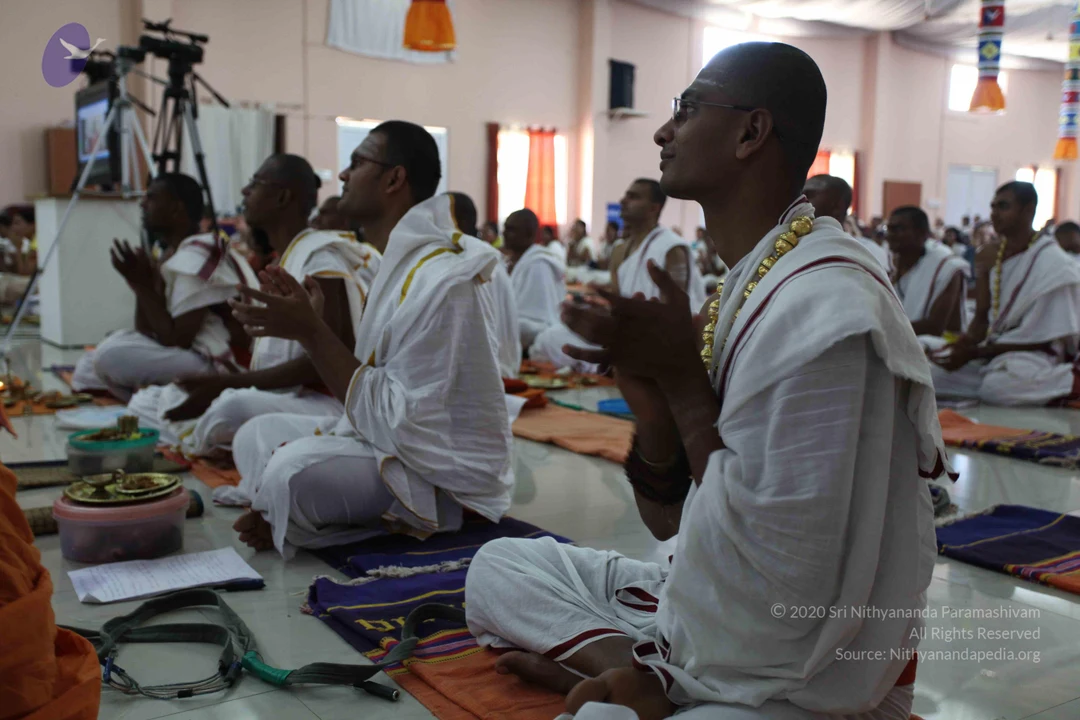
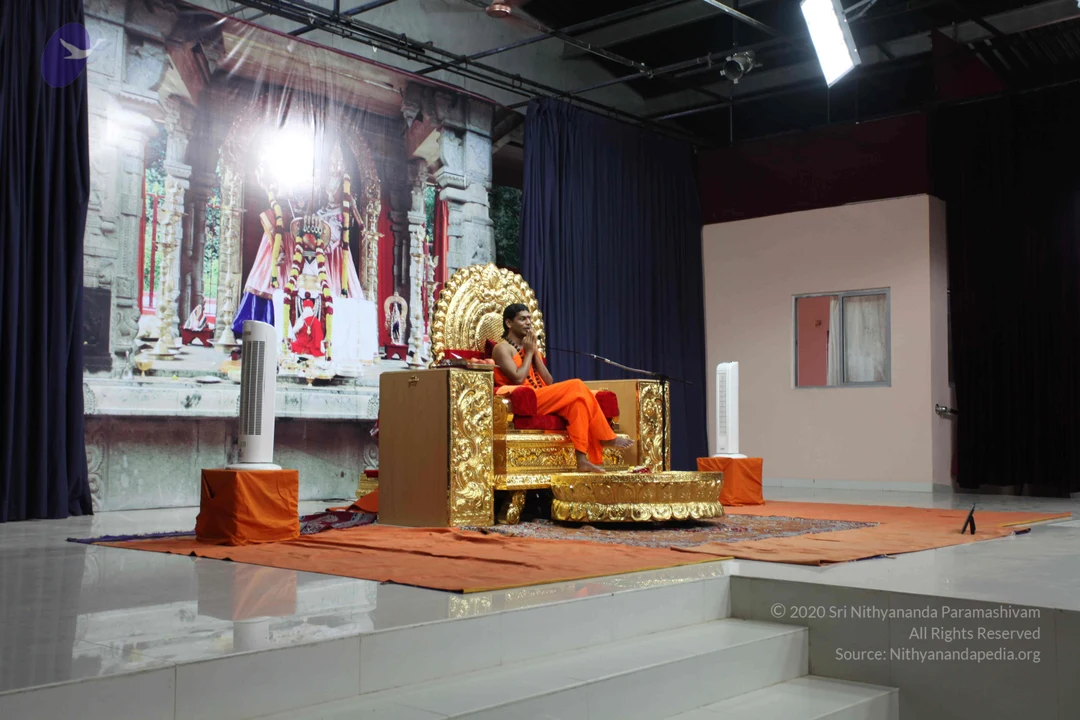
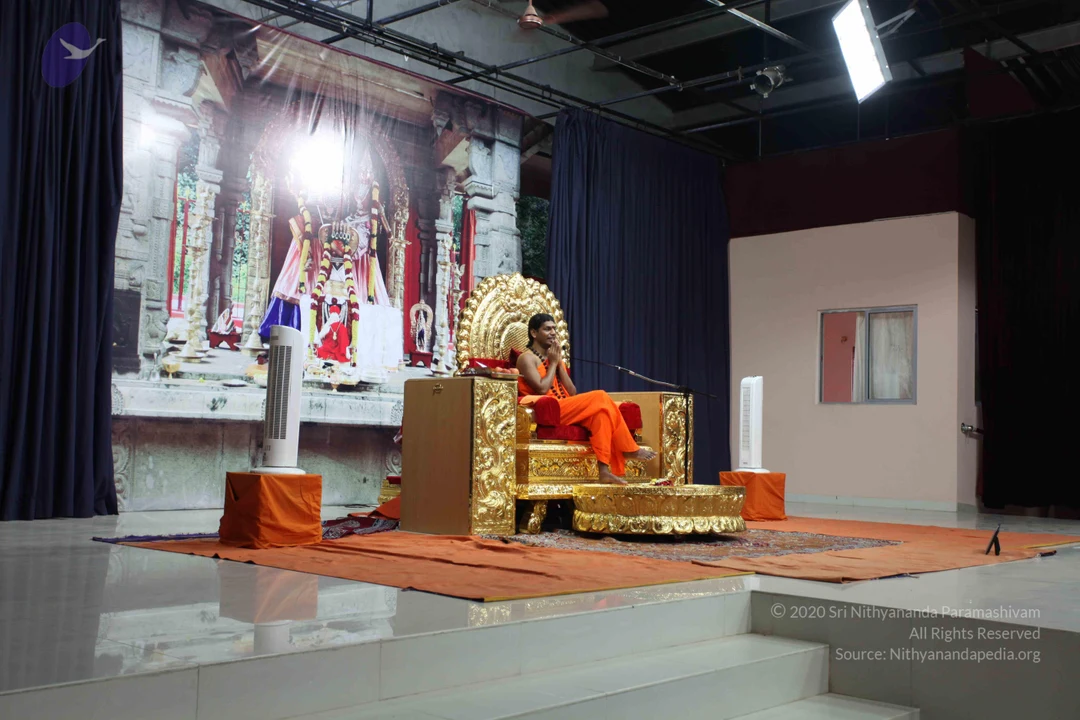
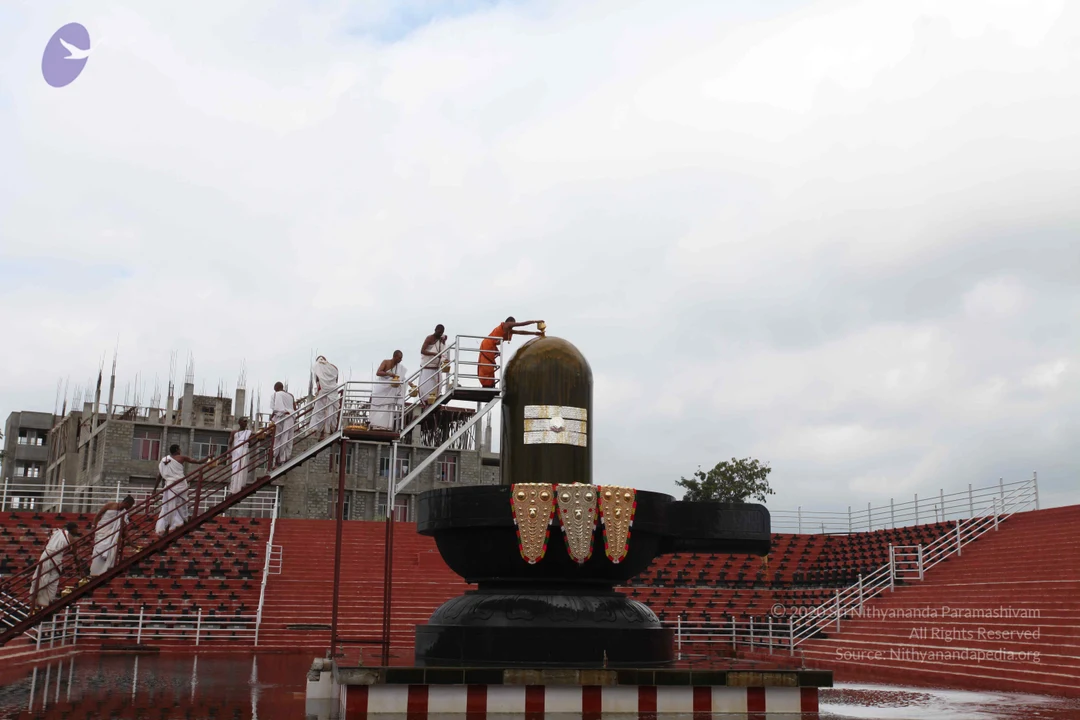
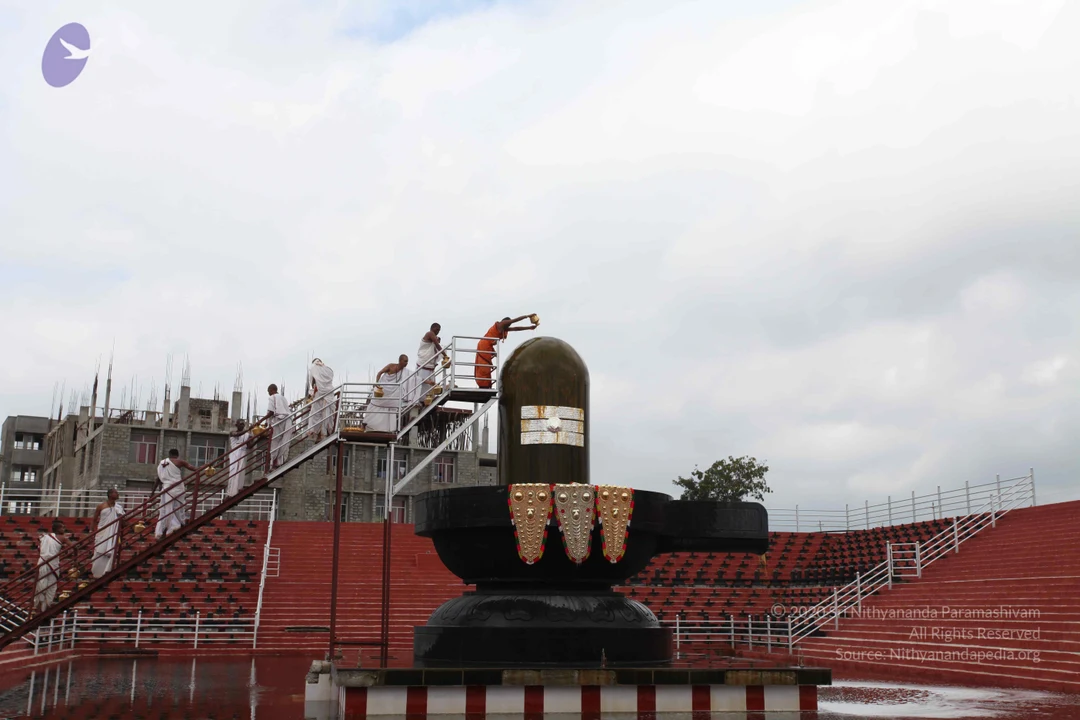
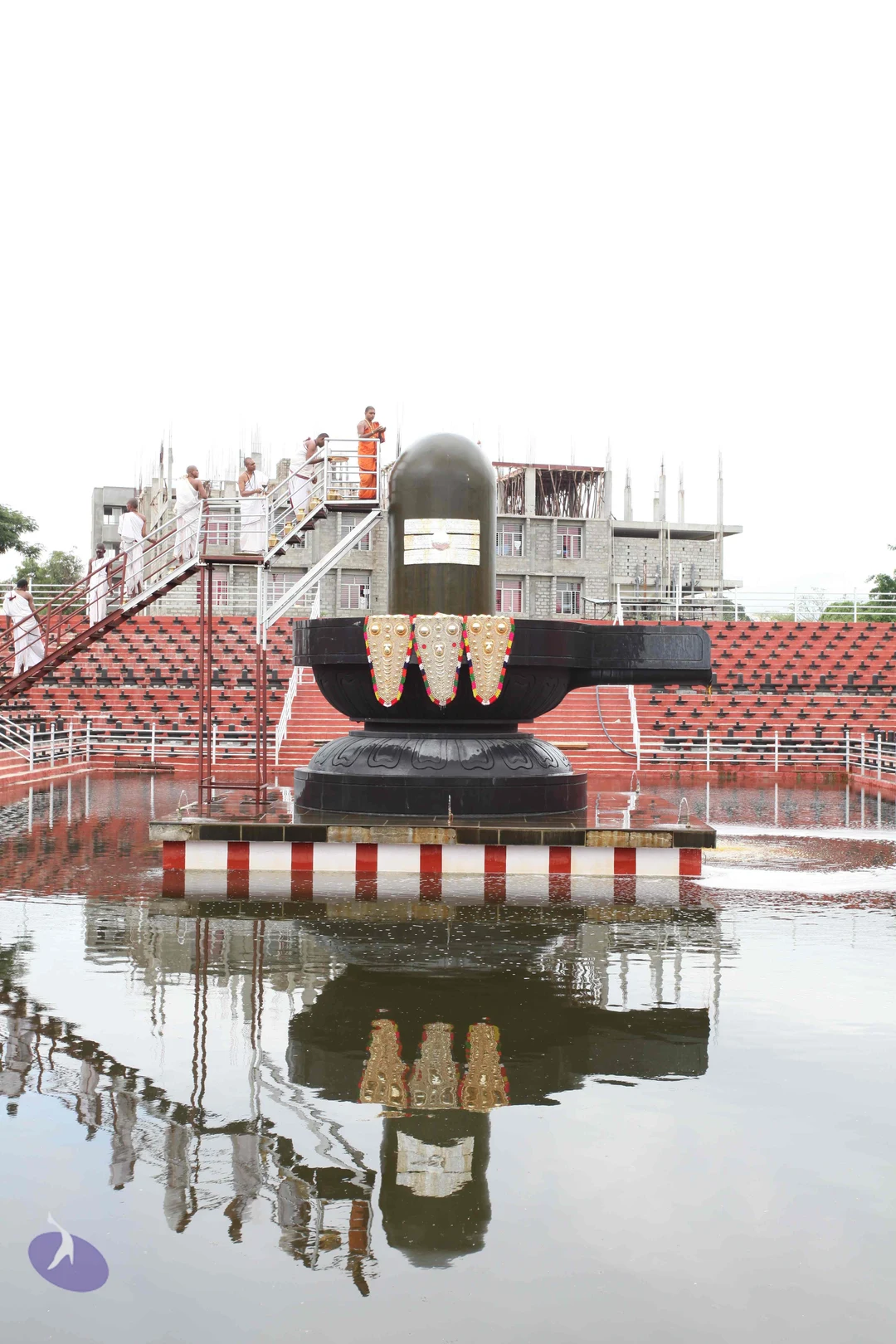
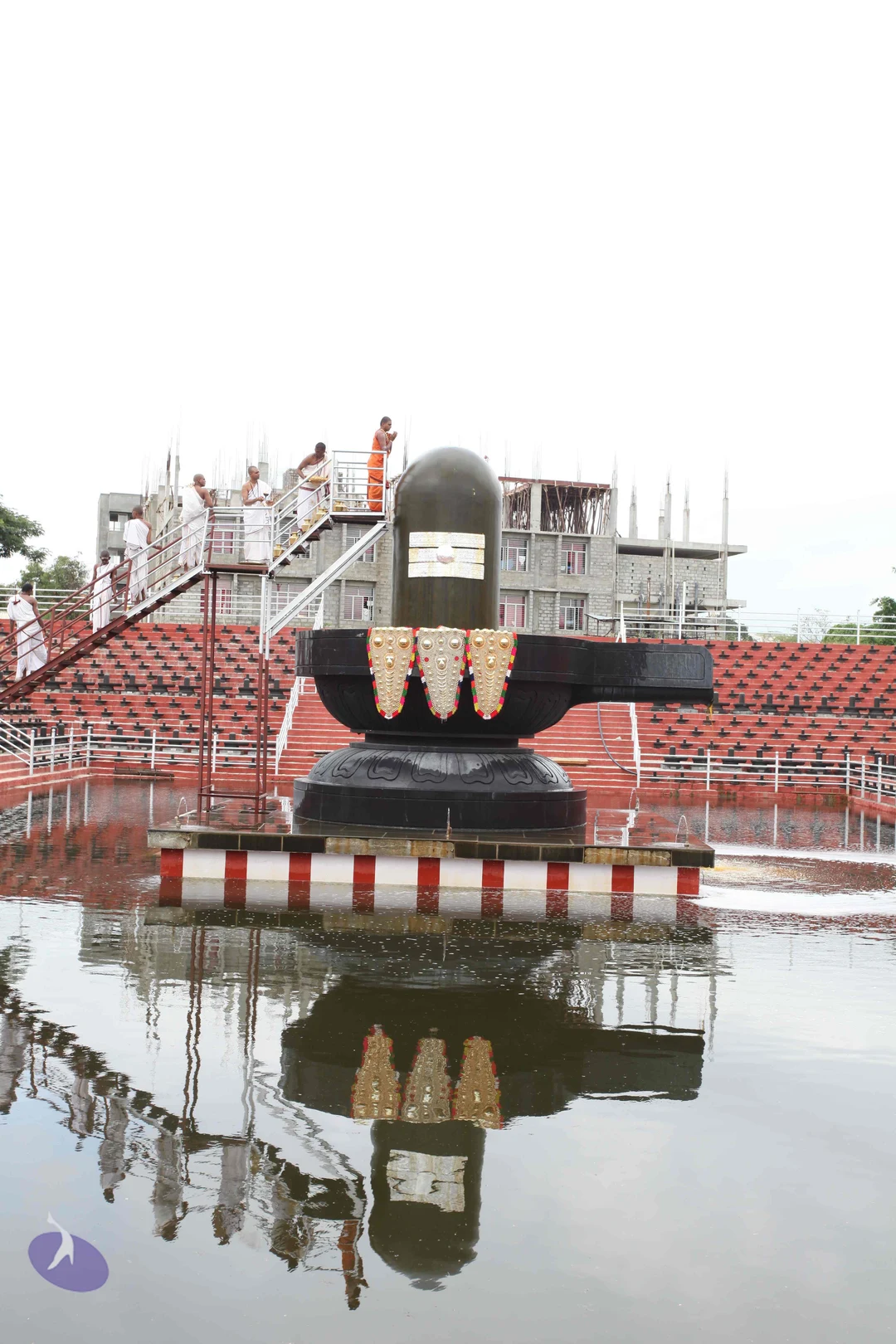
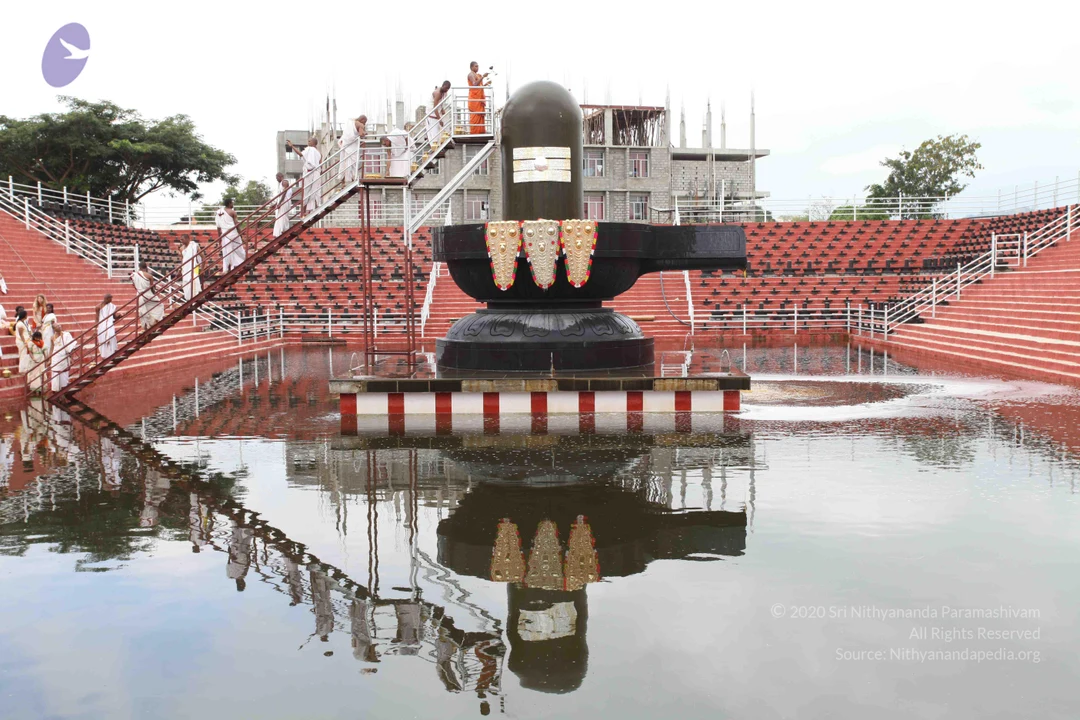
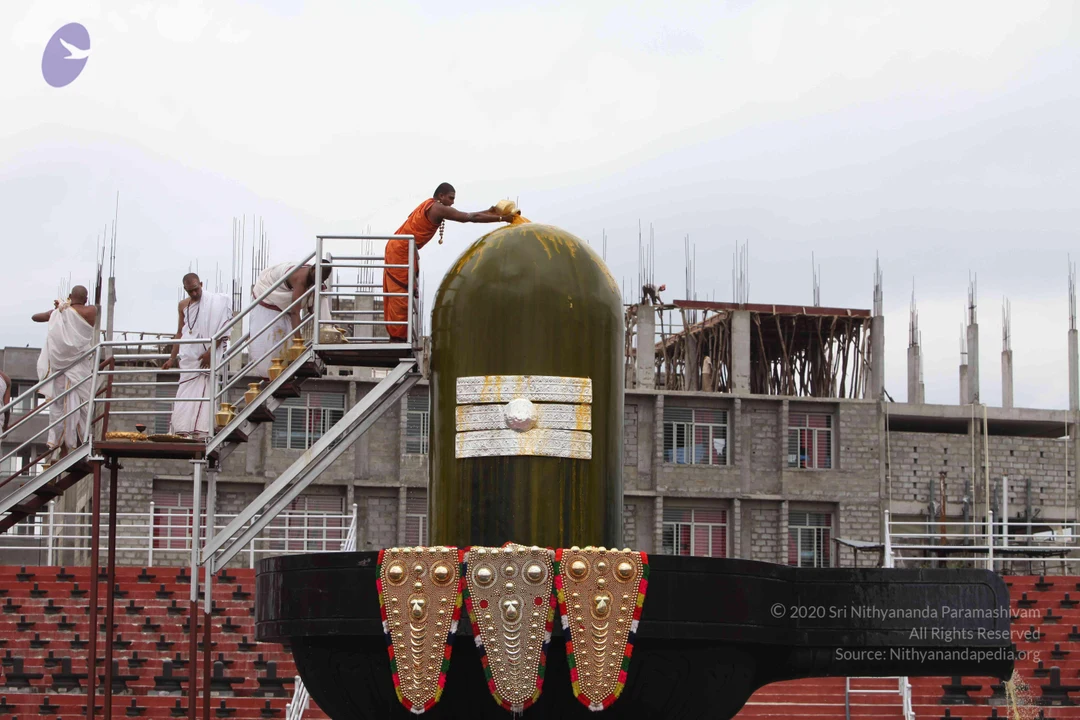
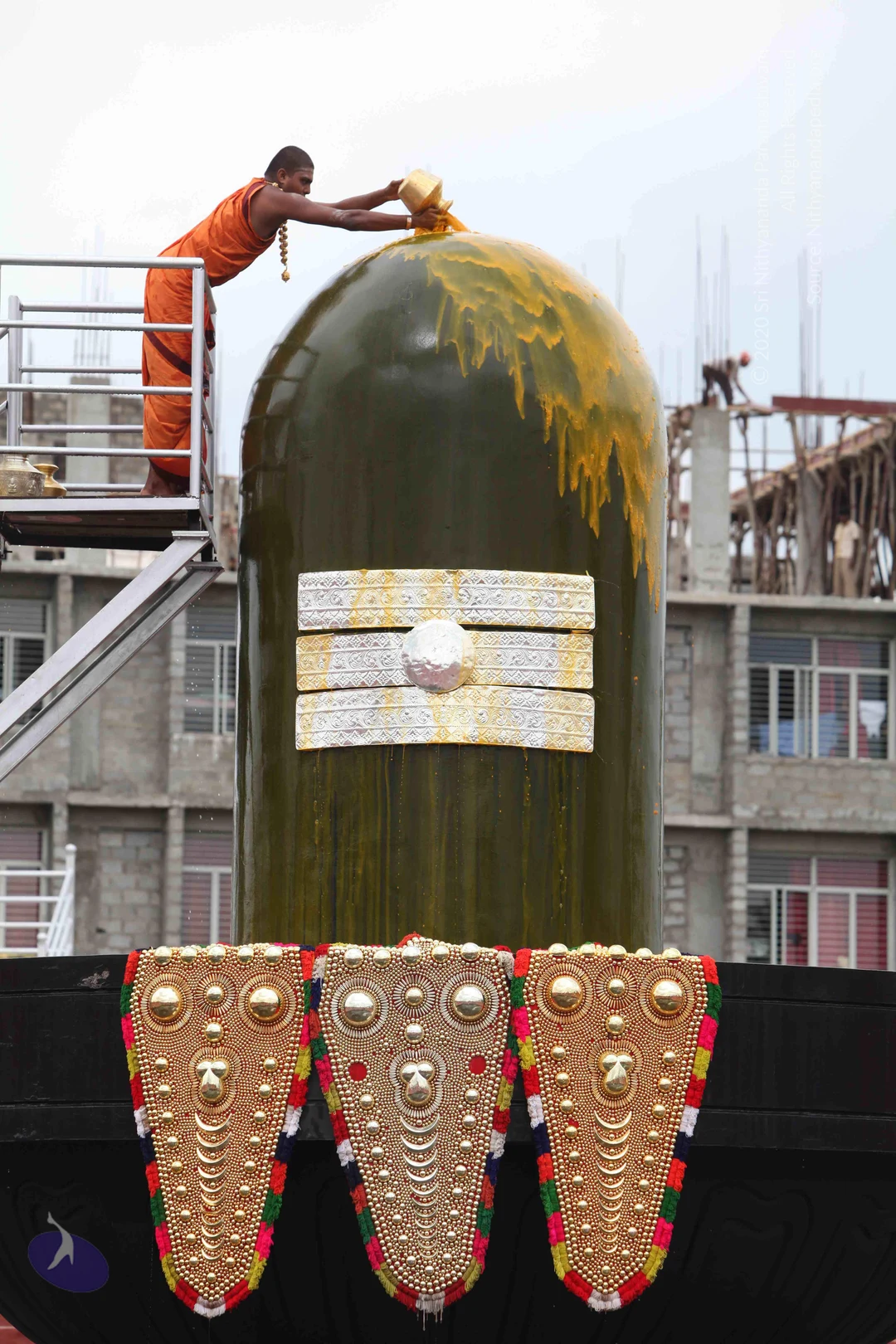
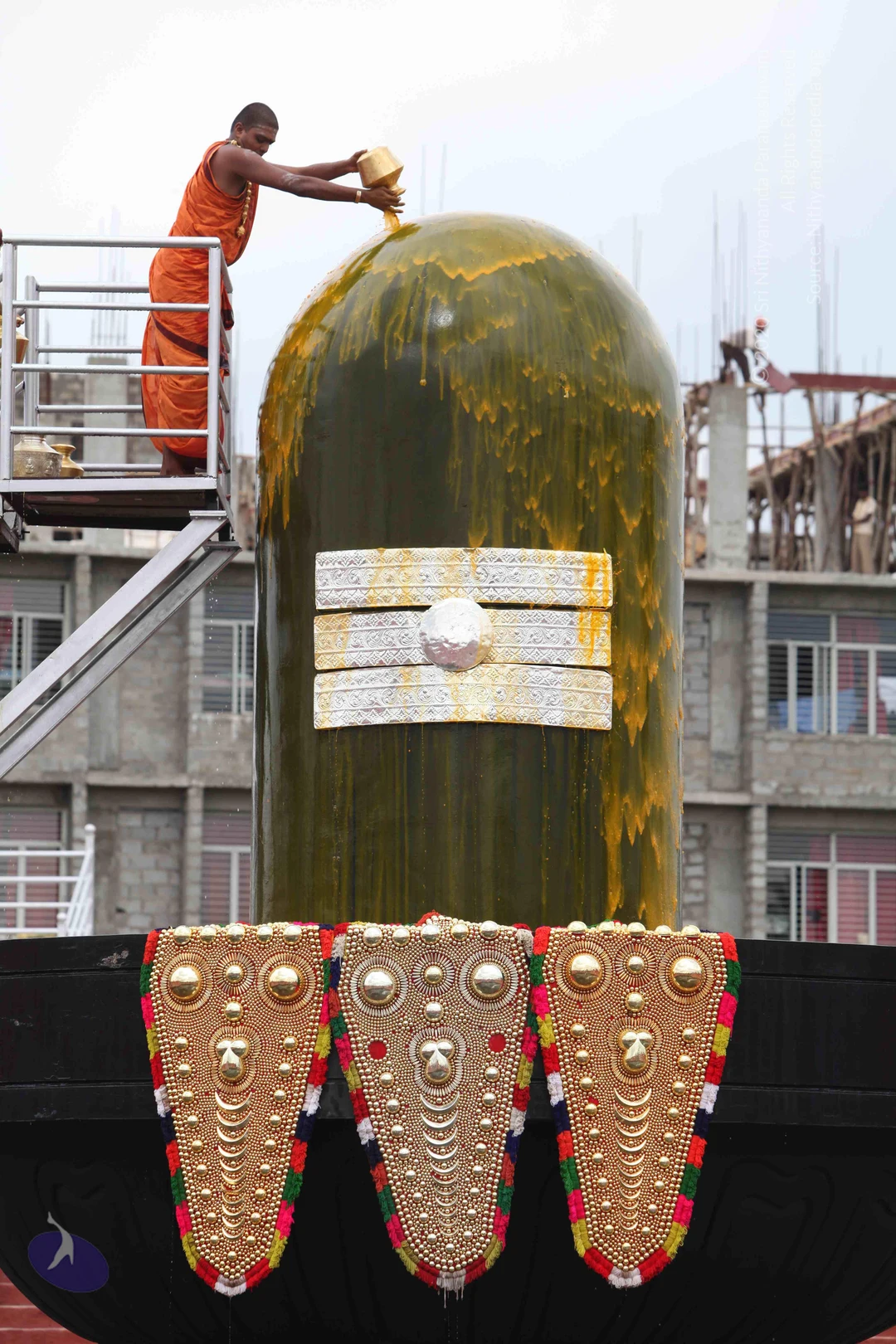
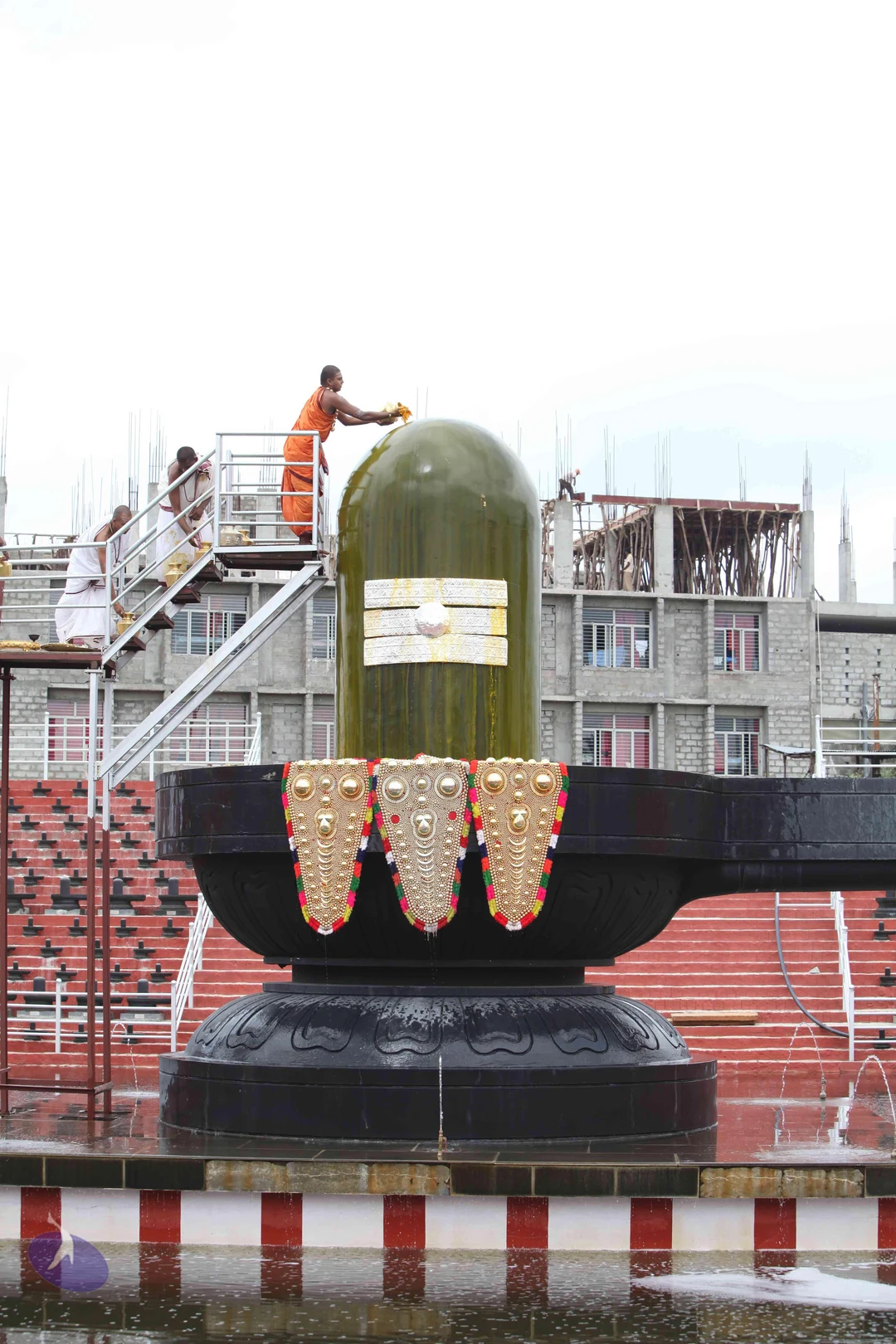
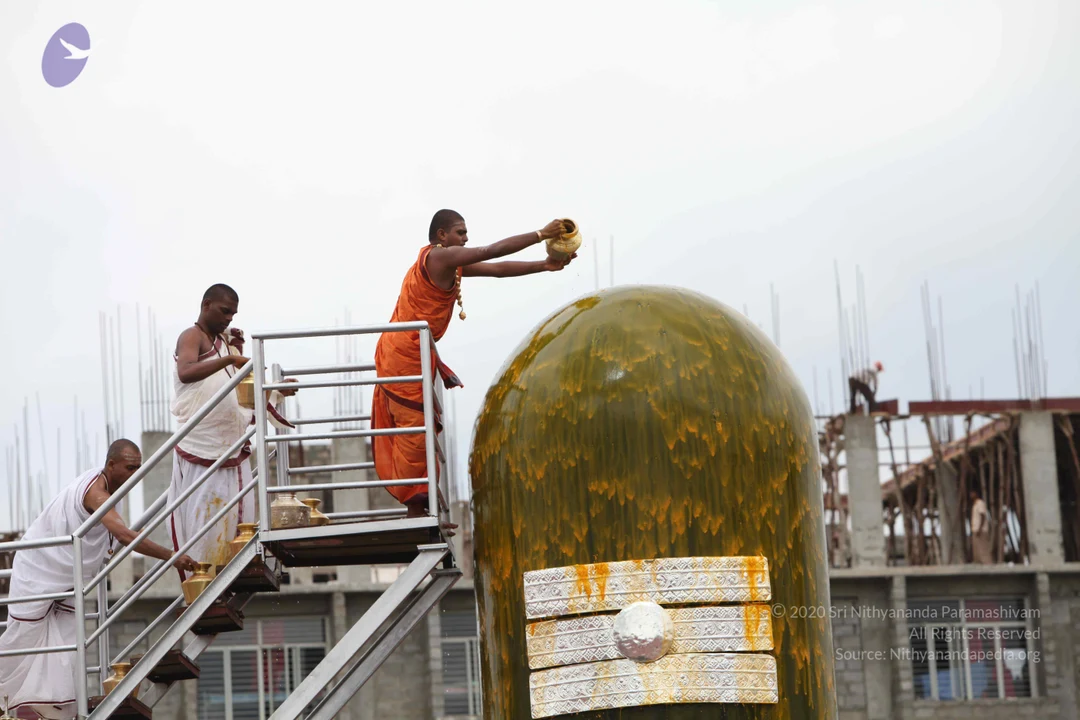
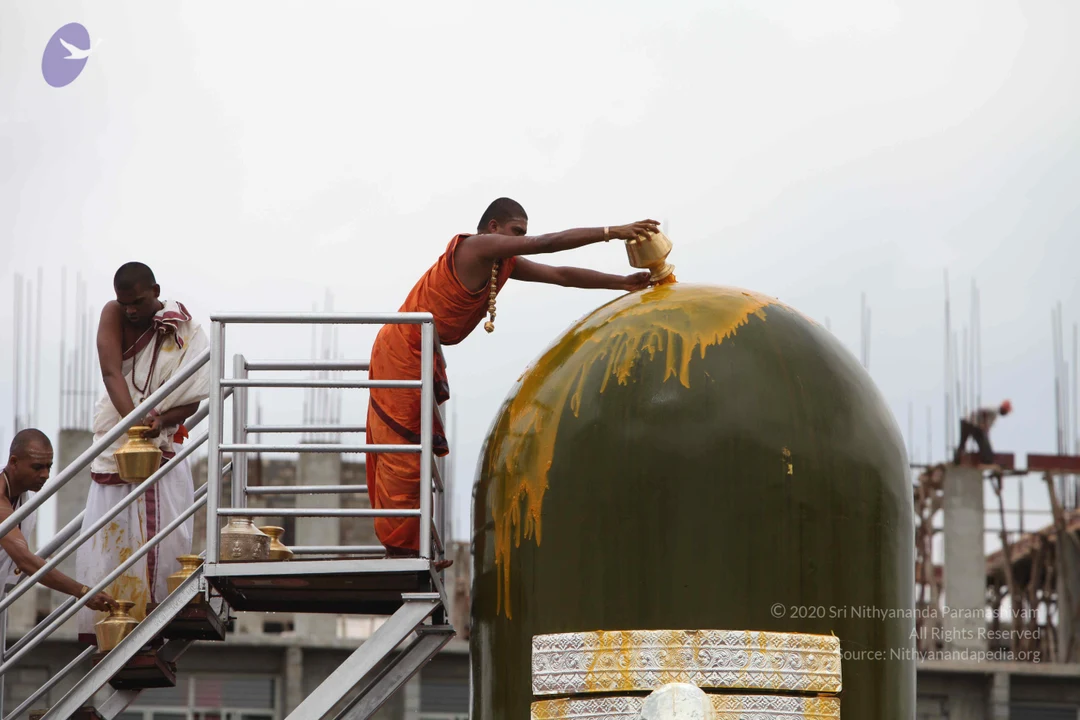
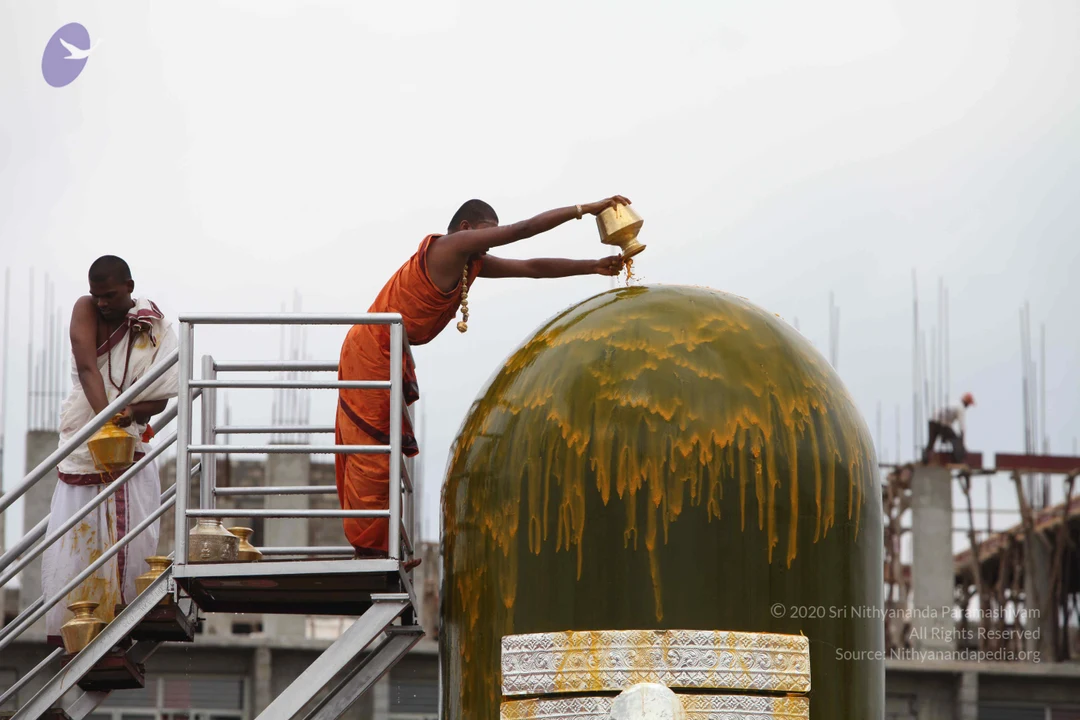
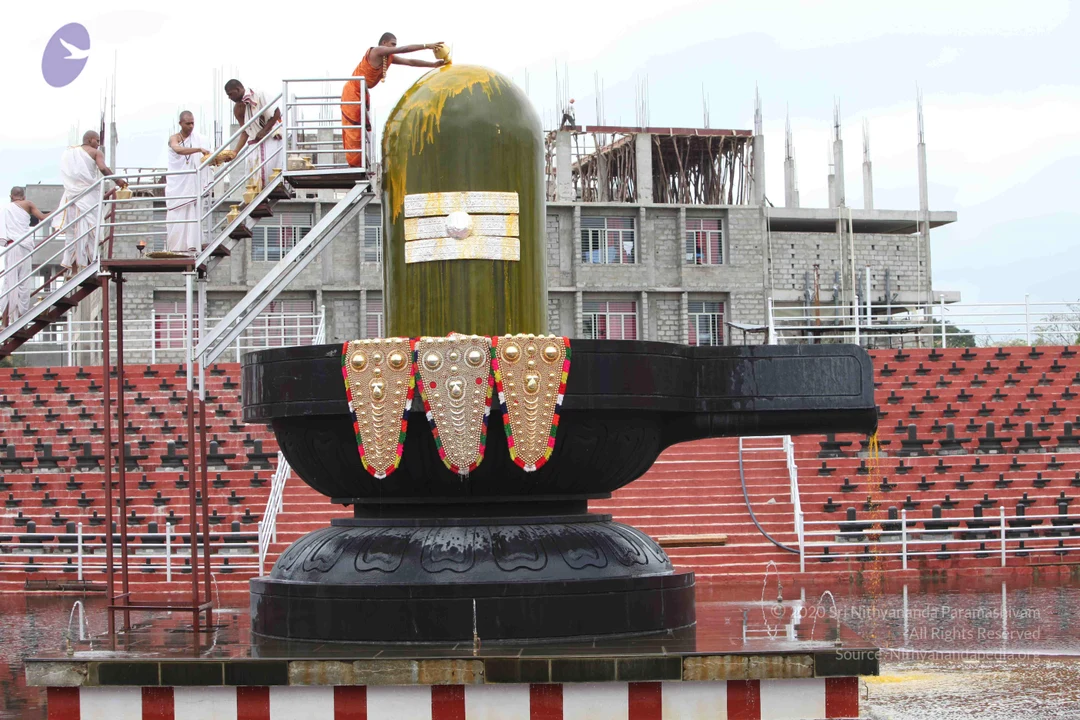
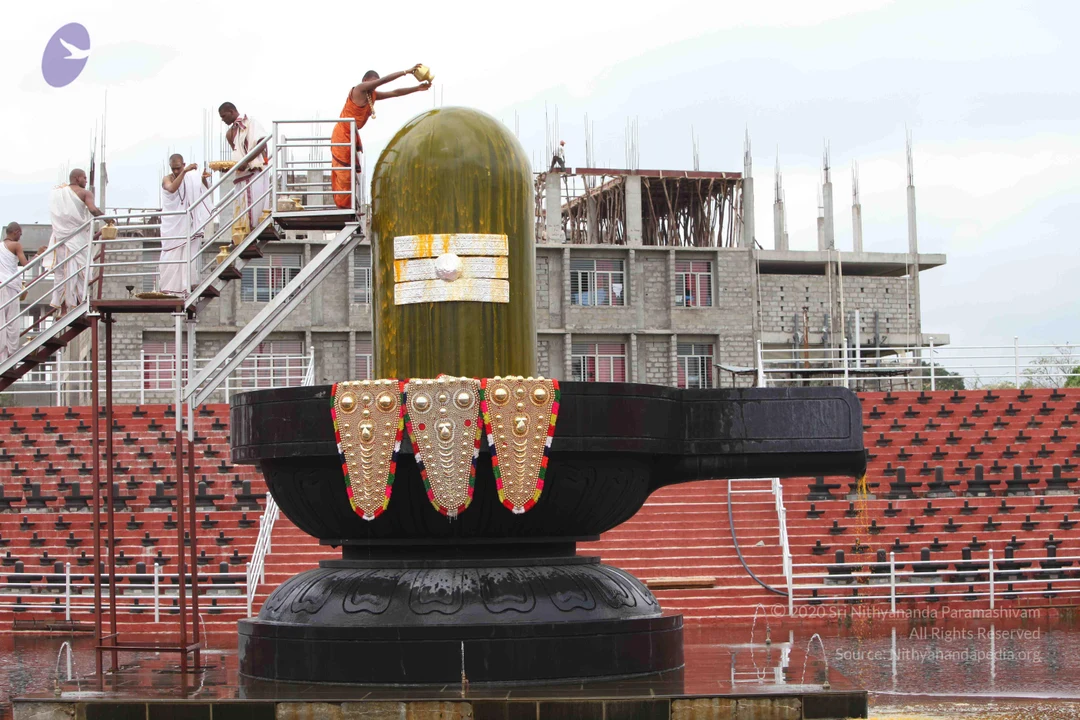
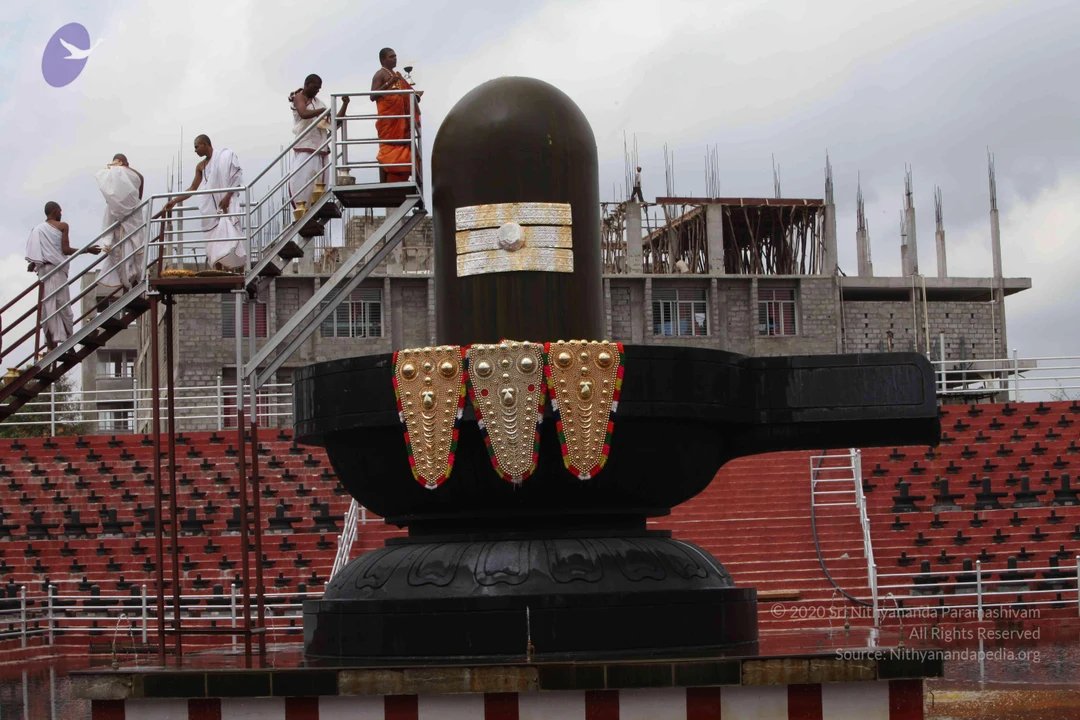
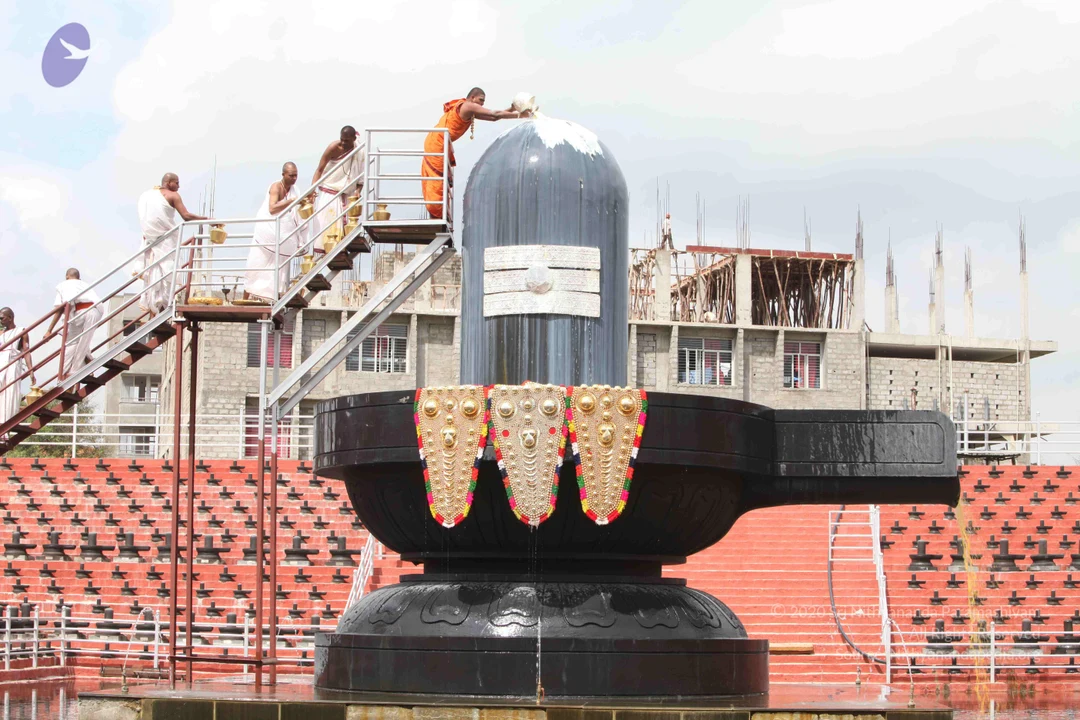
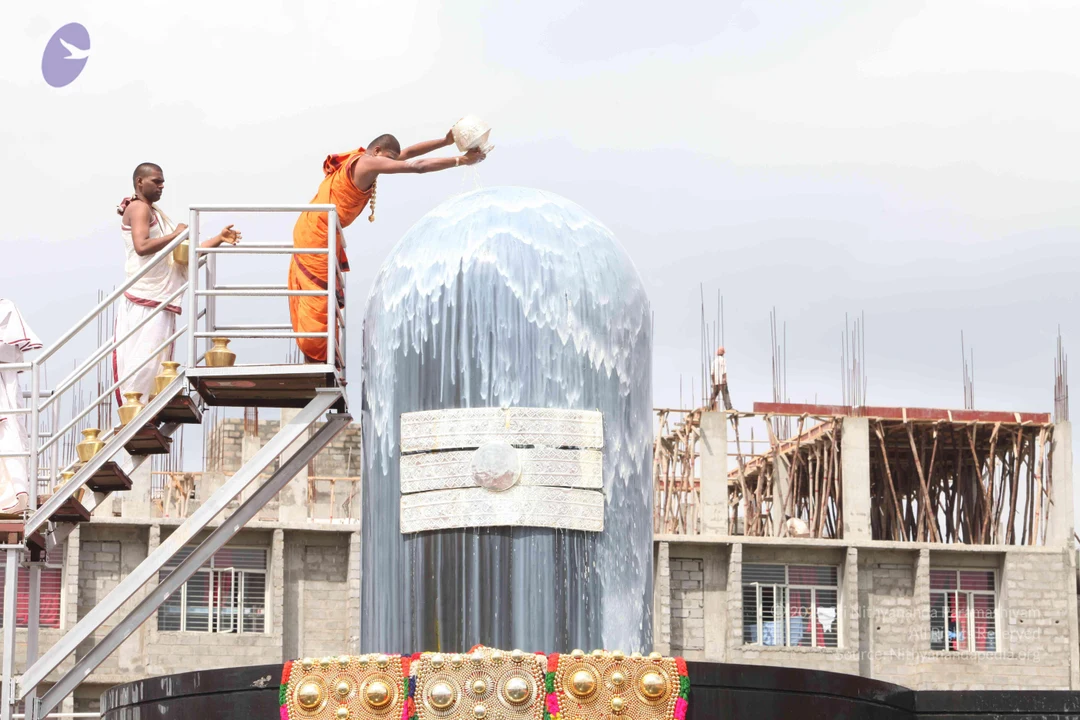
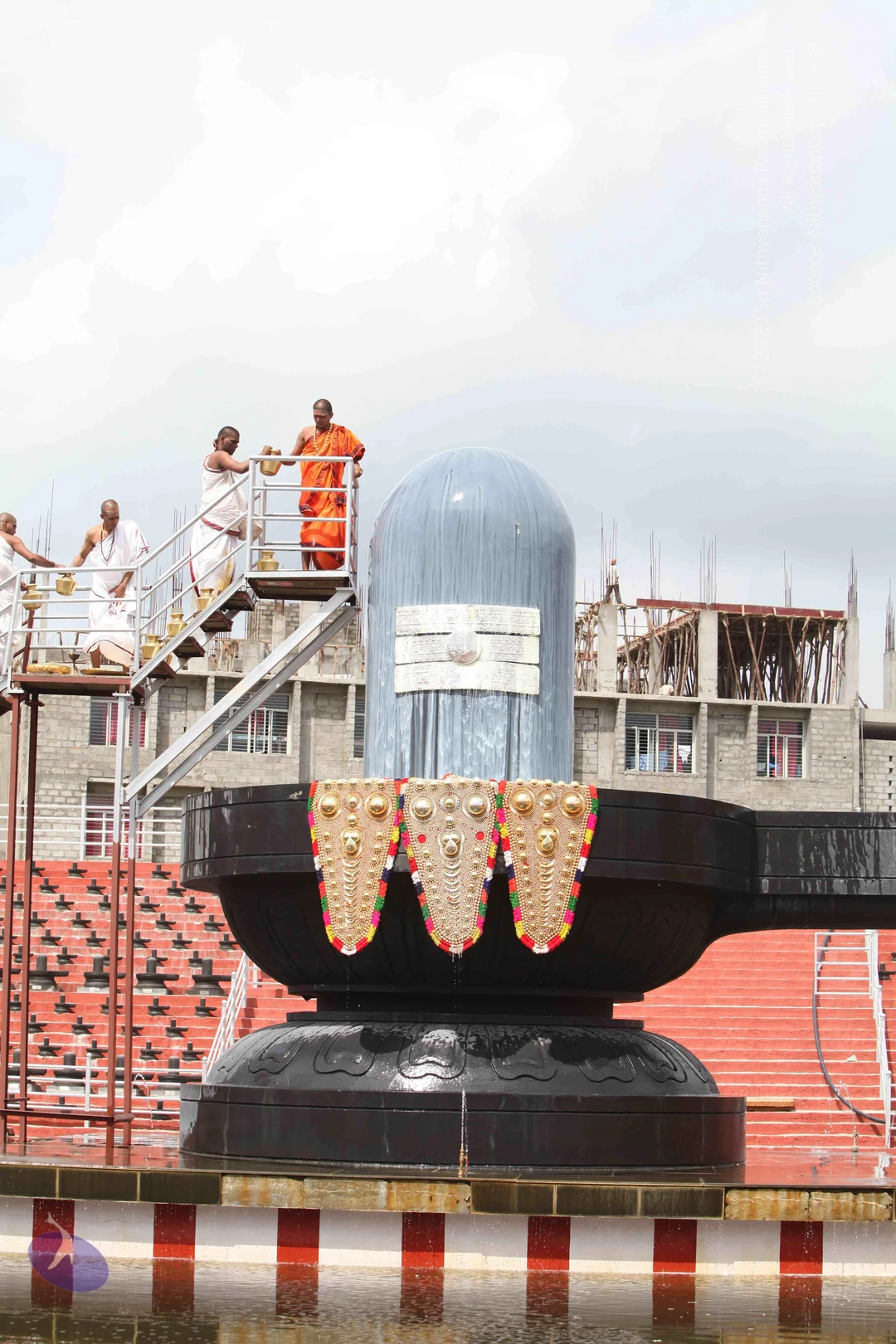
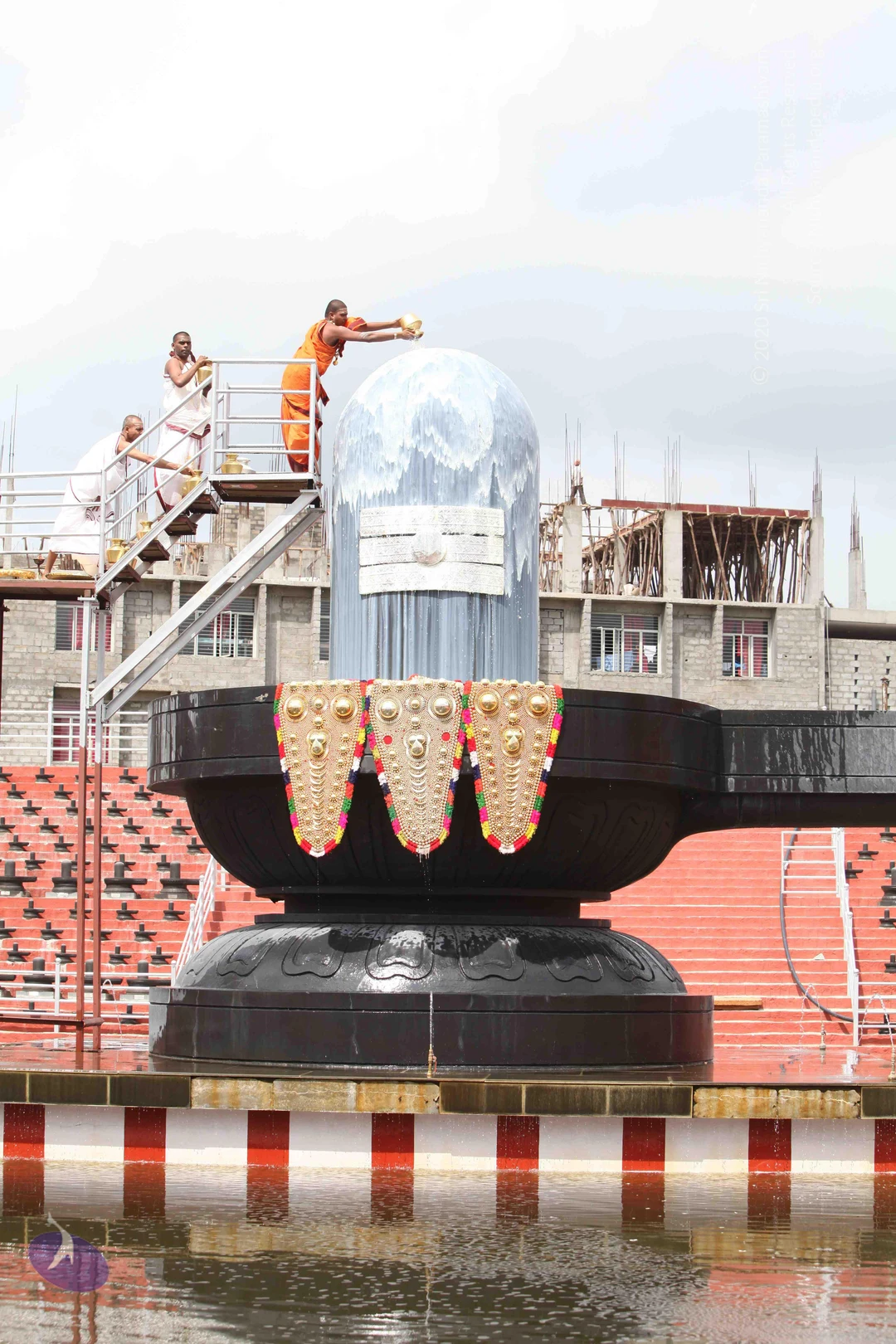
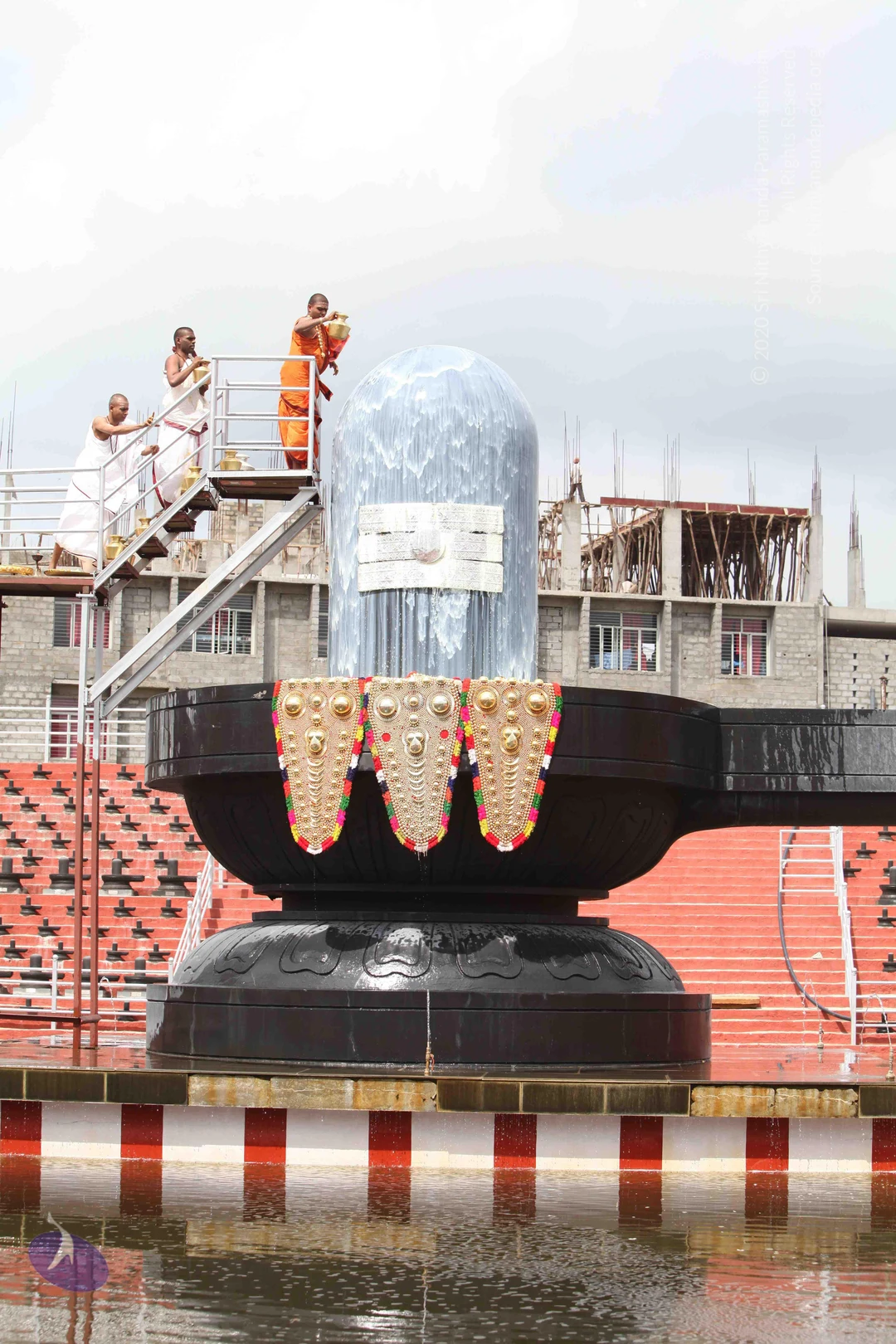
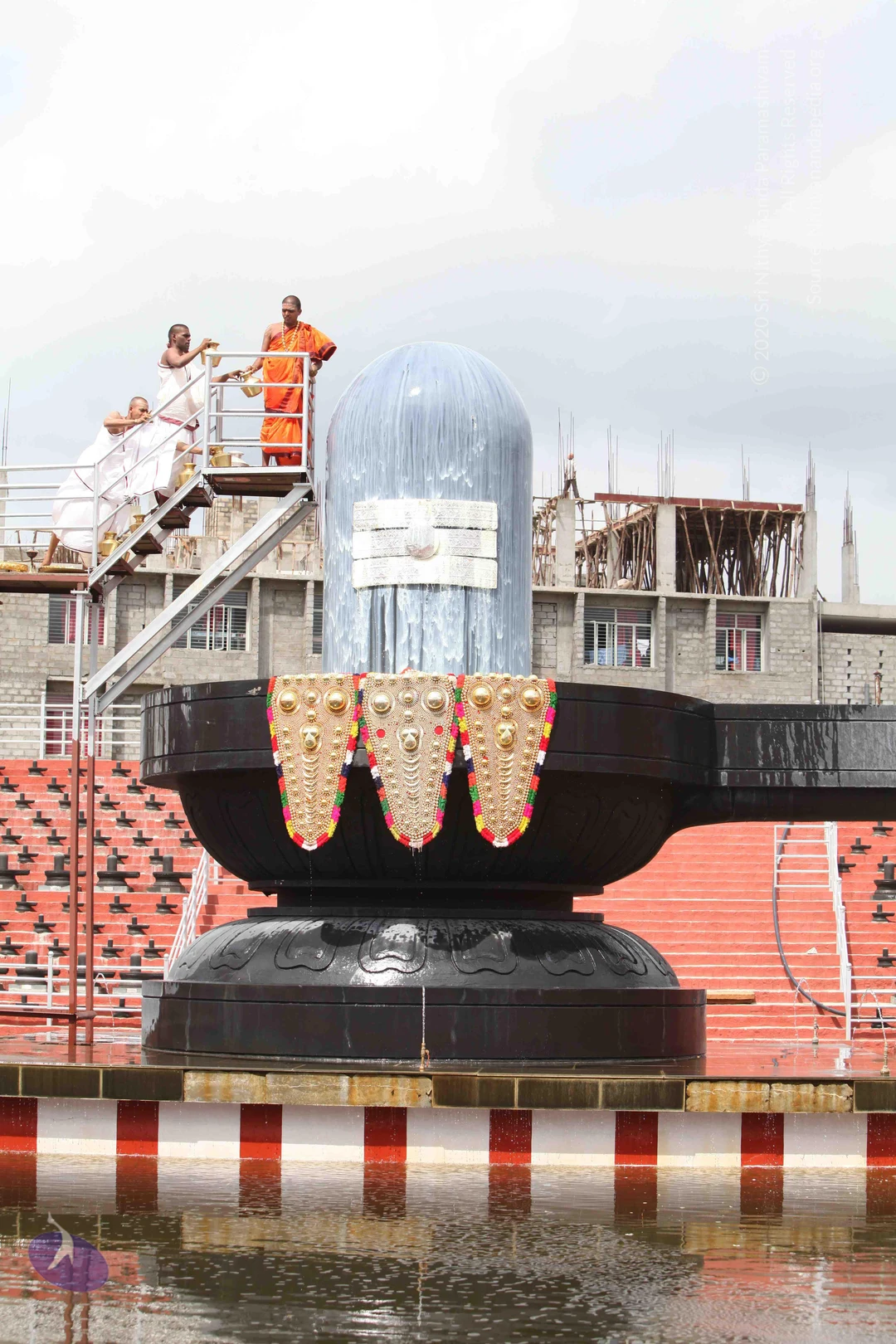
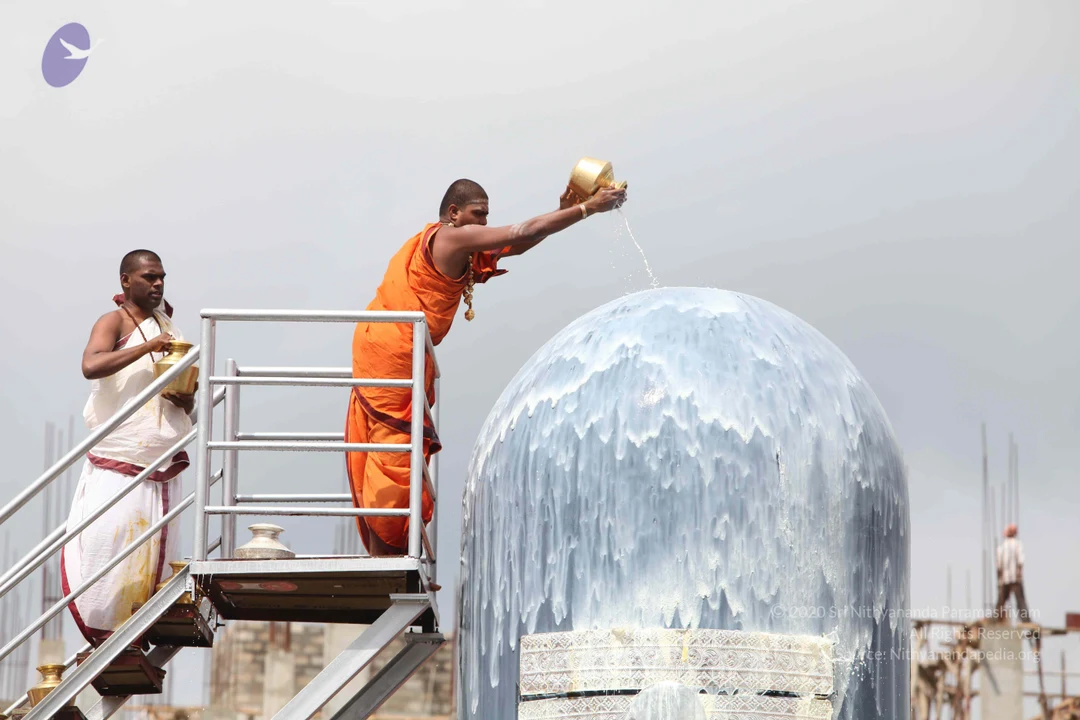
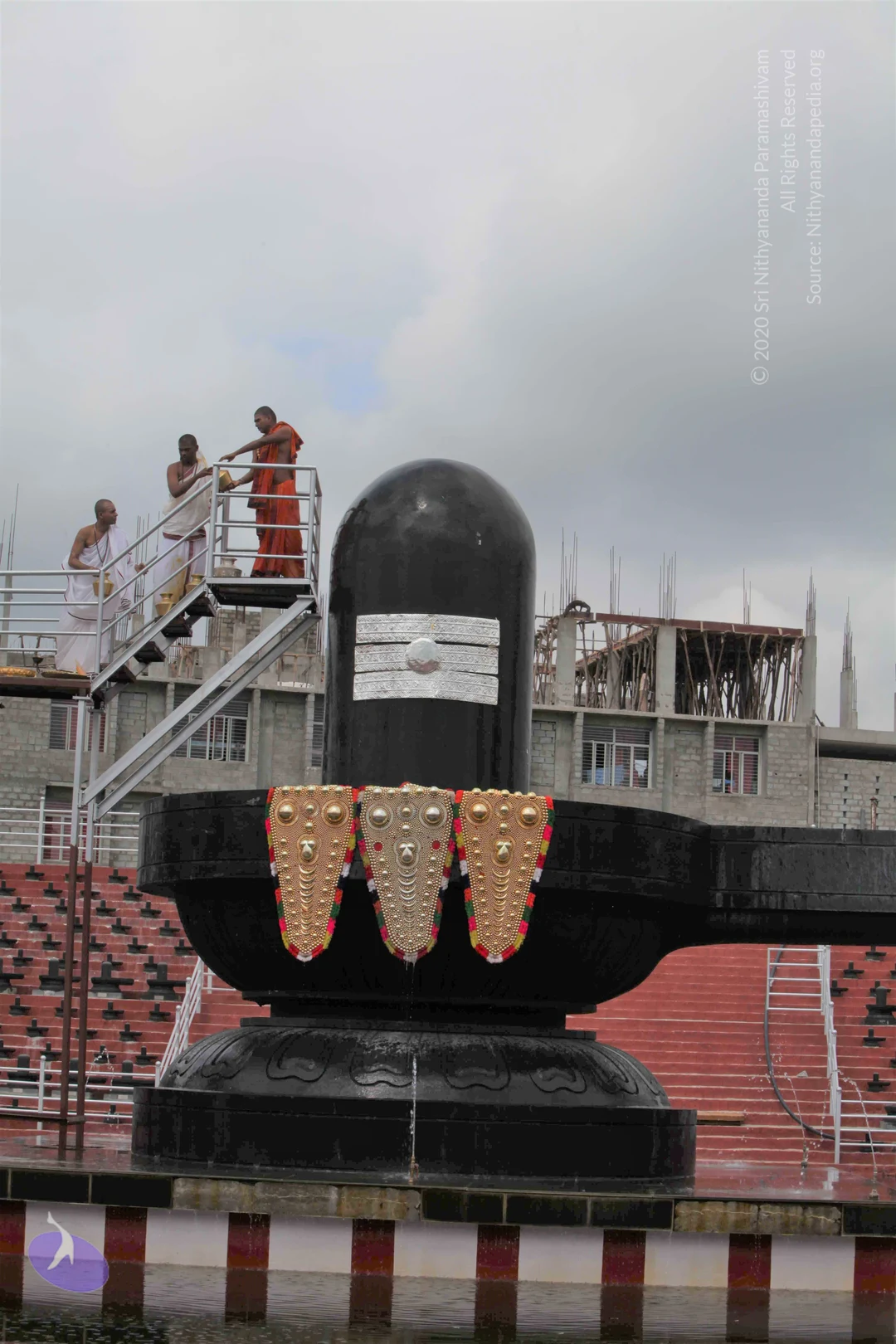
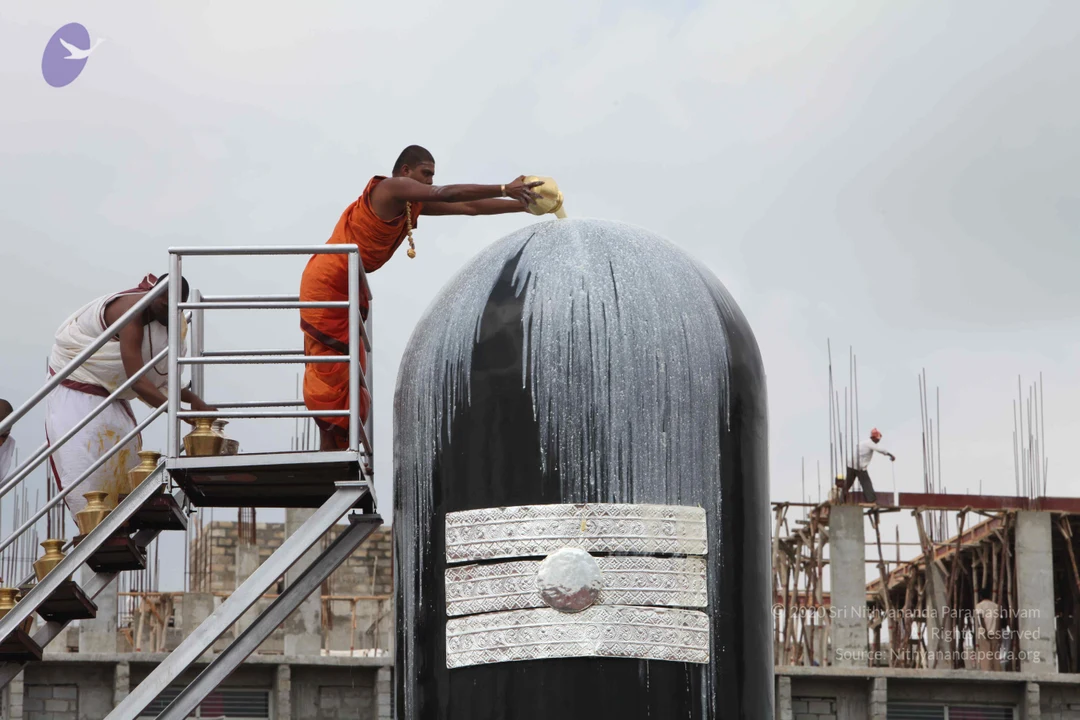
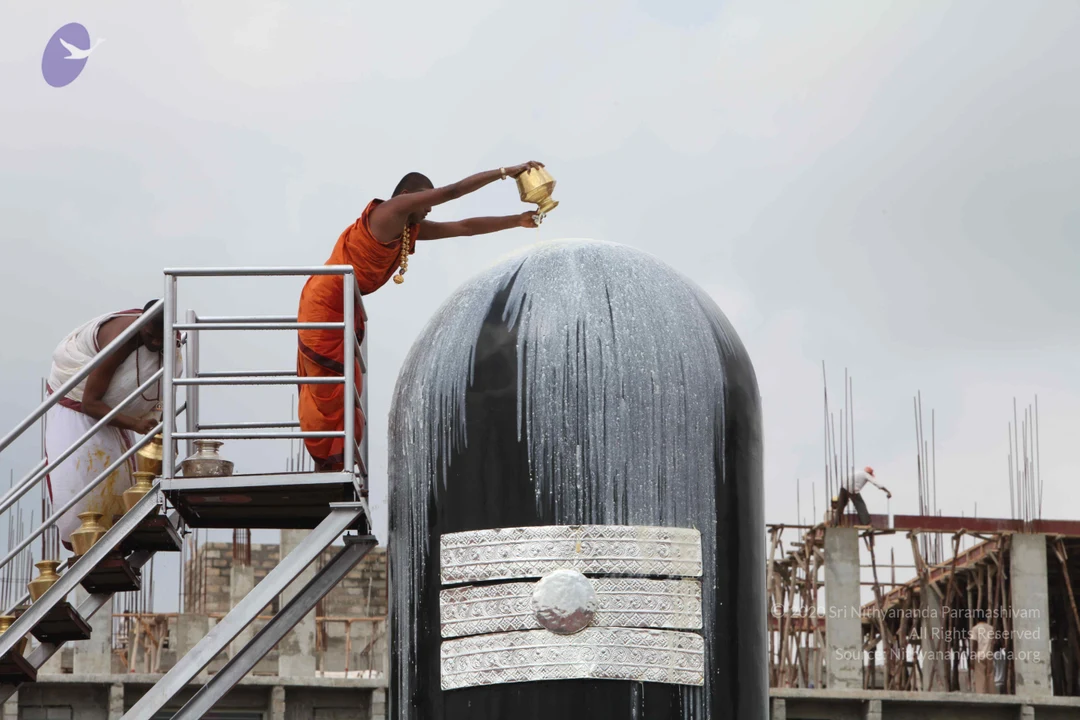
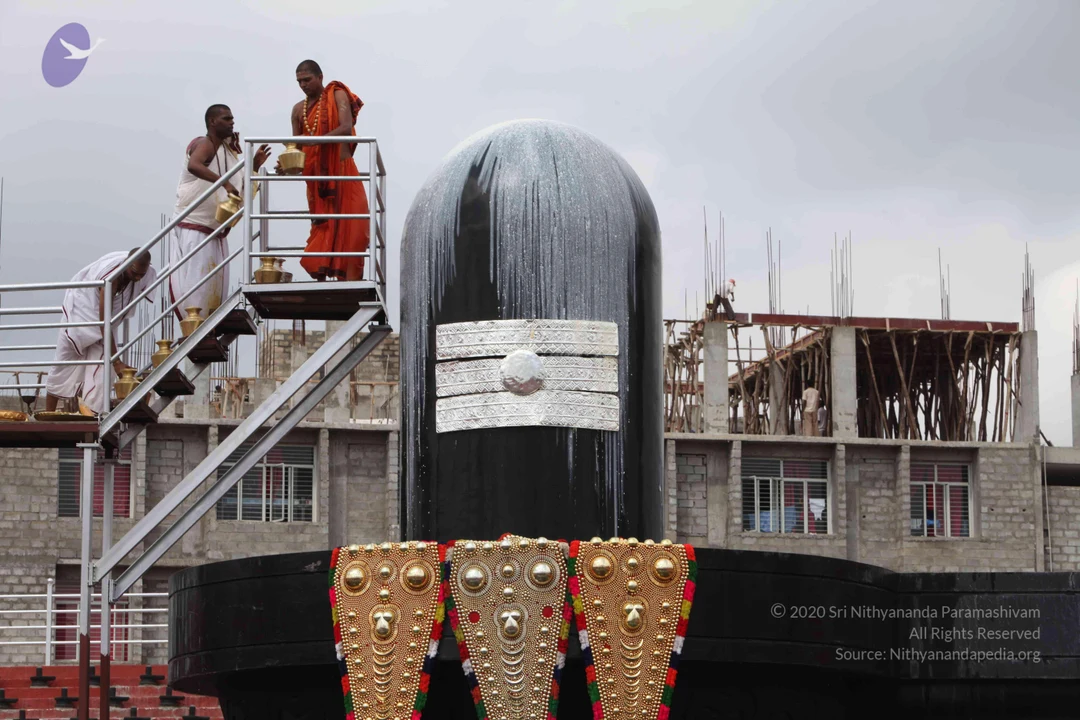
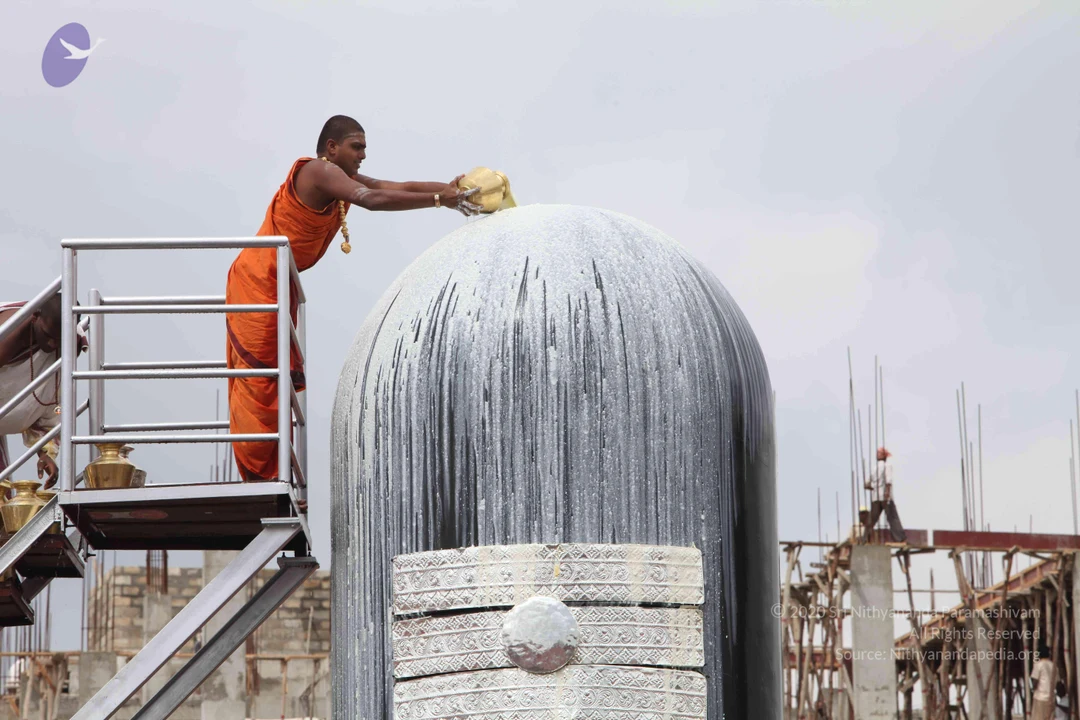
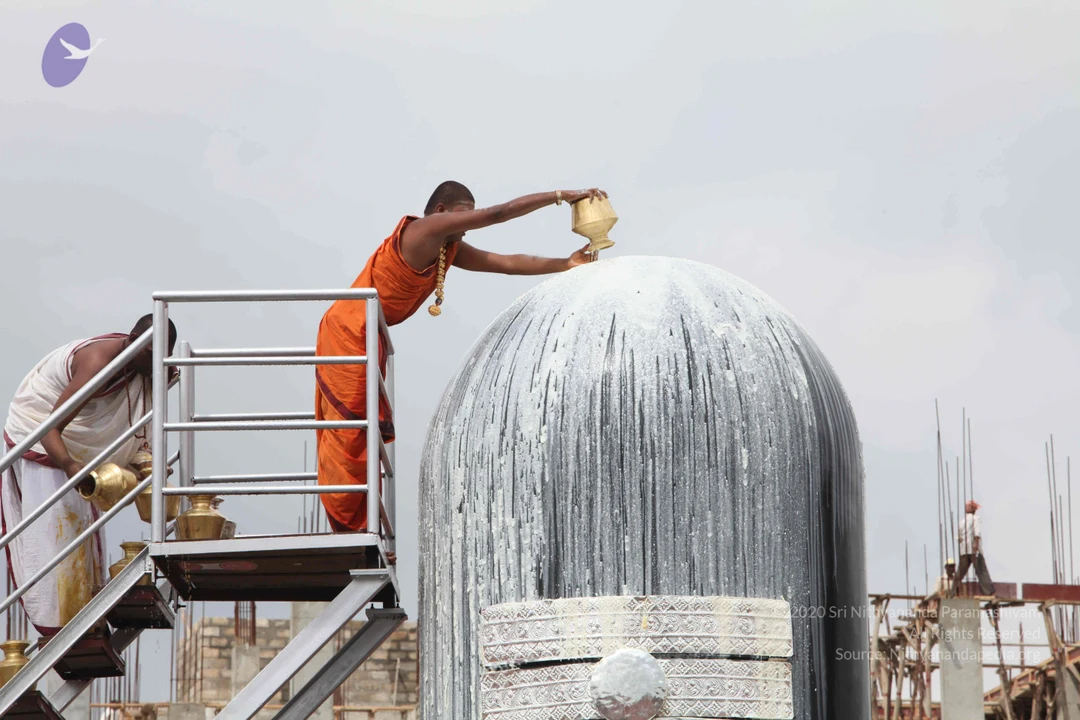
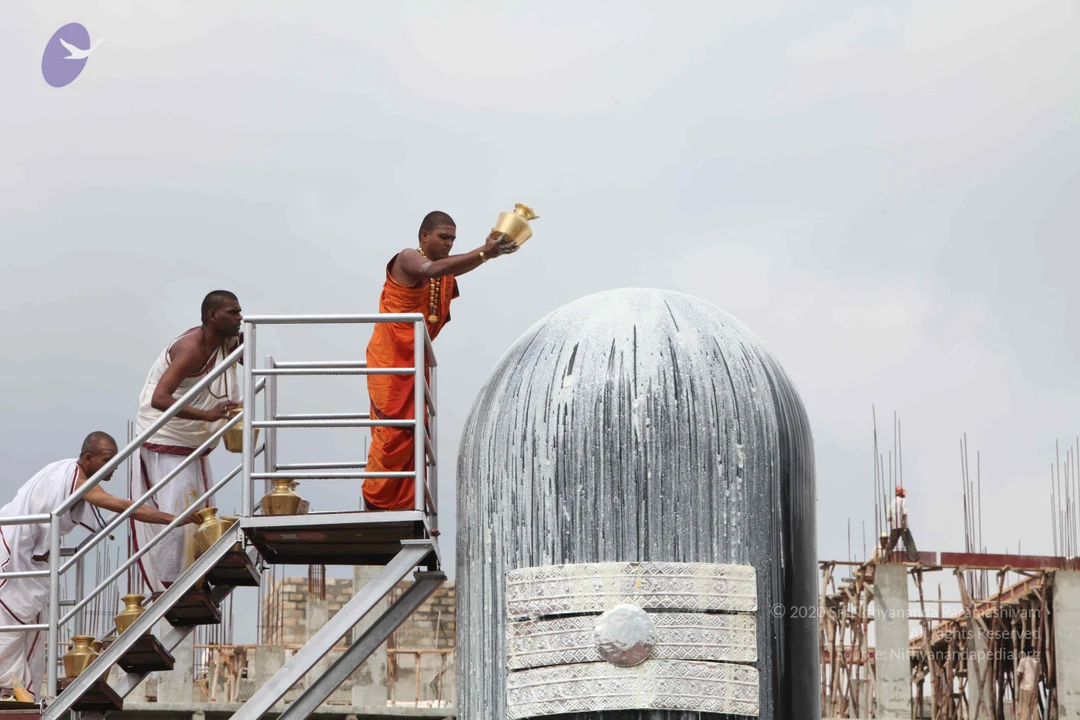
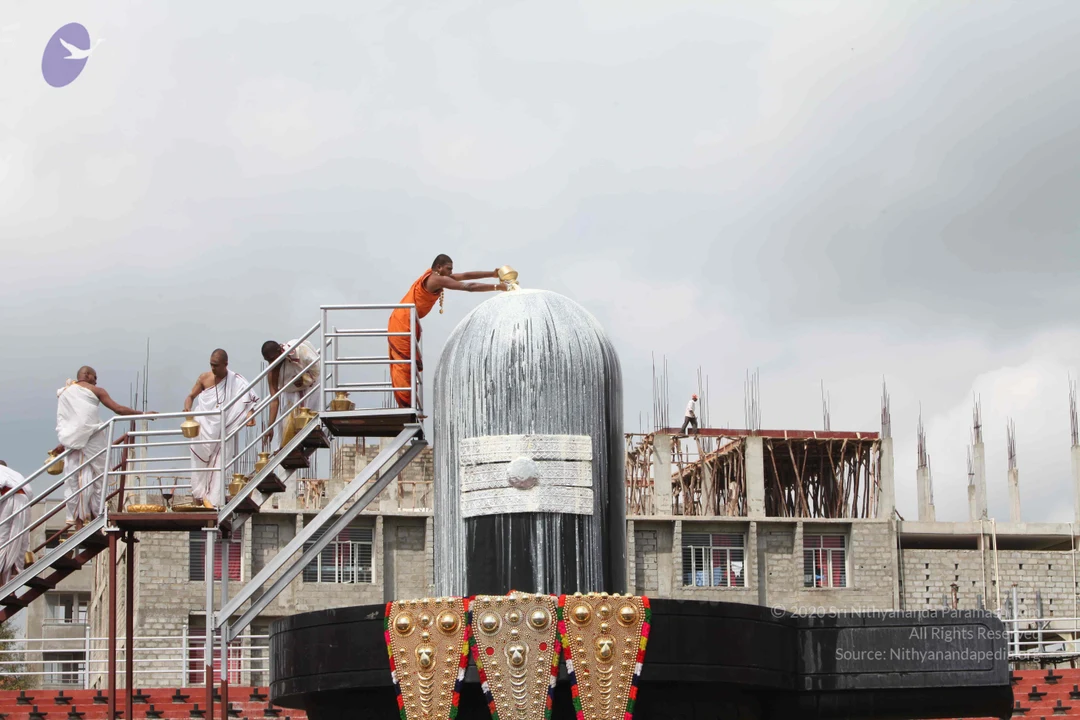
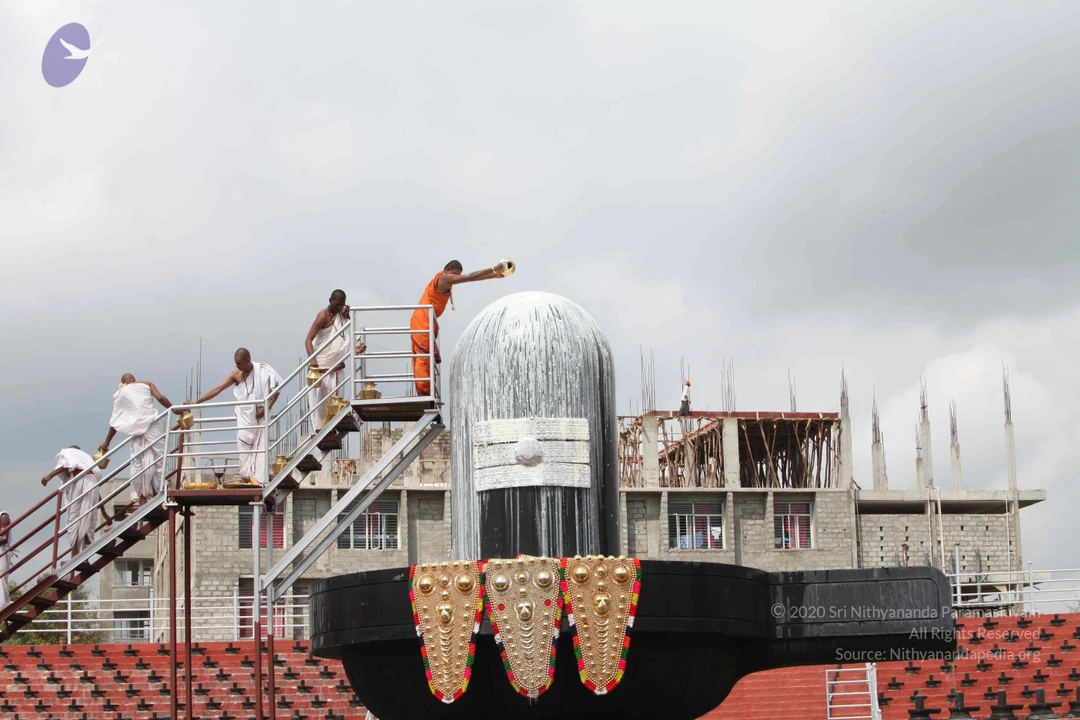
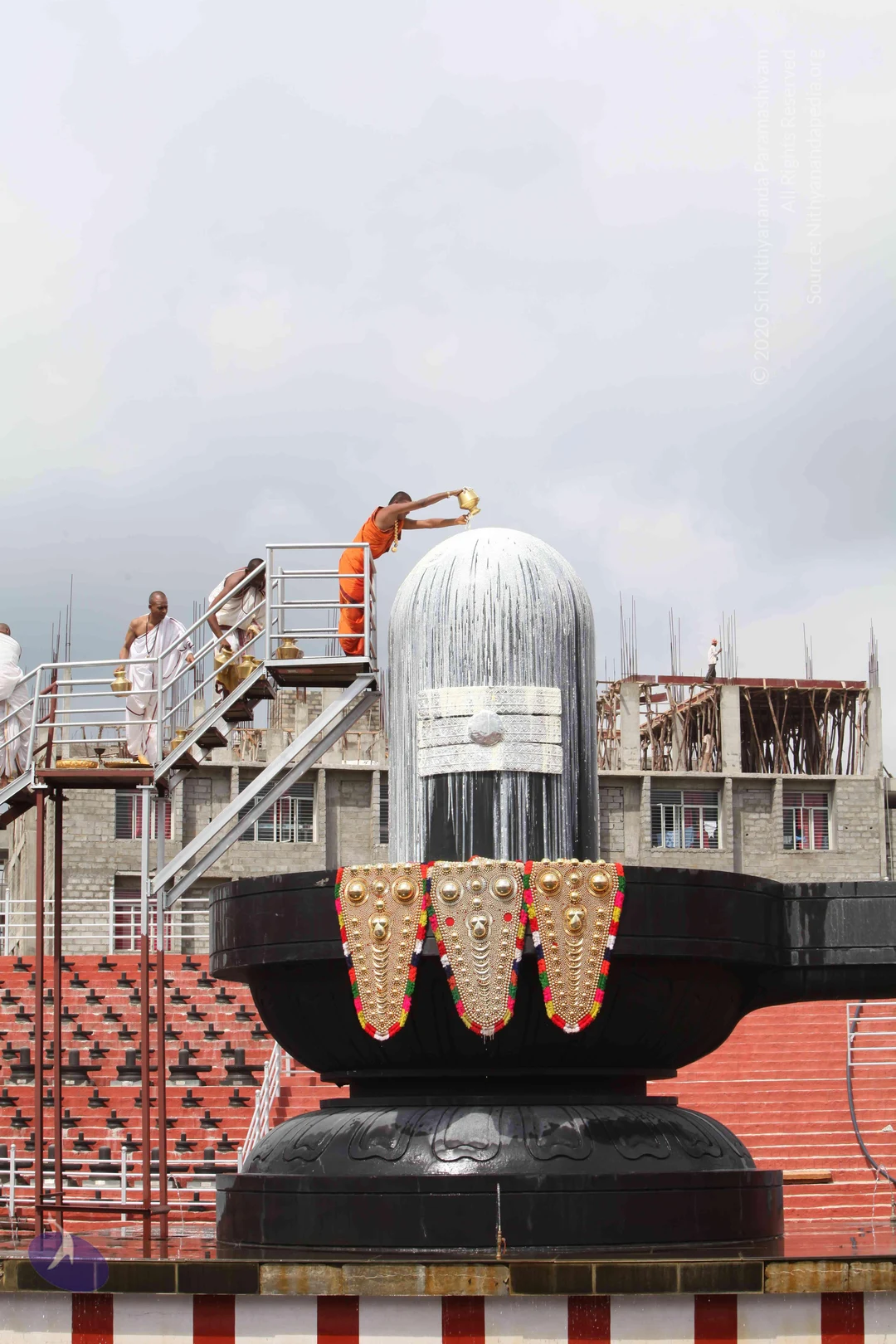
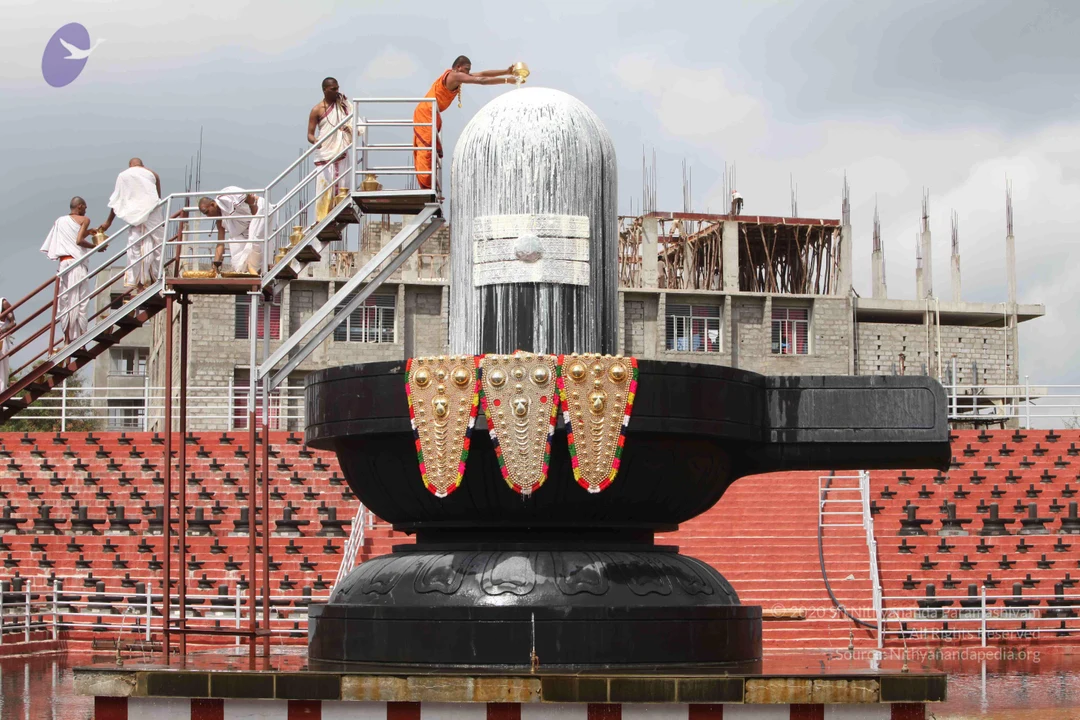
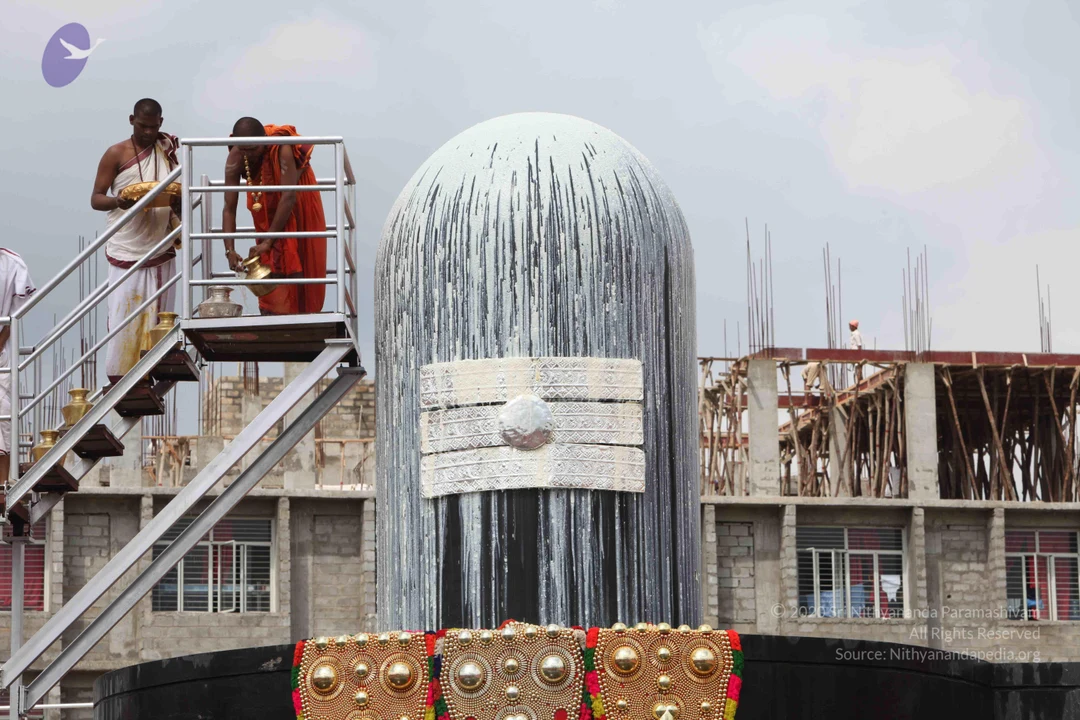
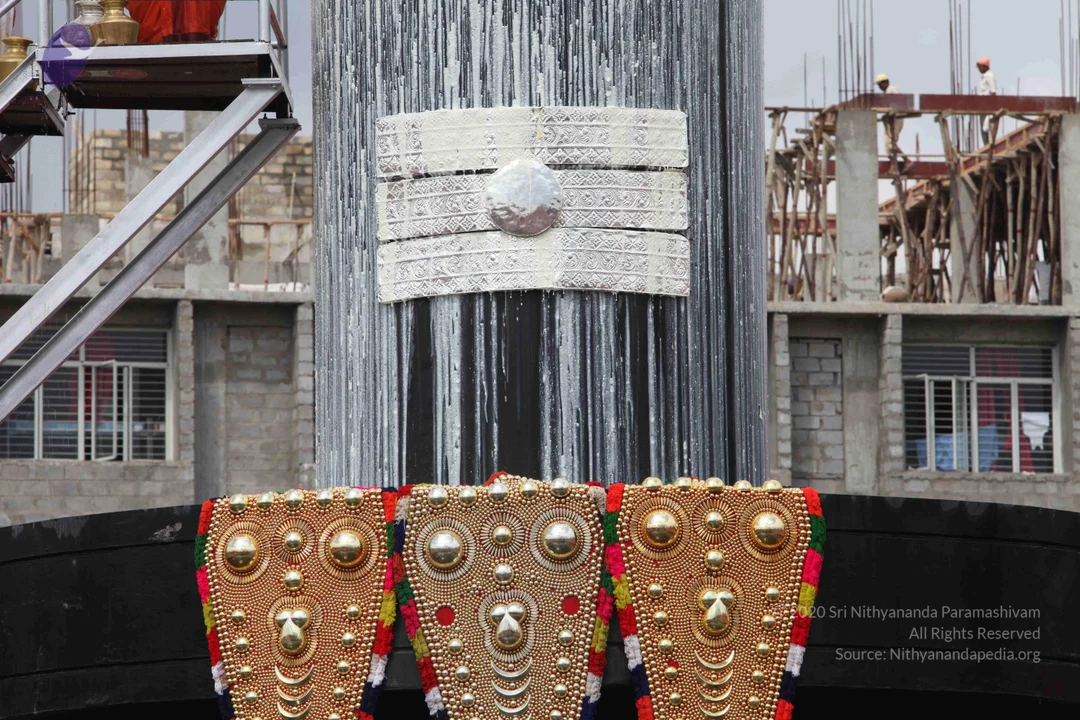
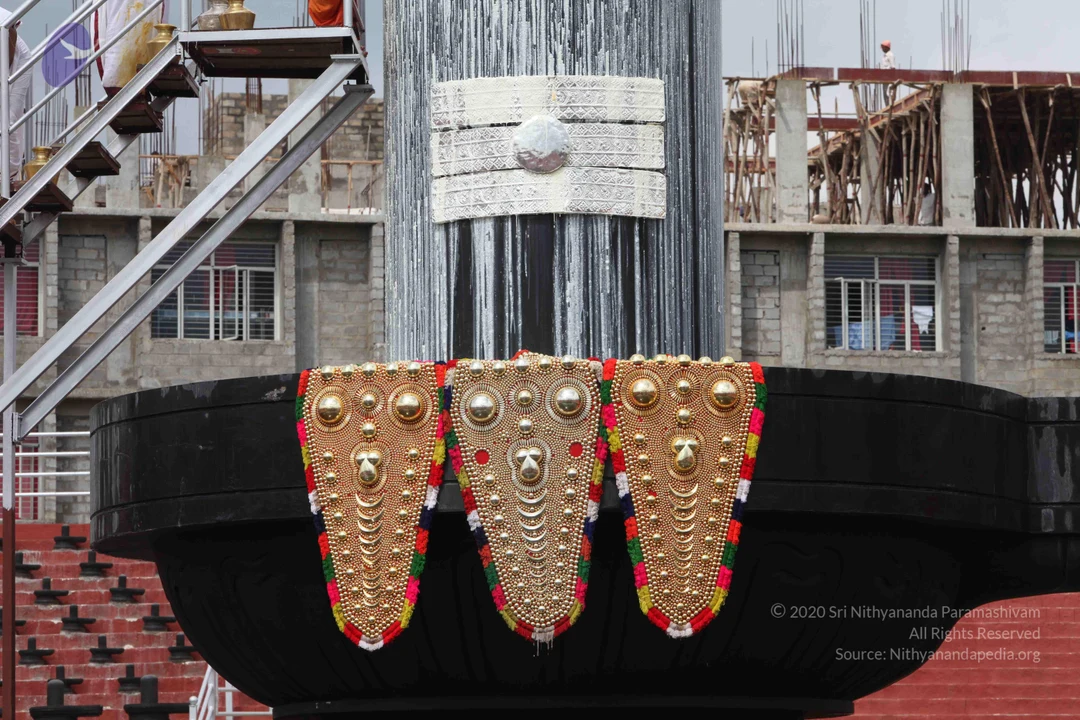
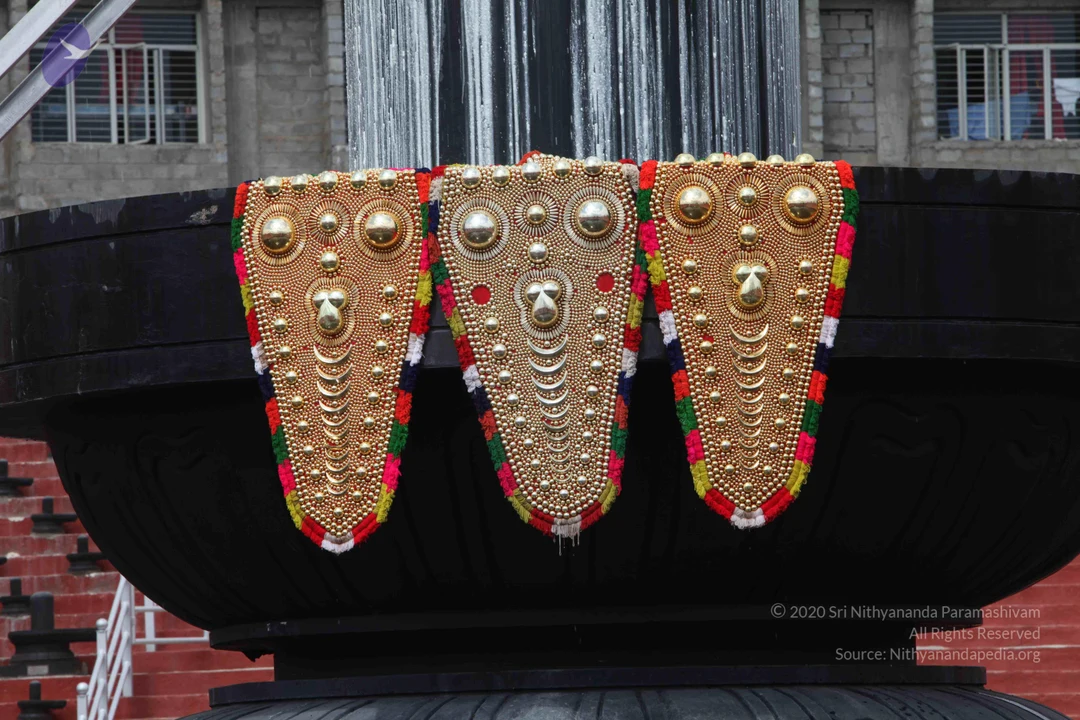
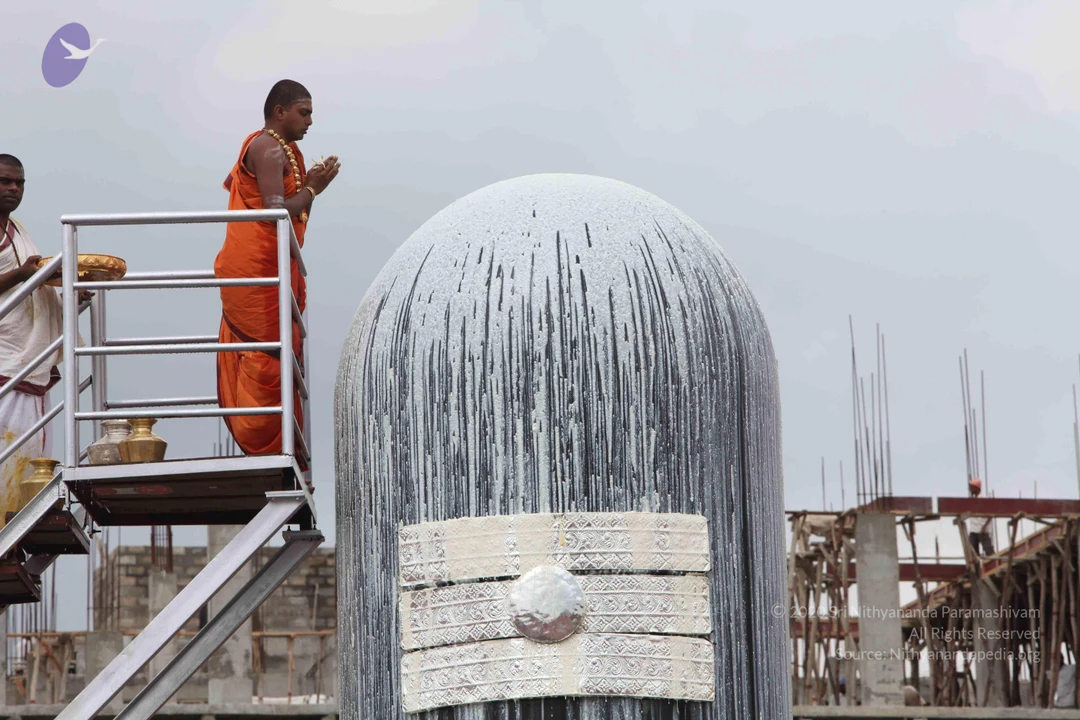
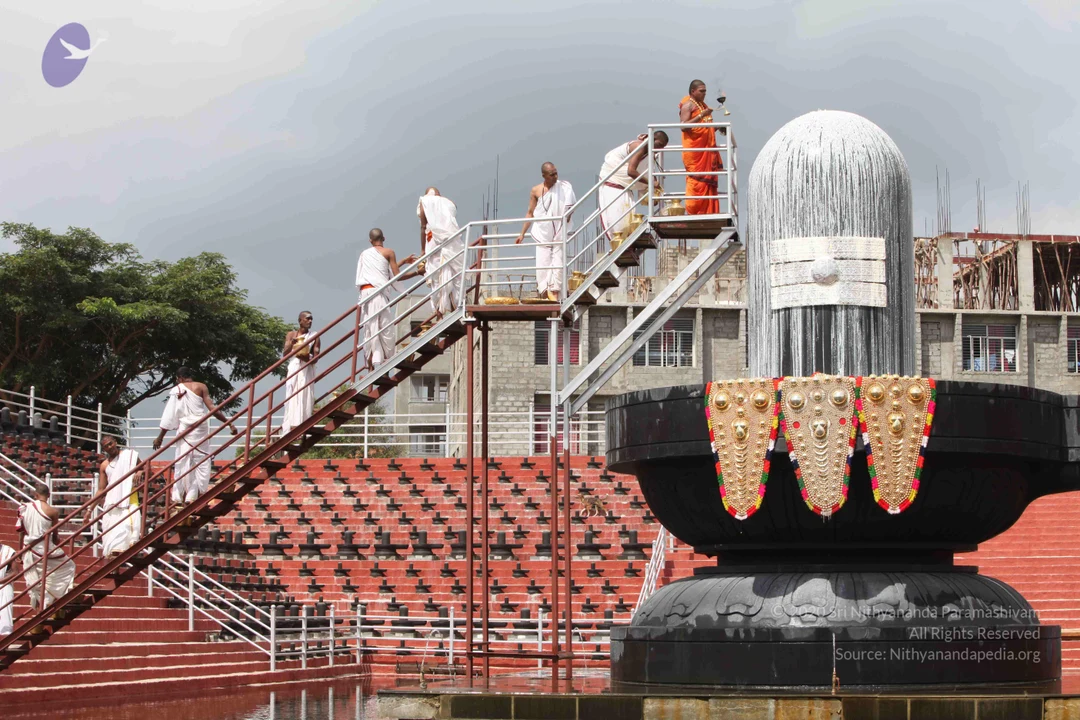
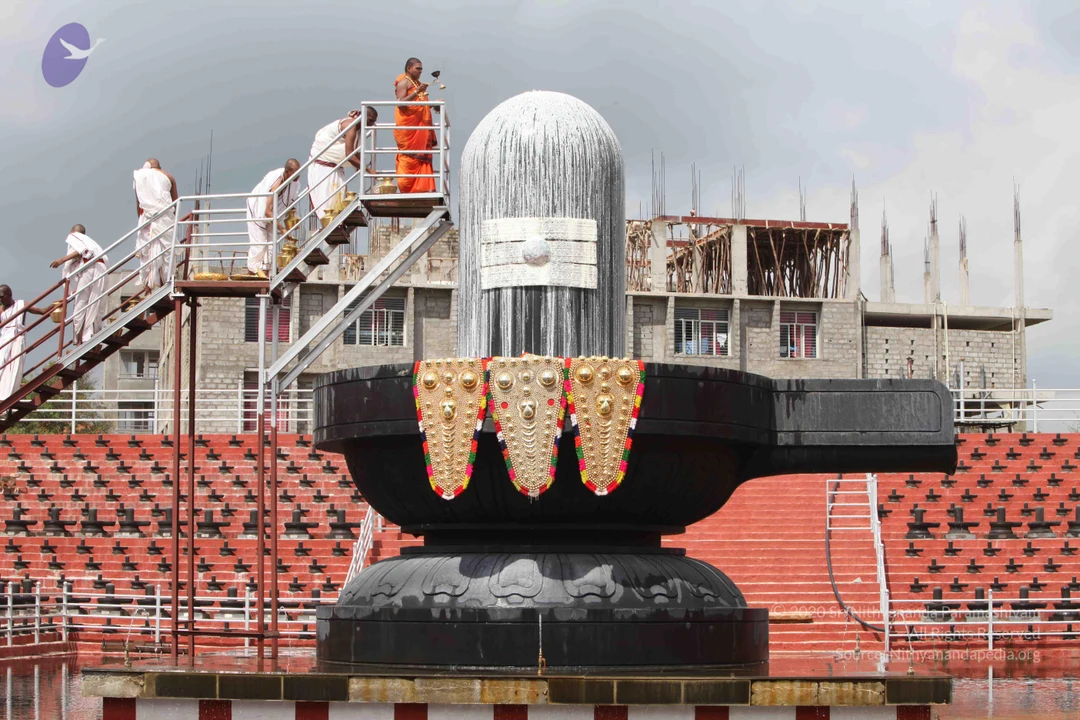
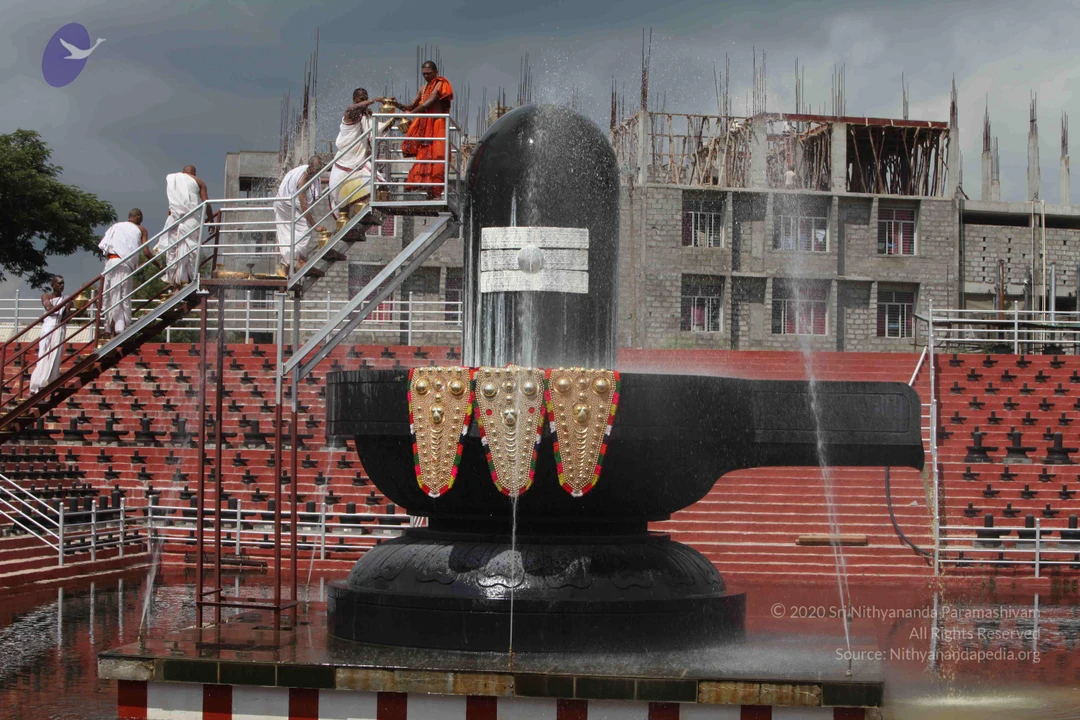
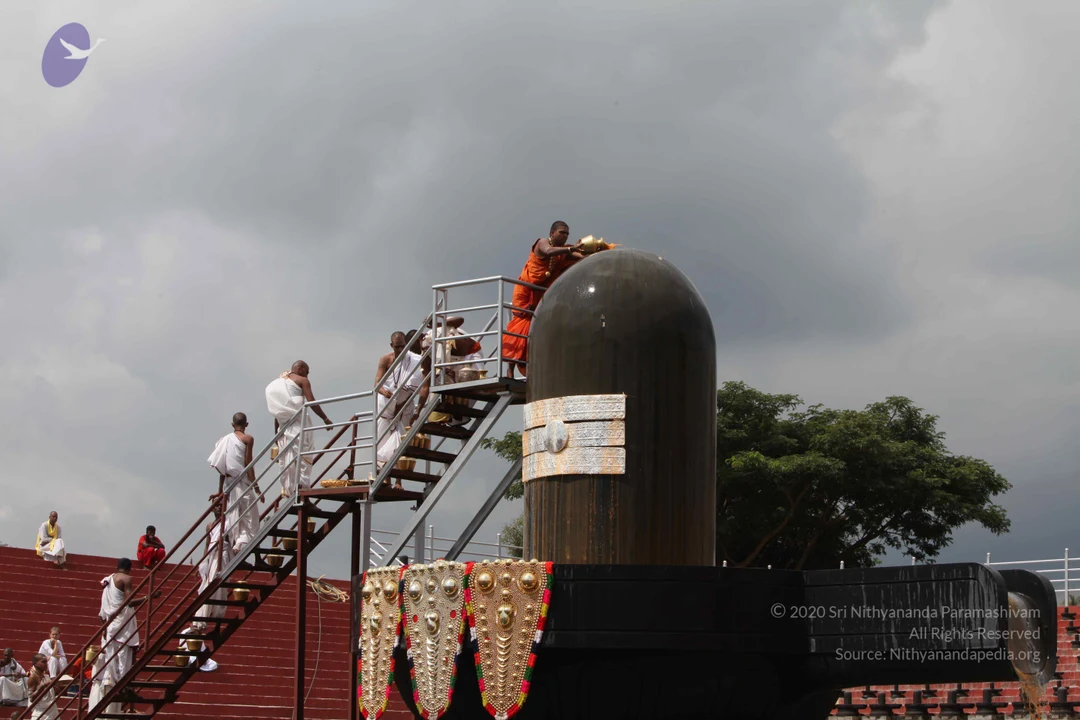
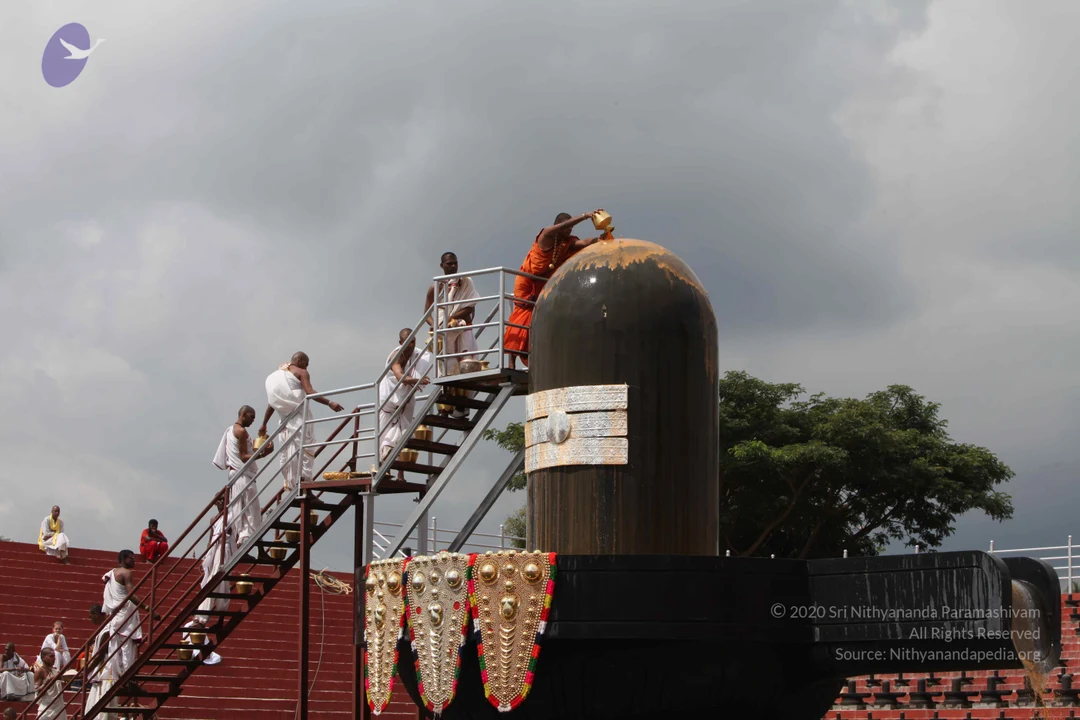
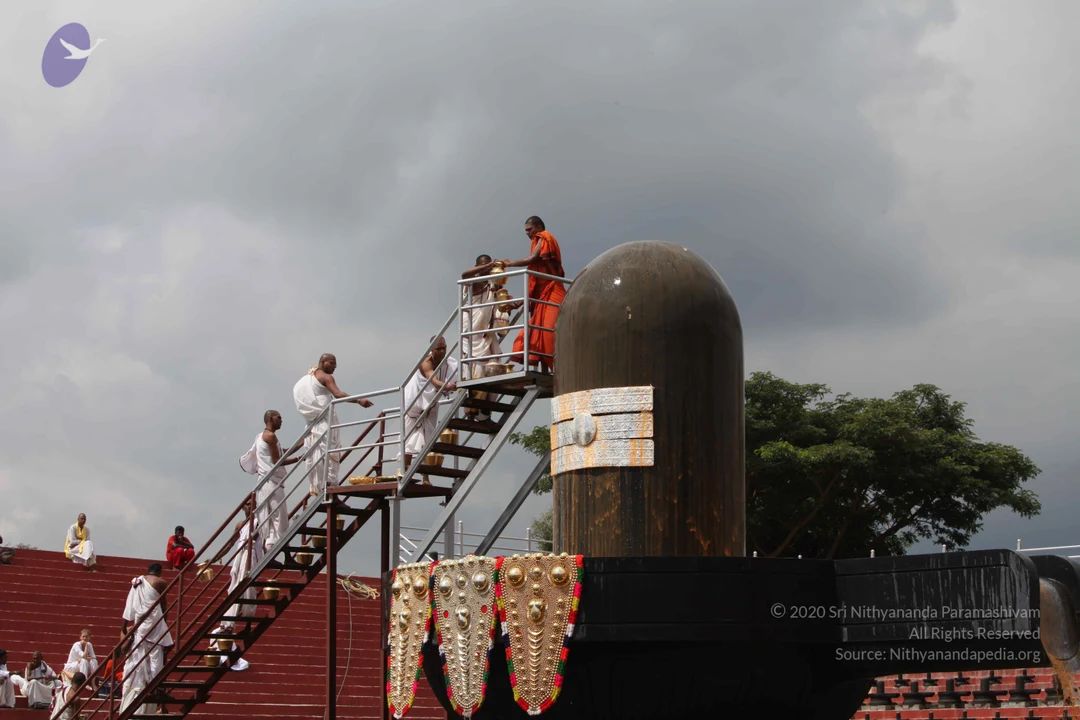
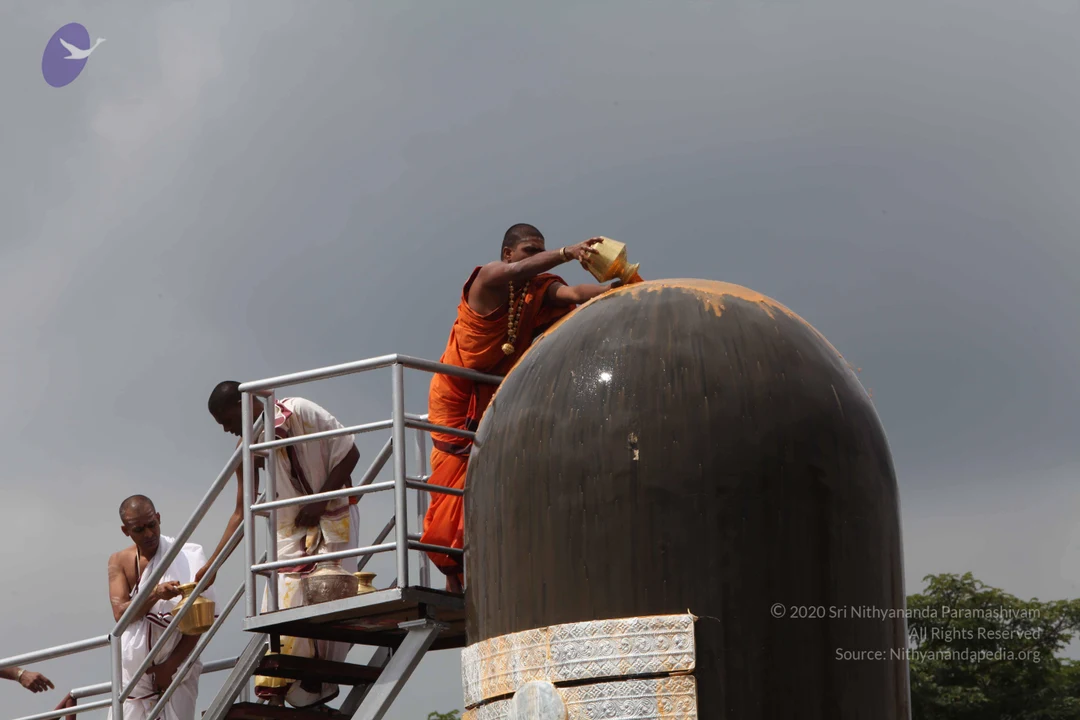
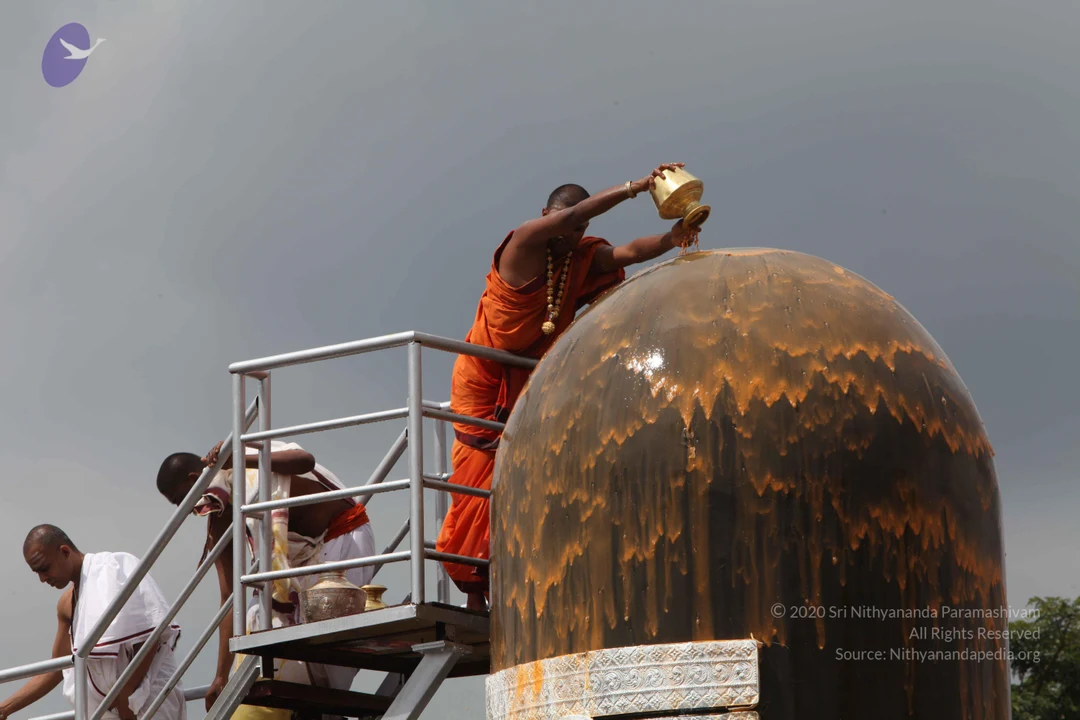
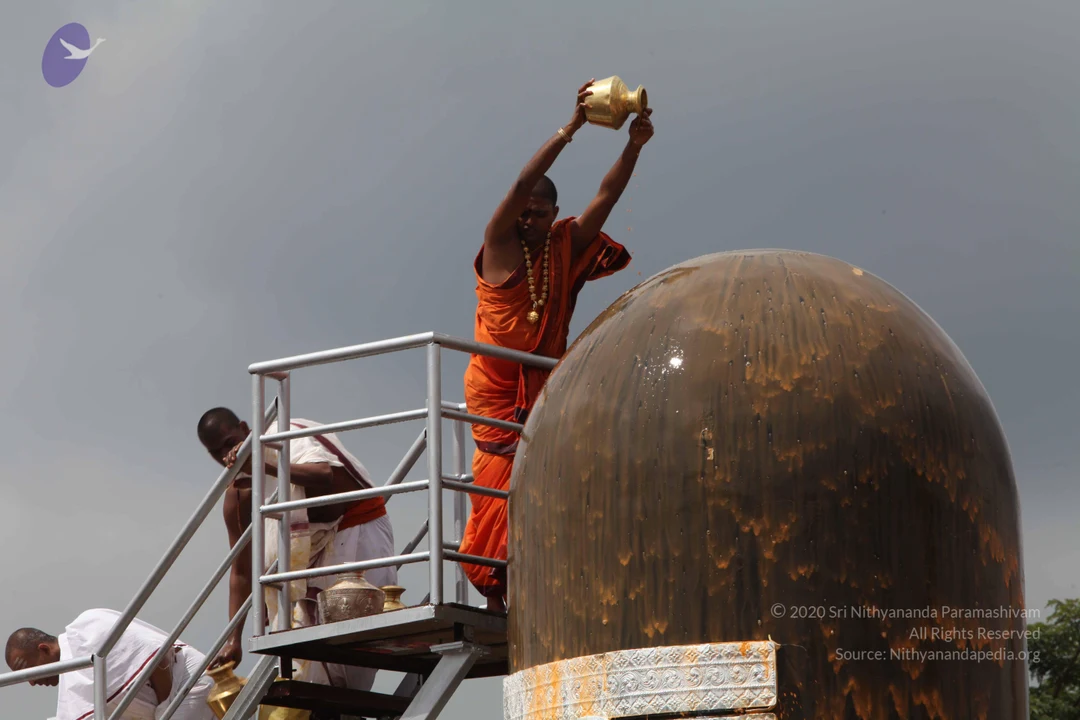
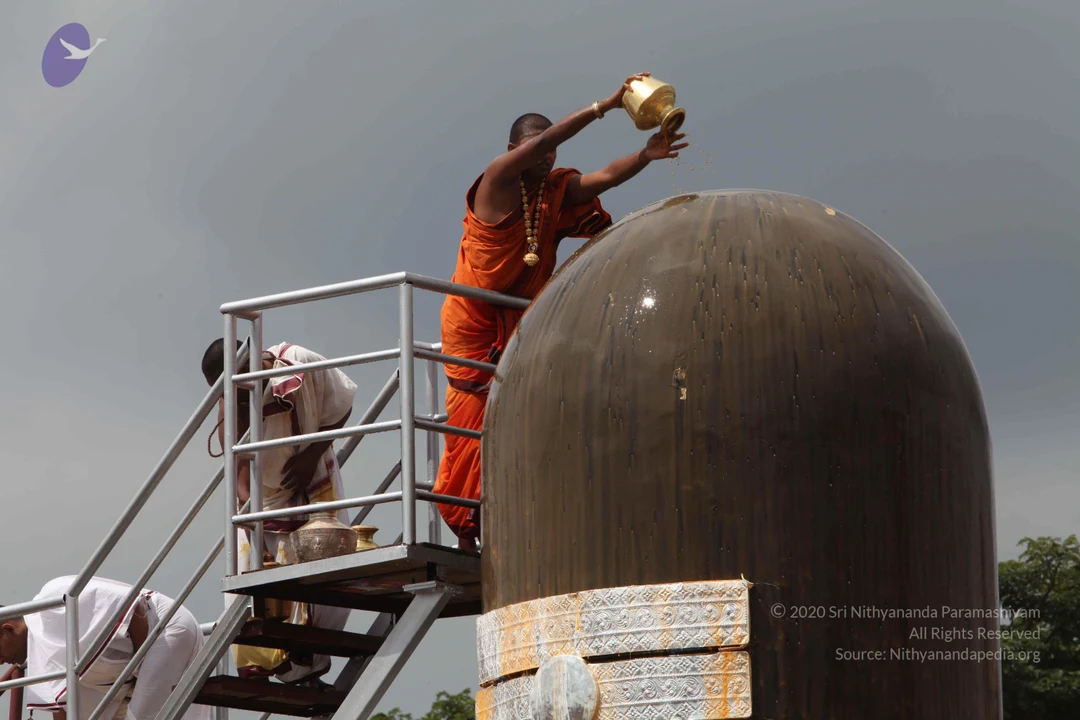
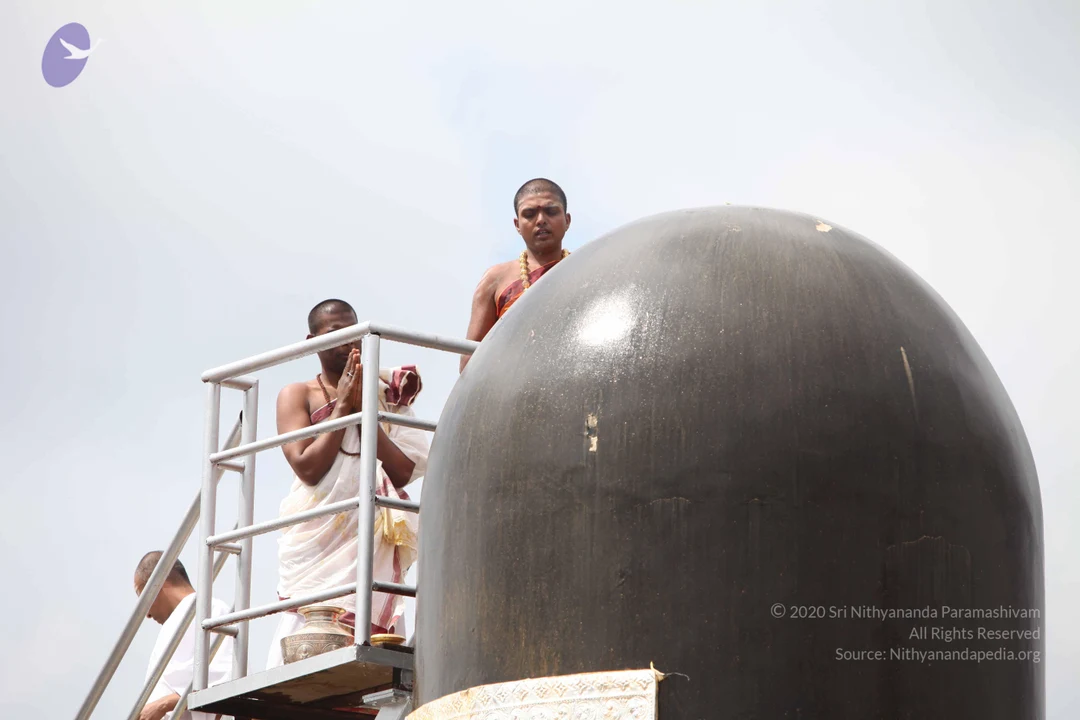
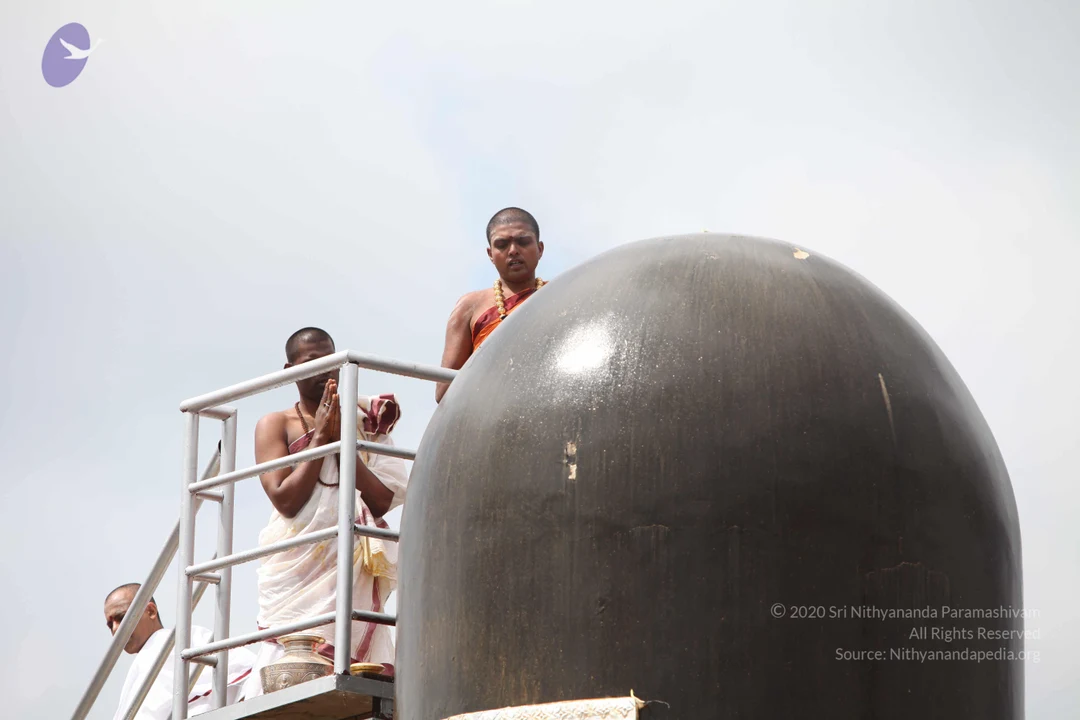
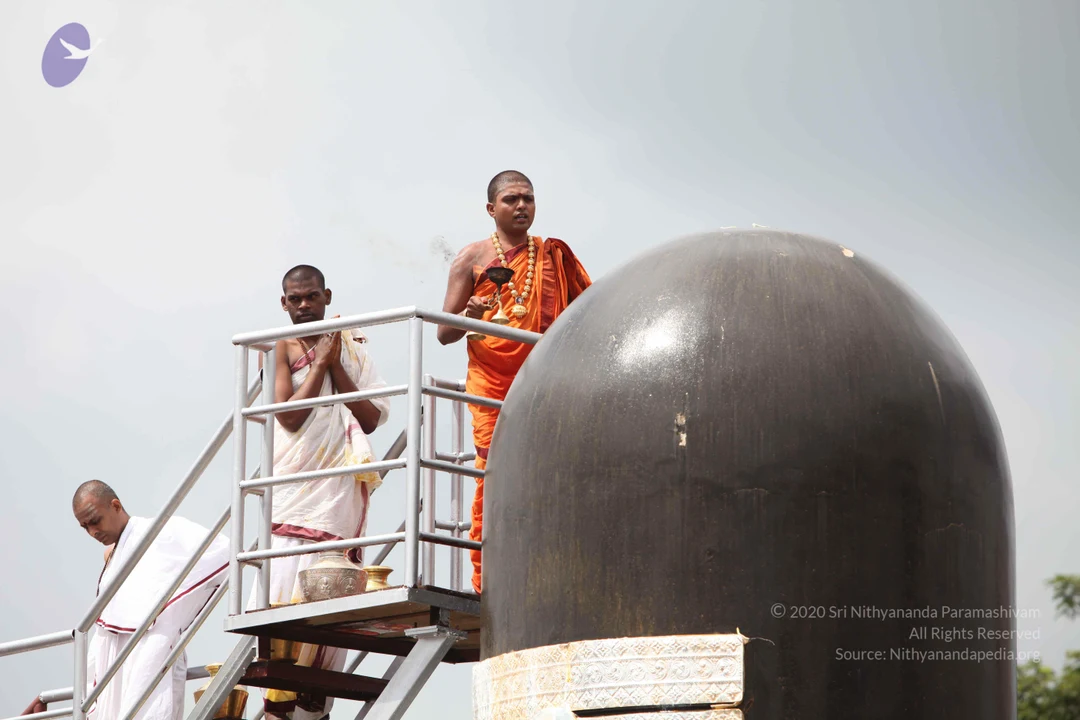
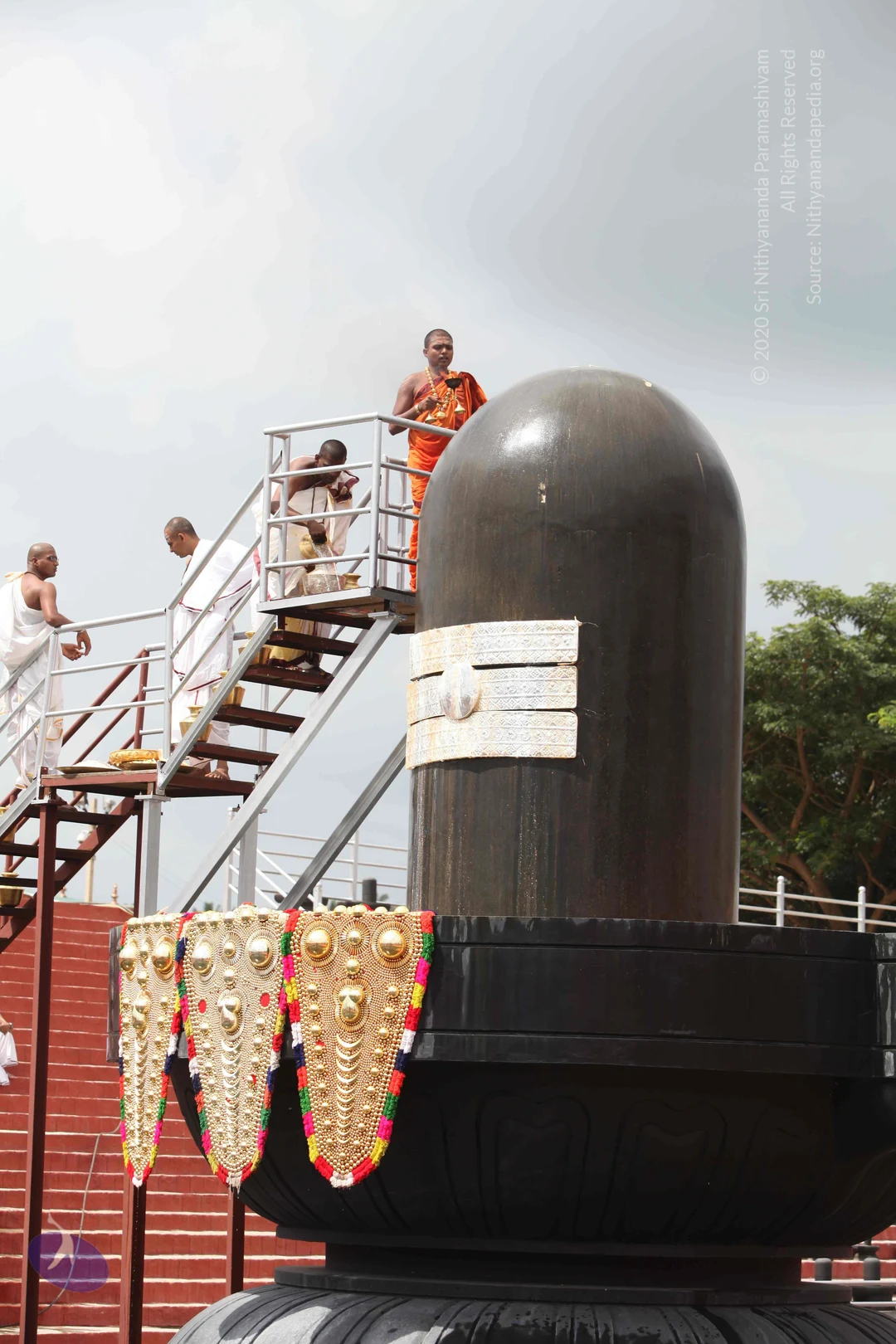
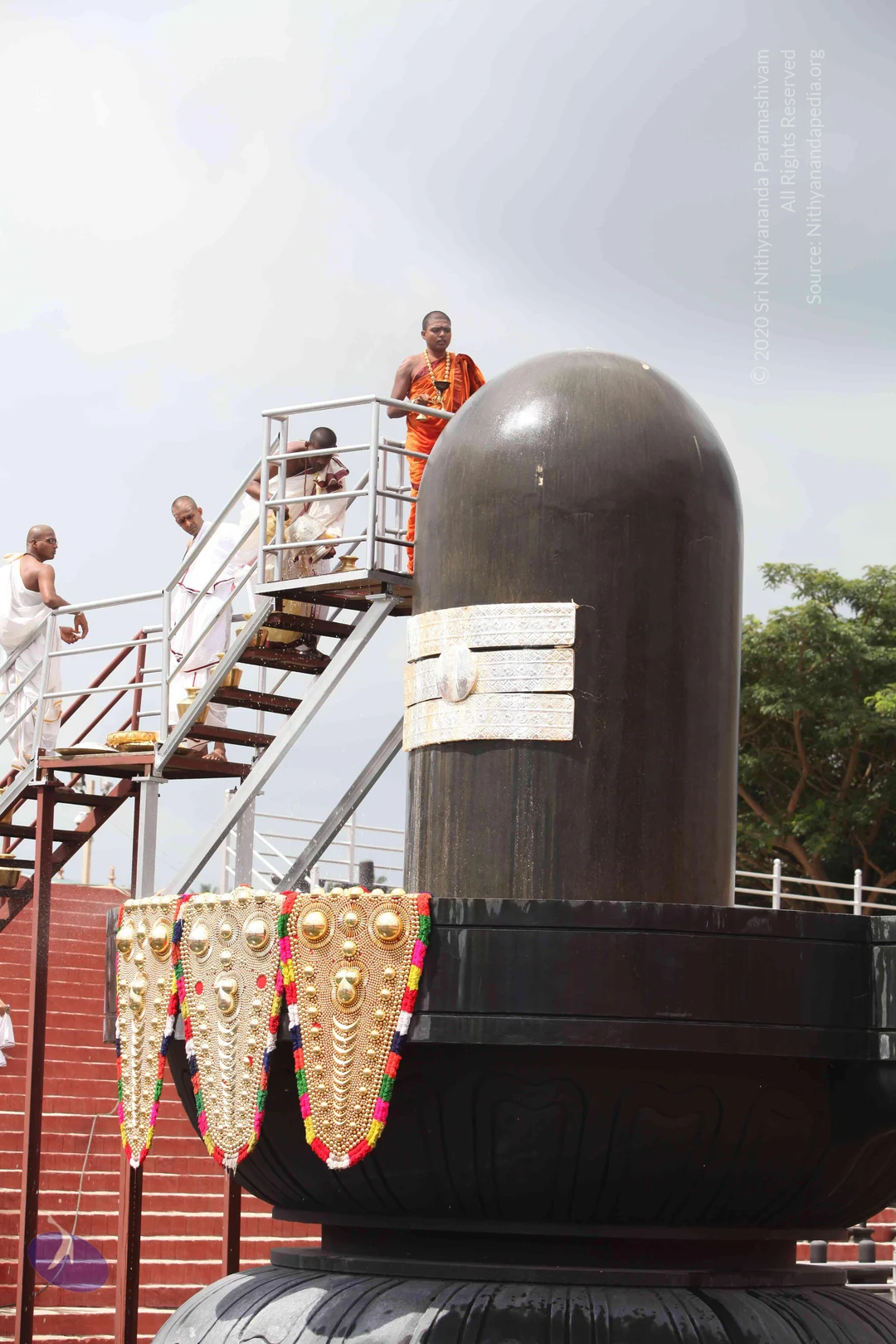
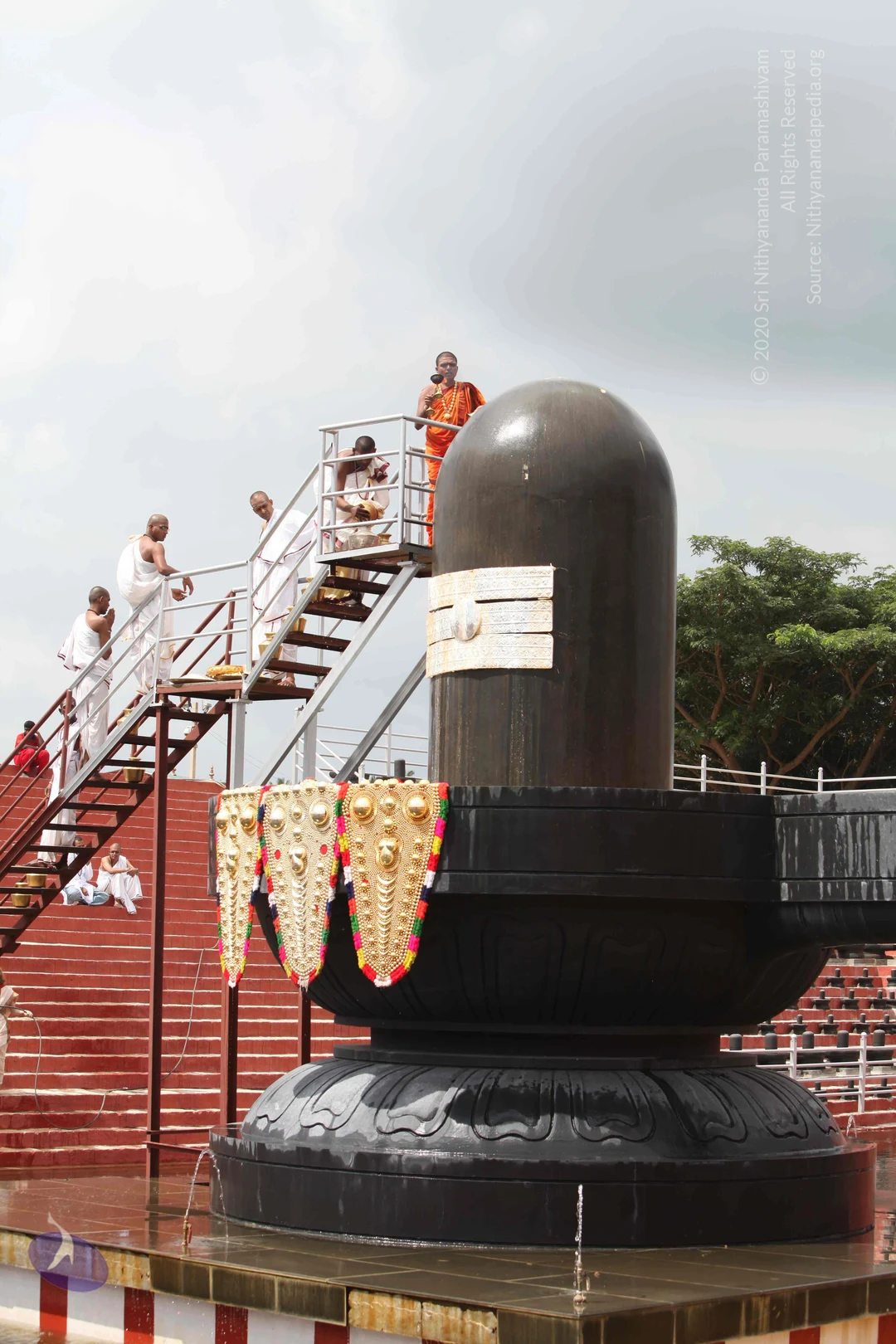
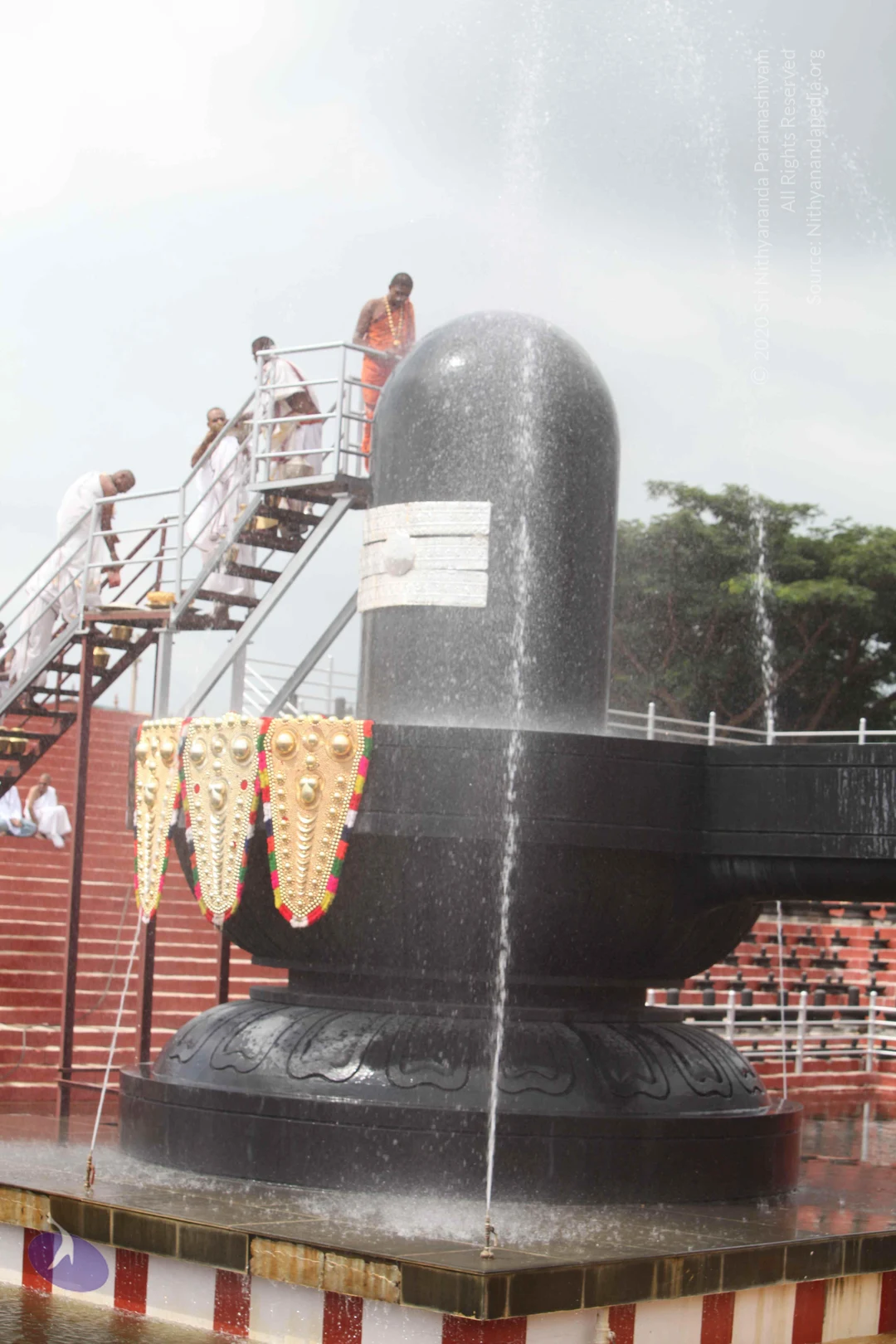
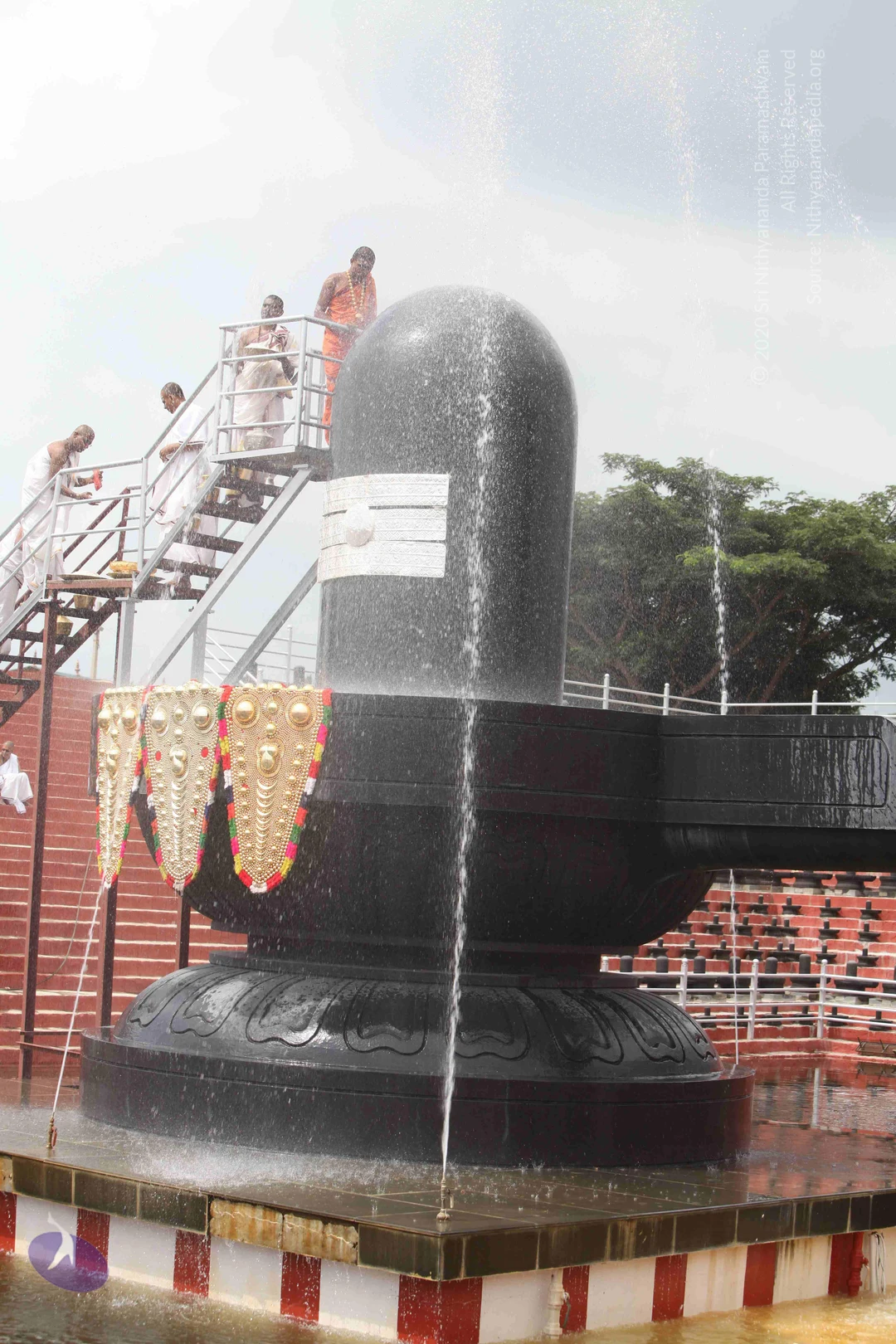
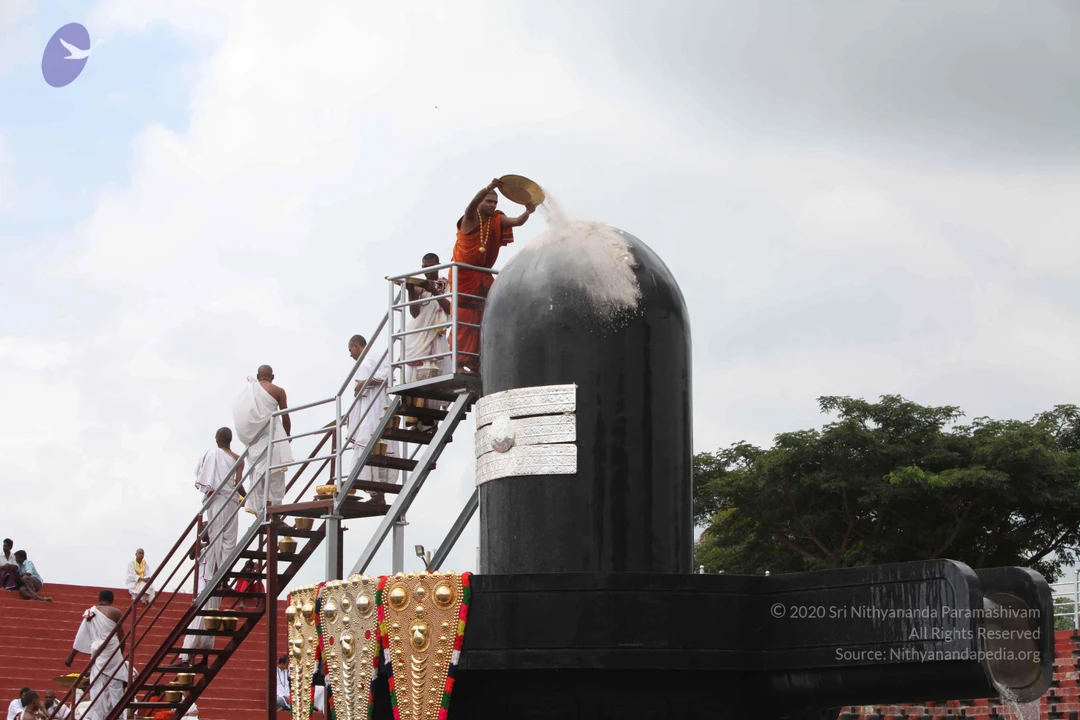
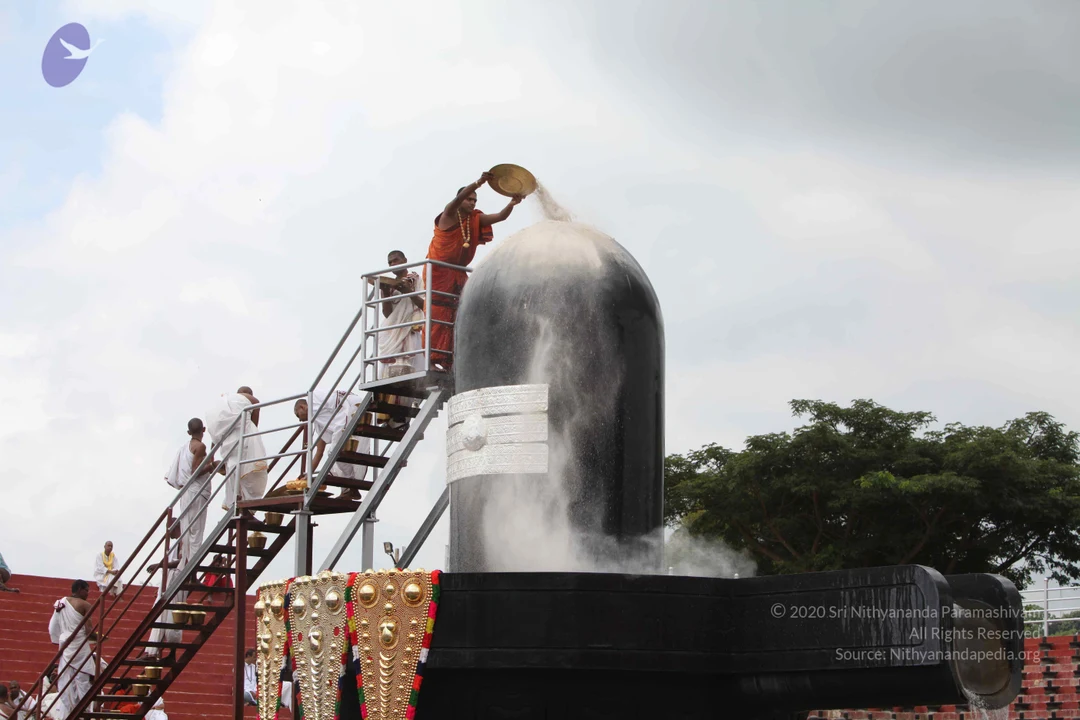
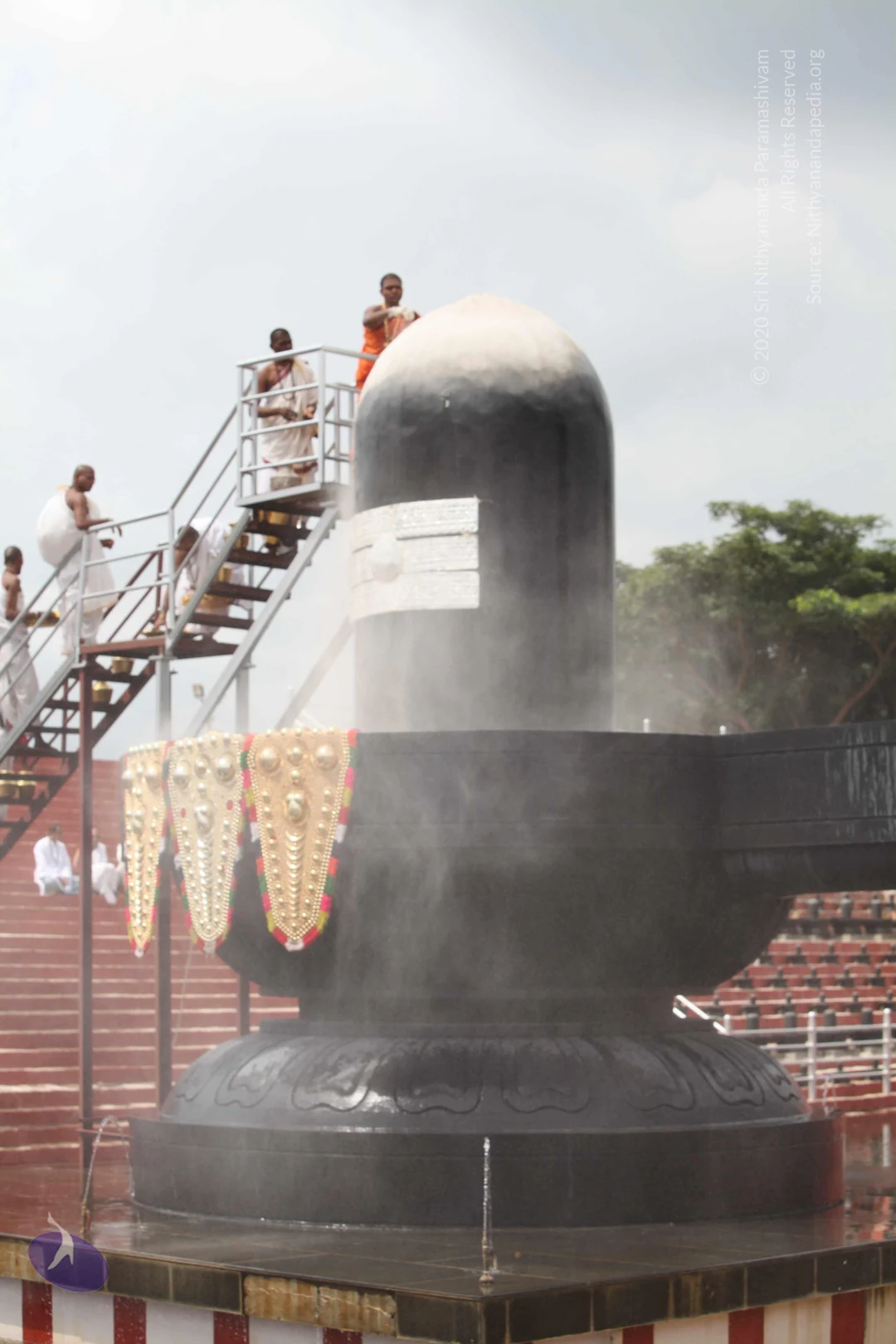
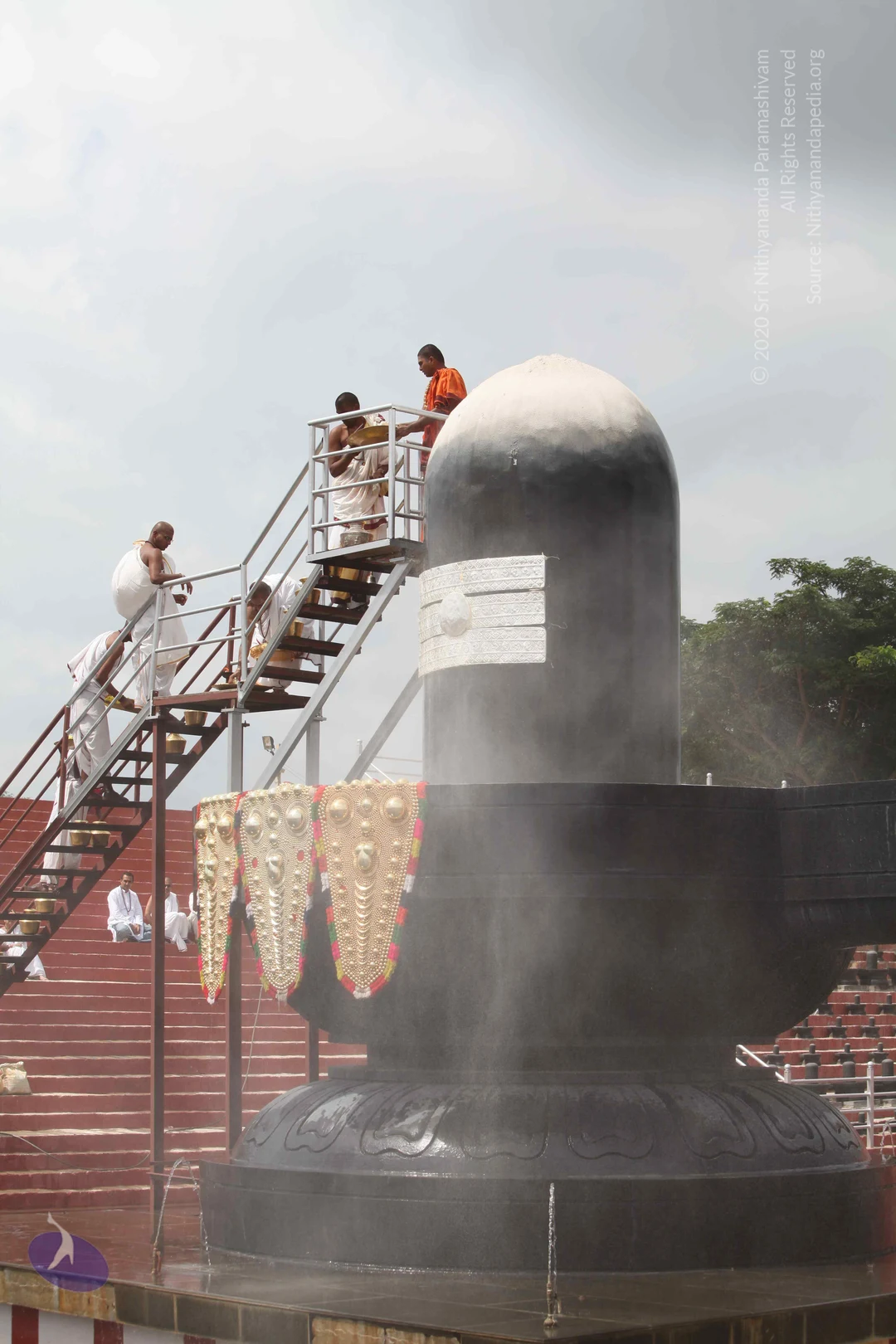
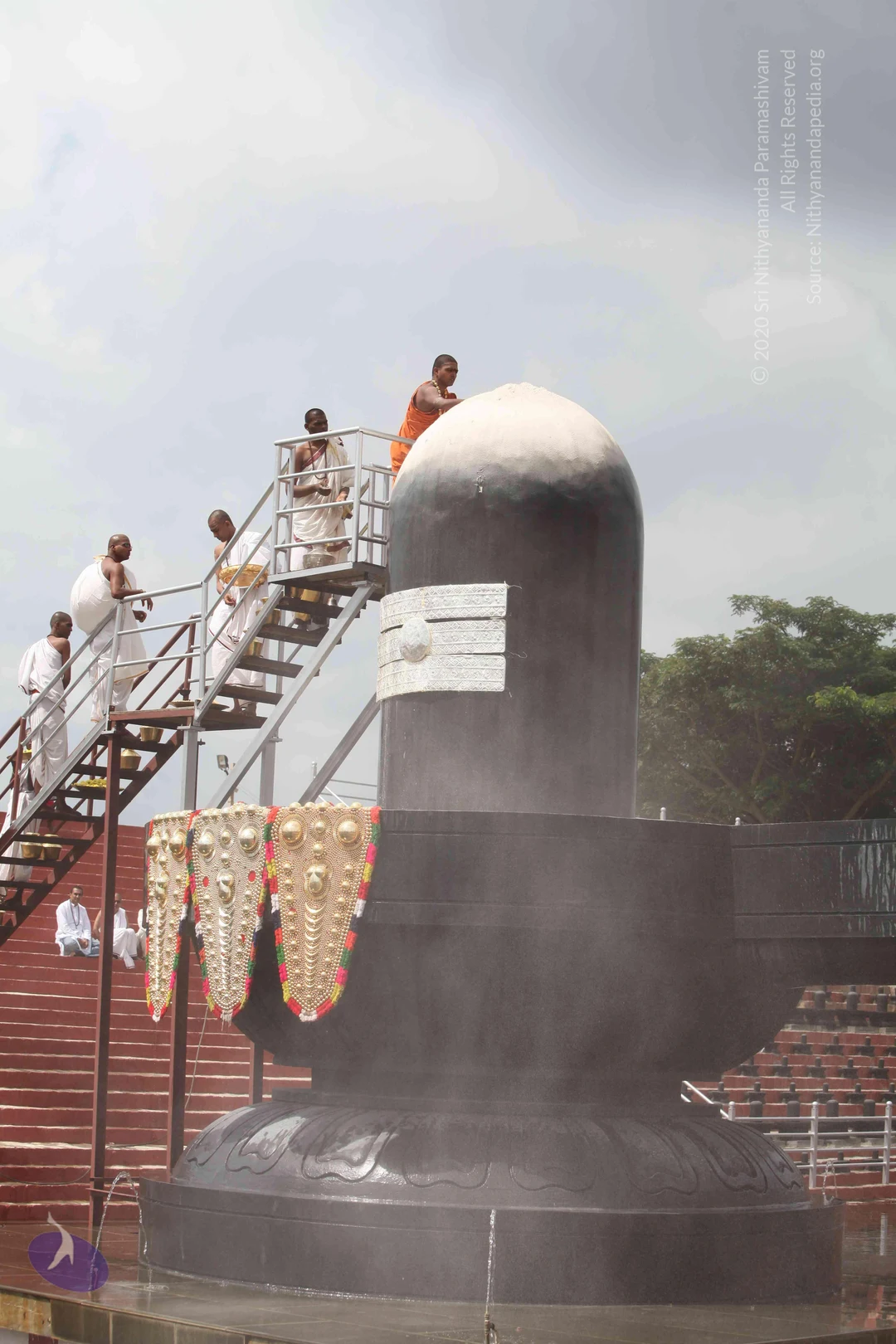
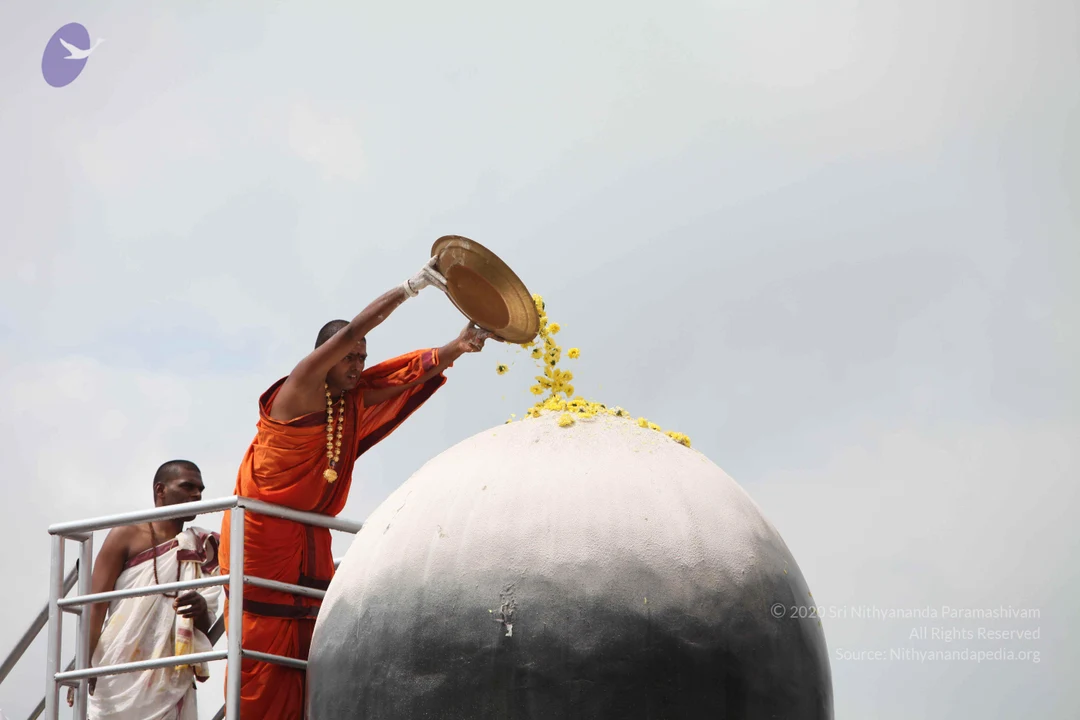
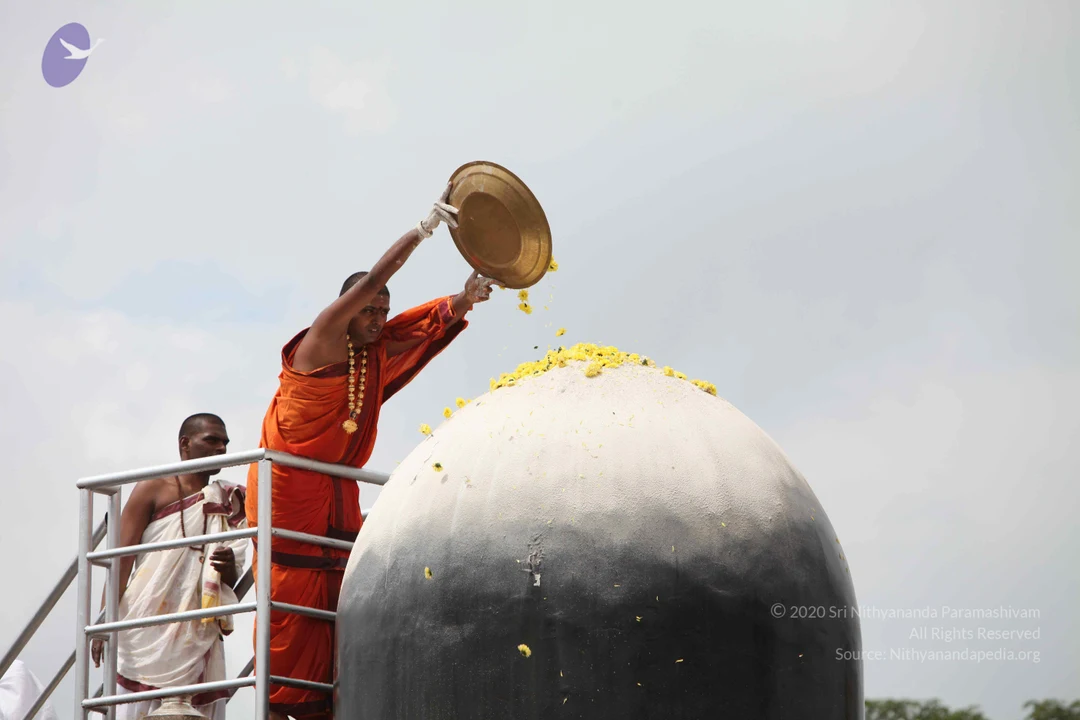
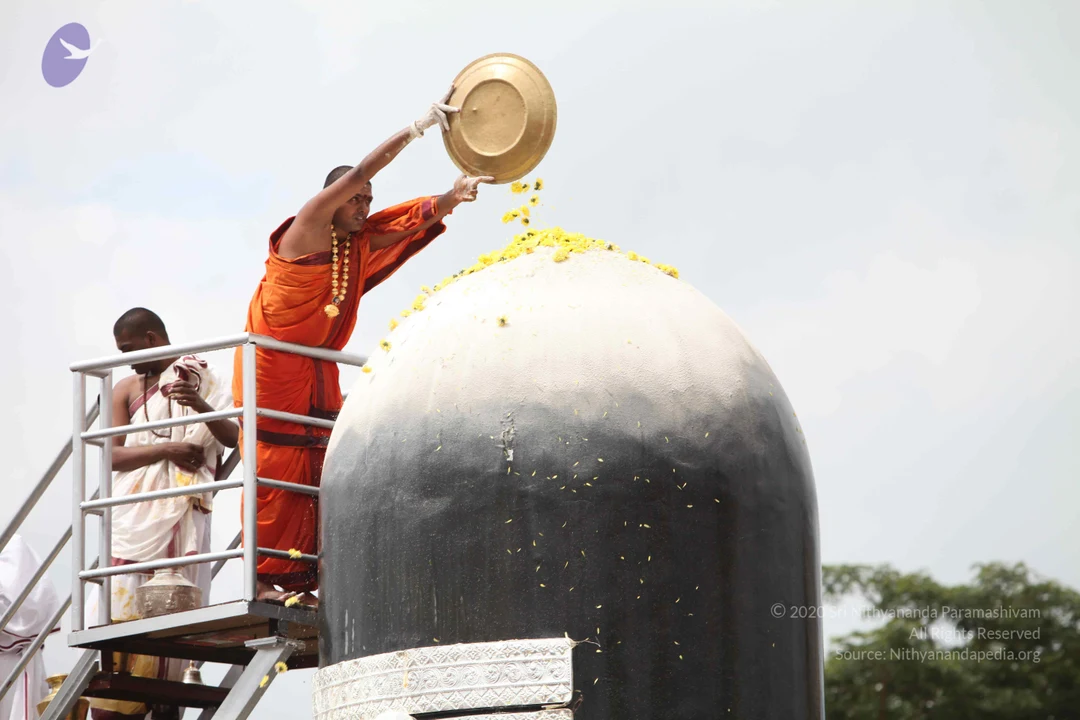
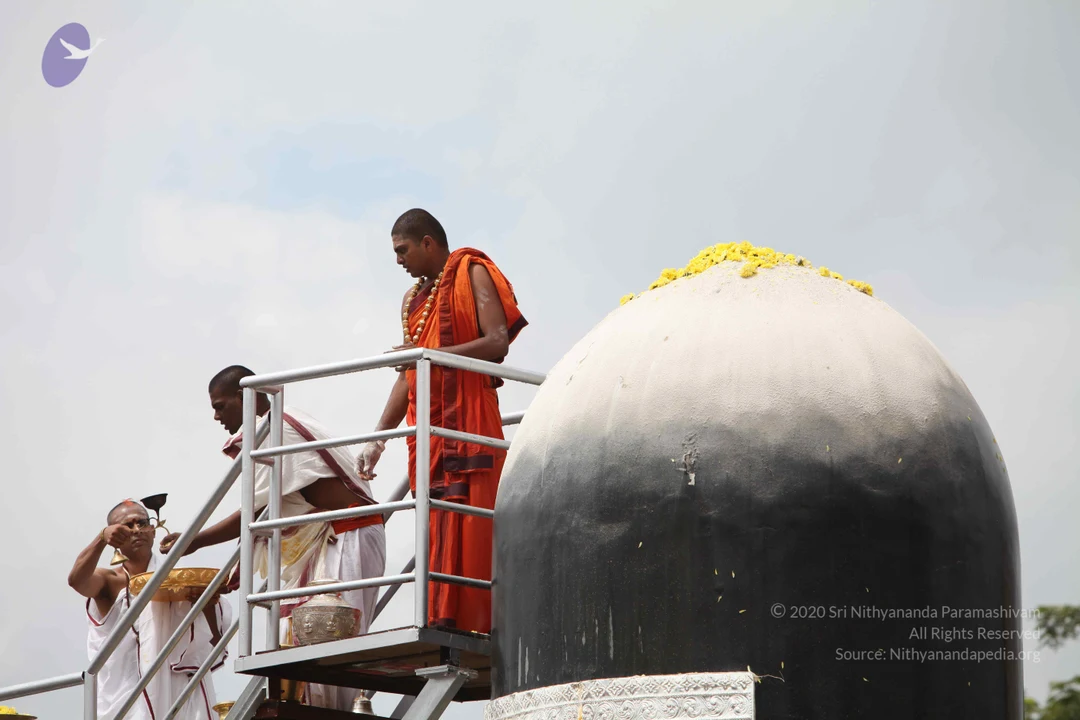
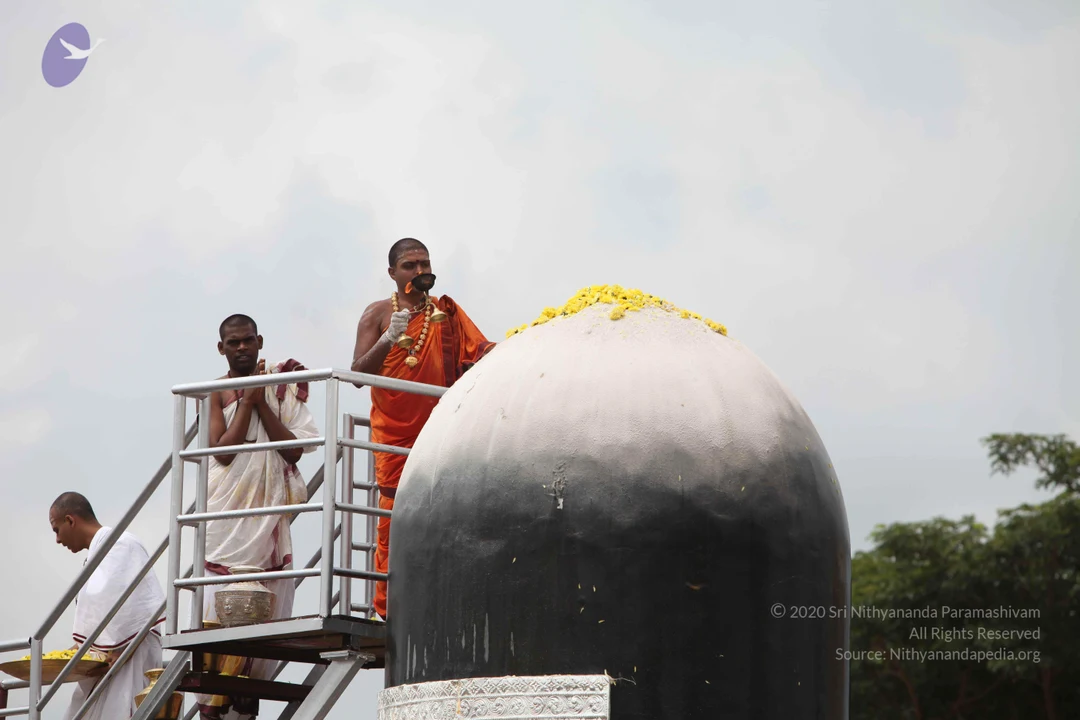
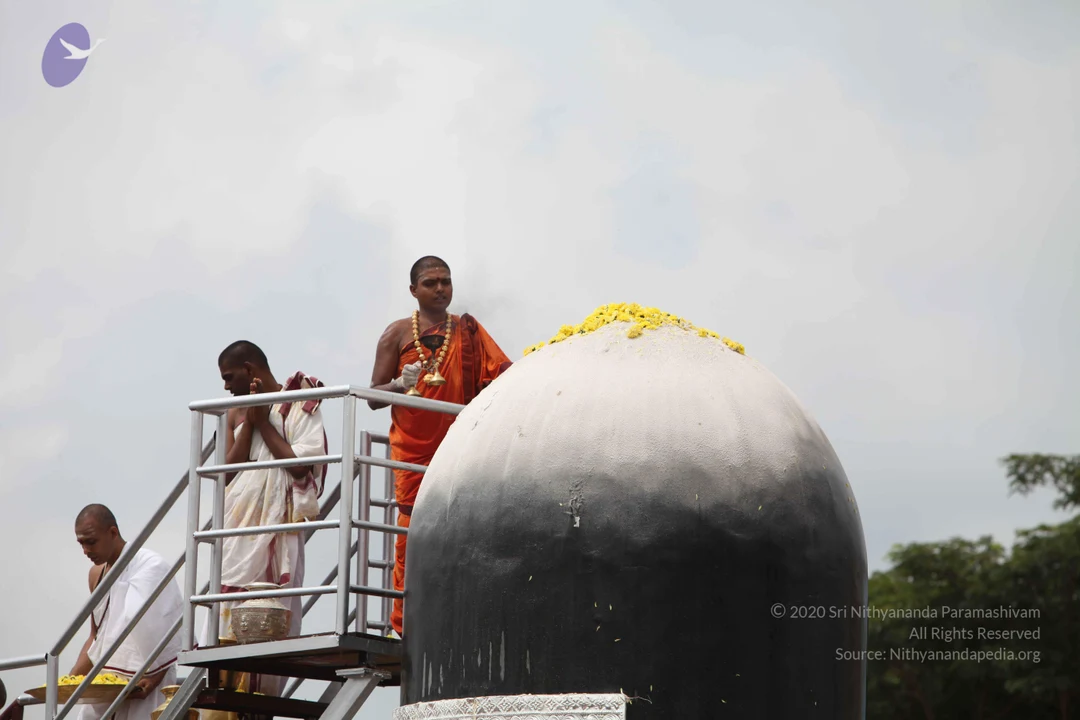
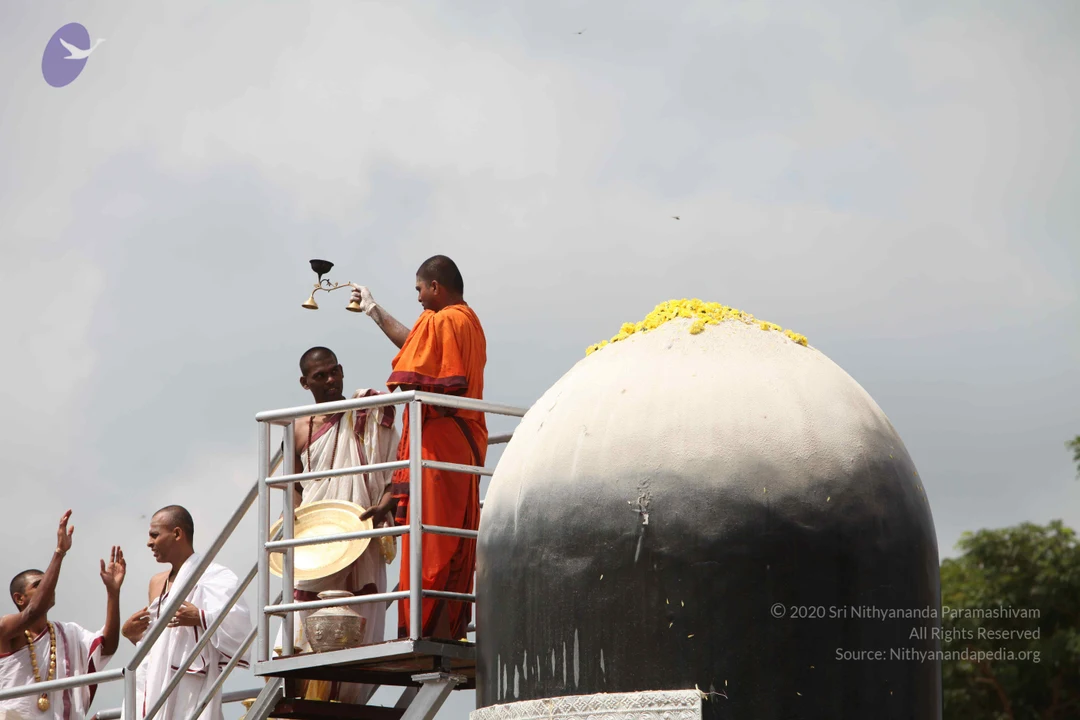
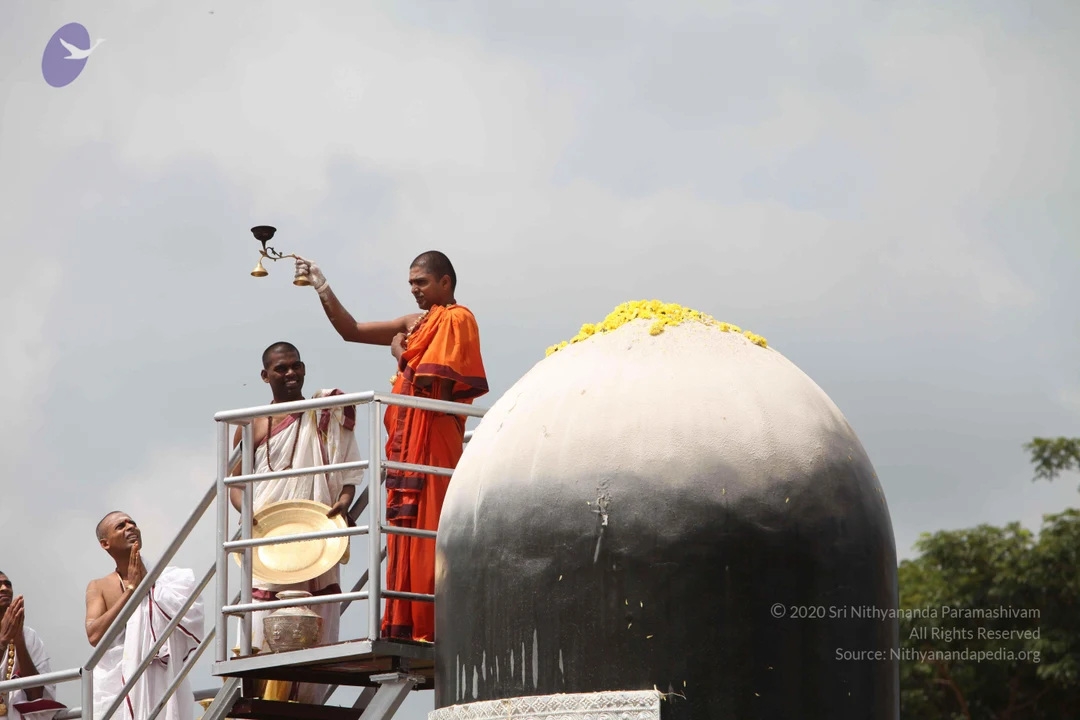
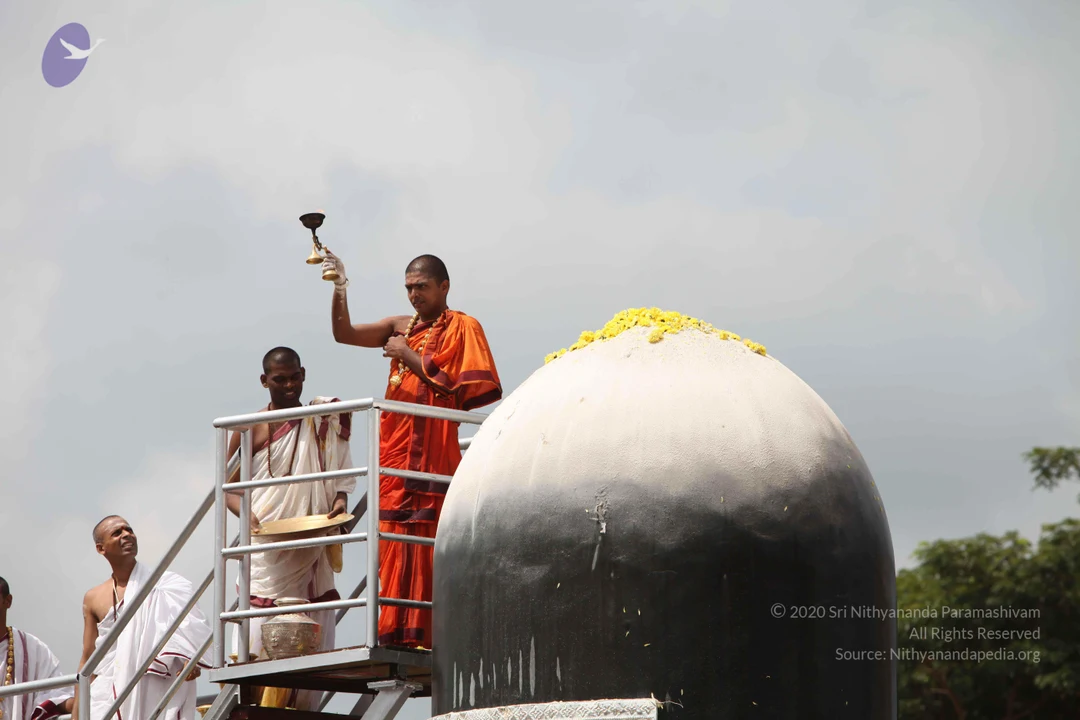
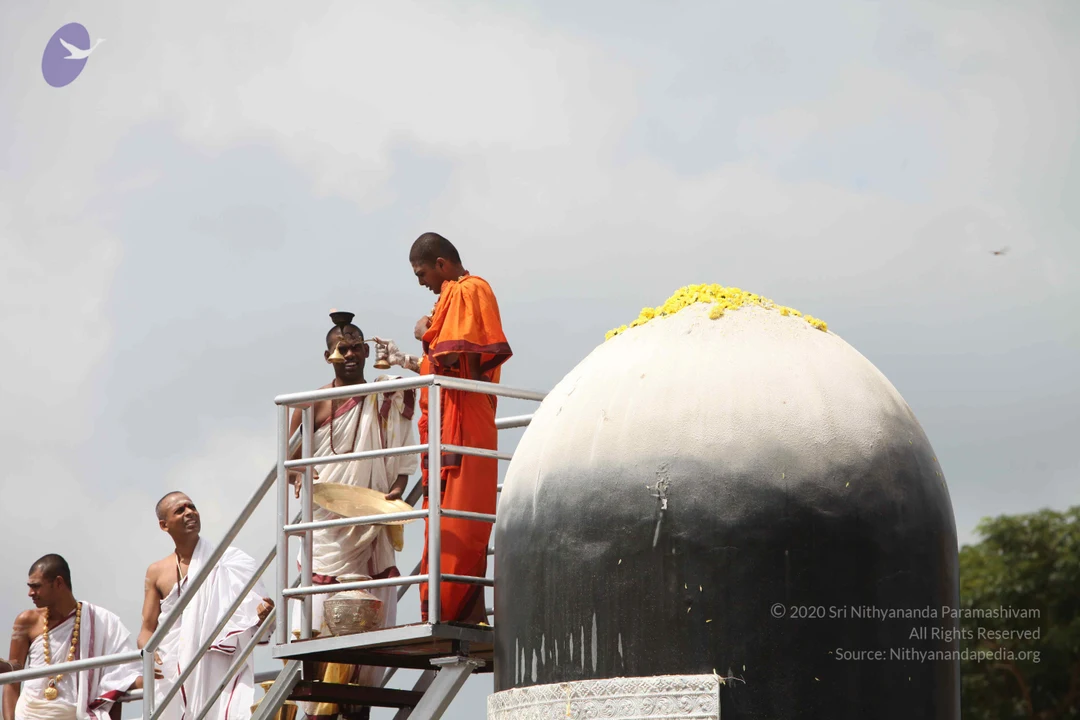
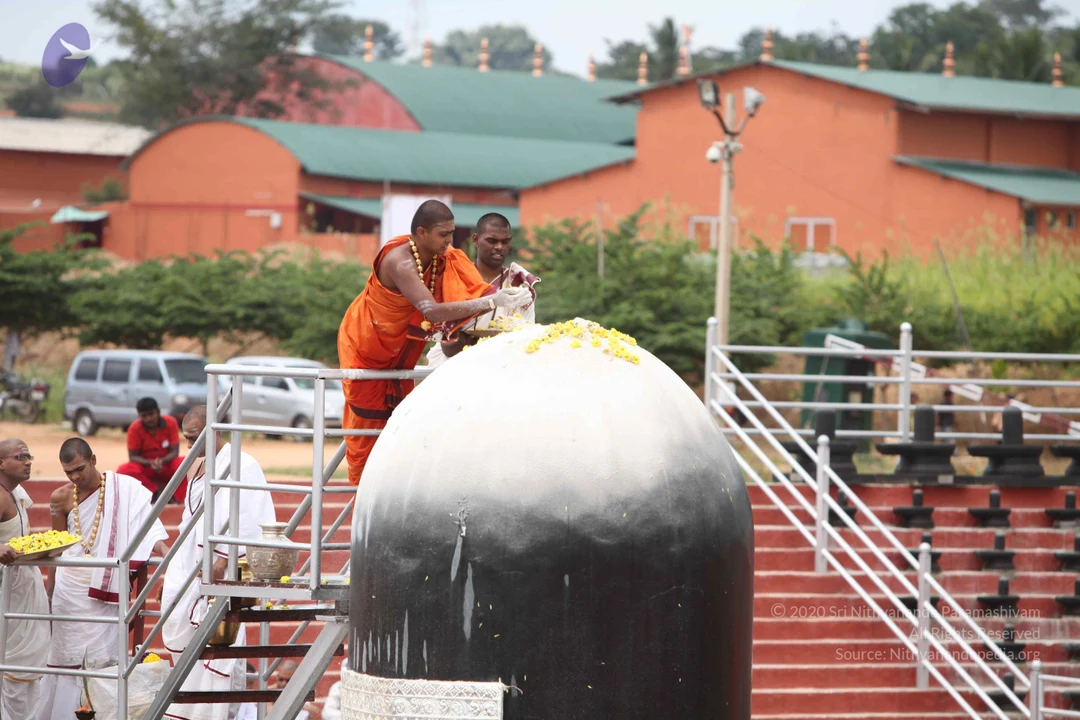
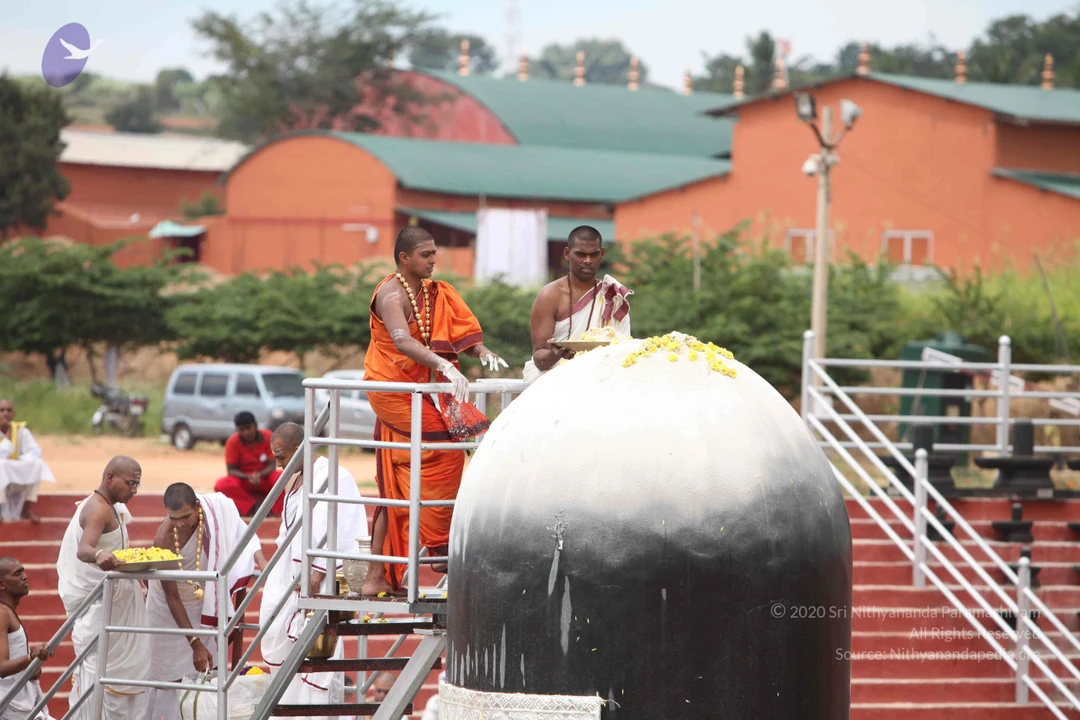
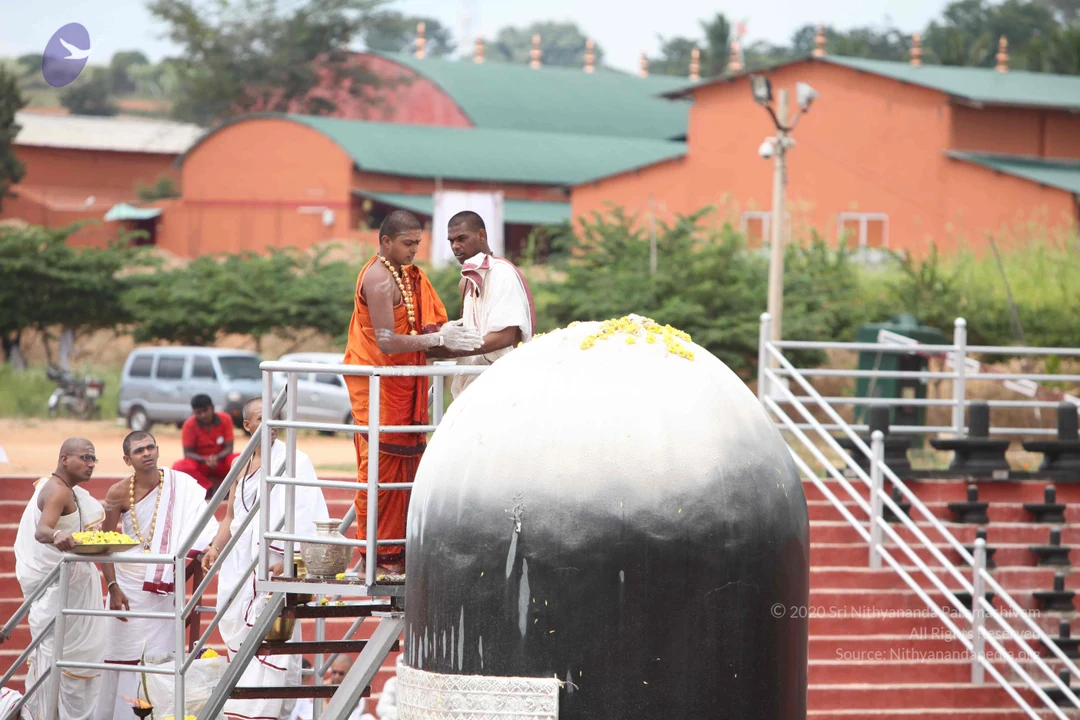
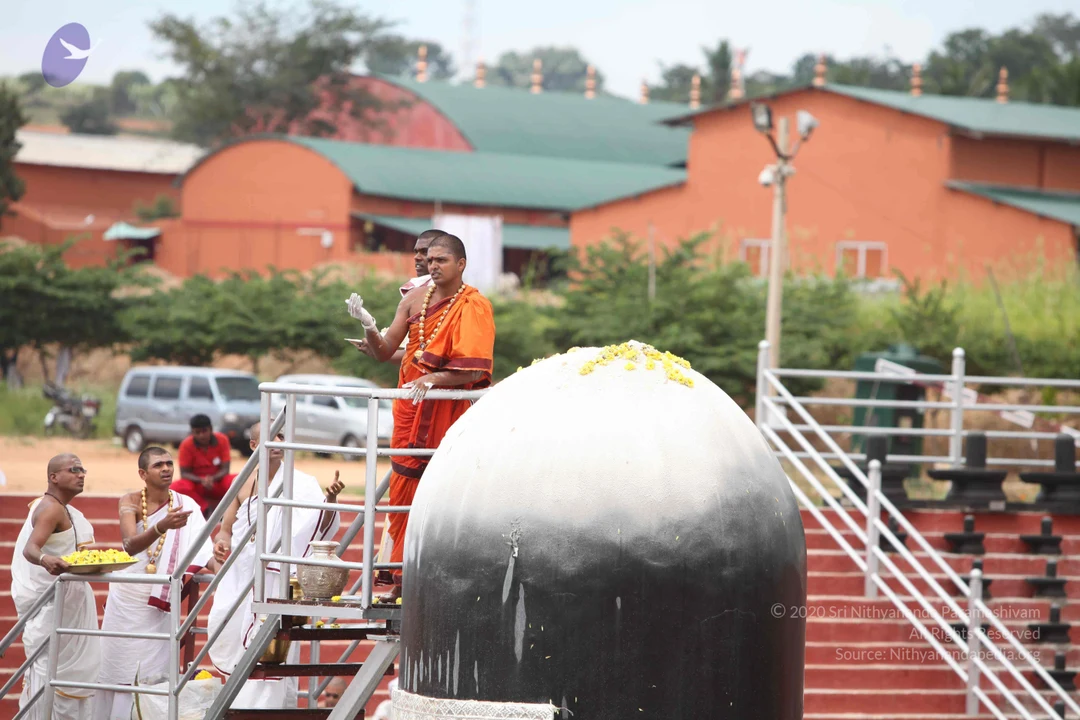
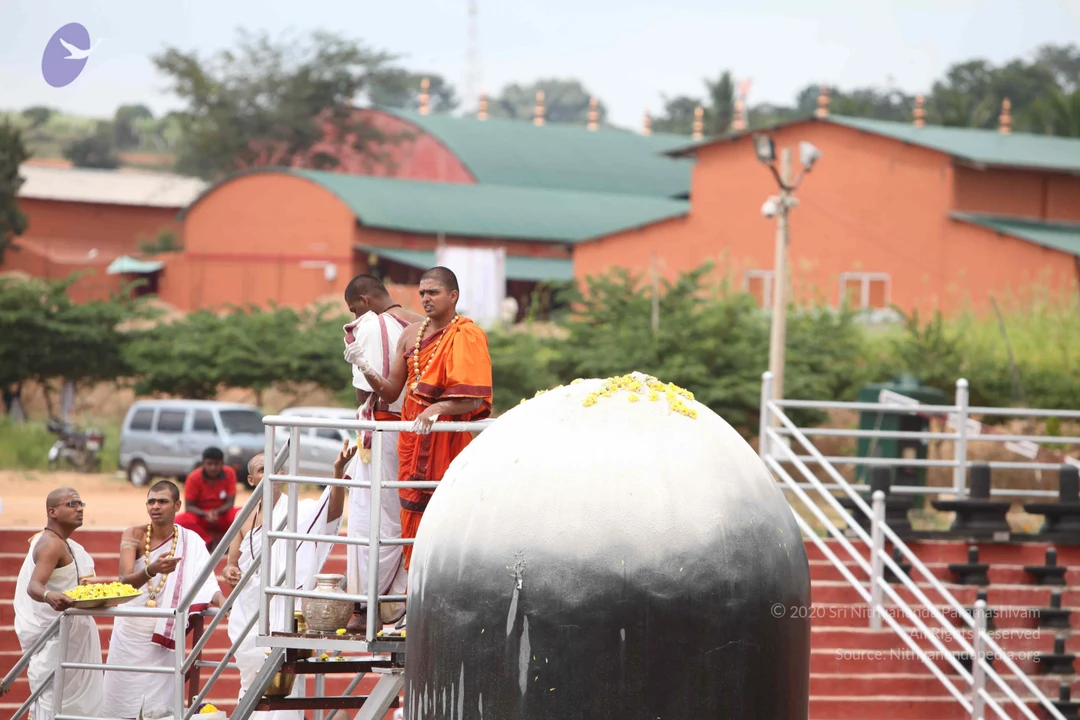
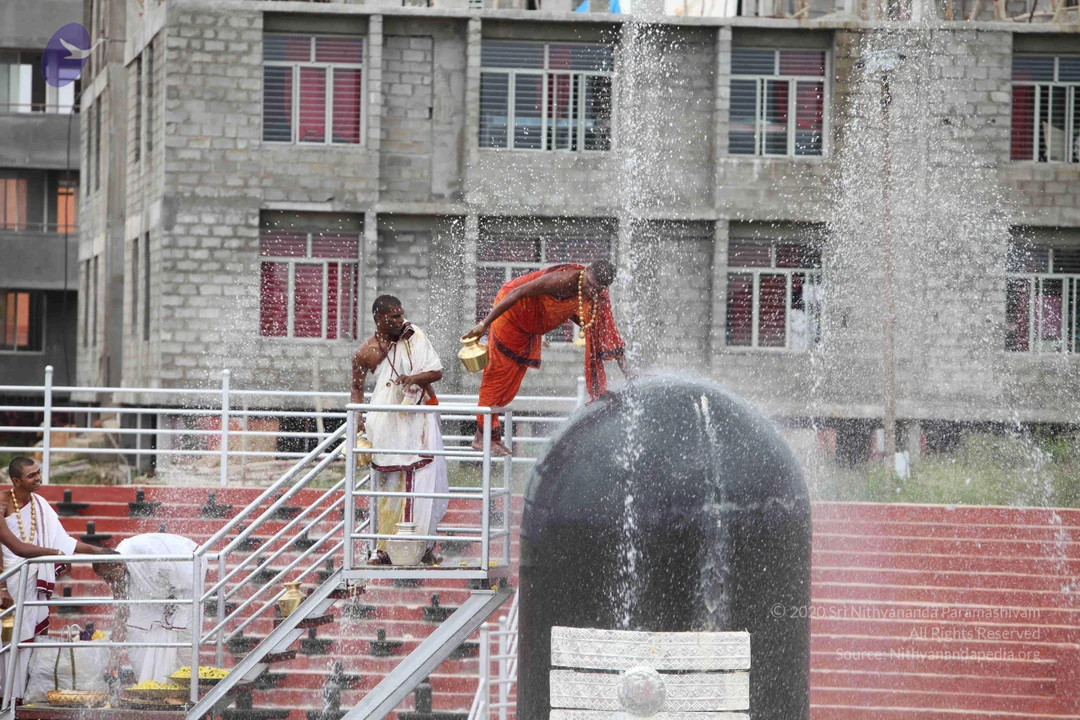
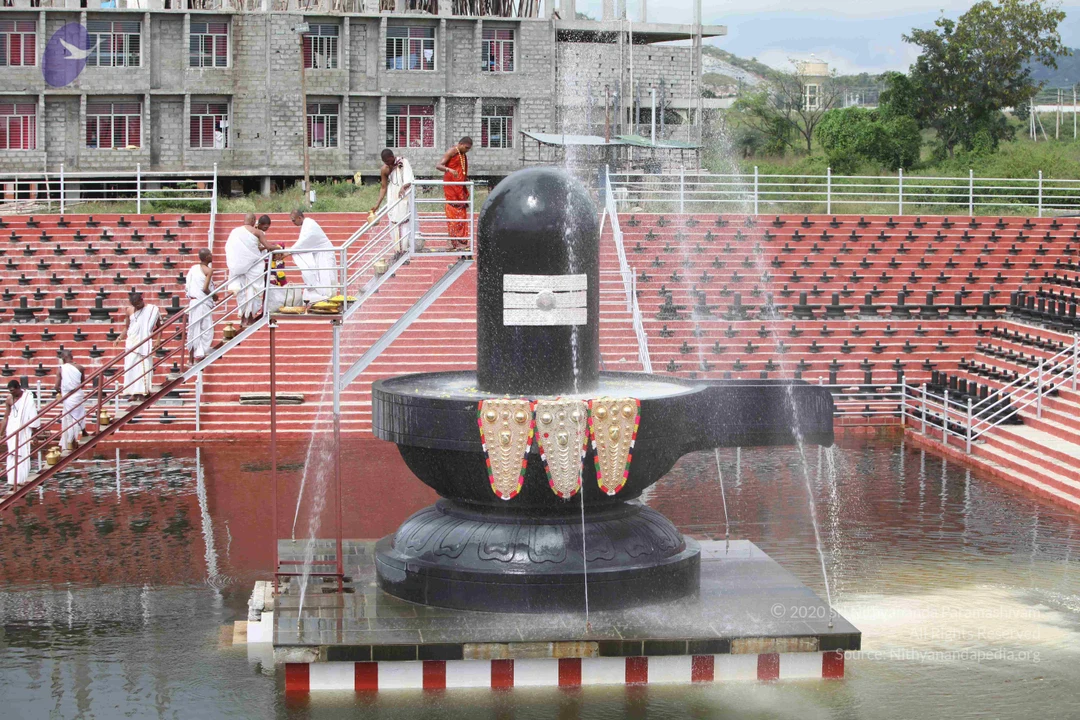
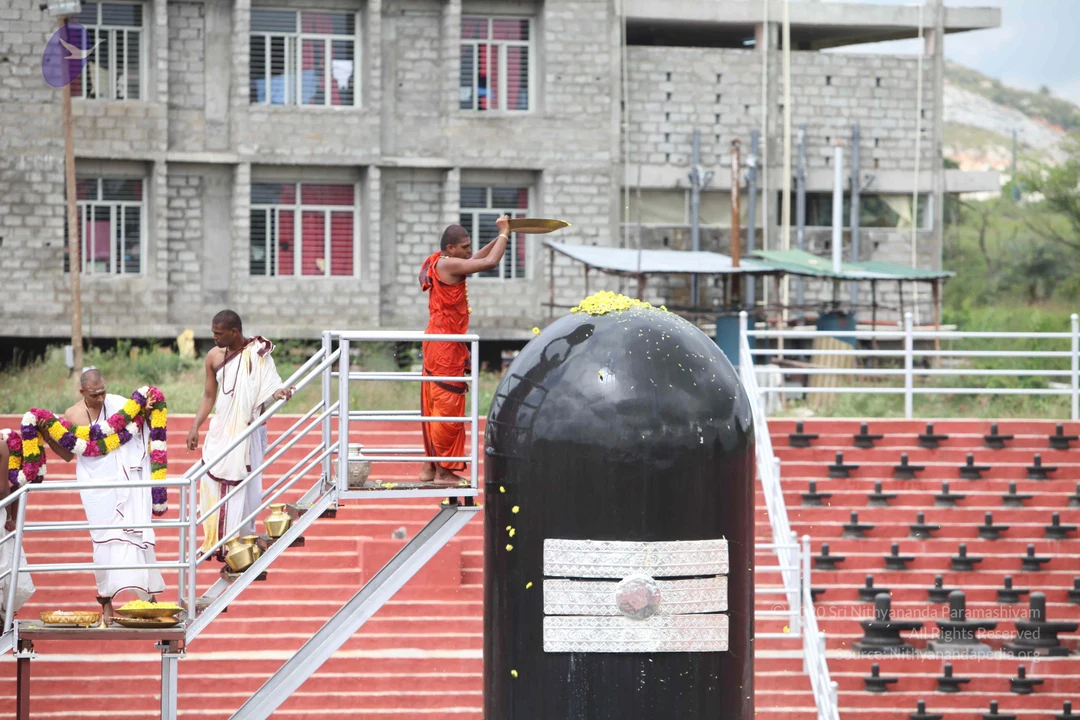
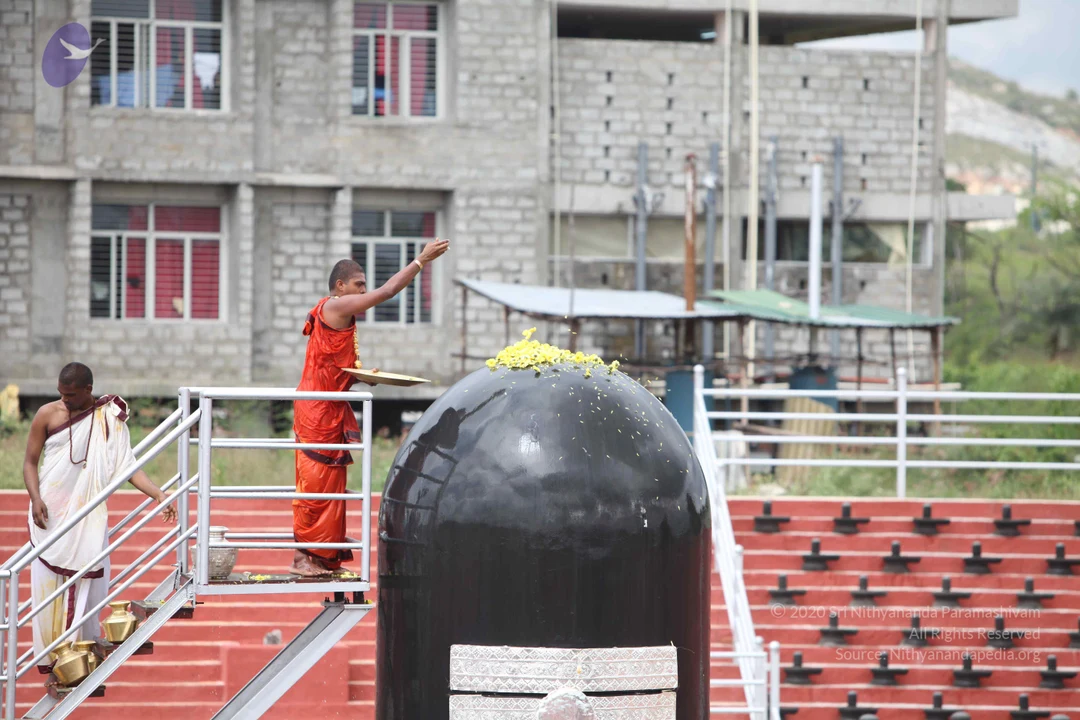
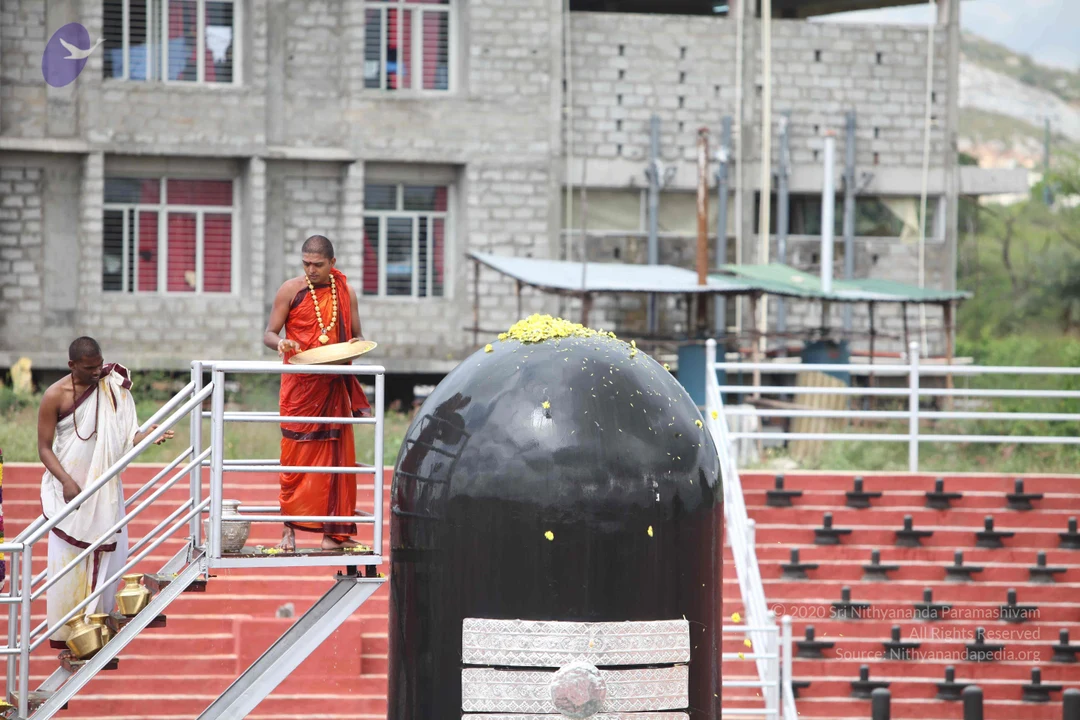
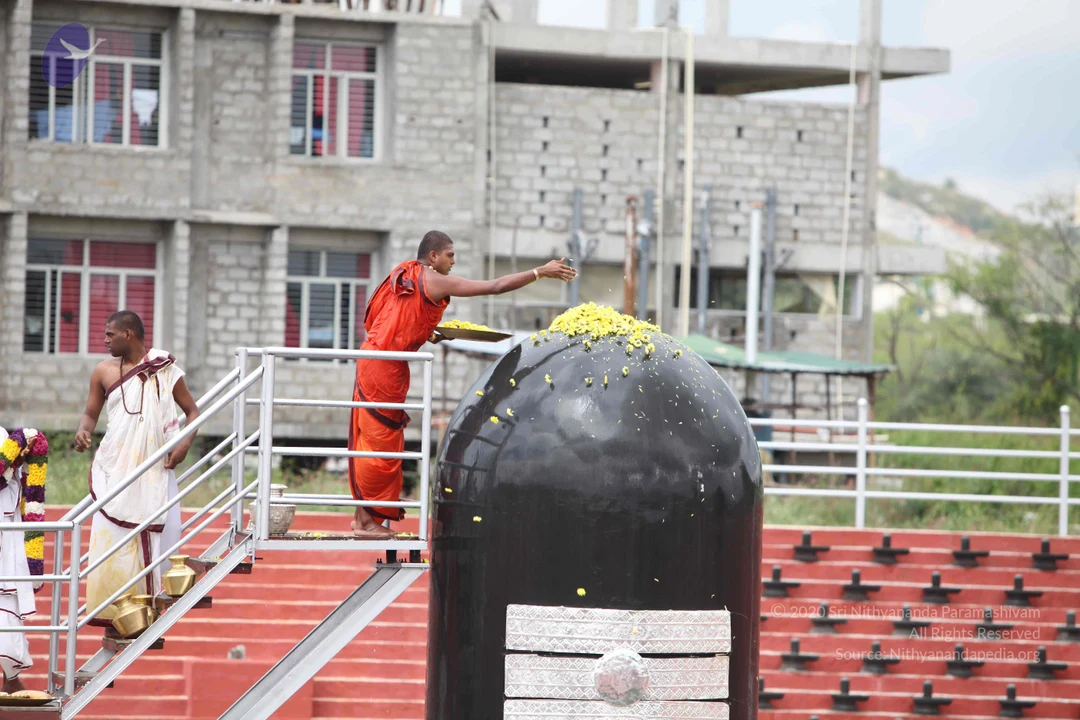
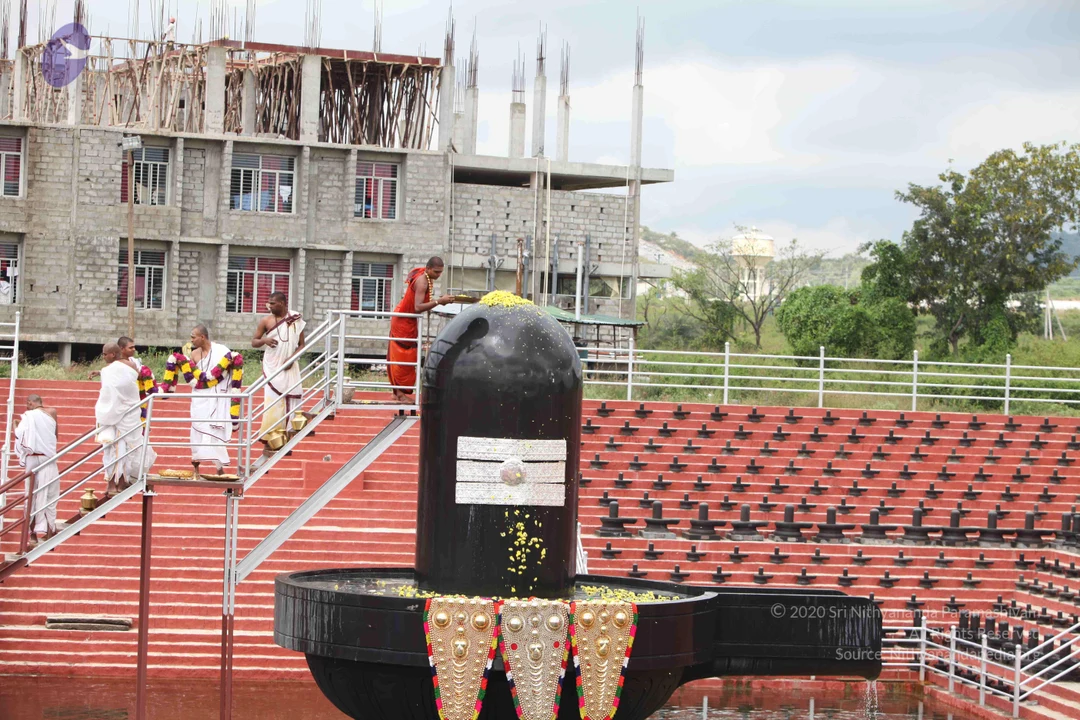
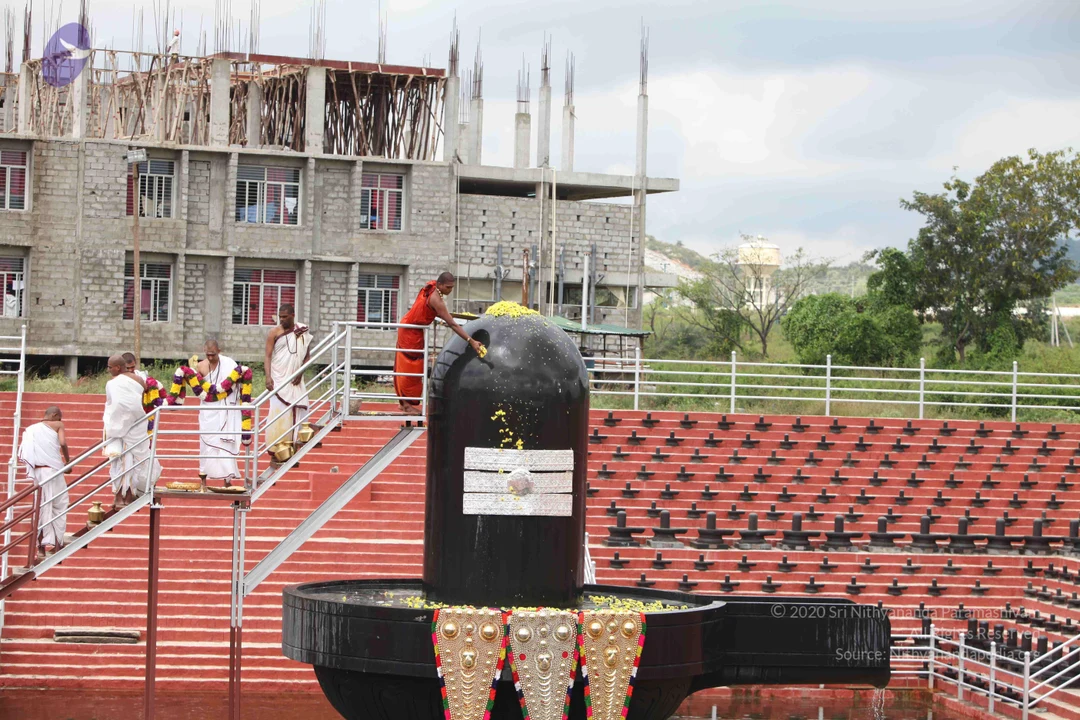
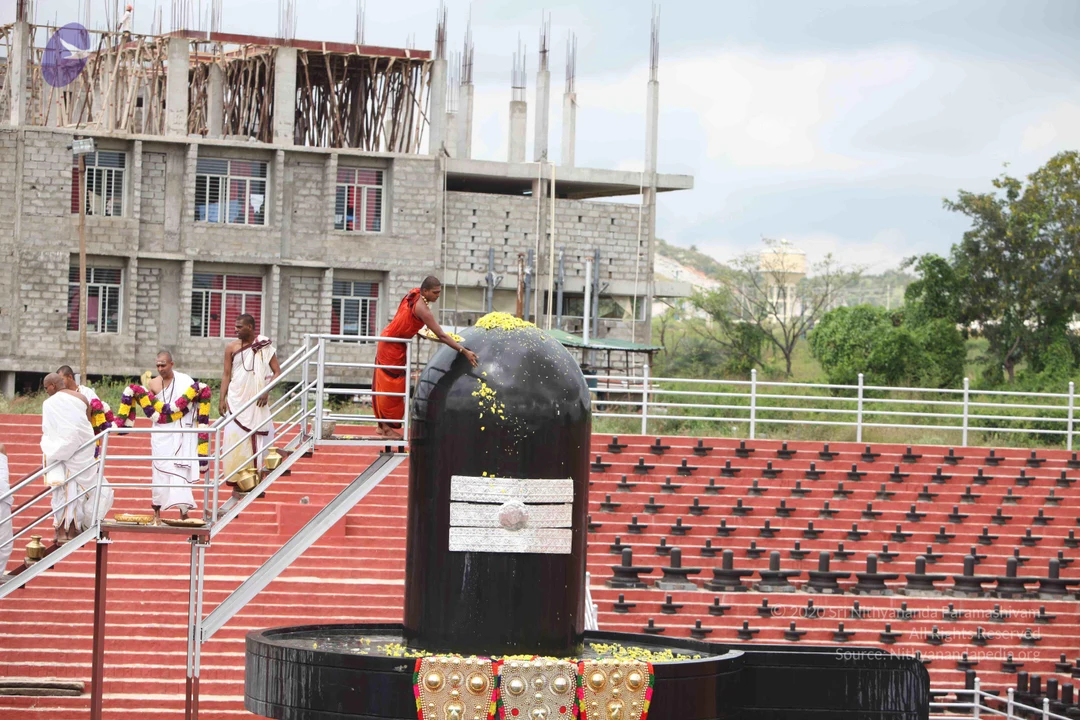
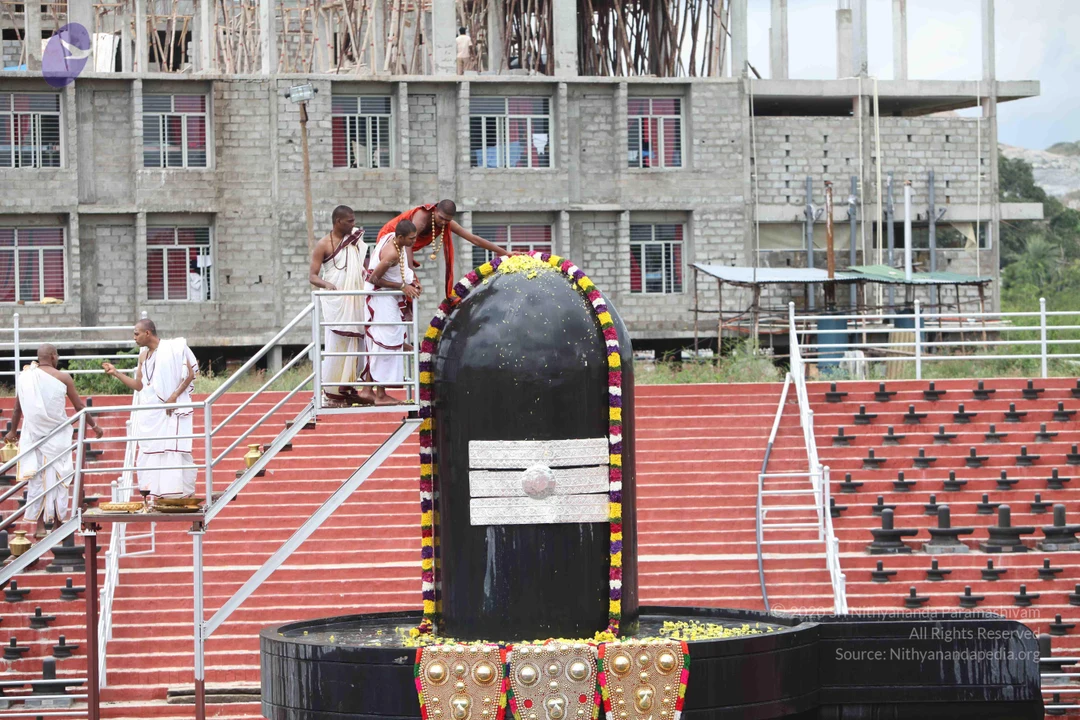
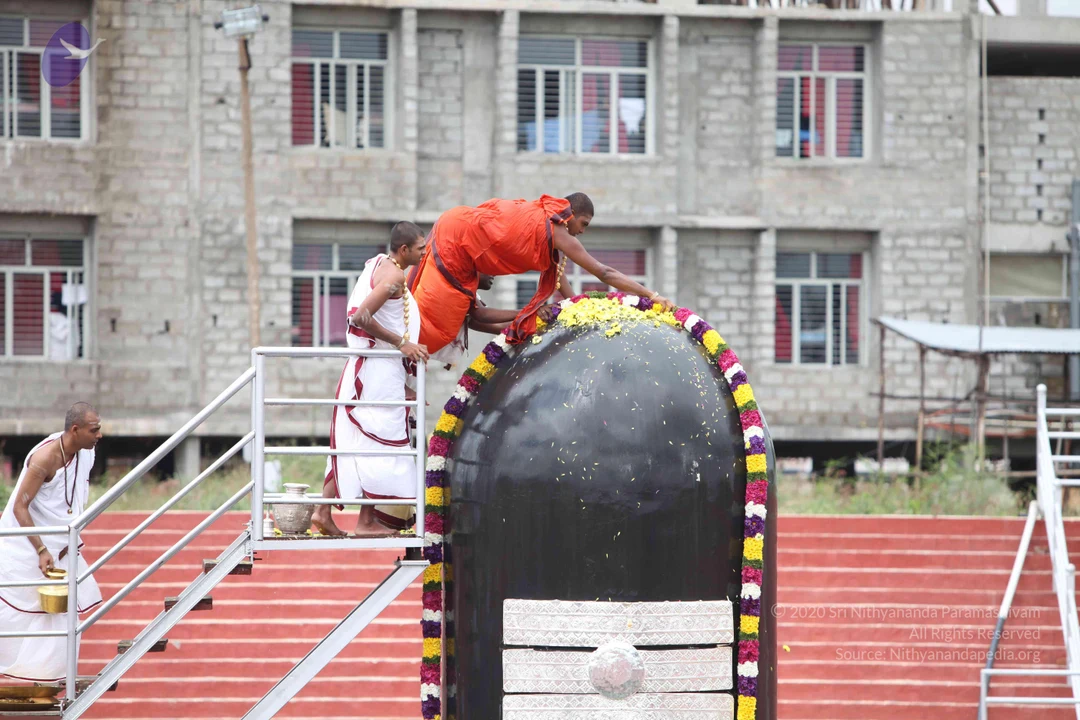
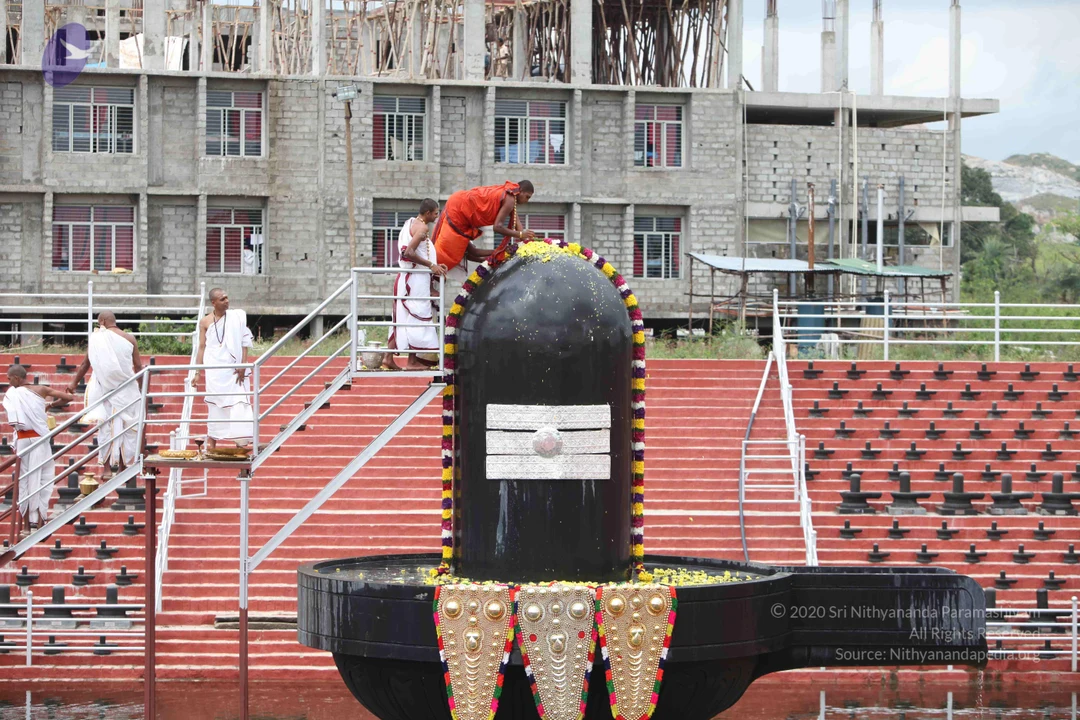
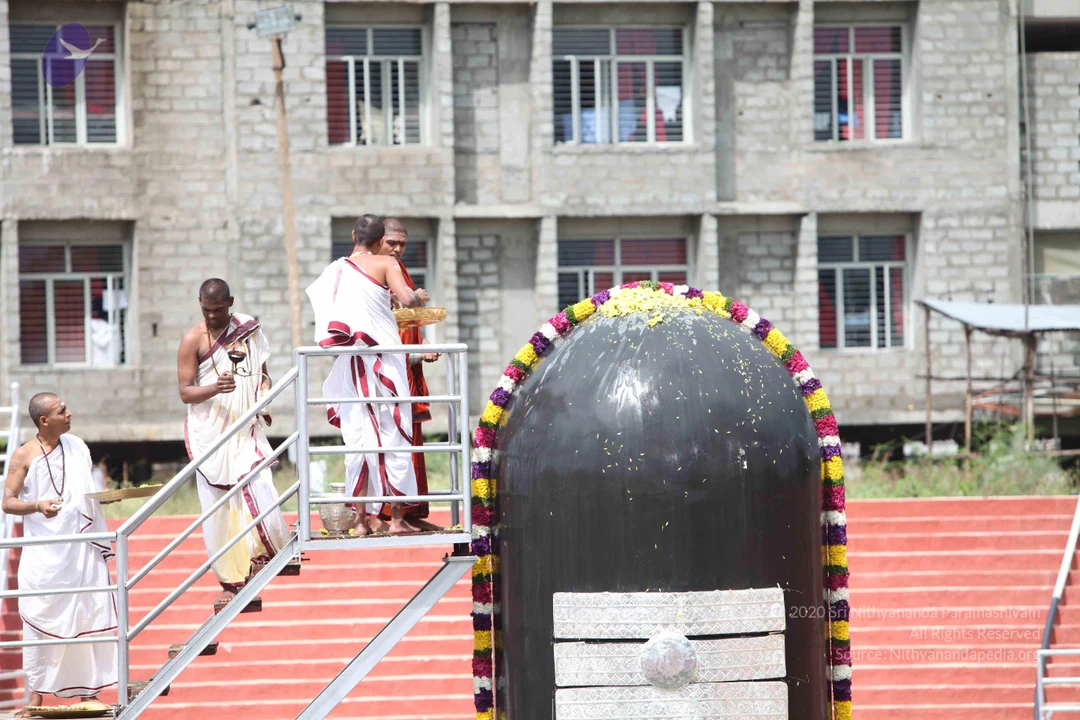
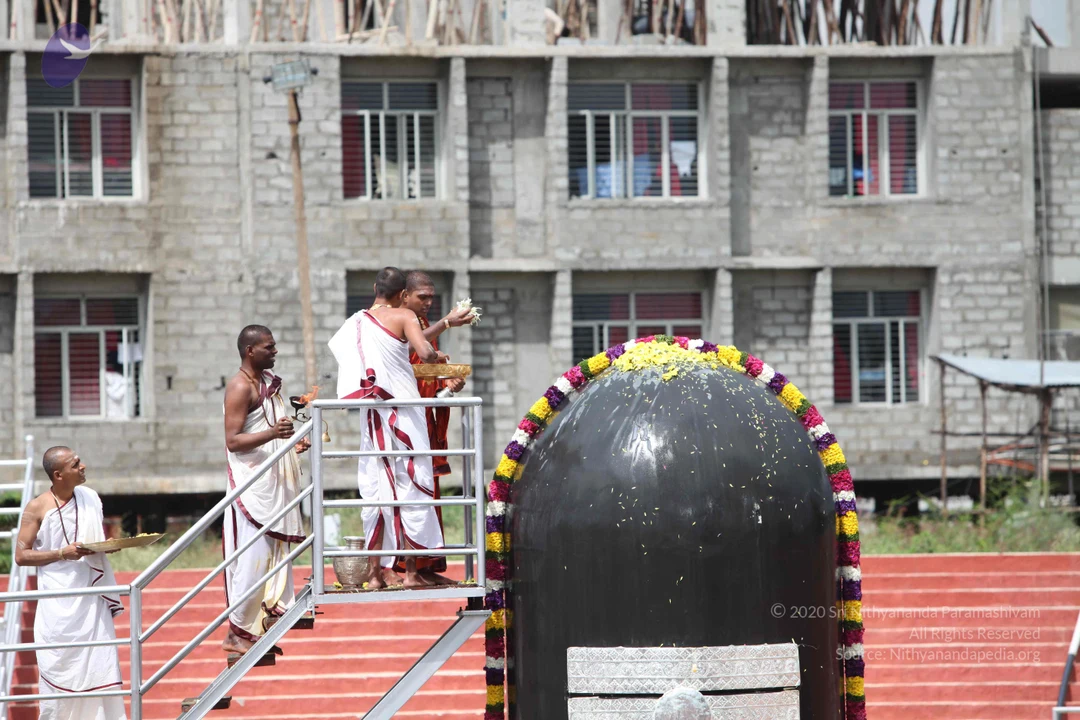
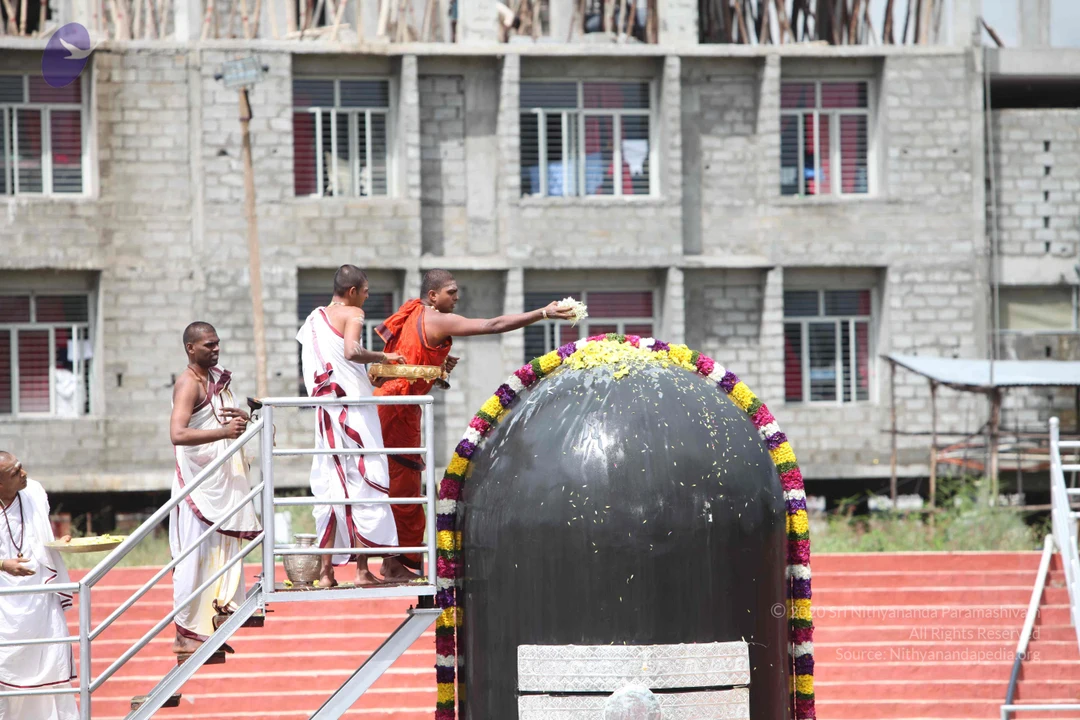
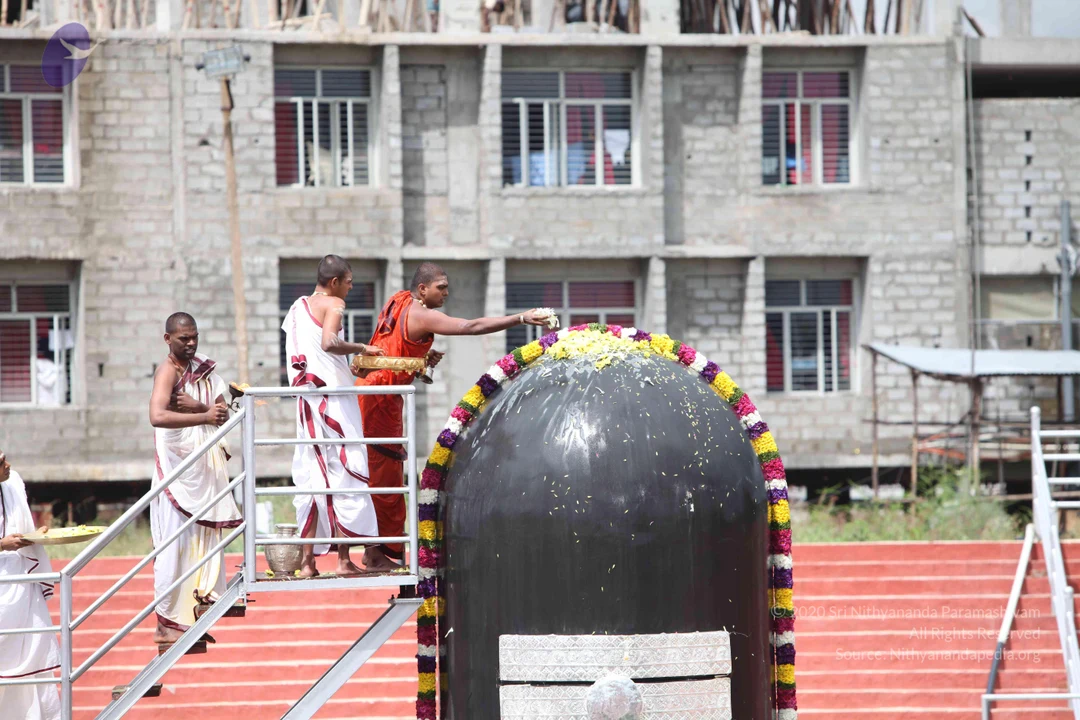
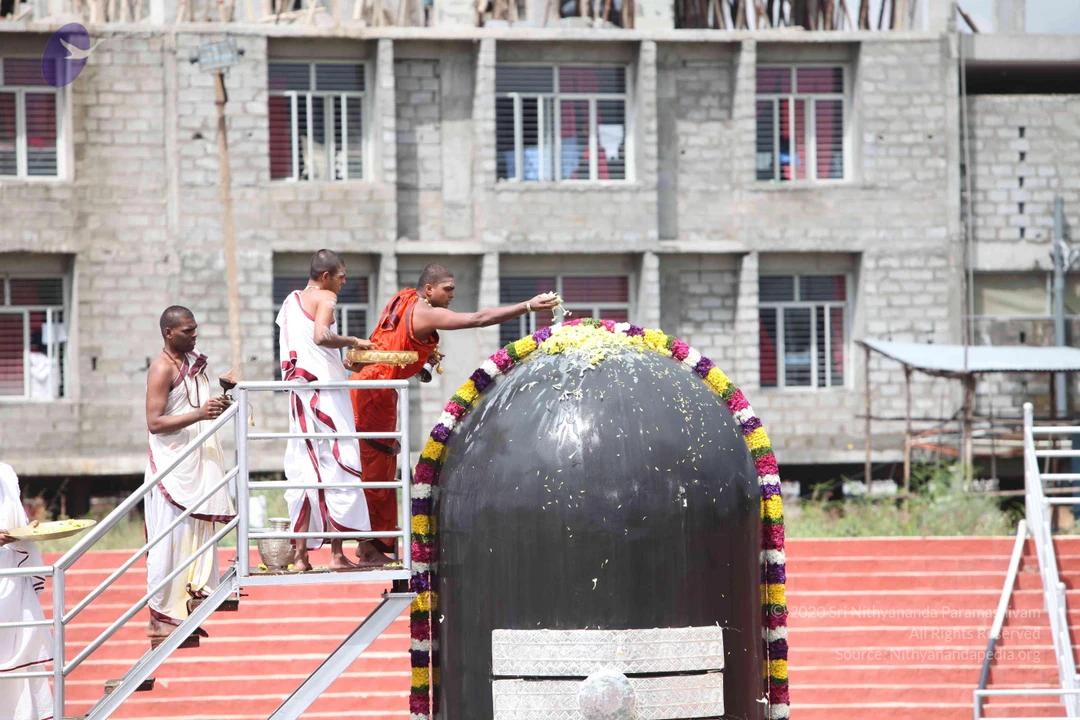
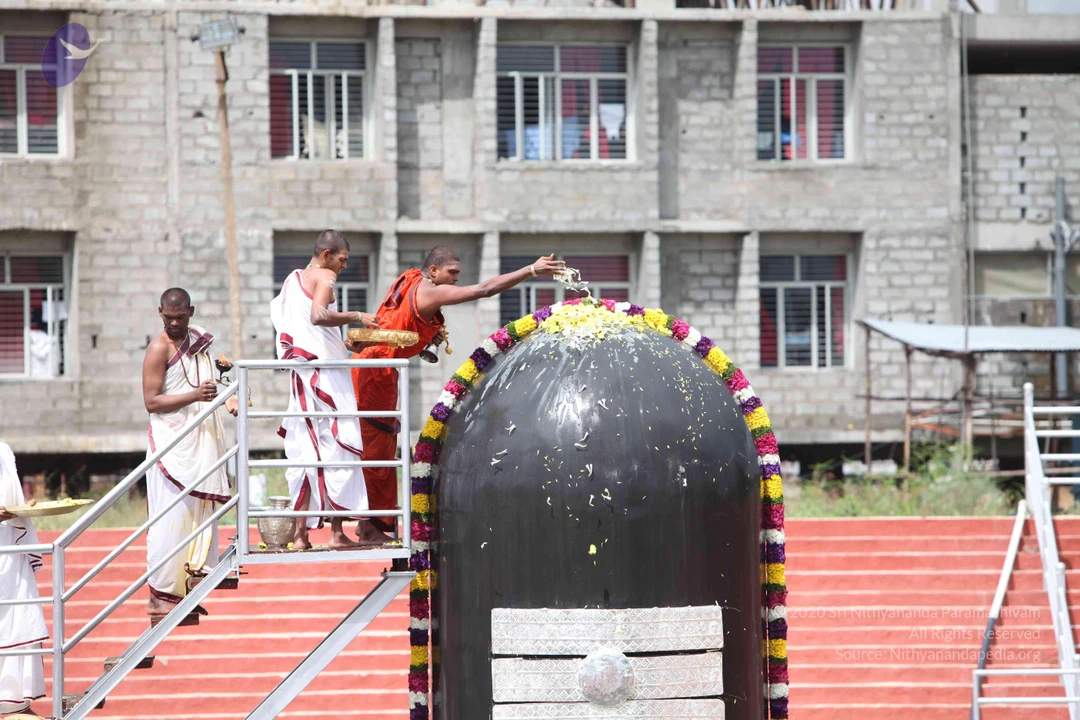
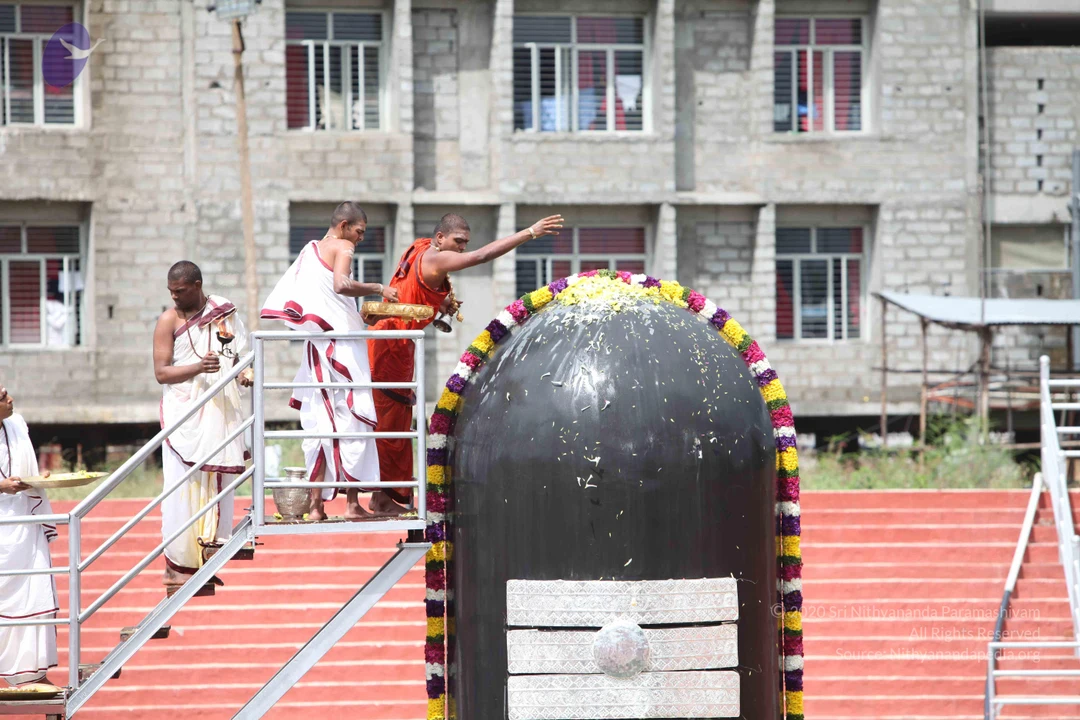
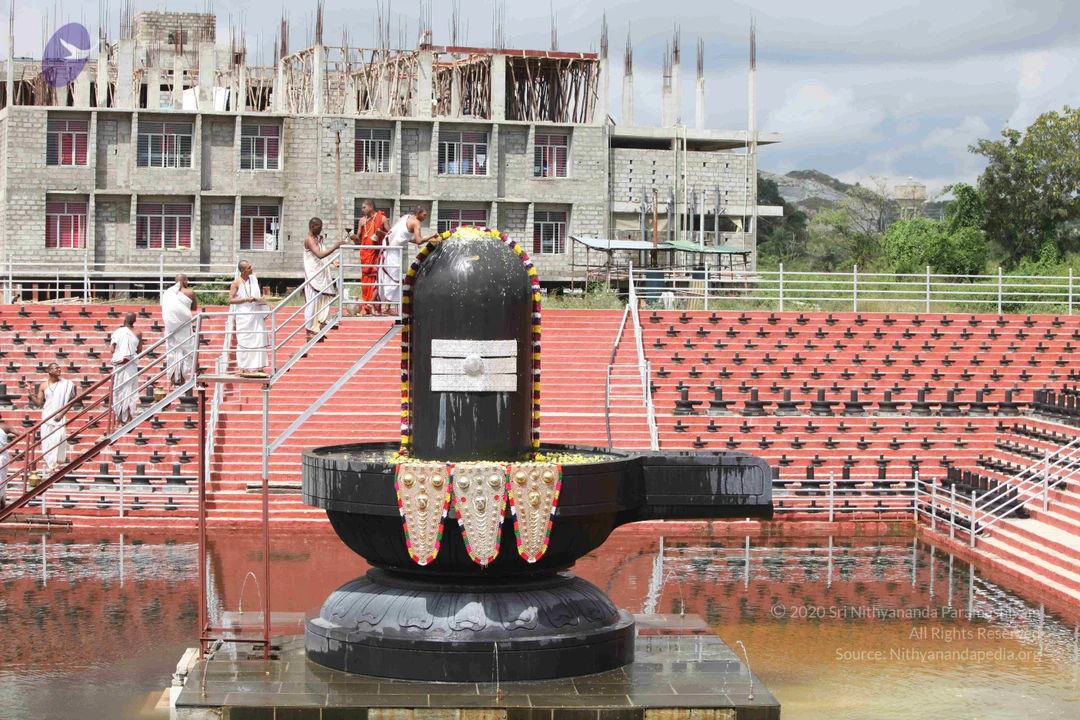
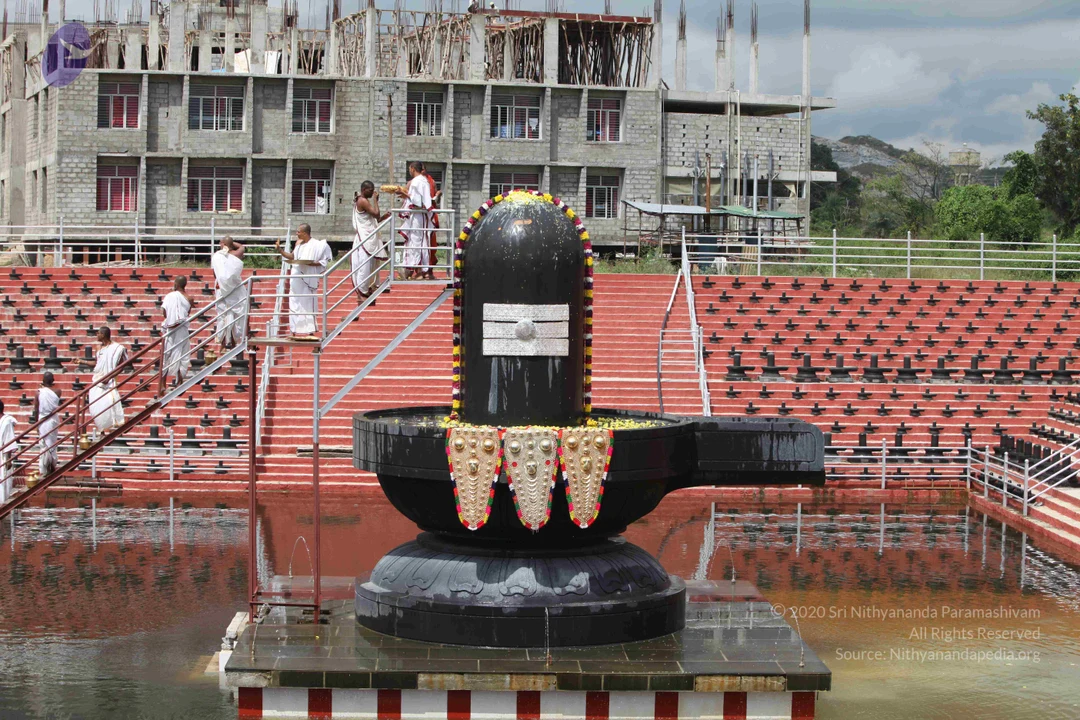
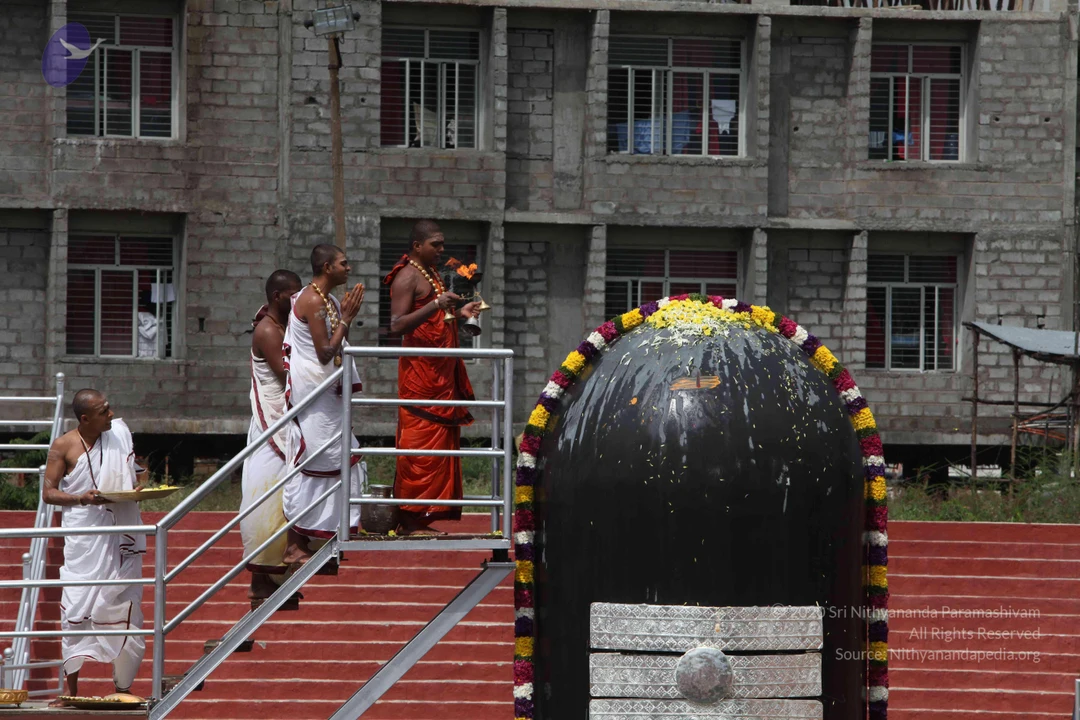
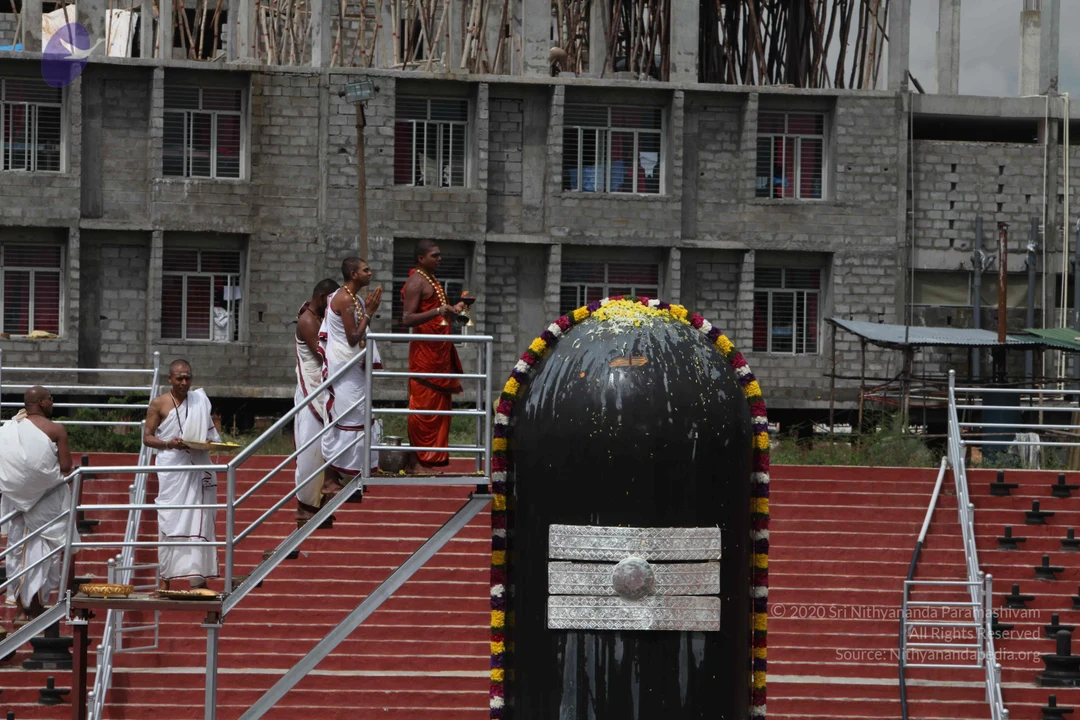
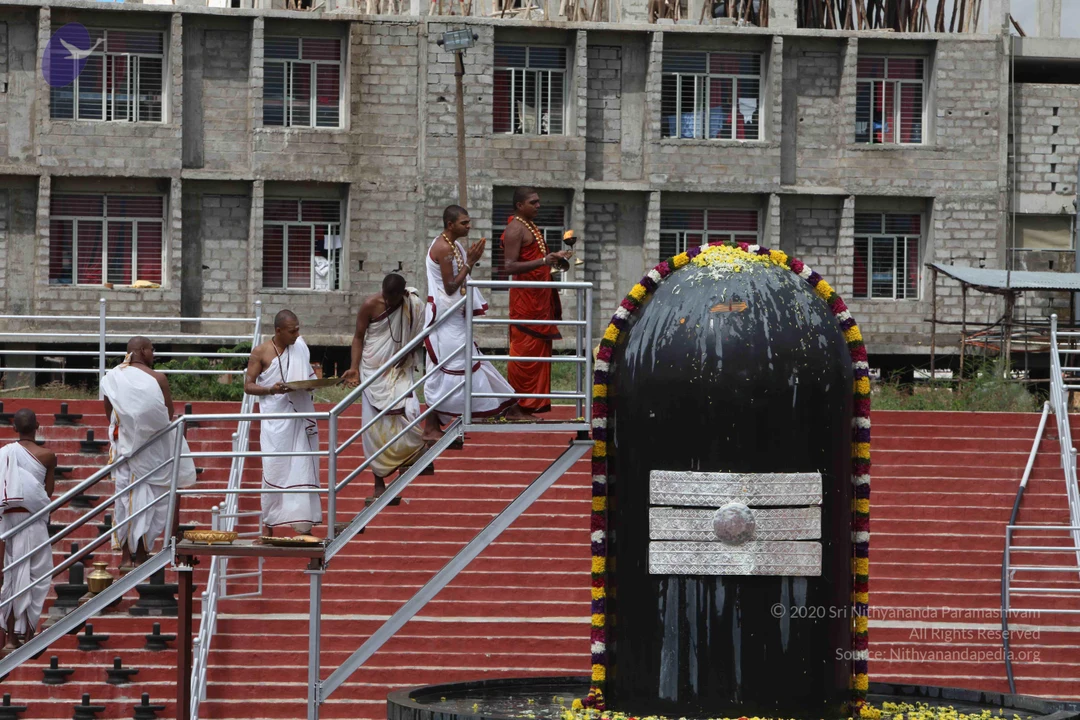
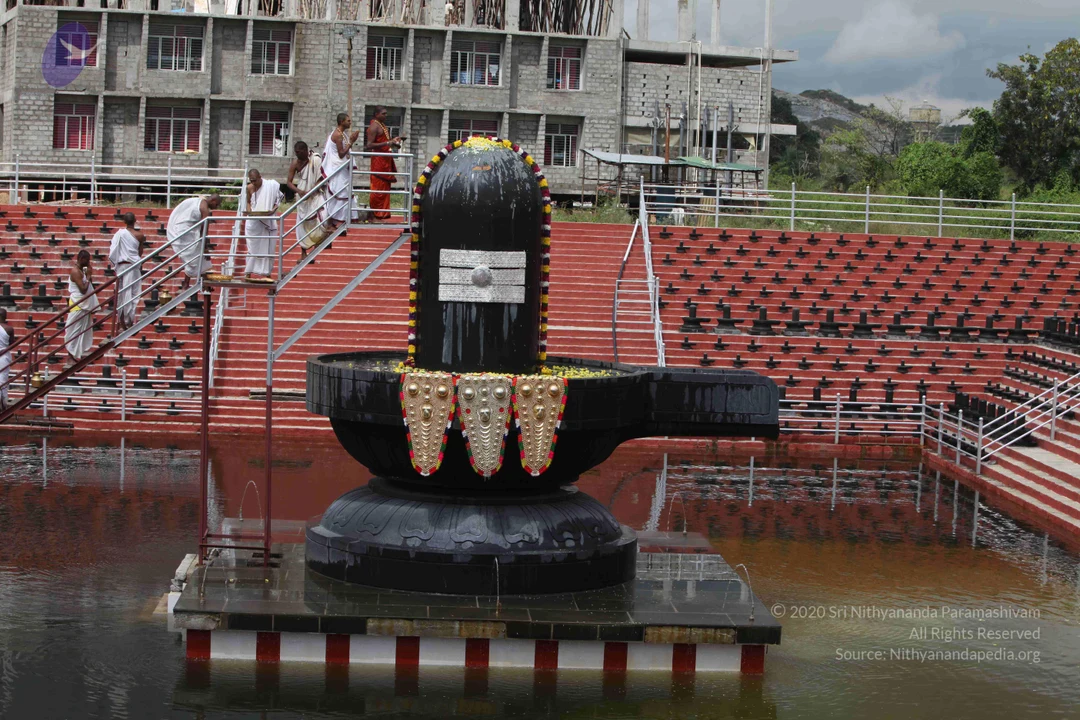
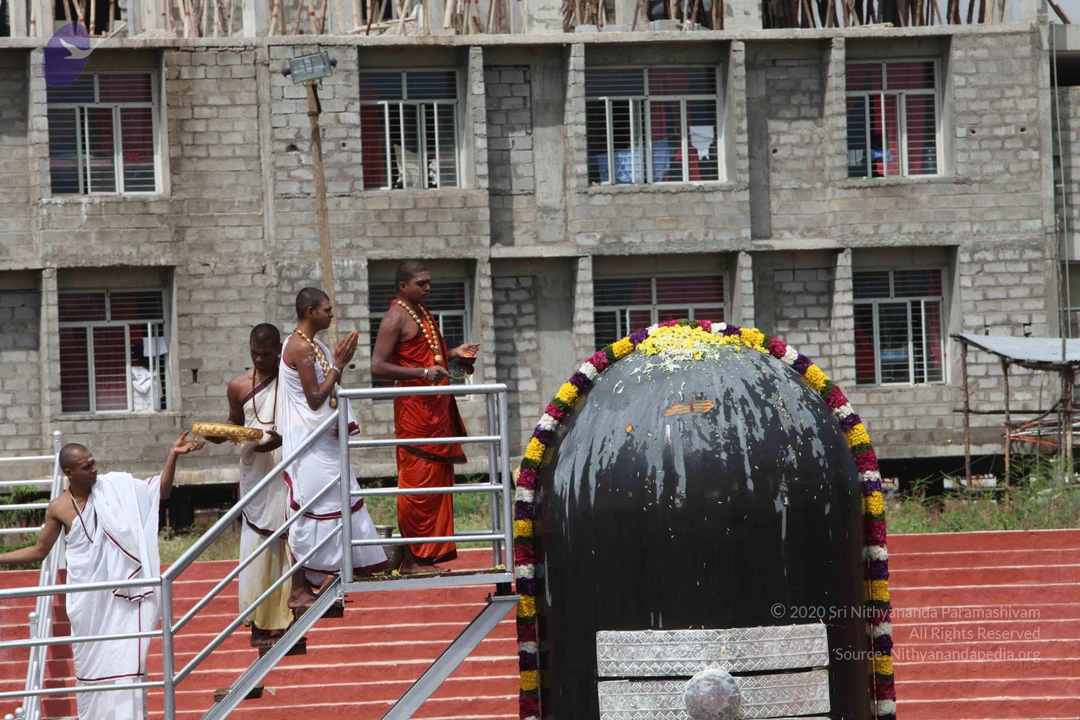
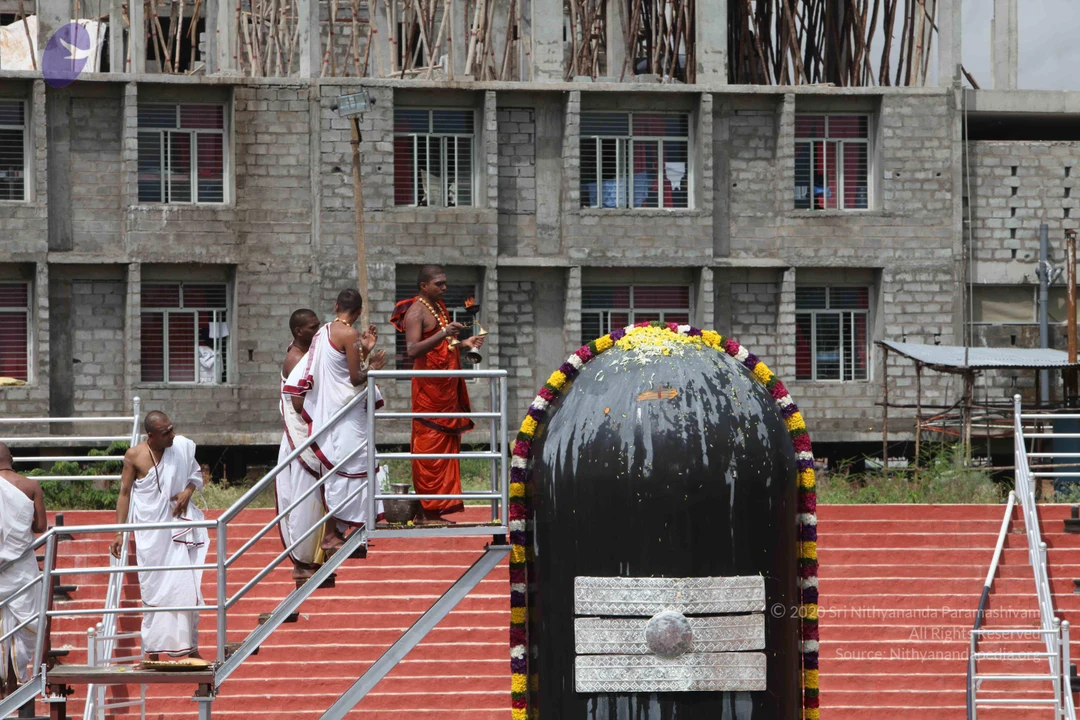
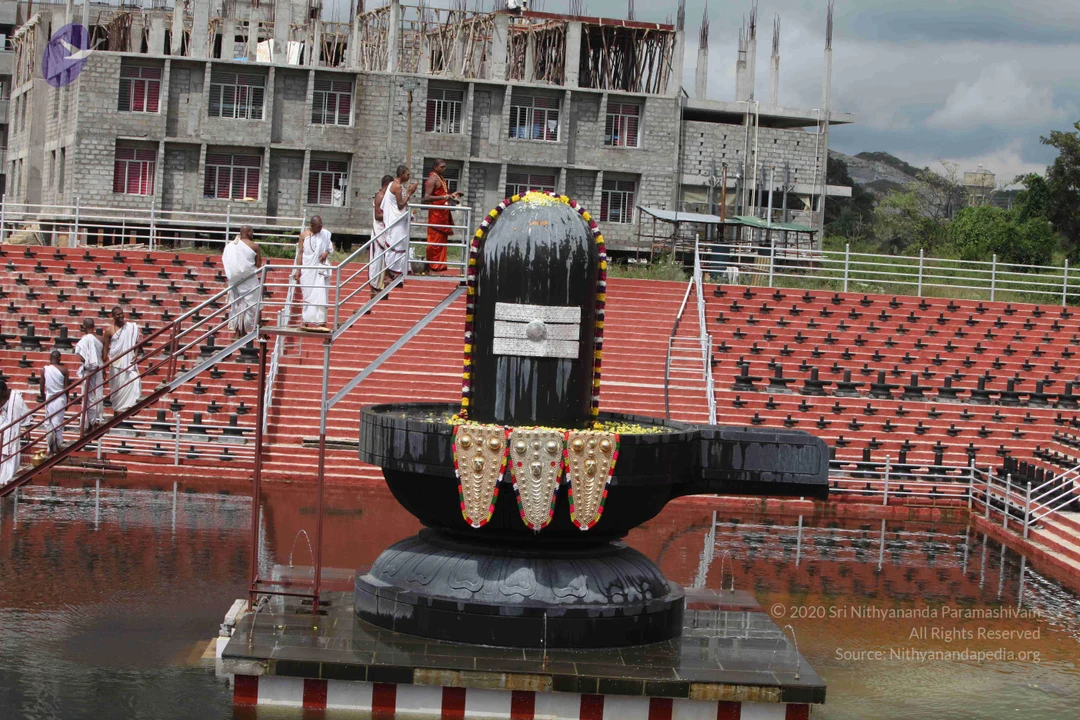
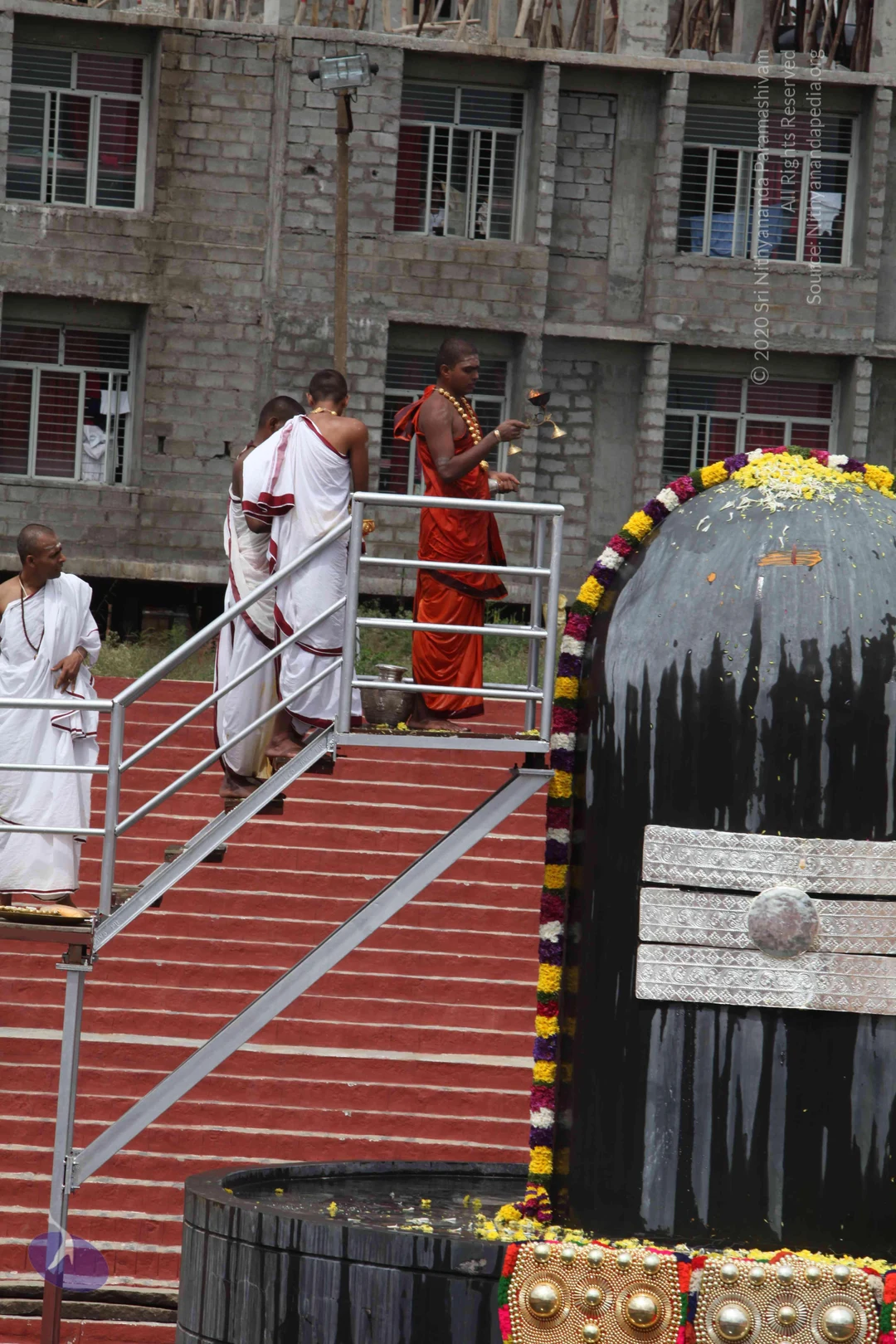
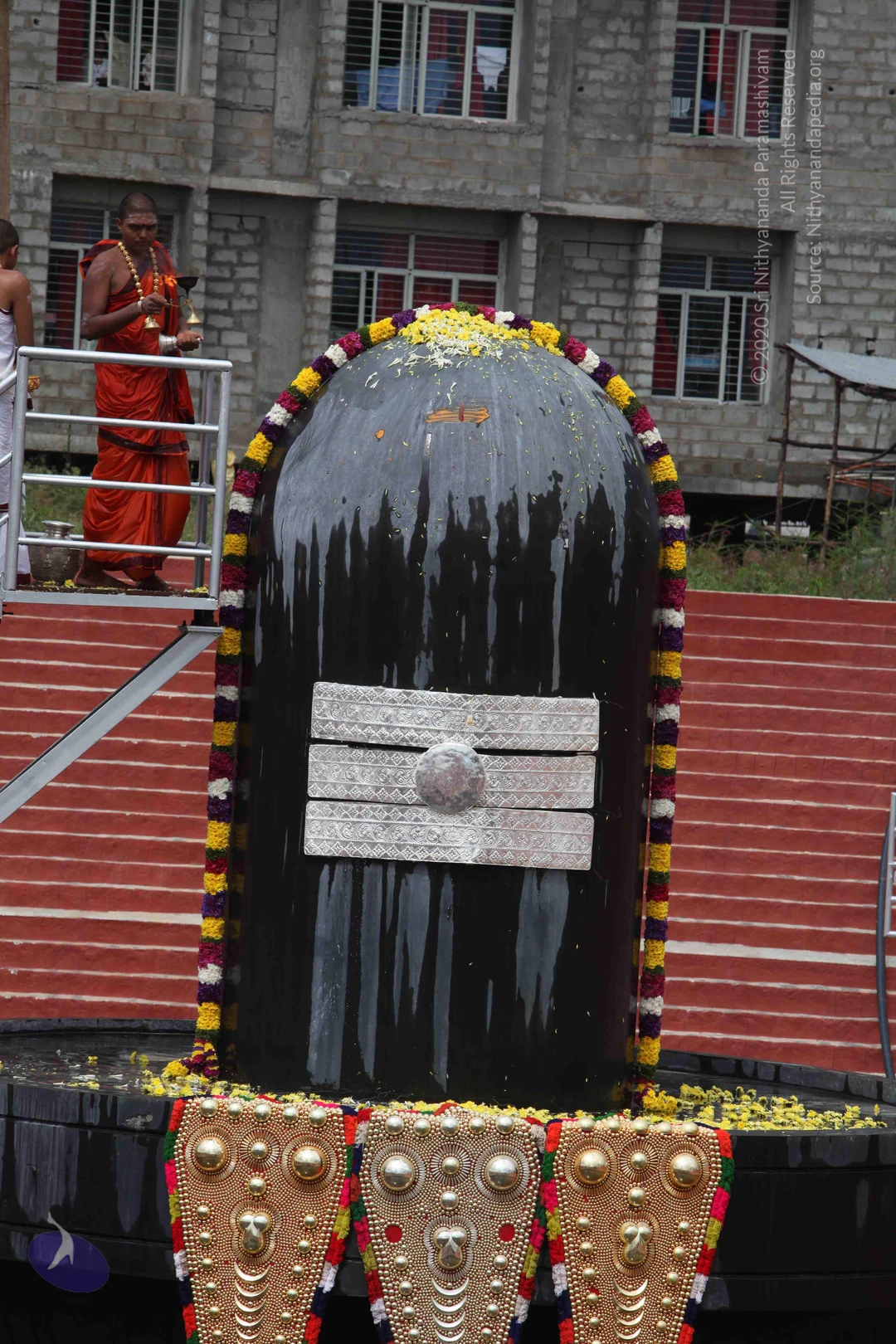
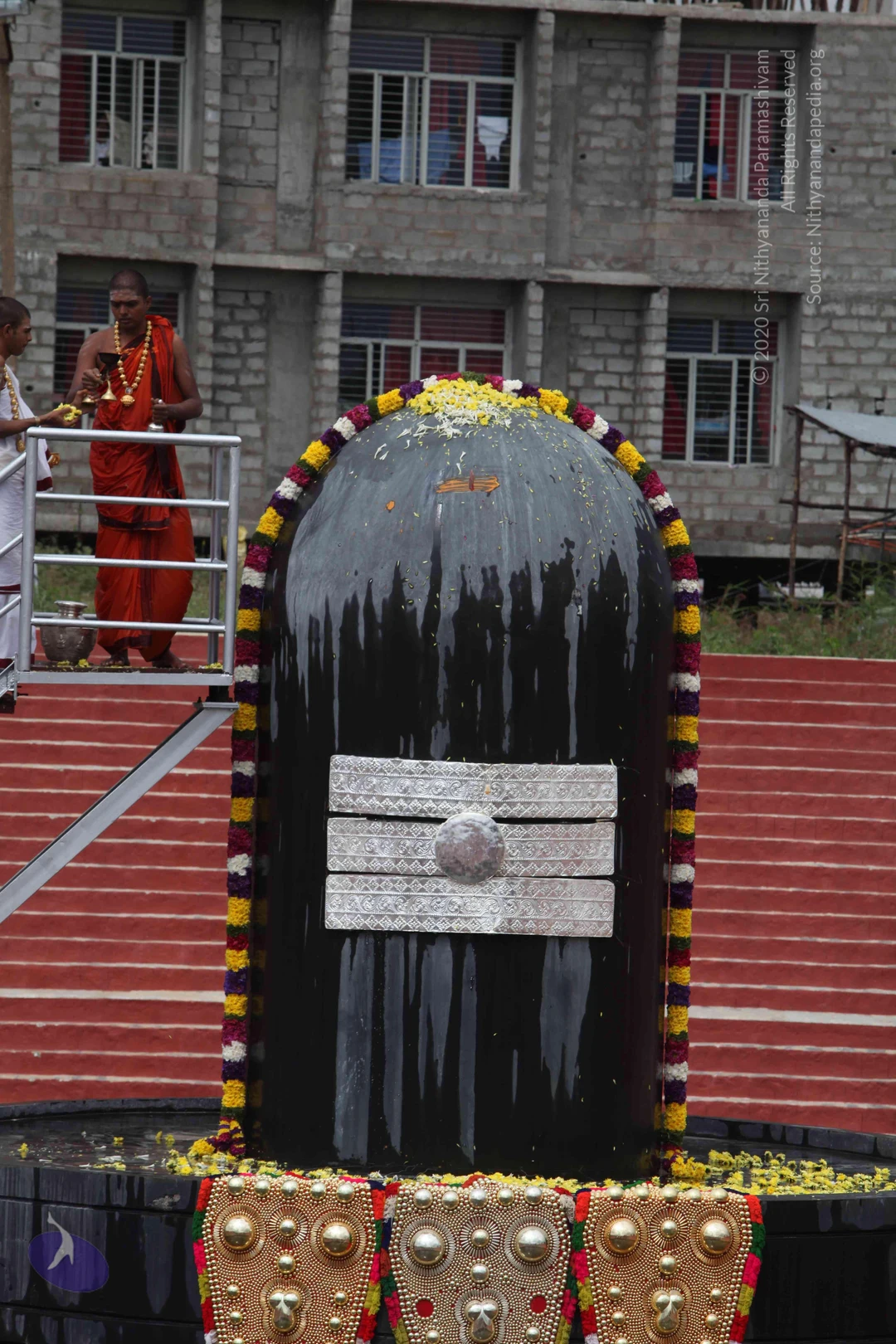
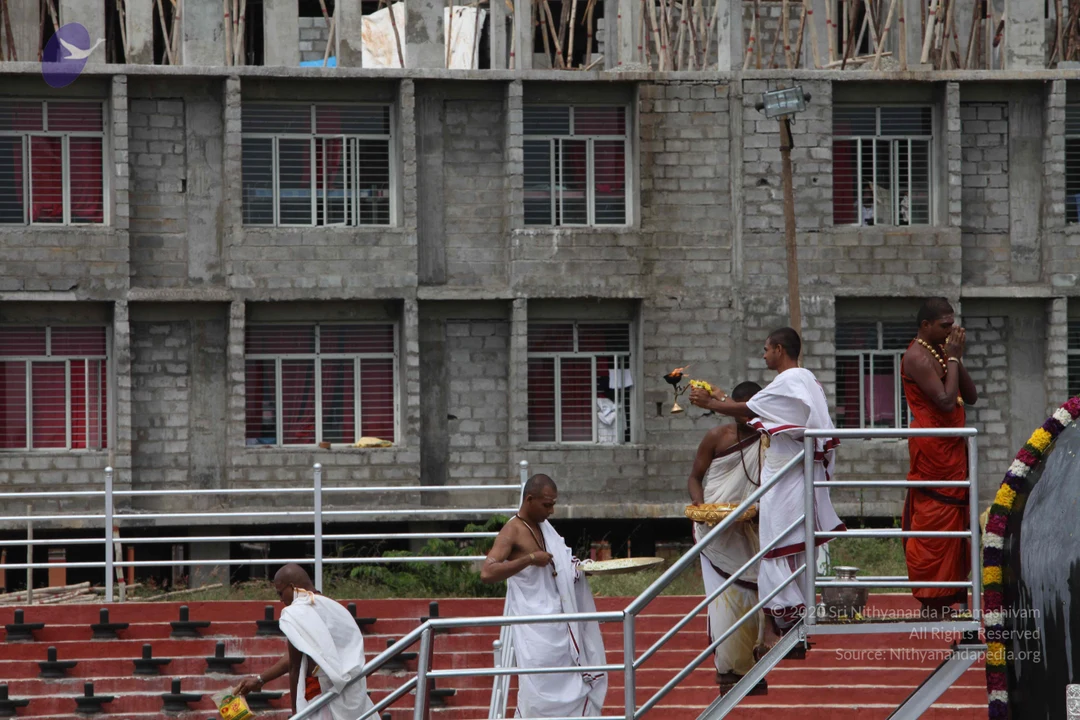
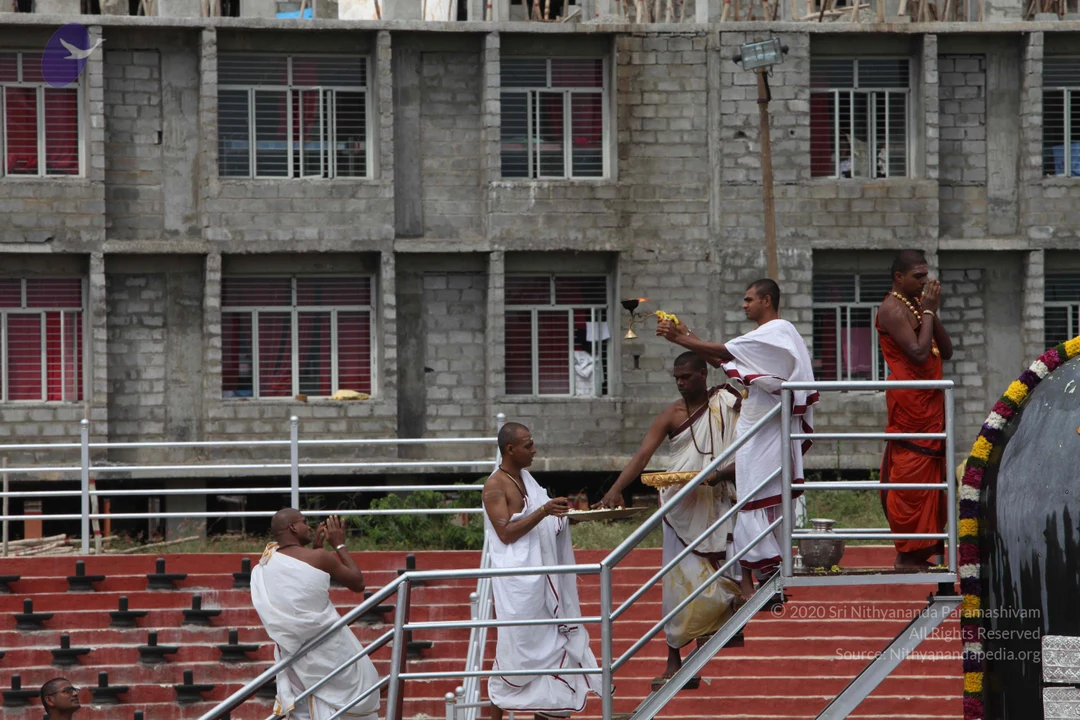
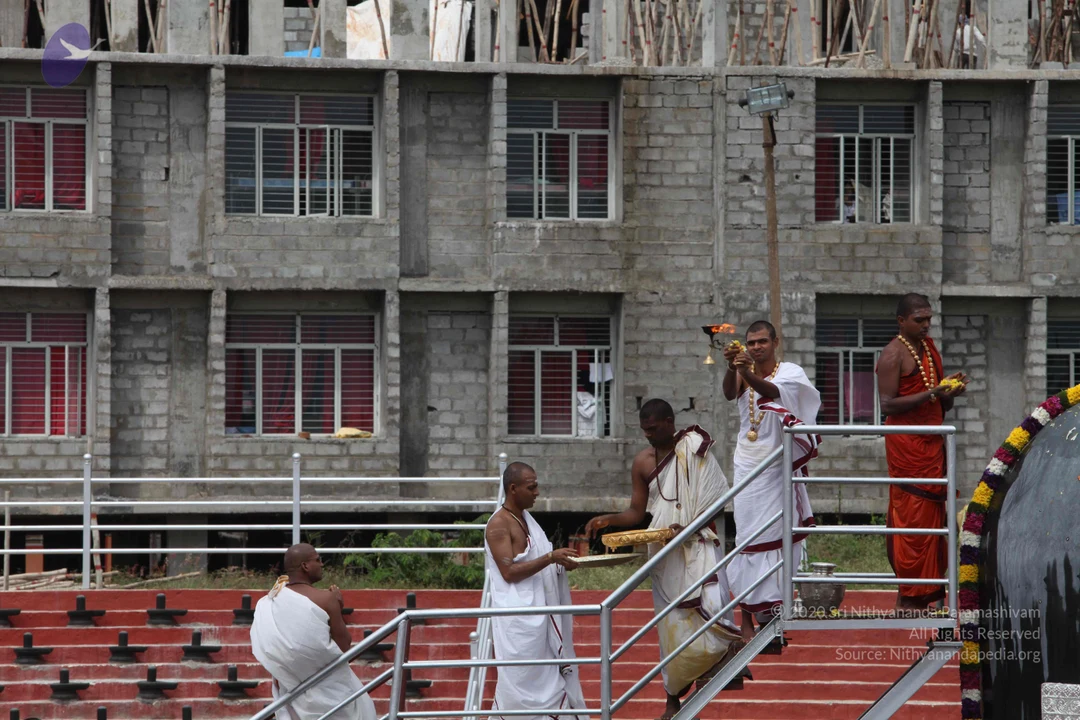
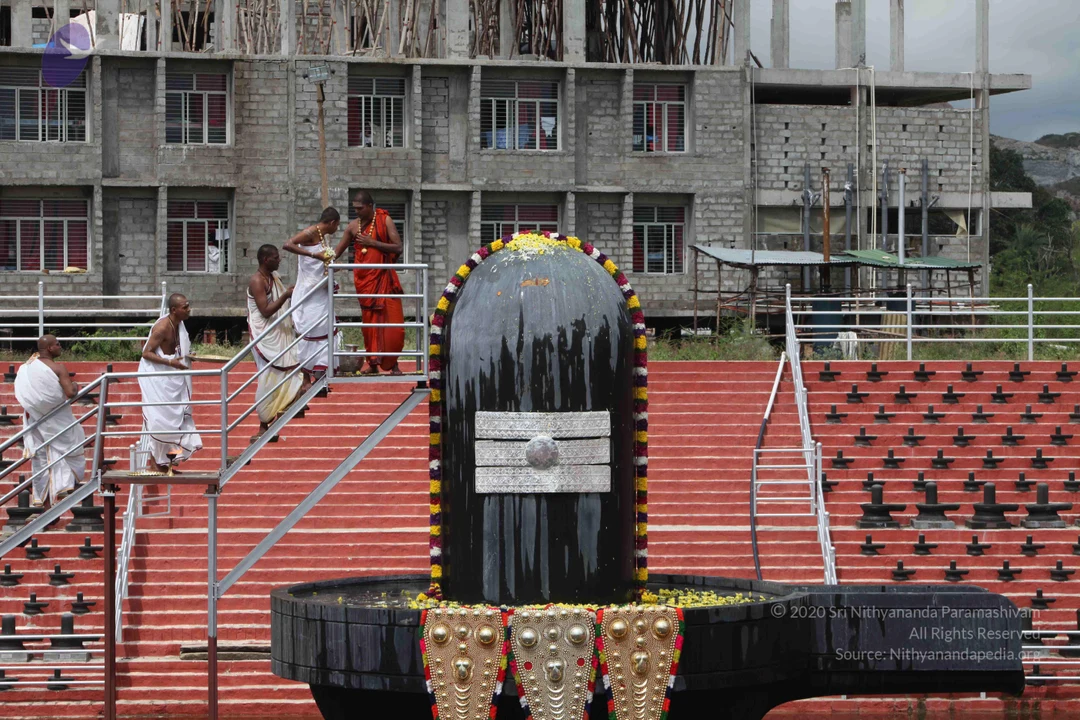
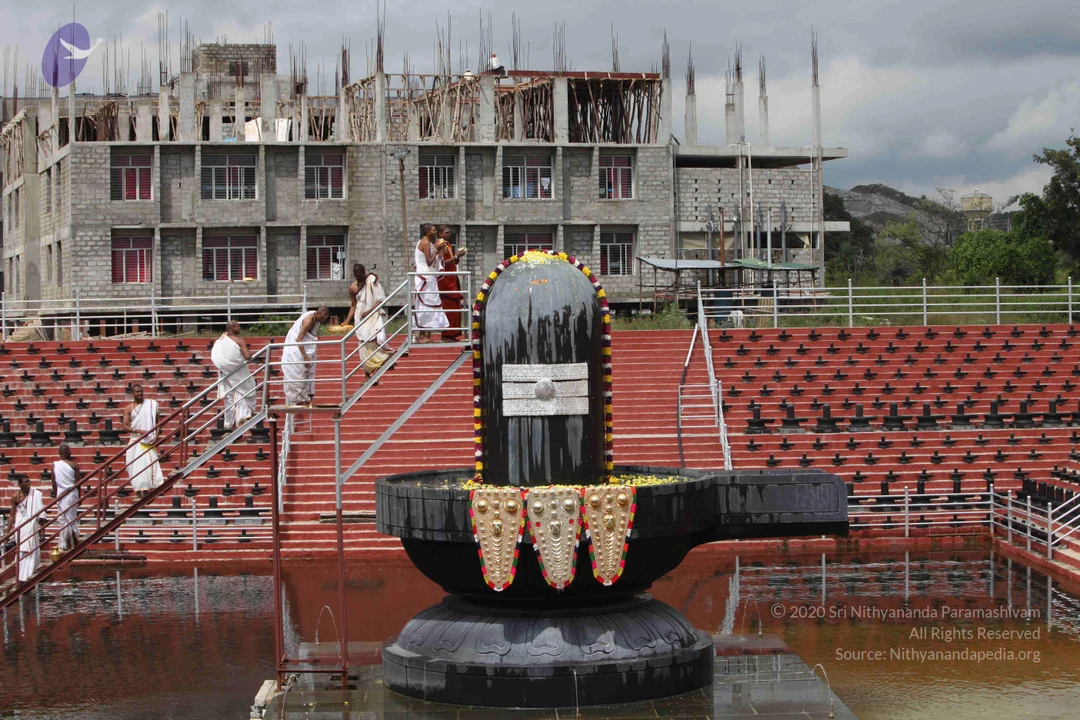
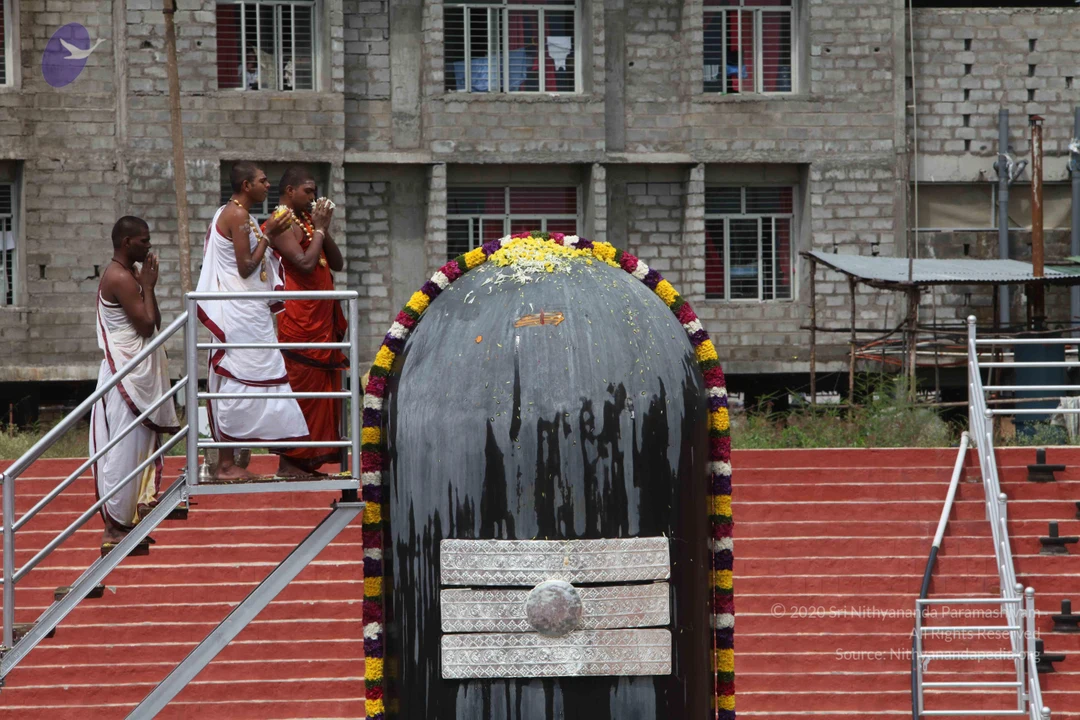
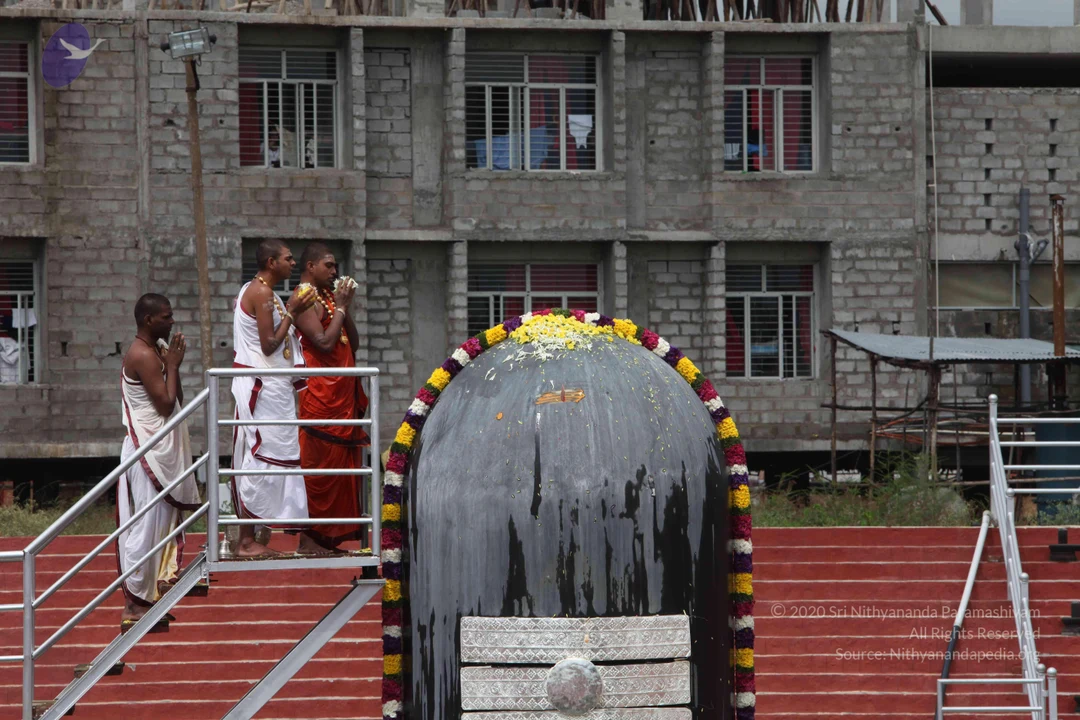
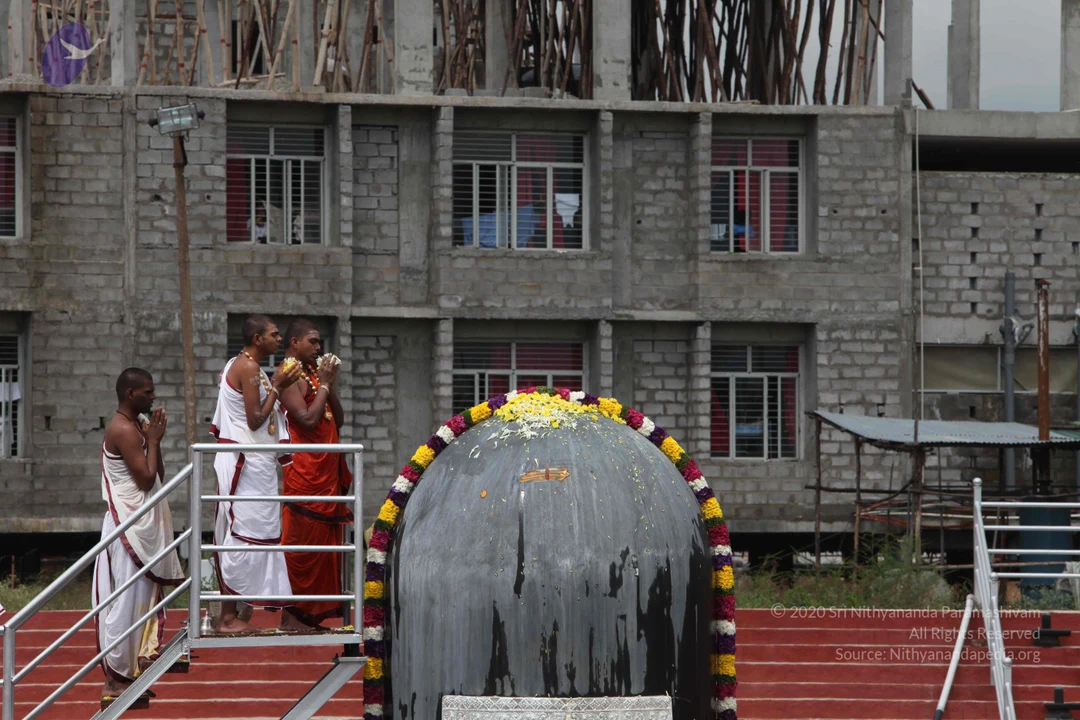
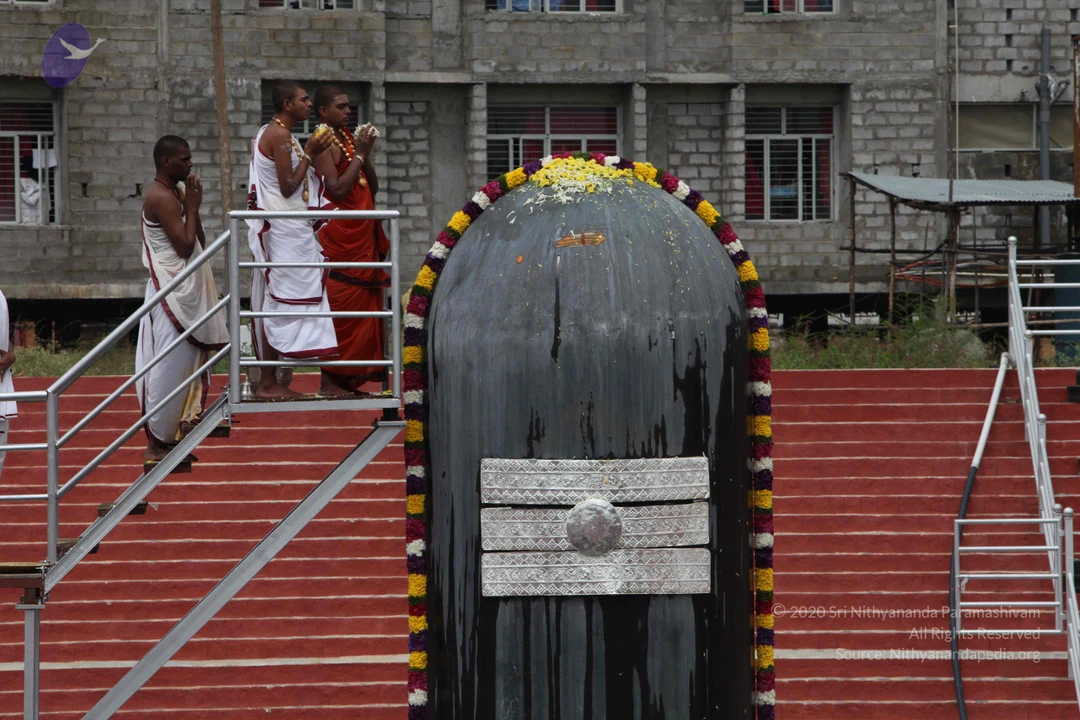
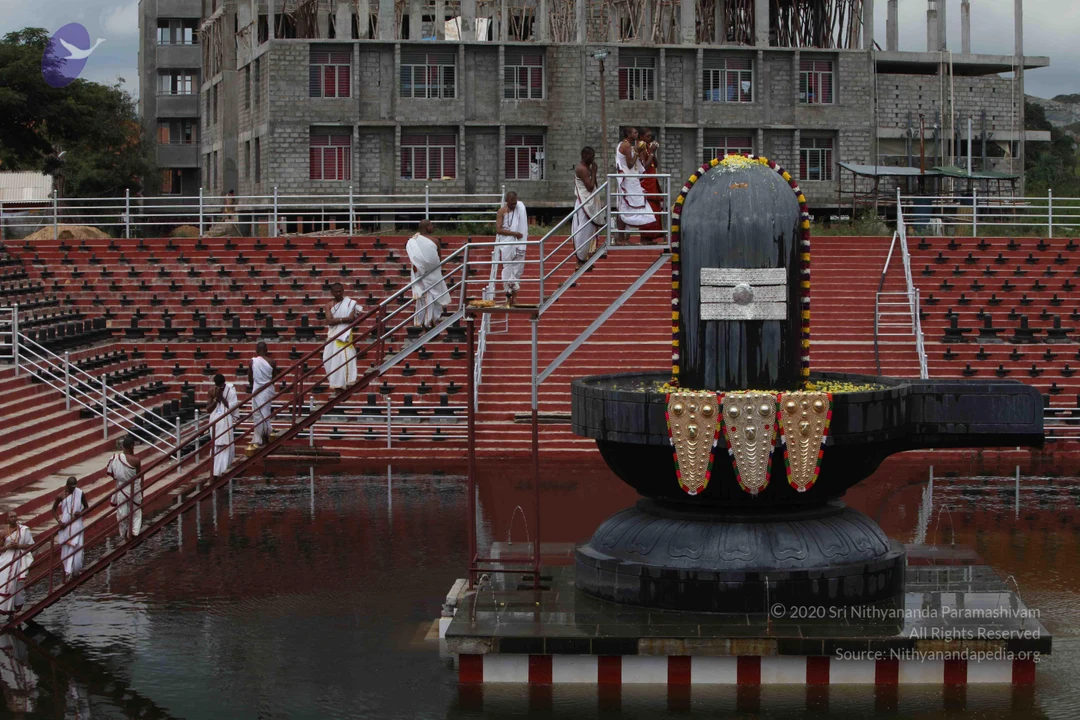
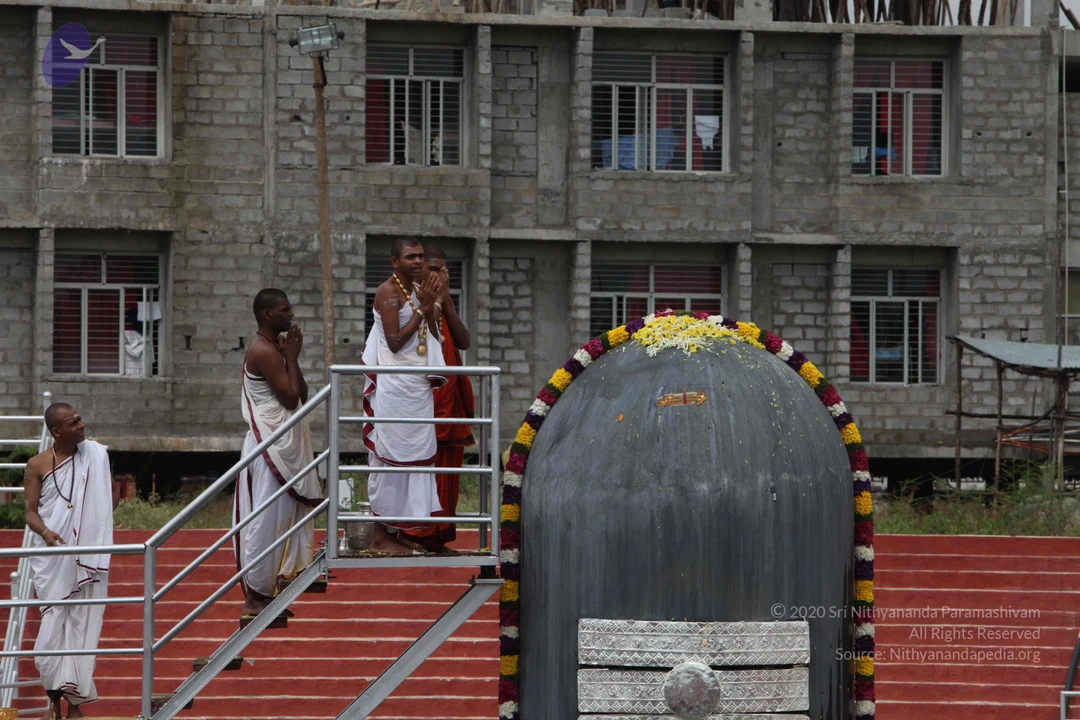
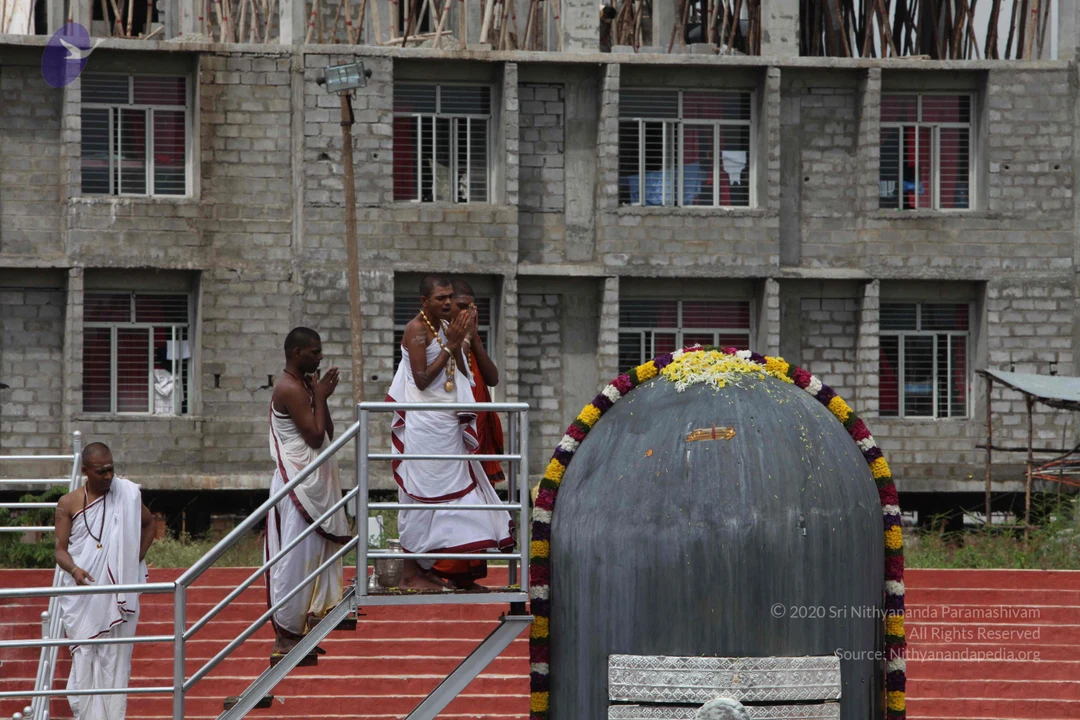
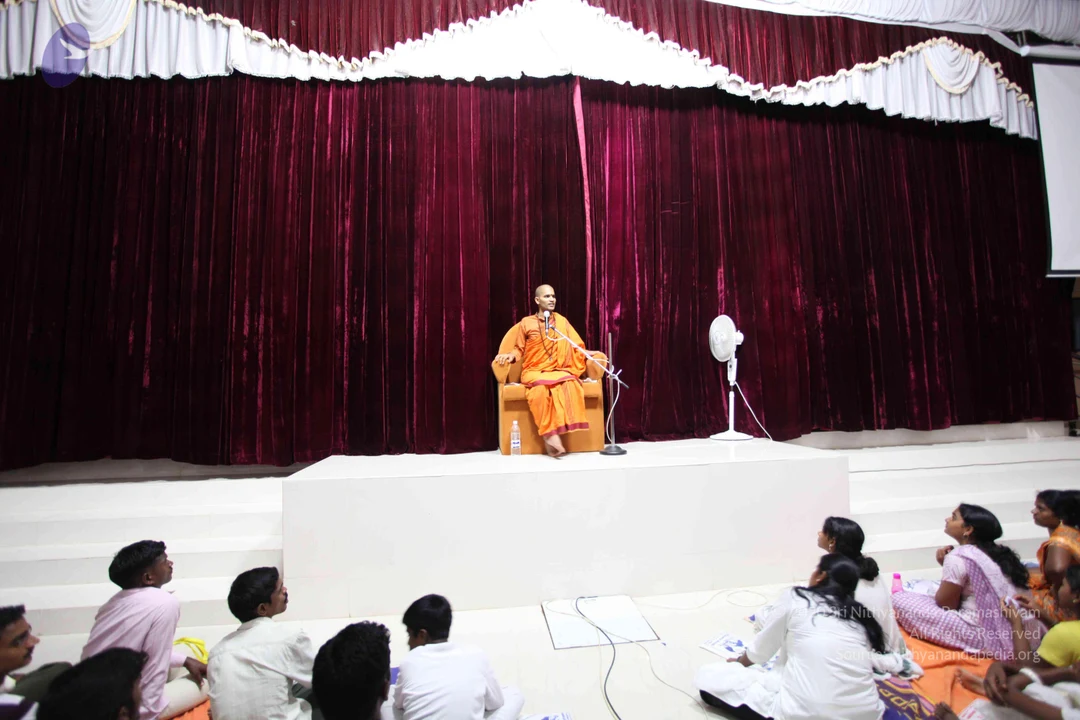
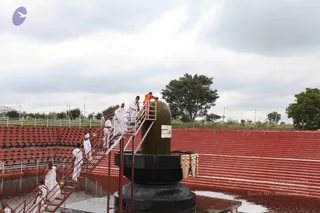
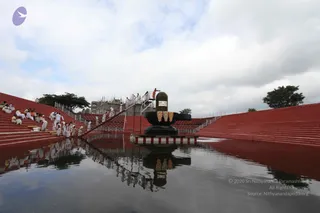
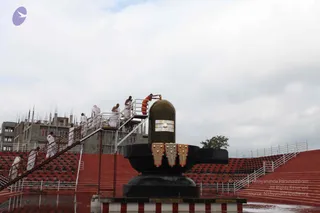
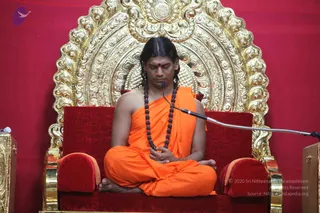
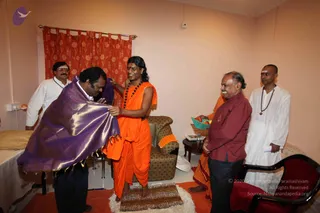
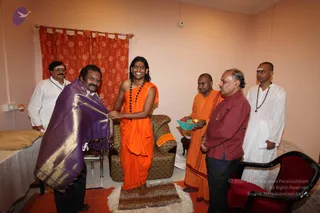
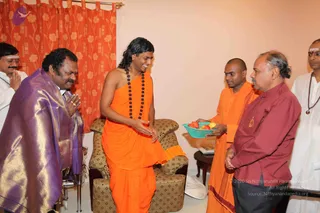
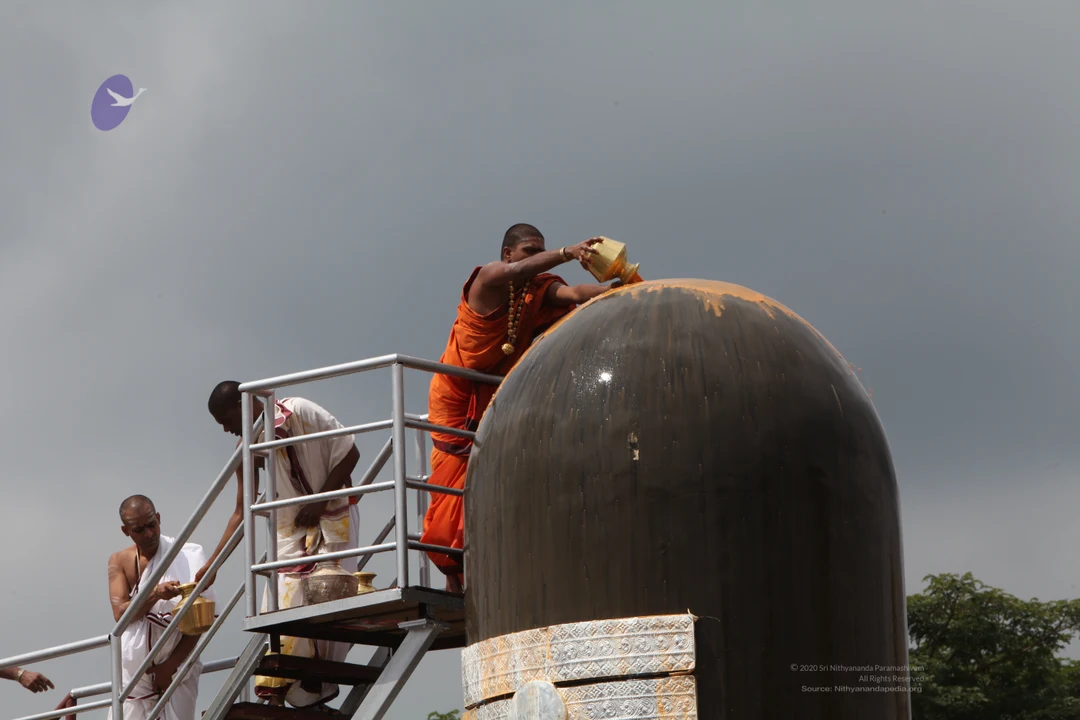
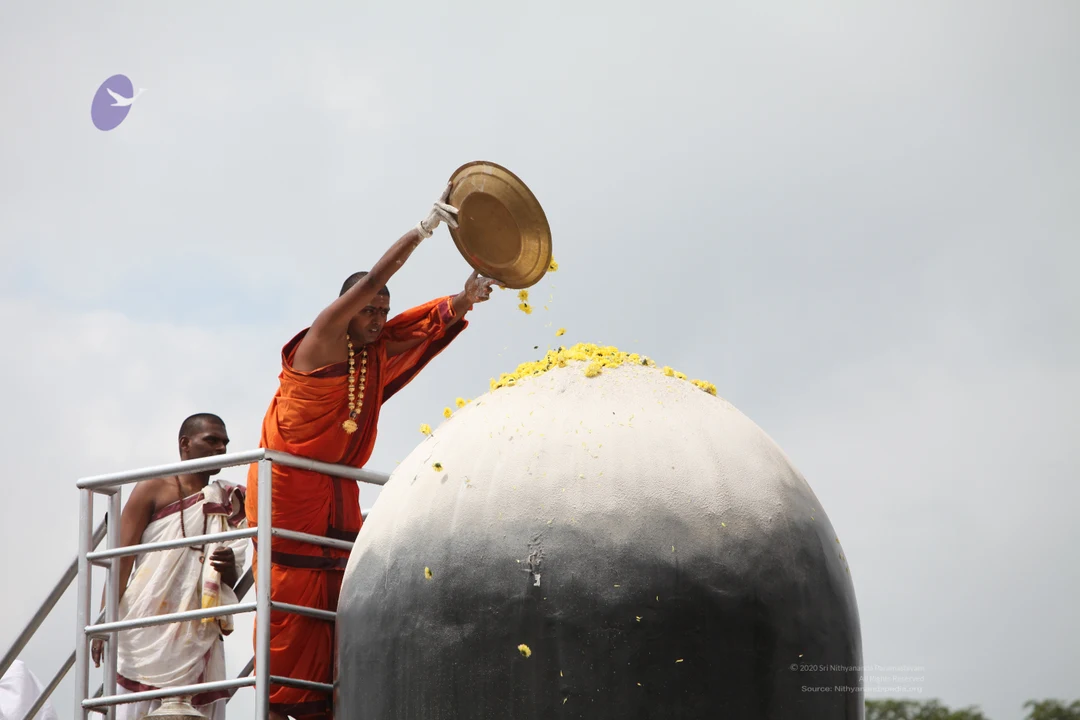
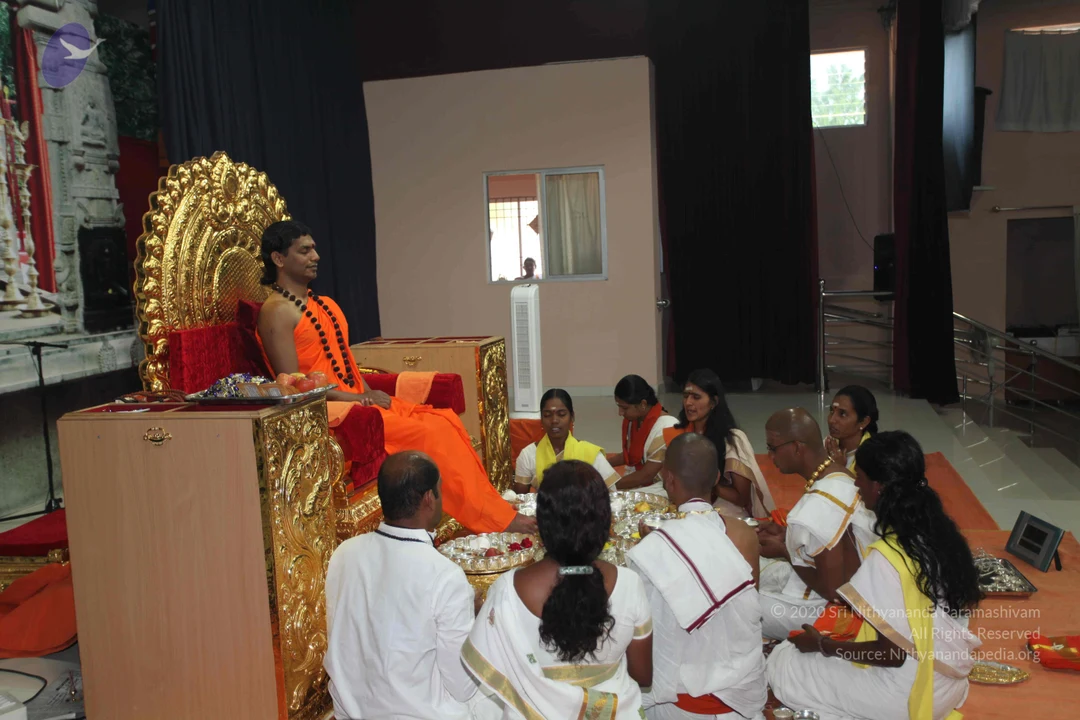
A photograph of a satsang hall with a central figure seated on an ornate gold throne with a red cushion, wearing a saffron-orange robe and a dark rudraksha mala, with long swept-back hair; the figure is probable Swamiji by appearance cues. Seated before him on the floor are devotees in white and yellow clothing, some with hands folded in namaskar. A bald man in white at center bows with palms together, and a woman in white stands at a lectern with a microphone behind a small wooden table holding flowers and offerings. Brass plates with pink flowers and offerings sit before the devotees. On the right is a shrine with carved pillars and deity murtis. A white portable heater stands near a blank screen.Outdoor photo of a large black and white Shiva linga being bathed with milk or water poured from above during an abhishekam. A man in an orange saffron robe stands on a steel staircase platform reaching over the top of the linga, pouring from a golden vessel. Three men in white dhotis and white shawls stand on the platform and staircase beside him, holding golden kalashas and pots. The linga is decorated at its base with gold-embroidered cloth bands and red and green garlands. Behind it is an unfinished concrete building with exposed rebar and a grey cloudy sky. Attending to a person in saffron robes is a worker on scaffolding in the background.A large black polished shivalinga stands on a circular black base, decorated with a garland of yellow, orange, purple and white flowers arching over its top and sides, scattered flower petals, and a stone-like top face with three horizontal silver bands marked with pattern. Gold and beaded embellished panels sit at its base. Behind it, a priest in an orange-red dhoti and shawl with a beaded necklace stands on a raised platform with a metal railing, holding a small brass vessel, while a white-clad assistant stands at left holding flowers. A red-striped platform and an unfinished brick building with windows form the background. This appears to be a linga abhishekam setting with offerings and puja in progress.

October 22 2010

Original wiki page
Contents

Title

Awaken Your Extra Sensory Powers Through Super DNA: Nithyananda Morning Message (22 Oct 2010)

Narration

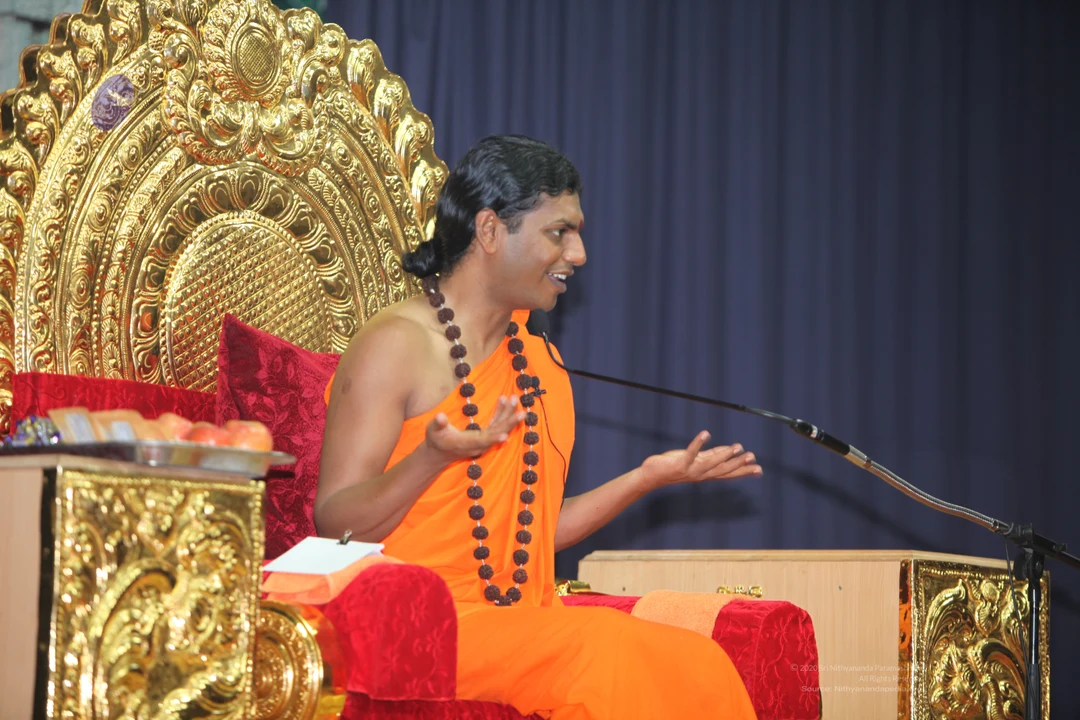
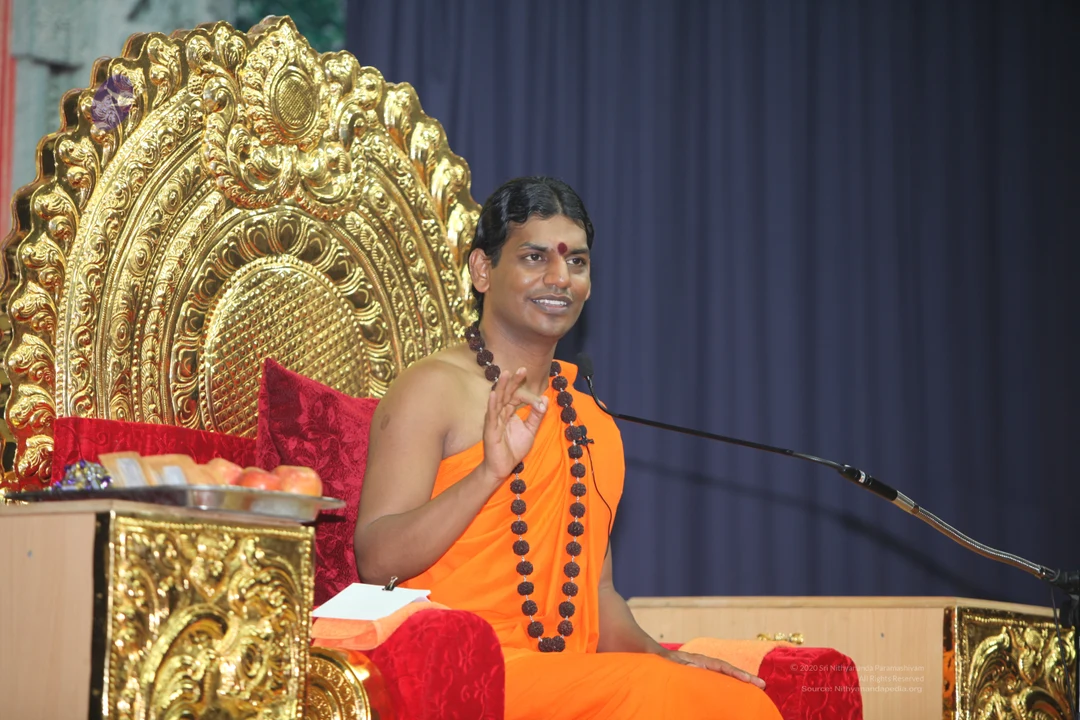
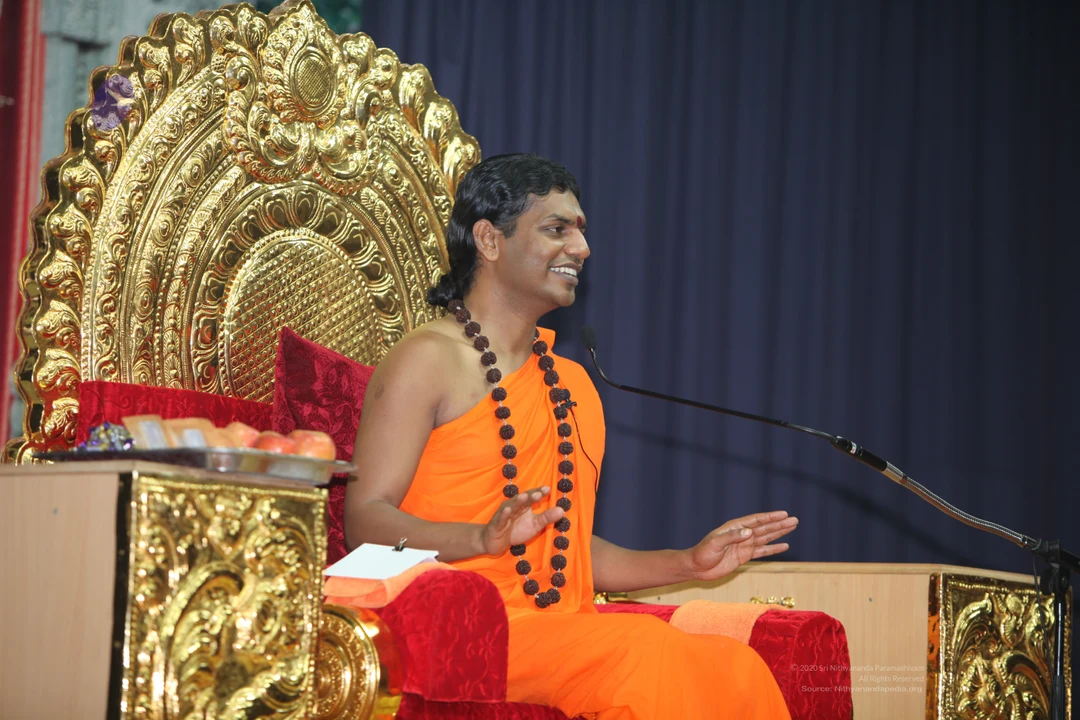
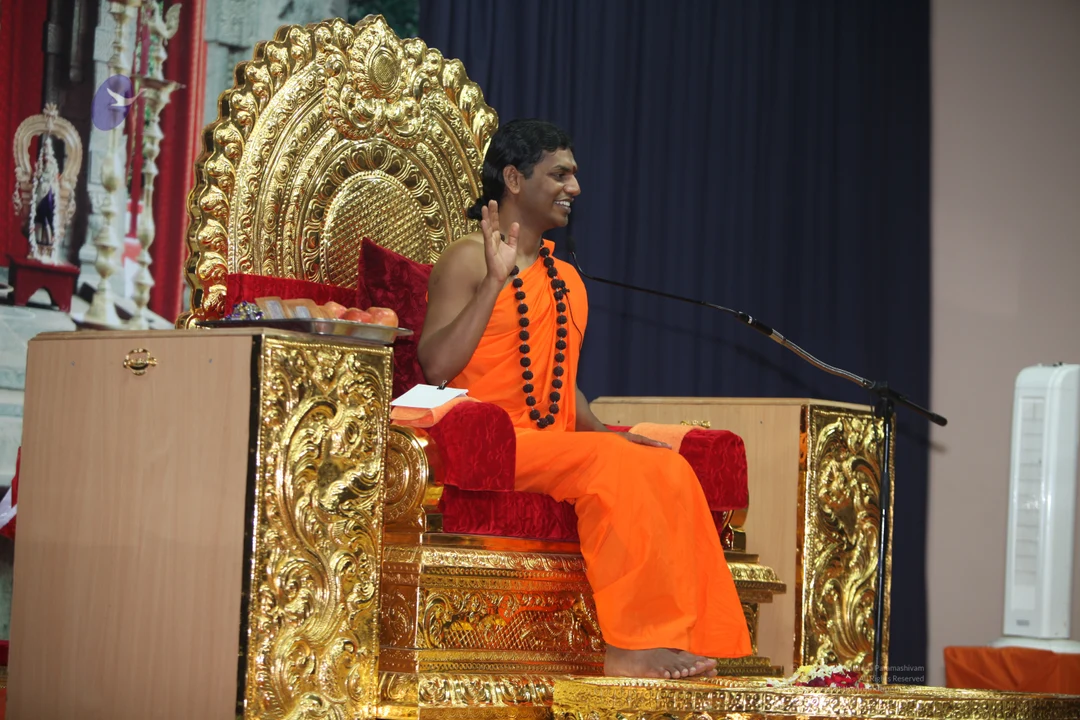
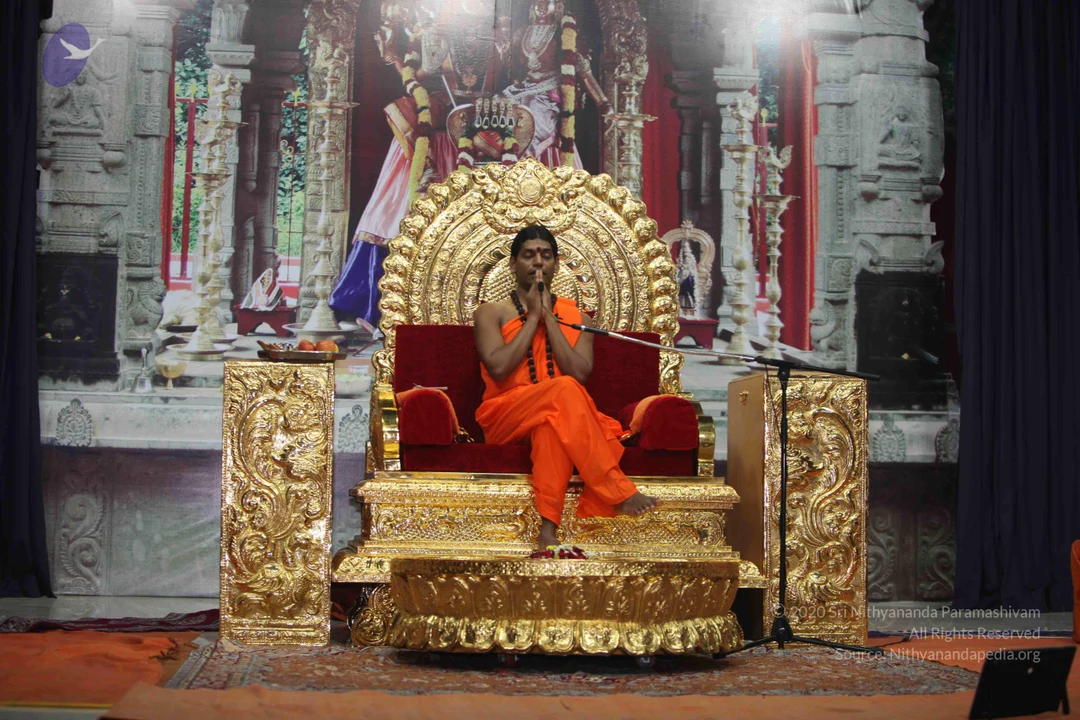
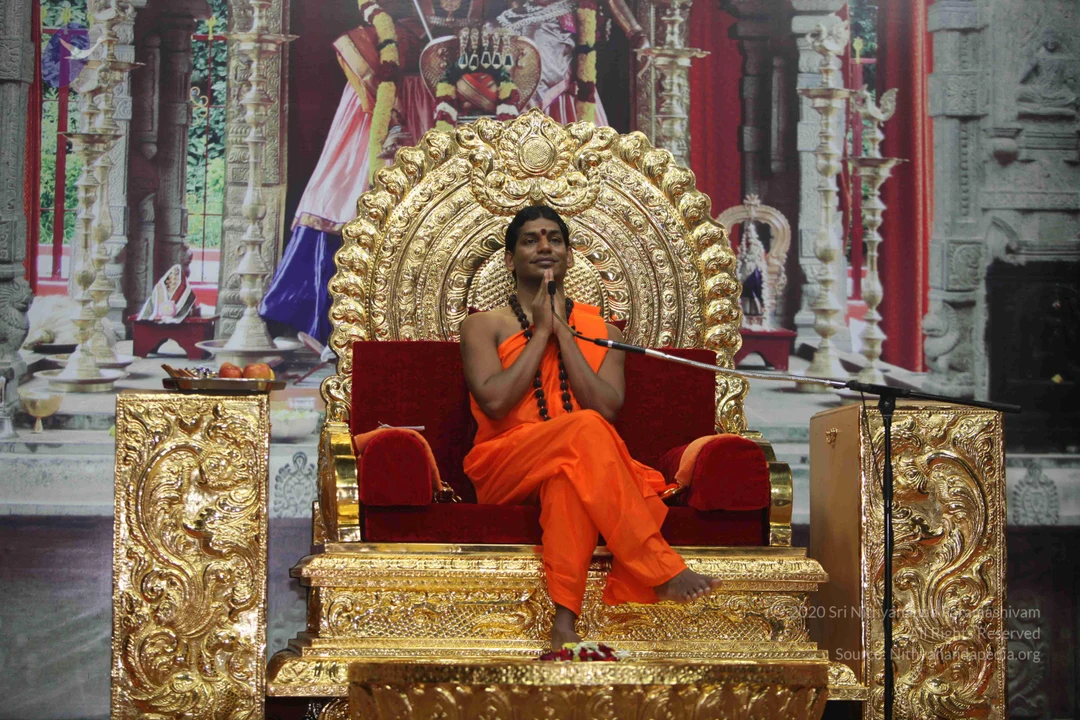
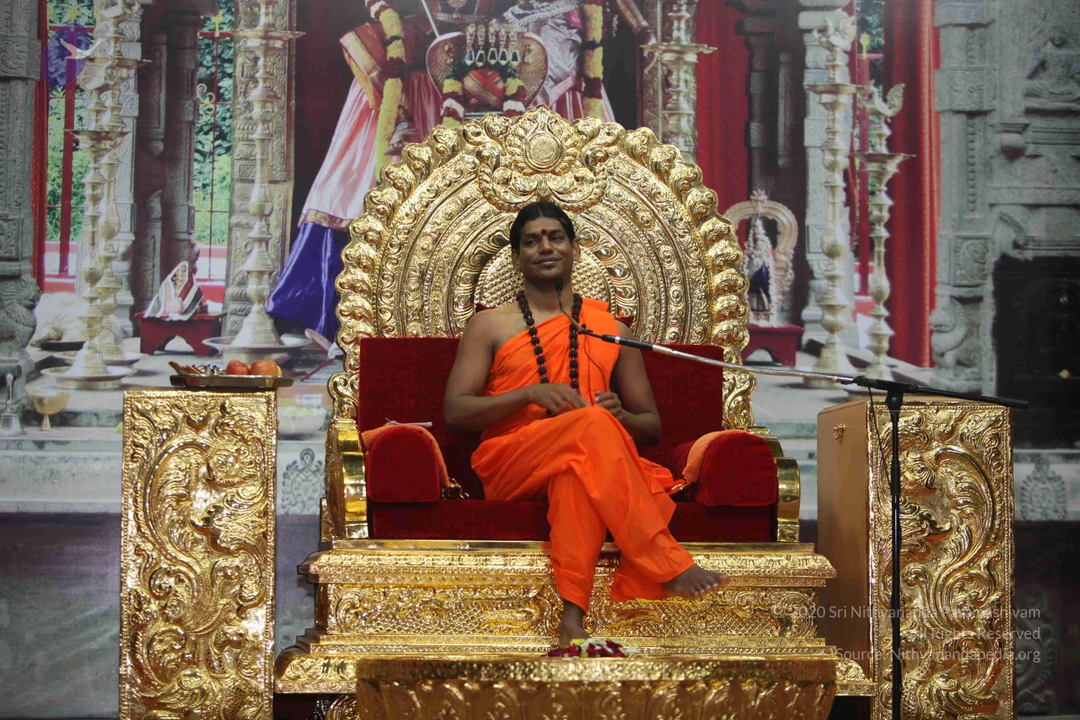
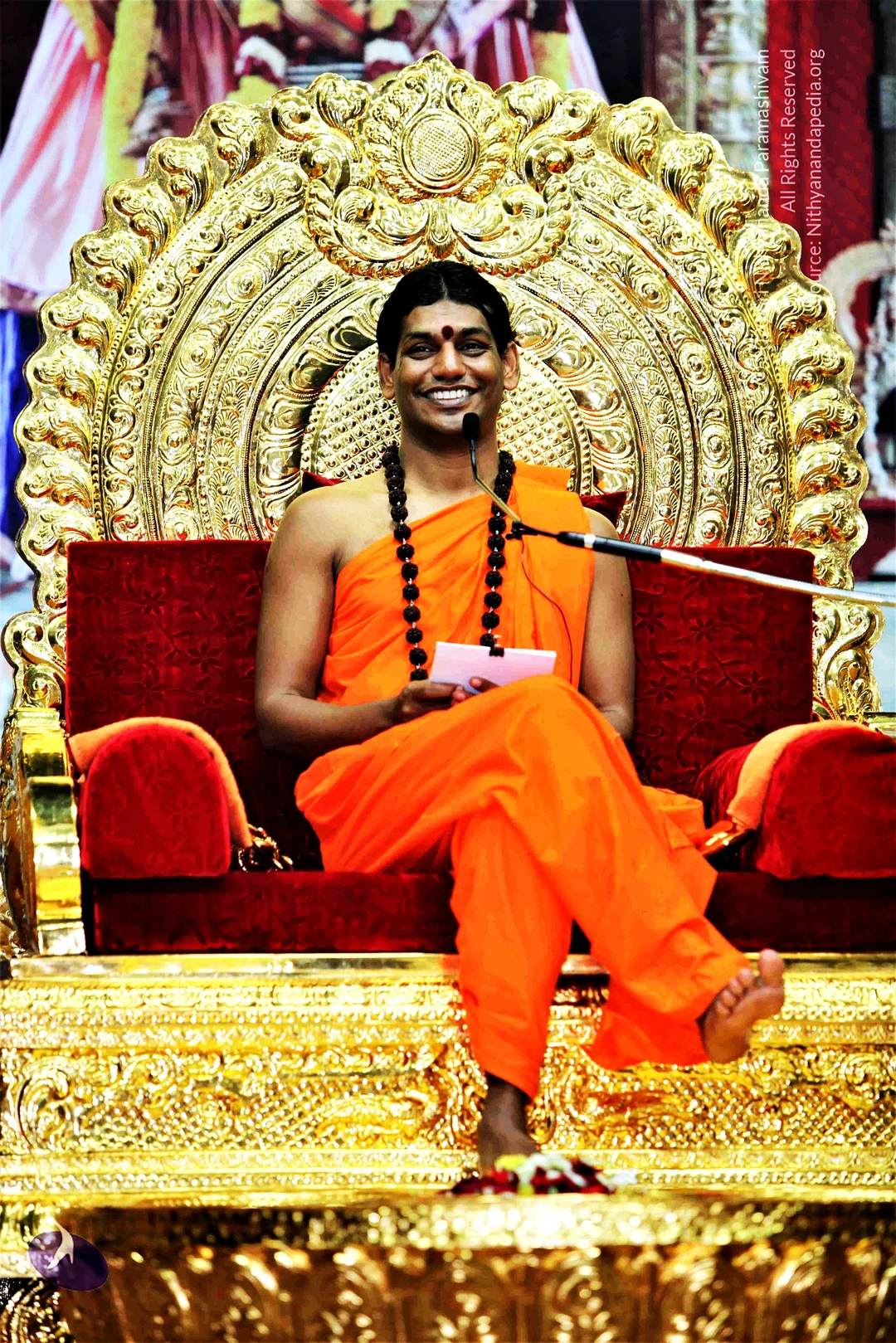
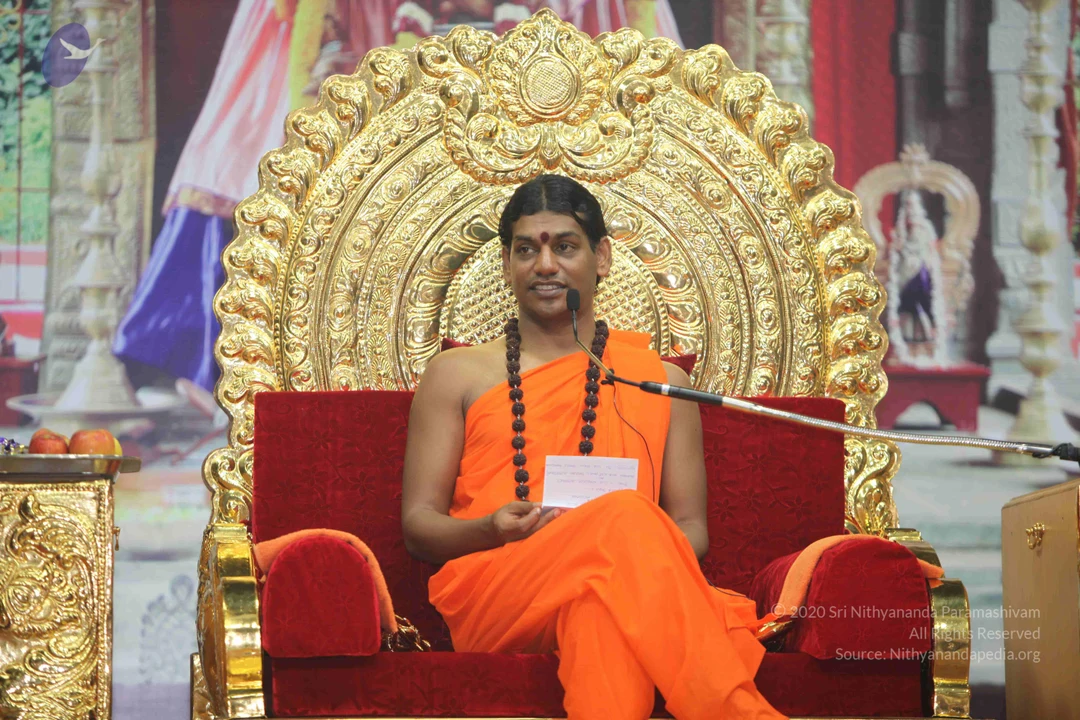
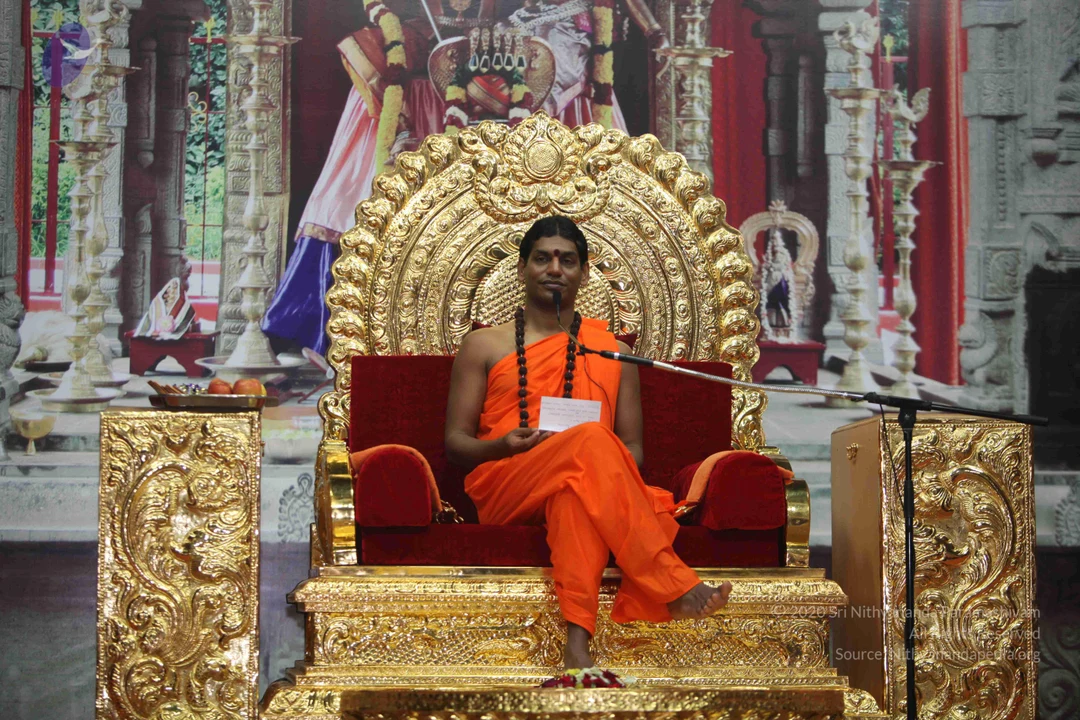
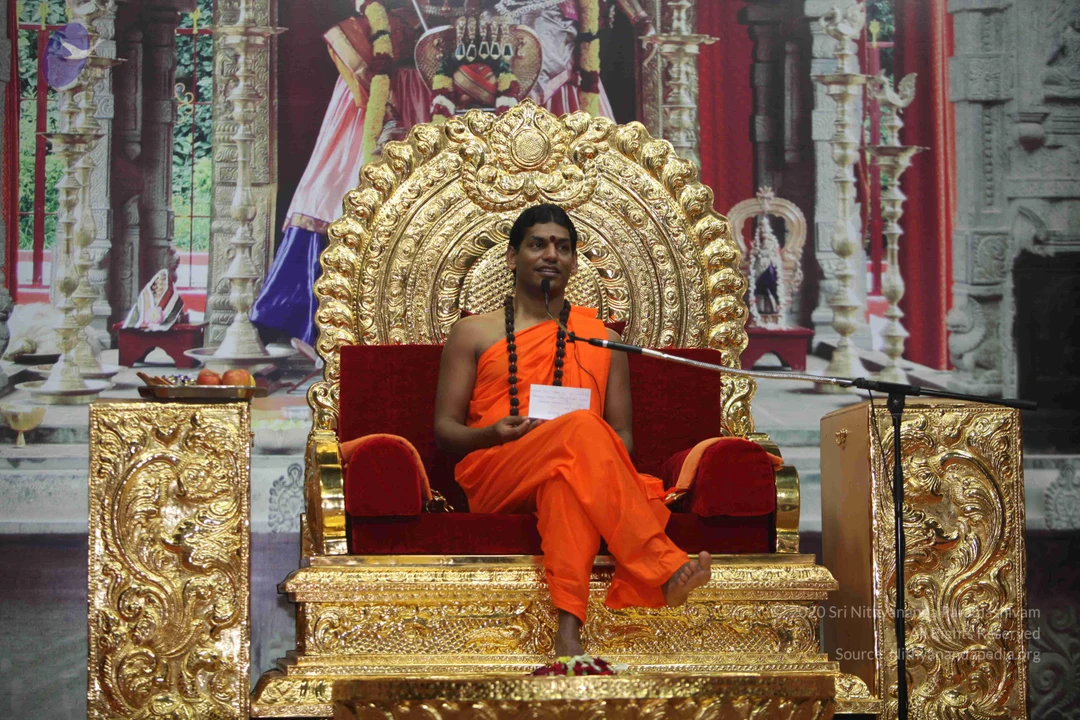
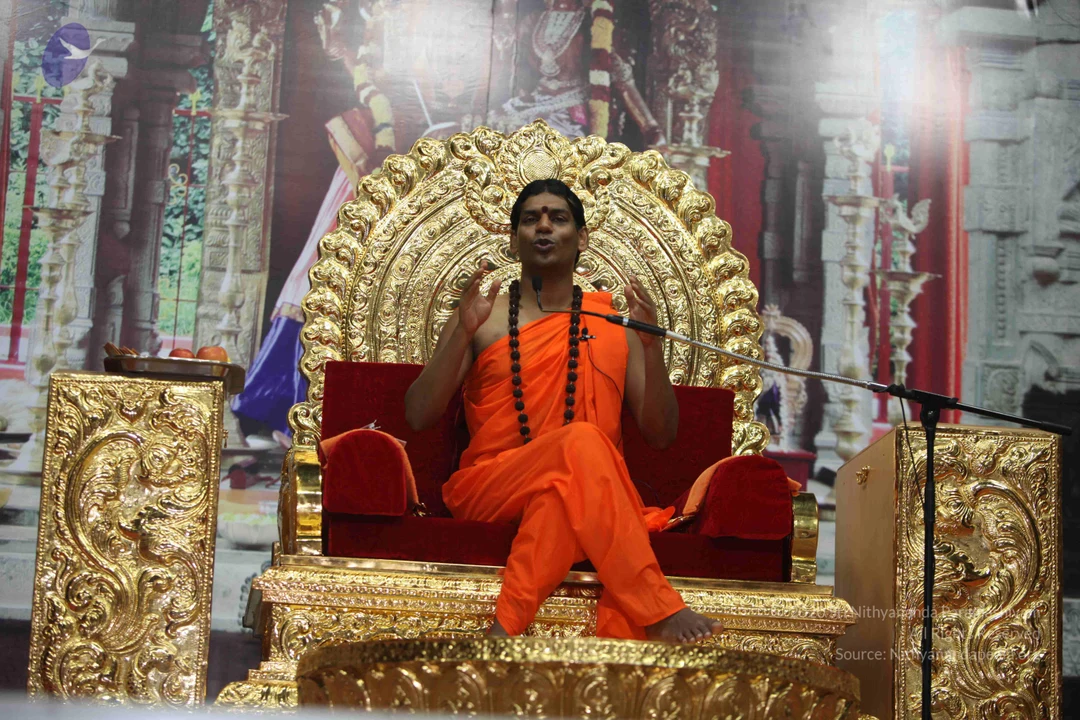
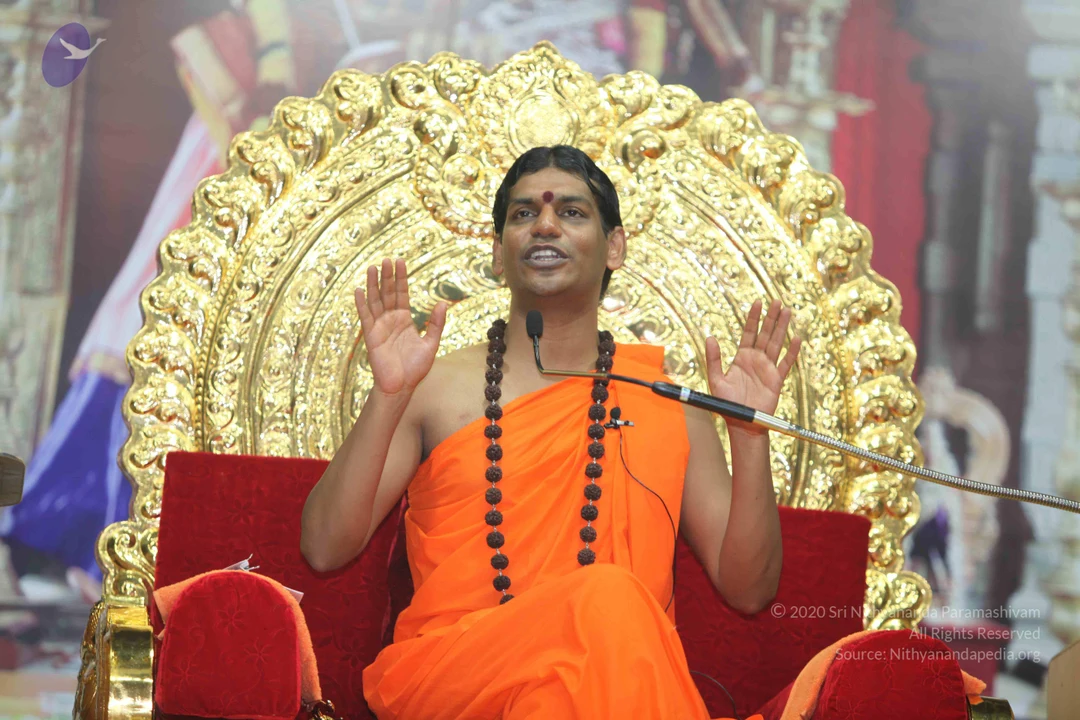
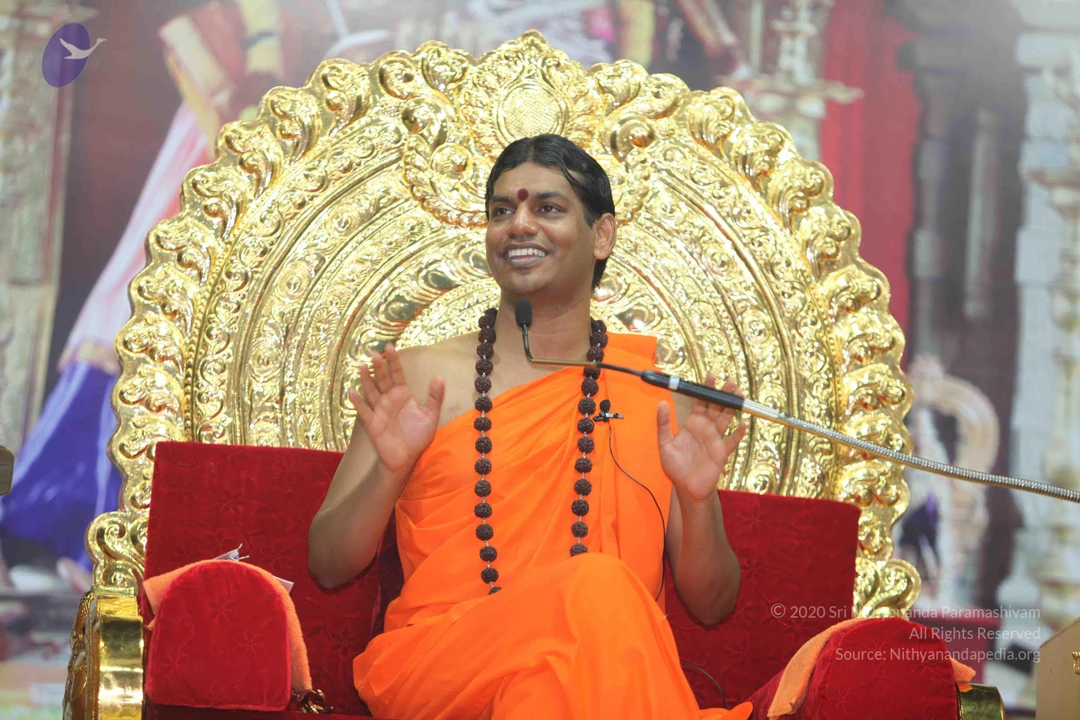
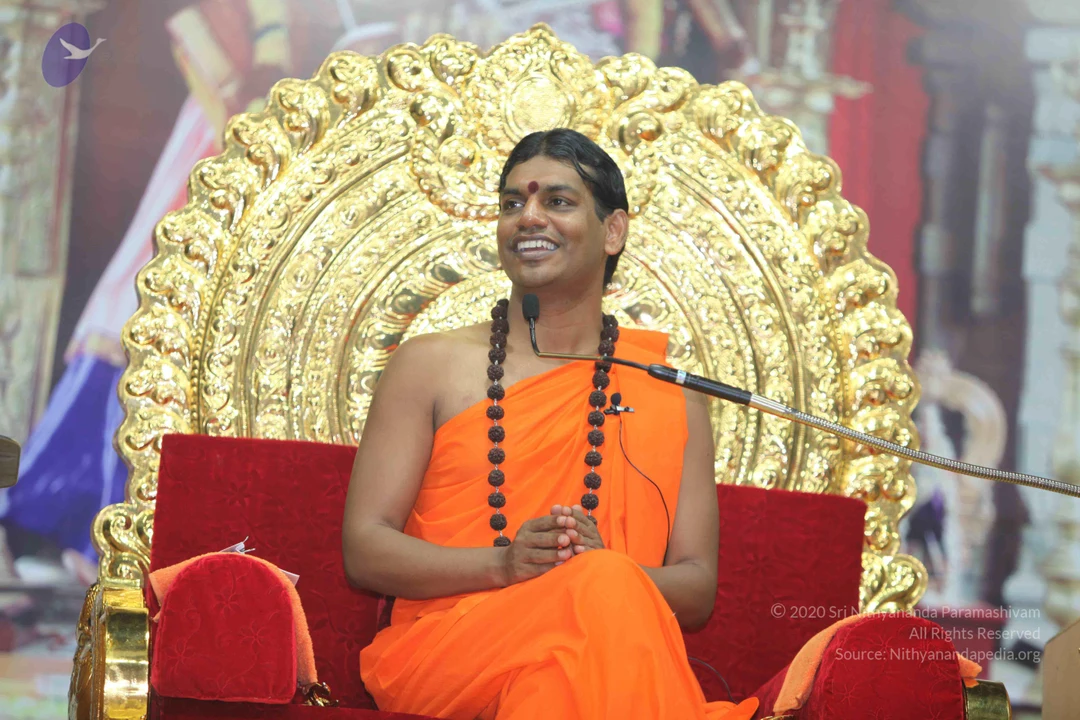
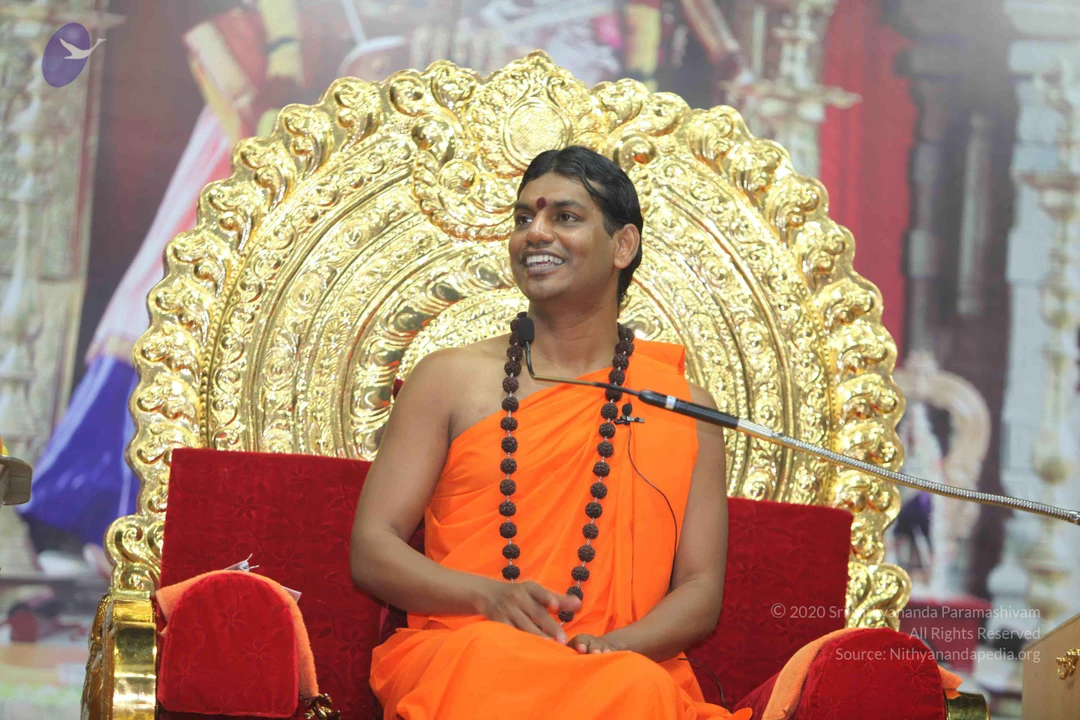
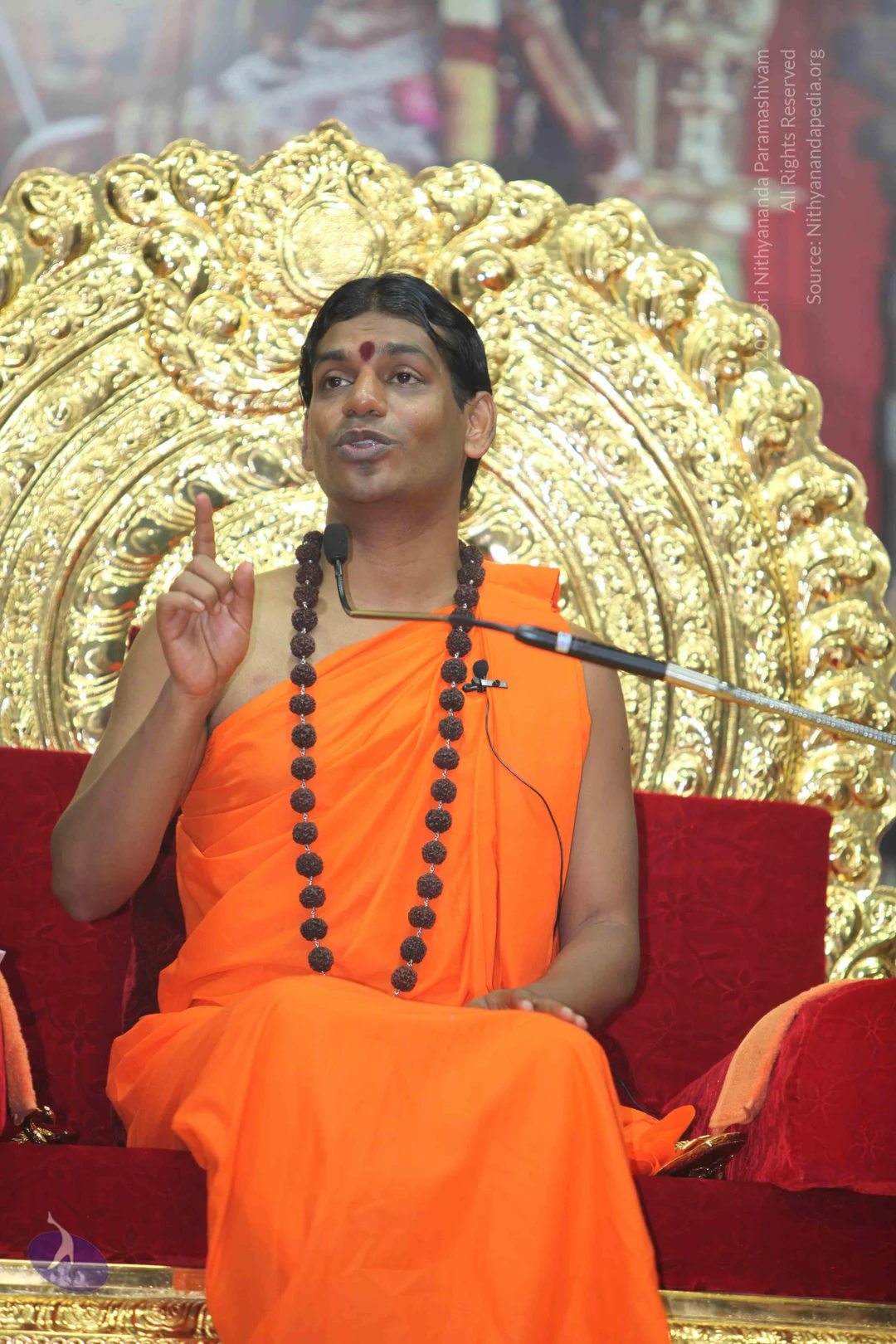
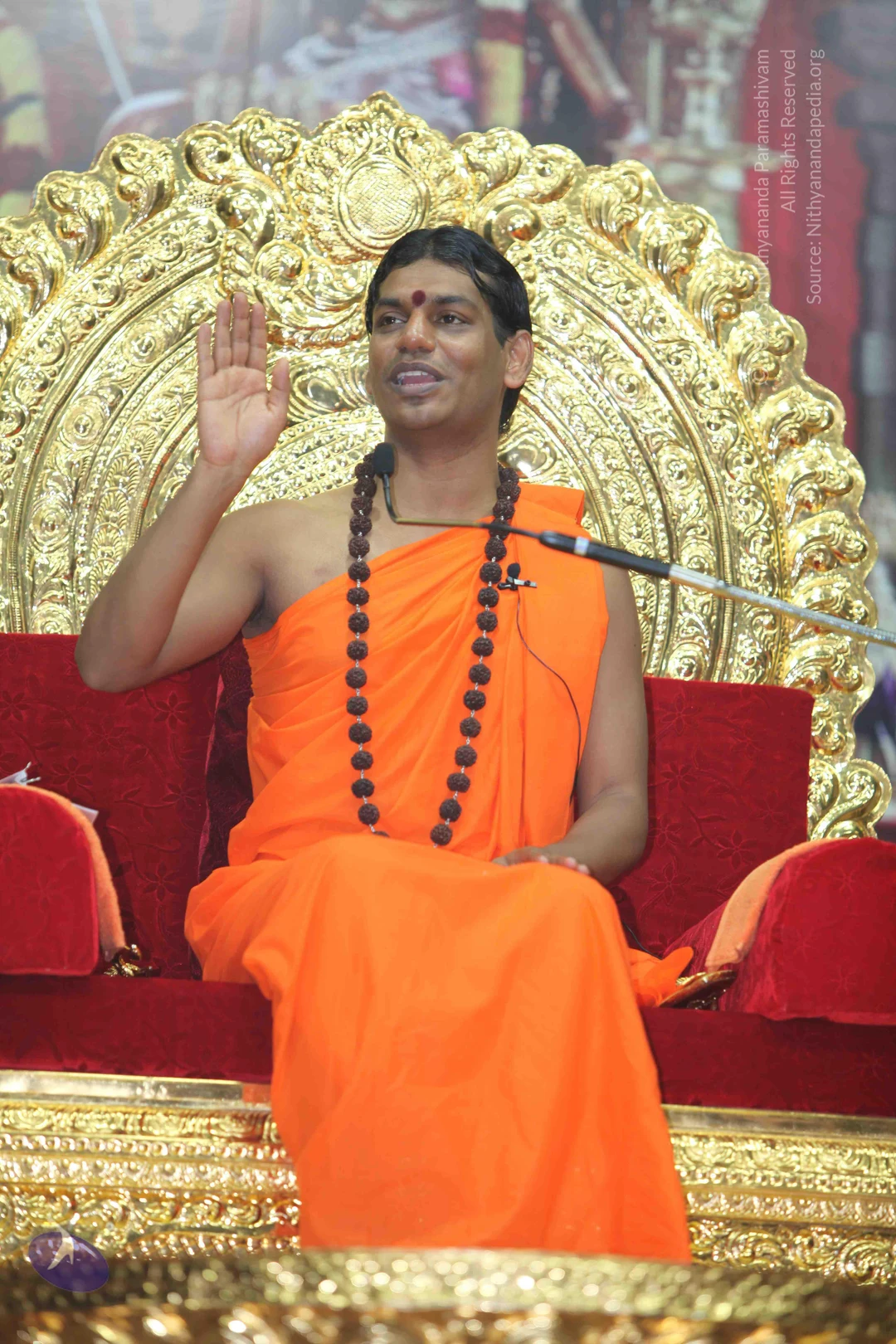
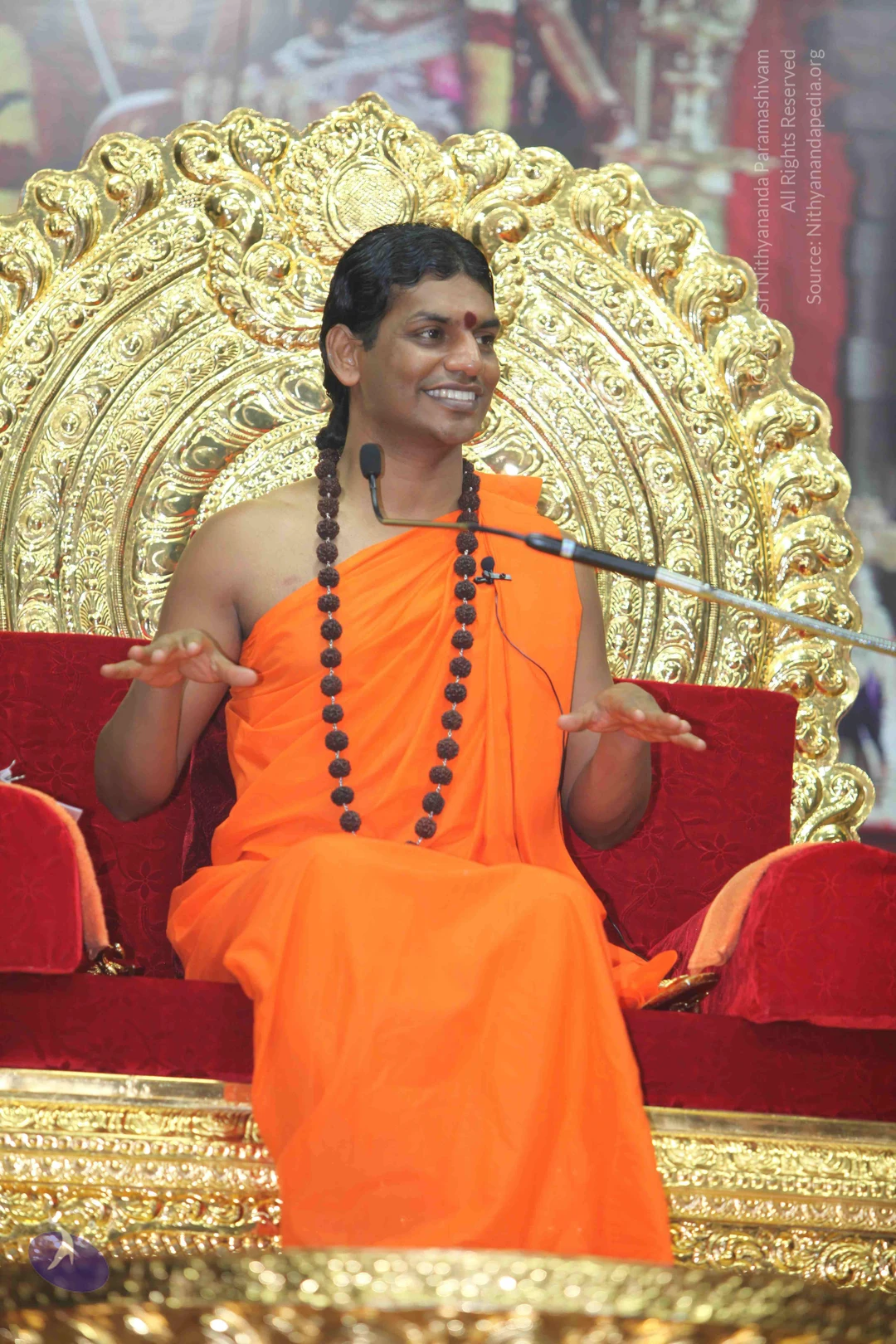
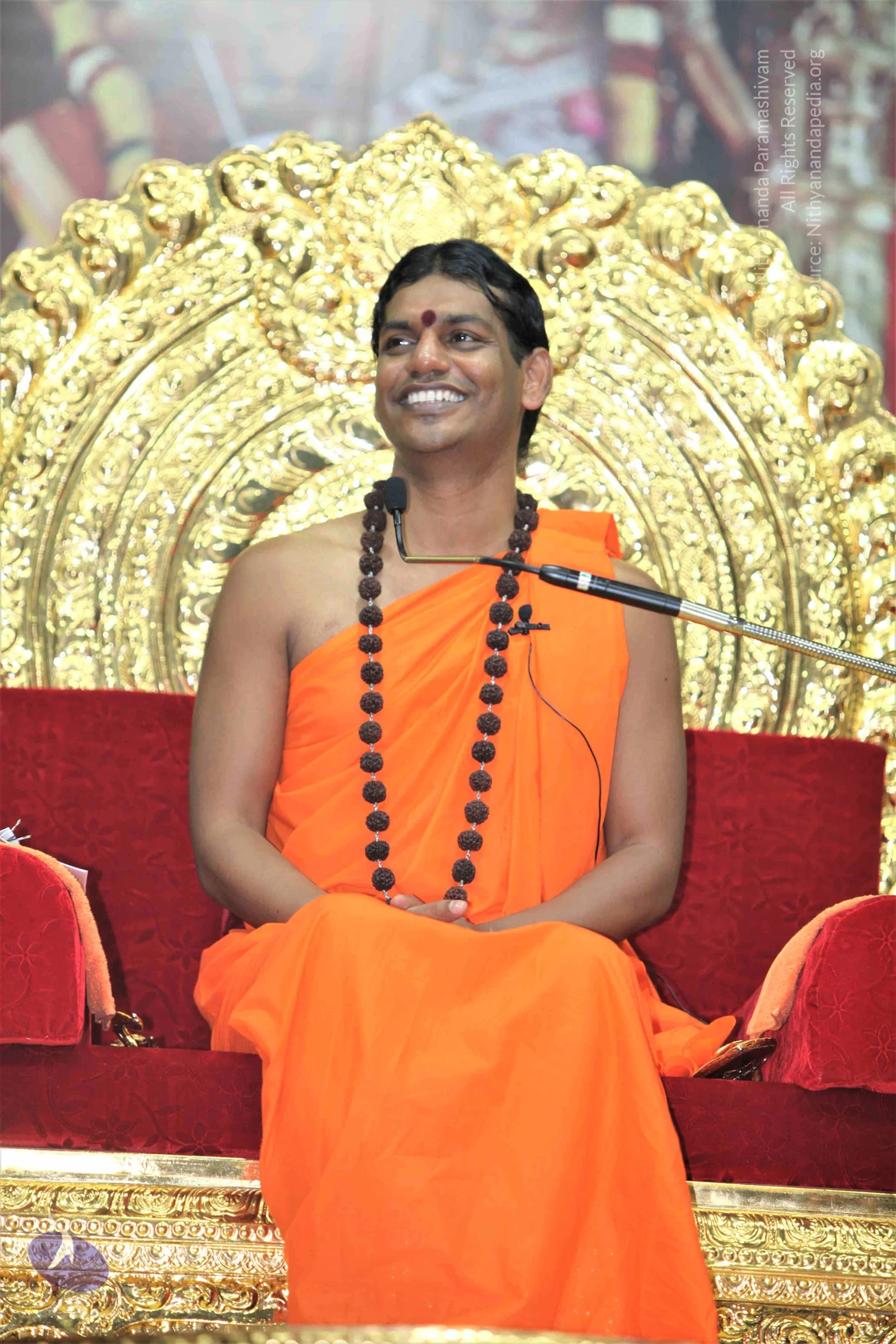
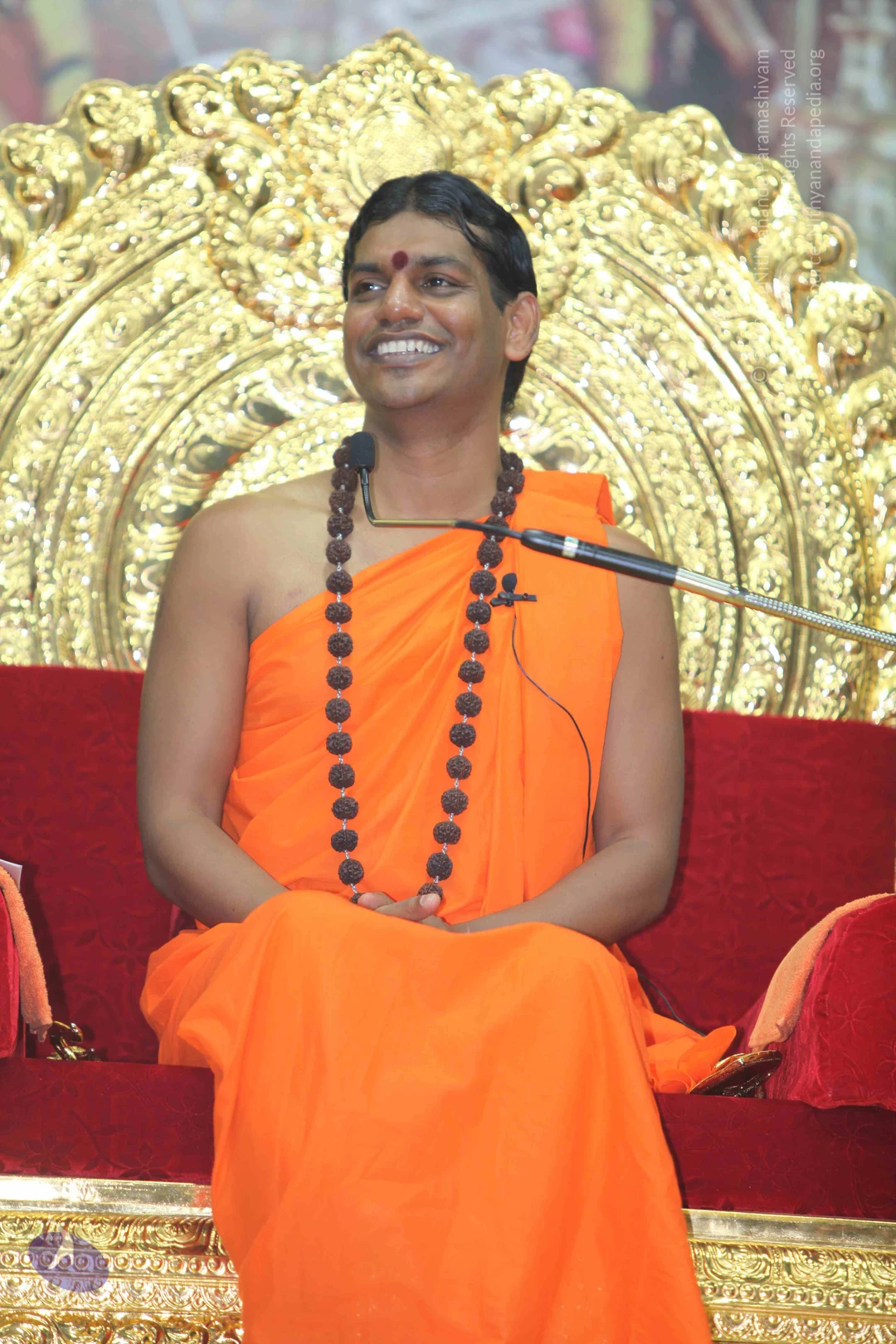
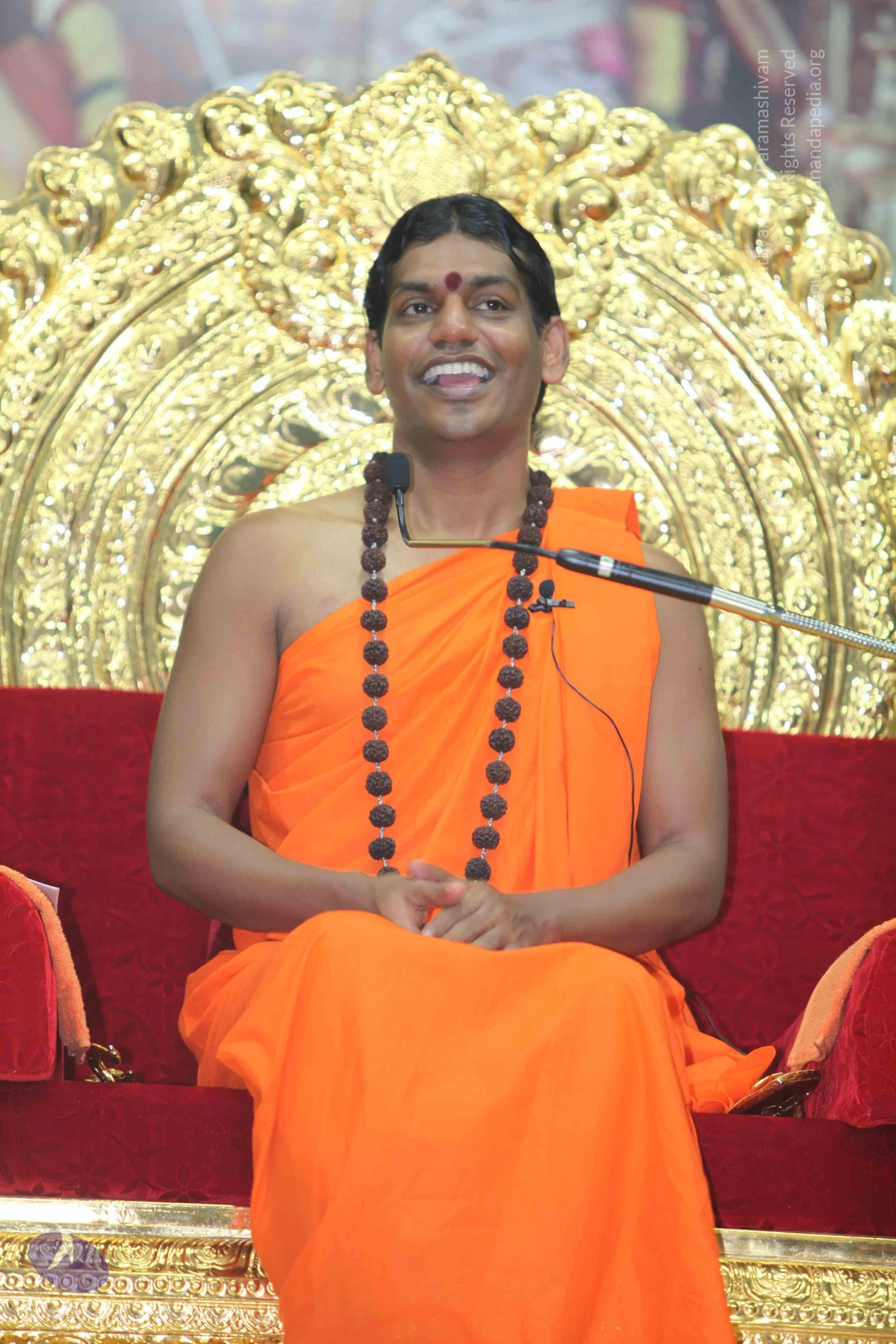
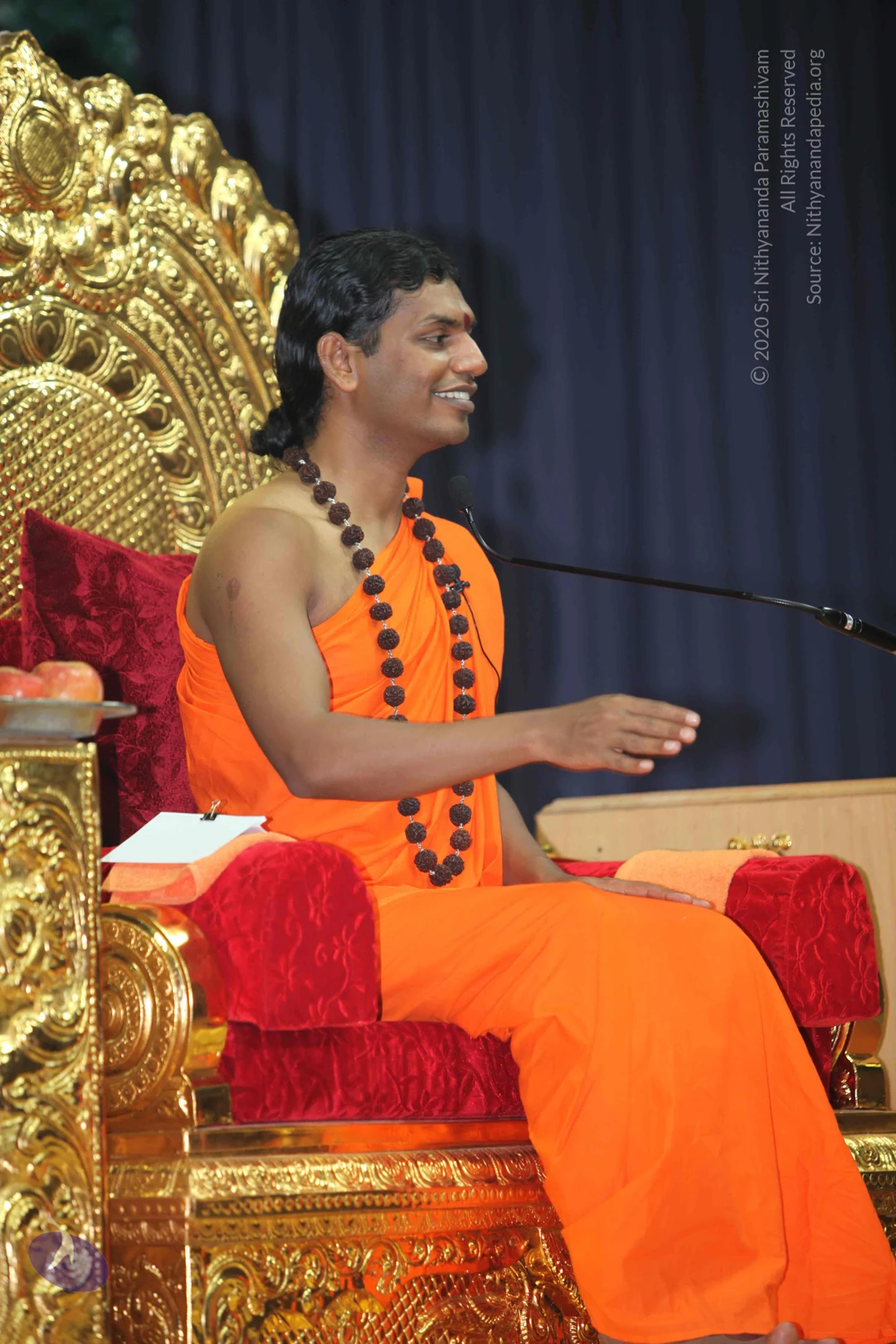
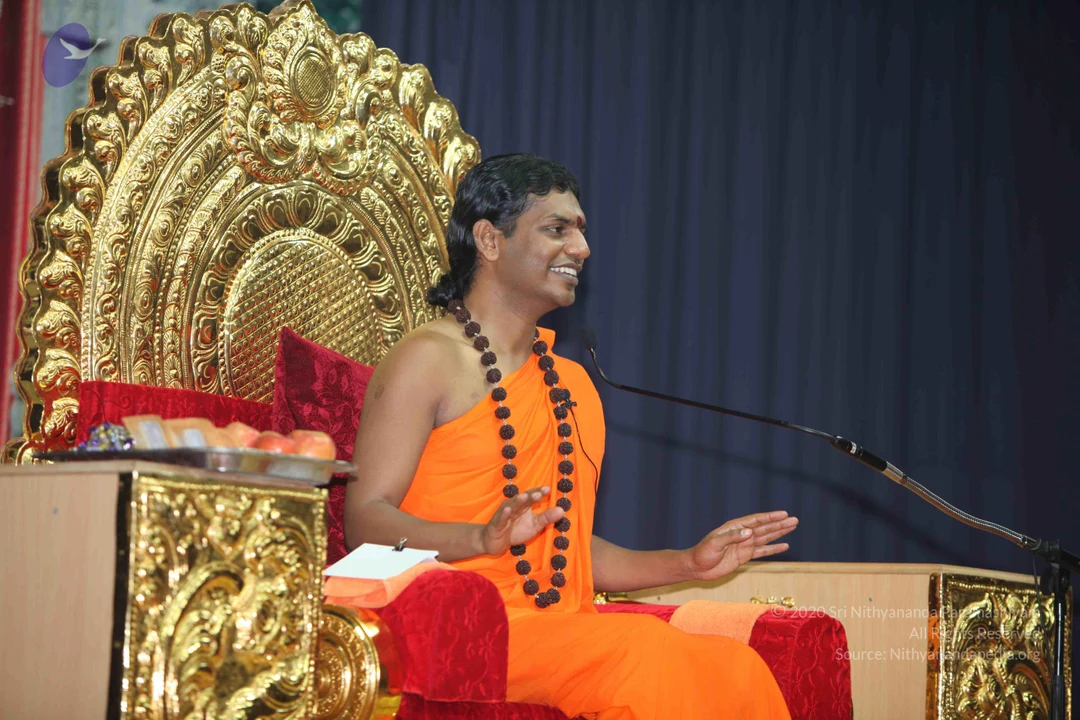
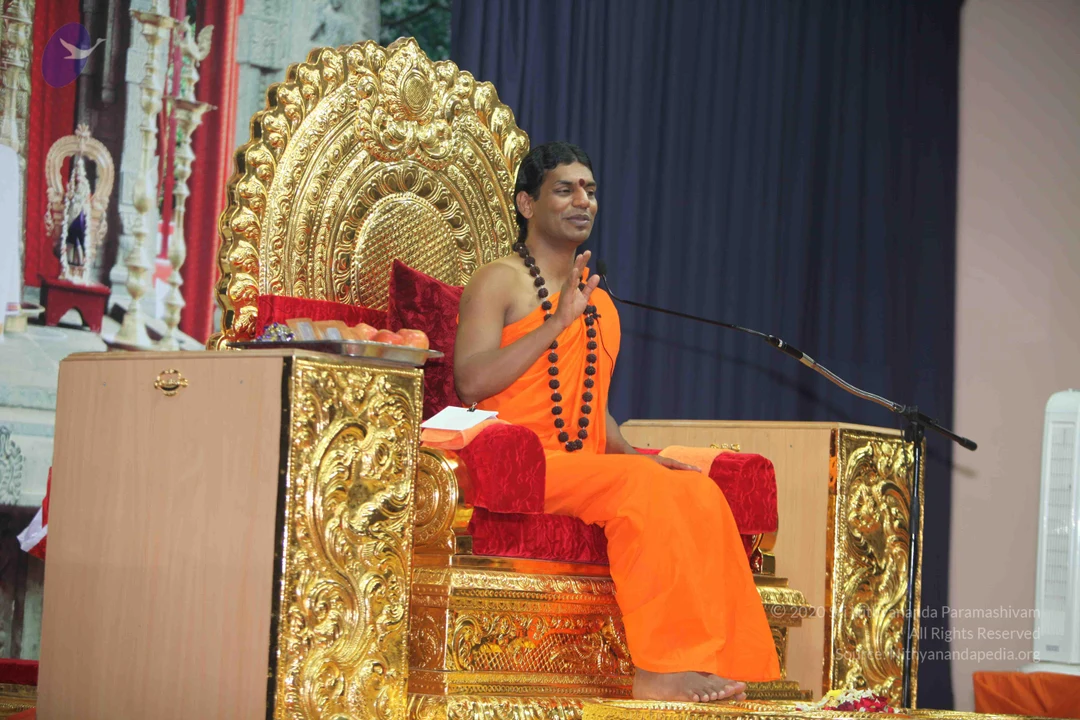
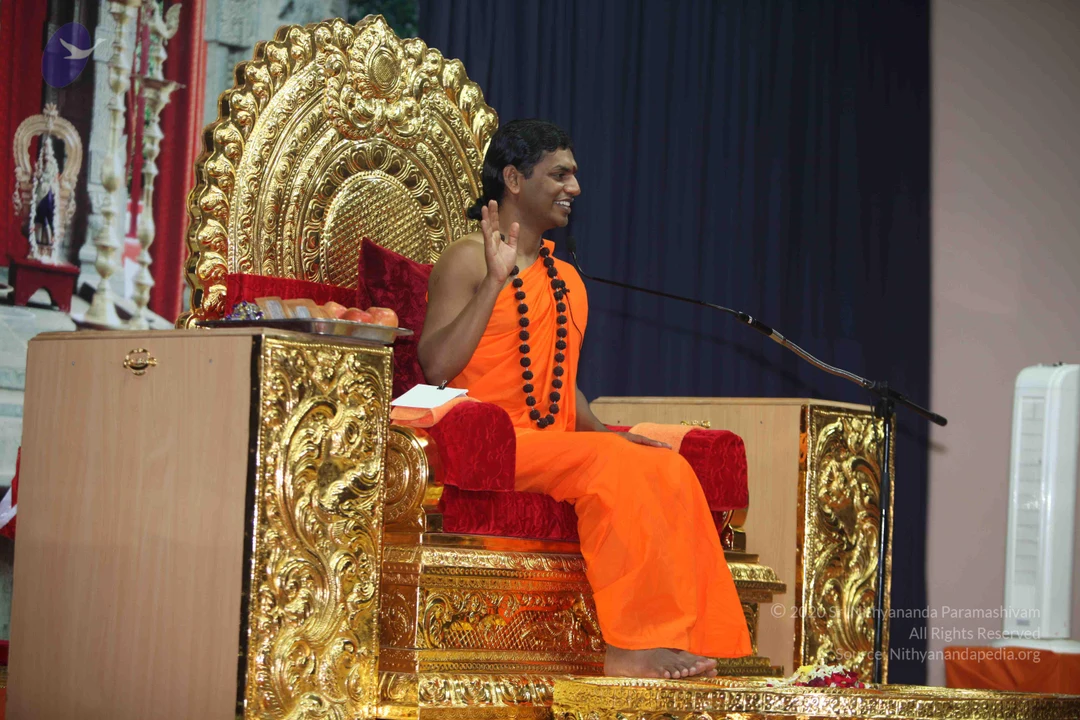
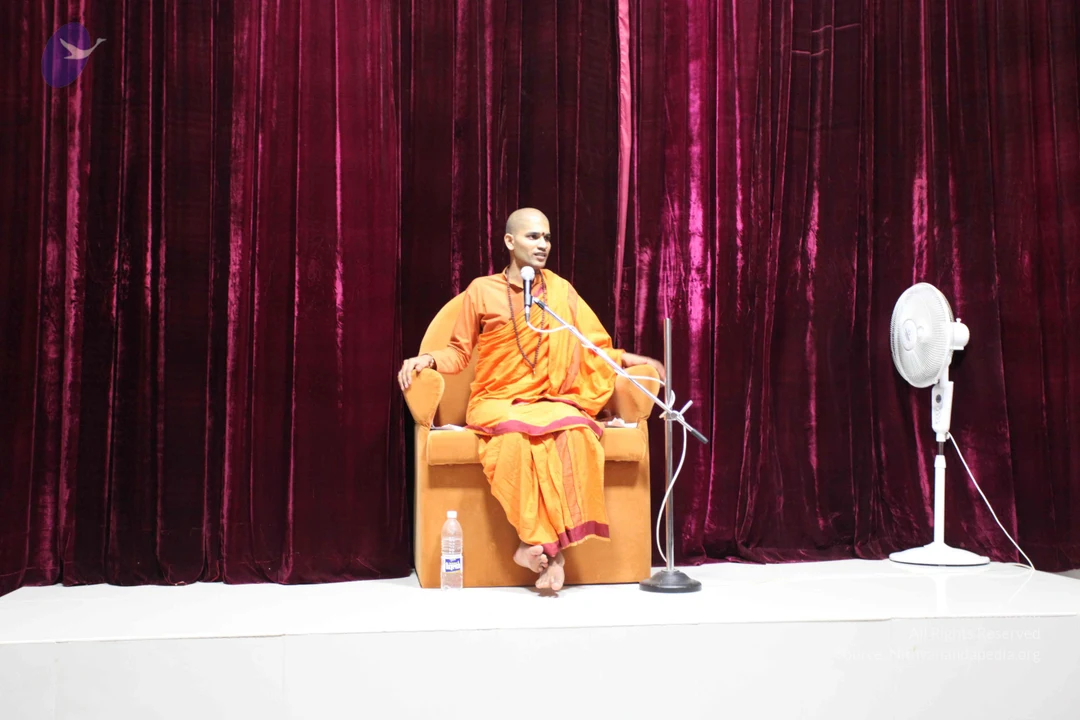
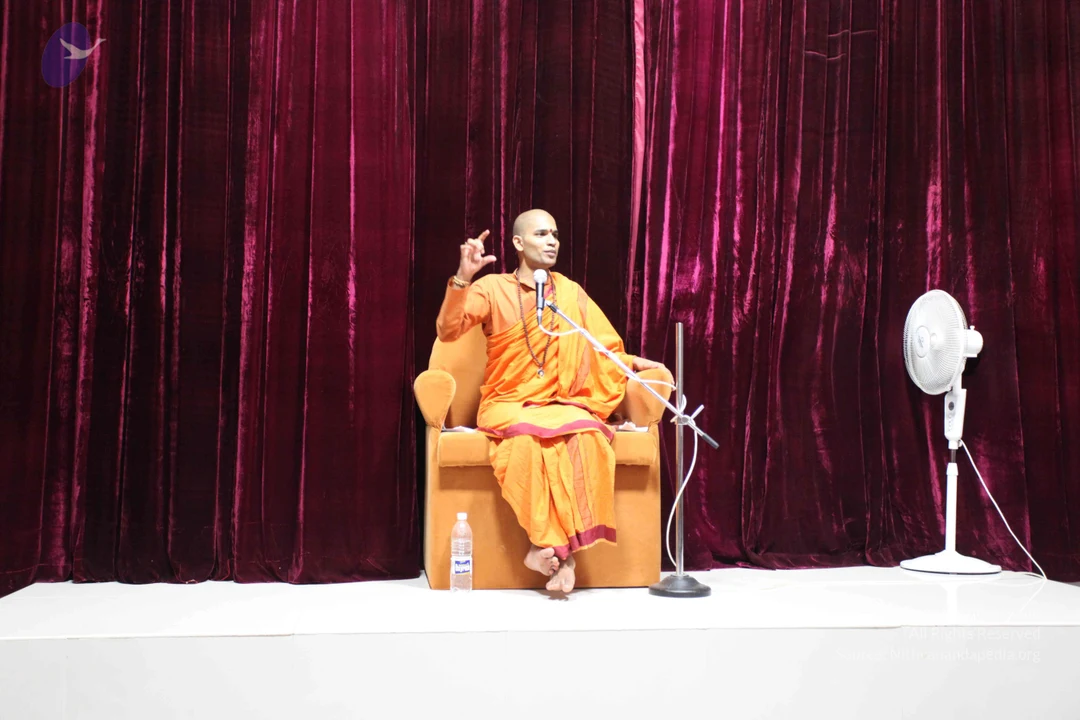
The Supreme Pontiff of Hinduism, Jagatguru Mahasannidhanam, His Divine Holiness, Bhagavan Nithyananda Paramashivam, expounded on the Cosmic Principles of Telepathy and Teleporting during the everyday live public talk - Nithyananda Satsang. In this talk entitled Awaken Your Extra Sensory Powers Through Super DNA, His Divine Holiness (HDH) stated He was going to triangulate modern research with the Shastra Pramanas of ancient and modern day Rishis, and compare that with Atma Pramana (His own experience). His Divine Holiness then cited evidence that DNA has recently been found to have the ability to put itself together, even at a distance. Scientists found that DNA can cause patterns in a vacuum producing magnetic "wormholes." These patterns can attract bits of information outside time and space and can pass the patterns on to our consciousness. Modern scientists found that information can be passed between individuals whose DNA is turned on, or activated. His Divine Holiness then compared this recent research with the ancient works of Patanjali, who said you don’t have to learn through your five senses alone. He gave as an example Swami Vivekananda. "What Vivekananda expressed in nine years of public life would take us 39 years to study, which was Vivekananda’s lifetime" He shared. This proves that Vivekandana did not receive all his information through his eyes and ears, alone. His Divine Holiness stated that scientists recently found that DNA can feed data to a network, can call up data from a network, and can establish contact with others in a network. Ancient and modern Rishis, in turn, report that Enlightened Beings can send information, can receive information, and can pass information to other evolved beings telepathically.

Video and Audio

Awaken Your Extra Sensory Powers Through Super DNA

VideoAudio

Transcript

(0:18)

|| Sadāshiva samārambhām Shankarācāryā madhyamām | Asmat ācārya paryantām Vande Guru Paramparām ||

(0:43)

I welcome you all with My love and respects. Today’s subject is 'Awaken your extra sensory powers through super DNA'. I'll share few insights about super DNA from My experience and some of the great revelations from the modern day rishis - scientists and some of the scriptural quotations from ancient rishis. Shastra pramana - means truths revealed by the ancient and modern rishis, rishis and scientists. And atma pramana - My own experience about this revelations. So that it can become apta pramana - experience of the master’s for you.

(2:28)

Here is a discovery from dailygalaxy.com the website. So many scientists contribute to that website.

‘DNA has been found to have a bizarre activity to put itself together even at a distance, when according to known science it should not be able to.’

I will explain how the teleporting, telepathy, all these things are possible. It is just because of this truth - DNA has been found to have bizarre ability to put itself together even at a distance when according to known science it should not be able to. Science is said to catch up with teleporting and telepathy and all that.

(3:27)

Scientists Grayzna and Franz found out - ‘The DNA can cause patterns in vacuum, producing magnetic wormholes.’ Please understand it’s a new word ‘wormholes’. Wormholes are tunnels like connections between areas in universe through which DNA attracts bits of information outside time and space and passes them on to our consciousness. It was noted that this information can be passed on between individuals whose DNA is turned on or activated.

(4:12)

Let Me add My own experience for this. They say, the scientists are saying that DNA can cause patterns in vacuum producing magnetic wormholes. That wormholes can attract bits of informations outside time and space.

Patanjali again and again says ‘you don’t need to learn just from the five senses’ means - seeing and hearing. I have an example of Vivekananda. Whatever he expressed in 9 years of his public life, even for you to study it will take 39 years; his lifetime. This proves solidly, Vivekananda did not receive all information through eyes and ears. You can take My example. Whatever I expressed in last eight years, even for you to study and understand it will take at least 33 years. Forget about experiencing and expressing; just to study. Very clearly you can see, logically you can see very clearly, objectively you can see, this much of information cannot get into the system through ears, through ears and seeing or any other education method within last 33 years, even if I was studying whole 33 years 24 hours. Then how did this informations get into the system and comes out?

(6:09)

This is the secret. DNA can create magnetic wormholes which receives bits of information outside time and space. That’s what we call consciousness. So till the wormholes are created in your DNA you need an outside master. Once the wormholes are created in your DNA you don’t need outside master. The outside guru sits inside you as antar guru and teaches you. He sits inside you and goes on supplying the knowledge.

(7:01)

And another one important information the last punch line. It was noted that this information can be passed on between individuals whose DNA is turned on or activated. Whatever I downloaded through My wormholes and DNA can be transmitted to you without using My words, without you seeing or listening; just if your DNA is activated or turned on. That is what I call initiation - Upanishad. Only in the beginning you need to listen to My words. If the DNA gets activated or turned on, no need for words, no need for ordinary way of teaching; just the transmission, the initiation, energy darshan is enough.

(8:10)

That is what I was telling yesterday. It is, initiation is like a intense downloading into you. The knowledge and consciousness and information in this bio memory in this DNA is just transmitted. That is why this acharyas once they are initiated, our trained teachers, to go around and take classes, once they are initiated there are thousands of information they never learnt from My books or heard from Me starts expressing through them. The answers which they would have never heard from Me or read from My books suddenly start expressing. How? This is the science. If your DNA is turned on or activated, these bits of information which gets downloaded through the wormholes created in DNA can just be transmitted without any conventional methods. This is what is happening during every initiation, every process, in inner awakening. This is what I am doing in our Vidyalayas, in our Gurukuls.

(9:32)

The transmission without using conventional methods is possible, was available, is available in our vedic tradition, was available in our vedic tradition, is available in Nithyananda Mission. It’s possible. Otherwise you can’t imagine hundreds of shakas of Upanishads, Vedas, I mean by-hearted memorized by the time the kids complete seven years. In our tradition there are rishis, there were rishis by the age of seven they mastered the whole thing; millions of shlokas. Shankara, I can give you thousands of examples. How is it possible? They are not myth. They are not just stories, they are histories. Understand it’s possible through super DNA. In NSP every session I am trying to make your DNA into super DNA. Same way in Inner Awakening every session is to turn on, activate the DNA so that the experience can be transmitted as it is.

(11:19)

There is one more very interesting information bit of information I have. It’s from psychedelicadventure.com, website psychedelicadventure.com. Scientists irradiated DNA with laser light, on a screen wave pattern was formed. The wave pattern still remained even after removal of DNA. It infers

Point one: The energy from outside of space still flows through activated wormholes after DNA removal. Means once the initiation is given even if you are not physically around Me the connection and energy transmission constantly goes on.

The second thing: hyper communication - telepathy, remote sensing, is definitely a part of human protocol; means it is possible for human beings. Telepathy or remote sensing is possible for human beings. That is why I tell you telepathy and remote sensing is a living mechanism even if you don’t believe it.

(12:52)

Whenever you have fear about somebody, anger towards somebody, enmity towards somebody, fear that they may attack you, just do one simple process. I give you this as a technique. Sit and say ‘Abhayam Sarvabhootebhyo’. I give refuge to the whole world and nobody, no being is need to be afraid of me. I am not here to attack anybody. Please understand, visualize every DNA in your body, sense this message, every hair hole, pore in your body is used as a transmitter for this message. Sit very nicely, calmly, still. Every night when I switch off and relax into myself say ‘Abhayam sarvabhootebhyo’. Let the whole humanity be blessed with a deep abhaya. Nobody need to be afraid. Understand still cosmos is alive. Still cosmos is alive.

(14:07)

The big problem is the ordinary mind gets caught between these normal actions we need to do and the experience we need to carry. You just need little more expansion to comprehend the paradox of the life; that’s all nothing else. Whenever you have fear for somebody, about somebody, if you feel they may attack or do something harm, just sit and send a strong wave of abhayam sarvabhootebhyo - I am not enemy to anybody. I am not going to cherish enmity towards anybody. At the most I may defend, protect myself; that’s all. But I am not interested in attacking anybody. I am only interested in giving abhaya. Just send these waves. Not only that when you send this waves of abhaya you will see so much of healing happens in you even for defending, you will do minimum but right actions.

(15:22)

When you are agitated you are also in fear. You do not know which point to touch. When you are completely sending that abhayam sarvabhootebhyo you will be in such a coolness you will be a lubricated cool tool; means which will cut the things into pieces in proper place, in proper way, in proper shot. Understand a diamond studded tool without lubrication can do the job of cutting only half, in a haphazard way, in a disturbed way; not perfectly. The same diamond studded tool with lubrication of abhayam sarvabhootebhyo will cut the enemy into pieces in right place, right way, without it getting agitated, heated. Even if, even as a war strategy abhayam sarvabhootebhyo is an ultimate strategy; because it goes on lubricating the diamond tool. Whenever a tool is lubricated and maintained as cool it knows where to hit and the stability to go on be hitting gets extended by the, for the lubricated tool.

(16:59)

So I tell you, everyday see life is a war, life is a war. Wherever you are it’s a war. It’s a war between continuously people and you, nature and you, life and you, death and you; it’s a war. So you have a option of lubricating all the tools you carry. Simple thing, every night before falling asleep, sit in the bed and feel abhayam sarvabhootebhyo. I give refuge to the whole world. I am not enemy to anybody. Nobody is enemy to me. There is no enmity, there is no anger and I am a drop out. Actually every night you are a drop out. Every night when you fall asleep what do you mean? You say enough, I fought; let me rest, let me relax. Every night when you fall asleep, you are a drop out. So drop out with this great feeling of abhayam sarvabhootebhyo. I tell you next day not only the people who cherish enmity towards you would have lost their enmity and anger towards you, even if there is one or two things retained by them your weapon knows where to hit and how long to sustain and how clearly cut.

(18:42)

This lubrication of abhayam sarvabhootebhyo does two job. One: reduces the anger and enmity the enemy carries towards you; so half of your job is done. Second: if there is little bit remaining it knows exactly where to hit and it will have the stability to hit for ever and ever and ever. So I tell you, in all possible fights in all possible wars the greatest strategy, I tell you this is the exact strategy adopted by Sri Krishna in Kurukshetra. This is the exact strategy adopted by Sri Ramachandra in Lanka. This is the exact strategy all incarnations have adopted, are adopting, will be adopting, in all their fights, in all the wars they wage.

(19:53)

Understand abhayam sarva bhootebhyo. The moment you feel it and radiate it through your every pore, two thing: one - the anger and vengeance enemy carries towards you will disappear. Second - if that guy is really, really adamant, not interested in letting go, little bit he is trying to retain, don’t worry. Your tool is now lubricated and it knows where to hit and it can sustain without getting heated. See the tool without lubrication it gets heated and gets broken. So the purpose is lost. It doesn’t cut. But the tool which is lubricated, it knows how to cut and sustains and finishes the job, finishes the enemy who is not ready to let go the enmity.

(21:08)

Abhayam Sarvabhootebhyo. I can tell you let your DNA structure be established in that one concept of I am not enemy to anybody. I have no enemies. I have no anger. I have no enmity. I am established in ahimsa. I give refuge to the whole world; Abhayam sarvabhootebhyo. So I tell you when you play the whole drama, when you wage the whole war, being established in abhayam sarvabhootebhyo you don’t need any weapon, any army. I tell you the greatest secret, greatest secret of winning in the war and in the life.

(22:15)

And I have one more information for you: ‘Indigos are born with activated DNA and are natural telepaths.’

As I said we are working intensely towards creating an infra structure to specially take care of indigo kids to bloom as incarnations, to bloom as incarnations. So if you have indigo kids go to India. We are here to take care of indigo kids and make them flower into an incarnations. Actually I am dedicating our whole Nithyananda Gurukul specially to take care of indigo kids.

(23:19)

There’s another one research SpiritofMat.com. The research website which says ‘Researchers say that just as internet our DNA is a biological internet. DNA can feed proper data to network, can call up data from network and establish contact with other participant in network. Means, all awakened DNA means the enlightened beings, the evolved beings can send information and receive information and pass information to other evolved beings.

(24:03)

Now I declare, let it be on record so that I will have commitment to fulfill. Within one year I will establish at least 20 people with this activated DNA. They will be made to stay in different parts of the country and regular communication will be done to them just through DNA without any conventional method like a cell phone or Skype or internet or any normal media. So let the date be noted. In one year I will establish. In one year I will prove this science. I will prove this science and offer the technology to the world.

(24:47)

See only when these things are proved as science and technology is offered, the reproduction possibility is offered to the world, it can be accepted as truth objectively. I will take up this job. Once I make the commitment I know it will automatically start happening inside My system. So it’s a boon, Kalpataru, I give for the whole world. Within a year we will establish at least 20 people who can communicate with each other without any conventional method just through the telepathy and DNA system; awakened super DNA. We will prove it to the world the power of awakened DNA and initiation mainly; the power of initiation.

(25:45)

As I was telling every session, every process, every initiation, cleanses you so much and awakens so many extra sensory powers. That is why so many of our devotees and disciples are again and again and again reporting millions of miracles and extraordinary success in their life just because this super DNA gets awakened; the activated DNA.

I bless you all. Let all your DNA be activated. Let it become super DNA. Let you all experience and radiate enlightenment. Let you all achieve, experience, live and radiate the eternal bliss Nithyananda. Thank you.

(26:48)

Photos

Panchatapas
Paadapooja
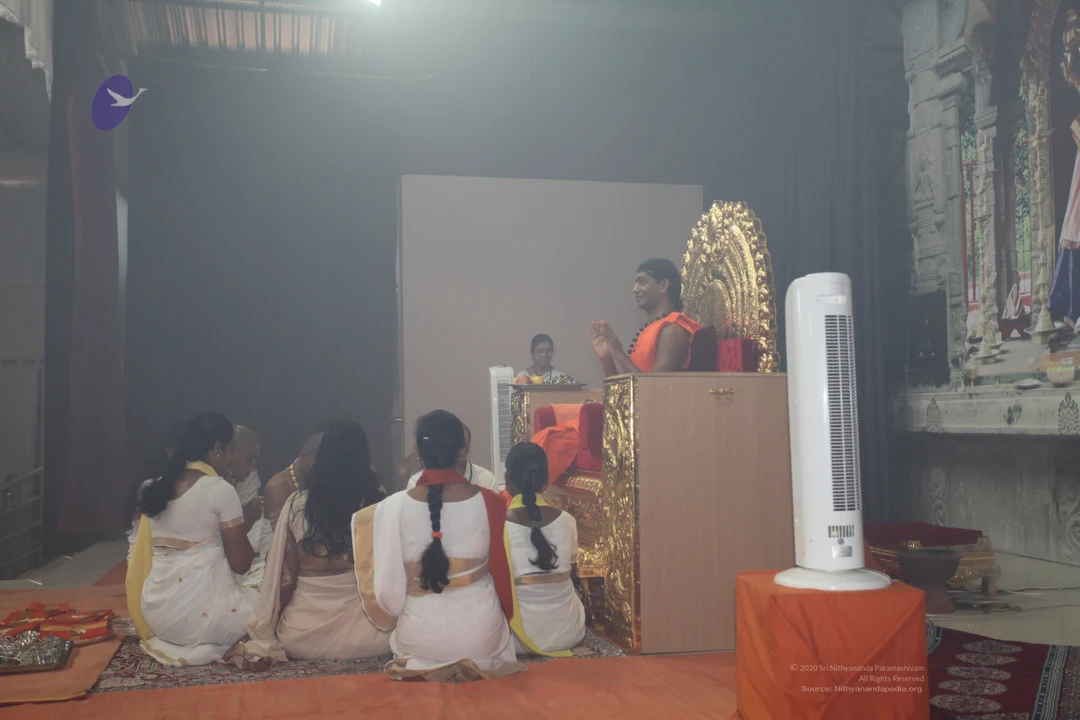
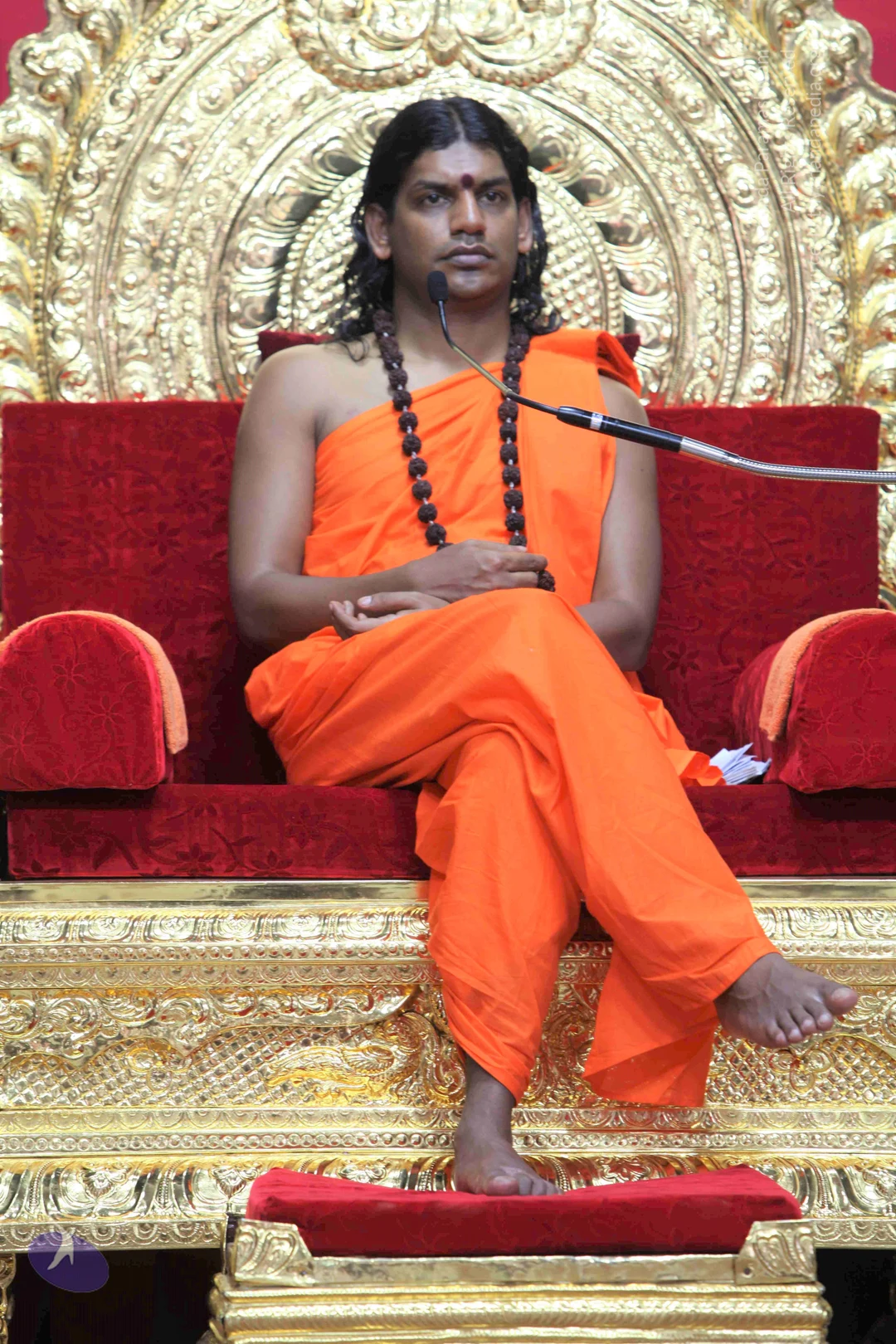
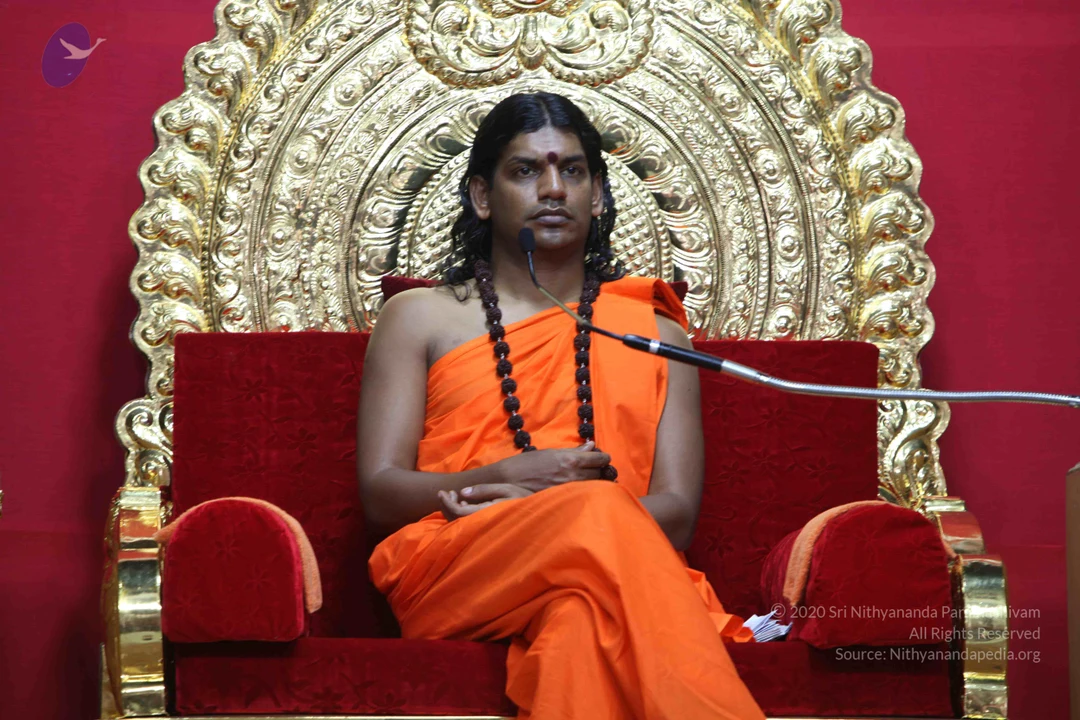
Morning-Satsang

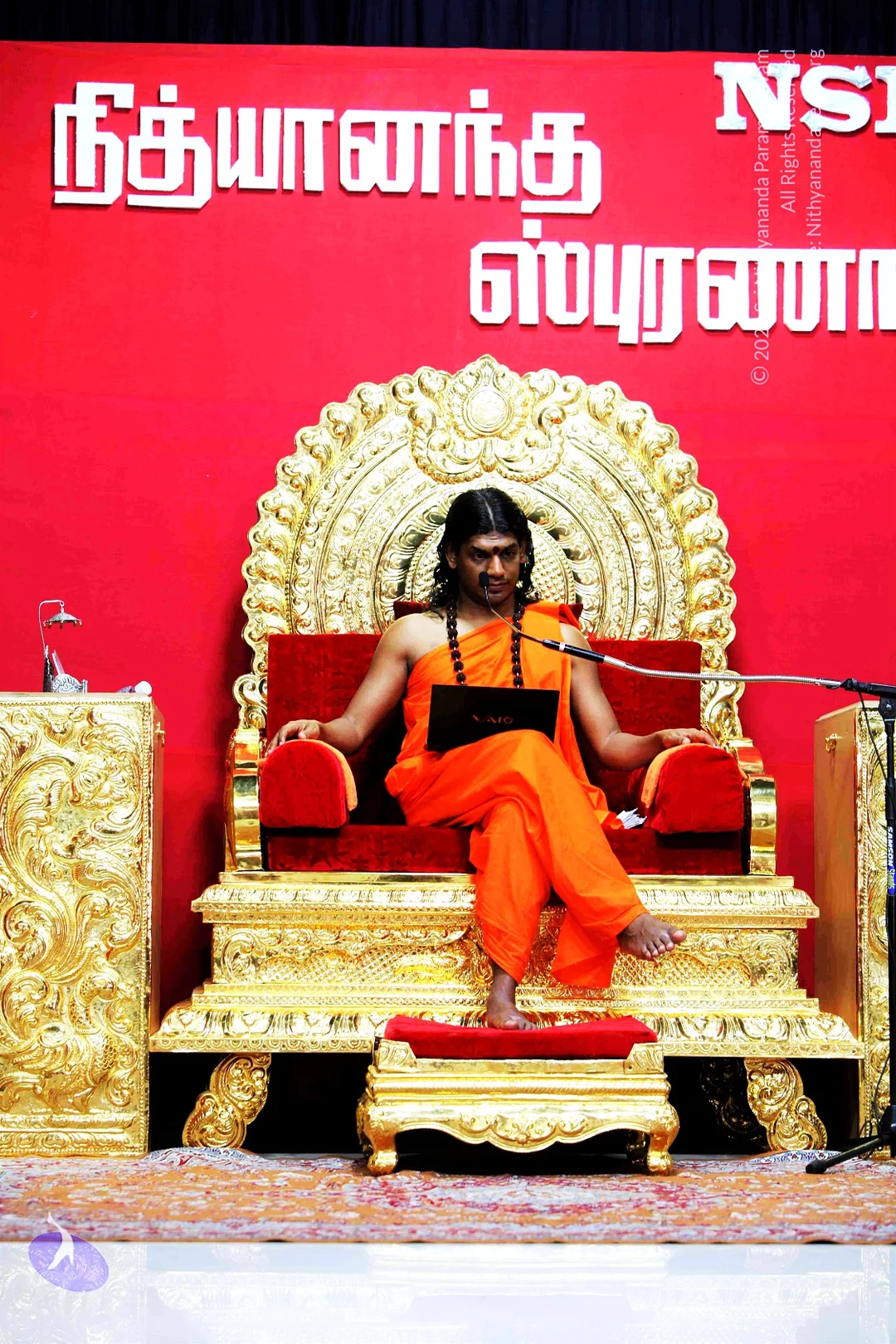
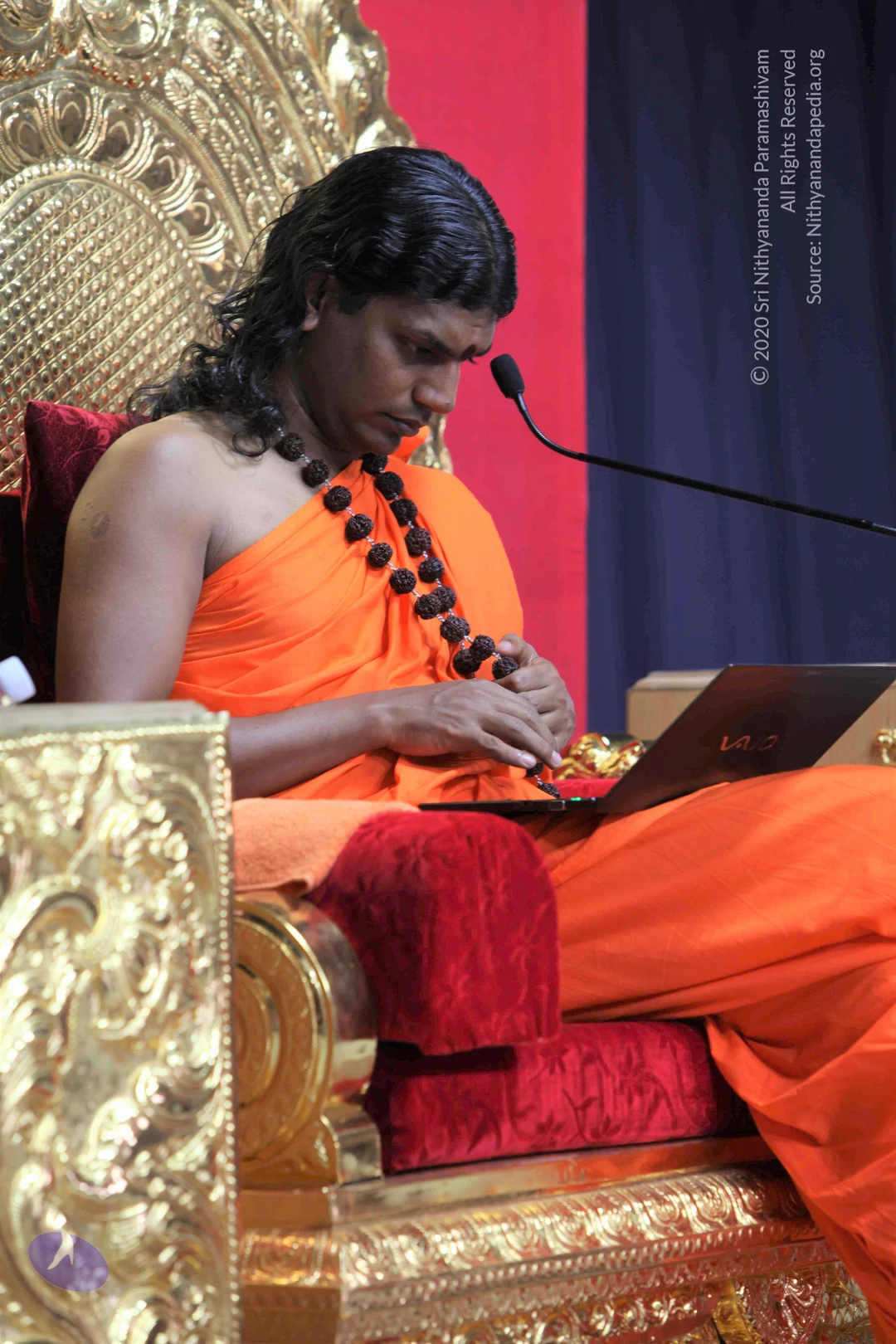
Tamil-Nsp-Swamiji'S-Session

Nithyanandeshwara-Paramashiva-Lingha-Abishekam

Photos Of The Day:

A Brahmachari gives a talk on Intitutive Management at Roorkee Management

Photos Of The Day:

nithyananda-bidadi

1--Swami-Morning-Event

2--Linga-Abishekam

3--NSP-Session

4--VIP-Photos

Photos from this day

View all 538 photos

Panchatapas

1 photoSource gallery
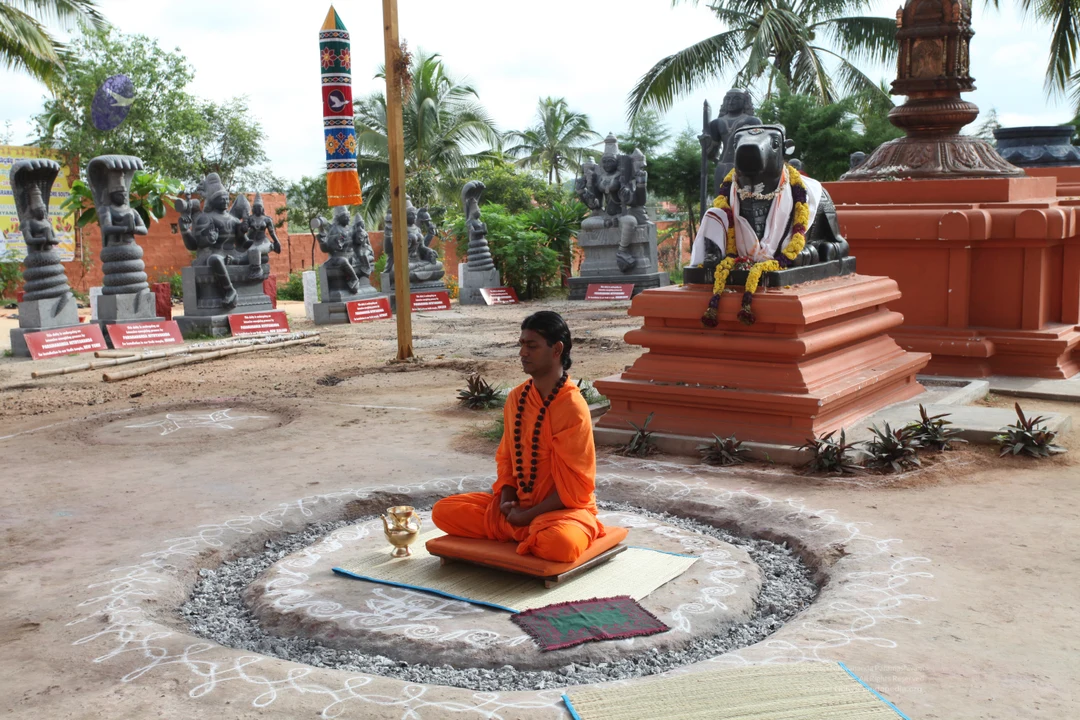
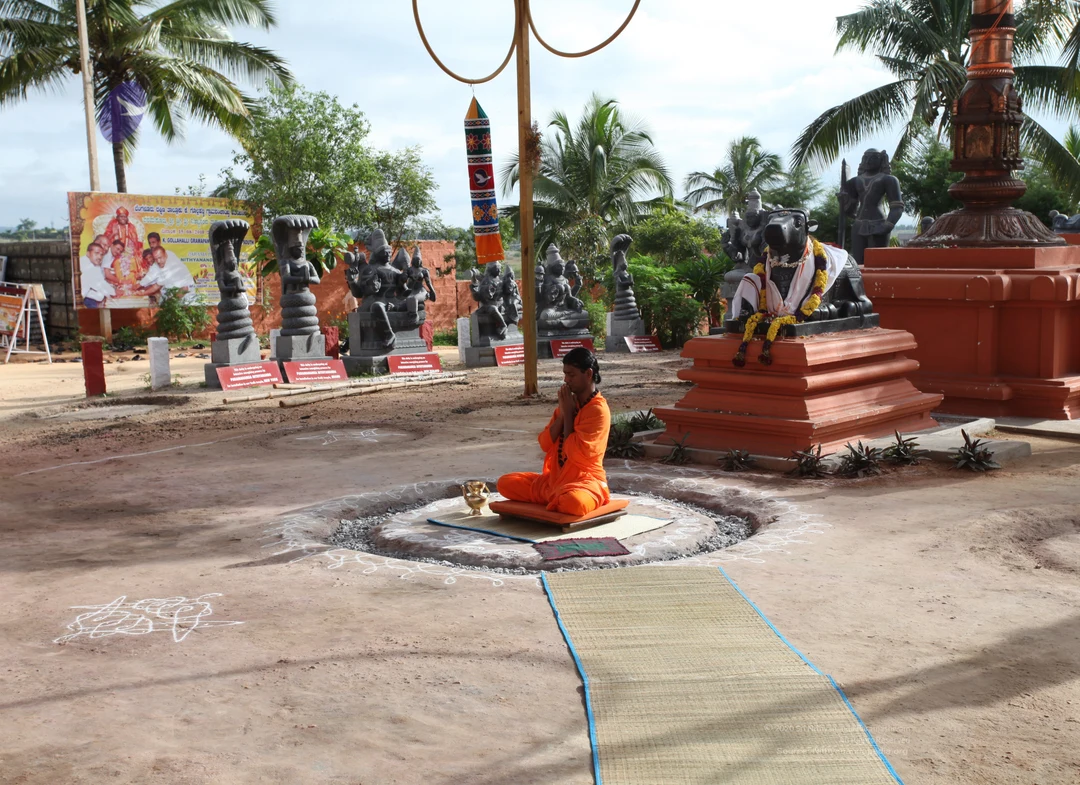
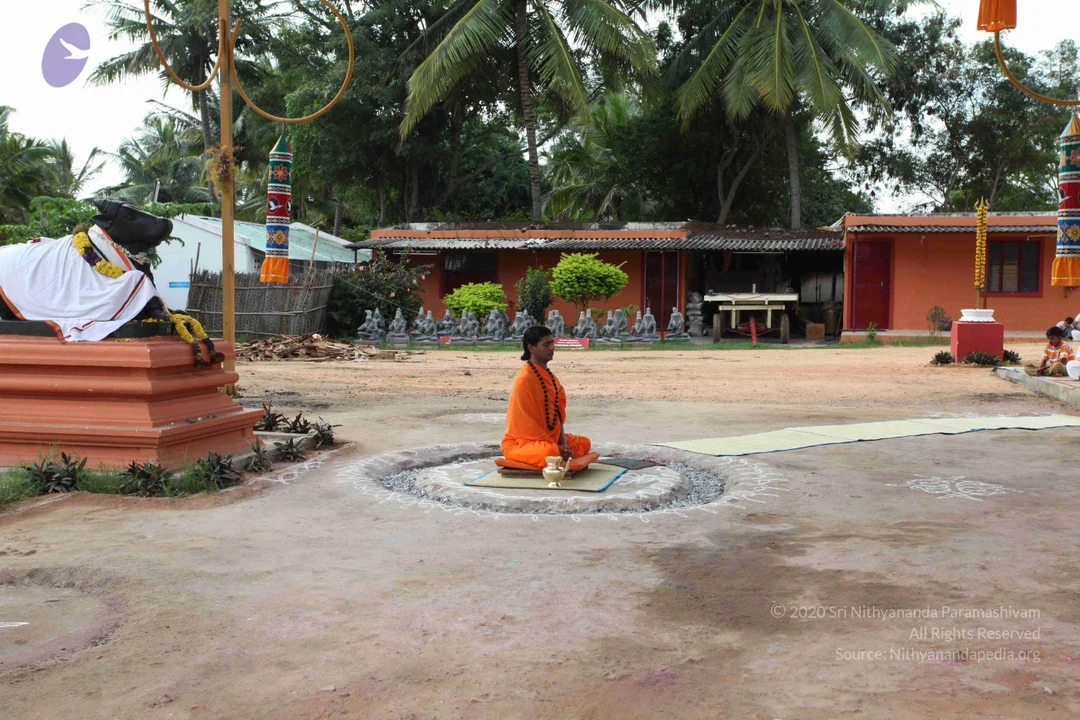
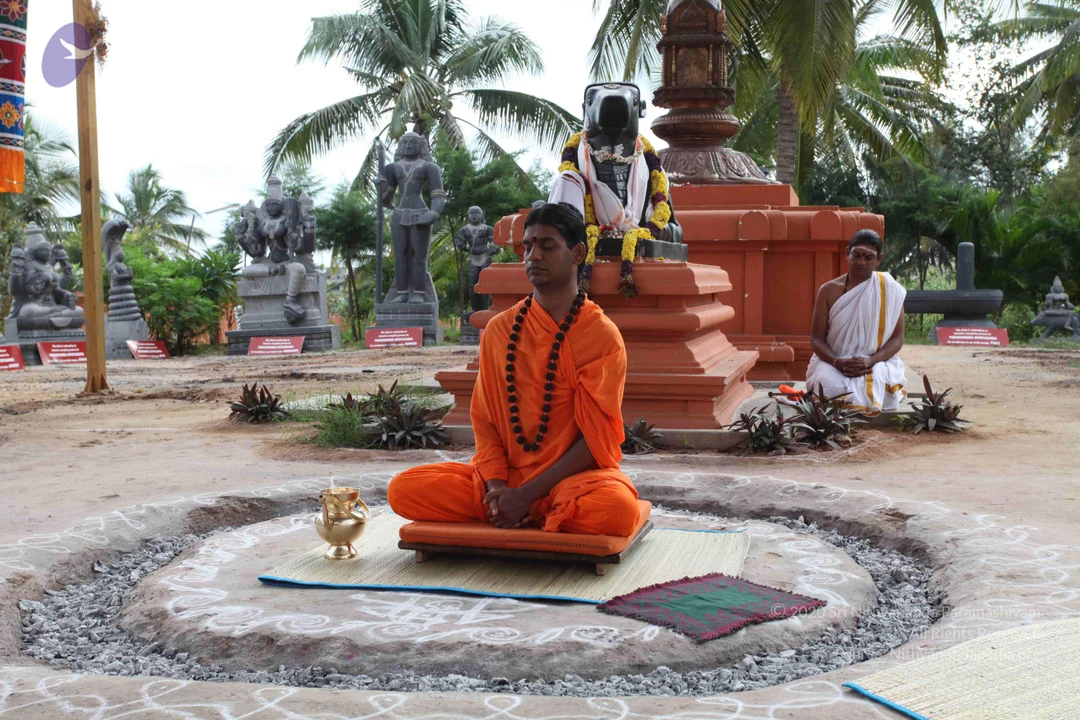
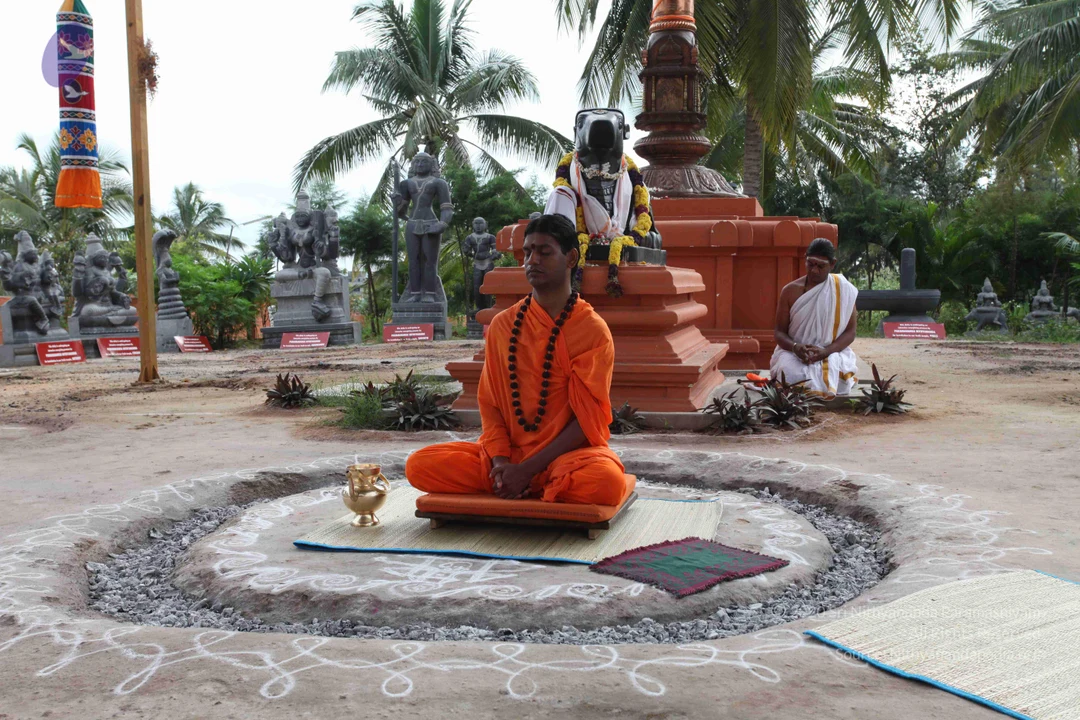
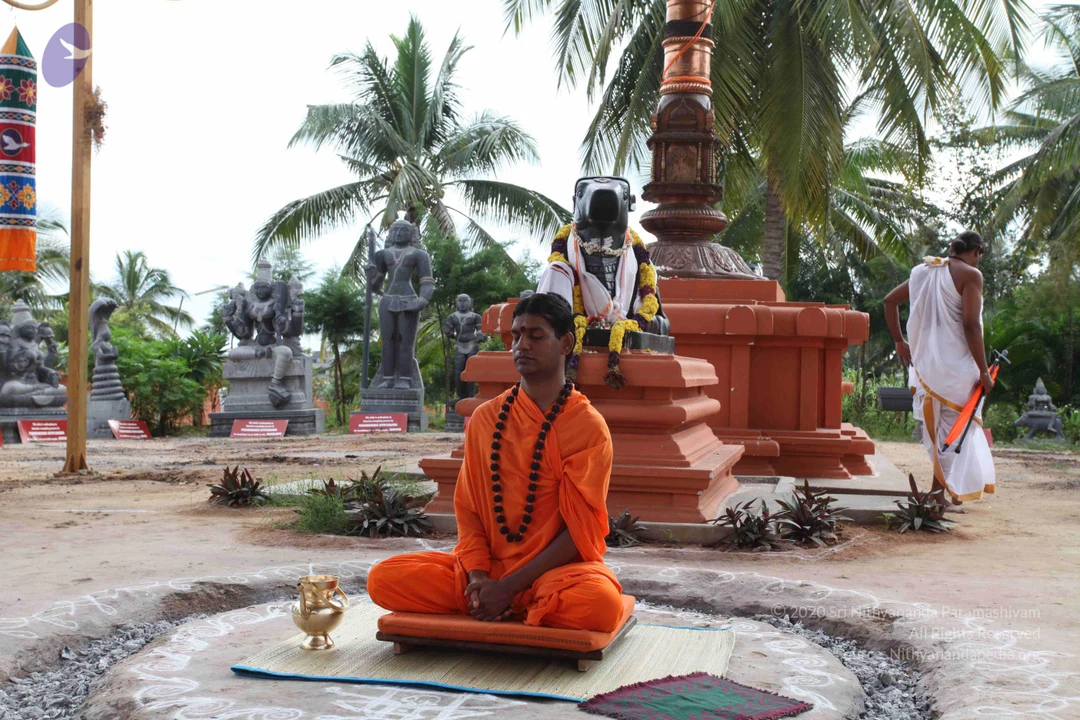
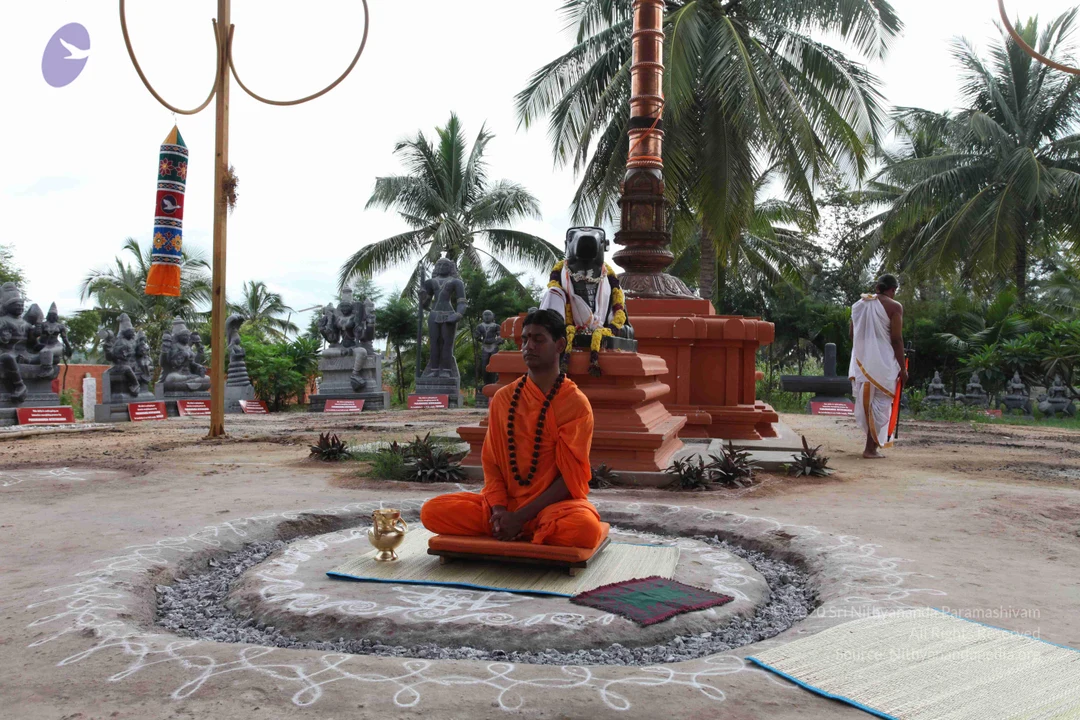
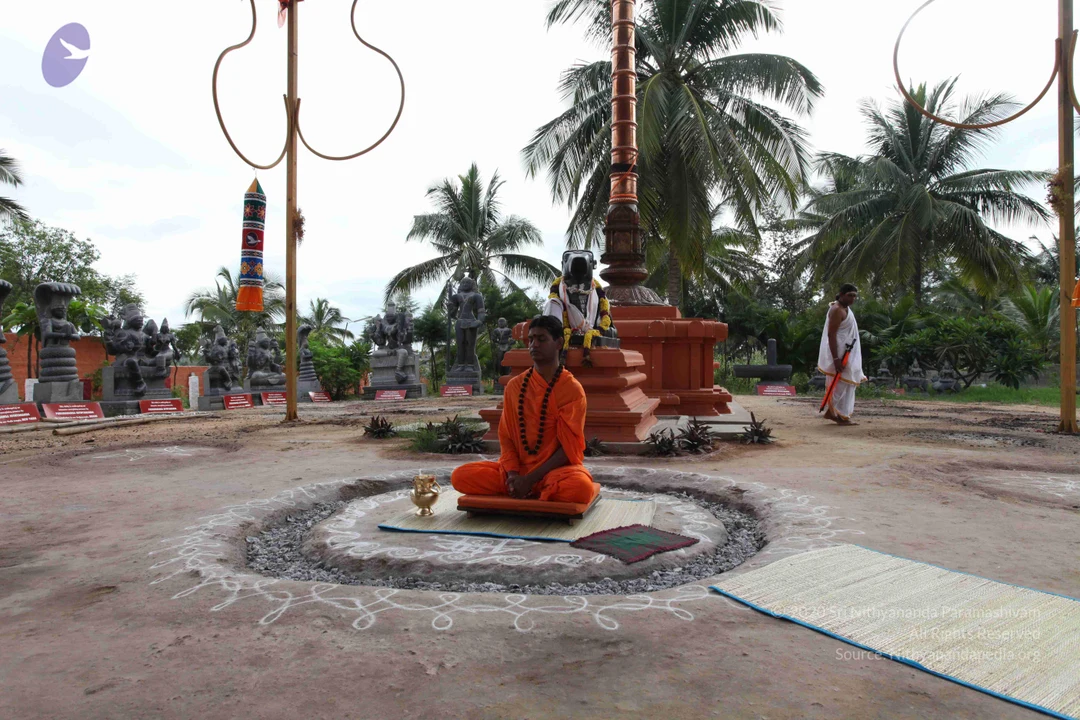
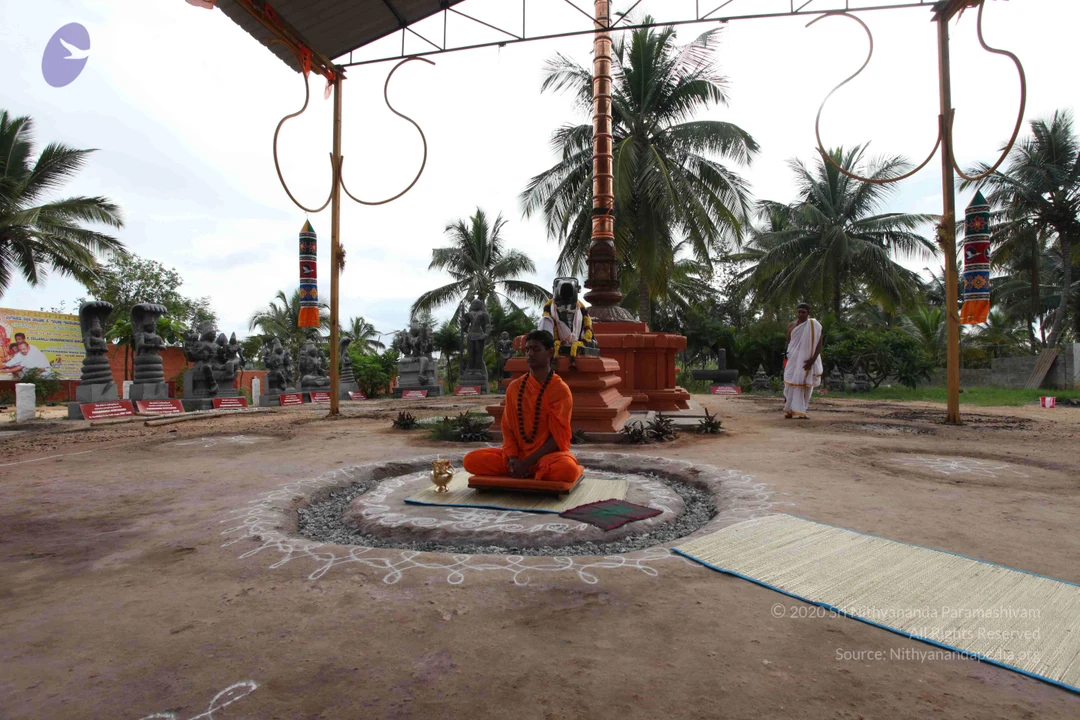
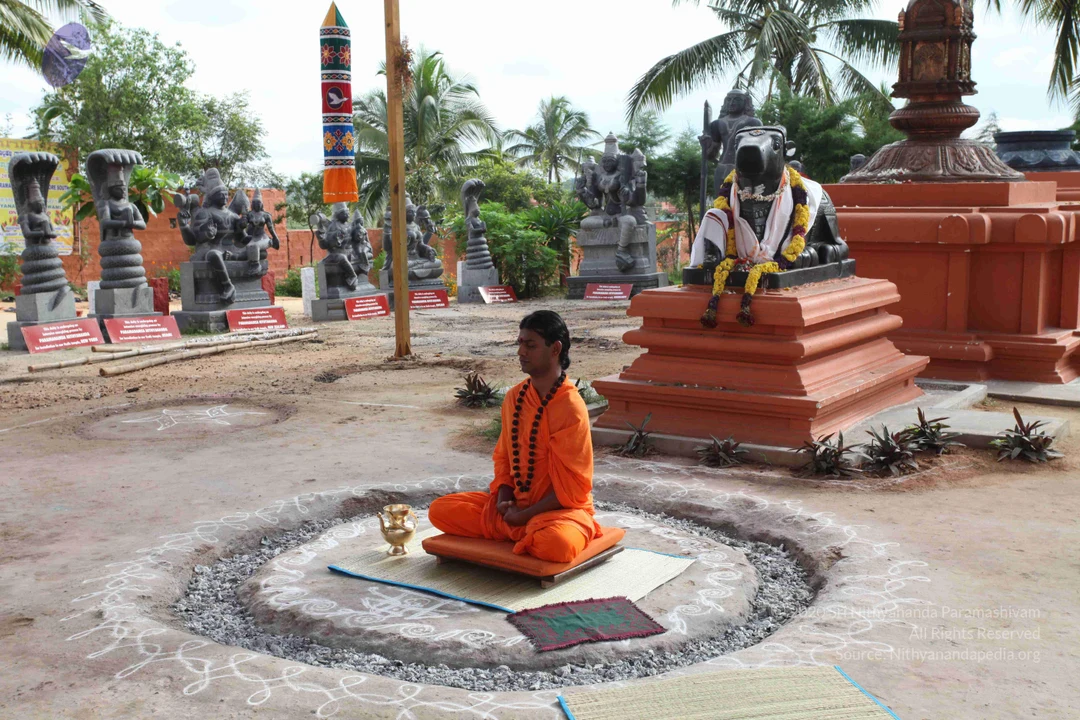
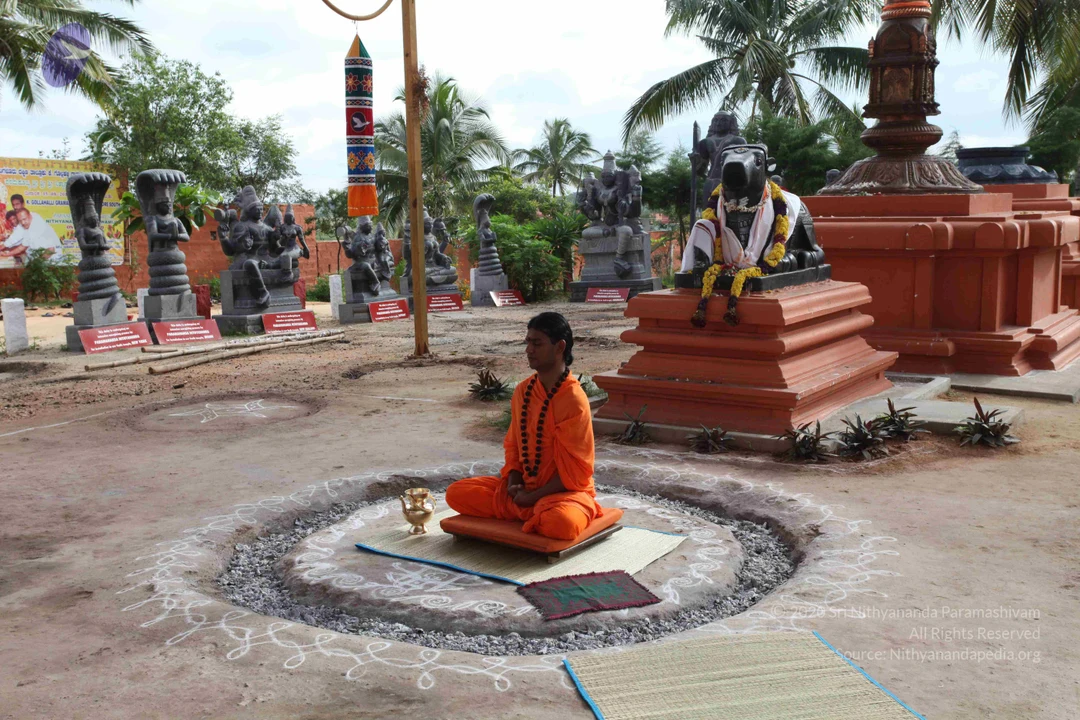
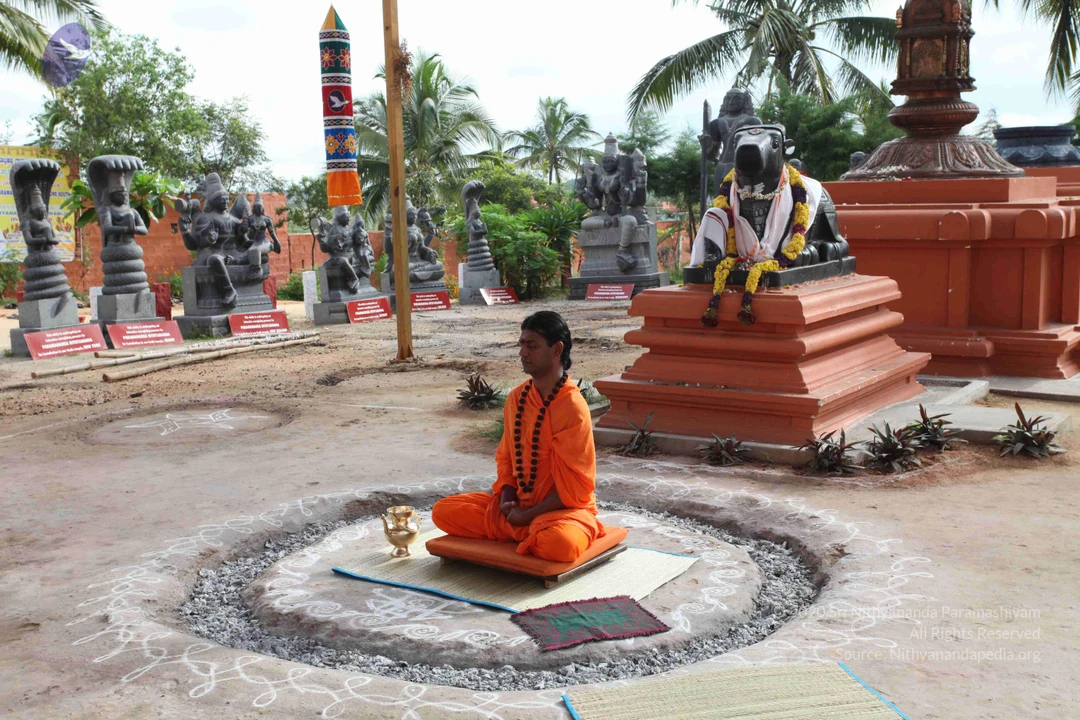
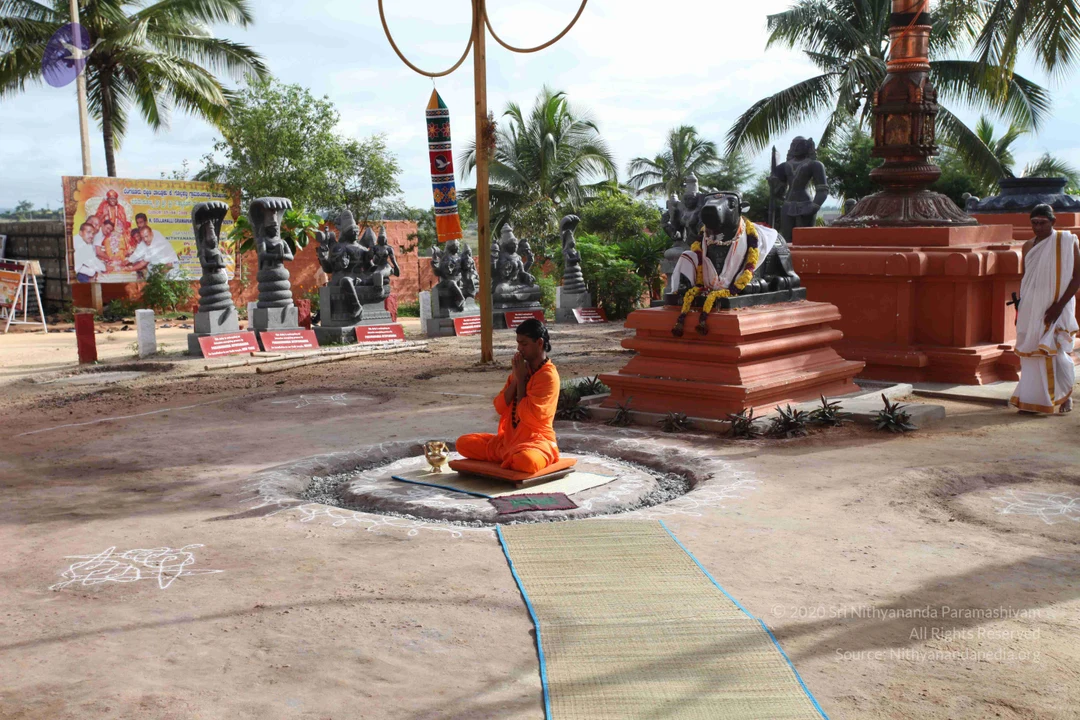
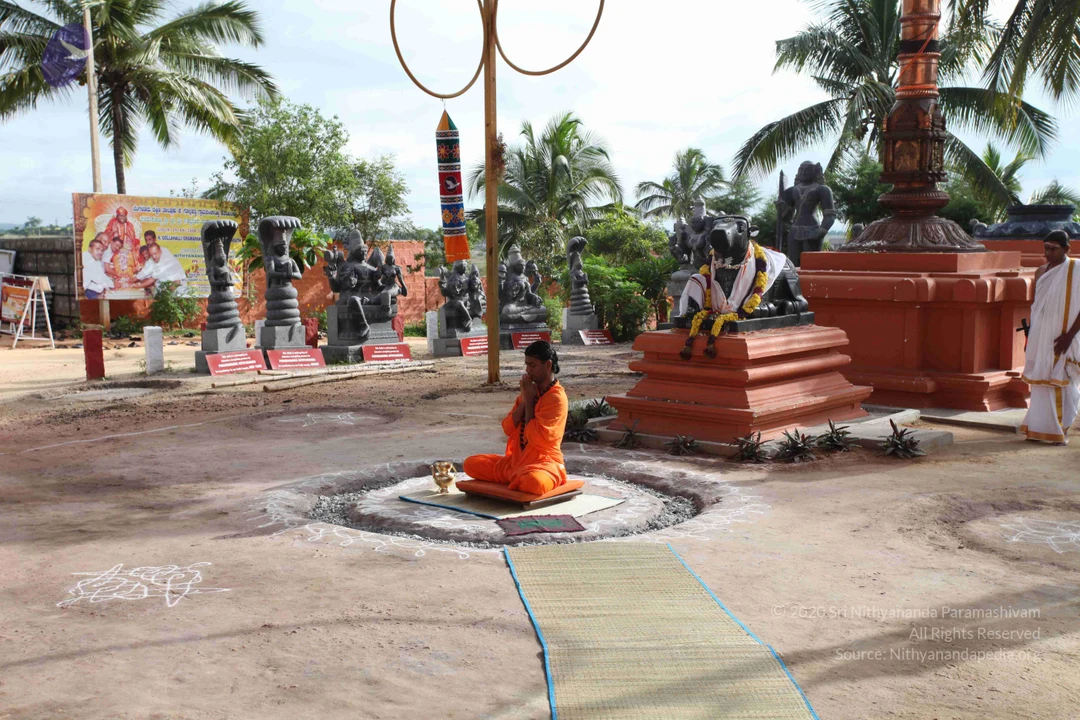
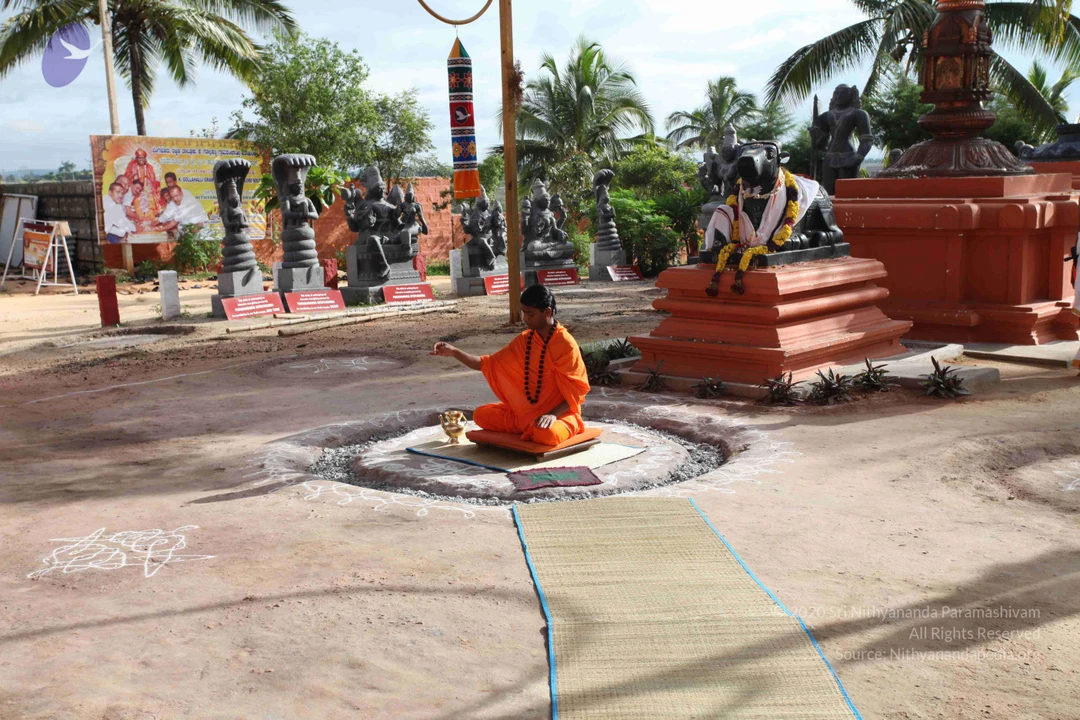
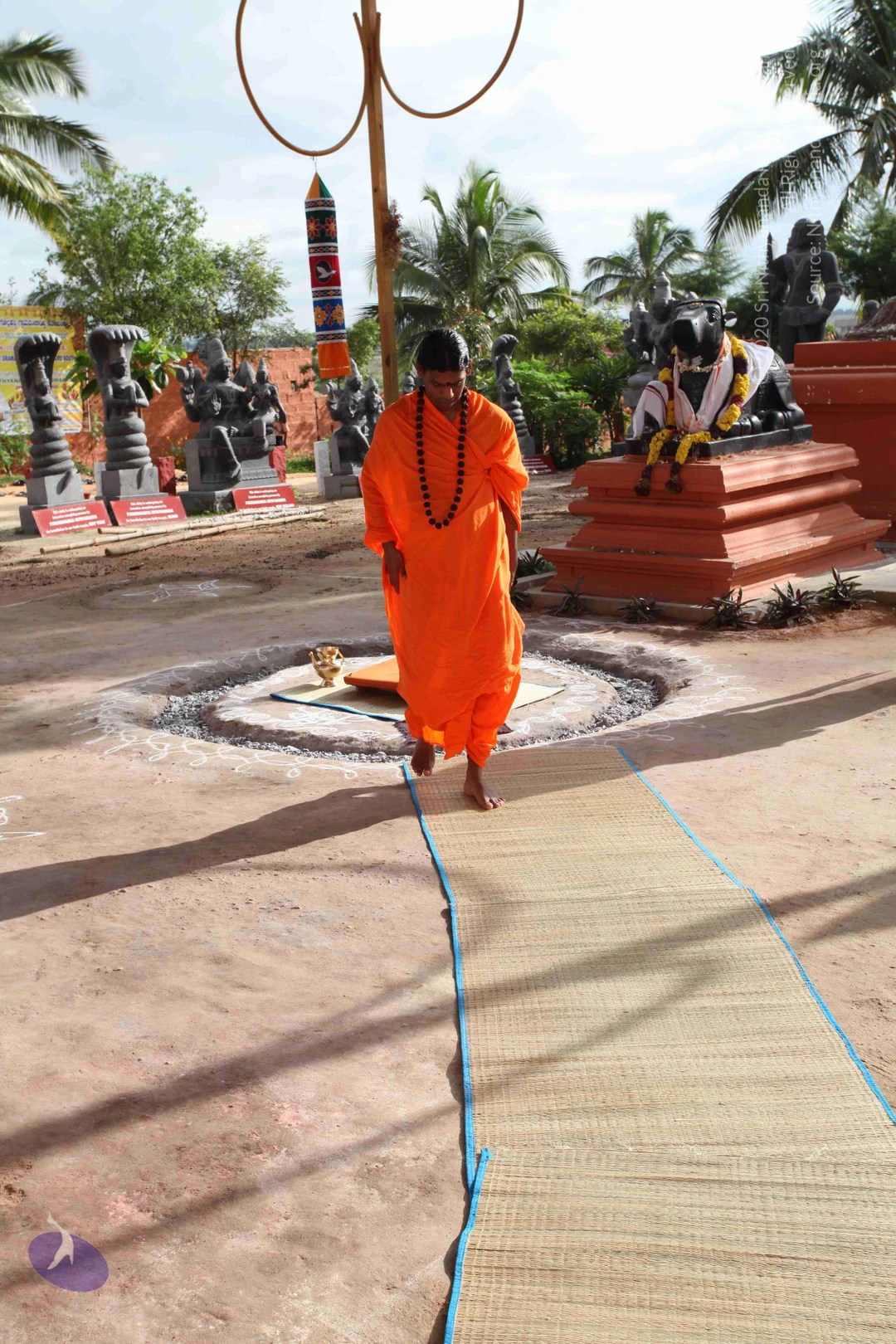
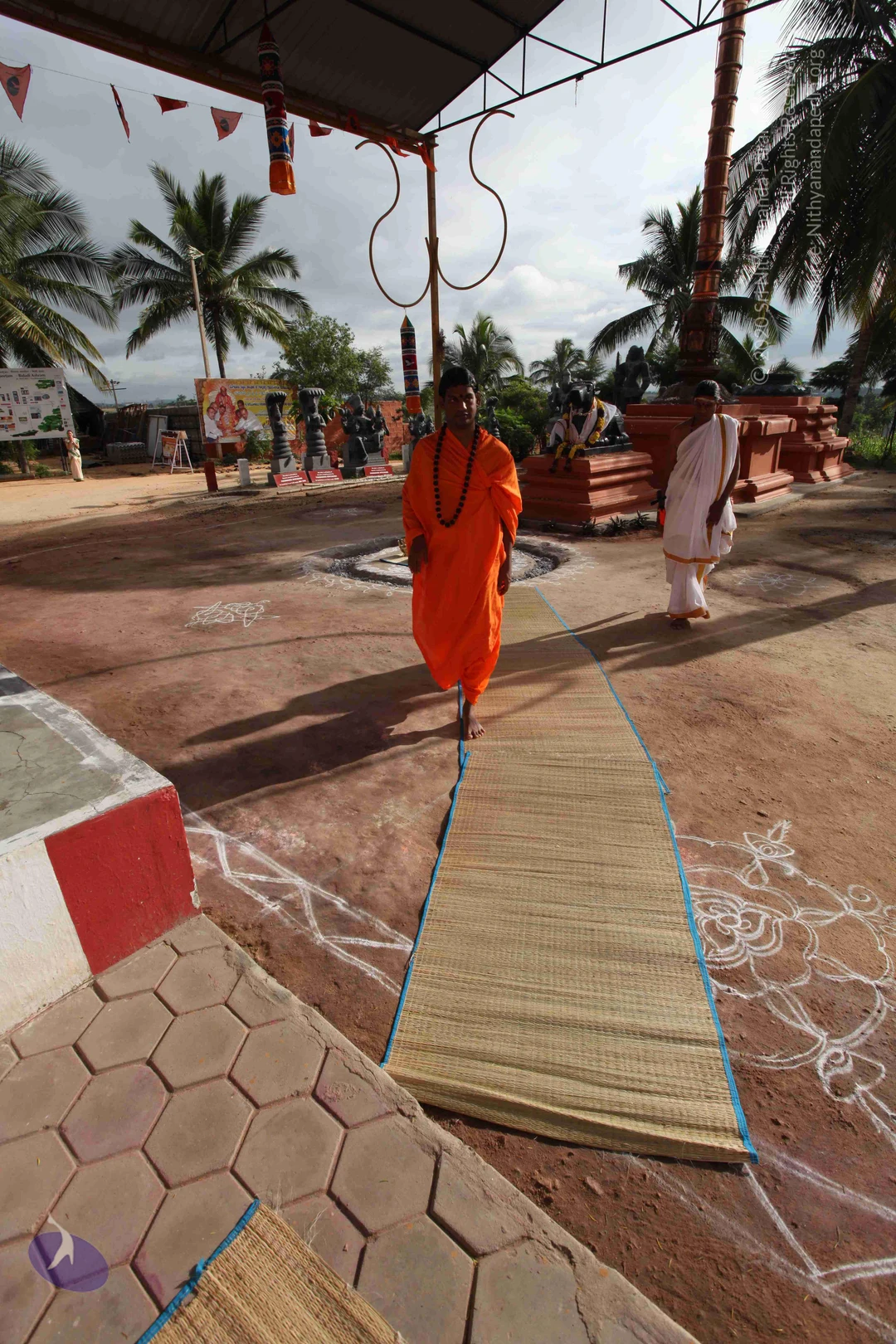
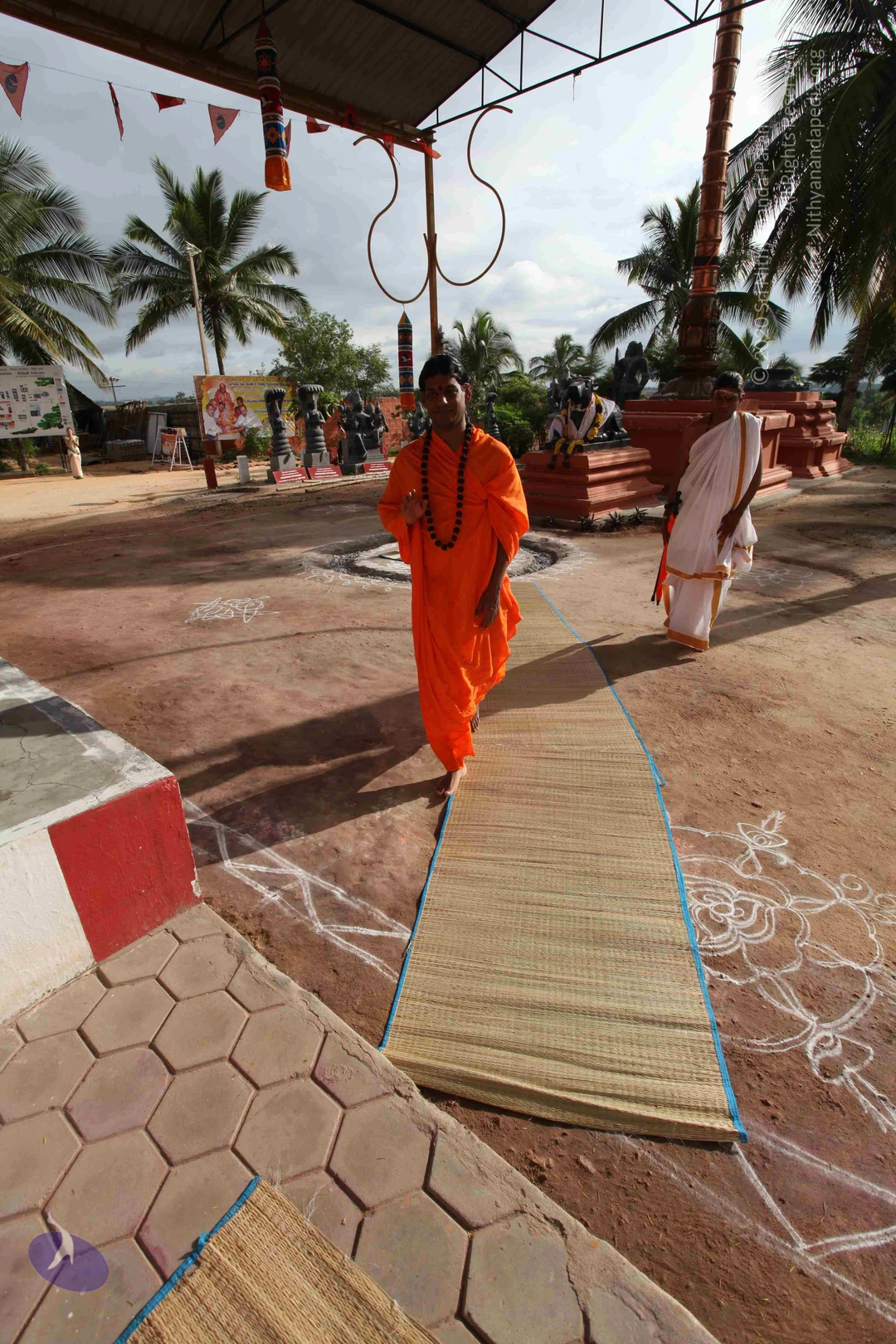
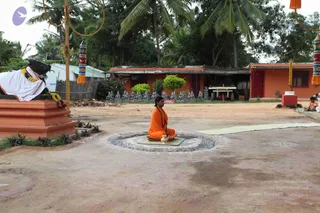
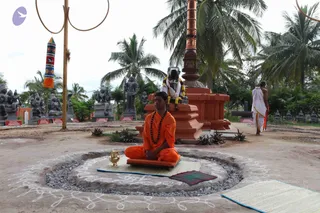
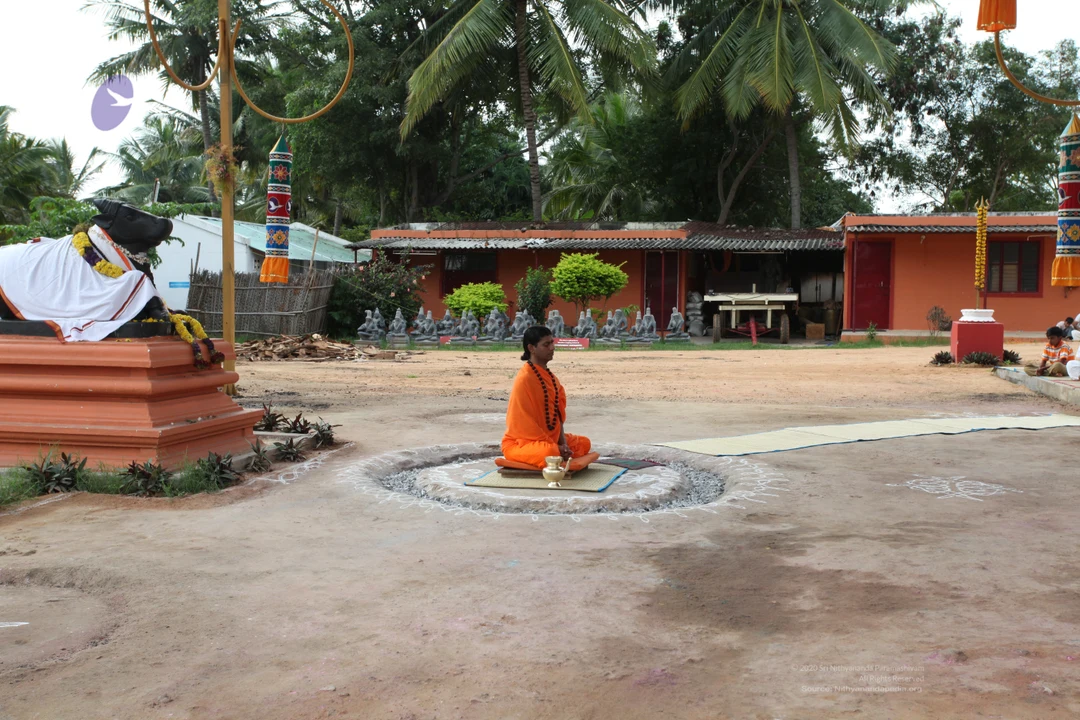
Outdoor temple courtyard with a seated person in orange robes, hands pressed together in prayer, sitting on an orange cushion beside a brass vessel inside a circular stone-rimmed platform. A woman with hair tied back sits here. A woven mat with blue edging leads toward her. Behind her a row of dark stone sculptures stands, including a seated Nandi bull draped with white cloth and yellow-orange flower garlands. A tall copper-coloured pillar and a wooden stand with a hanging orange-and-blue cloth decoration rise nearby. Palm trees surround the courtyard, and a printed banner on the left shows several figures in white and orange clothing.

Paadapooja
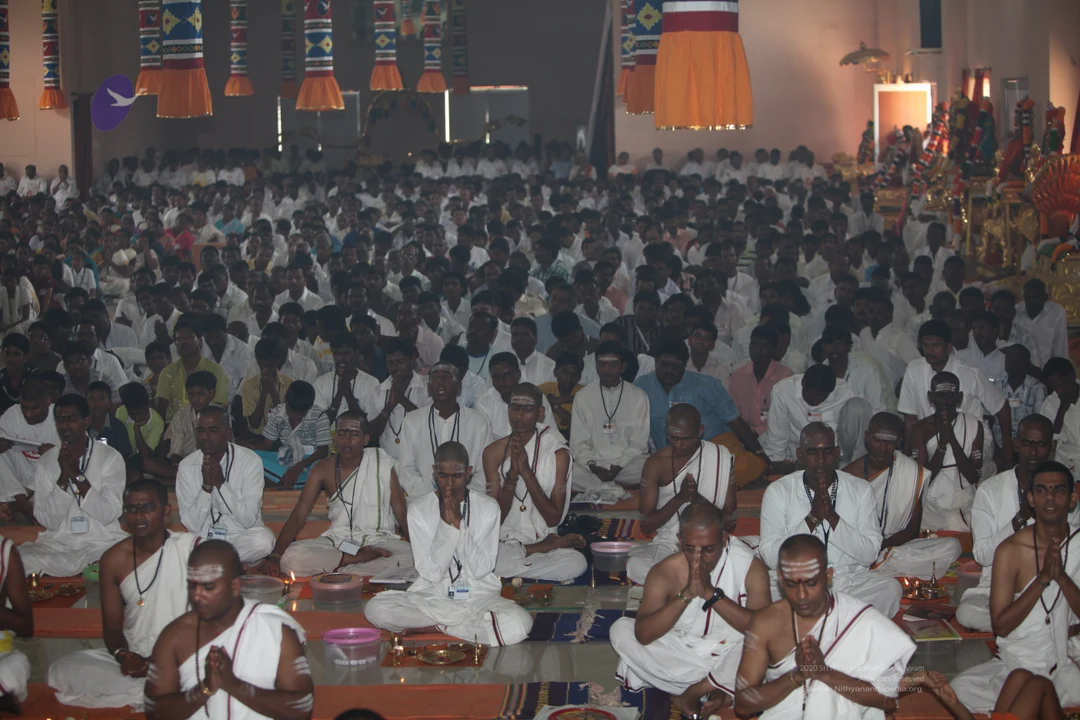
1 photoSource gallery
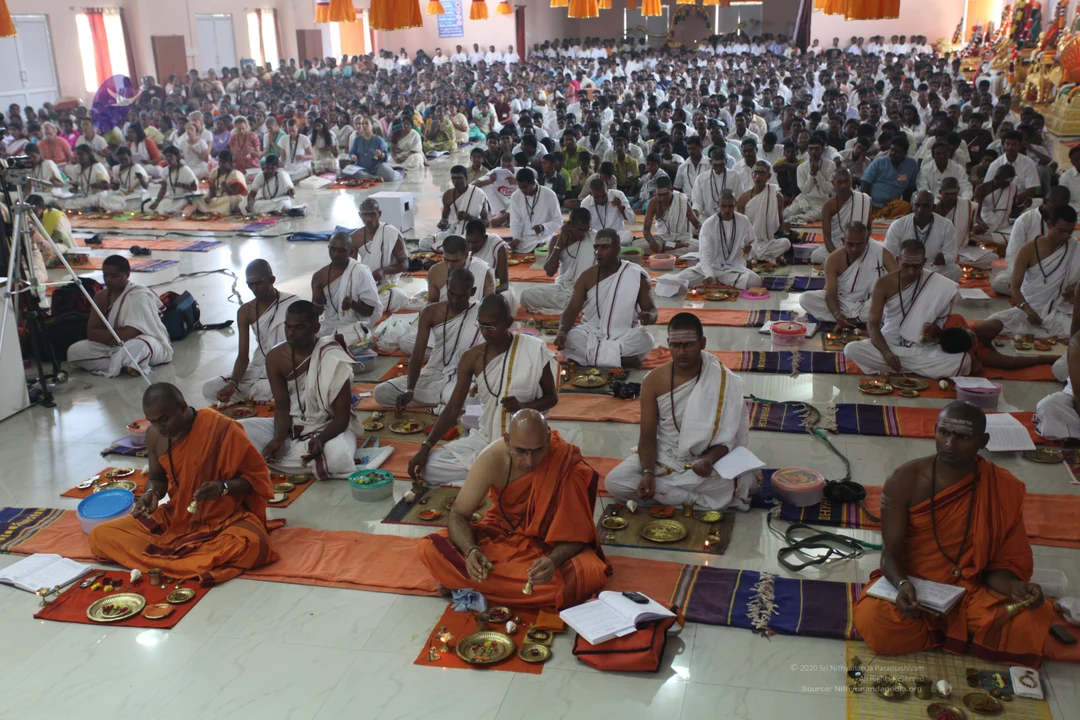
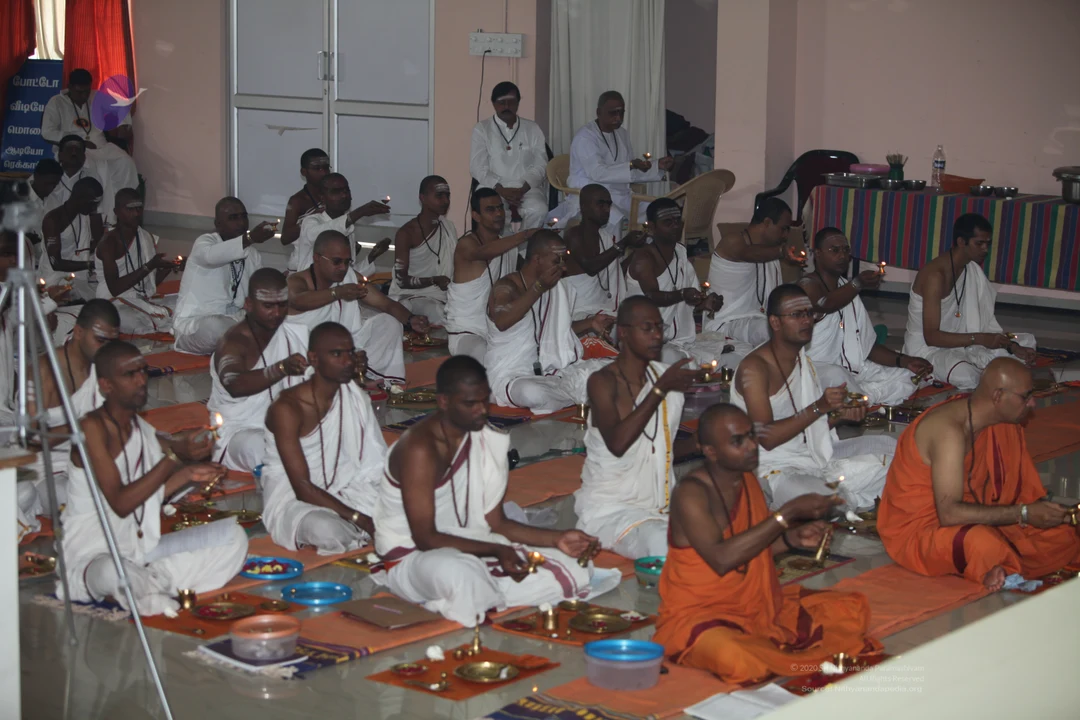
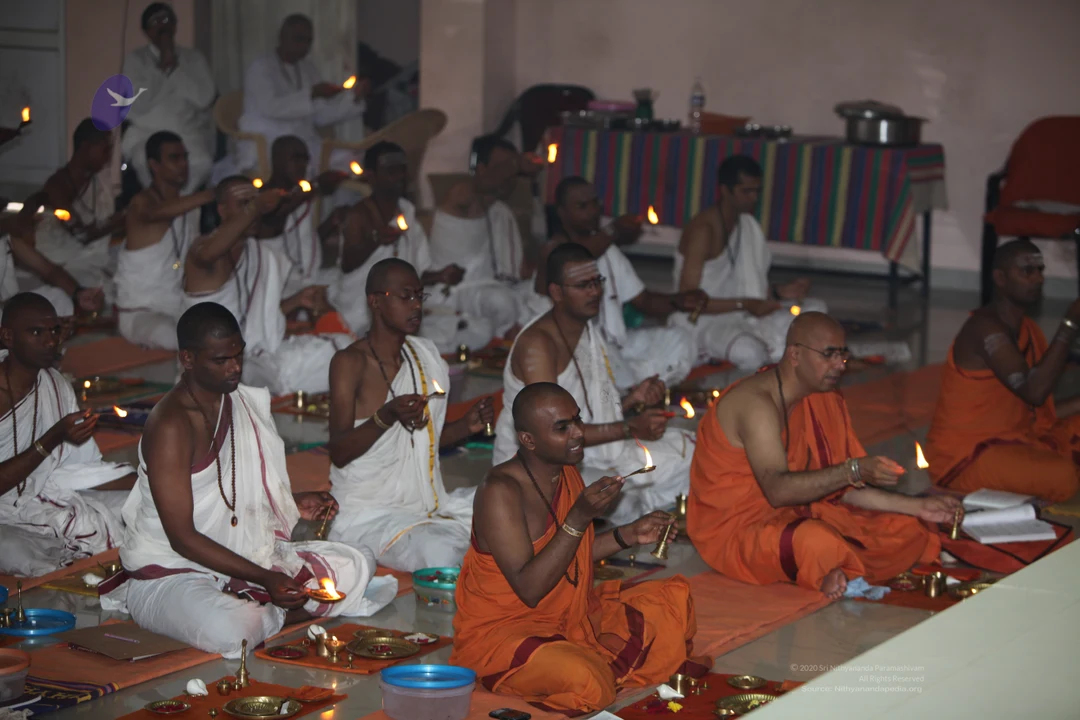
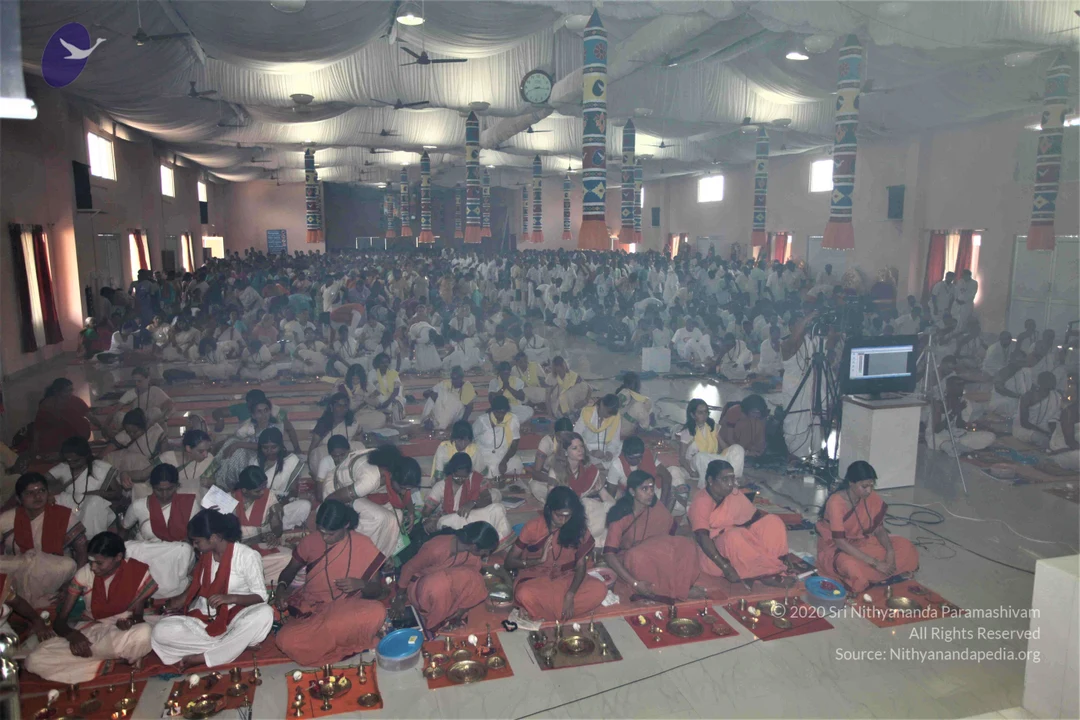
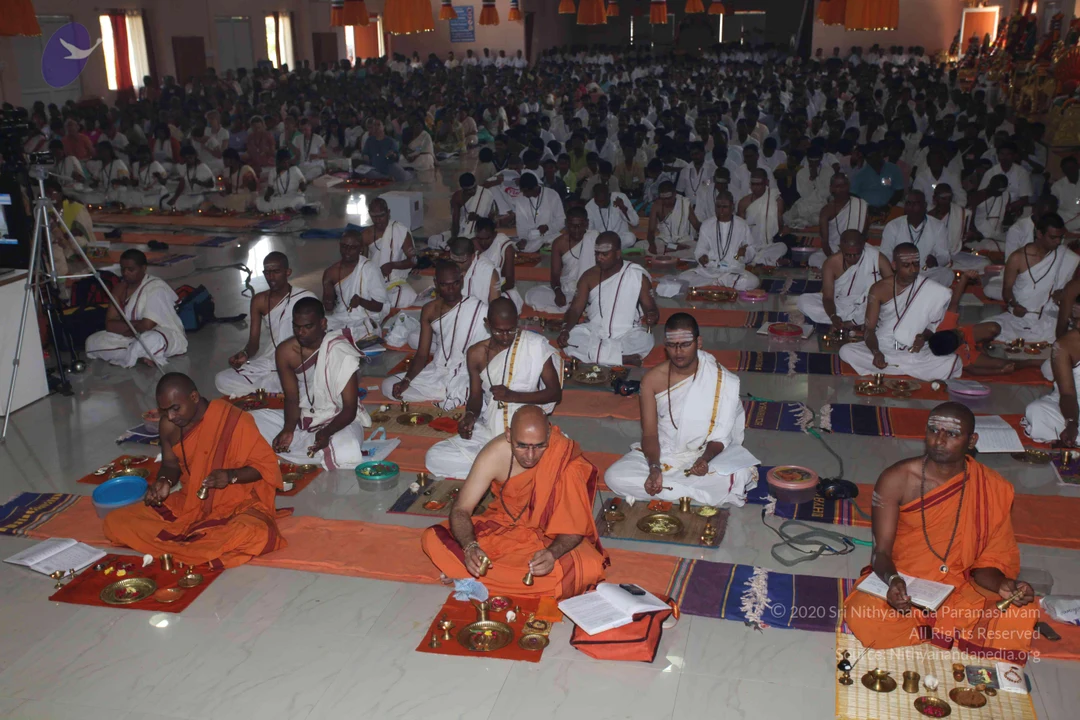
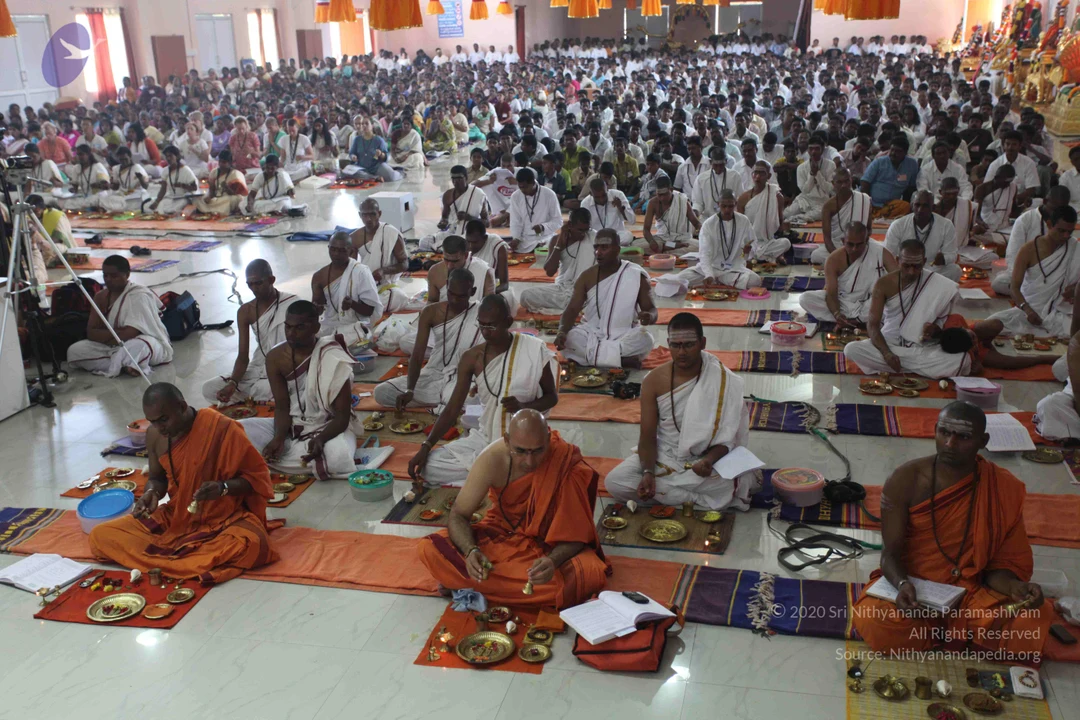
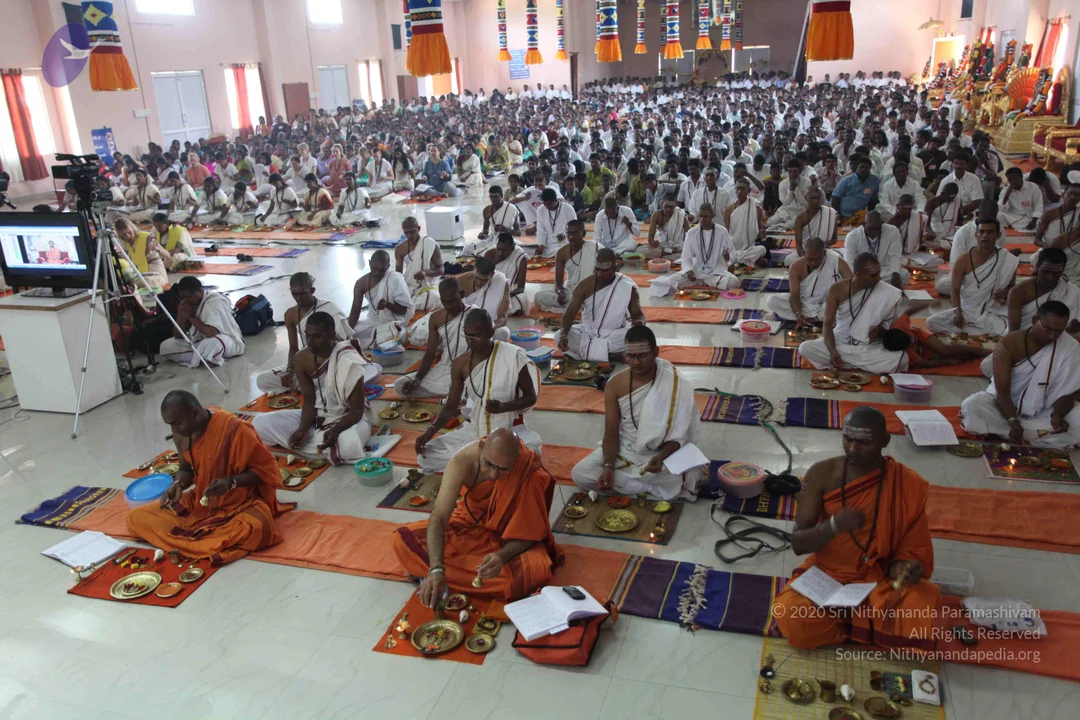
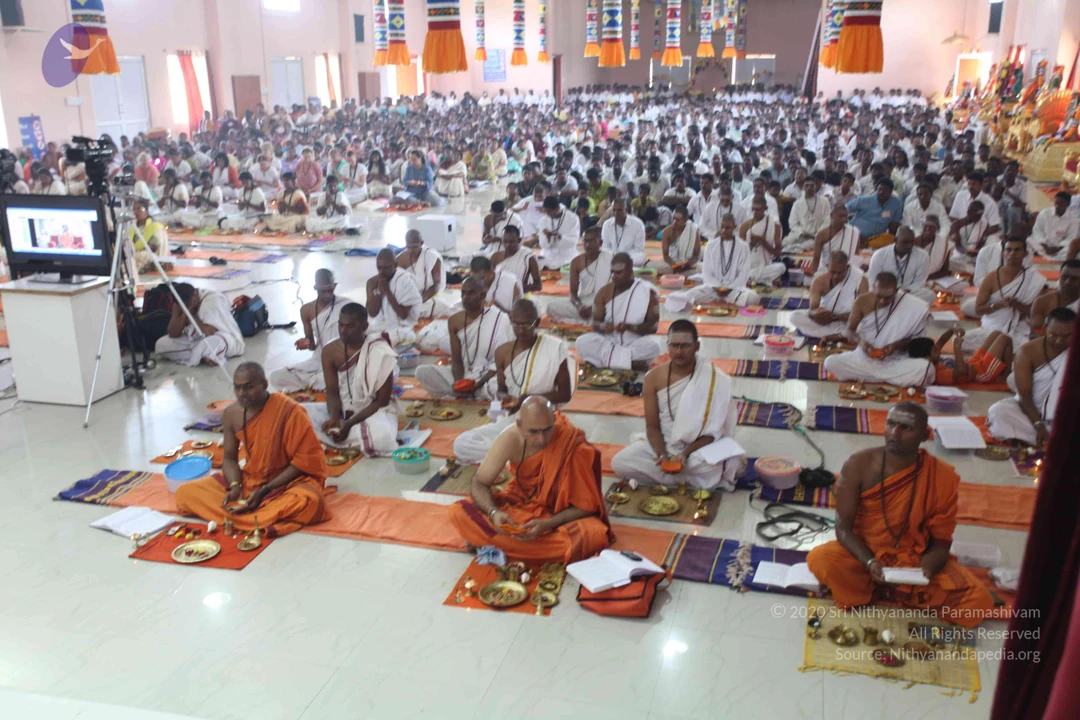
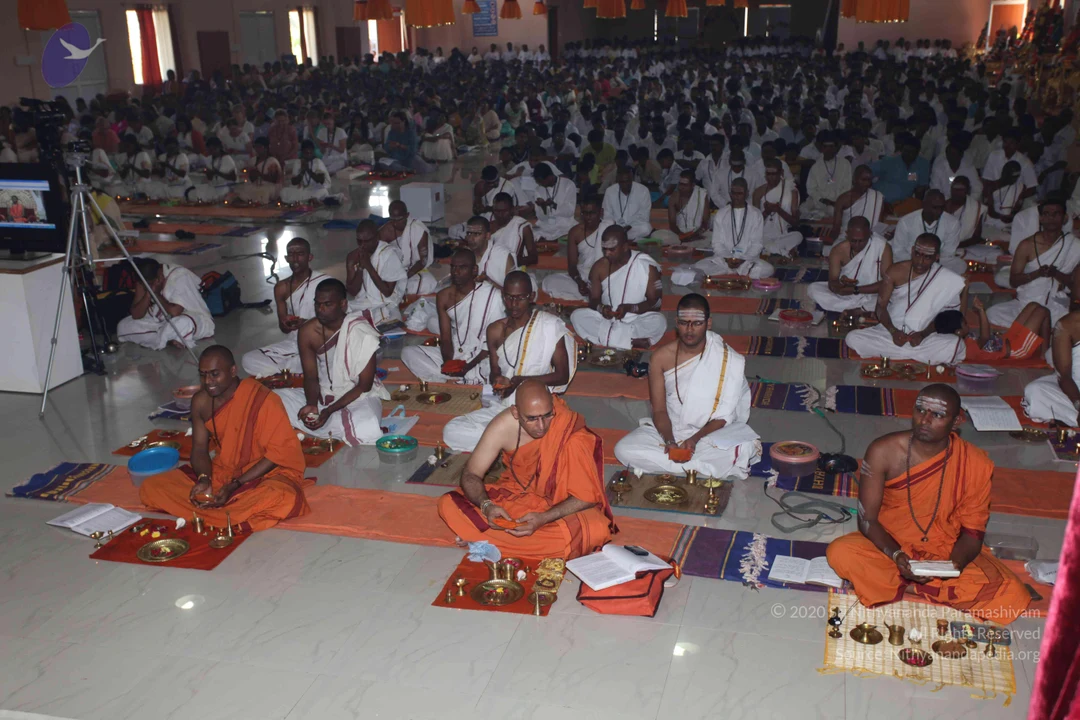
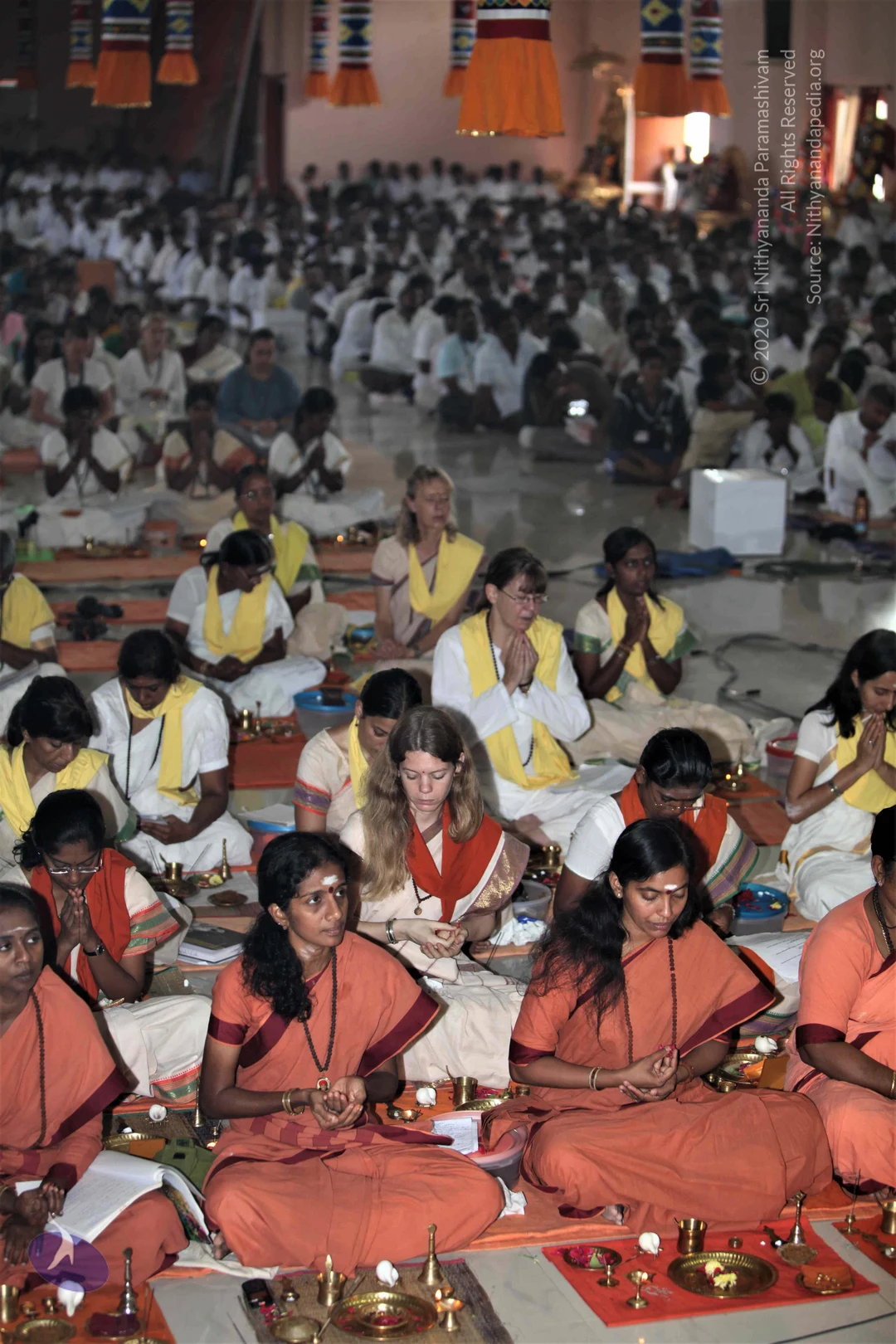
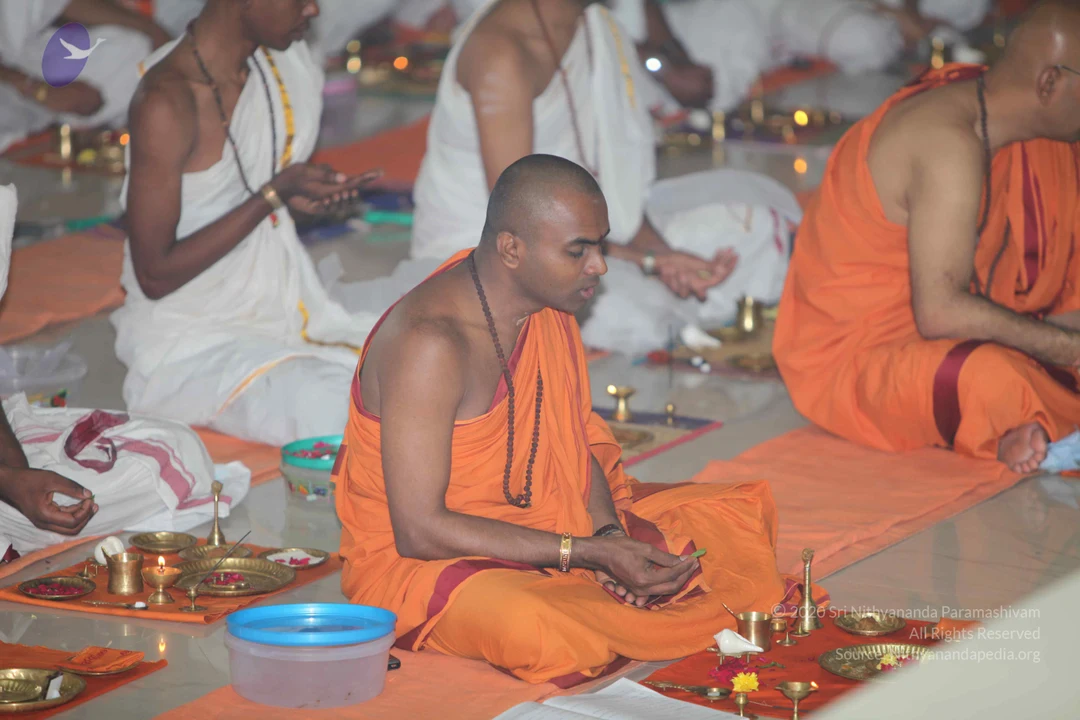
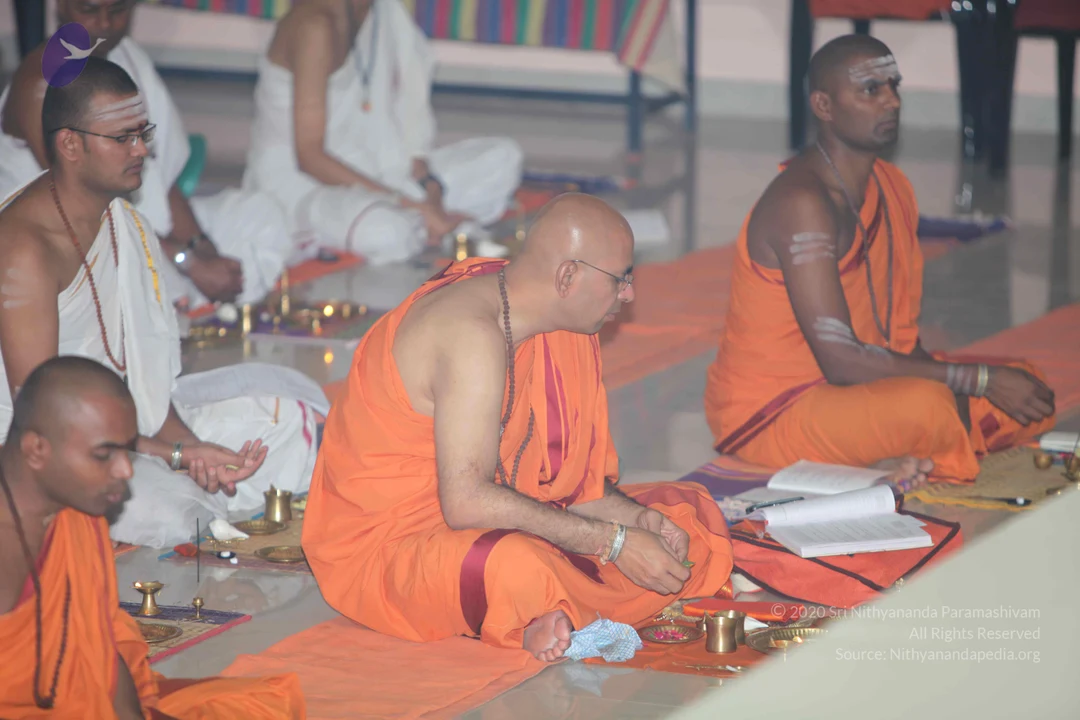
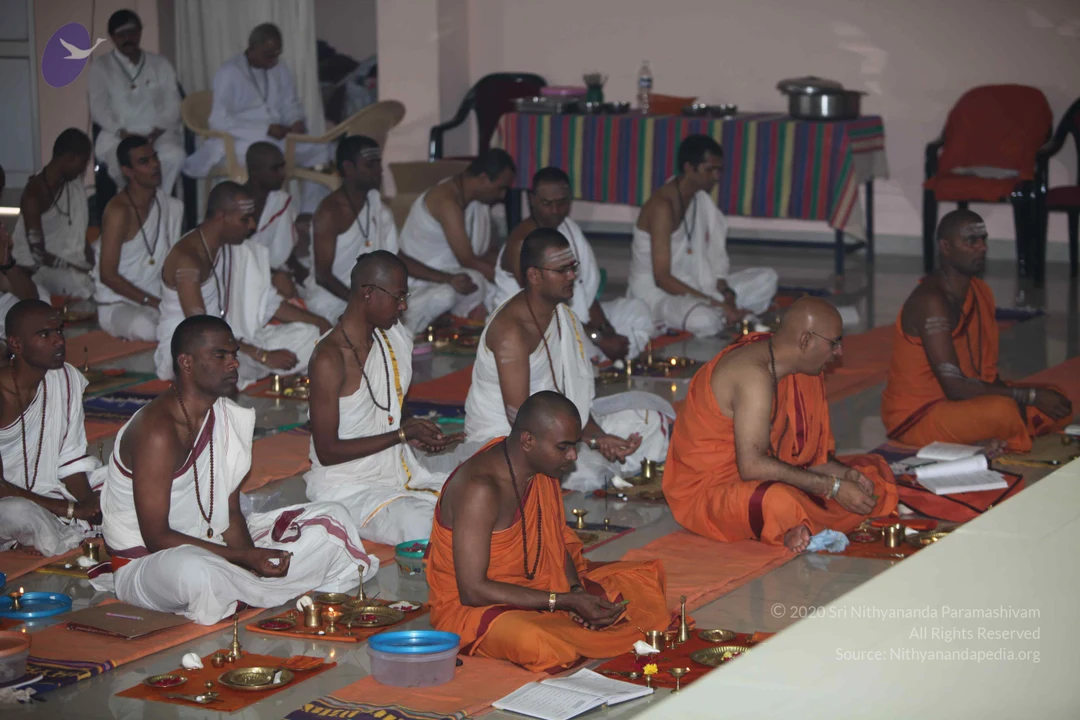
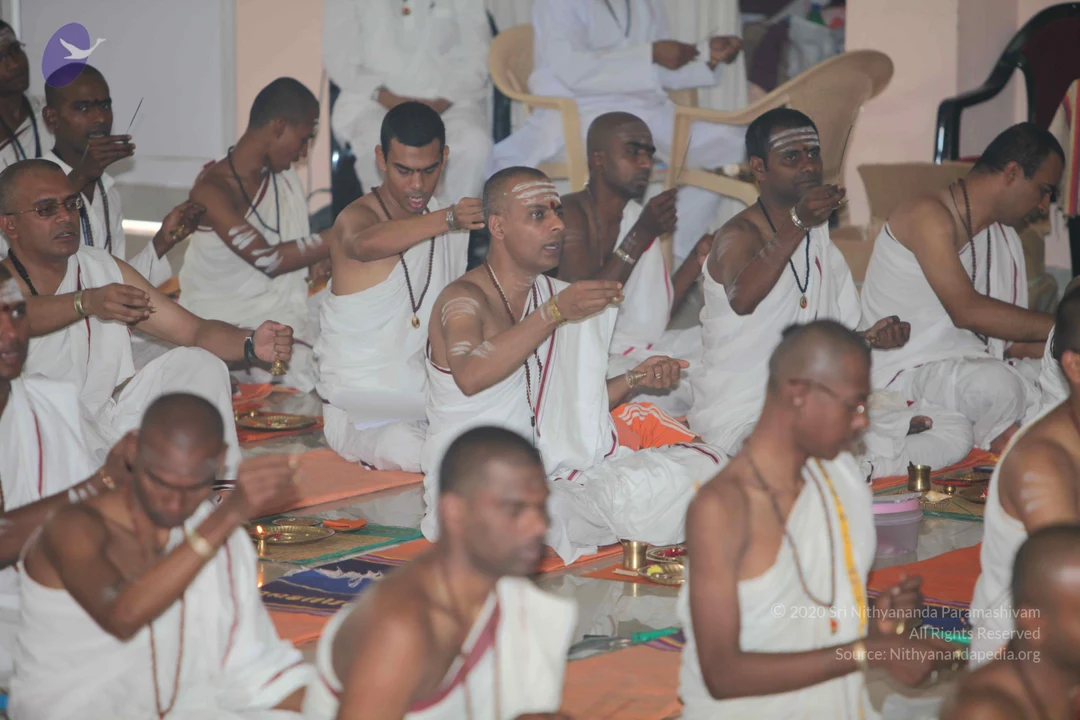
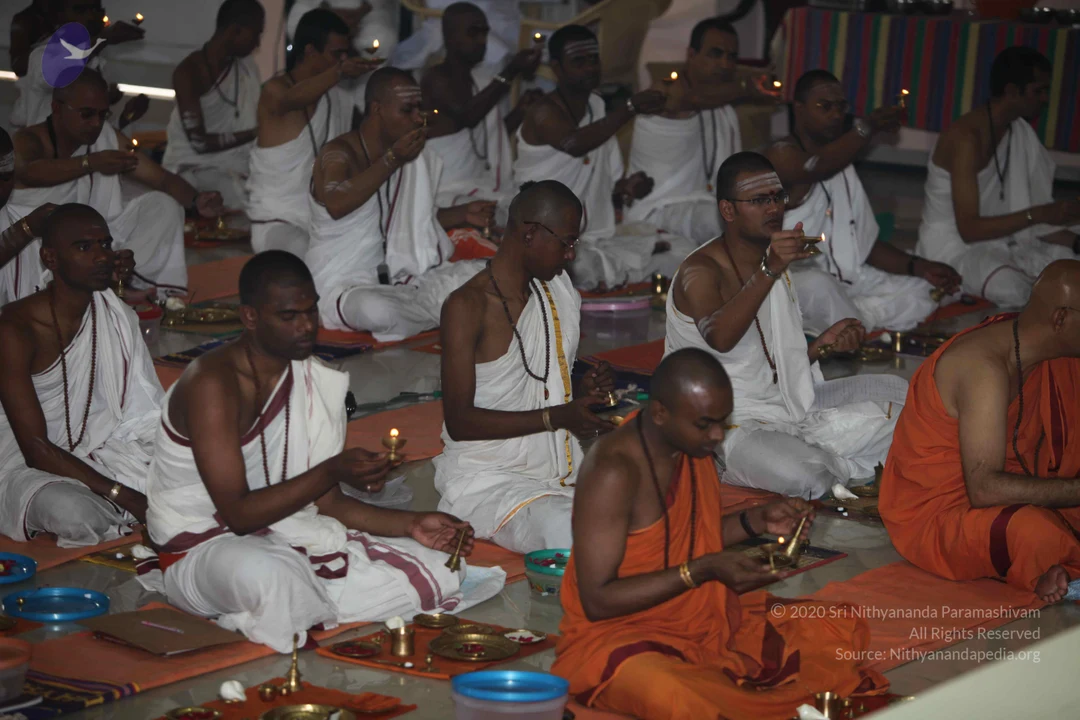
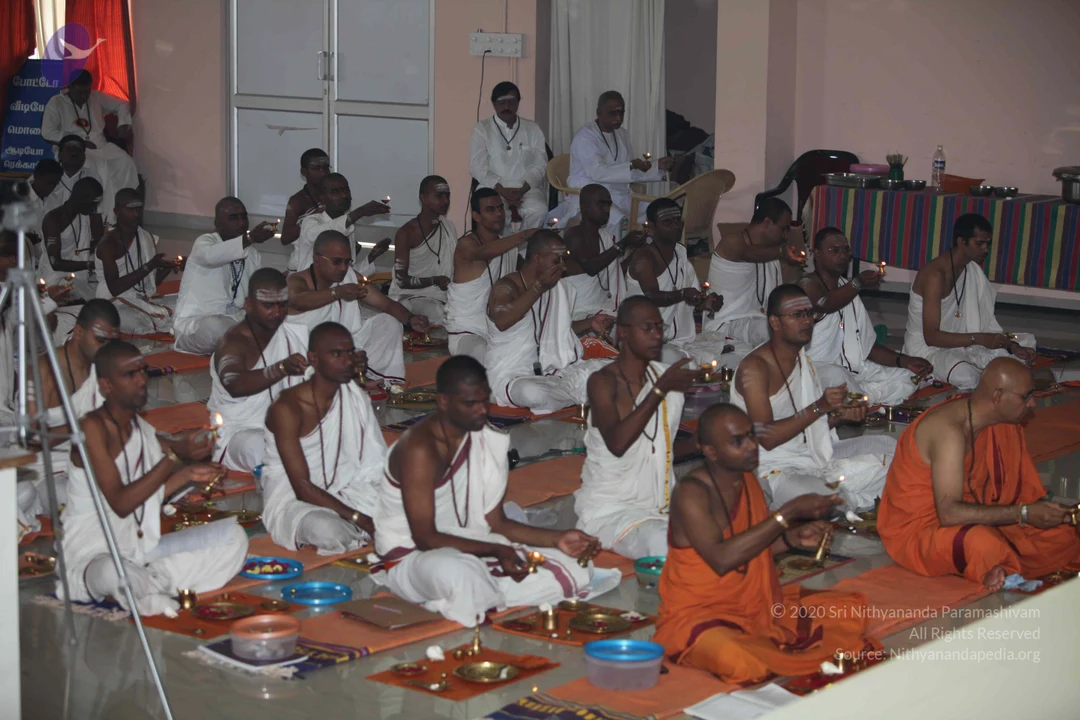
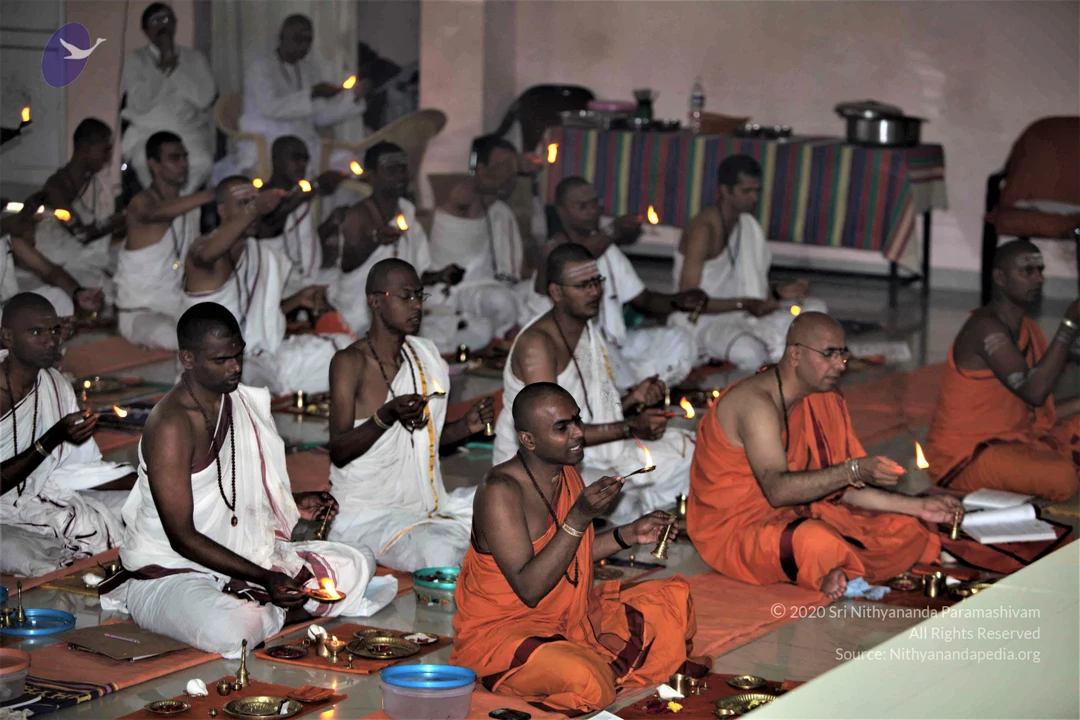
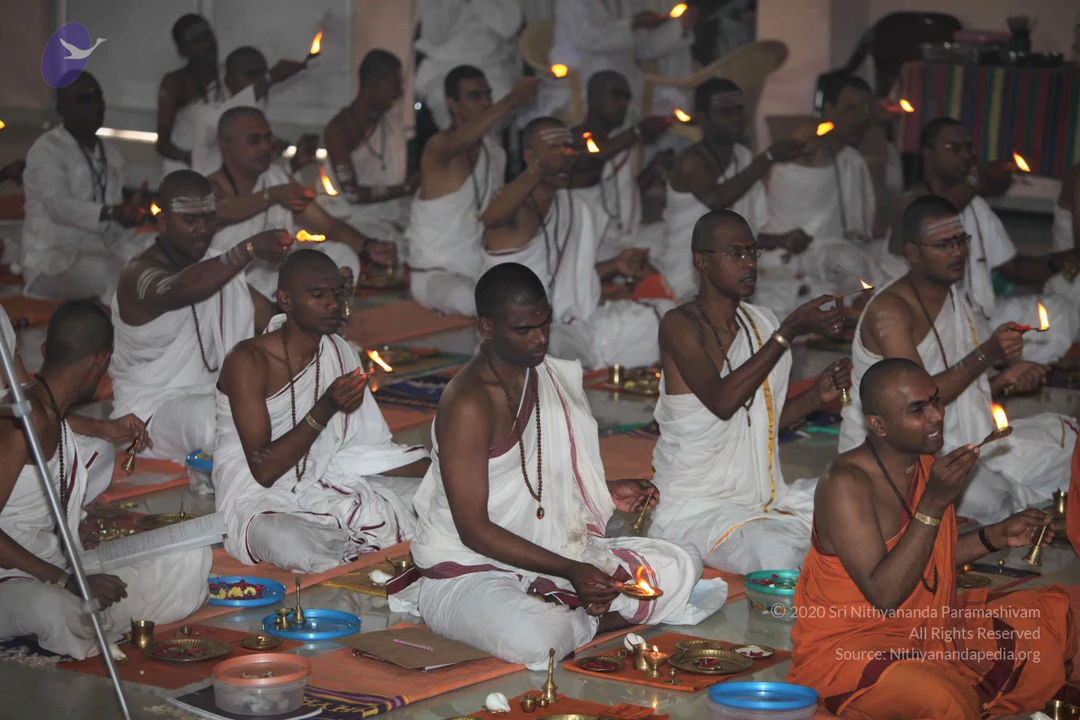
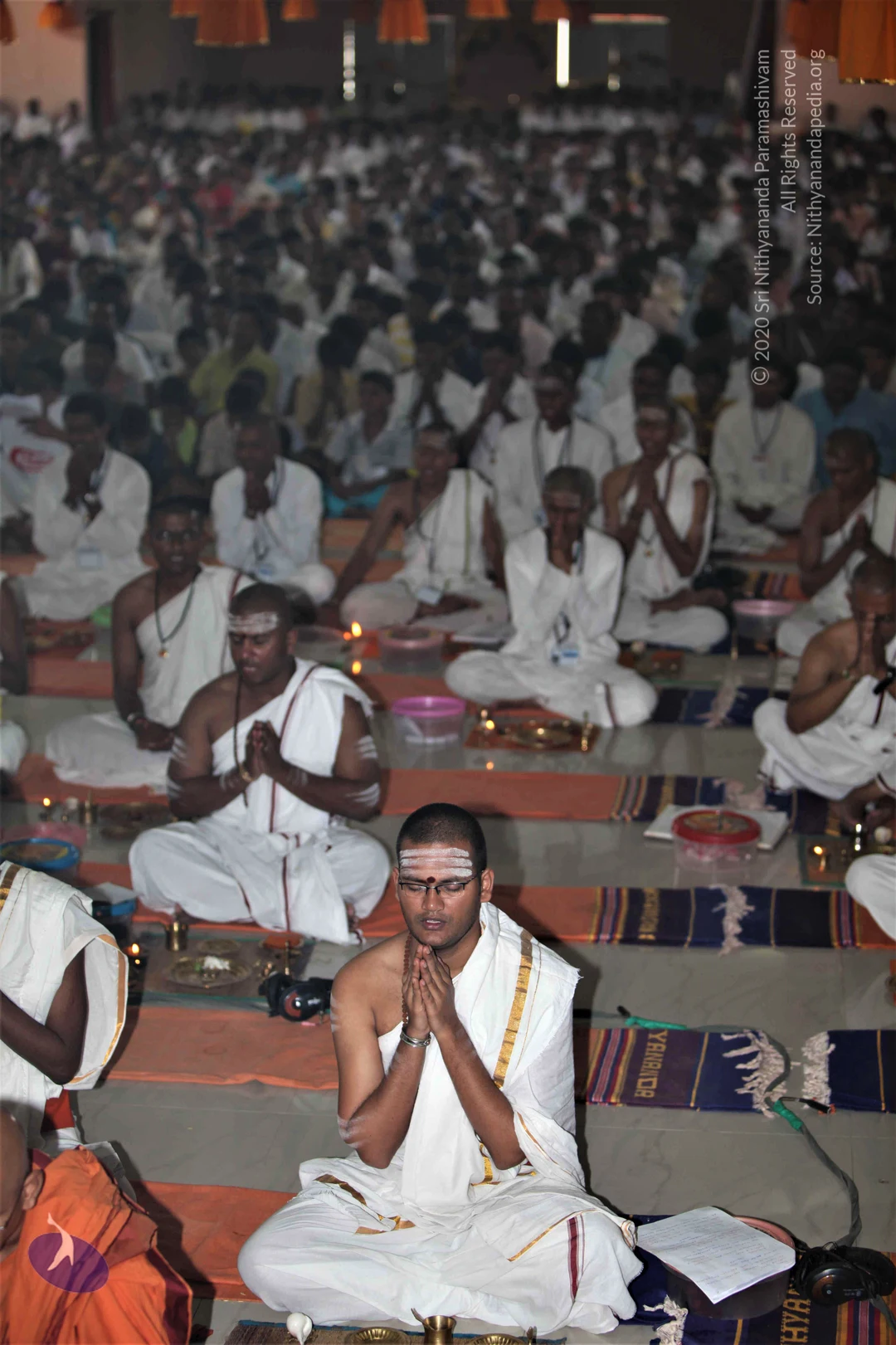
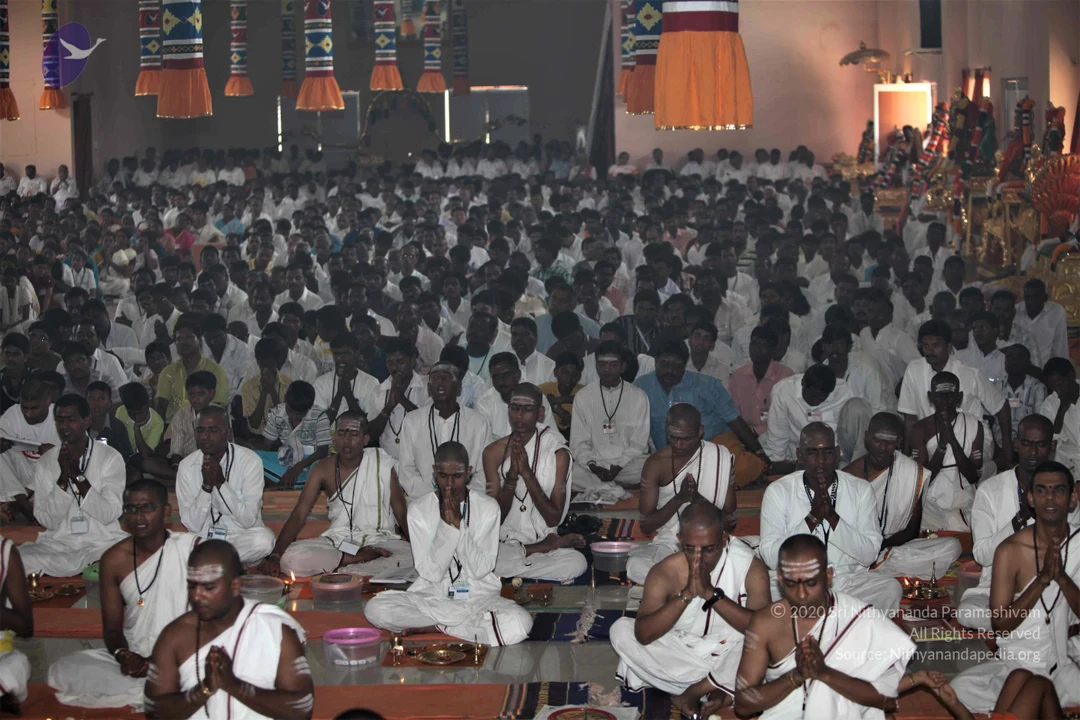
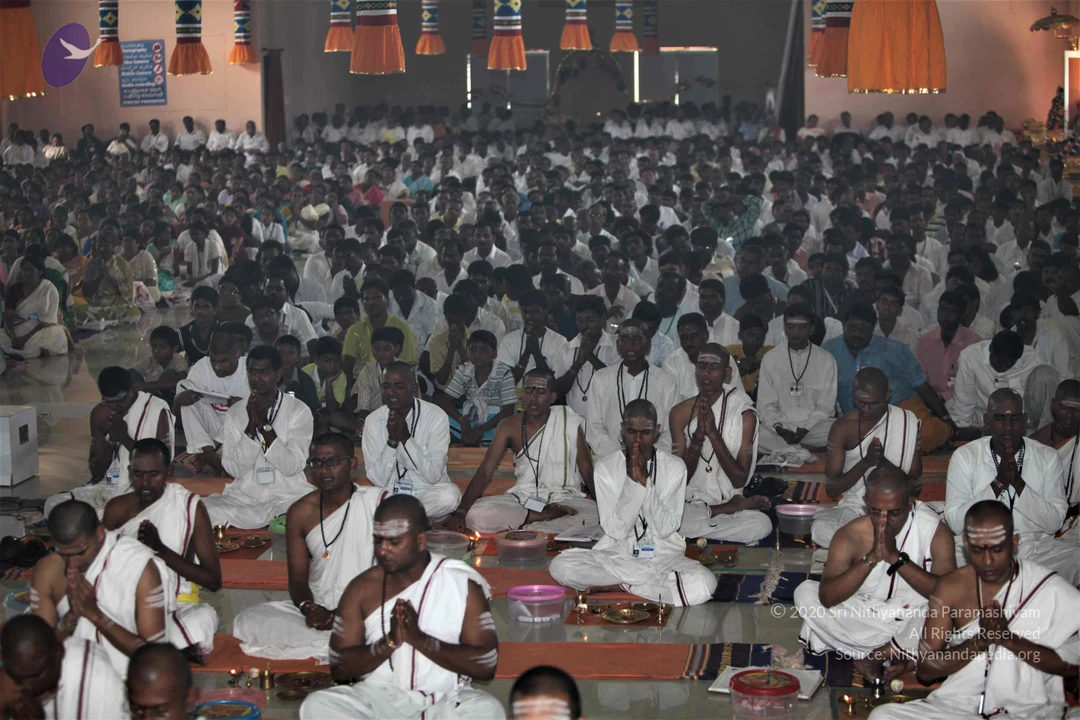
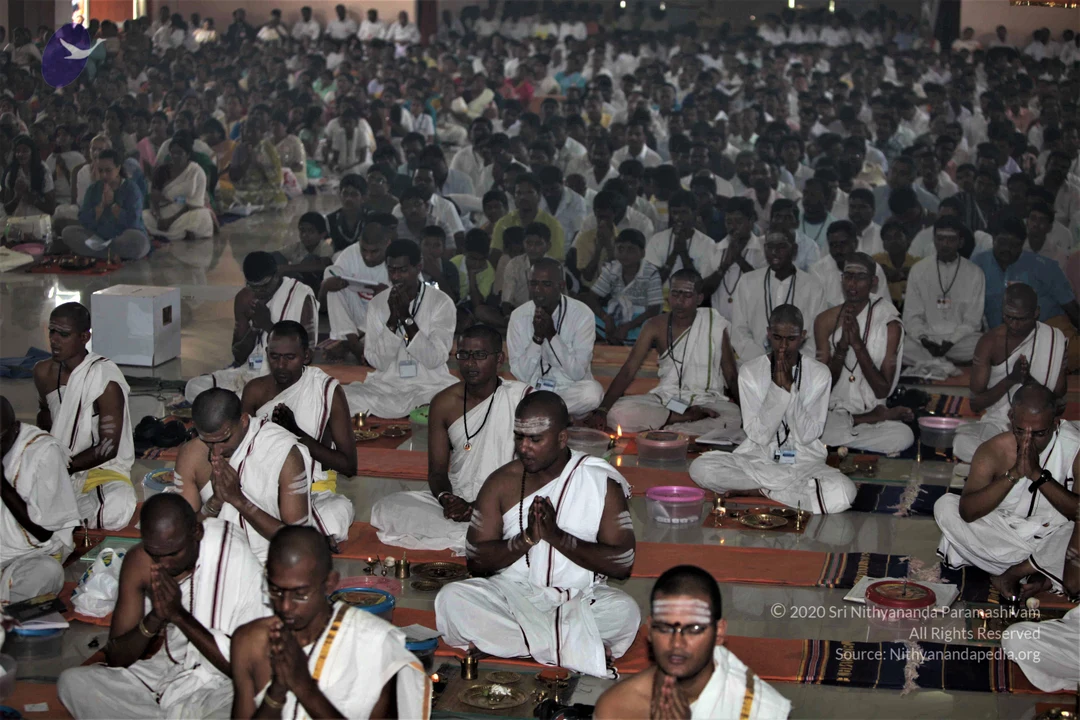
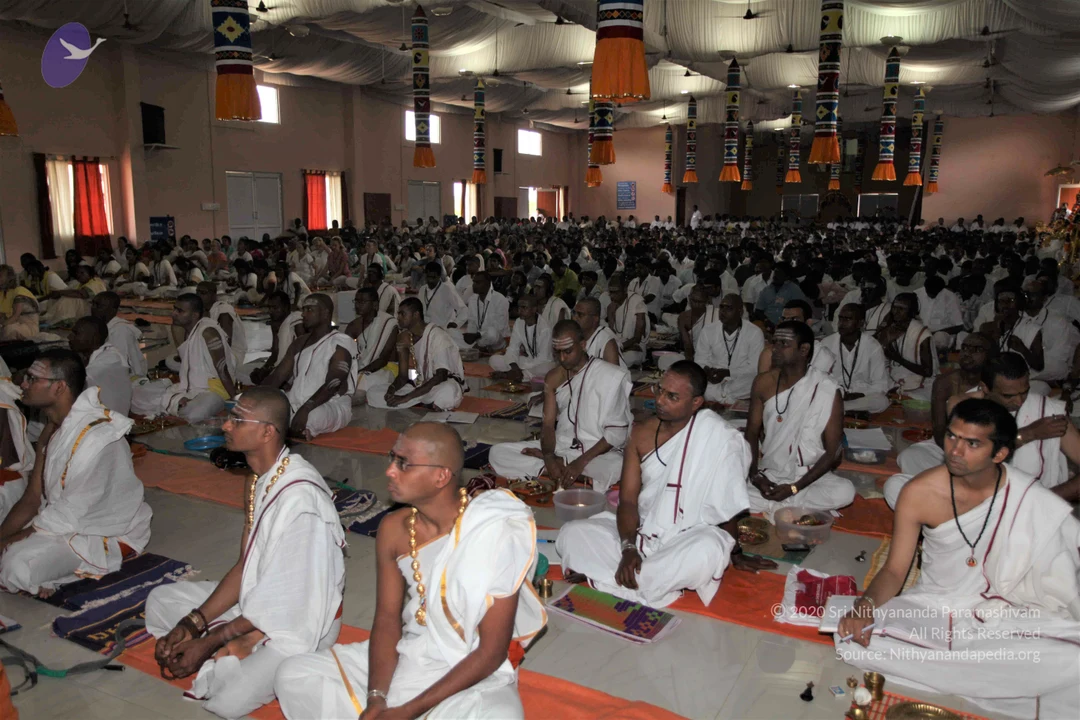
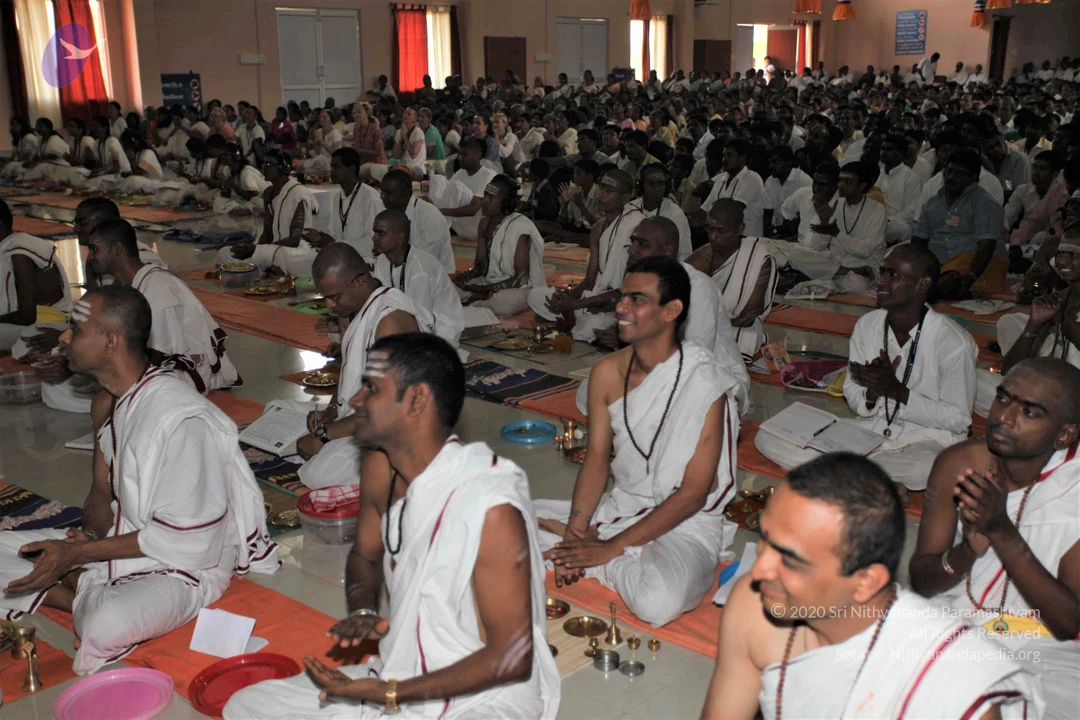
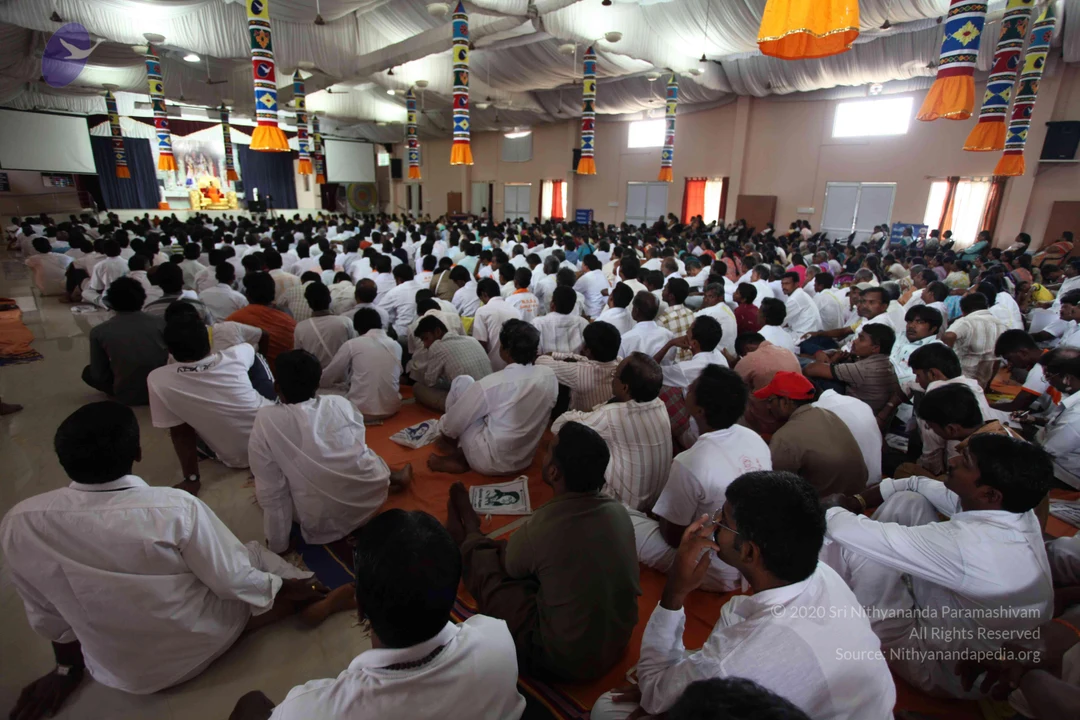
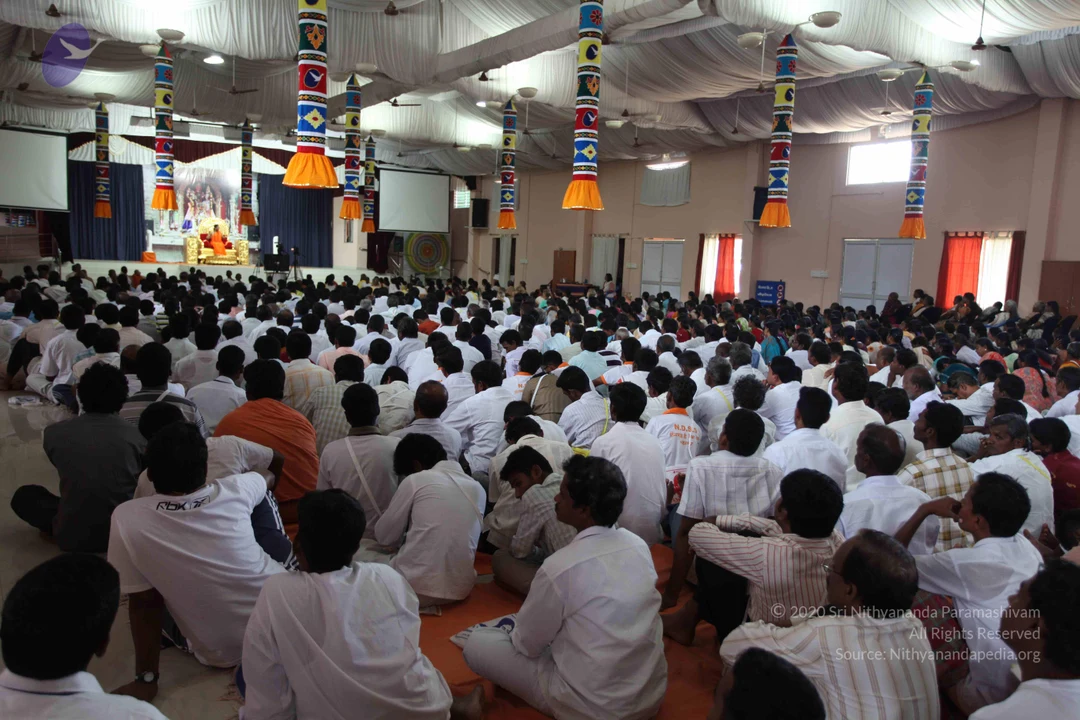
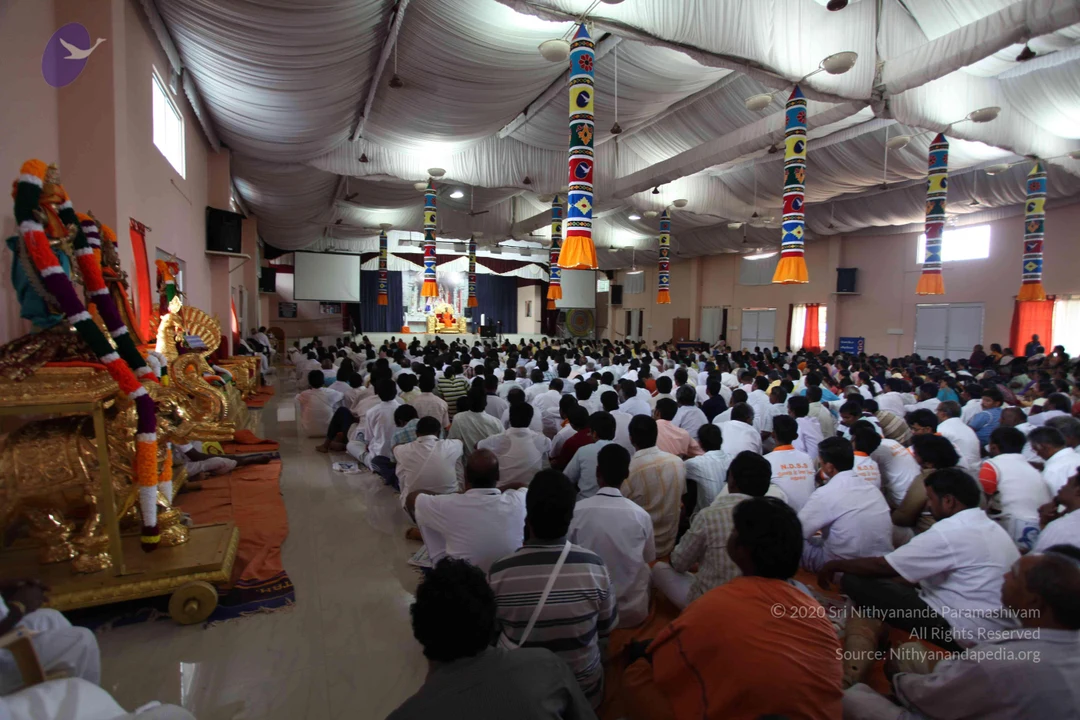
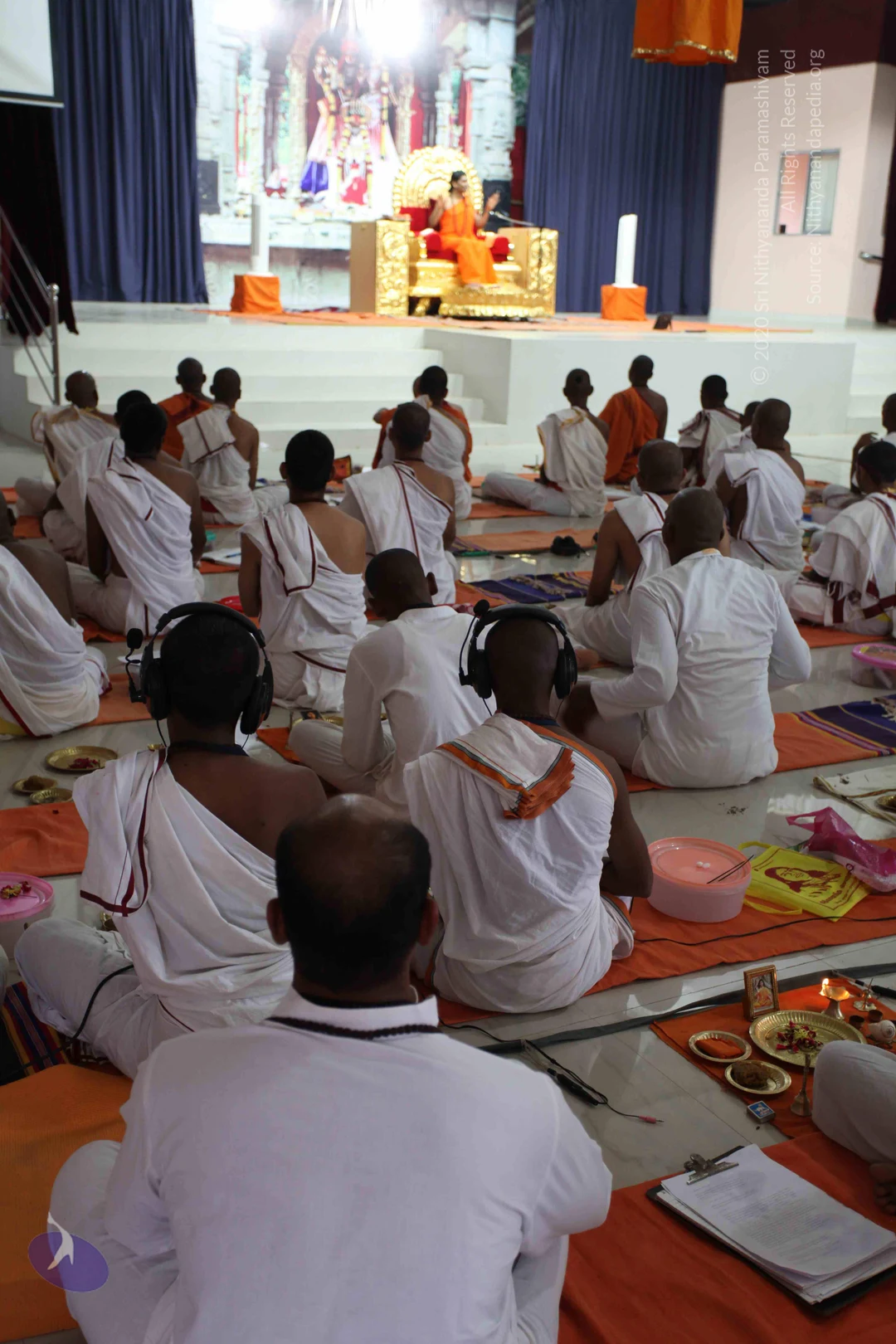
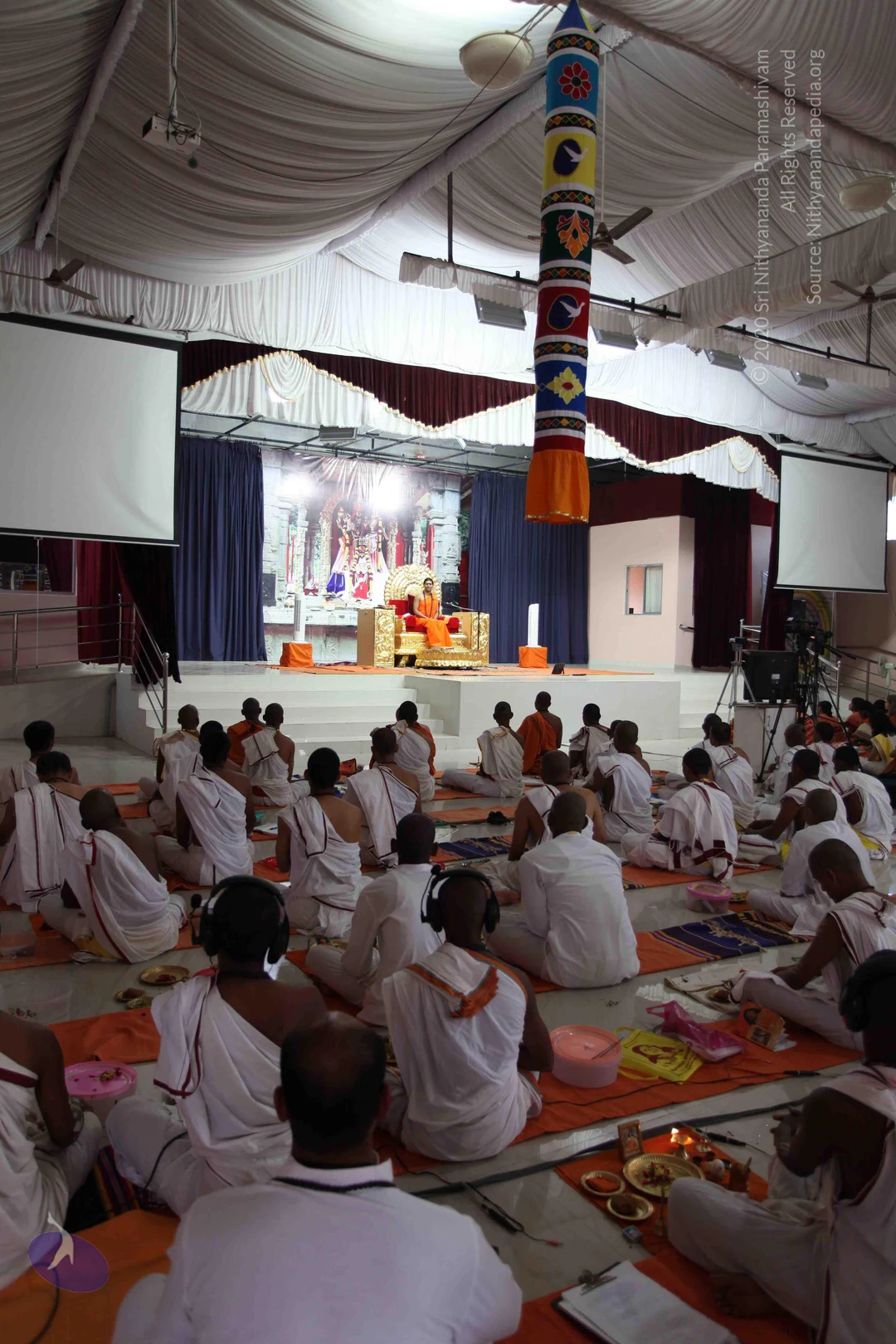
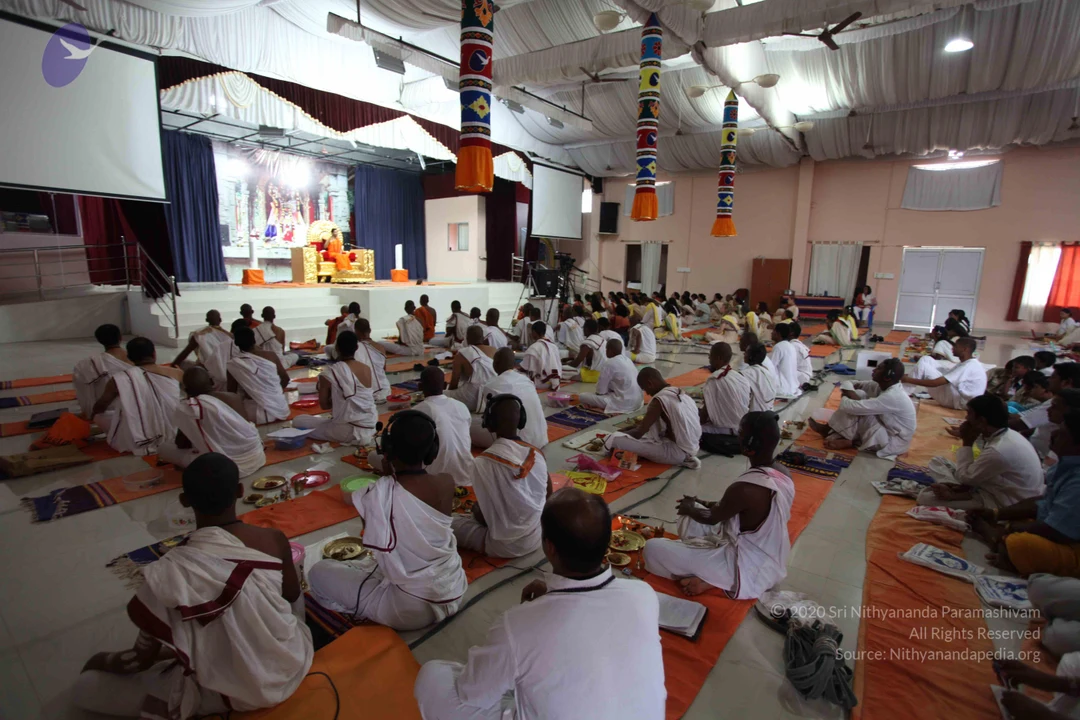
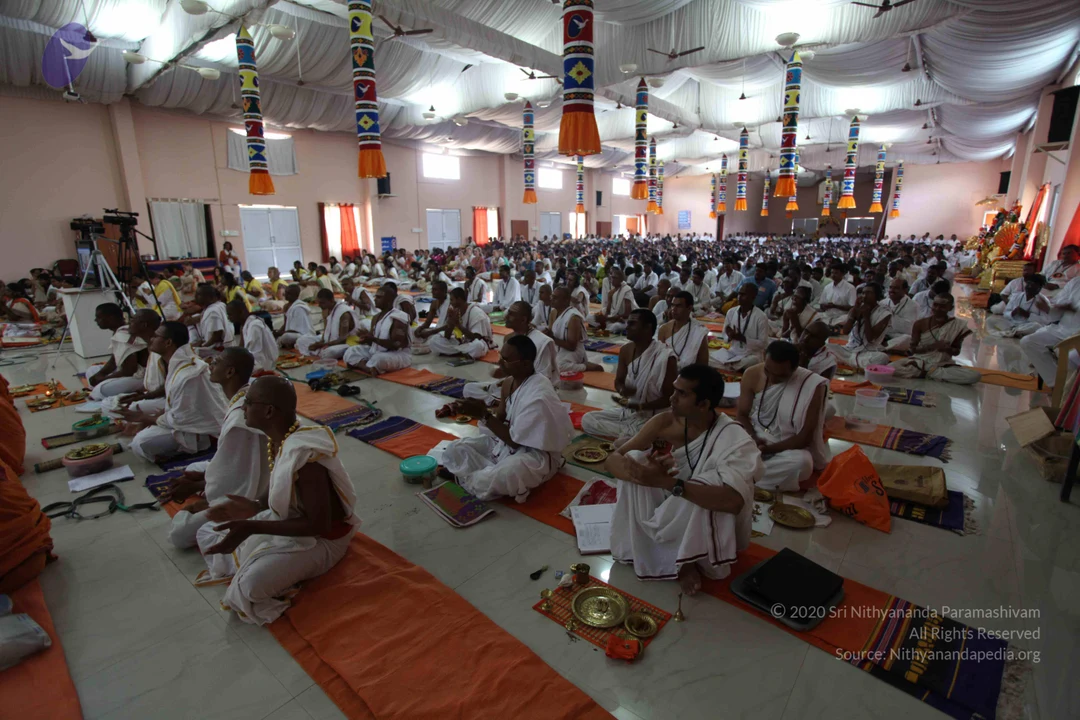
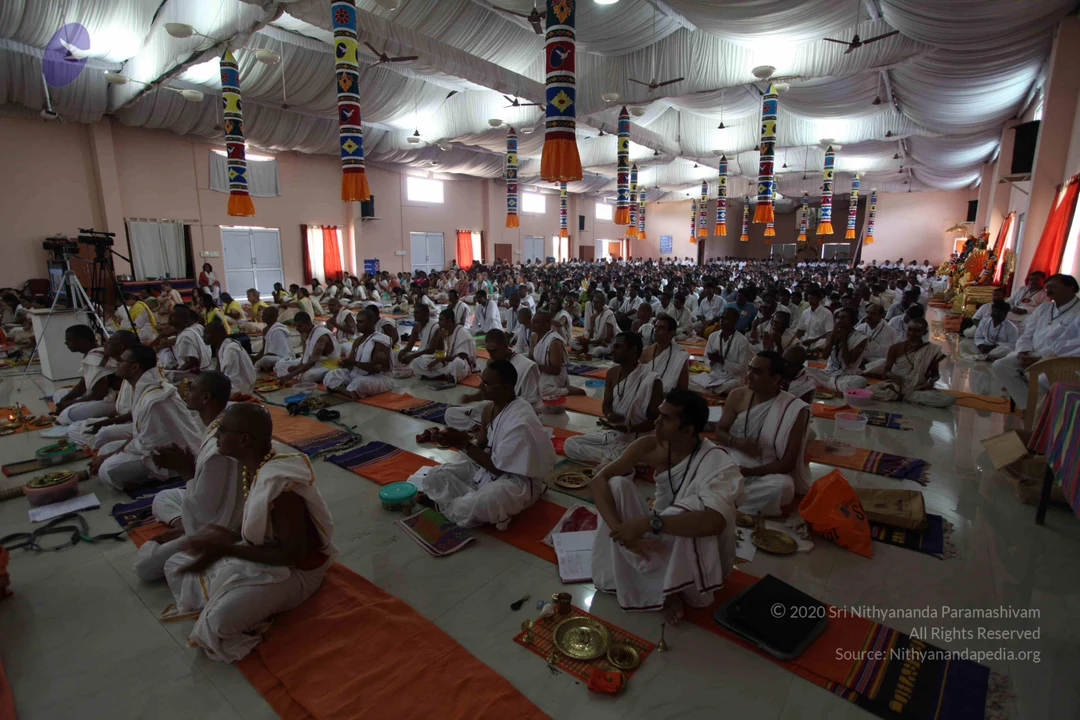
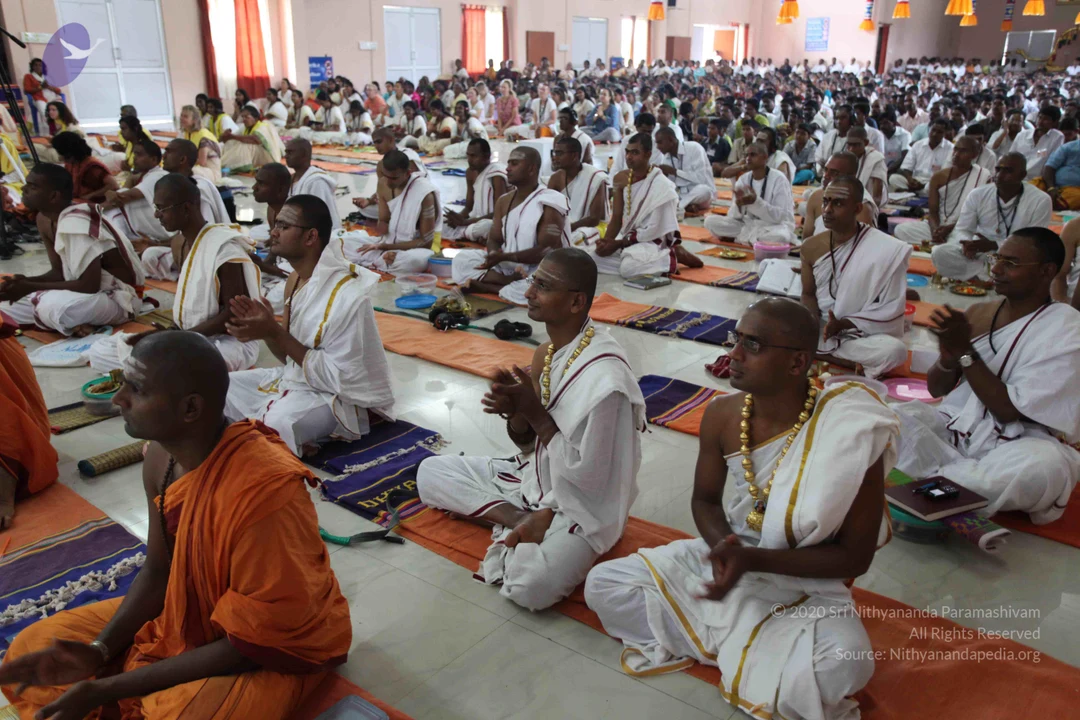
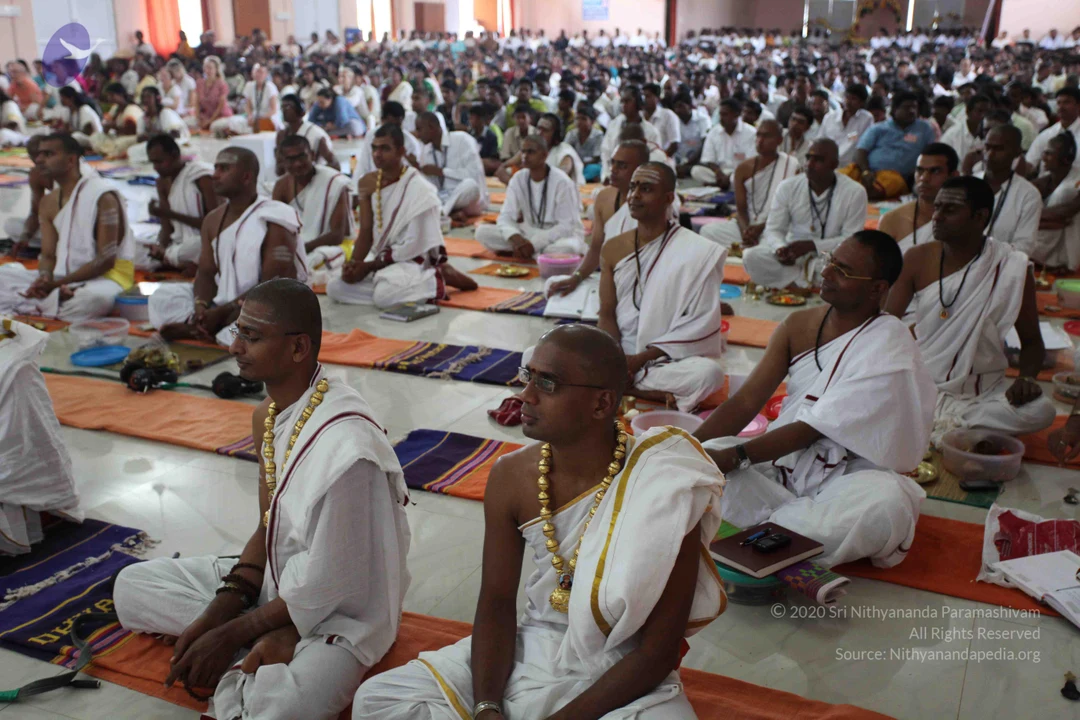
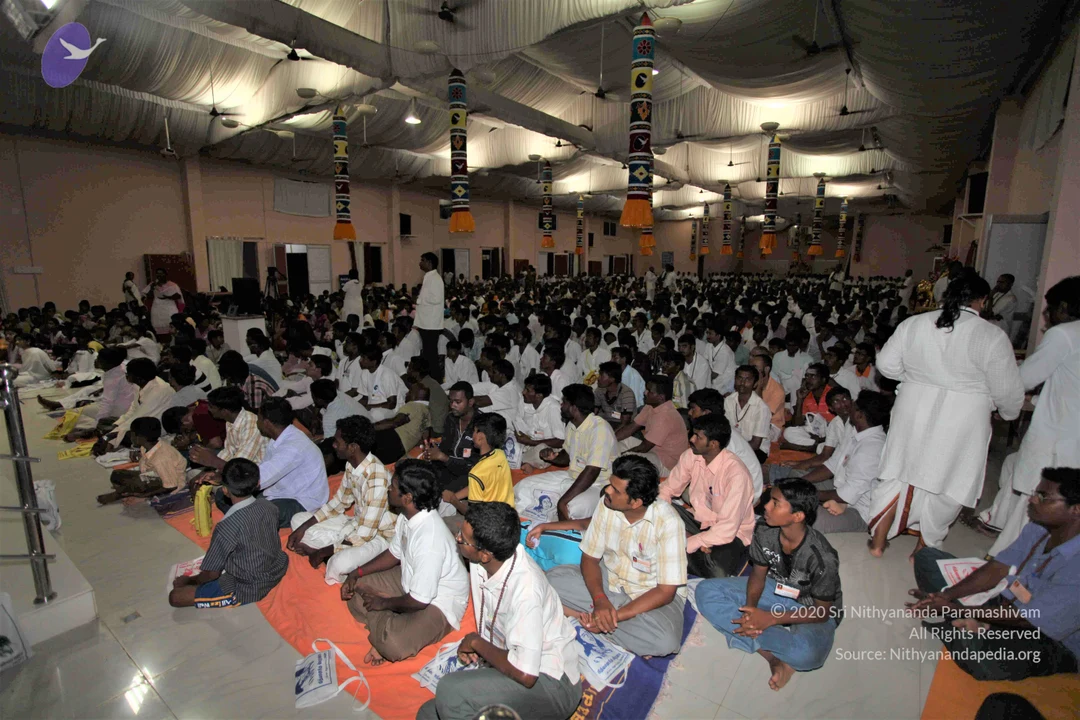
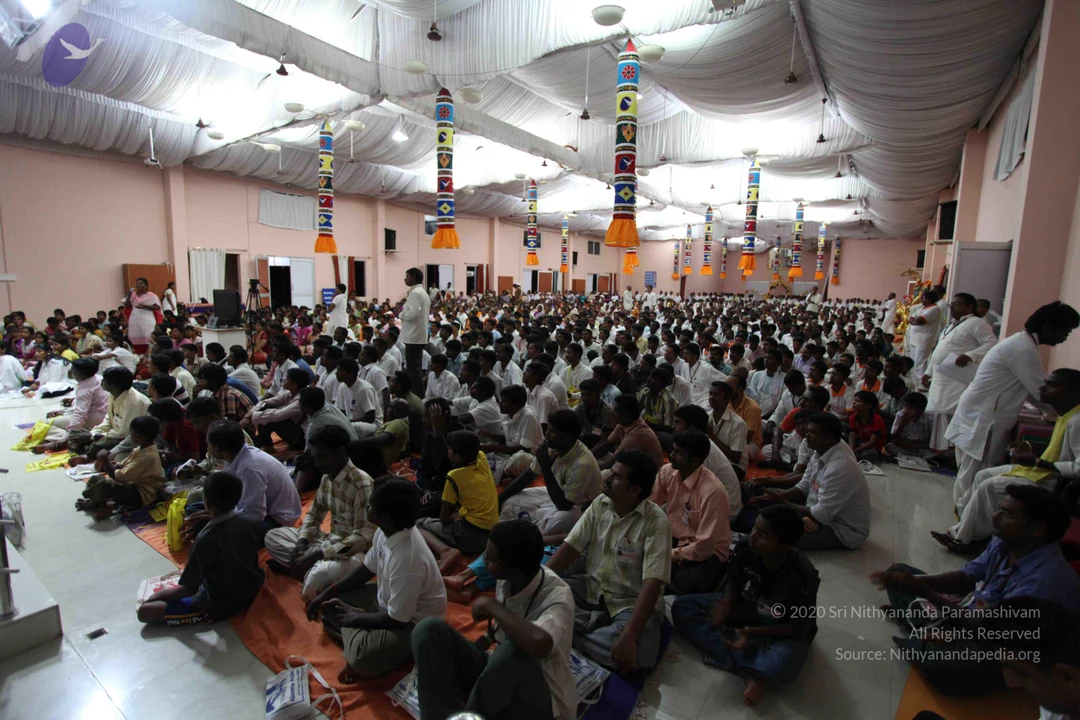
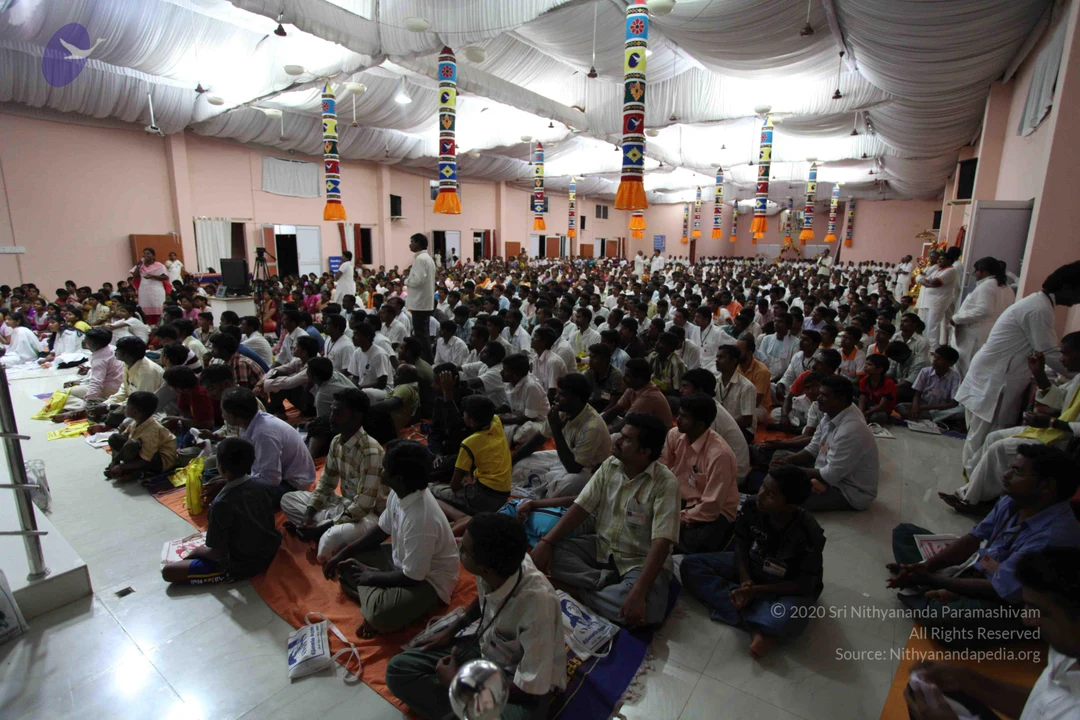
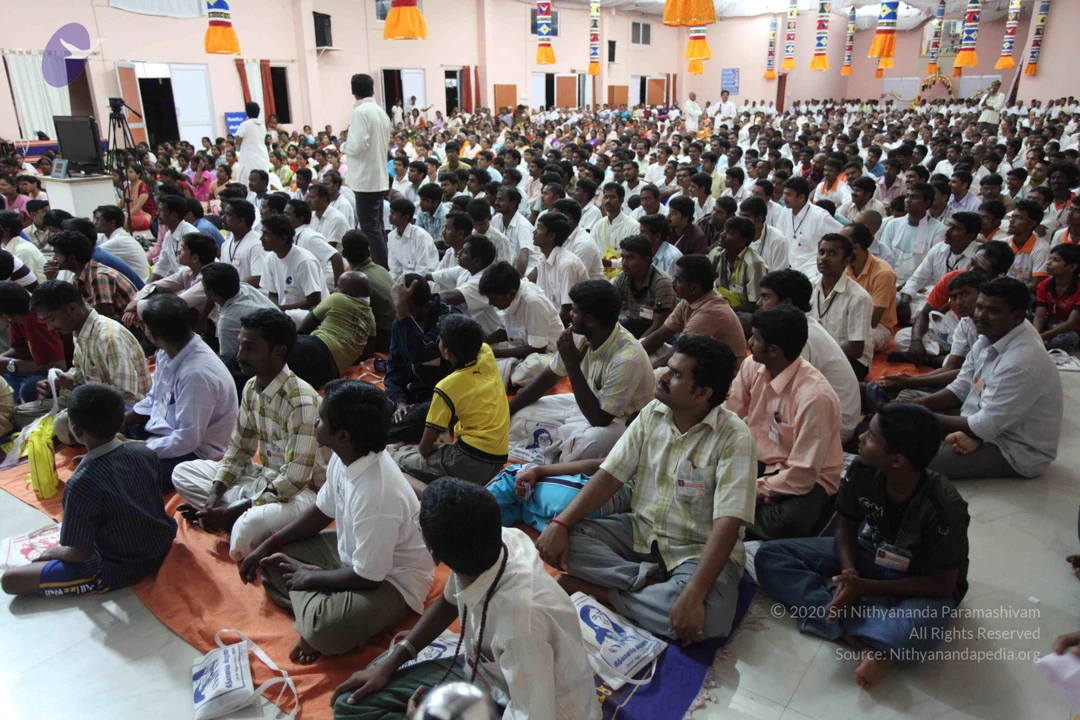
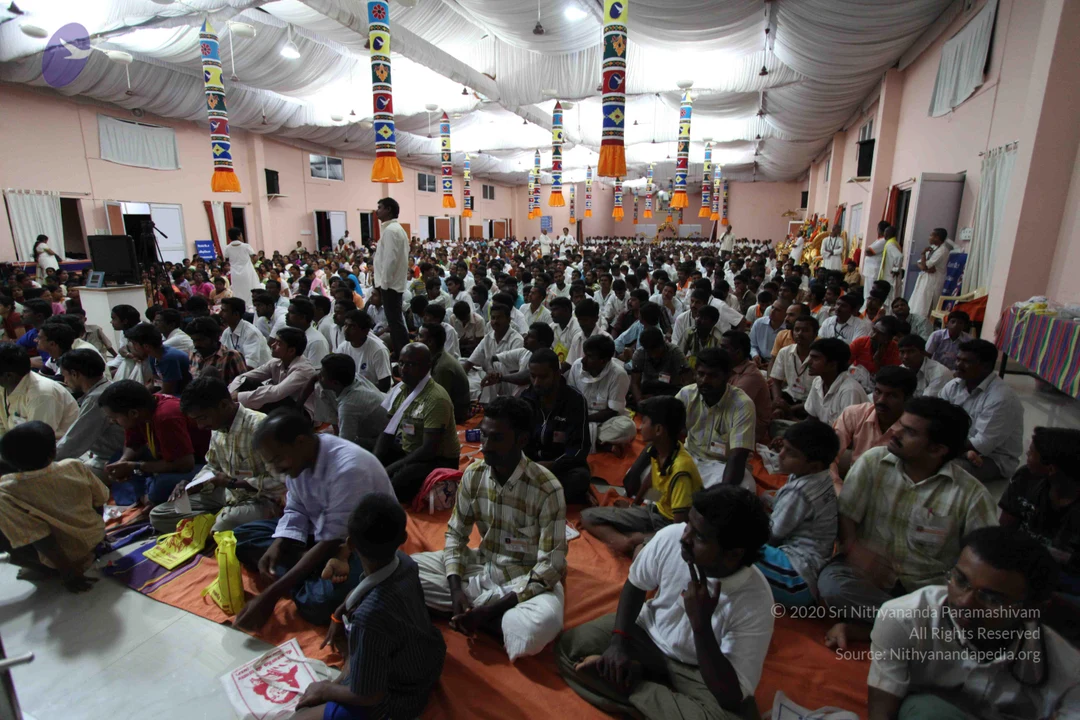
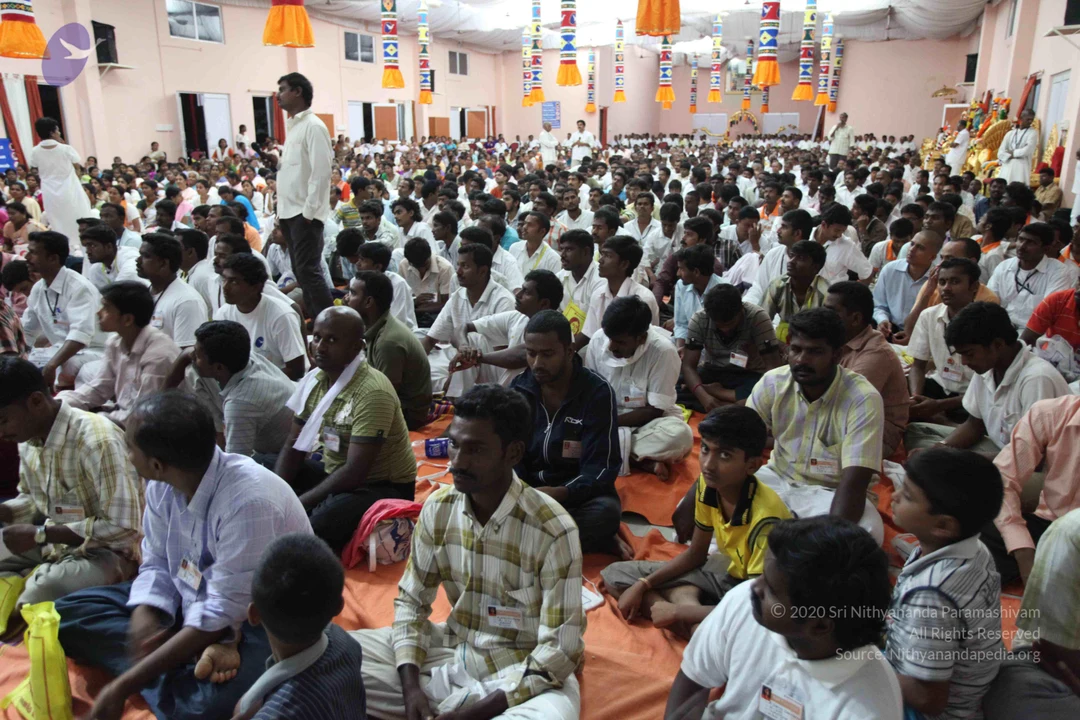
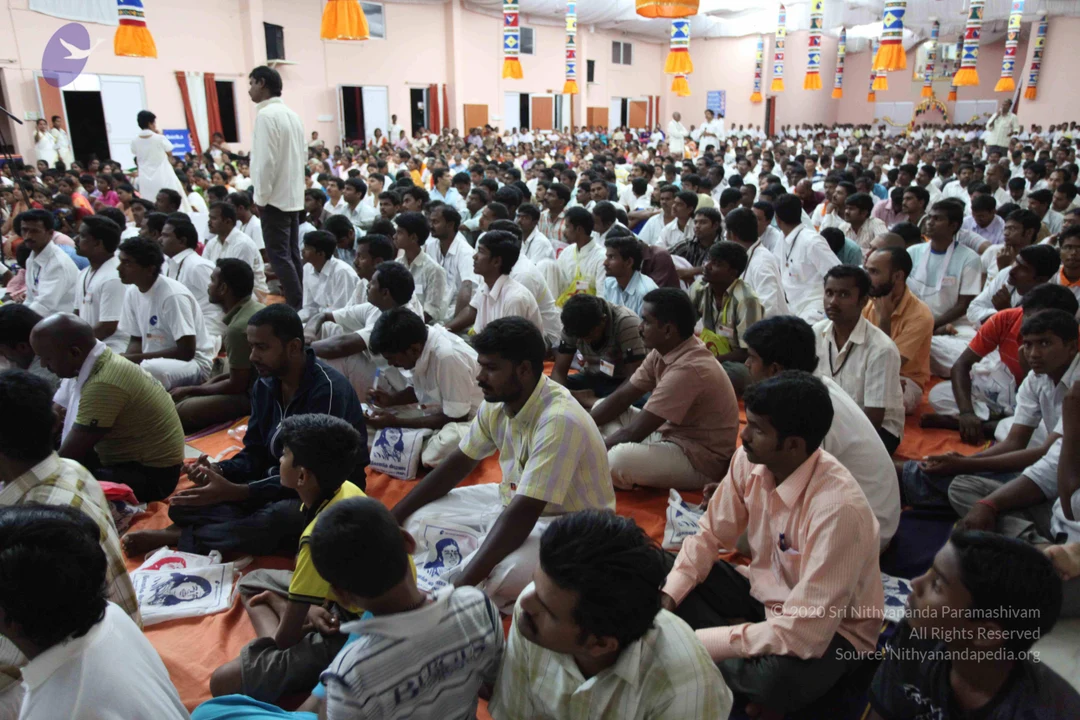
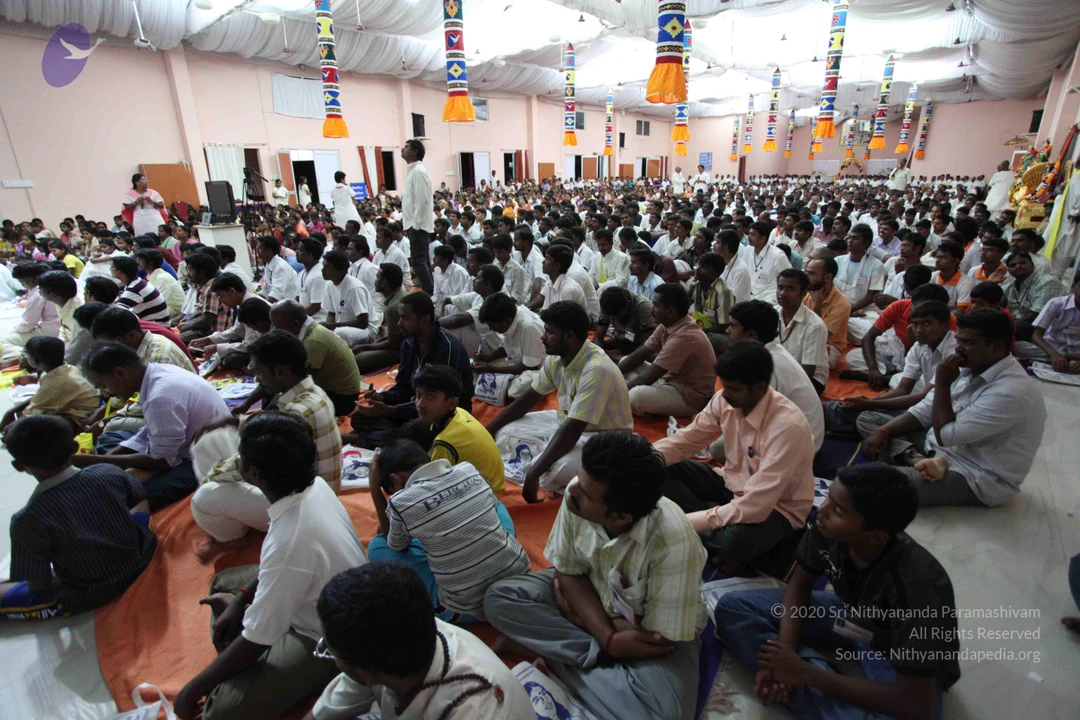
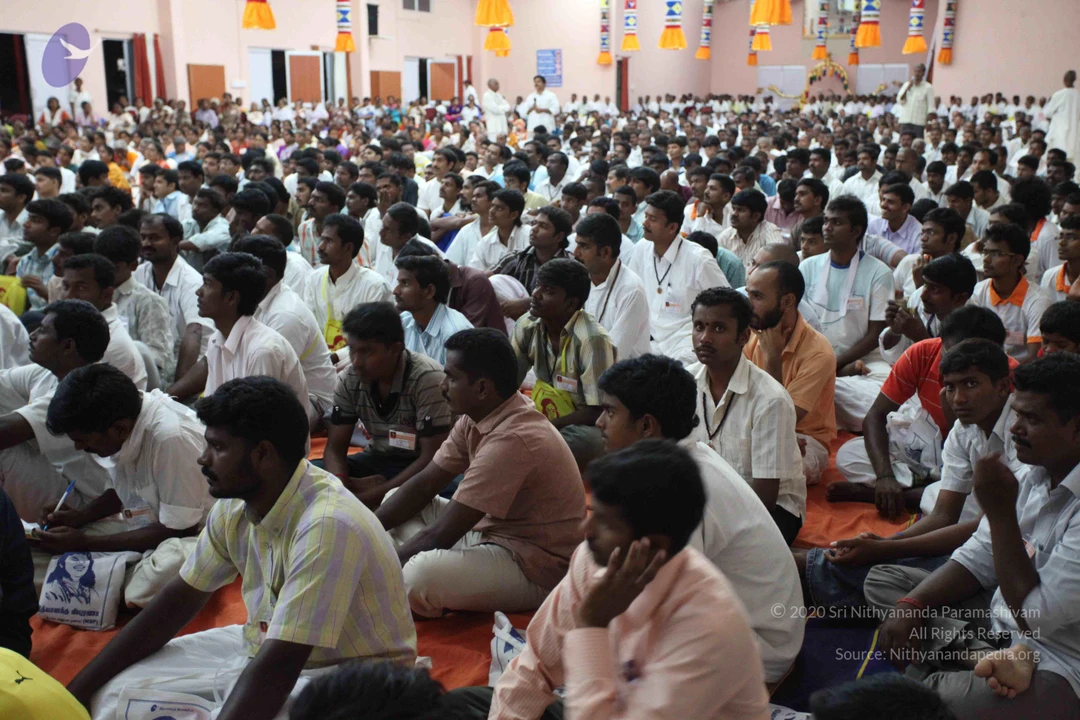
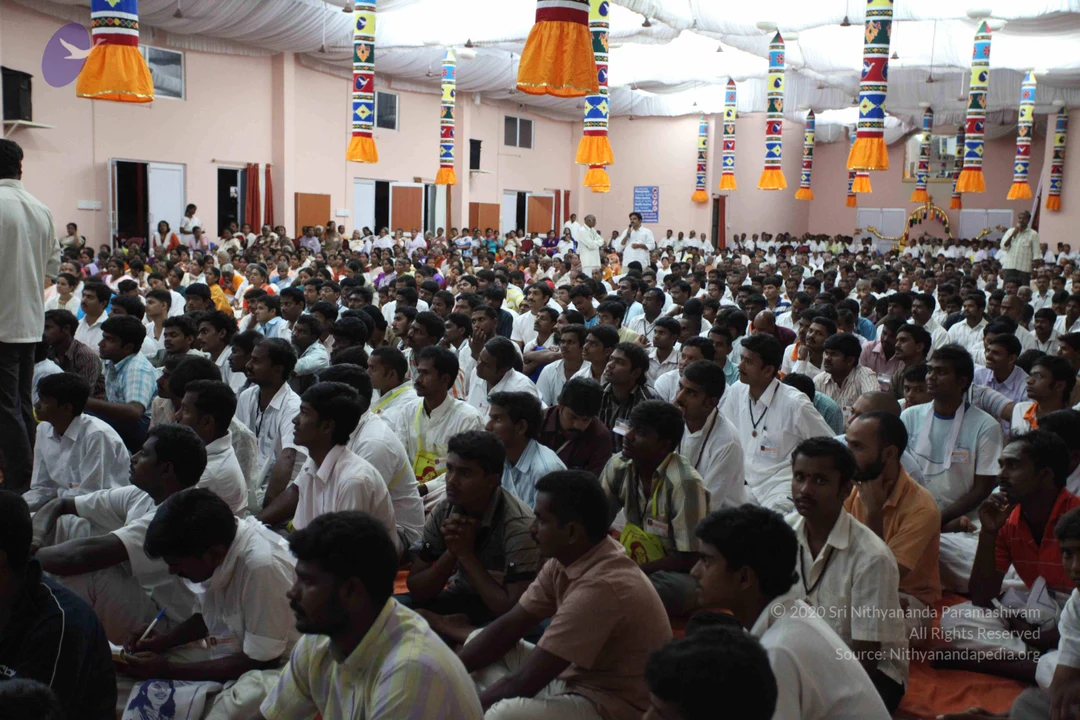
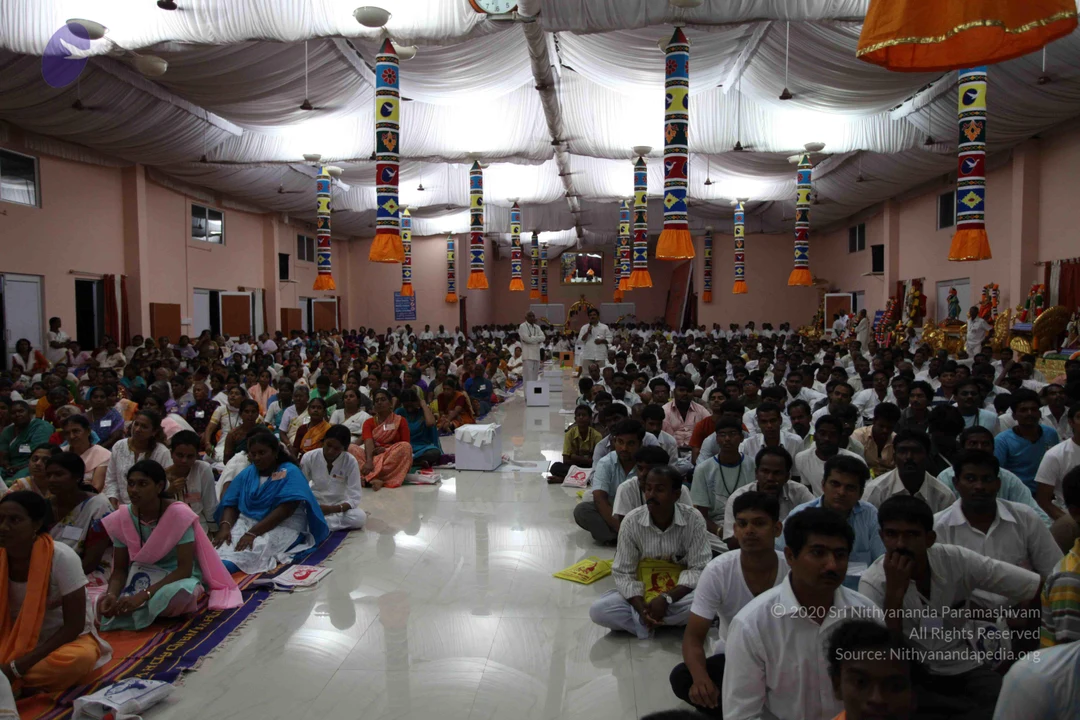
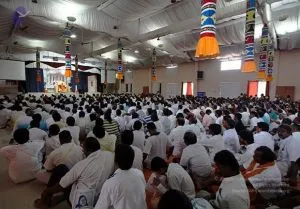
A large hall filled with hundreds of seated people, mostly men in white dhotis and white shirts with rudraksha malas, sitting on orange and blue mats before brass plates of offerings, small lamps and flowers. In the foreground, several monks in saffron/orange robes sit cross-legged with open books, plates and small brass vessels in front of them. Some are holding a flower or small ritual item. On the left, a camera on a tripod films the gathering, and rows of women in colourful saris sit at the back. Orange and yellow drapes hang from the ceiling, with decorated deity figures at the upper right. The mood is a structured group puja or satsang with participants following ritual items on their mats.

Tamil-Nsp-Swamiji'S-Session
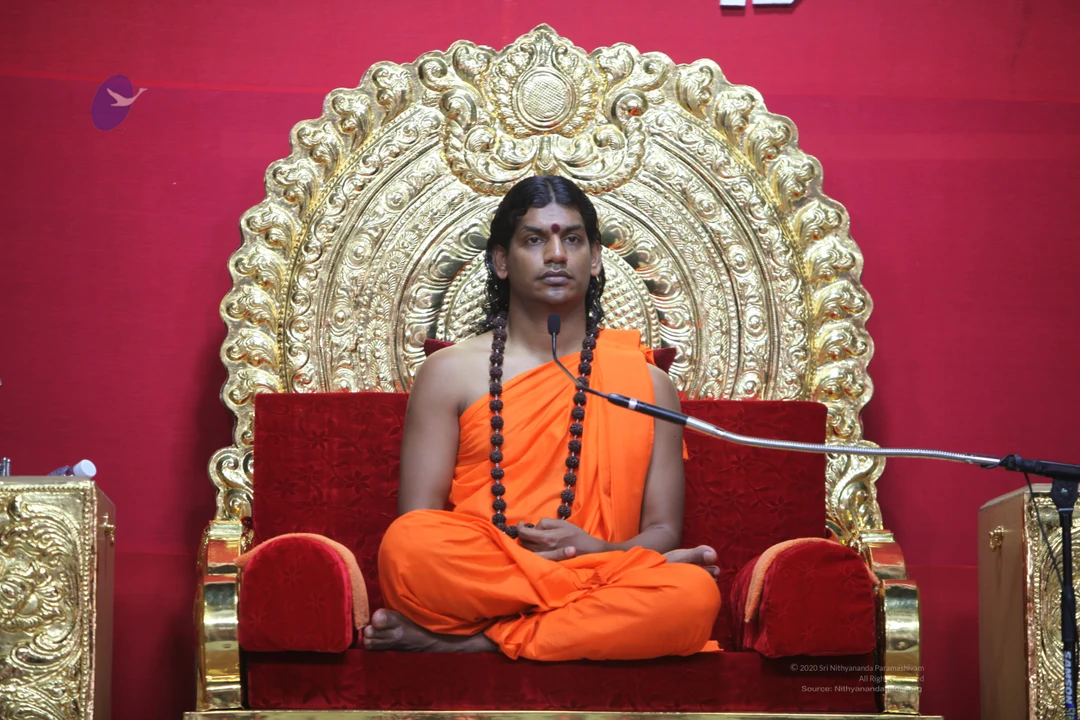
1 photoSource gallery
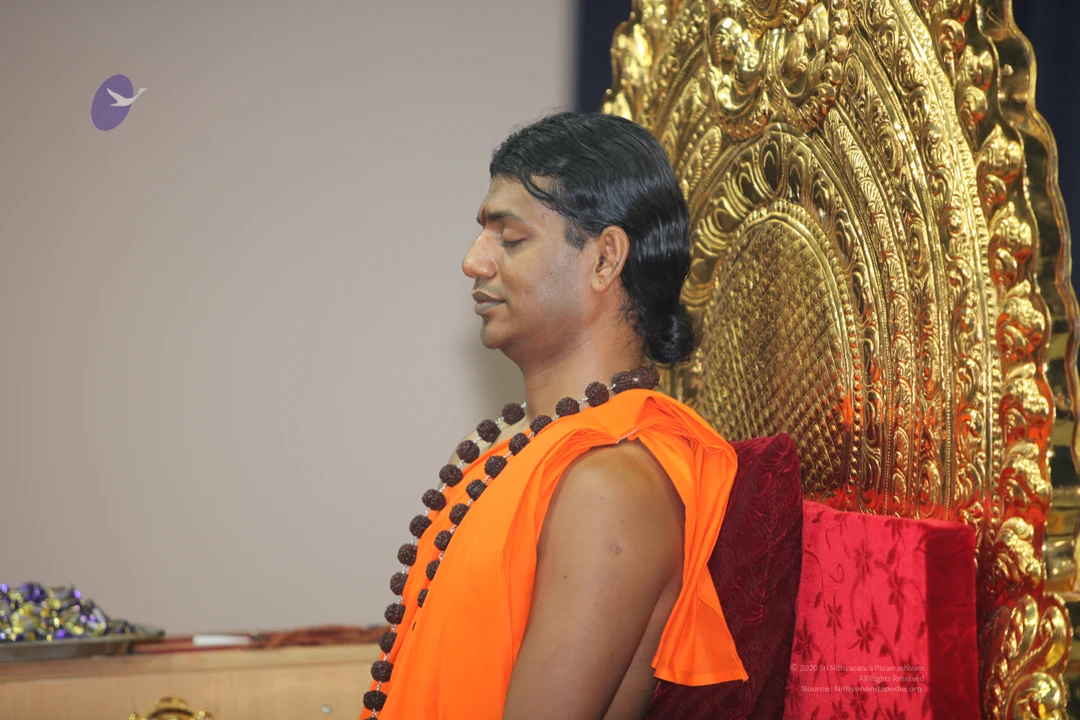
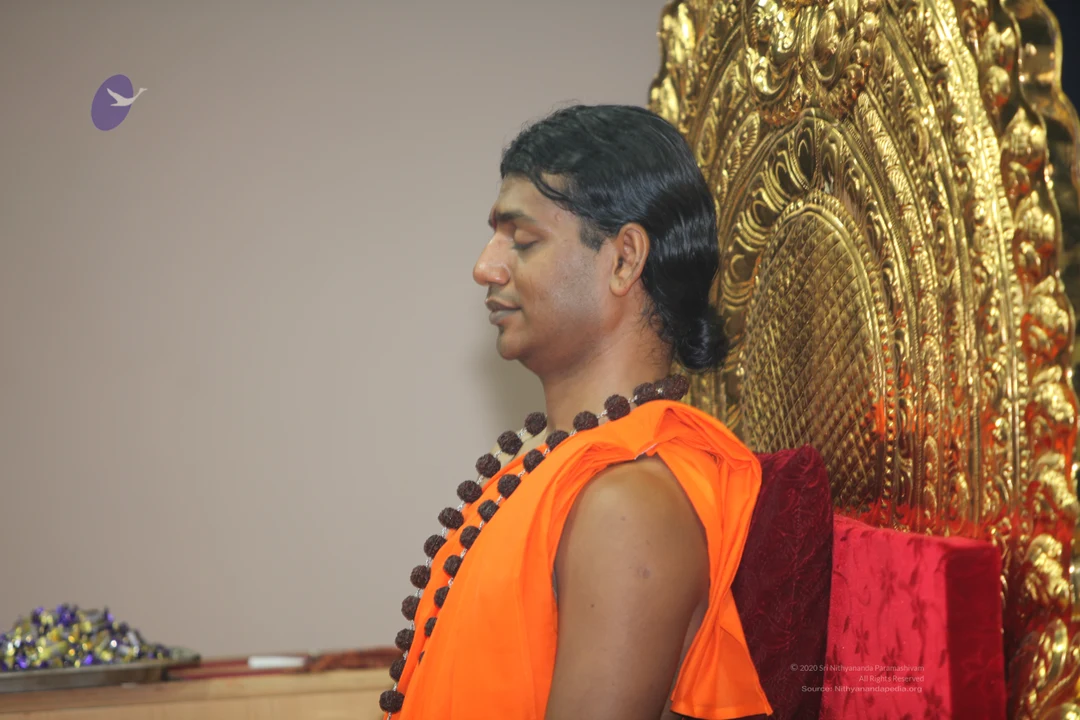
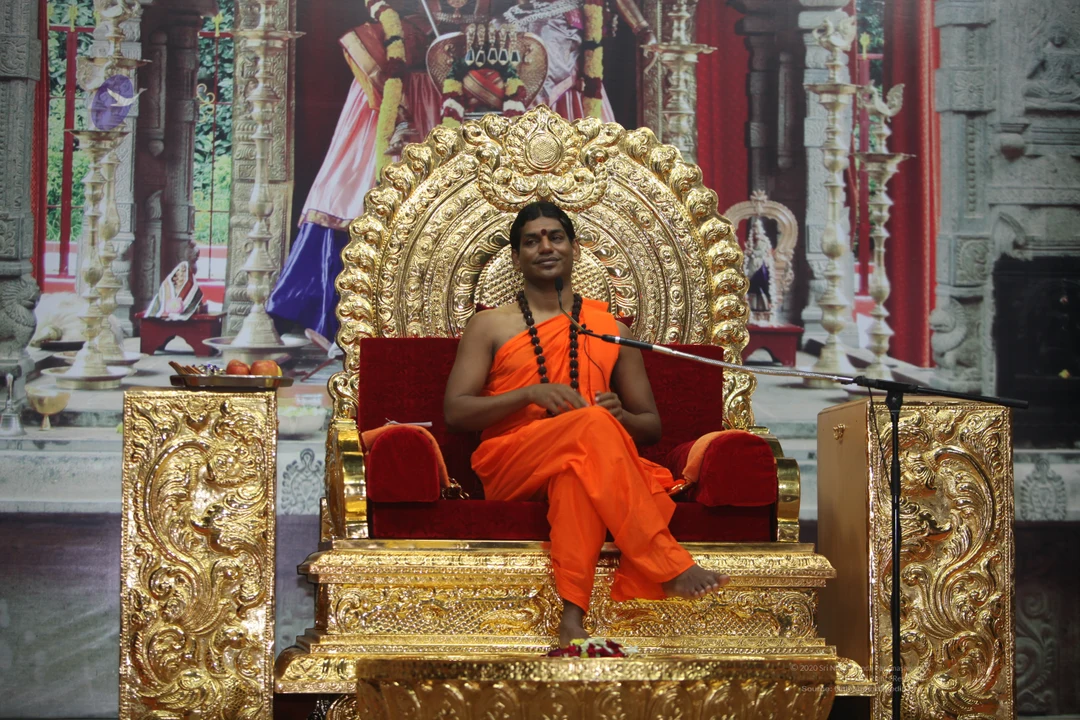
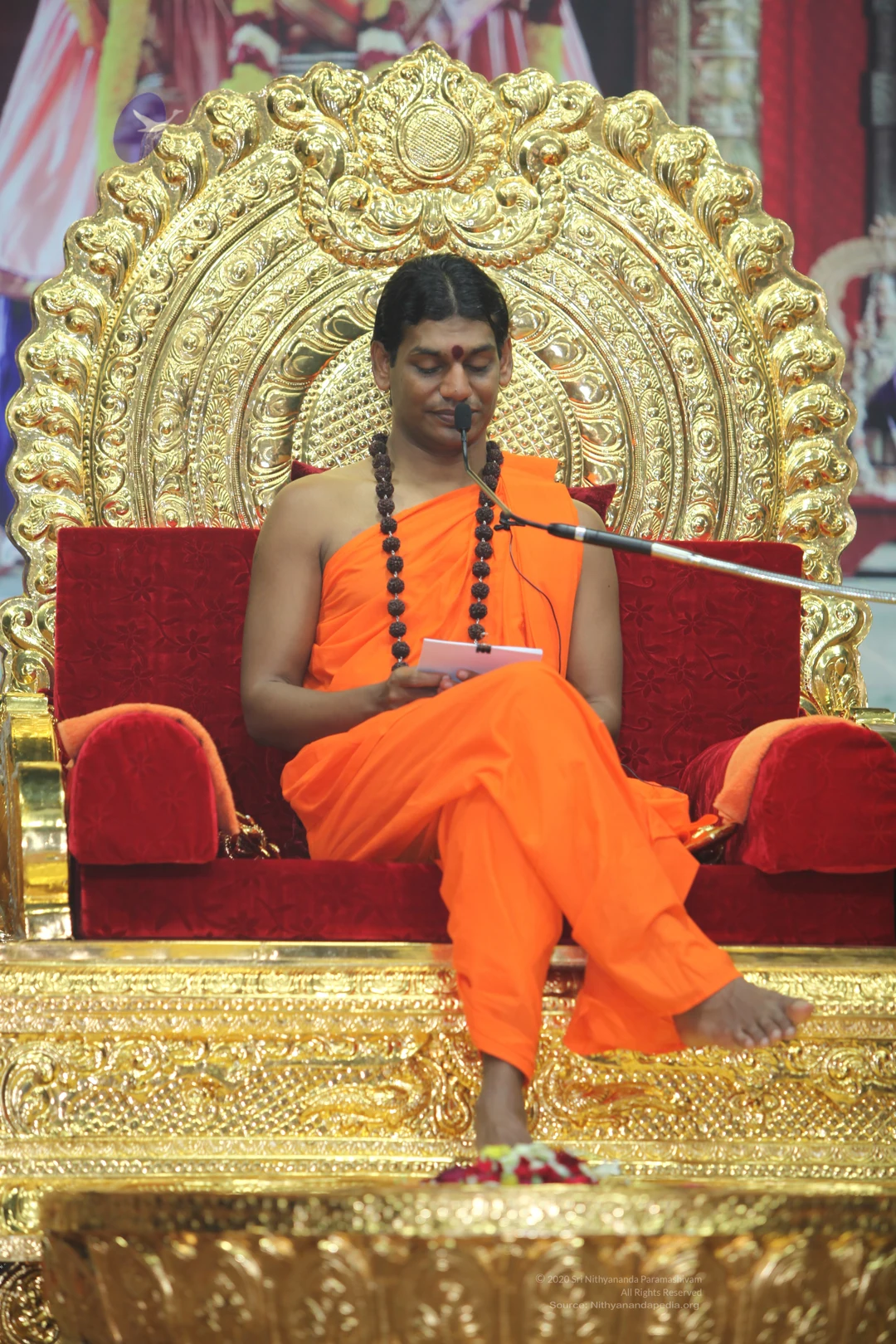
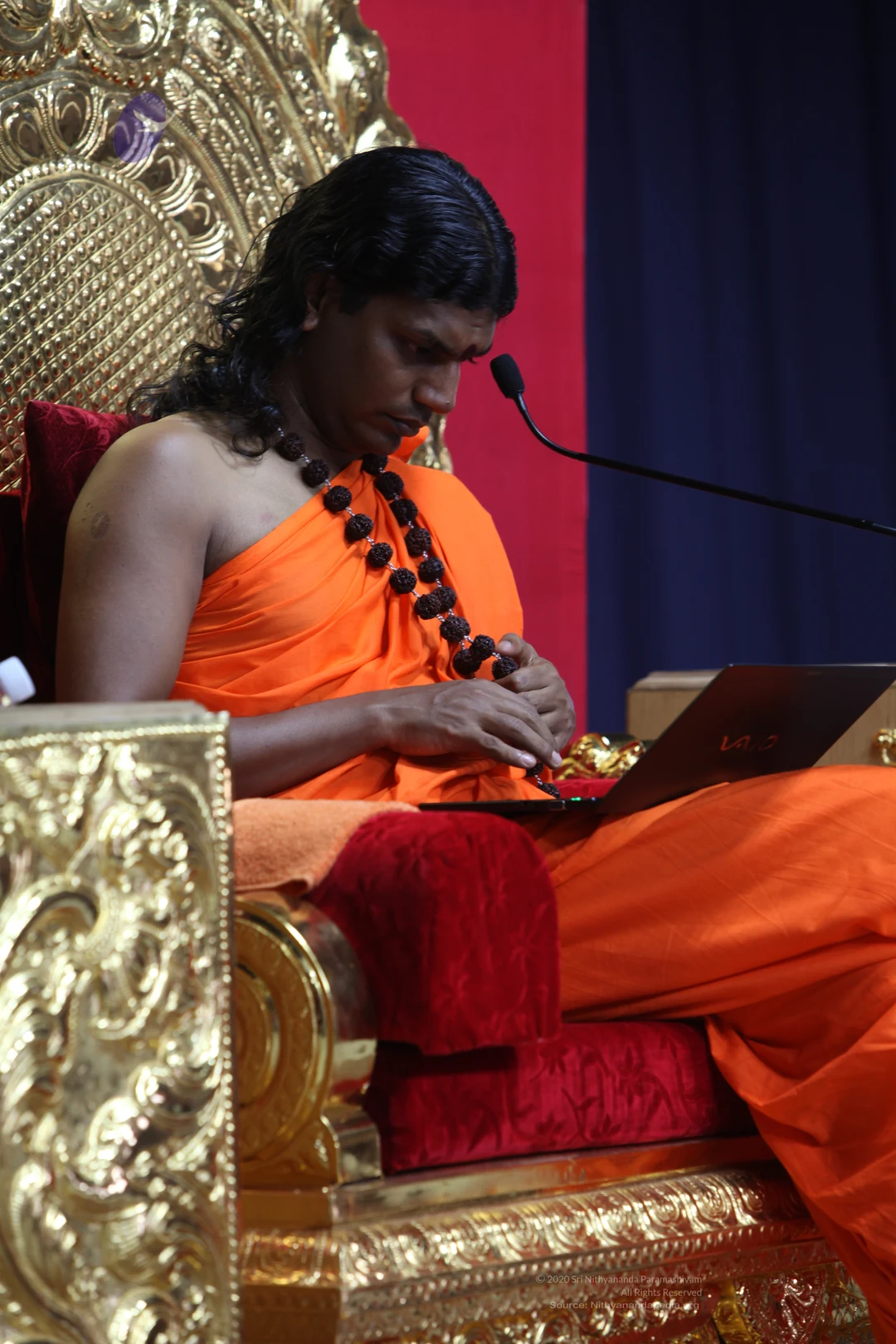
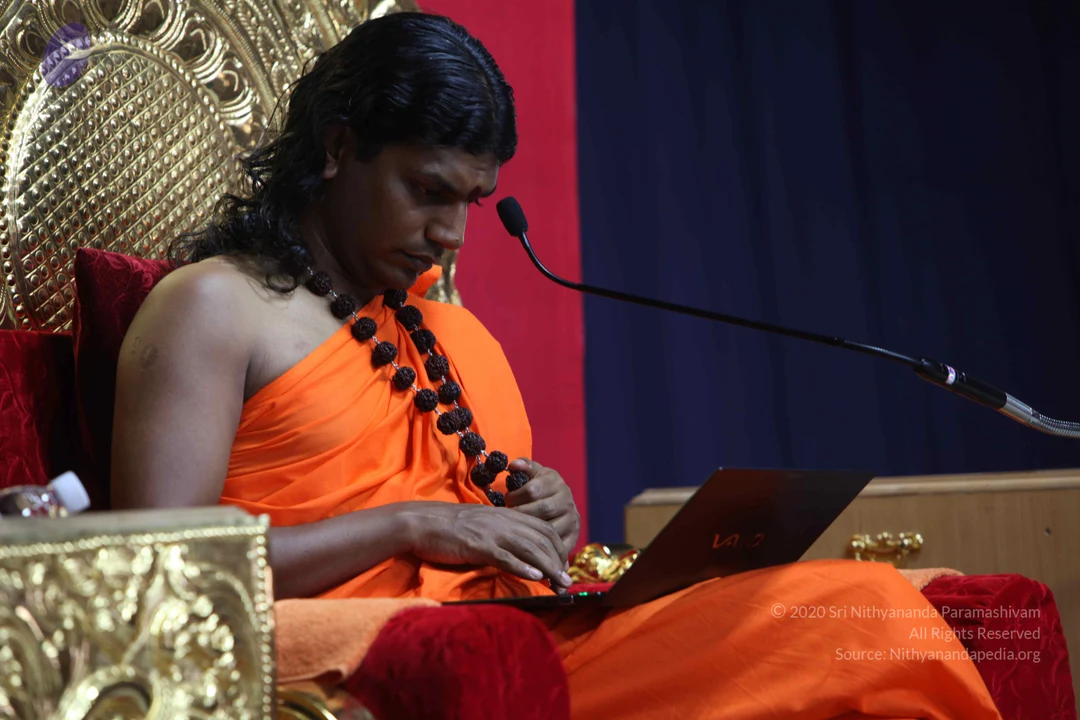
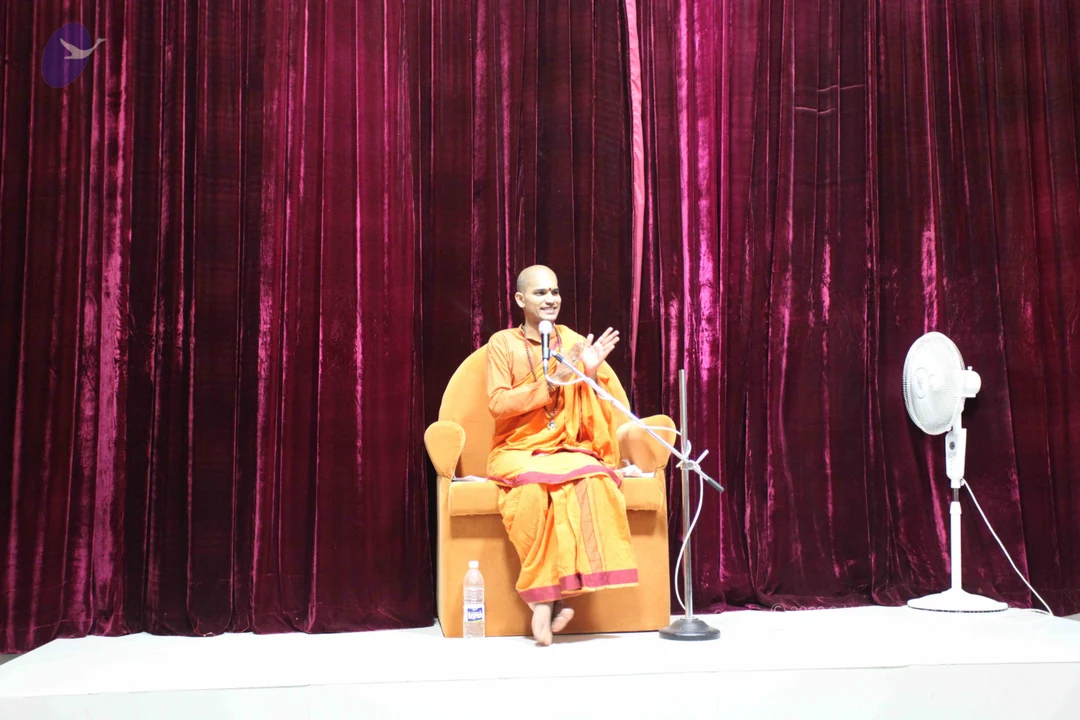
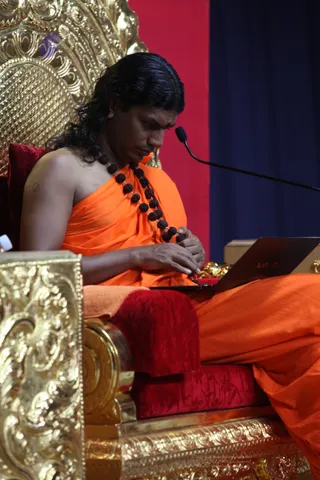
A photograph of a man seated on an ornate gold throne with red velvet cushions, wearing an orange saffron shawl over a bare shoulder and a long dark rudraksha mala. He has long dark hair and a vertical tilak on his forehead, and looks down at a dark laptop resting on his lap while his hands hold the beads. A microphone on a stand is at the right, with a red and navy backdrop behind.

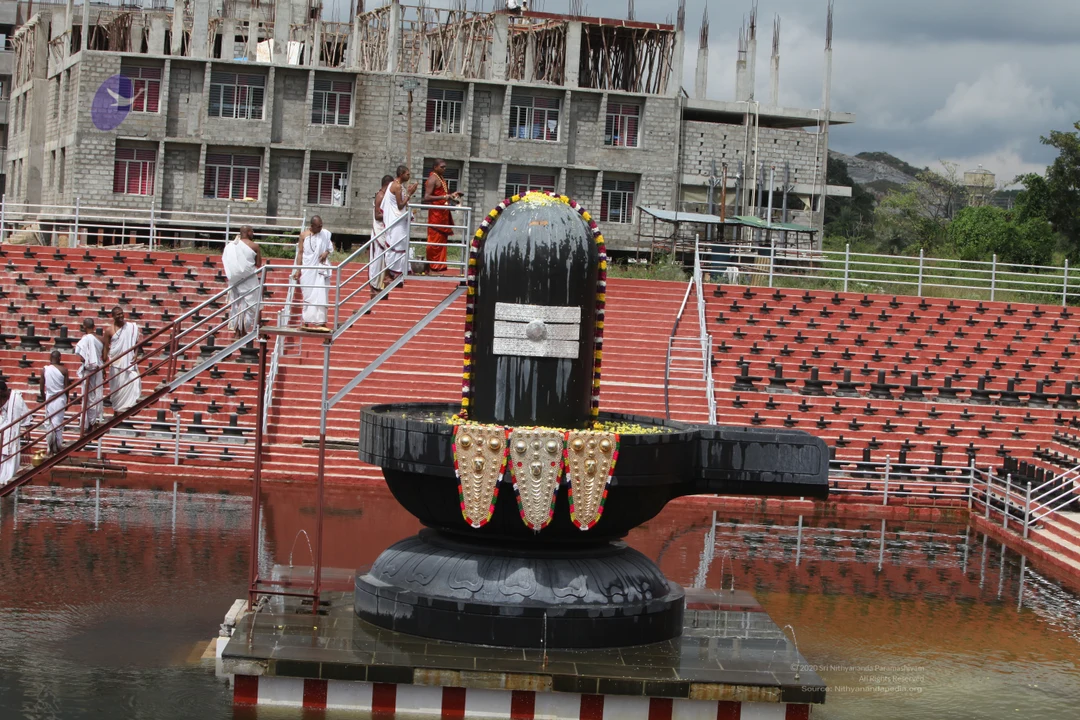
Nithyanandeshwara-Paramashiva-Lingha-Abishekam
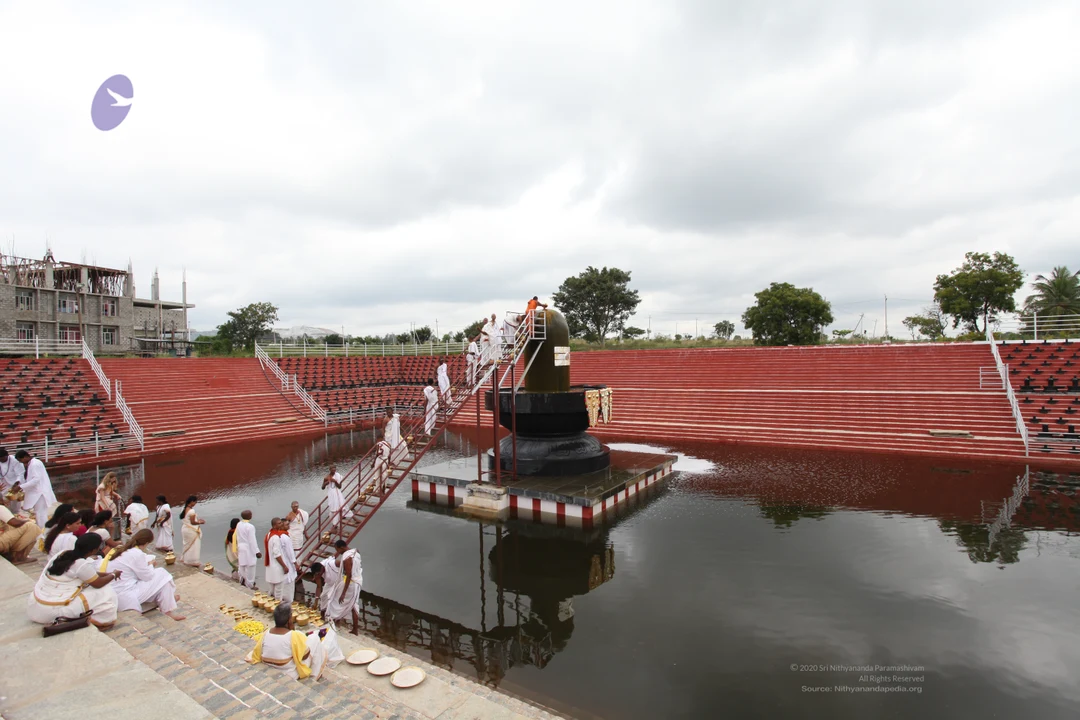
2 photosSource gallery
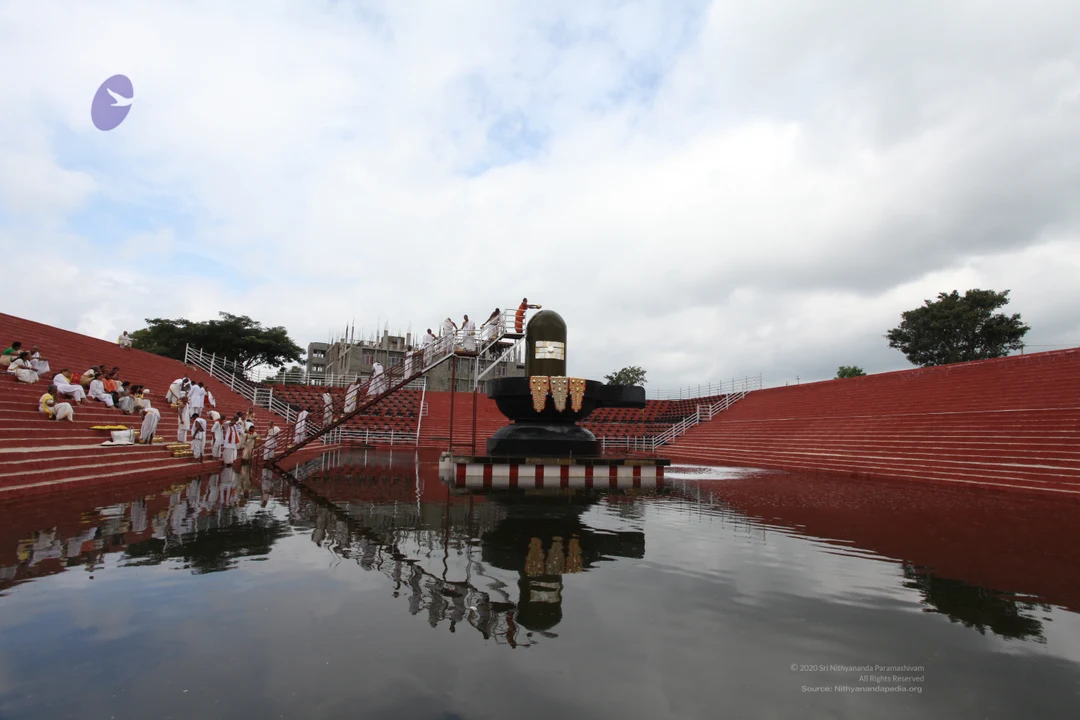
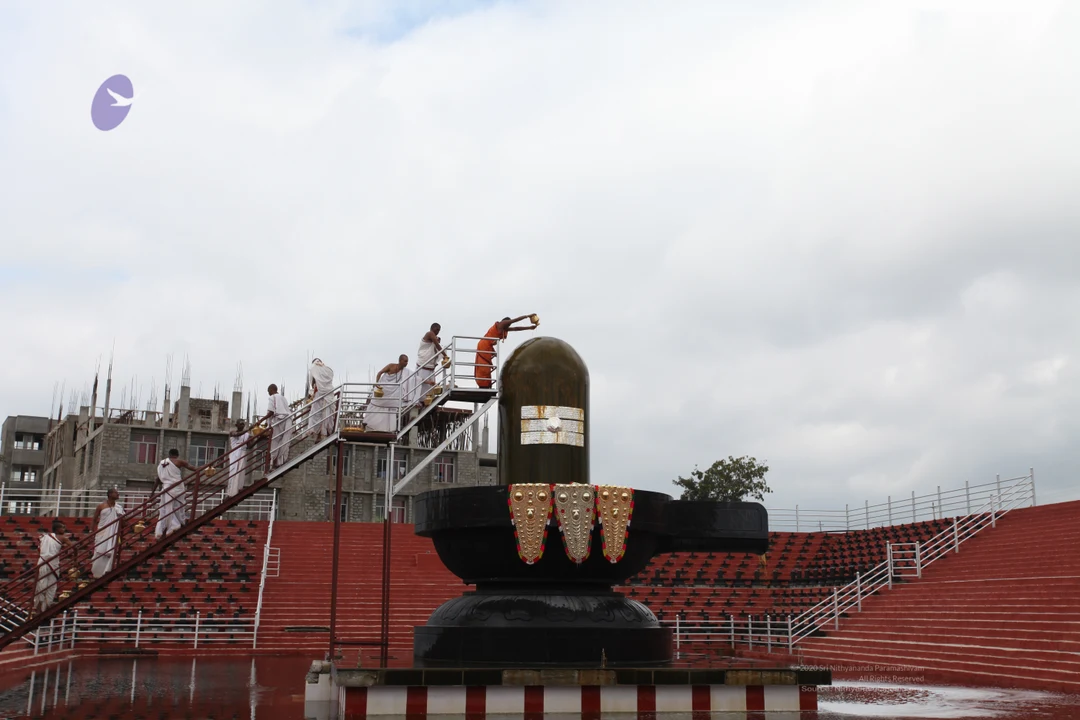
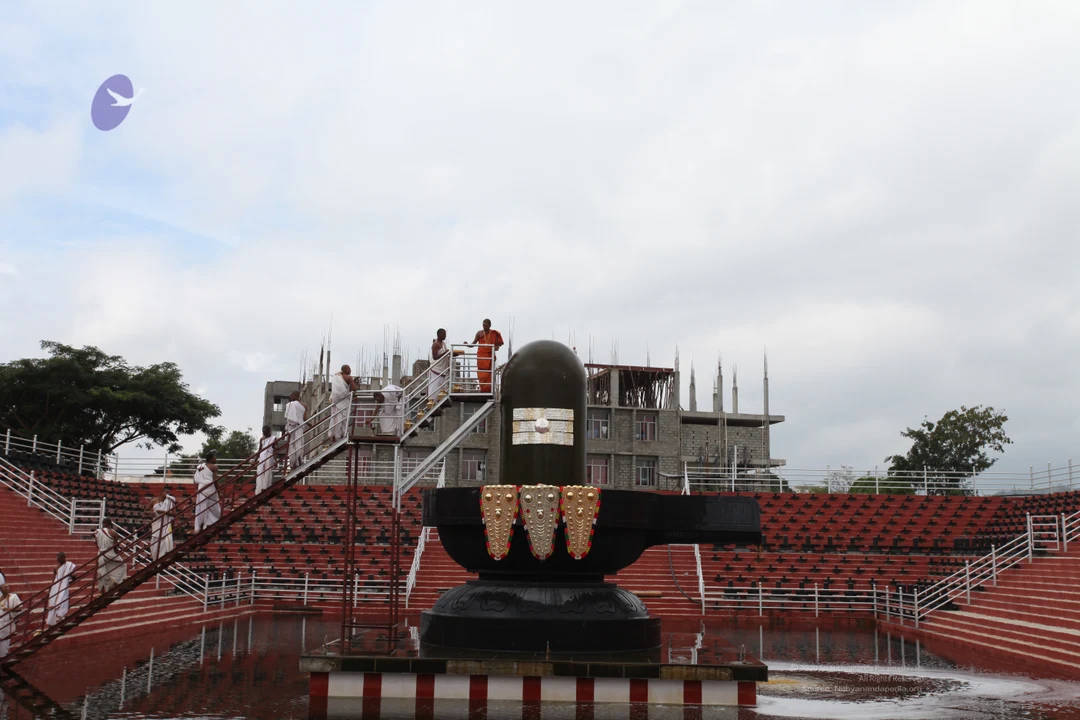
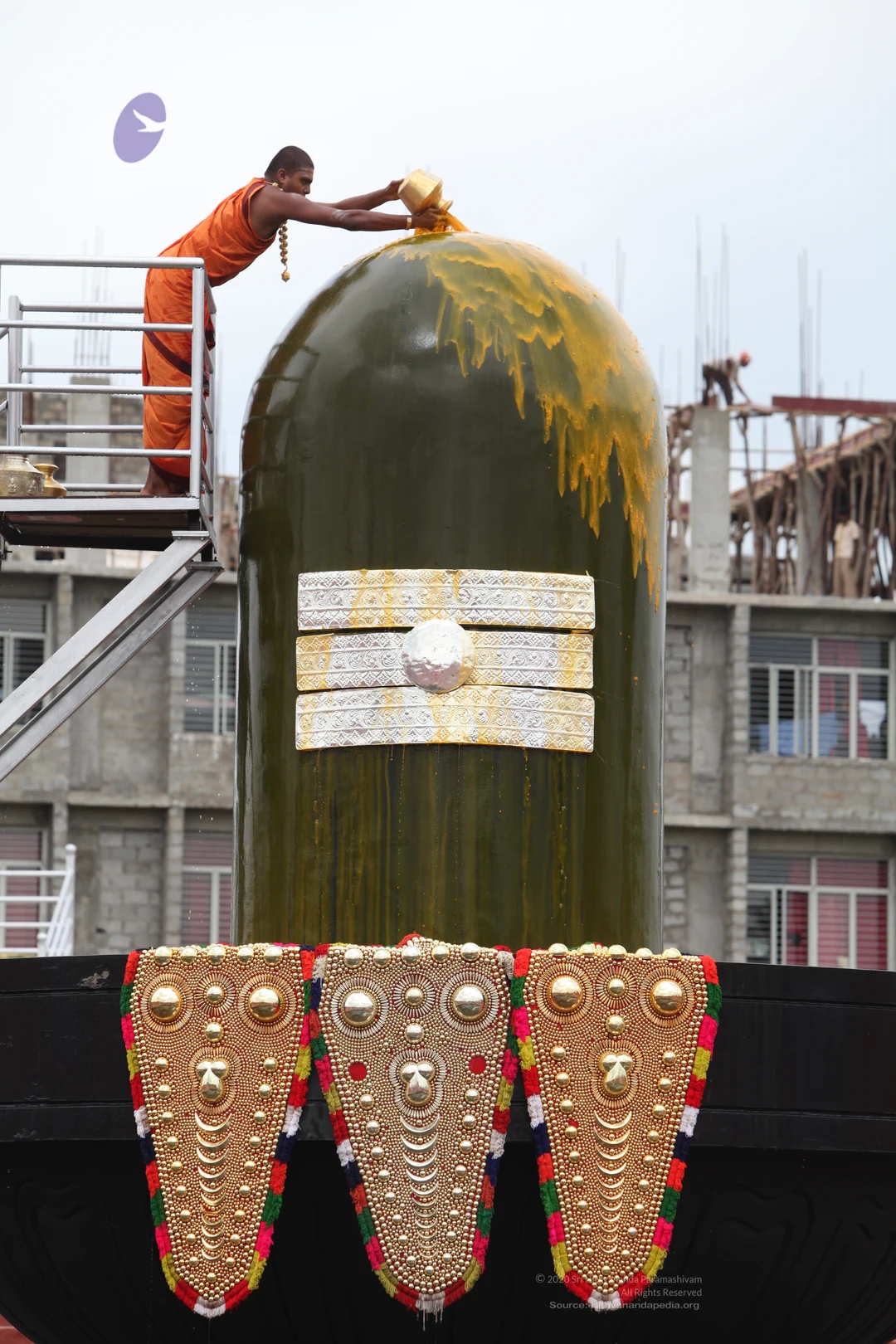
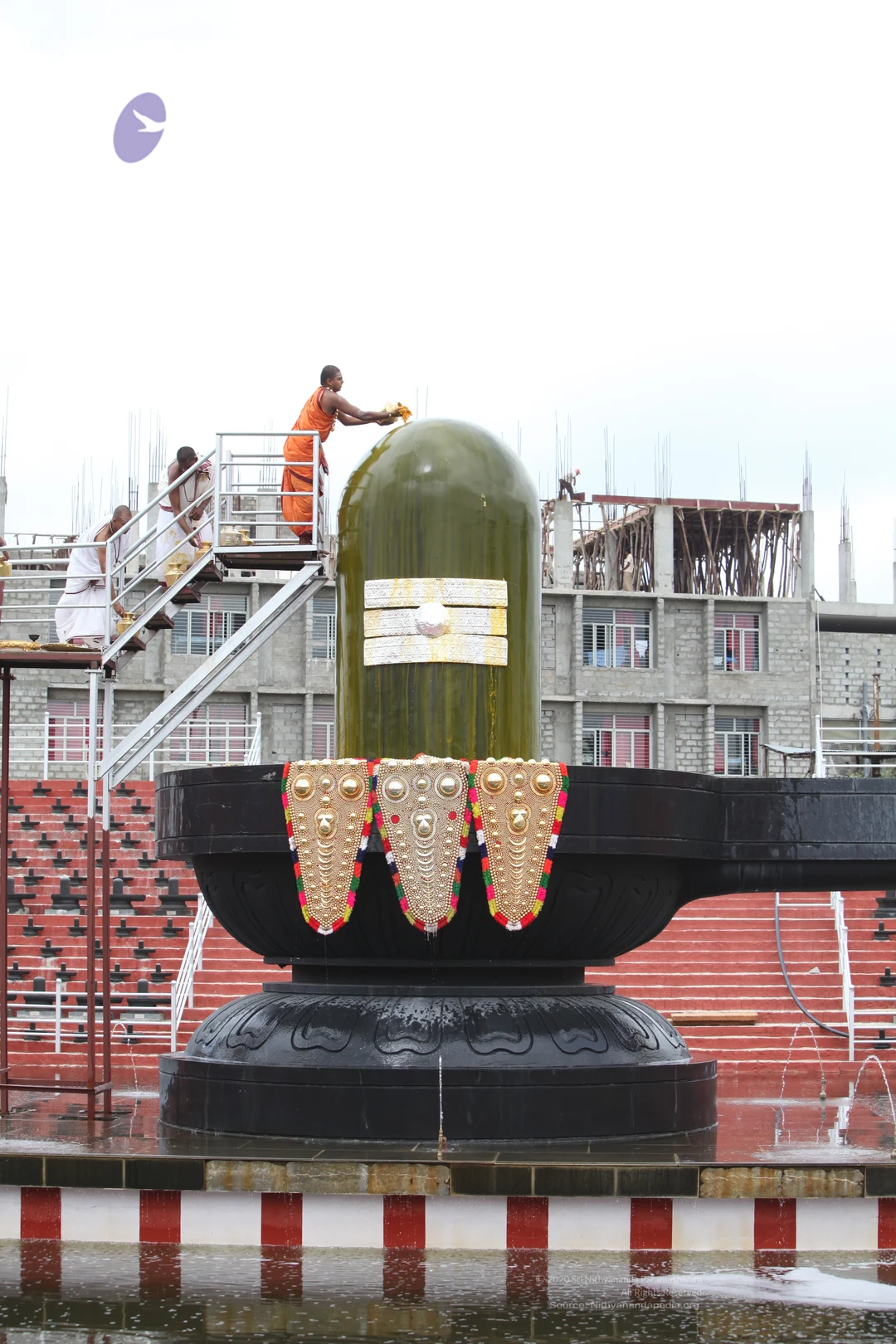
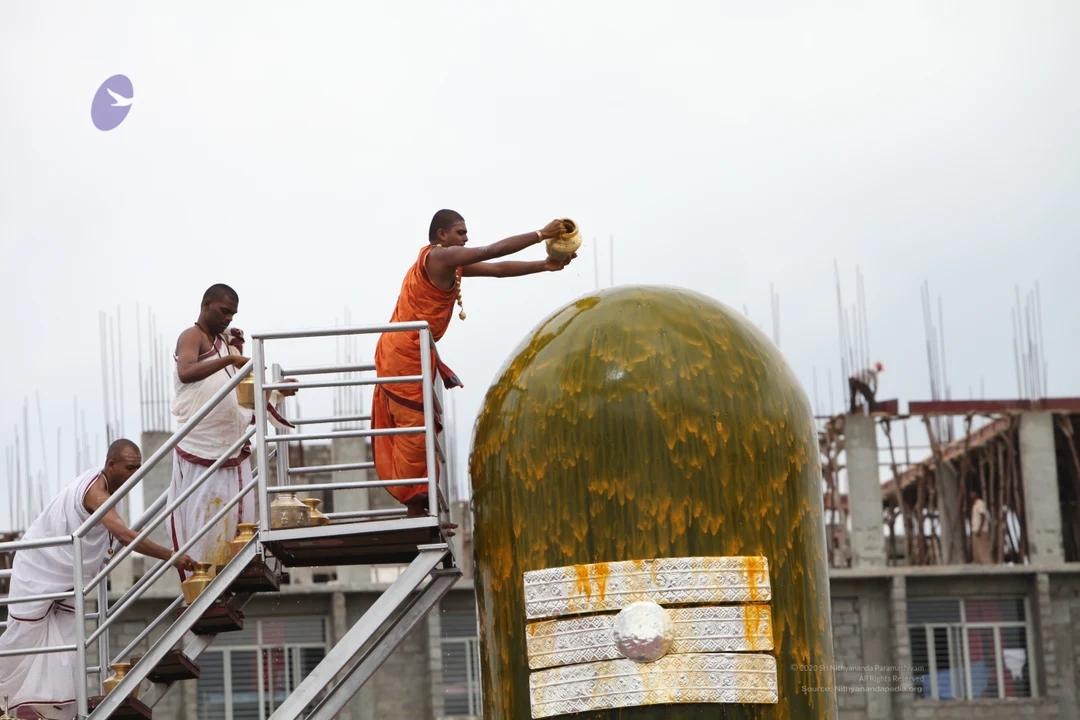
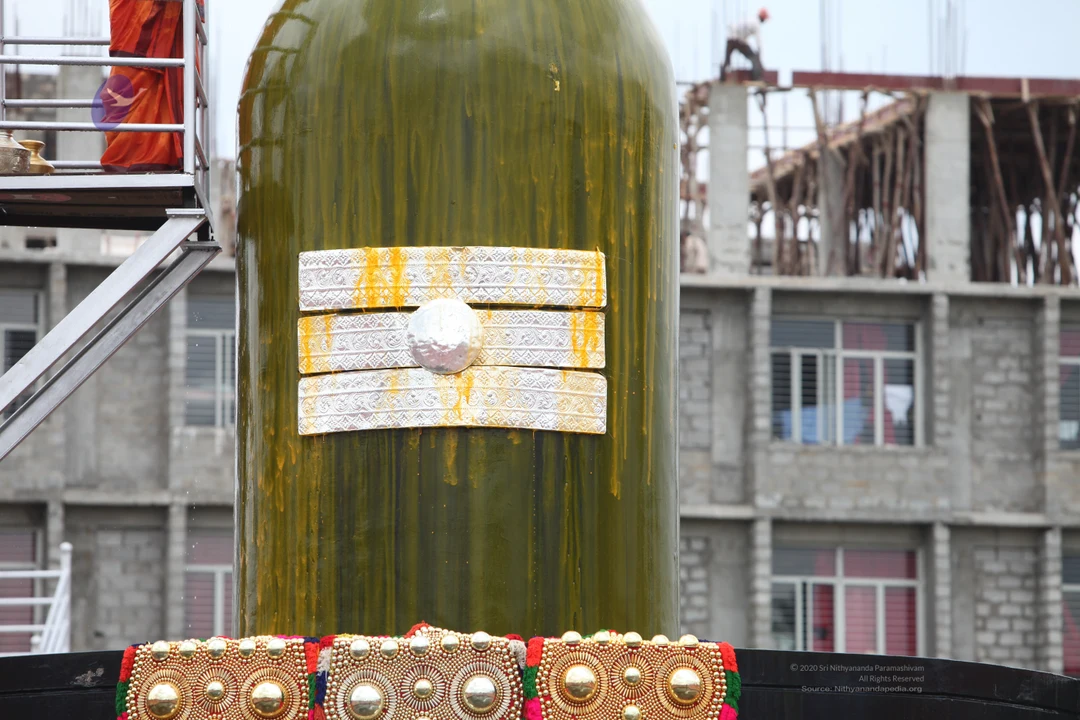
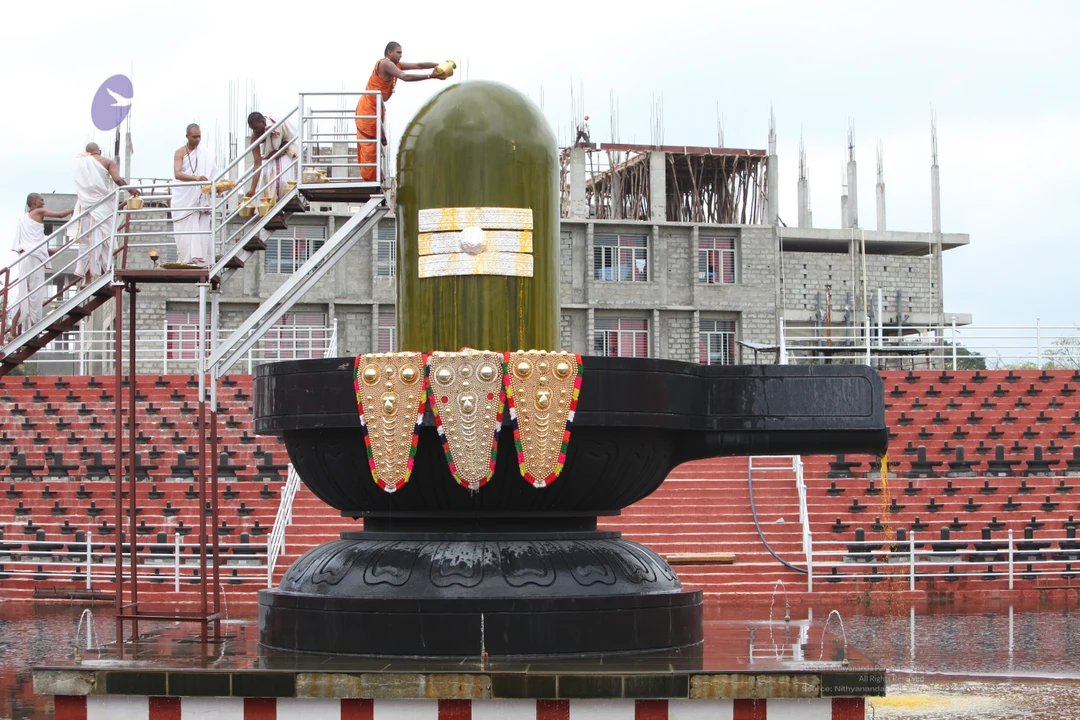
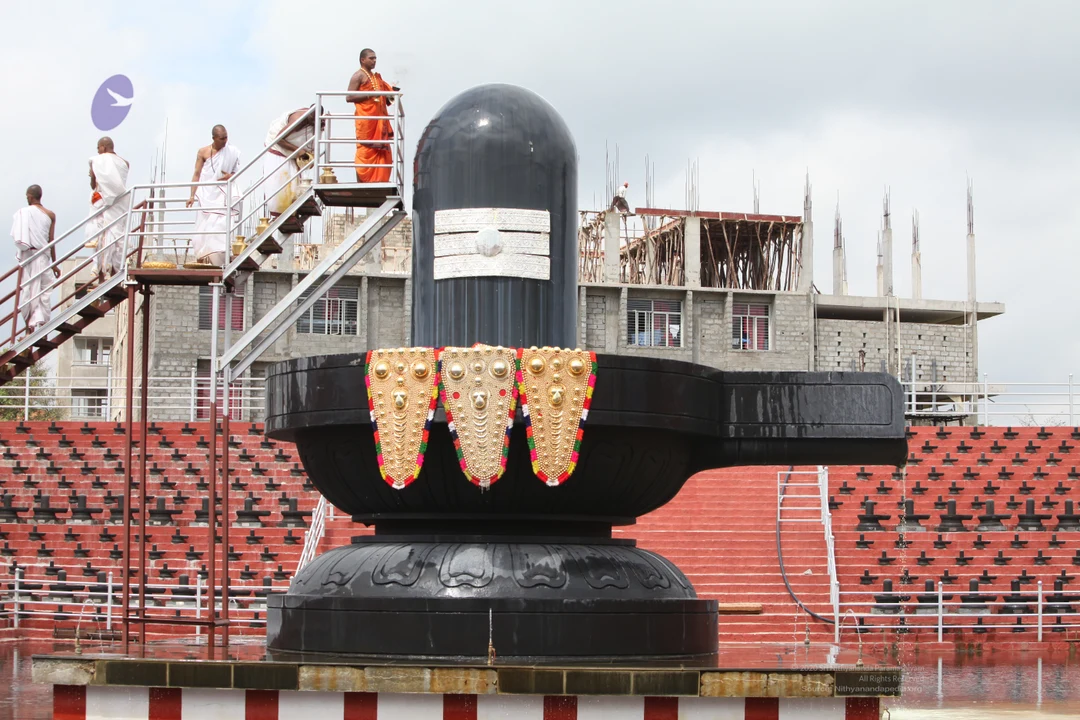
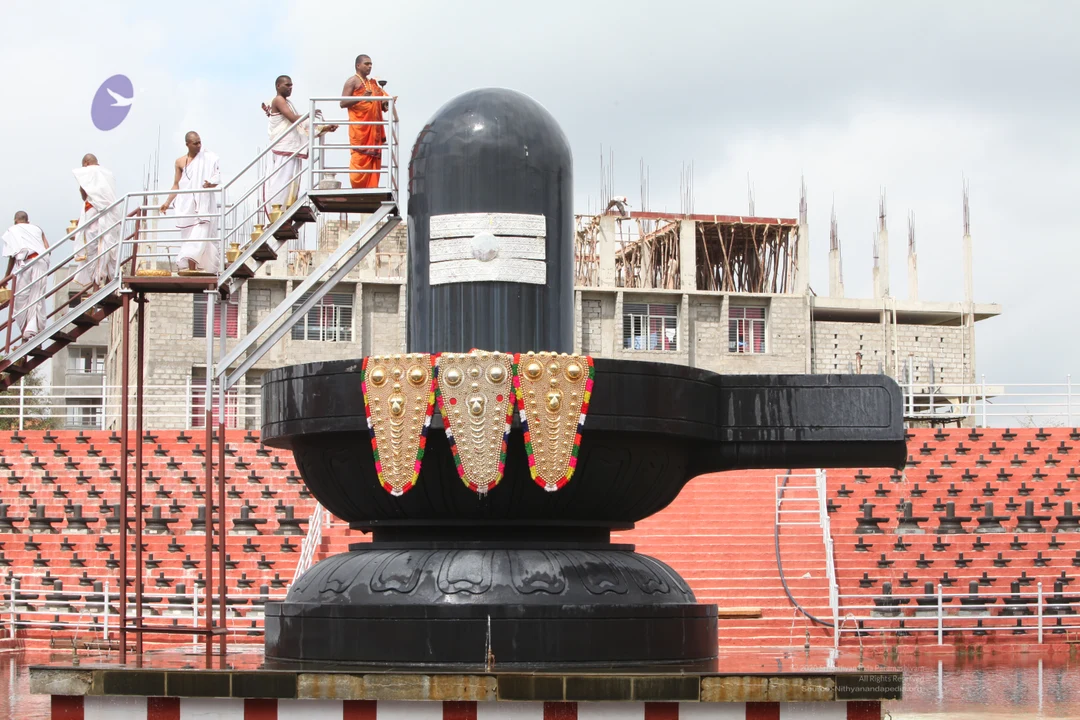
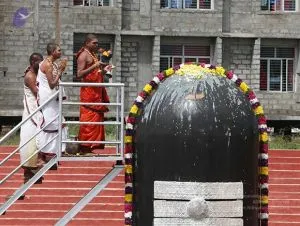
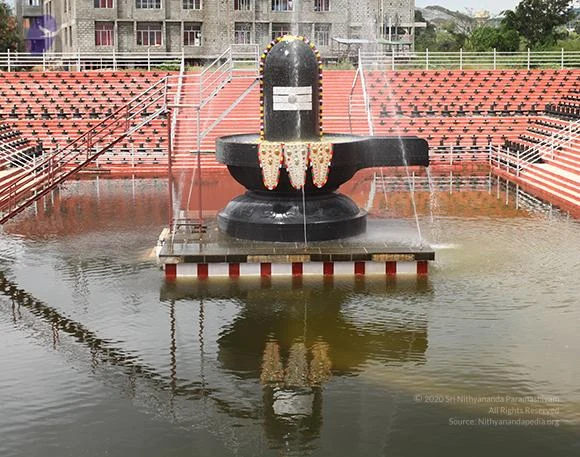
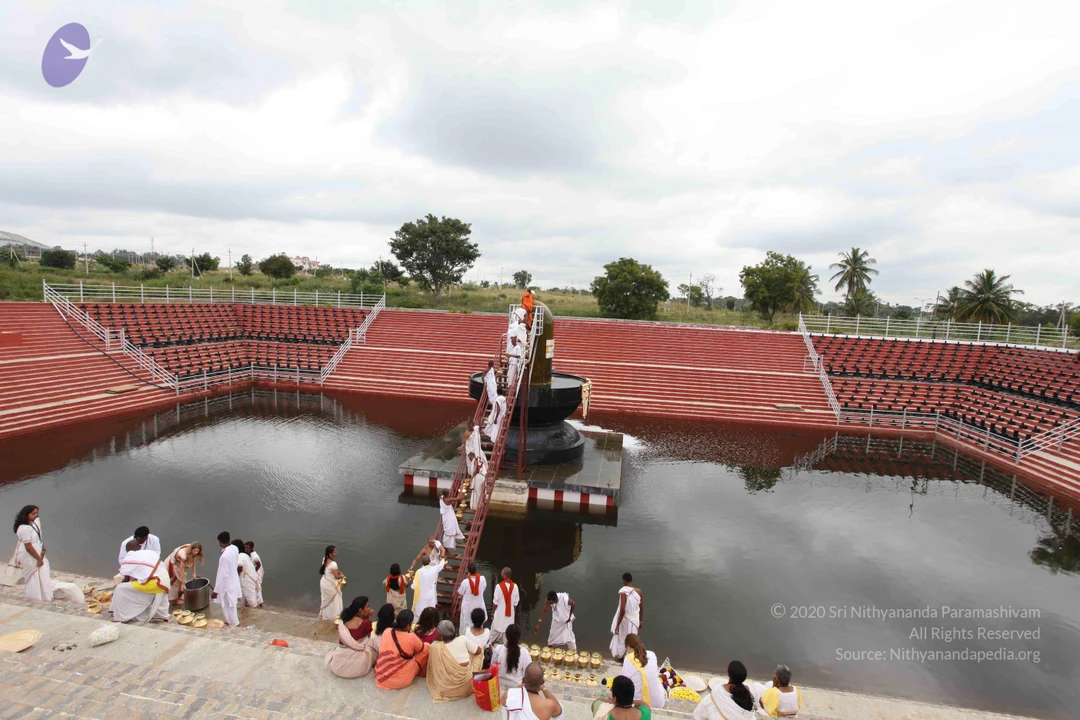
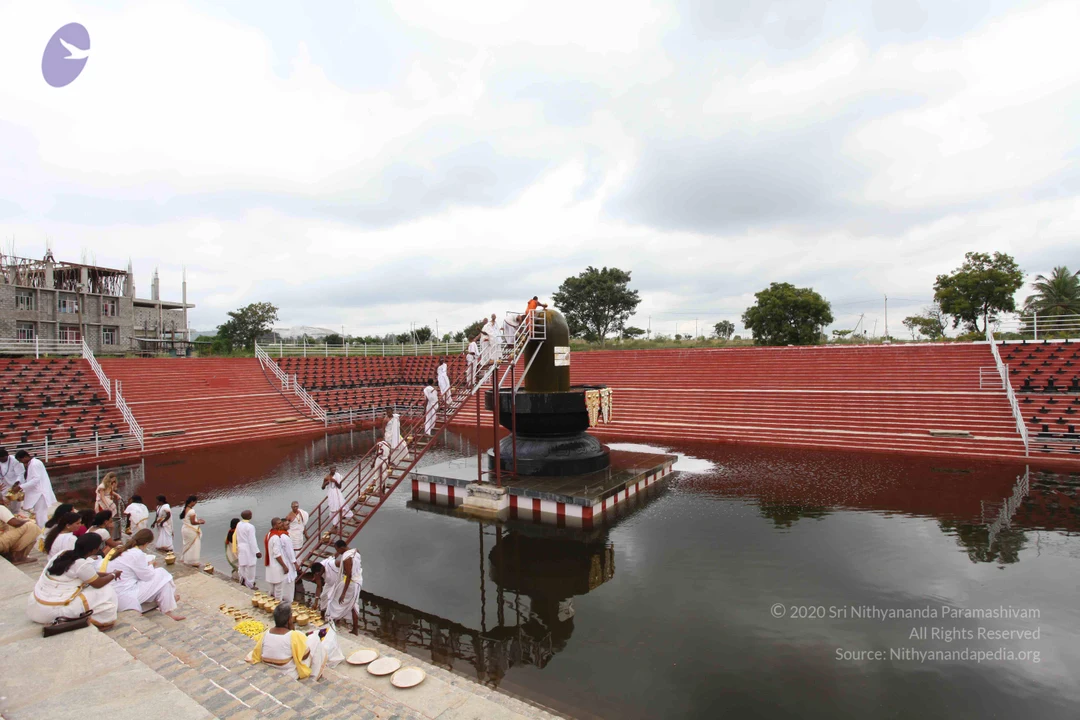
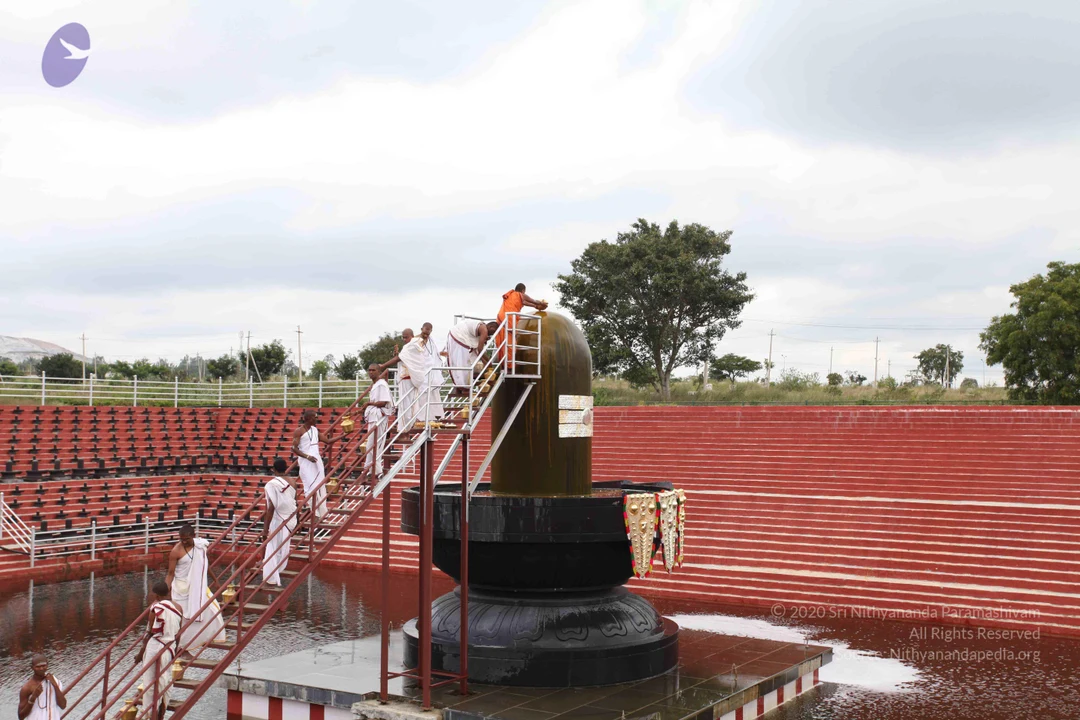
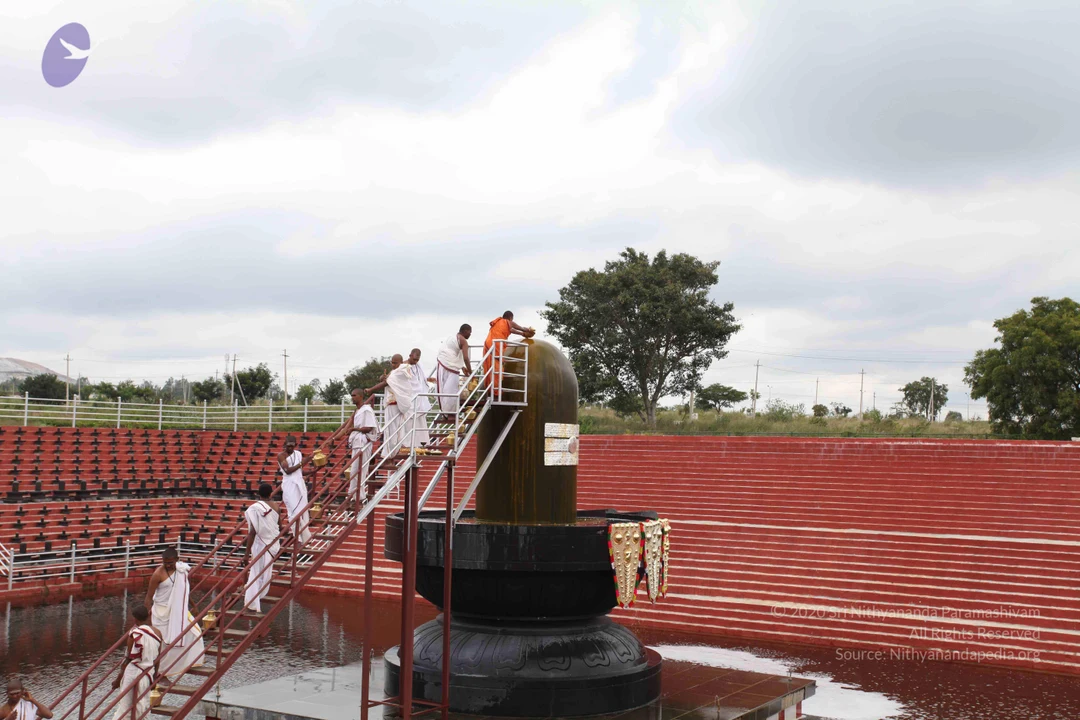
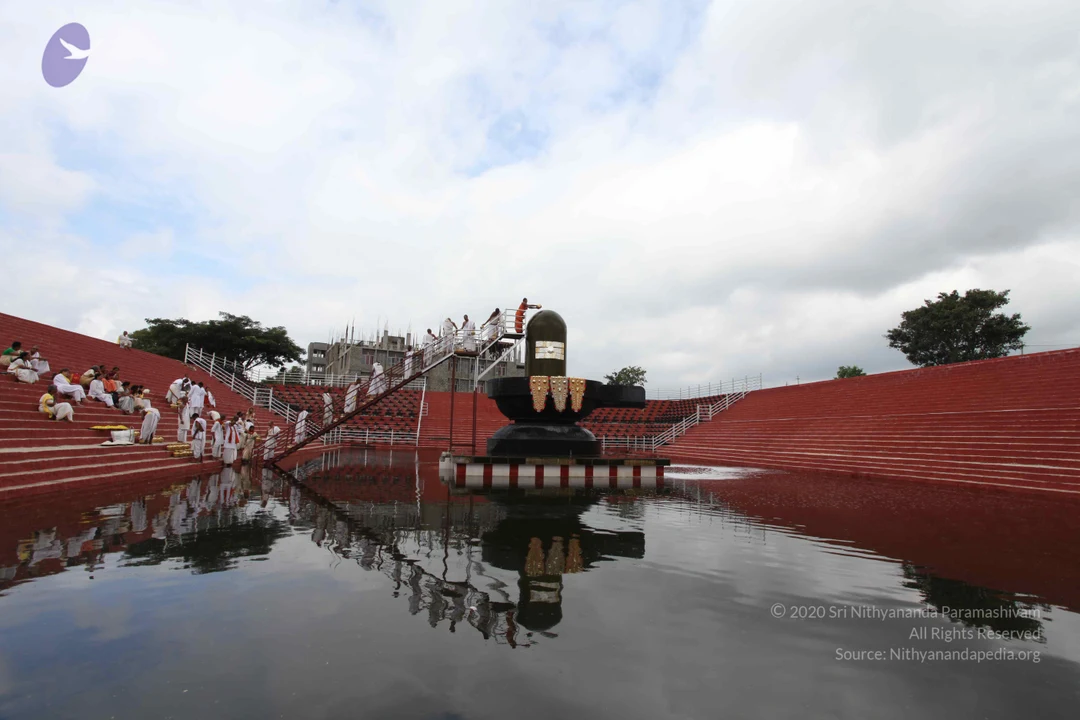
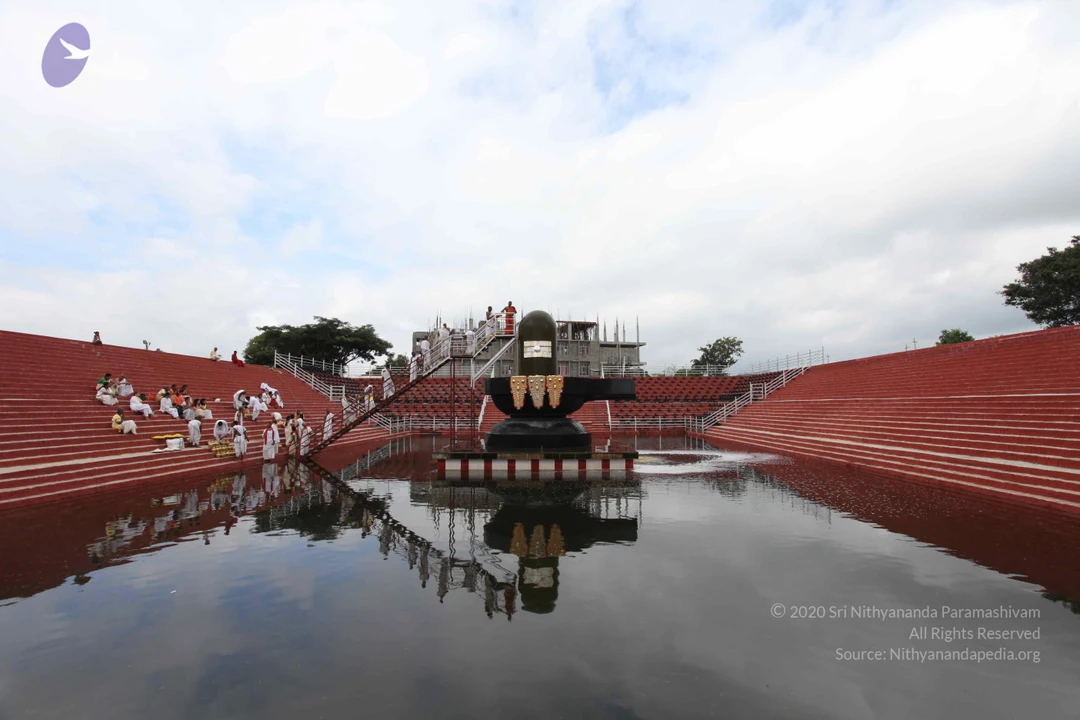
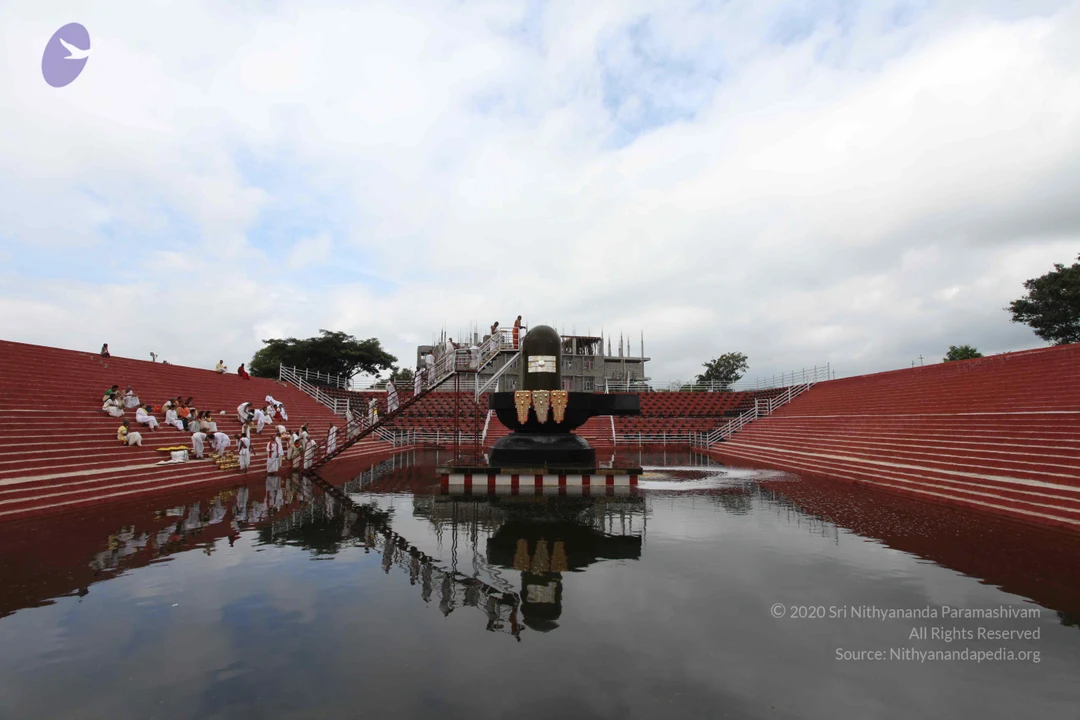
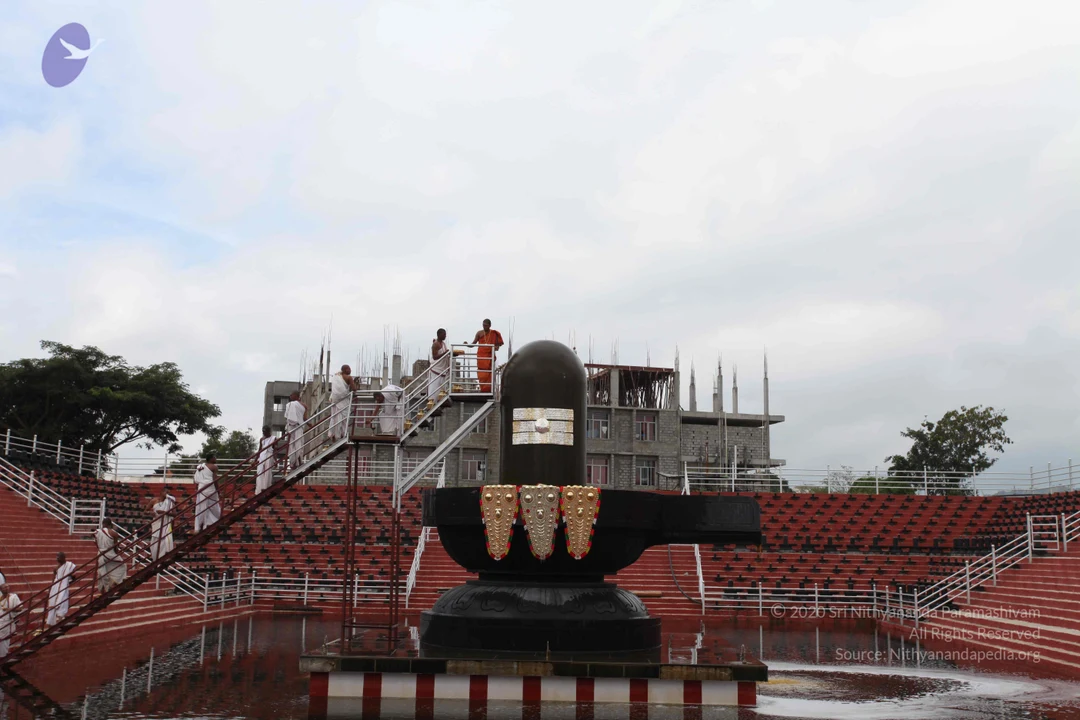
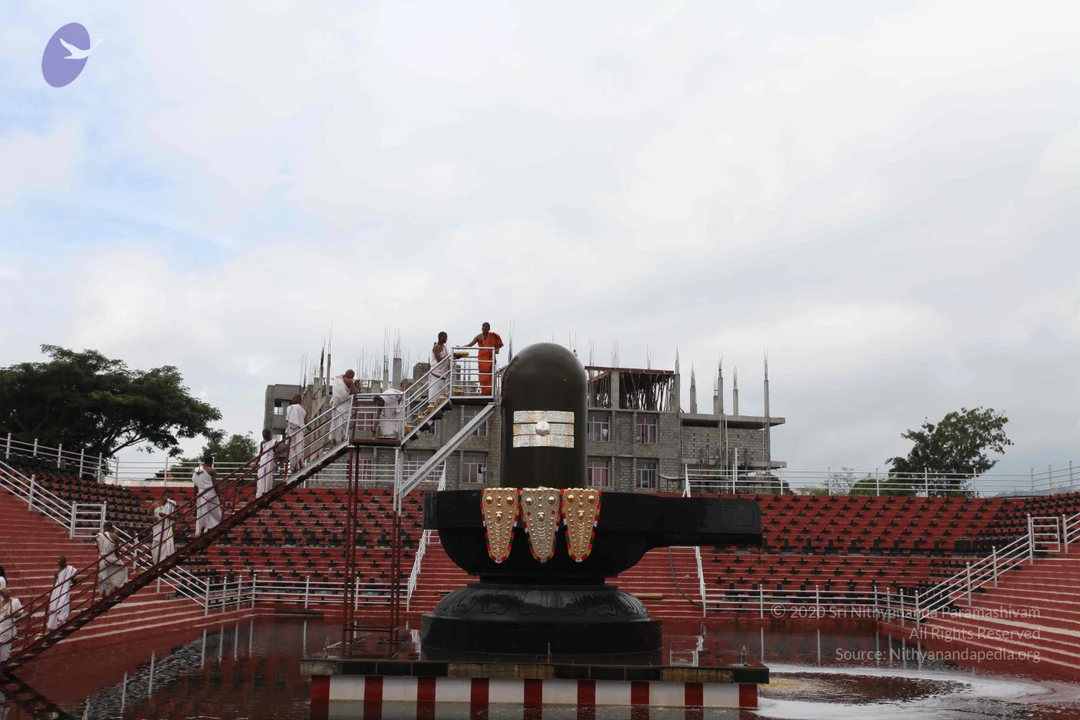
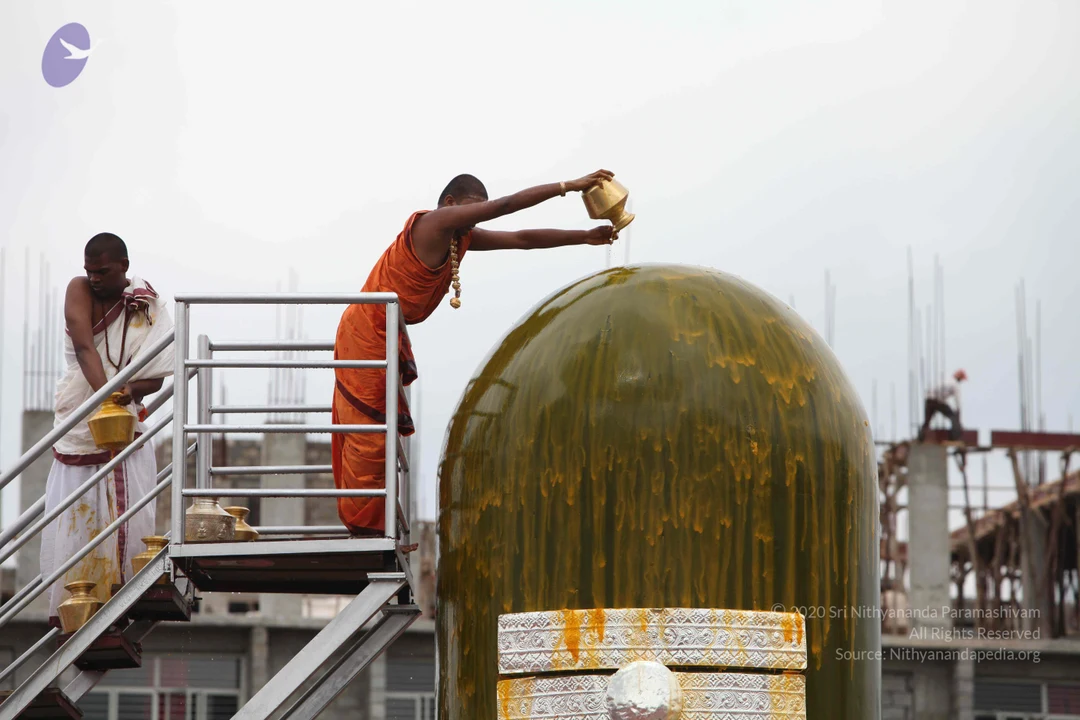
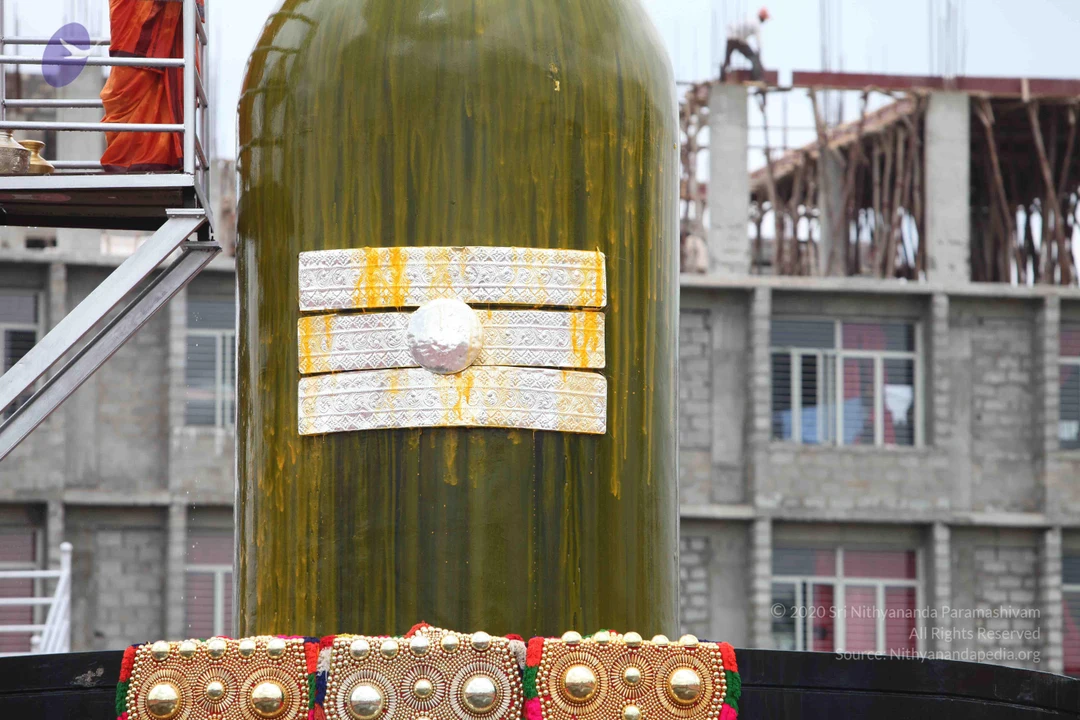
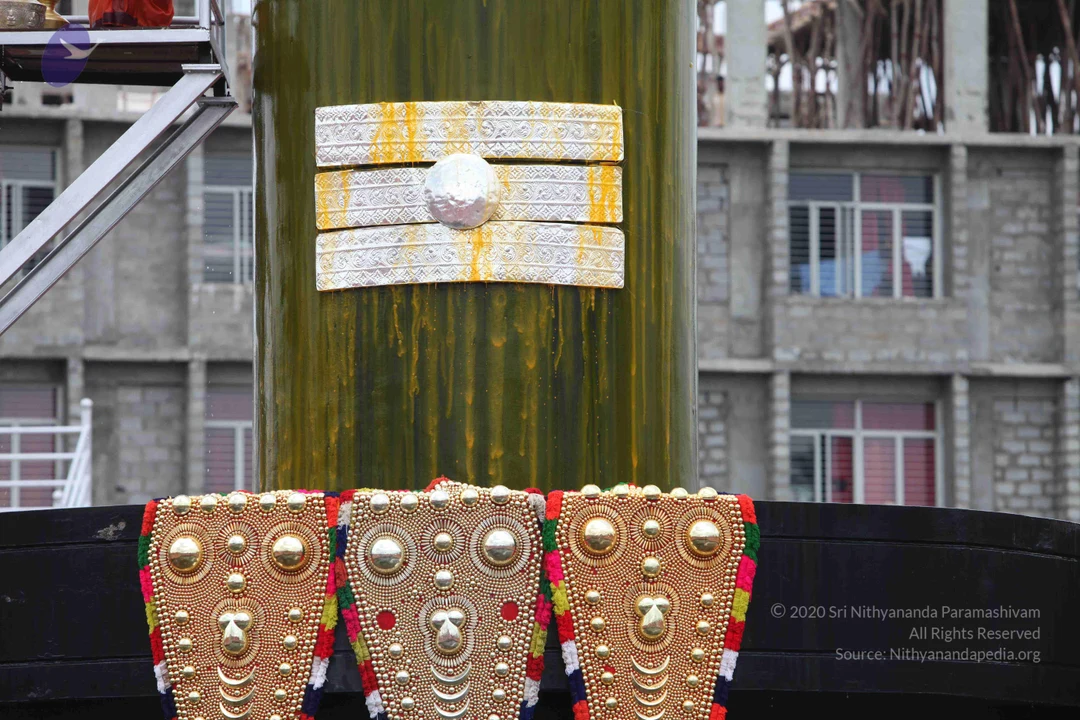
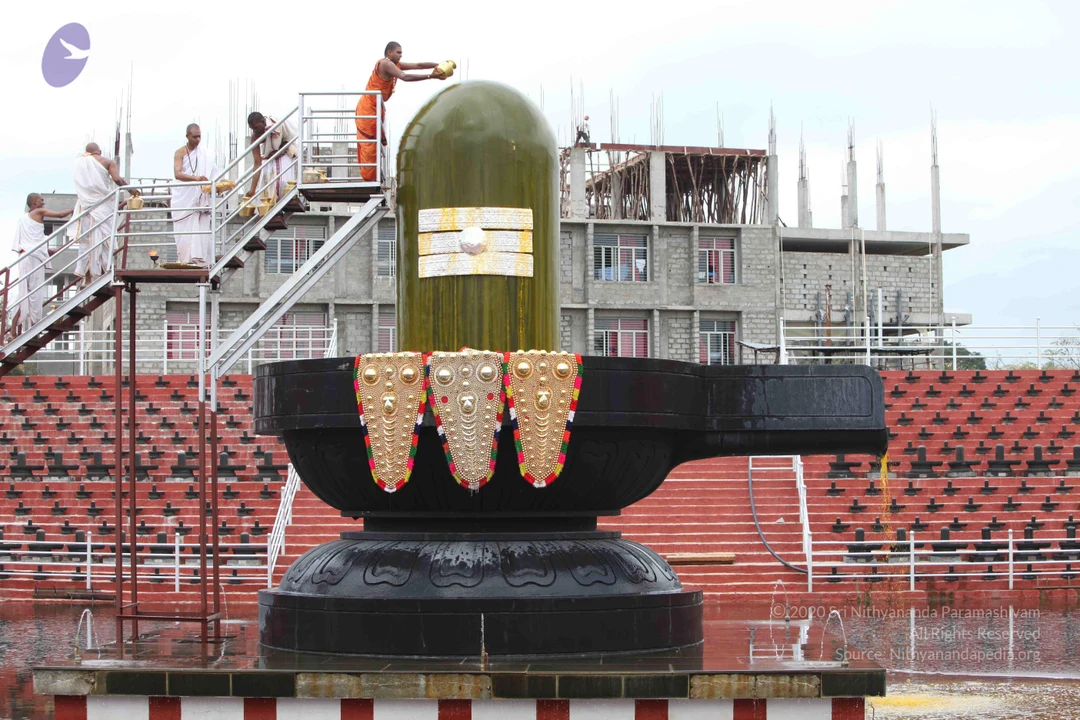
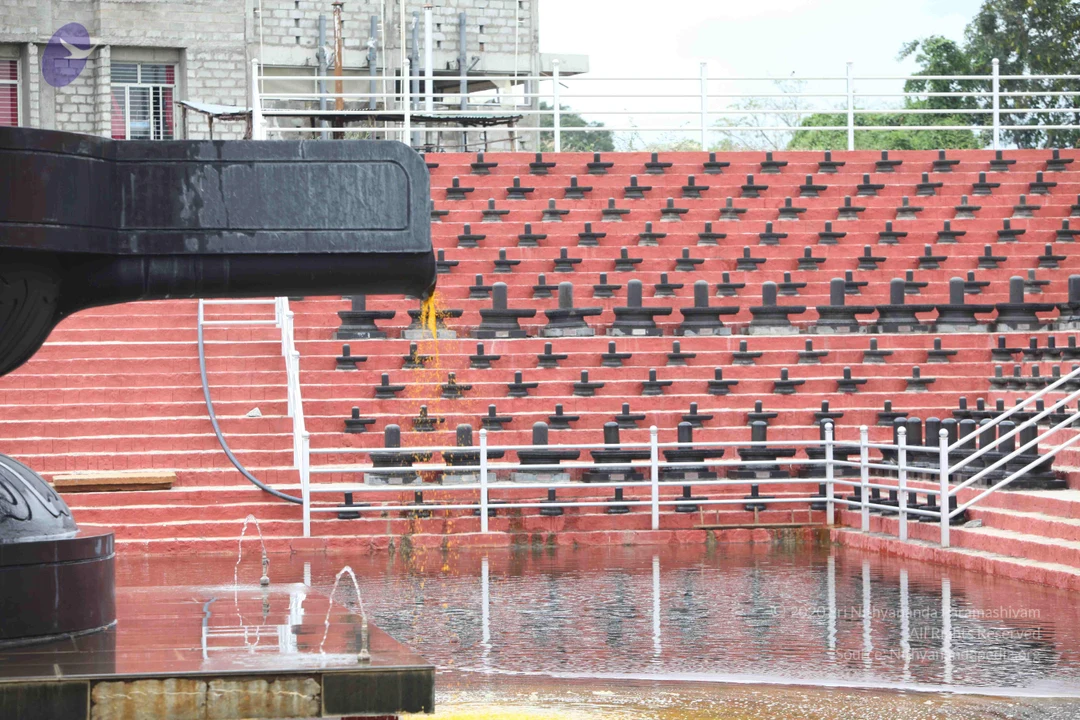
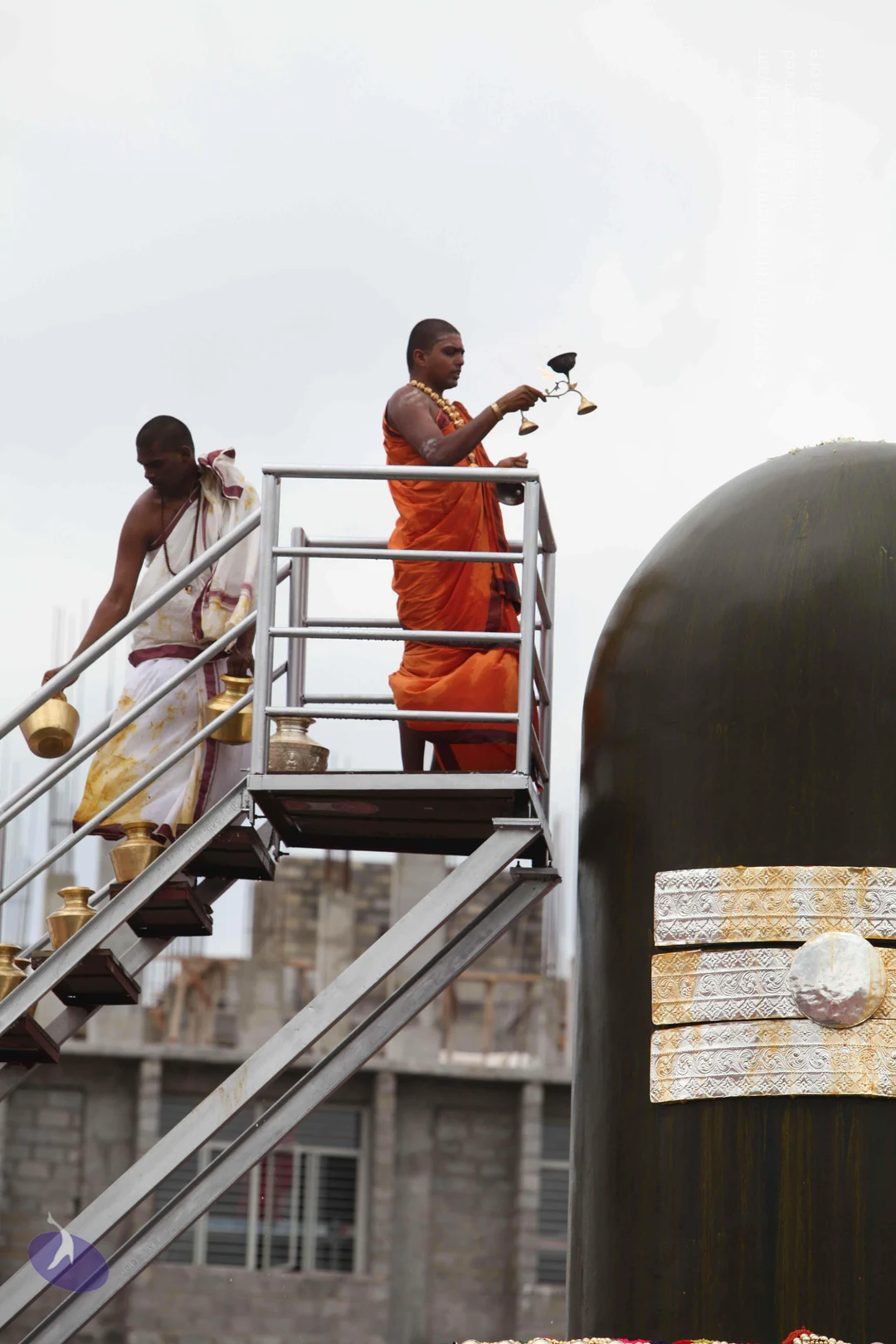
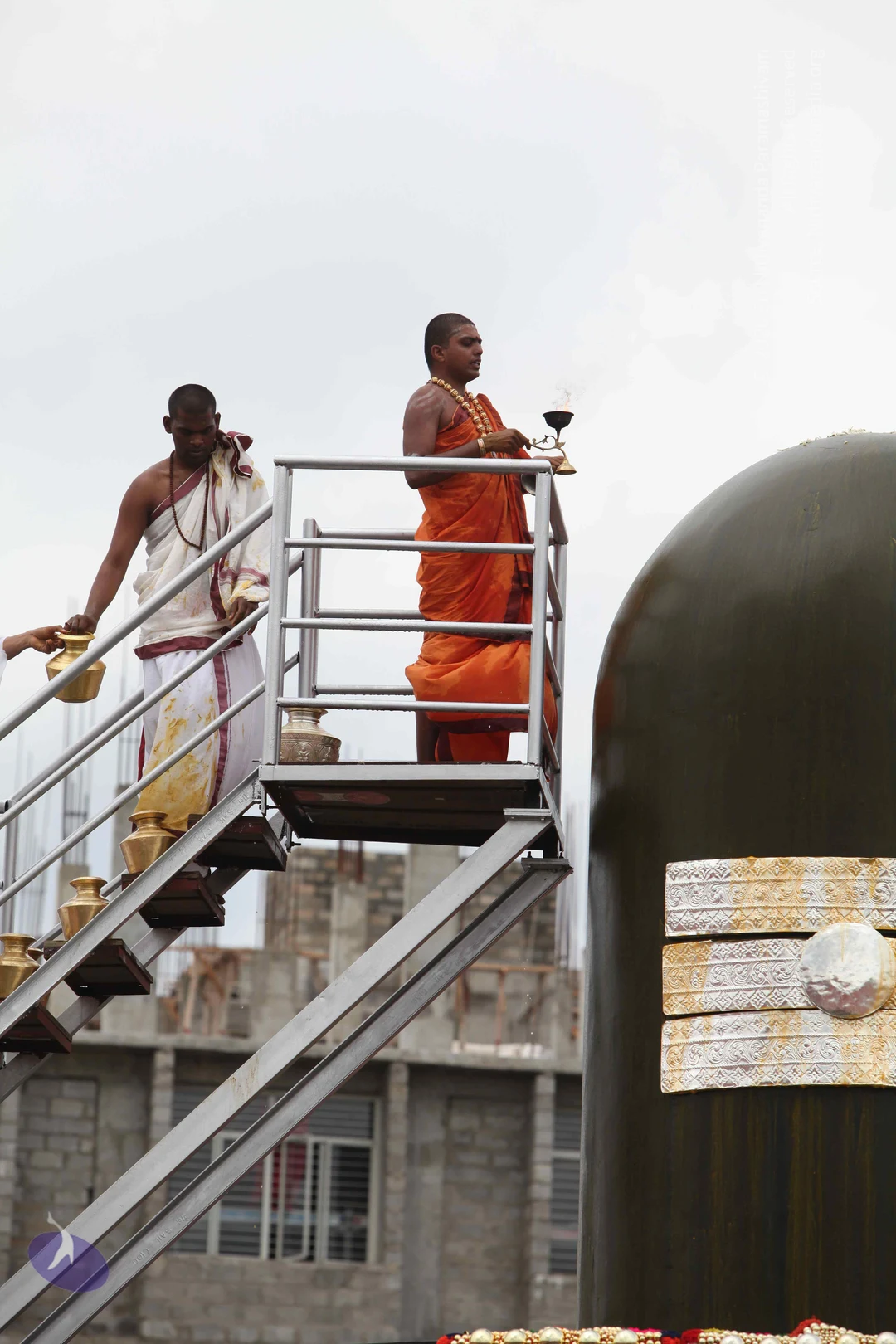
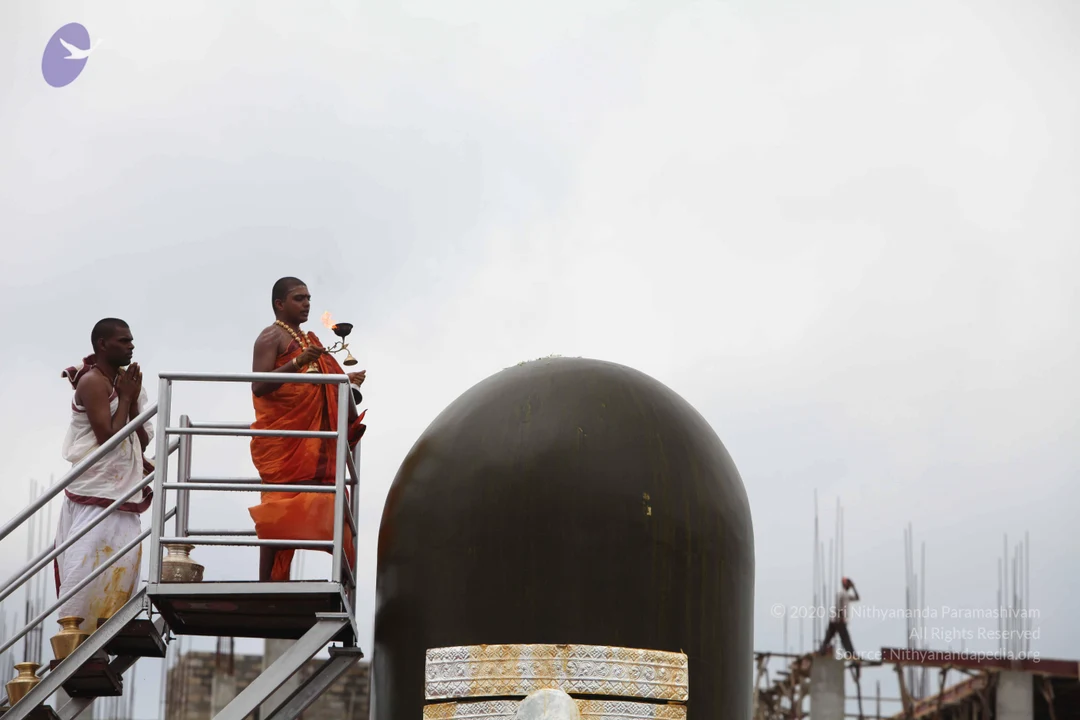
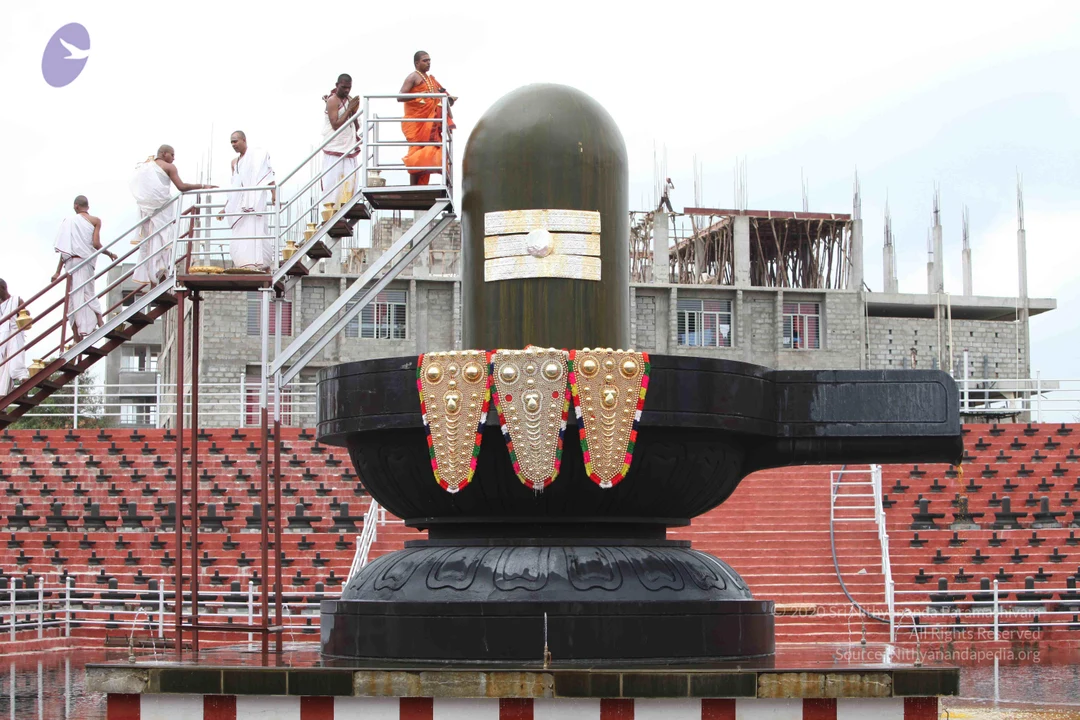
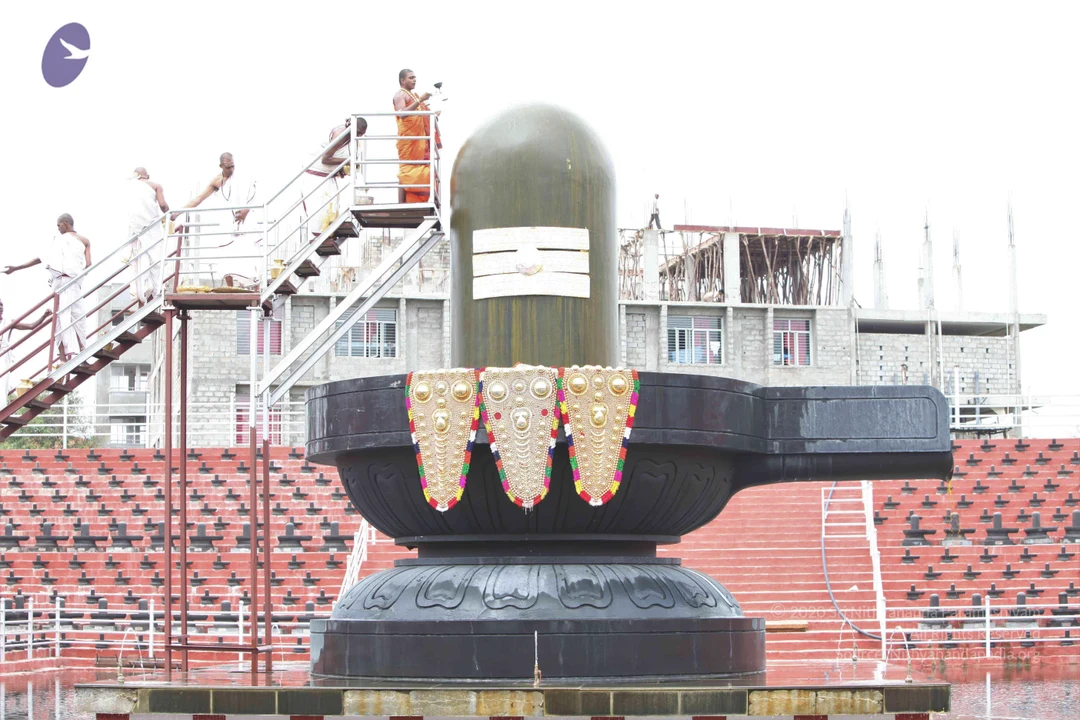
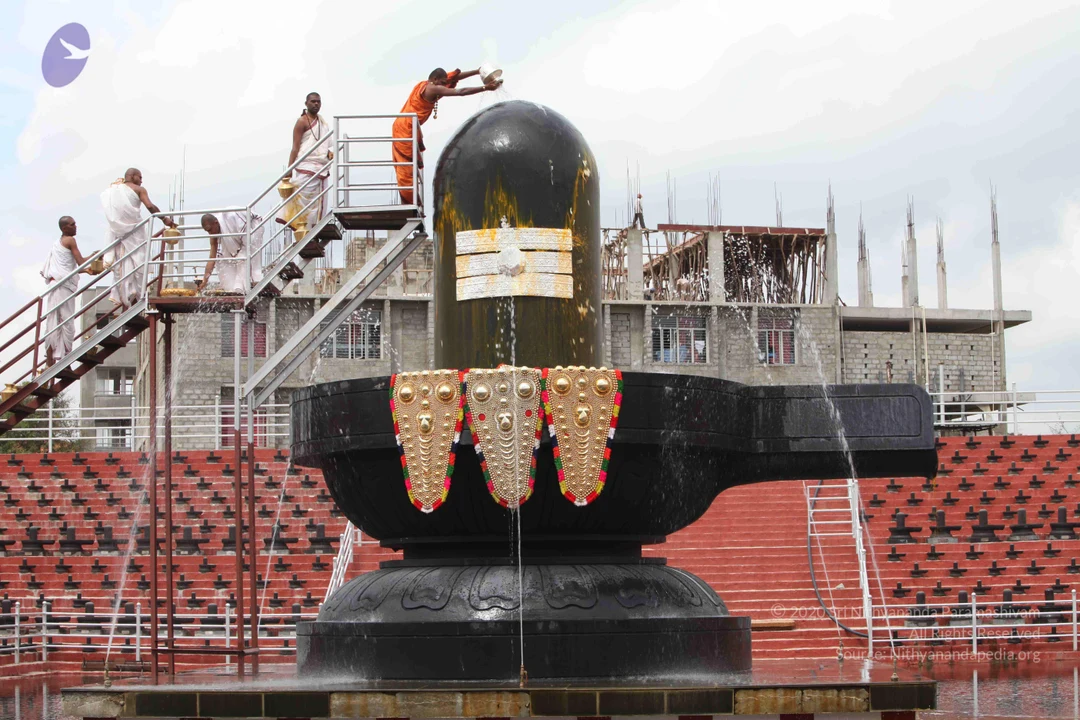
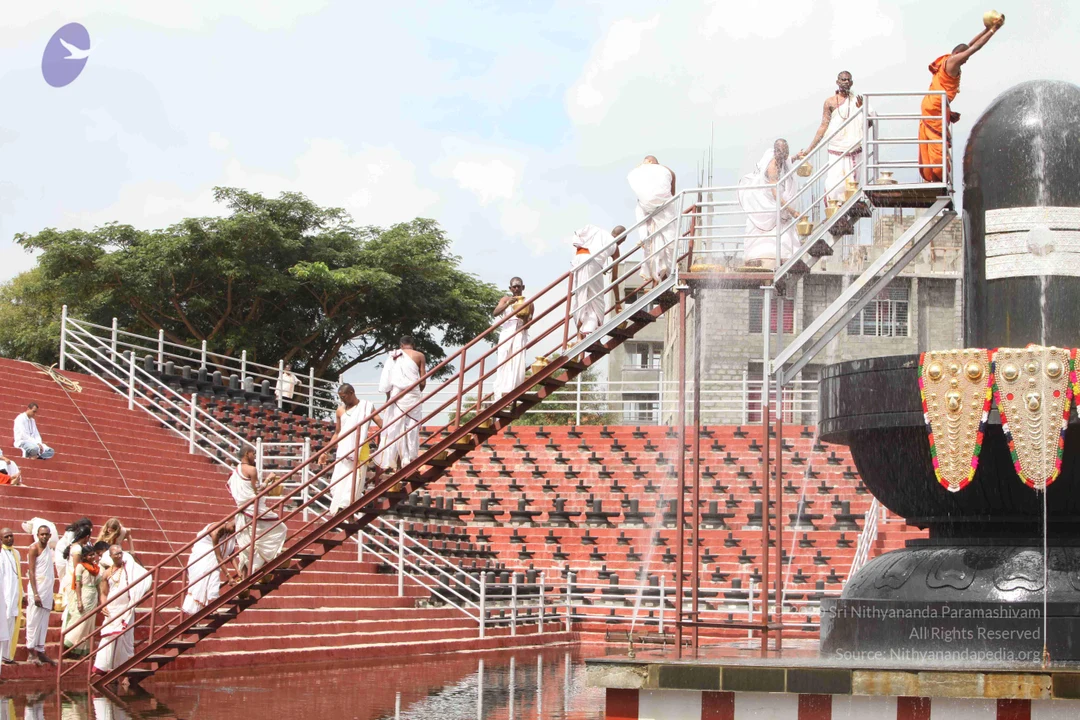
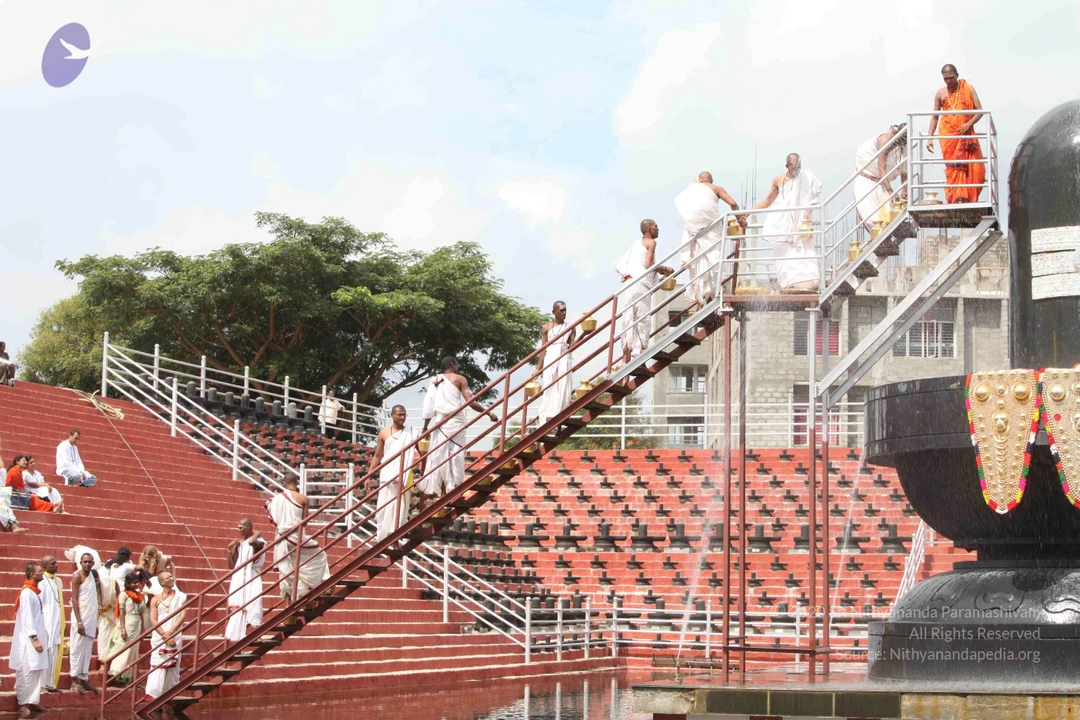
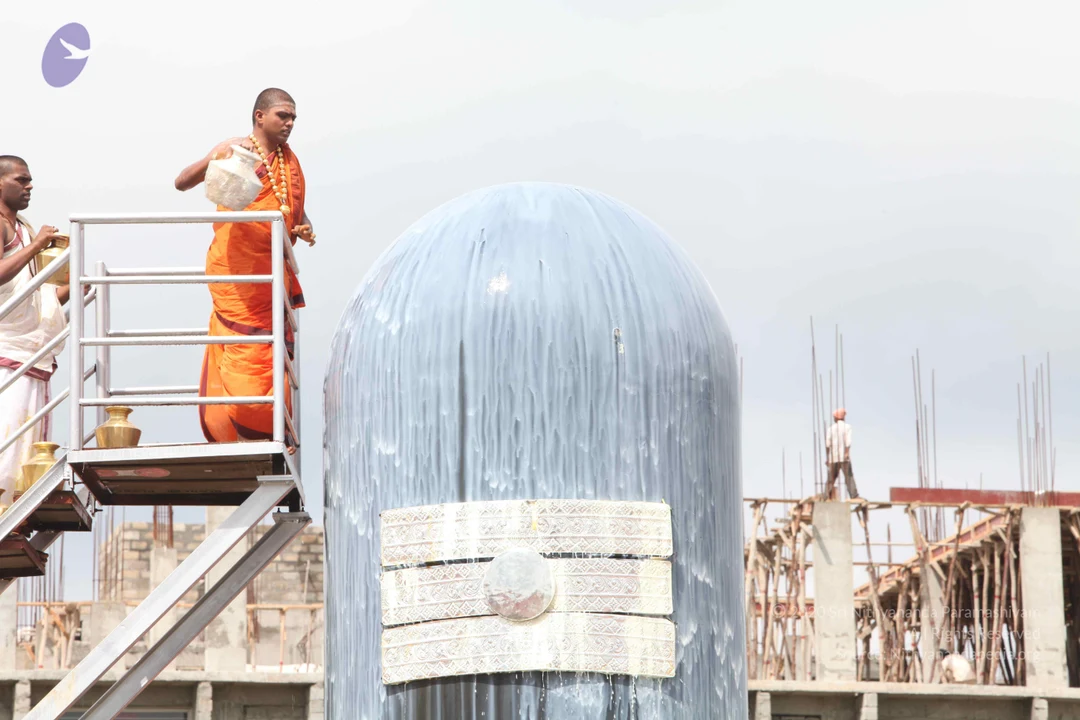
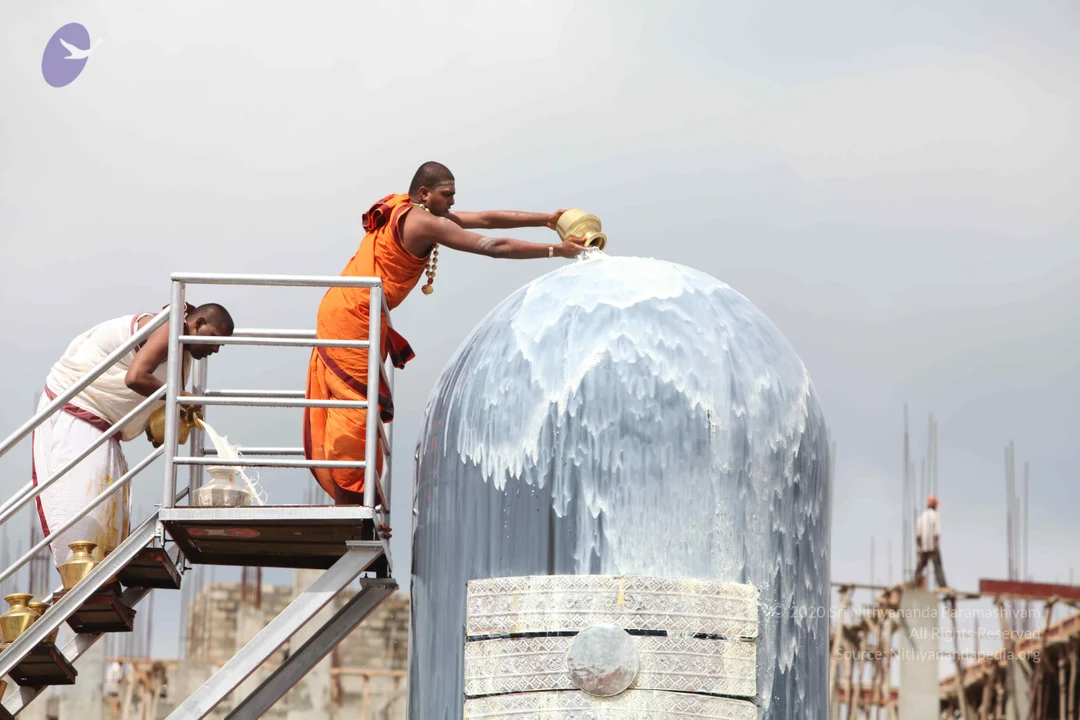
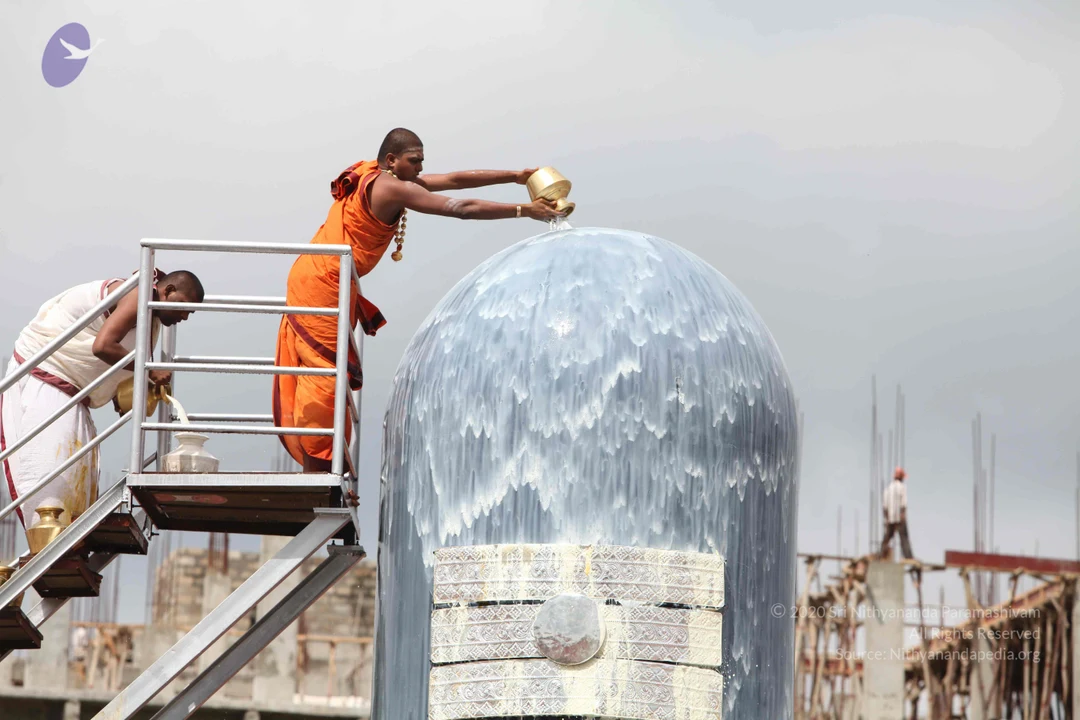
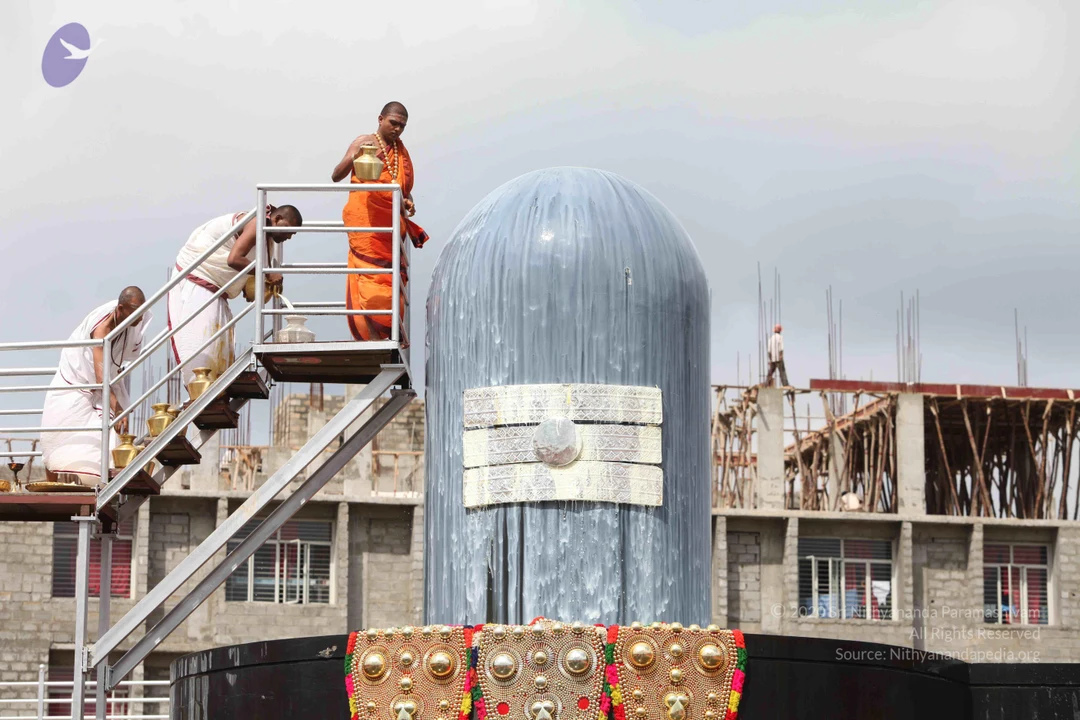
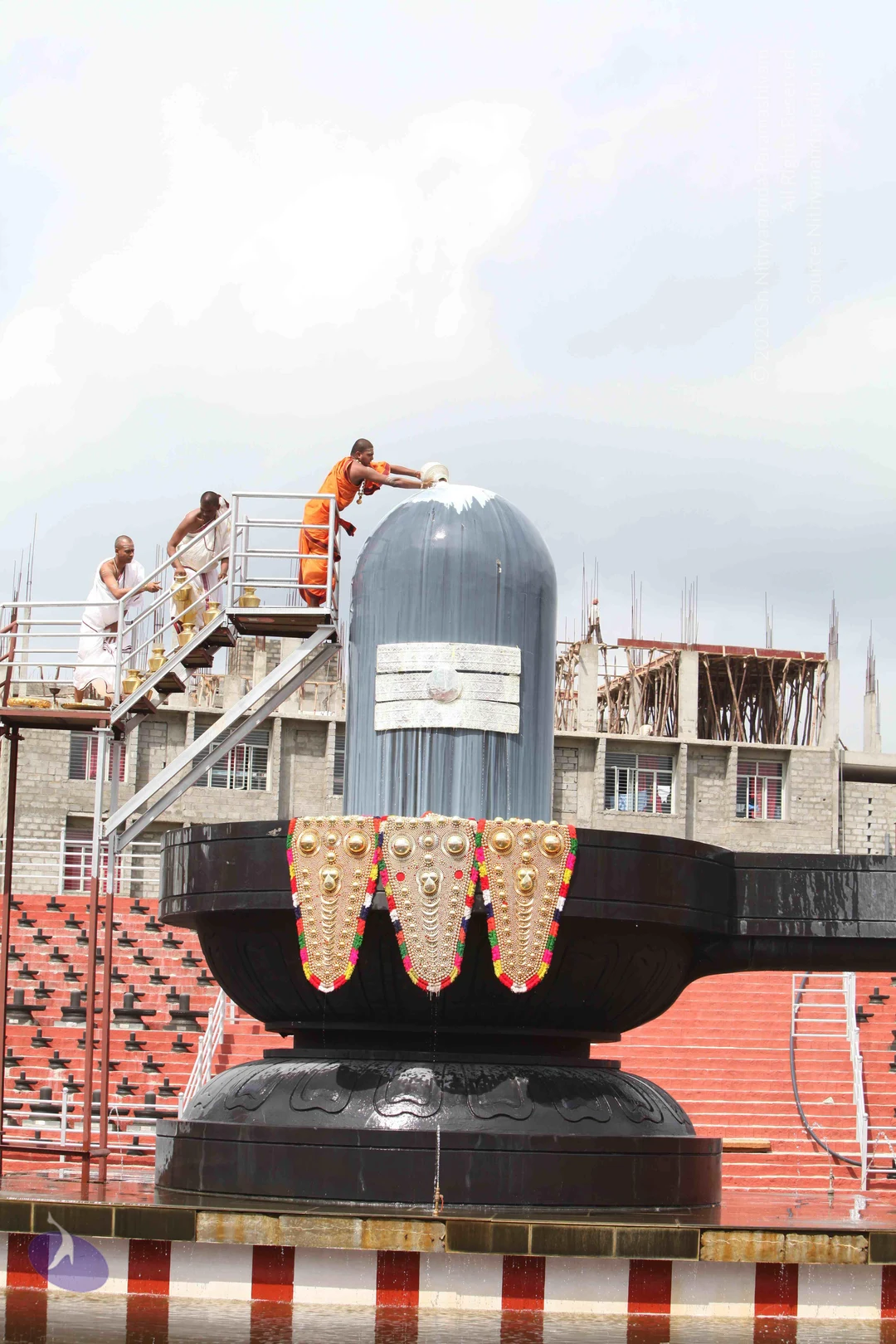
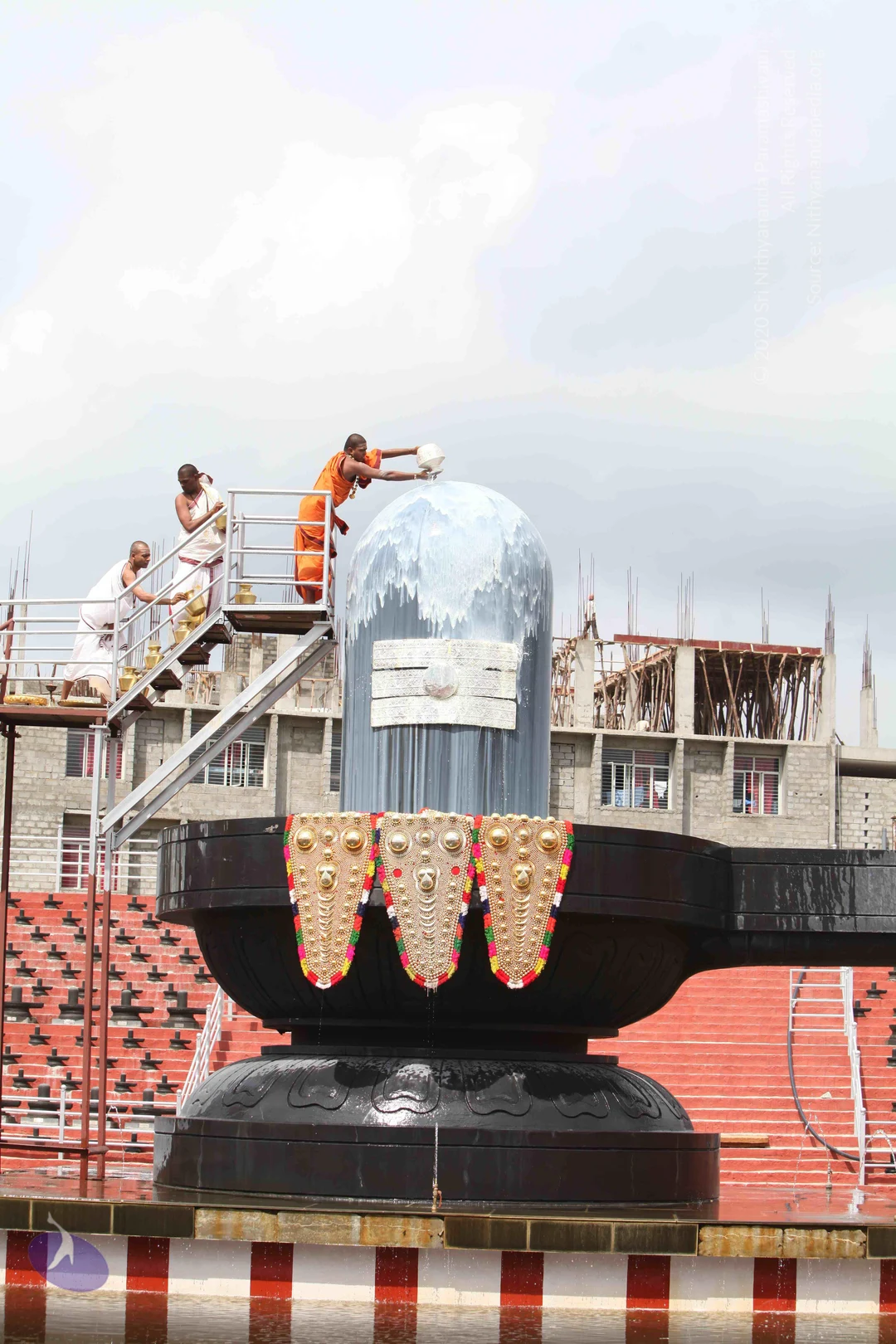
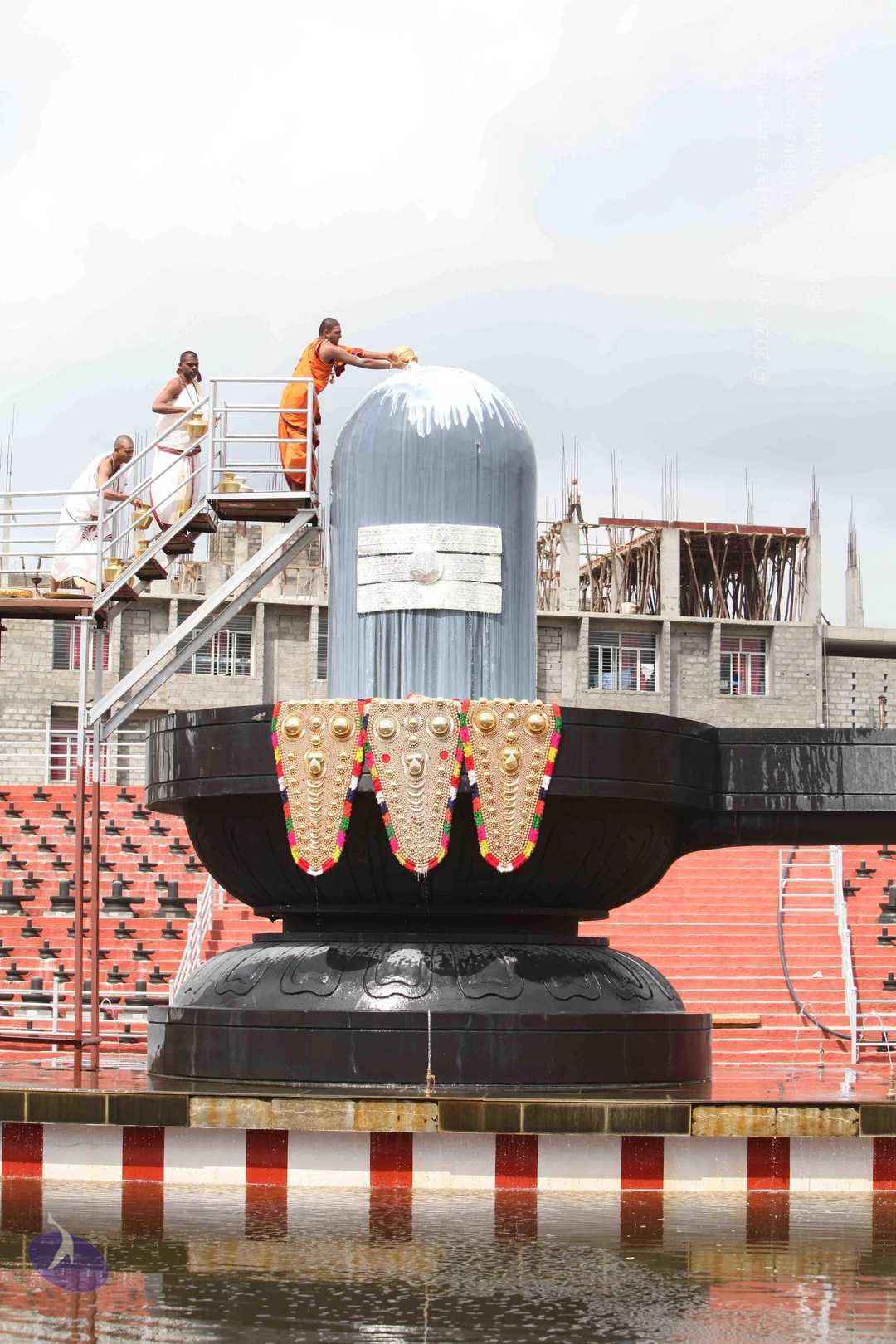
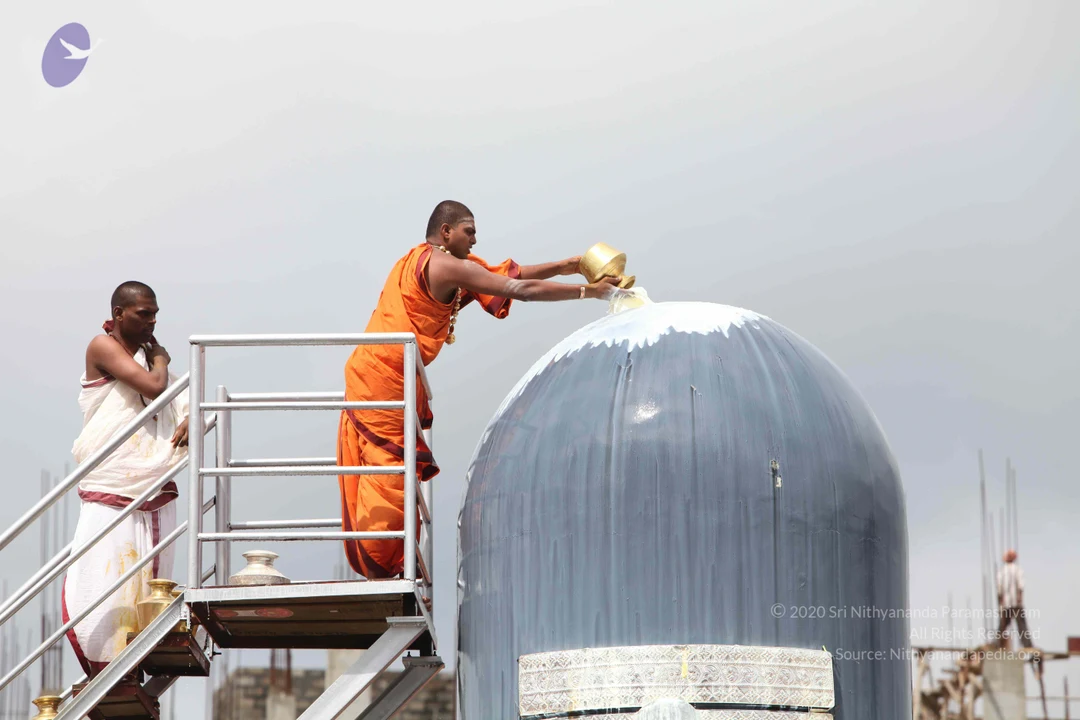
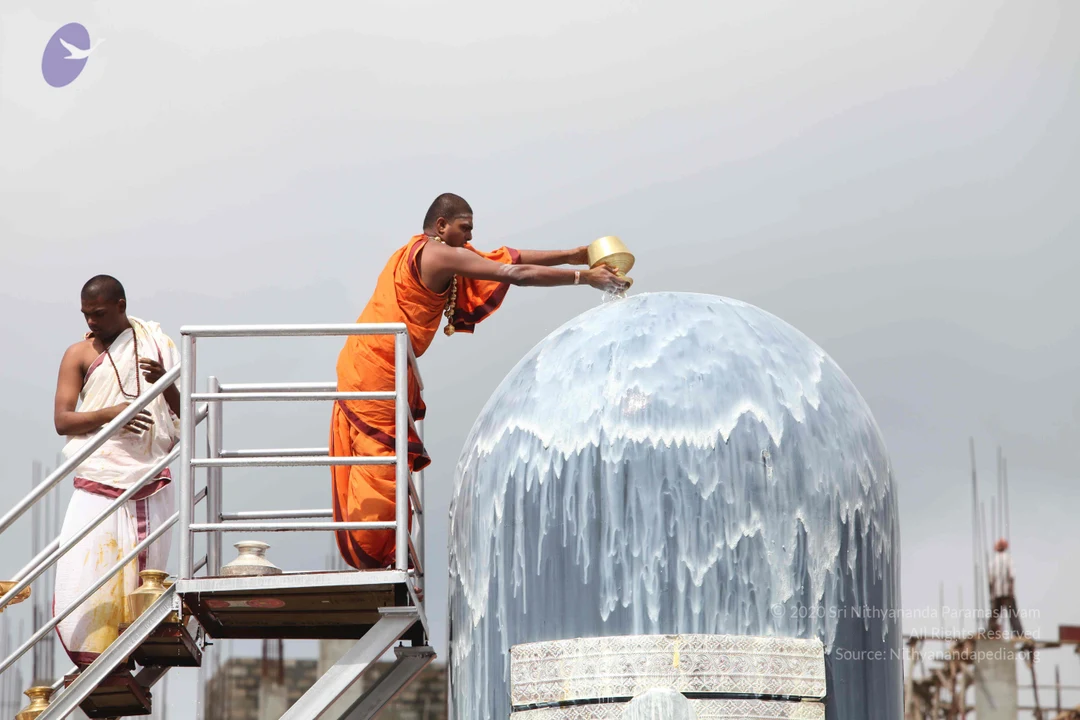
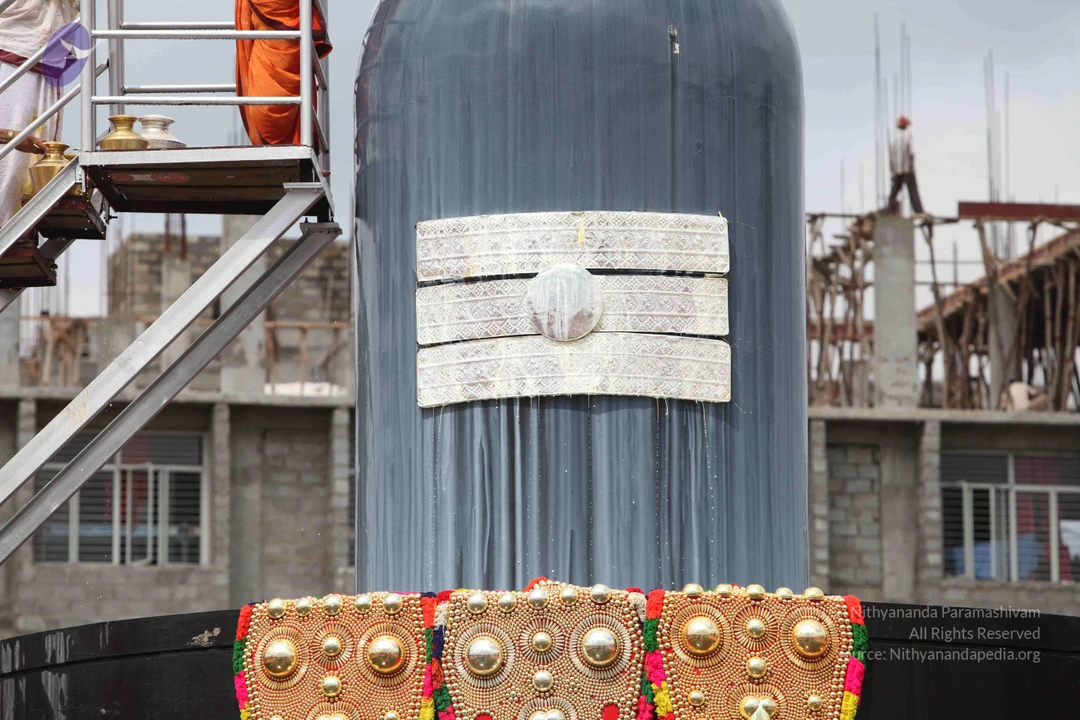
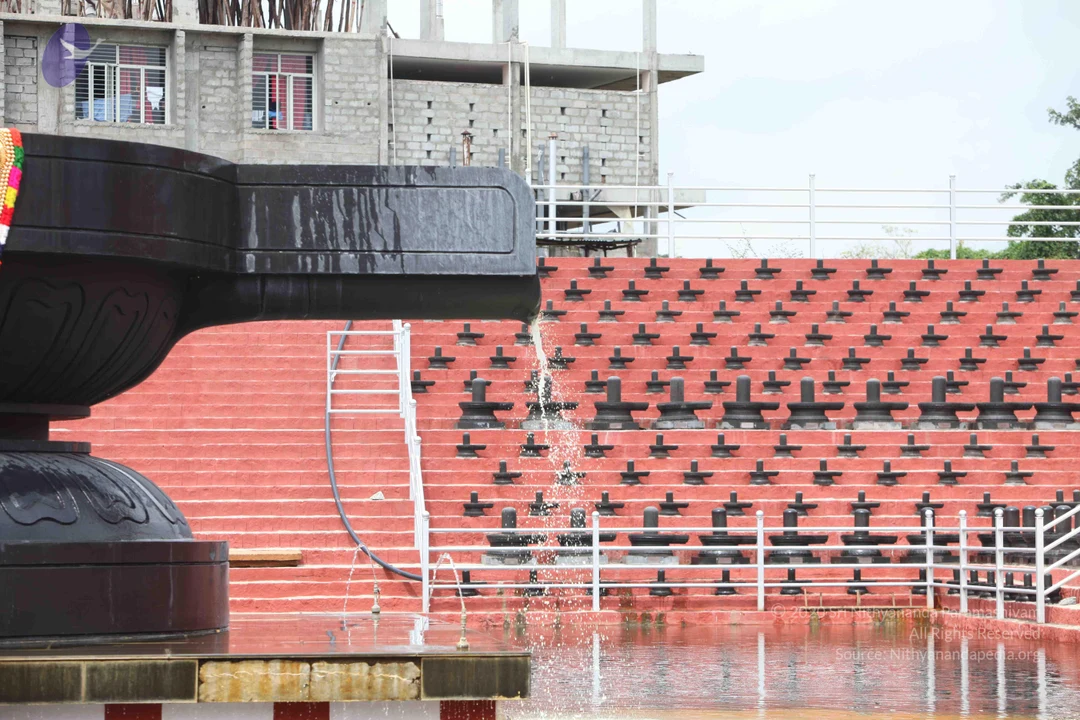
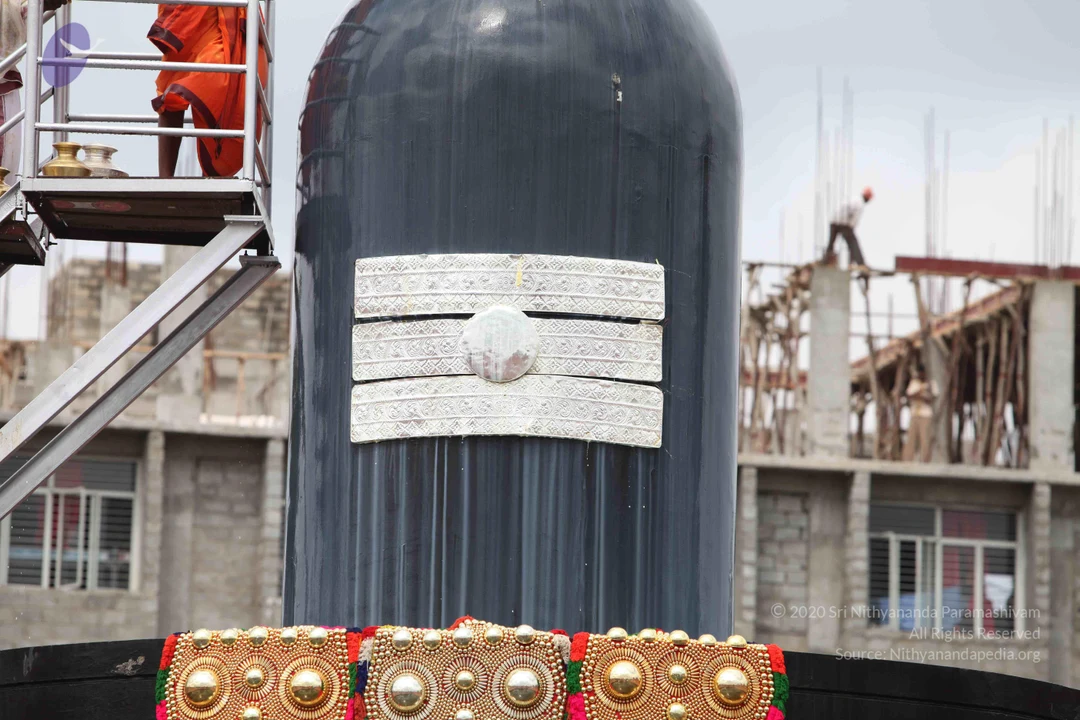
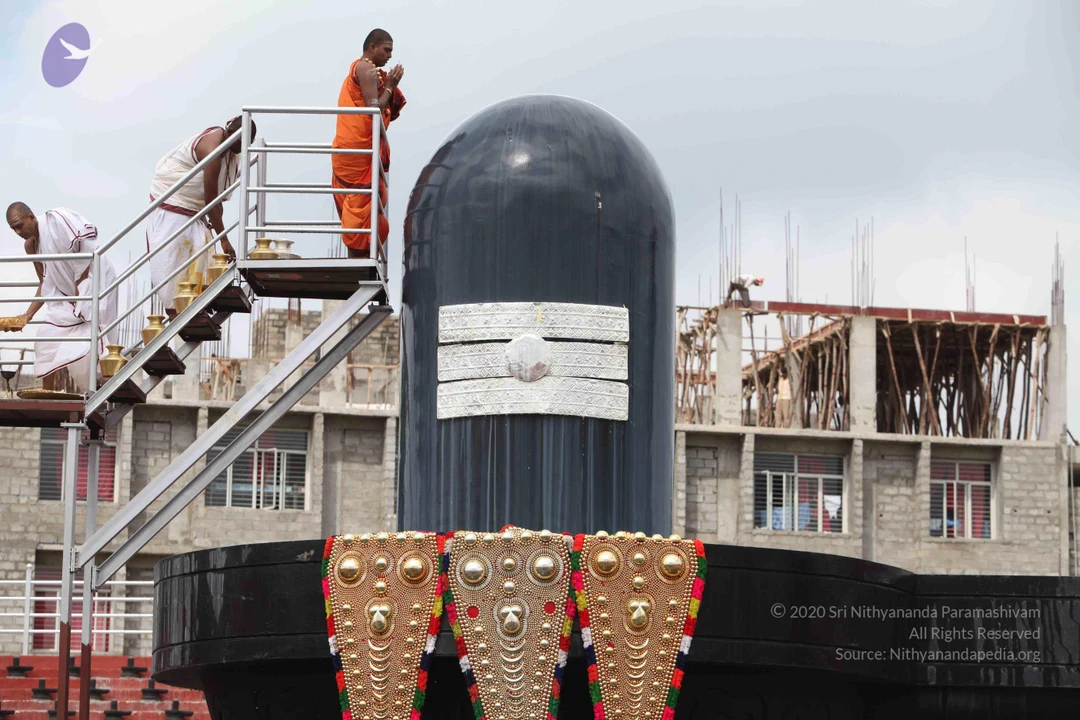
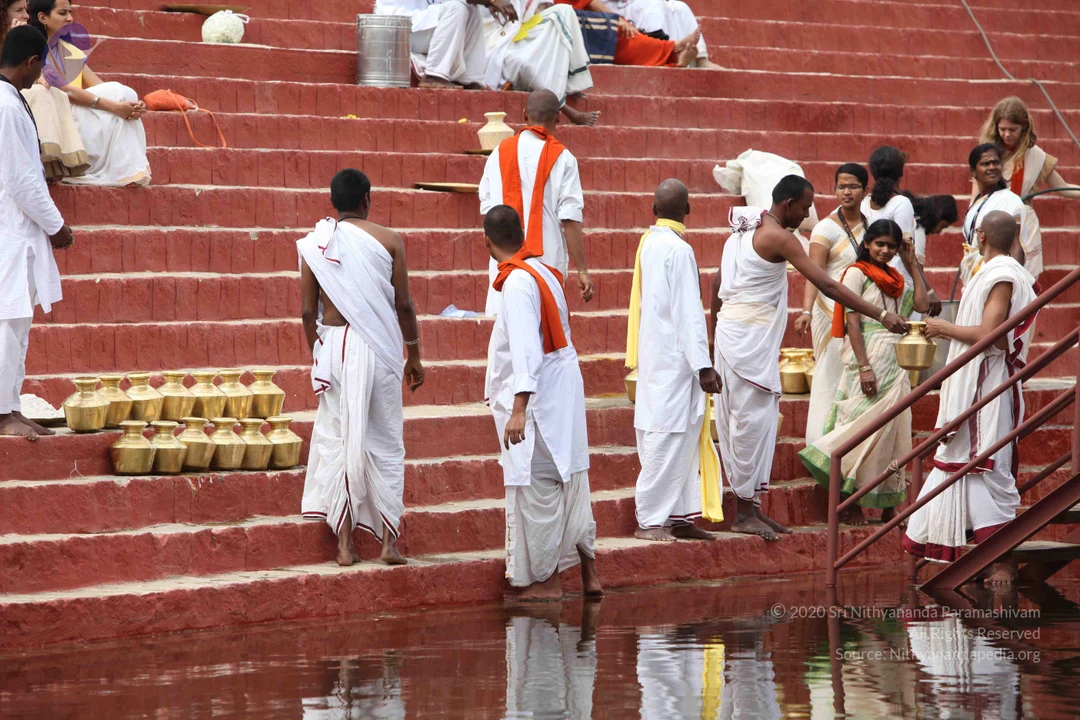
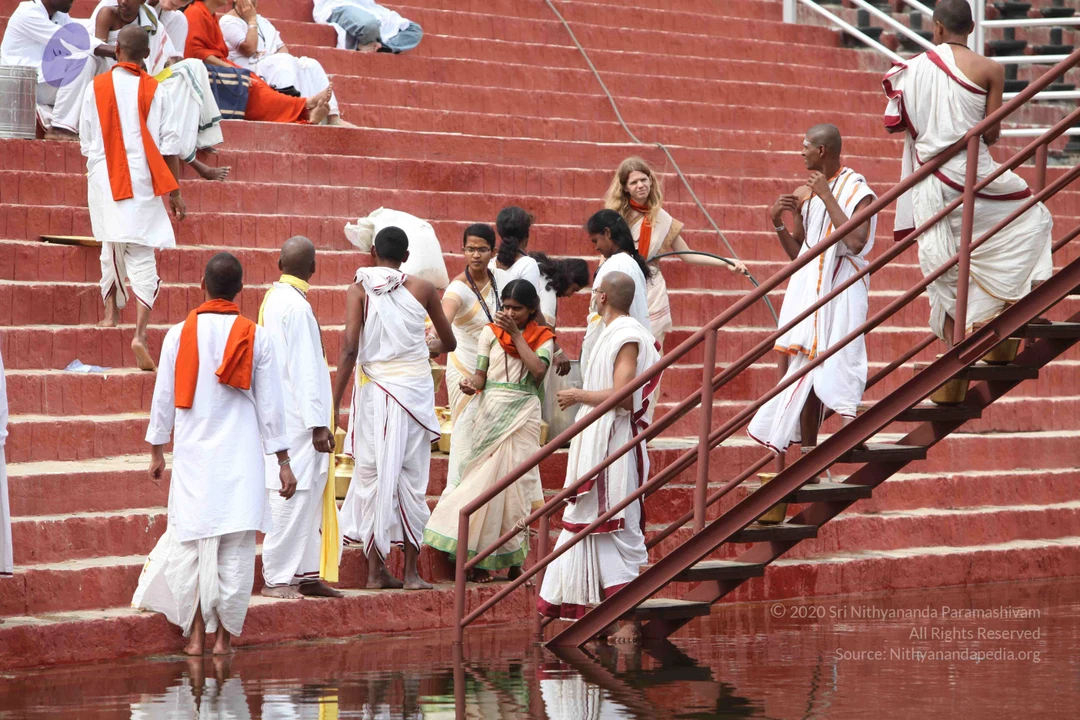
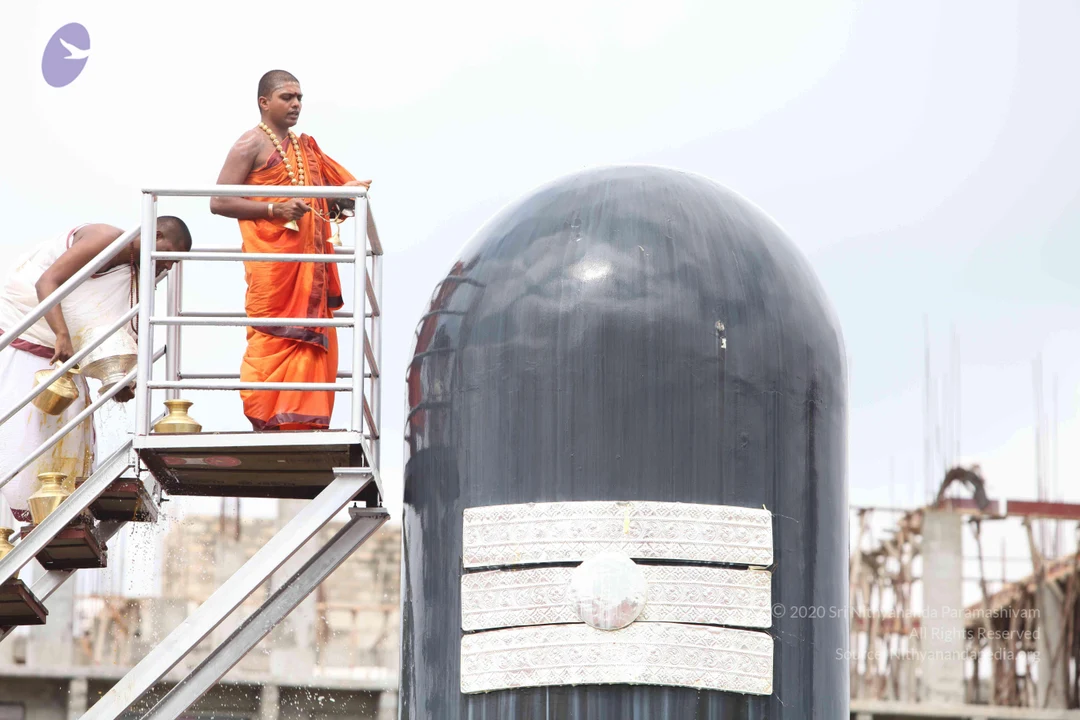
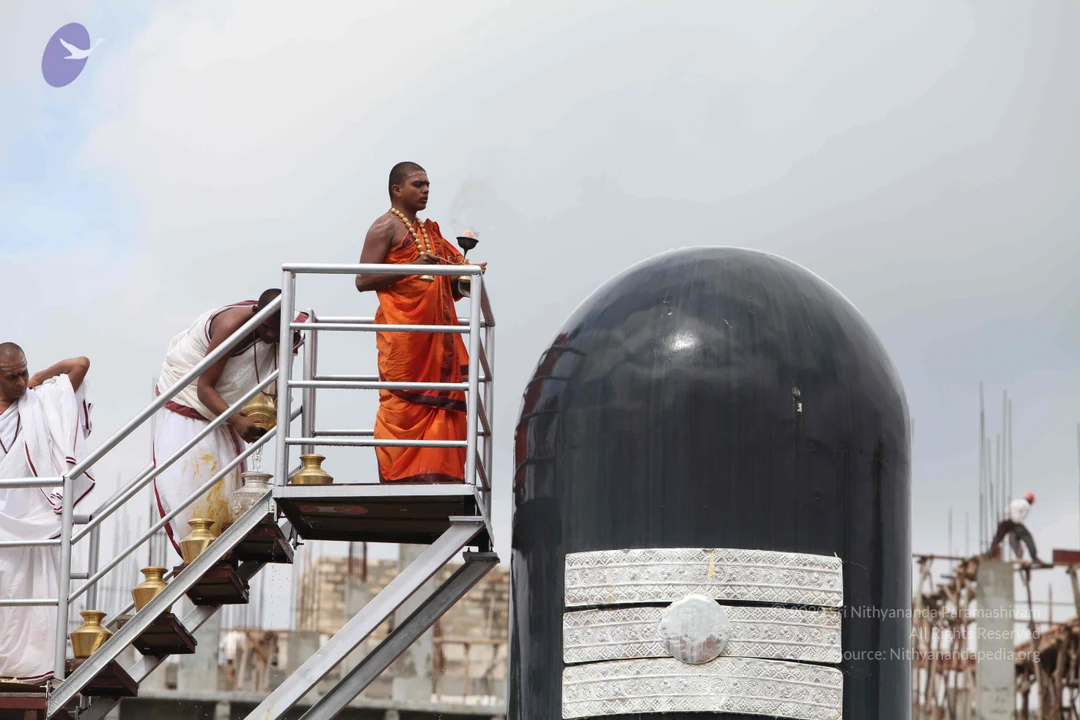
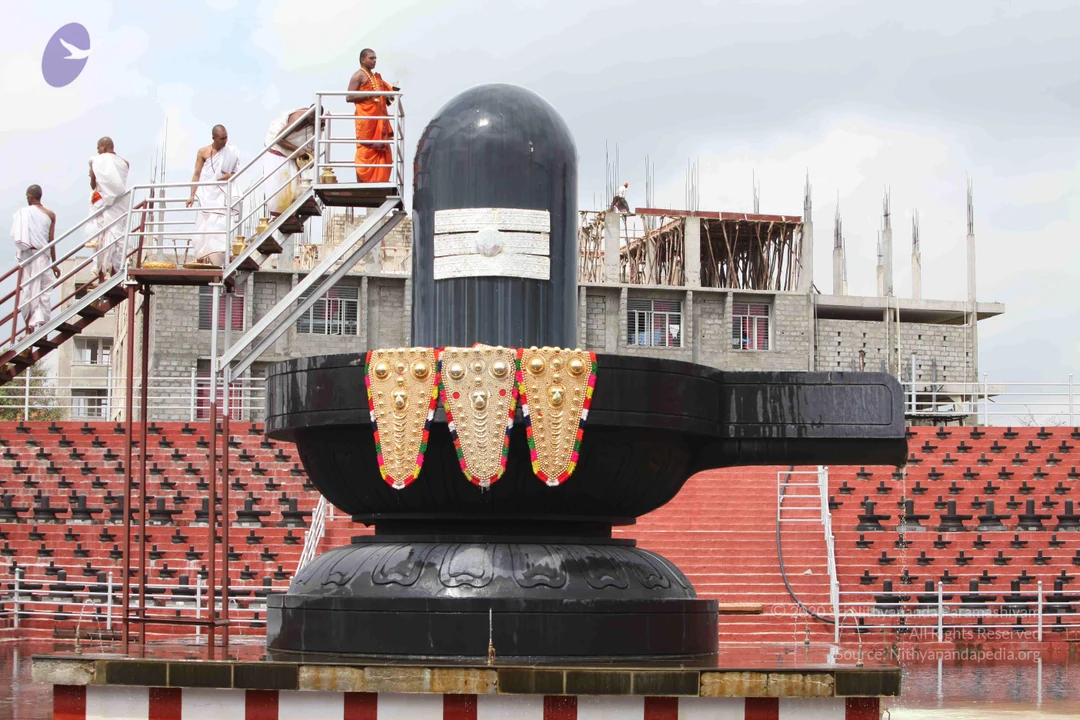
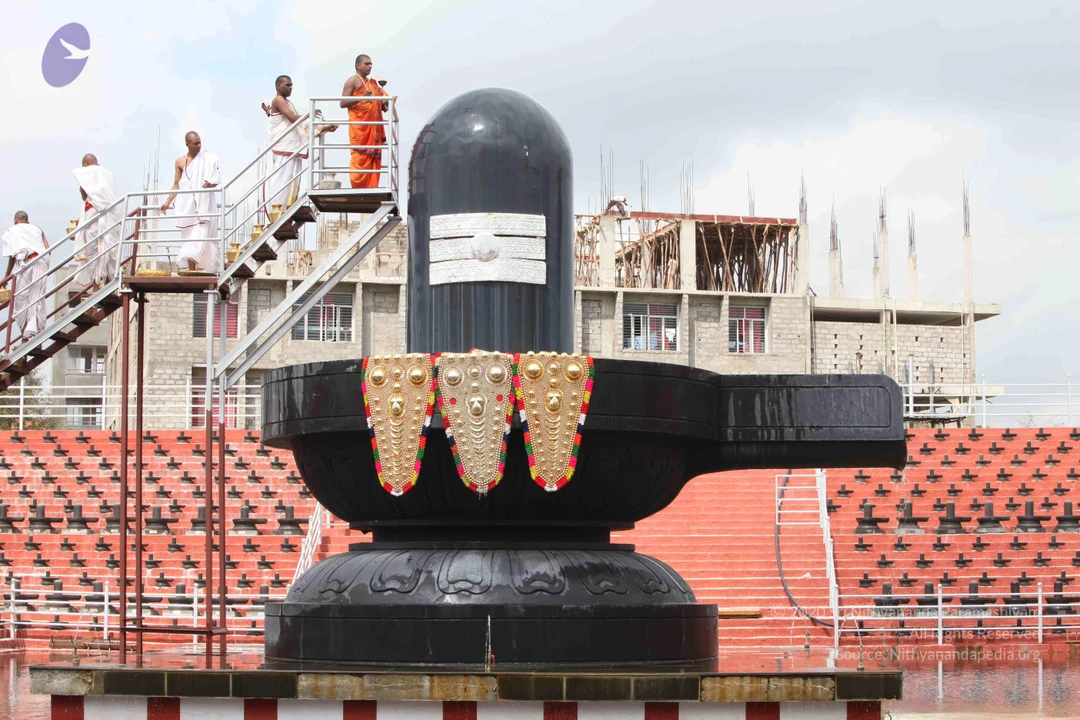
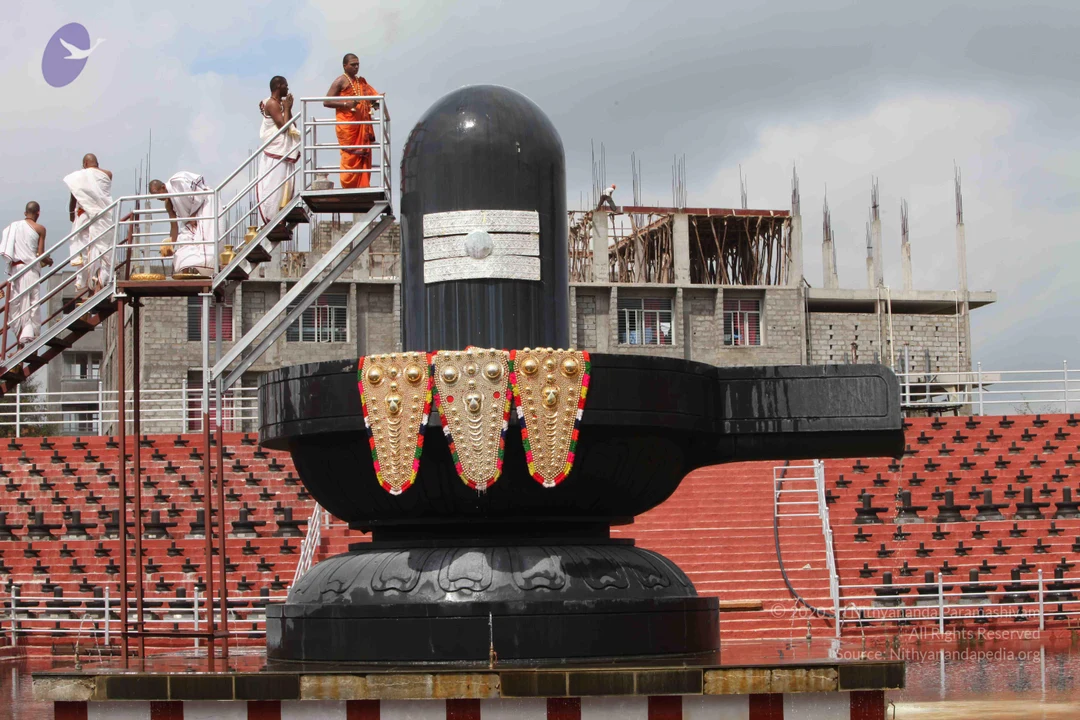
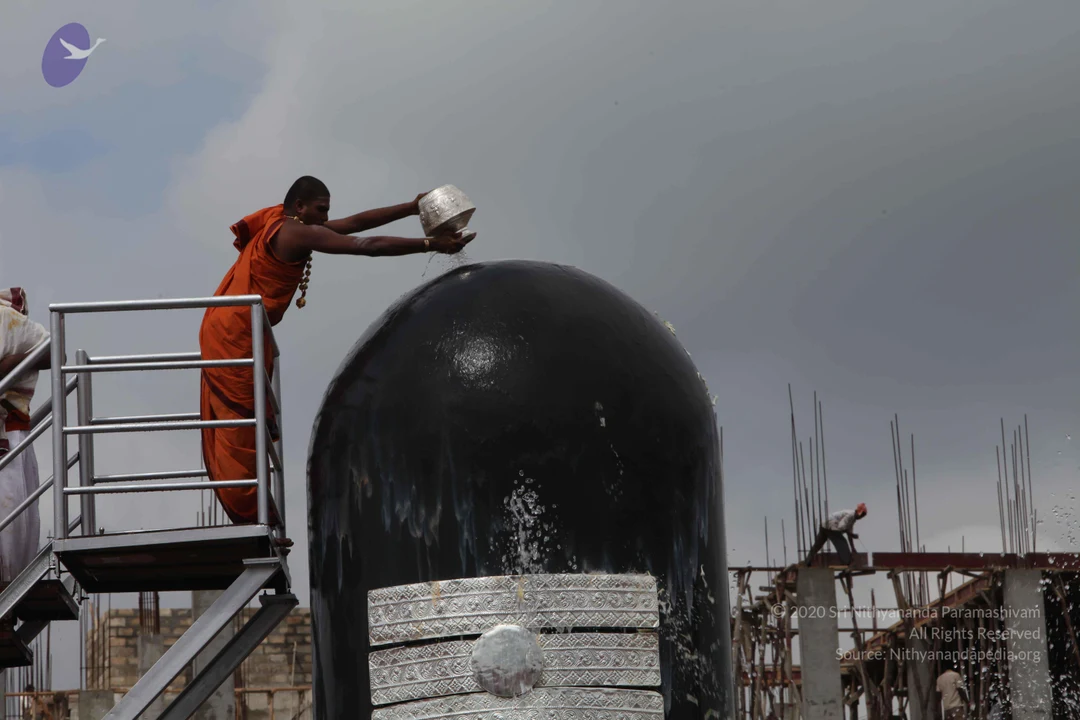
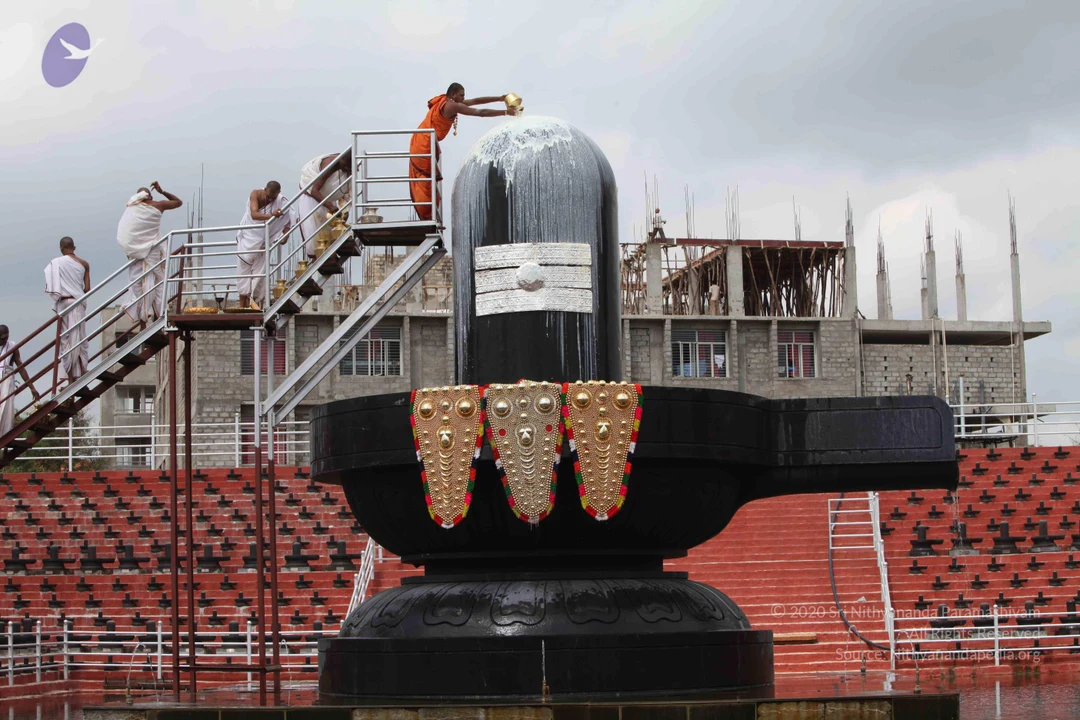
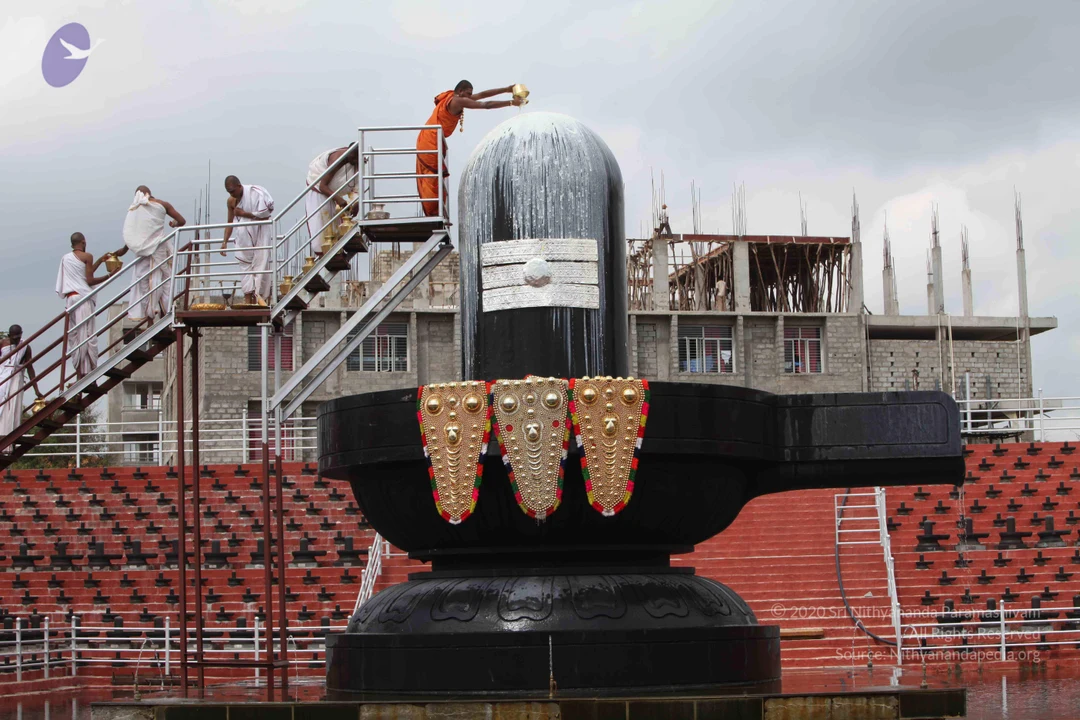
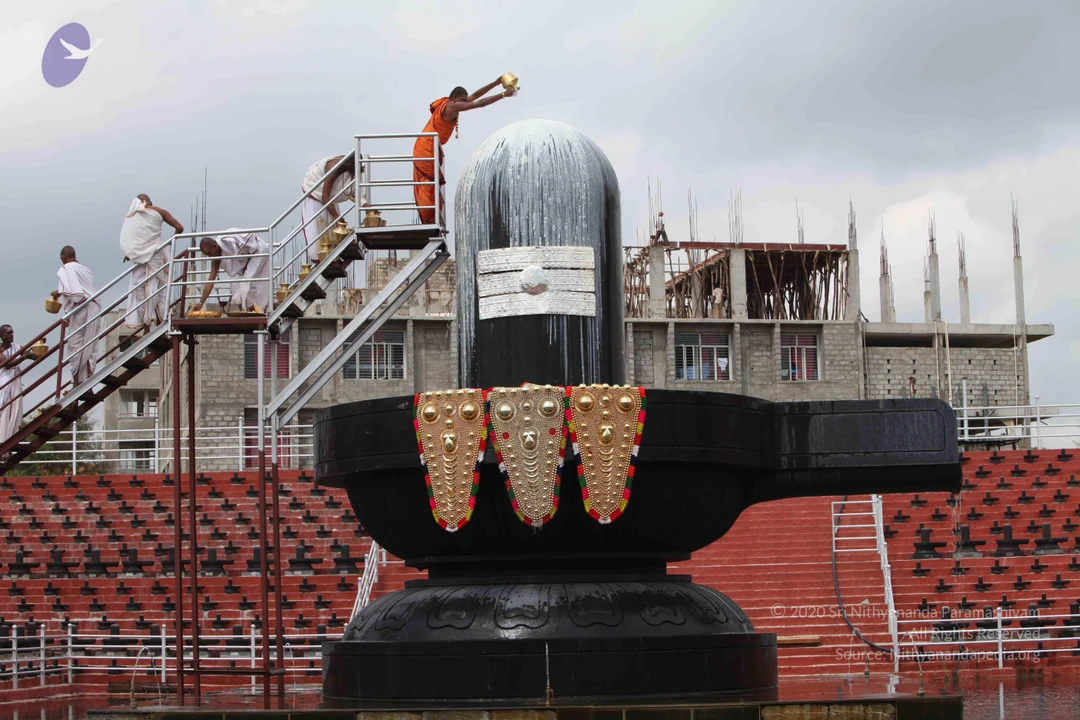
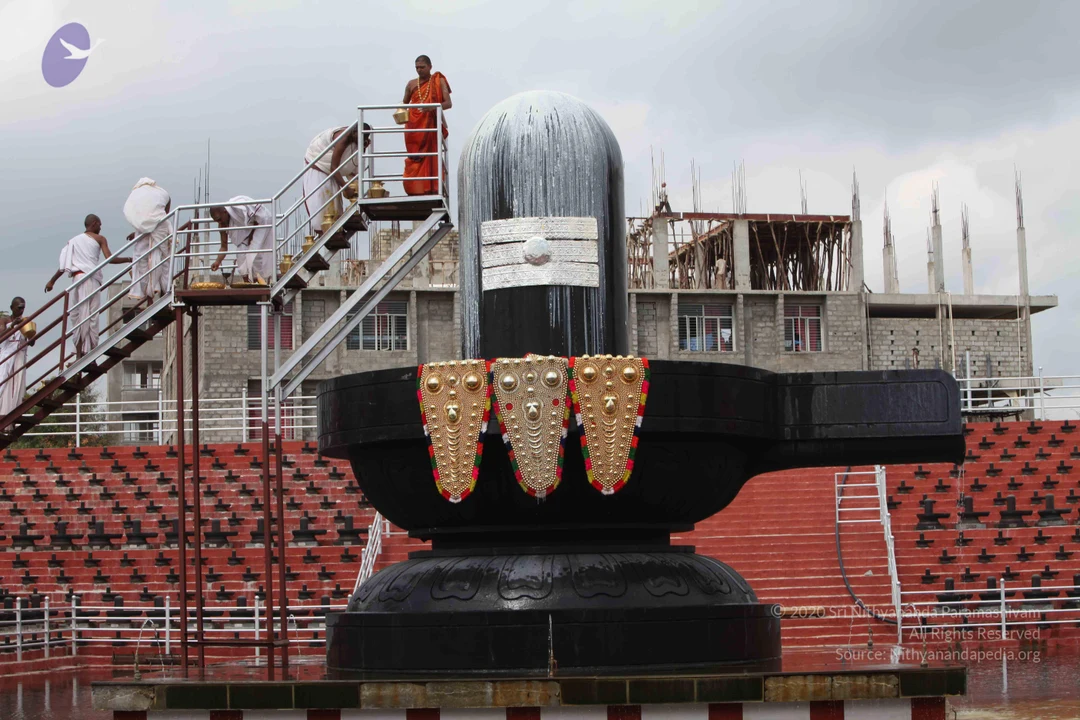
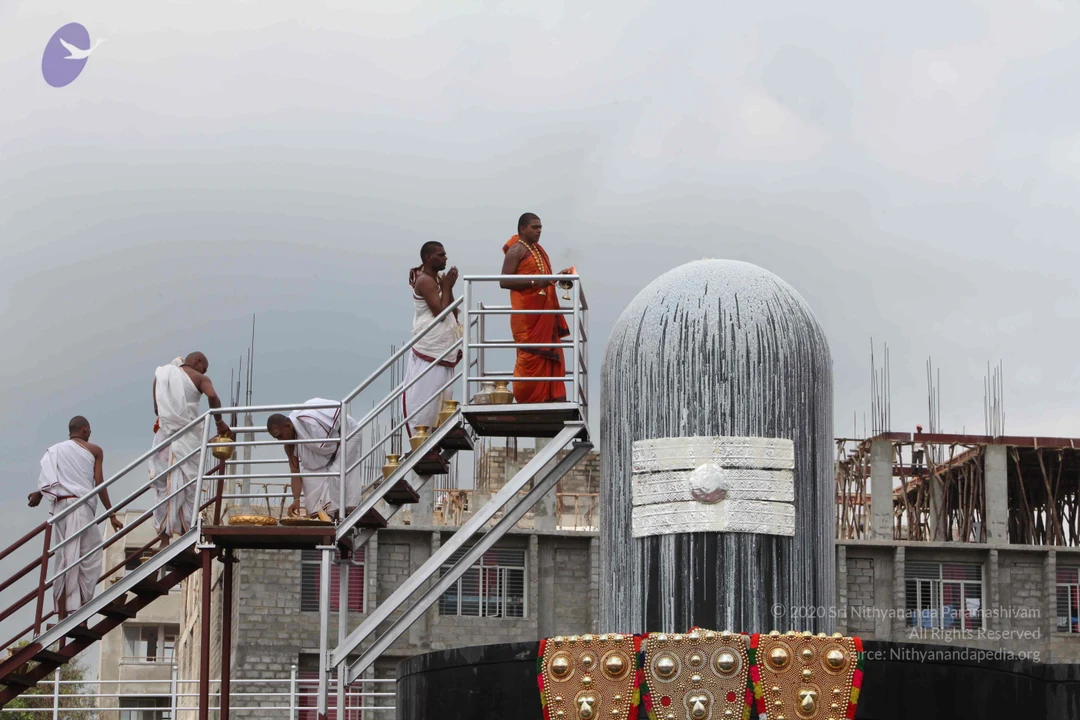
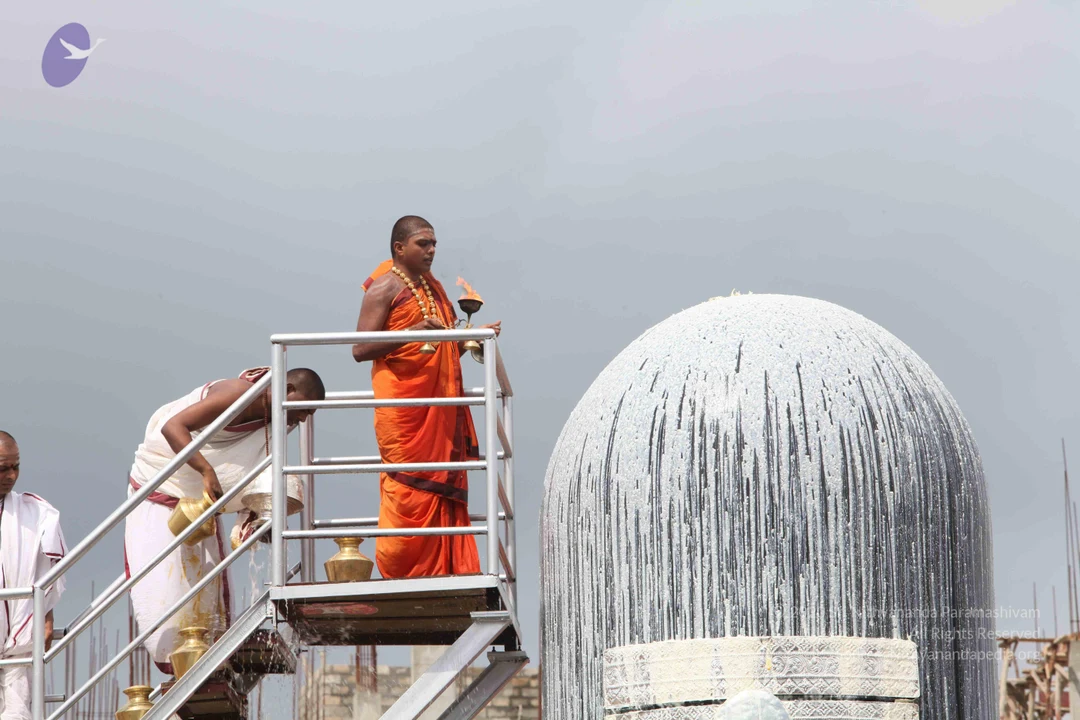
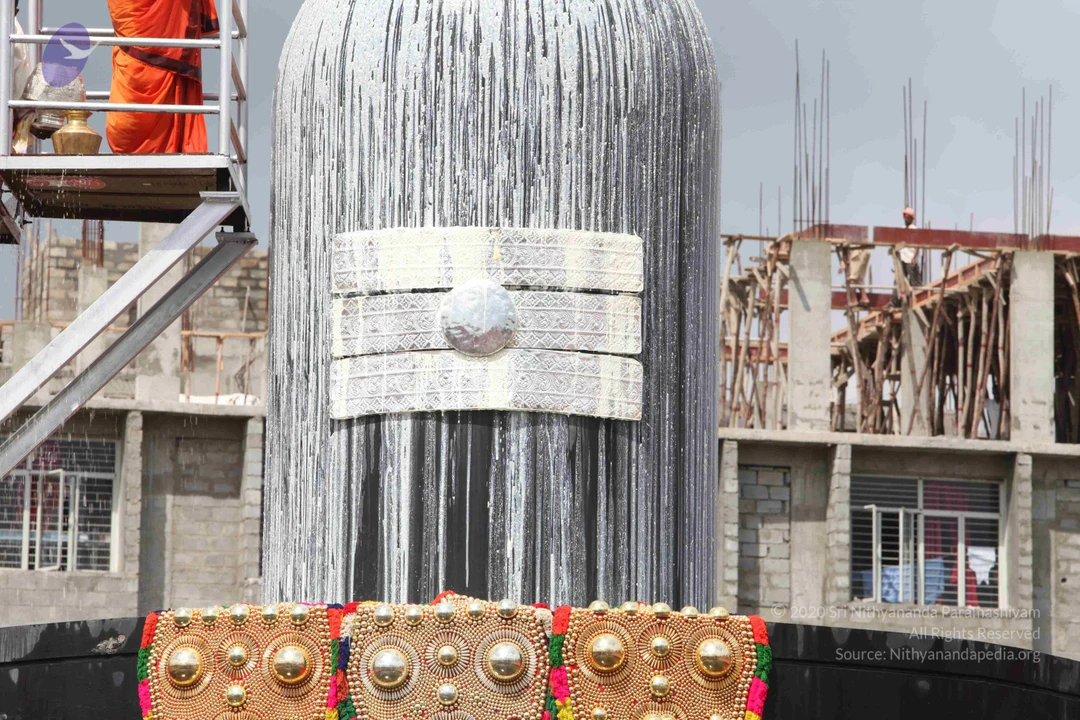
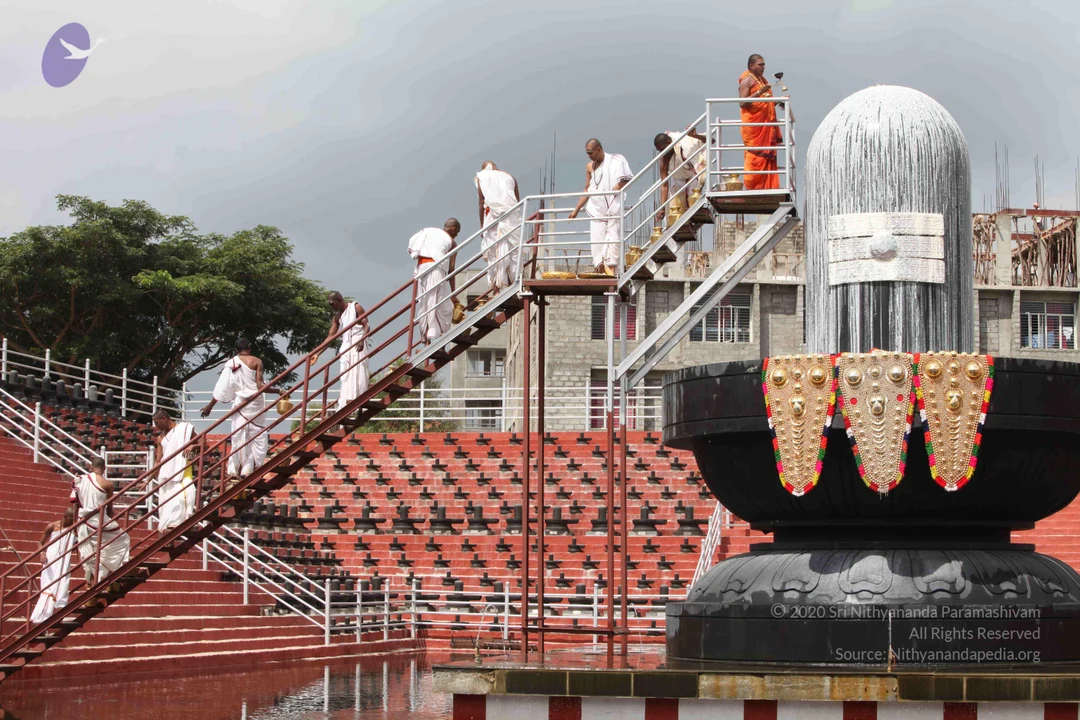
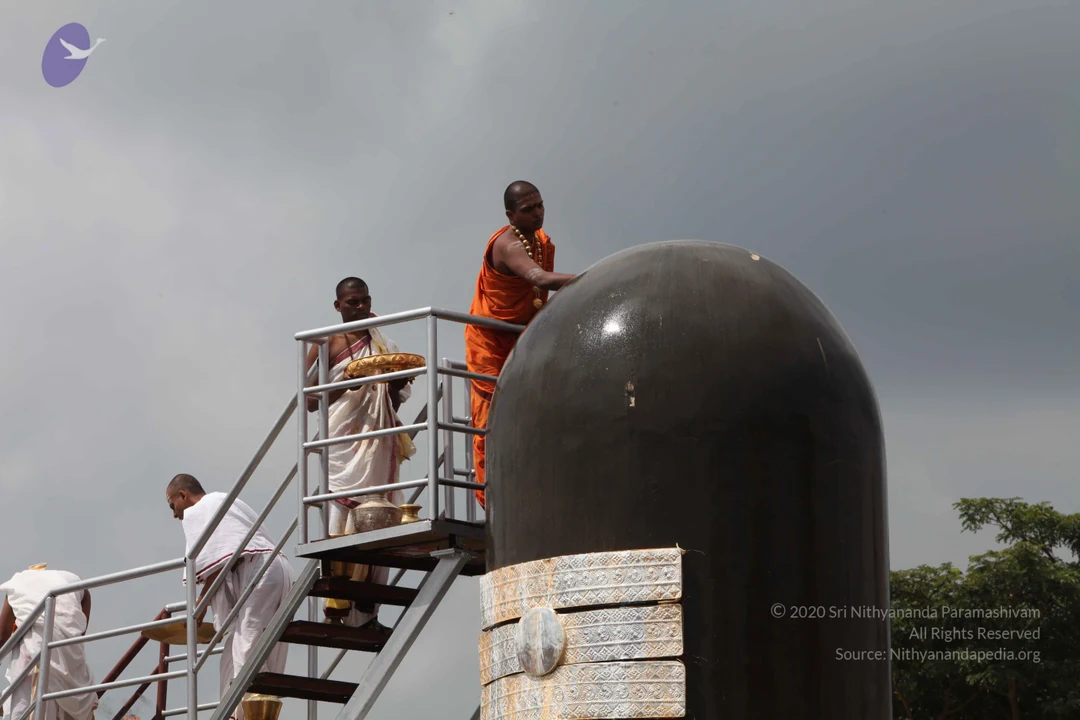
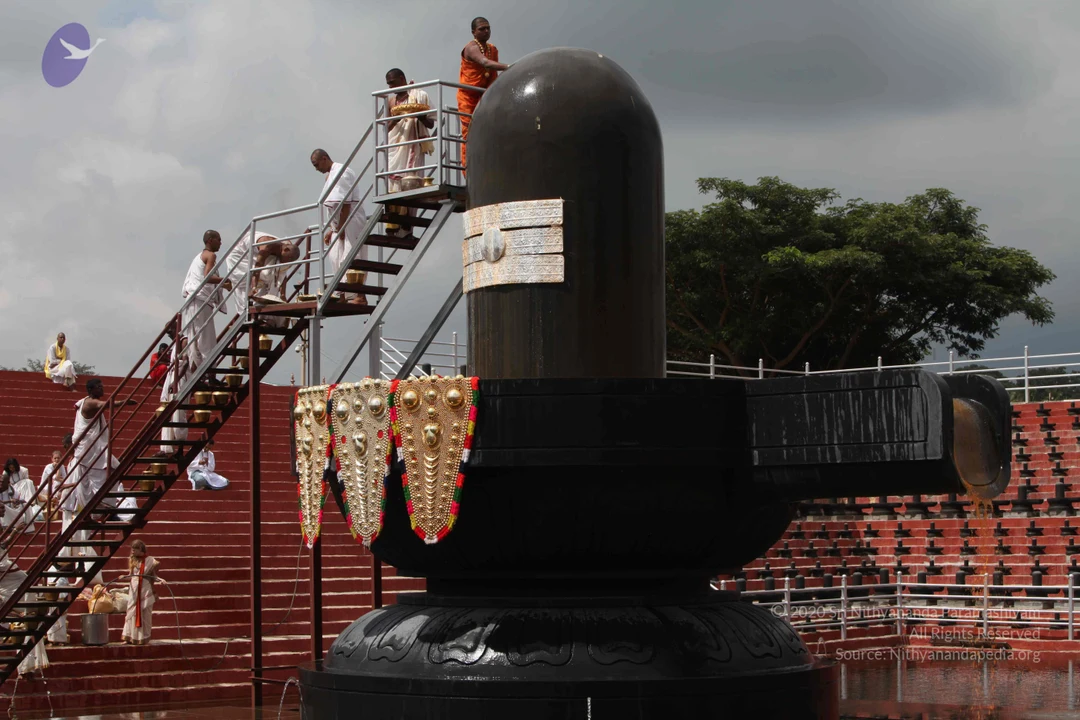
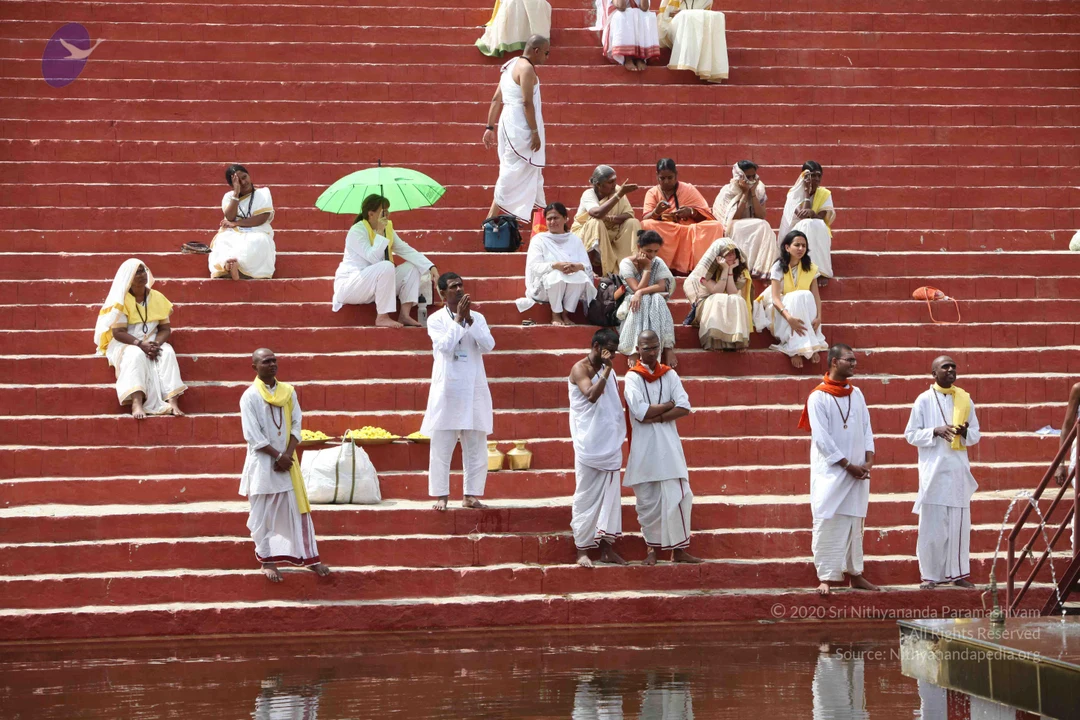
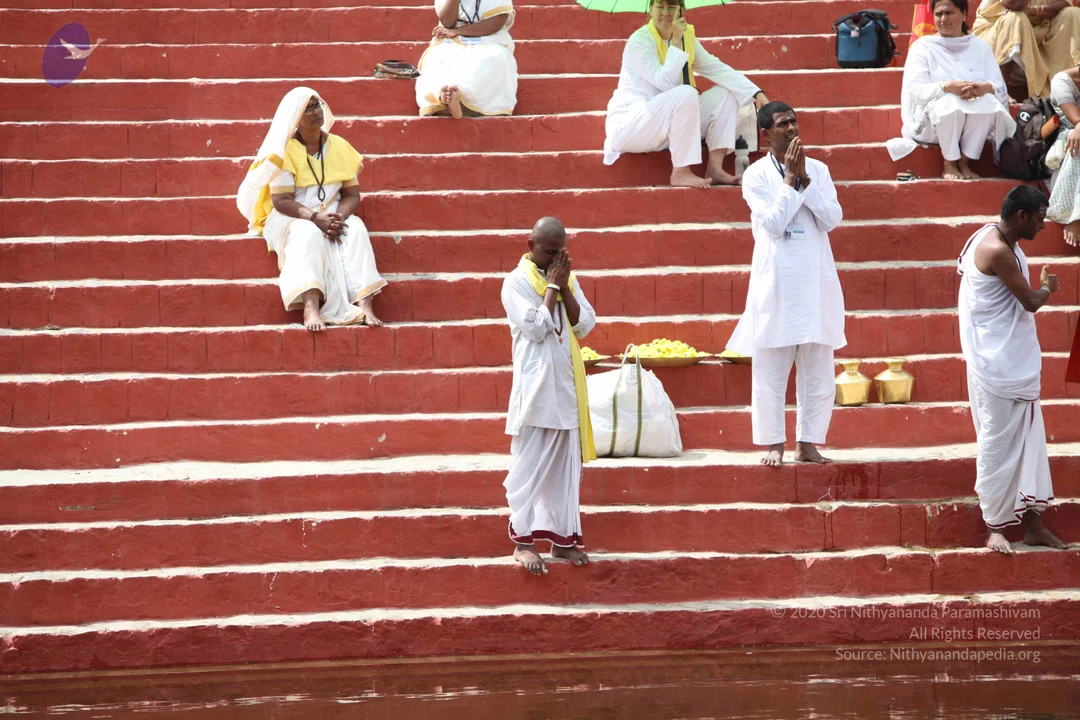
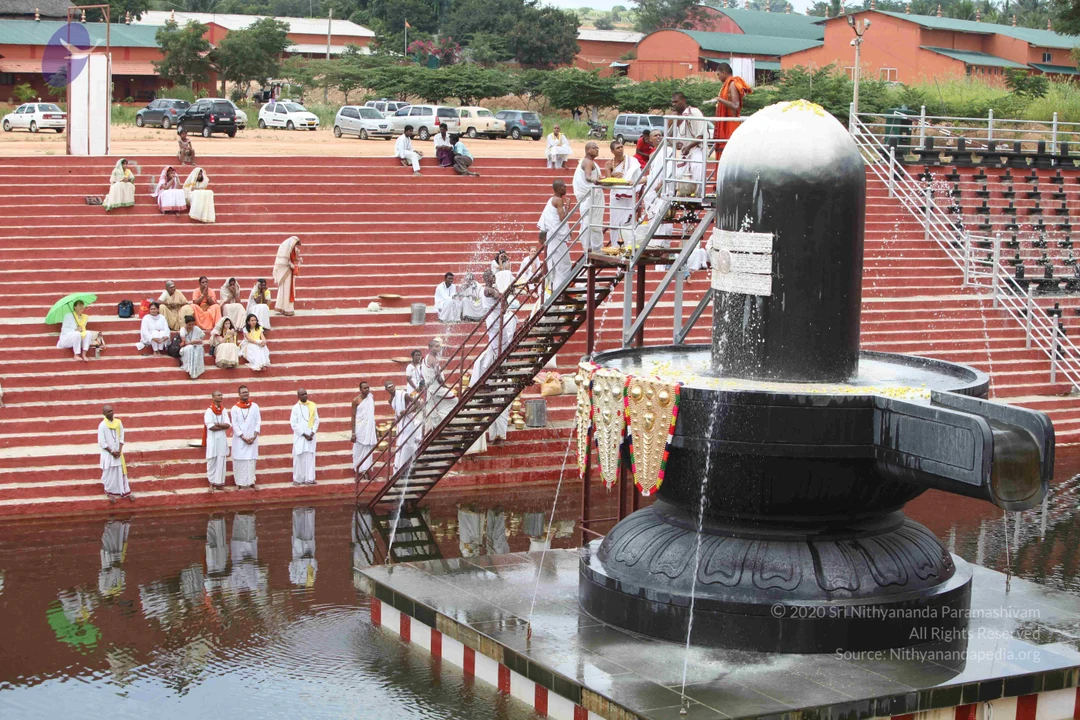
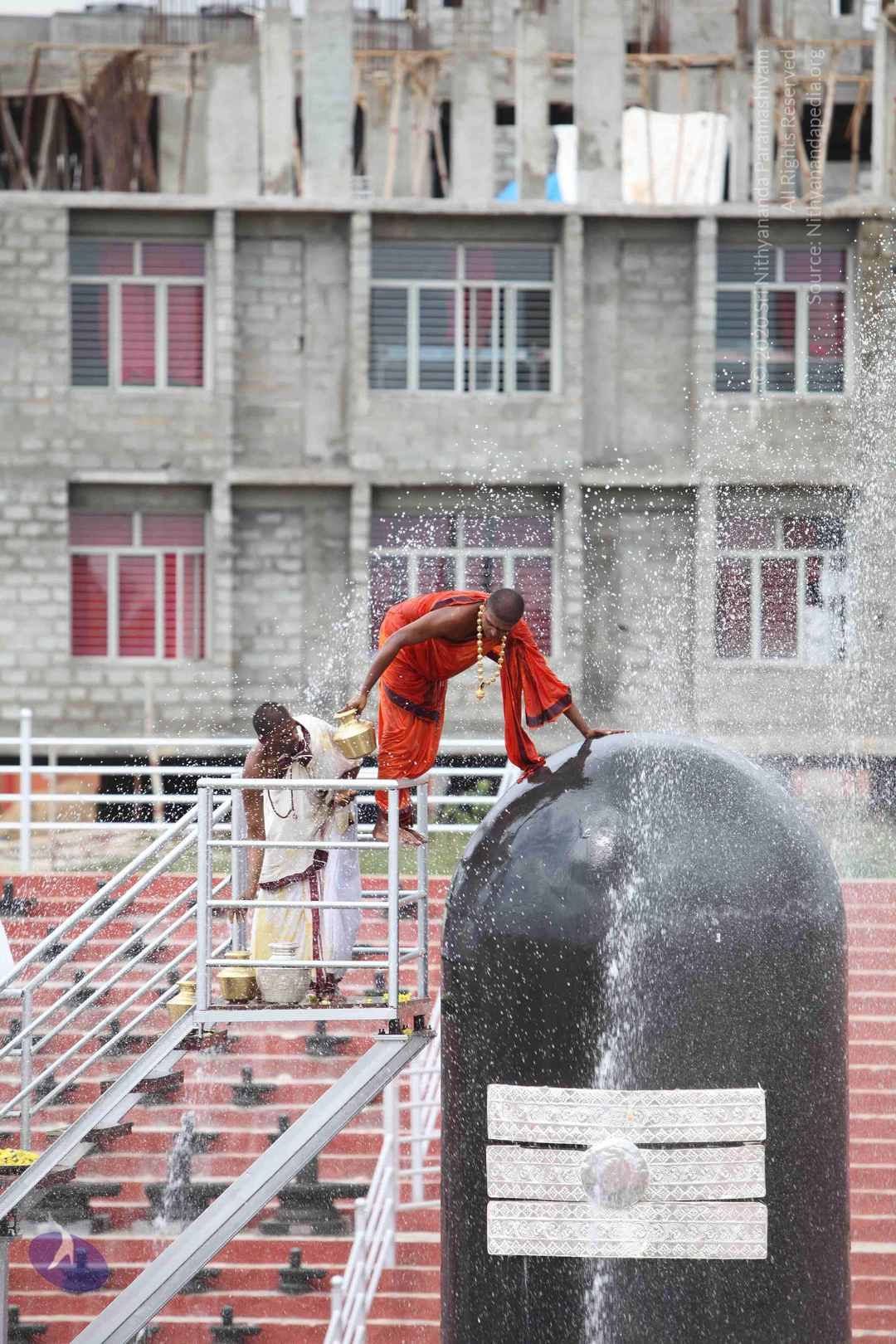
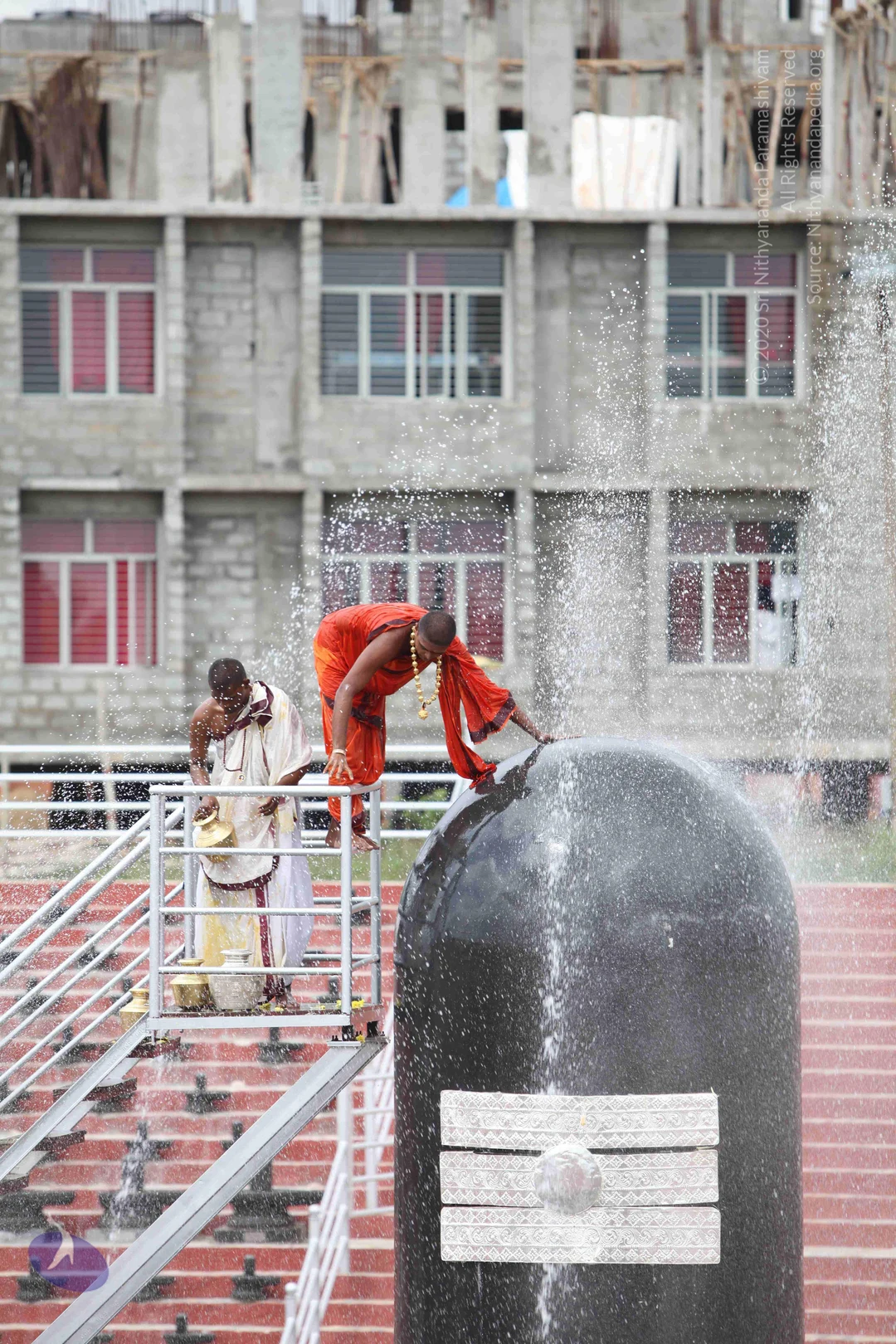
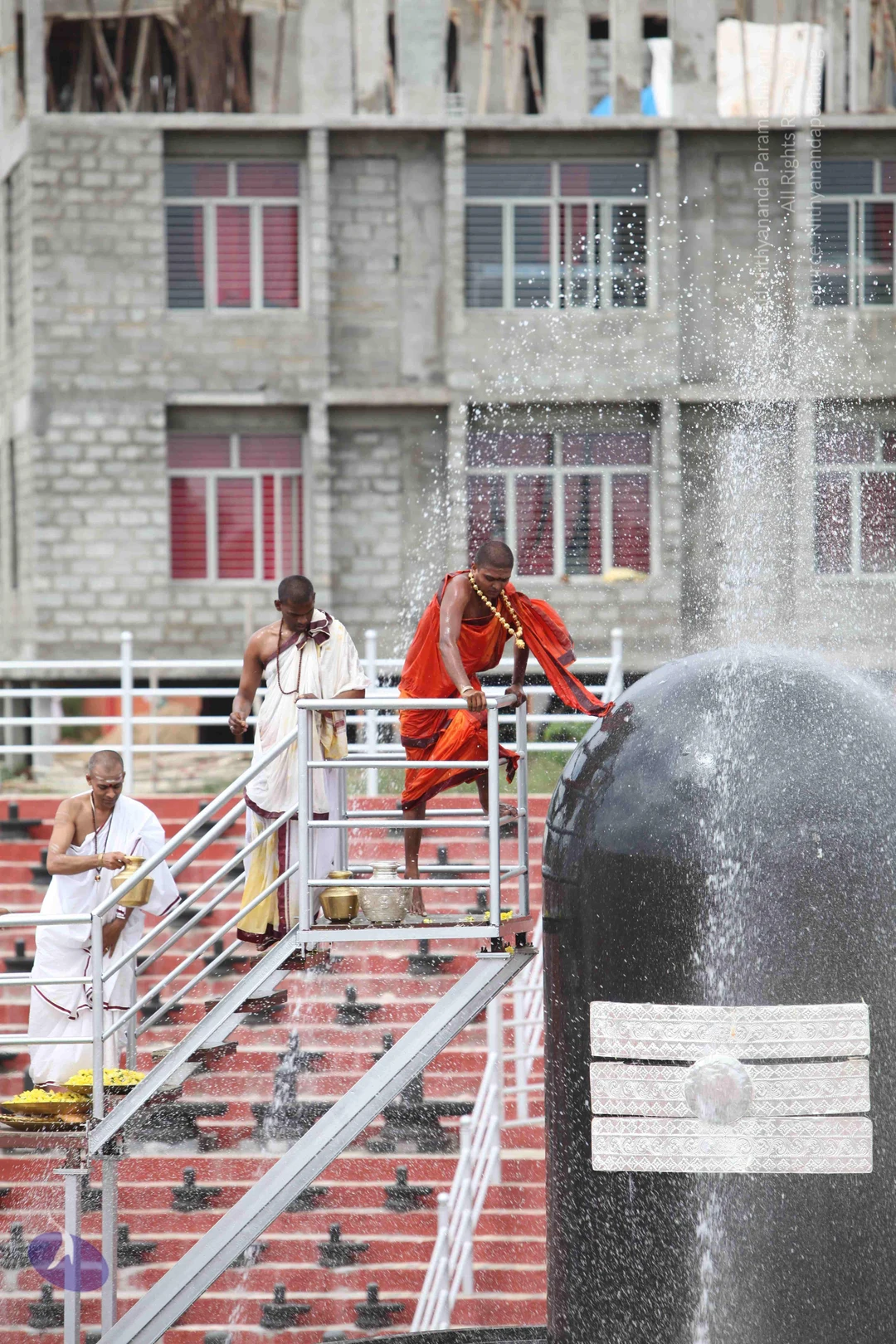
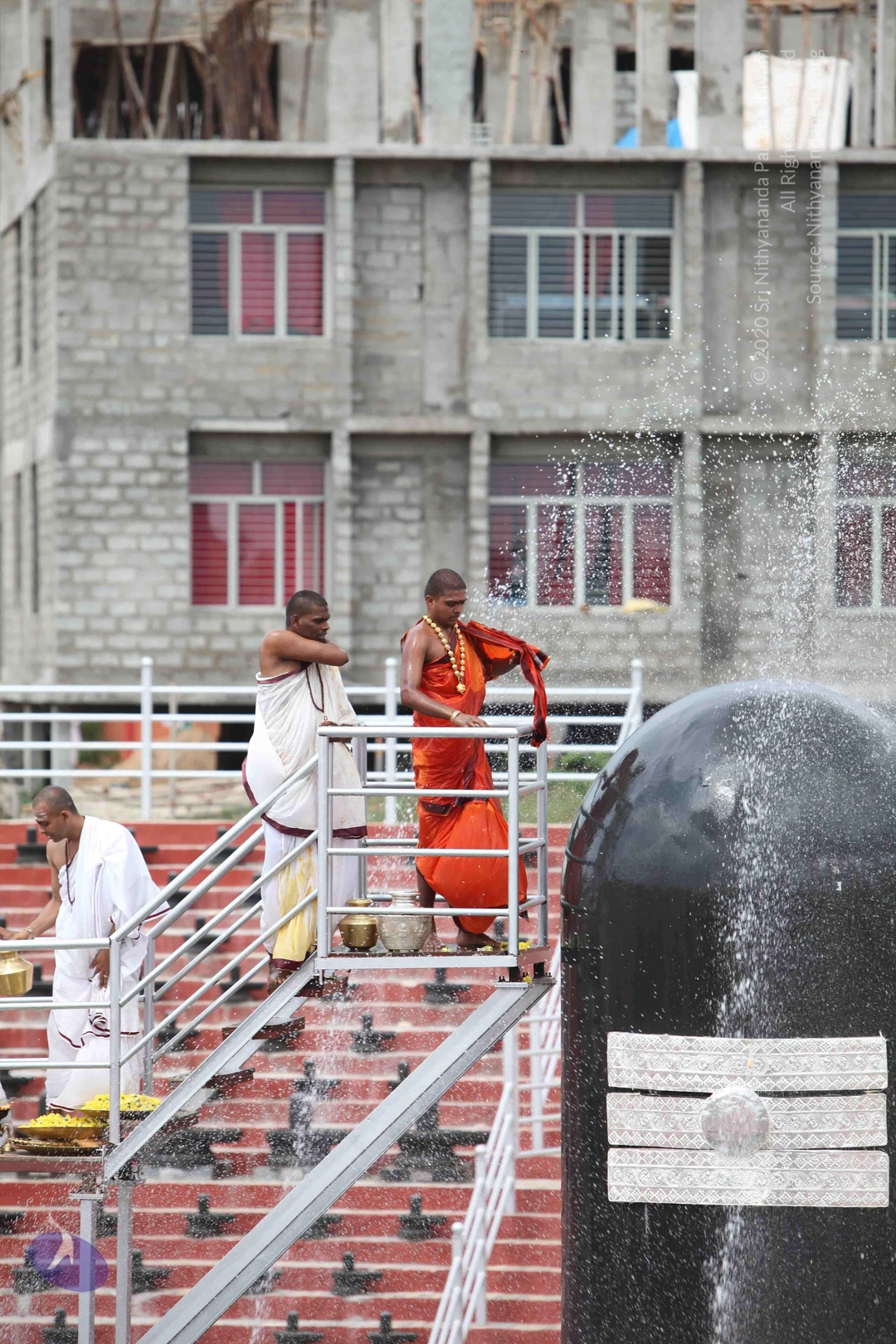
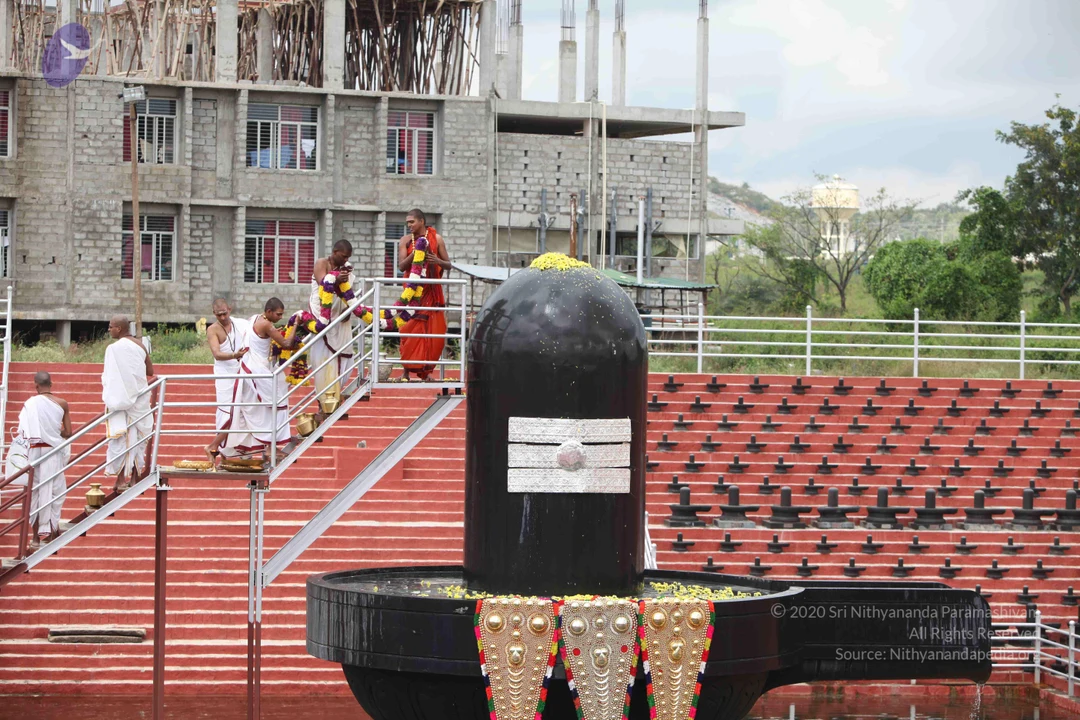
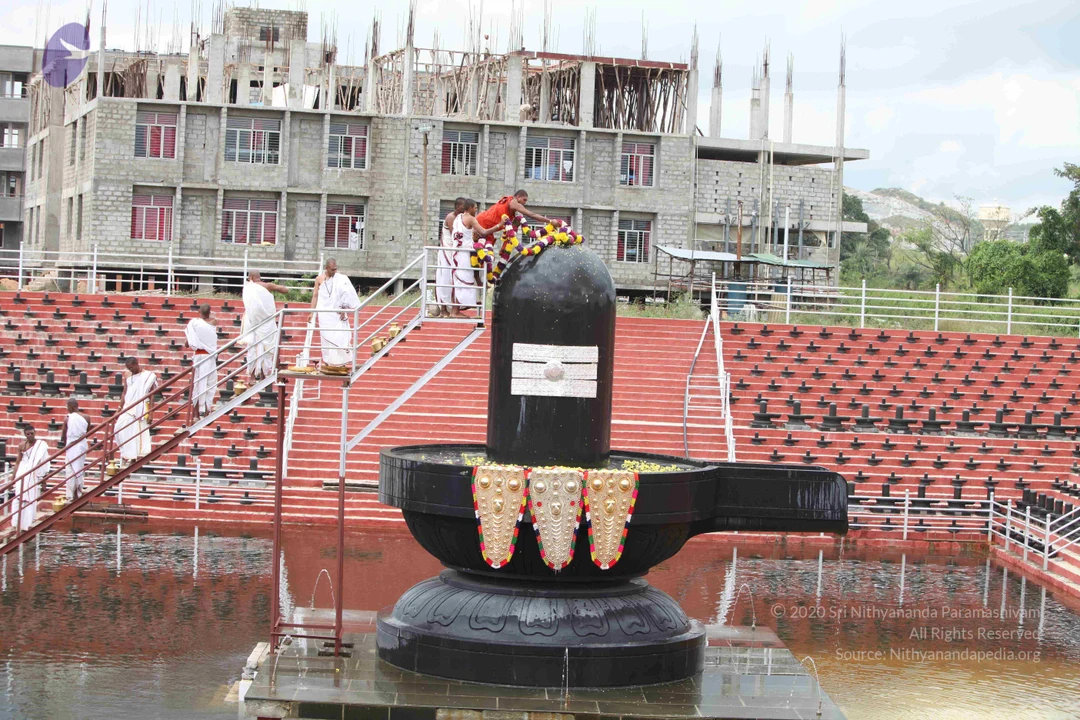
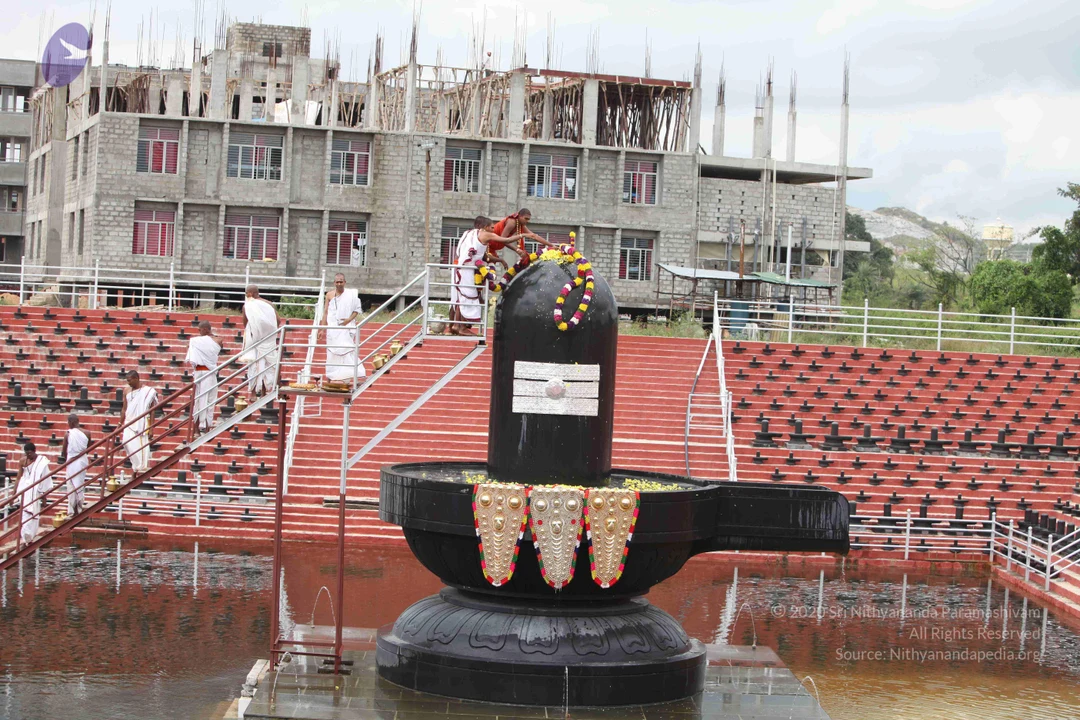
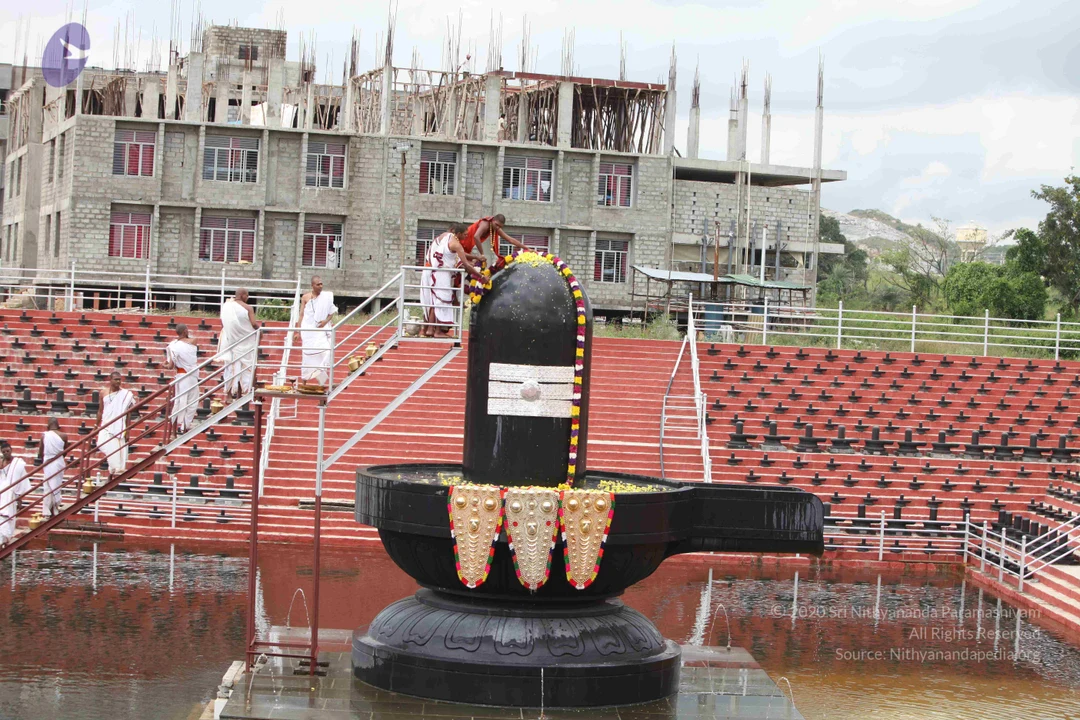
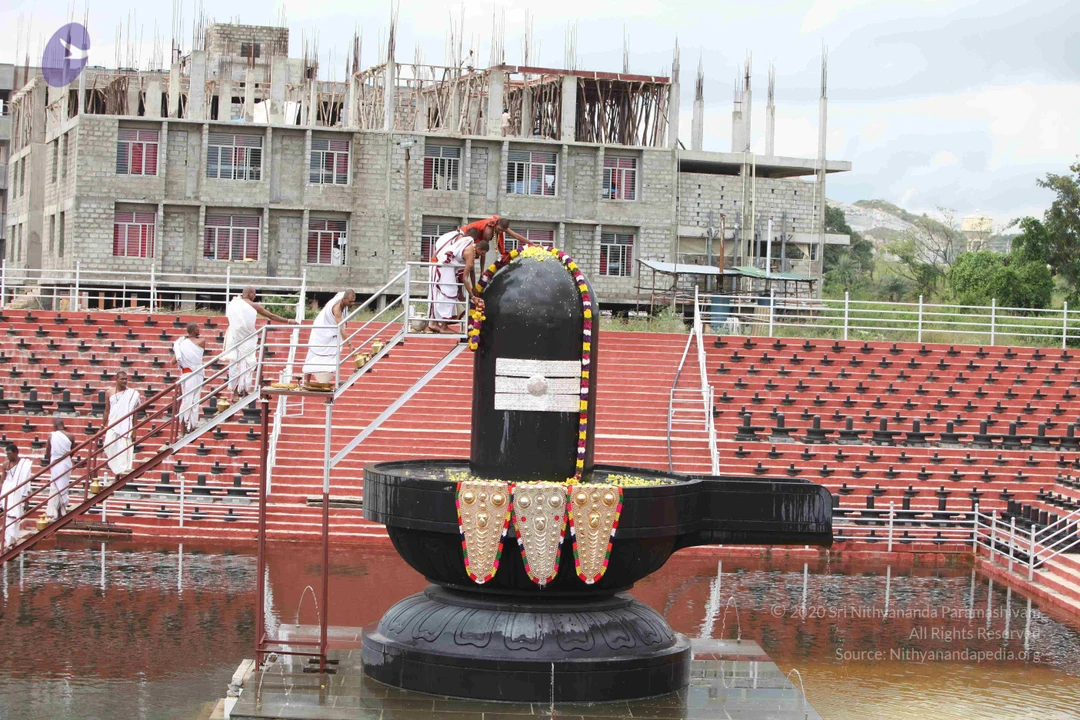
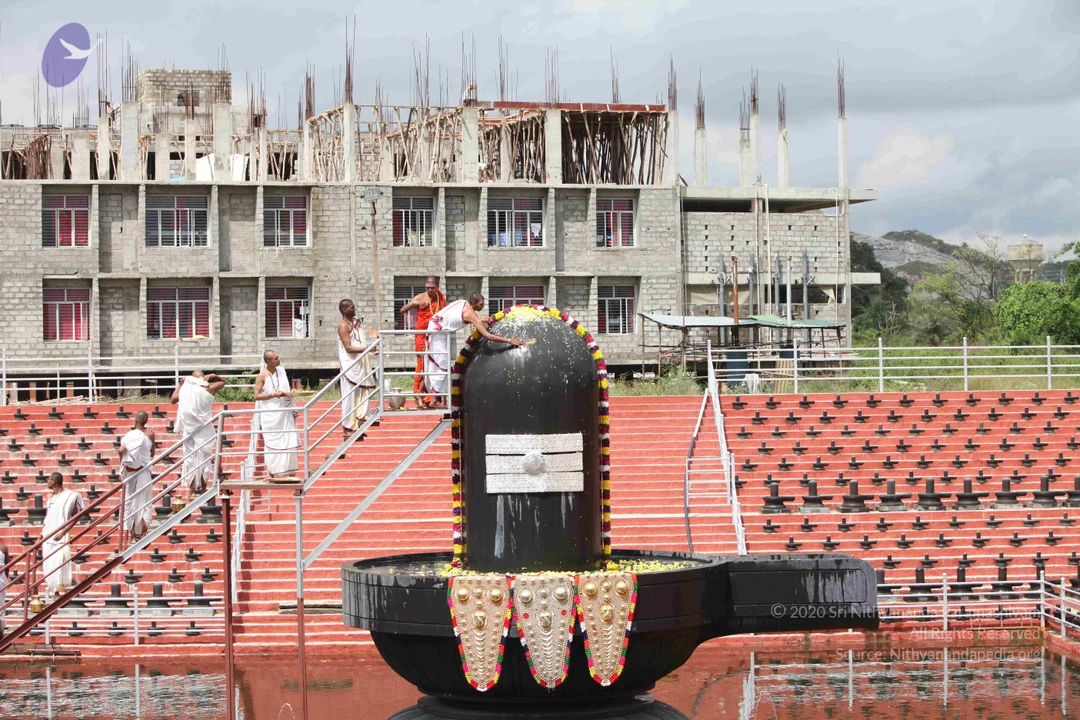
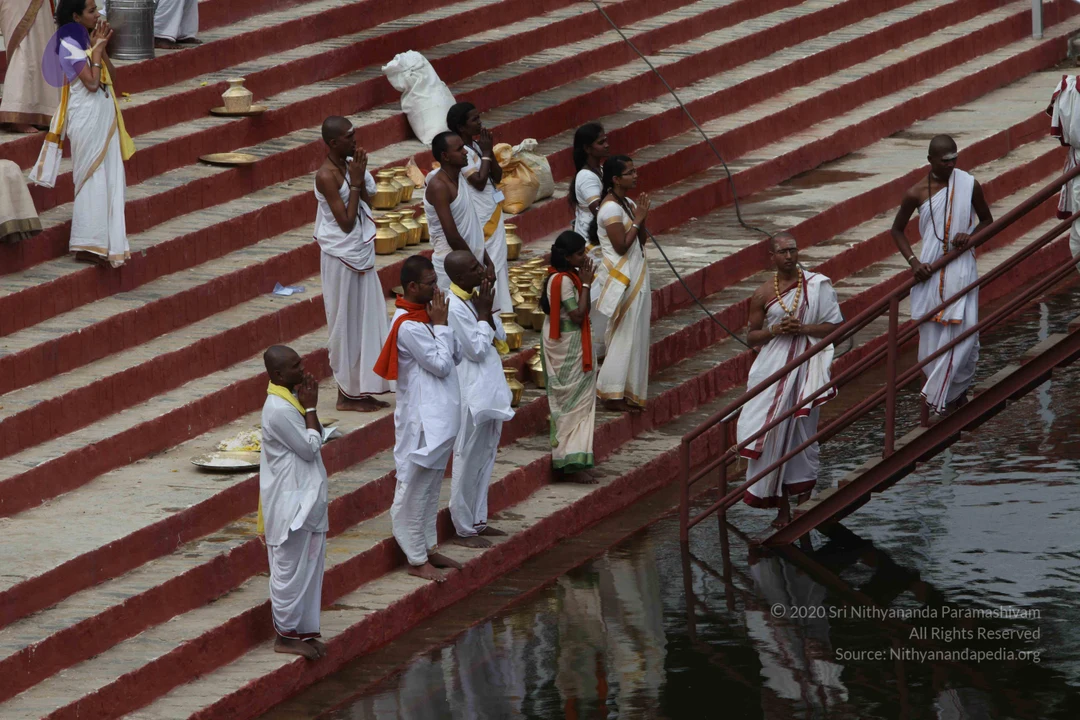
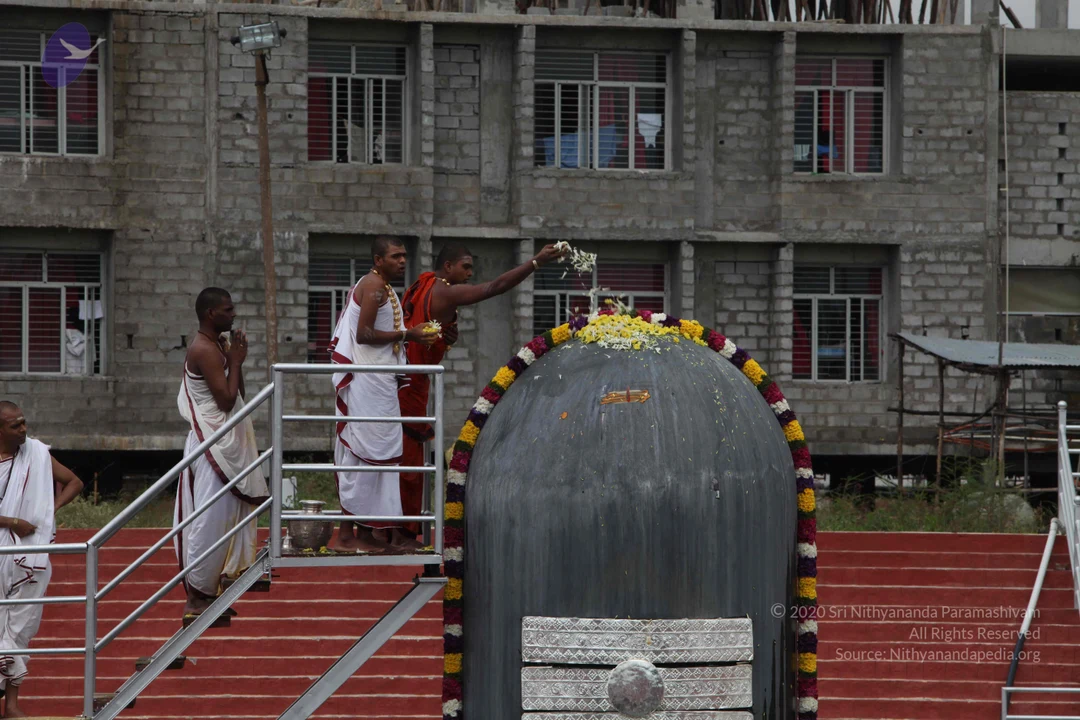
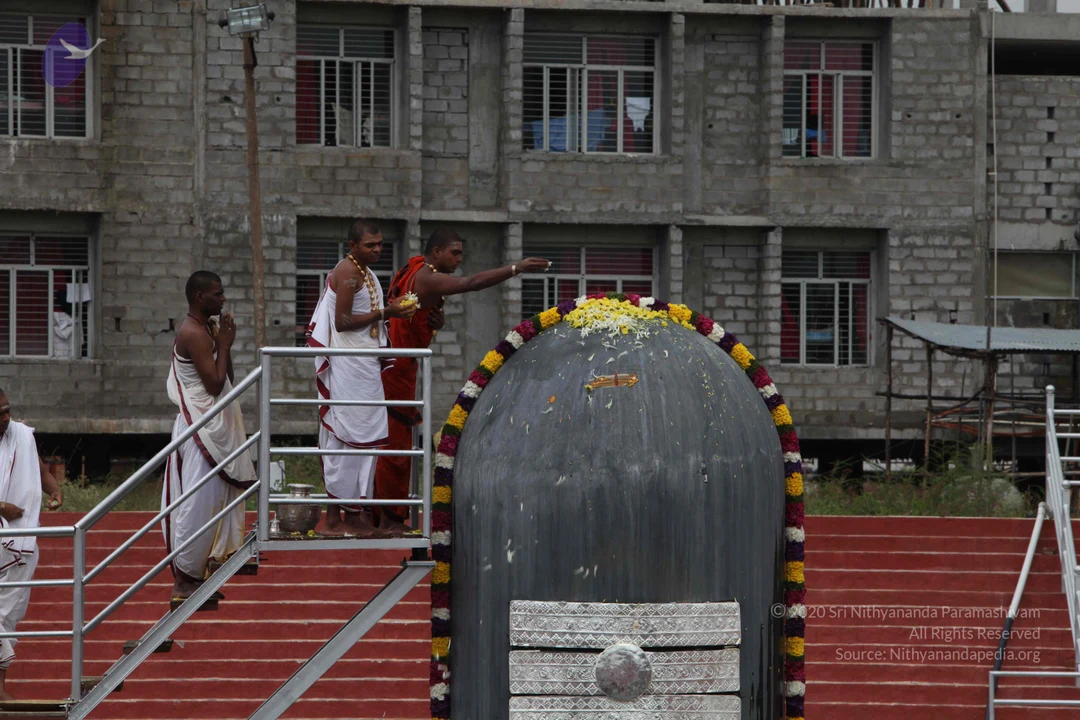
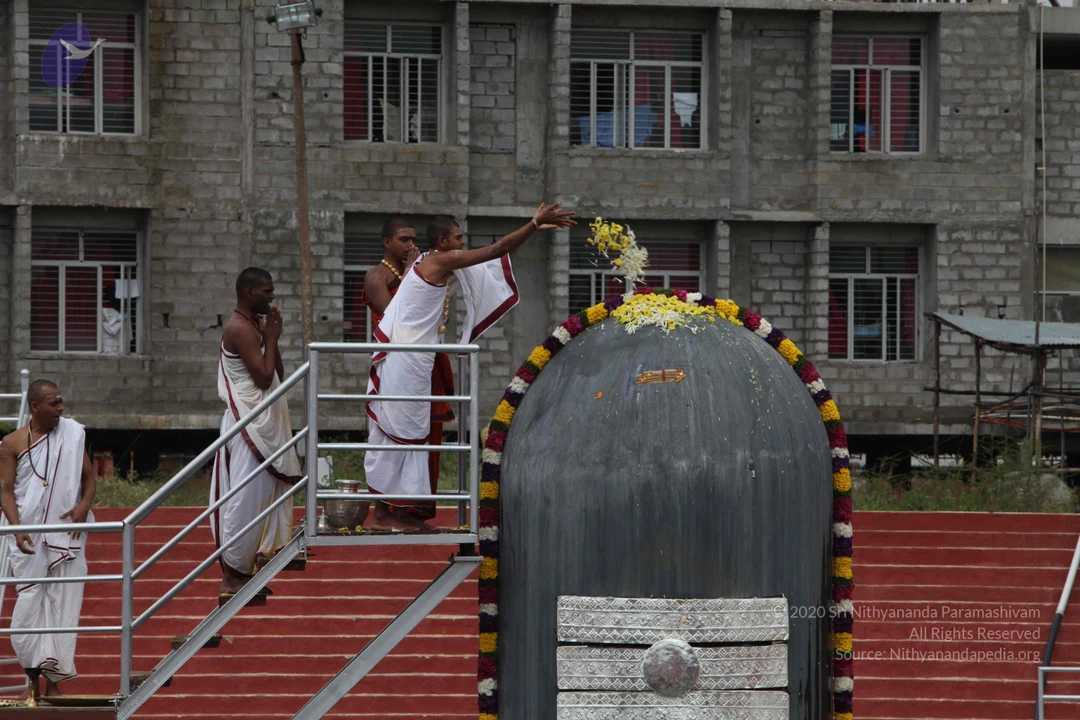
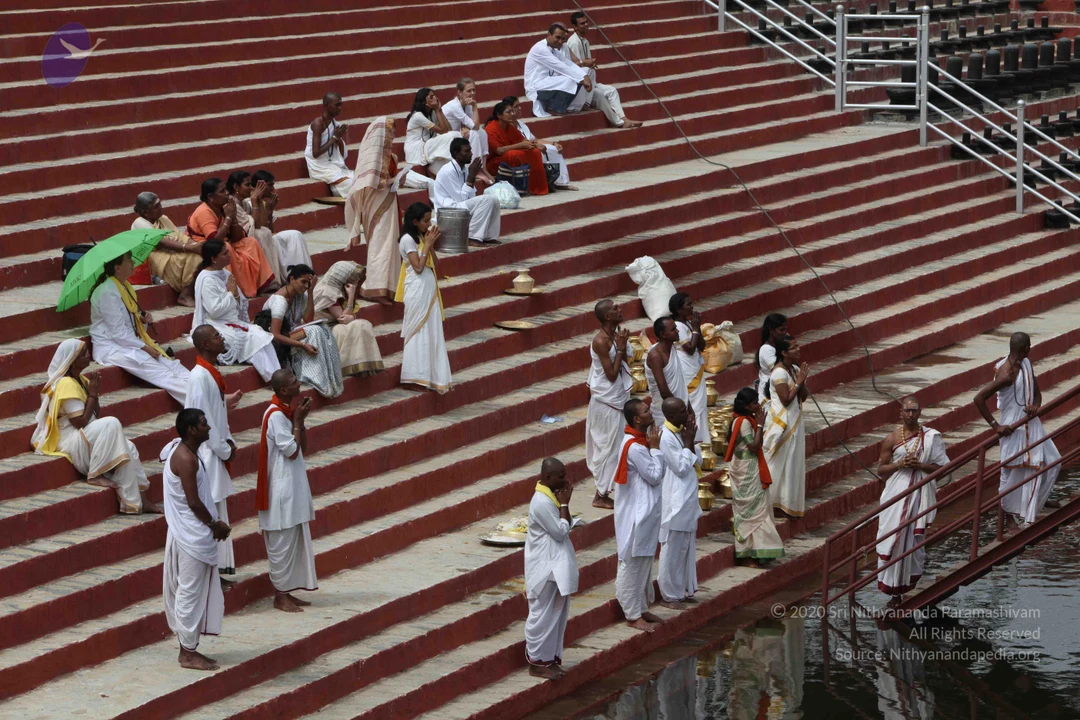
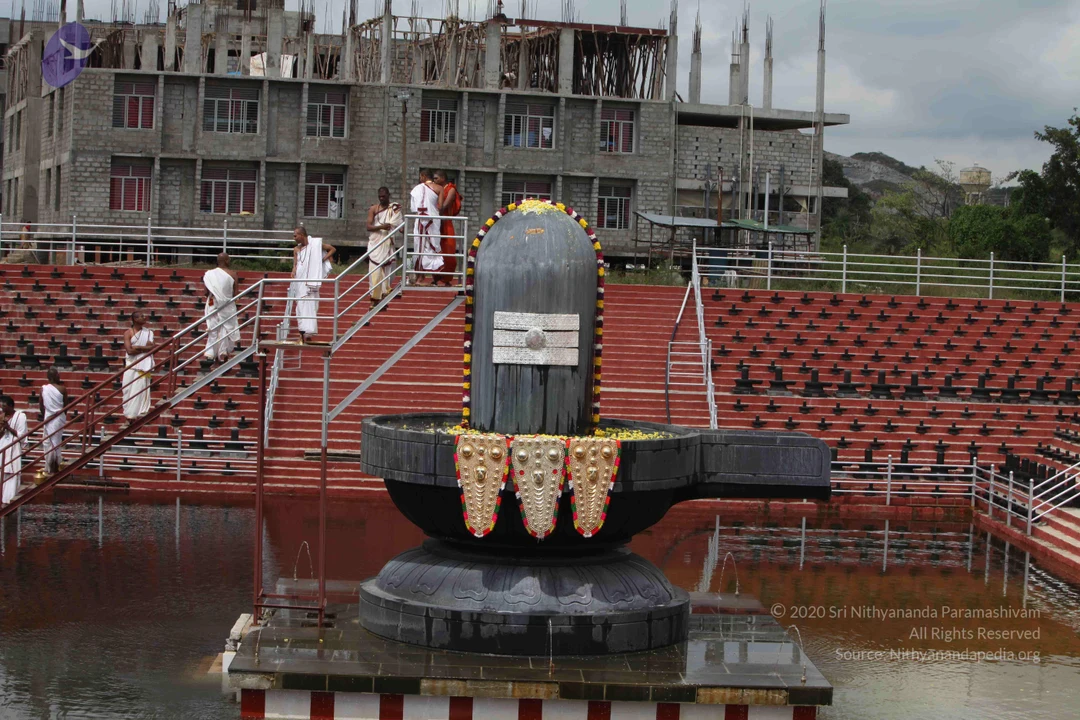
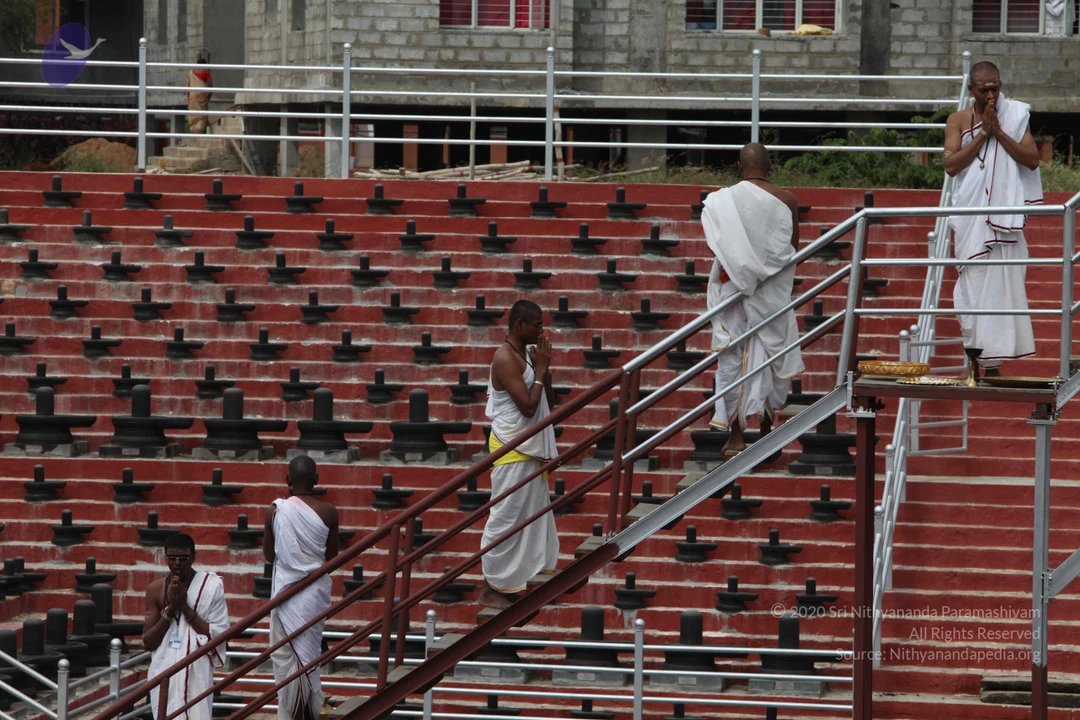
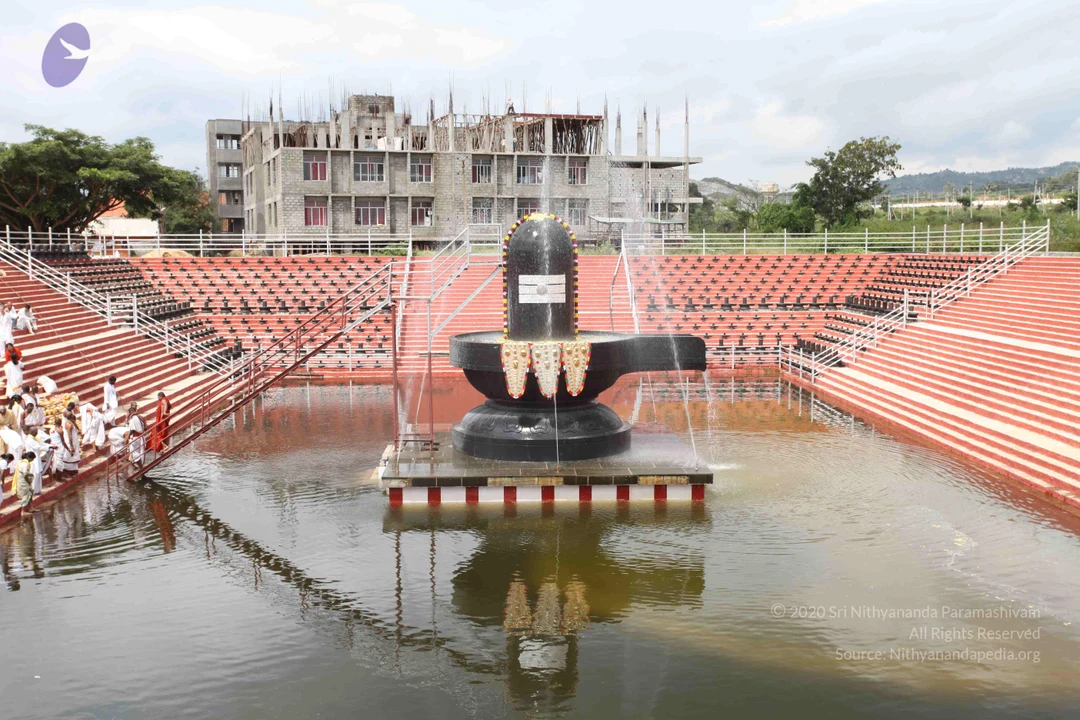
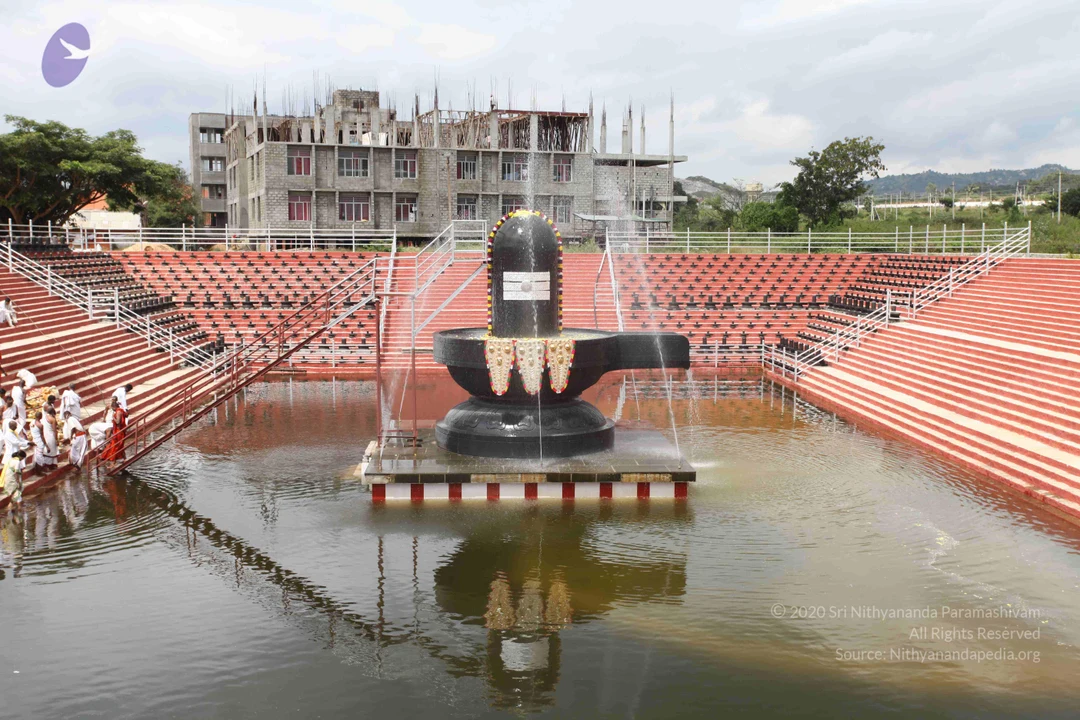
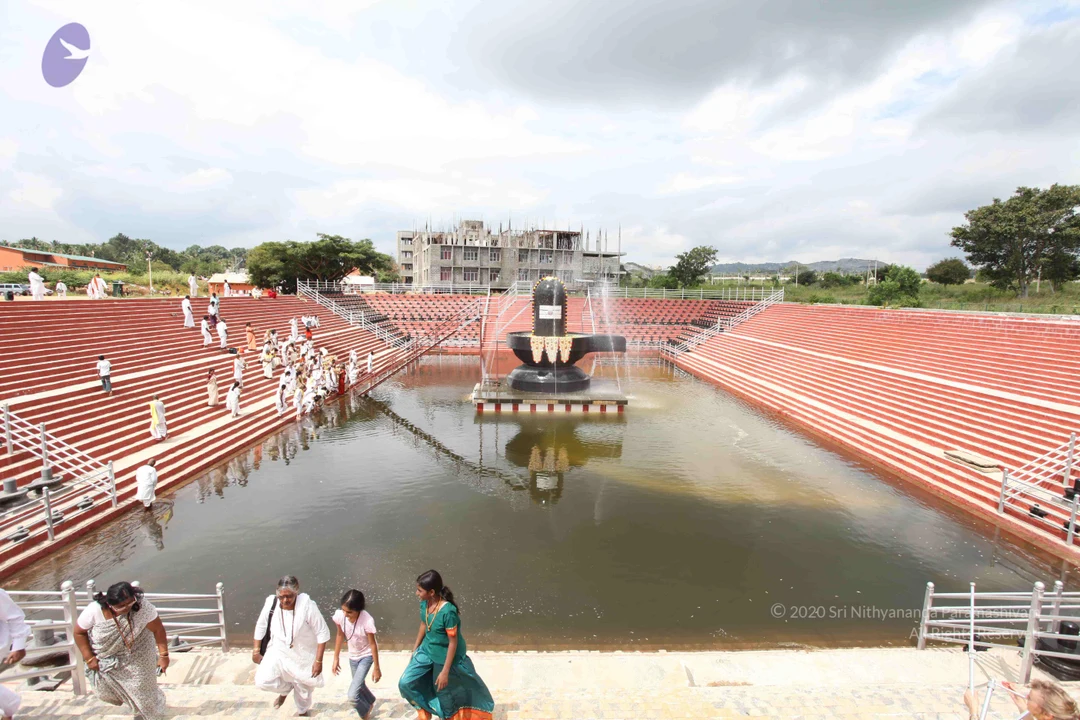
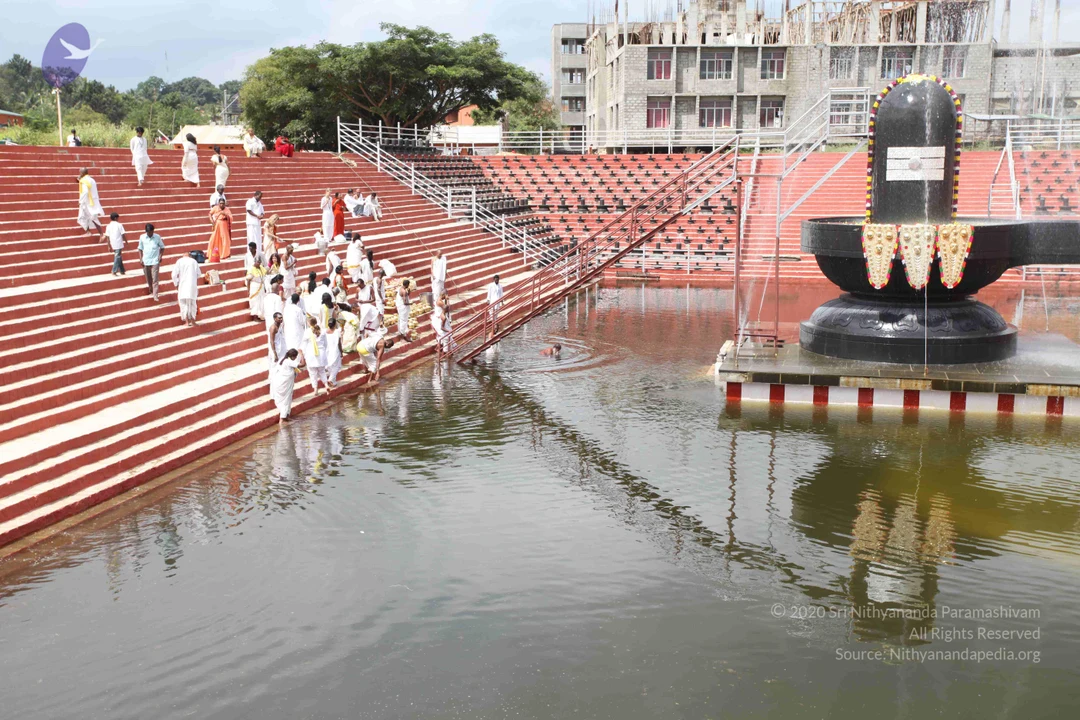
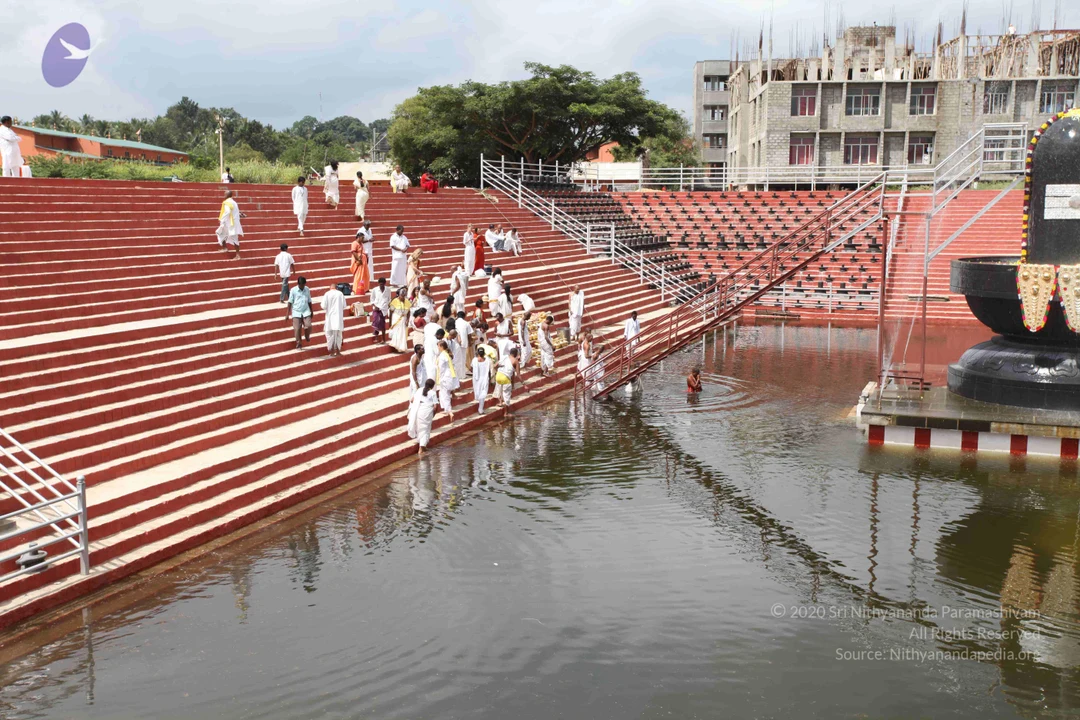
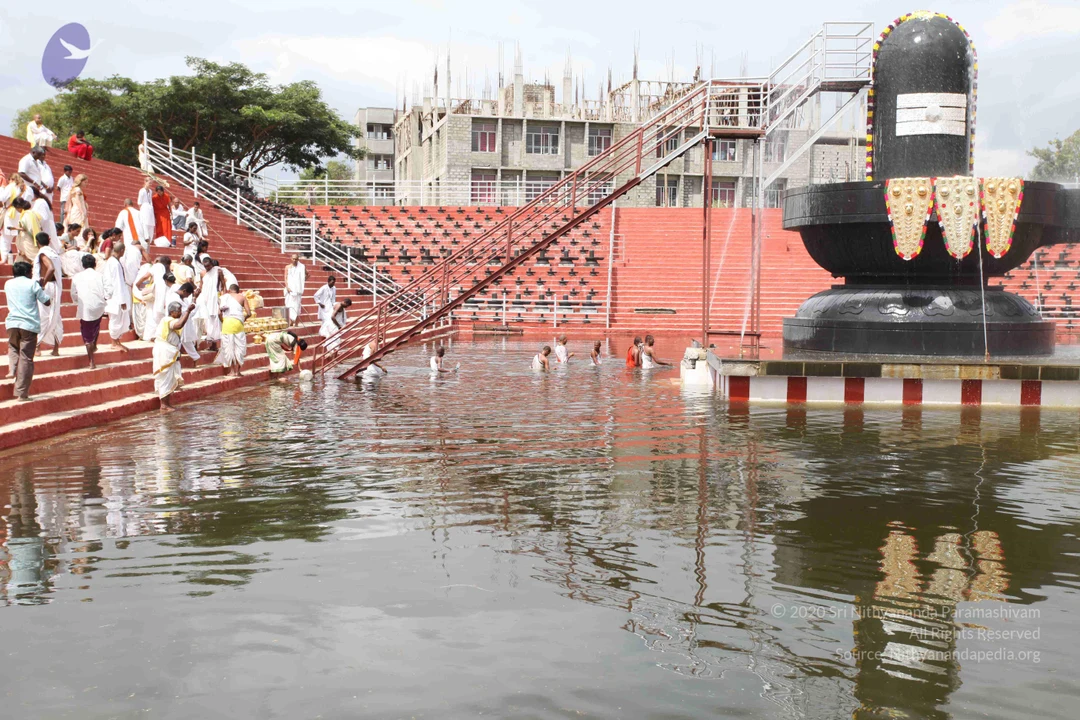
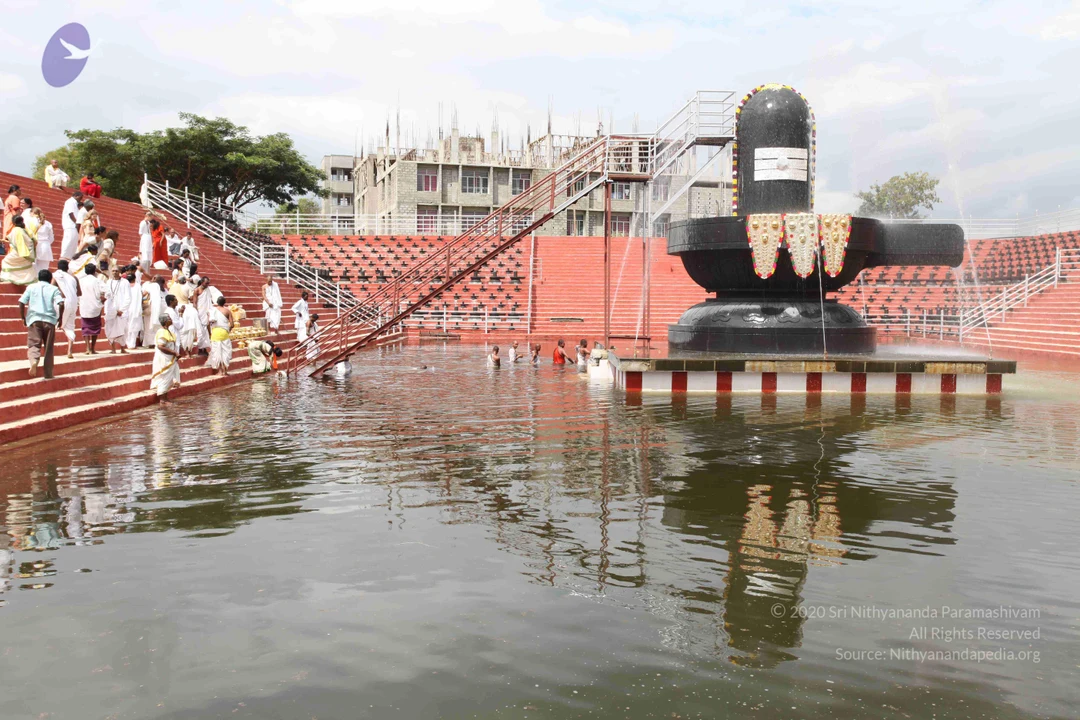
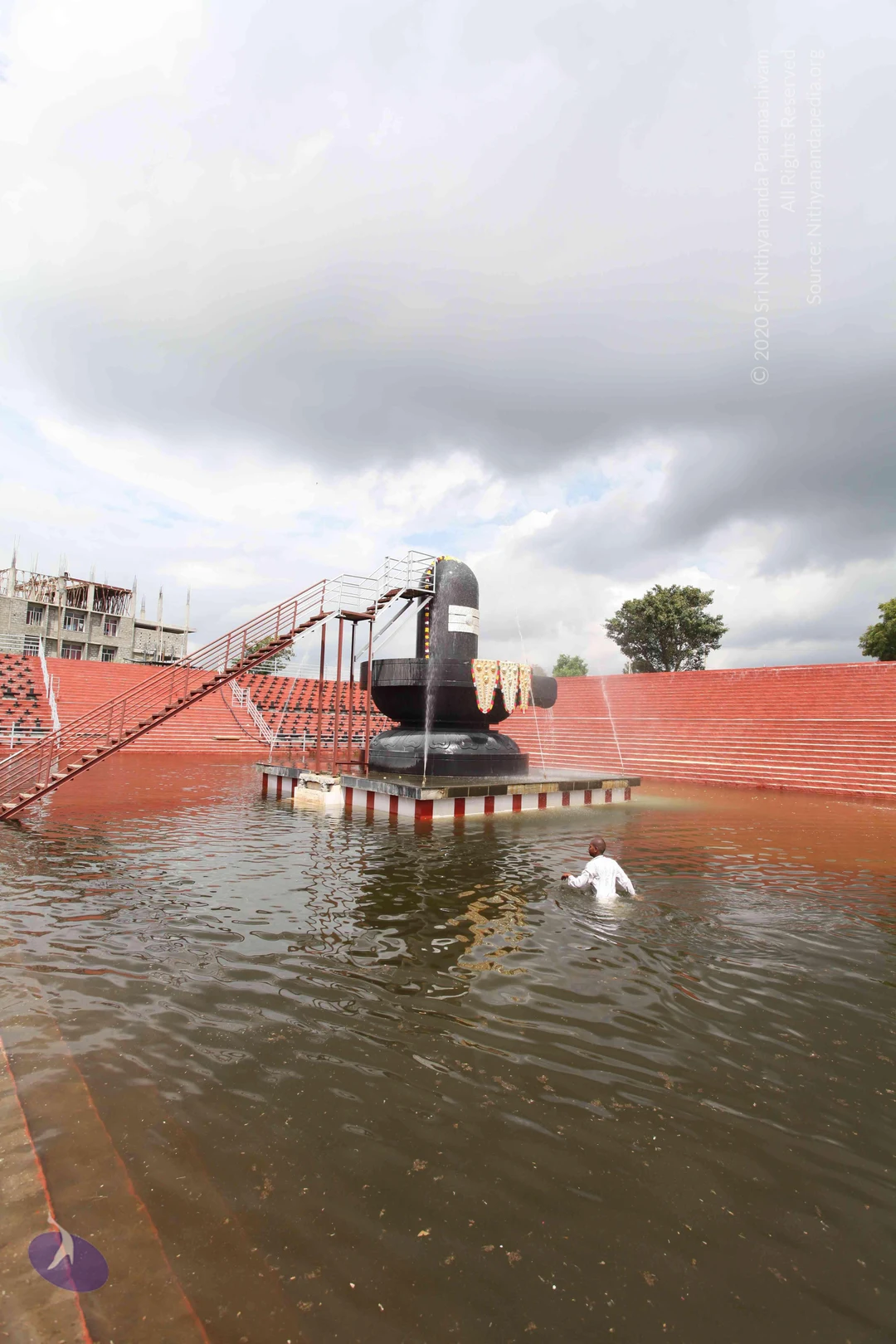
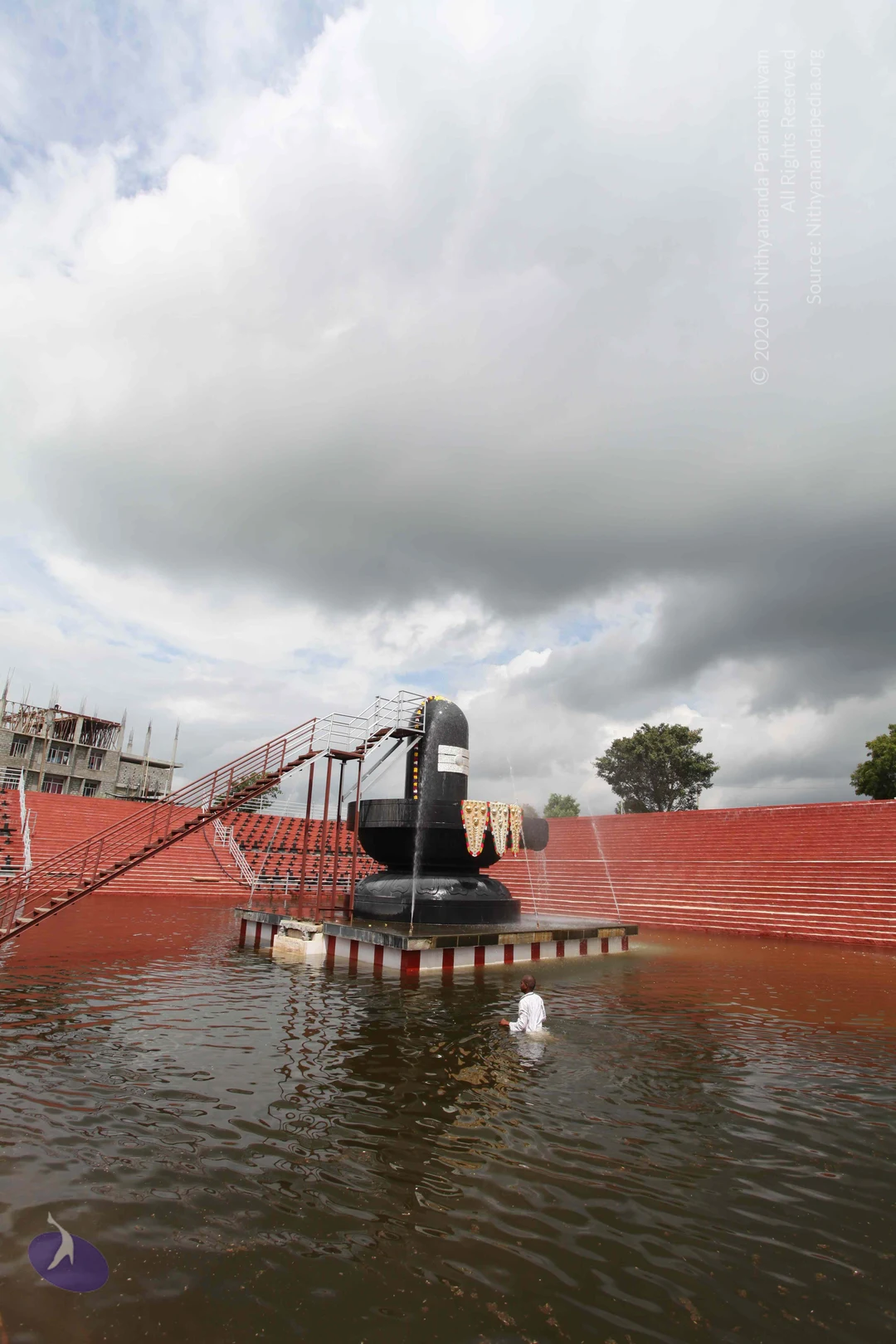
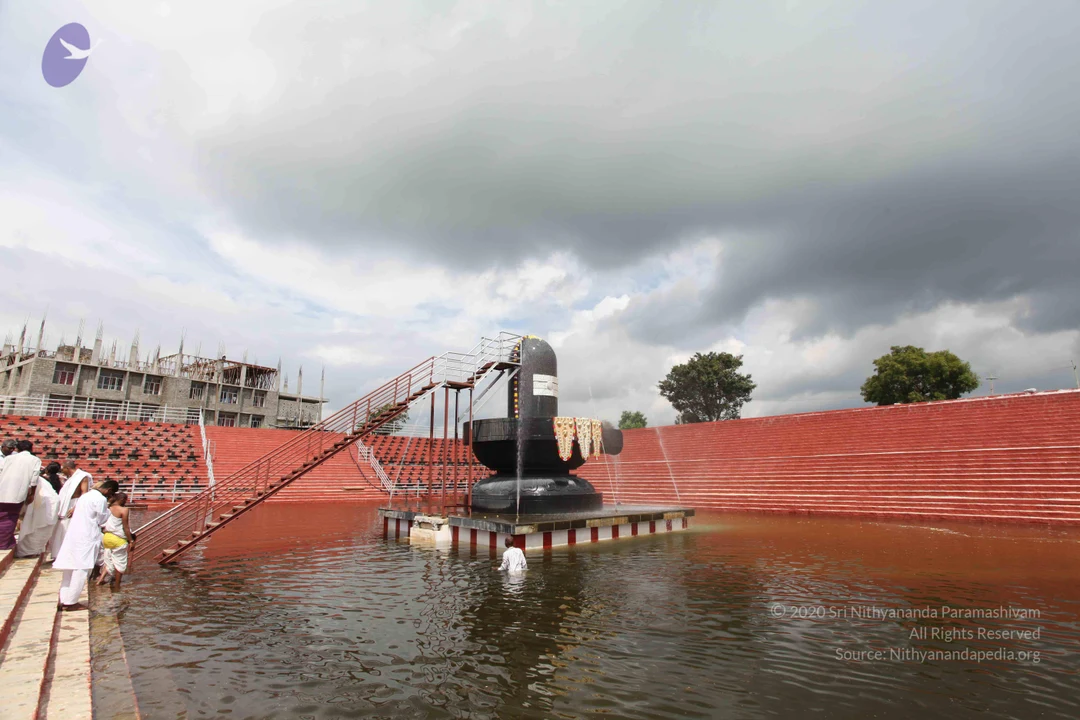
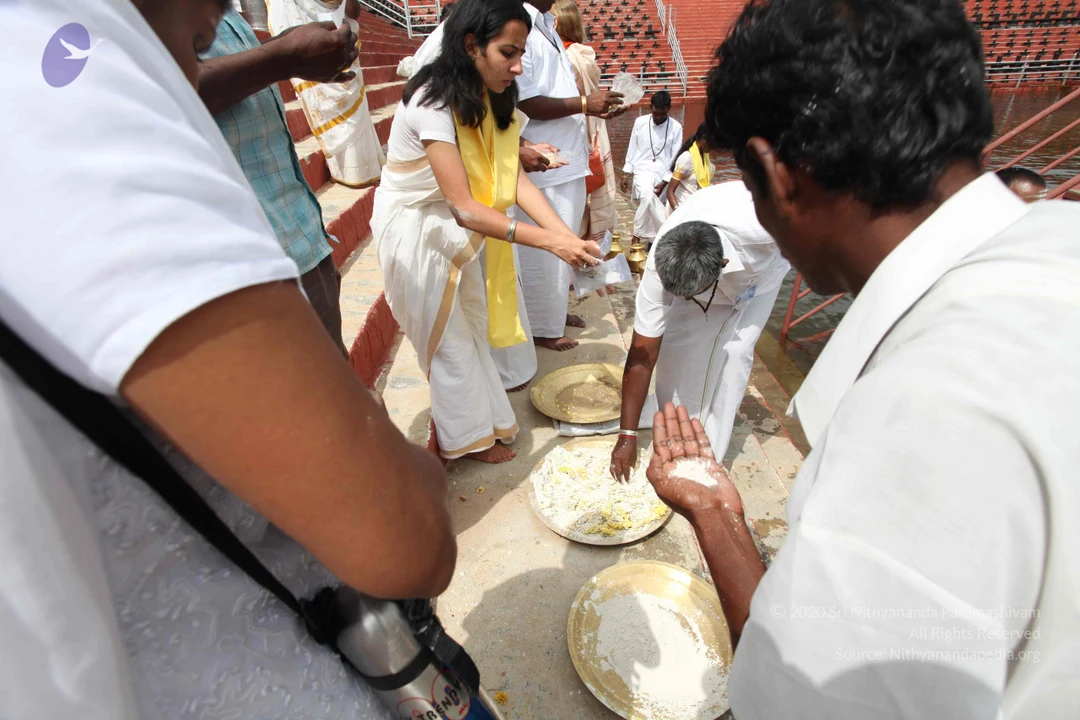
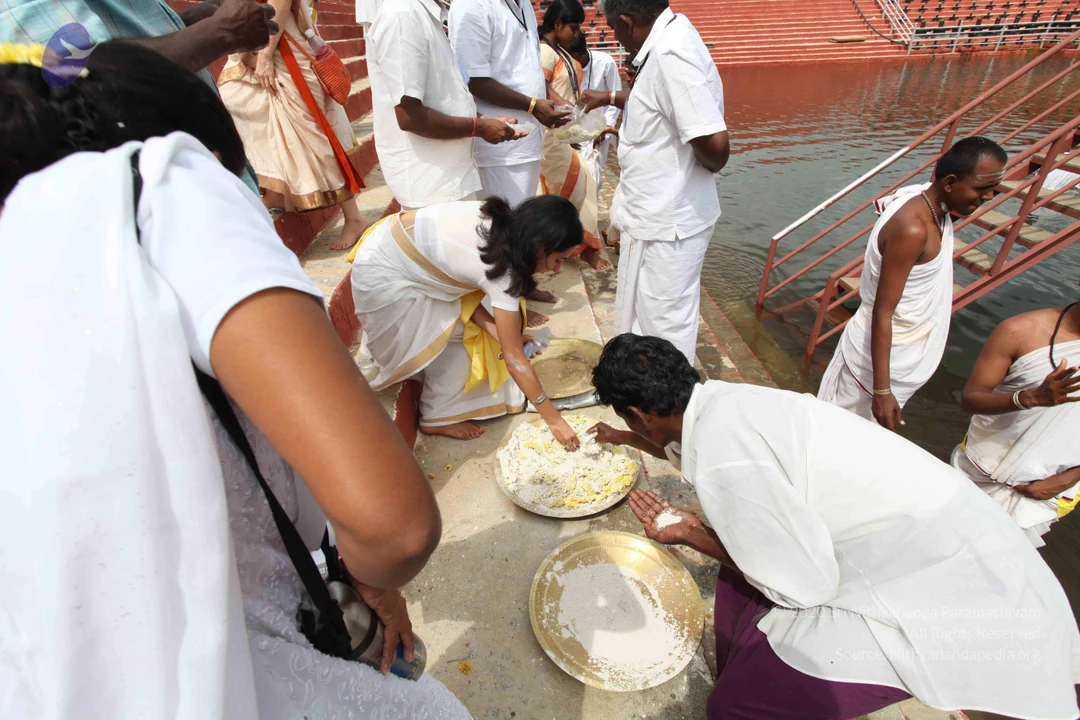
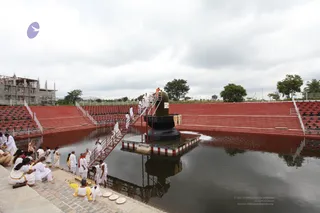
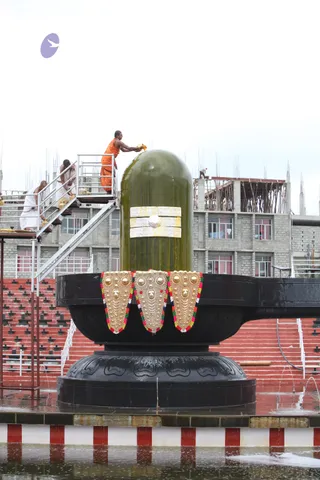
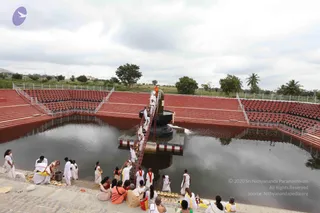
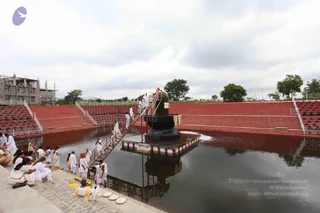
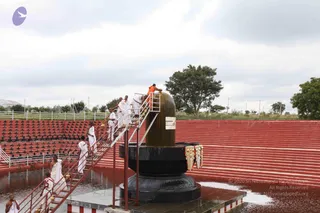
A large black Shiva linga stands in the middle of a rectangular water tank surrounded by tiered red seating steps. A metal staircase railing leads down into the water, and several people in white clothes climb or stand along it, with one figure in orange-red robes near the top of the linga platform. On the stone steps in the foreground, women in white saris with yellow borders sit and kneel beside brass plates and trays of yellow flowers and round offerings. Grey clouds fill the sky, with trees and a partly built multi-storey structure at the left edge.Outdoor abhishekam at a large green-painted Shivalinga on a black stone yoni-pitha base, with gold-and-white tripundra bands and three gold-and-jewelled decorative panels with red-green-yellow garland borders hung on its base. A man in an orange robe stands on a metal scaffold stairway at the top of the linga, pouring liquid or offering over it, while two men in white dhoti and shawl stand on the stairs below, one holding a brass vessel. Water runs down the linga and out of the pitha. Behind is a partly built concrete building, a red-and-white striped plinth and a red stepped area with small linga motifs. A faint purple bird logo sits in the upper left sky.

Photos Of The Day:

9 photosSource gallery
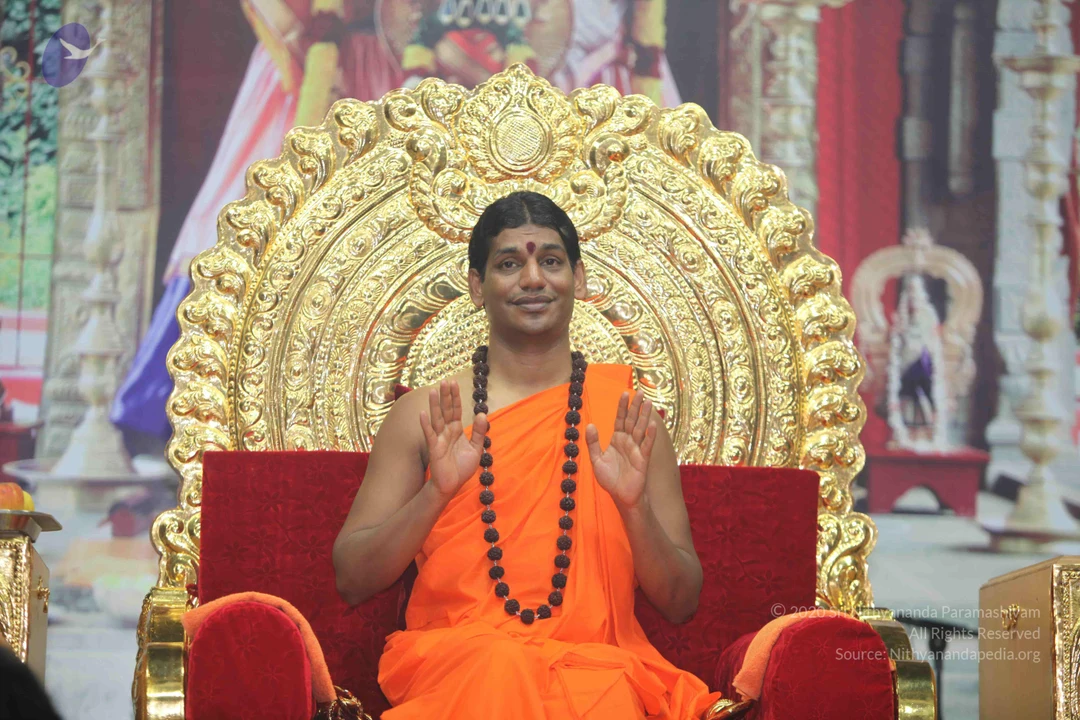
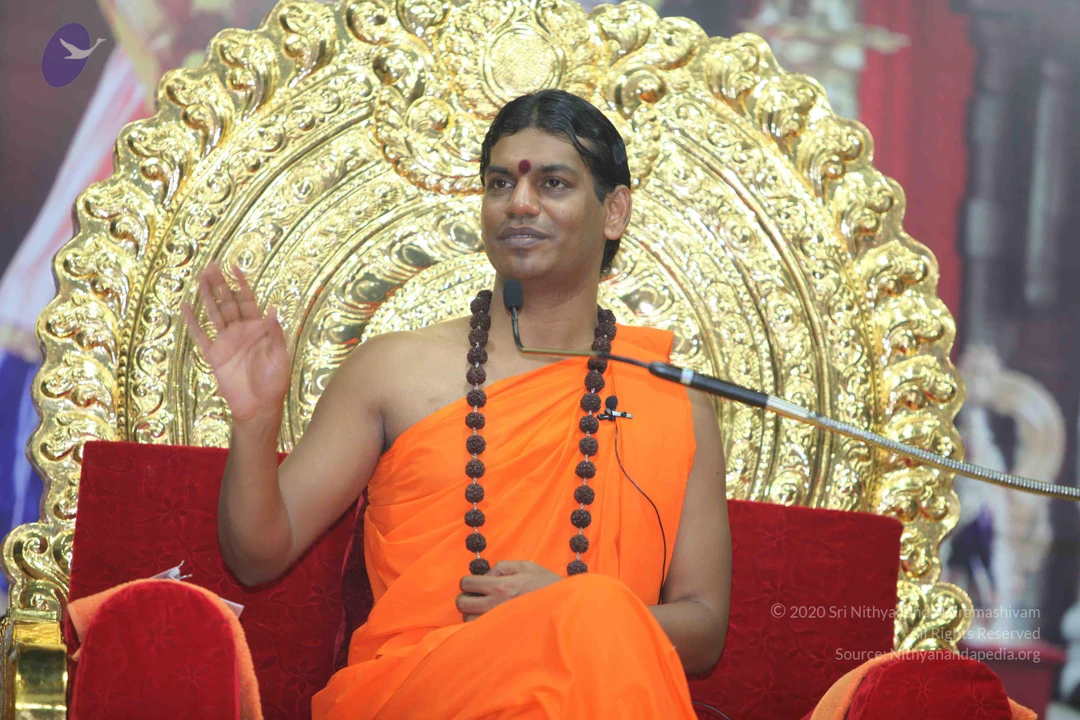
A man in white clothing with a yellow scarf or shawl stands at a dark wooden lectern, speaking into a microphone. He gestures with one hand. Behind him a projection screen shows a faded image of a person in robes. A small logo appears in the upper left corner of the room, and the setting resembles a public talk hall.A man in a white kurta and white dhoti stands at a lectern-style podium on a stage, holding a yellow cloth or book in one hand and gesturing with the other while speaking. A yellow shawl hangs over his shoulder. Behind him, a projection screen shows a faint image of a bearded figure with a garland. To the left, a wooden lectern and a green board stand in a white hall, and a small logo appears in the top left corner.A photograph of a large classroom-style hall filled with seated students in white uniform shirts, many writing or taking notes at desks and benches. Rows of students face toward the front, which is out of frame. Tall windows line the back wall, and a ceiling projector is mounted above. No speaker or a person candidate is visible in this view.A seated audience in a bright hall listens to a talk. In the foreground a man in a white shirt and dark trousers sits on a red chair, and beside him a woman in a white salwar kameez sits. Behind them rows of young people in white uniforms sit attentively, and a woman in white stands near the centre left with her hand raised. Windows line the back wall and no a person is visible in the frame.A photograph of a seated audience of many people in white clothing, viewed from the back, facing a projection screen at the front of a hall. The screen shows a painted or illustrated image of a seated figure. To the right of the screen, a standing person in a green garment holds a microphone near a lectern. Several audience members wear white and dark clothing, and a few hold notebooks. The setting resembles a satsang talk in an indoor meeting room.A photograph of a lecture hall with rows of seated students in white uniforms with red trim, seated on red and green plastic chairs. At the front, a person in a yellow outfit stands beside a lectern and a projection screen showing a map-like image. A dark green board is on the right wall, and a small purple logo appears in the top left corner.

nithyananda-bidadi

11 photosSource gallery
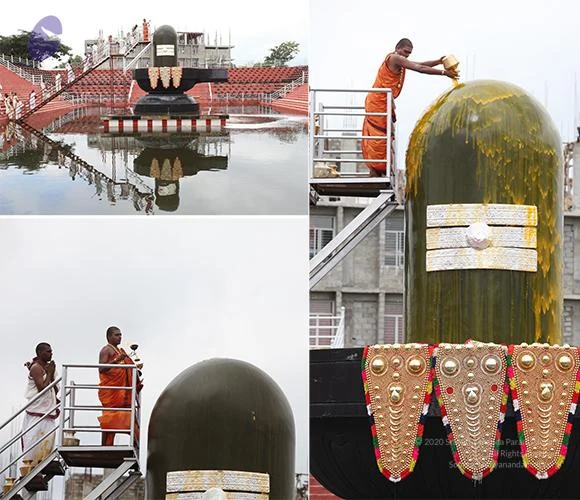
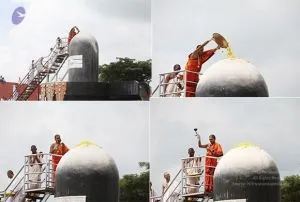
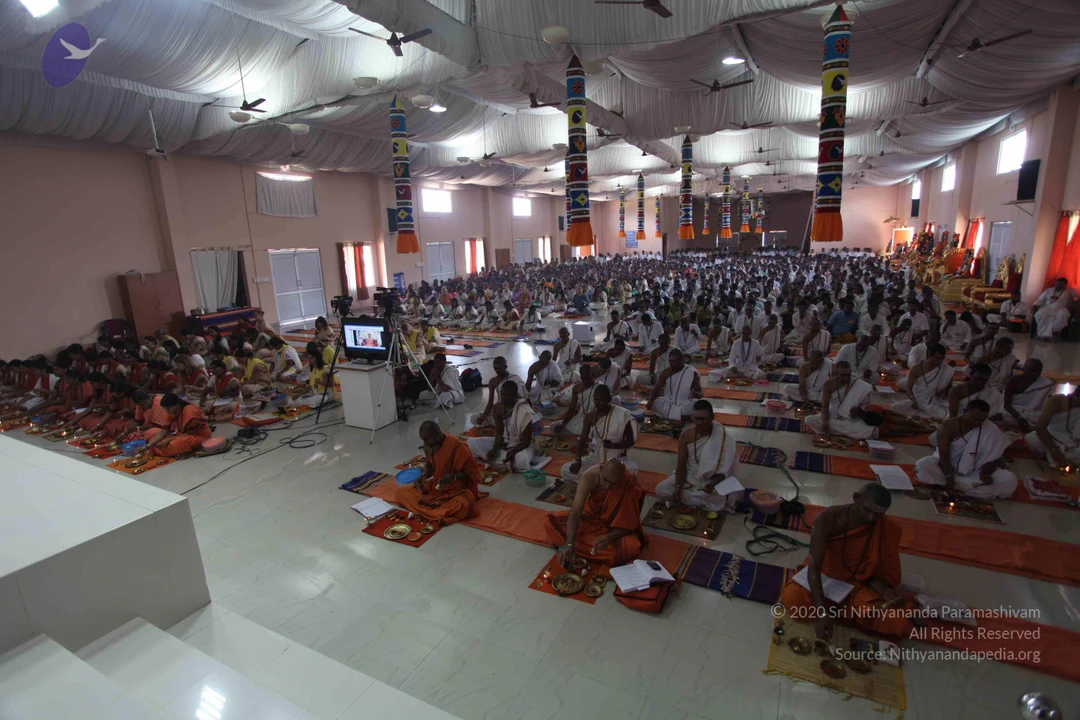
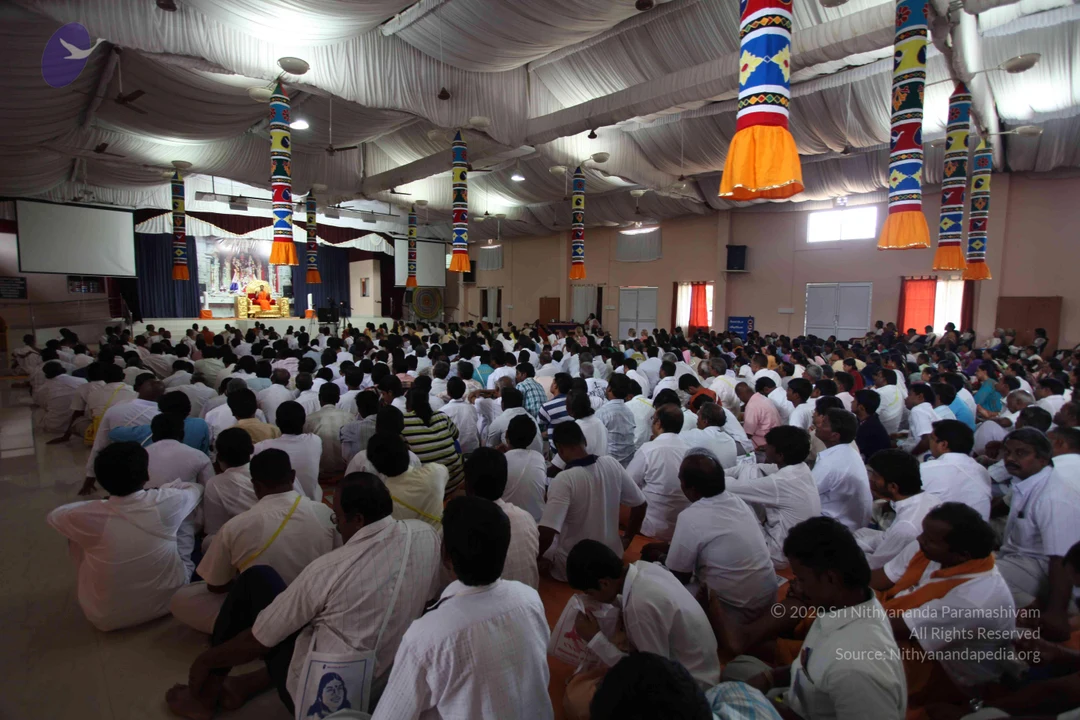
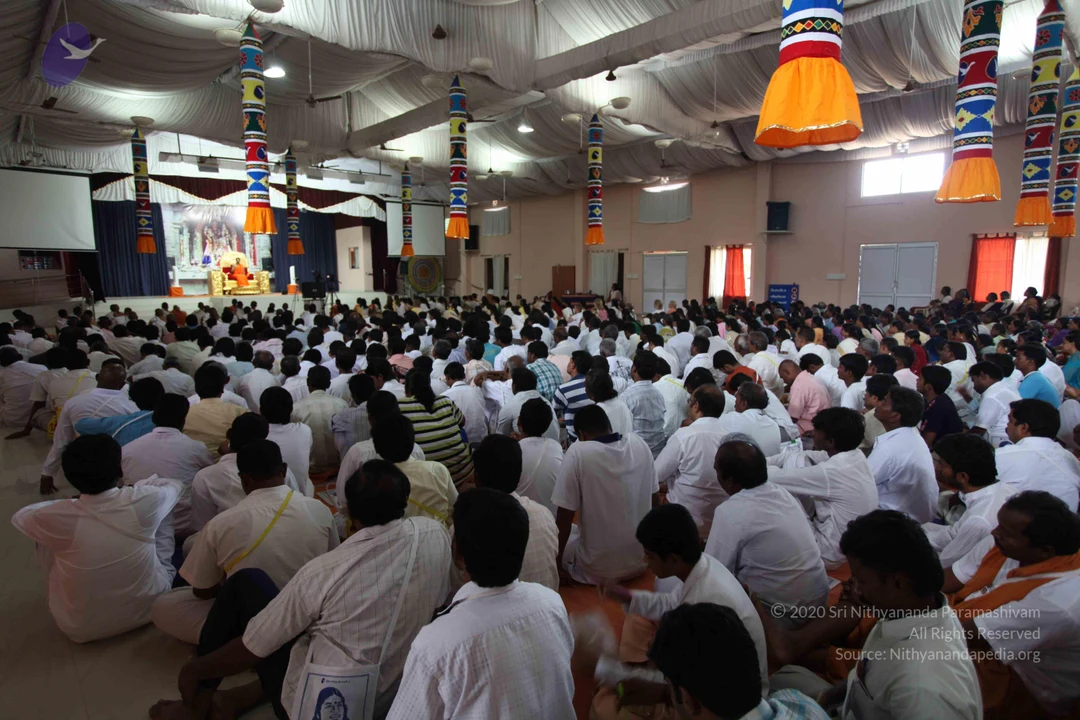
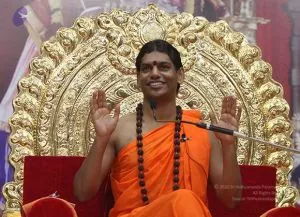
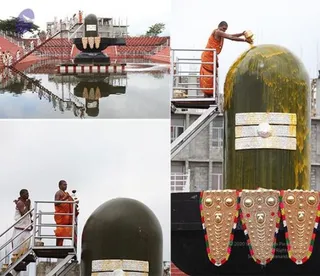
A photograph of an outdoor temple courtyard with a single seated figure in orange robes at the centre, sitting cross-legged on a small square mat within a circular stone ring. The figure has a shaved head and faces forward with hands near the lap. Behind and around them stand a row of ornate stone statues of deity murti and figures, some painted in bright colours, with a tall decorated pillar and palm trees in the background under a clear sky.Wide overhead view of a large hall filled with seated devotees on mats, many dressed in white and some in orange or saffron robes. A podium with a microphone stands at the front, and rows of hanging colourful banners line the ceiling and pillars. Attendees sit cross-legged facing the stage in an orderly satsang-style gathering. Individual features are too small to reliably identify any single person as a person.A wide hall filled with a large seated audience of devotees dressed mostly in white, sitting in rows on the floor facing the front. On the right, a figure in saffron-orange robes sits with bare feet visible beside a brass plate of offerings, with flowers and fruits arranged on it. The setting suggests a satsang or ritual gathering with orange and white draping on the stage backdrop. Several seated devotees in the foreground hold their hands together in prayer.A wide photograph of a large hall filled with seated devotees in white clothing, rows of people sitting on the floor facing forward toward a stage at the far end. Many attendees wear white kurtas and dhotis or white saris, with some in saffron-orange garments near the front. Colourful hanging cylindrical banners in red, blue, yellow and orange decorate the ceiling and stage area. The scene suggests a satsang or public talk gathering. No individual speaker is clearly identifiable at this scale.A man with long dark hair and a smiling expression sits on an ornate gold throne with a large ornamental backrest, speaking while raising both hands with palms open. He wears an orange-saffron robe and multiple rudraksha mala beads around his neck. A microphone stands in front of him. Behind him is a colourful painted backdrop. This appears to be a satsang talk. Appearance-based label: a person, seated on the throne as the speaker.A four-panel collage of a large dark green Shiva lingam being ritually bathed. Top left shows the lingam standing in a shallow reflecting pool before red-tiered seating. Top right shows a monk in orange robes pouring yellow liquid over the lingam from a raised platform. Bottom left shows two monks in orange robes on a metal walkway beside the lingam, one holding a small vessel. Bottom right shows the lingam with three gold-and-white decorated bands and three gold ornamental panels with red and green trim below it. The panels depict abhishekam. No physical people are at a front-facing scale beyond the monks shown.

1--Swami-Morning-Event

190 photosSource gallery
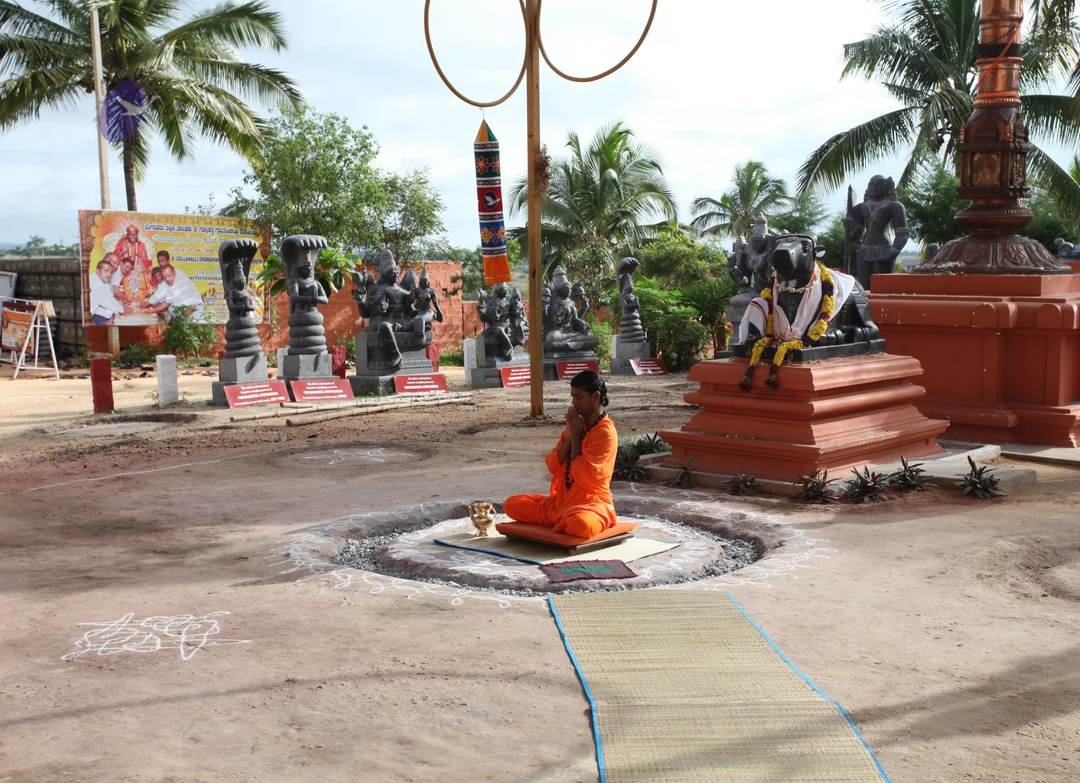
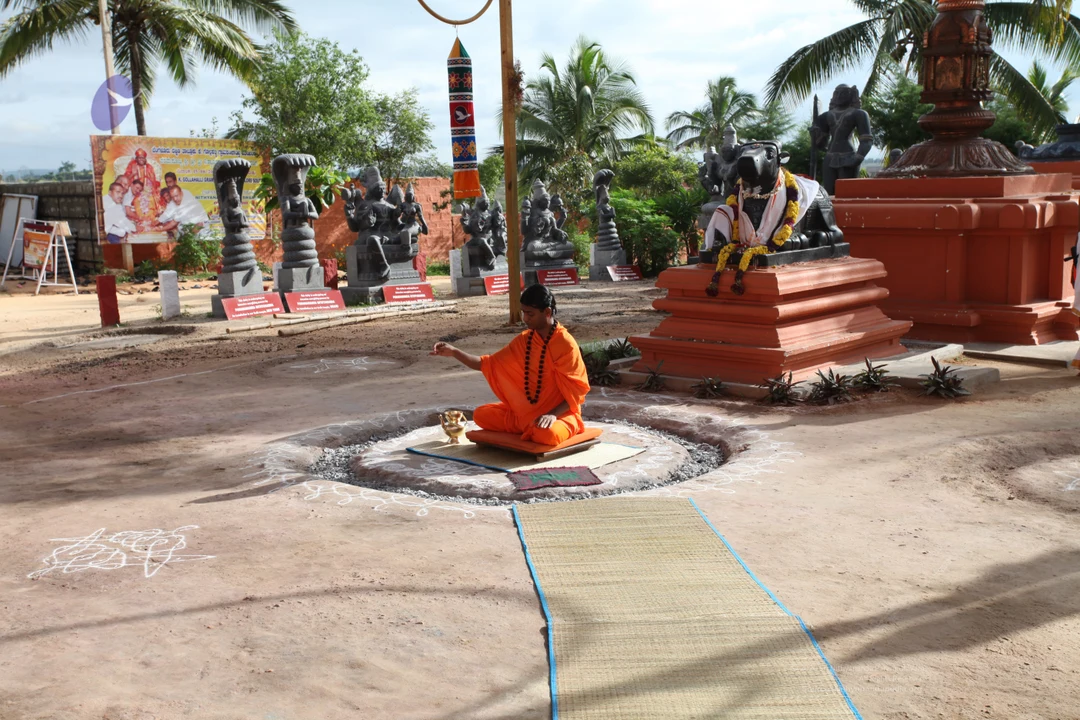
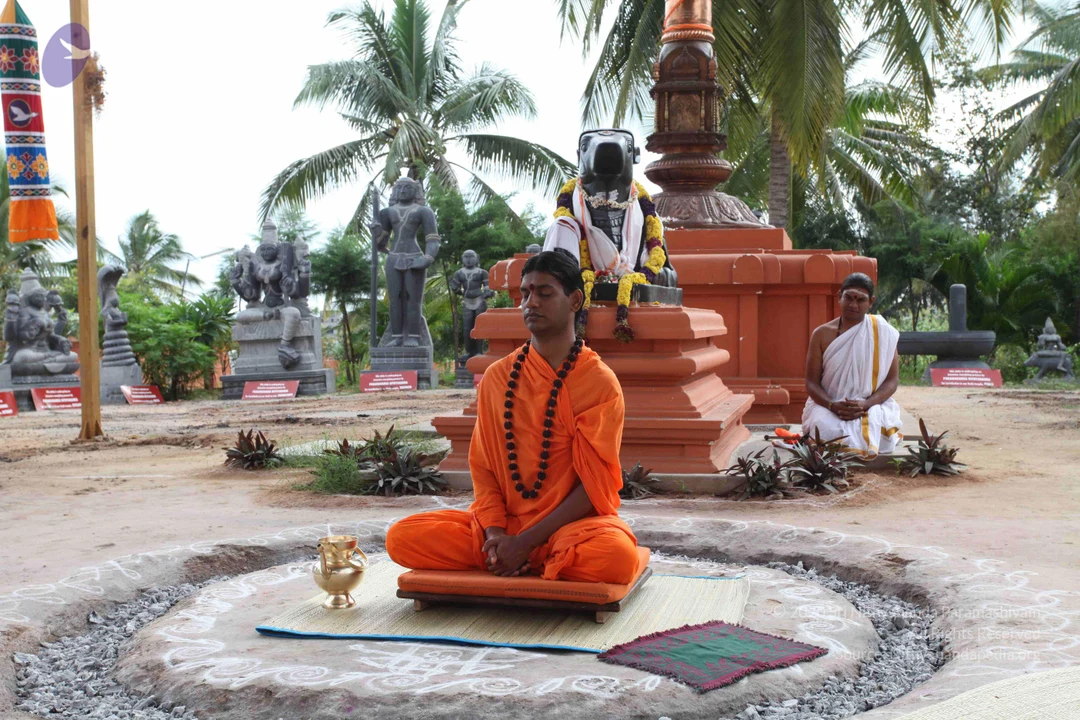
Outdoor photo of an ashram courtyard with bare dirt ground and palm trees behind orange-painted buildings. A person in orange robes with a rudraksha mala sits cross-legged in meditation on a small mat inside a circular stone-rimmed ring. A brass kalasha-style pot sits before them. To the left, a large black Nandi bull statue draped in white cloth and yellow flower garlands rests on an orange pedestal. Rows of small grey deity murtis line a low wall in the background, and colourful striped and orange ceremonial streamers hang from tall poles at the sides. A small child in orange sits at the right edge.A photograph of an outdoor meditation setting in a garden of stone sculptures and palm trees. In the foreground a young man in saffron-orange robes and a rudraksha mala sits cross-legged on an orange cushion with eyes closed and hands folded, on a circular platform with white kolam designs and gravel. Behind him stands a large black Shivalinga draped with white cloth and marigold garlands on an orange-red pedestal. A man in white dhoti and shawl with his hands together sits to the right. A brass vessel and a small mat sit in front, and a tall saffron flag hangs at the left edge.A young man with a shaved head sits cross-legged in meditation on a raised orange cushion atop a circular stone platform decorated with white kolam designs and gravel. He wears an orange robe and a long rudraksha mala, hands folded in his lap, eyes closed. A brass pot sits to his left on a woven mat. Behind him, a large black Shiva lingam draped with a white cloth and marigold garlands rests on a red stepped pedestal. Further right, an older man in white dhoti with an orange border sits with hands folded. Dark stone deity sculptures and red plaque stands line the open garden under palm trees.Outdoors in a temple garden, a young man in saffron-orange robes and a rudraksha mala sits cross-legged in meditation on a low orange cushion placed on a straw mat, within a circular stone-lined pit with white kolam designs and a brass vessel before him. Behind him stands a large orange stone pedestal supporting a black Shivalingam draped with white cloth and yellow-and-white flower garlands. A second man in white dhoti and shawl with yellow border sits with folded hands to the right. Grey stone deity statues and flowering plants line the garden, with coconut palms behind.A young man in saffron-orange robes and a long rudraksha mala sits cross-legged in meditation on an orange cushion placed on a woven mat, eyes closed, hands resting in his lap, in an outdoor temple garden. Behind him stands a tall orange-and-black linga-style shrine base with a black linga draped in white cloth and marigold garlands, beside a red-brick pillar. A brass vessel sits before him on the ground within a rangoli-marked circle. Dark stone deity statues and a row of red signboards line the grounds, with coconut palms overhead. On the right, a man in white dhoti and shawl stands holding a small orange-handled implement. The scene reads as a yoga or meditation session before the shrine.Outdoor photo of a seated figure in orange robes and a rudraksha mala meditating on a mat at the centre of a circular gravel-filled pit ringed with white kolam designs. A small brass vessel sits on the mat beside him. Behind him stands an orange stepped plinth with a black stone deity murti garlanded with marigold and white cloth, beneath a tall ornamental kalasha-style finial. Grey stone sculptures line the grounds, with red placards in front of them, and coconut palms surround the area. On the right, a person in white dhoti and shawl walks past. A hanging striped cloth decoration and a wooden frame with a ring are on the left.

2--Linga-Abishekam
236 photosSource gallery
Outdoor photo of a large Shiva linga standing in the middle of a rectangular reflecting pool, reached by a narrow red-railed stairway and platform. Several people in white ritual clothes climb toward the linga, some holding offerings, while others stand along the pool's stone edge and steps holding brass plates and vessels, with a row of brass lamps and fruit set on the ground. A few women in white saris and orange or saffron garments sit near the edge, and a figure in orange appears near the top of the stairs by the linga. Tiered red stadium-style seating surrounds the pool under a cloudy sky, with trees and palms beyond. The scene reads as a linga abhishekam performed in the water.Outdoor photo of a large black linga on a square platform in the middle of a water-filled tiered stone amphitheatre with red-painted steps. Several people in white clothes ascend a red-railed staircase toward the linga, and a man in saffron and white stands near its top. At the water's edge in the foreground, a group in white and yellow sit on steps beside round brass or steel plates and bowls of offerings, with a yellow flower pile. Grey clouds, green trees and an unfinished building with scaffolding frame the scene.A large black linga stands in the centre of a red-tiered circular pool, with a black yoni-peetha base and a red-and-white striped platform. Several priests in white dhotis and shawls climb a white metal staircase with red railings toward the linga, where one man in an orange robe stands on top, pouring or tending the linga. Red-and-white striped tiered seating surrounds the water, a green tree and open grassy land lie beyond, and the sky is overcast. Strings of marigold-style garlands and fabric drape from the linga's base.A photograph of a large black stone Shivalinga with a tall dark-gold cylindrical top rising from a black base, set in a red-tiered open-air amphitheatre with water pooled around the base. A metal staircase and railing climb one side of the linga. Several men in white dhoti and white shawls climb or stand on the stairs and on a platform beside the linga, while one man in saffron/orange robes stands on the top of the linga with his hands on it, apparently performing abhishekam. Garlands in gold and white hang at the base. Grey overcast sky, trees and utility poles behind. a person appearance uncertain; the saffron-robed figure is shaved-headed and not clearly identifiable.Outdoor photo of a large black Shivalinga on a circular black pedestal rising from a reflective water pool, with red-tiered stone steps on both sides. Strings of marigold garlands hang from the lingam. Several people in white ritual clothes stand on a raised platform beside the lingam and along a railing staircase, while others sit on the red steps at left. A woman in orange clothing stands near the lingam. Overcast sky and trees frame the scene.A large black linga, a Shiva lingam with a tall rounded top, stands on a black yoni-peetha base at the centre of a red-tiered outdoor stadium-style stand, decorated with gold and red garland drapings at its base. A group of about ten men in white dhotis and white shirts climb a metal staircase and platform beside the linga, and a man in saffron/orange robes stands at the top of the platform pouring liquid over the lingam, consistent with a linga abhishekam. Wet ground pools at the base, the sky is overcast, and an unfinished concrete building stands behind the stands.
3--NSP-Session

33 photosSource gallery
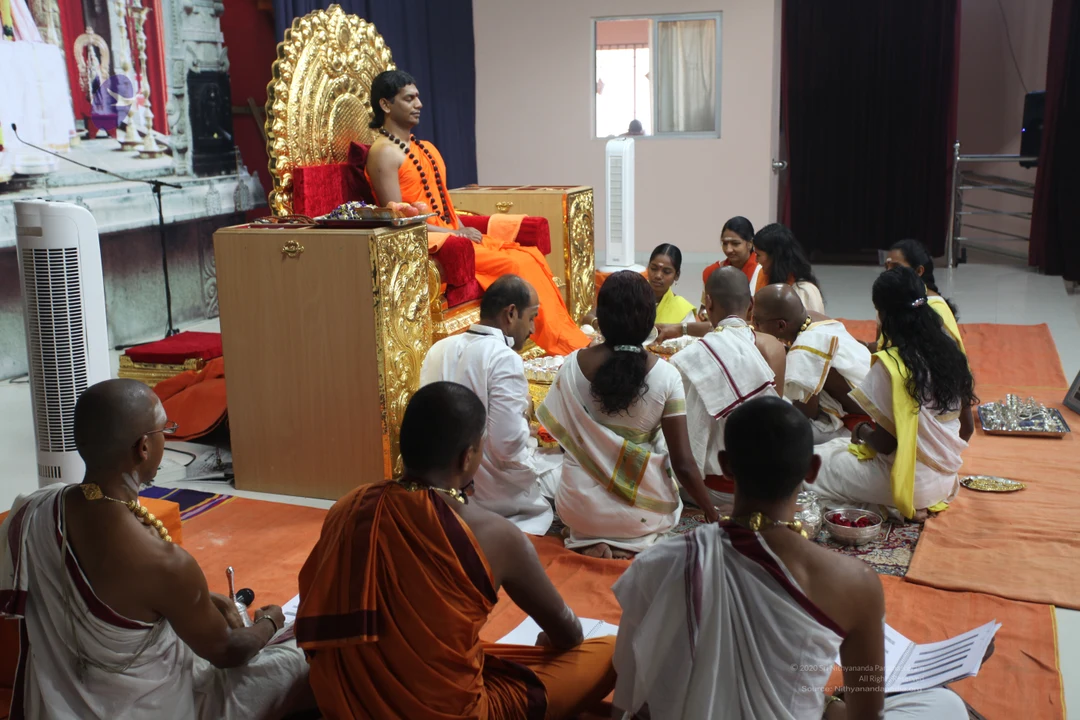
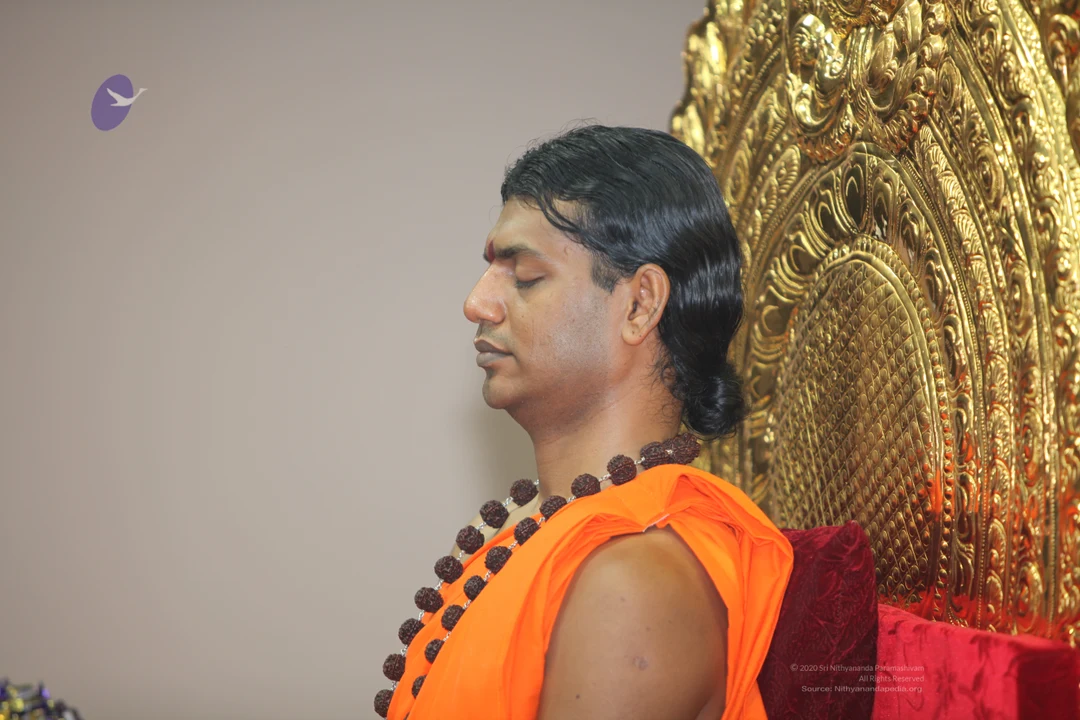
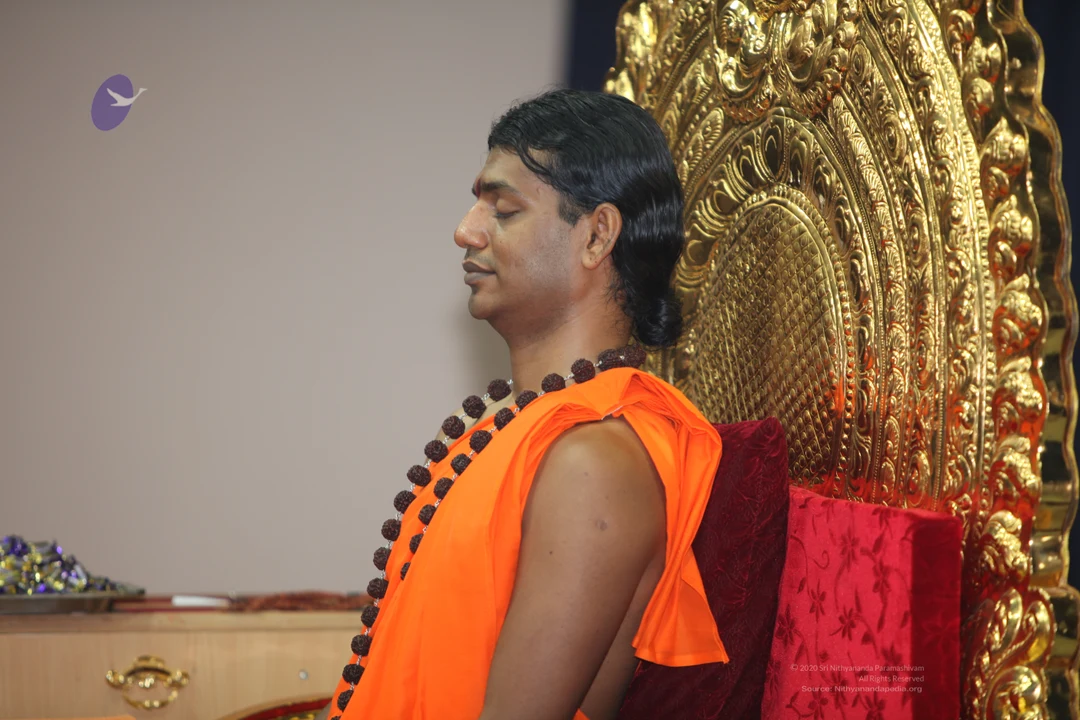
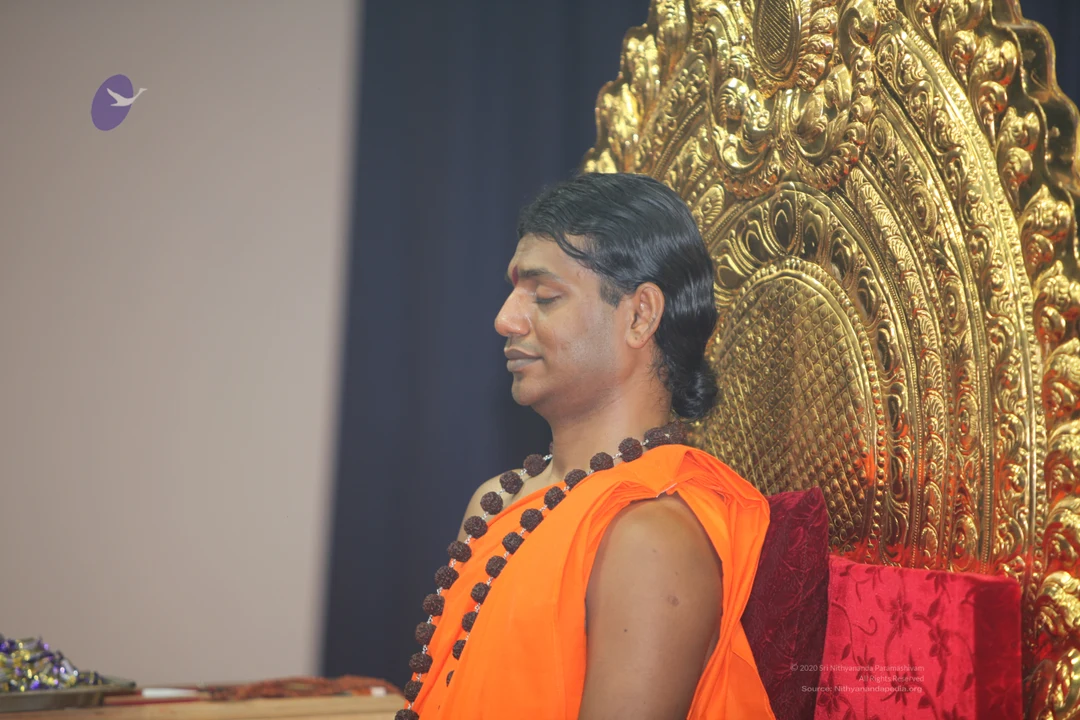
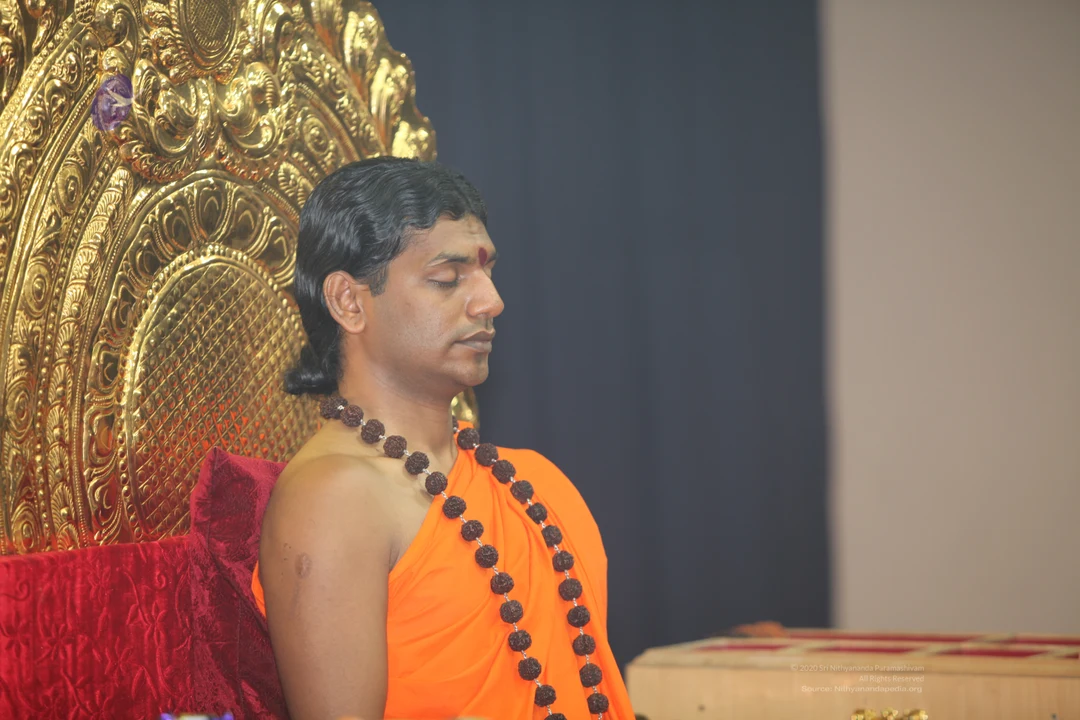
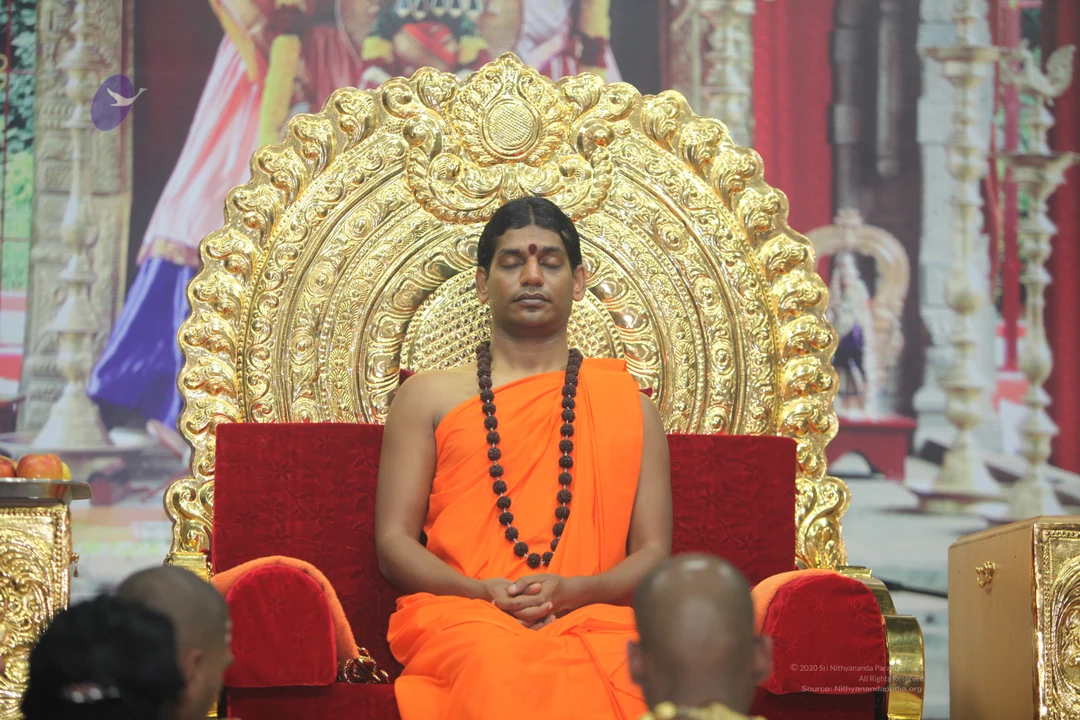
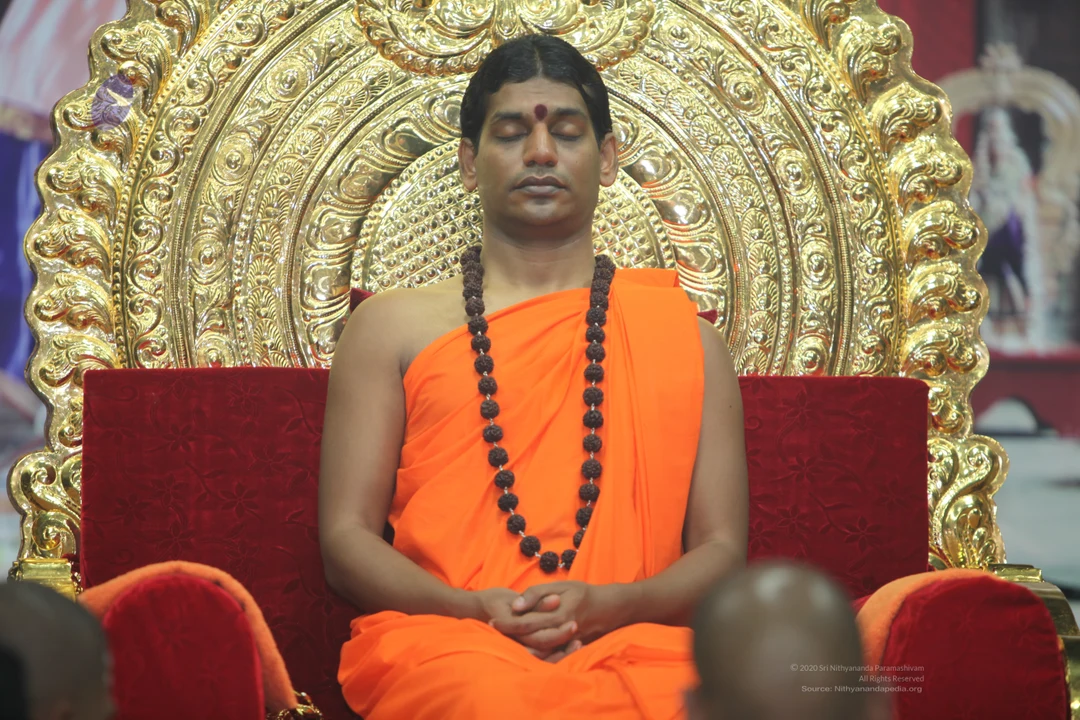
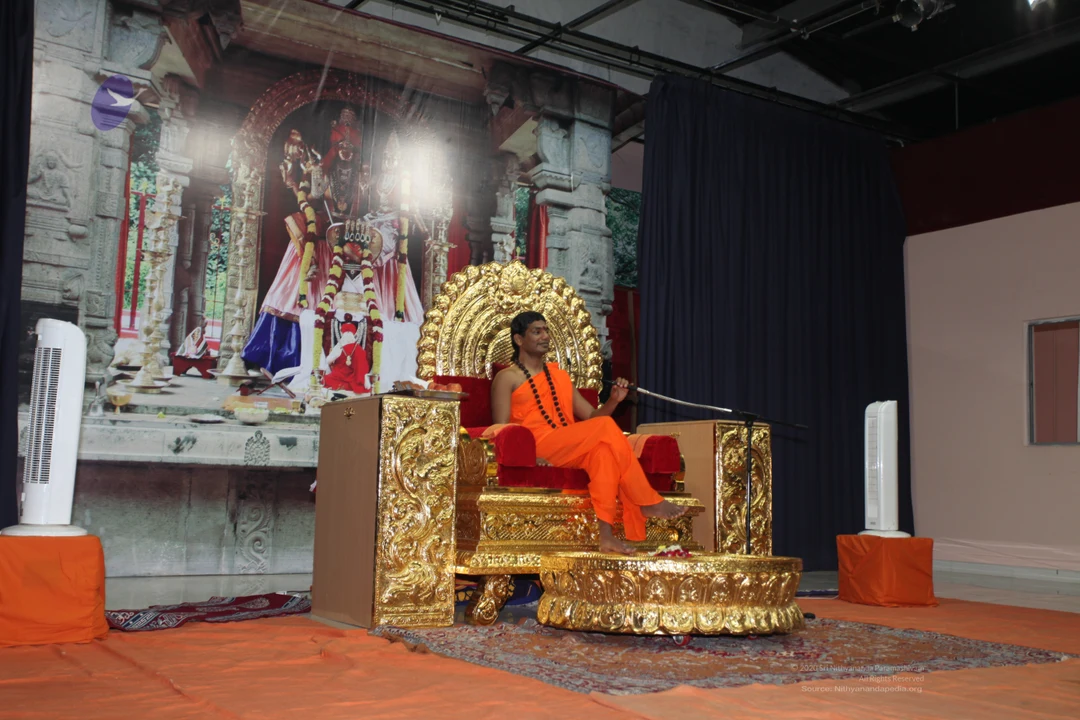
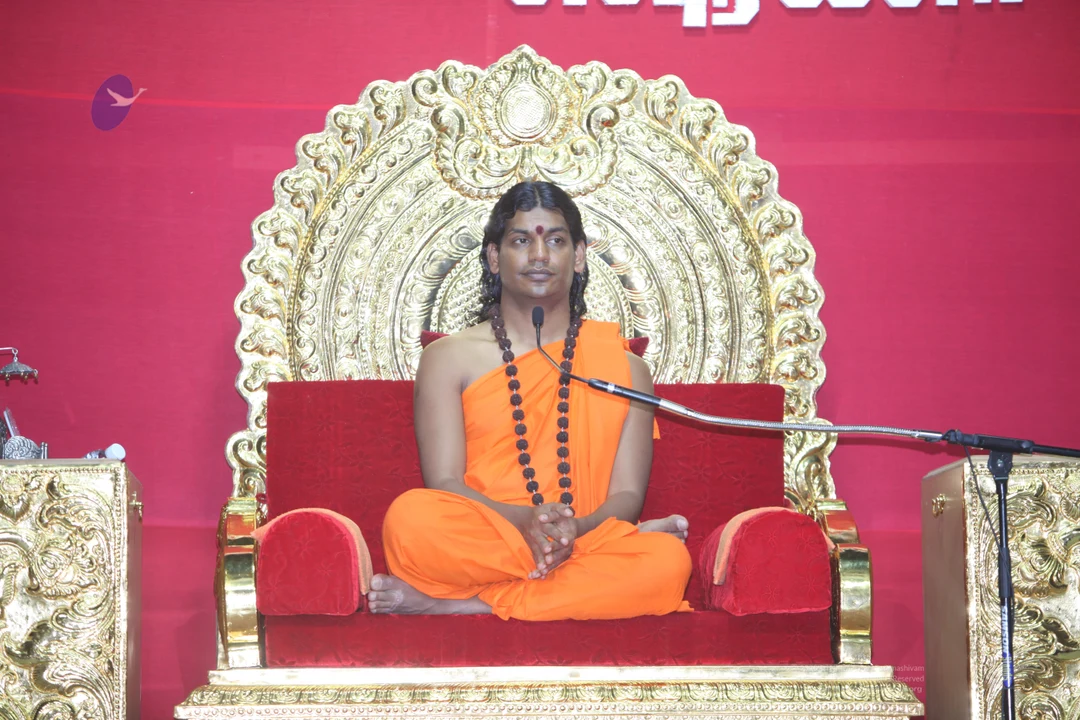
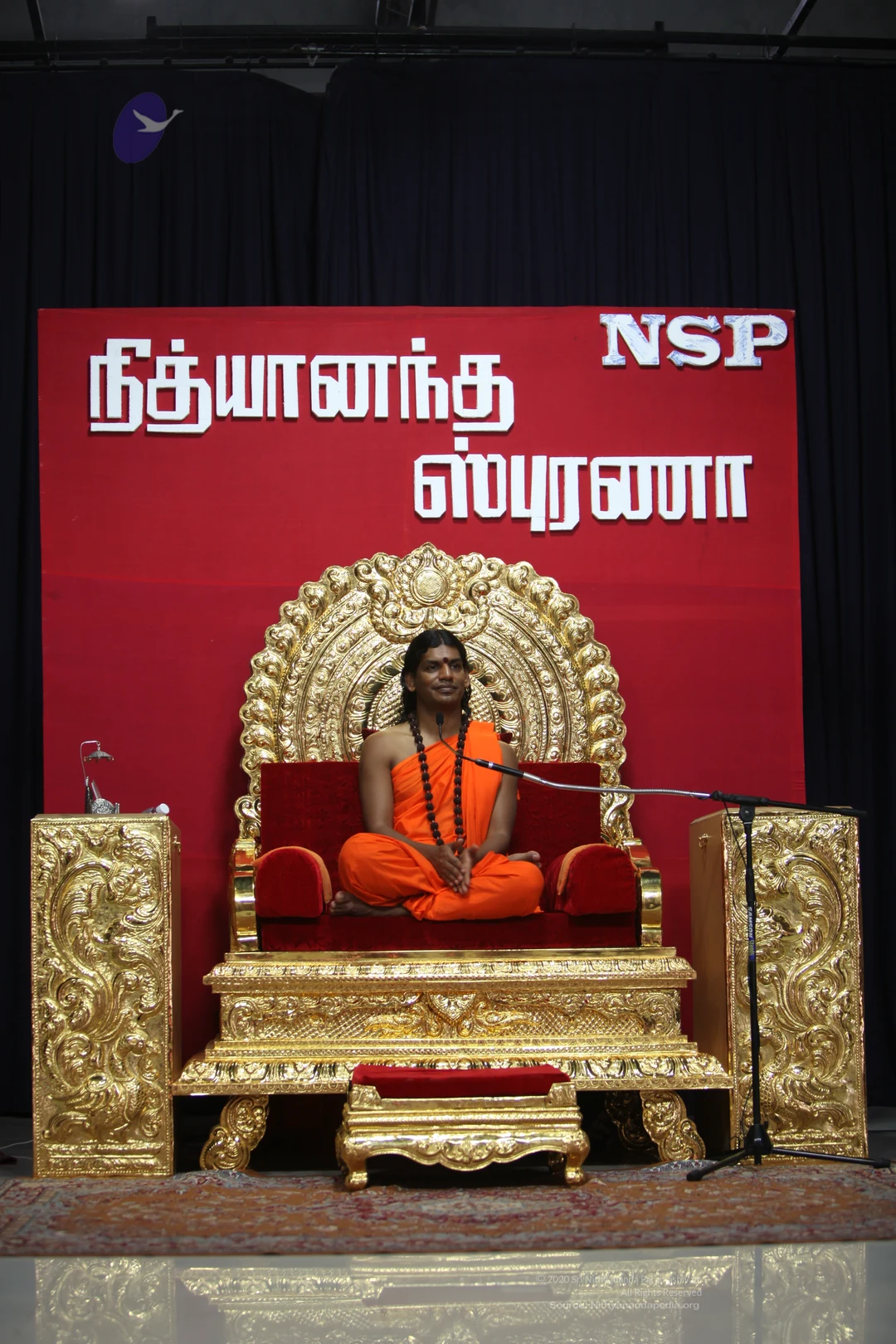
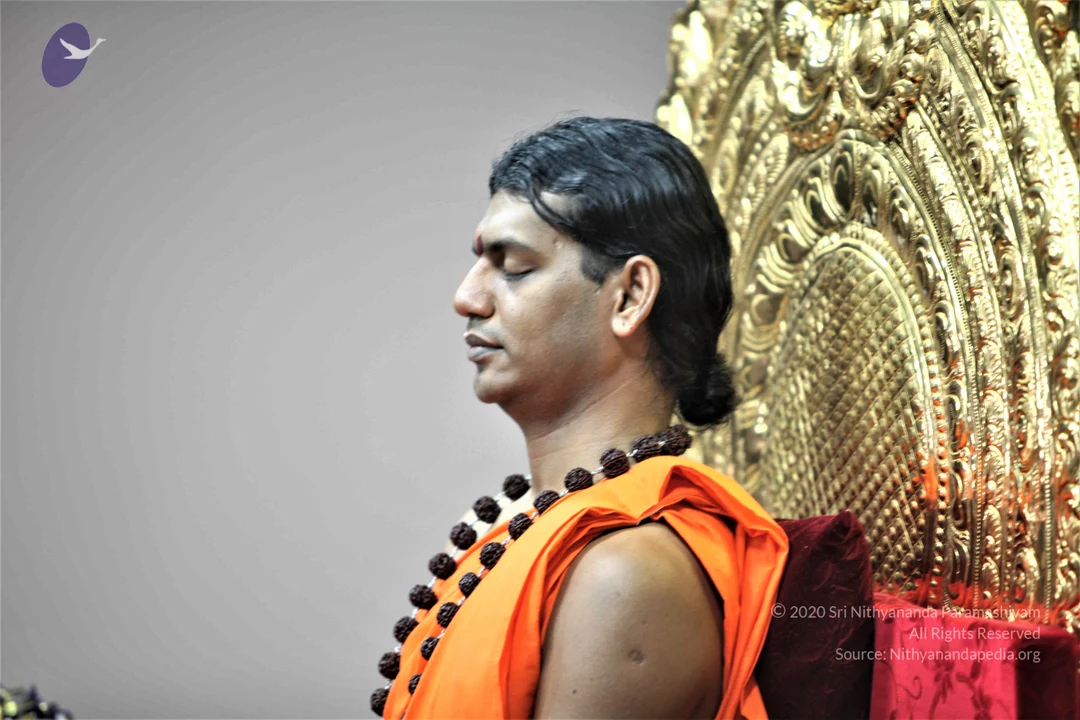
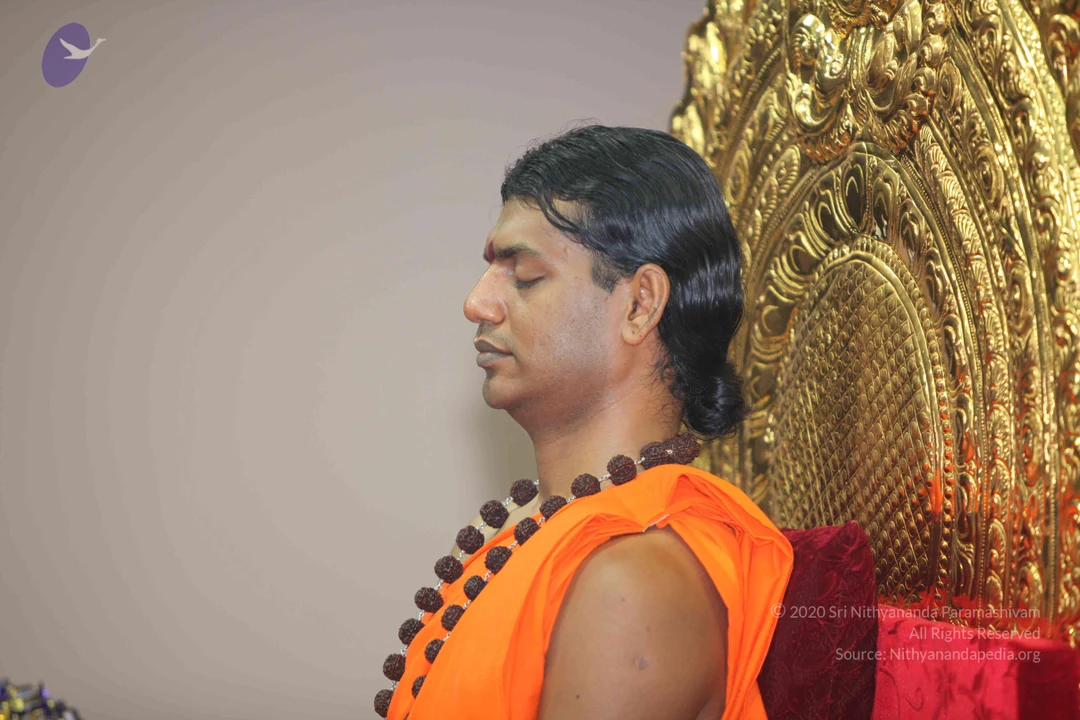
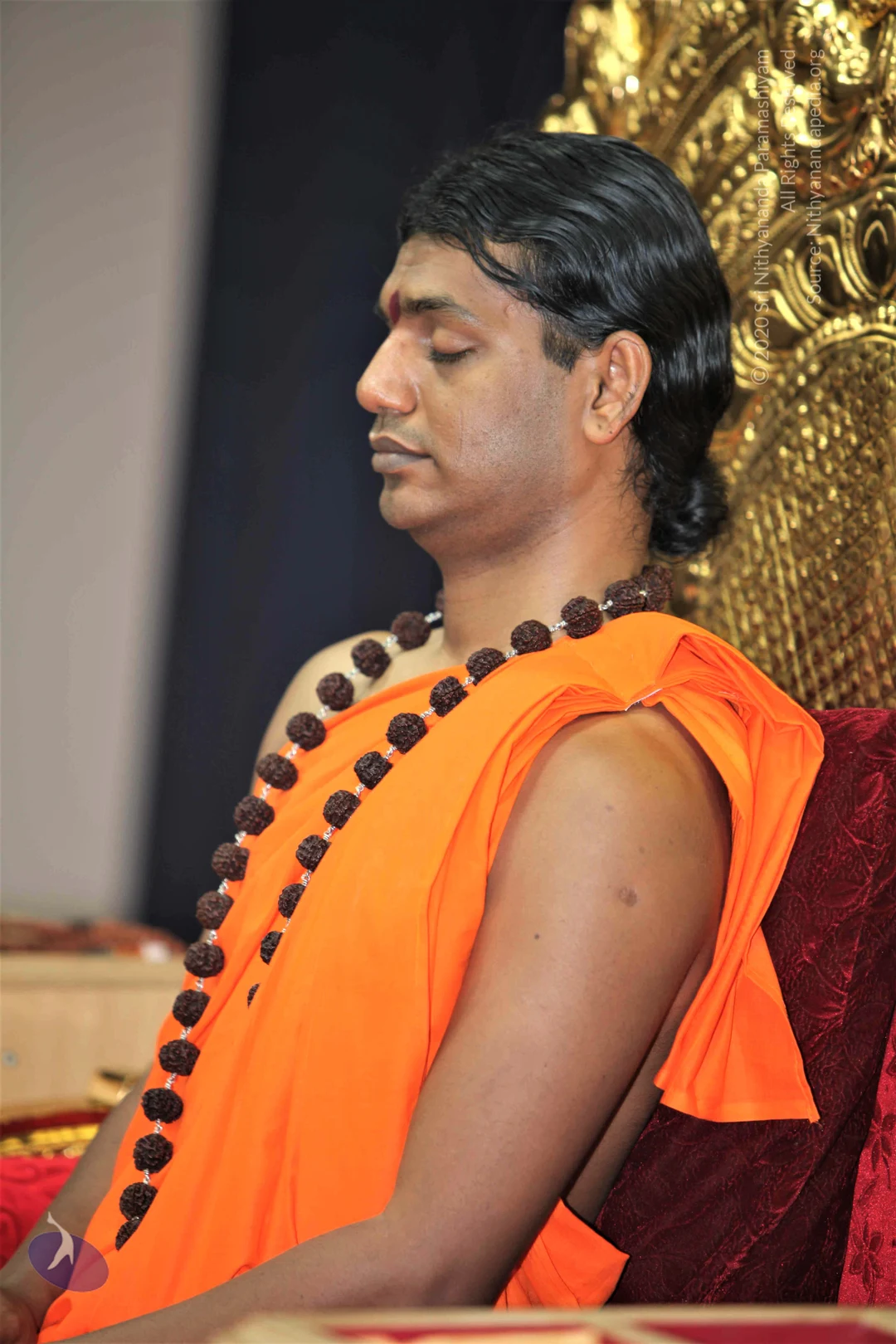
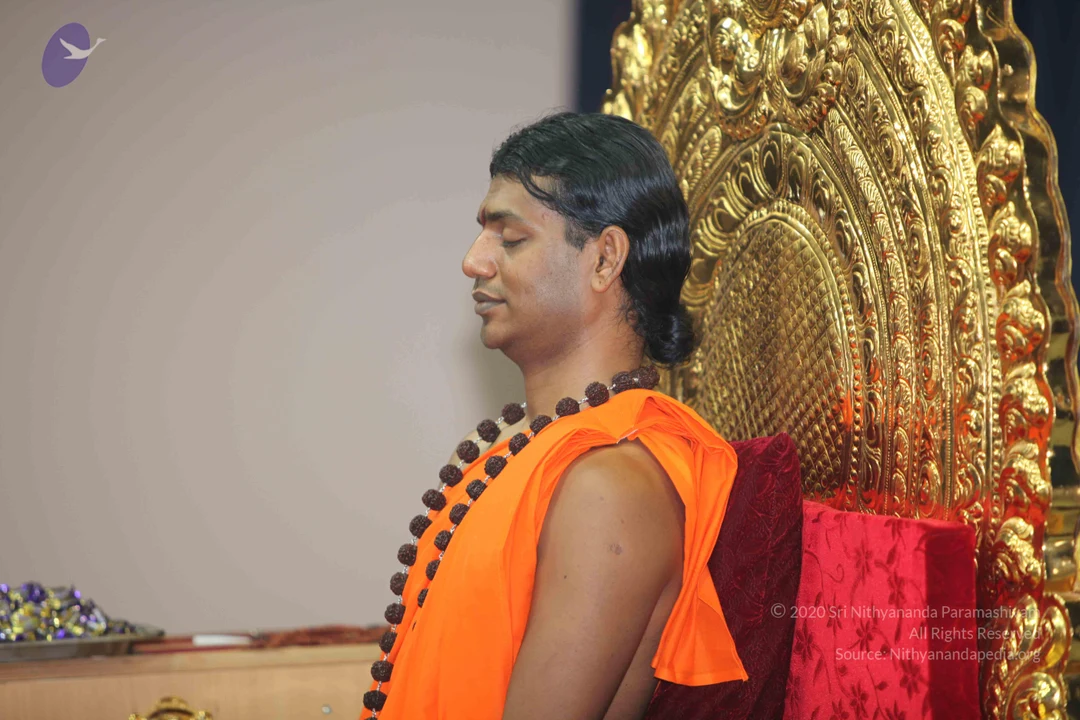
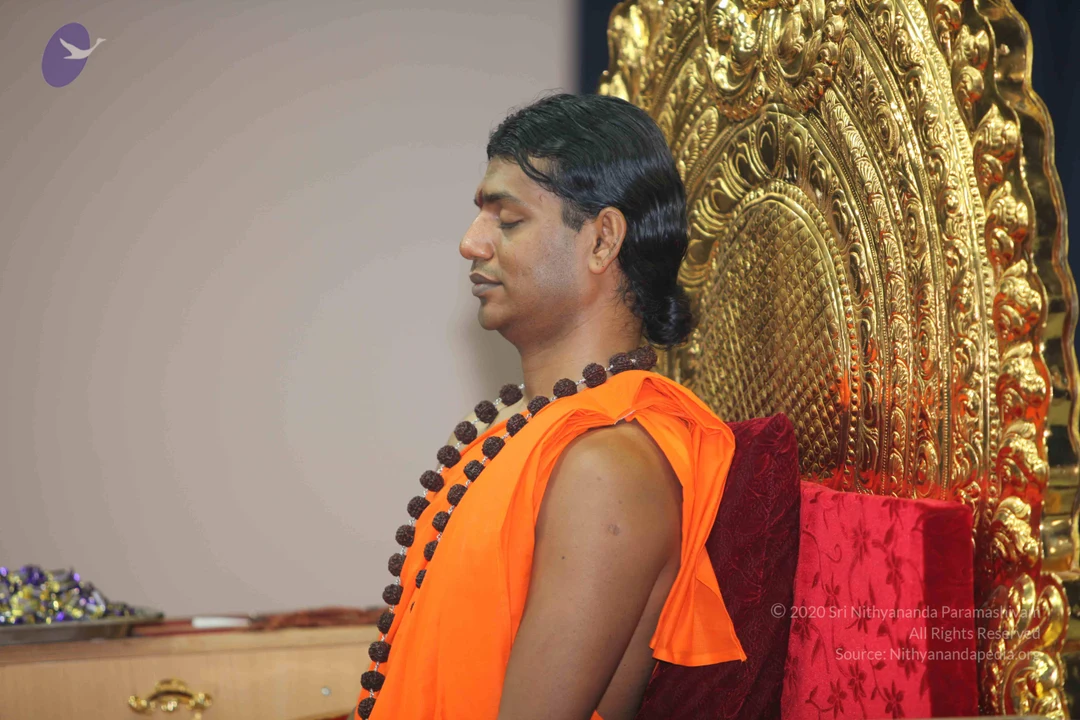
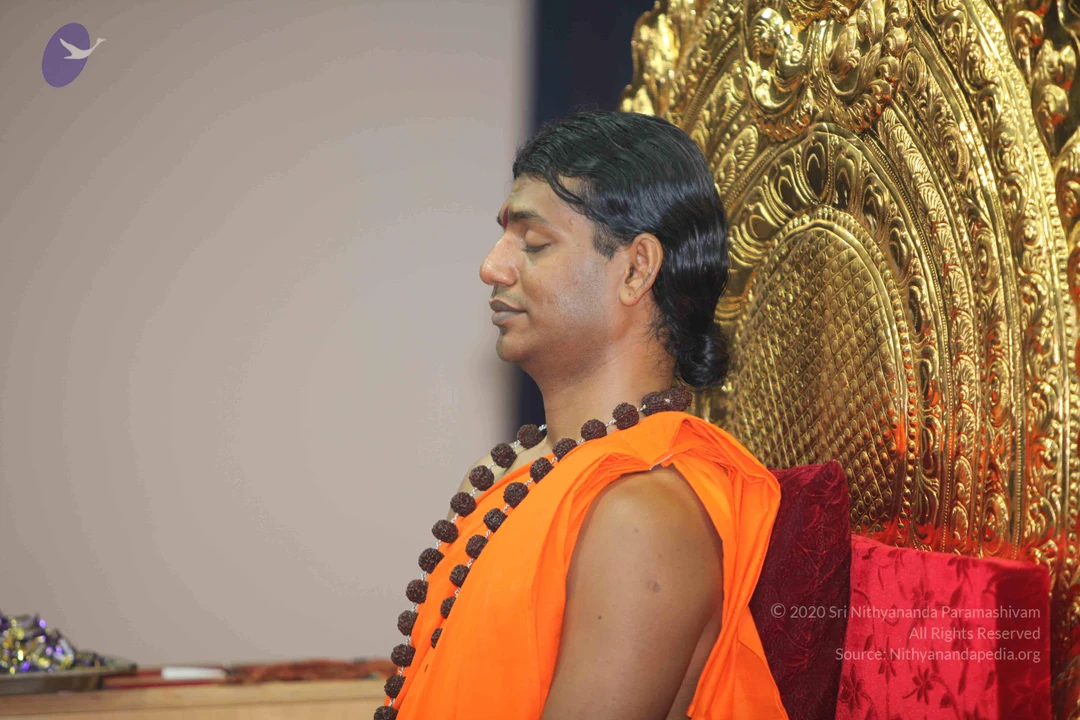
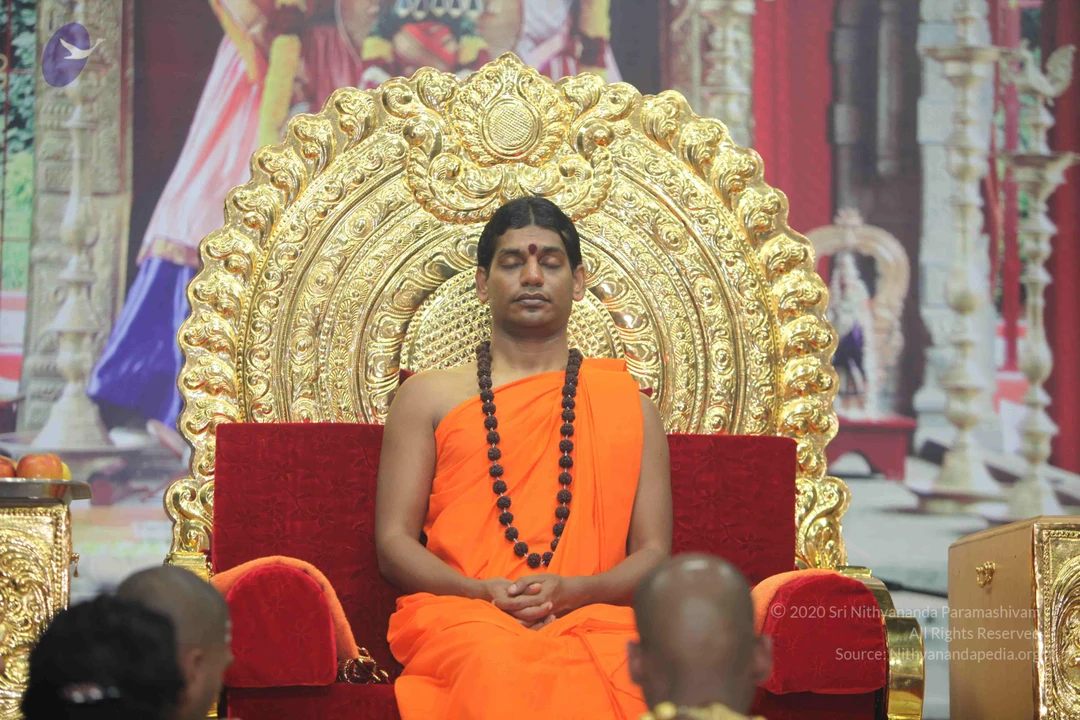
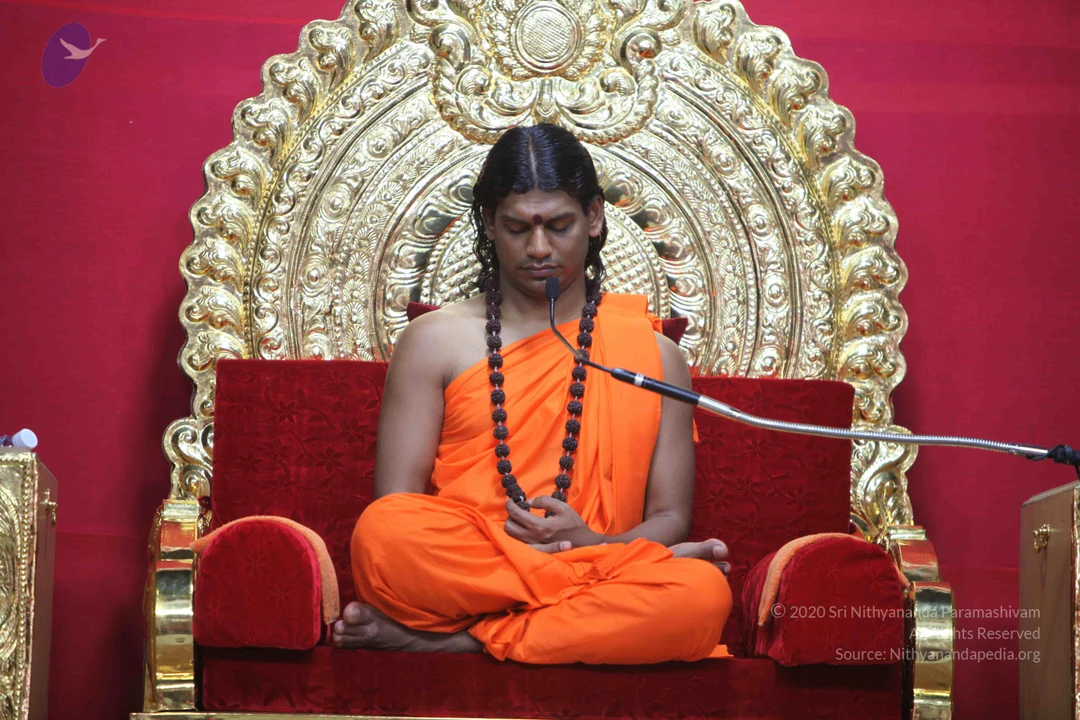
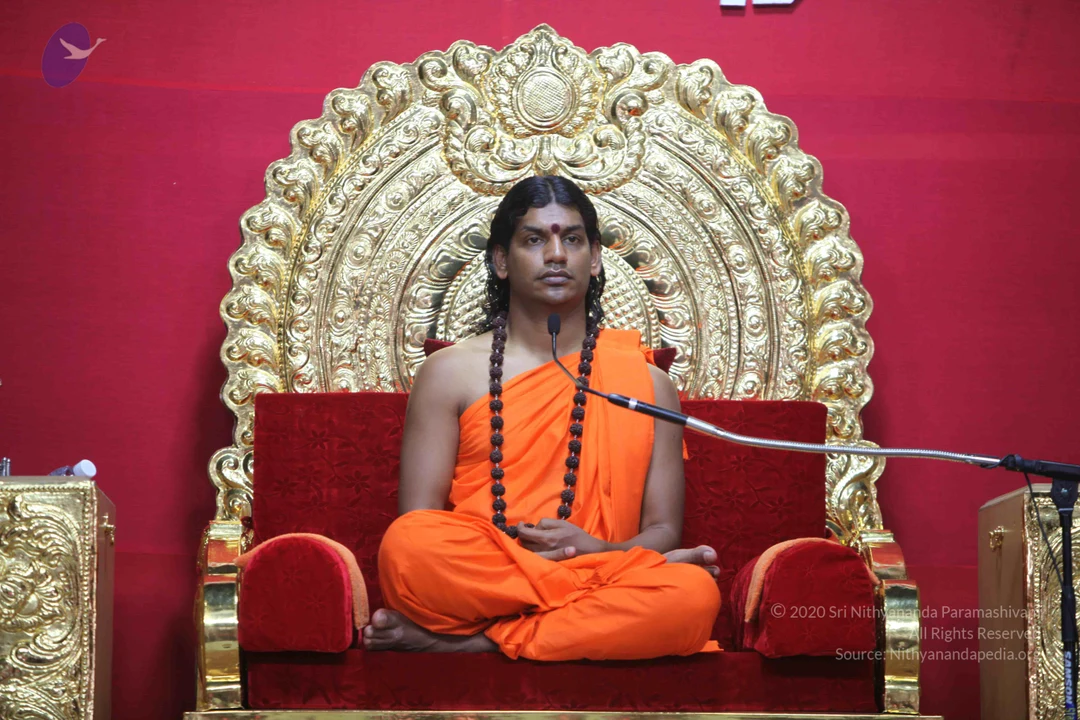
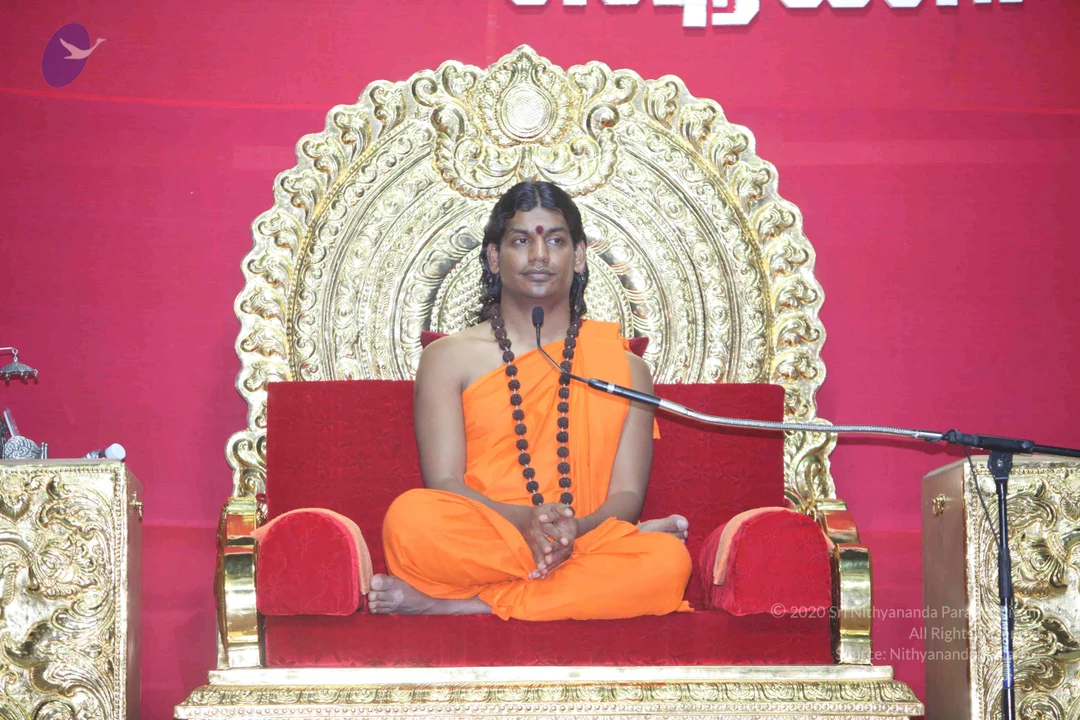
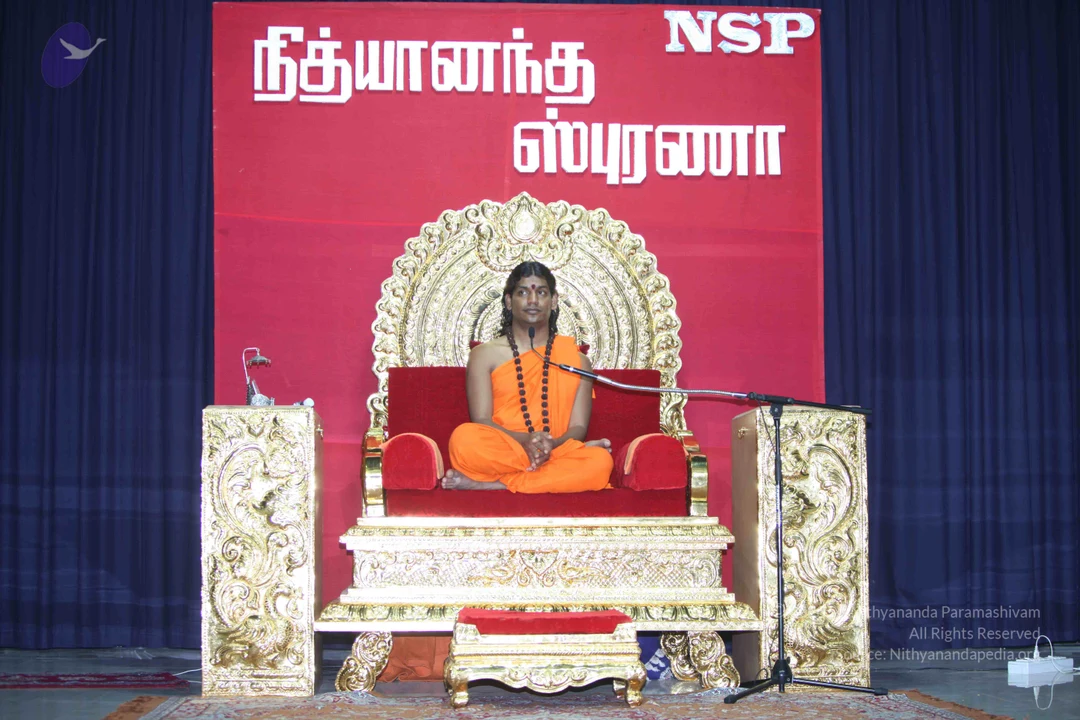
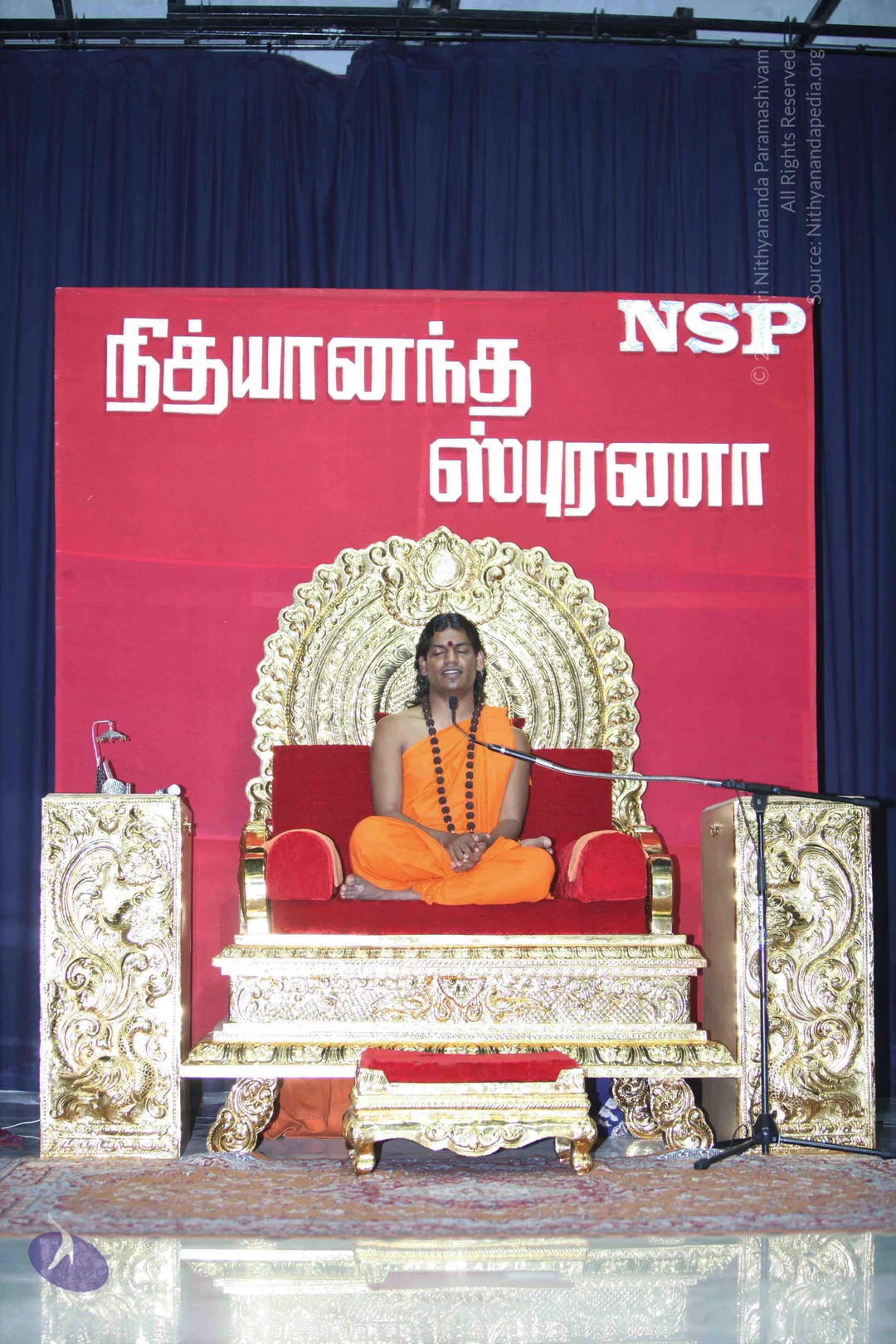
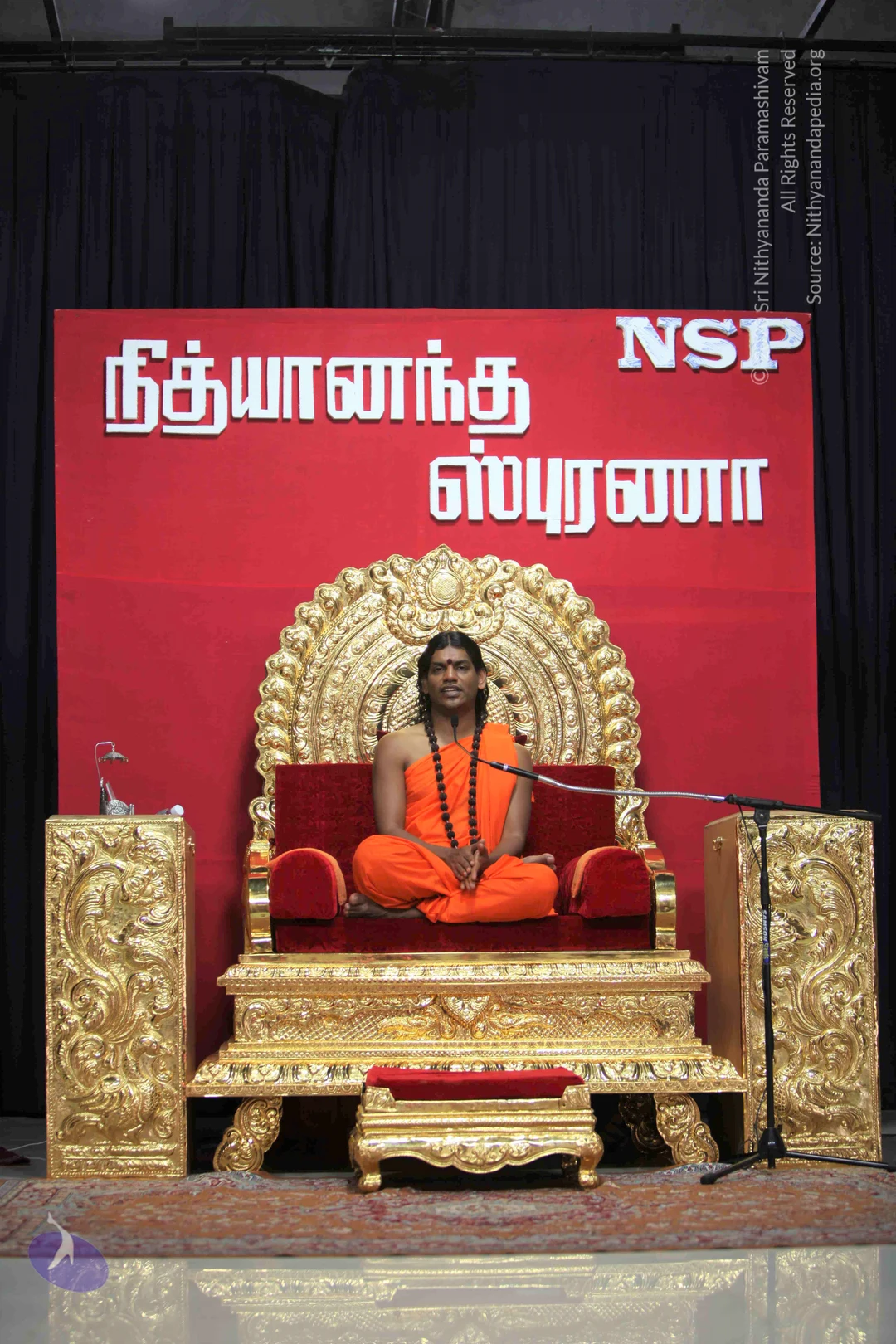
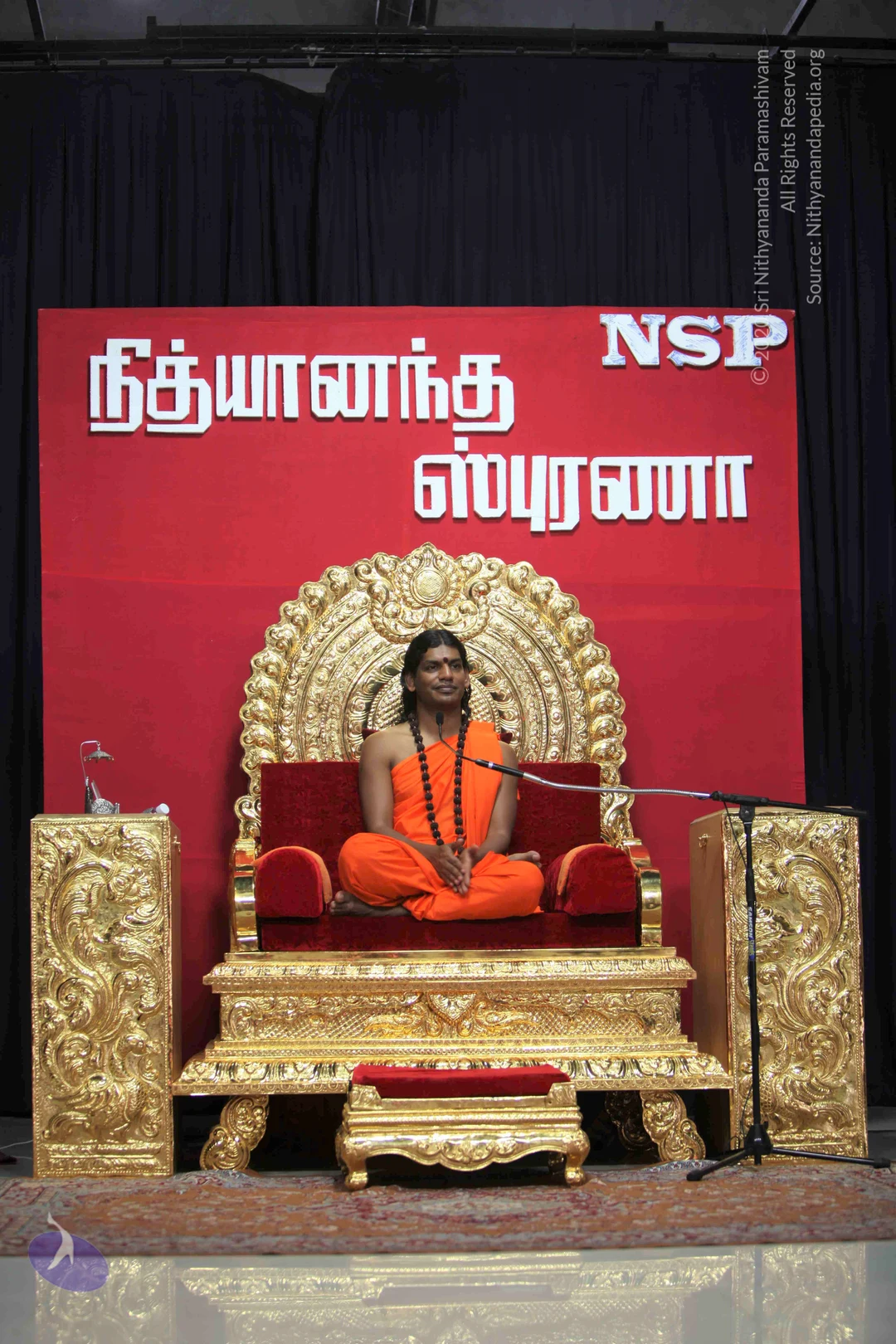
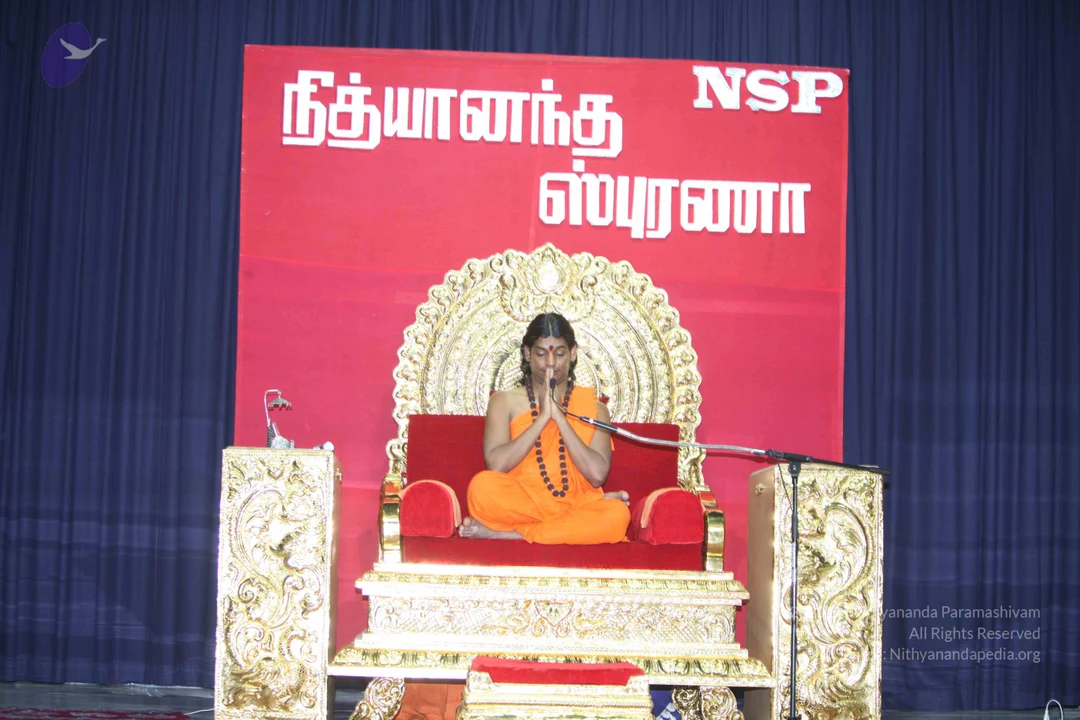
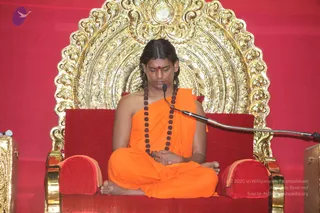
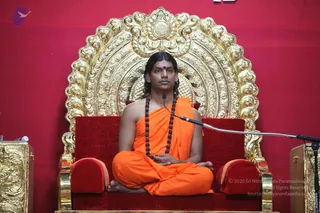
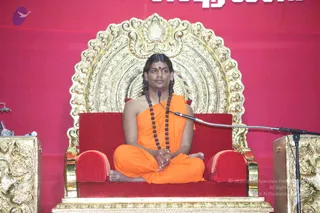
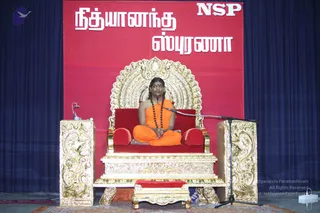
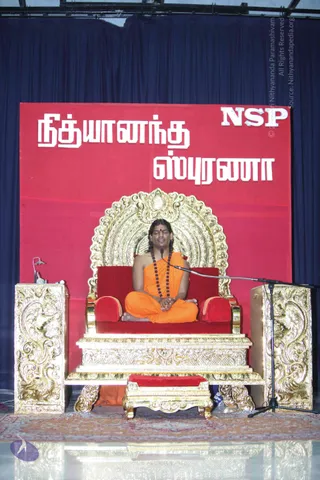
A seated man in saffron-orange robes sits cross-legged on an ornate gold-and-red throne with a carved golden backrest, eyes closed and hands resting in a meditation mudra. He wears a dark rudraksha mala draped over his chest and a red tilak on his forehead, with long dark hair swept back. A microphone on a gooseneck stand is positioned before him against a red backdrop.A seated man with closed eyes sits cross-legged in meditation on a red cushioned throne with an ornate gold-leaf backrest against a red backdrop. He wears an orange saffron wrap over his shoulders and bare chest, a red bindi on his forehead, and long dark rudraksha malas hanging to his lap. His hands rest together in his lap, and a microphone stand is angled toward him. Bare feet are visible on the red seat. The scene suggests a satsang discourse setting. Swamiji (probable) is seated on the throne, with long hair, saffron clothing and rudraksha malas as visible cues.A seated man in an orange-saffron dhoti and shawl sits cross-legged on a red velvet throne with an ornate gold-leaf arched backrest, against a bright red backdrop. He wears long dark hair swept back, a red bindi, and a dark rudraksha mala hanging to his waist, with his hands resting in his lap. A microphone on a stand is positioned before him, and gold-carved side pedestals frame the scene.A seated figure sits cross-legged on an ornate gold-and-red throne with carved gilded arches and red velvet cushions, against a magenta backdrop. He wears an orange saffron robe draped over one shoulder, a long rudraksha mala with dark beads, and a red bindi on his forehead, with long swept-back hair. His hands are clasped in his lap and a microphone on a stand is positioned before him. Gilded side tables flank the throne.A seated man in saffron-orange robes sits cross-legged on an ornate gold-and-red throne on a stage, with a rudraksha mala draped over his chest and hands folded in his lap. Behind him a red banner with white and gold Tamil lettering hangs before dark blue drapes. A gold footstool sits in front of the throne, a microphone stand stands to his right, and a rug covers the floor. Swamiji (probable) is seated on the throne, identified by his saffron robes, long swept-back hair, and rudraksha mala, in an event setting. The banner's printed lettering names the NSP programme.A photograph of a man seated cross-legged on an ornate gilded throne with red velvet cushions and armrests, in front of a red backdrop with navy drapes. He wears an orange saffron robe, a red bindi on his forehead and a long rudraksha mala, with hands folded in his lap and eyes closed while speaking. A microphone stand sits to his right and a gilded footstool rests before the throne on a patterned red carpet. The backdrop carries Tamil lettering and 'NSP' in white, and a gold-framed side panel is visible.
4--VIP-Photos

16 photosSource gallery
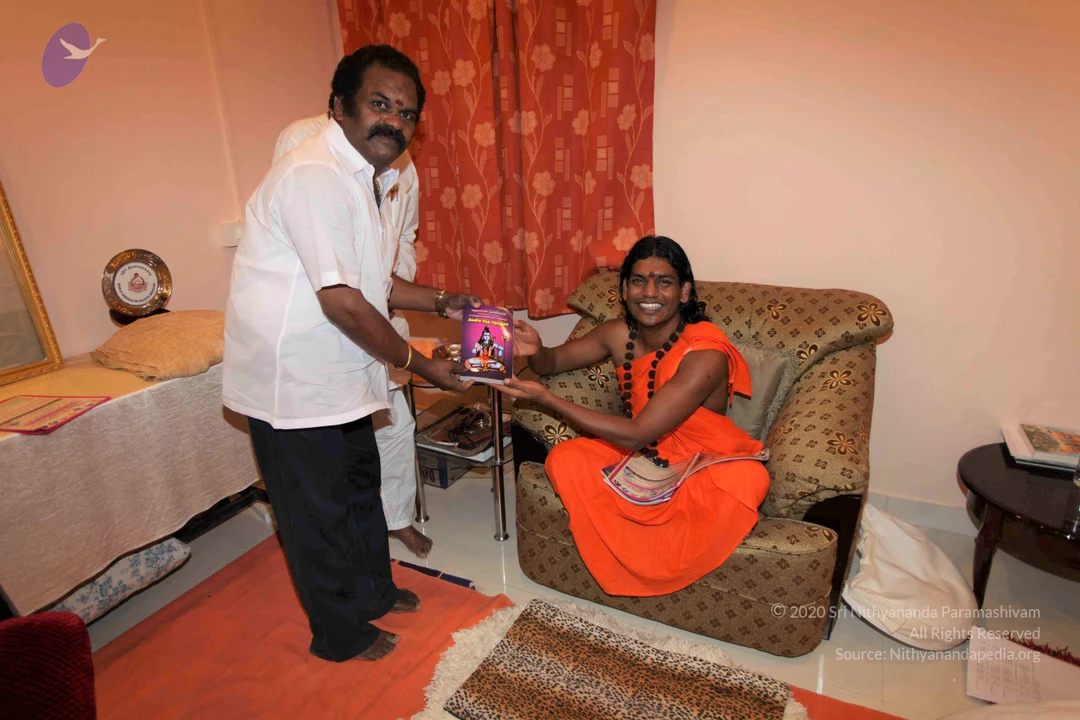
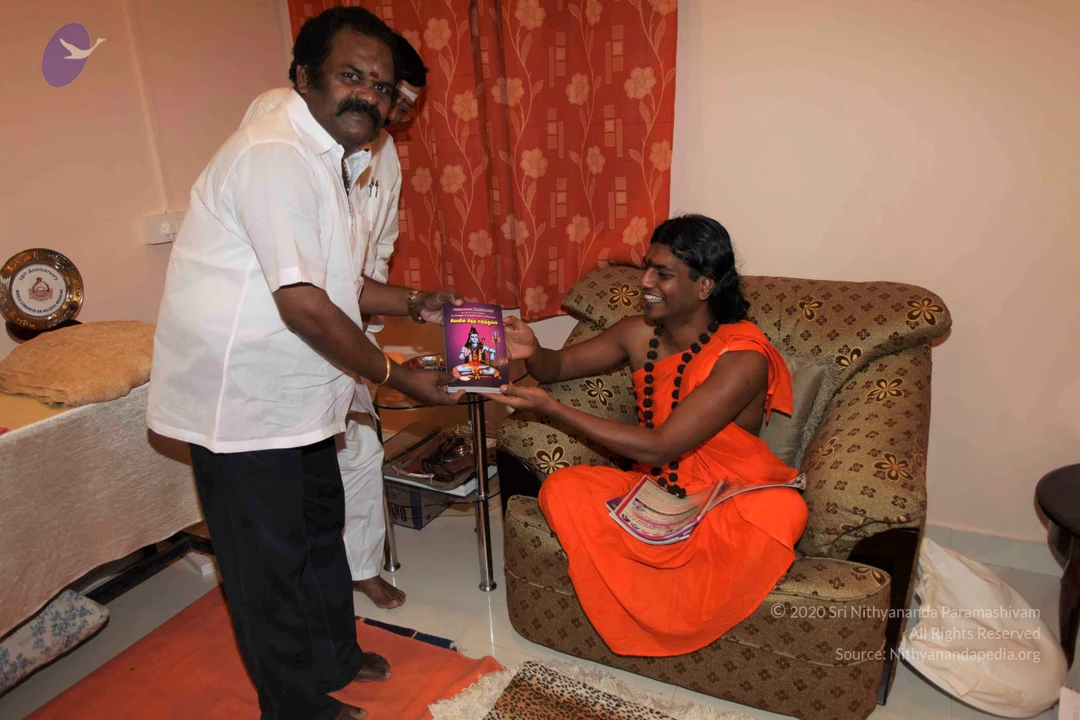
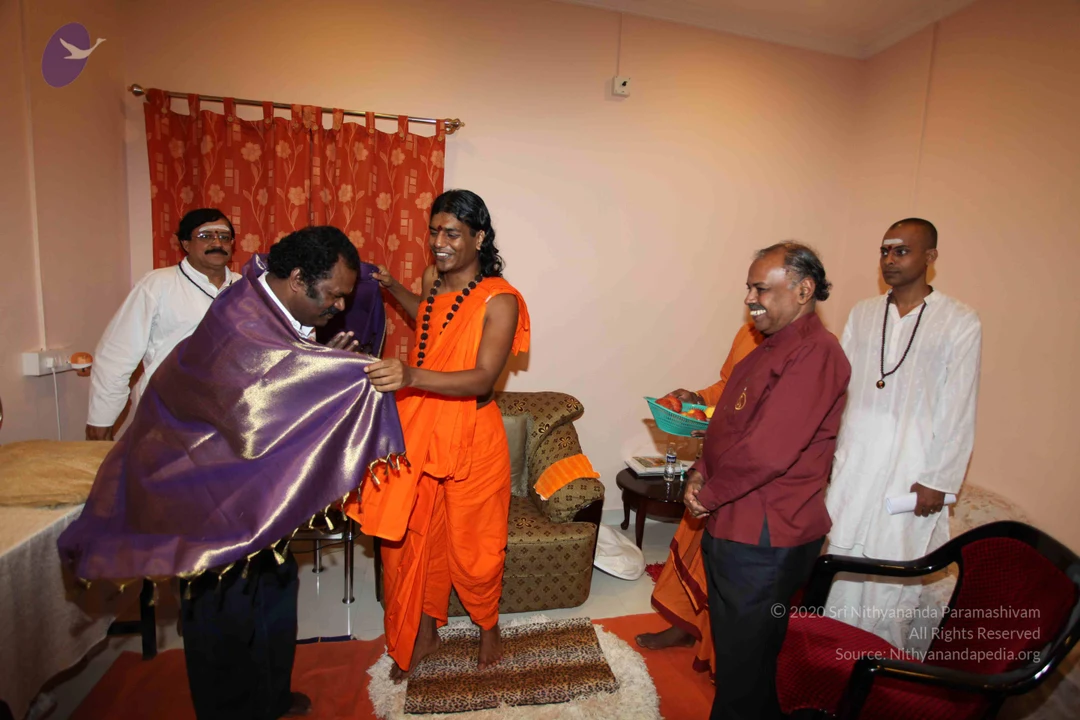
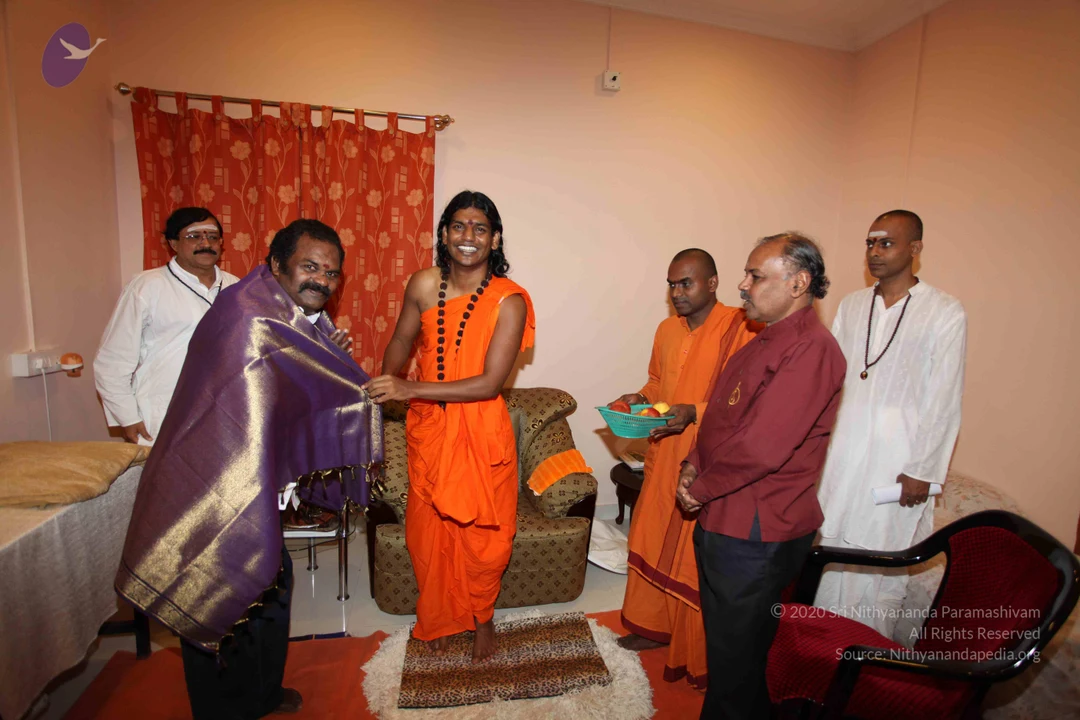
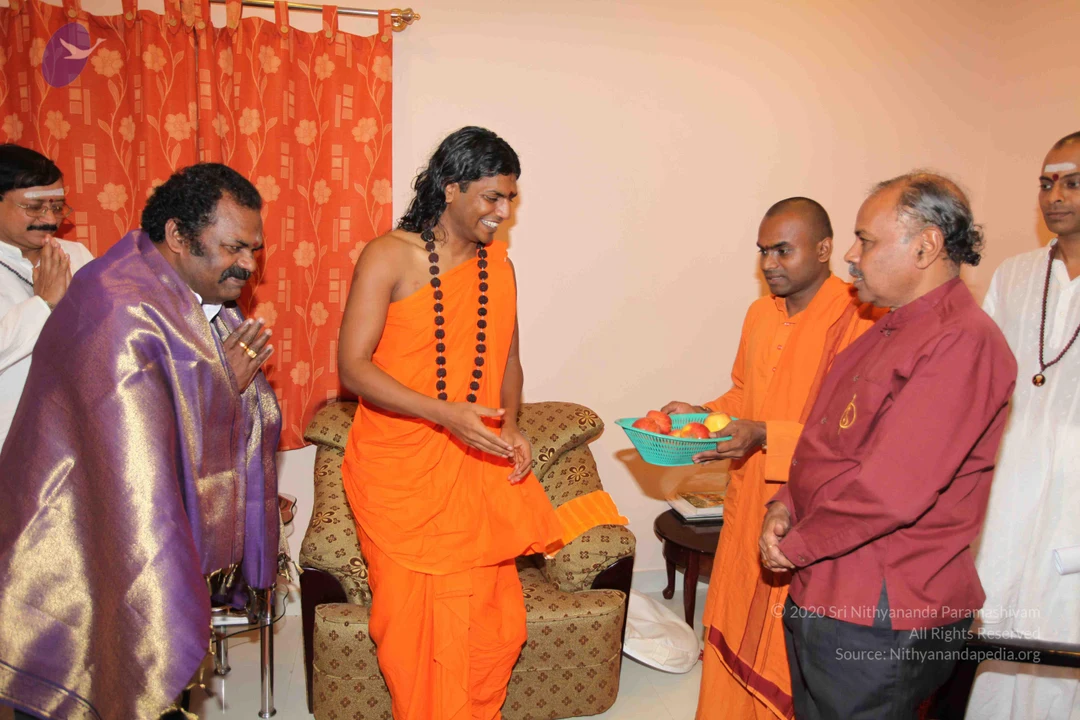
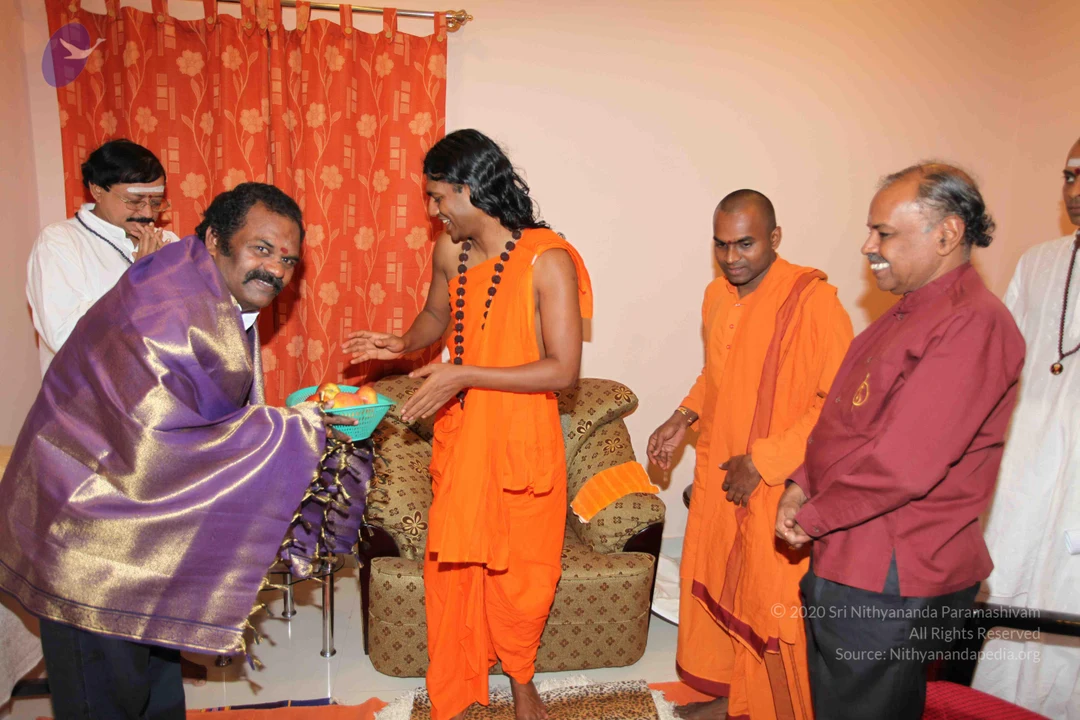
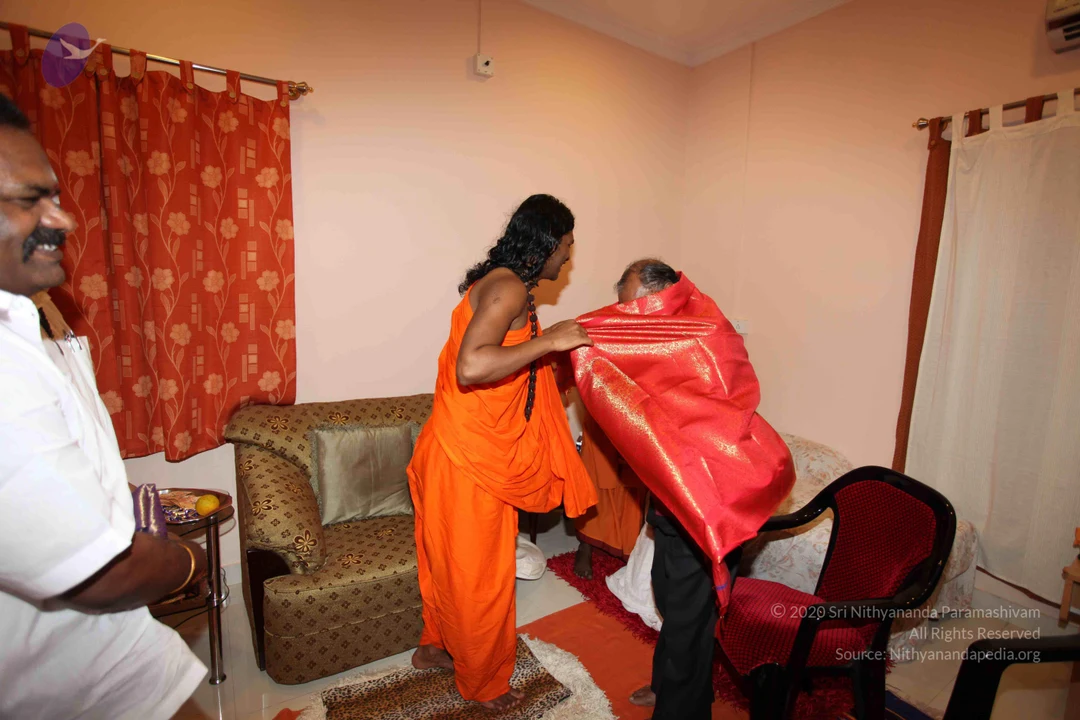
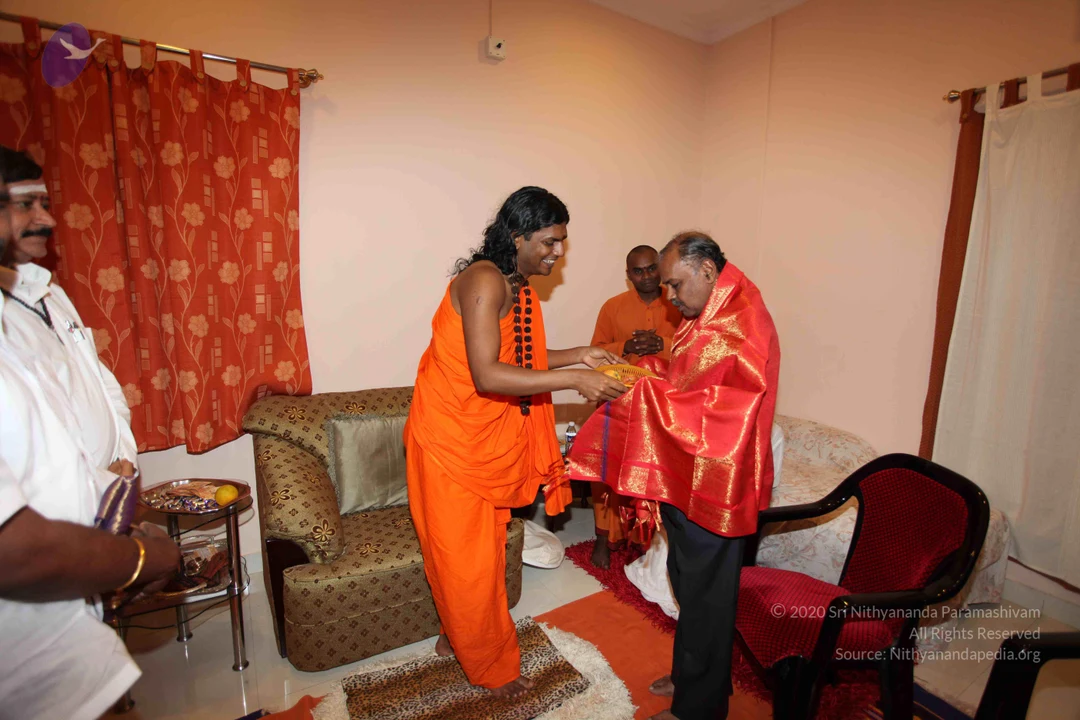
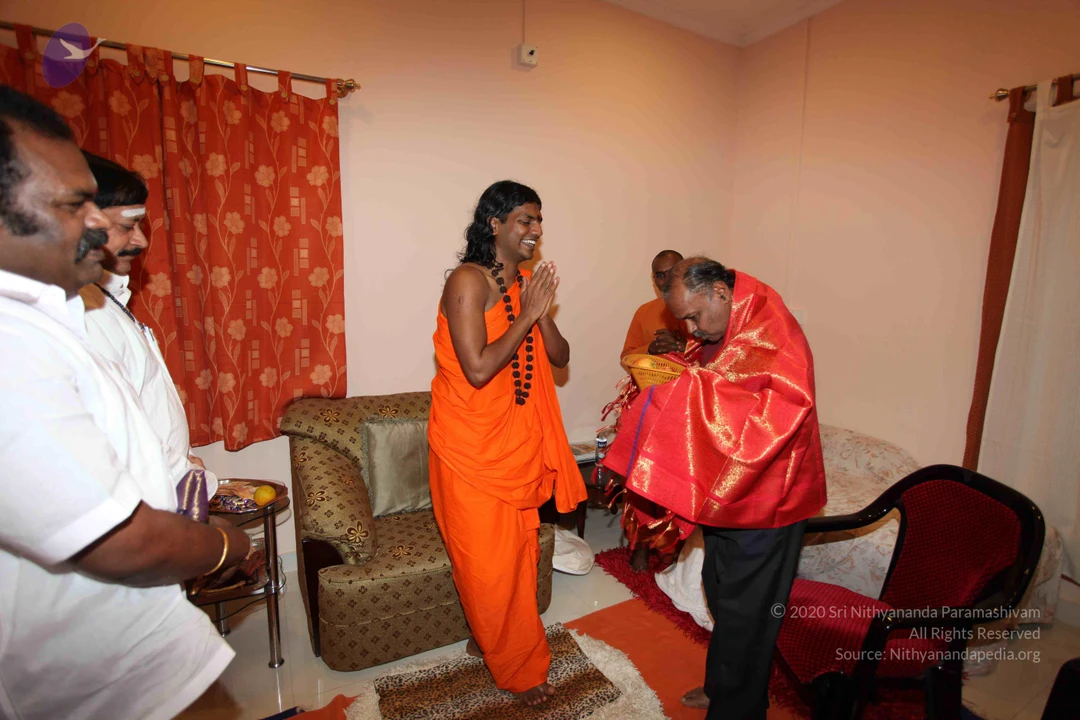
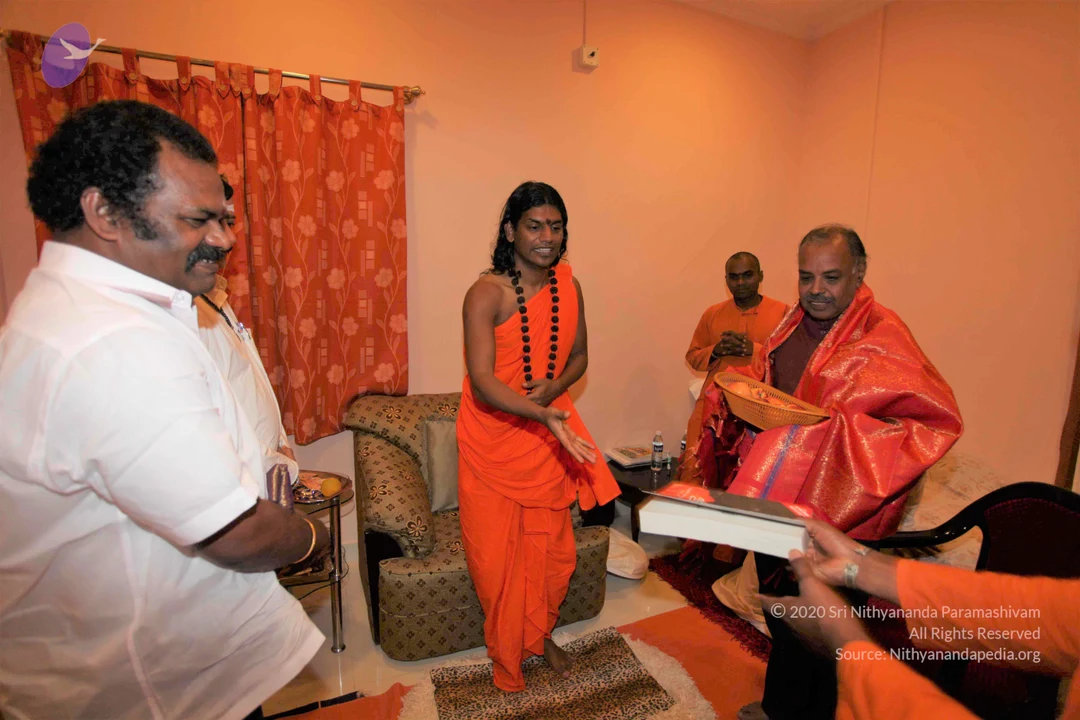
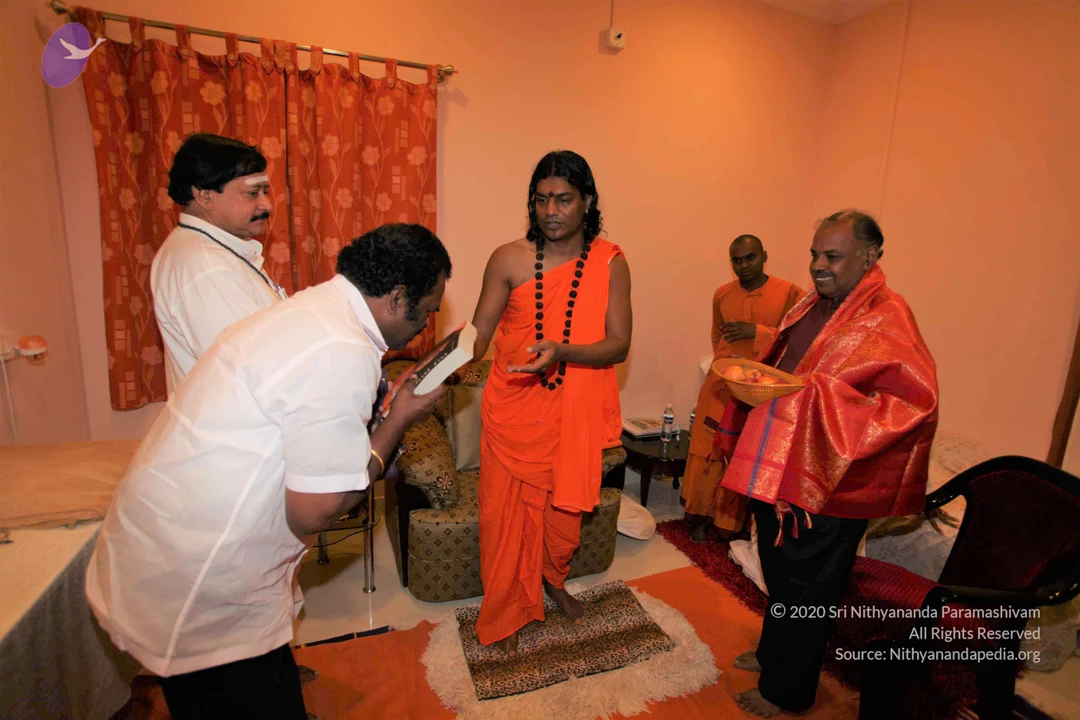
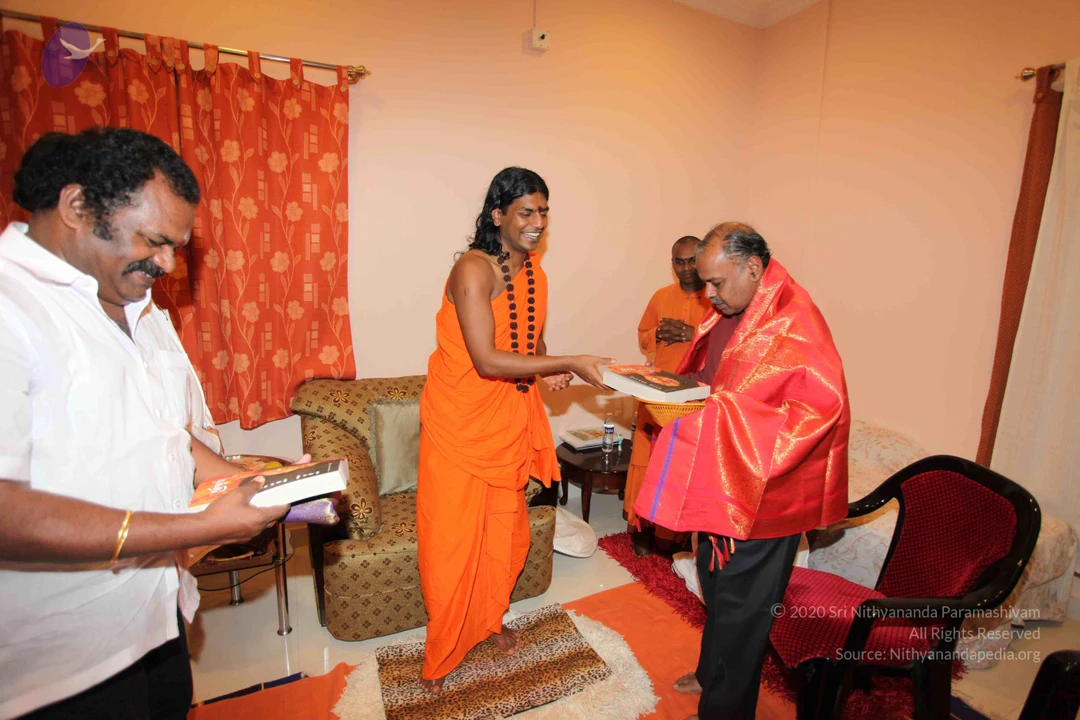
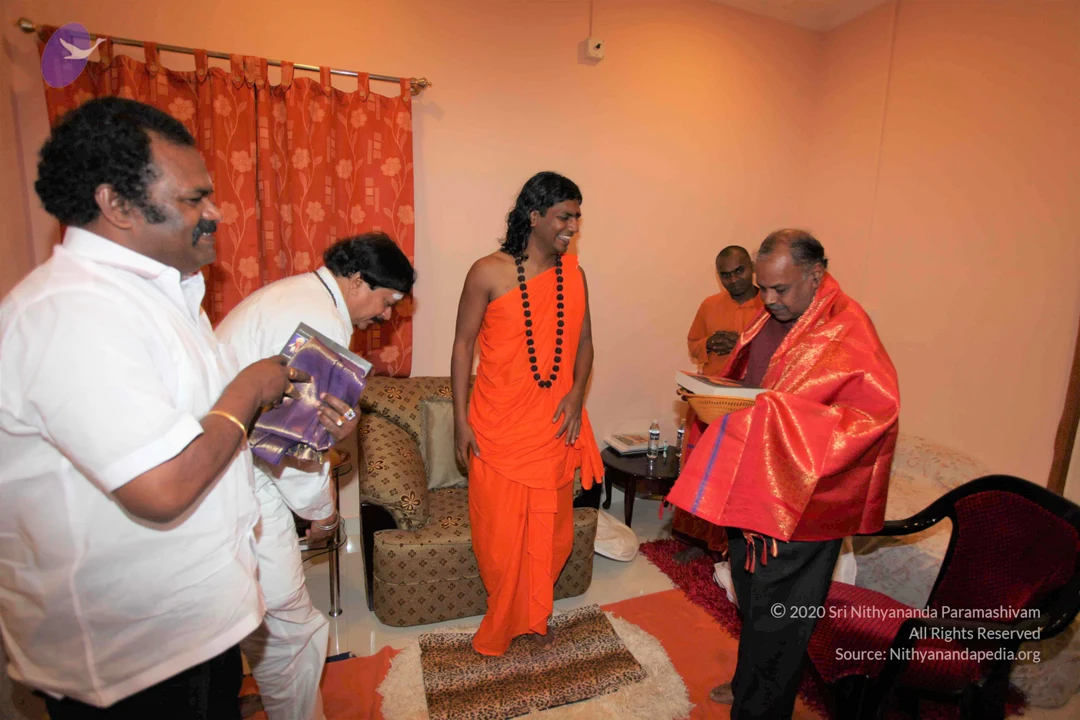
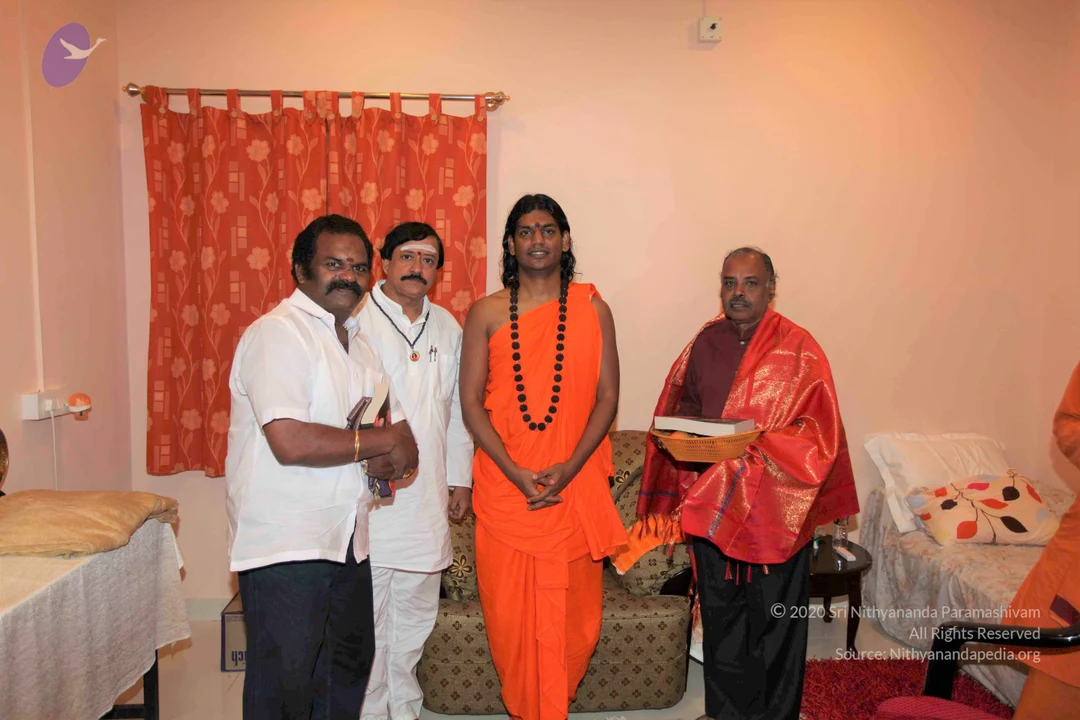
A photograph of an indoor room with peach walls and red floral curtains. A man in a white shirt and dark trousers stands on an orange rug, holding out a purple-covered book toward a seated figure. The seated figure wears an orange-saffron robe, a long rudraksha mala with dark beads, and has long dark hair swept back; they sit on a brown floral-upholstered armchair and smile. A second man in white stands partly behind the first. A small gold-rimmed mirror, a decorative plate and a leopard-print rug are visible. Swamiji (probable): the seated figure in saffron robe, long swept-back hair and rudraksha mala, receiving the book as a presentation.A small room with peach walls and a red curtain patterned with pale flowers. On the right, a seated figure in a saffron-orange robe and a long beaded rudraksha mala sits on a brown floral-upholstered armchair, long dark hair swept back, smiling. A standing man in a white shirt and dark trousers, with a moustache and a red tilak mark on his forehead, holds out a purple-covered book toward the seated figure, who reaches to take it. Behind him another man in white stands partly hidden. A leopard-print rug lies on an orange mat, with a decorative brass-rimmed plate on a wall shelf and a bed with a white cover on the left.A photograph of an indoor room with a patterned brown armchair and a red curtain with floral print. A man in a white shirt and black trousers stands at left, holding out a purple-covered book with a deity illustration toward a seated figure. The seated figure wears an orange-saffron garment bare-shouldered, with a dark rudraksha mala necklace, long dark hair swept back, and holds a folded magazine in the lap. Behind the standing man, another person in white clothes is partially visible. A small round framed plaque hangs on the wall at left and a tiled floor with an orange rug is visible.A small room with peach walls, red floral curtains and a patterned sofa. A man in a dark shirt and black trousers drapes a purple and gold shawl over the shoulders of a figure in saffron-orange robes with a rudraksha mala and a swept-back long hairstyle, who stands on a leopard-print mat smiling. Behind them, a man in white with glasses and a man in a maroon shirt watch, and a bearded man in white with a rudraksha mala and a tilak holds a rolled paper. A coffee table holds a fruit basket and a bottle of water, and a red chair sits in the foreground. The orange-robed figure has long swept-back hair, a rudraksha mala and saffron clothing, giving a person appearance, though the image is uncertain.A photograph of an indoor room with peach walls and red floral curtains. A long-haired man in a saffron-orange dhoti and shawl, wearing a dark rudraksha mala, stands barefoot on a rug in the centre, smiling. A man in a purple and gold-bordered shawl drapes it around him. A man in orange robes holds a turquoise basket of fruit. A man in a maroon shirt stands beside them, and a man in white with a white mala and tilak stands at right holding a paper. A man in white shirt stands at left. Beige sofa and red chair are visible. Six people are physically present.Indoor scene in a small room with an orange floral curtain and pale walls. A long-haired man in saffron-orange robes with a dark rudraksha mala stands beside a brown patterned armchair, smiling and gesturing with open hands. Swamiji (probable): the standing figure shows long swept-back hair, saffron robes and rudraksha beads. To the left, an older man in a purple and gold silk shawl presses his palms together in greeting. Center right, a shaved-headed man in orange robes holds a turquoise basket of fruit, and beside him an older man in a maroon shirt with folded hands watches. At far right, a man in white with a vertical tilak and rudraksha mala stands by. Another man in white with folded hands is at the far left edge.