Skip to content
Thursday

21 October 2010

Genetic Science Behind Initiation: Nithyananda Morning Message (21 Oct 2010)

Dated photos
460
Source pages
1
Media
2
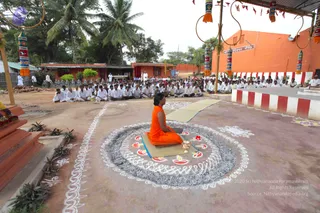
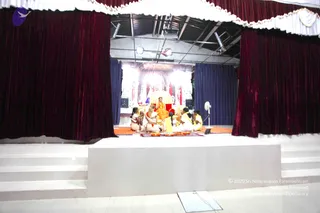
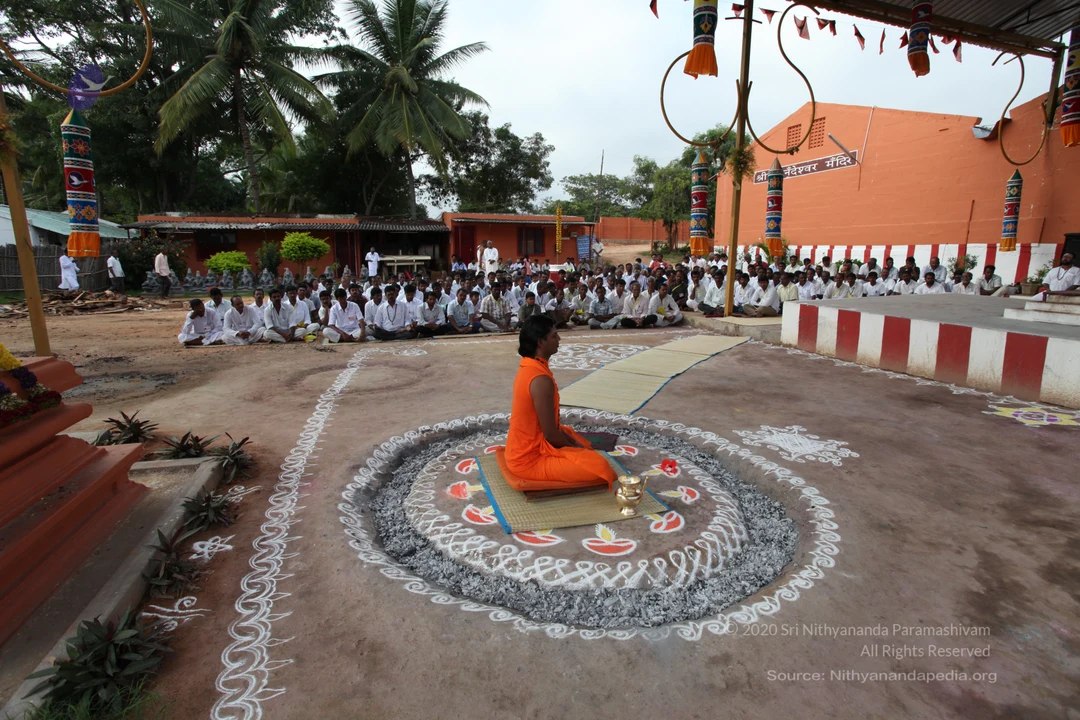
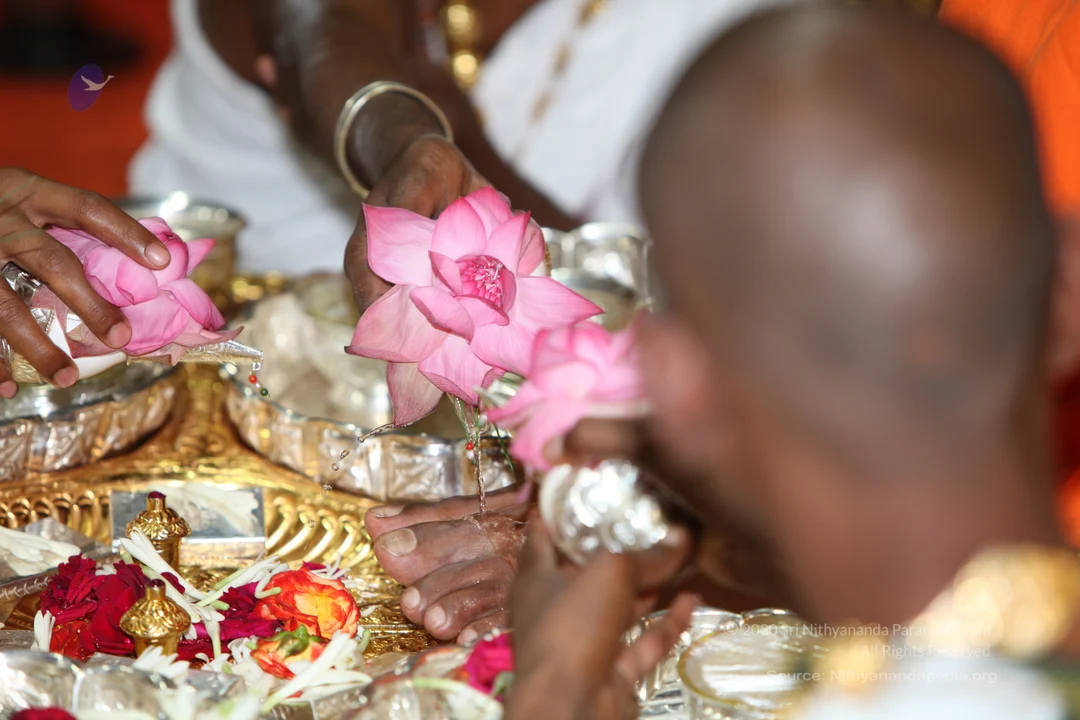
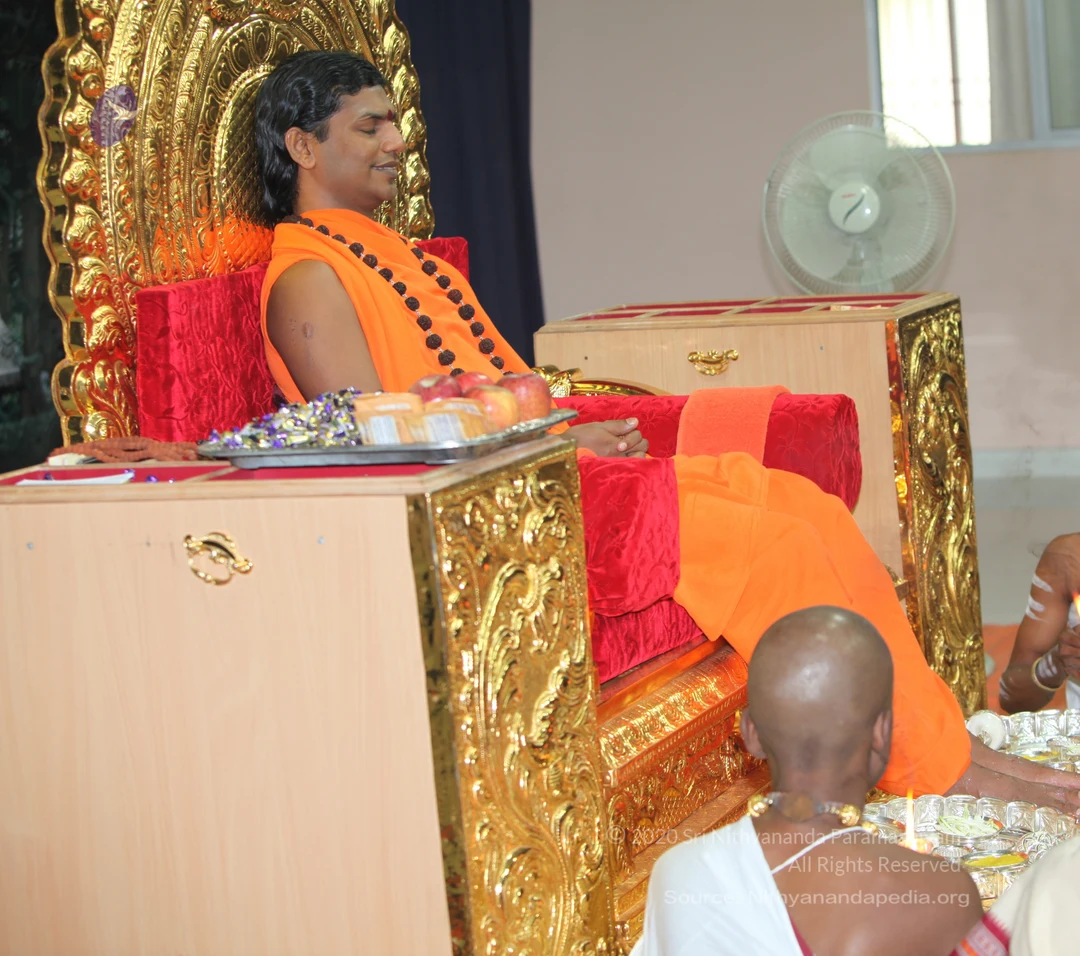
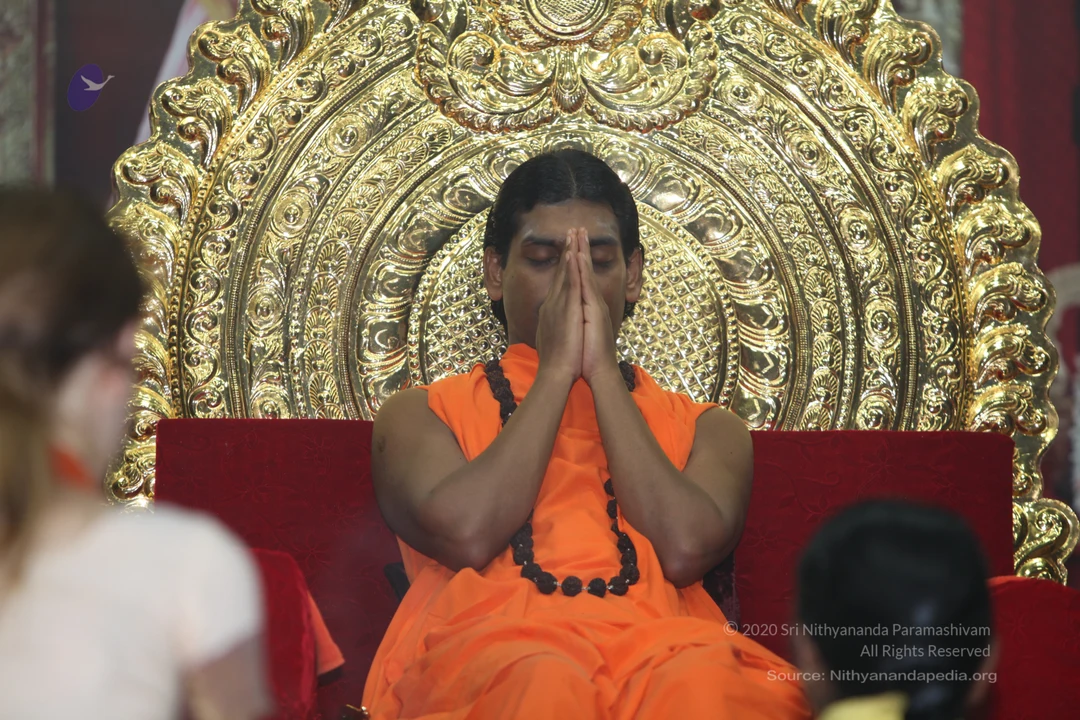
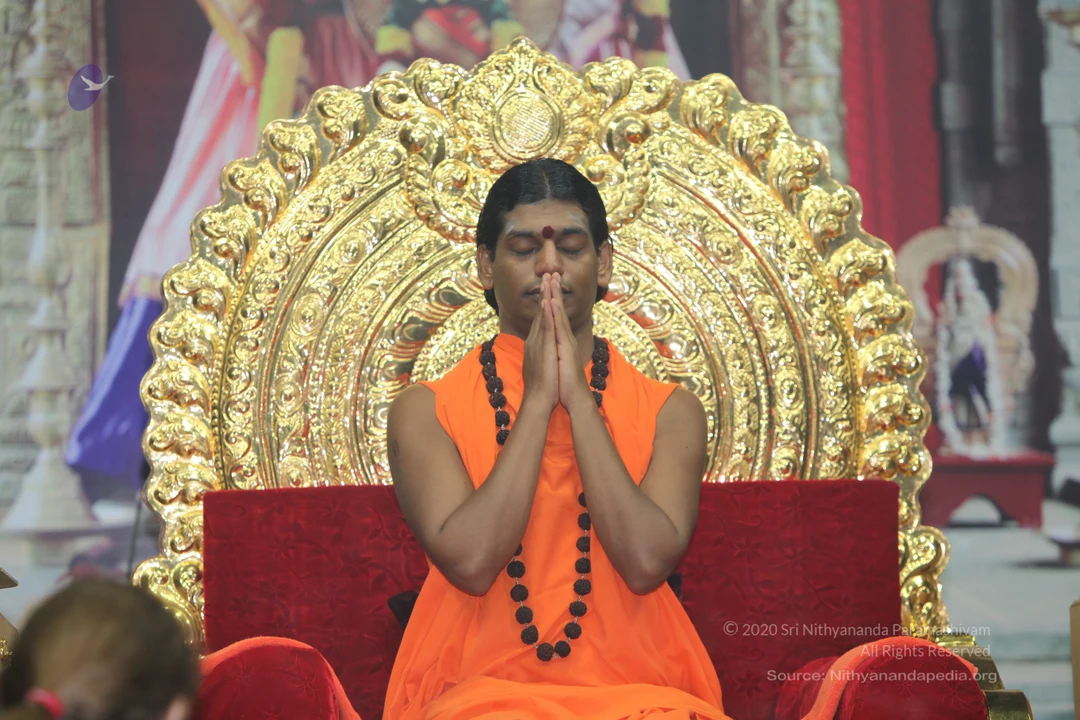
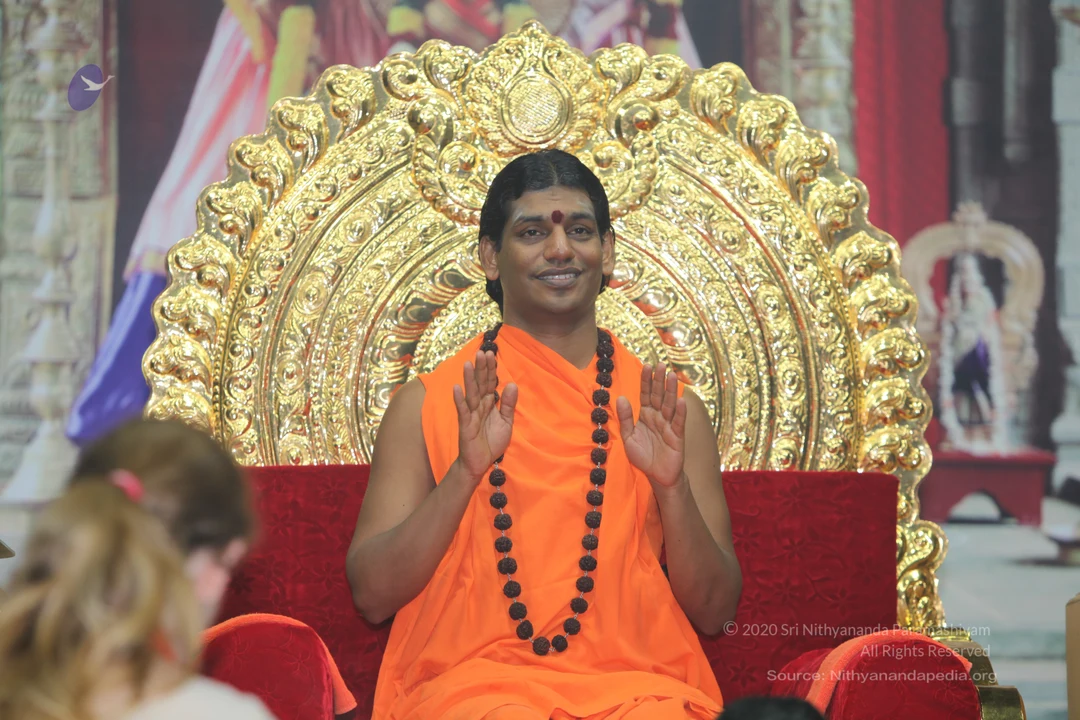
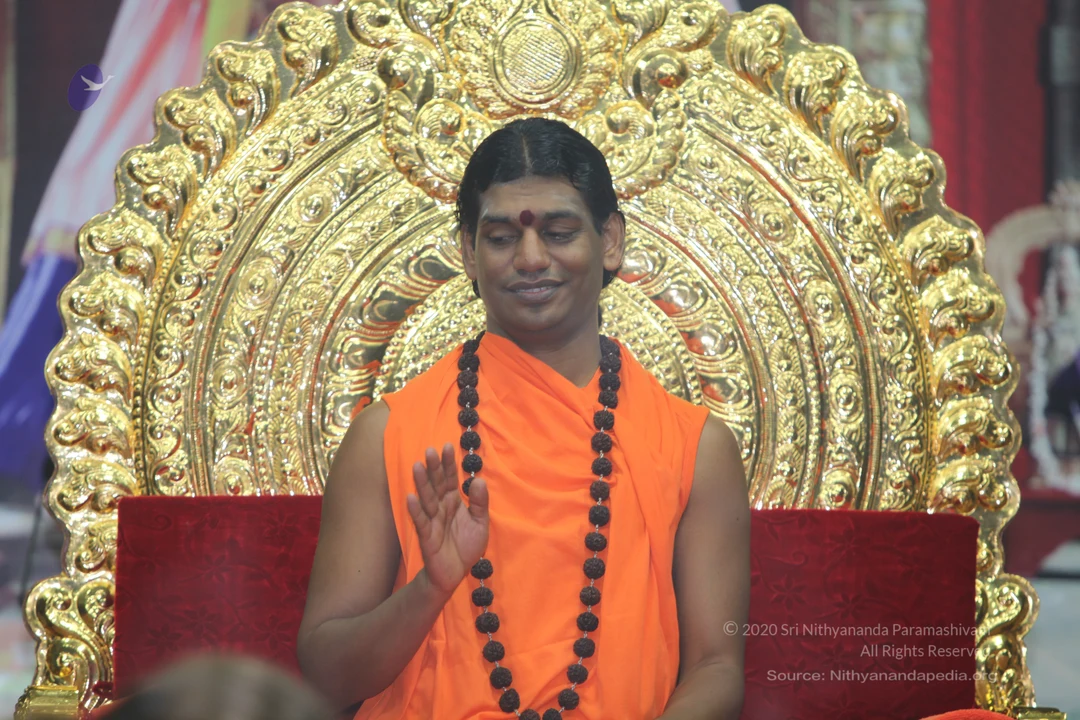
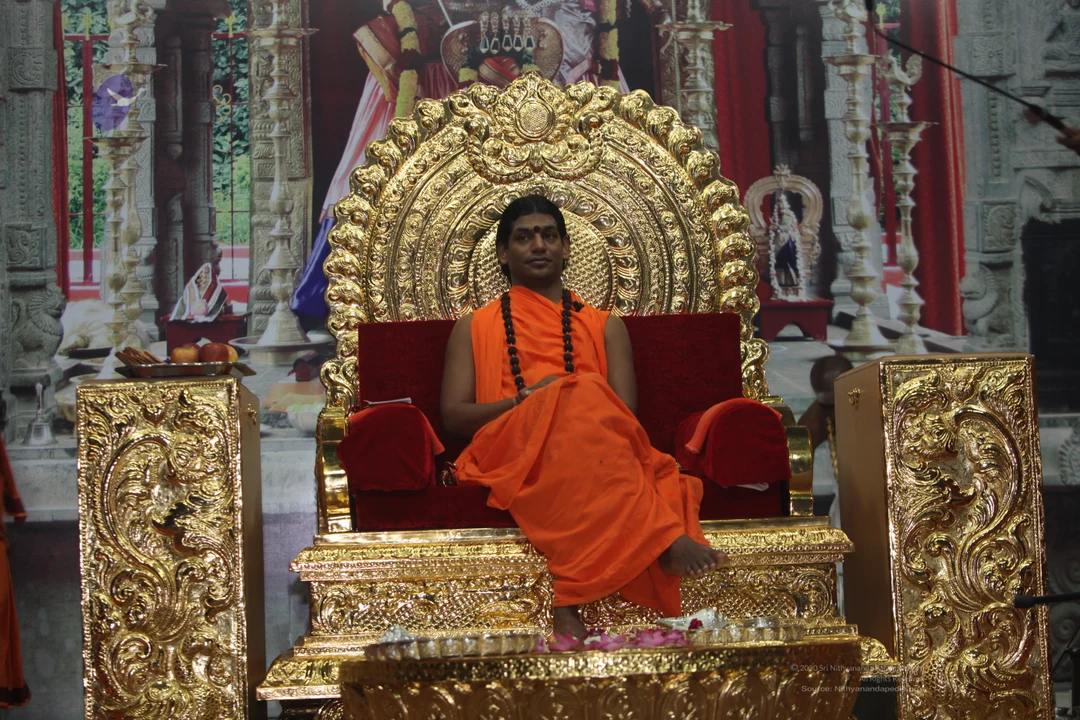
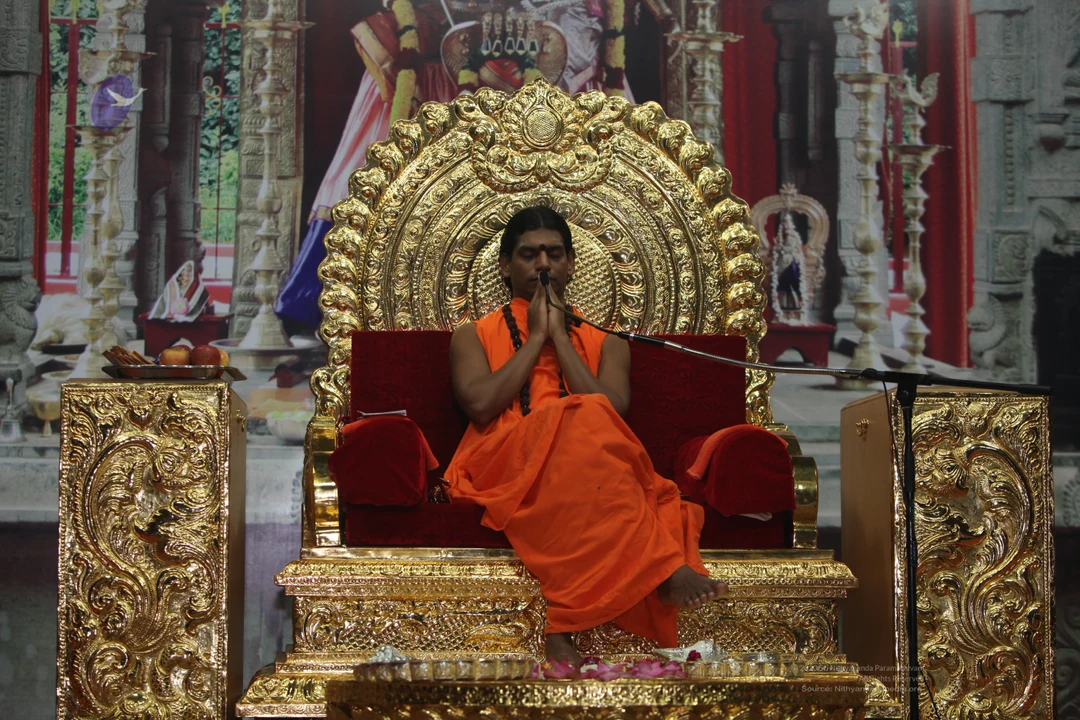
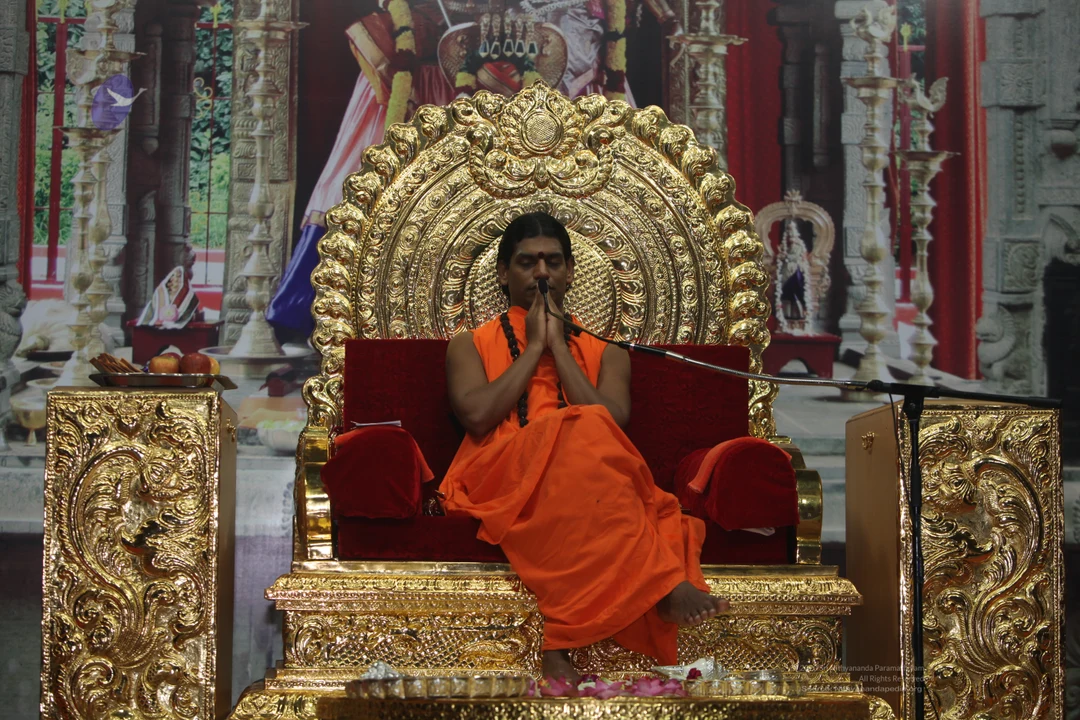
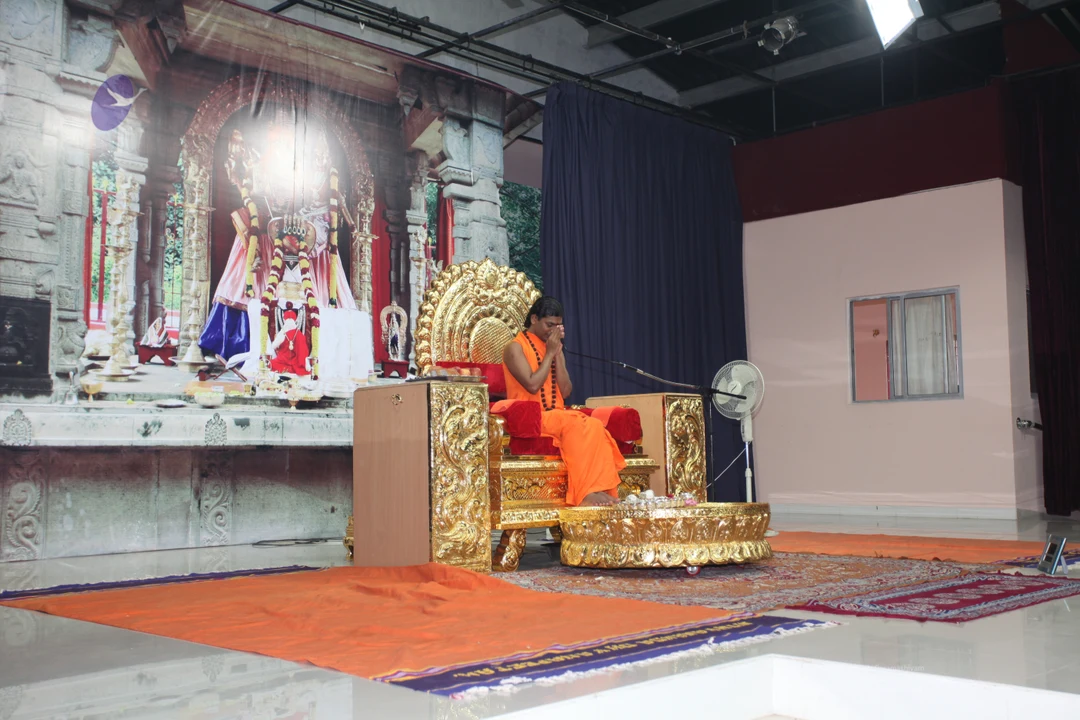
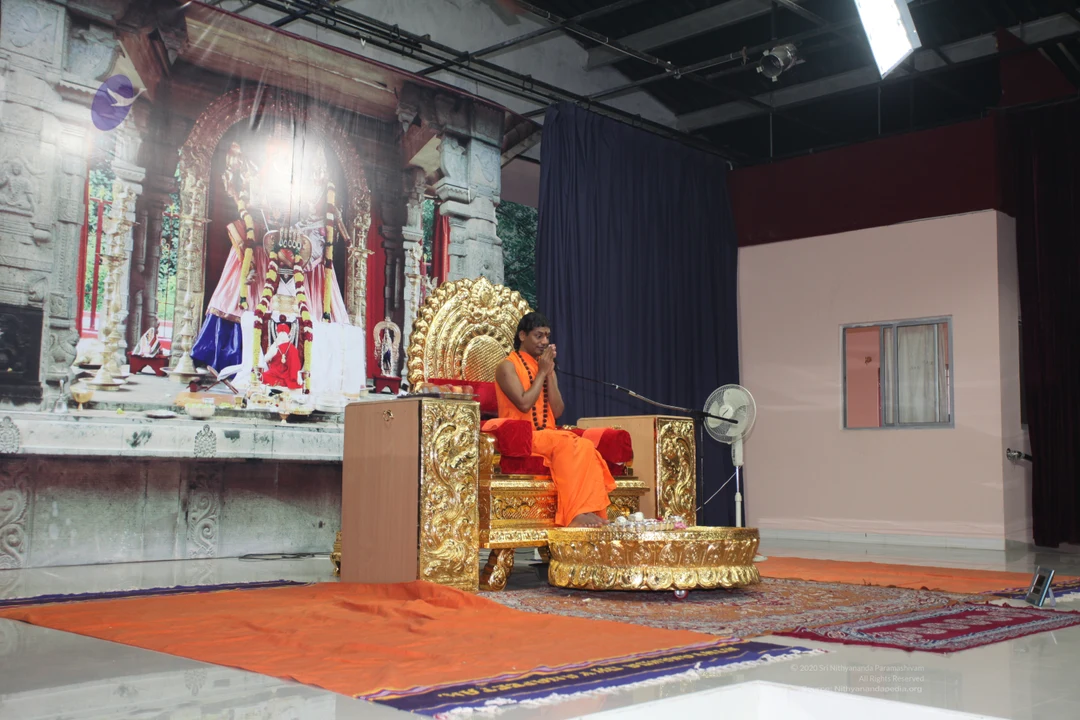
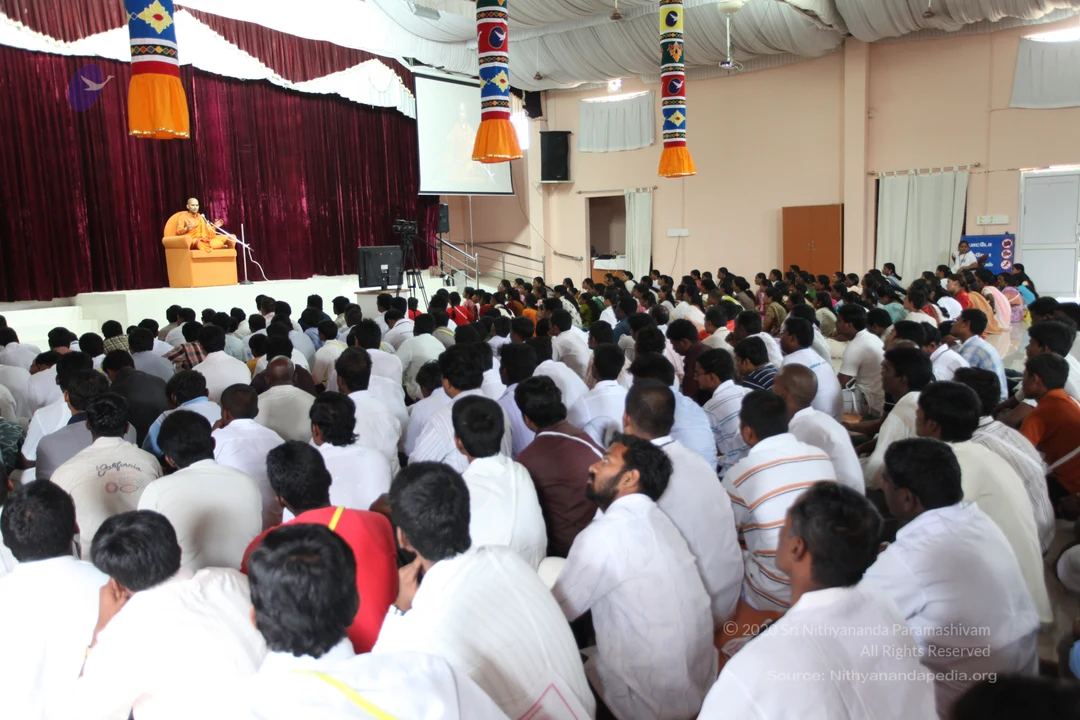
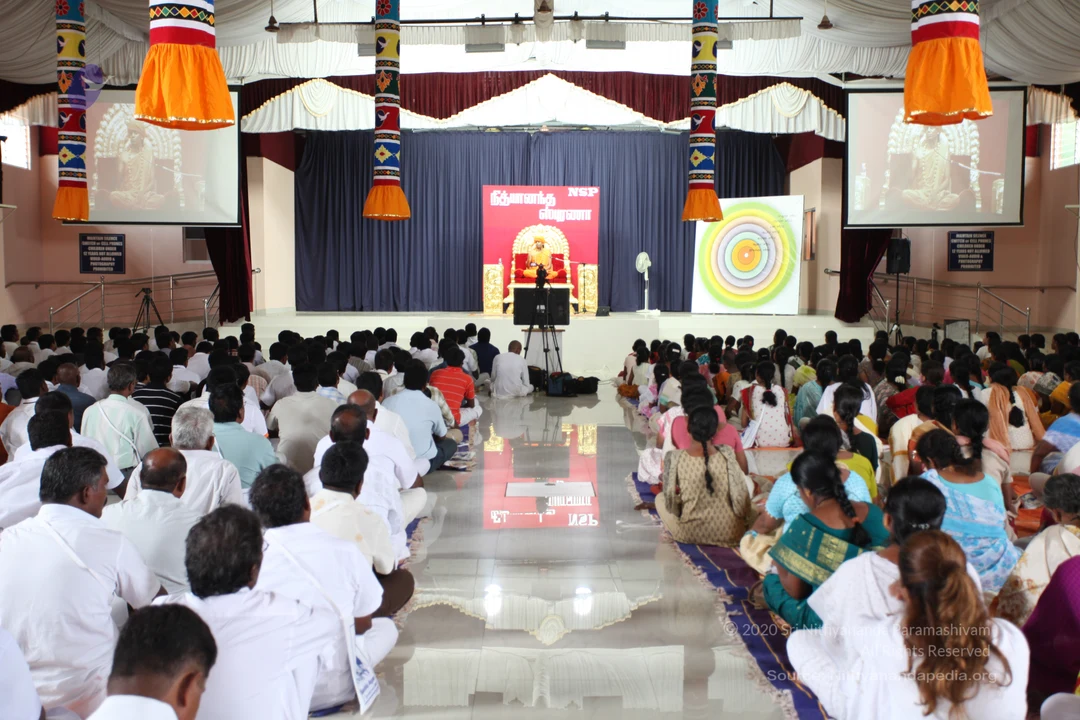
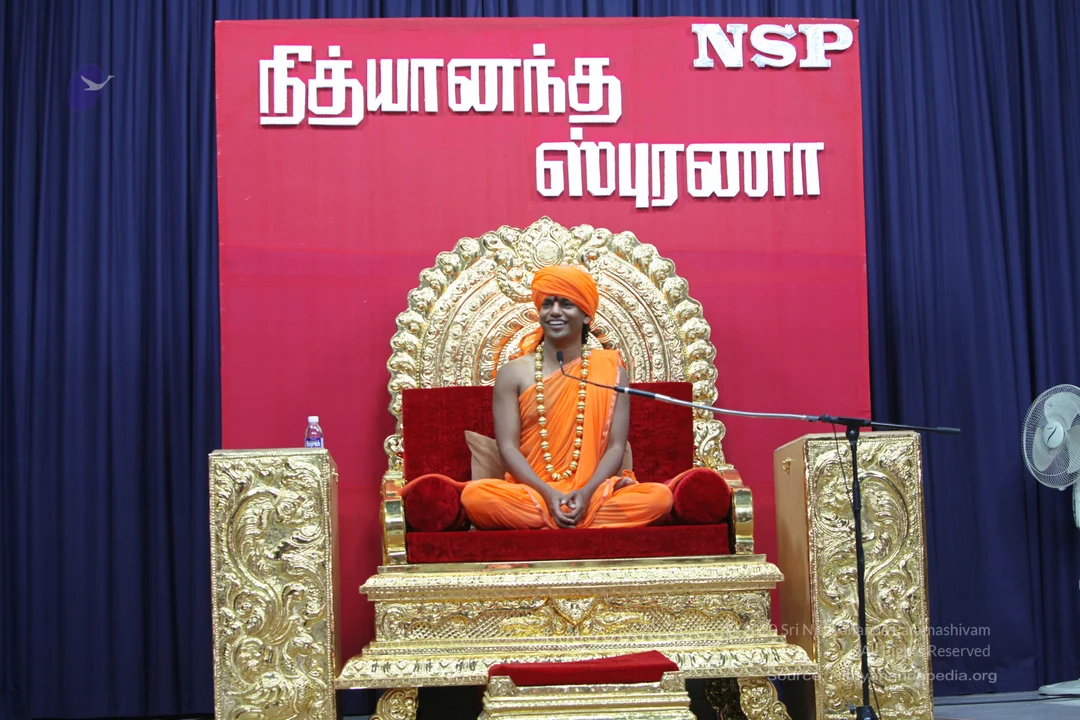
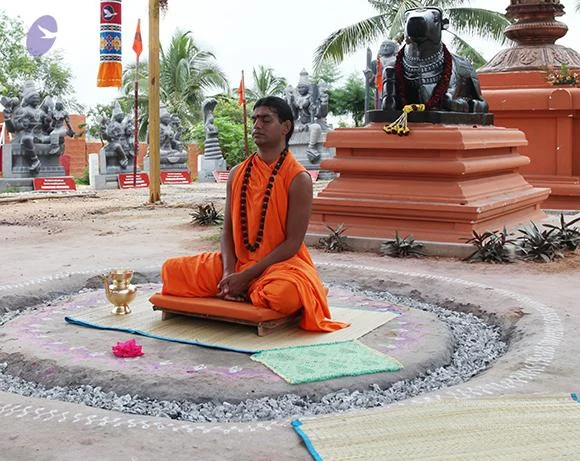
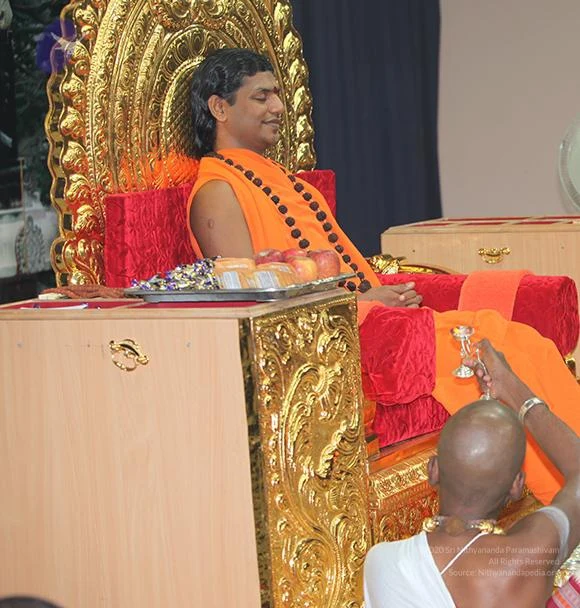
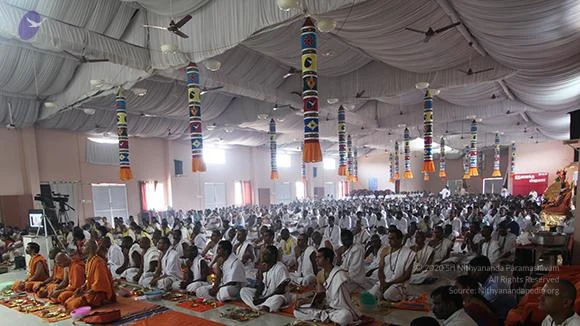
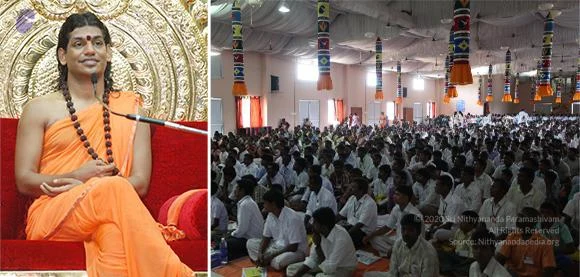
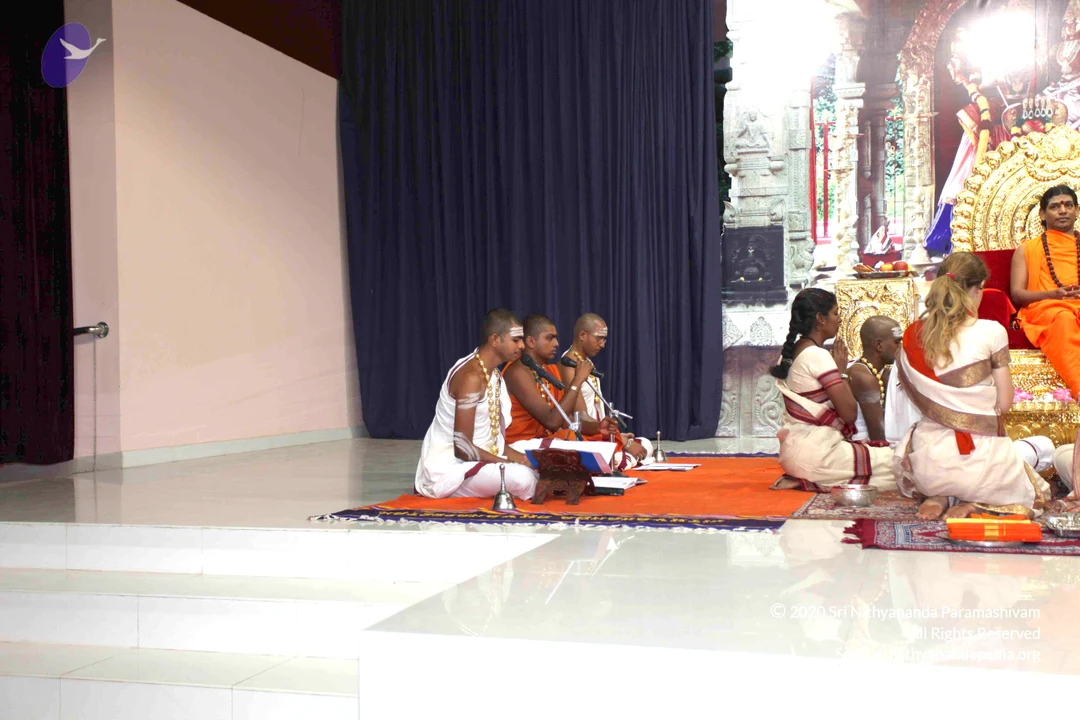
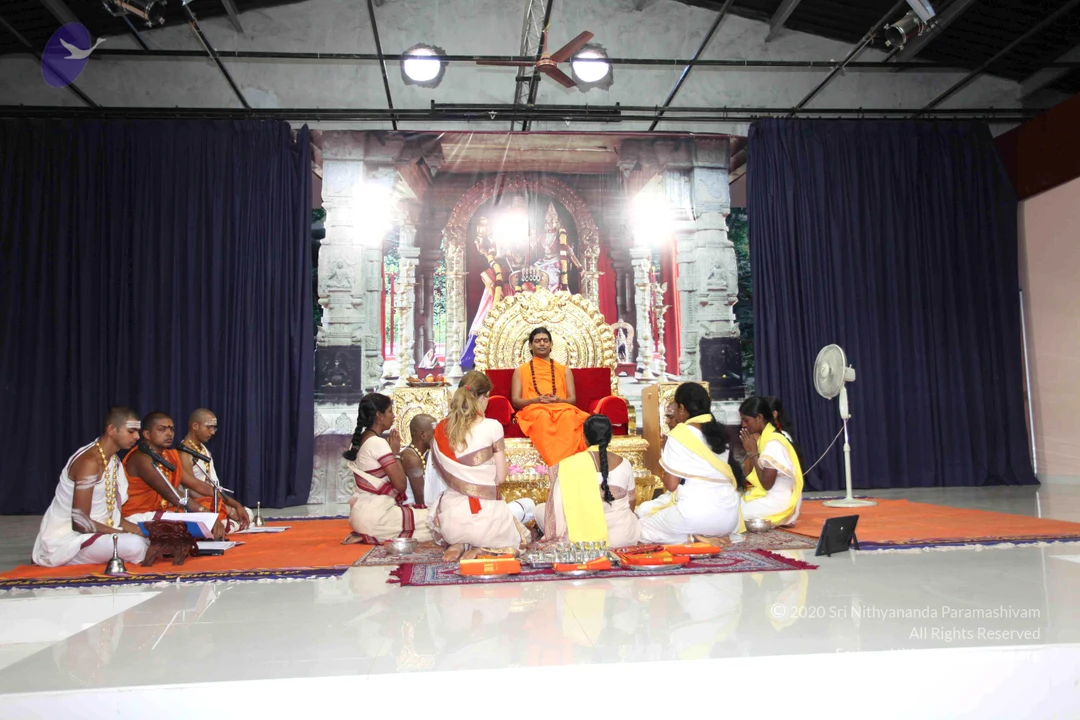
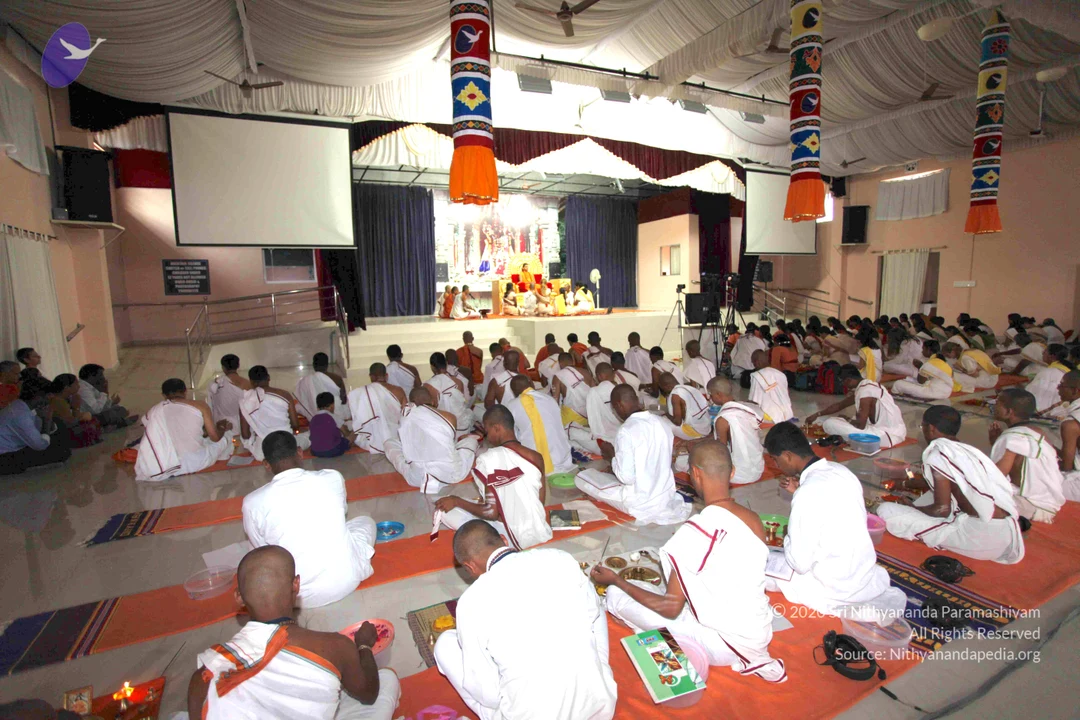
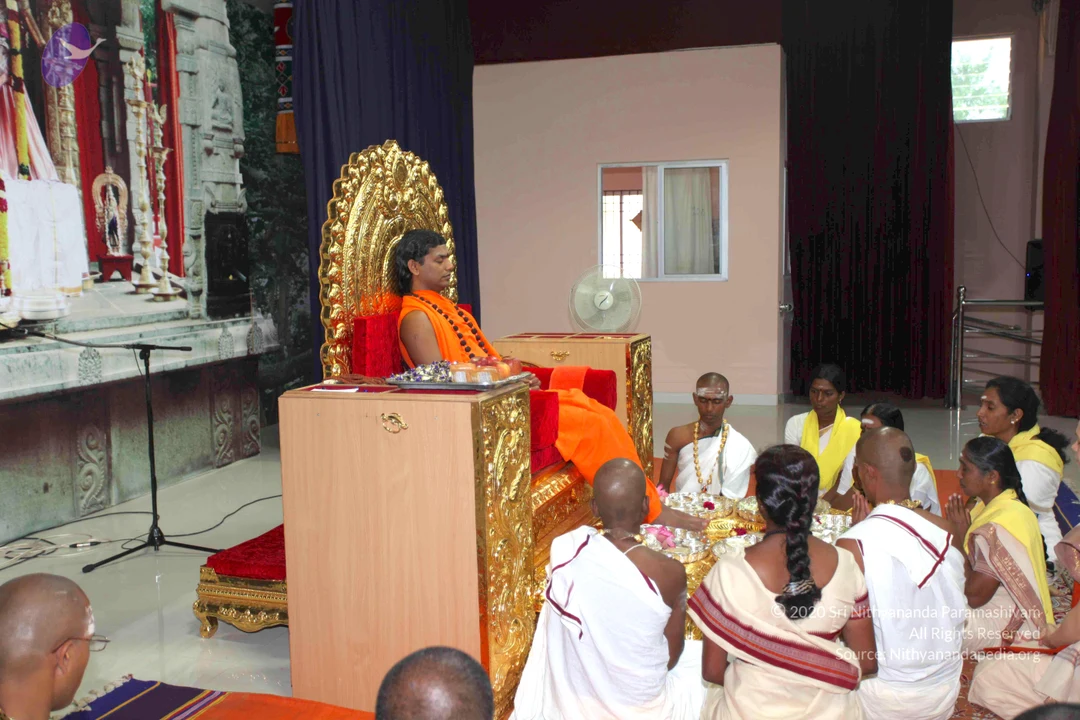
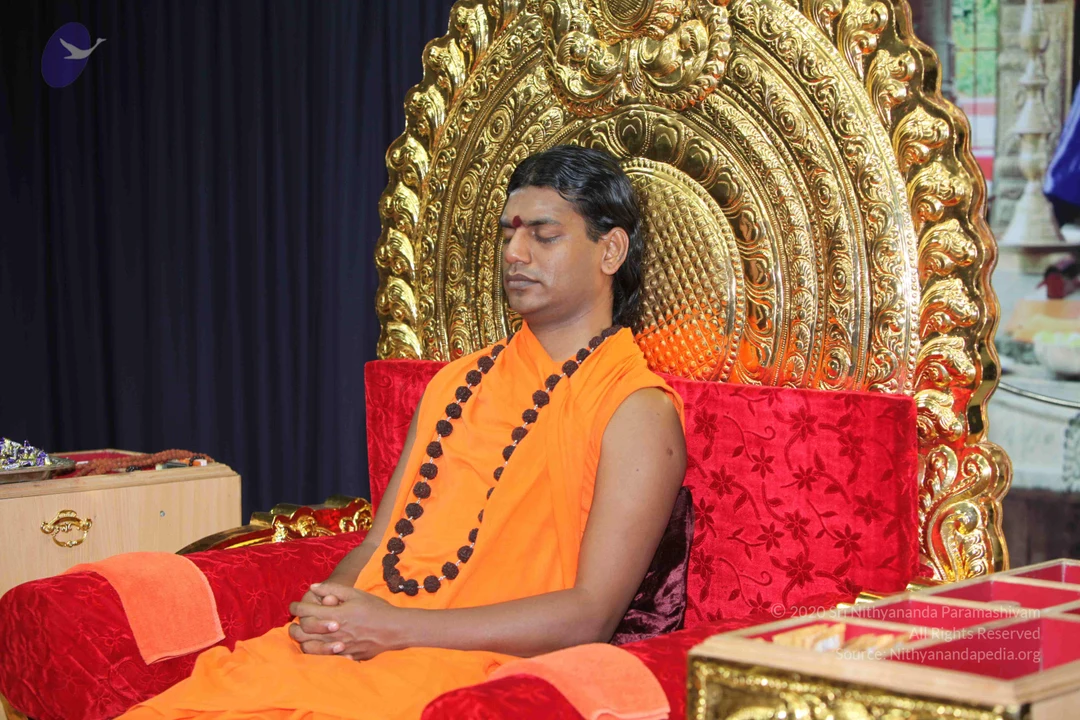
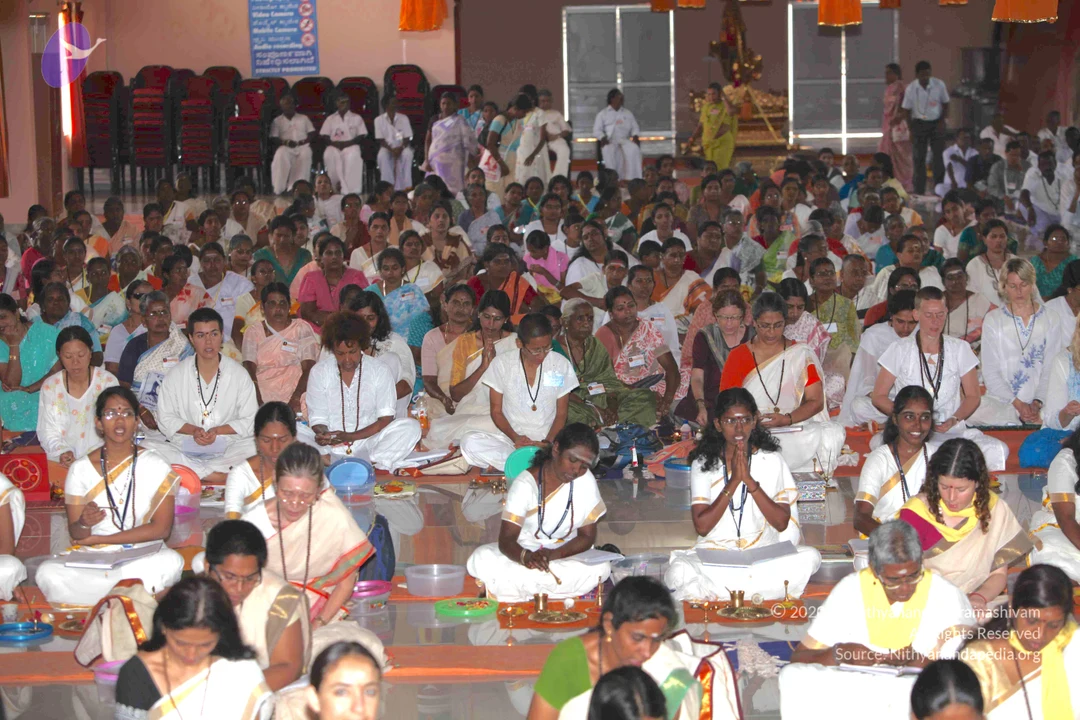
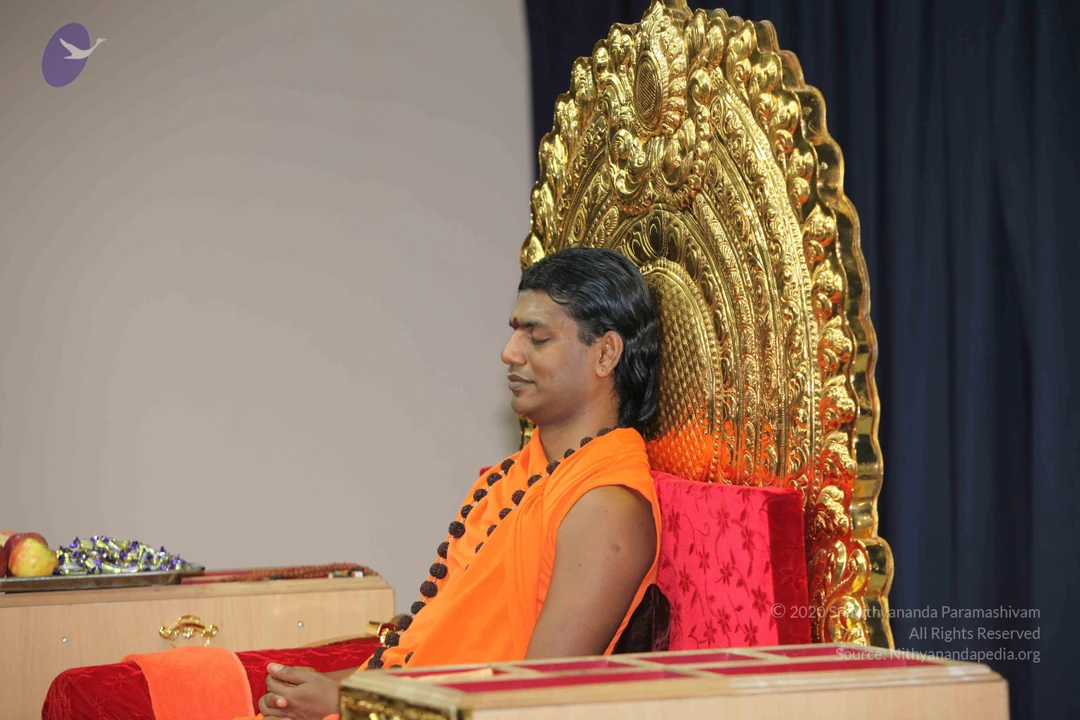
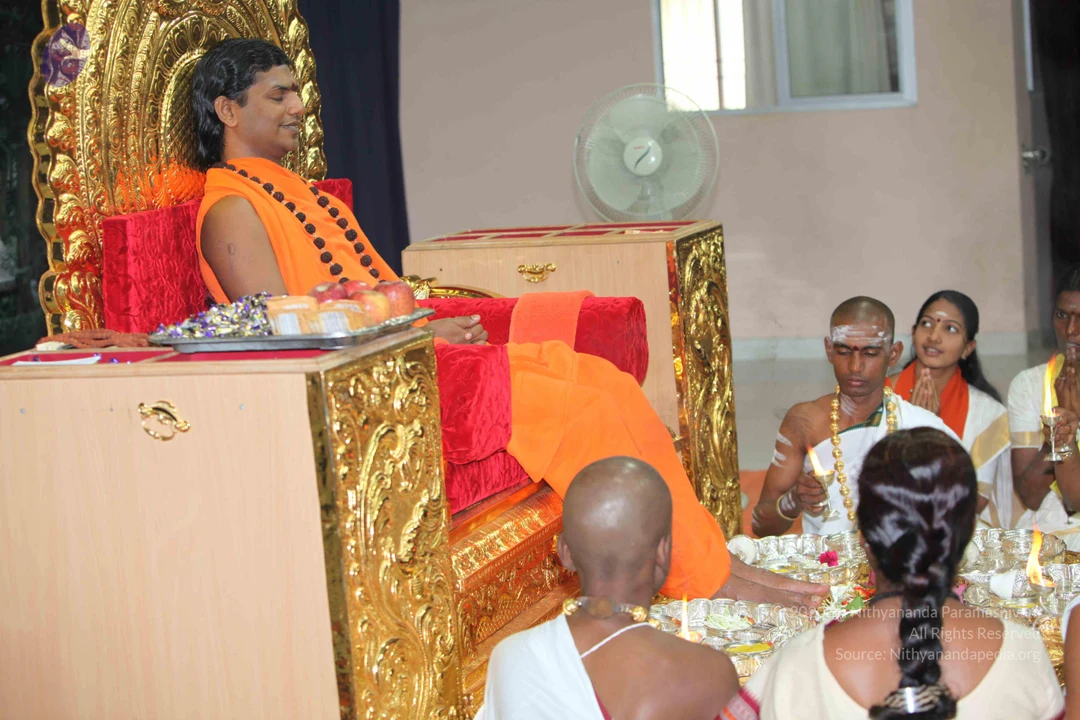
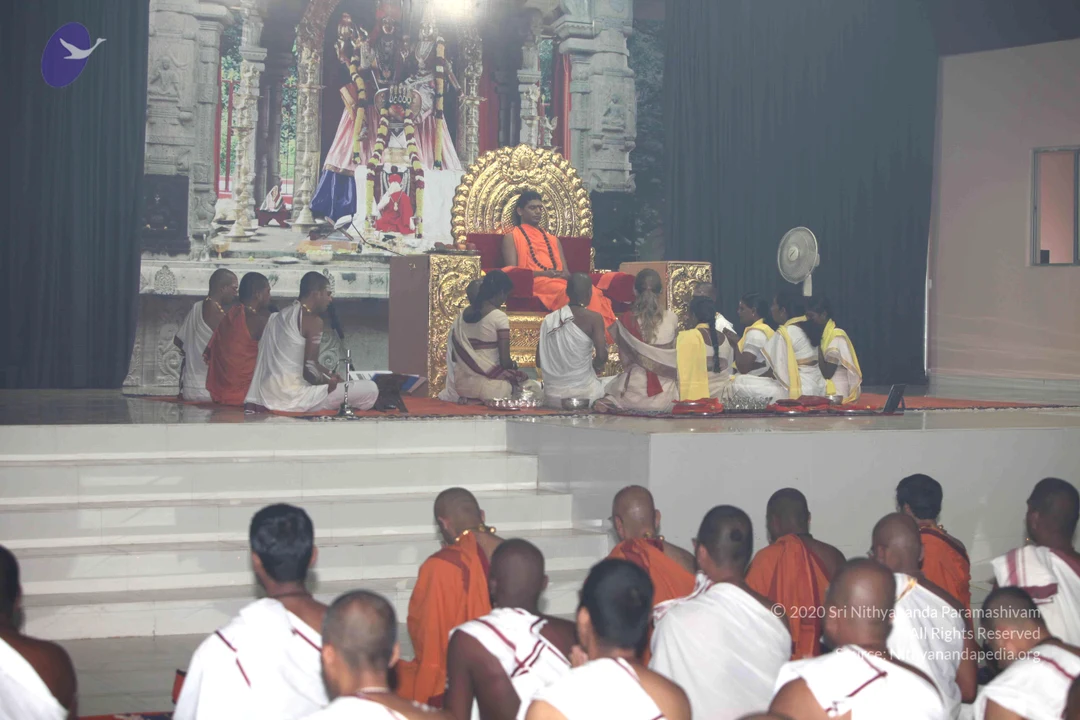
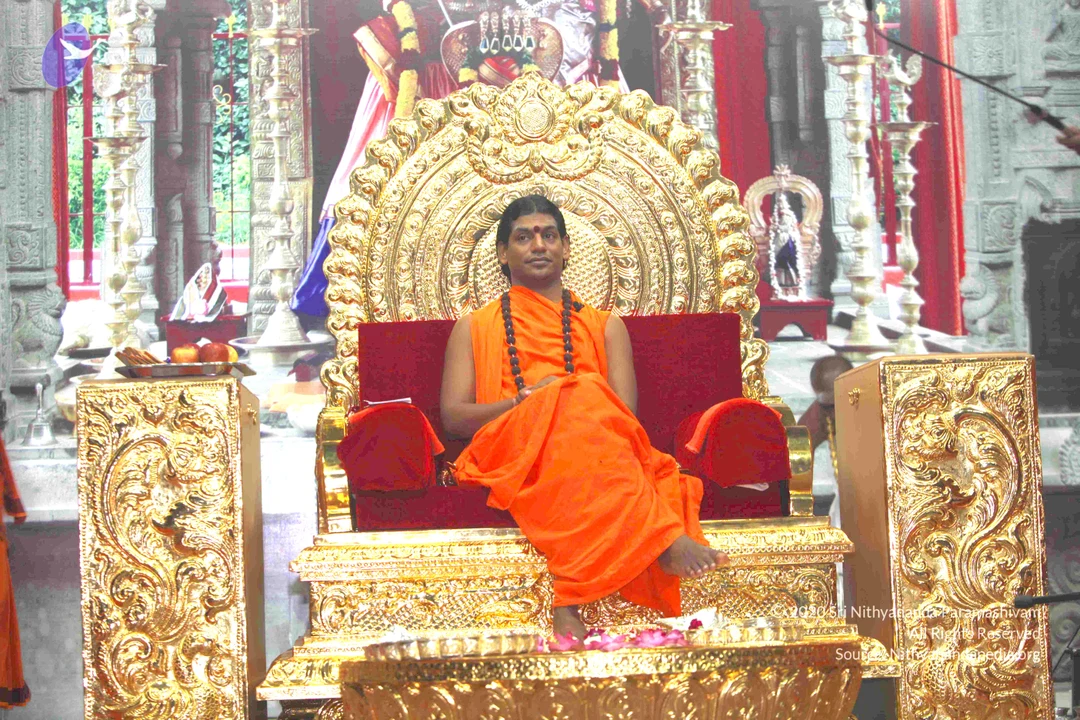
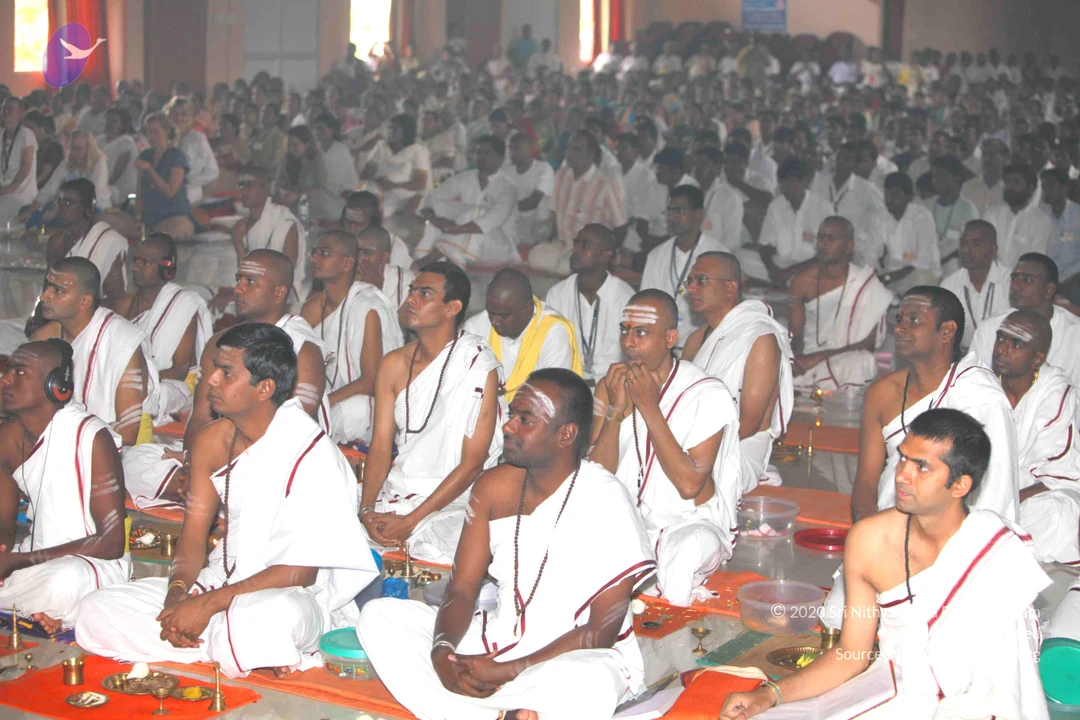
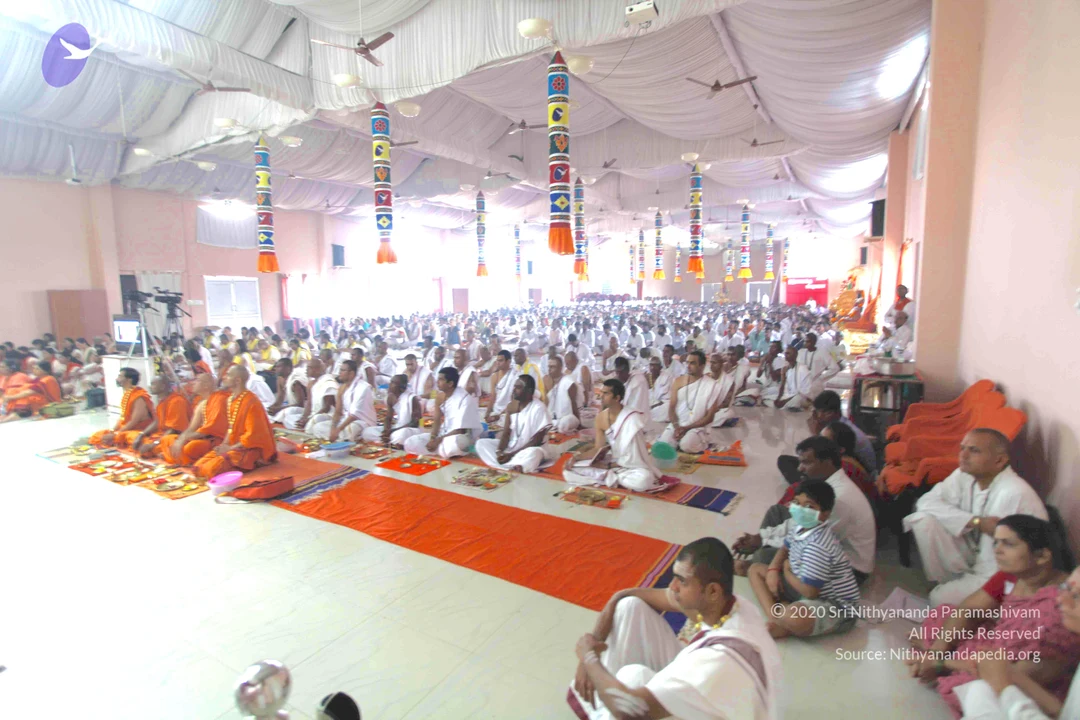
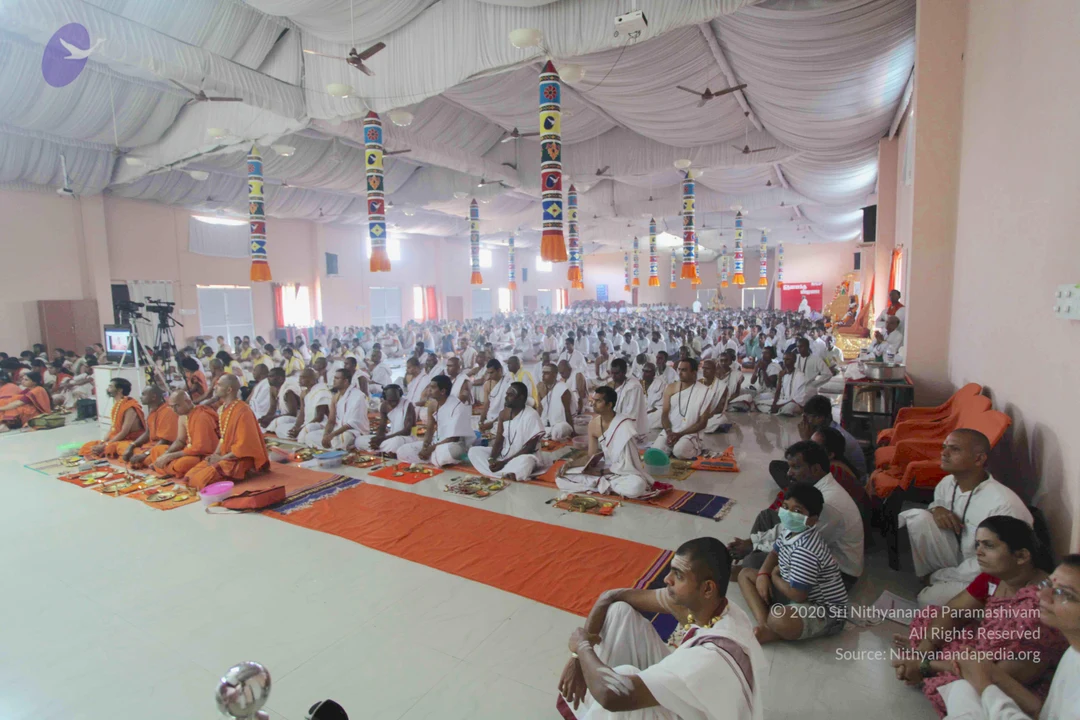
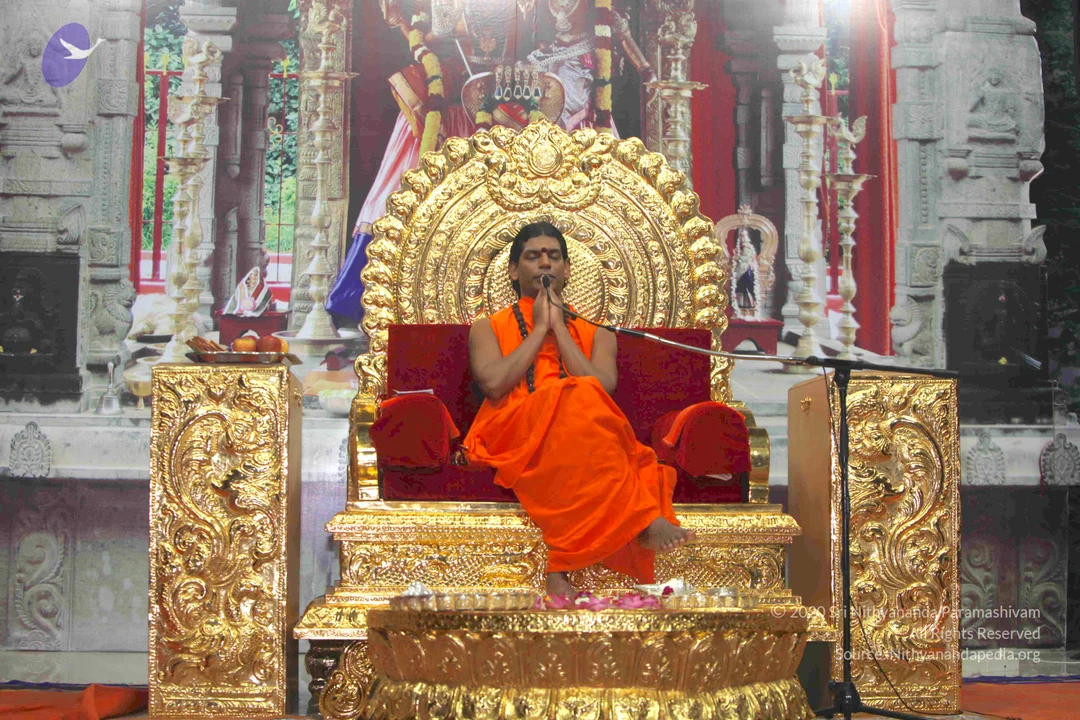
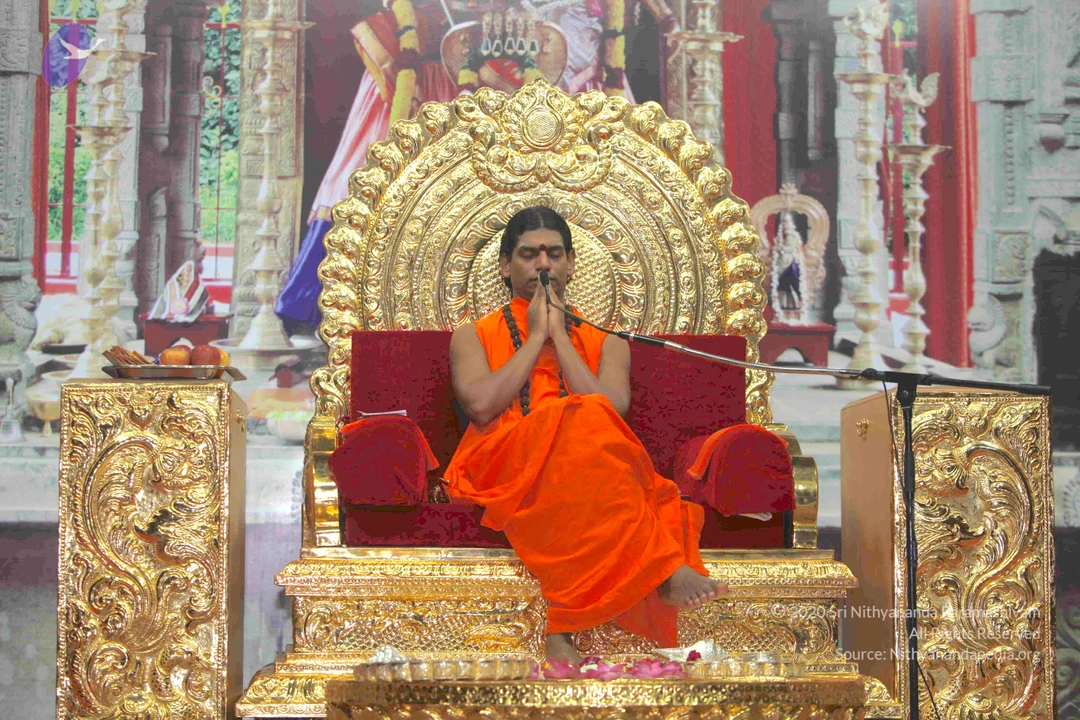
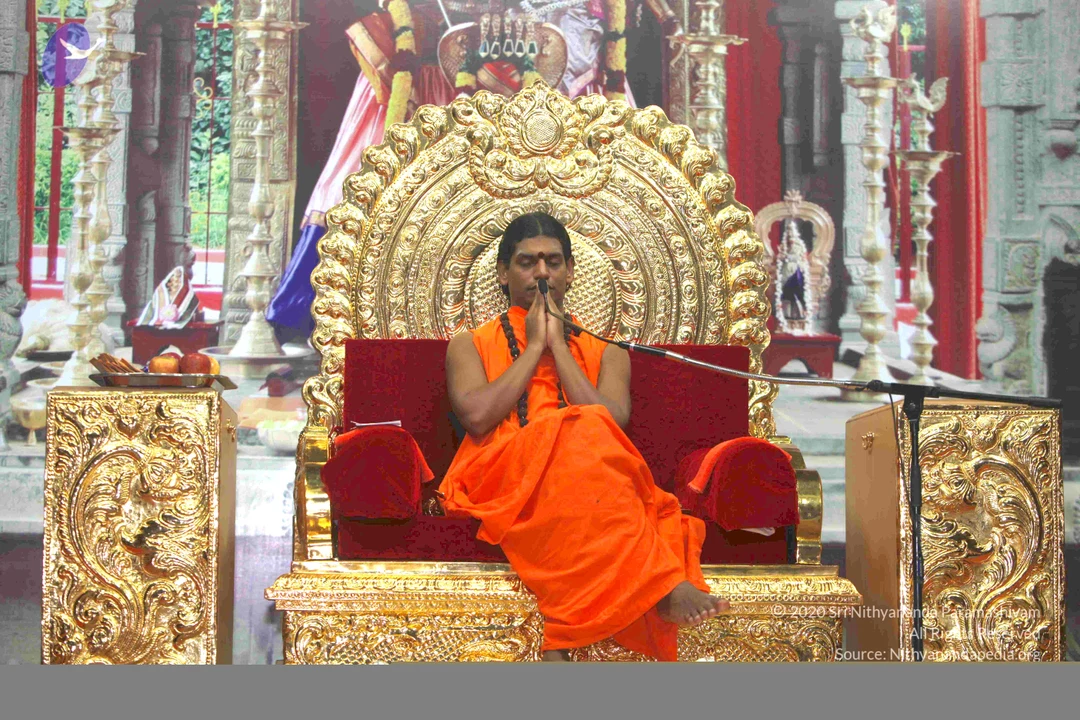
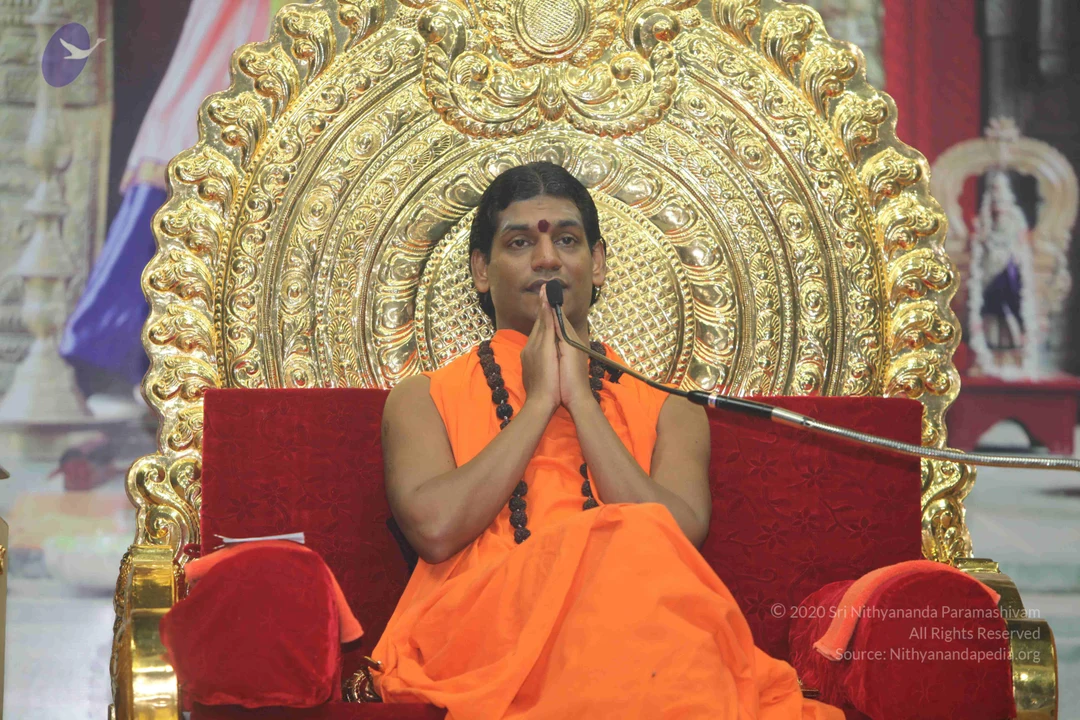
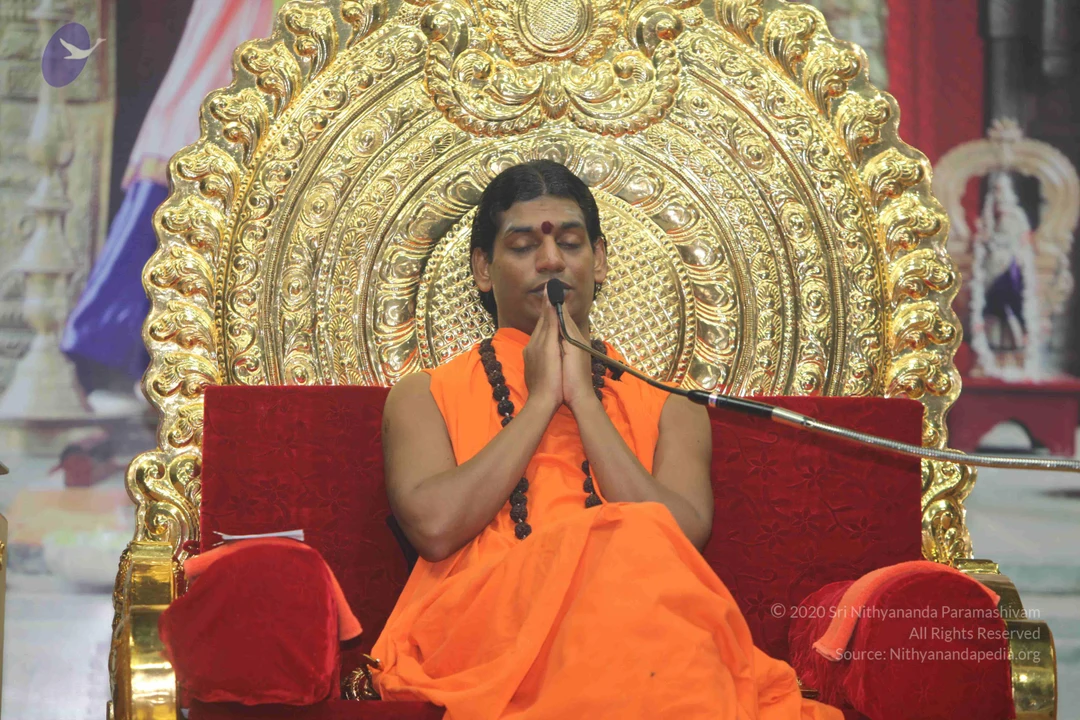
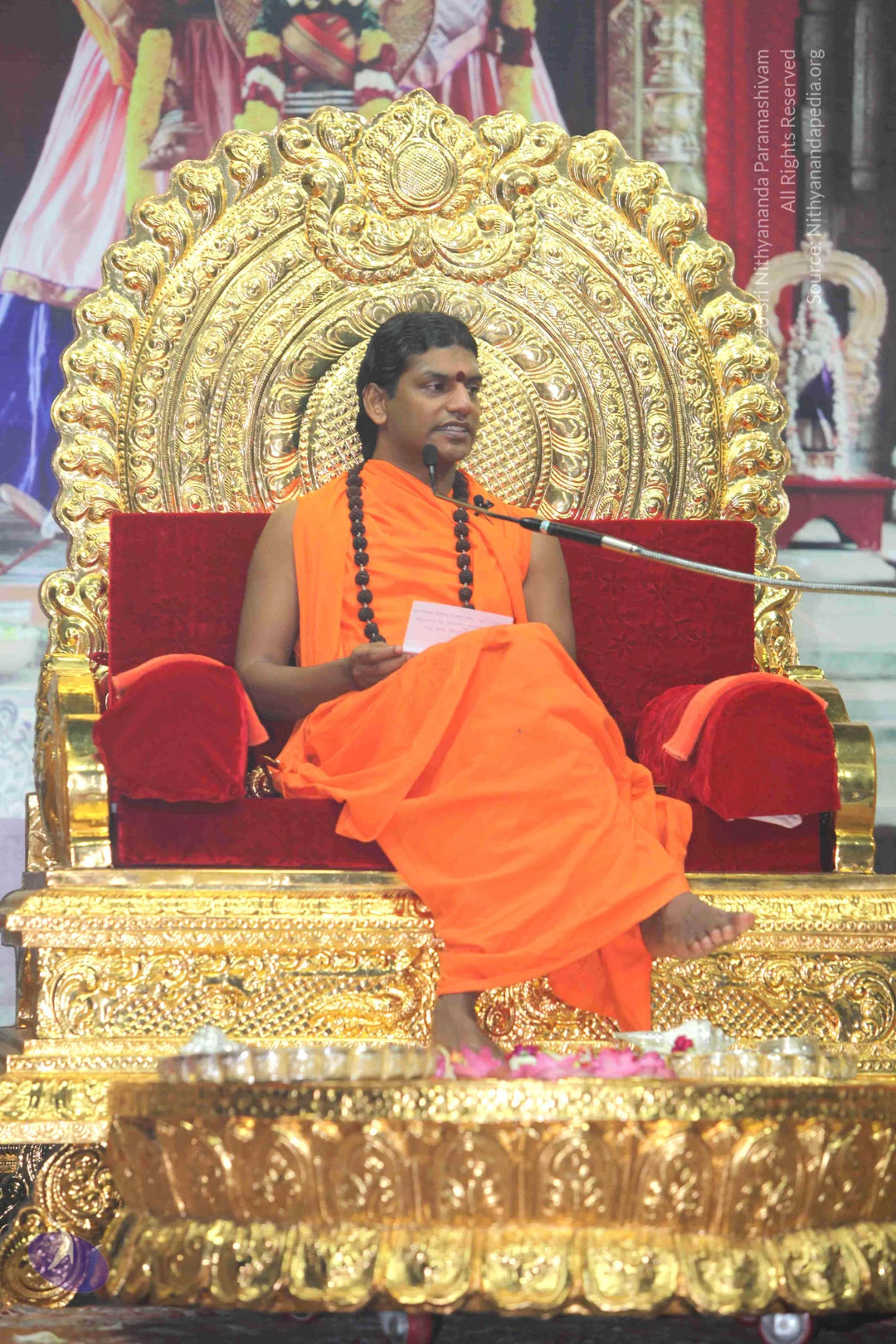
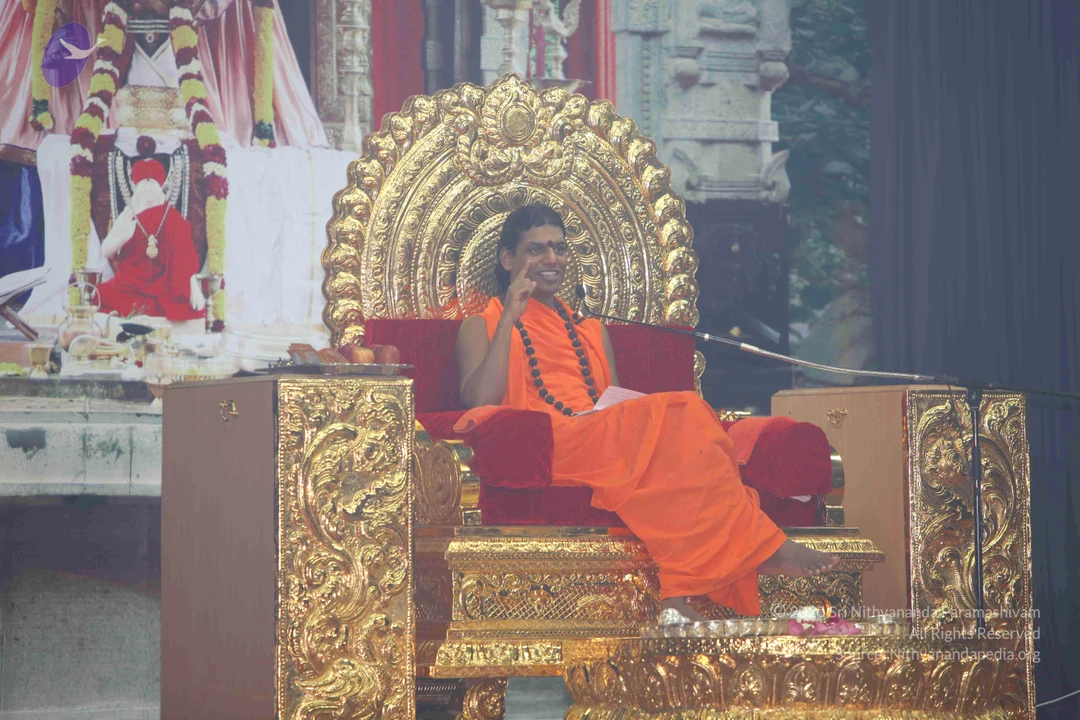
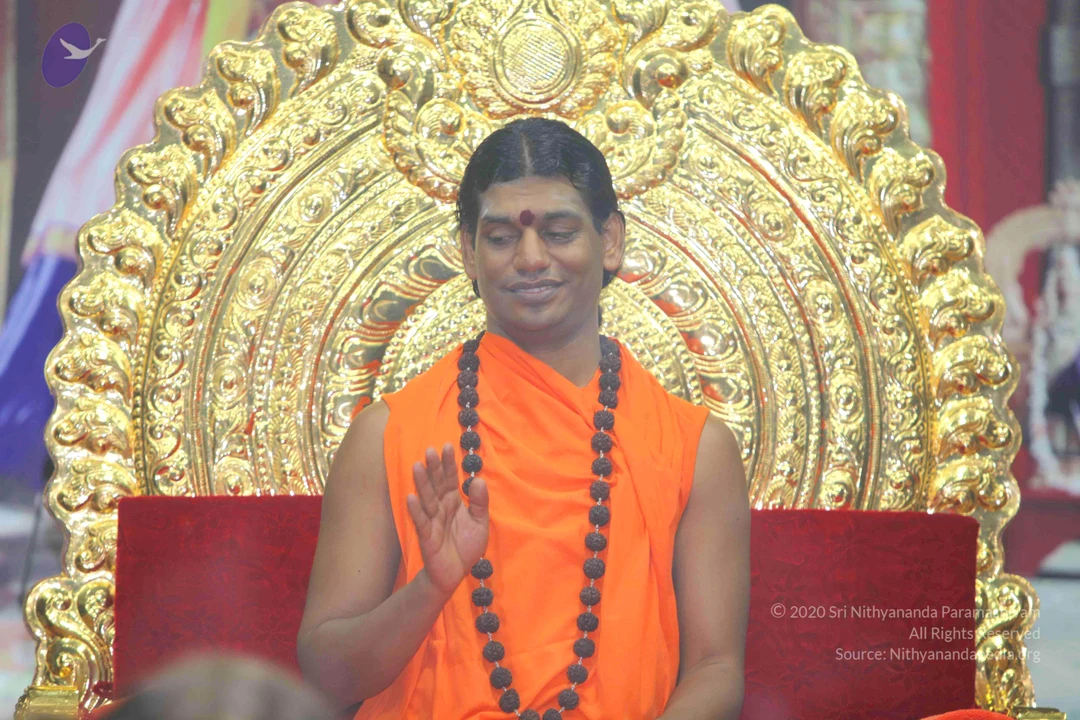
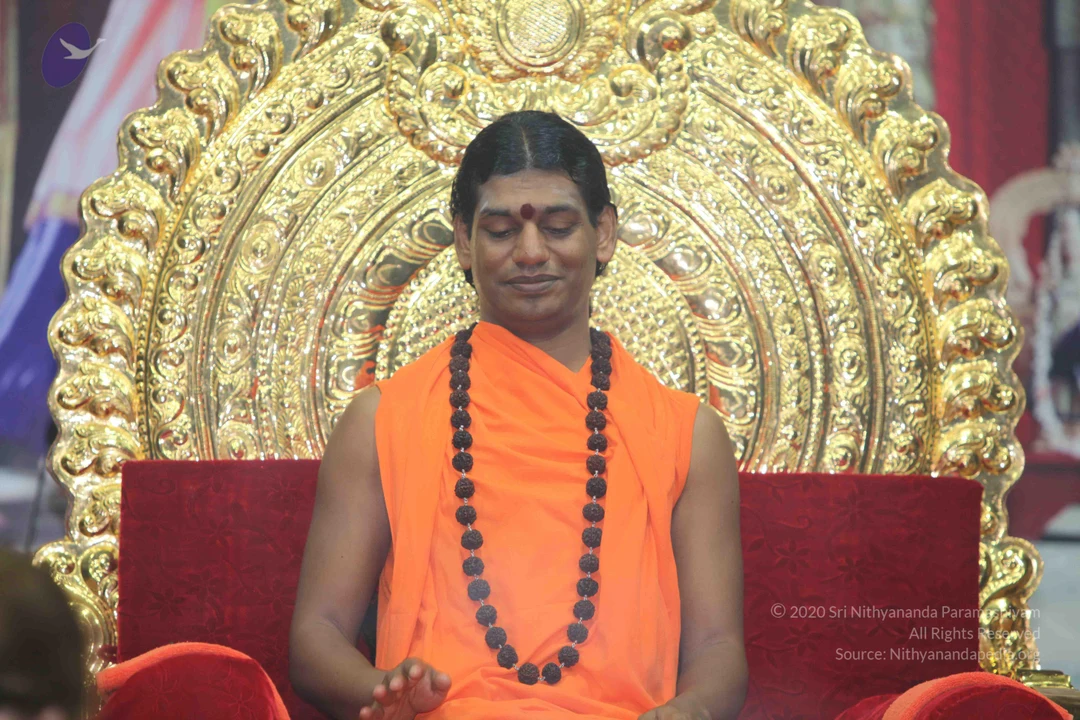
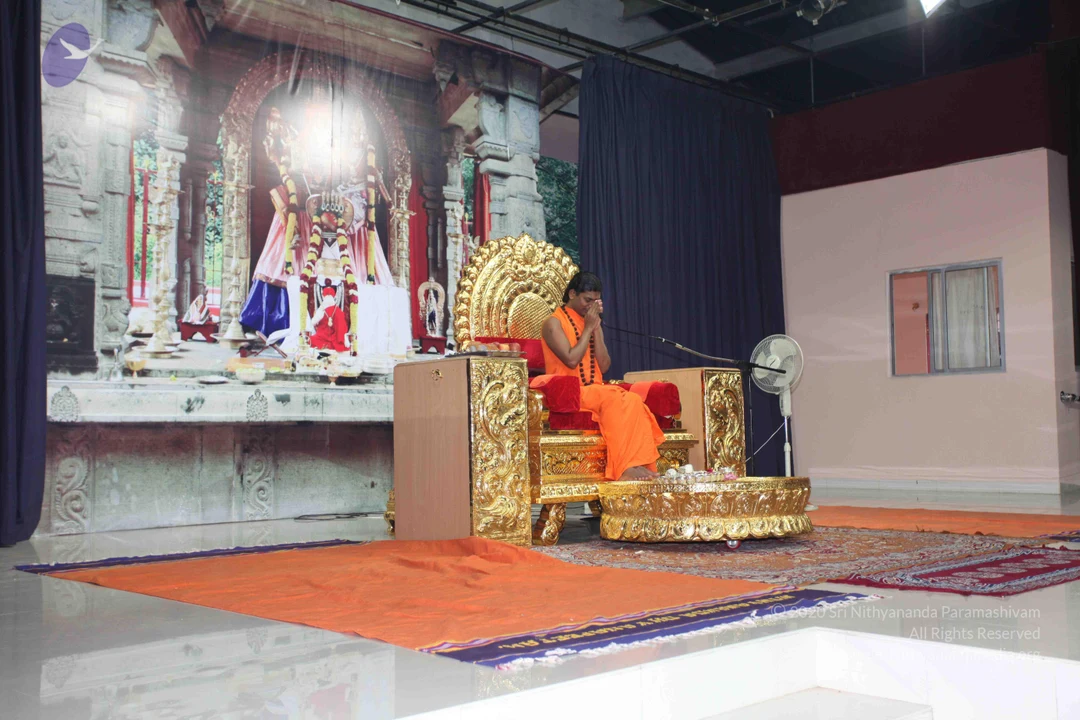
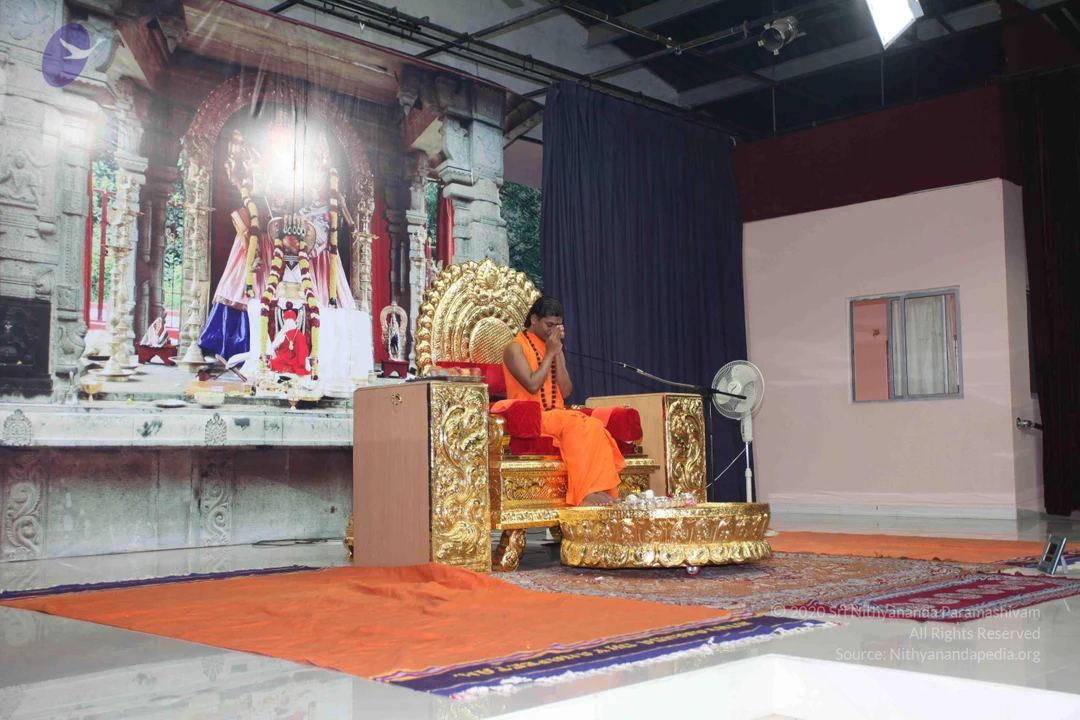
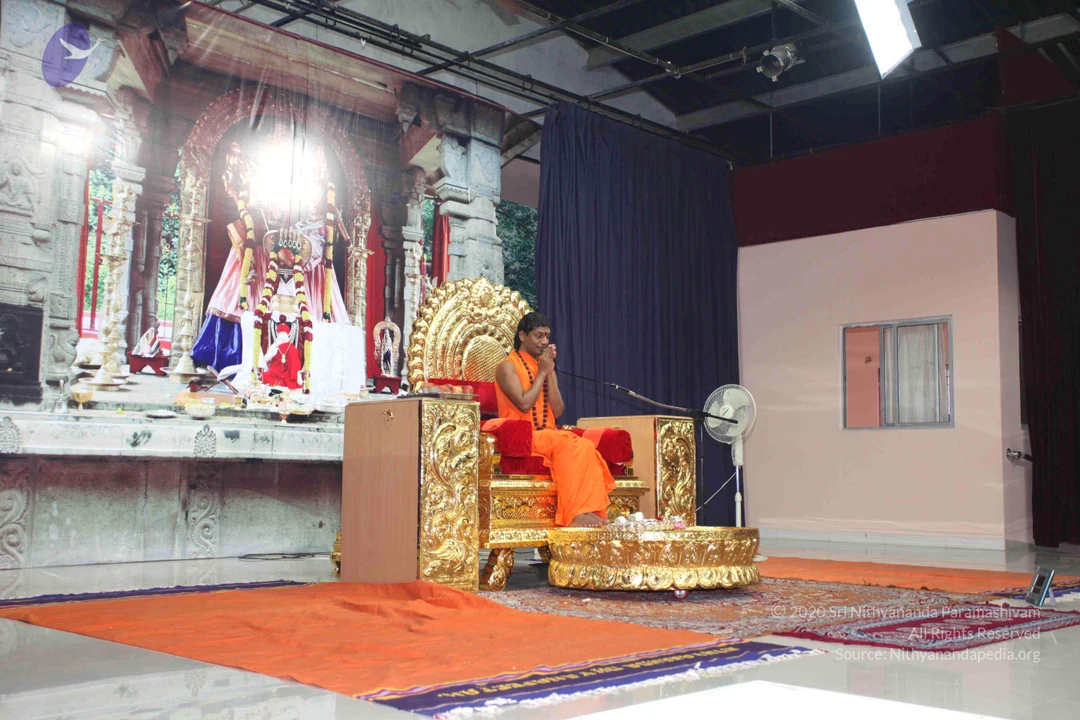
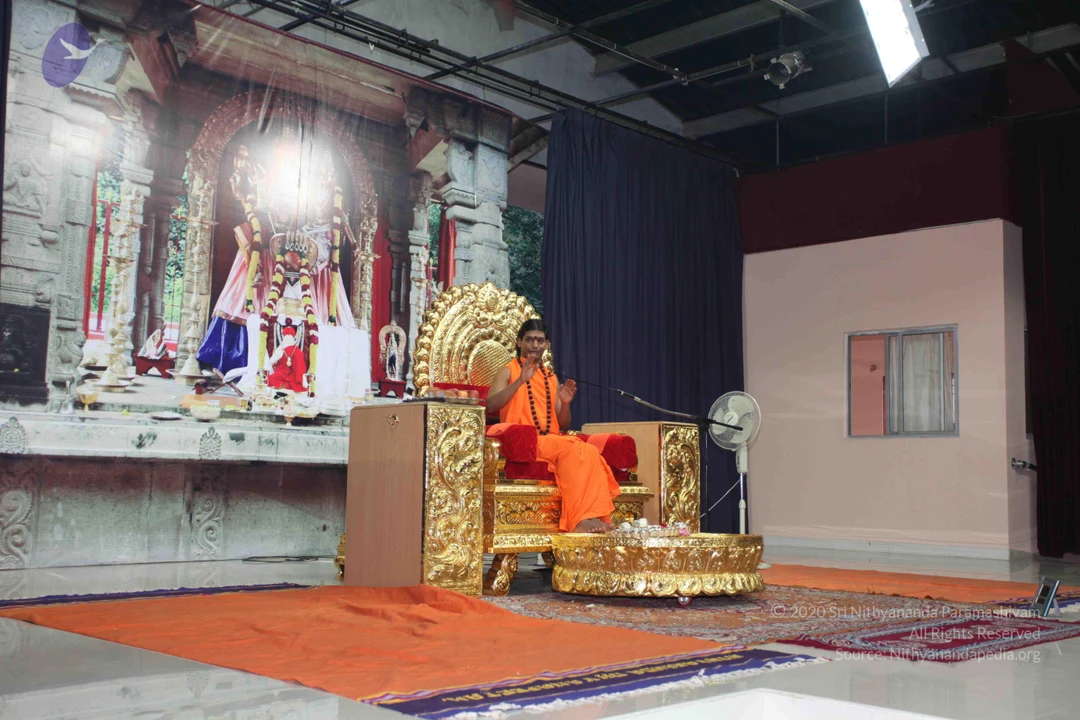
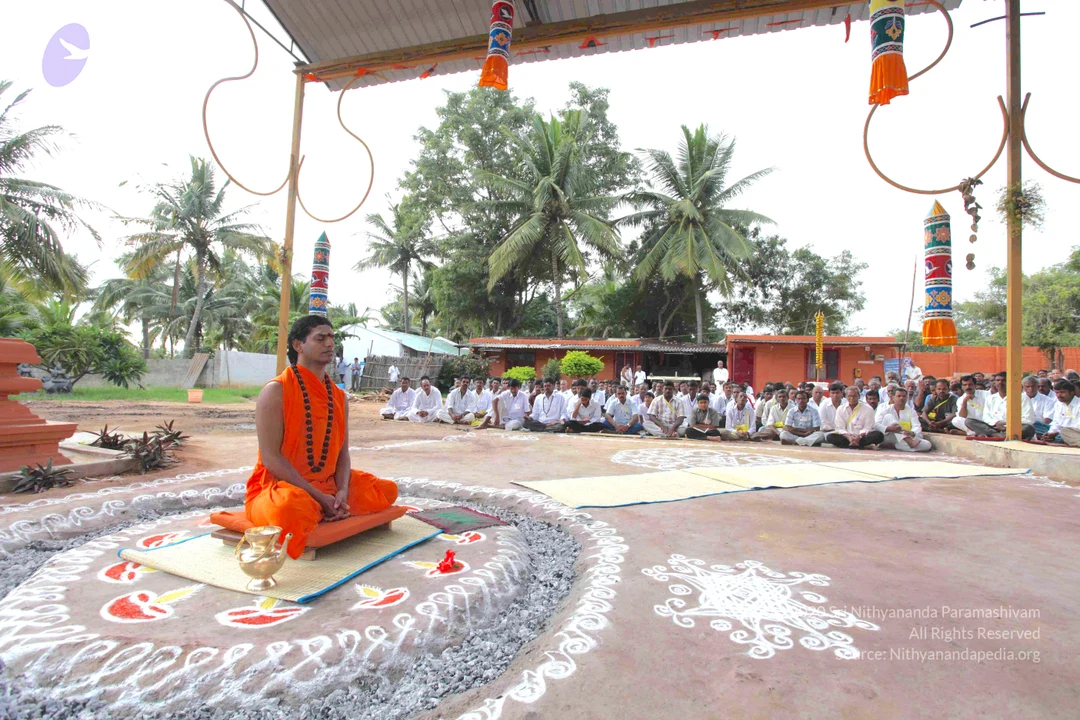
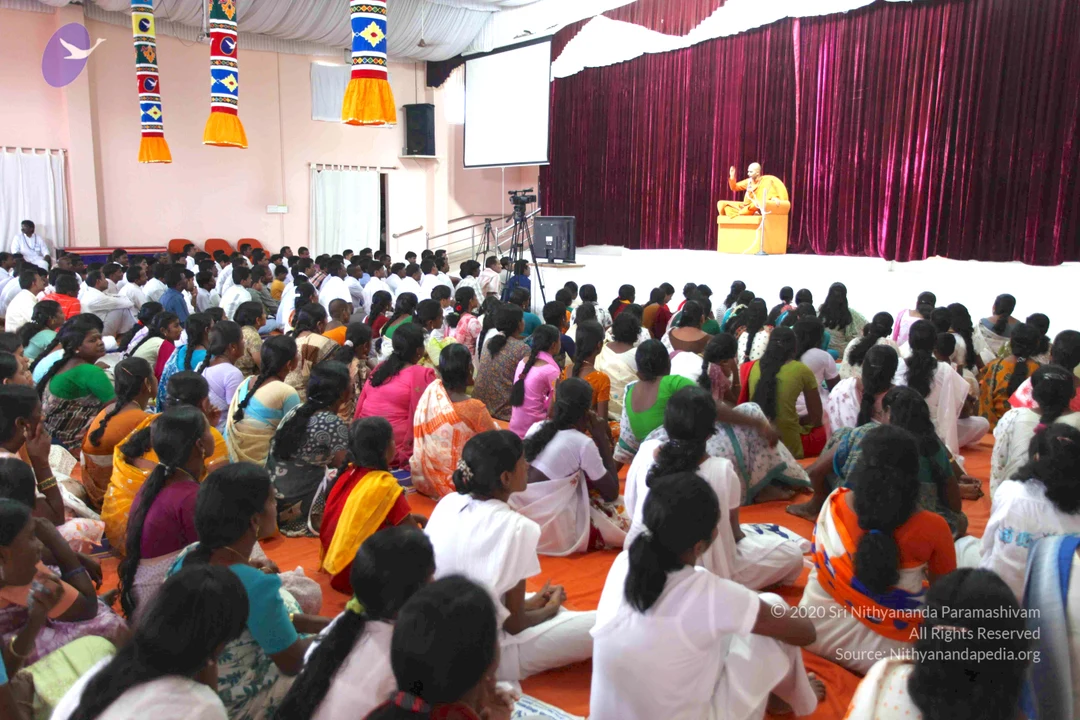
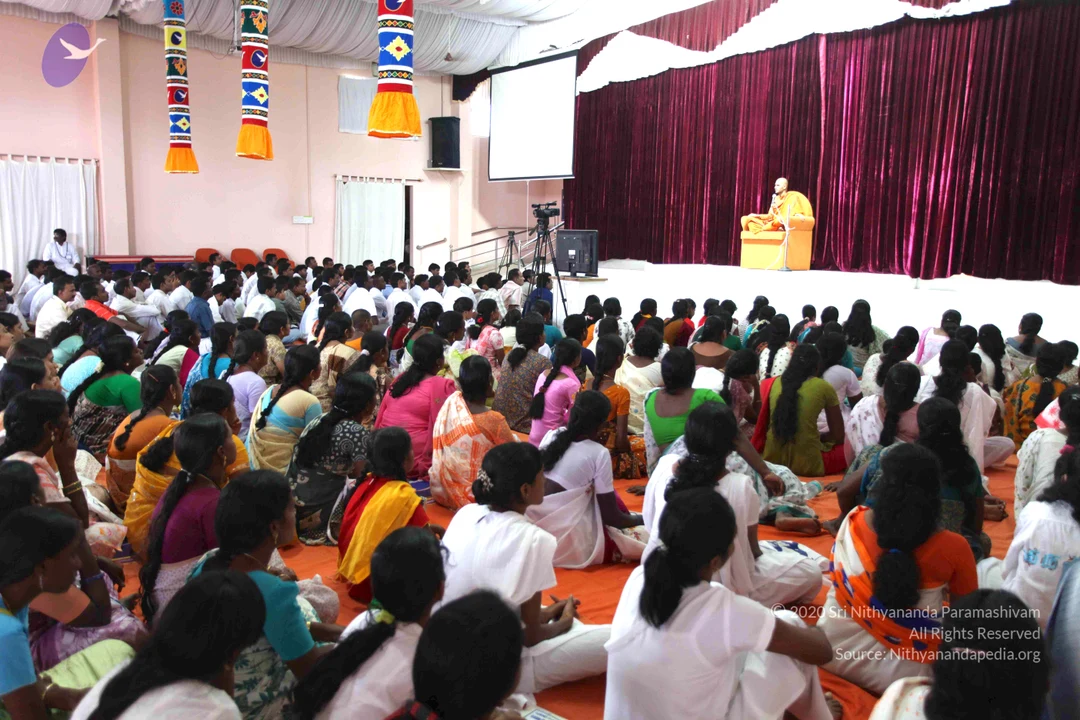
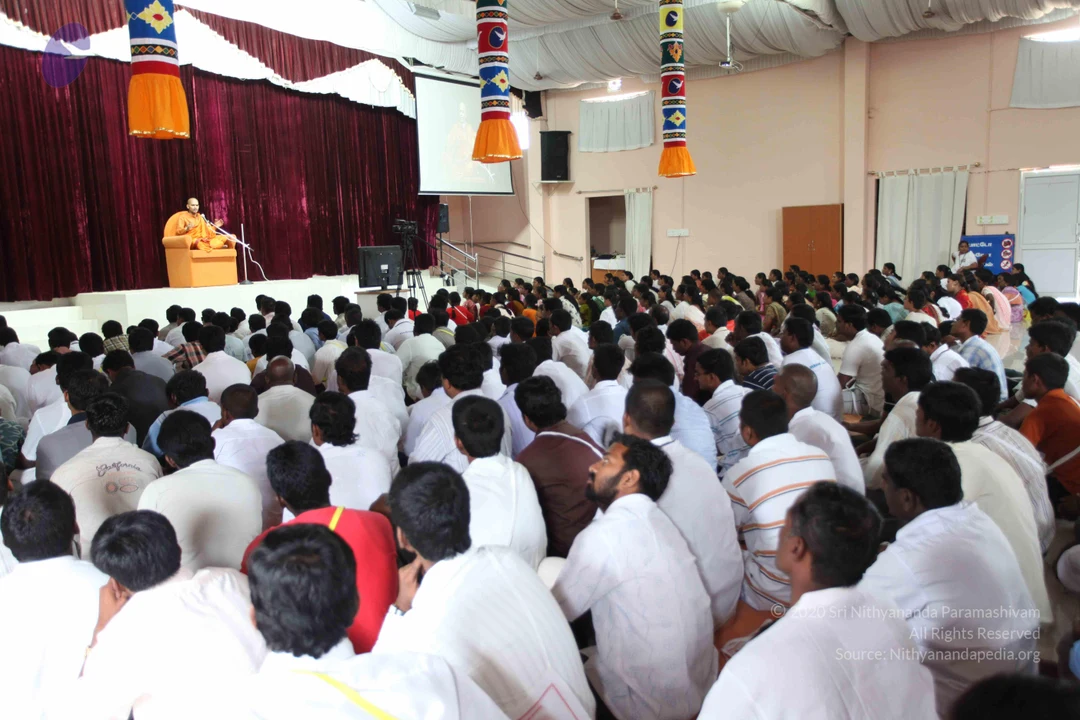
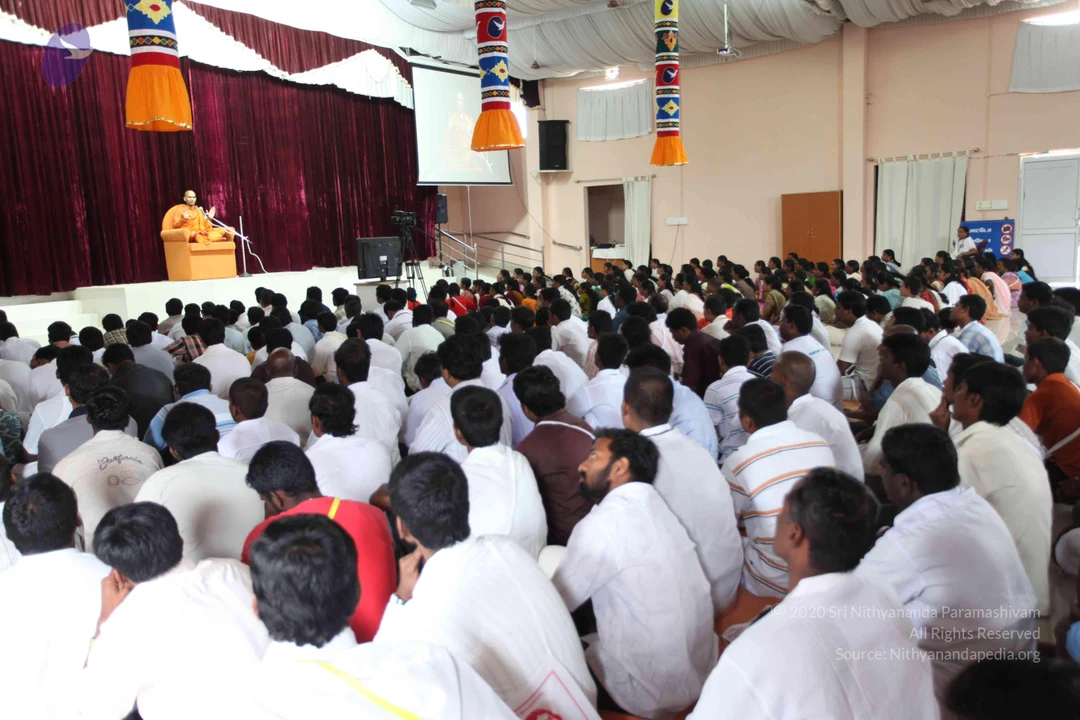
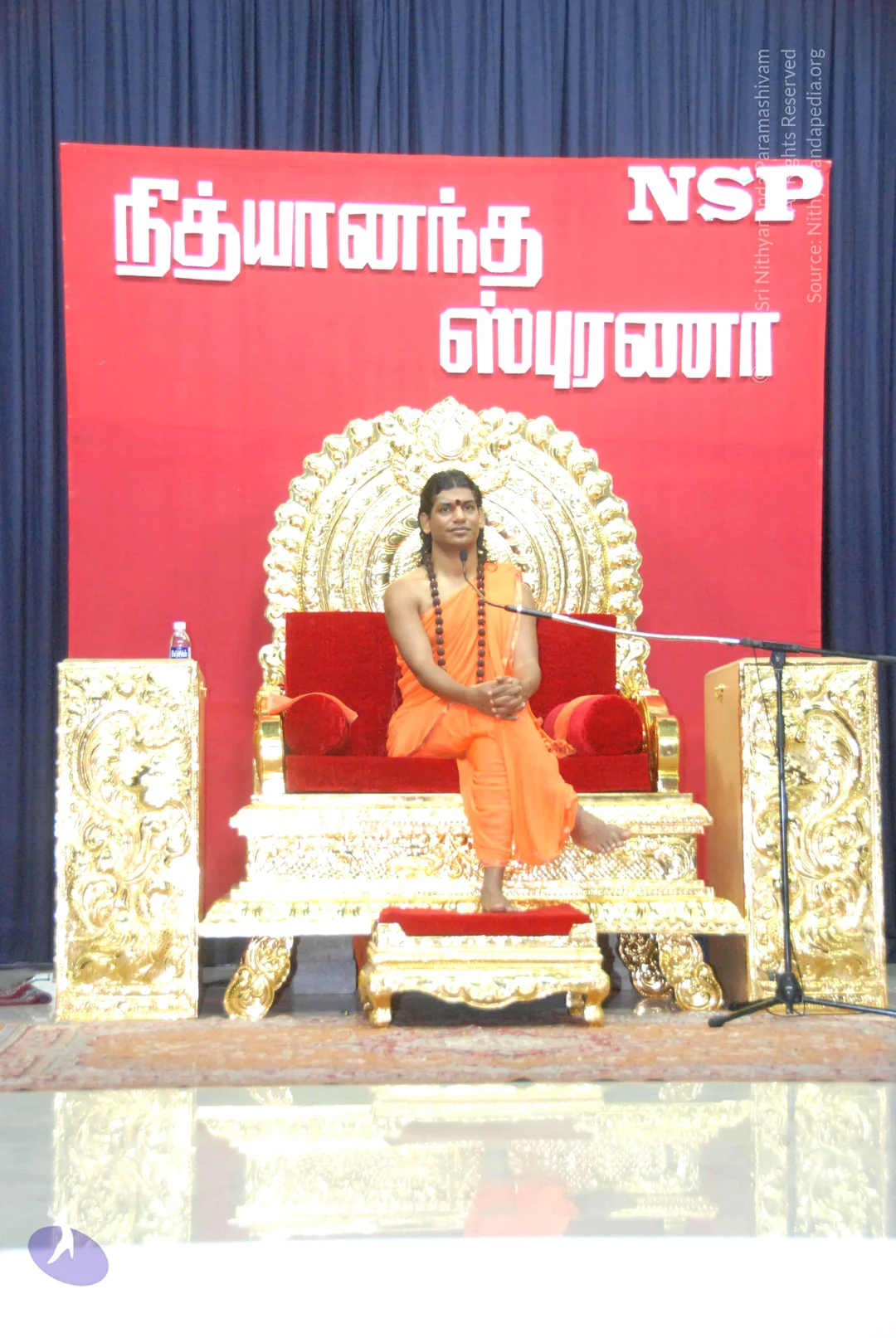
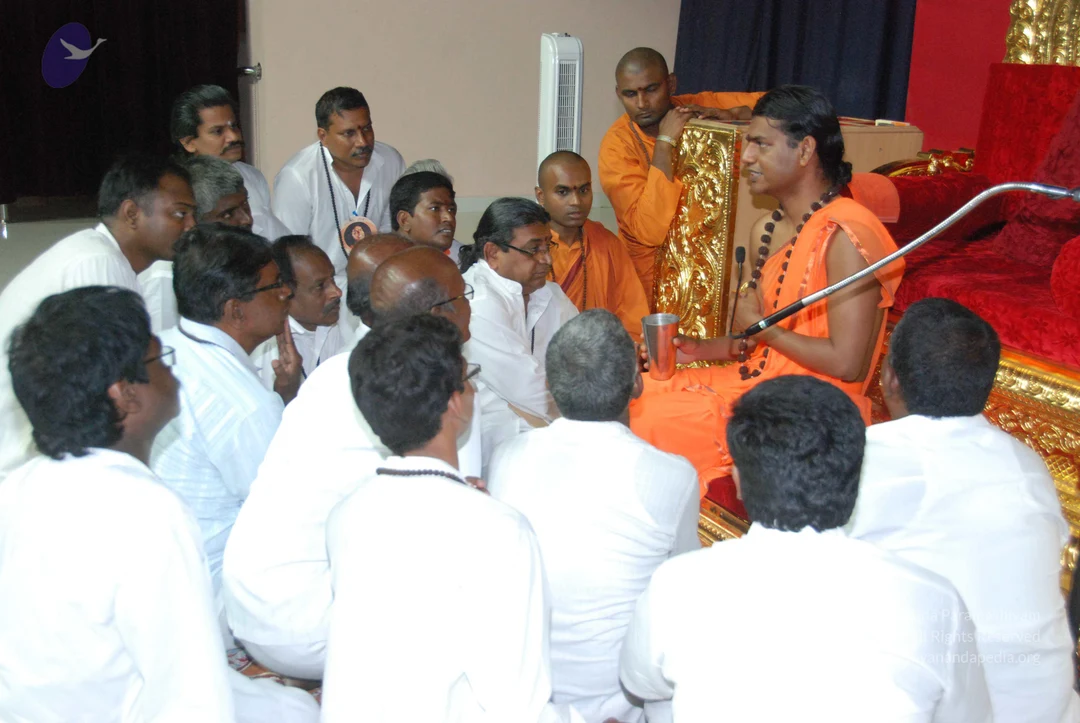
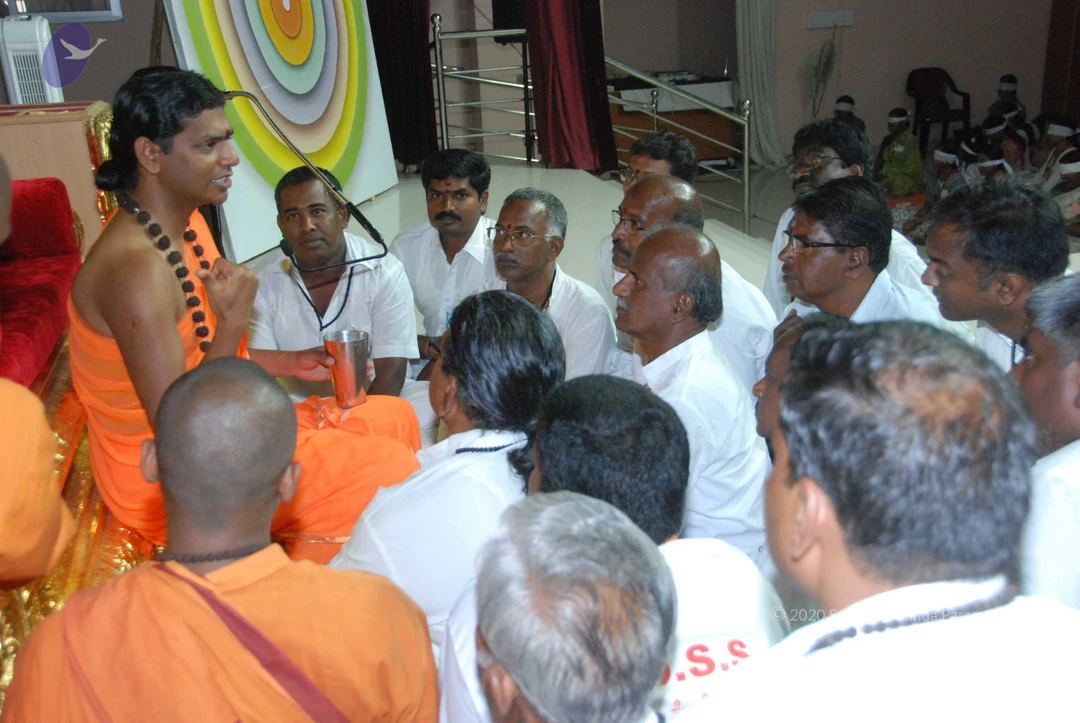
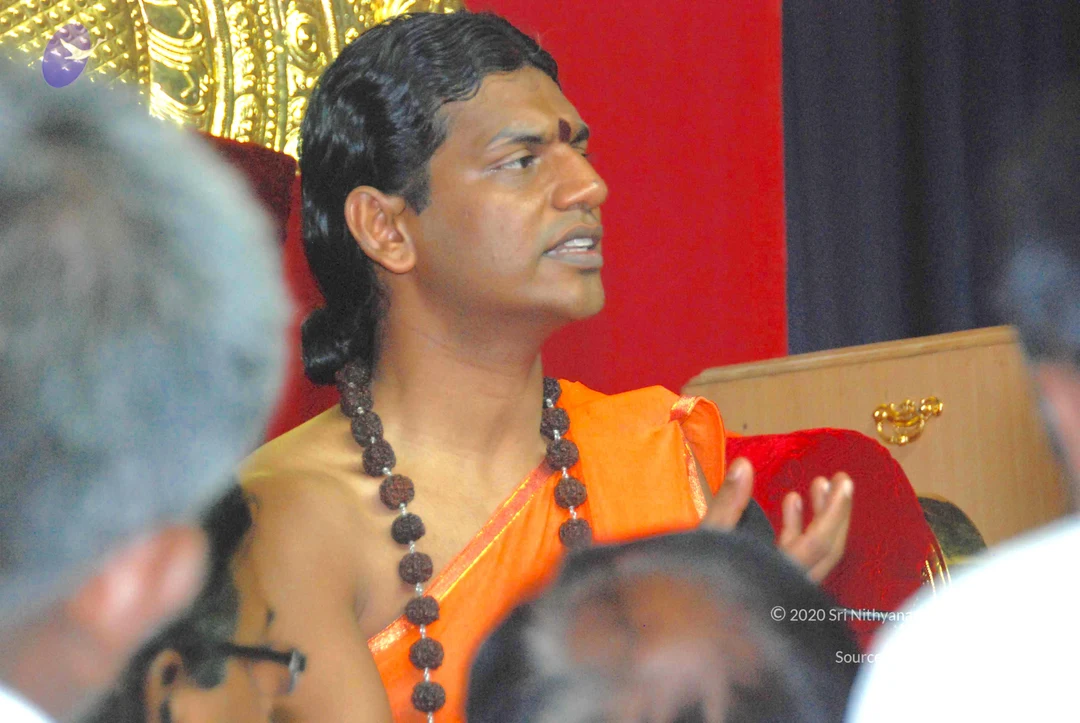
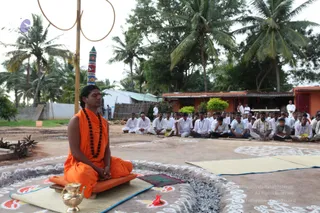
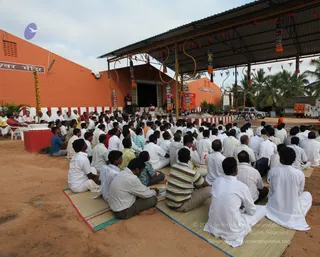
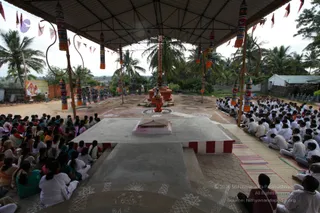
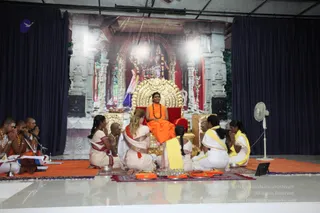
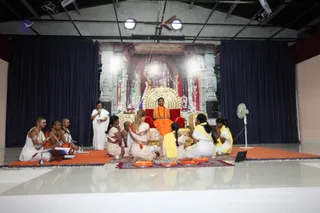
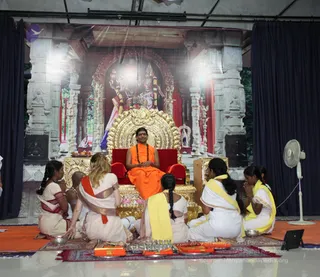
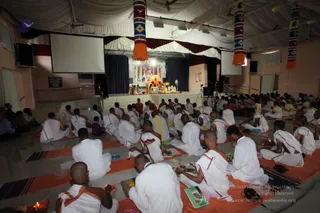
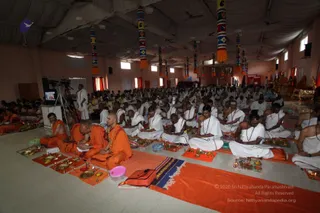
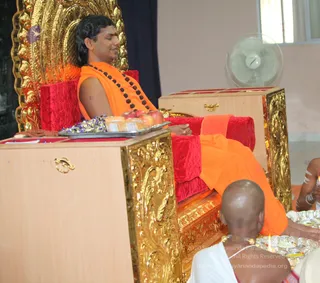
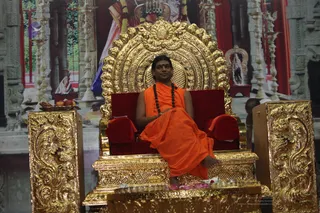
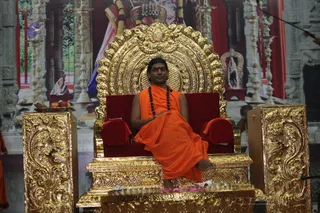
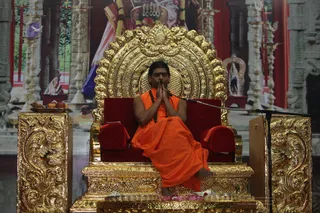
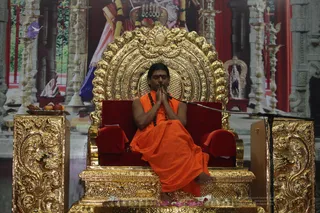
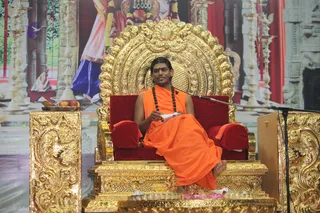
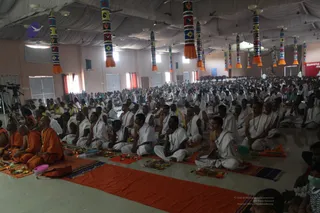
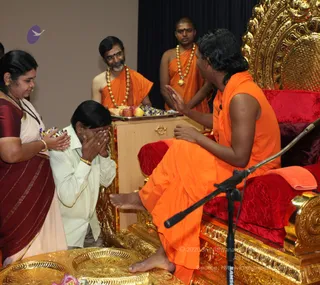
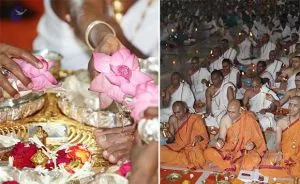
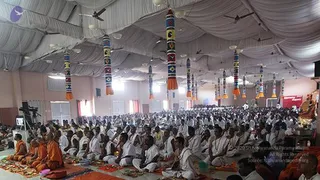
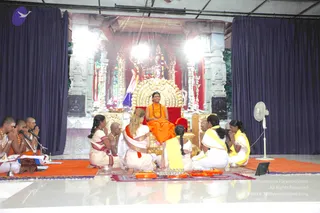
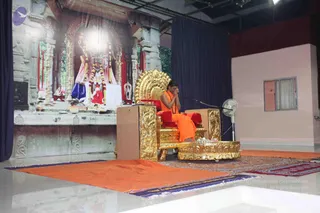
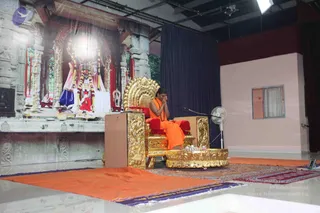
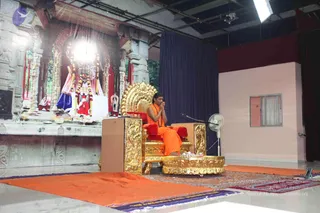
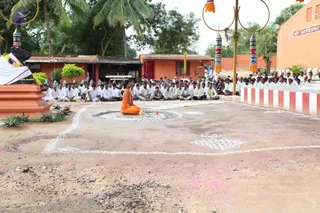
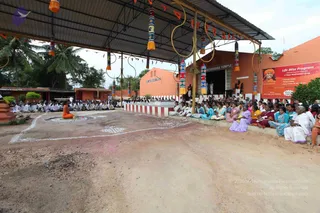
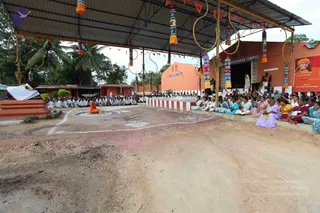
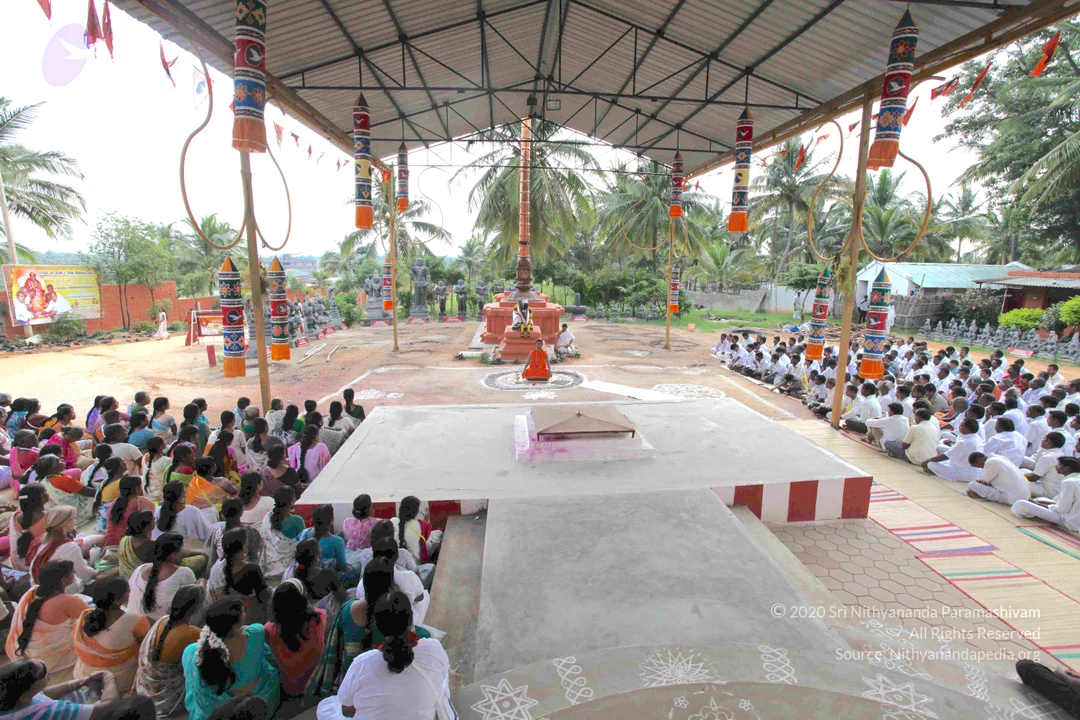
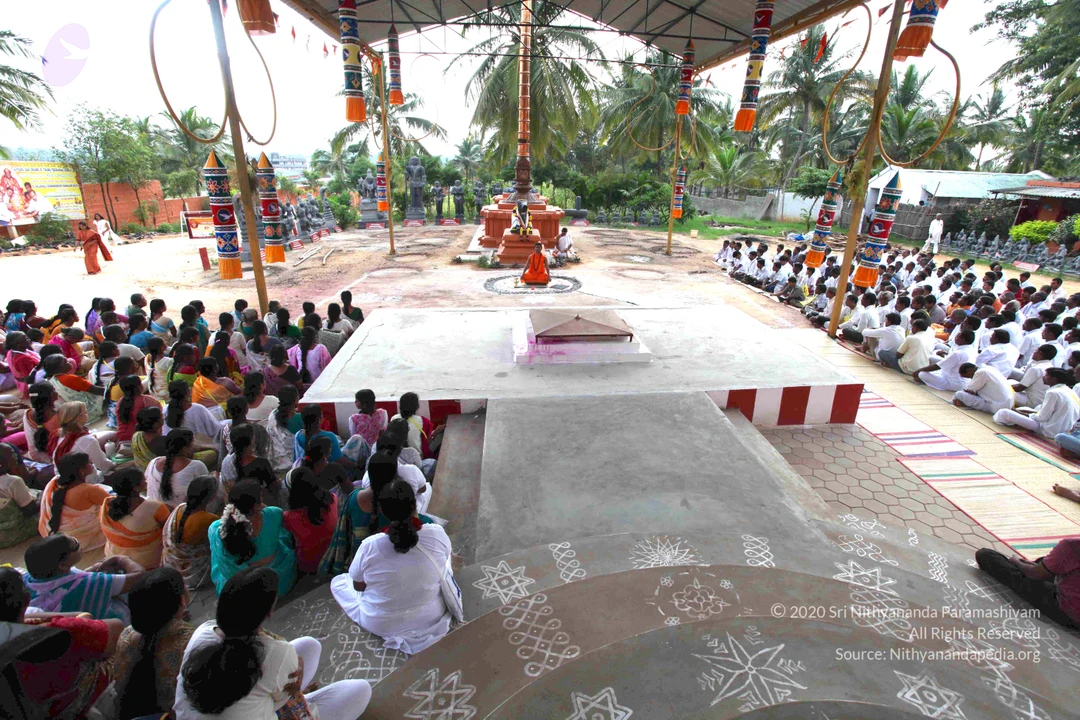
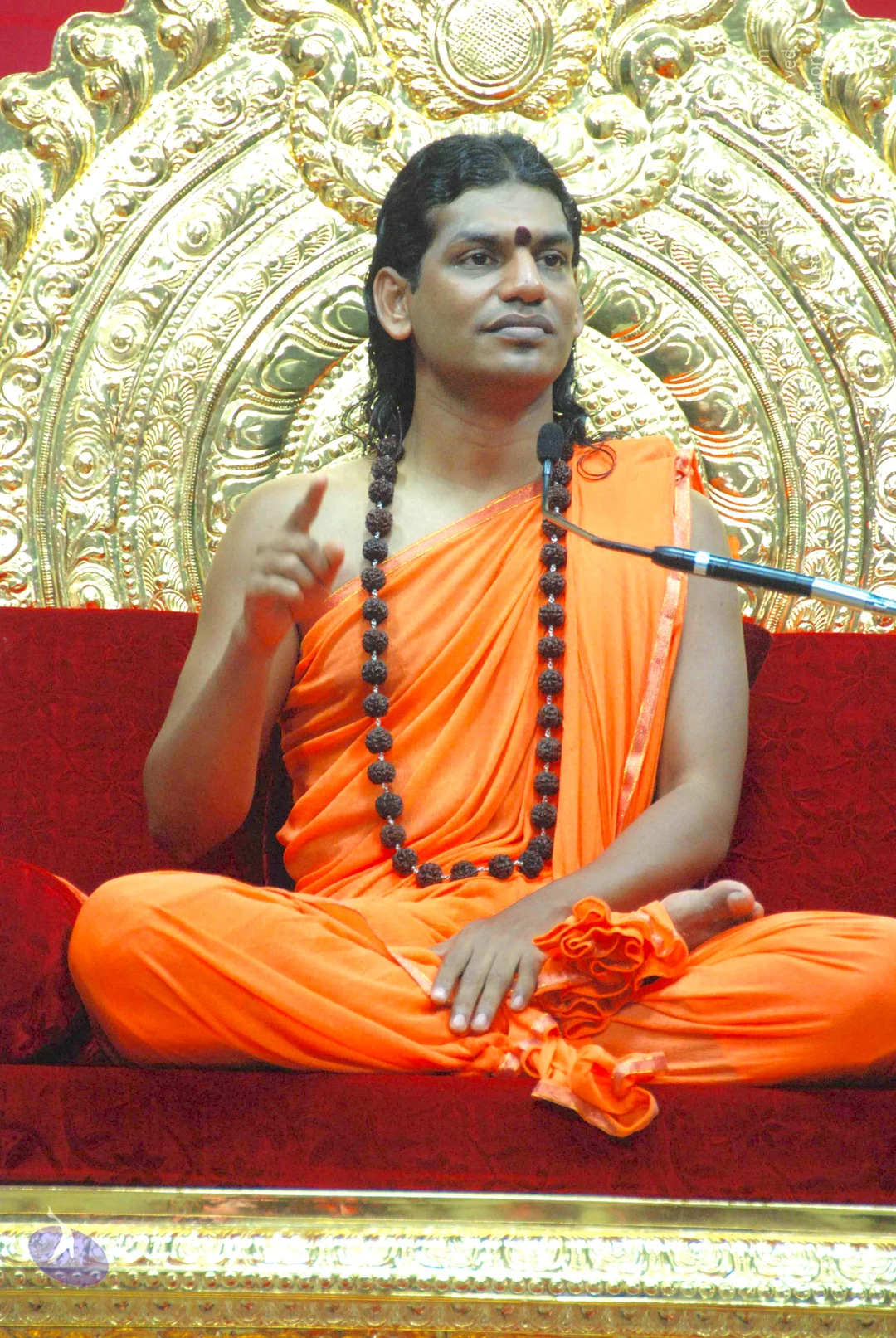
An outdoor satsang on a dirt courtyard with a large white and grey kolam floor design. A single person in saffron-orange robes sits cross-legged on a mat at the centre of the rangoli, with a brass vessel placed beside them. Dozens of people in white clothing sit in rows across the courtyard facing them, while others stand at the edges. Orange-painted buildings, palm trees and colourful decorated poles with flags frame the scene, and a painted sign on the orange building reads Sri Dakshinamurthy Mandir.A person seated on an ornate golden throne with a red velvet cushion, palms pressed together in namaste at the chest with eyes closed. He wears a sleeveless saffron-orange robe and multiple dark rudraksha malas, with a light mark on the forehead. Behind the throne, a large painted backdrop shows a deity figure in pink and blue, and to the right a shrine-like niche holds a small deity murti.A wide photo of a stage set with dark maroon velvet curtains framing the sides and a white valance across the top. On the orange-carpeted platform, a figure in saffron-orange robes sits on a red-cushioned throne-like seat under a decorated backdrop with lit lamps. Several people in white and yellow clothing sit cross-legged on the floor in front of the throne, facing it, with small offerings or flowers placed on a mat before them. A white floor fan stands at the right edge of the stage. The scene reads as a satsang or discourse setting.

October 21 2010

Original wiki page
Contents

Title

Genetic Science Behind Initiation: Nithyananda Morning Message (21 Oct 2010)

Narration

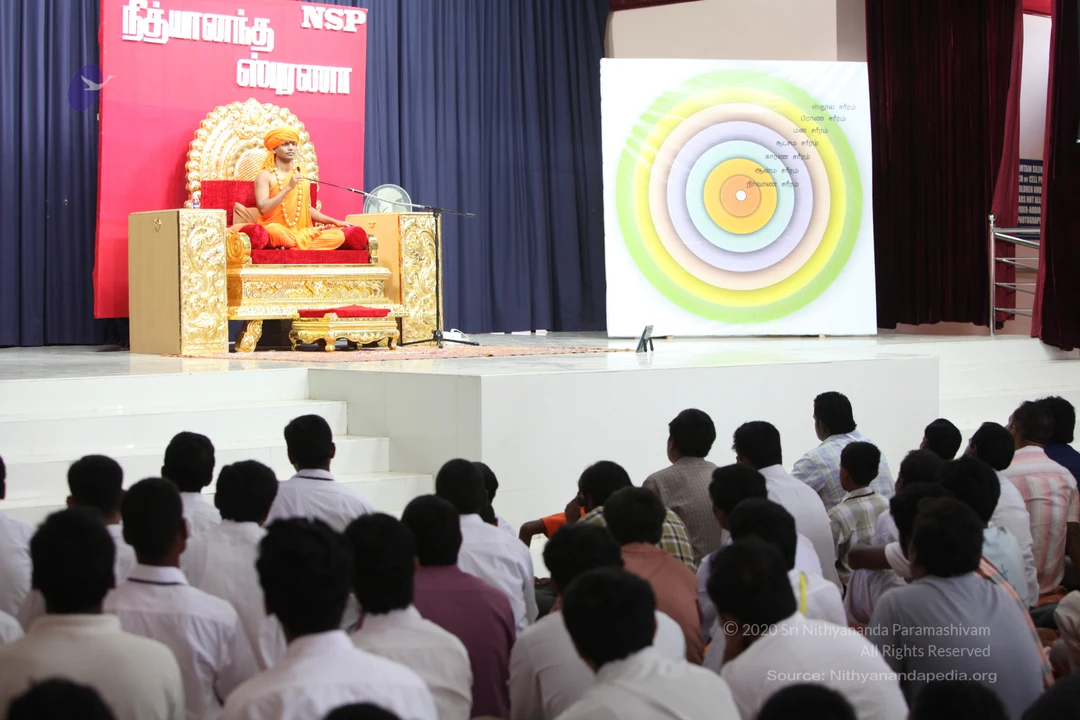
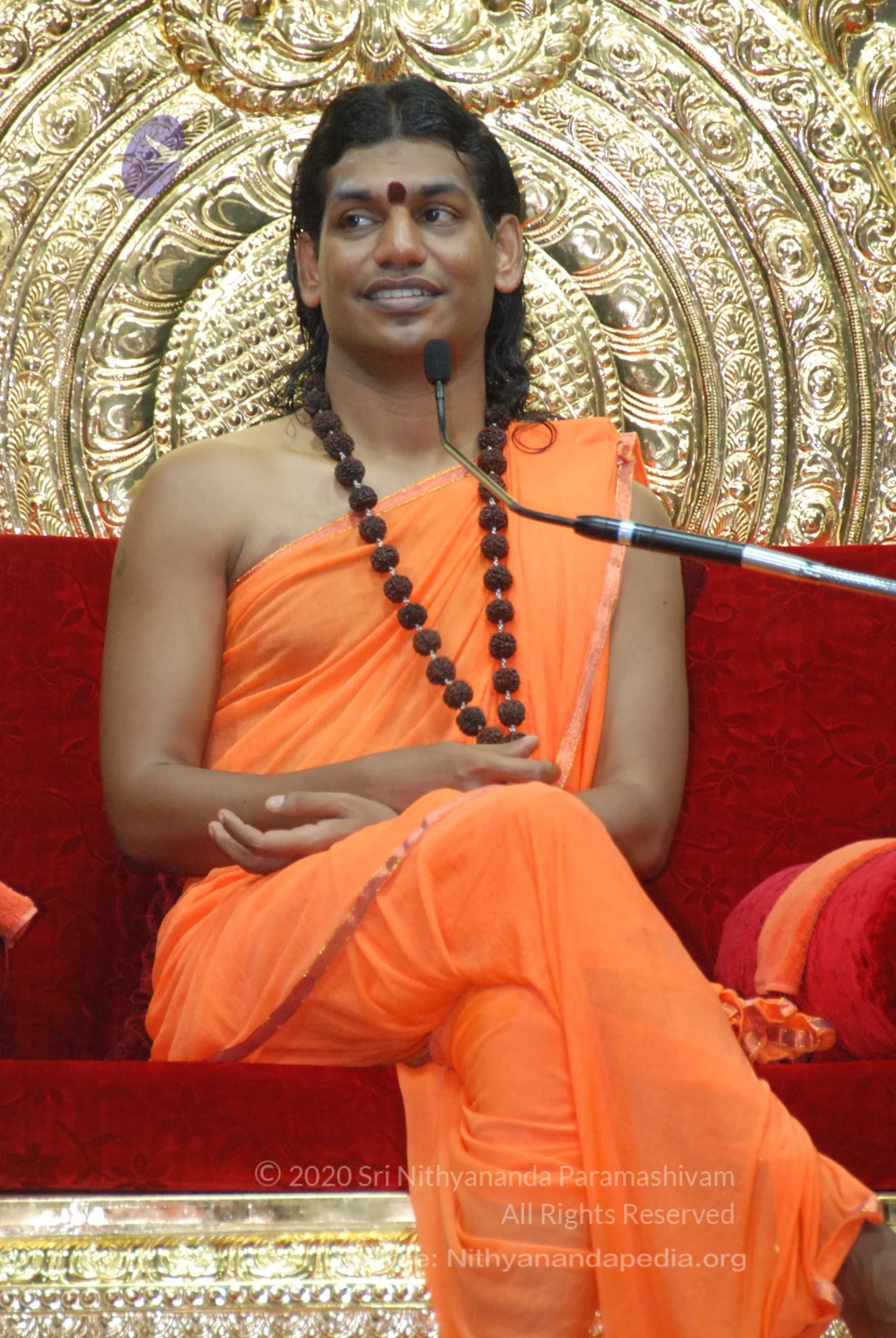
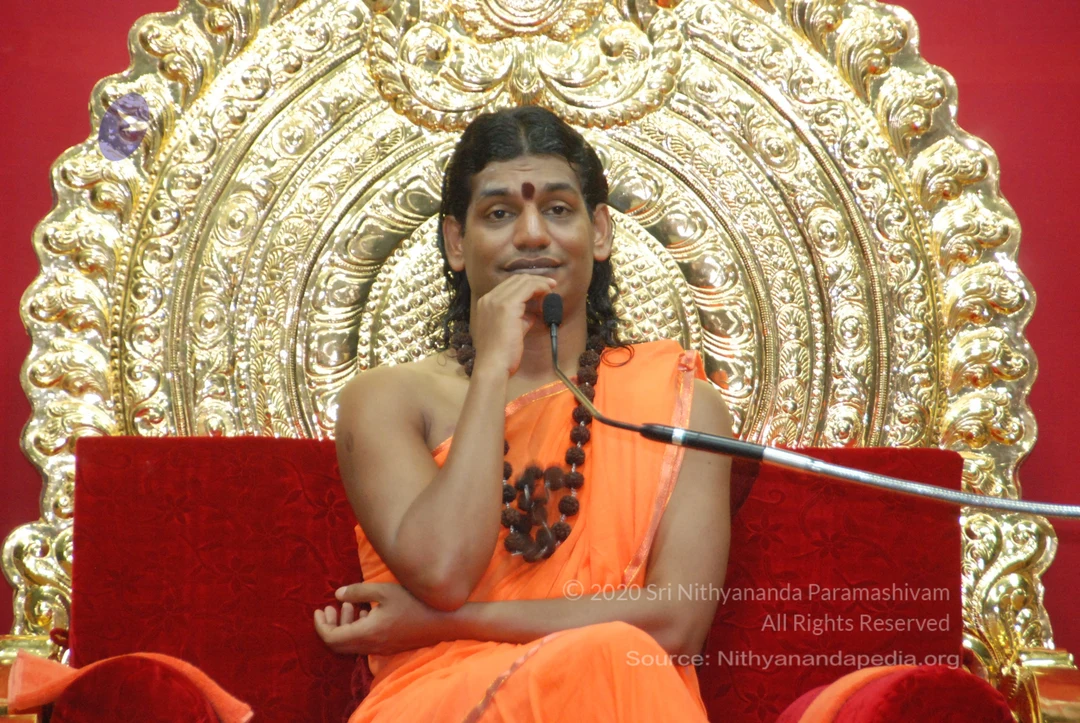
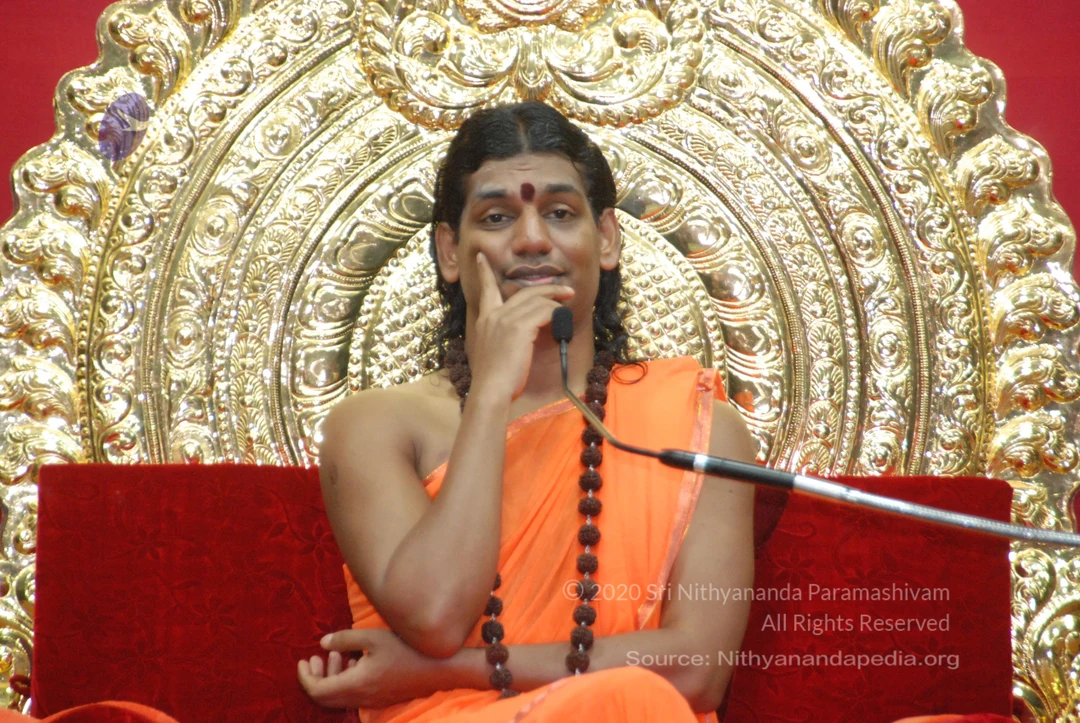
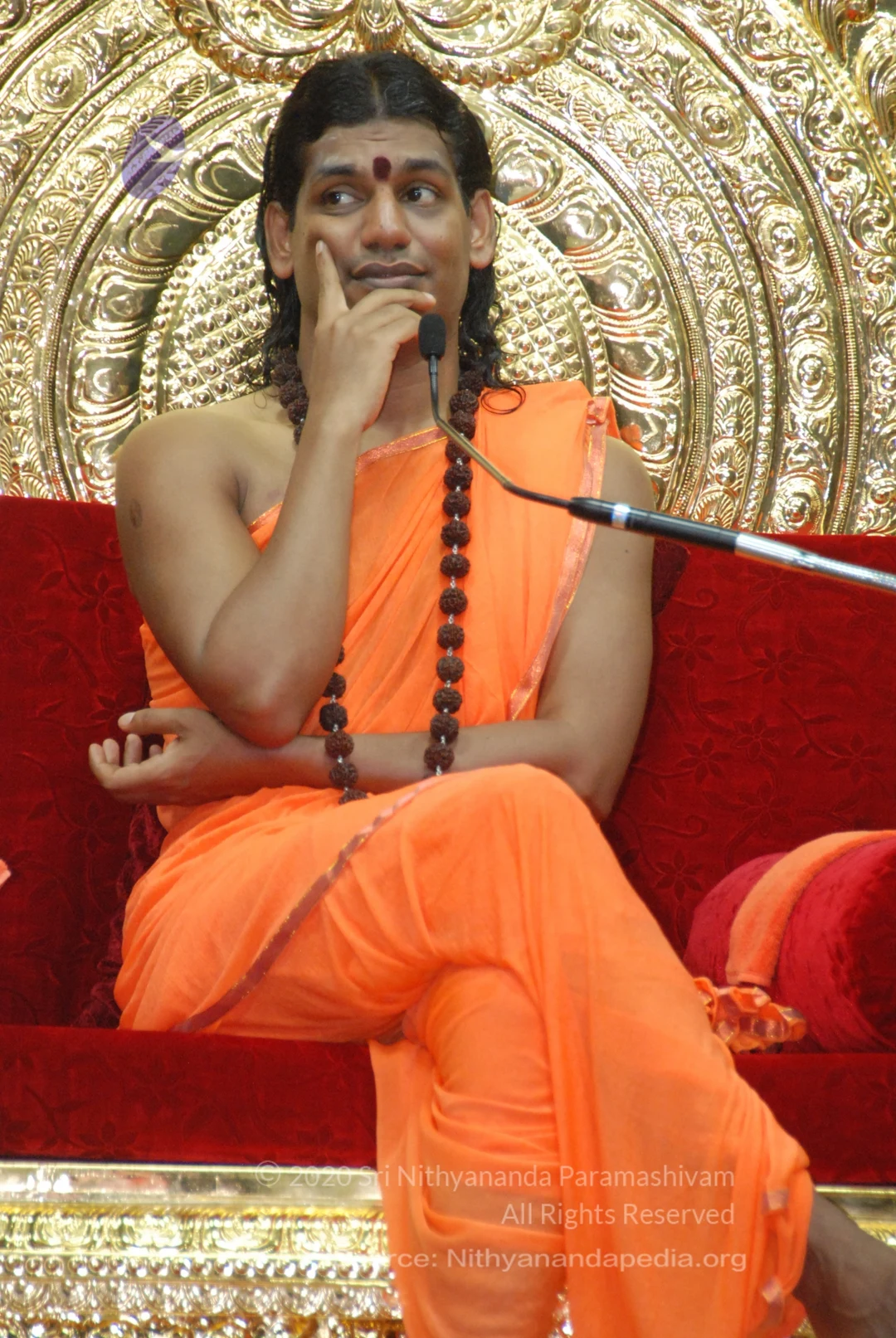
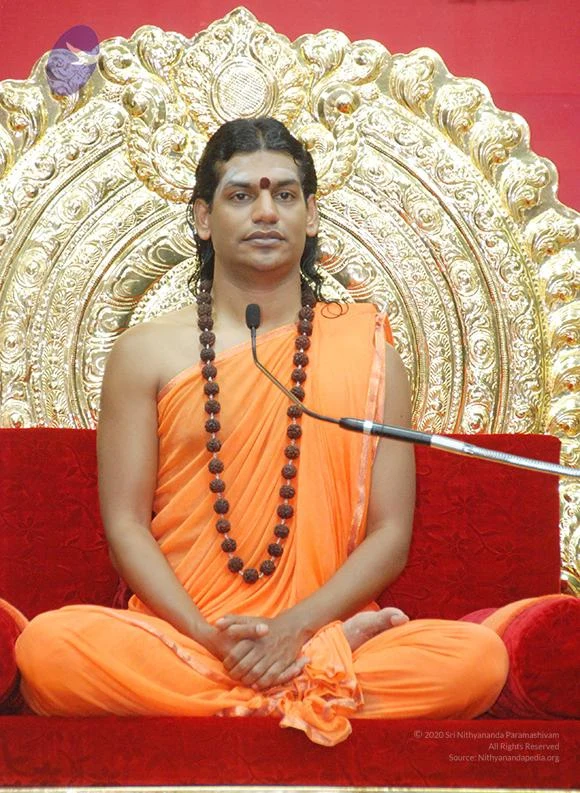
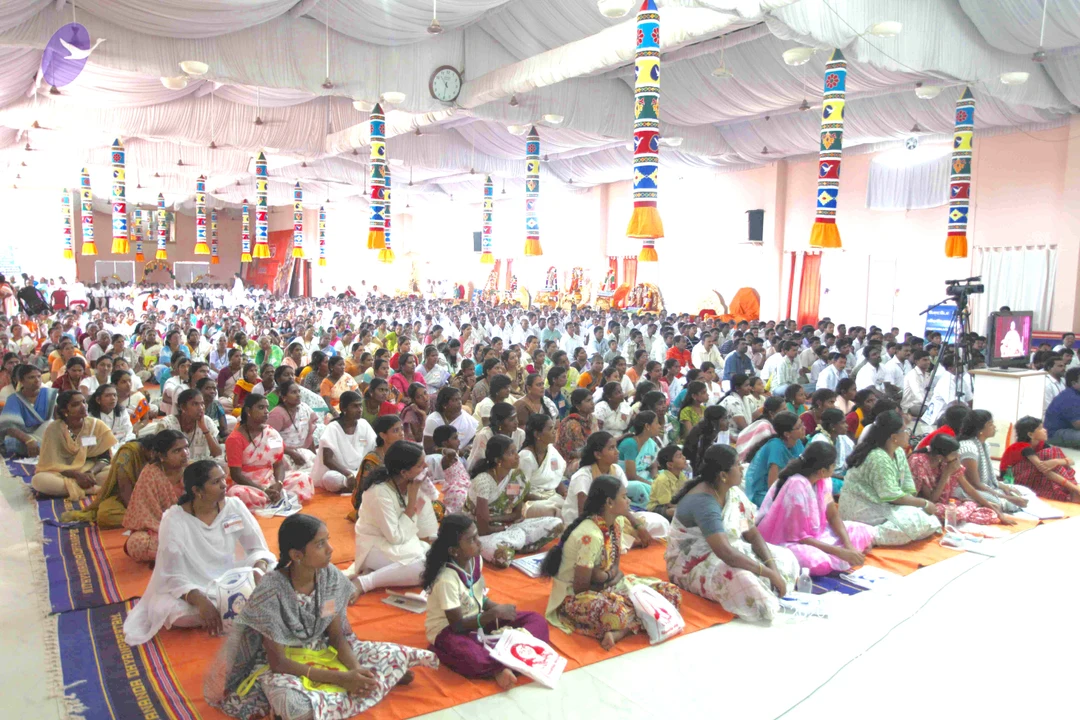
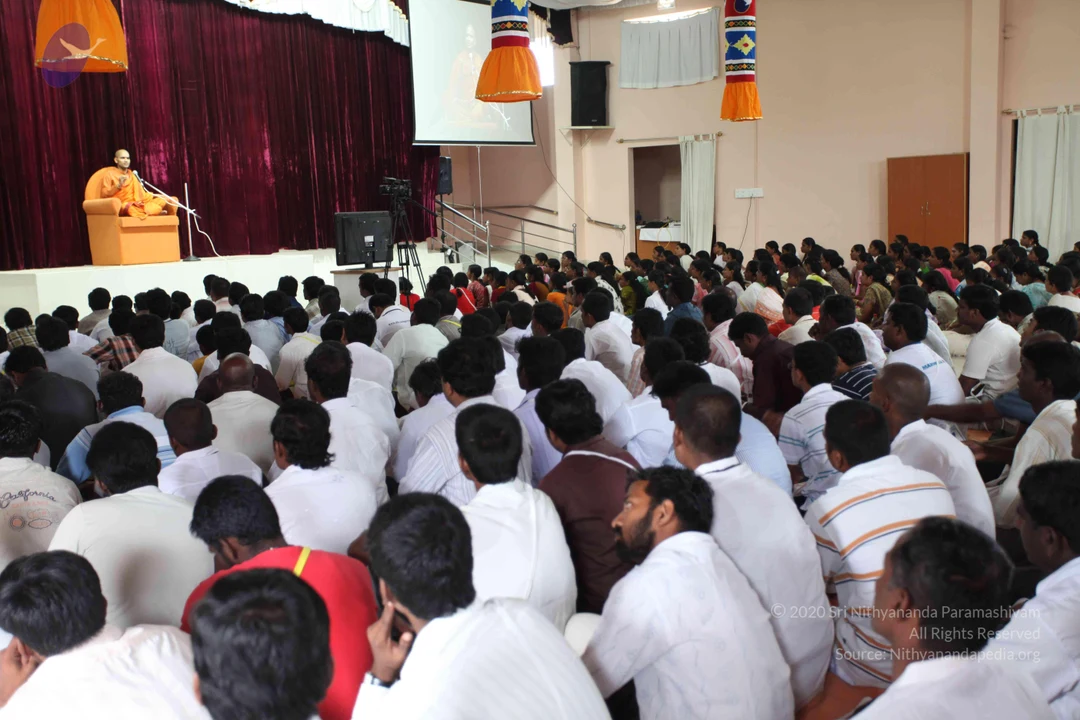
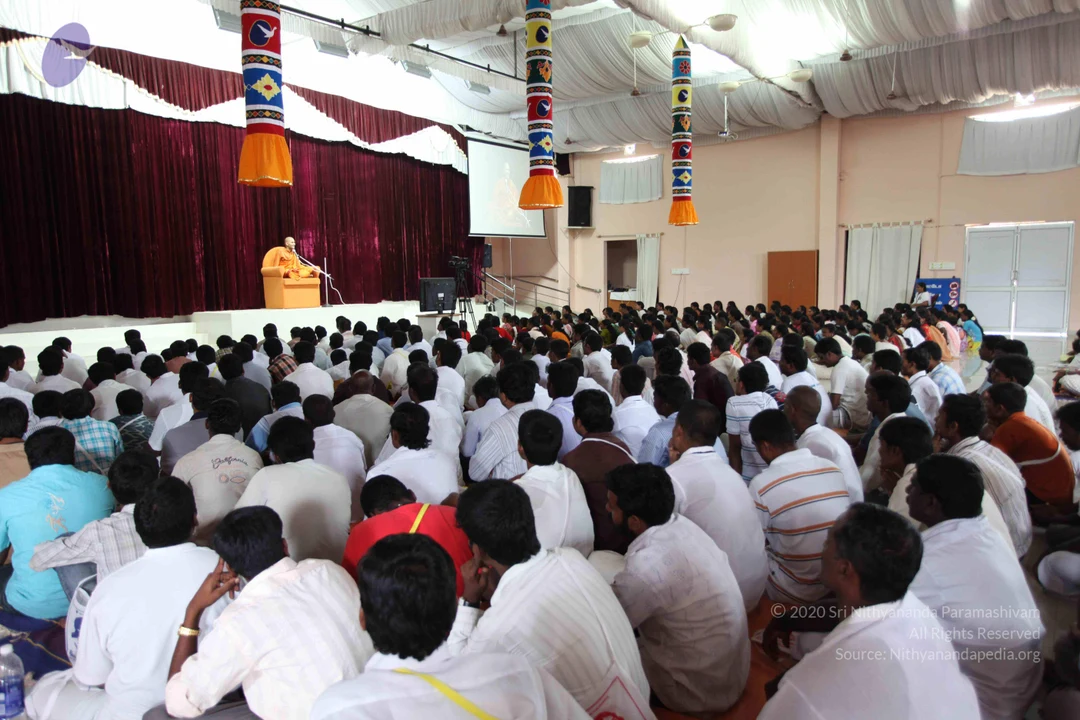
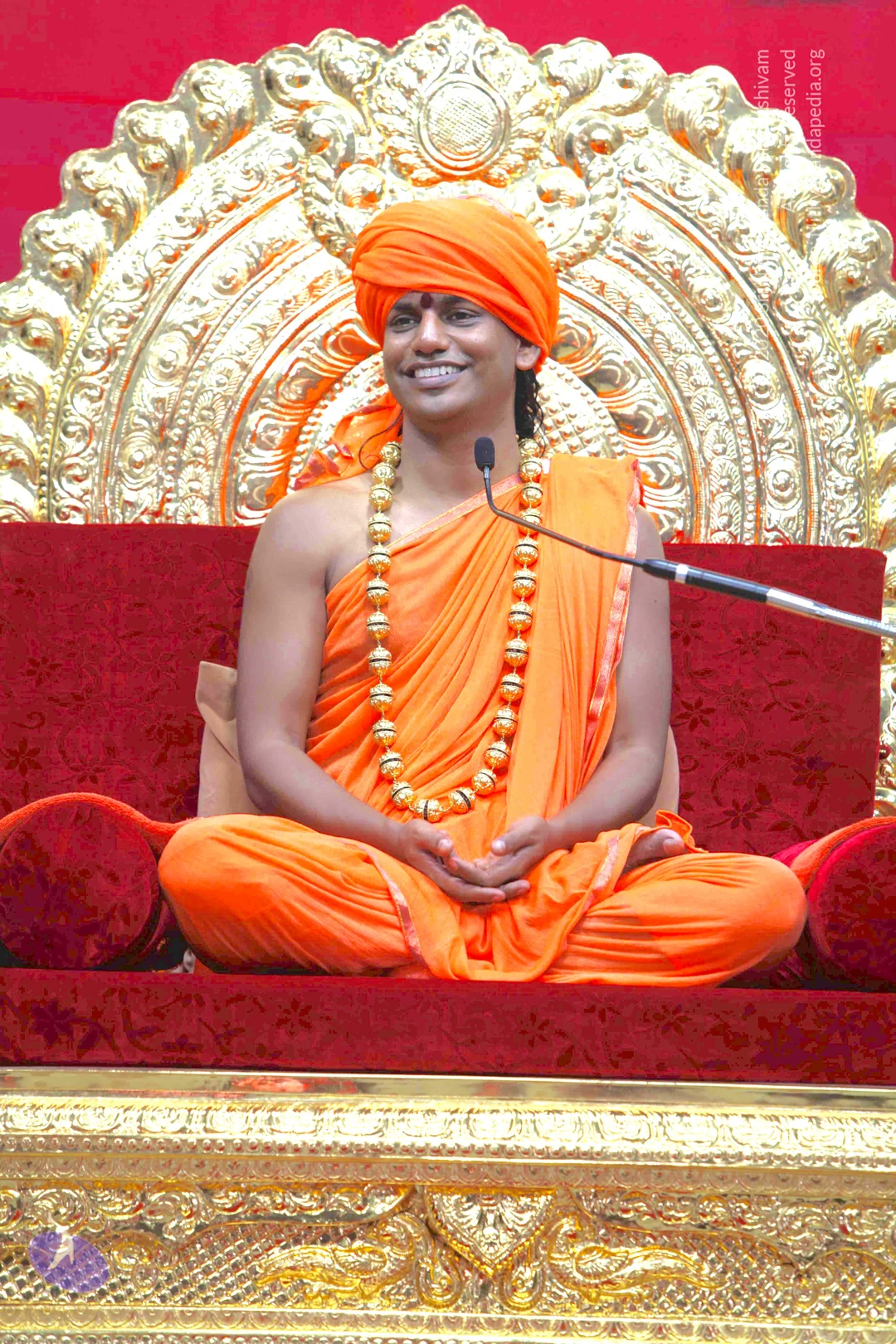
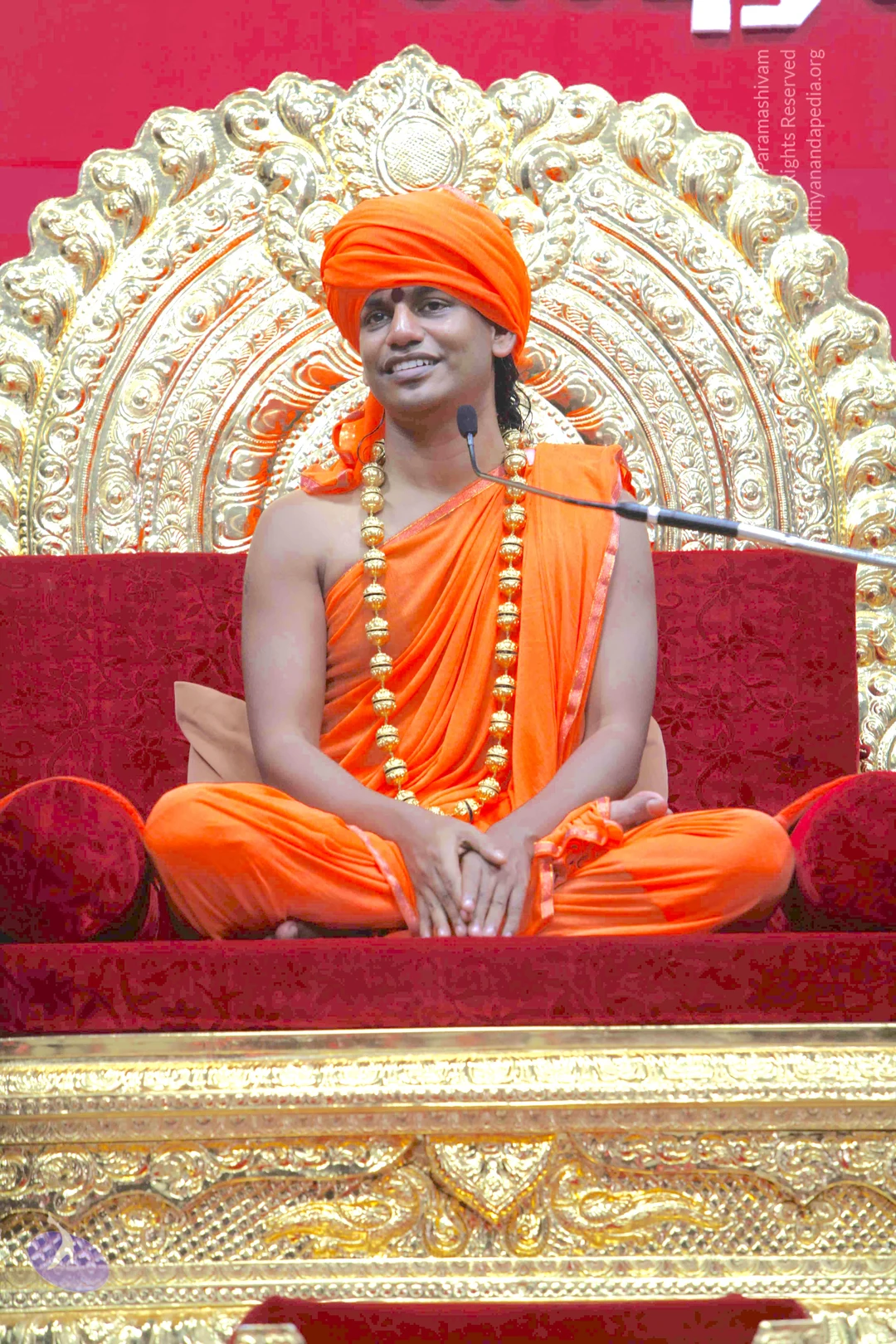
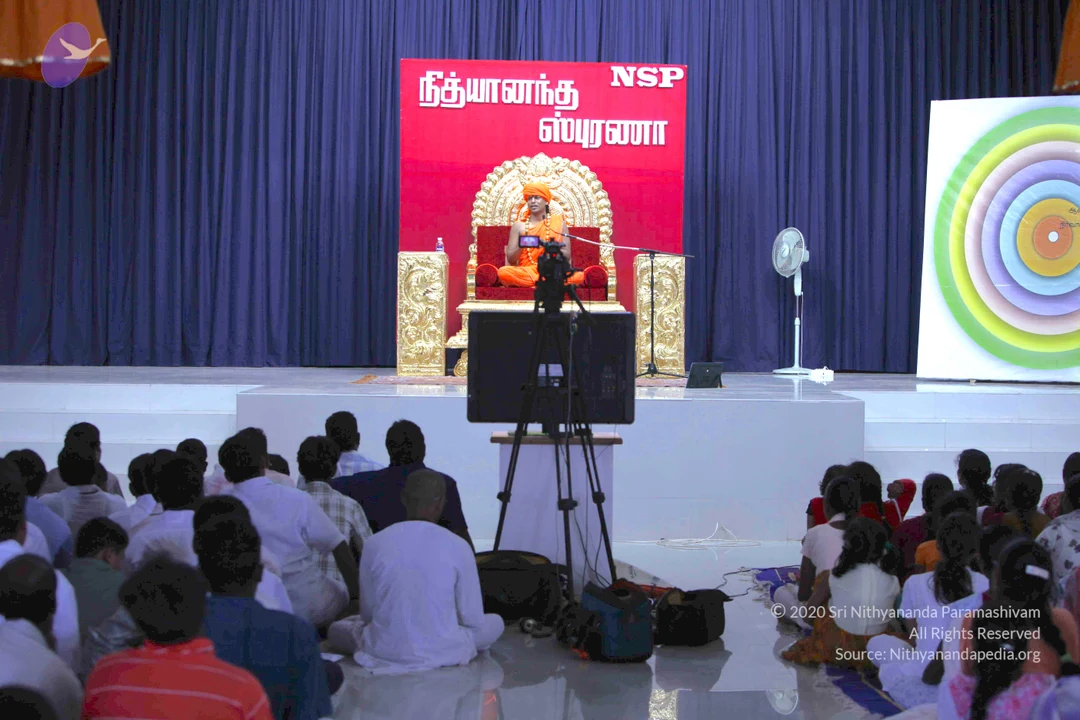
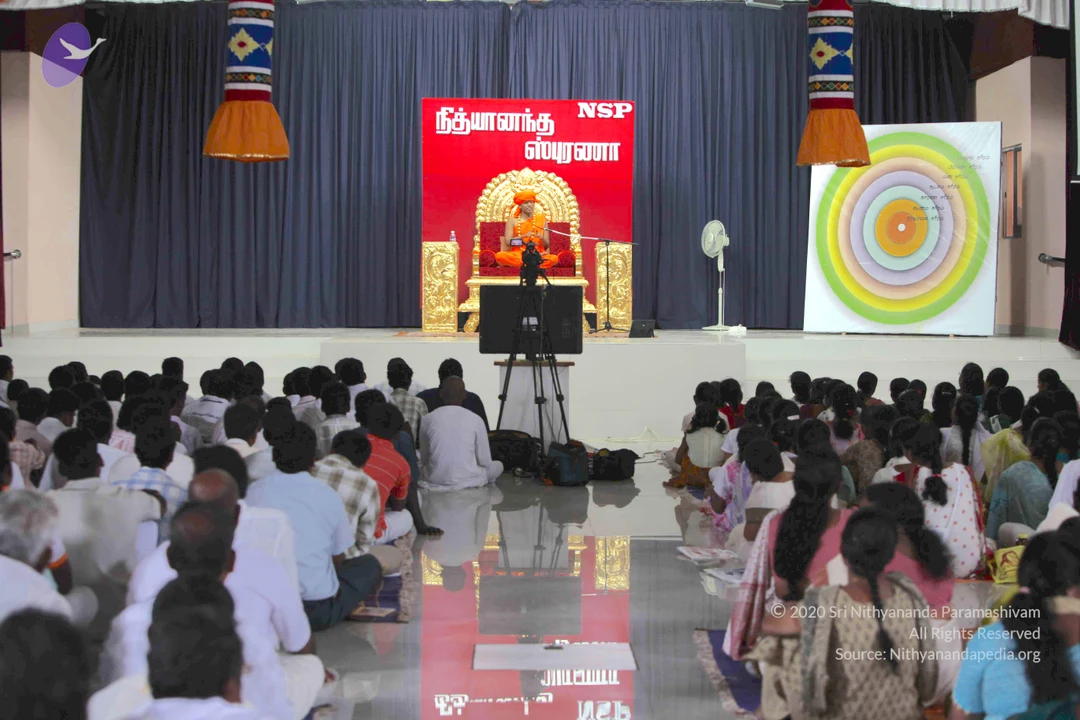
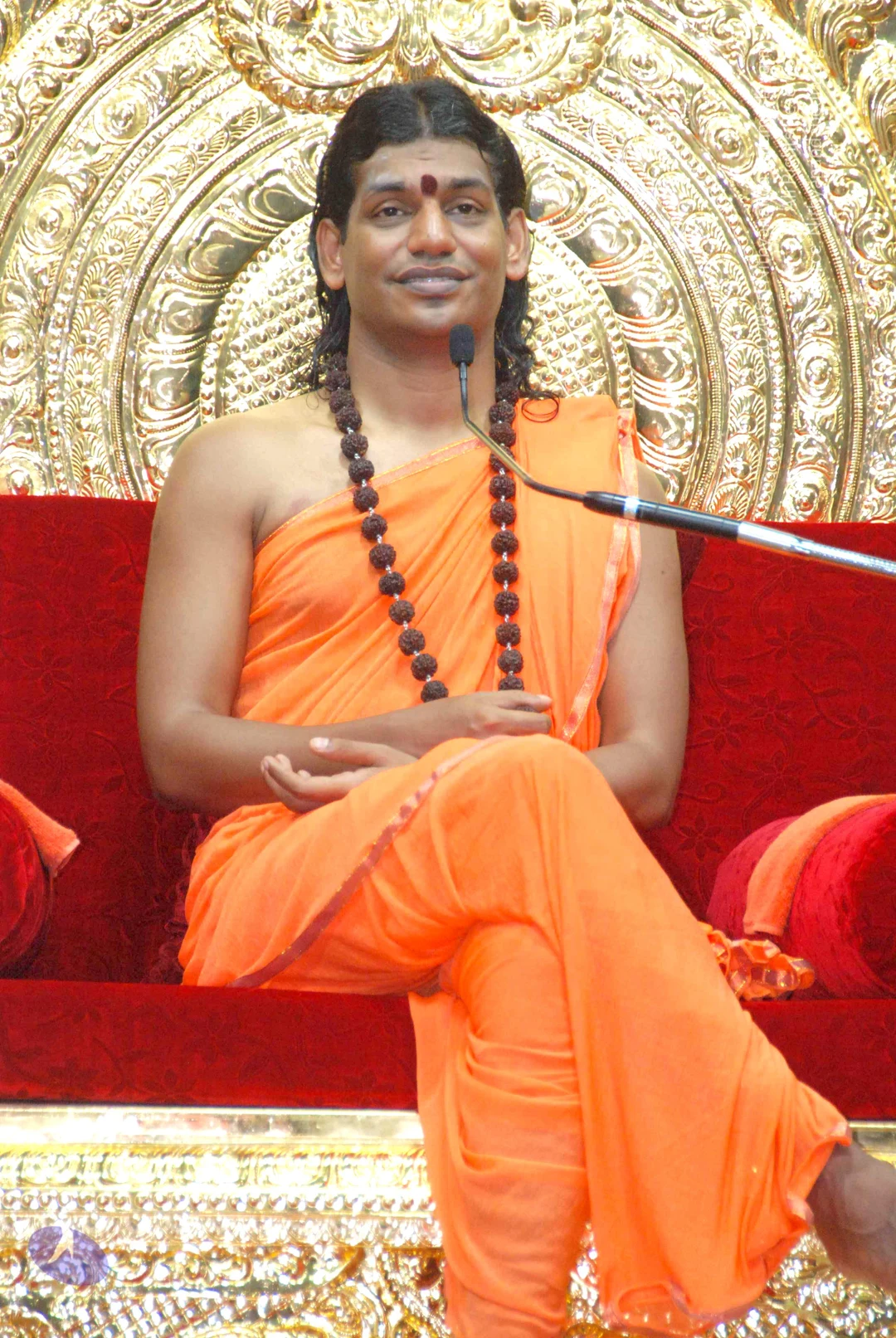
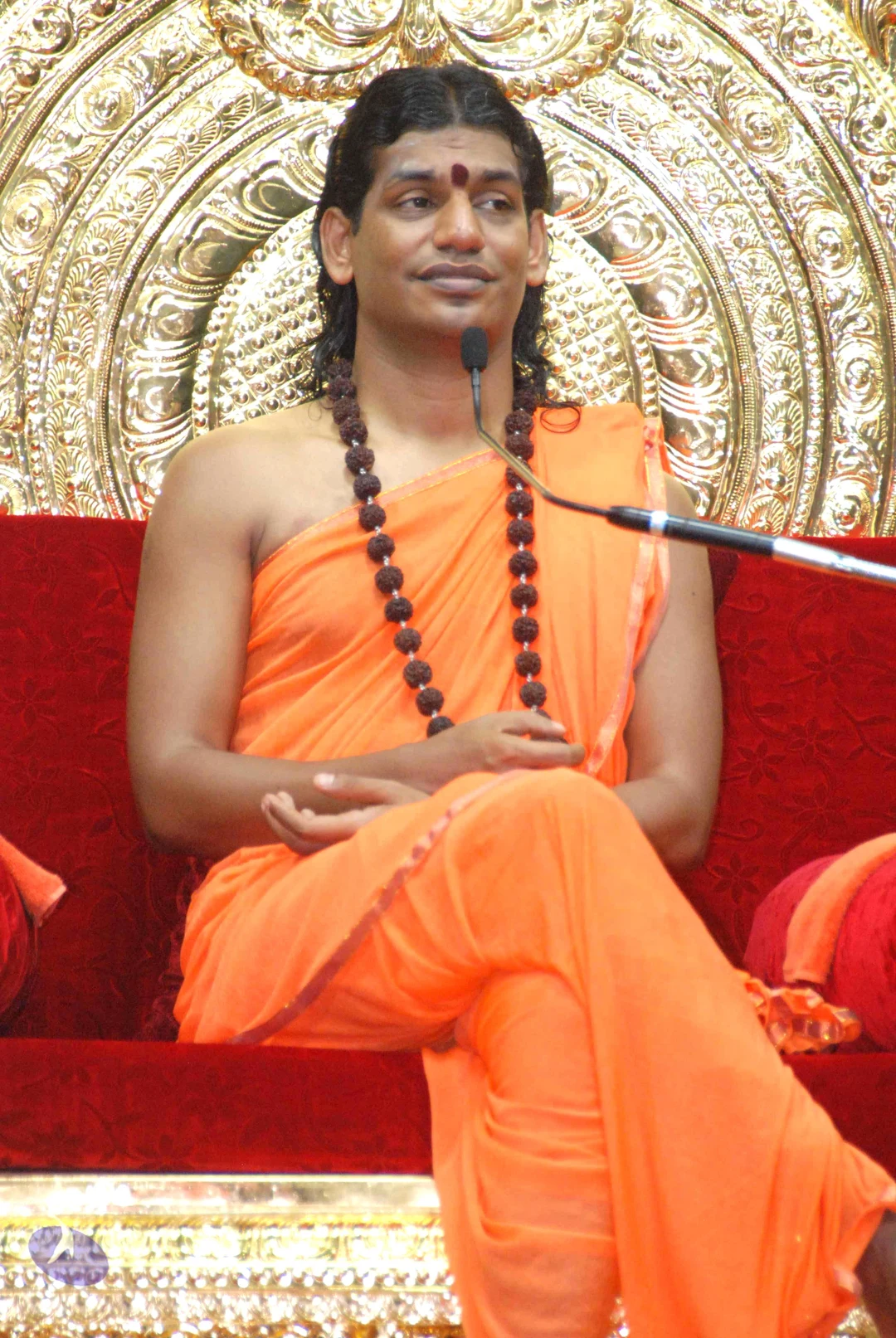
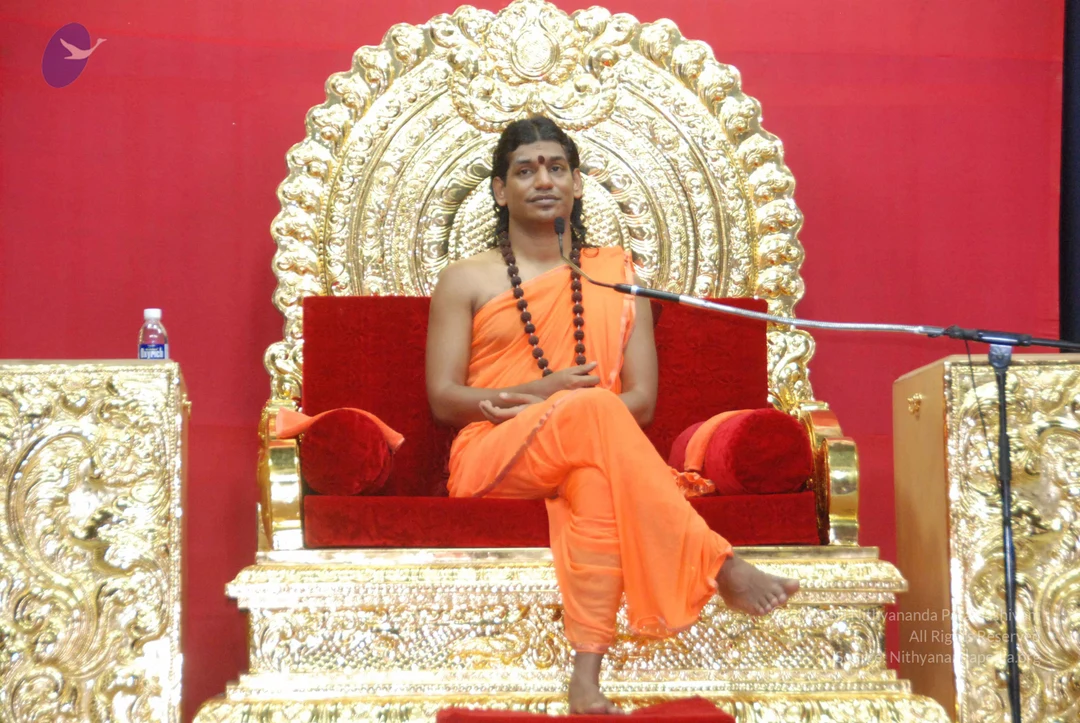
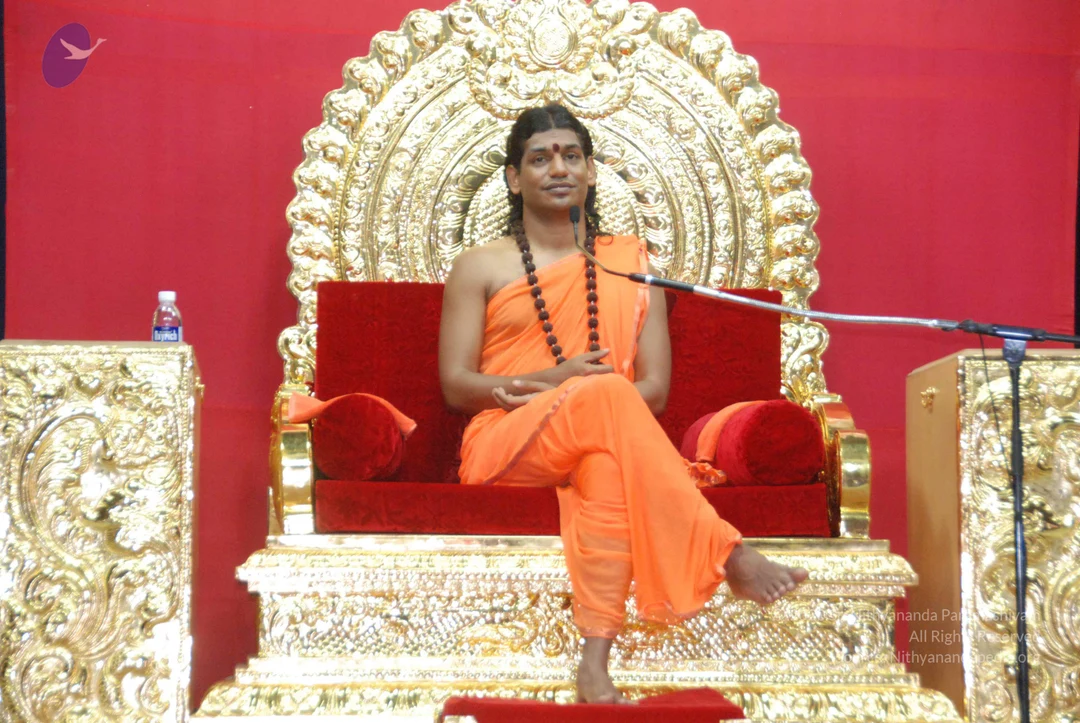
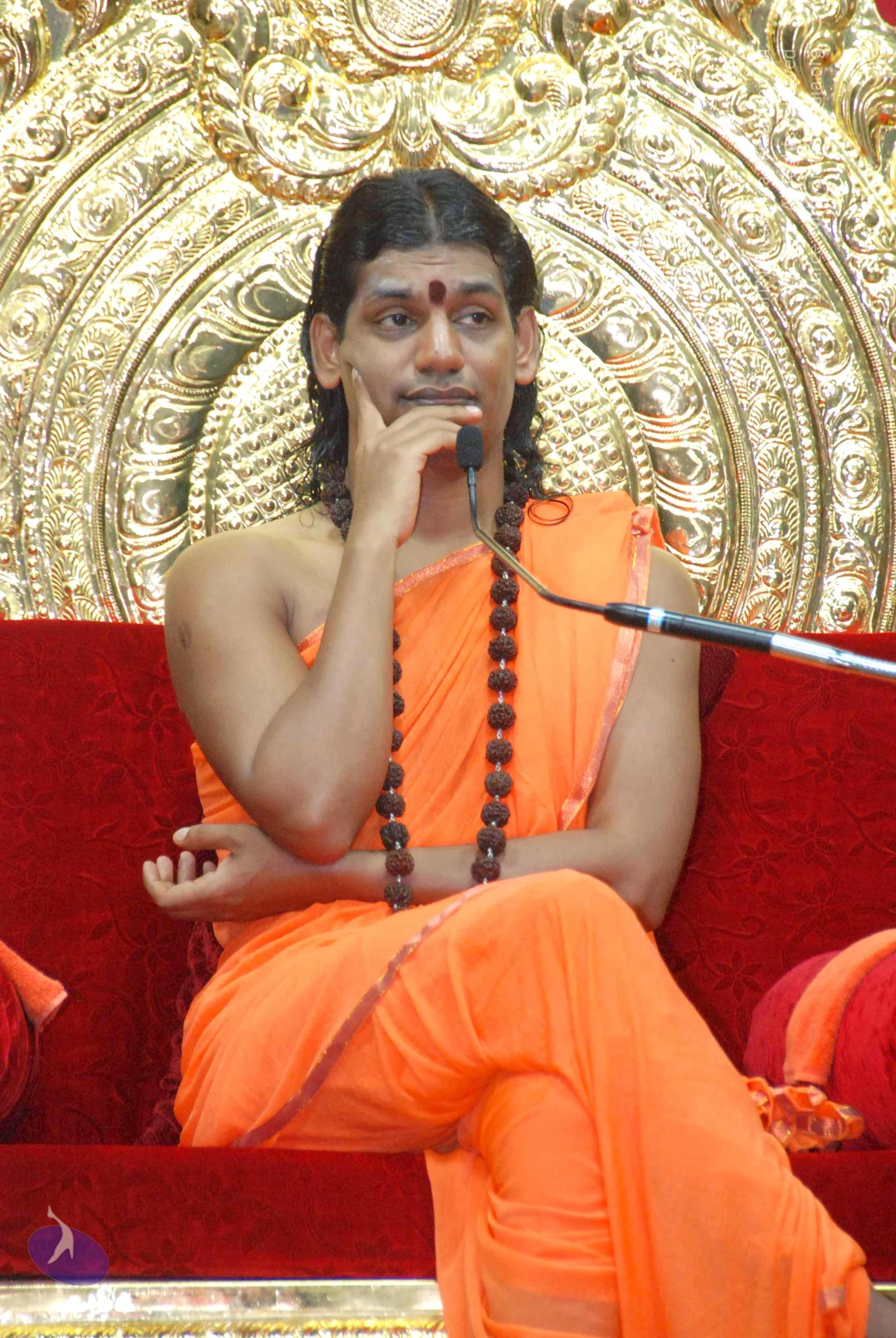
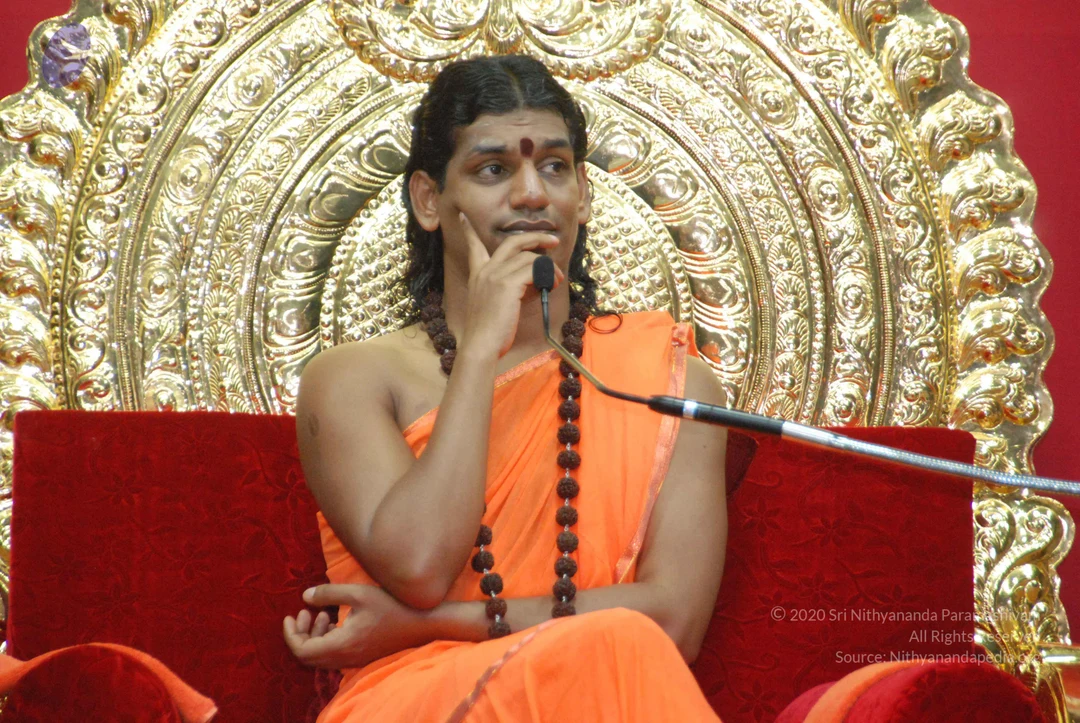
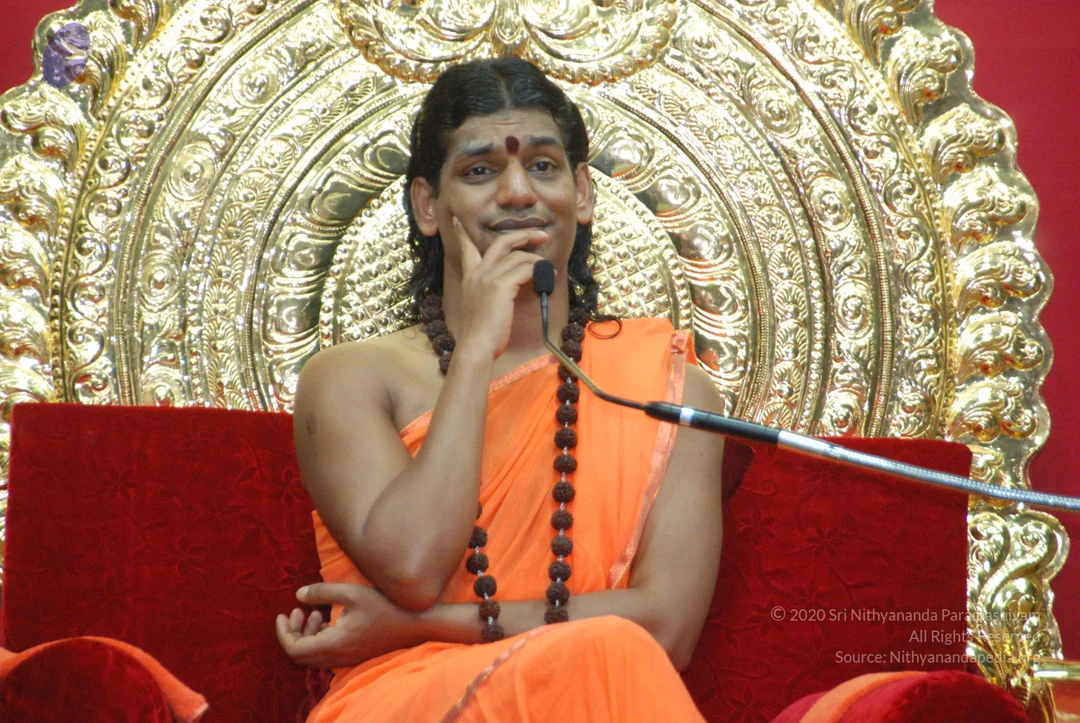
The Supreme Pontiff of Hinduism, Jagatguru Mahasannidhanam, His Divine Holiness, Bhagavan Nithyananda Paramashivam, expounded on the Cosmic Principles of Initiation during the everyday live public talk - Nithyananda Satsang. In this talk entitled Genetic Science Behind Initiation, His Divine Holiness (HDH) expounded upon the genetic science behind initiation - Deeksha - by drawing on the Shasta Pramanas, ancient Rishis, modern day Rishis and also Atma Pramana, so it can become Apta pramana - our own experience. He quoted the research of several scientists that documented evidence of the plasticity of DNA which can be reprogrammed by exposure to sound, syntax, semantics and grammar. Furthermore, HDH cited research that human language did not evolve by coincidence, but developed in conjunction with the evolution of our human DNA. He compared this body of research with the teachings of ancient and modern Rishis. "If people who have been genetically reprogrammed by chanting mantras sit together and then chant, the DNA of the Cosmos itself can be reprogrammed.That bit of Cosmos, space, which is reprogrammed by the reprogrammed system which is the body of the Master, is called an energy field."

His Divine Holiness explained that living in the energy field of the Master reprogrammes our very DNA and concluded with three important Truths for us to take away: 1) Be aware of words we use, 2) Listen to the great words only from a person who has experienced them, 3) Whenever you listen to higher frequencies from a person who has experienced it, it then becomes your experience. That is initiation.

Video and Audio

Genetic Science Behind Initiation

VideoAudio

Transcript

(0:20)

I welcome you all with My love and respects. Today’s subject is ‘Genetic Science behind Initiation - Deeksha.’ First I'll share some of the shastra pramanas, the eternal truths revealed to and by the ancient and modern rishis.

(1:09)

Rishi means mantra drashtāha; who sees mantra. Mantra means the way for liberation, way for higher consciousness, way for higher experiences; manaha trāyate iti mantraha. The words or the paths, truths which shows way to man or to mind is mantraha. So whoever experiences mantra is a rishi. So just today morning I decided that we will have all the great rishis in the vedic tradition, some 112 names are recorded - for all of them we will have moorthi in our ashram and we will have the guru parampara, the sanyas parampara from Shankara till Me, we will have that moorthis. That will be taken care by the swamis and this 112 rishis should be taken care by the rishi parampara. And nowhere the rishi parampara and sanyas parampara all of them have moorthis; we will do first time. Because always the rishi parampara is married, so they don't respect the sanyas parampara. Always the sanyas parampara, unmarried, they don't respect the rishi parampara. Never both were living together in one place; we will have the rishi parampara and sanyaas parampara, both moorthis in Bidadi. Because the rishis have contributed so much, so much to the world and we will institute this rishi award also for this modern day rishis.

(3:31)

Today I will give you some of the revelations from the modern day rishis, the scientific discoveries - shastra pramanas. Then I'll add some of the discoveries from the ancient rishis, shastra pramana again - ancient shastra pramana. Then I'll add atma pramana, My own experience so that it can become your own experience for you - apta pramana.

(4:05)

Russian scientist Grazyna Fosar and Franz Bludorf, you should see their website, really amazing, they have done lot of research on articles and very powerful discoveries. Hmmm. I am exactly quoting from their research - ‘The human DNA is a biological internet, with evidence that DNA can be influenced and reprogrammed by words and frequencies.’

Understand, the words and frequencies can directly programme your DNA; it is biological internet. They call it as biological internet. Russian, these Russian scientists reveal that genetic code of 90% of the junk DNA or dormant DNA which I was revealing that day as the jivatman, Self in all of you; the part which these people call as junk DNA or dormant DNA but I call as jivatman DNA, Self DNA; 90% of the jivatman DNA follows the rules of human languages. Understand, its a very powerful. I'm revealing step by step, then I'll connect it, how it can be applied in our life.

(5:50)

The third important revelation, Grazyna Fosar and Franz Bludorf compared the rule of syntax. ‘The way in which words are put together to form phrases and sentences and semantics, study of meaning in language and grammar and found out that alkalines of our DNA follow a regular grammar and set rules like our language.’

Always Raghupati Yogi used to tell Me... he will teach different yoga for different parts of the body. See for hands he will give some yoga, for eyes he will give some yoga, for tongue he will give some yoga, for nose he will give some yoga and the most difficult part to work out is the cheek. Even for that he has some yoga, he will give some yoga. When I asked him, “what is the yoga for brain”, he will categorically tell, chant Sanskrit. The sanskrit language, learn sanskrit language, chant sanskrit mantras. I used to be surprised, how can brain have yoga by sanskrit? He will insist that I chant that surya namaskar mantras during the postures. He will insist that mantra chanting is done. I used to ask “how can mantra have yoga for brain?” But now I know it’s true.

I can tell you from My experience, whatever is said and done, a person who speaks decent cultured language, naturally behaves, lives, thinks decently and culturally. I am really telling you; because I wandered length and breadth of India I have seen all kinds of dialects, people who speak dialects. I have seen Tamil alone 20 versions, Kongu Tamil and Madurai, Chennai, in Chennai, Kuvam Tamil and North Arcot district Tamil. In that there are different language, Mudaliyar Tamil, Gounder Tamil. All kinds of dialects I have seen. And in north, the different dialects of Bengali, different dialects of Hindi, I have seen. I tell you, from My experience I can tell you, the language, the standard of language a person speaks directly affects the way in which he thinks, the way in which he acts; it really affects.

(9:21)

There may be exemptions, very few. Like a person speaking very cultural language and behaving indecently; very rare exemption. But as a nature it doesn't happen. As a rule, it’s a rule. Exemptions does not break the rule, it only enforces the possibility of existence of the rule. Understand when I say all these candies are sweet, there may be one or two which are not sweet. That does not mean that rule is broken or weakened, those two three exemptions ensures the existence of the rule. Look in the other side, look from the other side. All exemptions ensure the existence of the greater possibility of the rule.

So maybe one or two exemptions, but otherwise I can say, the language they speak, the cultural, cultured, clear, syntax semantics grammar they use, directly affects the alkalines of our DNA. That is why the neuro linguistic programming, NLP really does a big transformation. I can tell you, see NLP is not all, it does not lead to enlightenment, but it surely awakens much more than what you are now. The neuro linguistic programming surely makes you more alive than what you are now.

(11:24)

The next important discovery, truth, scientist Gorge Jave says: Our DNA can be reprogrammed by speech when words are modulated on correct carrier and frequencies.

Again and again and again the Upanishads are chanted for so many different purposes. Not only your DNA can be altered, I tell you, the Upanishads came from such a high frequency, if a group of people whose DNAs are already altered by this chanting, if they chant, the cosmic DNA can be altered. That is why the chanting and homa brings rain. It brings whatever we need, the natural positive effects. Why do you think such big Tsunami did not touch single temple? See all over, from Kanyakumari to Chennai, at least 2000 temples are there in which compounds usually gets washed by the wave, at least 2000.

(12:47)

Please understand, from Kanyakumari to Chennai, first of all let us start with Kanyakumari Devi temple, from that to Chennai Thiruvottiyur, Kashi Vishwanath Temple and Pattinathar Samadhi; at least 2000 temples are there - Thiruchendur, Thoothukudi, you just... temples are there. Not a single temple was broken or damaged or disturbed. We may say “No, no, no, coincidence”. No!!! If people whose DNAs are altered, reprogrammed by the sounds and mantras and frequencies, if they sit together and create those frequencies and sounds, the cosmos DNA can be reprogrammed. So a space, bit of cosmos which is reprogrammed by the reprogrammed system of the body of the Master is energy field. Bit of the cosmos which is reprogrammed by the reprogrammed body of the master is energy field. That is why just very living in that field reprograms many of our DNA.

(14:39)

Next truth: ‘Since the basic structure of DNA and language is of same structure, one can simply use words and sentences of human language of proper frequencies. This proves DNA reacts to spoken words, with proper frequencies; directly’

This is My own conclusion, because of these researches, these researches directly or indirectly explains and proves how affirmations, hypnosis, words from spiritual masters affect your body and mind directly. This is the power of initiation; the process. Many of you people would have seen the video of people levitating during LEP. If you have attended LEP you would have seen. I did not do anything. All I did is, “let your samana be balanced, let the air energy inside you be balanced, let whatever happens inside your body happen”; that’s all. Affirmation - satya sankalpa, nothing else. Satya sankalpa; over. Immediately the whole thing fell in place. People started levitating; the raising.

(16:45)

Understand, ordinary sankalpa is gravitation, satya sankalpa is levitation. Sankalpa, ordinary sankalpa means will, words, thoughts created, pulls you down, makes you more heavy. Satya sankalpa makes you levitate. That is why whatever is said and done, when you listen to the great truths directly from Master, it just gets recorded into your DNA, becomes part of your DNA. This is the science why millions come to listen to the masters and how the master's words directly gives experience to people. That’s what I call transmission of lamp; initiation. From a lit fire only you can light the lamp. How much ever you sit and beg, please, please, why don't you lit yourself, how much ever you play and do any drama, any game, light cannot be lit by itself. Only from the lit fire it can be lit; transmission of lamp only can happen. Same way how much ever you sit and talk in ordinary way, no. Only the reprogrammed DNA can transmit that frequency and right words and reprogram your DNA. That process only I call initiation.

(18:56)

So it is very important to know the importance of initiation.

If you sit and listen to the truth from an ordinary man who has intellectually memorized it, it is called learning; teaching and learning. If you sit and listen to a man who himself is practicing those truths, he is called Acharya, you are called Shishya.

If you sit and listen to those truths who has experienced it, He is called Guru you are a Shishya.

If you are listening to those truths from a Being whose very DNA is programmed, it is called initiation. He is an incarnation, you are a devotee. It is called initiation.

(20:17)

This is what exactly I am doing in Inner Awakening. Every session of Inner Awakening is an initiation, awakening of one DNA; every session of Inner Awakening. First working on life - means different energy centers, then working on death - the different energy layers, then working on koshas - sheath, sheaths, different energy sheaths, energy fields, then working on the very core of energy. So every session is an initiation into the next step. Your DNA gets reprogrammed for enlightenment.

(21:25)

In My life there is an experience with a group of Tibetan monks. They made Me sit inside the bell. Some ten monks sit around the bell and rub the bell and go on chanting. I can never realize, I never realized the sound can create pain in your air holes; hair holes in your pore. The bell has small holes through which I can breathe. But all the ten sides they are sitting and rubbing the bell with a small wooden piece. That vibration created, that sound, within five minutes your ear stops listening that sound. You can't hear it anymore. But every hair pore feels the pain as if a needle is being inserted and after half an hour the pain also disappears. It becomes like a pleasure; very strong deep pleasure. Then they chant the words like you are deathless, you are painless, you have no hunger, you have no thirst, you have no old age, they chant like this. I now translated in negative way. They don't say you have no old age, they say you are ever young, they say you are always fulfilled, you are immortal. They declare in positive terms.

And I was really shocked because first I thought what can this do, it may be a ceremony. I love usually these ceremonies, anywhere any ceremony I see, I'll go and sit. Whether it is a shraddha or I'll not bother. Whether it is some, what to say, some sanyas ceremony is going on or some shraddha is going on, some ceremony is going on I'll go and sit. So I saw some ceremony going on. I asked, “Will you allow Me?” They said, “Are you a sanyasi?” I said, “Yes, I left the house long before.” Then they put Me in that ceremony, I started attending. Then I realized, now I can realize completely, the frequencies and language can reprogramme your DNA. I can tell you still I do not have anything called pain in My body.

(24:05) If you have seen Me ten days before in Himalayas, 10-15 days before there was a big wound, at least 4-5 inch wound, long, may be quarter inch depth. There was a bleeding and big wound. It took five days for Me to realize there was a wound. There was a, something has happened to the hand; some brahmachari saw and told Me. By the time it got healed by itself. Even though body is ordinary body, there is no such thing as pain; still it takes so much to push the food inside My system because there is no such thing as hunger. People have to remind Me to drink water continuously, because there is no thirst. The DNA reprogramming; the power of DNAs reprogramming. So your DNA can be reprogrammed by the right words, right chantings, right initiation from the incarnation whose DNA is completely reprogrammed. That is why the words heard from the master spreads inside you like a fire and makes you experience.

(25:55)

And another one thing, very funny thing; I'll tell you My experience then I'll give you the research truth. Now if you are seeing our website continuously these eN Kalpatarus are going on, E kalpatarus. And I'm talking in more than 20 different languages, Spanish, Portugese, Slovakian, Germany and what not, Chinese, Gujarati, Bengali, Hindi, Punjabi. No really, 20 different international languages I am talking. People may be thinking what is going on? Nothing!!!! I just pick up usually the statements which I use in Kalpataru; the blessings. I pick up those statements and get the translation and read them. From those few statements I try to manage at least the basic conversation so that people will feel connected.

(27:09)

During this exercise I realised one important thing - all European languages, the words are almost same, and all Vedic languages the pronunciations are almost same - like Aashirwad - that word is common in all Indian language. Aashirwad is Aashirwad; that's all. And same way, the blessing - only little bit of alteration you need to do - Felicitado, bendición; only small difference. But almost same tone in all European languages.

I was surprised how come the languages happened in different, different places, how come they all have large similar pronunciation and so much of grammar; almost same symmetrical grammar. Now I know from this research scientist Gorge Jave says human language did not appear coincidentally but it is a reflection of our DNA. That is why Kashmir to Kanyakumari, when there was no communication like telephone, television, telegram anything, Sahana bhavatu is chanted in same frequency. Go to Kashmir saivites temples aur Bhavani Mandir or Vaishno Devi and go to Kanyakumari Kannagi Bhagavathy mandir. You will see Sahana bhavatu and poornamidam being chanted in same tone, same frequency. So the language is not just coincident, it is the reflection of our DNA.

(29:29)

So through this I want you to understand three important truths.

One: Be aware of the words you use. Second: Listen to the great words only from the person who has experienced. Third thing: Whenever you listen to the great words and higher frequencies from the person who has experienced, whose DNA is reprogrammed, it becomes your experience. That is what is initiation.

This is the essence, three message for you for today. I bless you all to have initiation and experience and radiate enlightenment; achieve and radiate the eternal bliss Nithyananda. Thank you.

(30:45)

Photos

Panchatapas
Paadapooja
Morning-Satsang

Sarvadarshan

Tamil-Nsp-Swamiji'S-Session-In-Morning

Tamil-Nsp-Swamiji'S-Session-In-Evening

Photos Of The Day:

nithyananda-bidadi

01--Pada-Puja

02--Temple

03--Satsang

04--Energy-Darshan

05--Panch-Tapas

06--Morning-Tamil-Nithyananda-Spurana-Program

07--Evening-Tamil-Nithyananda-Spurana-Program

Photos from this day

View all 460 photos

Panchatapas

10 photosSource gallery
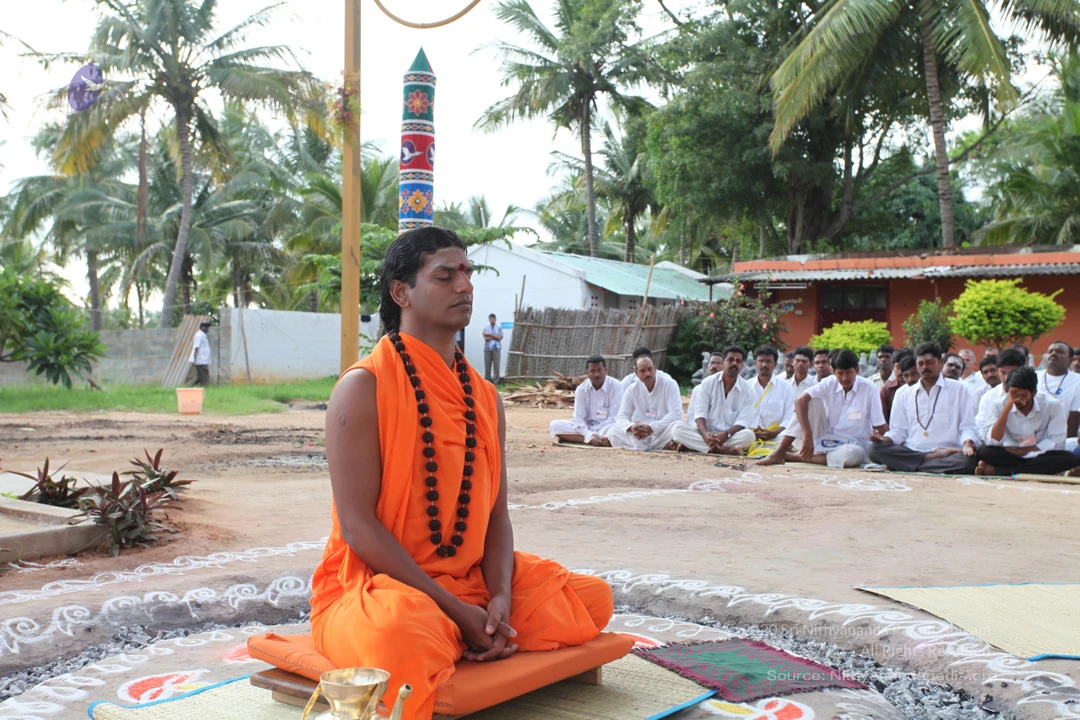
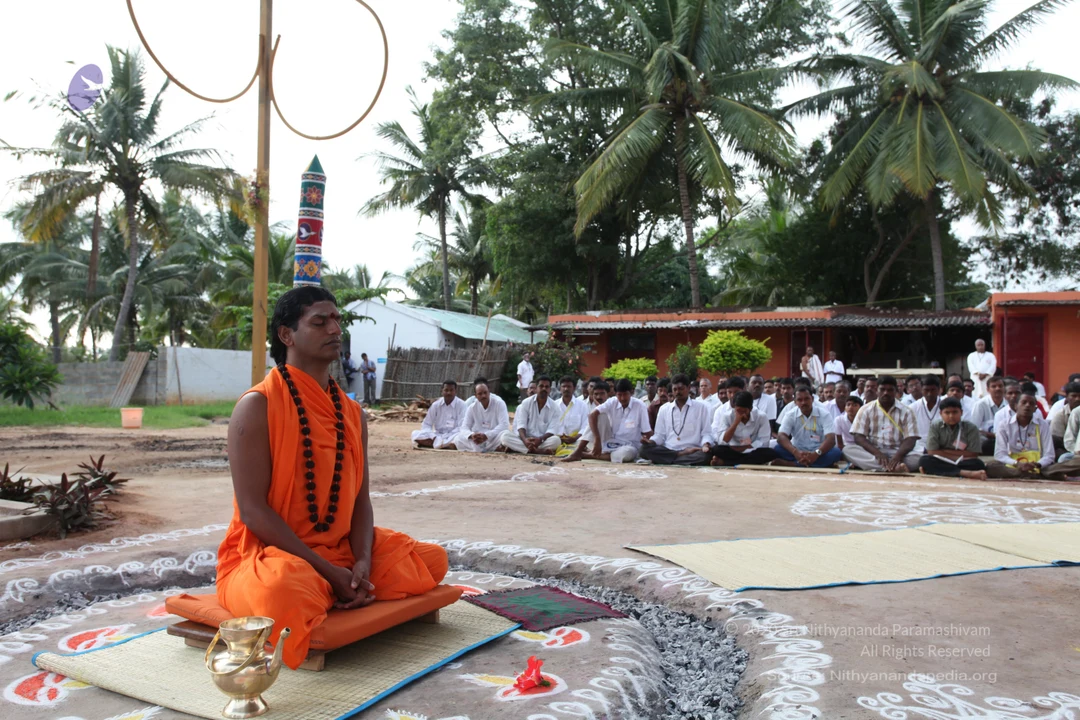
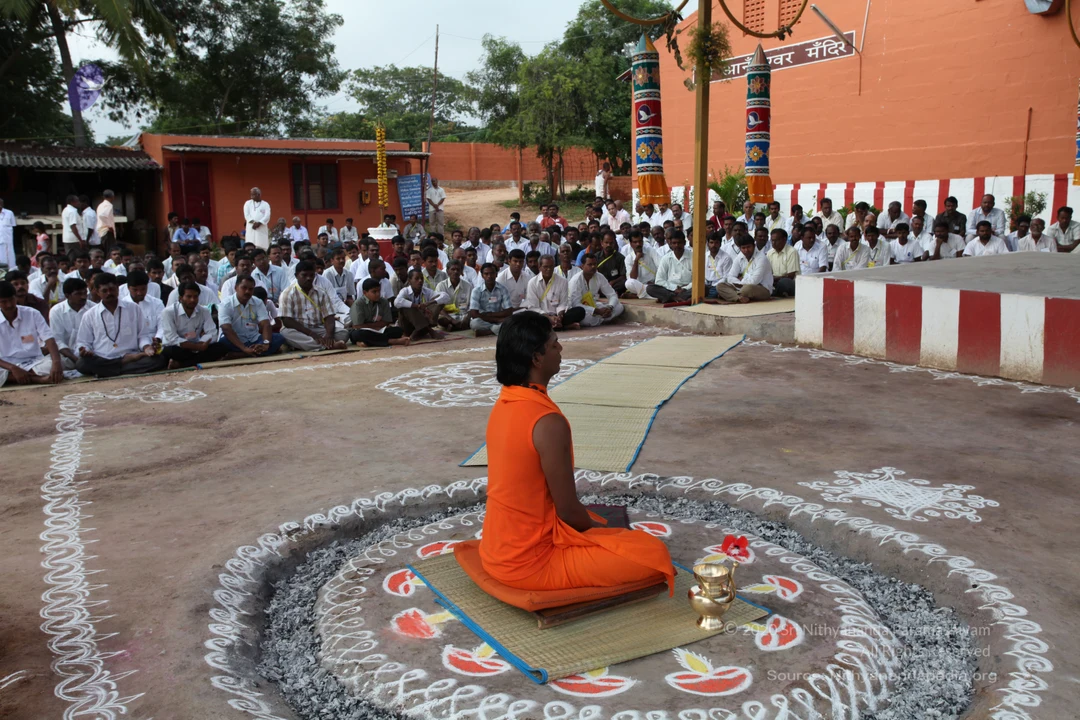
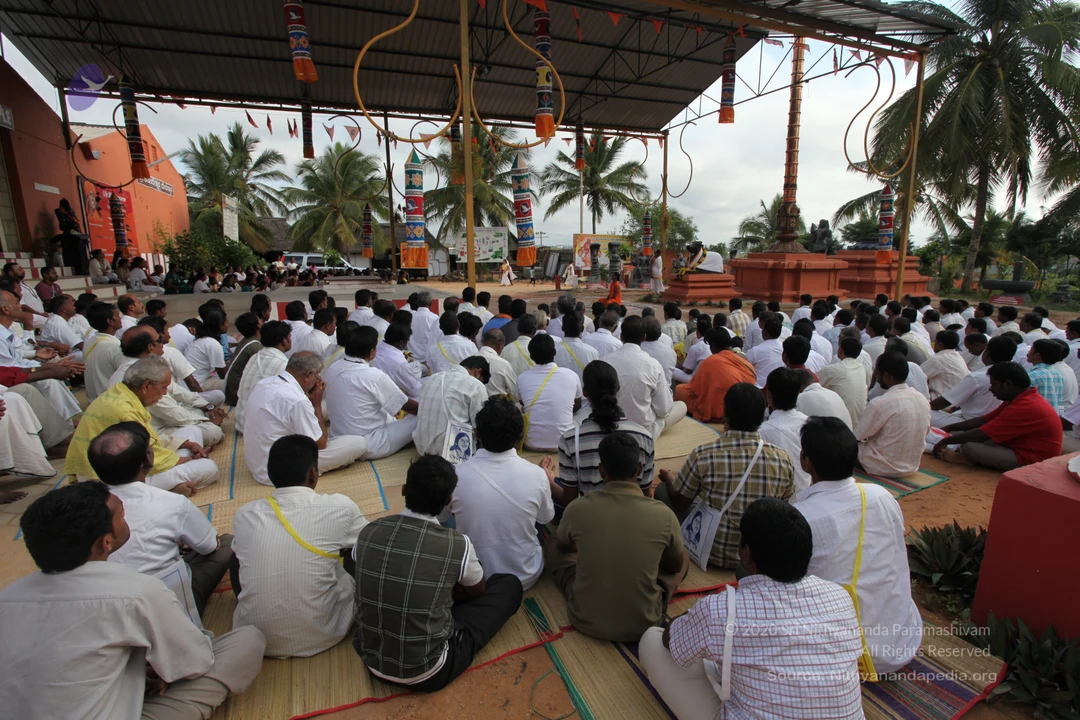
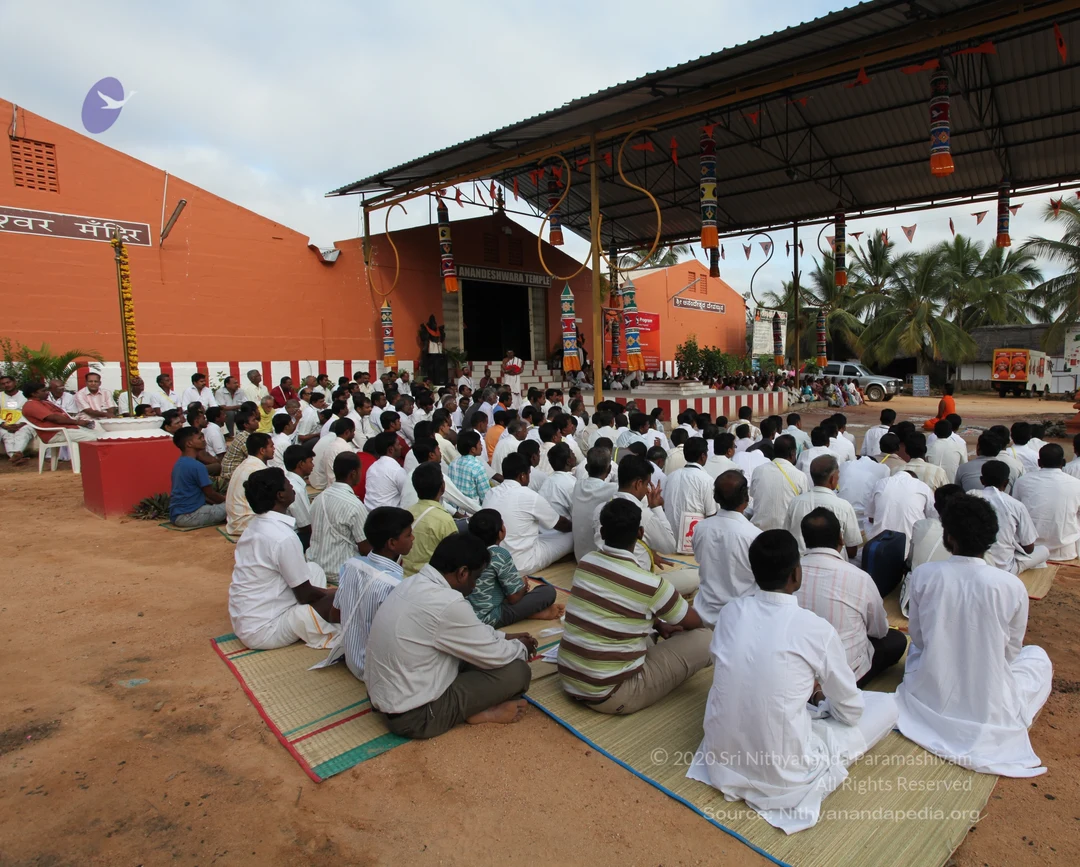
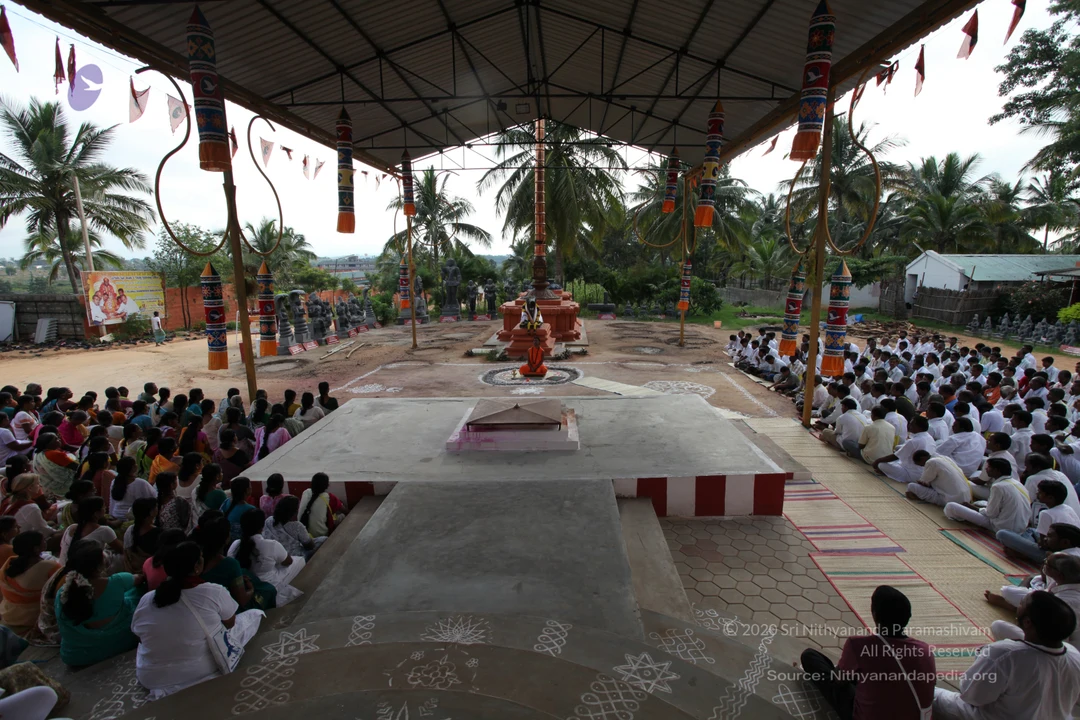
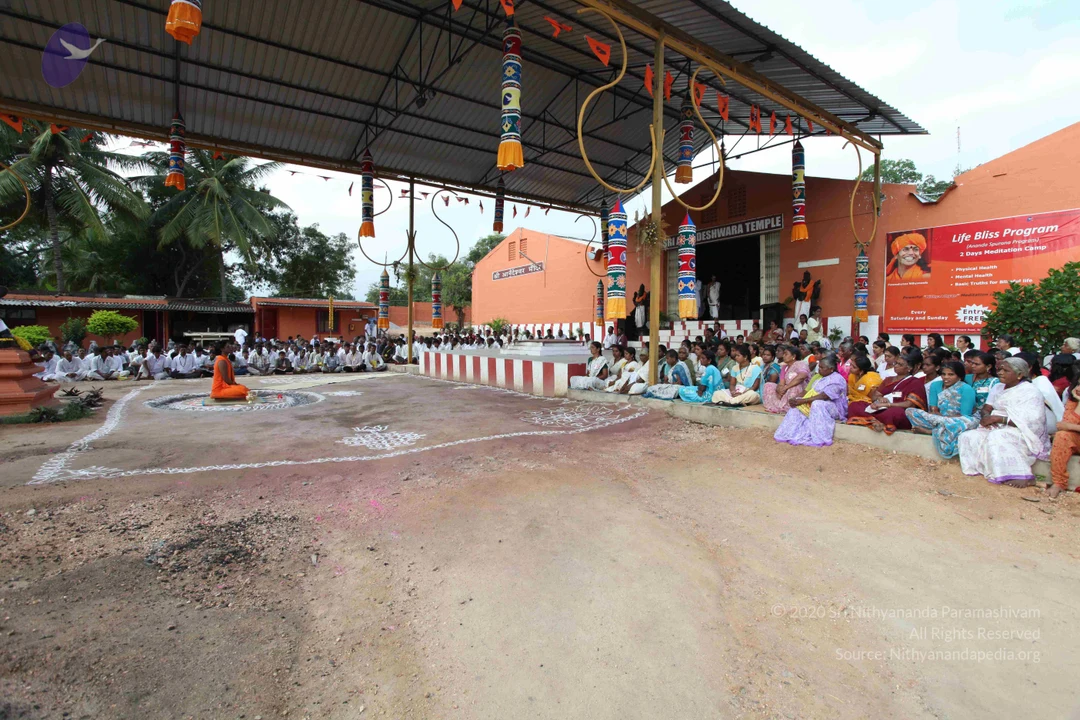
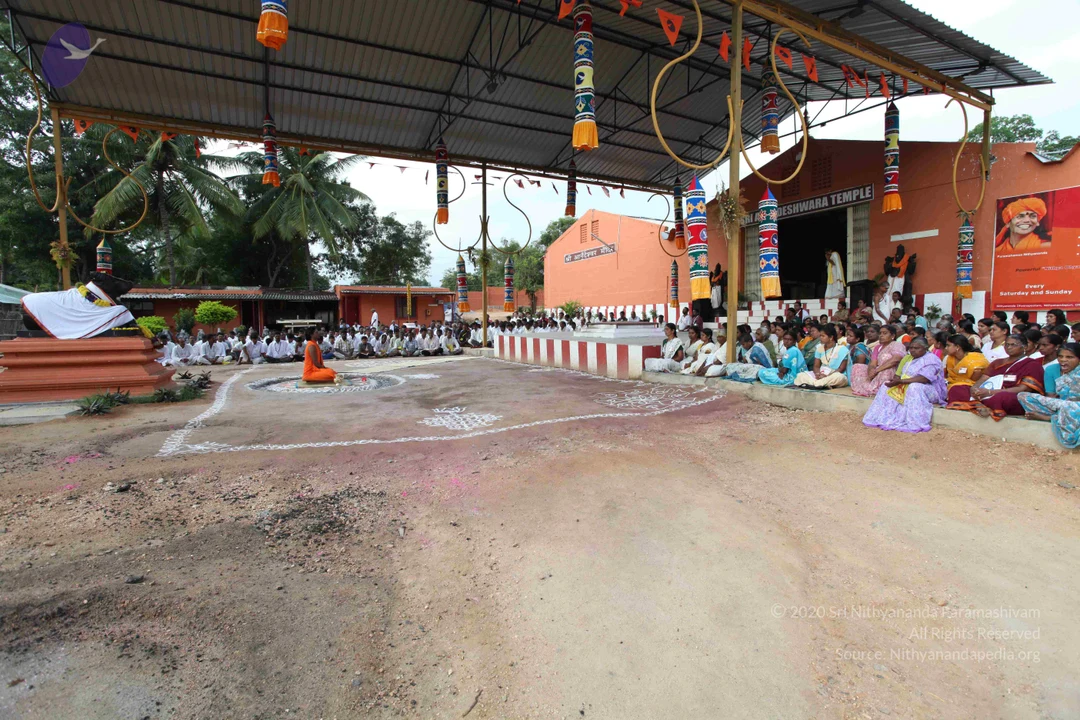
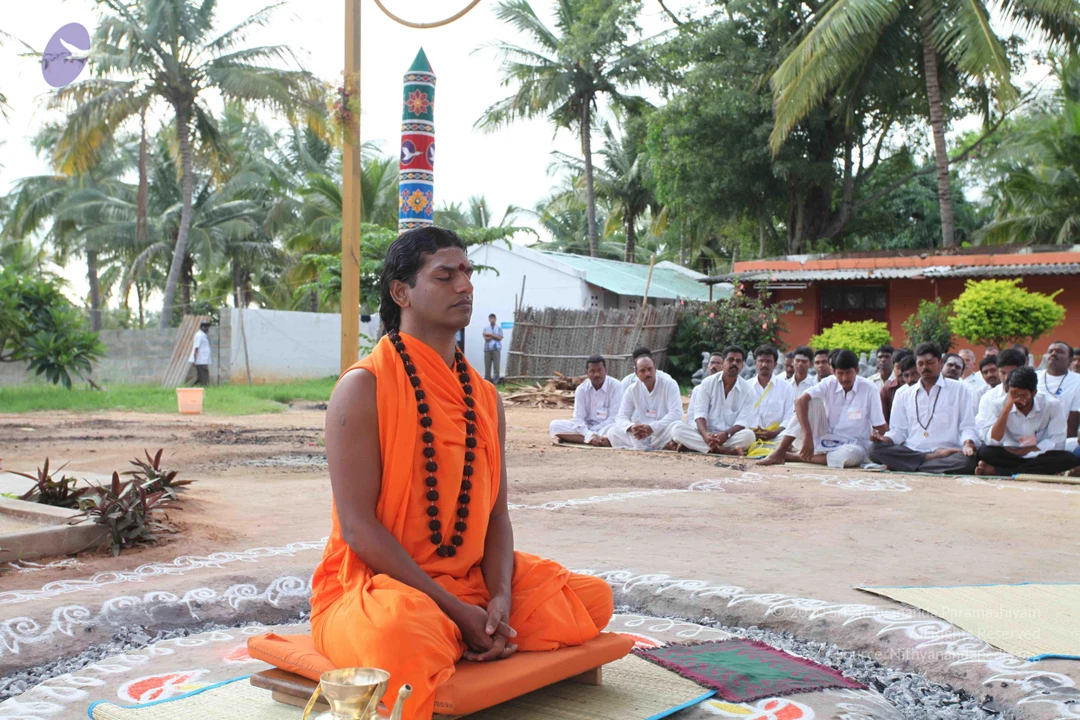
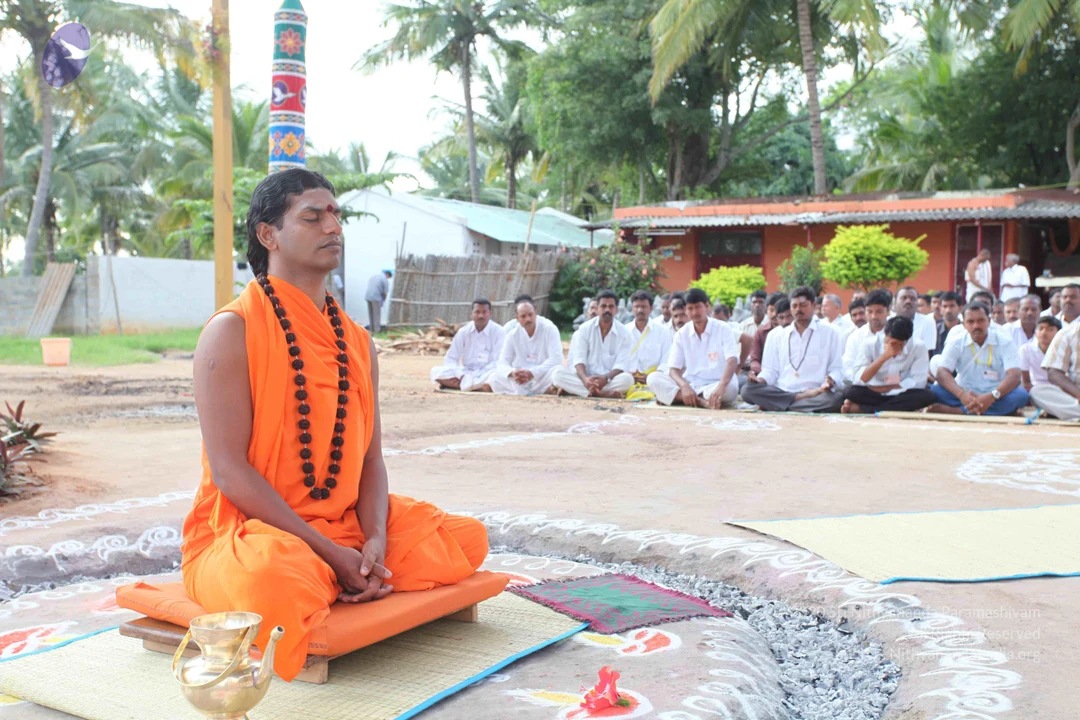
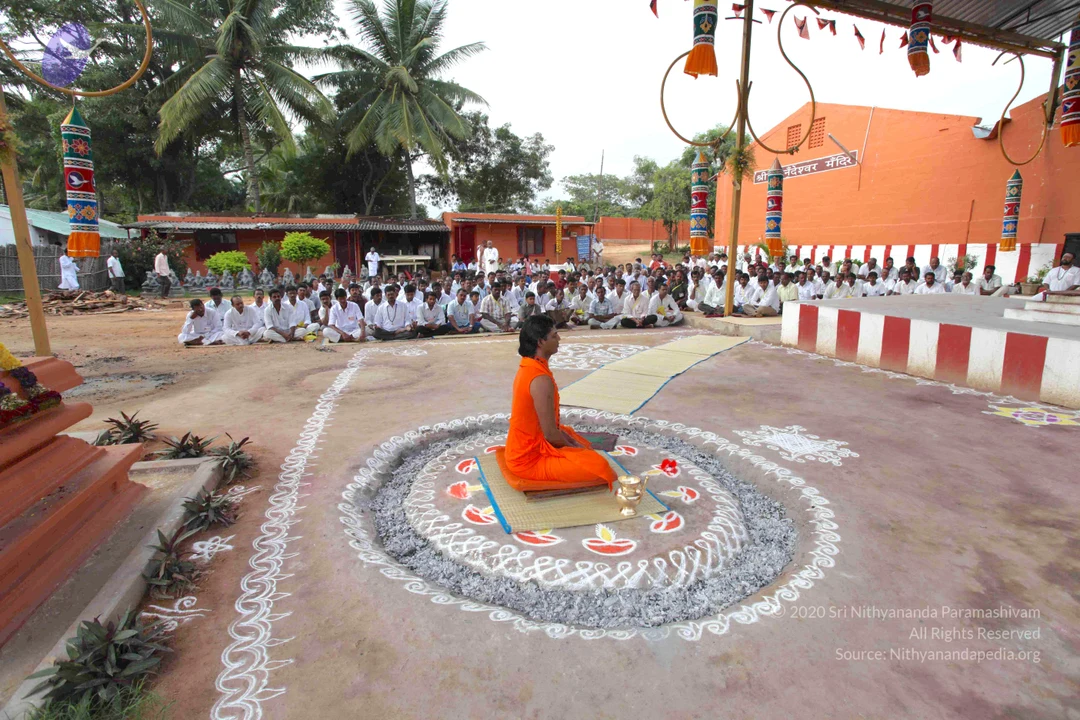
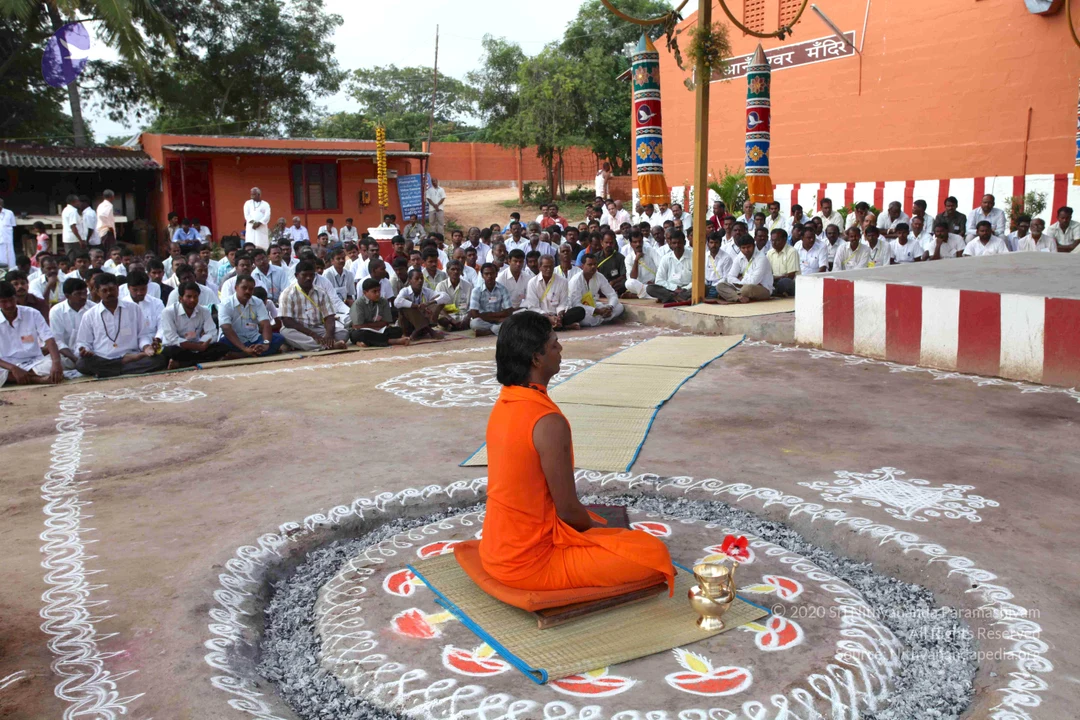
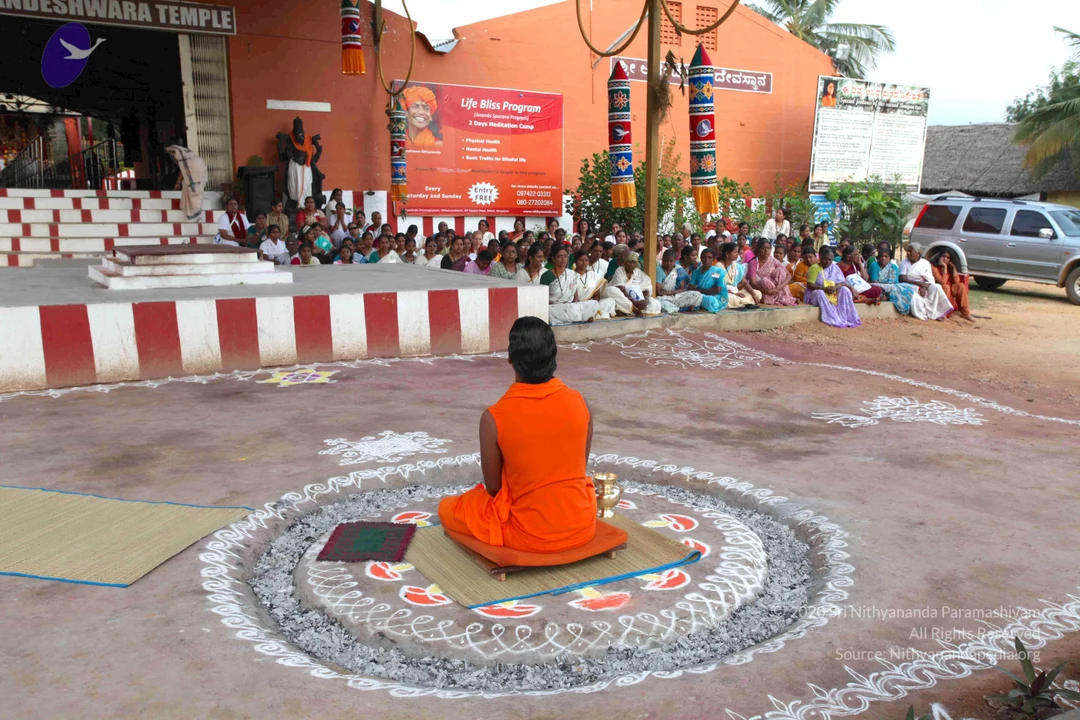
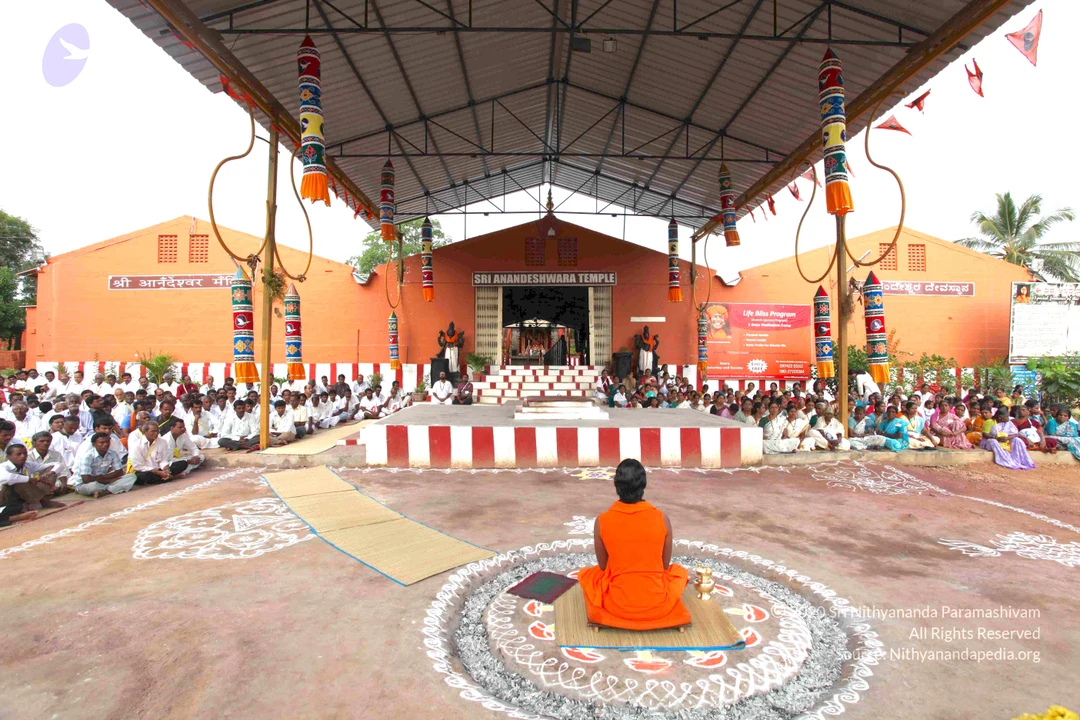
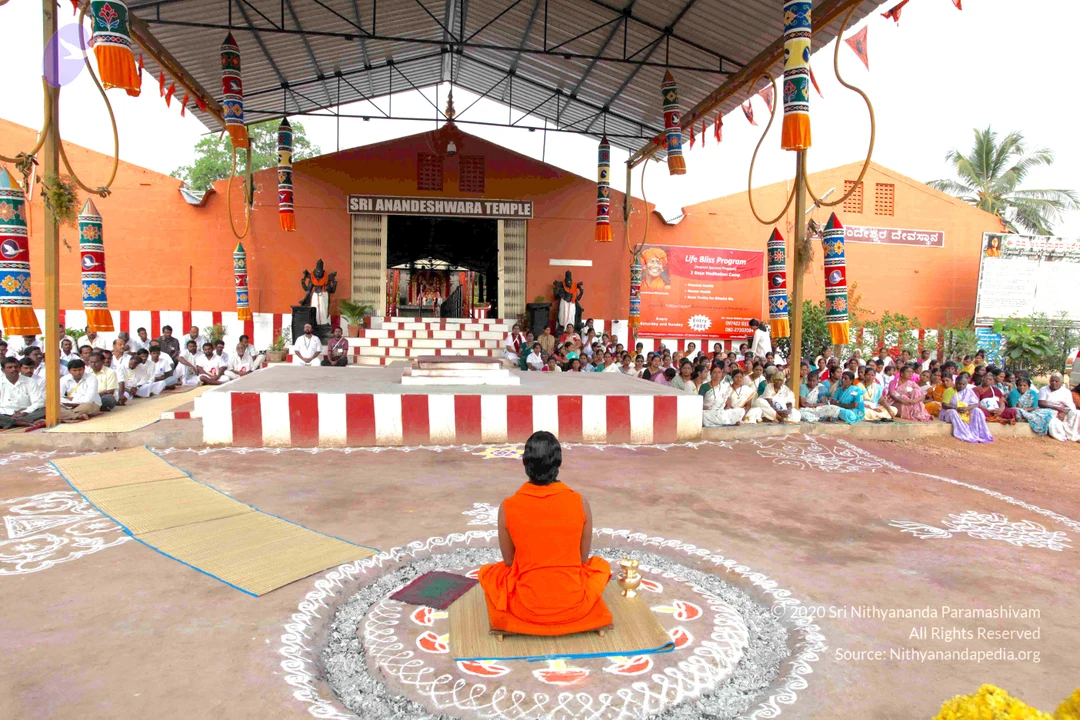
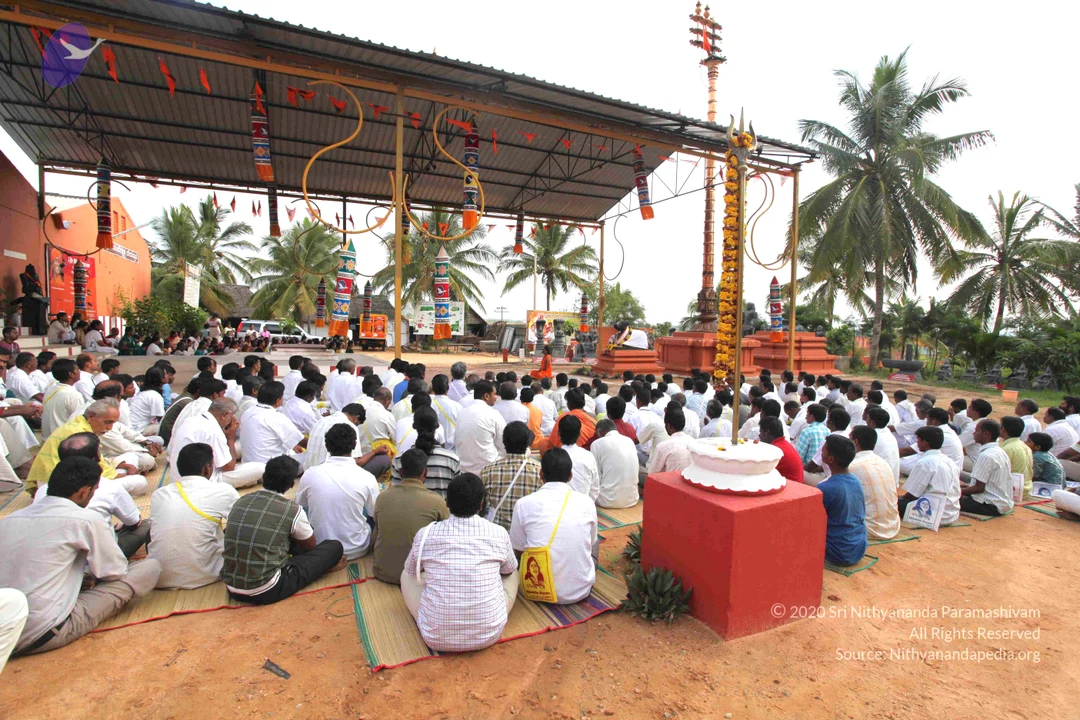
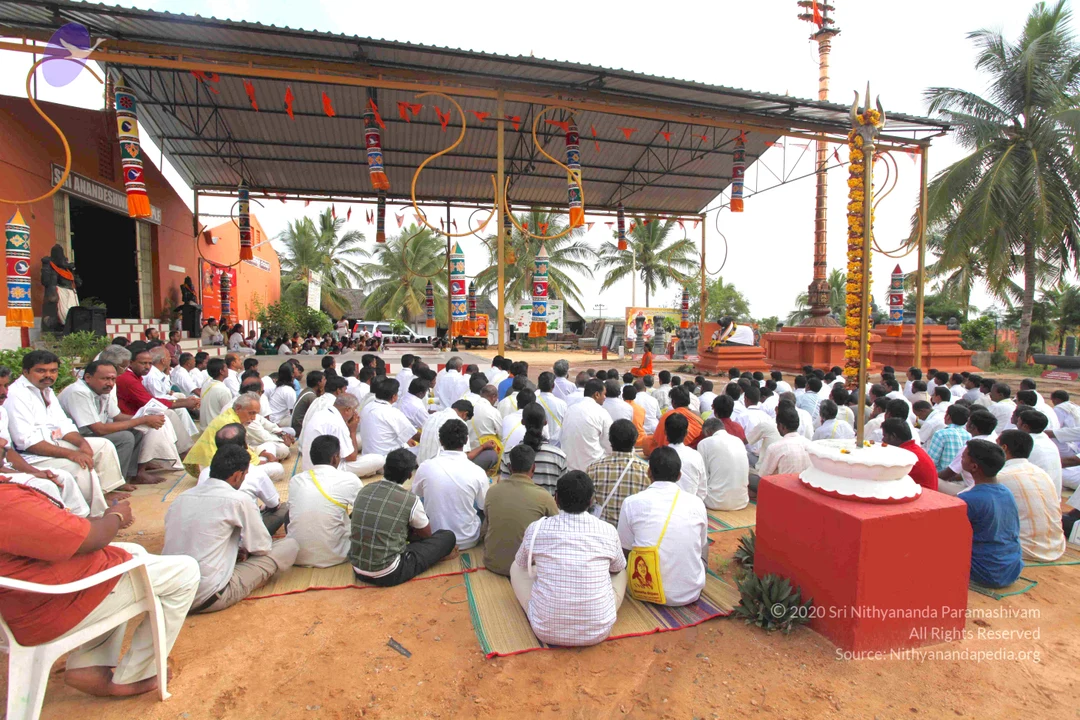
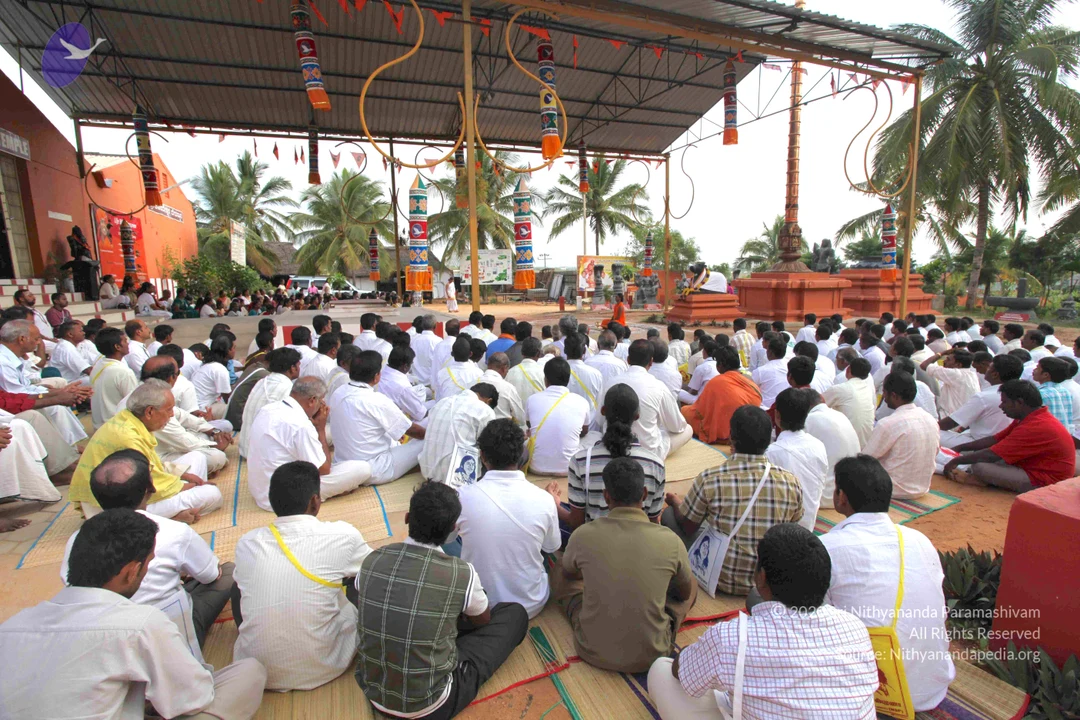
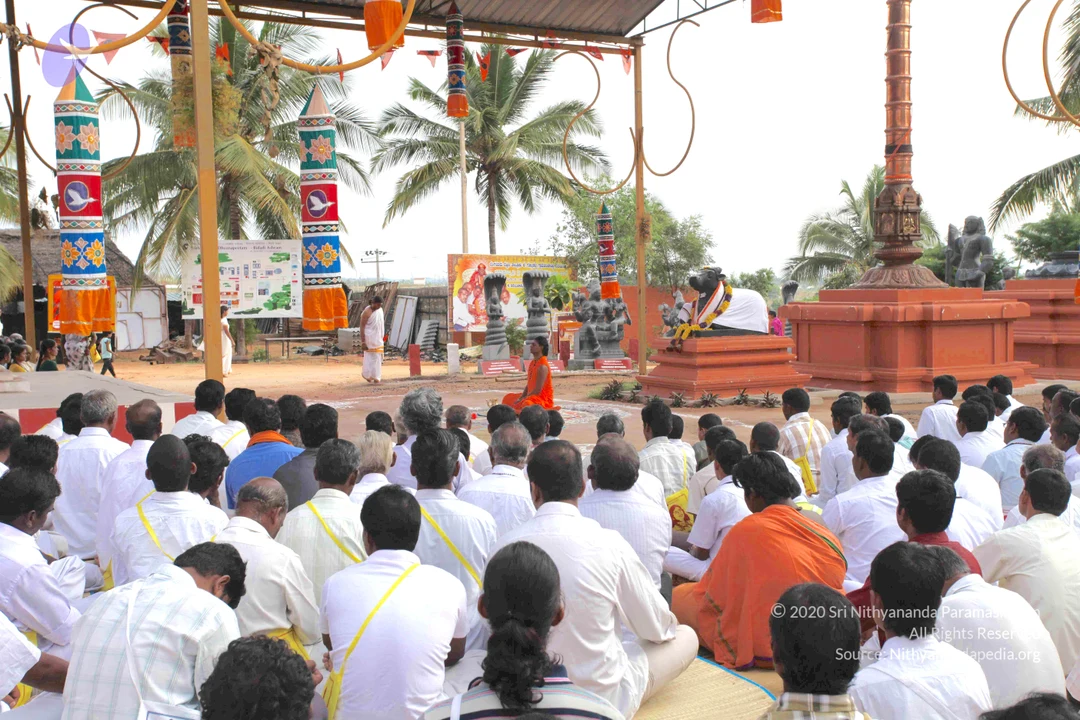
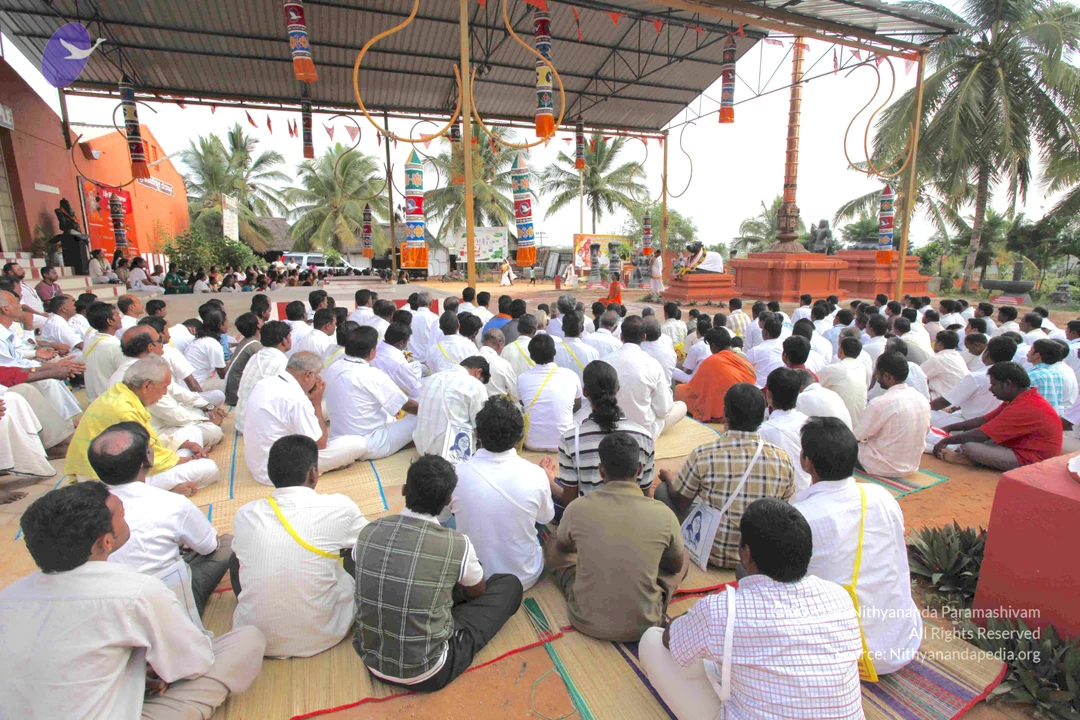
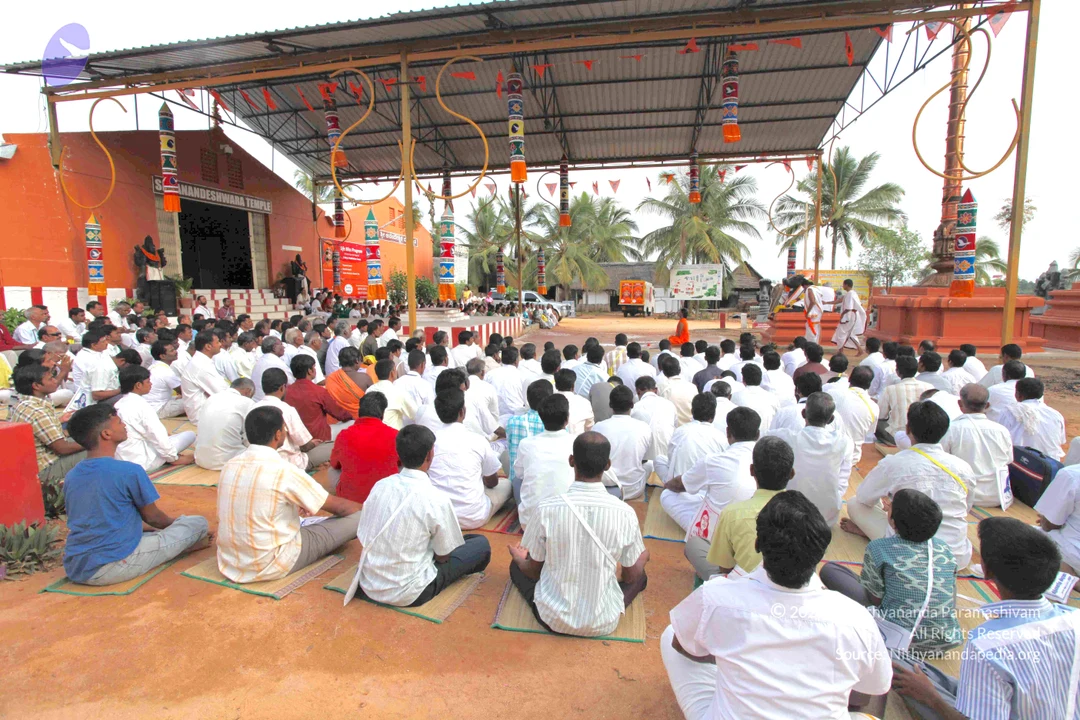
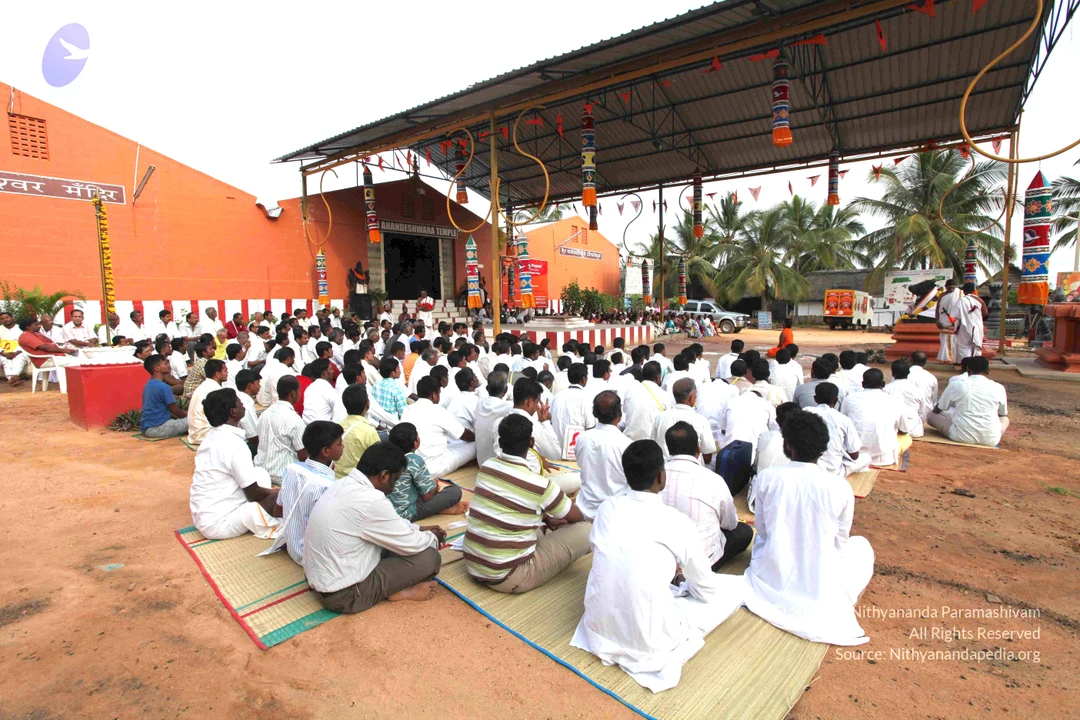
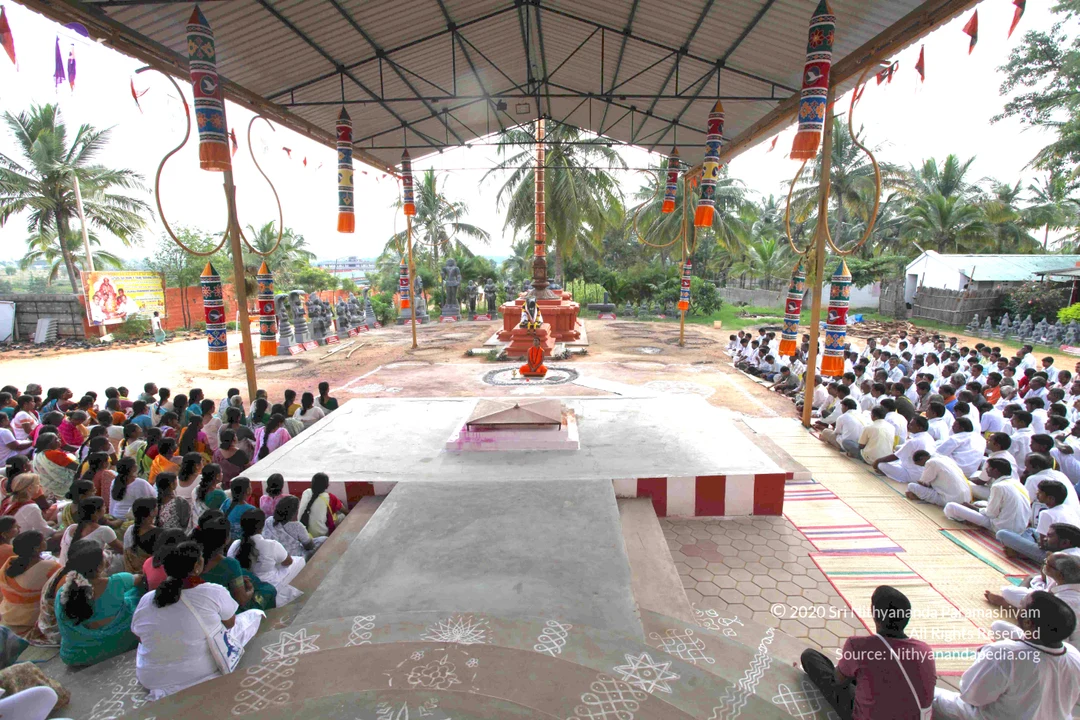
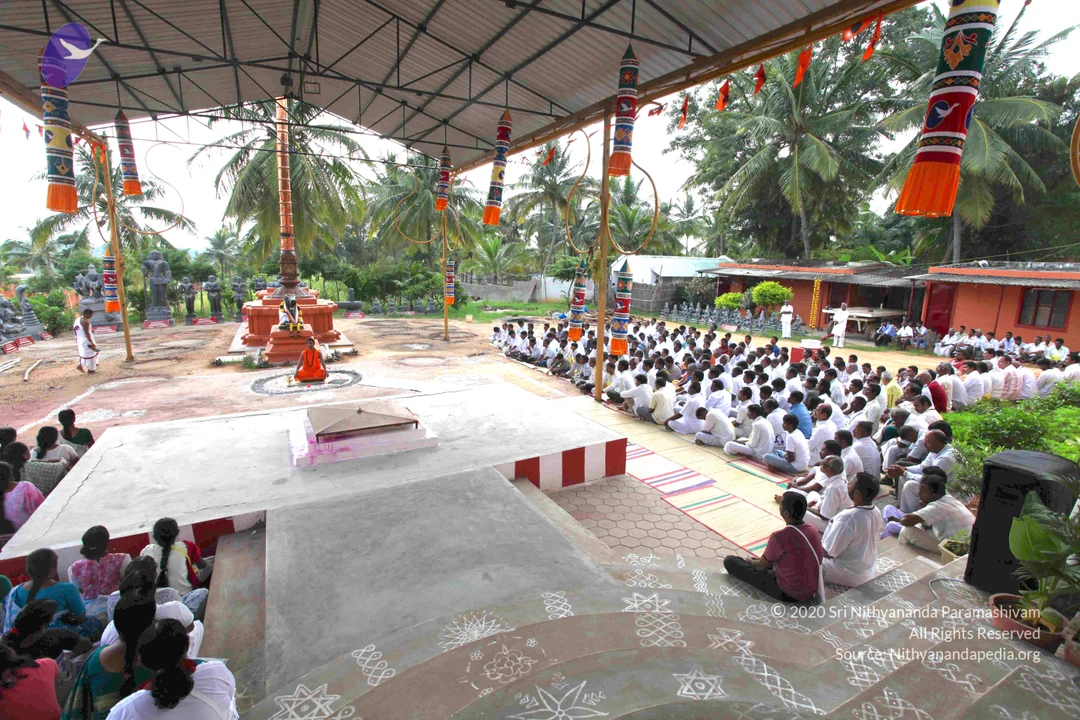
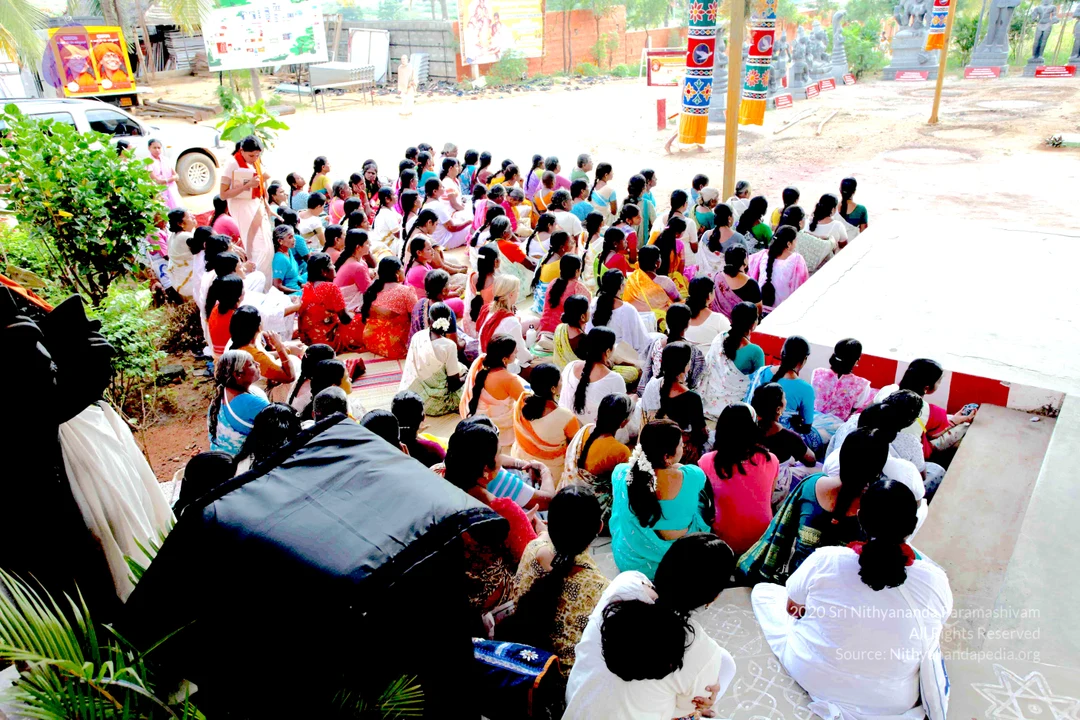
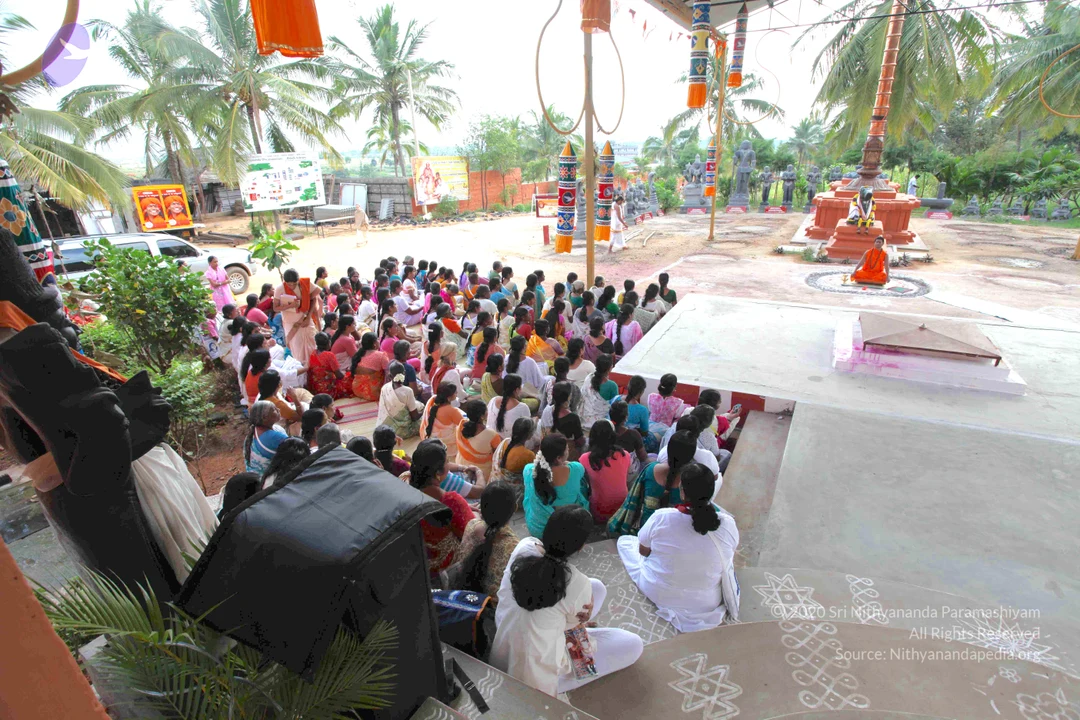
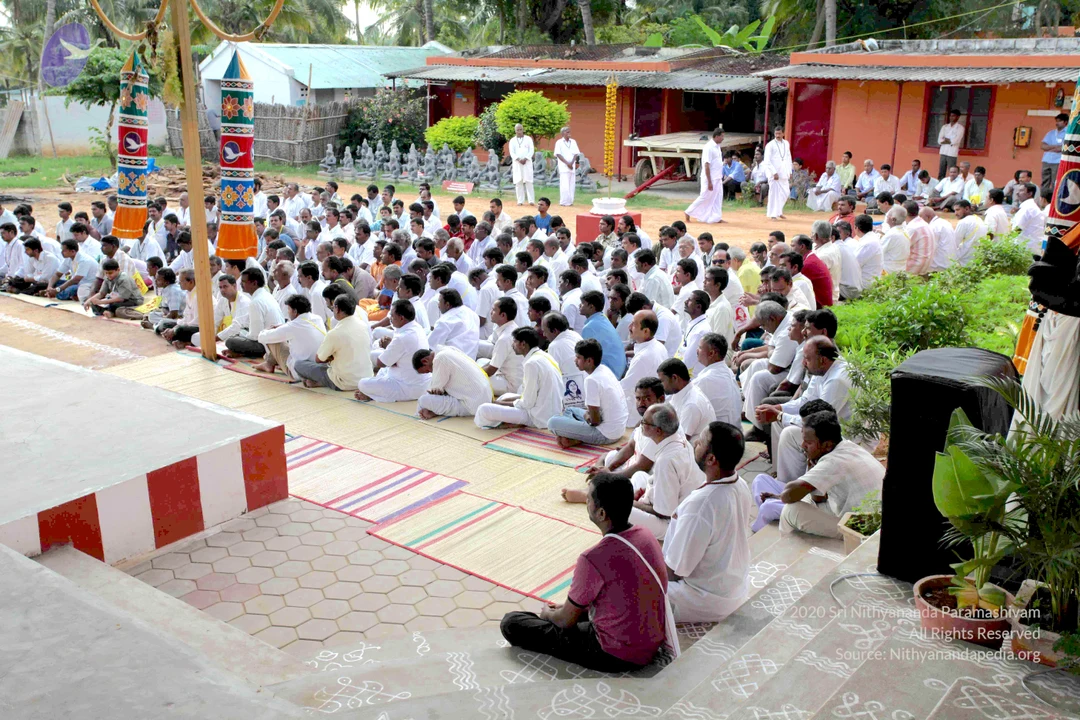
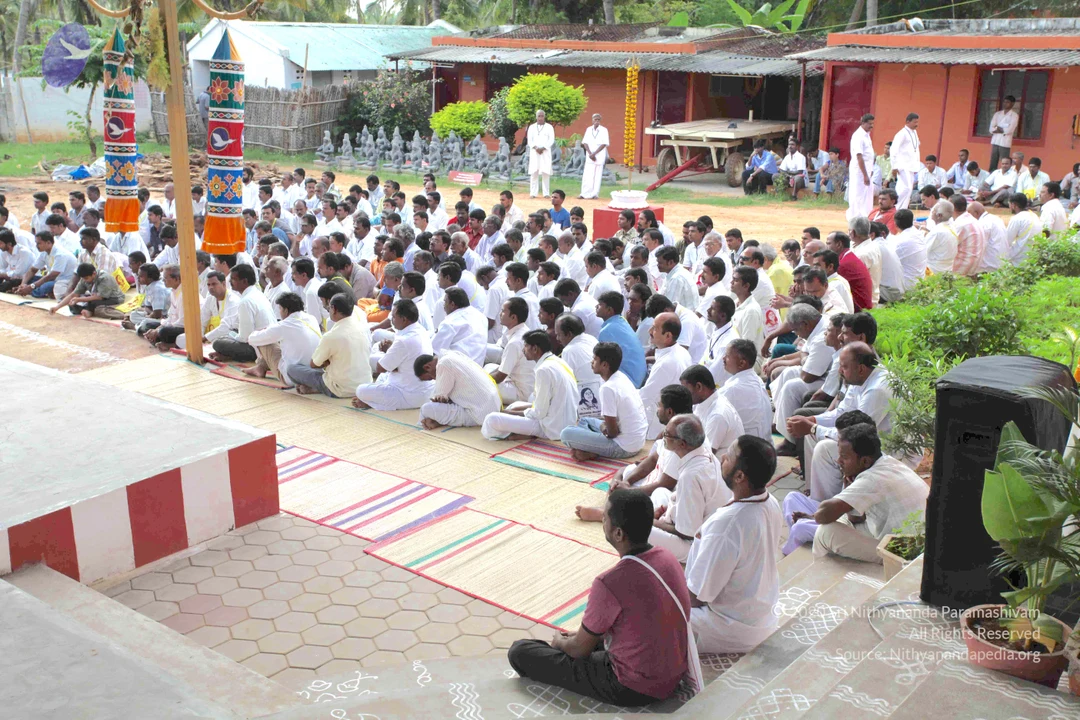
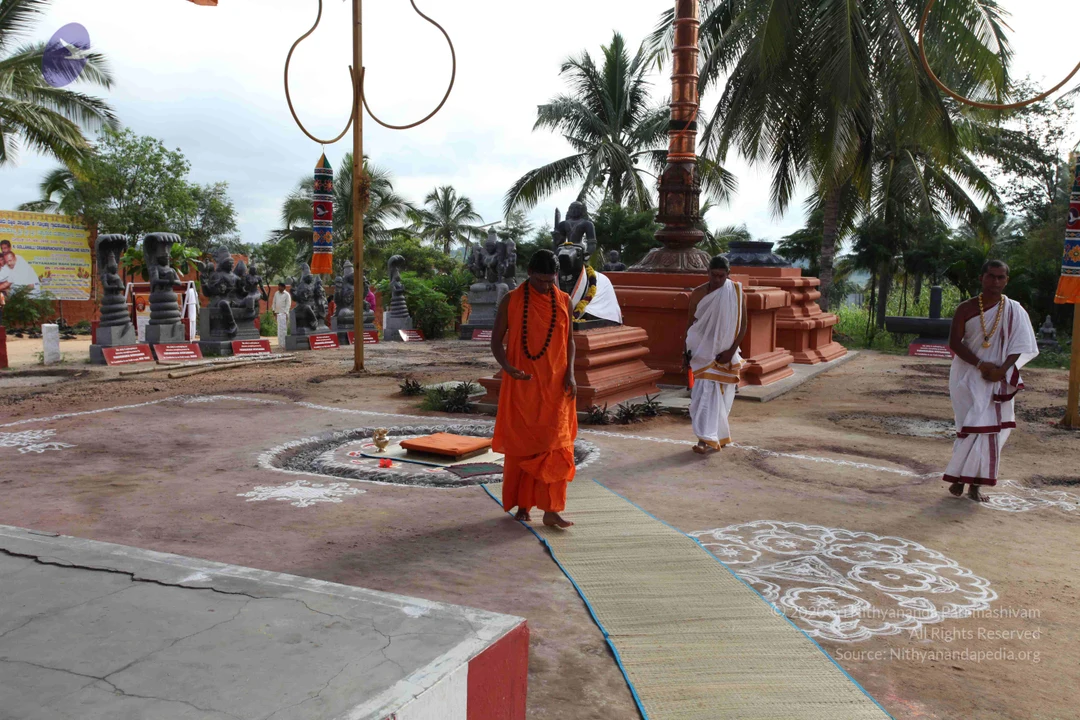
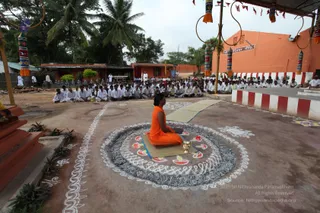
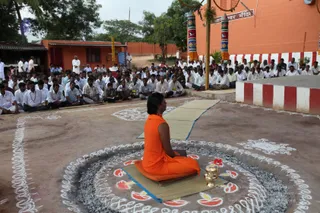
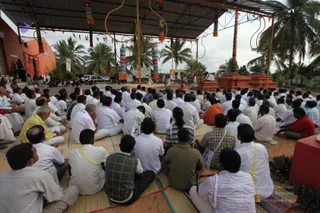
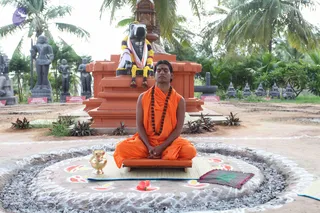
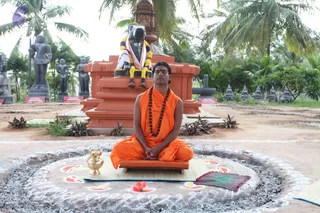
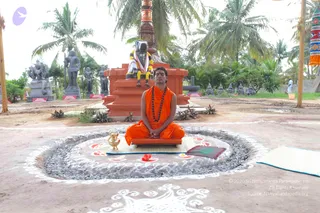
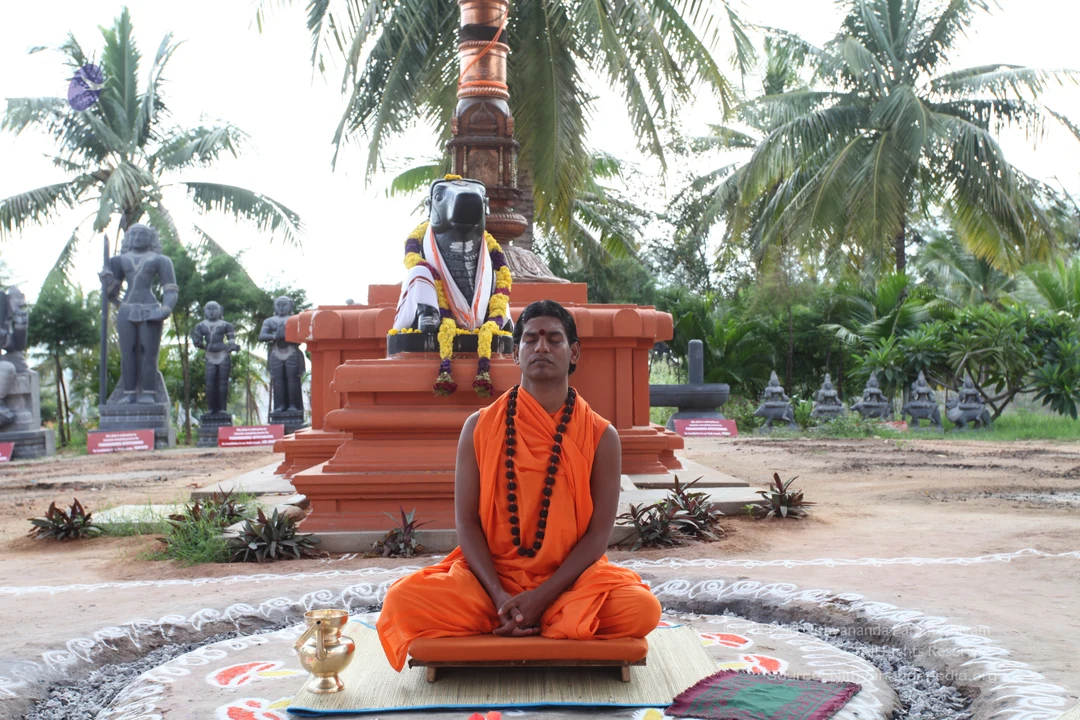
A photograph of an outdoor ritual ground with a seated figure in saffron-orange robes and a long rudraksha mala, eyes closed, hands folded in front on an orange cushion placed on a low wooden platform. A brass pot with a spout stands at the lower left, next to a small red offering. Around him, rows of people sit on mats in white clothes, several in white dhotis and kurtas, with others in checked shirts. Tall palm trees, a painted pillar and orange-roofed buildings stand behind. Chalk kolam patterns decorate the ground and a pile of ash lies beside the platform. The seated figure has distinctive long swept-back hair and saffron robes, a person cue, though appearance alone is uncertain.Outdoor photo of a seated figure in an orange saffron robe on a mat at the centre of a large floor rangoli of white line patterns and a grey gravel circle decorated with red and white motifs, with a brass vessel beside them. Behind them, a large crowd of people in white clothes sits in rows on the dirt courtyard. Orange temple walls with a red and white striped border, colourful tasselled poles and a signboard reading Sri Nedeeswar Mandir stand to the right, with palm trees behind. The seated figure wears an orange robe and appears to be leading the gathering as a satsang-style session.A seated figure in an orange sleeveless robe sits cross-legged on a woven mat atop a red, white and grey floor design, facing away toward a crowd of seated devotees. A brass kalasha-style pot sits beside the mat, and white kolam patterns with red and yellow lotus motifs decorate the ground. Behind them, rows of men in white shirts and dhotis sit on the courtyard, some with notebooks. Orange brick walls, a painted sign reading the temple name, and decorative striped pillars frame the scene. A satsang or discourse setting, the person in orange appears to be the speaker.Outdoor satsang on mats under a corrugated roof strung with colourful ribbon-wrapped poles and pennants, with palm trees behind. Dozens of seated devotees, mostly men in white shirts and white dhotis or trousers, many wearing yellow sashes or yellow-strap bags, face a distant stage. A saffron-robed figure stands near the stage area, and a golden seated statue sits beside a red-and-orange raised platform with a tall ornamented pillar. Several devotees in the foreground wear checked or green shirts and a few wear red or orange clothing. The scene is a large open-air gathering.Outdoor satsang on bare earth beneath a corrugated metal roof strung with tall decorated pennant poles and small red flags. Dozens of men in white dhotis and white shirts, plus some in striped and checked shirts, sit cross-legged on woven mats facing a red-orange temple building with an entrance labelled Anandeshwara Temple. Palm trees and a flower garland hang at the left edge, and a sound stage-like area with a seated speaker in orange is visible at the far front. Many people are seated in rows on the ground, with a parked vehicle and an orange truck beyond the pavilion.Wide outdoor photo of a covered open-air hall with a corrugated roof, hung with tall cylindrical painted banners and triangular pennants, palm trees behind. Rows of seated devotees in white clothes sit on mats on the right and in the left foreground, facing a raised concrete dais with a central low platform. At the far end, a figure in orange robes sits before a red-and-gold shrine structure with a deity murti and rows of small stone figures. Floor is decorated with white kolam rangoli patterns.

Paadapooja
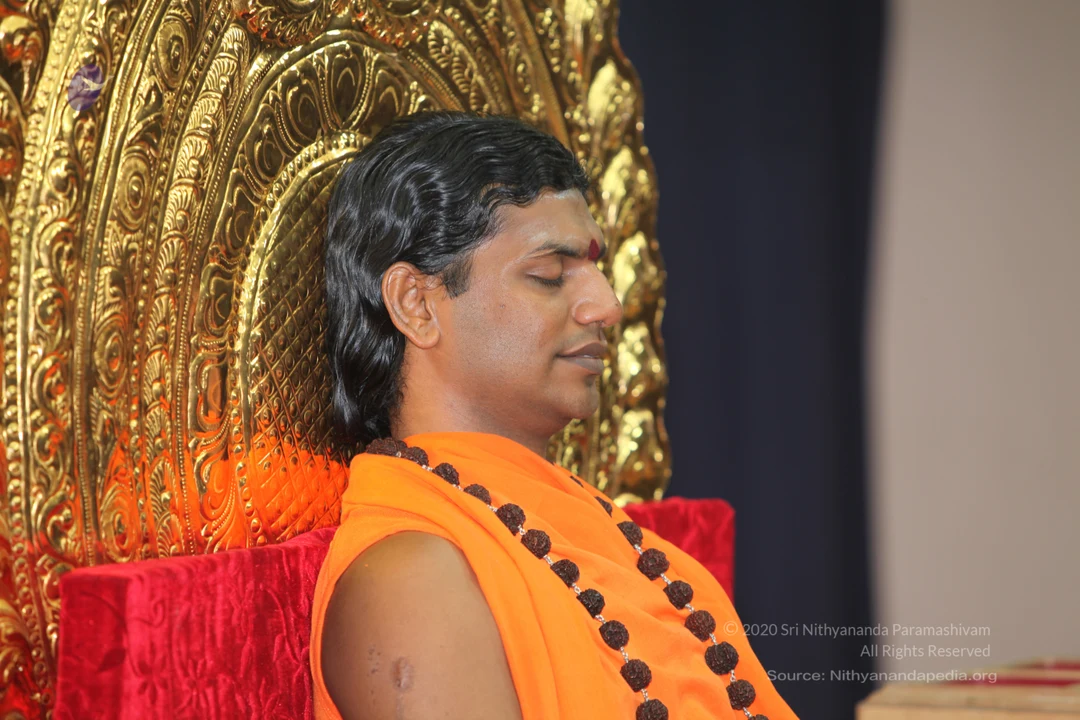
13 photosSource gallery
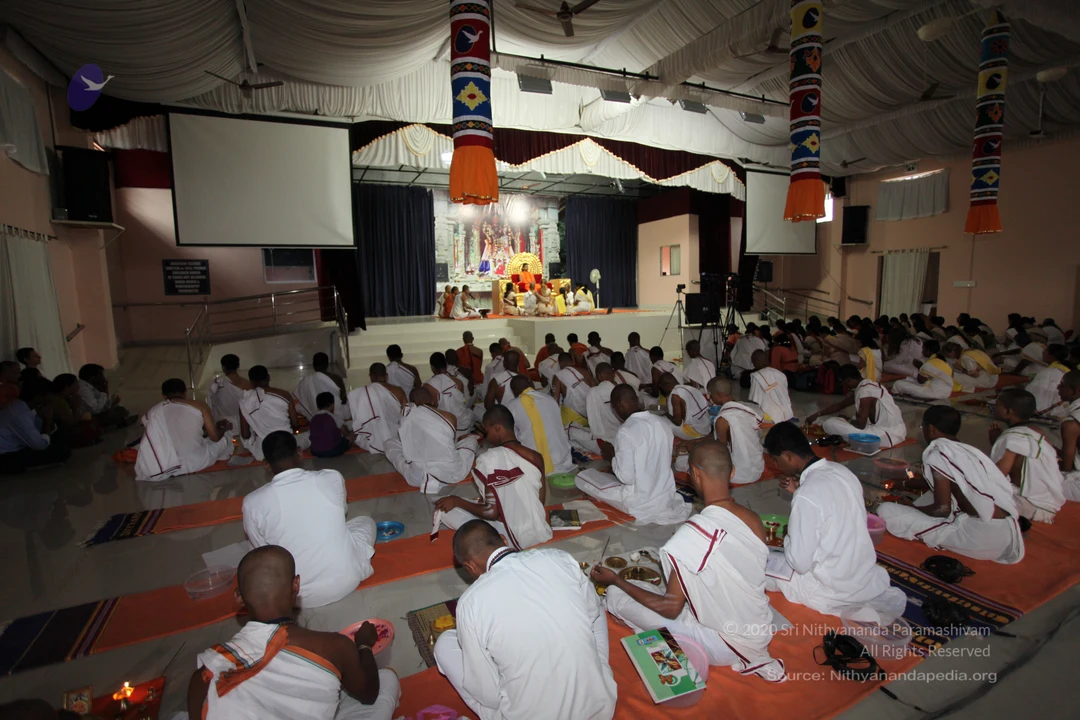
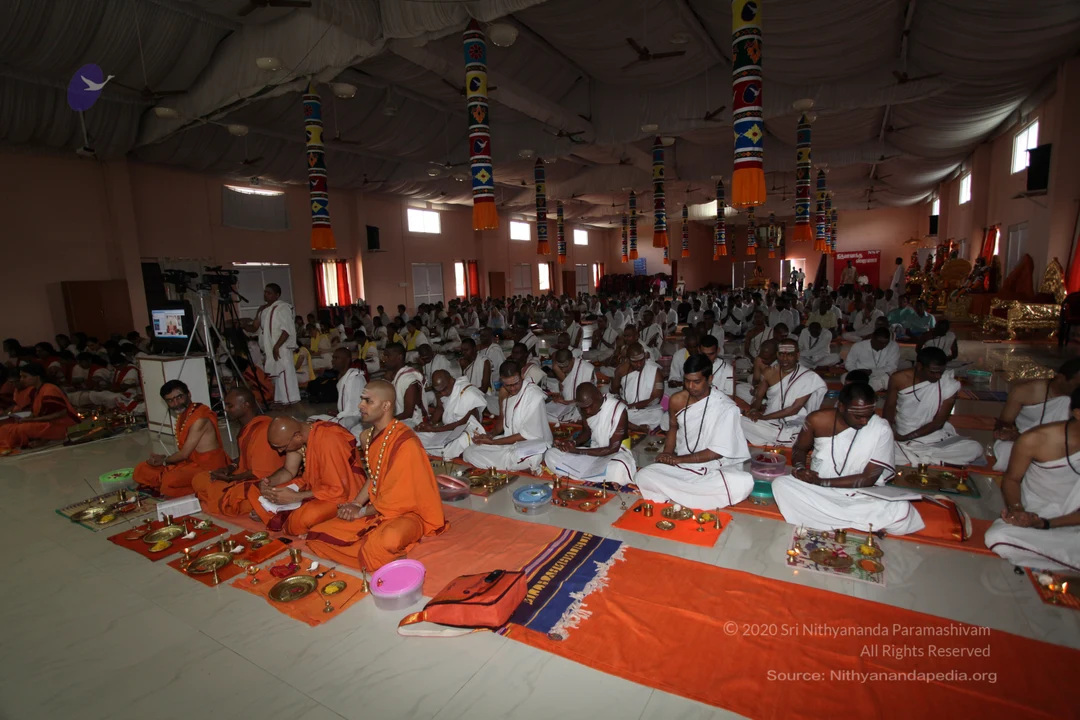
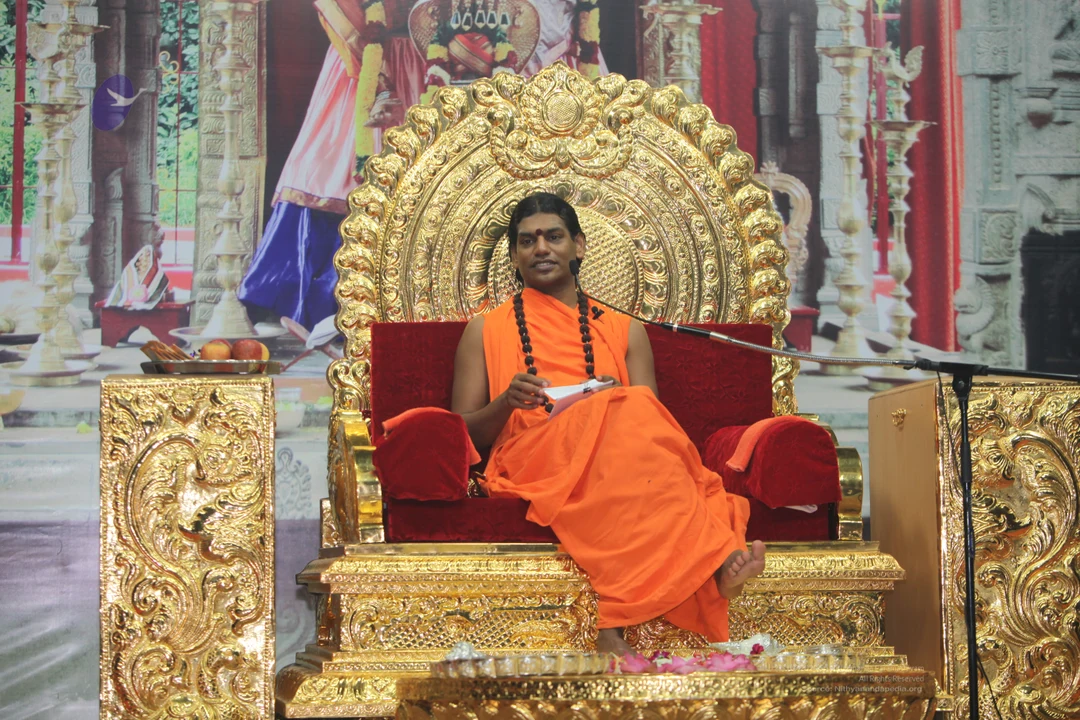
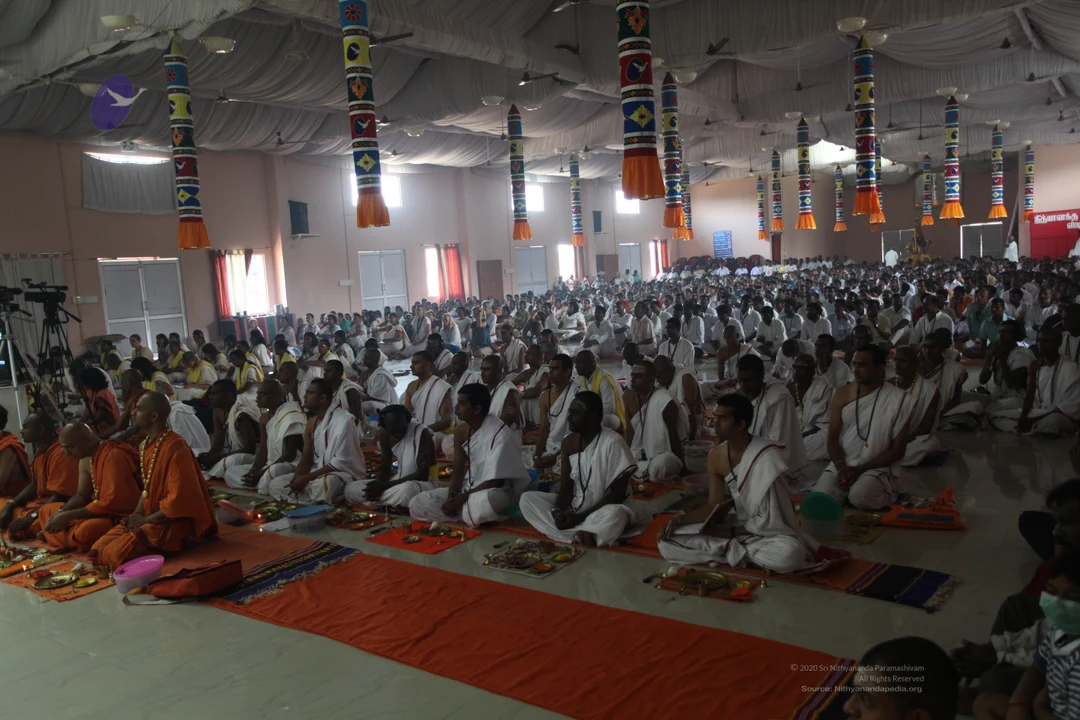
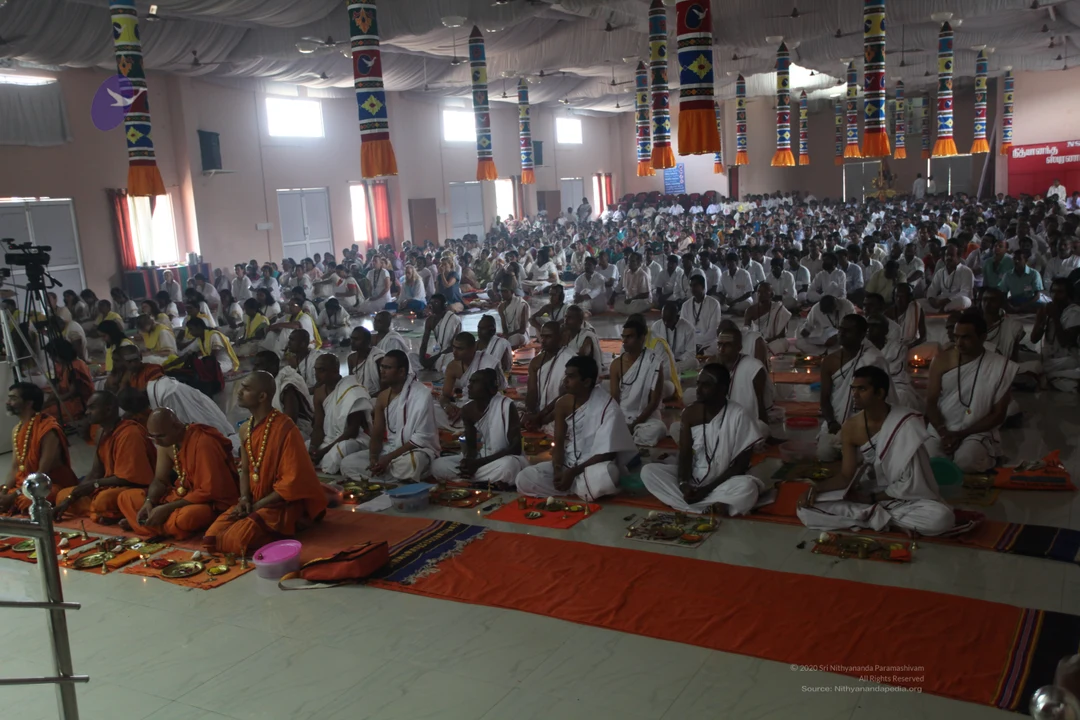
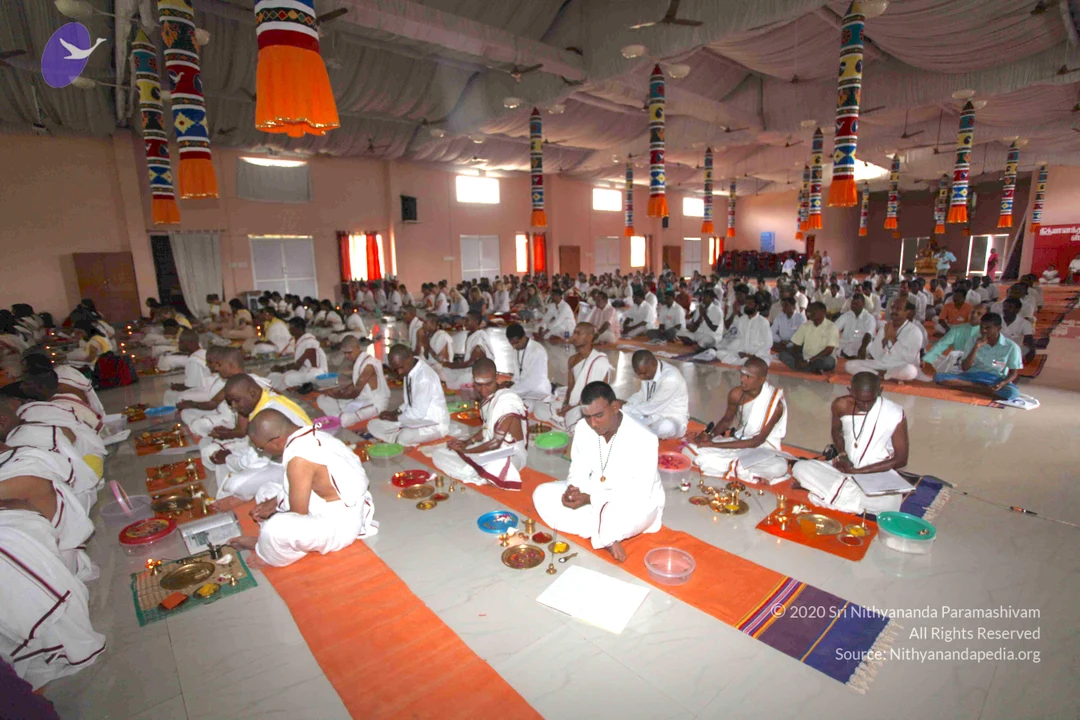
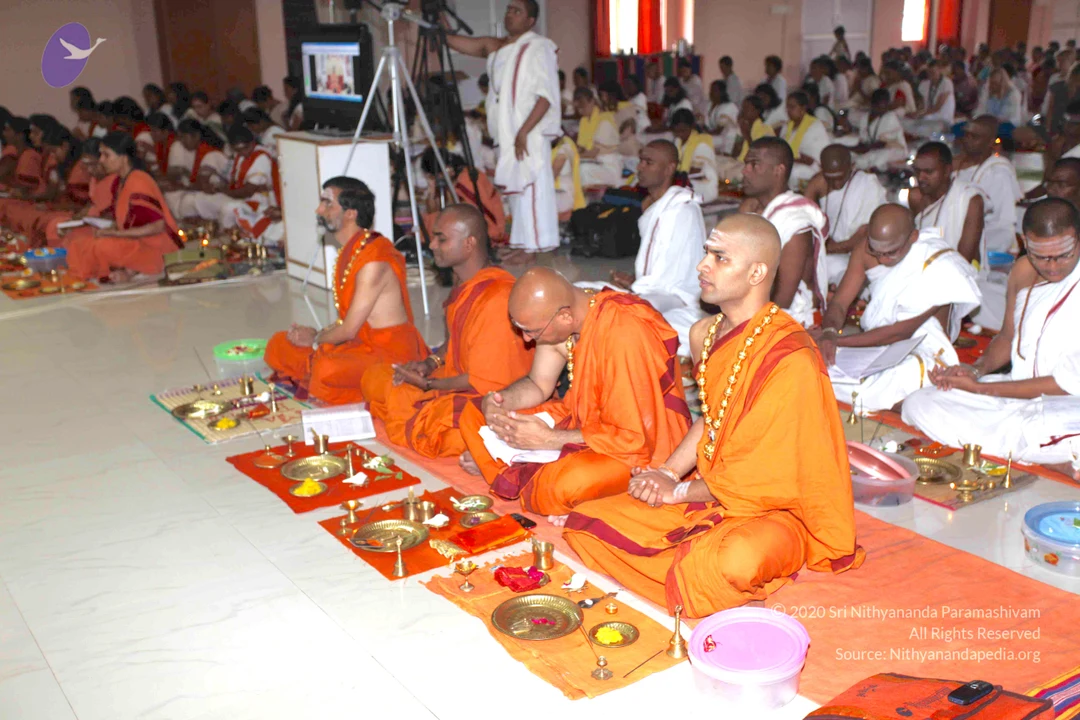
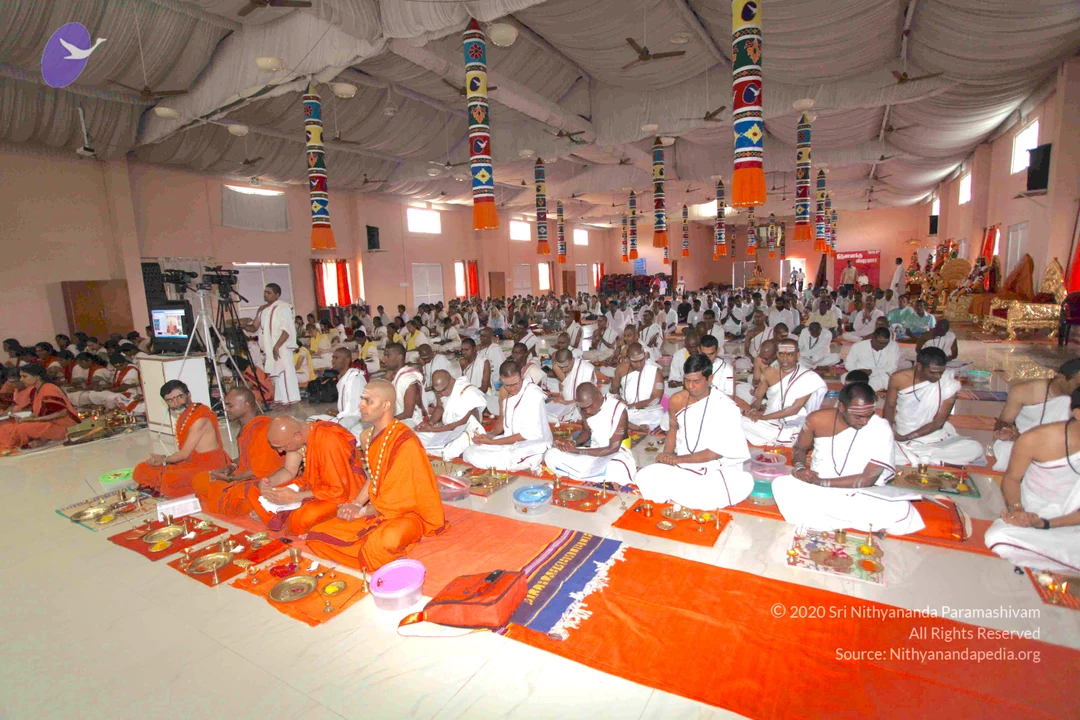
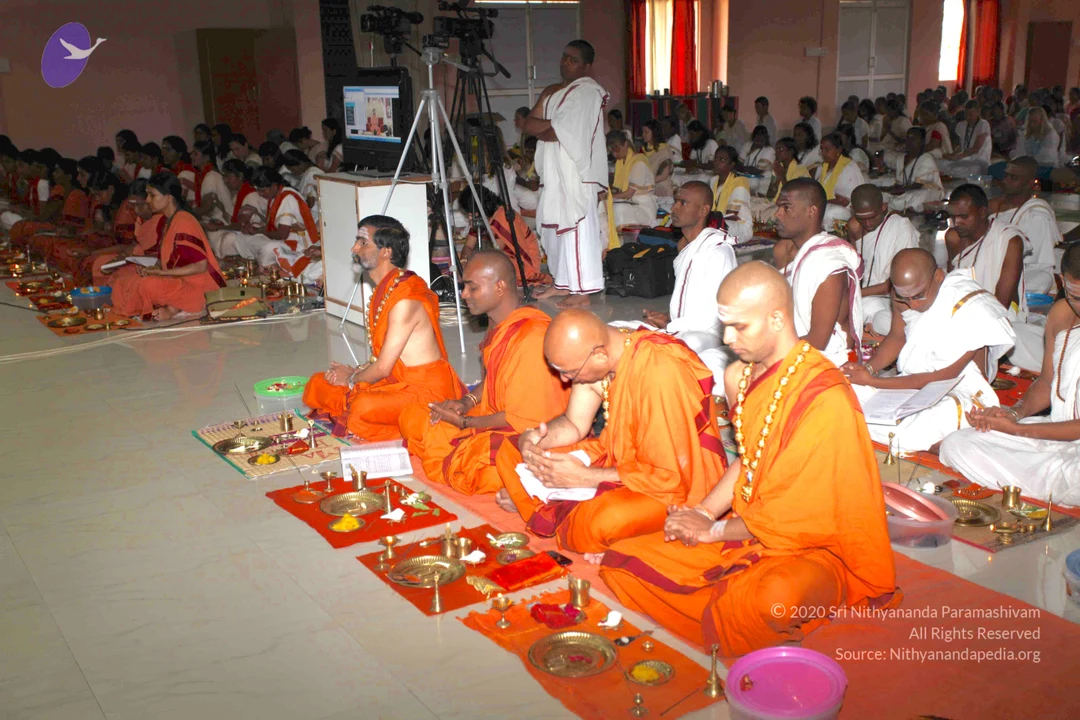
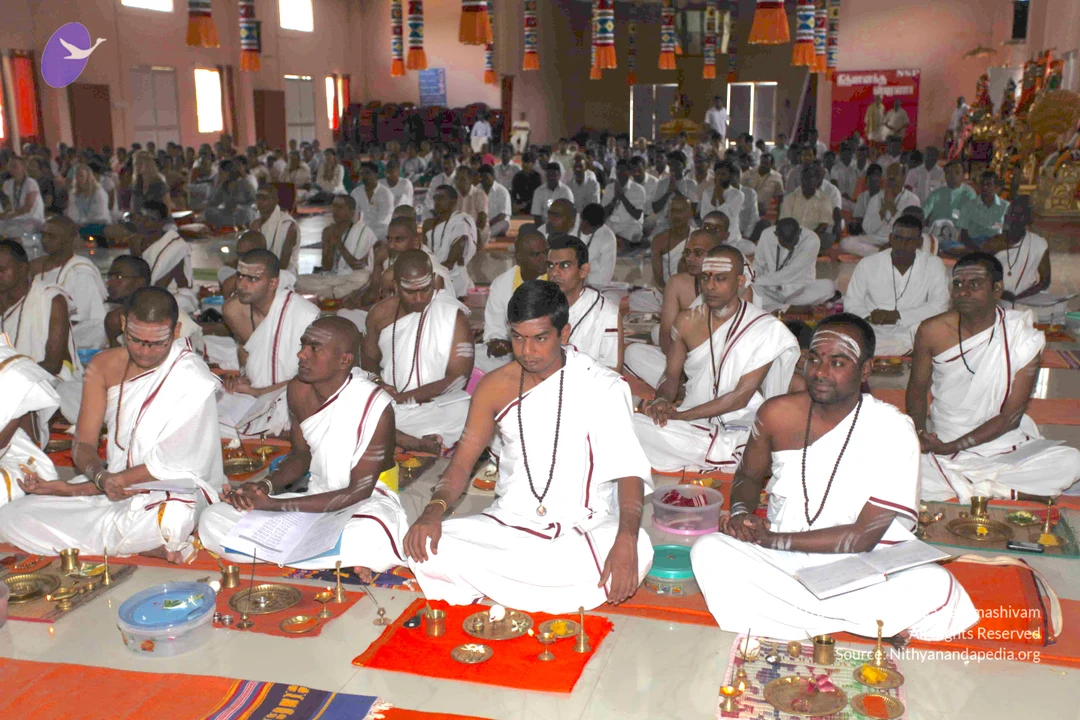
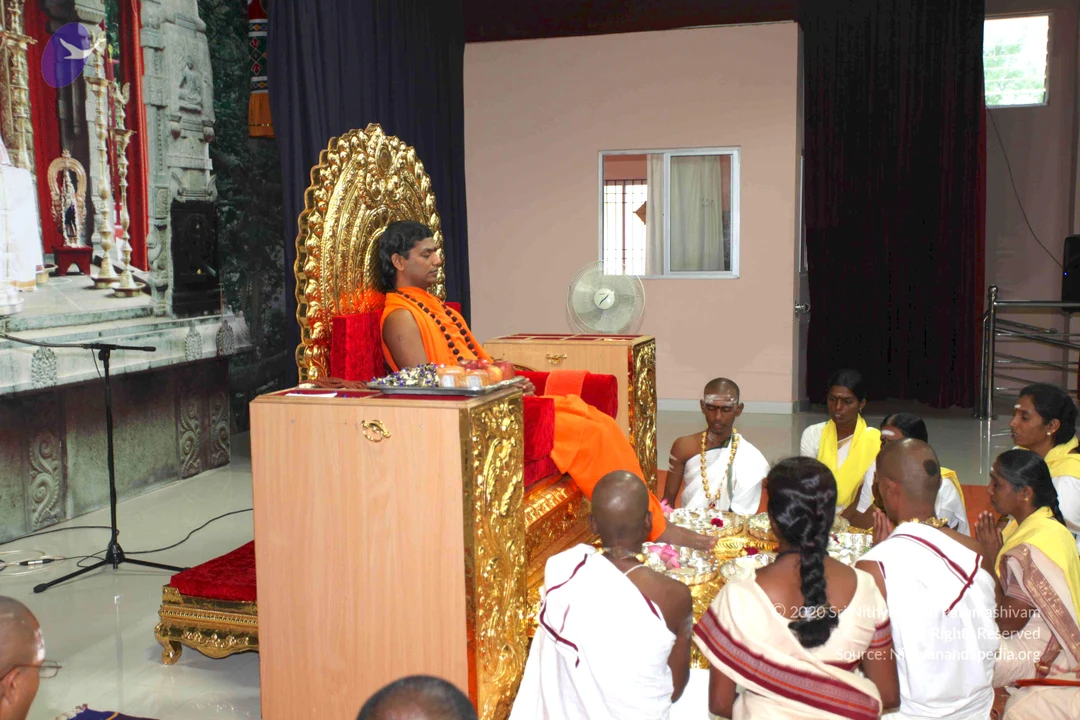
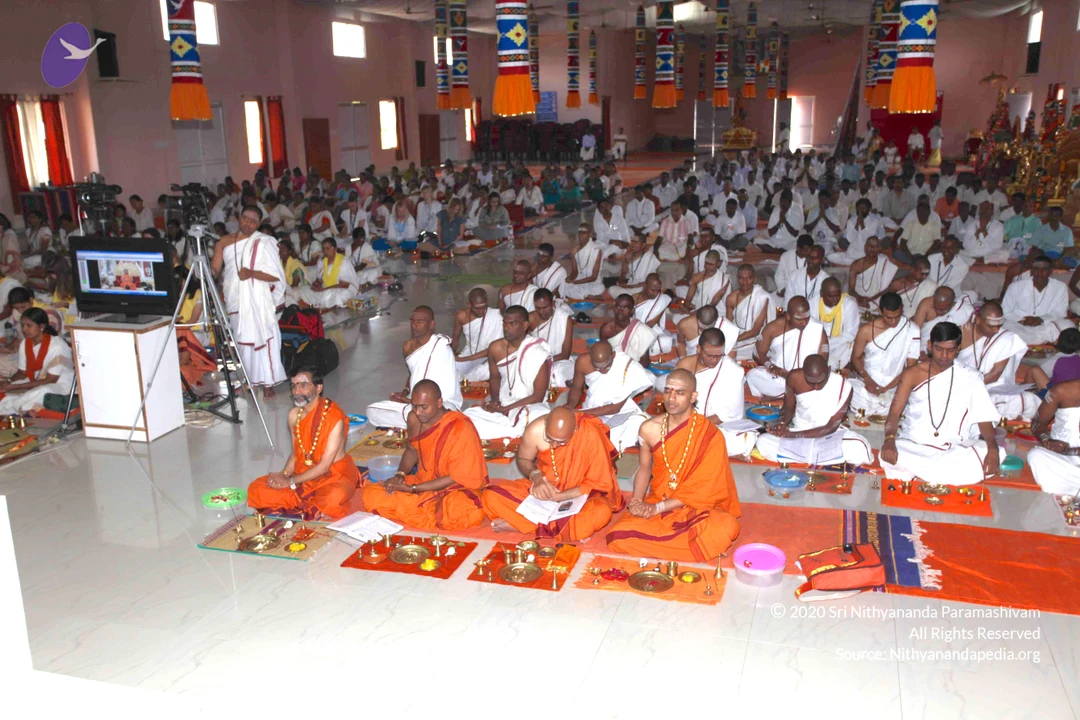
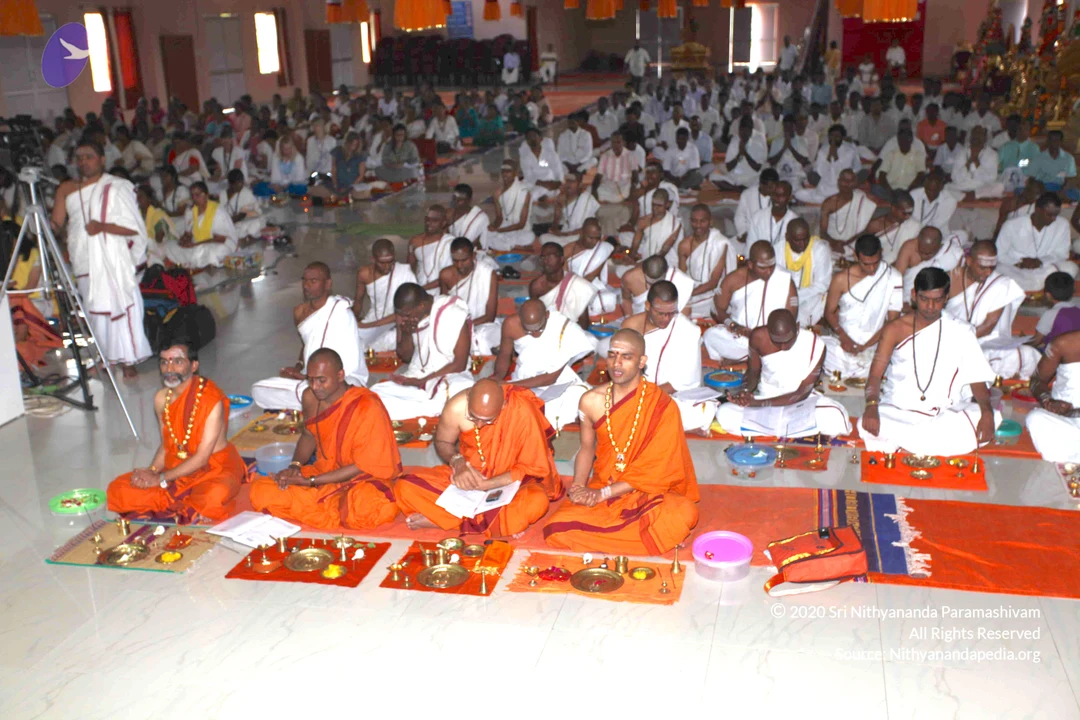
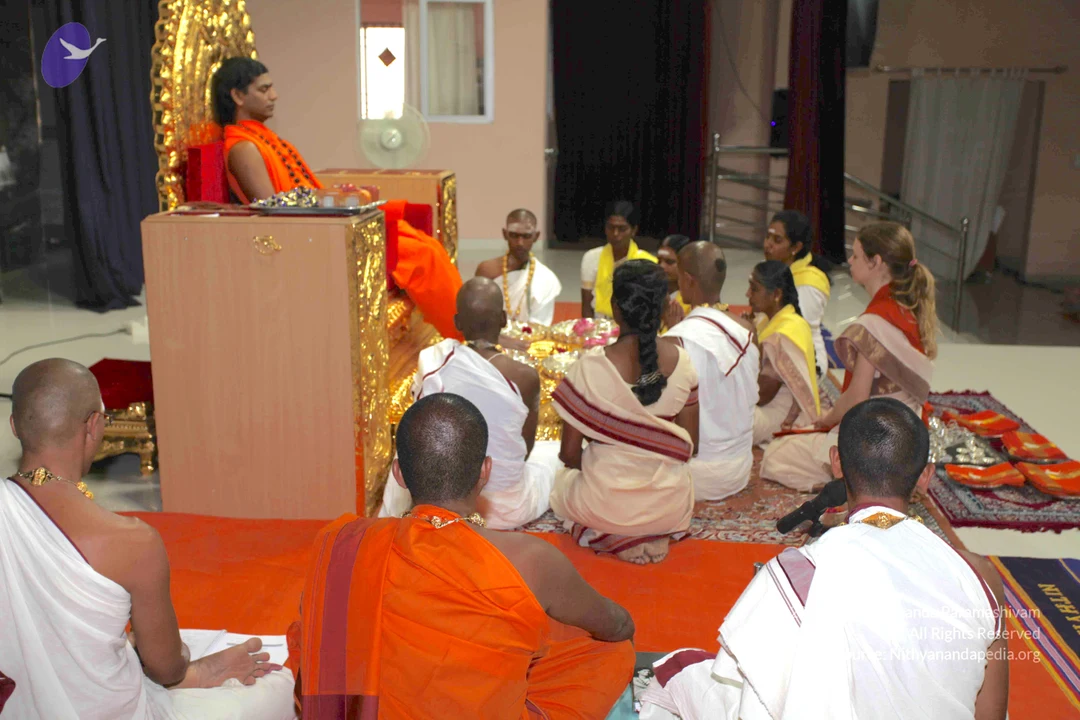
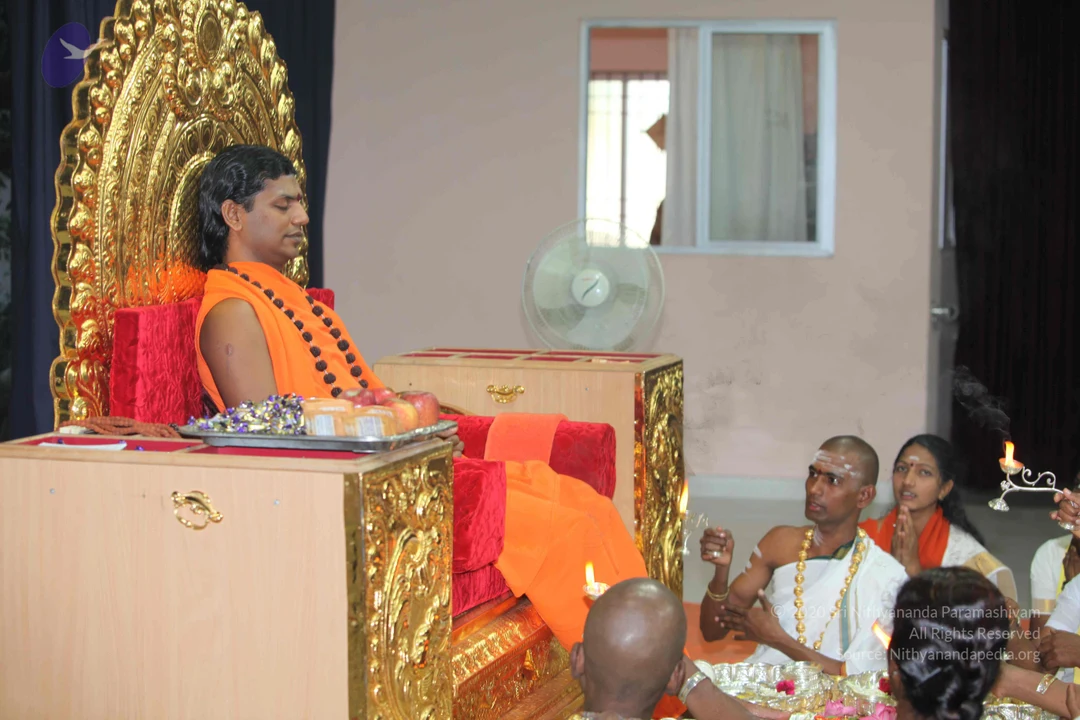
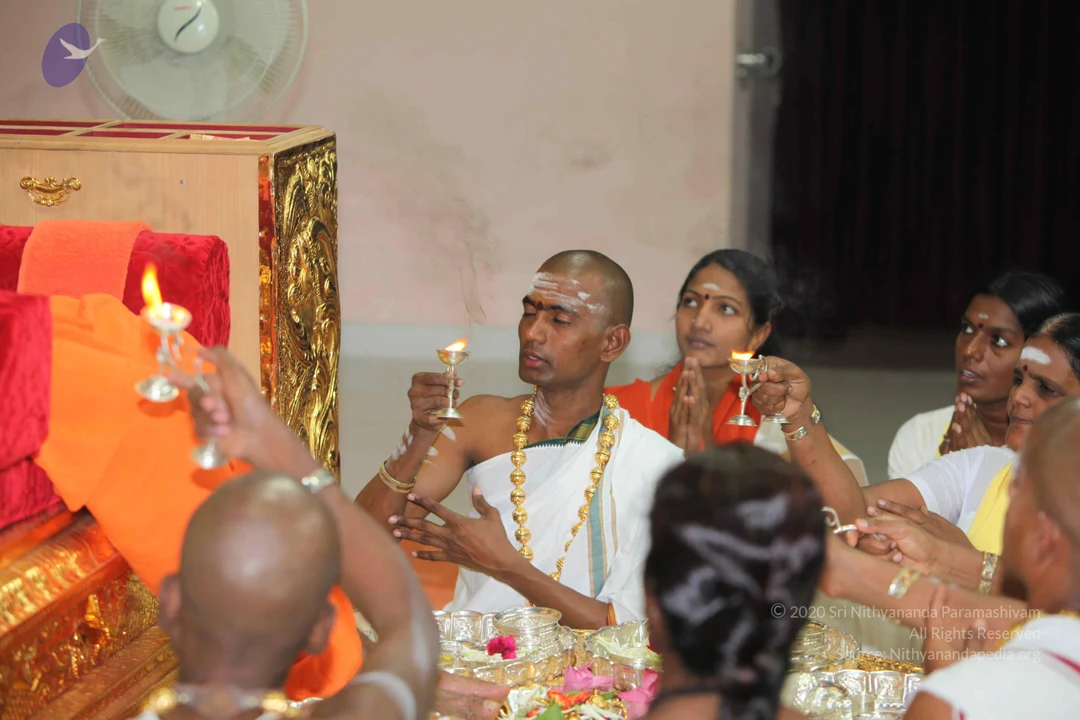
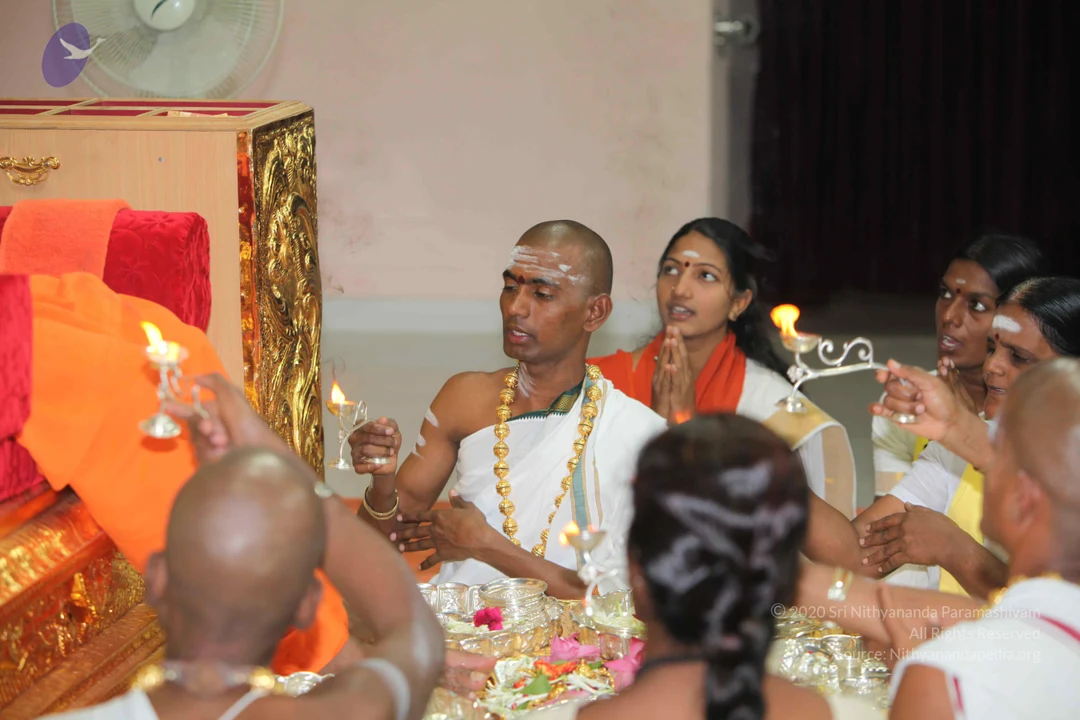
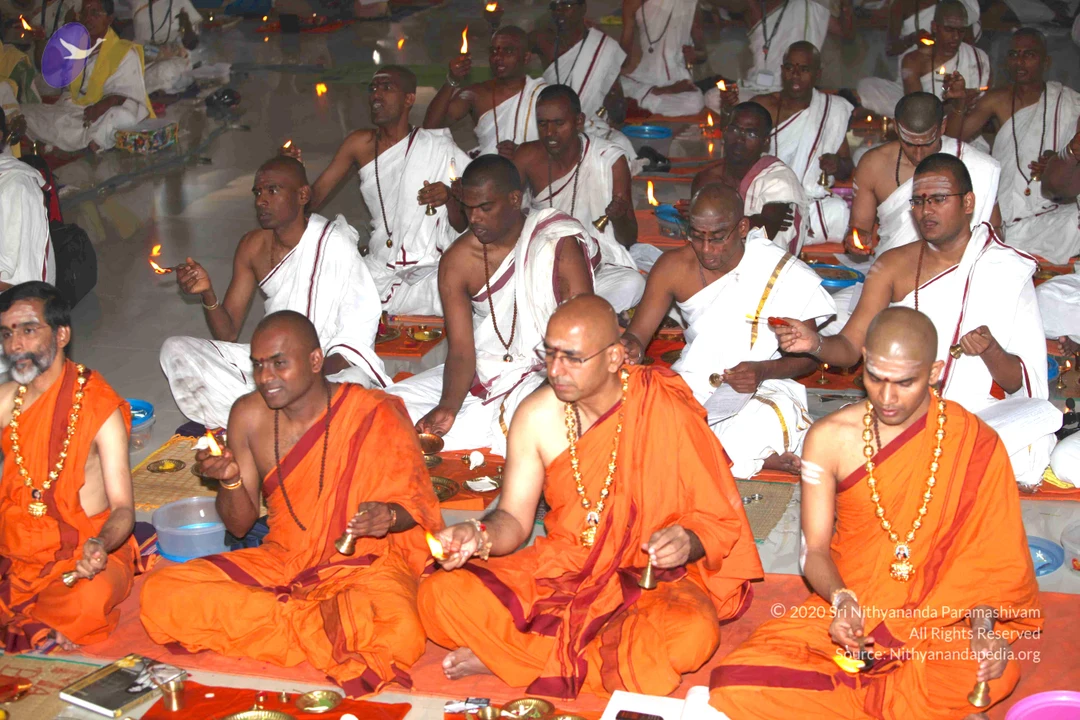
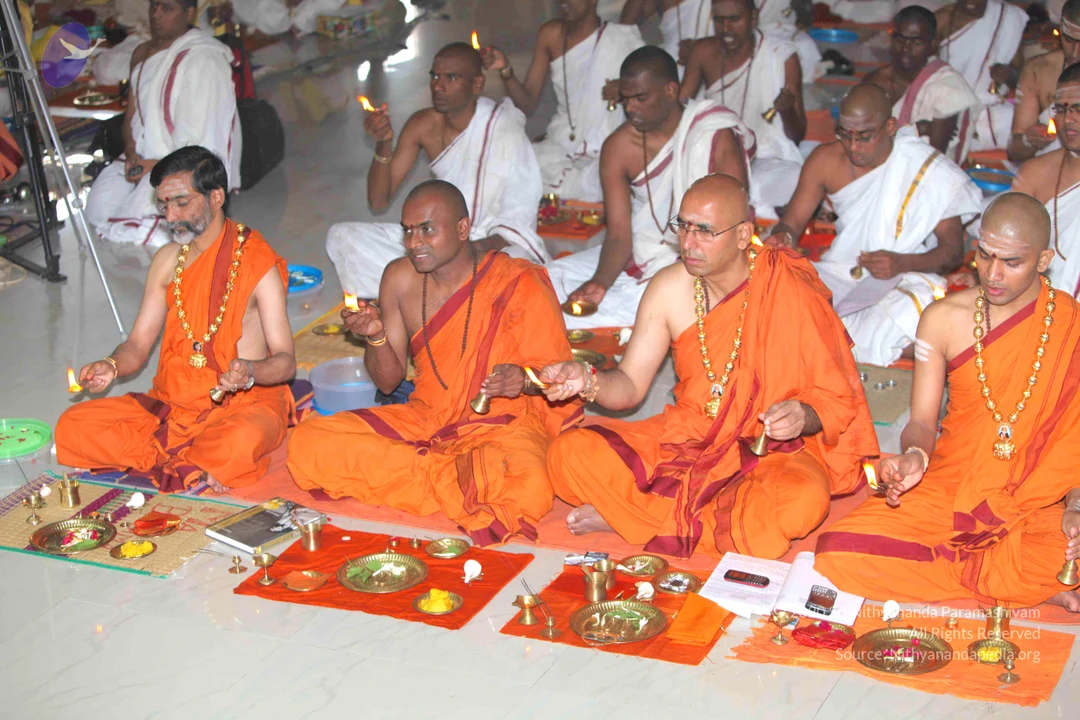
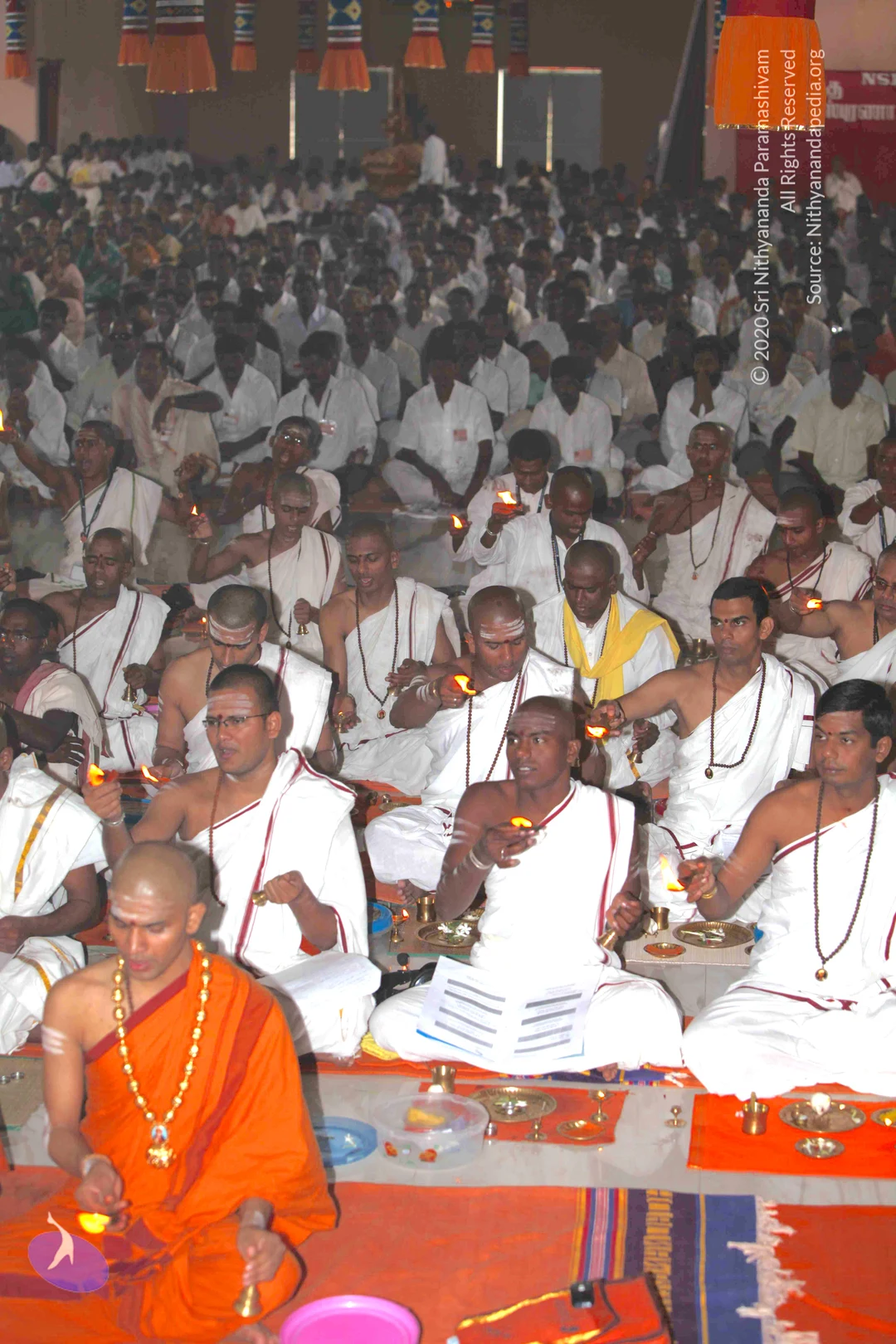
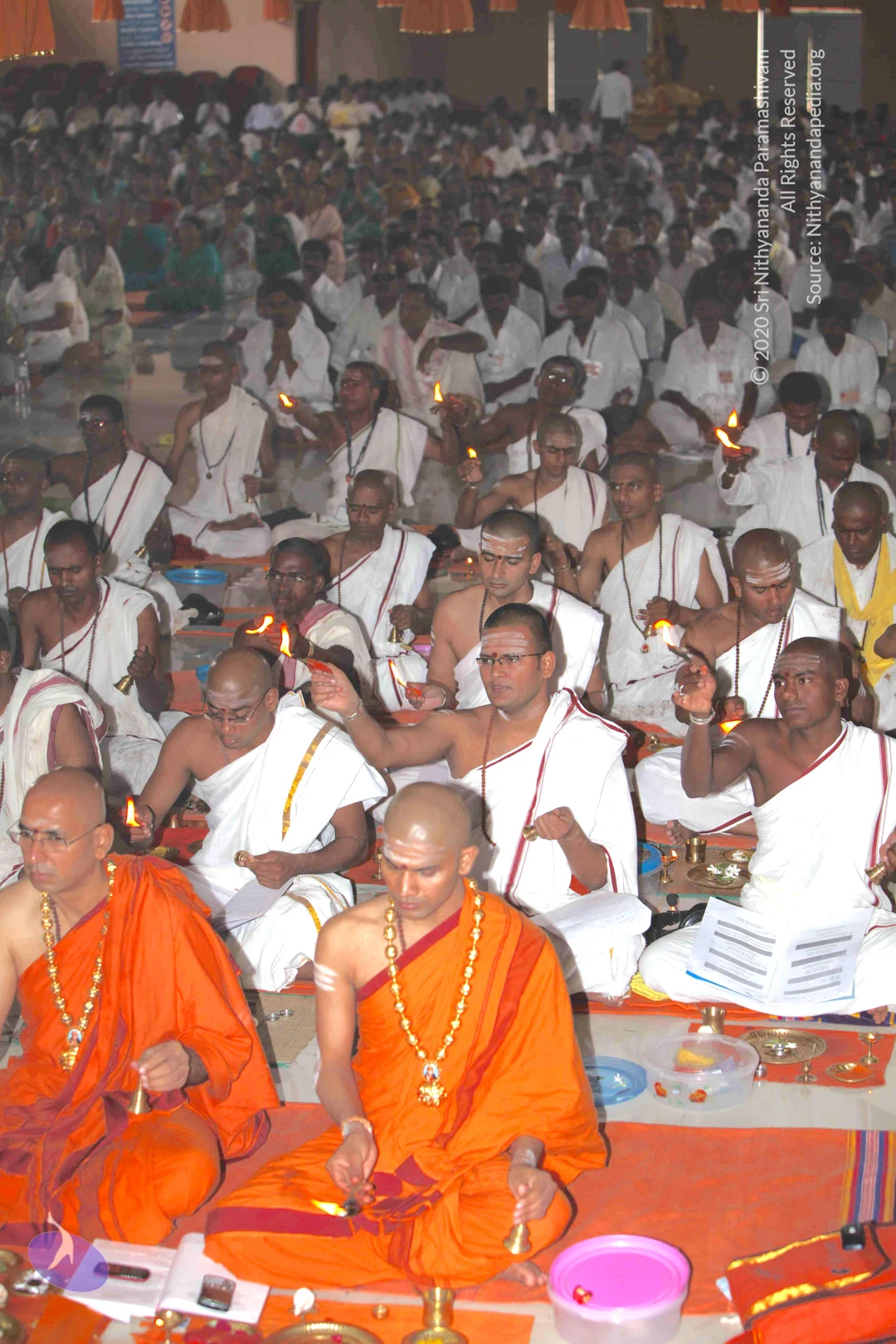
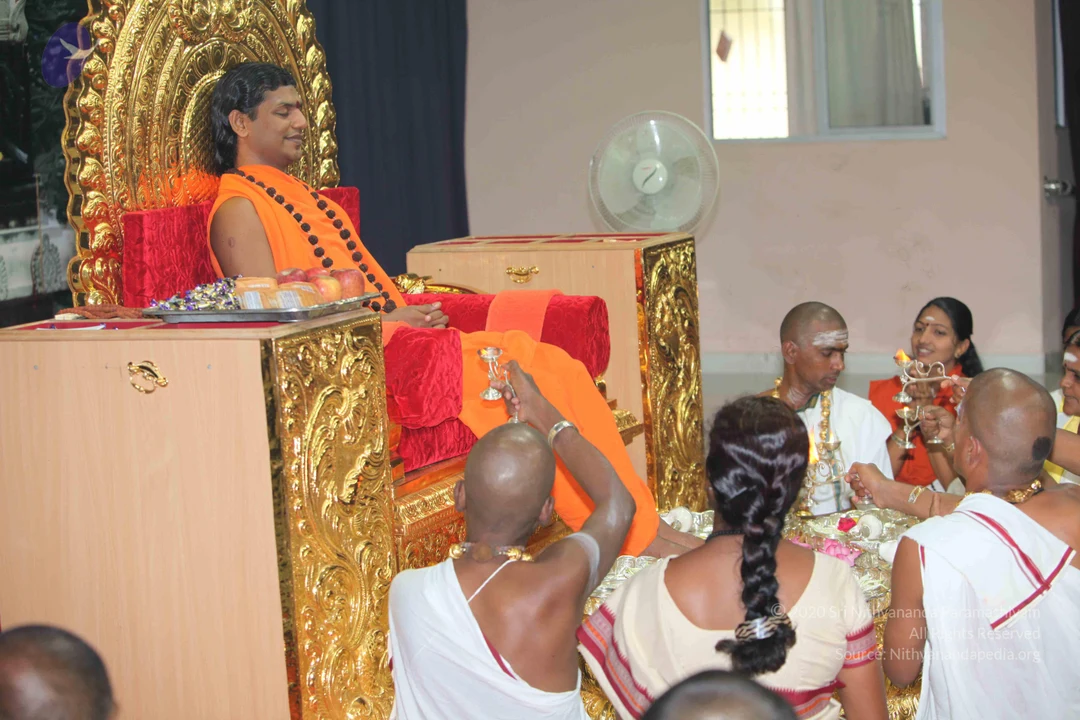
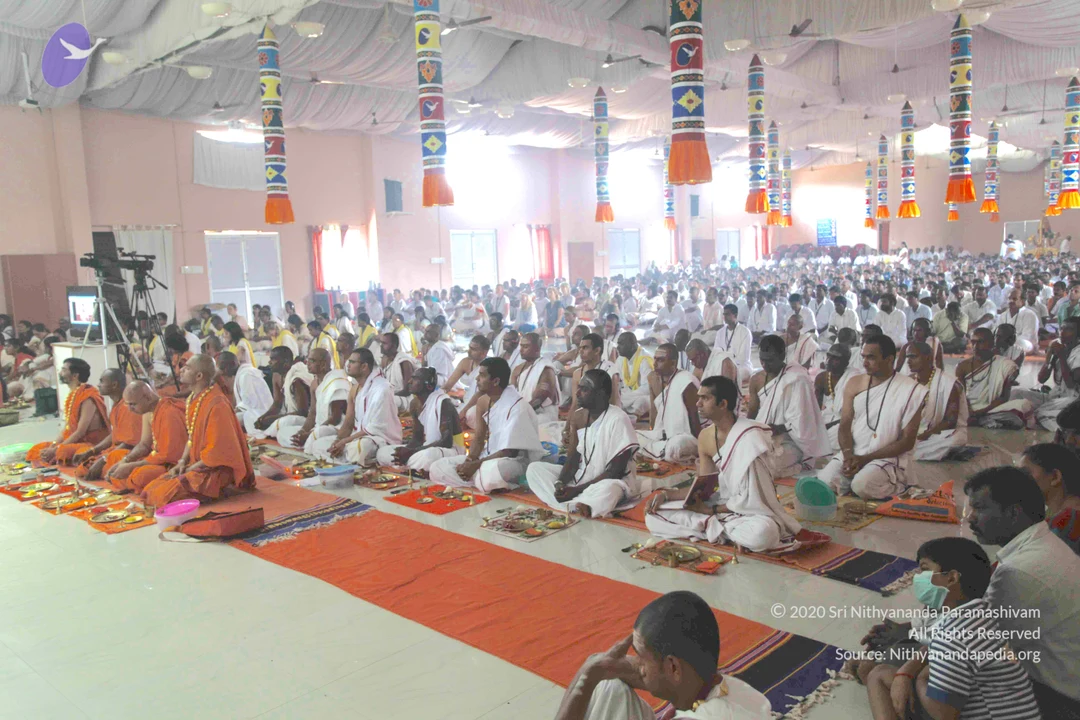
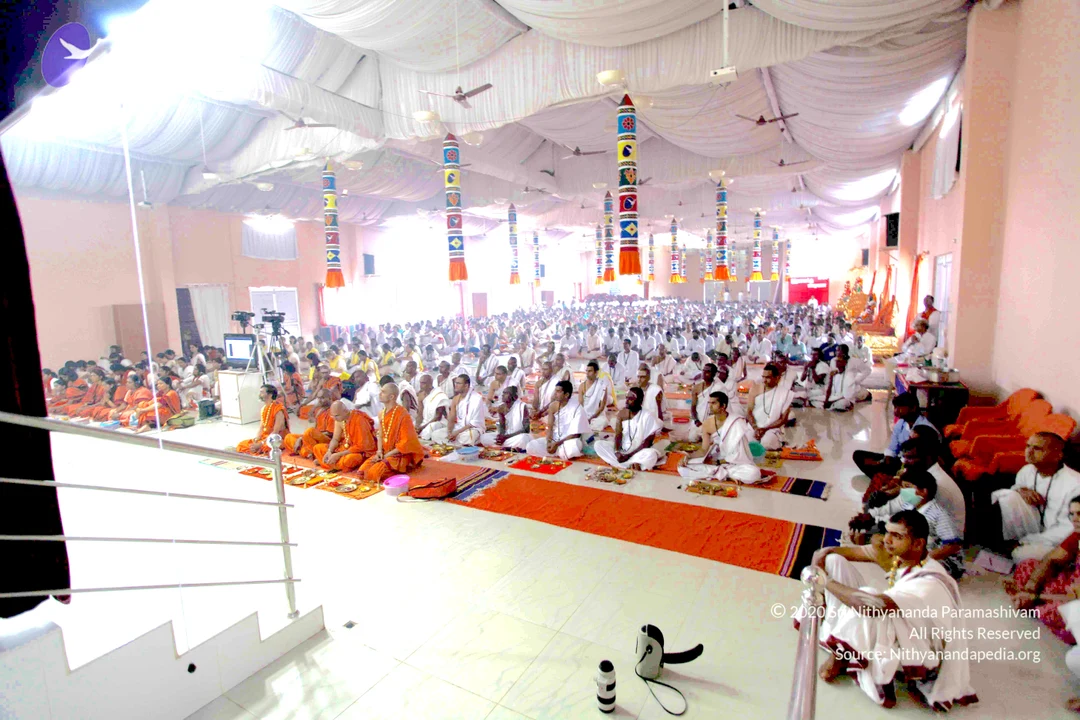
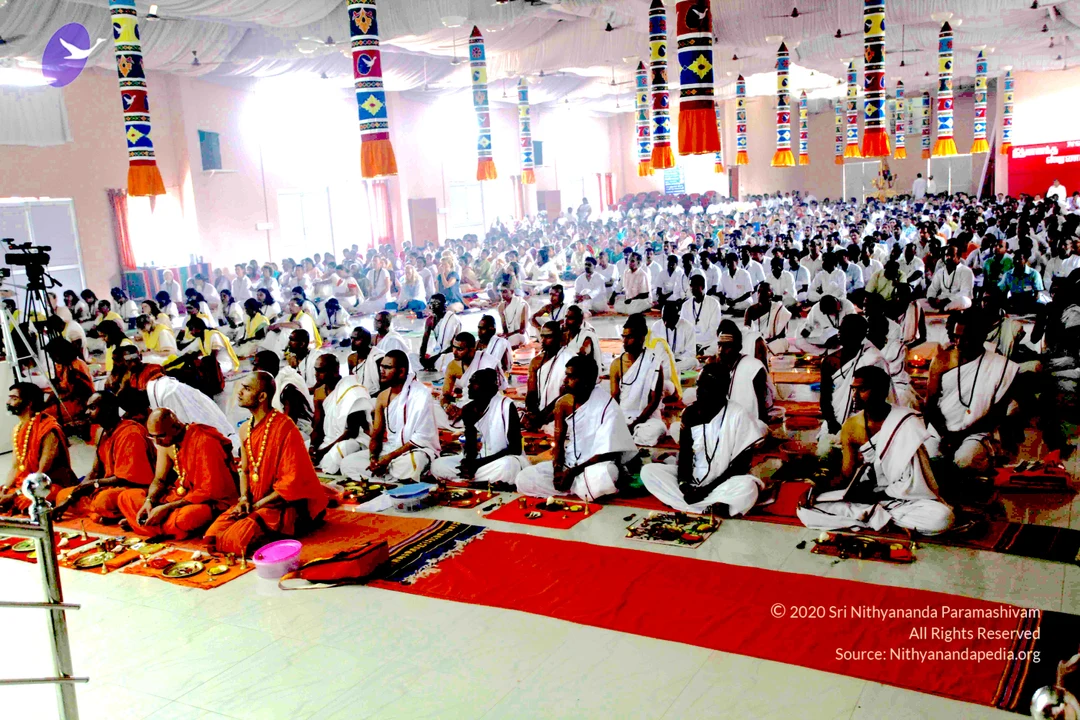
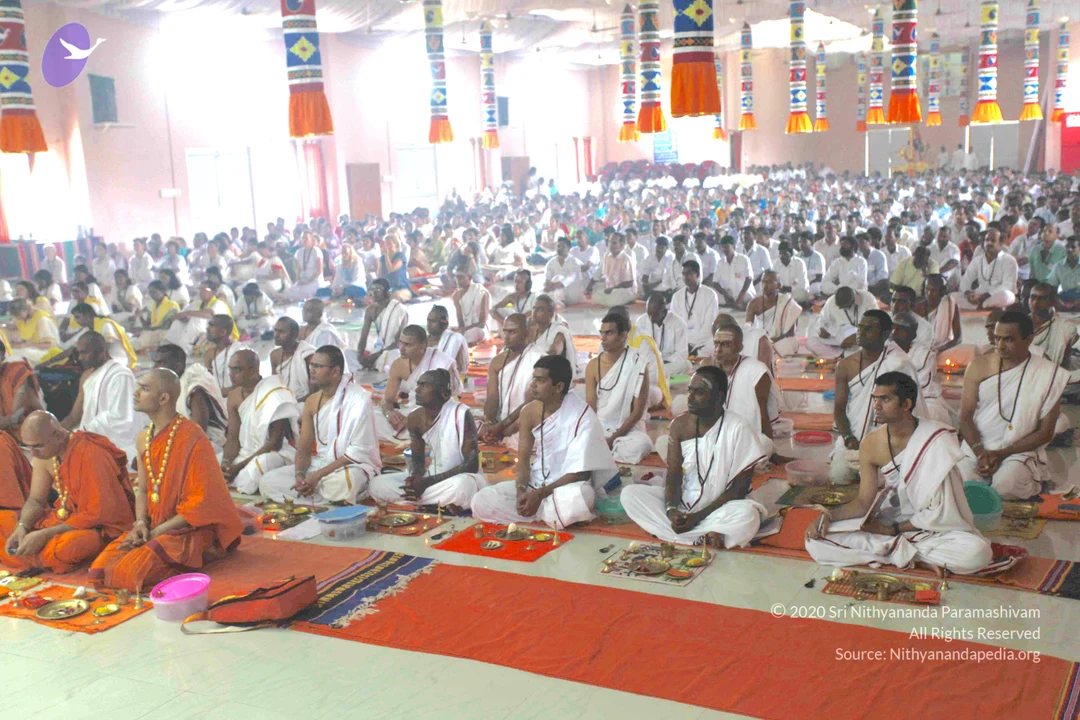
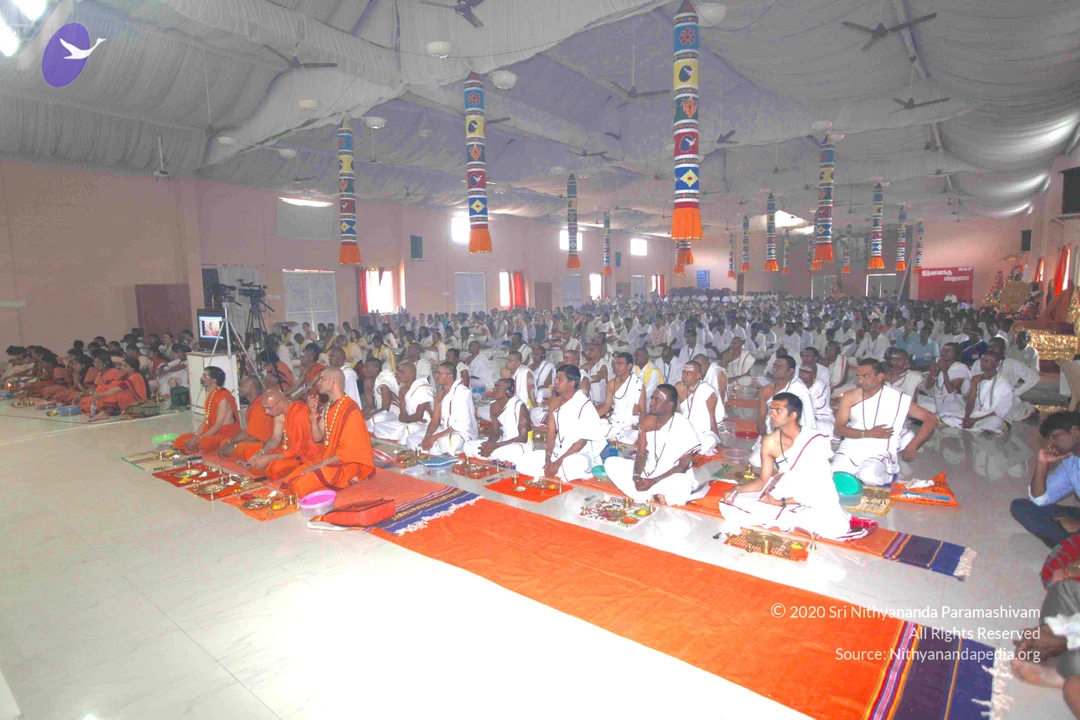
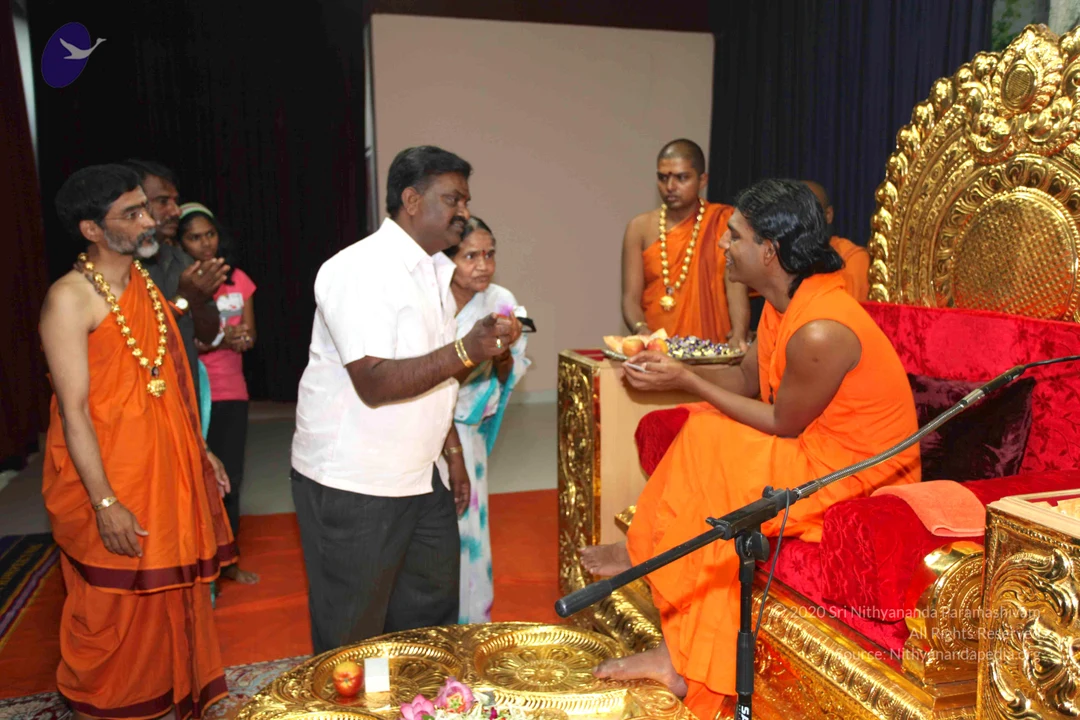
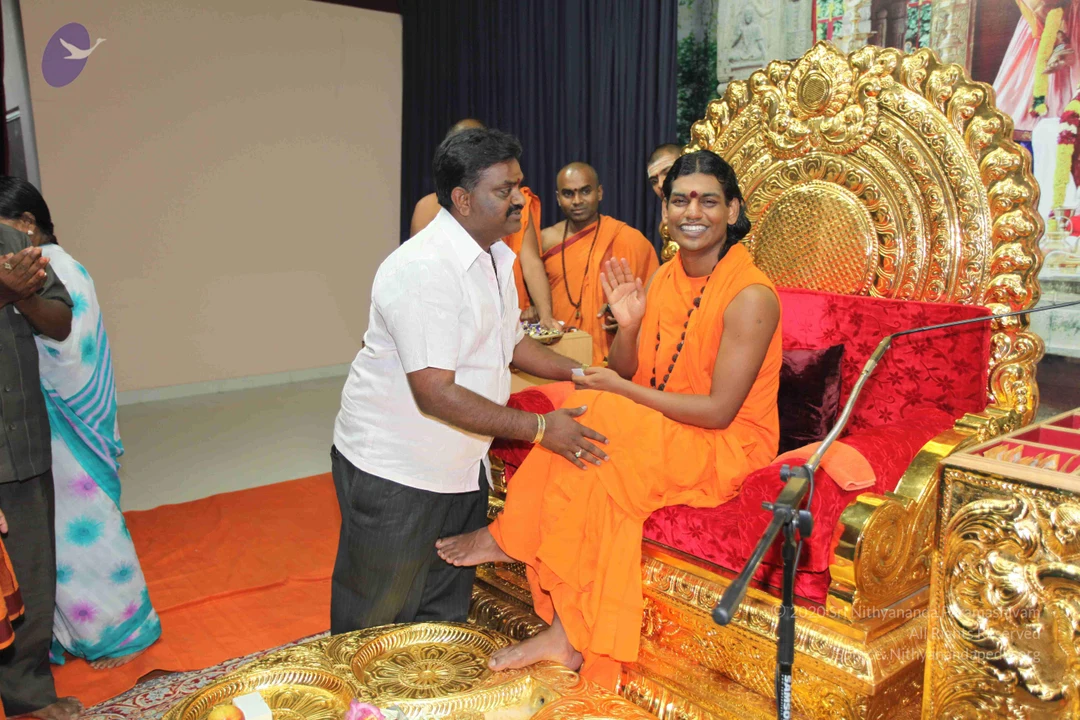
A photograph of a ceremonial stage with a seated figure on a red-cushioned golden throne at centre, wearing an orange robe and a dark rudraksha mala. The figure has short hair, no crown or turban, and the page does not establish identity from appearance alone, so the a person value is unsure. Around the throne, a group sits on orange and patterned mats: men on the left in white dhotis, a woman in a cream sari with a white-and-red border, a girl in white with a yellow shawl, and women in white and yellow saris on the right, several with hands in anjali. Brass plates with fruit and flowers and small oil lamps sit on the floor in front. Behind the stage hangs a large backdrop of a stone temple gateway with a deity mural, a mic stand is on the left, and a floor fan stands on the right against navy drapes.A stage set with a large painted temple backdrop showing gopuram-style pillars and a deity murti with garlands. A man in an orange robe with a rudraksha mala sits on an ornate gold throne with red cushions, centred on the stage. Before him on a red-and-orange carpet, several seated people in white dhotis and saffron-trimmed garments perform a ritual, with brass and copper vessels, a trays of offerings and a small lamp in front. A woman in white stands at a microphone holding papers on the left, while a woman in white and yellow sits with folded hands on the right. A table fan stands at the side of the stage.A seated man in orange saffron robes and a rudraksha mala sits on a red-cushioned golden throne in front of a large temple backdrop showing a deity murti and white carved pillars. Around him on the floor, several women in white and cream sarees with yellow and orange borders sit in front of him, hands folded in namaste or holding brass bowls and offerings, with orange cloths and a small brass lamp arrangement before them. A standing electric fan stands at right beside blue curtains.A photograph of a large indoor hall with a white draped ceiling and tall cloth banners with orange tassels hanging at the top. On a raised stage at the far end, a seated figure in saffron clothing sits before a decorated backdrop with a deity murti and a kalasha-like arrangement, with attendants in white around him. Rows of seated devotees, mostly men in white dhotis and shawls, sit on orange and patterned mats on the floor, many with their heads bowed, some holding books, plates, and small oil lamps in front of them. A projector screen hangs on the left wall. The scene suggests a satsang gathering or puja with lamps lit in the foreground. Several people in white and orange are near the front, while the majority of the hall is filled with seated attendees.A large hall with a white fabric ceiling and tall striped cylindrical banners hanging from above. Dozens of seated devotees fill the floor in rows on orange and white cloths. Several men in saffron-orange robes with rudraksha malas sit in the foreground, one bald man in front holding his hands together. Many men in white dhotis and white shirts sit cross-legged behind them, with brass plates, lamps, and small offering bowls set before them. A standing man in white clothing stands at the left near a monitor and camera on a tripod. A gilded ornate chair with orange cushions is visible at the far right, but no clearly identifiable a person is seated in it. Lots of people, most seated in a satsang or puja setting.A seated man in orange saffron robes and a rudraksha mala rests on an ornate gold-and-red throne with a red velvet cushion, eyes closed and a red tilak on his forehead. Before him on a small table sit a silver tray with apples, a bowl of offerings and purple flowers. In the foreground a shaved-headed priest in white clothing, wearing gold ornaments, bends over a row of brass plates and oil lamps. A wall fan and window are visible behind. A visible candidate matches the page's a person reference through saffron clothing, a mala and the throne, though the face is not used for identification.

Morning-Satsang
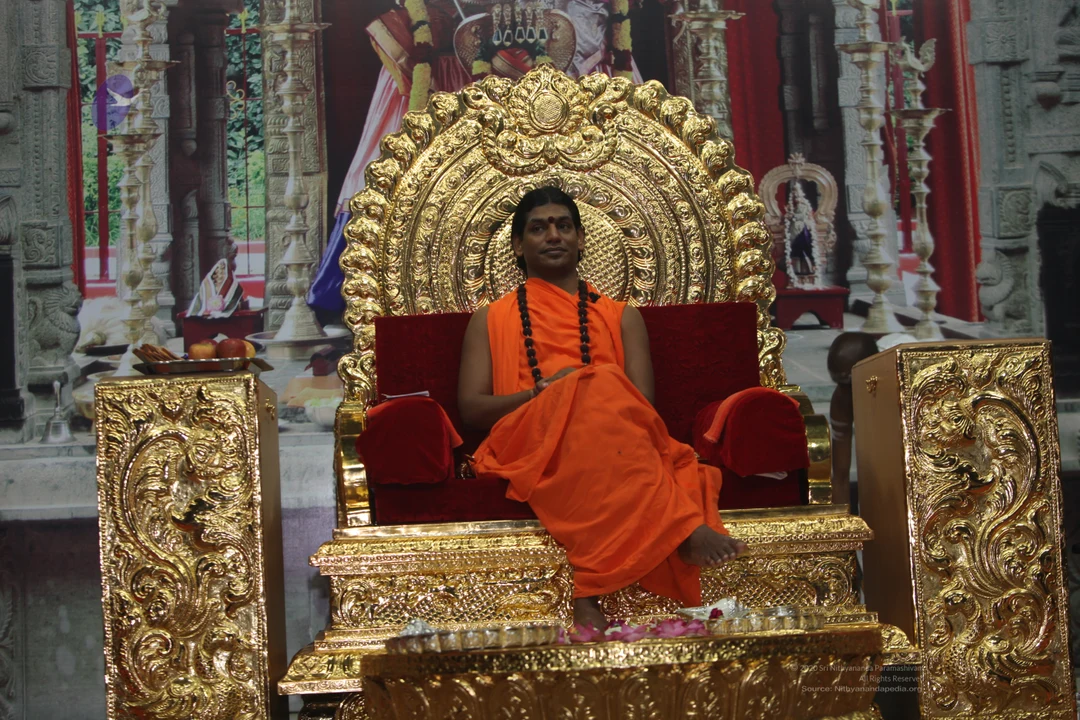
9 photosSource gallery
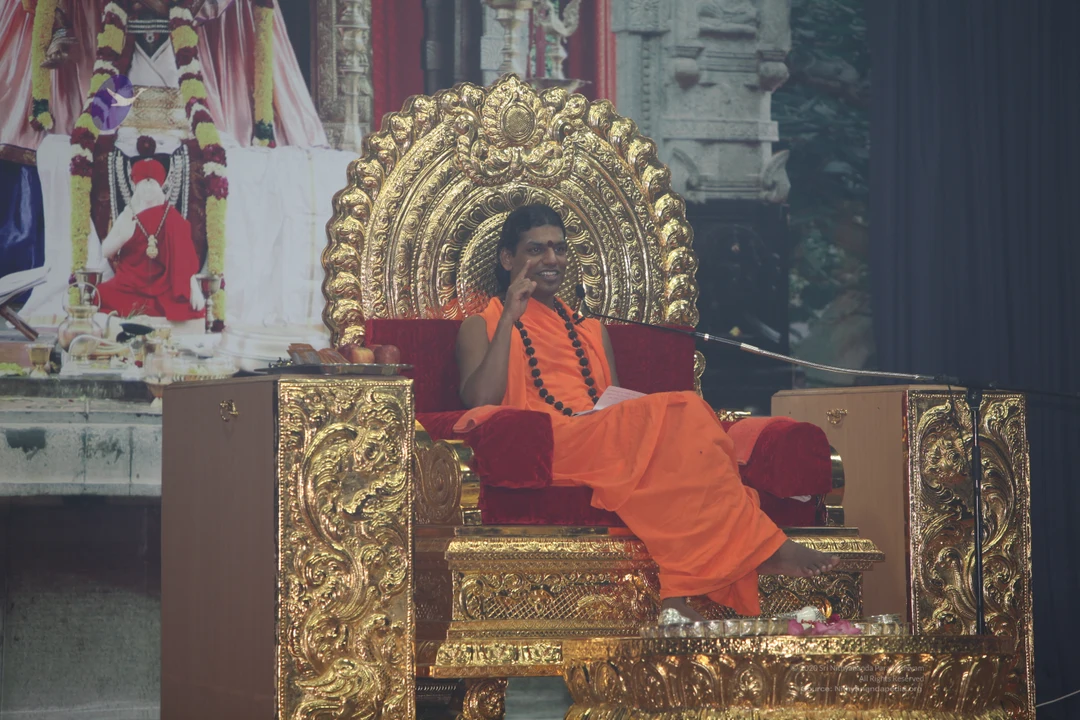
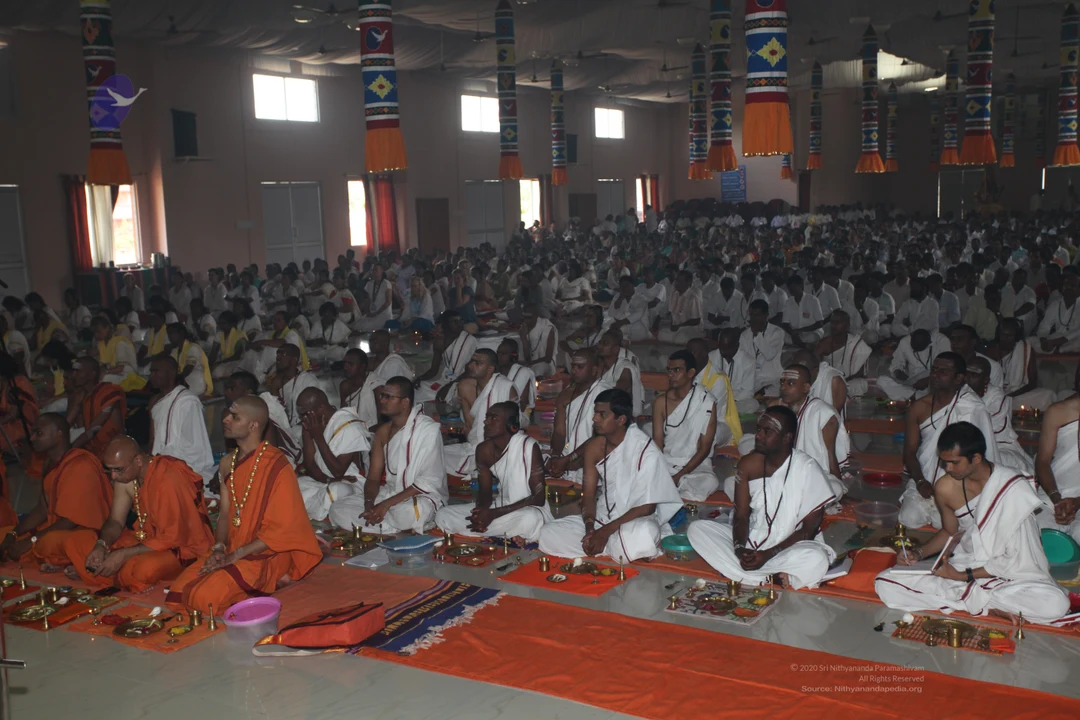
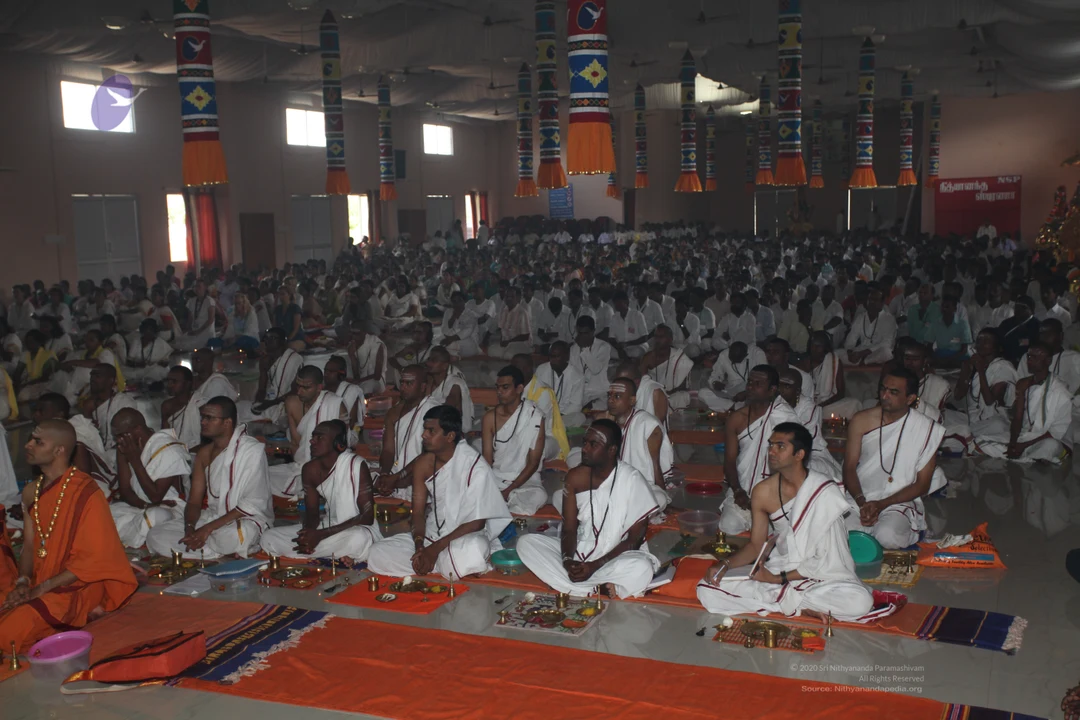
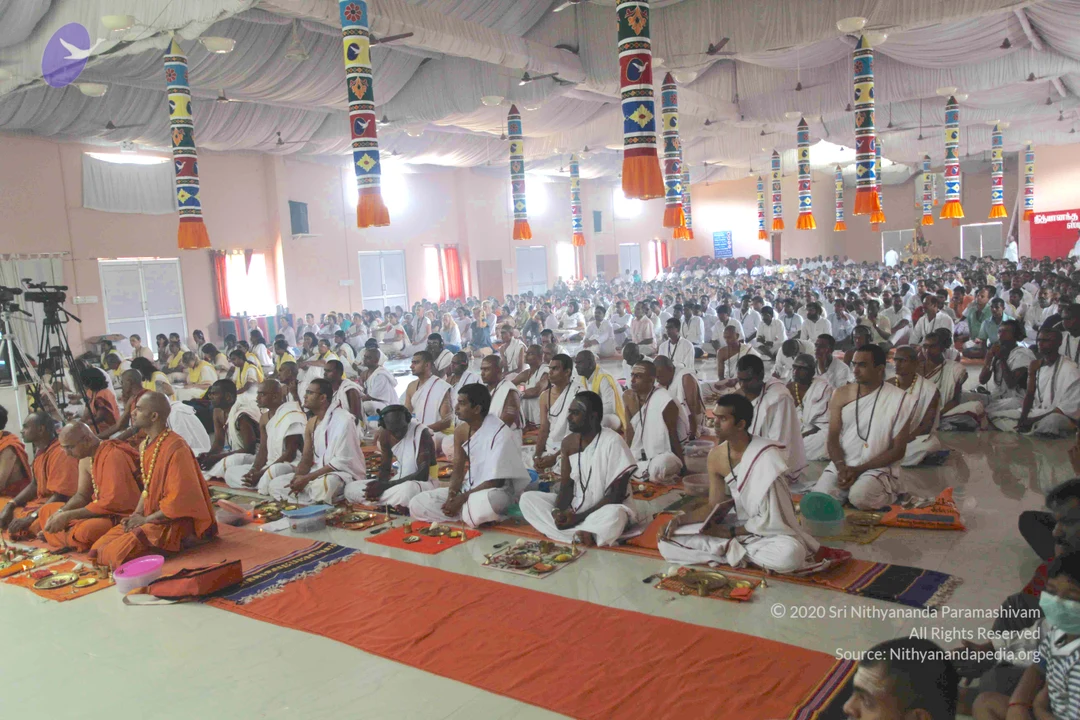
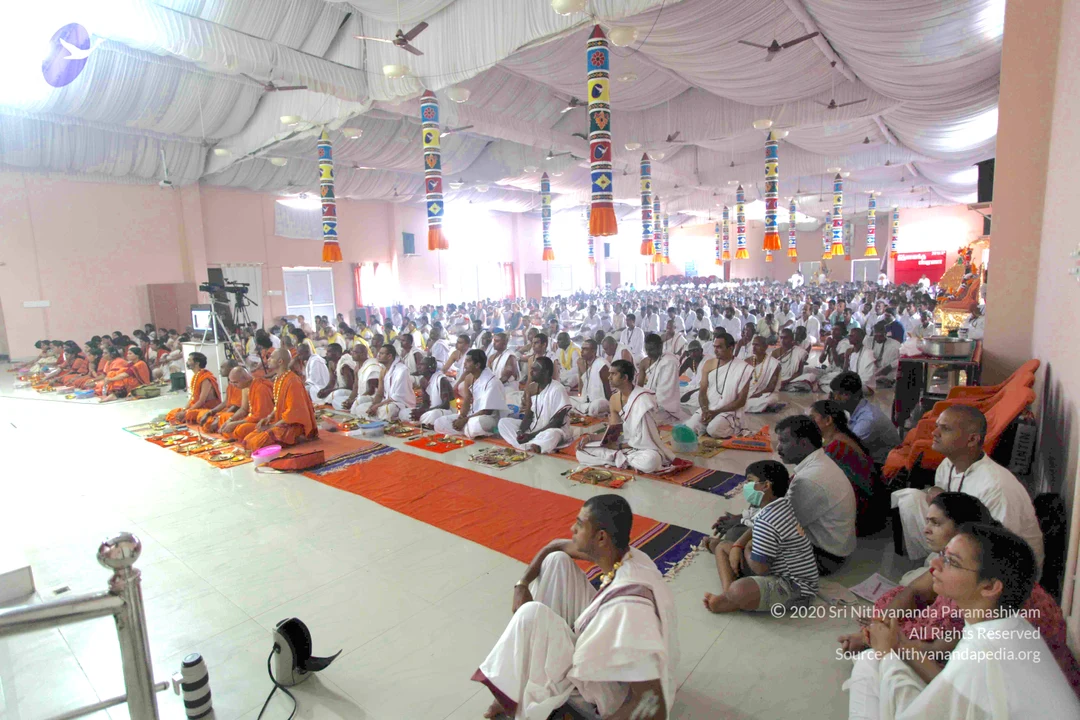
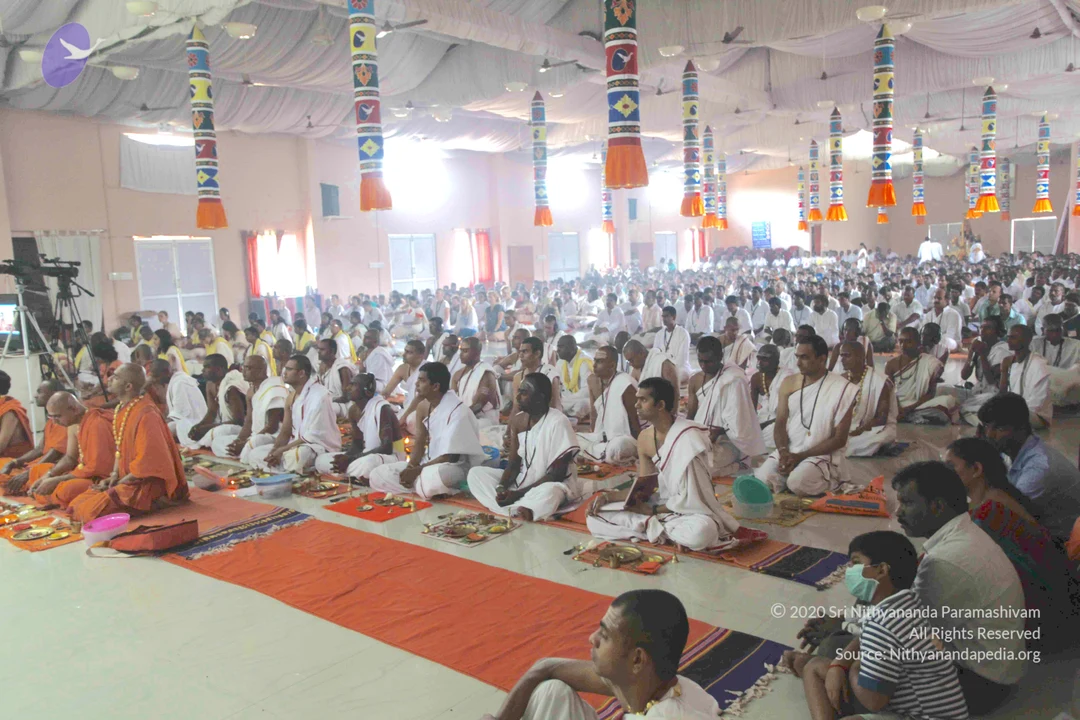
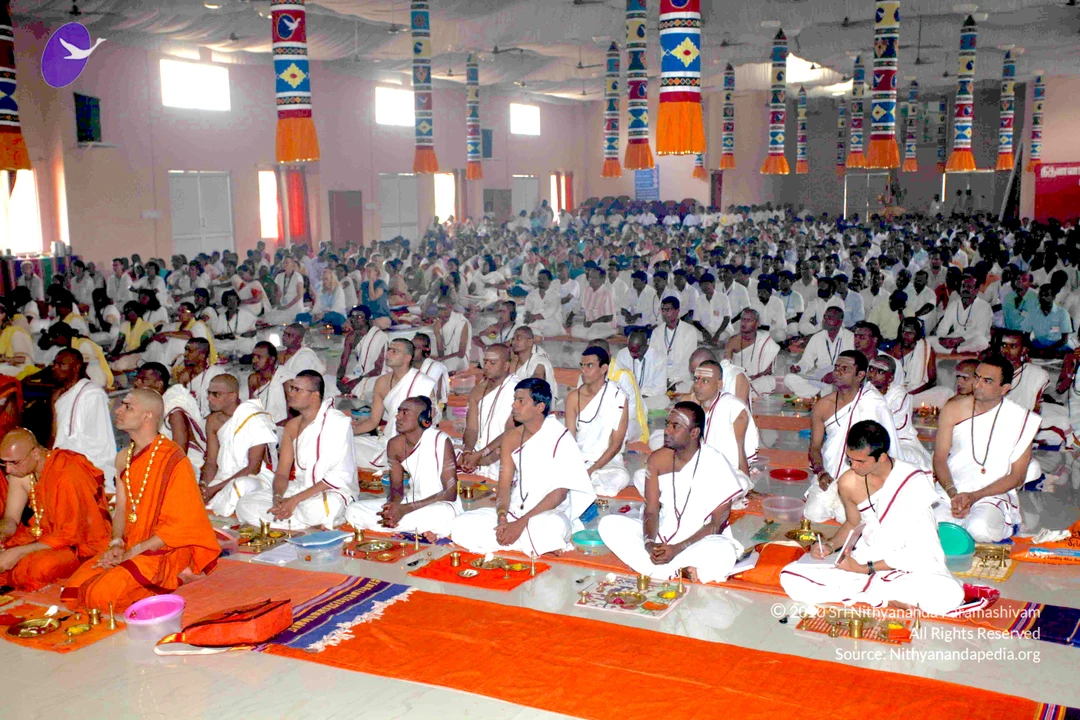
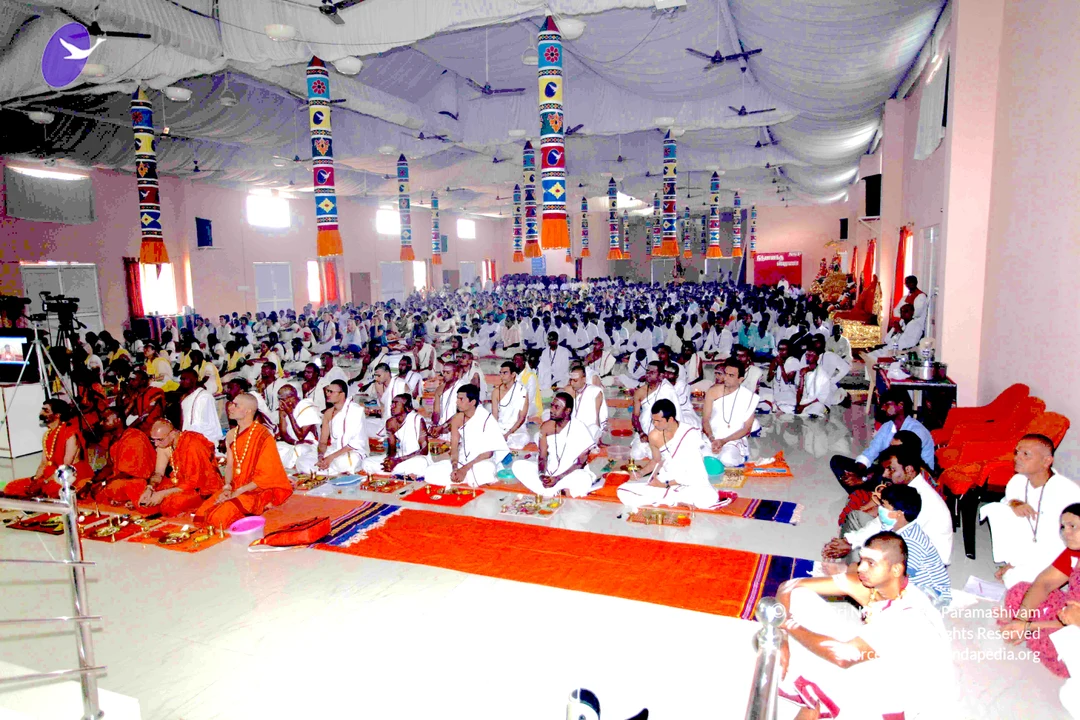
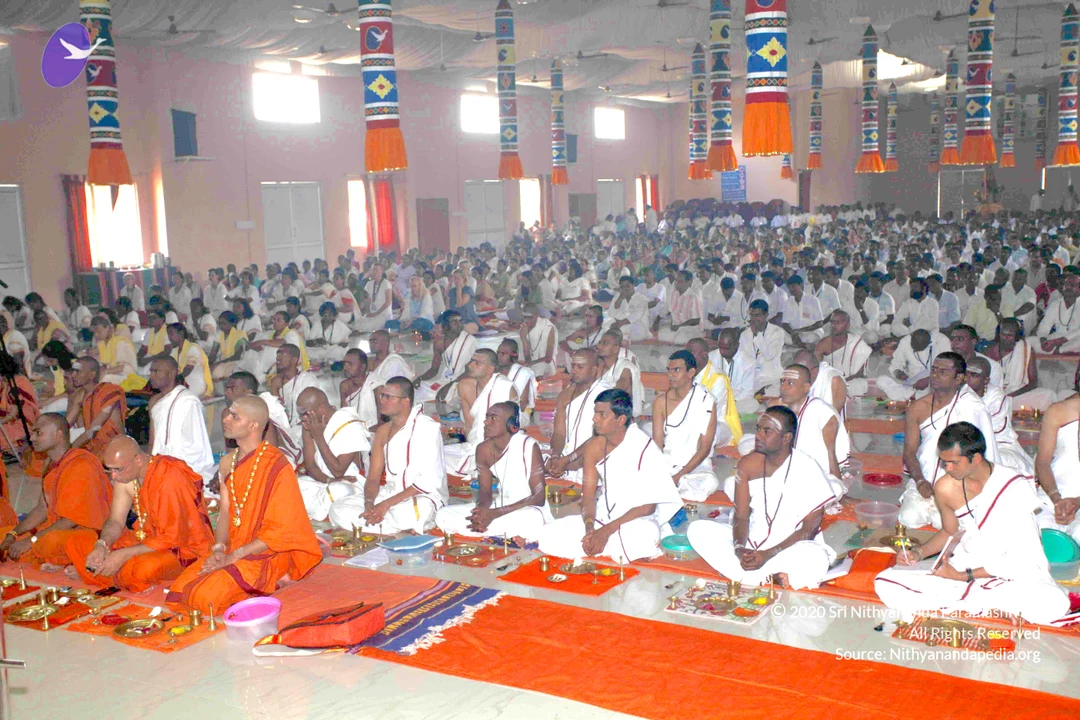
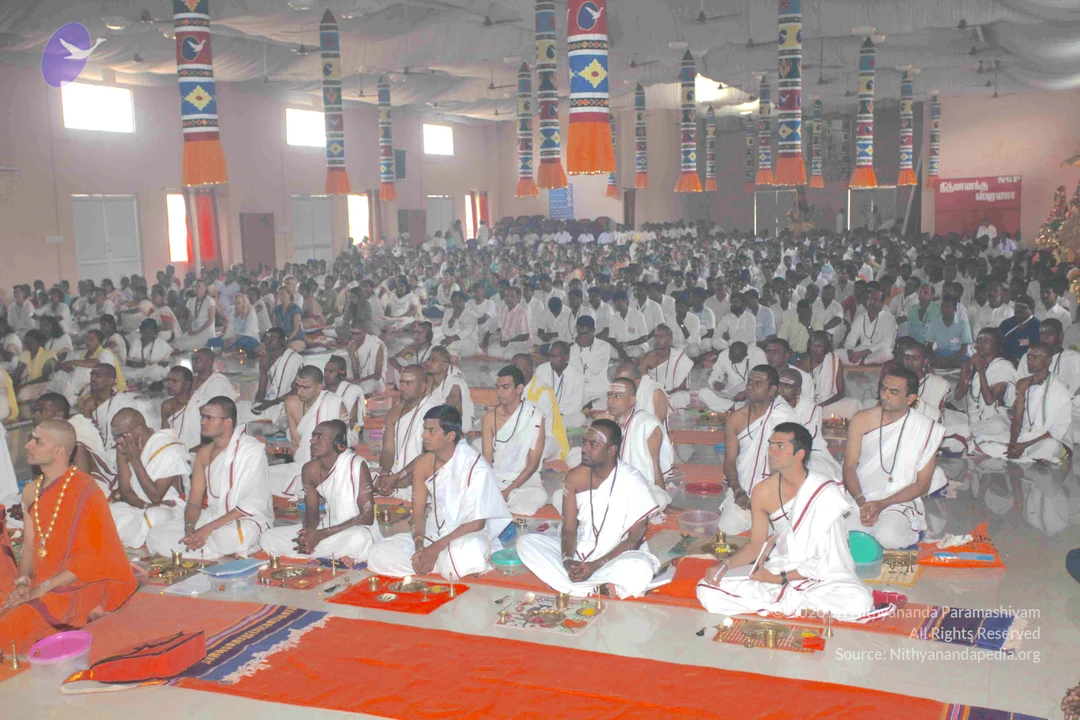
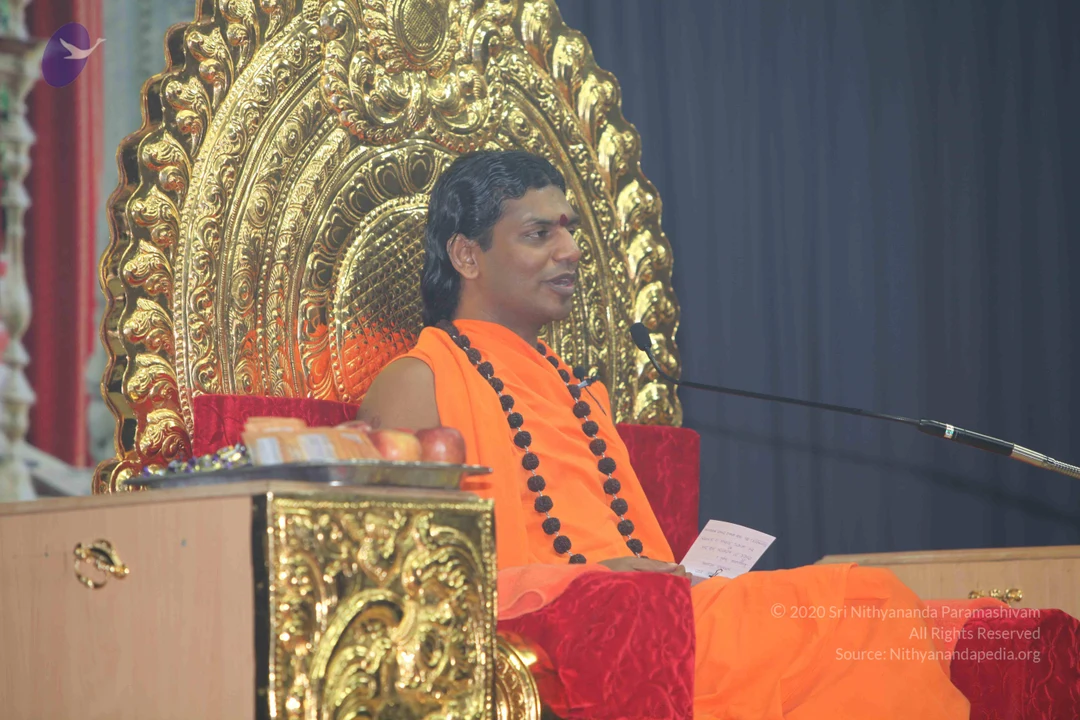
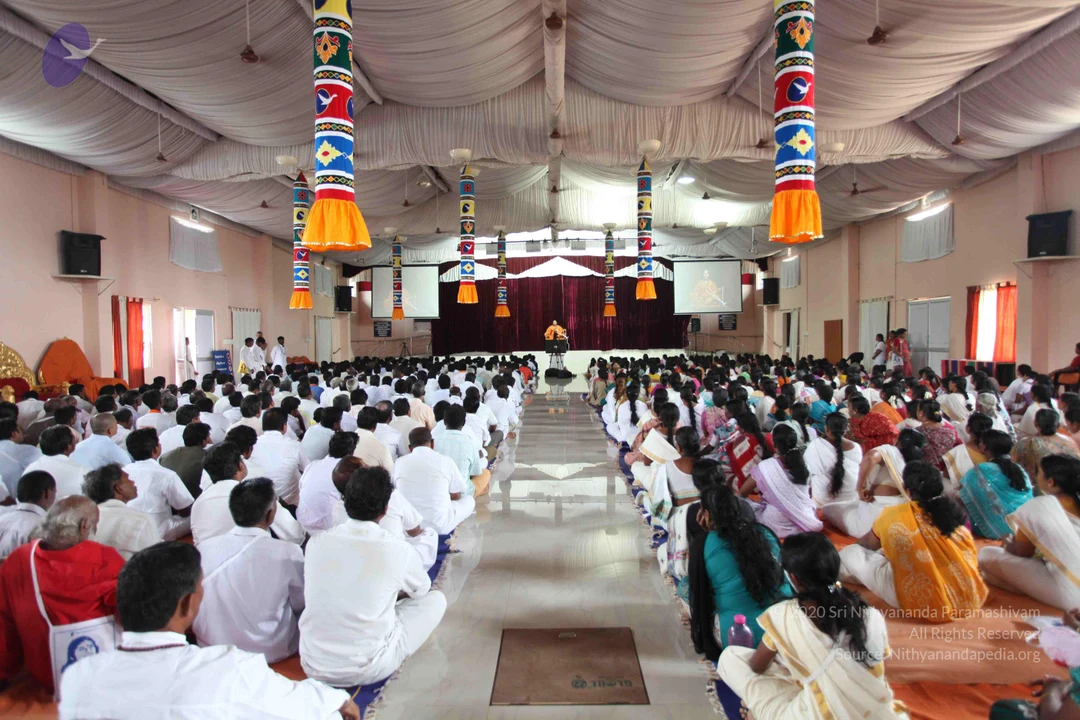
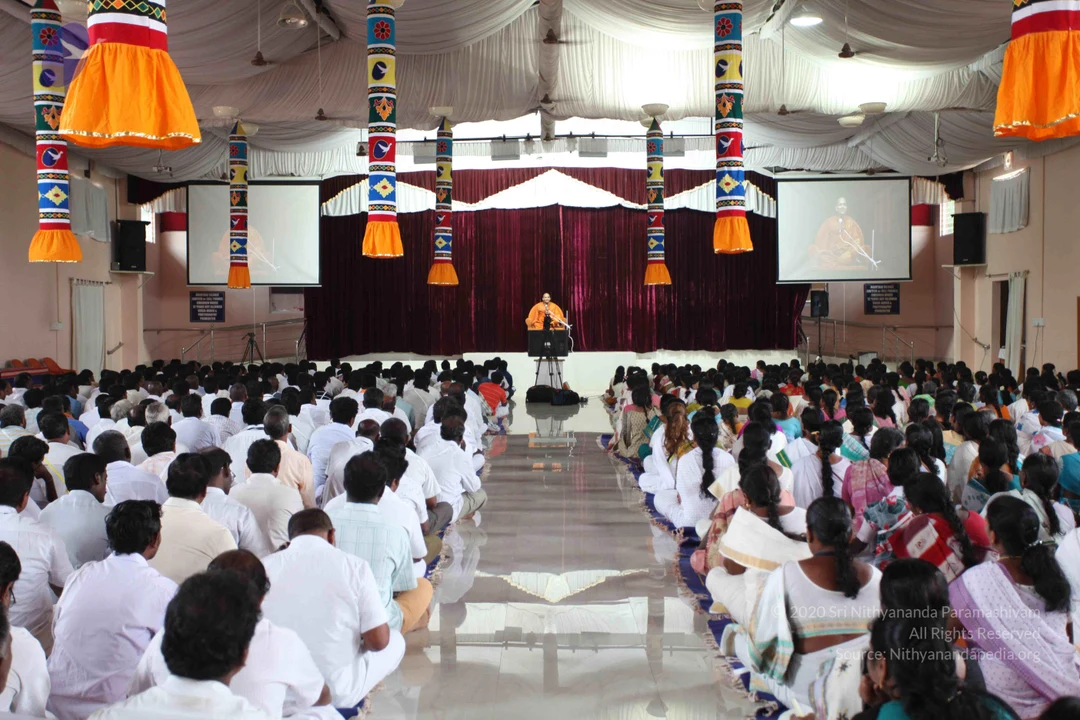
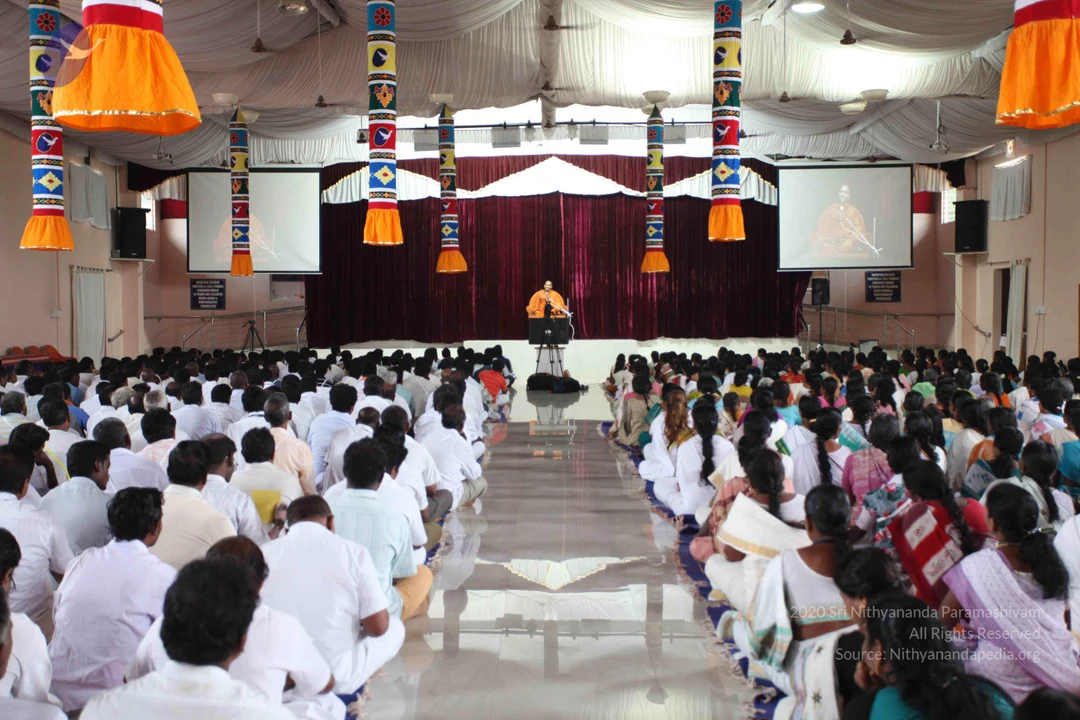
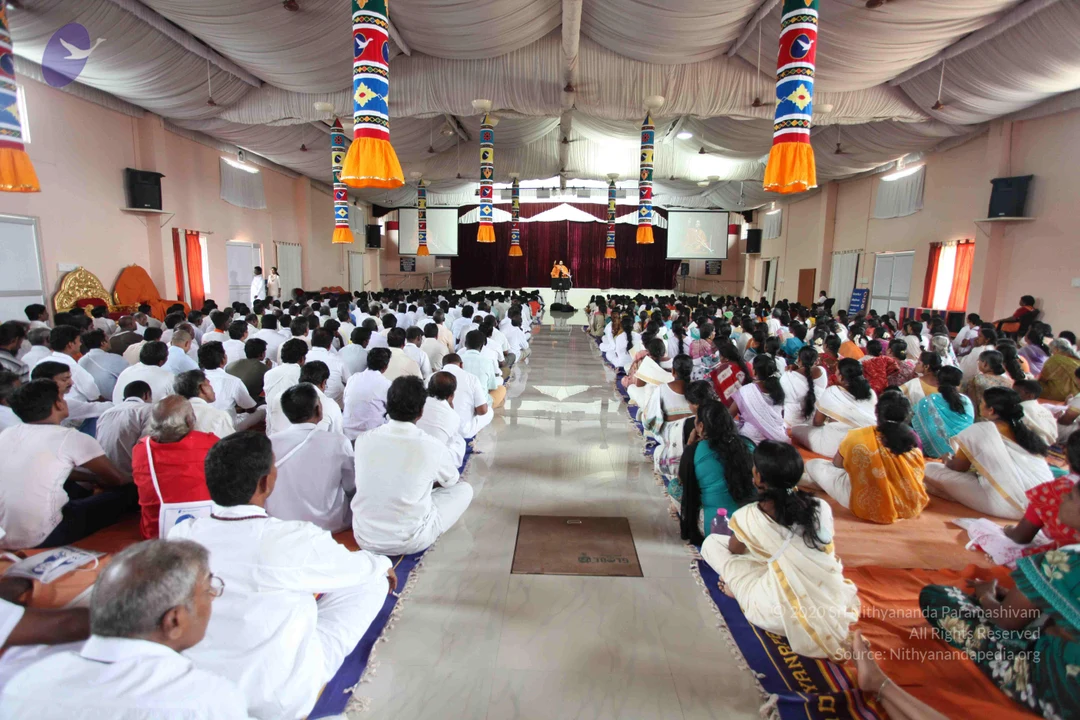
A man in an orange saffron robe with rudraksha malas sits on an ornate gold throne with red velvet cushions and armrests. He wears a red tilak on his forehead and sits with bare feet. A brass tray with fruit and flowers sits on a gold stand in front, and gold lamp stands and a red curtain appear in the background. A painted temple backdrop shows carved pillars and a deity figure.A seated man in saffron-orange robes sits on an ornate golden throne with a red velvet seat and red cushioned armrests. He wears a long rudraksha mala over his chest and a red tilak on his forehead, with his hands resting in his lap. Golden side panels flank the throne, and a brass tray with fruit, flowers and oil lamps sits on the platform below. Behind him a large printed backdrop shows a temple hall with carved pillars, a hanging crown-like ornament, and figures in red and white. A microphone stand appears at the right edge. The person is seated on a throne, with the ritual setting indicating a satsang or discourse hall.A photograph of a man seated on an ornate gold throne with a red velvet cushion, pressing his palms together in namaste with eyes closed. He wears a flowing saffron-orange robe and has long dark hair in a braid over one shoulder, with a microphone on a stand beside him. Behind him is a backdrop of a deity murti in a red and white sari-like garment, with brass lamps, a gold-framed shrine and fruit offerings on a small tray and flower petals before the throne.A man in an orange saffron robe sits cross-legged on an ornate gold throne with a deep red velvet seat and cushioned armrests, palms pressed together in namaste at a microphone stand. A rudraksha mala hangs around his neck and a red tilak marks his forehead. Gold-and-brass lamps and a tray with fruit and flowers sit on the floor in front, with a large painted backdrop of a temple behind. Partially visible figures in the backdrop are a painted depiction, not people in the scene.A man in orange saffron robes sits on an ornate gold throne with red velvet cushions, speaking into a microphone on a stand at right. He wears long swept-back hair, a rudraksha mala with dark beads, and a small red tilak on his forehead, holding a sheet of paper in his hands. Bare feet rest on a gold footrest, and a pink flower offering sits at the base of the throne. Behind him a painted backdrop shows a figure in a pink and blue sari beside golden pillars and oil lamps. Several fruits sit on a tray at left. This is a satsang talk setting; the speaker has distinctive long hair, saffron clothing and a rudraksha mala, consistent with the Swamiji (probable) appearance cues, and is seated in person.A large hall with white draped ceiling and colourful hanging tassels holds a dense seated assembly. In the foreground, several men in saffron/orange robes sit on orange and red mats with brass plates of offerings; on the left, a few saffron-robed figures sit with rudraksha-style beads. Rows of men in white dhotis and white shirts or bare-upper-body sit cross-legged on mats, with many devotees extending to the back of the hall. Trays and plates of puja items are arranged on the floor, and a camera on a tripod is visible at the left edge.

Sarvadarshan

3 photosSource gallery
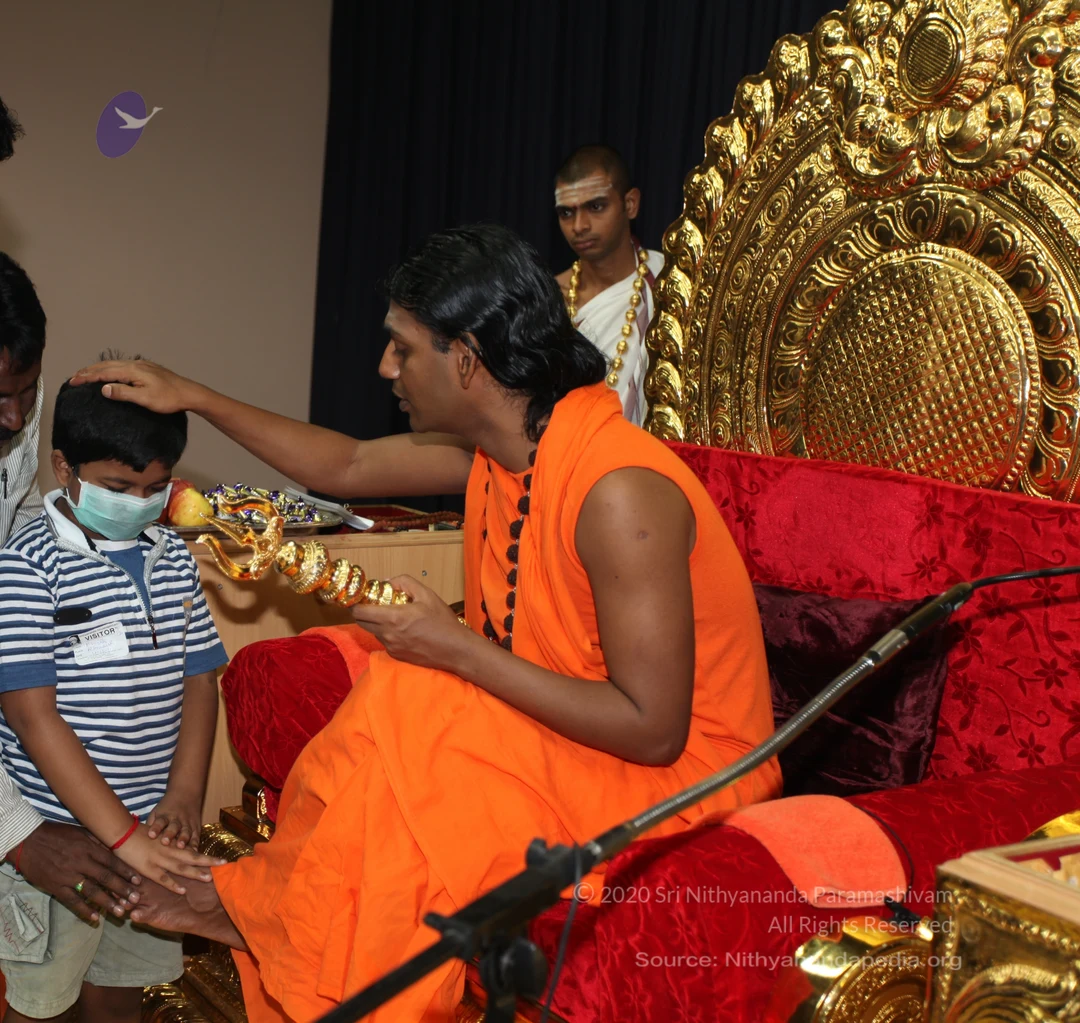
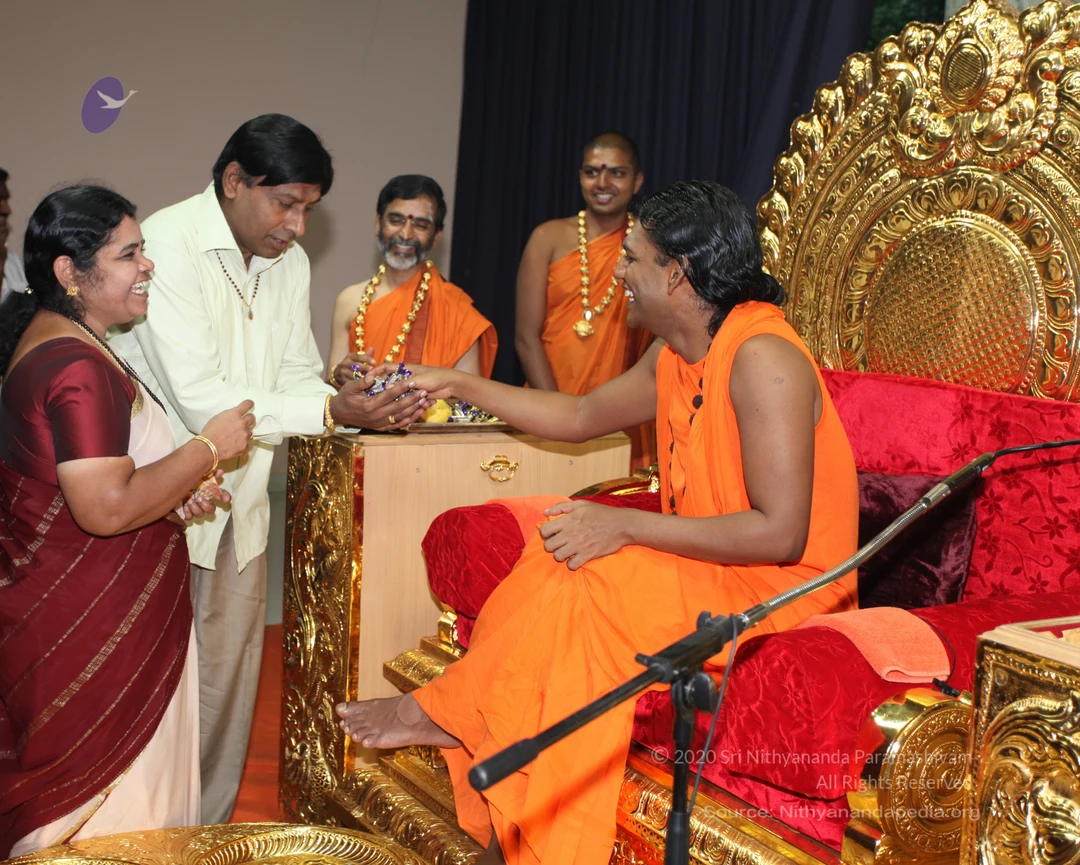
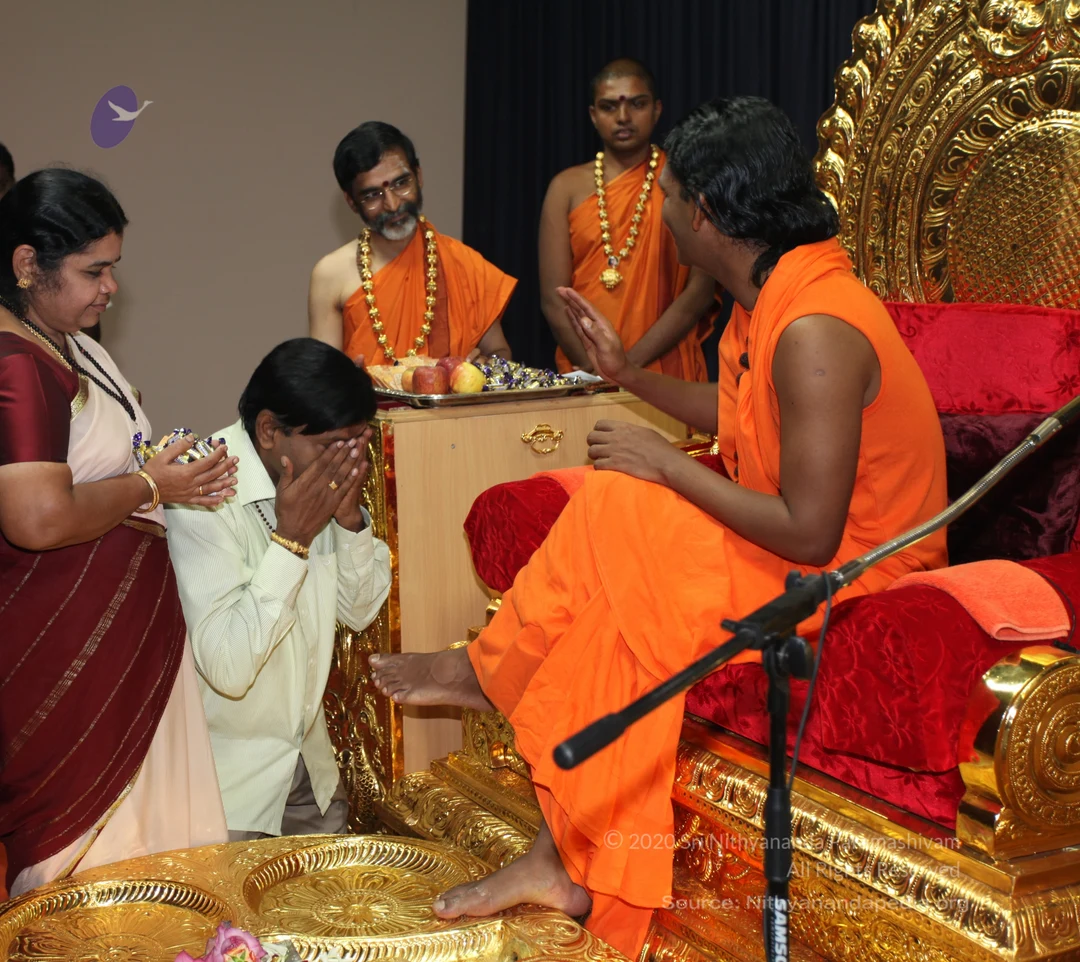
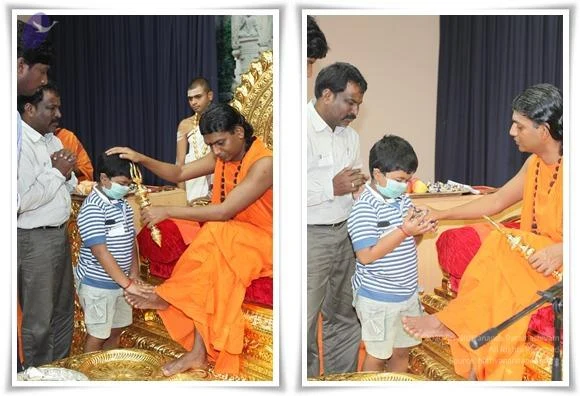
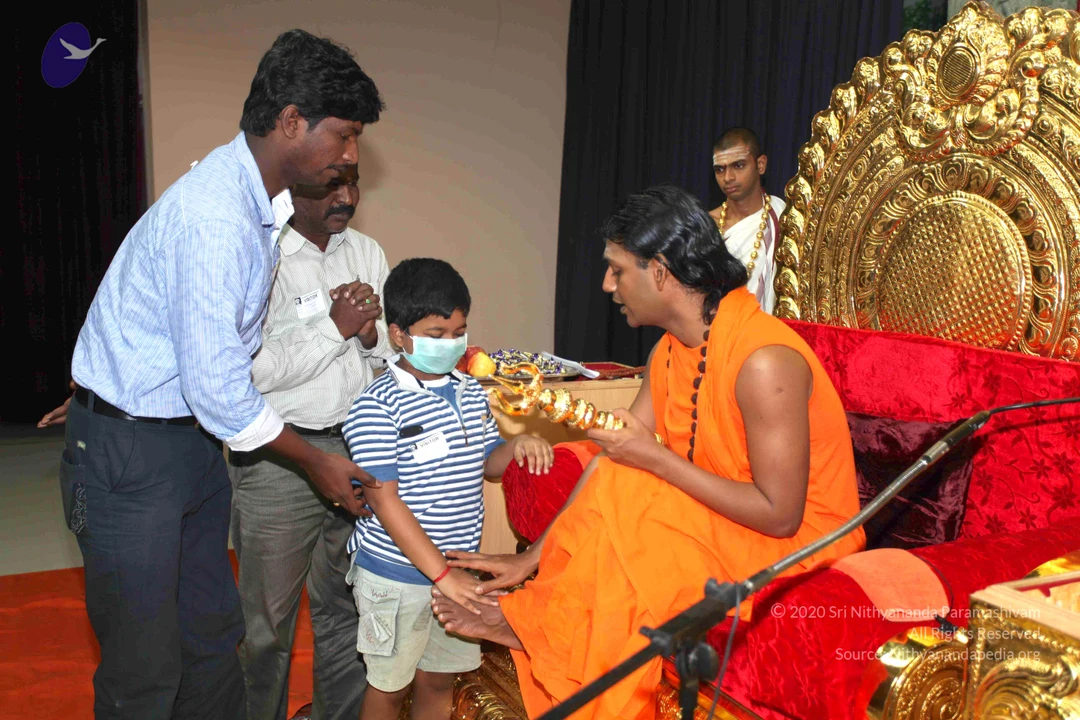
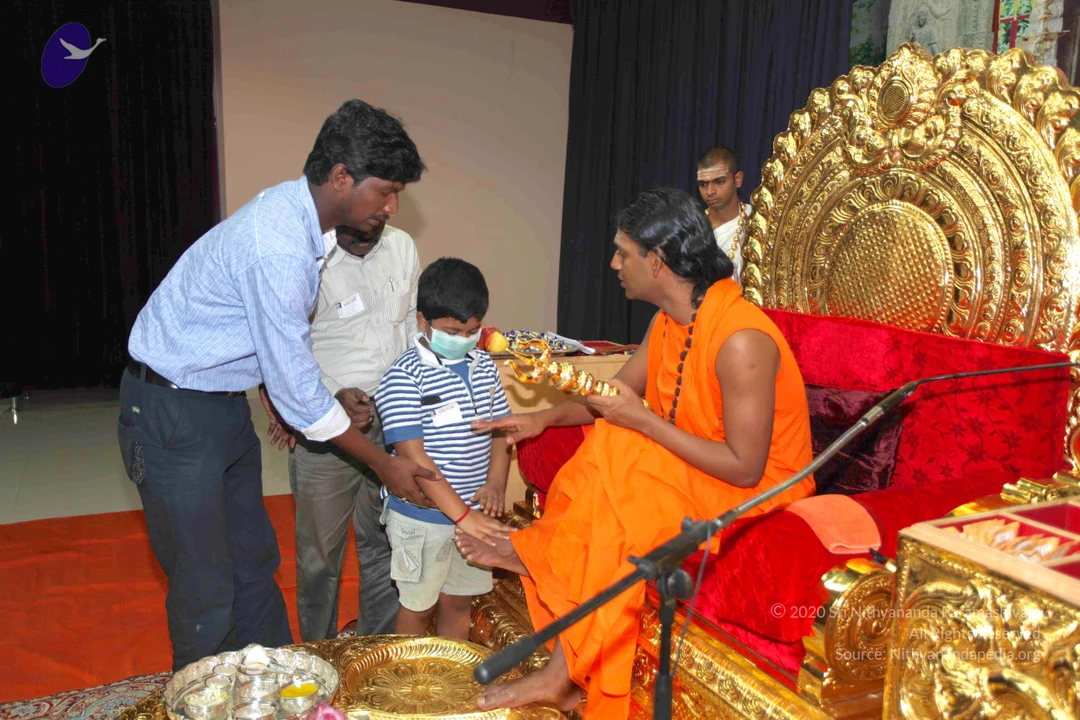
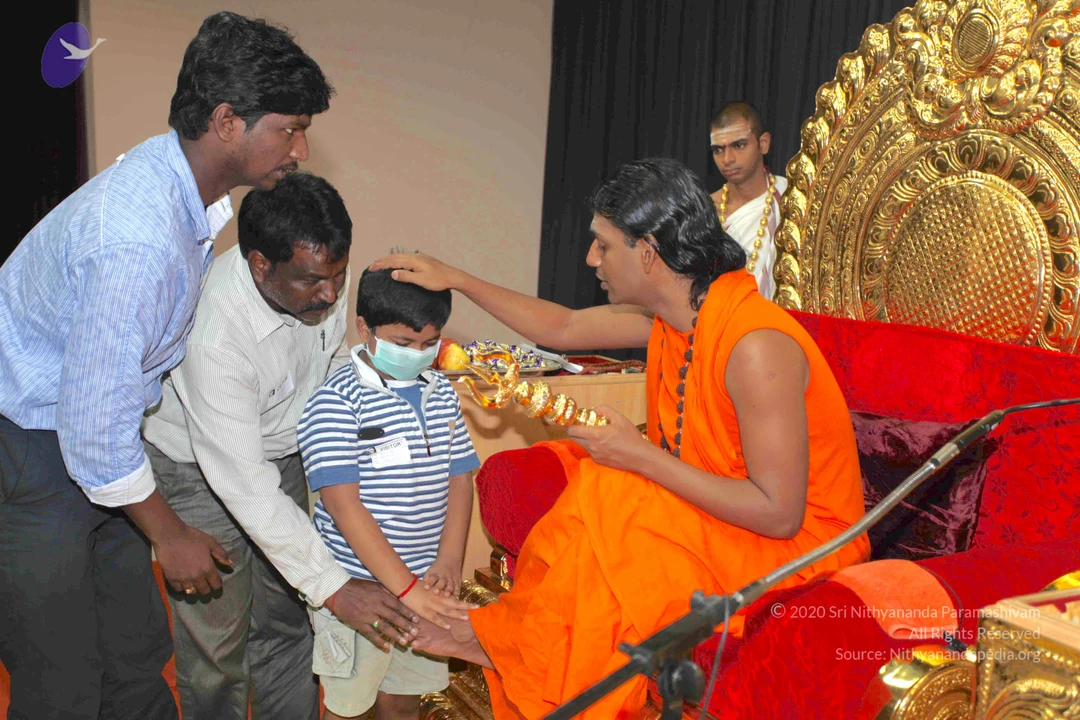
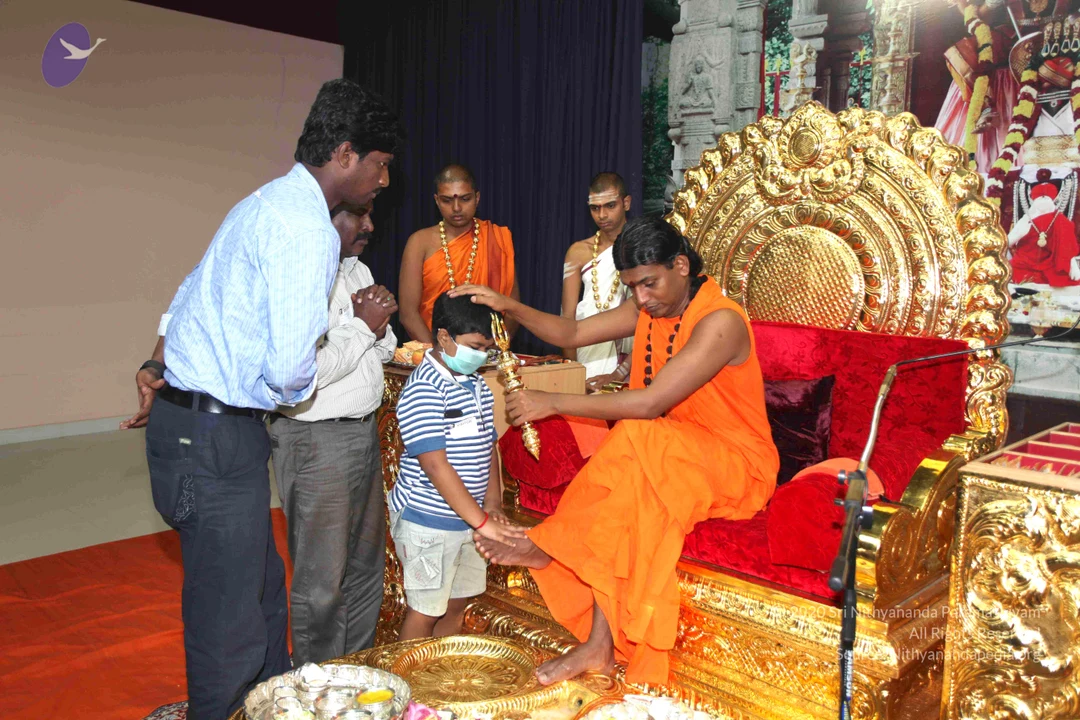
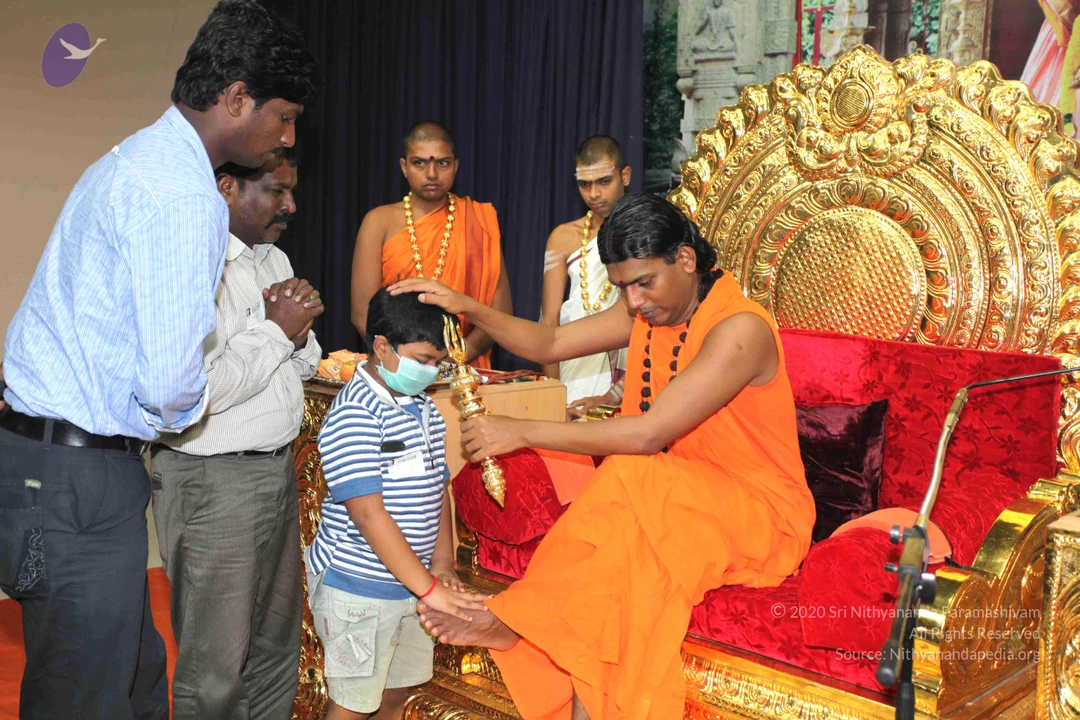
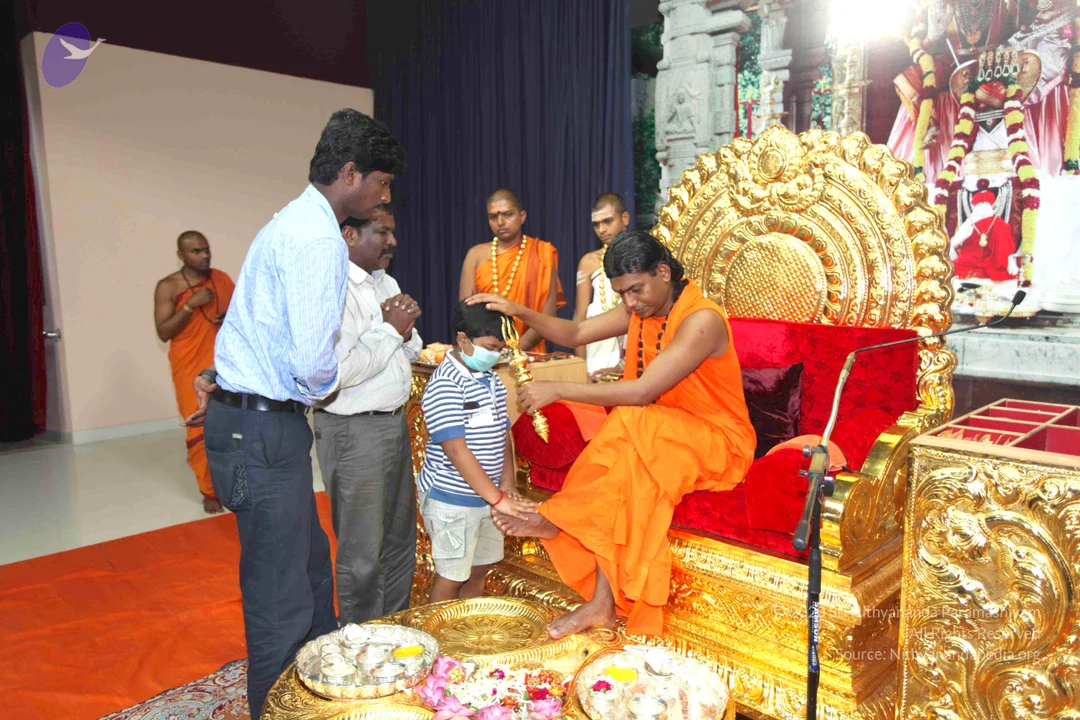
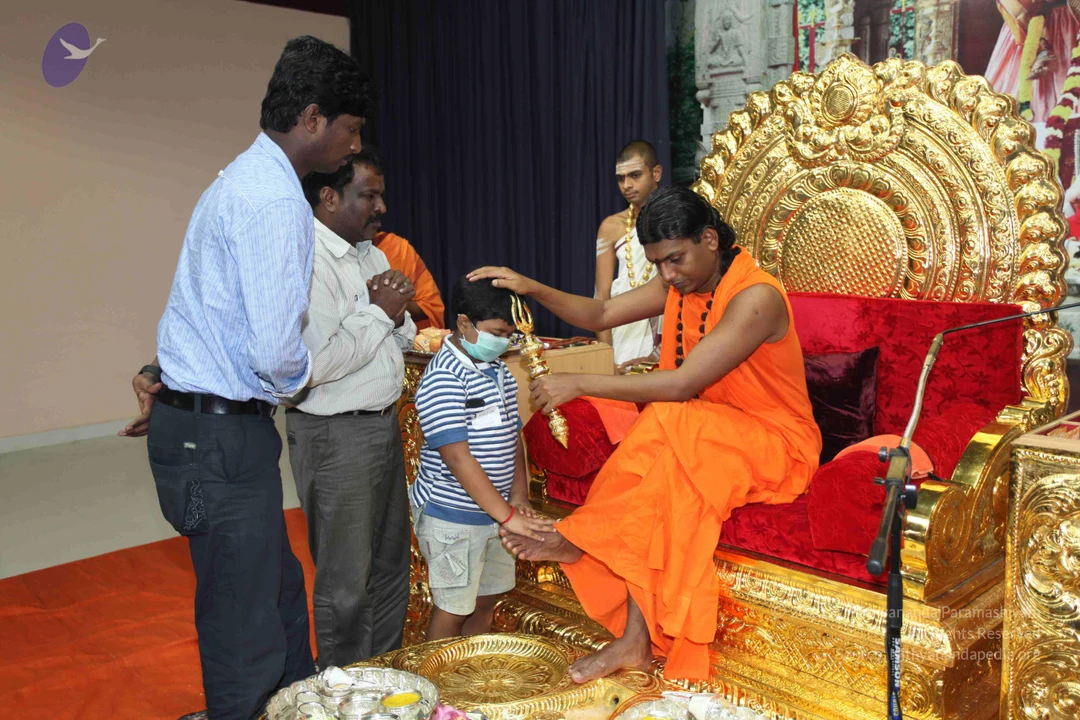
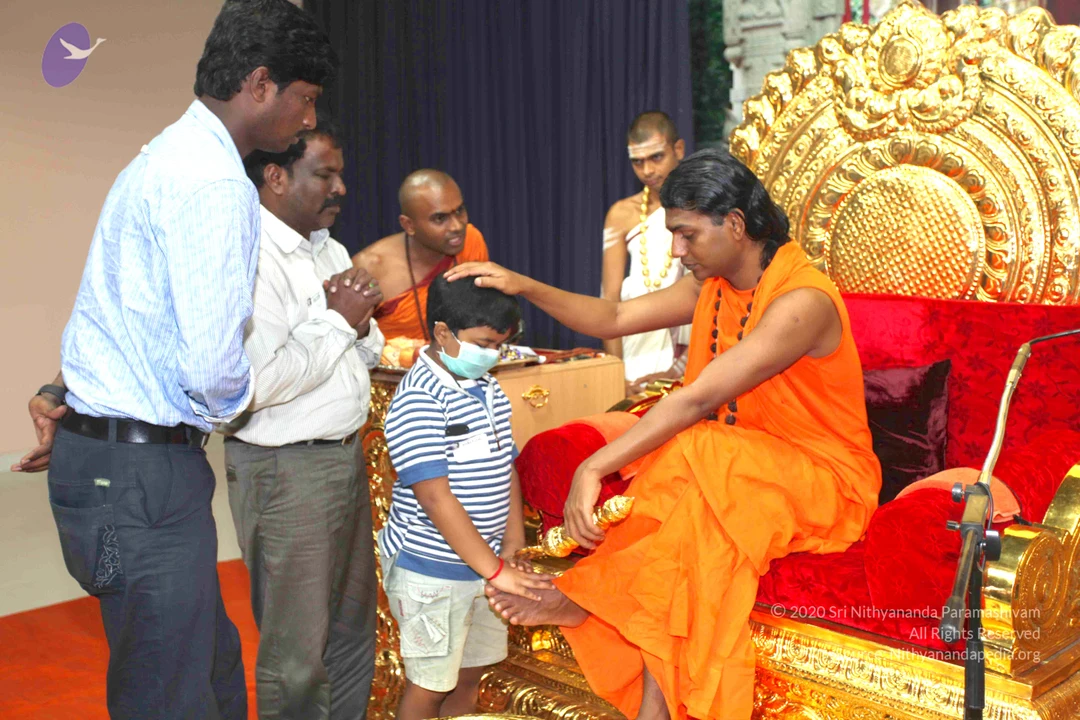
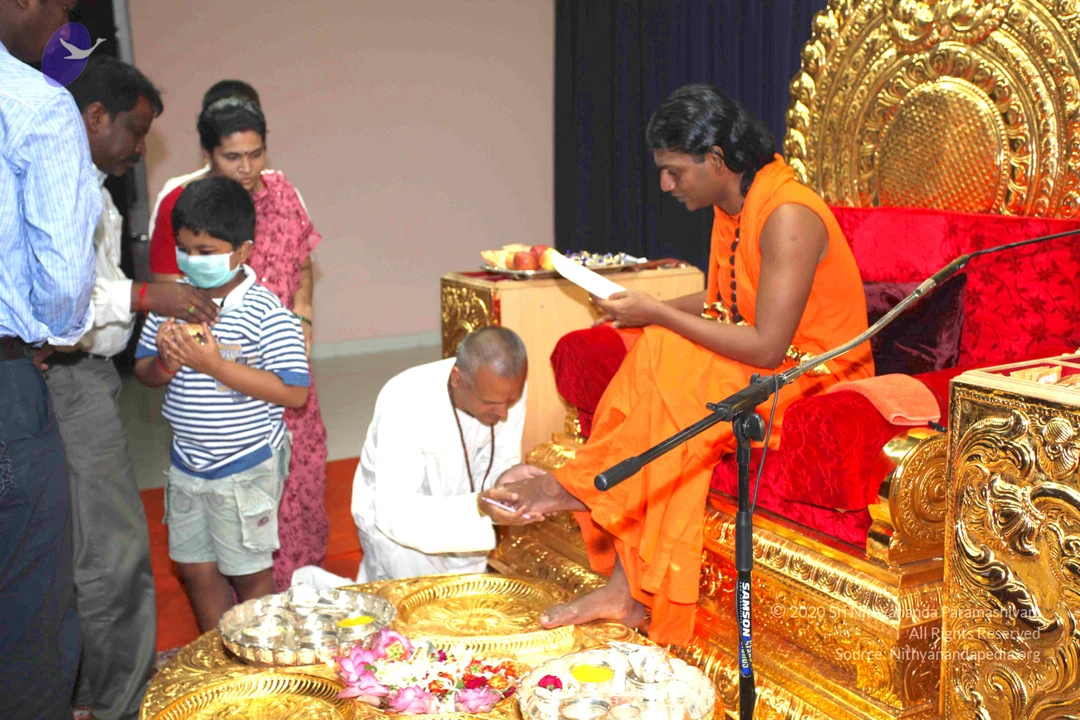
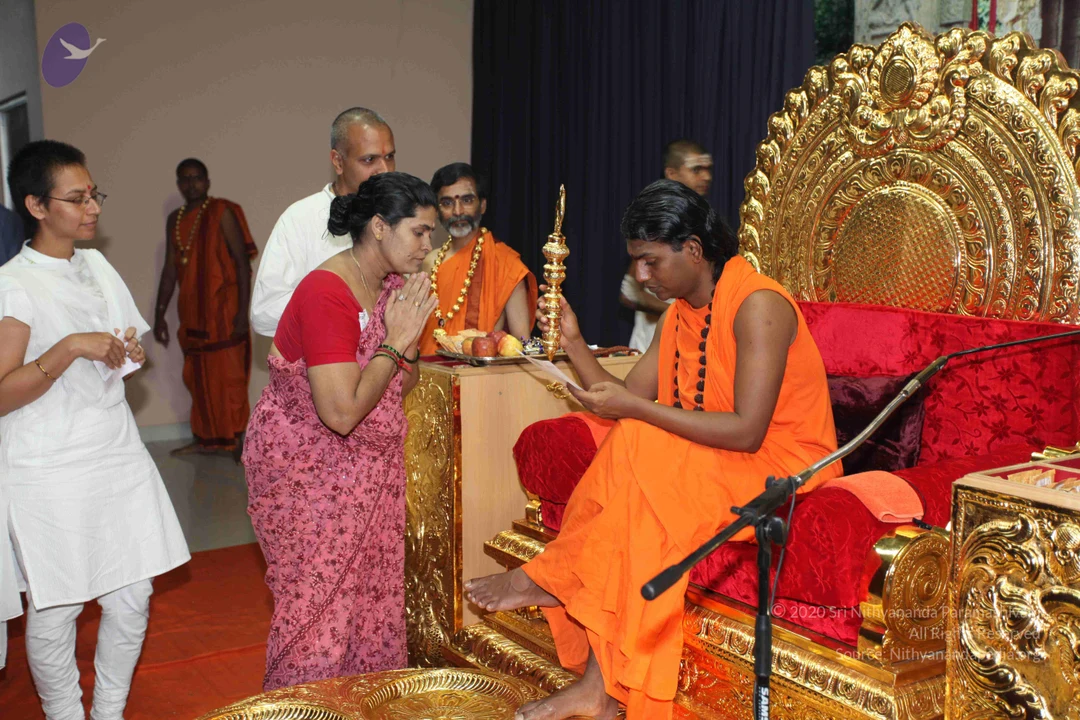
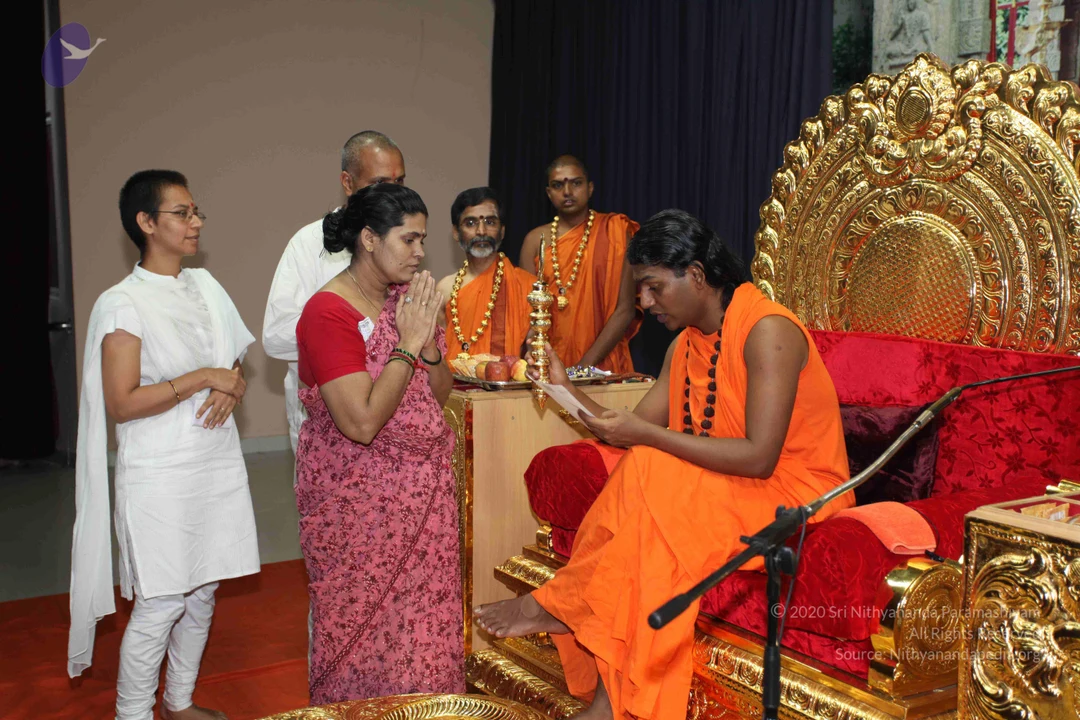
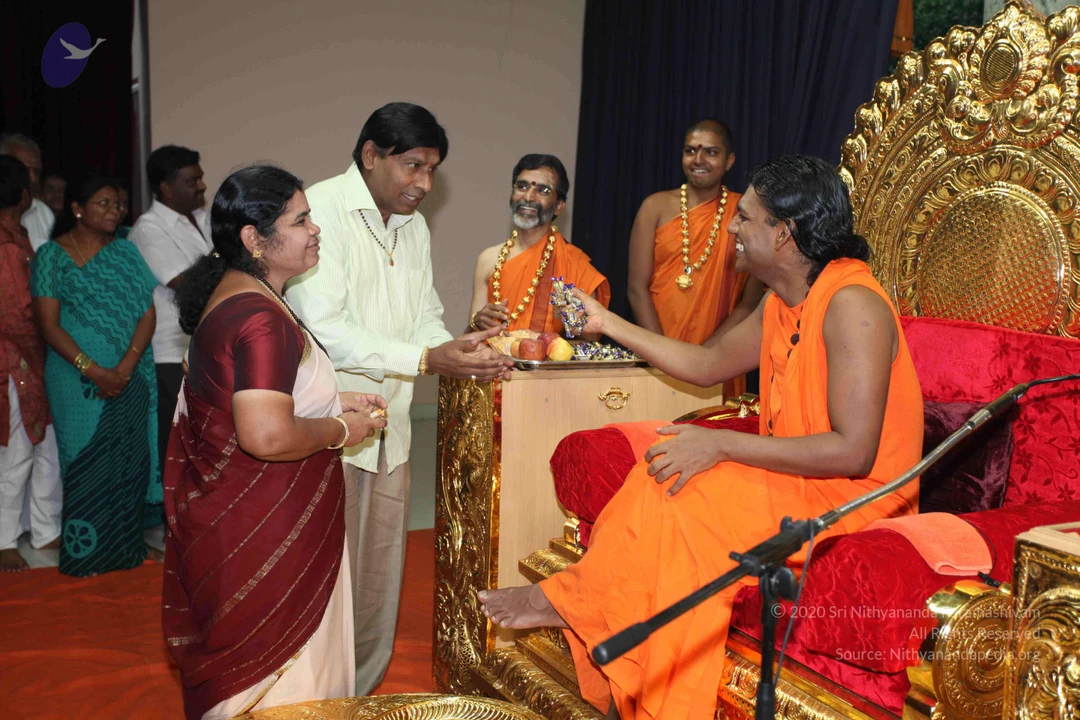
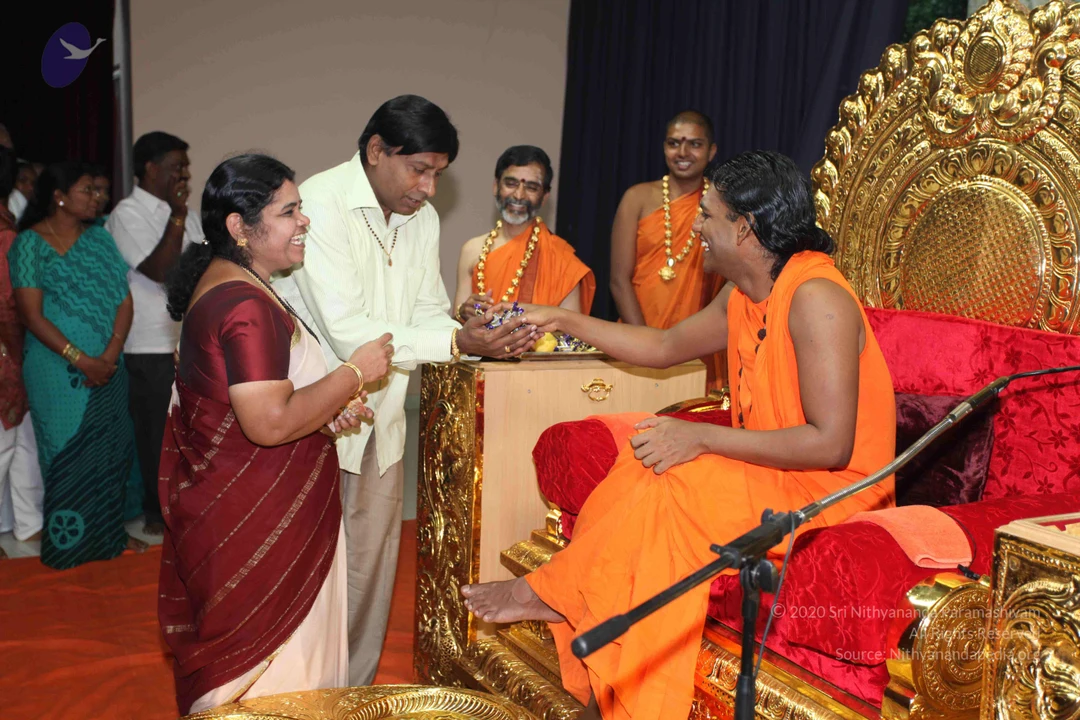
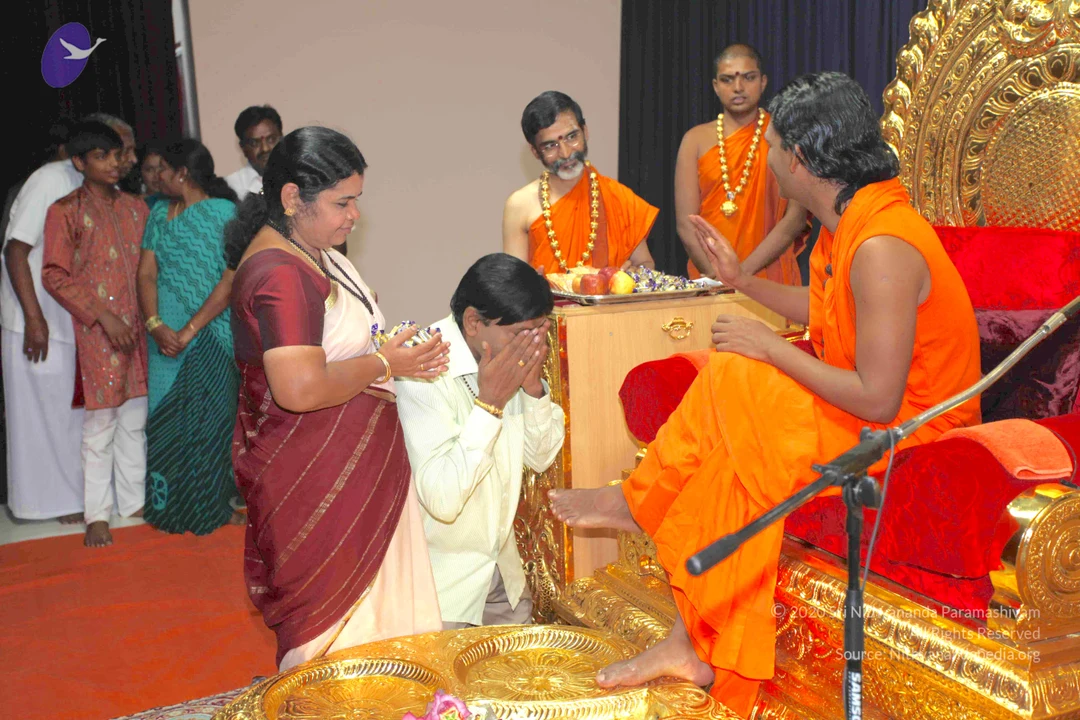
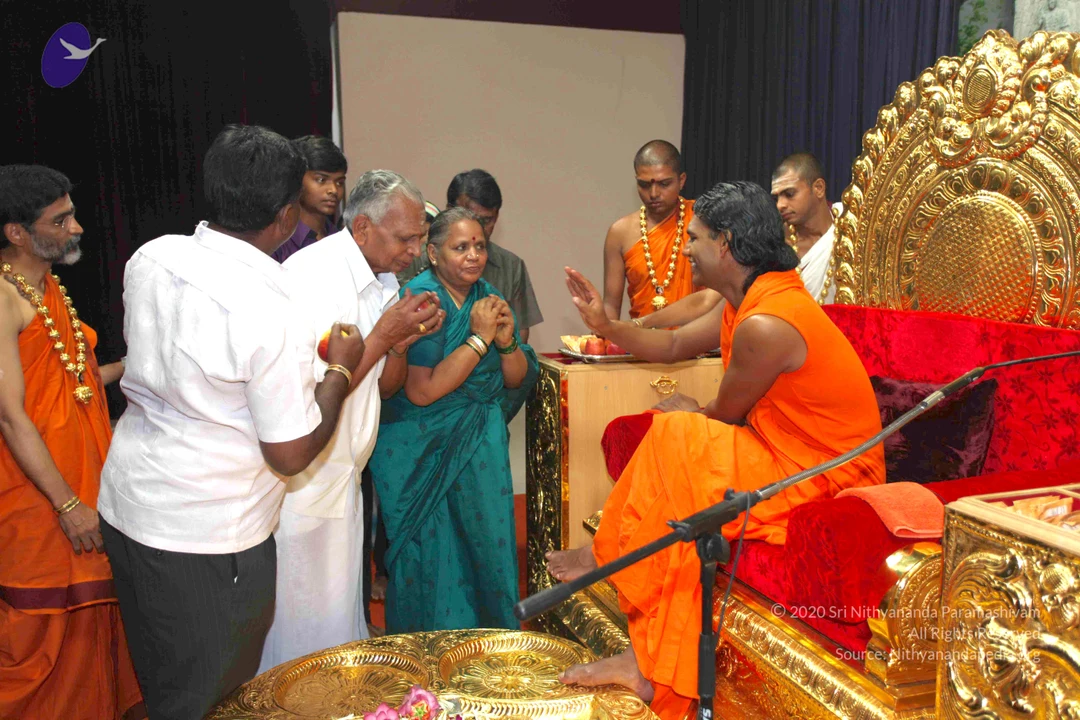
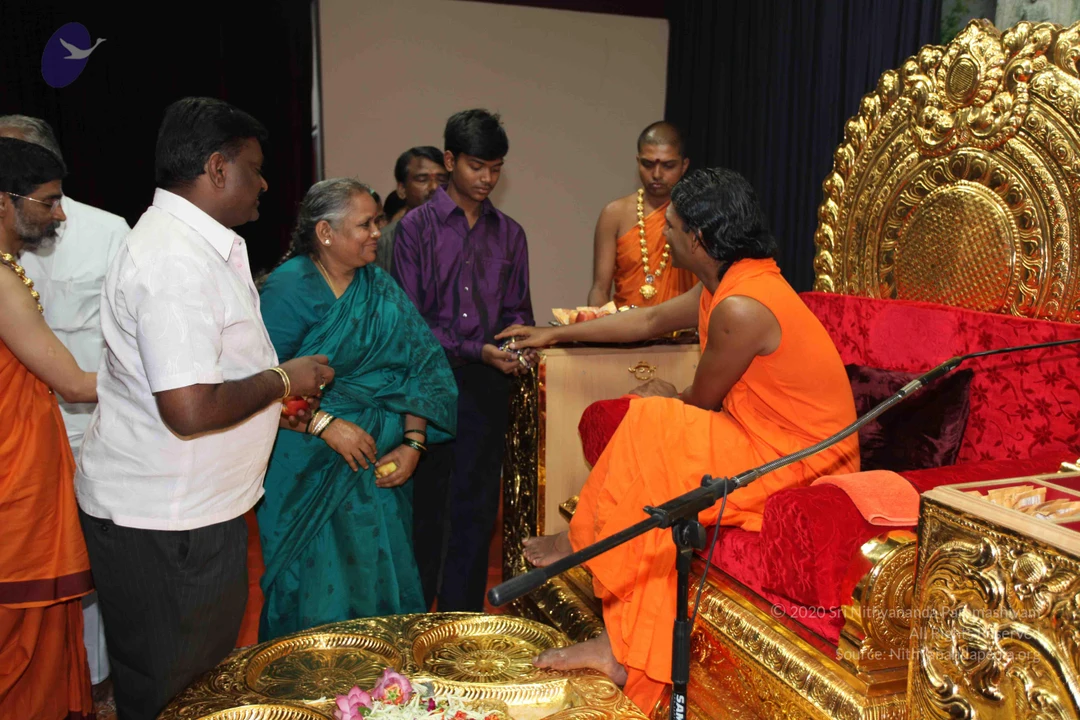
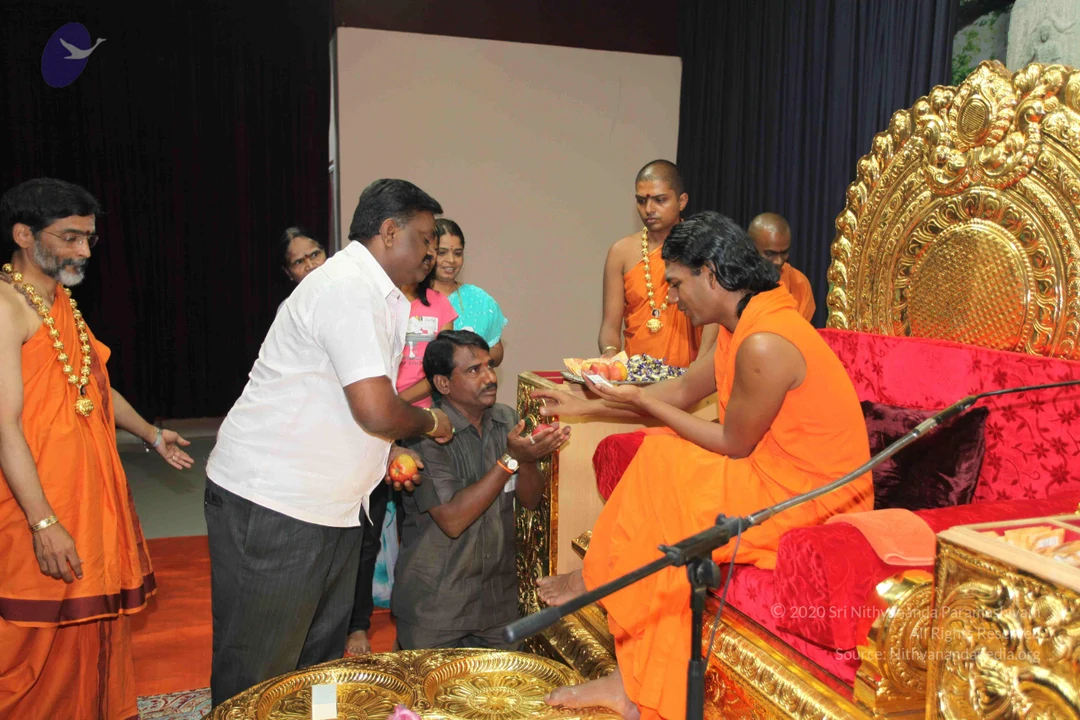
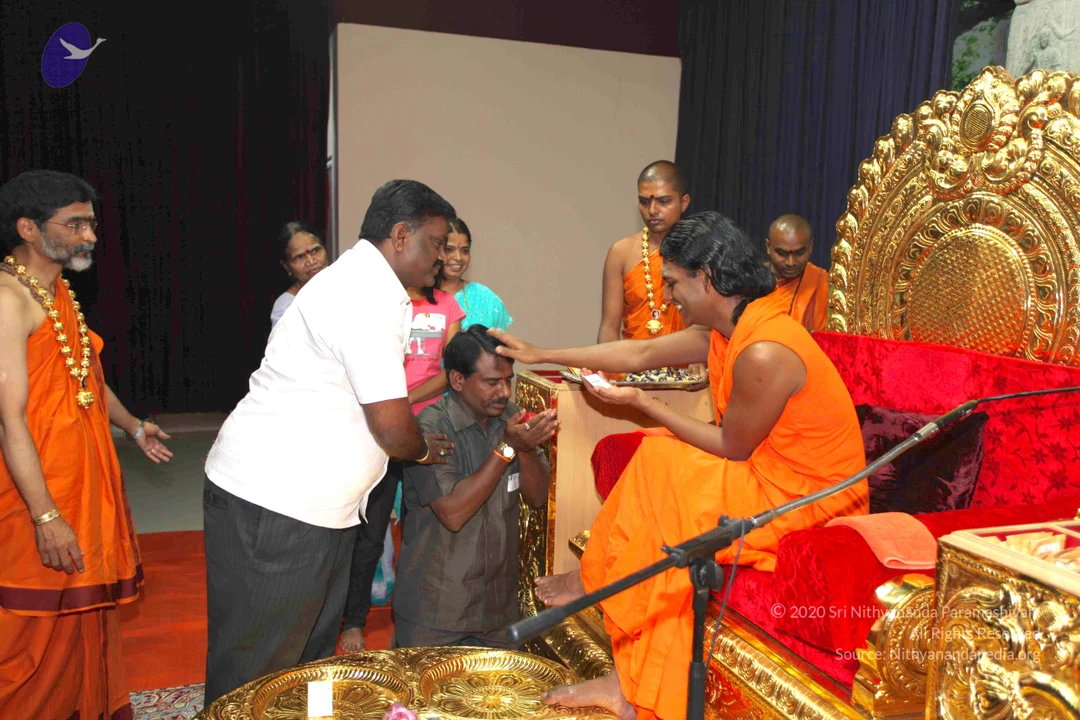
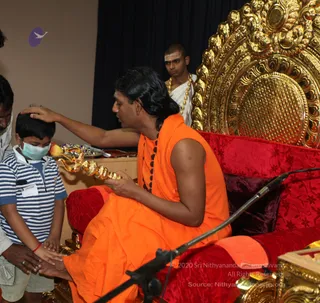
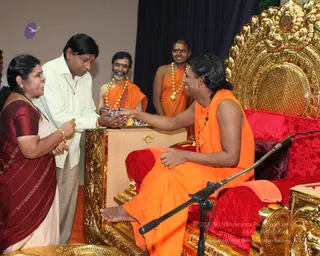
A photograph of a seated man in saffron-orange robes with long swept-back dark hair and a dark rudraksha mala draped over his shoulder, sitting on a red cushioned seat before an ornate gold carved throne back. He rests one hand on the head of a young boy wearing a striped blue-and-white top, a surgical mask and a visitor badge, while holding a gold ceremonial staff. The boy's hands are clasped and a man in a white shirt supports him from the left. Behind them stands a man with a shaved head, white dhoti and gold beaded necklace marked with a tilak. A tray of fruit and offerings sits on a side table, with a microphone stand in the foreground and a purple bird logo in the upper left corner.Photograph of a seated figure on an ornate gold-and-red throne with a red cushion, dressed in orange saffron robes, with long swept-back hair and bare feet, extending a hand to receive or give an offering. Standing to the left, a smiling woman in a maroon blouse and cream sari and a man in a cream shirt lean forward toward the throne, the man holding a tray with flowers and small offerings on a wooden stand. Two standing men behind wear orange robes with beaded malas and necklaces, one with a grey beard and one shaved-headed with a red forehead mark. A microphone stand is in the foreground.A seated guru in saffron-orange robes sits on an ornate gold-and-red throne with a microphone stand beside him, his bare feet resting on a gold tray. A kneeling man in a white shirt presses his palms to his face in reverence, while a woman in a maroon sari with a pale border stands at left holding flowers with her hands folded. Behind them, two standing men in orange robes wear gold-bead garlands; one carries a silver tray of apples and flowers on a wooden cabinet. The seated figure, a probable Swamiji by his long swept-back hair, saffron clothing and gold-and-rudraksha adornments, raises his hand in blessing.

Tamil-Nsp-Swamiji'S-Session-In-Morning
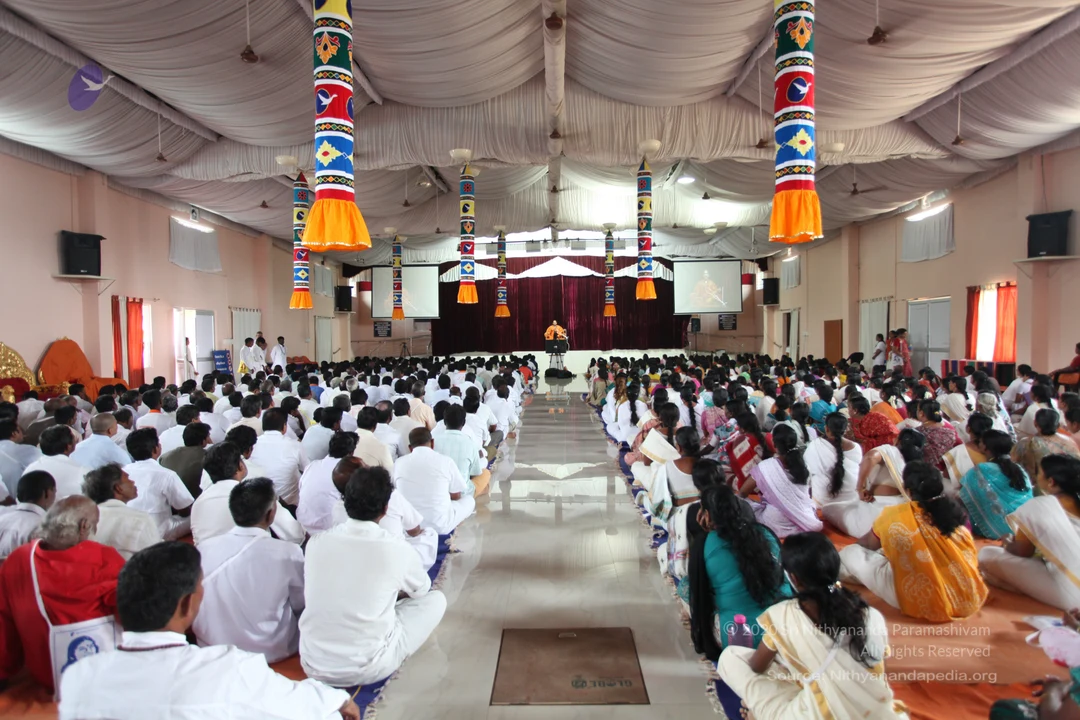
10 photosSource gallery
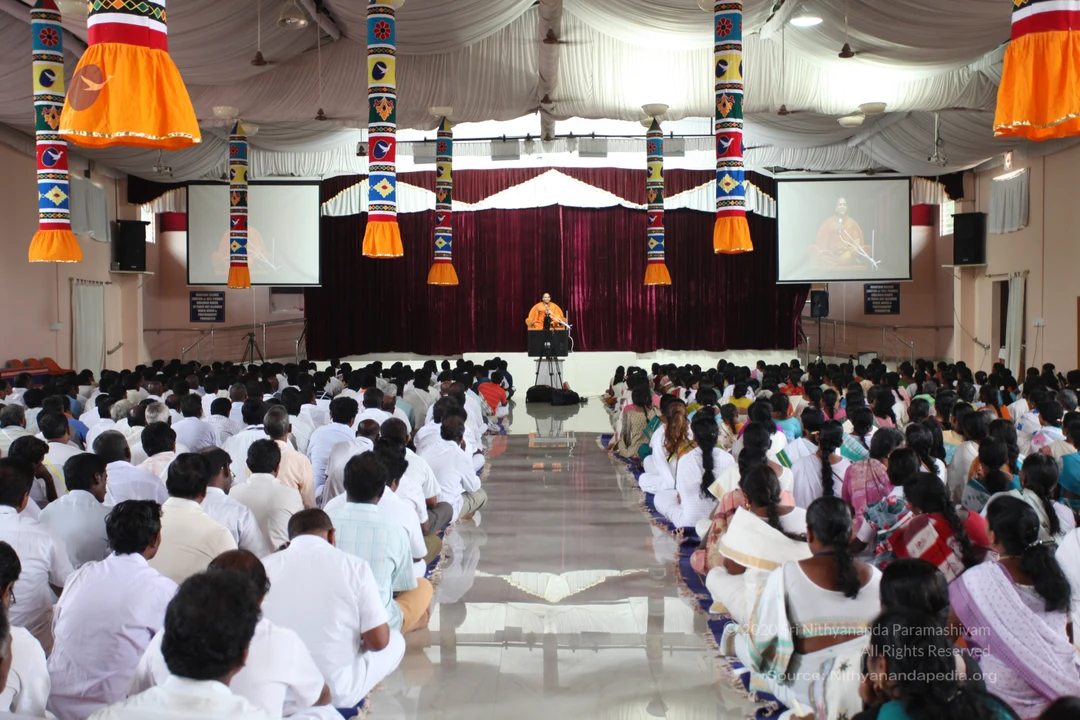
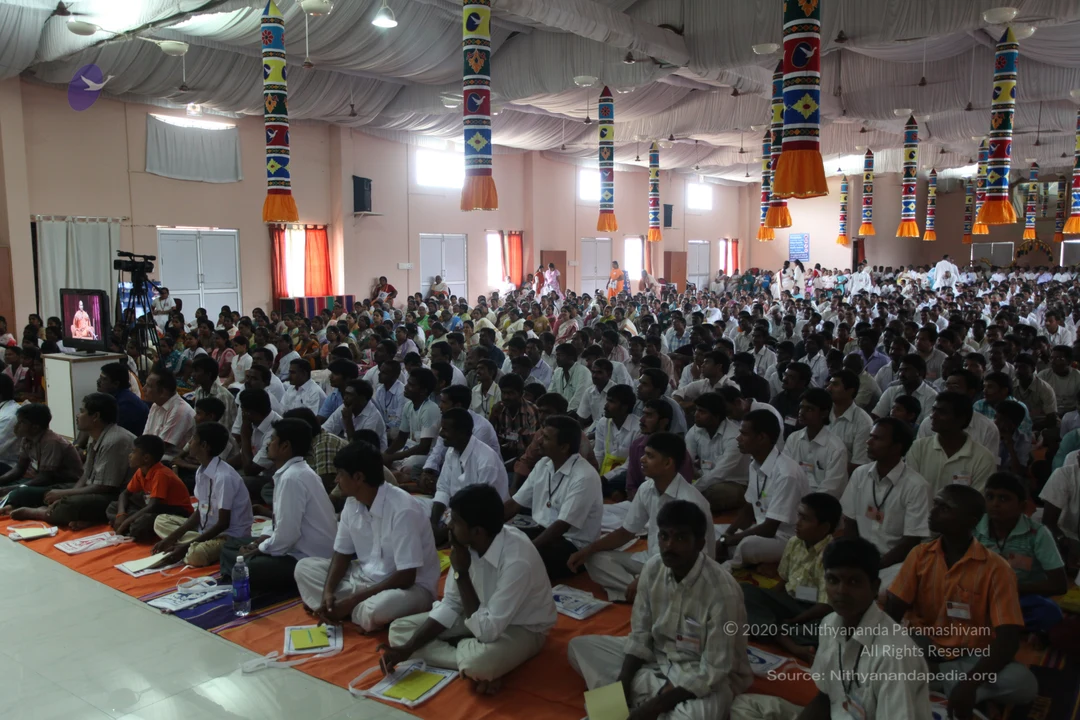
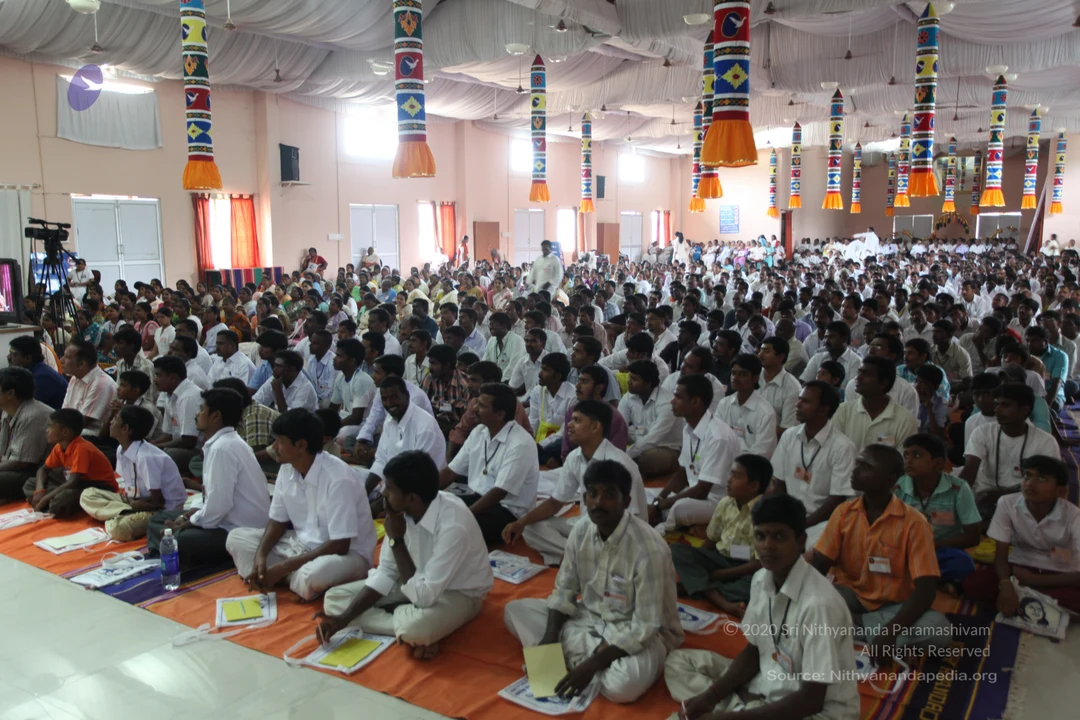
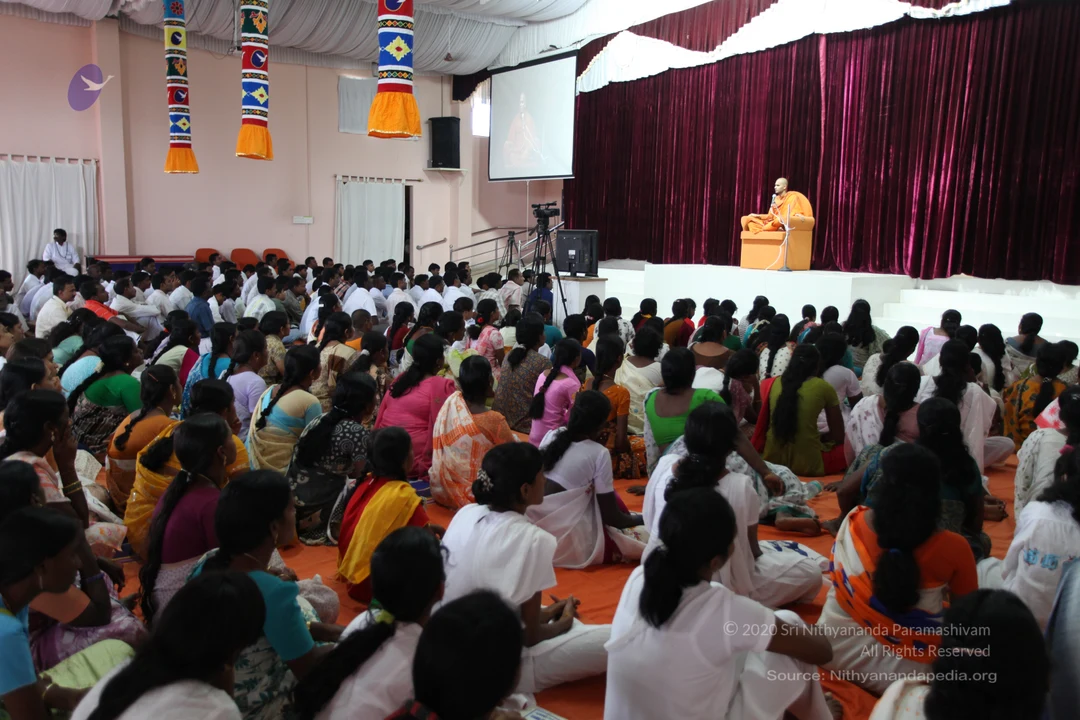
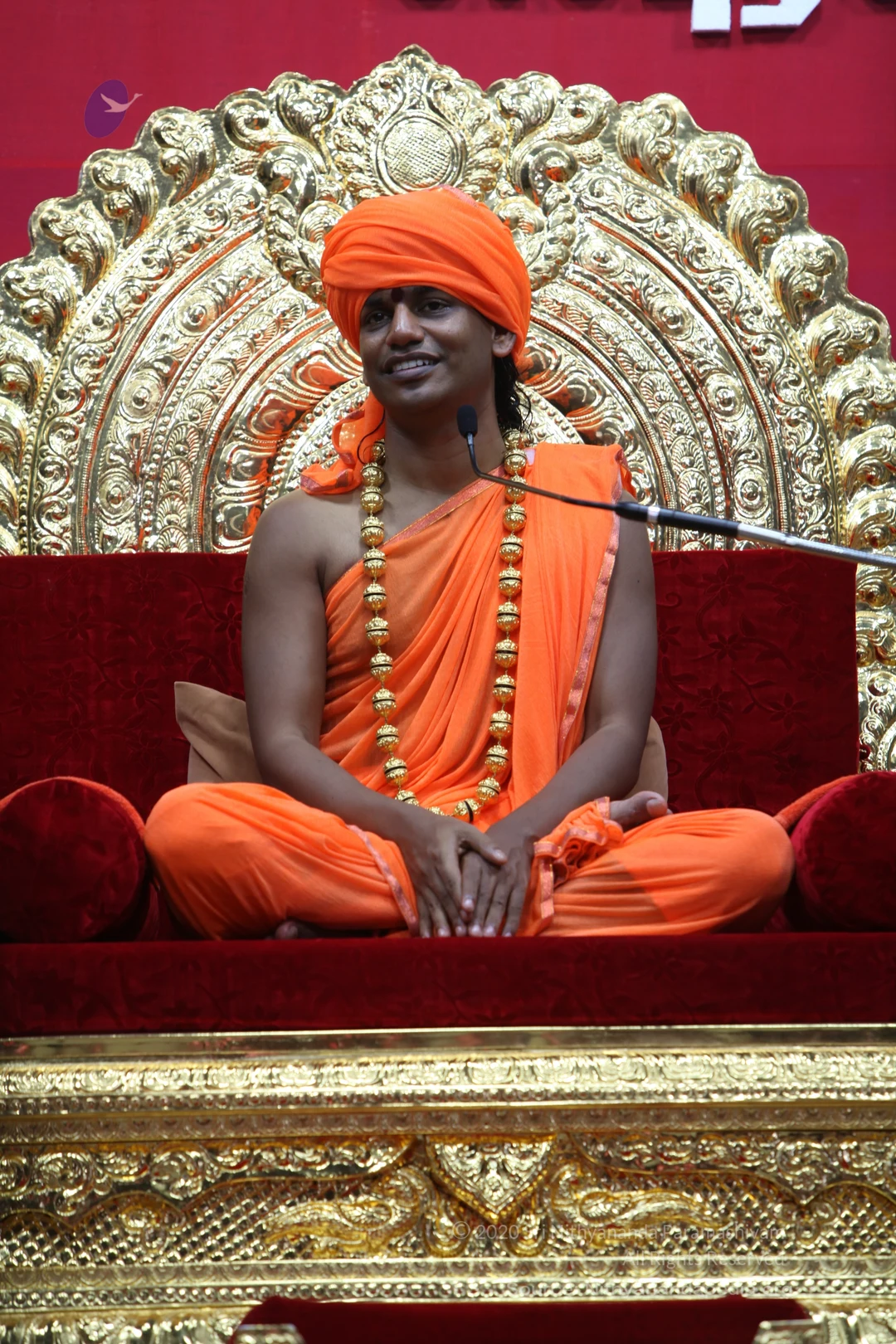
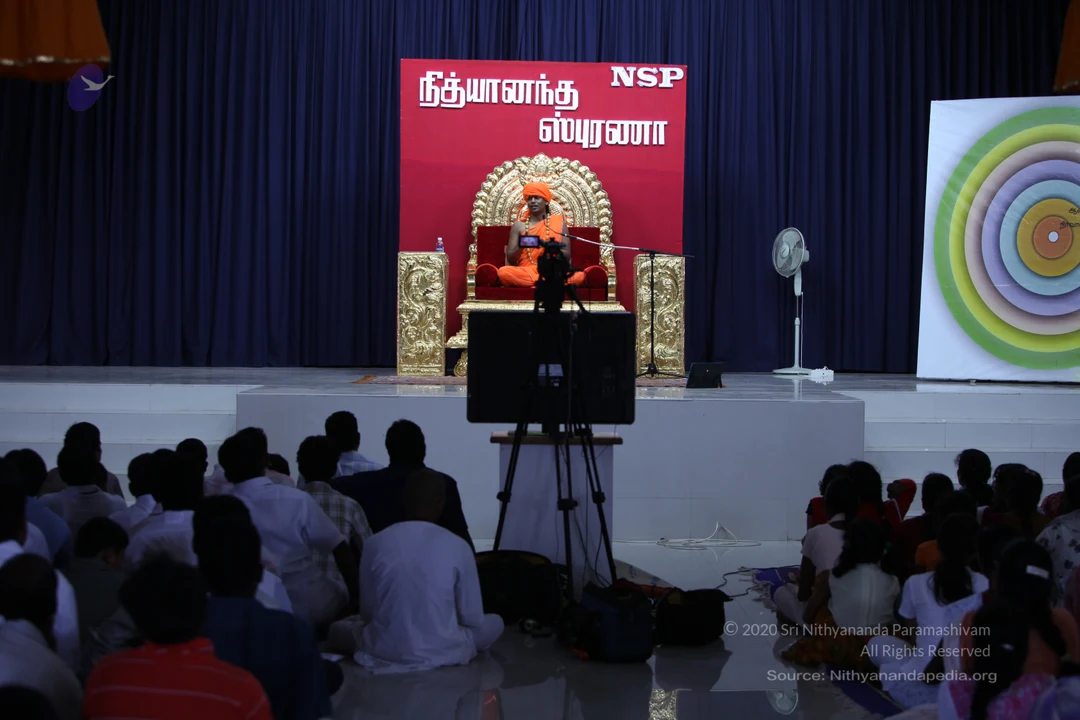
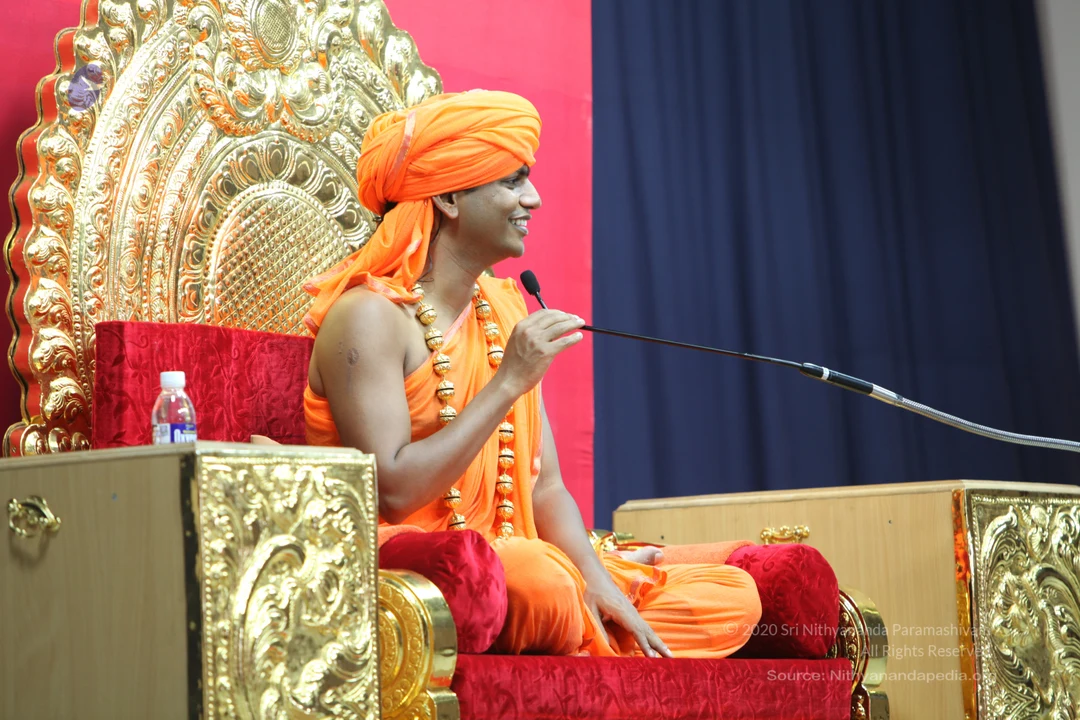
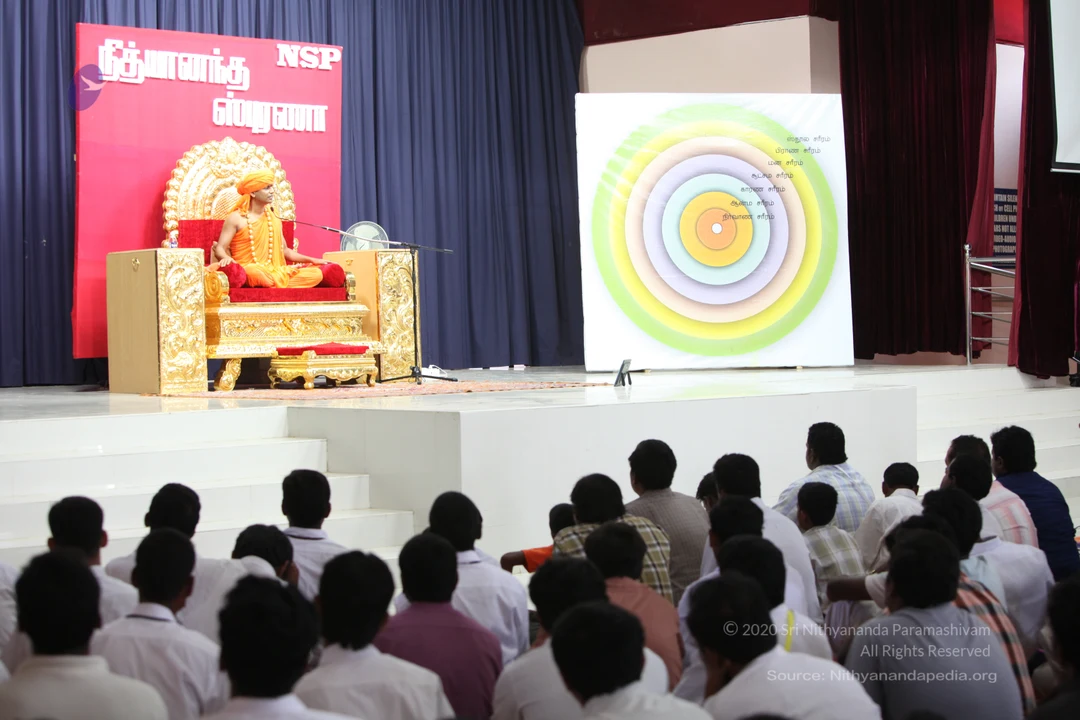
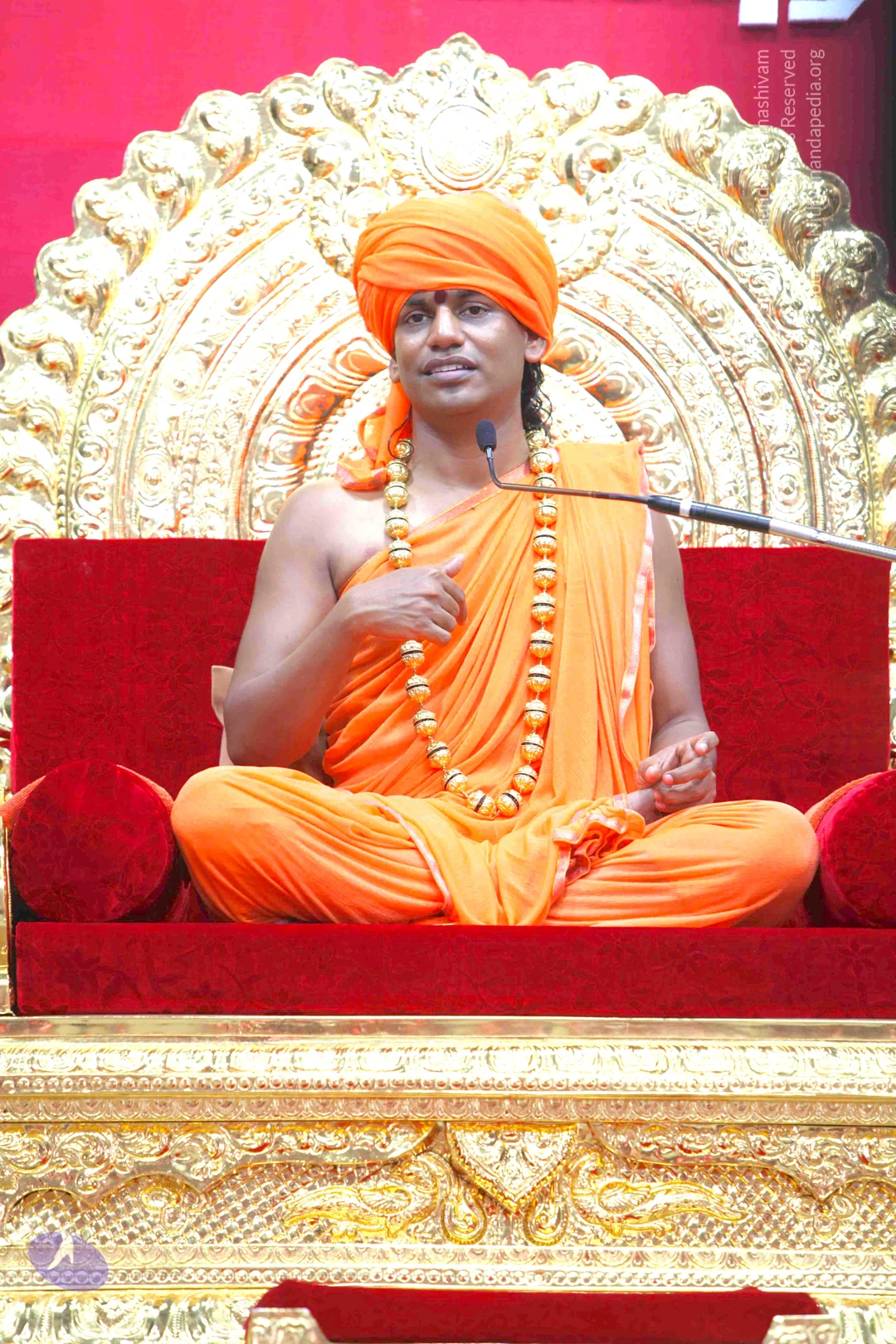
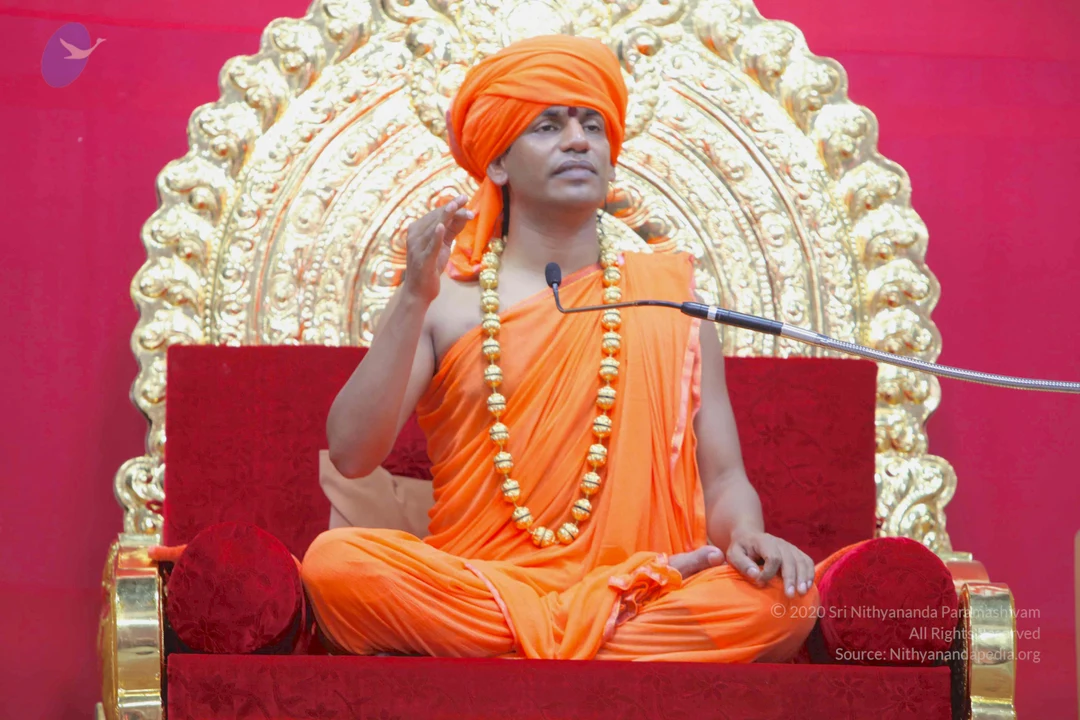
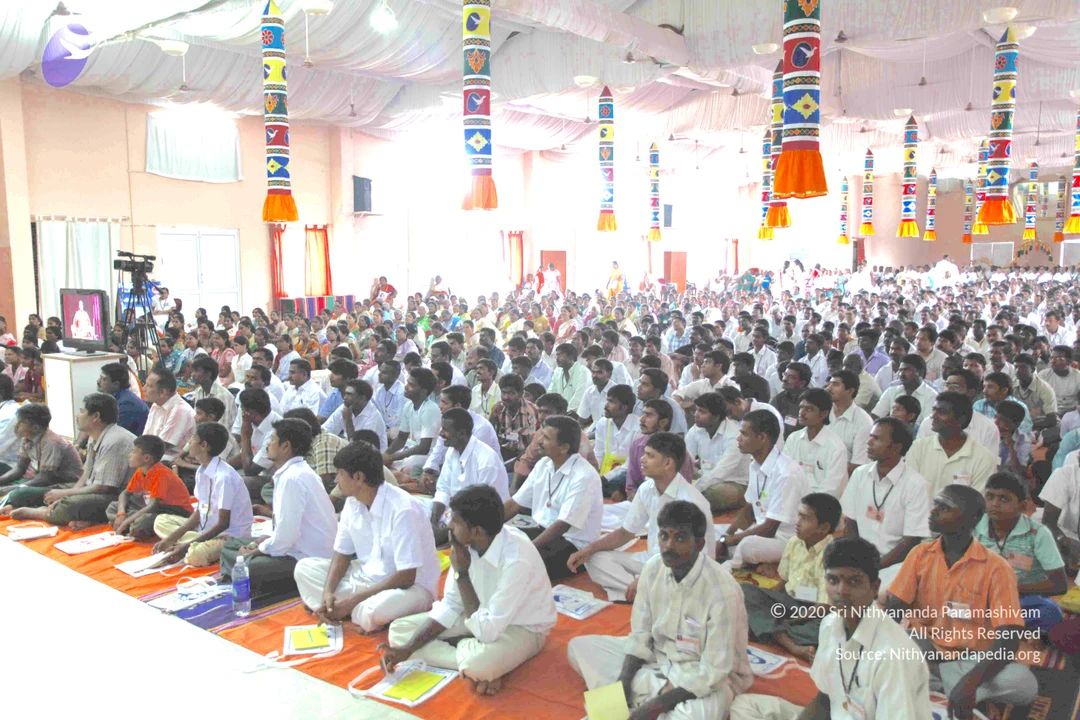
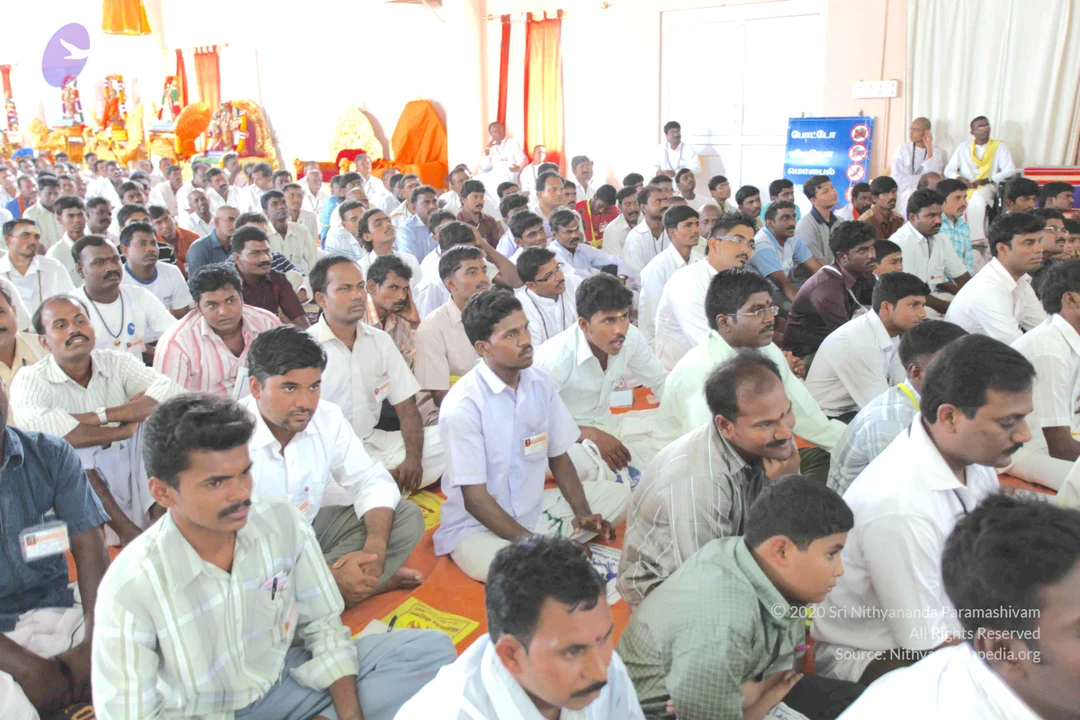
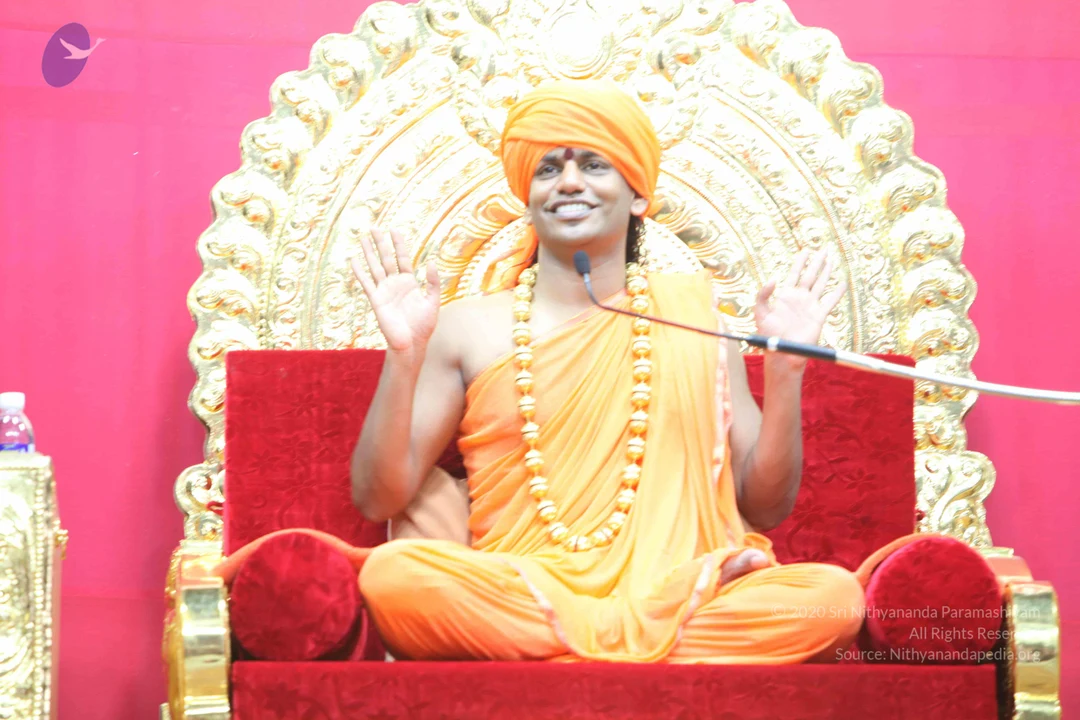
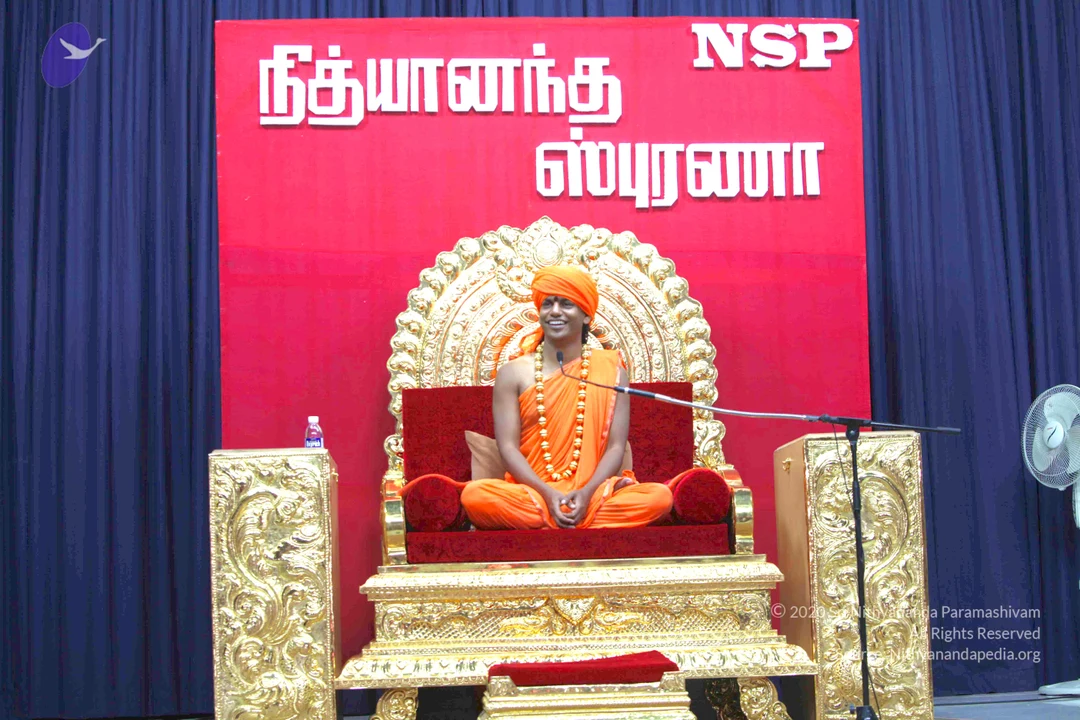
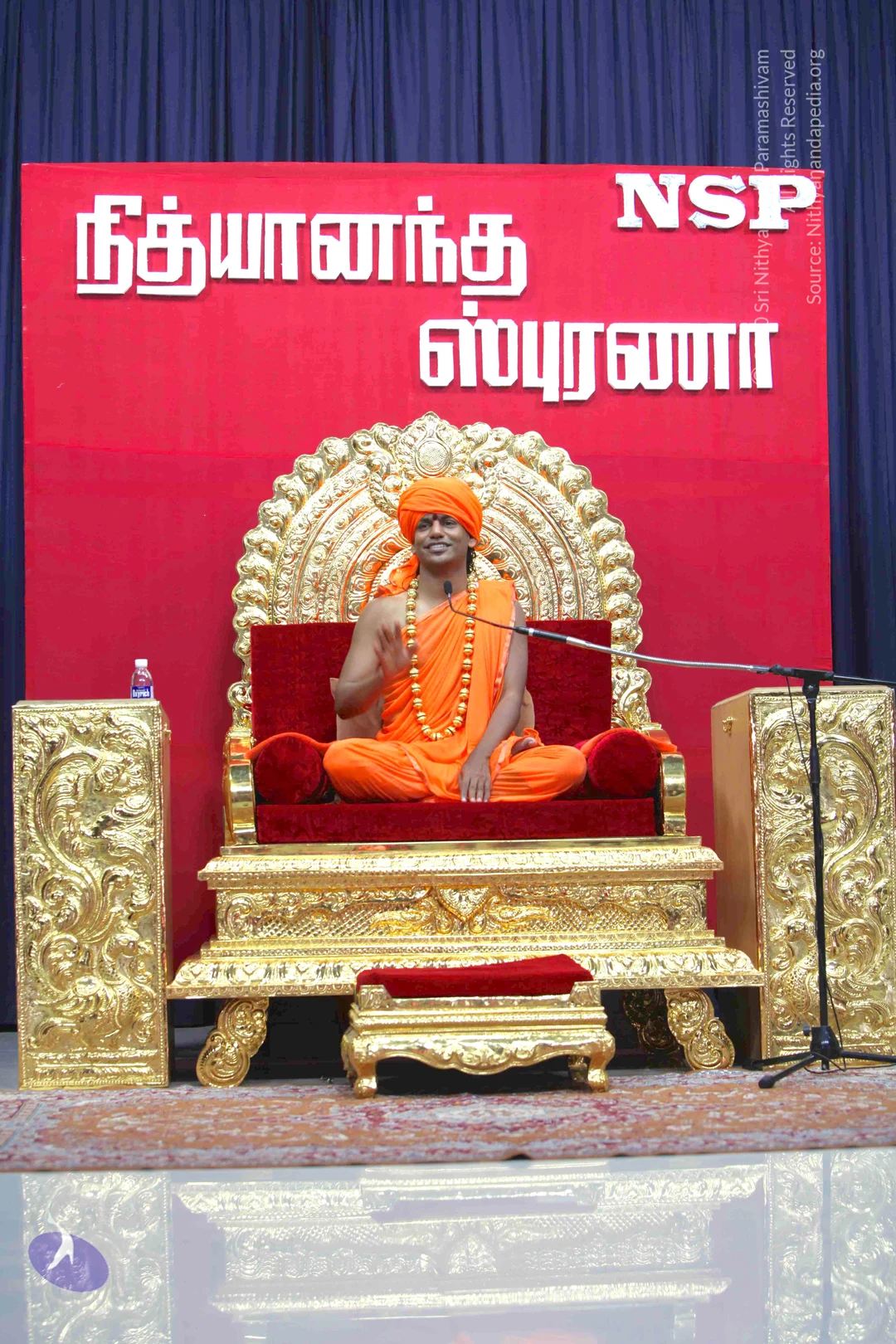
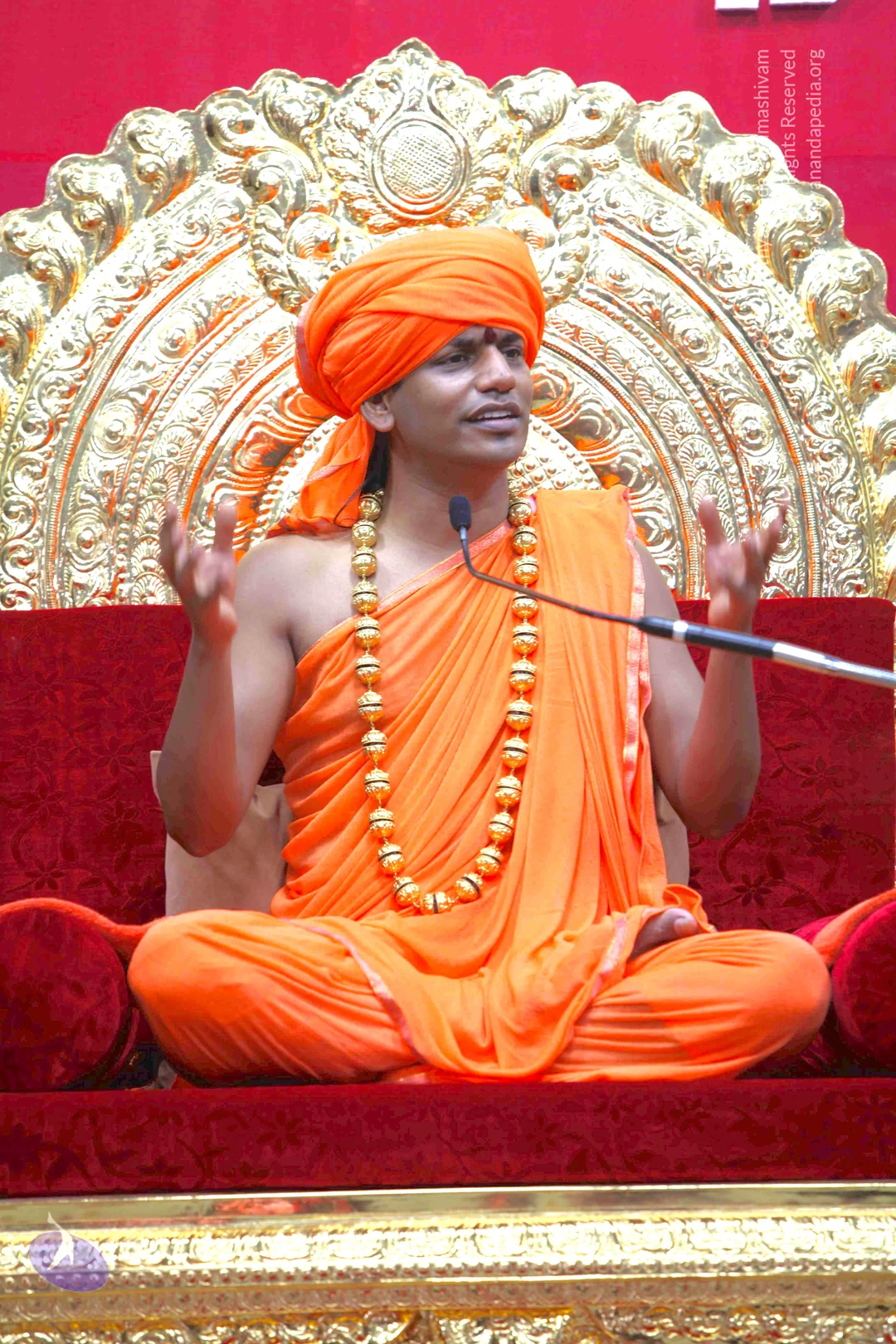
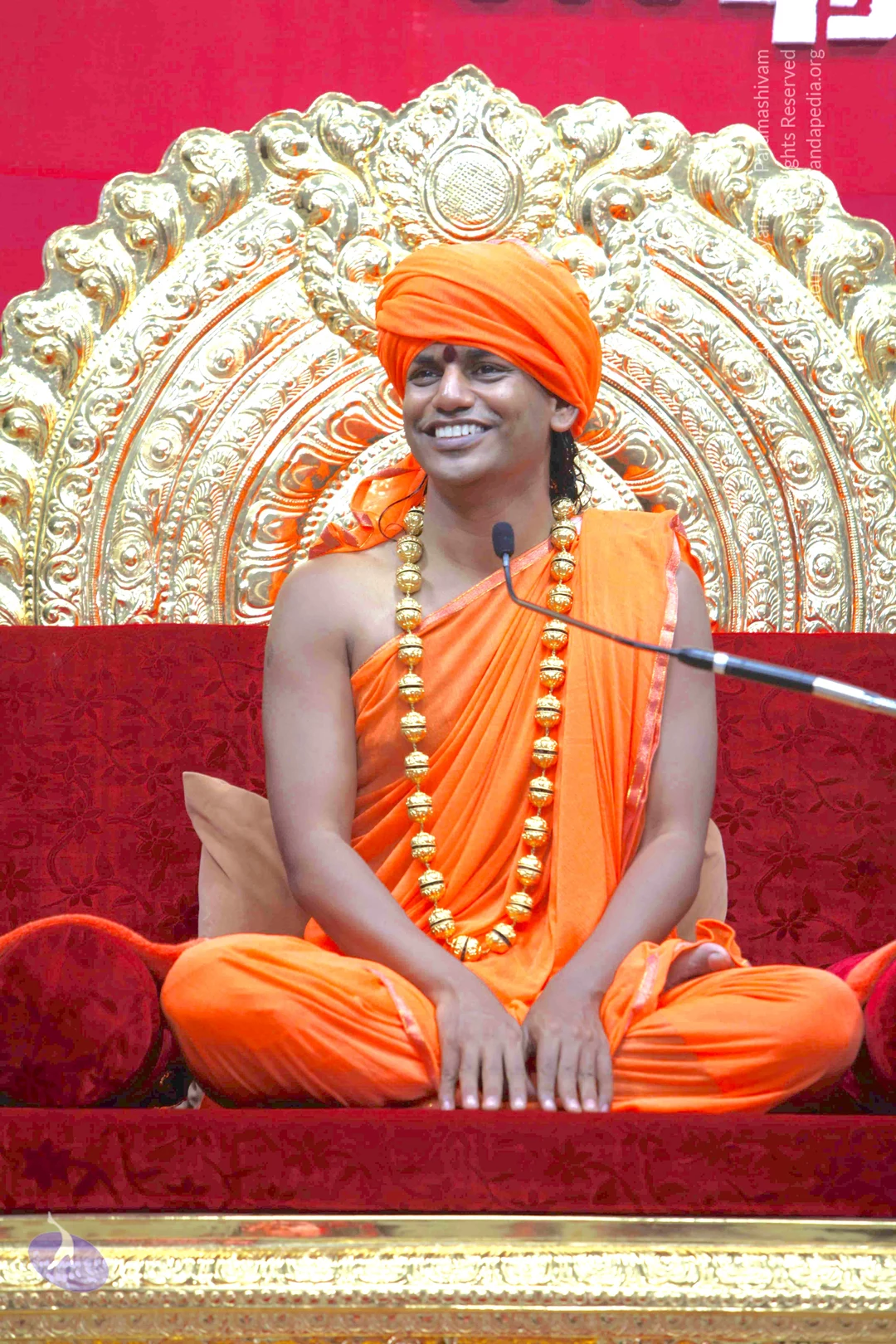
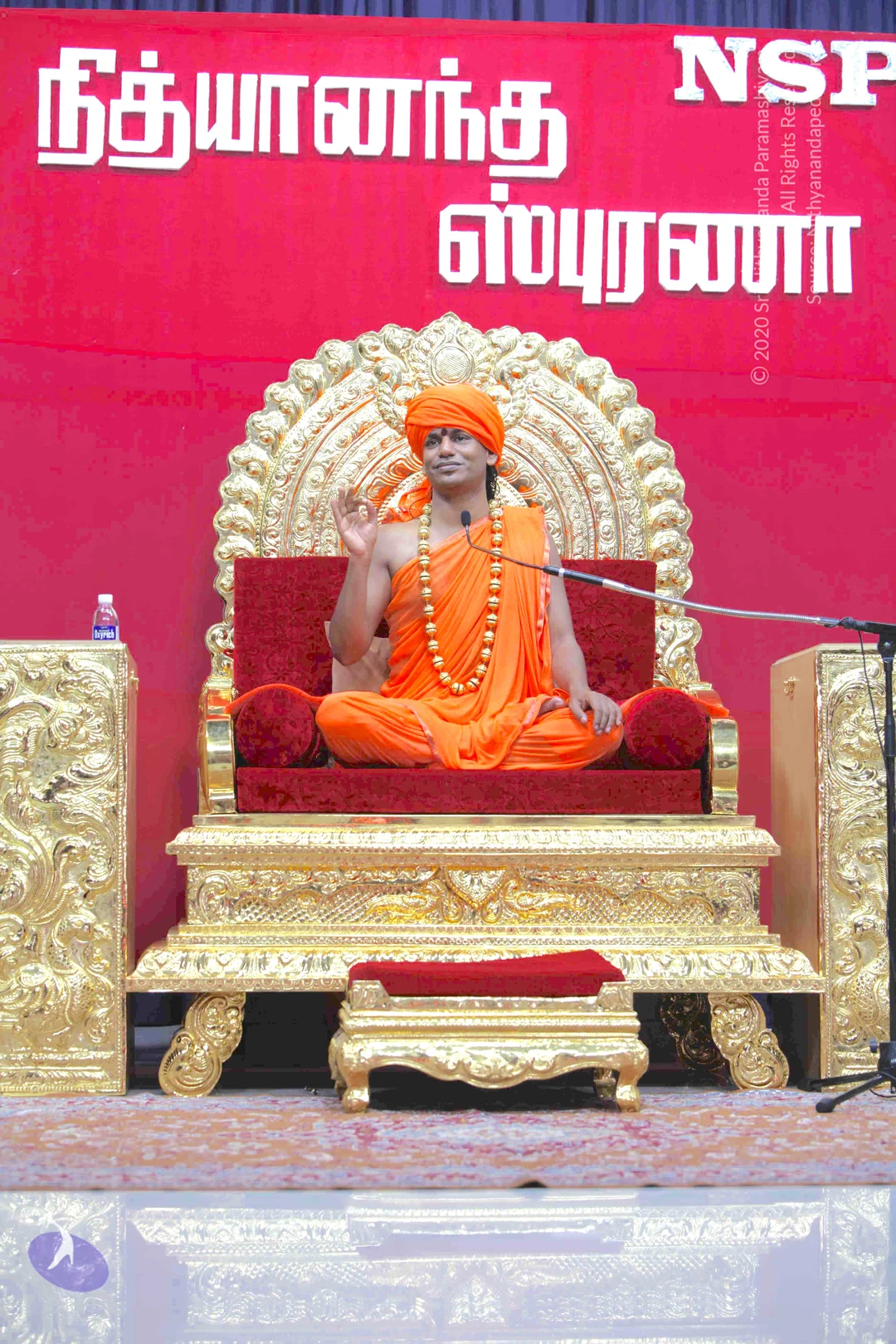
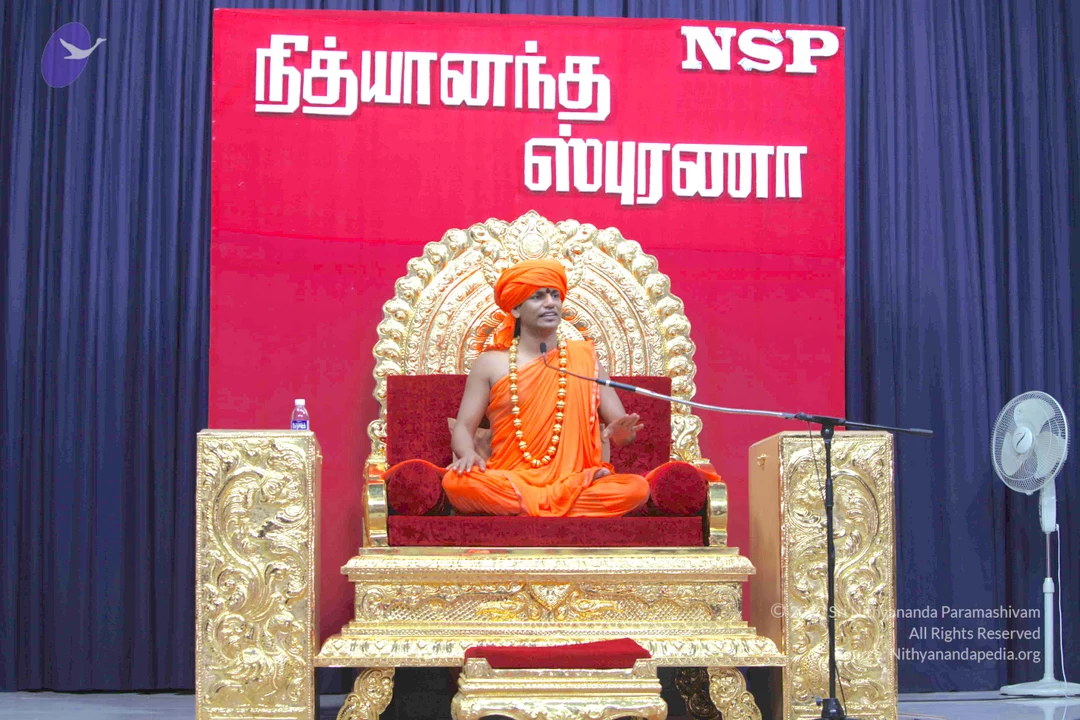
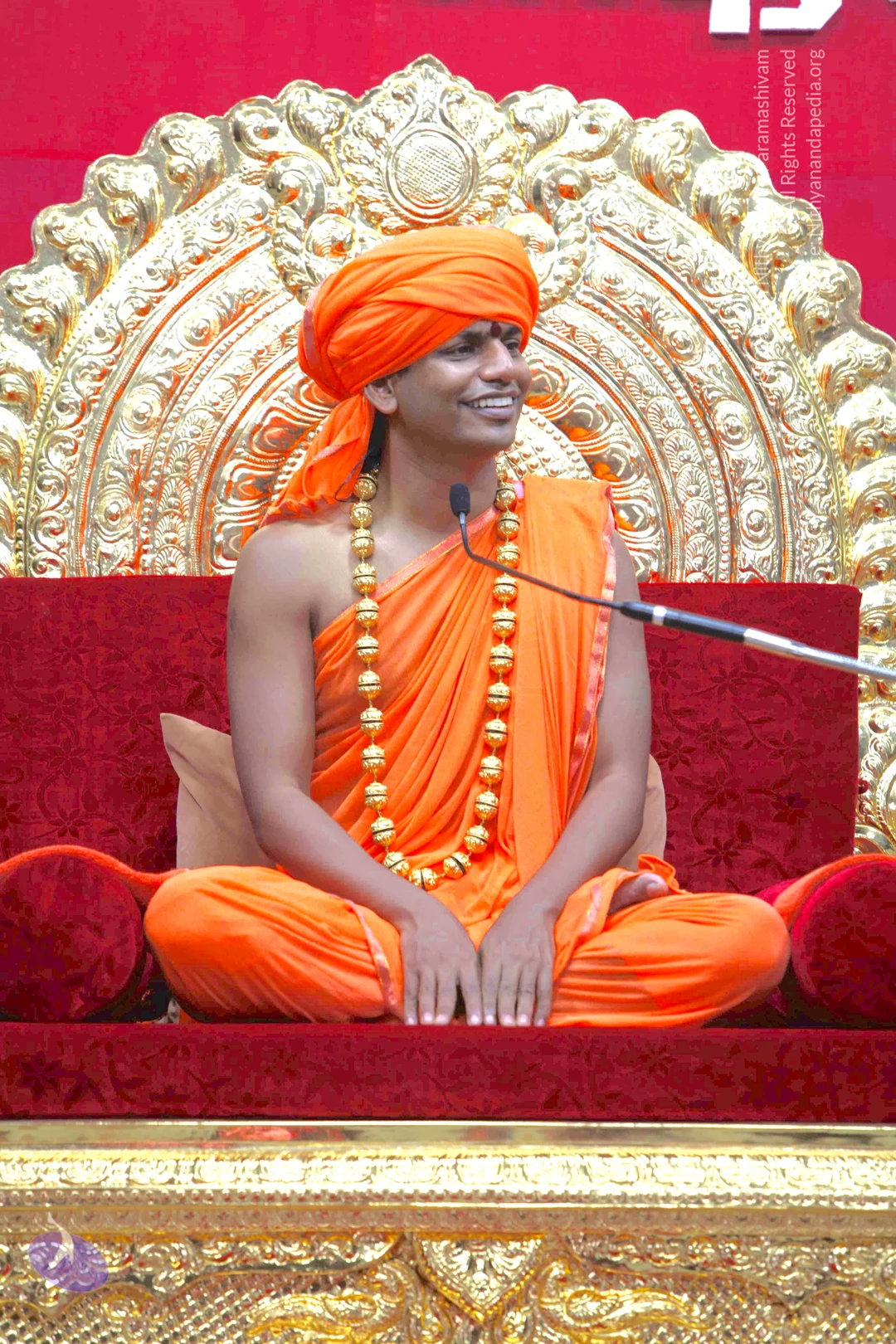
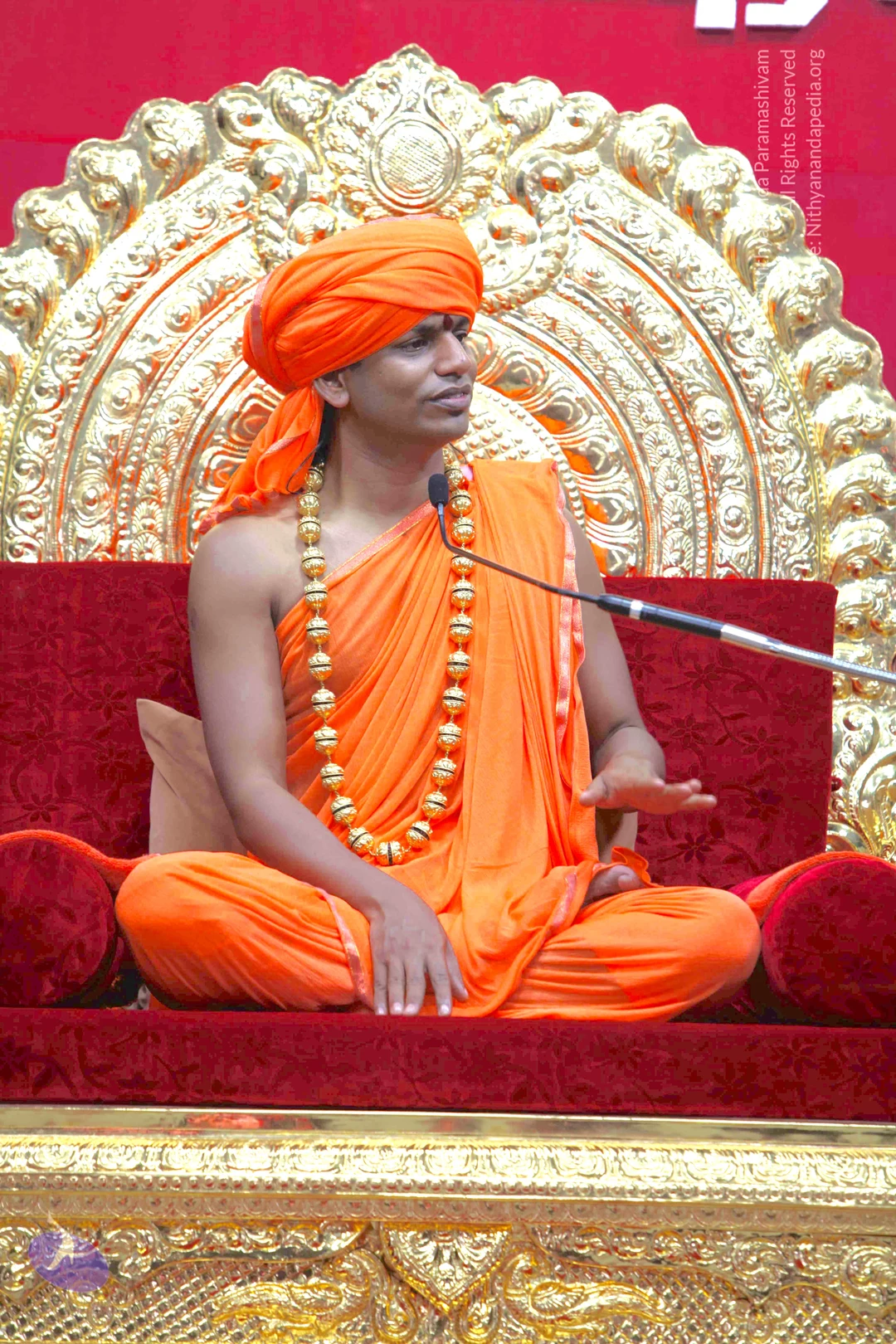
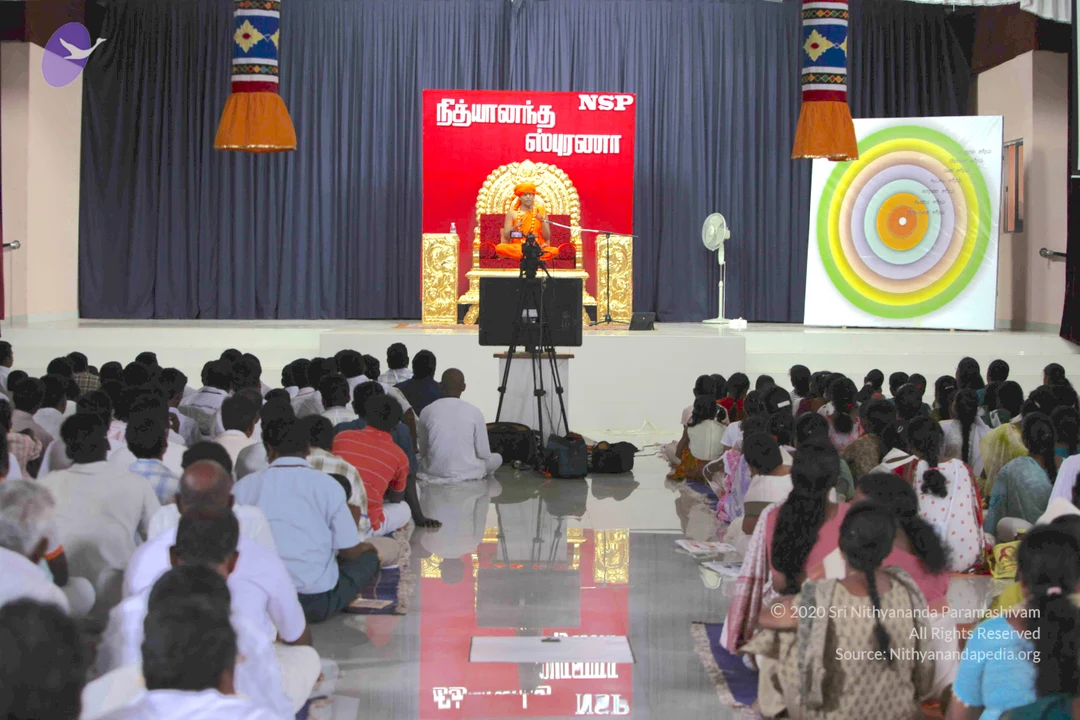
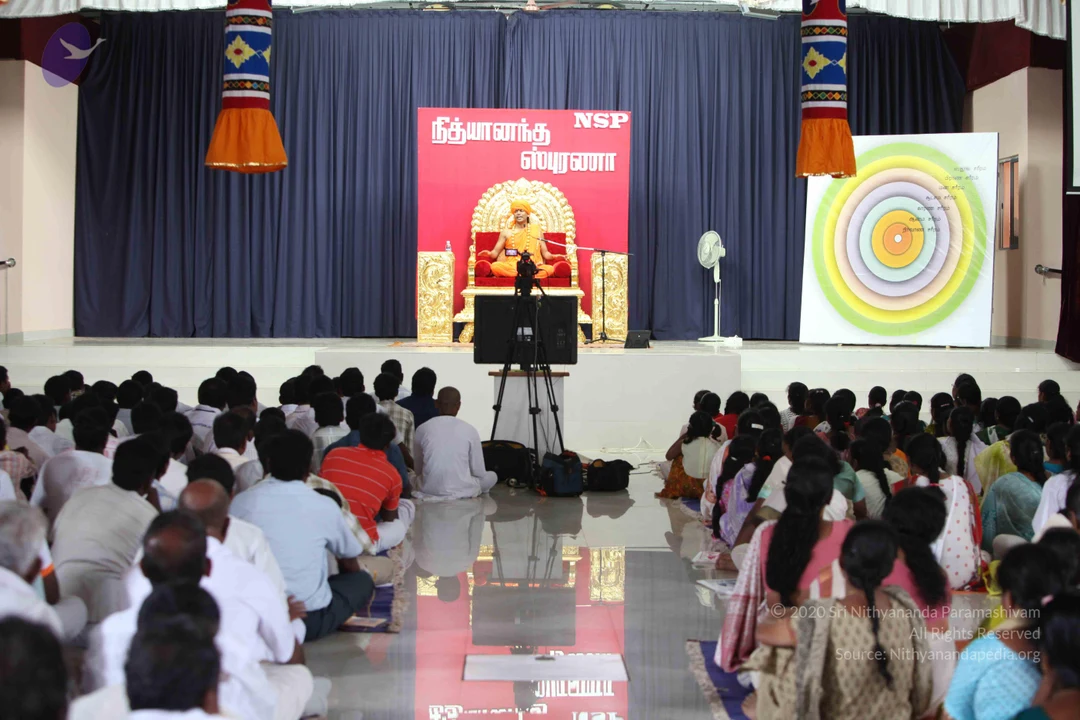
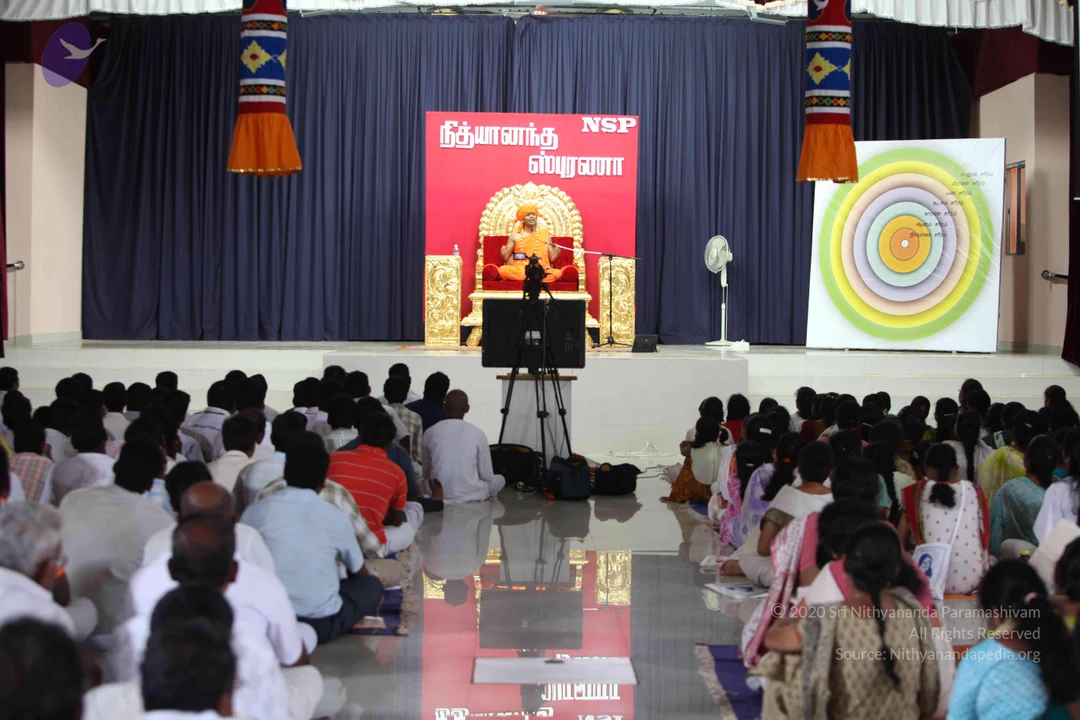
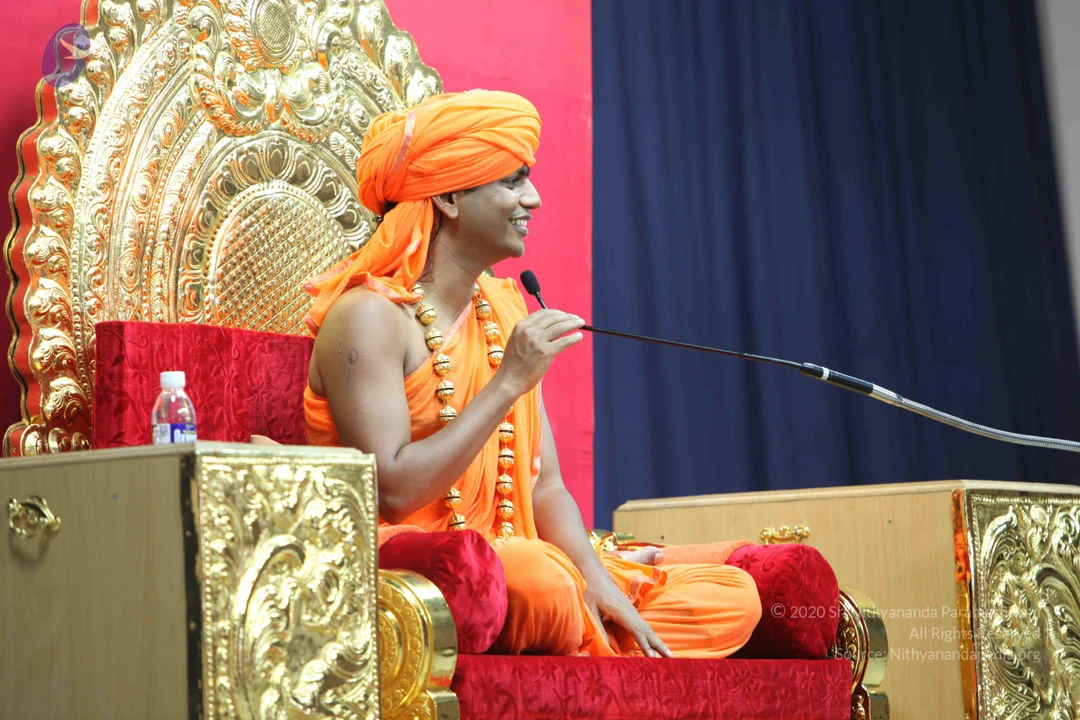
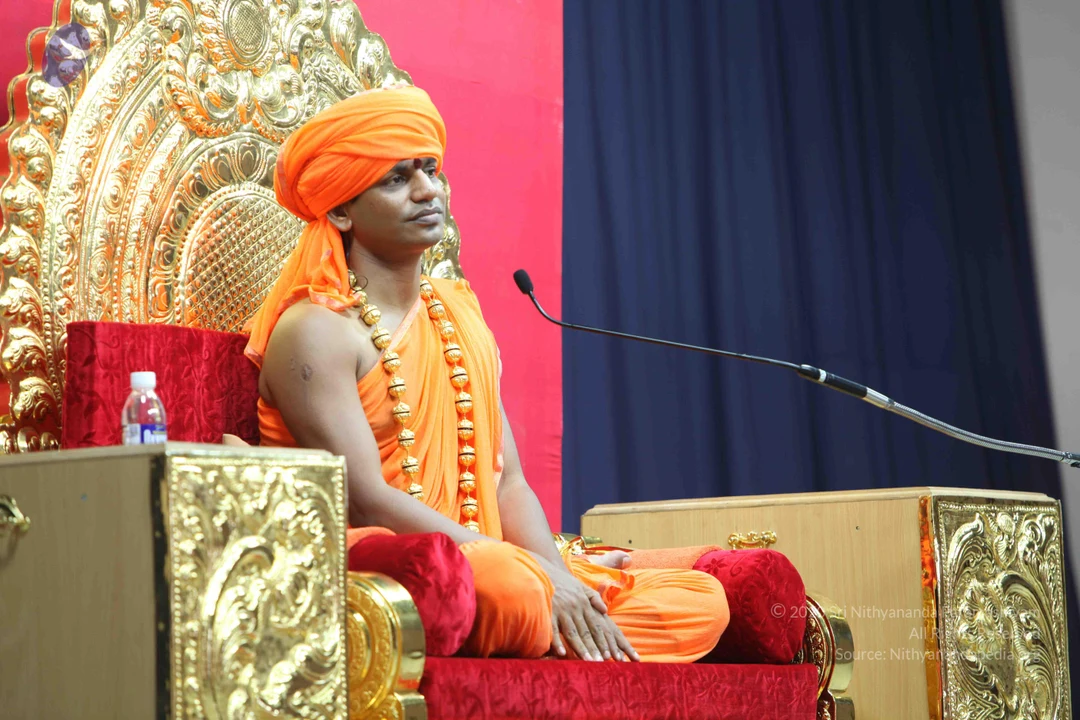
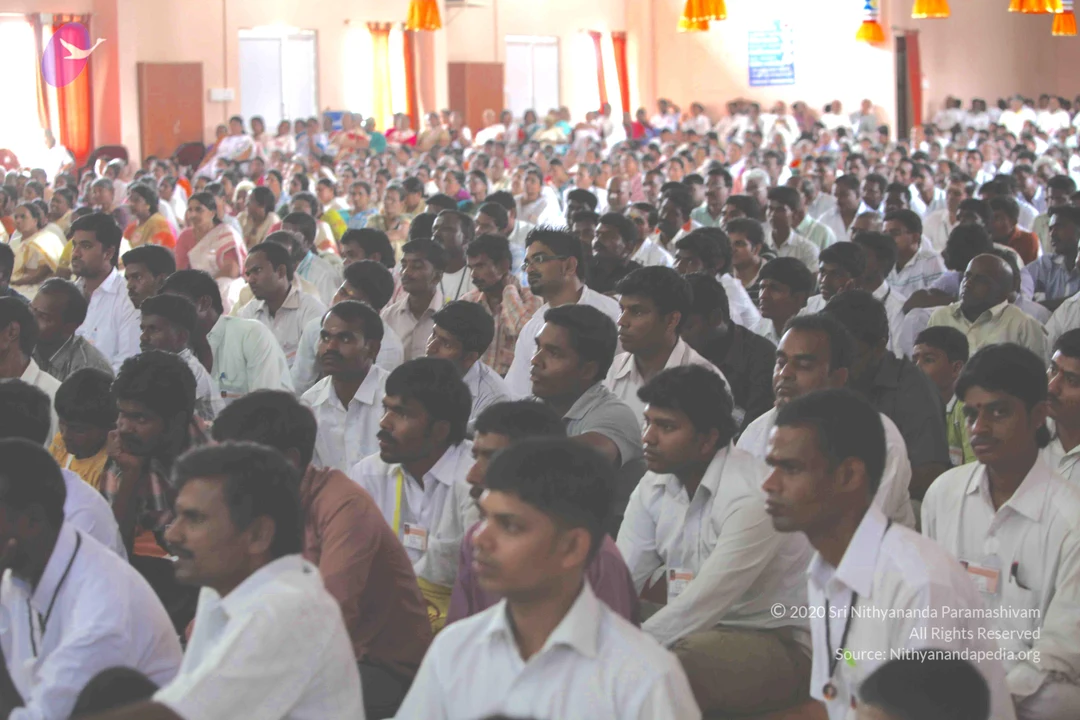
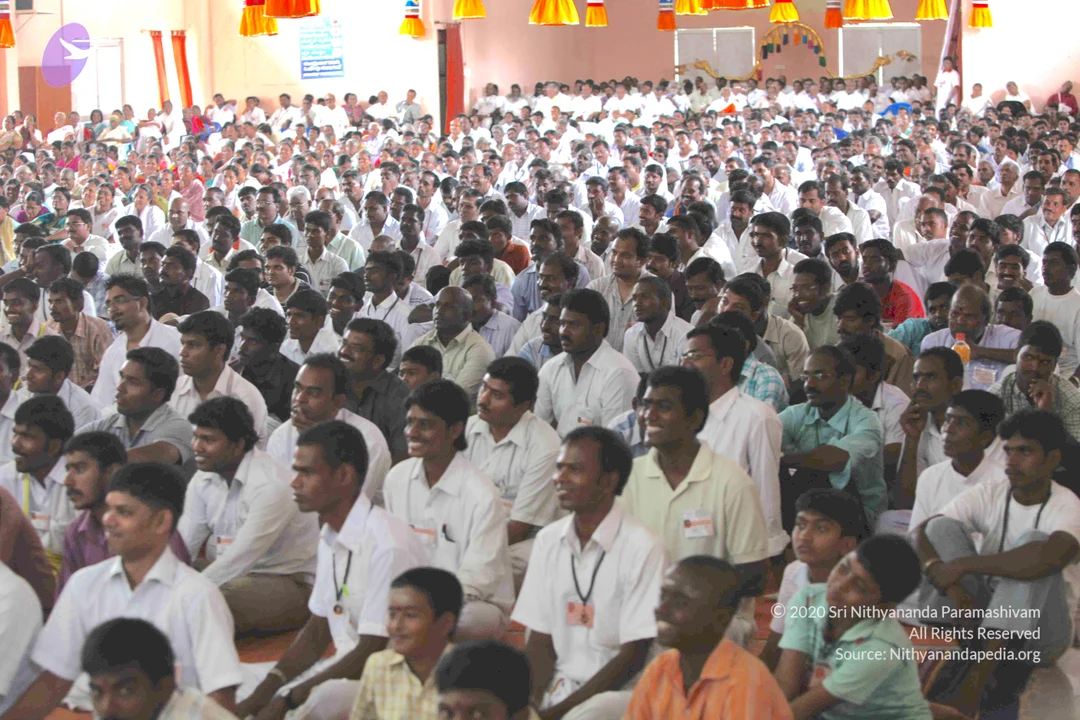
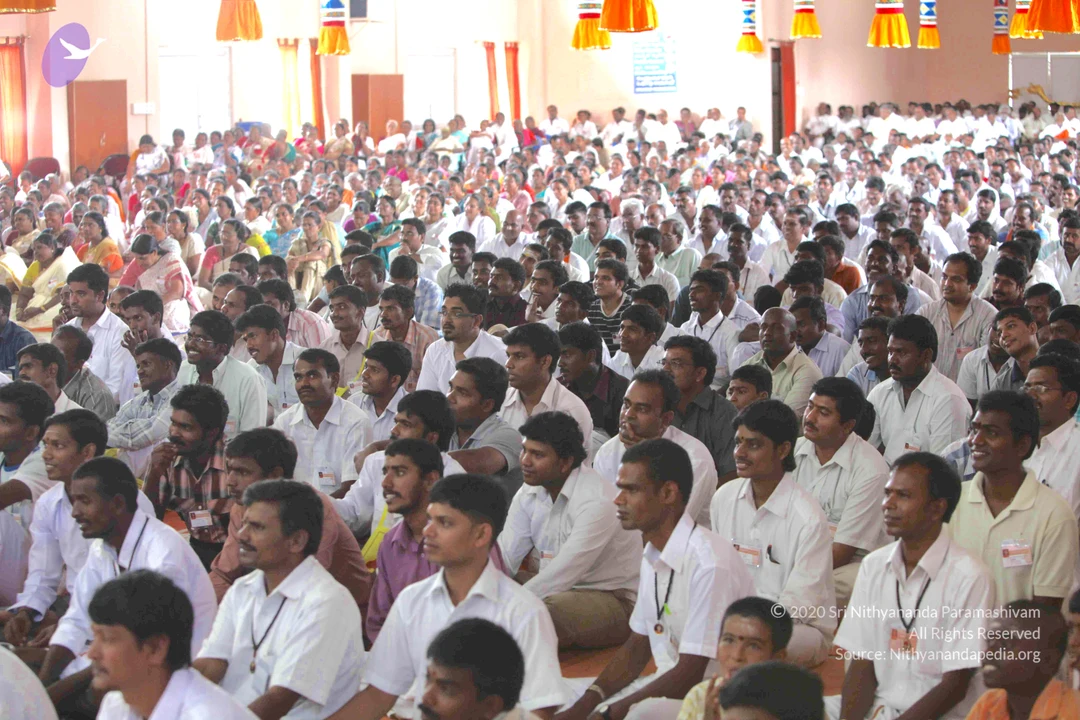
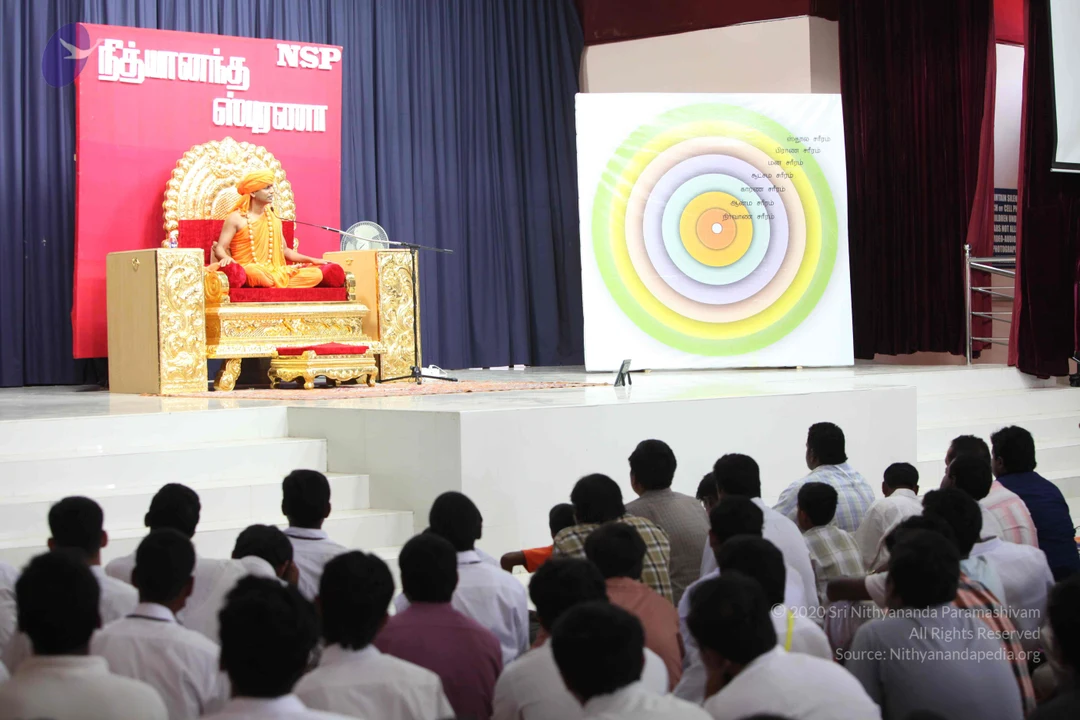
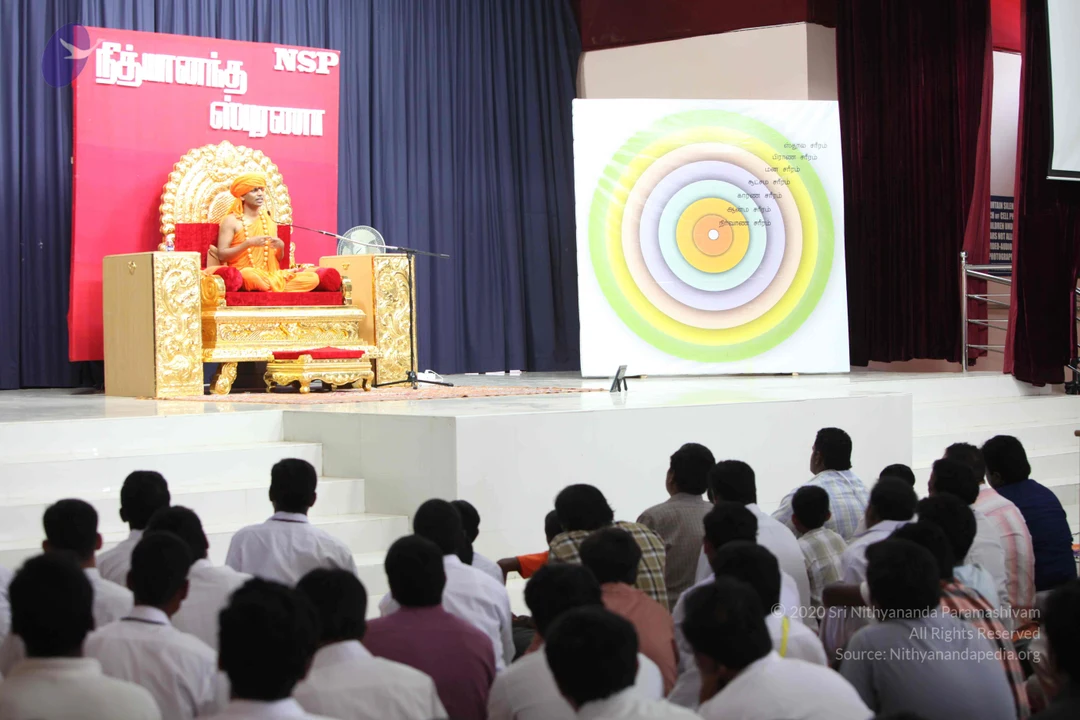
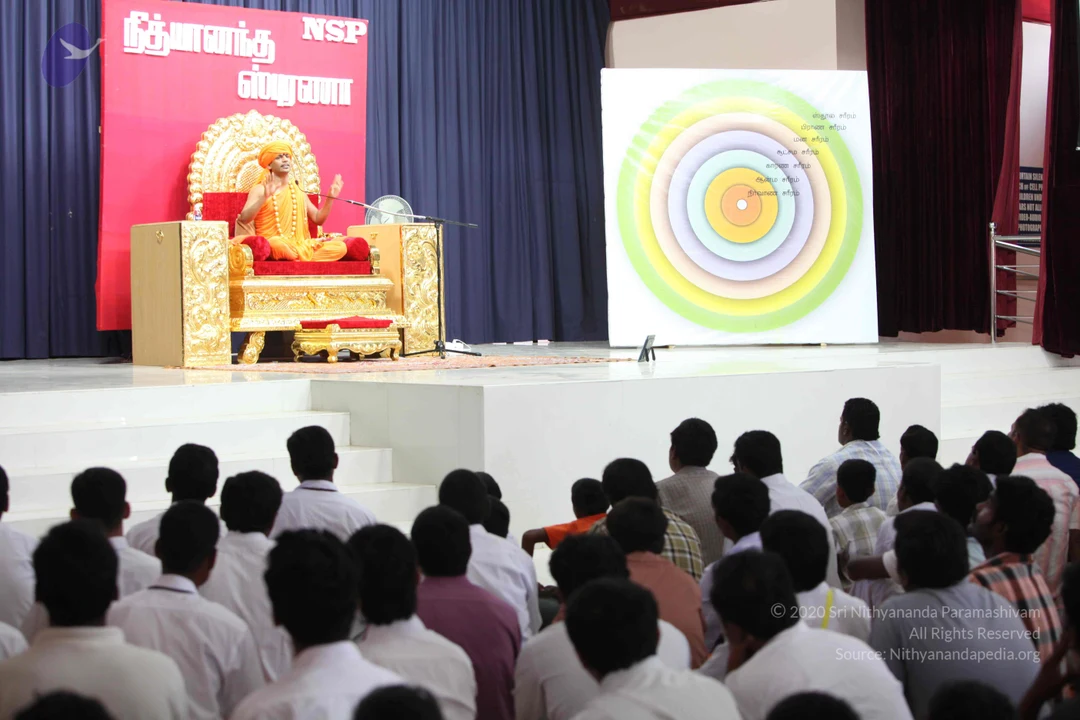
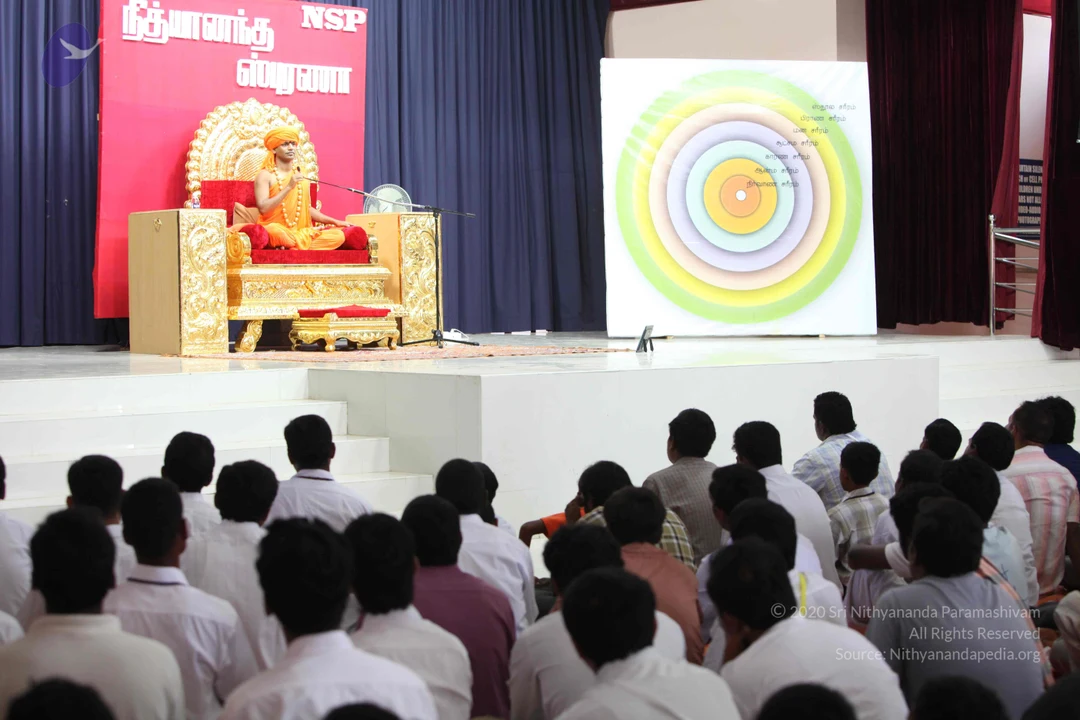
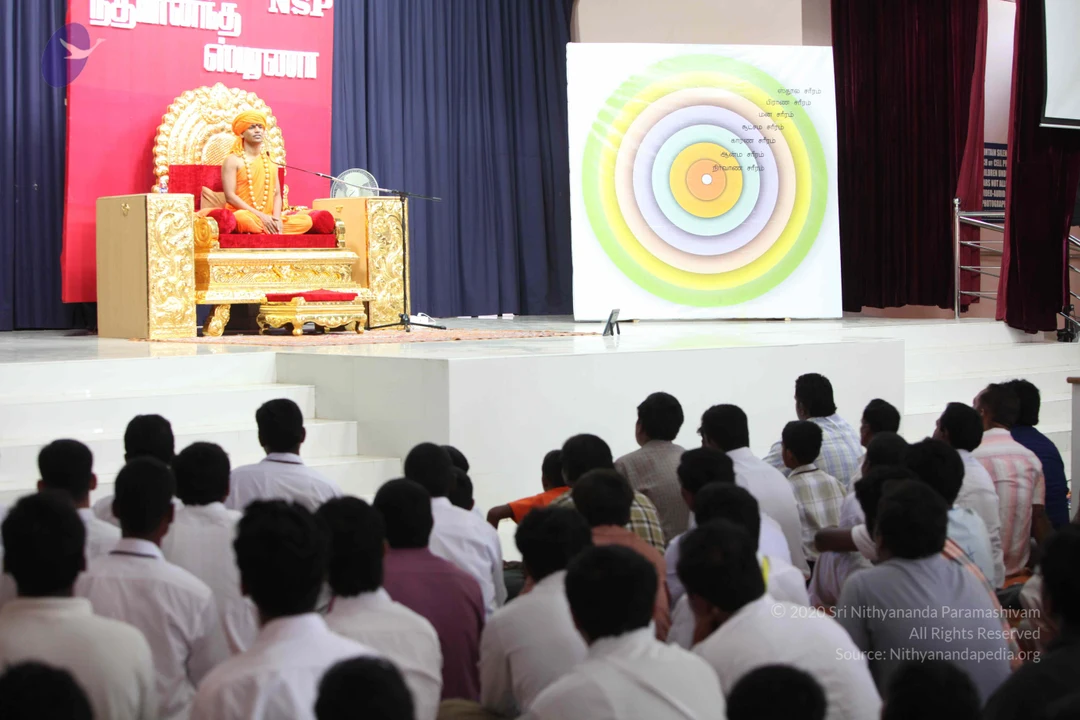
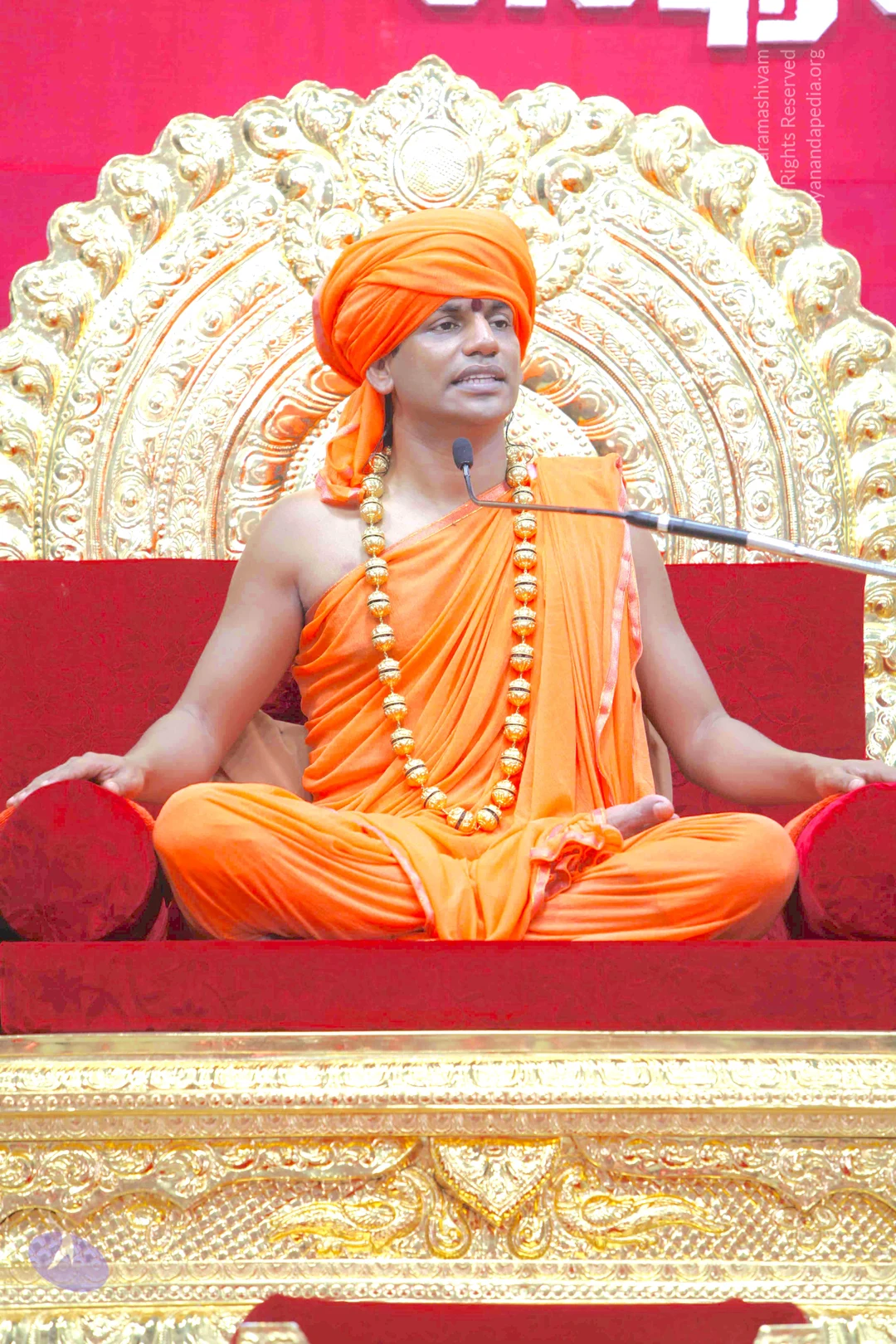
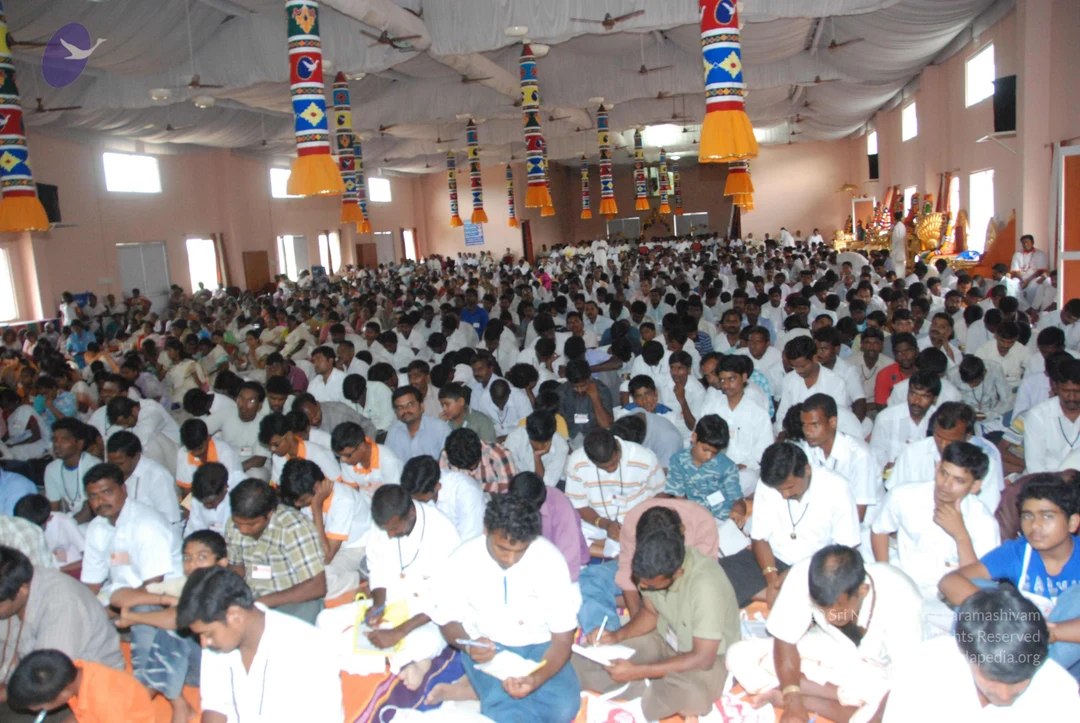
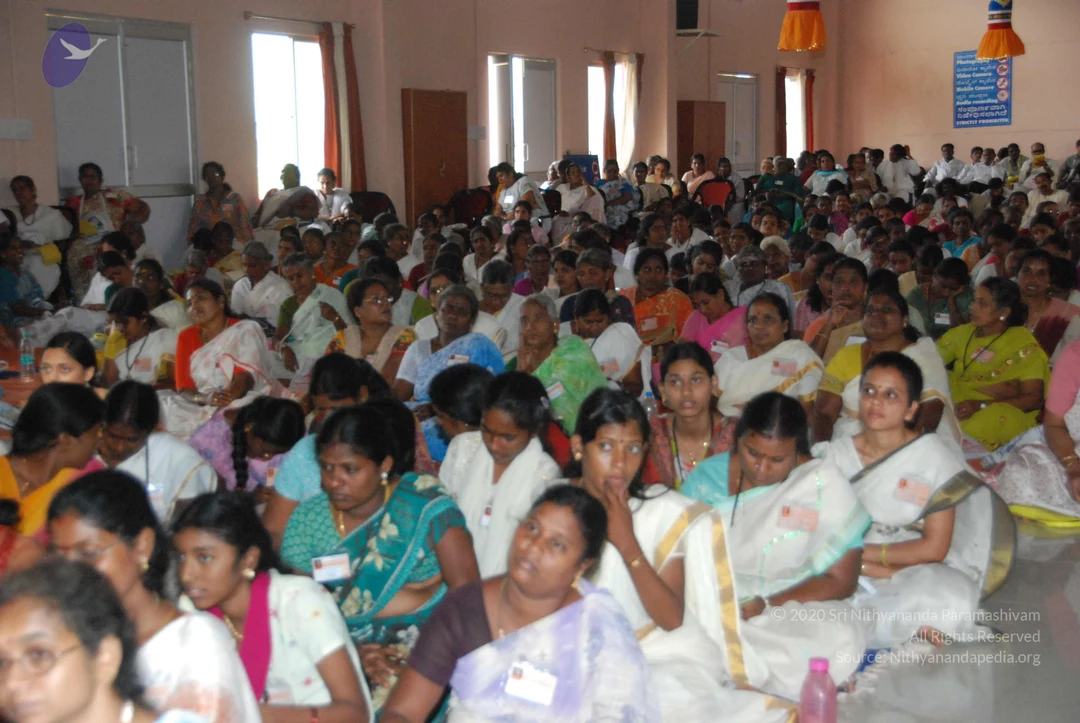
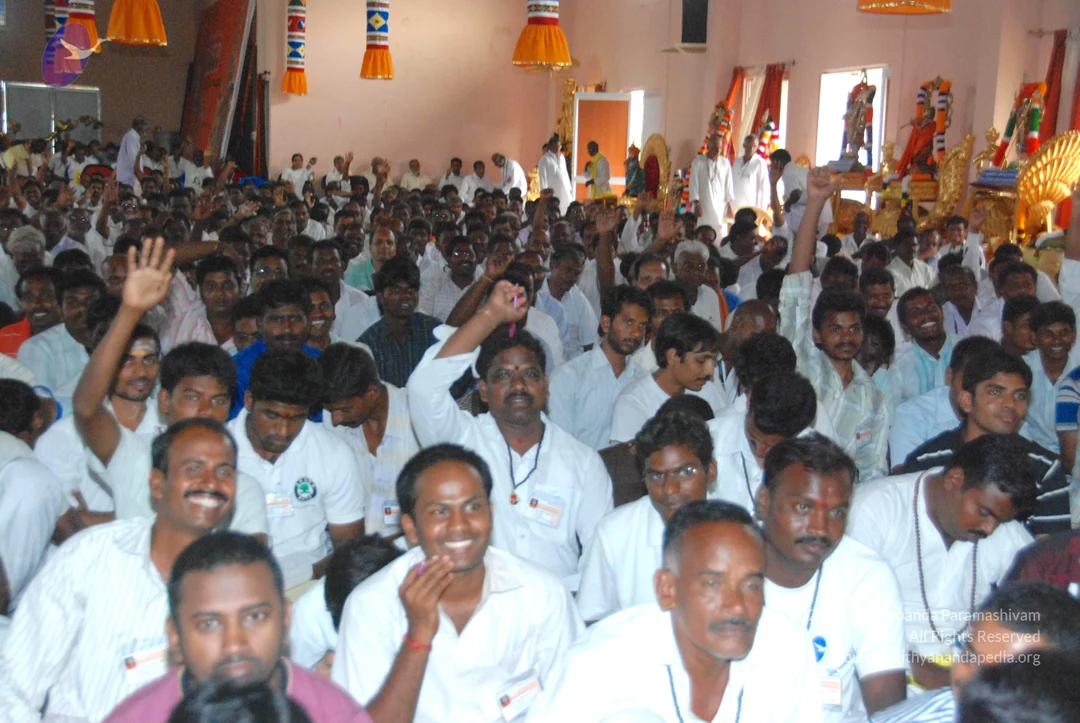
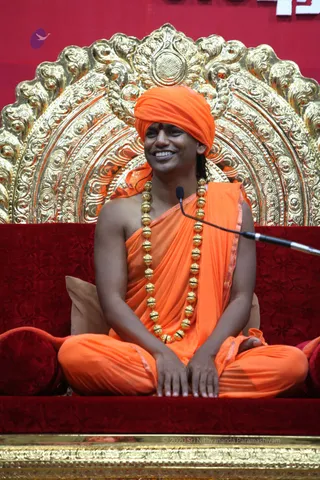
A large hall filled with a dense audience of men seated cross-legged on orange mats, many in white shirts and dhotis, some wearing lanyards. Colourful cylindrical banners with geometric patterns and orange tassels hang from a white draped ceiling. At left, a small monitor displays a figure in orange against a red-pink background, beside a video camera on a tripod. At the far end, a few figures stand near the stage area, and a lone figure in orange stands among the audience near the front.A large audience of men and boys sits cross-legged on orange and saffron mats in a bright hall with white draped ceiling and tall colourful cloth-wrapped pillars with tassels. Most attendees wear white shirts and white dhotis with lanyard badges, while some wear orange, green or patterned shirts. Many hold notebooks or papers. Further back, a few women in sarees sit among the rows. At the far front, a figure in white stands near a decorated stage area; a camera on a tripod is set up at the left edge. No figure is clearly identifiable as a person from appearance.A large seated audience of devotees fills an orange-carpeted hall, most seen from behind. Many women wear white salwar-style outfits, others wear saffron, orange, pink, green and yellow saris. A figure in saffron-orange robes sits on an orange-draped dais at the far right, addressing the gathering with a microphone before a maroon velvet curtain. A projector screen shows a small image above the stage, and colourful woven tassel banners hang from the ceiling at the top left. A cameraman with a tripod stands near the front of the audience. a person: the speaker on the dais wears a saffron-orange robe and has a shaved head, with no long hair, crown or malas clearly visible, so identification is uncertain.A seated man in saffron-orange robes and an orange turban with a red tilak on his forehead sits cross-legged on a red velvet throne with an ornate gold arched backrest. He wears a long multi-strand necklace of gold beads and smiles while a microphone stands beside him. The setting is a satsang-style talk with a red backdrop.A man seated cross-legged on a red velvet throne with an ornate gold carved backrest, wearing an orange turban, an orange draped garment and a long ceremonial necklace of gold beads. He smiles and gestures with his raised right hand toward a microphone on a stand, apparently speaking to an audience. The background is a deep red wall. Swamiji (probable): the figure wears a saffron turban and orange robes with a long gold bead necklace on a throne, consistent with the page's reference to Swamiji speaking at this event.A smiling man in saffron-orange robes and a matching saffron turban sits cross-legged on a red velvet throne with ornate gold carved backrest and armrests. He wears a long strand of large gold beads and has a red mark on his forehead; one hand is raised mid-gesture toward a microphone on a stand while the other rests on his knee. Probable Swamiji: the visible cues are the saffron turban and robes, long hair and gold bead necklace, consistent with the page's description of a satsang talk. Behind him is a red backdrop and the visible photo credit line reads 2020 Sri Nithyananda Paramashivam , Source

Tamil-Nsp-Swamiji'S-Session-In-Evening
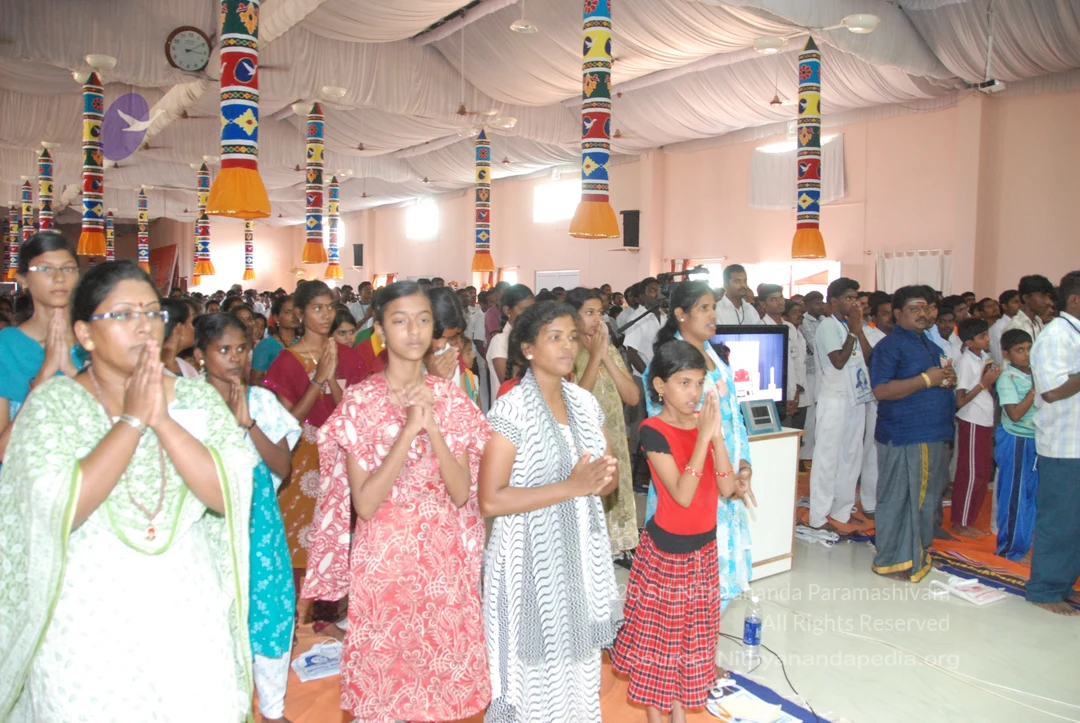
9 photosSource gallery
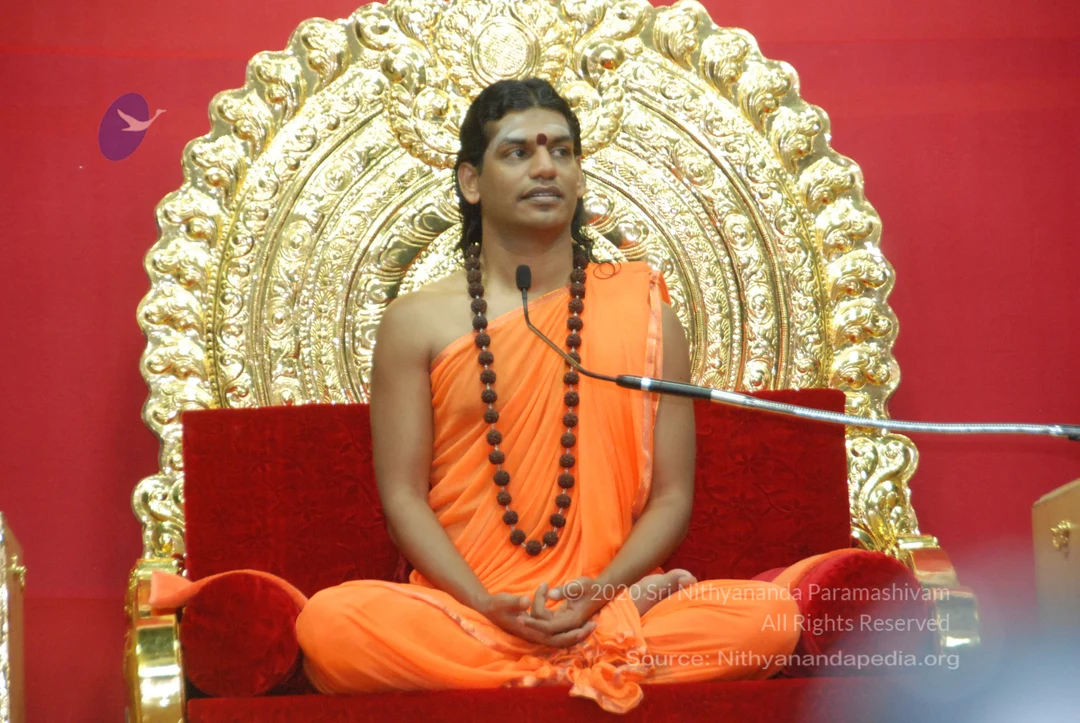
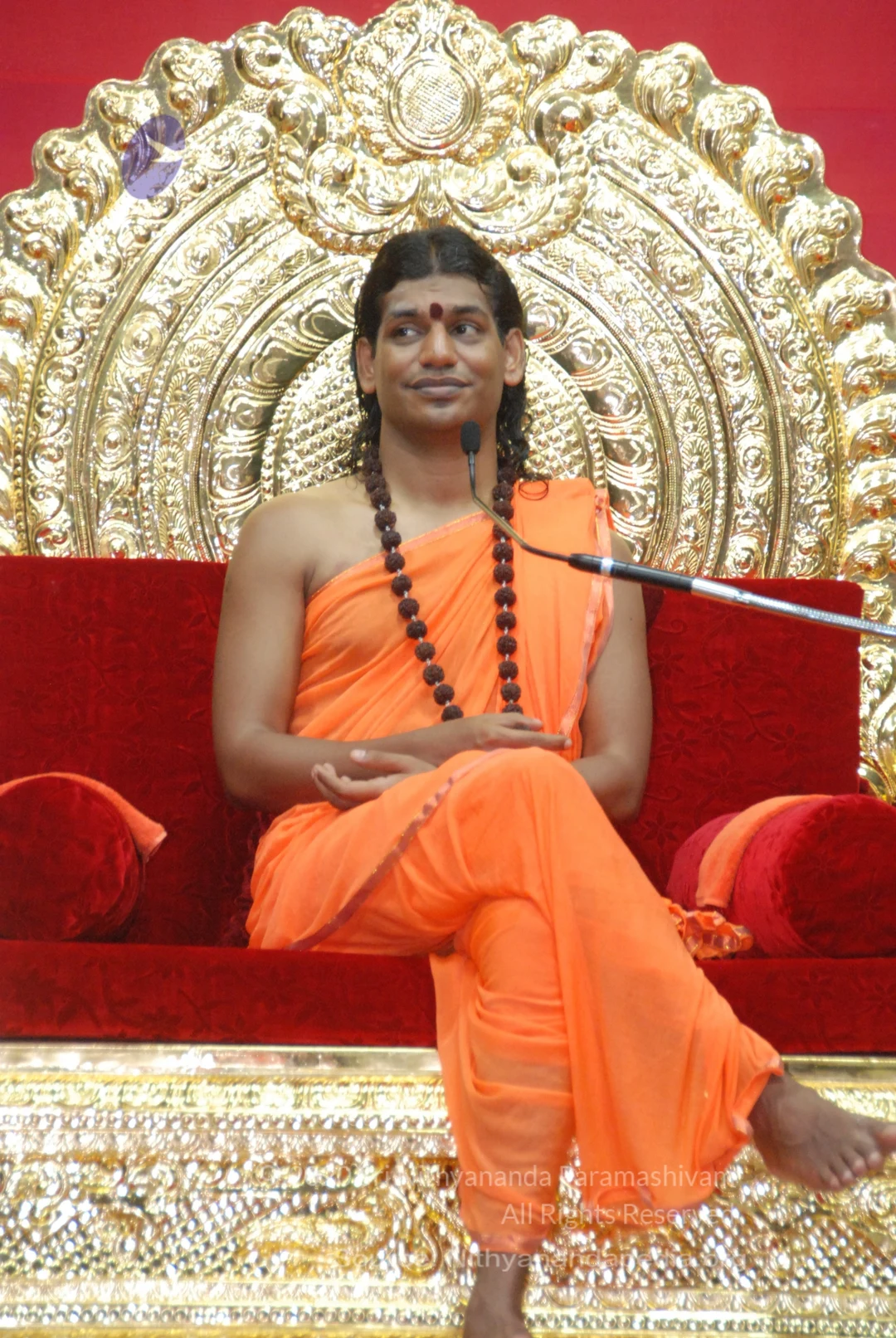
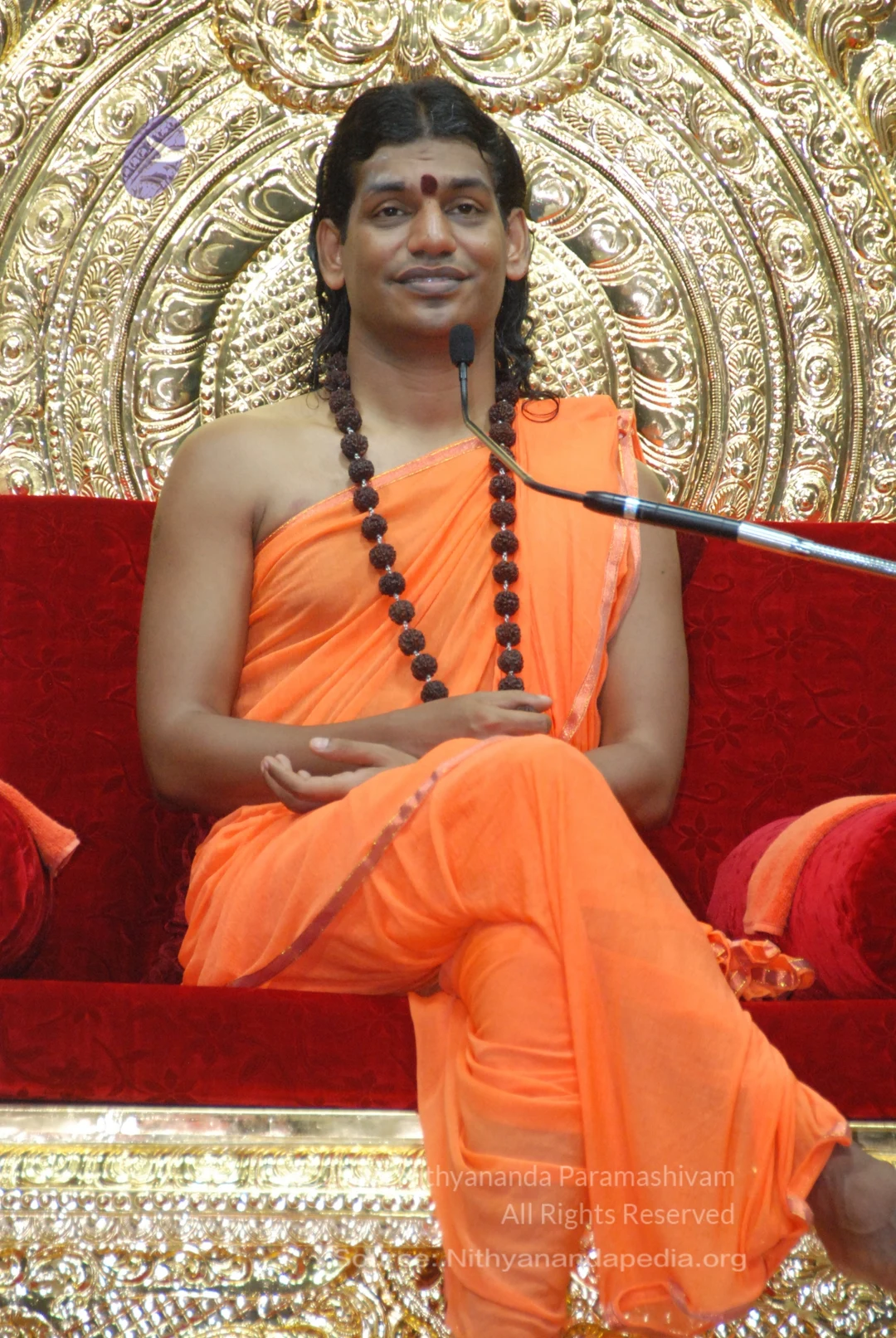
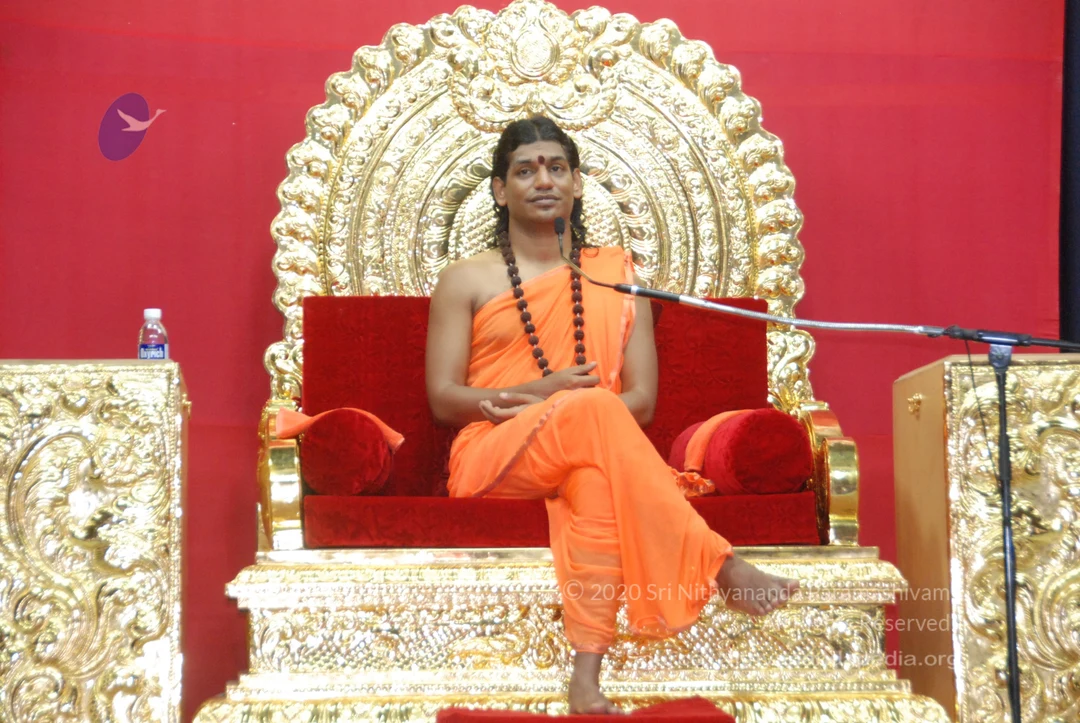
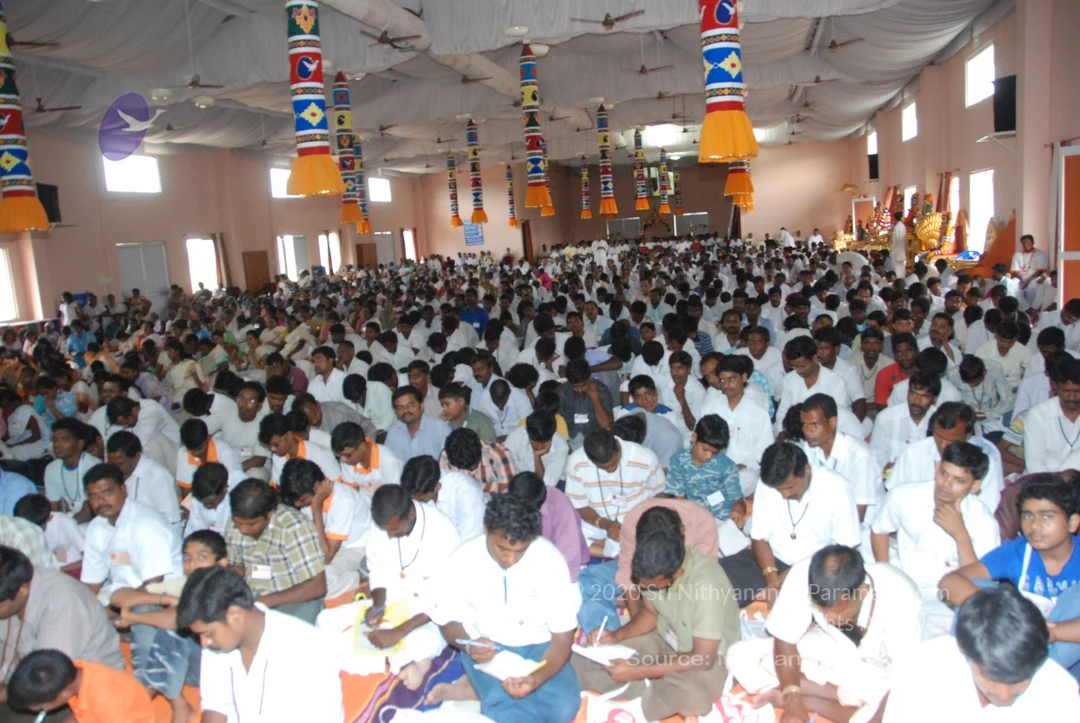
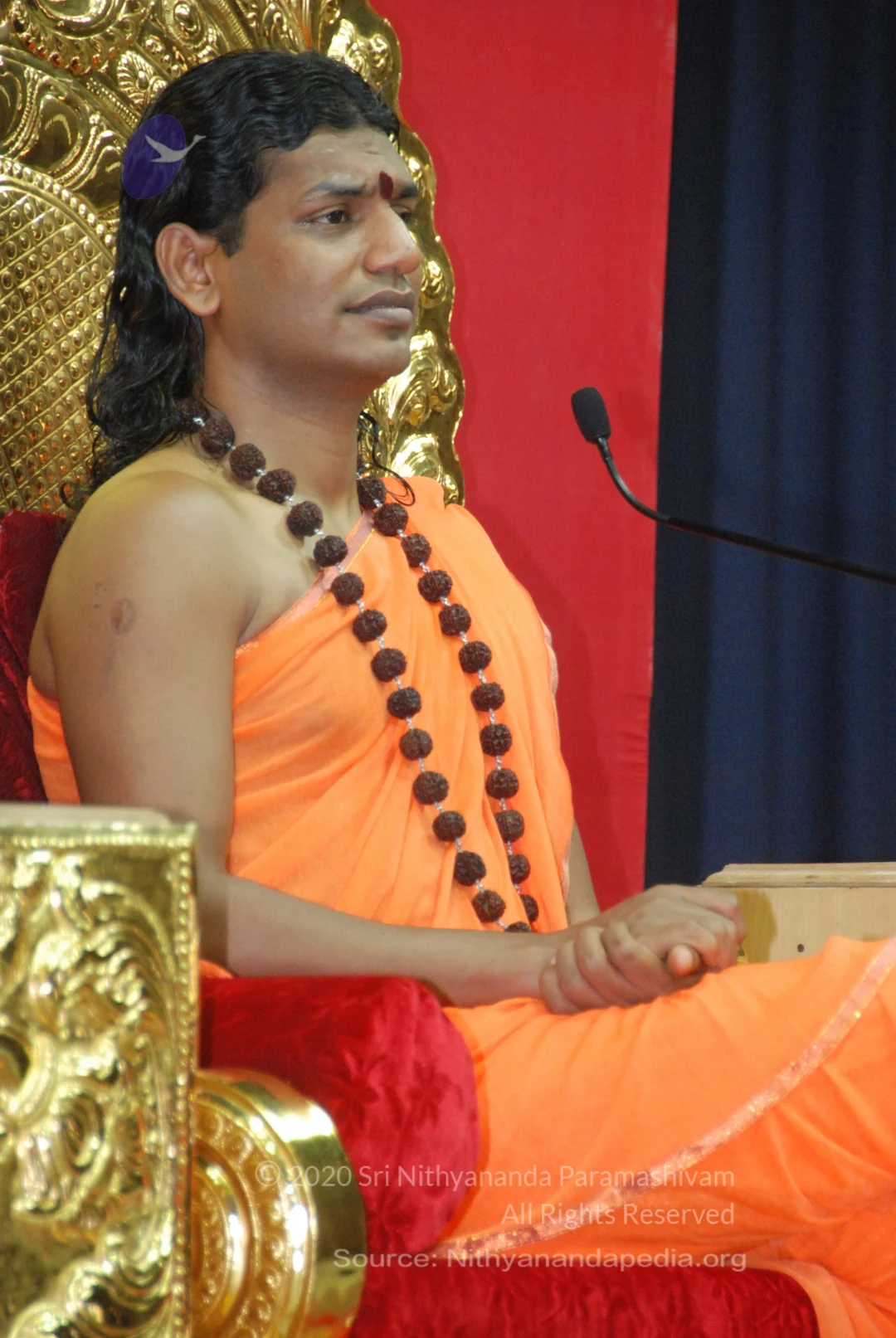
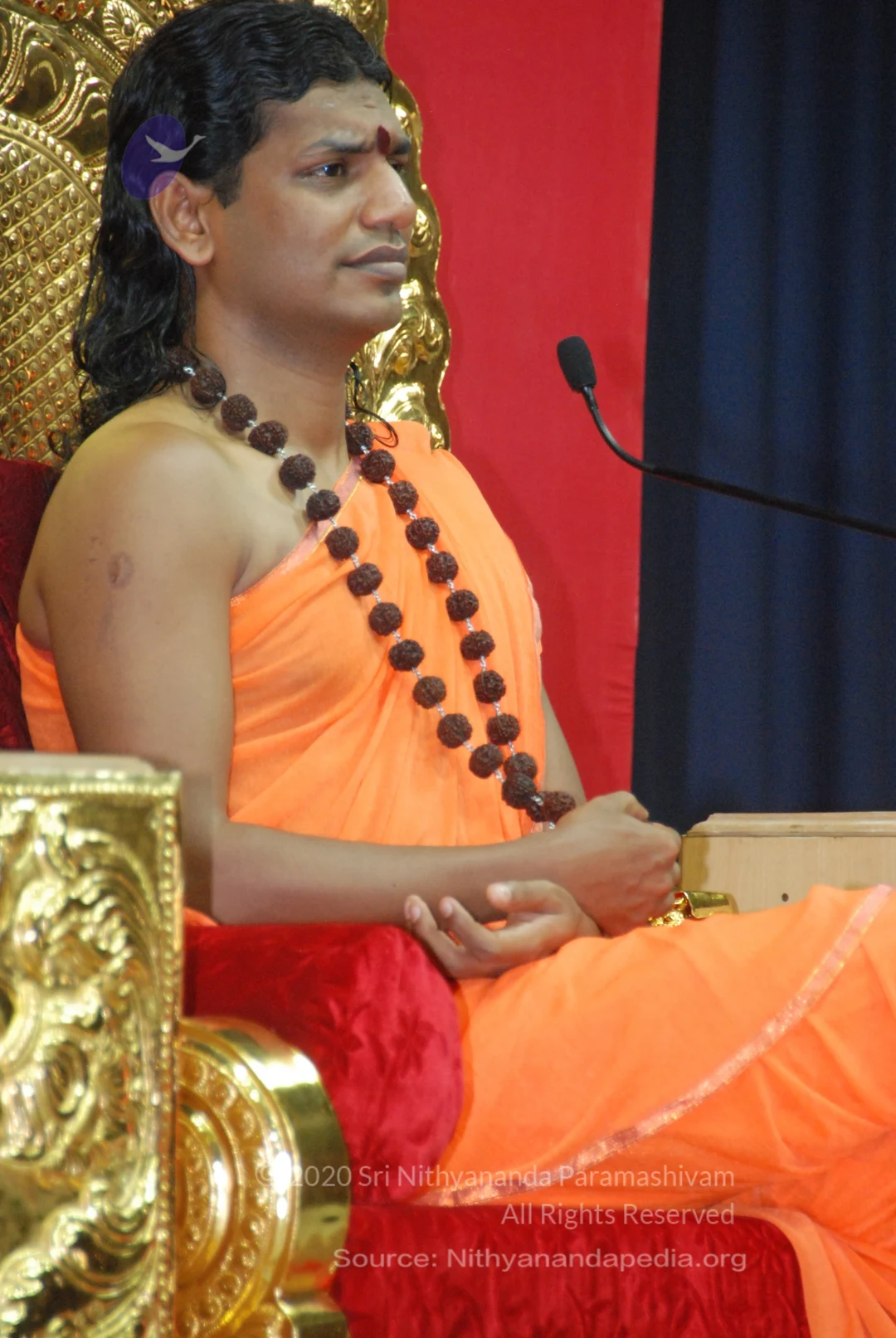
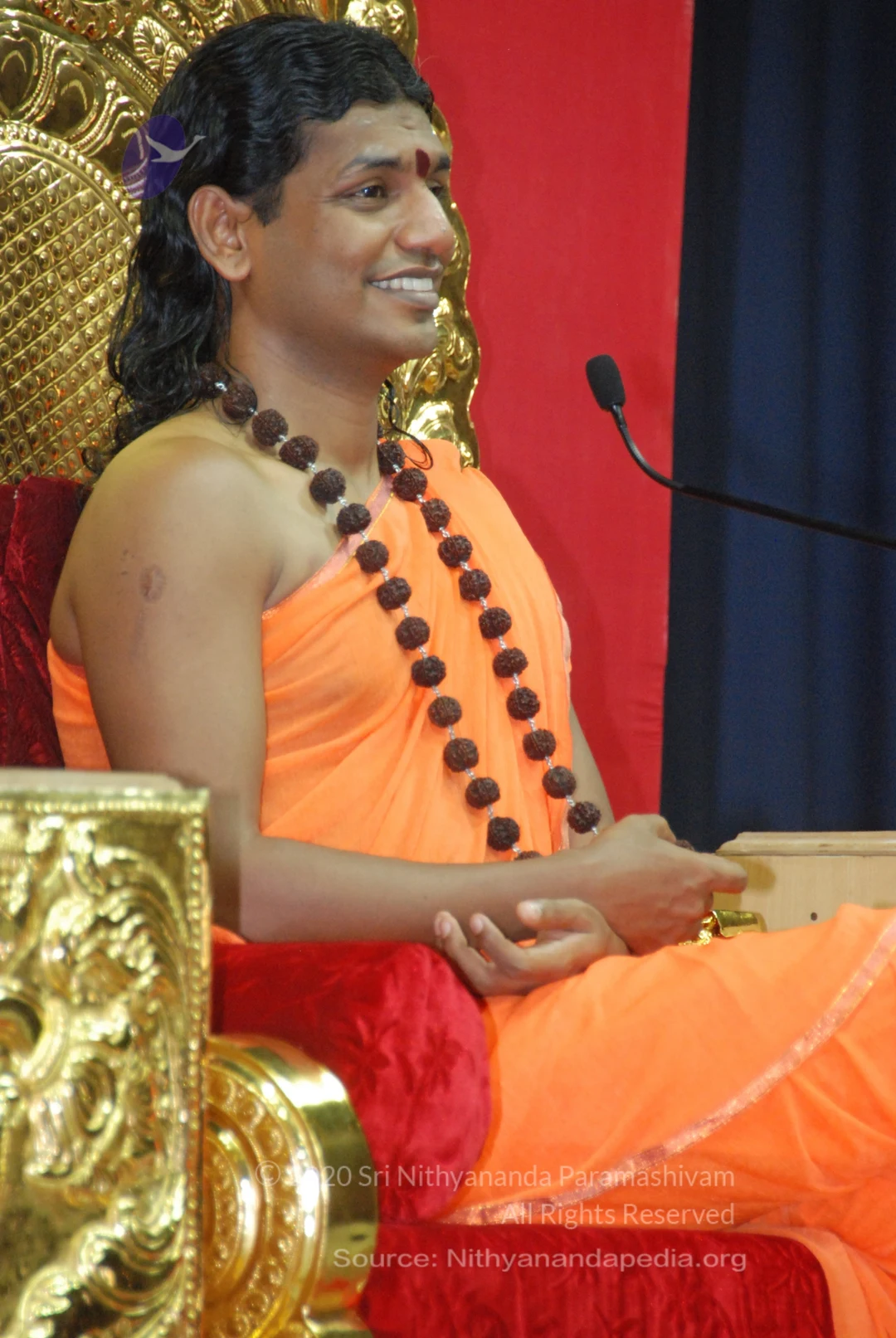
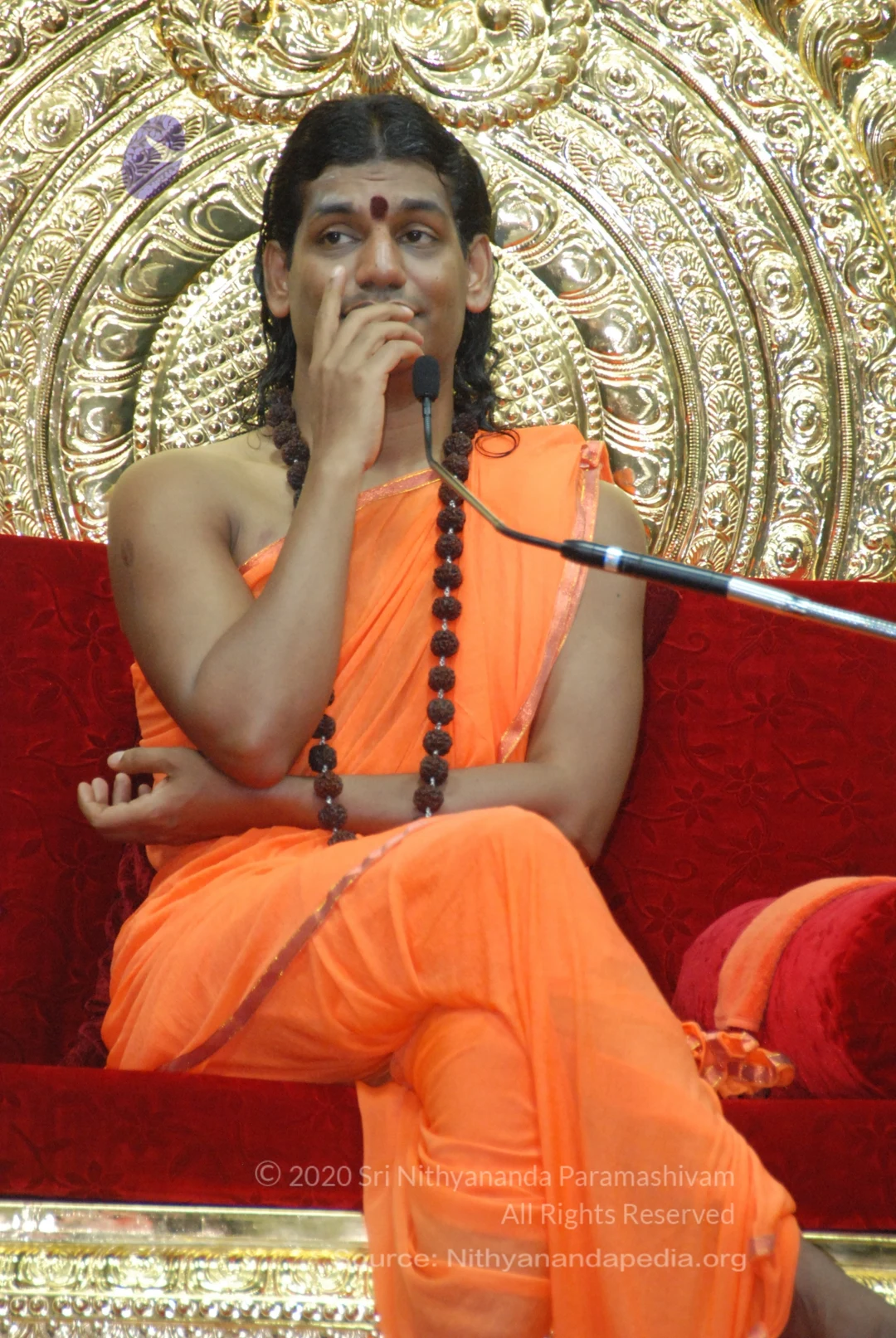
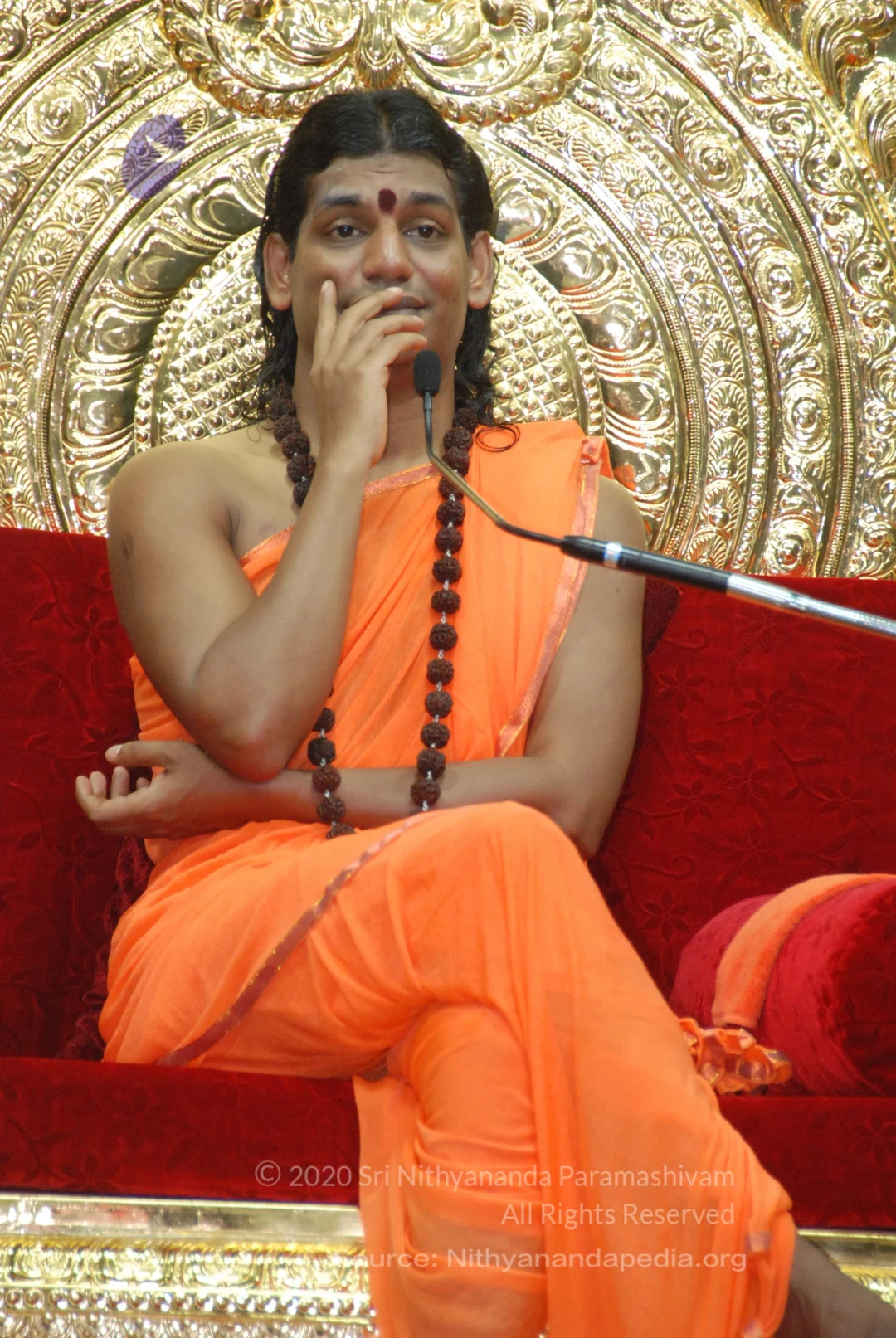
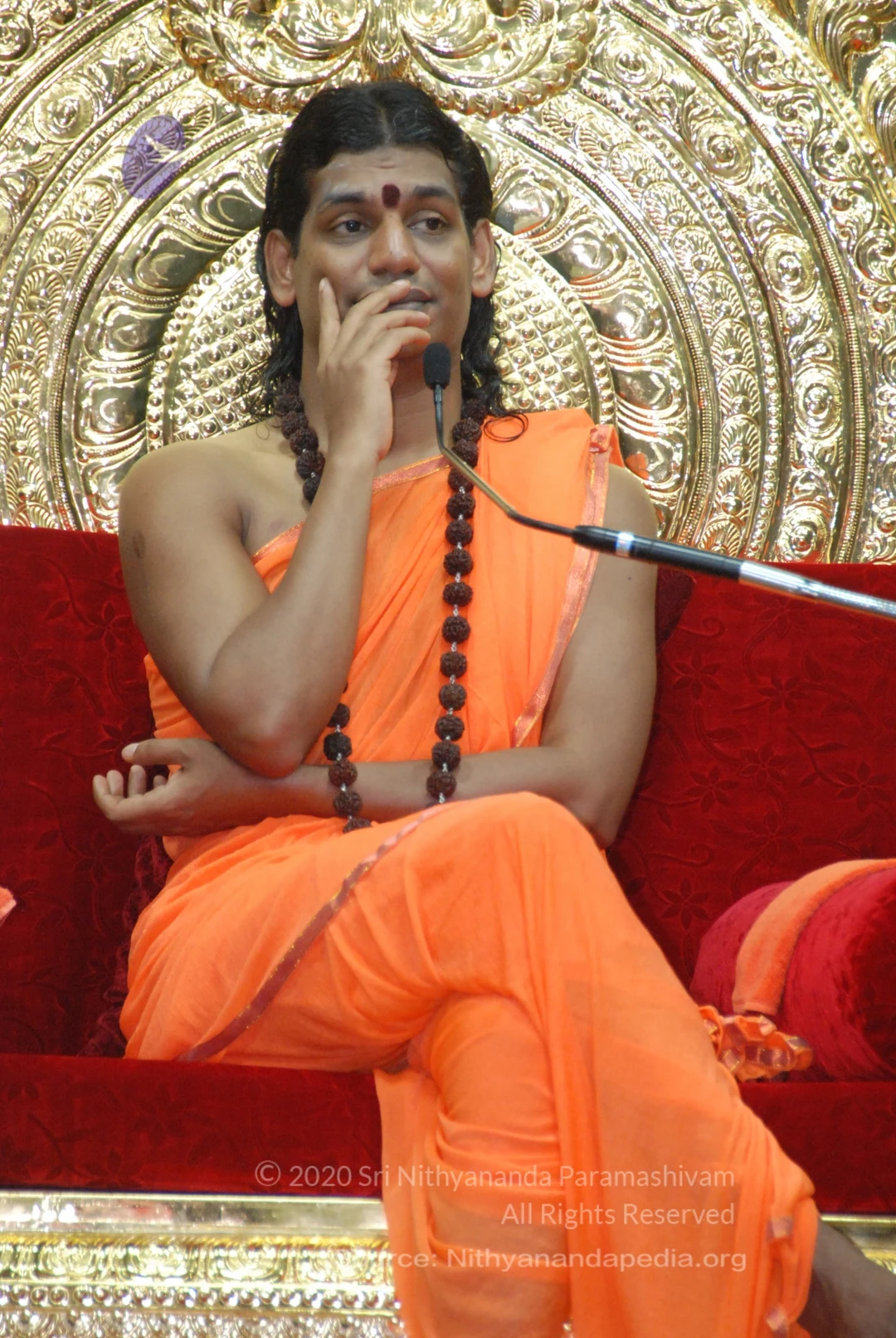
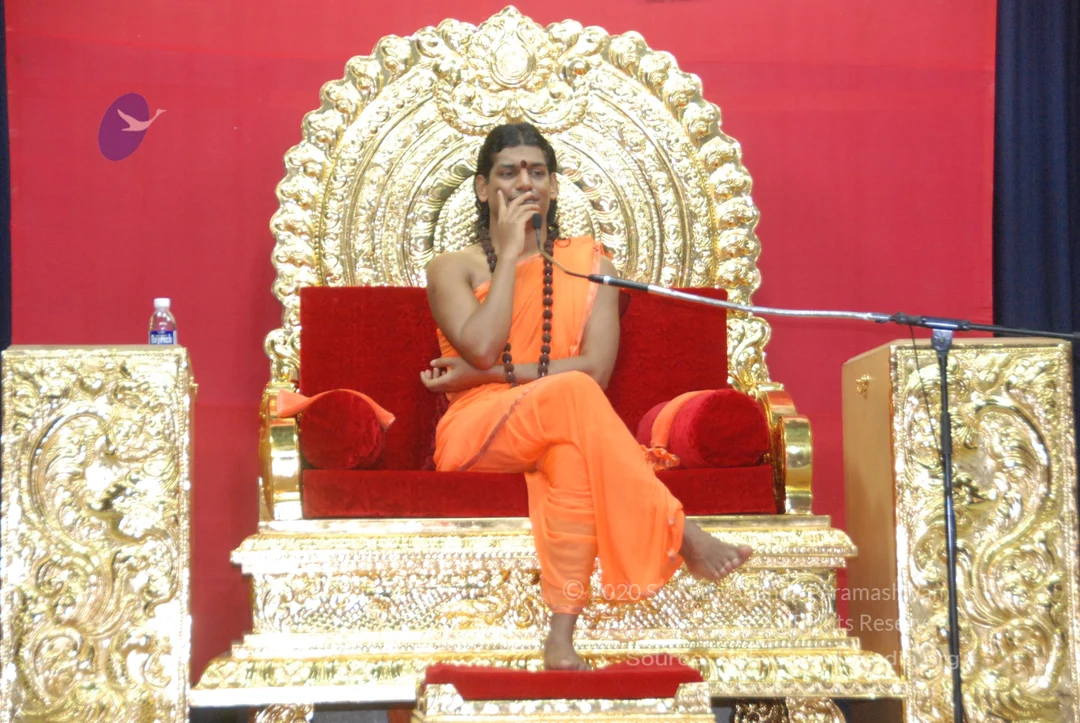
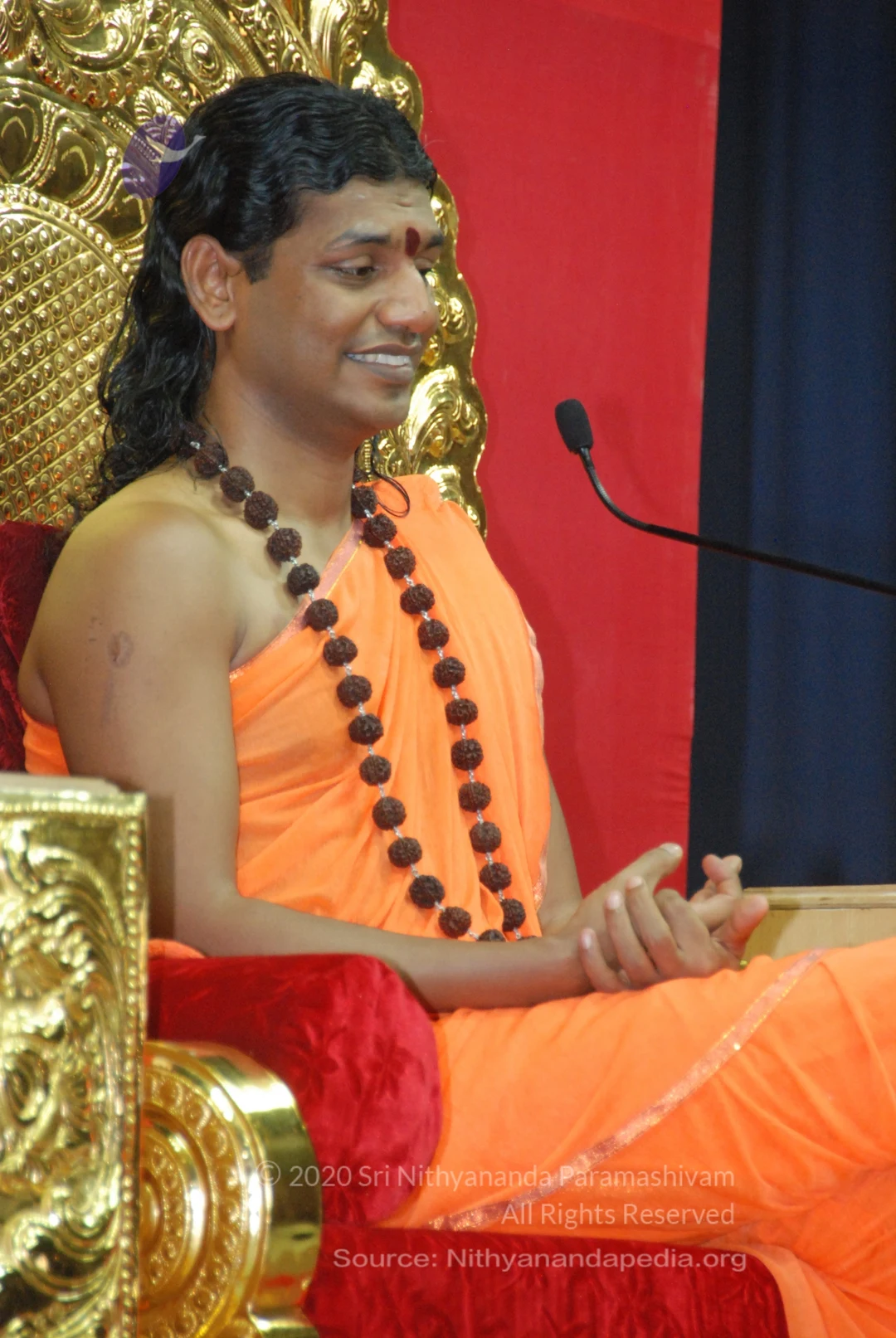
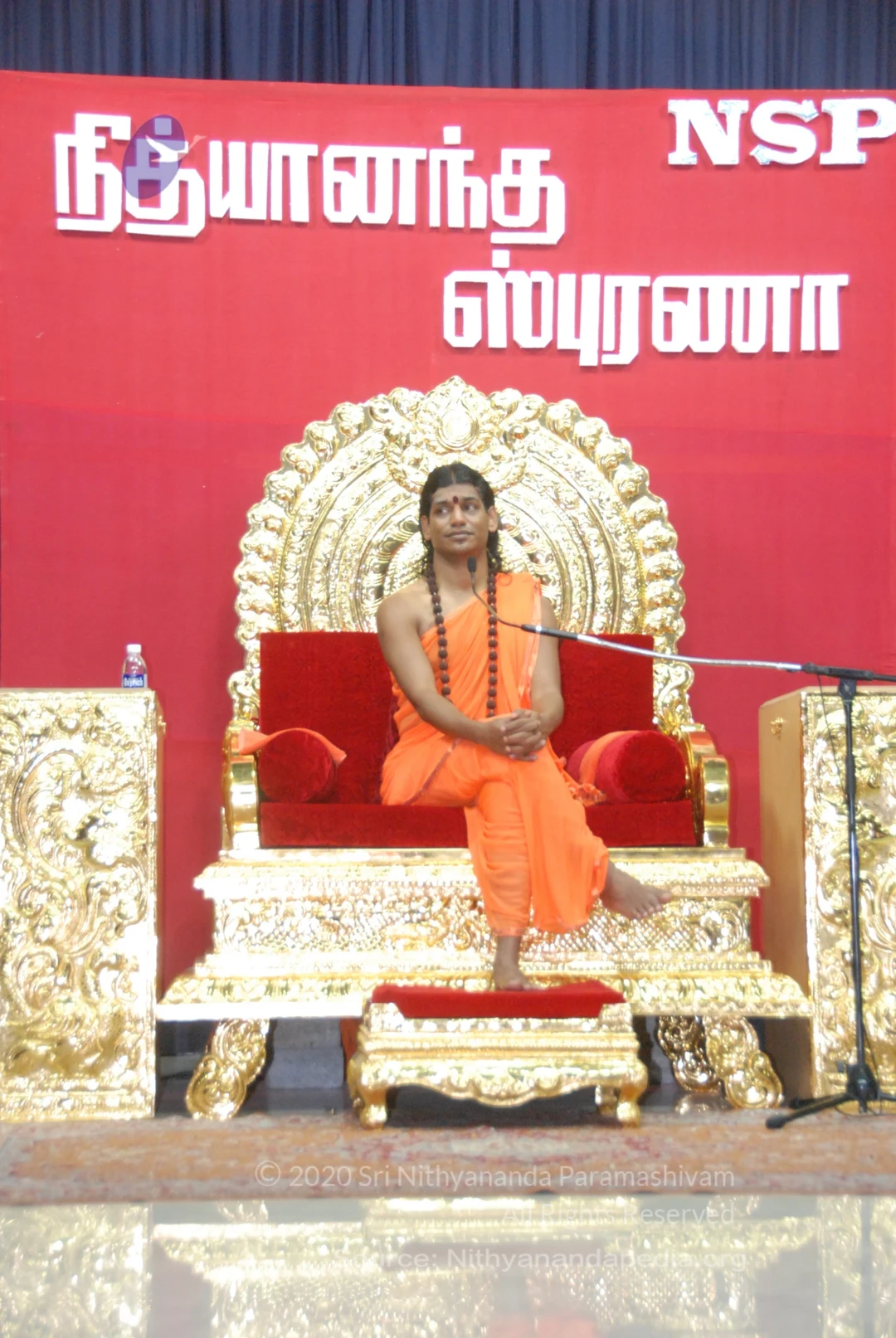
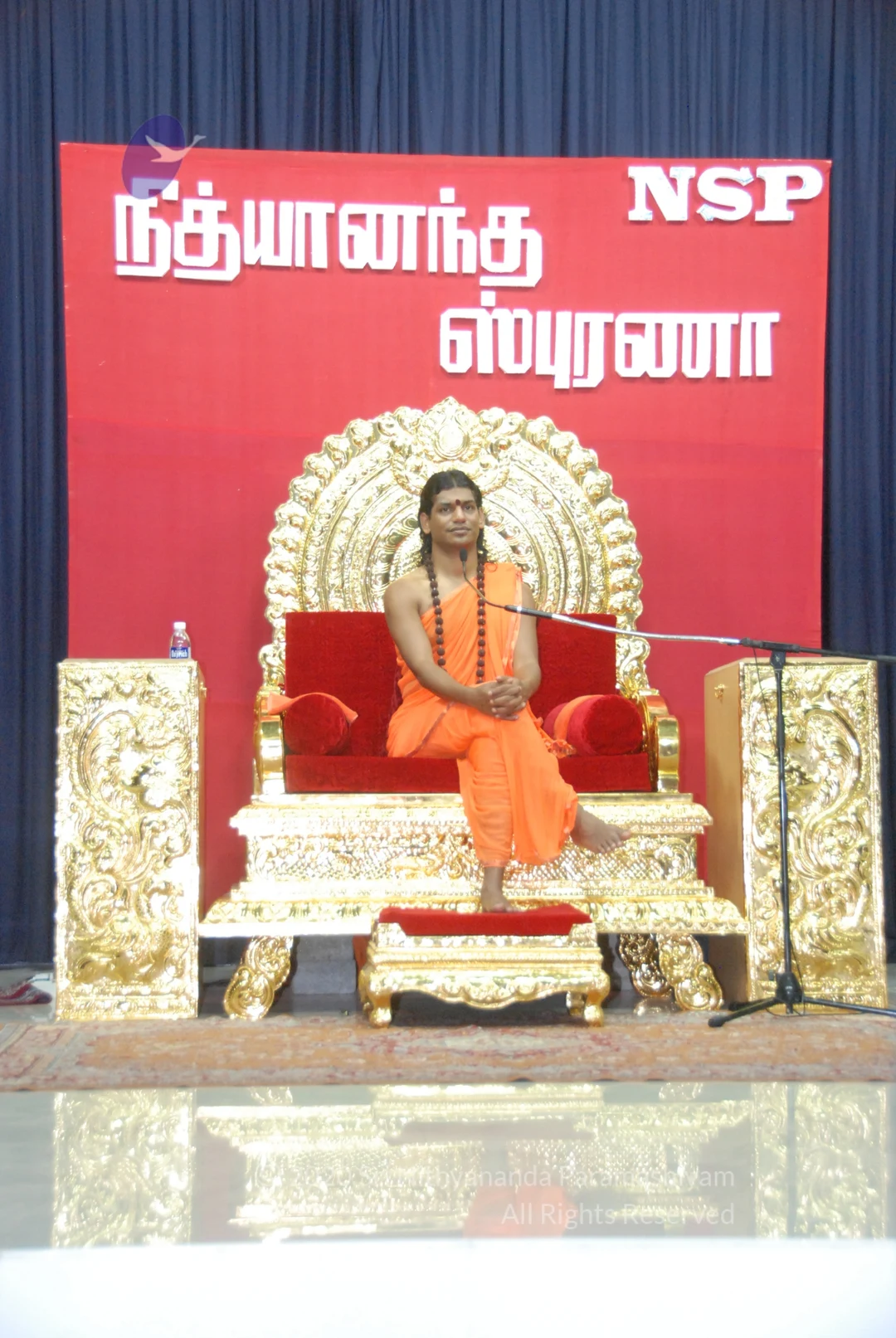
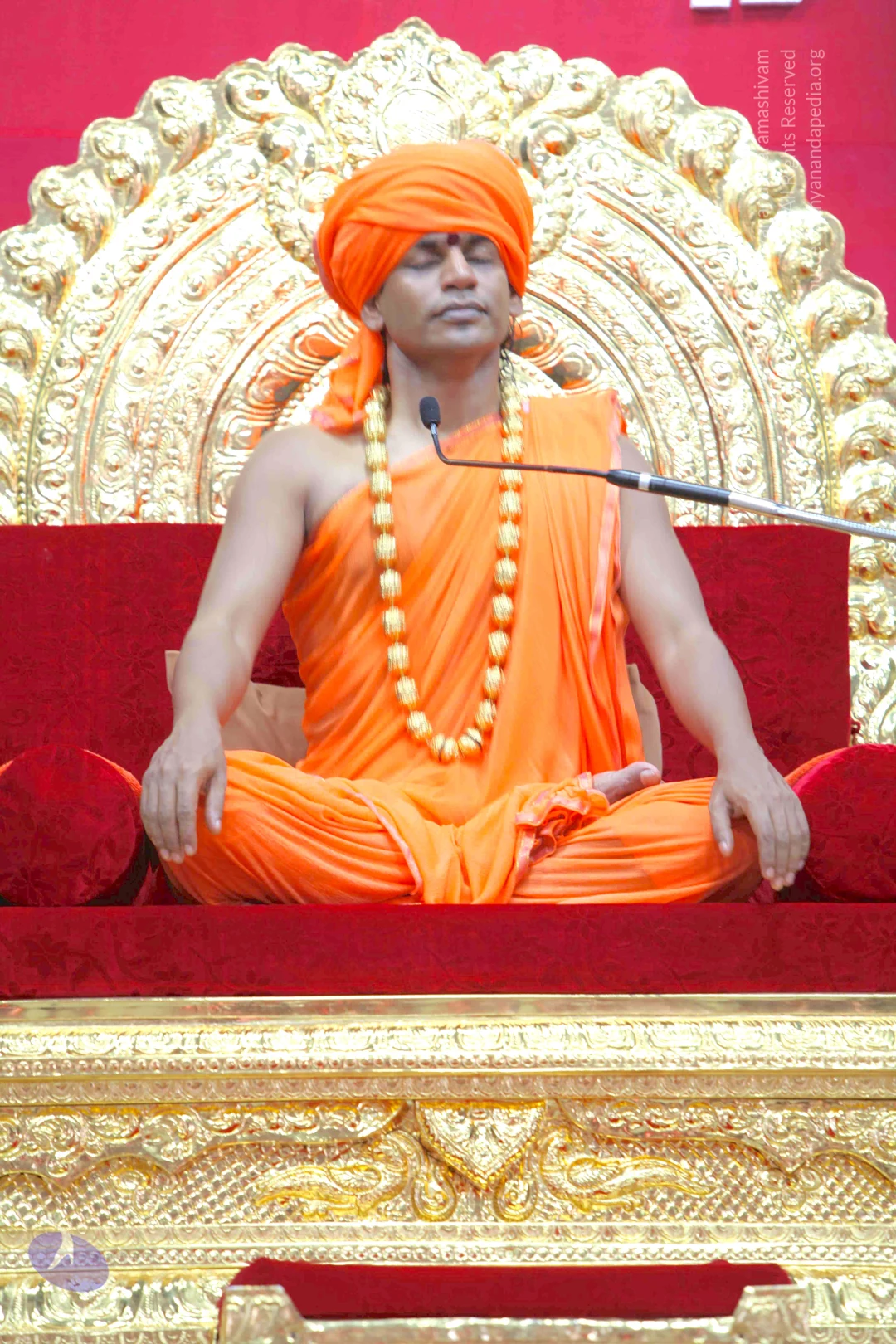
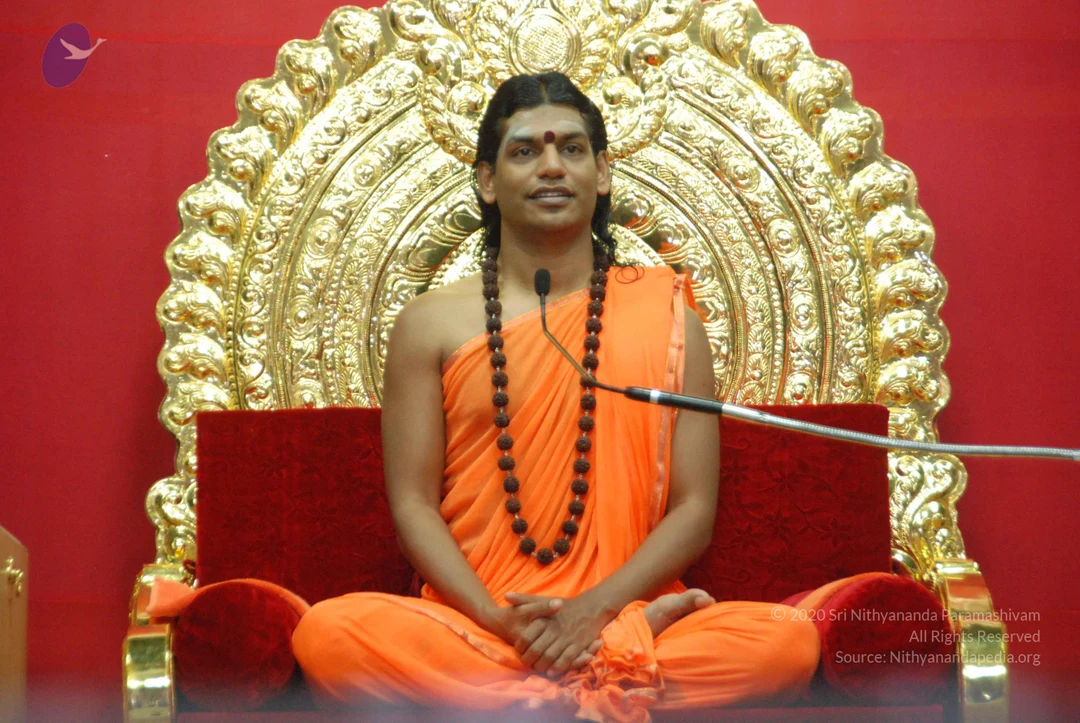
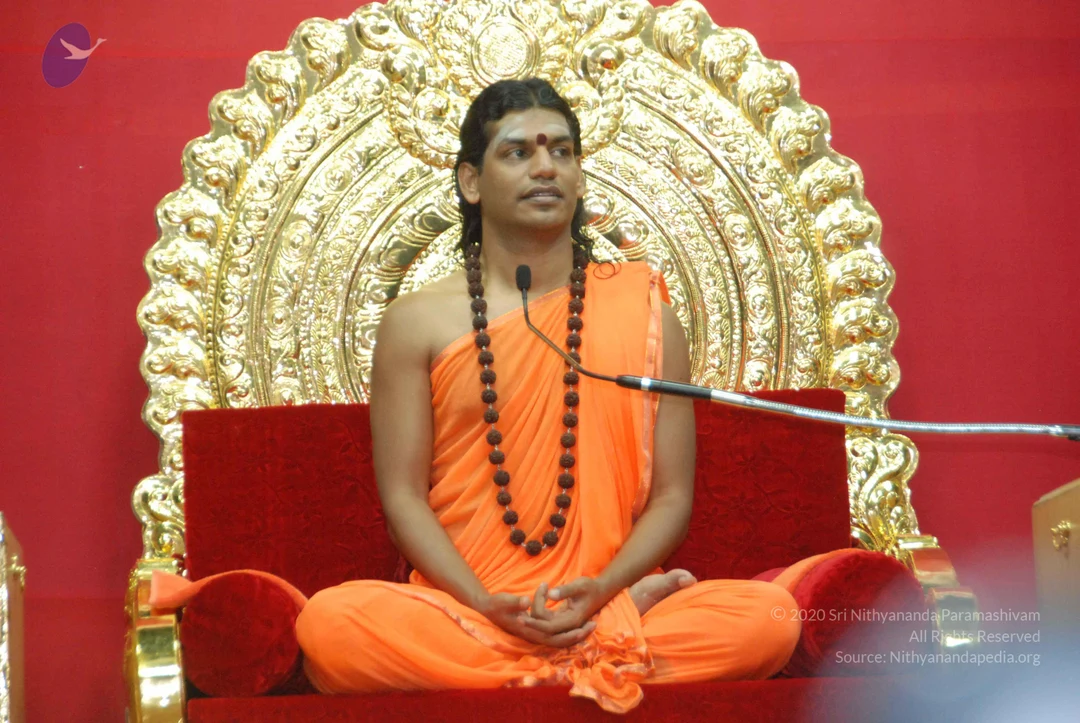
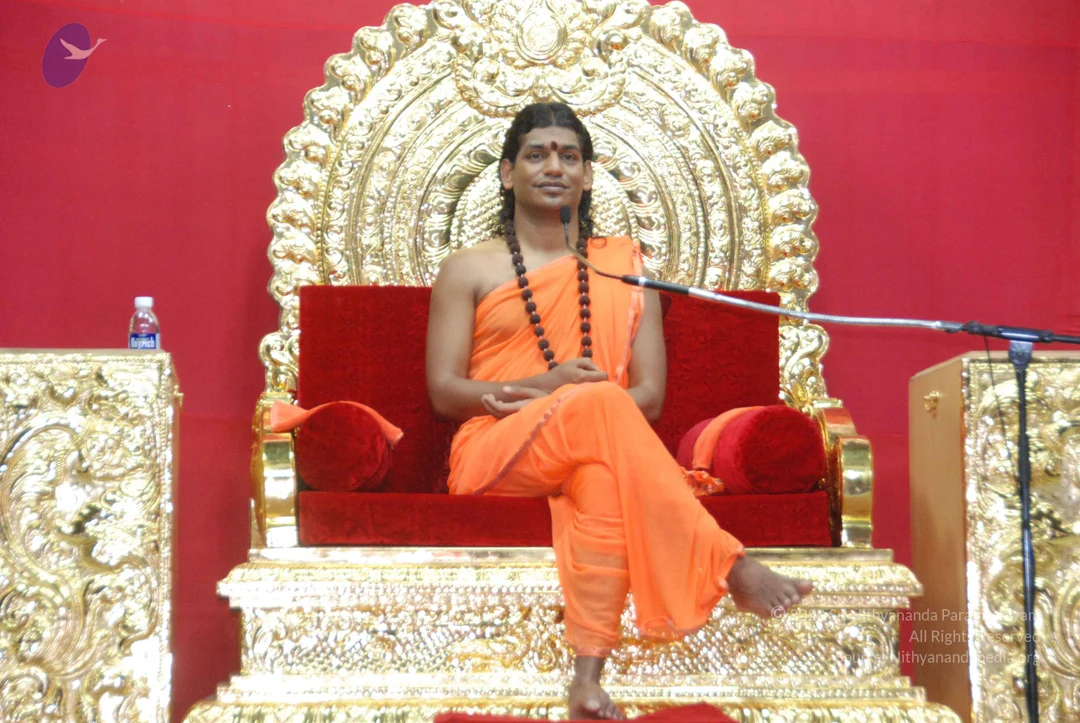
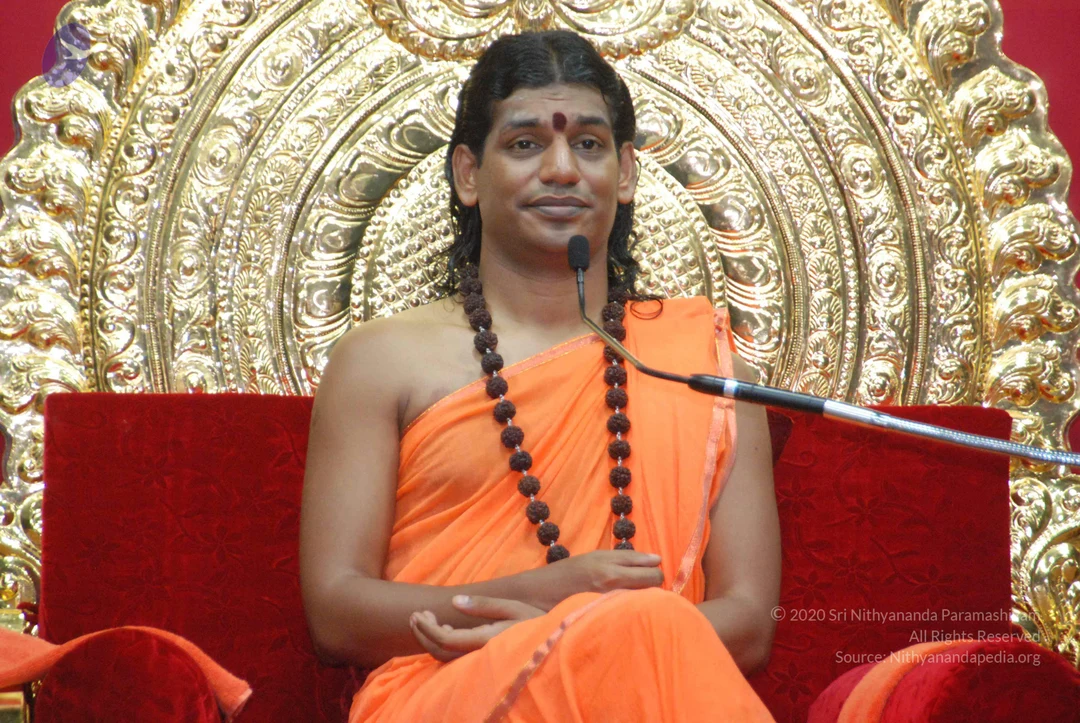
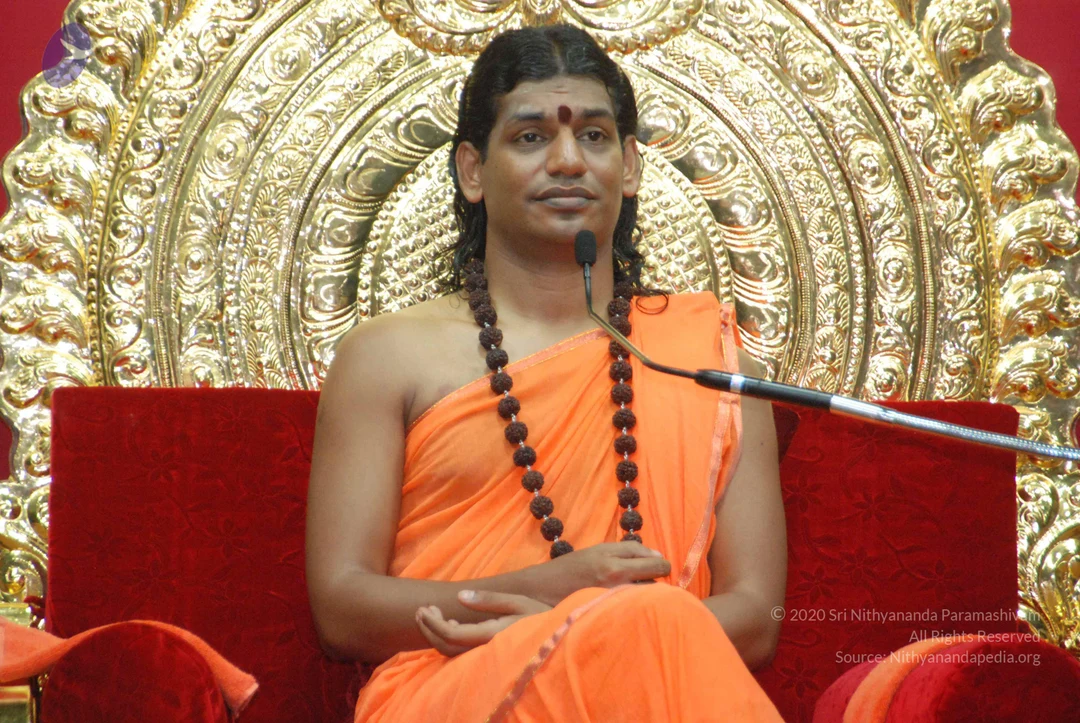
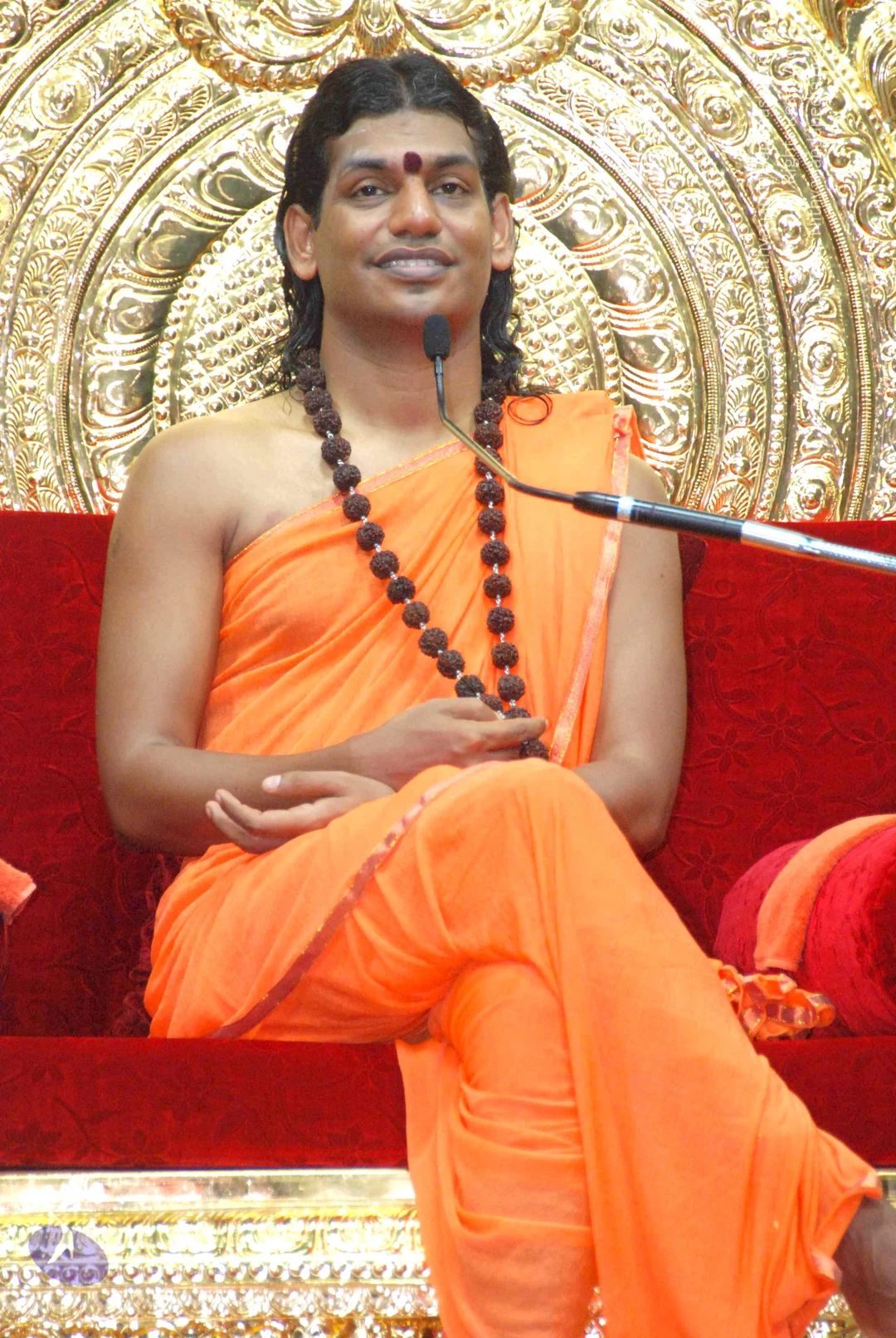
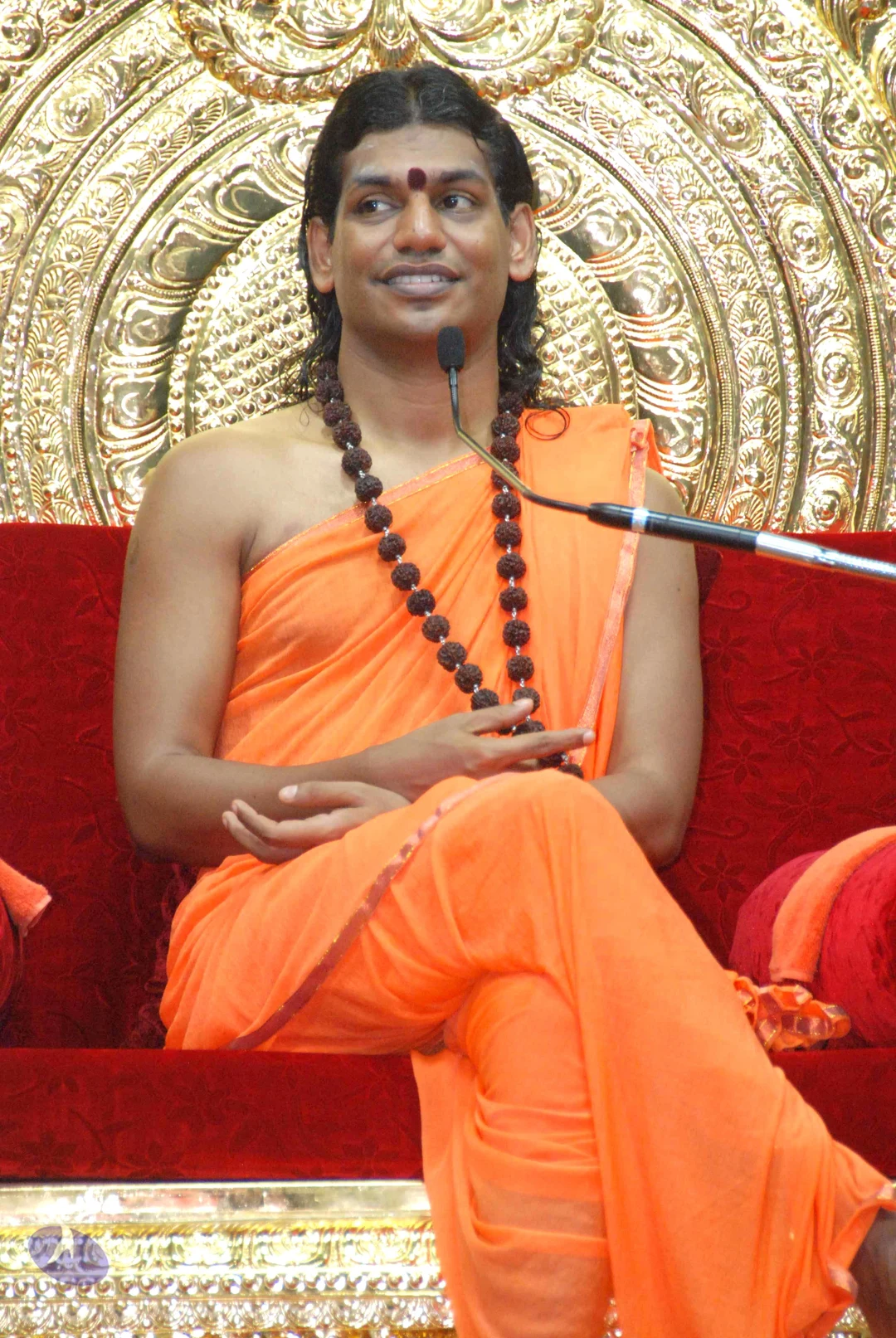
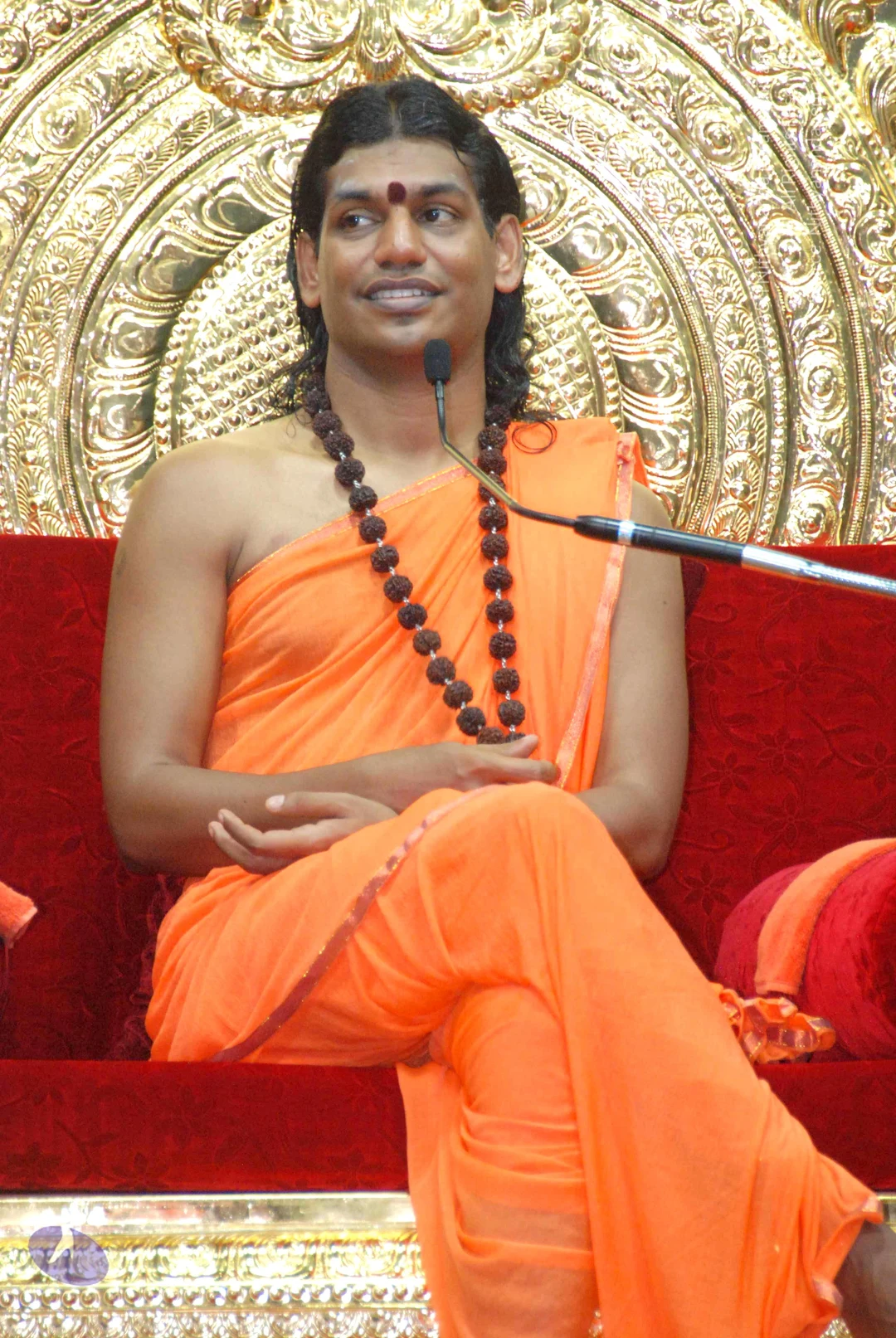
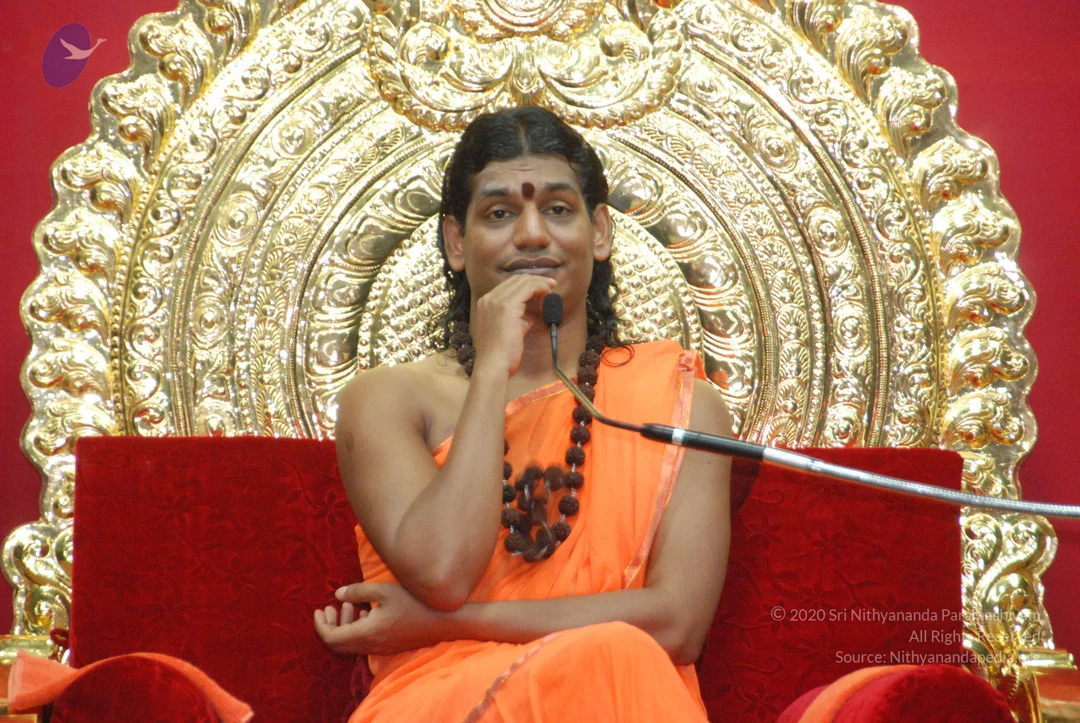
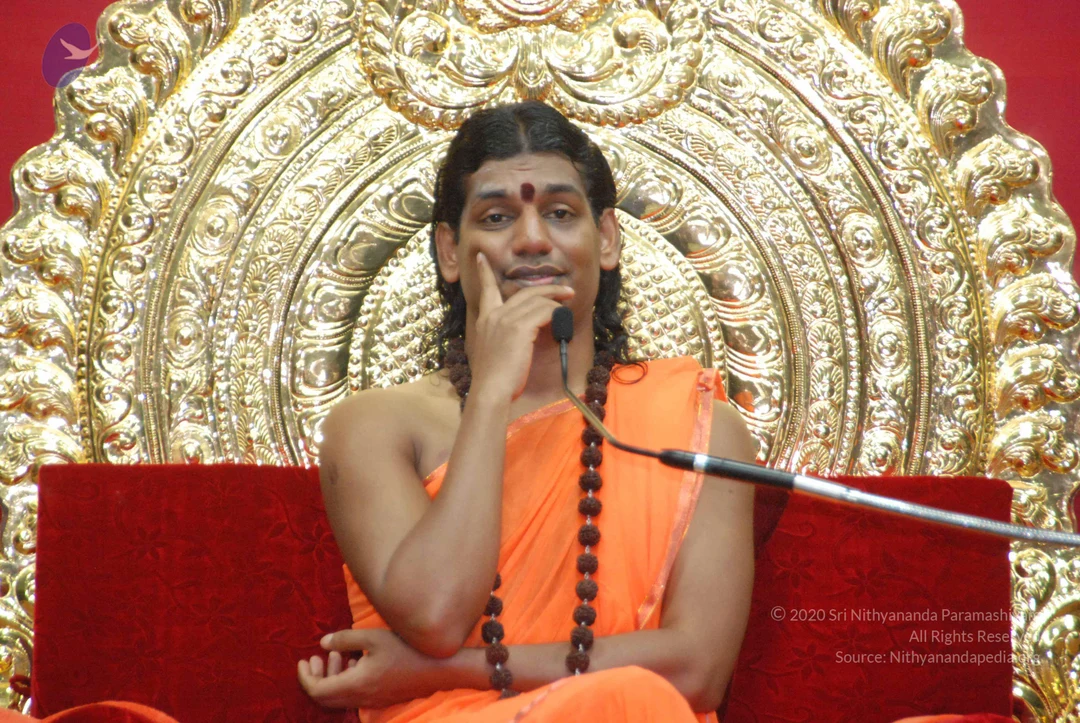
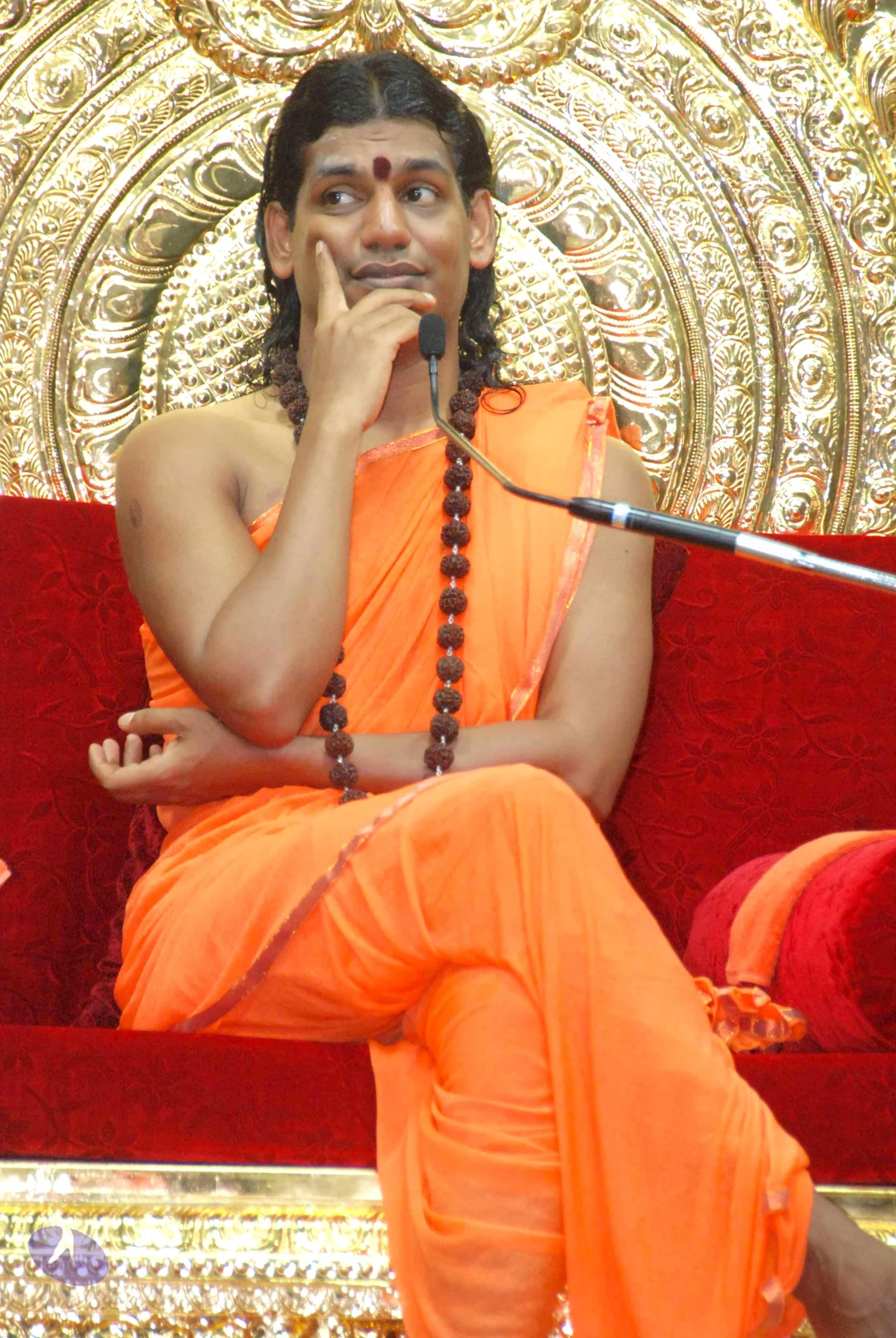
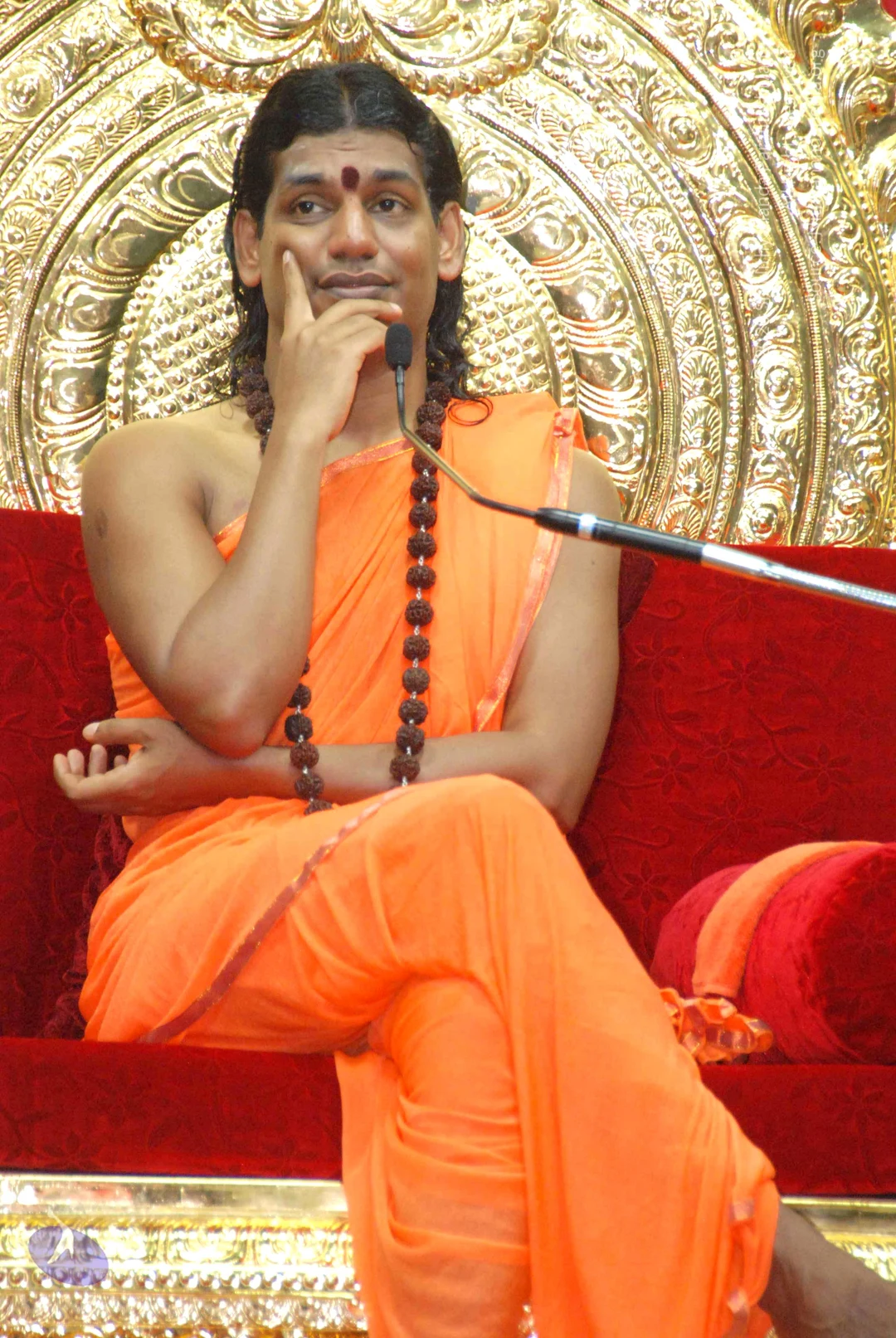
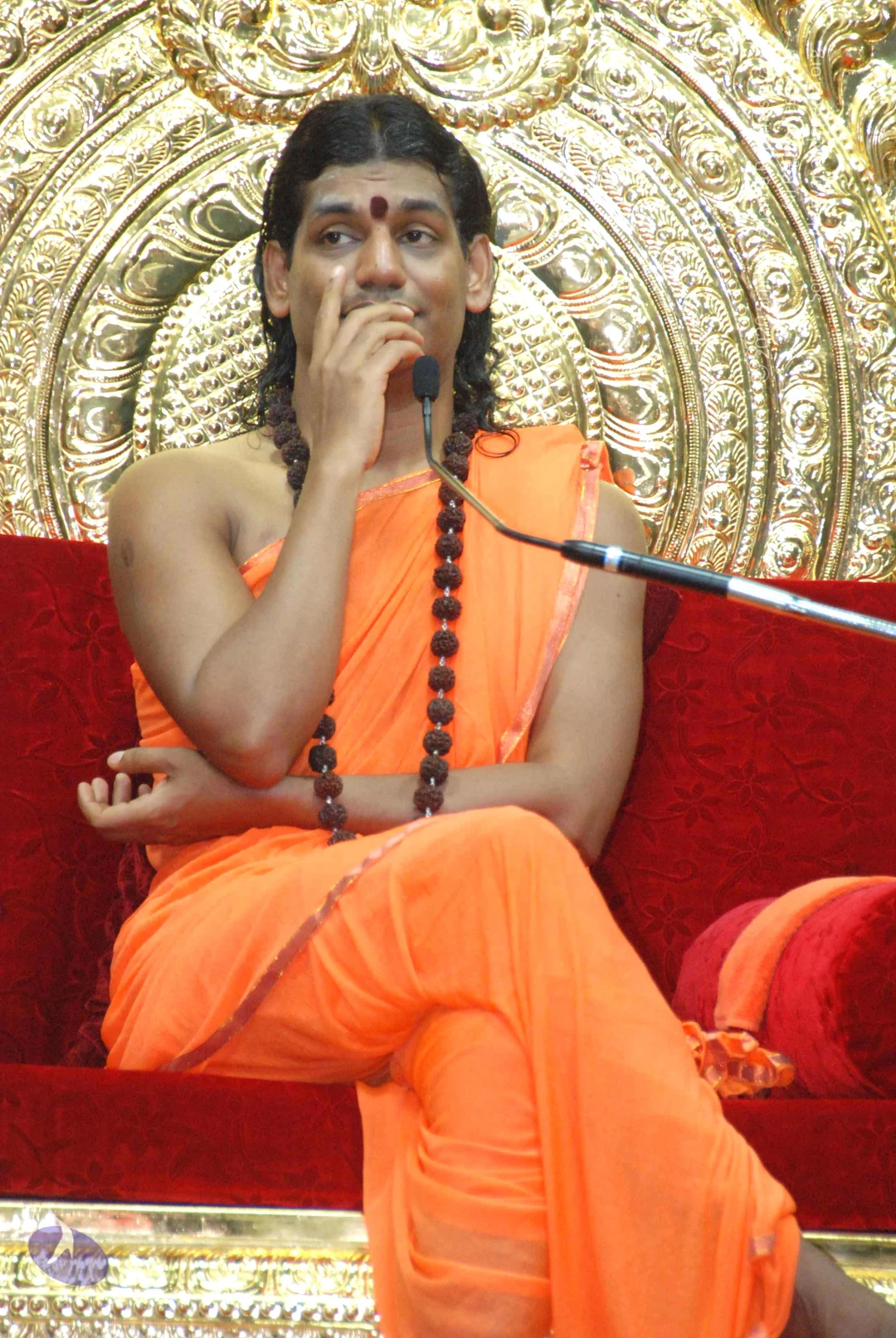
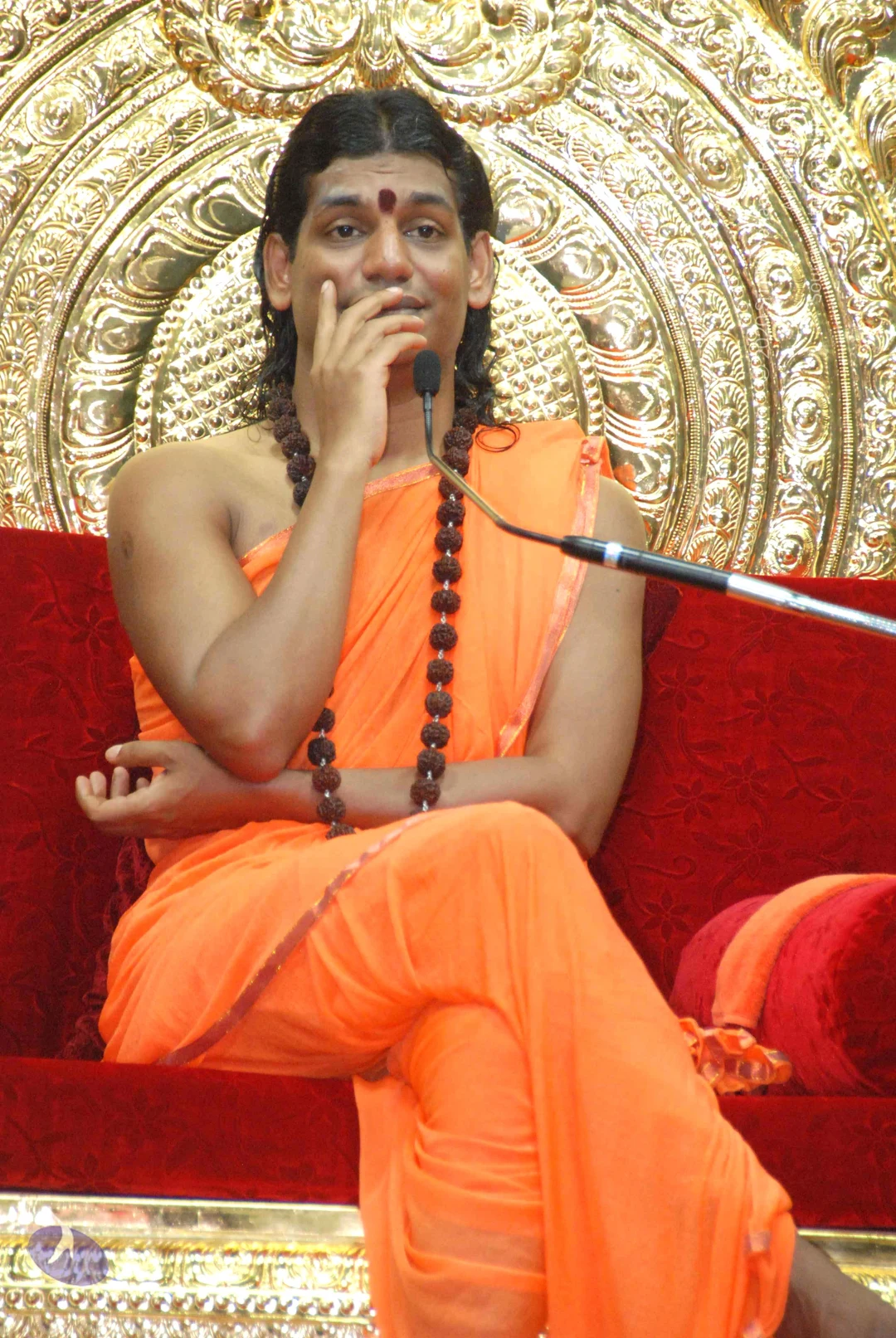
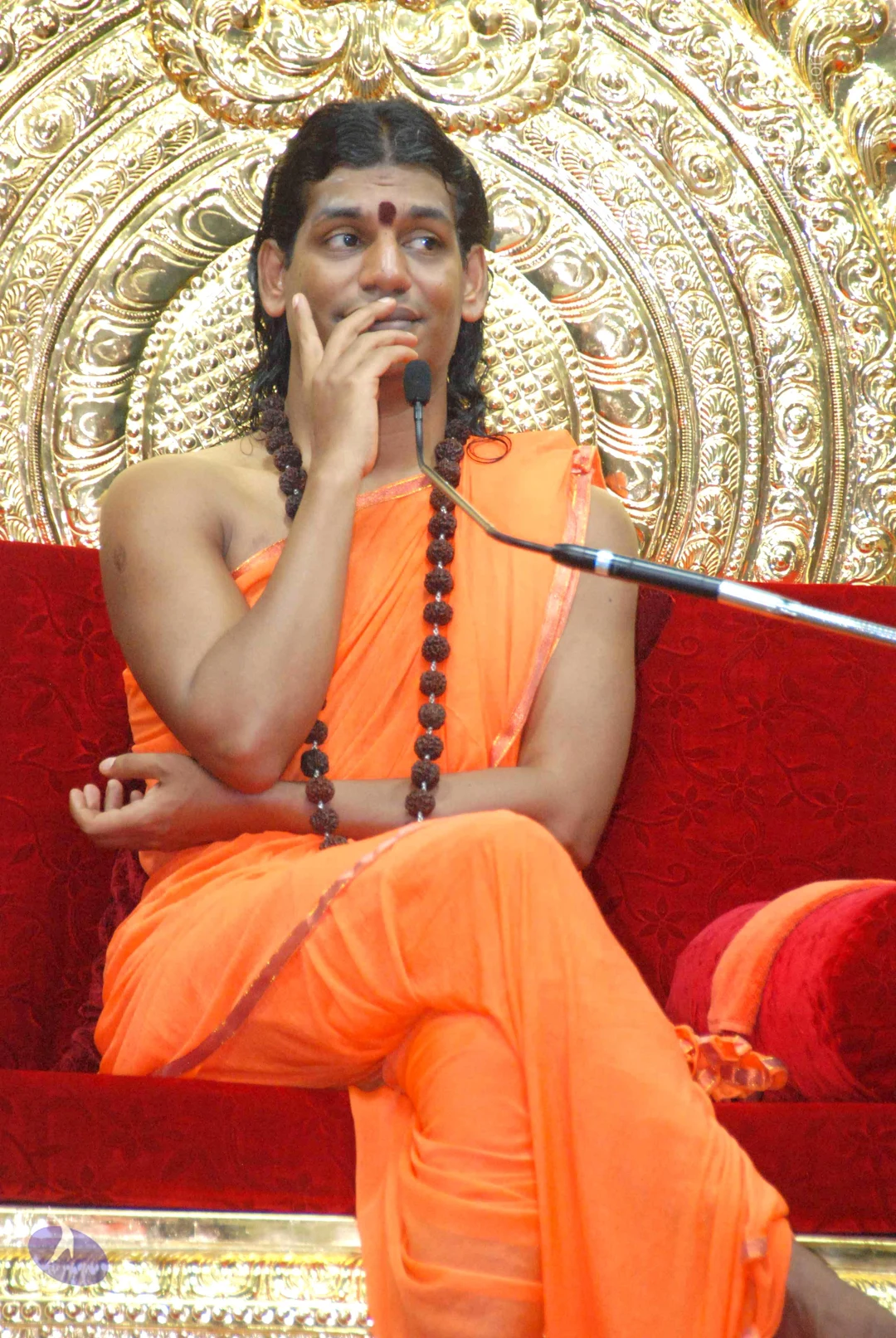
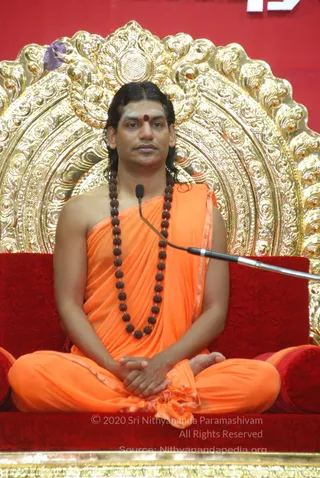
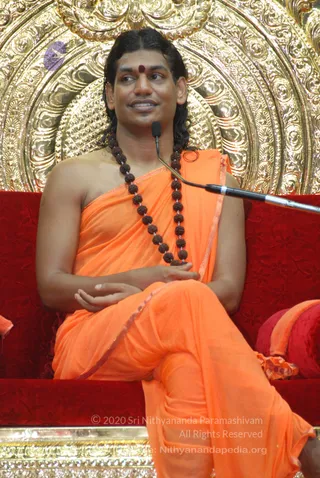
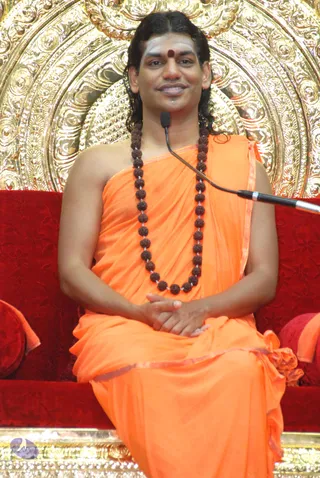
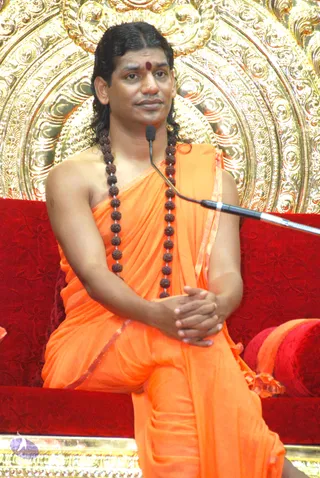
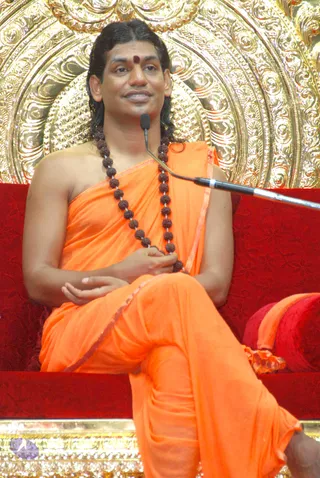
A man with long dark hair sits cross-legged on a red velvet seat in front of an ornate gold throne back. He wears an orange saffron wrap over his shoulder and bare chest, orange lower garments, and a long rudraksha mala. A red bindi and white markings are on his forehead, and his hands rest together in his lap. A microphone on a stand is beside him. Probable Swamiji is seated on the gold peetha throne, identified by long swept-back hair, saffron wrap, and rudraksha mala.A man with long dark hair and a red bindi sits on a red velvet throne with an ornate gold backrest, speaking into a microphone on a boom stand. He wears an orange saffron robe draped over one shoulder, a long rudraksha mala around his neck, and has one leg crossed with bare feet visible. A gold-patterned dais sits below the throne. Swamiji (probable): the long swept-back hair, saffron robe, rudraksha mala and enthronement on a gold throne match the page's description of the speaker.A man with long swept-back dark hair and a red bindi sits on a red velvet throne cushioned with a gold ornate backdrop. He wears an orange saffron shawl over the shoulder and orange cloth wrapped around the lower body, with a long rudraksha mala around his neck, hands resting in his lap, and a microphone on a stand beside him. Swamiji (probable): the long swept-back hair, saffron clothing and rudraksha mala are the qualifying cues, and he is seated on a throne-like seat delivering a talk. One person is visible.A man with long swept-back dark hair sits on an ornate gold-carved throne against a red backdrop, facing left toward a microphone on a stand at right. He wears an orange saffron wrap draped over one shoulder, a strand of rudraksha beads across his chest, and a red tilak on his forehead. His hands rest clasped in his lap.Swamiji (probable) seated on an ornate gold throne with red cushions, wearing an orange saffron cloth draped over one shoulder and a long rudraksha mala across the chest. He has long swept-back dark hair, a red tilak on the forehead, and his hands rest together in his lap. A microphone stands on a stand at right in front of a red and dark blue backdrop, indicating a satsang discourse.A man with long swept-back dark hair sits cross-legged on a red velvet cushioned seat in front of an ornate gold repoussé backdrop, speaking into a microphone on a gooseneck stand. He wears an orange saffron wrap over his shoulder and a long strand of dark rudraksha beads, with a red bindi on his forehead. His hands rest in his lap in a relaxed gesture, and he looks off to the side while smiling as if mid-discourse. A small red cushion and orange fabric are visible on the seat beside him. The appearance-based cues of long hair, saffron clothing and rudraksha beads match the Swamiji (probable) label at a satsang-style public talk, though the photo carries no printed name.

nithyananda-bidadi

11 photosSource gallery
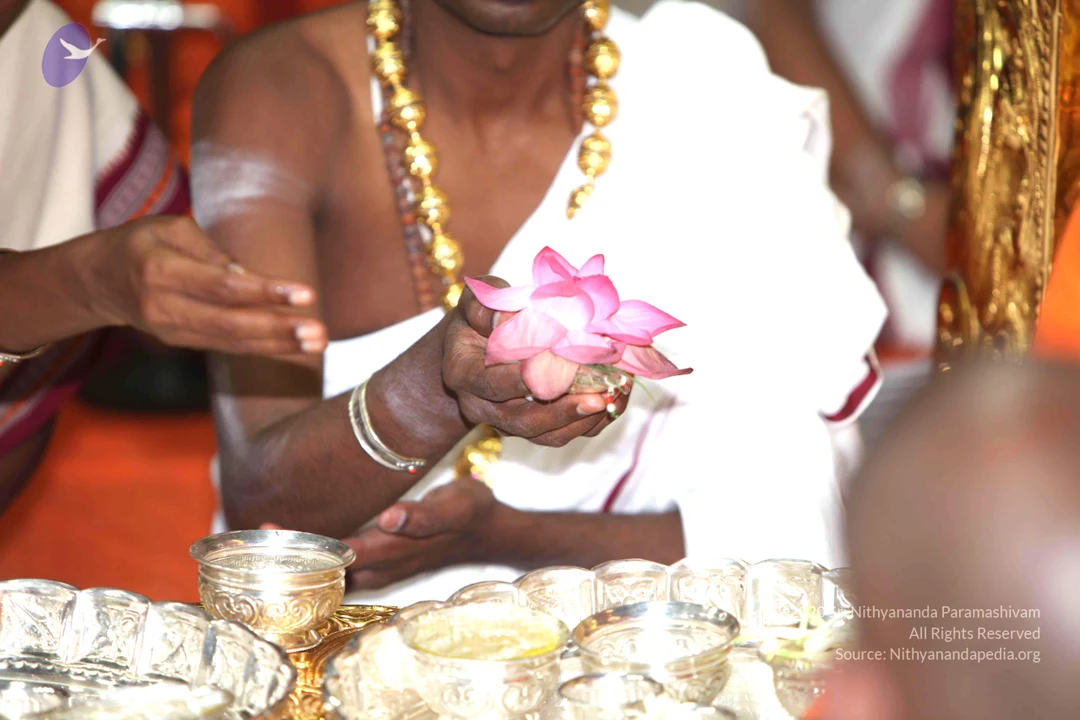
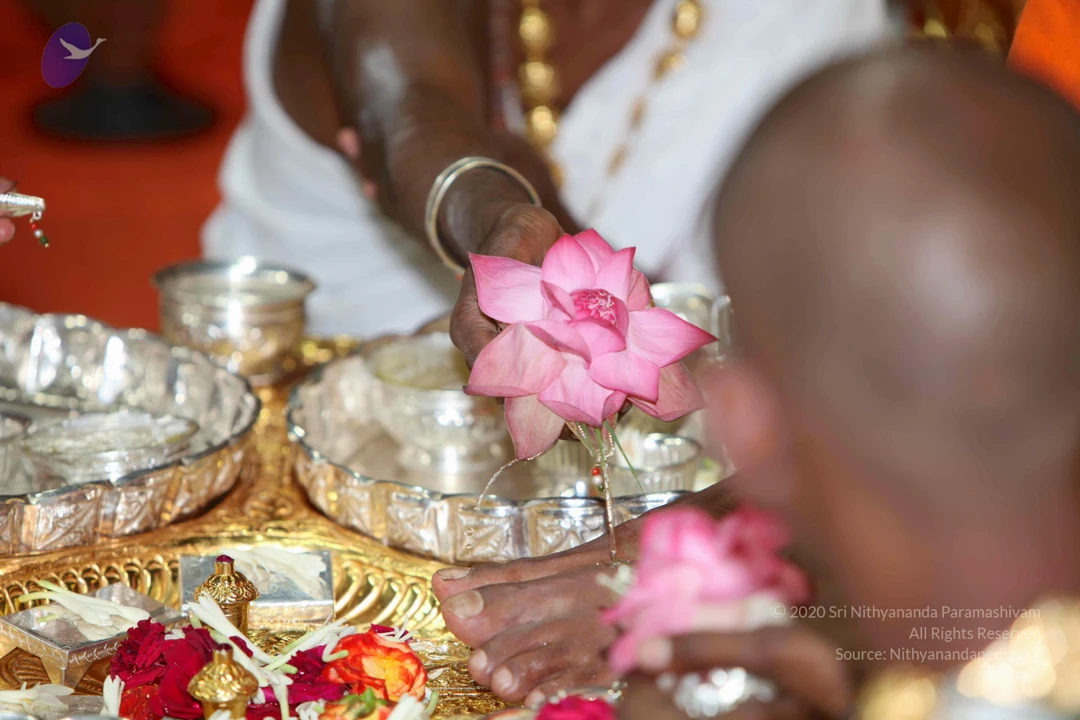
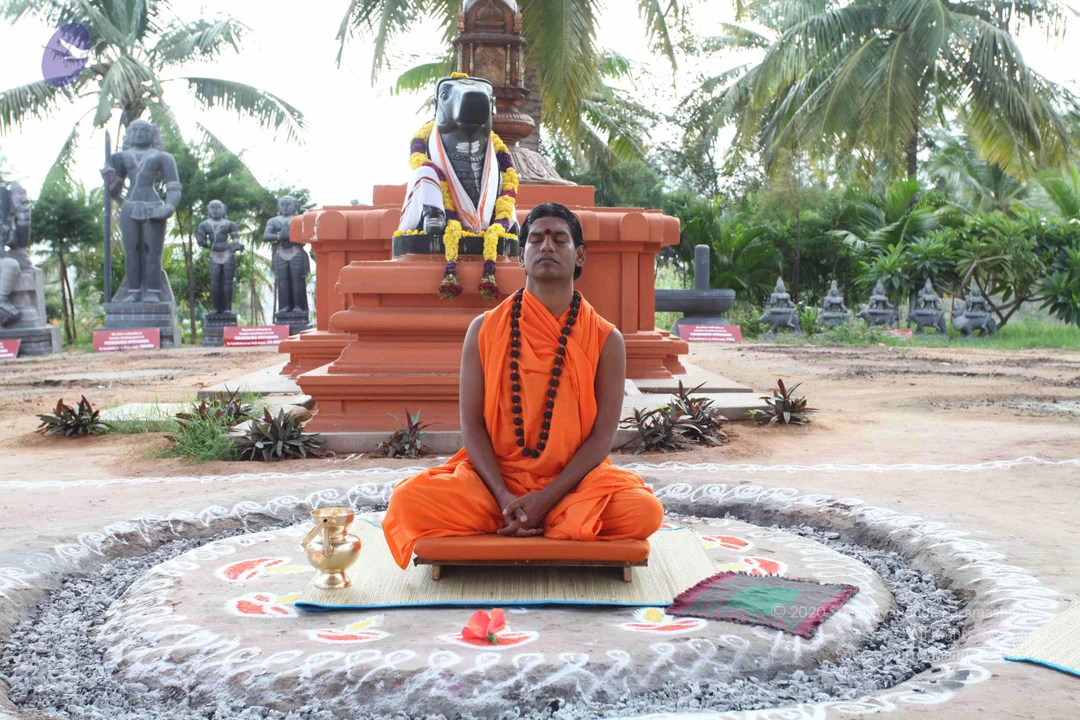
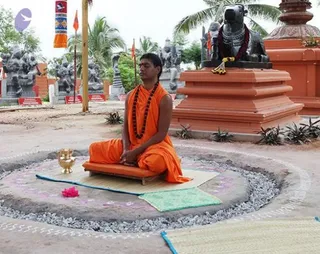
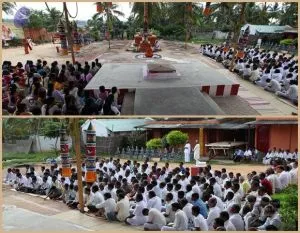
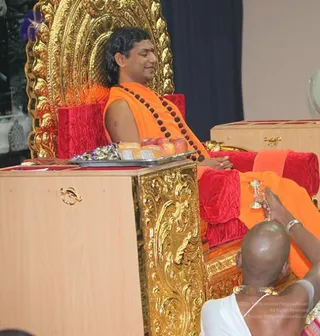
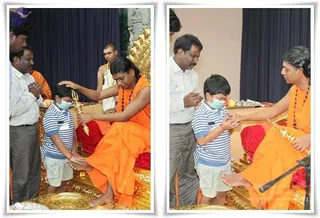
A man in saffron-orange robes sits cross-legged on a low wooden seat with eyes closed and hands folded in his lap, in an outdoor temple courtyard. He has shoulder-length dark hair and wears a rudraksha mala around his neck. Before him is a pink flower, a brass kalasha-style pot, and a mat on paved ground. Behind him stands a large black stone Nandi bull with garlands, beside orange-painted shrine pillars and grey carved stone figures. Palm trees and a saffron flag are visible. Appearance is consistent with a person figure in a meditation or satsang setting; the presence of a rudraksha mala and saffron clothing are the qualifying cues.A two-panel collage of outdoor satsang gatherings at an ashram courtyard. The upper panel shows a large crowd of people seated on the ground facing a raised stone platform with a central structure, with a tall decorated pole at left and palm trees beyond. The lower panel shows a white-clad person standing at the front of a seated group, with many people in white clothing sitting on the ground in rows under open sky, a covered pavilion and orange-roofed building behind. Crowd counts are not stated since many people are partially visible across both panels.A seated man in an ornate golden throne with red cushions wears saffron-orange robes and a long rudraksha mala across his chest, with a red-and-white tilak on his forehead, smiling with eyes closed. He sits behind a wooden side table carved with gold filigree. On a silver tray before him are apples, oranges and flowers. In the foreground at lower right, a shaved-headed man in white clothing and a gold necklace holds up a small silver vessel toward him, as in an offering or puja. A grey curtain and a decorative red-and-gold chair are visible behind. Swamiji (probable): the seated figure has long swept-back hair, saffron robes, a rudraksha mala and a throne, which are compatible cues, so this is an in-person appearance-based candidate.A two-panel graphic collage. The left panel shows close-up of hands in white sleeves holding pink lotus flowers over a golden ritual vessel with red flowers. The right panel shows a large group of men in white robes and saffron-orange robes seated in rows at a ceremony with lit oil lamps and decorative flowers in the foreground. The panels depict ritual activity; no physical people are counted in this graphic.A large indoor hall filled with hundreds of seated devotees dressed predominantly in white, sitting on the floor on red and orange mats in rows facing a raised dais at the far right. A white fabric canopy stretches across the ceiling, hung with tall cylindrical banners in red, blue, yellow and green panels. In the front rows on the left, several monastics in saffron and orange robes sit cross-legged before small offering plates and lamps, with a seated figure in a red and gold garment near the dais. Overhead ceiling fans and a few cameras or lights are visible, and a ritual setup with flowers and brass vessels sits on the floor in front of the crowd.A two-panel collage of photographs showing a ceremonial initiation scene. On the left, a shaved-headed figure in saffron-orange robes sits on a red-cushioned gilded throne, holding a ceremonial gold-handled object above a young boy in a blue-and-white striped shirt and white shorts who wears a face mask and kneels before him. A man in a white shirt stands with hands folded at left, and another orange-robed attendant stands behind. On the right, the same boy kneels with hands joined while the orange-robed figure, wearing rudraksha beads, holds a gold ritual implement near him, and a man in a white shirt stands nearby with hands folded. Gold-trimmed throne, fabrics and an abhishekam-style ritual setting are visible.

01--Pada-Puja
90 photosSource gallery
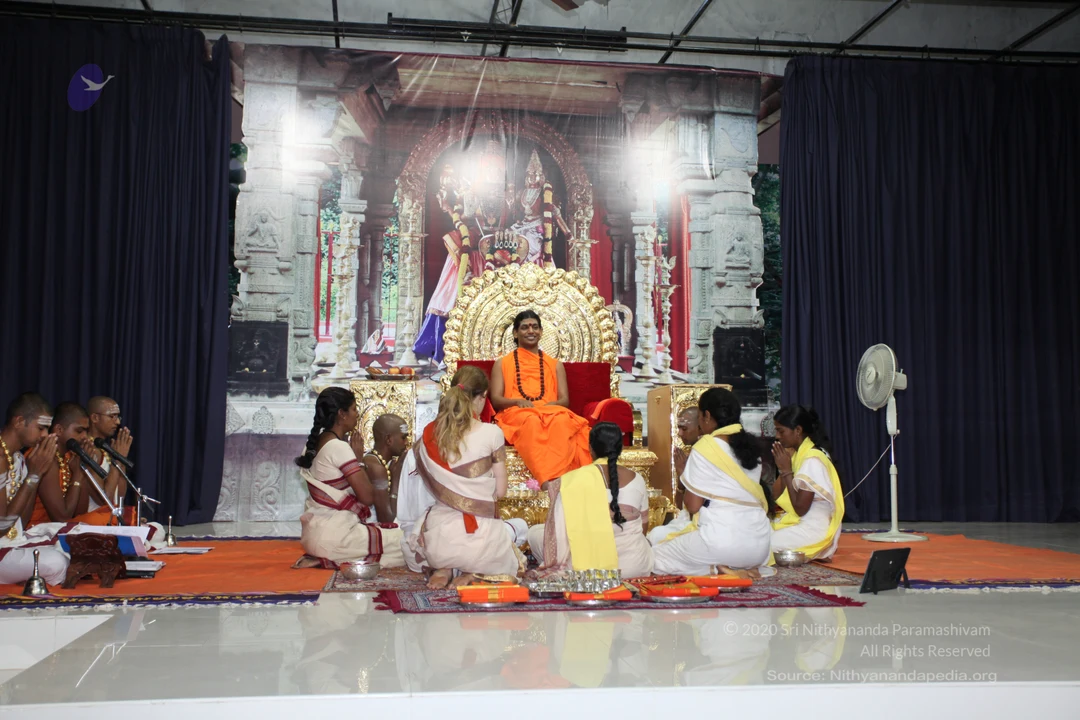
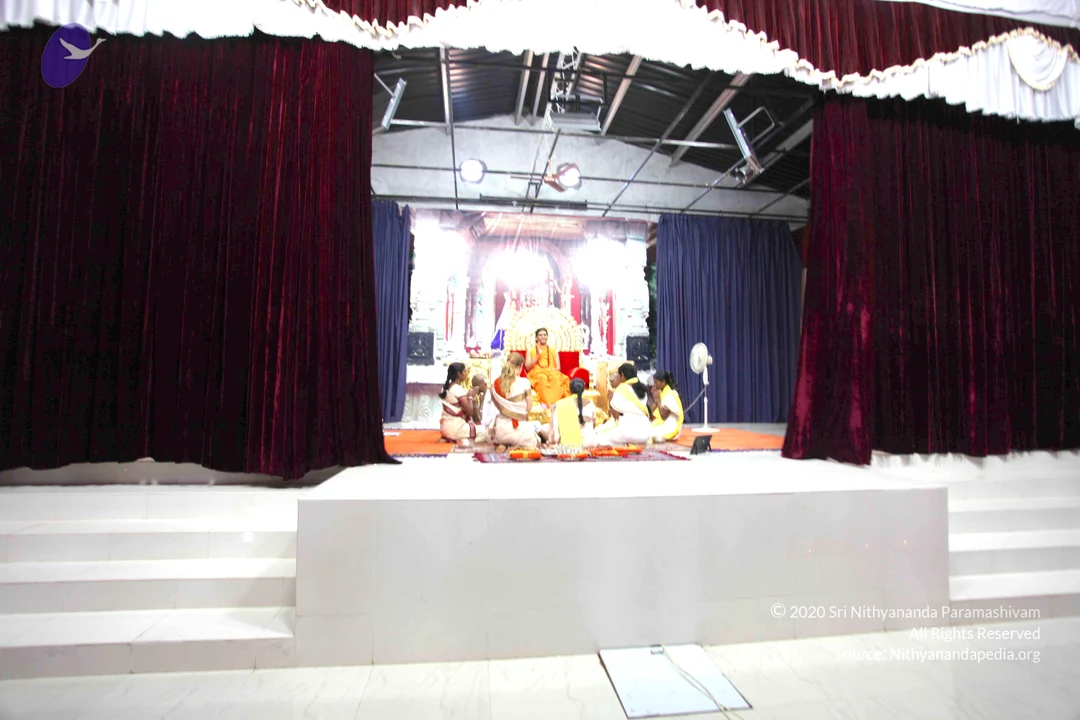
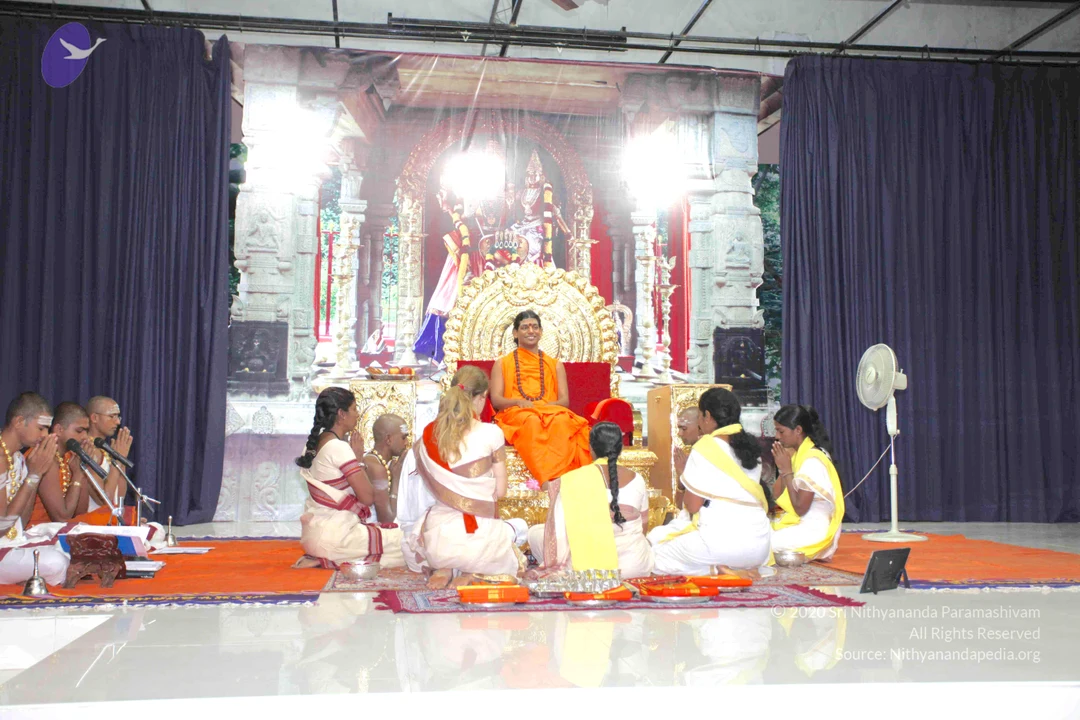
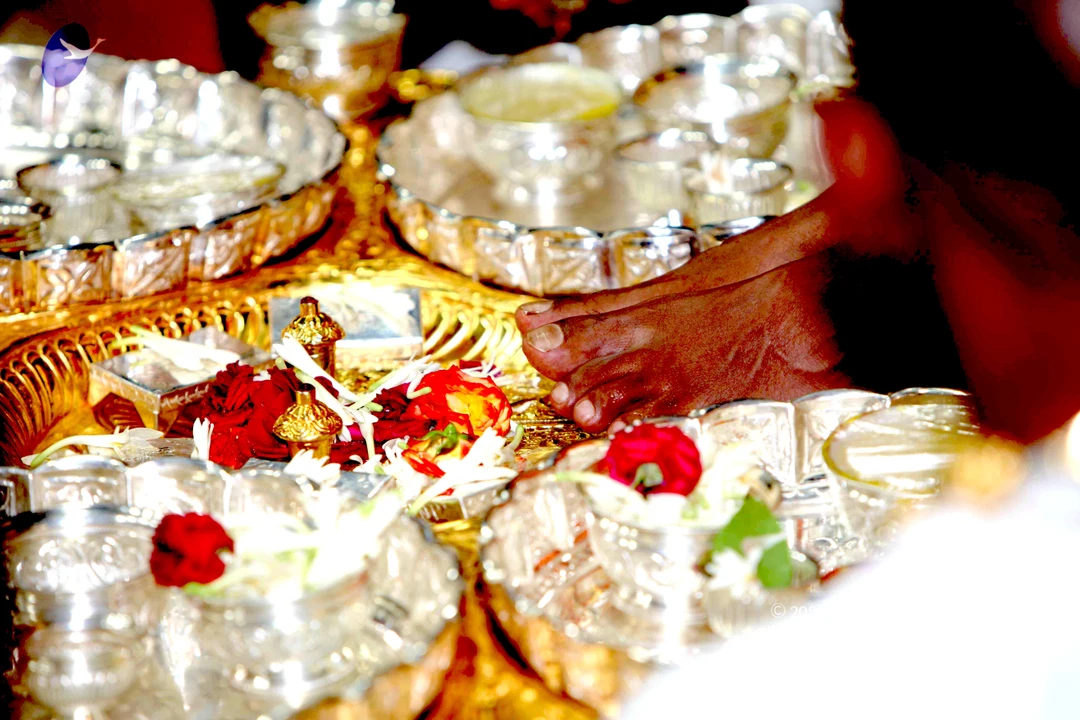
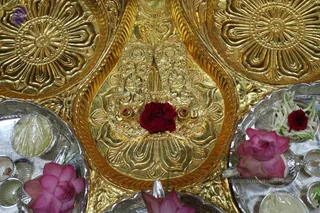
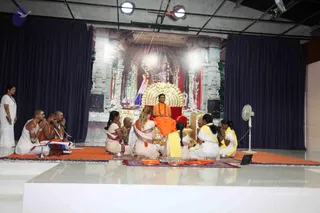
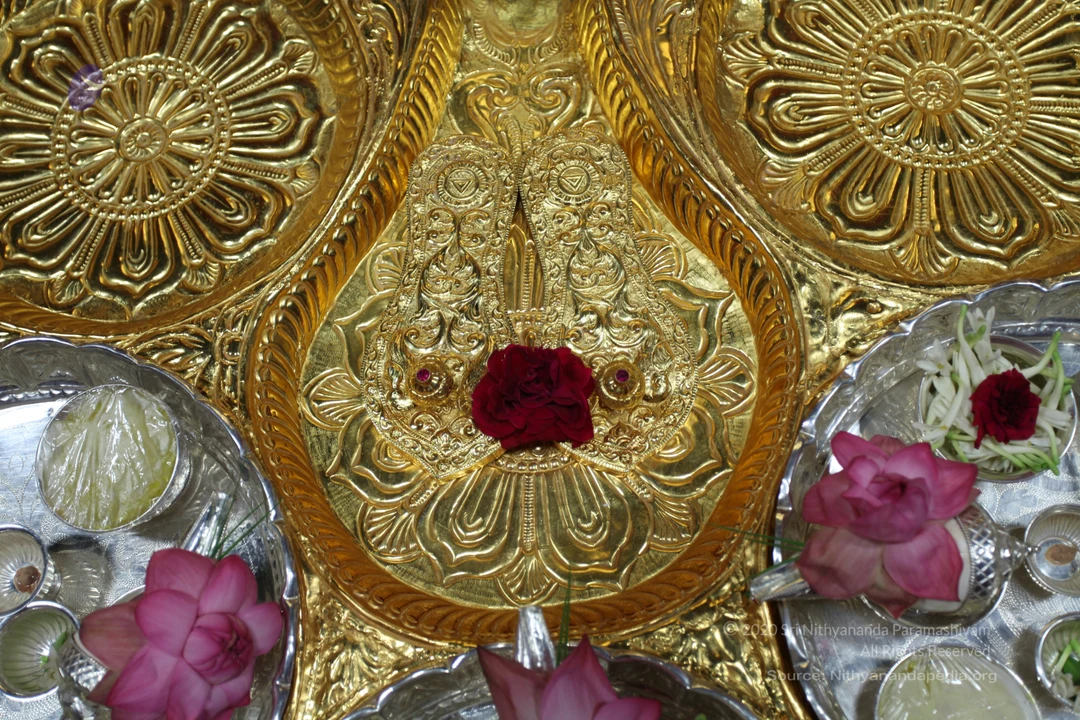
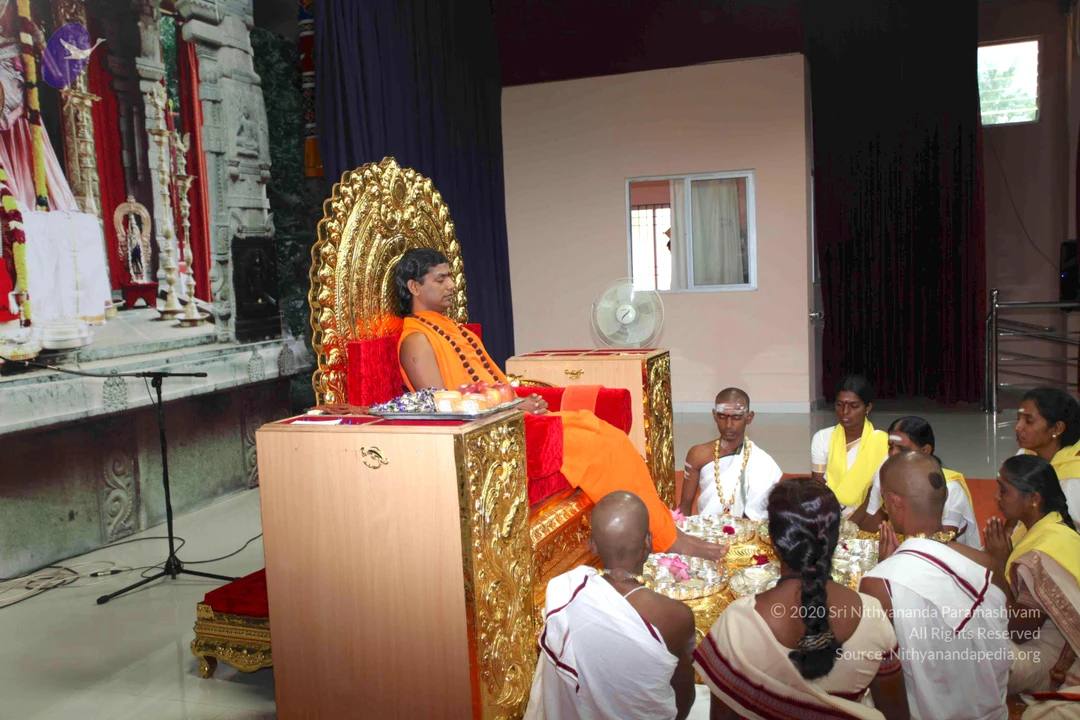
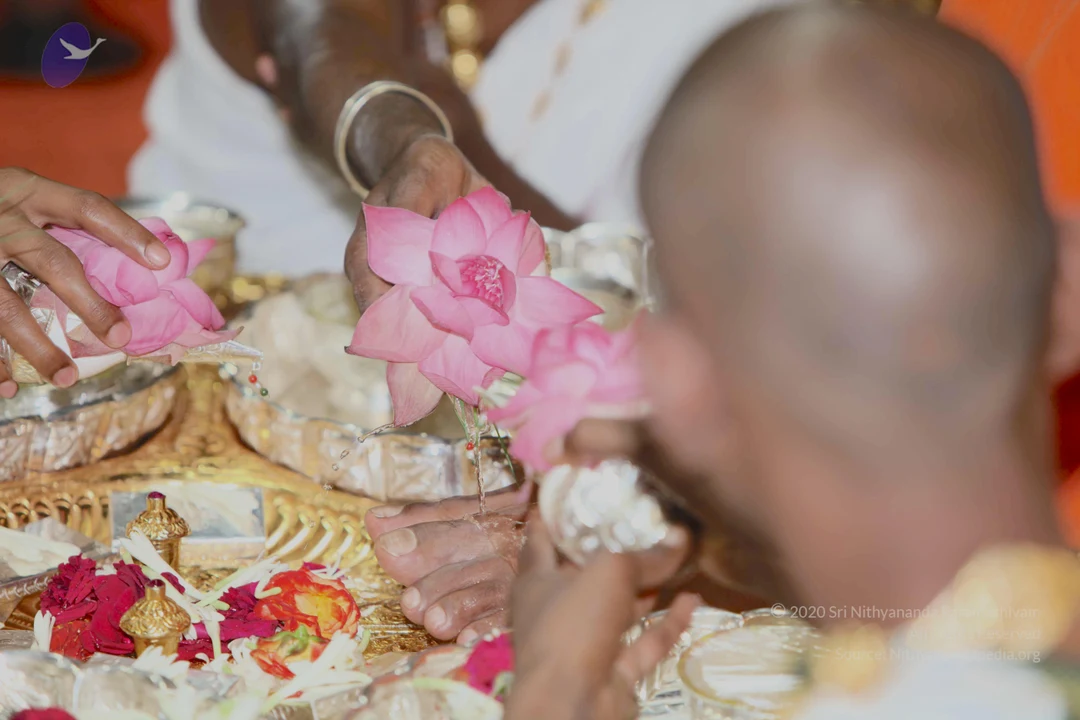
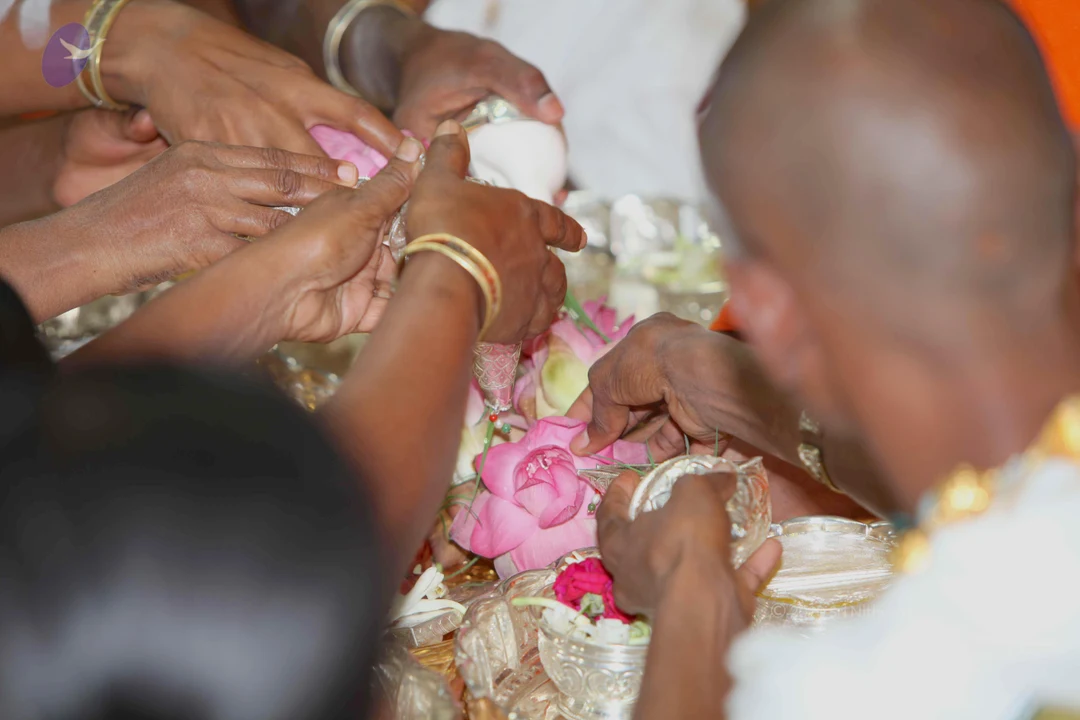
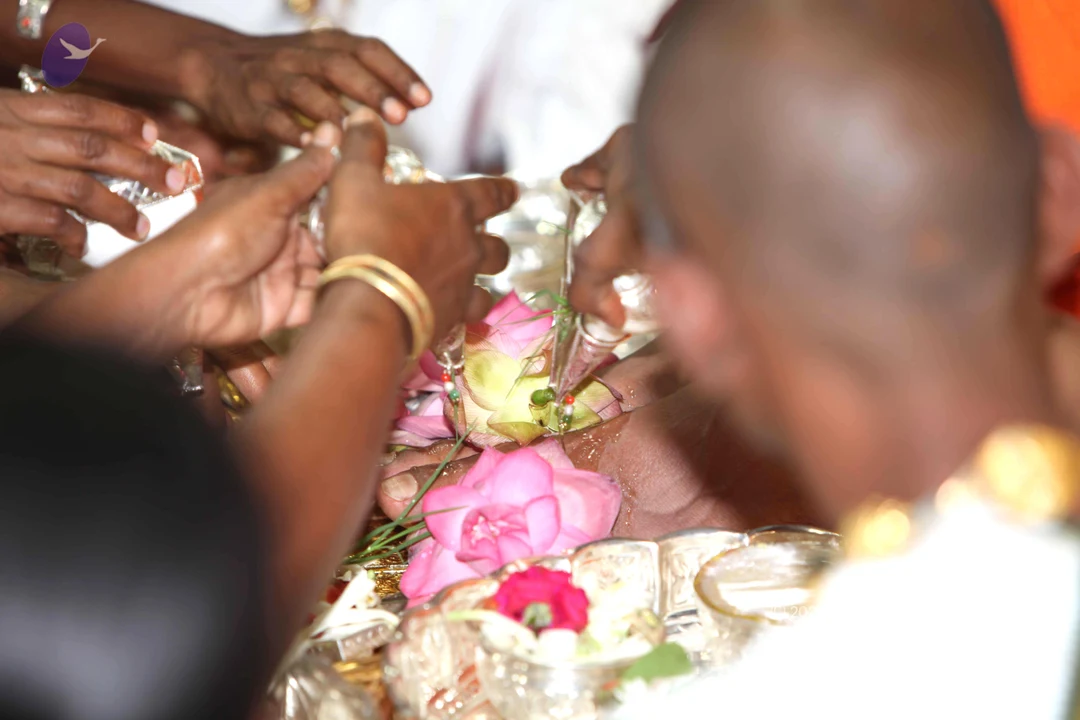
Close-up of an ornate gold-embossed altar or peetha surface with a central repoussé design of a lotus-petalled motif with two stylised eyes and a red flower placed at its centre. Silver puja trays surround the centre, holding pink lotus flowers, a small red flower on white petals, and small brass or silver bowls with offerings. Pink lotus blossoms lie along the lower edge. No people are visible; the scene shows only ritual objects and decorative metalwork in a temple setting.A wide photo of a stage set with dark maroon velvet curtains framing the sides and a white valance across the top. On the orange-carpeted platform, a figure in saffron-orange robes sits on a red-cushioned throne-like seat under a decorated backdrop with lit lamps. Several people in white and yellow clothing sit cross-legged on the floor in front of the throne, facing it, with small offerings or flowers placed on a mat before them. A white floor fan stands at the right edge of the stage. The scene reads as a satsang or discourse setting.A seated figure in an orange robe and rudraksha mala sits on a red-cushioned golden throne on a raised stage, with a large backdrop of a temple gopuram and a deity murti. a person is seated centrally, wearing orange saffron clothing and a rudraksha mala. Around him on the floor, a group of devotees in white and yellow garments sit in a semicircle, several with palms joined in namaskar. Ritual items such as brass bowls, a bell and a lamp are arranged on orange and red mats in front, and a fan stands at the right edge.A seated figure in orange robes and a rudraksha mala sits on a red and gold ornate throne on a raised stage, backed by a large printed temple backdrop with carved pillars and a deity murti. Before him, several people sit on orange and red mats in white and yellow traditional clothing, some with their hands folded in prayer, others with cymbals and small brass vessels in front of them. A floor setup with orange offerings and oil lamps lies in the foreground. A woman in white stands at the left edge beside navy curtains, and a standing fan sits at right. The setting appears to be a satsang or puja gathering.A stage set with a backdrop painting of a temple gopuram and deity murti framed by dark blue curtains. A seated man in an orange robe with an orange-red beaded mala sits on a red-cushioned golden throne, a person candidate by saffron clothing, mala and centred seated position; the page links him to the event. In front of the stage, a group sits on orange and red mats: several shaven-headed priests in white dhotis with orange shawls and gold chains chant from texts at a microphone, a woman in white stands at a microphone reading, and women in white, red-bordered and yellow saris sit with hands joined. Brass puja vessels and a small kalasha-like item sit on a rug before them. An electric fan stands at the right edge of the stage.A photograph of a padapuja-style ceremony on a stage. A man in orange robes and a rudraksha mala sits on a large gold ornate throne with red cushions, hands joined in front of his chest. Behind him is a large backdrop printed with a temple gopuram-style stone arch and a deity murti. Seated on the floor in front are several women in white and yellow saris and a woman in a white sari with a red border, some with hands folded in namaste, with brass puja plates, flowers and oil lamps arranged on a red carpet. A standing woman in white stands at the left, and two men in orange sit with microphones at the left edge. A standing fan stands at the right, and a laptop is visible at the right on the floor.
02--Temple
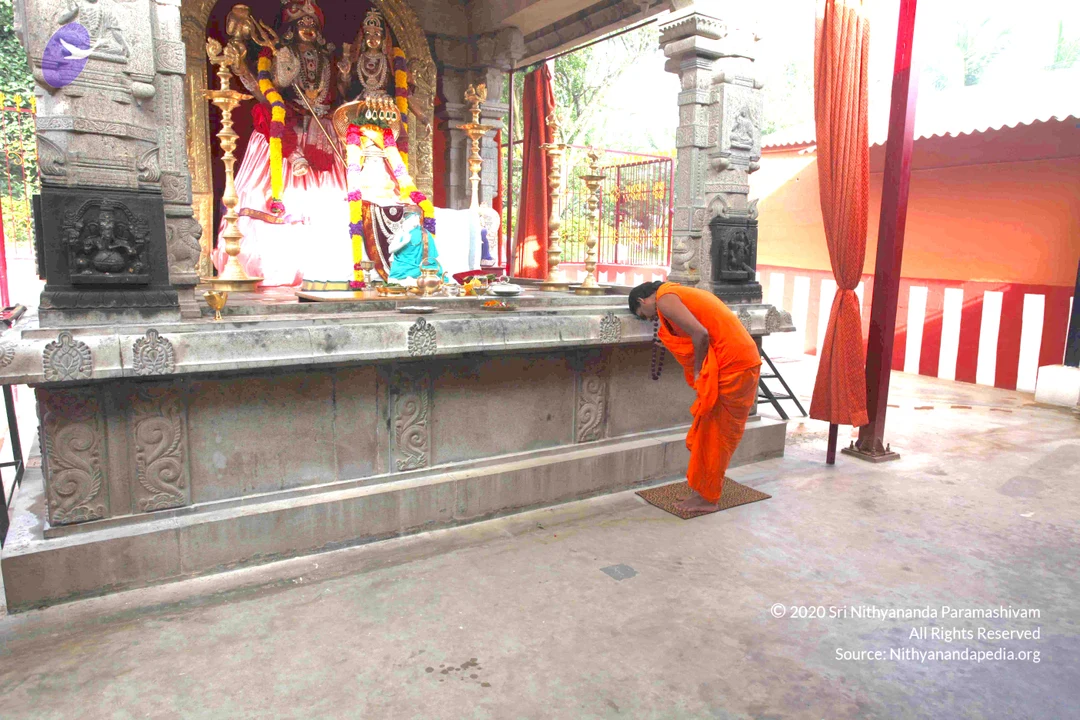
7 photosSource gallery
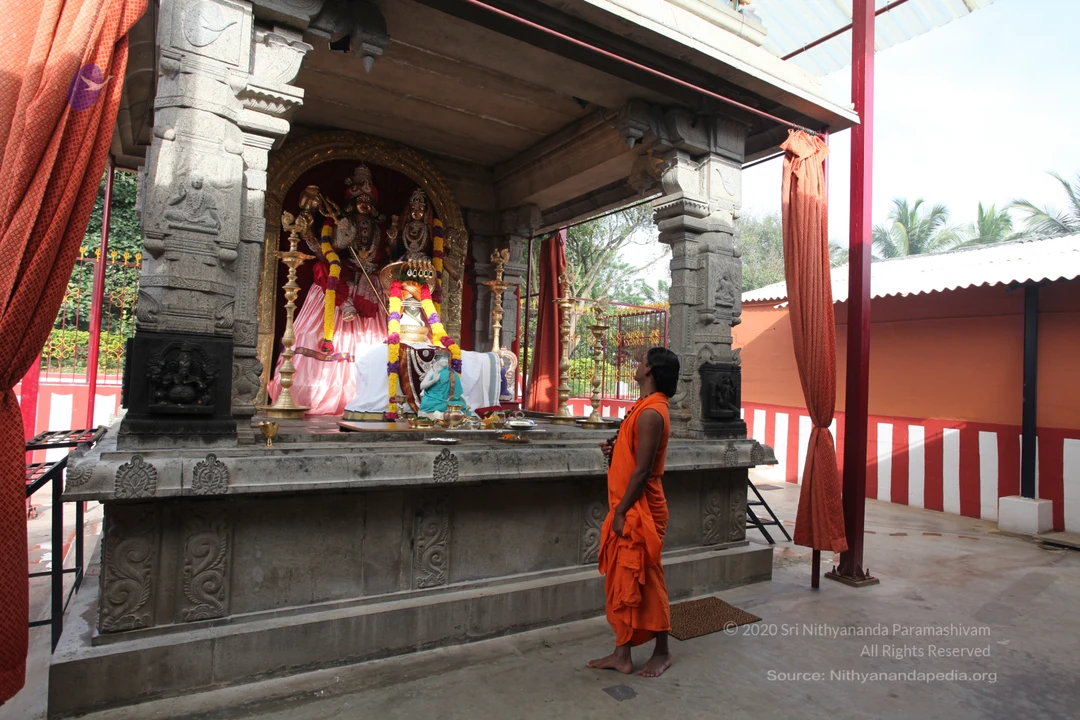
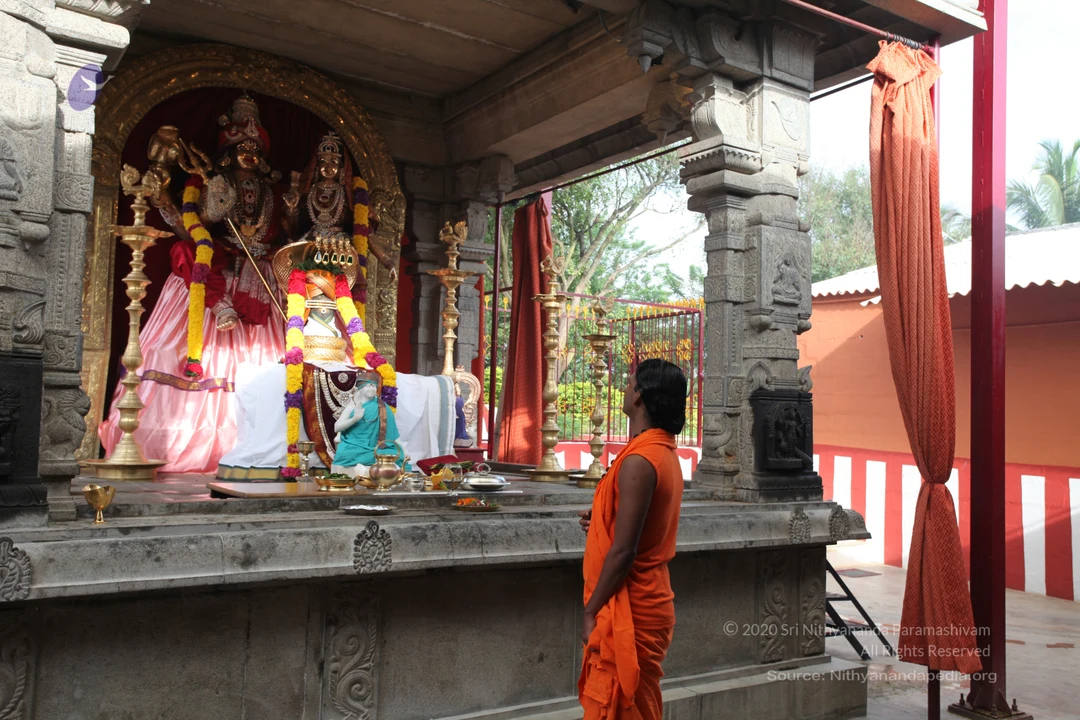
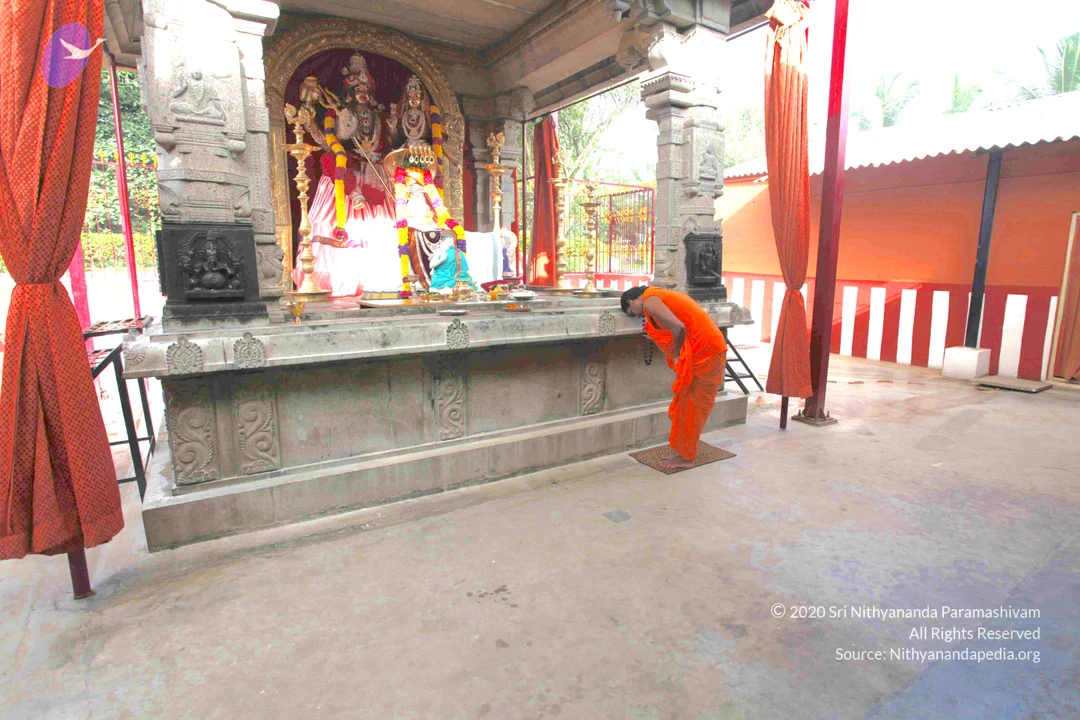
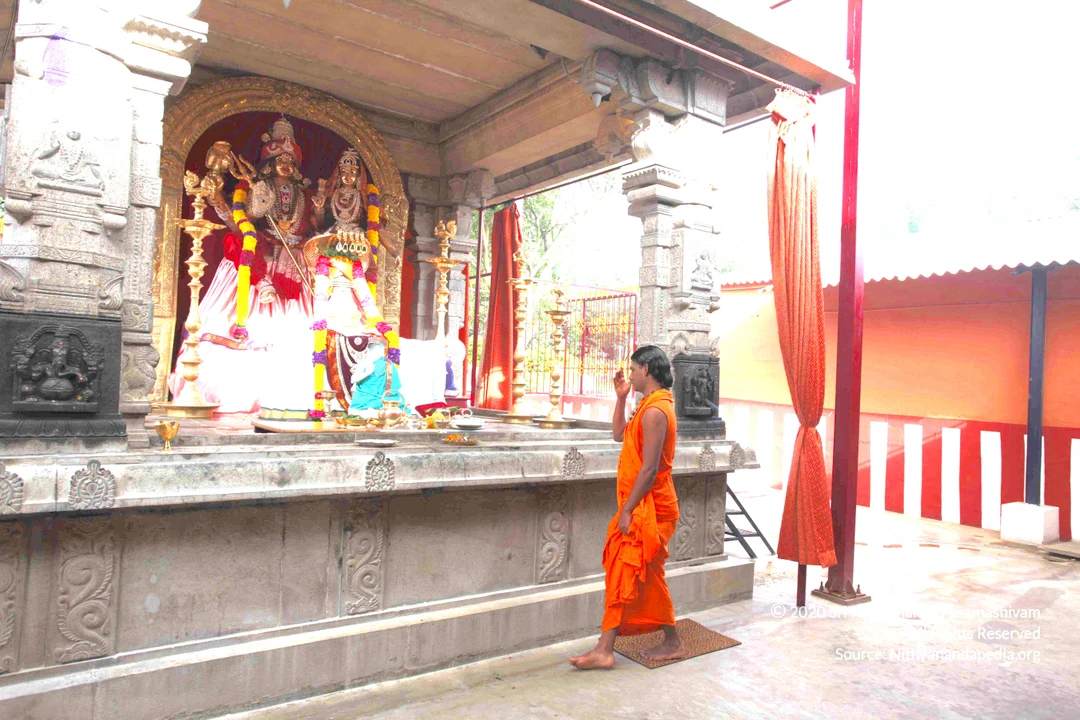
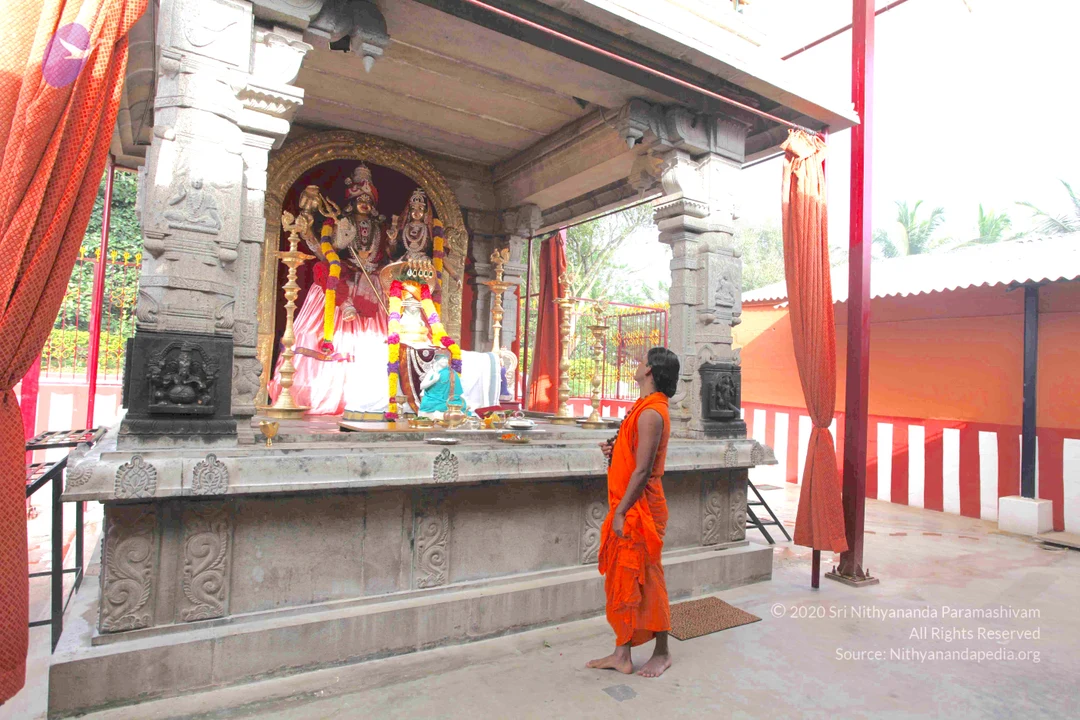
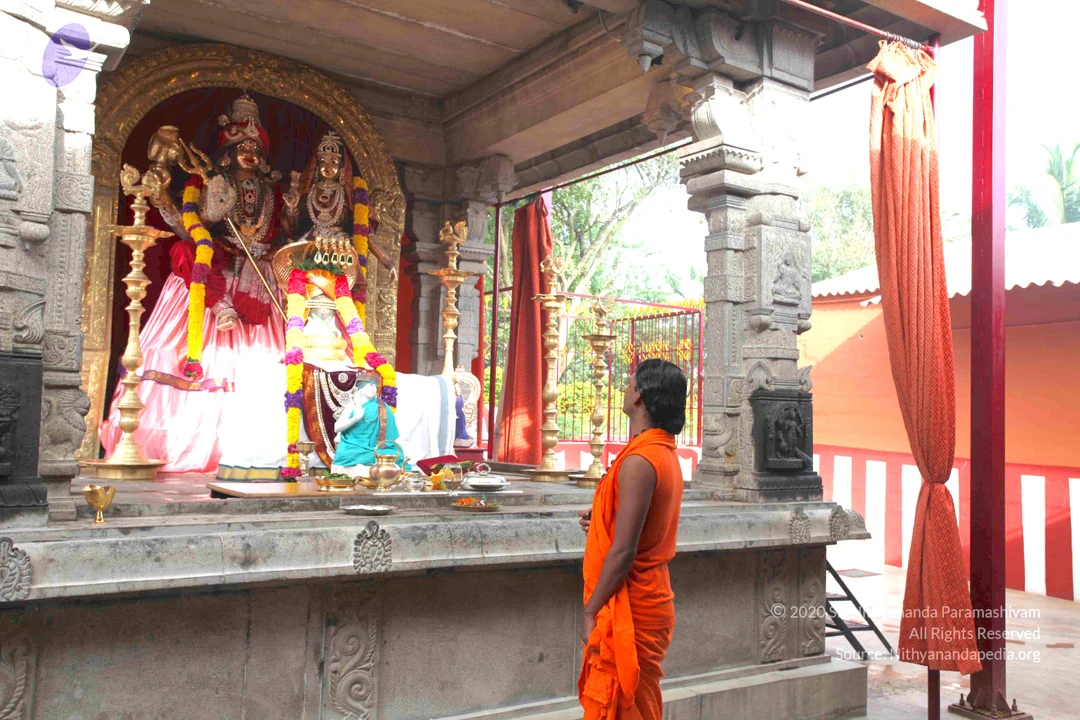
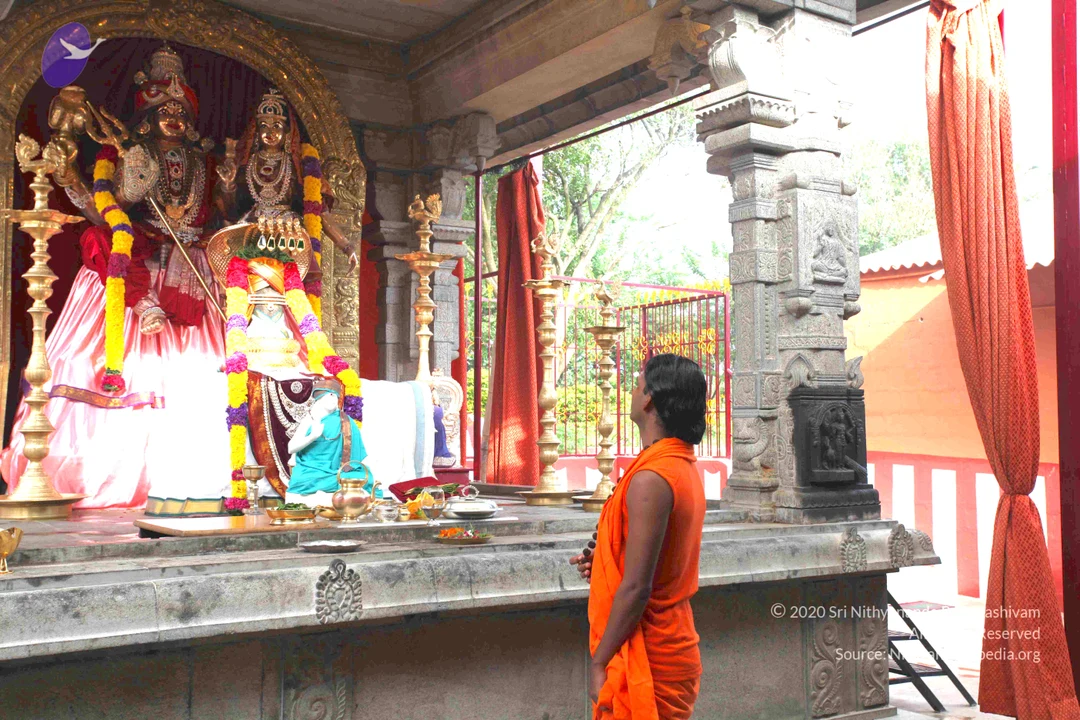
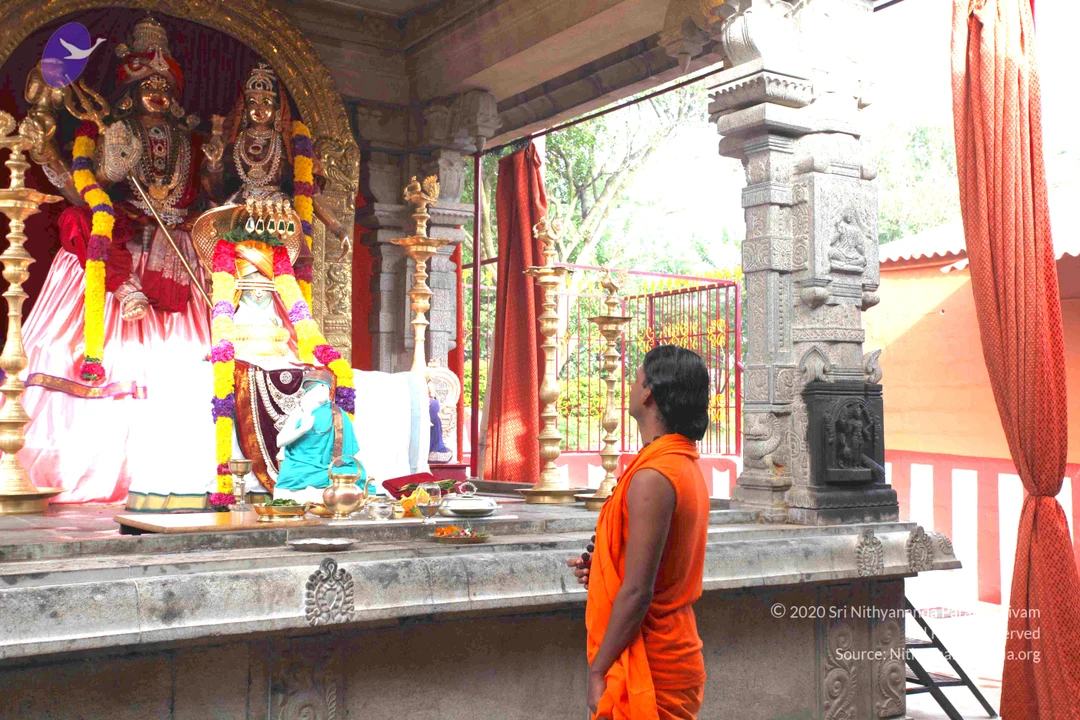
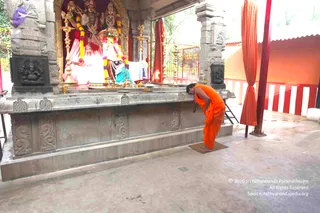
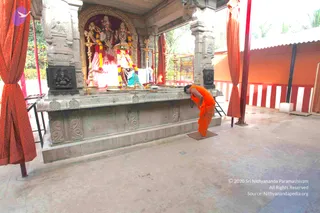
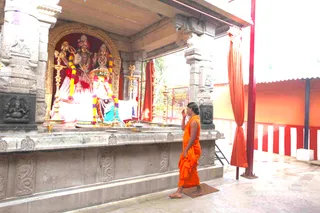
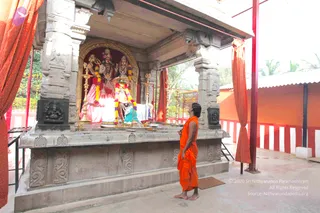
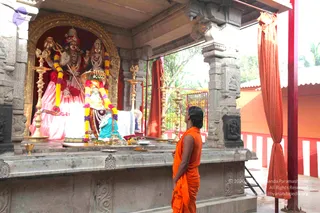
A single person in an orange-saffron robe and wrap stands barefoot on a woven mat in front of a granite shrine platform, bending forward at the waist with hands together in reverence. Behind the platform, a deity murti draped in pink and white cloth and garlanded with marigold and multicolored flower strands sits within a gilded niche, with brass oil lamps and a kalasha-style offering on the stone ledge. Carved stone pillars frame the shrine, with a small relief panel showing a seated figure to the left, and red-and-white striped drapes and an orange canopy surround the open-sided pavilion. The person has a rudraksha mala hanging from the neck.A photograph of a stone shrine in an open-air pavilion with orange and red curtains. A deity murti stands at the back of the granite platform, decorated with marigold garlands, a gold kalasha and brass oil lamps. A man in an orange robe and a rudraksha mala bows low with hands folded in front of the platform, standing on a small mat. Stone carvings decorate the pillars and the front of the altar. Greenery is visible beyond the open structure.A photograph inside a stone temple shrine. A standing man in a saffron-orange robe with bare feet and a shaved-looking dark head stands on a brown mat before a granite platform, folding his hands in front of him in reverence. On the raised platform a deity murti in white with gold ornaments and red-and-white garlands is flanked by brass lamps, a kalasha and small offerings, with a red curtain and carved stone pillars around it. The scene reads as a temple puja or darshan.A barefoot man in a saffron-orange sannyasi wrap stands facing a stone shrine at a temple. Inside the arched, red-backed niche, a deity murti with a trident and garlands of yellow and red flowers is adorned, with brass lamps and vessels set before it on the granite platform. Red and white curtains hang at the sides of the open pavilion, and palm trees are visible beyond. The man's presence is a practitioner's stance at the shrine, and the page's a person claim cannot be confirmed from his appearance, so his identity is not asserted.A man in saffron-orange robes stands with his back partly to the camera, facing a stone shrine. Inside the arched, gold-trimmed shrine are carved and painted deity murtis, one with a crown and multiple arms holding weapons, draped in pink fabric and garlanded with marigold and purple flower garlands. Brass oil lamps stand on the granite platform, with small brass vessels and offerings in front. Red and orange curtains hang beside the shrine under an open-air temple pavilion with striped red-and-white walls. The scene suggests puja or darshan at a temple shrine.A photograph inside an open-sided temple shrine. A man in saffron-orange ochre clothing with a bare upper body stands on the right, facing the altar and looking up at the deity murti. The altar holds ornate deity figures, a seated deity with a crown and trident-like weapon, and a female figure in pink and red, all draped with garlands of purple and yellow flowers. Brass oil lamps with lit wicks line the stone platform, along with brass kalasha vessels, plates of offerings and fruit. Carved granite pillars frame the scene, with orange curtains and a red railing behind, and trees visible outside.

03--Satsang
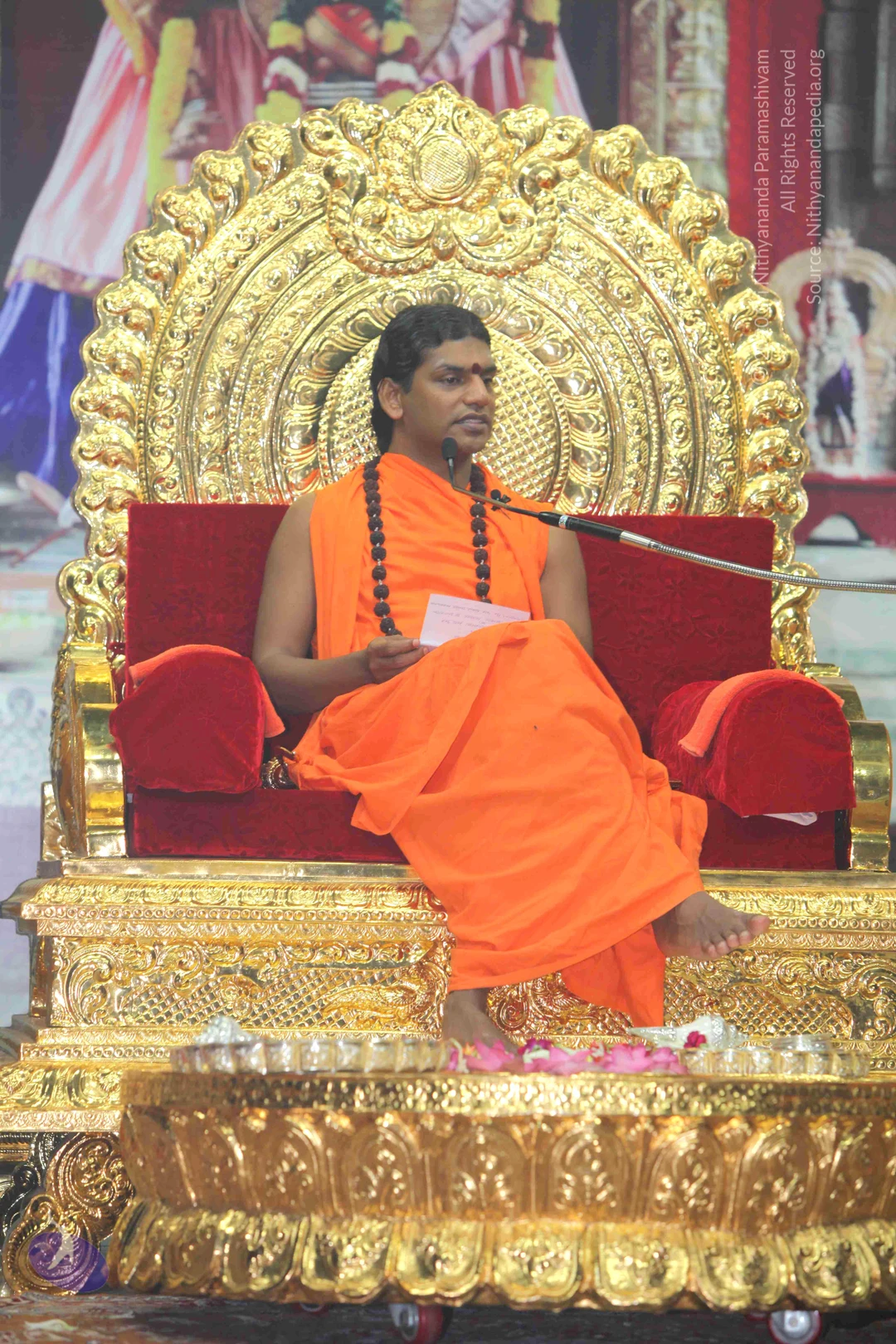
28 photosSource gallery
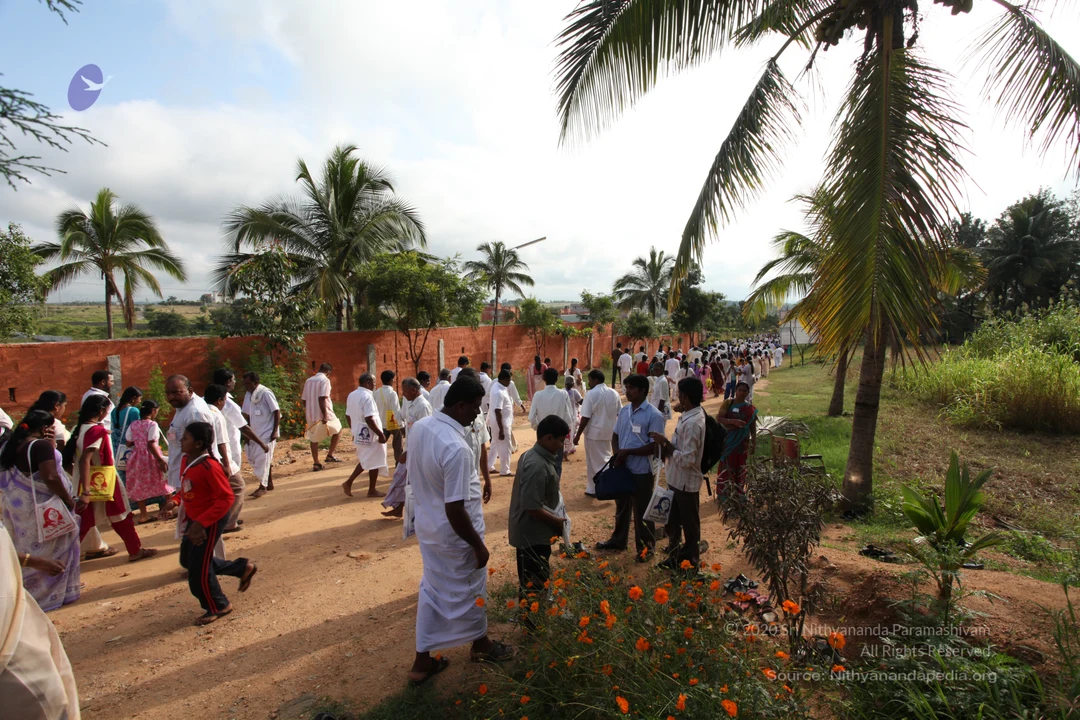
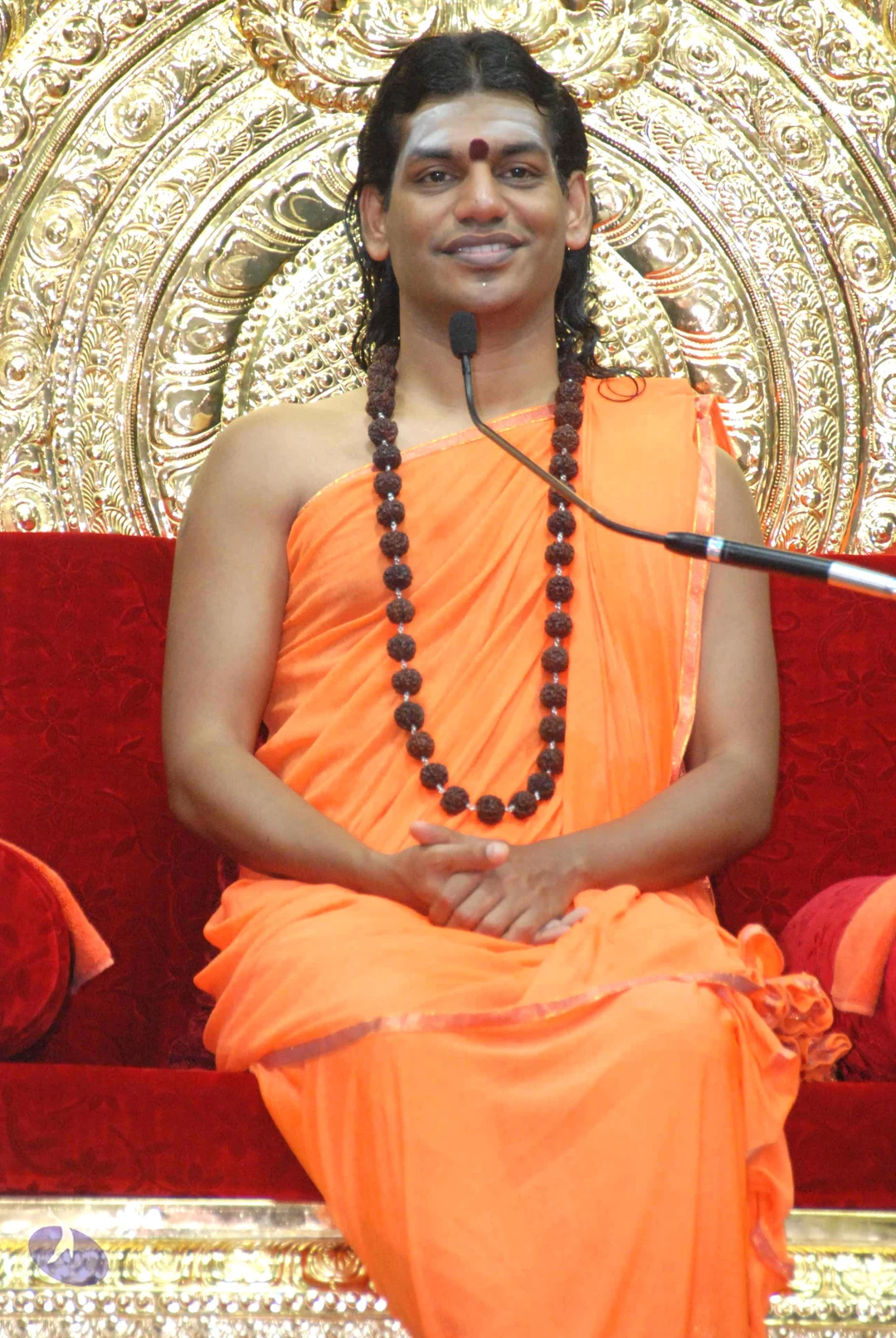
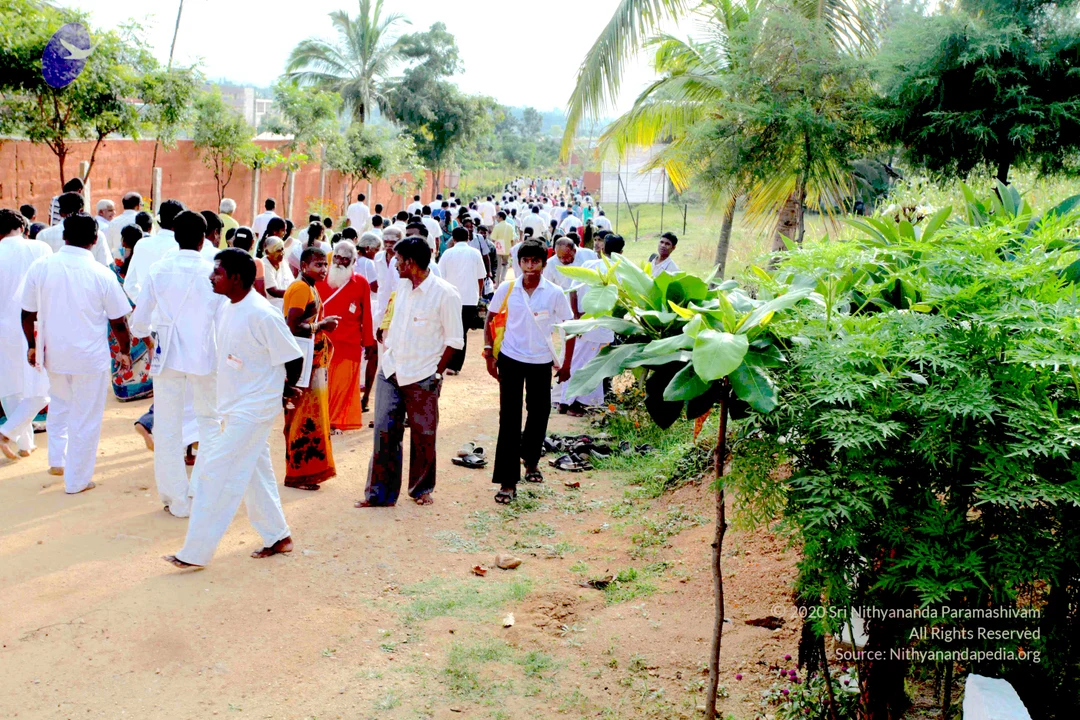
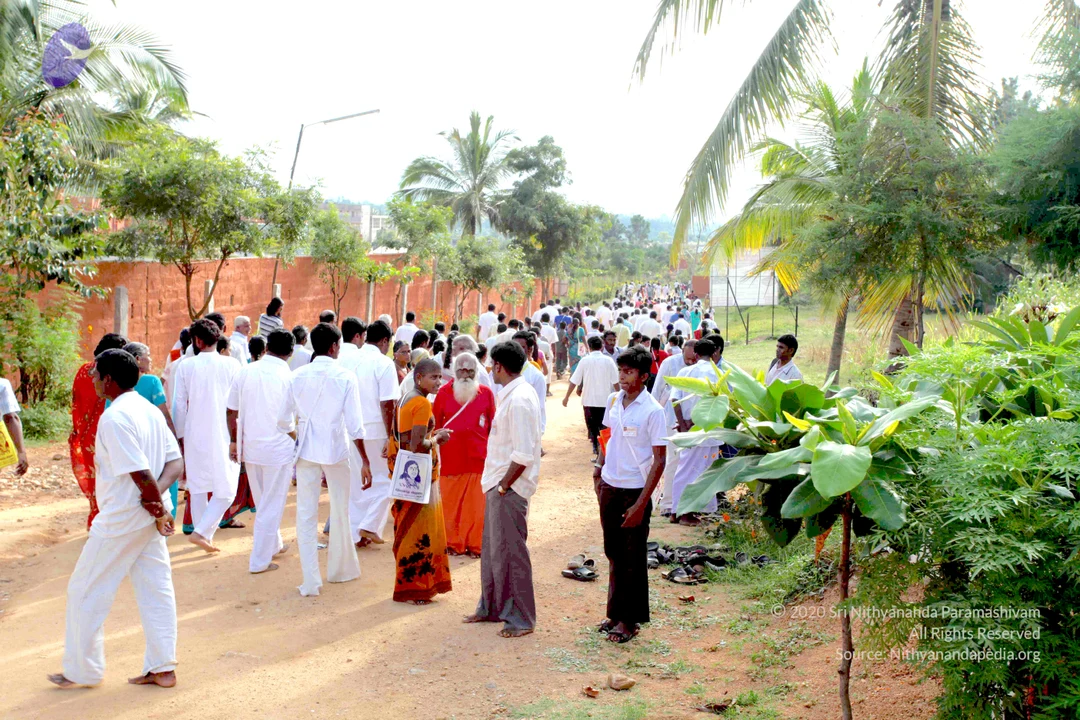
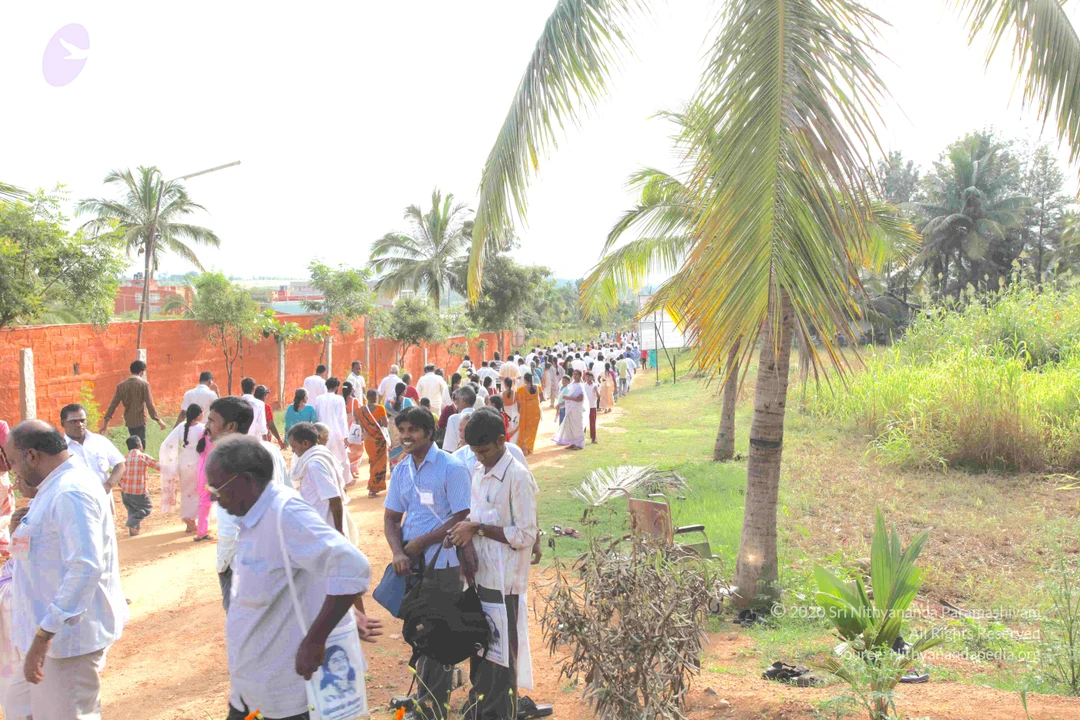
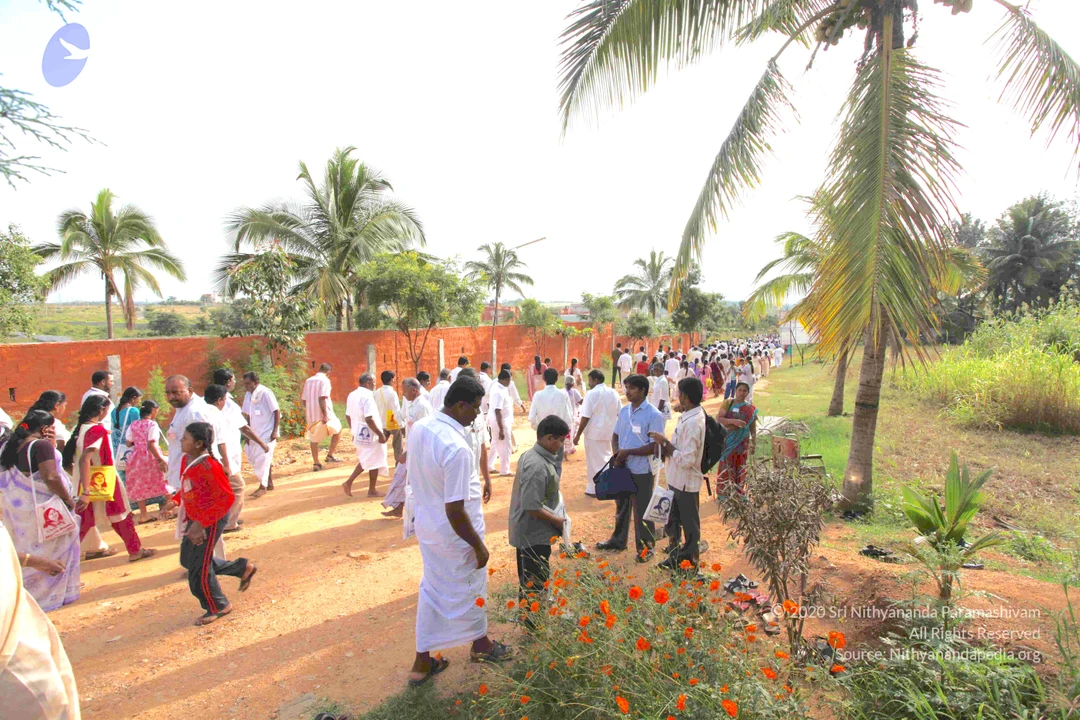
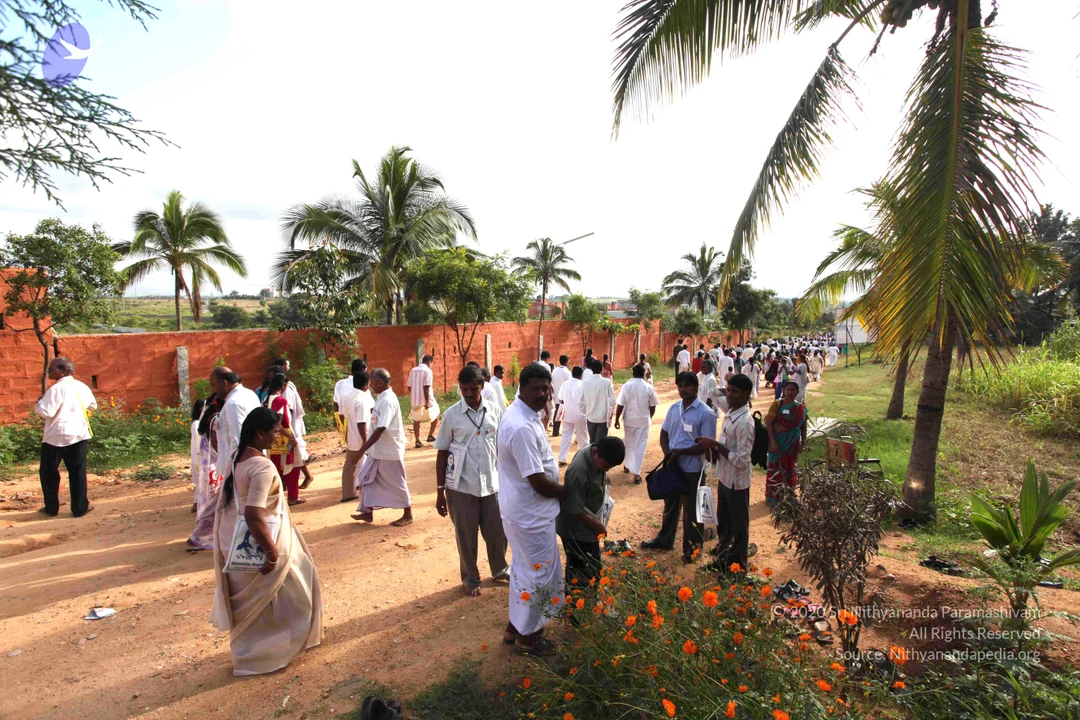
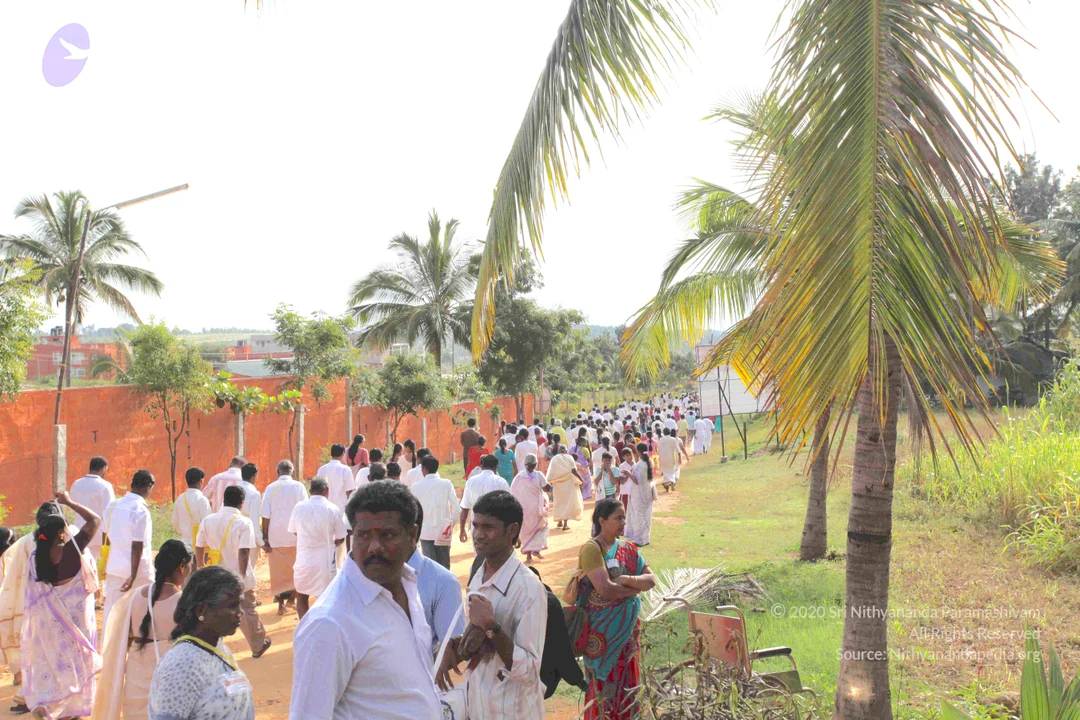
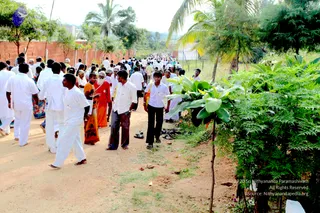
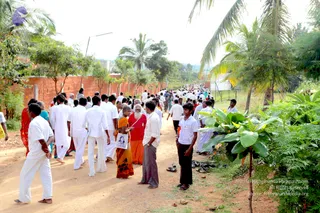
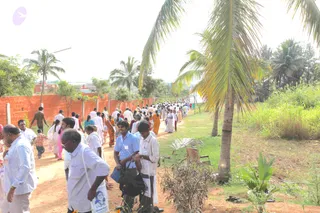
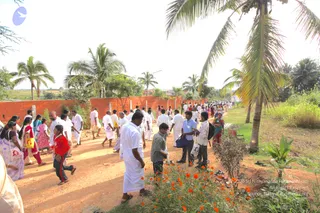
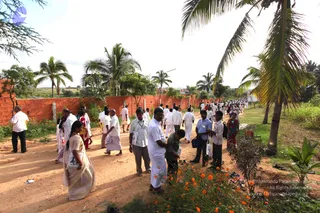
A seated man in saffron-orange draped robes with a long rudraksha mala necklace sits on a red velvet seat before an ornate gold-embossed backdrop, with a vertical microphone at his side. He wears a white vertical tilak with a red bindi on his forehead, long swept-back dark hair, and has his hands folded in his lap while smiling. This appears to be a satsang discourse setting. Swamiji (probable): the saffron robes, rudraksha mala and long hair are the qualifying cues, and the speaker presents as the discourse presenter.A crowd of devotees walks along a dusty dirt path lined with green shrubs, palm trees and a low terracotta-coloured brick wall on the left. Many men wear white shirts and white dhotis, while women in saris stand among them, including one in an orange sari and an older man with a long white beard in an orange-red garment. Pedestrians stretch into the distance, and sandals lie scattered on the roadside.A crowd of devotees walks along a dirt road lined with palm trees, shrubs and a red brick wall under a pale sky. Most men wear white shirts and white dhotis, and women wear saris in mixed colours. An elderly man with a long white beard in a red shirt stands at the centre, beside a woman in an orange sari carrying a white cloth bag with a small portrait print. Men in white and a young man in a white shirt and dark trousers stand at the roadside, where sandals are scattered on the ground. Many more people are visible further down the road.A wide outdoor photograph of a long dirt path lined with coconut palms and a tall orange-red brick wall on the left. A large crowd of devotees walks in both directions along the path, mostly men and women dressed in white, with some women in saffron and orange saris. In the foreground a man in a white shirt and white dhoti carries a cloth bag, and a younger man in a blue shirt and a man in white shirt walk close to the camera; one carries a folded paper with a printed portrait. Dry shrubs, grass and sandals lie at the lower right. No identifiable central figure is clearly visible.A dirt path runs between a tall red brick wall on the left and a row of palm trees and shrubs on the right, under a pale sky. A long line of people walks along the path, most wearing white dhotis and white shirts or kurtas, while women wear saris and salwar in pink, red, blue and lavender. Some carry white and yellow cloth bags, and one man in a blue shirt carries a black bag. A girl in a red jacket walks near the front. Orange marigold-like flowers grow in the foreground, and a small palm sapling stands at right. Many attendees appear to be walking in an orderly procession toward the distance.Outdoor photo of a dirt path lined by a tall red brick wall on the left and coconut palms on the right. Many people, mostly men in white shirts and white dhotis or mundus, walk and stand along the path; some women wear sarees, including a woman in a cream saree carrying a bag in the foreground. Several people wear lanyard badges. Marigold plants with orange flowers grow along the edge in the foreground.

04--Energy-Darshan
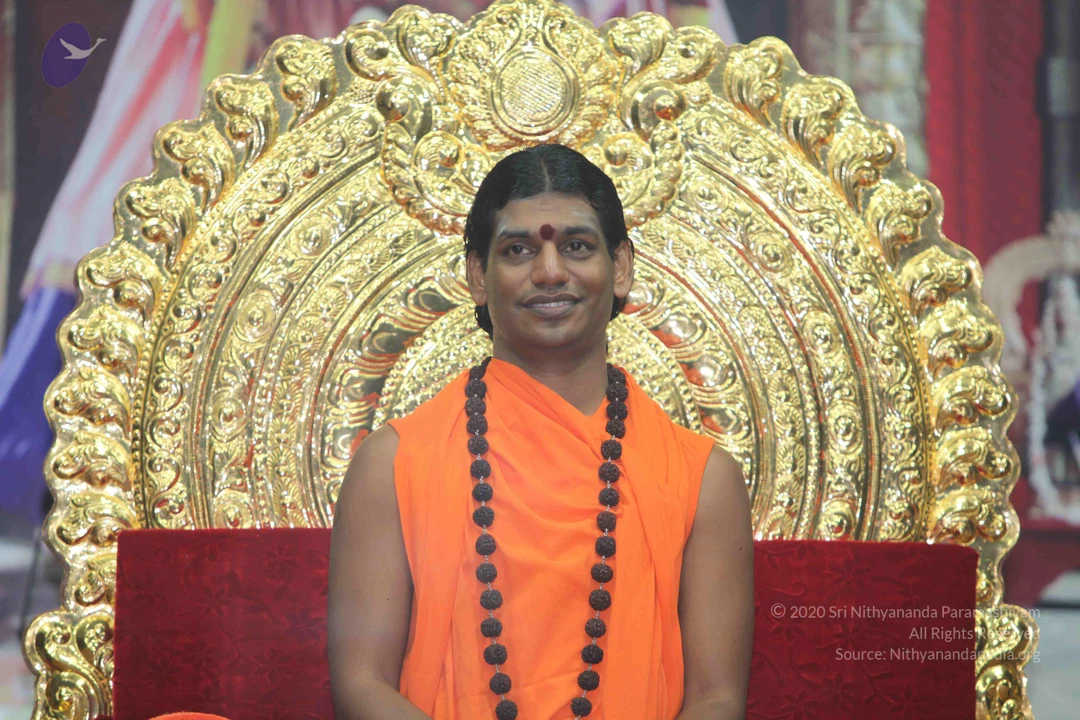
35 photosSource gallery
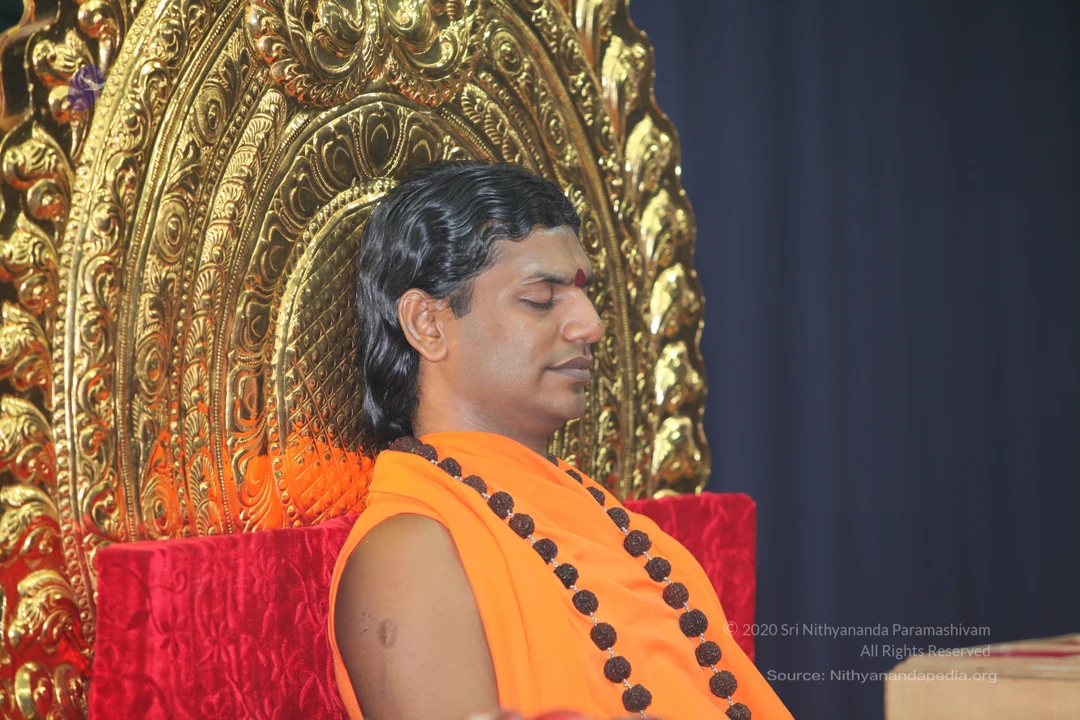
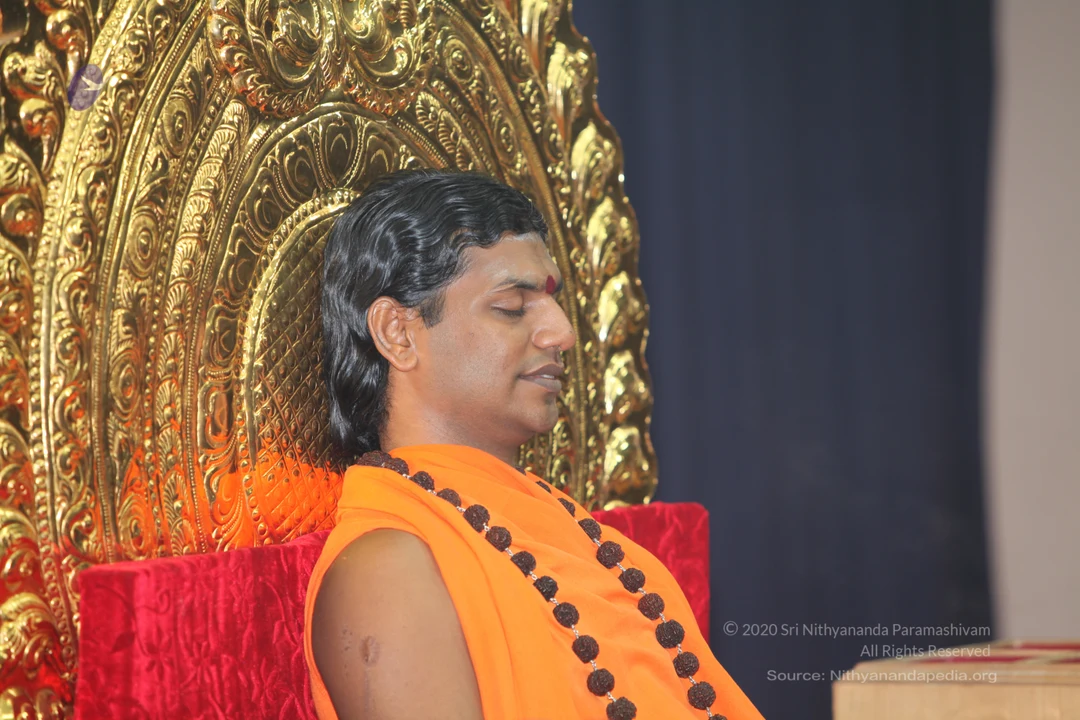
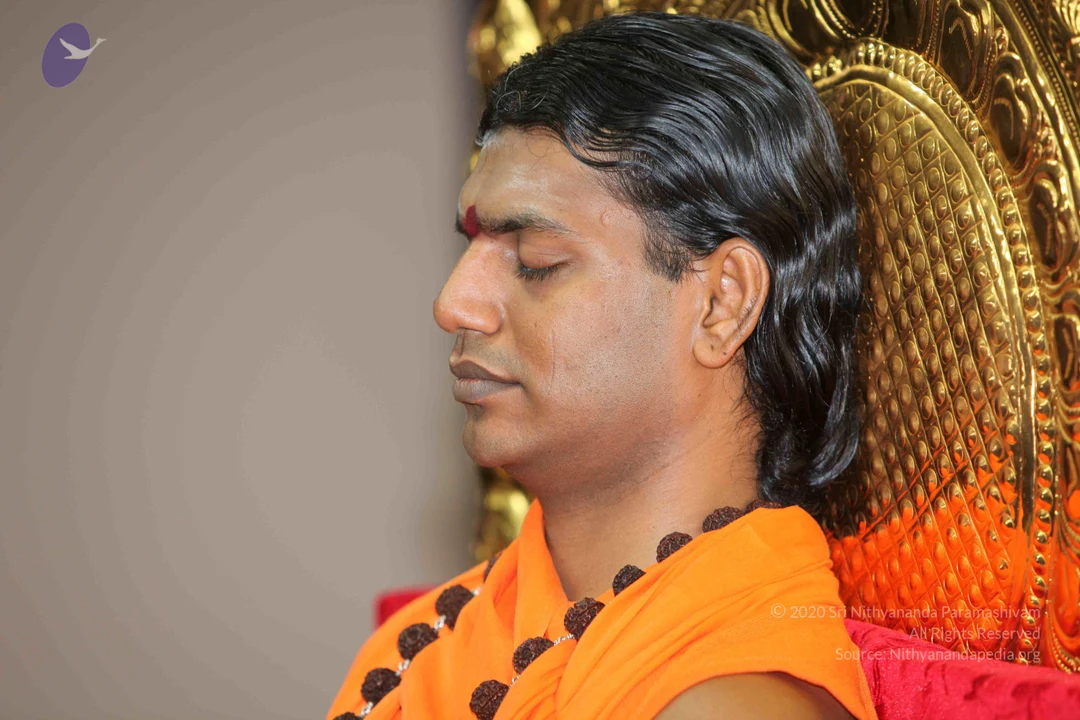
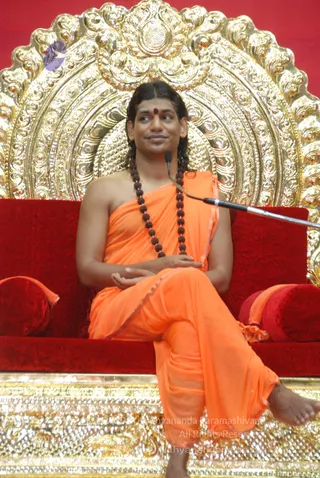
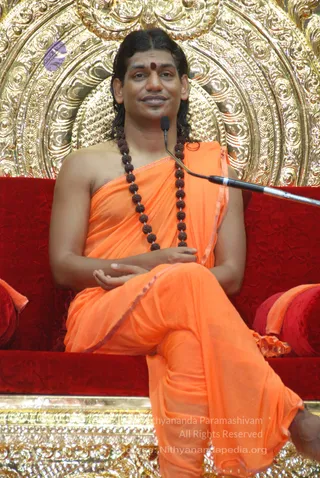
A man with short dark hair and a red bindi sits smiling on an ornate gold throne with intricate repoussé carving and a red velvet seat cushion. He wears a sleeveless saffron-orange garment over his shoulders and a long rudraksha mala of dark beads around his neck. Behind him are blurred red and pink draperies. a person: the presentation shows a saffron garment, rudraksha mala and ornate throne, but the hair and attire cues are limited, so identity is uncertain. Faint white copyright text and a small purple logo appear in the corners.A photograph of a man seated on an ornate gold throne with a red cushioned seat, in front of a golden arched backrest with floral and scroll carvings. He wears a sleeveless saffron-orange cloth draped over his body and a long necklace of dark rudraksha beads, with a red bindi on his forehead. His right hand is raised in a blessing gesture and his eyes are lowered. The background shows red and pink draped fabric and a partial red-toned panel. a person: saffron clothing and rudraksha mala on a throne with a raised blessing hand, consistent with the page's claim of his presence at this satsang.A seated man in an orange sleeveless garment and a long necklace of dark rudraksha beads sits on an ornate gold-leafed throne with a red cushioned seat, his eyes closed and hands resting together in front of him. A small red mark is on his forehead. Behind him are red drapery and a partial portrait. Swamiji (probable): a long-haired figure in saffron clothing with rudraksha mala and a gilded throne, seated in meditation.A figure in saffron-orange robes and a rudraksha mala sits with palms pressed together in namaste on an ornate gold throne with a carved gold backrest. The throne stands on an orange cloth and patterned rug in a stage setting with a dark blue curtain. A gold-rimmed offering tray with flowers sits in front of the throne, and a small electric fan is beside a microphone stand. Behind is a large backdrop printed with a temple shrine showing a deity murti draped in garlands and a flanking figure.A seated figure in orange robes with a rudraksha-style garland sits on an ornate gold-and-red throne with hands pressed together in namaskar on a stage. A golden peetha or pedestal with offerings and a small lamp sits in front. Behind is a large printed backdrop of a temple shrine with stone pillars and a deity murti garlanded with flower malas. Orange and purple cloths cover the floor, a fan stands at the side, and a microphone is set nearby. Only one physical person is visible.A photograph of a satsang set with a seated figure on an ornate gold throne with carved gold armrests and red cushions, on a raised orange cloth and patterned rug. The seated person wears an orange robe, a rudraksha mala, and holds palms together in a namaskar gesture. A microphone stands in front. Behind the throne is a shrine with a deity murti decorated with flower garlands, a kalasha-like arrangement, and oil lamps on a stone platform, under carved stone pillars. A navy curtain hangs at the back and a standing fan sits to the right. A gold-tiered offering stand sits in front of the throne. a person is seated, the figure wearing an orange robe and rudraksha mala.

05--Panch-Tapas
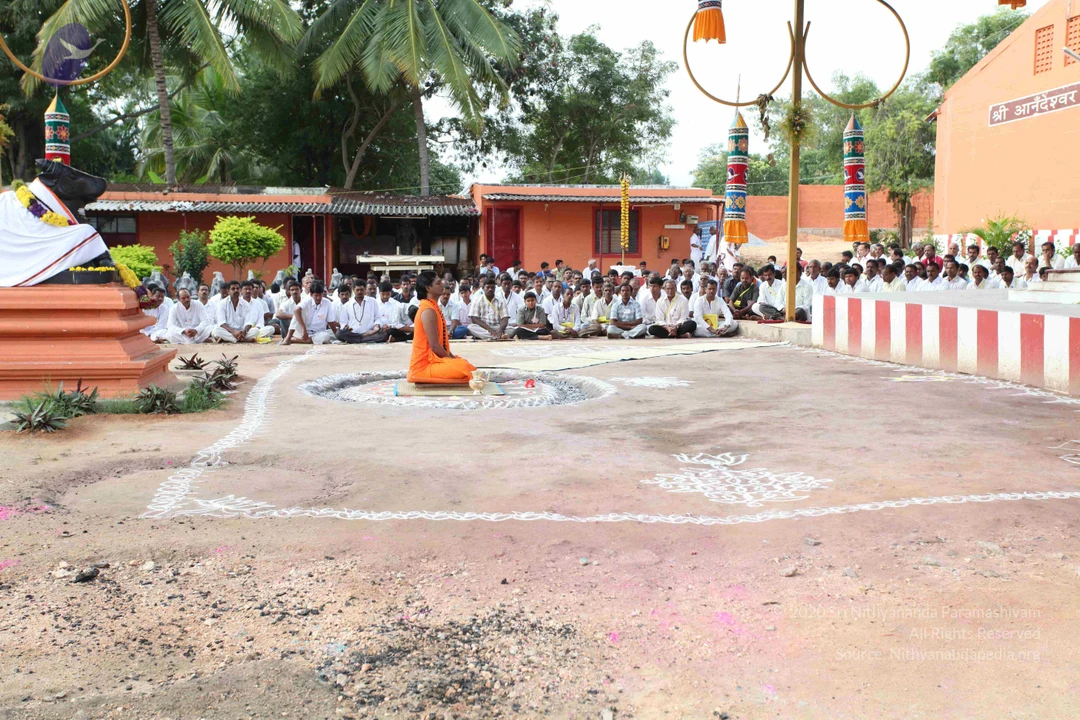
46 photosSource gallery
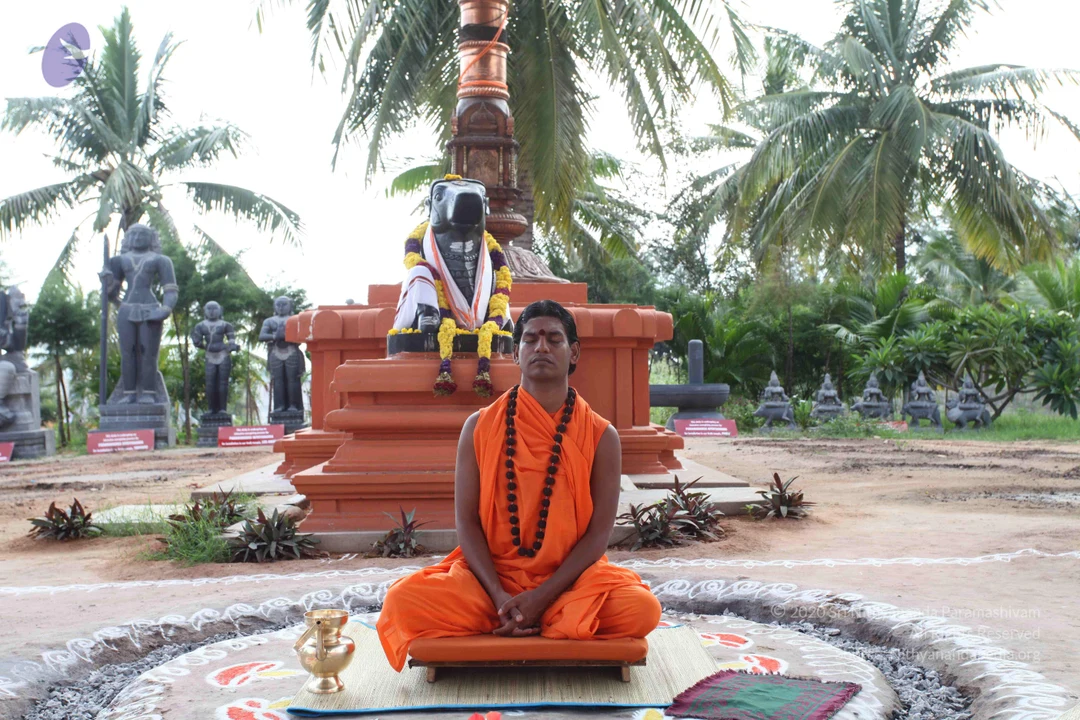
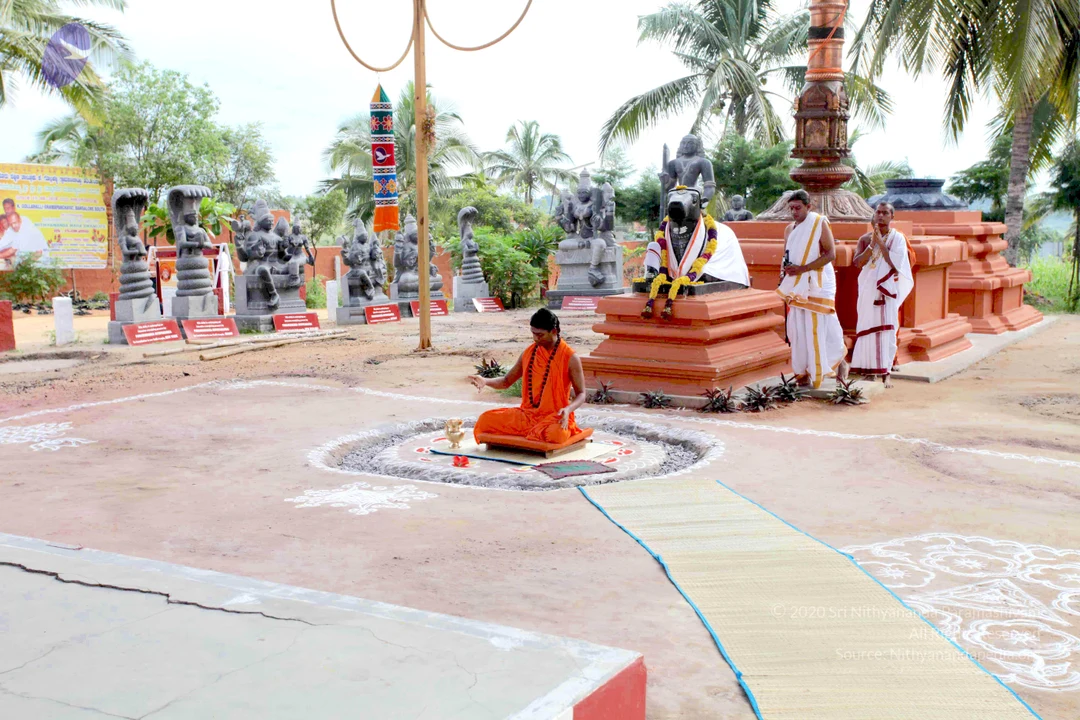
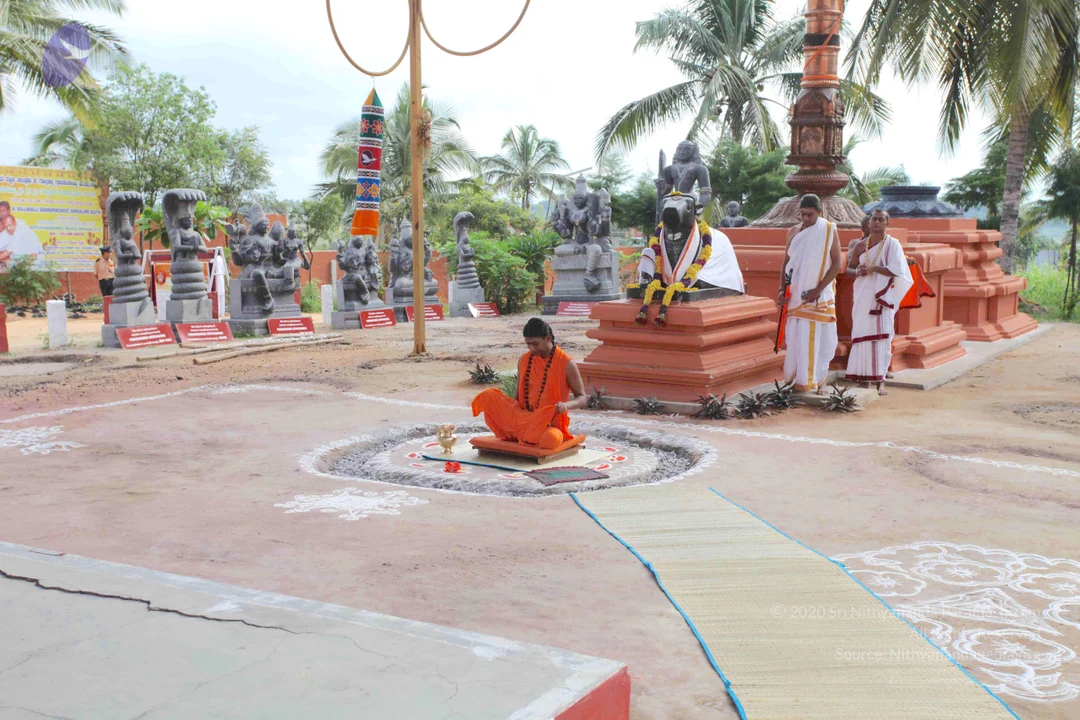
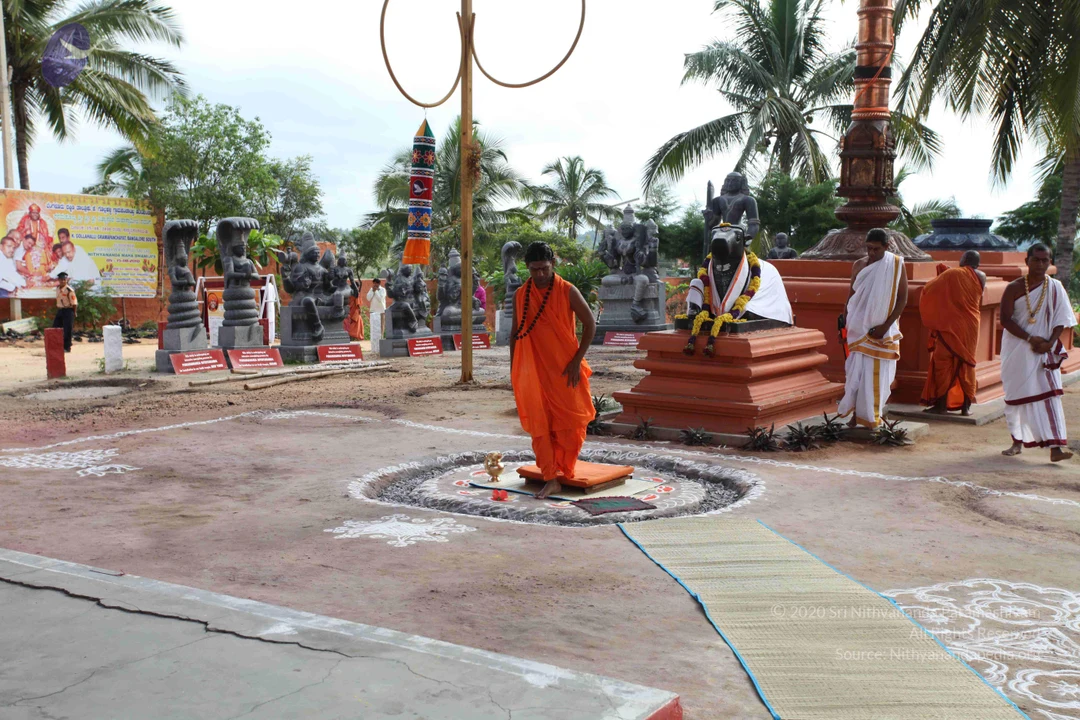
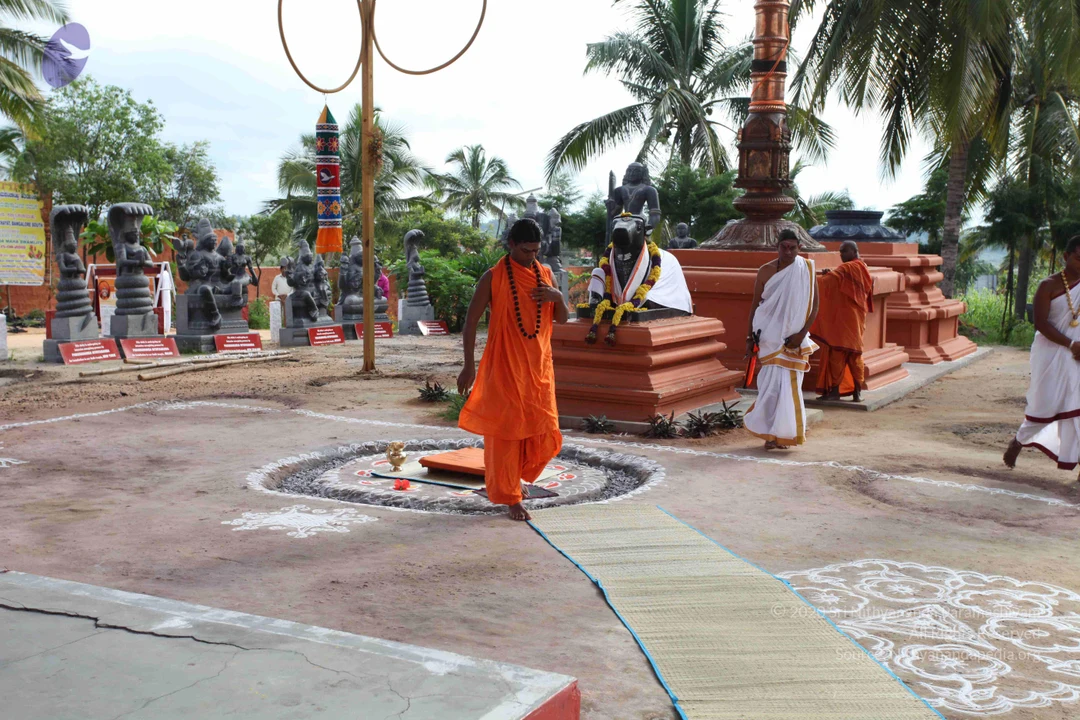
Outdoor photo of a sannyasi seated cross-legged on a raised platform in saffron-orange robes at the centre of a white kolam-decorated courtyard. Around him, a large crowd of men in white dhotis and white shirts sits on the ground in rows, many with hands folded. Behind them are orange-painted buildings, a white-and-red striped wall, tall decorative poles with ring tops and colourful tassels, and palm trees. On the left, a decorated altar with flower garlands and a white cloth sits on an orange pedestal. The saffron-clad figure at the centre is a person seated in a teaching or meditation posture, with a ritual setup before him.Outdoor satsang under a corrugated roof decorated with hanging colourful cylindrical garlands and orange pennants. A lone figure in orange robes sits cross-legged on the bare ground at the left, facing a large open courtyard with white and red kolam patterns drawn on the earth. Rows of men in white clothes sit on the left, and women in saris of pink, purple, teal and maroon sit on a raised red-and-white edged platform at the right. Behind them stands an orange temple building with a sign reading Shri Maheshwara Temple, and a red banner on the right shows a smiling saffron-robed figure beside text about a Life Bliss Program. Palm trees frame the background.Outdoor satsang at an ashram temple courtyard under a tin-roofed pavilion hung with colourful striped tassels, orange flags and circular garlands. A lone seated figure in saffron-orange robes sits cross-legged on a swept sand floor decorated with white chalk kolam patterns, facing rows of white-clad devotees seated on the ground to the left. To the right, women in saris of pink, lavender, teal and yellow sit on a raised platform, with a red-and-white striped border. Behind them stands an orange temple building with a dark doorway, and a banner on the right shows a smiling saffron-robed figure. Palm trees and a clear sky frame the scene.A seated man in saffron-orange robes sits cross-legged with eyes closed and hands folded in meditation on a low orange platform atop a rangoli-decorated circle of grey ash. He wears a long rudraksha mala and a red bindi on his forehead. Behind him stands a large orange-brick peetha with a black Shiva linga draped in a white and orange shawl and wrapped in yellow and purple garlands. Stone deity statues, palm trees and potted plants surround the courtyard. A brass kalasha sits to his left, and a small maroon cloth lies to his right.A seated man in saffron-orange robes and a long rudraksha mala sits cross-legged on an orange cushion with eyes closed and hands folded in his lap, a red tilak on his forehead. He sits on a grass mat inside a white-rimmed kolam with red and yellow floral motifs and a grey ash ring, with a brass kalasha and a red flower beside him. Behind him stands an orange stone pedestal topped by a black Shiva linga draped in a white cloth and garlanded with yellow and purple flowers. Grey stone deity statues, small shrines and palm trees surround the open outdoor courtyard.A man in orange saffron robes sits cross-legged in meditation on a wooden seat atop a woven mat, eyes closed and hands folded in his lap, with a red tilak on his forehead and a dark rudraksha mala around his neck. He sits within a white kolam rangoli outline filled with grey stone or ash, beside a brass kalasha and a small red flower. Behind him stands a dark Shiva lingam wrapped in a white and red cloth and garlanded with marigolds, set on a red stepped peetha. Black stone deity statues, a carved stone pillar and palm trees surround the open outdoor courtyard. A single white-clad figure stands at the far right edge.

06--Morning-Tamil-Nithyananda-Spurana-Program

96 photosSource gallery
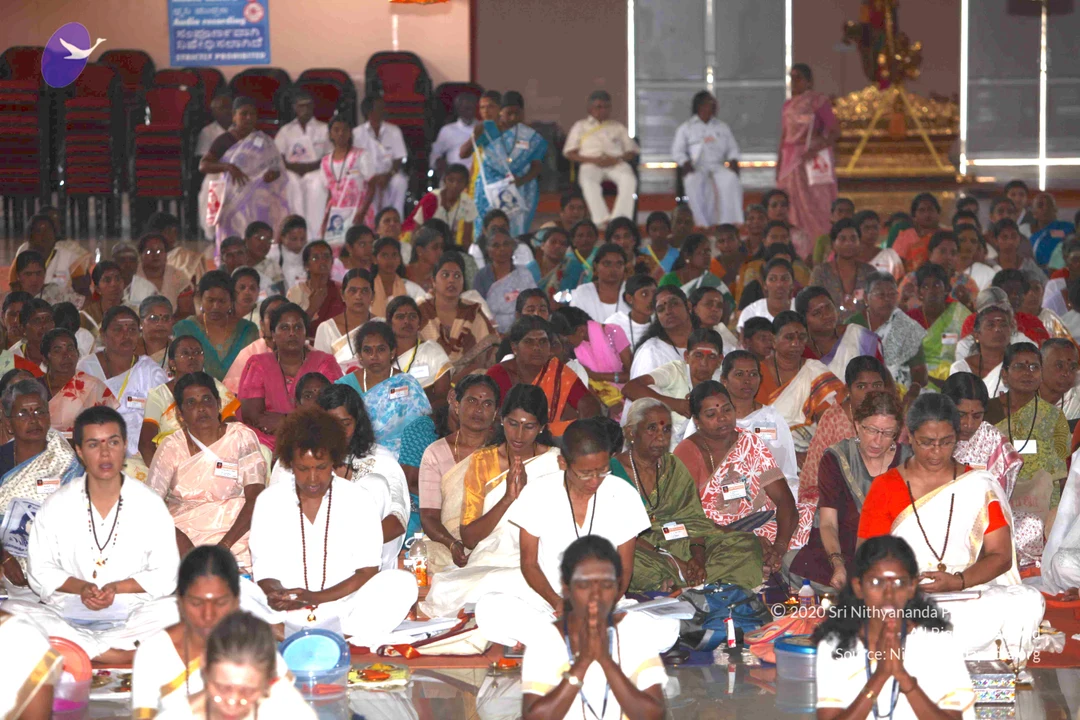
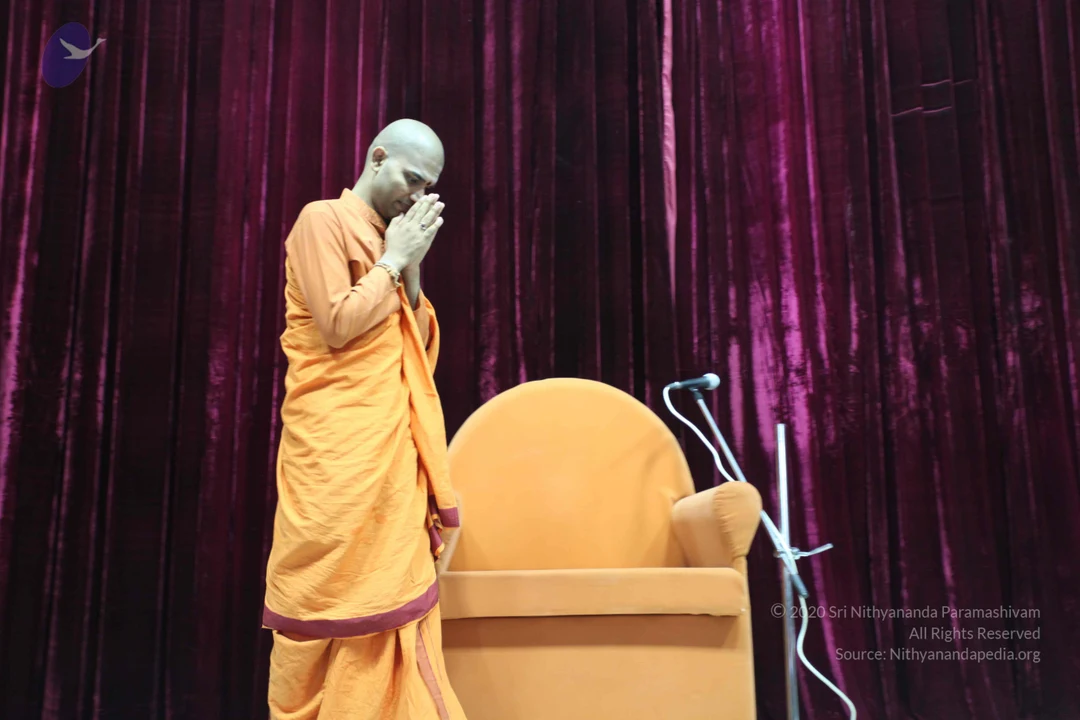
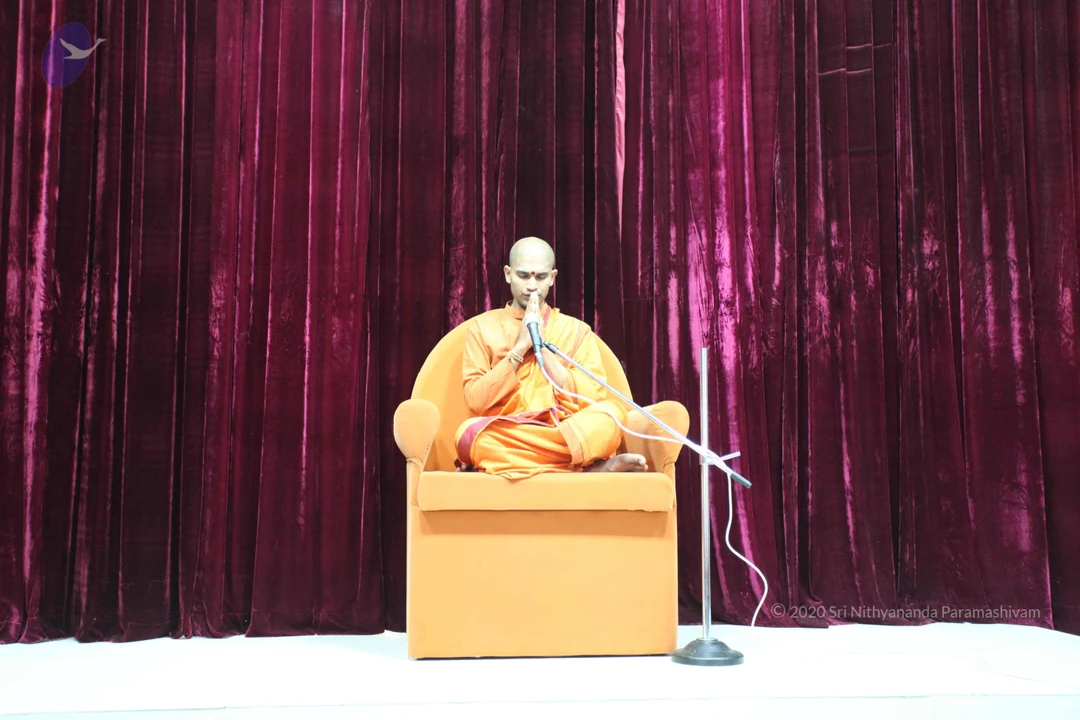
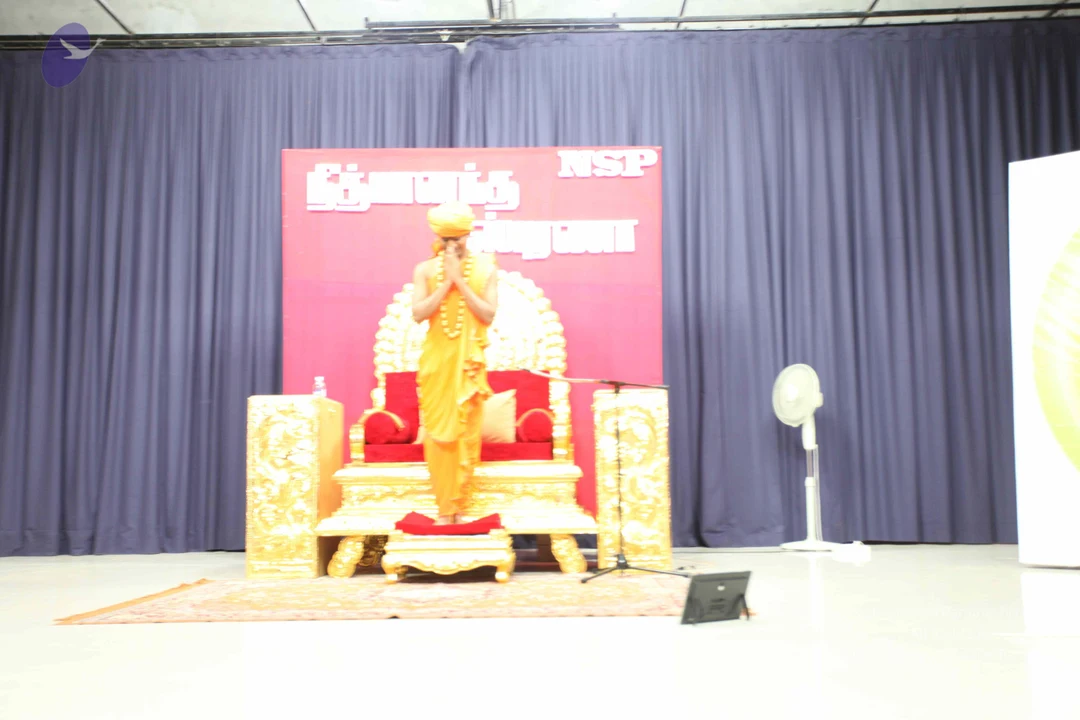
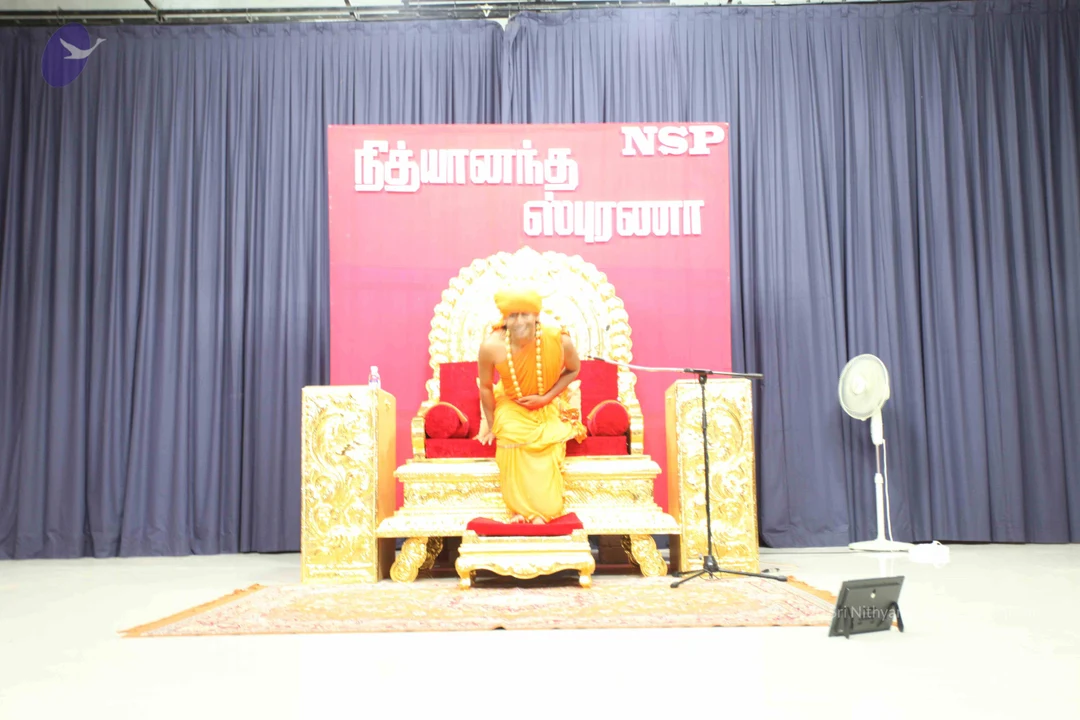
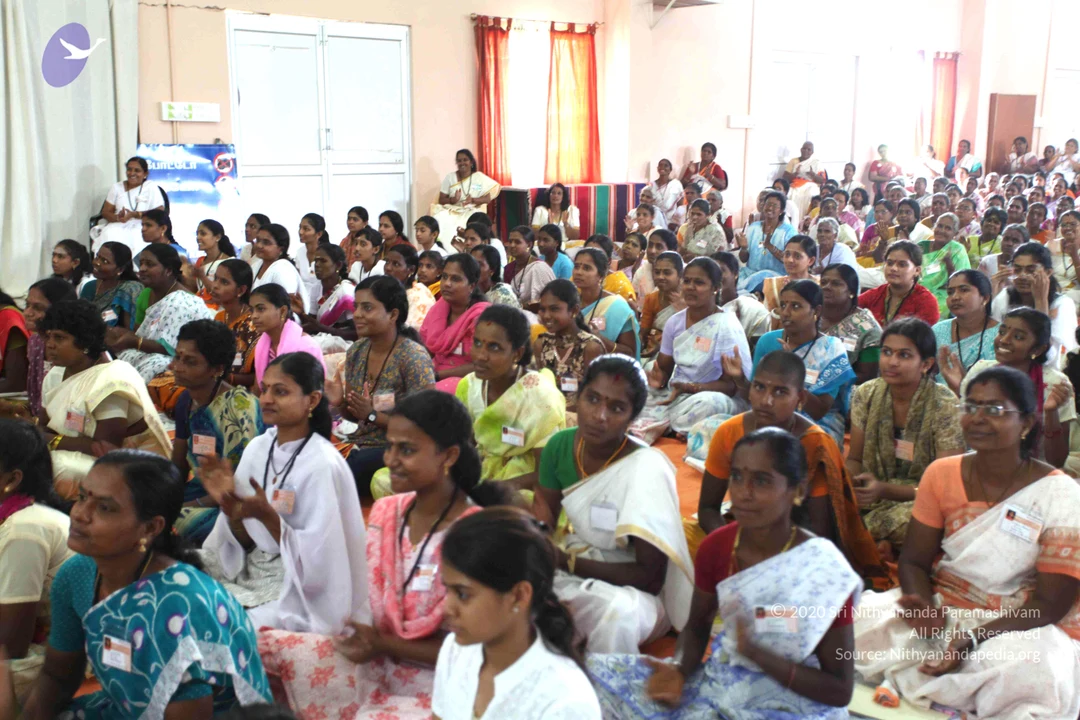
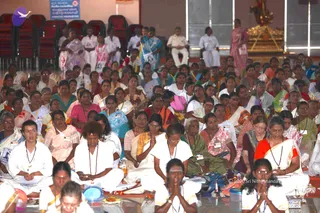
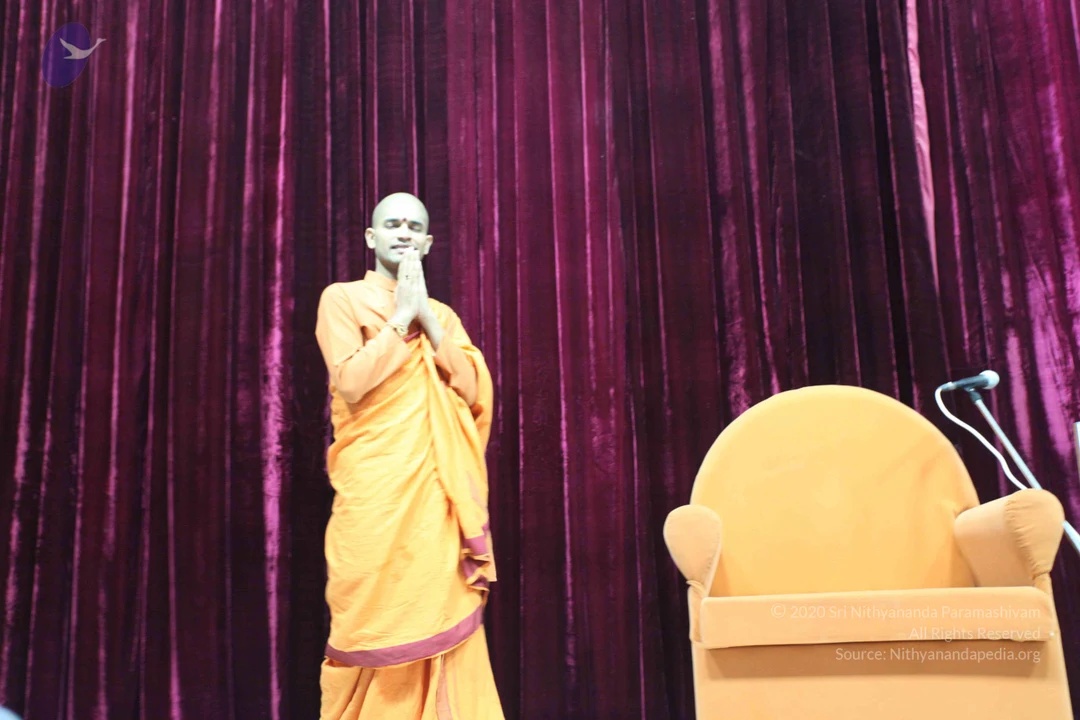
A large seated congregation fills a hall at a satsang, with many women in white, cream, saffron, pink and green saris and rudraksha malas seated closely on the floor in rows. Several women in front have hands folded in namaskar or palms joined while others sit with eyes closed in meditation. Behind them rows of red chairs line the far side and a gilded ornamental canopy or throne stands at the upper right beside a figure in a pink sari. A blue sign on the back wall reads audio recording, with a second line in another script. Some men in white kurtas sit among the crowd near the back, and a small brass plate with offerings rests in the foreground.A photograph of a bald man in an orange-yellow saffron robe with a magenta-edged border stands on a stage before a deep magenta velvet curtain, palms pressed together in namaste at chest height, eyes lowered. To the right, an empty golden-yellow upholstered armchair sits beside a microphone on a stand. The man wears a tilak on his forehead and a wristwatch. a person is indicated by the saffron robe and bald head, though his face cannot be used for identification; the figure is the main subject and the chair stands empty.A bald man in saffron-orange robes stands on a stage before a plum velvet curtain, palms pressed together at his chest in namaste, head slightly bowed. Beside him is an empty orange upholstered chair with a microphone on a stand.A shaved-headed man in saffron-orange robes with maroon borders stands beside an orange upholstered armchair on a stage, bowing forward with his palms pressed together in namaskar and his face lowered. A silver microphone stand stands at his side. Behind him hangs deep magenta velvet drapery. The clothing and bowed, hands-folded posture suggest a devotional greeting or gesture of respect.A bald man in an orange saffron robe with maroon-edged borders stands barefoot before an orange upholstered armchair on a white stage, bowing deeply with his head lowered and palms pressed together in namaskar in front of his face. A silver microphone stand with a white cable stands to the right against a deep magenta velvet curtain.A shaven-headed man in saffron-orange robes with a maroon-bordered dhoti stands with palms pressed together in namaste before a plush orange armchair, with a microphone stand to his right and a deep magenta velvet curtain behind him. A small red tilak mark is on his forehead and a silver bracelet on his wrist. The scene suggests a stage setting for a satsang talk.
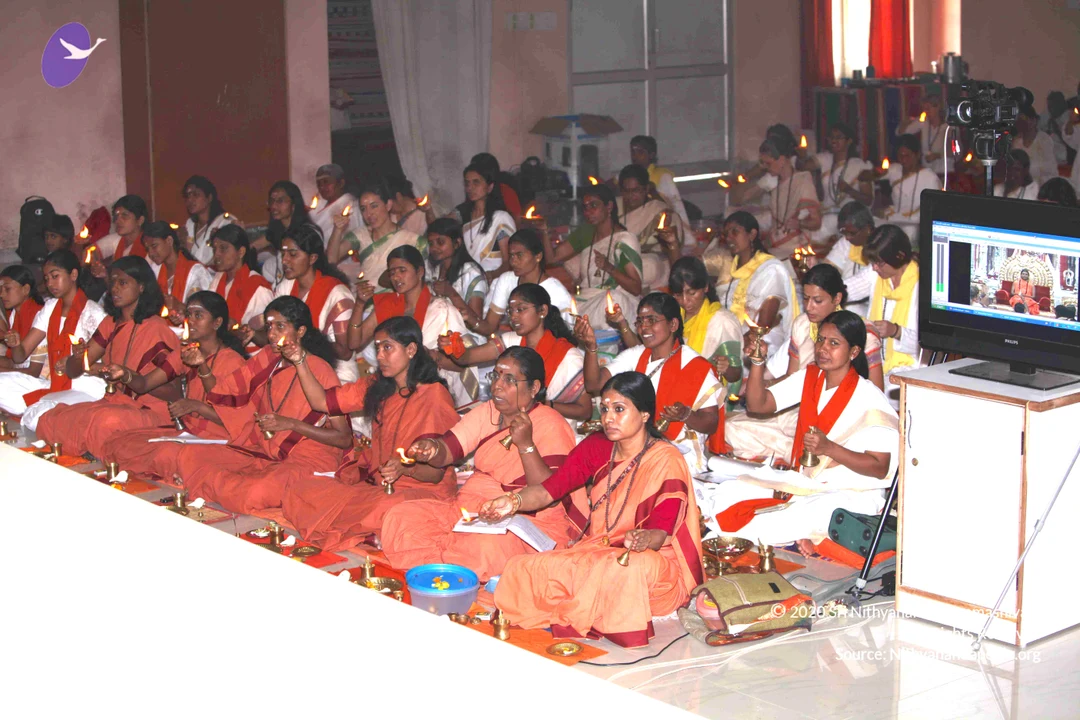
07--Evening-Tamil-Nithyananda-Spurana-Program
90 photosSource gallery
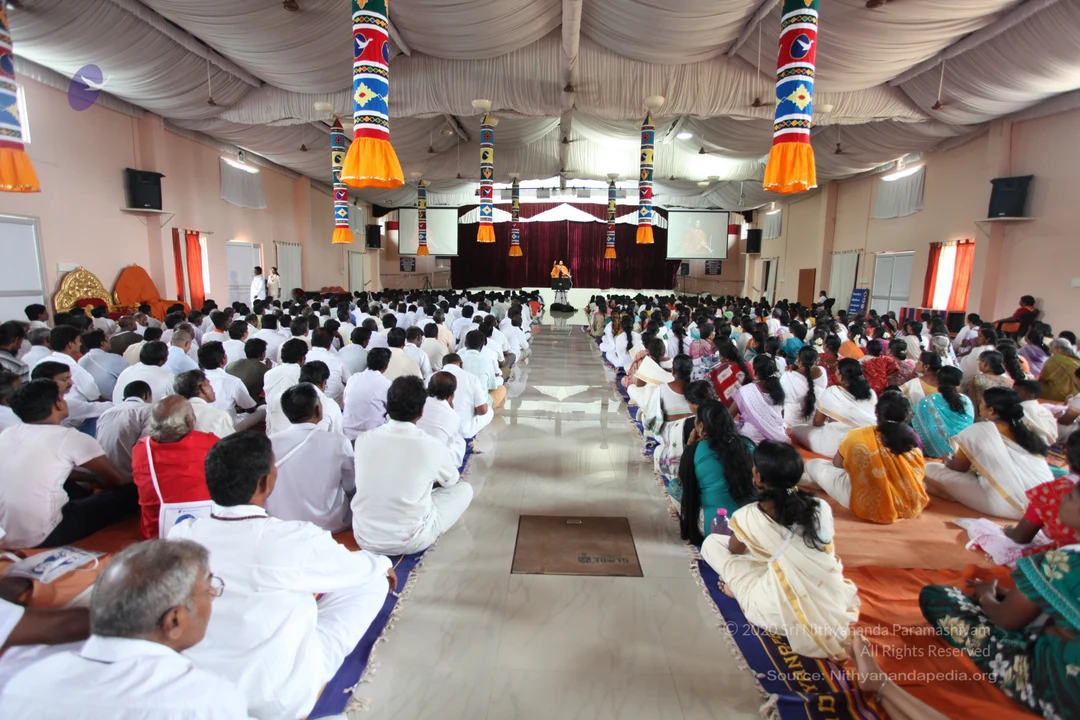
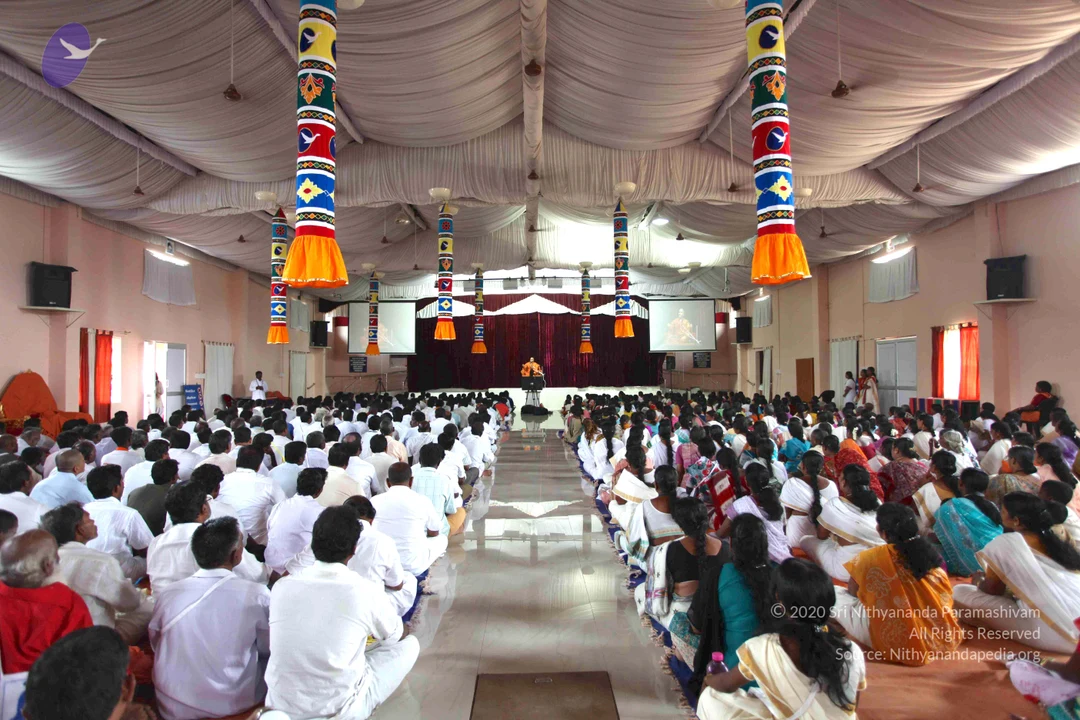
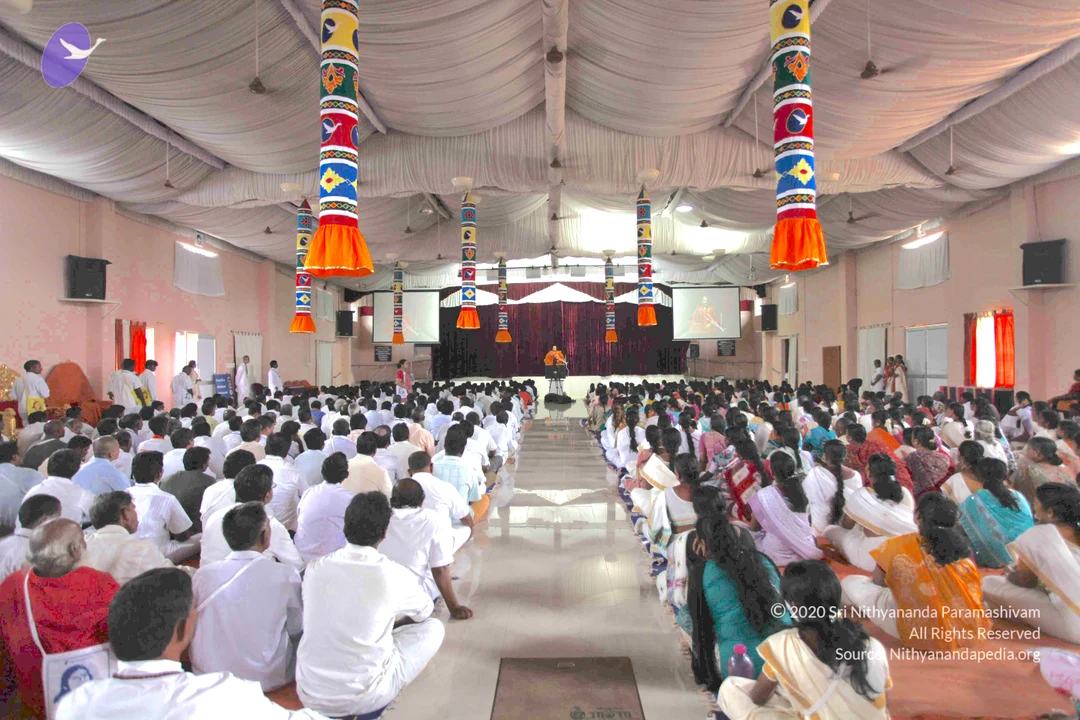
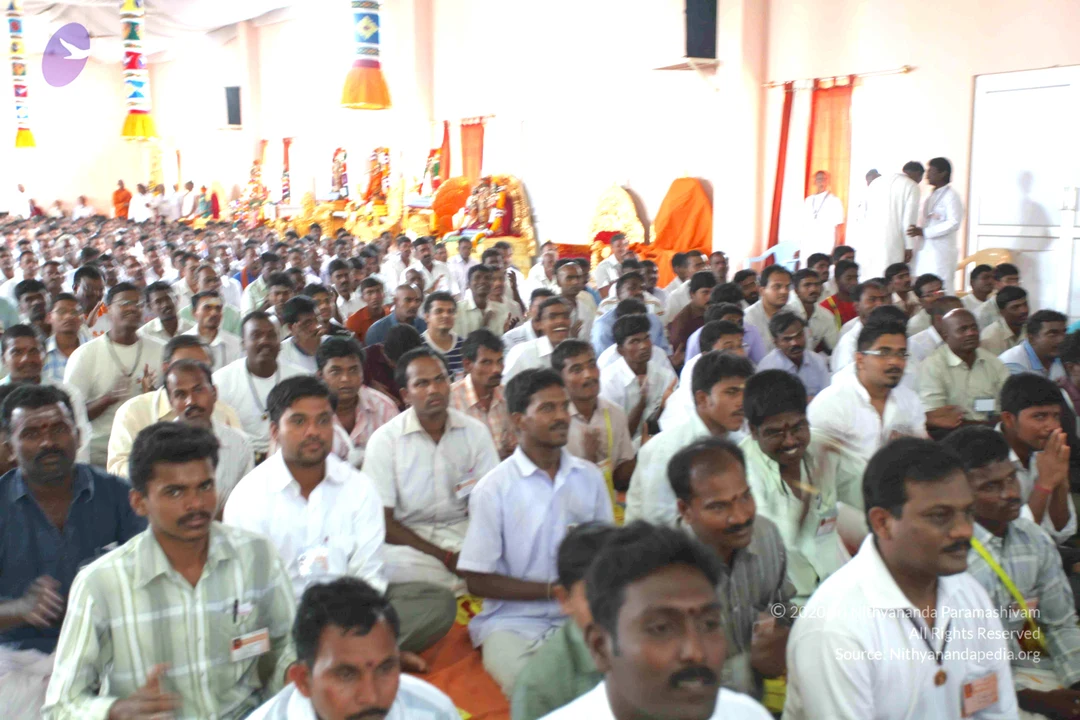
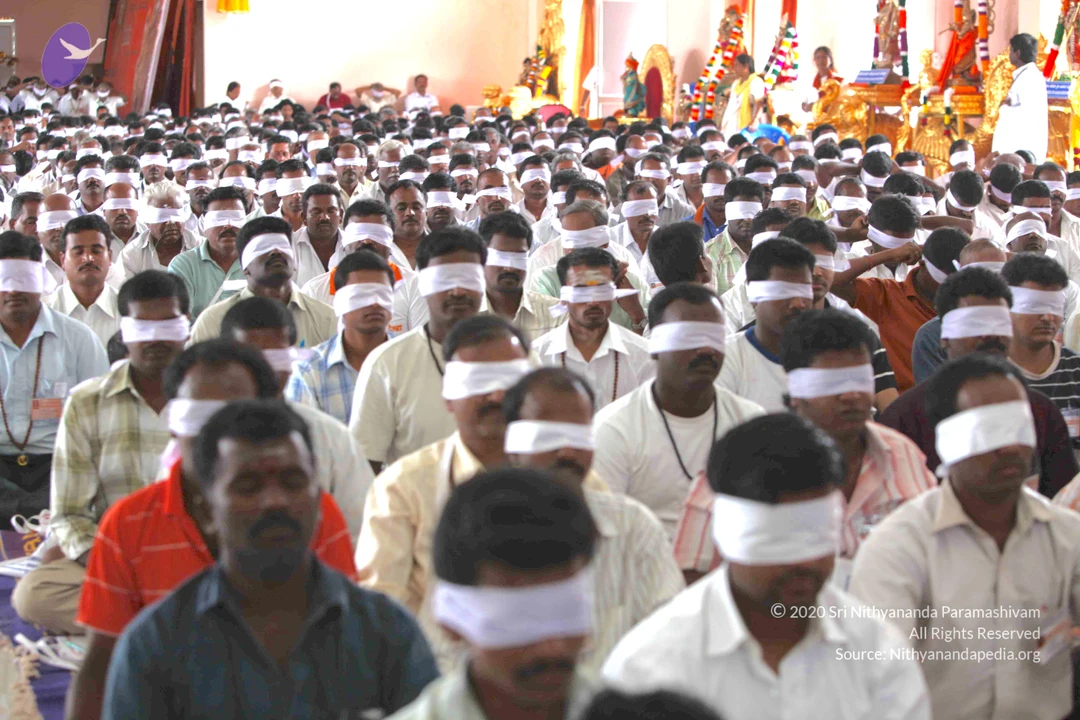
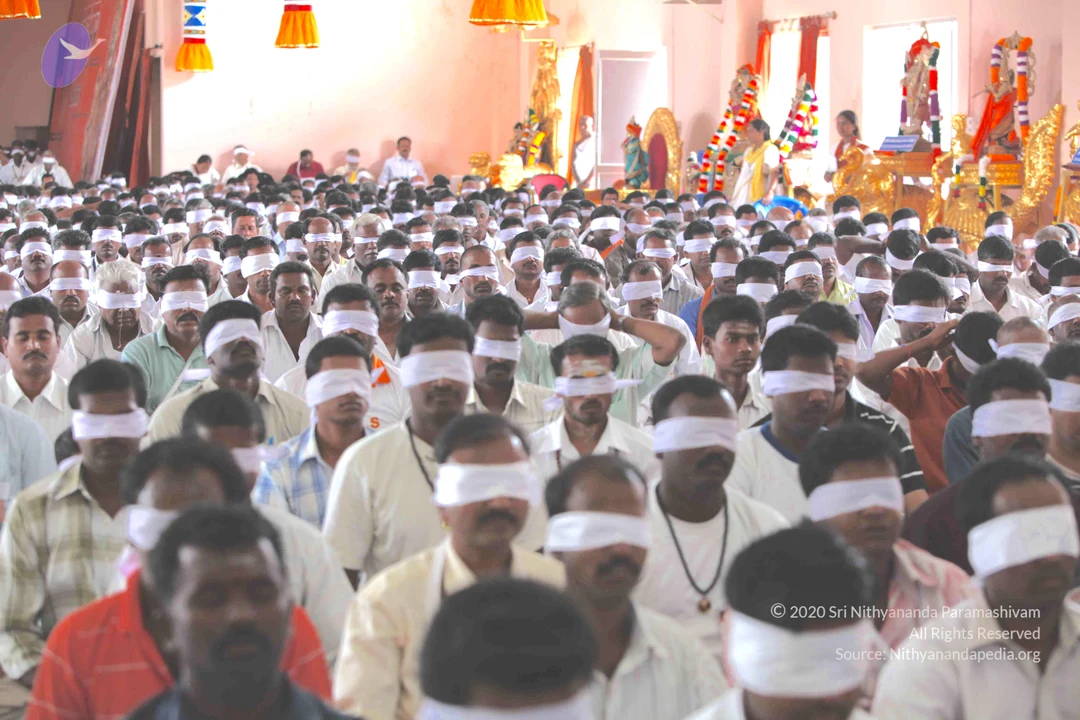
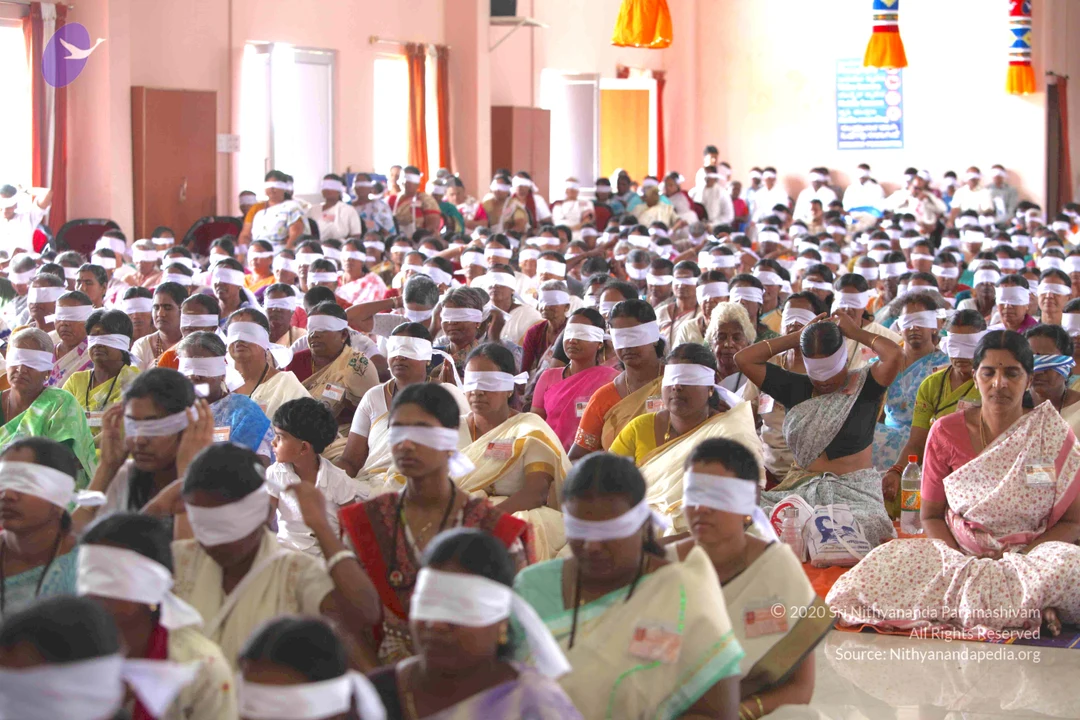
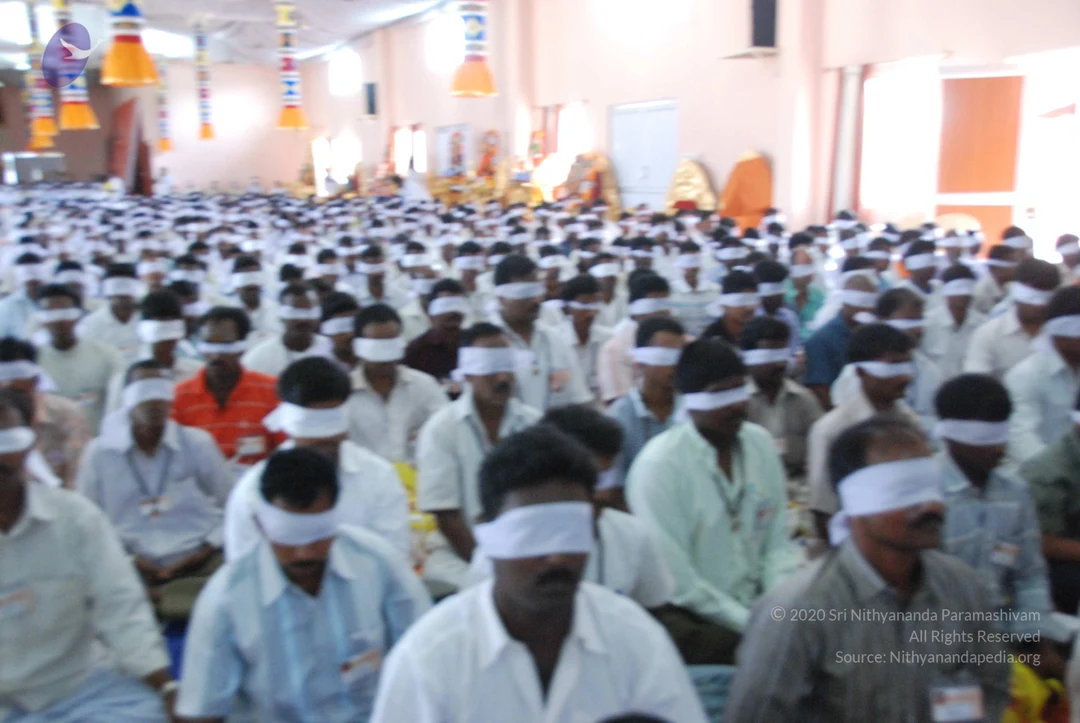
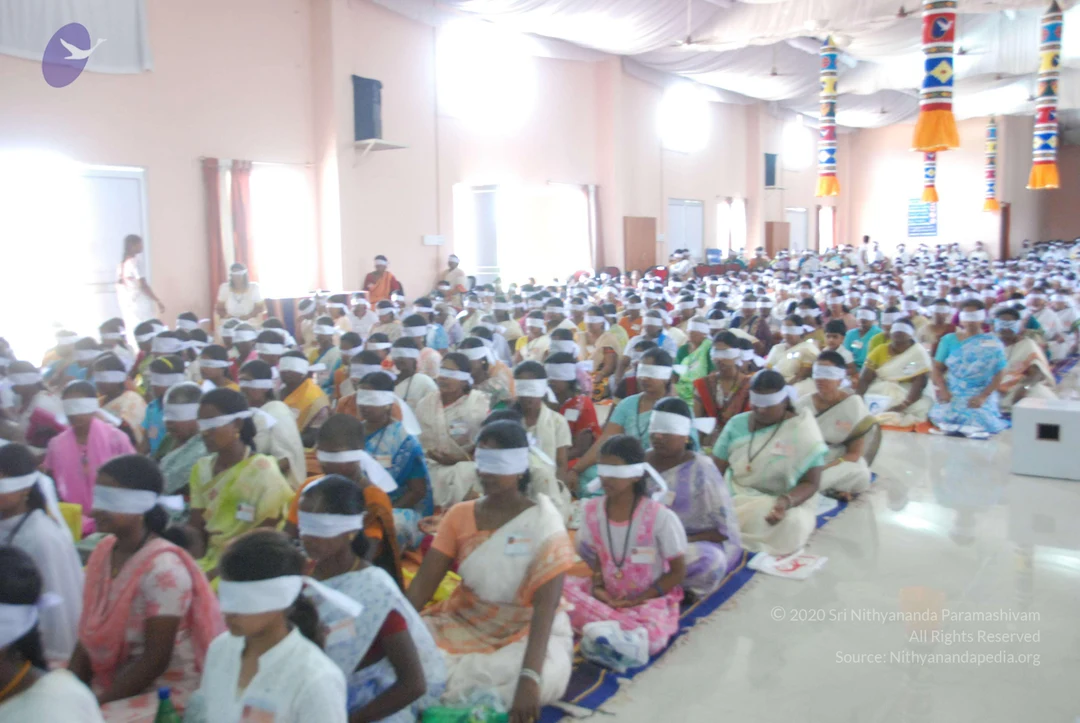
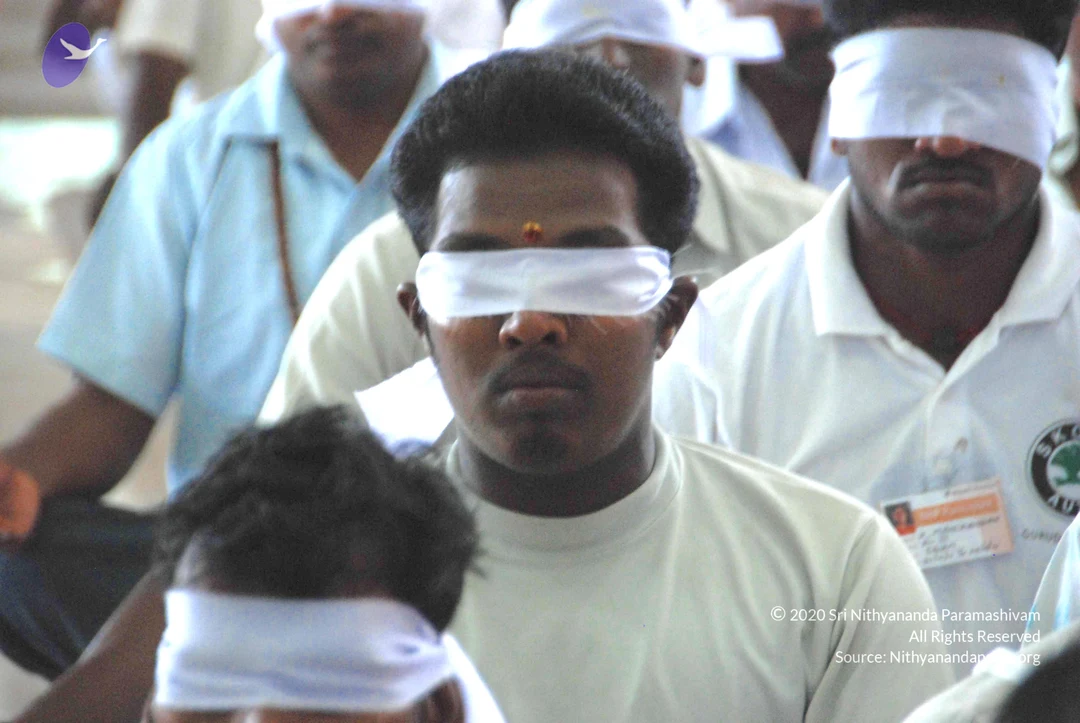
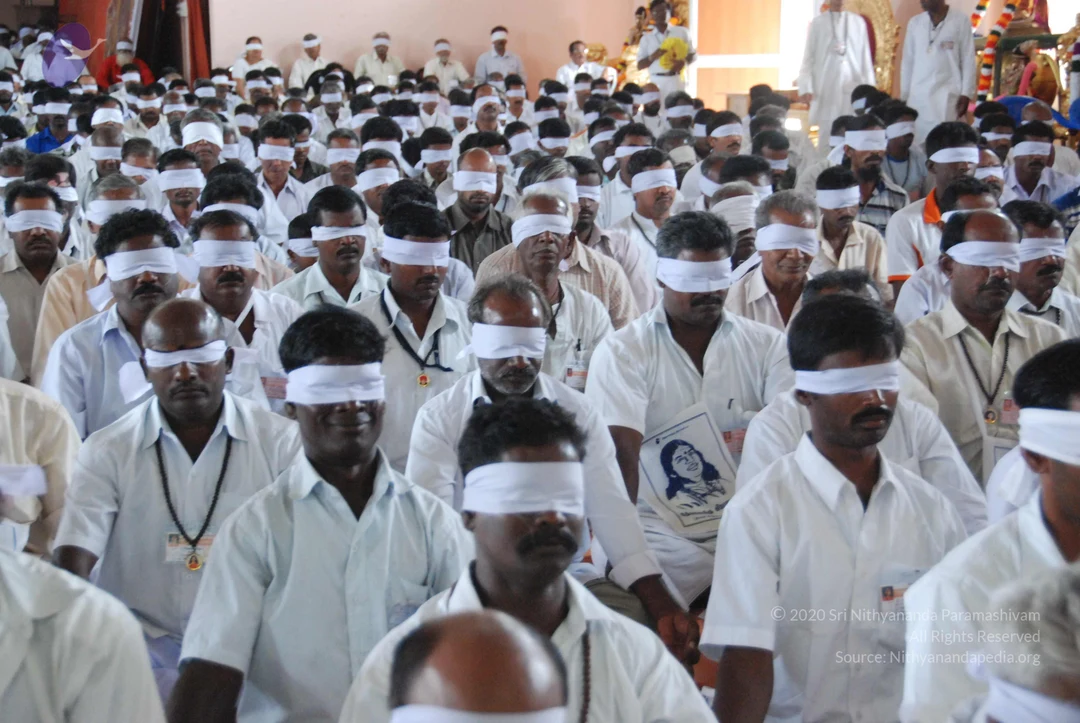
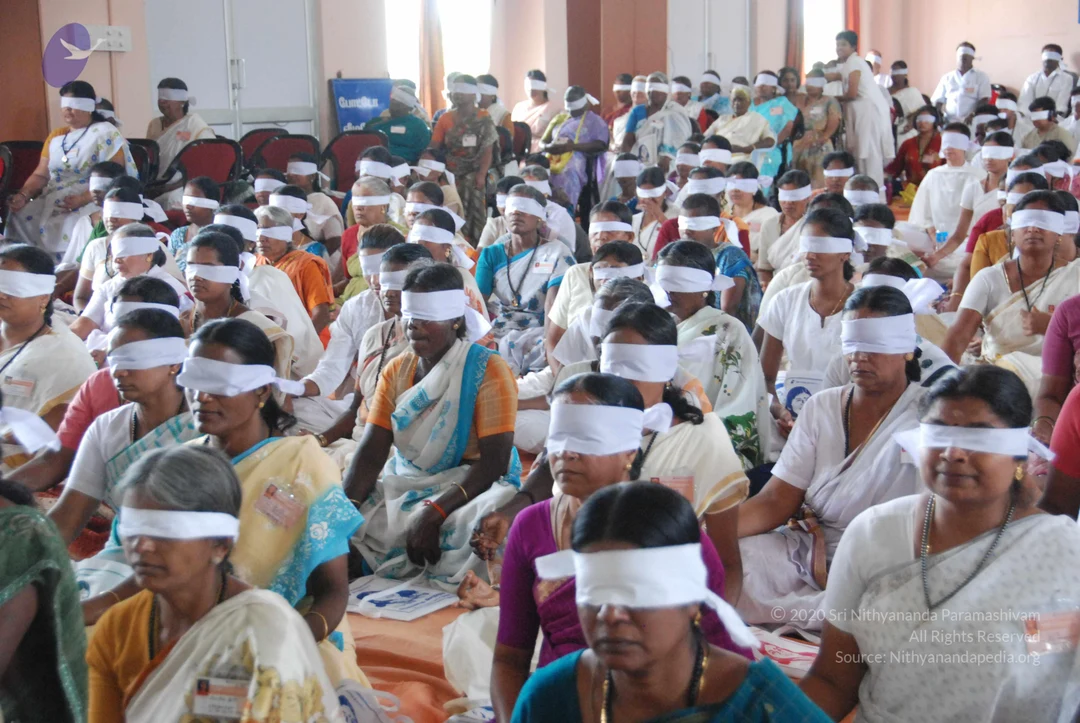
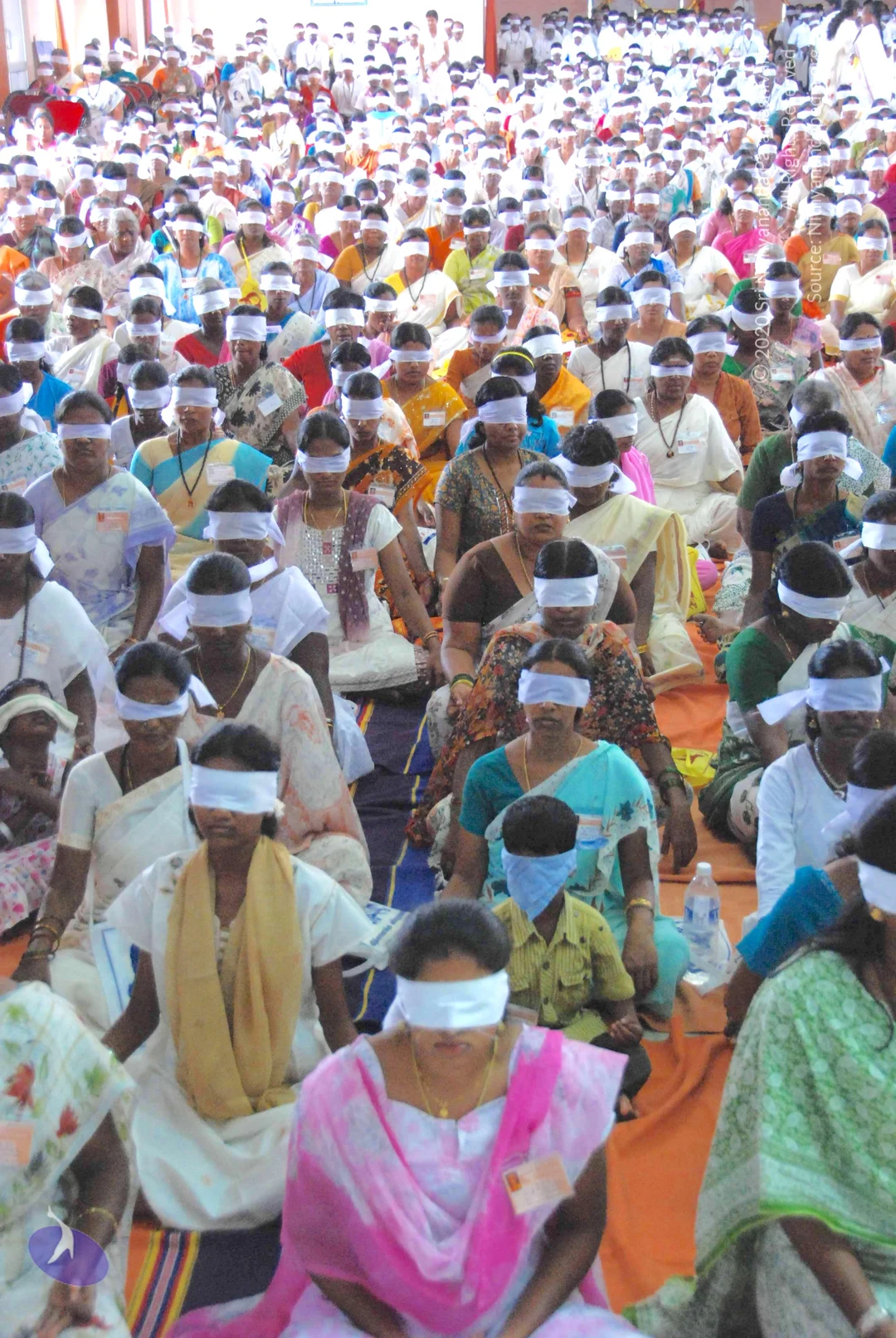
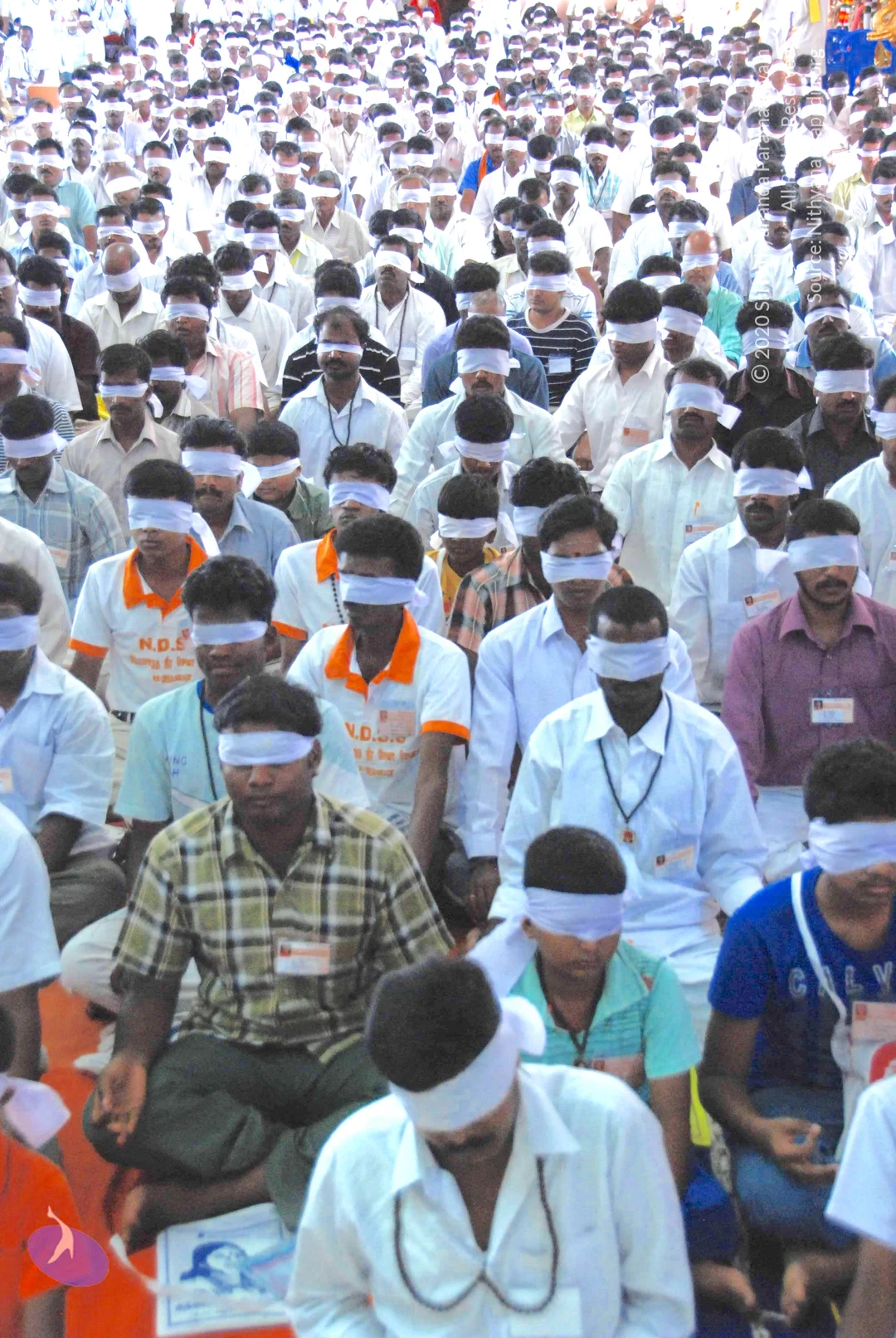
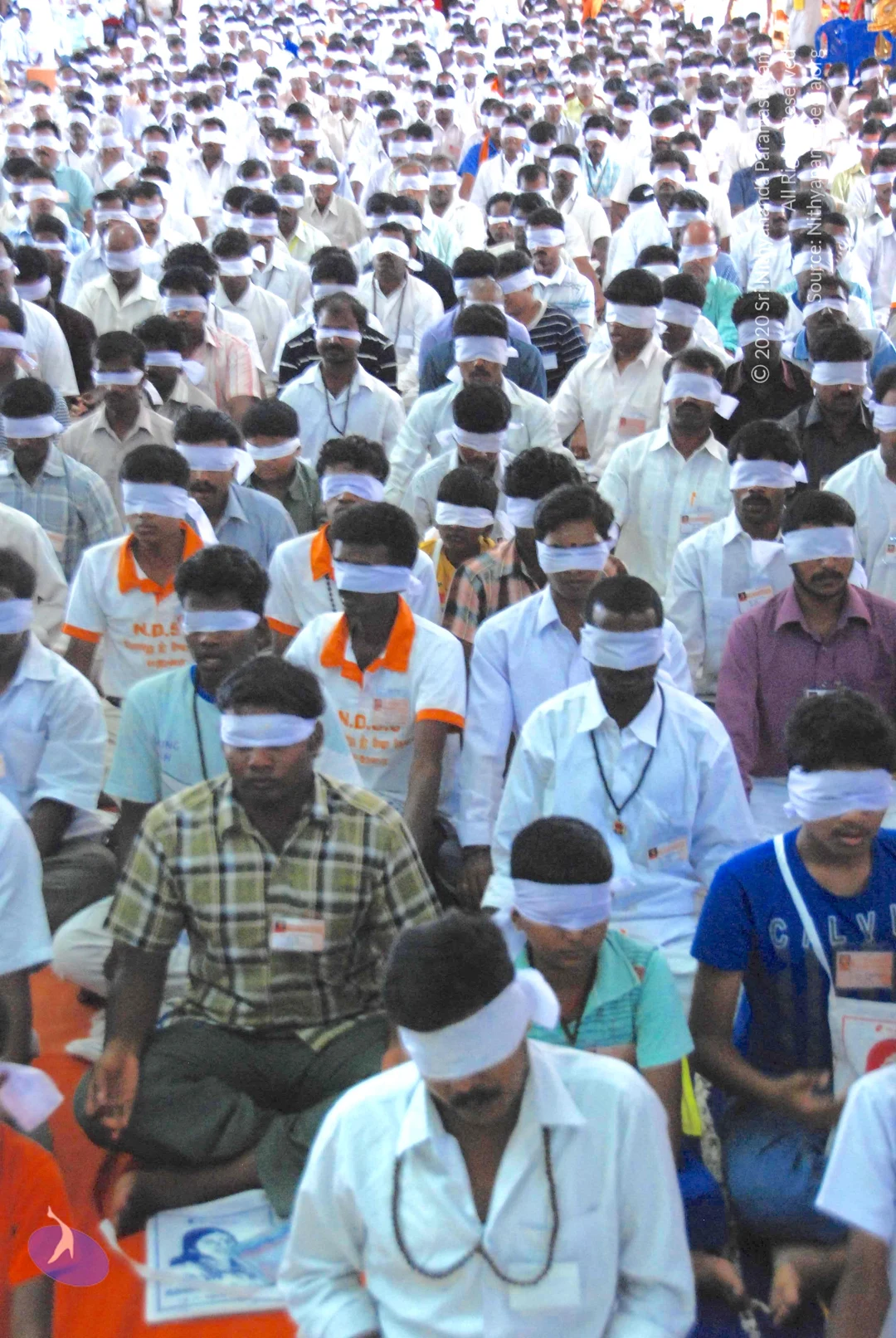
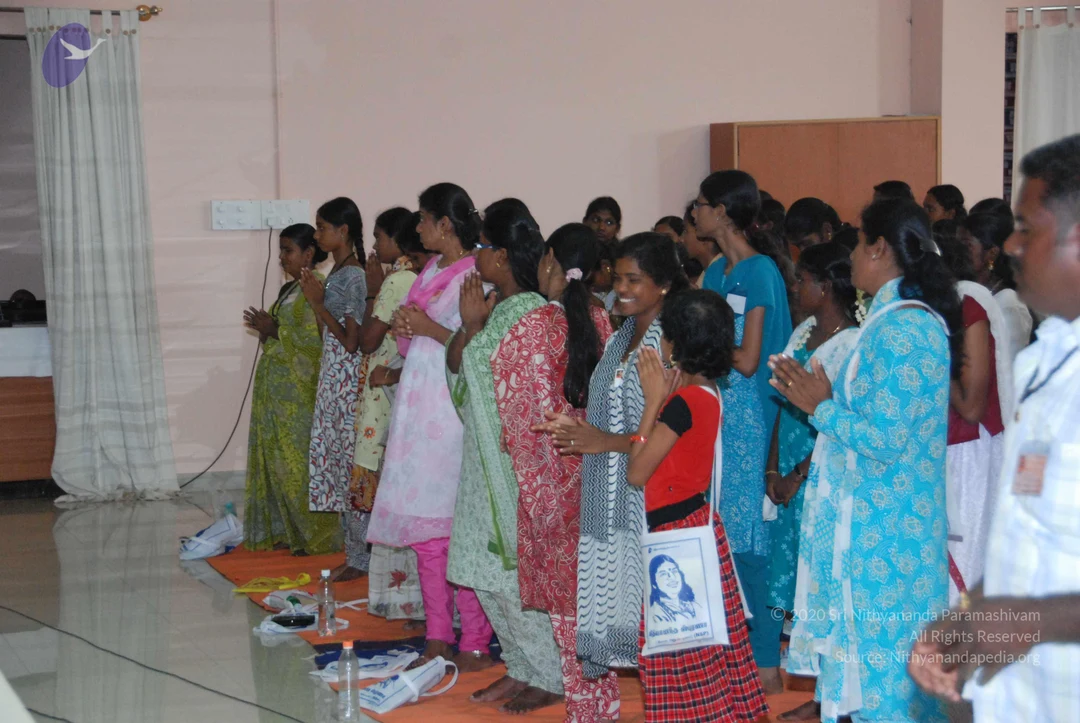
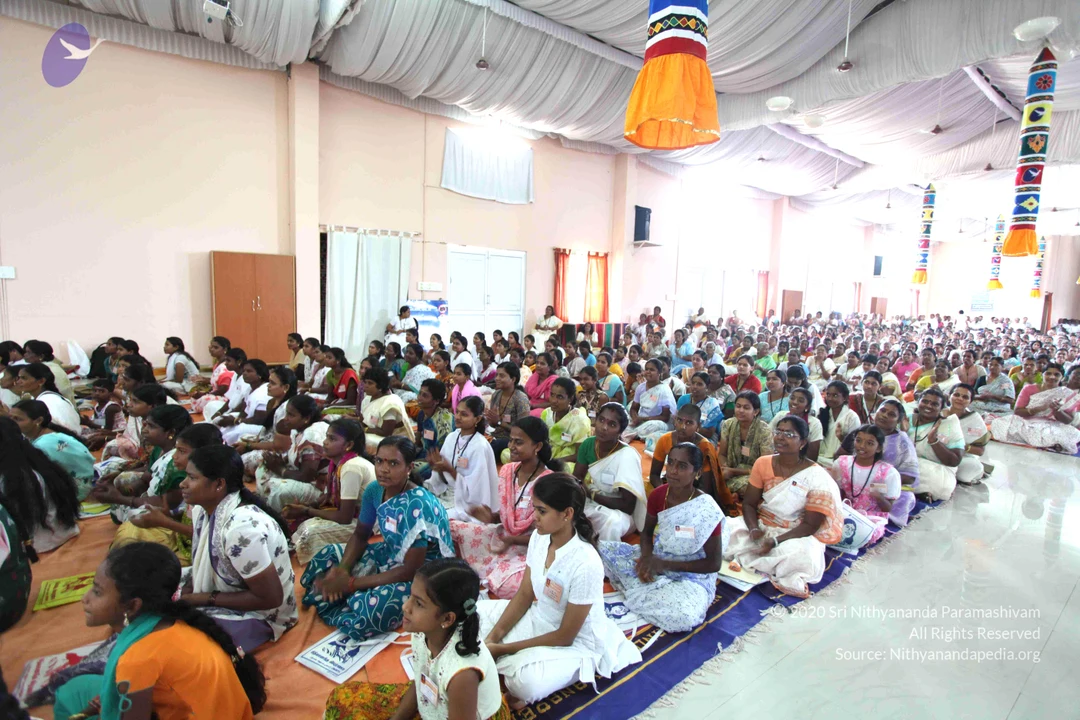
A large hall with a white fabric canopy ceiling and draped white cloth. Dozens of men sit cross-legged on a polished light floor, most in white shirts and white dhotis, facing toward the front of the room. Tall cylindrical decorative hangings with multicoloured patterns and orange tassels hang from the ceiling. Small devotional figures and offerings are visible at the far end near an orange-draped altar area, and an orange cloth panel hangs on the right wall. The seated crowd fills the foreground and middle ground.A large hall with a white draped ceiling and tall cylindrical decorative banners in red, yellow and blue hanging overhead. Rows of seated devotees, mostly men in white shirts and dhotis or trousers, sit on a polished white floor facing a stage area at the back, where floral decorations and a deity murti are visible. Some men wear white shirts with light-striped collared shirts nearby. A small white monitor and speaker are mounted on the wall. The audience appears attentive during a satsang gathering.A shaved-headed man in an orange-saffron sannyasi robe with a maroon-edged shawl draped over his shoulder speaks into a silver microphone on a stand. He has a small red bindi on his forehead. Behind him hangs deep maroon velvet drapery. The setting suggests a public satsang talk. Whether he is a person cannot be determined from appearance alone, so he is described by role as a speaker in saffron robes.A shaved-headed man in an orange saffron robe with a maroon-edged shawl stands speaking into a silver microphone on a stand. He has a red bindi on his forehead. Behind him hangs a deep maroon velvet curtain. The photograph is a close-up of his upper body and face.A large seated congregation of men fills a hall, most wearing white cloth blindfolds tied over their eyes. Many wear white shirts, with a few in light blue, green, and red-orange shirts. Some have lanyard badges around their necks. Behind them at the far end, colourful hanging tassel decorations line the ceiling, and a golden figure and a deity murti stand near an orange-draped altar area. The scene suggests a meditation or initiation session with participants blindfolded.A large hall filled with hundreds of seated participants, most wearing white cloth blindfolds tied across their eyes. Women in cream, orange, pink, blue and green saris and salwar kameez sit cross-legged on blue mats over a light floor. Many wear lanyards or necklaces. Colourful hanging tassels decorate the pale pink walls and ceiling. Near the front, a figure in saffron-orange robes stands among the rows, and a woman in white stands at the left wall. A white speaker box sits at the right front edge. The scene appears to be a guided group practice, though no specific programme name is visible in the frame.
October 21 2010

3 photosView all
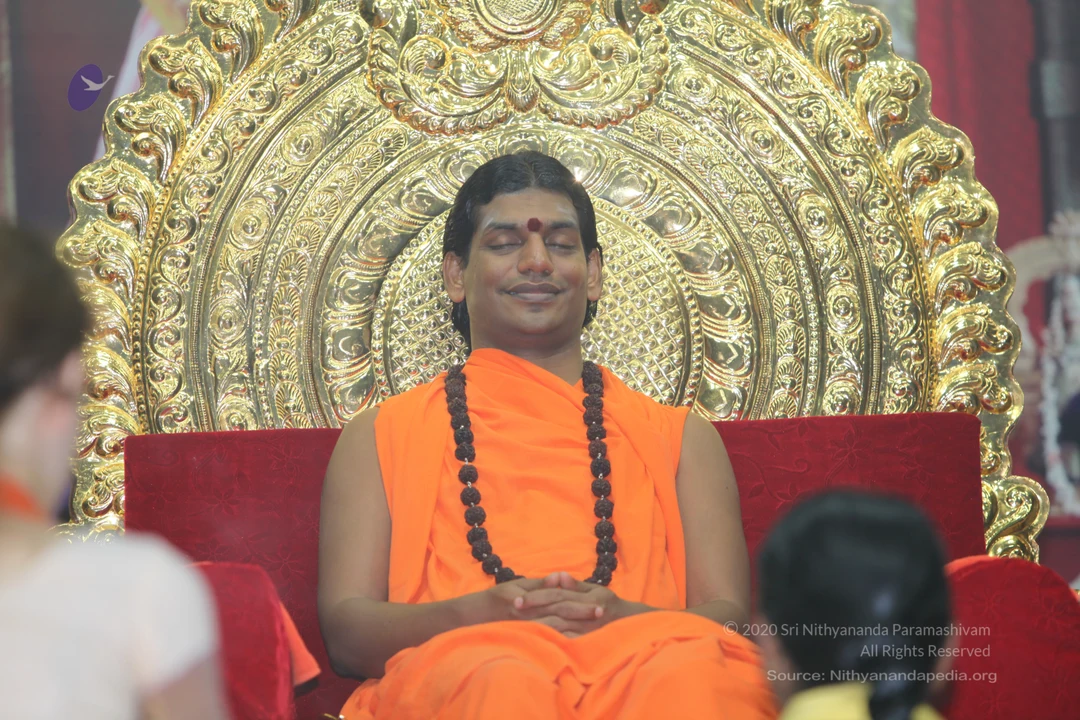
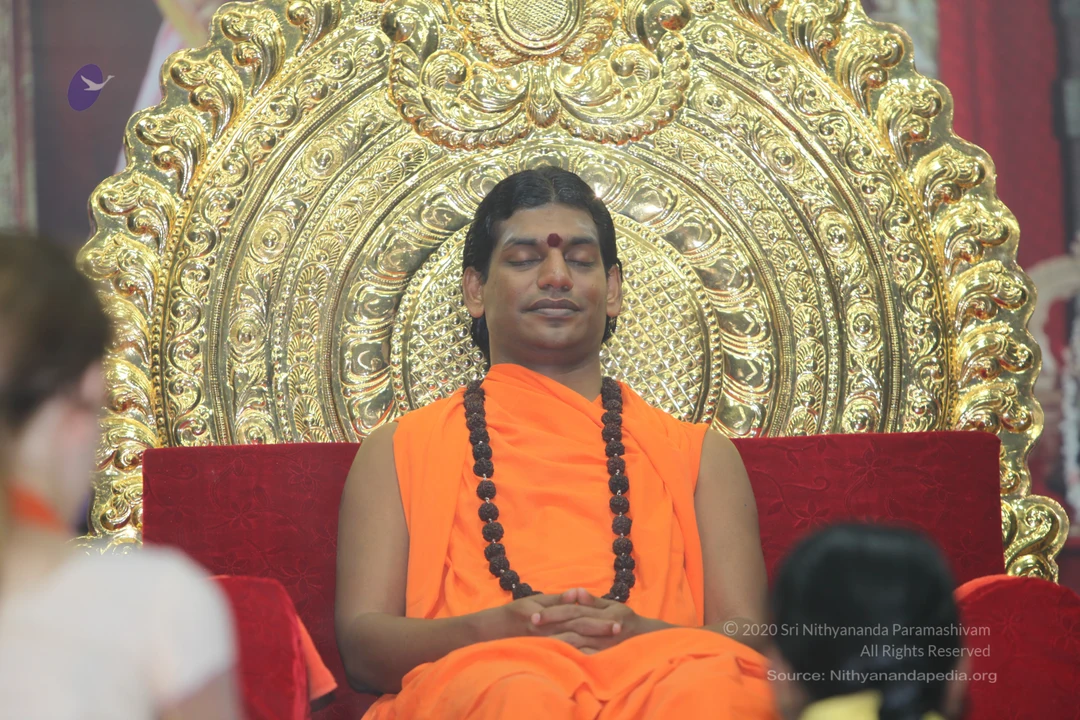
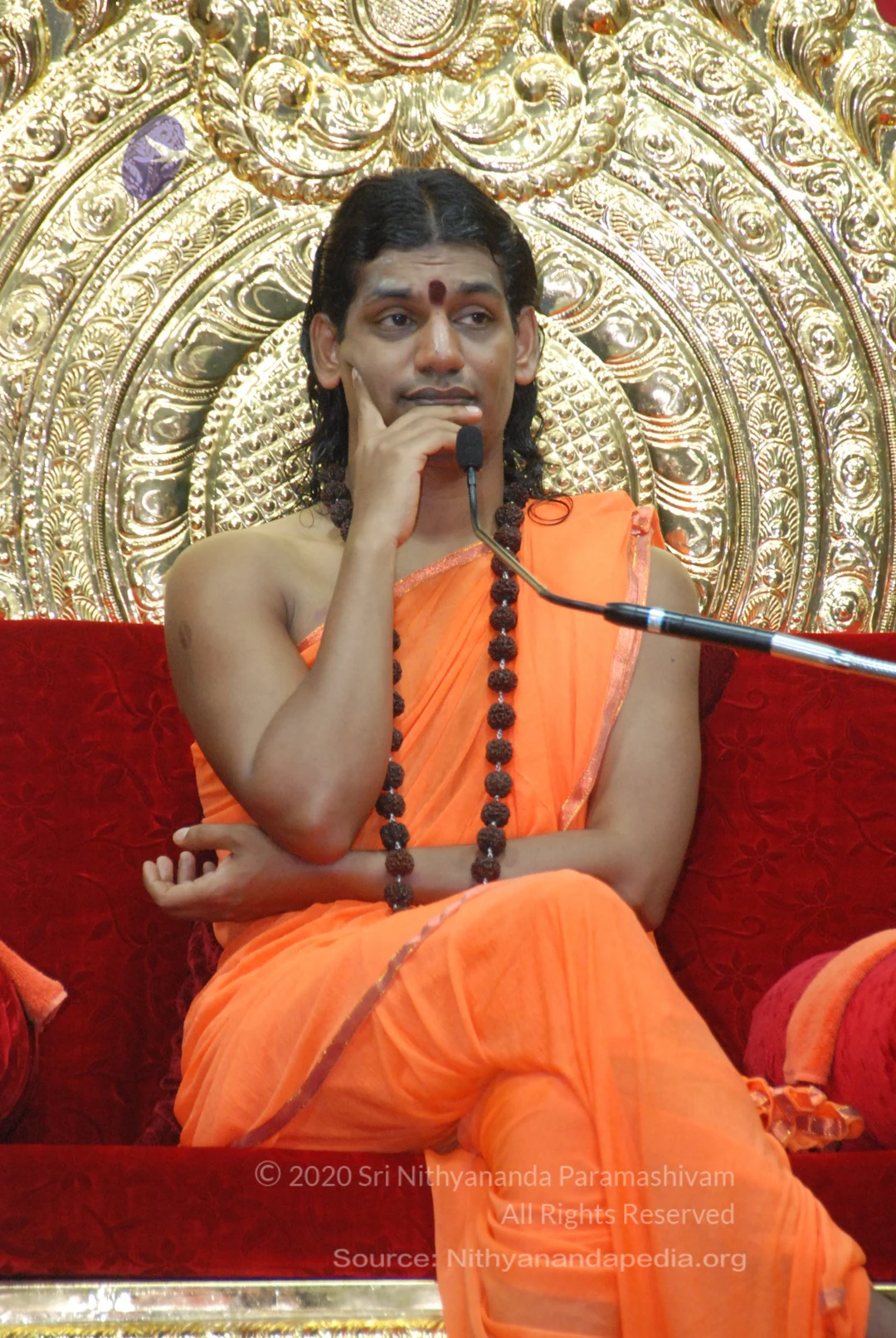
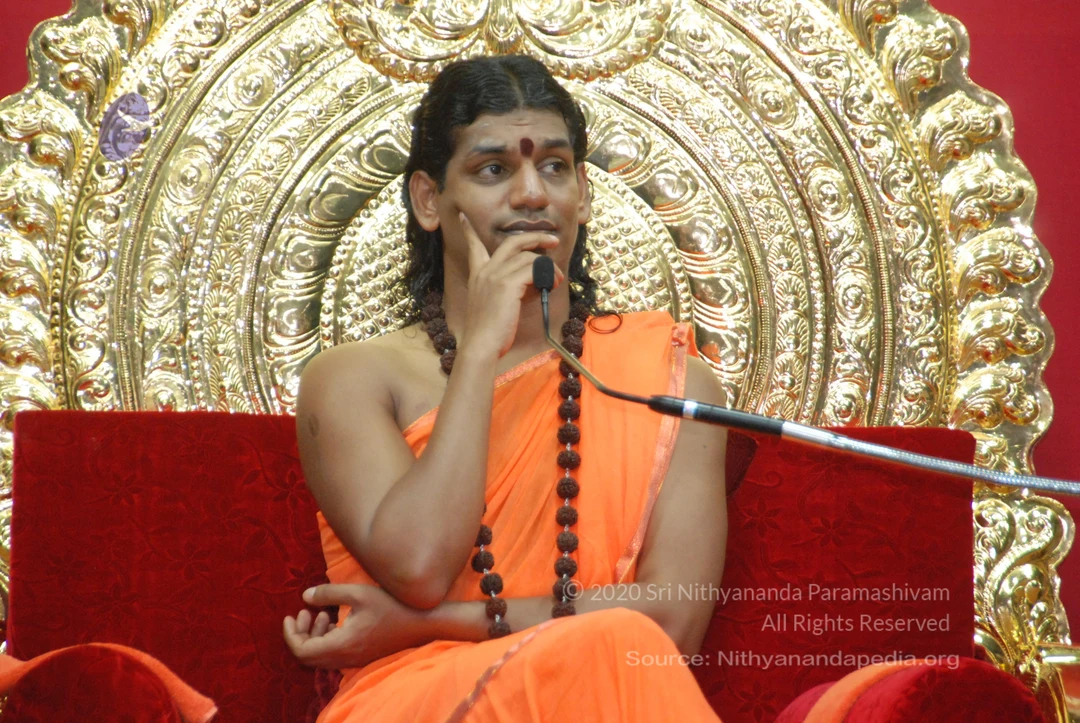
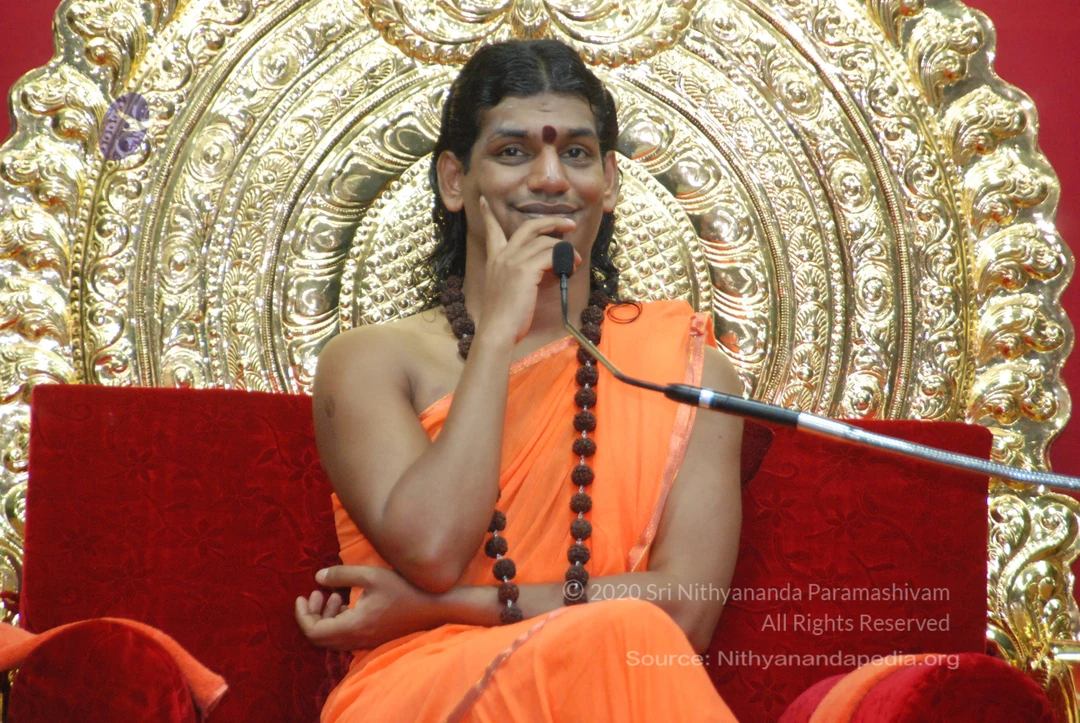
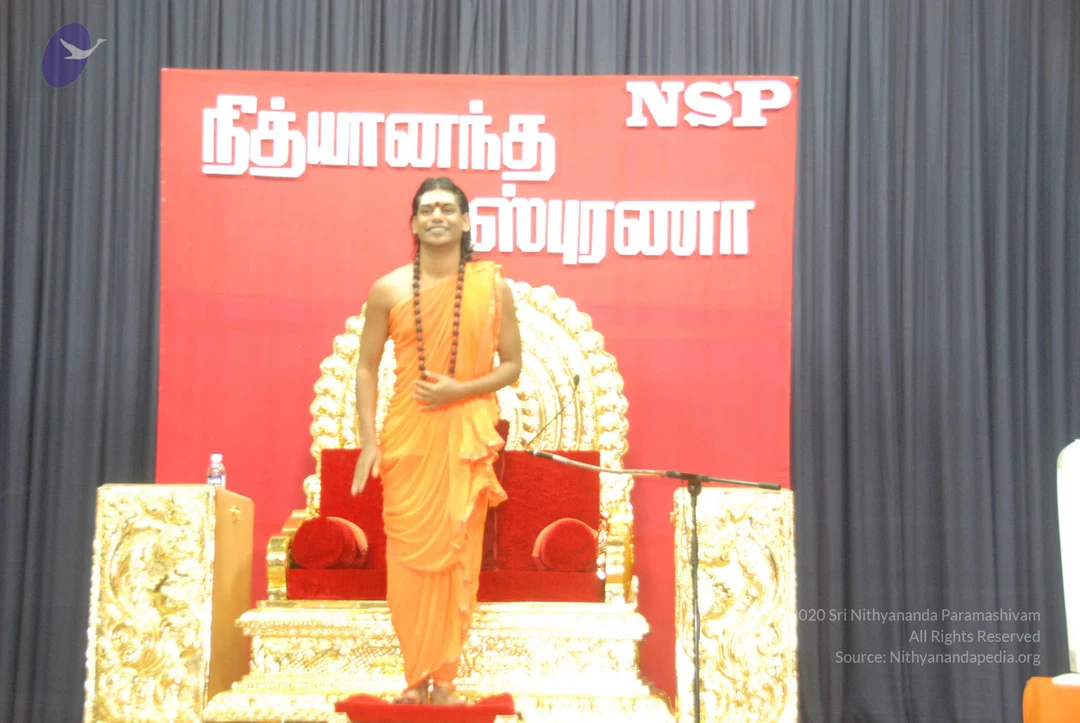
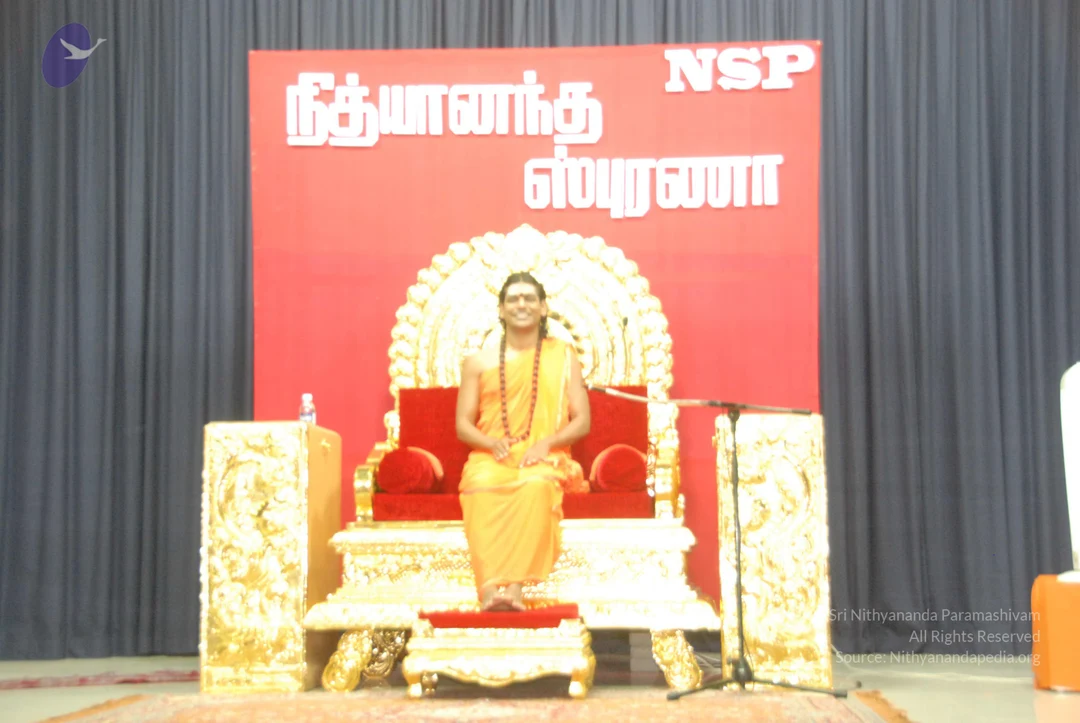
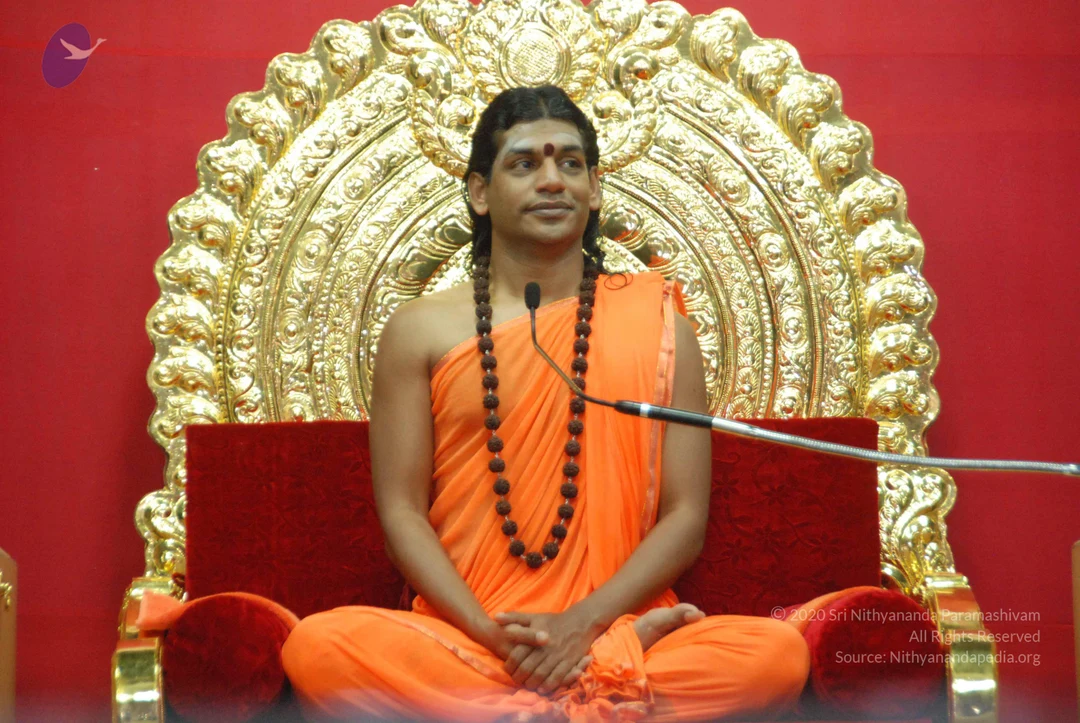
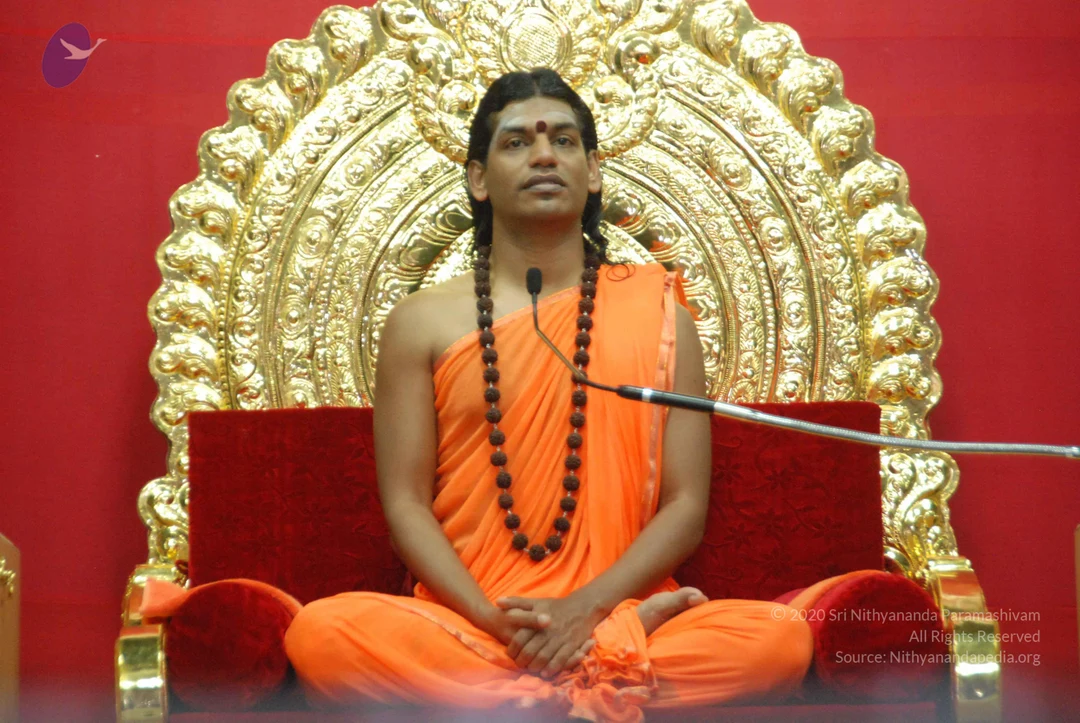
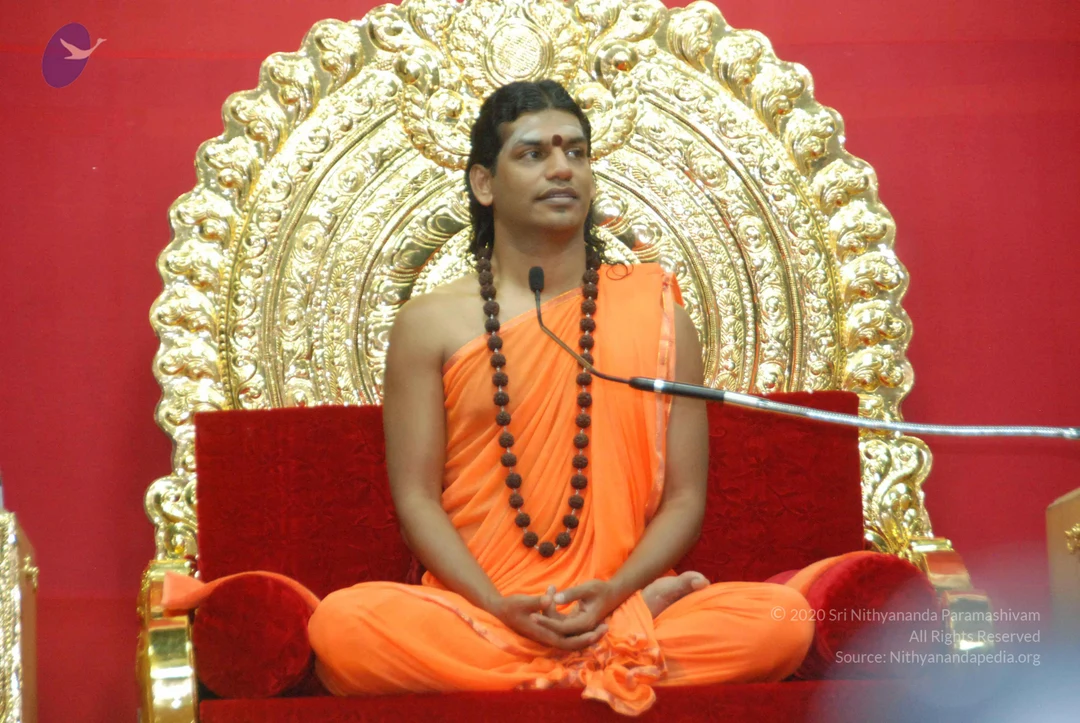
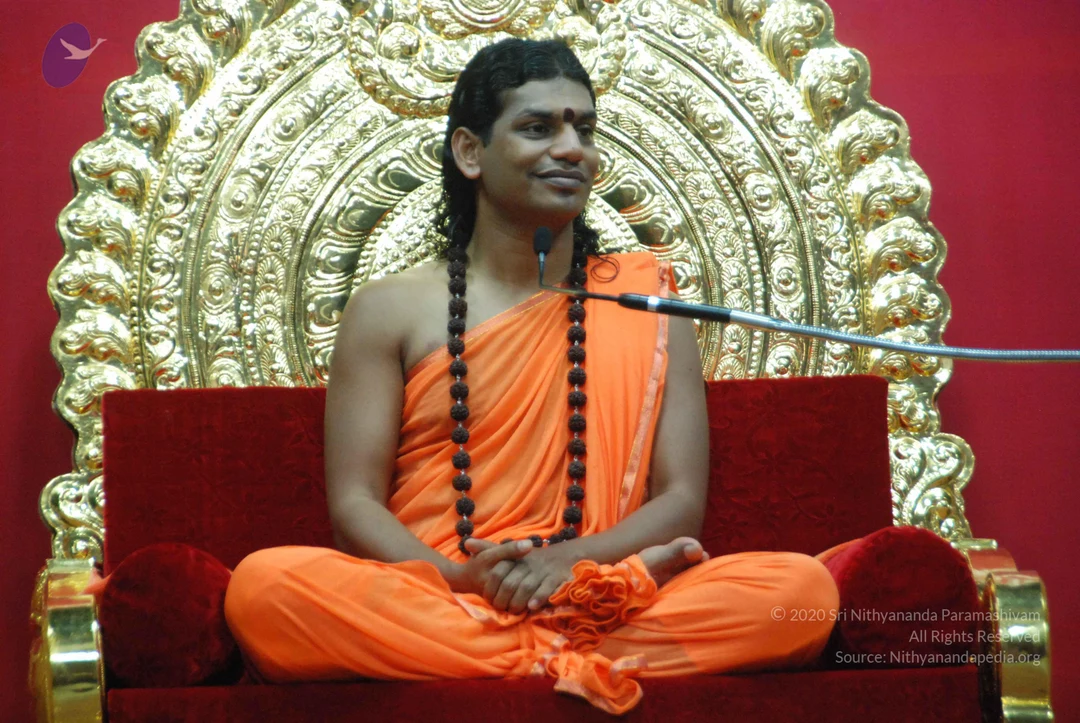
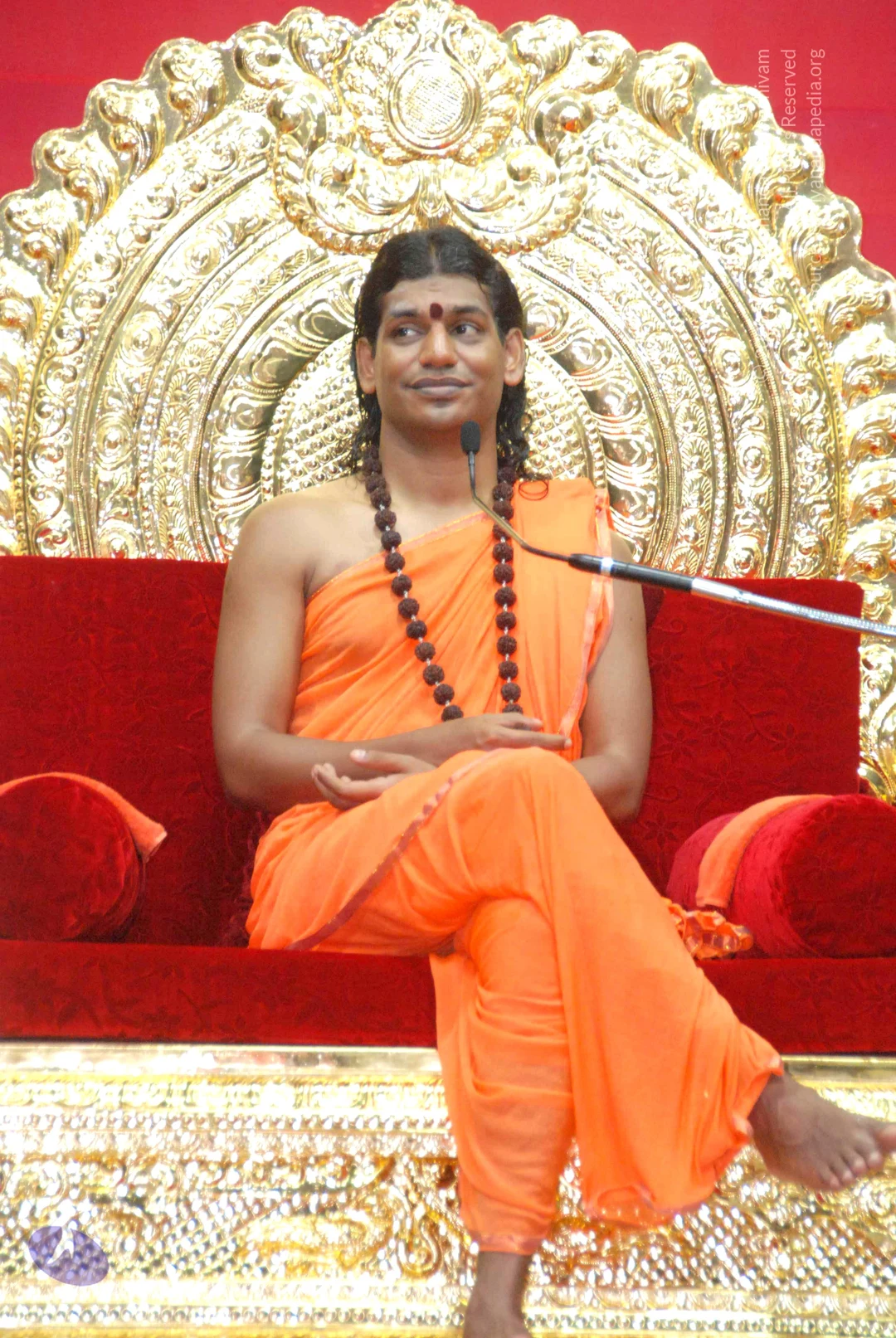
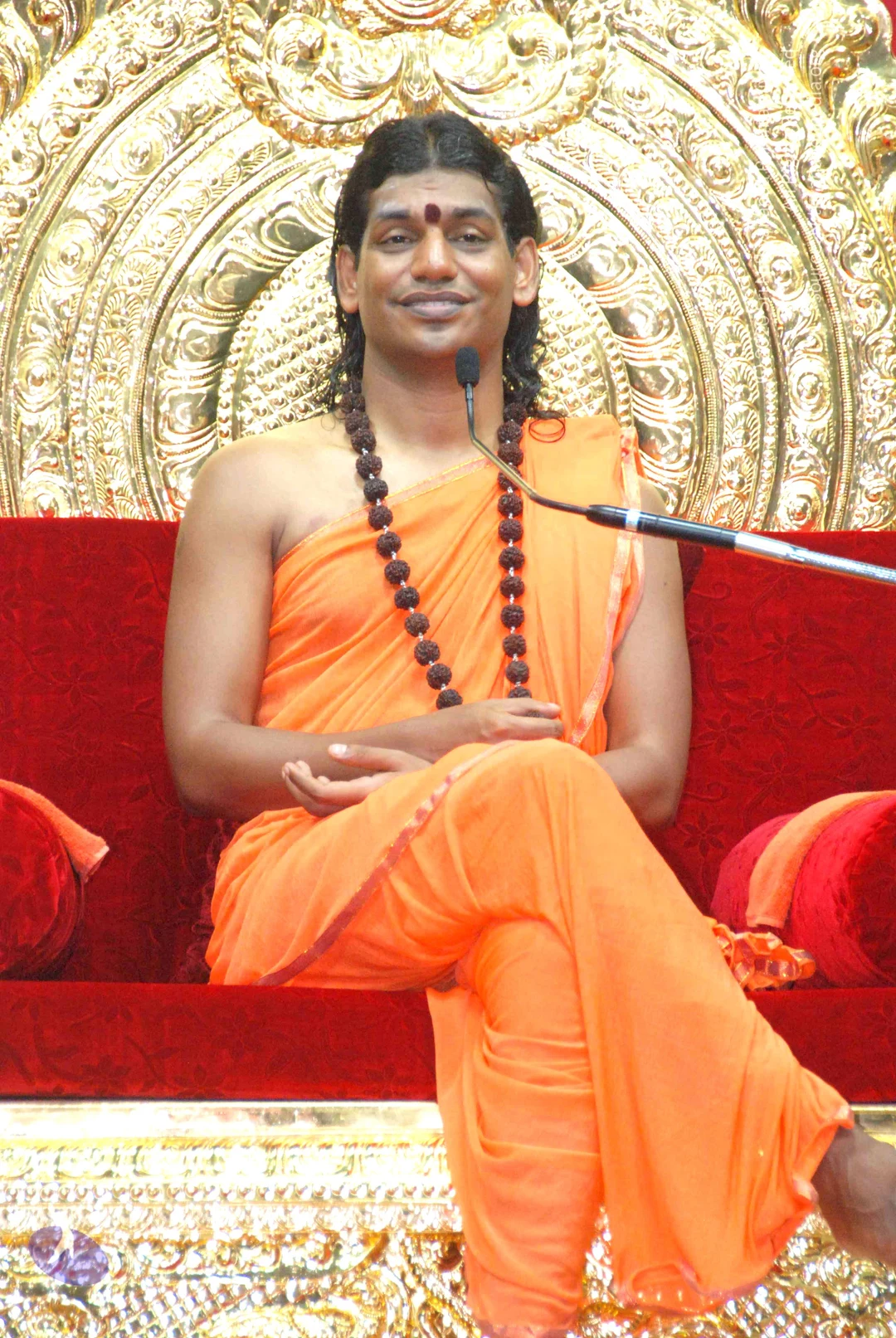
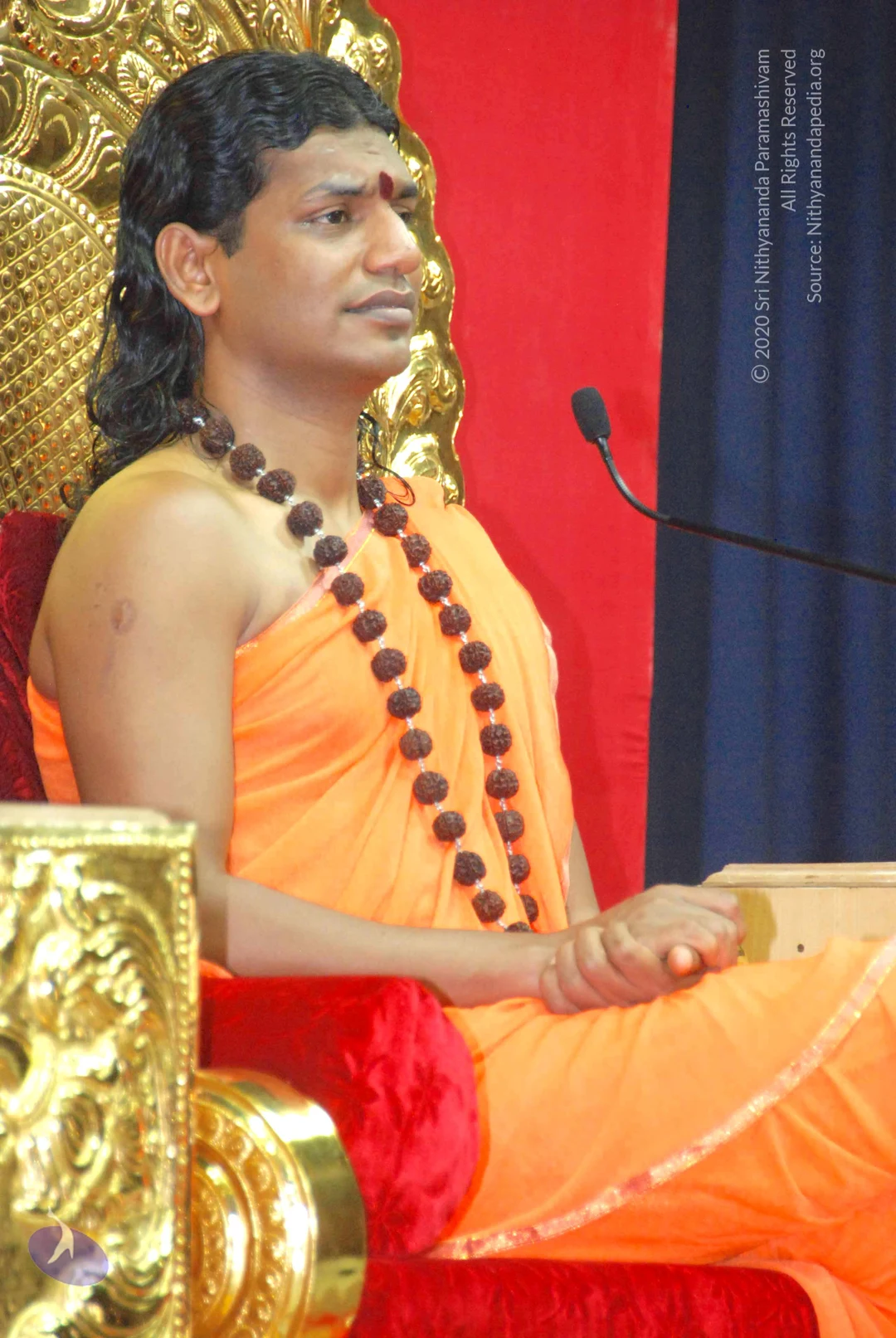
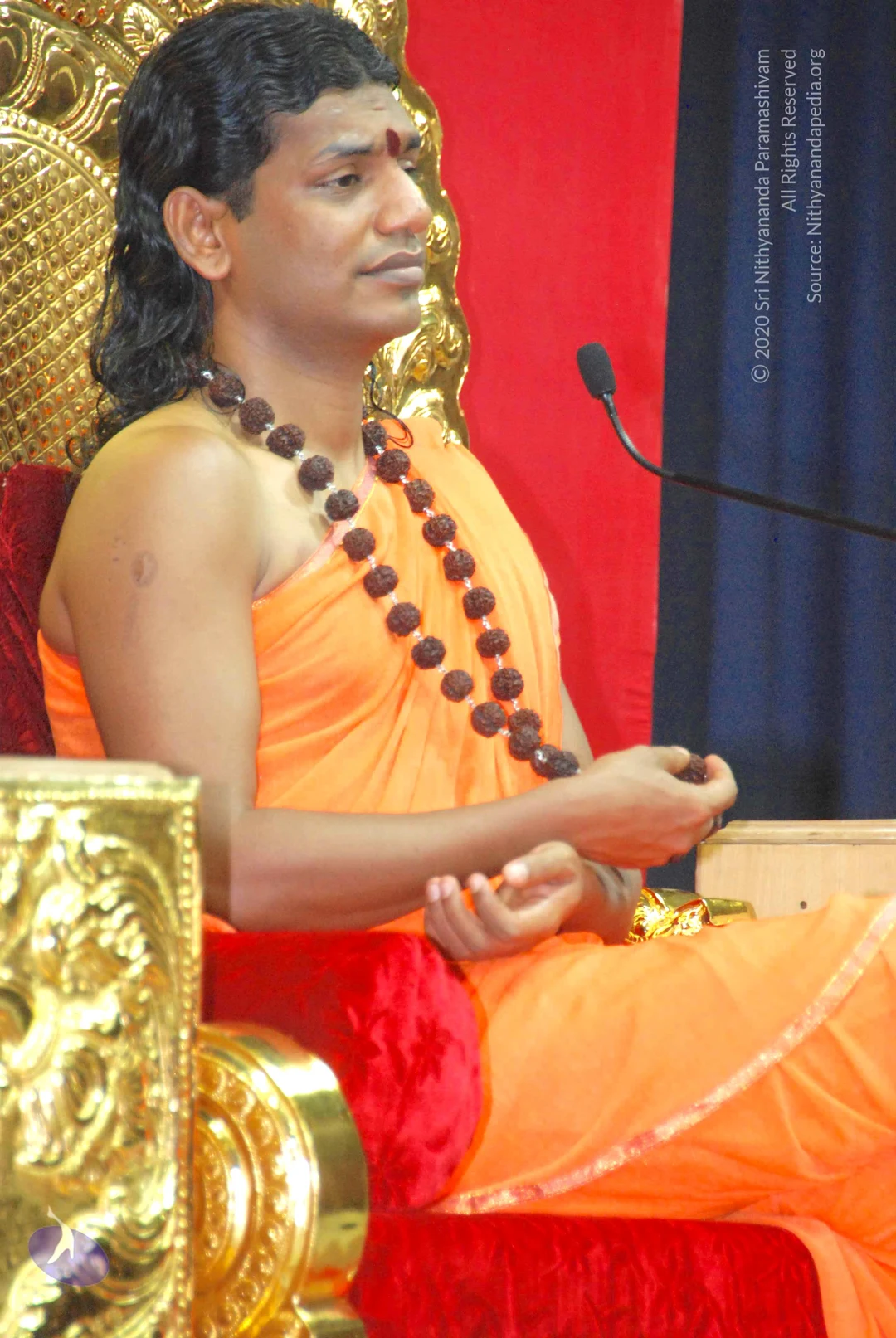
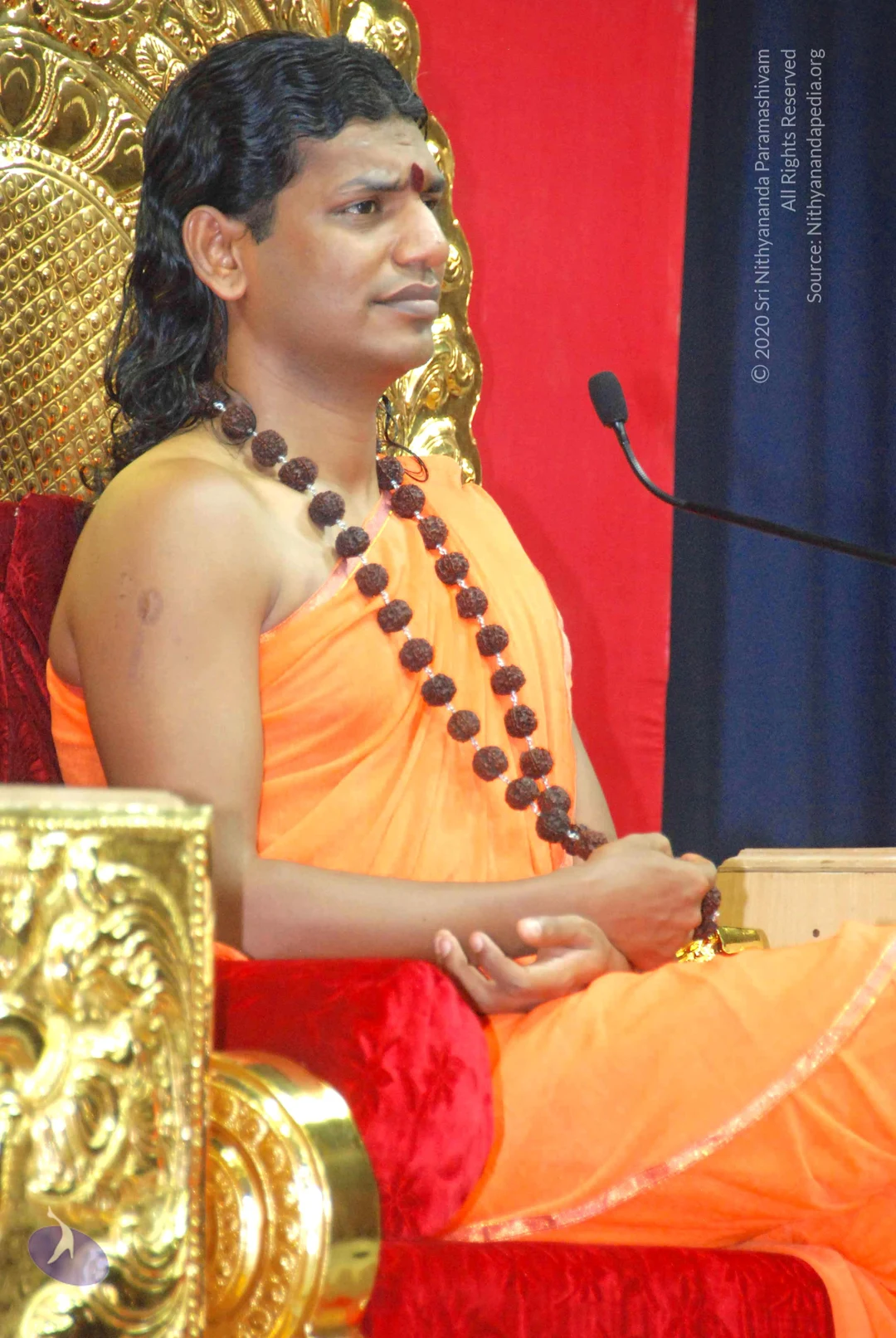
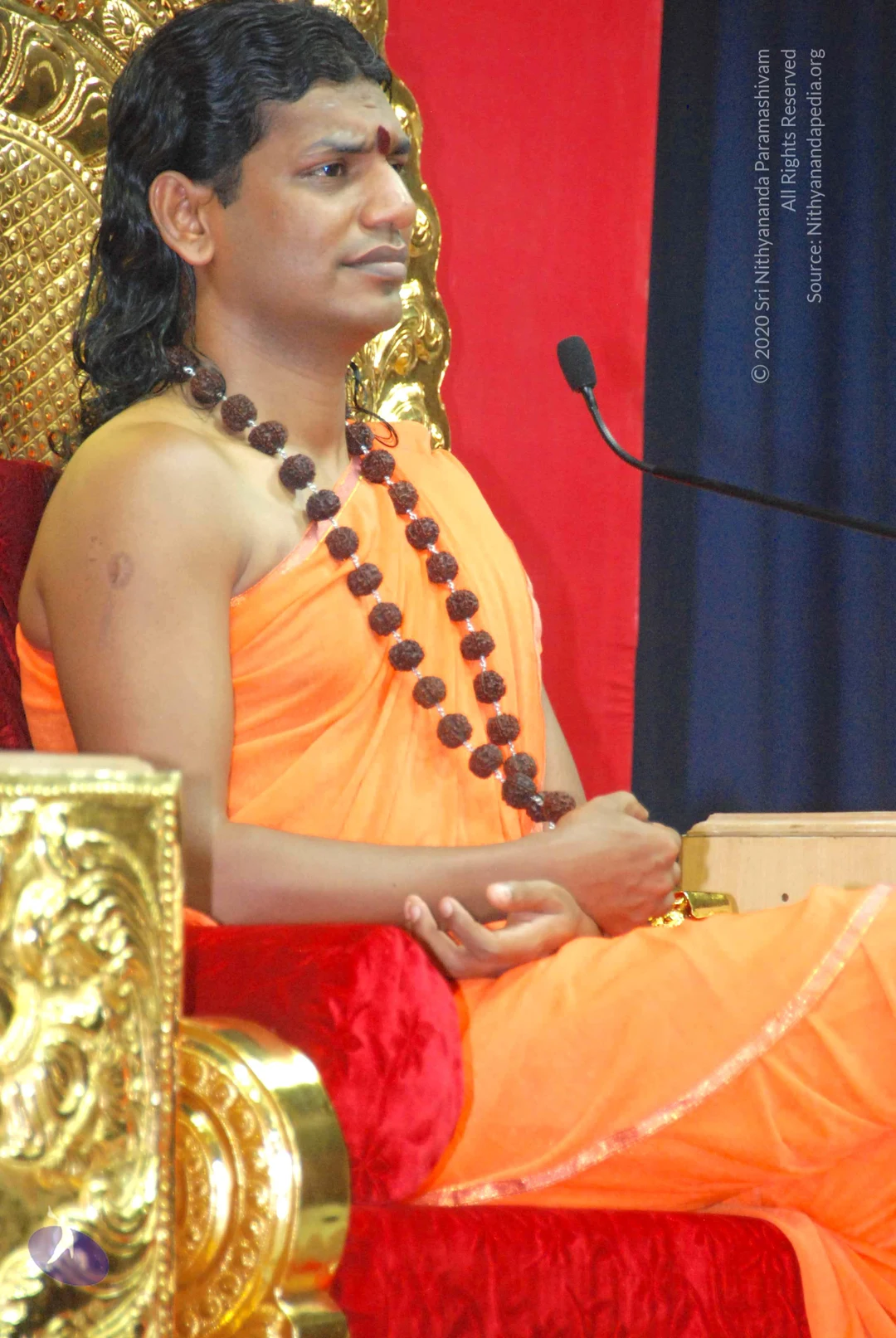
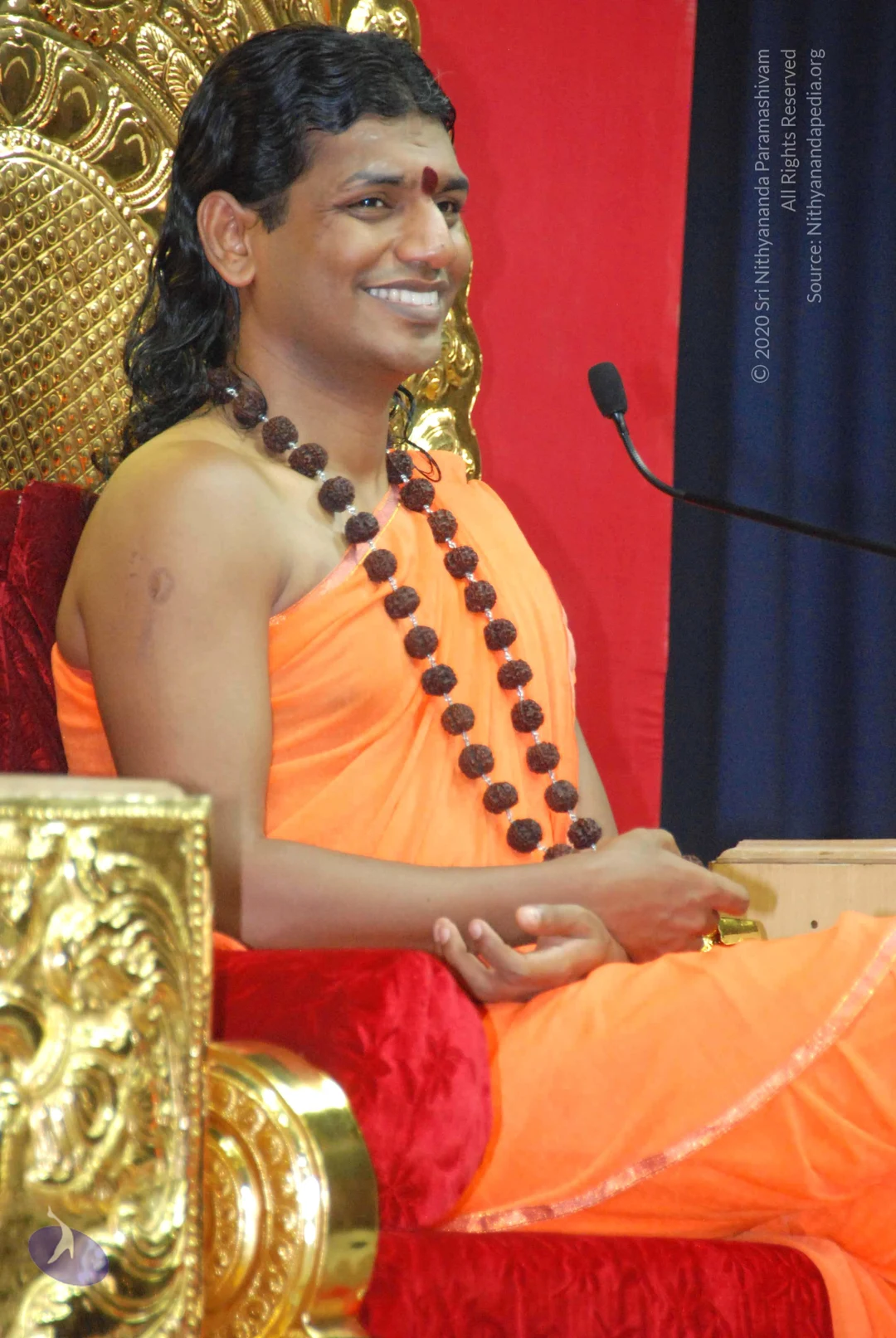
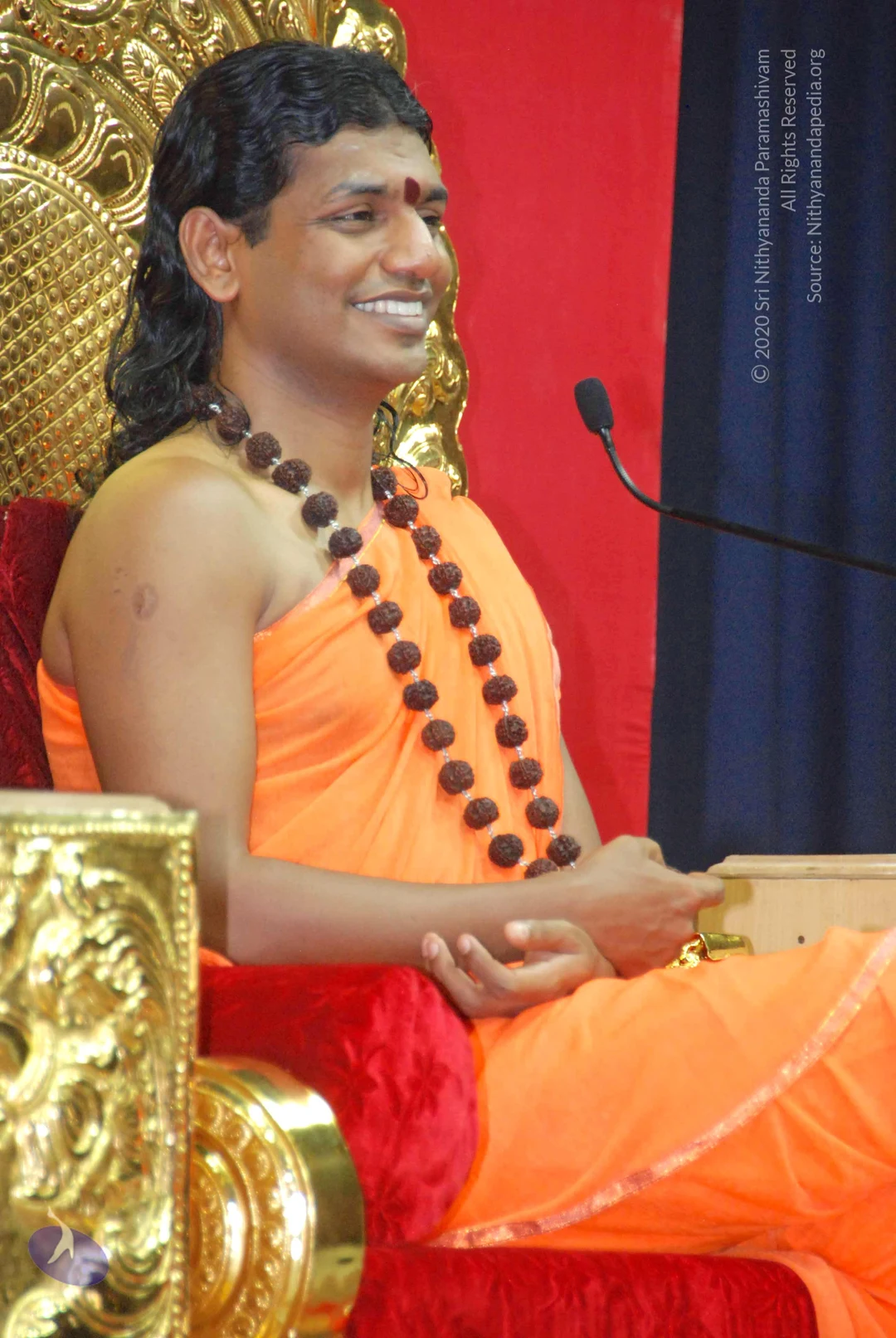
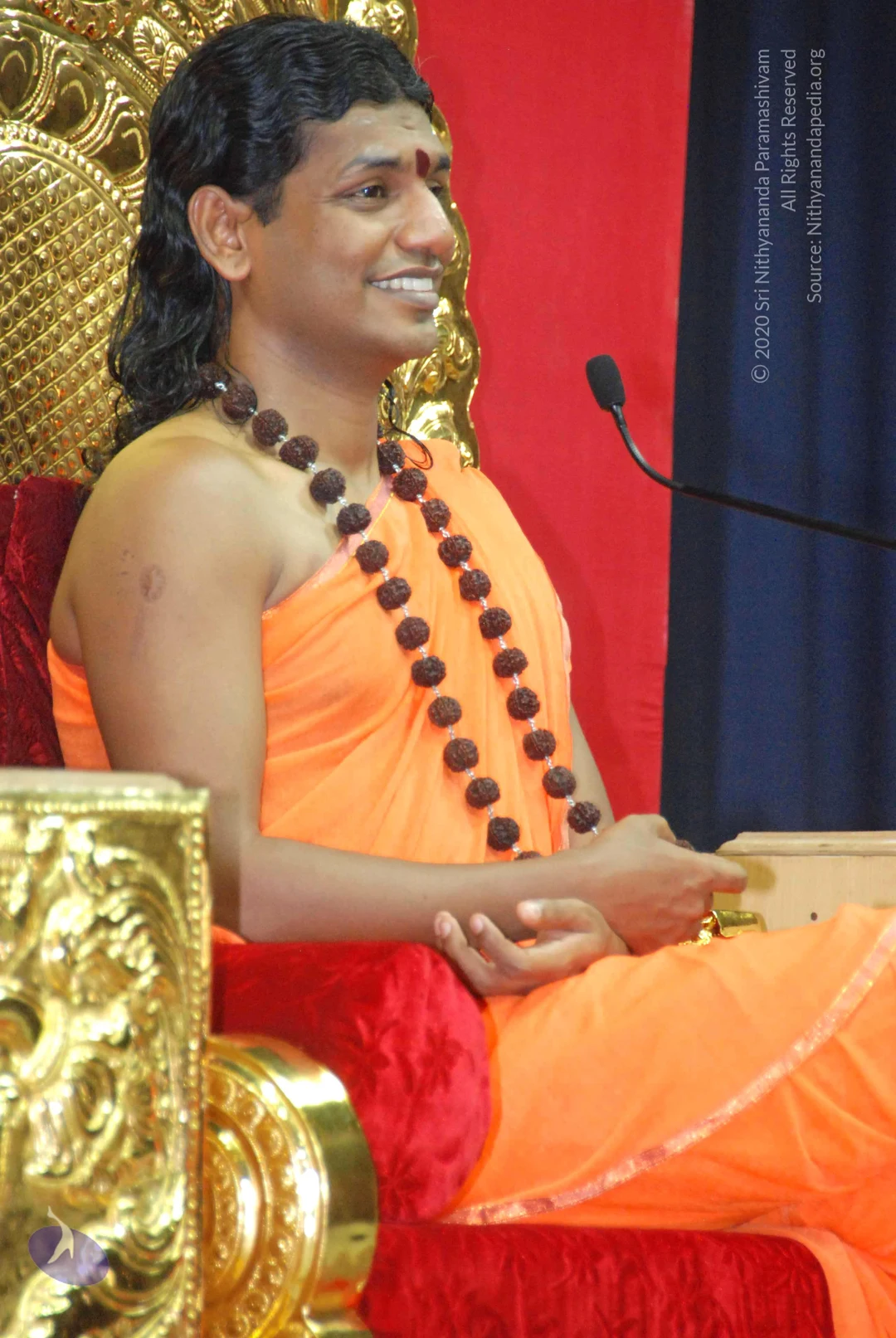
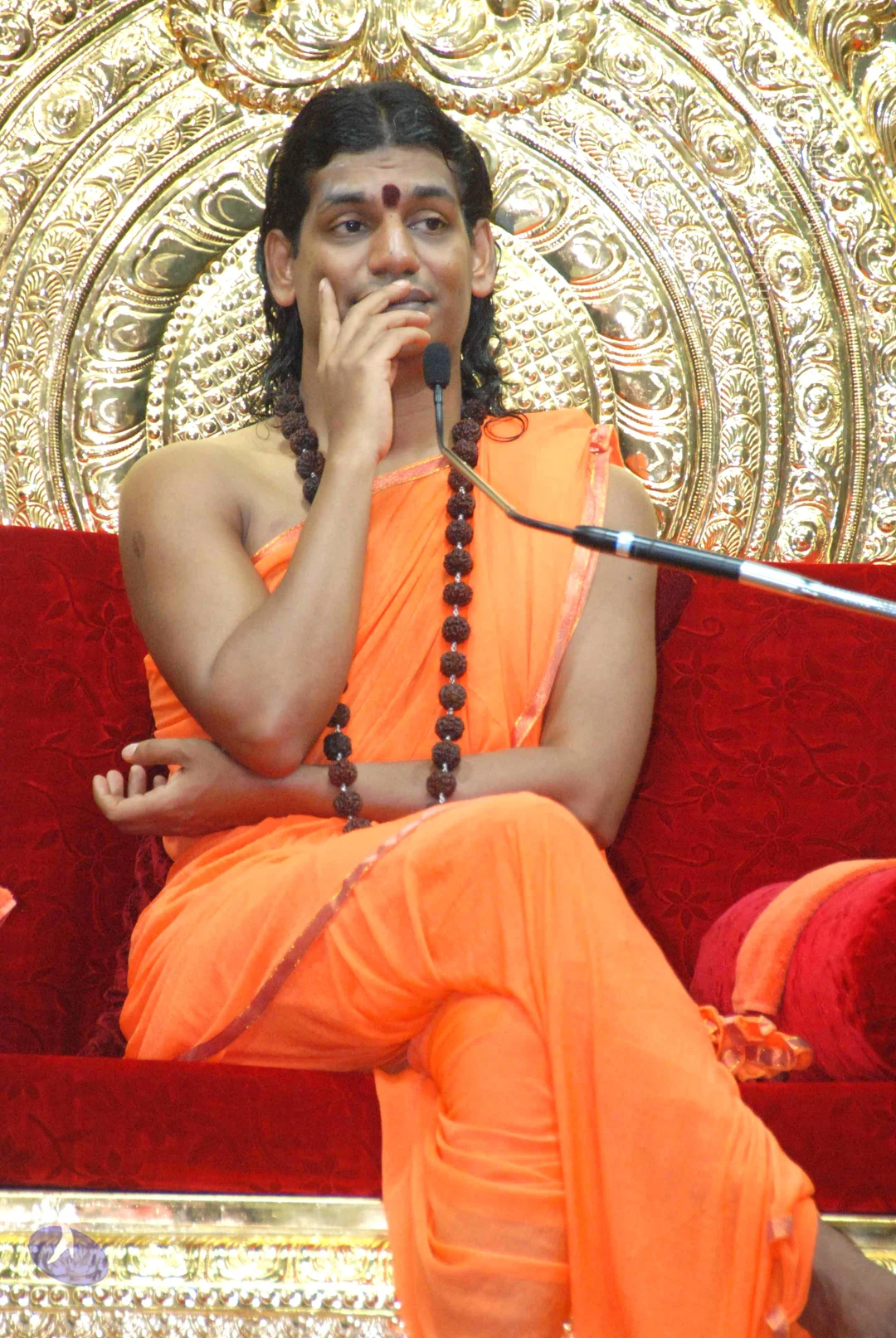
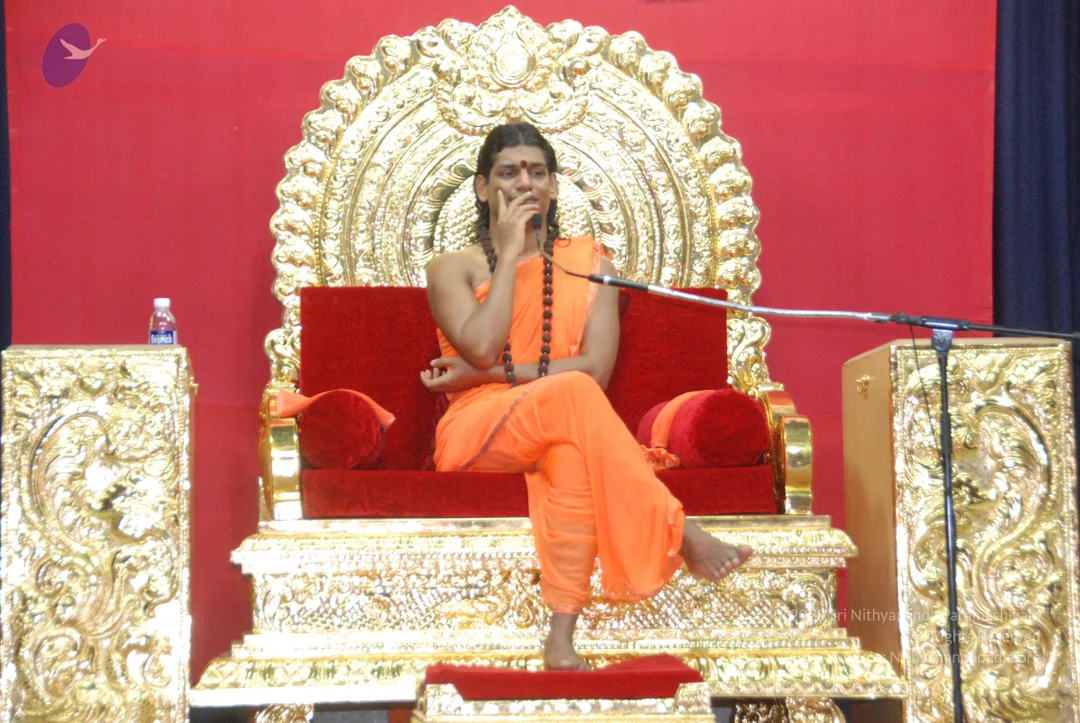
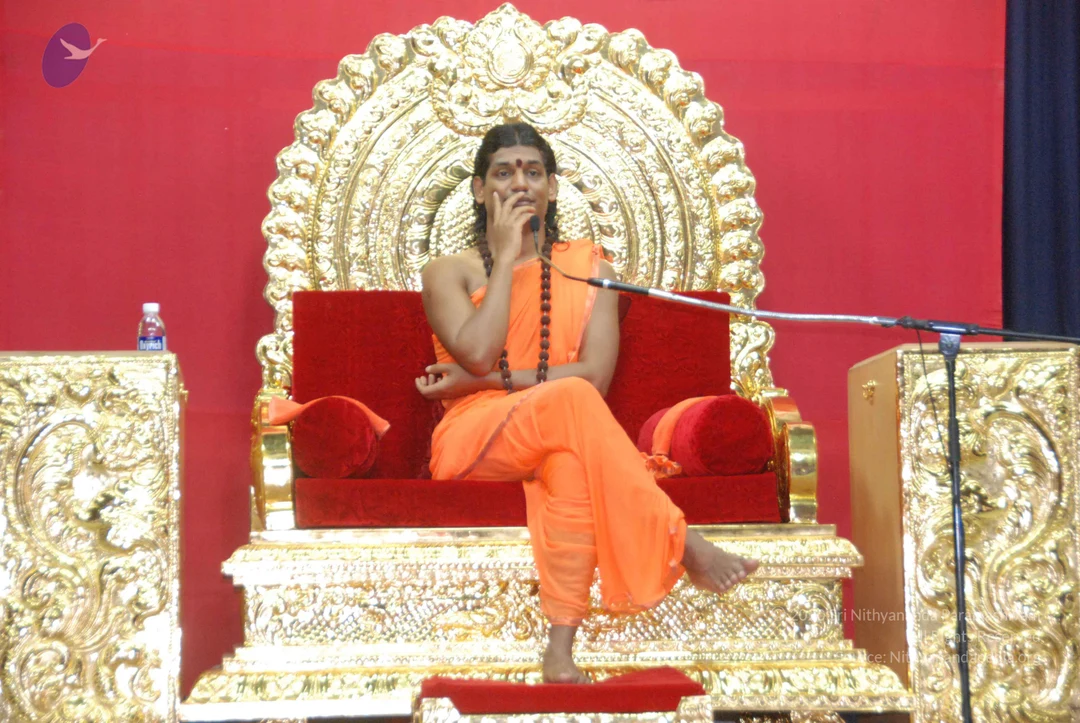
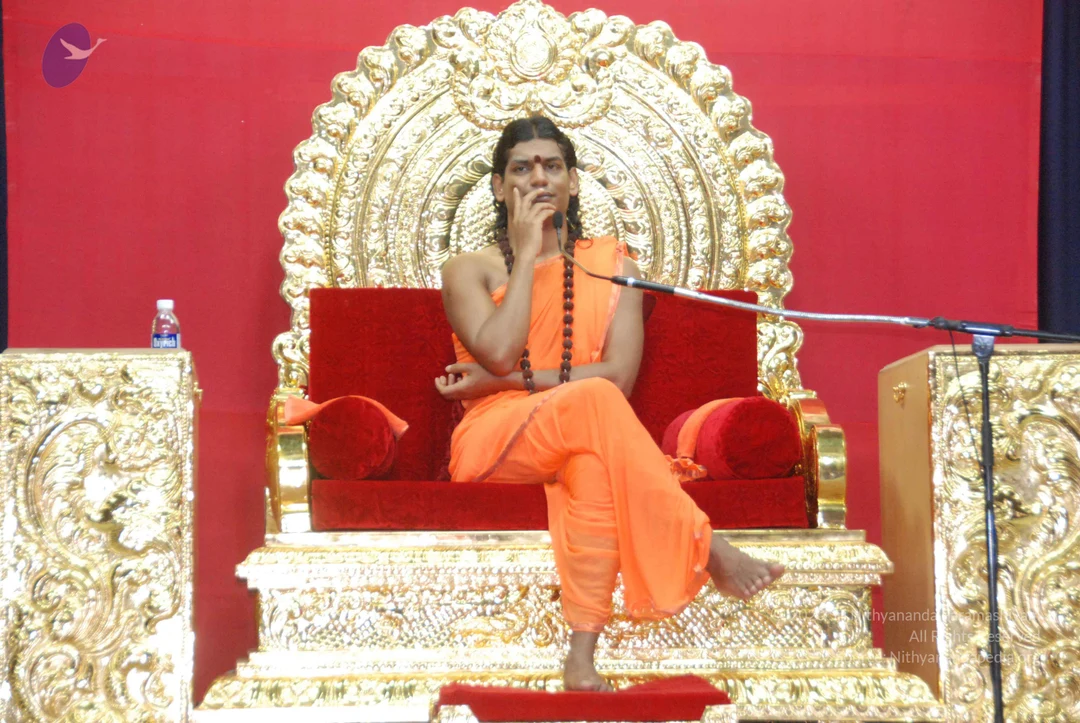
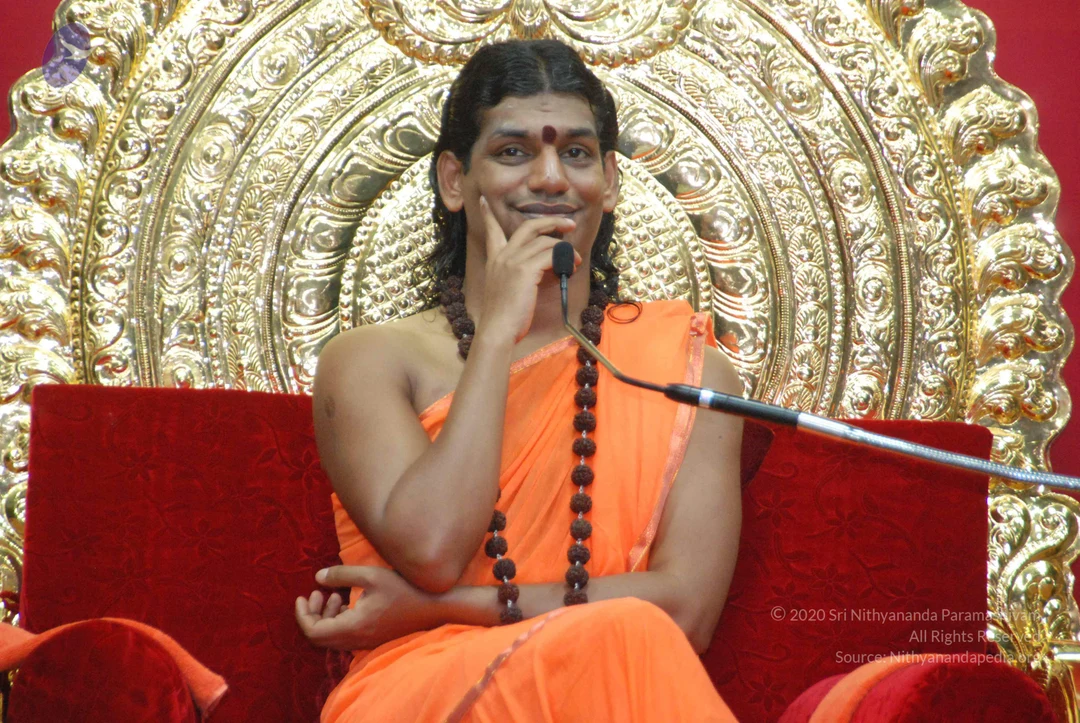
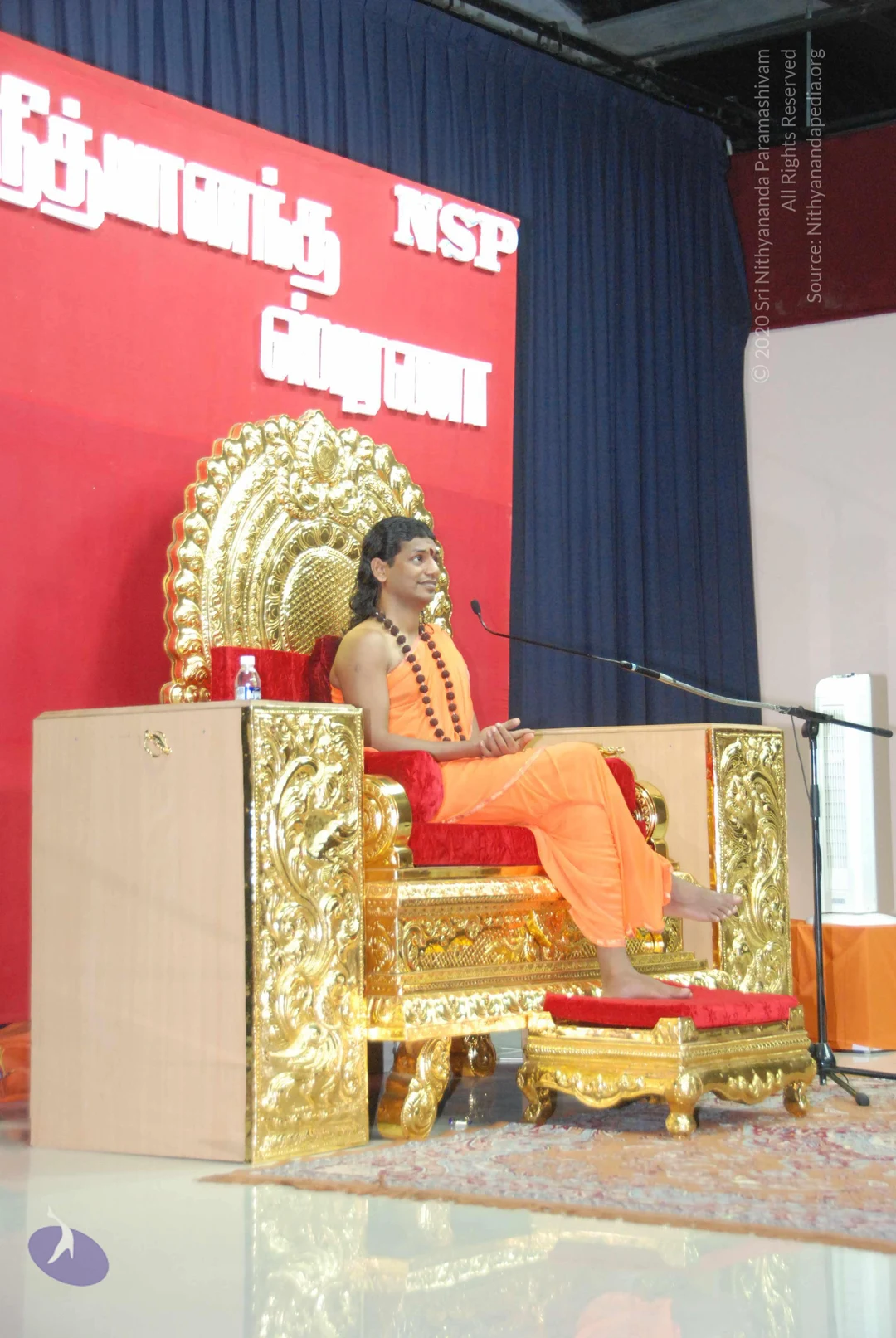
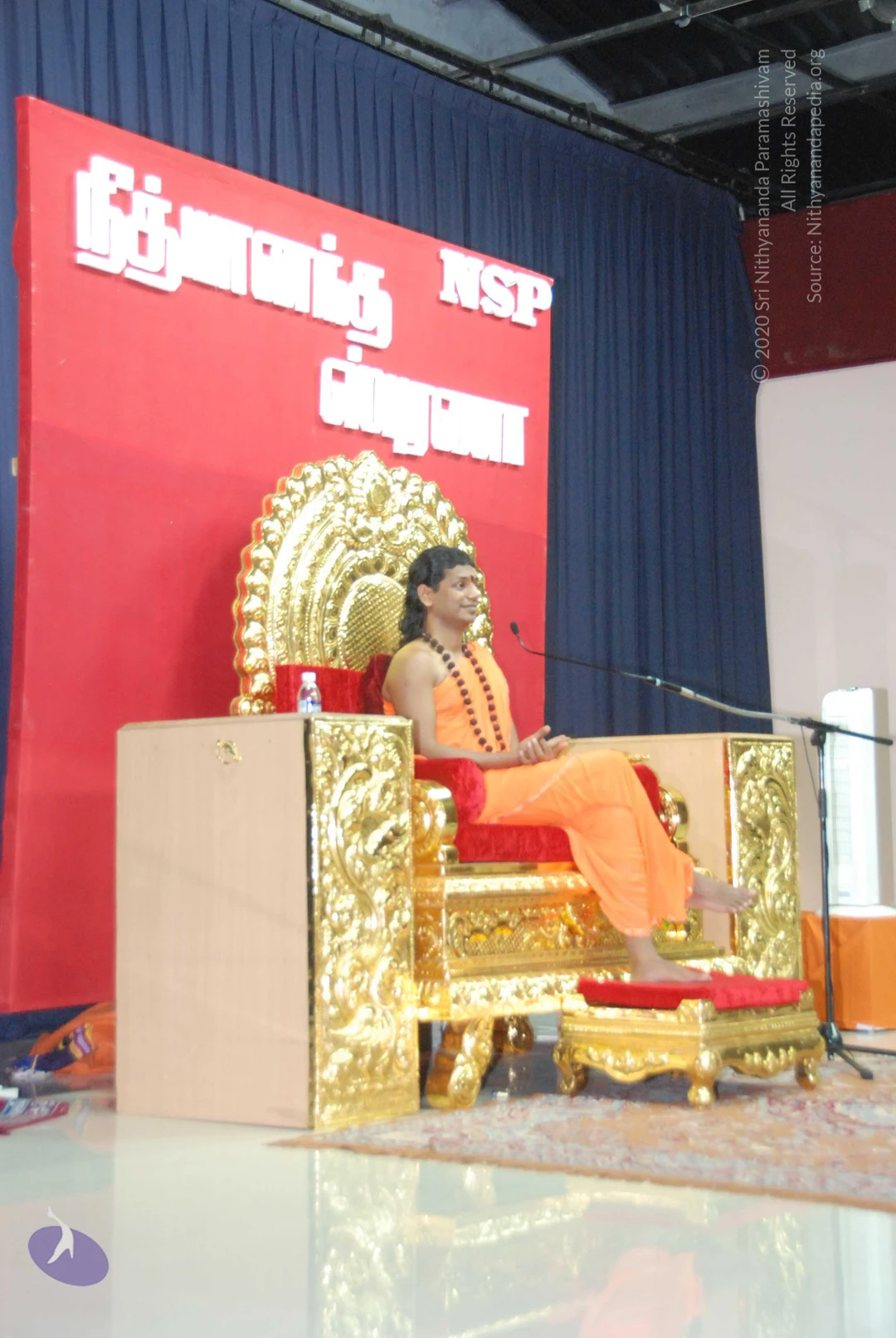
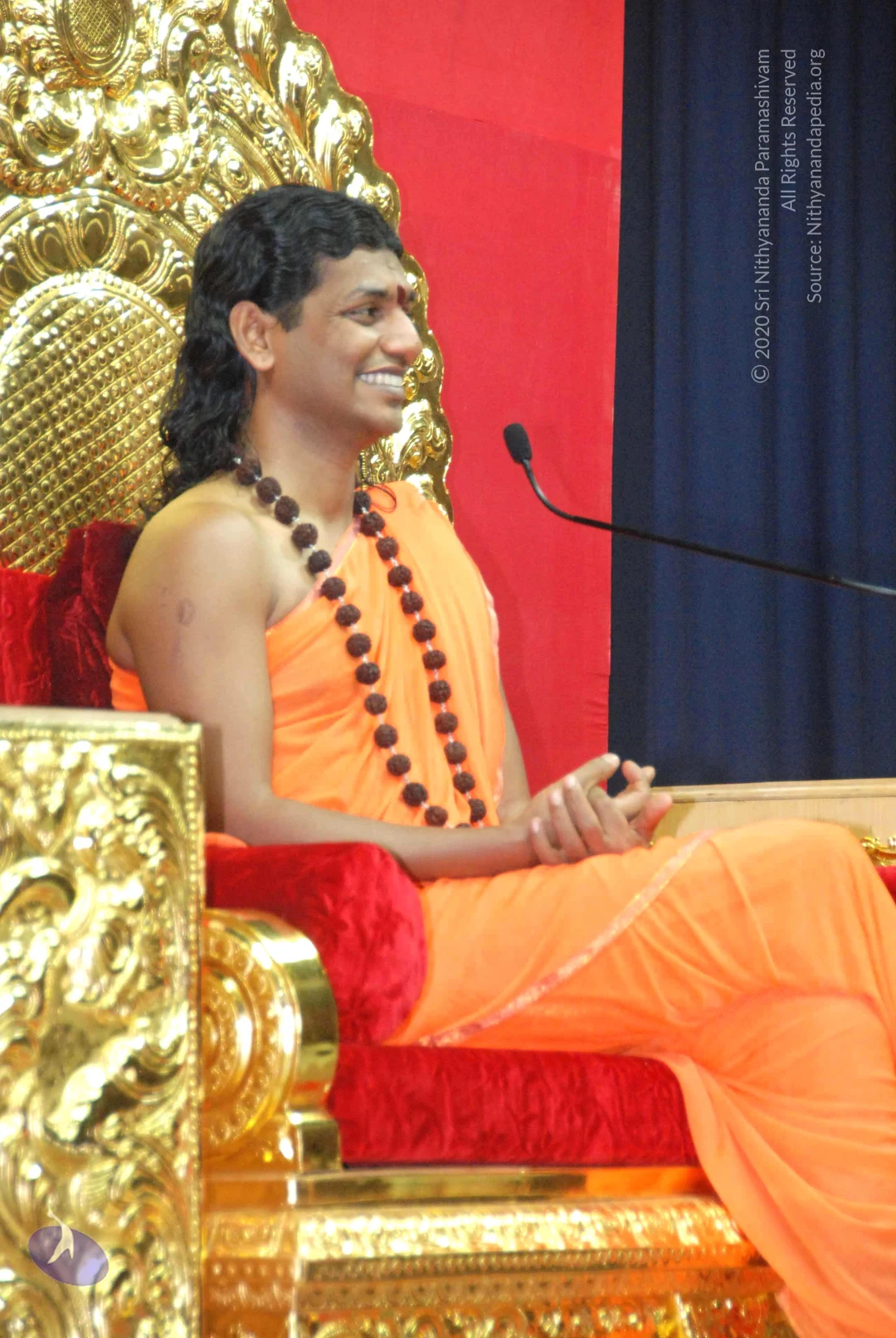
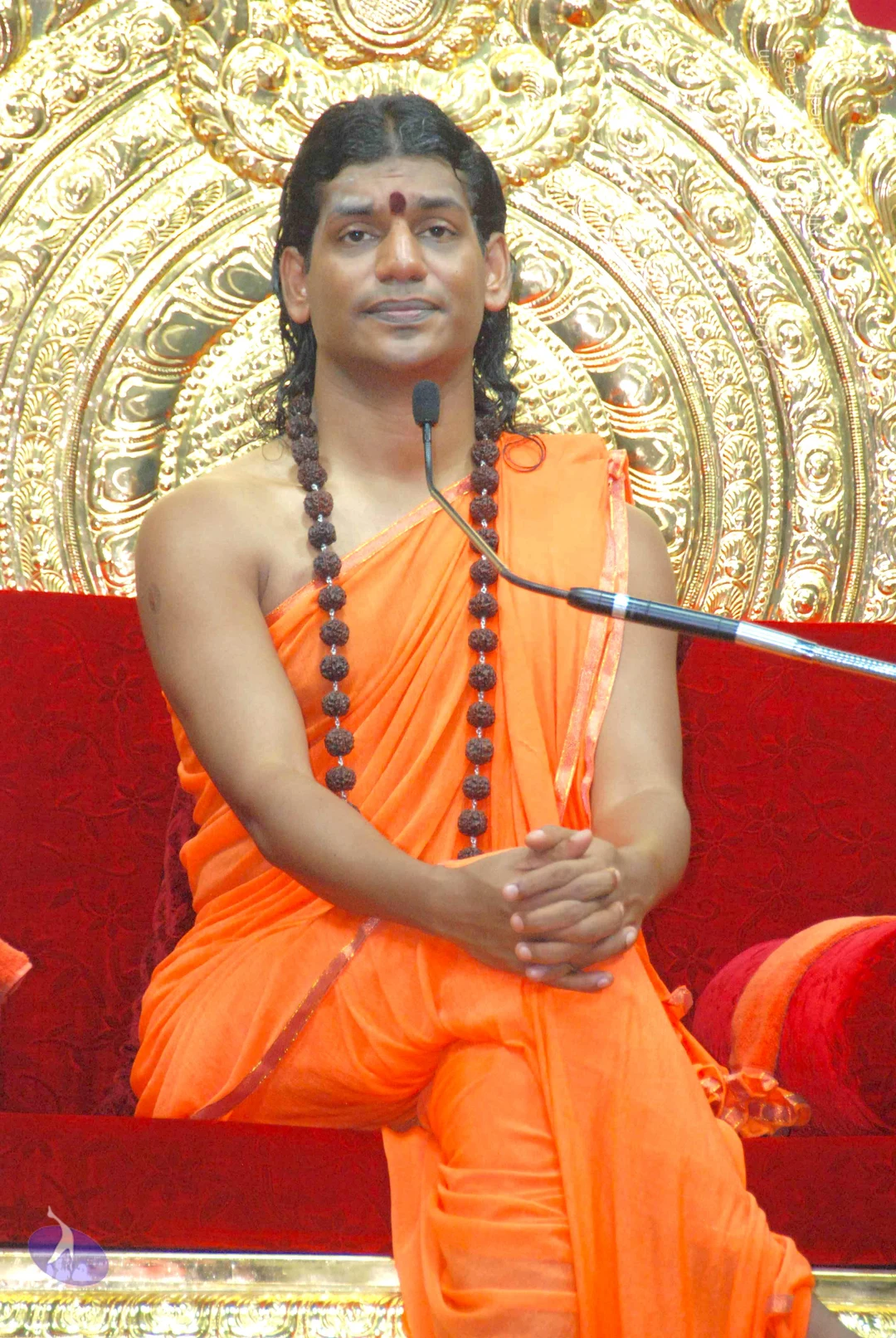
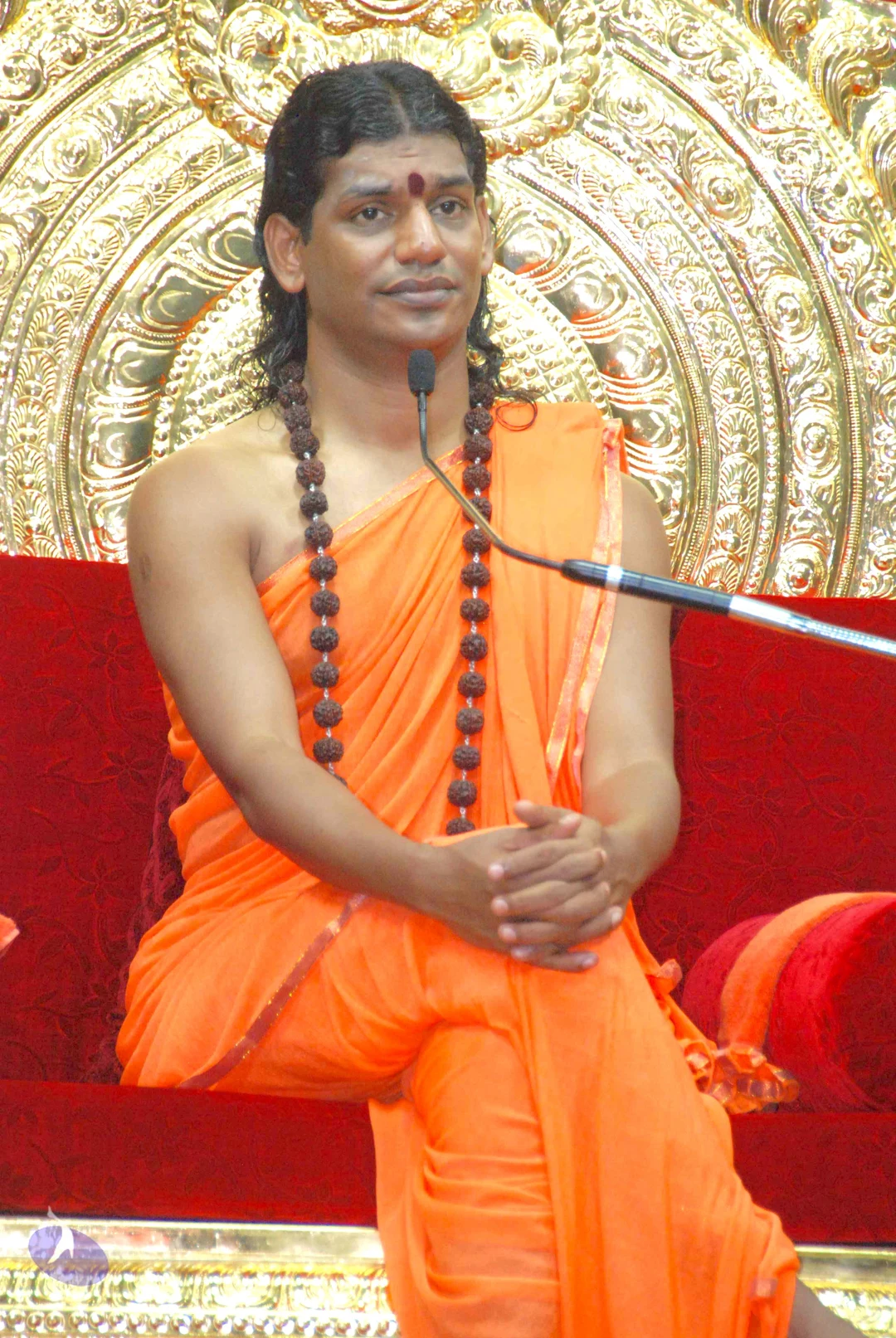
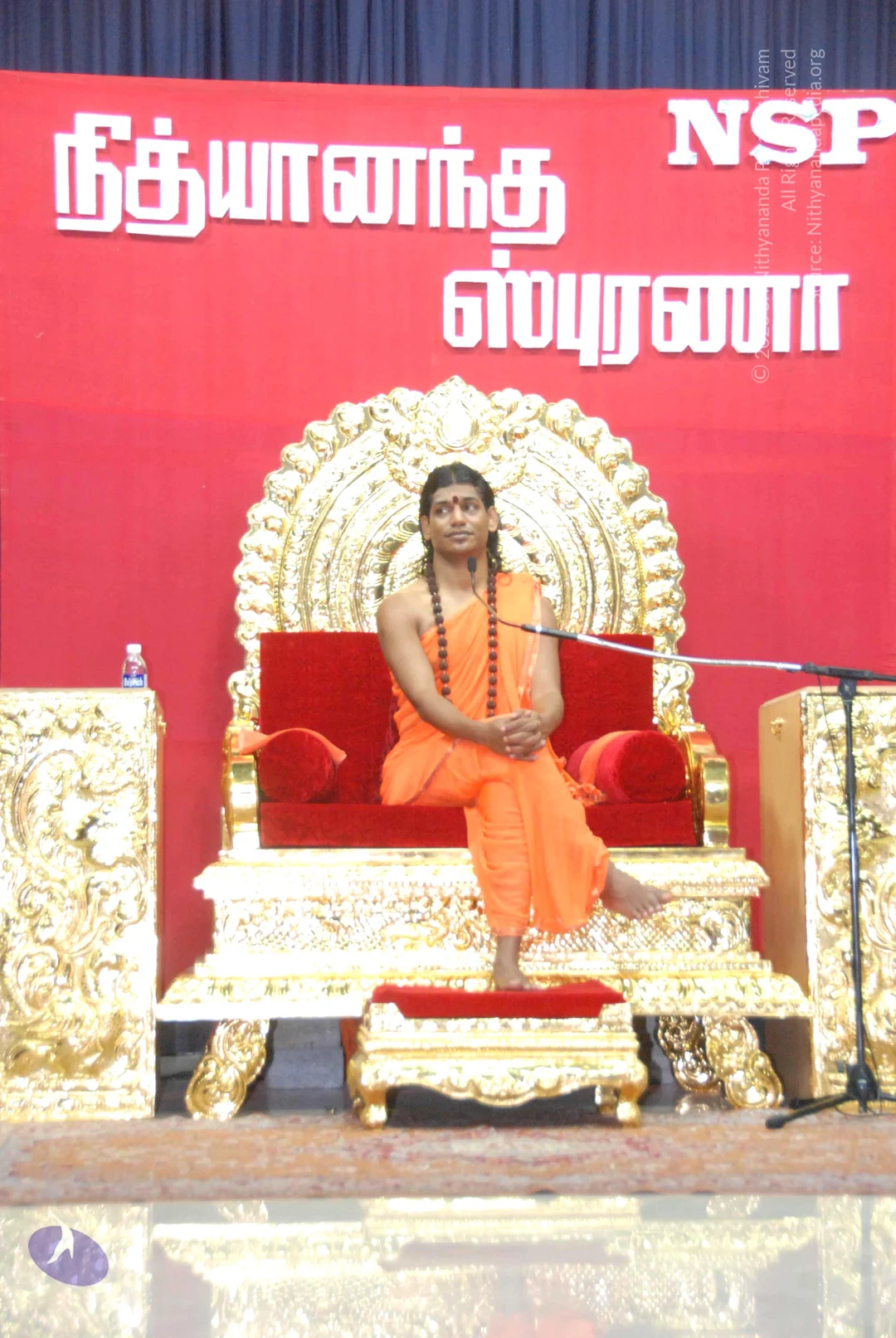
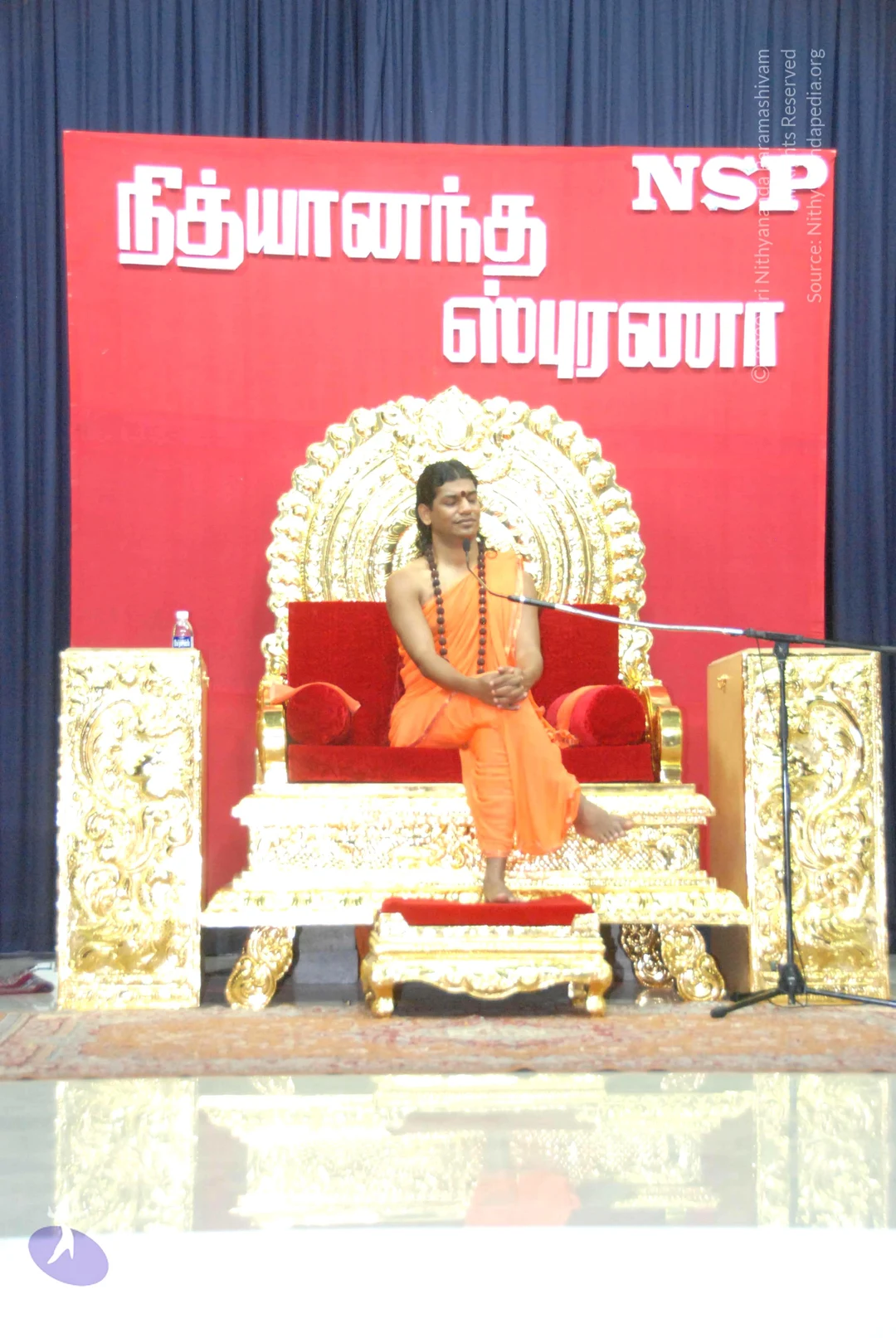
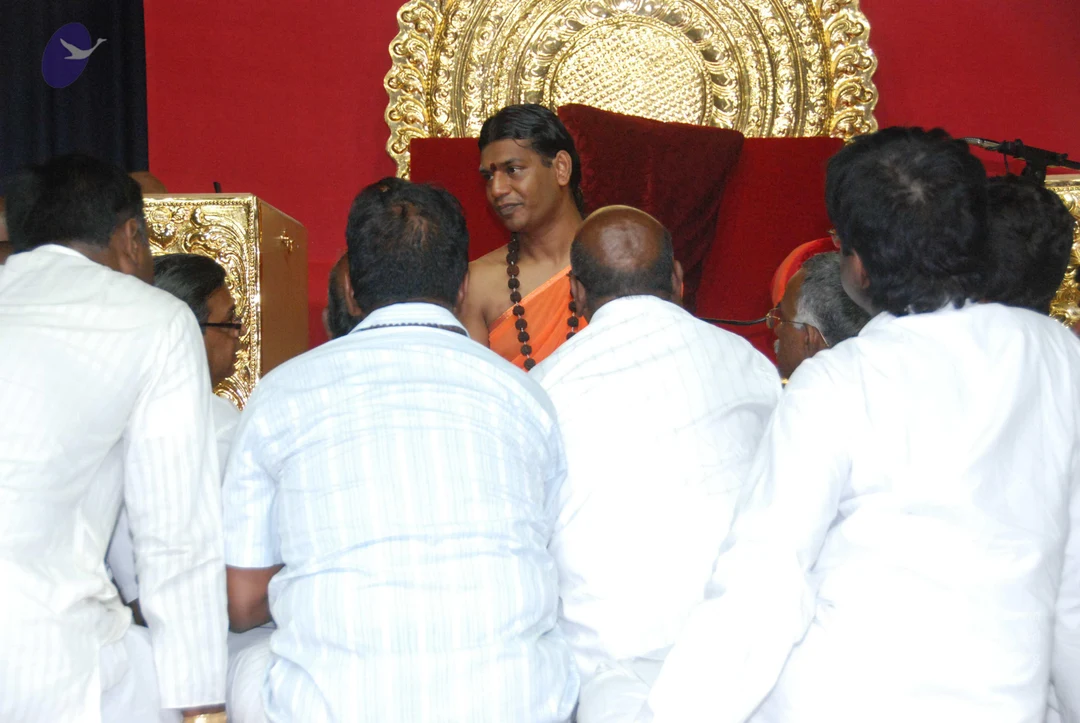
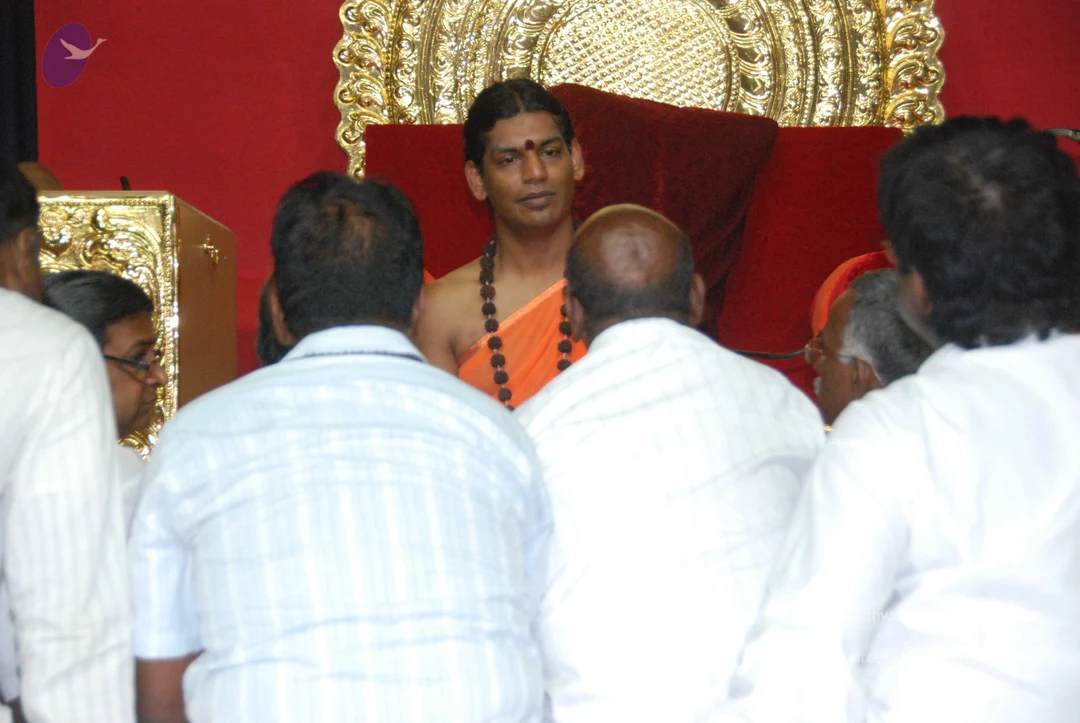
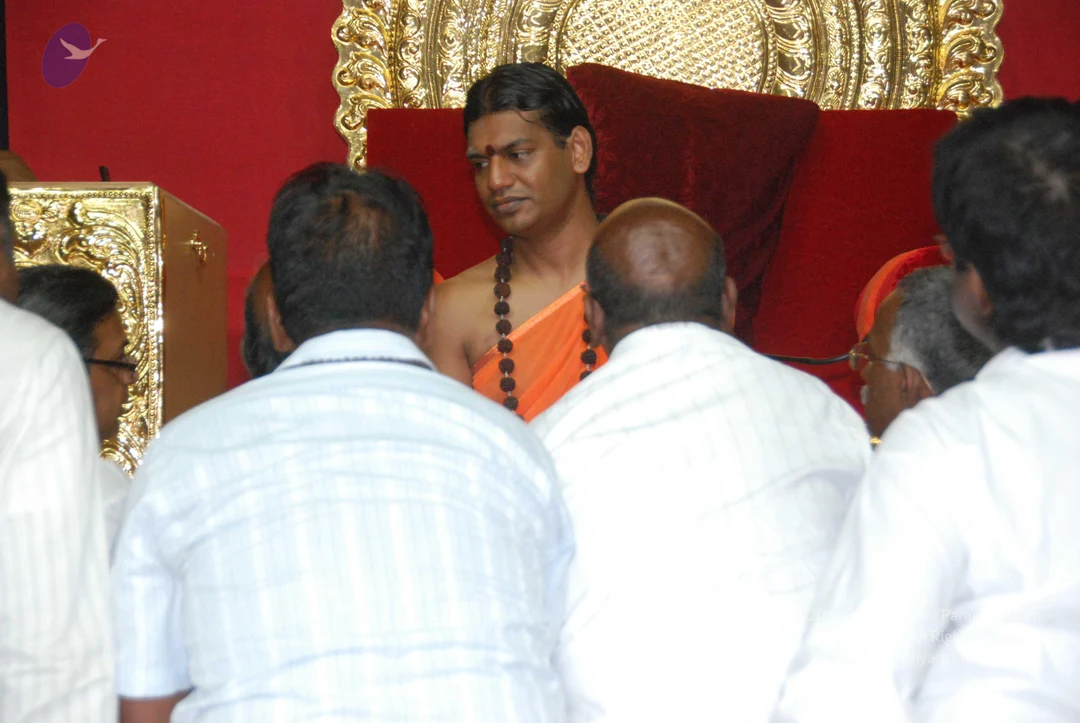
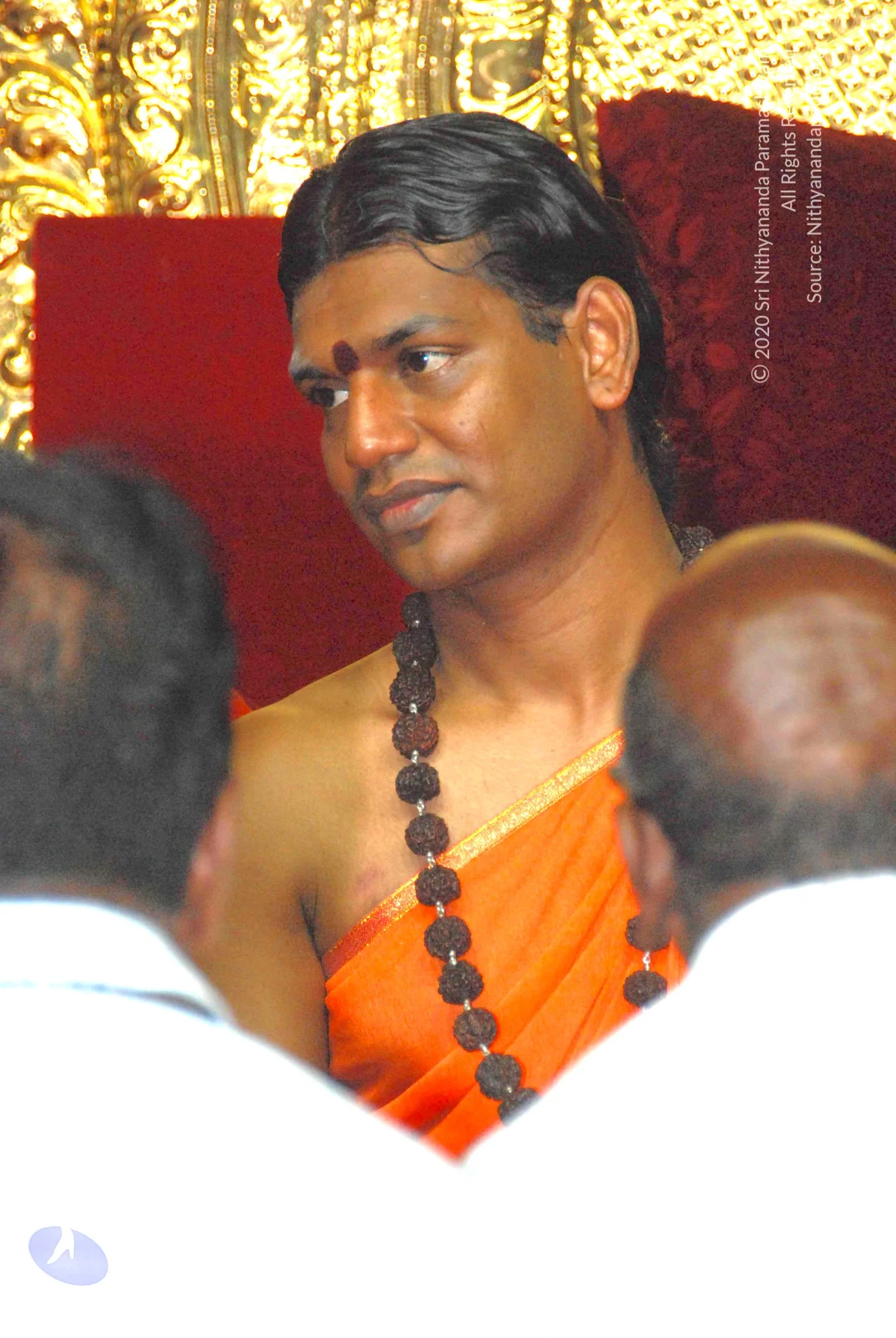
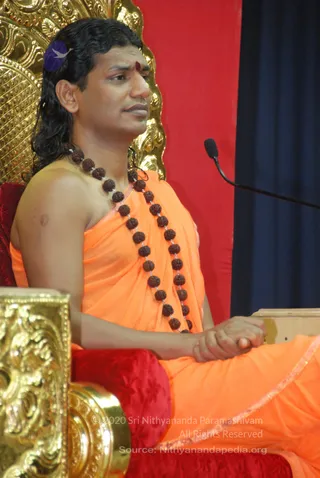
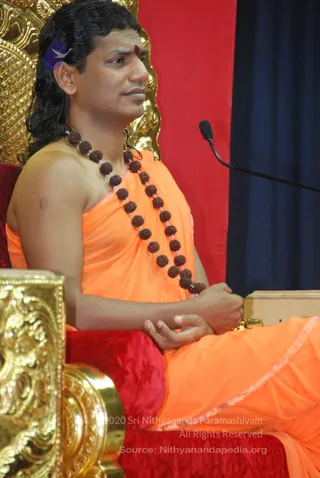
A photograph of a seated man with long, swept-back dark hair, wearing an orange saffron shawl and orange dhoti, with a long rudraksha mala of dark beads hanging to his waist and a red bindi on his forehead. He sits on a red velvet throne-like seat in front of an ornate gold repoussé backdrop, his hands clasped in his lap, with a microphone on a boom stand before him. Probable Swamiji, seated on a peetha for a satsang talk; long hair, saffron clothing and rudraksha malas are the visible cues. Only one person is visible.A man sits cross-legged on a red velvet throne with gold-embossed ornate backdrop, speaking into a microphone on a boom stand. He wears a saffron-orange shawl draped over one shoulder with a thin orange border and matching orange lower garment, plus a long strand of brown rudraksha beads reaching his chest. His long dark hair is swept back and he has a red tilak mark on his forehead. His hands rest together in his lap. Behind him are red and orange cushions on the throne.A man with long, swept-back dark hair sits on an ornate gold throne with red cushions, smiling and looking down with his hands resting together in his lap. He wears a bare-chested orange shawl draped over one shoulder and a long string of dark rudraksha beads, with a red tilak on his forehead. A microphone on a stand is at right, and a red and navy backdrop stands behind him. The distinctive long hair, saffron shawl, rudraksha mala and throne are consistent with Swamiji (probable) seated for a talk.