Skip to content
Friday

8 October 2010

Dated photos
801
Source pages
1
Media
2
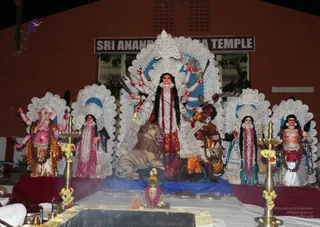
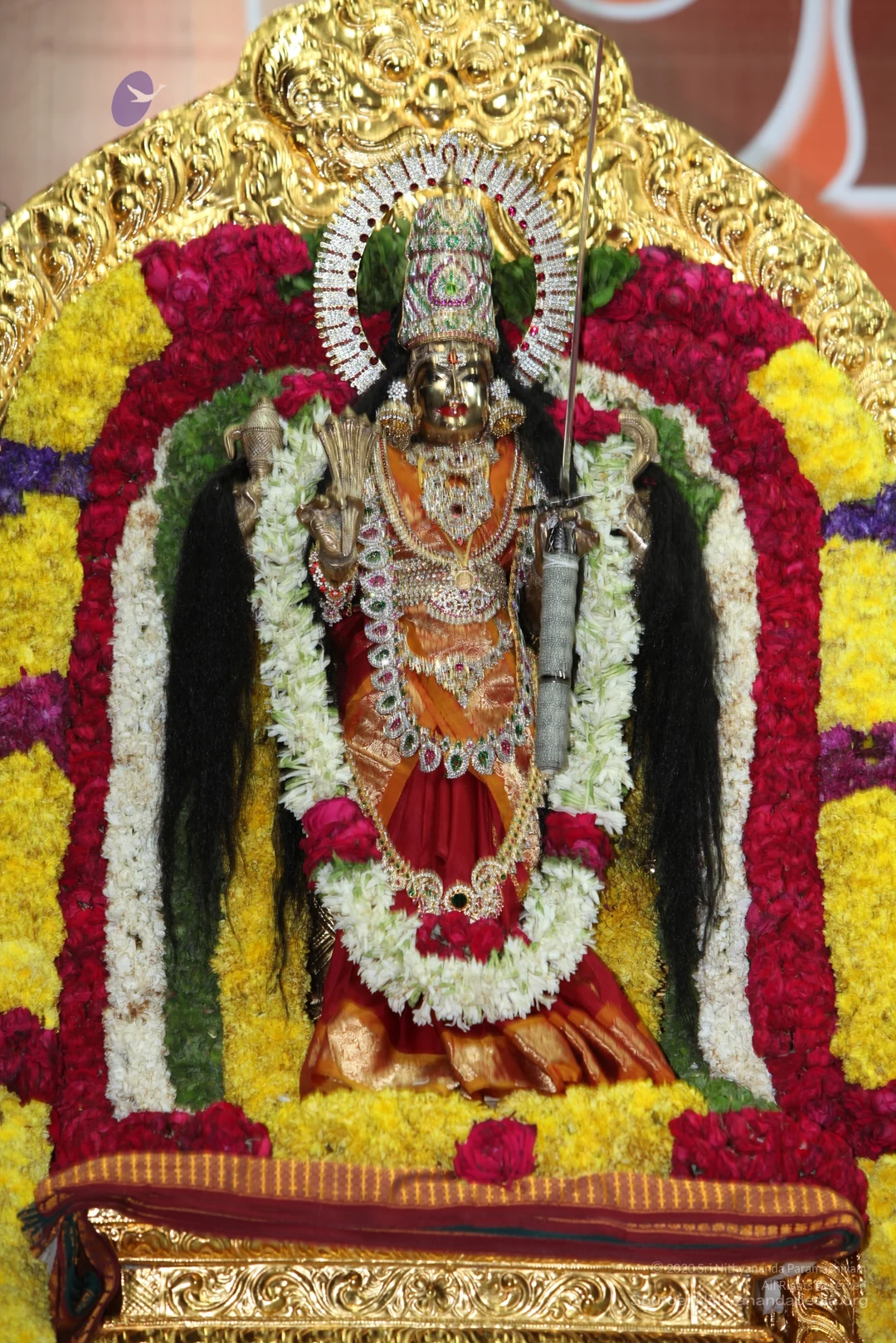
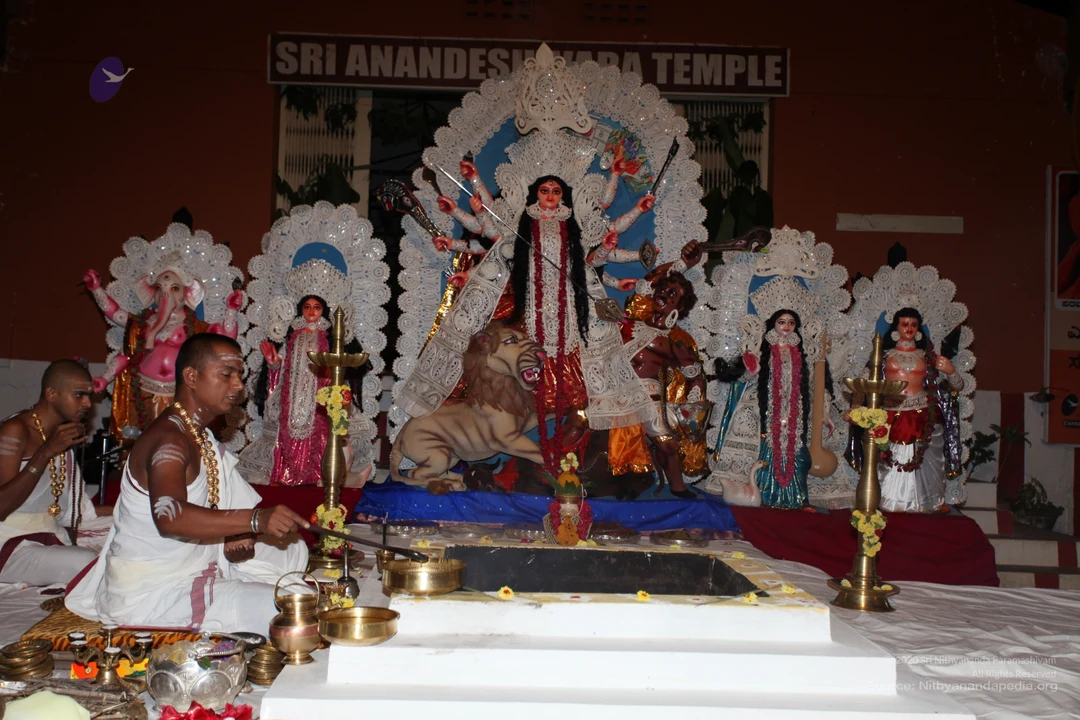
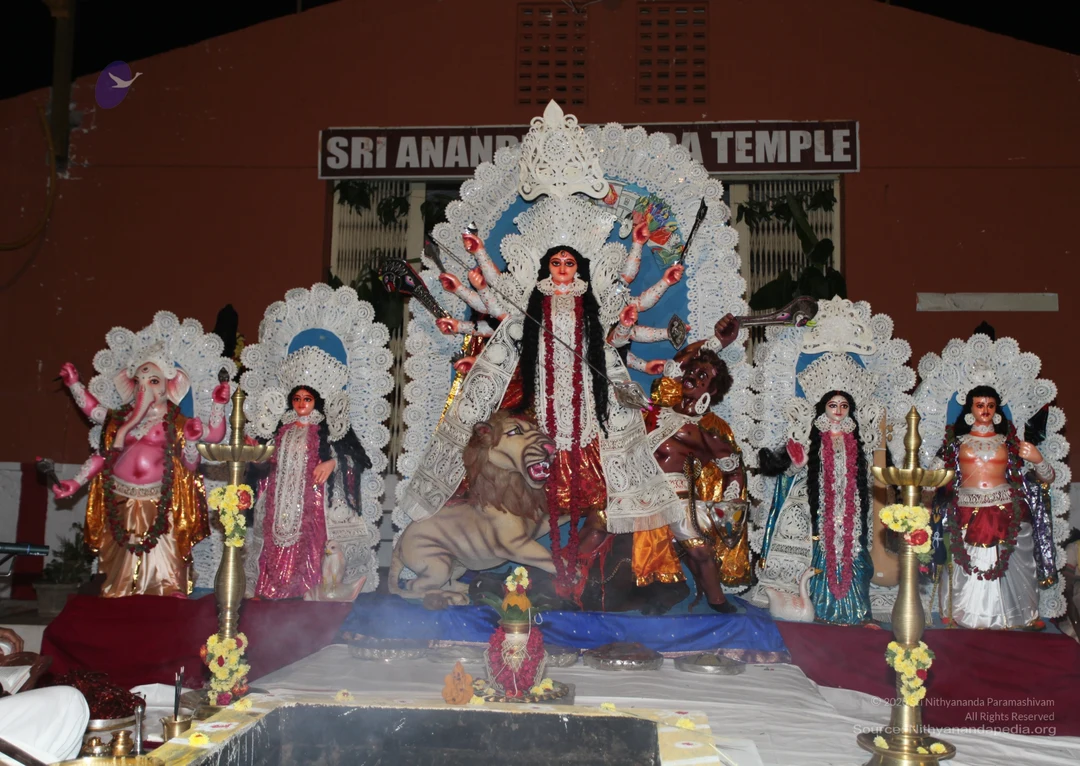
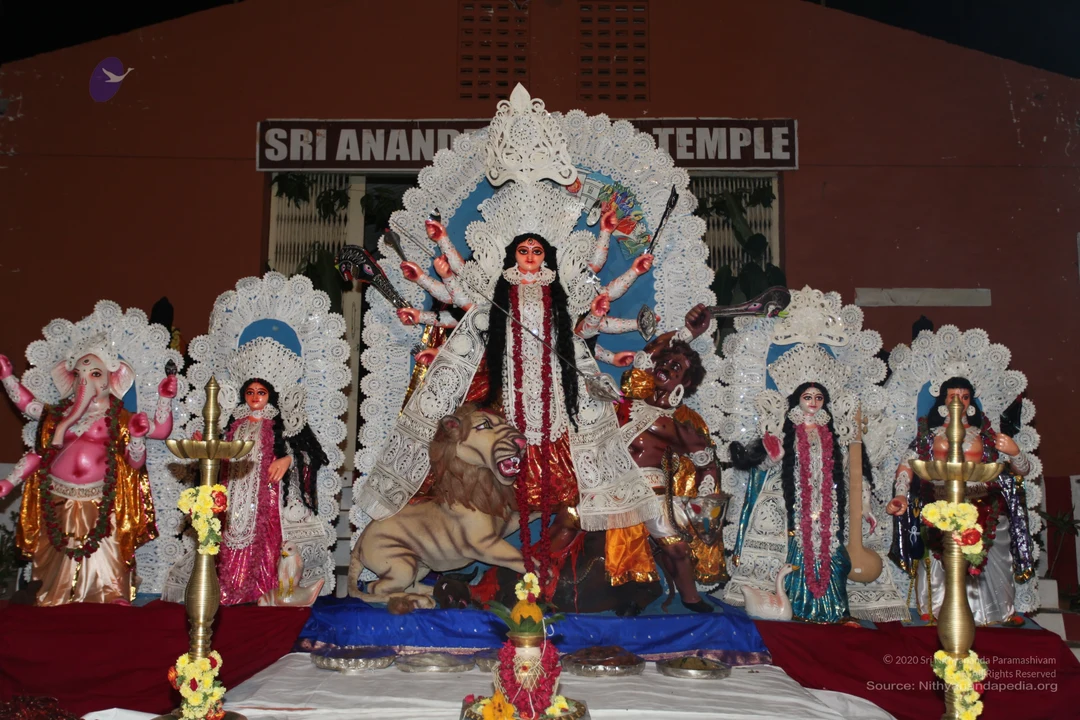
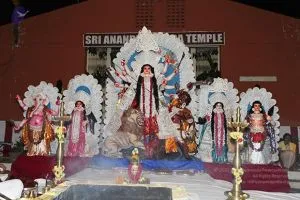
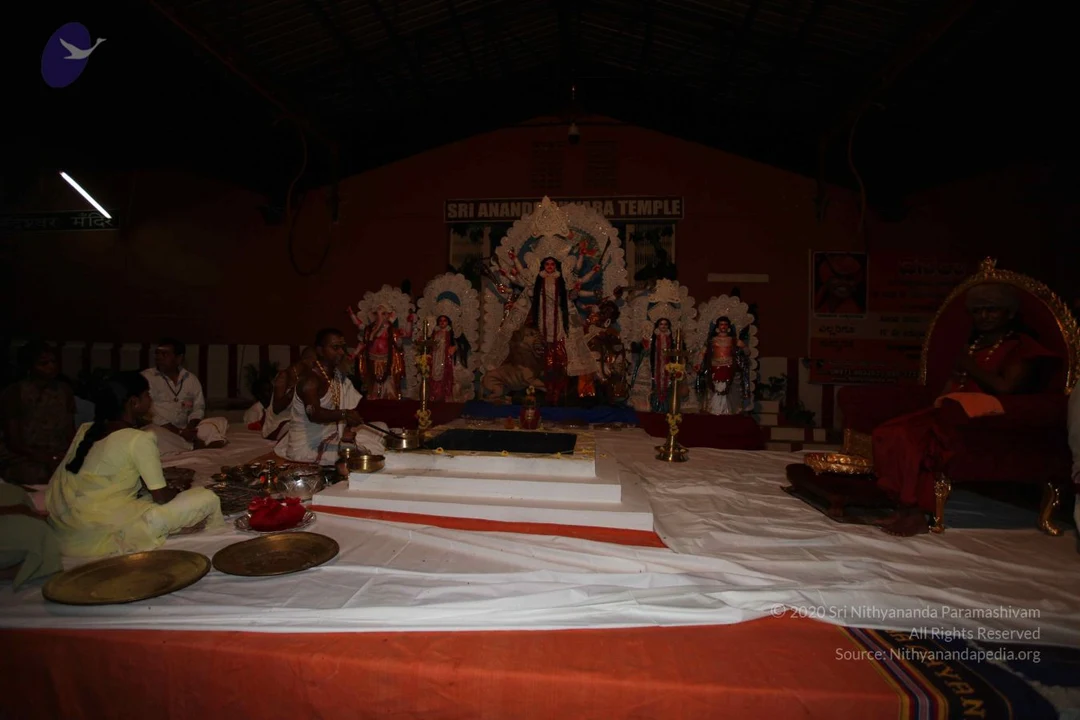
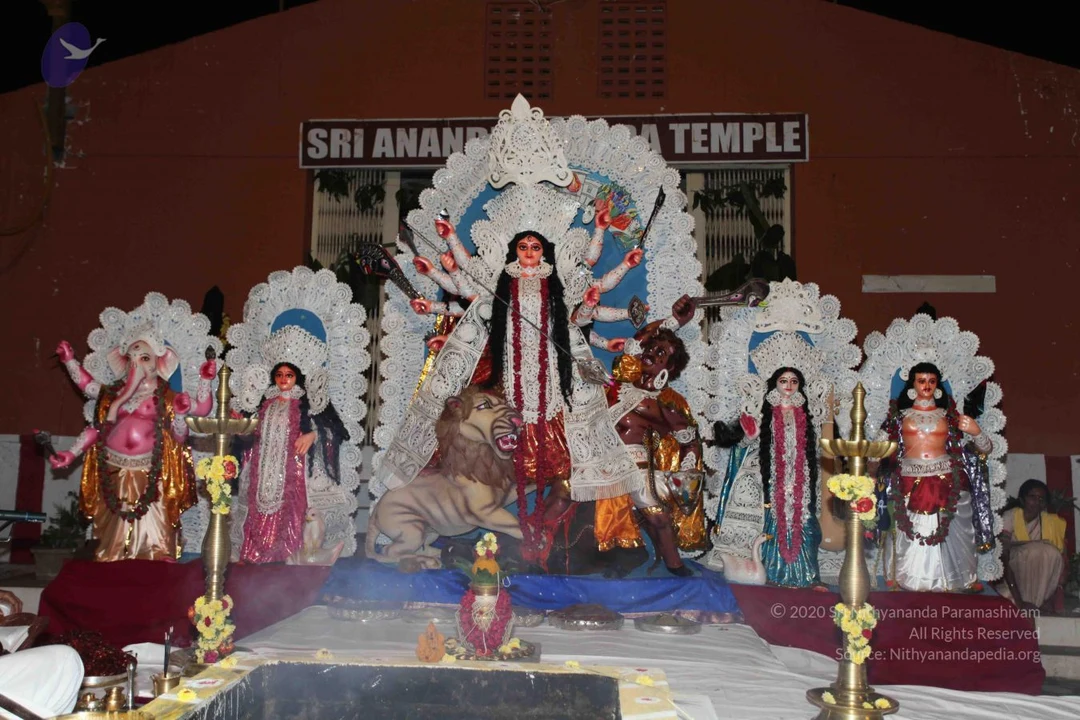
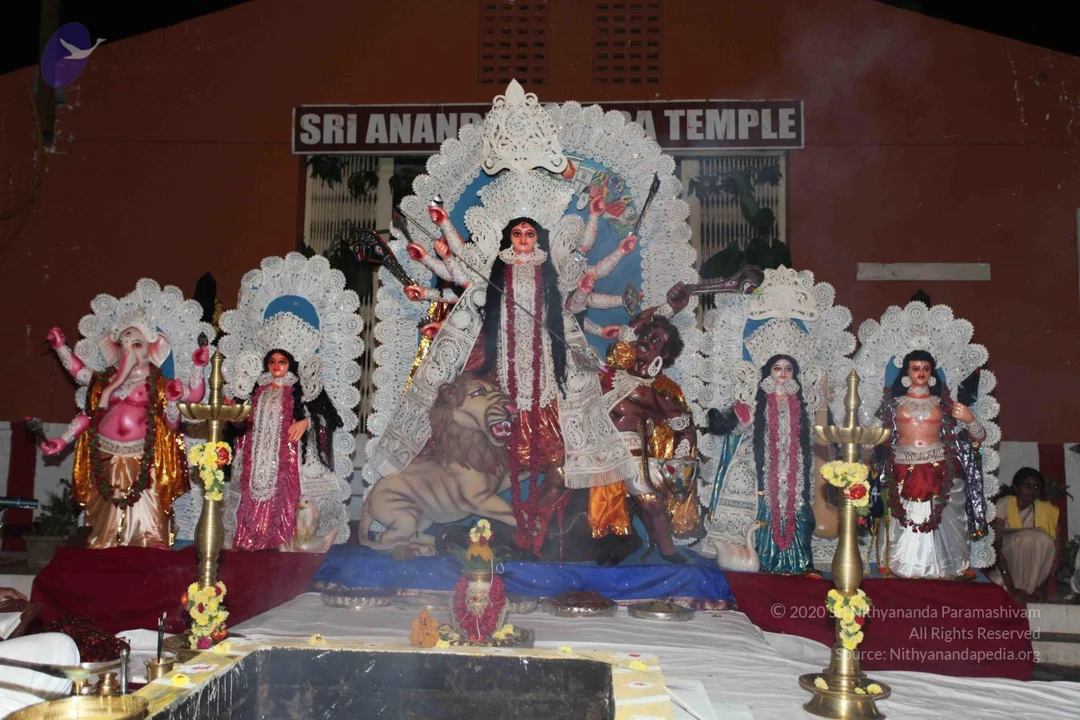
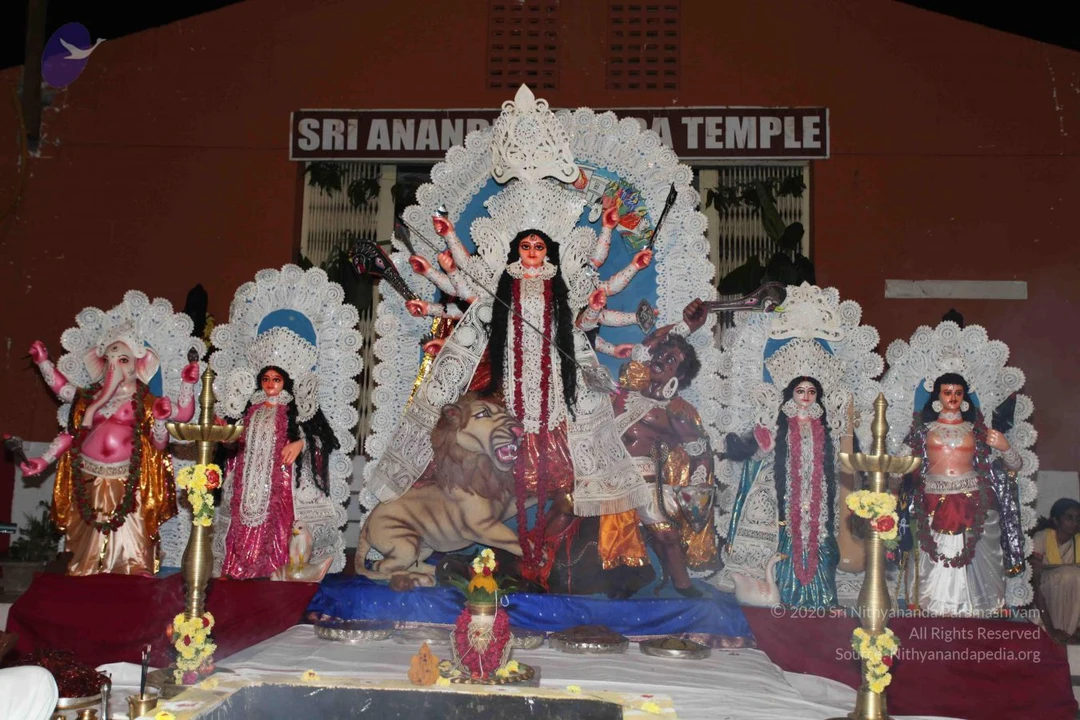
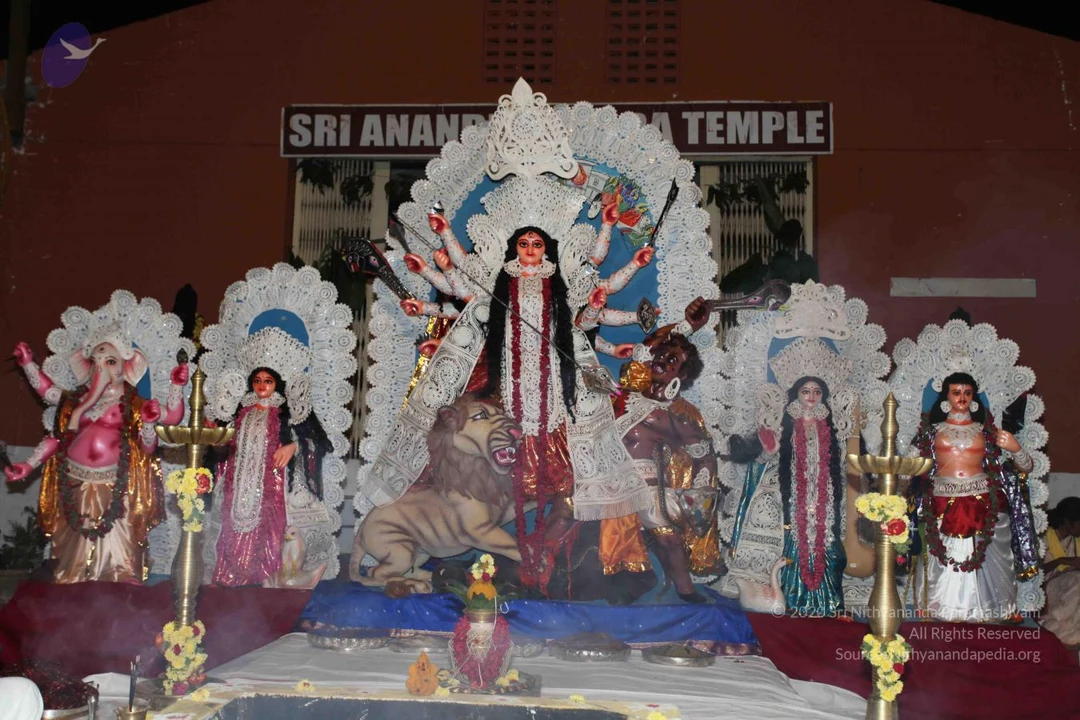
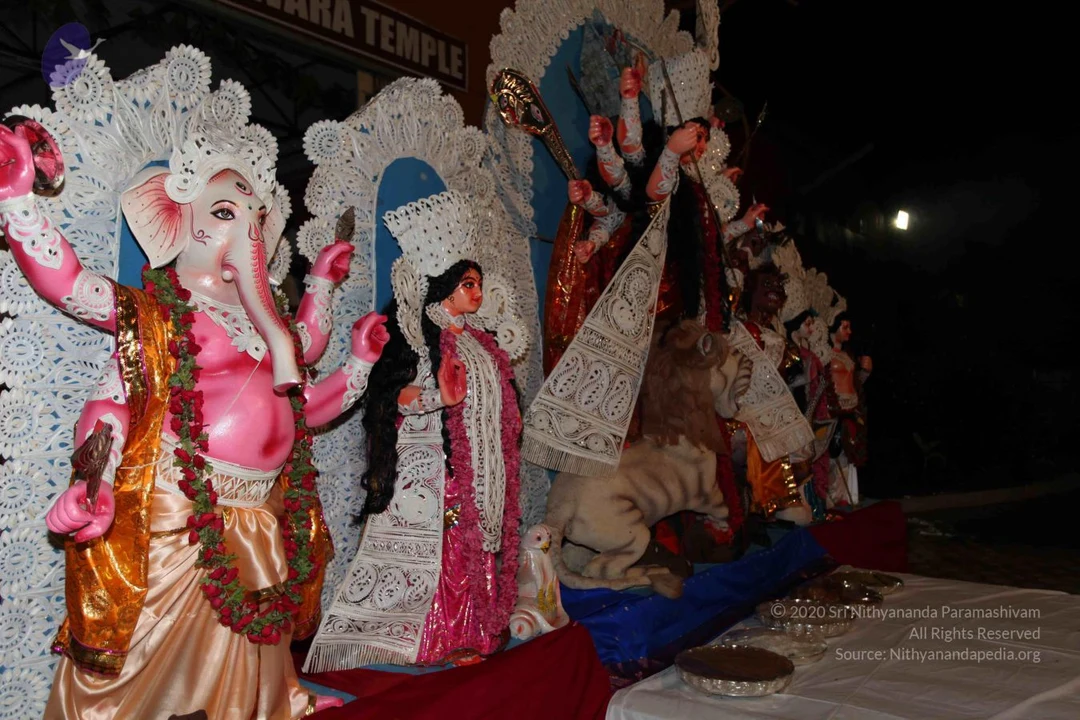
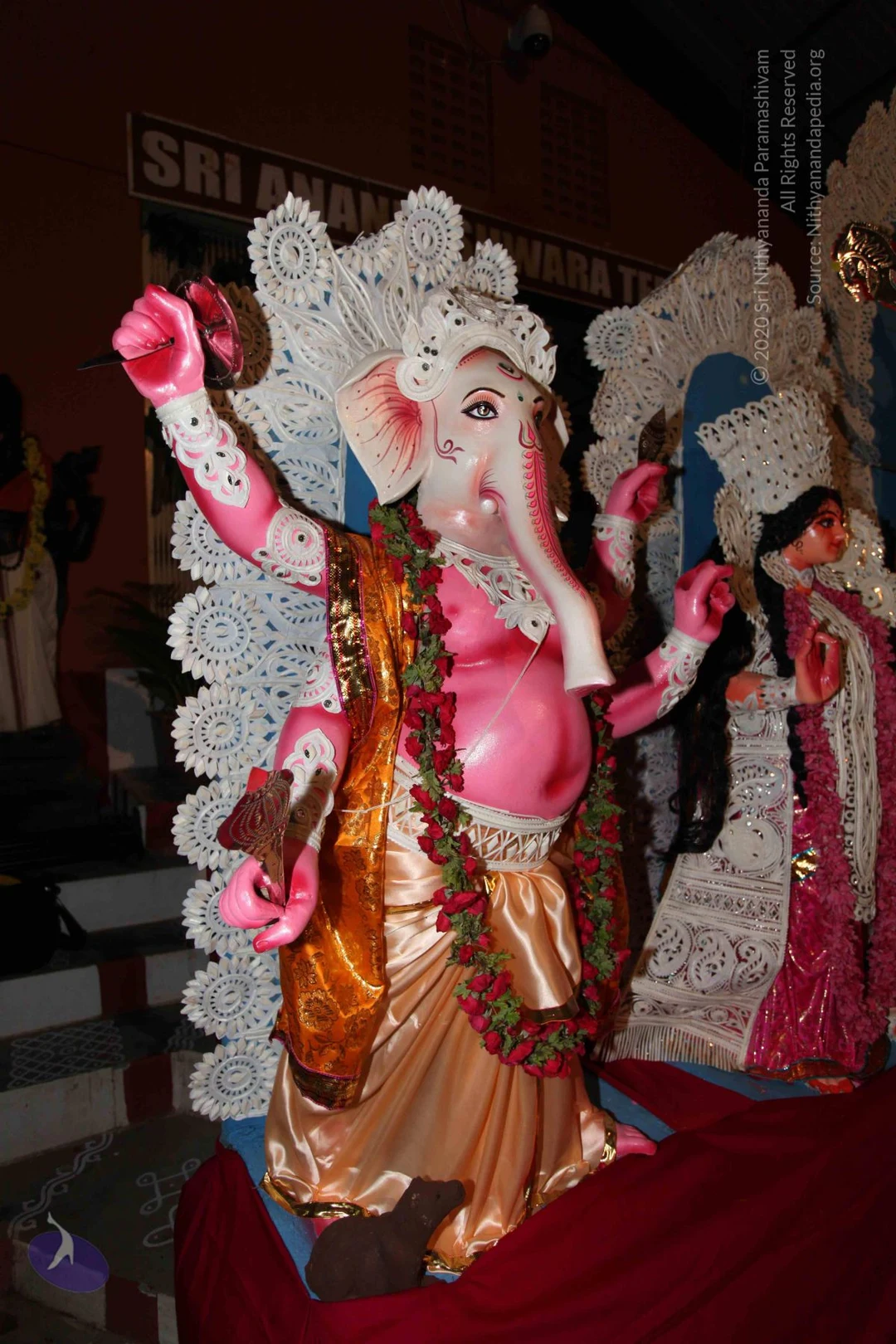
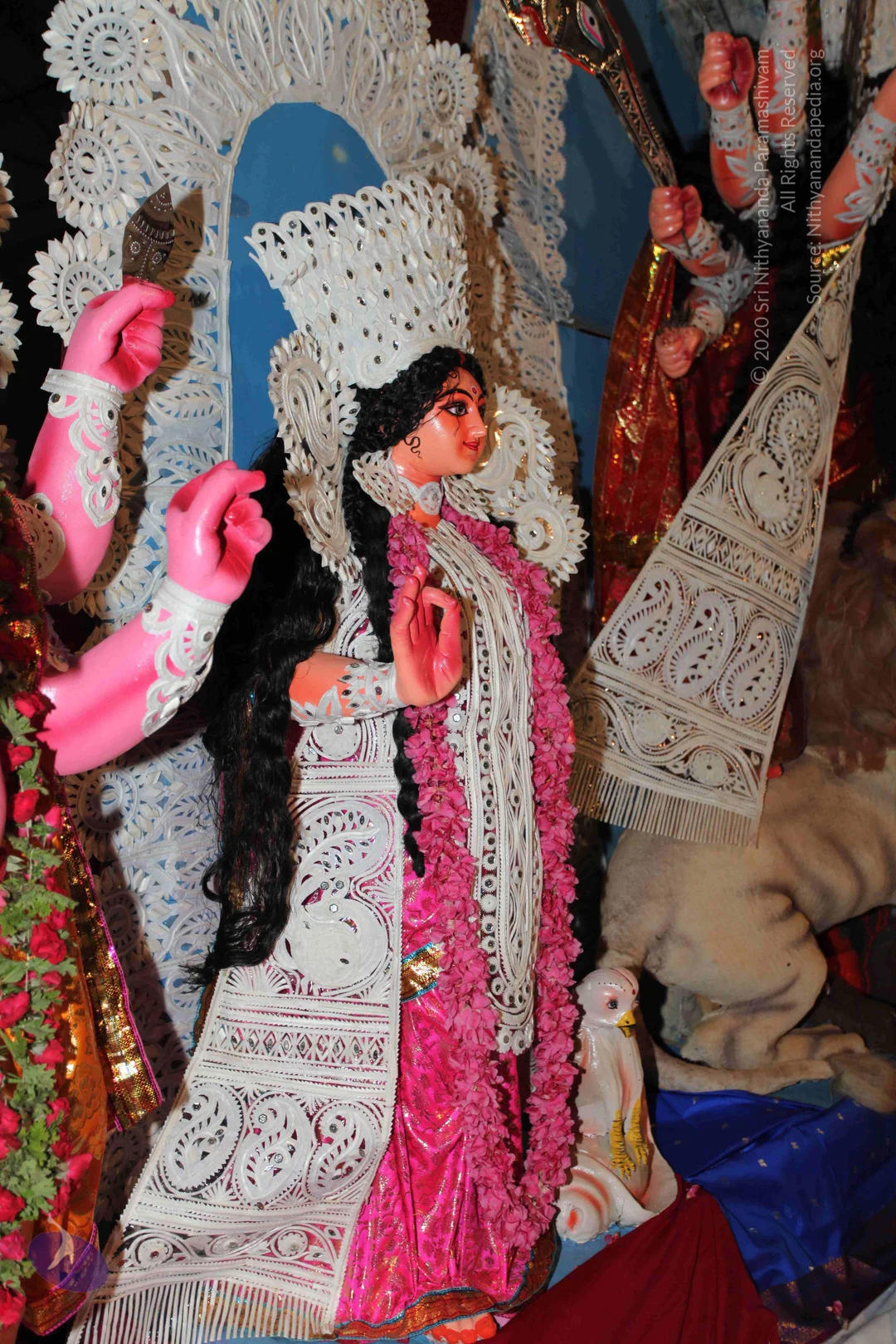
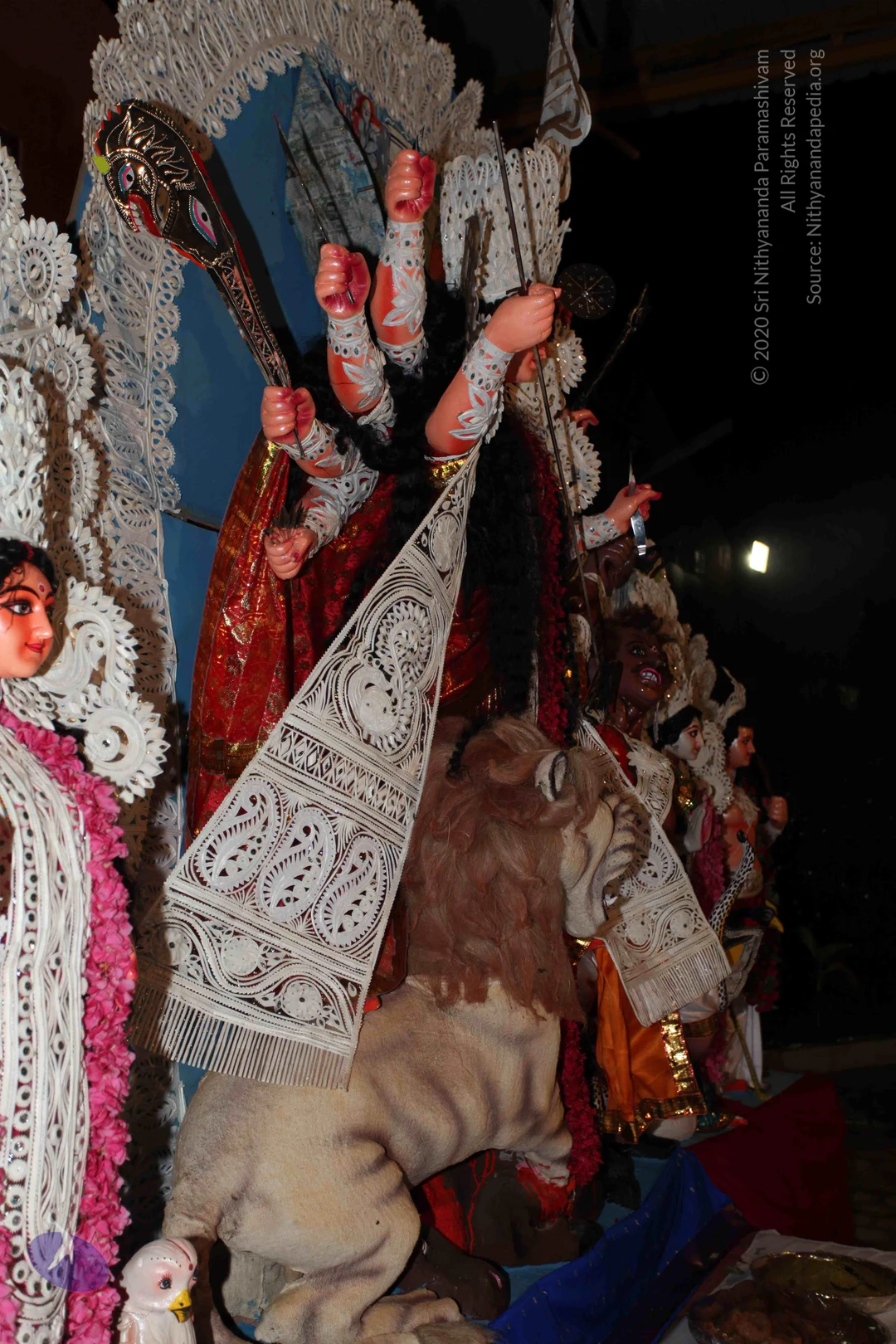
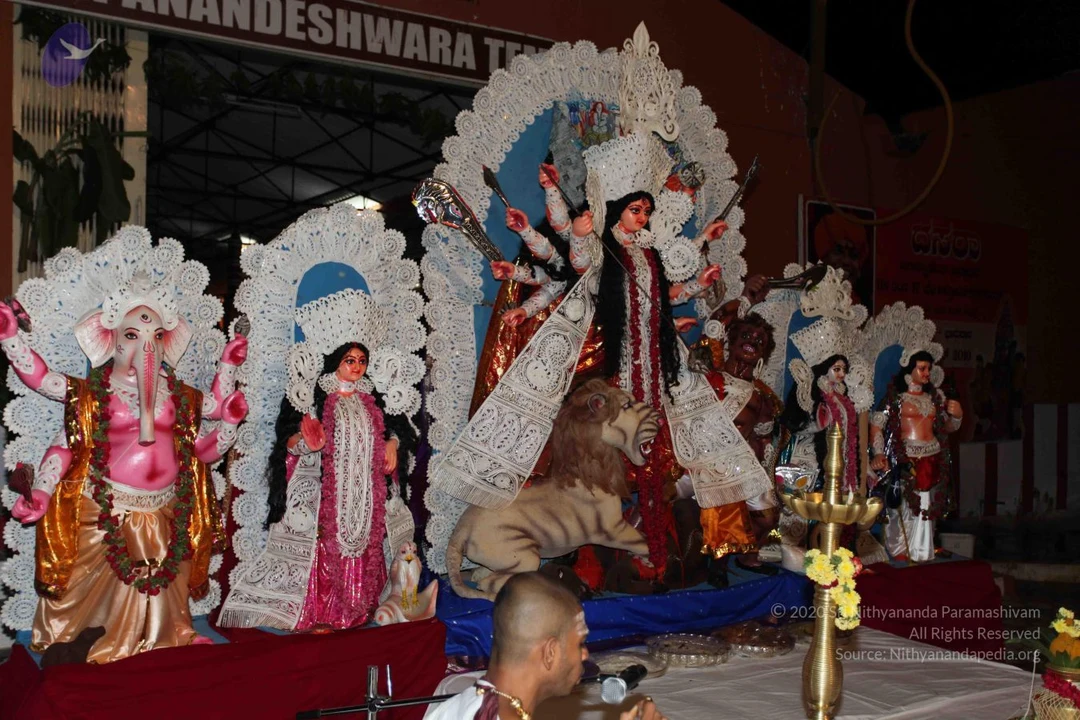
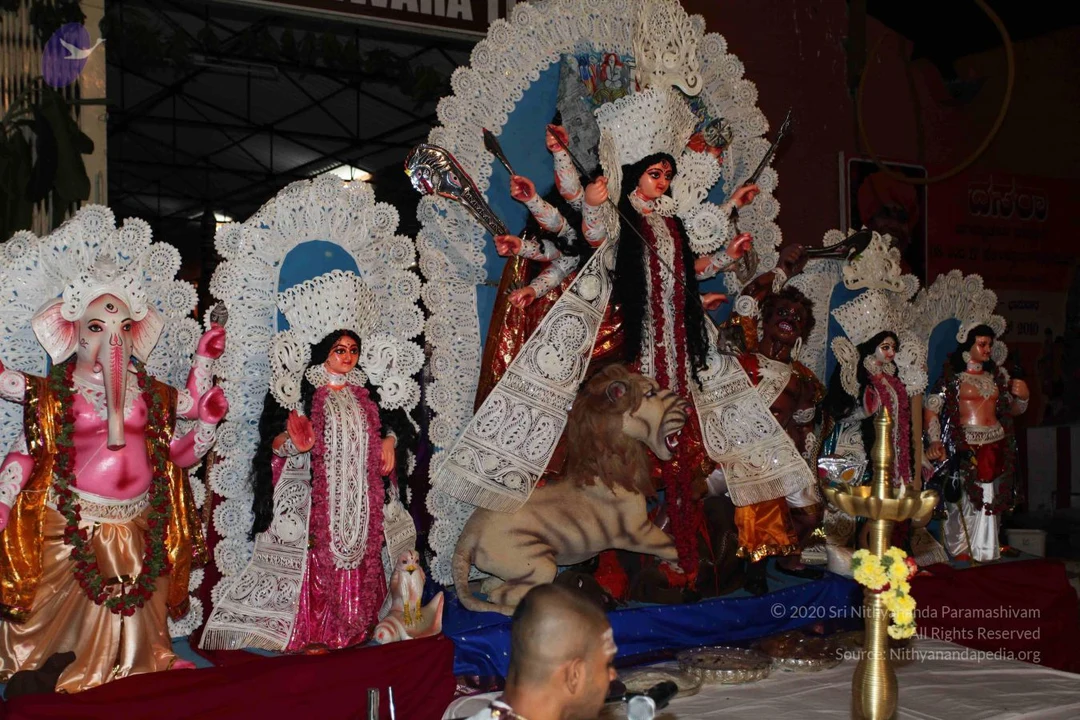
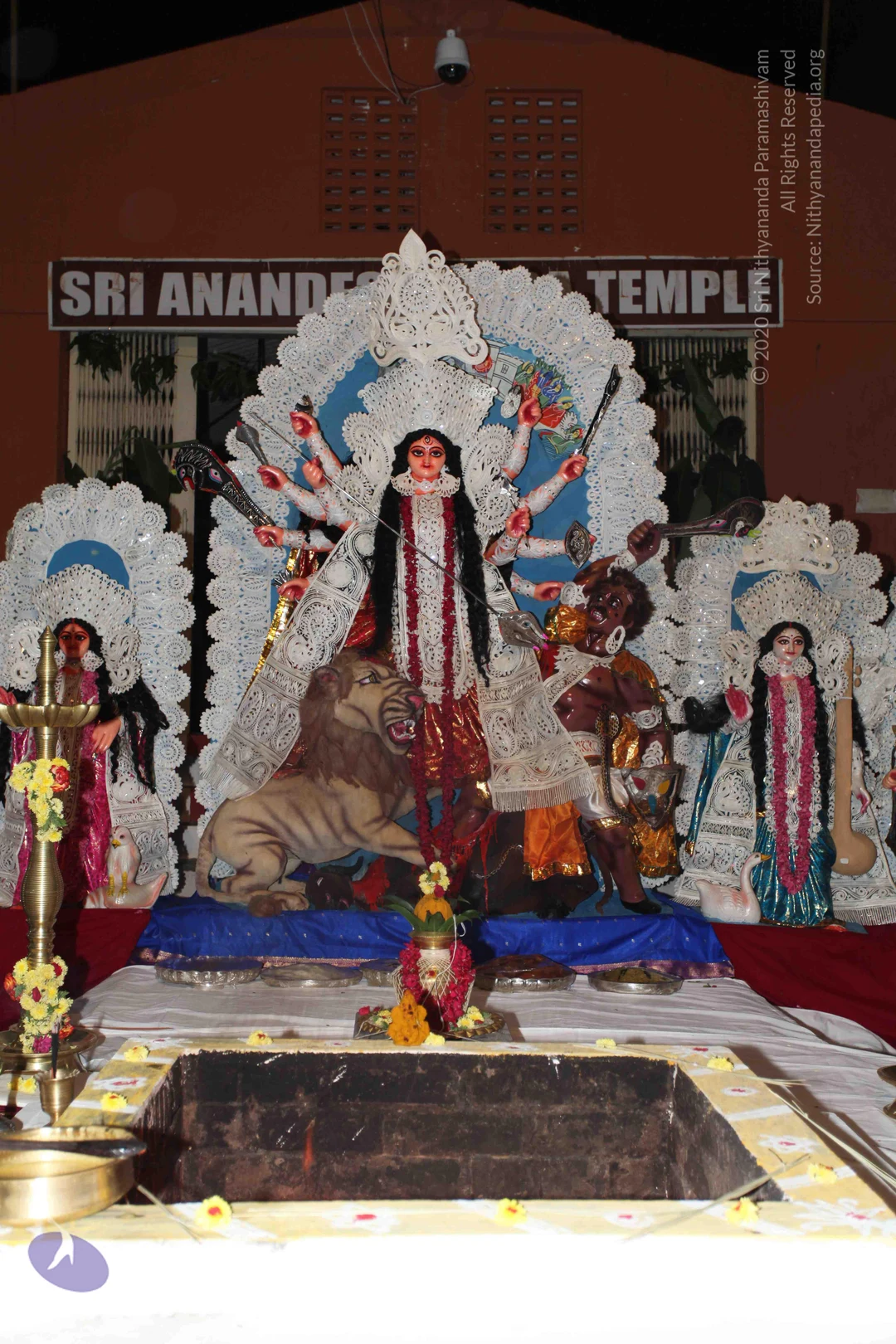
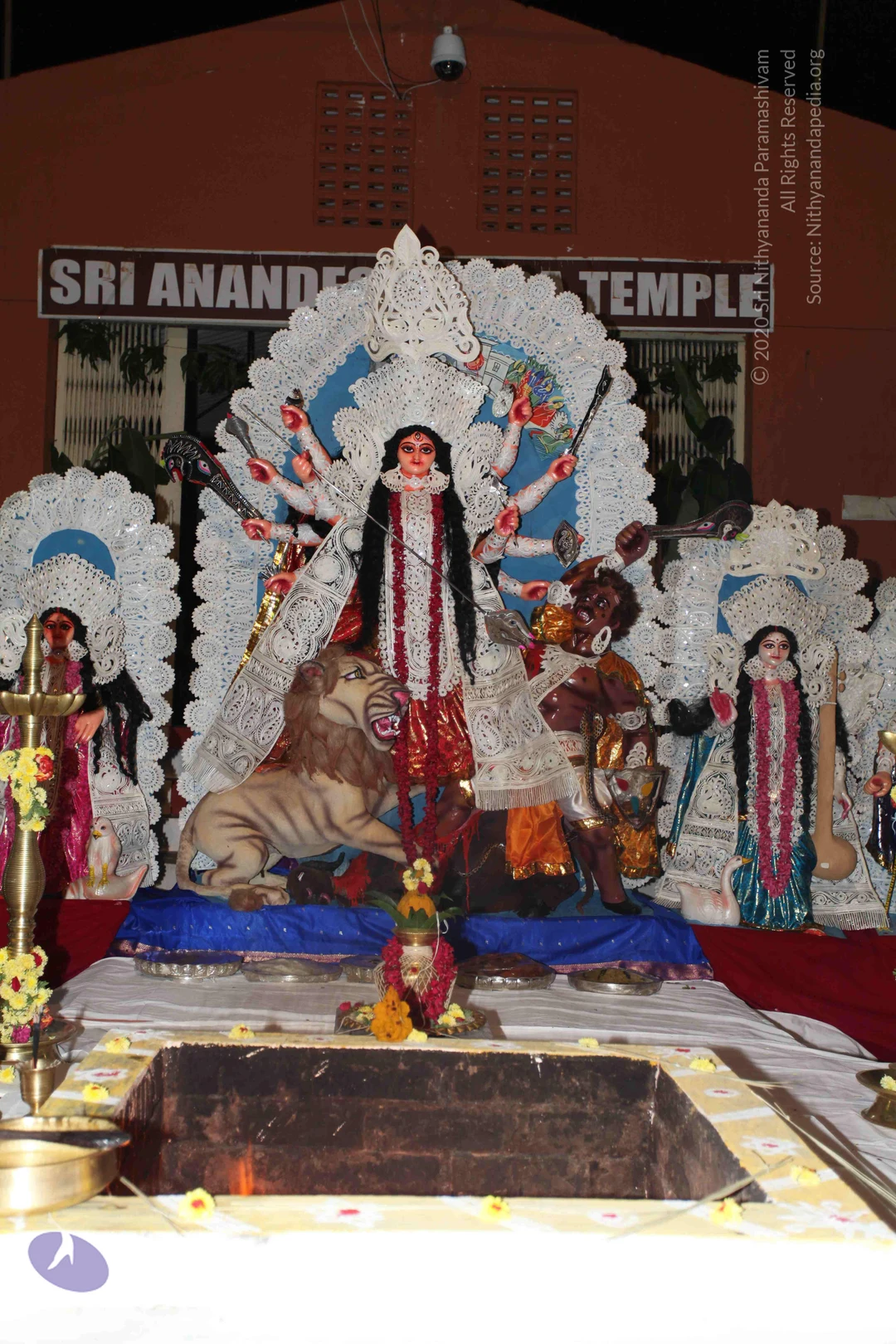
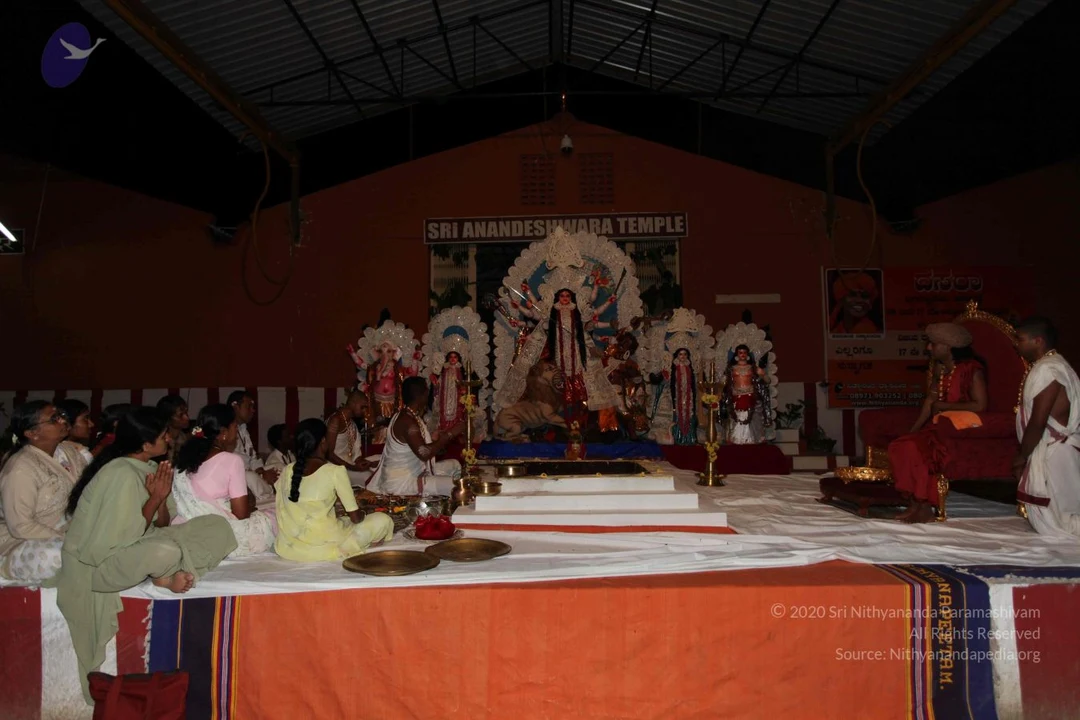
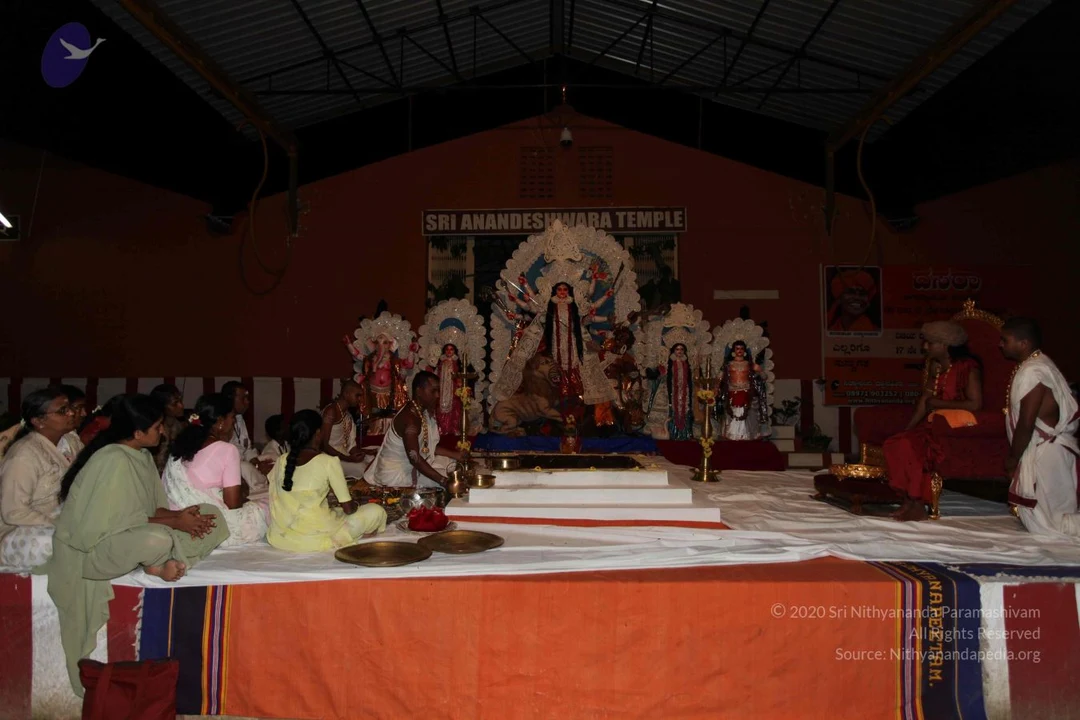
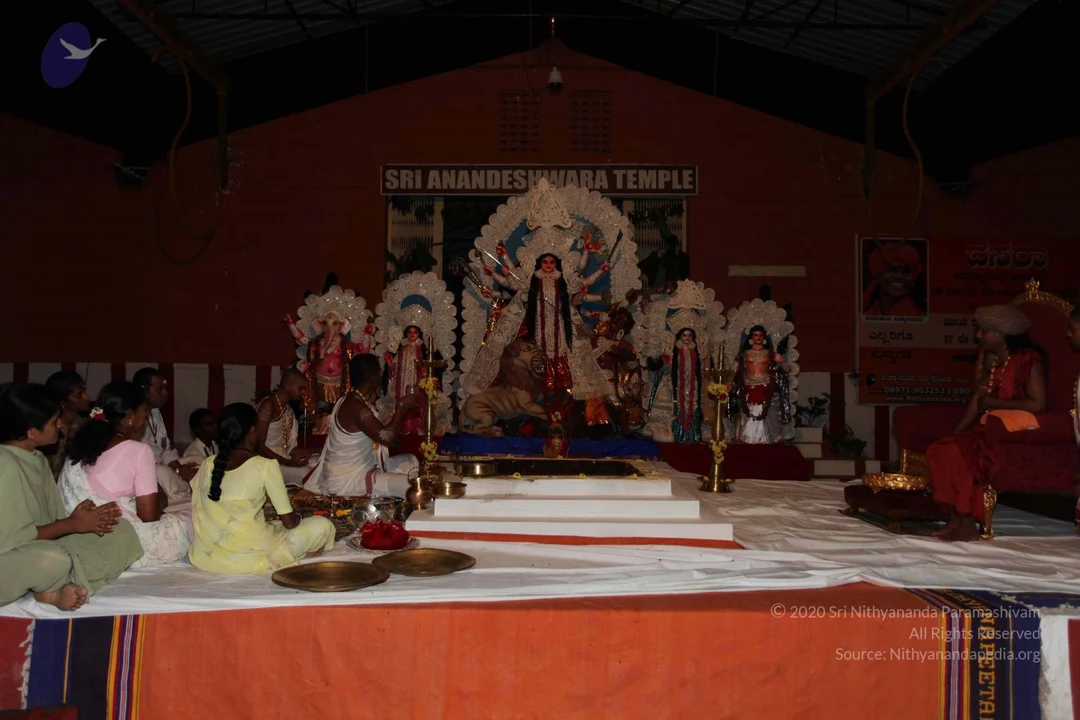
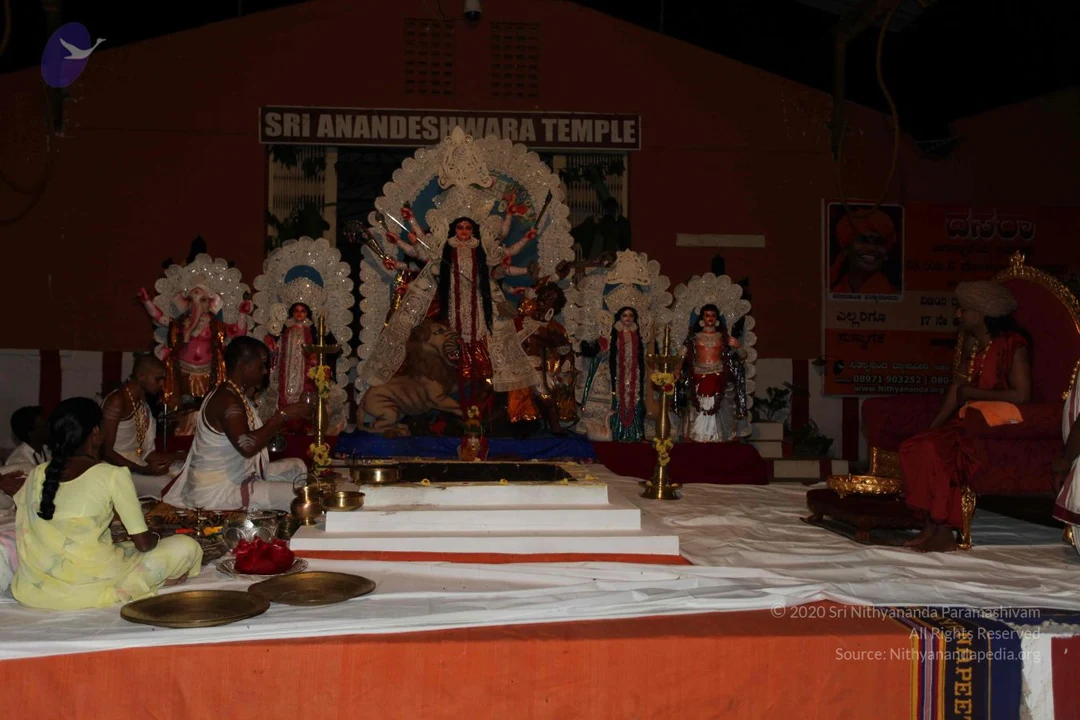
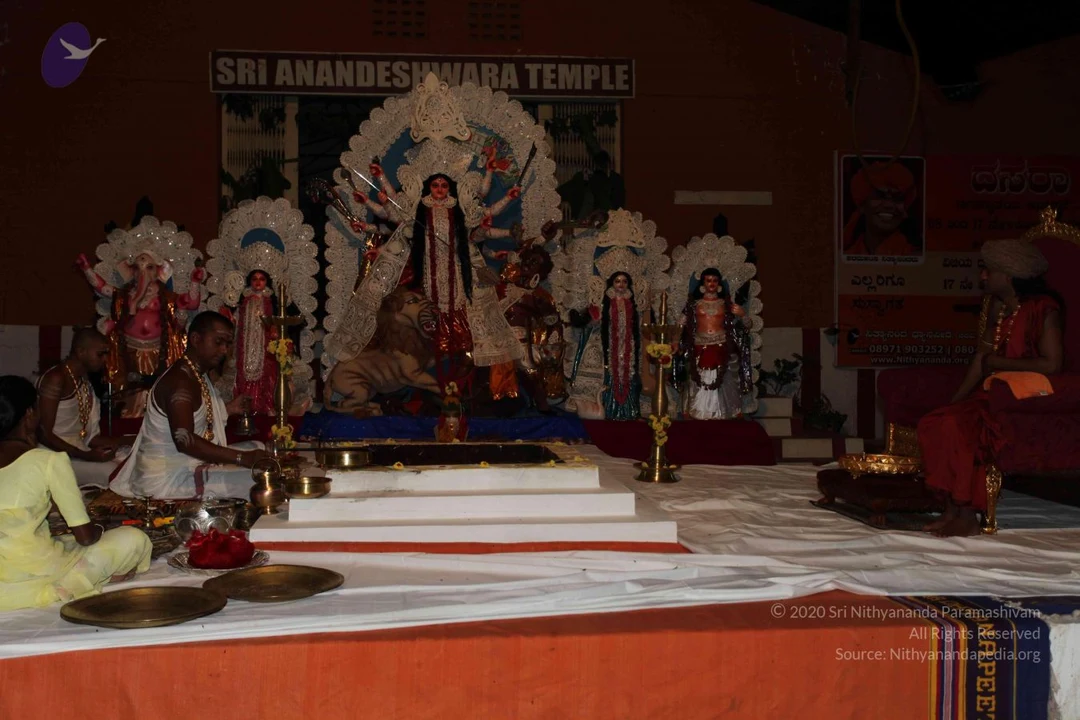
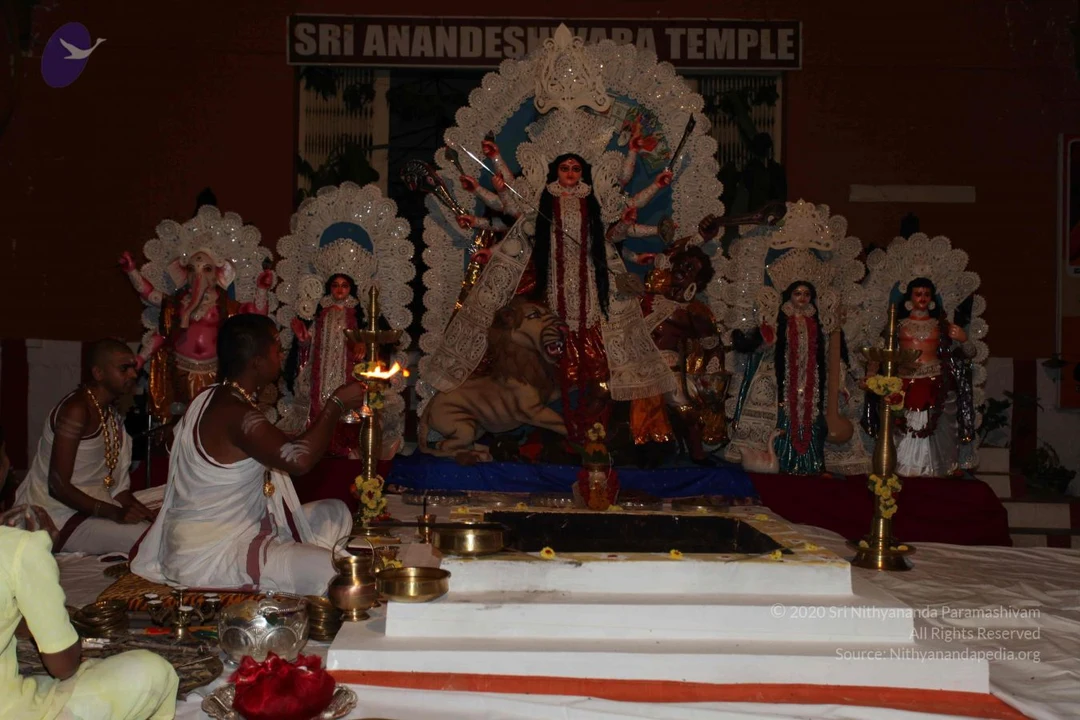
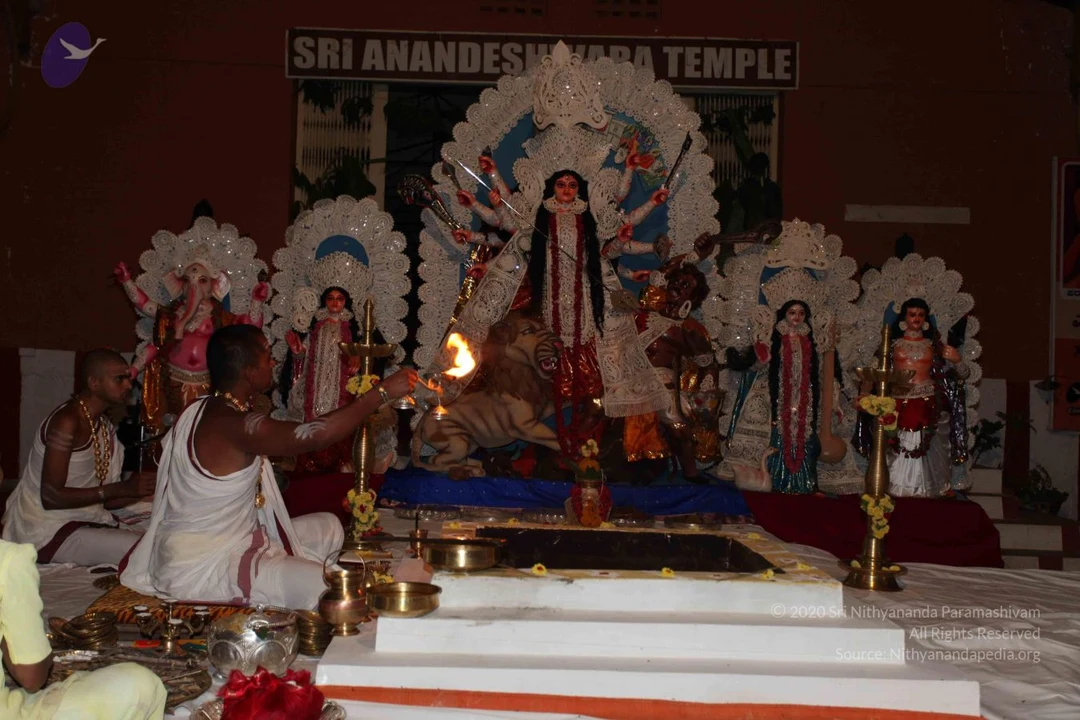
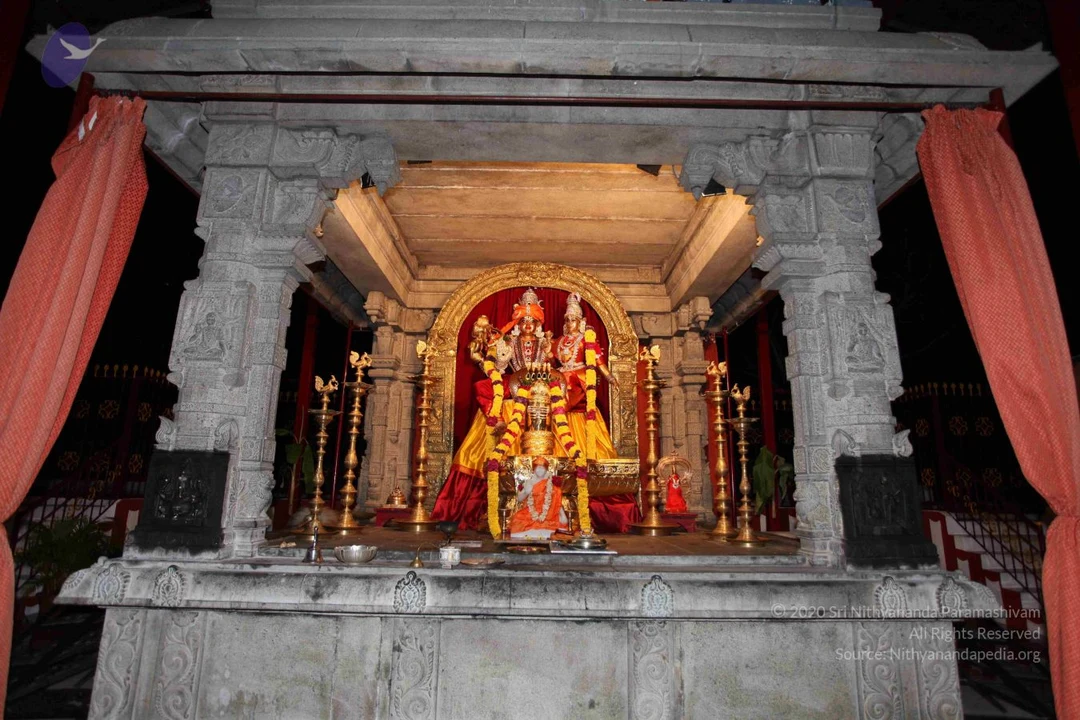
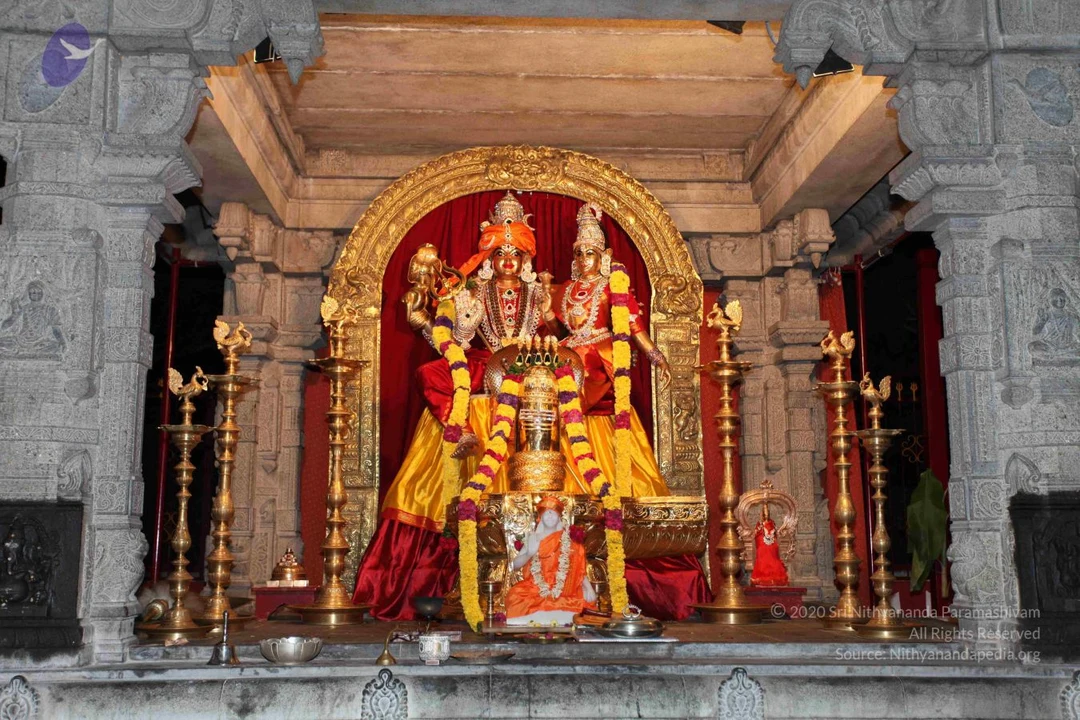
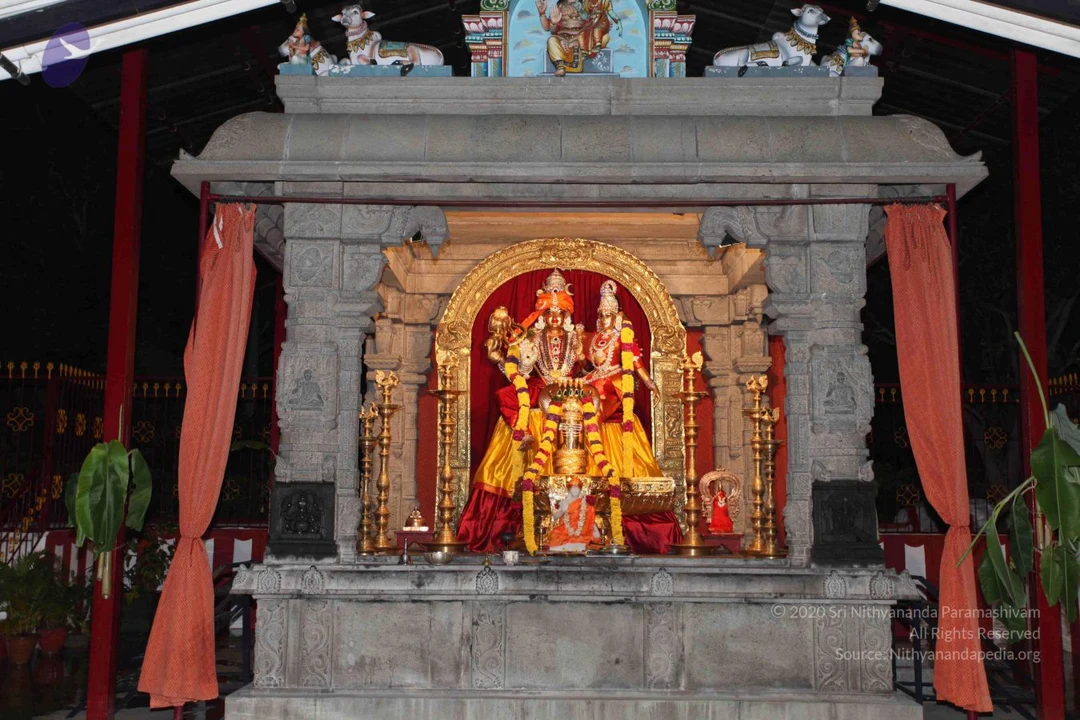
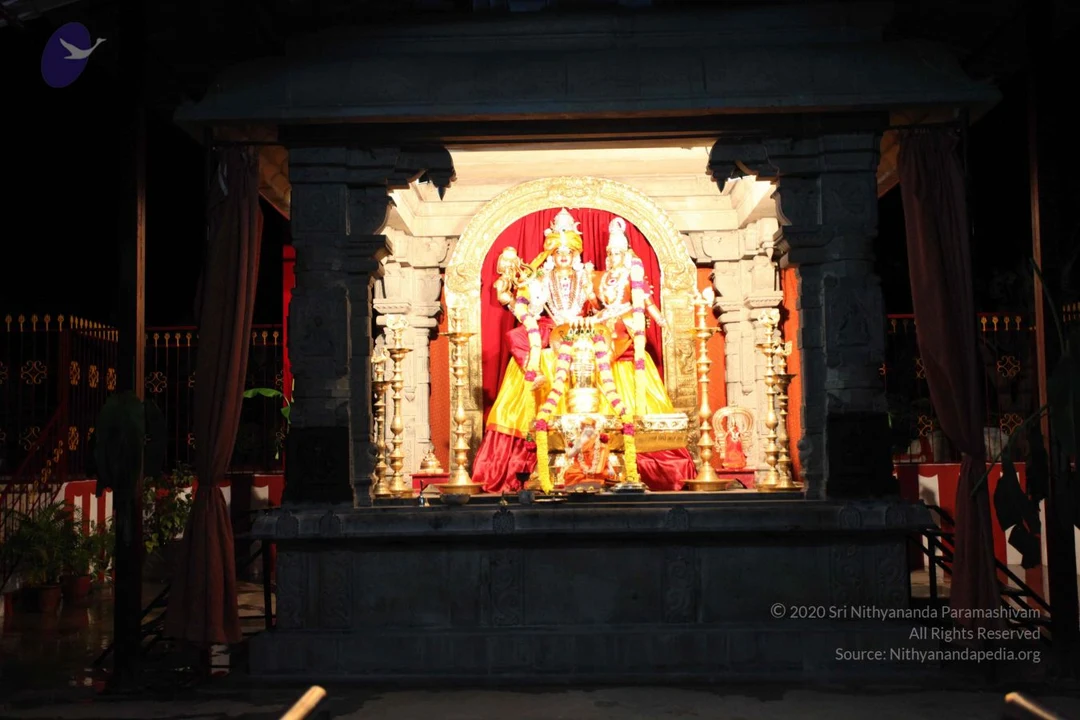
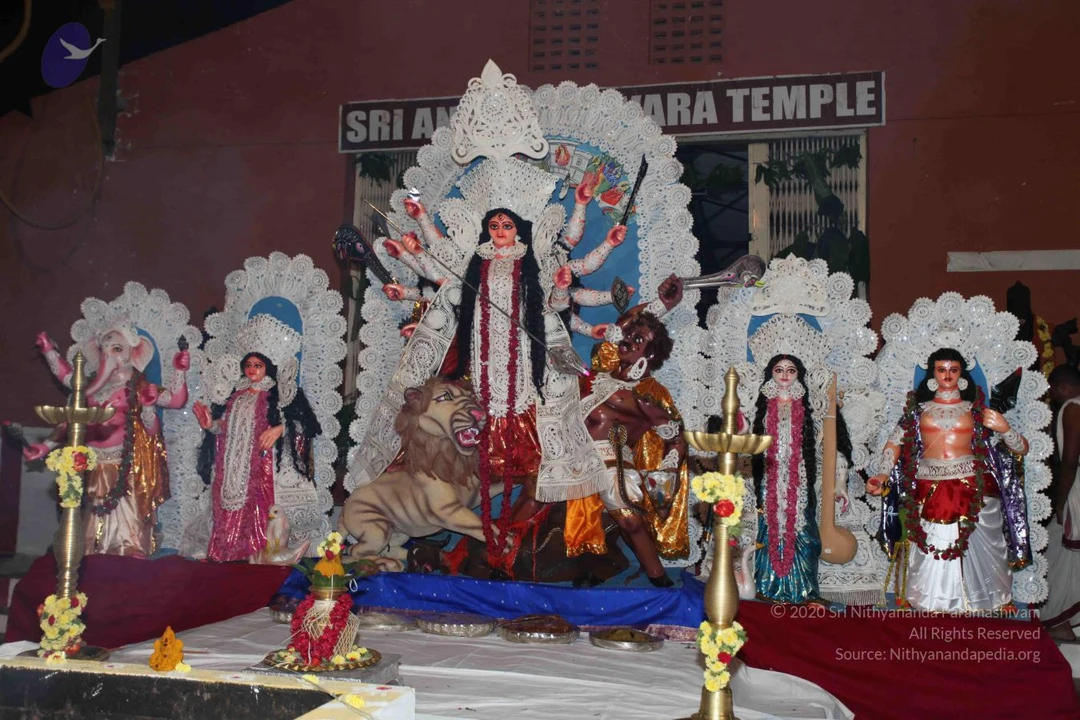
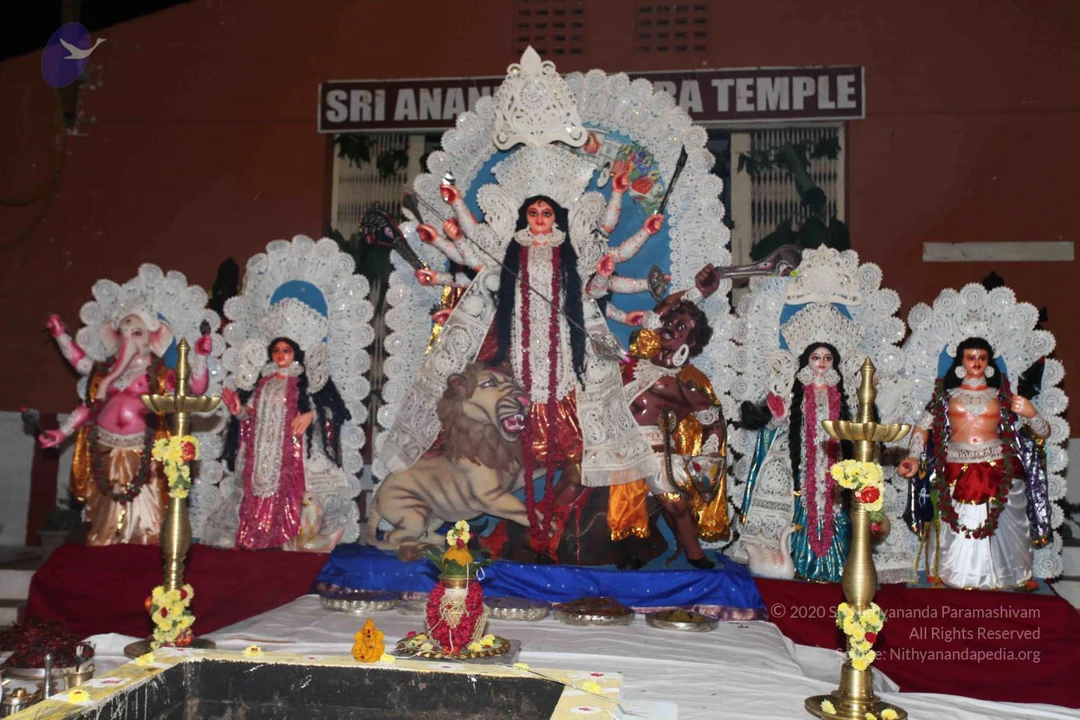
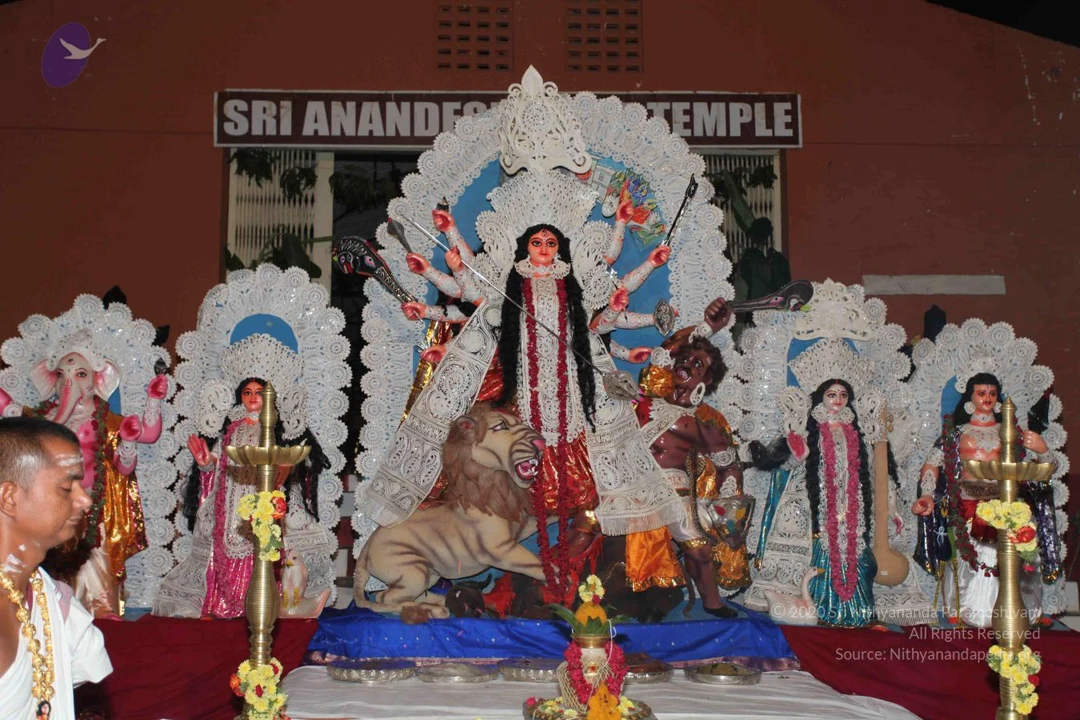
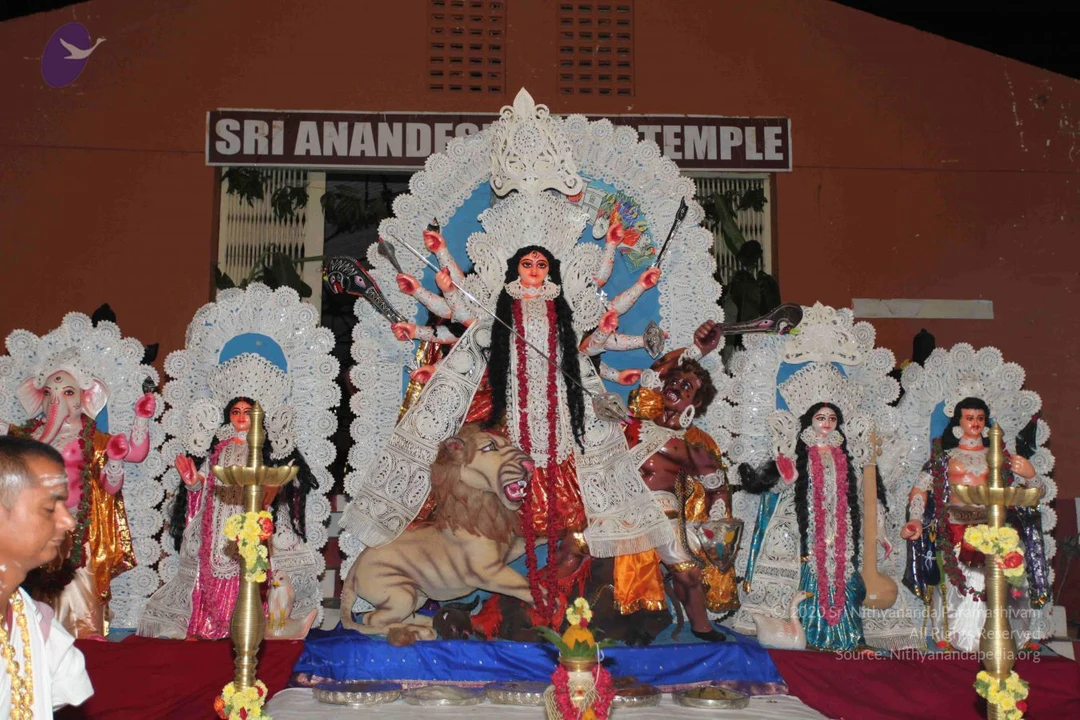
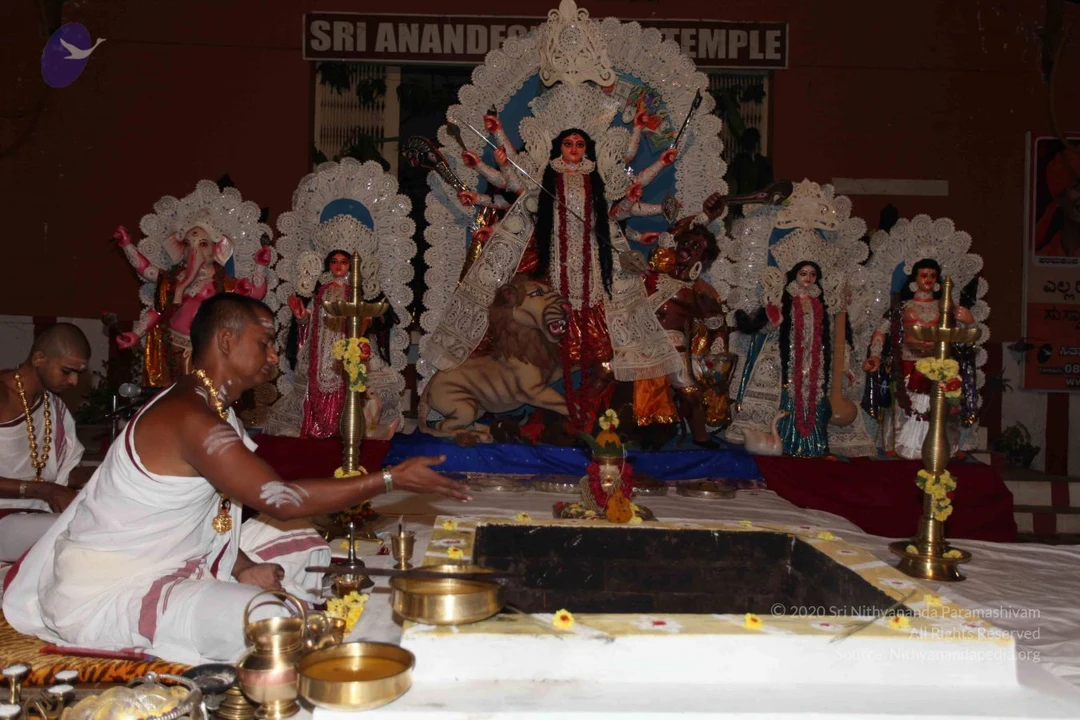
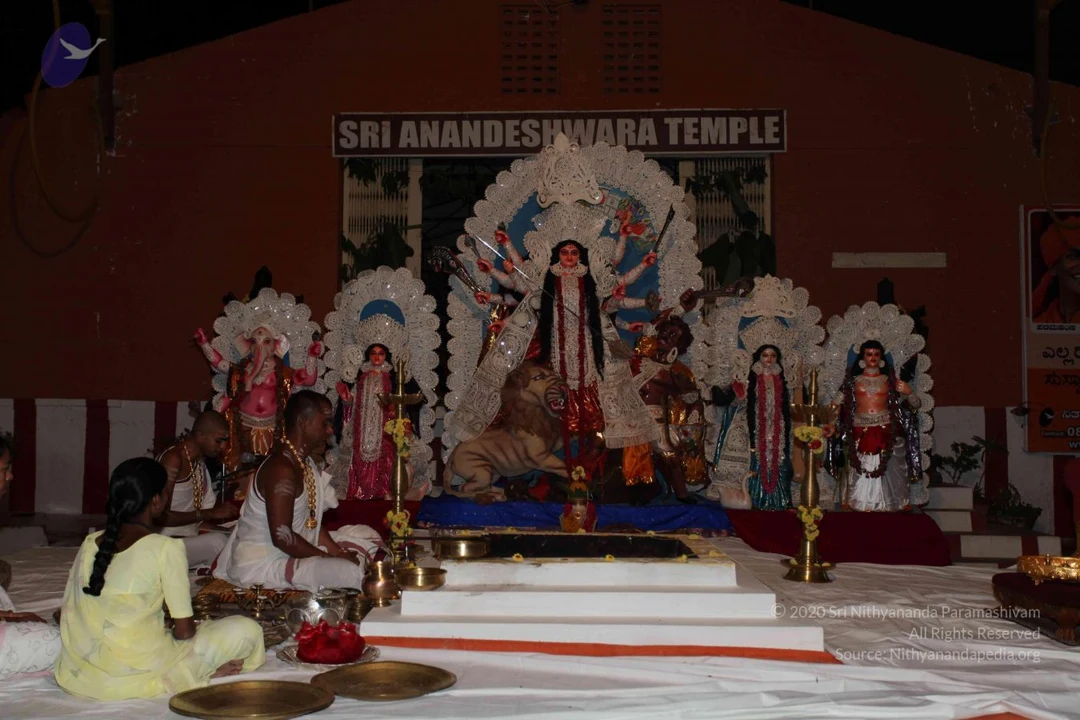
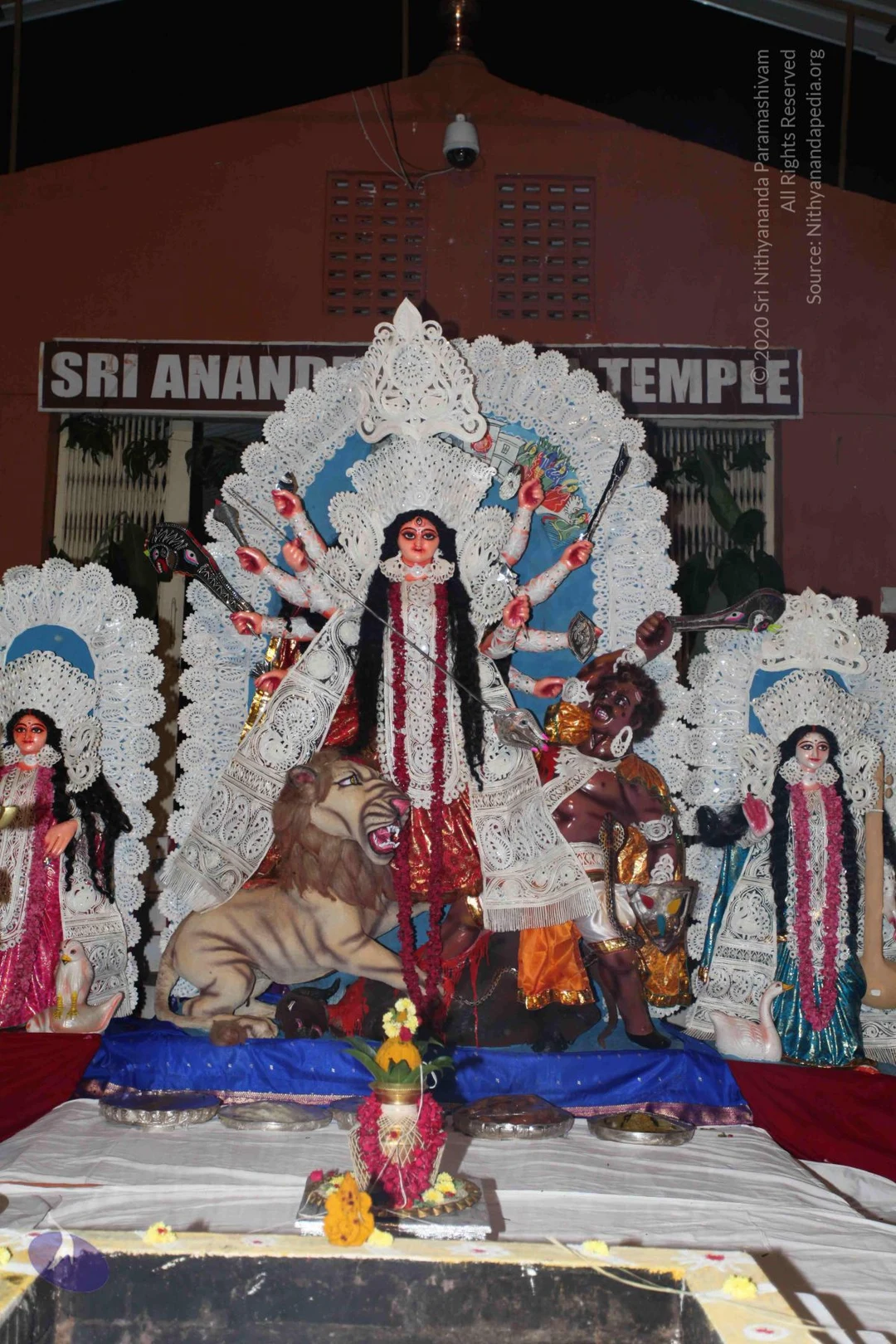
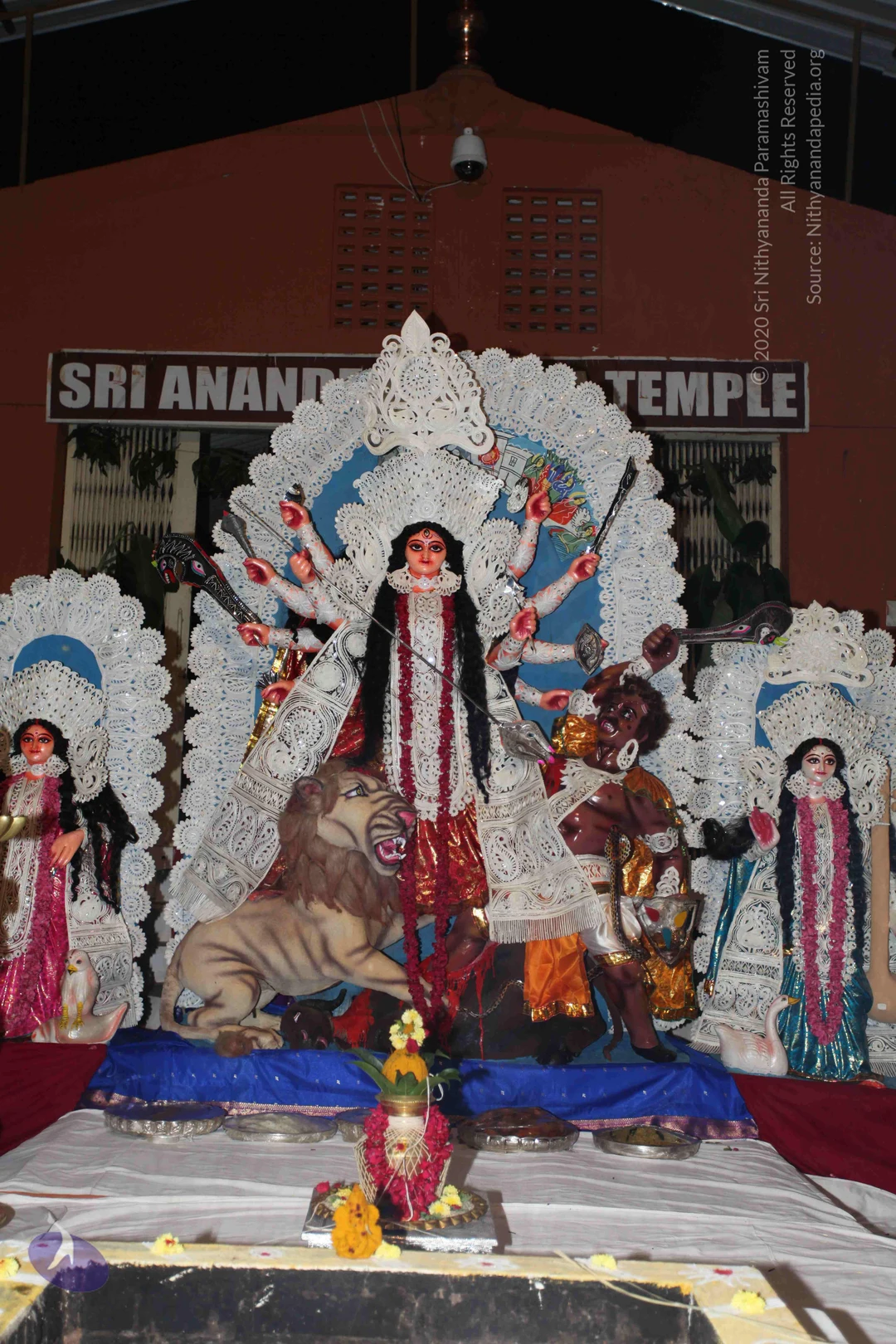
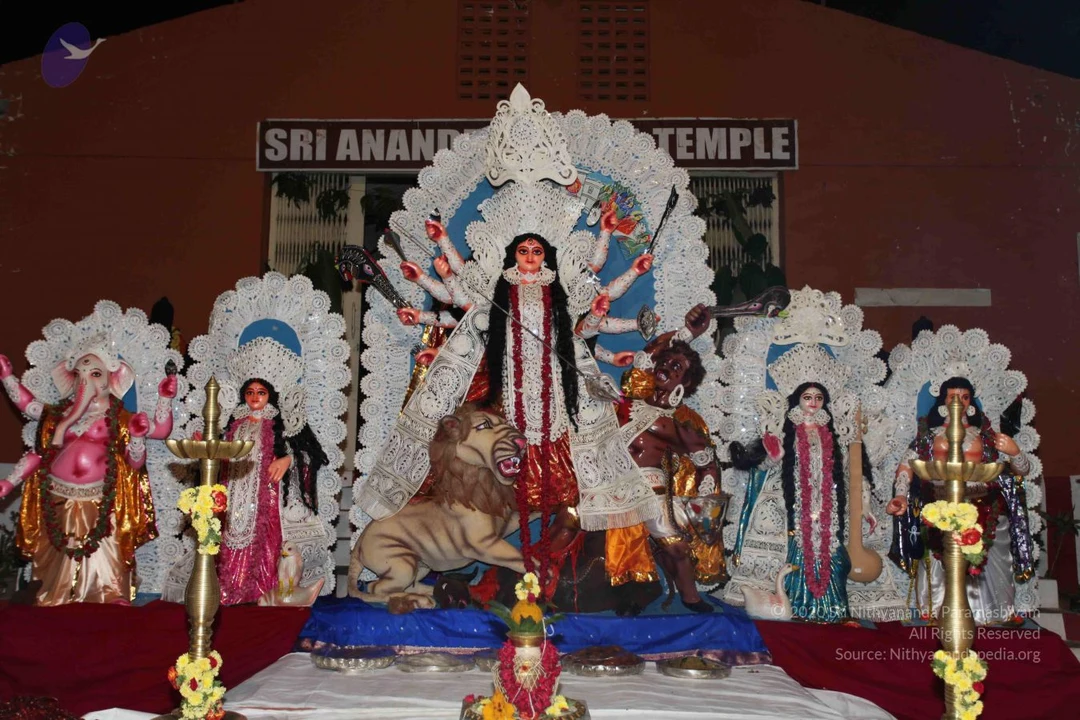
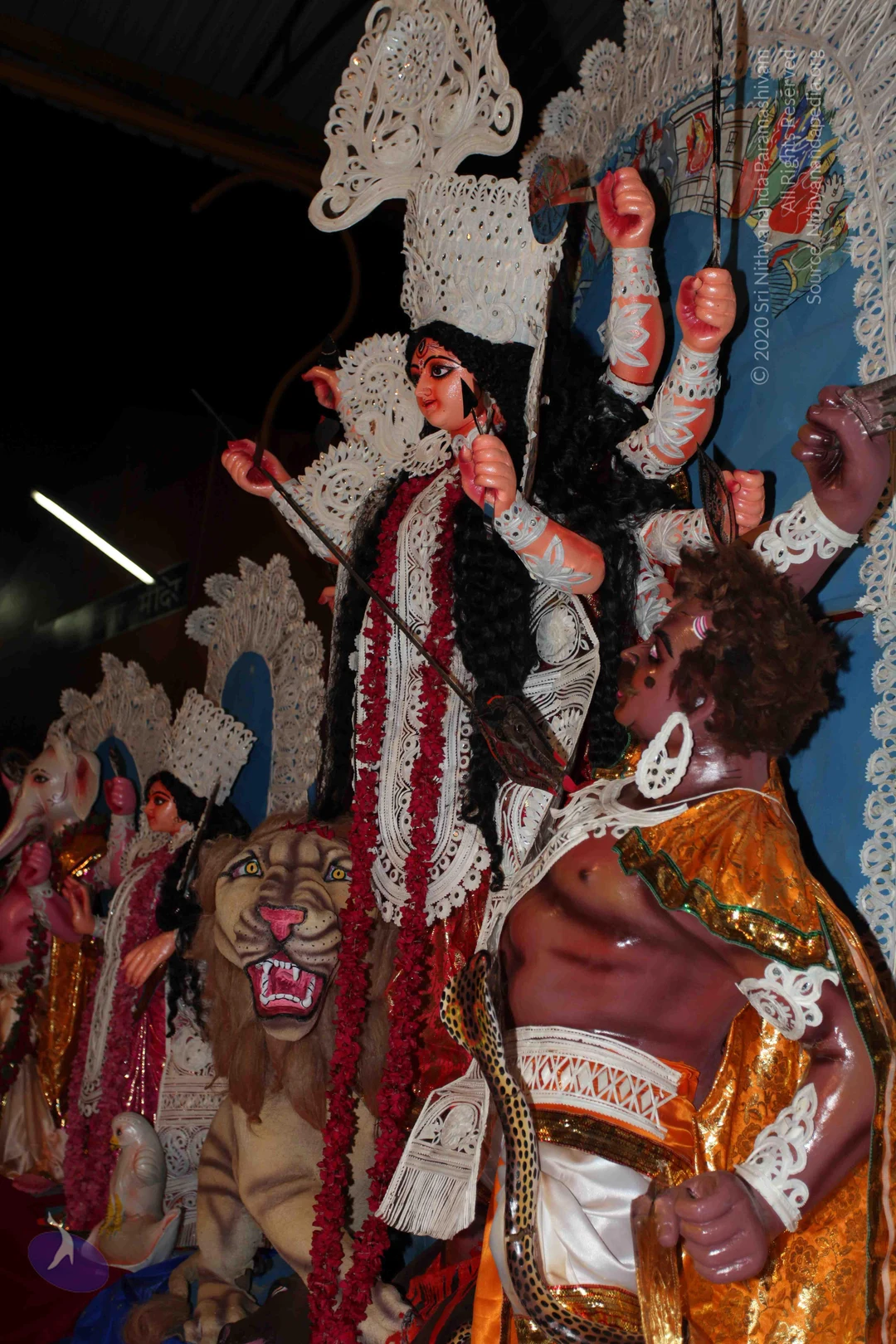
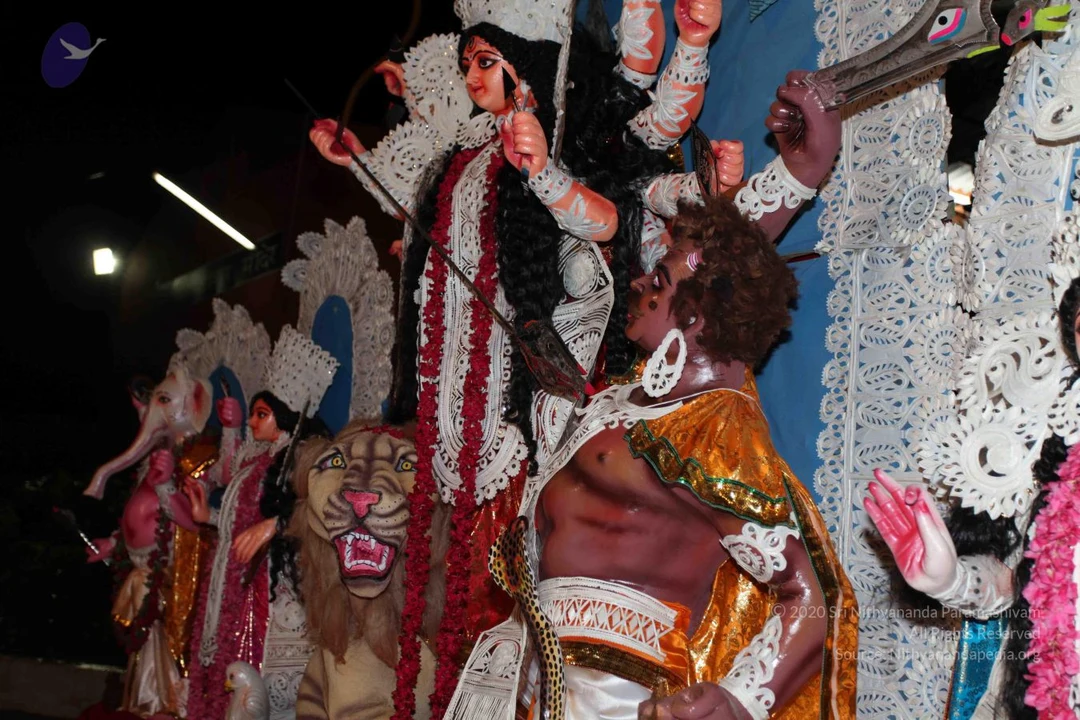
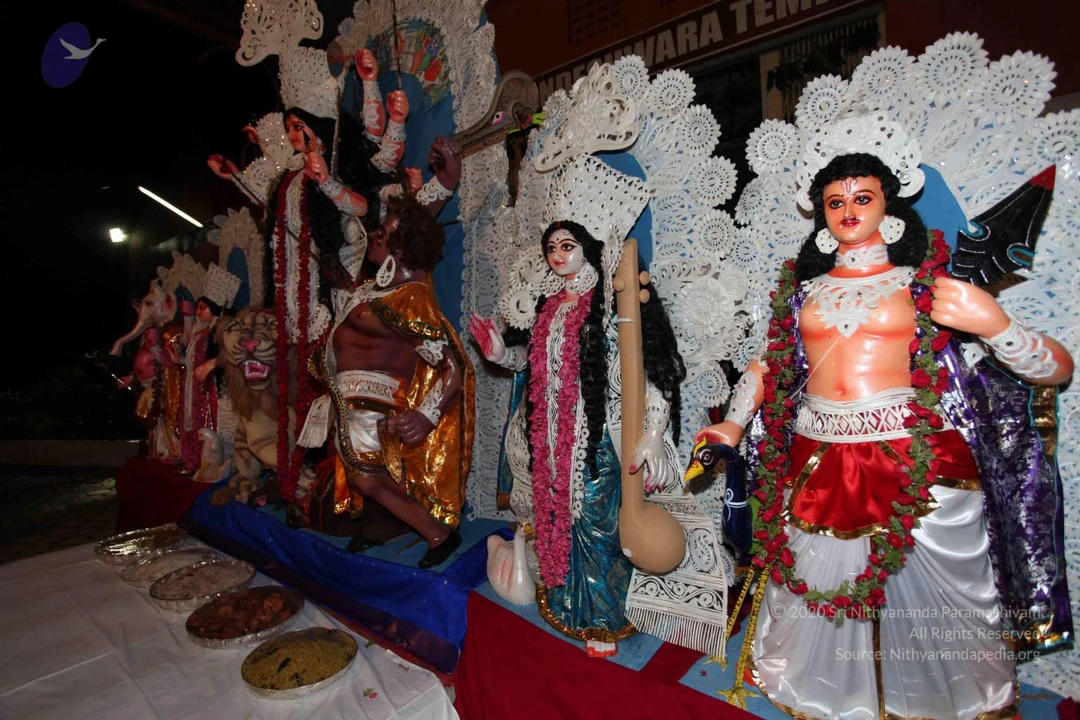
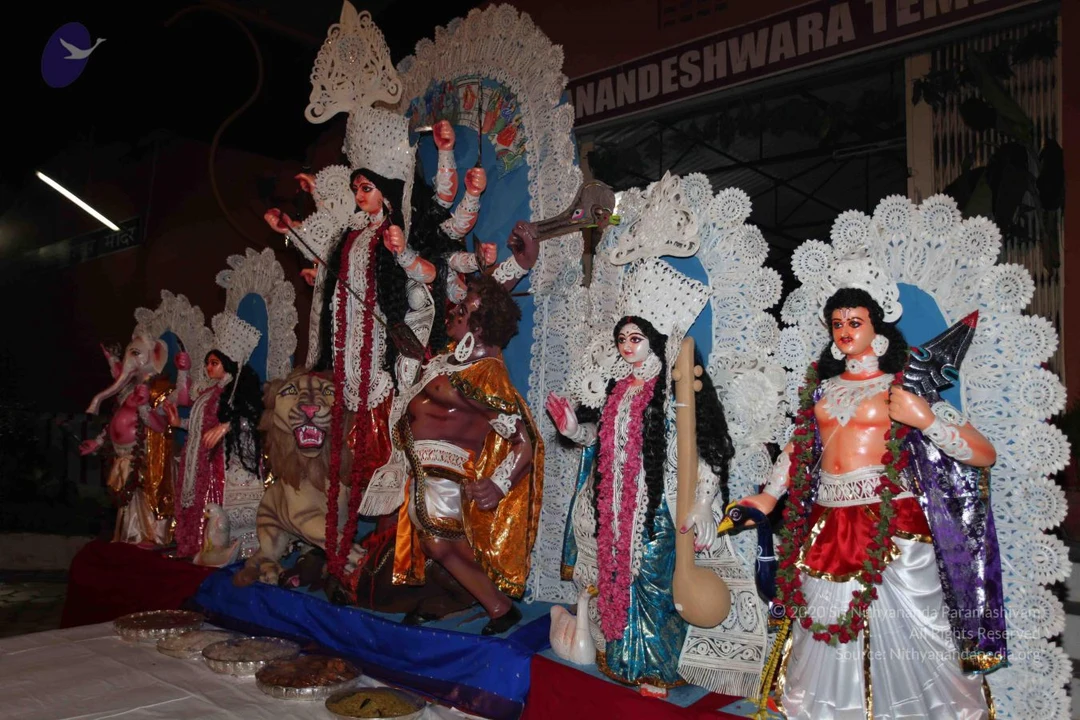
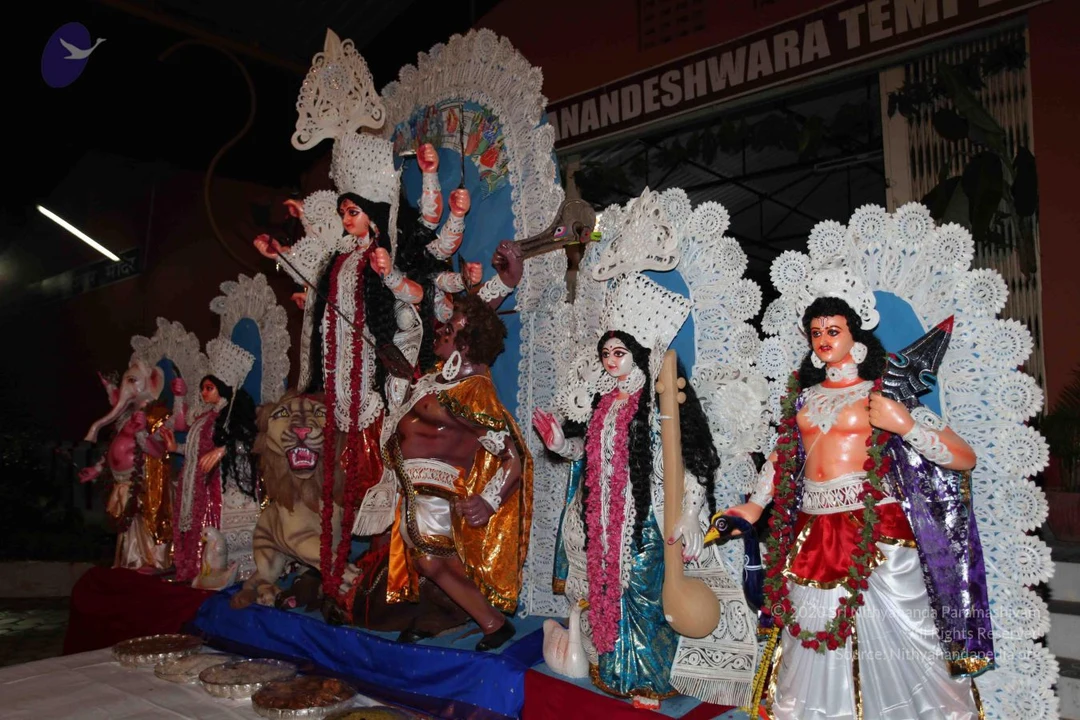
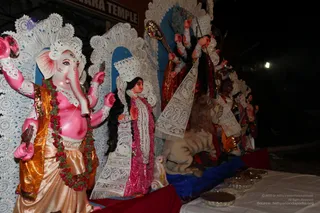
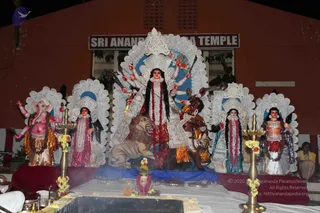
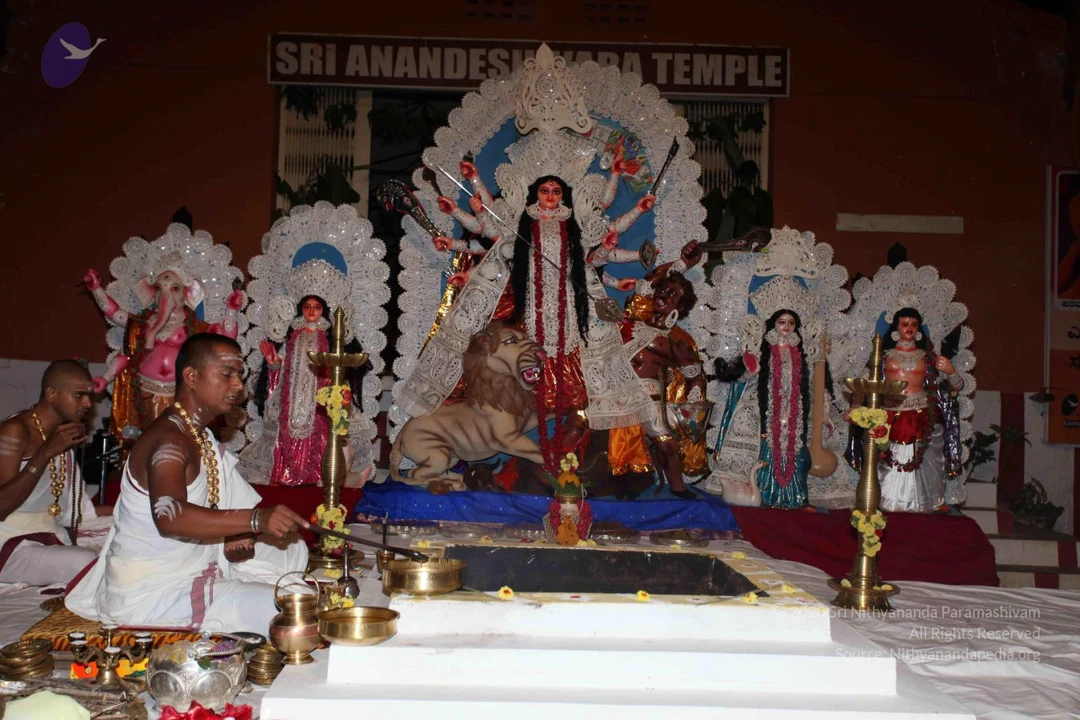
Night photograph of a festival display of multi-armed goddess murti with lion mount and a demon figure beneath her, flanked by Ganesha and other deity murtis with white lace-like backdrop arches. Brass oil lamps stand on either side and a kalasha with marigold garland sits on the platform, with a small fire pit smoking in front. Signboard above reads Sri Ananda ... Temple. No living people are visible.

October 08 2010

Original wiki page
Contents

Title:

Navaratri

Narration:

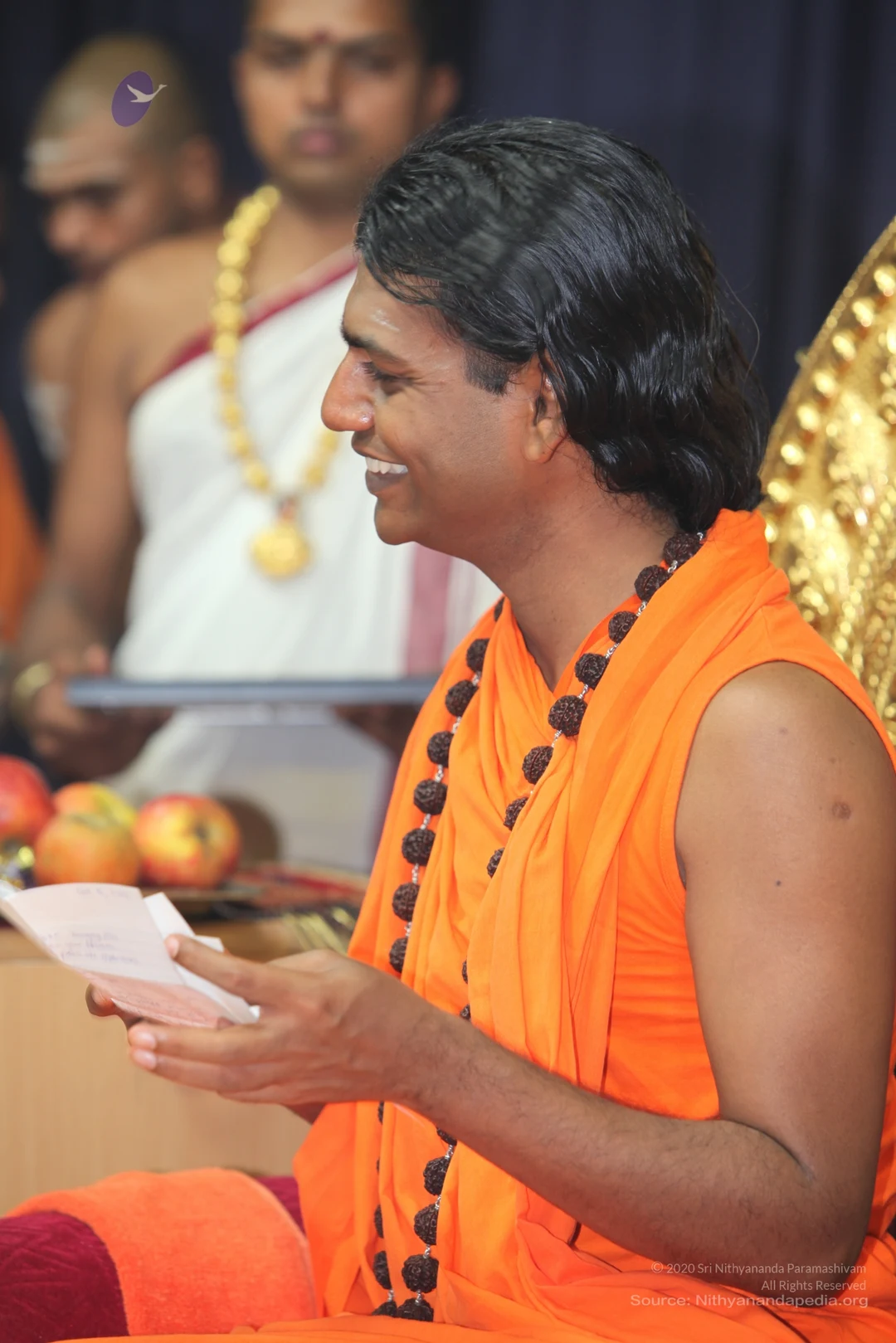
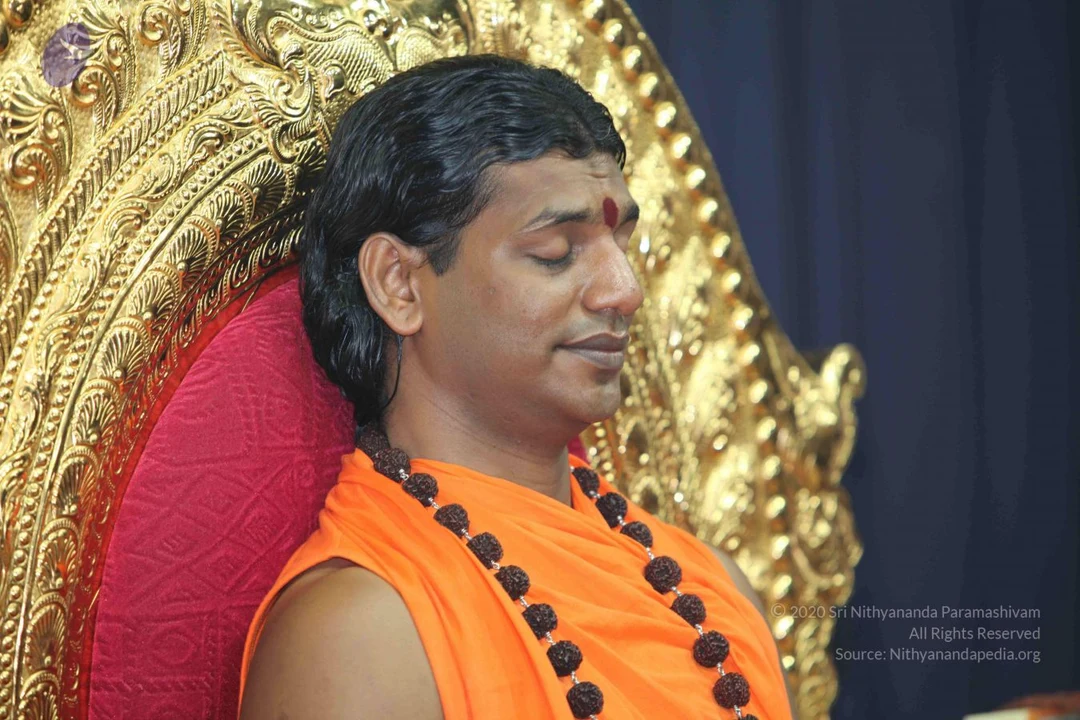
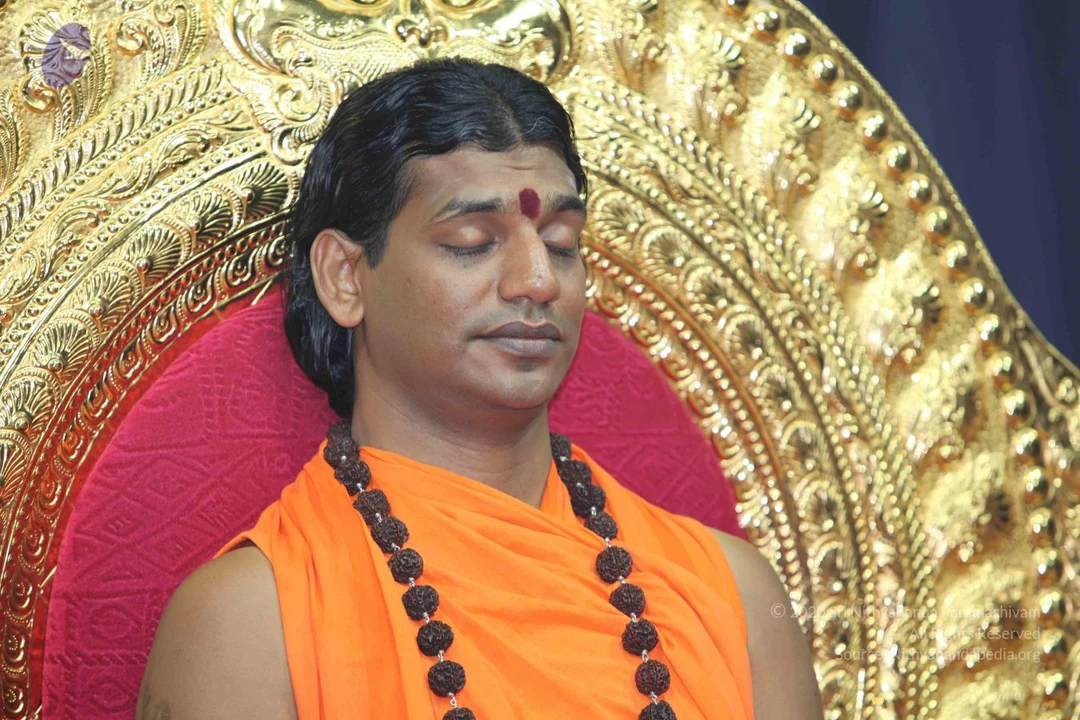
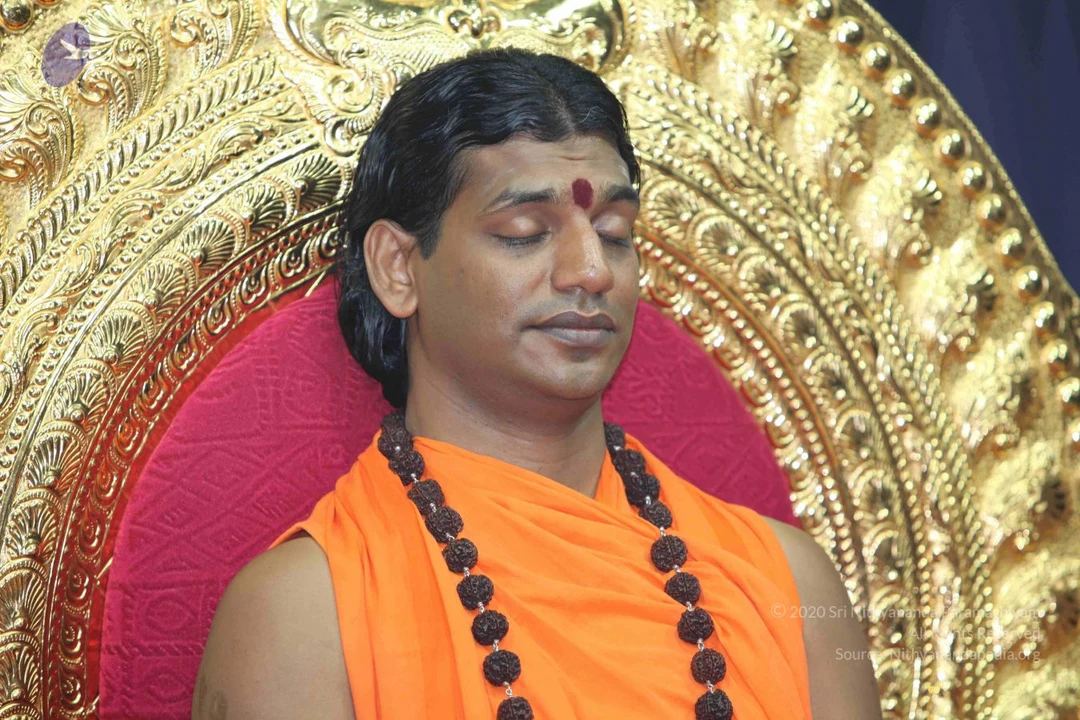
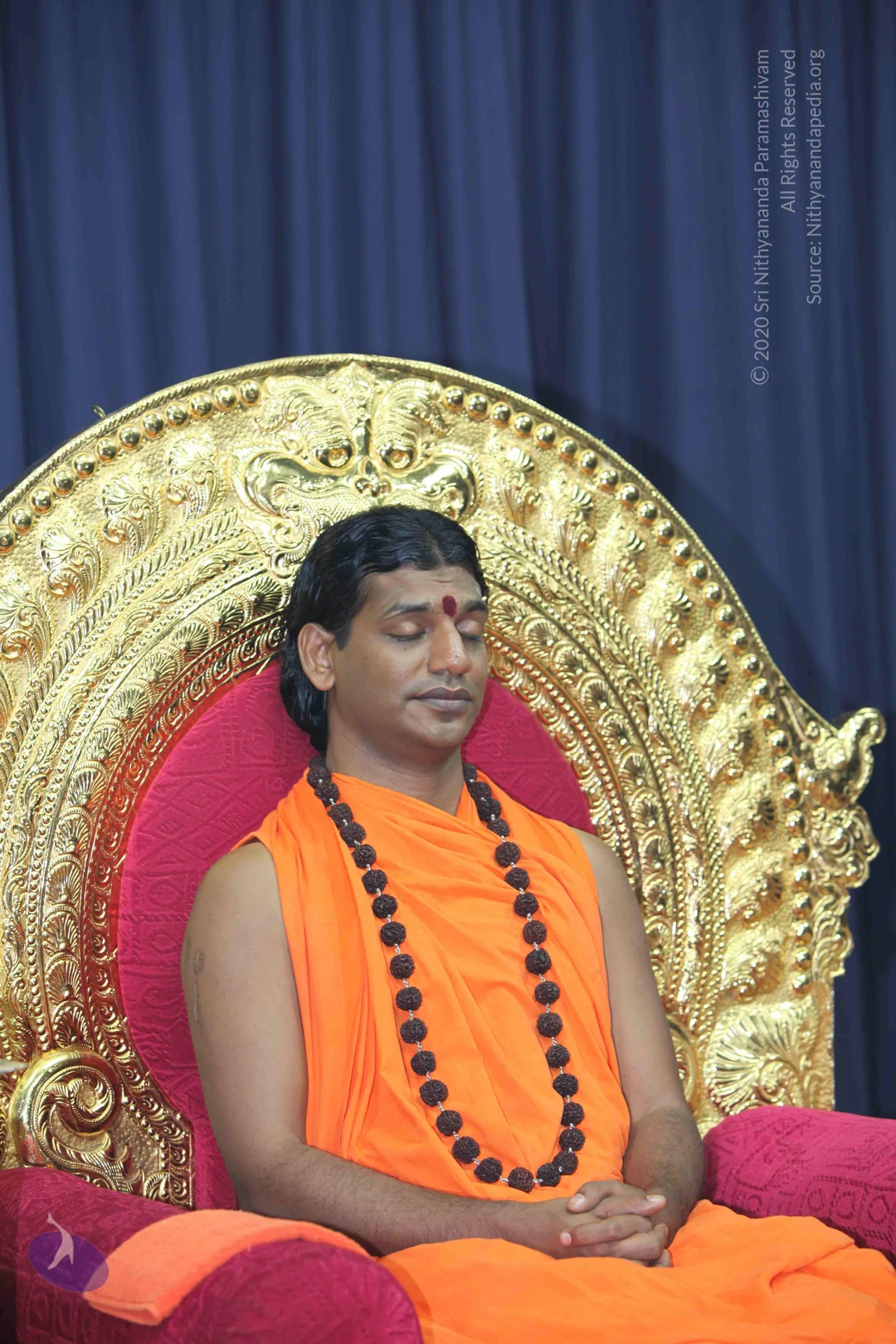
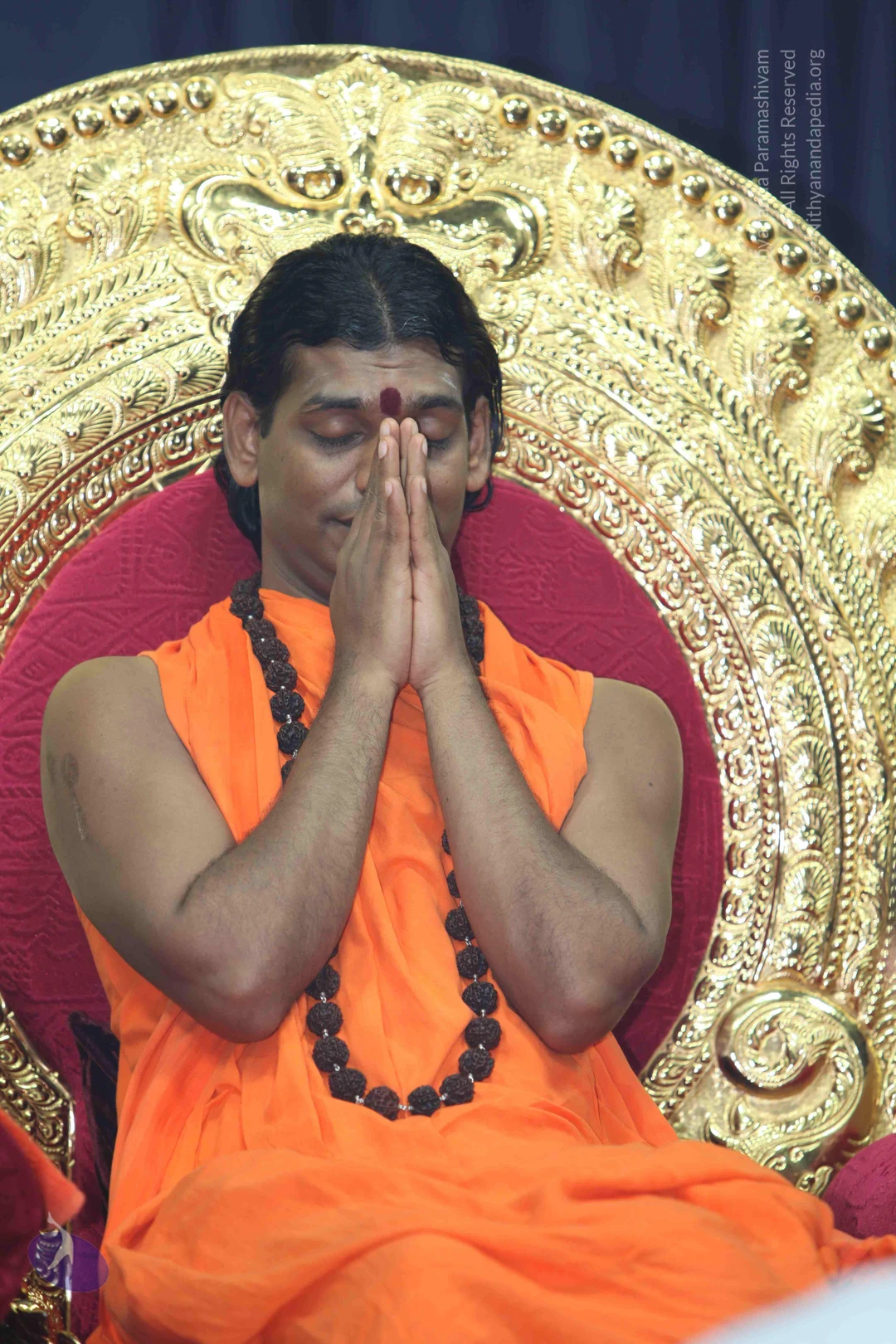
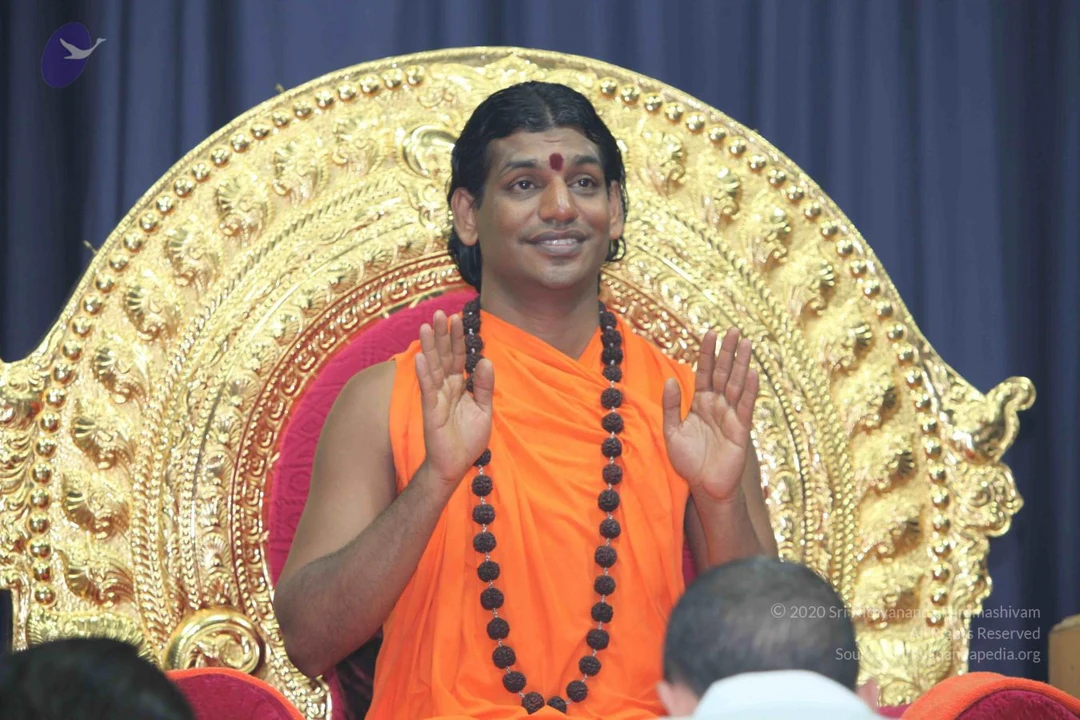
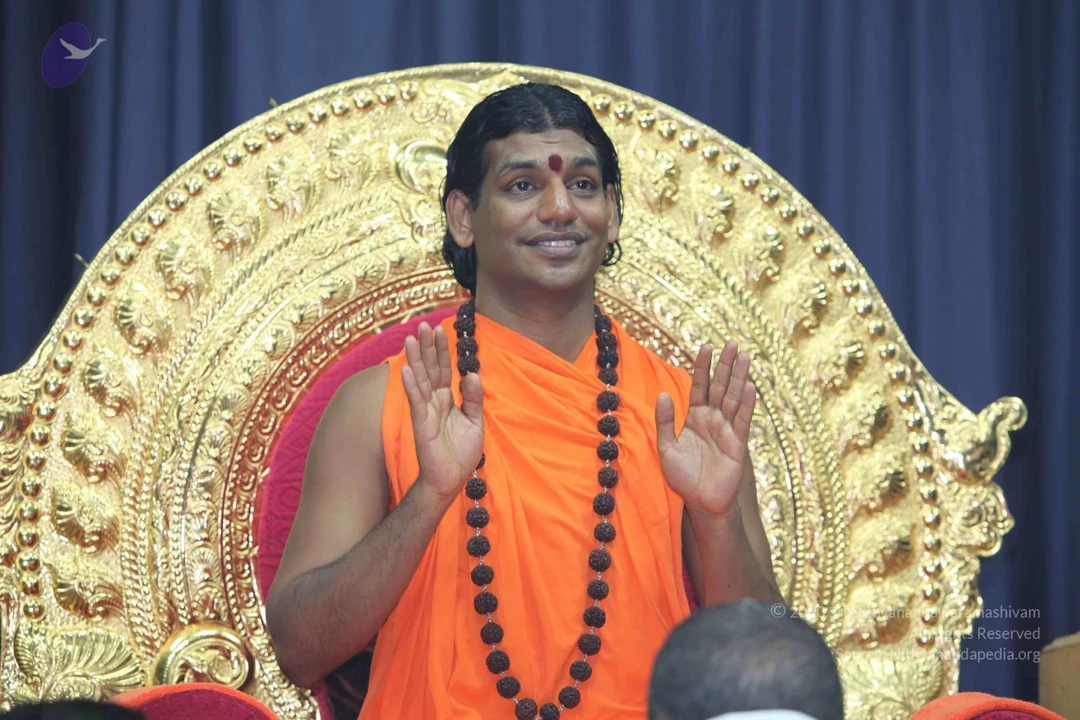
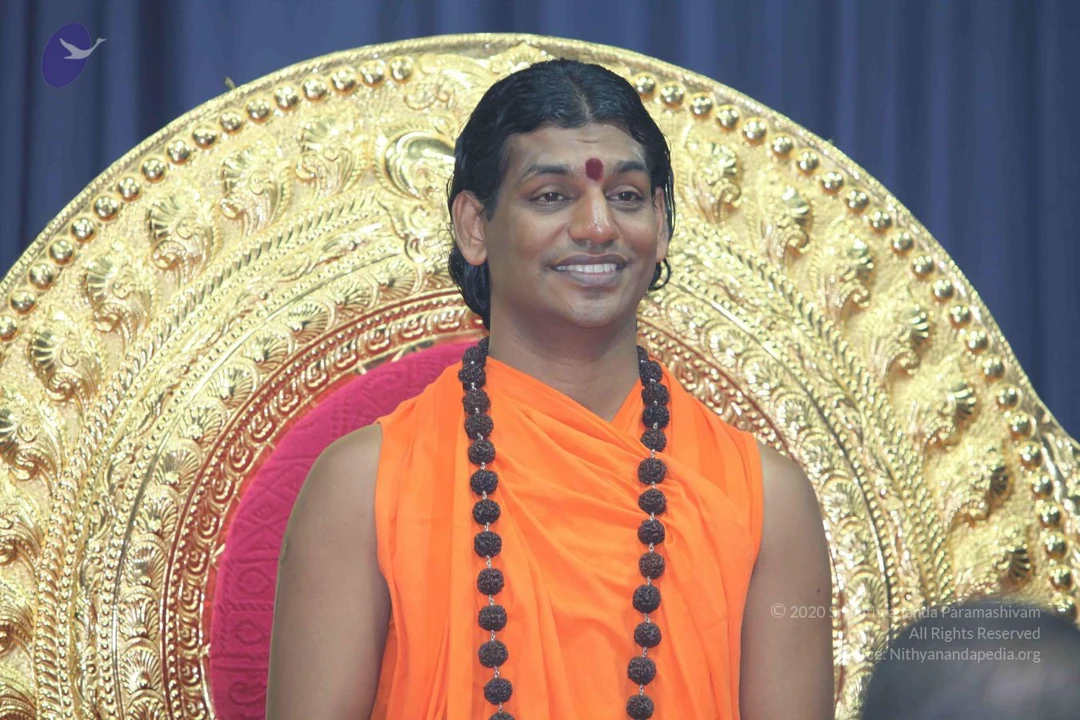
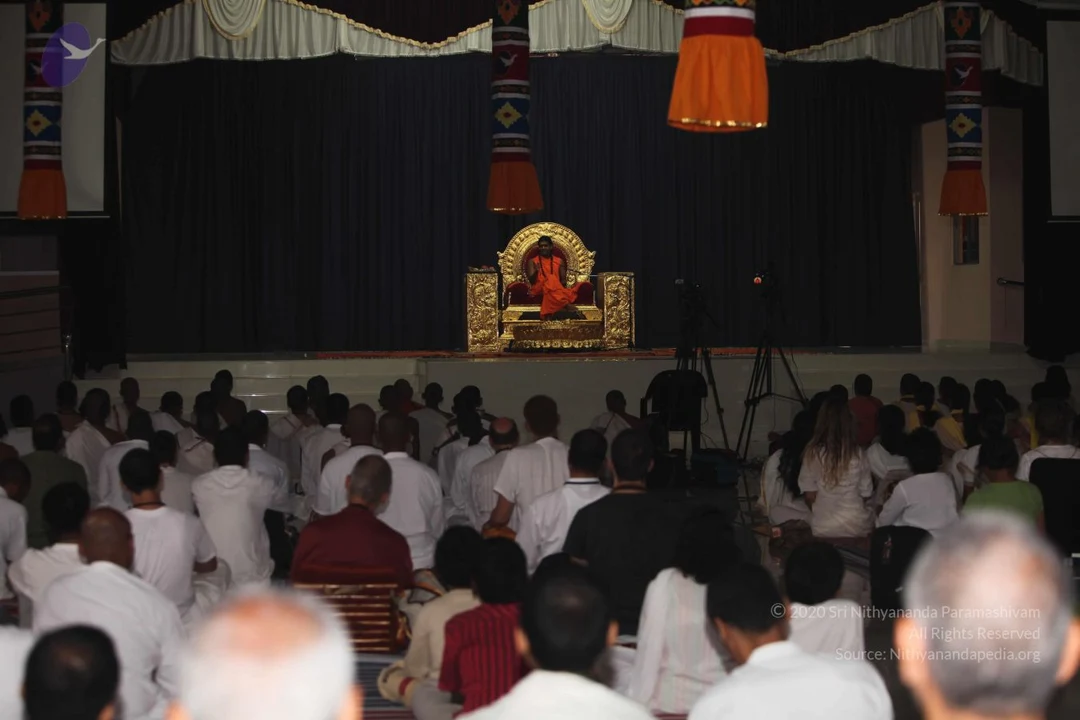
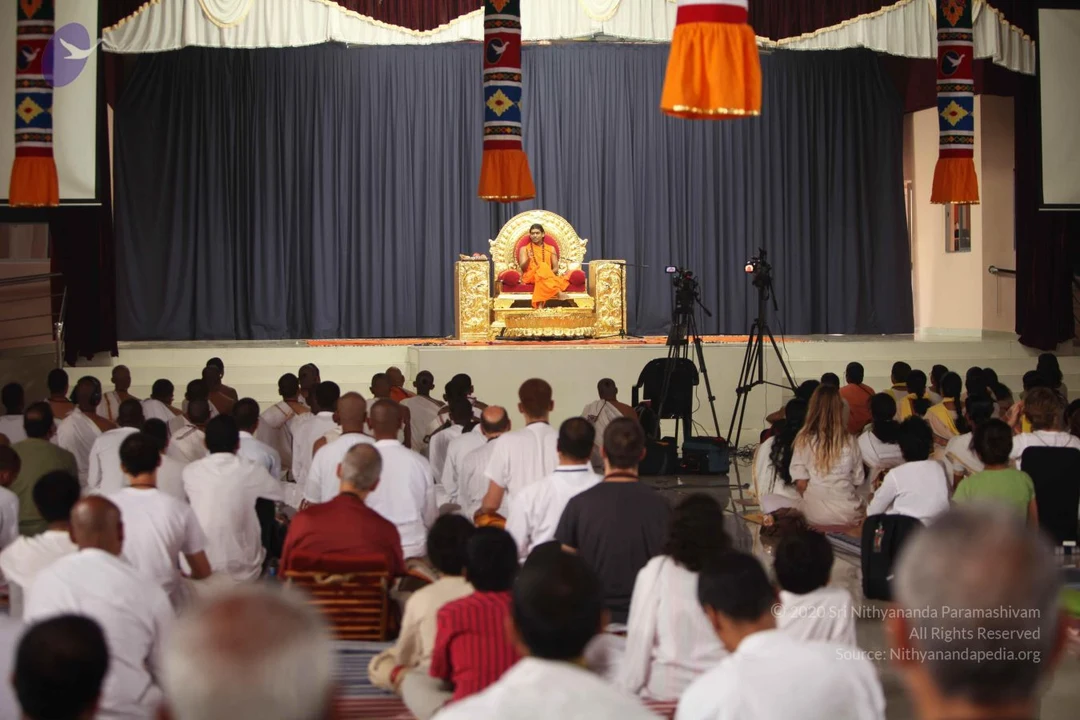
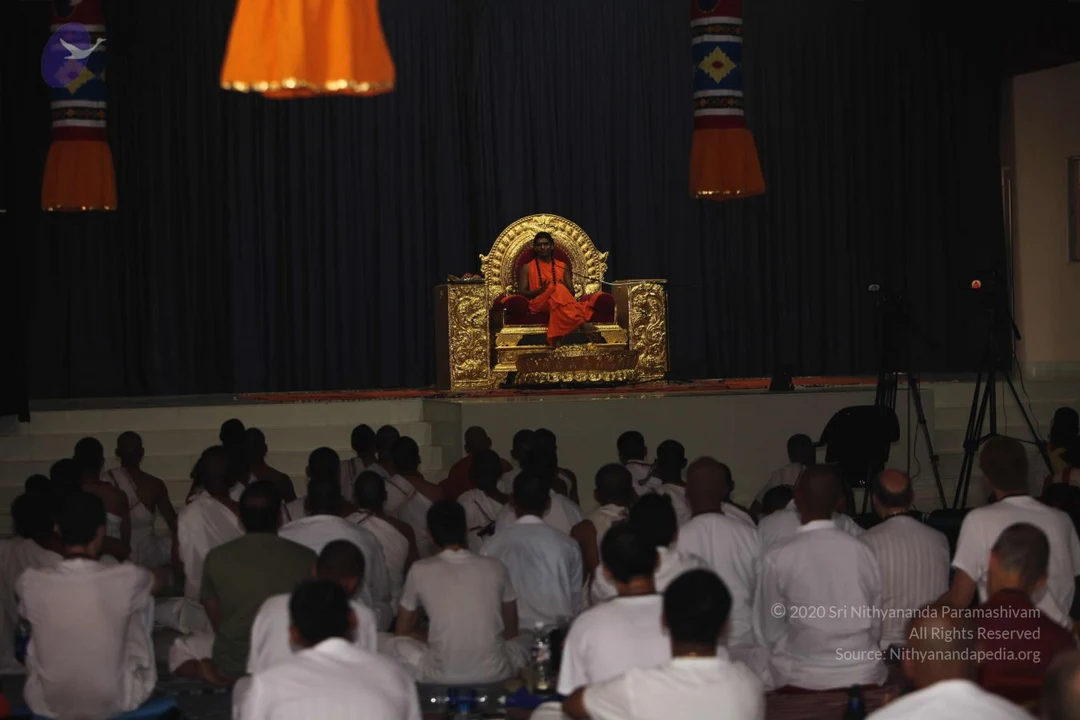
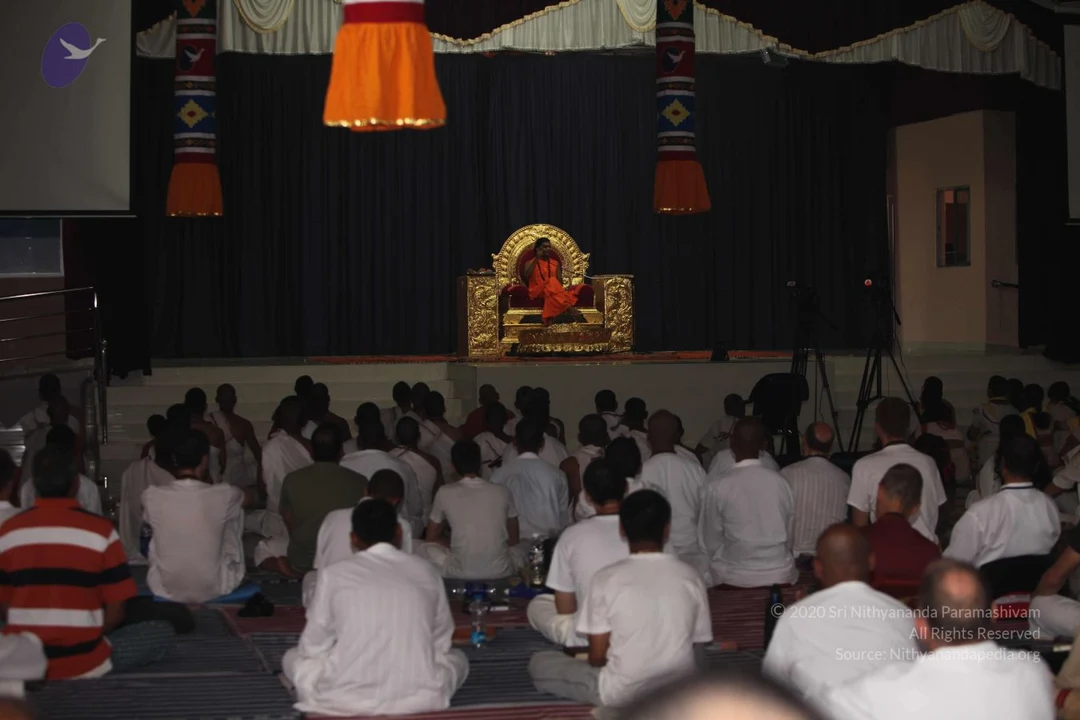
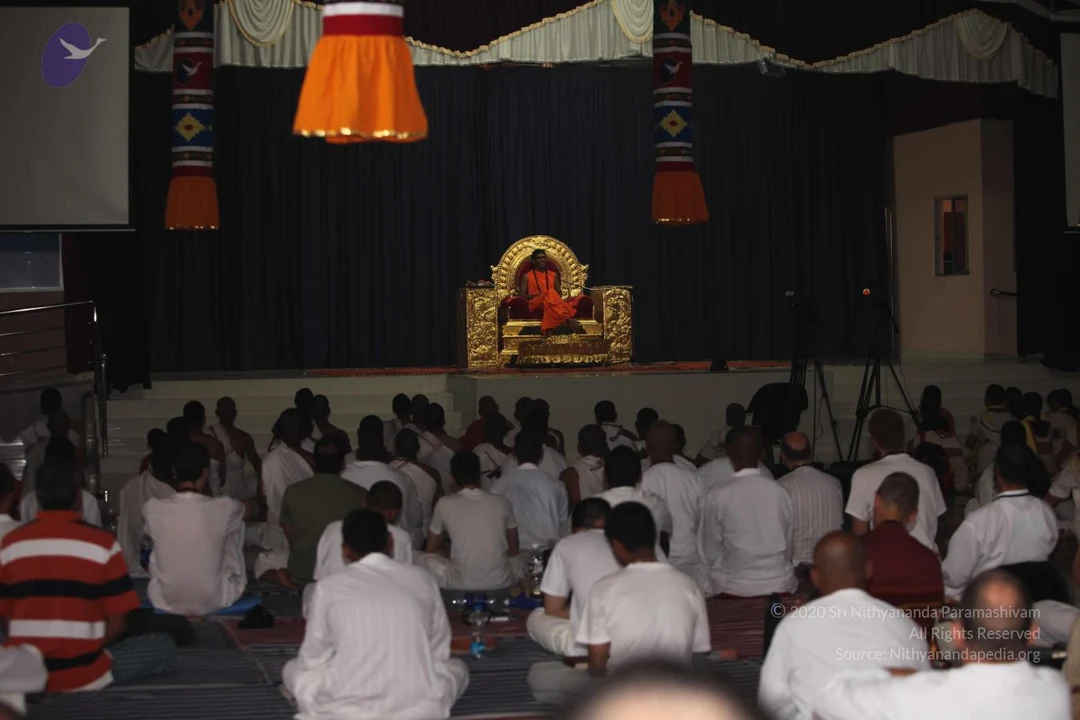
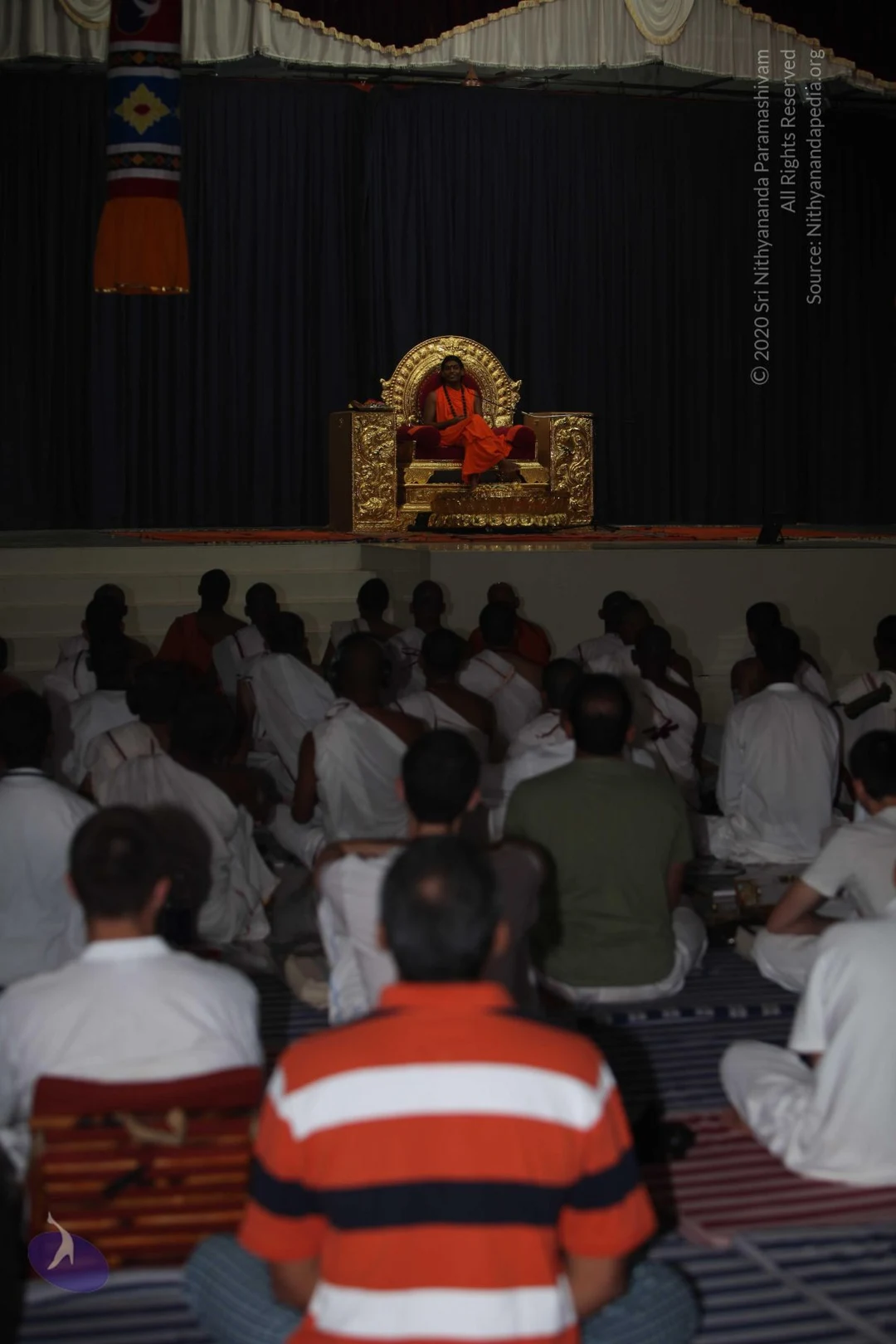
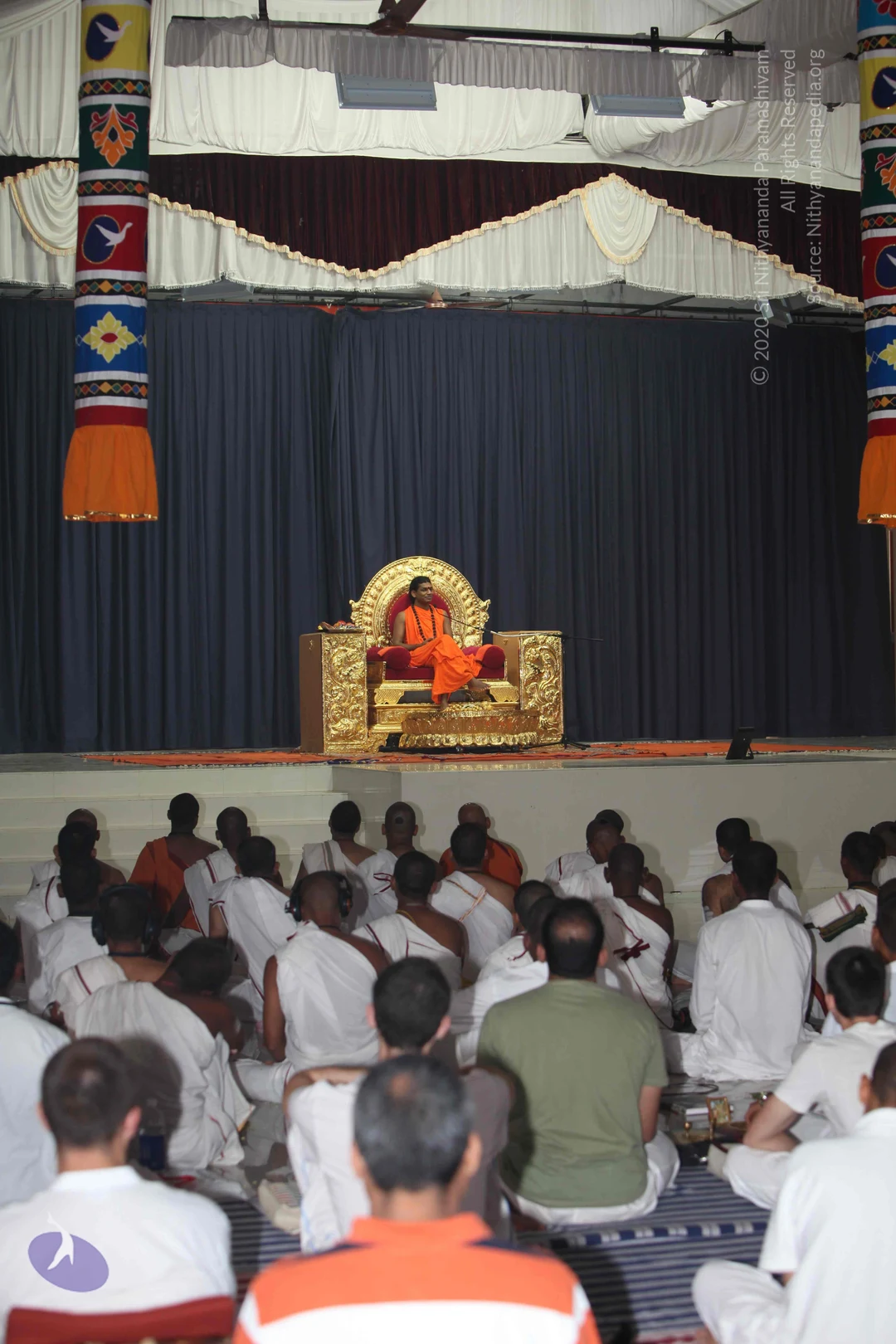
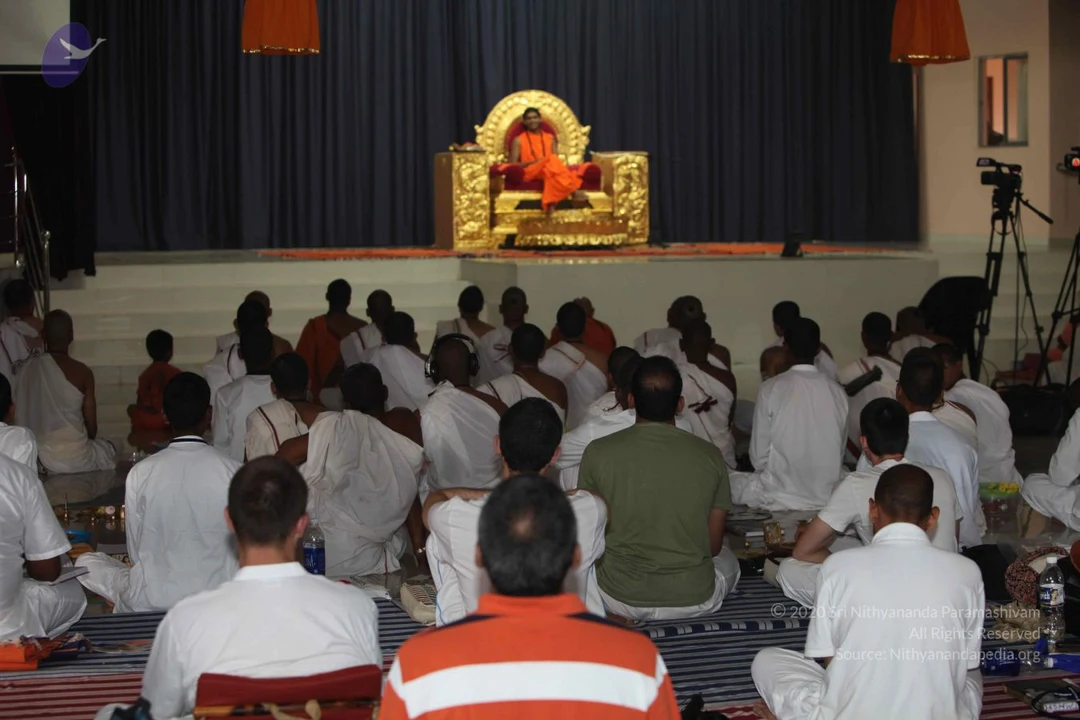
The Supreme Pontiff of Hinduism, Jagatguru Mahasannidhanam, His Divine Holiness, Bhagavan Nithyananda Paramashivam, expounded on the Cosmic Principles of Intensity during the everyday live public talk - Nithyananda Satsang. In this talk entitled Navaratri, The Supreme Pontiff of Hinduism shared that the word ratri means intensity, further explaining that one should decide to bring time consciousness to all the inevitable actions in your life, like driving to the office every day. He explained that when you understand time with the past and present bounded, you become responsible in the outer world and when you understand time without boundaries, you become free in the inner world. He shared that when you decide to retain intense awareness for the next nine days, you will understand perfection in action and in inaction; or freedom in inaction and responsibility of action.

Video and Audio:

VideoAudio

Transcript:

(0:18)

||Sadāshiva samārambhām Shankarācāryā madhyamām | Asmat ācārya paryantām vande Guru Paramparām ||

(0:41)

I welcome you all, with My love and respects. Today’s subject is, ‘Navarathri’. Understand the meaning of the word ‘raatri’. Raatri means, intensity. Whatever you are, you become intense, during a particular time. That is raatri. Navarathri means, nine of such nights. Whether you are a Yogi or bhogi or rogi, night makes you intense. Neither rogi, means diseased person, person with a disease; nor bhogi, person who is enjoying sensual pleasures or Yogi, working for Enlightenment, can sleep in the night. All three will get intensified in their lines, during night. That is why the word raatri, which really means intensity, is given to the night time.

(2:31)

Raatri means intensity. Because you become intense during that time - the night - the word intensity has become, the name for the night. How can time make you intense? Yes, time can make you intense, understand this. Just one decision, every day morning eight to nine, you are going to sit in front of me and do Puja. That time is for that. So decide, I should be intensely in Samadhi for that one hour. There is no other work; for that one hour, I cannot do anything. It is already decided. So why waste time?

(3:34)

The reminding, the remembrance about the importance of the time, can make you intense, in every step. Same way - morning, this time, I have to be doing Yoga, no other way. Then why not do it intensely, with more weight, more heavy? Why waste time? So every day, I am going to eat two-time or three-time. Why waste that time? Why not be aware? The remembrance of time can make you intense. Whether as a concept or as a understanding, when time enters it makes you intense.

(4:31)

Navarathri is the time; this is the time, actually this Amavasya to Dasehra, these ten days, makes you intense in all ways. If you are negative, you become intensely negative; if you are positive you become intensely positive. That is why during these ten days - nine nights and ten days - the traditionally you are not supposed to take any decisions, whether you think it is a positive or negative. No decisions, just allow the intensity to boil, go out or settle inside. If it is positive, it’ll settle inside; if it is negative it will go out. But the raatri, the intensity you have to go through, without any decisions.

(5:35)

In all Indian traditional village, the Amavasya to Dasehra, these ten days, they will not even leave their village. There is a ceremony called, ‘Kaappu Kattal’ means they will tie the kangana, sankalpa, the Amavasya day, yesterday. Dashami day only, they will remove that. That ten days they will not even leave the village. They will not make any major decisions, because the intensity is going on, the churning is going on. These nine nights you need to do only one thing; nine nights and ten days, you need to do only one thing - be more and more and more aware and be in silence.

(6:25)

Remember, the concept of time. Now you are sitting here. You have to be sitting here, till I finish my session. Why not sit with a complete awareness, so that the whole benefit happens in me, intensely; instead of sitting in a lousy way. While eating, why not be intense while eating, instead of being in a lousy way. Taking bath, every day you have to take bath, as long as you are inside the ashram, no other way and now it is twice actually. Why not be aware, of the whole action, instead of being in a lousy way. You have to eat, you have to do Guru Puja, you have to do Yoga, you have to take bath twice and you have to sleep. Just these five actions, which are inevitable in you, bring intensity. That’s all.

(7:47)

In your life there are many inevitable actions, like a driving, every day to office - inevitable. Like this there are many inevitable actions in your life; bring time-consciousness into all that. I have to be sitting in this office these many hours, no other way. I can be sitting in a lousy way and be as a clerk or a low level engineer for my whole life or I can be intense and raise where I want.

(8:33)

The concept of time, brings intensity to you and same way, when you understand... The concept of time, when you understand with the boundary of past and present, it makes you passionate. When you understand, that there is no boundary of past and present, it makes you passive. Both are blessing. If it makes you passionate you will achieve outer-world. If it makes you passive you will achieve inner-world. Both are blessing. Even if you understand, with the boundary of past and future, that understanding will lead you to the experience of boundary-less time. So through passion becoming passive; through passion, patience will happen. Through intensity, intention will change.

(9:43)

Understand. I am opening another one door. Understanding about time, with the boundary of past and future, is what I was talking about all these moments - like I am going to be here at this time, why not be intense? This will naturally make you perfect in the outer-world. ‘Yogah Karmasu Kaushalam’ - Yoga is perfection in action - will happen in you; because you decide, I am going to be here, for next one hour doing Guru Puja, then why be lousy? Let me chant the mantra intensely. Let me be aware intensely. Let me be fully alive intensely. This makes, “Yogah Karmasu Koushalam’ - Yoga is perfection in action - that will become reality. If you are supposed to sit in the office eight hours, why be just an engineer, clerk for next ten years in a lousy way? Why not be intense and raise in the ladder? Means, that understanding about time, brings intensity in the outer-world and success; the passionate...

(11:10)

Another one important thing, when you decide, one hour I am going to be here, let me be intense and chant, be aware, do the Puja properly; suddenly in few days, you catch the boundary-less time, which is not packed by past or future; because the present gives you a new opening of freedom. The suffocation-less inner space, that’s what I call ‘Vedic mind’.

(11:52)

You see, yesterday I was talking about the idea of that bench press power. Gorilla has 4000 bench press. Even the Guinness record is not even one-fourth of that, of the human being. The gorilla's body, which just remembers its own nature and functions is what I call, ‘Kalabhairava’, ‘Yoga-sharira - being himself. And this guy who is trying to be stronger, this body is an ordinary body. There is one neck point, where, if that point is broken, the ordinary body just becomes ‘Kalabhairava’, Yoga-body, Yoga-sharira. That point breaking, break through point...

(12:43)

For example, when you are doing Yogasana, Surya namaskar. By nature you can do Surya Namaskar, from Sunrise to Sunset. It’s your nature. That’s what Raghupati Yogi taught me and that’s what I did. From Sunrise to Sunset you can do Sun Namaskar. That’s all. But when you start, by seventy-eighty you will have that neck. ‘No I cannot, no more, forget about it. Eh.’ But, if you somehow push it, by 150 or 200 you will have a break. After that 2000 or 3000 you will not even remember. That breaking point, breakthrough point is what I call Satori.

(13:32)

That breakthrough point happens, when you understand time with boundary. Even with boundary of past and future, if you understand time and make yourself intense, that breakthrough happens into the boundary-less time. Mind becomes Vedic mind, body becomes Yogic-body, when you understand and experience that breakthrough point. That breakthrough point only, your personal computer, PC becomes laptop, with internet connection. The internet connection clicks. It becomes Yogic-body and Vedic-mind.

(14:39)

These nine days, that breakthrough can happen. When that breakthrough happens, not only you realize Yoga is perfection in action, Yoga is perfection in-action. Not only Yoga is perfection in action, Yoga is perfection in in-action. ‘Yogaha Karmasu Koushalam’. ‘Yogah Akarmasu Koushalam’. Understanding of ‘Yogah Karmasu Koushalam’ brings outer-world success. Yoga is perfection in action. Understanding ‘Yogaha Akarmasu Koushalam’ - Yoga is perfection in in-action - brings you inner-world success. When you understand time, with boundary of past and future; it brings you the responsibility of being intense. When you understand the time without boundary, it brings you the tremendous freedom of in-action. Freedom of in-action, responsibility in action, is what I call, ‘Passion with Patience’, ‘Intensity Without Intention’.

(16:26)

Nava-raatri; when raatri, intensity can be maintained for nine nights, nava; it’ll lead you, not only to the responsibility of action, it’ll lead you to the freedom of in-action. If you don’t know the freedom of in-action, major dimension of your life is missing. You do not know, how to lie down and rest like a Maha Vishnu in the milky ocean, being in Yoga-Samadhi; just being in Samadhi like Shiva in Kailash. Same way, if you do not know the responsibility in action, you don’t know how to be like a Shakti, Devi - with eighteen hands, fighting the greatest battle, finishing off all the negativity.

(17:53)

When you understand time, with past and present bounded, you become responsible in the outer-world. When you understand time, without boundaries; you become free in the inner-world. Perfection in action and in in-action; freedom in in-action, responsibility of action - both happens, when you retain the intensity for these nine days.

(18:39)

Retain the intensity about the time, the intensity which happens in you by the awareness of the time, for these nine nights and ten days. Means, from yesterday it starts. Yesterday night is the first night. So if you count, till Dasami, it’ll be ten day and nine night. Retain the raatritva, intensity - which happens based on the understanding about time, for this nine night and ten day.

(19:25)

Decide, this nine night and ten day - everything, do it with intense awareness, with understanding of the past and future. Means, this one hour. After one hour it is going to be different; before this one hour it was different. That is a boundary. This one hour, I have to be doing this. So let me be intense. That is what I call, ‘Intensity with the awareness of past and future boundary’. Retain this, for continuously this nine night and ten day. You will experience, you will have the breakthrough, into the Vedic-mind; where you feel the timeless or boundary-less time, which gives you freedom, which makes you experience freedom. That is what means, ‘The Devi fought nine nights and destroyed all the demons, the tenth day had coronation and relaxed in freedom’.

(20:55)

Let you all experience Navarathri. Meditate on this Navarathri truth. Take your, push yourself to the extreme of what you are doing, like Devi. Become eighteen handed Kali - push yourself to the extreme and maintain that intensity. You’ll have the breakthrough, into the Yogic-body and Vedic-mind - Kalabhairava-sharira and the mind beyond kala, time.

(21:51)

Let you all experience and radiate the Eternal Bliss; experience and radiate Enlightenment. Let you all experience and radiate the Eternal Bliss, Nithyananda. Thank you.

(22:18)

Photos:

Panchatapas
Paadapooja
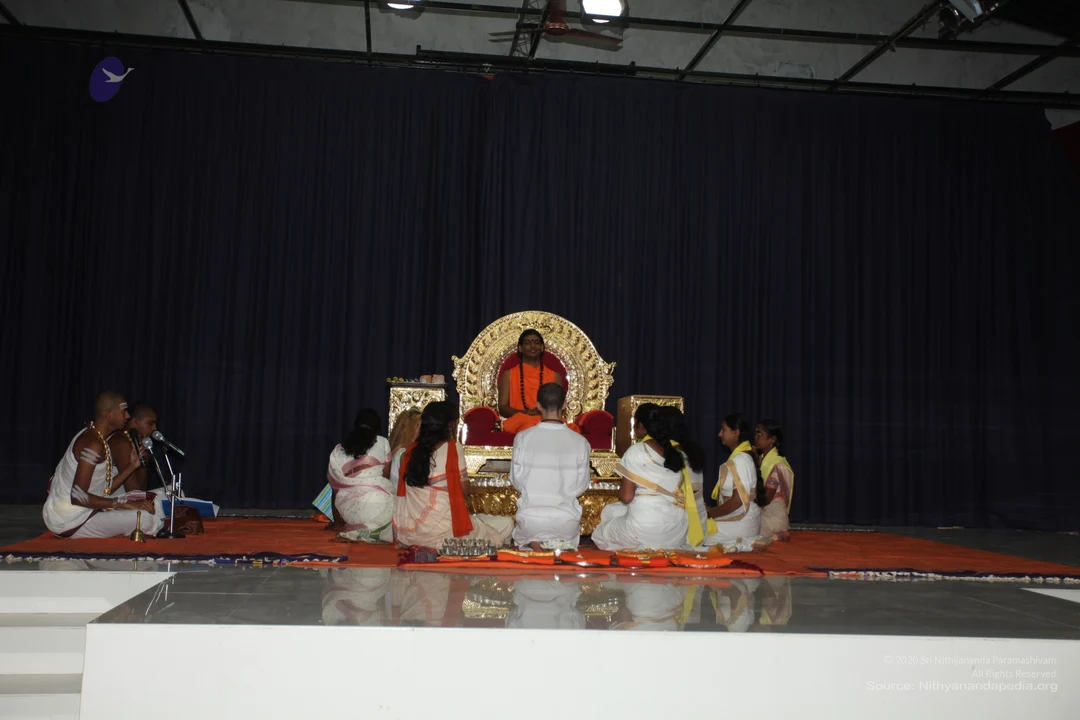
Morning-Satsang

Sarvadarshan

Lep-Morning-Session

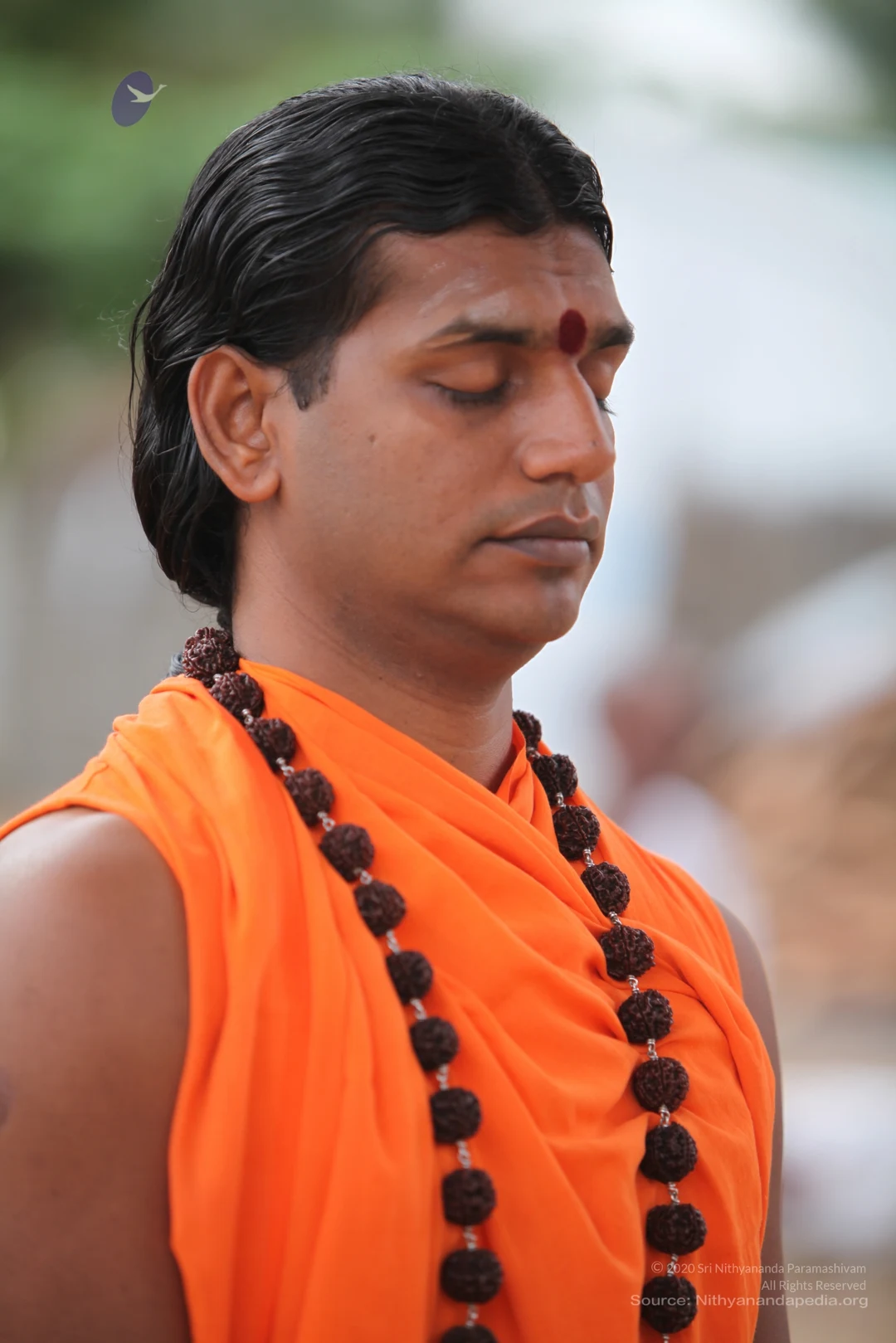
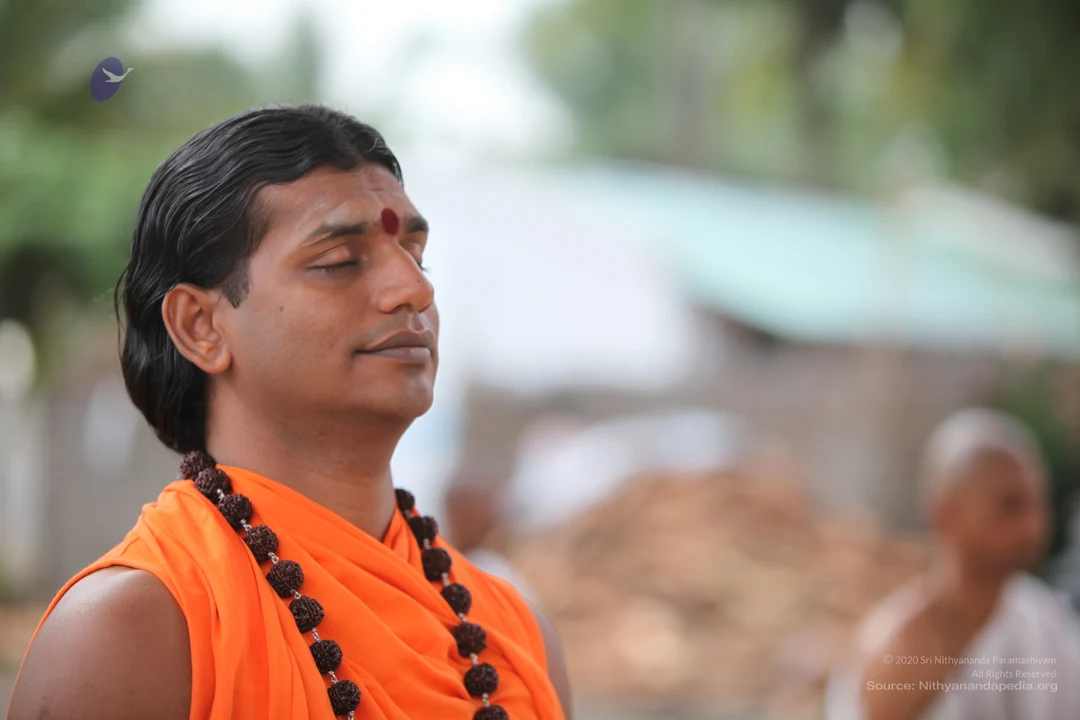
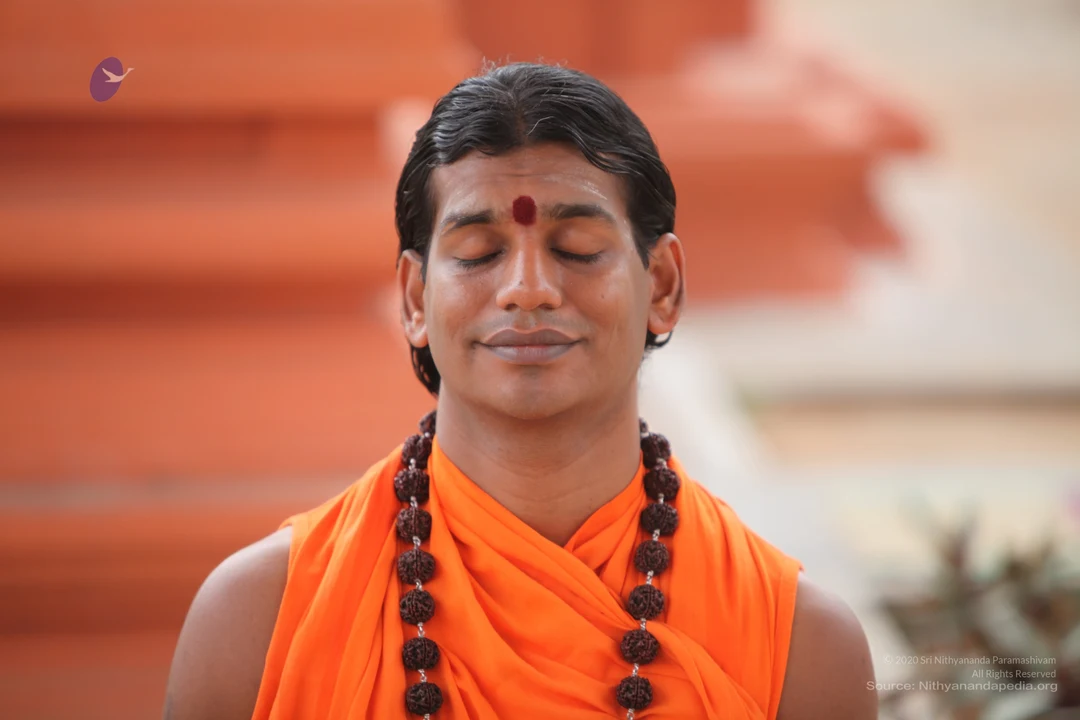
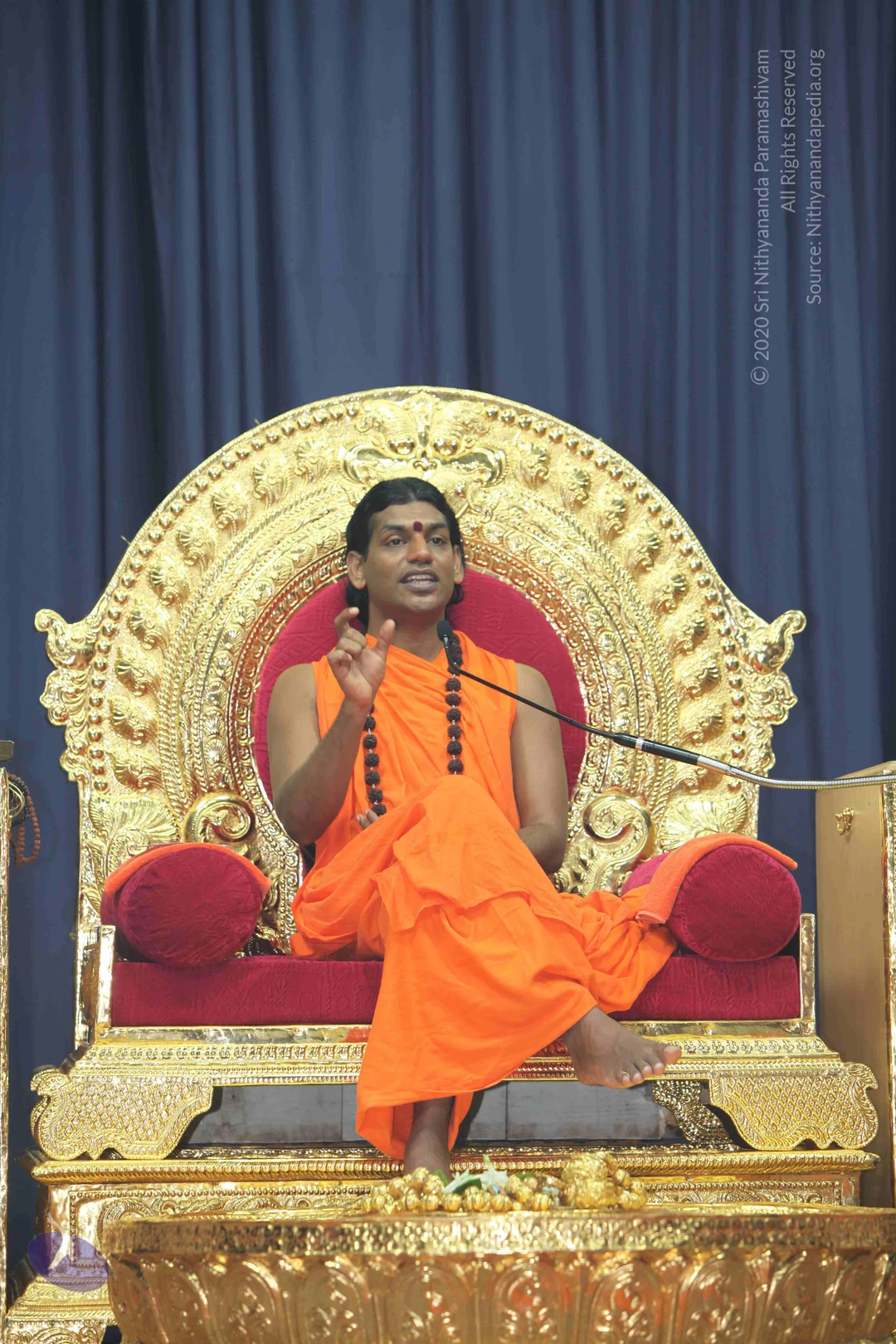
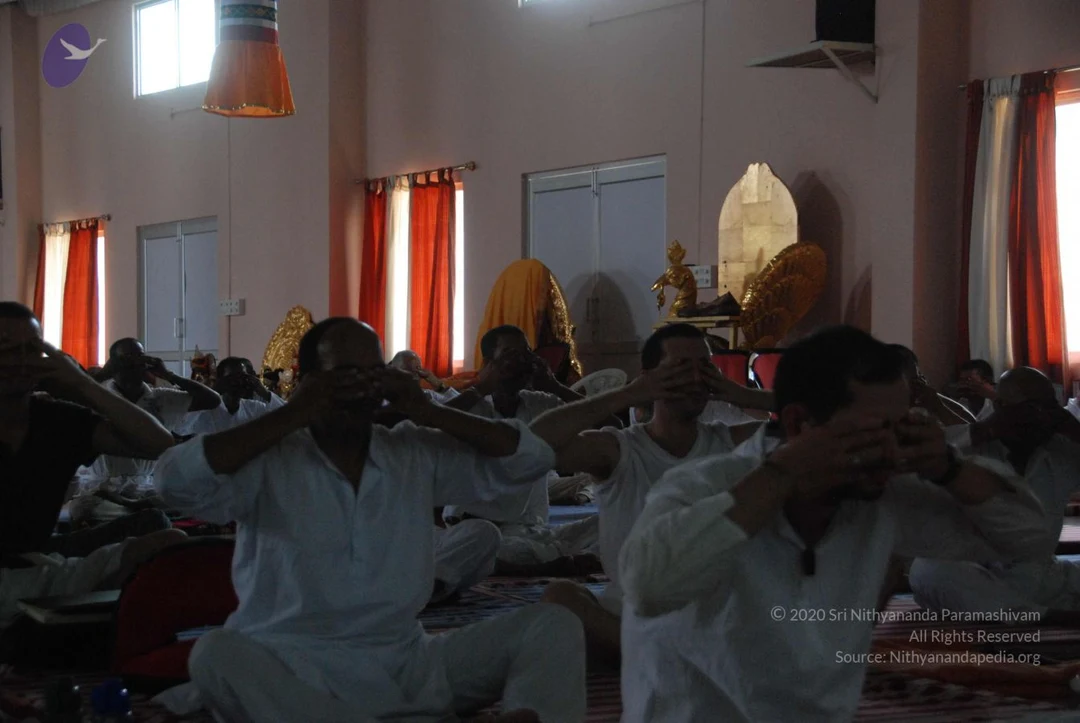
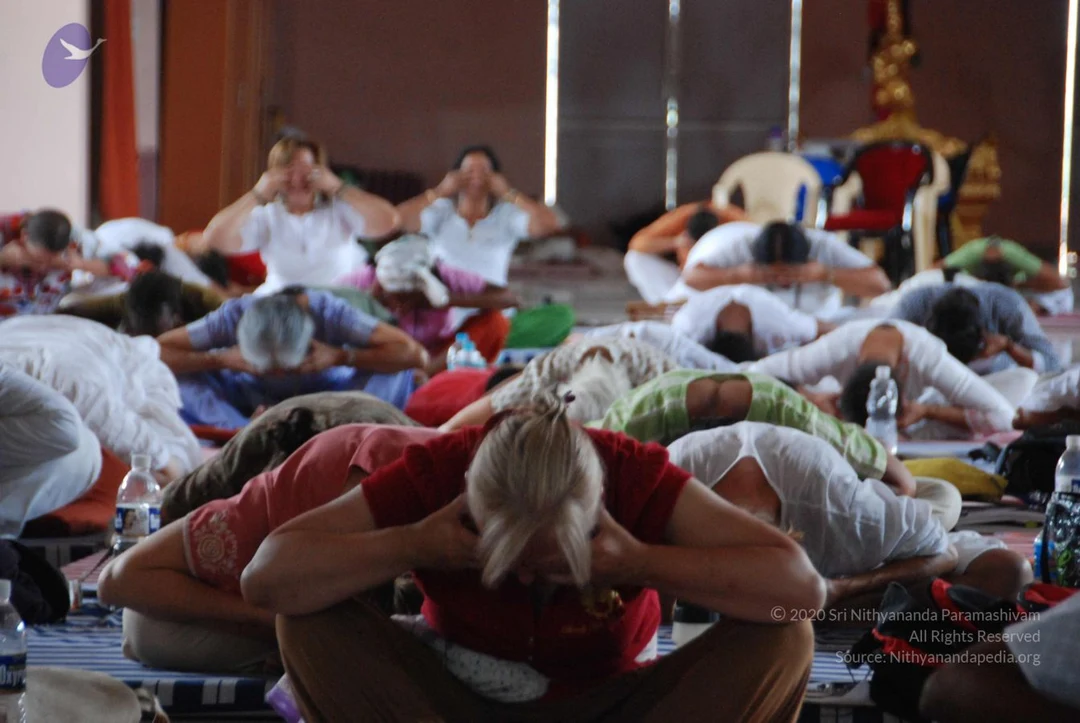
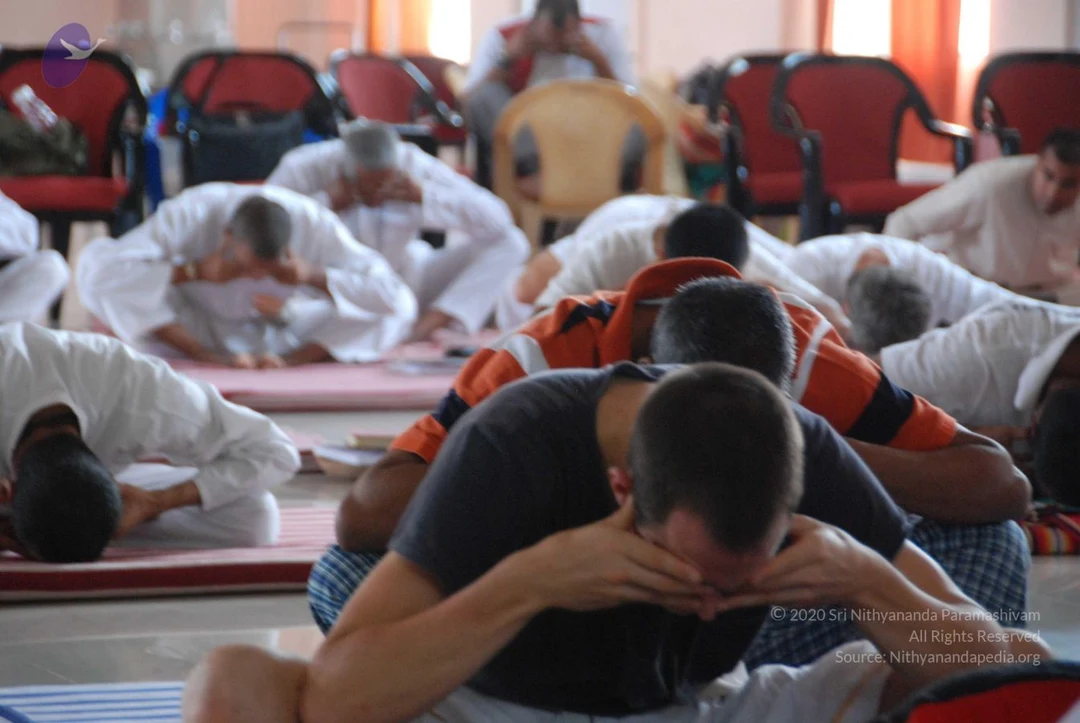
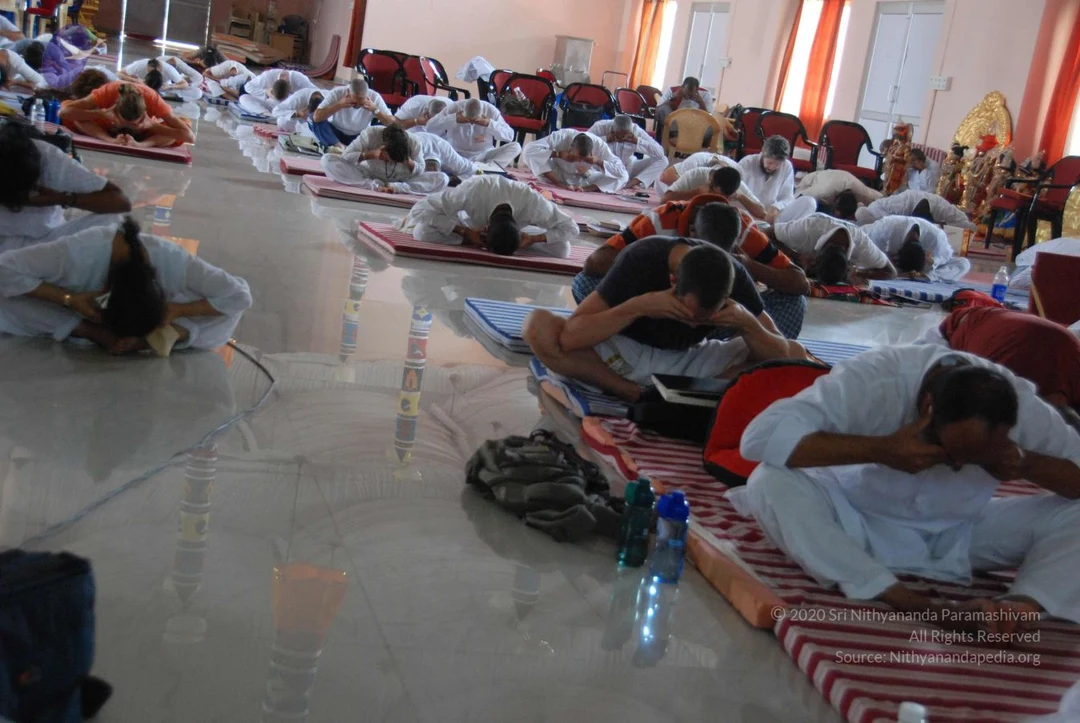
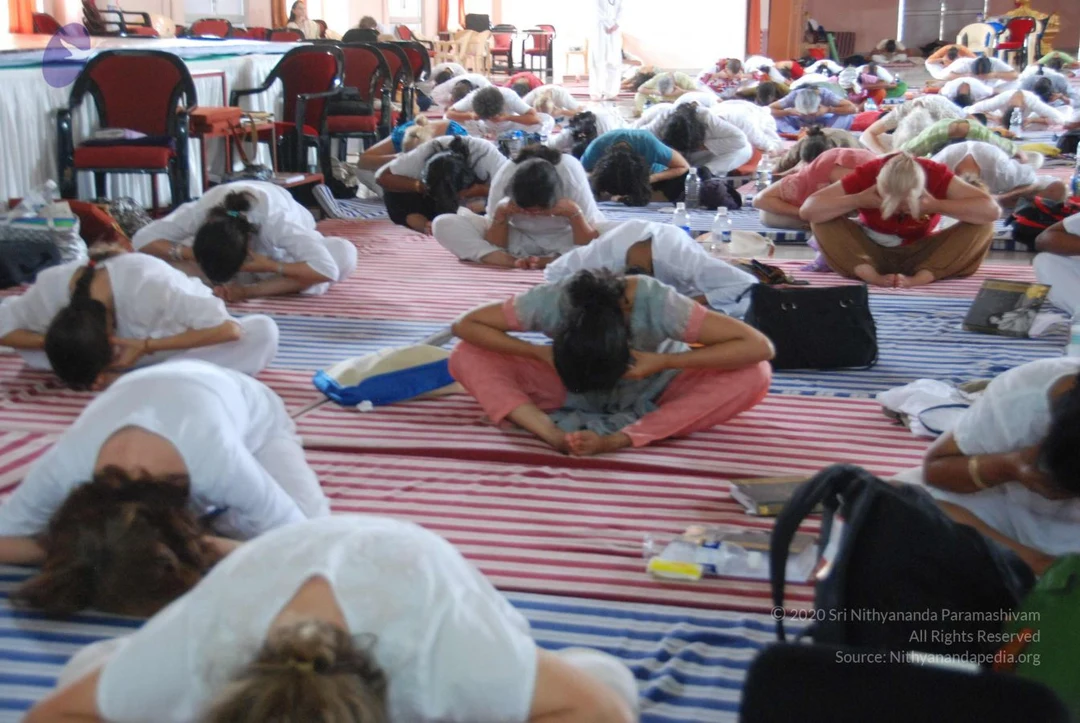
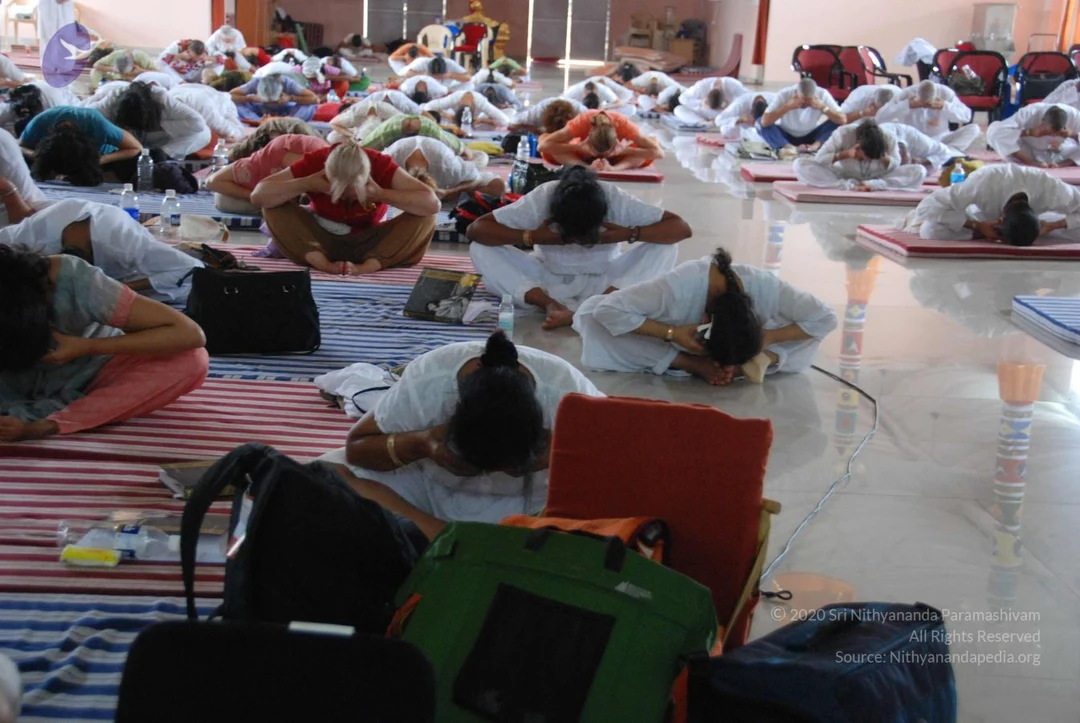
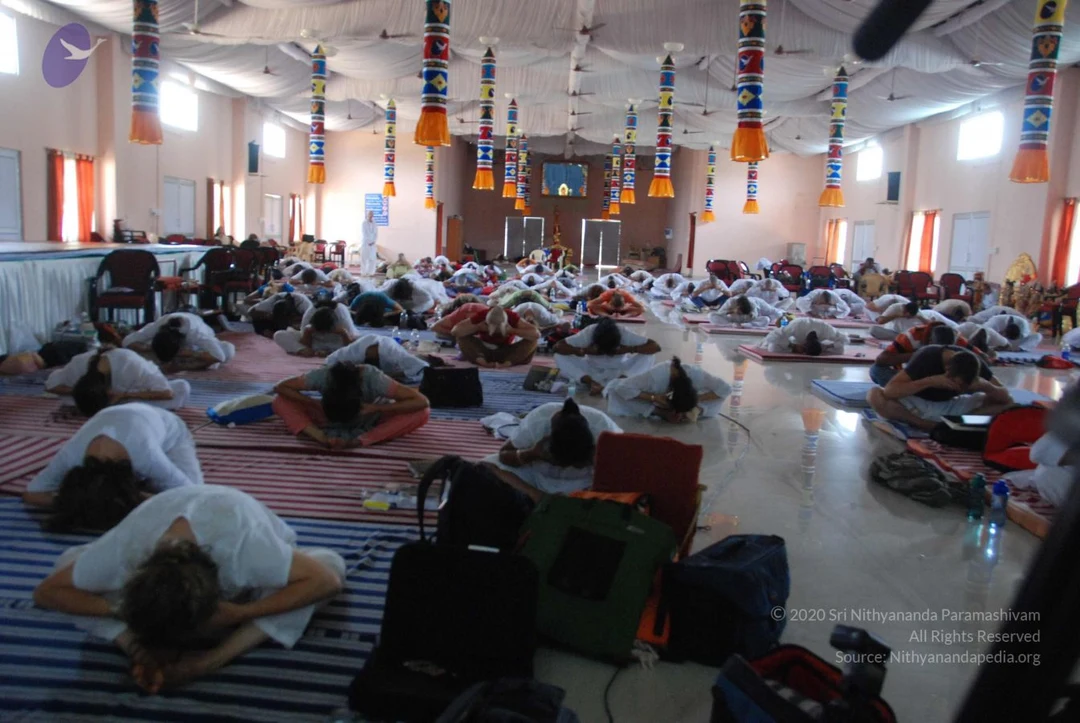
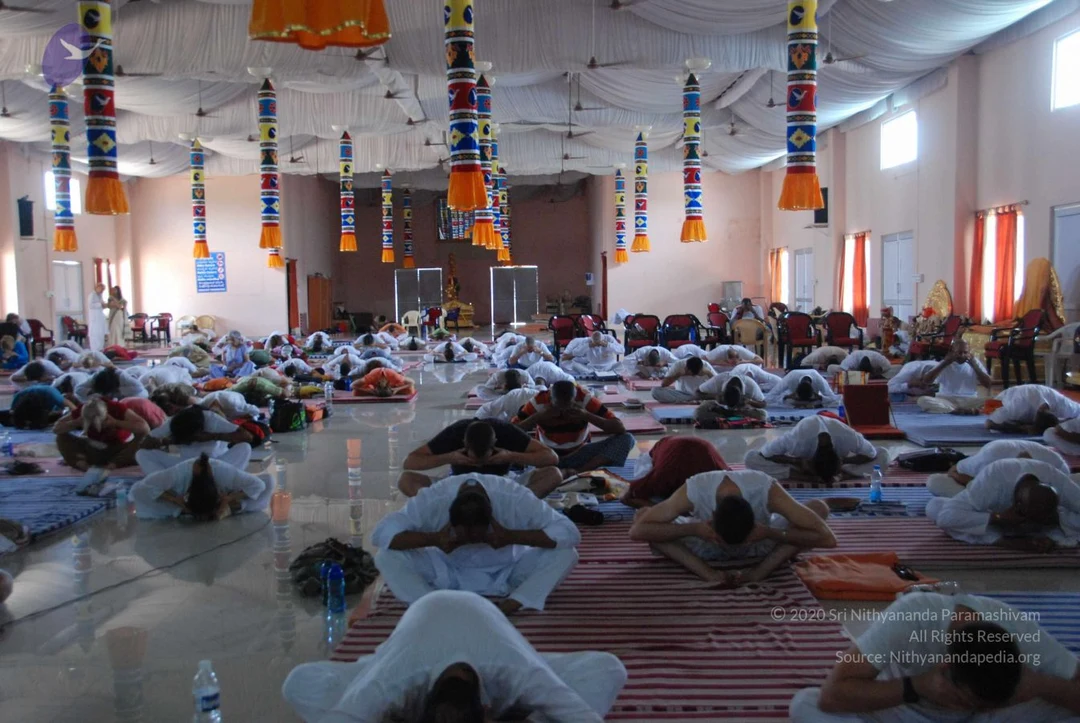
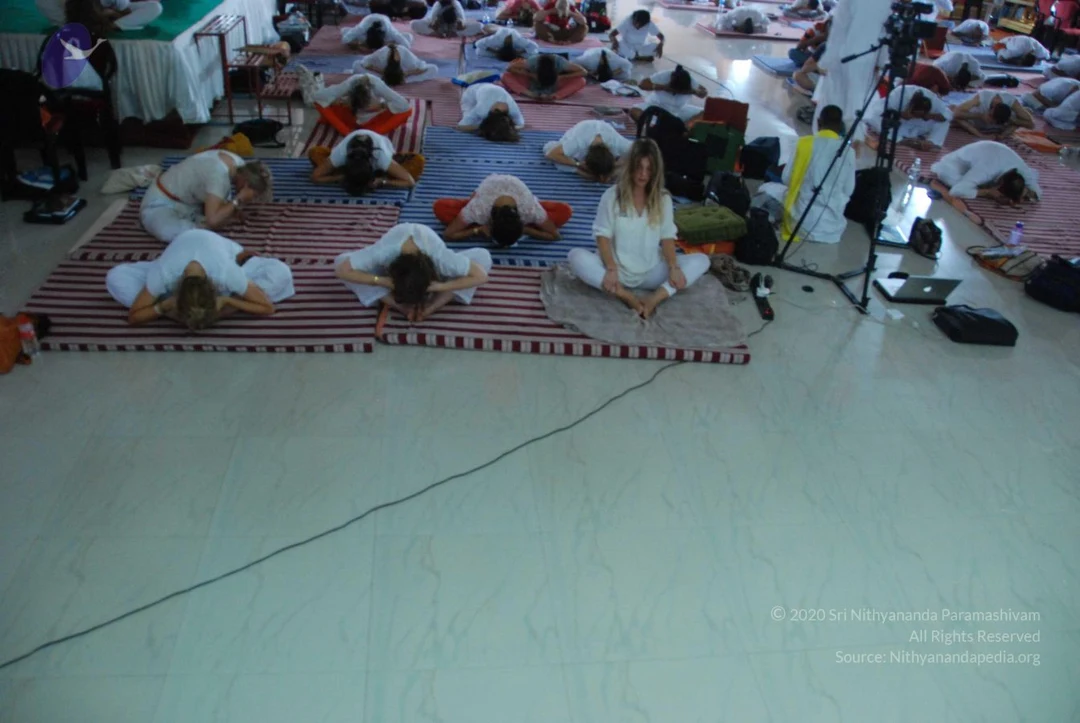
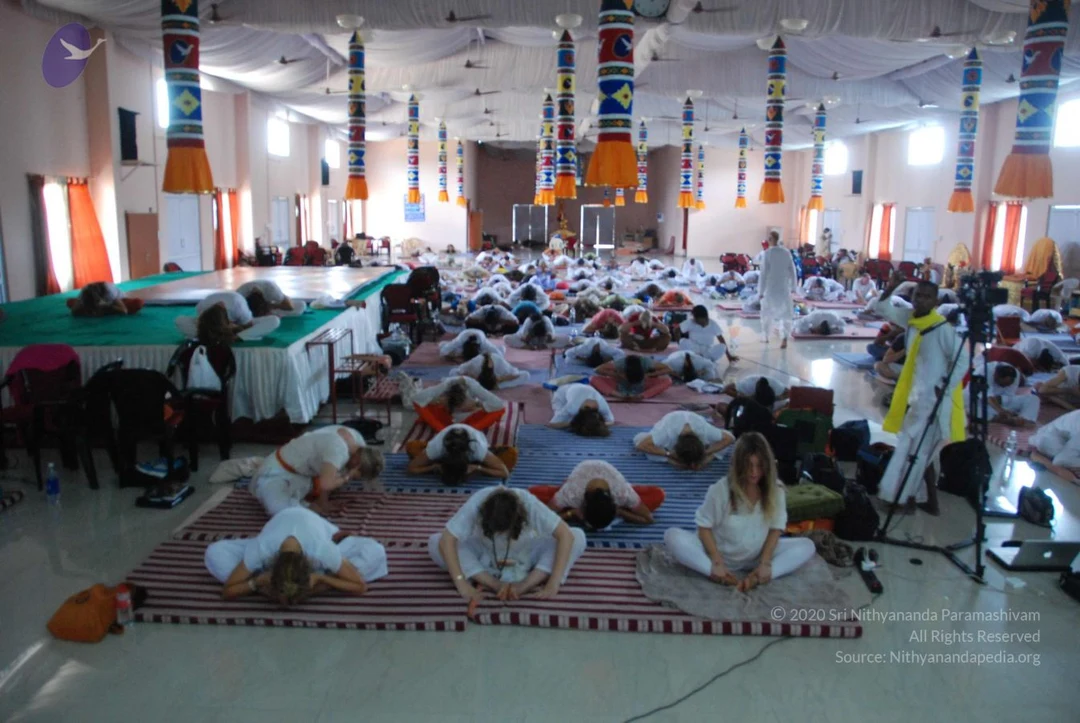
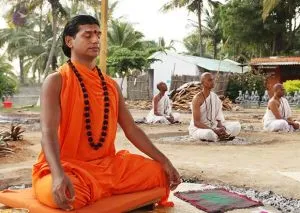
The Following Pictures His Divine Holiness Himself demonstrating the Yoga technique to have breakthrough.

Evening-Navaratri-Culturals

Navaratri-Homa

Photos Of The Day:

Culturals

Panchatapas

Satsang

Paadapuja

Photos Of The Day:

NAVARATRI-IN-KULIM-MALAYSIA

Photos Of The Day:

PADA-POOJA

NITHYA-SATSANG

SARVA-DARSHAN

LEP-SESSION-BY-HDH

PANCHA-TAPAS

NAVARATRI-HOMA

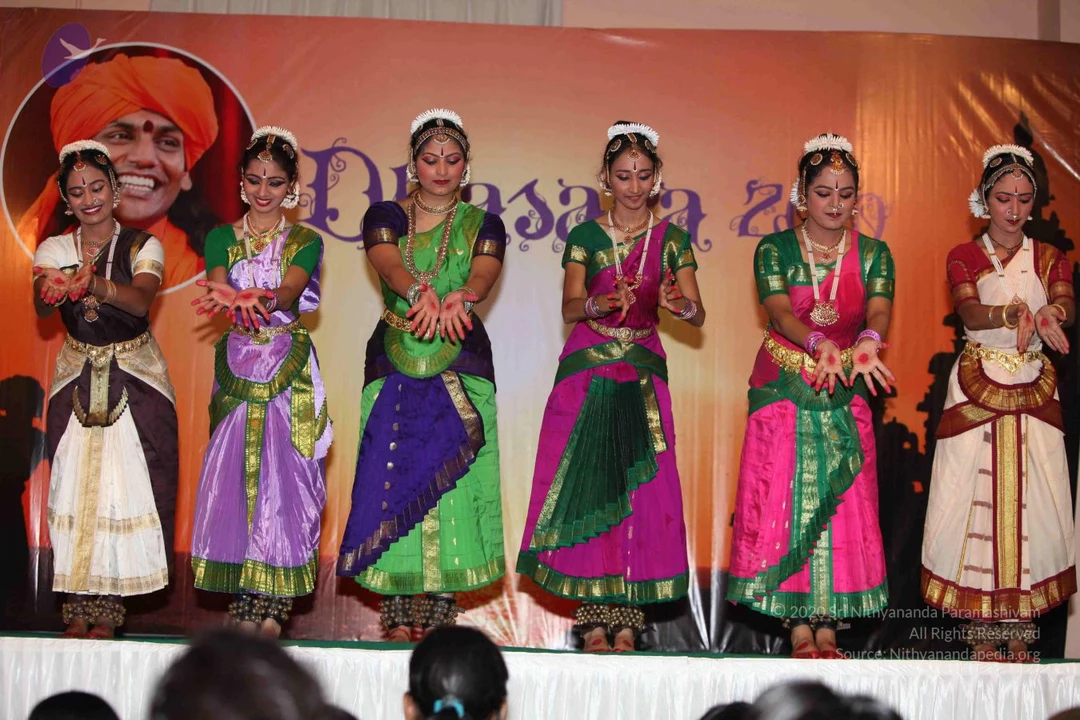
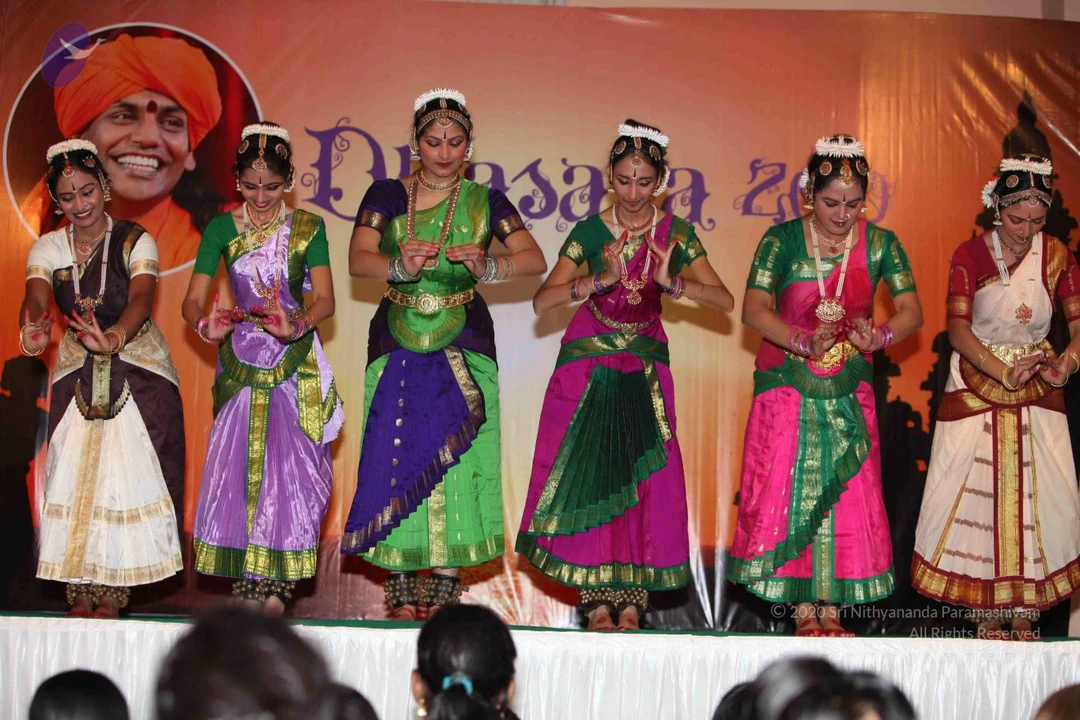
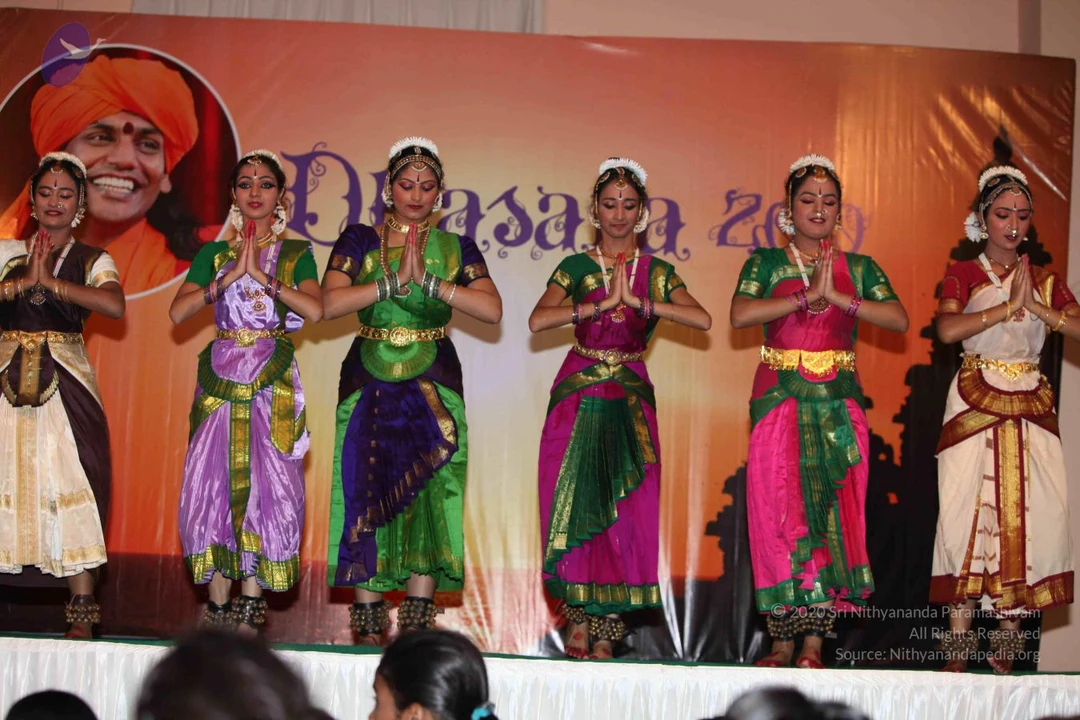
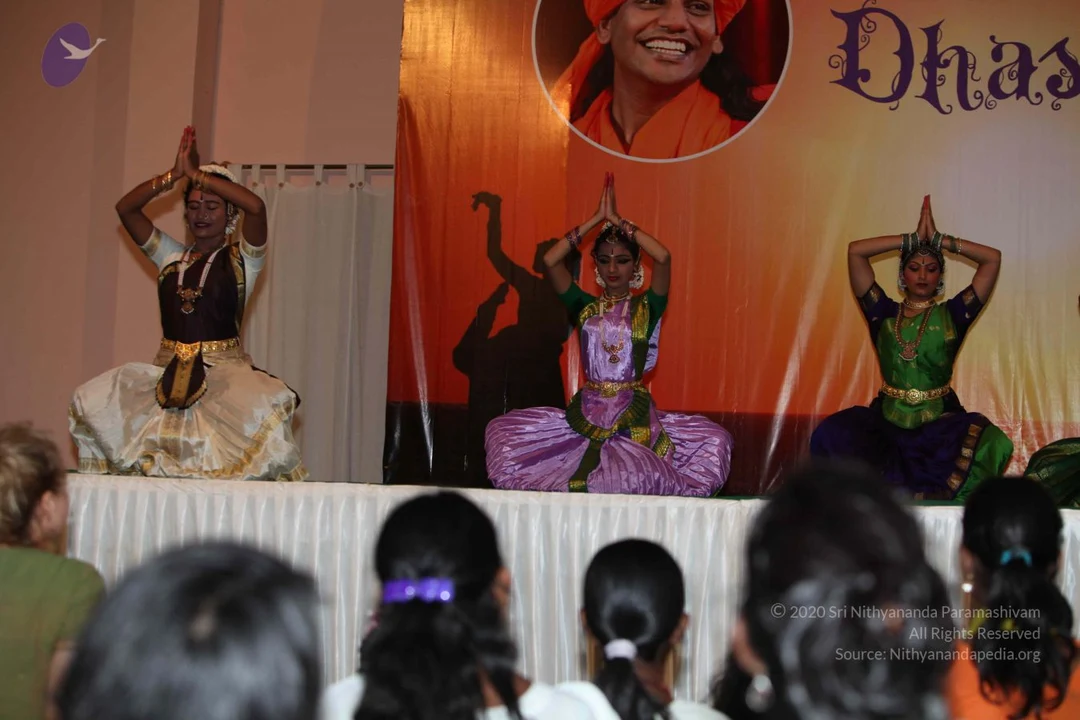
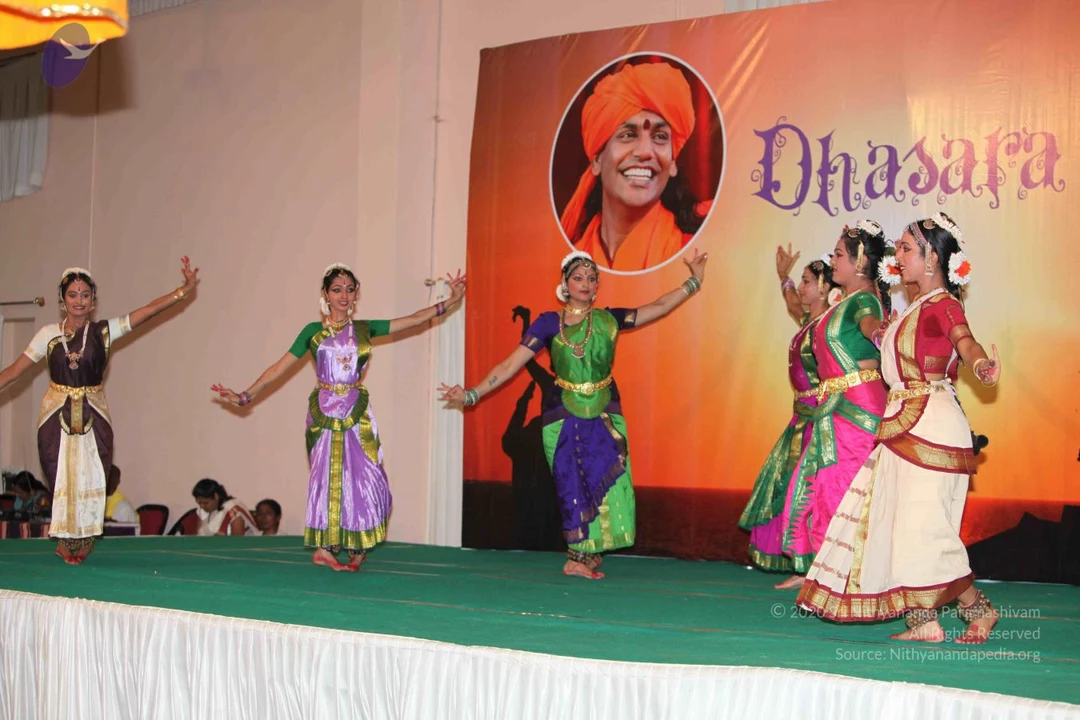
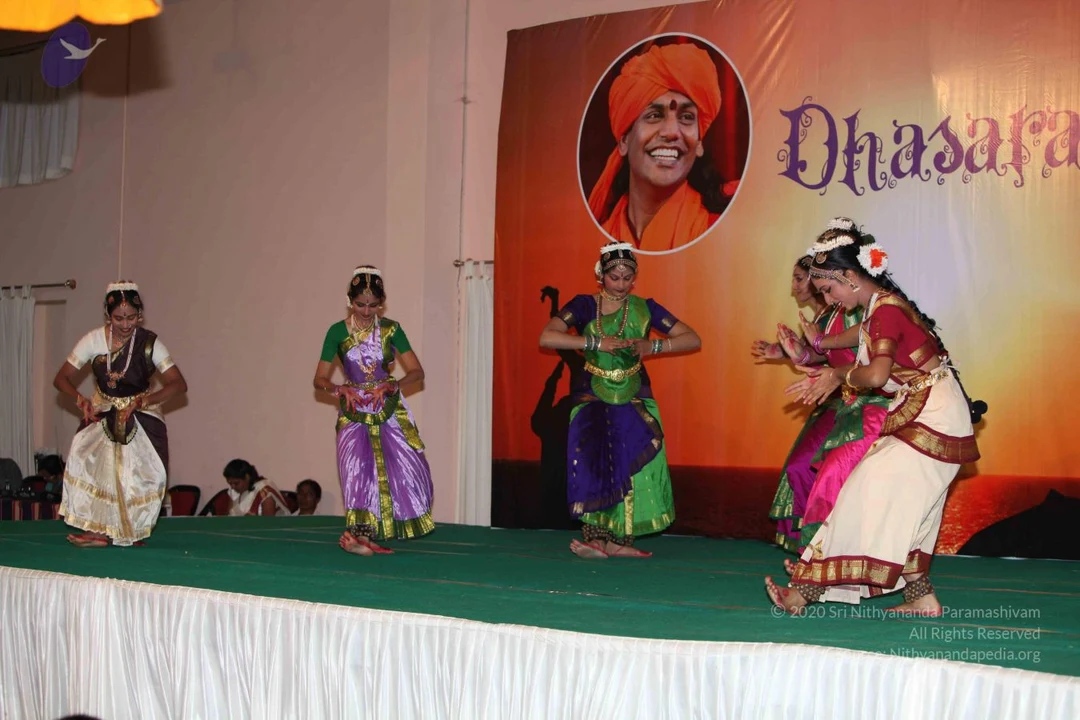
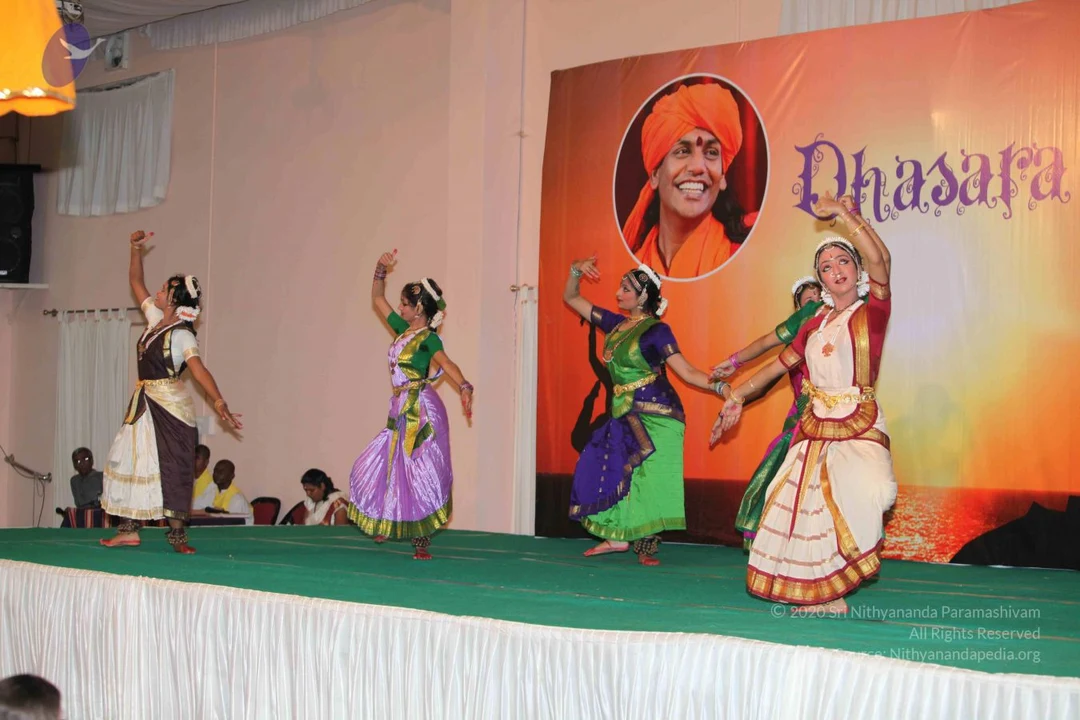
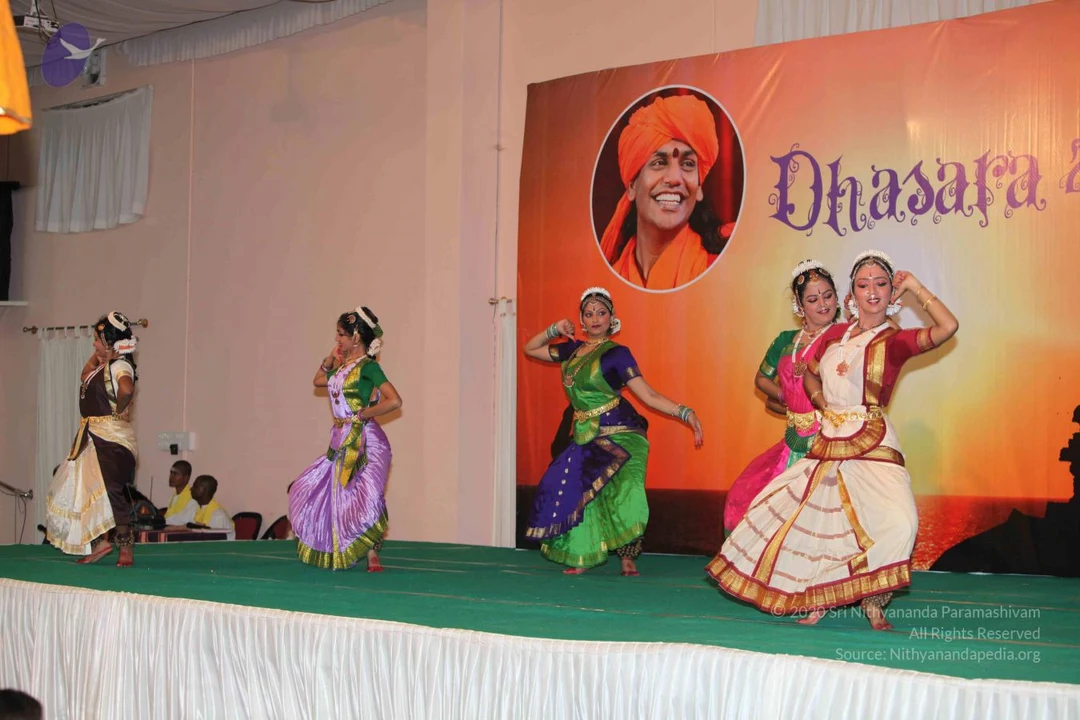
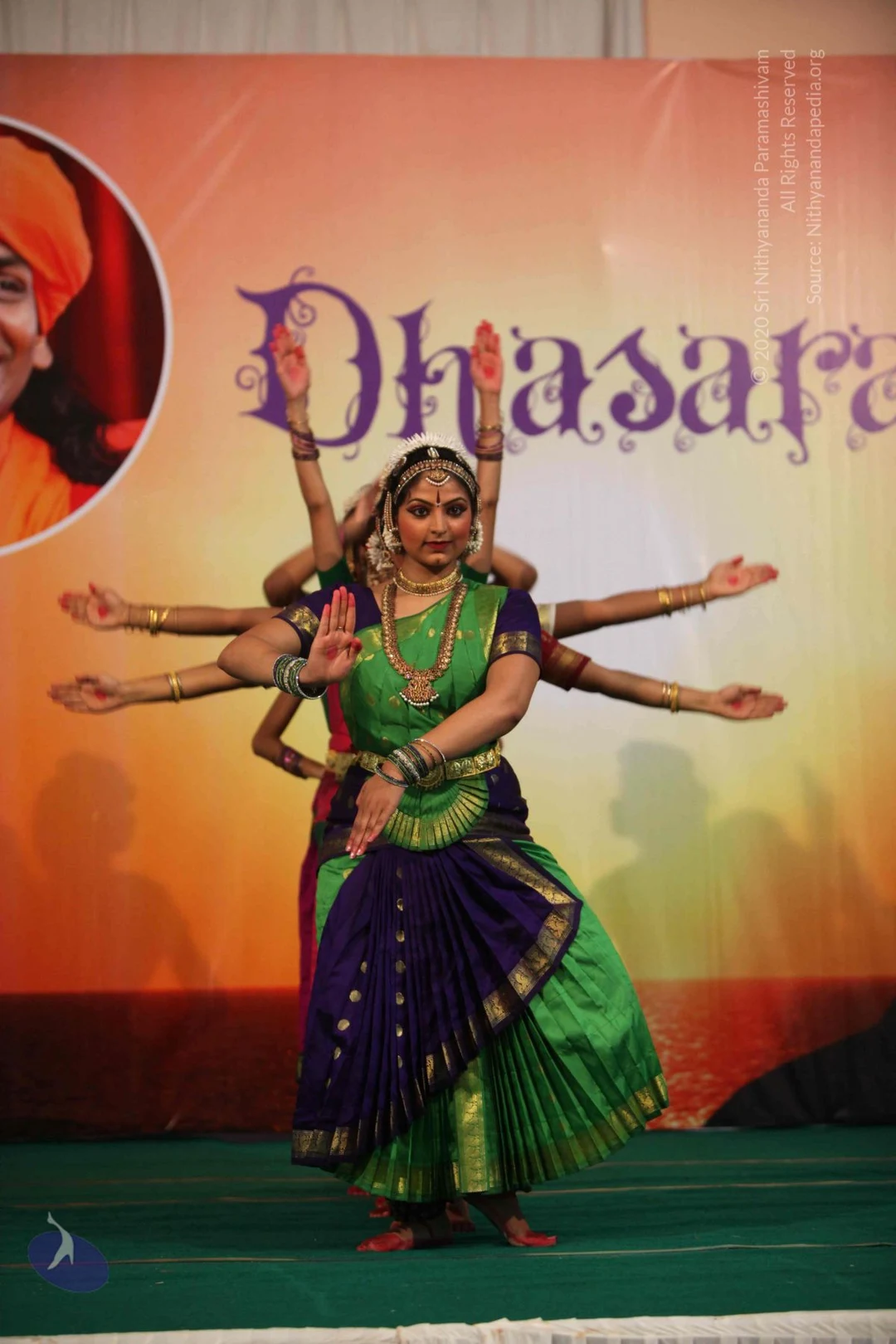
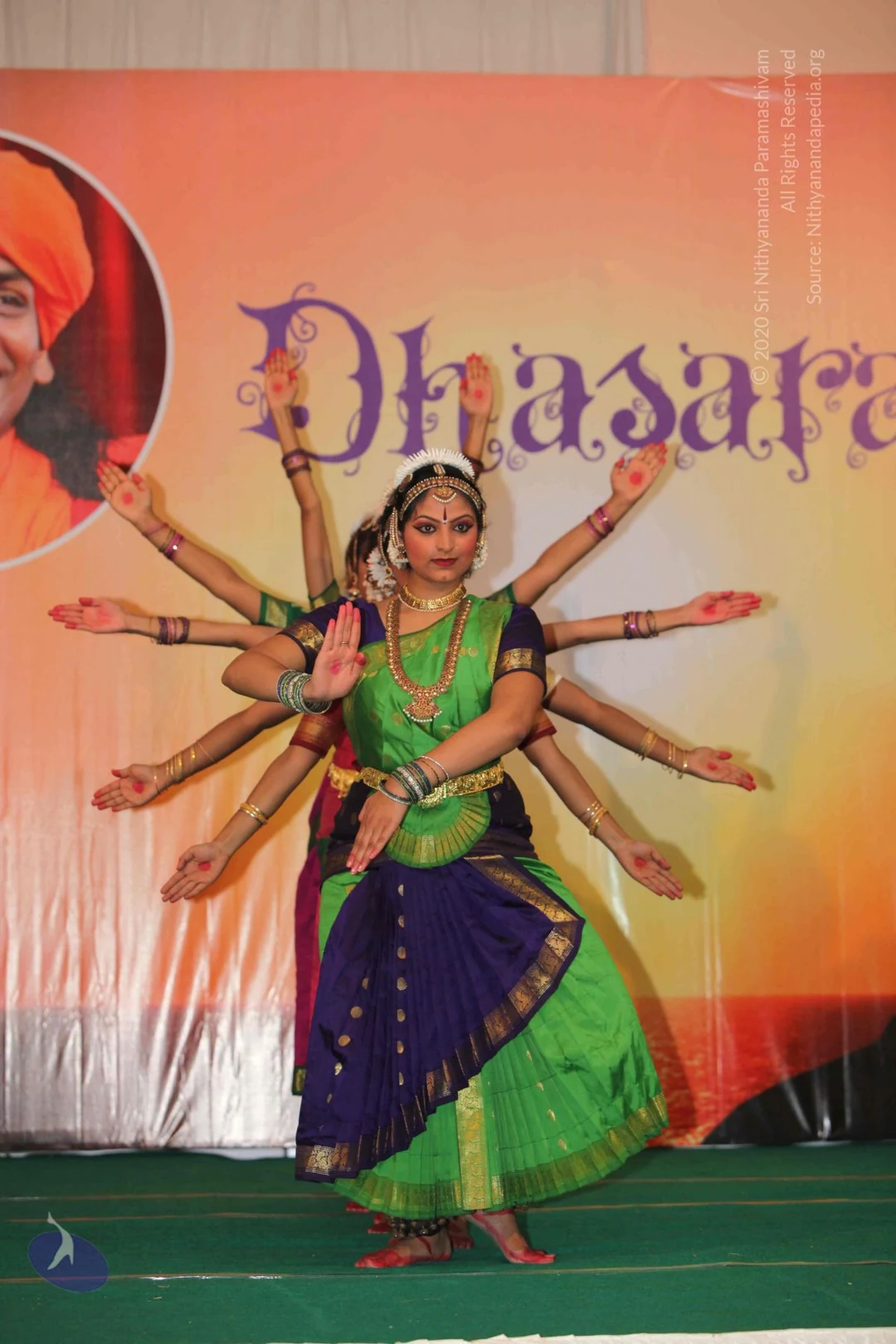
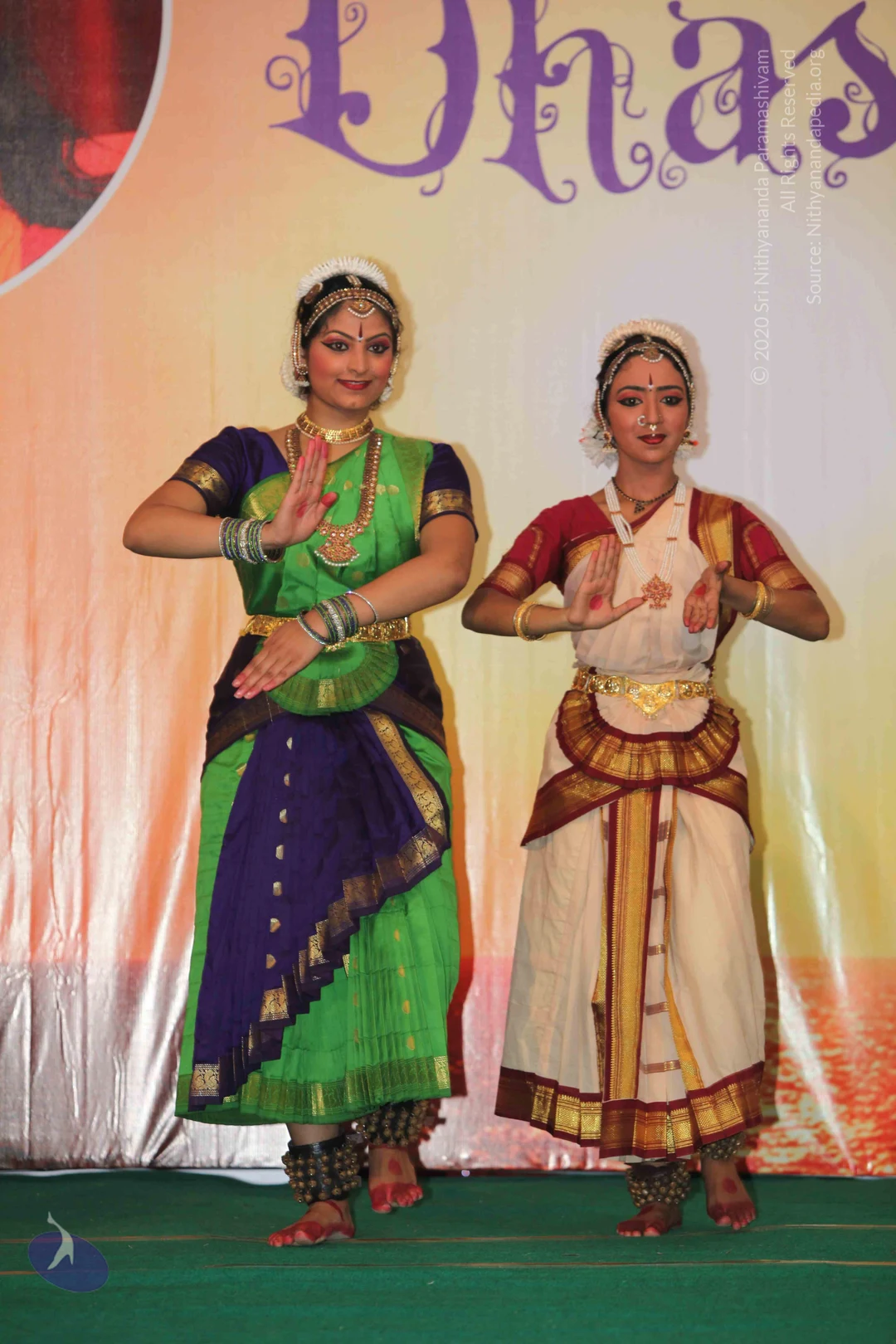
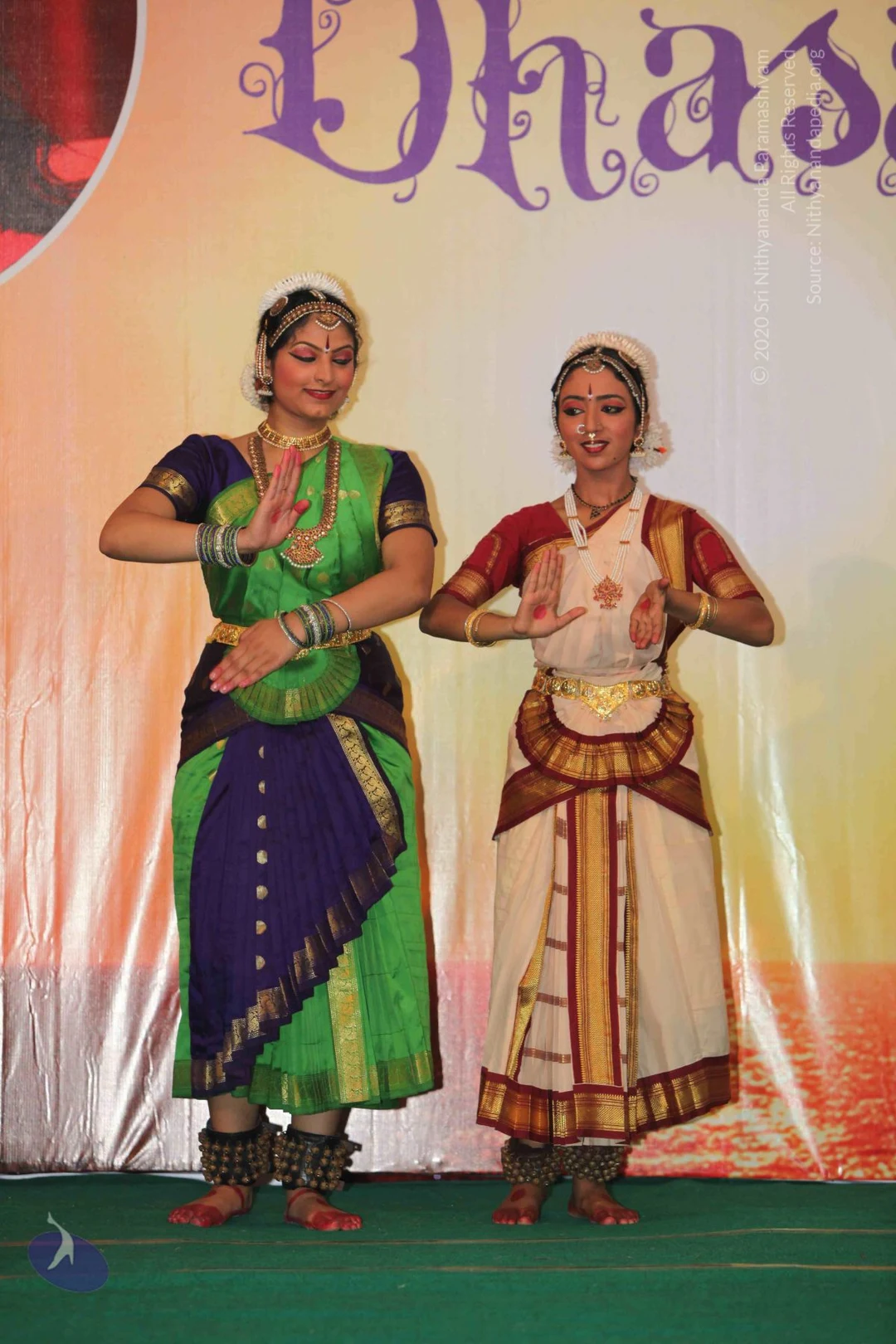
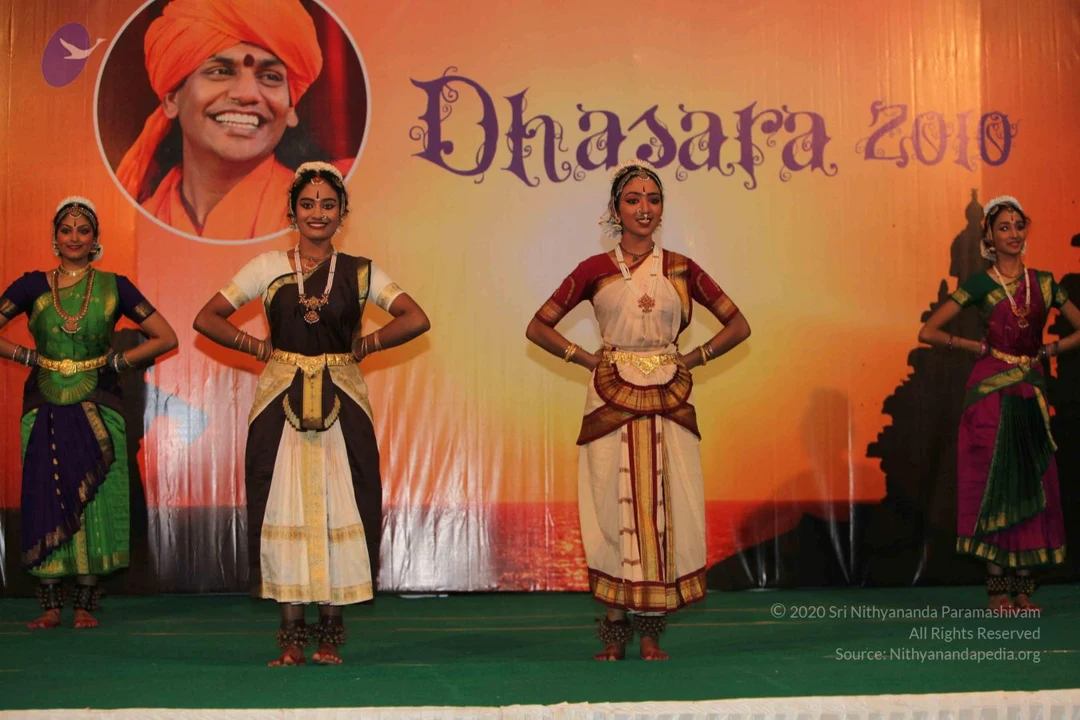
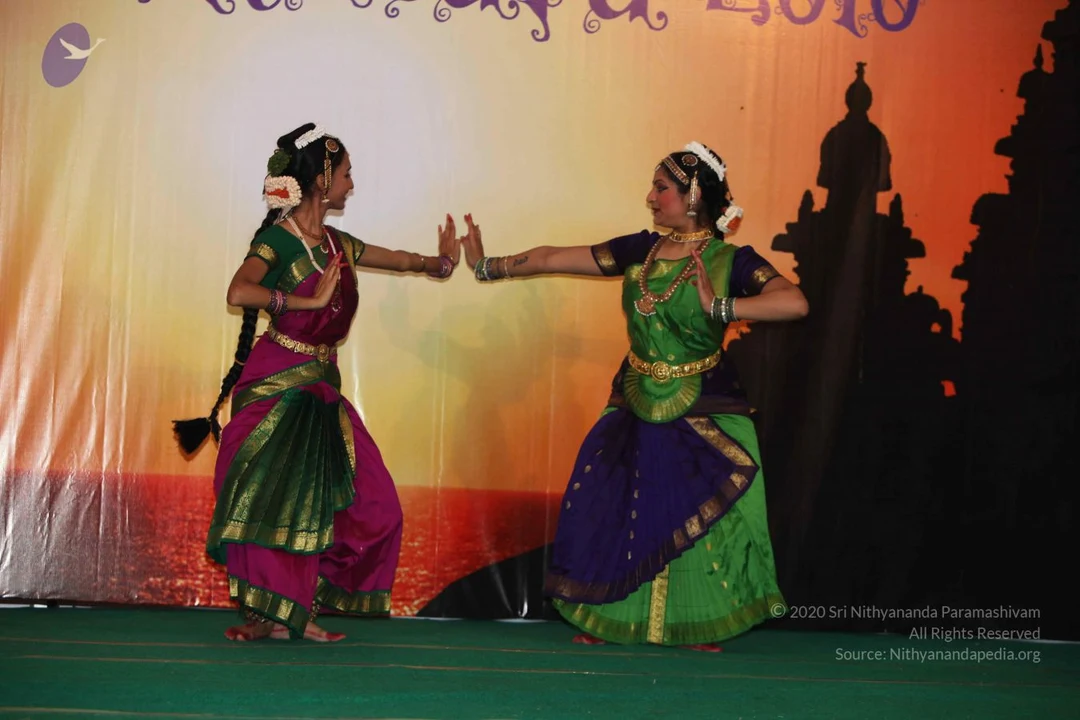
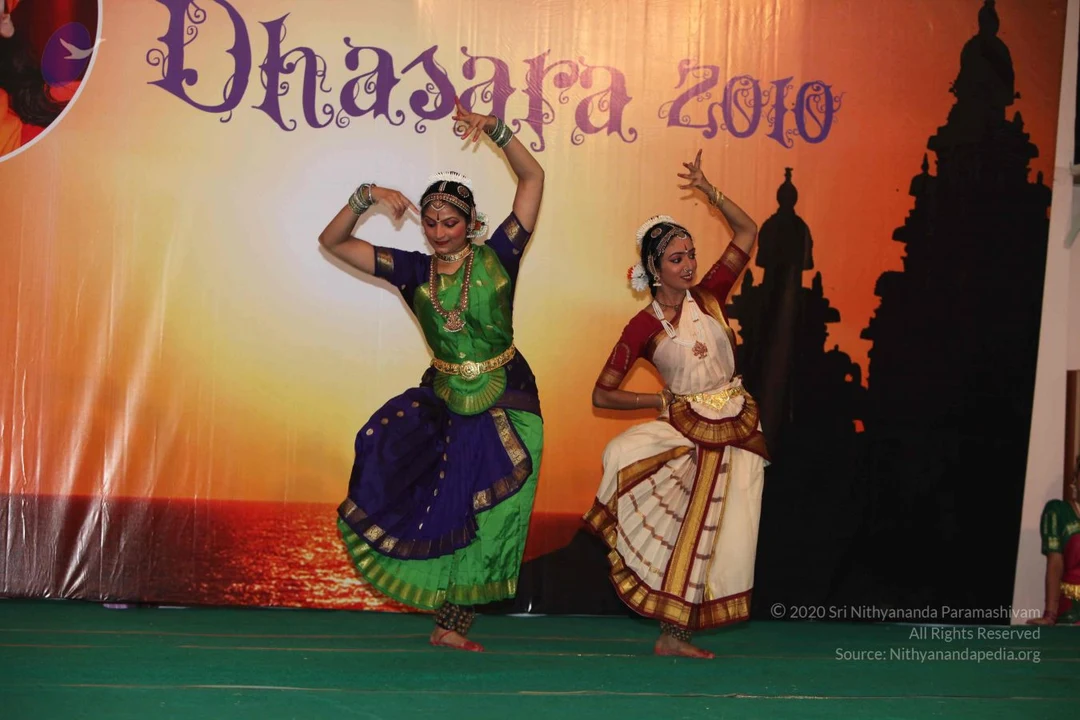
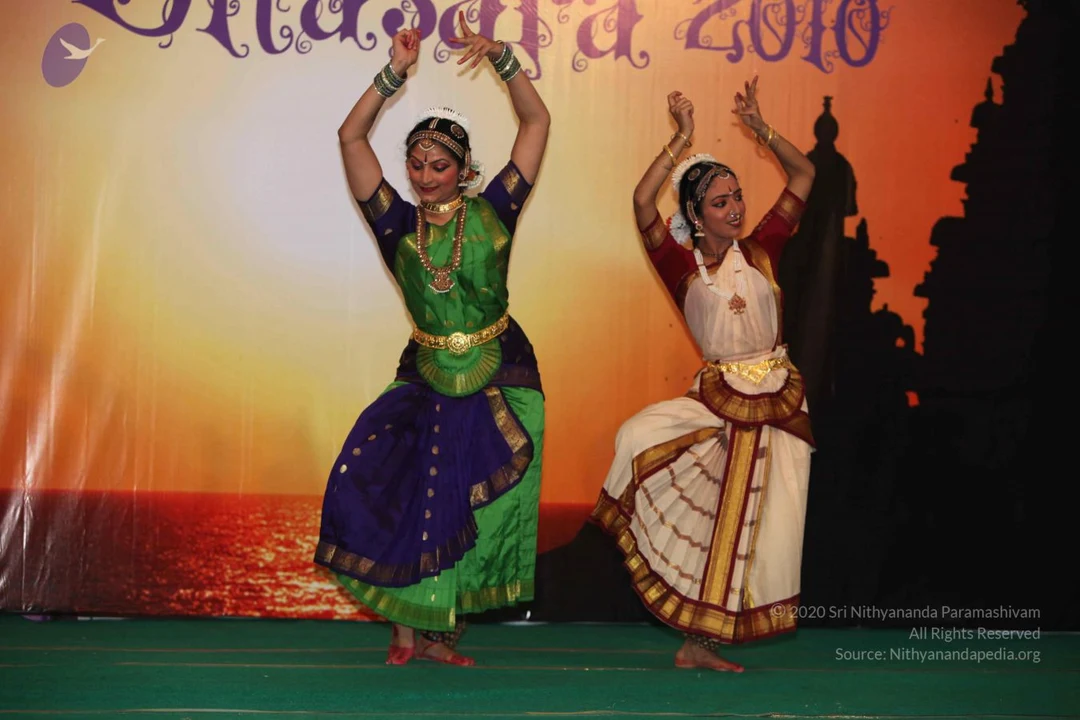
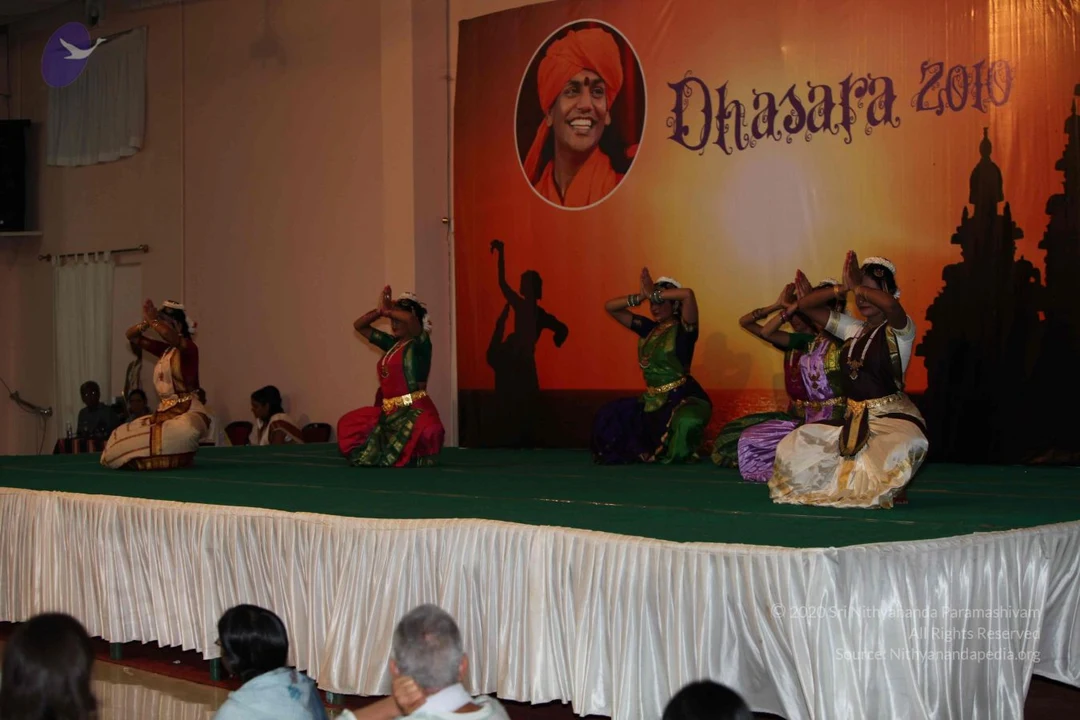
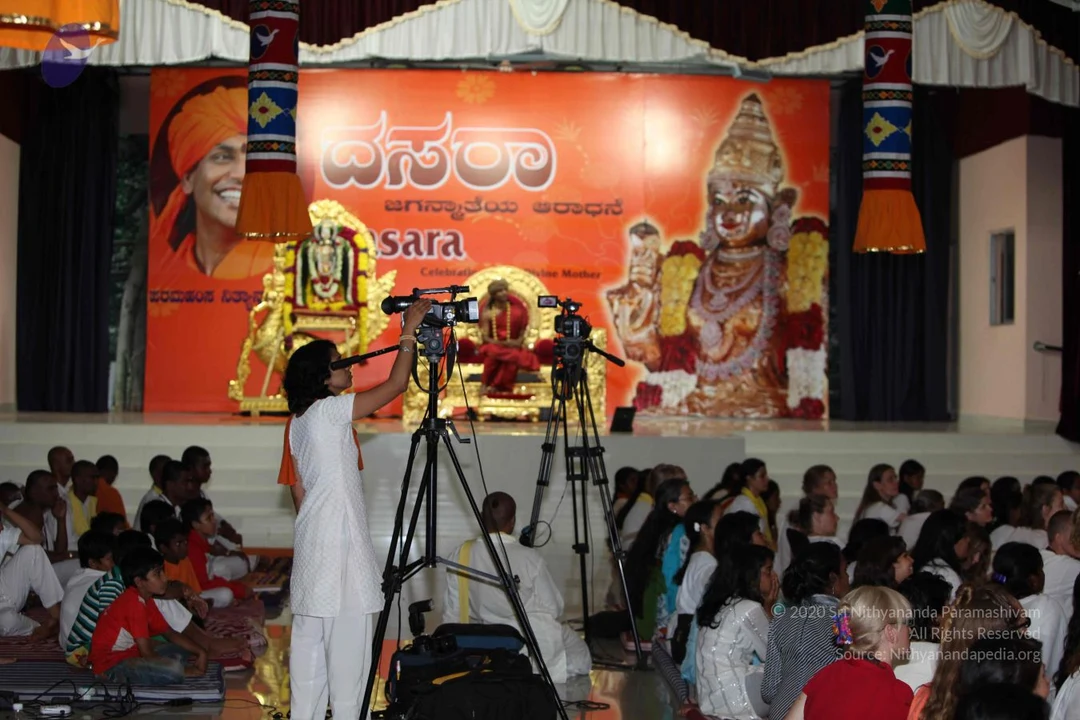
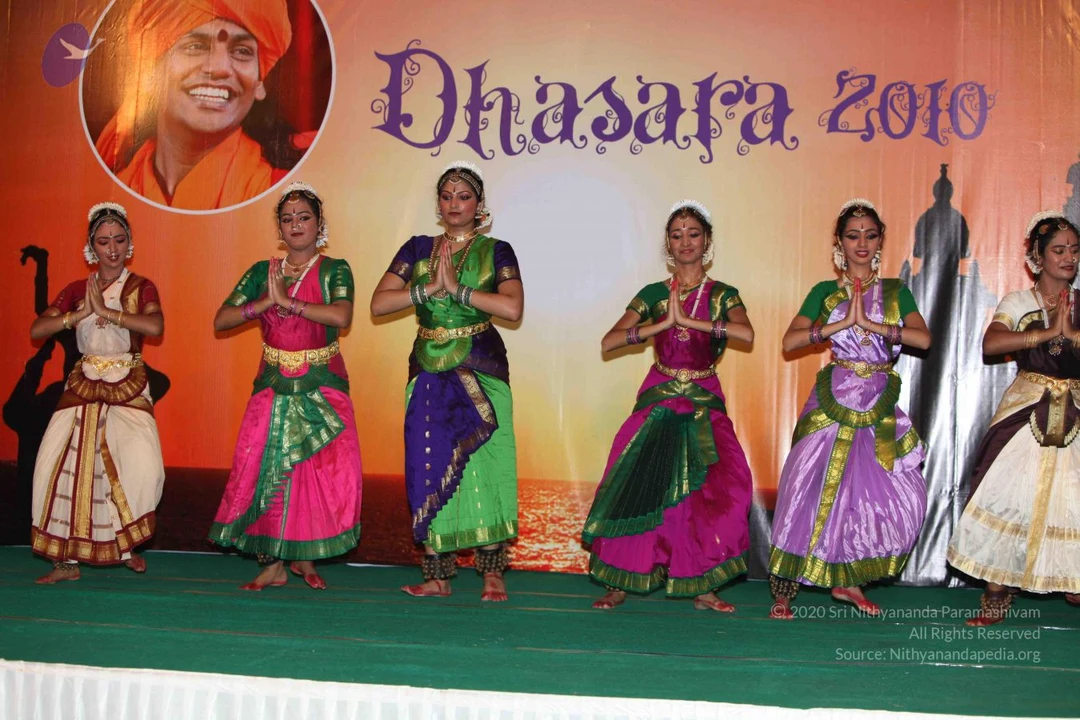
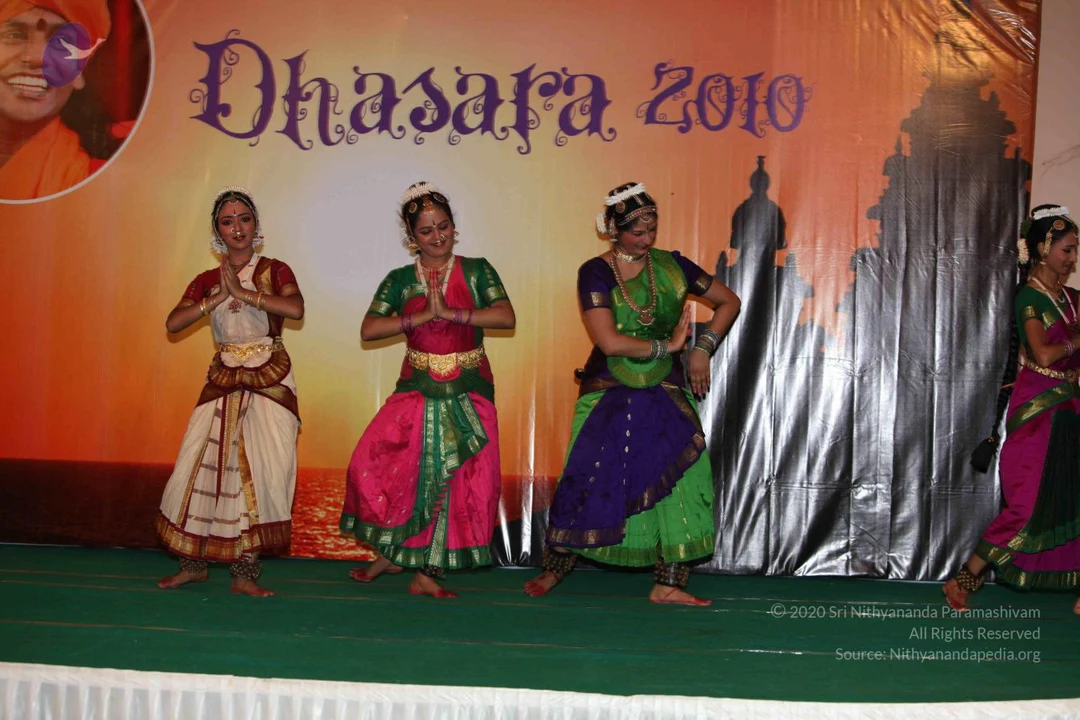
DASARA-CULTURAL-PROGRAM

Photos from this day

View all 801 photos

Panchatapas

3 photosSource gallery
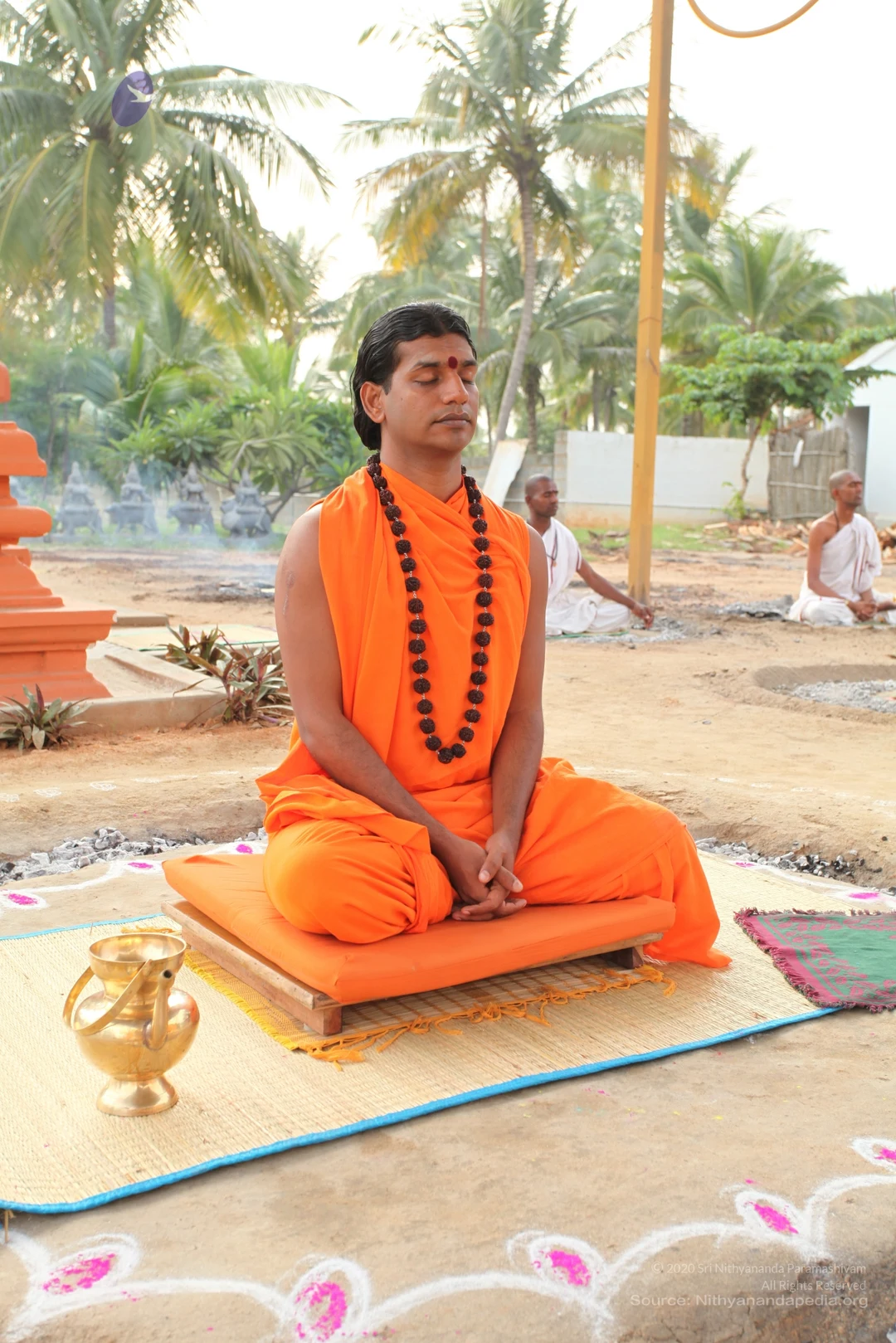
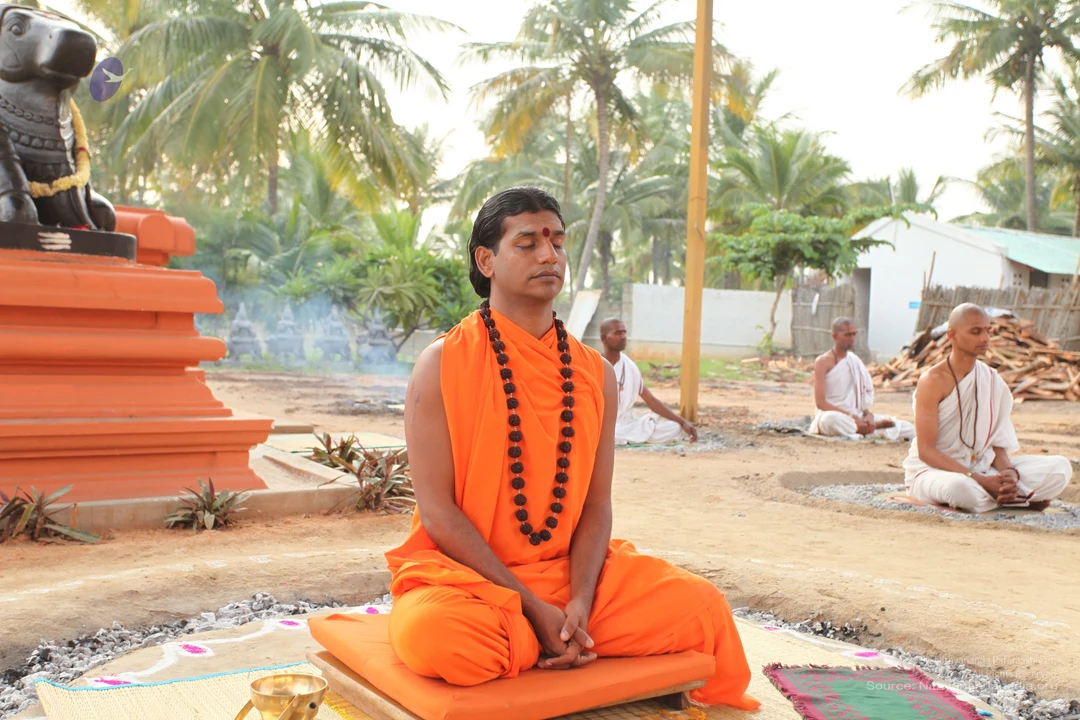
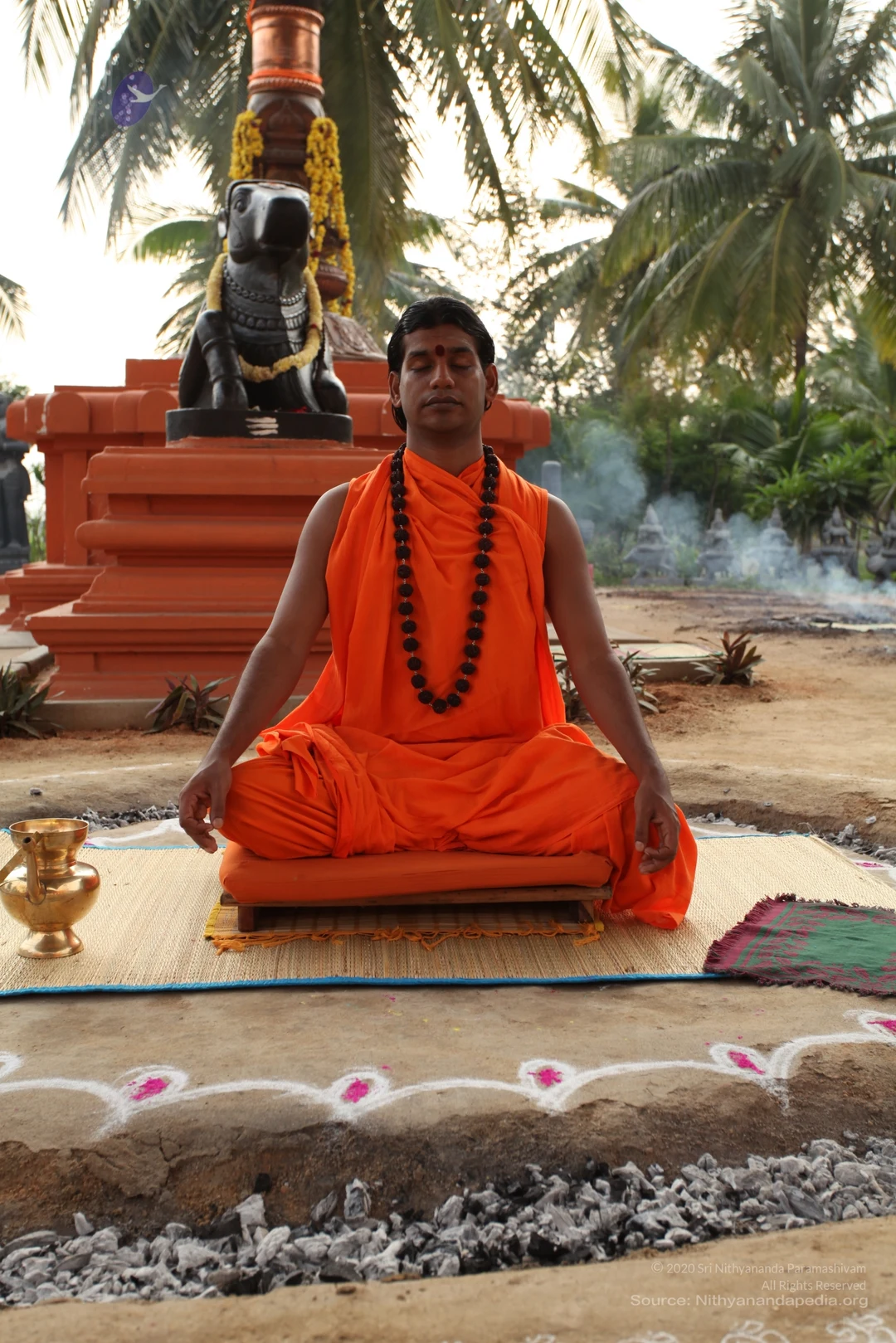
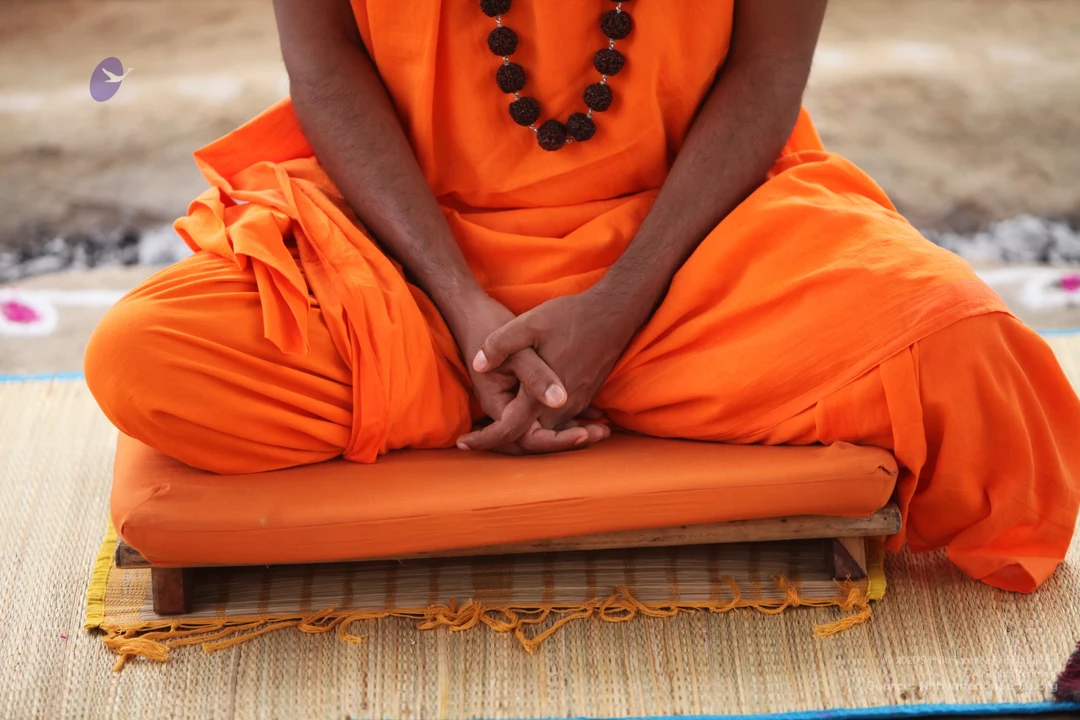
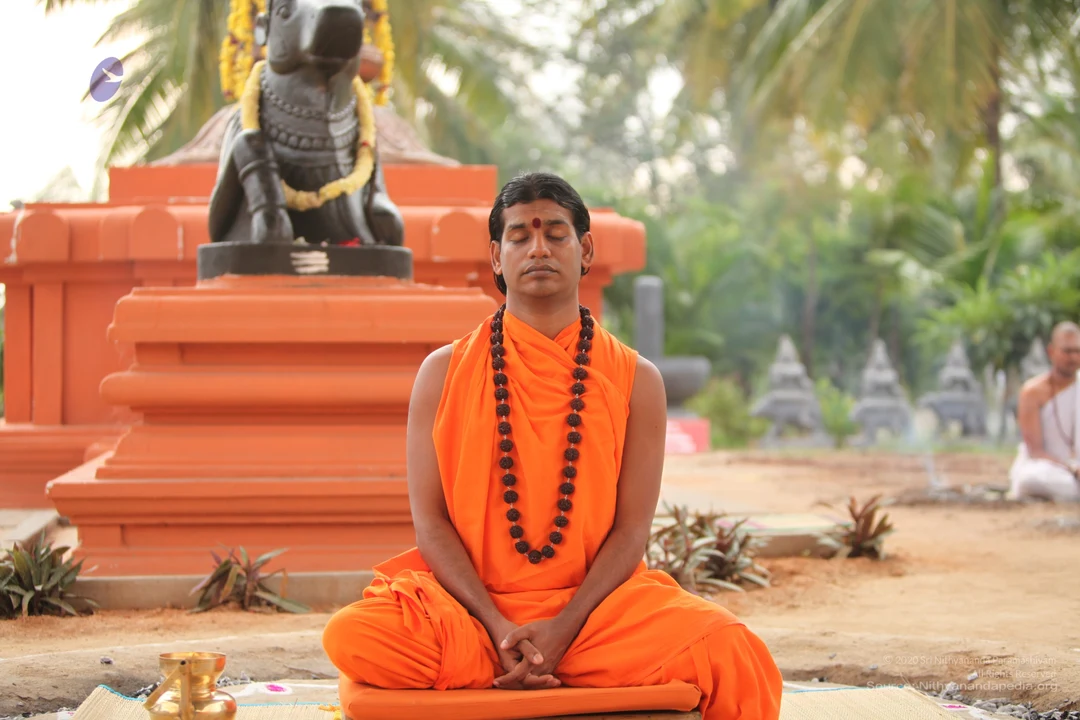
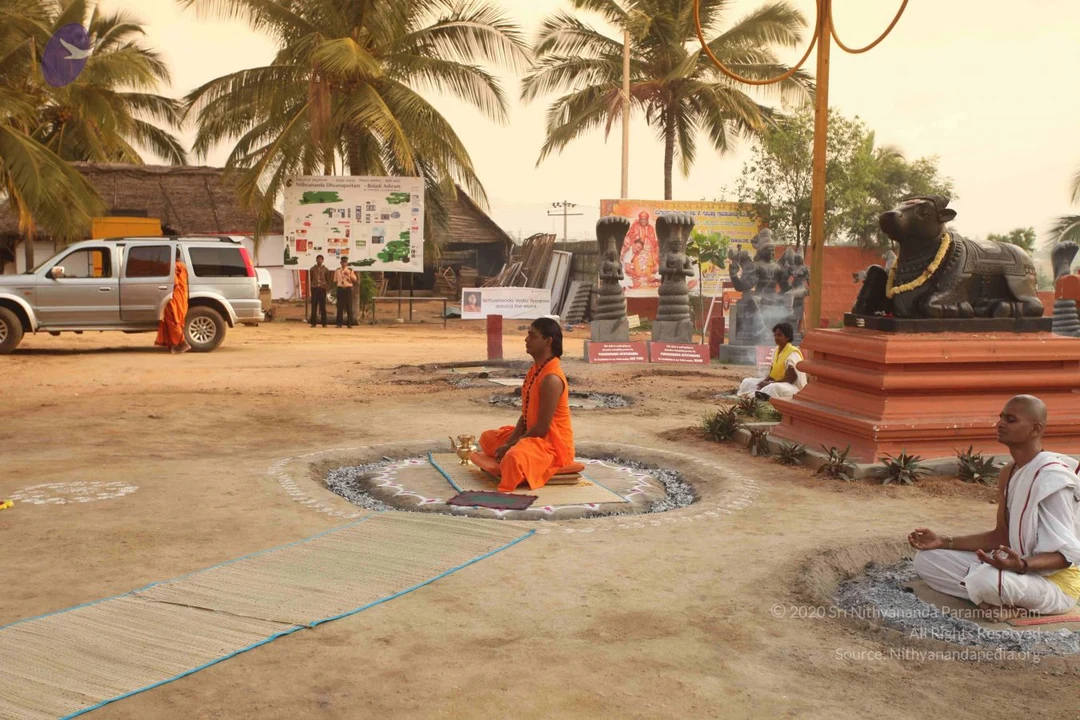
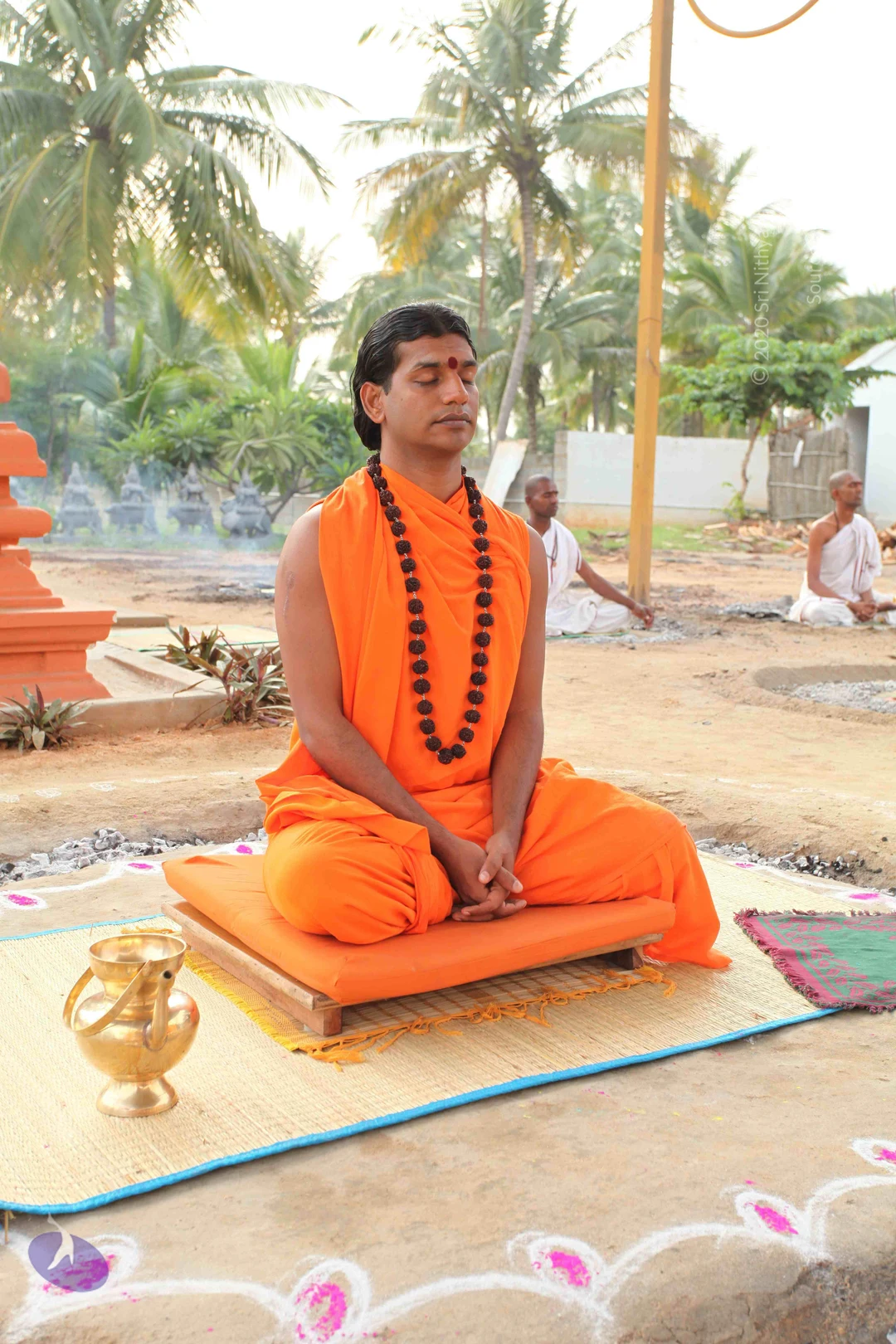
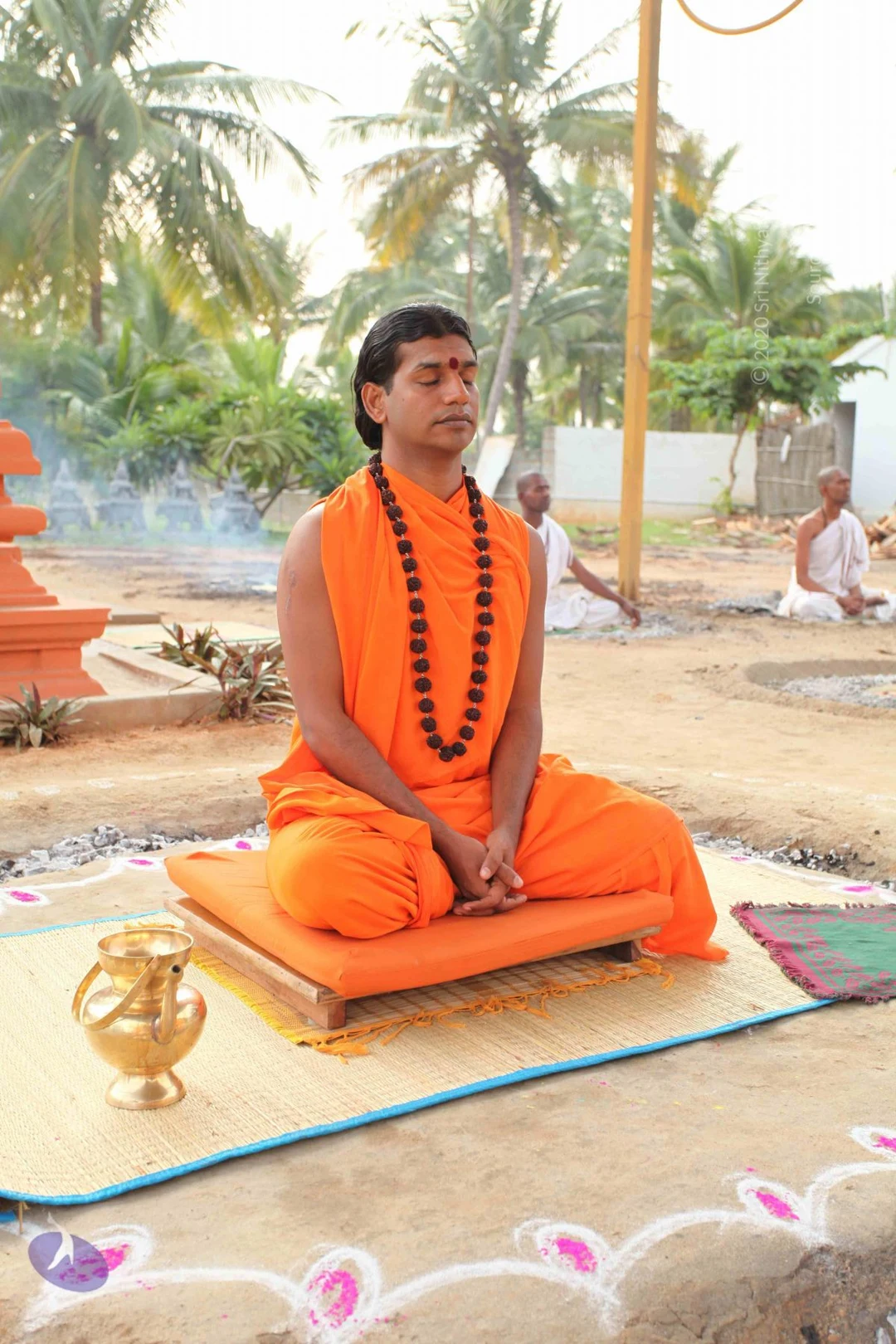
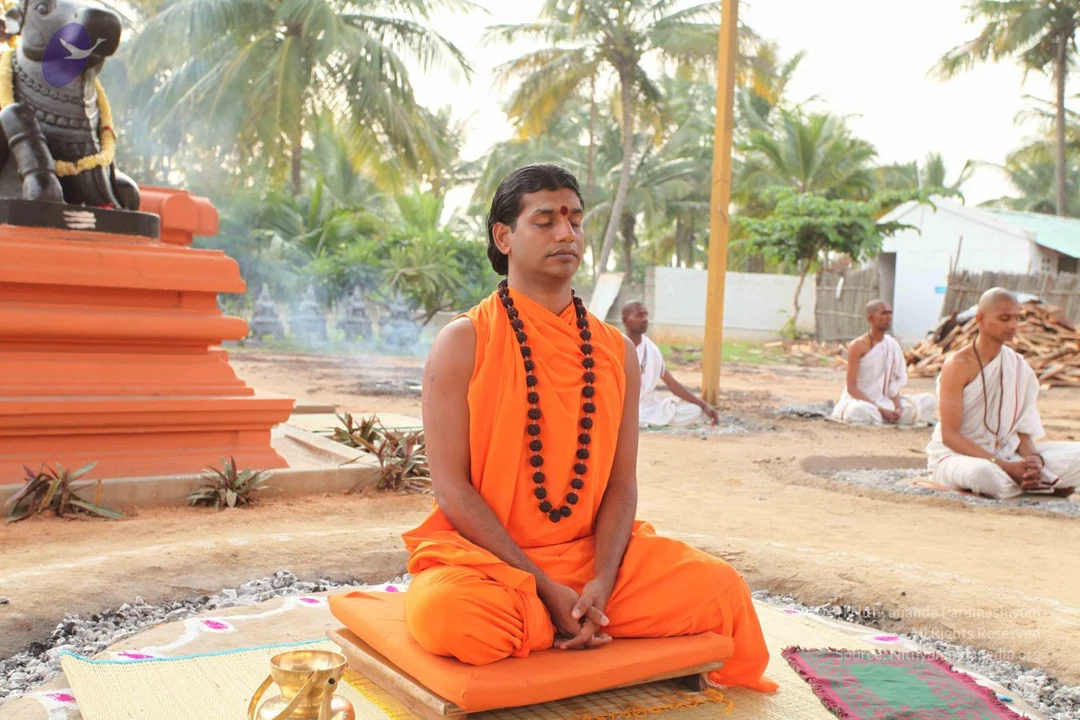
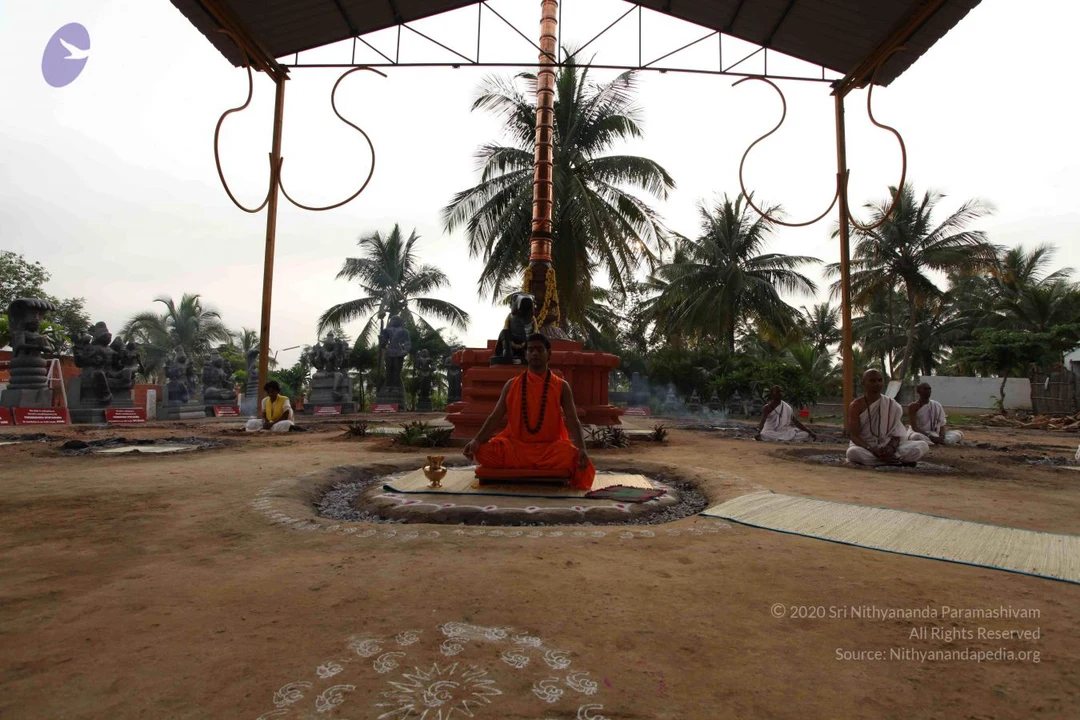
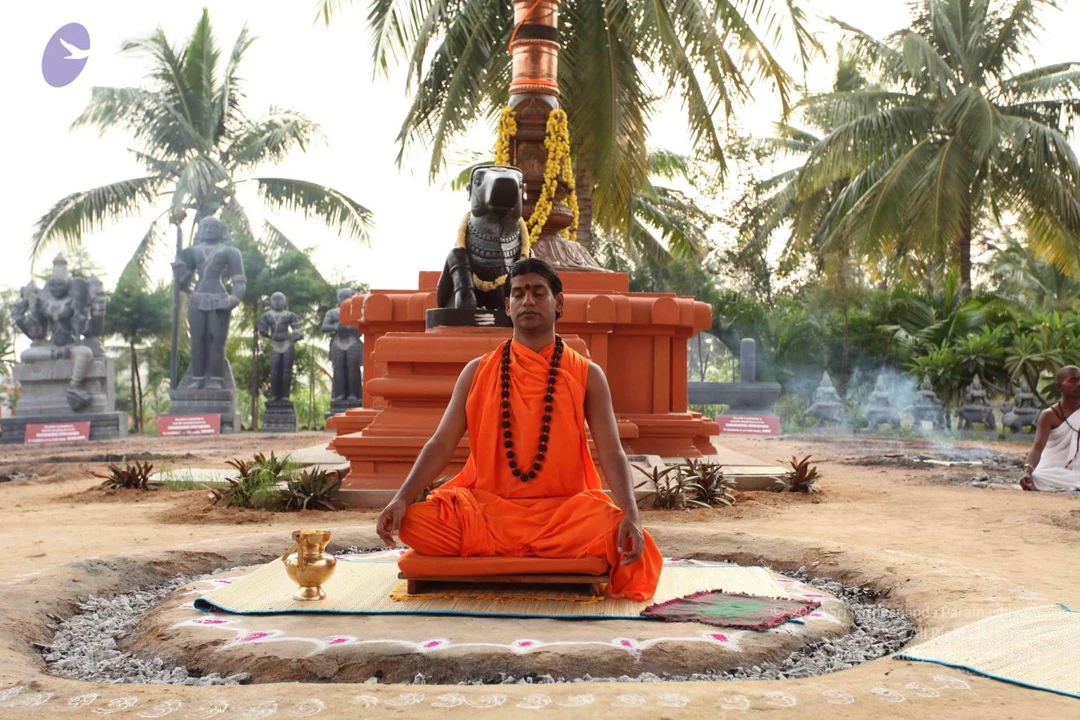
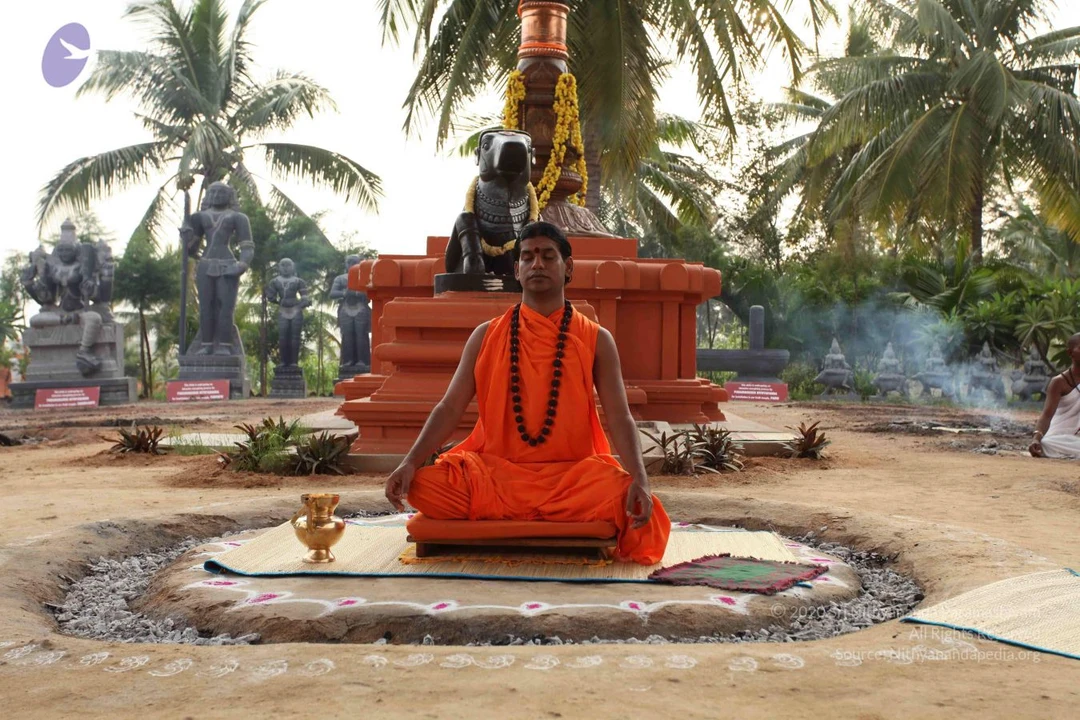
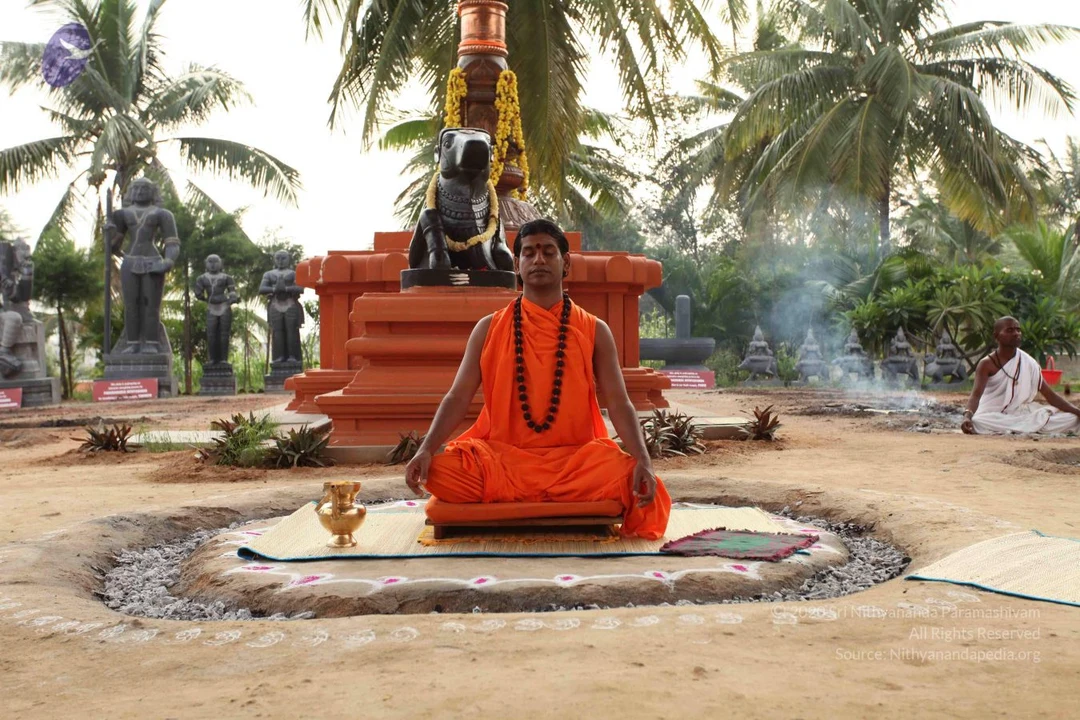
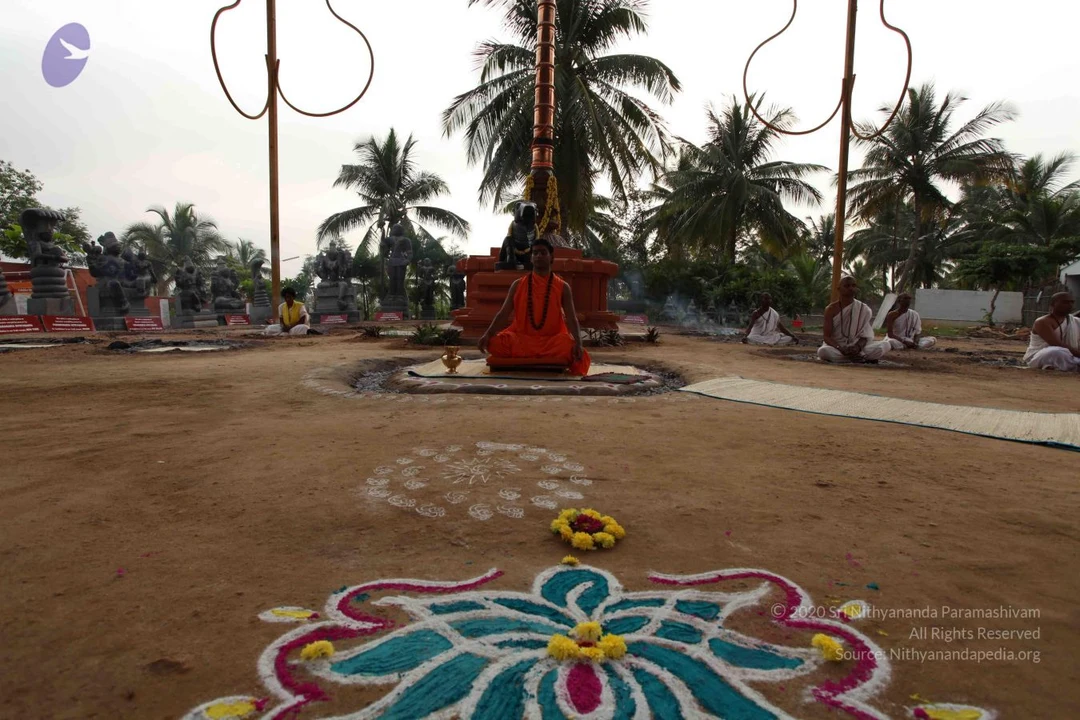
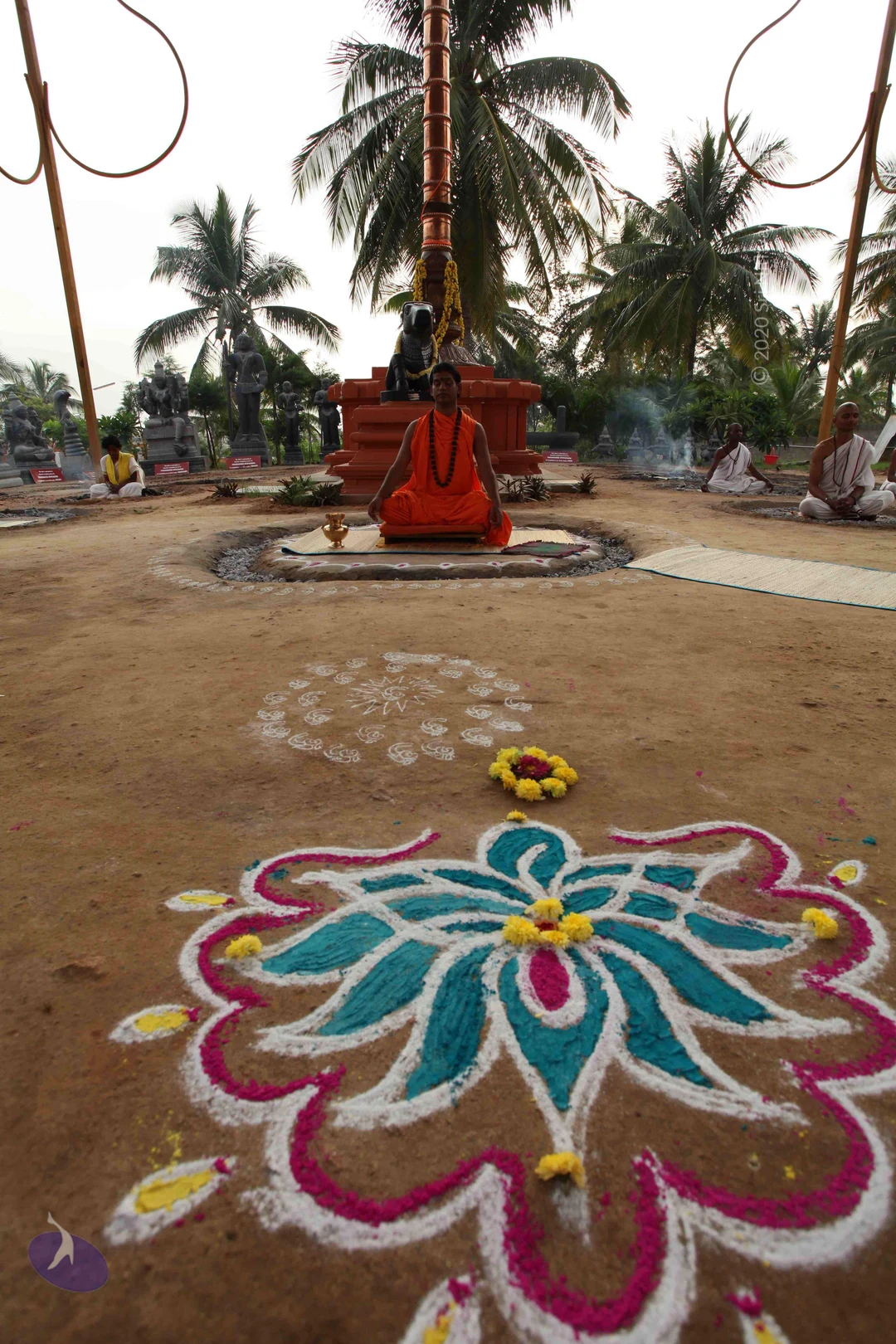
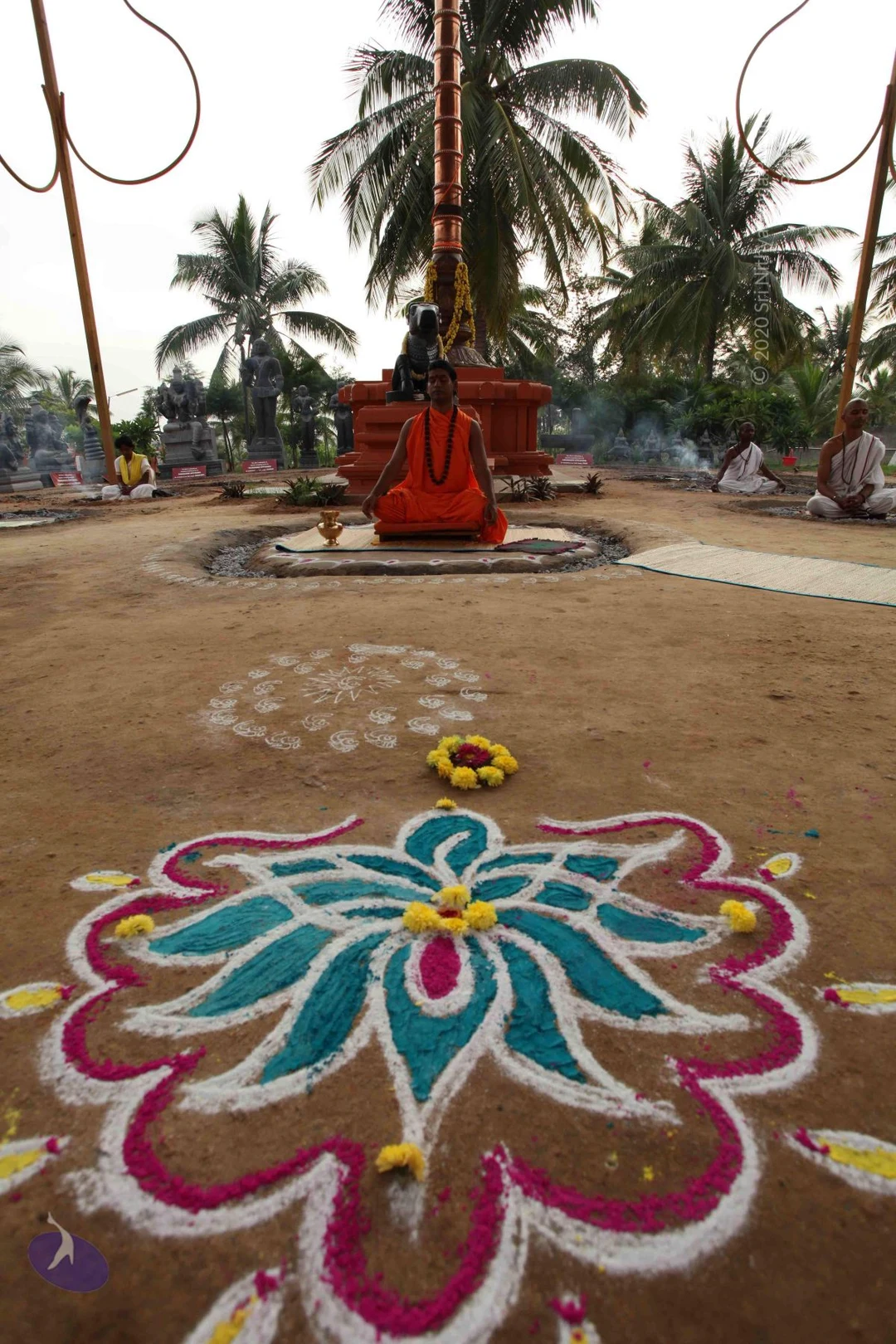
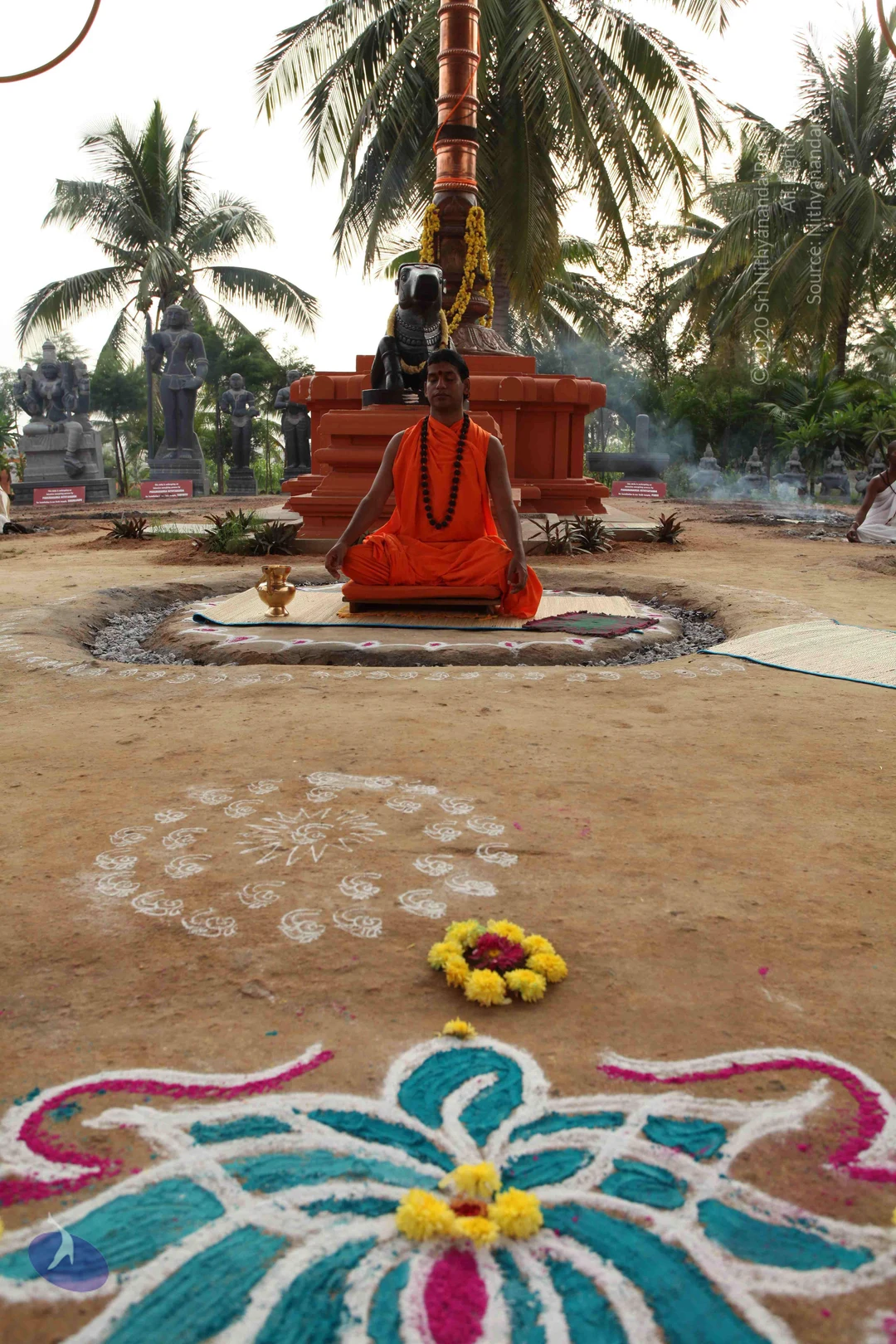
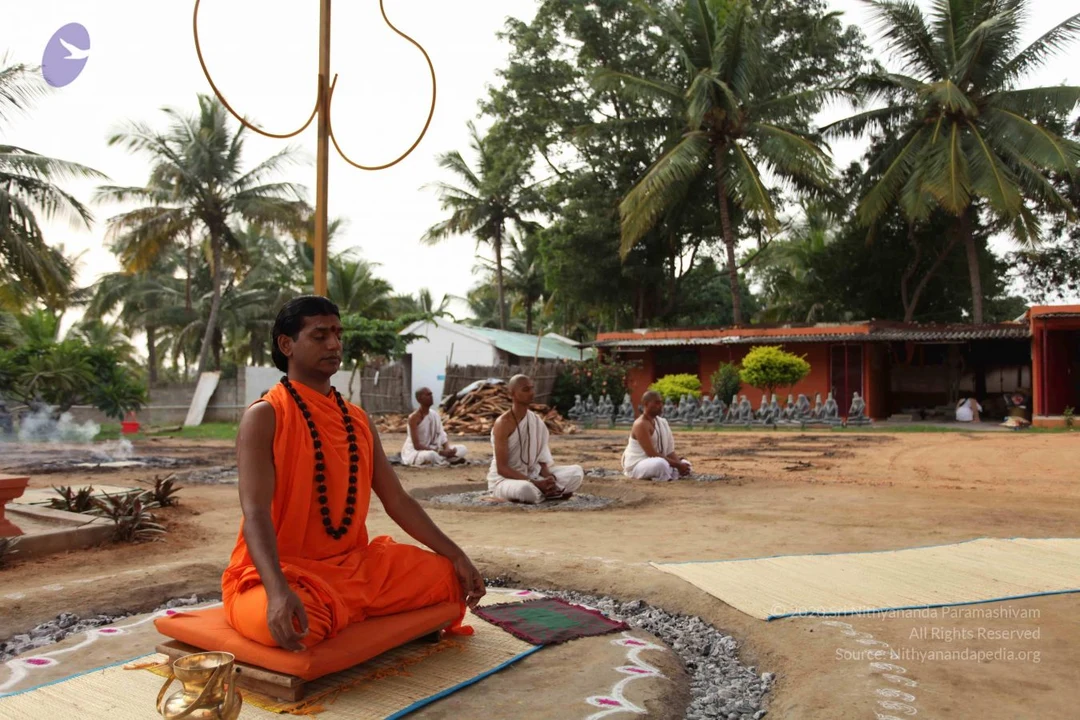
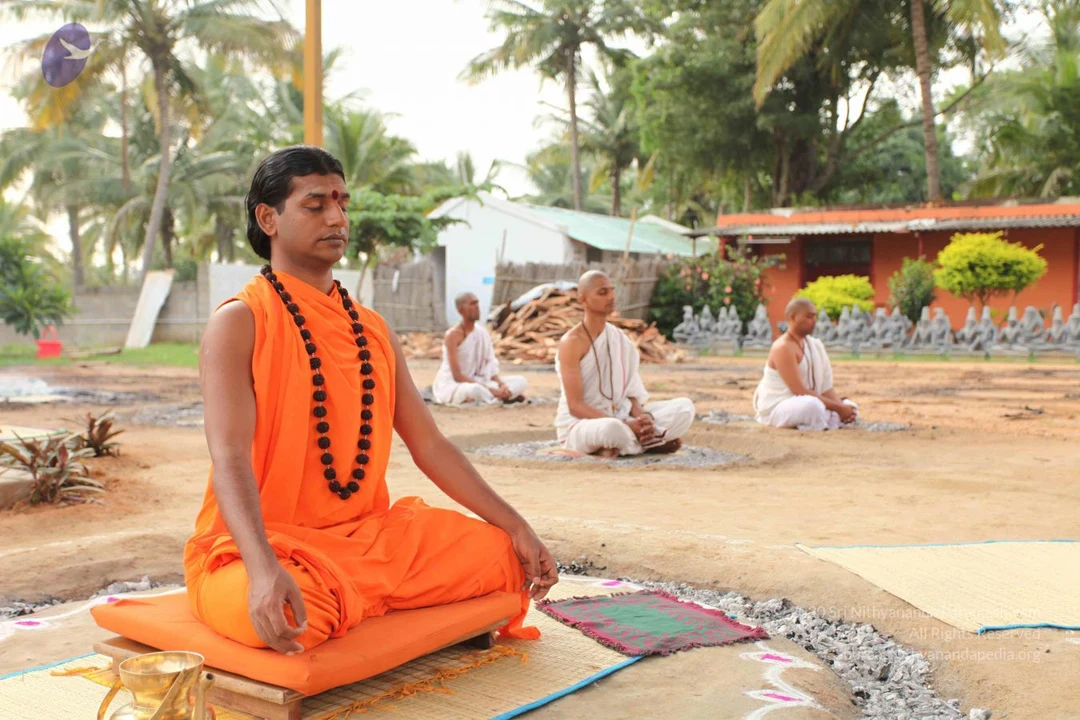
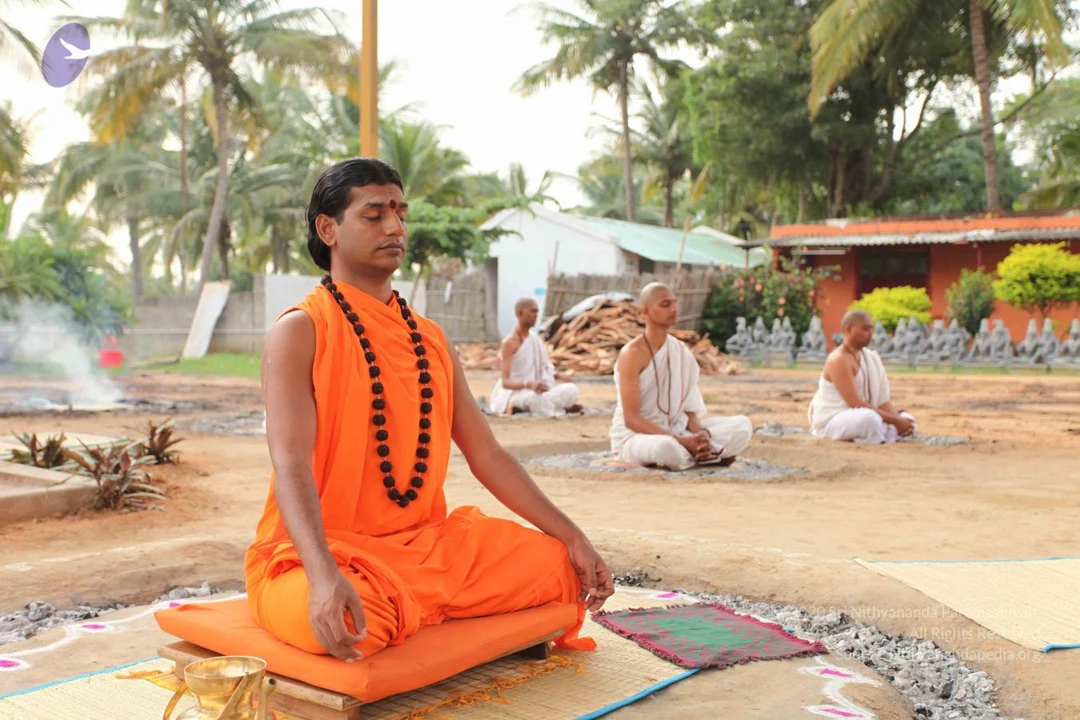
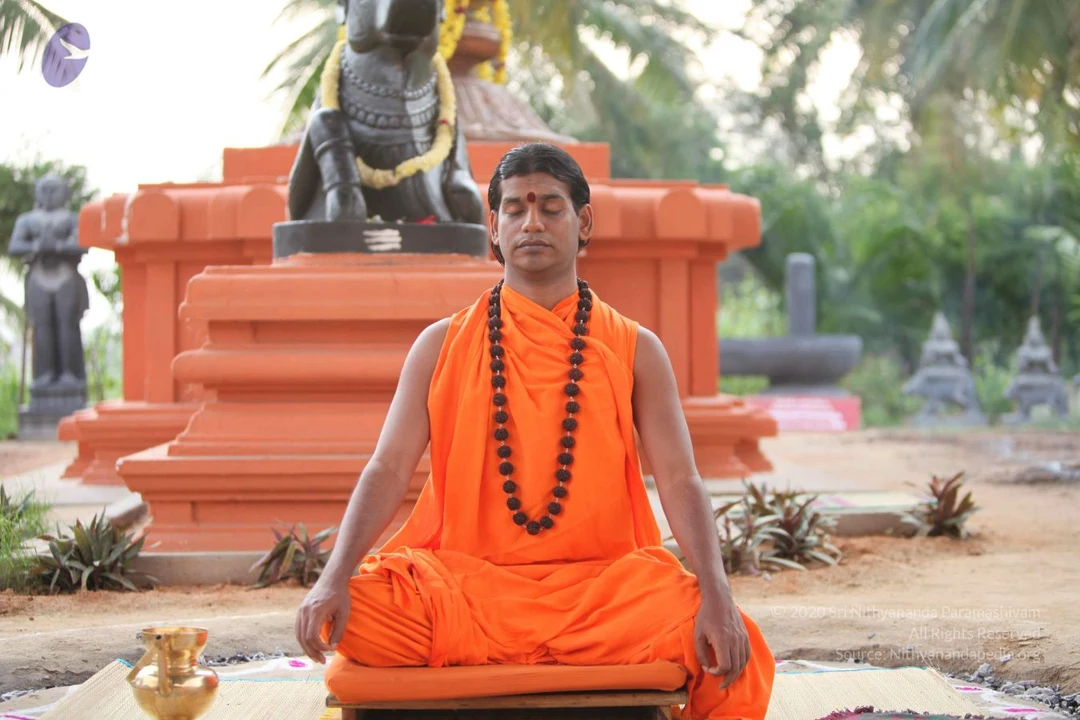
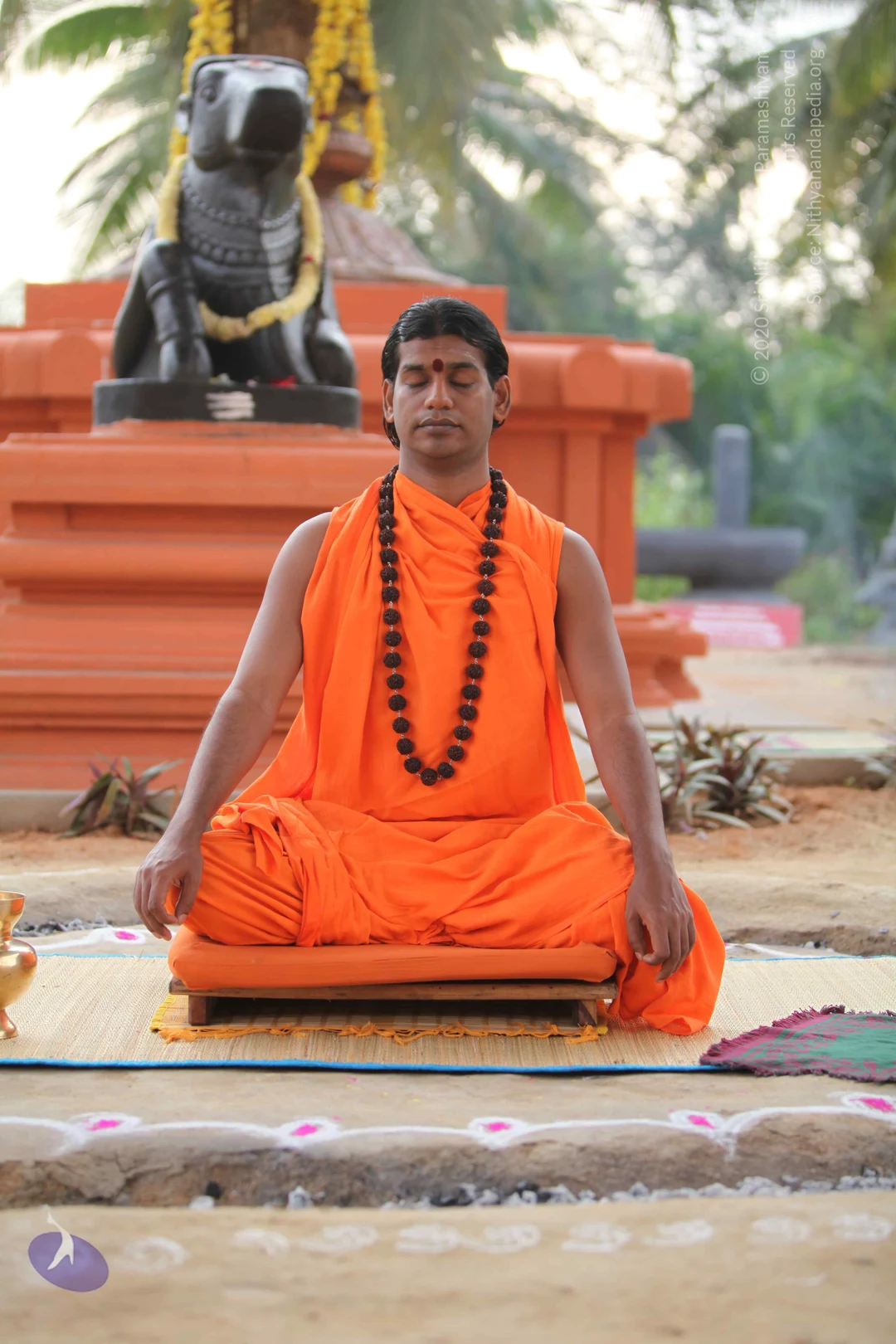
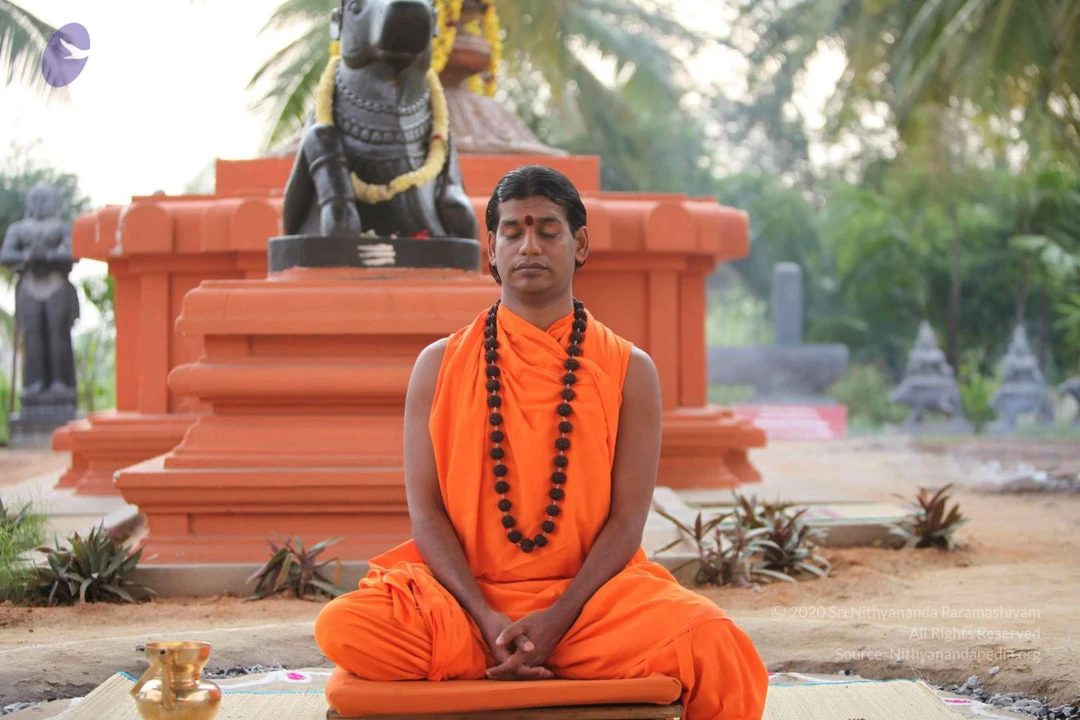
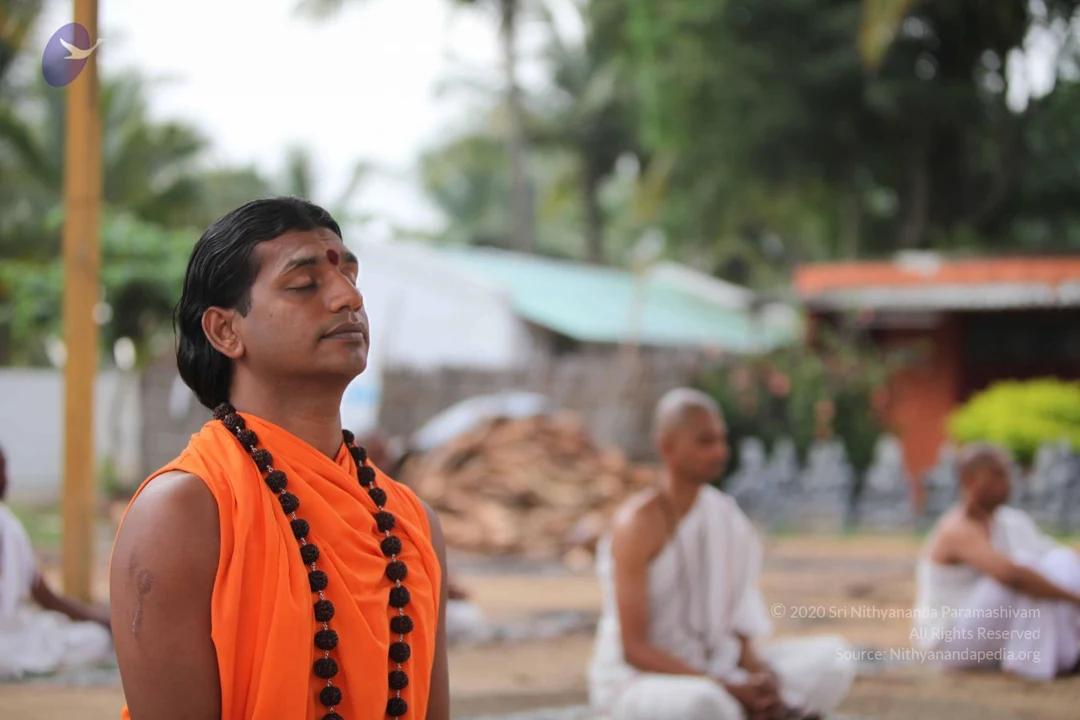
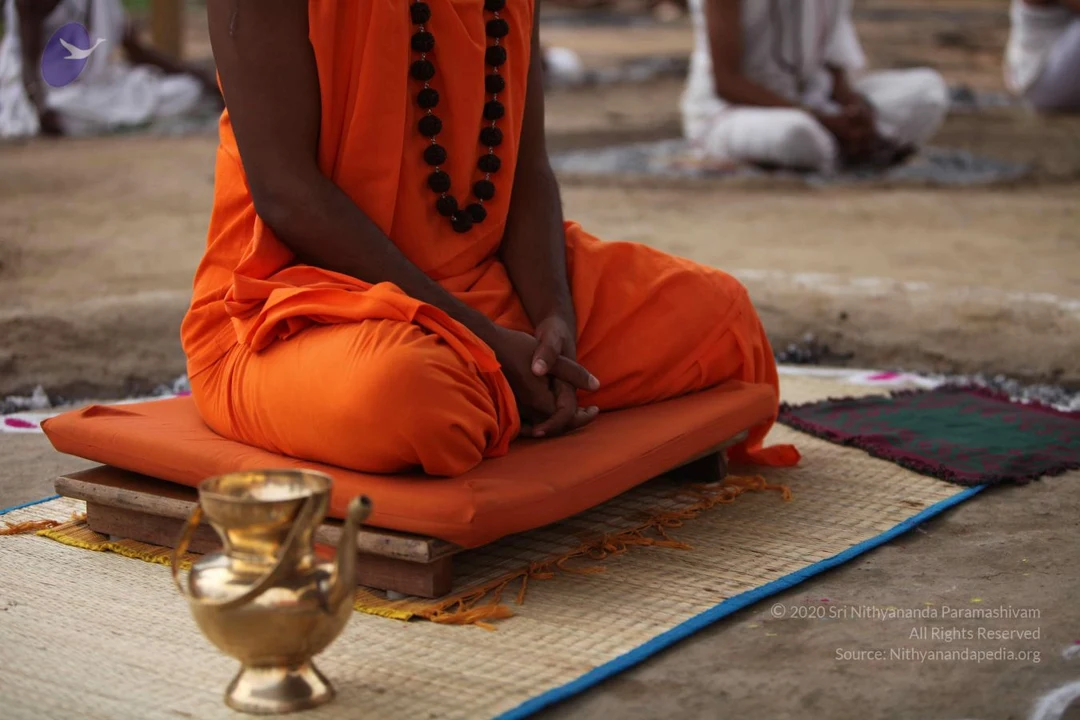
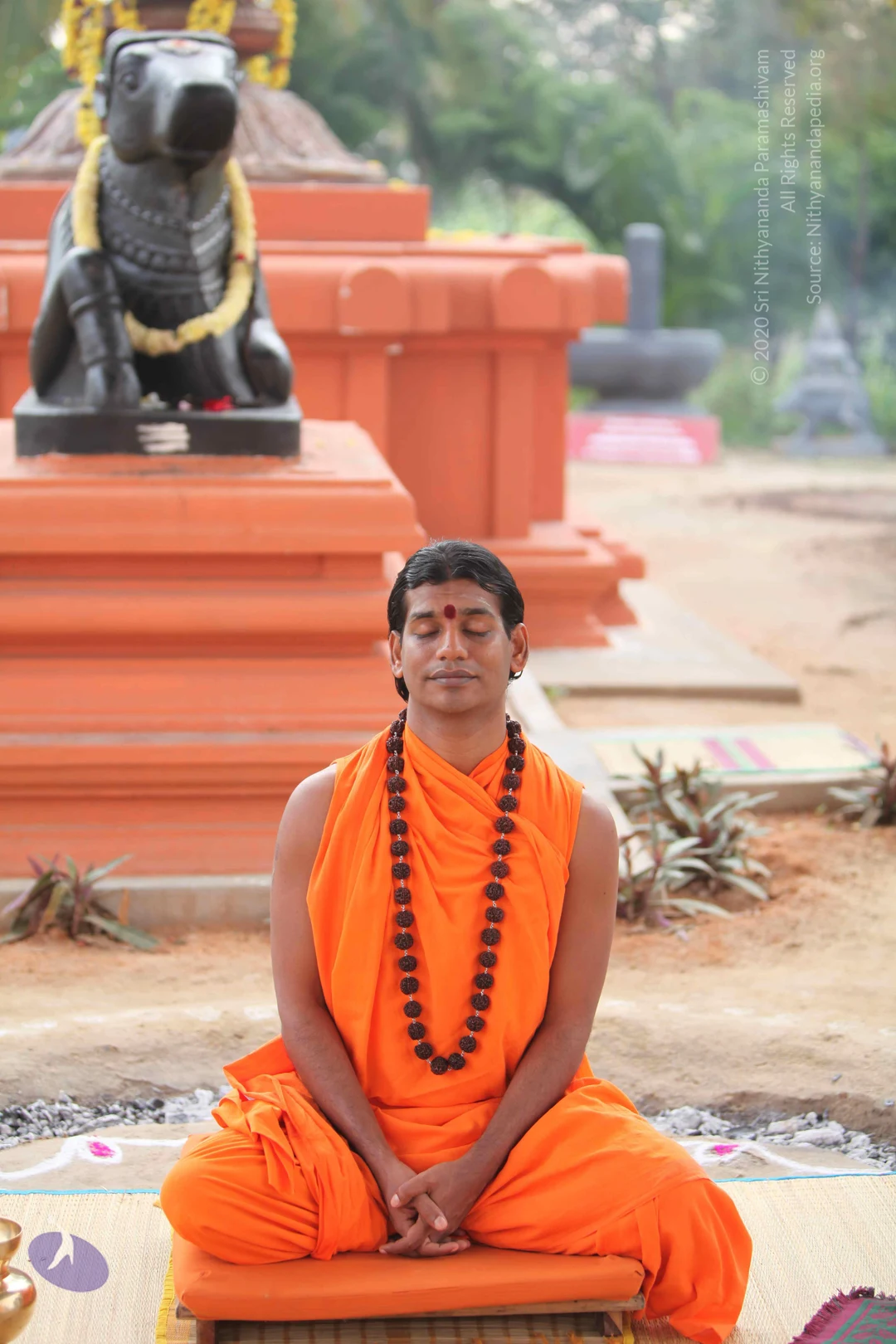
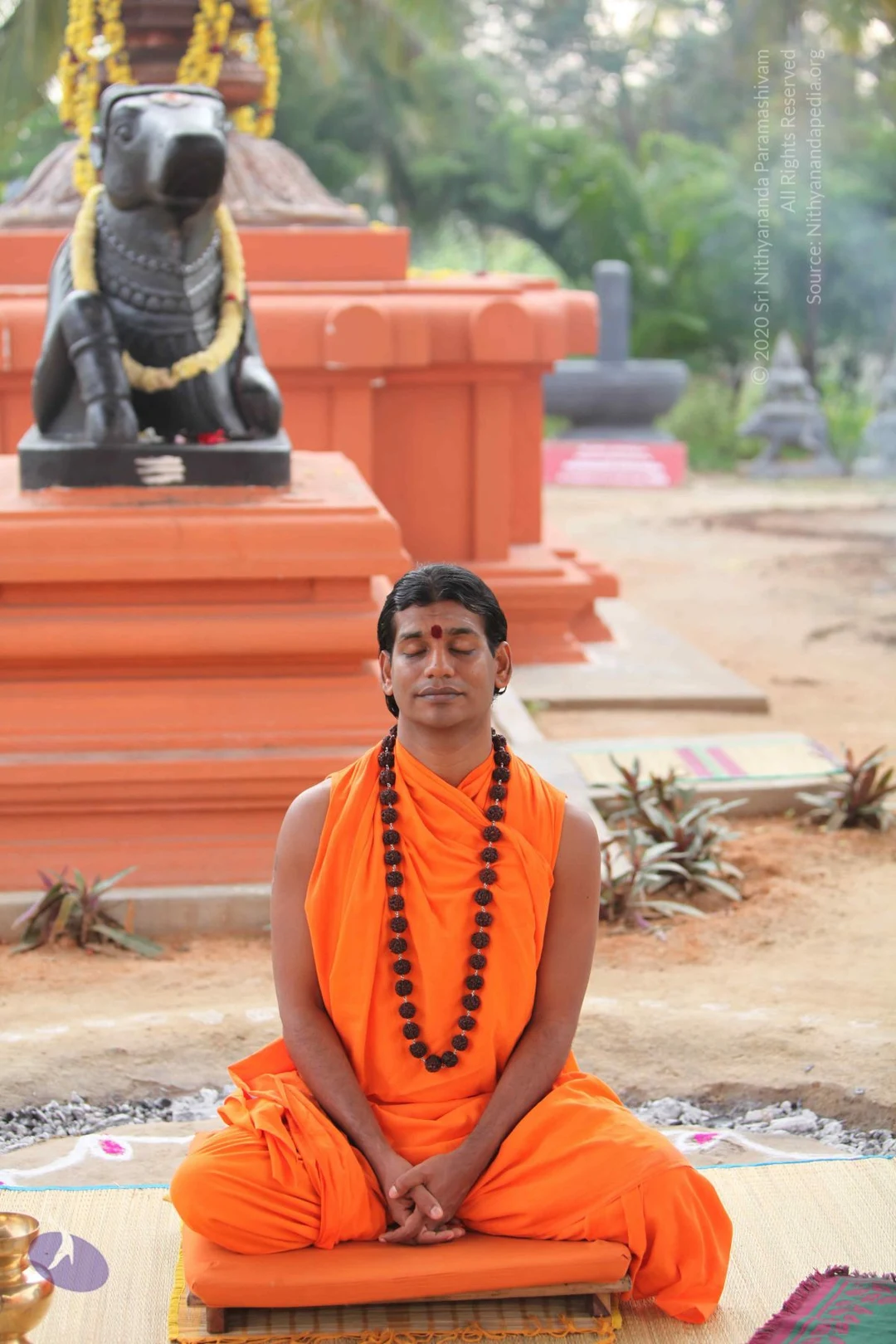
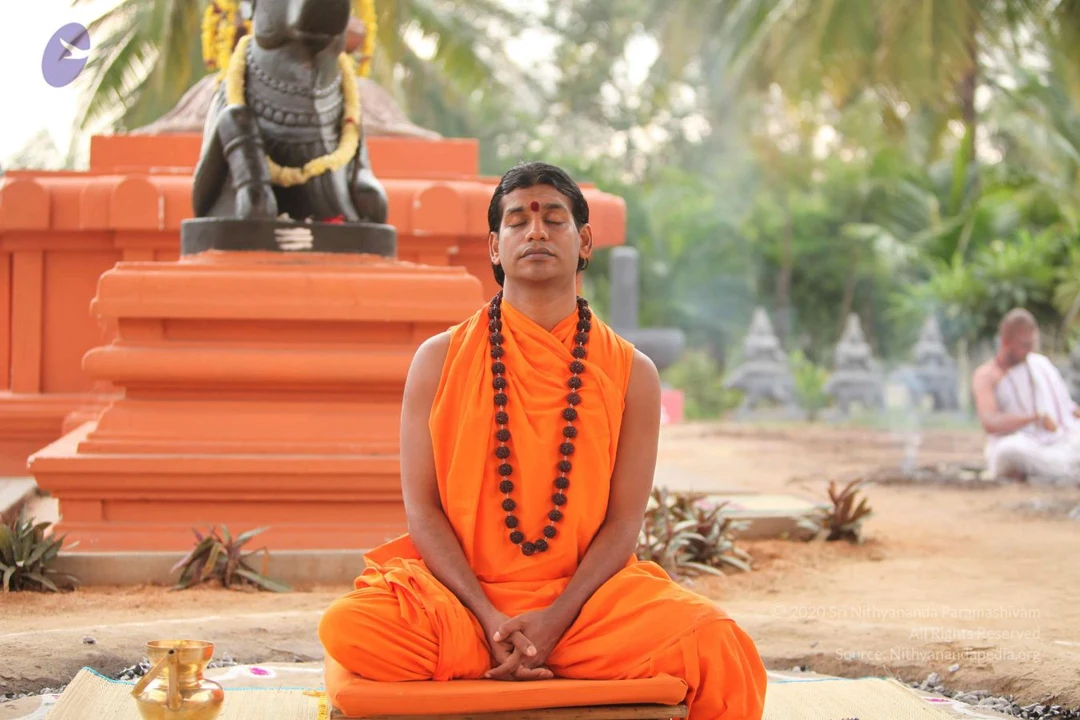
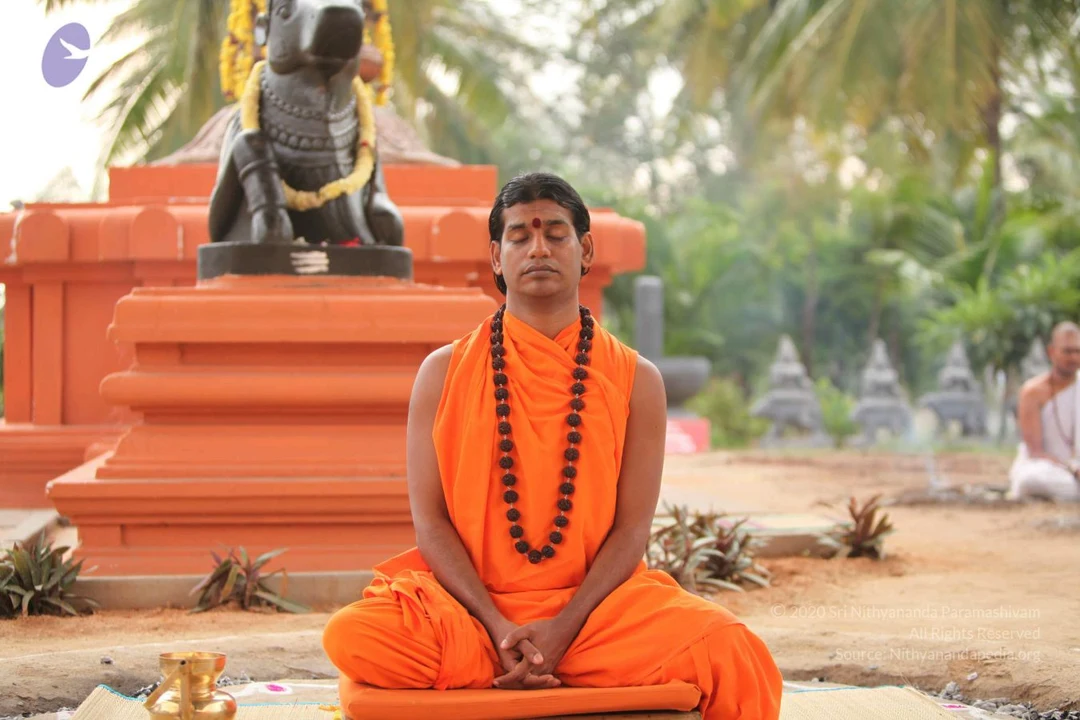
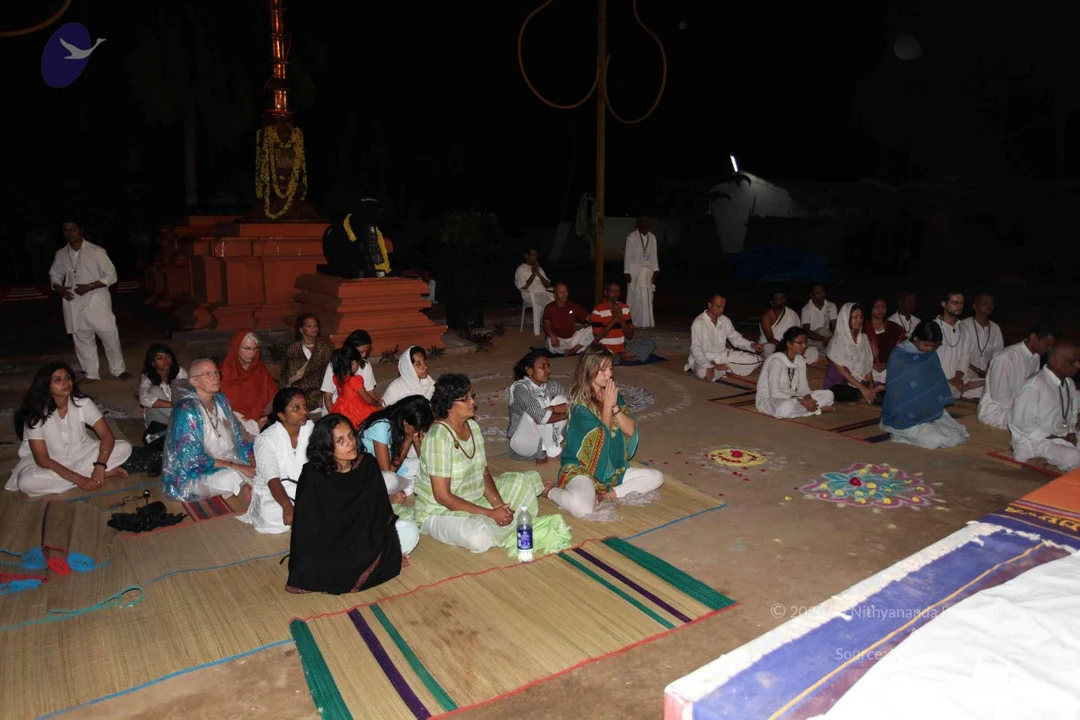
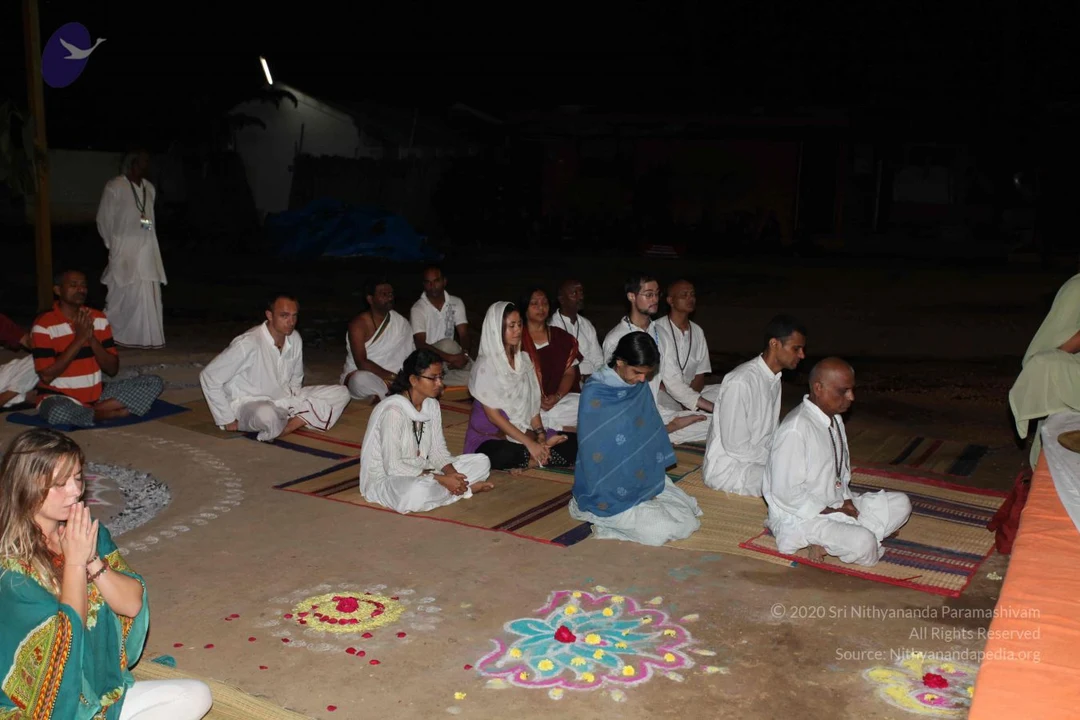
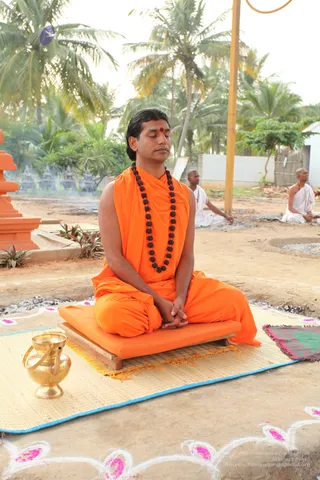
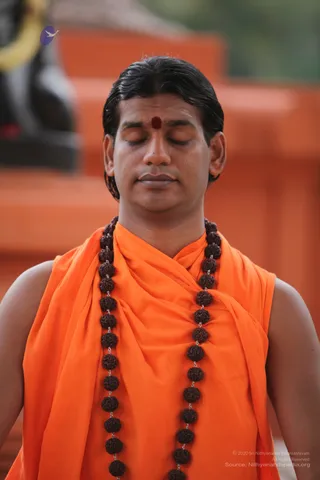
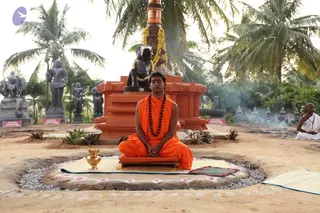
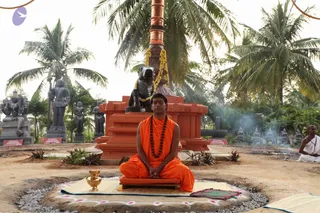
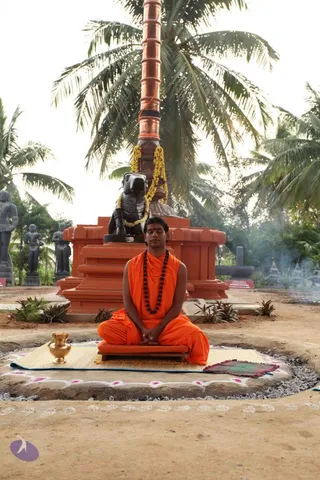
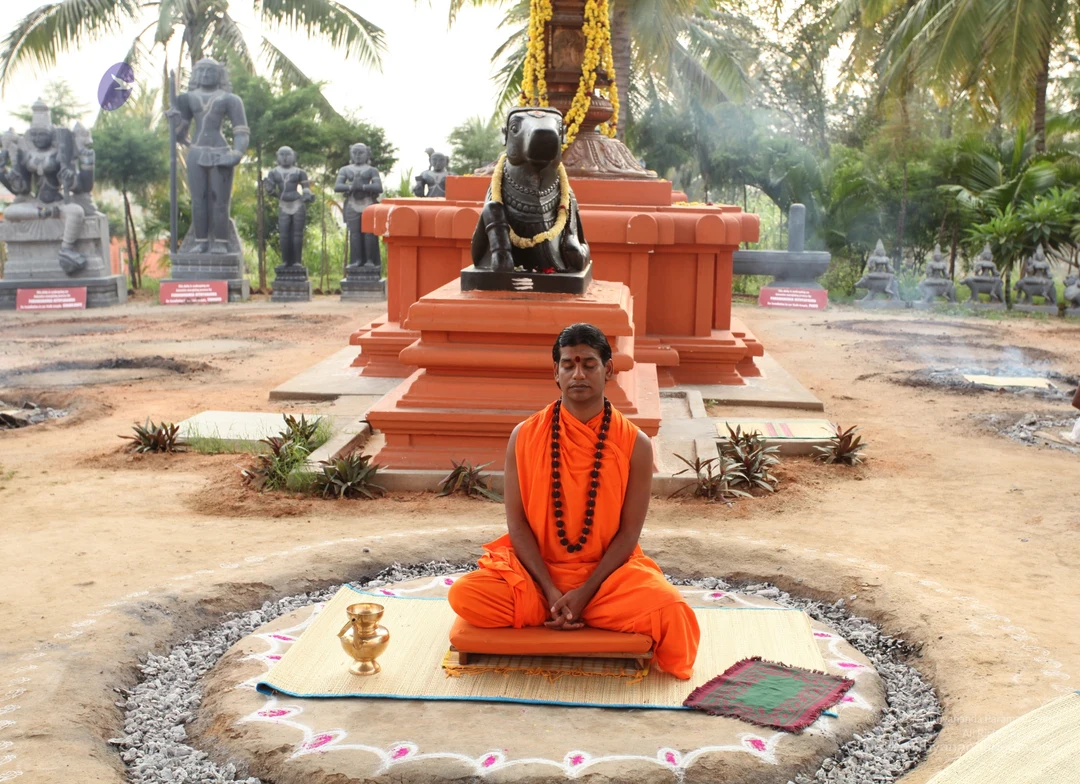
Outdoor photo of a man seated cross-legged in meditation on an orange cushion placed on a low wooden platform over a woven mat with a blue border. He wears an orange-saffron shawl and robe, a long black rudraksha mala necklace, and a red bindi on his forehead, with eyes closed and hands clasped in his lap. A brass kalasha-style vessel with a handle sits to his left, a small green-and-maroon cloth lies to the right, and white and pink rangoli designs decorate the ground. Behind him, two men in white dhoti-style clothing sit in meditation on mats, with coconut palms, a yellow pole and small stone shrines in the background. The shawl and mala are visible cues; the sitting figure is an appearance-based candidate, so the a person field reflects that uncertainty.

Paadapooja
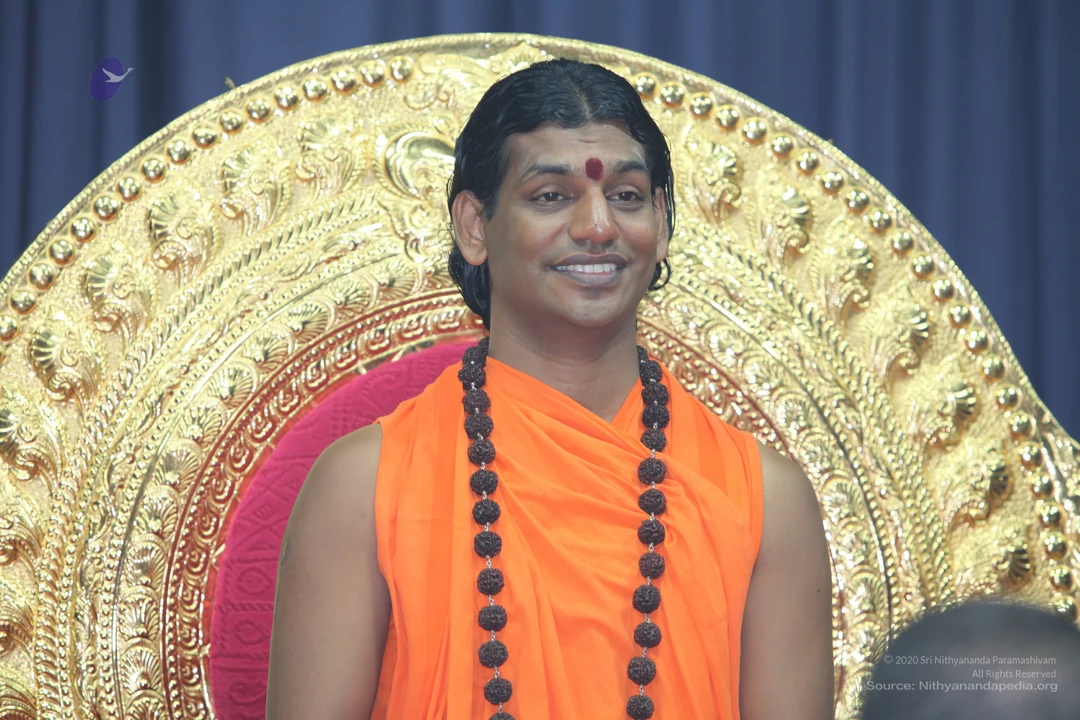
1 photoSource gallery

Morning-Satsang
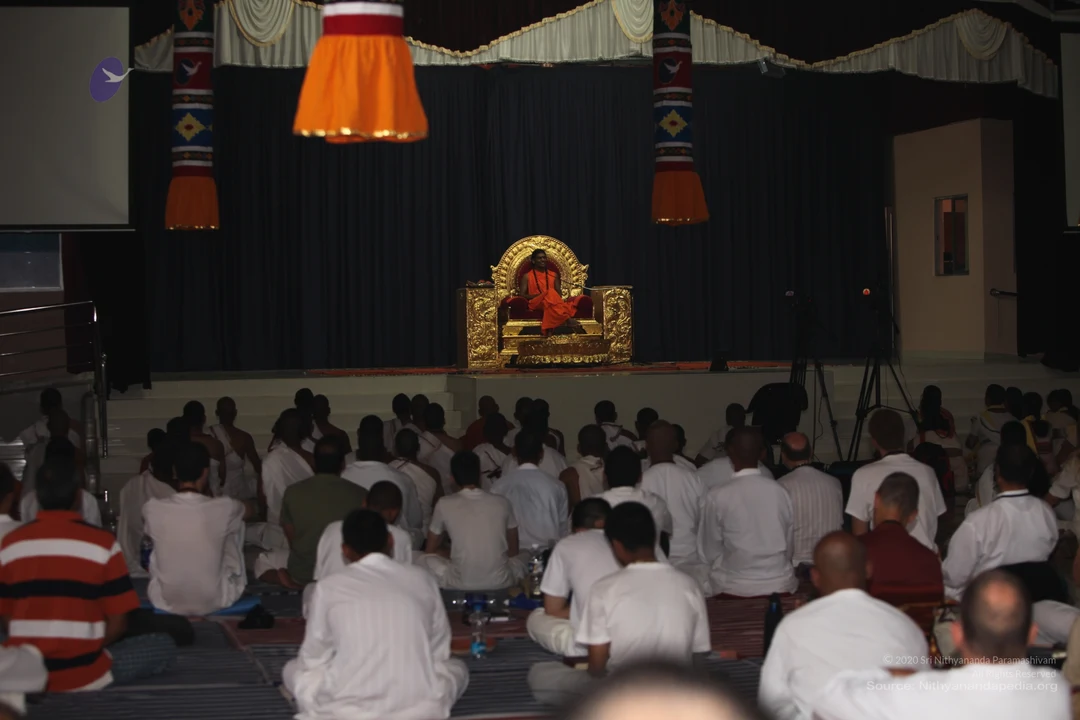
3 photosSource gallery
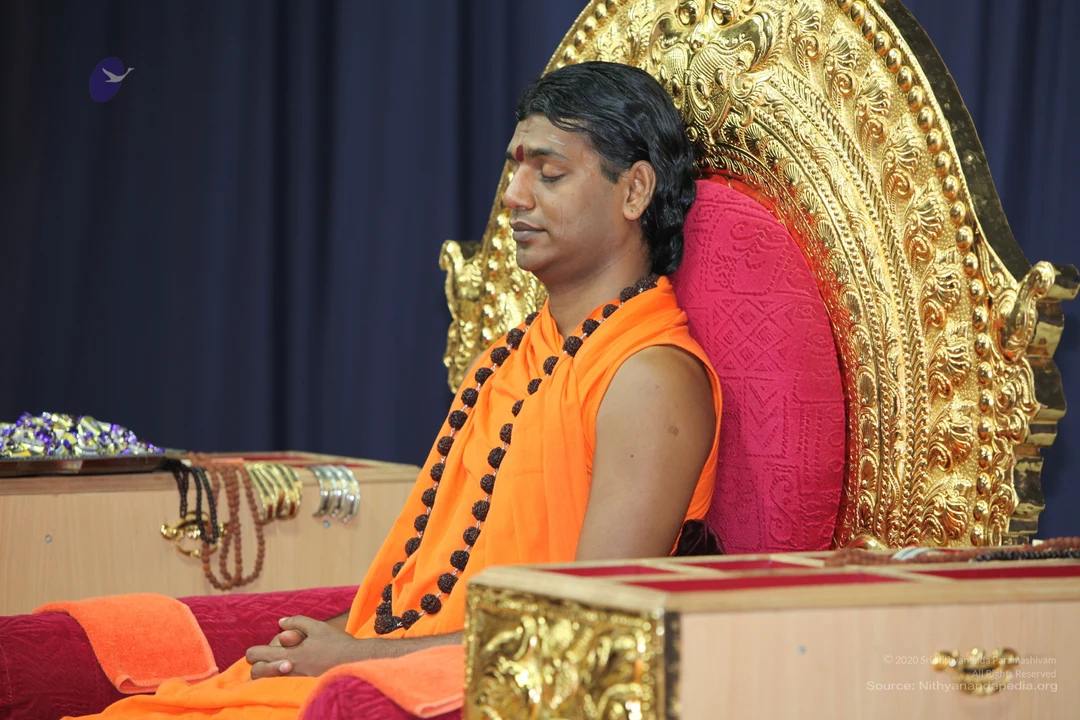
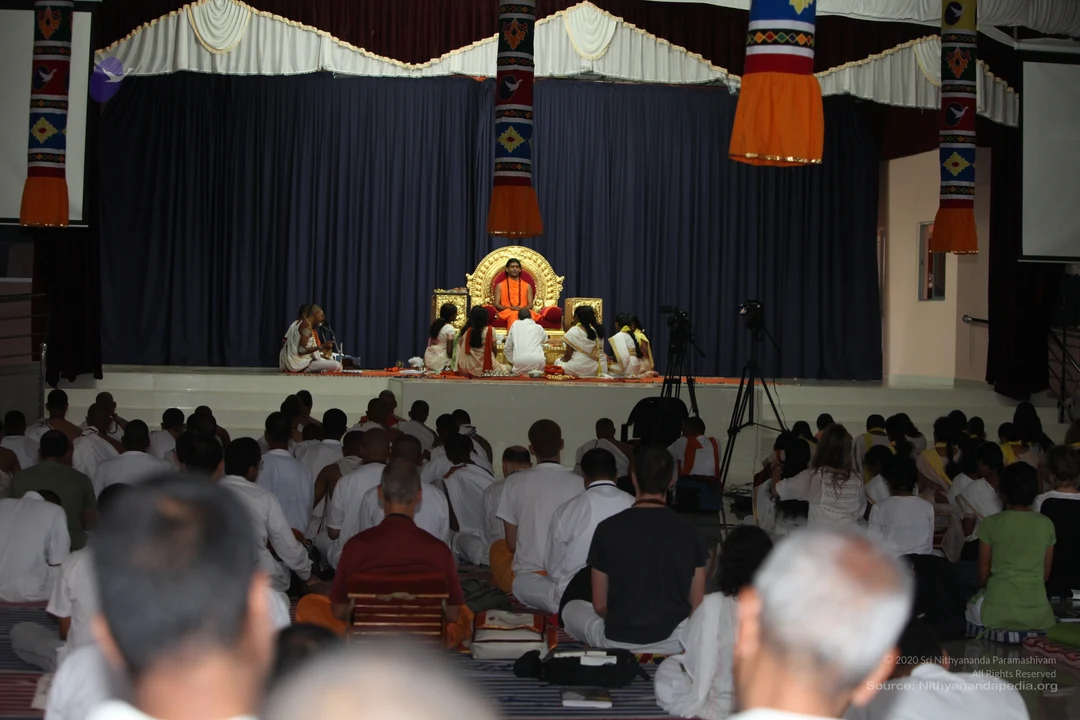
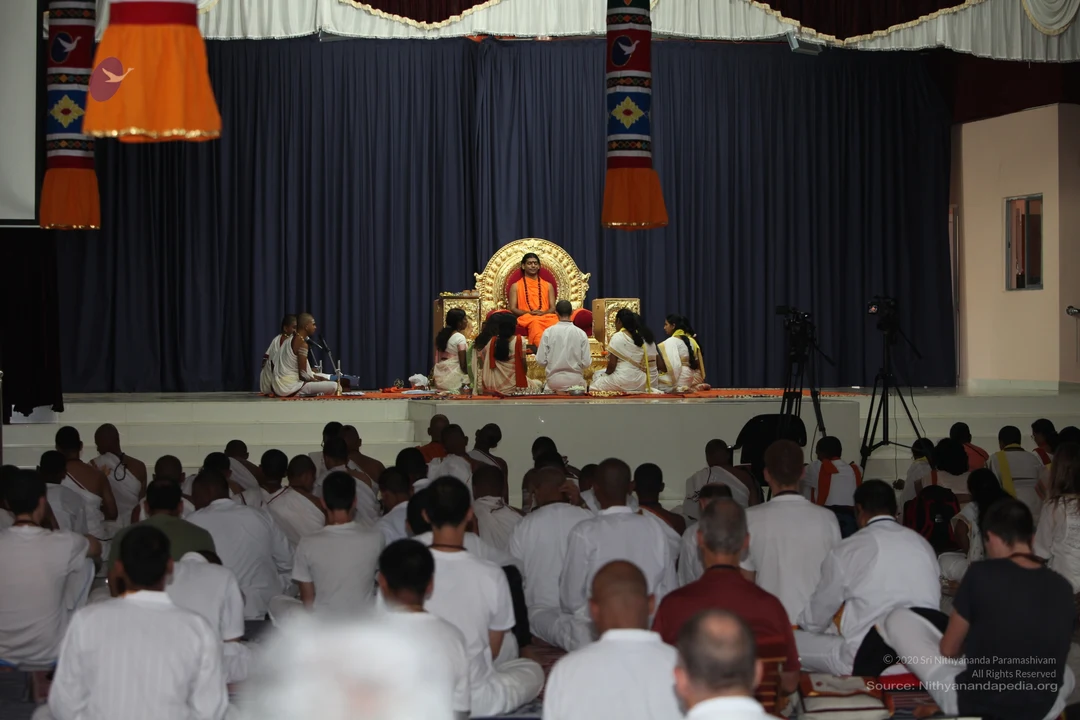
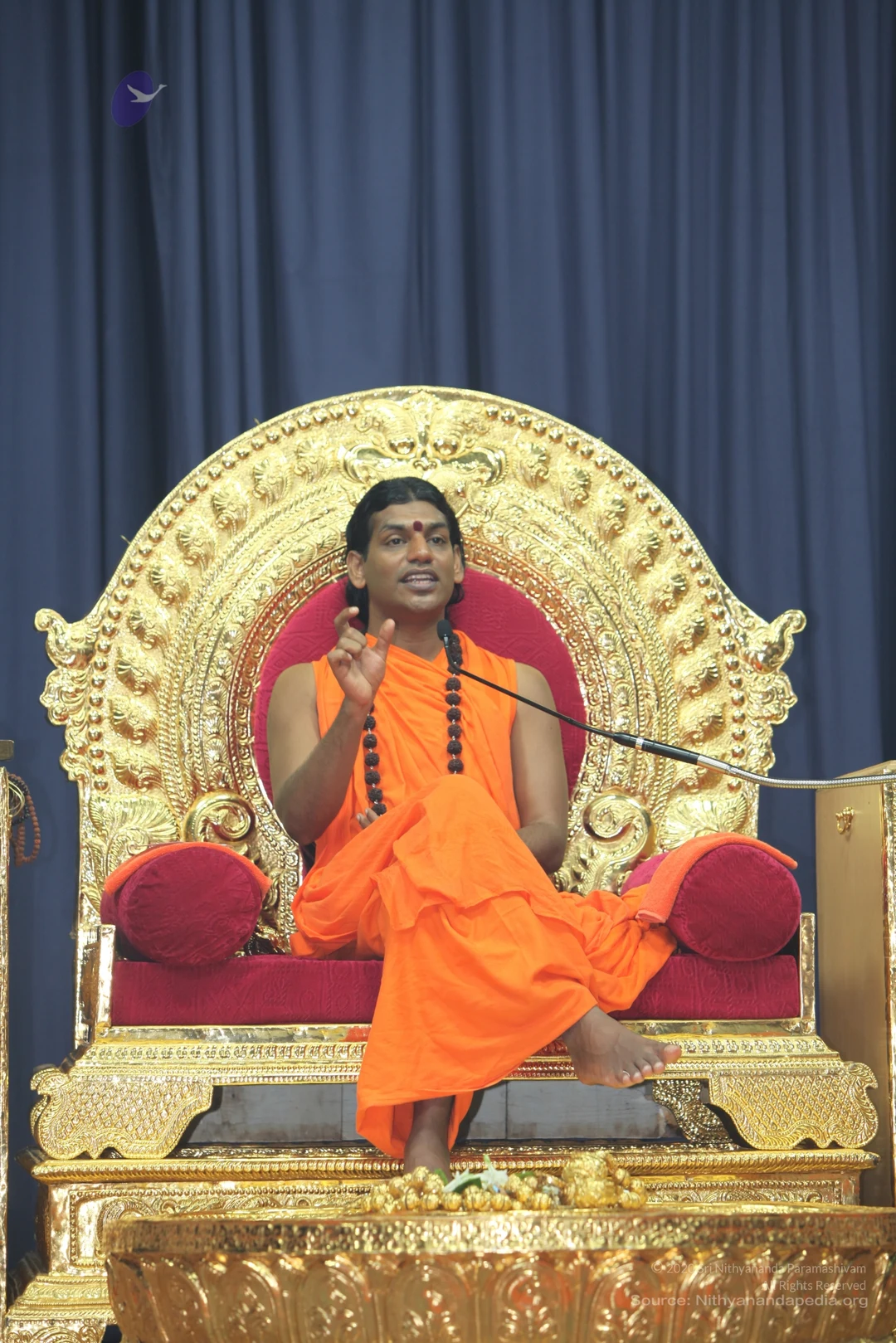
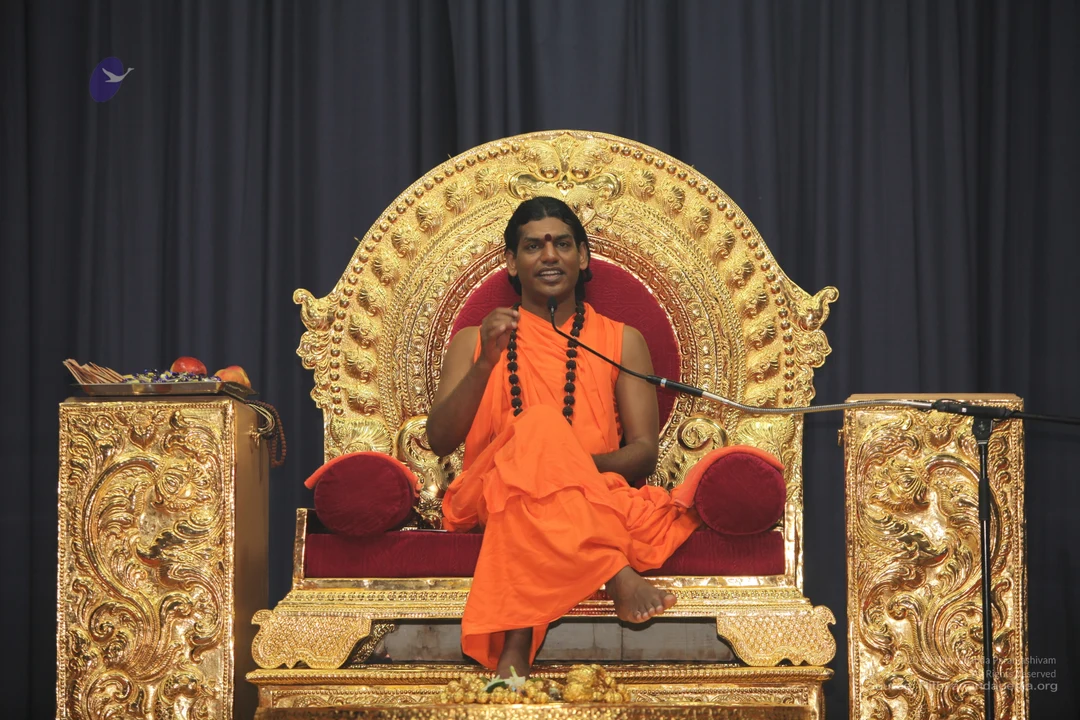
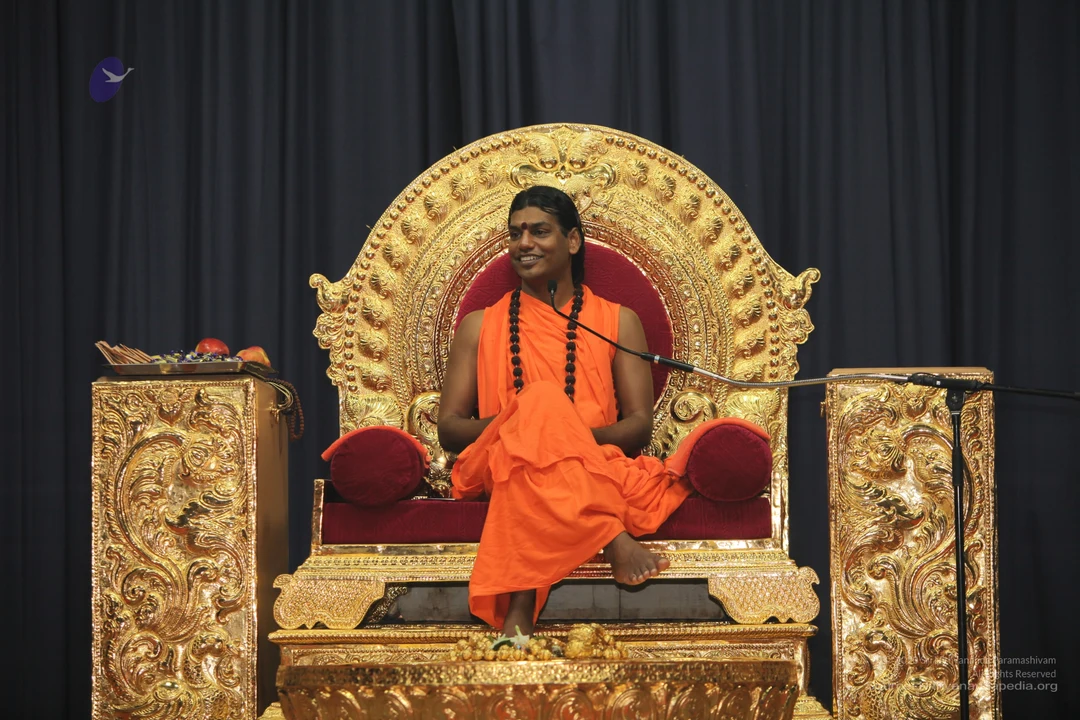
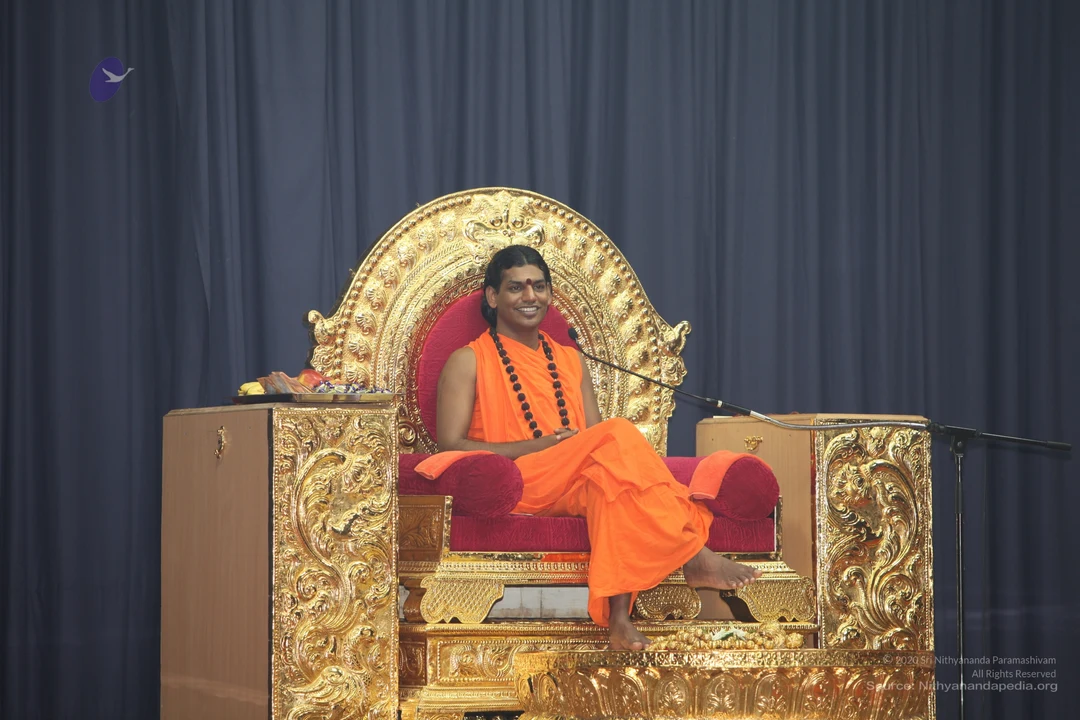
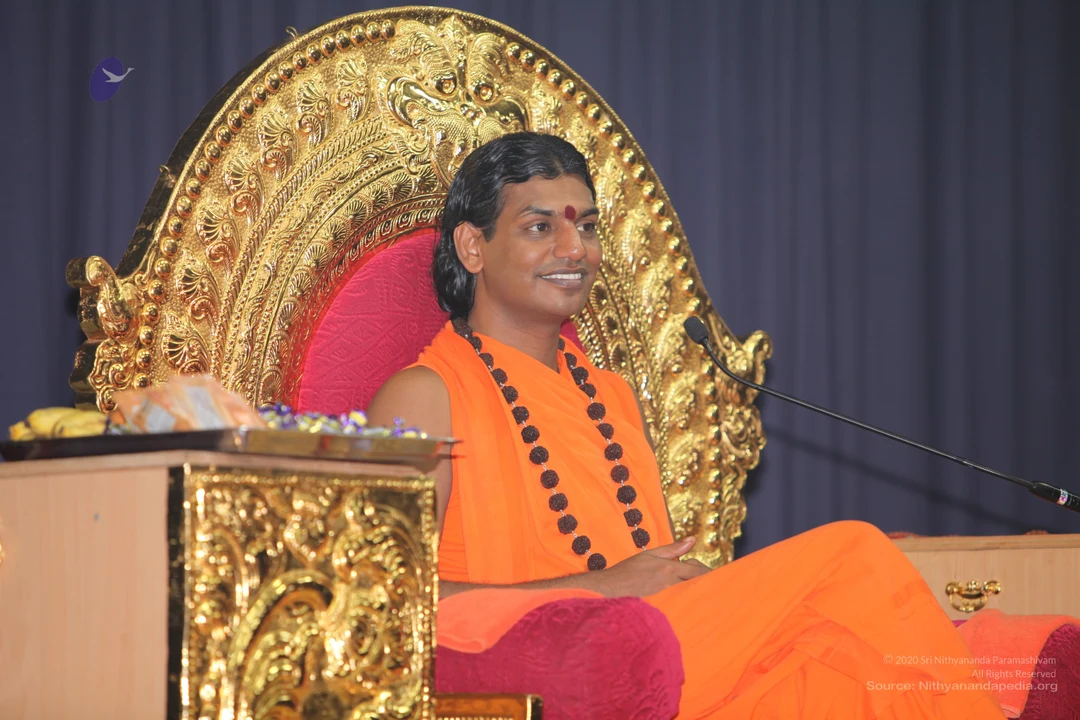
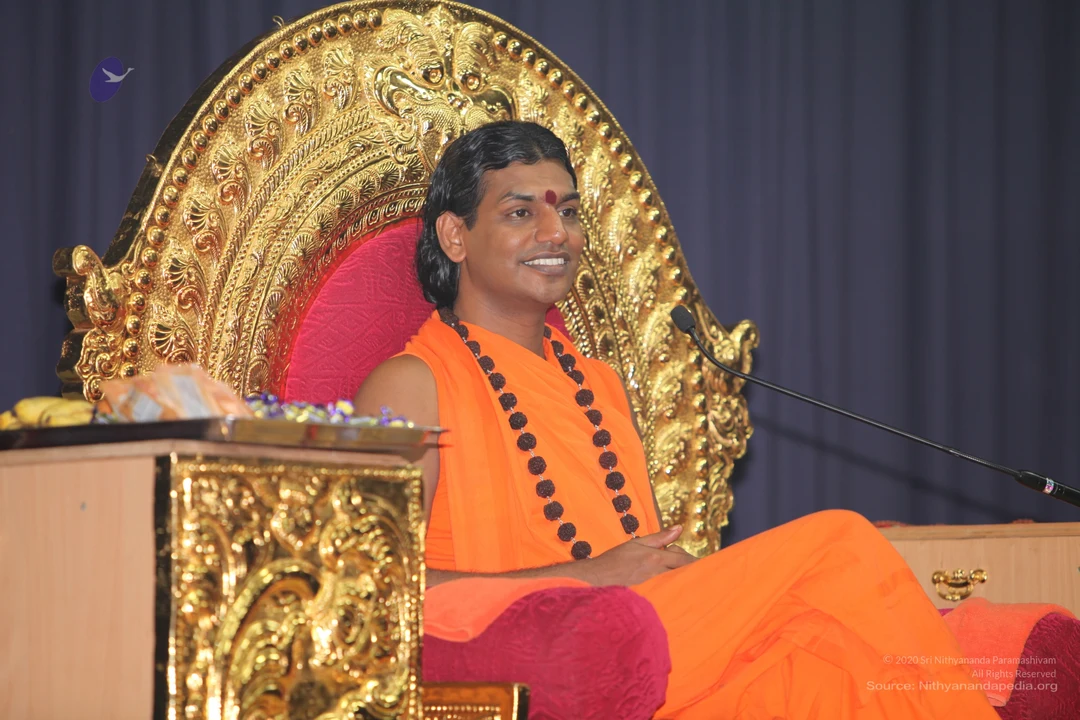
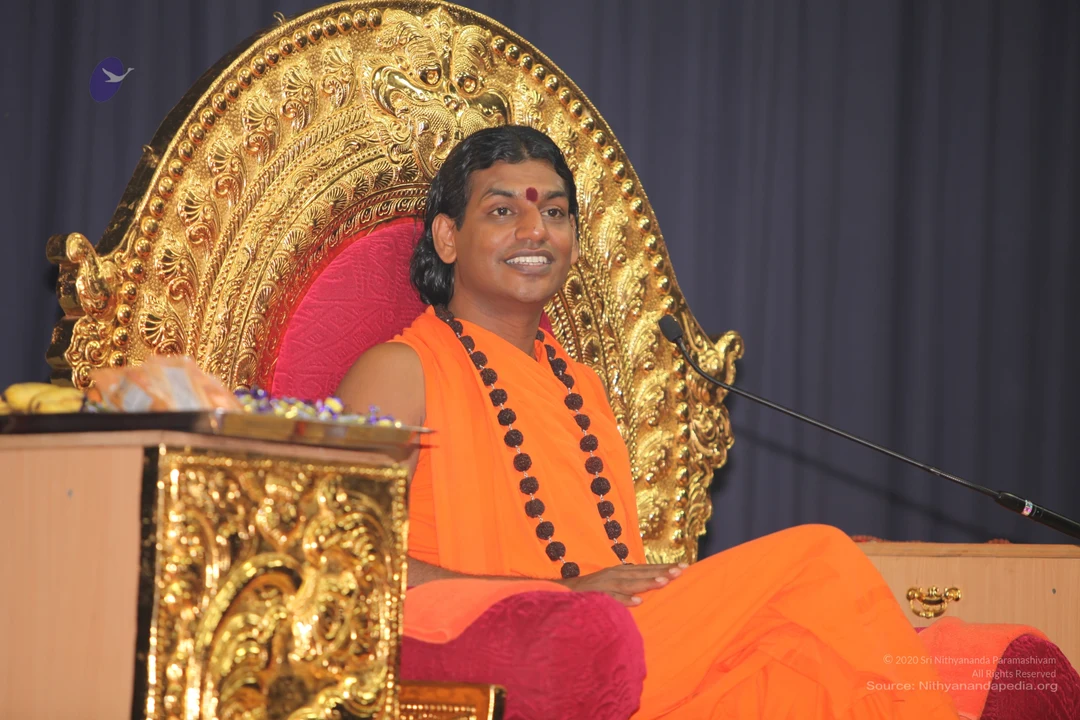
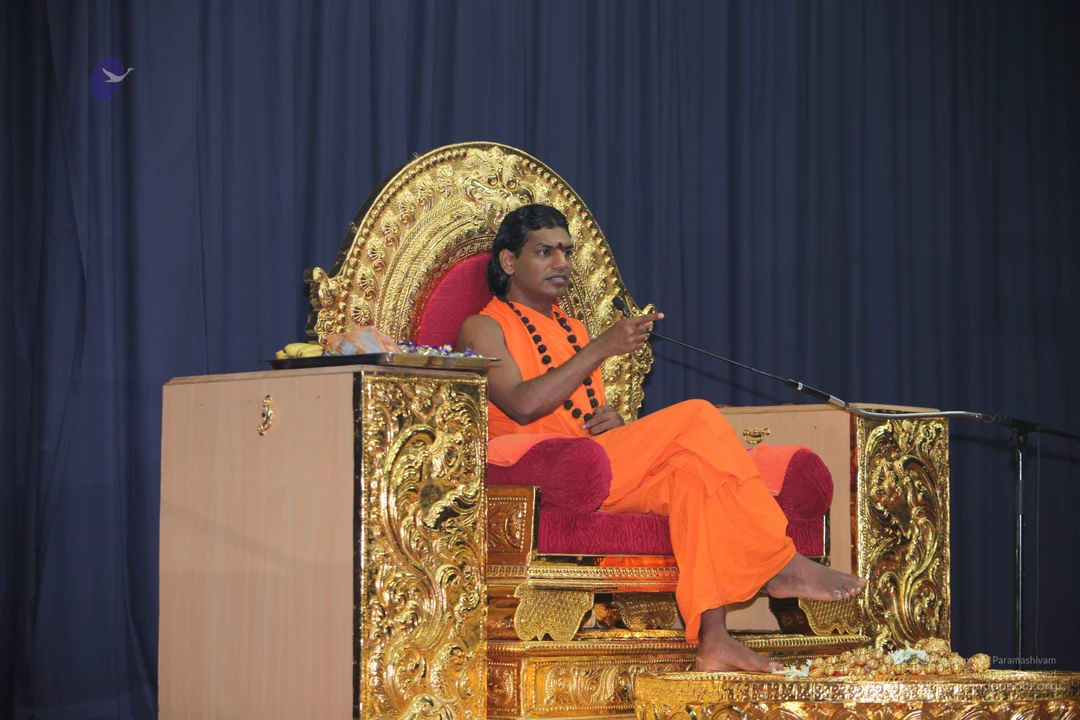
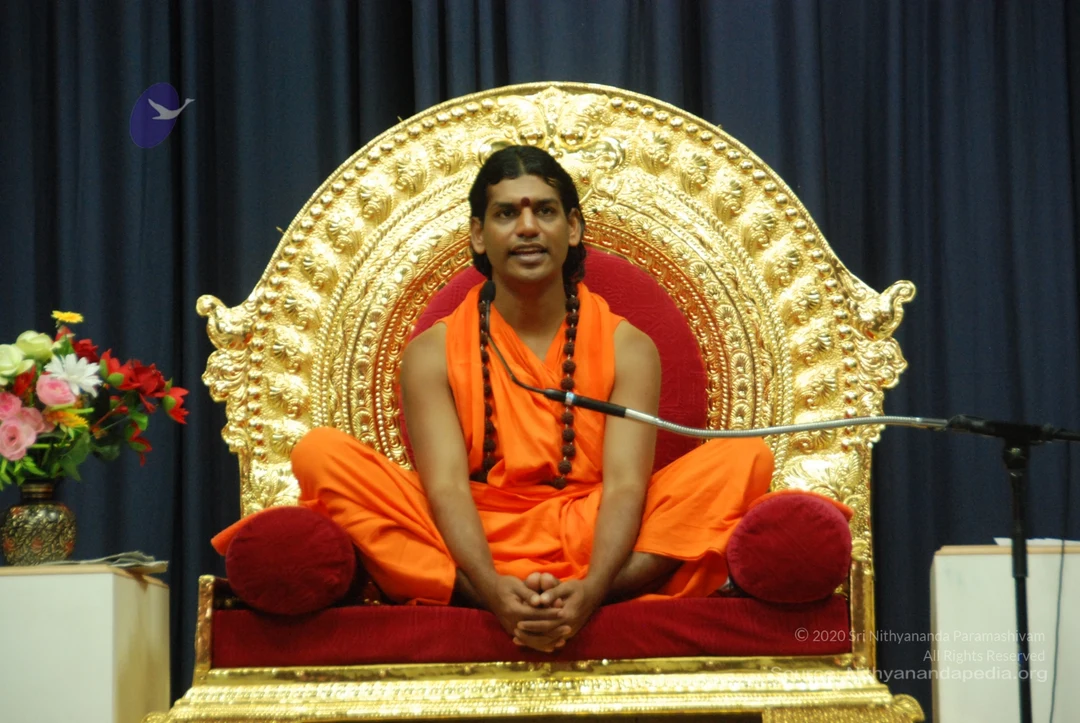
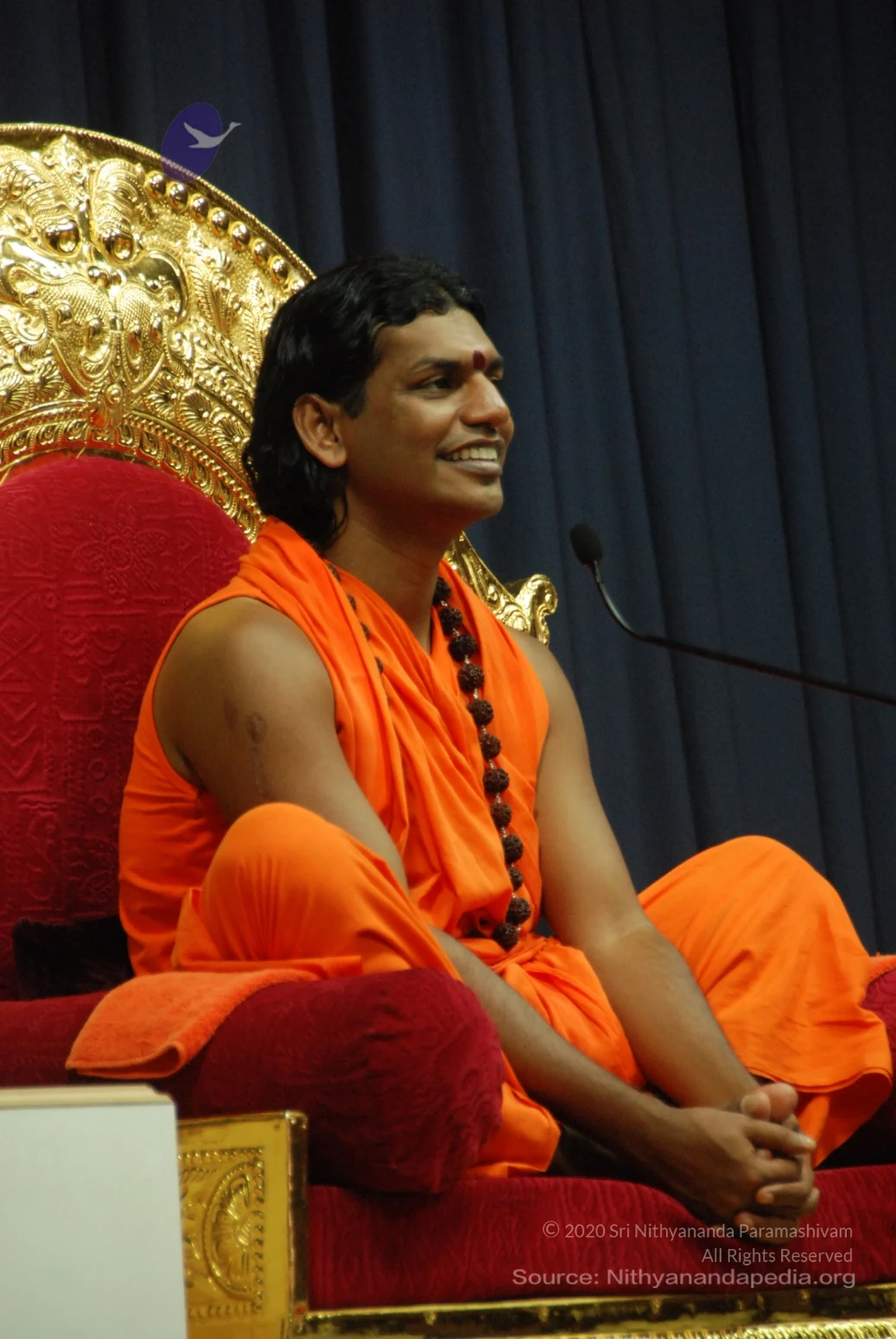
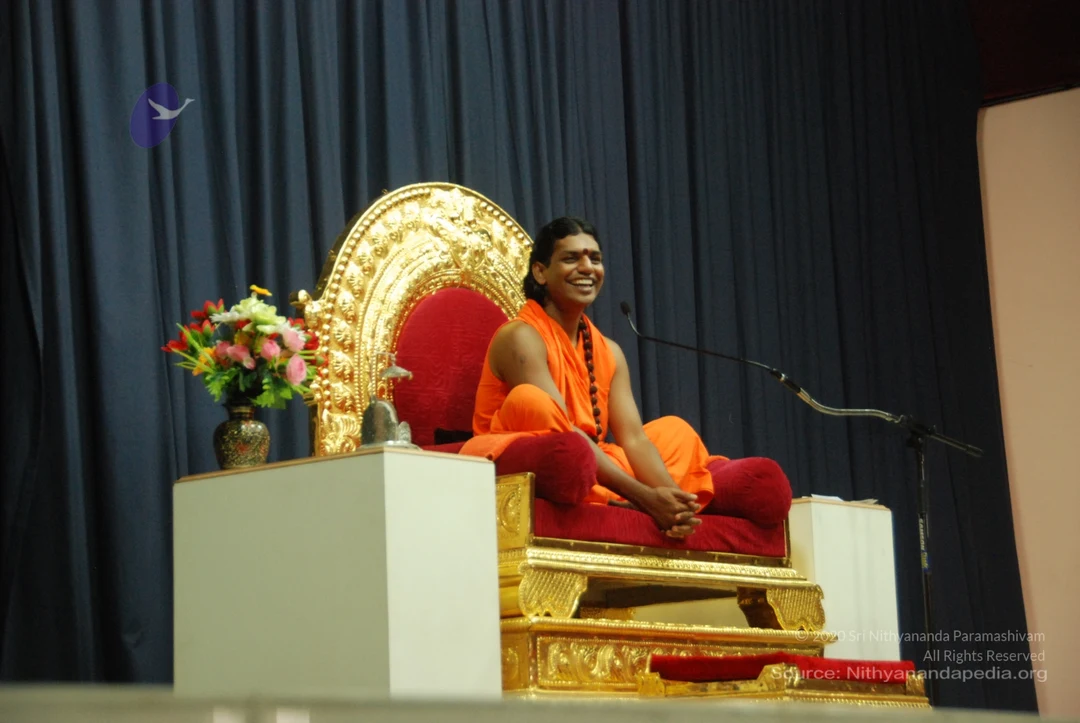
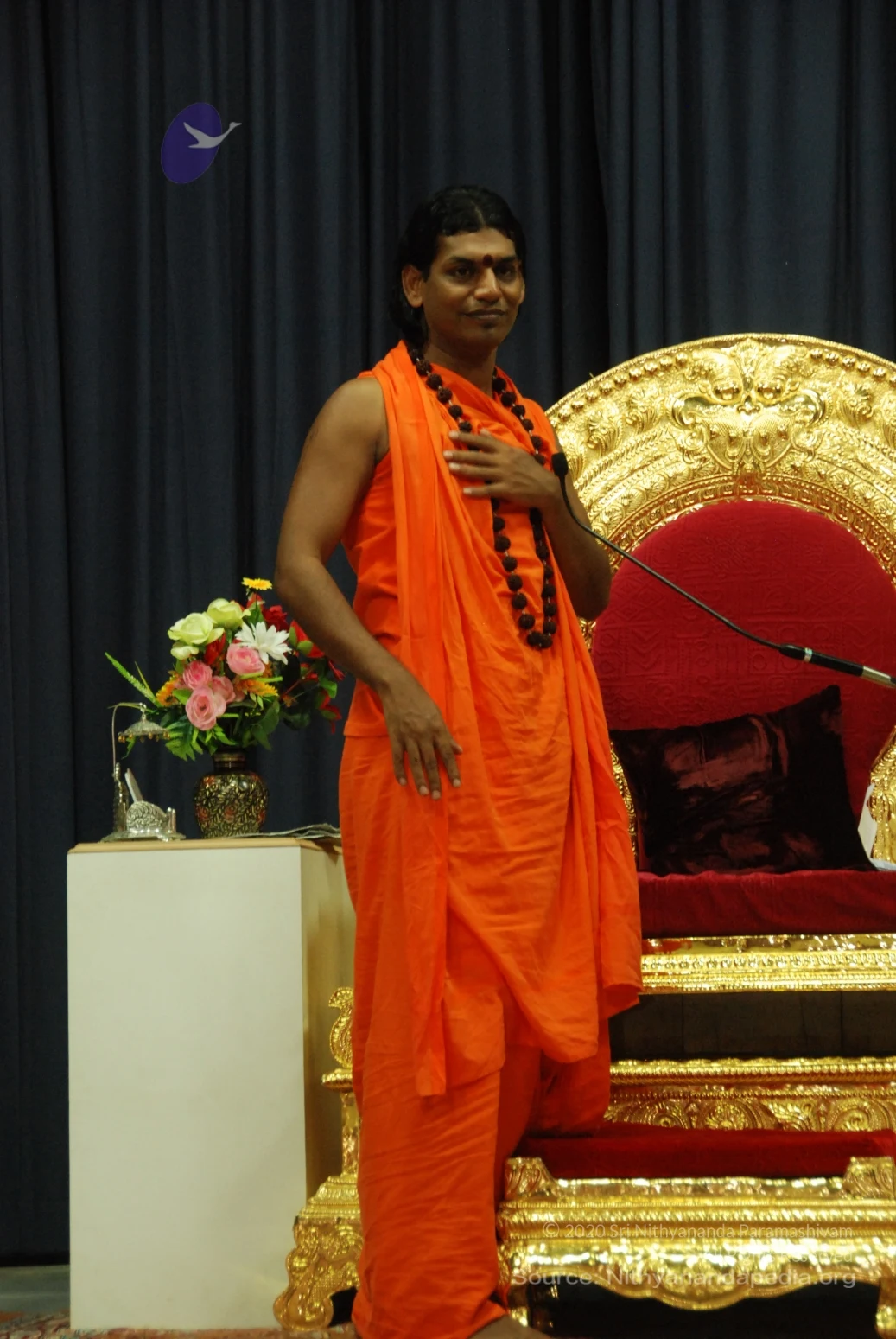
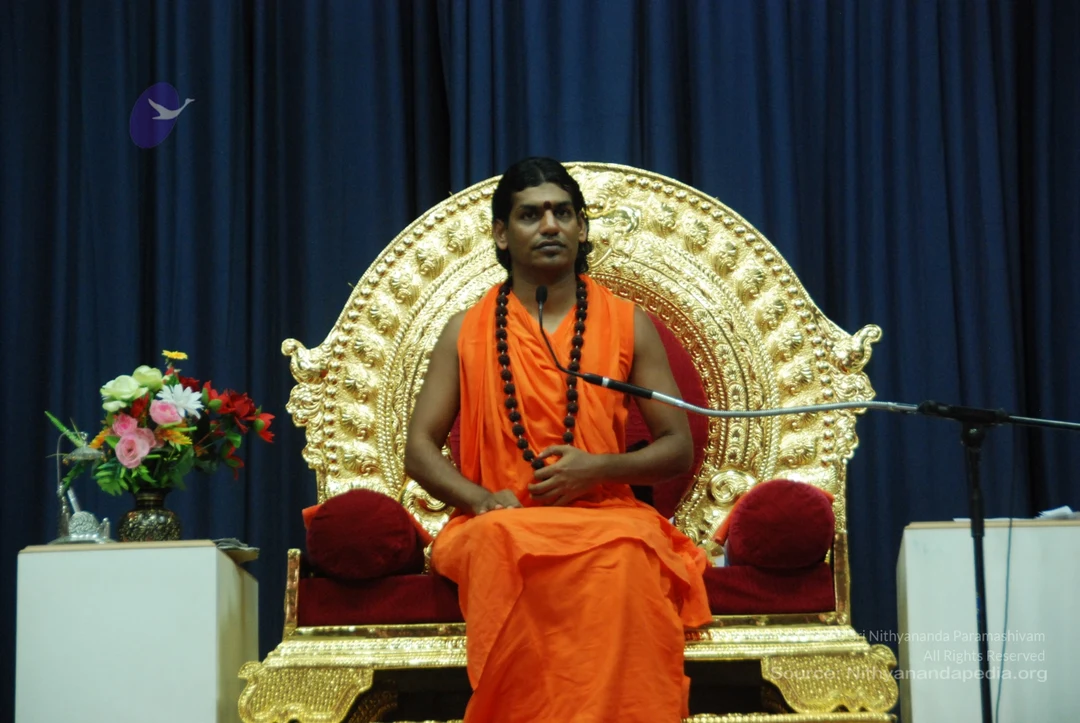
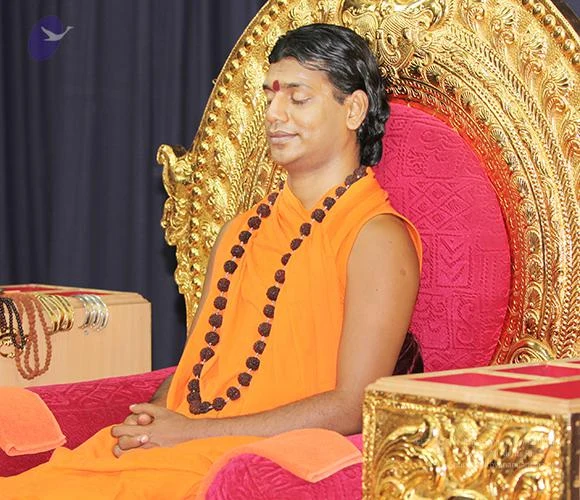
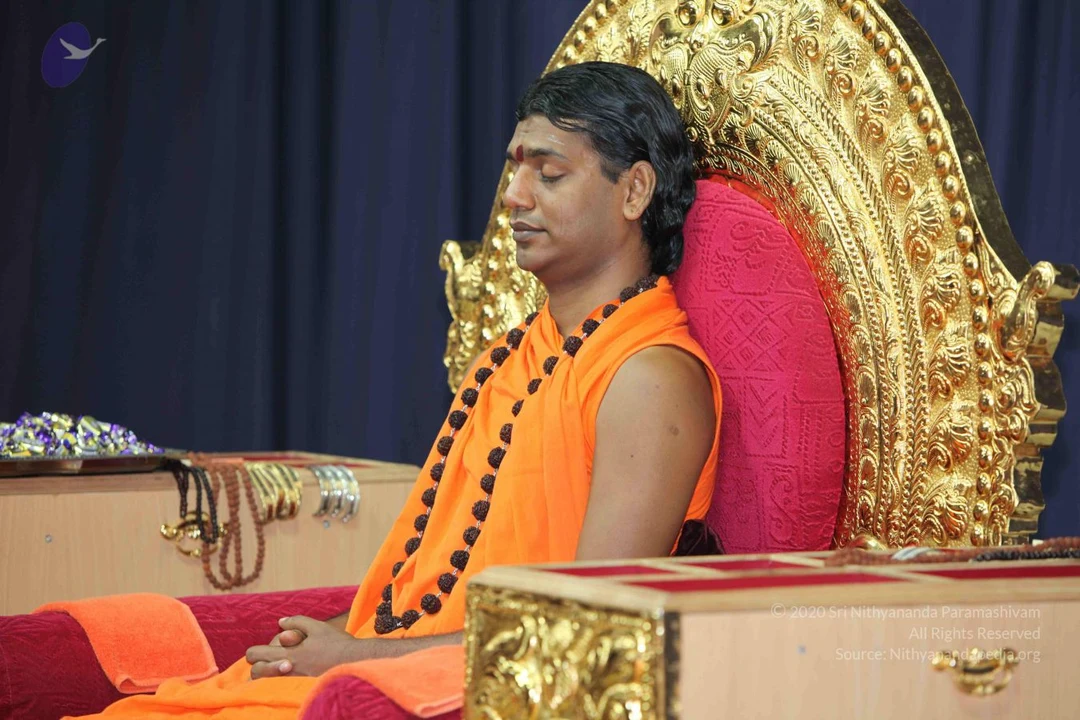
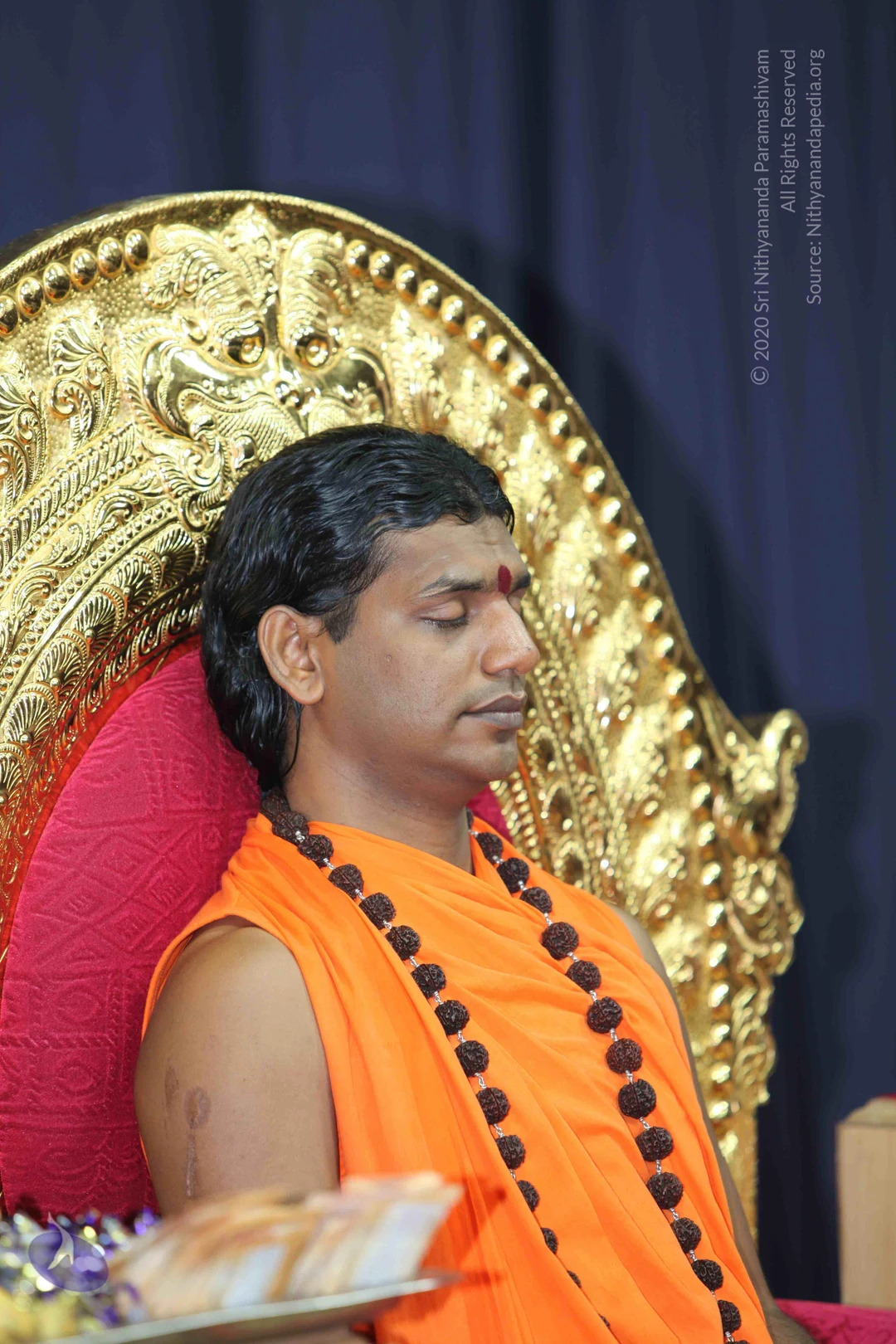
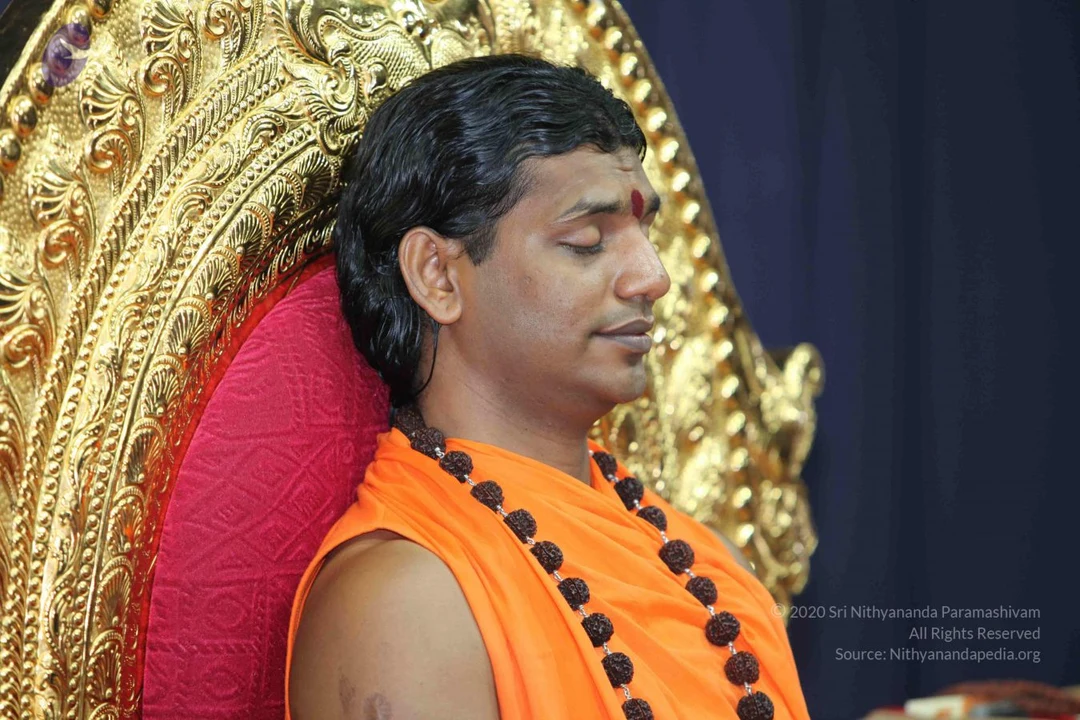
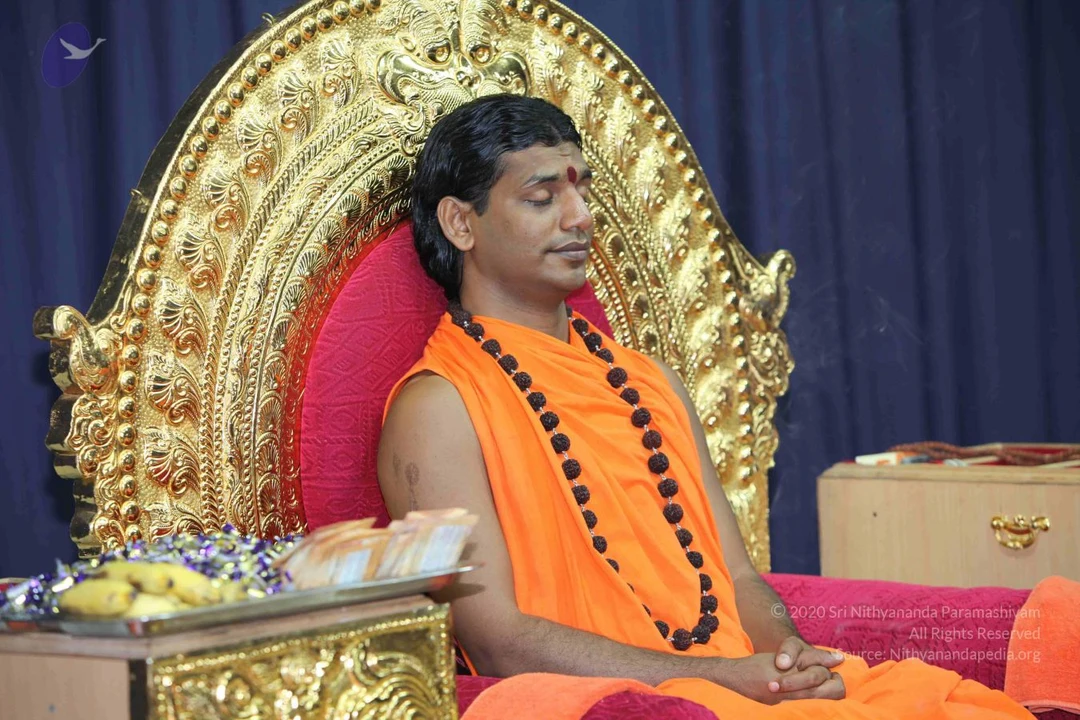
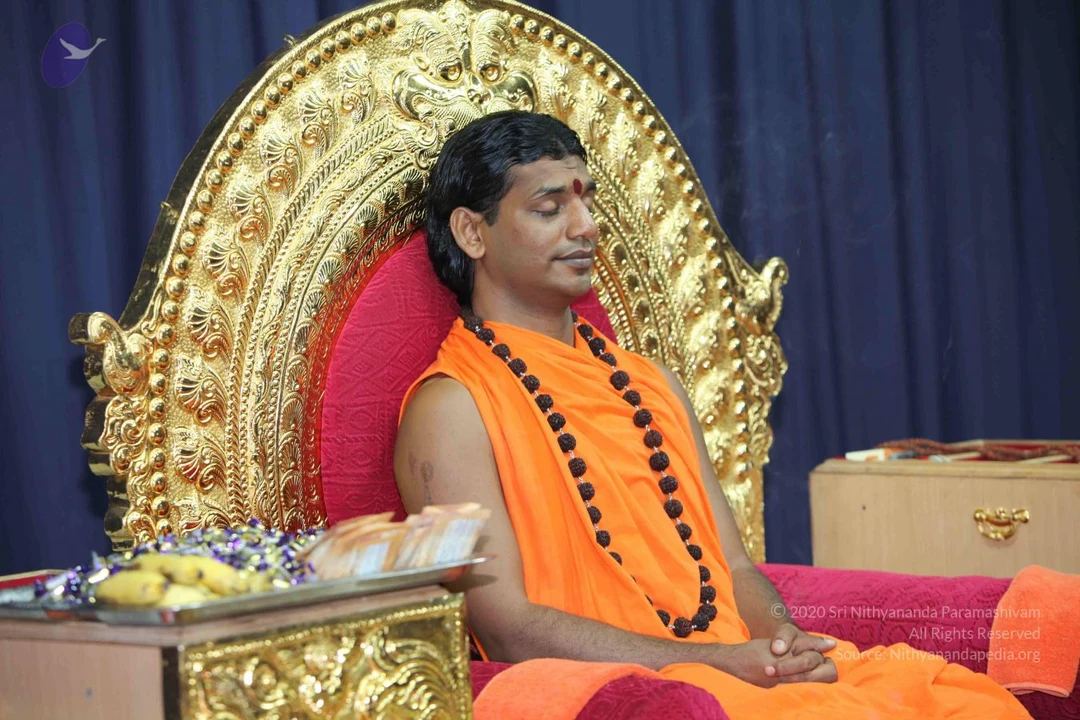
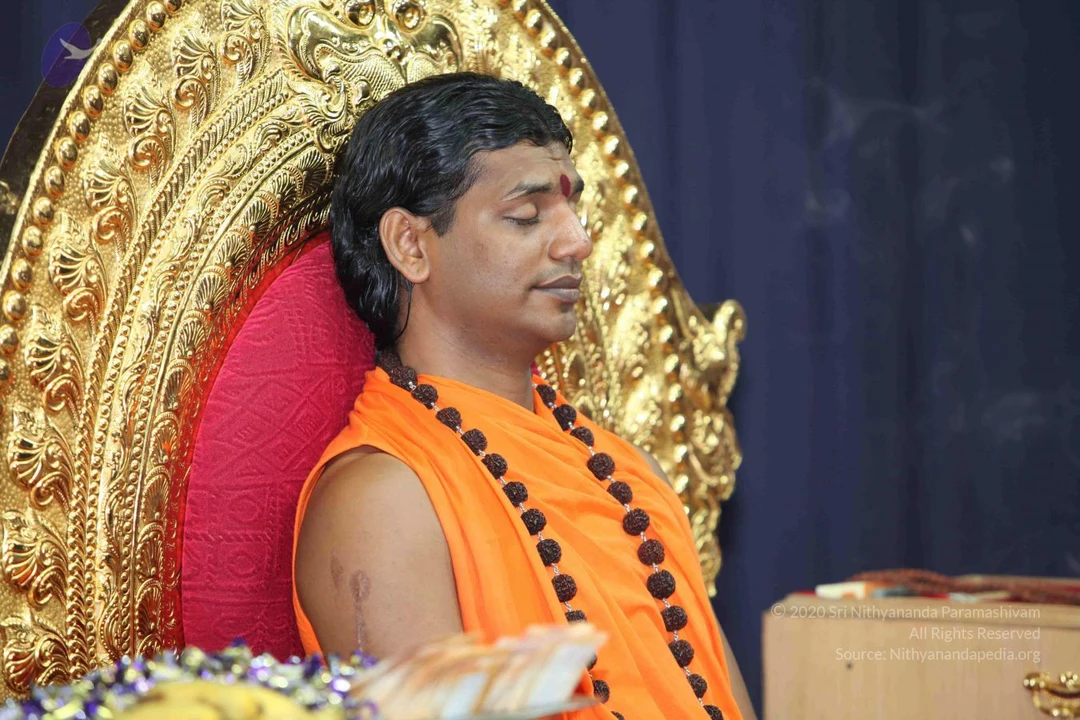
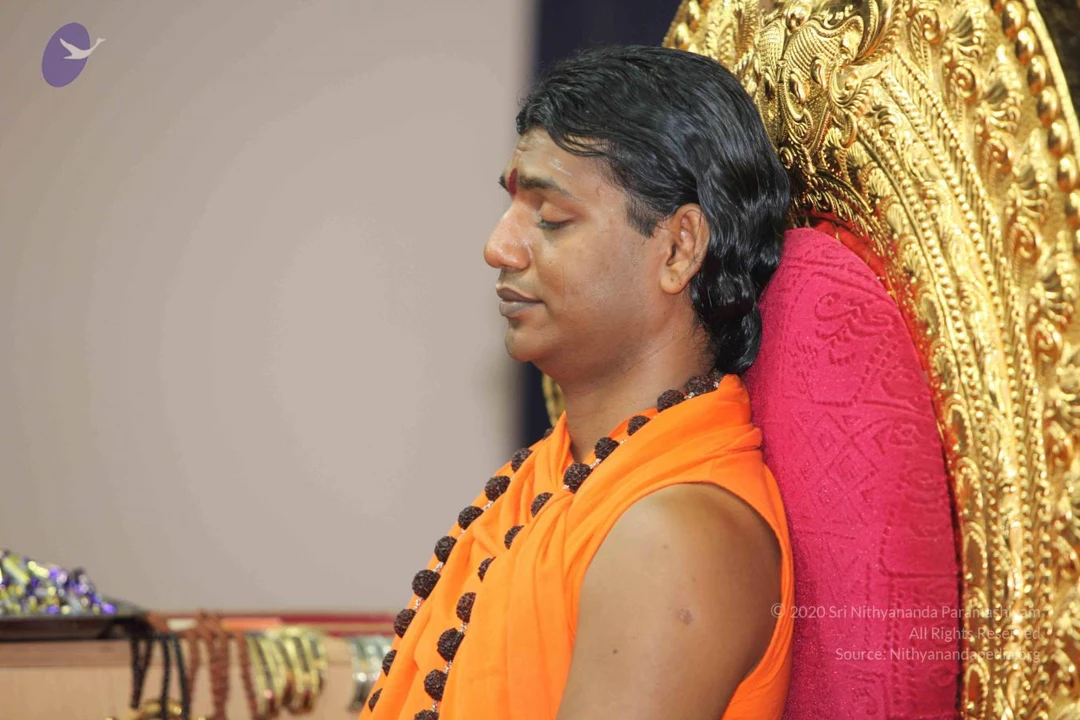
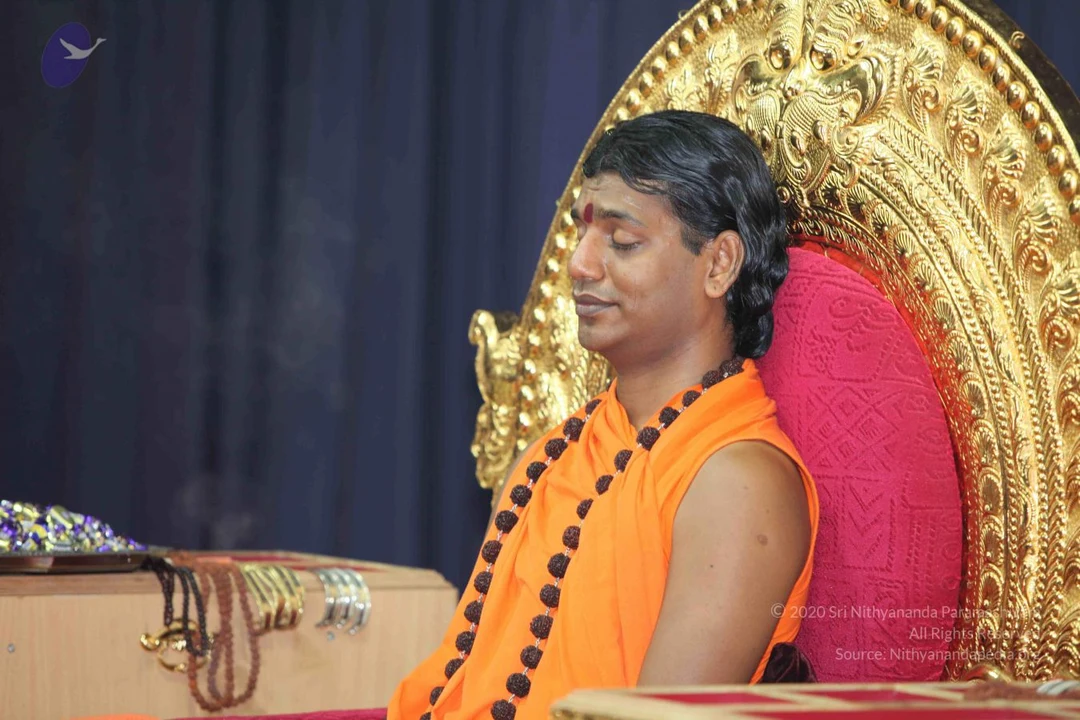
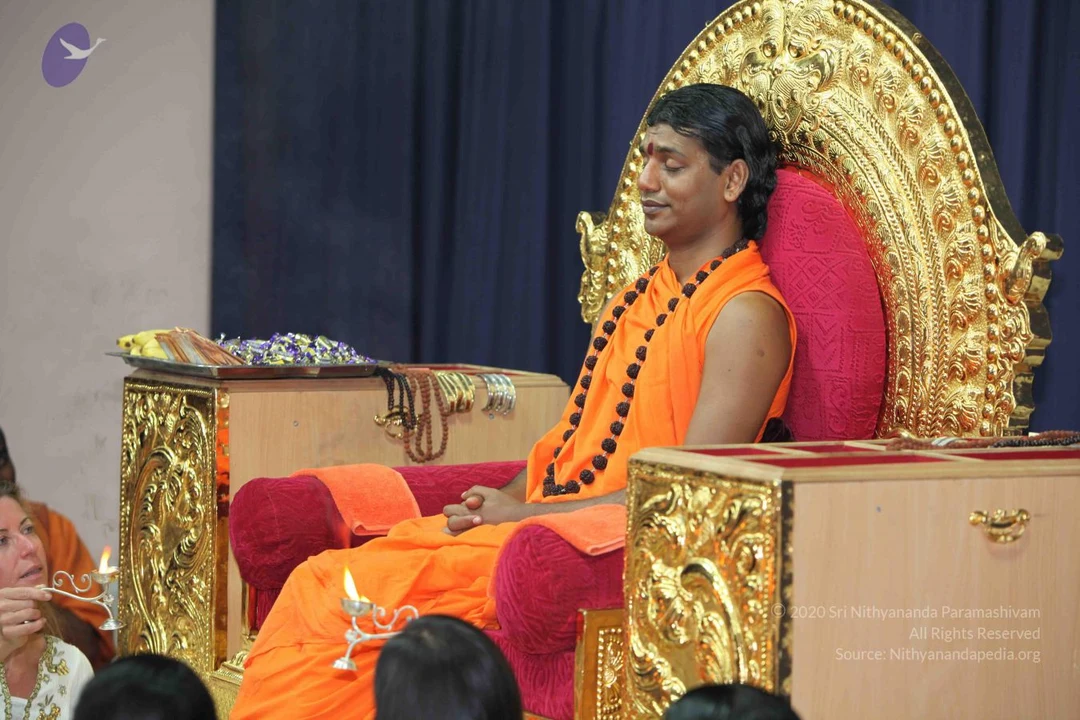
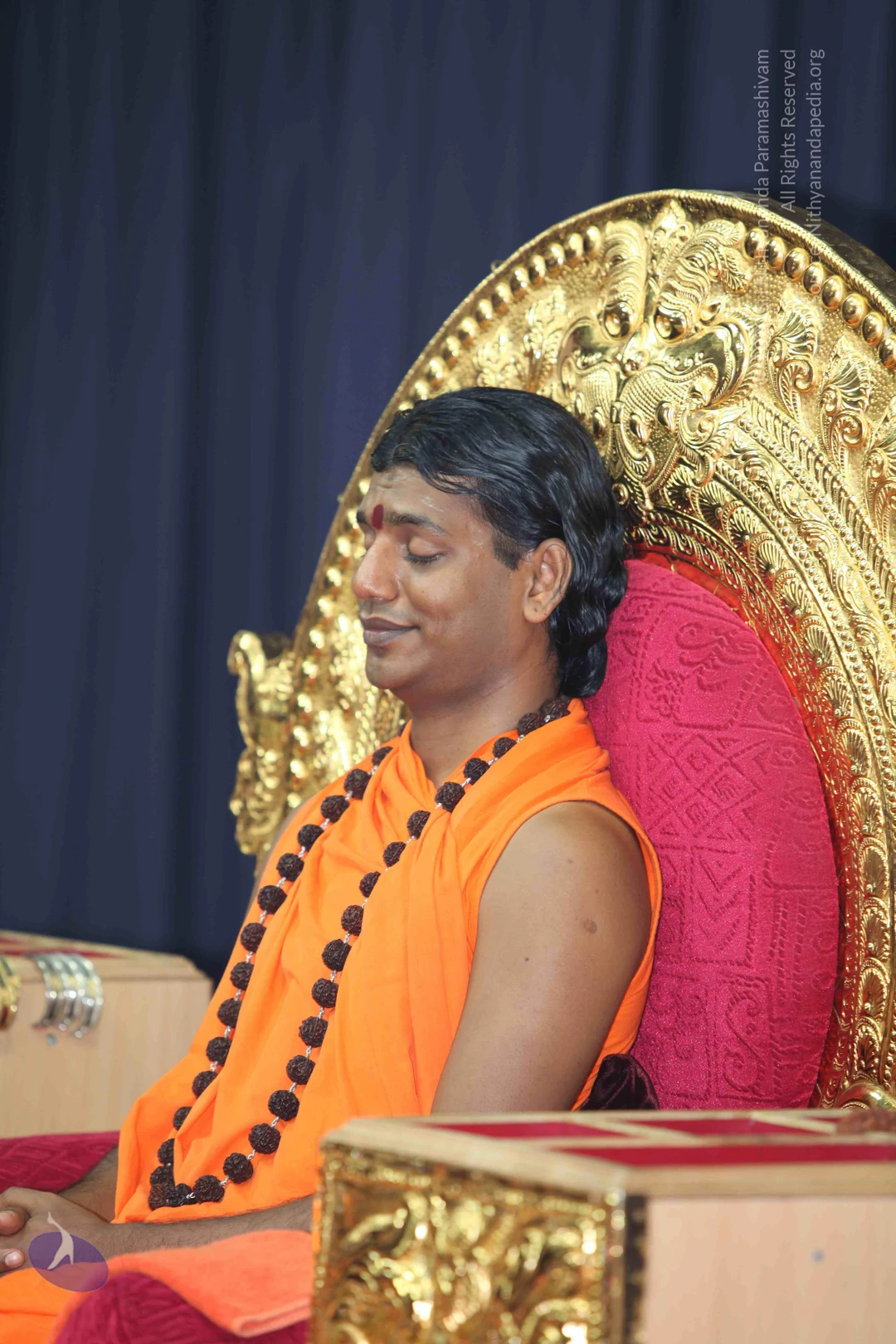
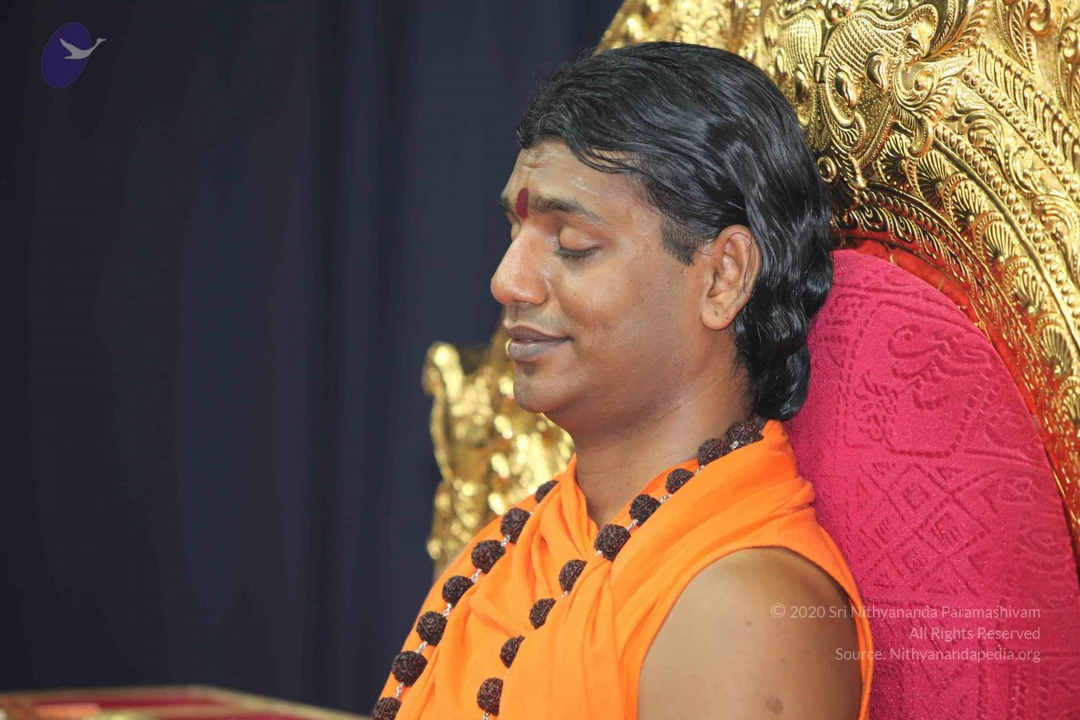
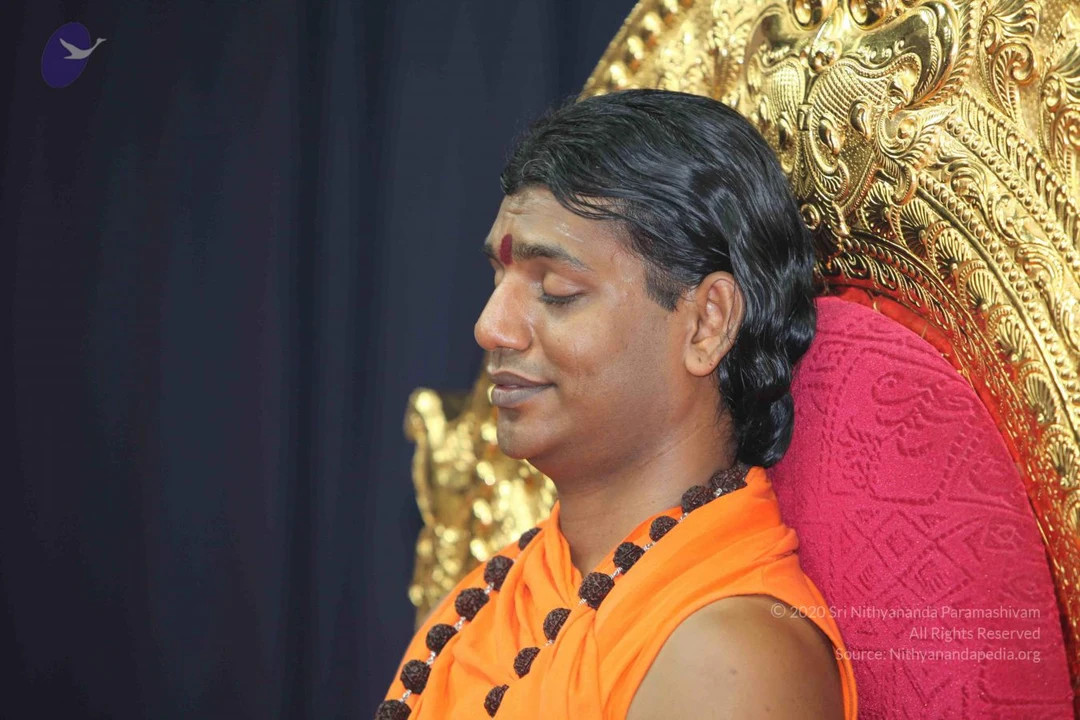
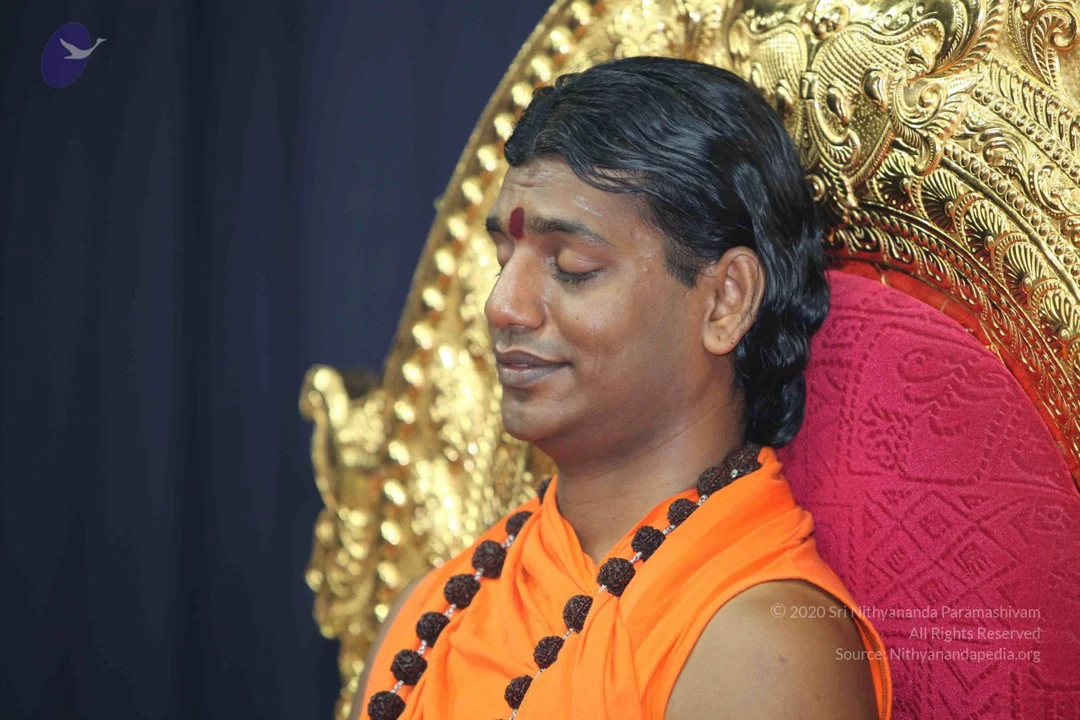
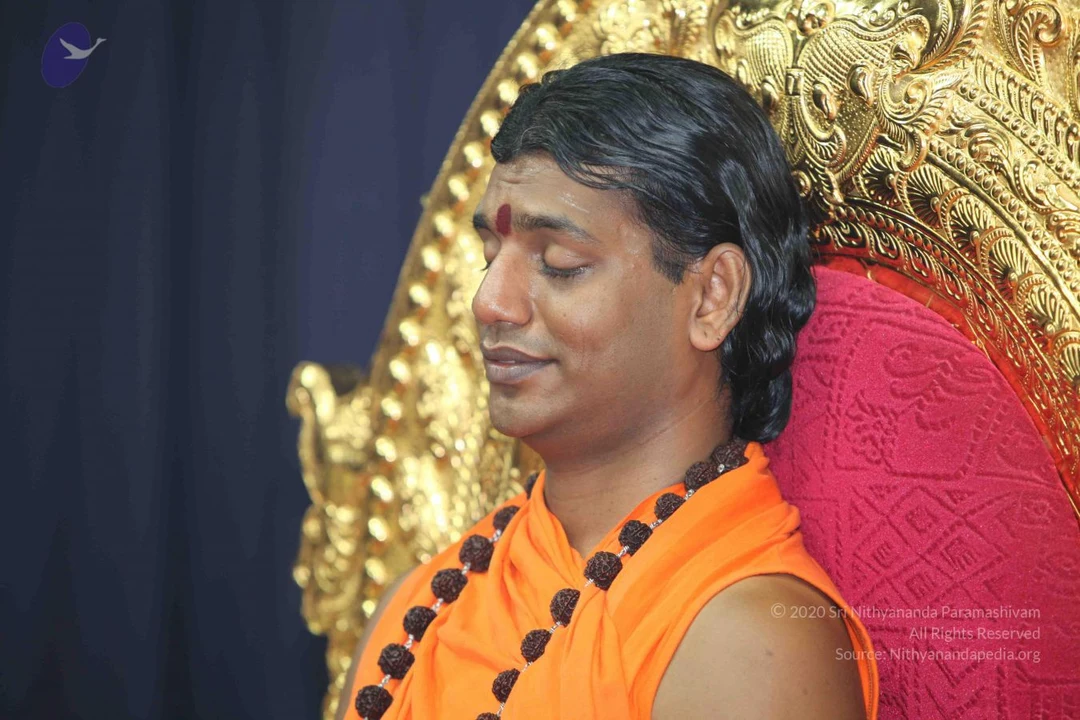
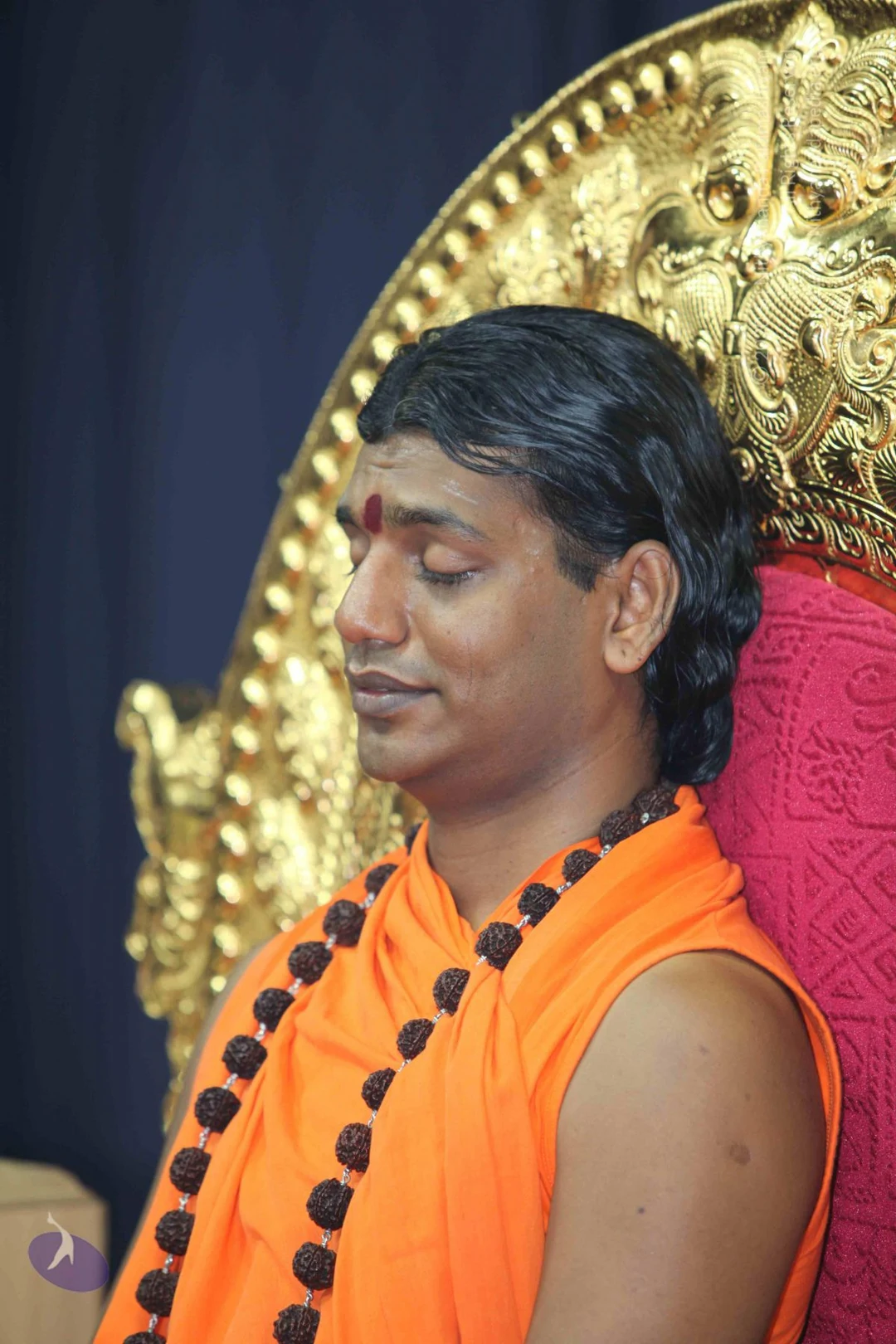
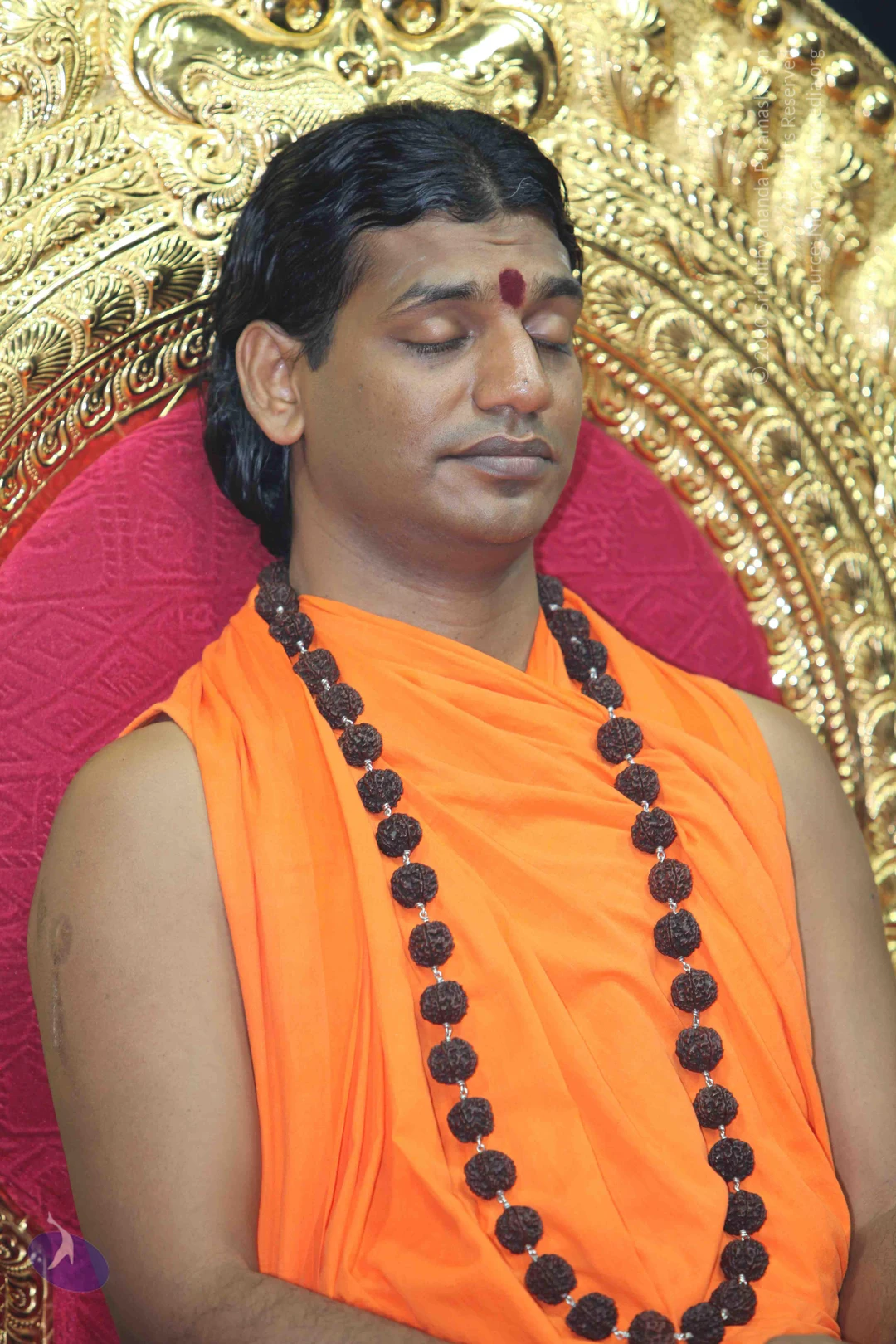
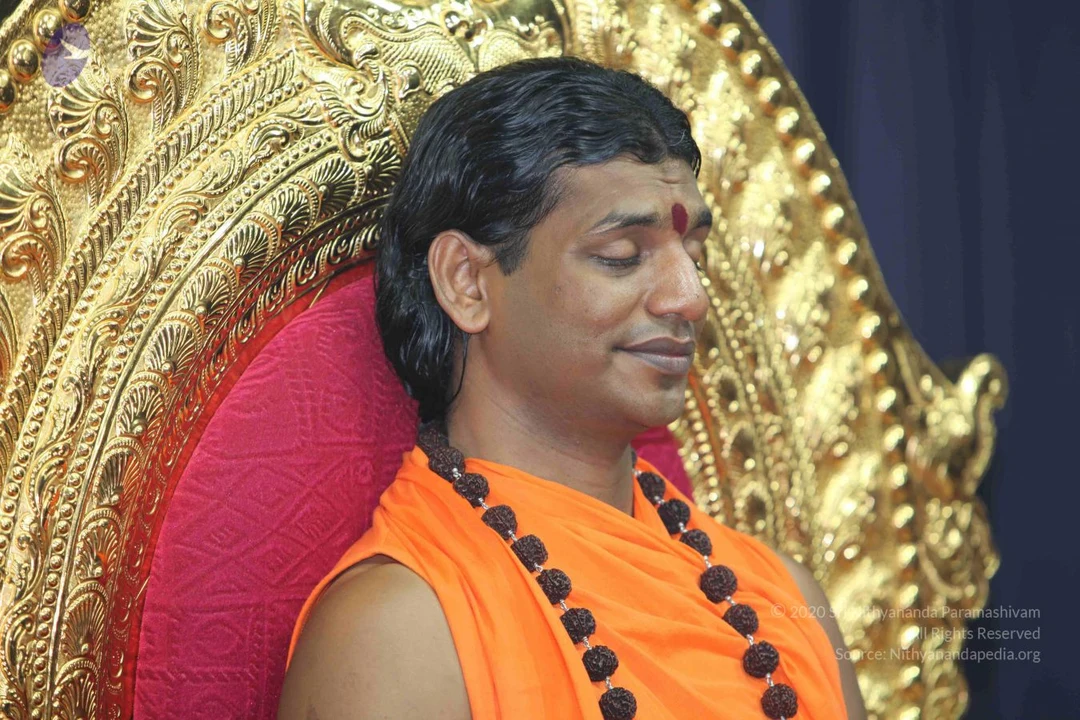
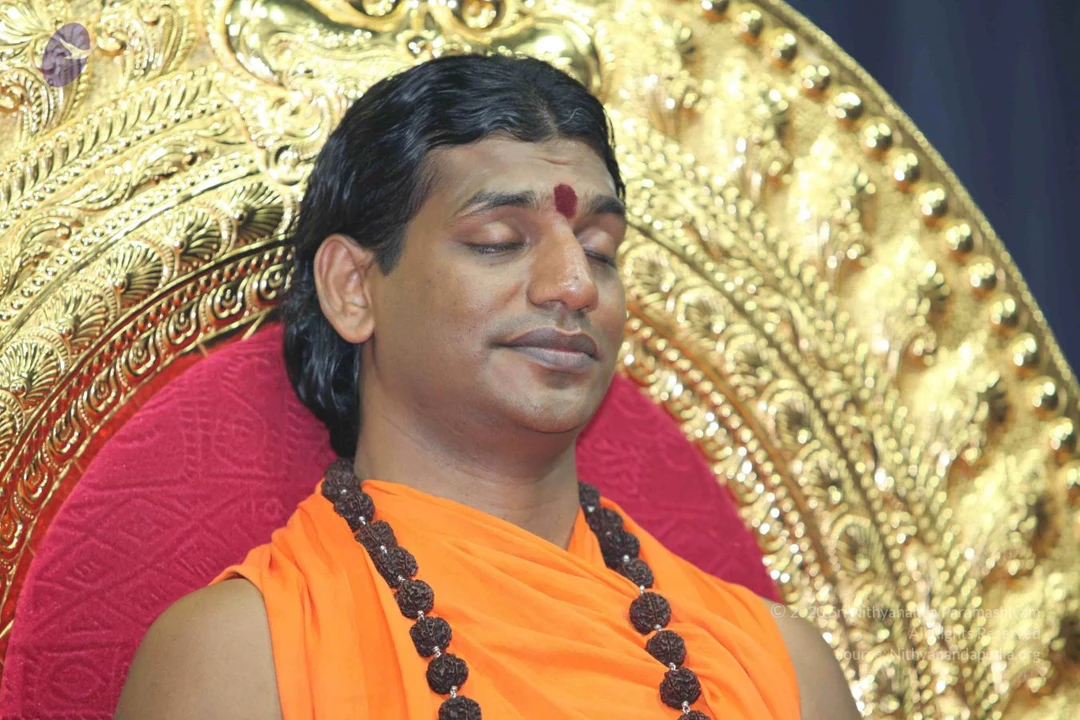
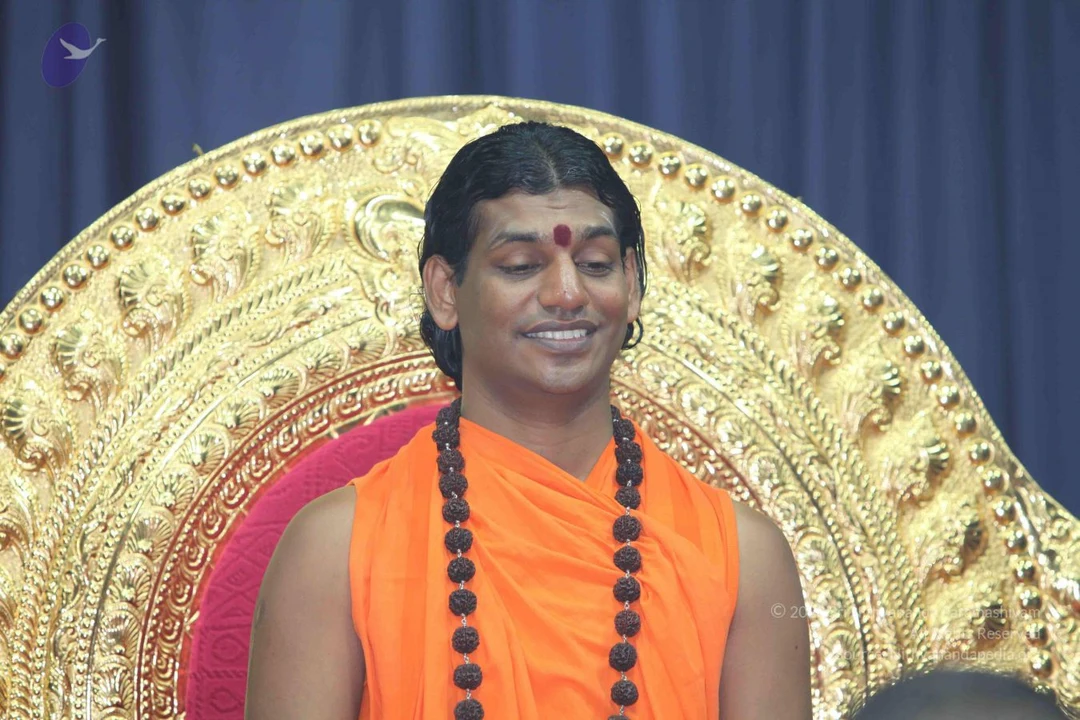
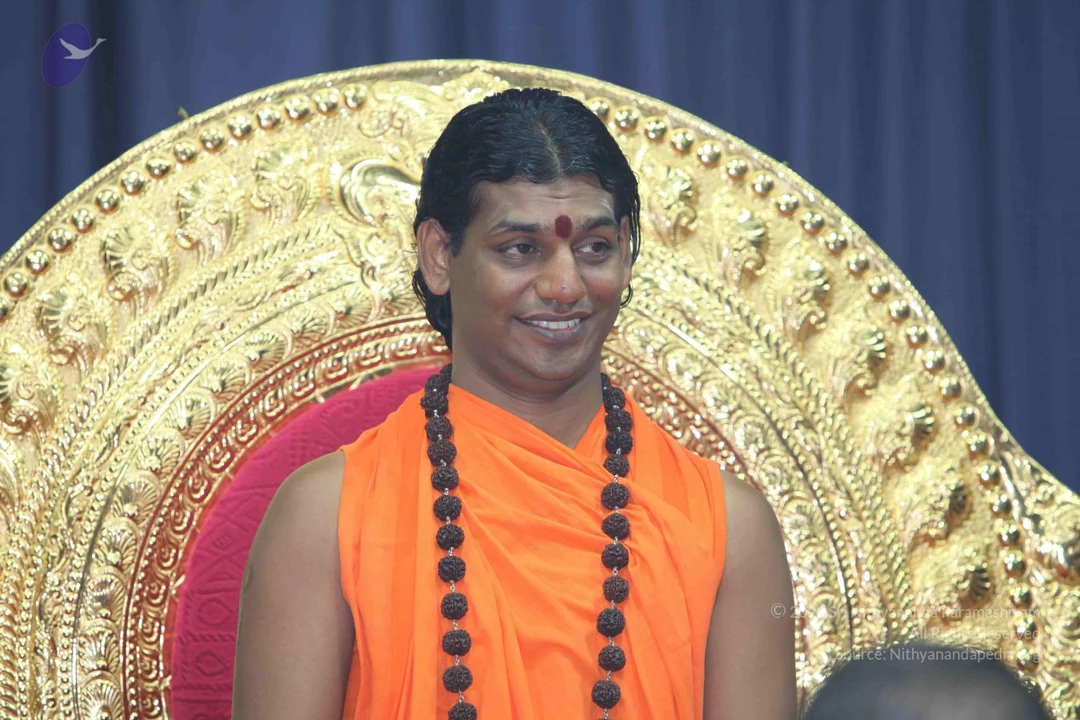
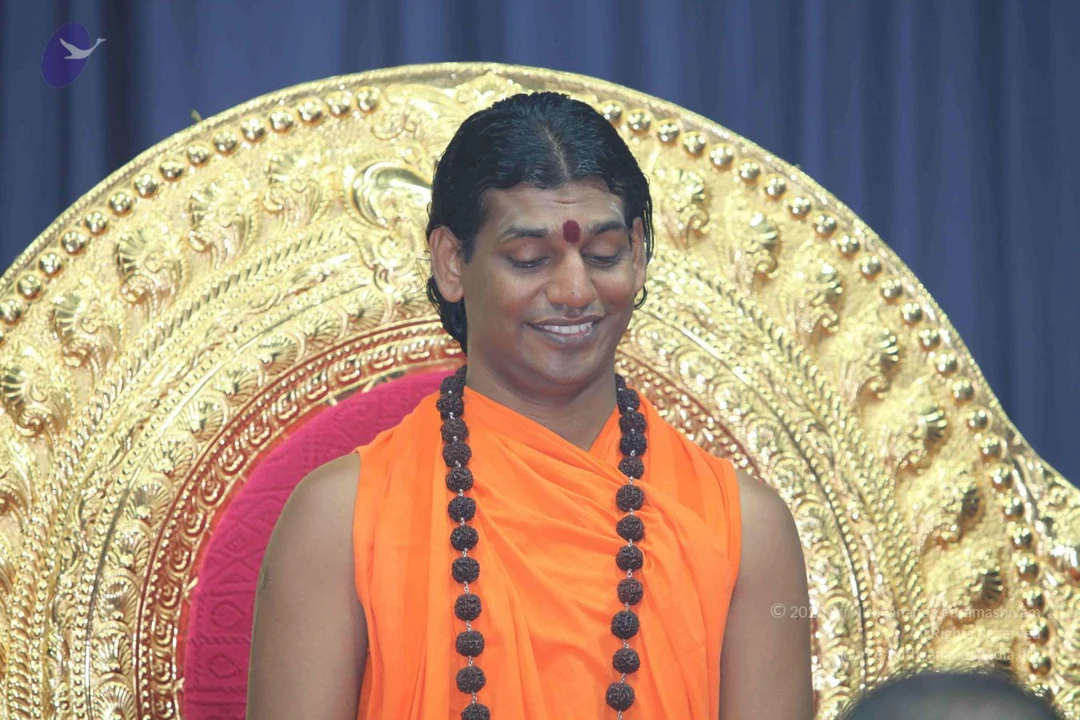
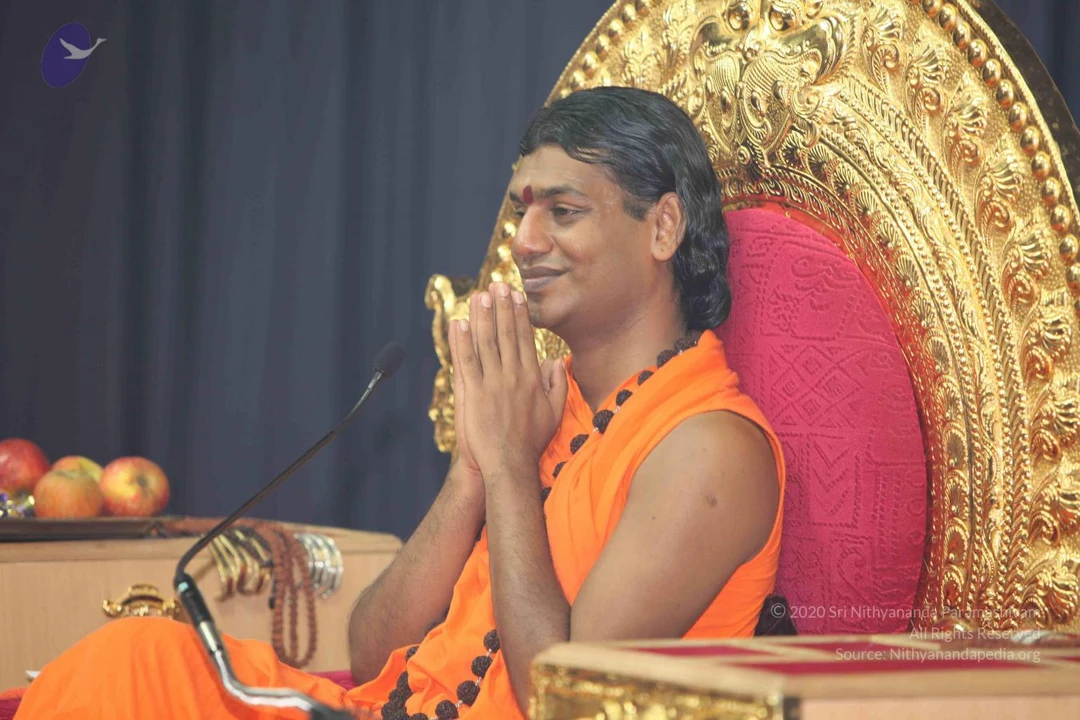
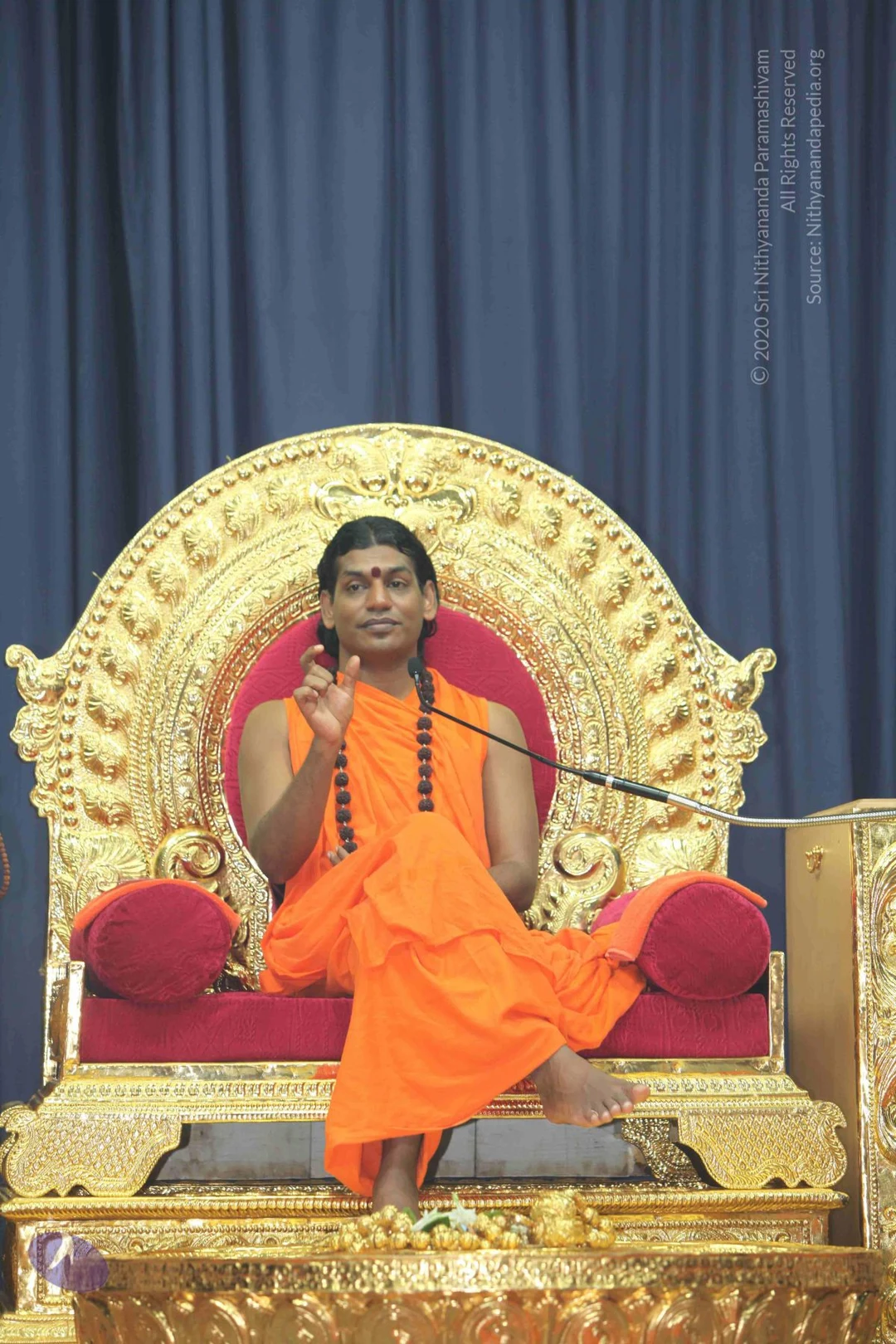
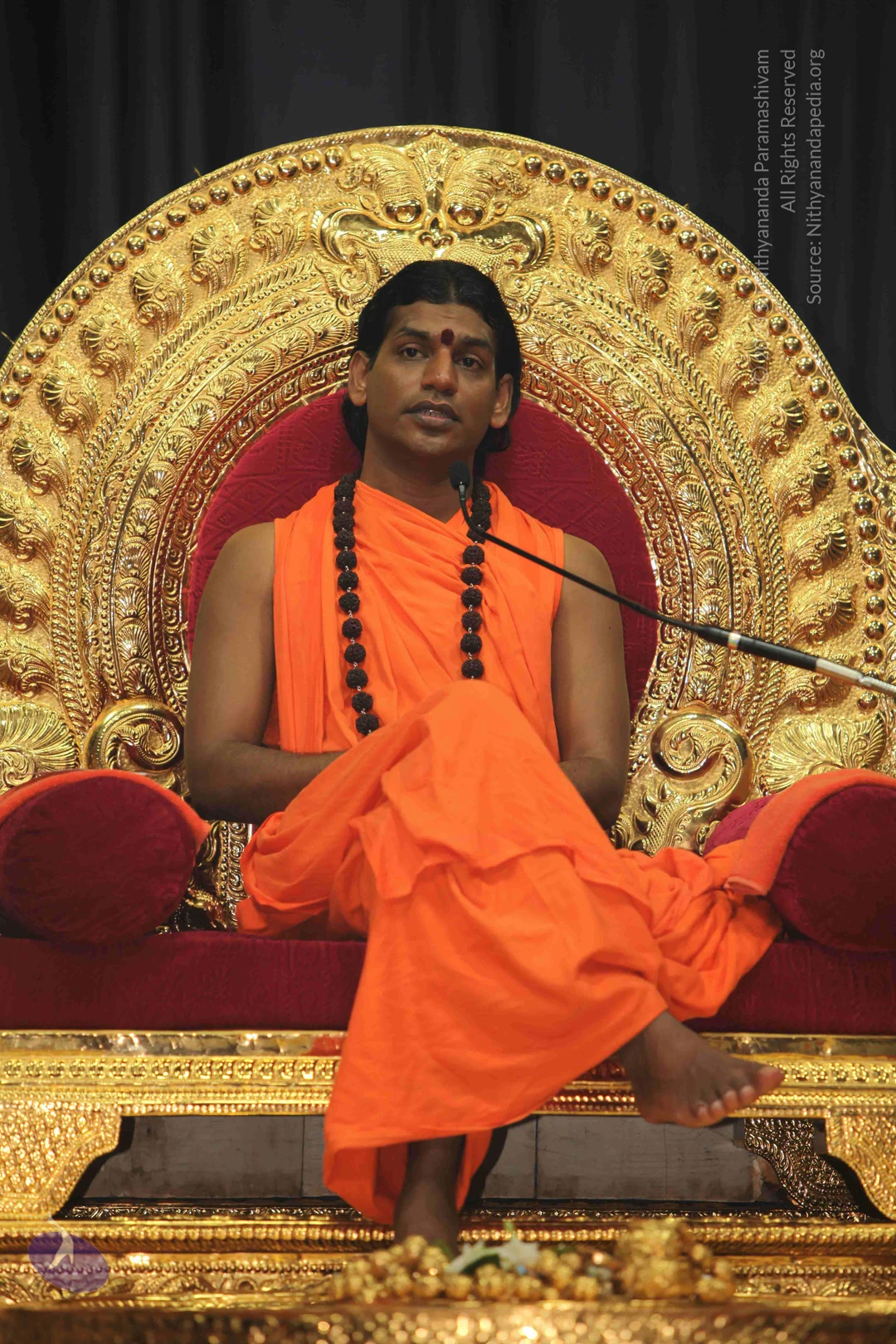
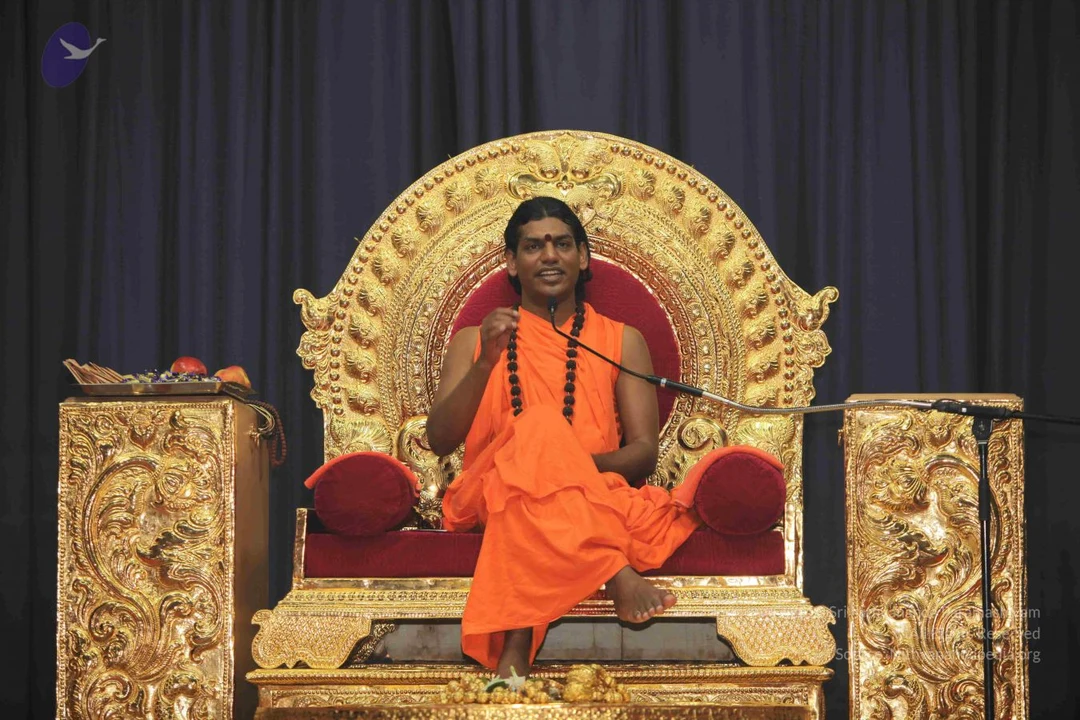
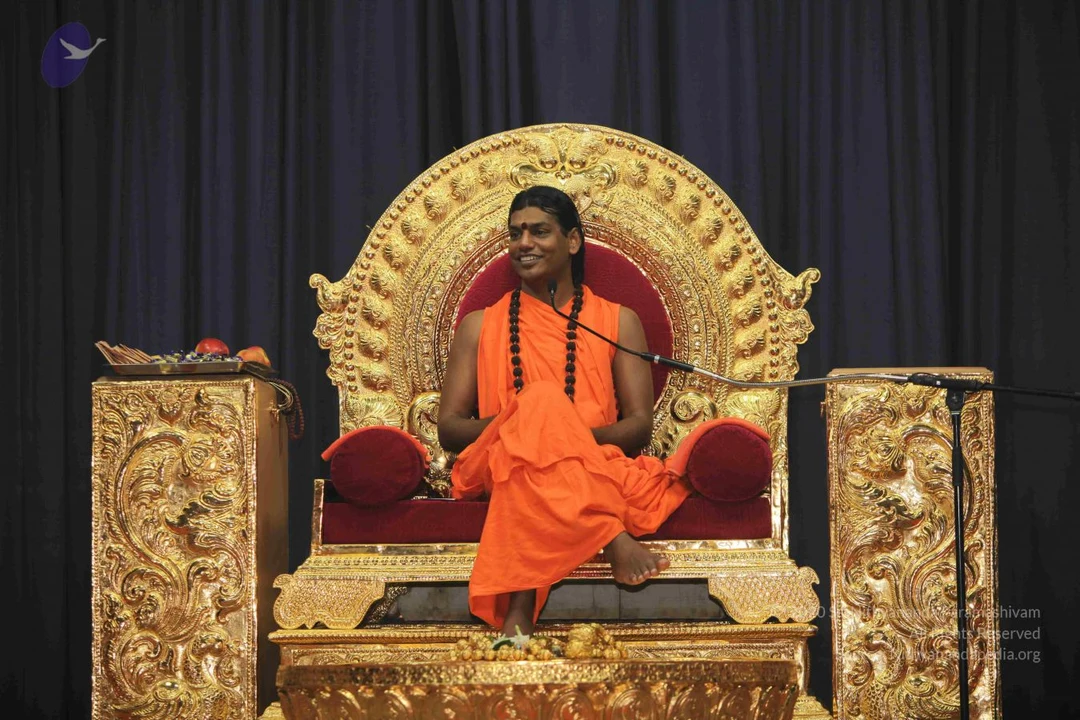
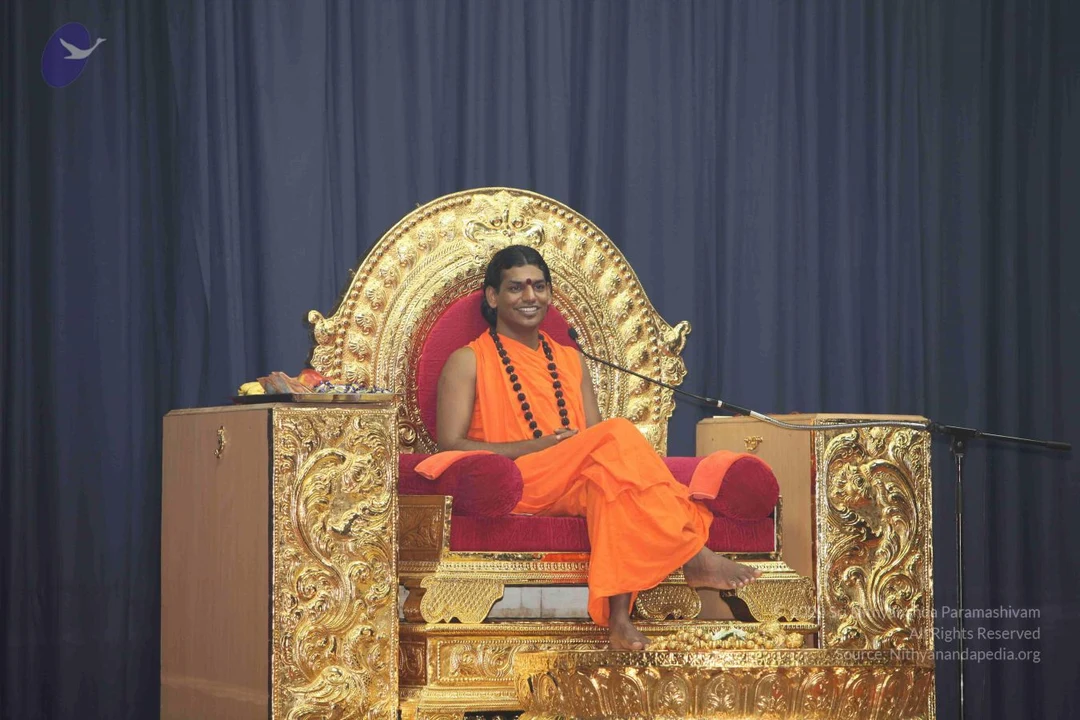
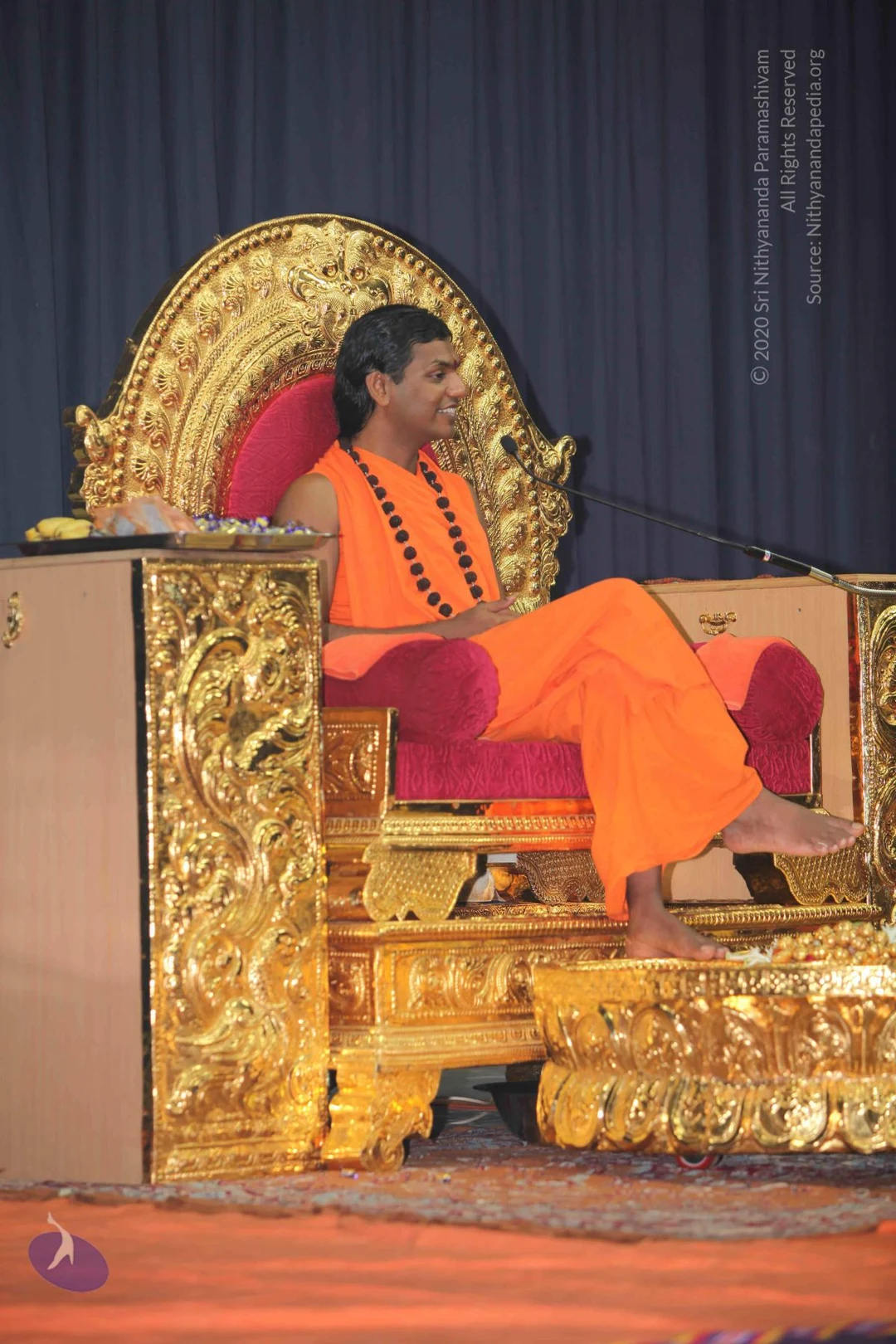
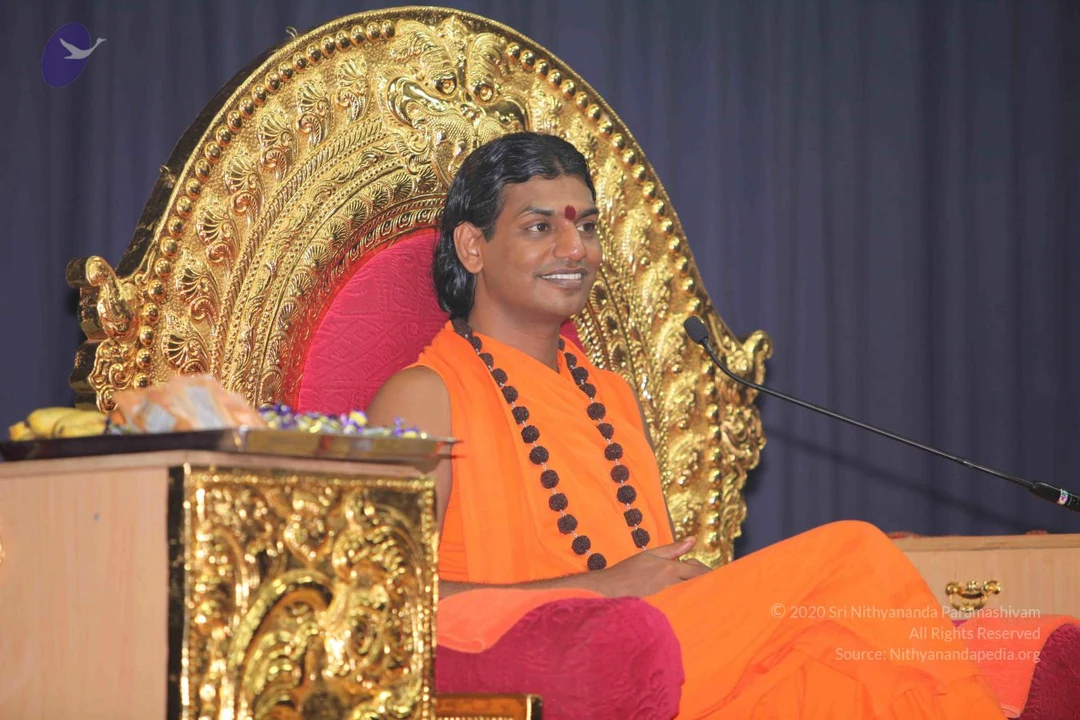
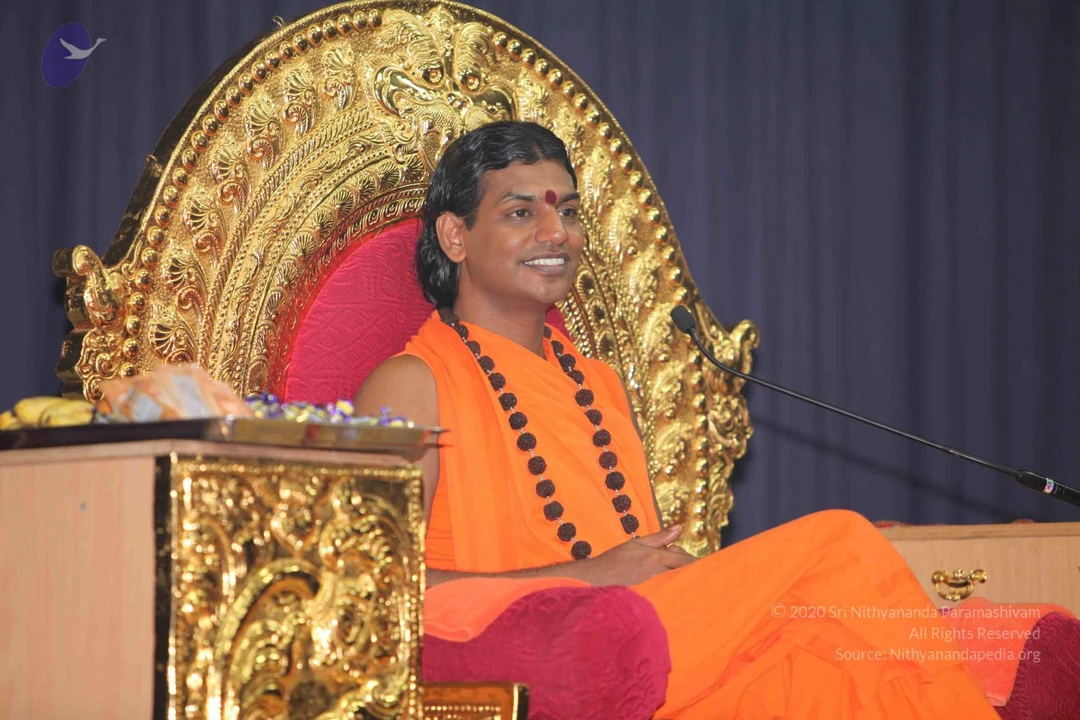
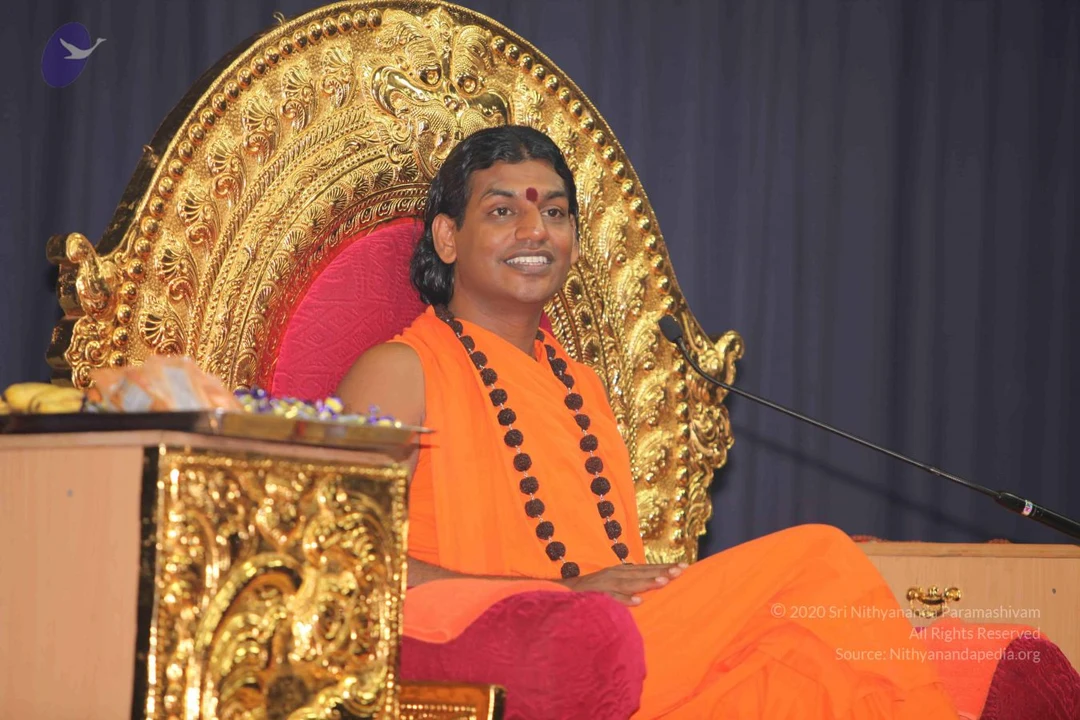
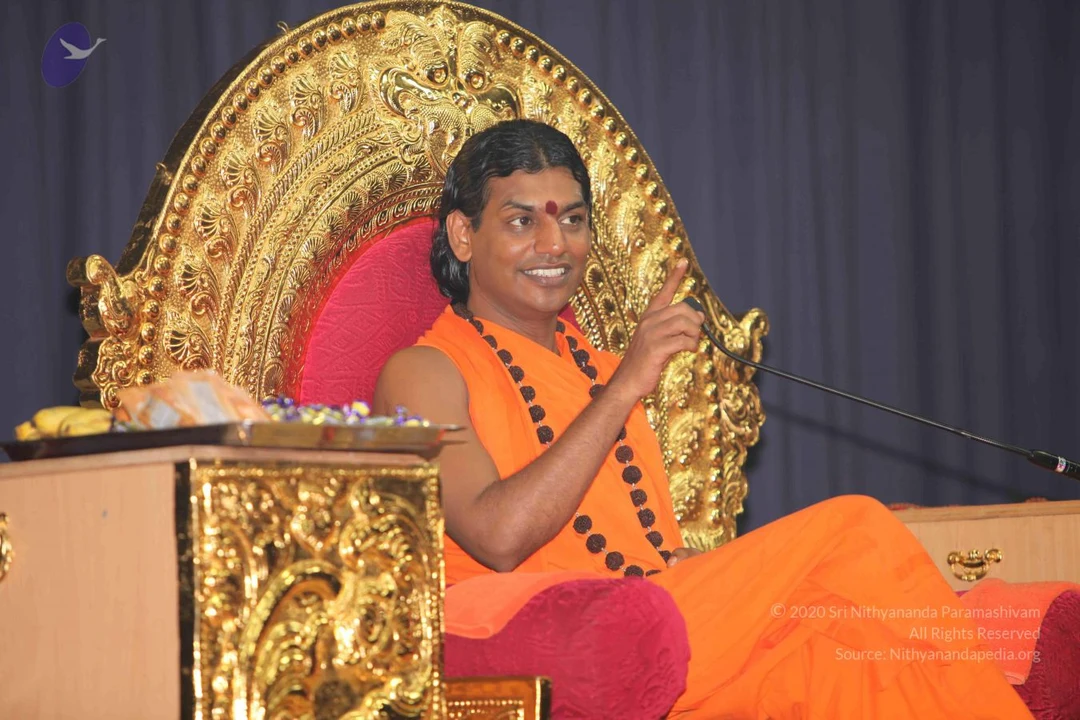
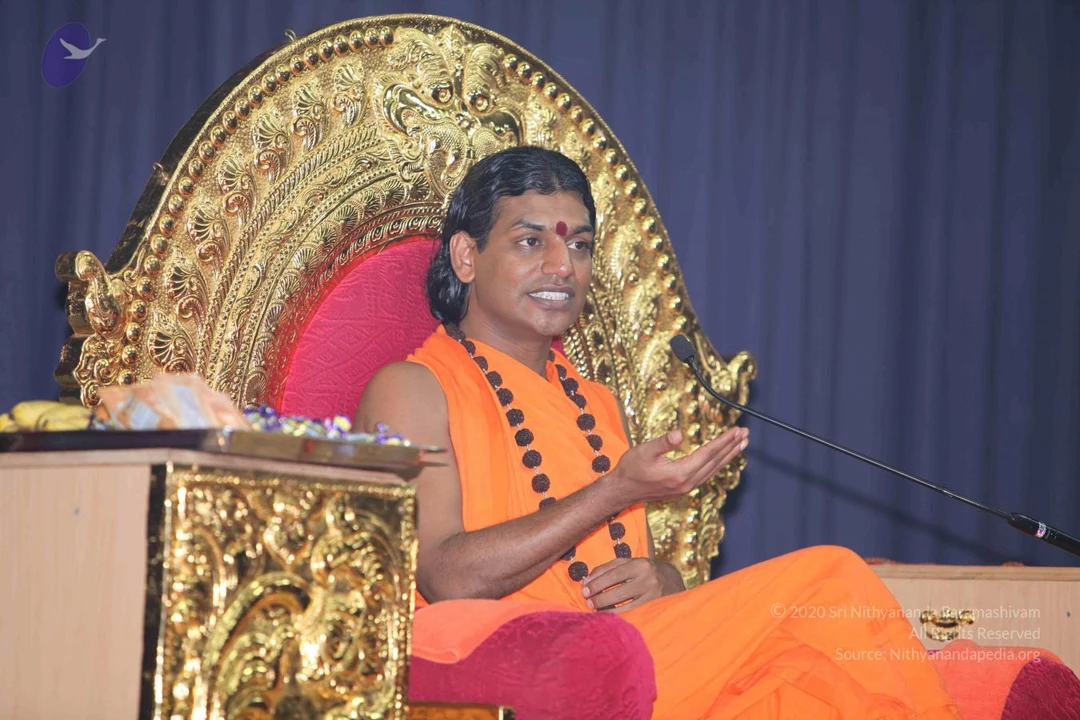
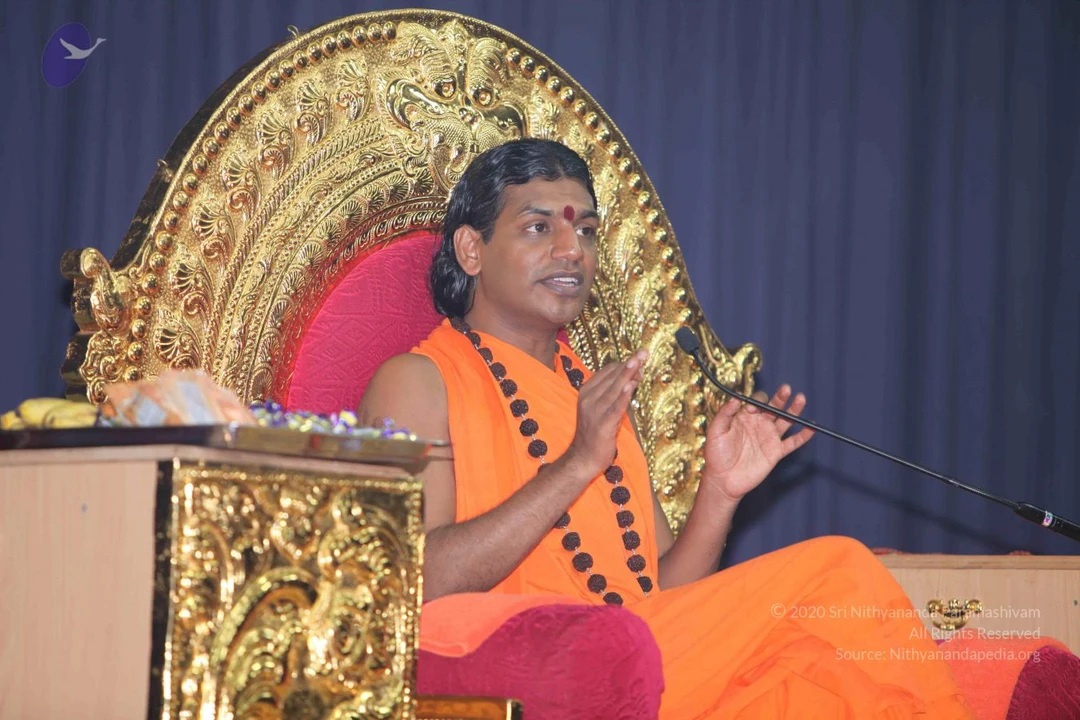
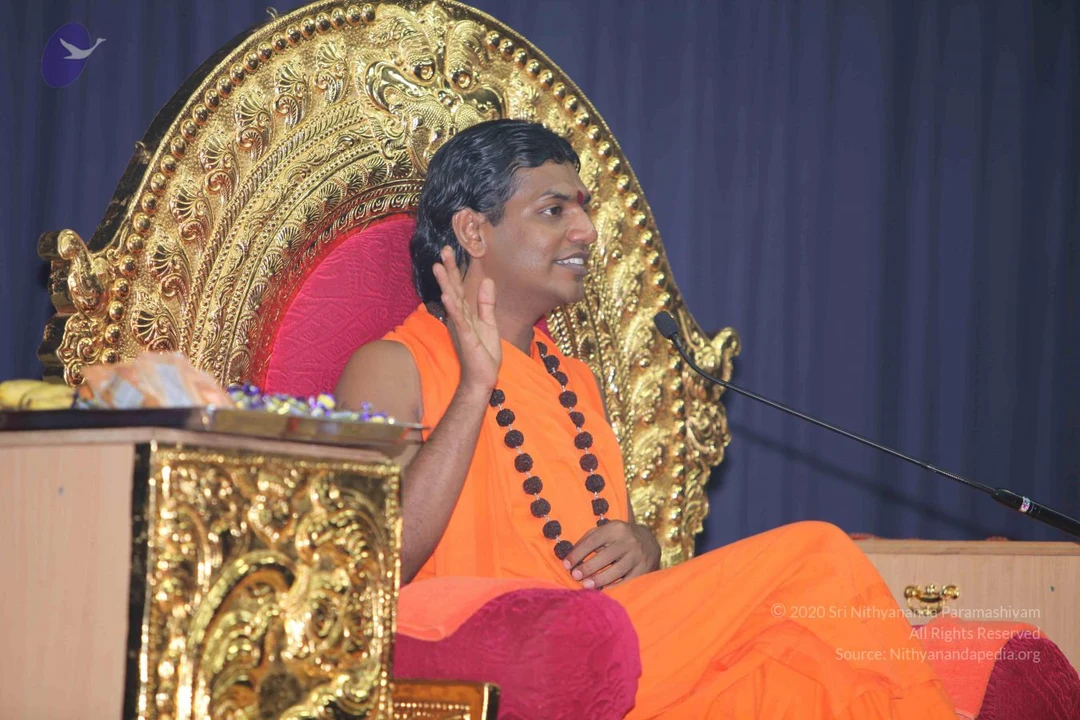
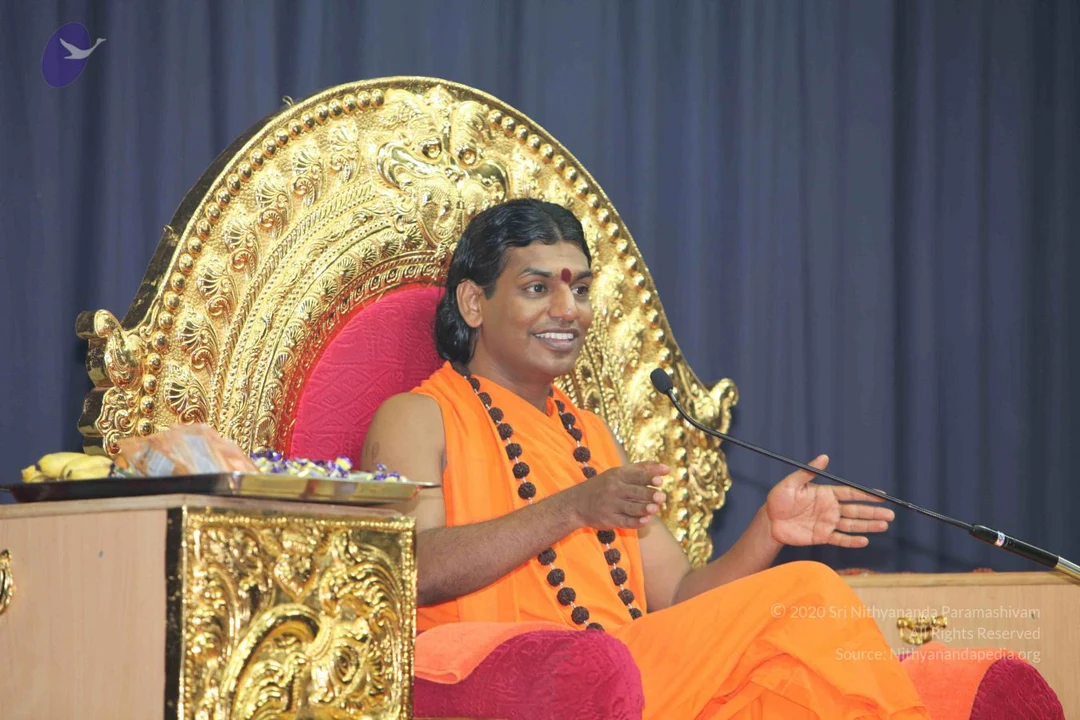
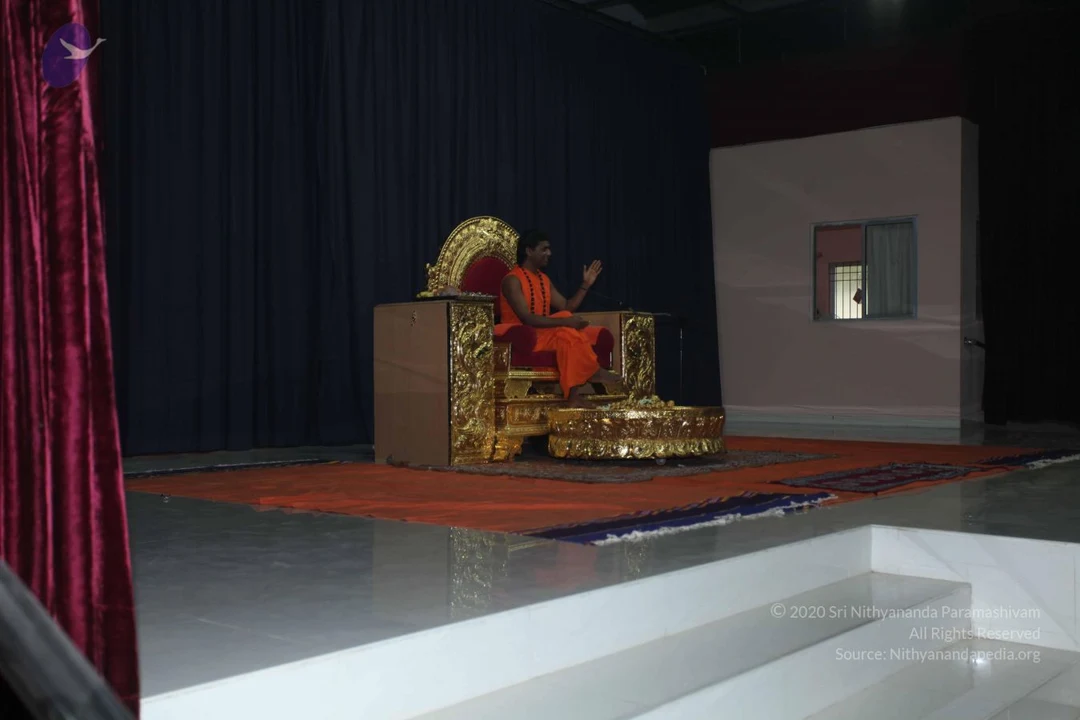
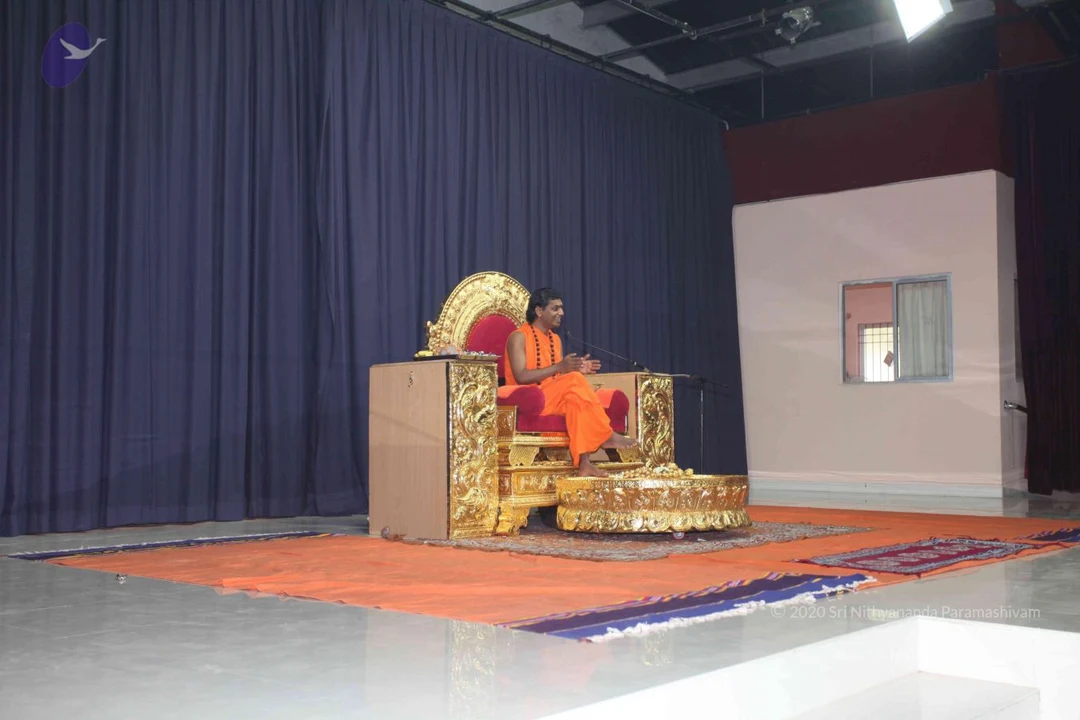
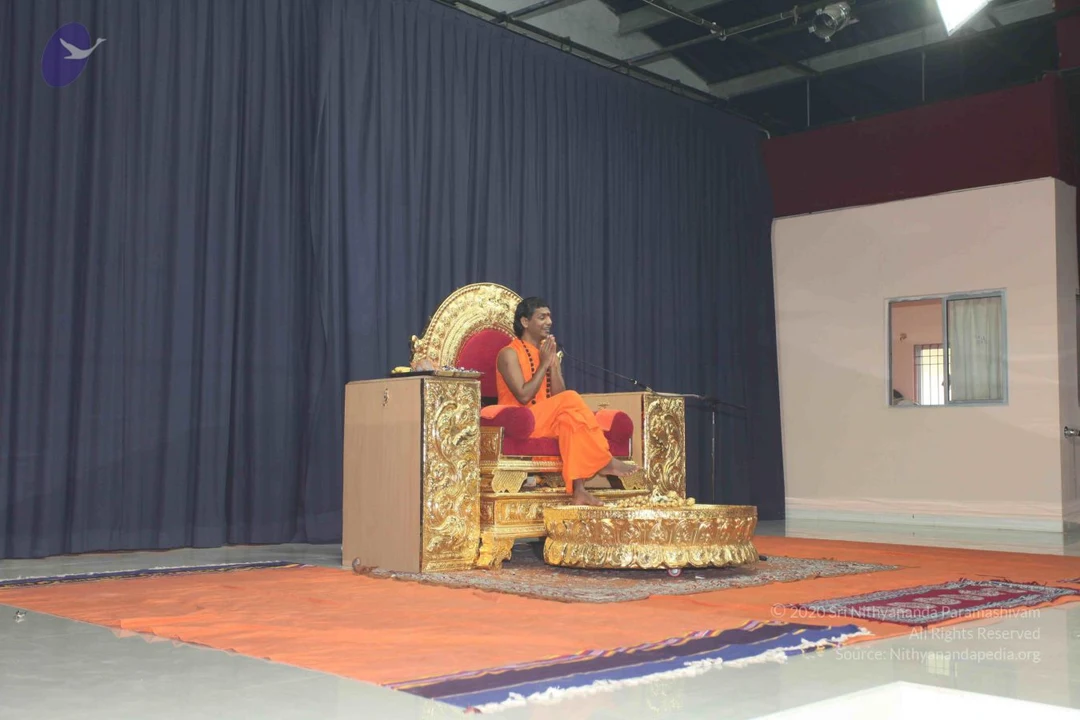
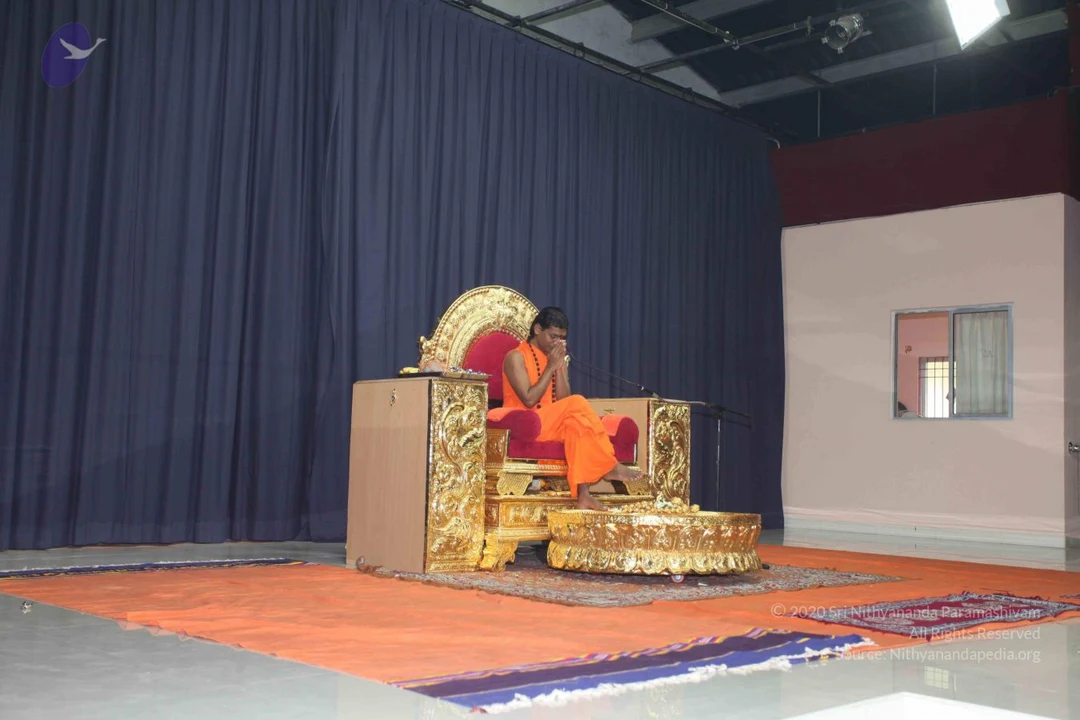
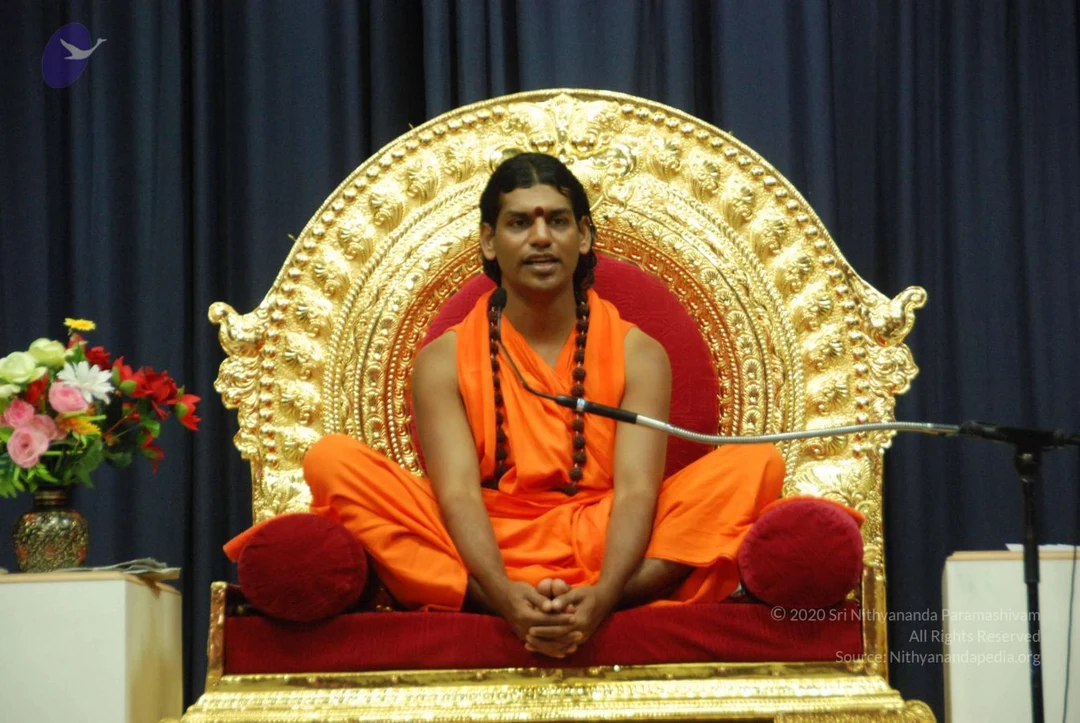
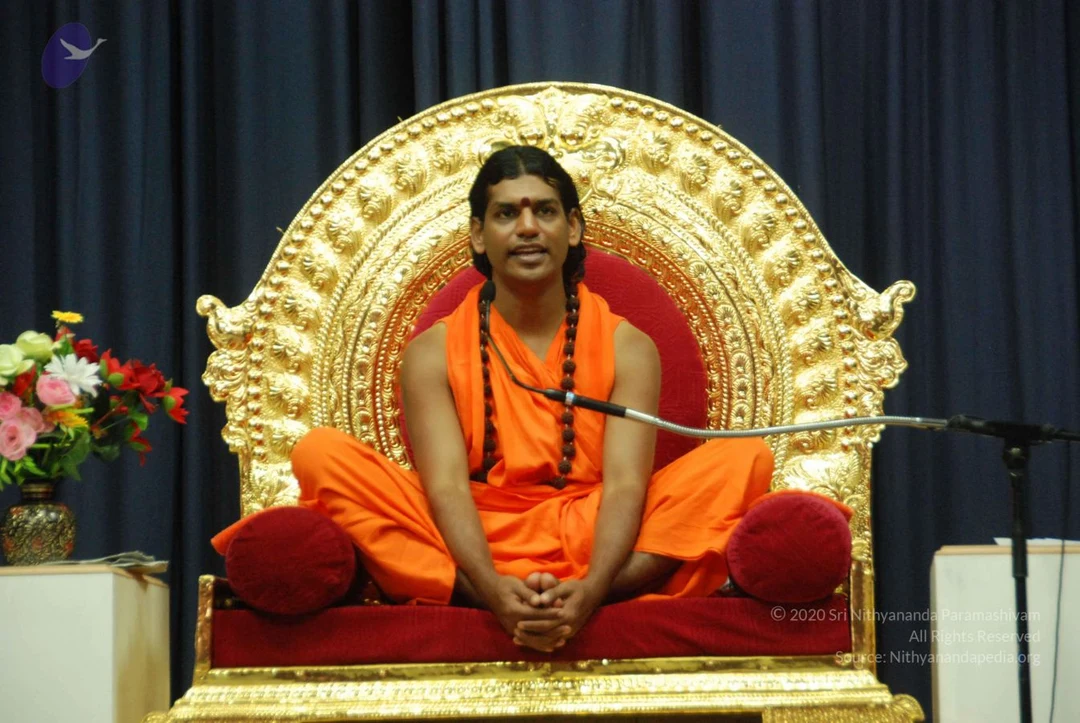
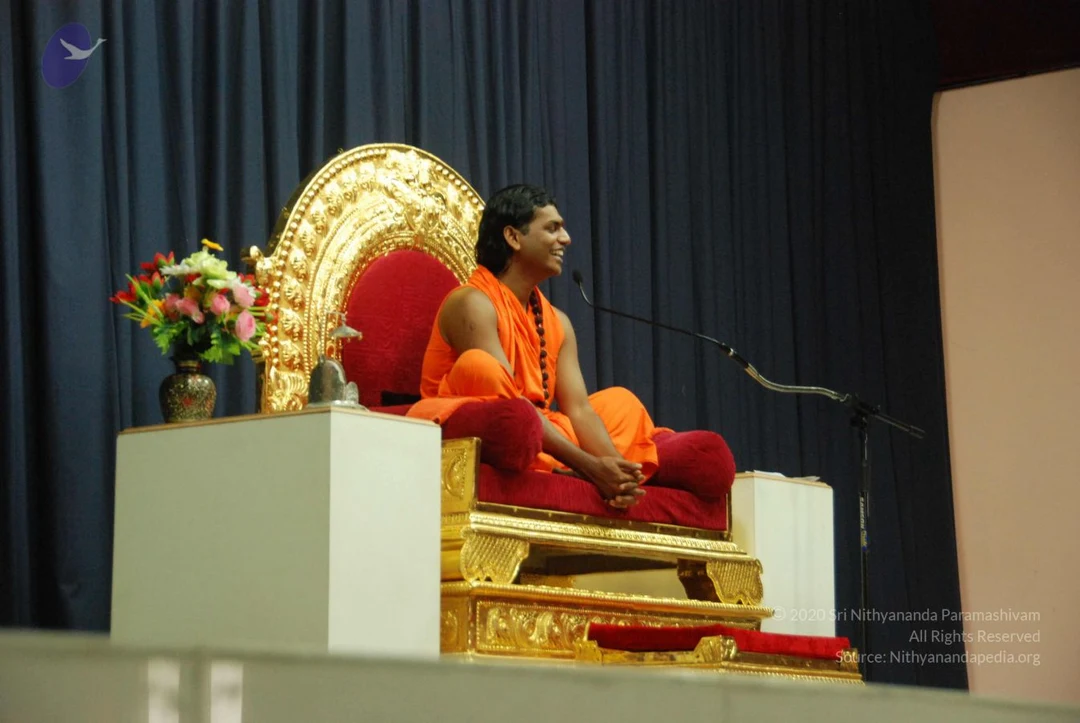
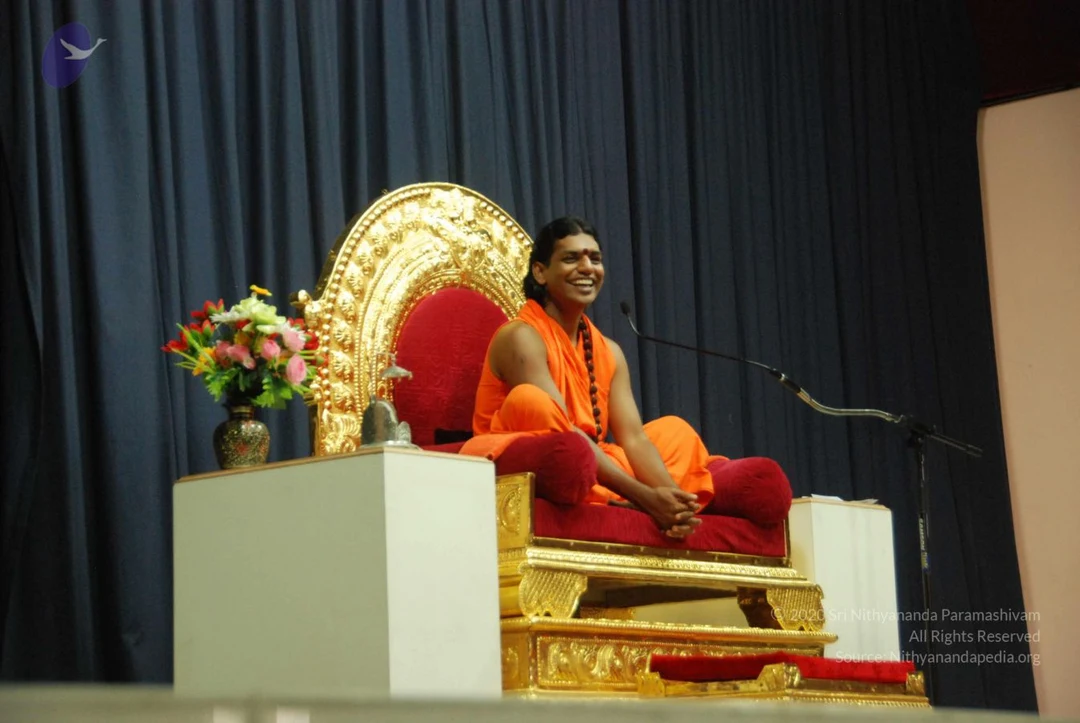
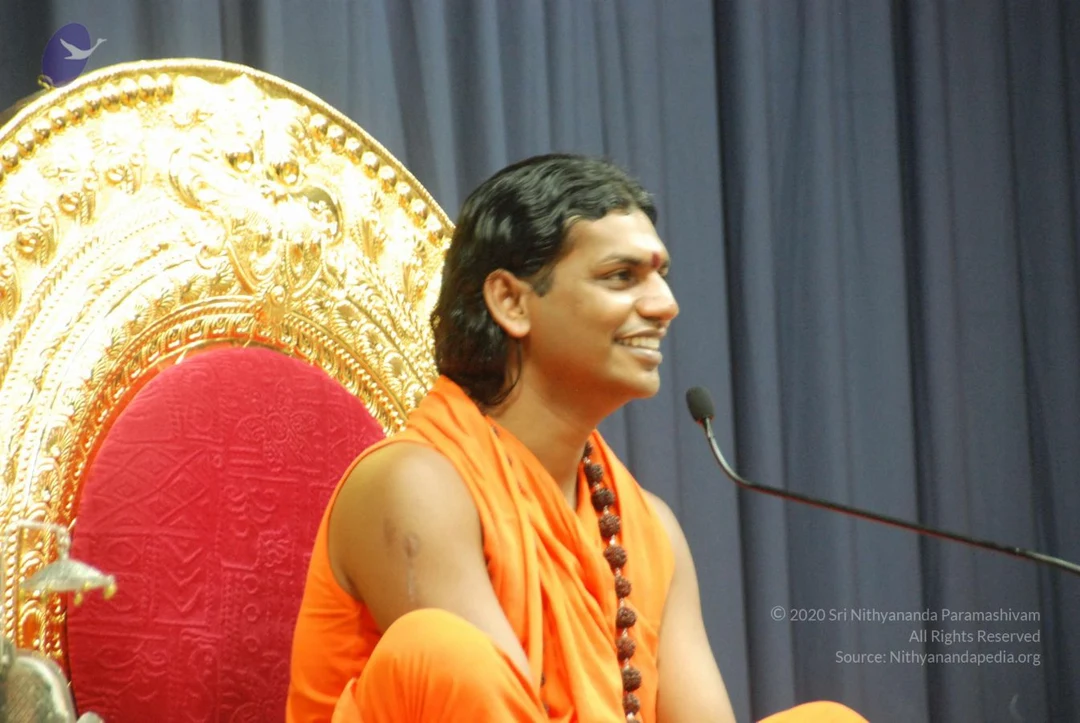
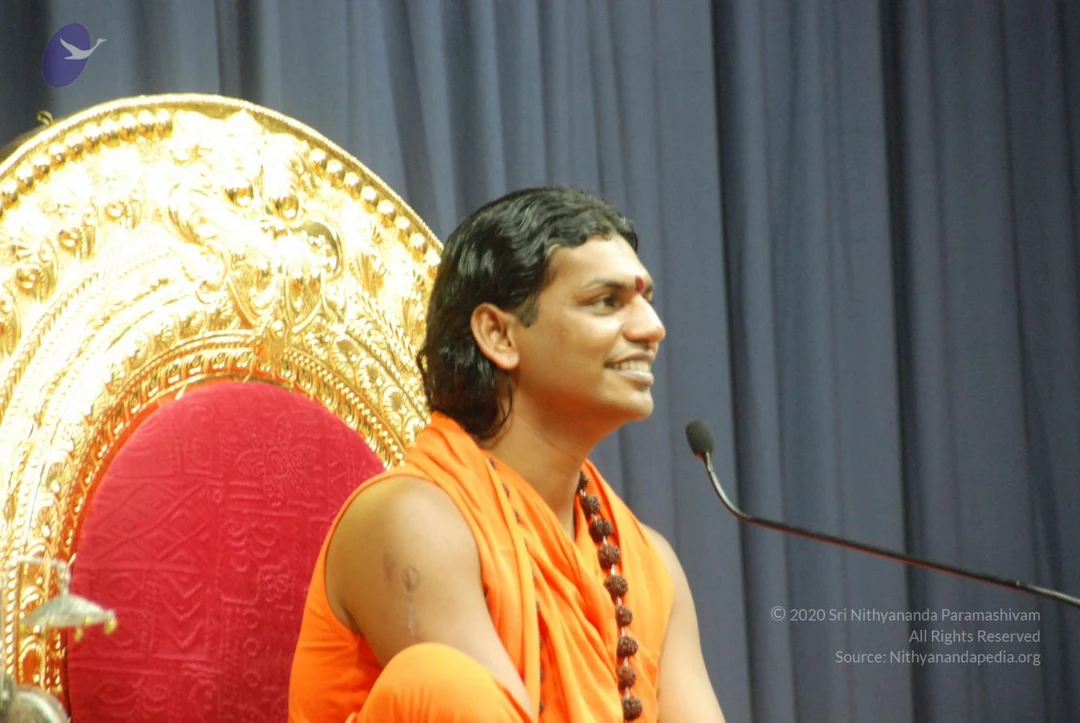
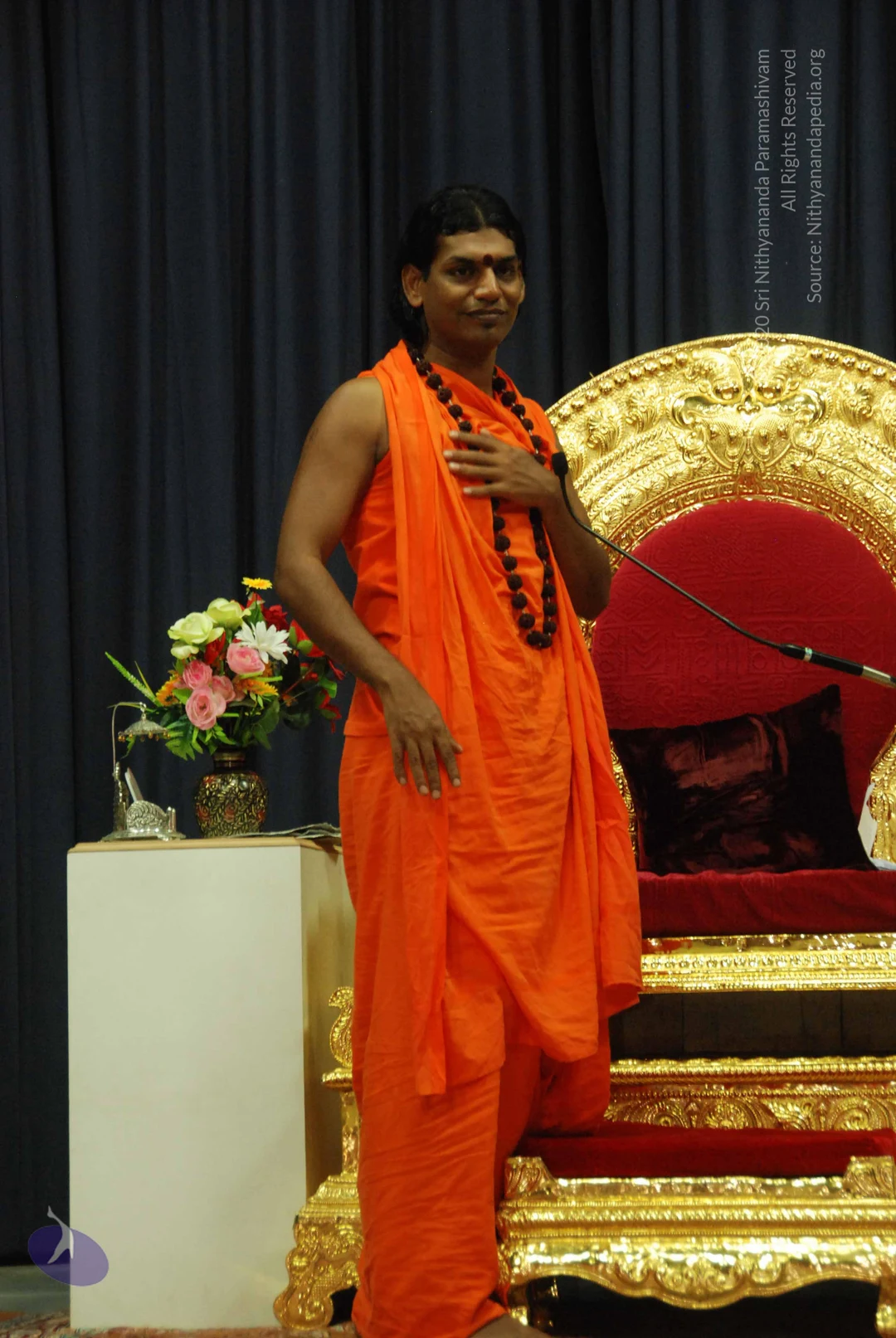
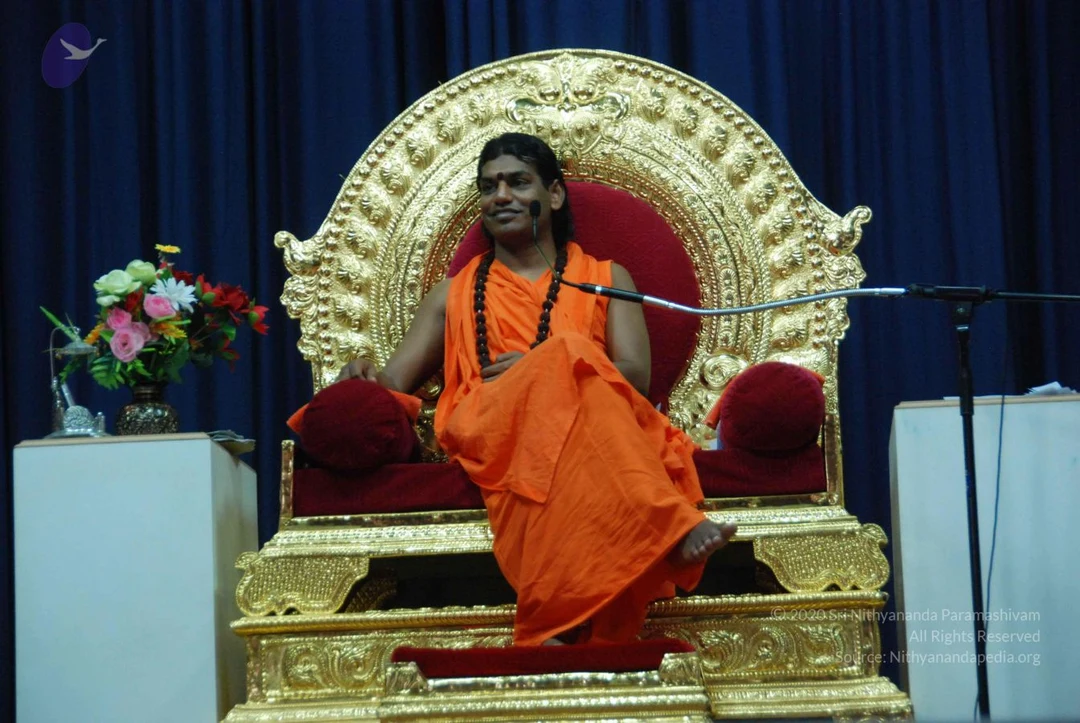
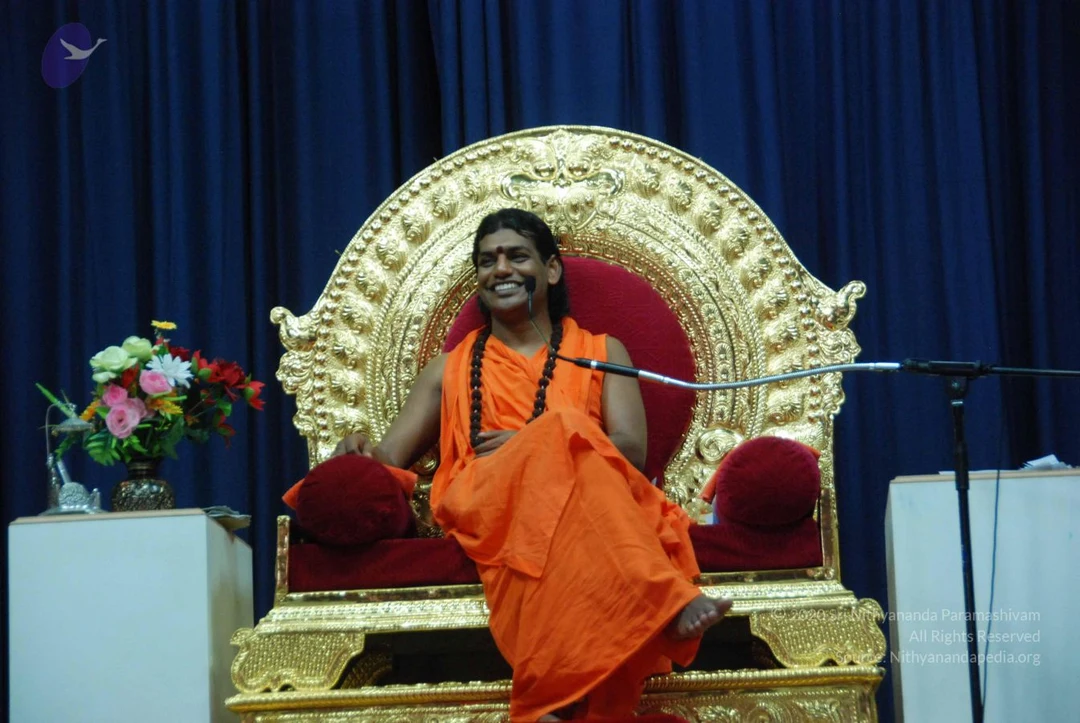
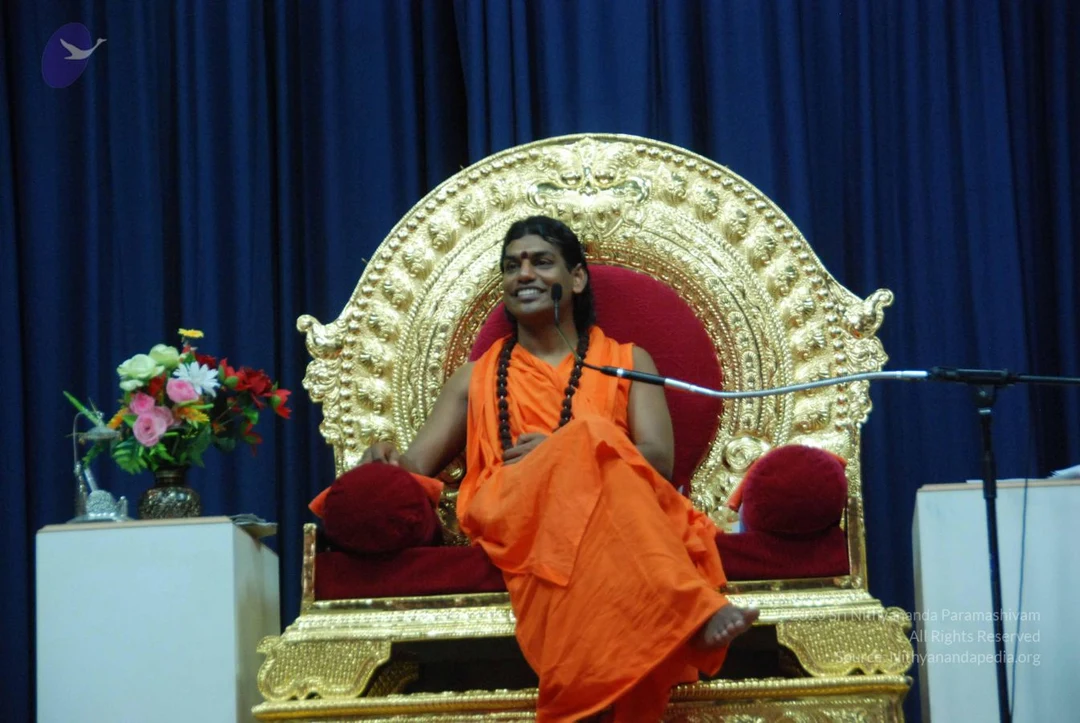
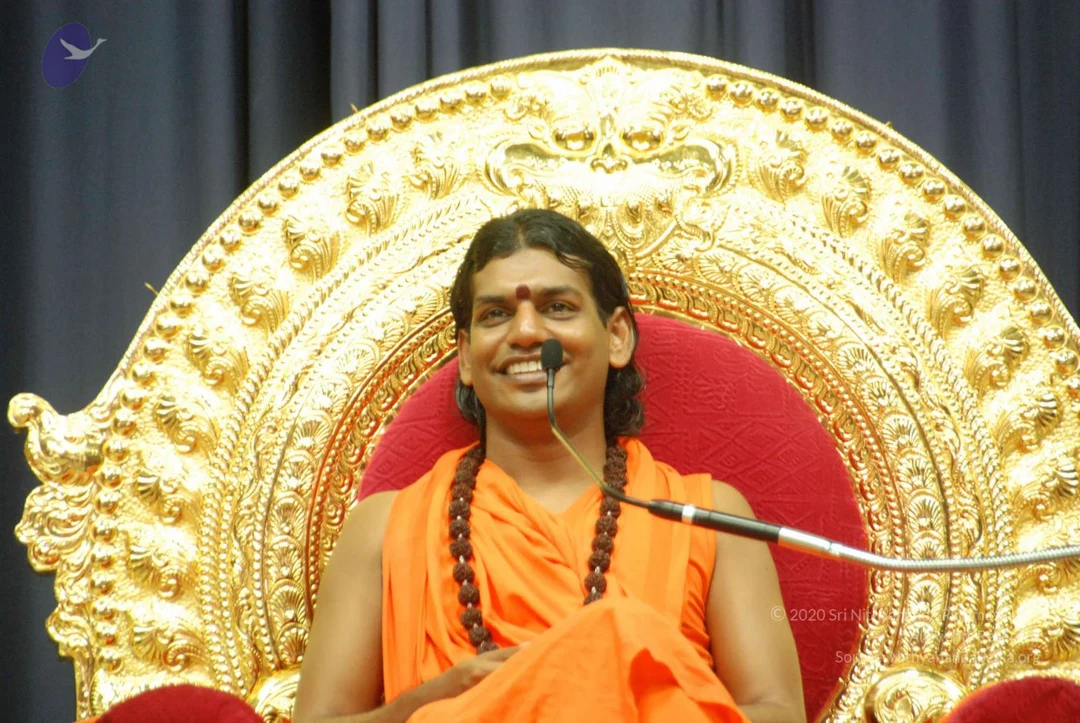
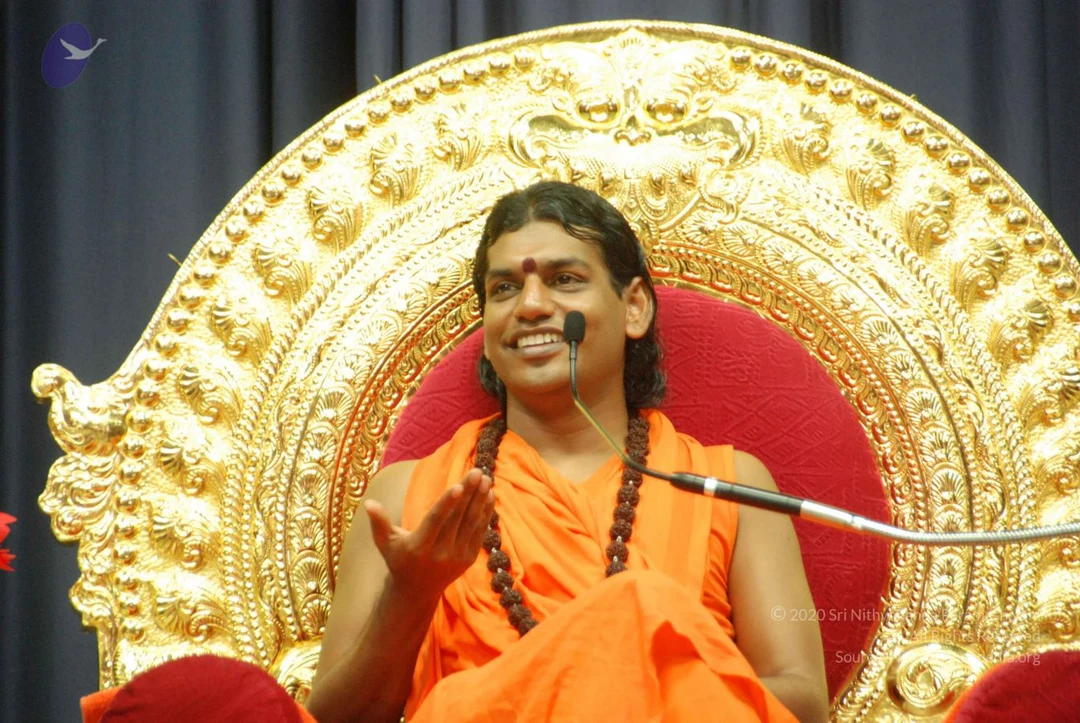
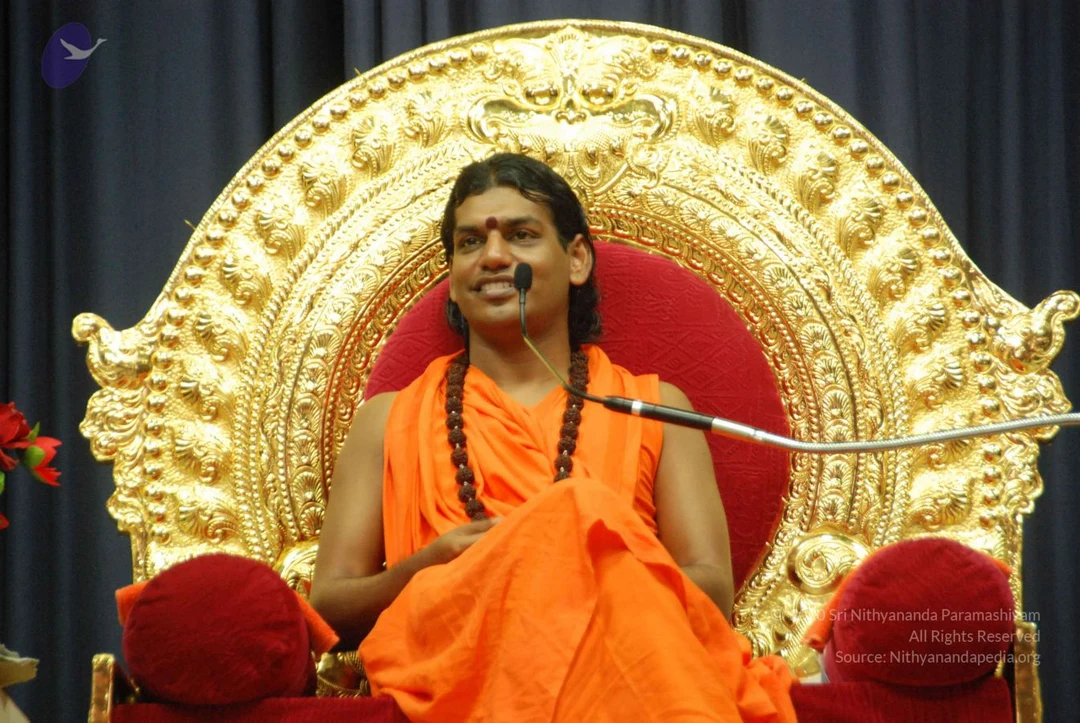
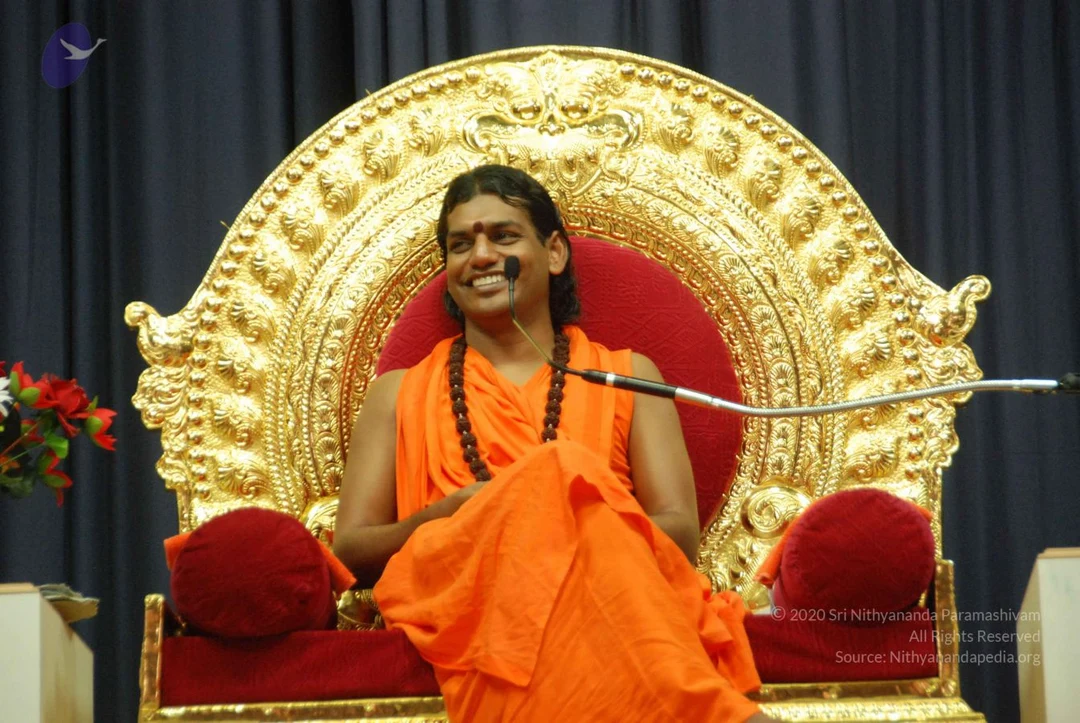
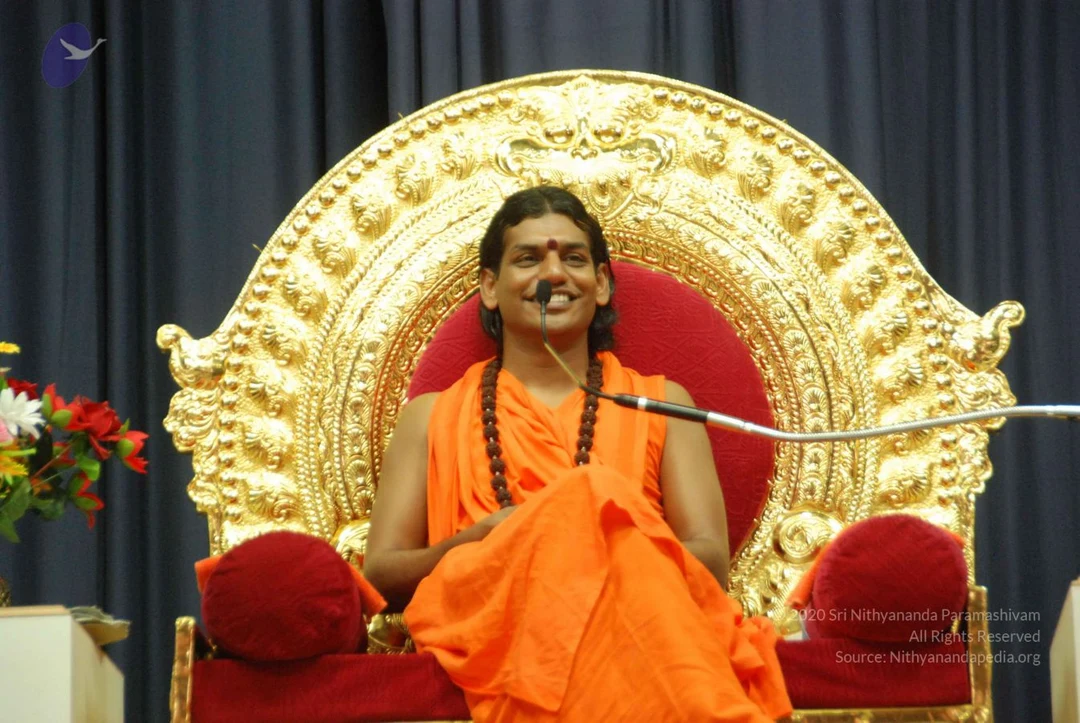
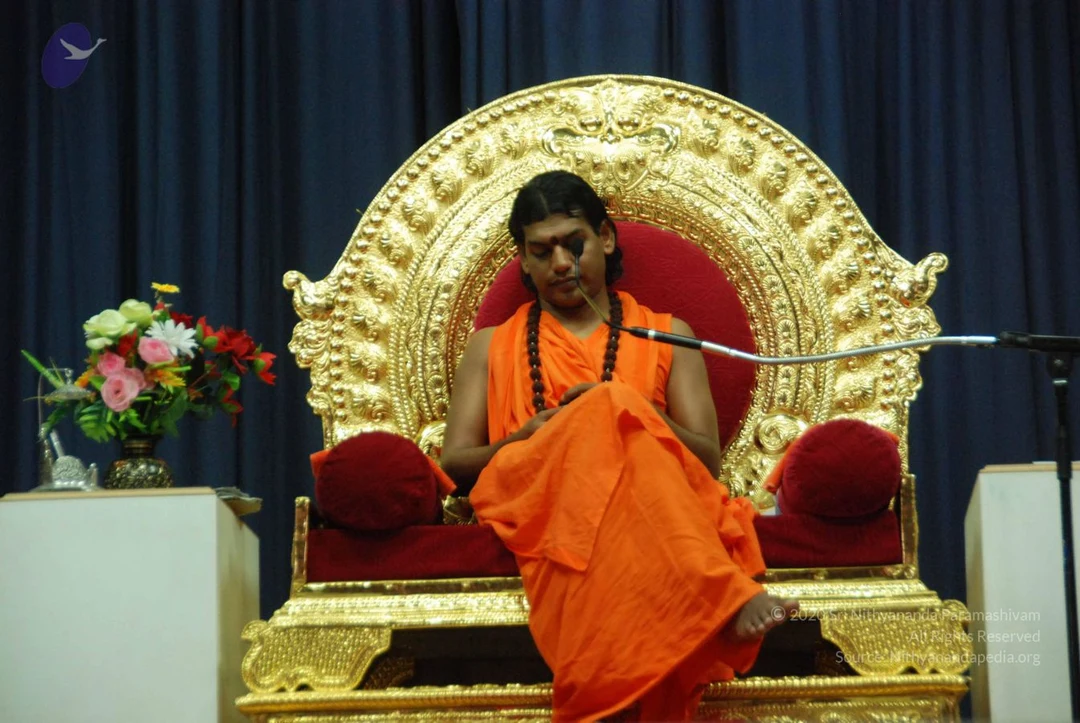
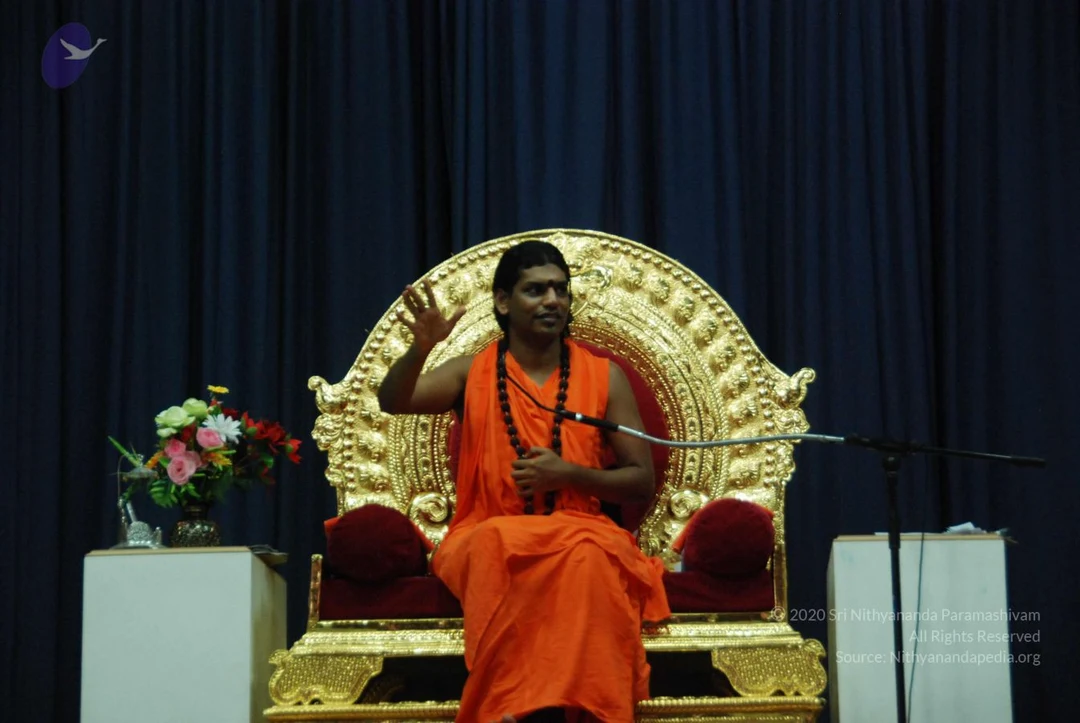
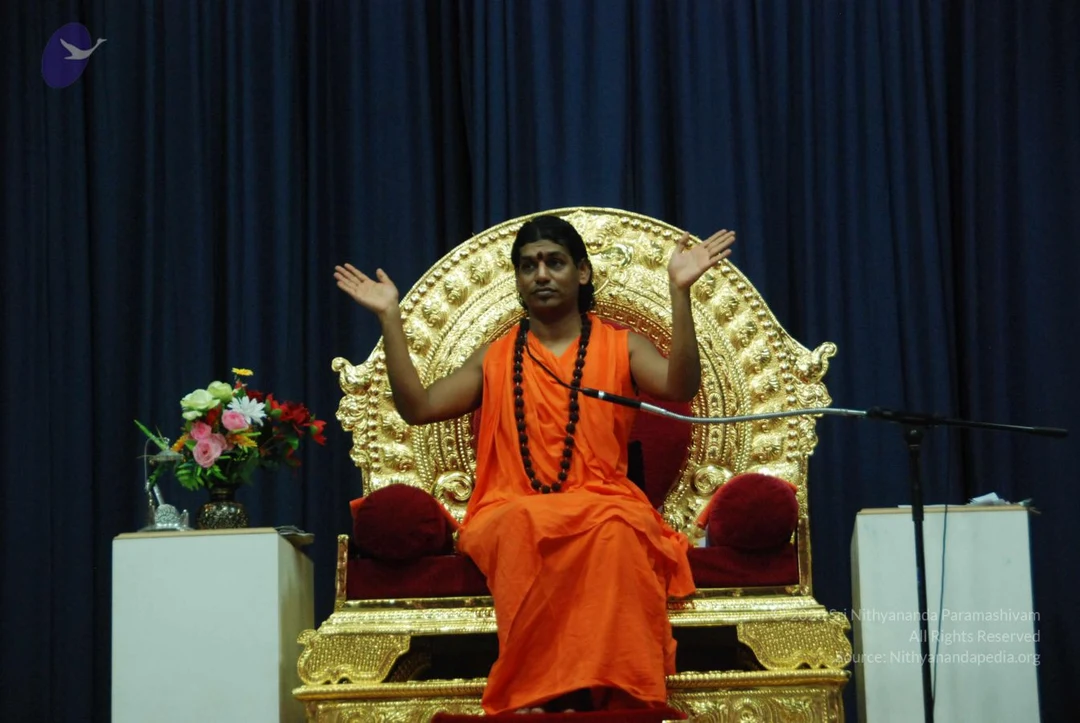
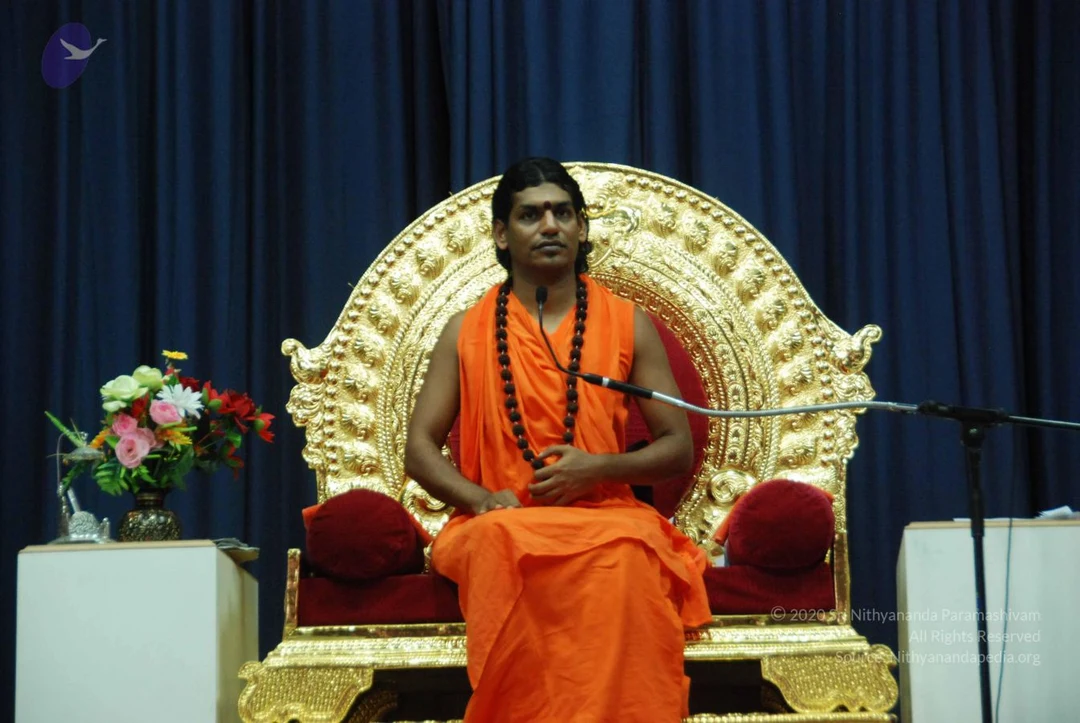
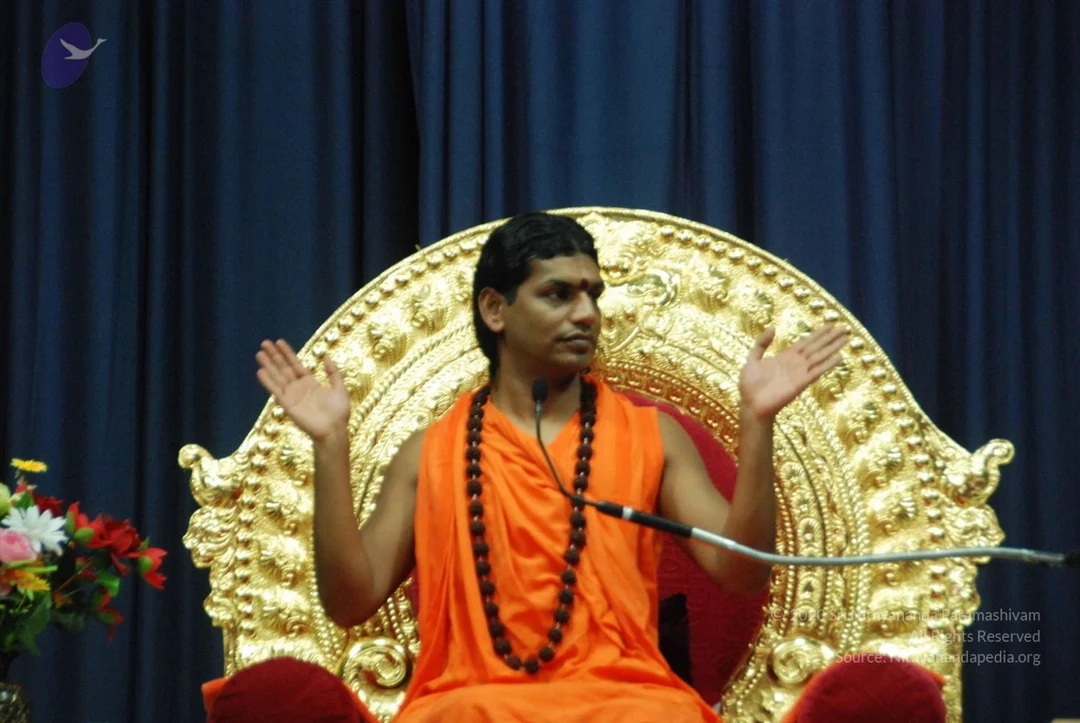
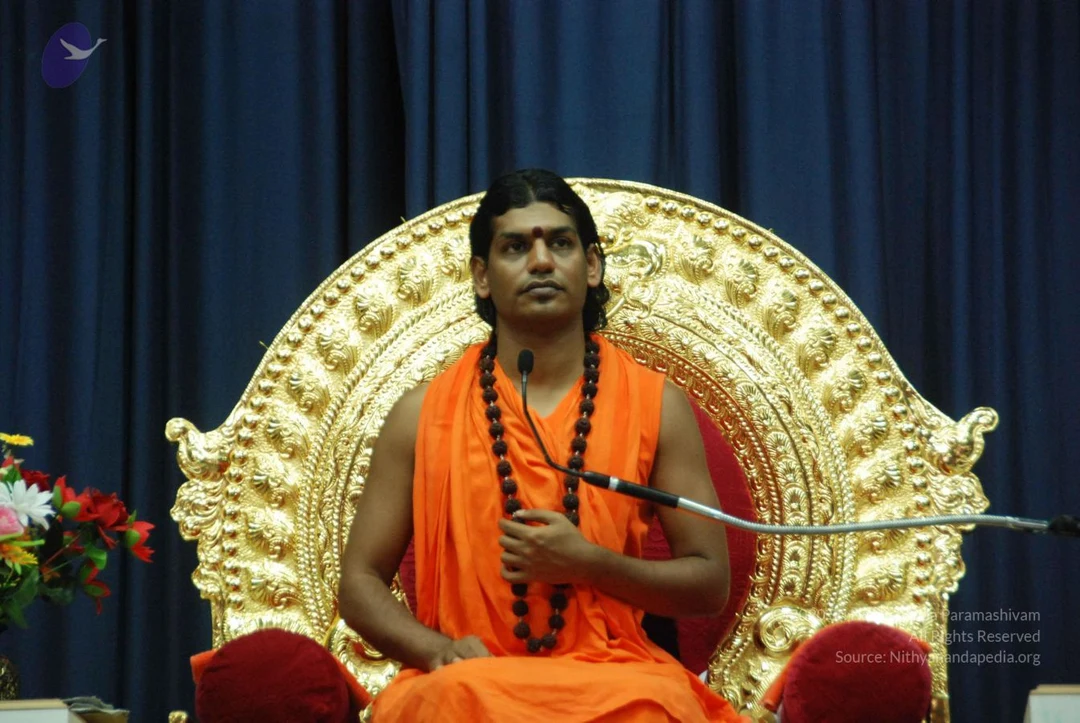
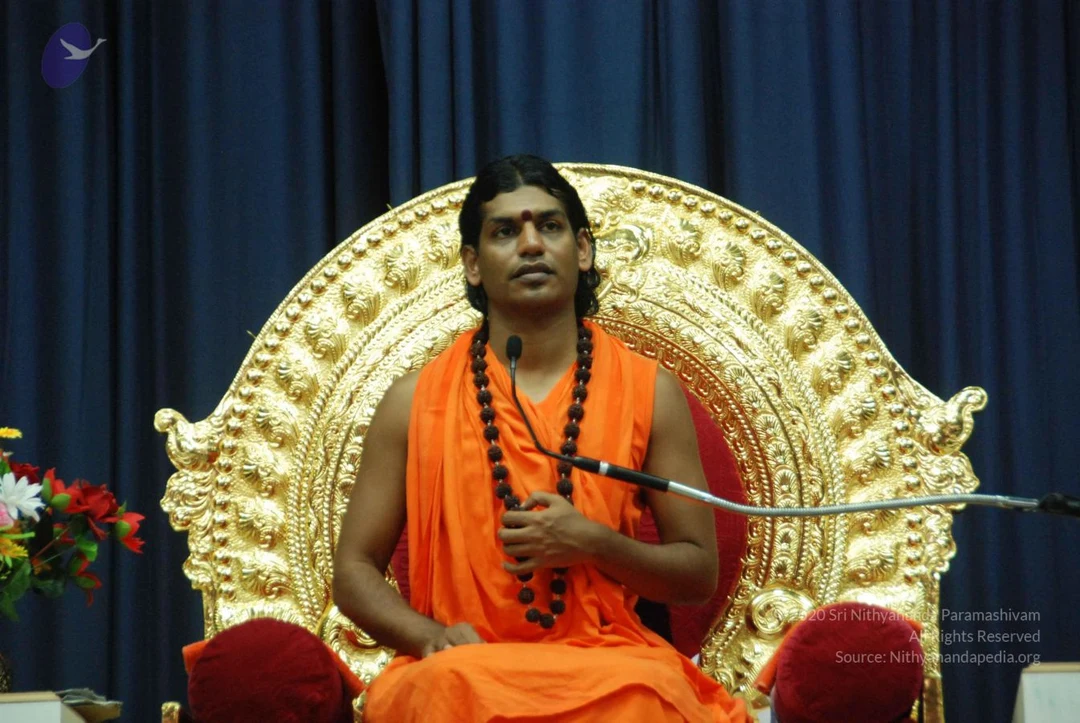
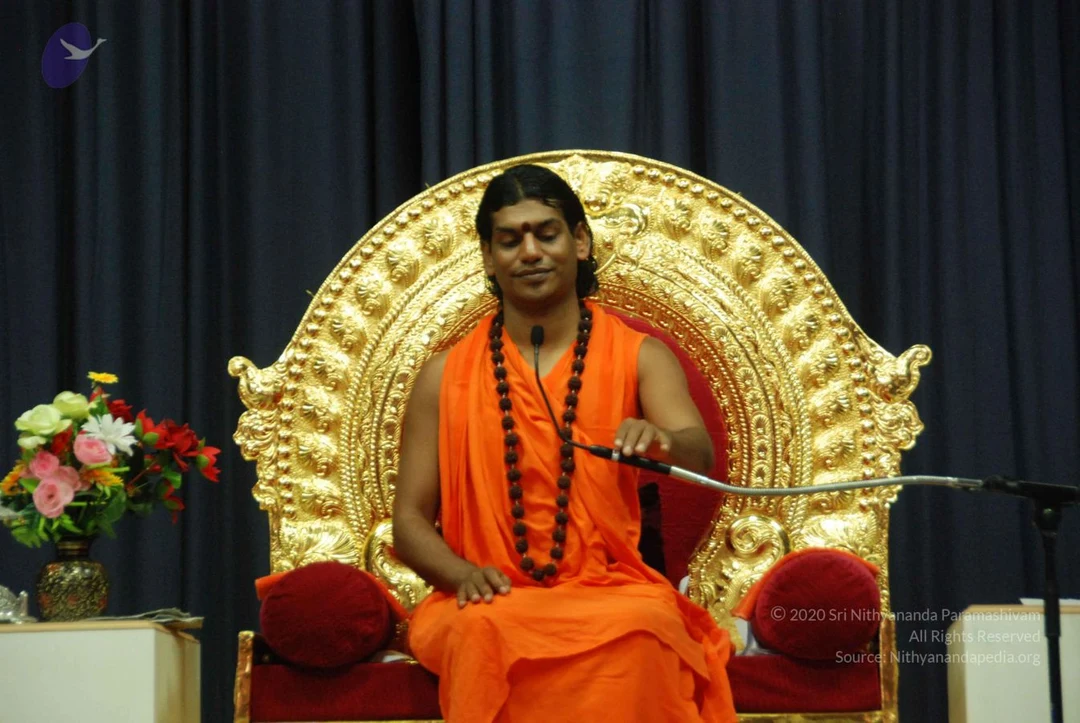
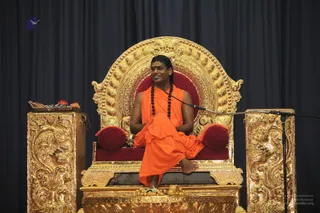
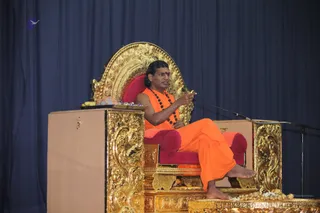
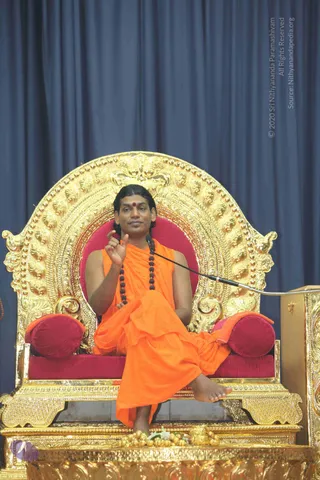
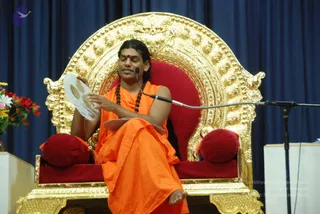
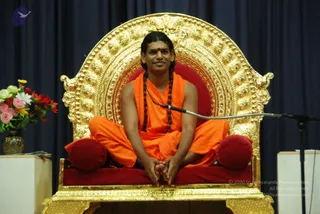
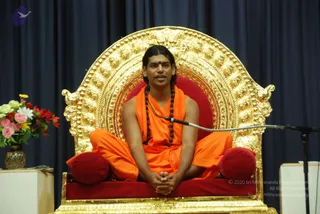
A man with long swept-back dark hair sits on an ornate gold throne with a red cushioned seat, speaking into a microphone on a stand. He wears an orange saffron robe and a rudraksha mala of dark beads, and has a red tilak on his forehead. He is barefoot and gestures with one hand while speaking. A gold-framed wooden lectern holds a tray with flowers and fruit, and a dark blue curtain forms the backdrop.

Evening-Navaratri-Culturals

10 photosSource gallery

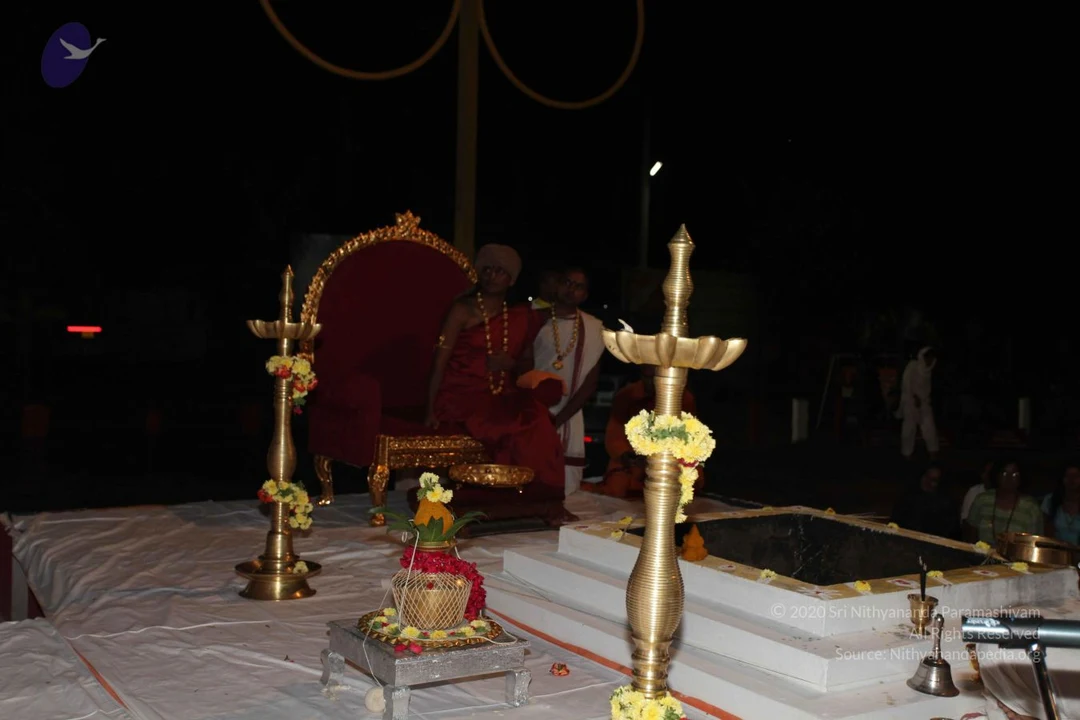
Navaratri-Homa

3 photosSource gallery
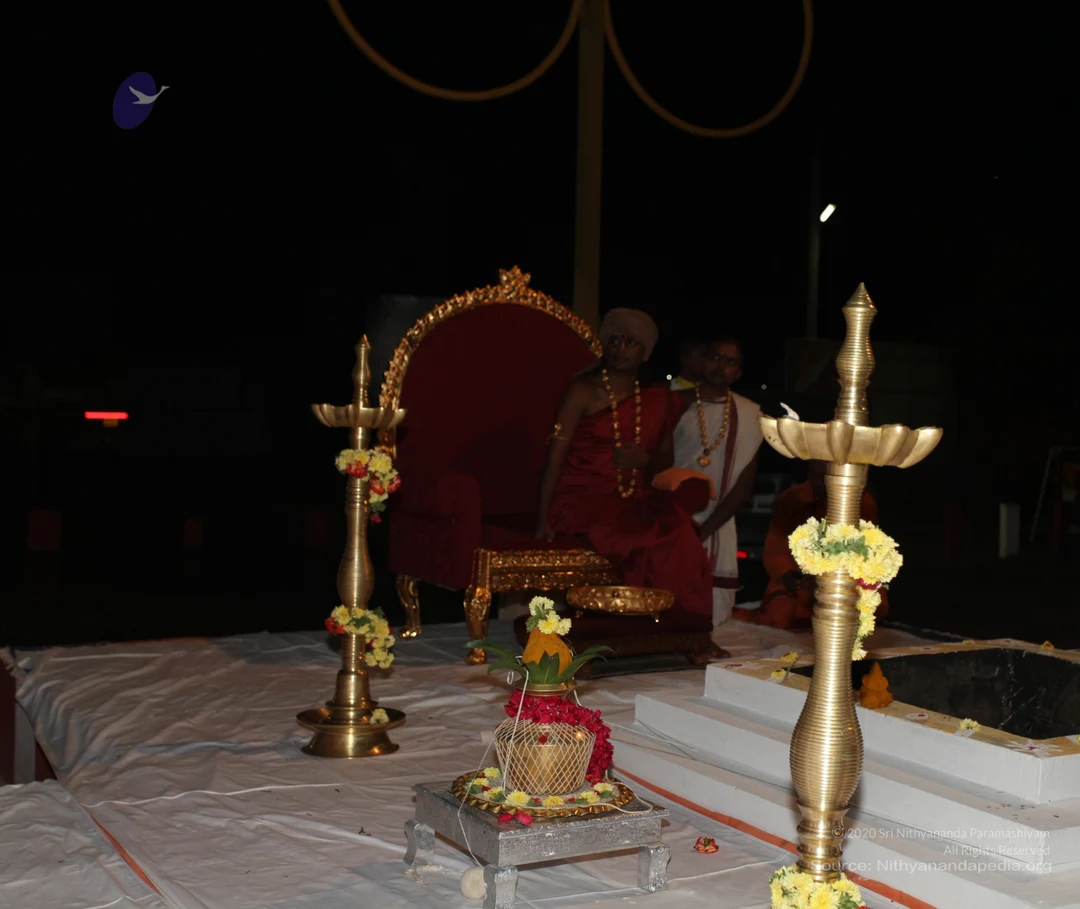
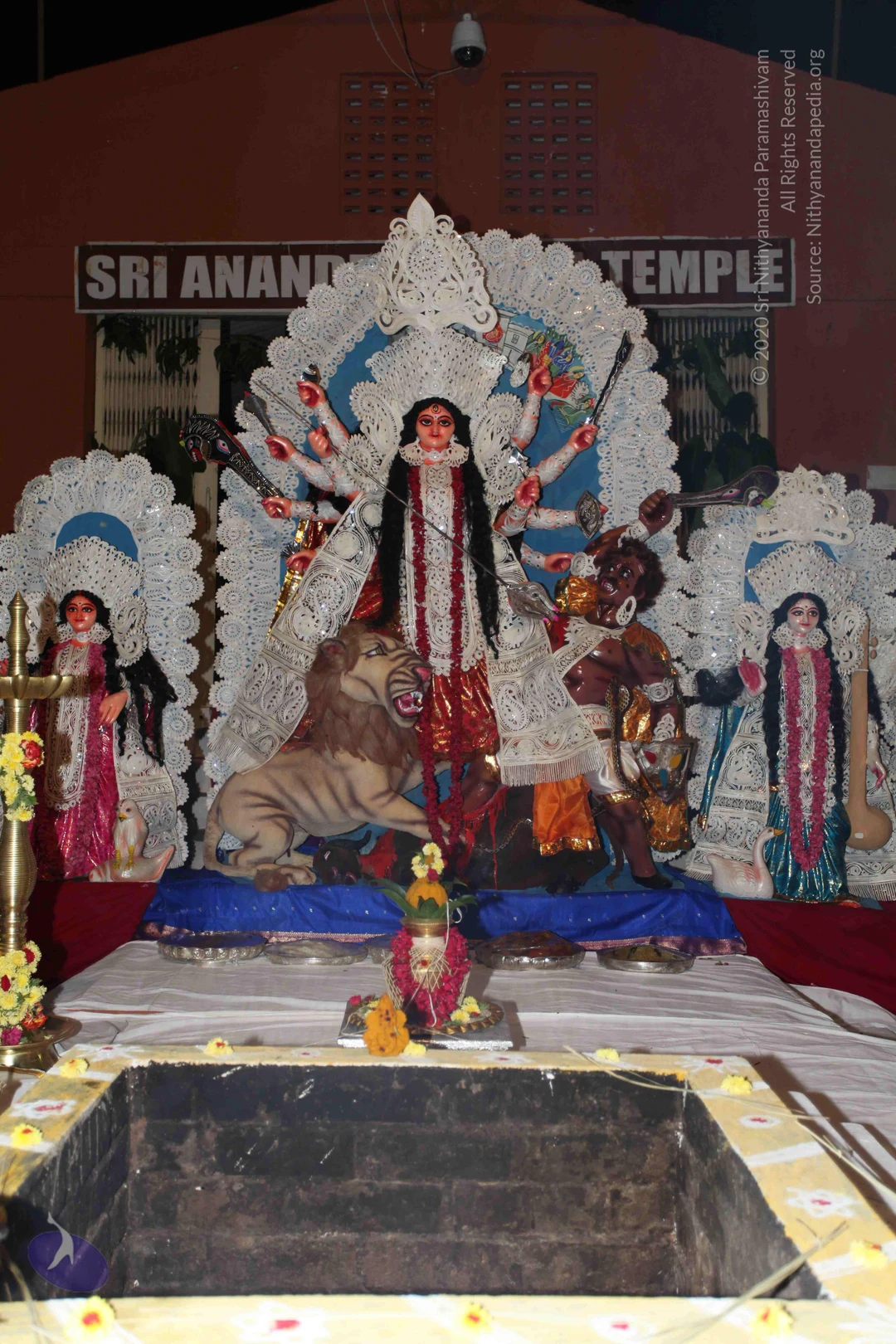
Night photograph of a festival display of multi-armed goddess murti with lion mount and a demon figure beneath her, flanked by Ganesha and other deity murtis with white lace-like backdrop arches. Brass oil lamps stand on either side and a kalasha with marigold garland sits on the platform, with a small fire pit smoking in front. Signboard above reads Sri Ananda ... Temple. No living people are visible.

Culturals

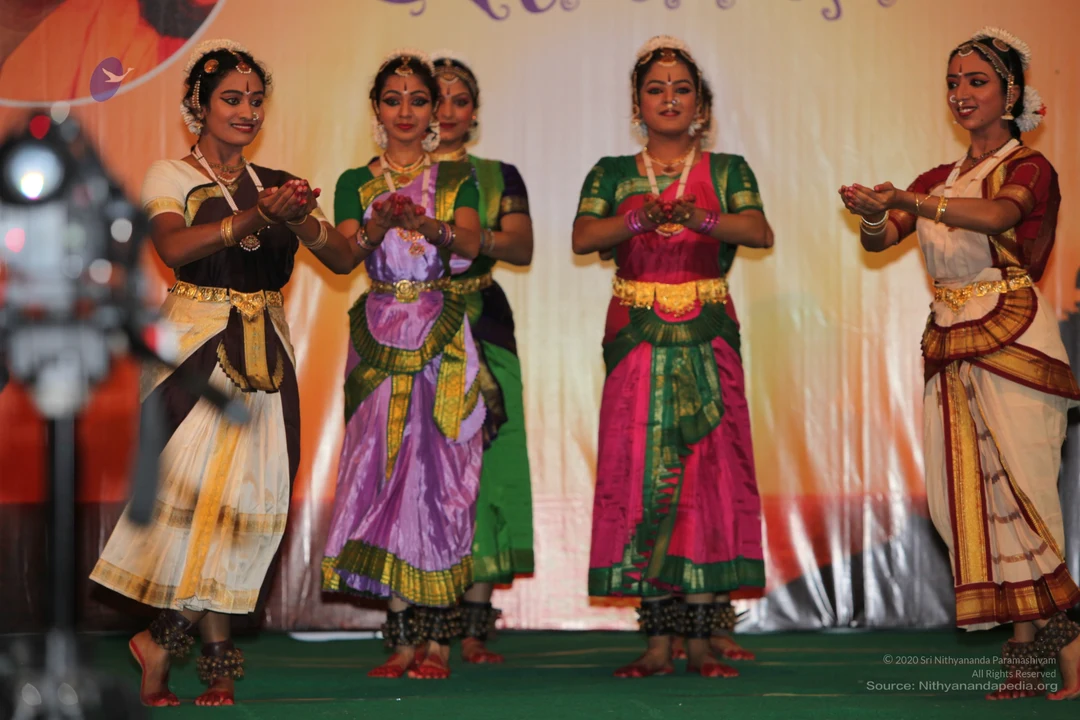
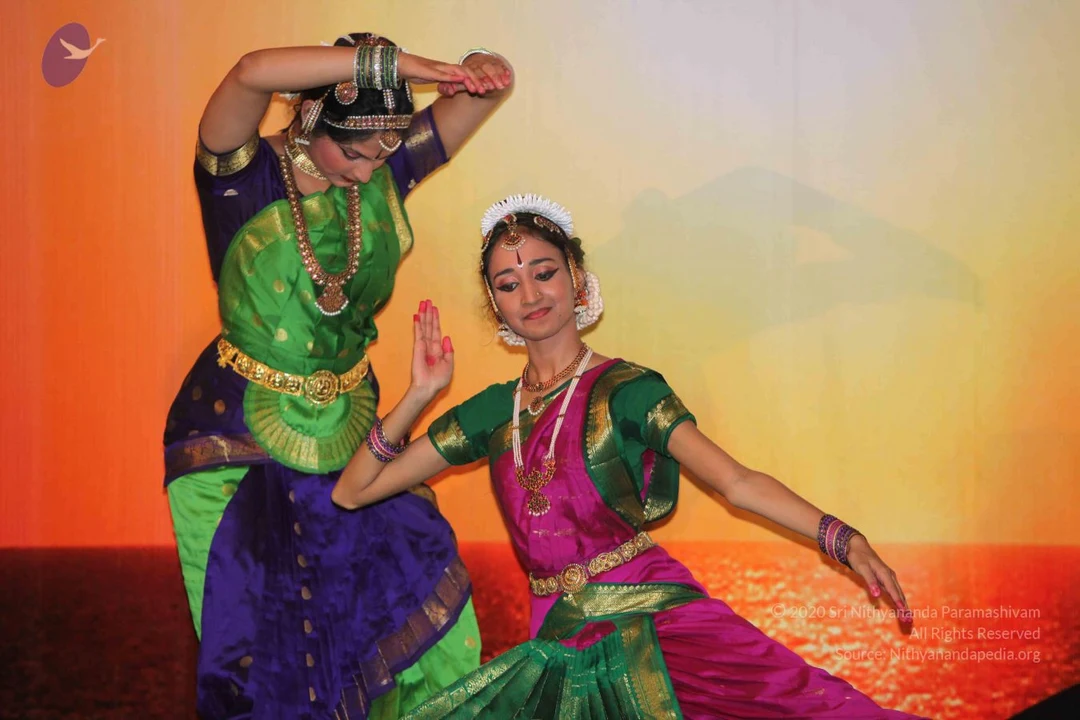
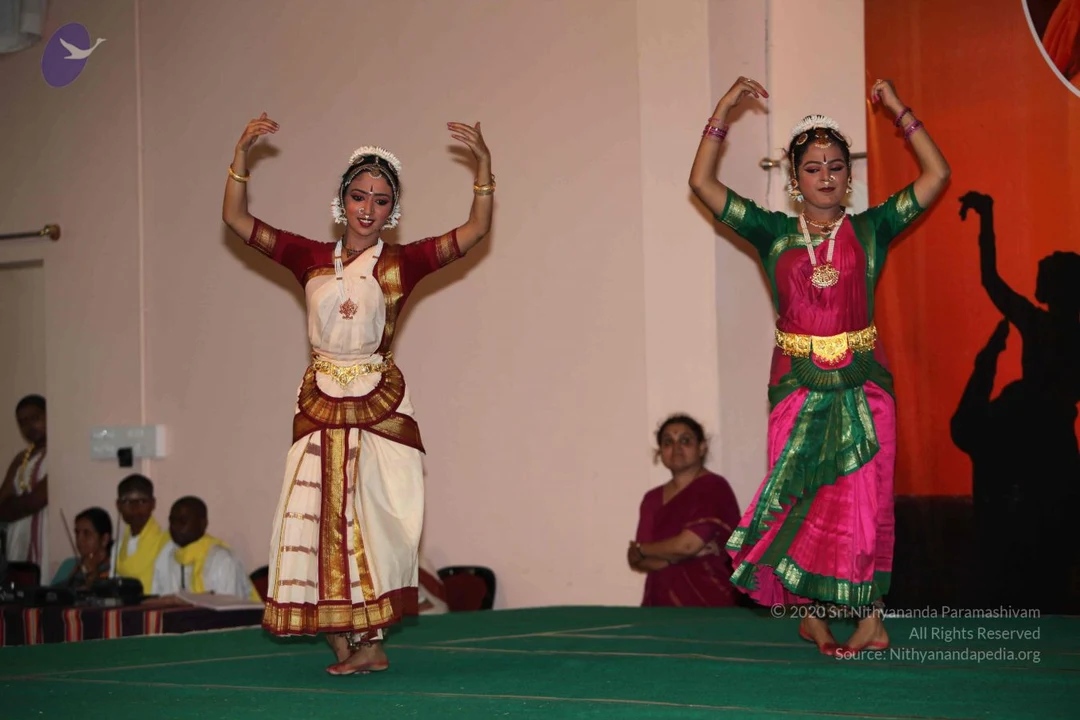
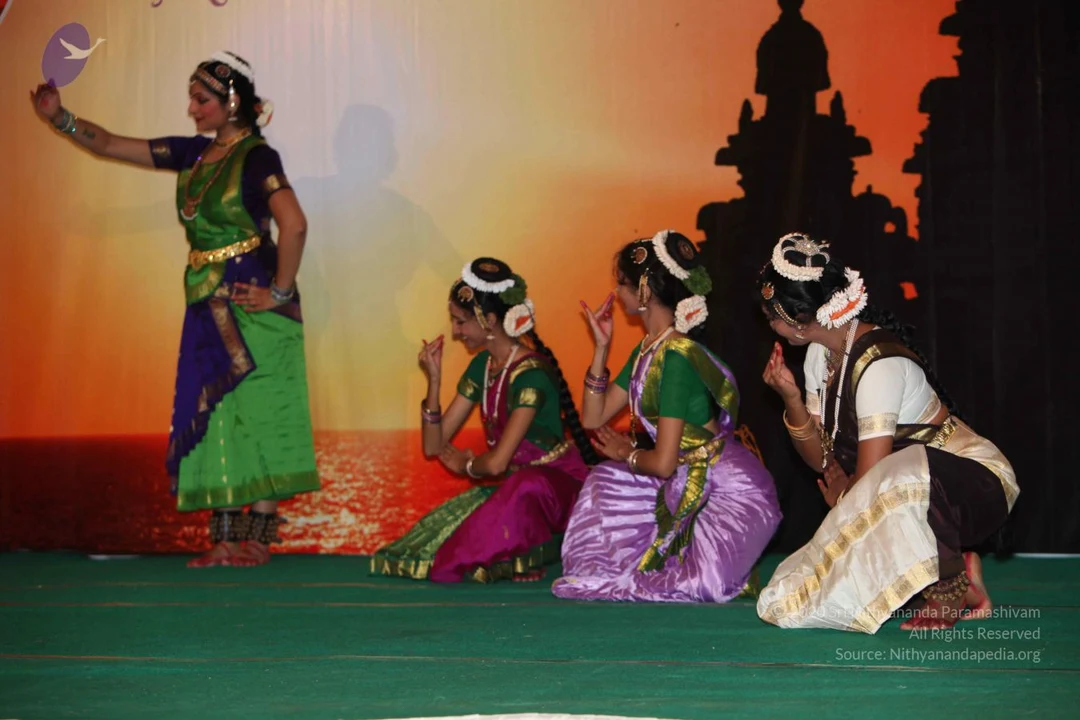
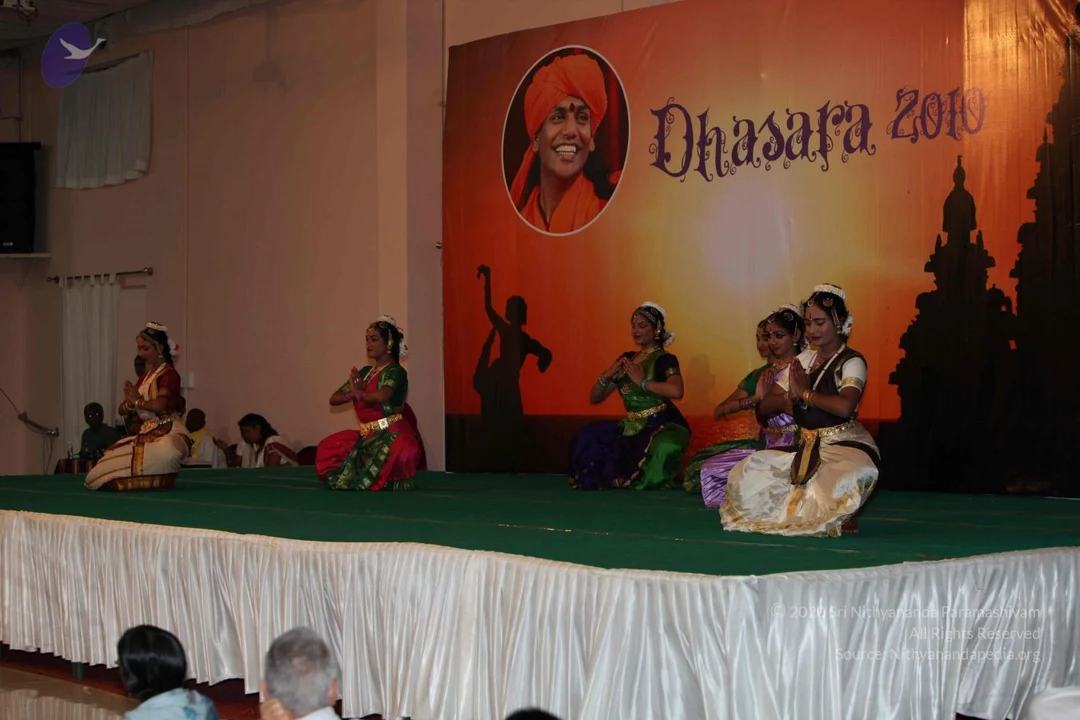
8 photosSource gallery
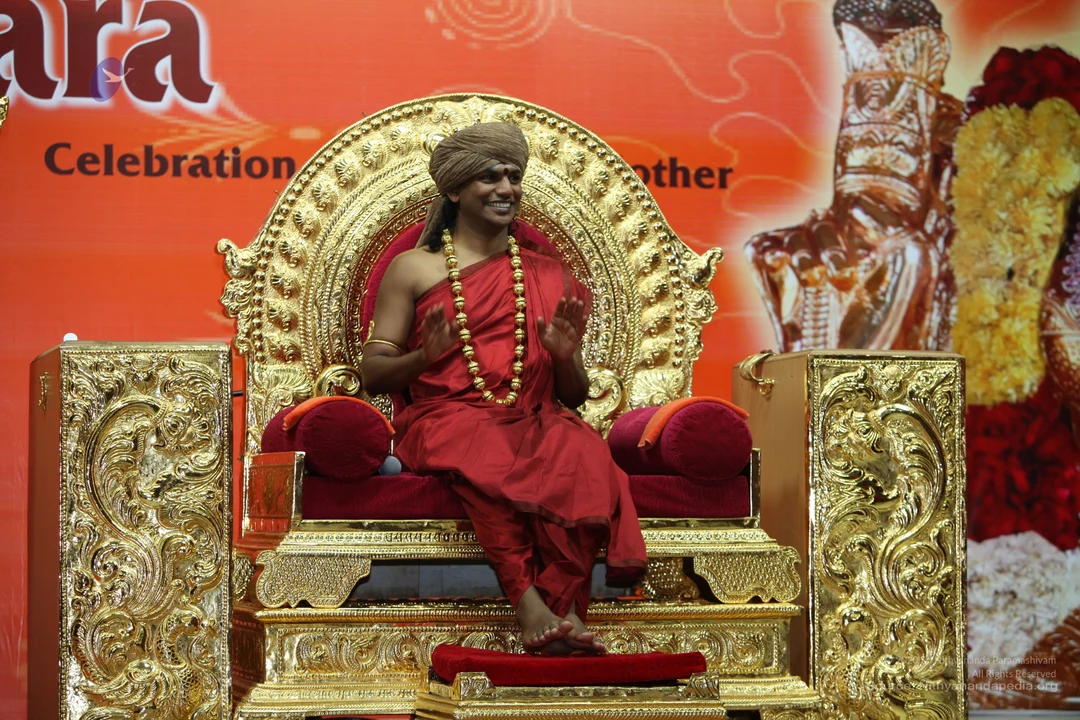
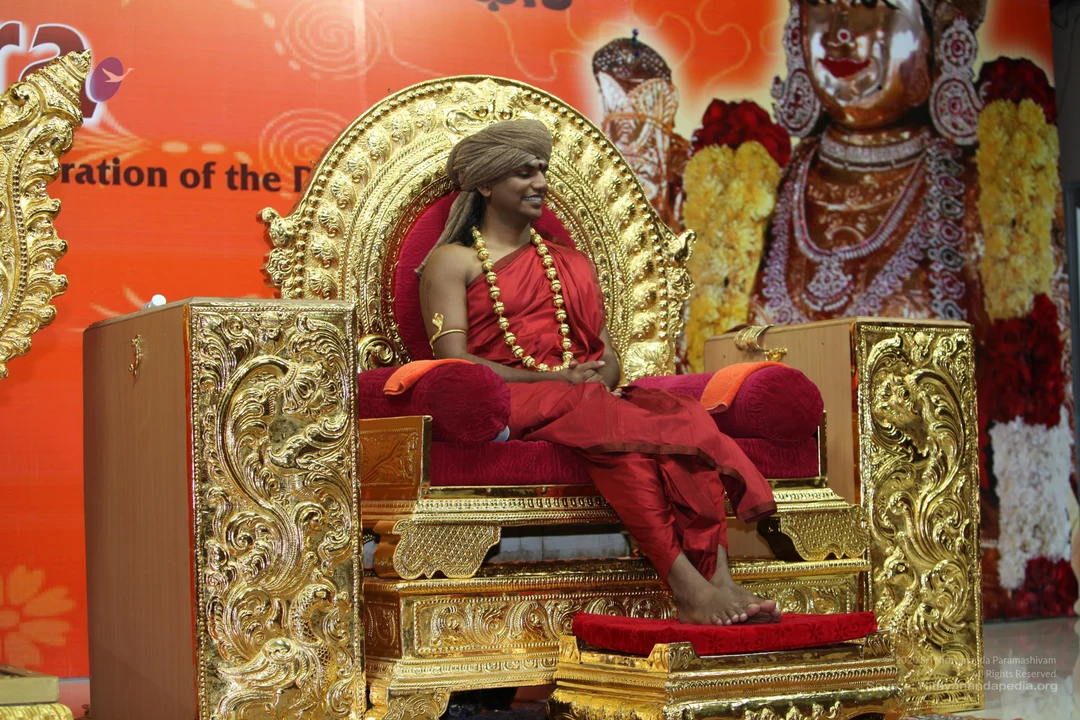
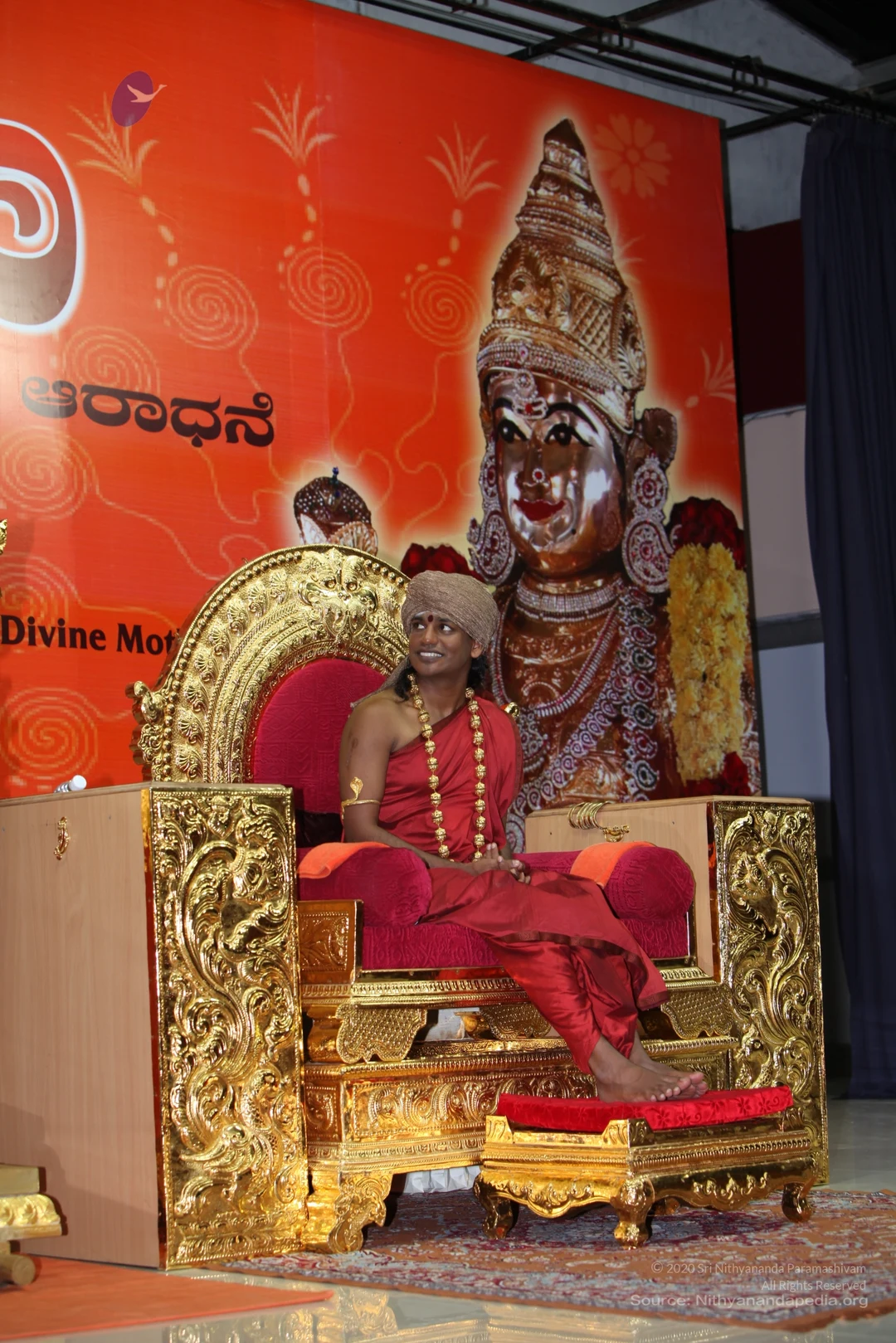
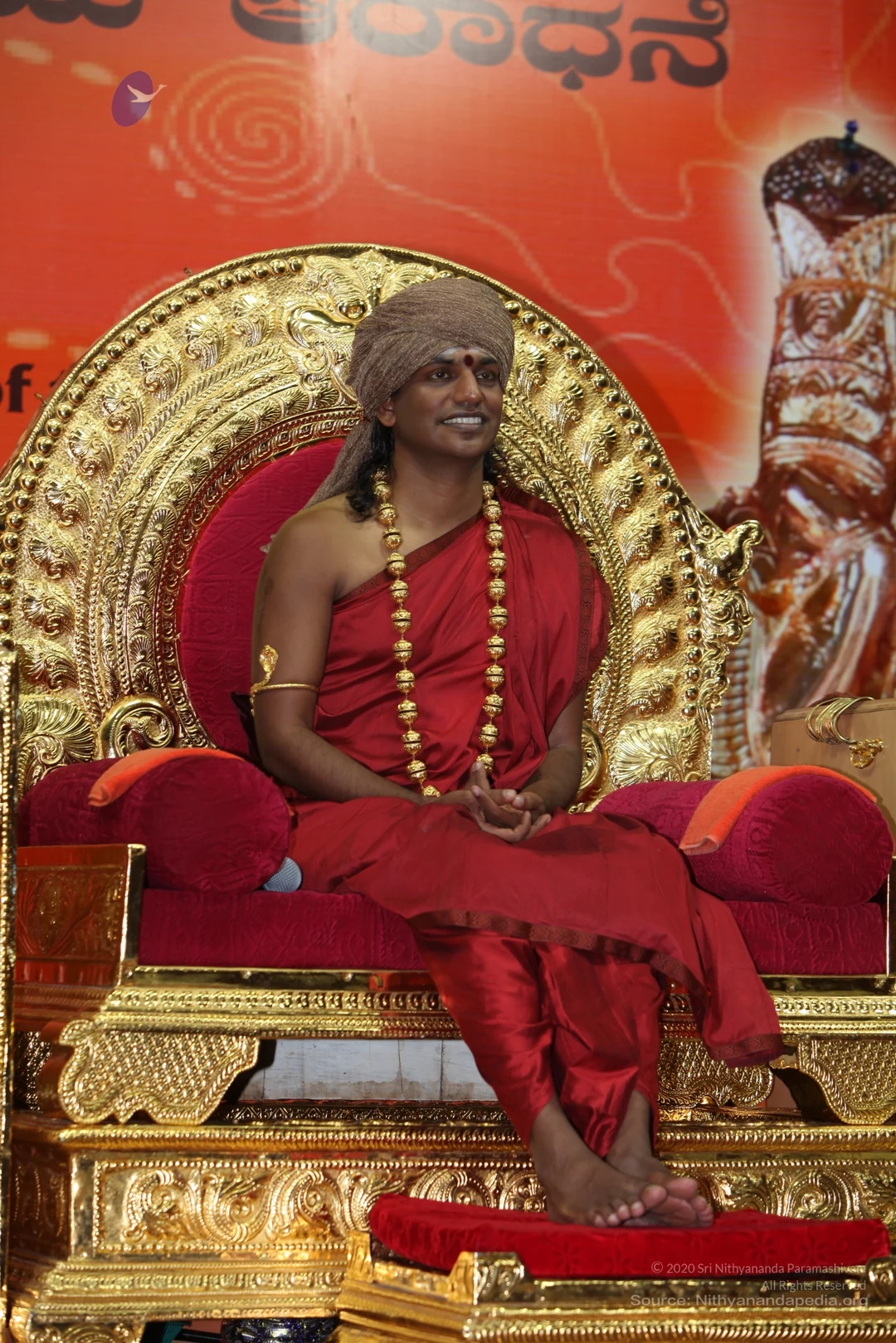
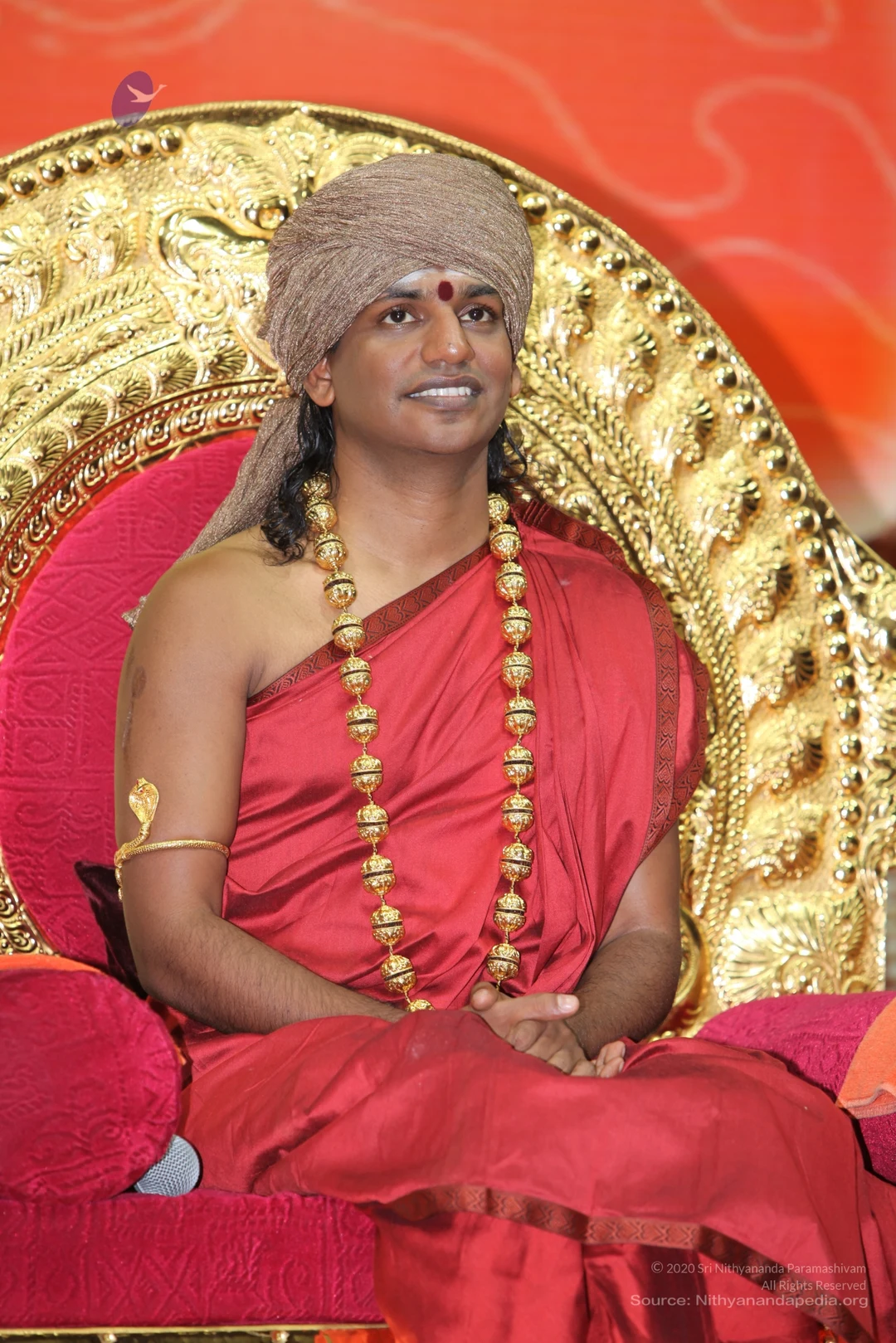
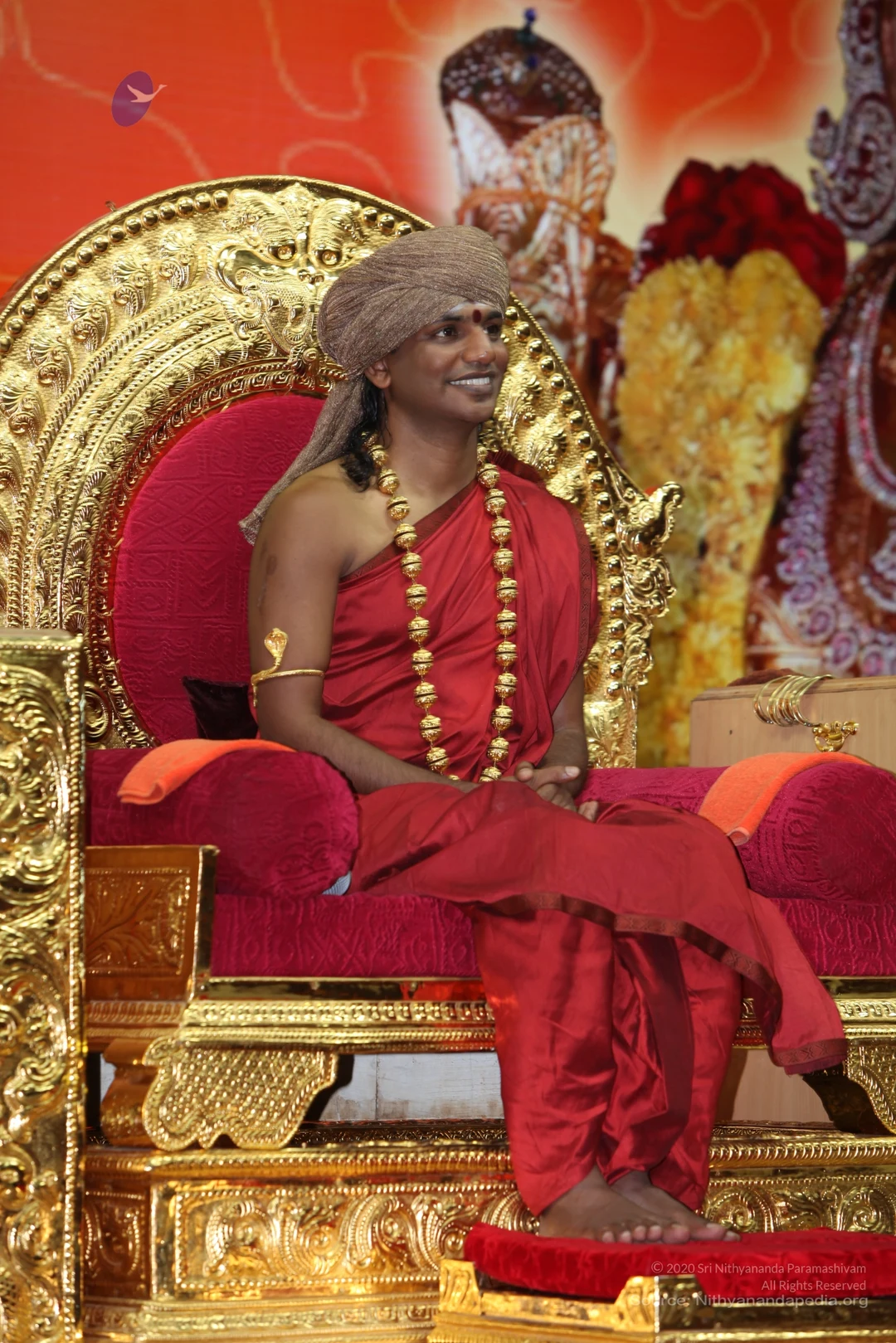
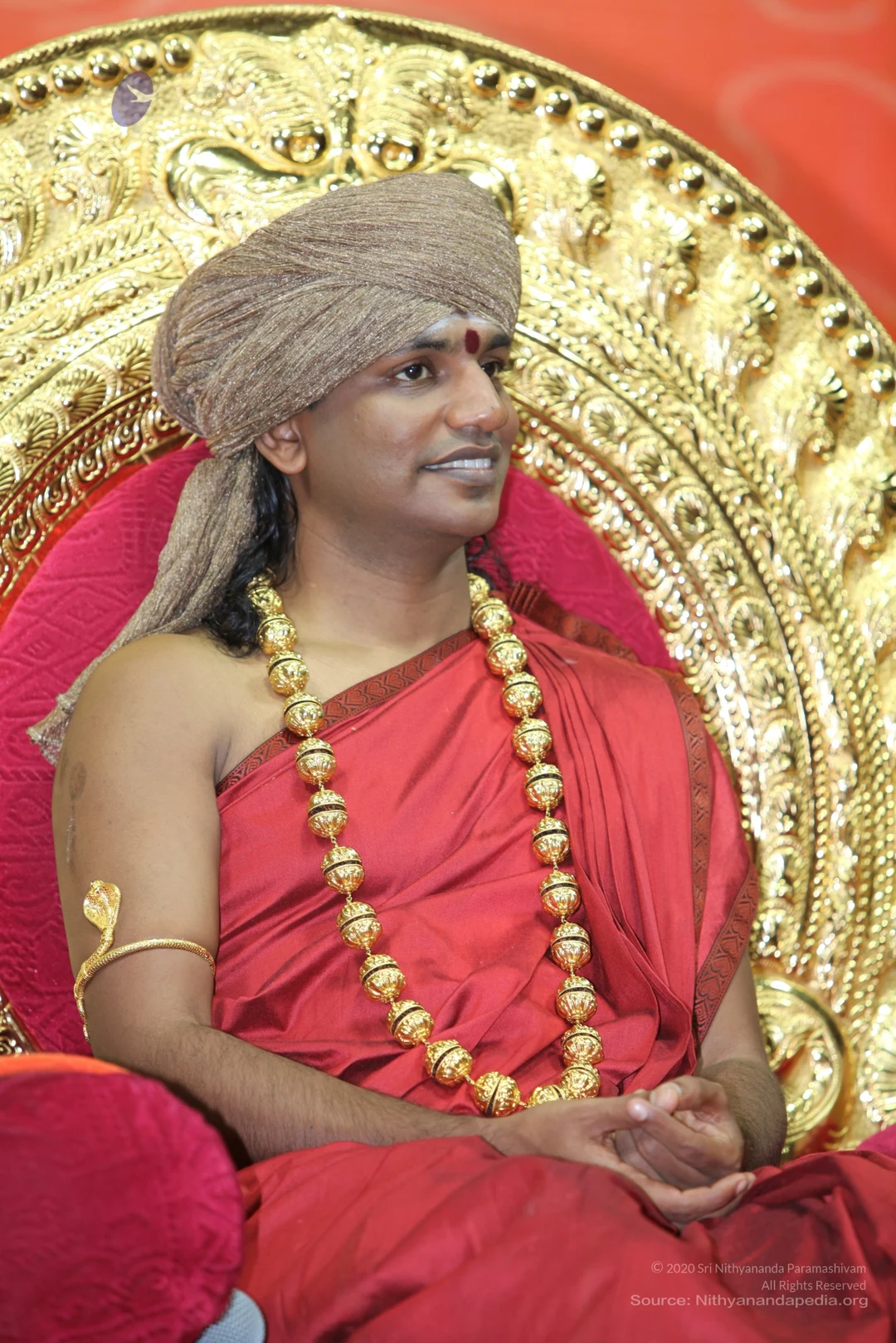
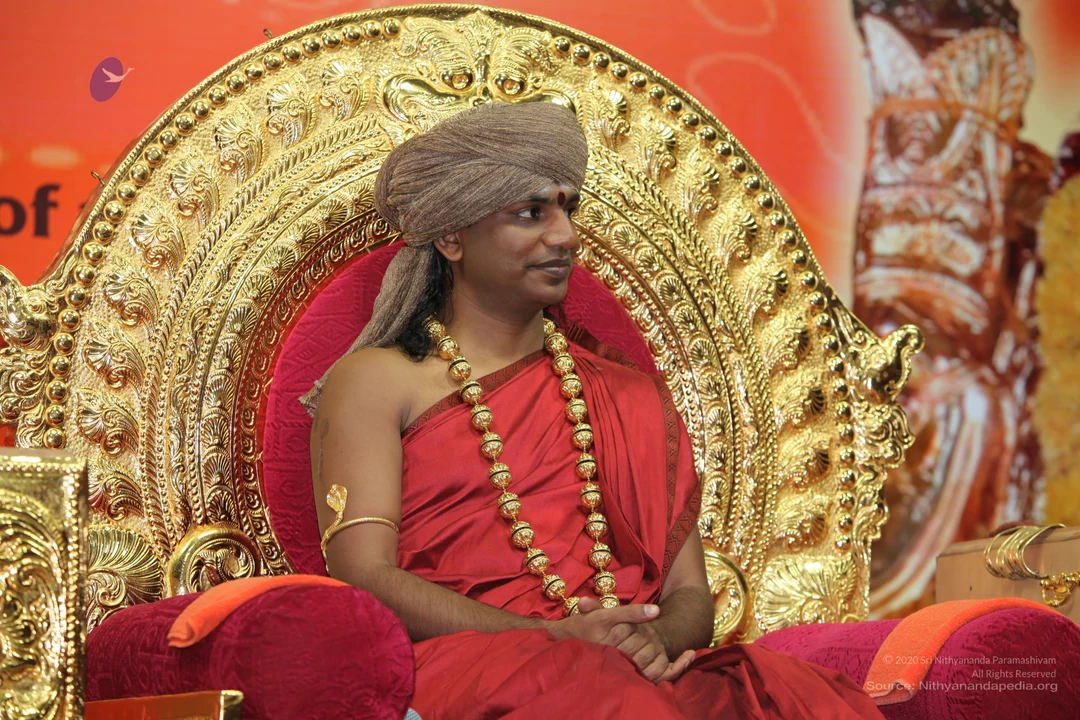
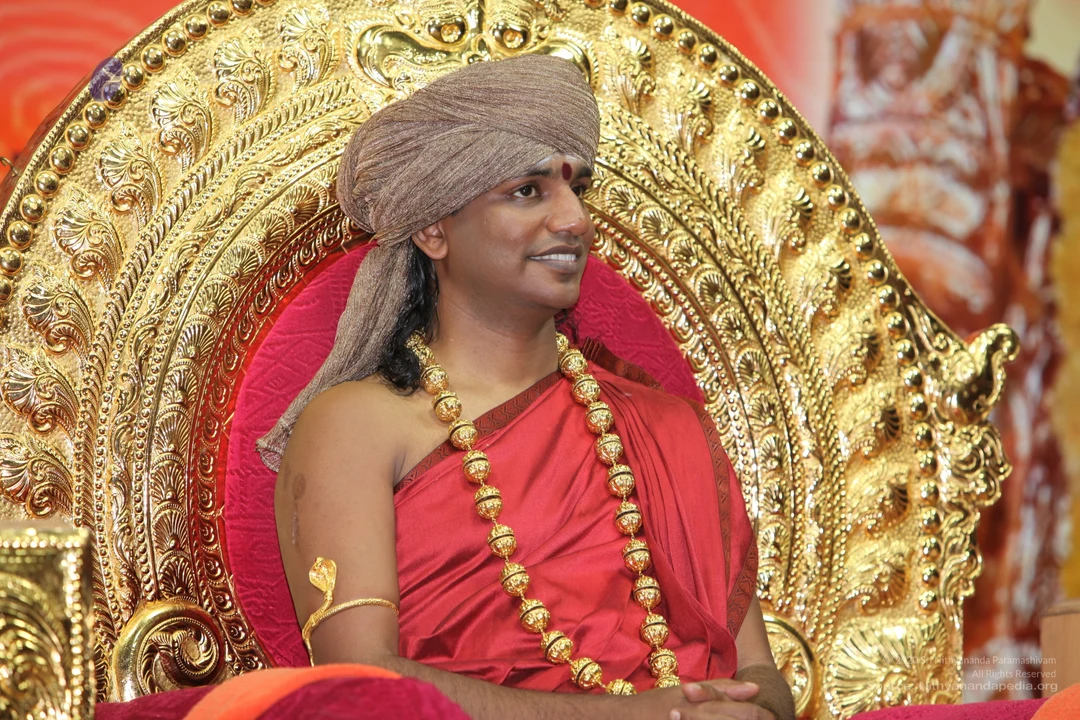
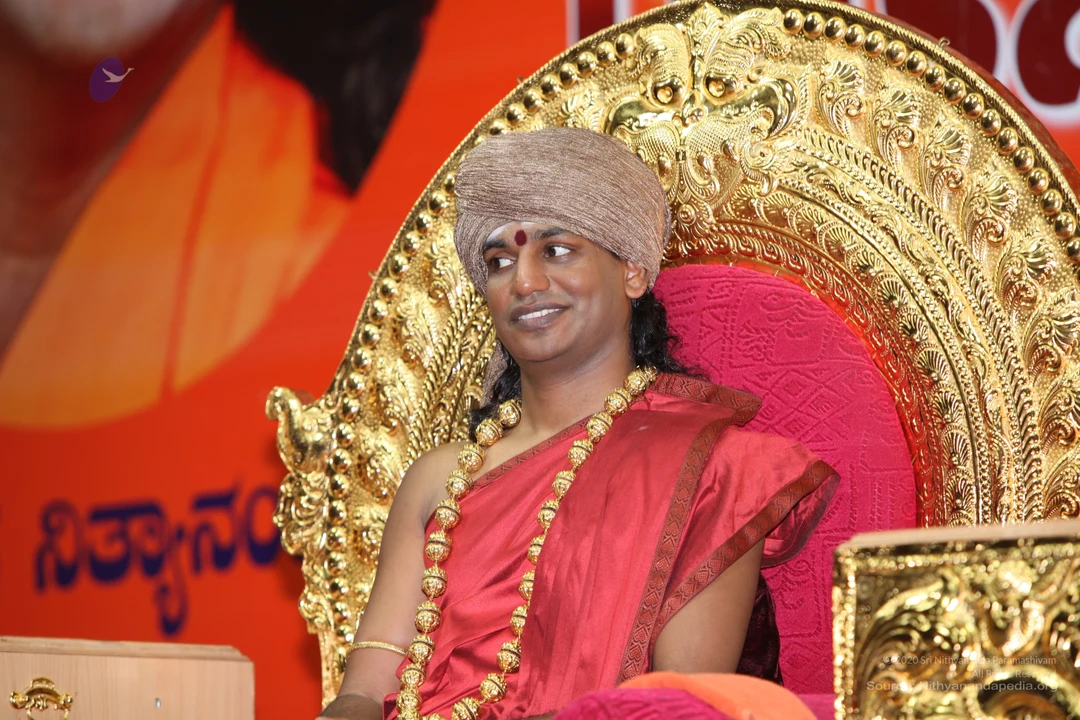
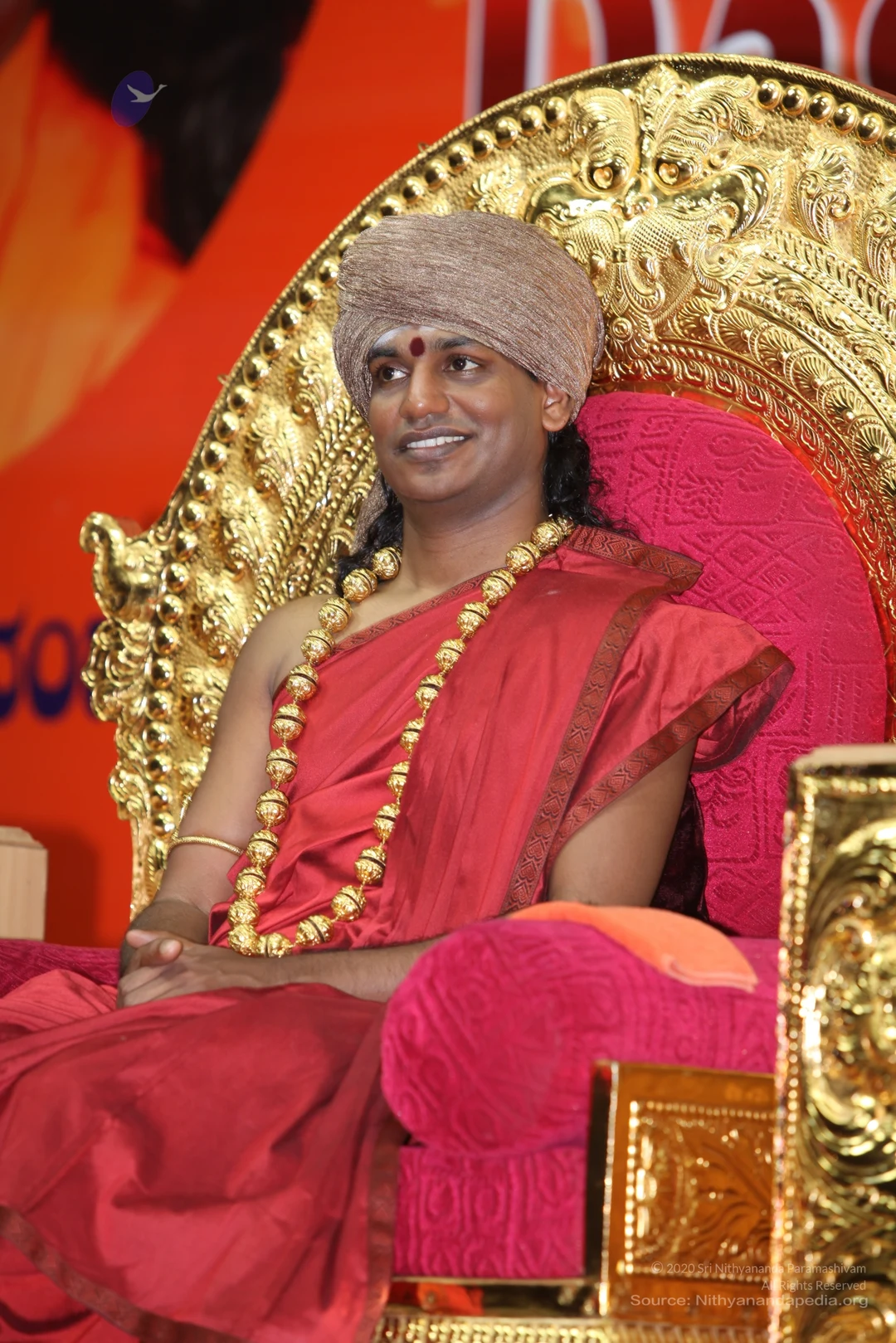
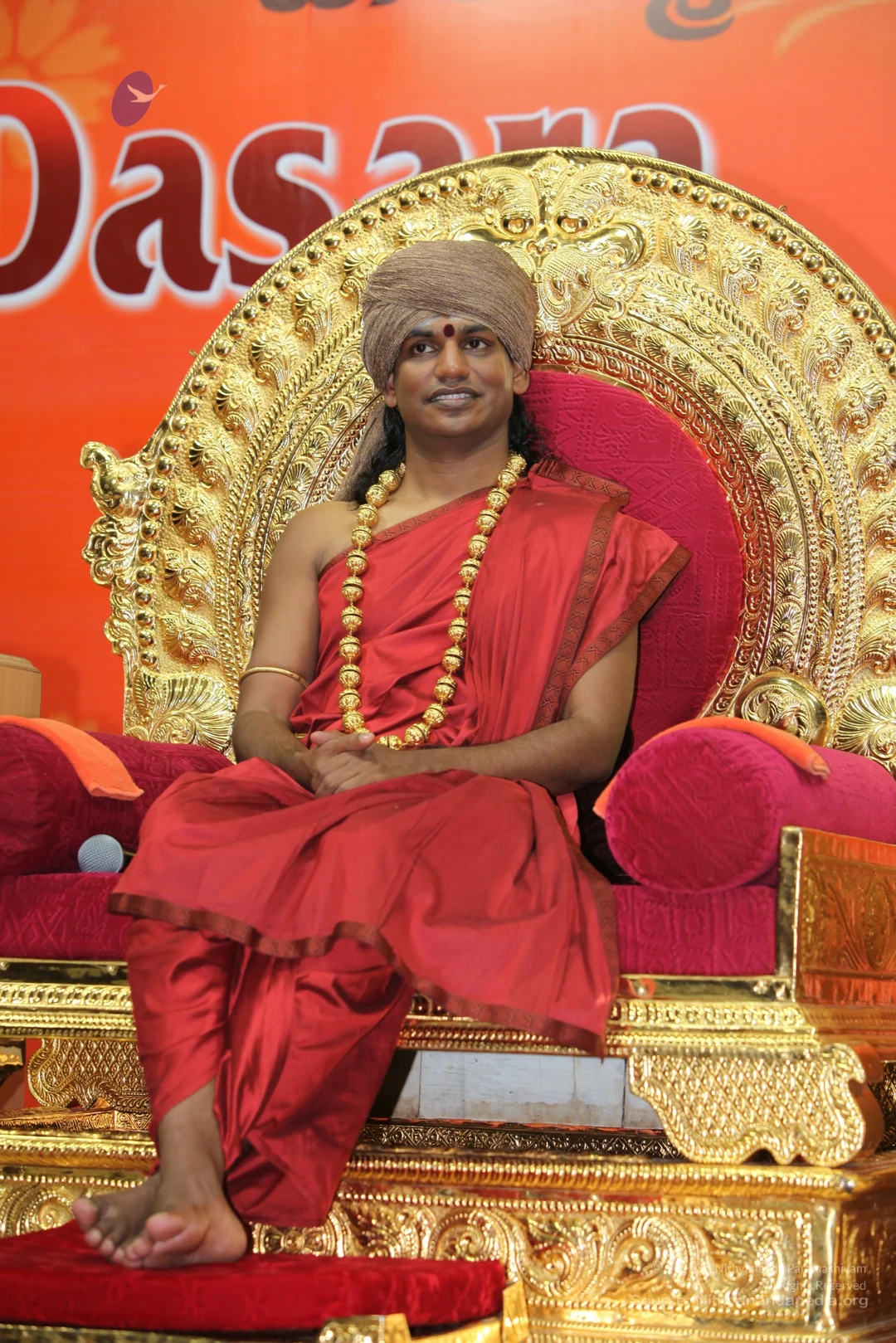
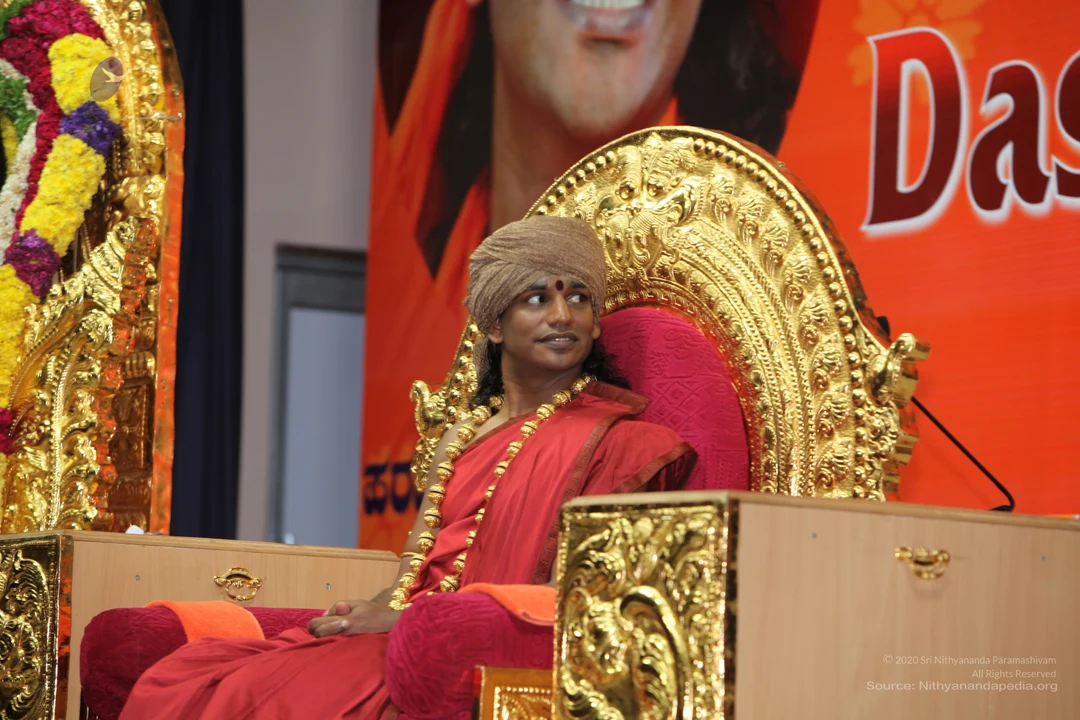
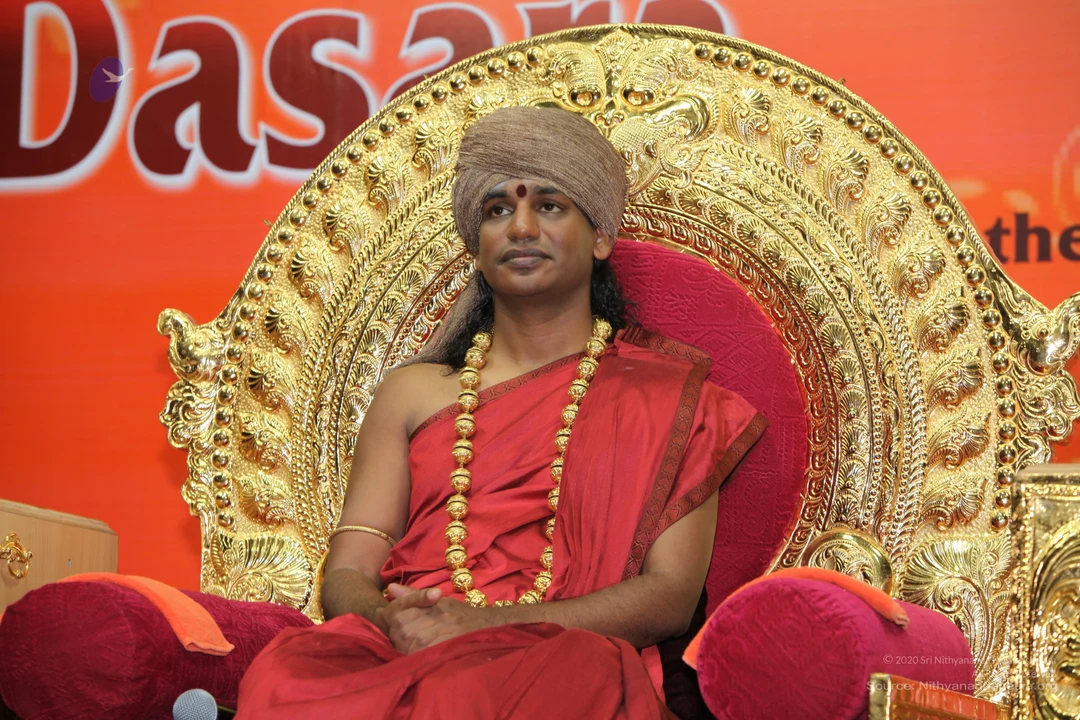
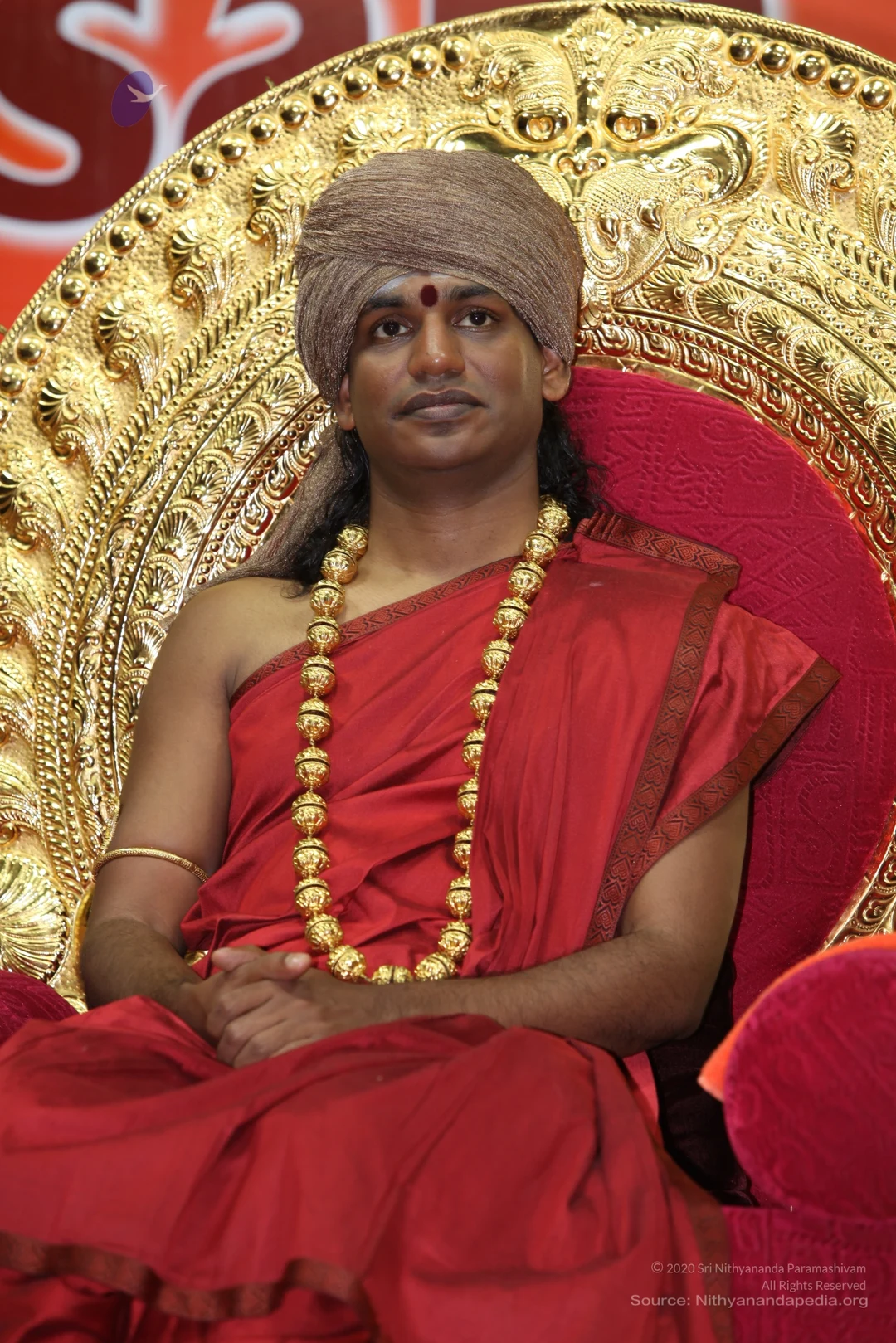
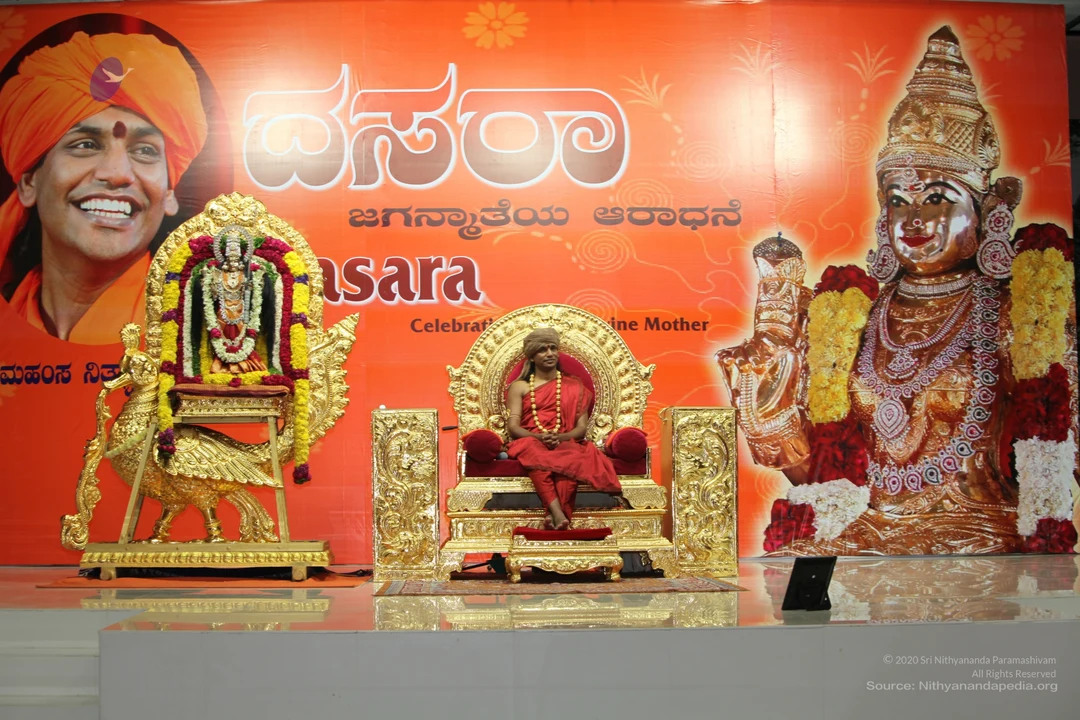
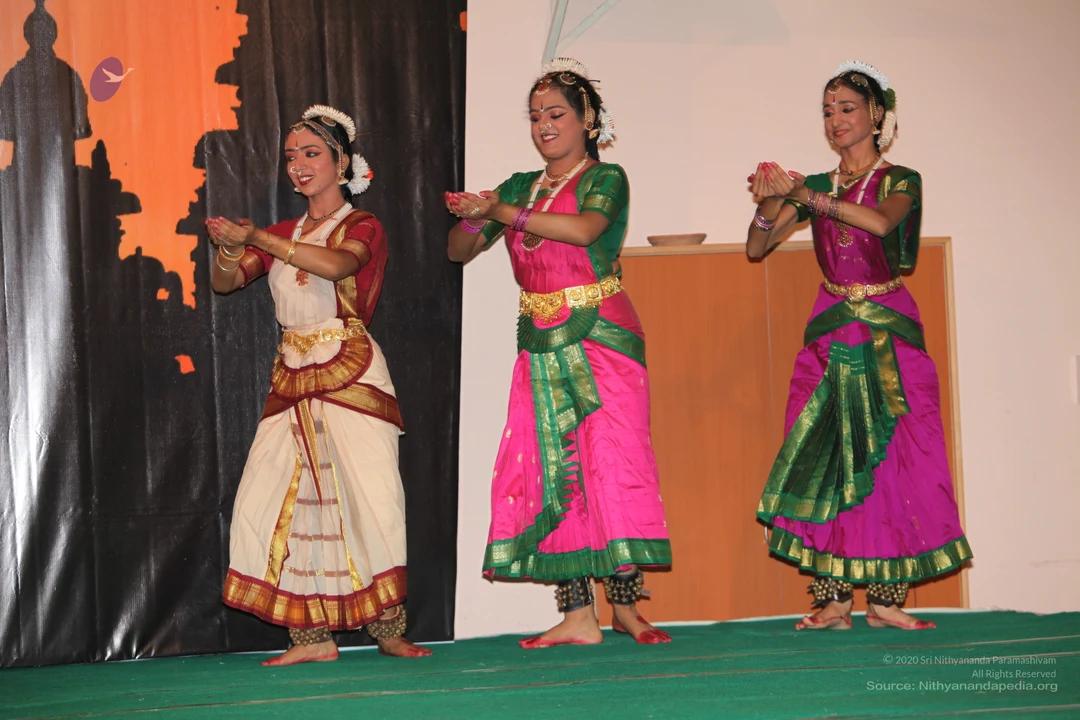
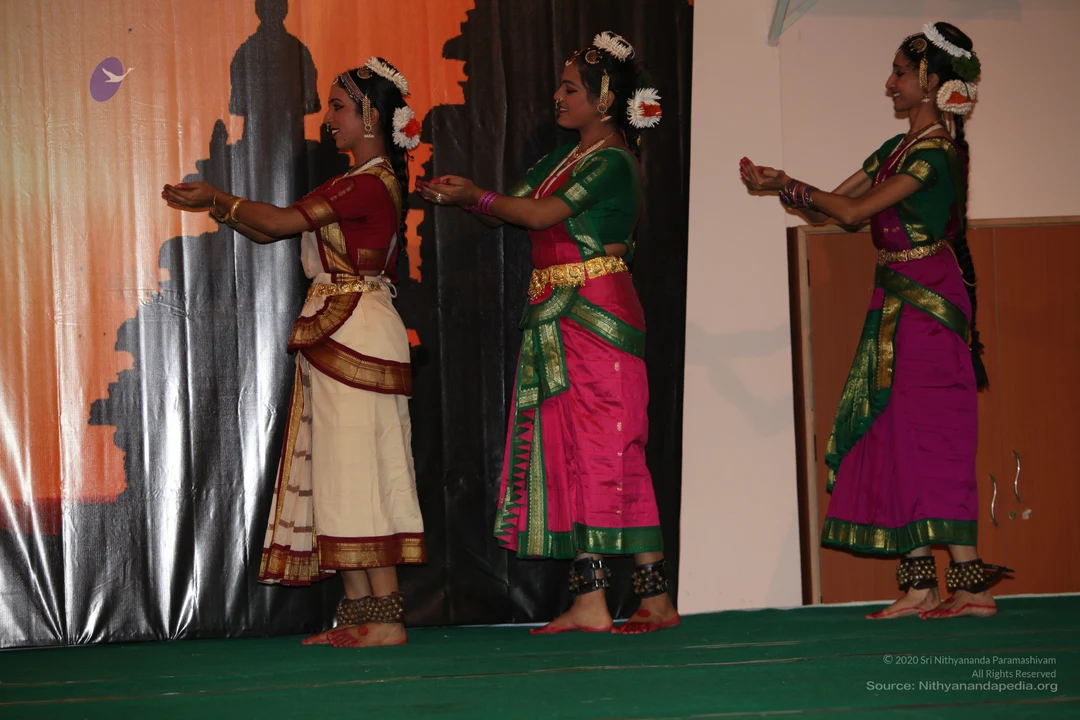
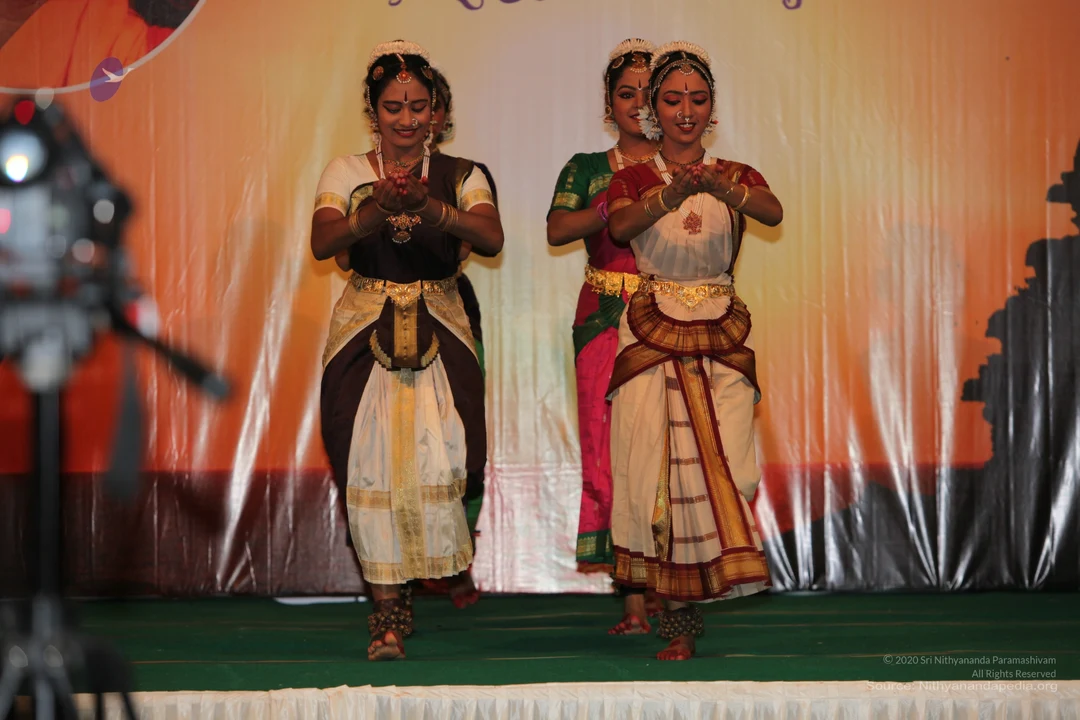
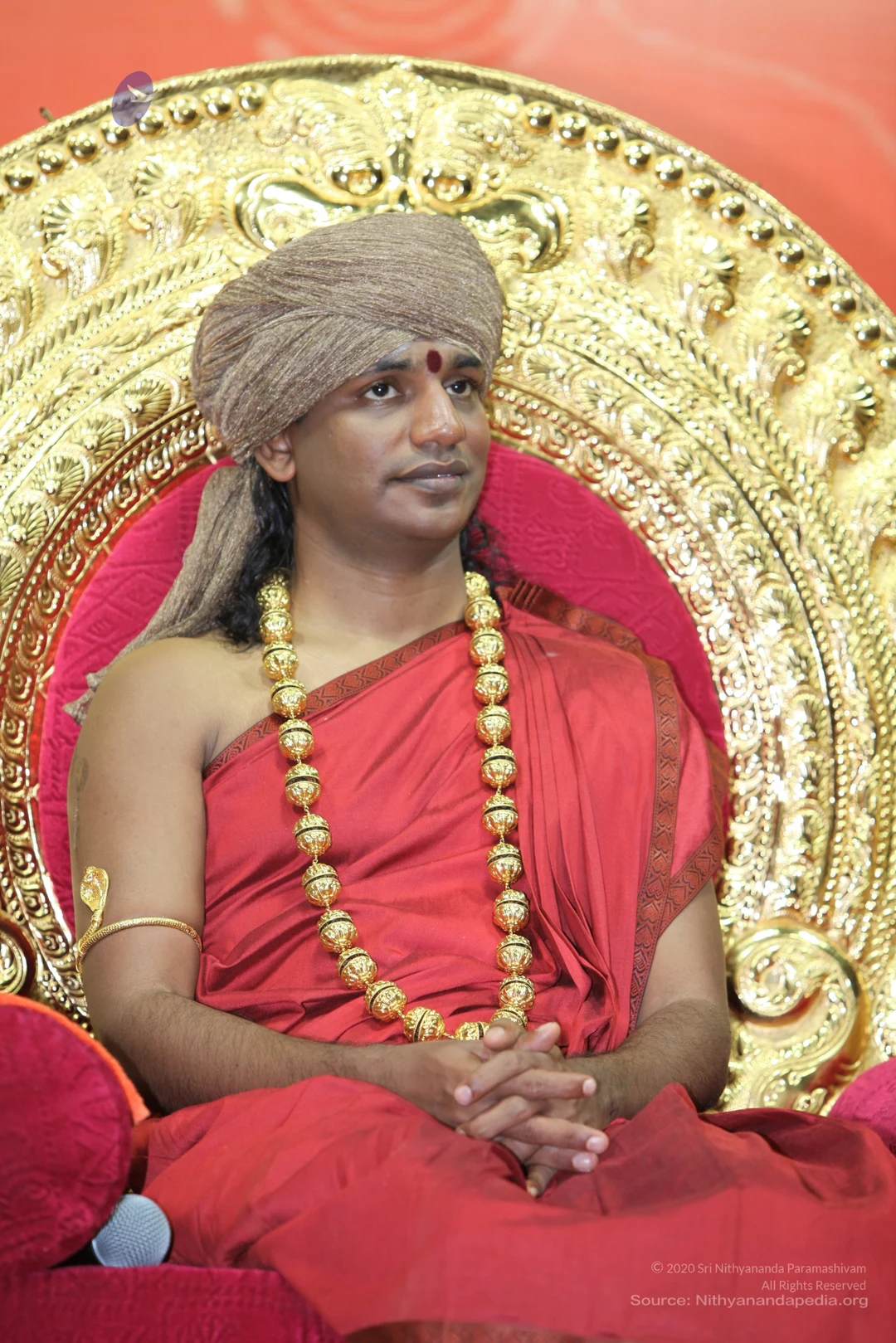
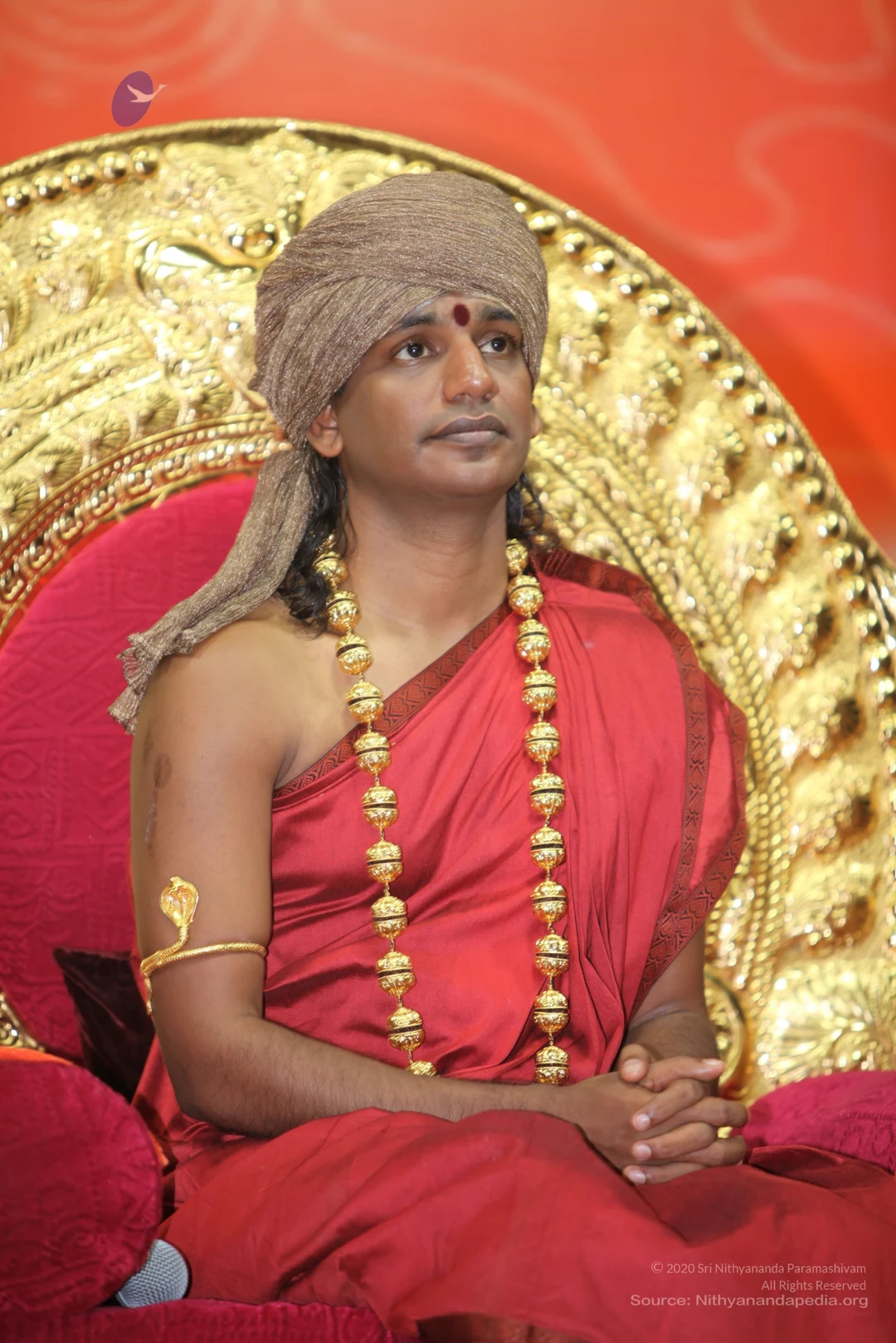
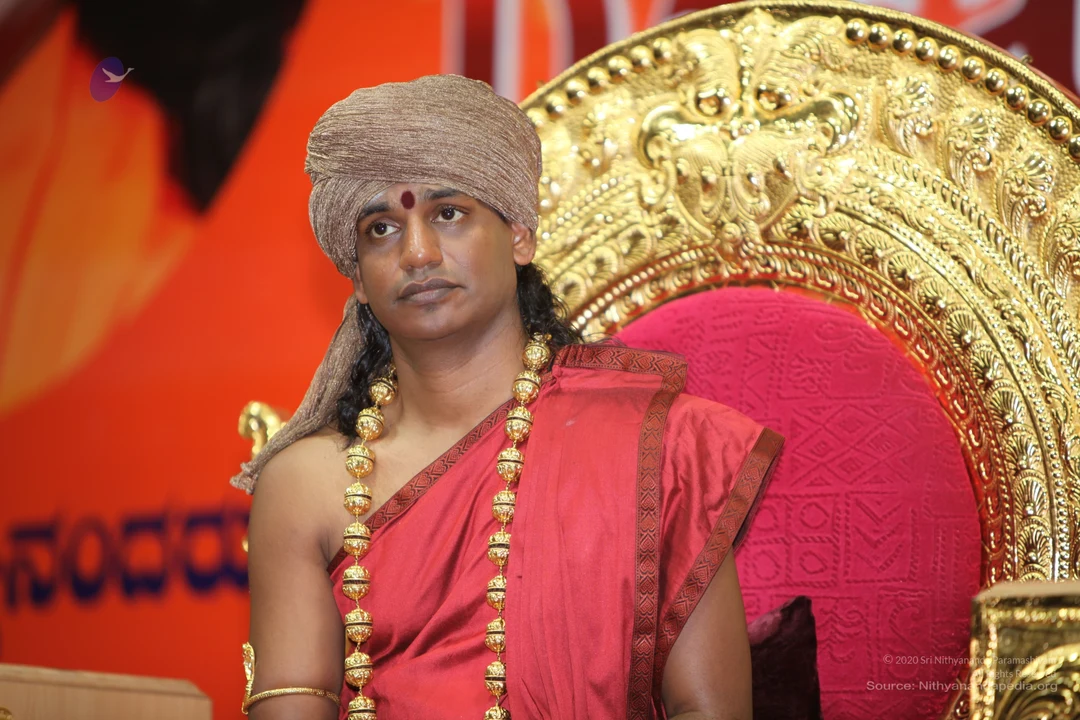
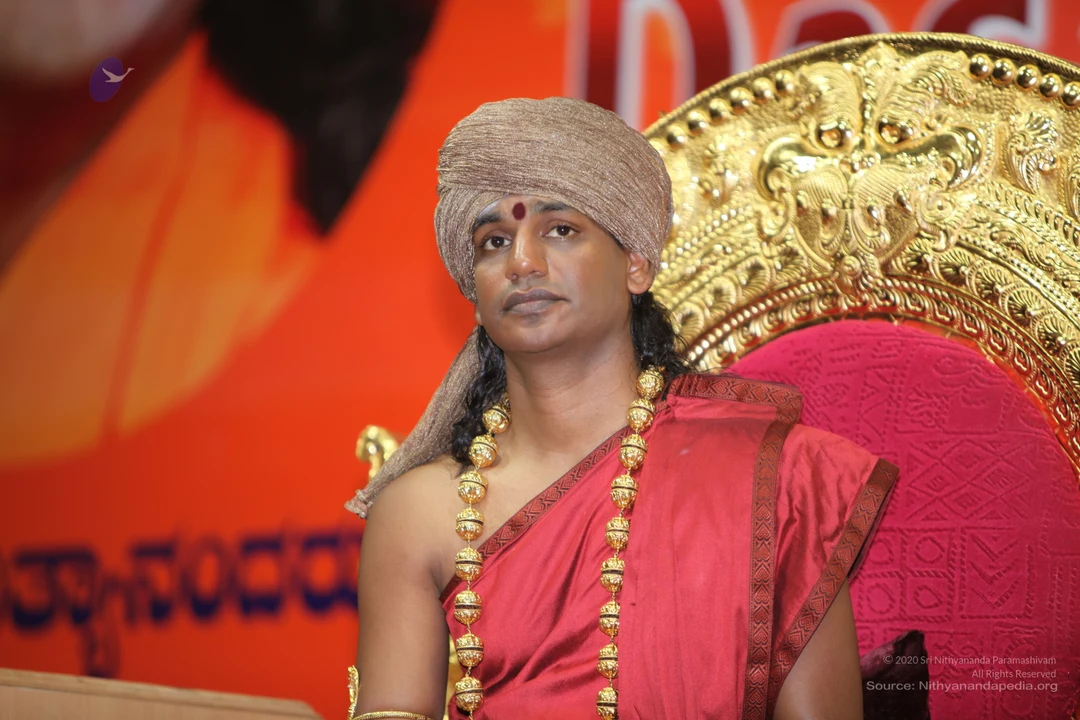
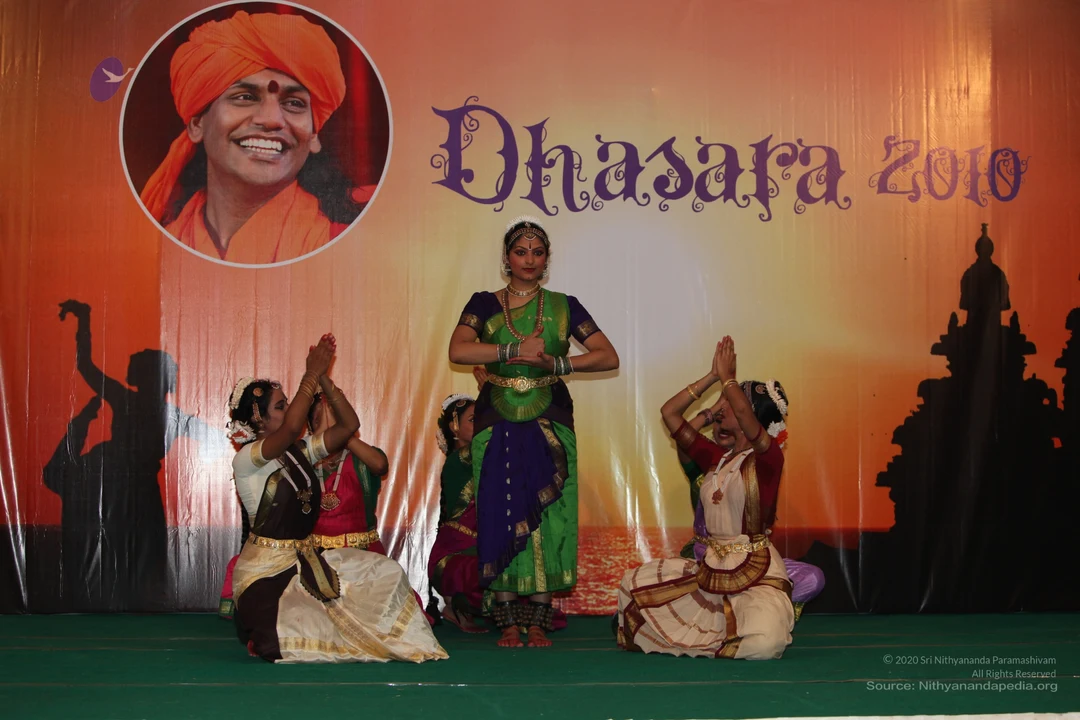
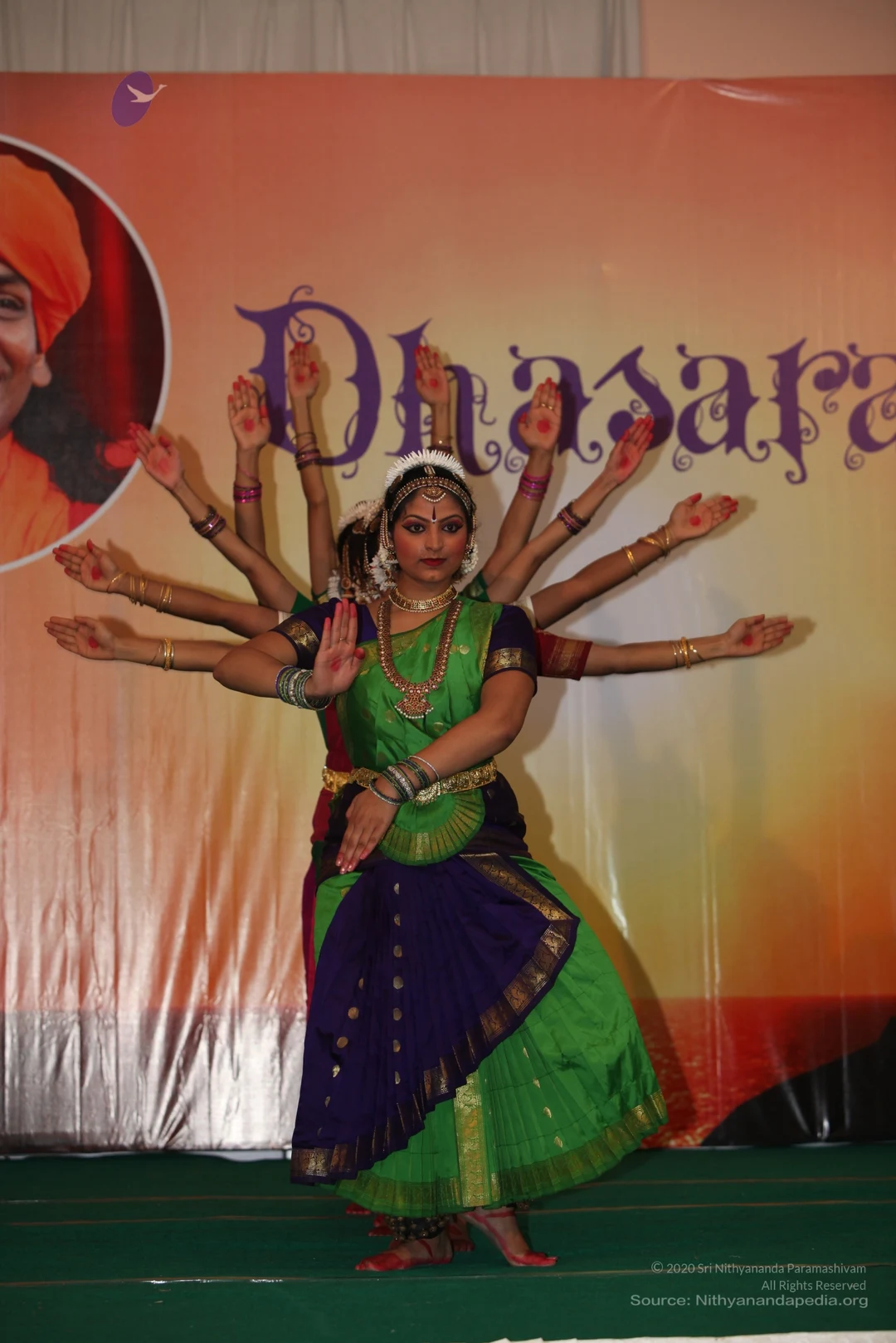
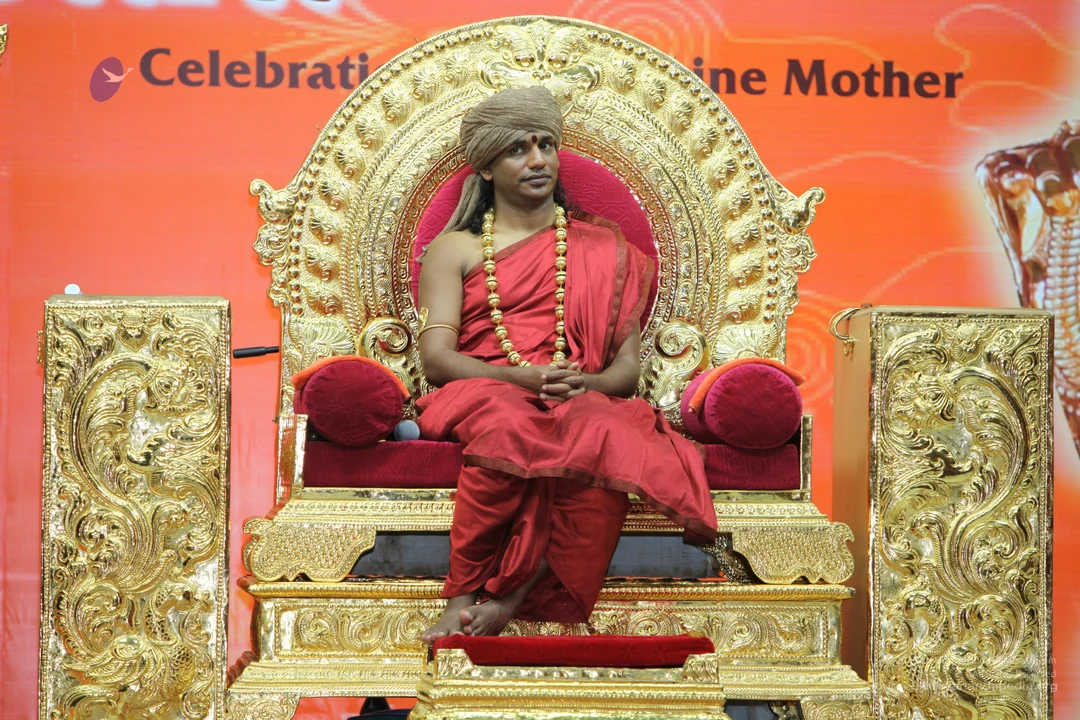
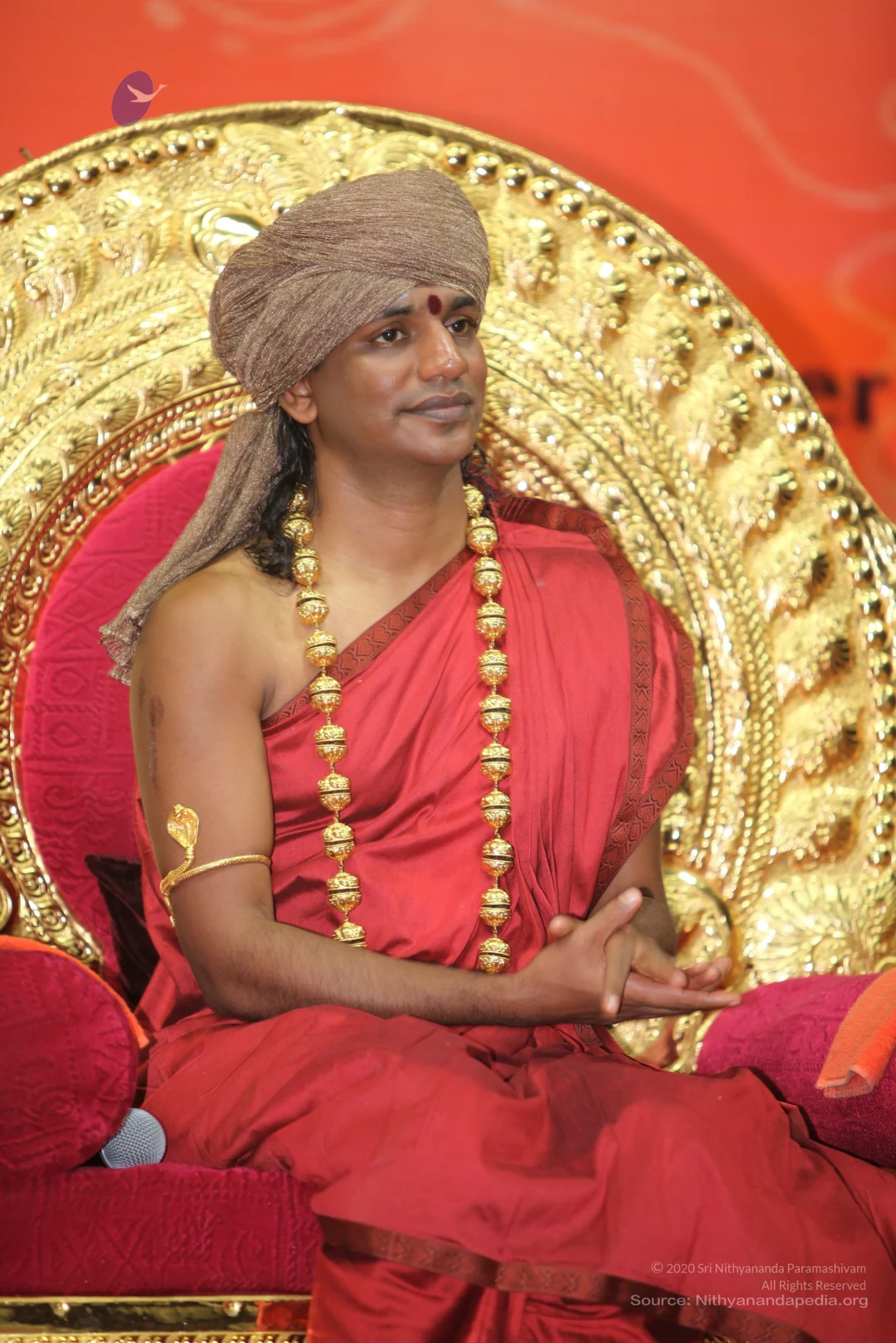
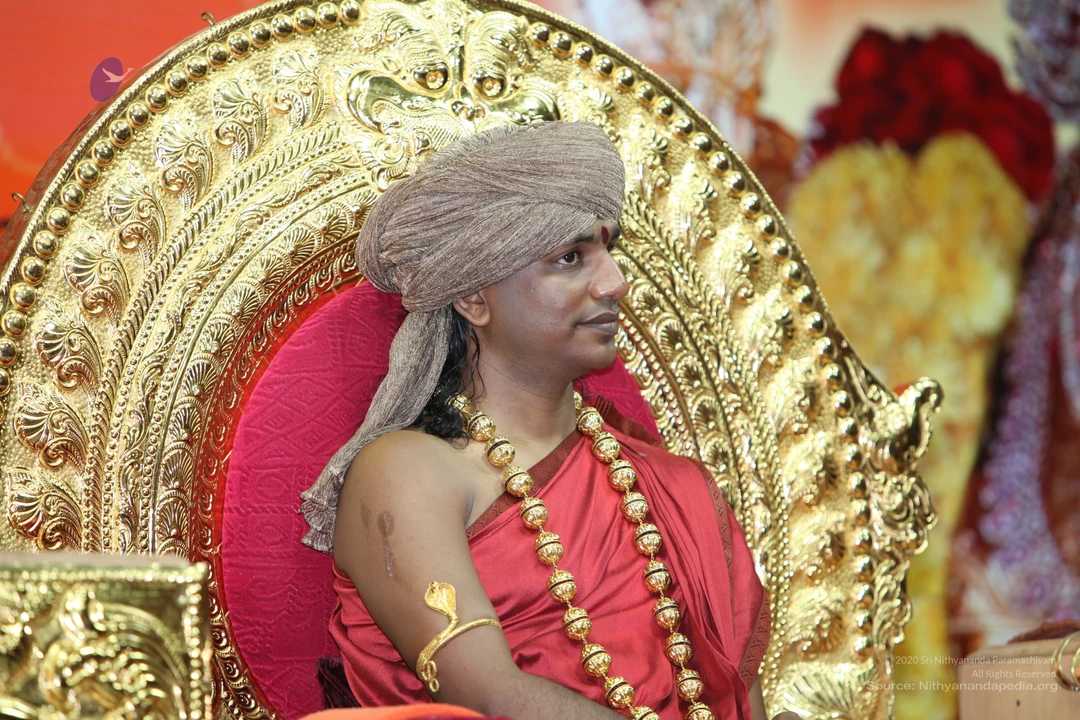
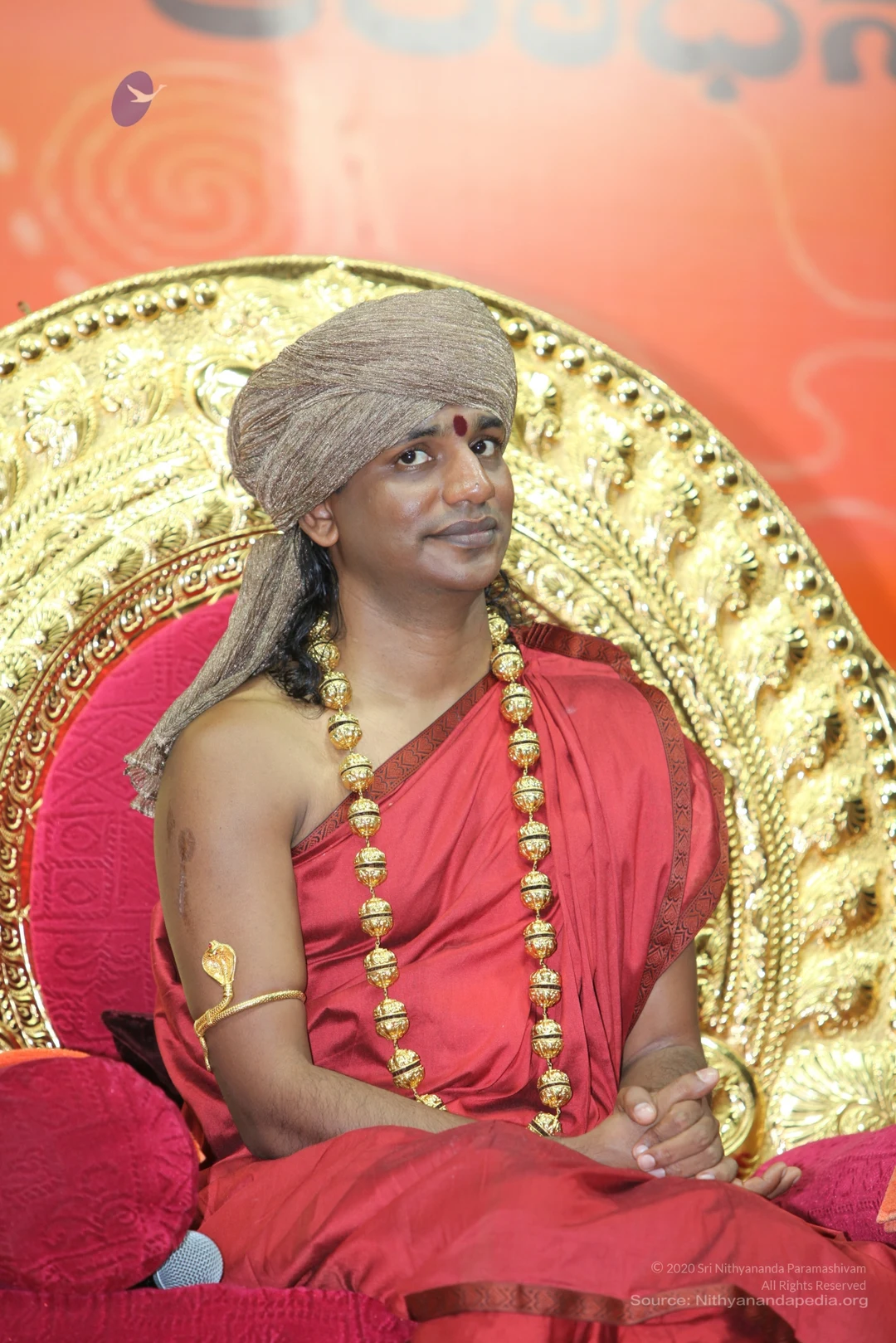
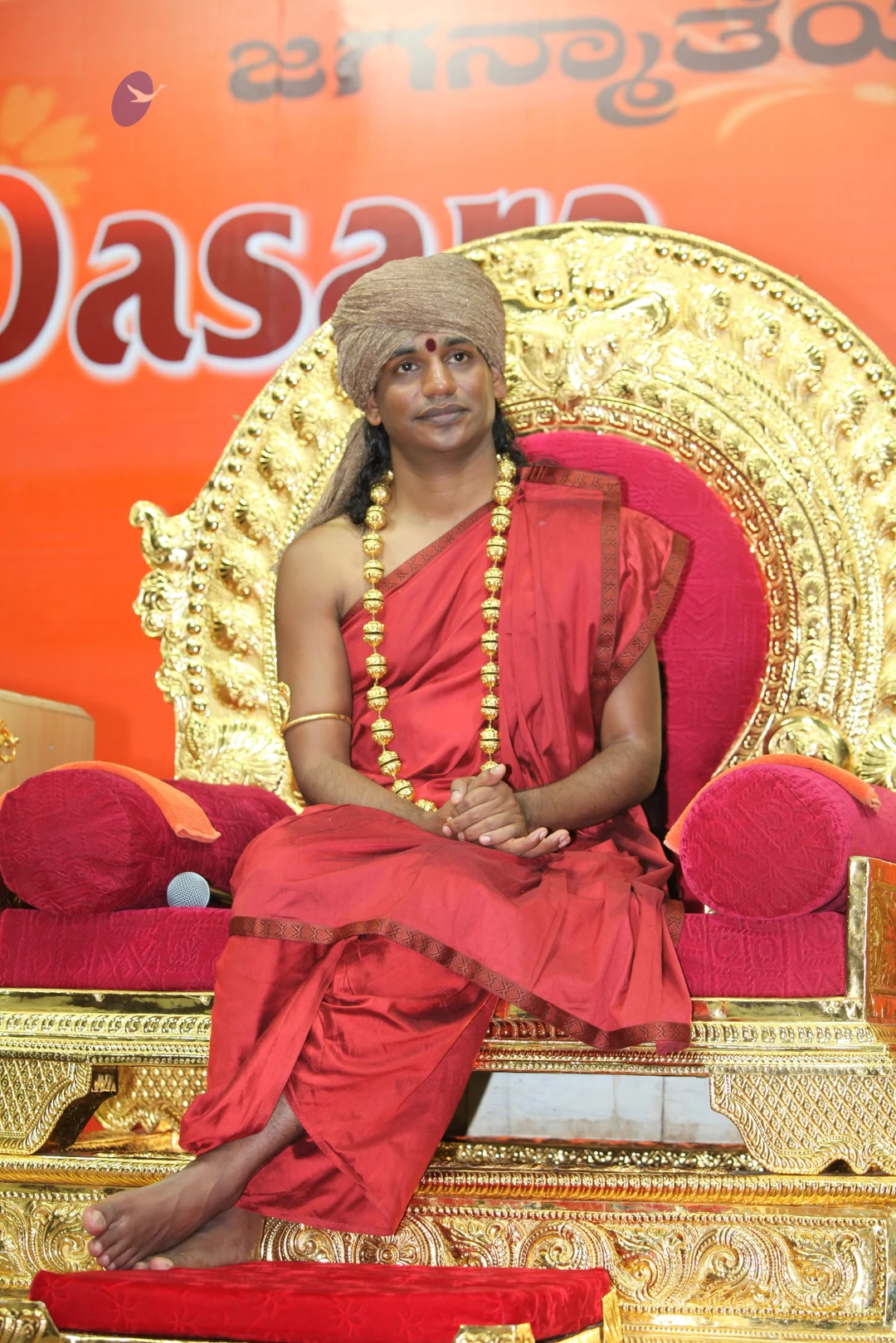
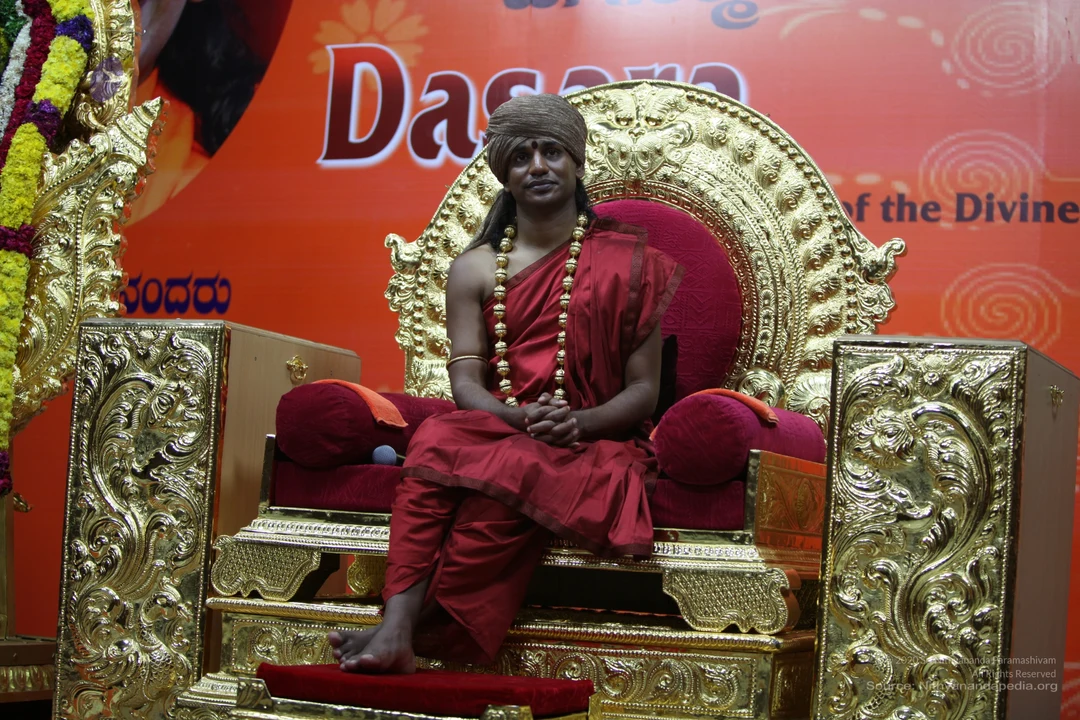
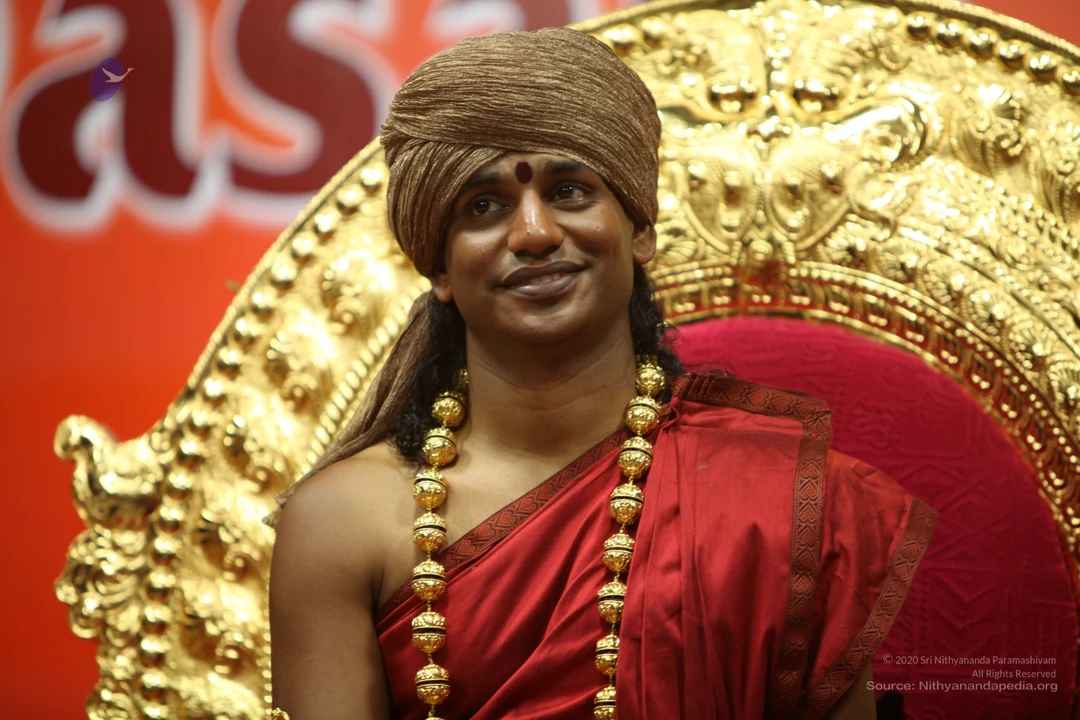
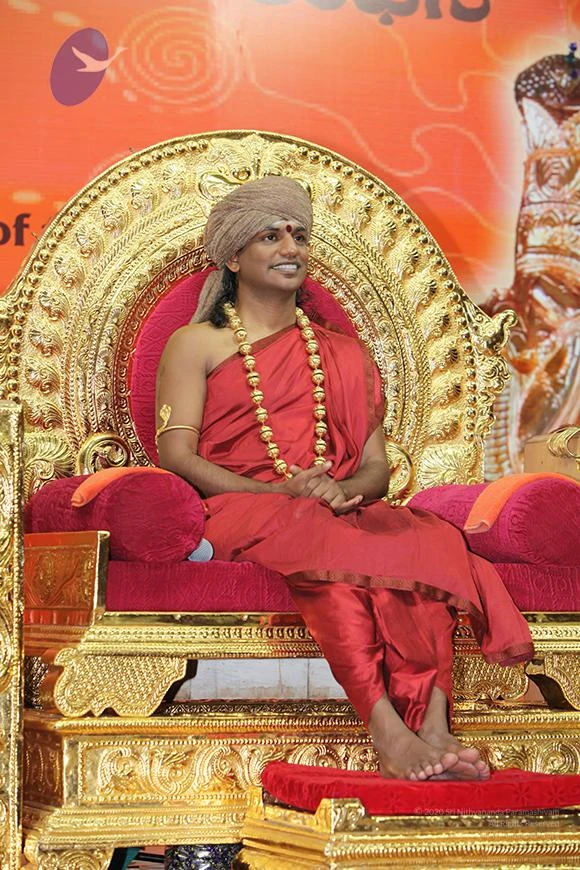
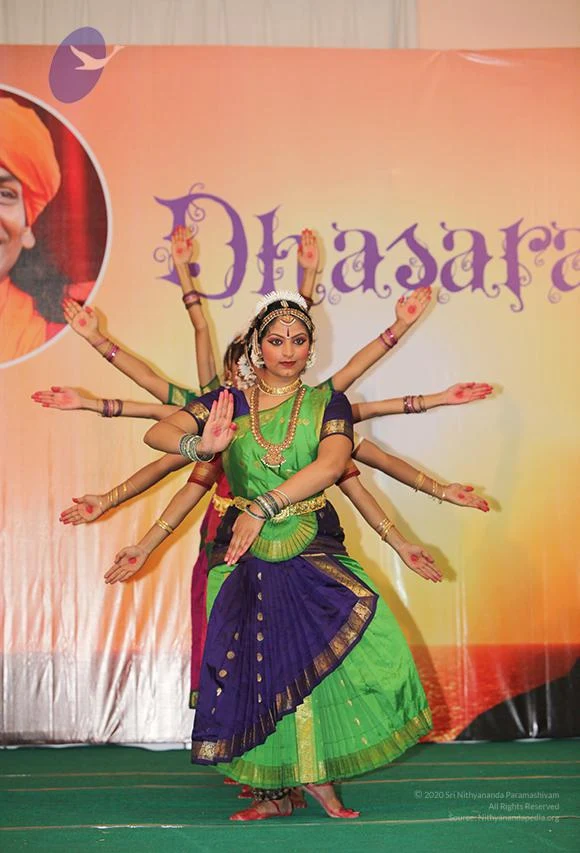
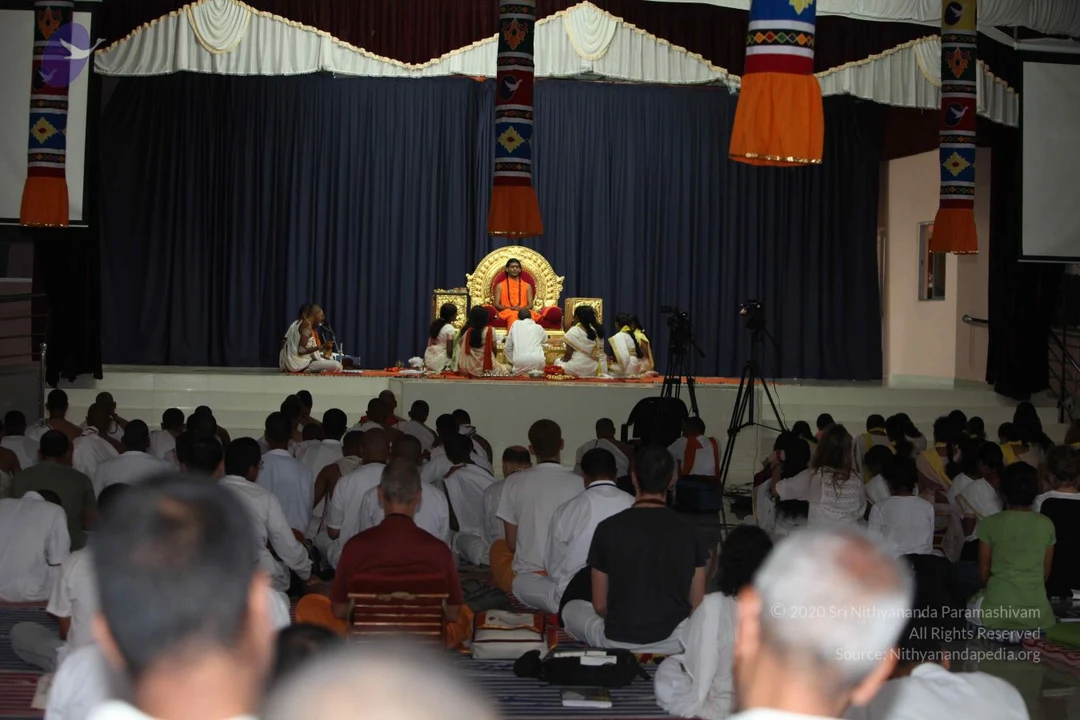
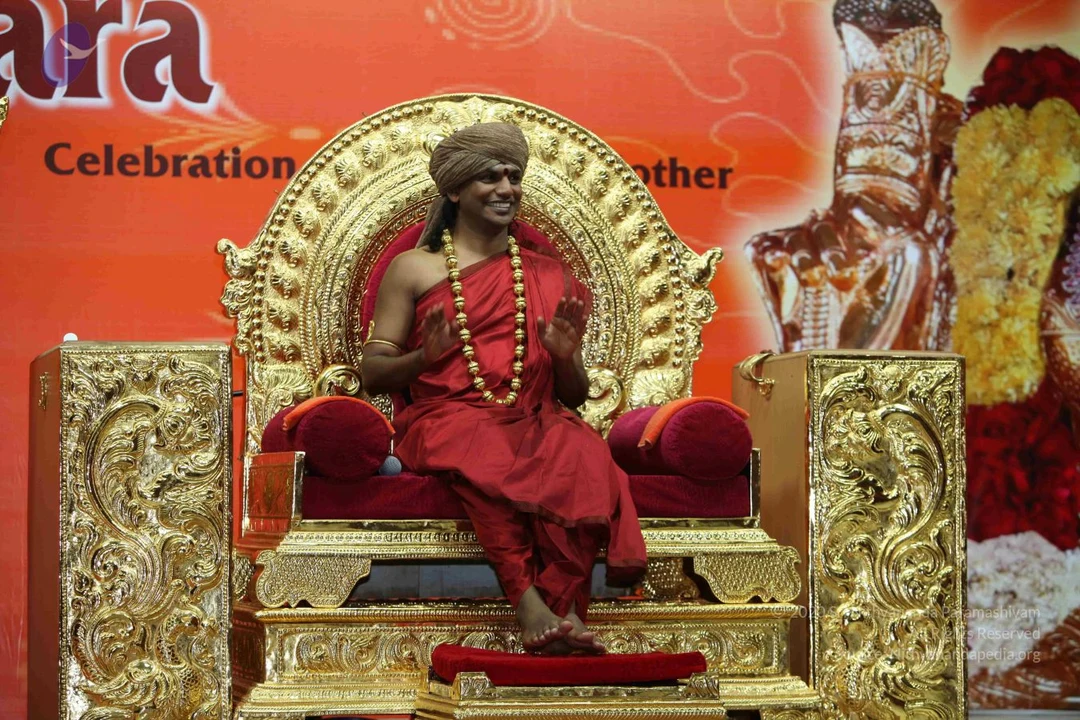
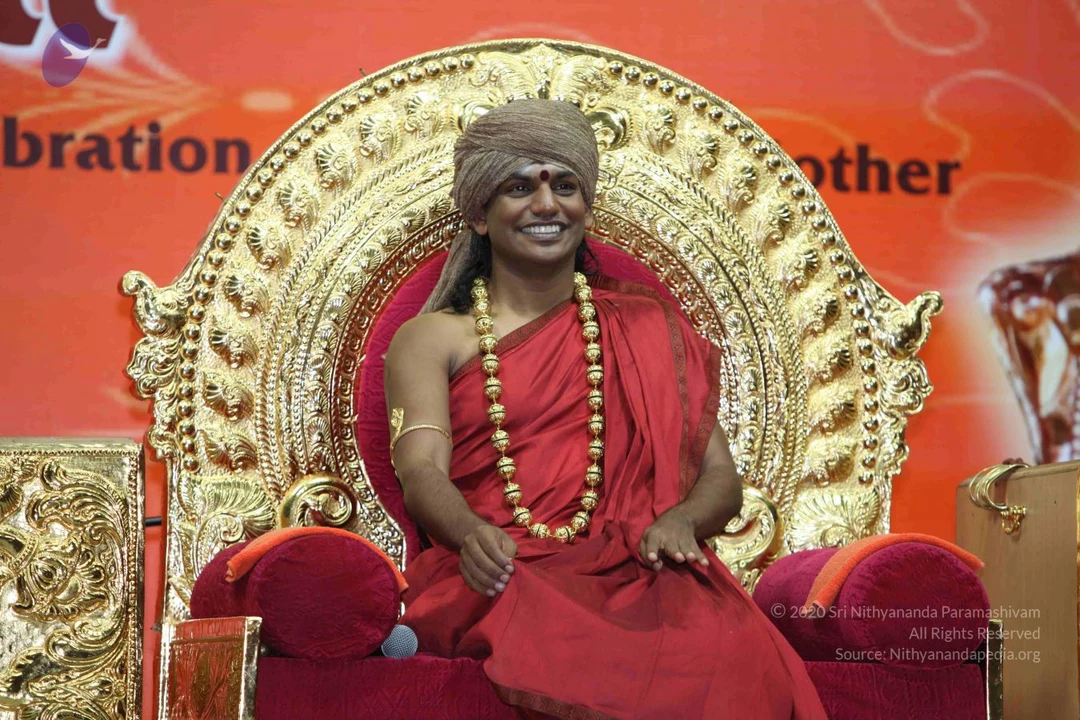
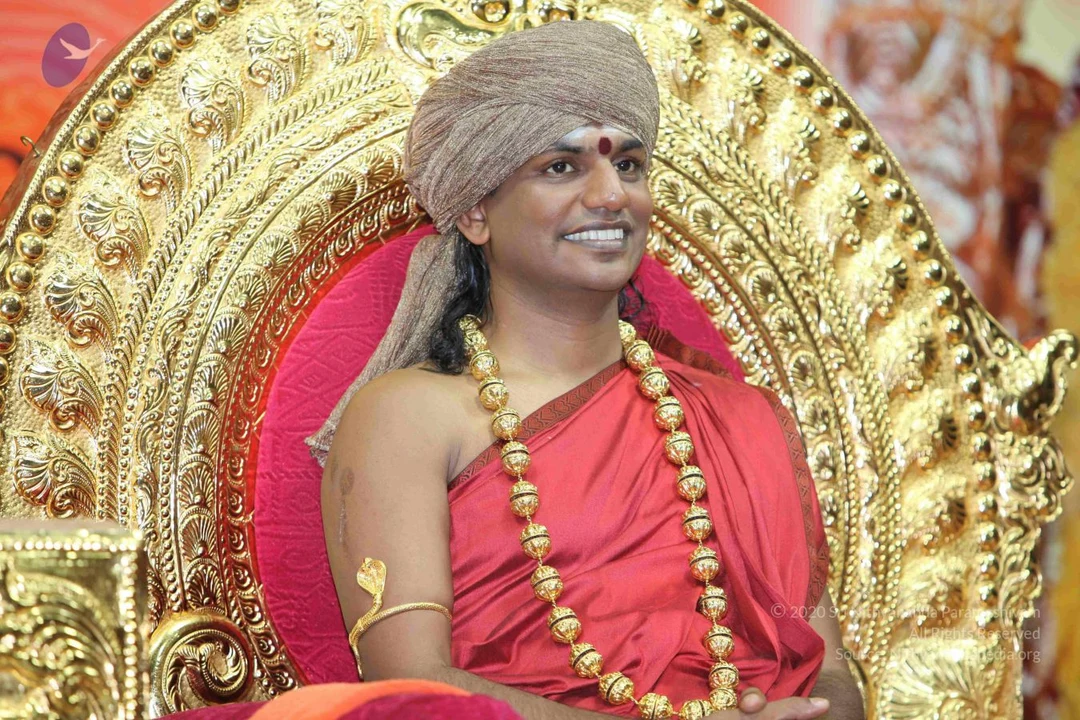
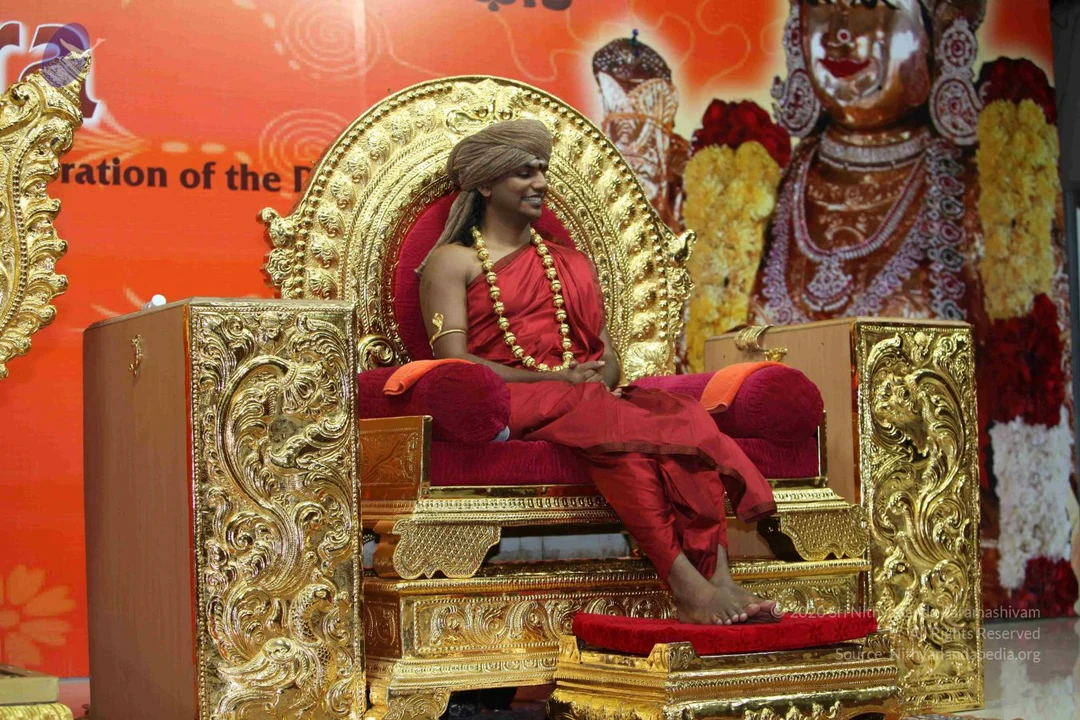
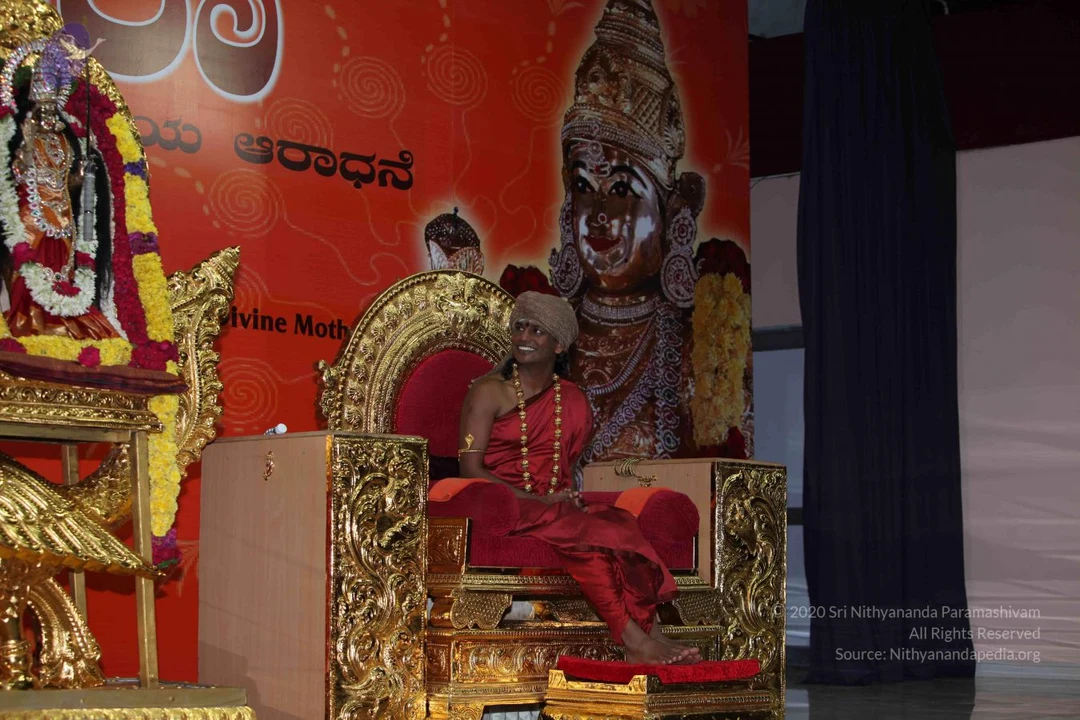
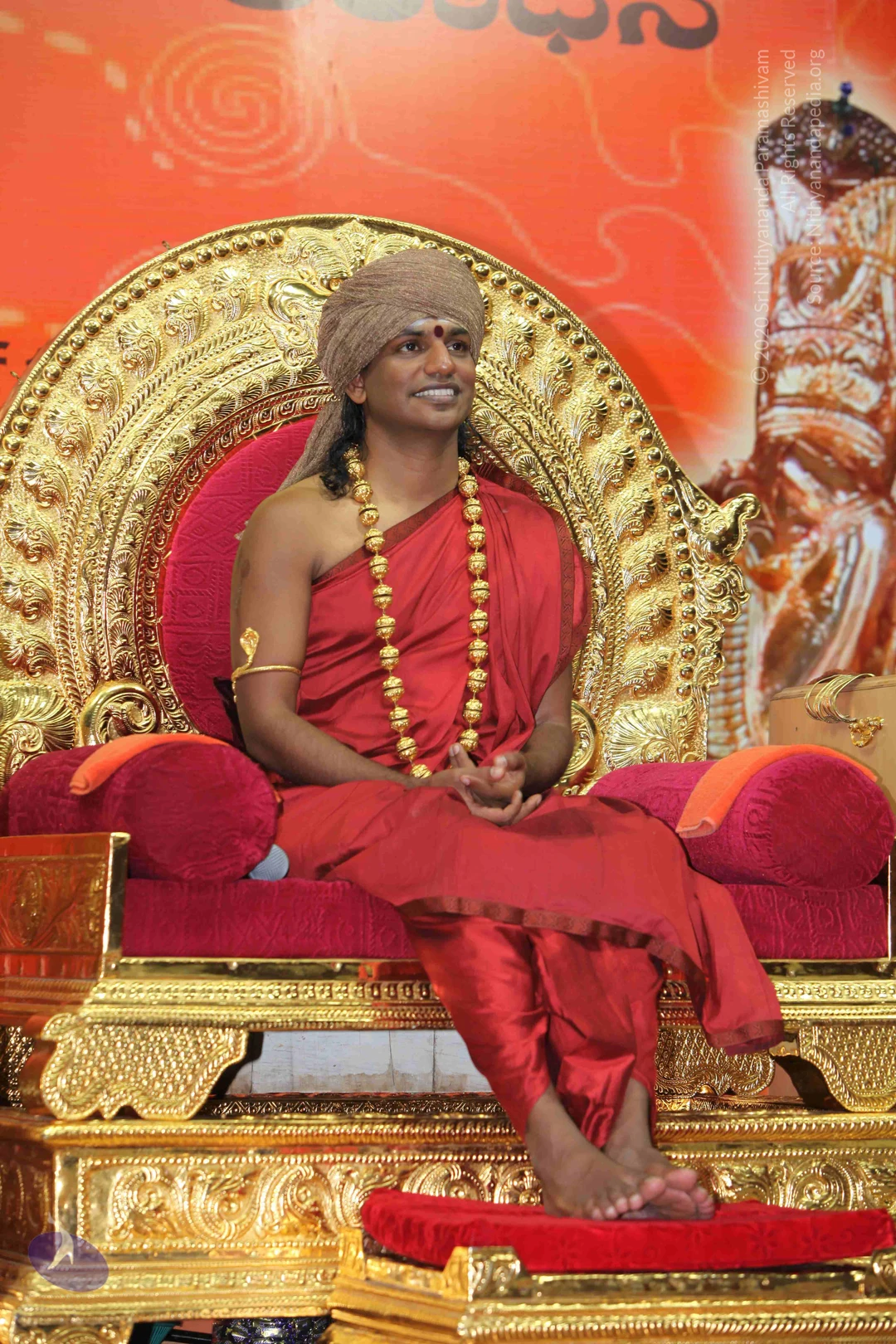
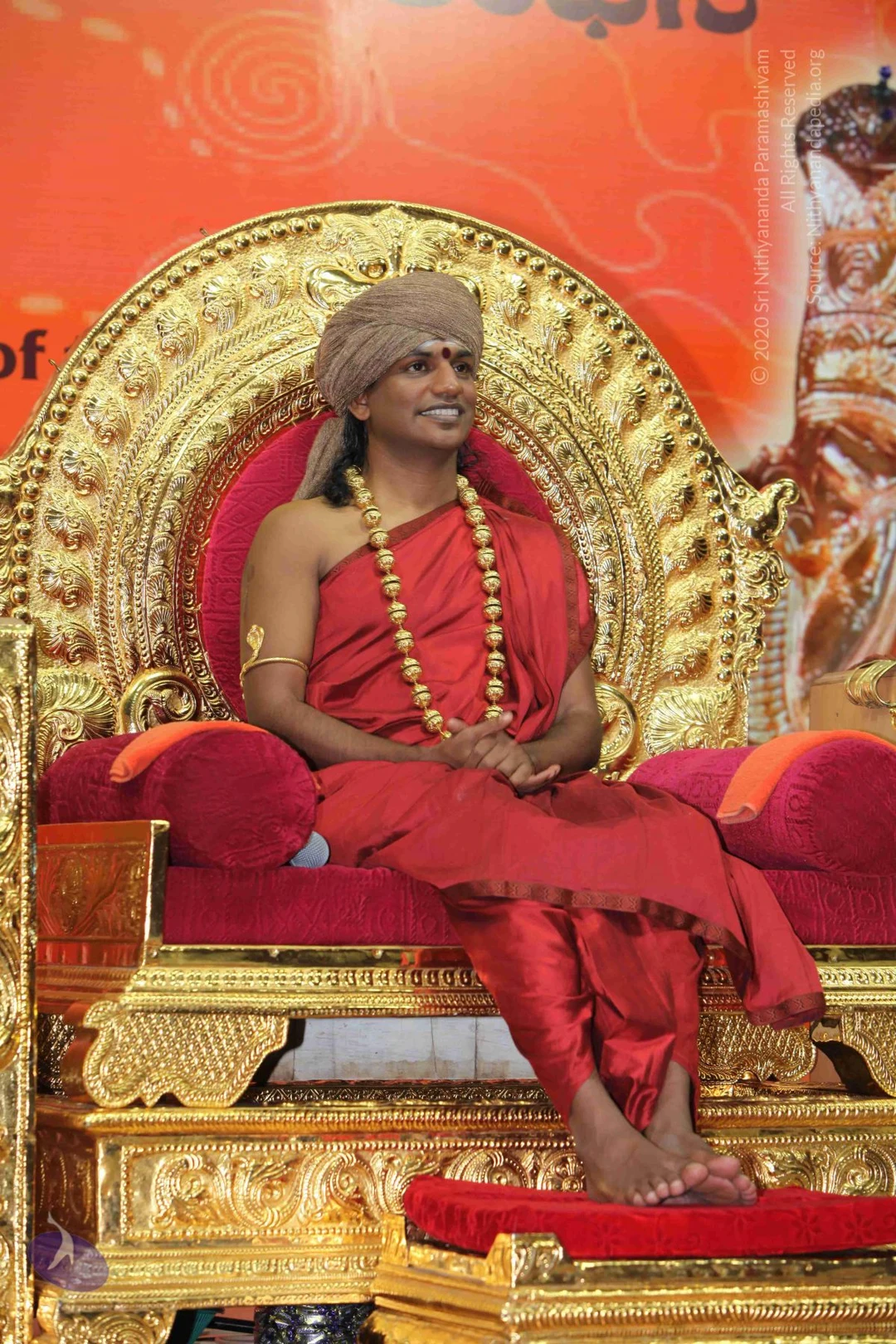
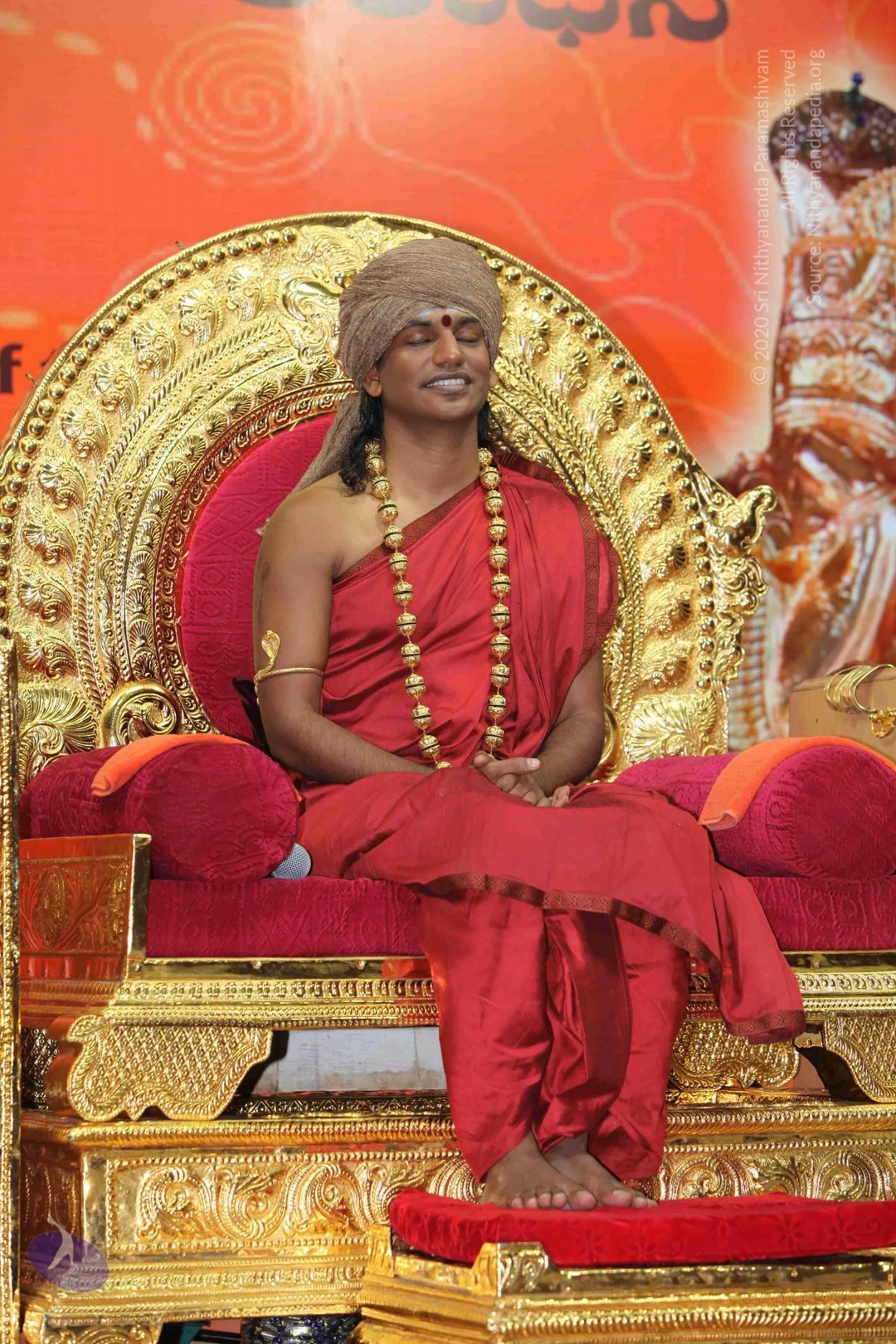
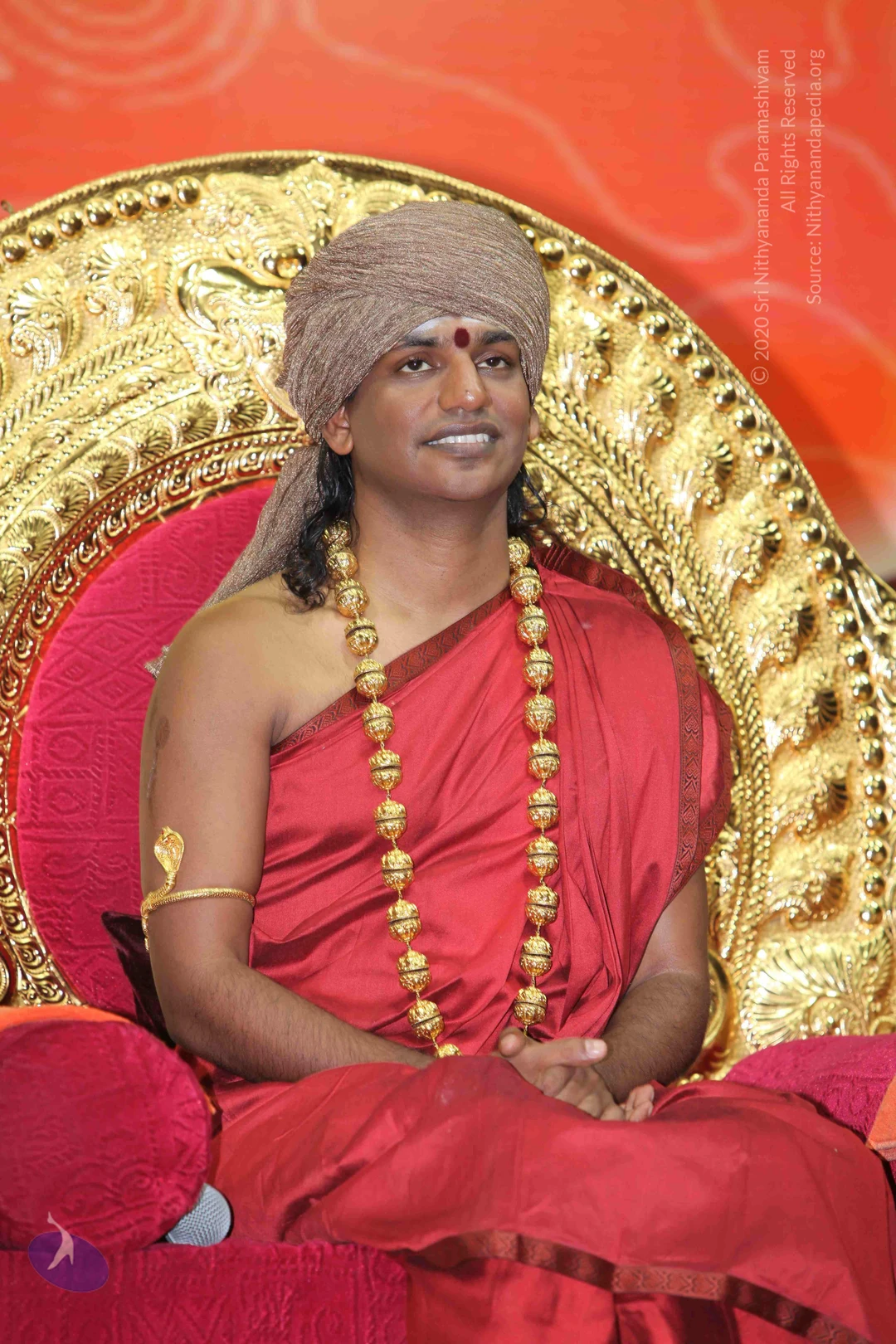
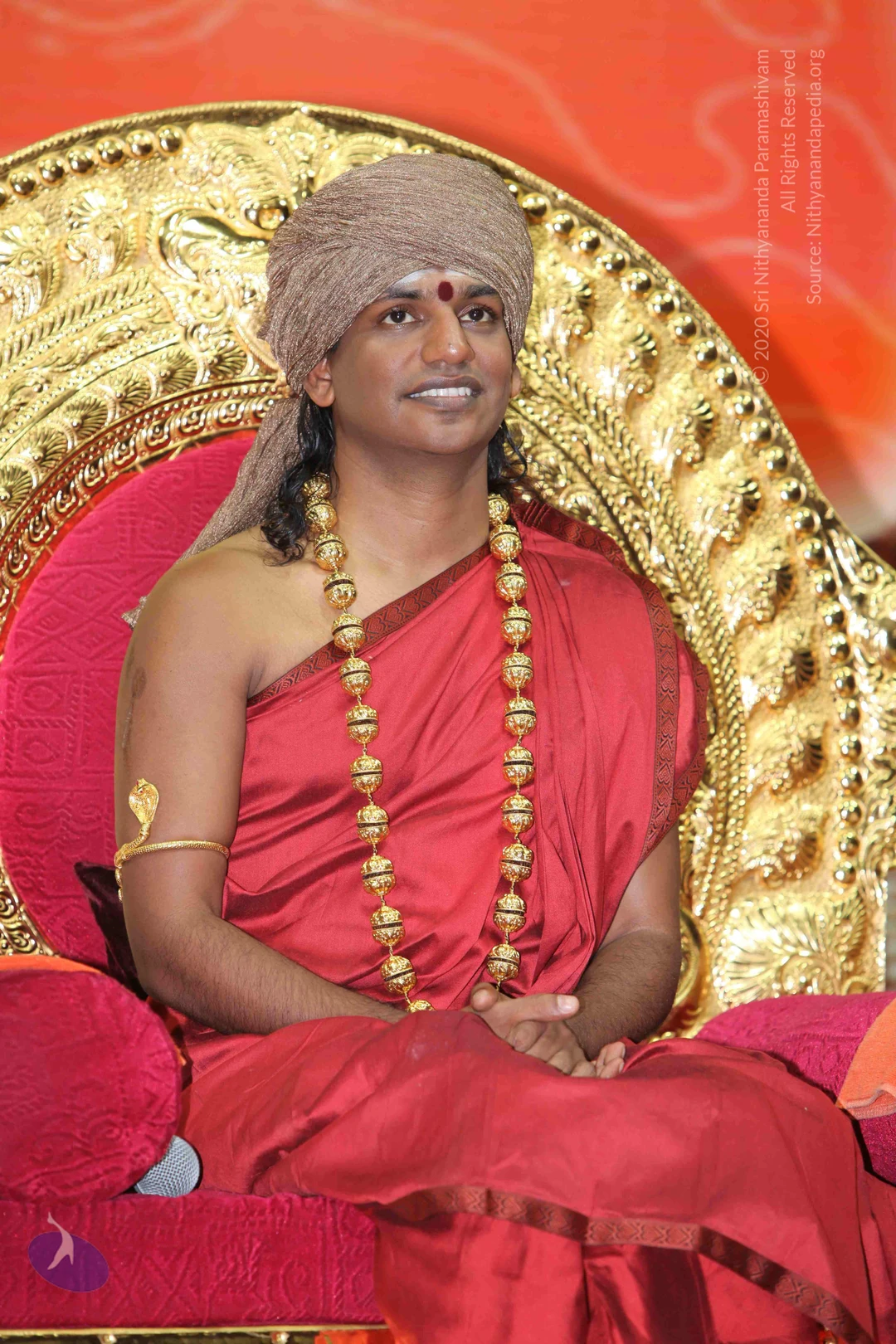
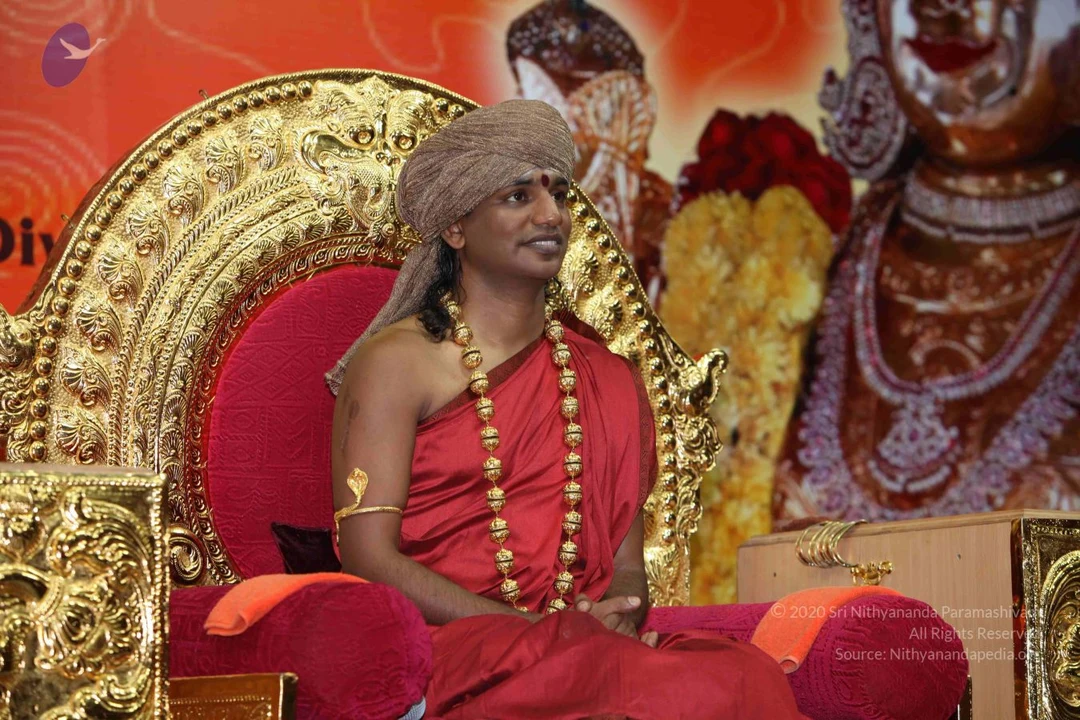
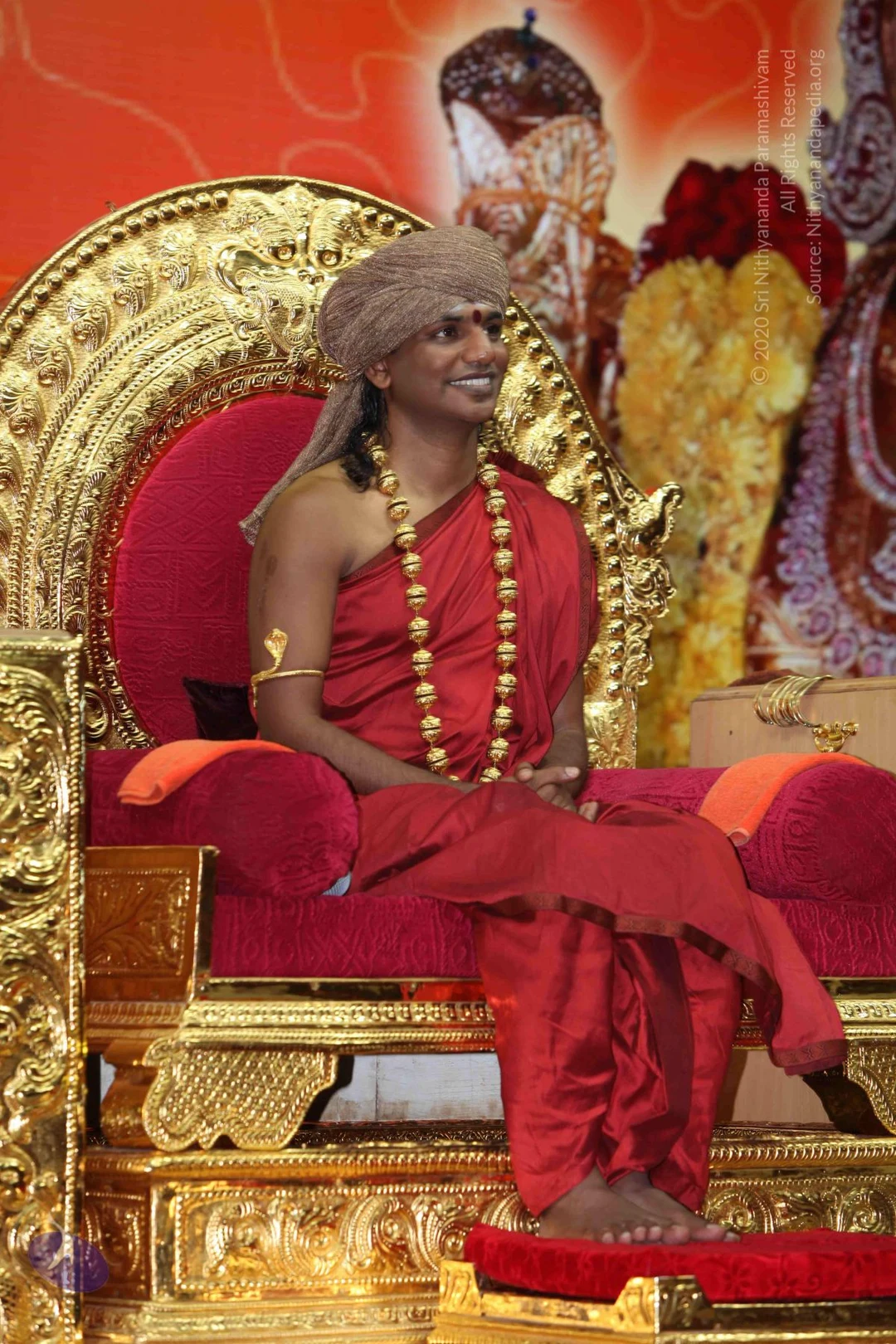
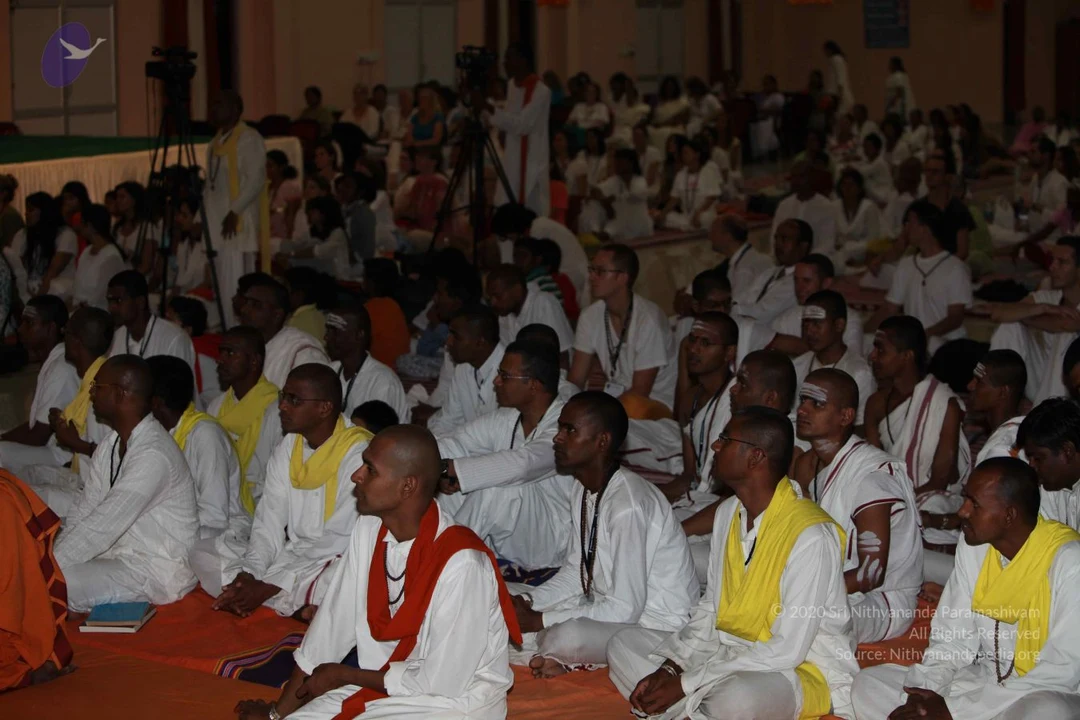
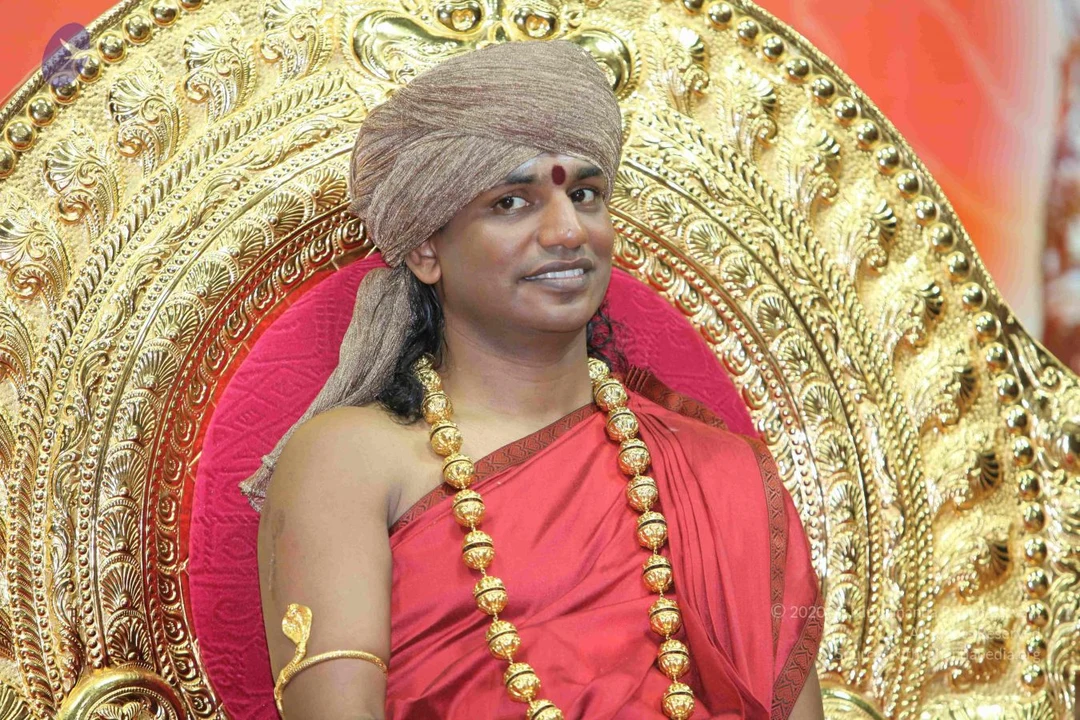
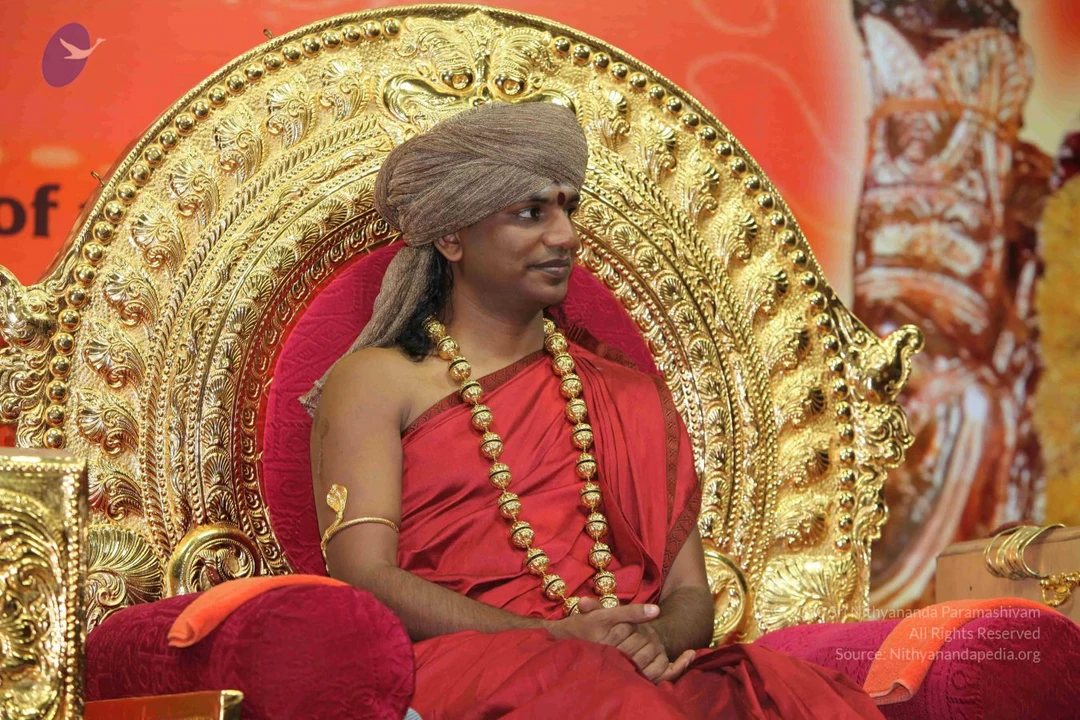
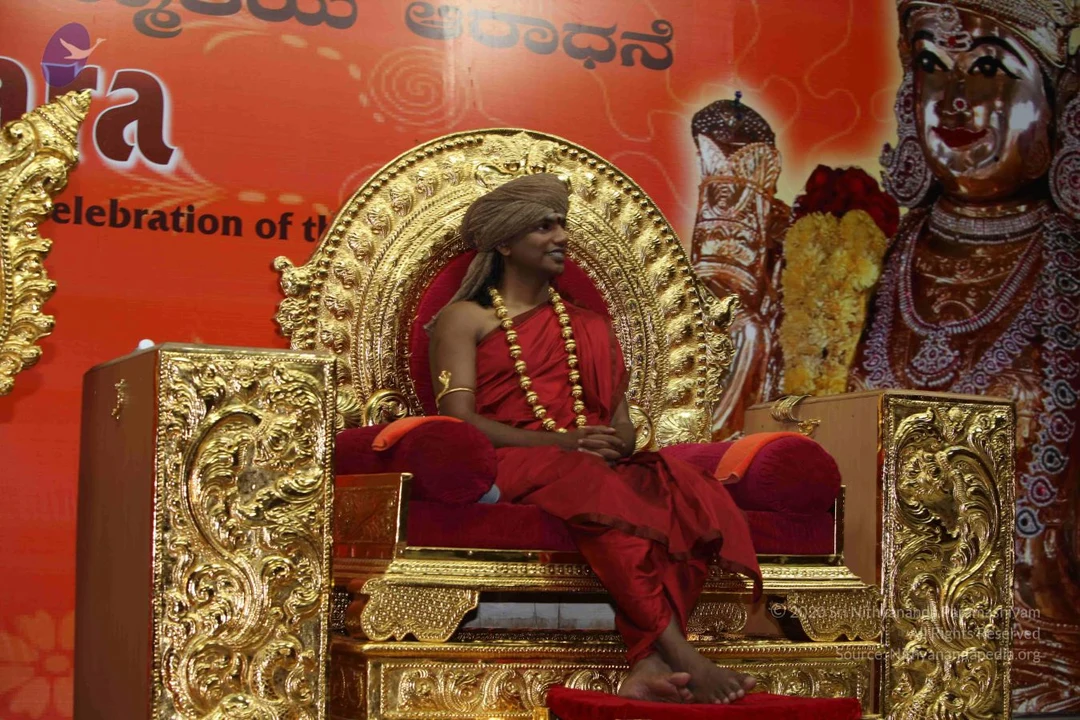
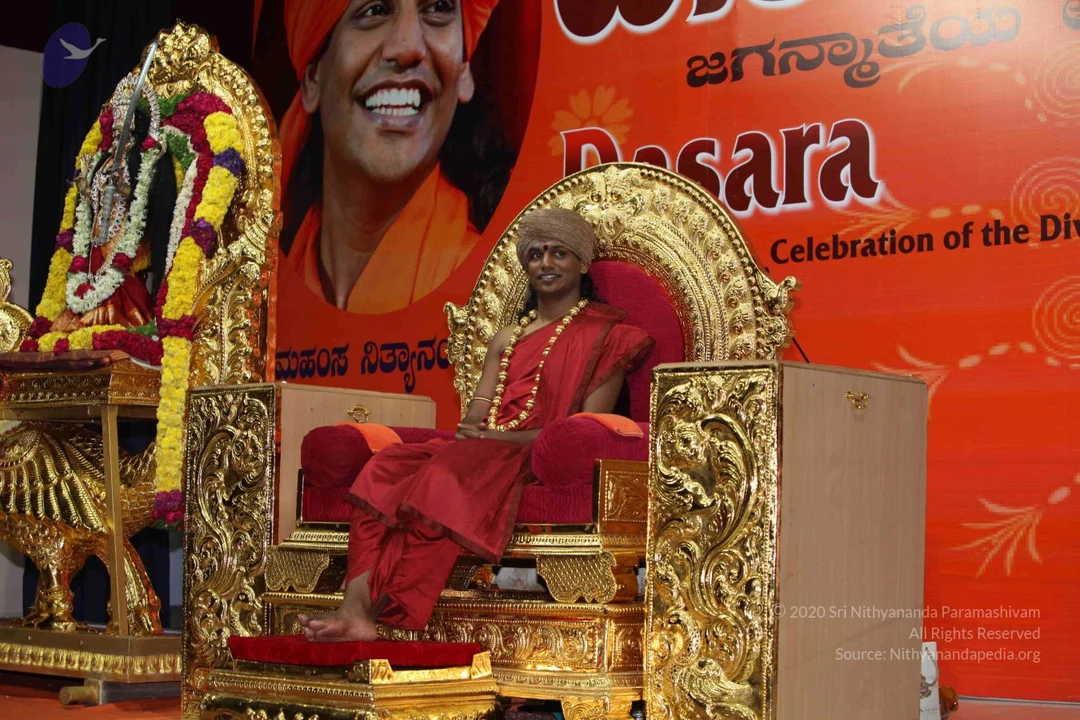
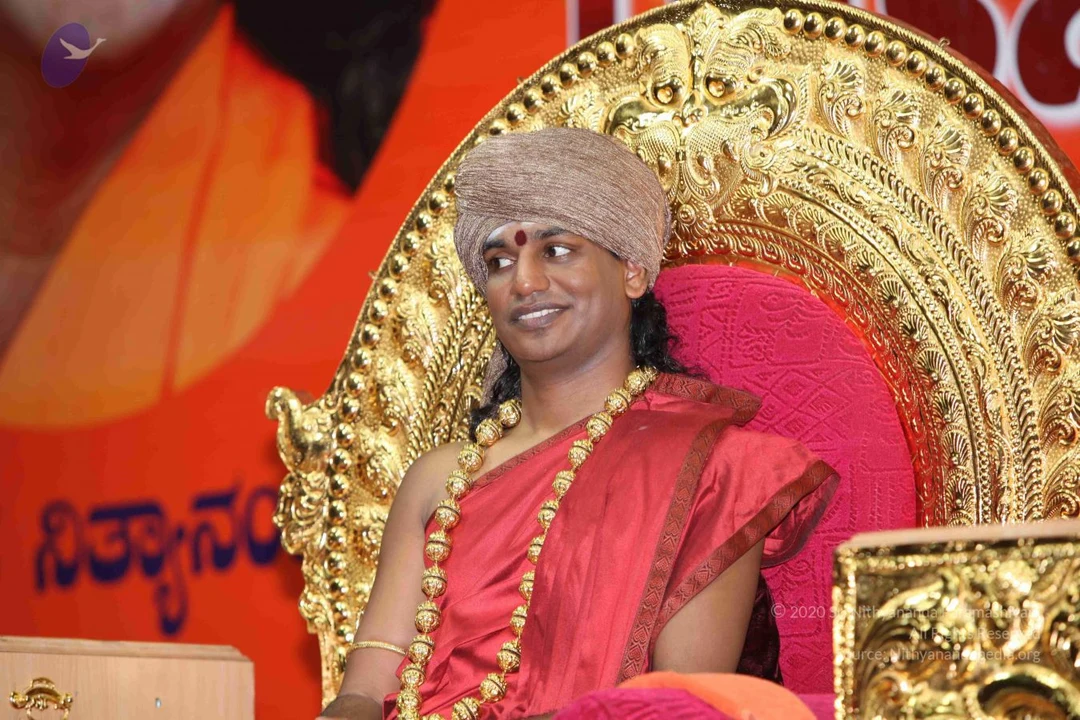
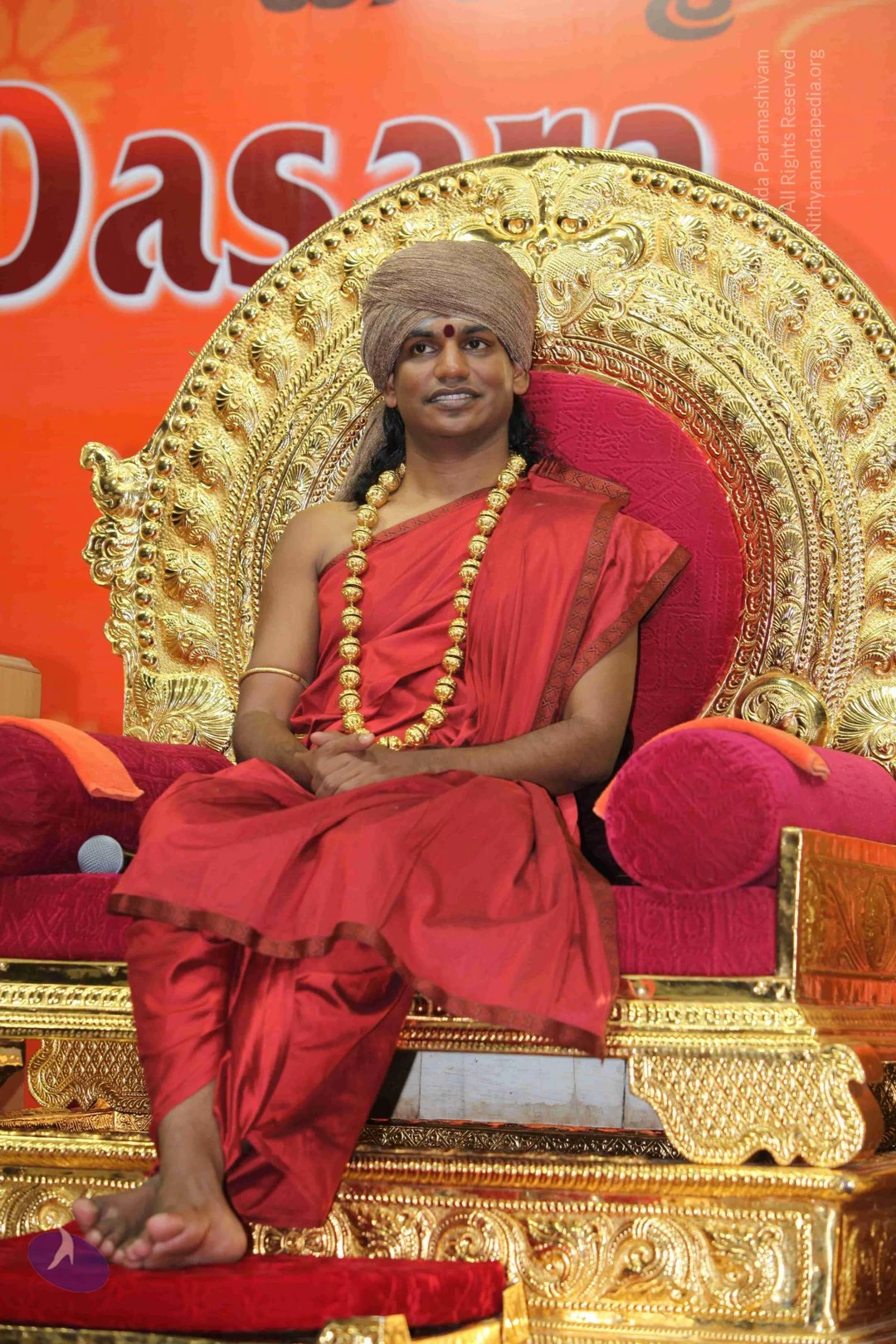
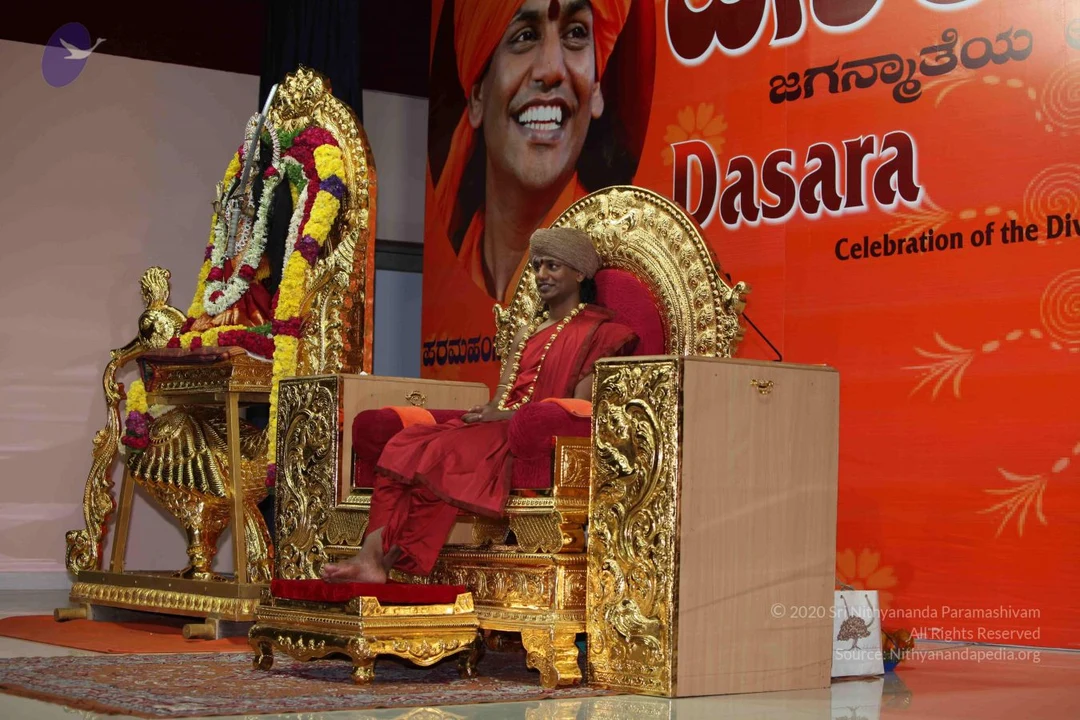
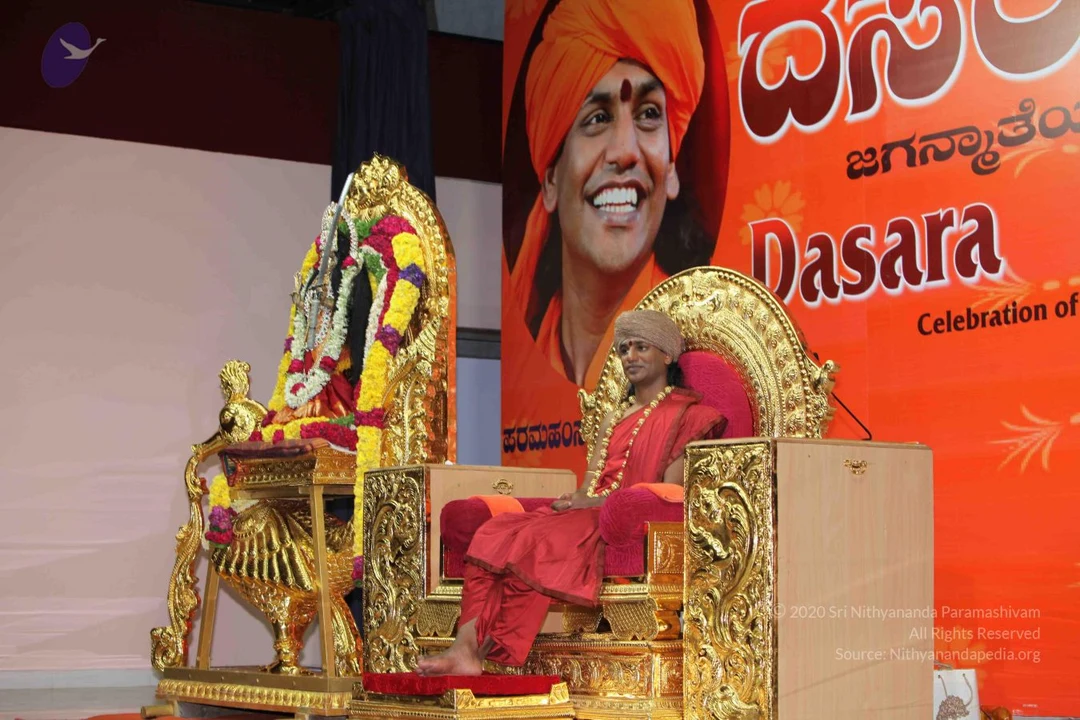
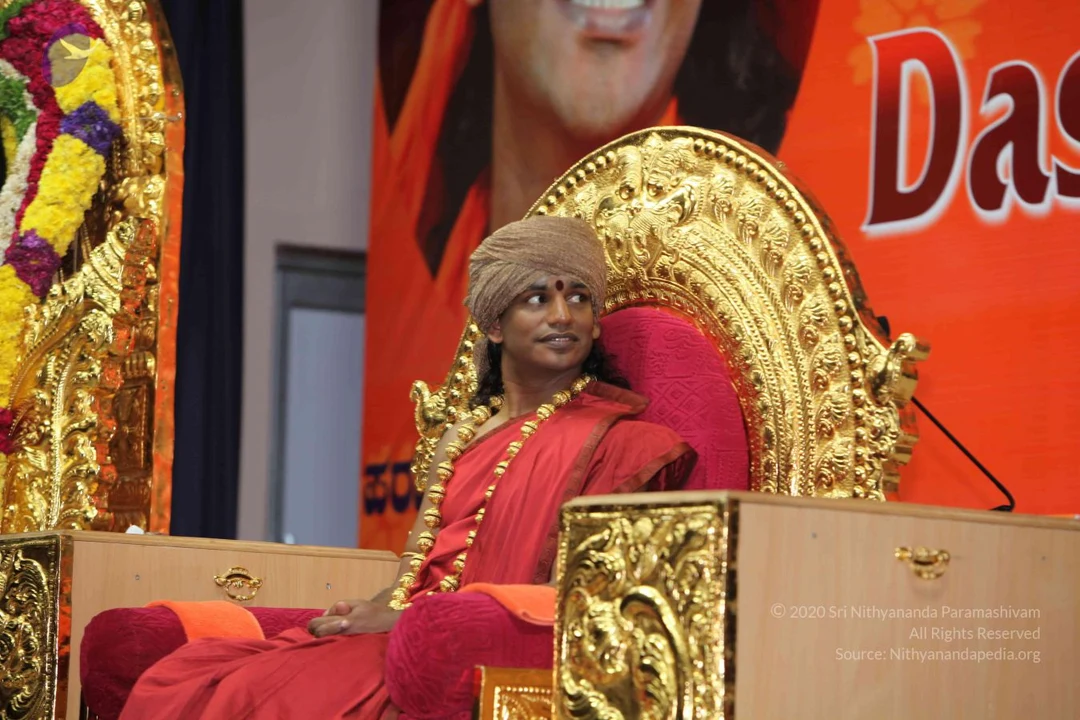
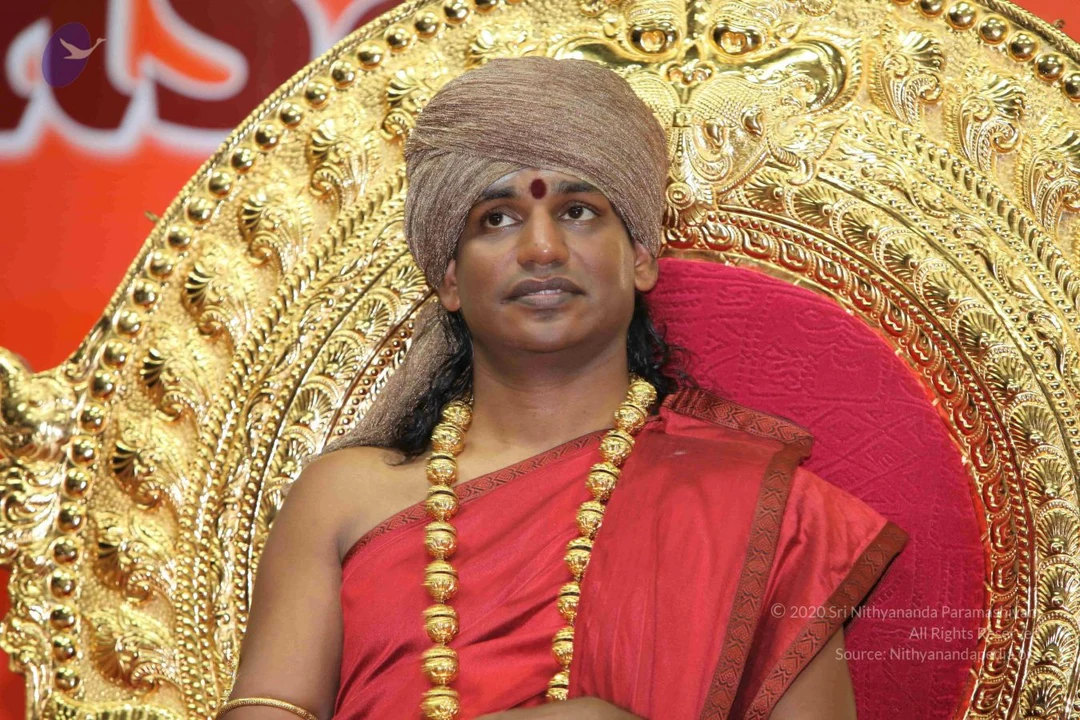
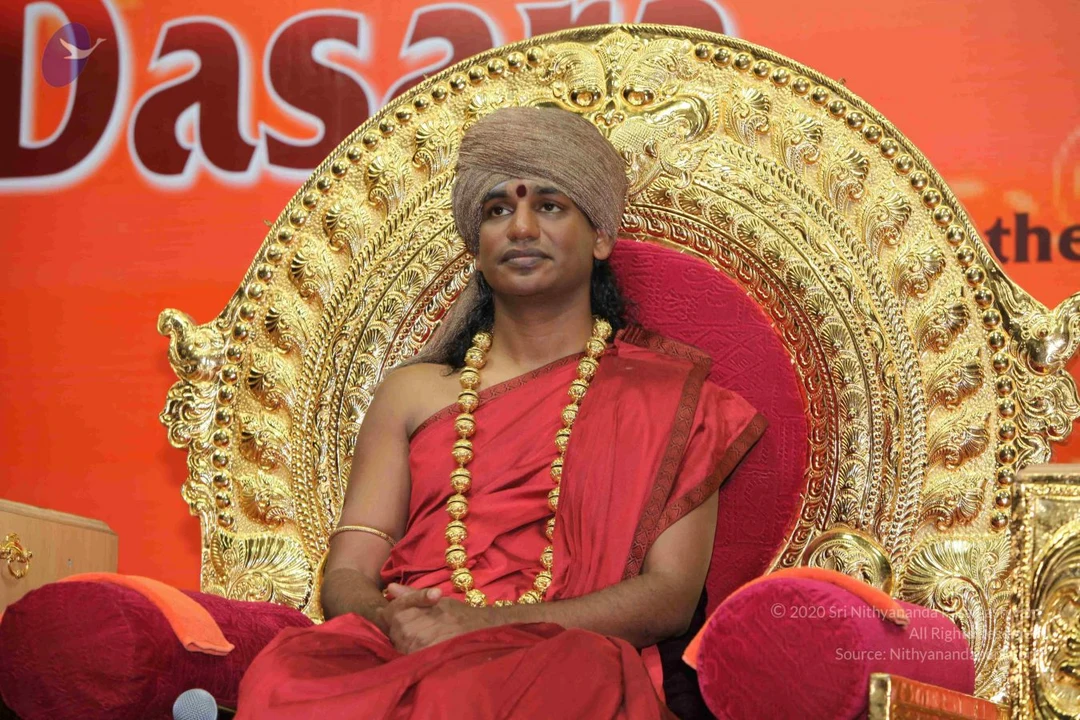
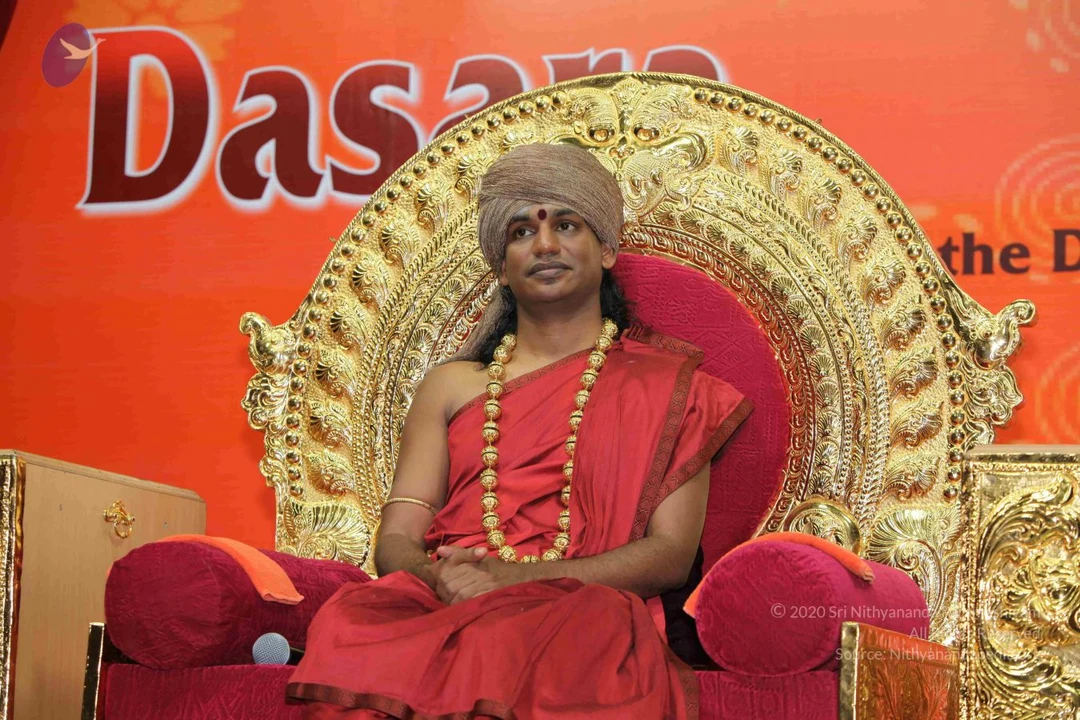
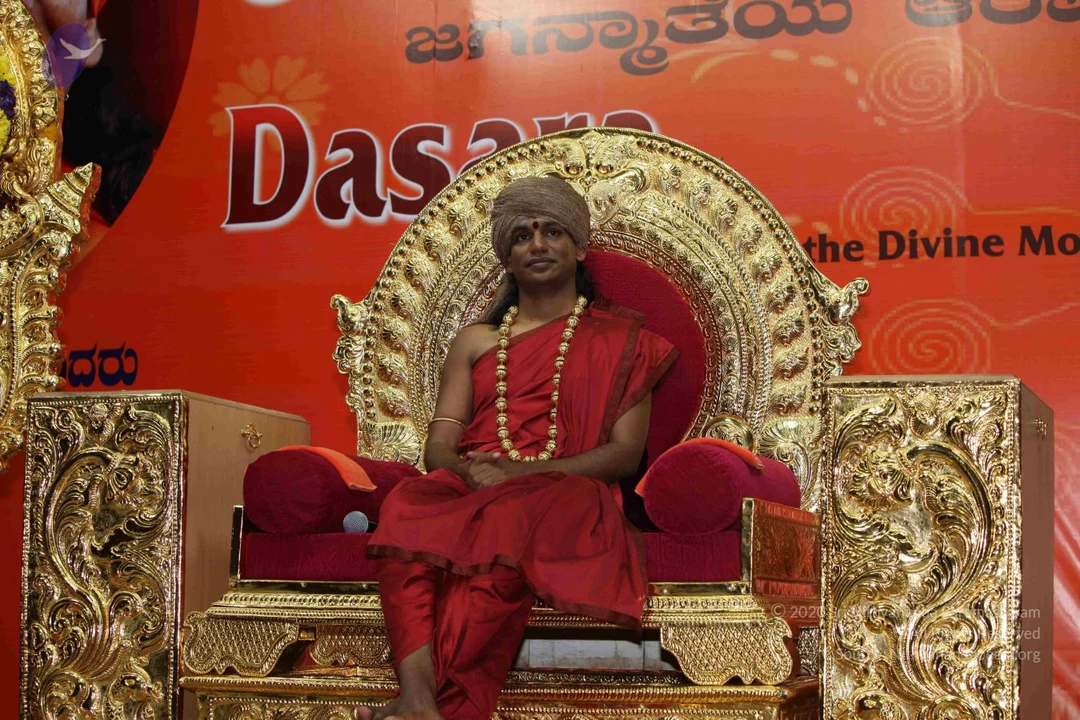
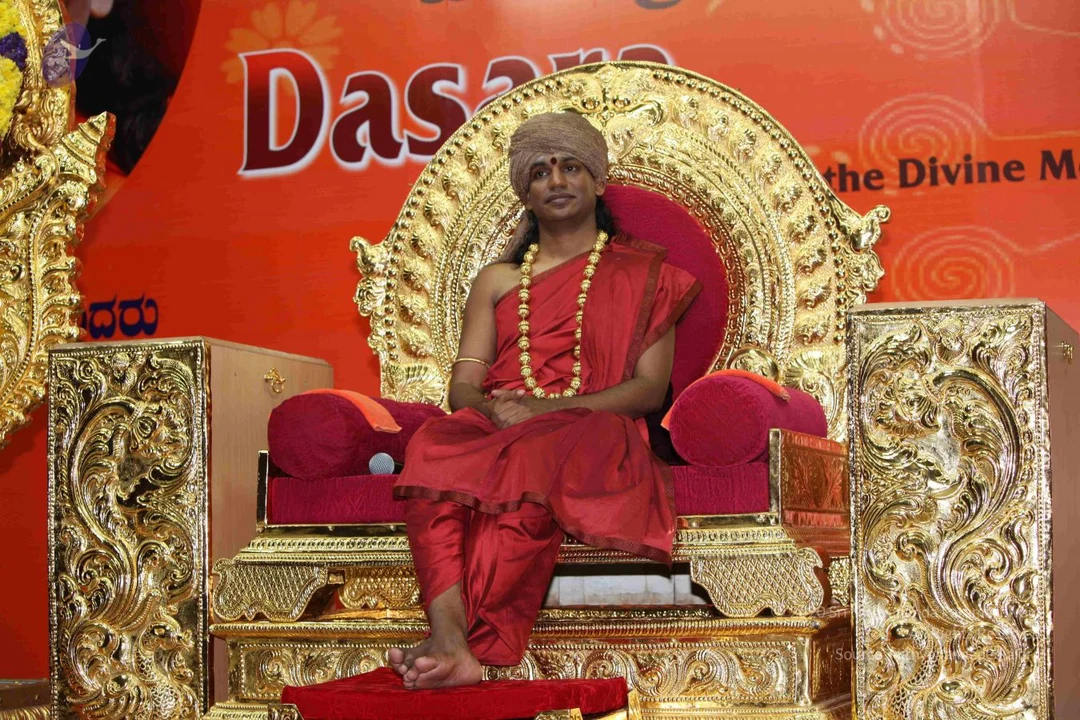
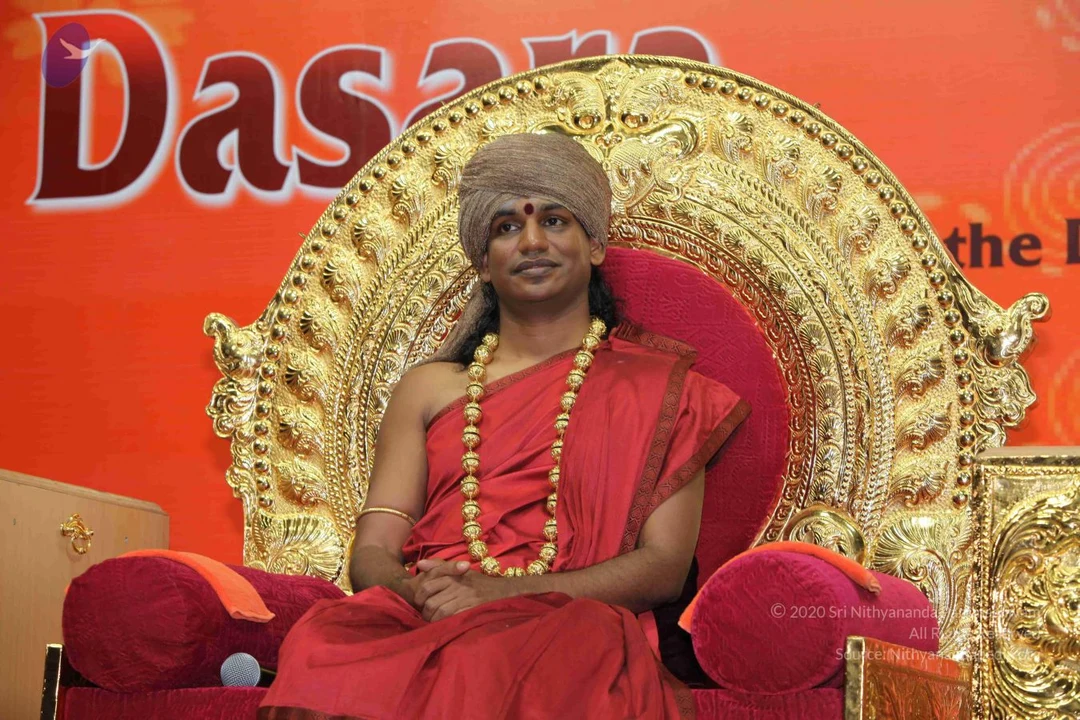
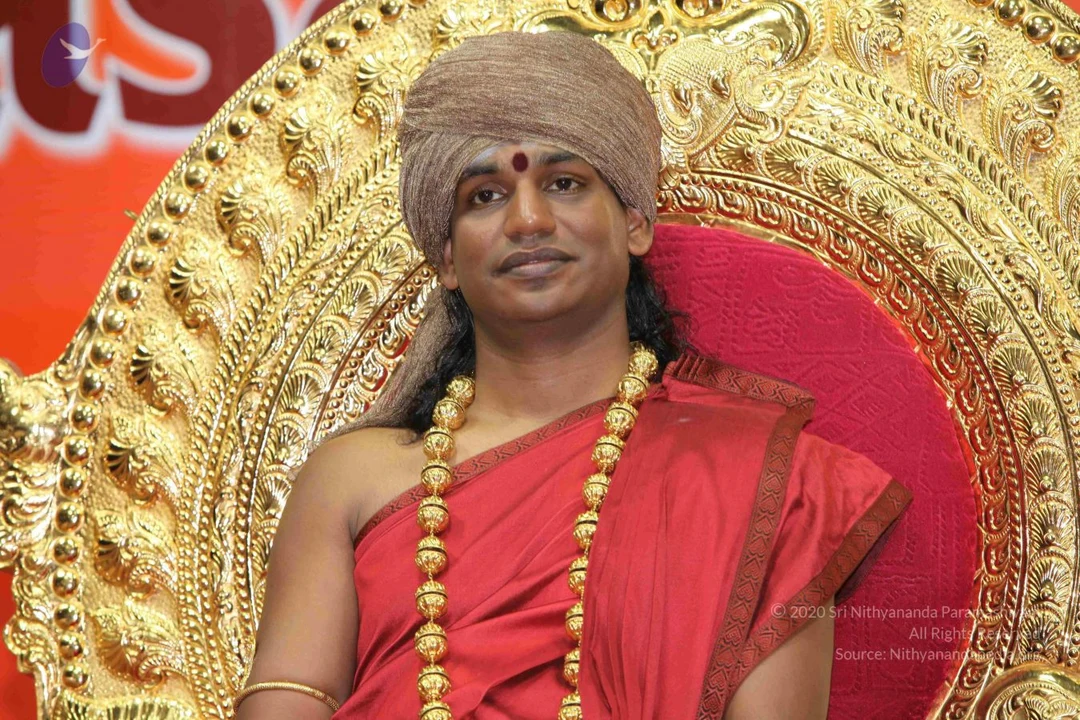
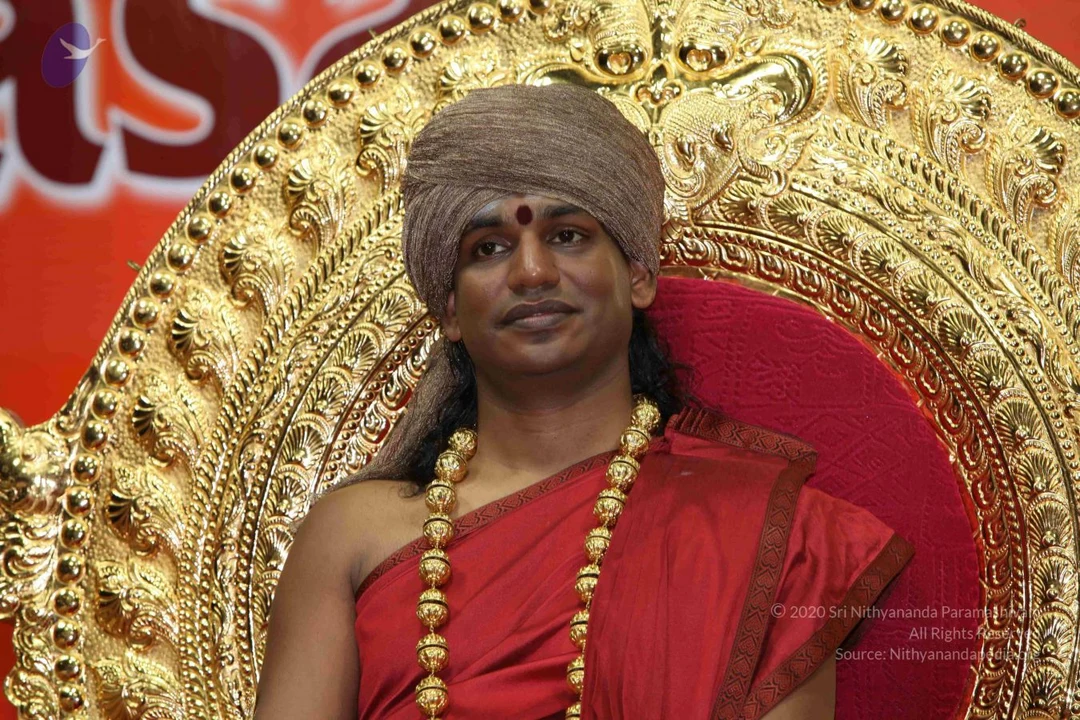
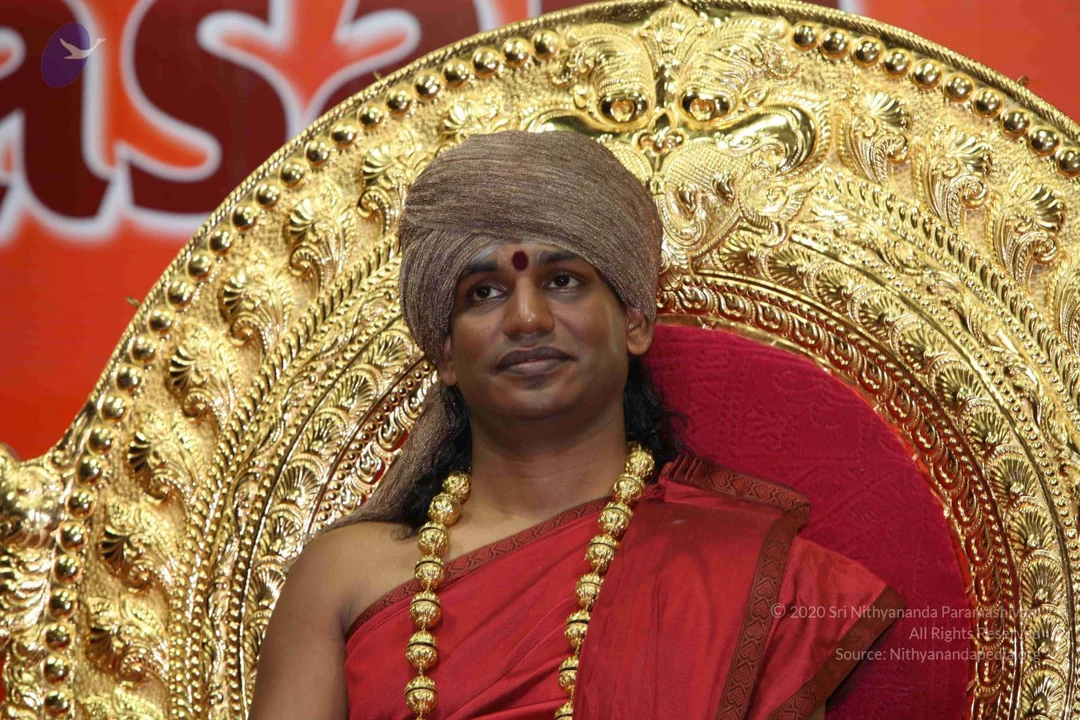
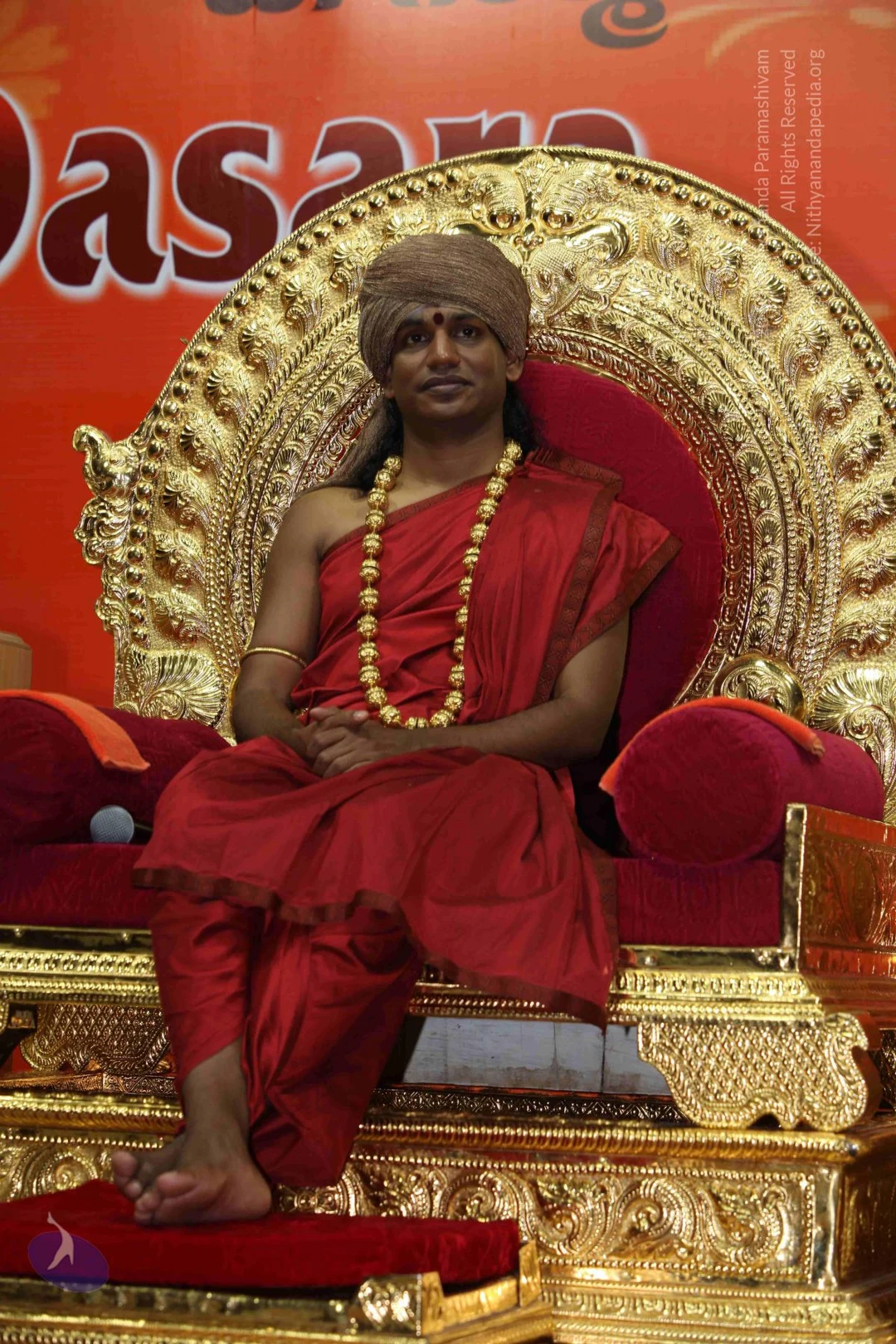
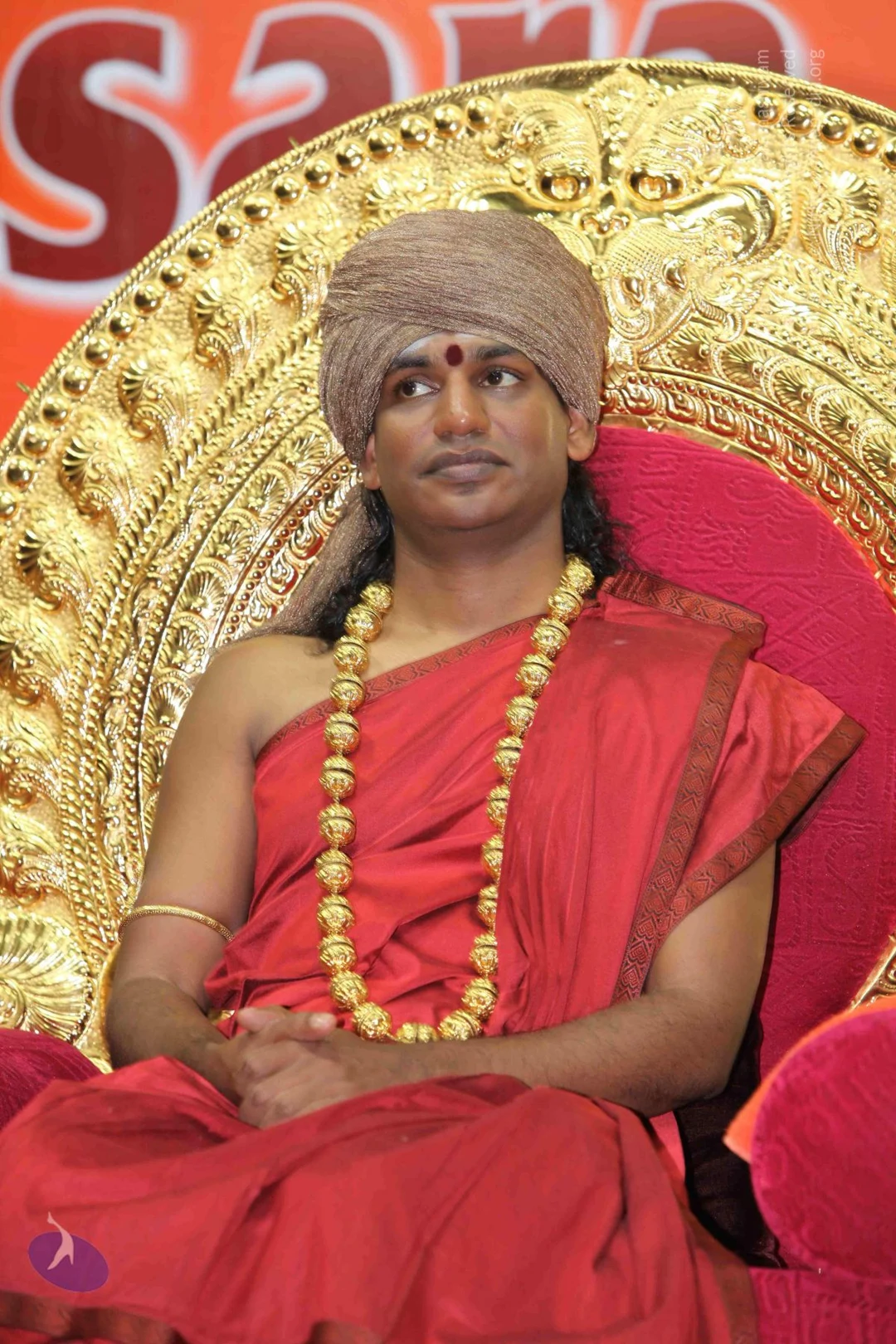
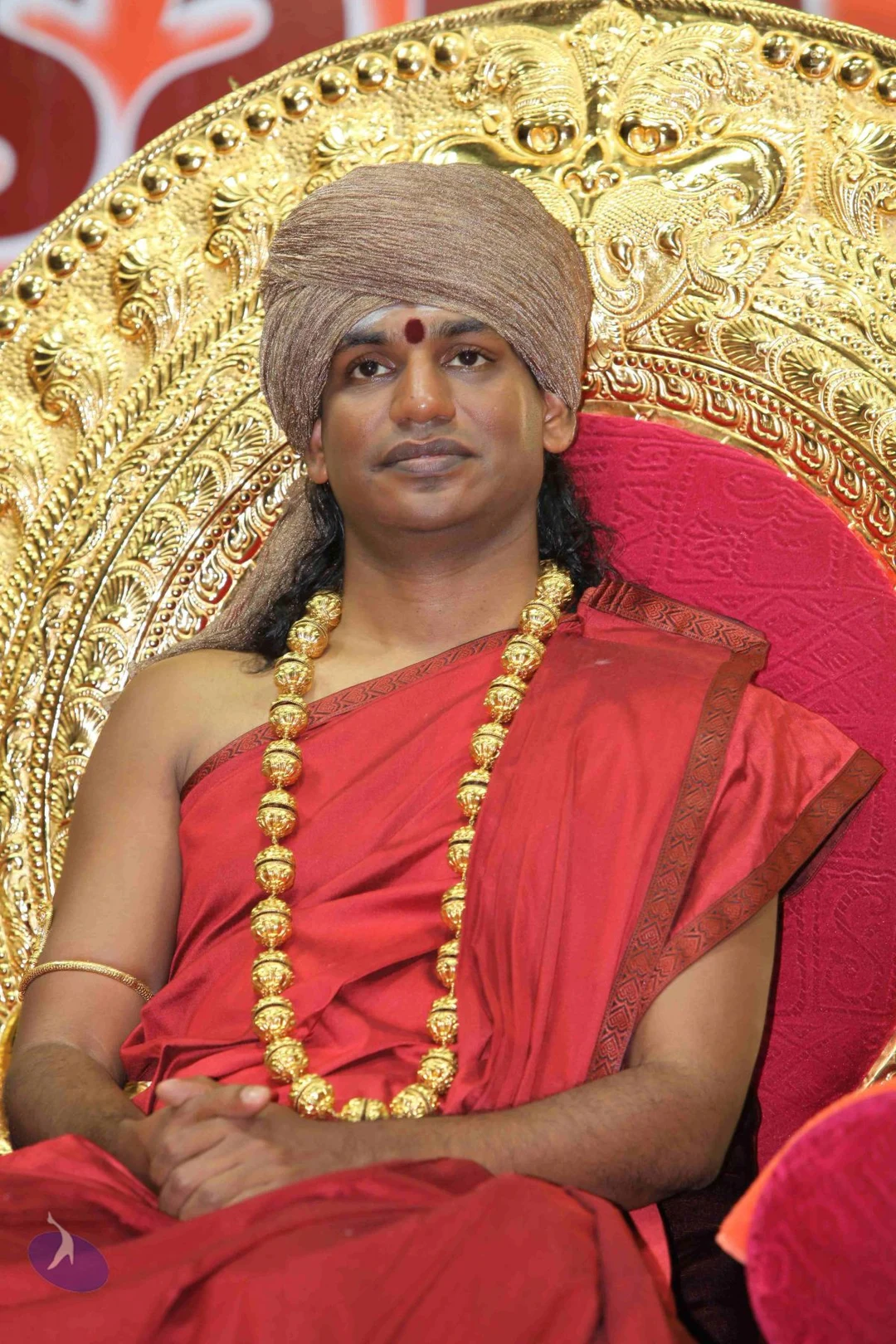
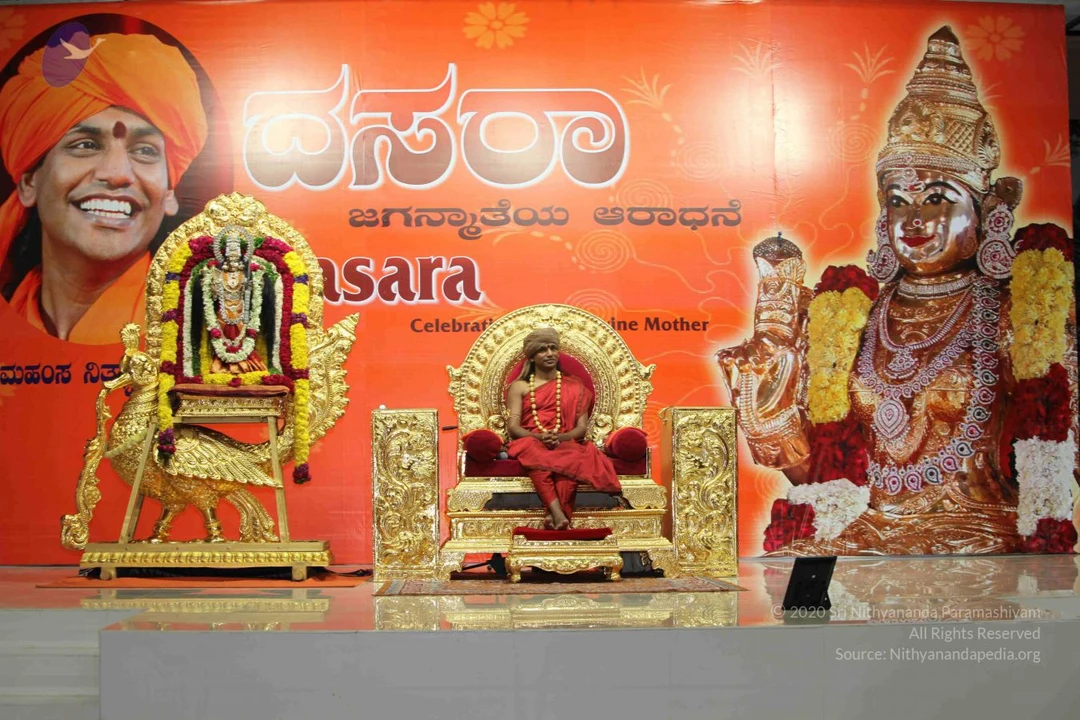
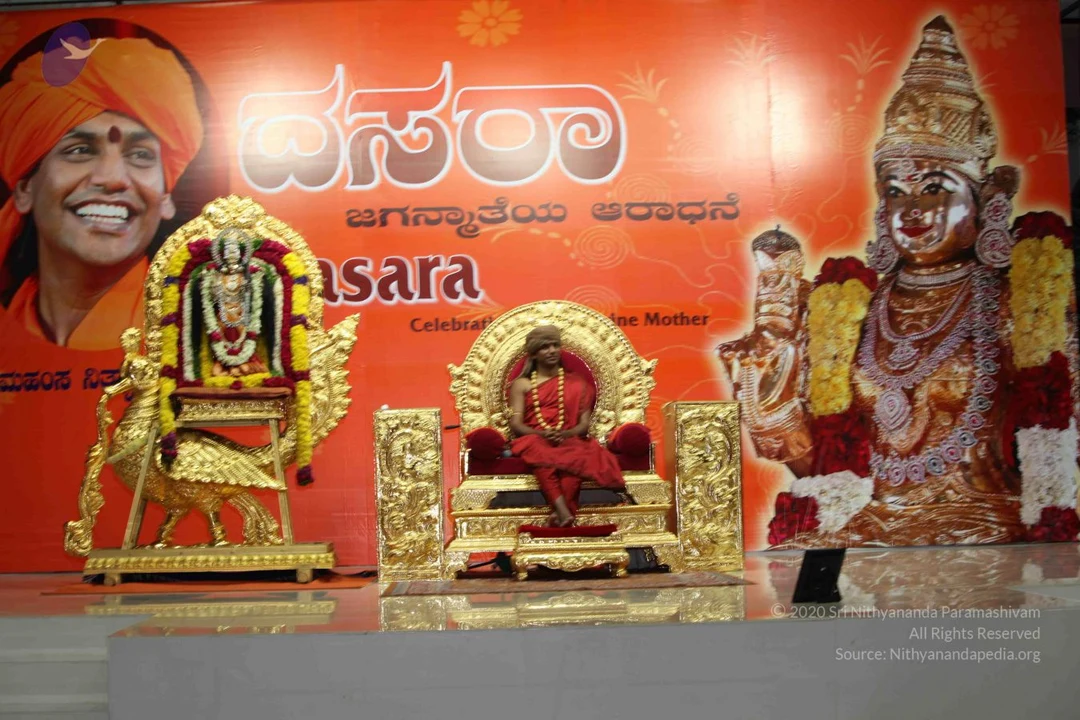
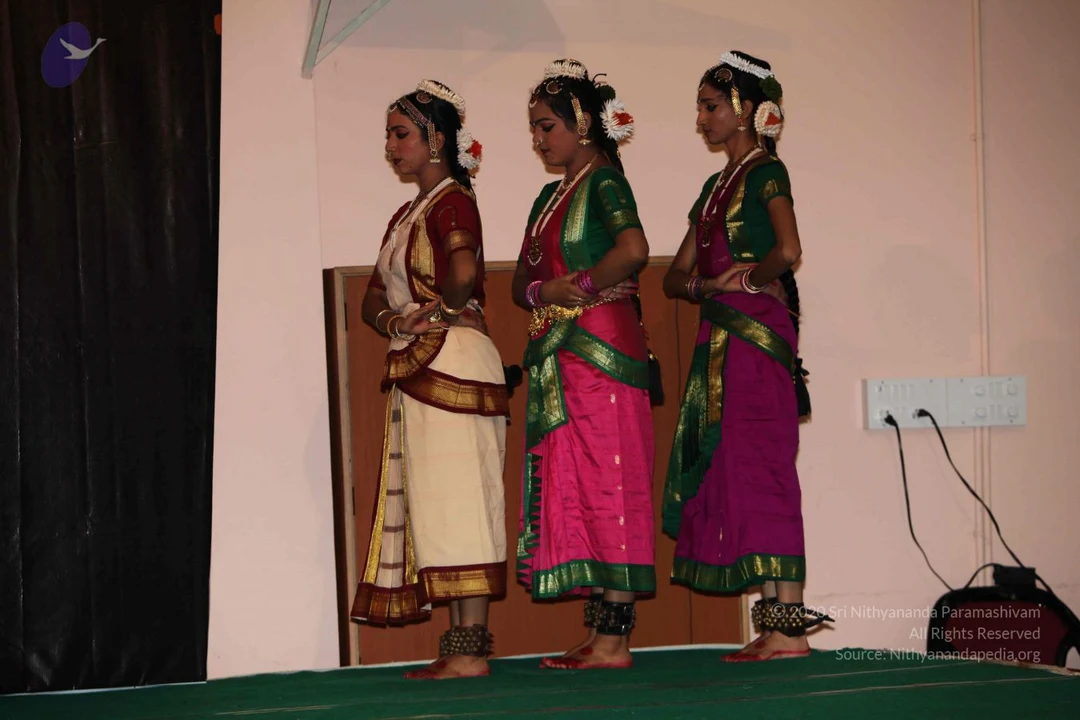
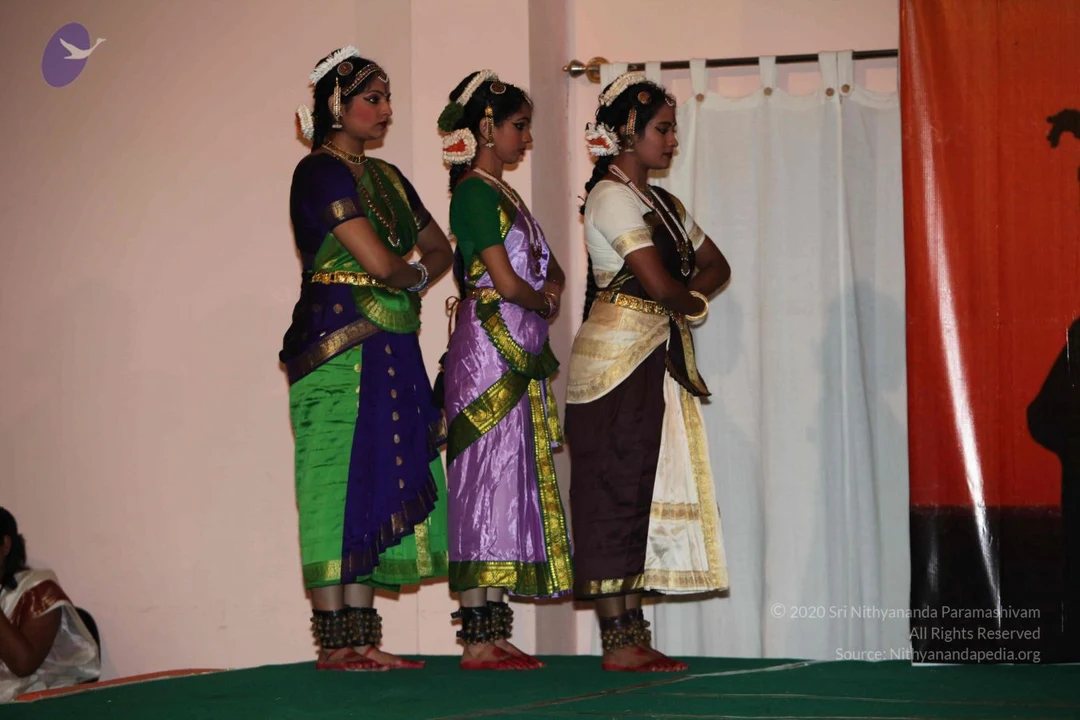
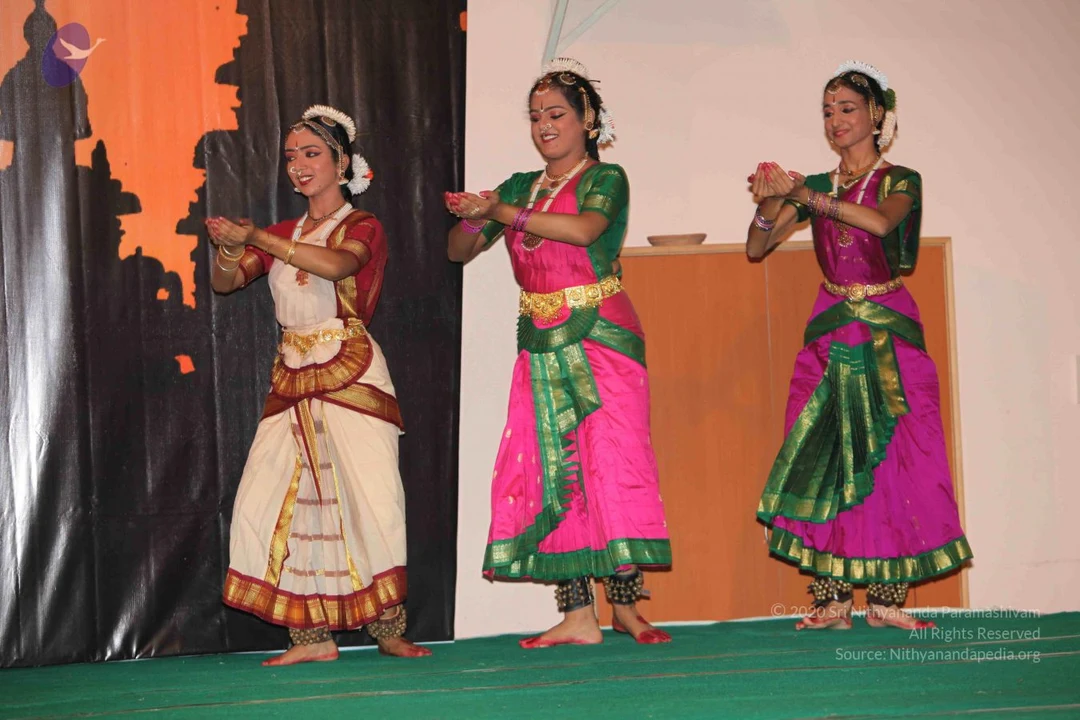
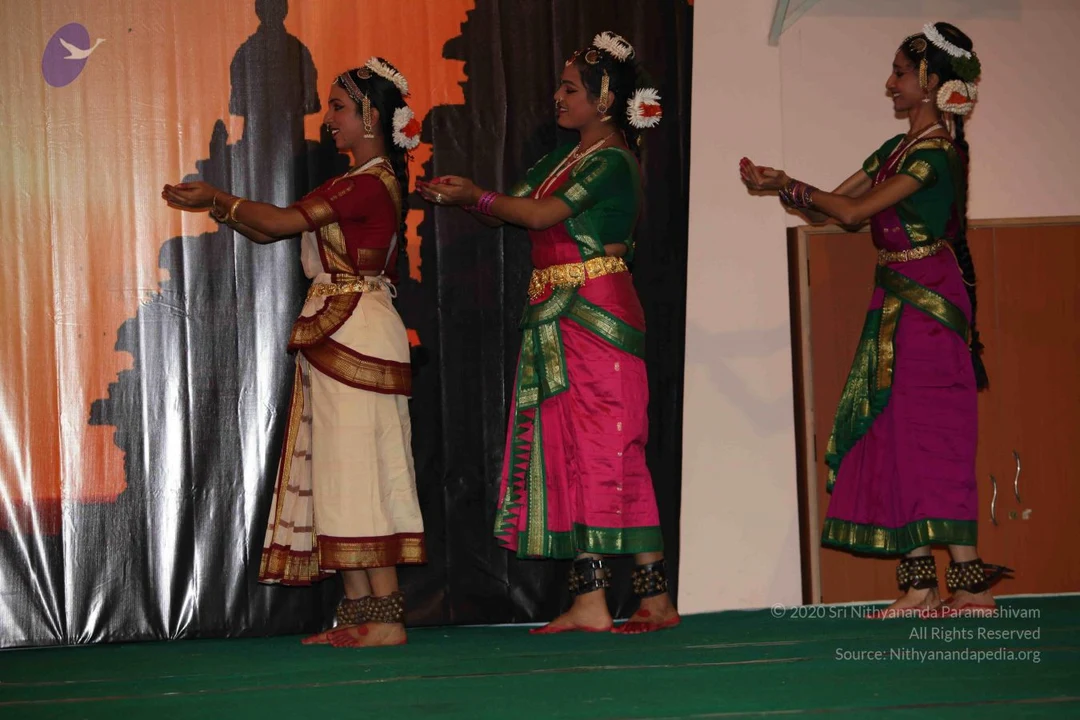
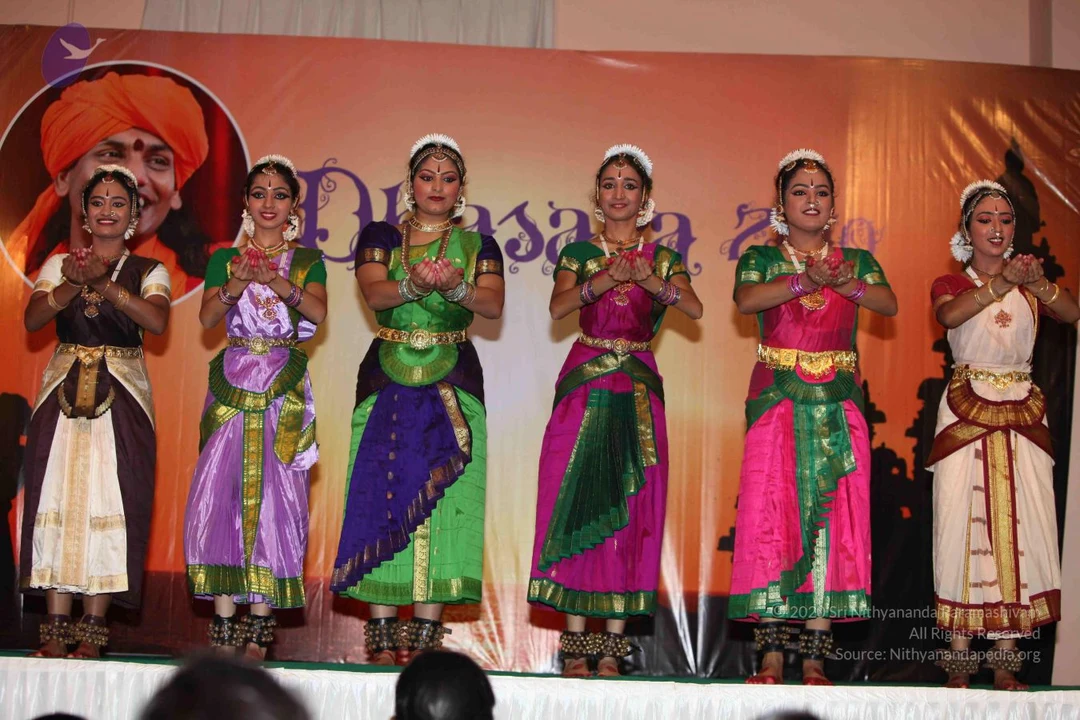
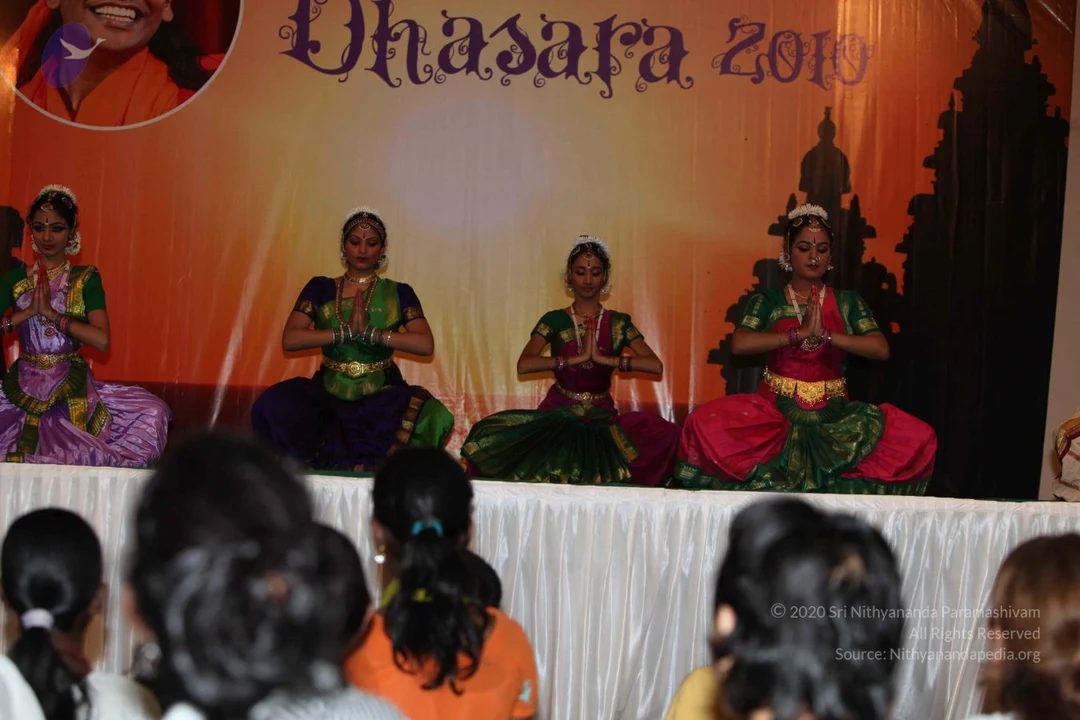
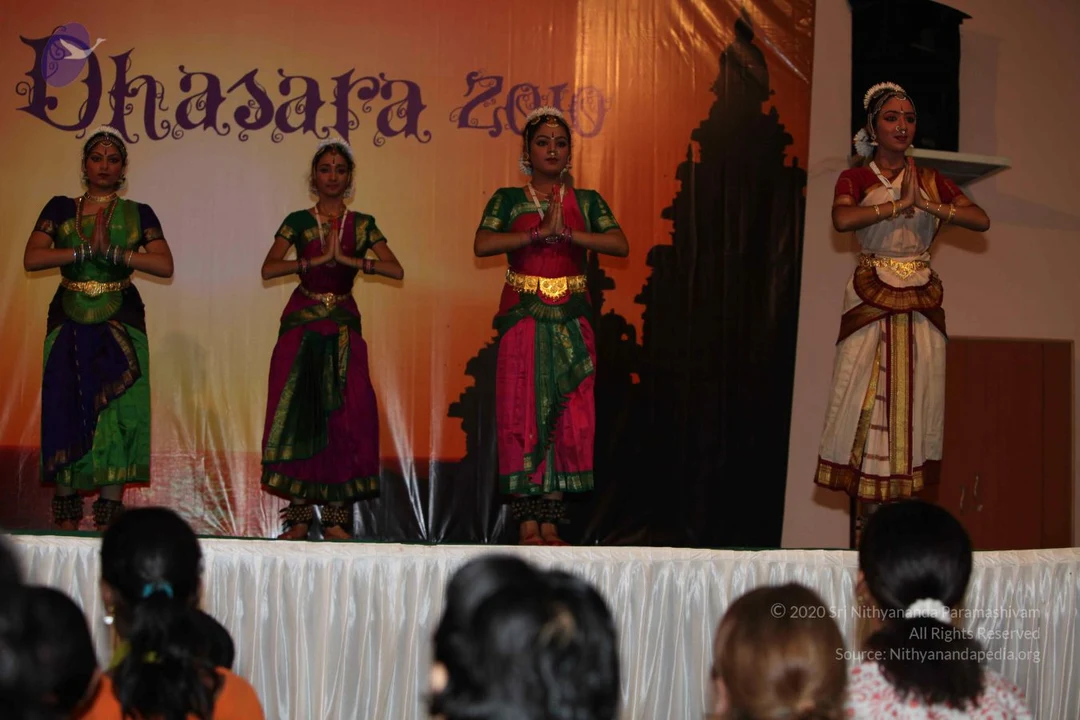
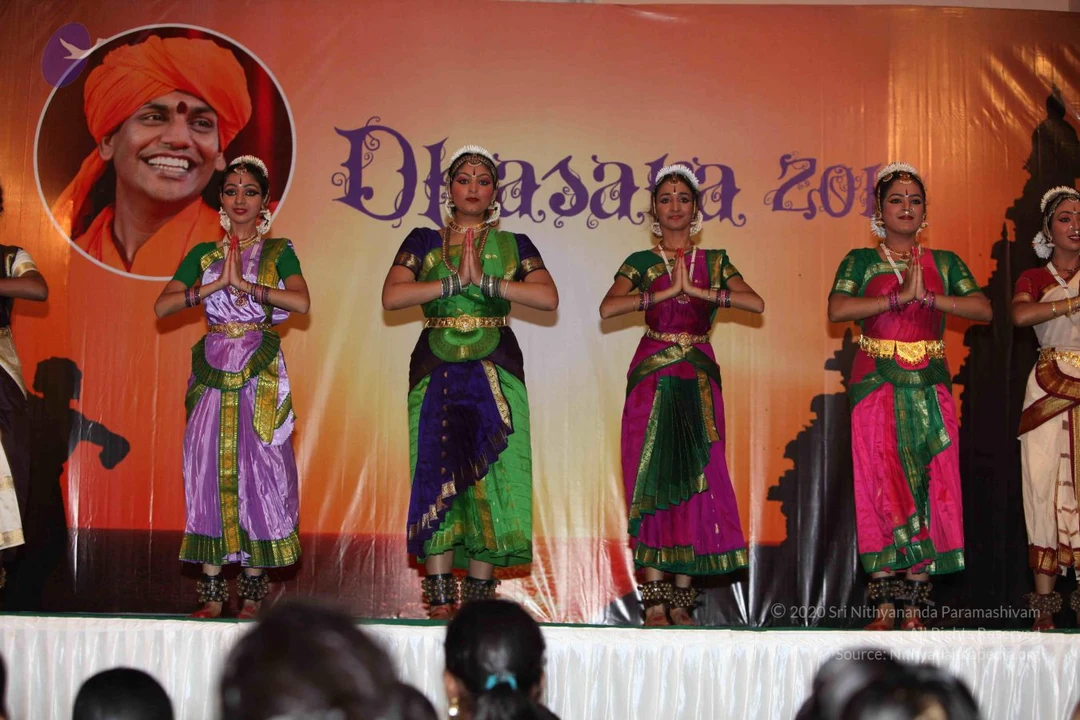
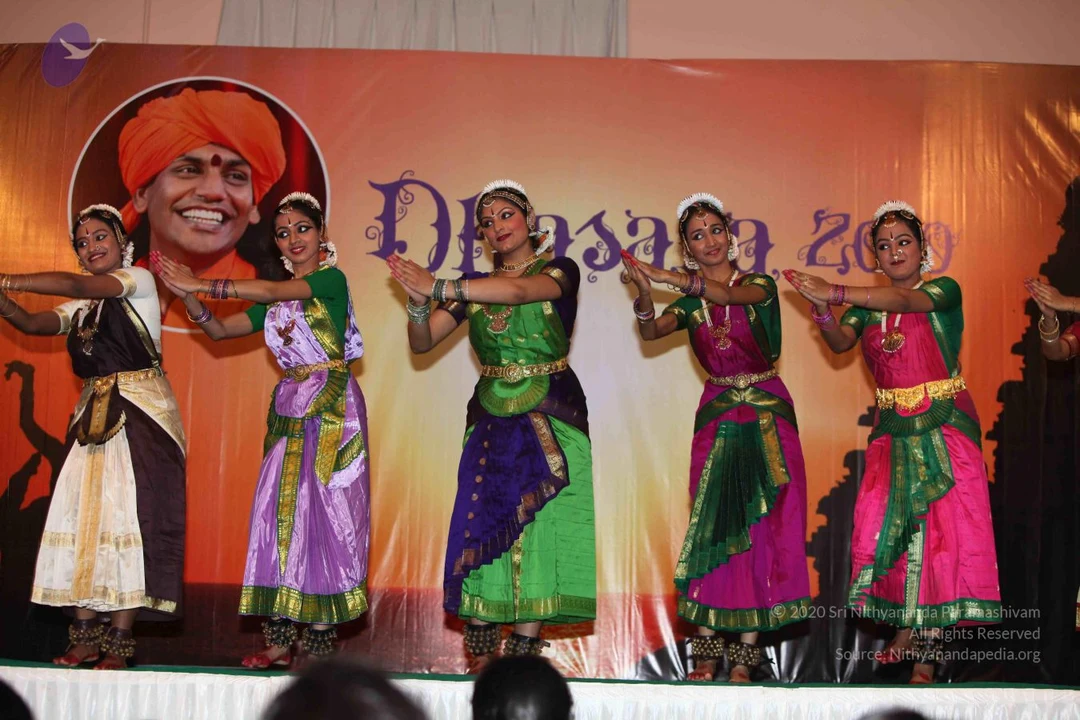
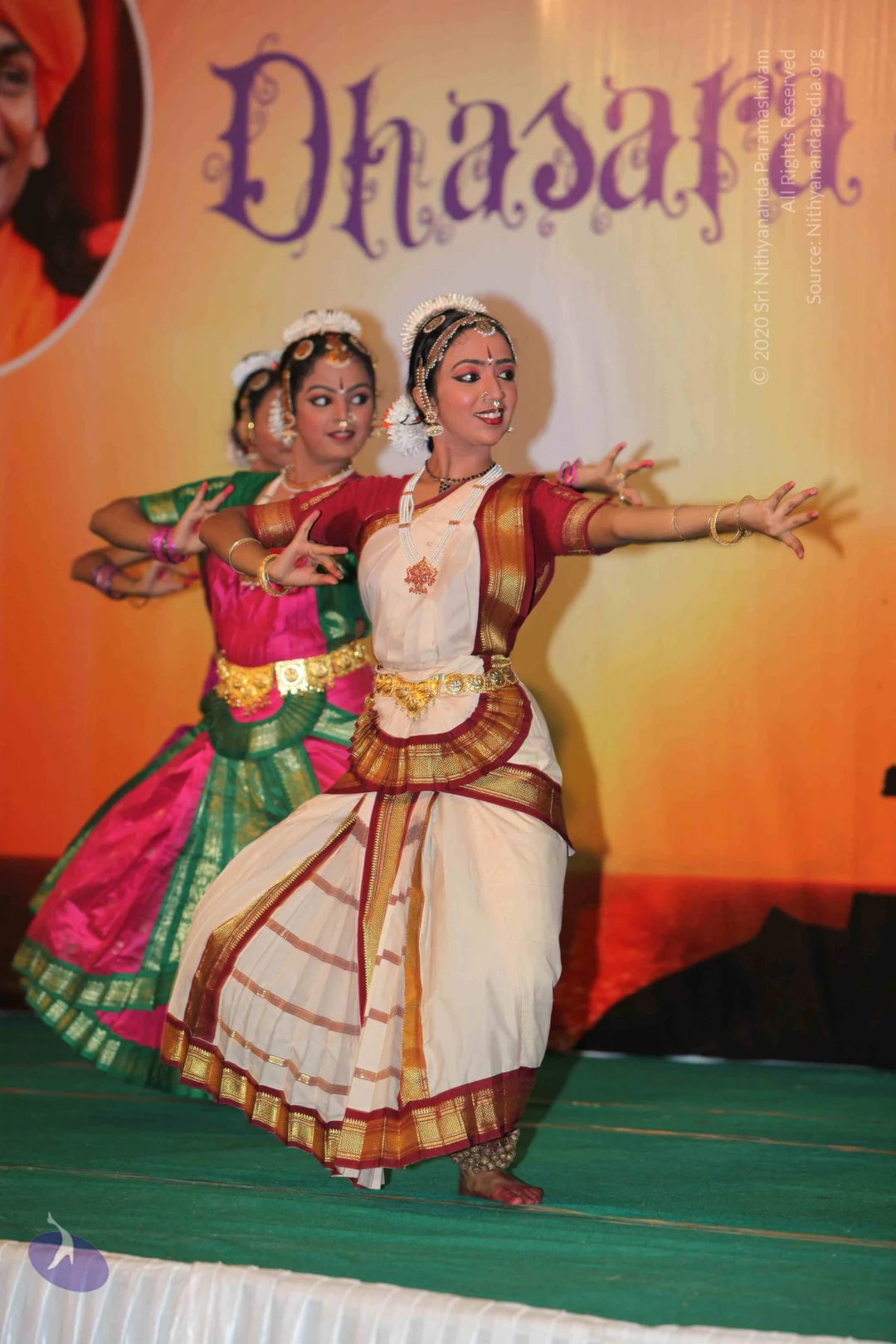
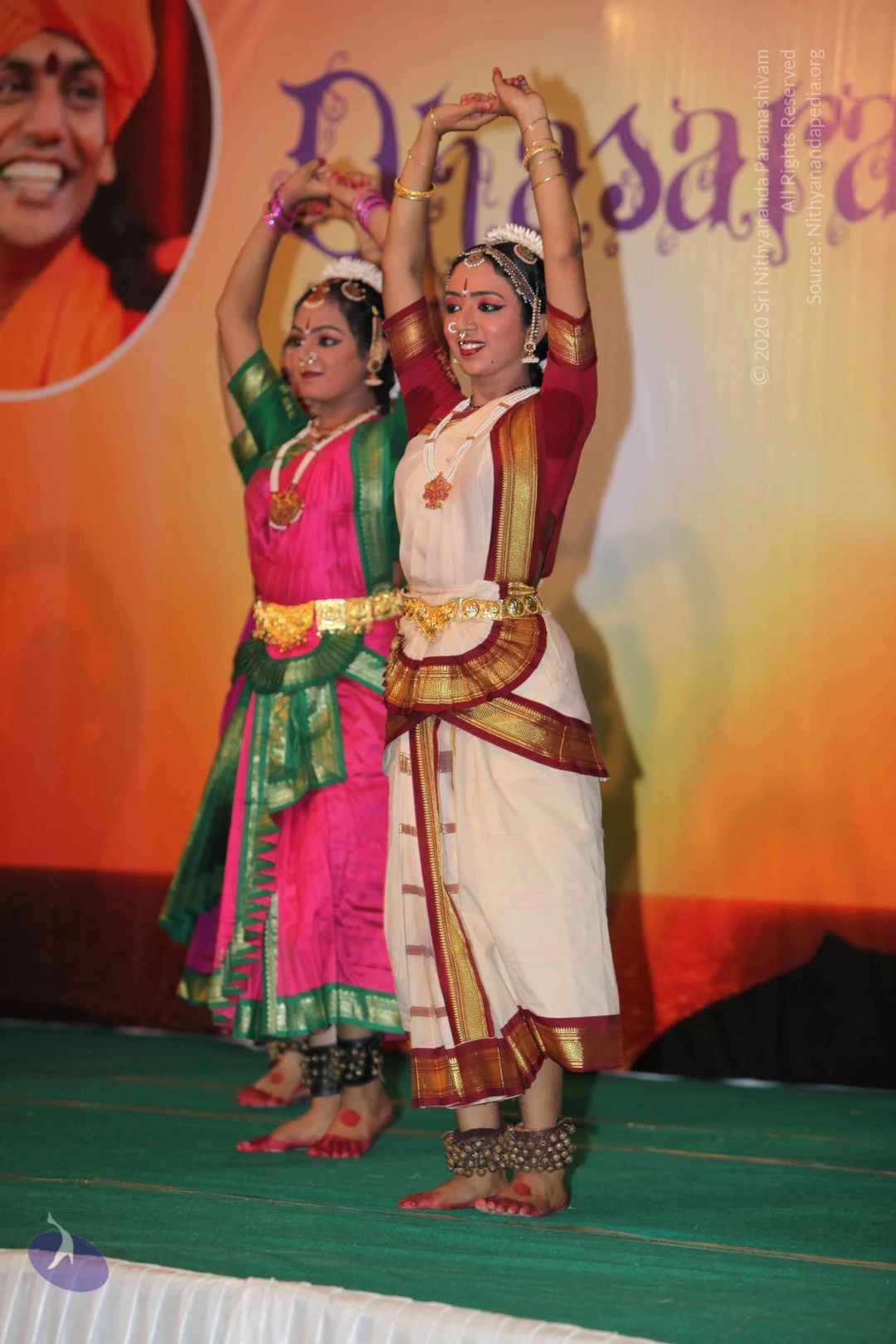
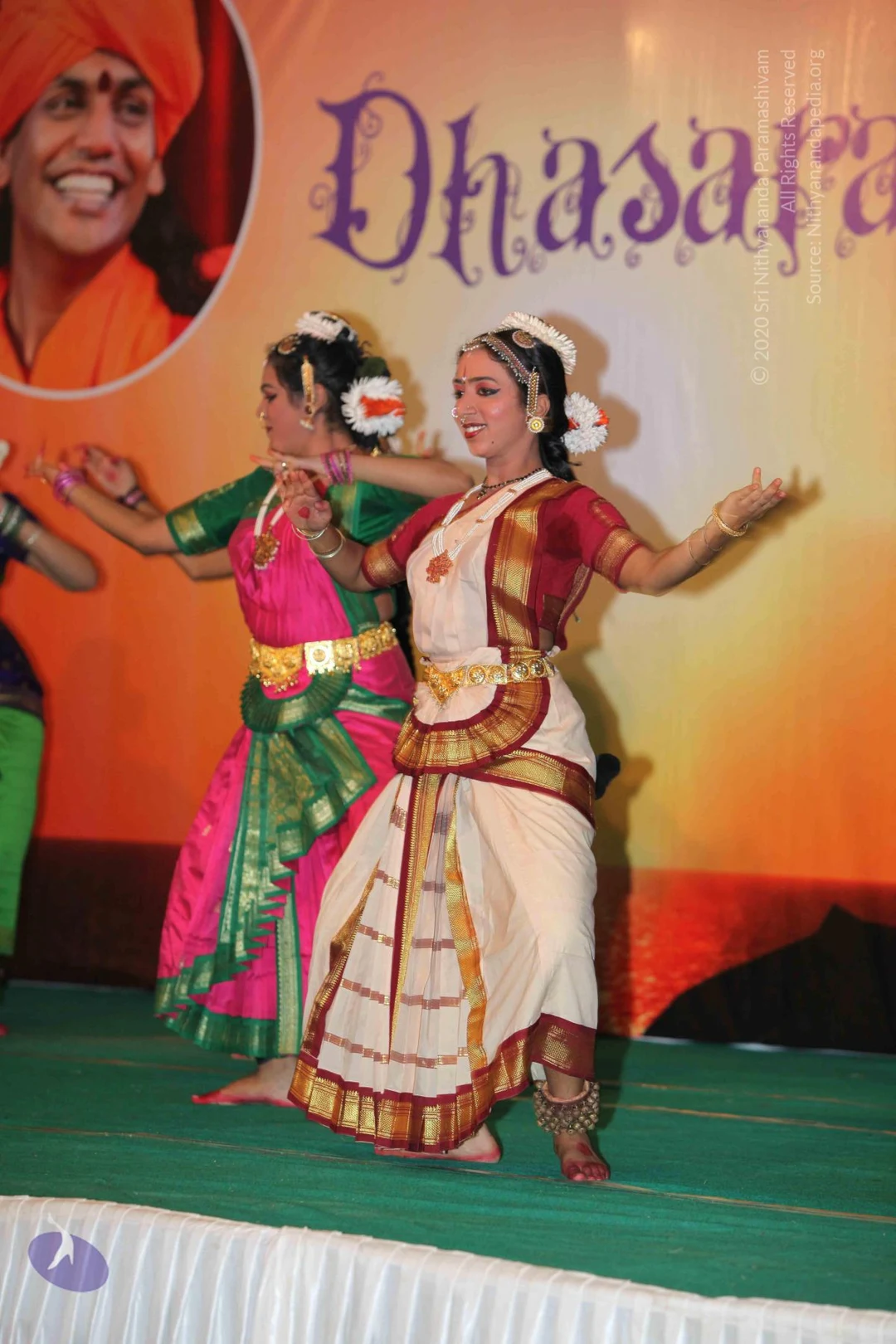
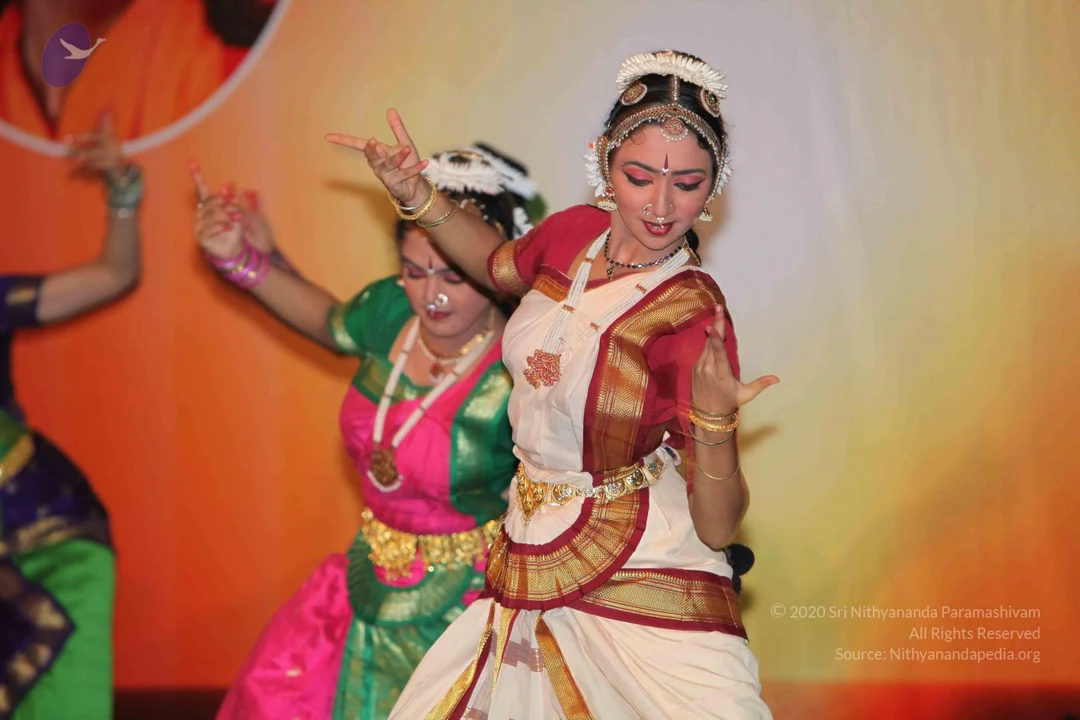
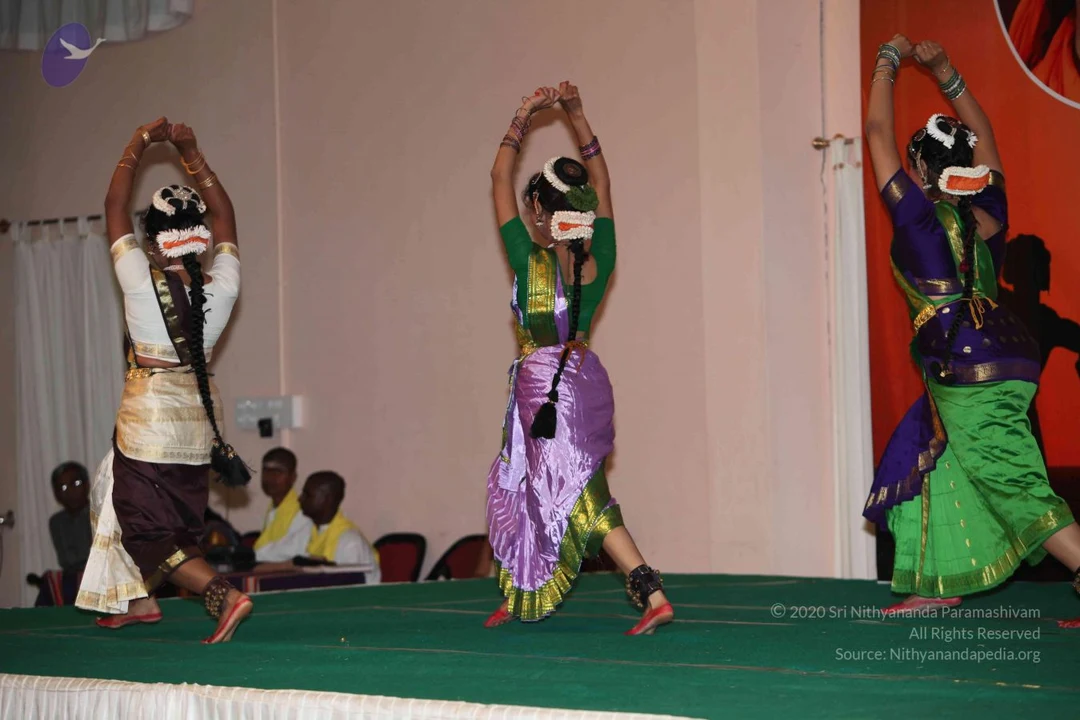
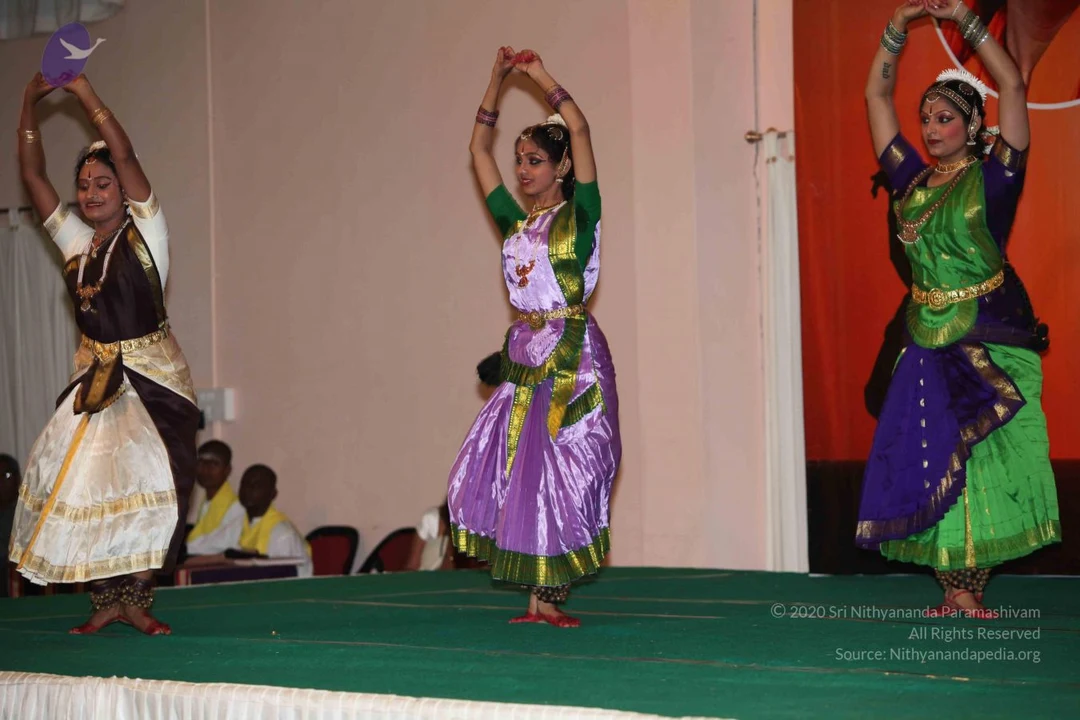
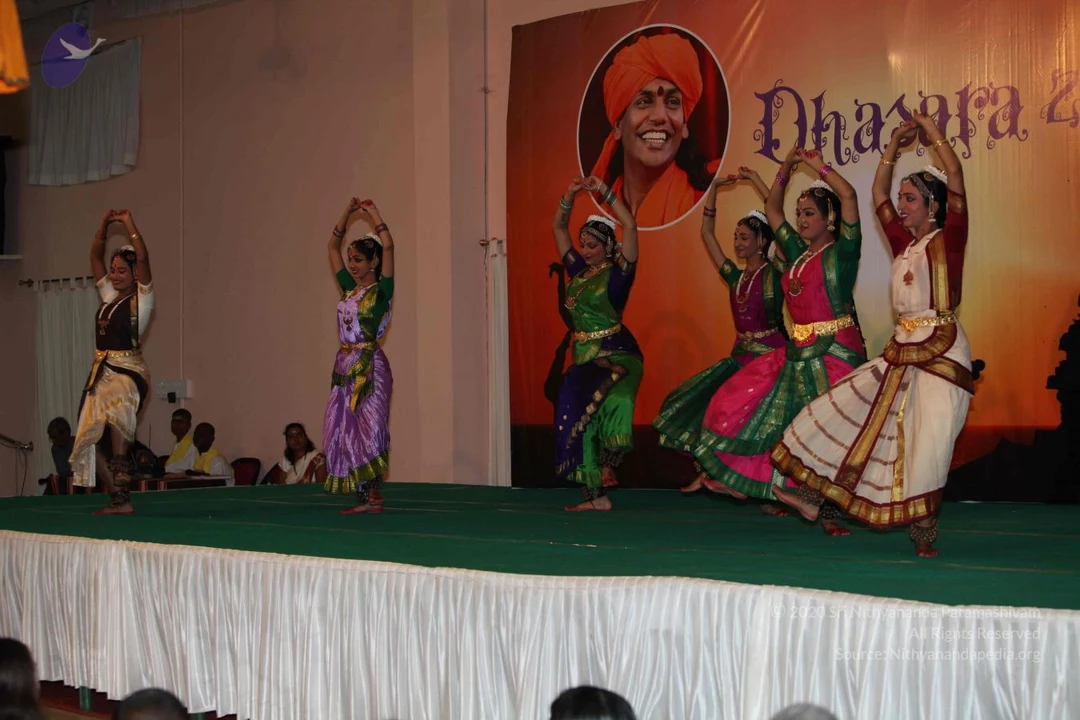
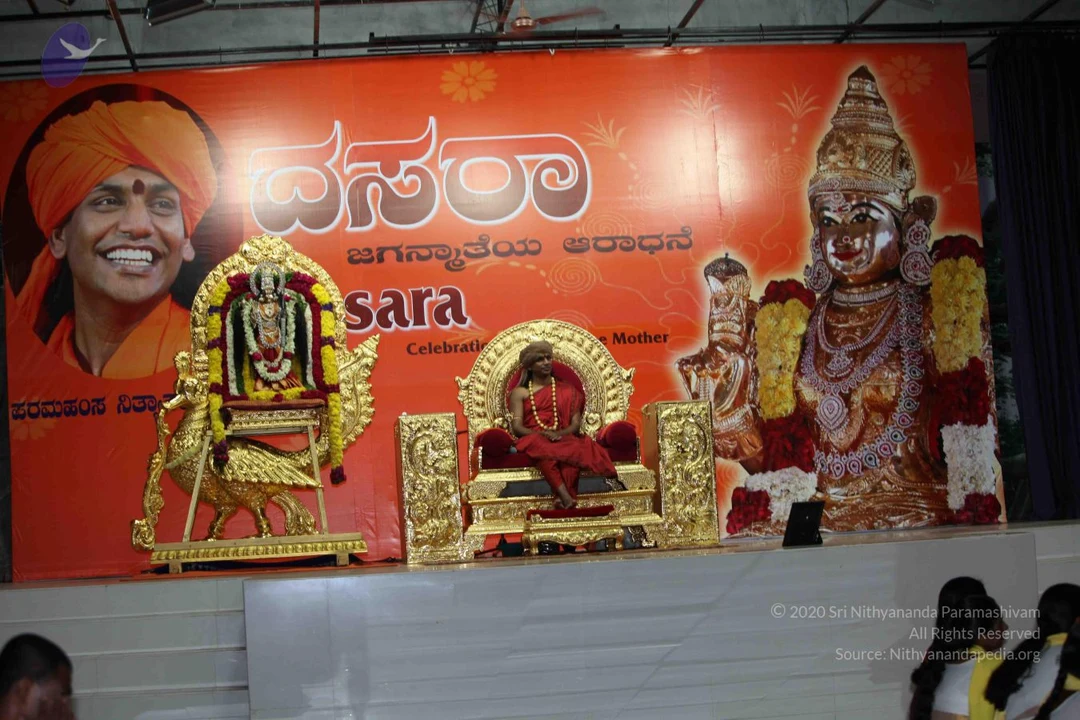
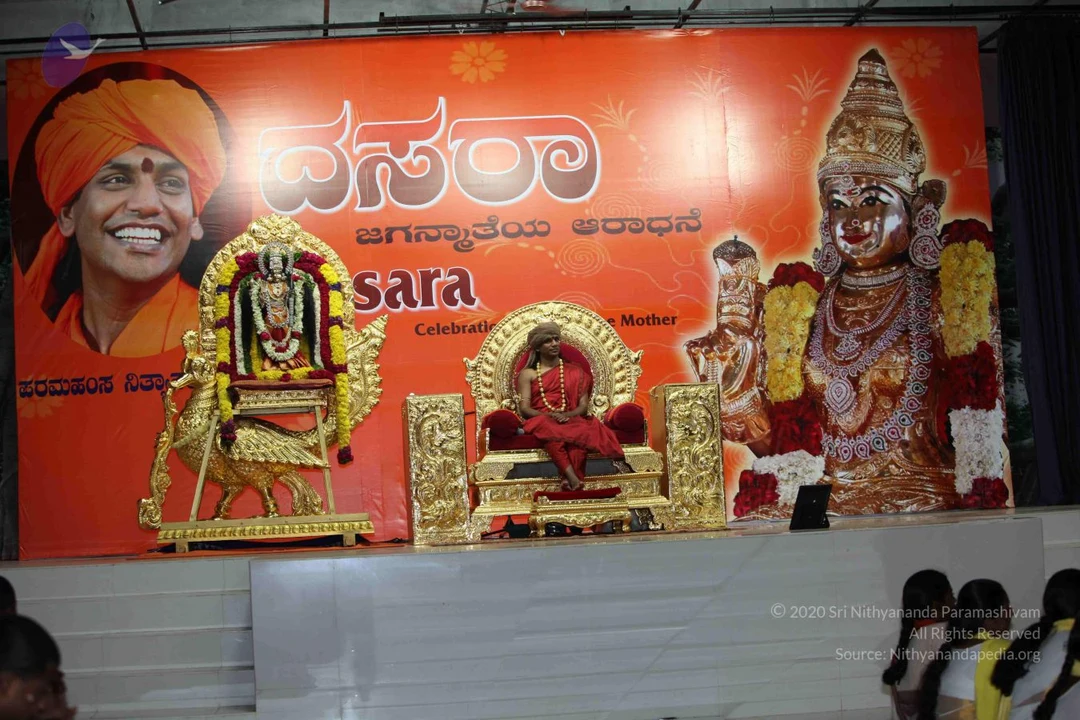
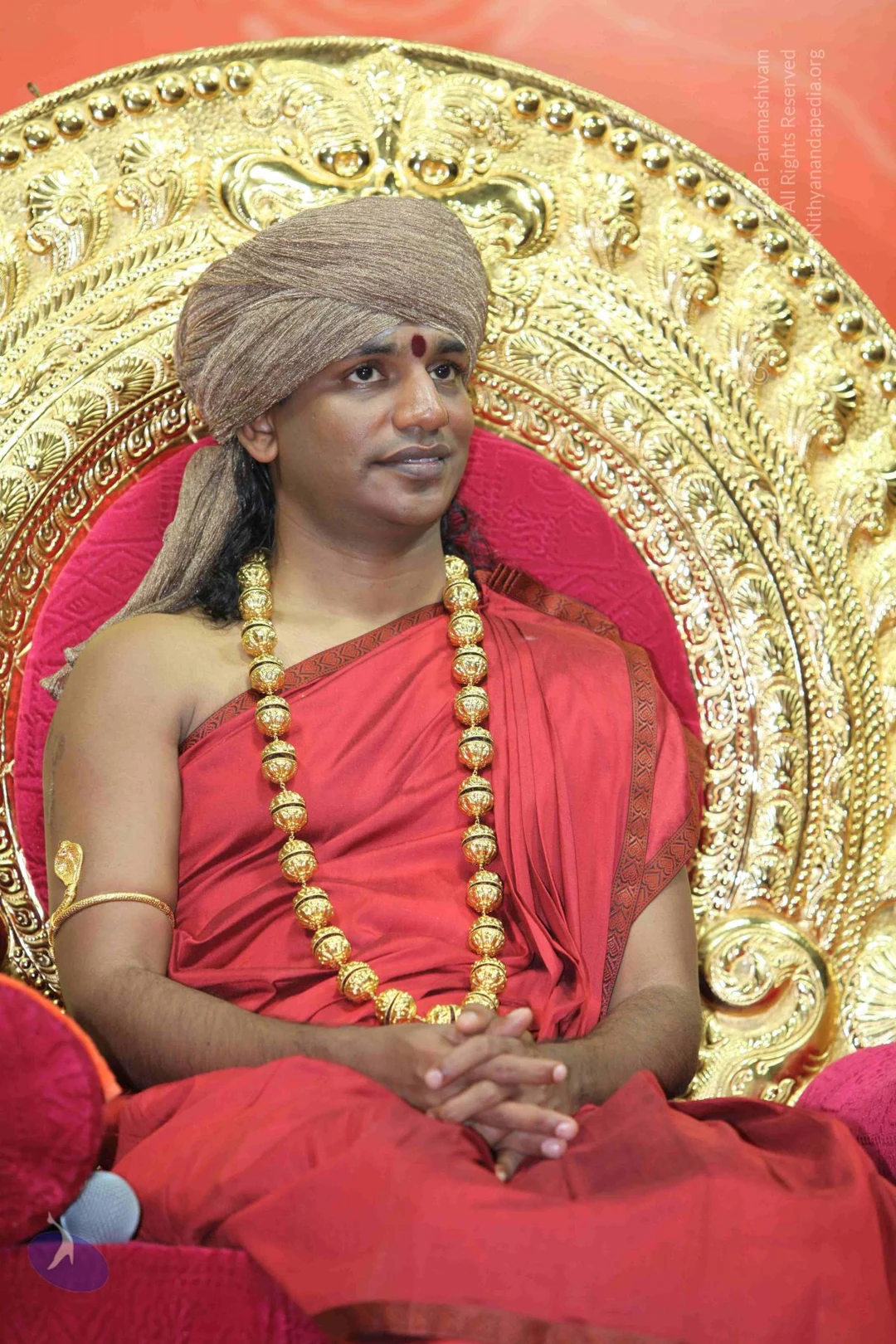
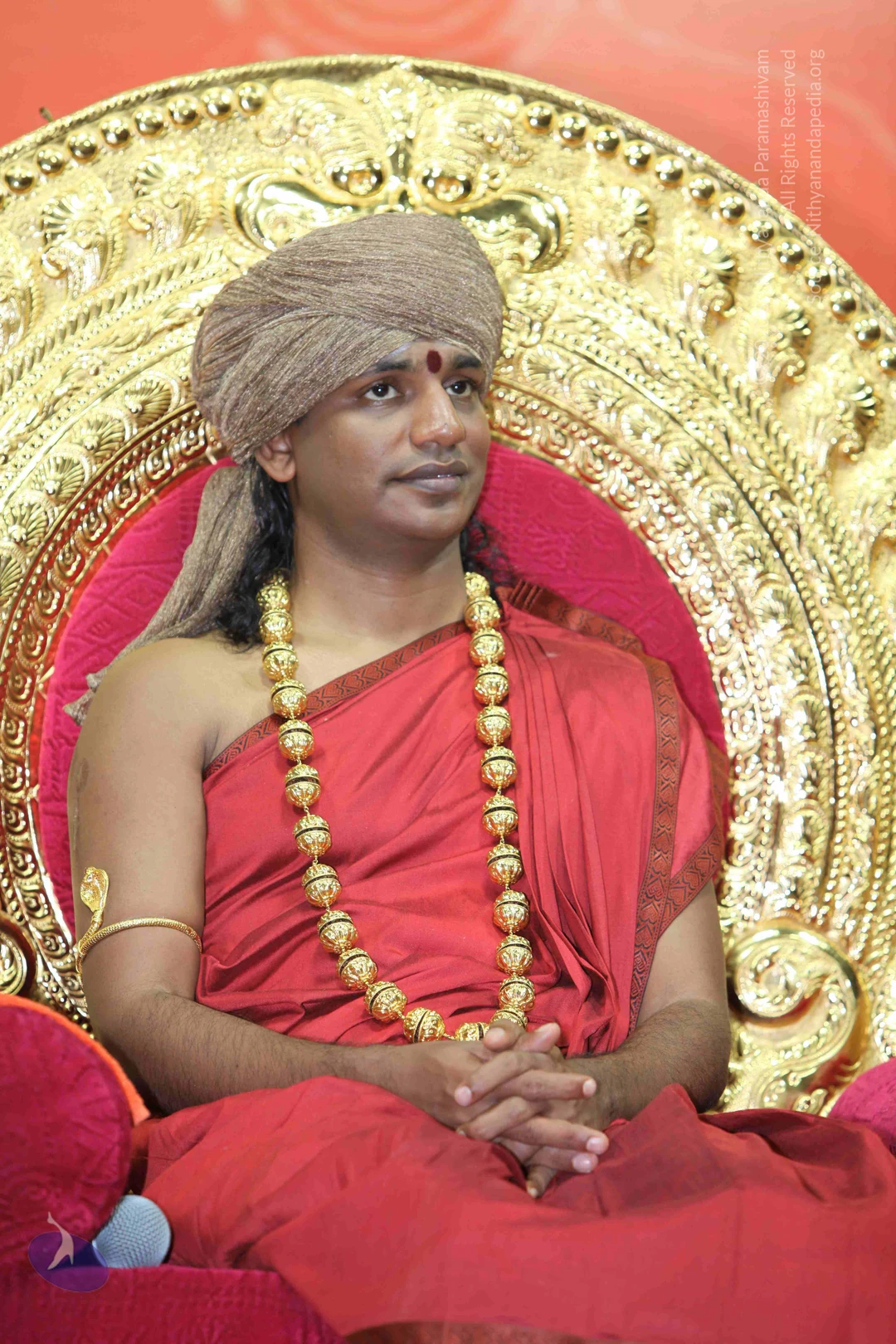
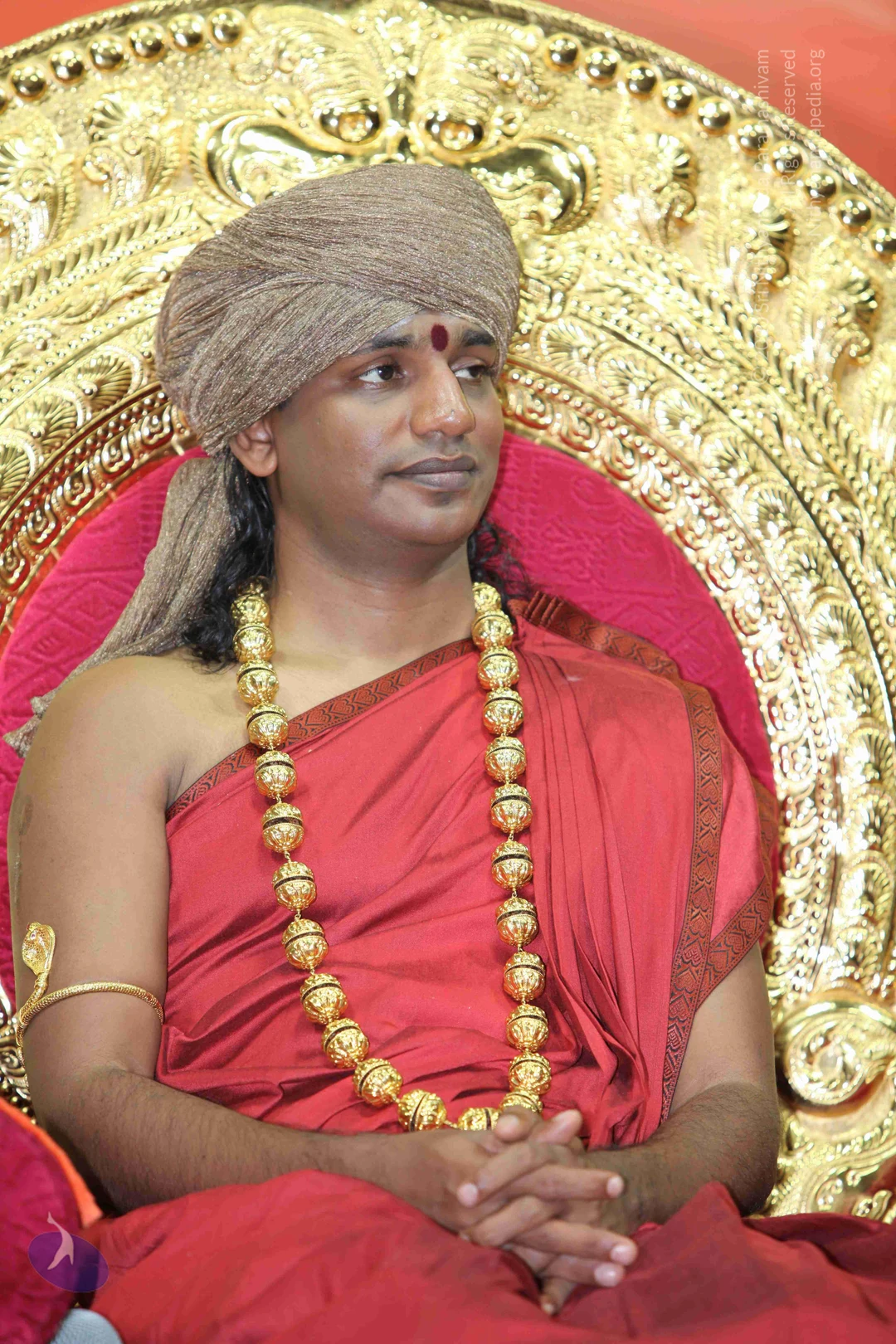
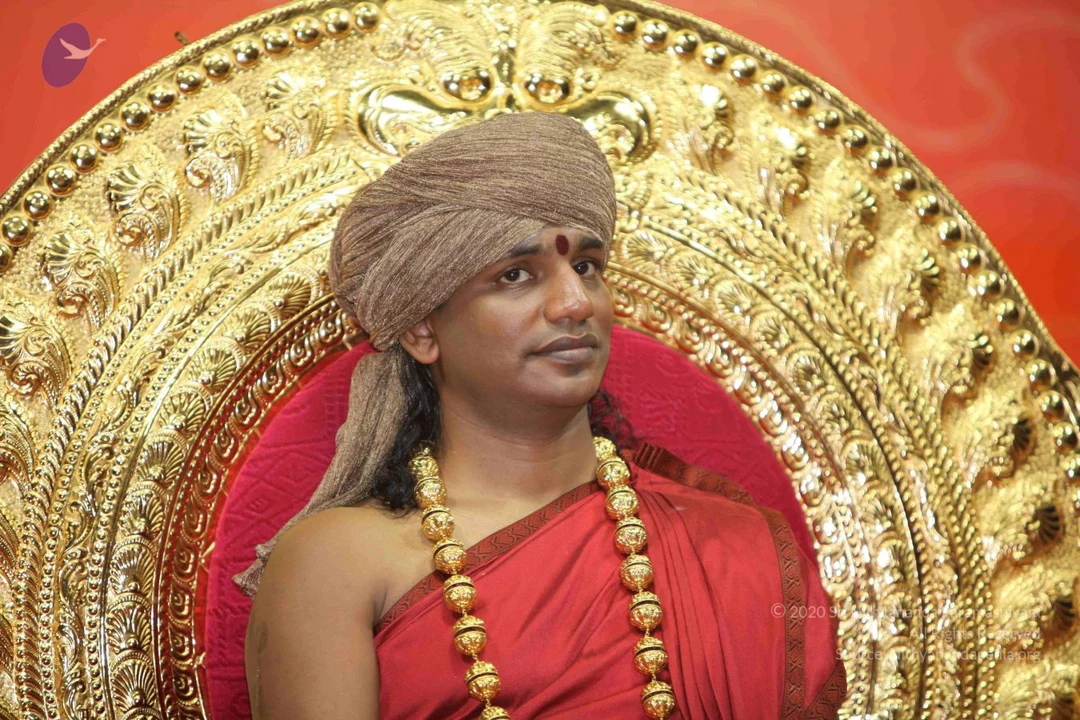
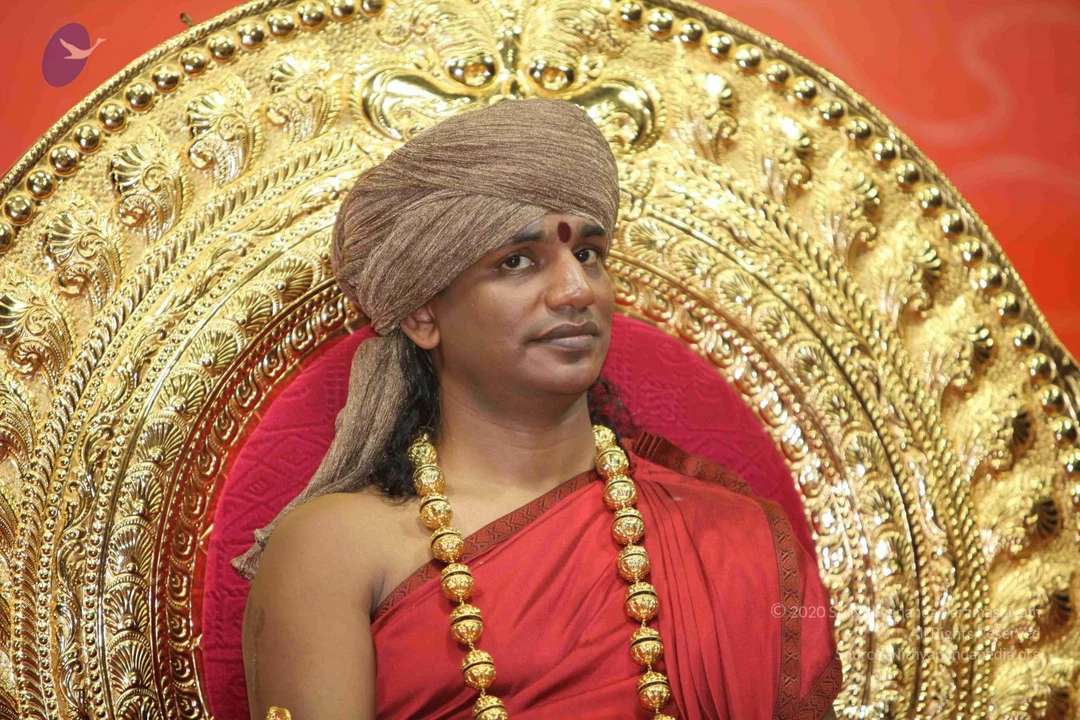
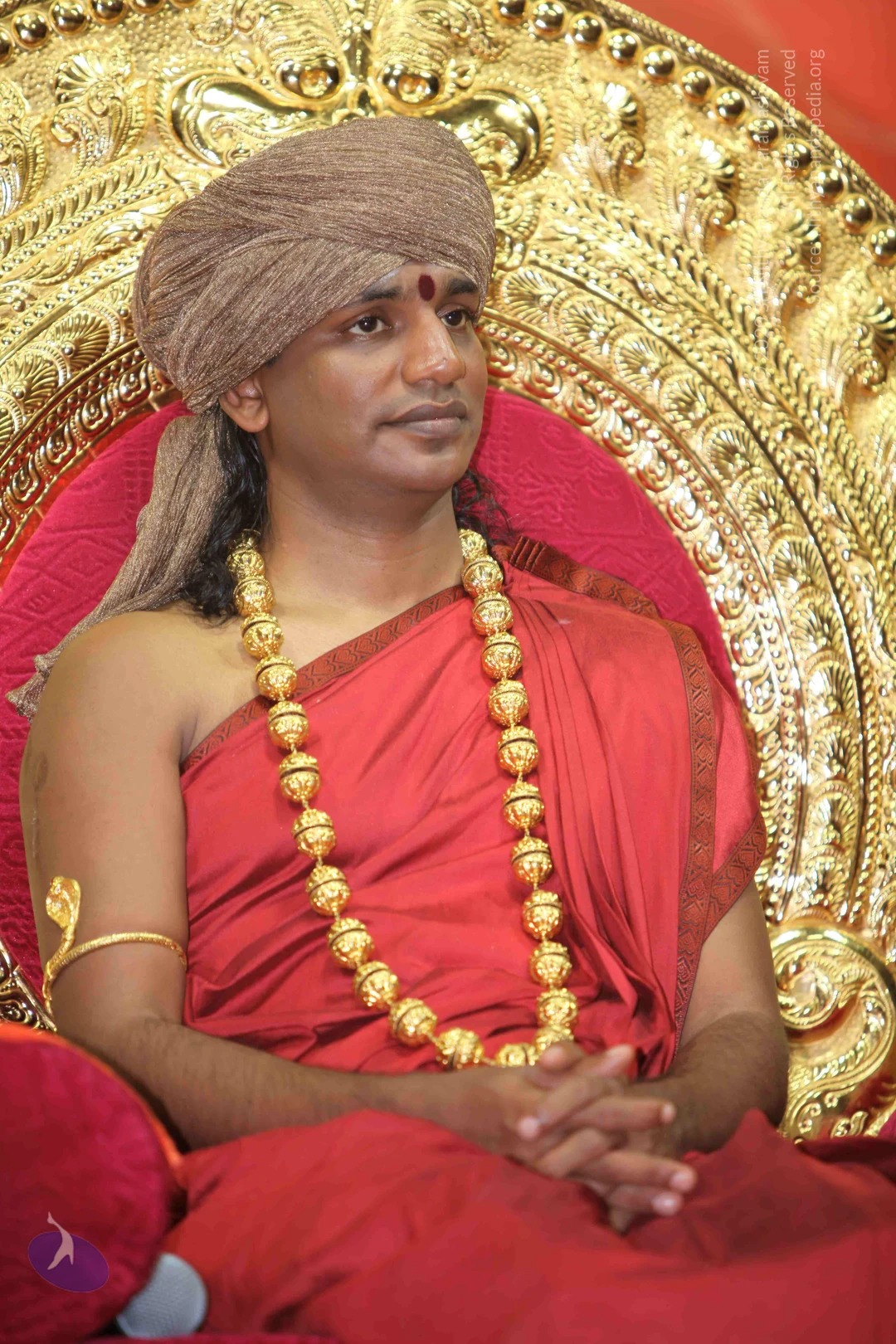
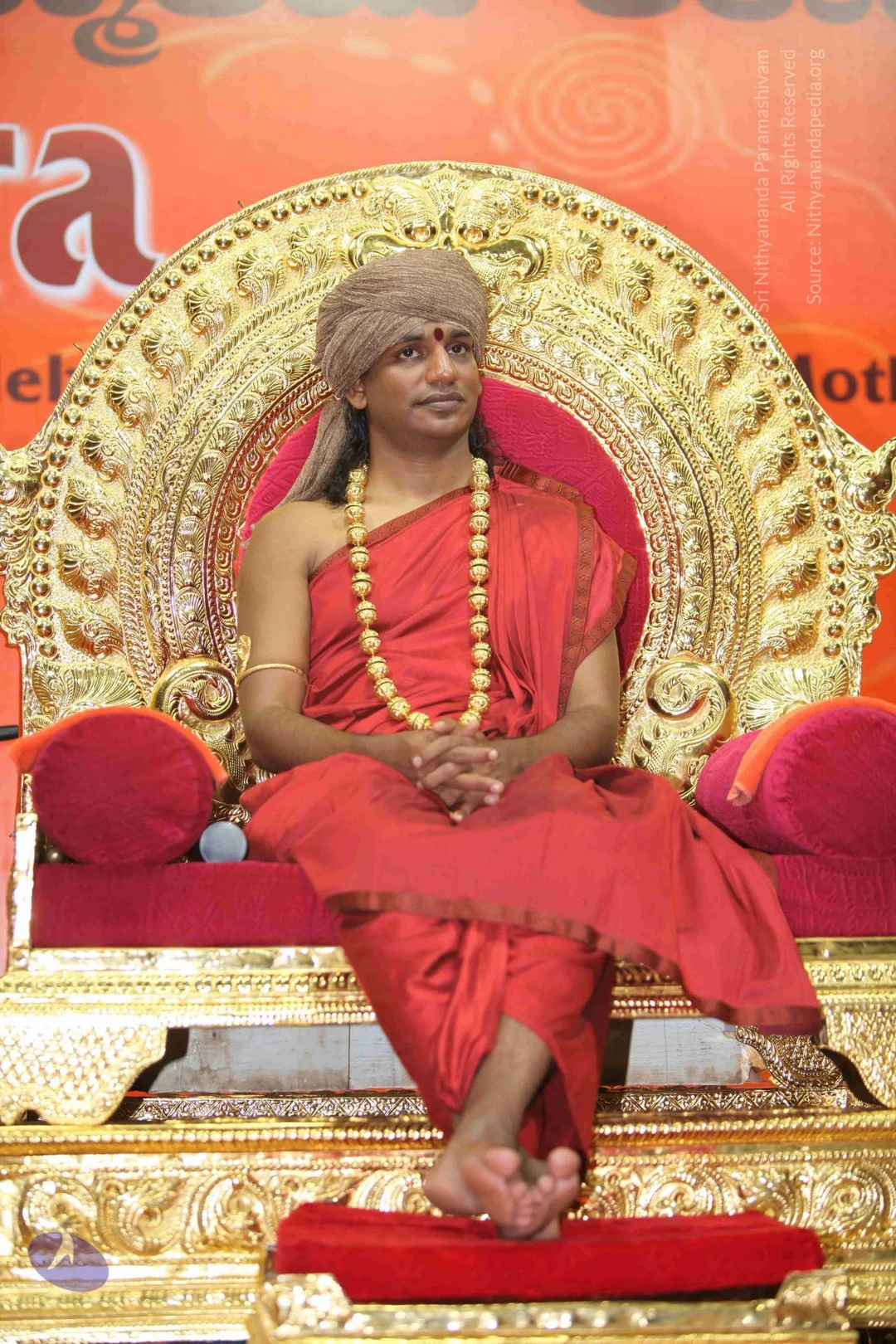
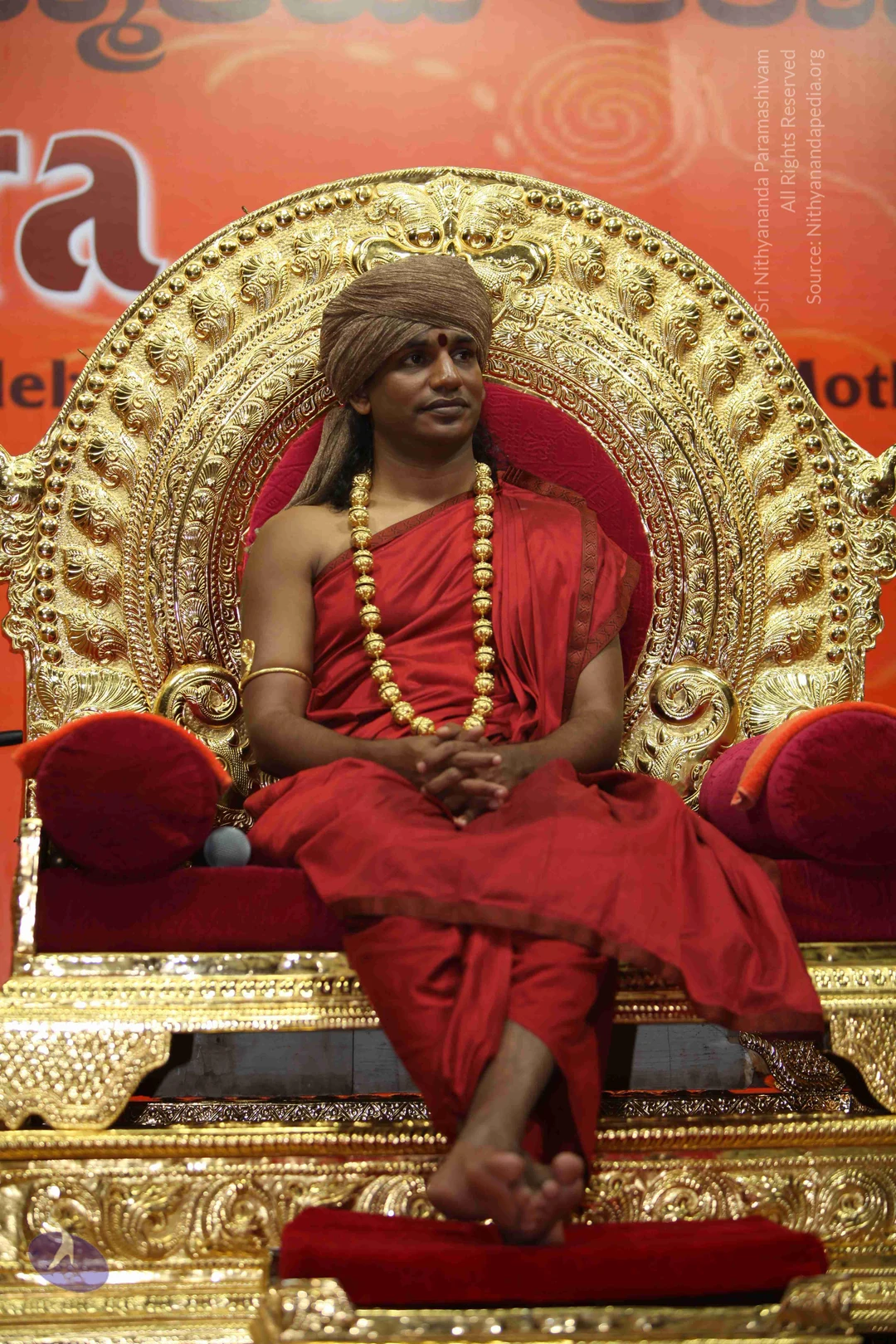
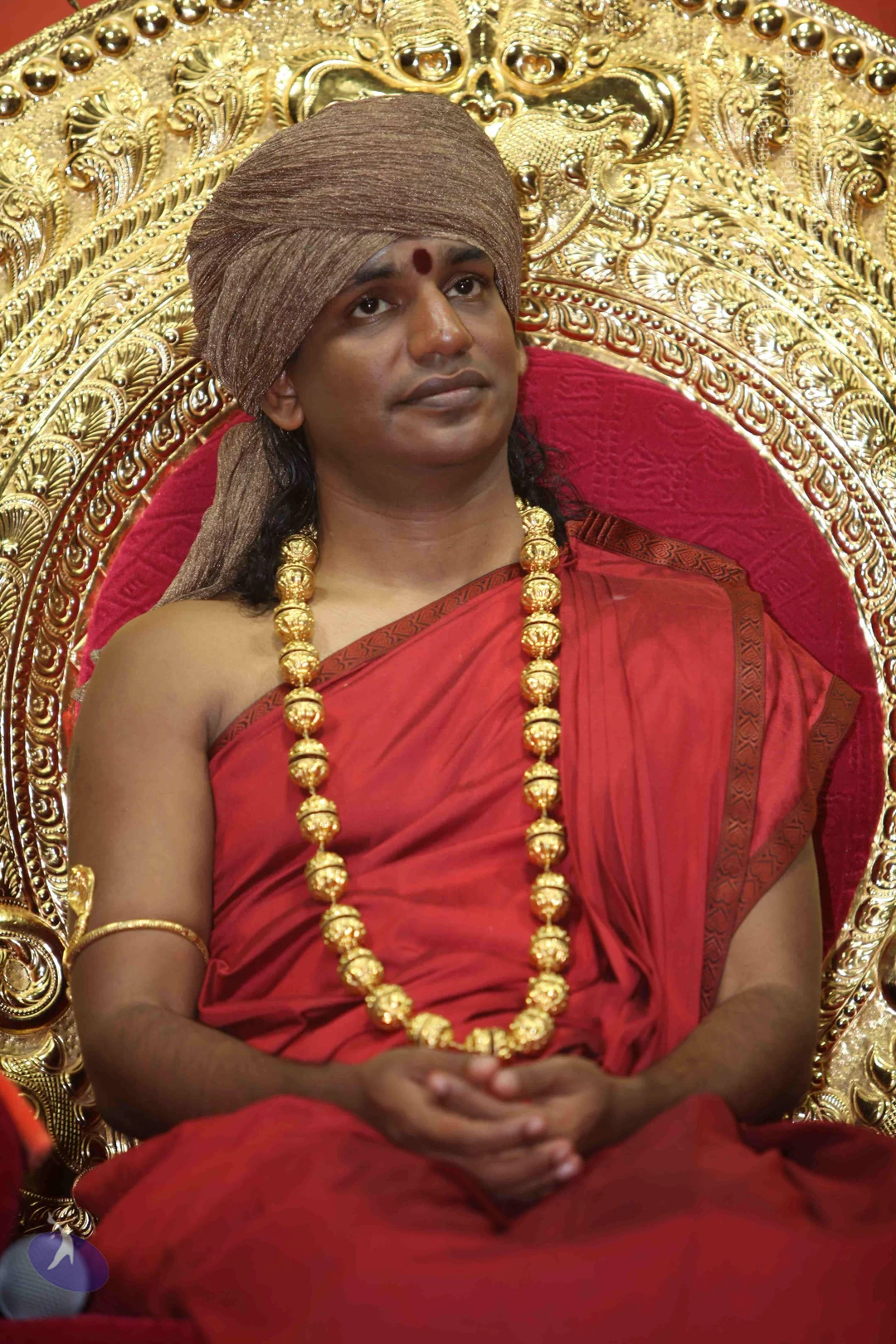
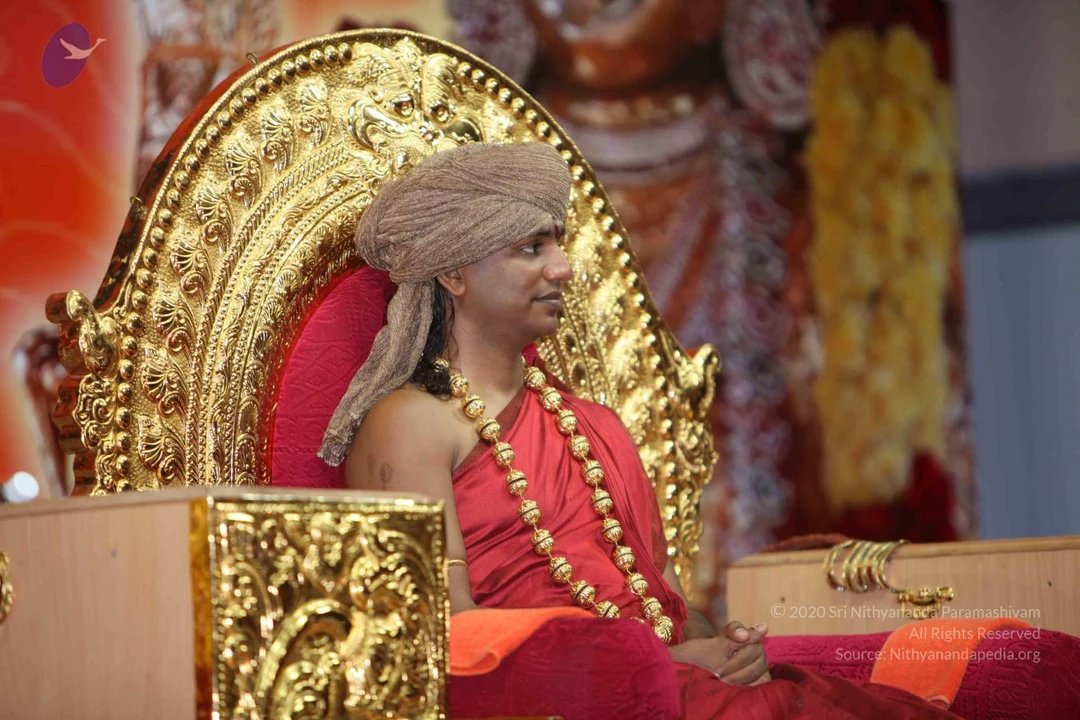
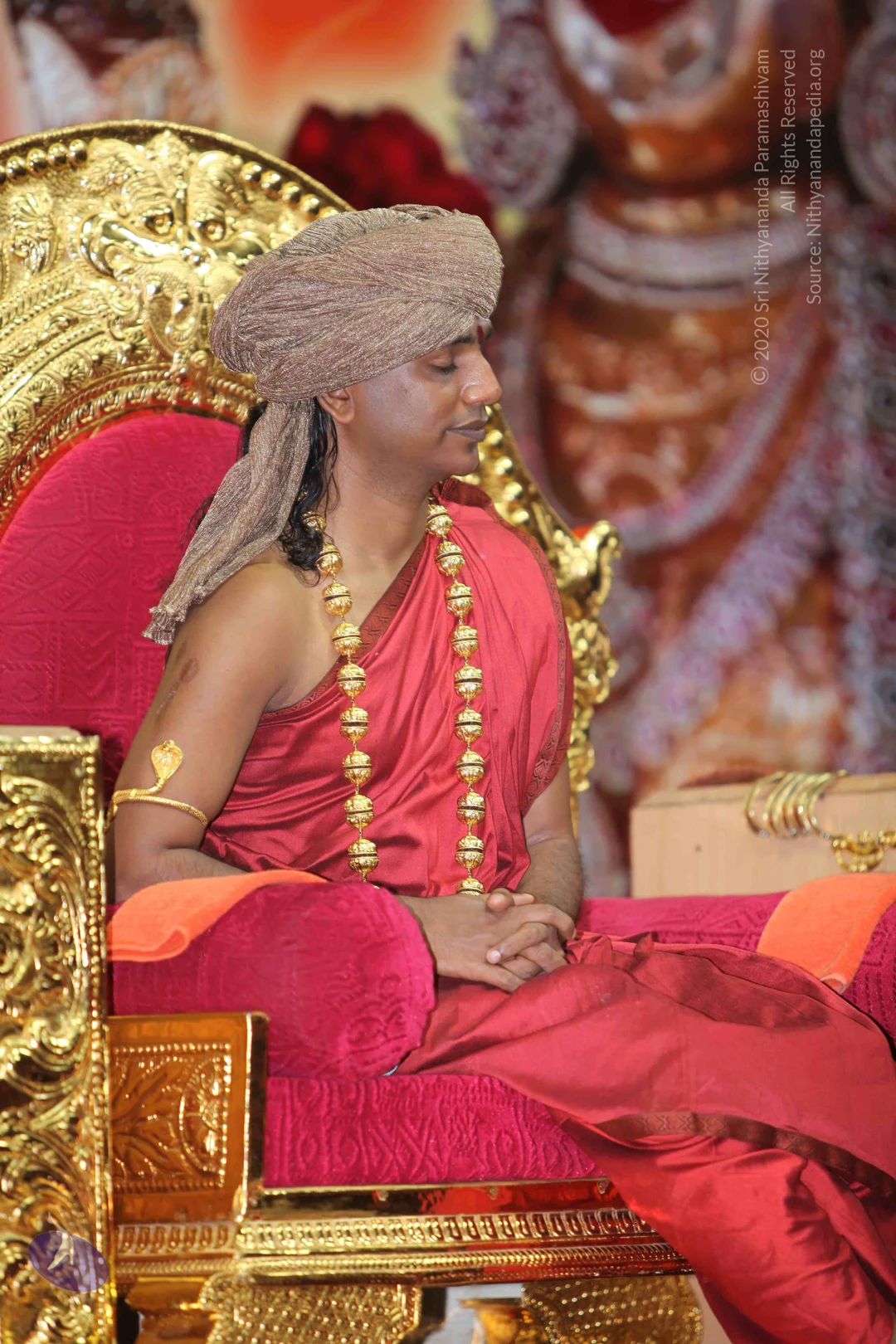
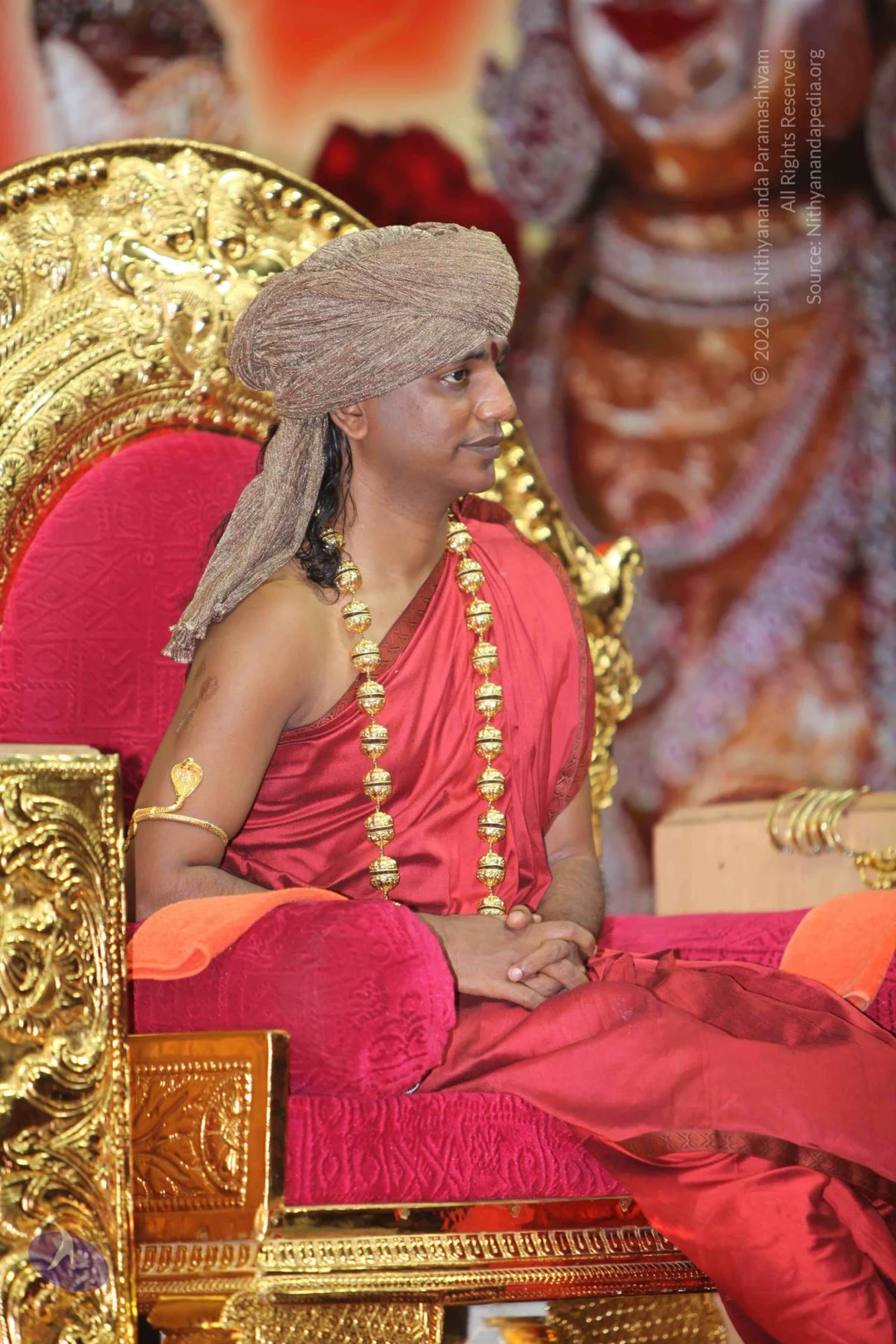
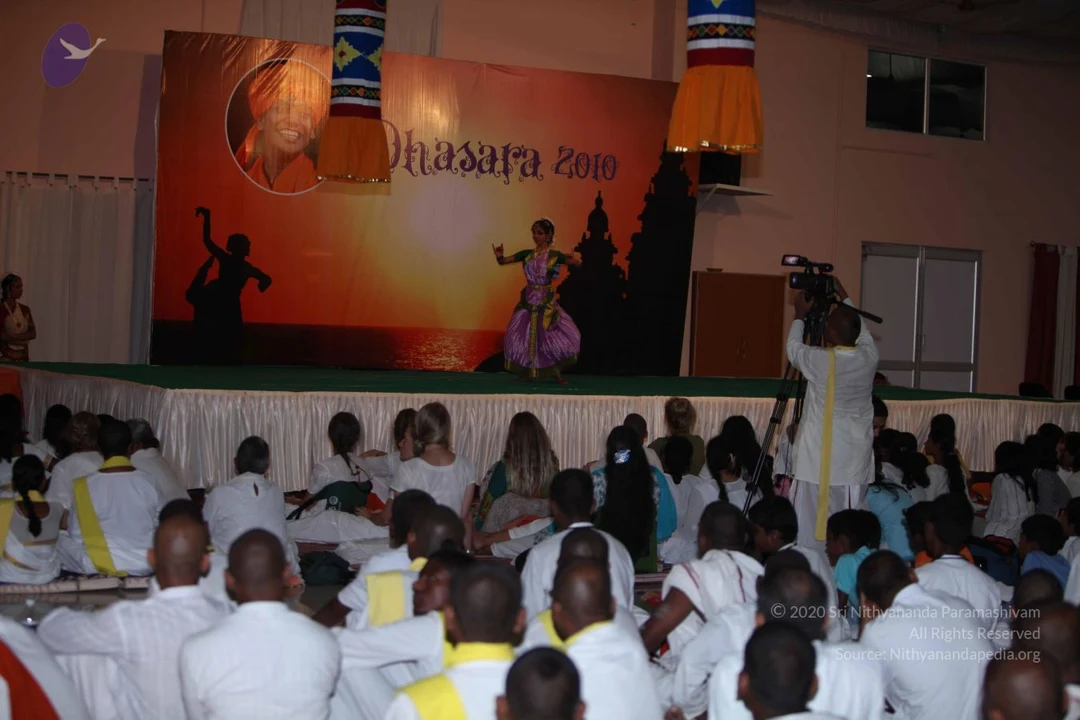
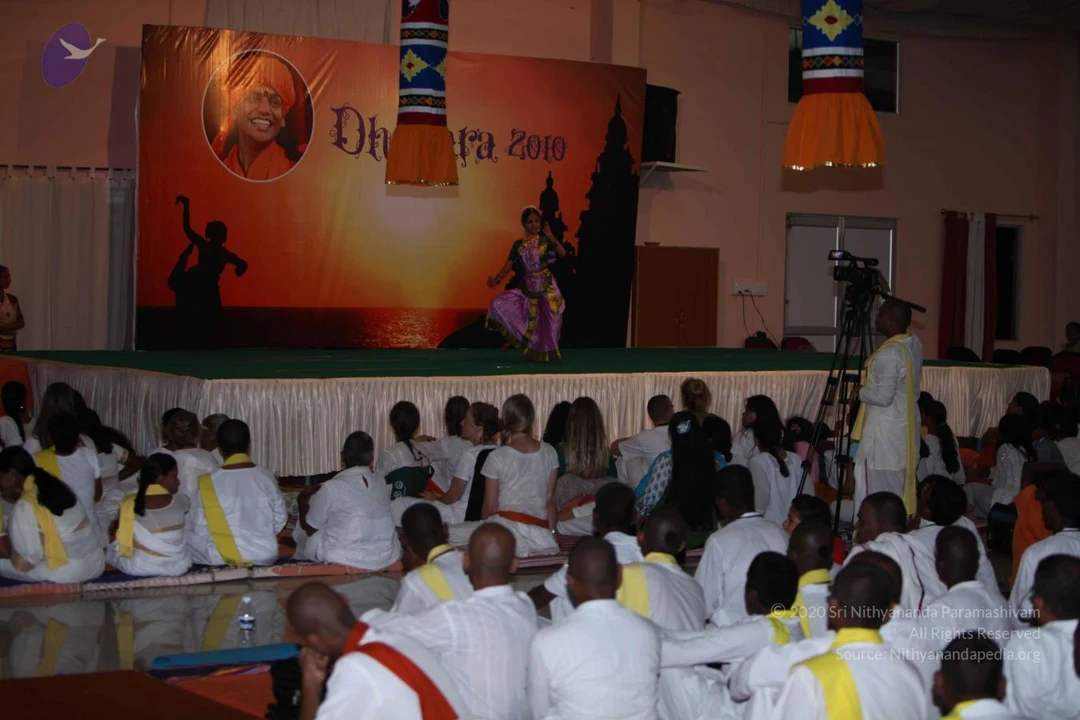
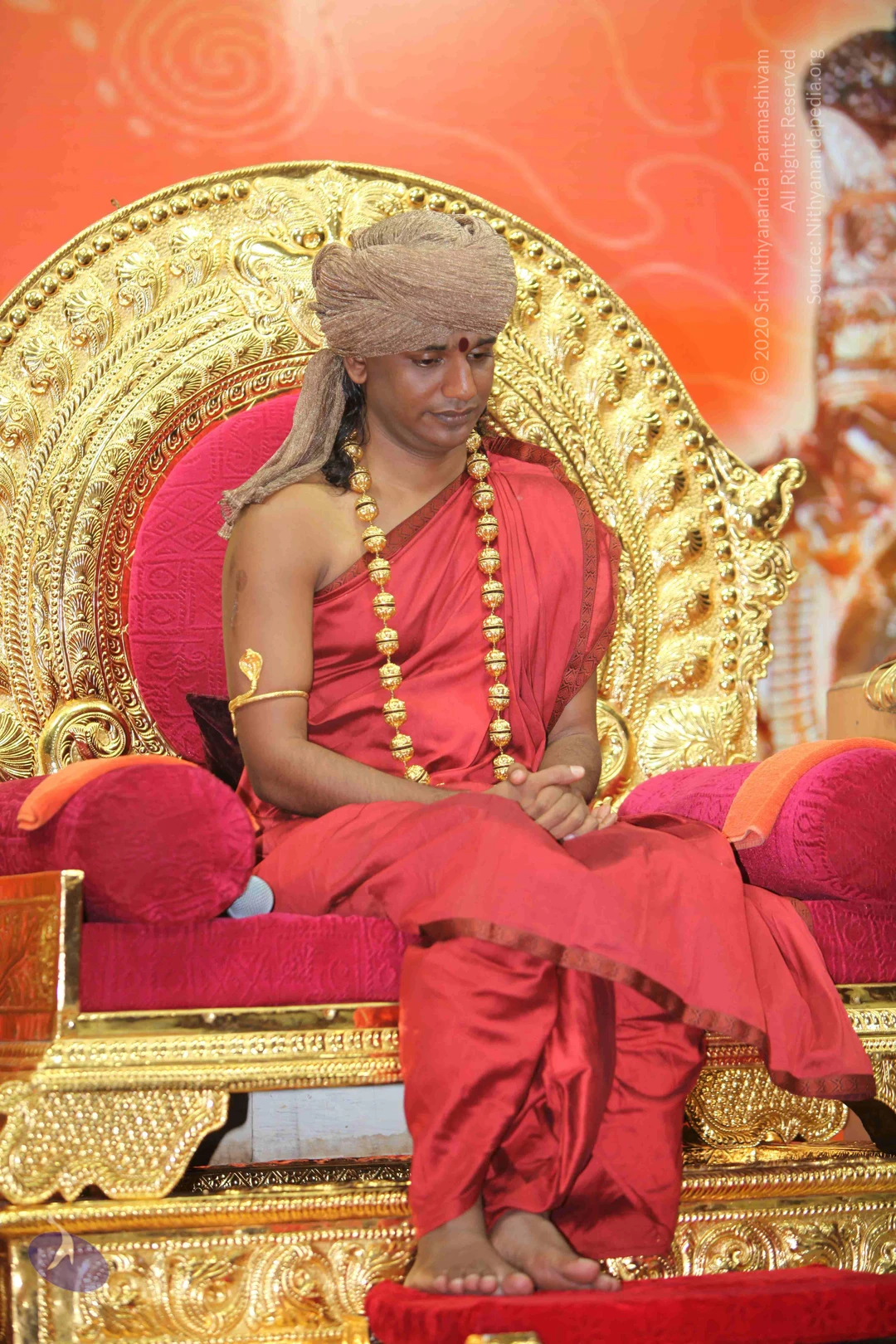
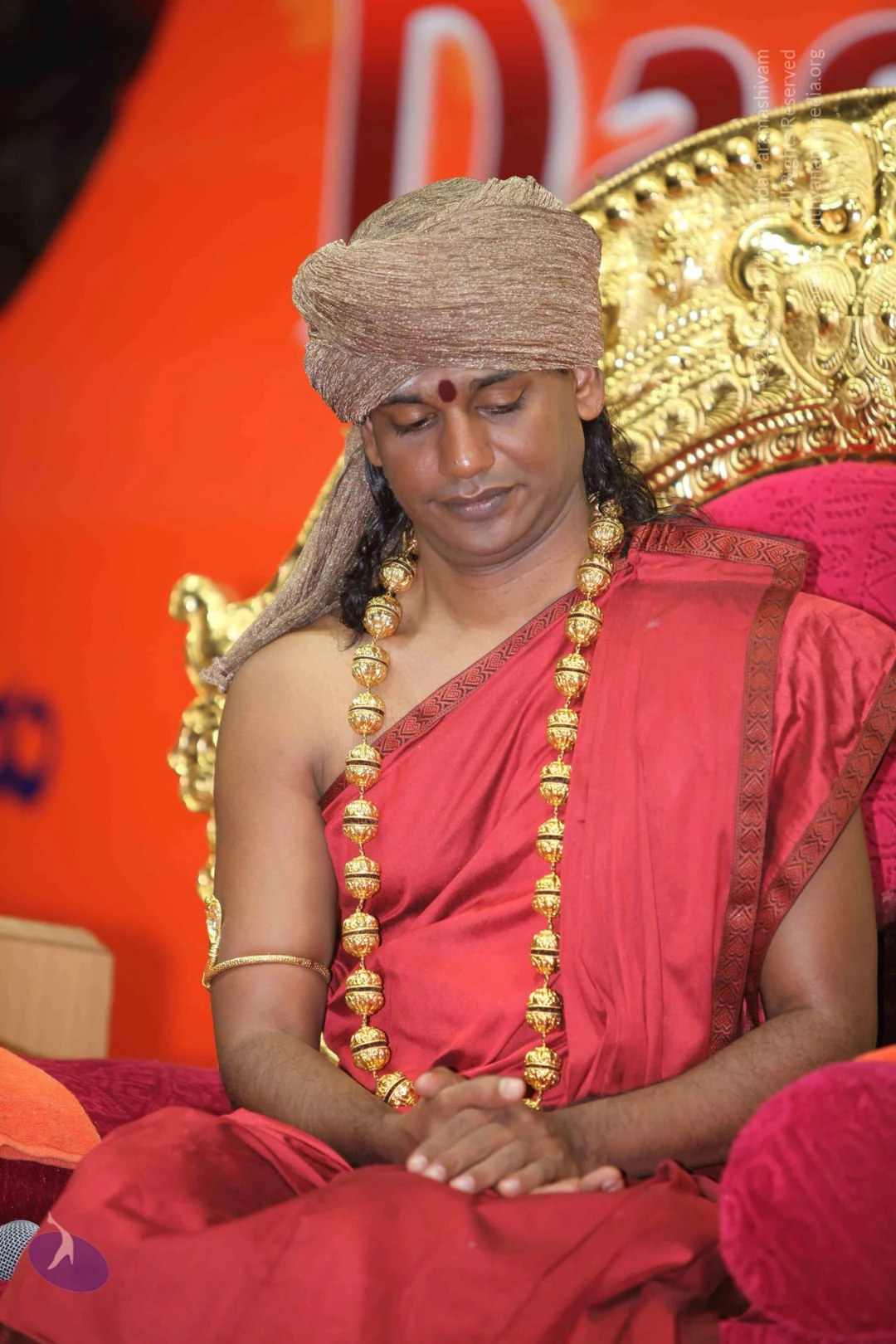
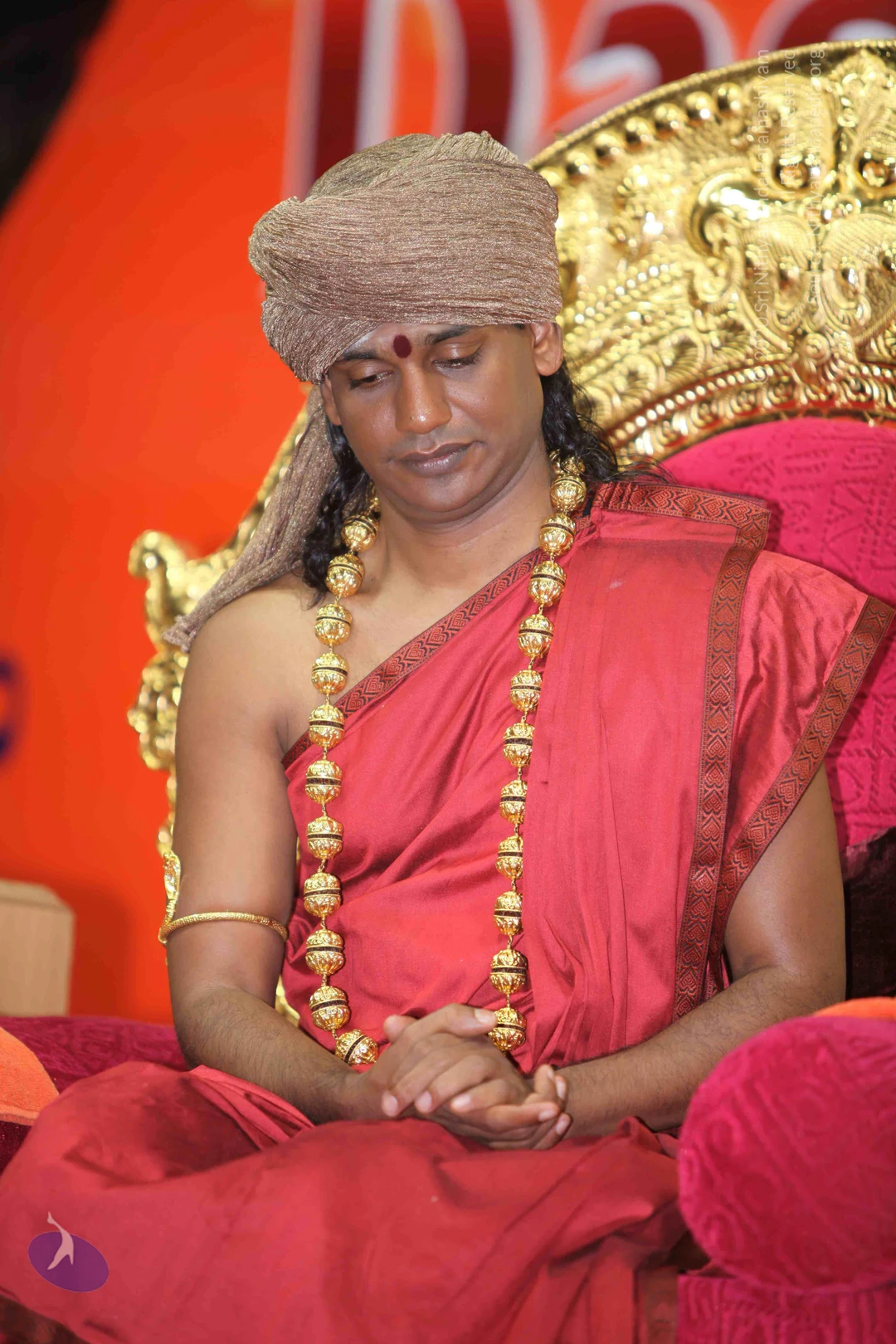
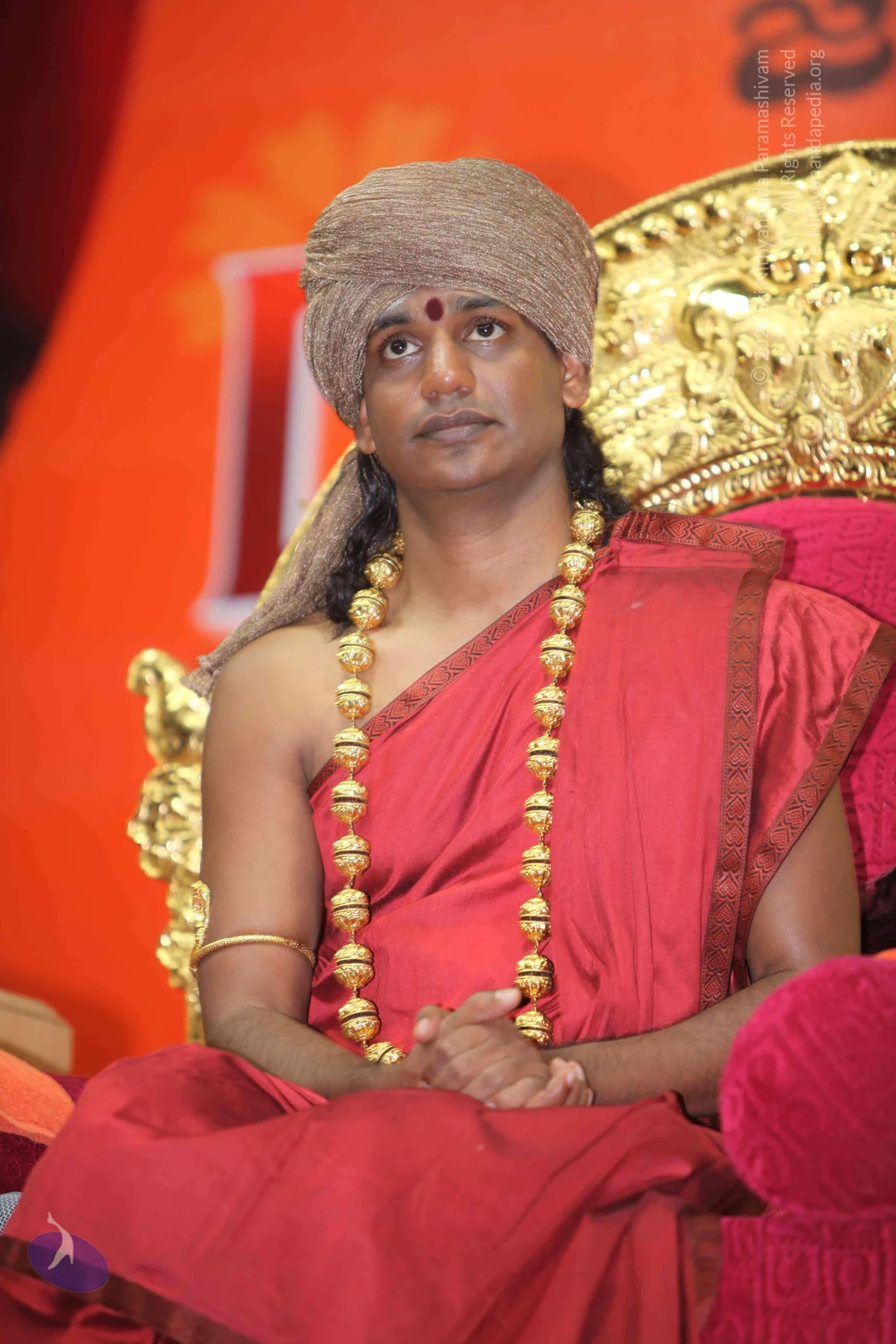
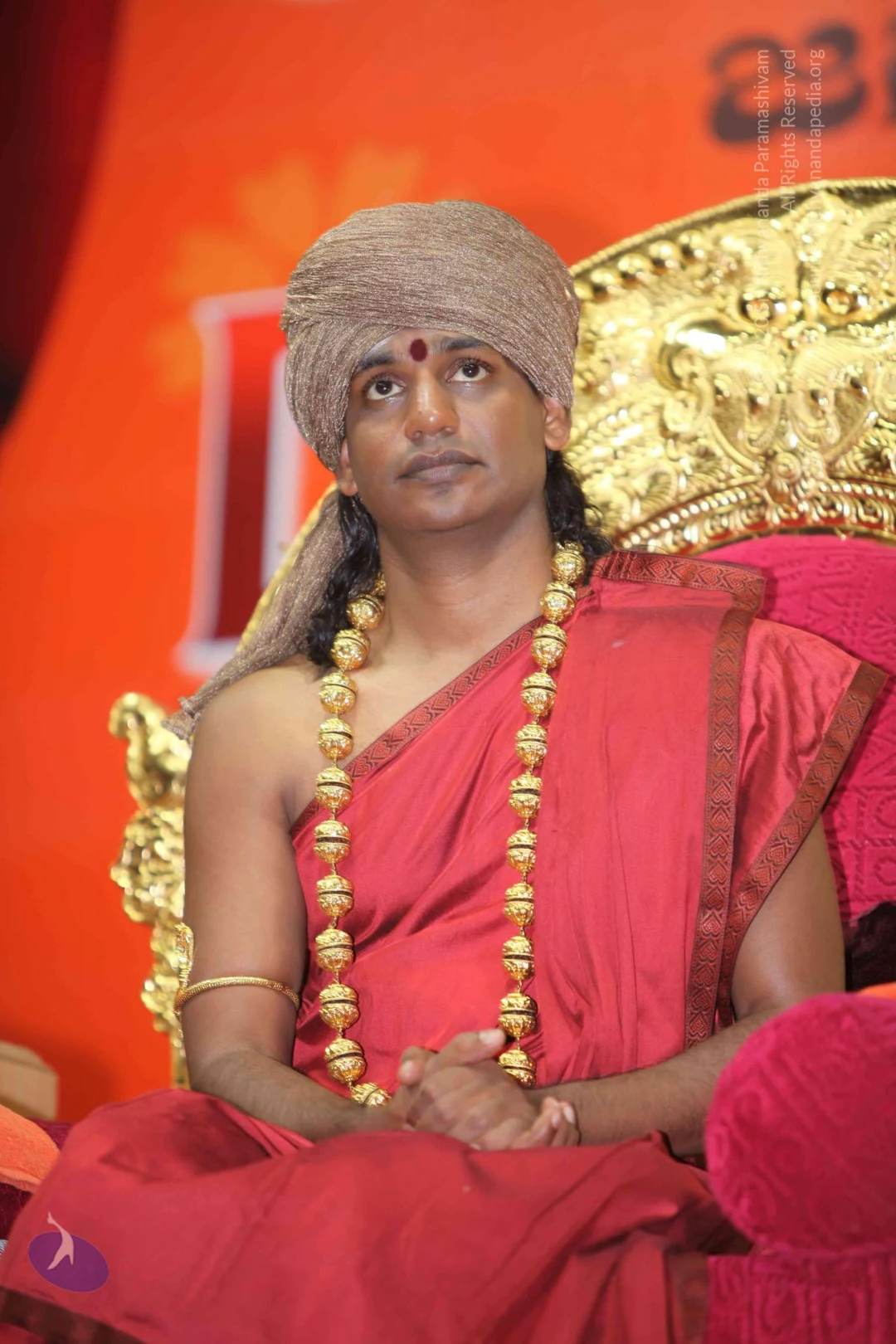
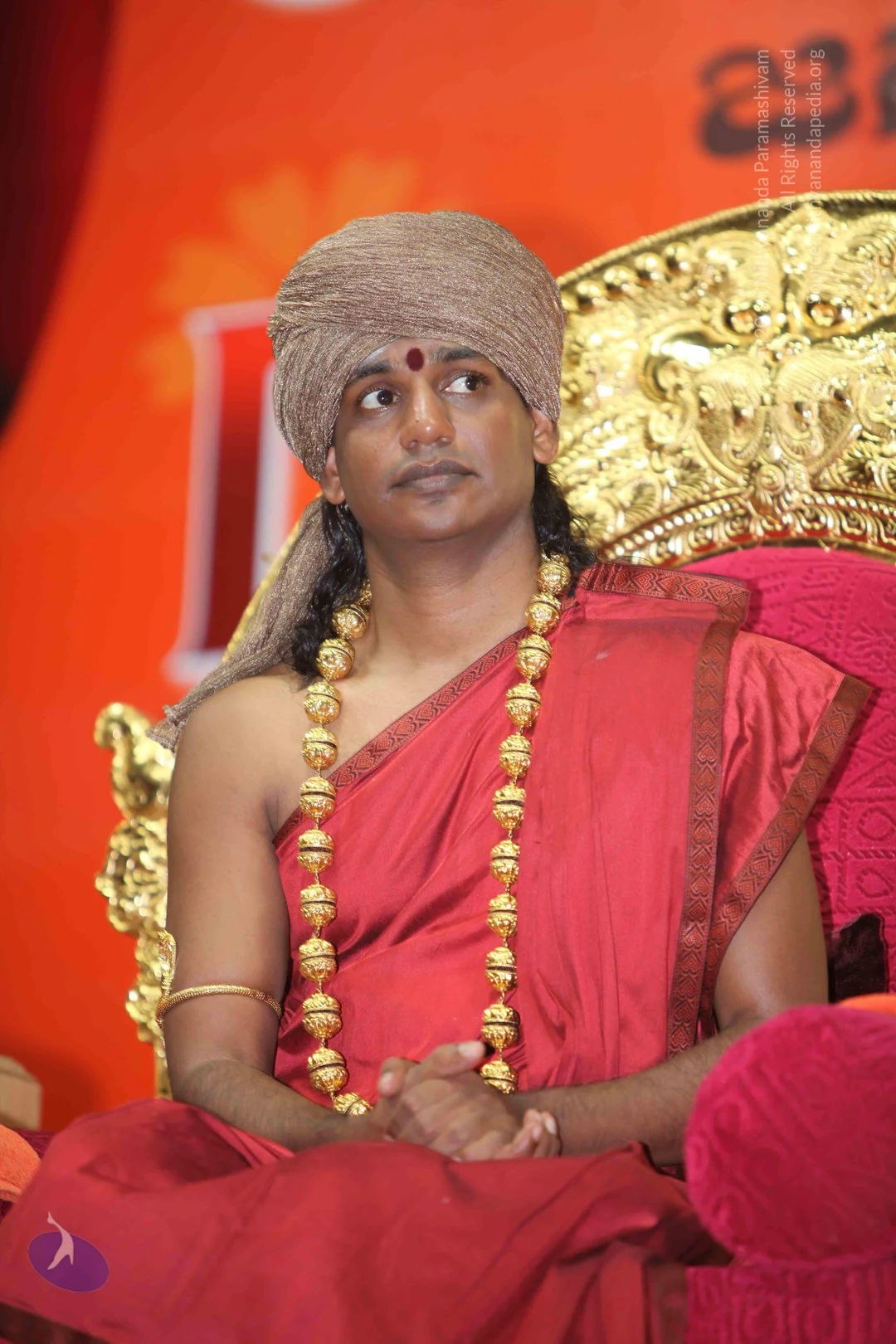
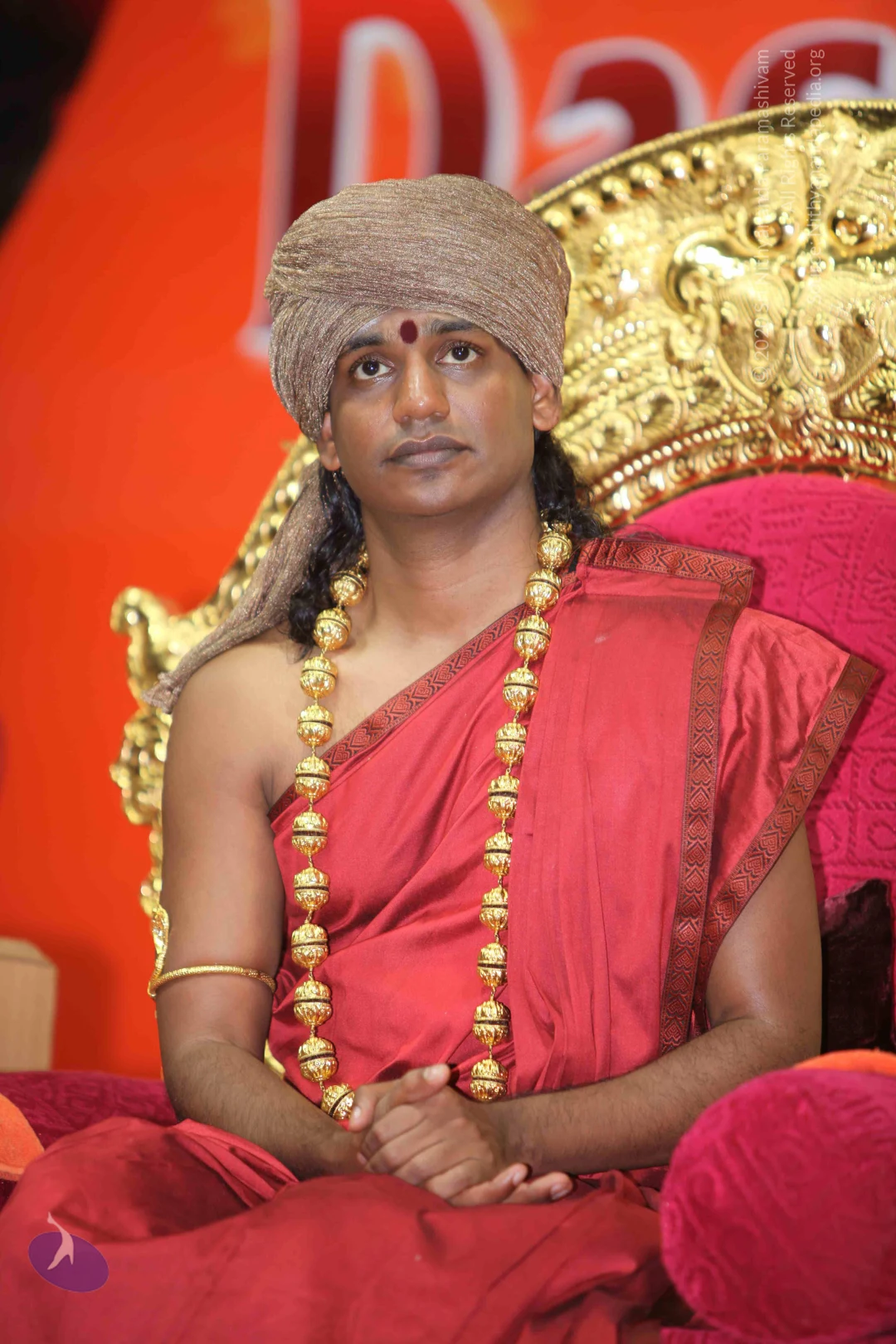
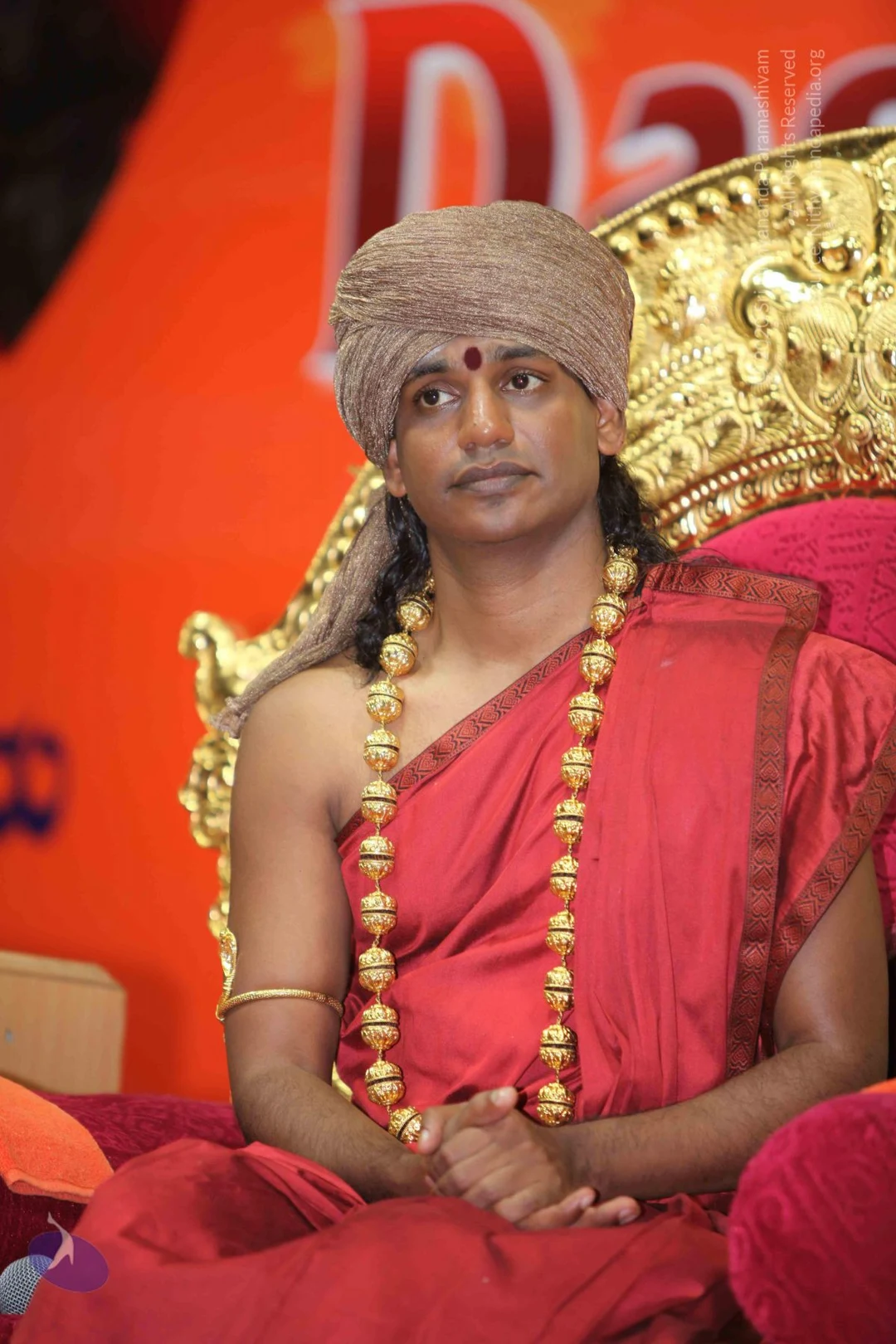
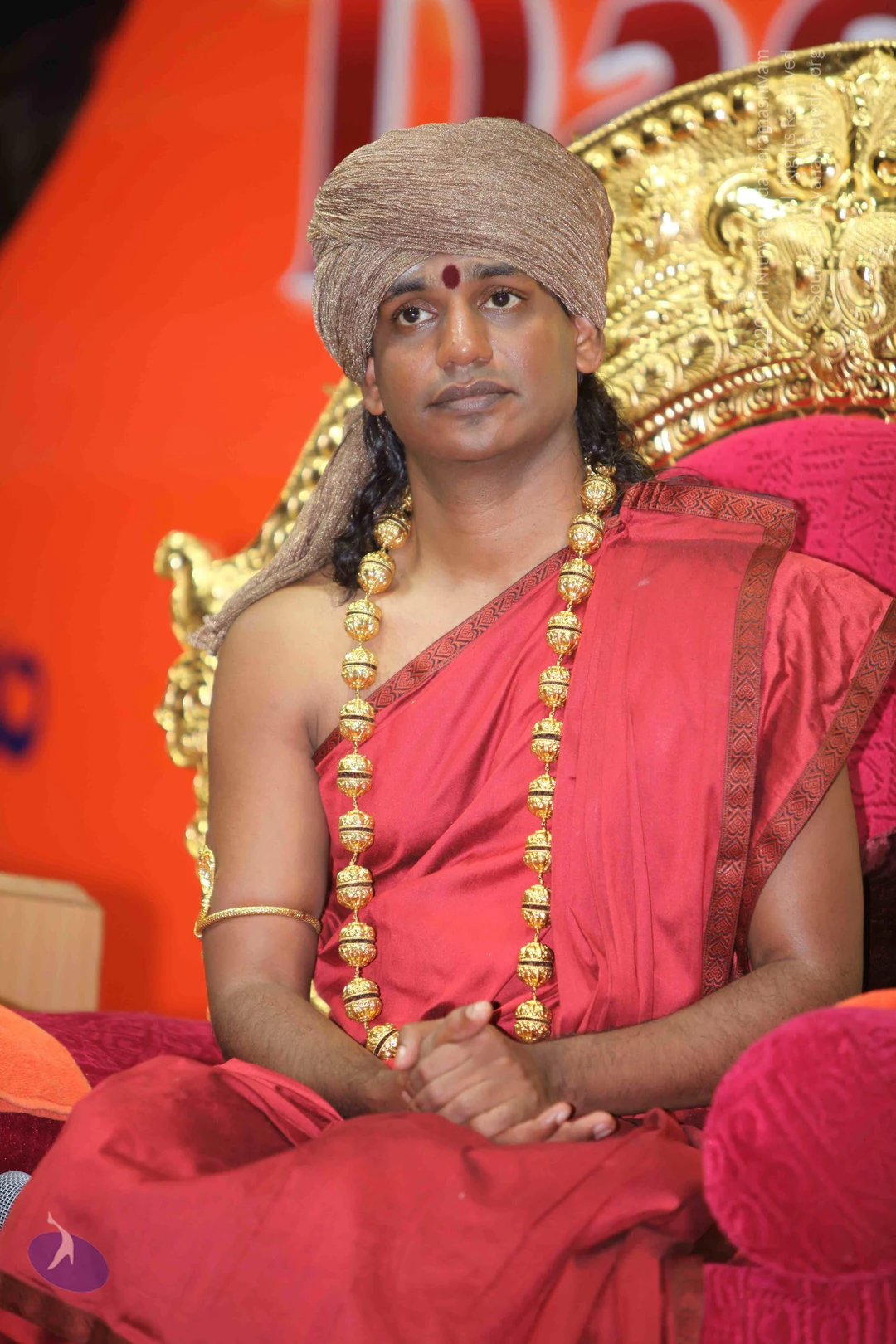
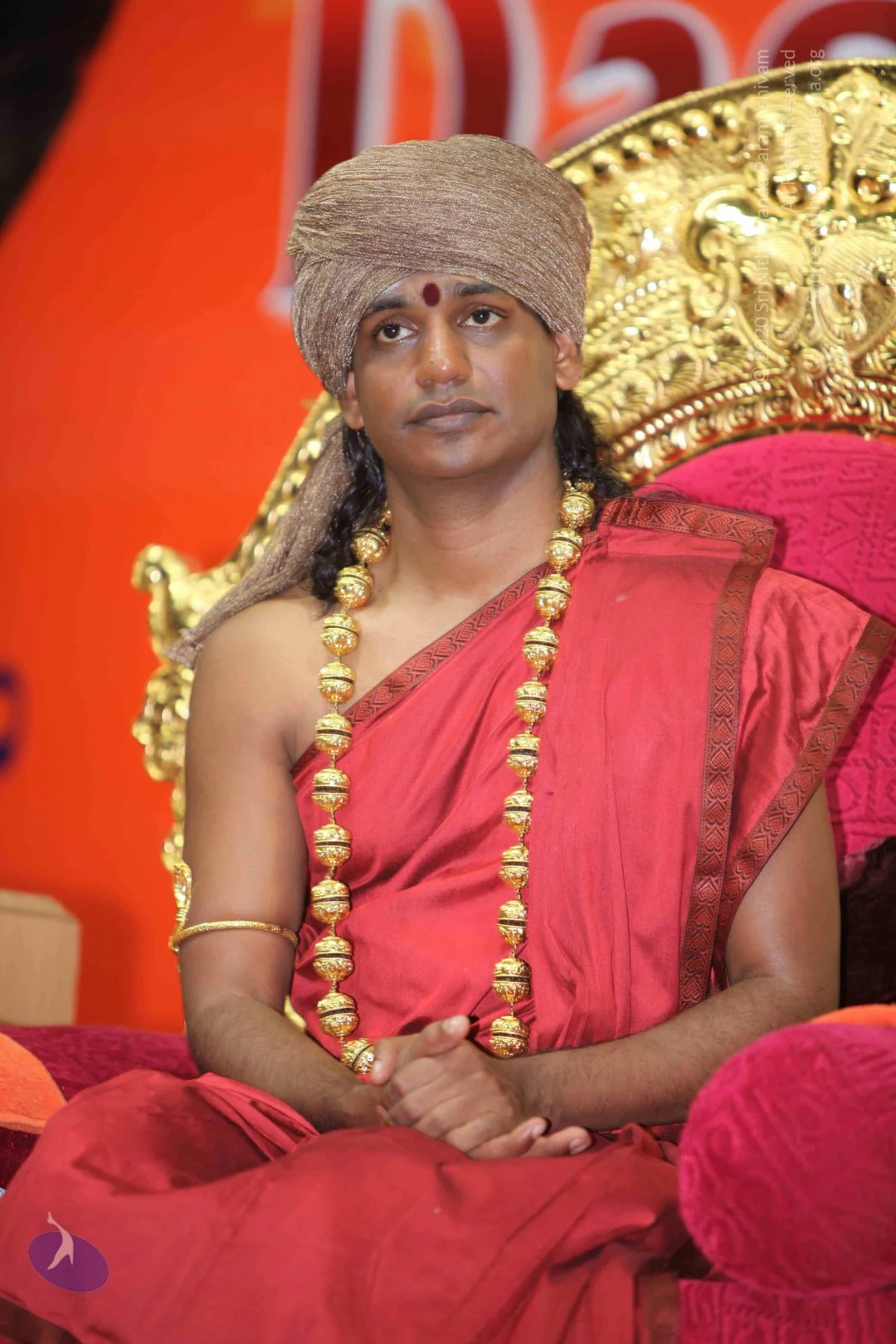
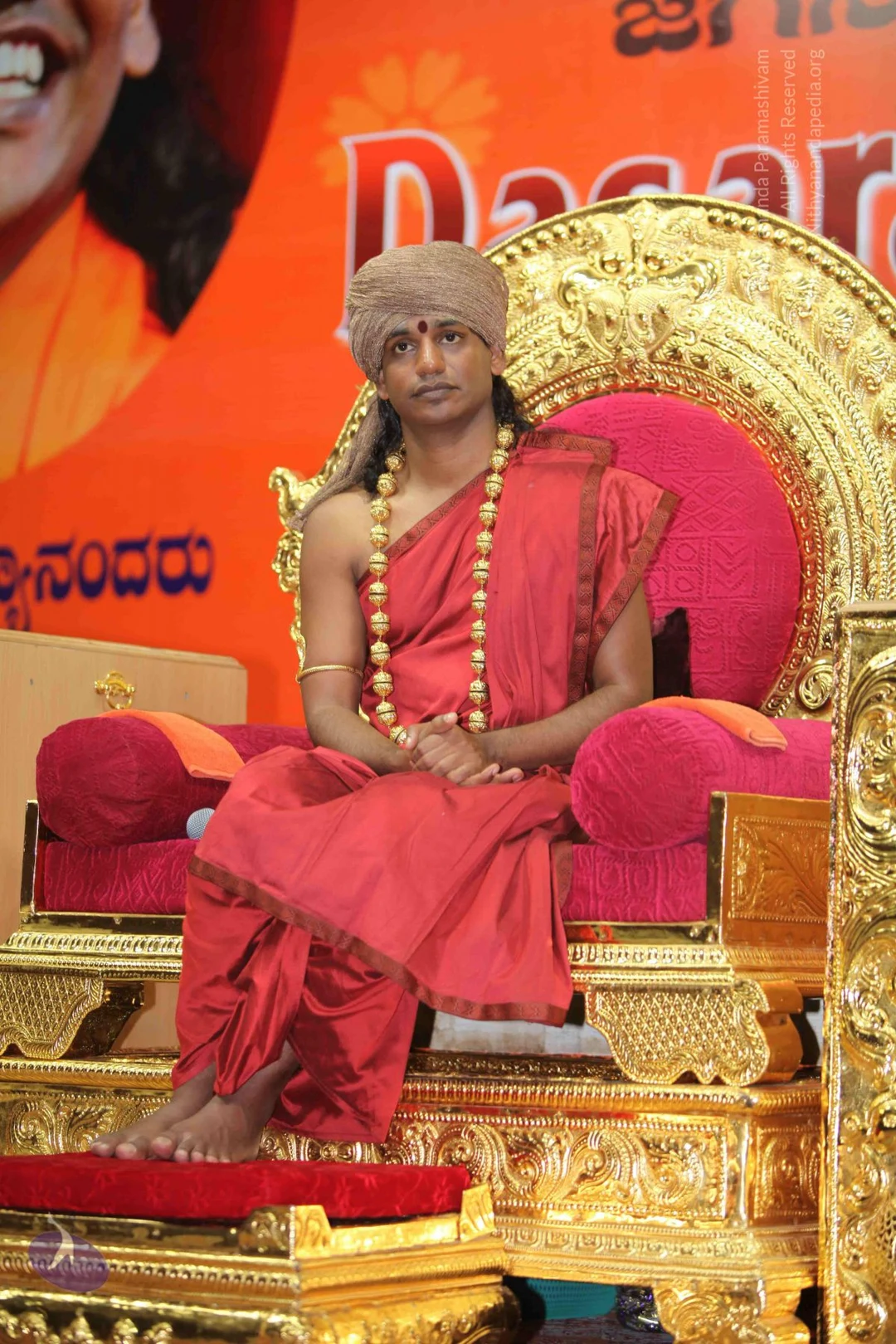
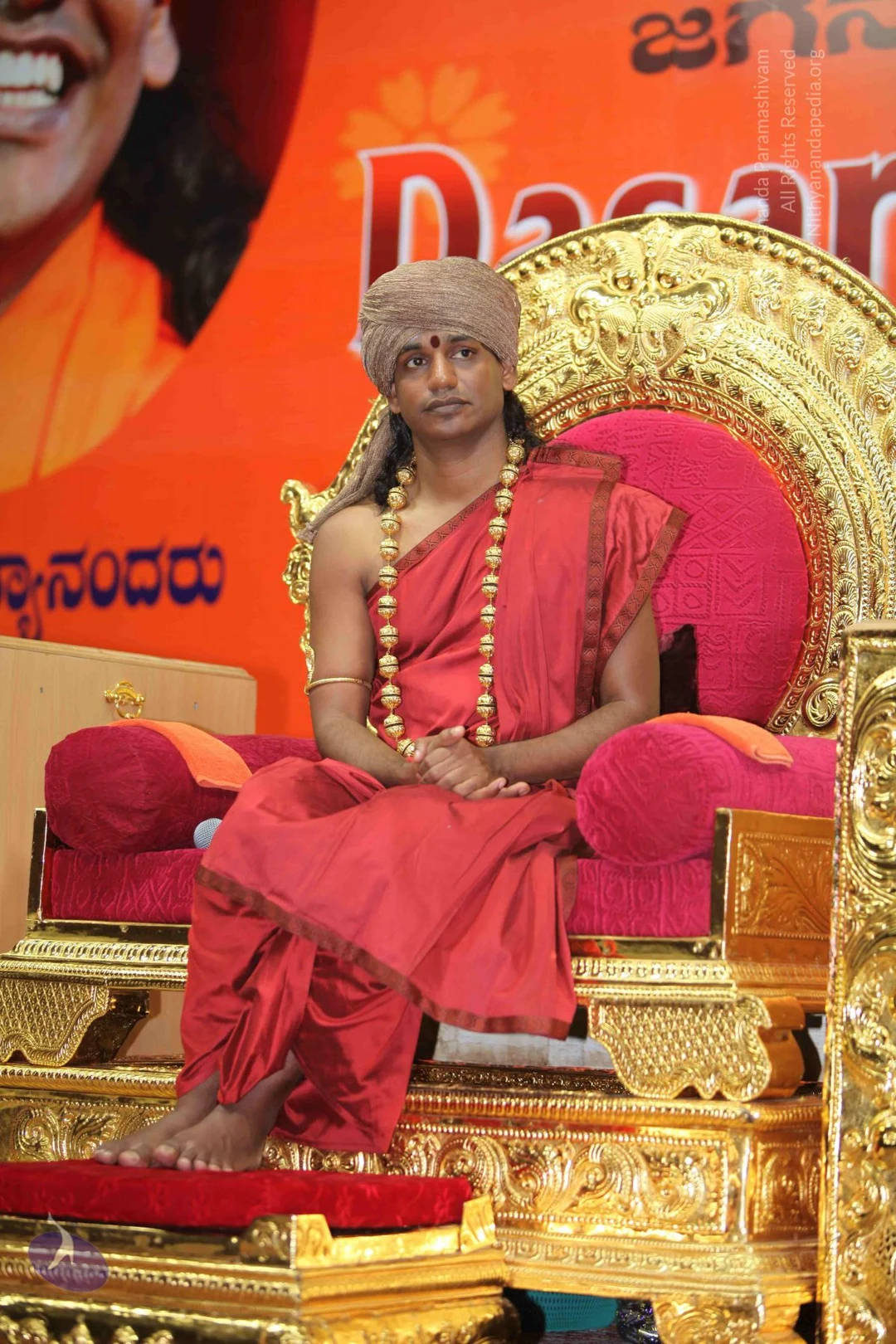
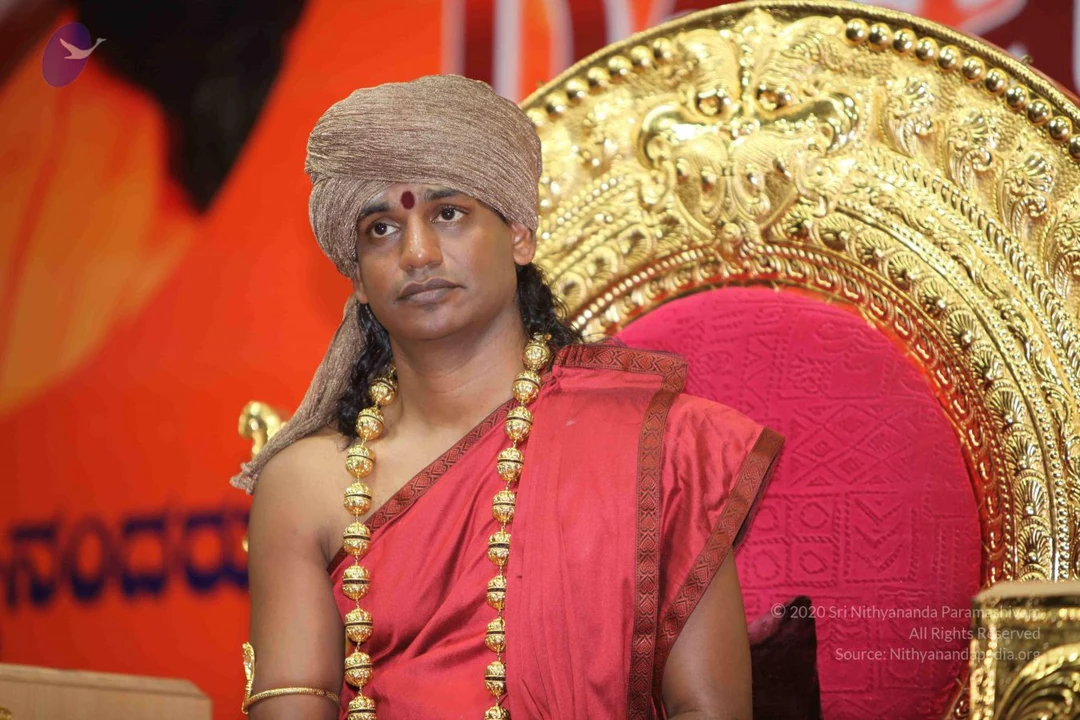
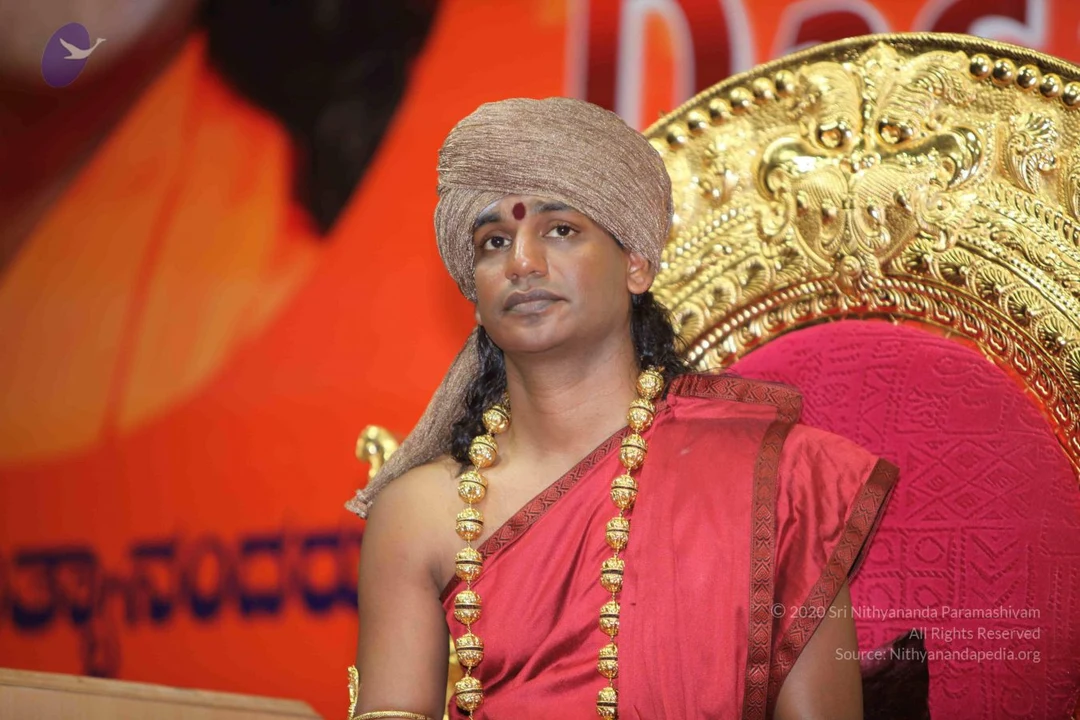
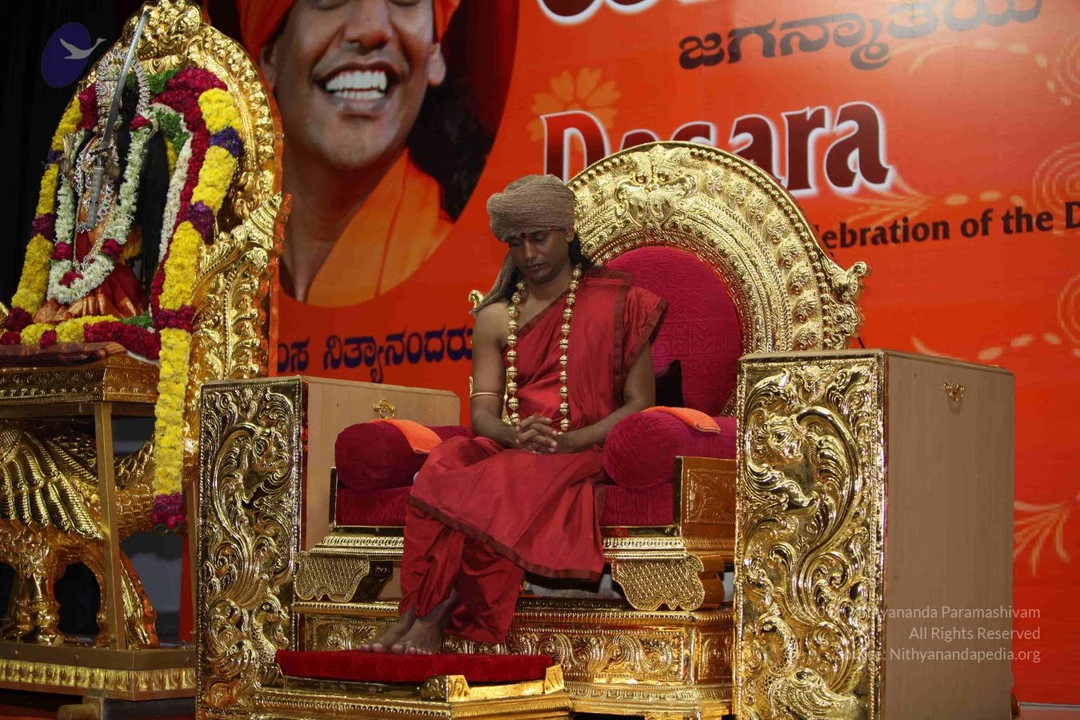
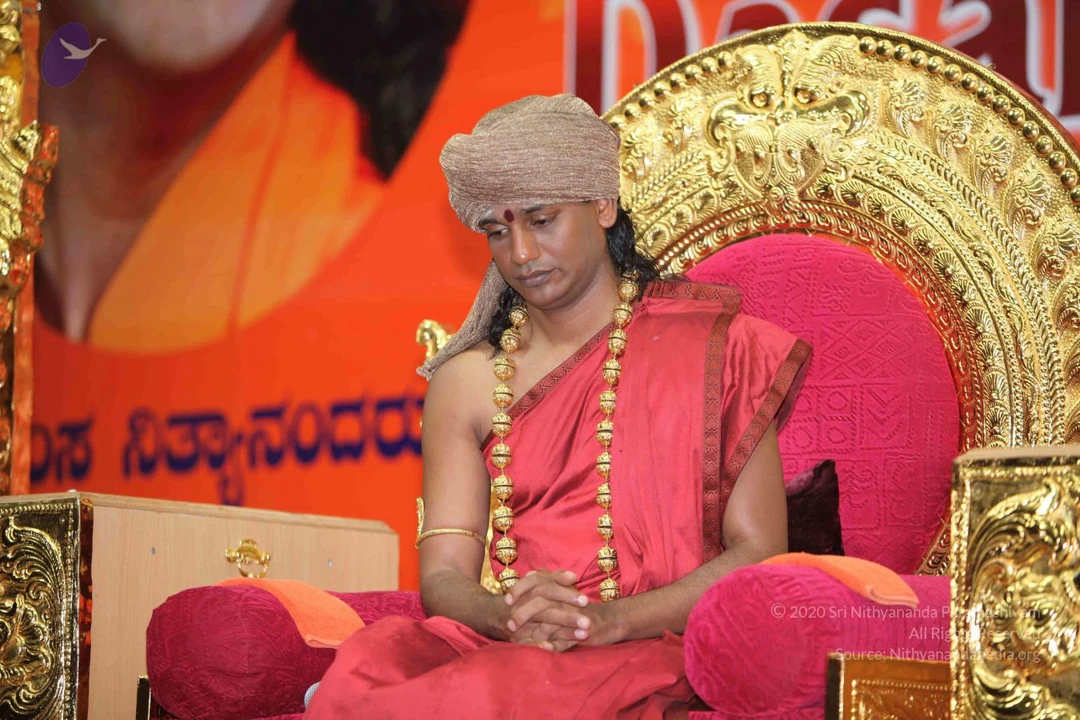
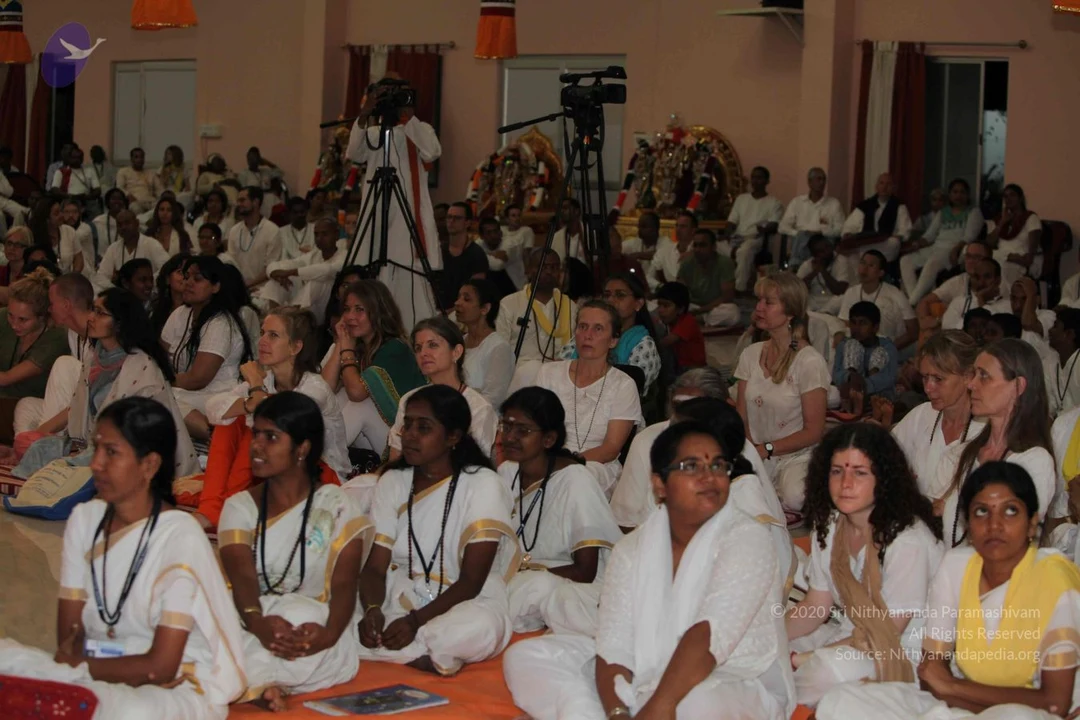
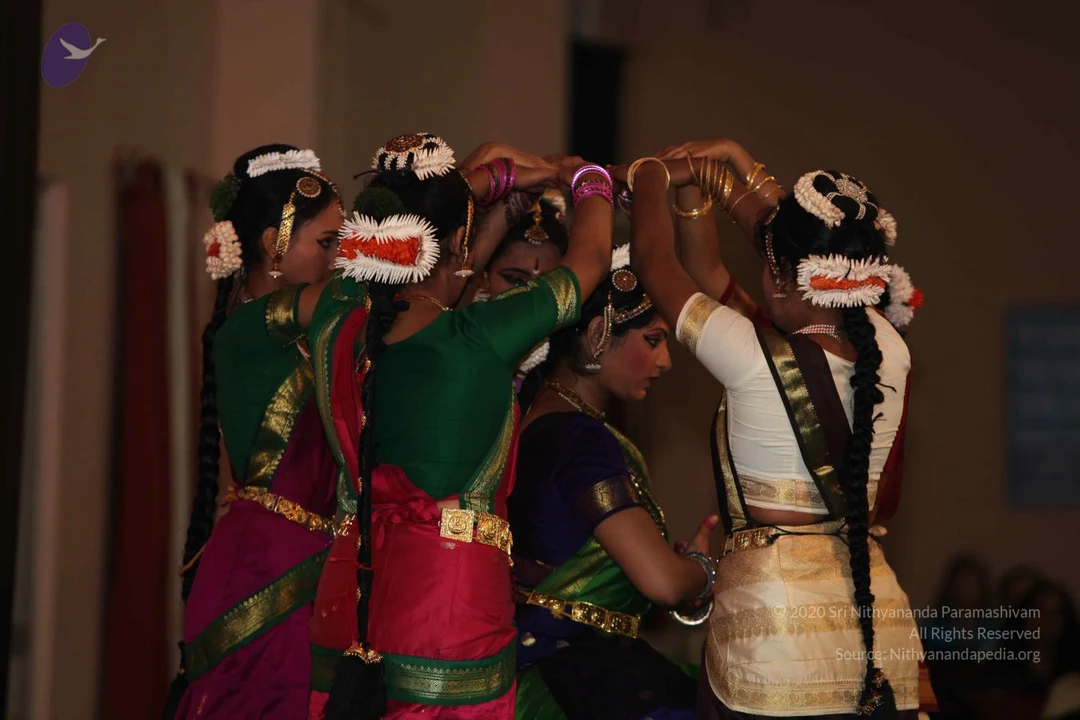
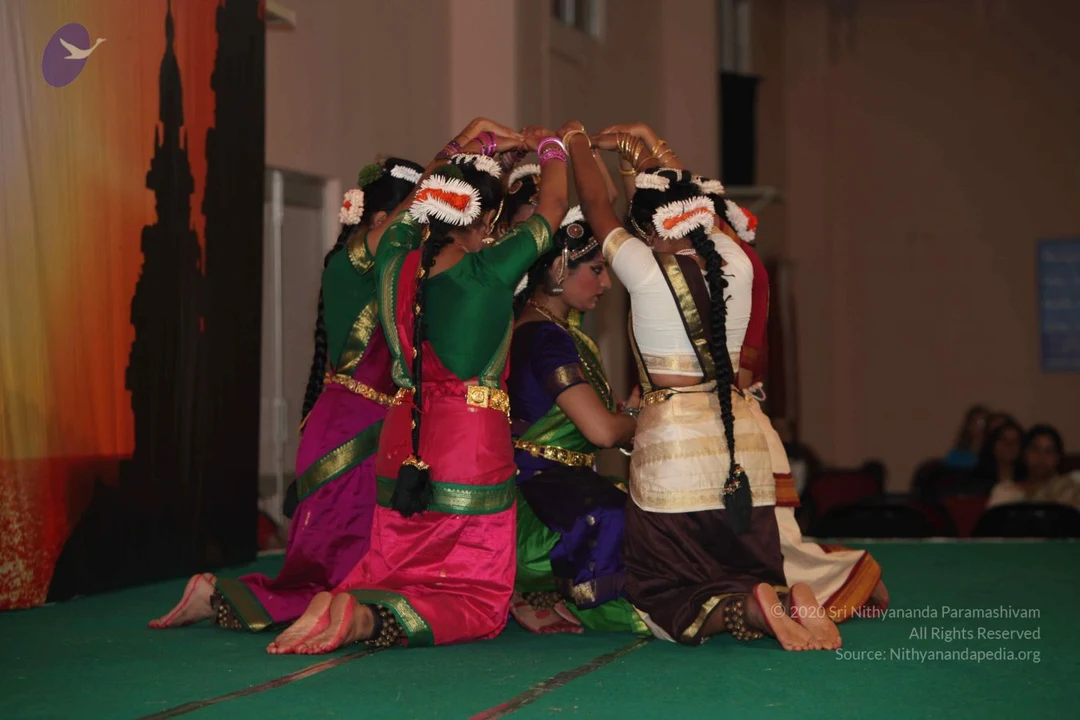
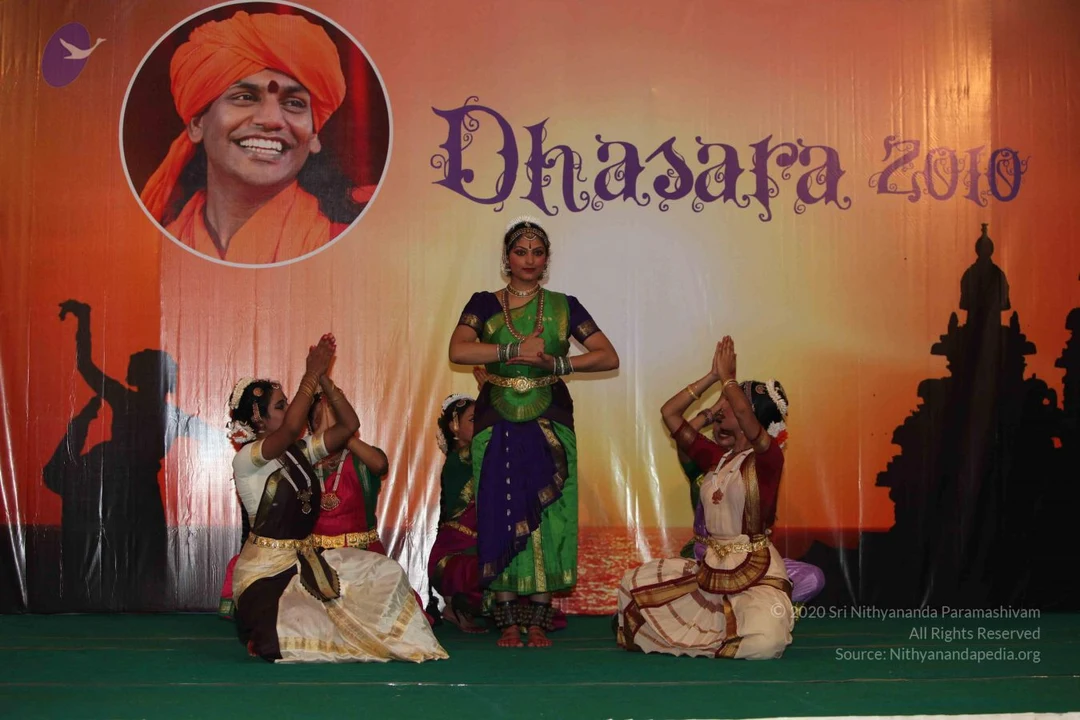
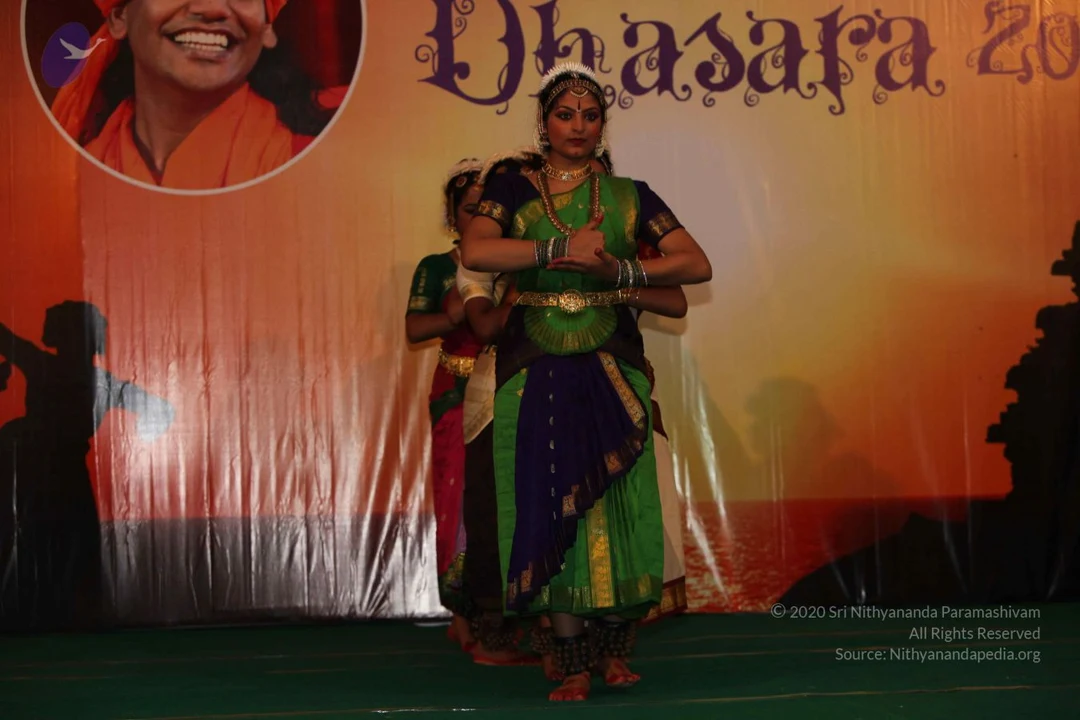
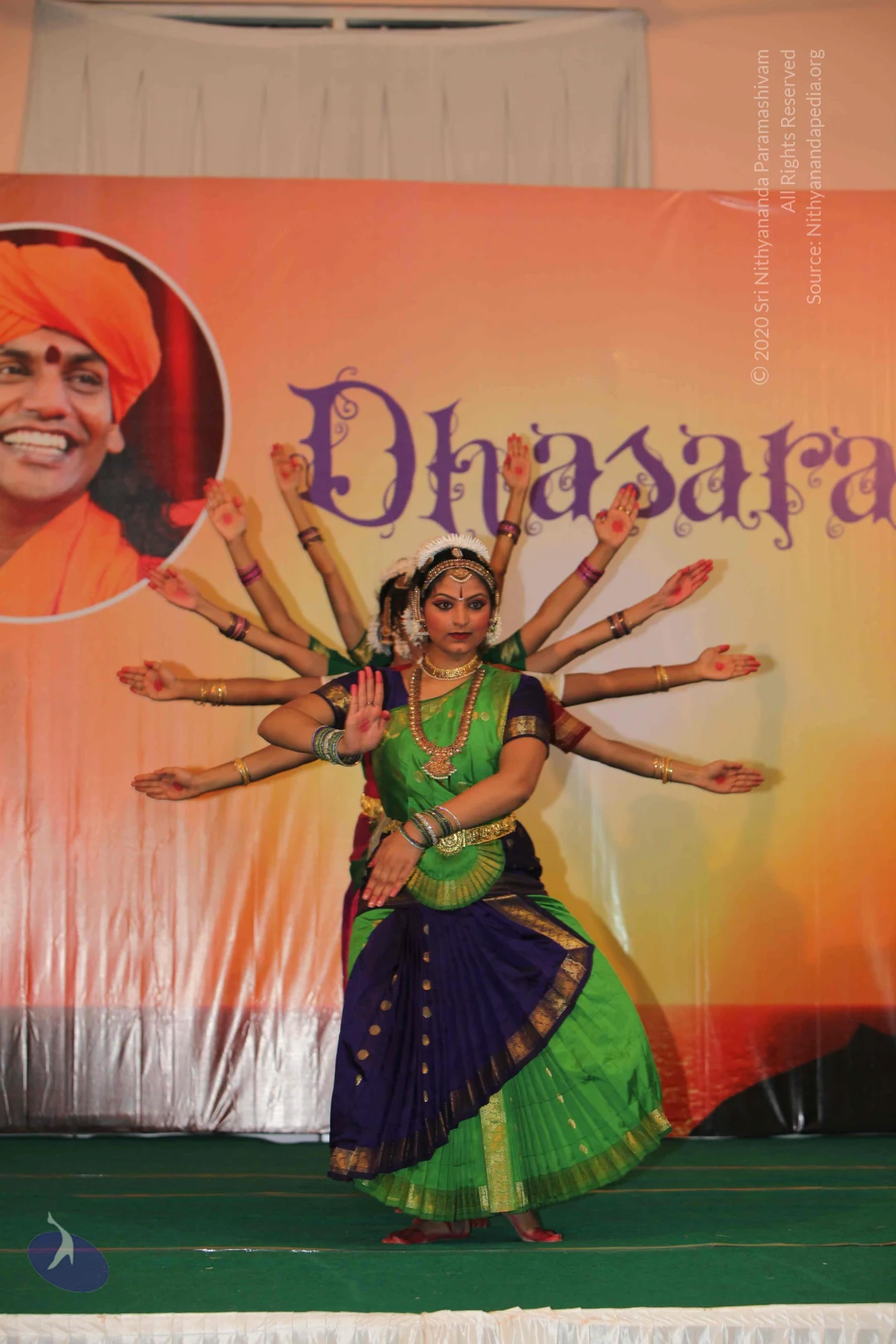
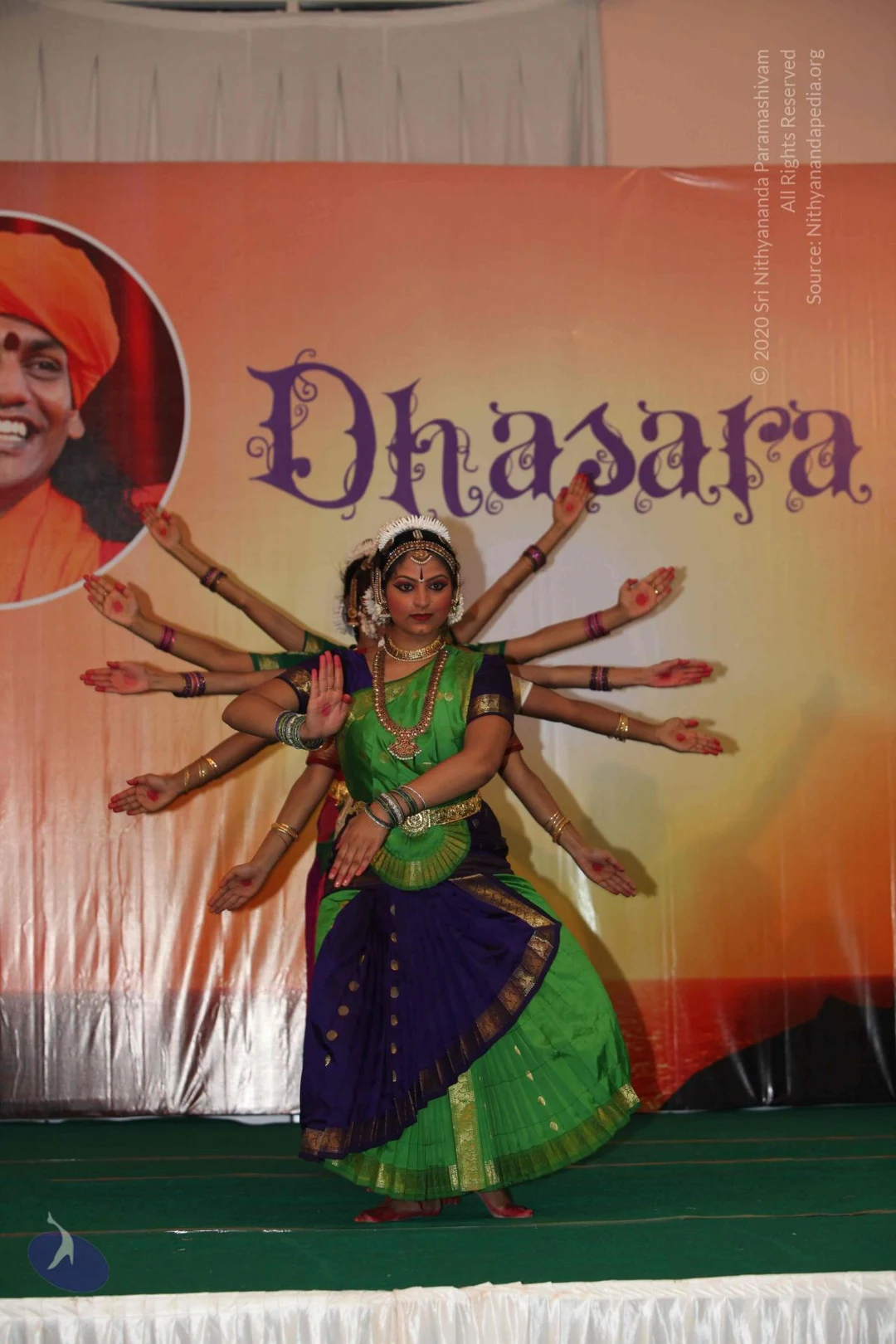
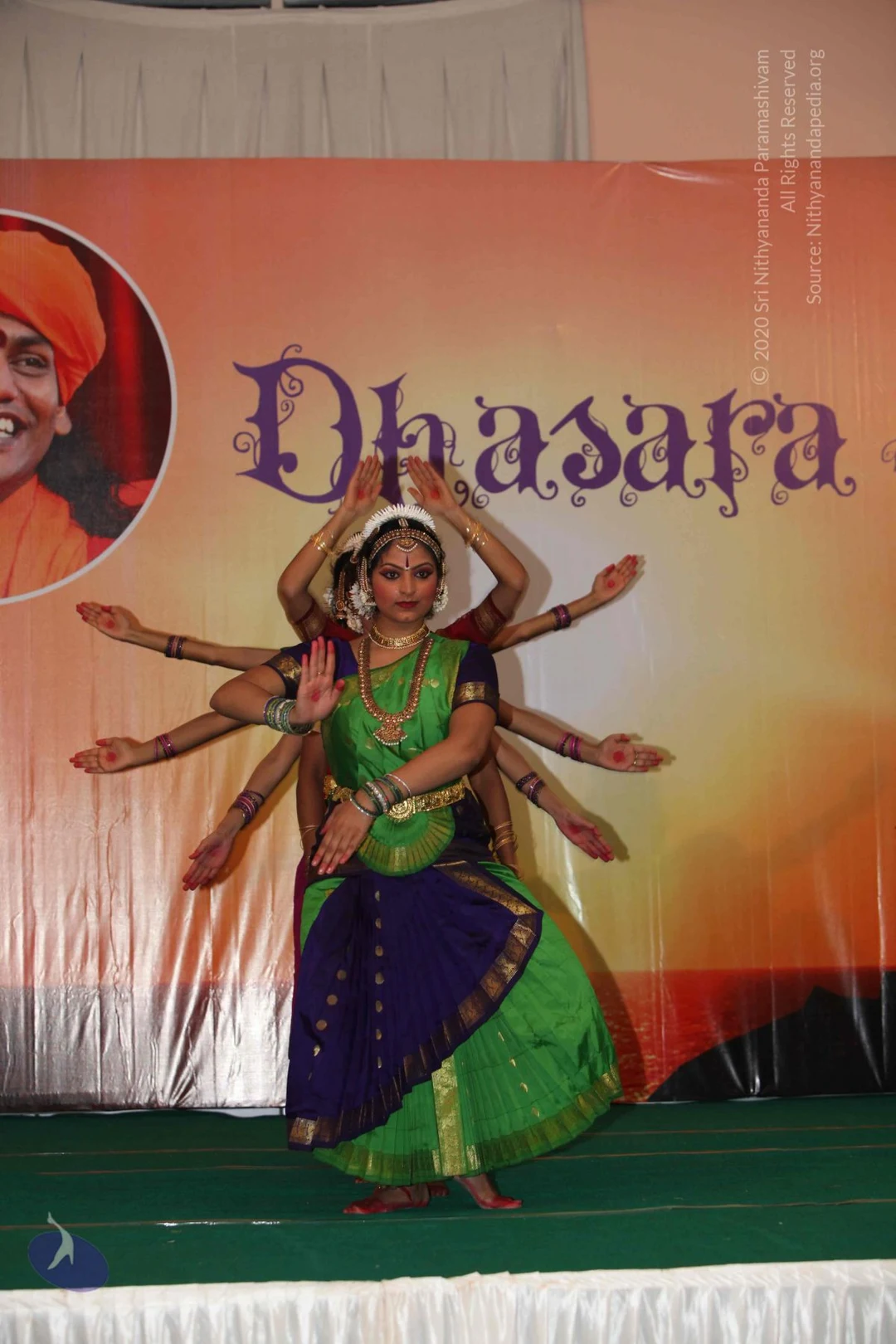
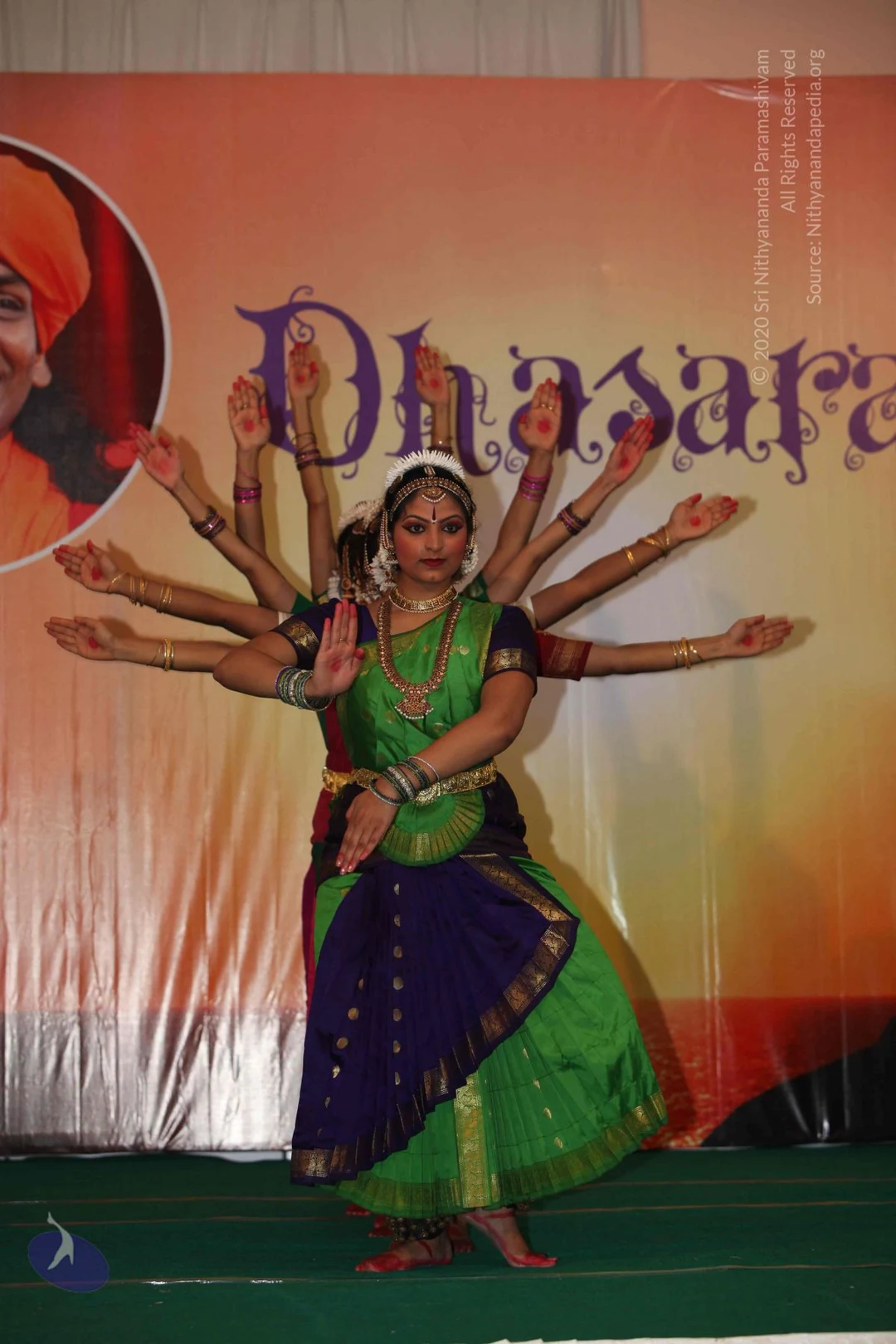
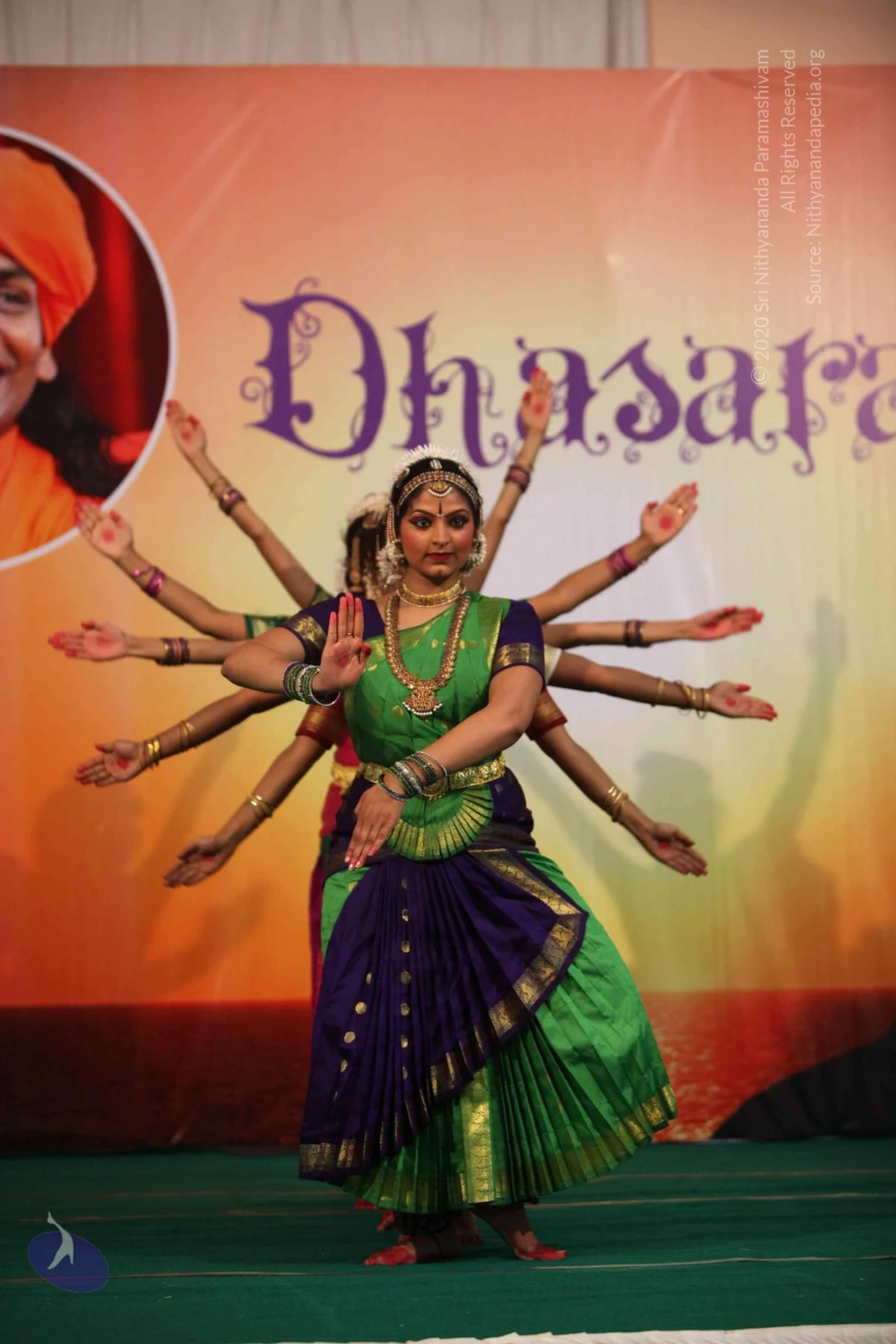
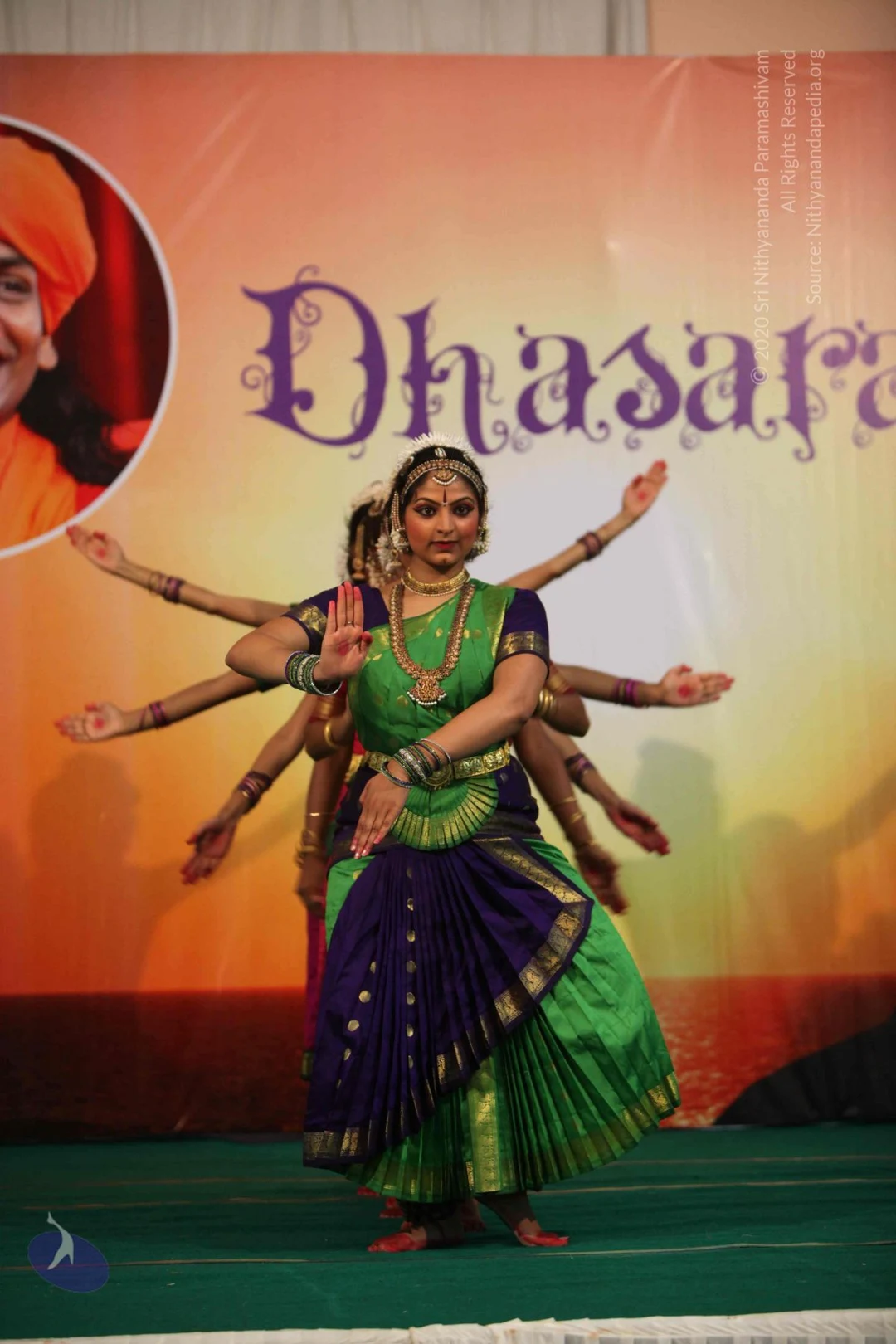
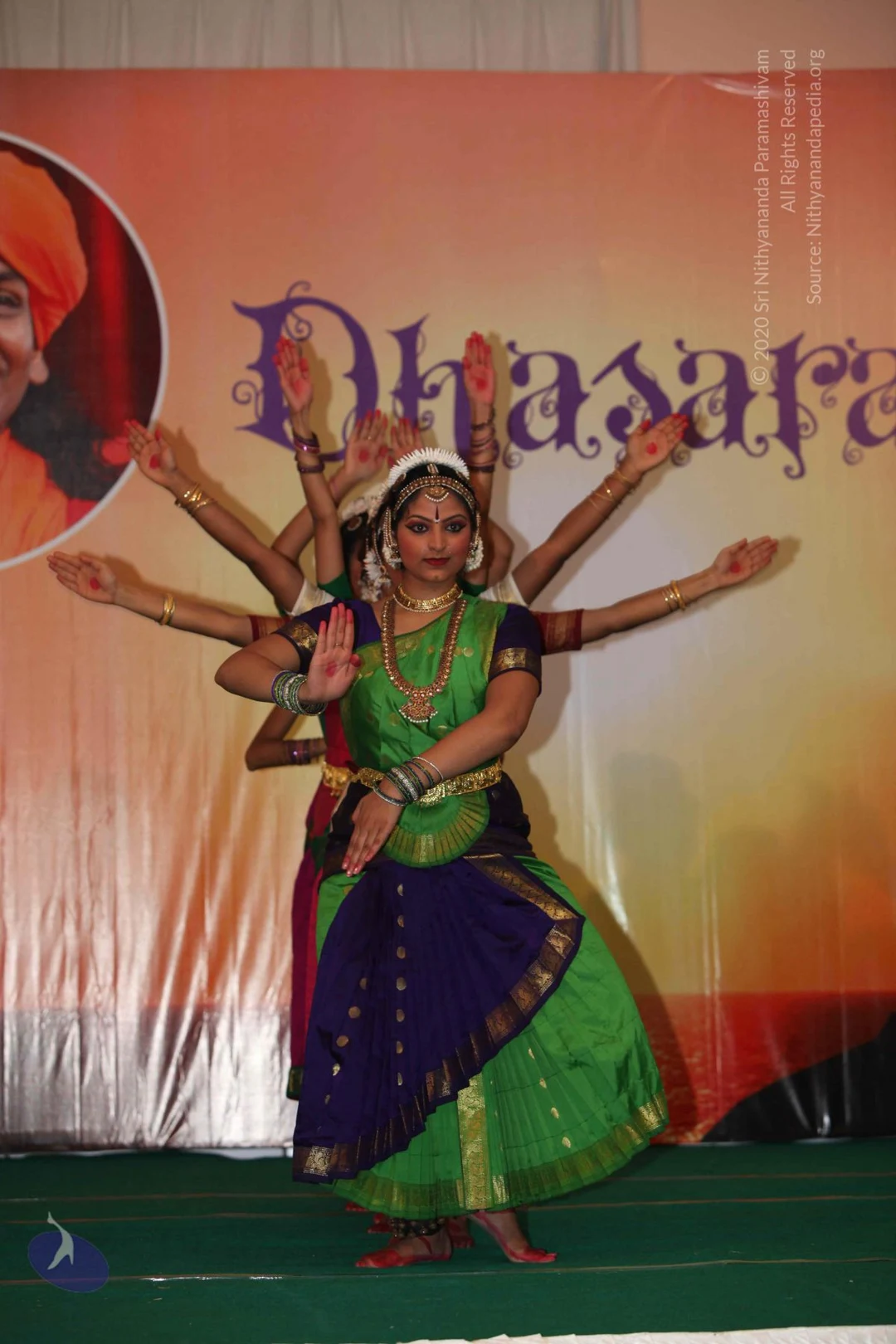
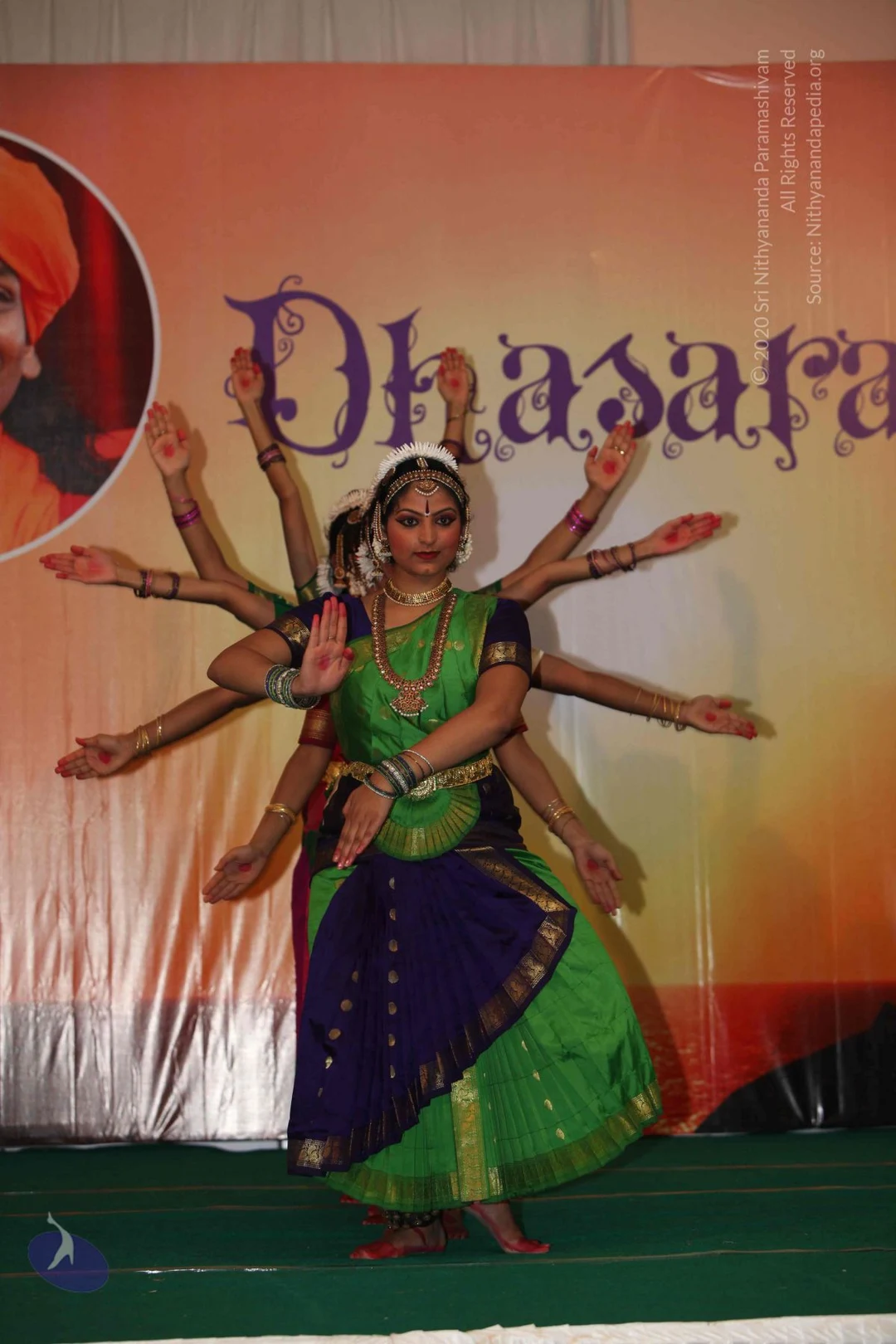
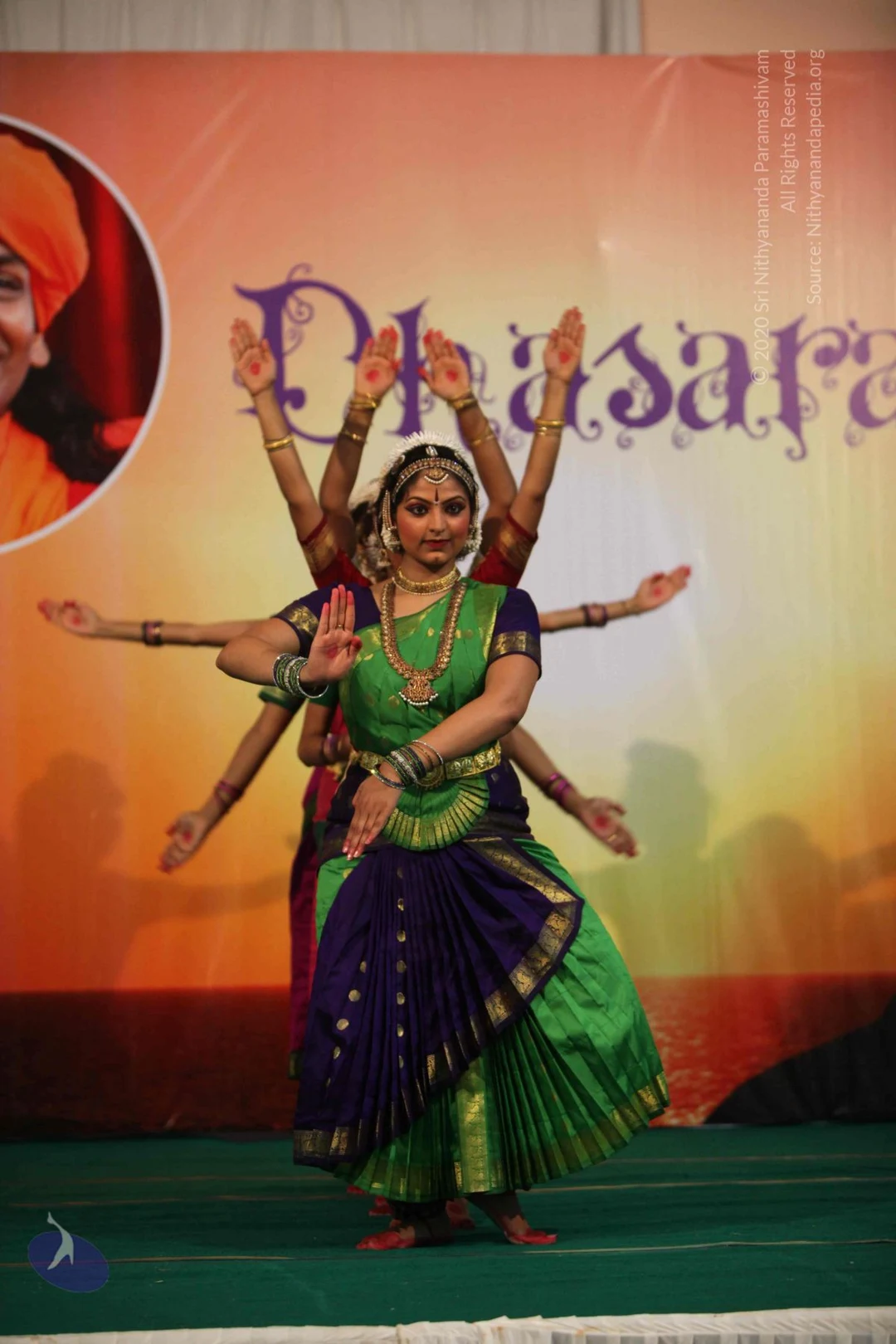
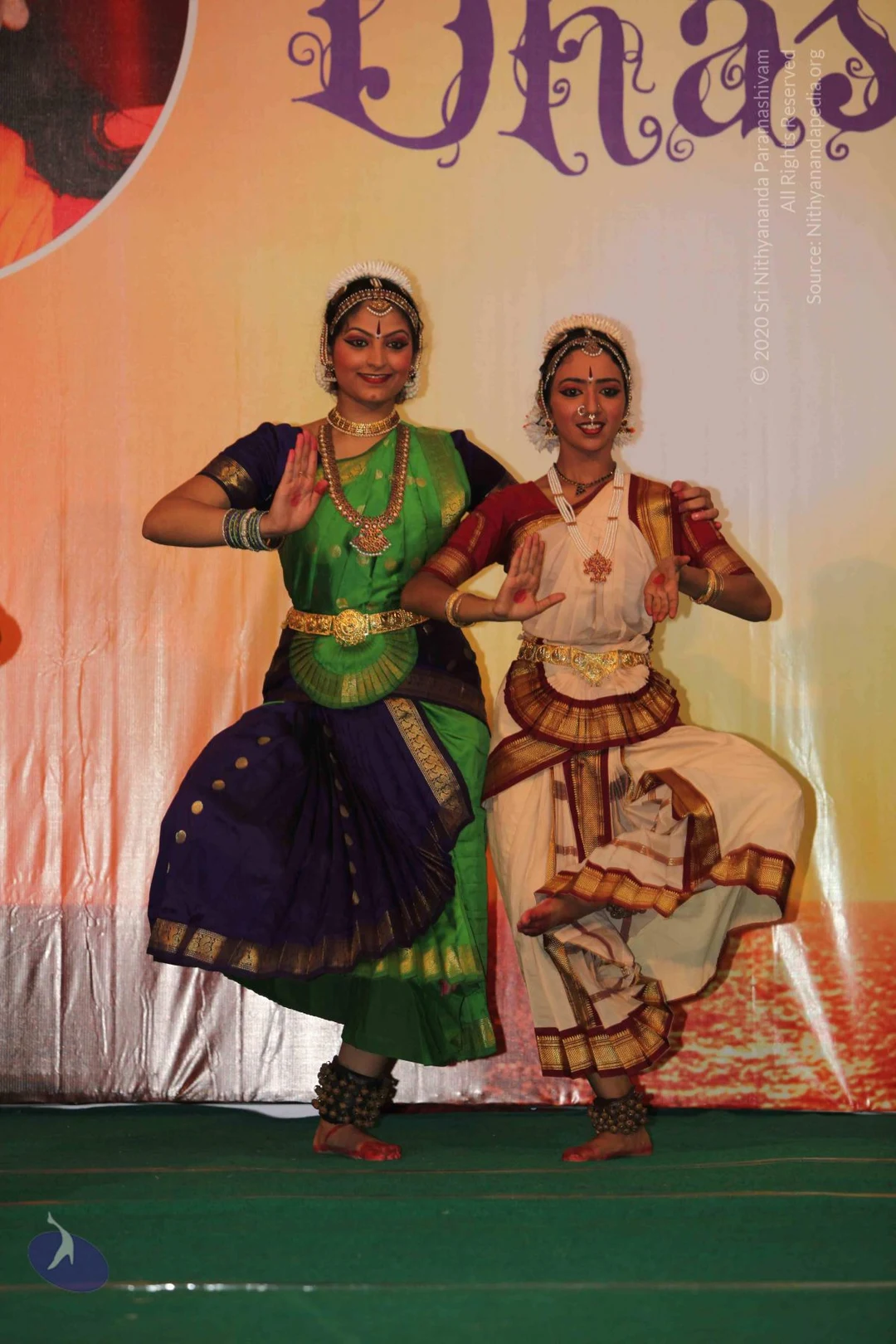
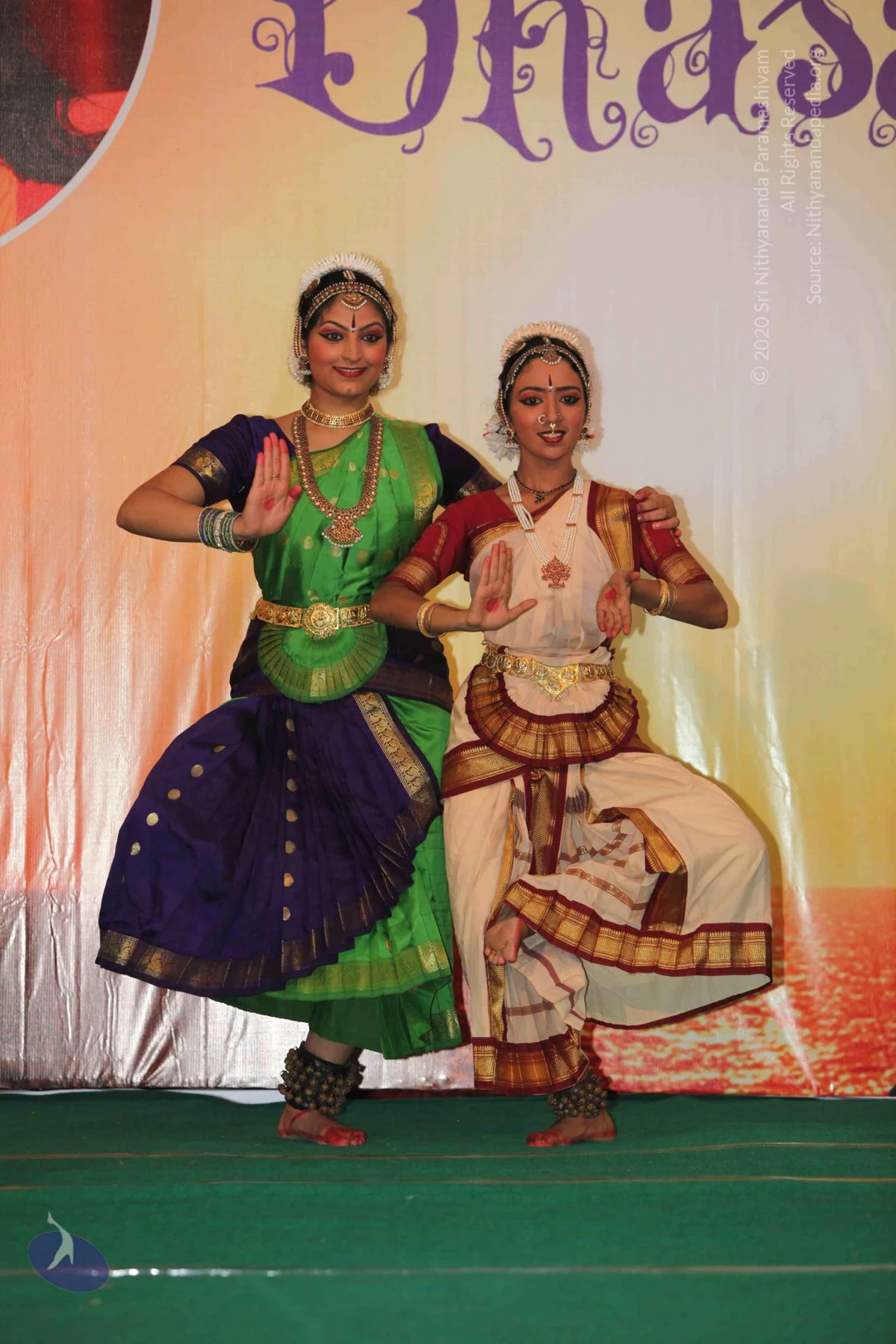
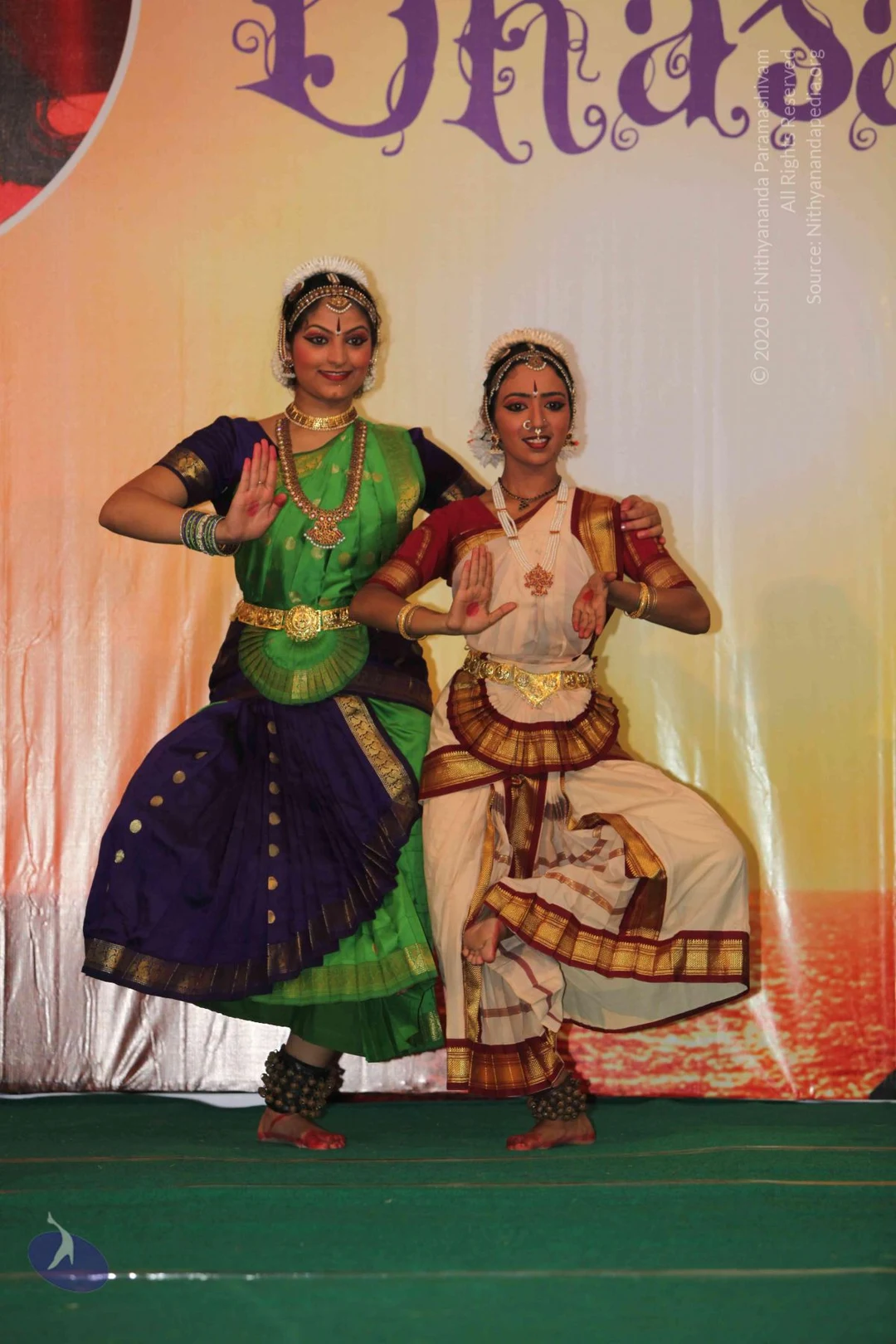
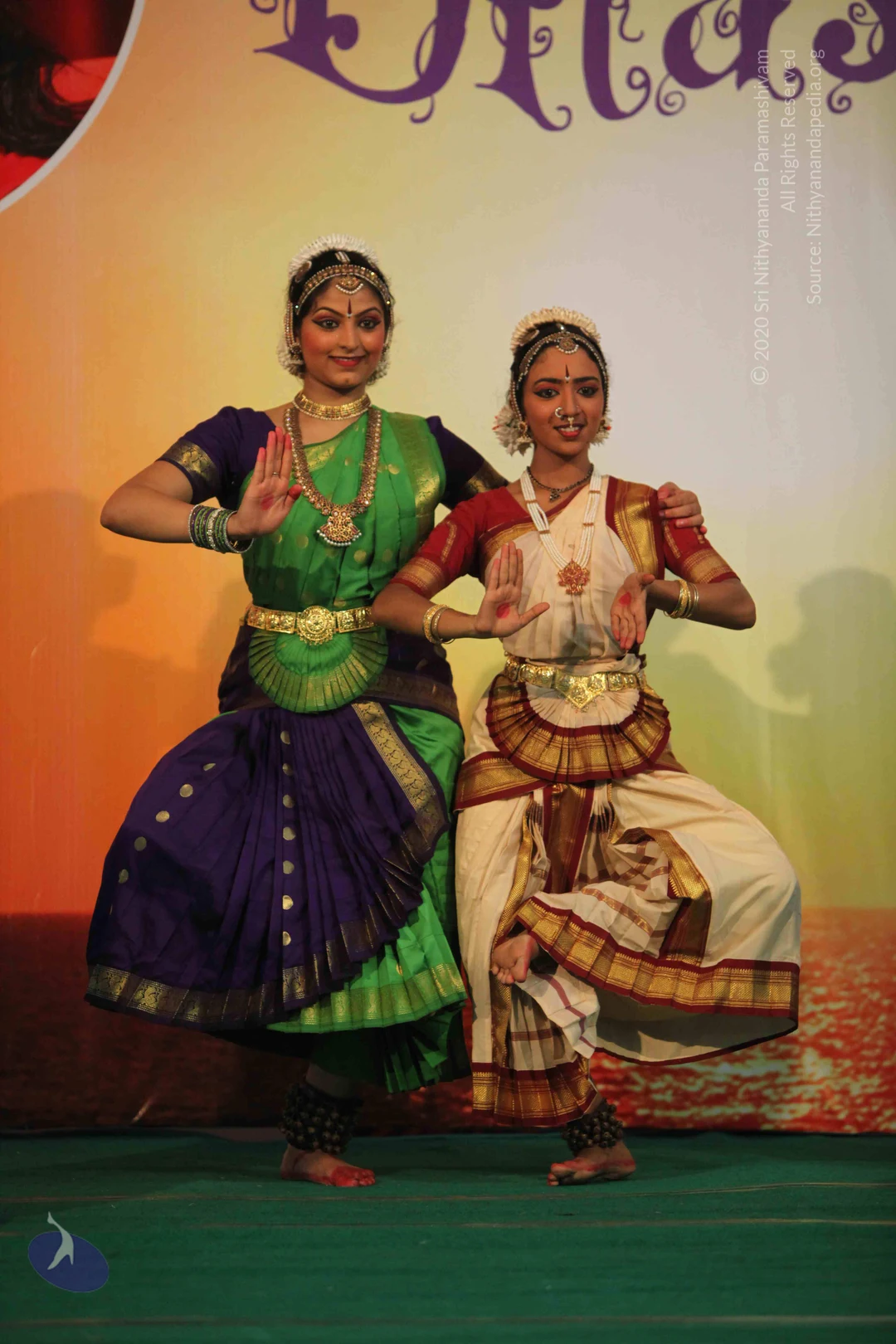
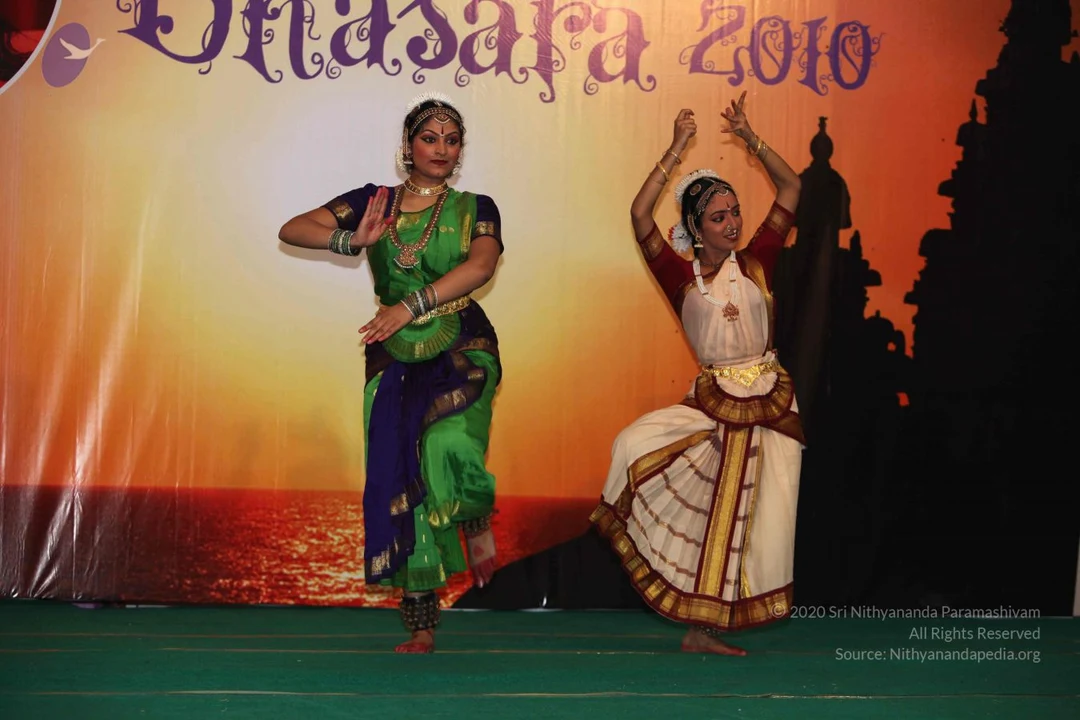
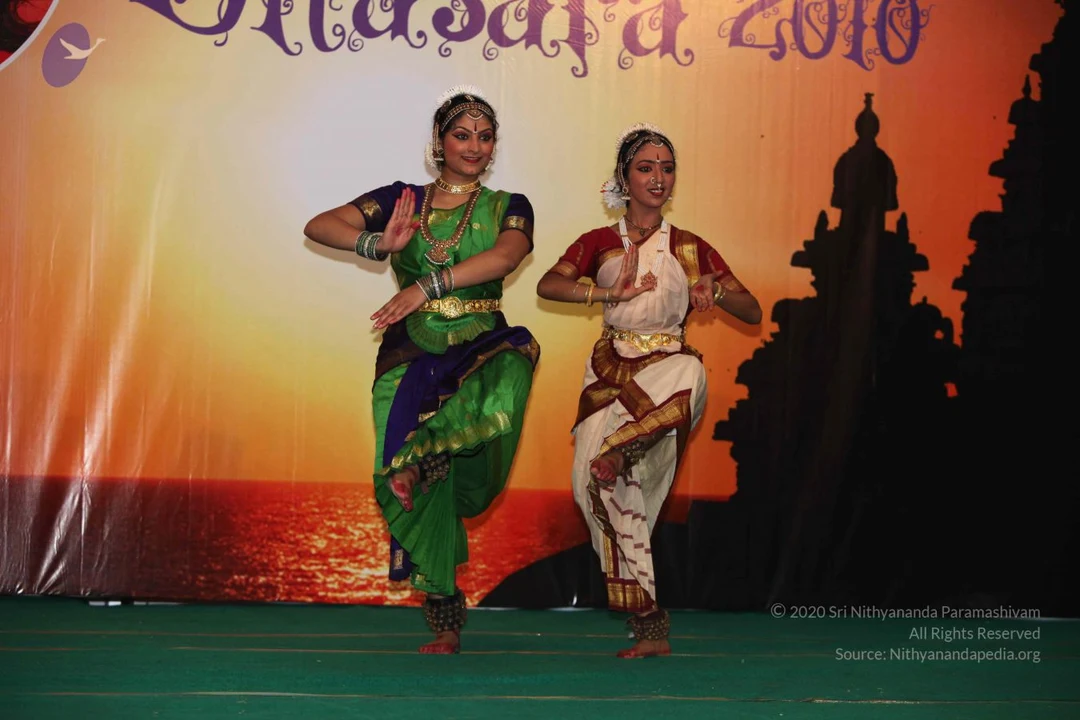
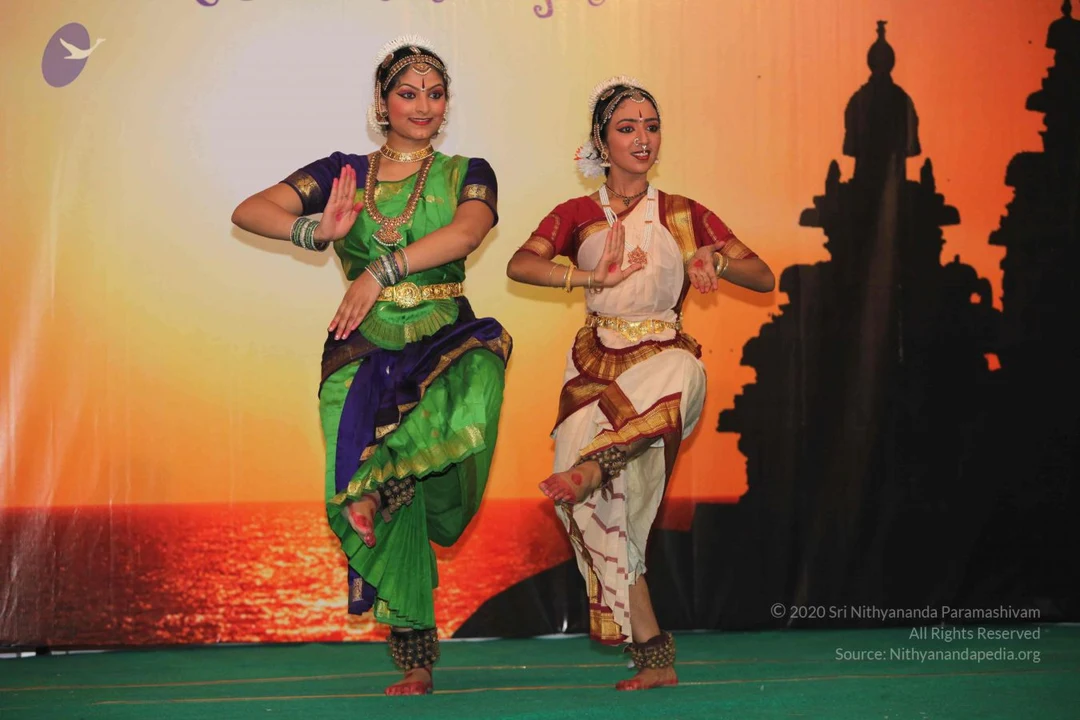
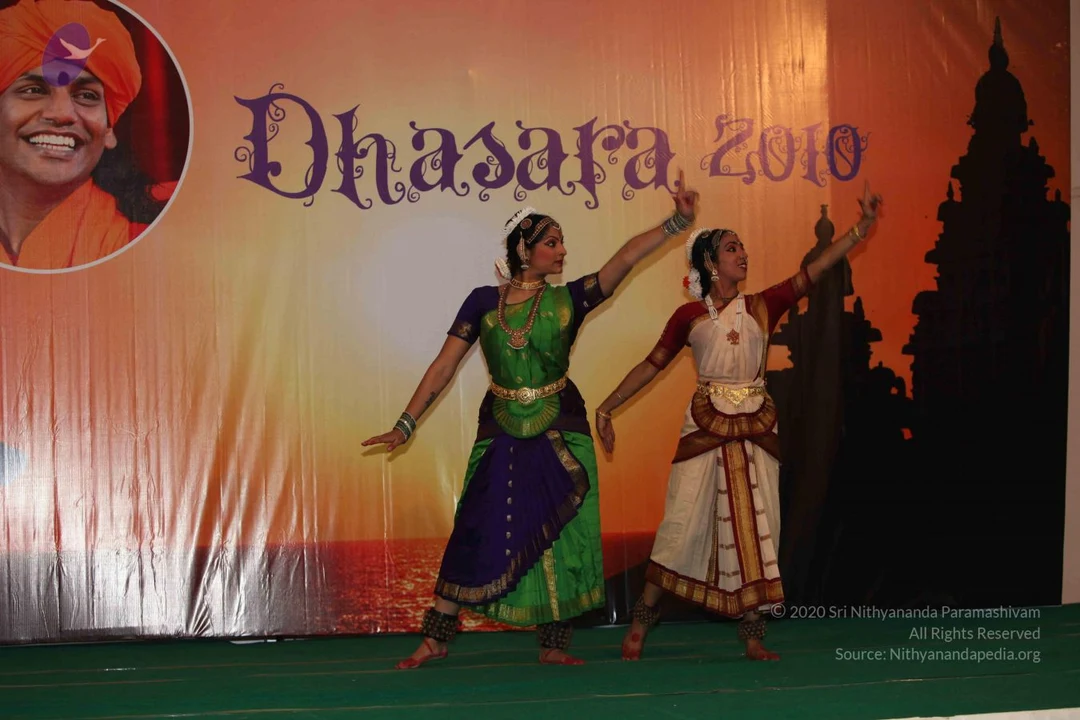
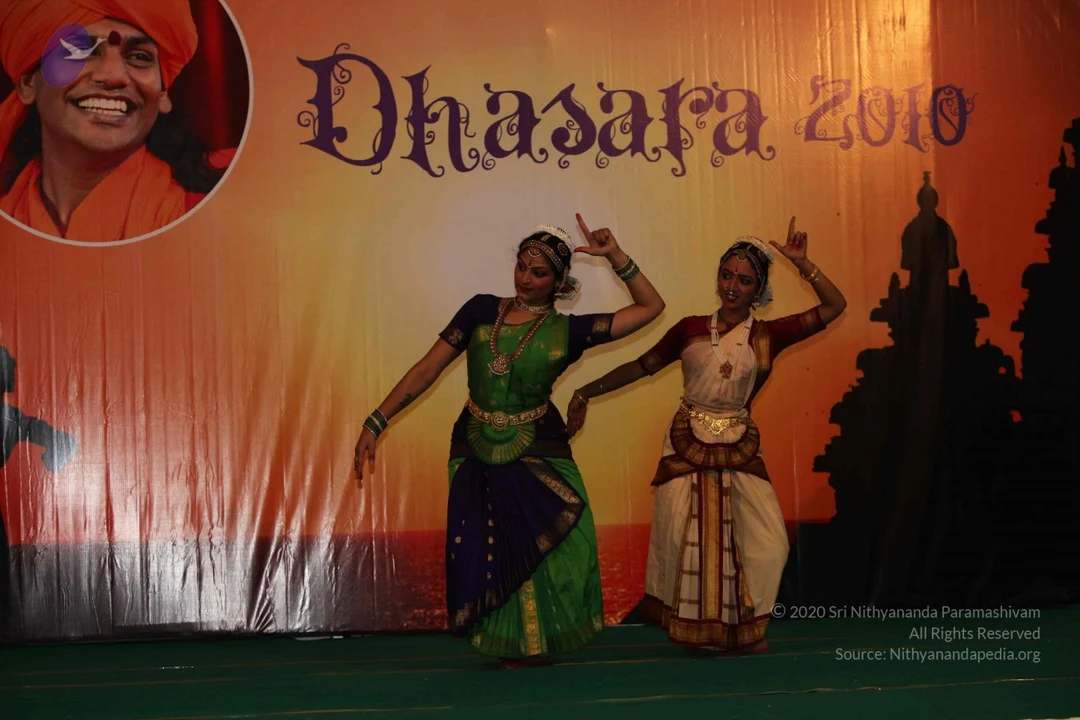
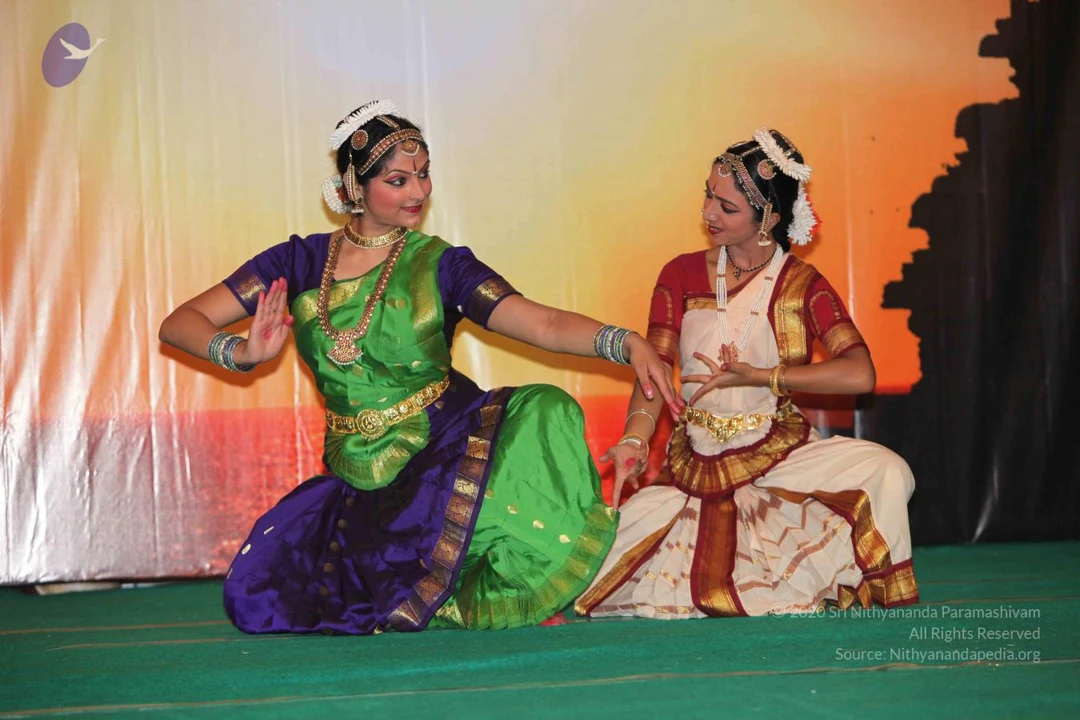
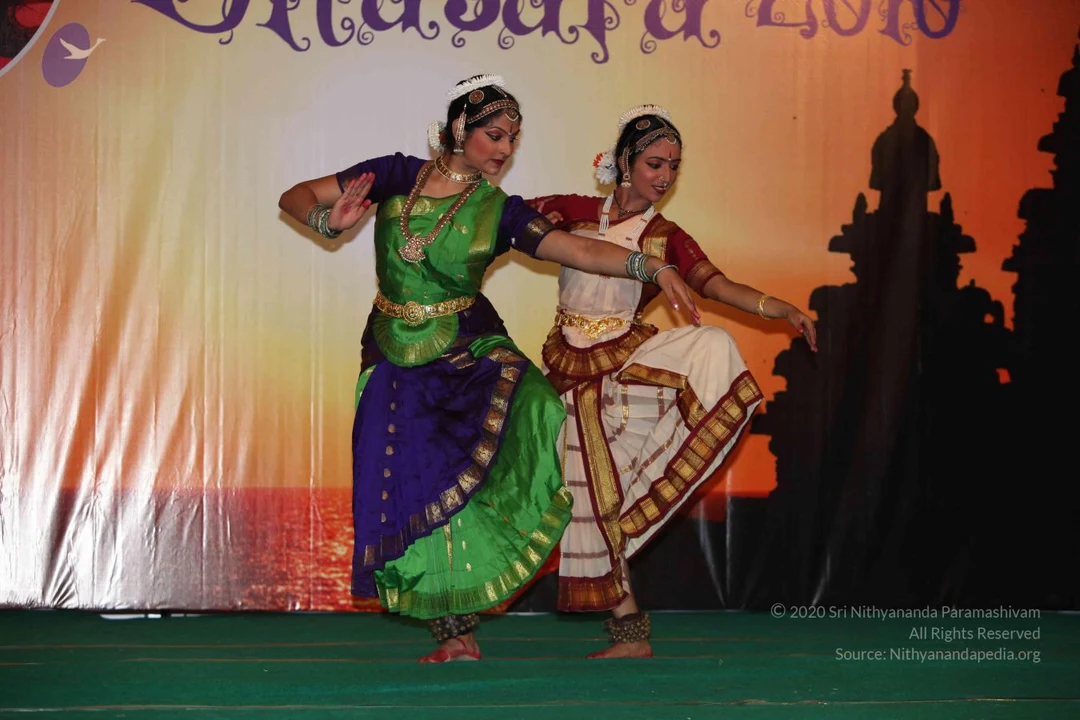
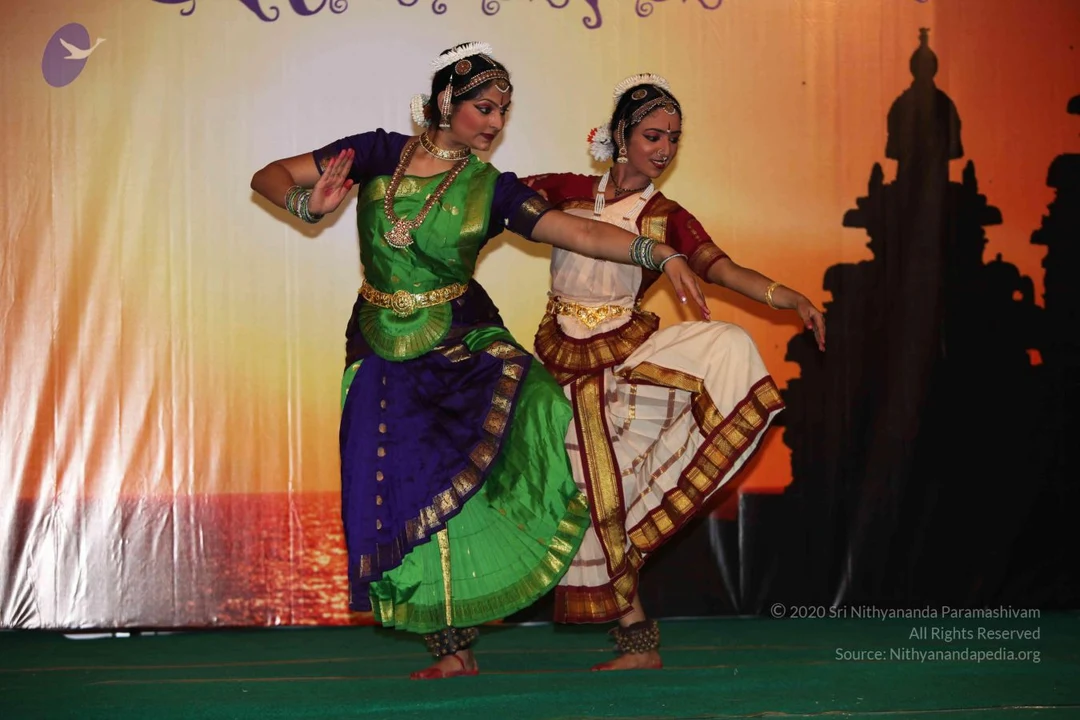
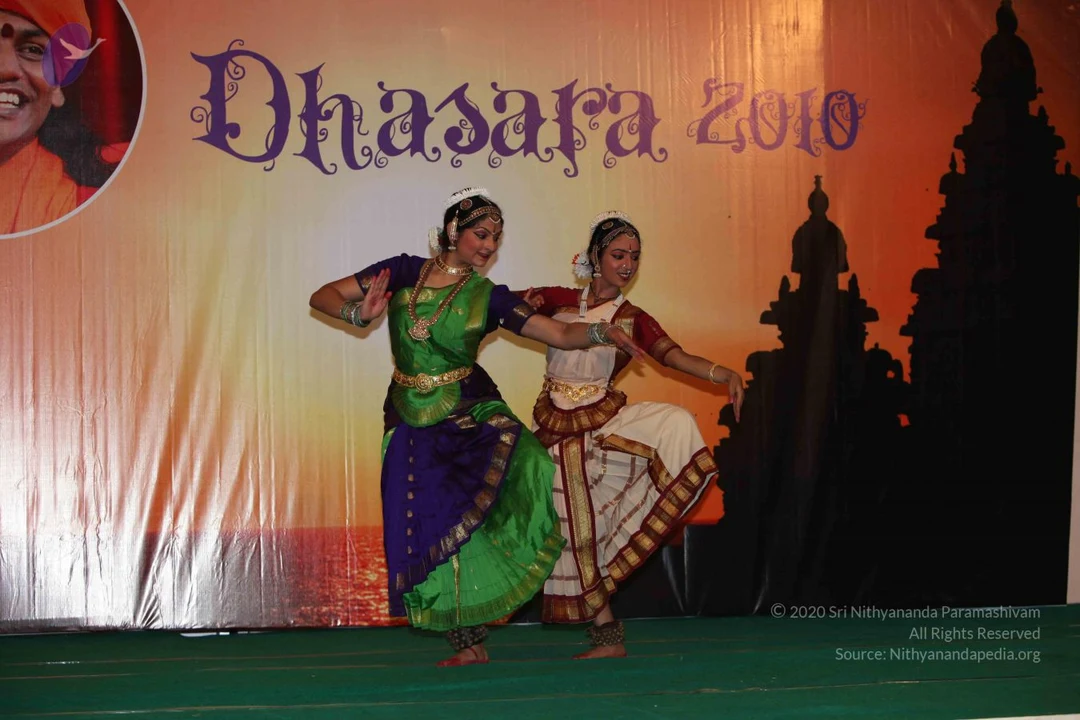
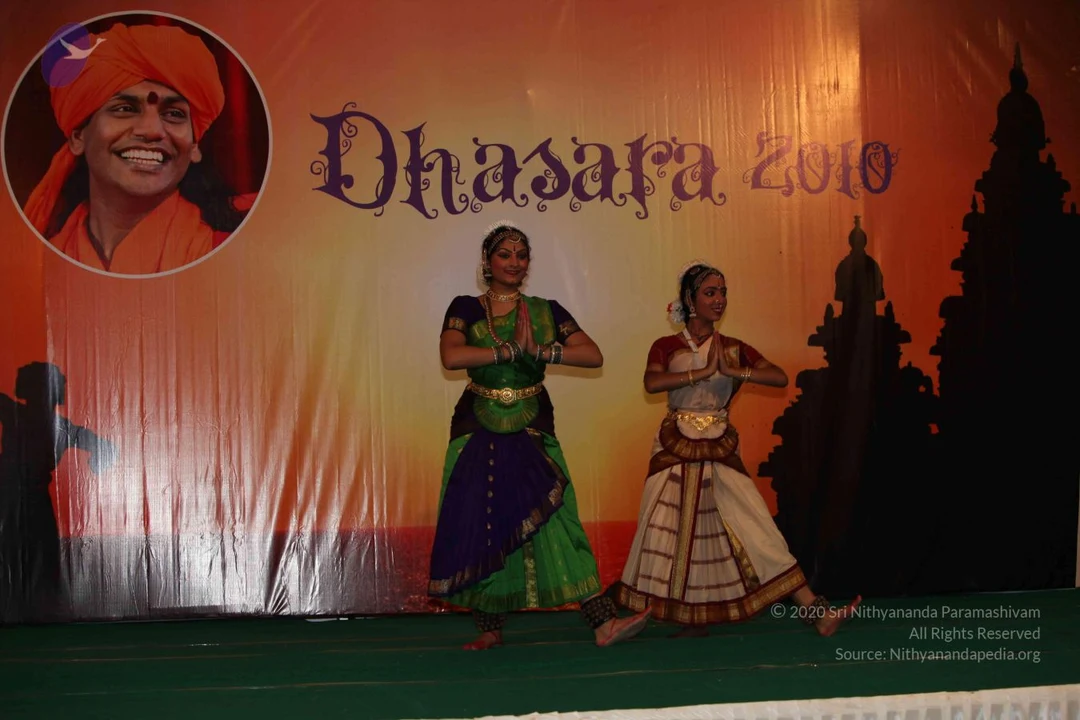
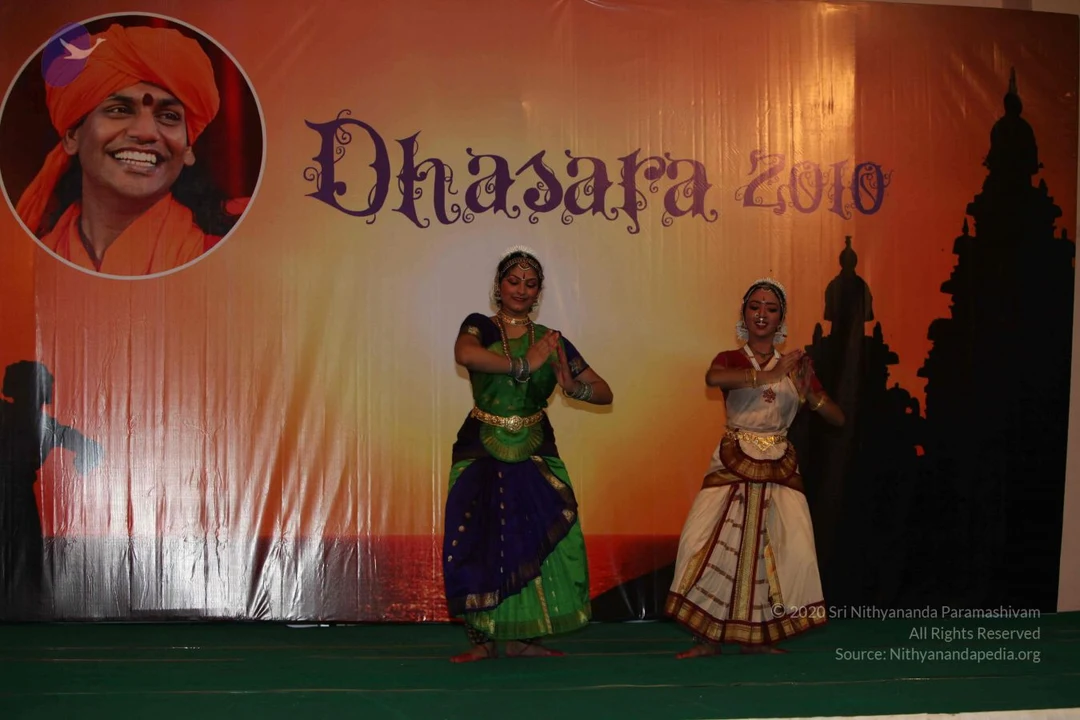
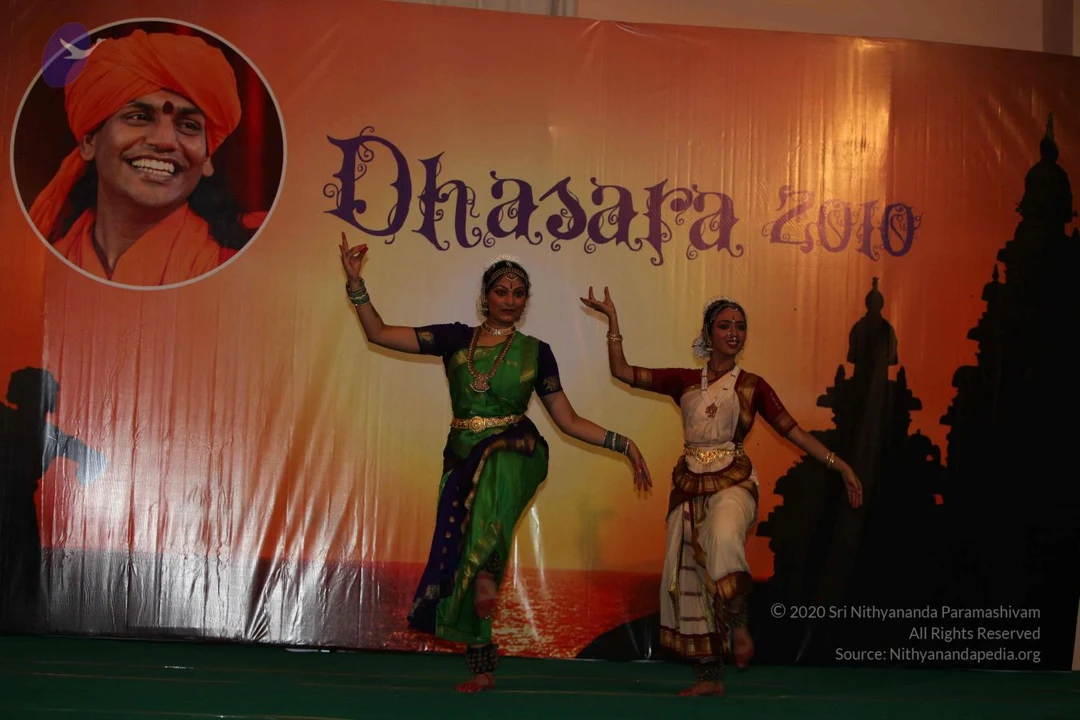
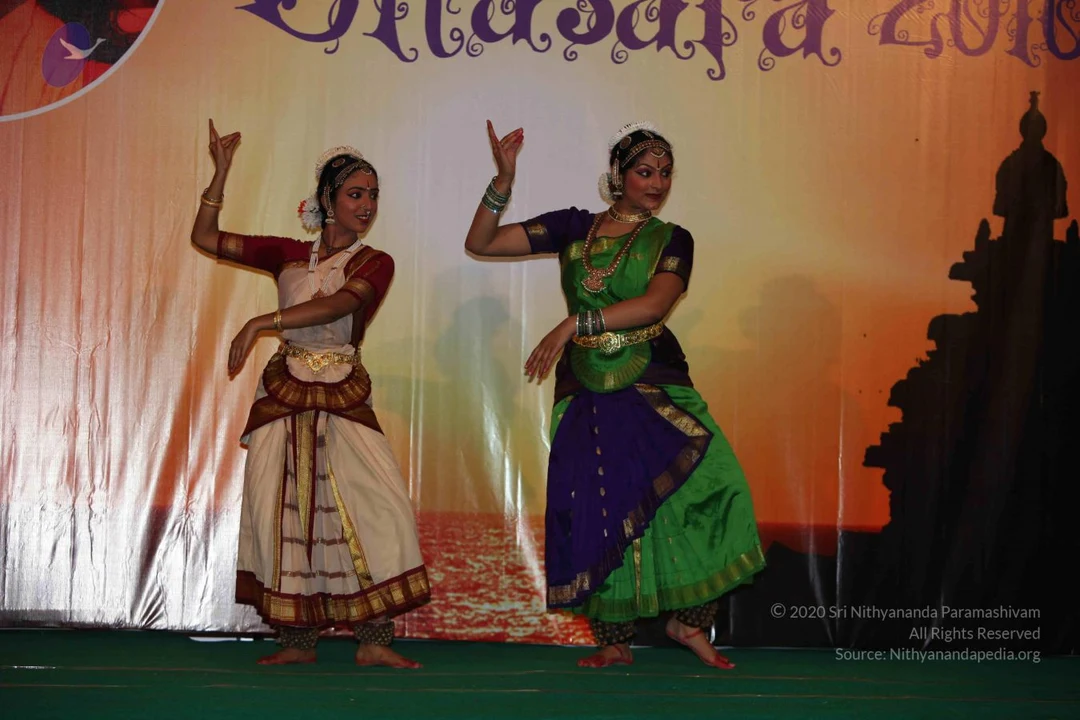
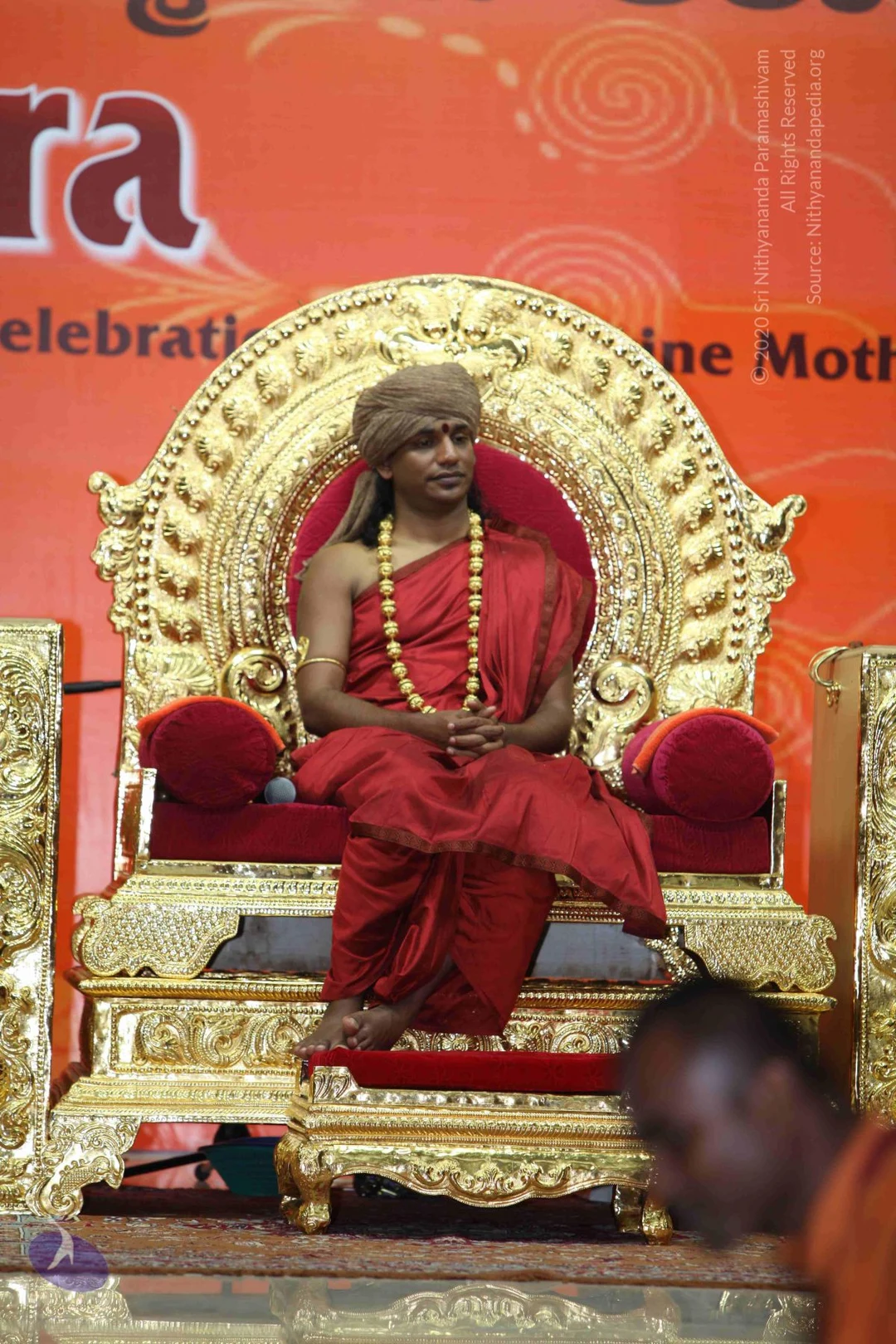
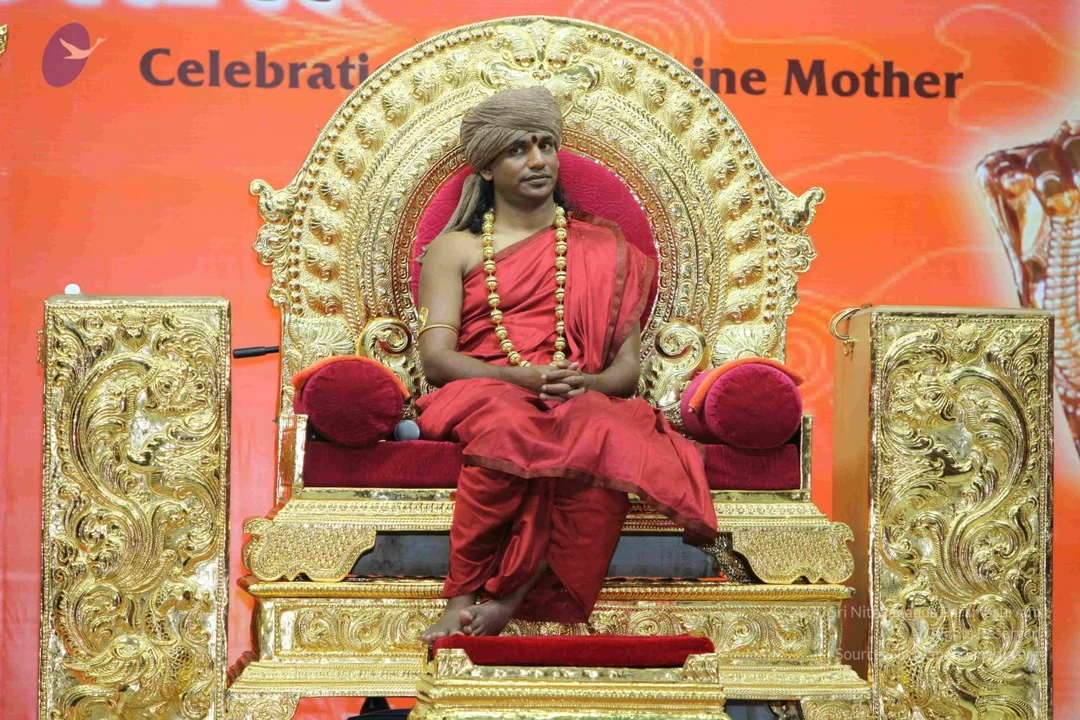
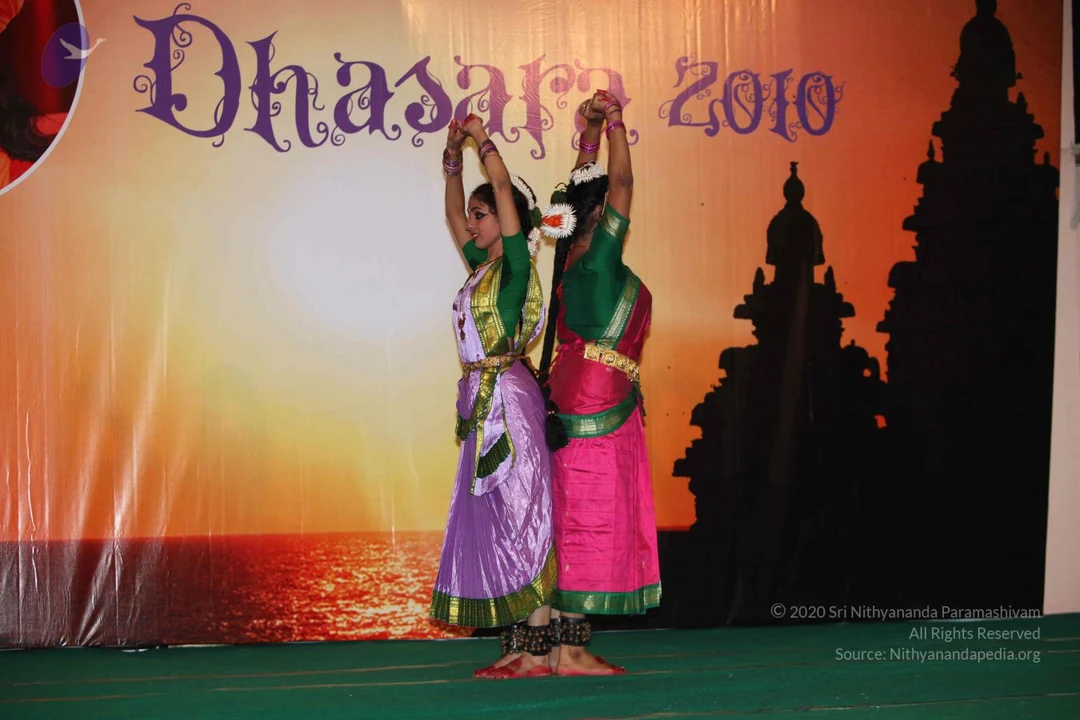
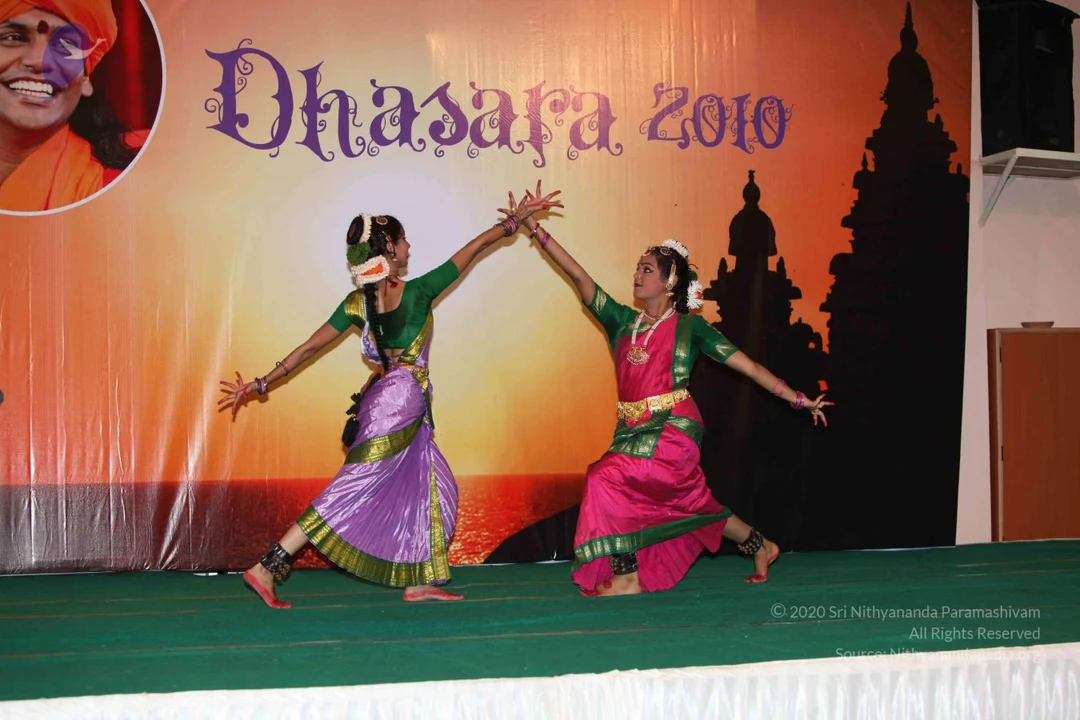
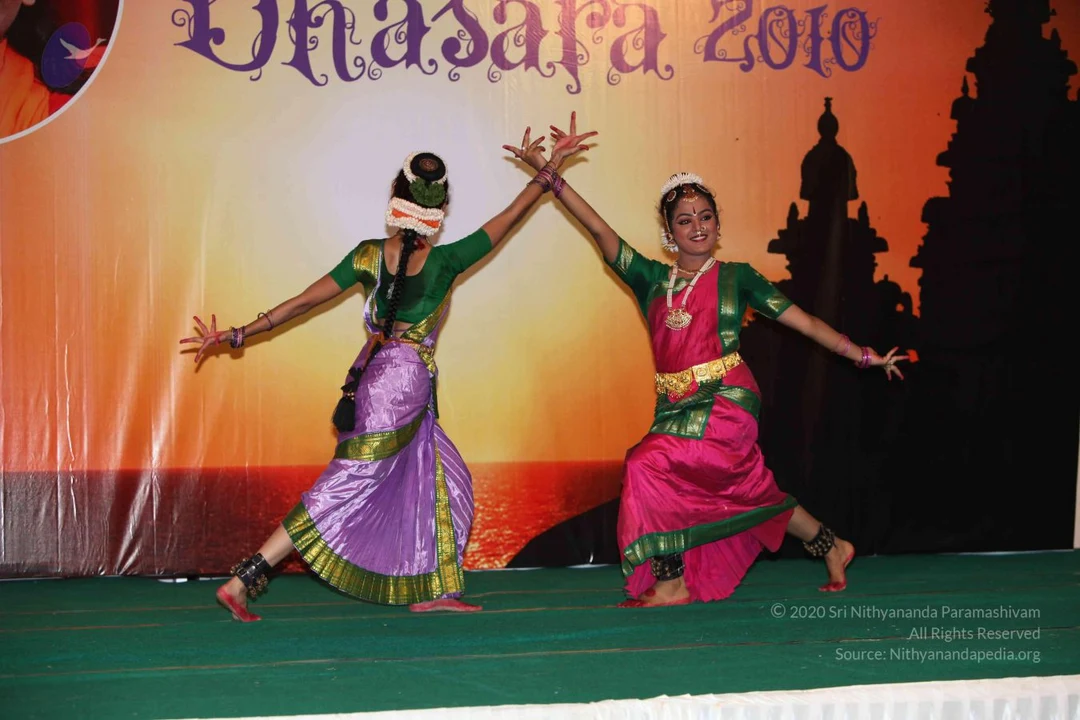
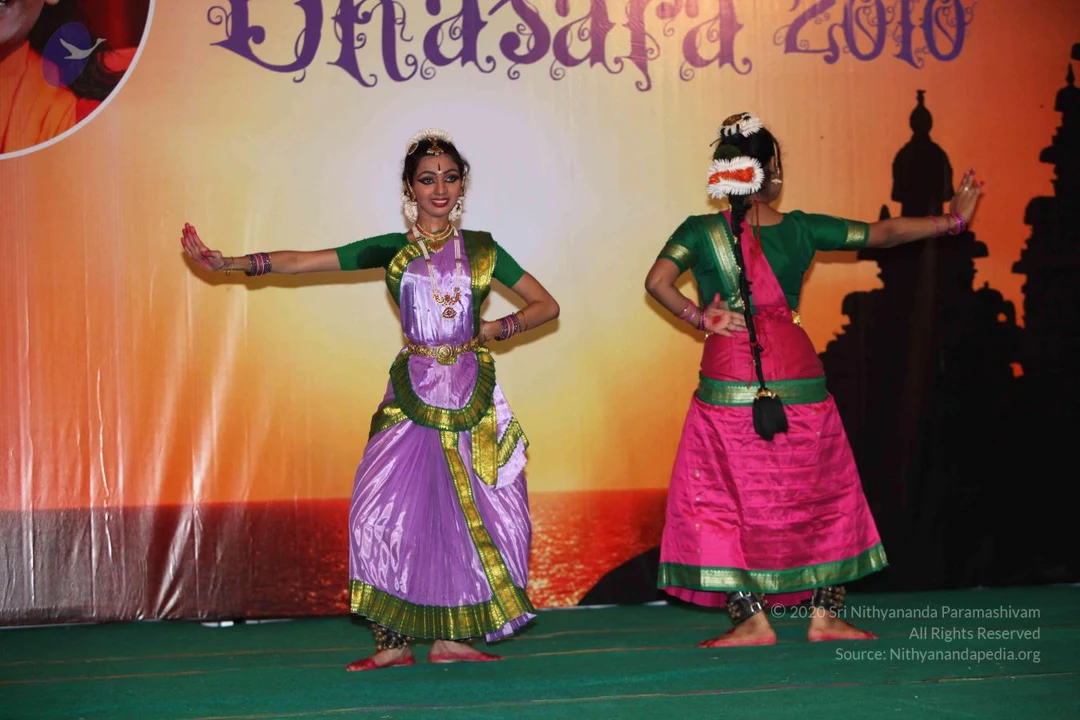
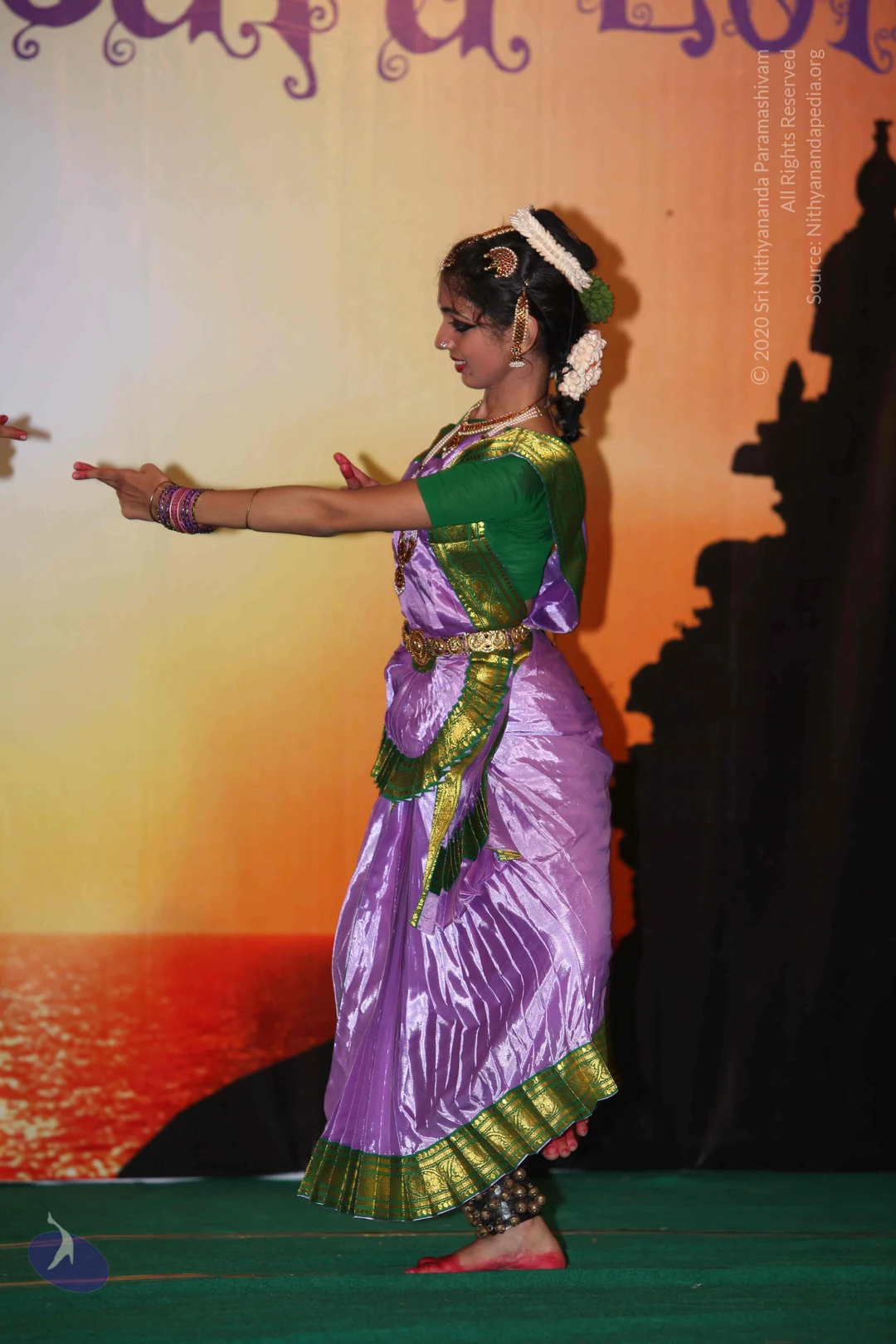
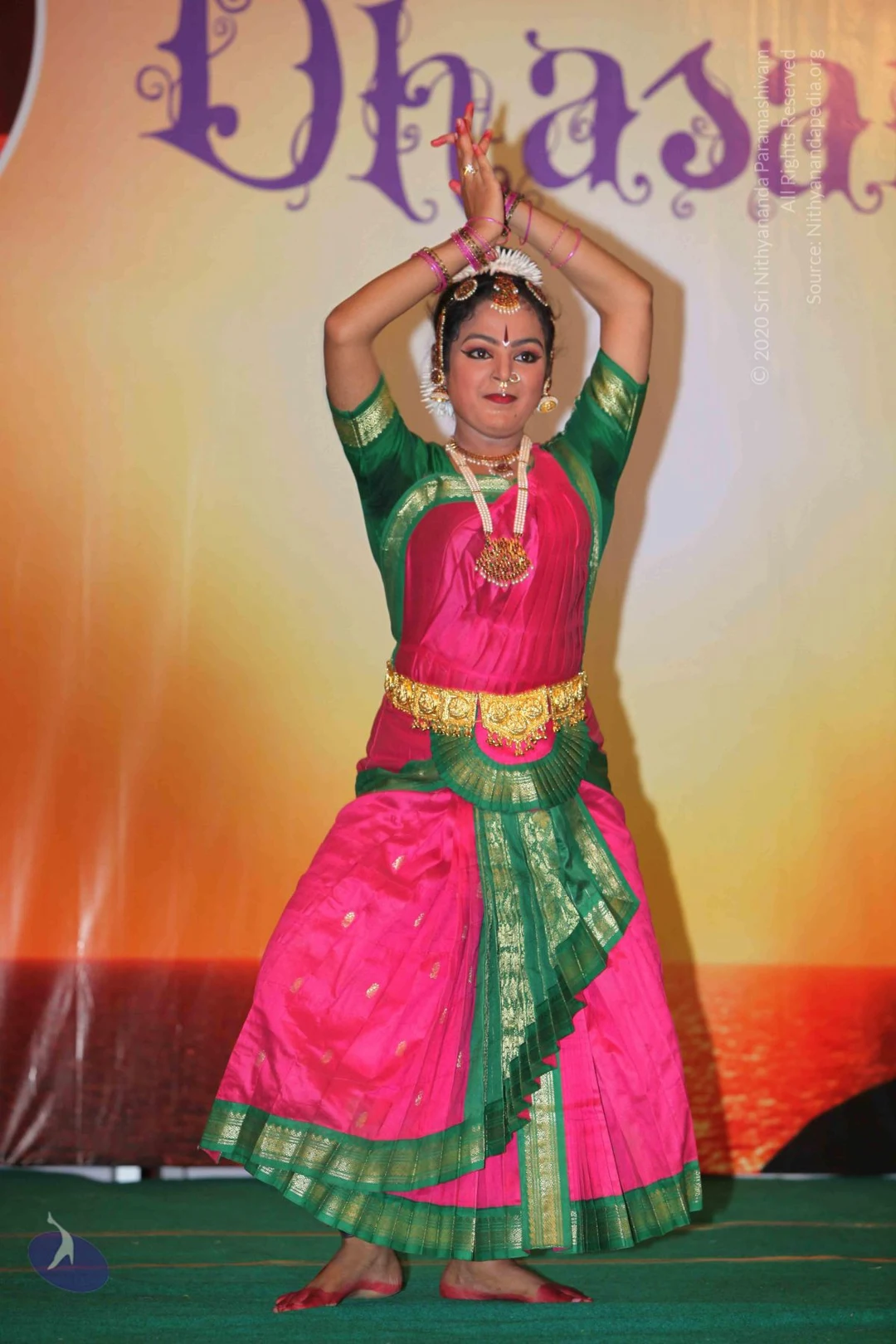
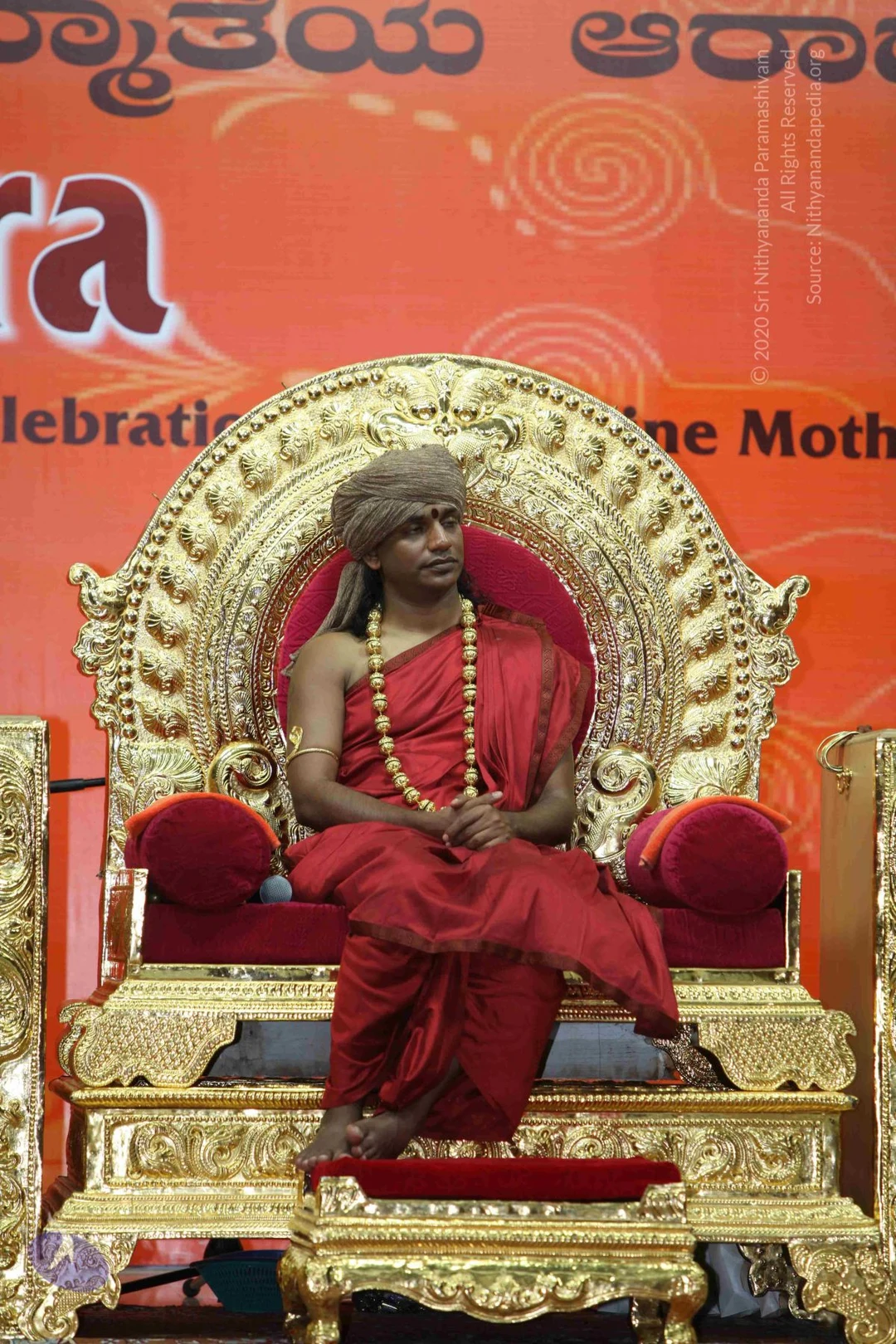
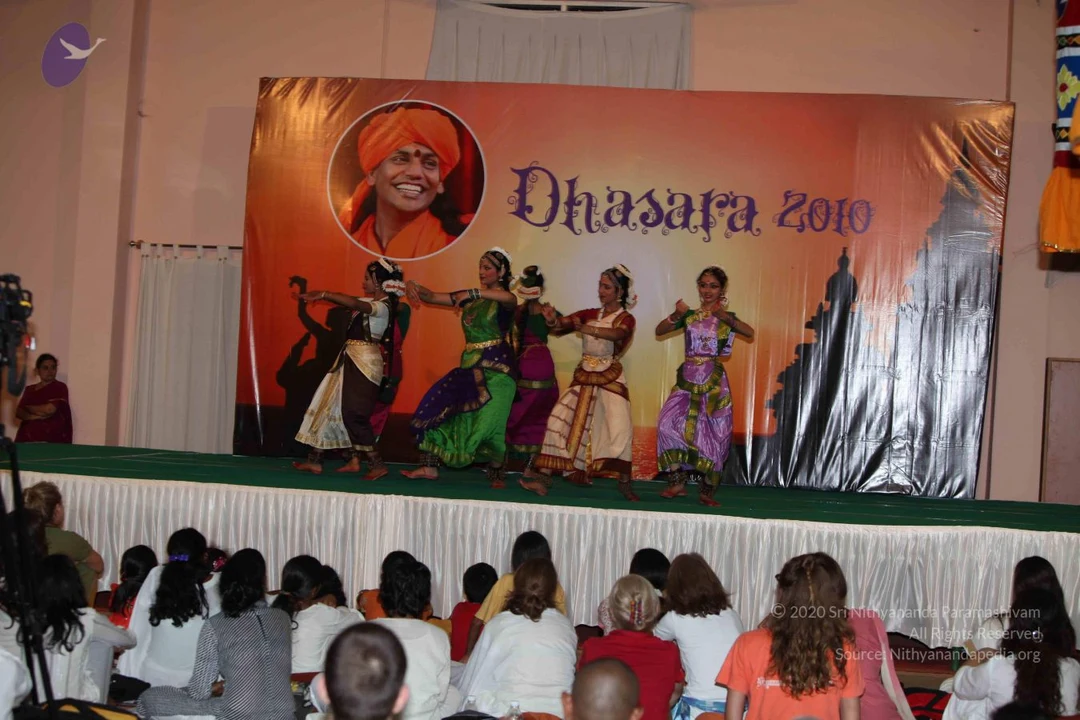
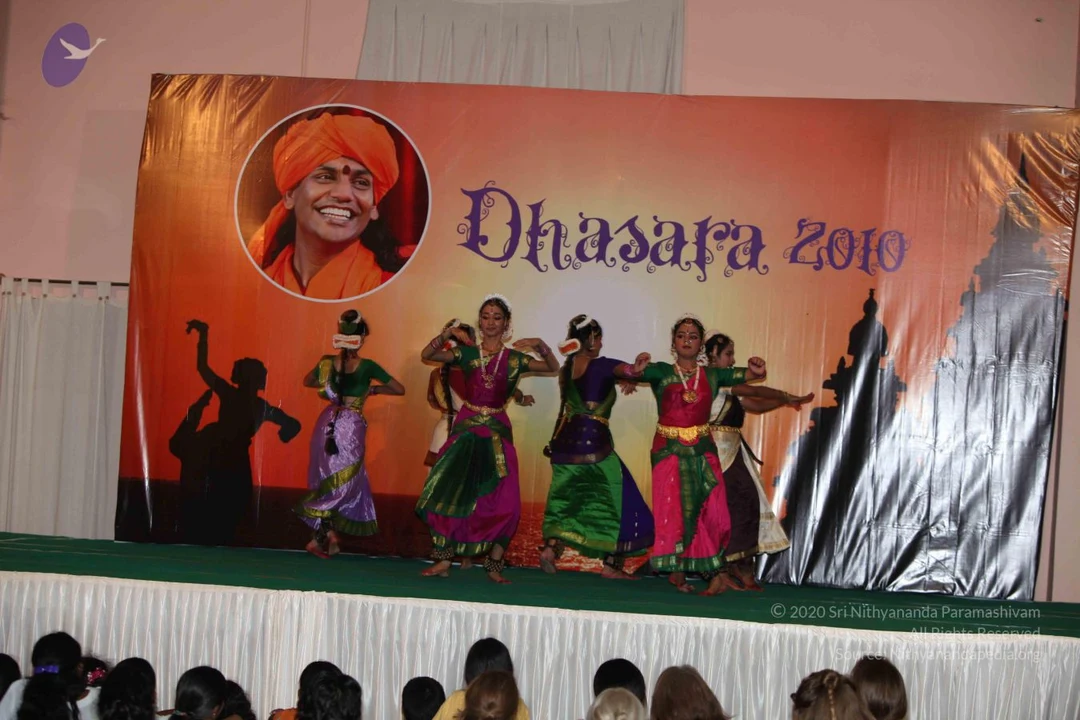
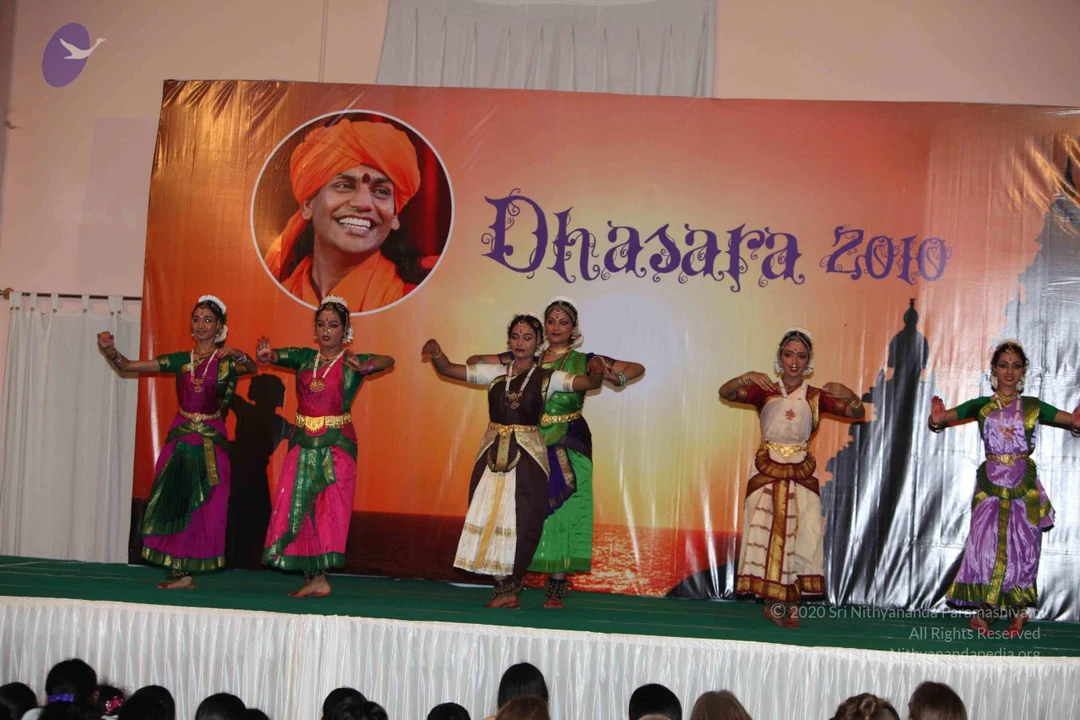
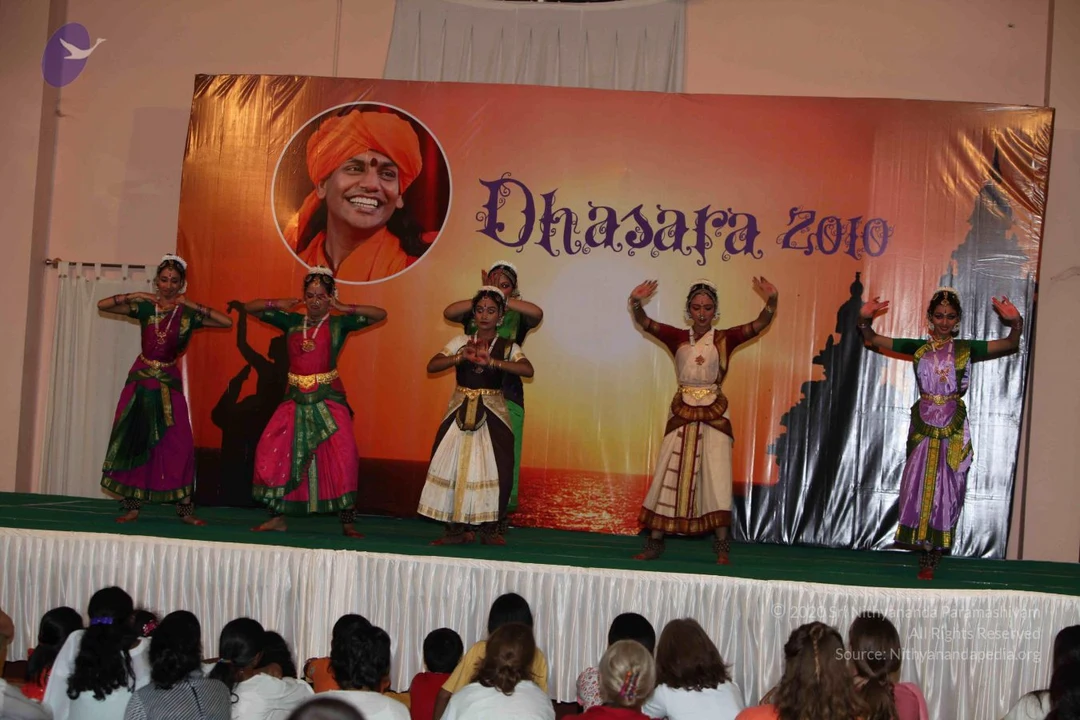
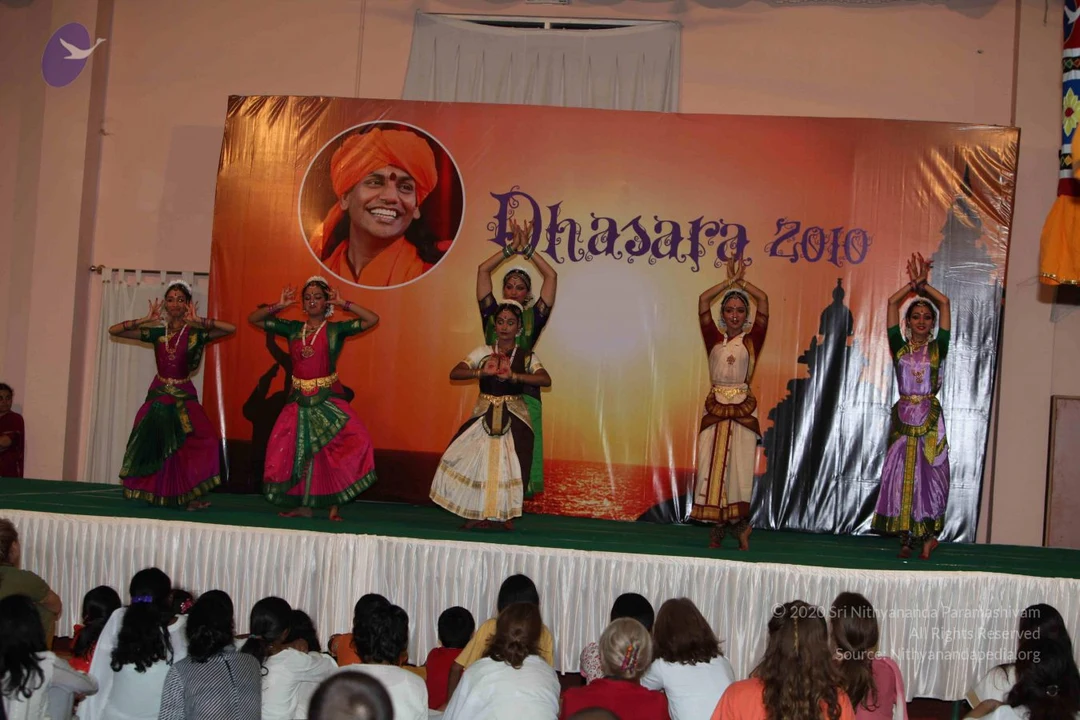
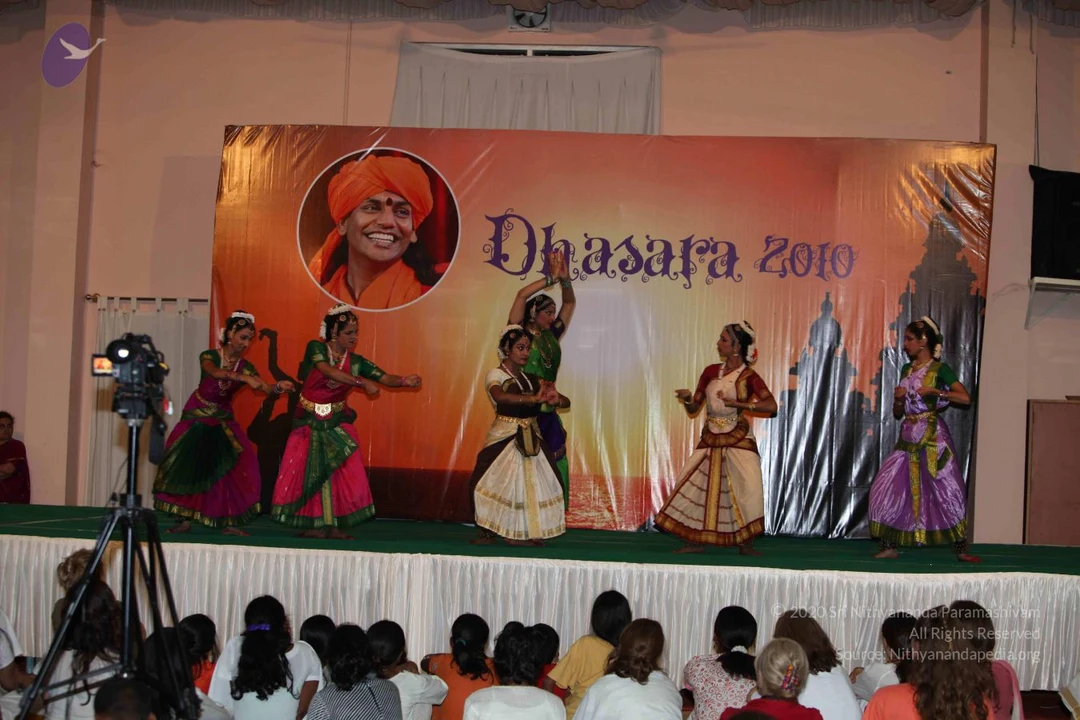
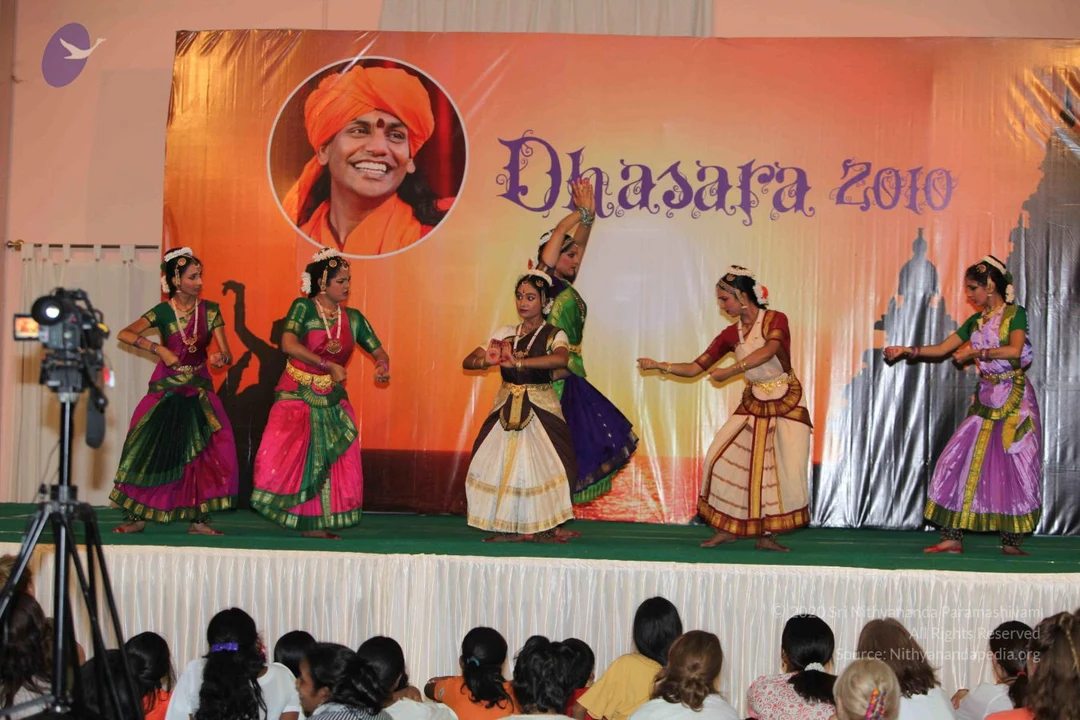
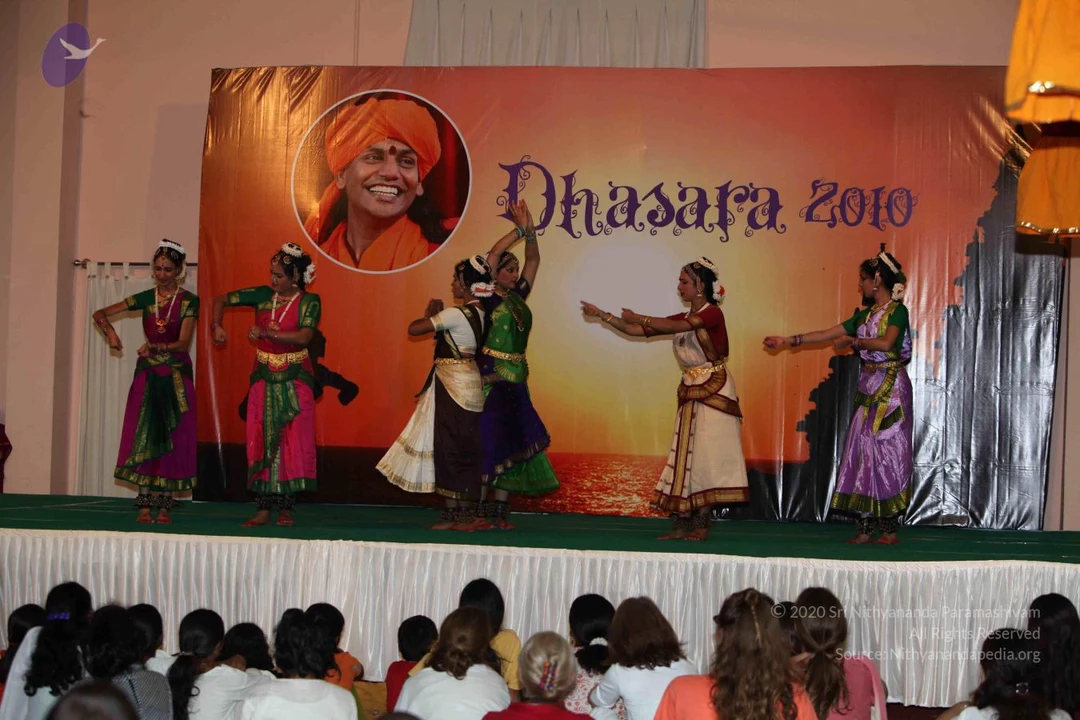
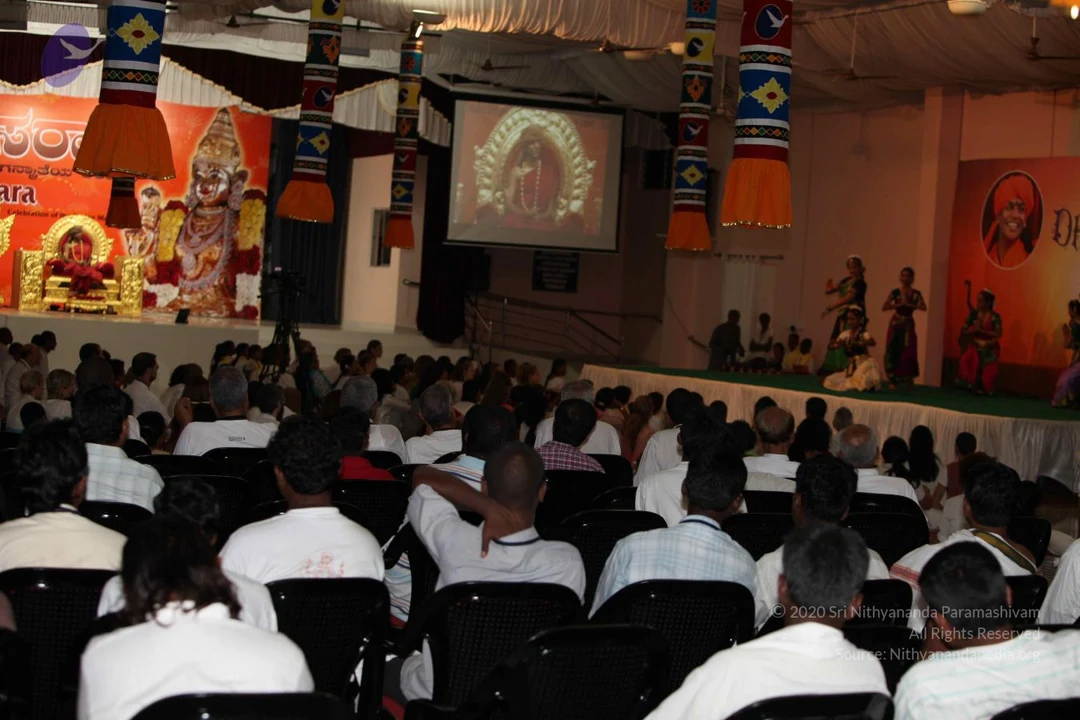
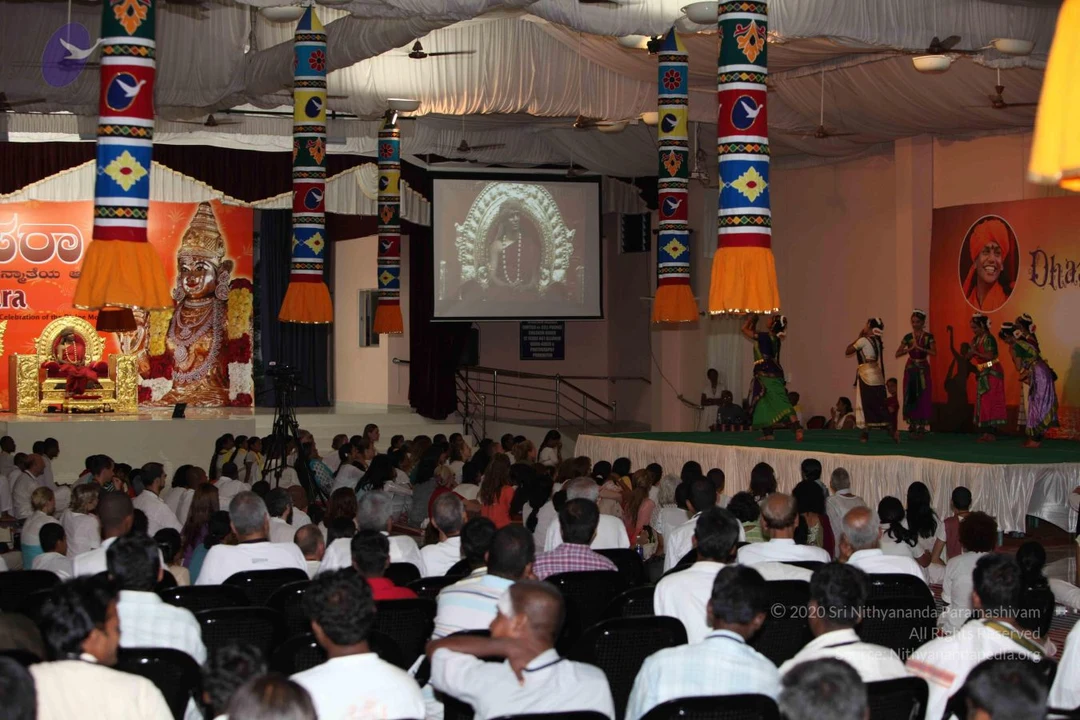
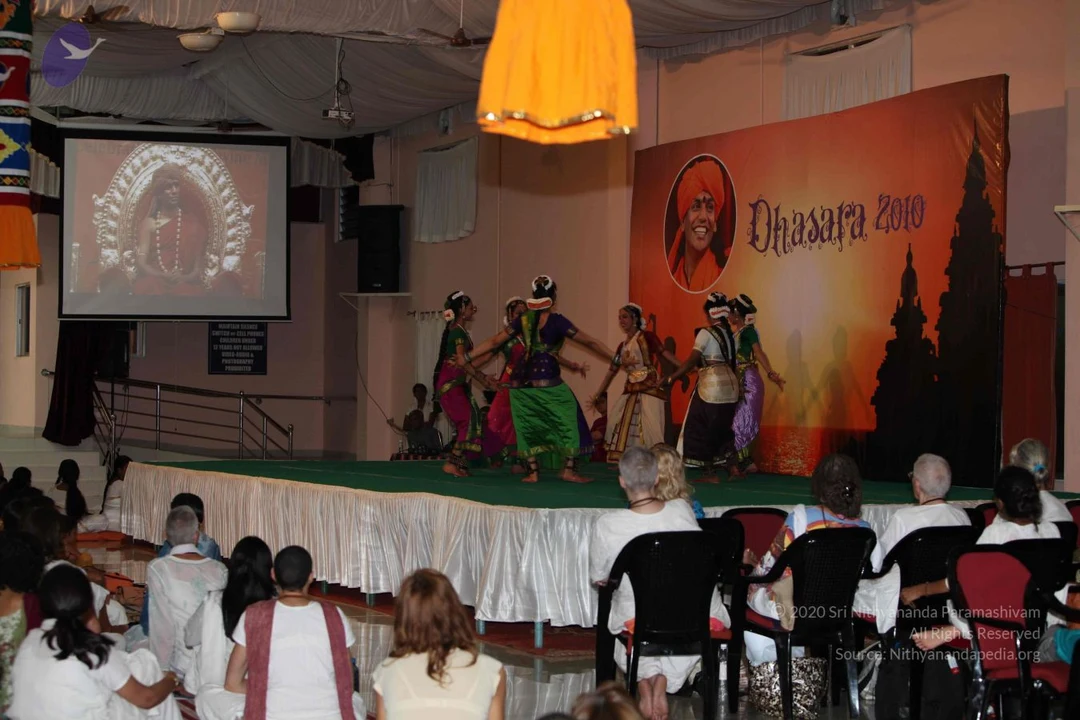
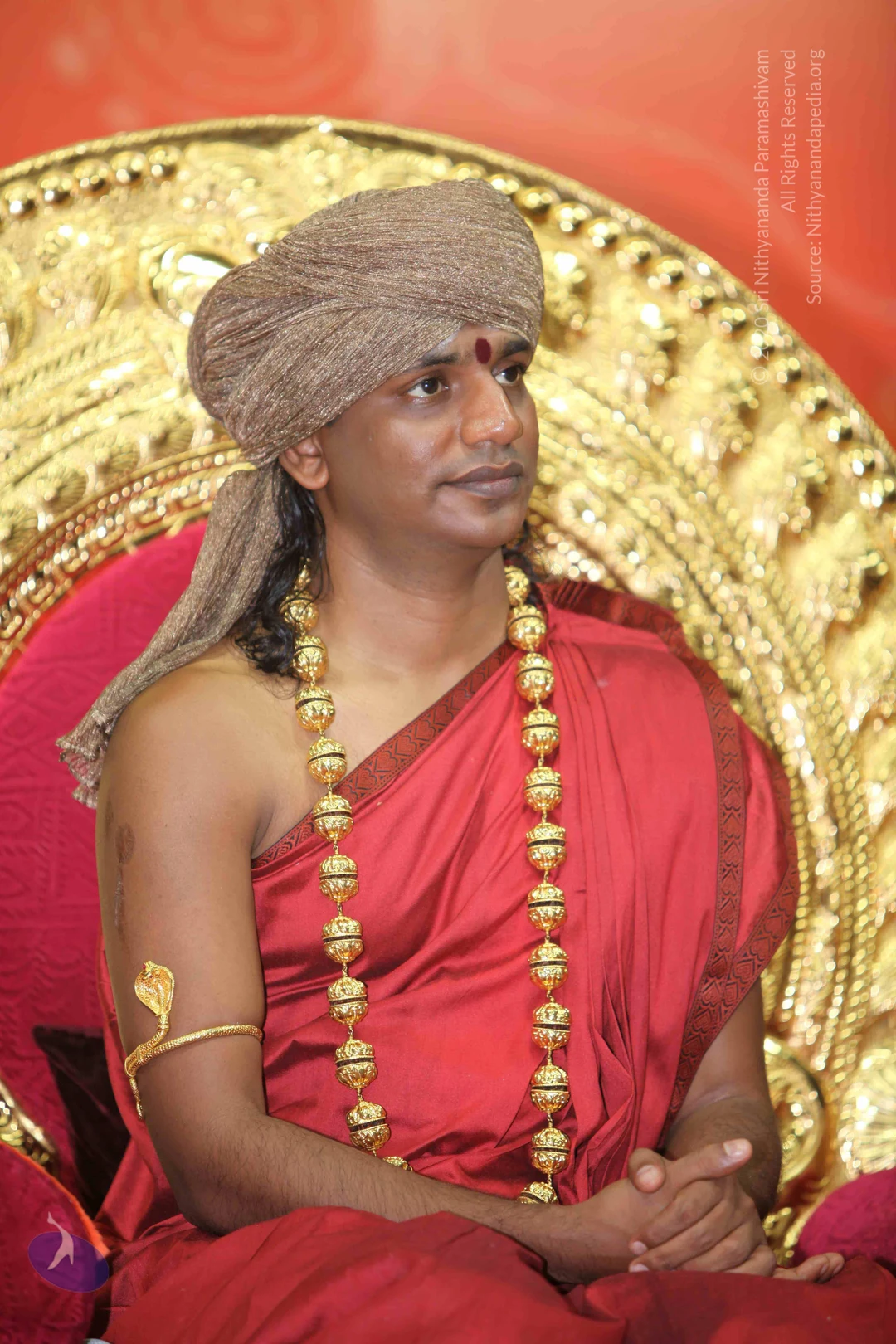
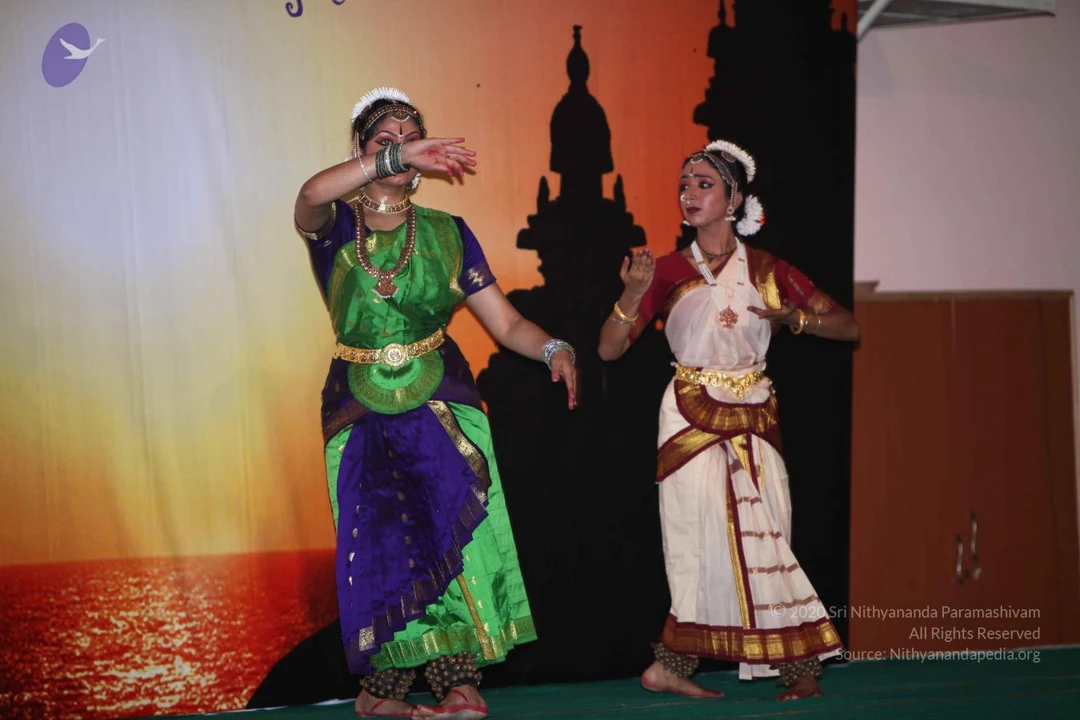
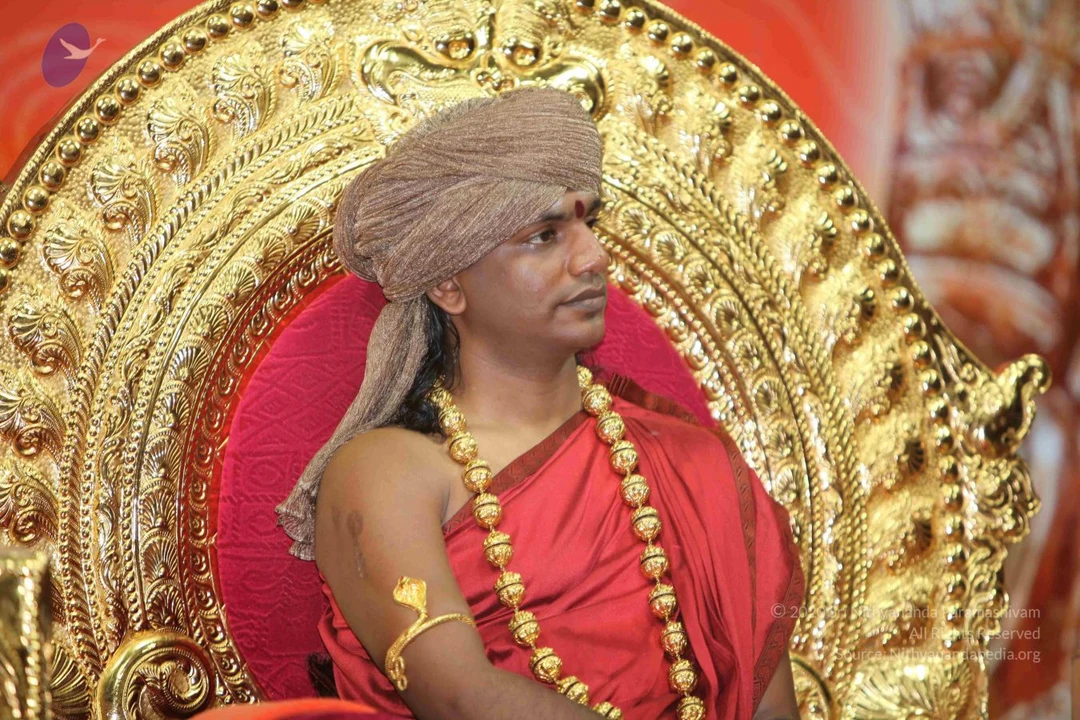
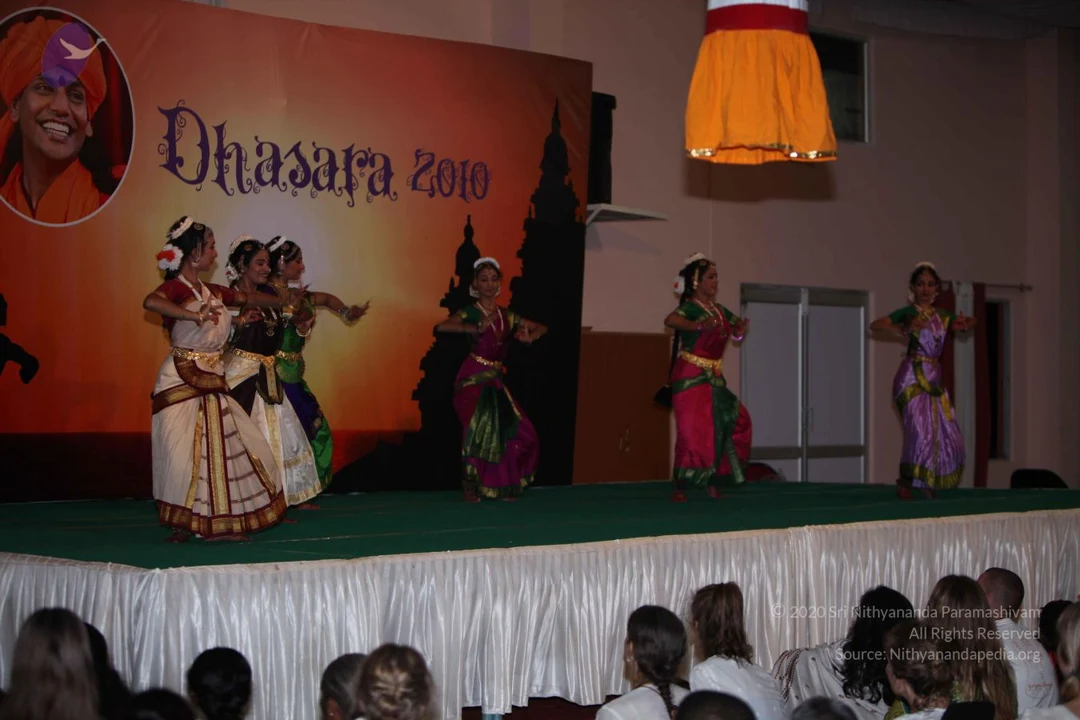
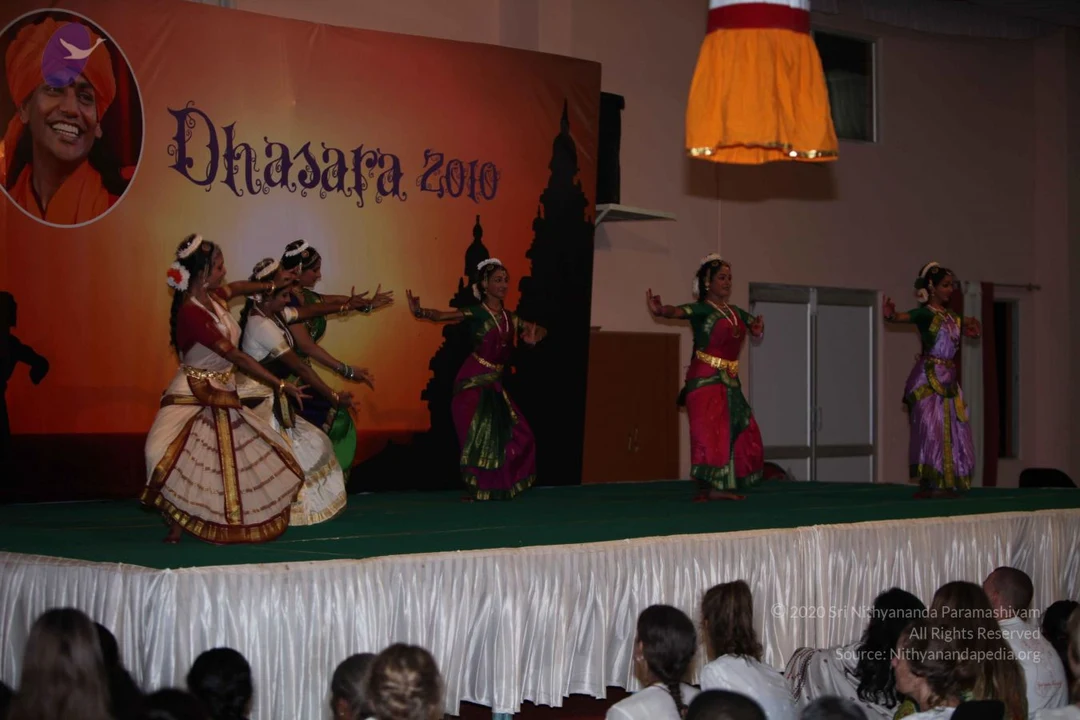
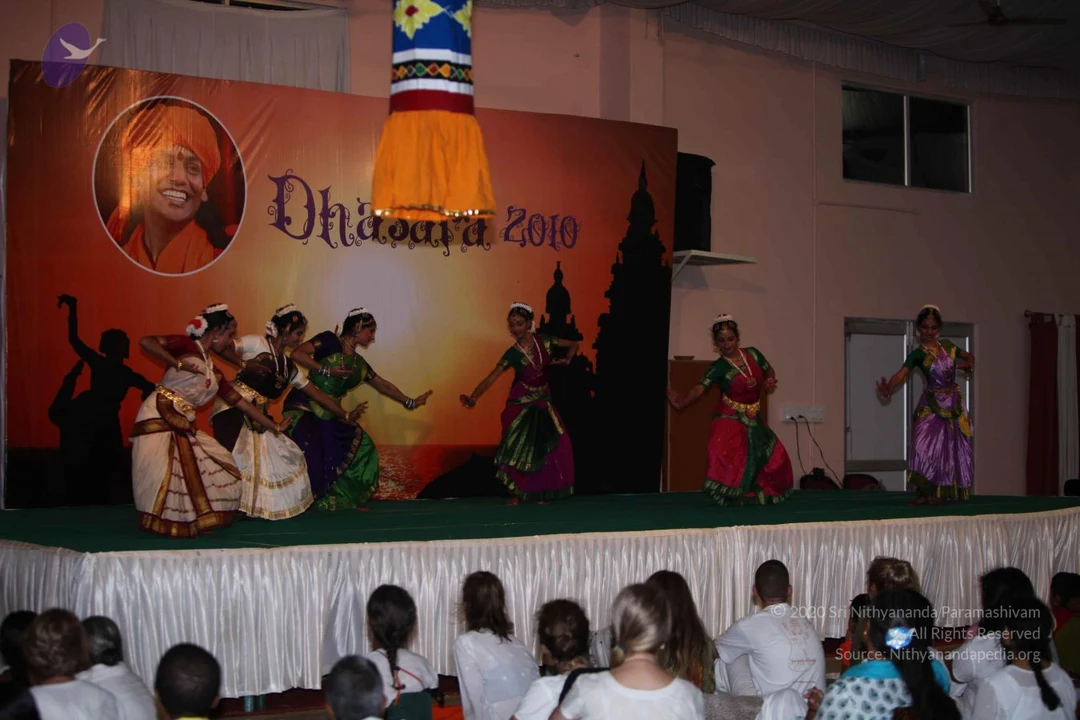
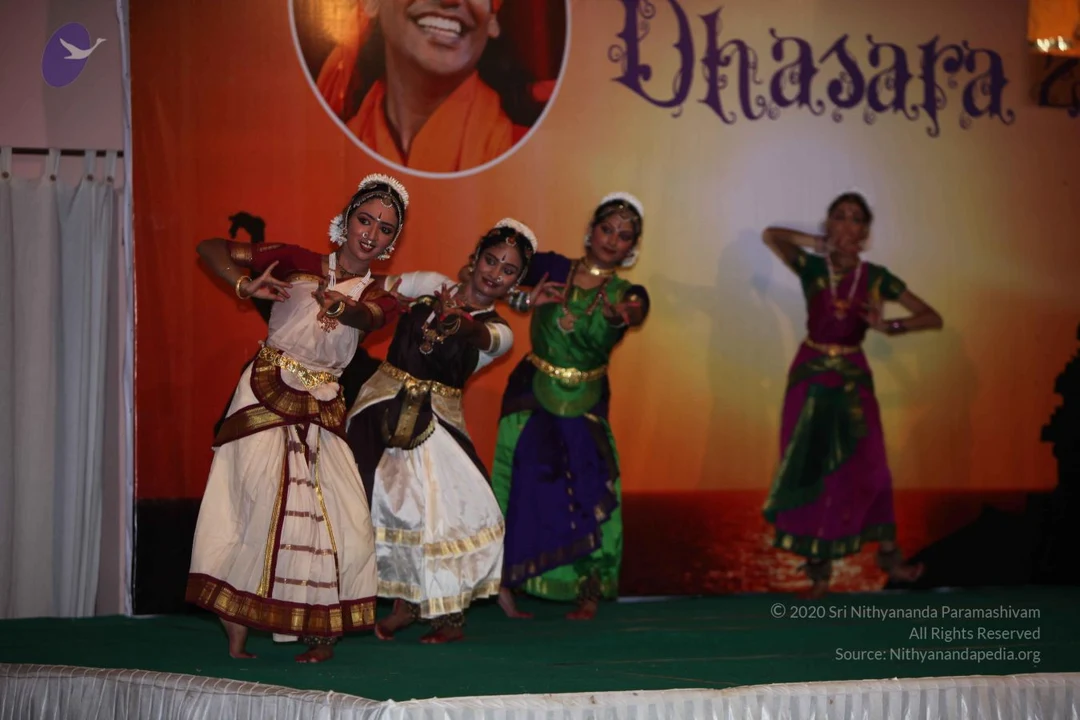
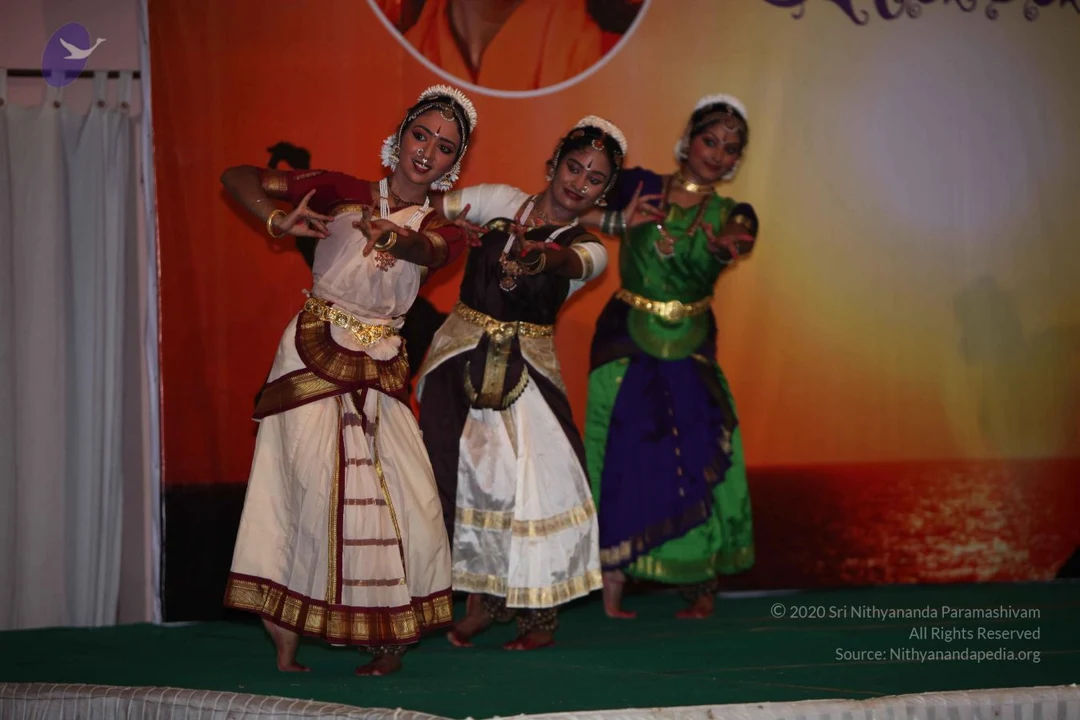
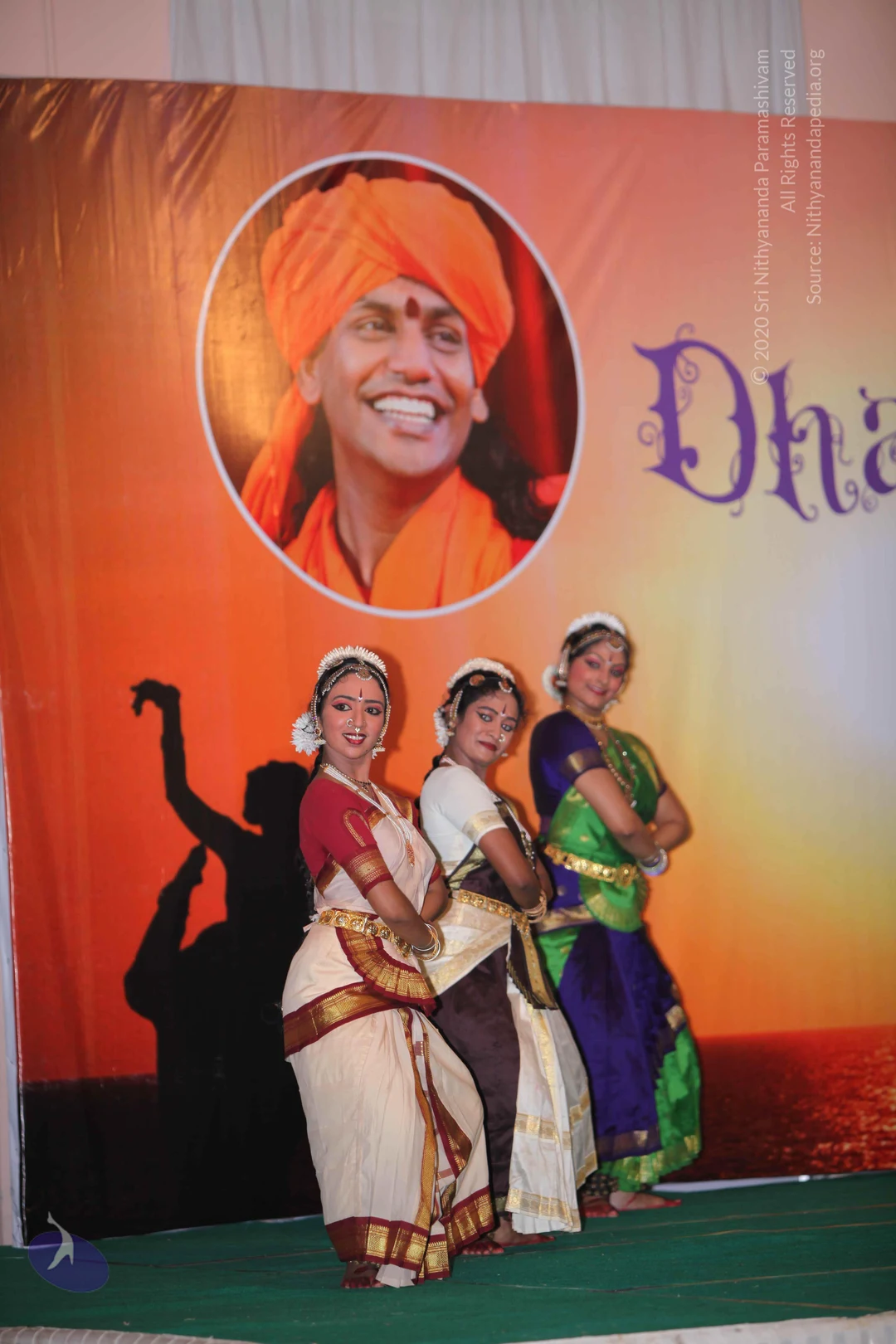
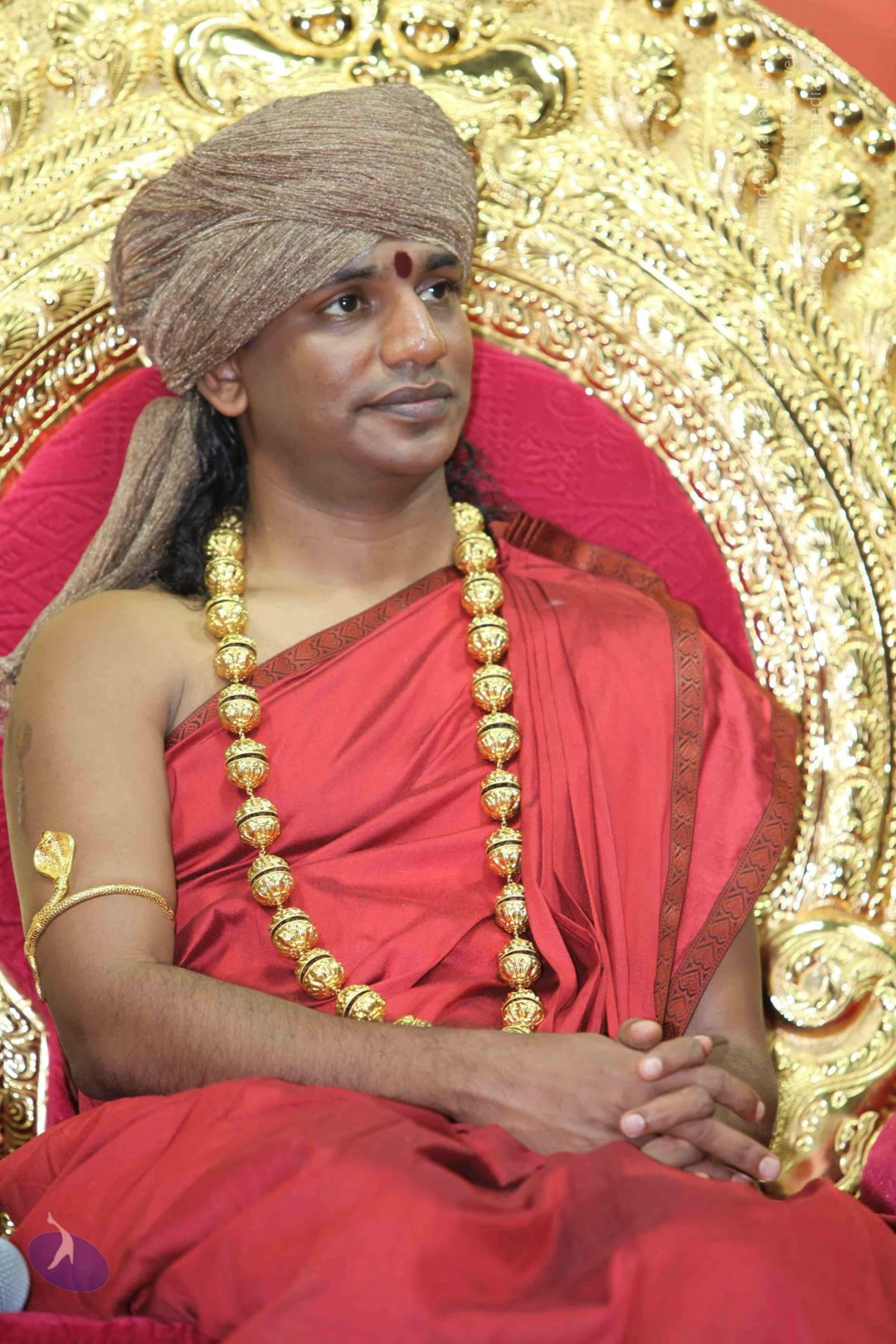
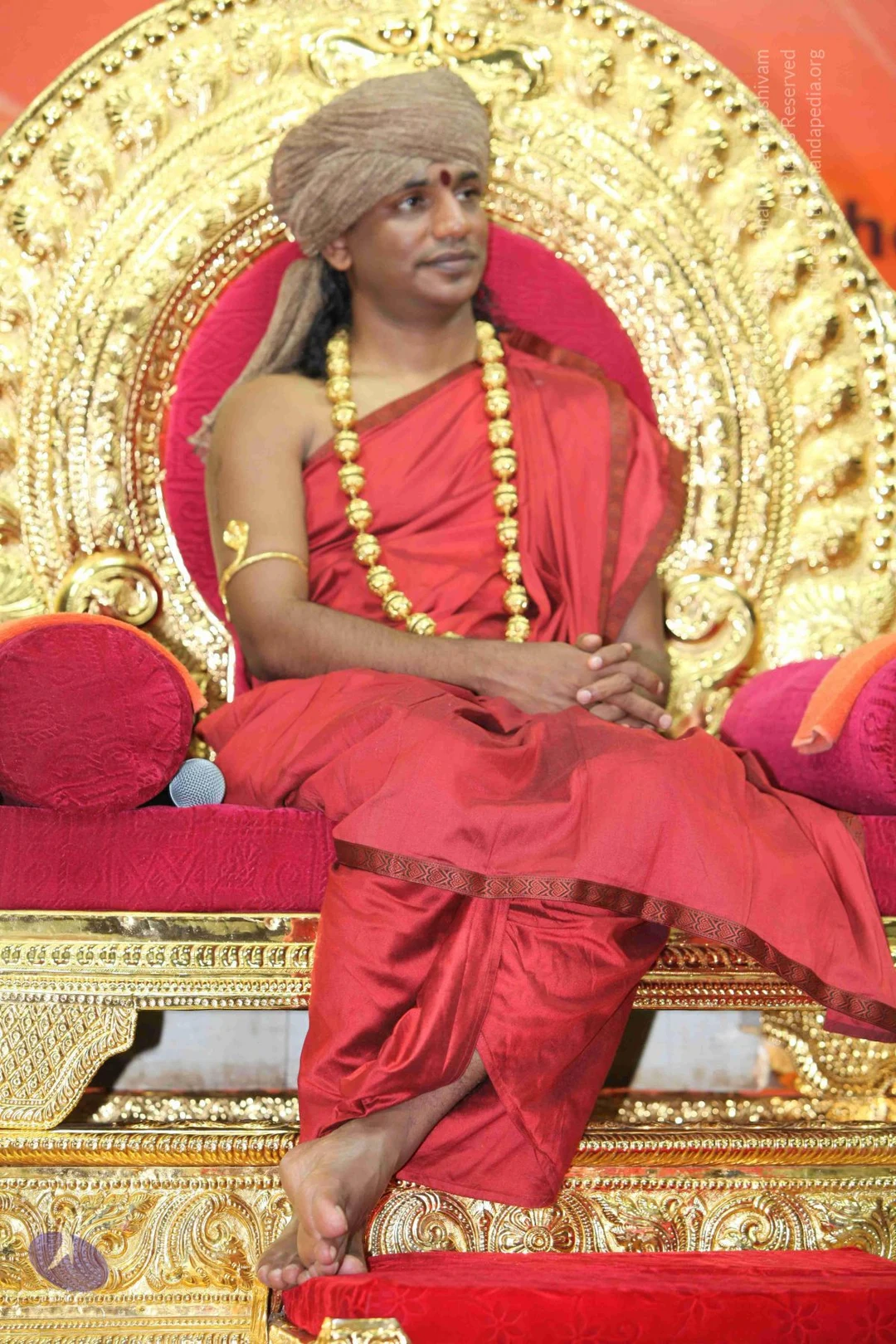
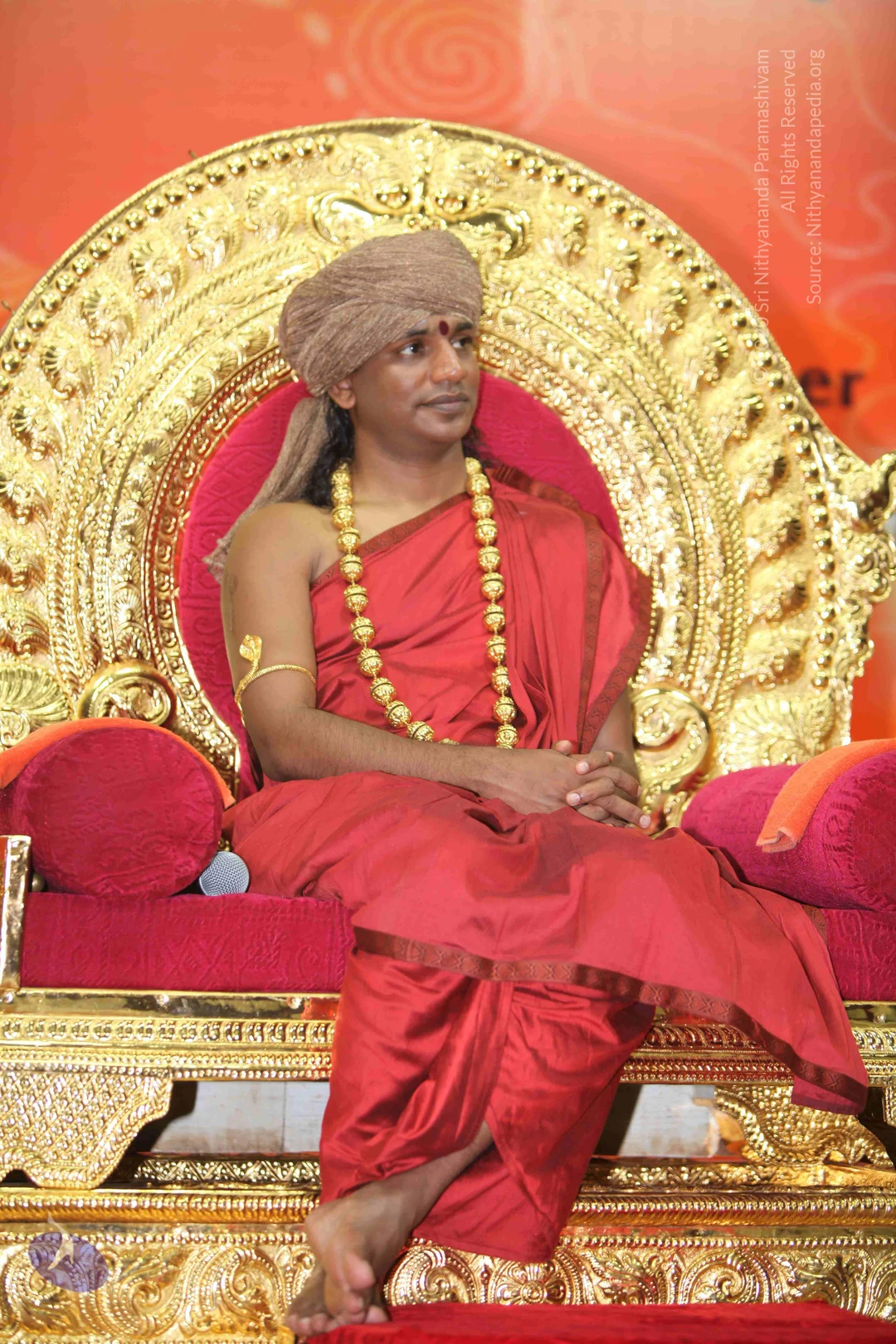
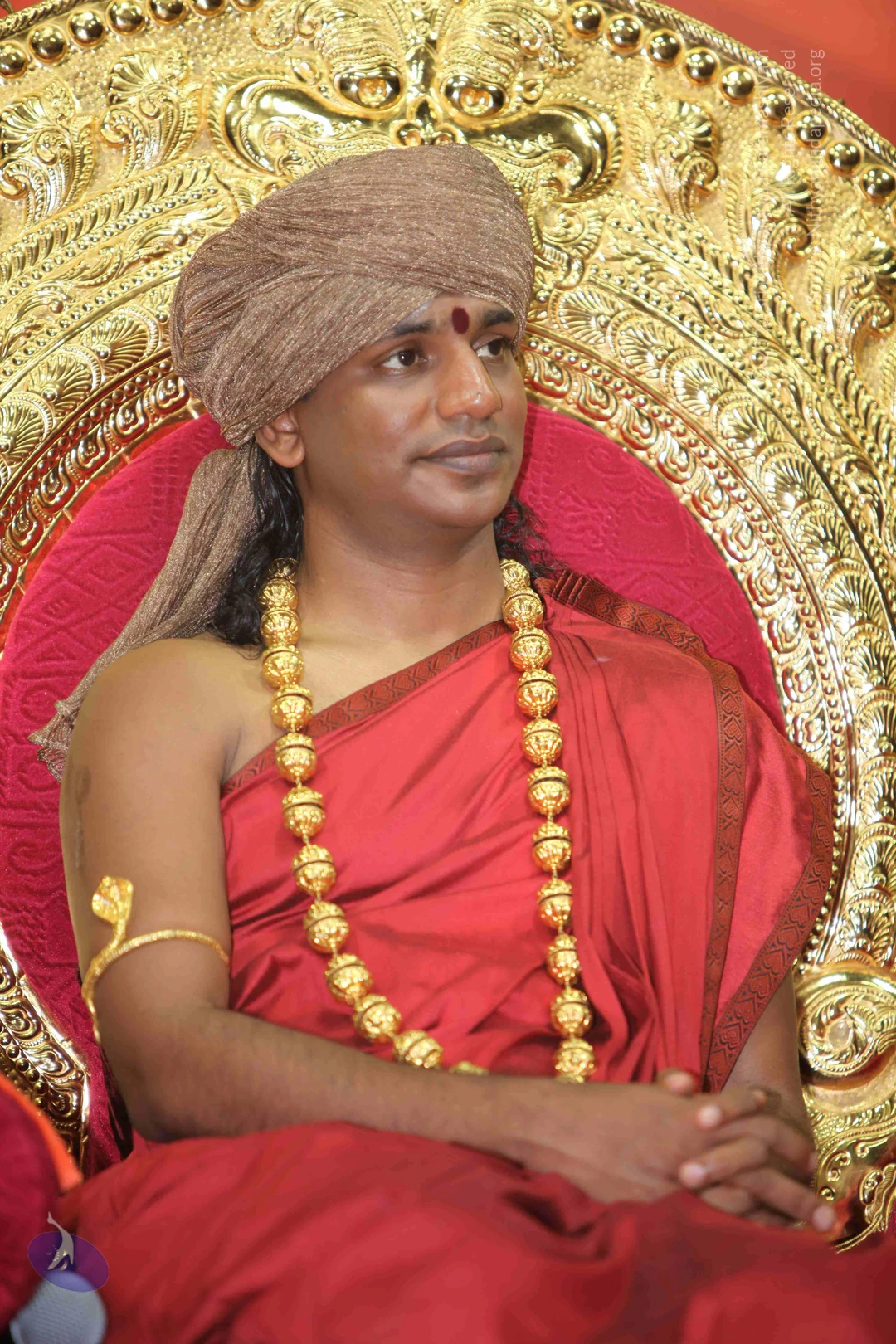
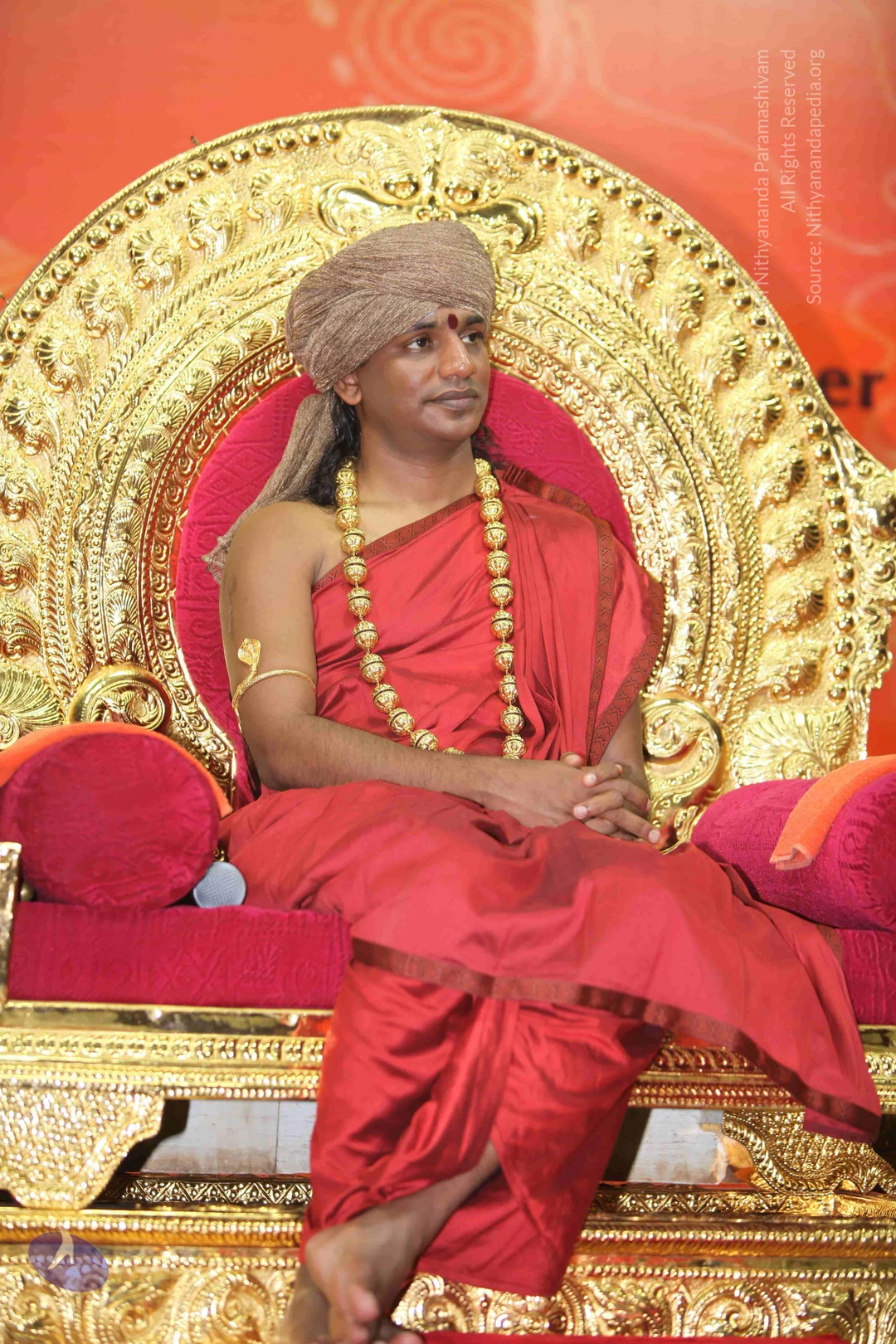
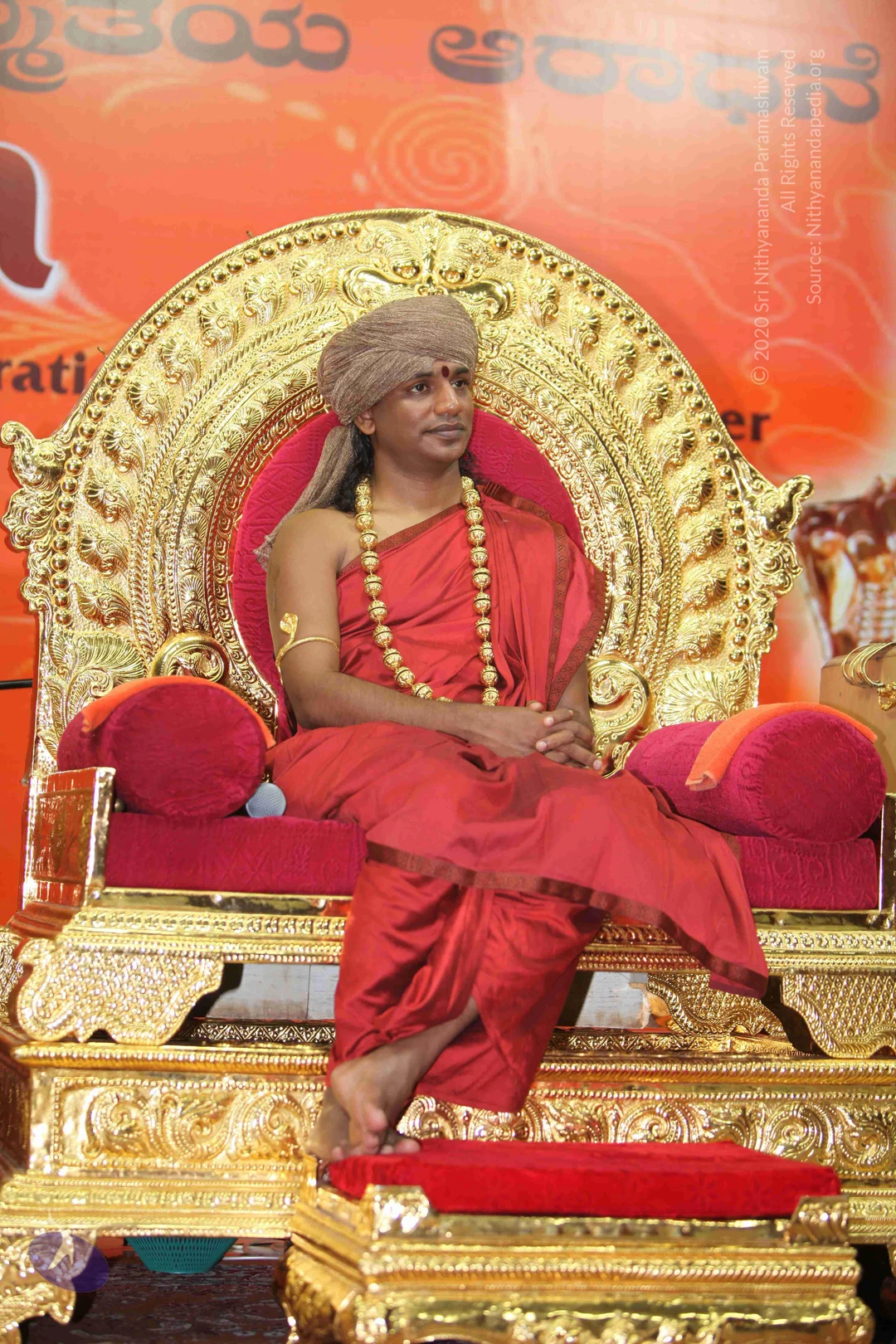
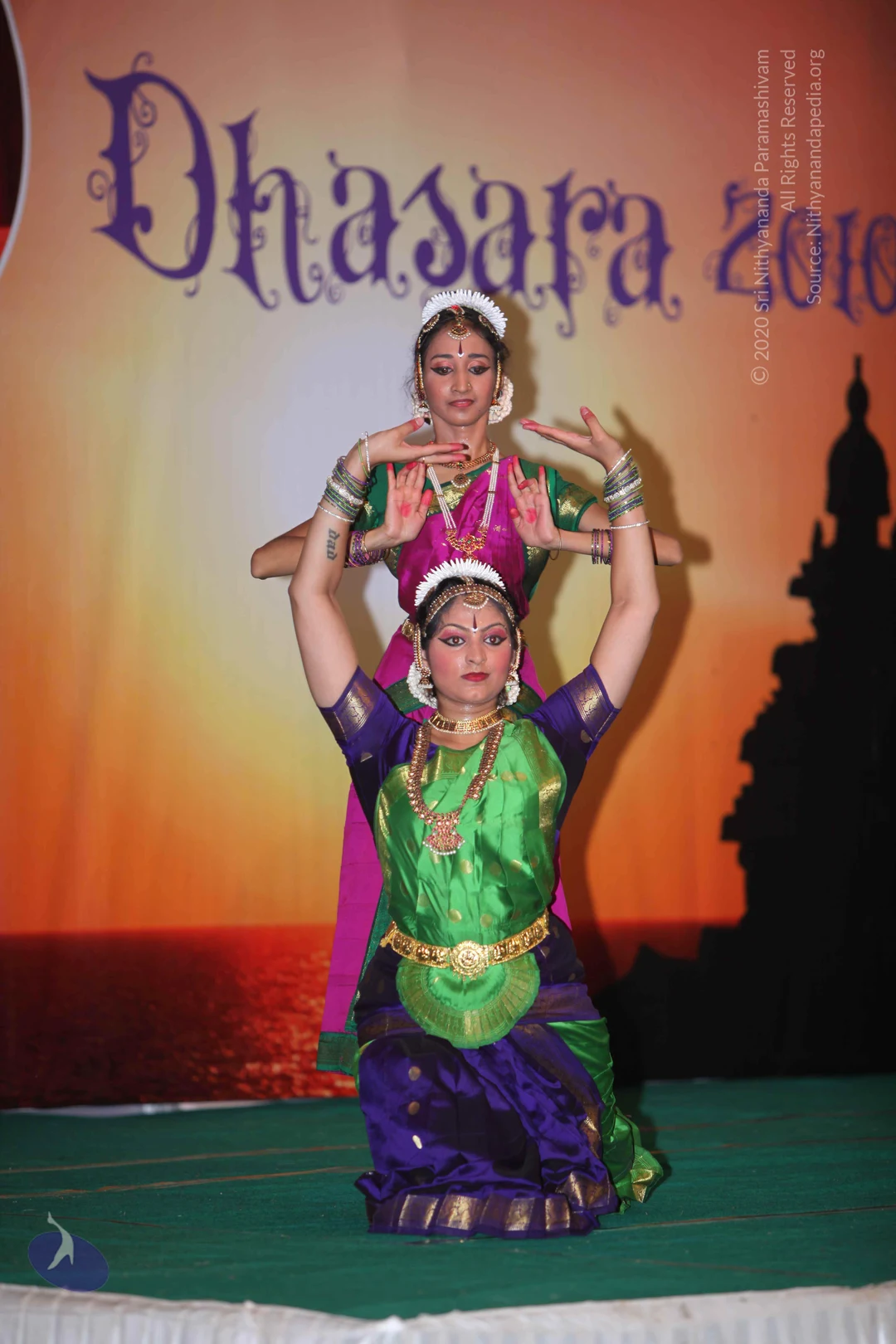
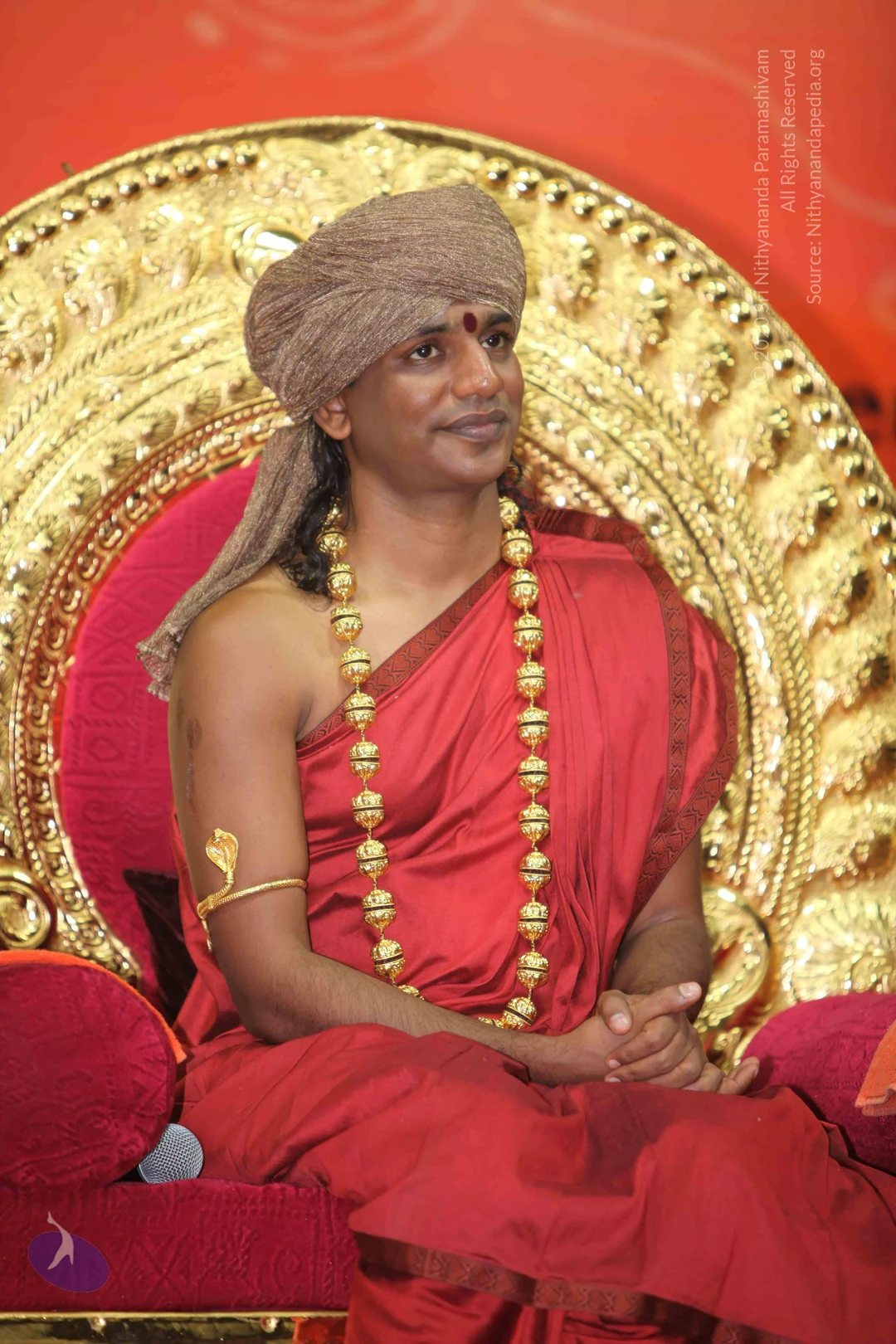
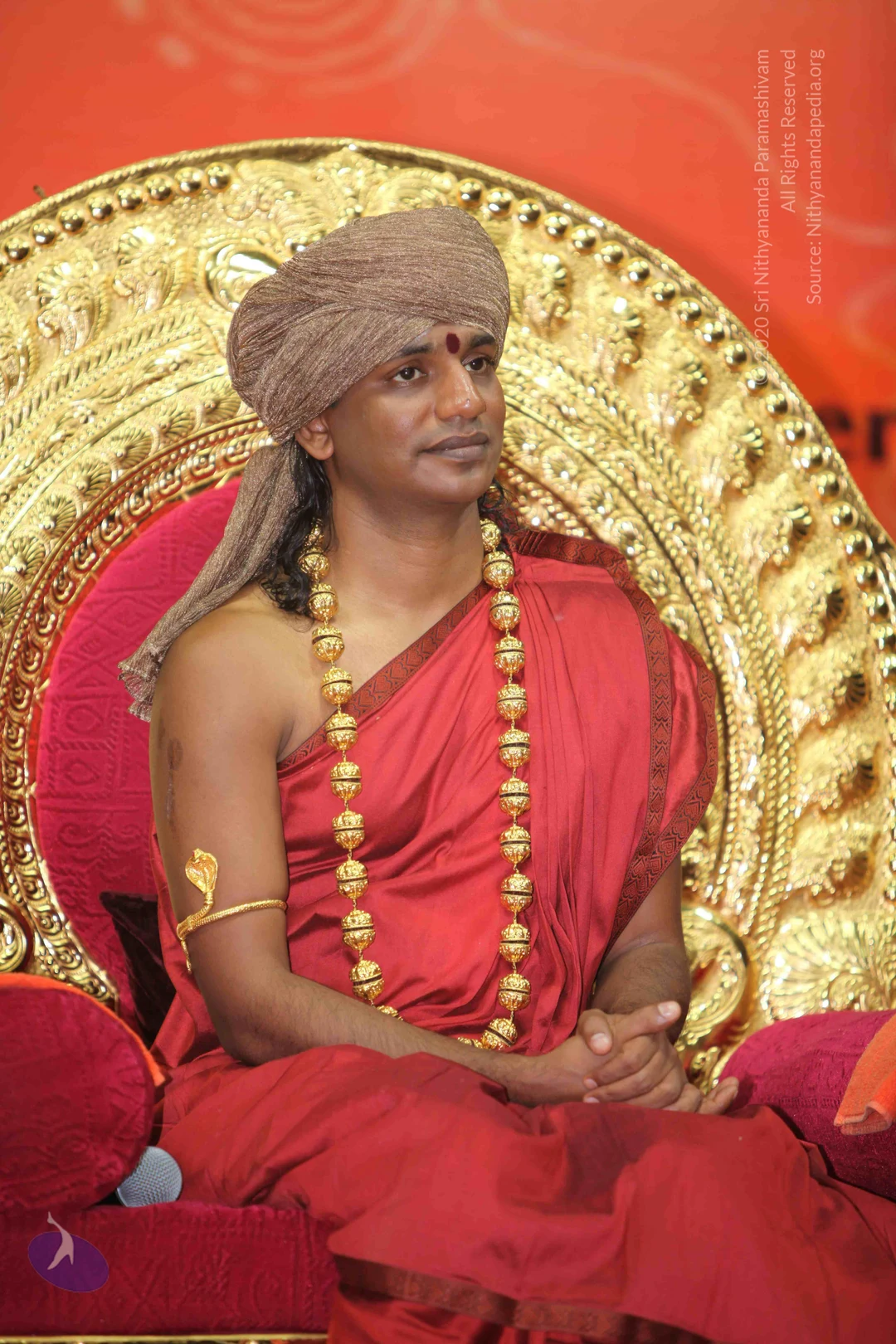
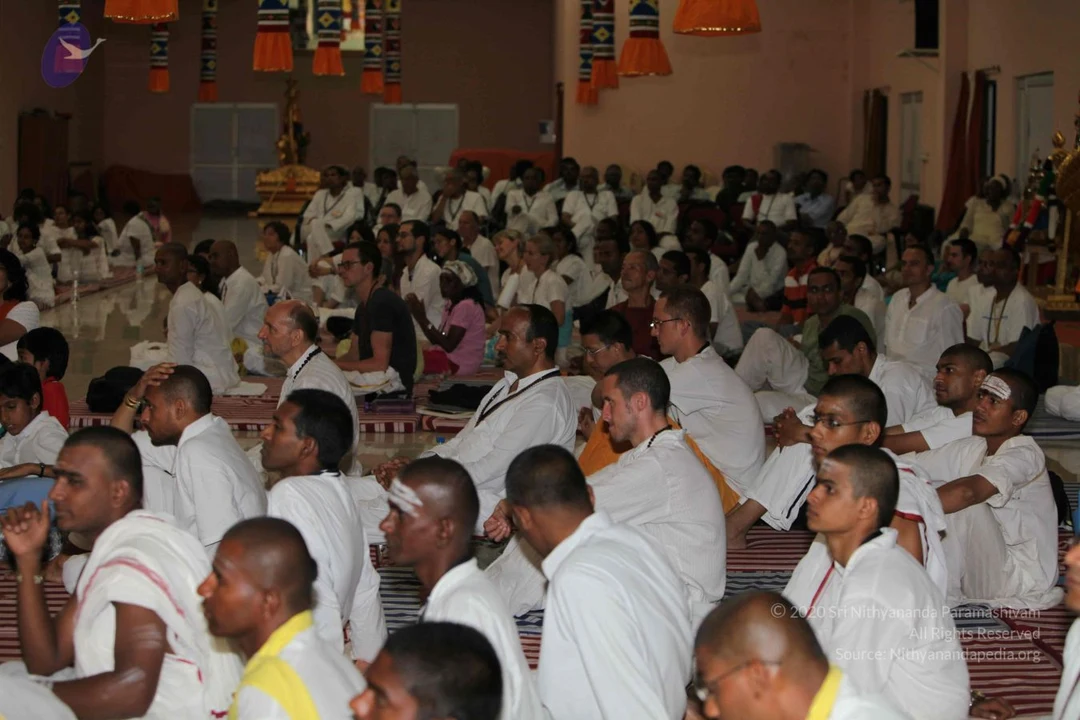
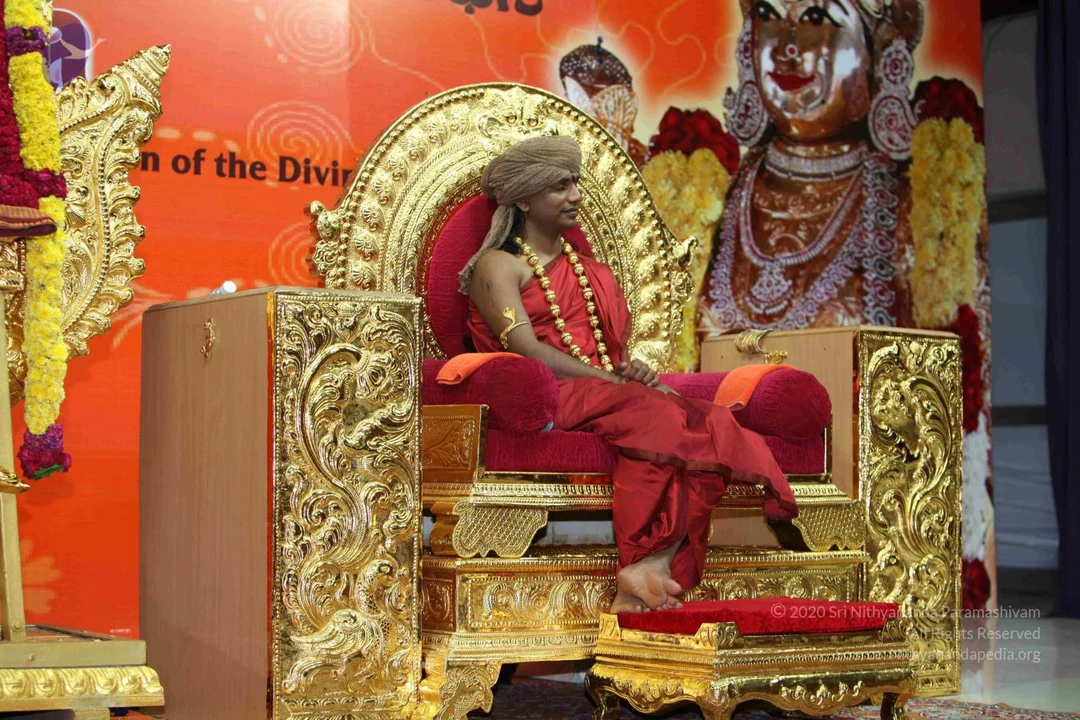
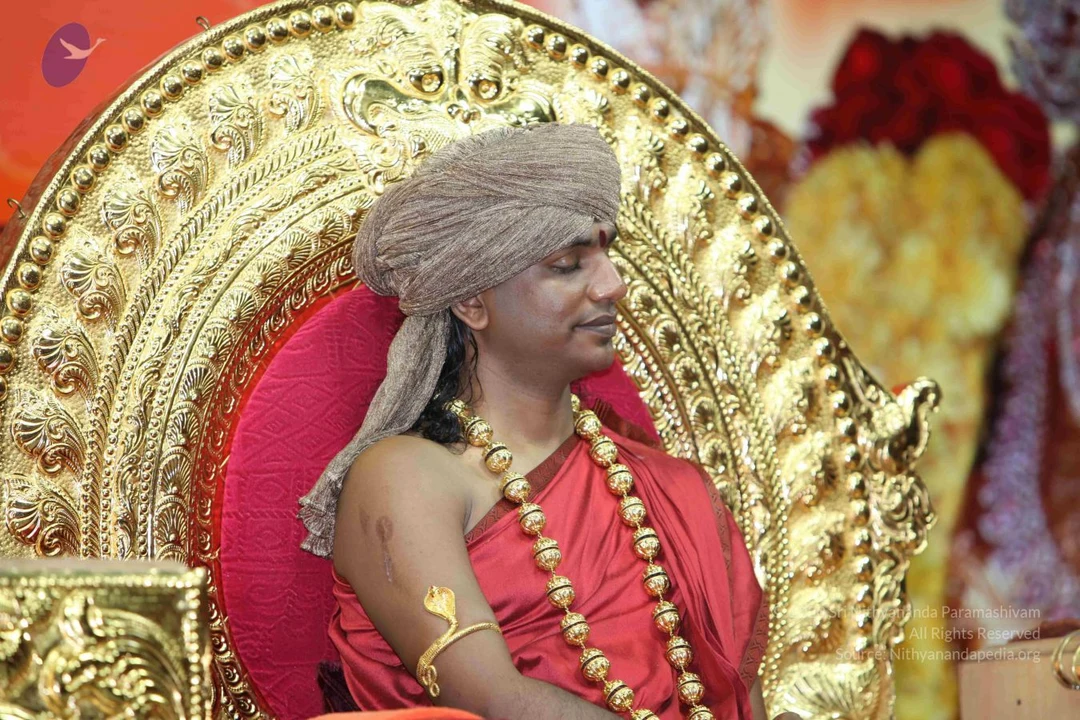
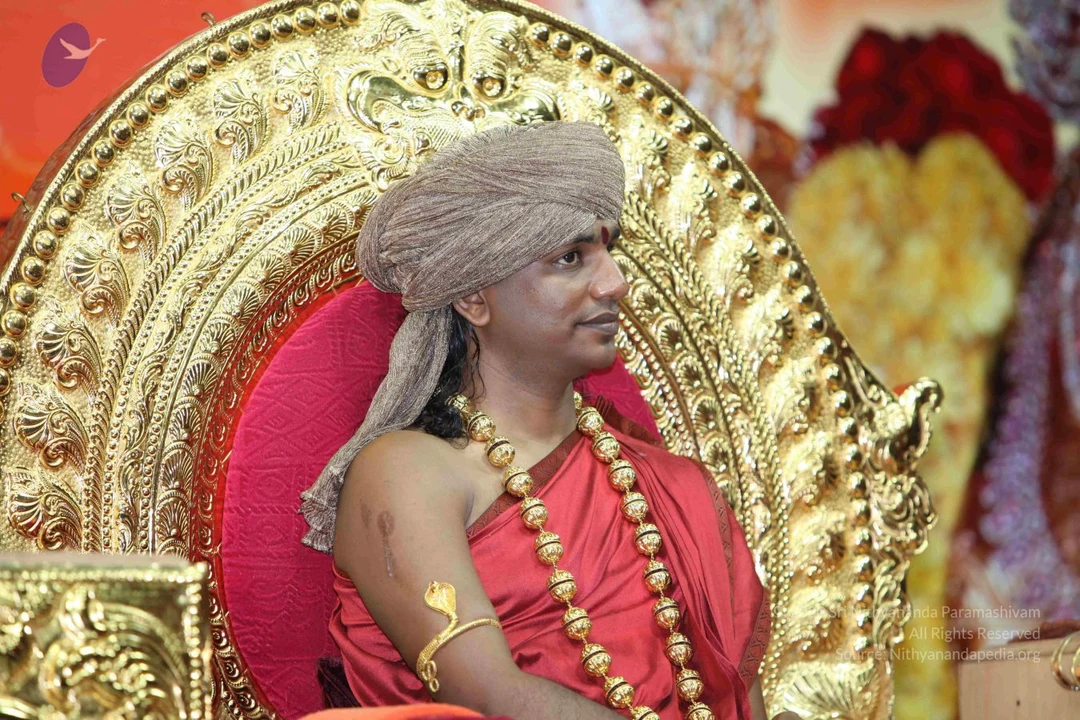
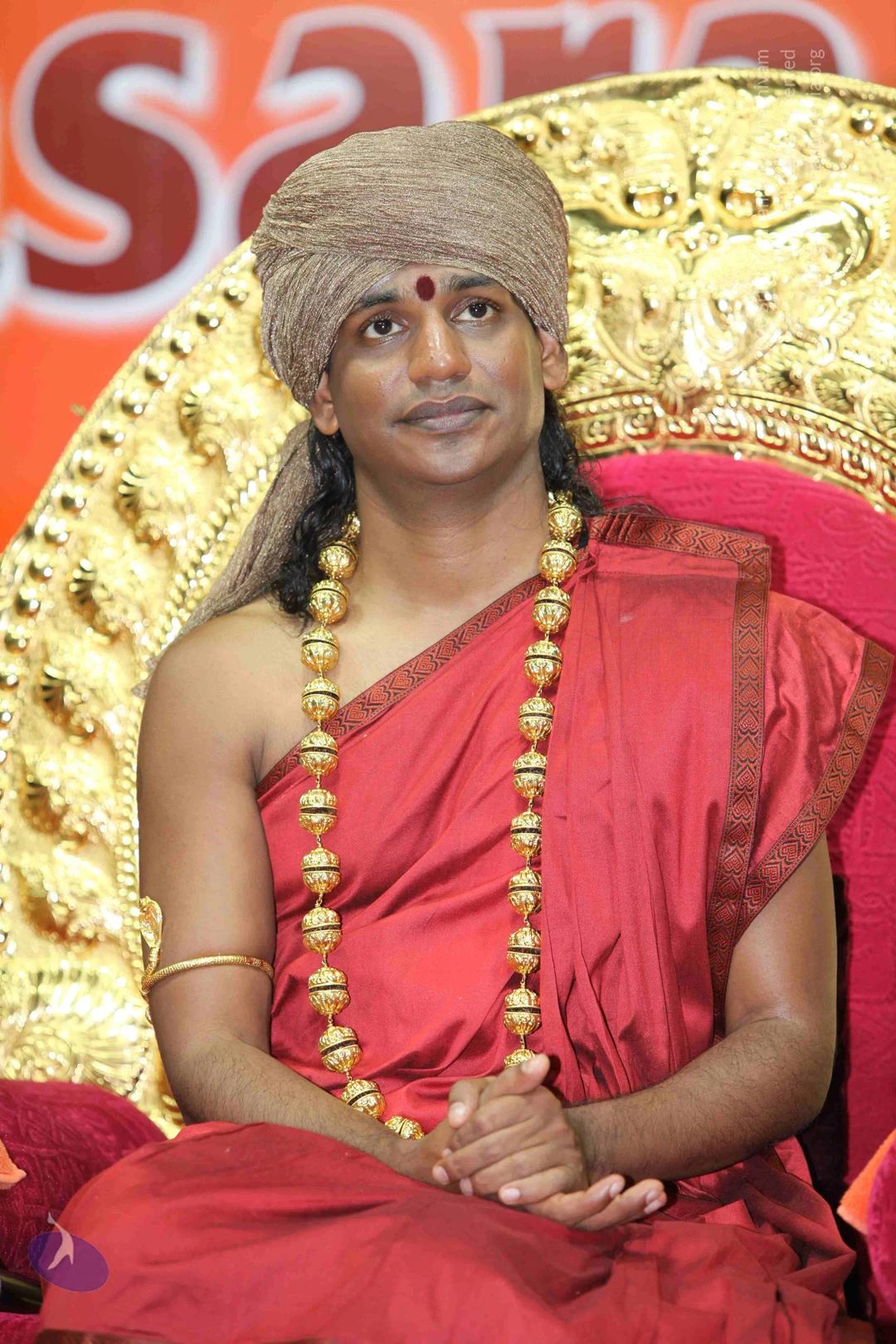
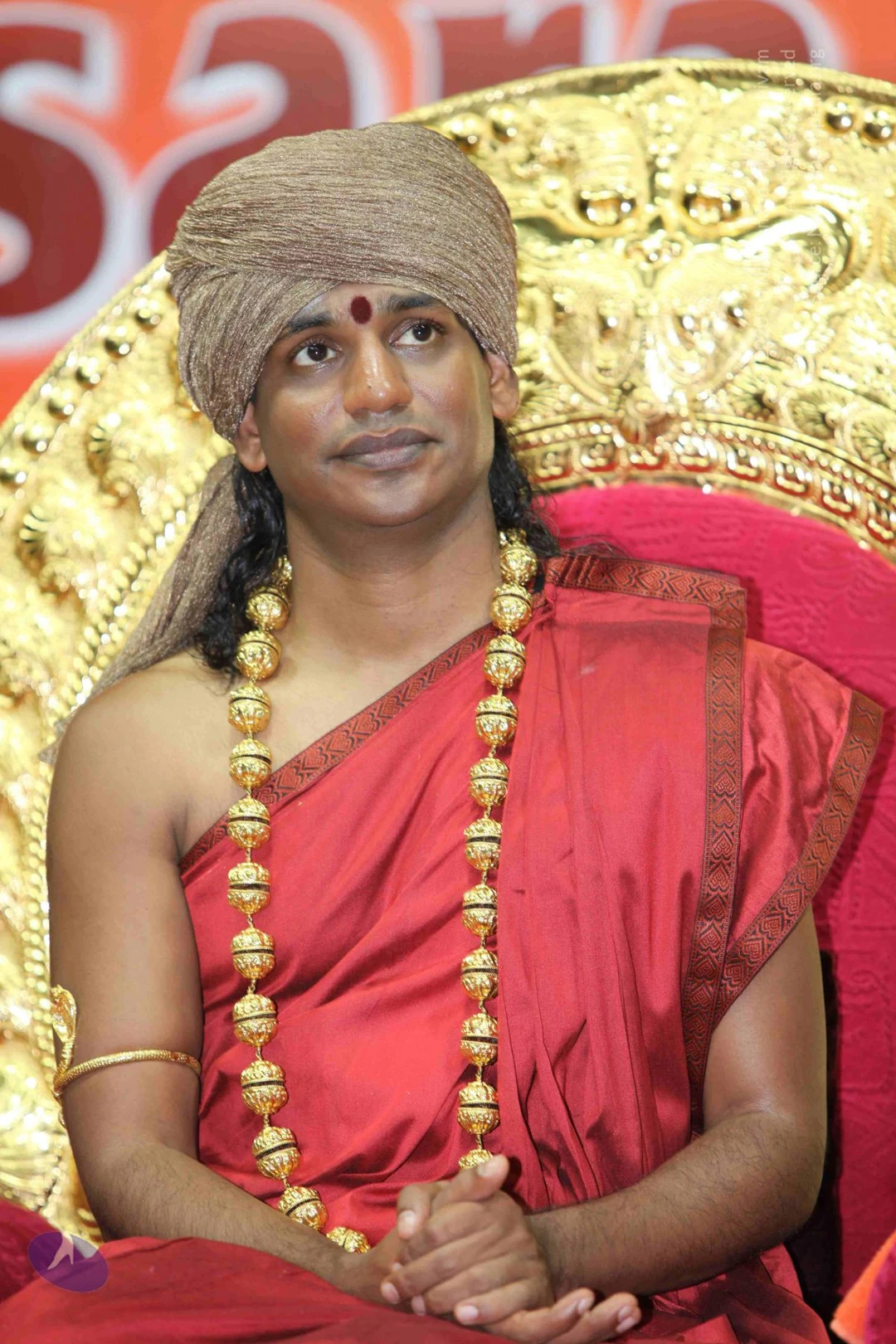
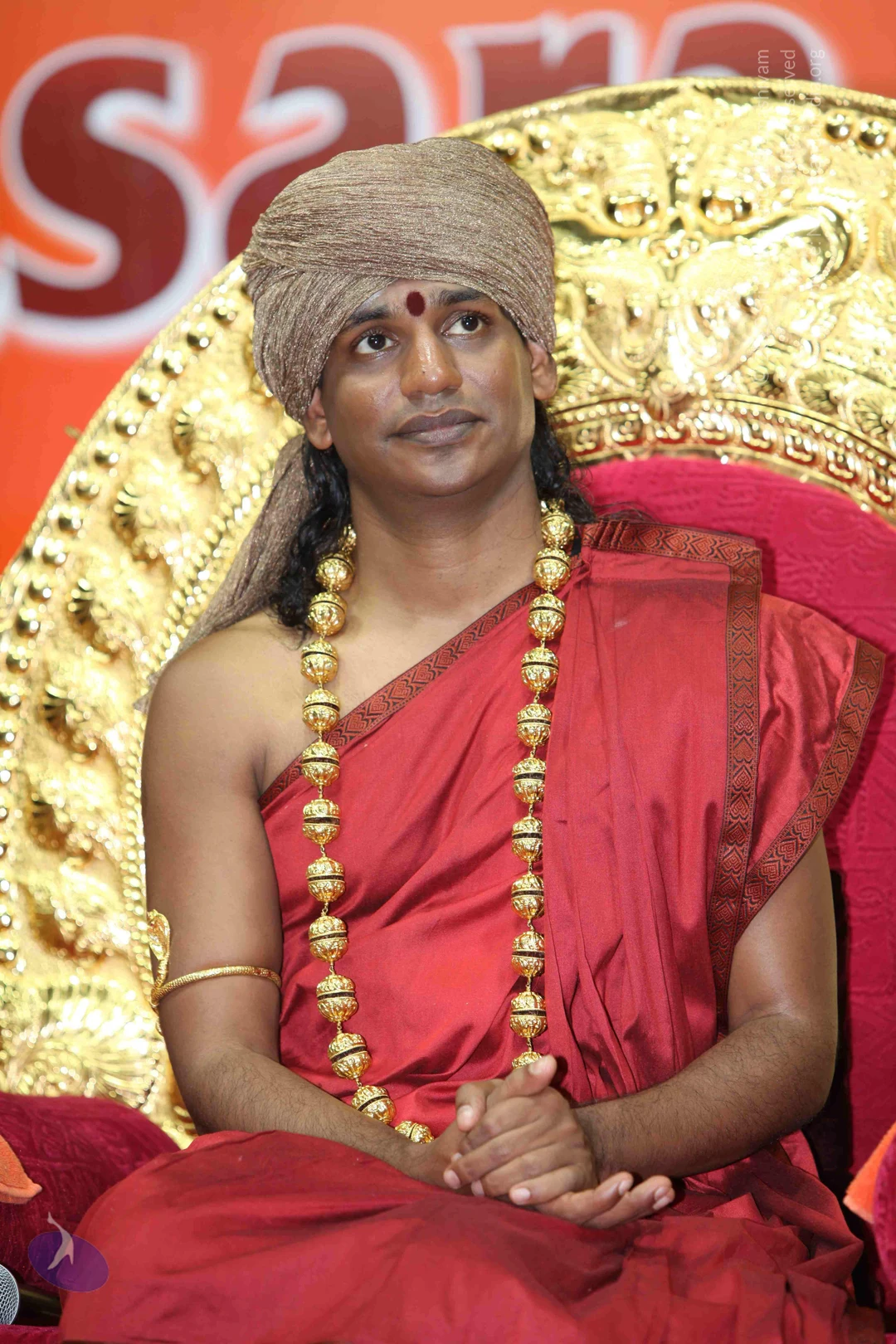
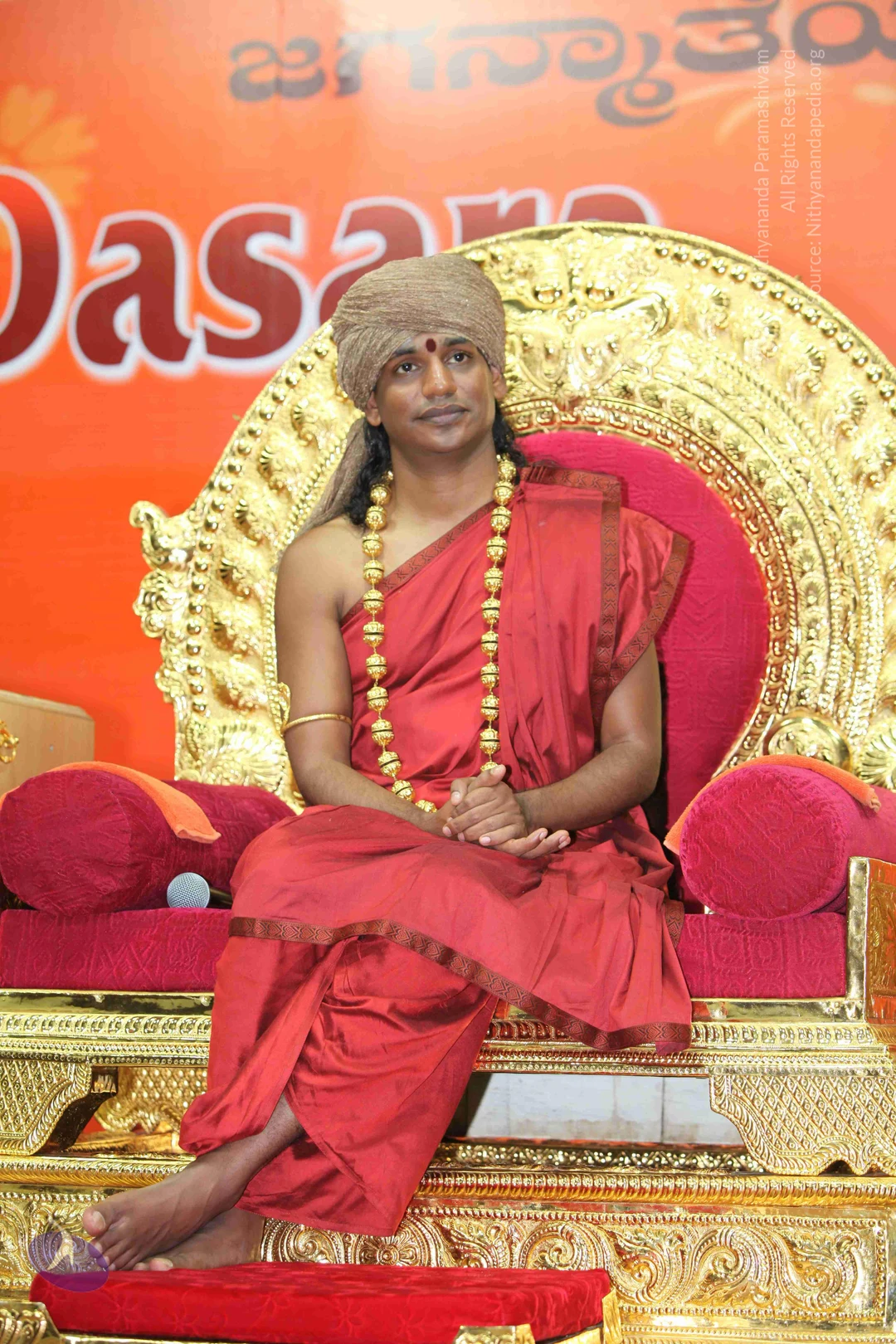
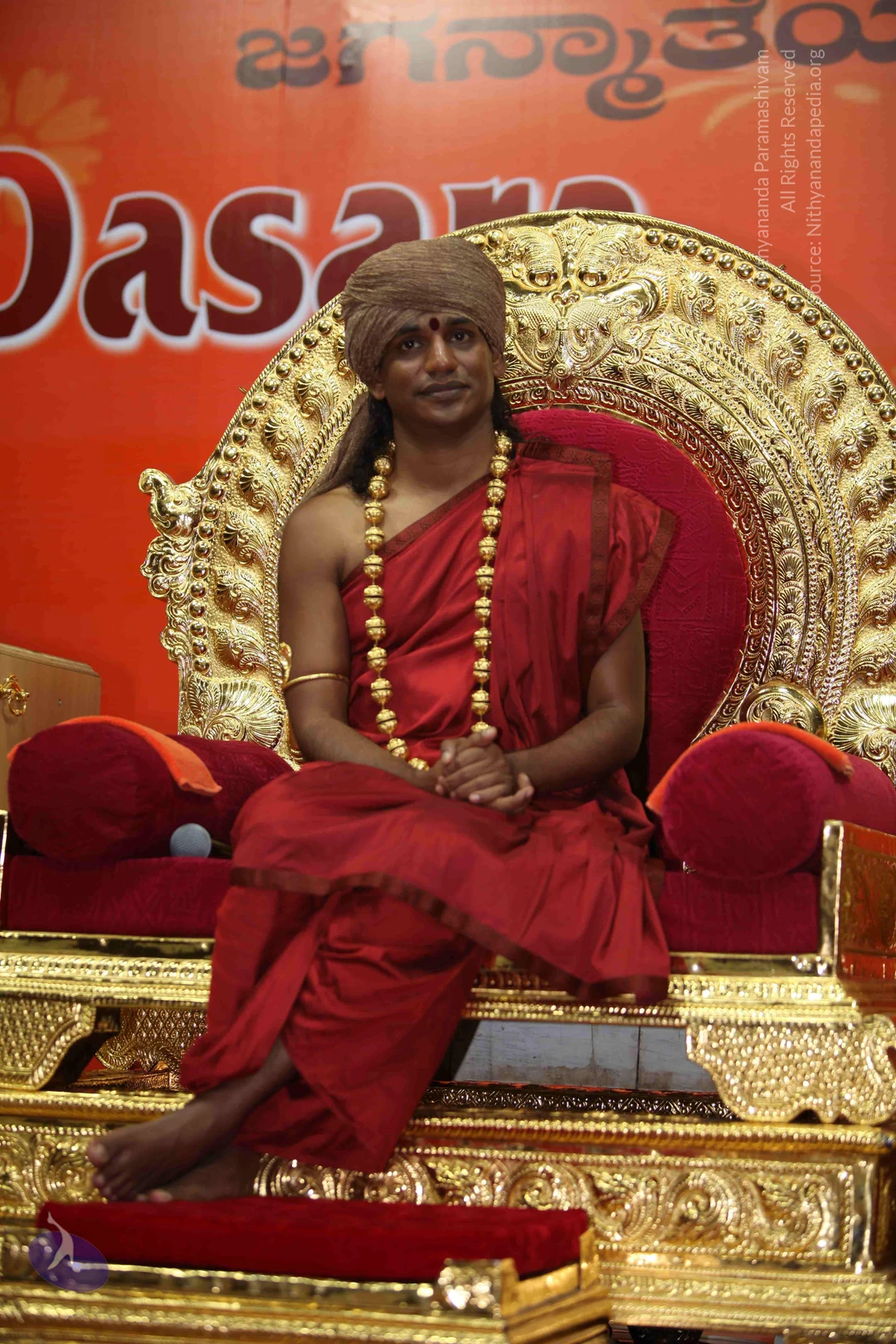
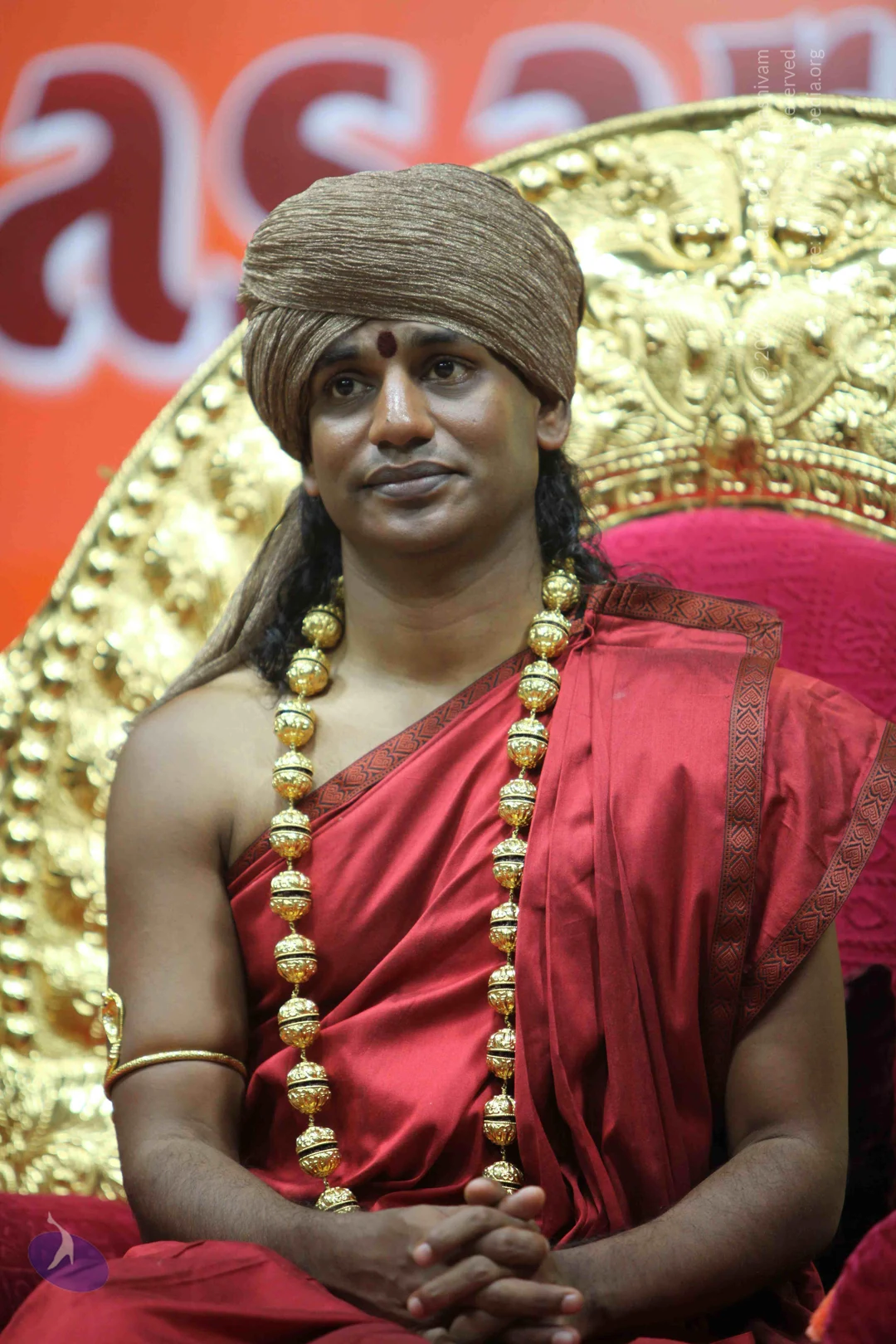
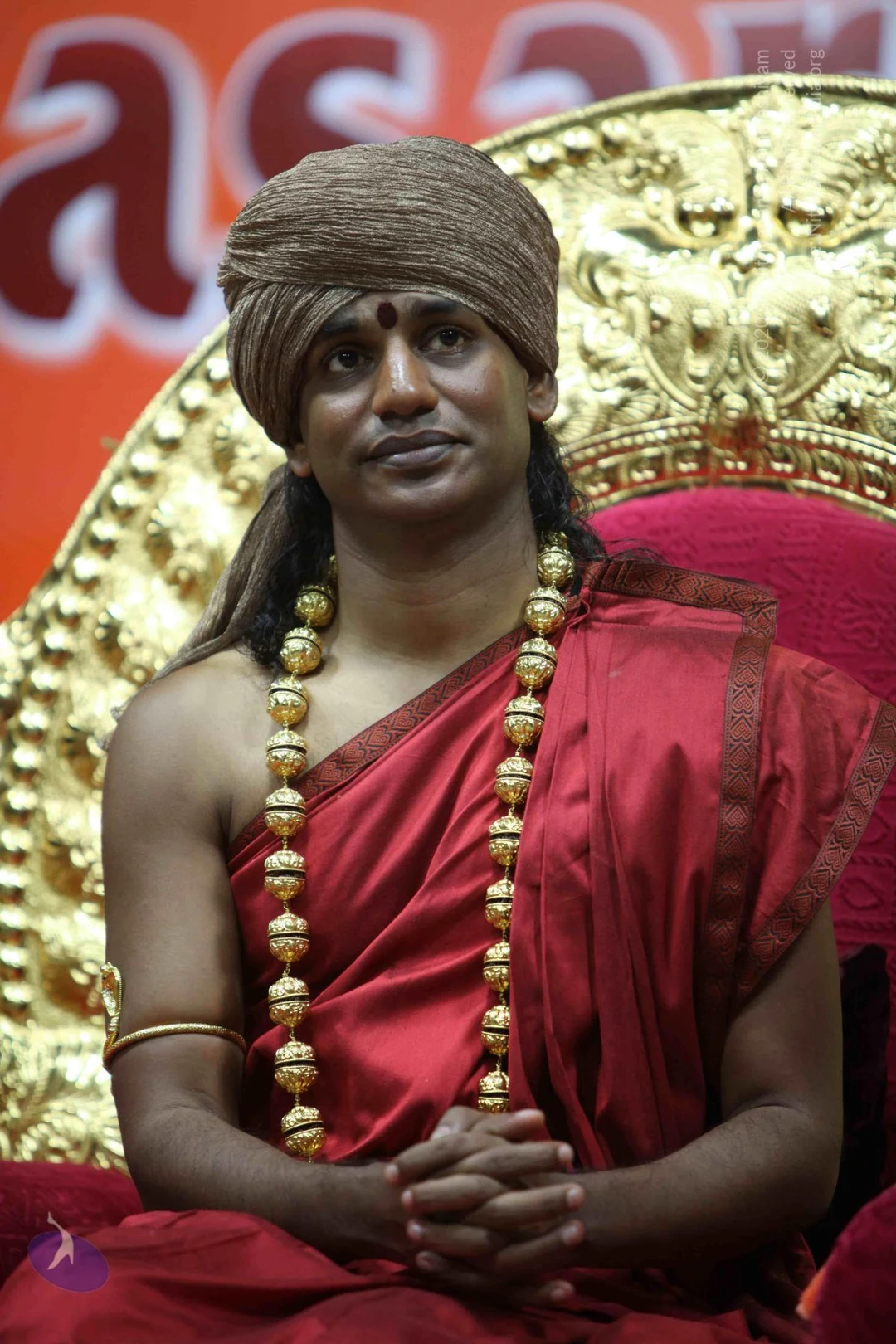
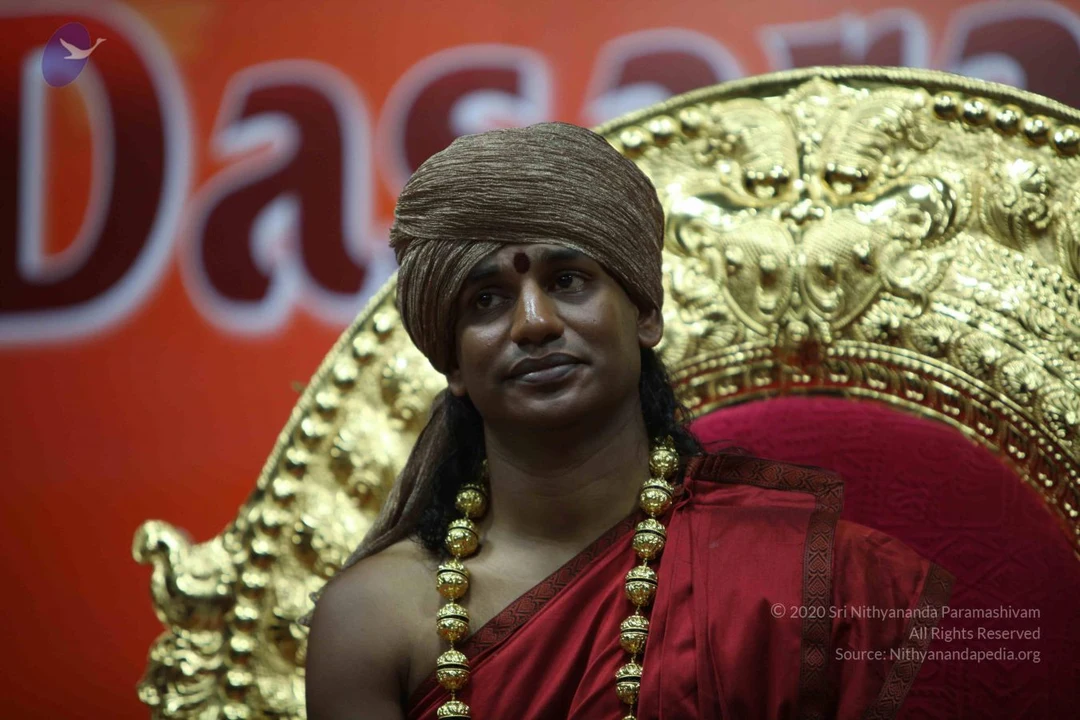
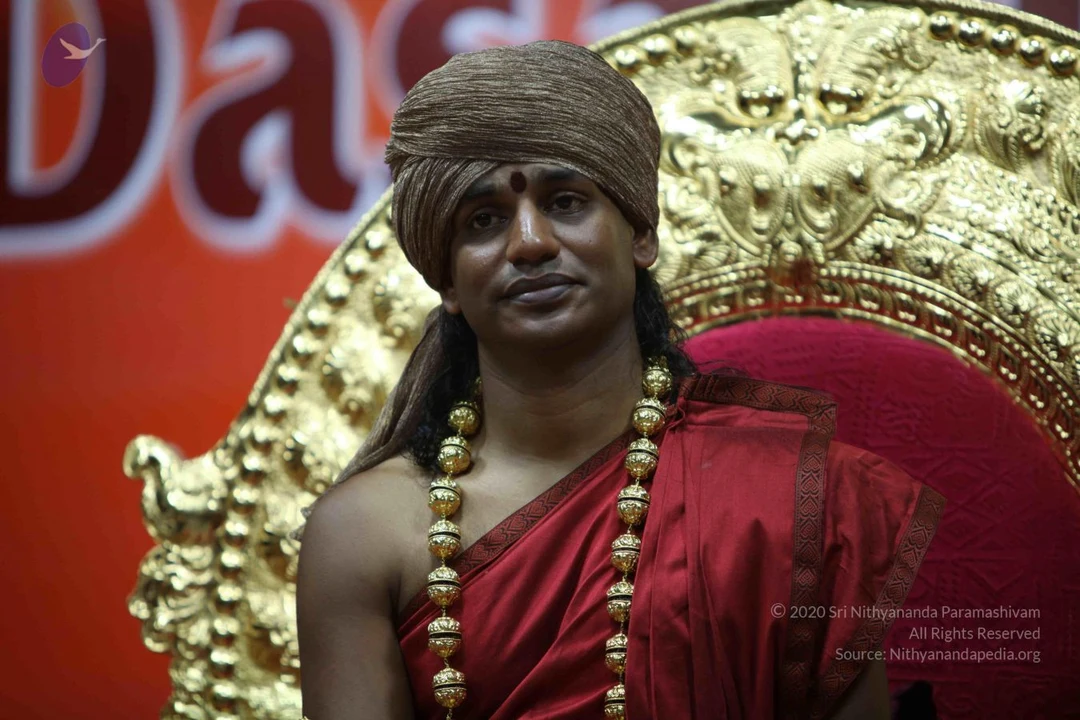
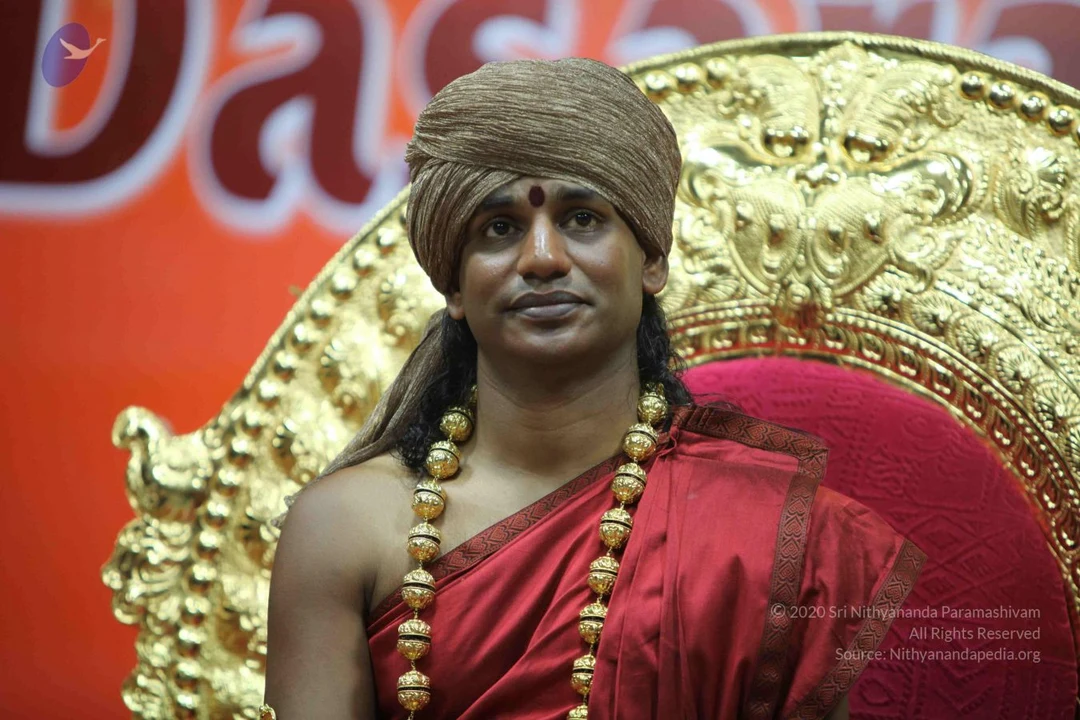
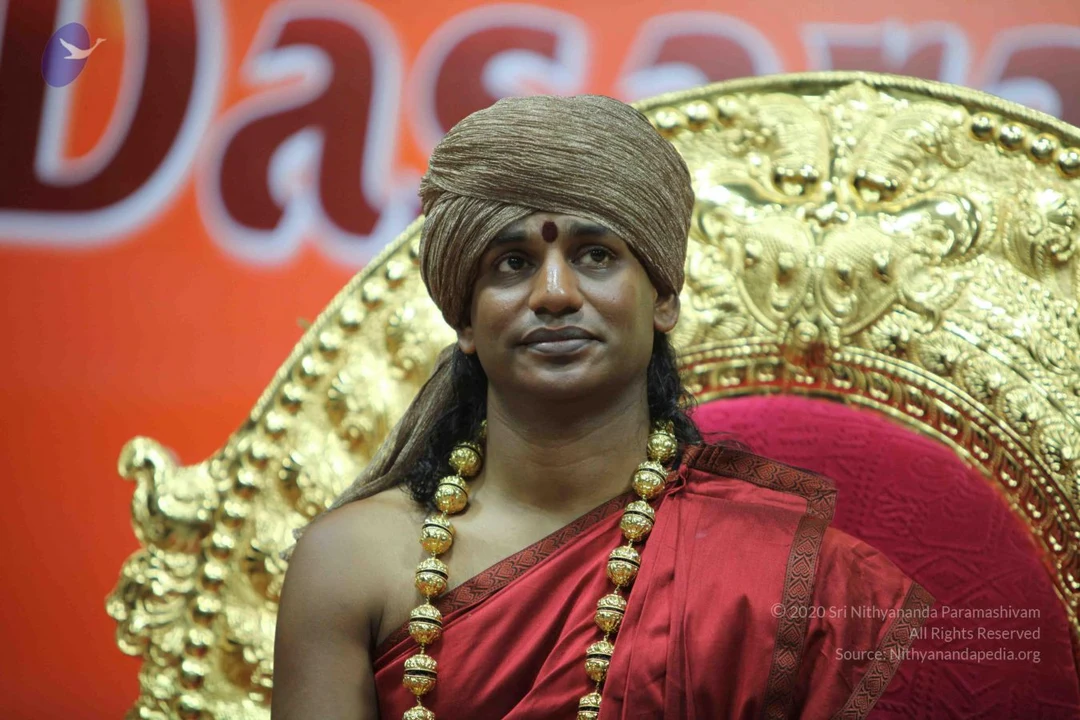
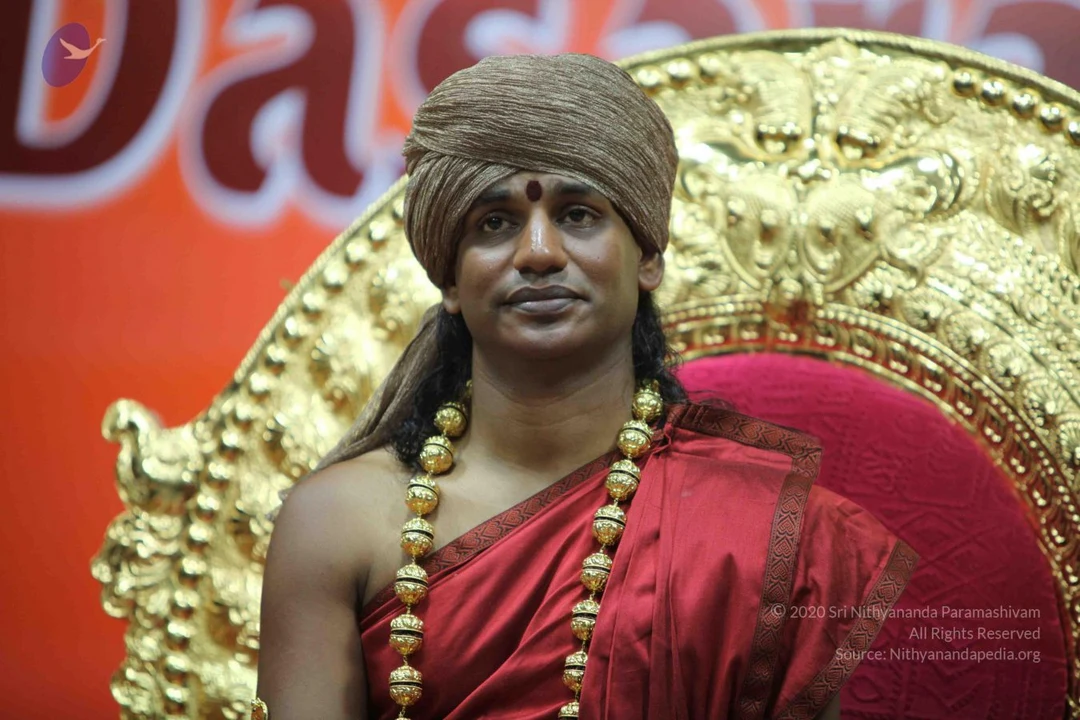
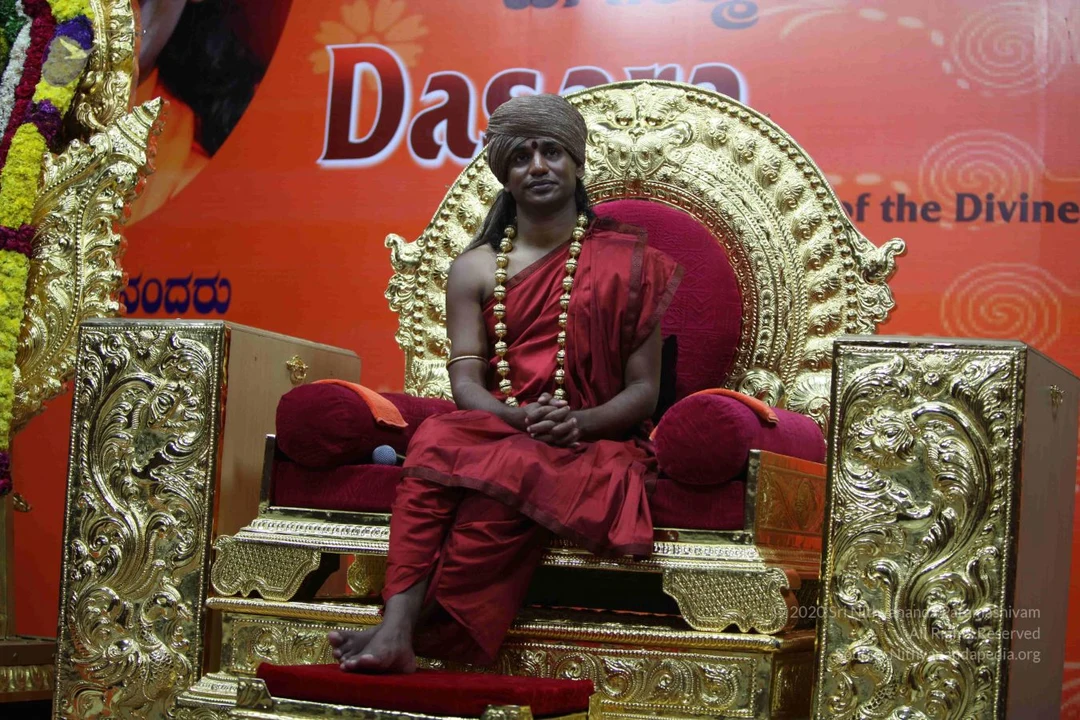
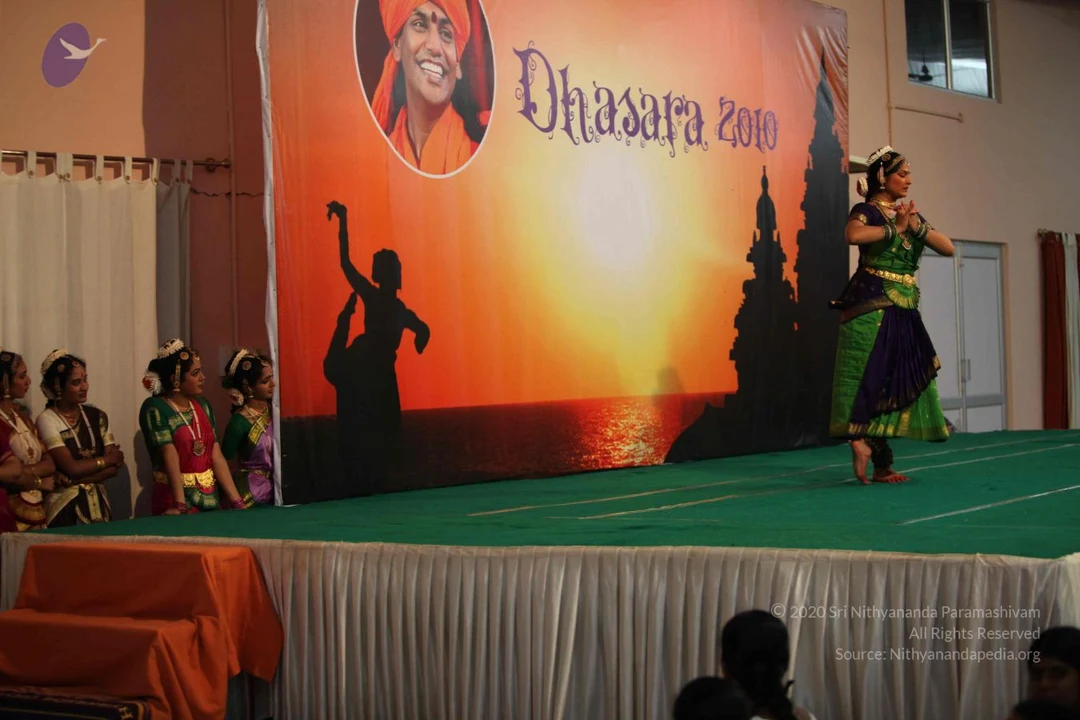
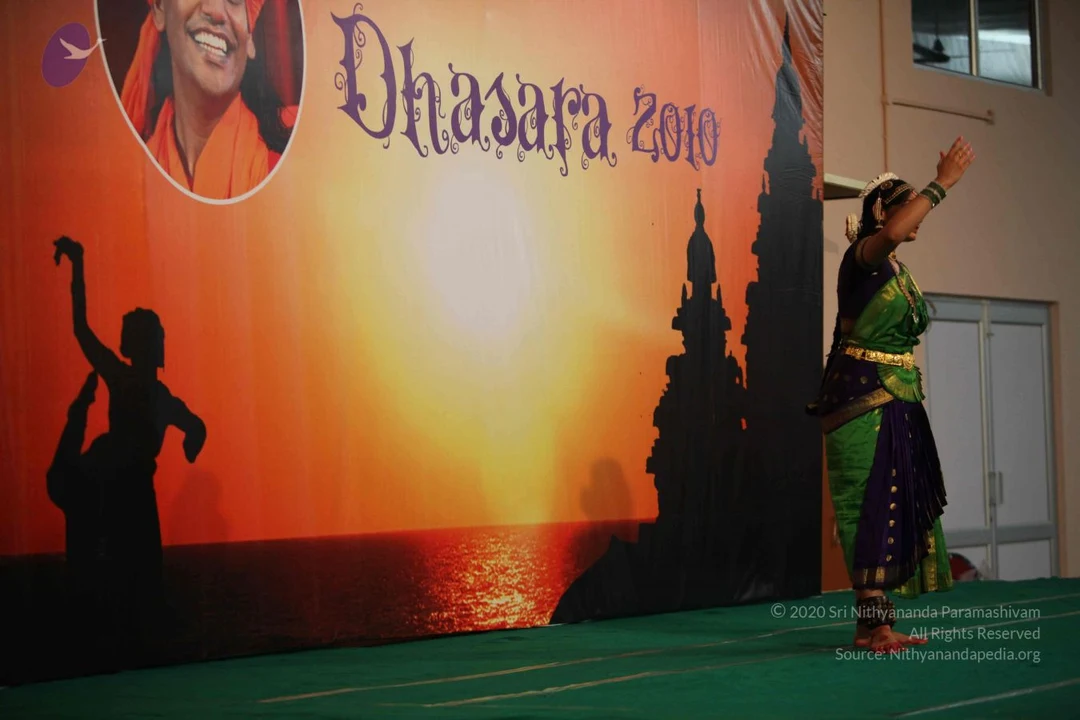
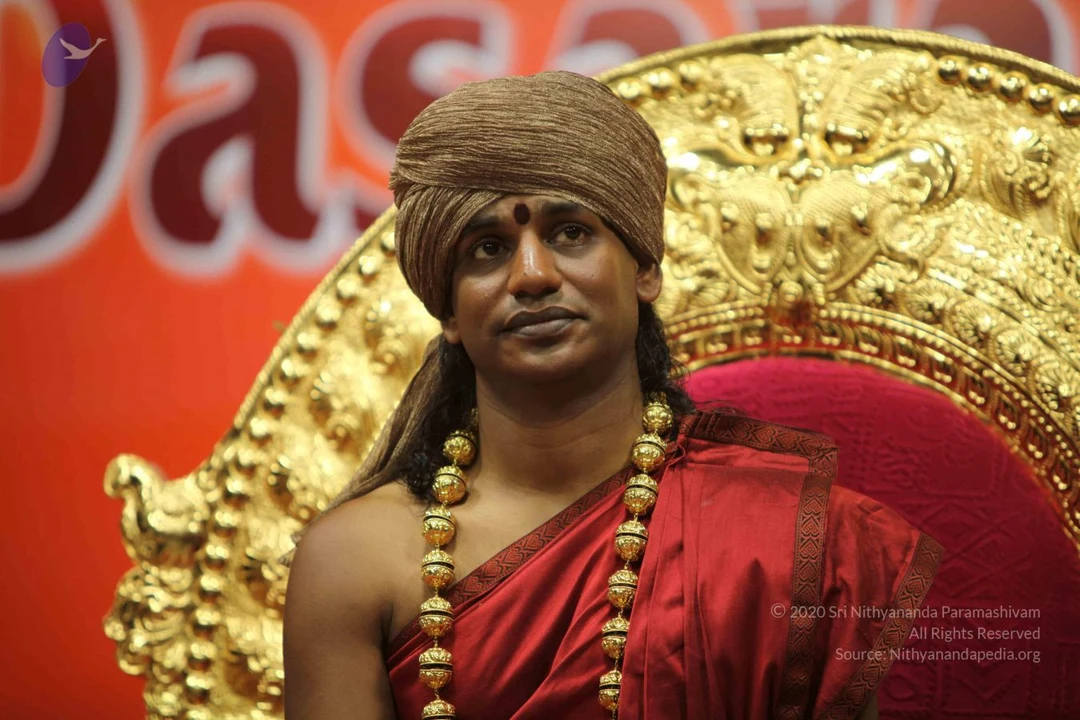
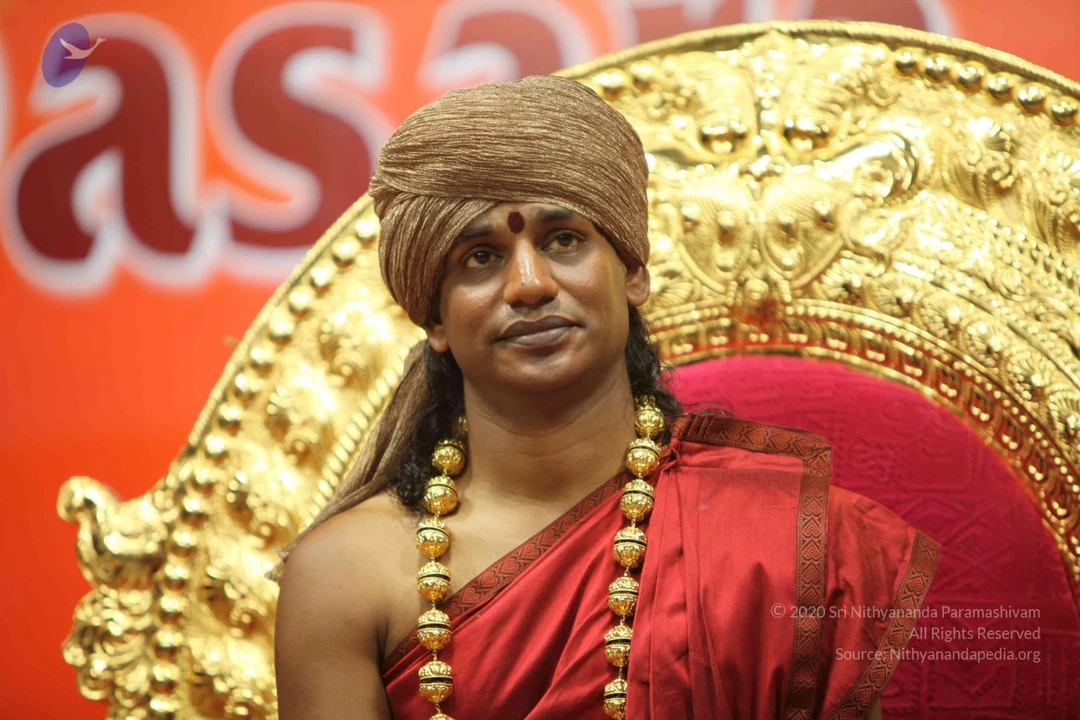
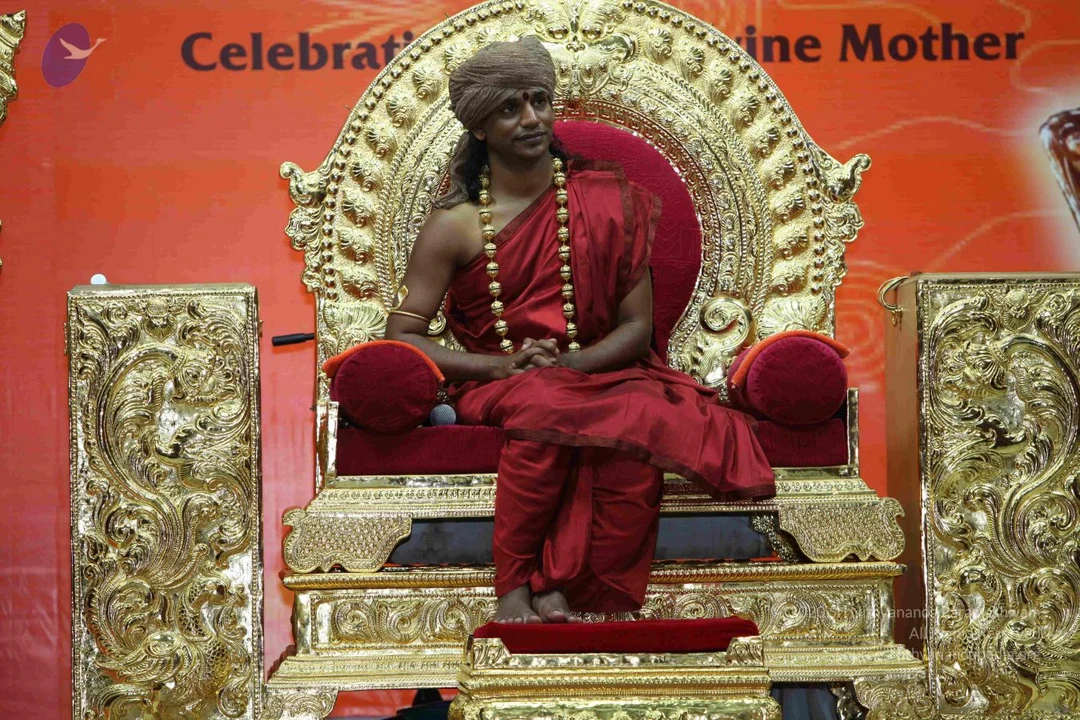
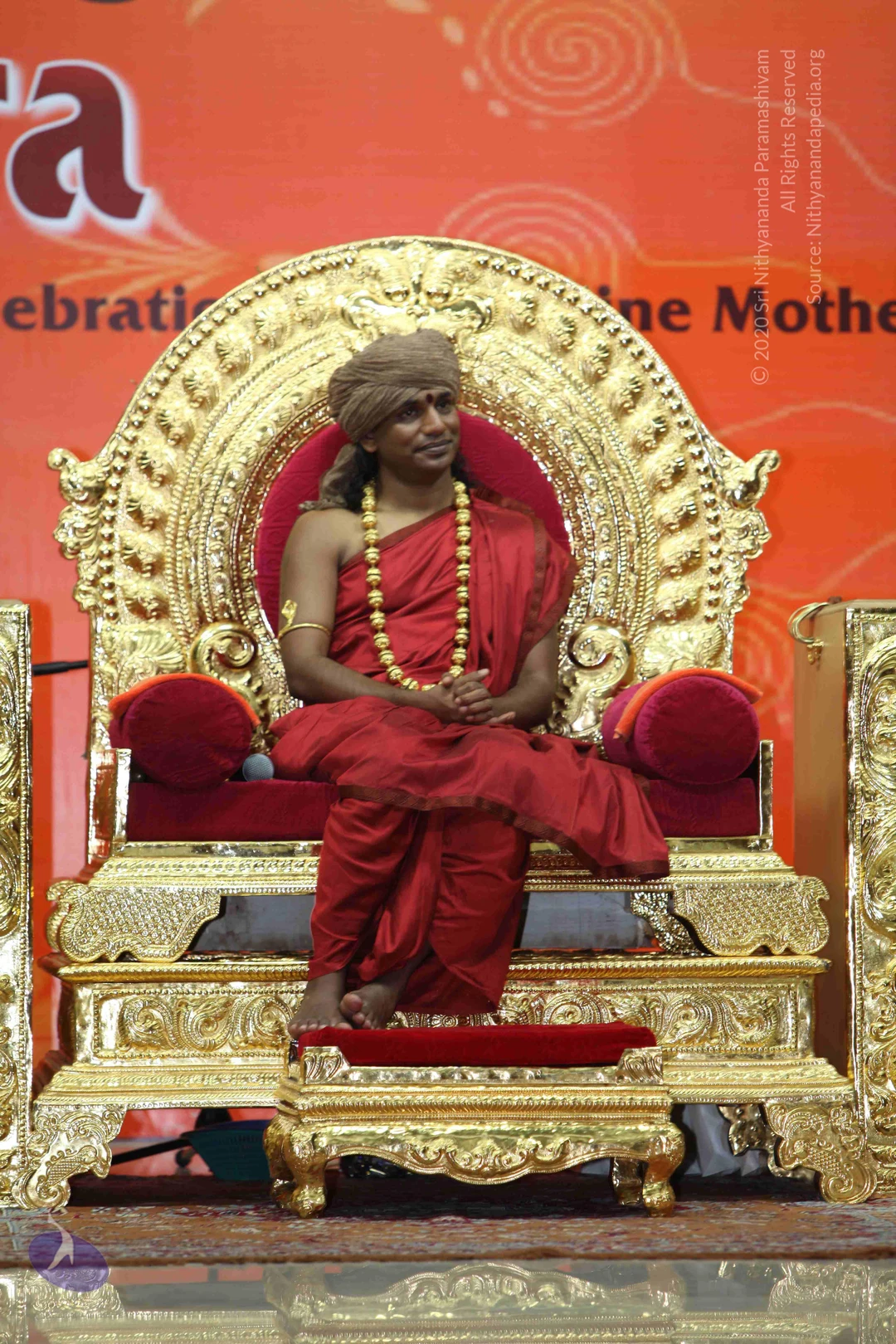
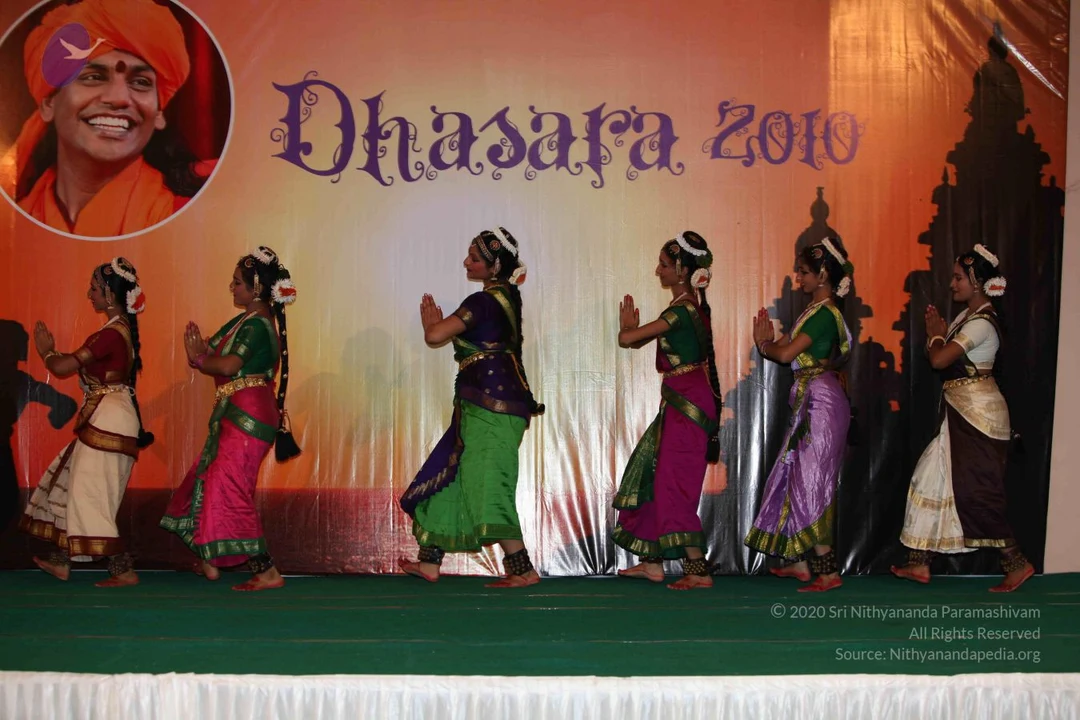
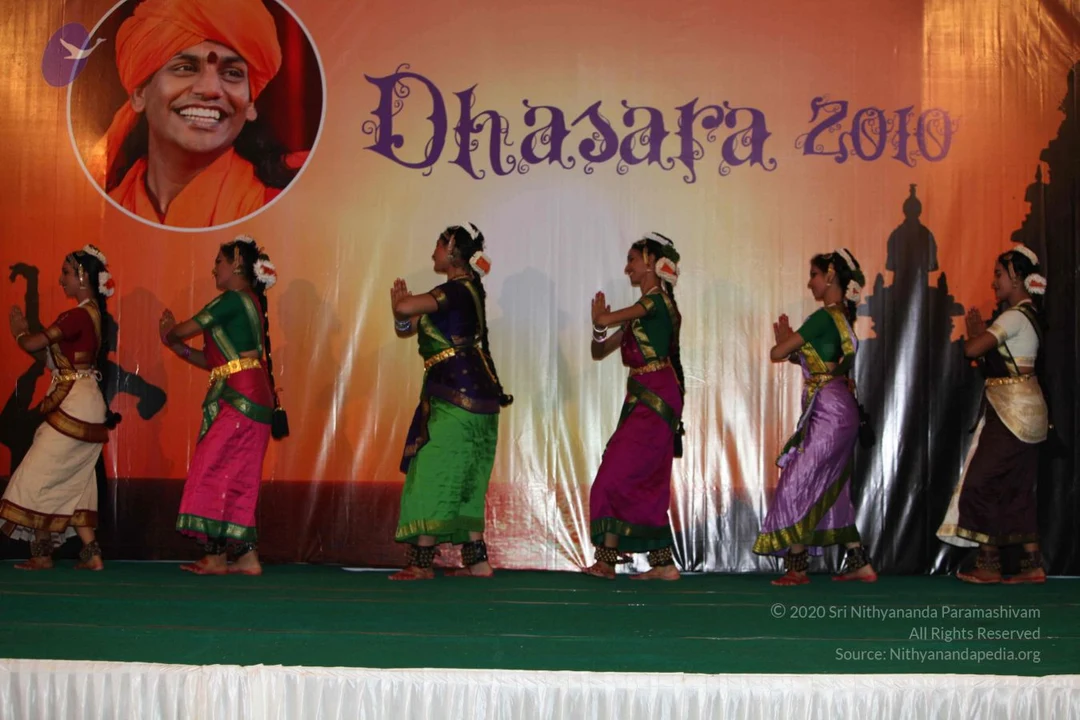
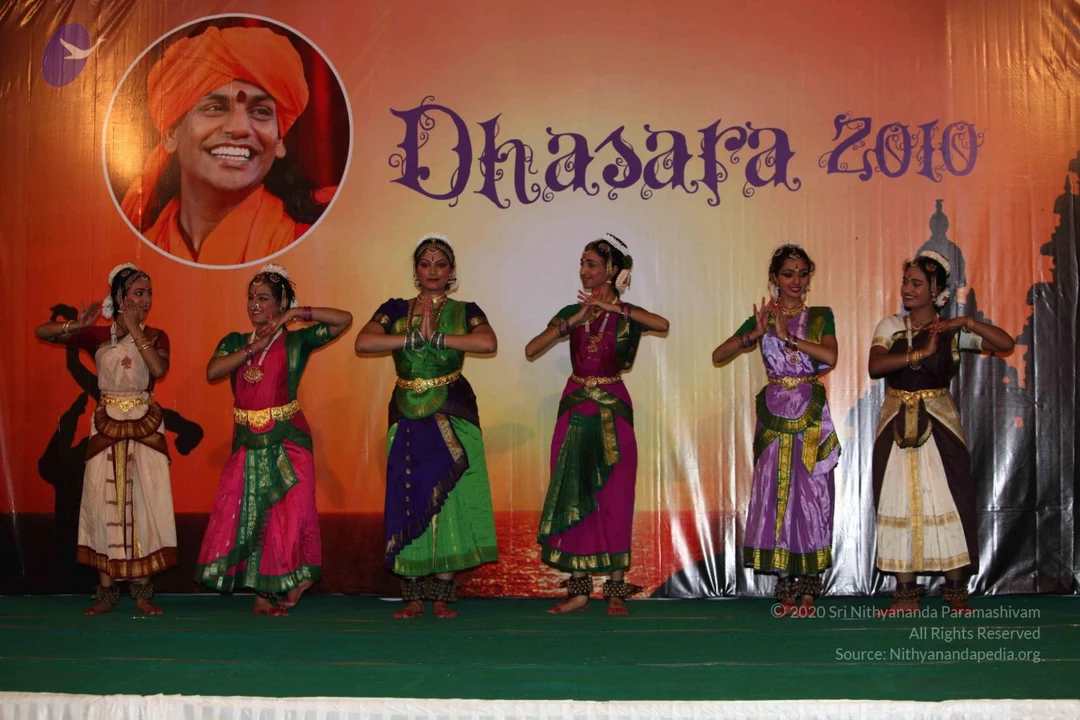
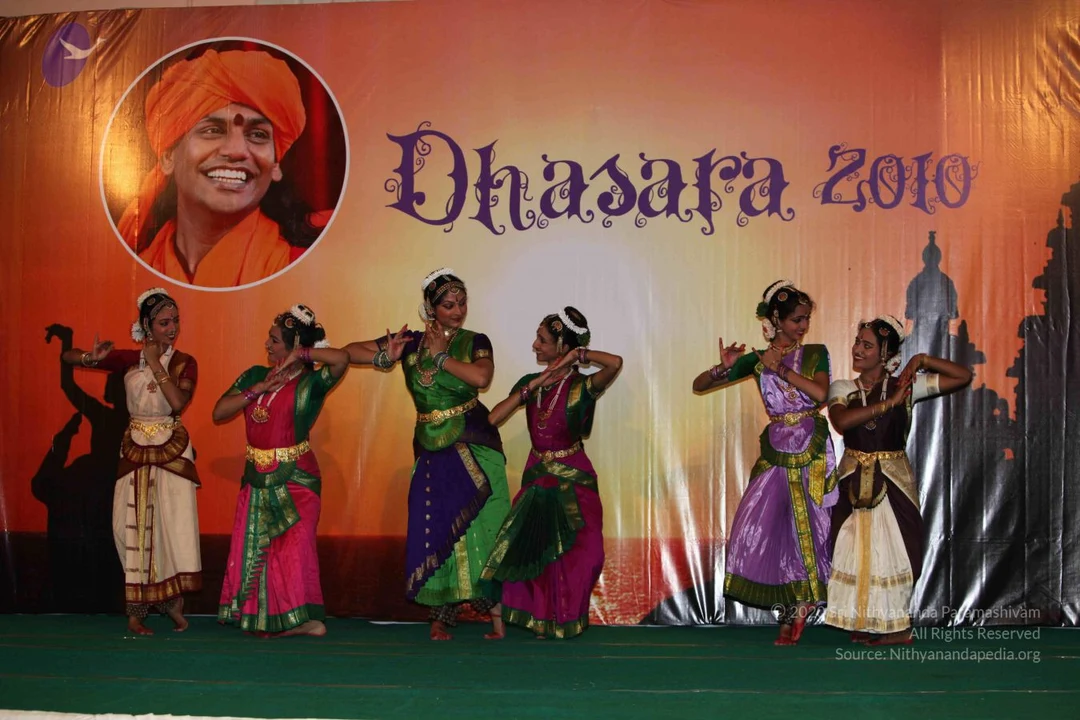
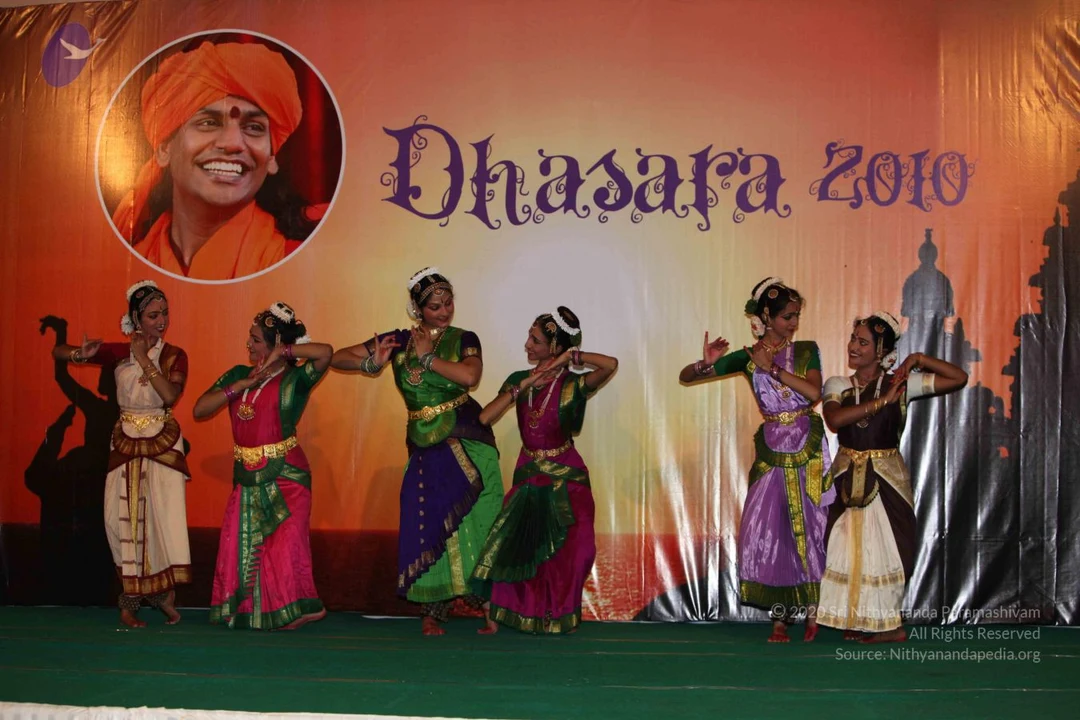
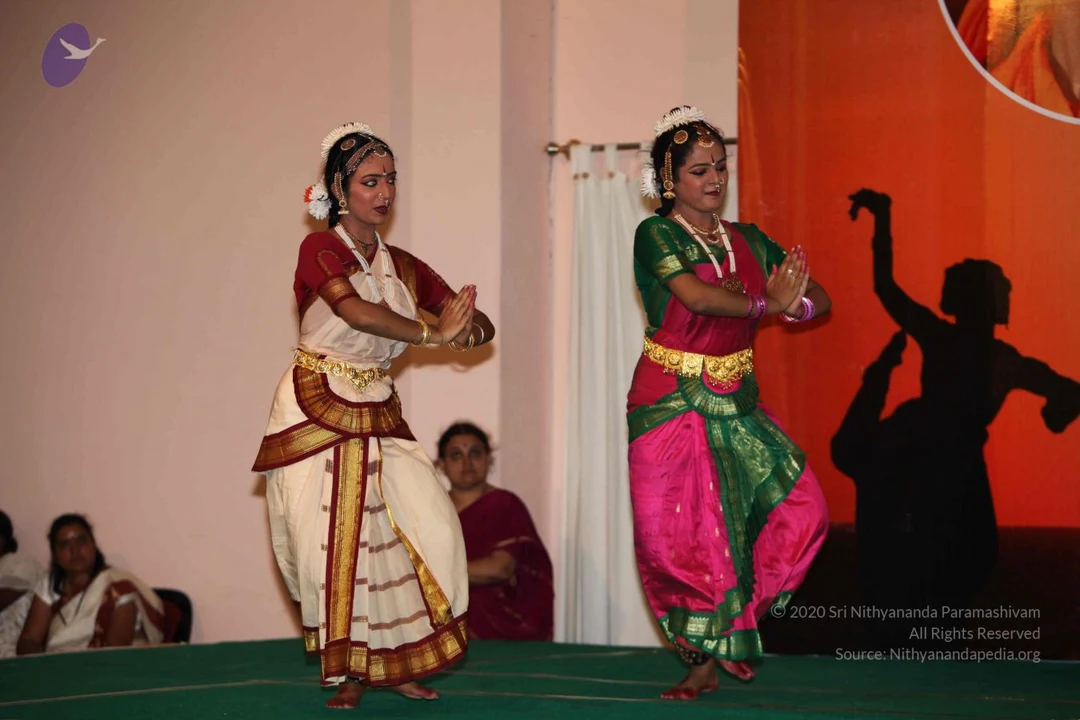
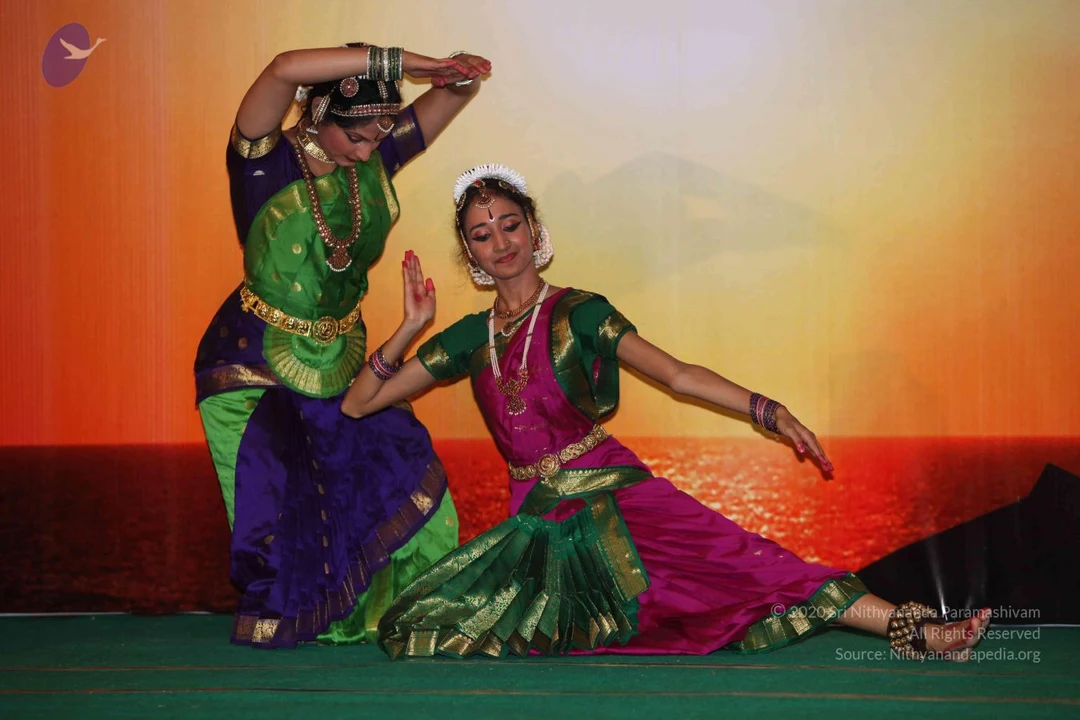
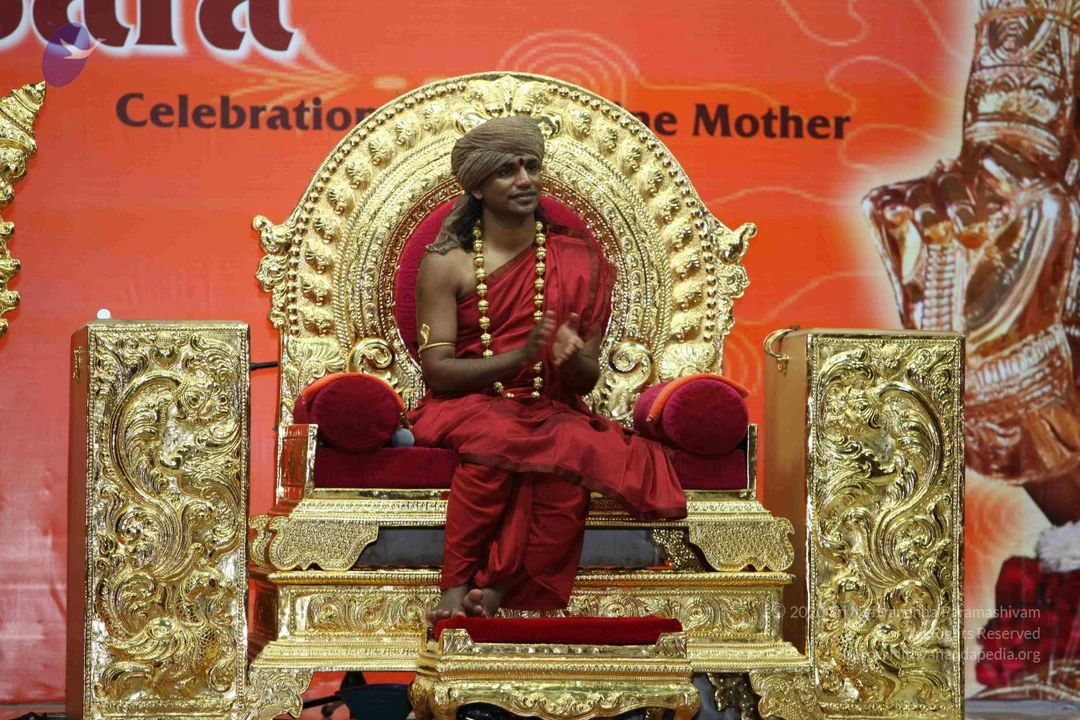
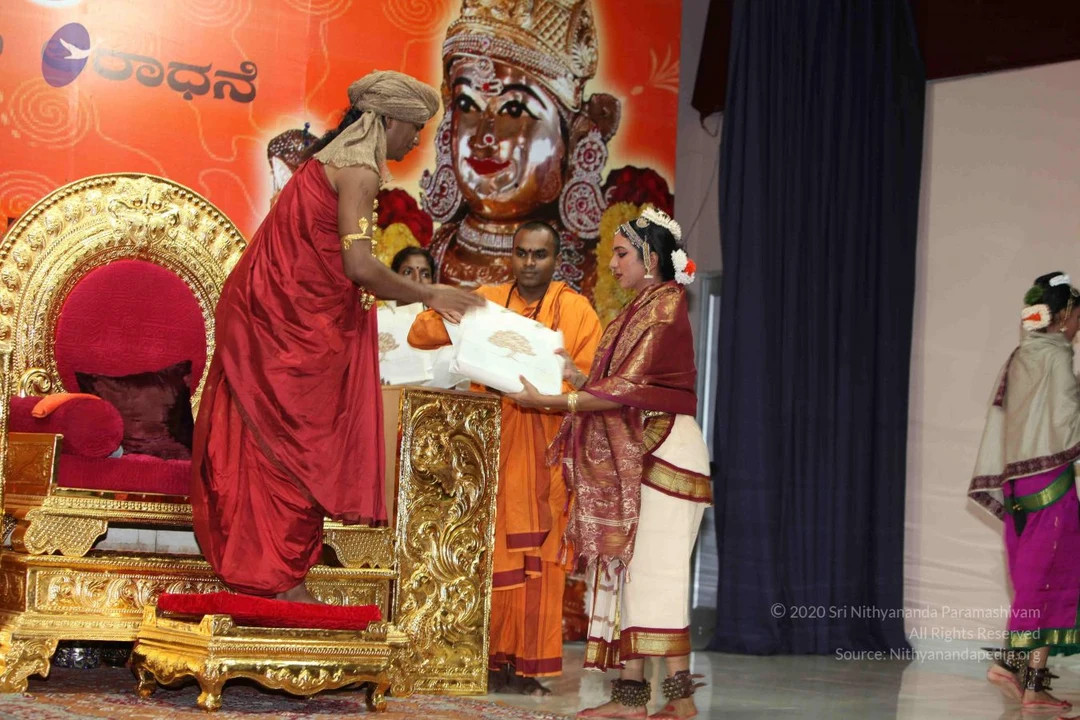
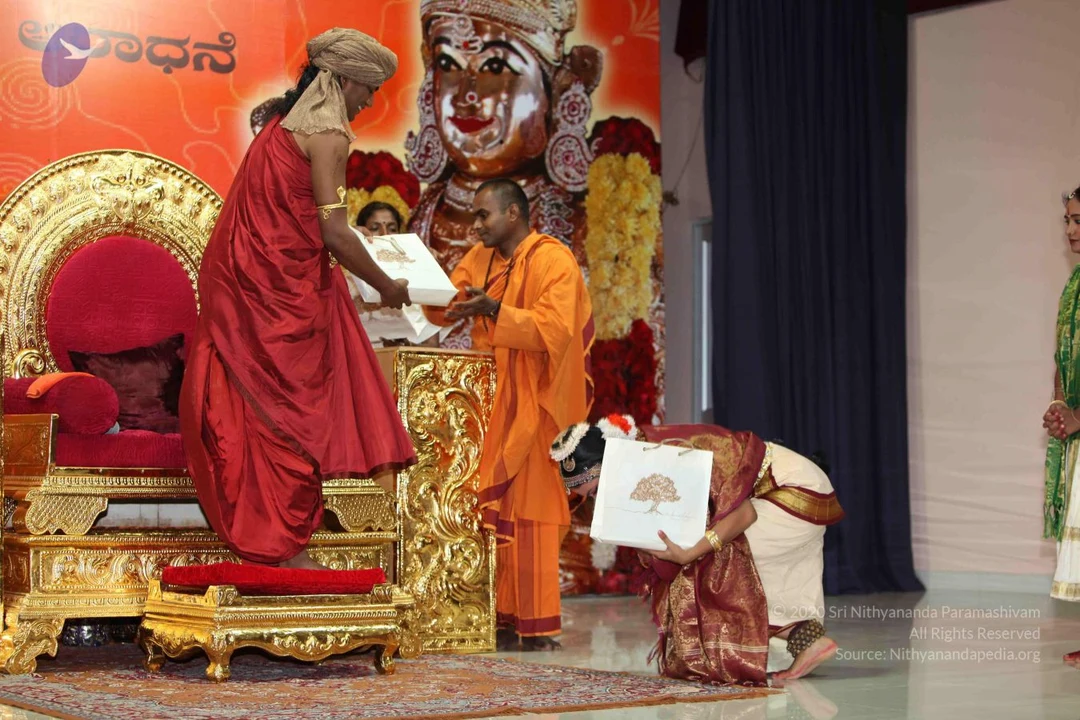
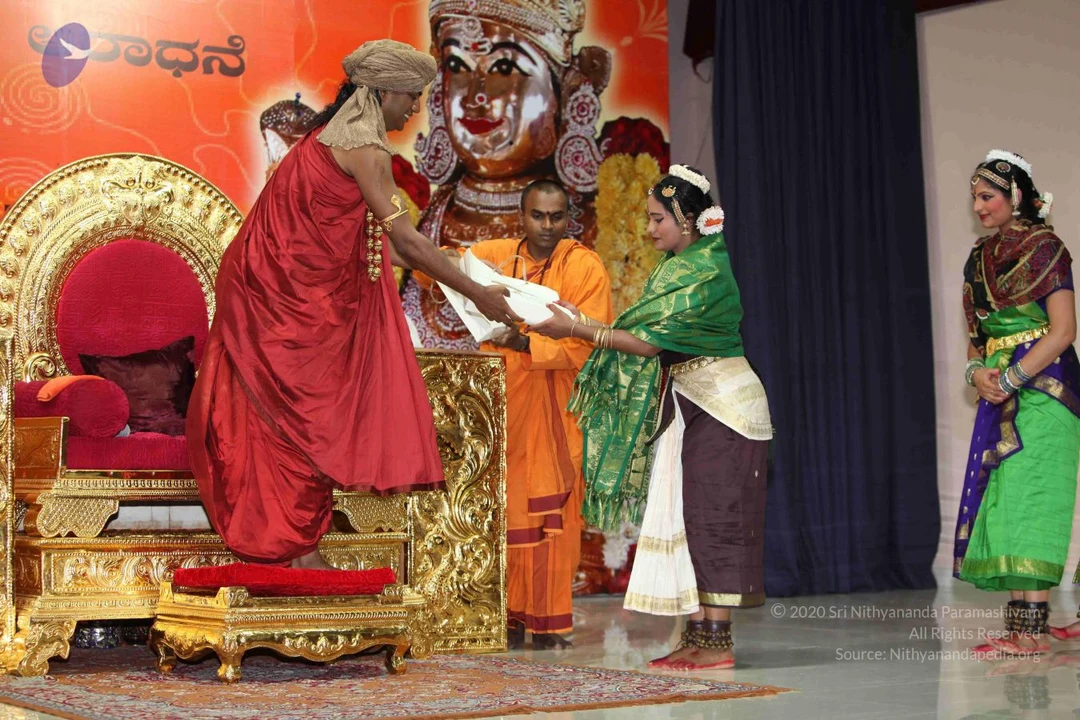
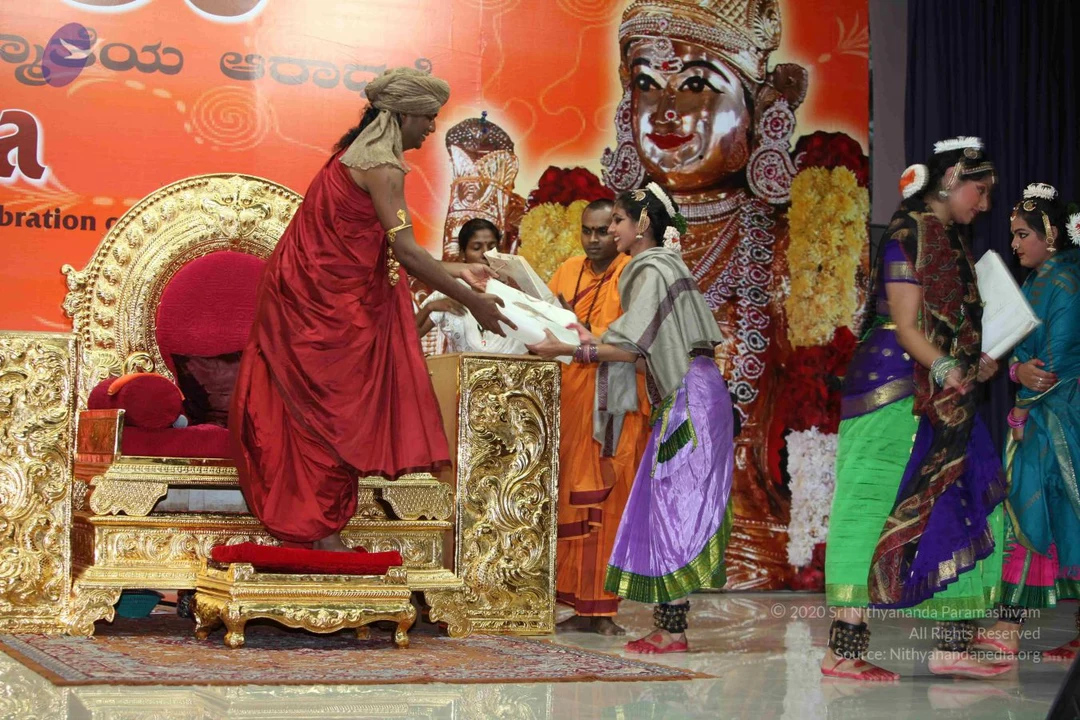
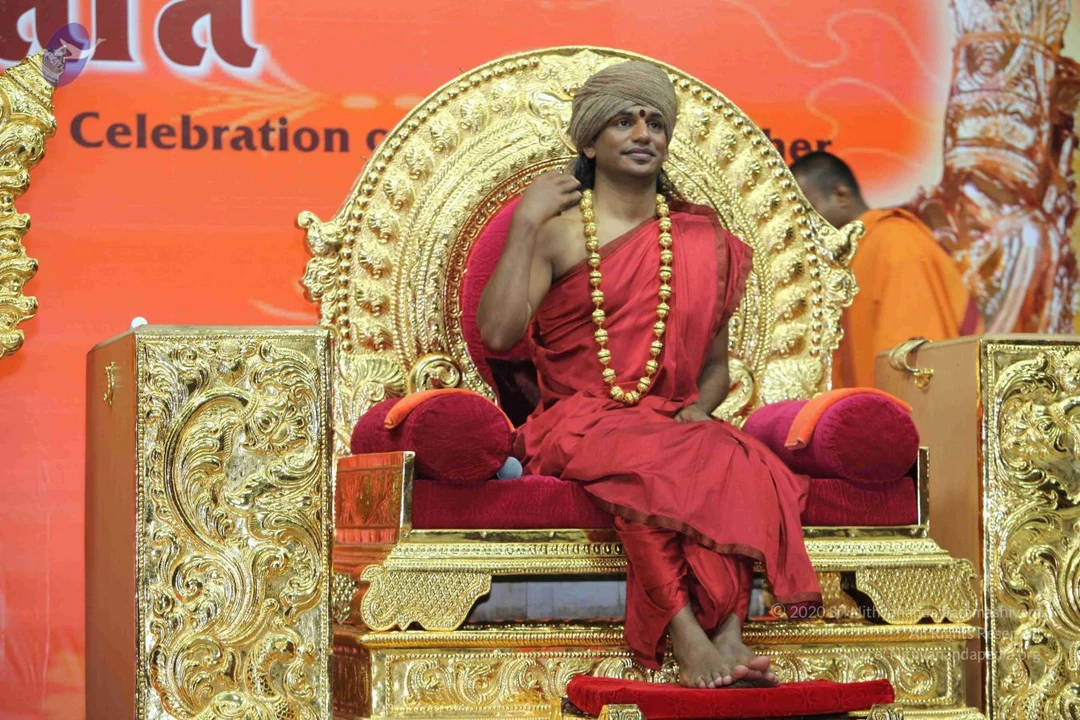
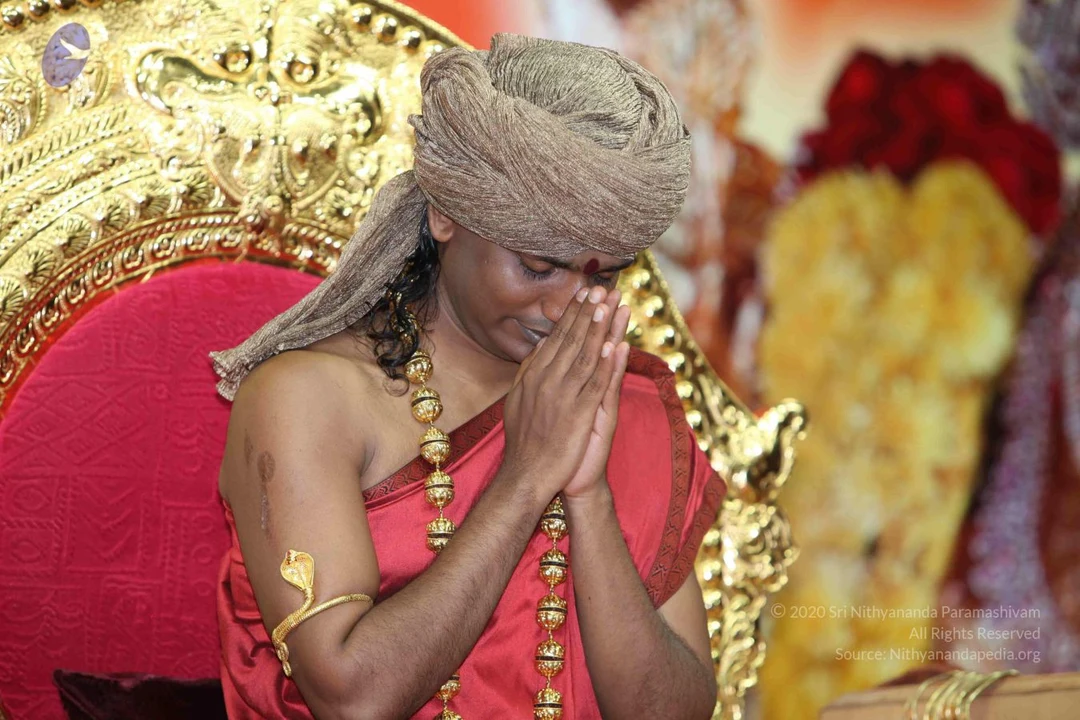
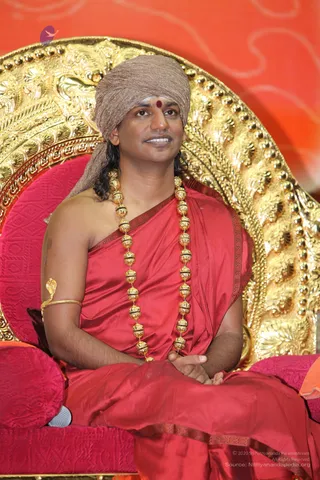
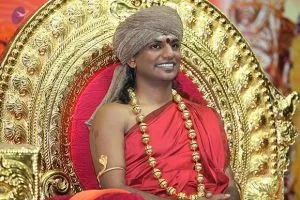
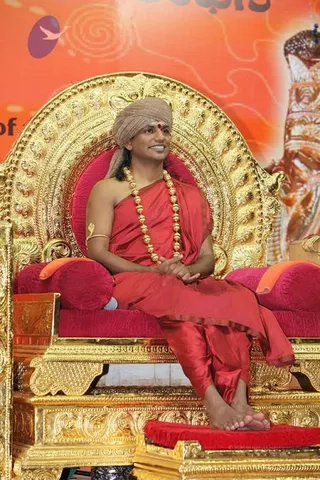
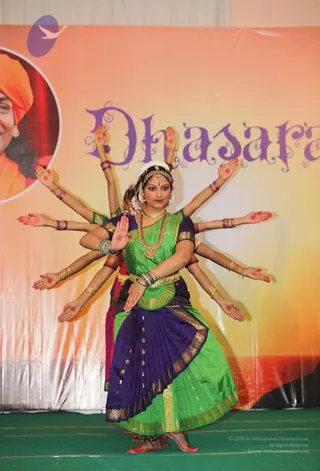
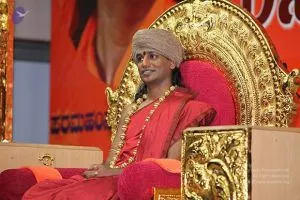
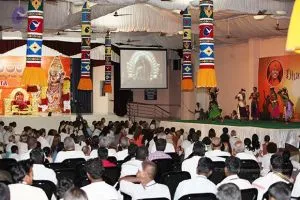
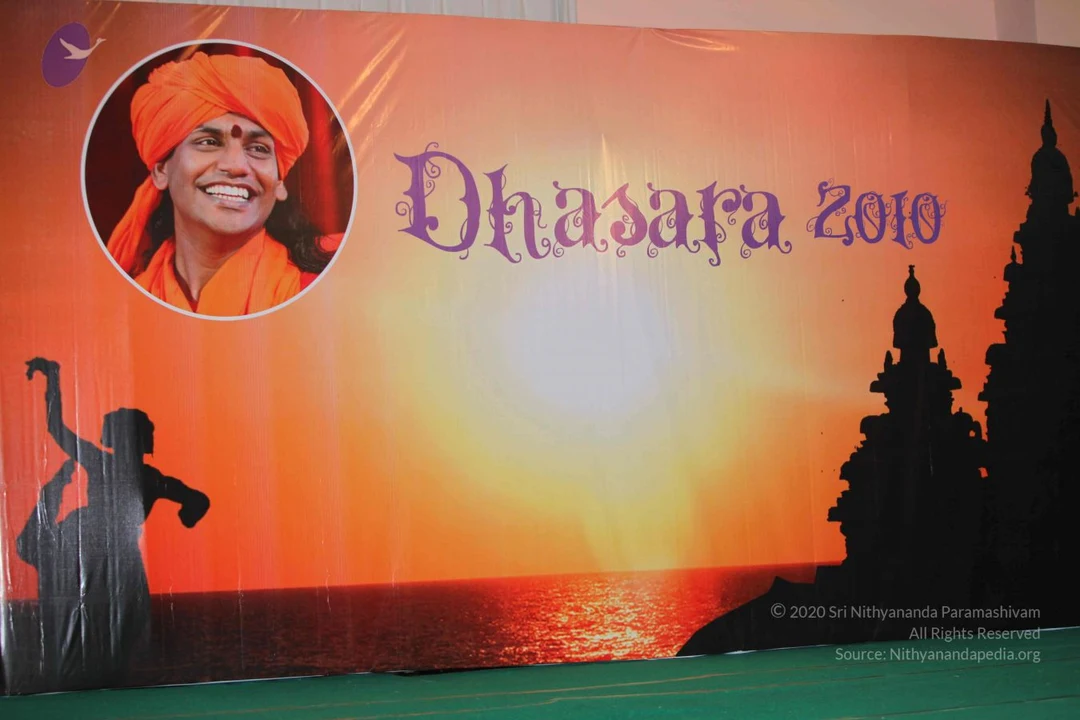
A seated man in a red-orange robe and red dhoti sits on an ornate gold throne with red cushions, smiling with hands clasped in his lap. He wears a tan turban with a red tilak on his forehead and a long gold bead necklace, plus a gold armlet on his upper arm. Behind the throne is an orange backdrop with a partially visible decorative figure. Only one person is physically present.A dancer performs on a green stage mat in front of a backdrop reading "Dhasara" in purple script. She wears a green and purple silk sari with gold border, gold necklaces, a white floral hair ornament and bangles, and her hands are extended in mudra poses with several pairs of arms visible in a multi-armed stylised dance. A circular inset portrait at upper left shows a man in orange garments and an orange turban, though his appearance is not clearly established here and he is not a physical person in the scene. The setting suggests a Dasara celebration stage performance.A large indoor hall filled with seated audience members in white and light clothing, facing a raised stage. On the stage, a figure in an orange and white garment sits on a throne-like seat beside a lit deity image on a decorated altar, with flower arrangements. Tall banners with blue, red and yellow panels line the sides of the hall. A projection screen above the stage shows a graphic emblem. Performers in colourful traditional dress stand at the right side of the stage. The audience is dense, with many rows of white-clad people.

Panchatapas

1 photoSource gallery
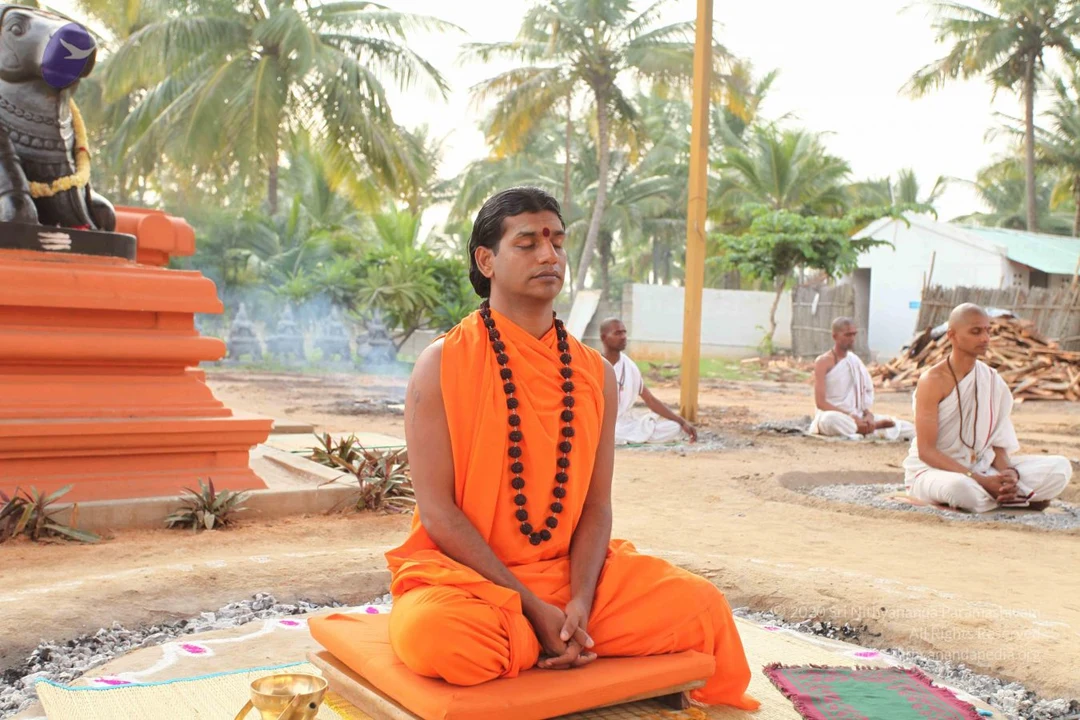
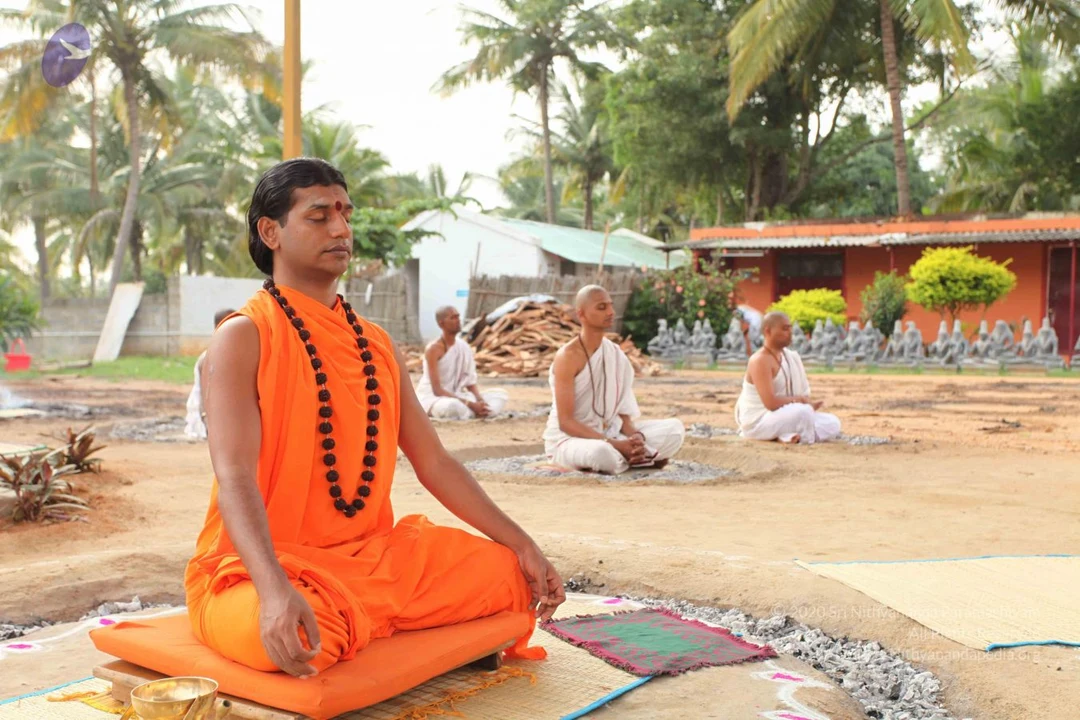
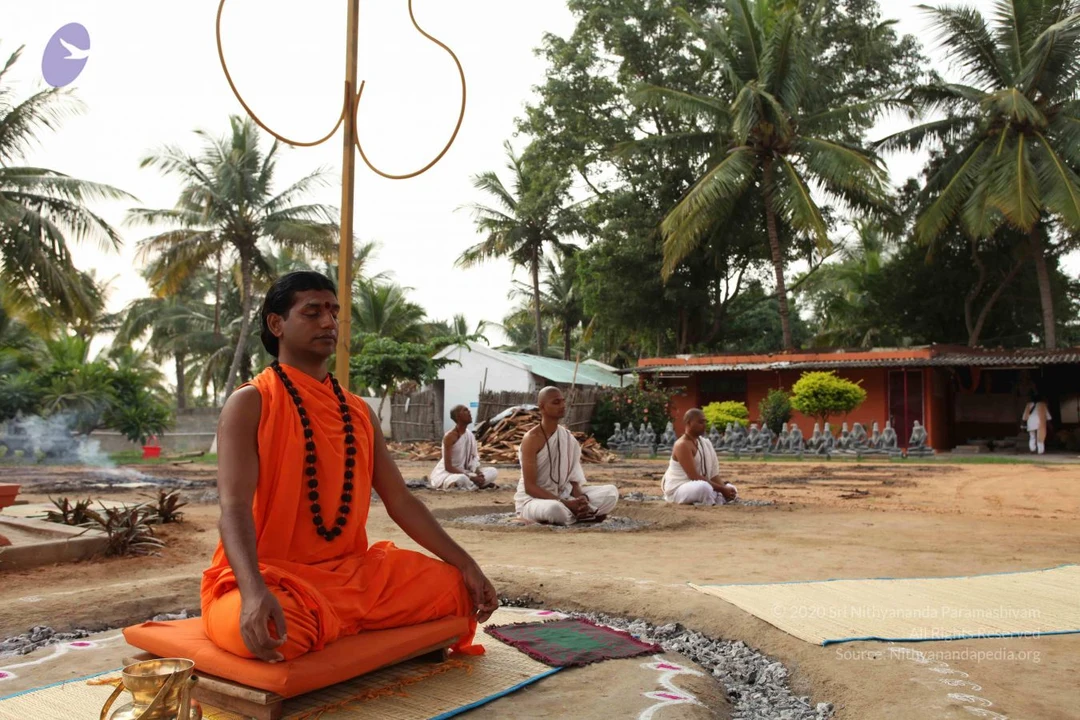
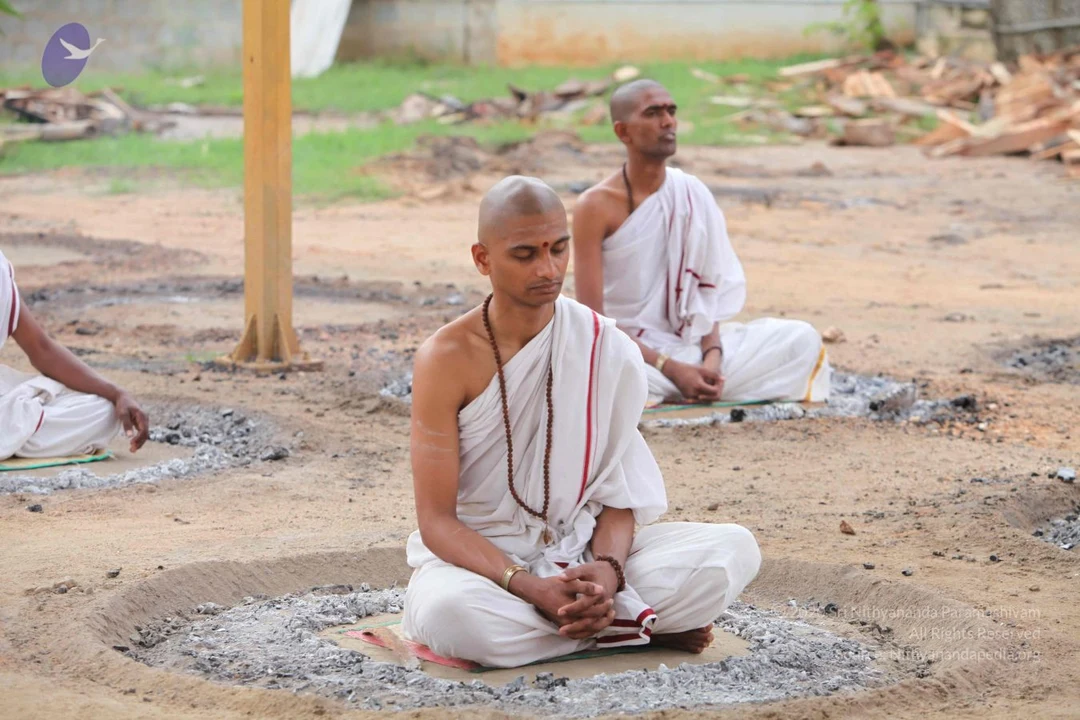
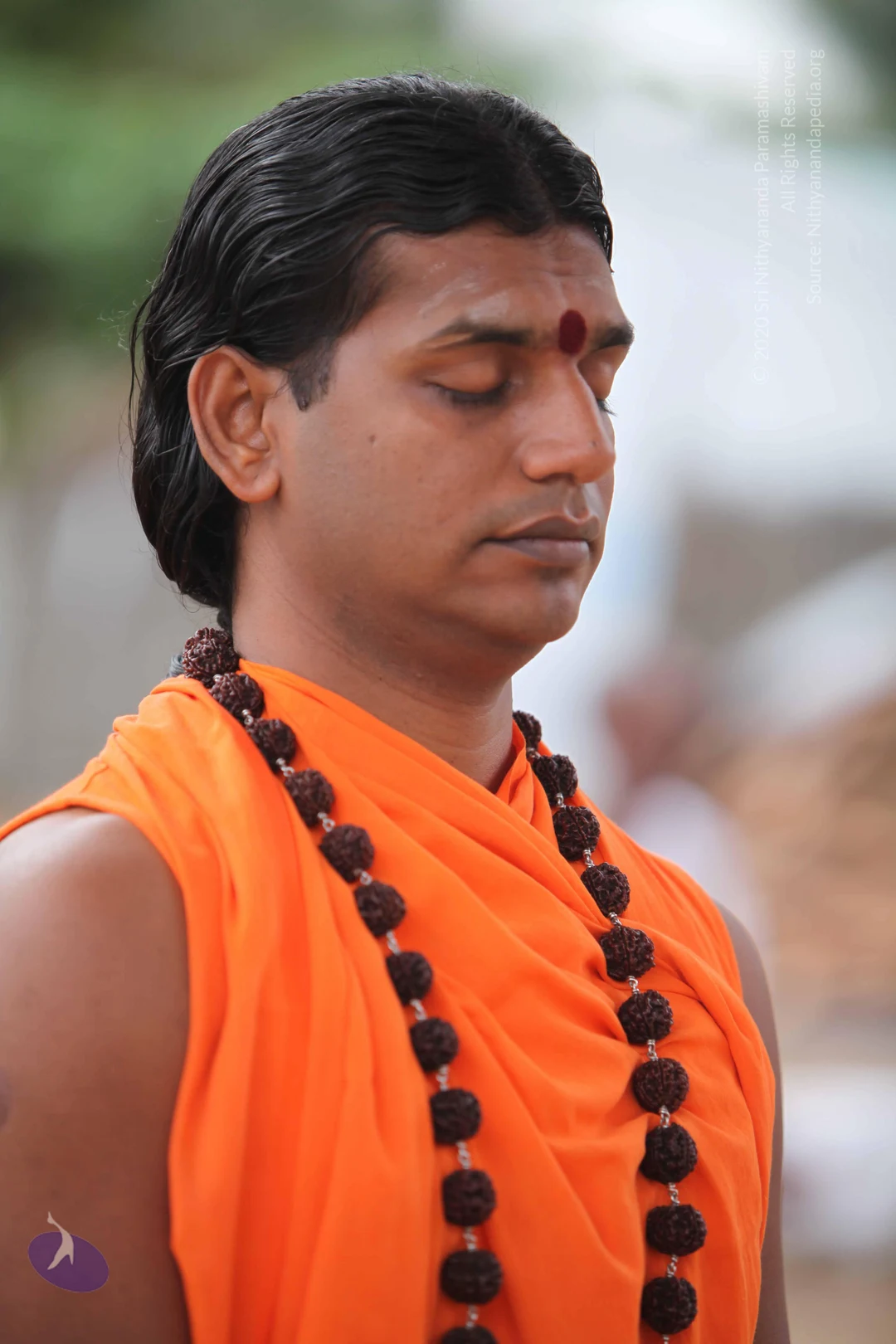
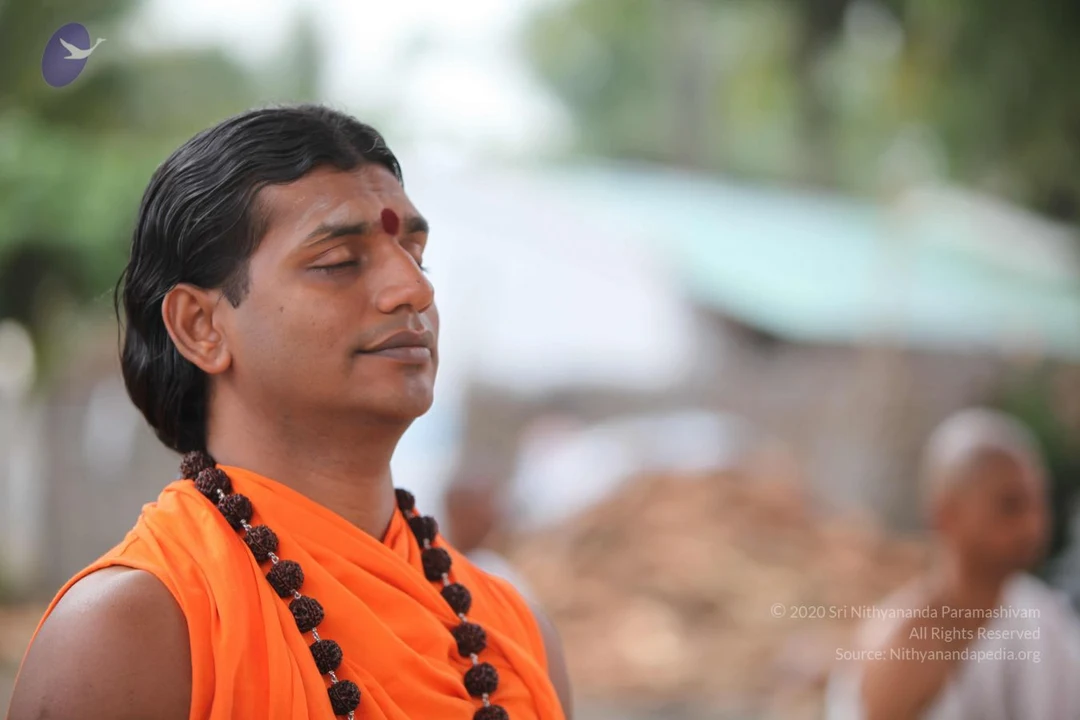
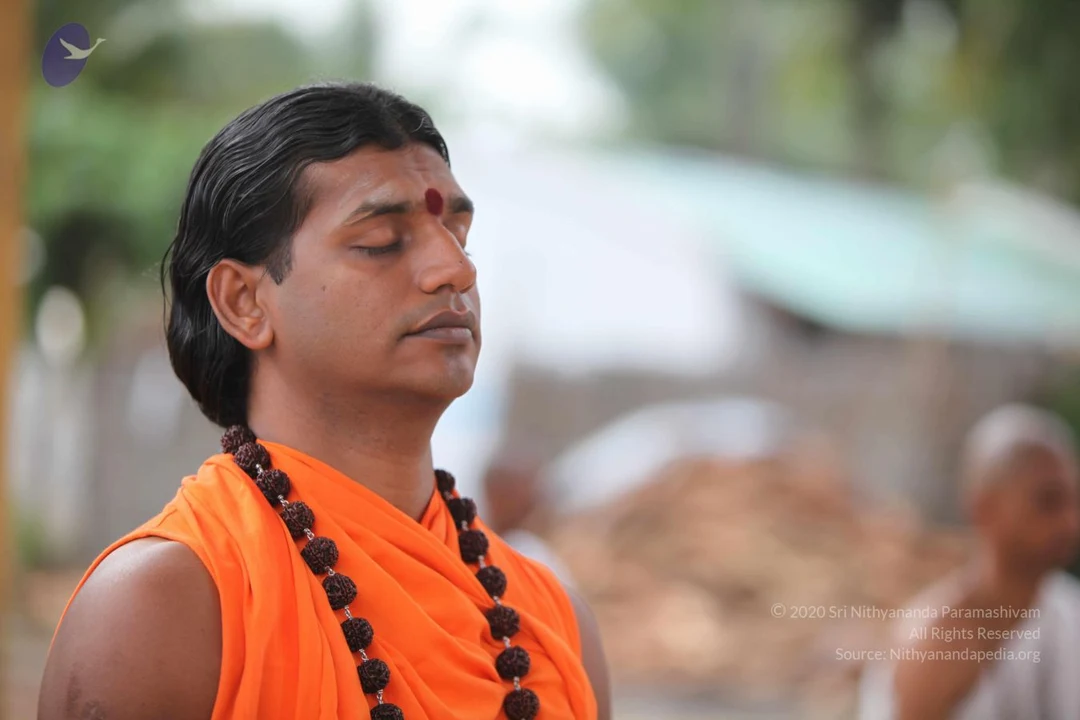
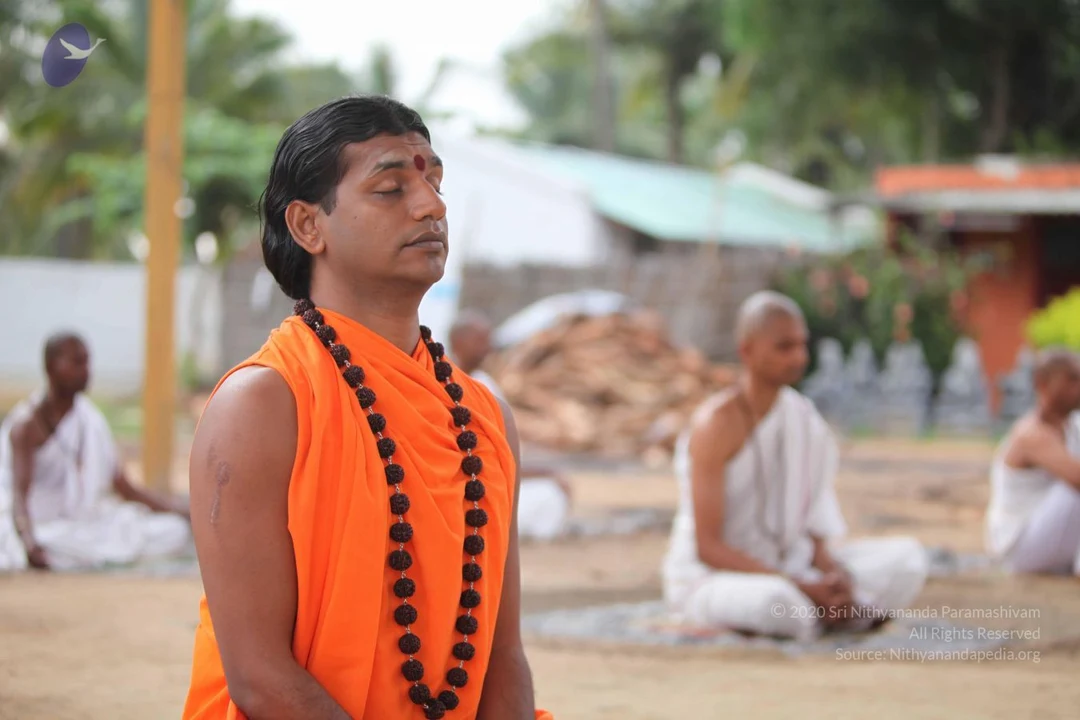
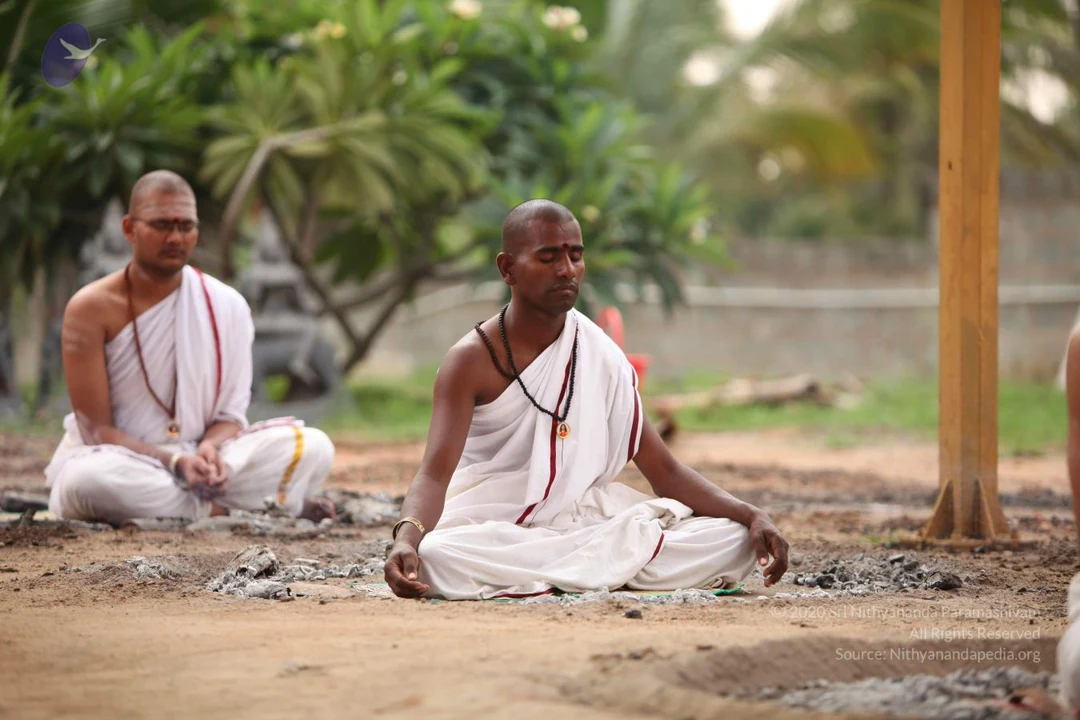
A man in saffron-orange robes sits cross-legged on a mat in meditation, eyes closed, wearing a long dark rudraksha mala around his neck. Behind him, three people in white clothes sit on the ground in a dirt yard near a stacked pile of firewood and a low building with palm trees. The seated man in orange has a shaved-looking head and appears to be the central figure of a meditation or satsang setting outdoors.

Satsang

6 photosSource gallery
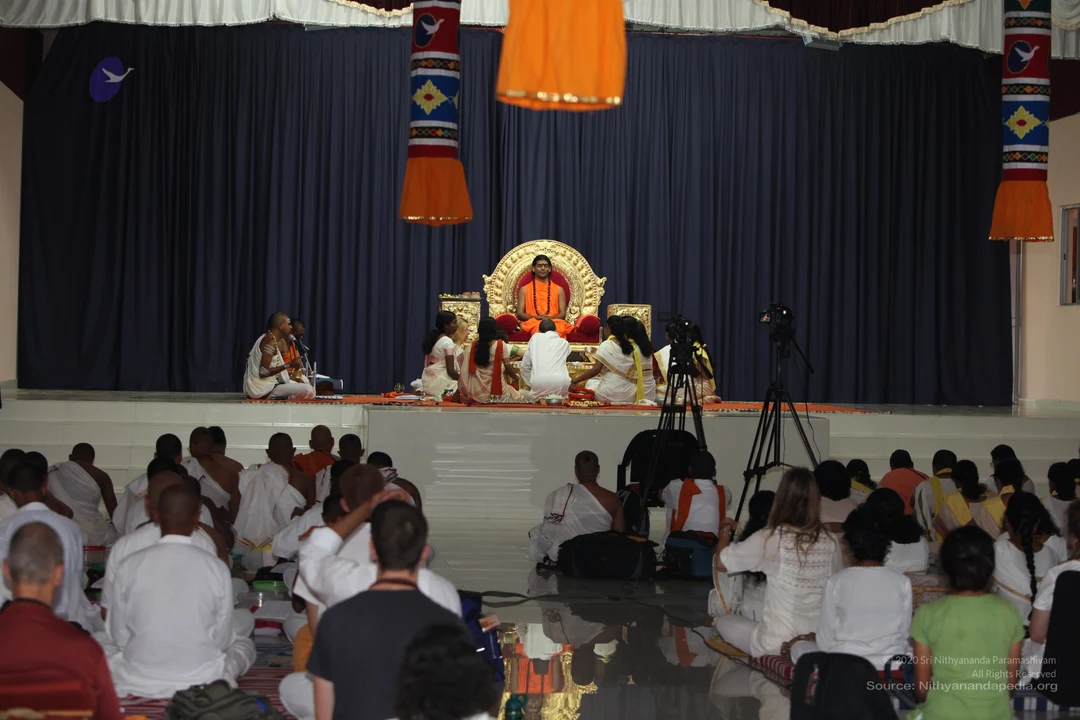
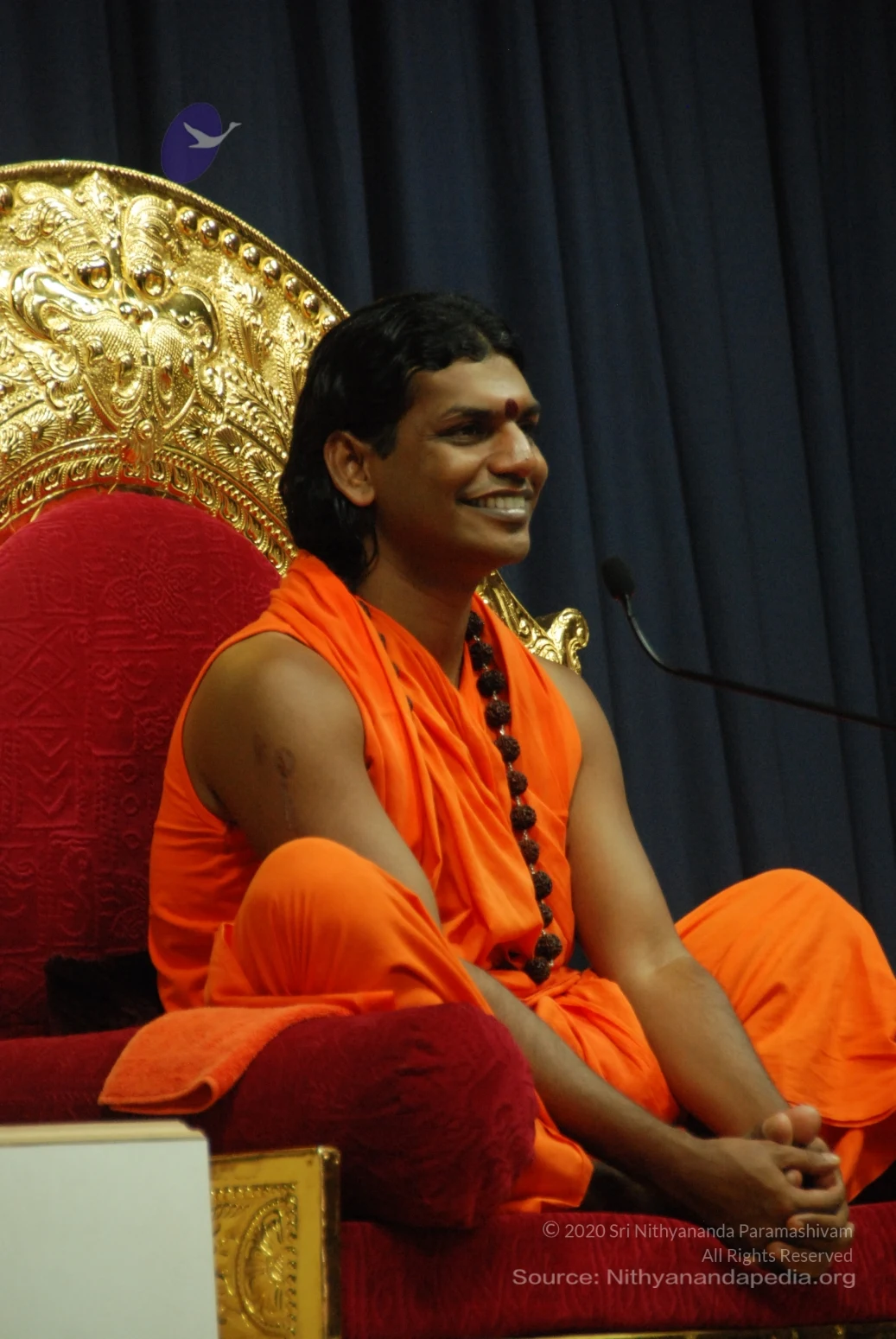
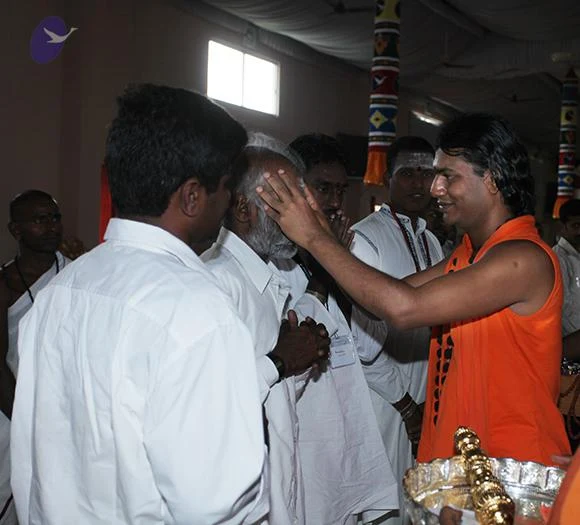
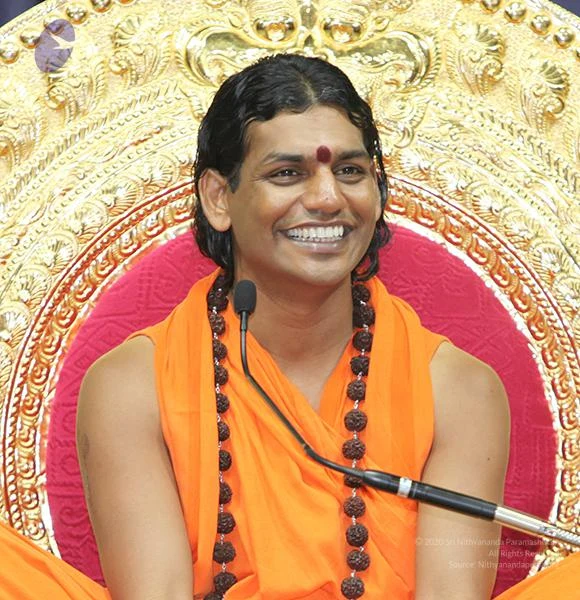
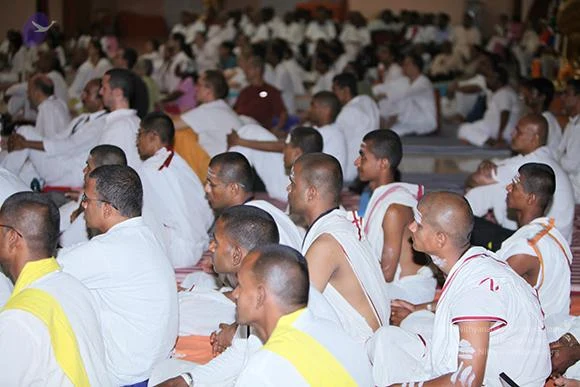
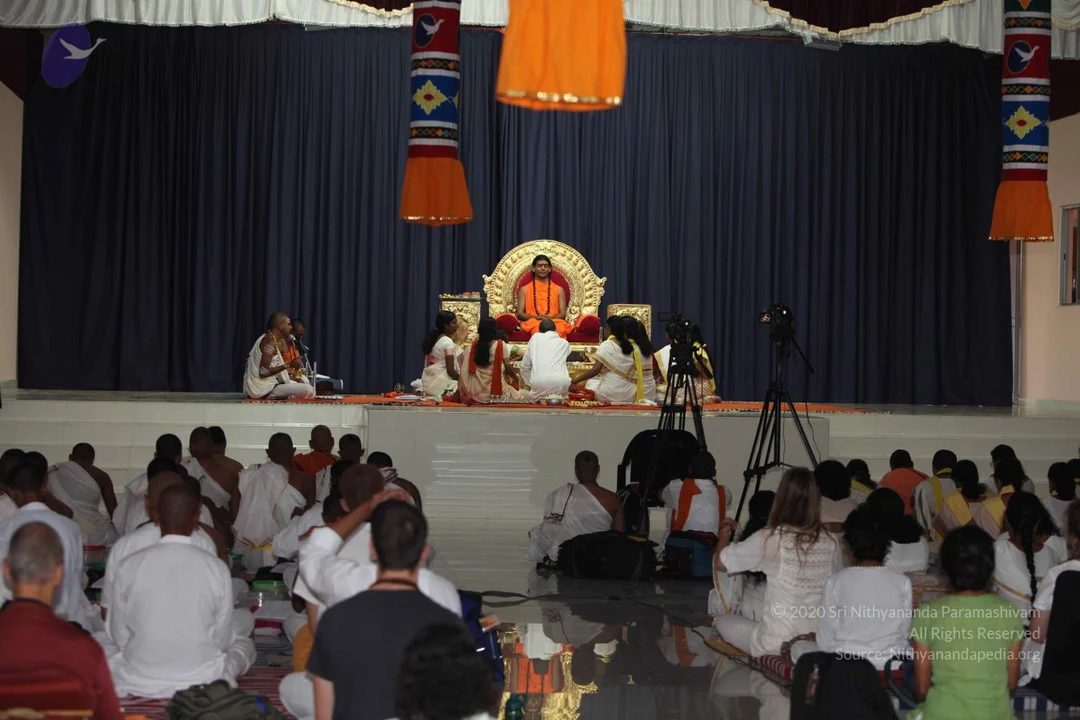
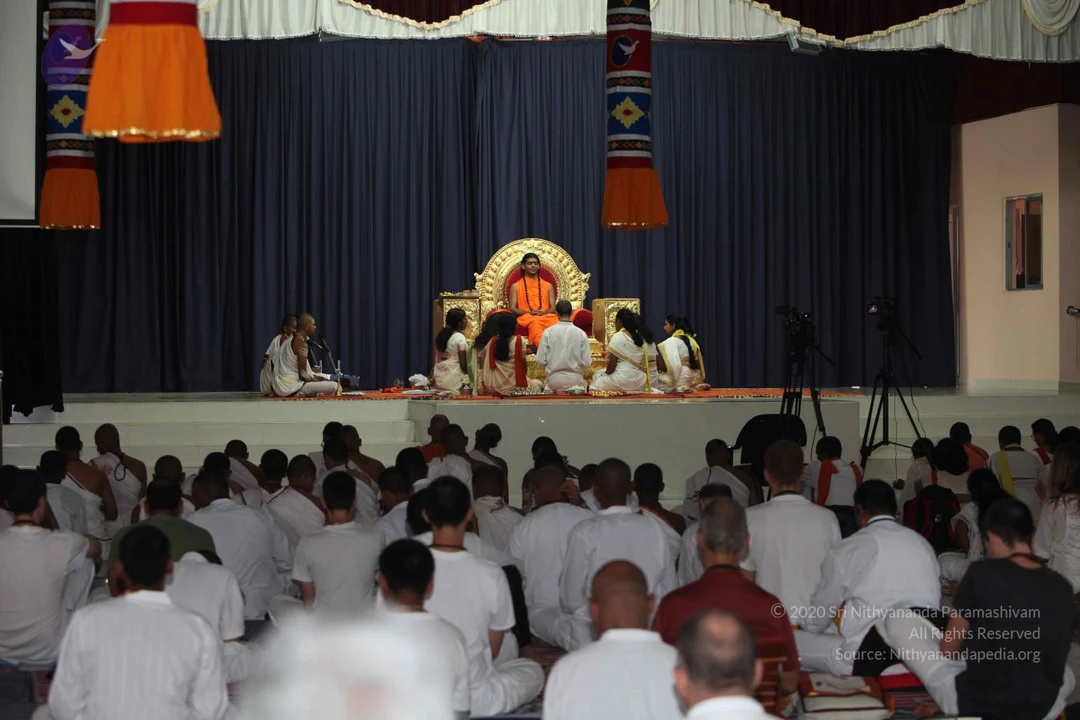
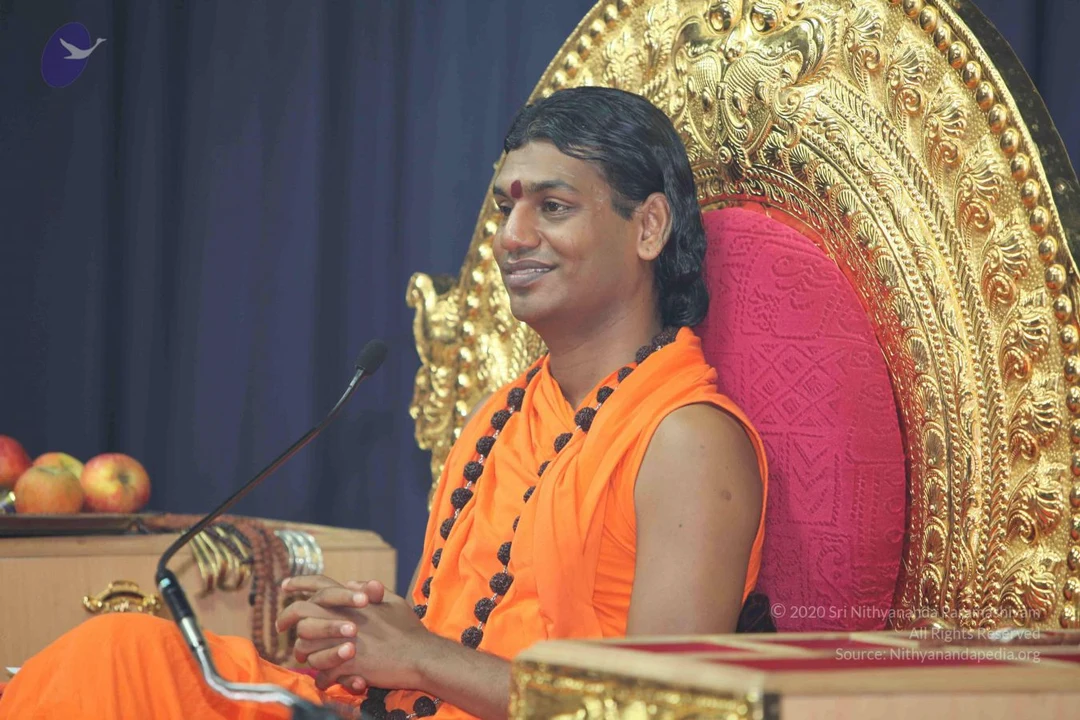
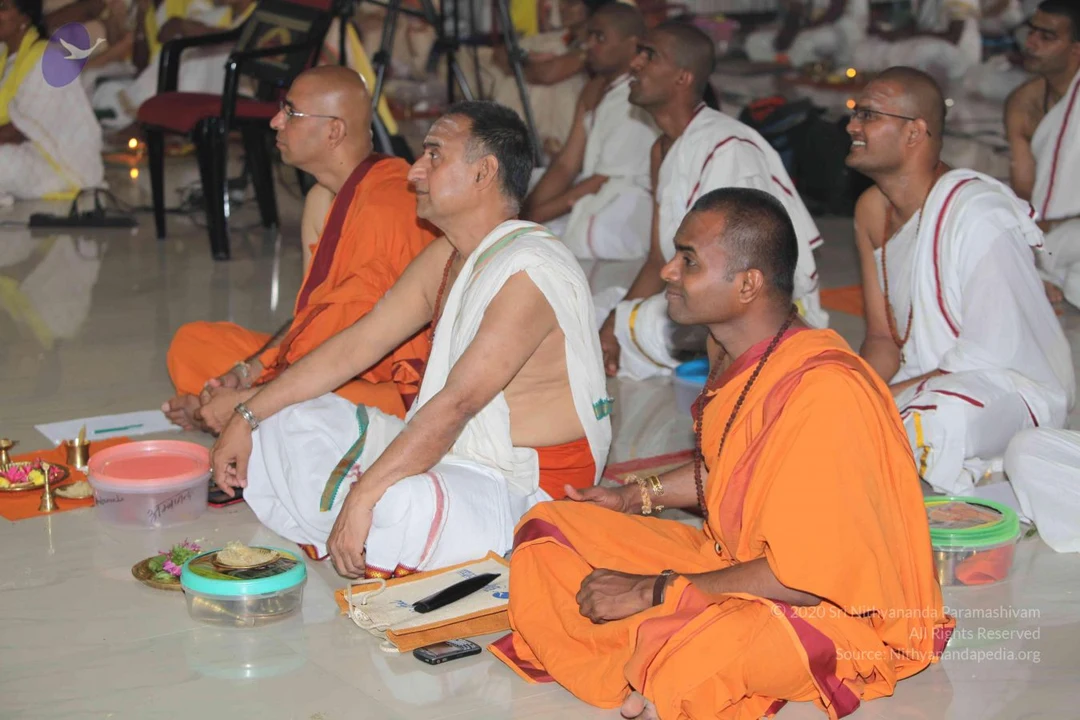
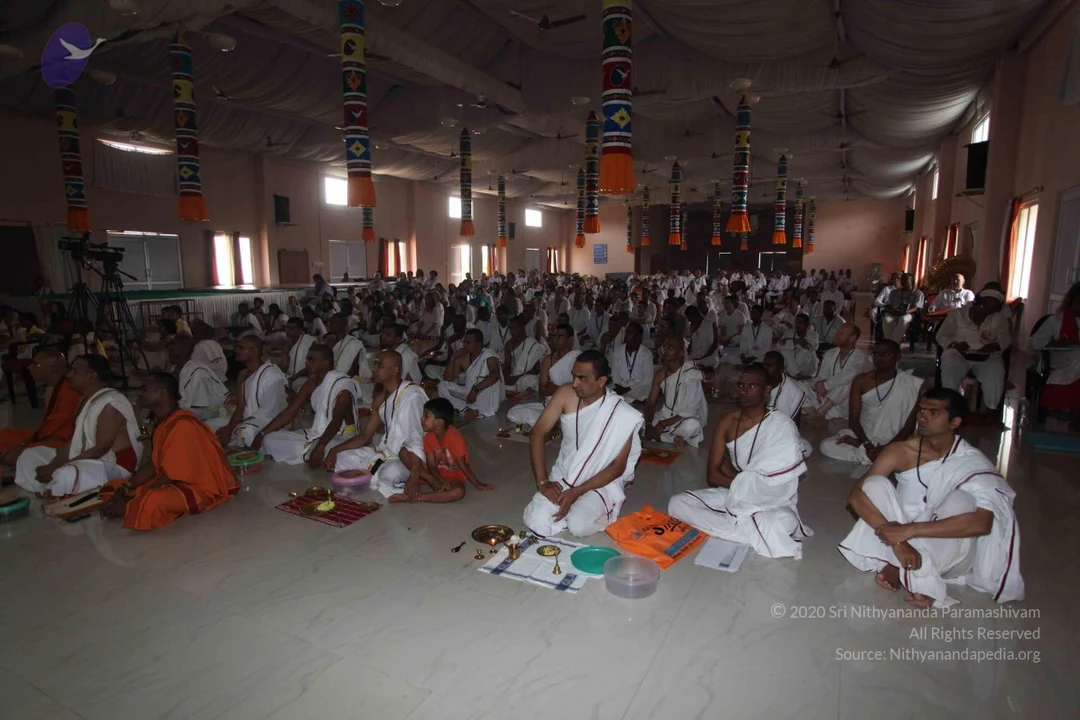
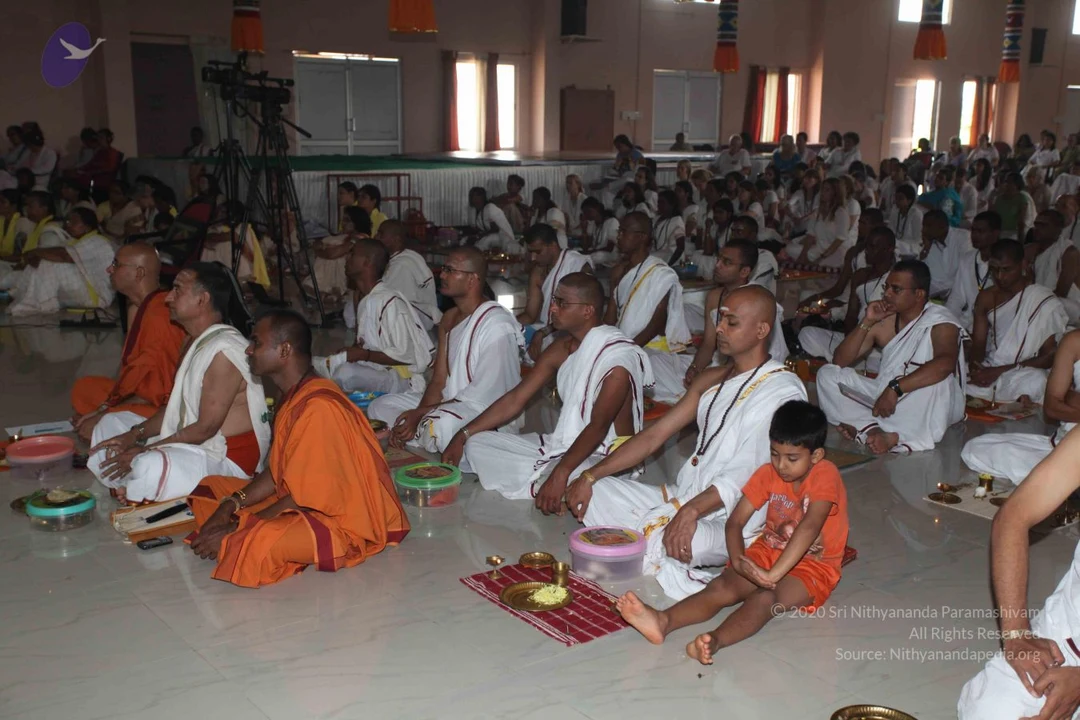
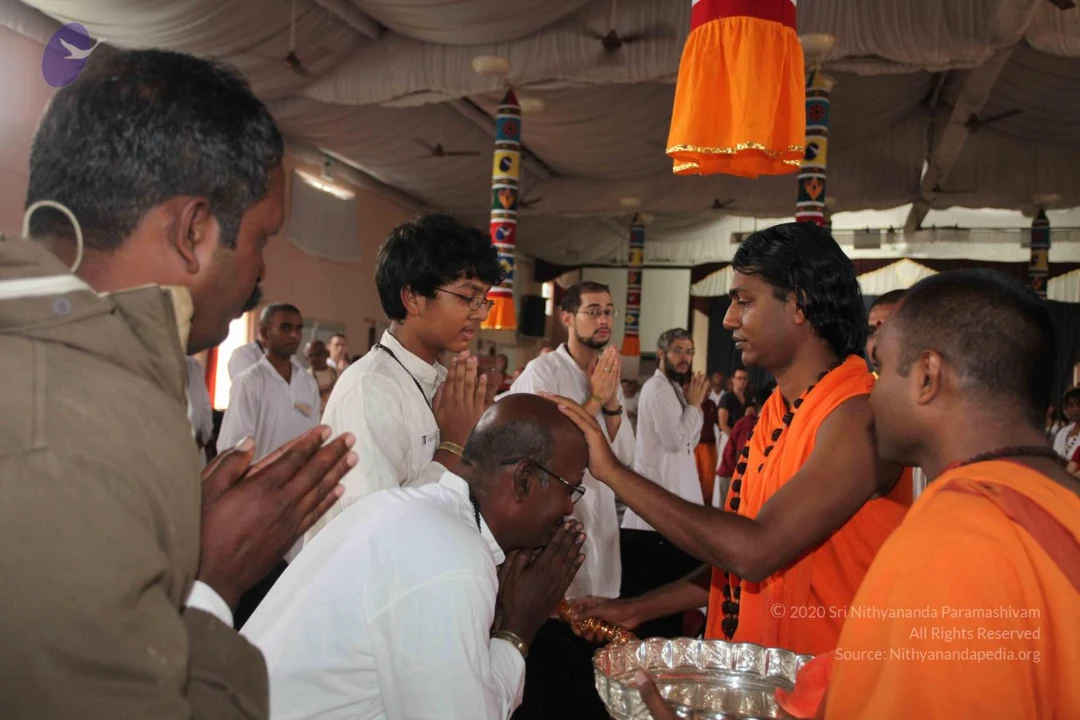
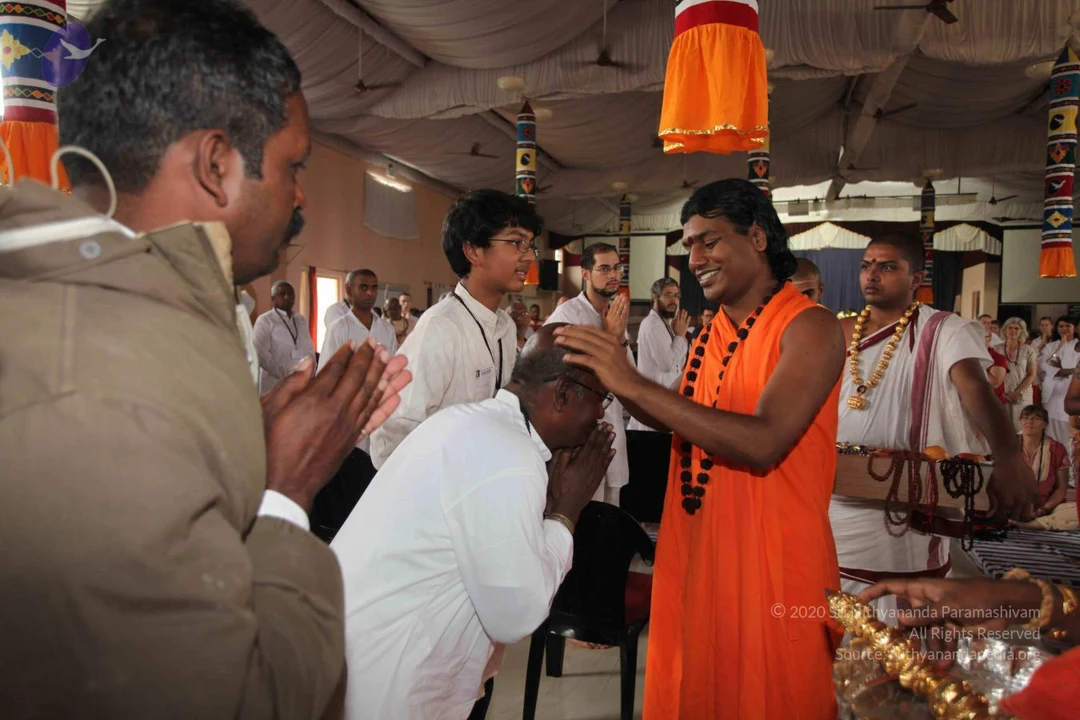
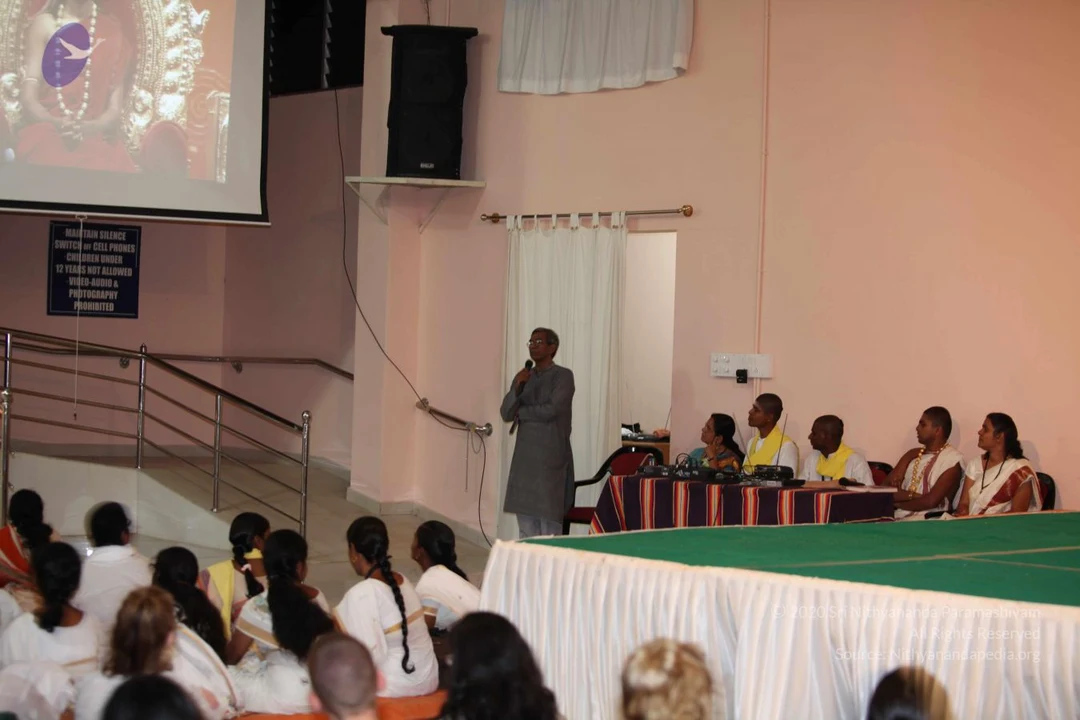
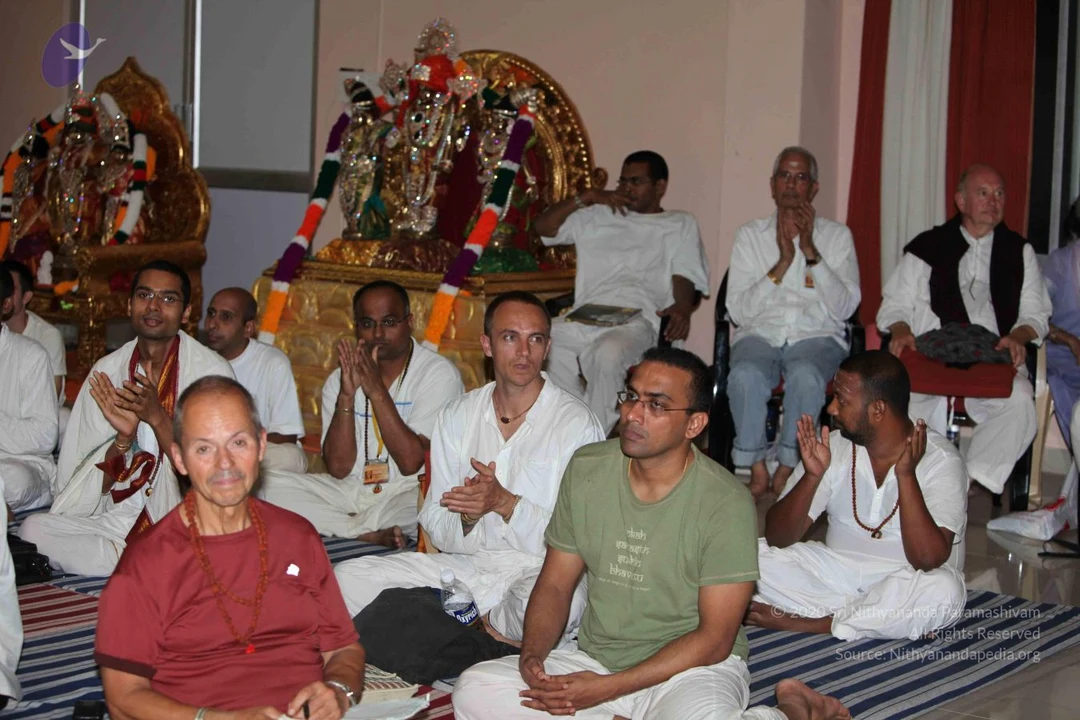
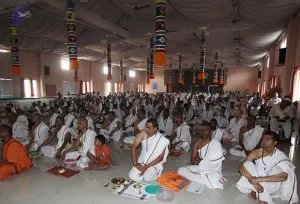
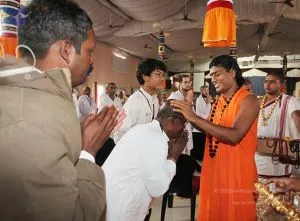
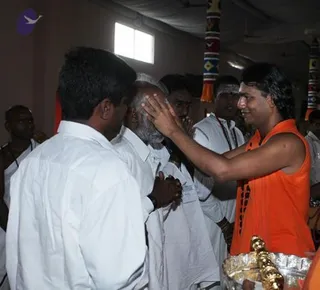
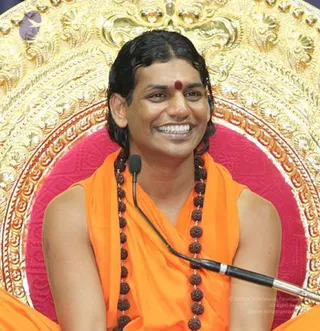
A large indoor satsang hall with many seated devotees in white traditional clothing sitting on the floor in rows, facing the front. Several men in orange-saffron robes sit among them at the front-left. Above them hang tall colourful banners in red, orange, blue and green on poles along the walls, and a few small brass vessels and flower offerings are placed on the floor near the front. The room is bright and wide with white walls and ceiling lights.A photograph of a person Satsang public talk. On the left, a man in orange-saffron robes with long hair sits on an ornate gold-trimmed throne or dais, with a bolster to his side. On the right, a large audience of devotees in white clothing sits in rows on the floor, several women and men visibly seated facing the stage.A photograph of a ceremonial moment in an indoor hall with a wooden ceiling and hanging orange-and-white cloth. A man in a long-sleeved beige jacket stands at left with palms pressed together in anjali. In the centre, a man in an orange-saffron robe with a rudraksha mala and a gold-coloured necklace stands with his right hand raised in blessing, while a man bending forward in a white shirt touches his head down. Other people in white and light clothing stand behind, and a lit oil lamp and offering plates are visible at the lower right edge.A photograph of a man in an orange sleeveless top with a rudraksha mala and long swept-back hair placing his right hand on the forehead of an older white-bearded man in a white shirt. Around them, several men in white shirts and white clothing stand in a hall with a striped cloth decoration and a silver ritual vessel visible at lower right. The orange-clad figure's dress and hair match the page's a person cue, but his appearance is not conclusive, so he is described by role as a sannyasi-dressed man giving blessing. Others present include devotees in white and a bald man in the background.A smiling man with swept-back long dark hair and a red bindi sits on an ornate gold-and-red throne, wearing an orange saffron shawl over his shoulders and a long strand of dark rudraksha beads. A microphone on a stand is placed near him. The gold carved throne backdrop is ornate and symmetrical. Probable Swamiji is the central figure based on the long swept-back hair, saffron clothing and rudraksha mala, seated as a speaker.A wide photograph of a large congregation of devotees seated on the floor in rows, bowed forward in prostration with heads touching the ground, many wearing white clothing. In the left foreground a man in orange robes sits facing the crowd, with a red and orange garment and bare upper body visible. The scene suggests a satsang or public talk setting in a large hall with a light-coloured floor.
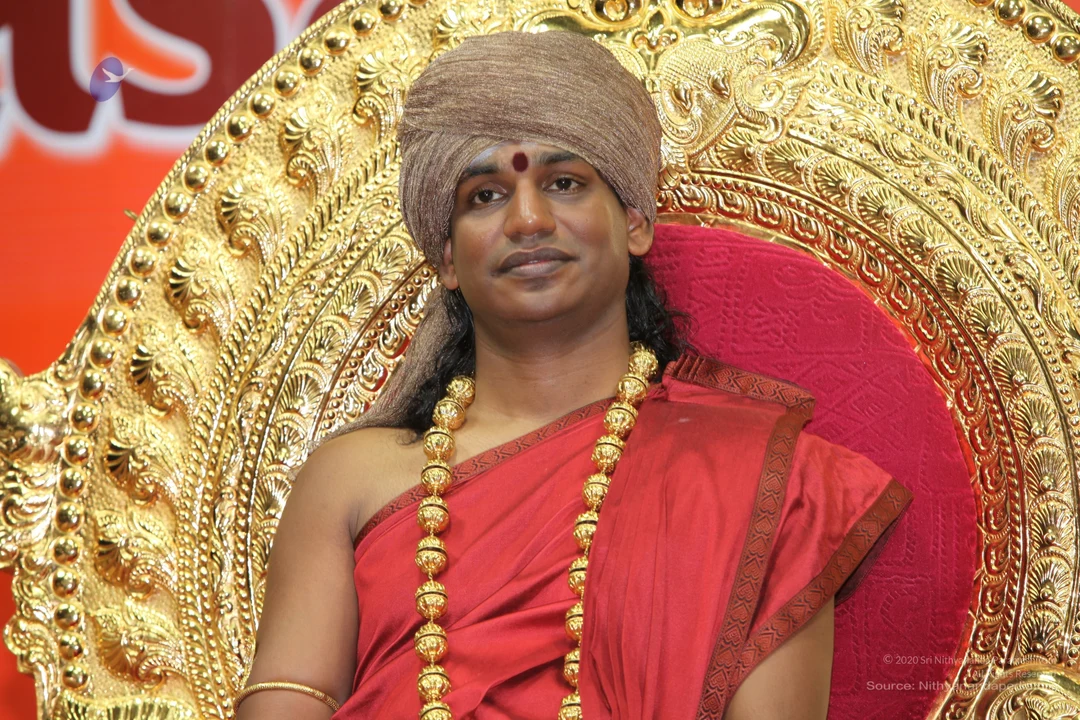
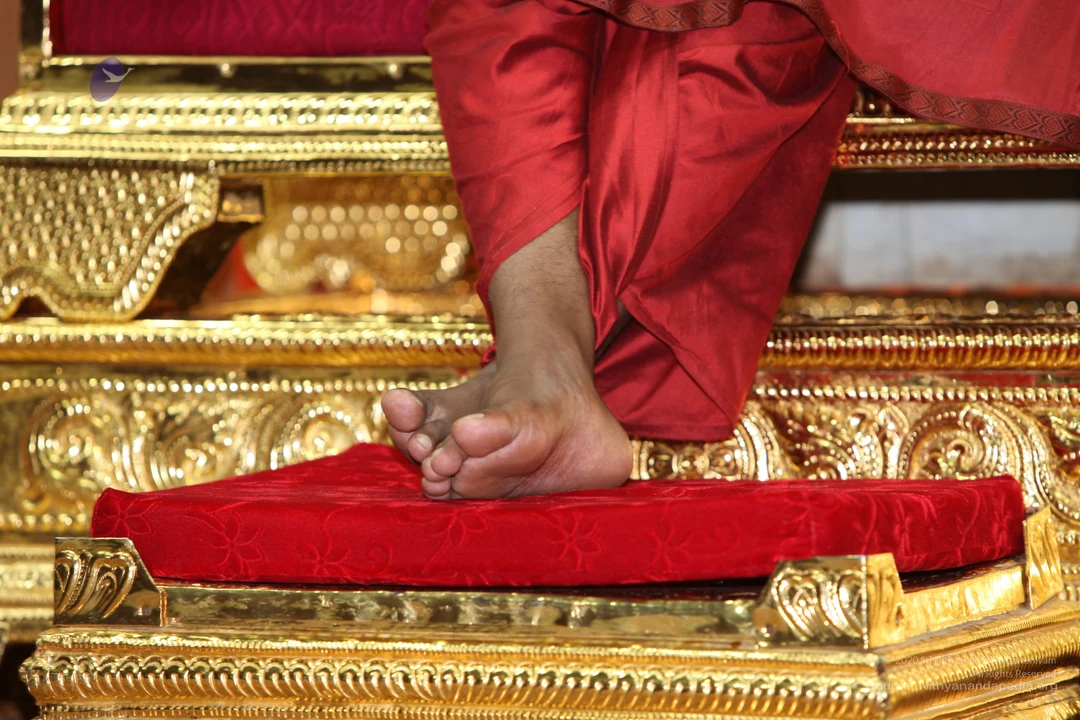
Paadapuja

2 photosSource gallery
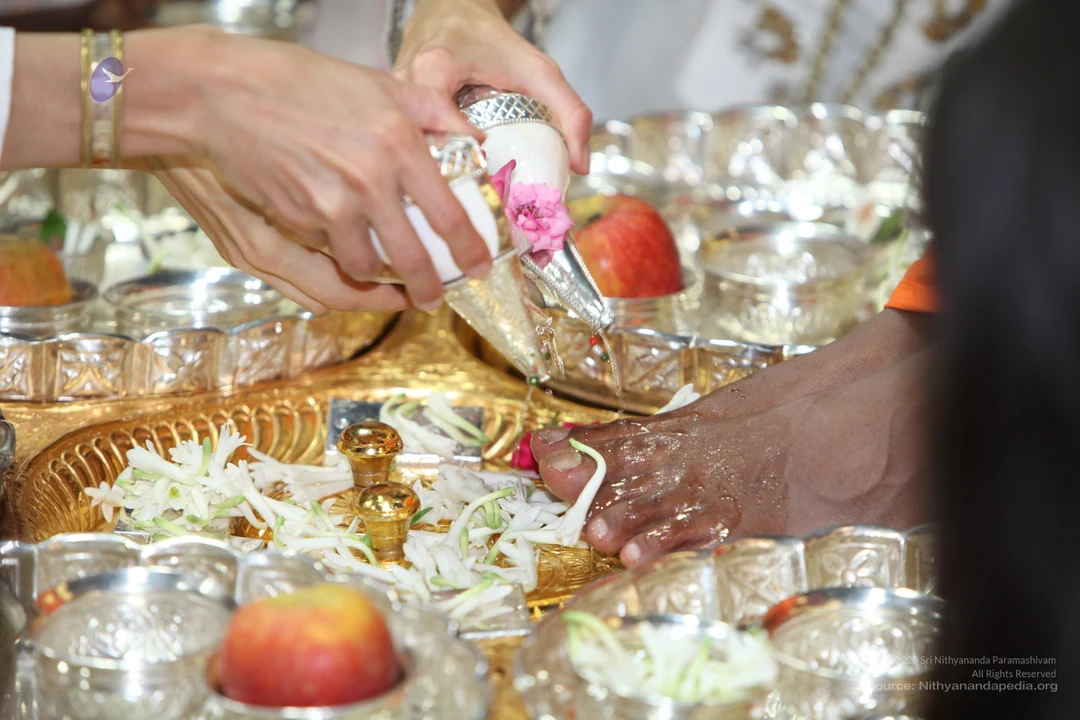
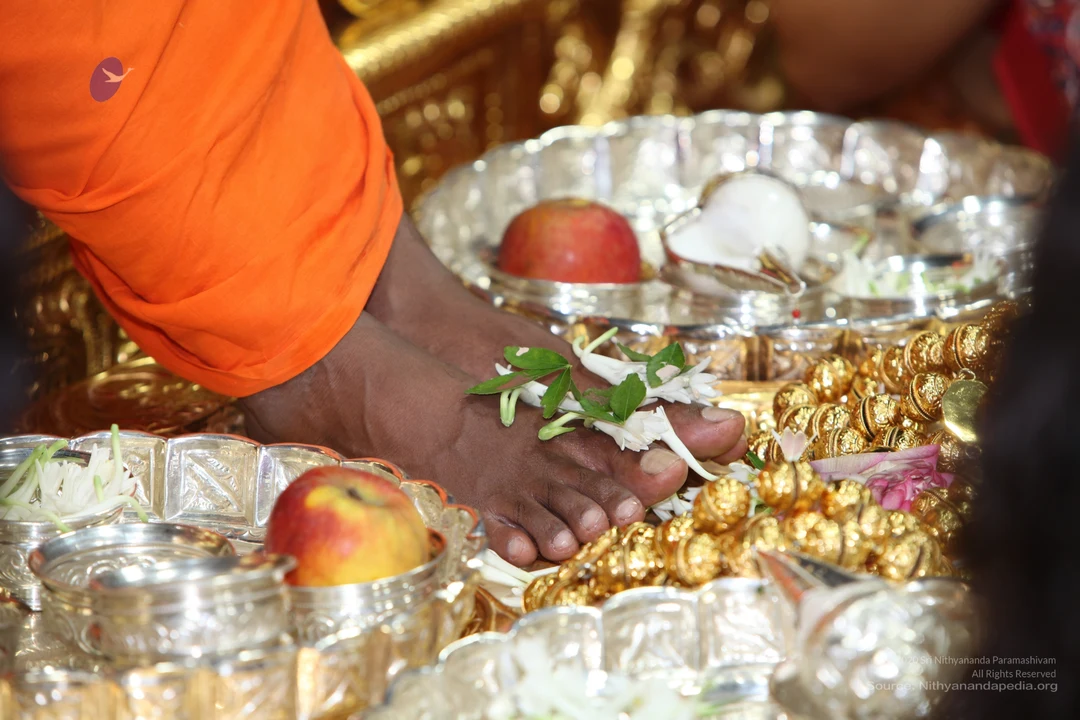
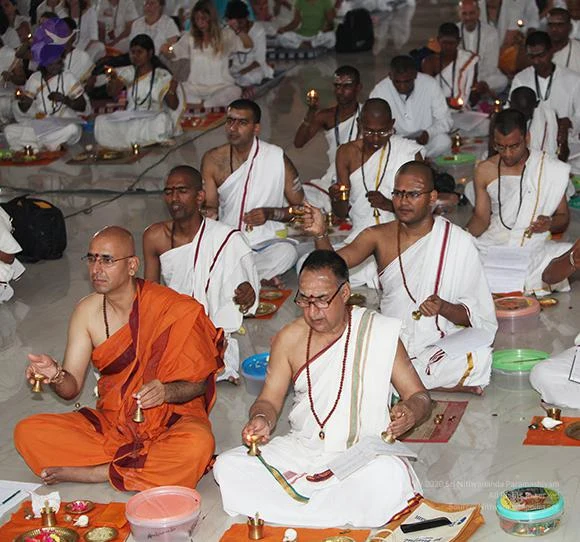
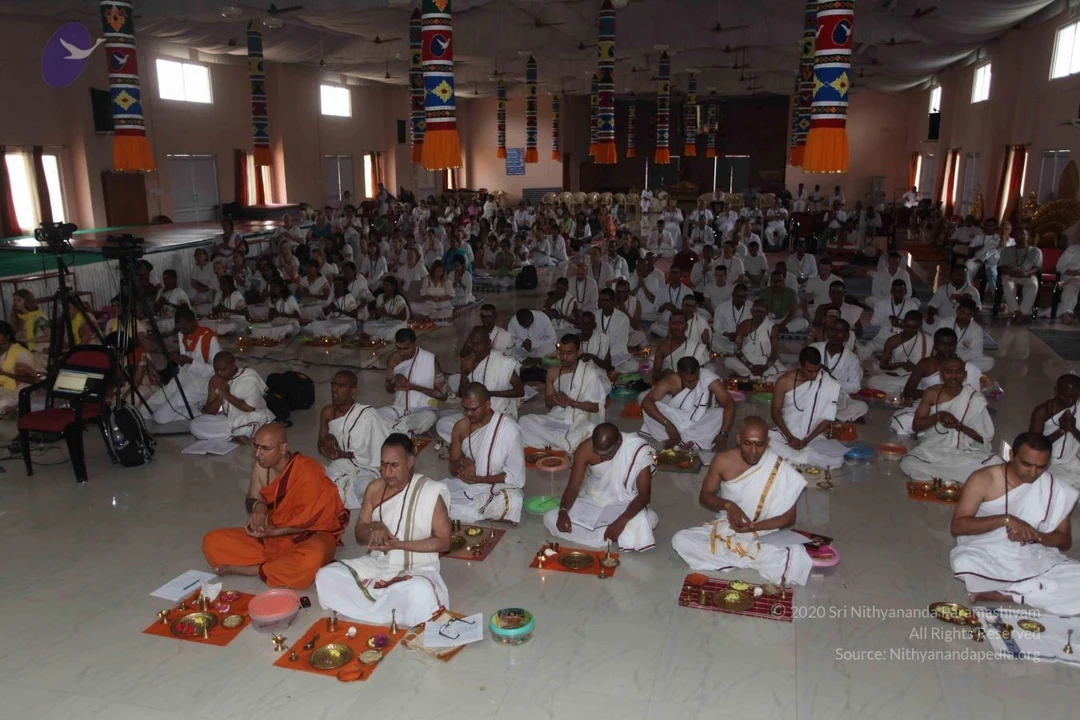
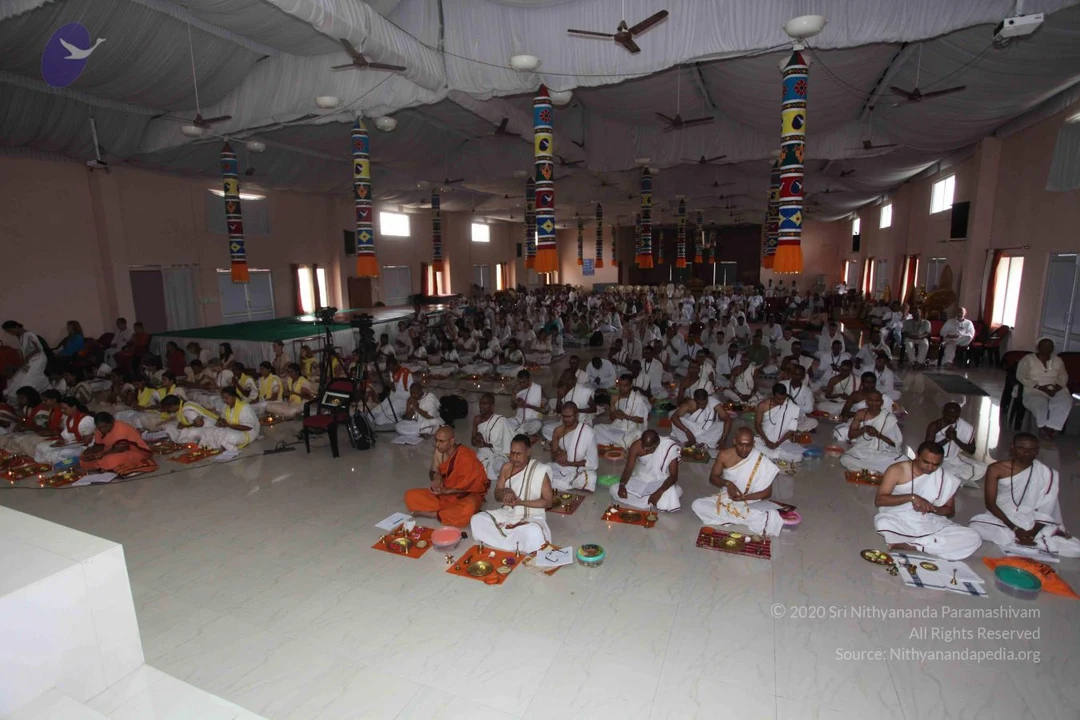
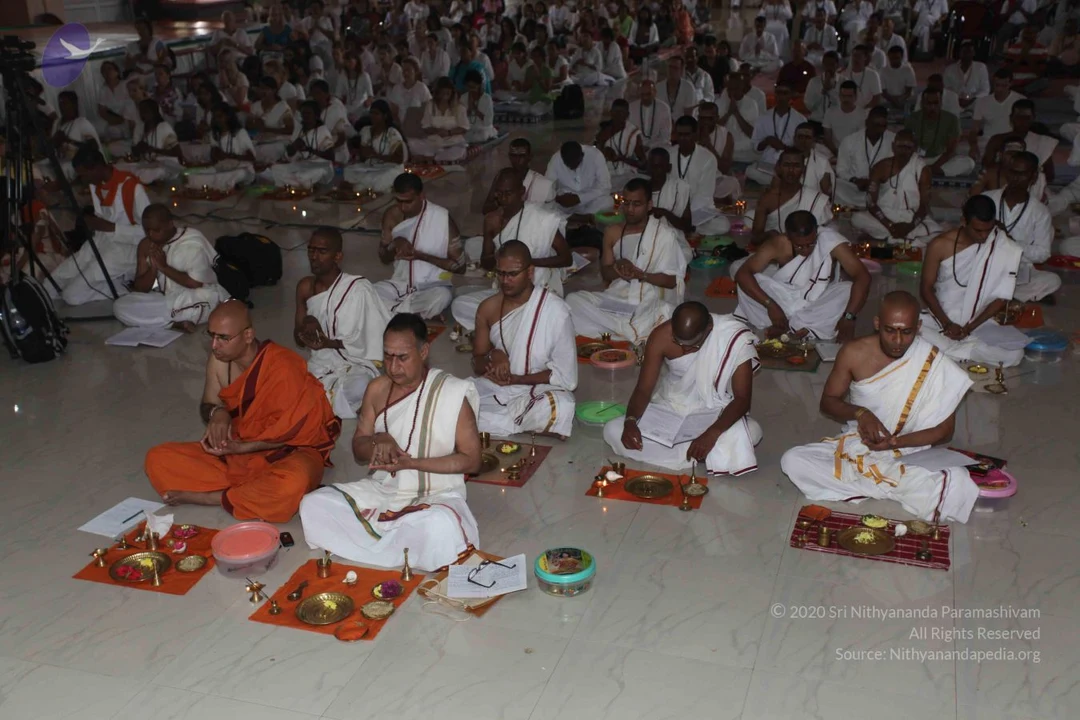
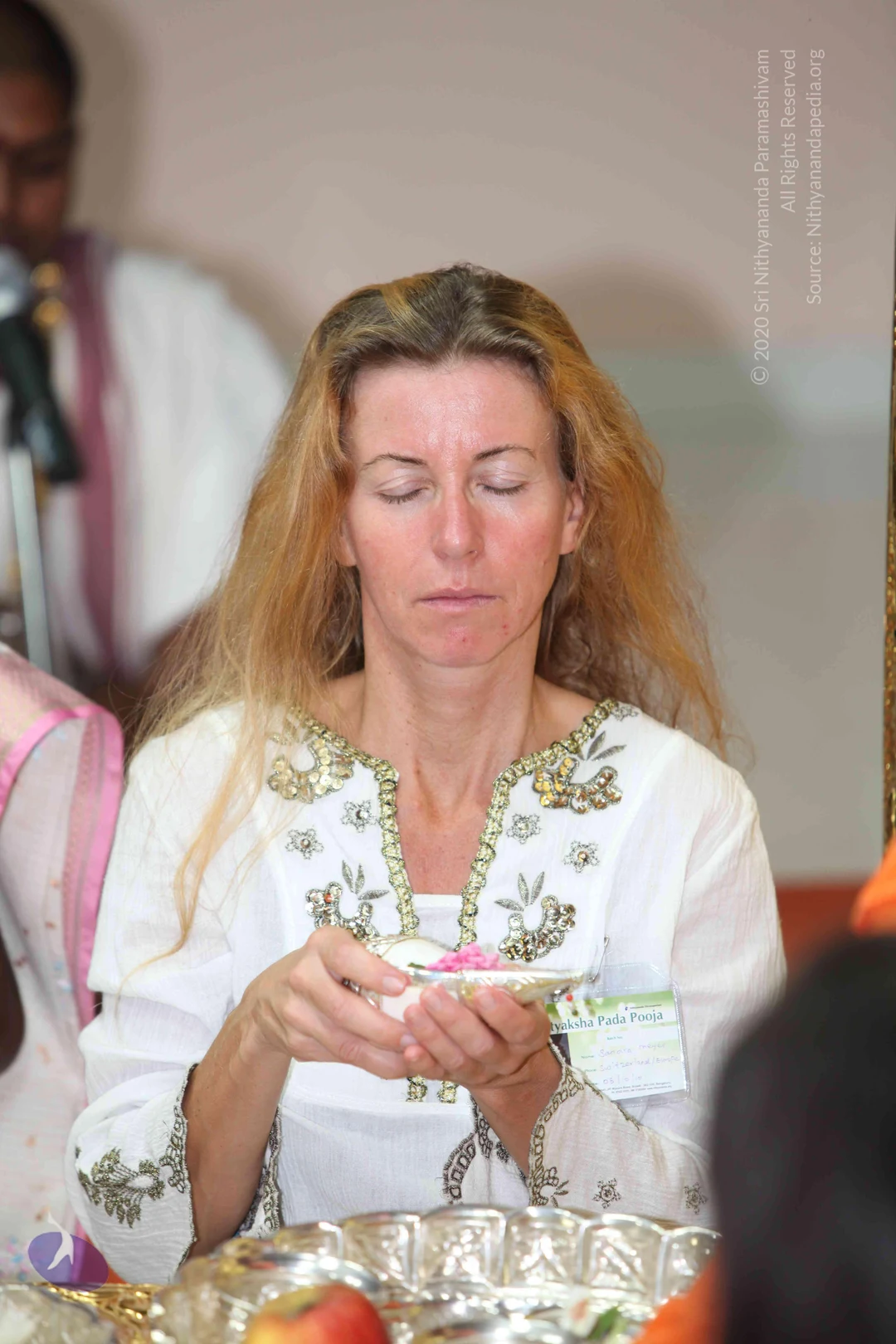
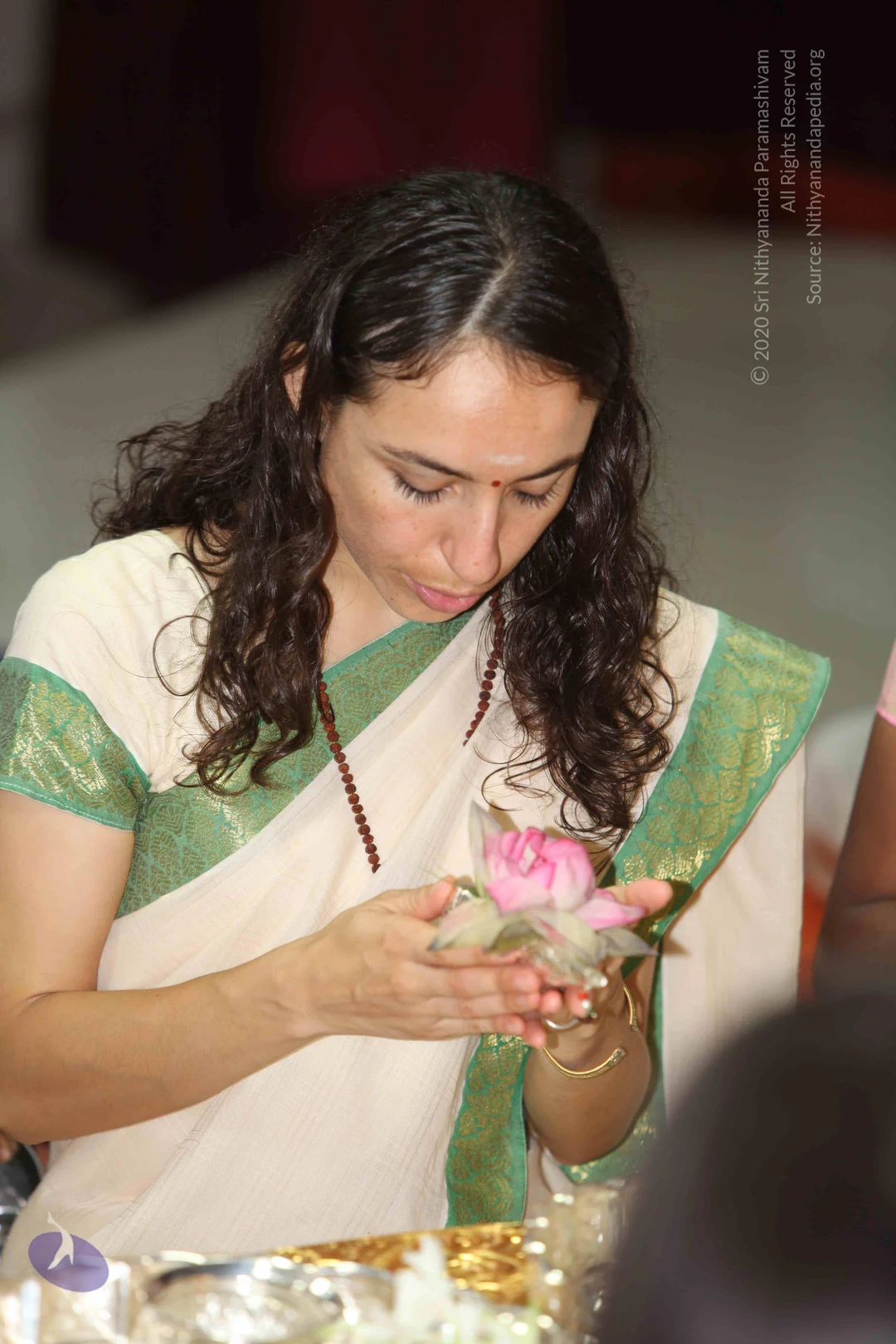
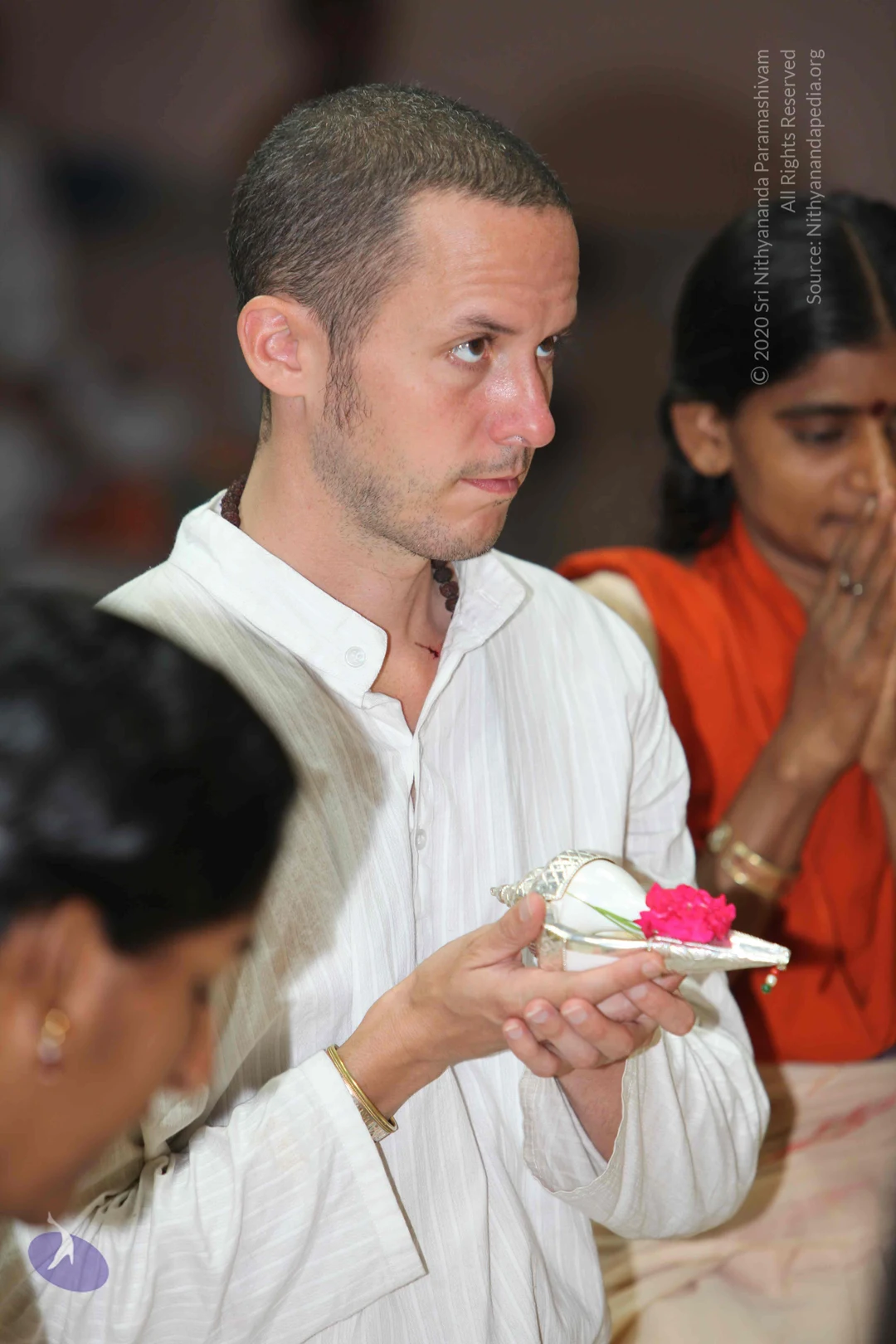
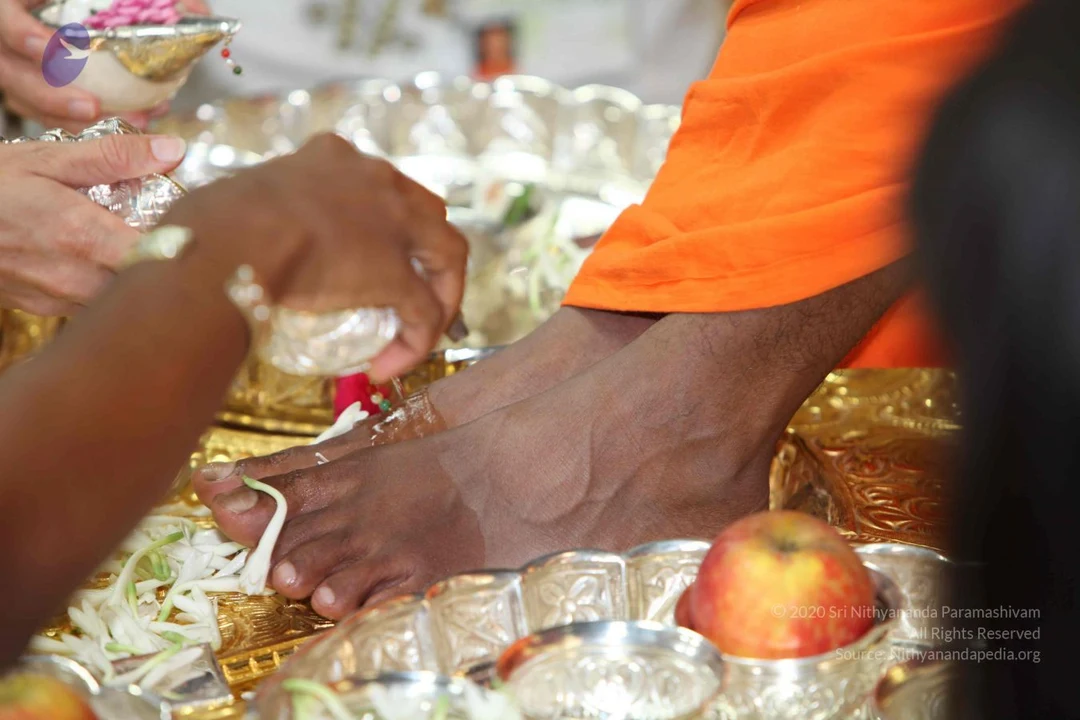
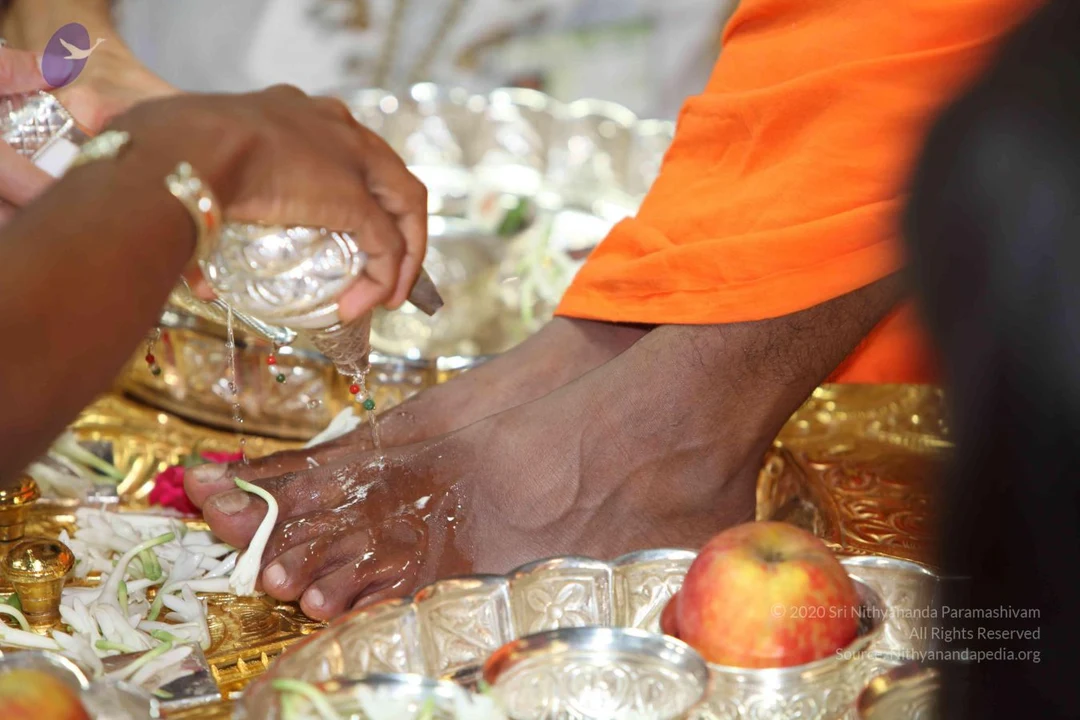
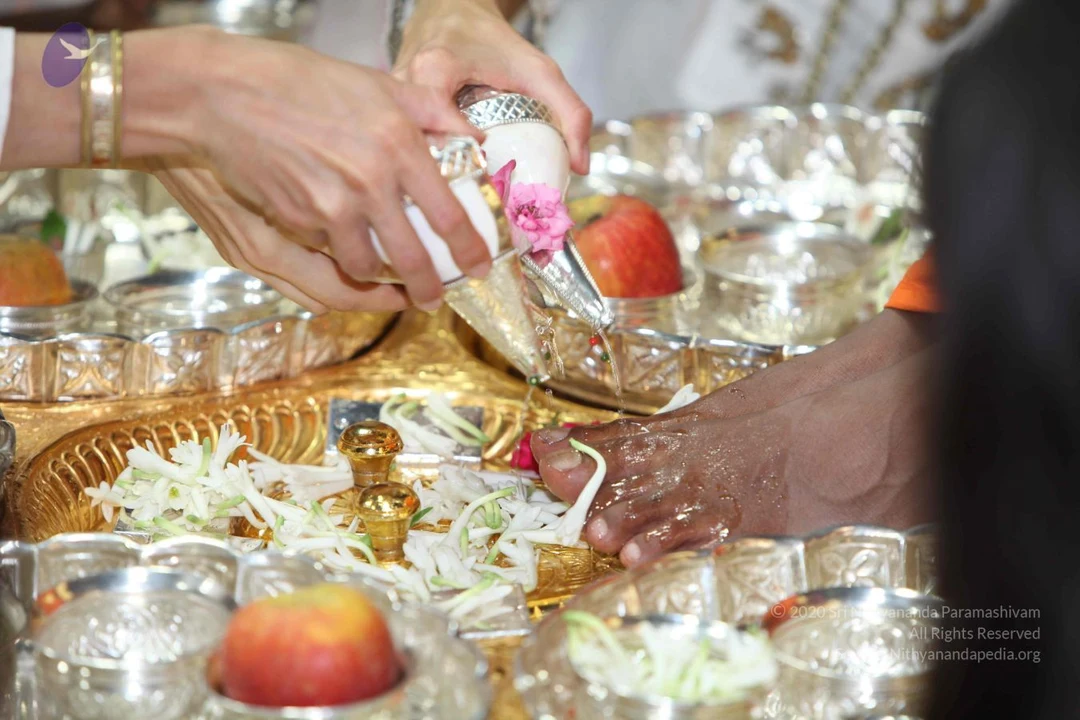
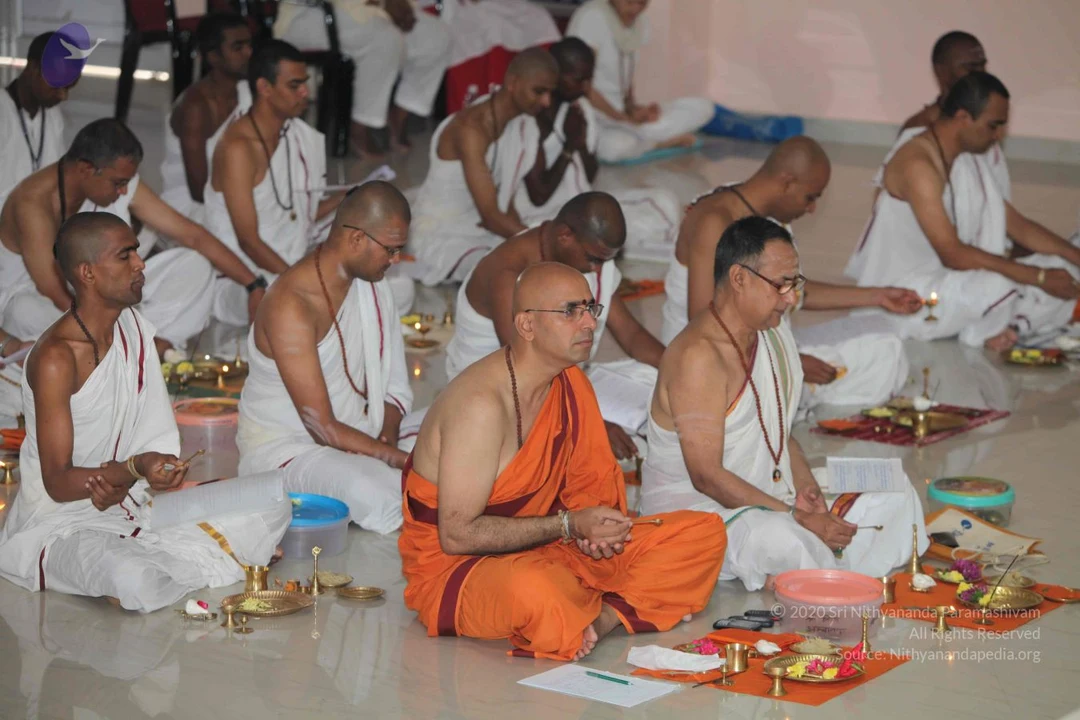
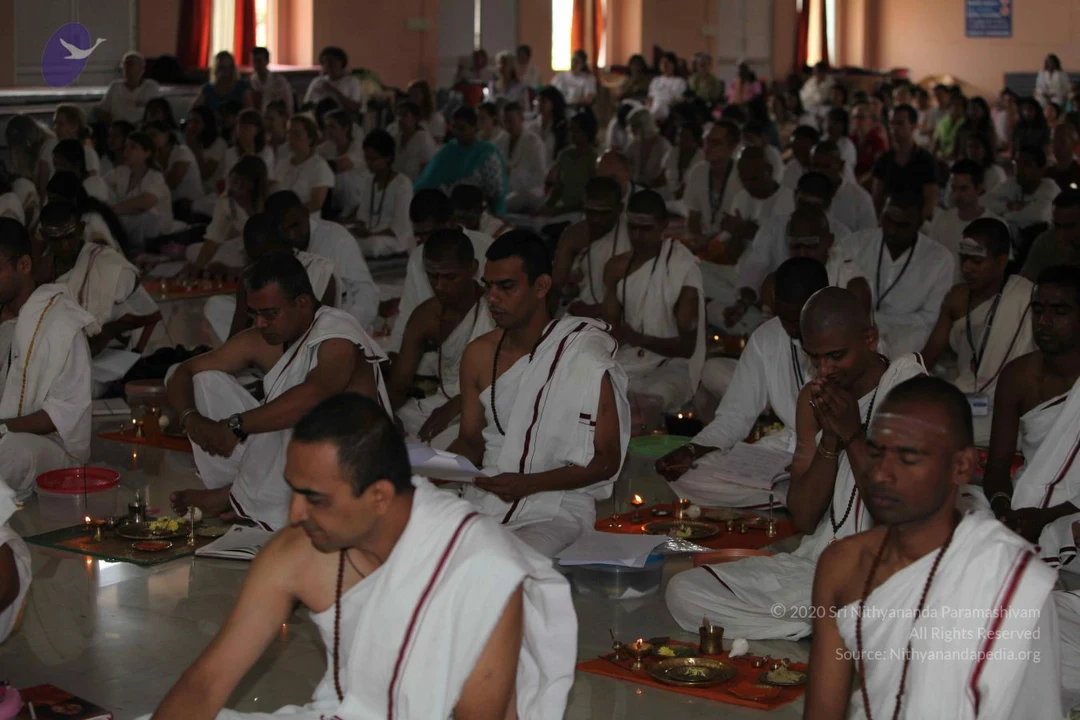
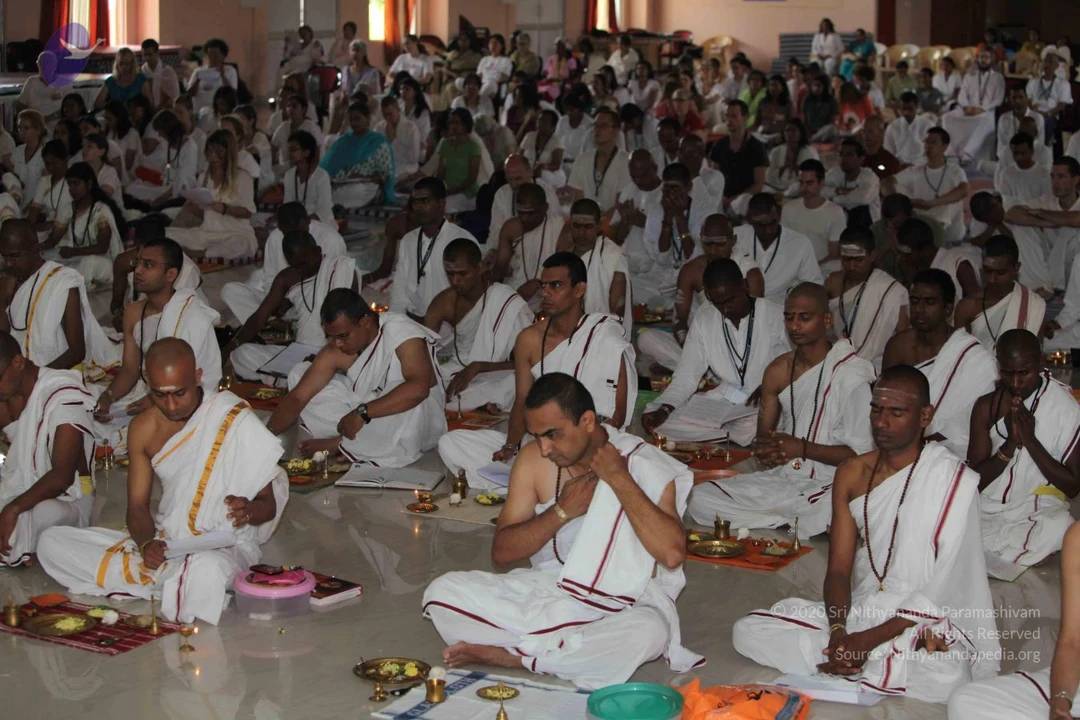
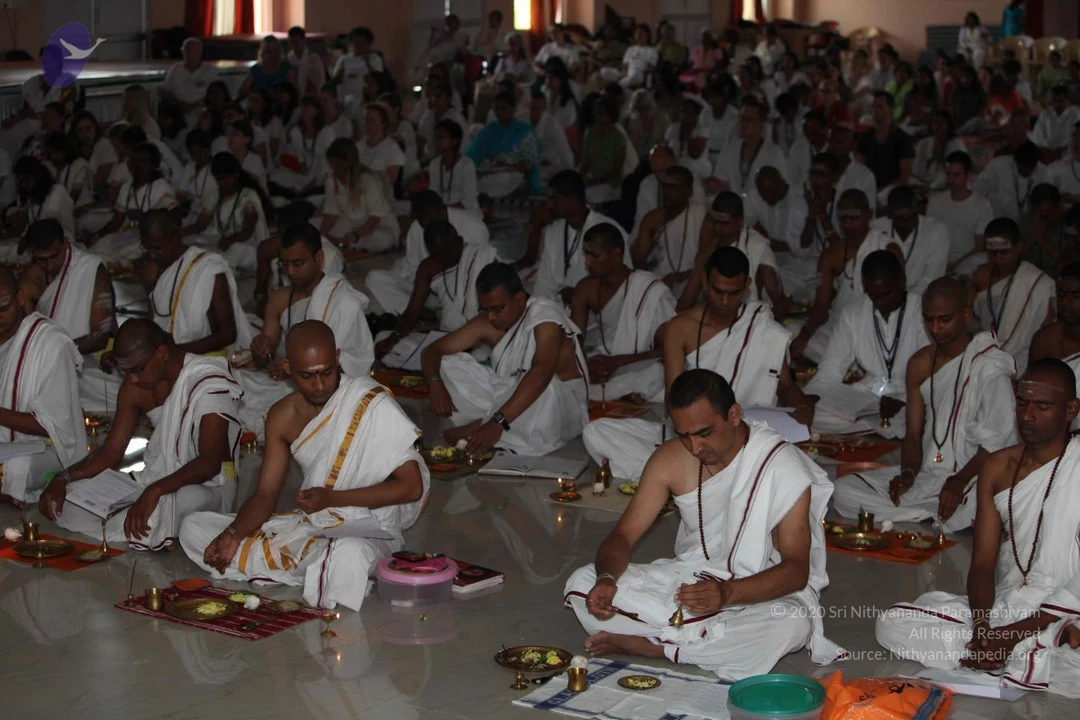
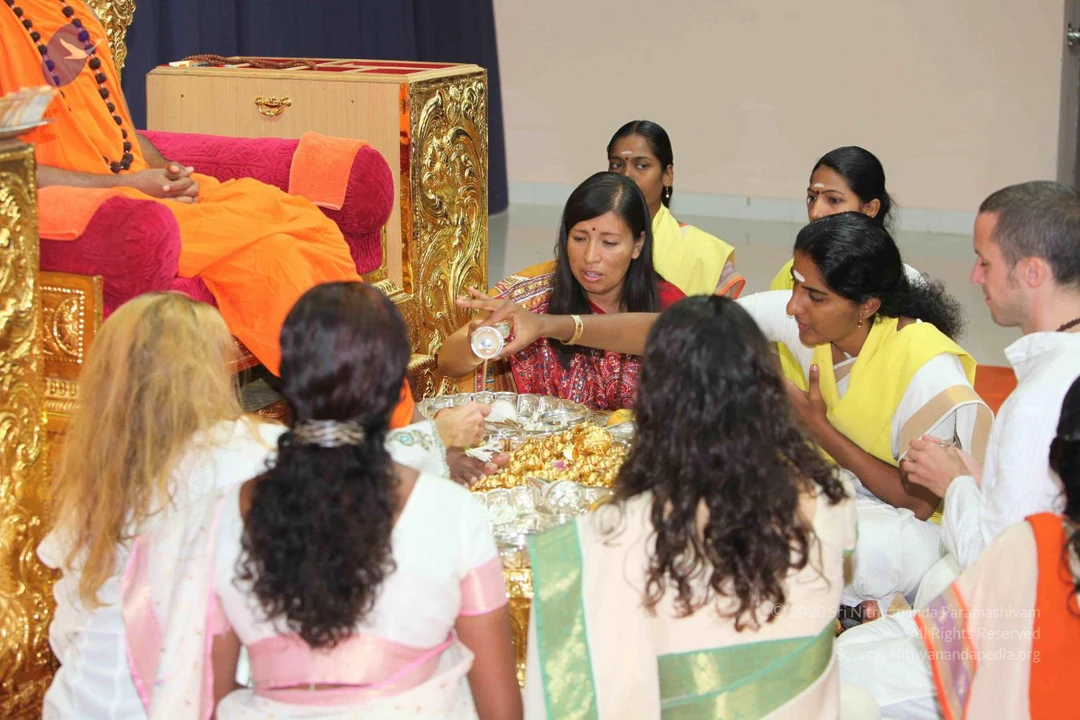
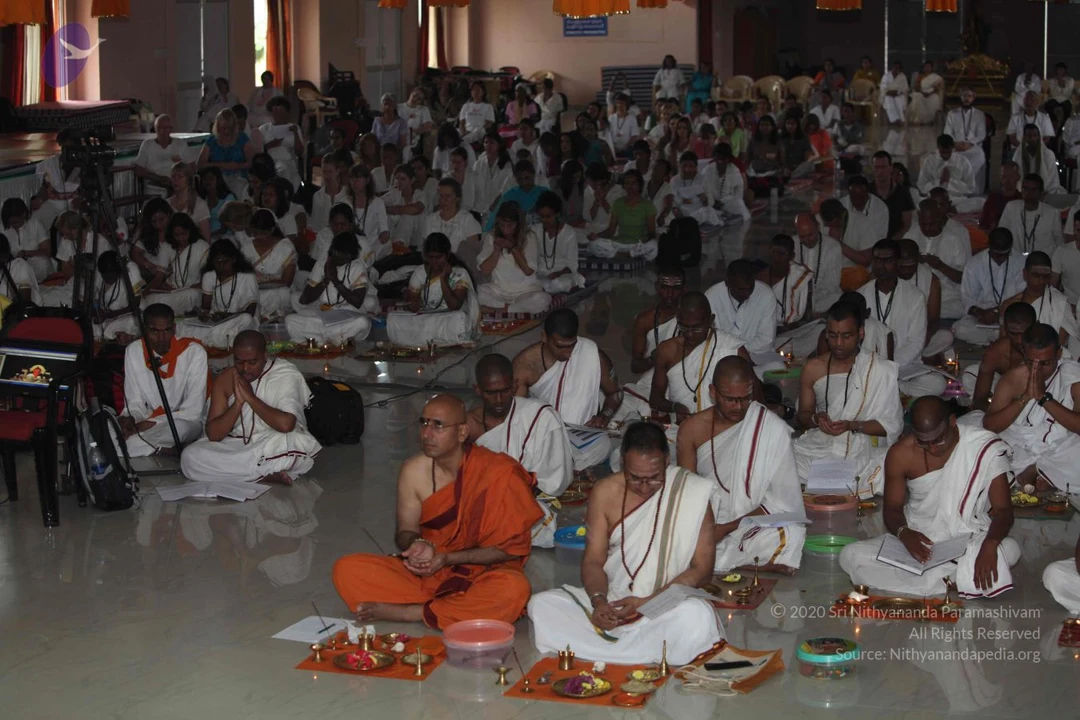
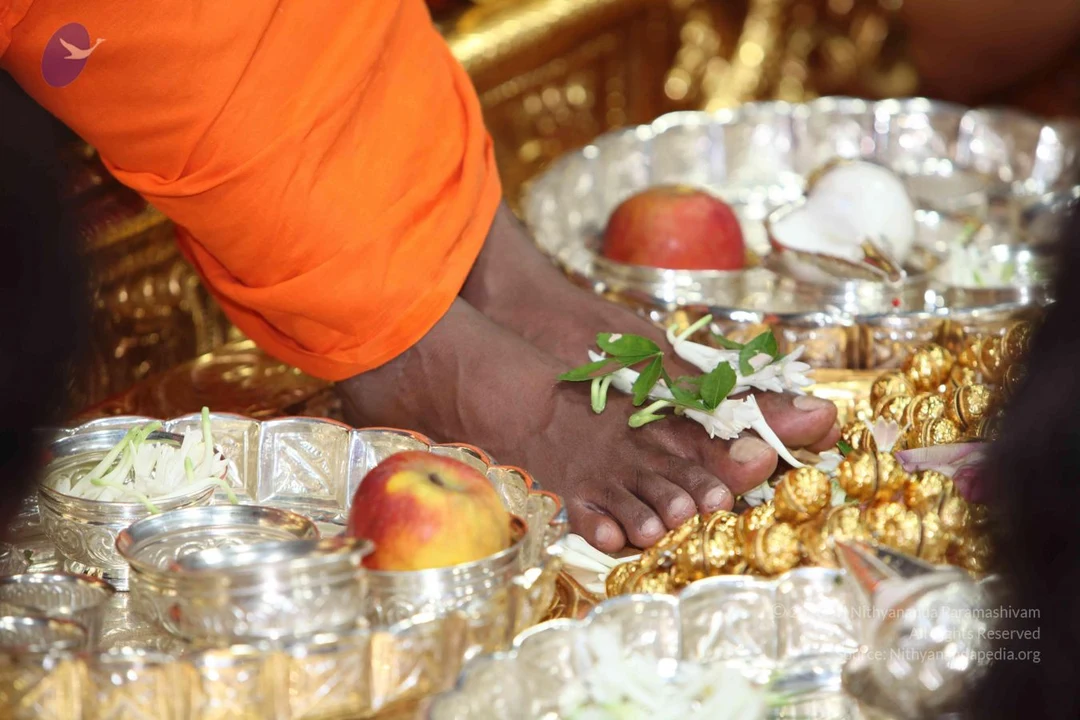
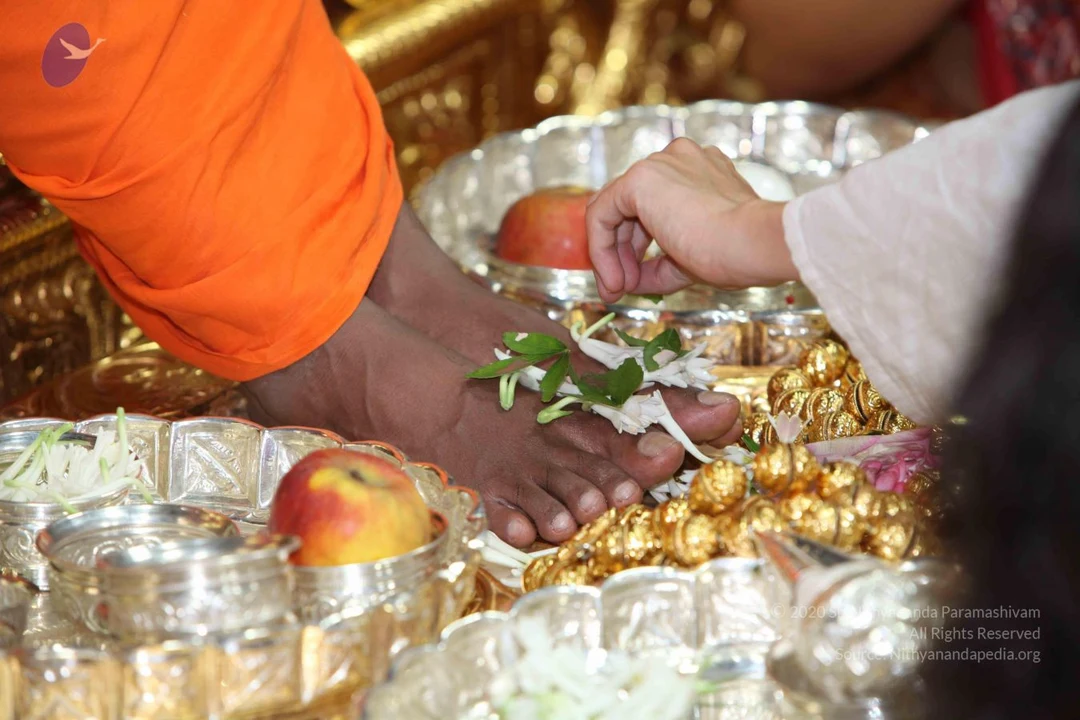
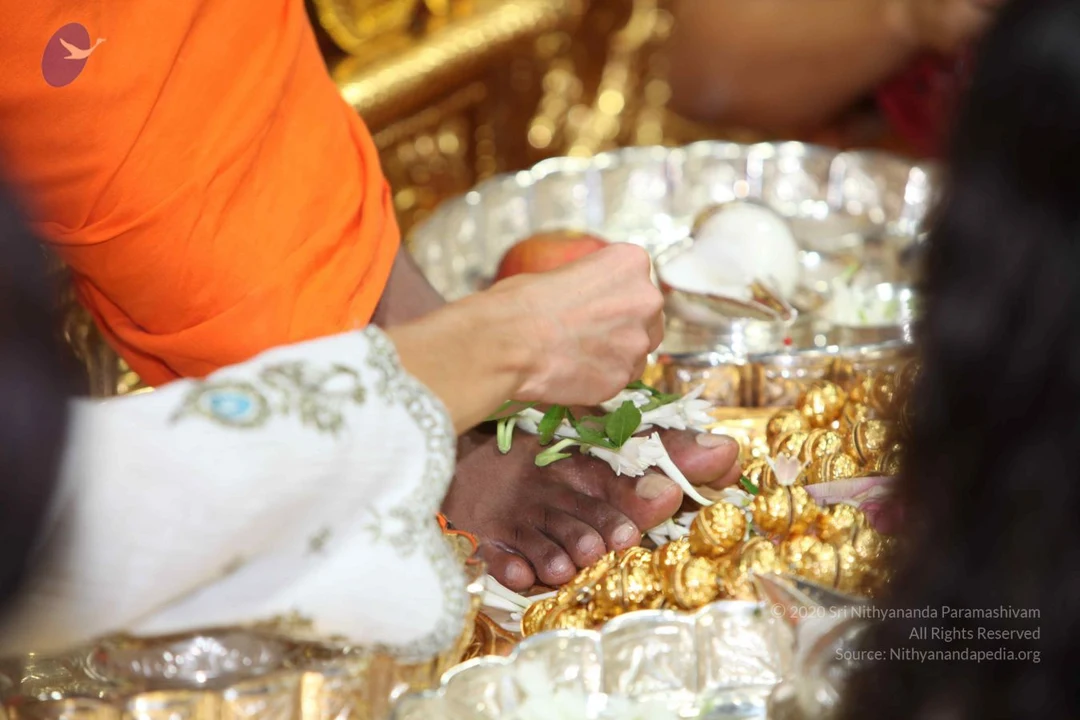
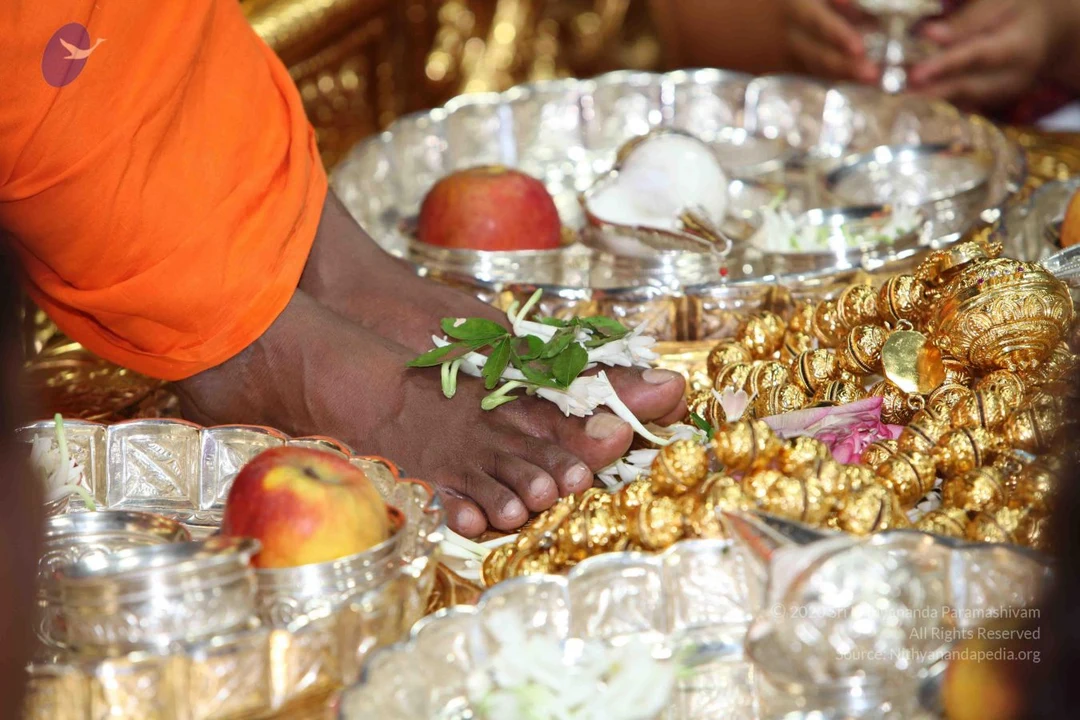
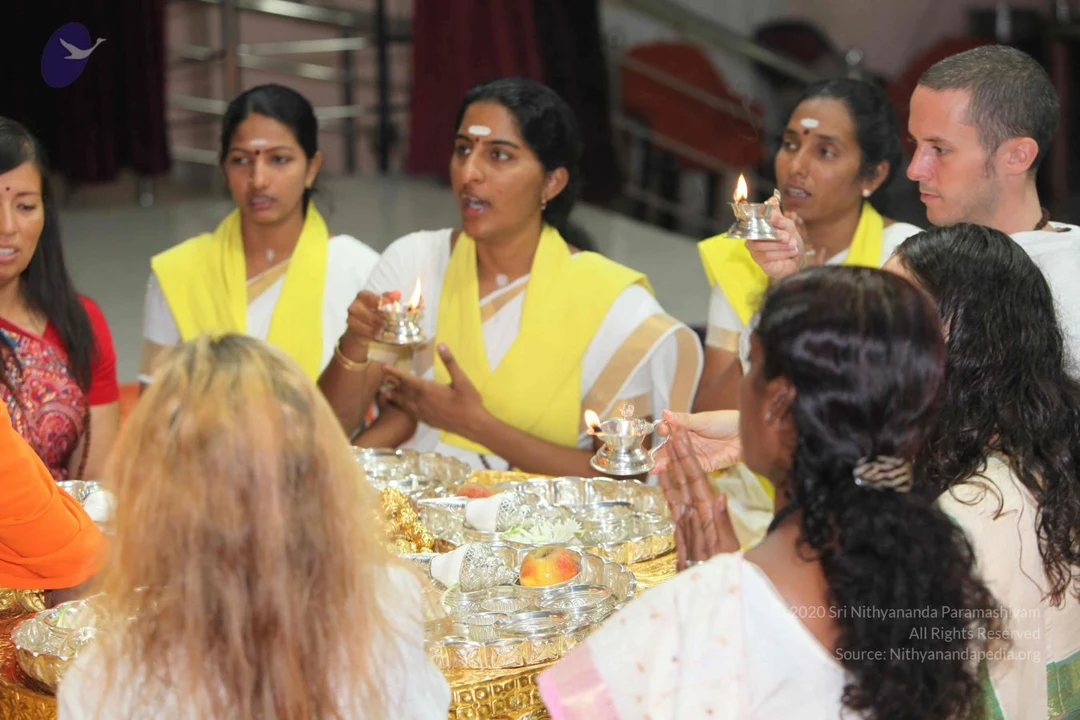
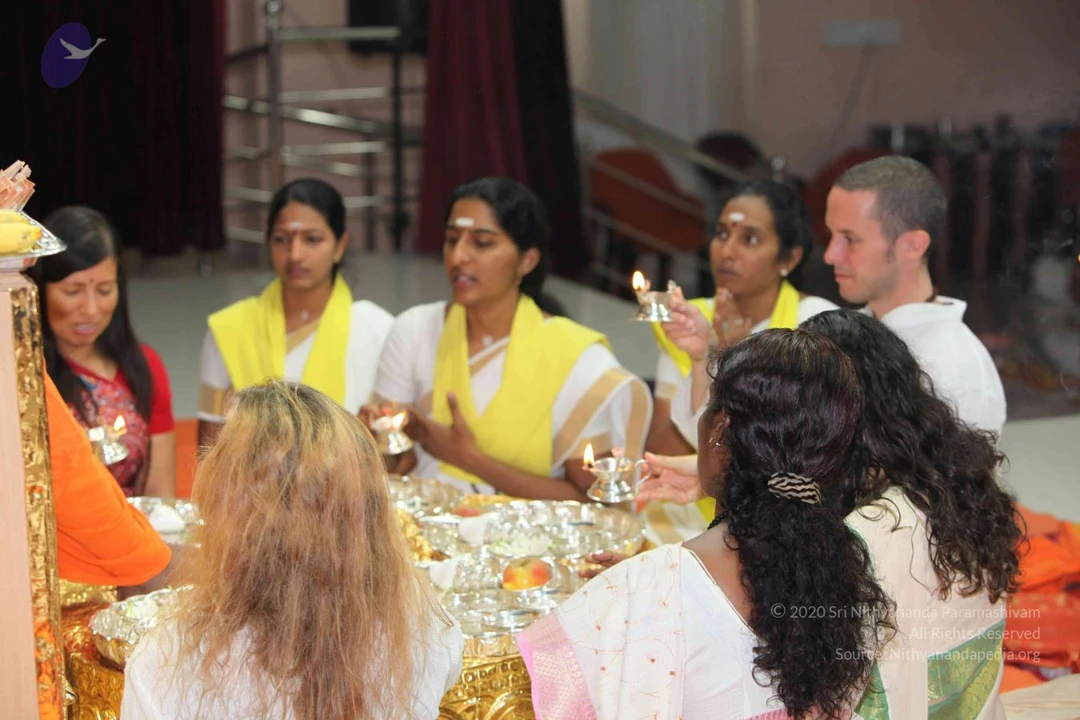
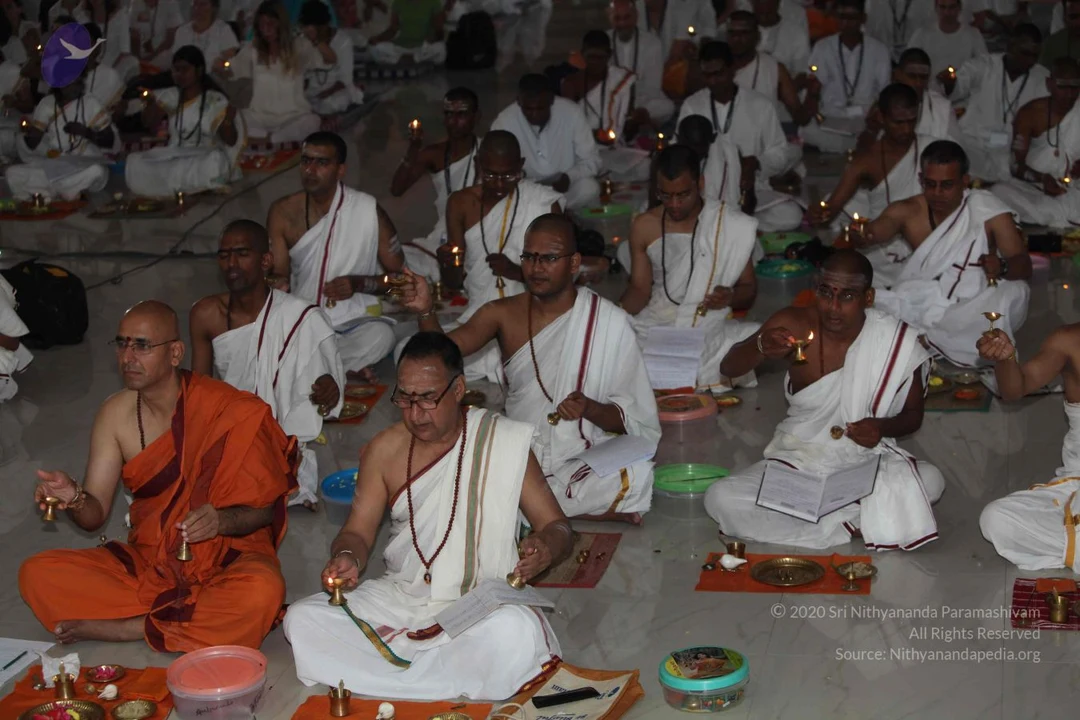
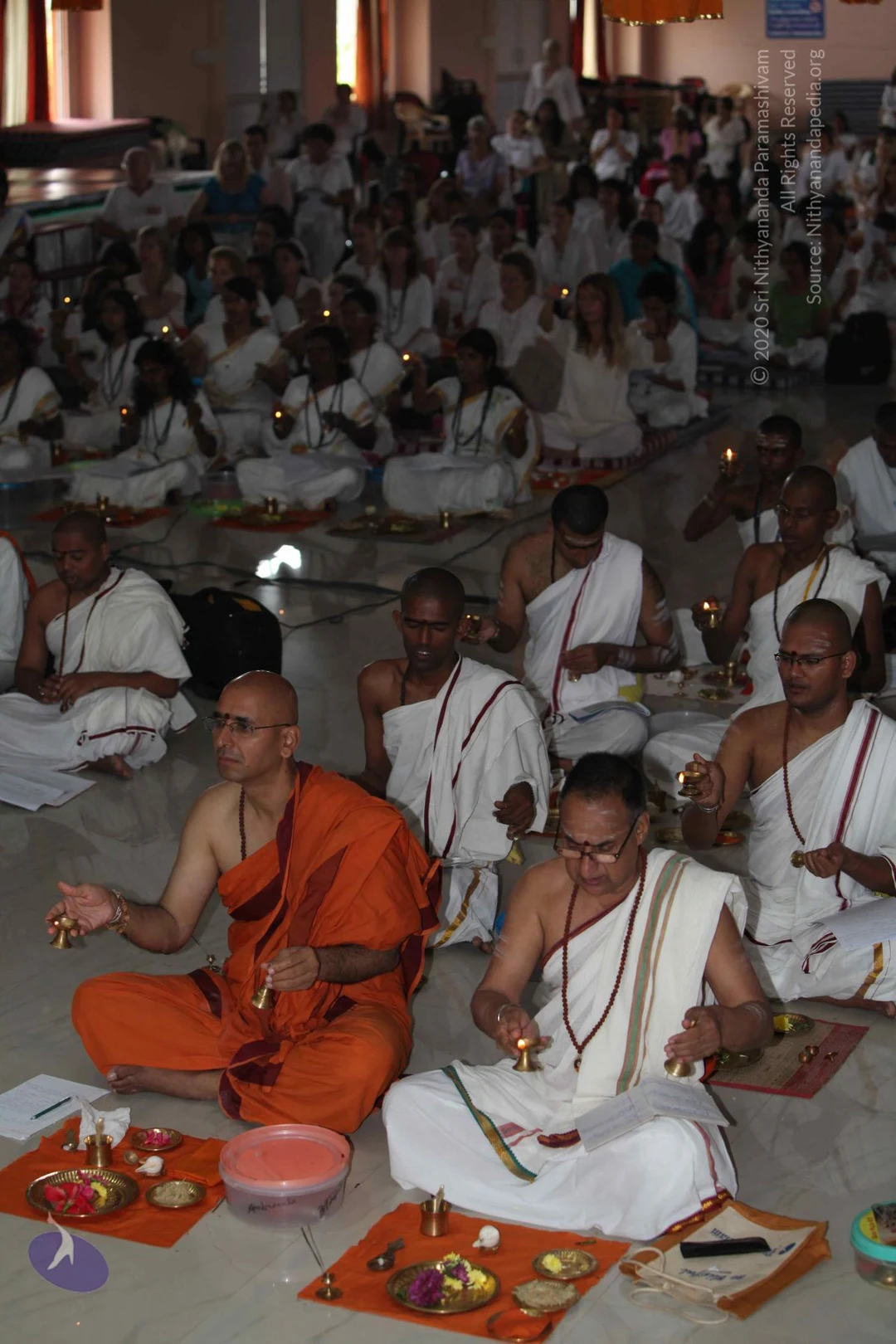
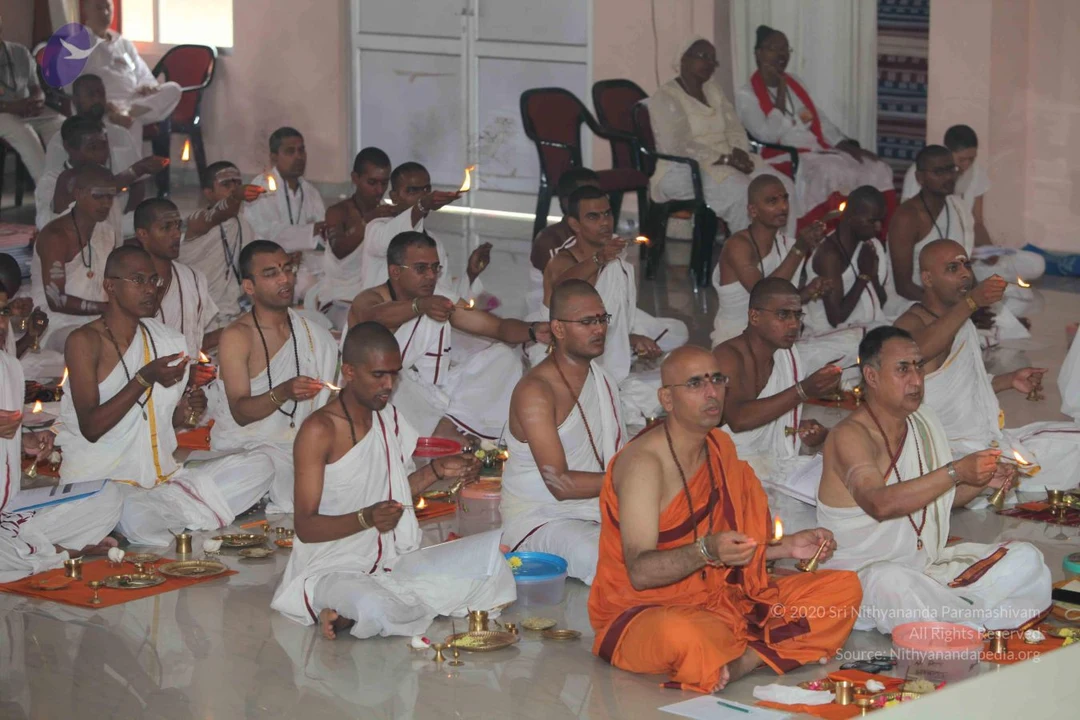
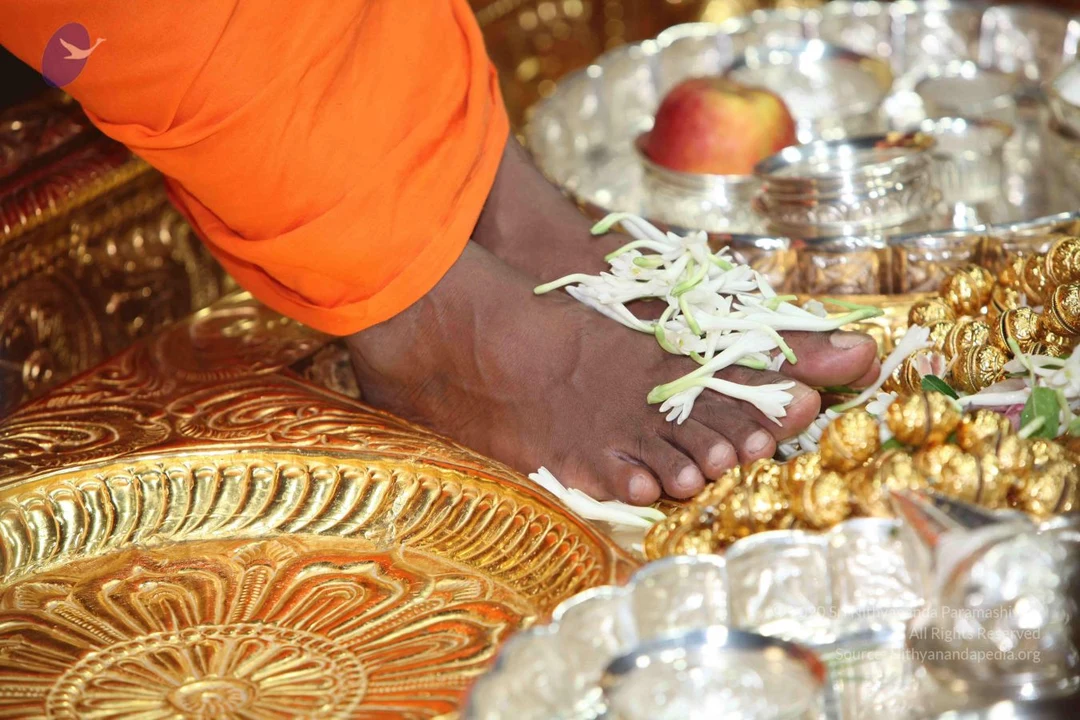
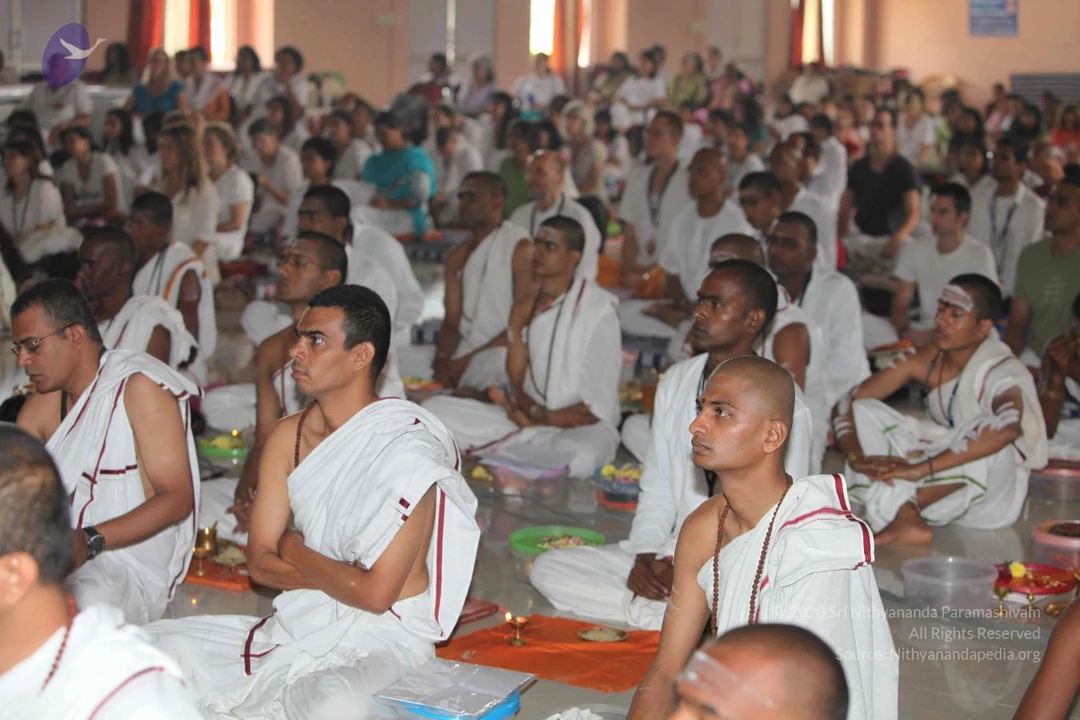
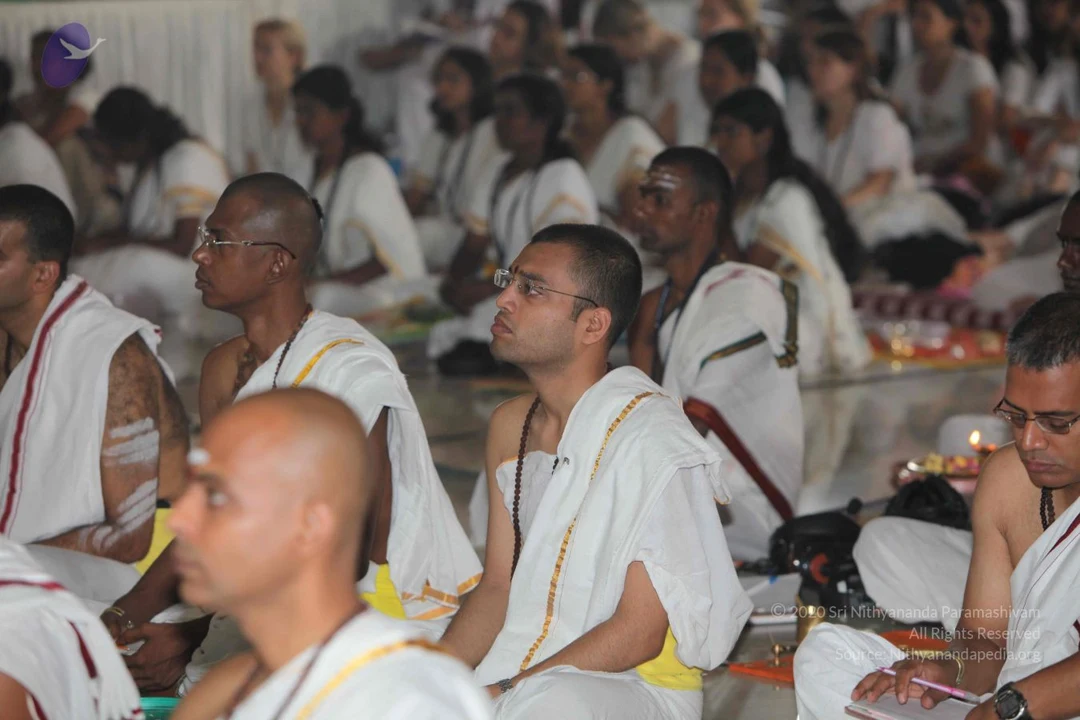
Close-up photo of a ritual offering being poured. Two hands, one with a bangle and a ring, pour liquid from a white bottle with a pink flower wrapped in cloth, over a pile of white flower petals on a golden tray. Around it are silver bowls and a red apple, with a golden lamp or vessel in the centre. Only hands are visible, no full faces.A seated group of men in white ritual dhotis and shawls performs a puja in a hall, each holding small brass lamps or bells. In the front left, a shaved-headed man wears an orange-saffron robe and rudraksha mala, holding a small brass bell. Beside him, a man in white with rudraksha mala and a red-striped shawl holds a brass lamp, and others in white sit on mats behind them with brass dishes, lamps and offering plates on orange cloths. Women in white saris are visible in the background. The orange-robed man lacks the long hair or ceremonial gold cues needed for an identification, so no identity is asserted. A dark bag and small plastic trays sit on the floor.

NAVARATRI-IN-KULIM-MALAYSIA

7 photosSource gallery
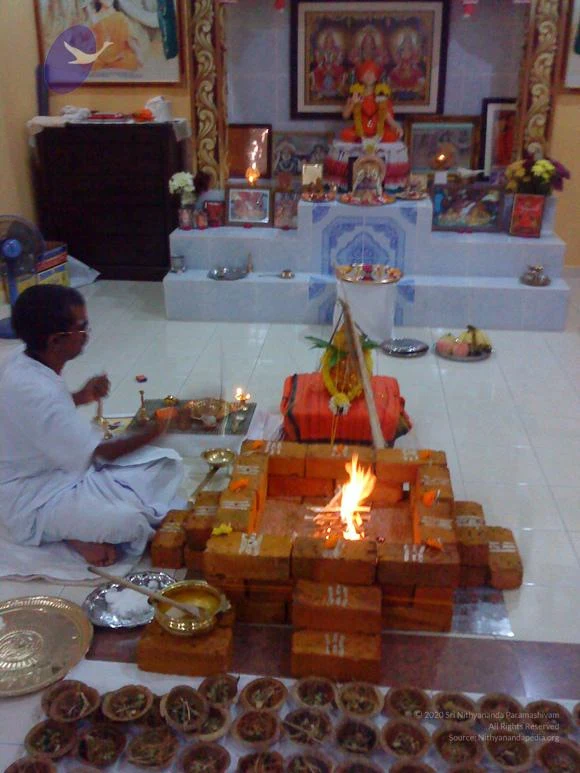
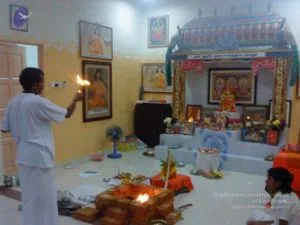
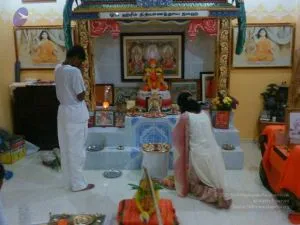
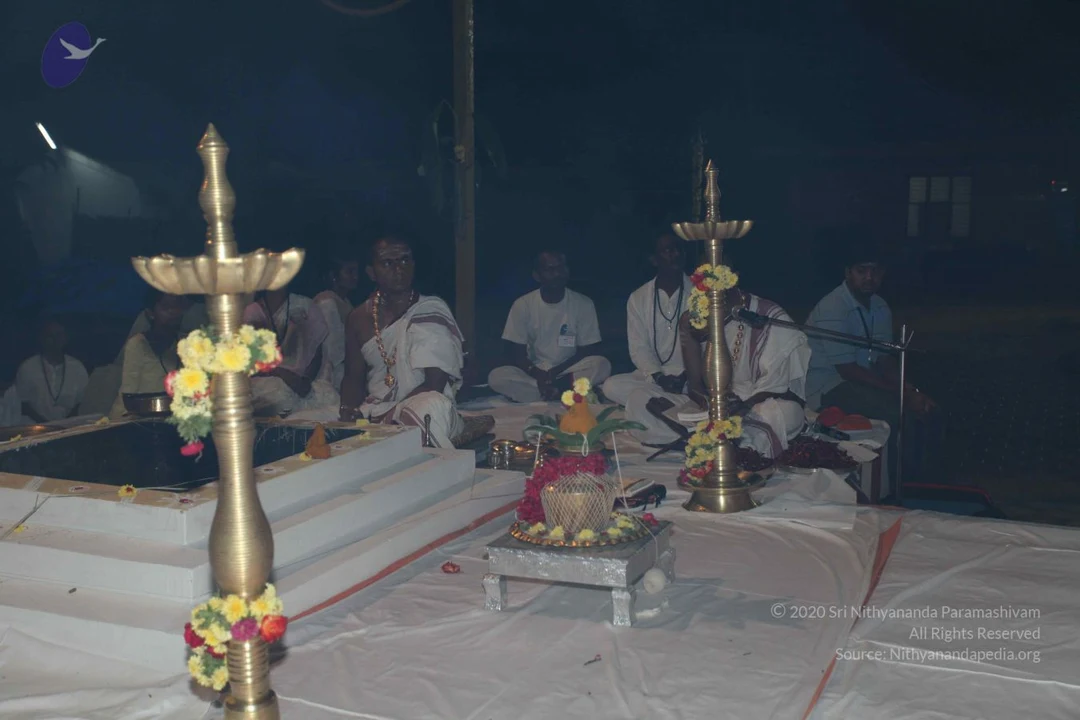
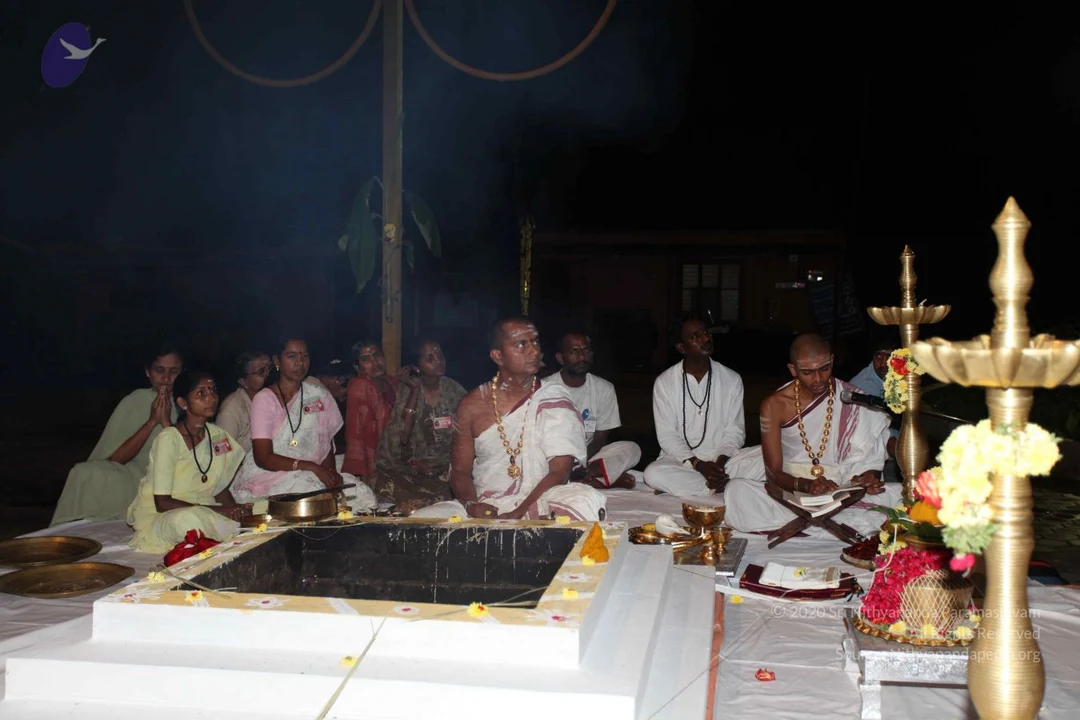
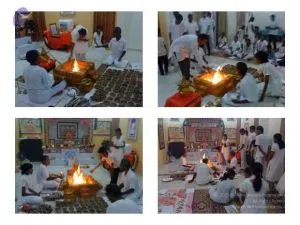
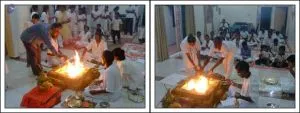
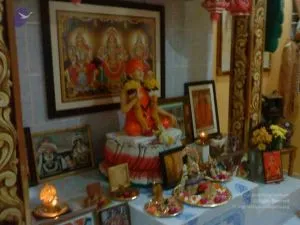
Indoor temple shrine room with a white tiled floor. A fire burns in a square pit built from stacked orange-brown bricks, with a small conical kalasha-style offering and a red cloth with yellow flowers beside it. A man in white clothing sits cross-legged at left, handling brass ritual items and small oil lamps, consistent with a homa or puja. Rows of small clay lamps line the foreground. Behind the fire, a shrine holds a deity murti and framed pictures on a white-tiled platform, with flower arrangements and a brass plate of fruit at right.A four-panel collage of photographs showing a ritual fire ceremony in a temple-style hall. In each panel, people in white clothing sit on a mat before a lit fire or oil lamp flame, with a small figure in orange clothing seated among them in some panels. Brass vessels and offerings are arranged near the flame, and a framed deity image hangs on the wall in the lower panels.A two-panel collage of a homa or yagna in a white-walled hall. In each panel, a fire pit with a large flame sits at the centre, and people in white ritual clothes sit around it, one man in white tending the fire in the left panel. Behind them, a seated audience in white is visible, with a stone floor and pillars. Offering vessels sit near the fire pit. The collage is a photographic composite and shows a fire ritual rather than a discourse or talk.A photograph of a seated congregation in white clothing facing away from the camera toward a shrine at the front of a room. Many devotees, mostly in white kurtas and white salwar-style outfits, sit cross-legged on a white floor covering, some with heads bowed. At left, a small altar holds lit oil lamps and deity images, and a larger framed portrait hangs nearby. A green screen or banner is visible at the right. The setting appears to be an ashram hall during a satsang gathering.A photograph of an indoor satsang hall with a seated audience of children and adults on the floor facing the front. At the front, a figure in white clothing sits on a raised seat in front of a shrine or altar area with framed images and lamps. Several seated listeners are visible in the foreground, some in light clothing. The room has yellow-toned walls and wooden furnishings.A photograph of a home or ashram altar shrine set against a wall. A framed painting of three goddesses sits above, and a seated saffron-clad figure statue or murti in orange robes is centred among framed pictures, a small oil lamp with flame, a brass plate of offerings and yellow flowers. No physical people are visible.

PADA-POOJA
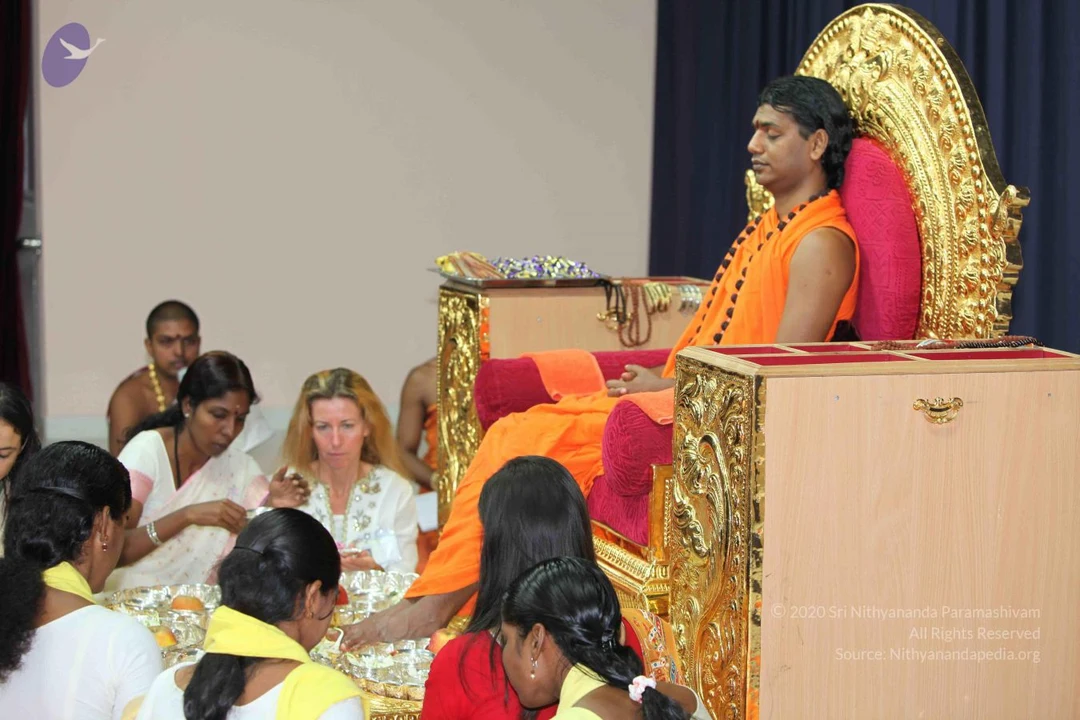
79 photosSource gallery
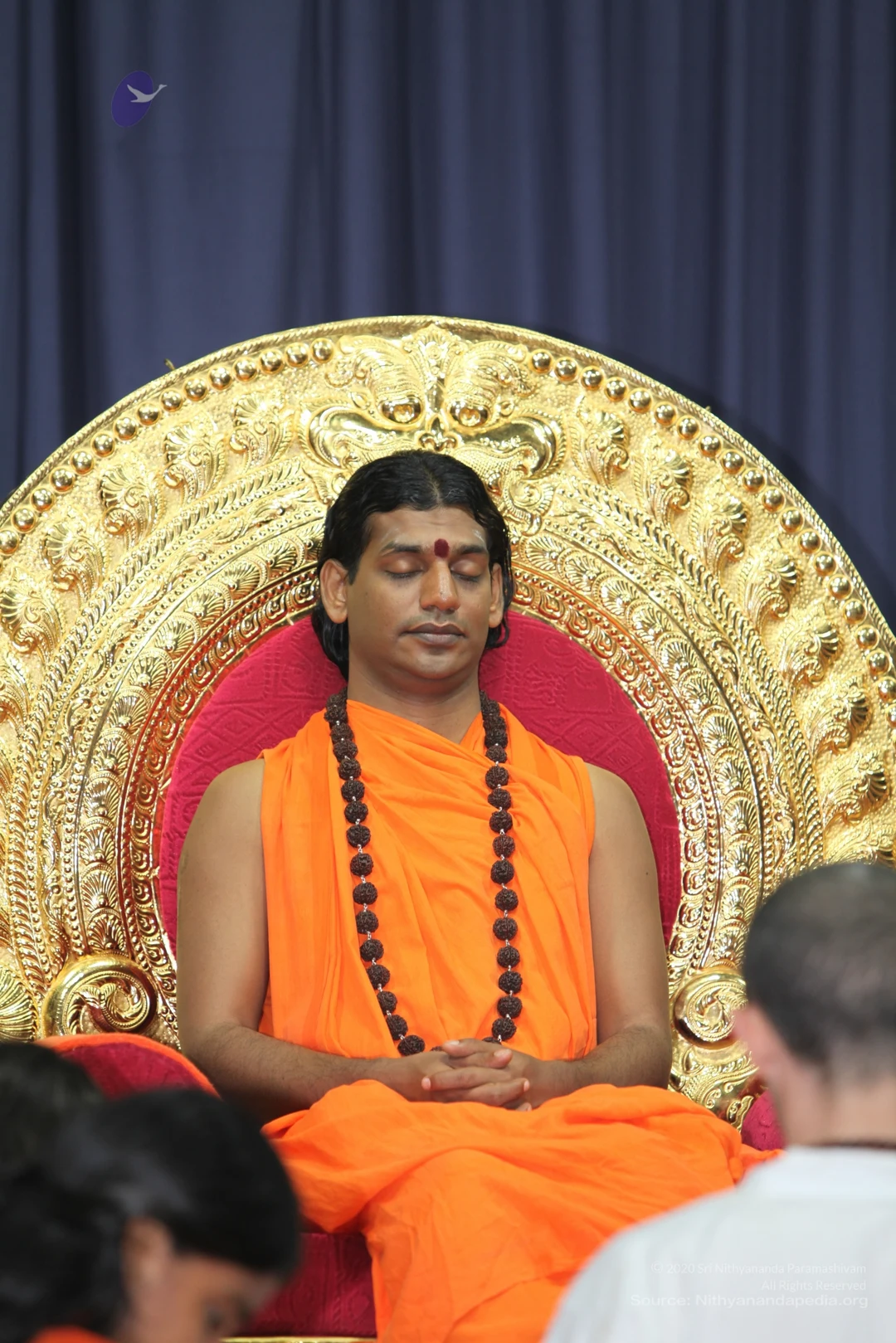
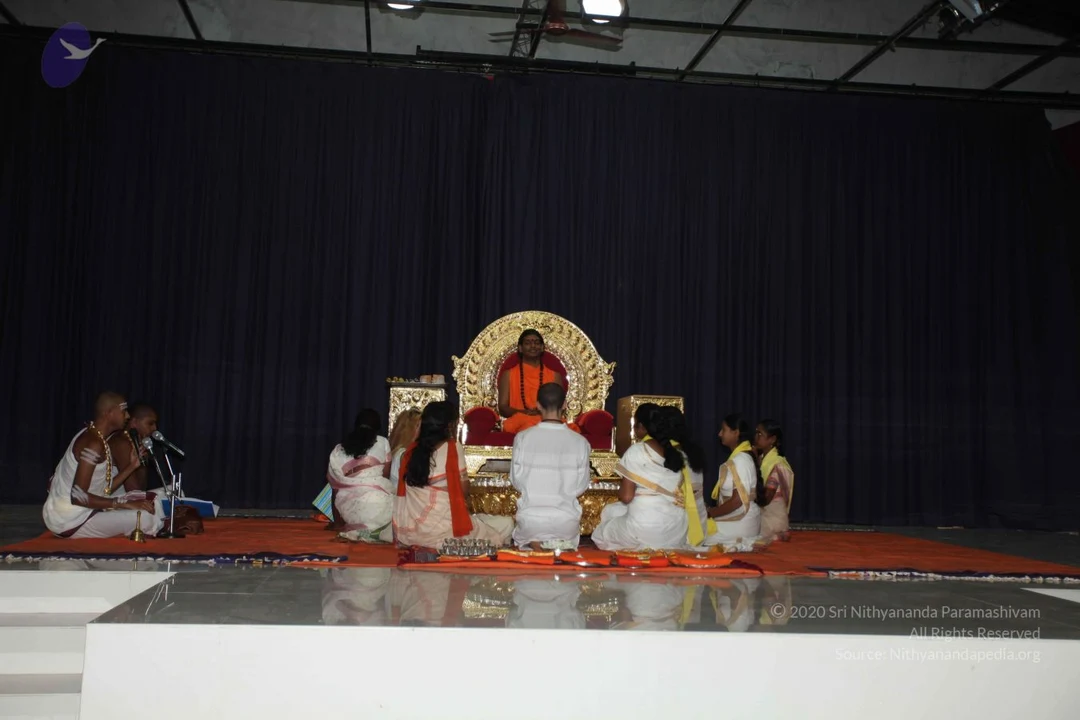
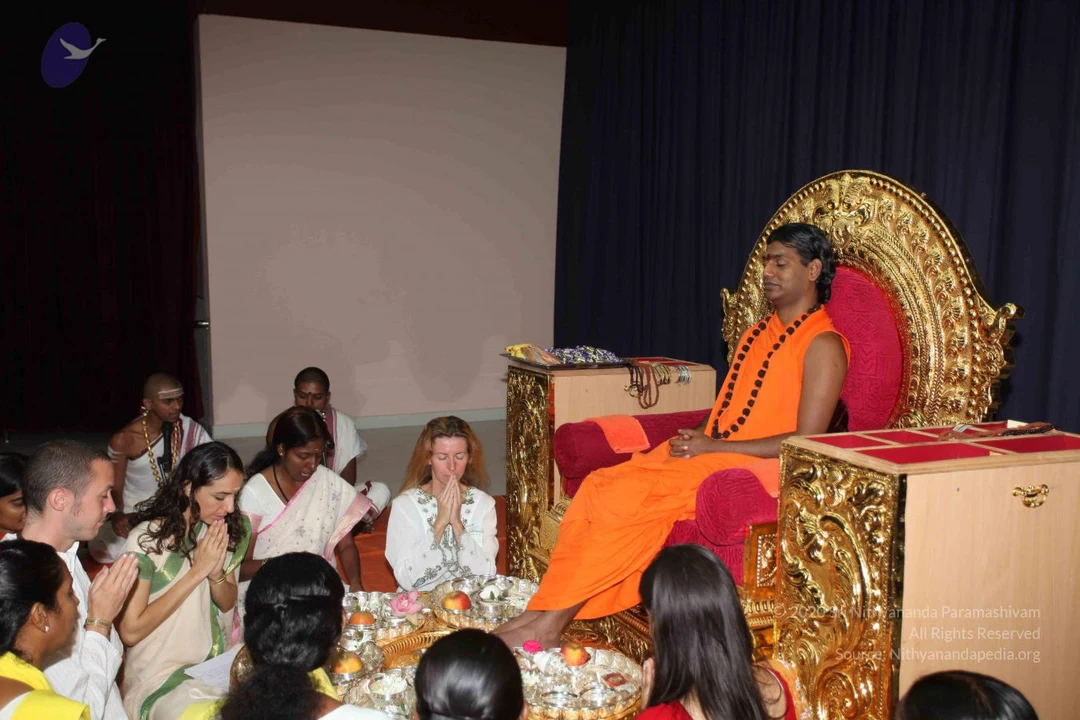
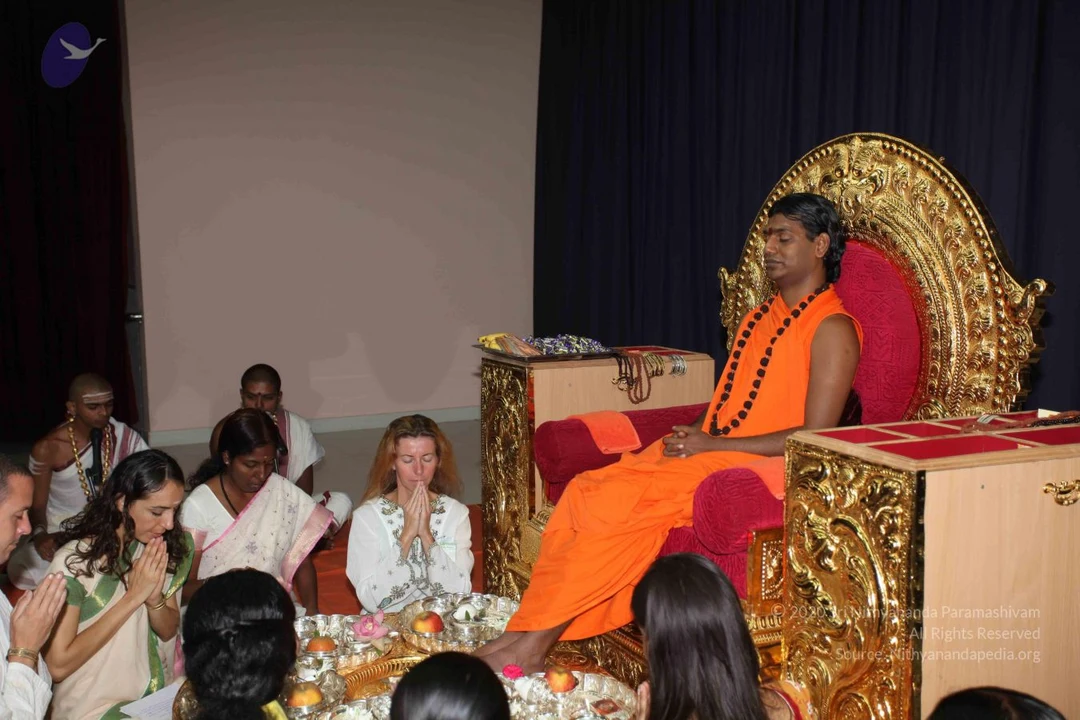
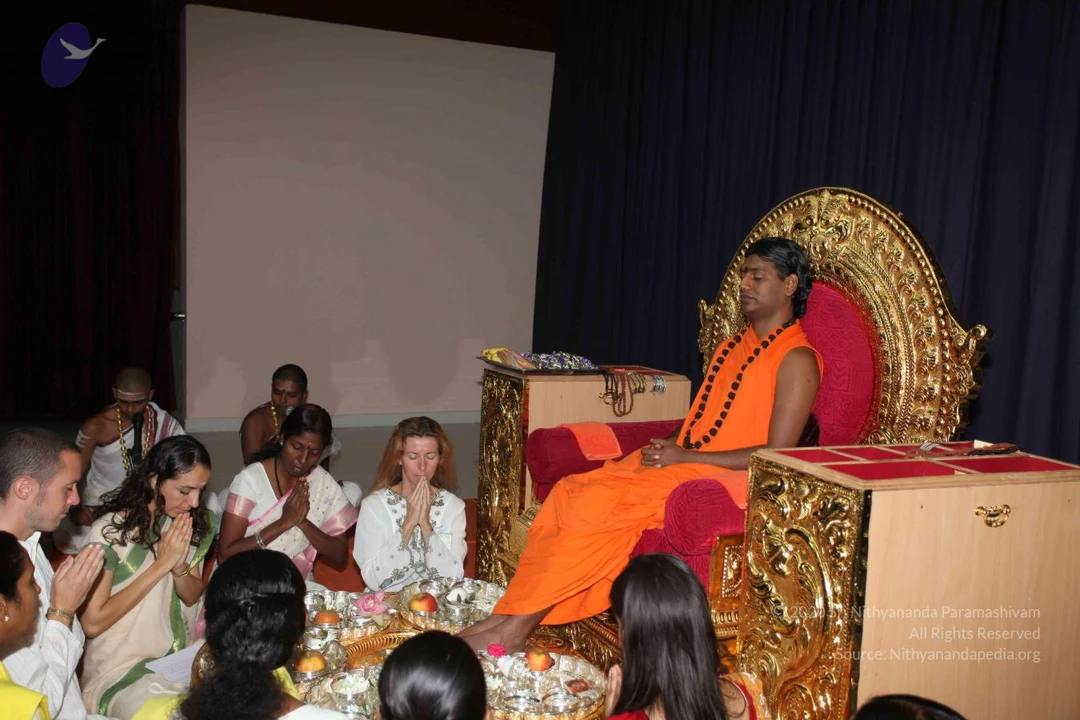
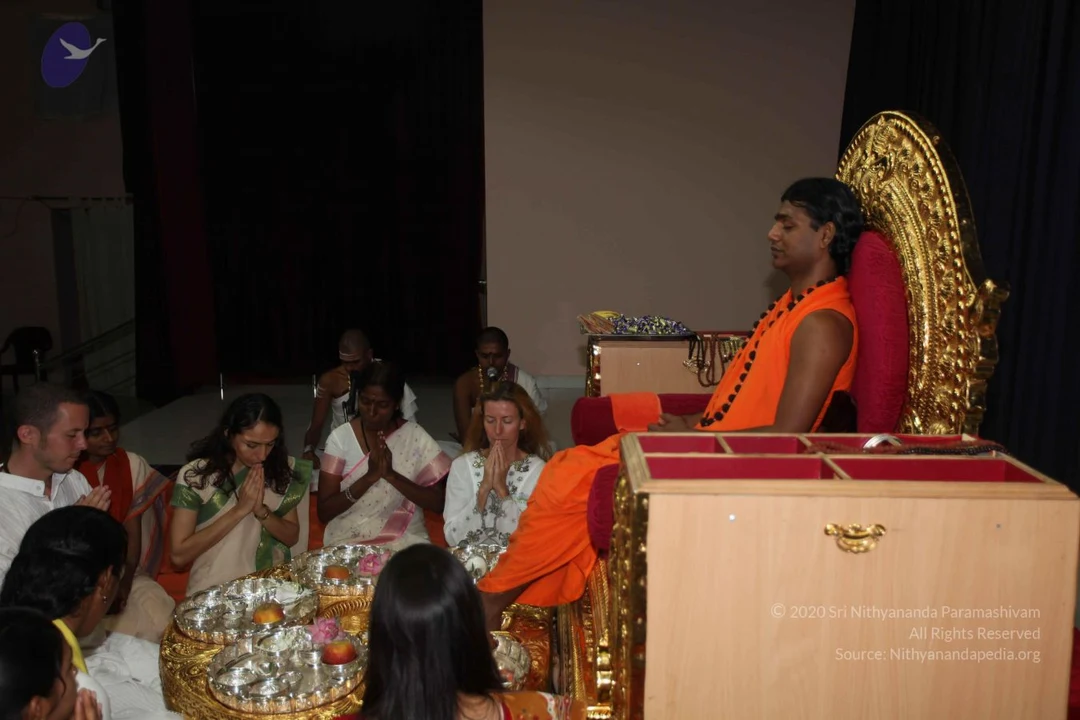
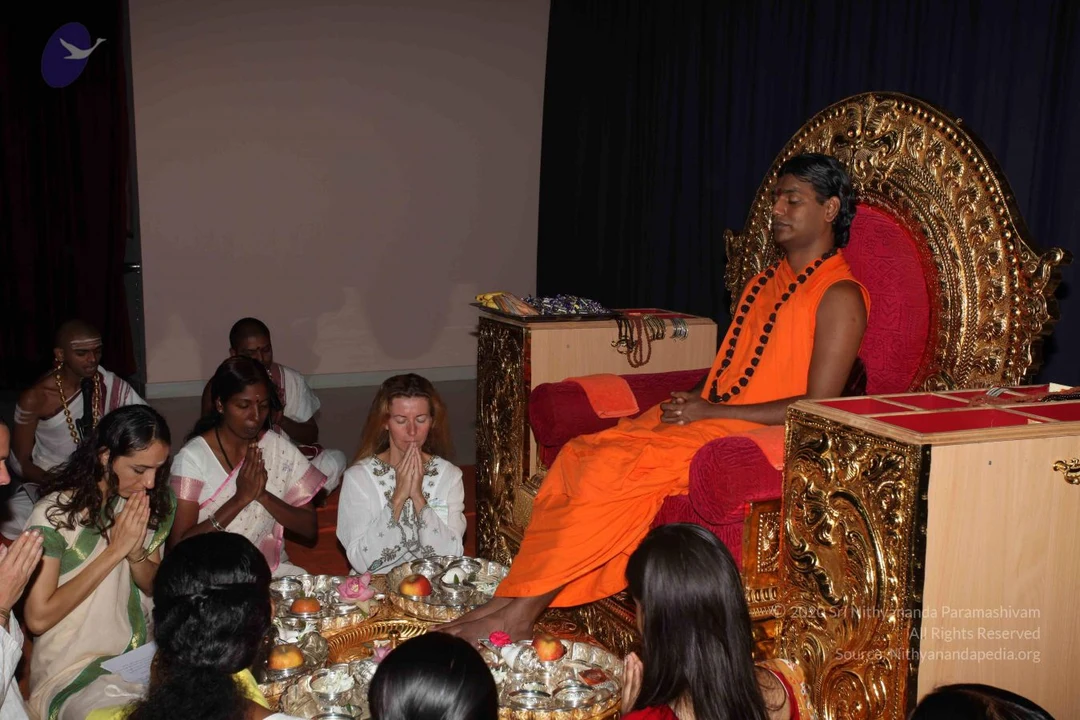
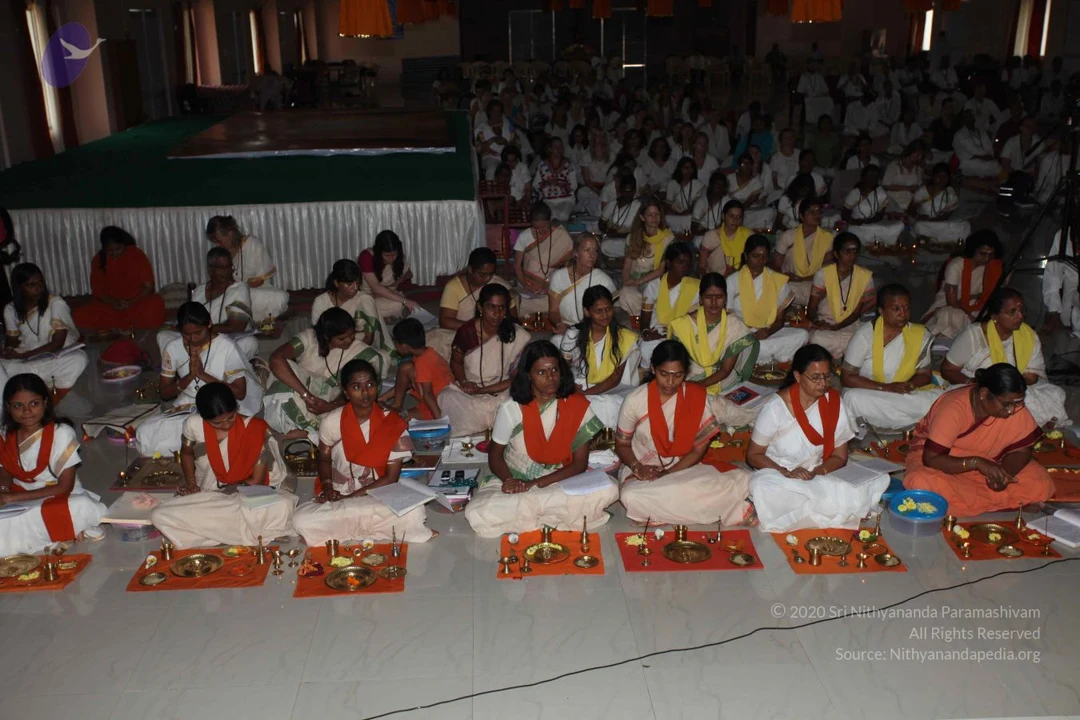
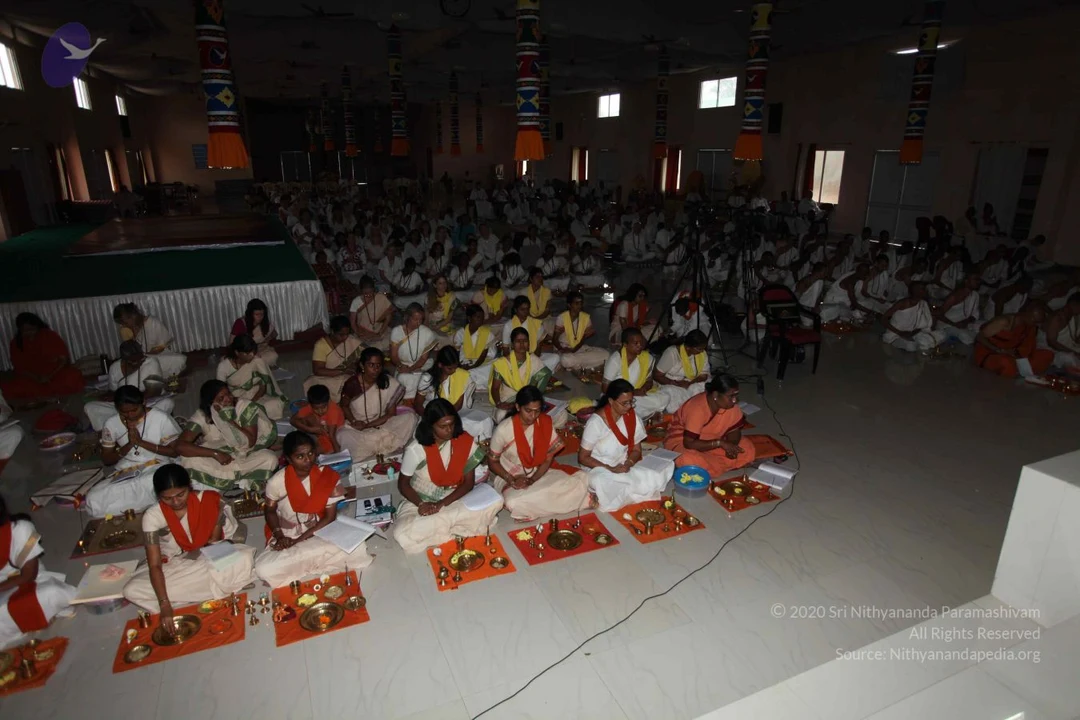
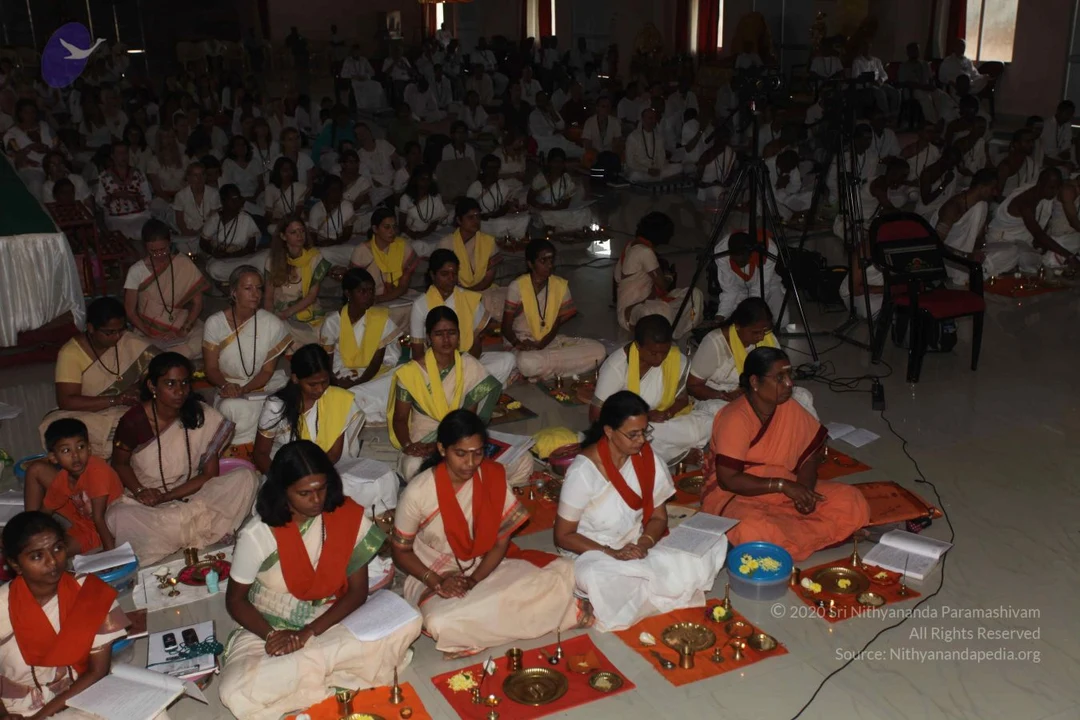
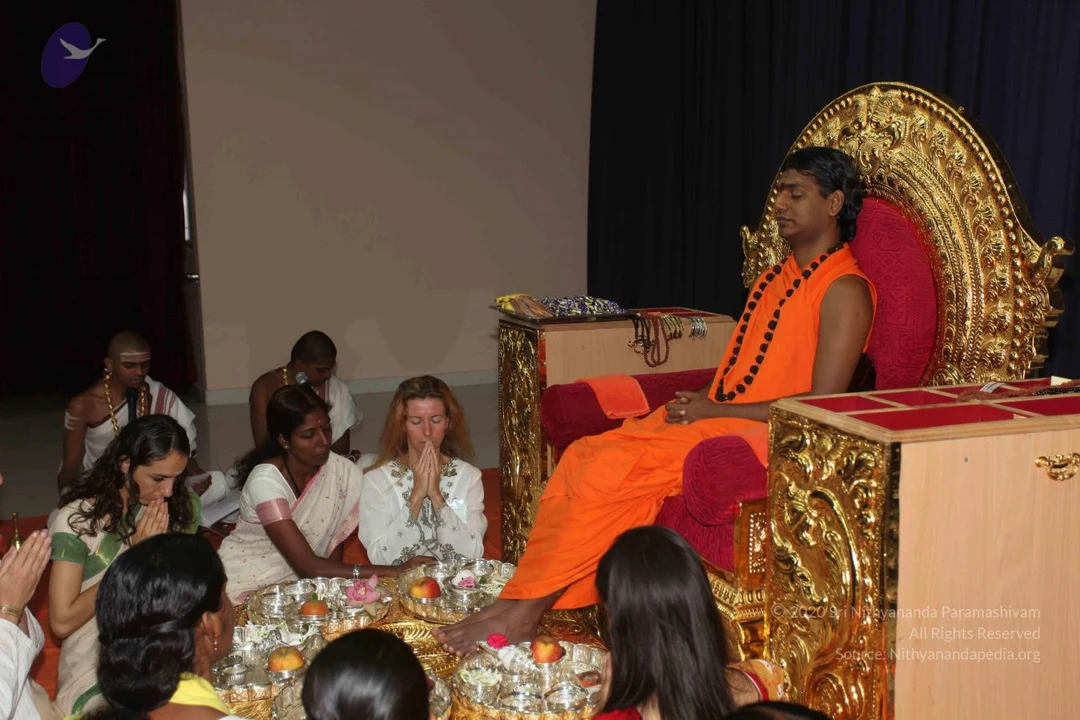
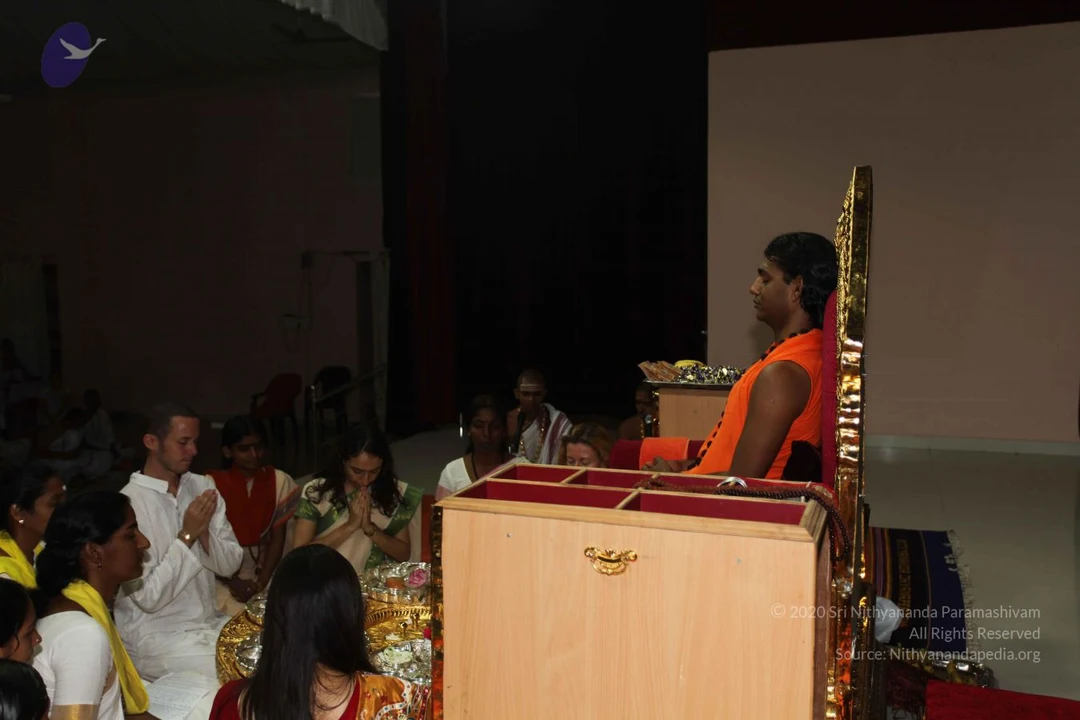
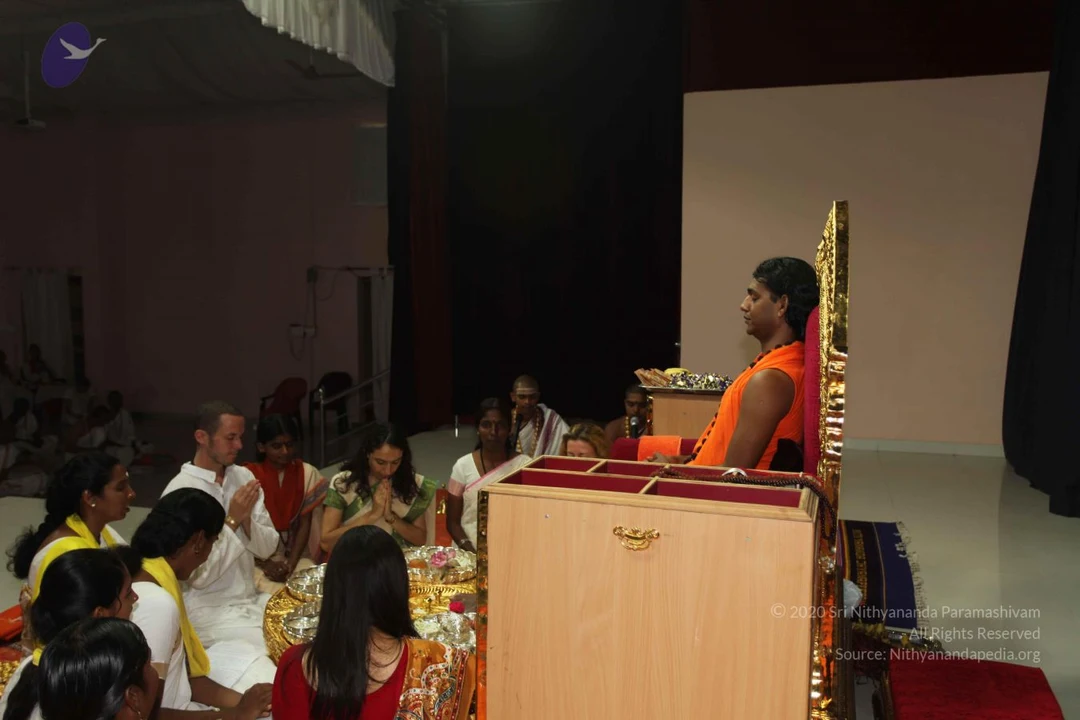
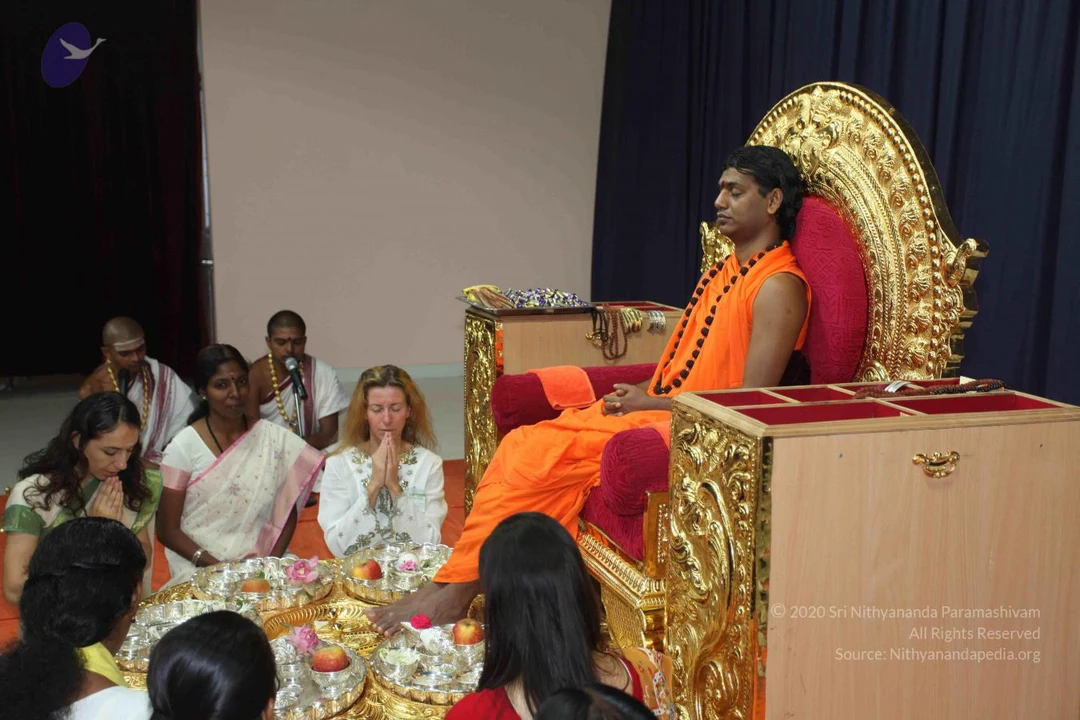
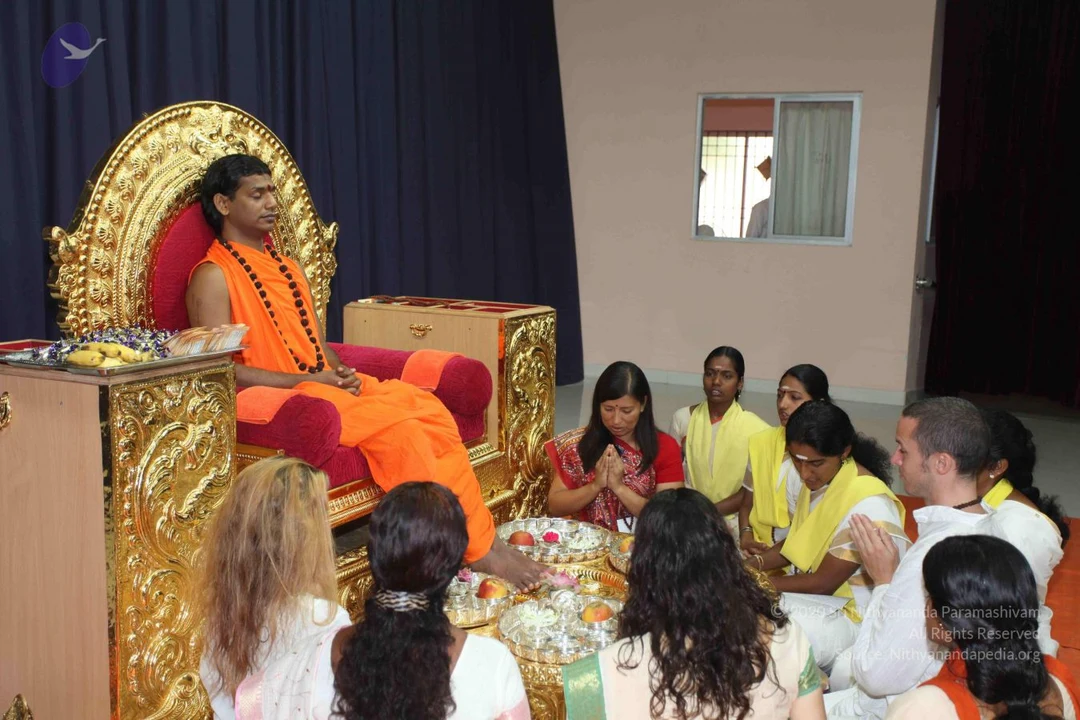
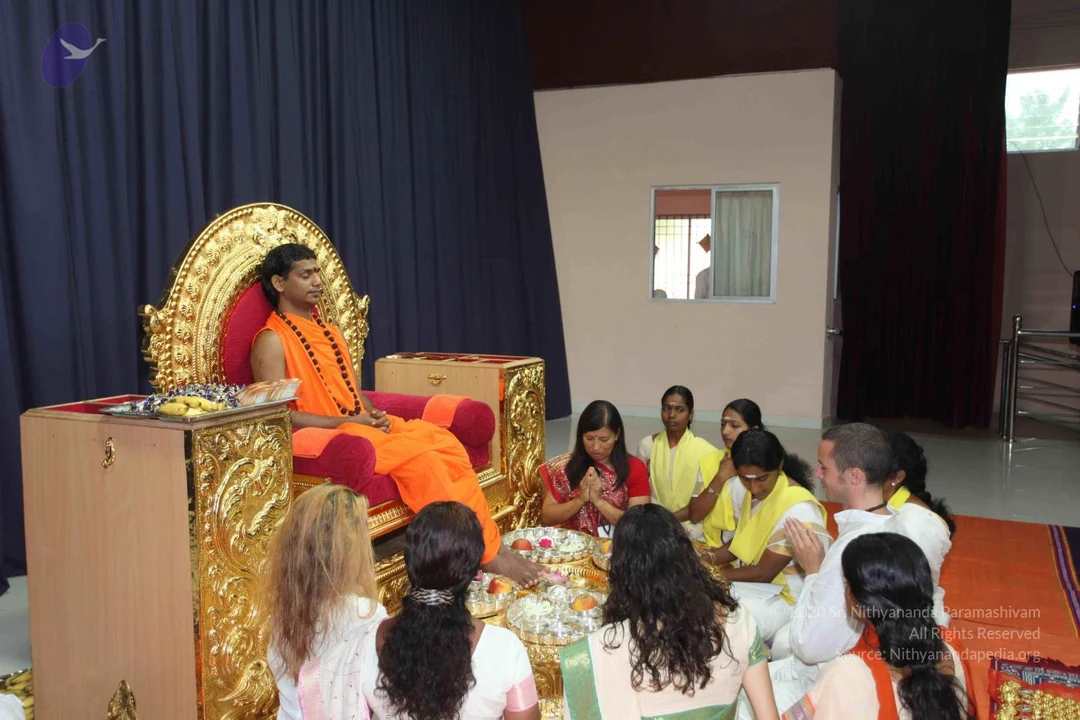
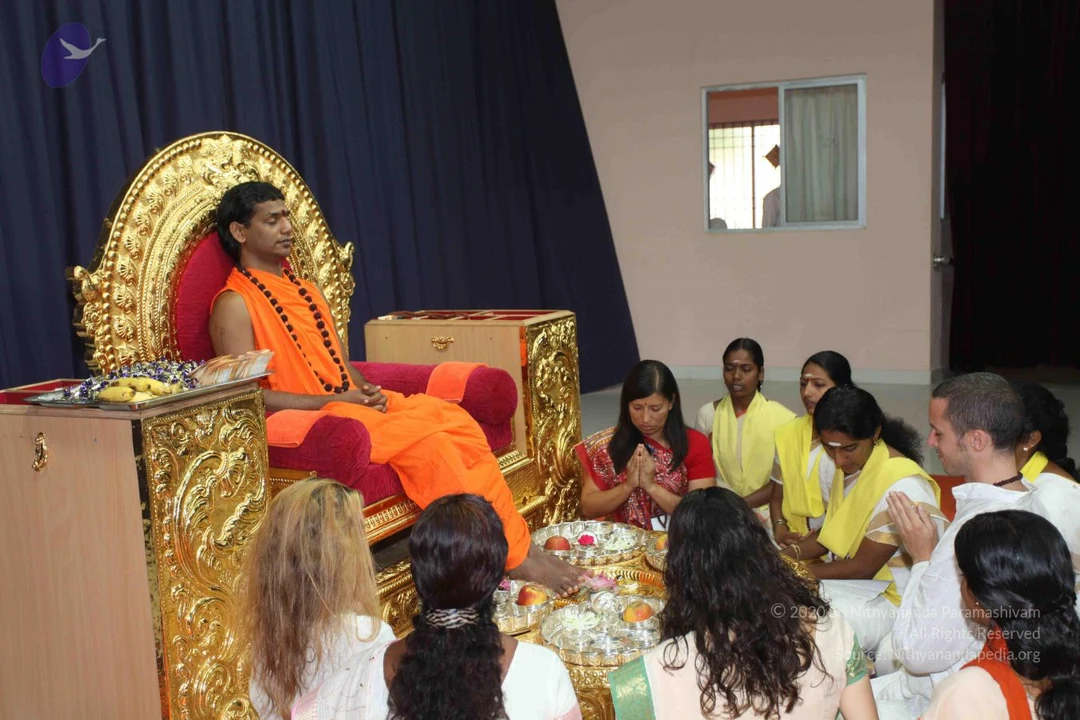
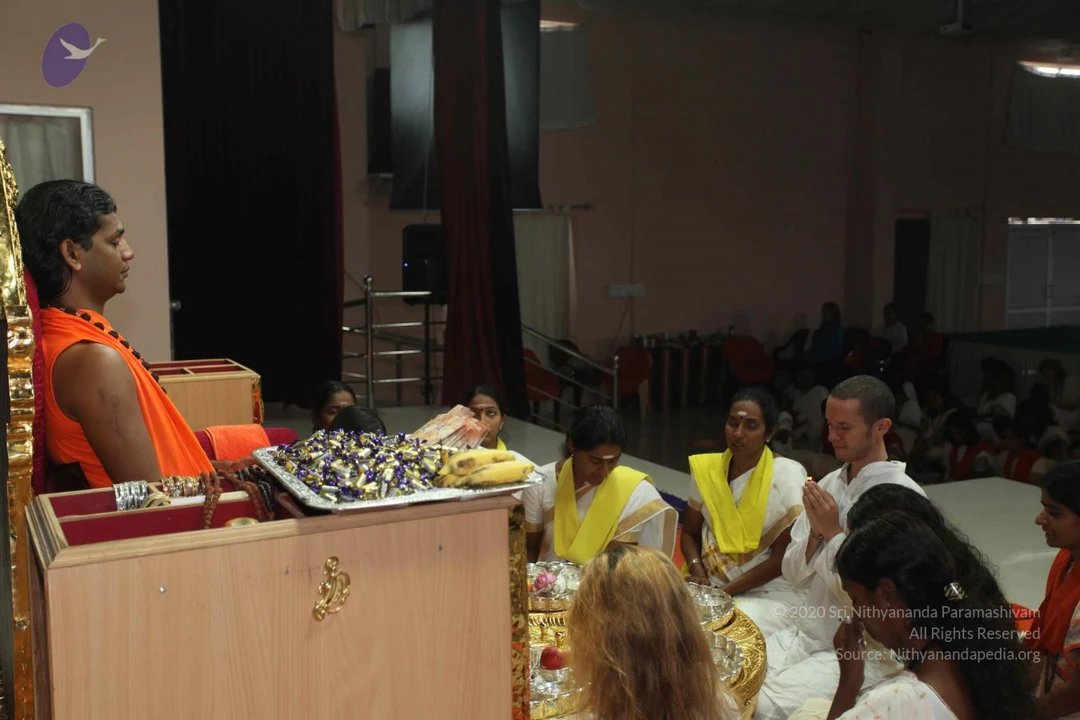
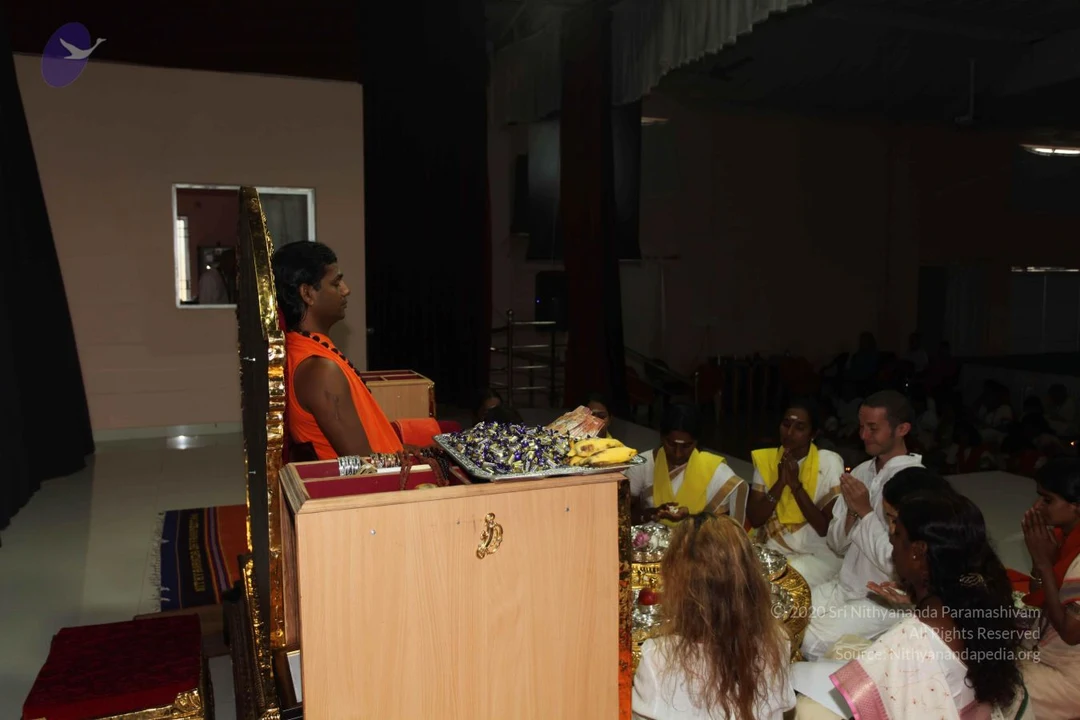
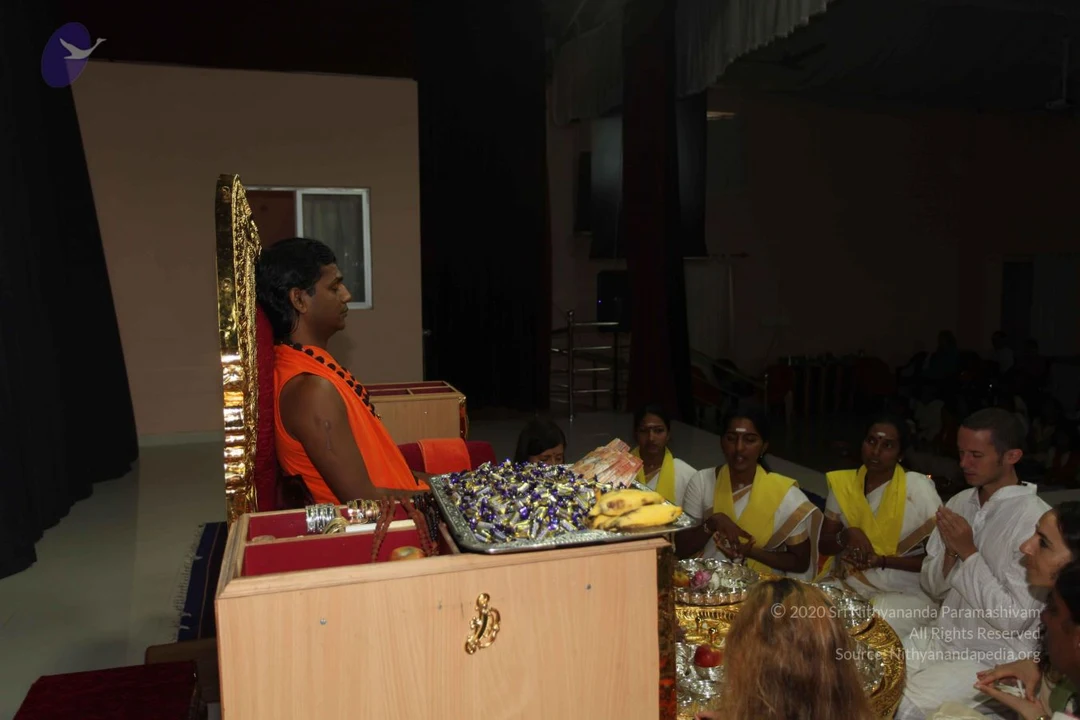
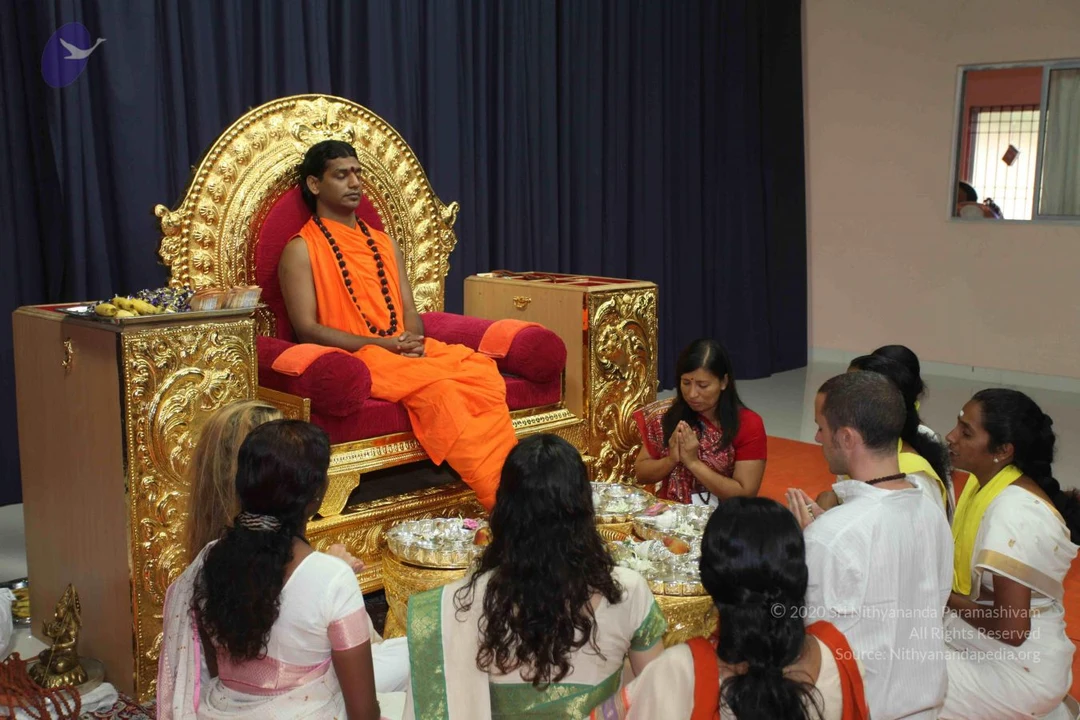
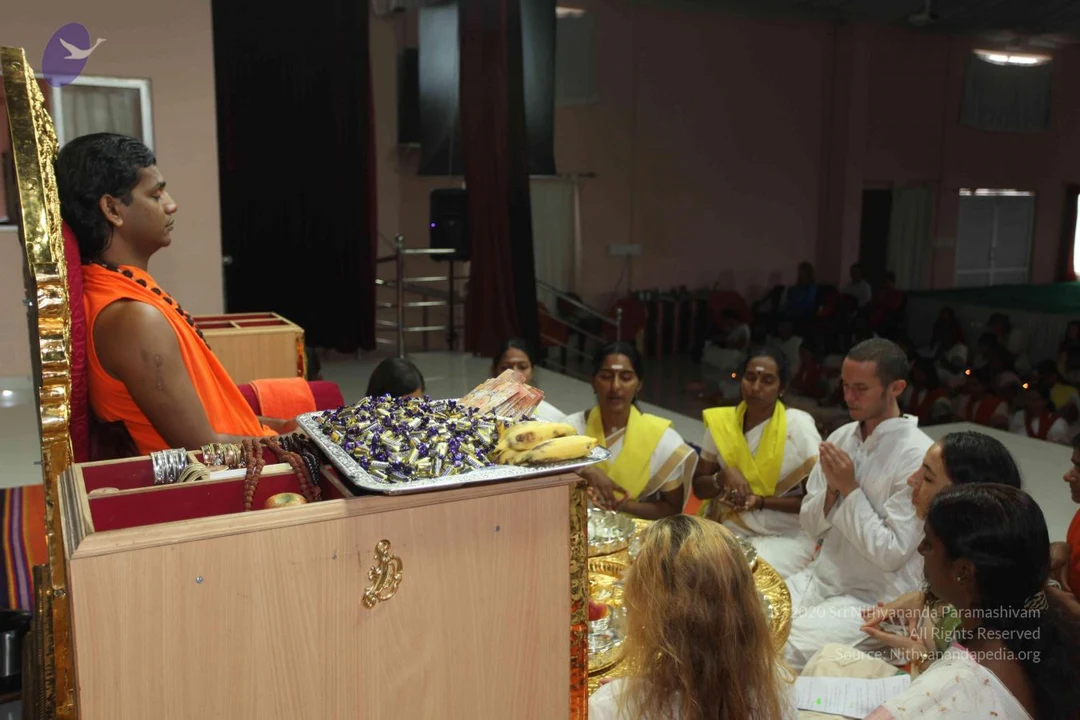
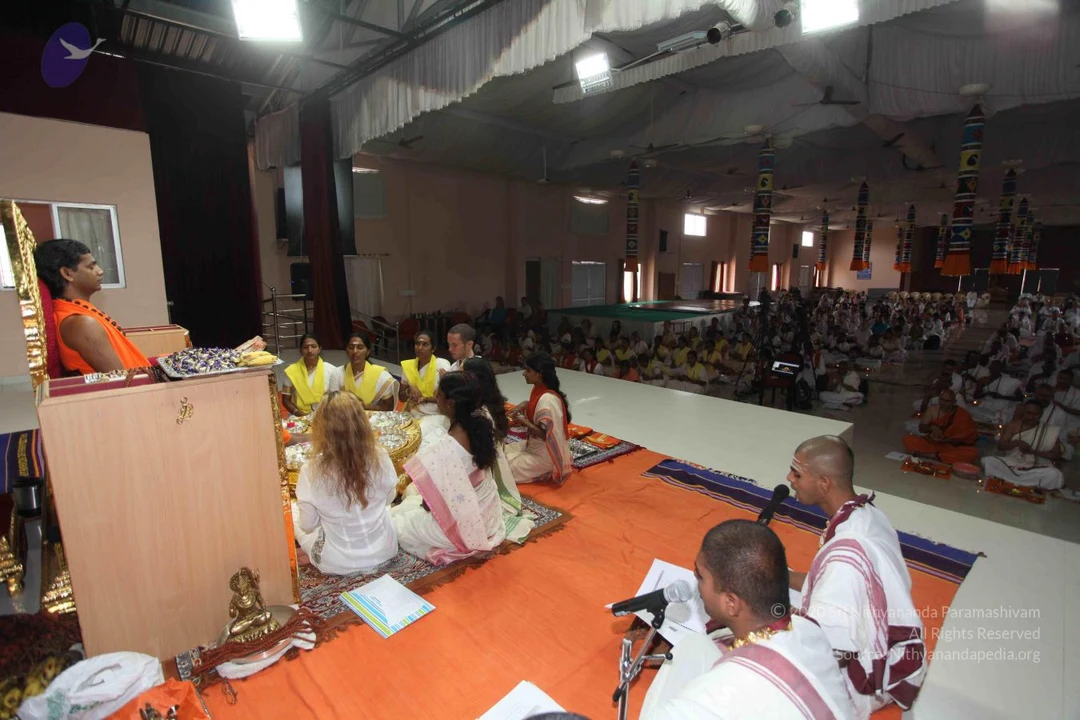
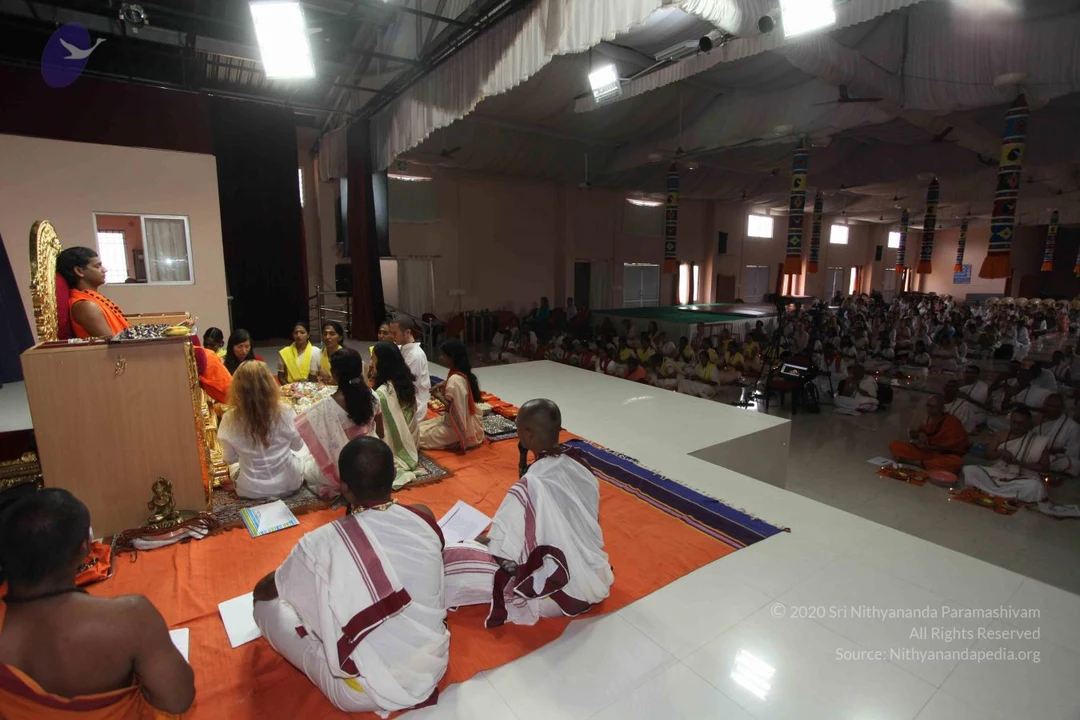
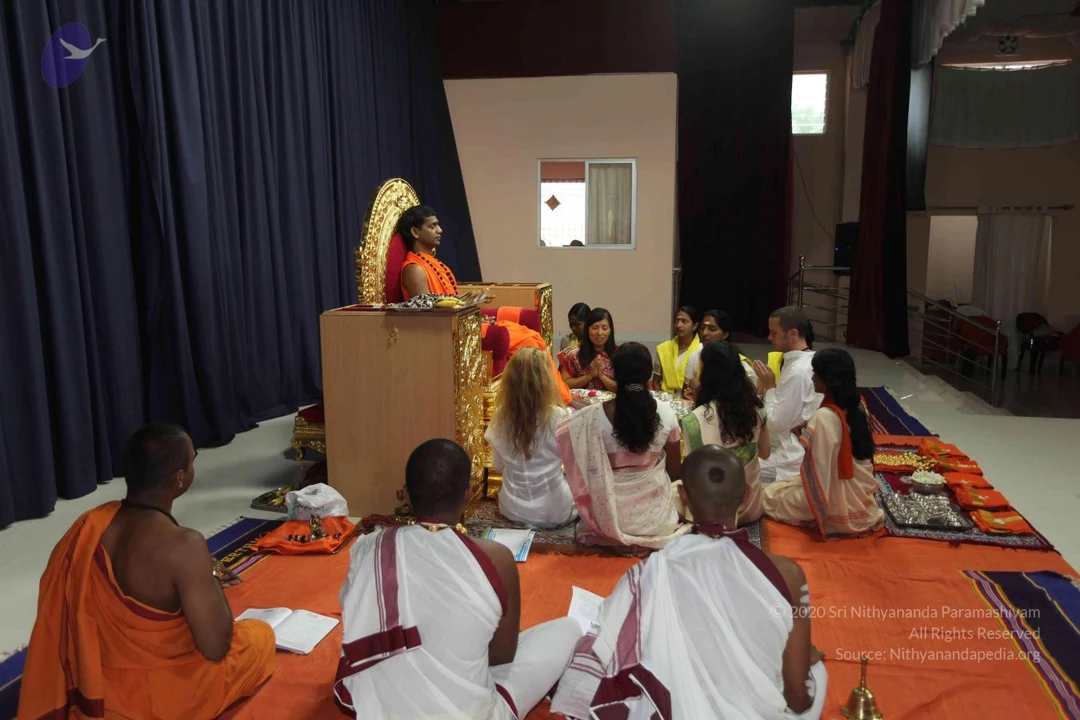
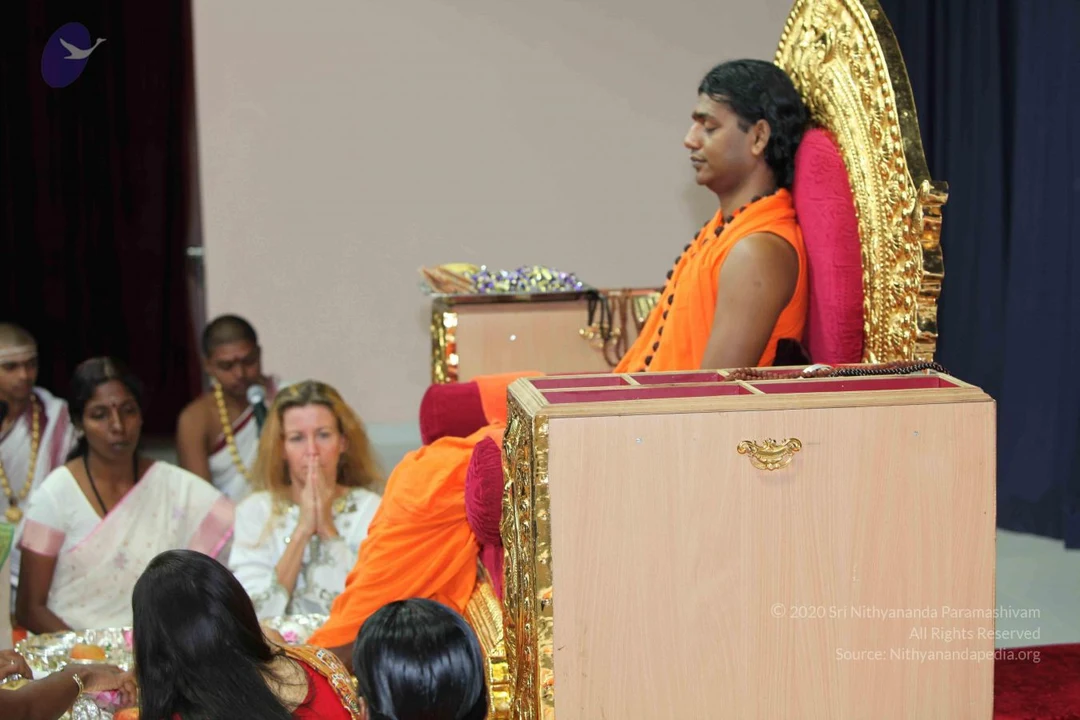
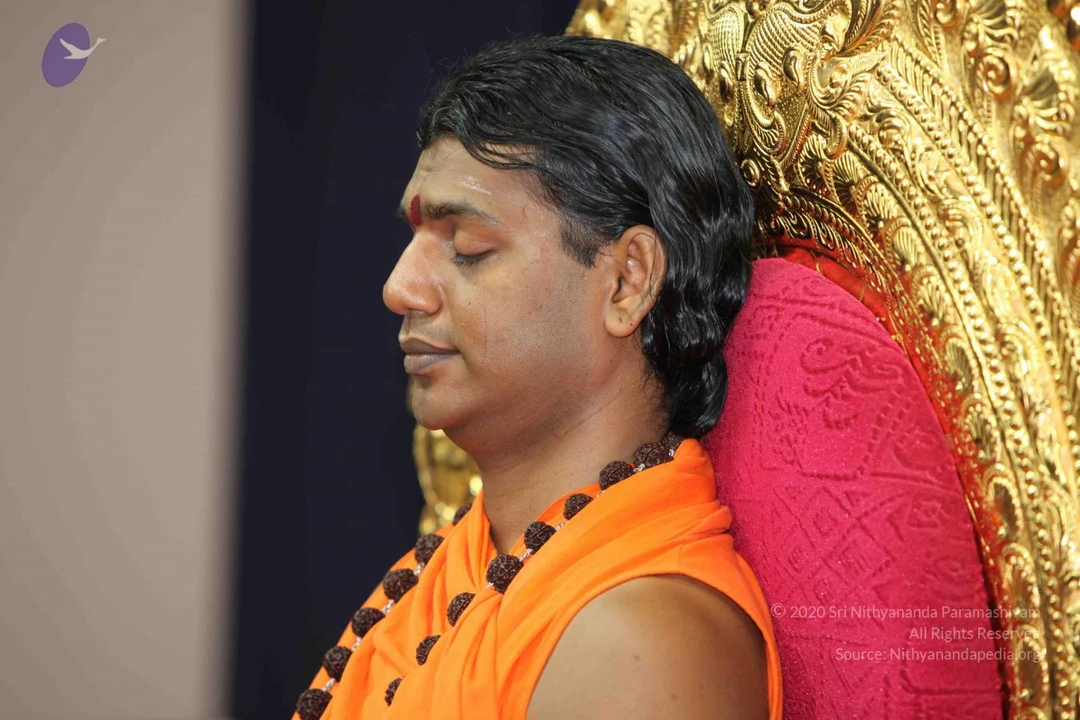
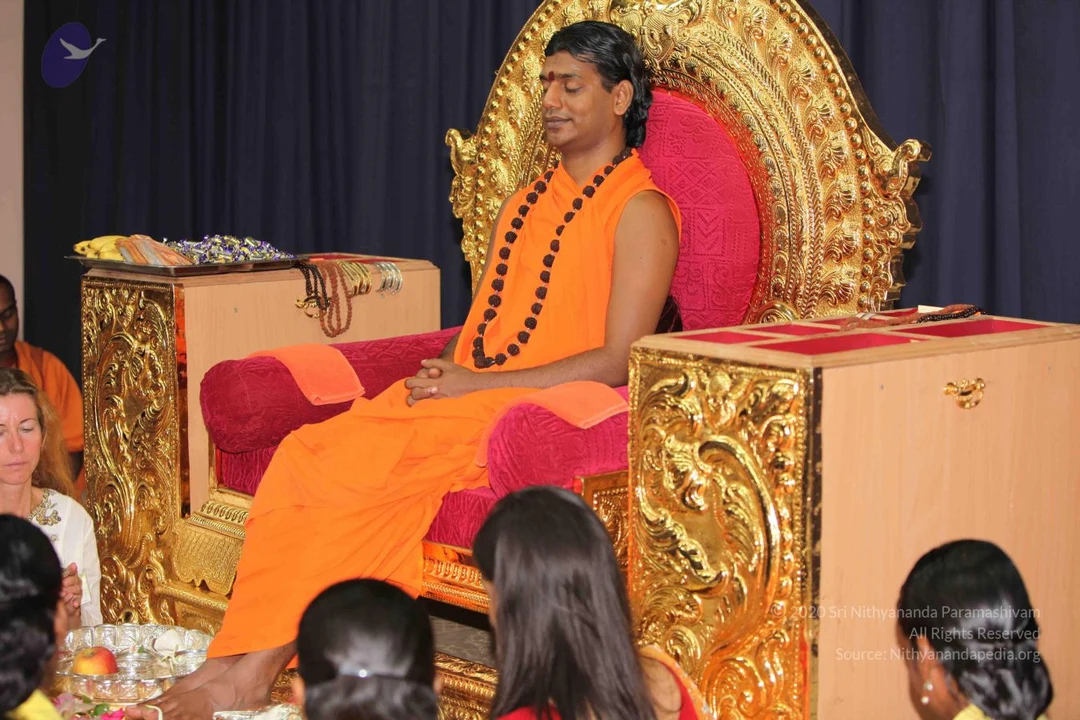
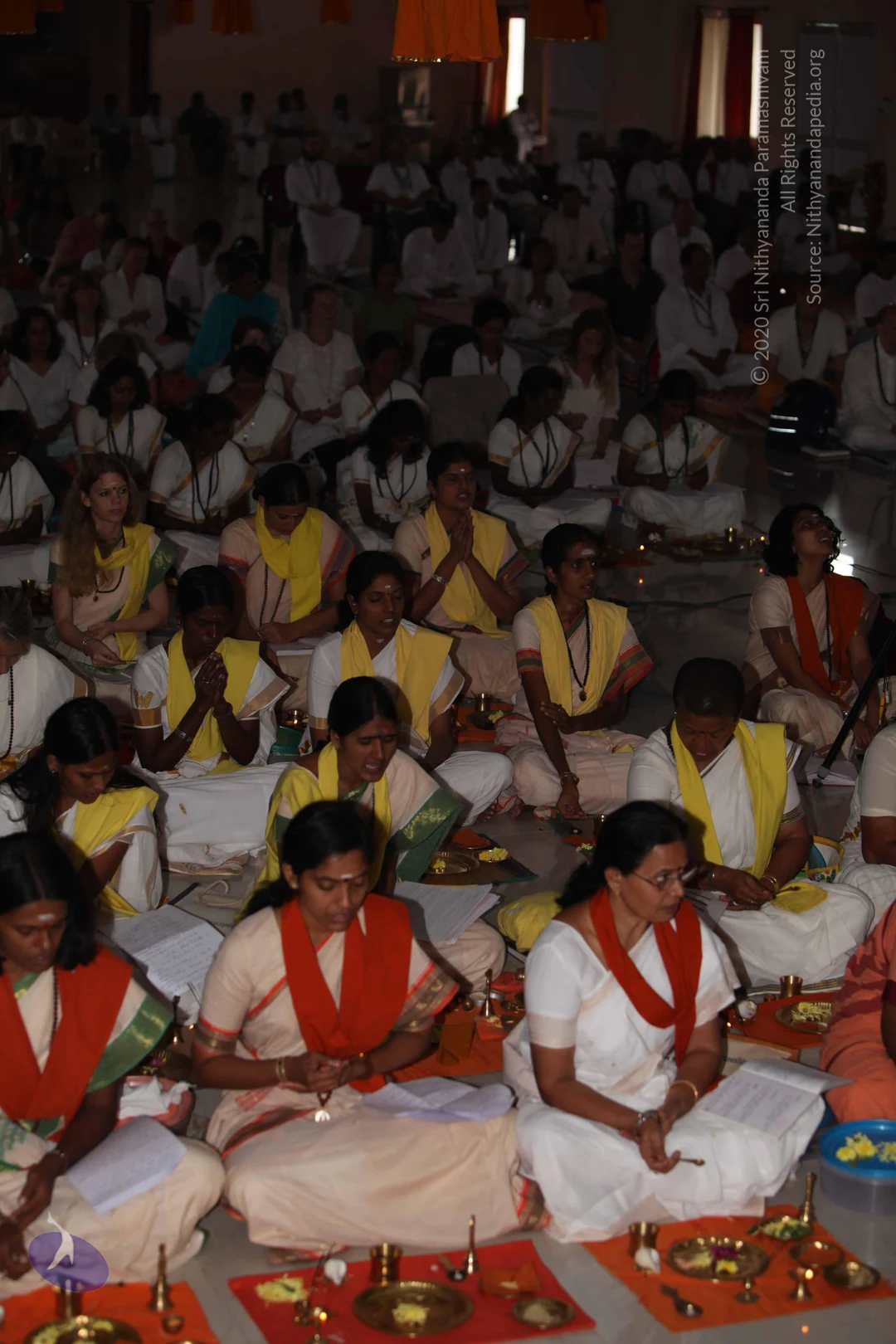
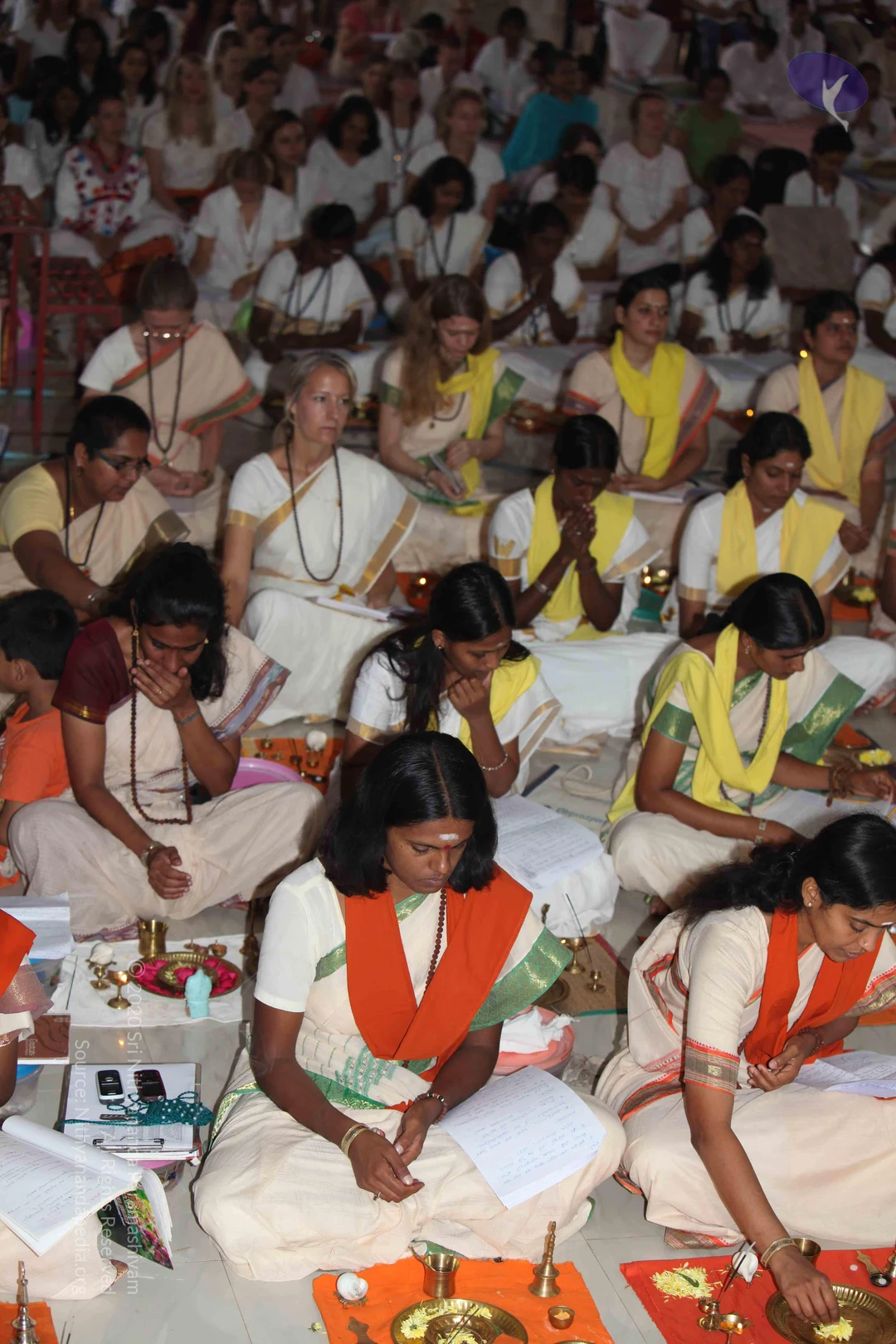
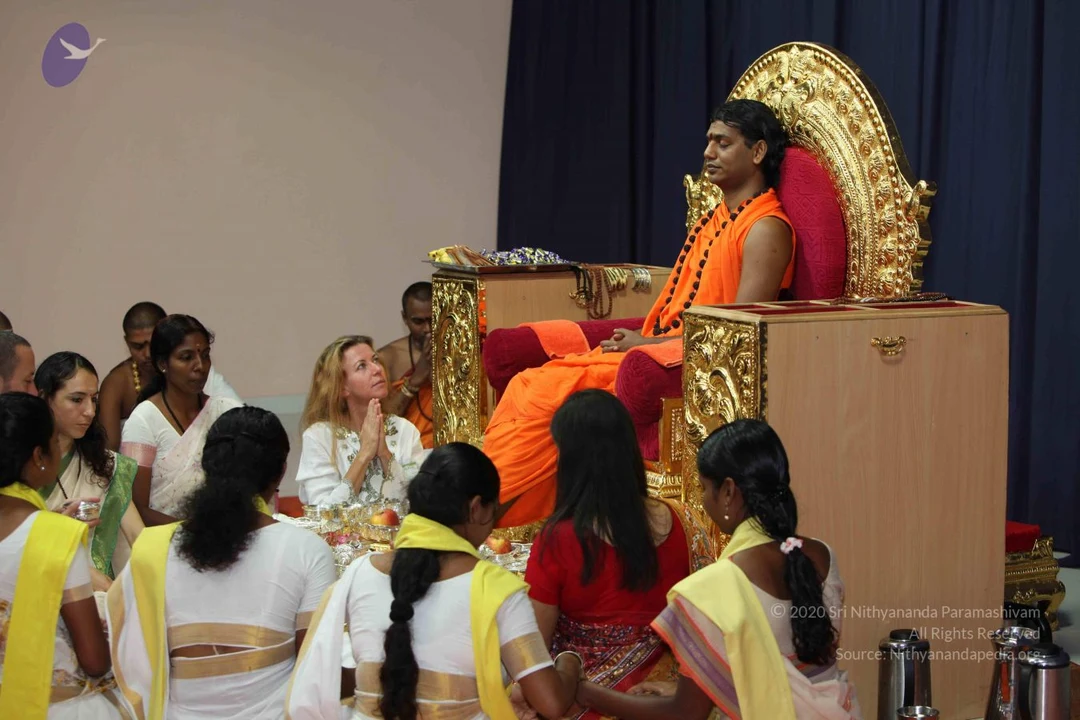
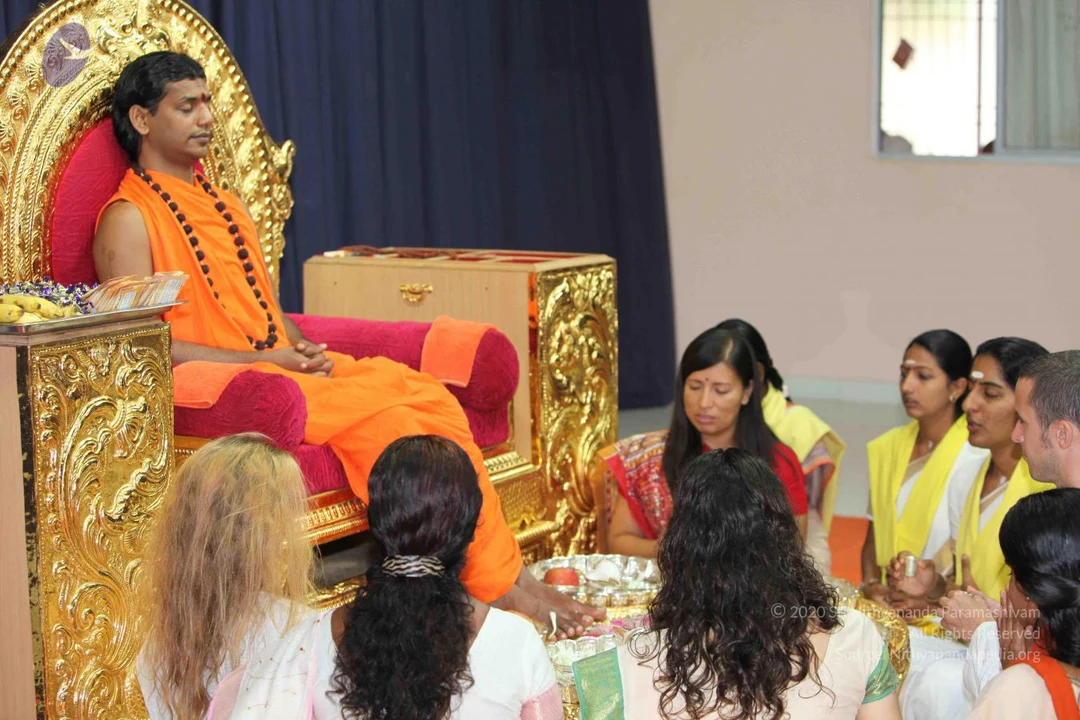
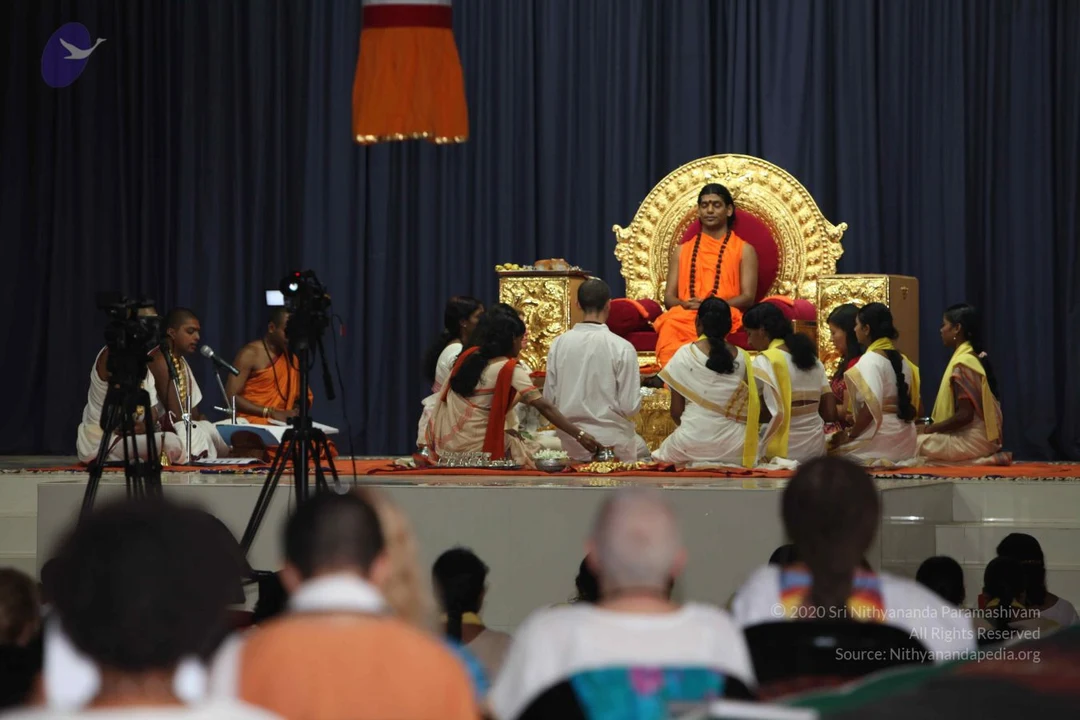
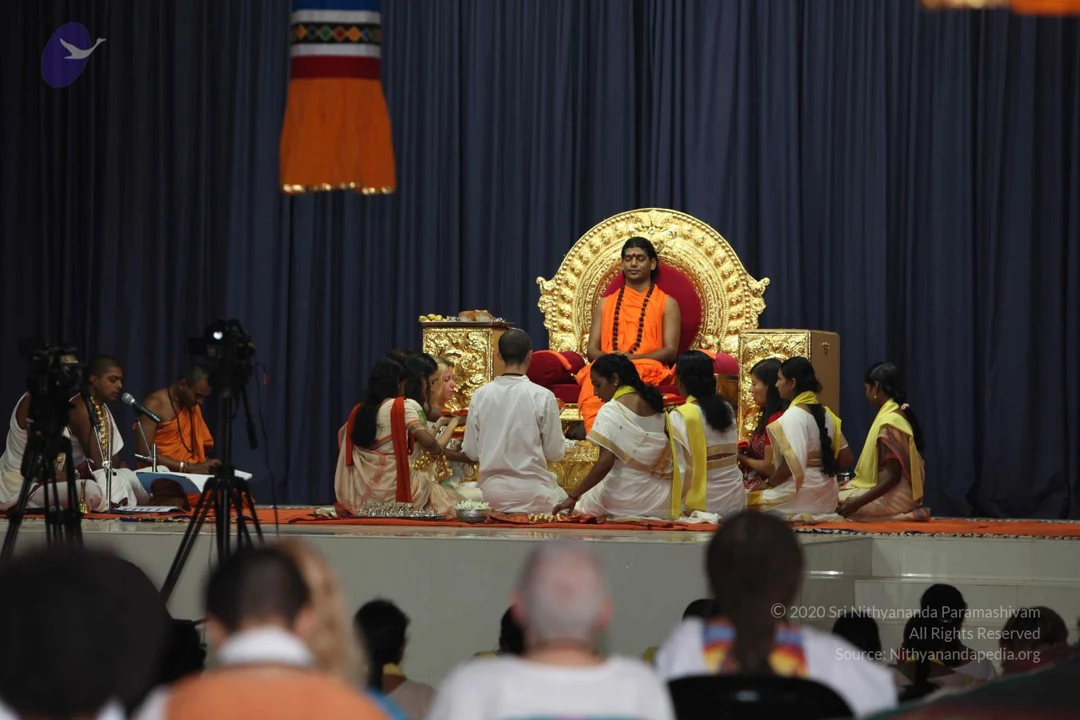
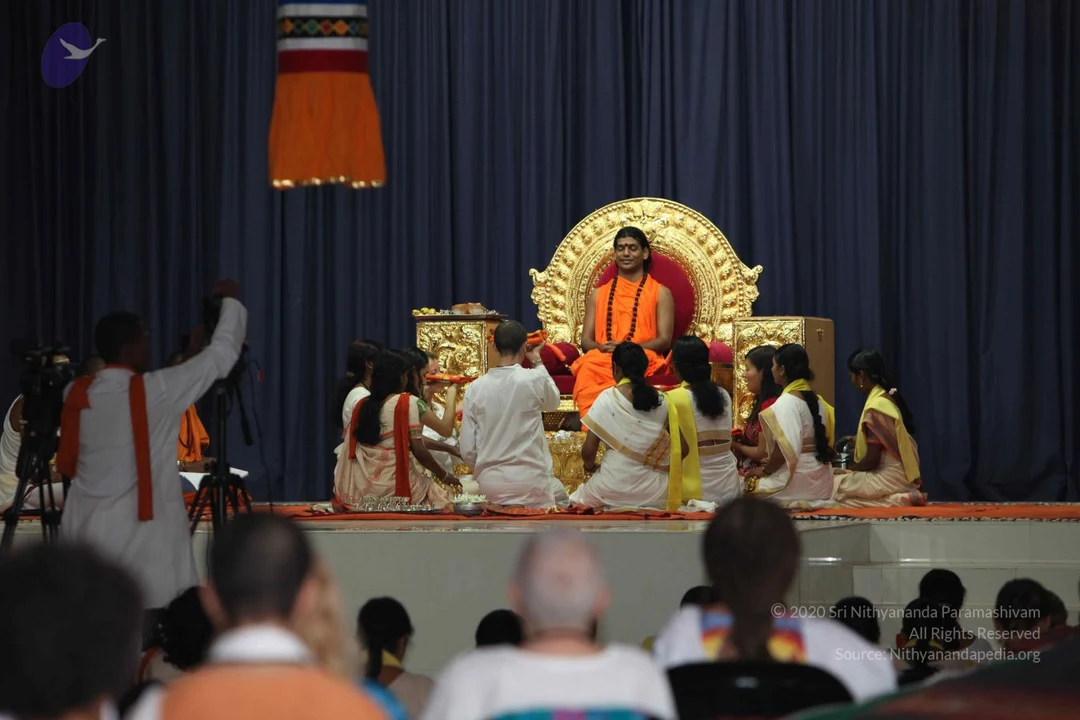
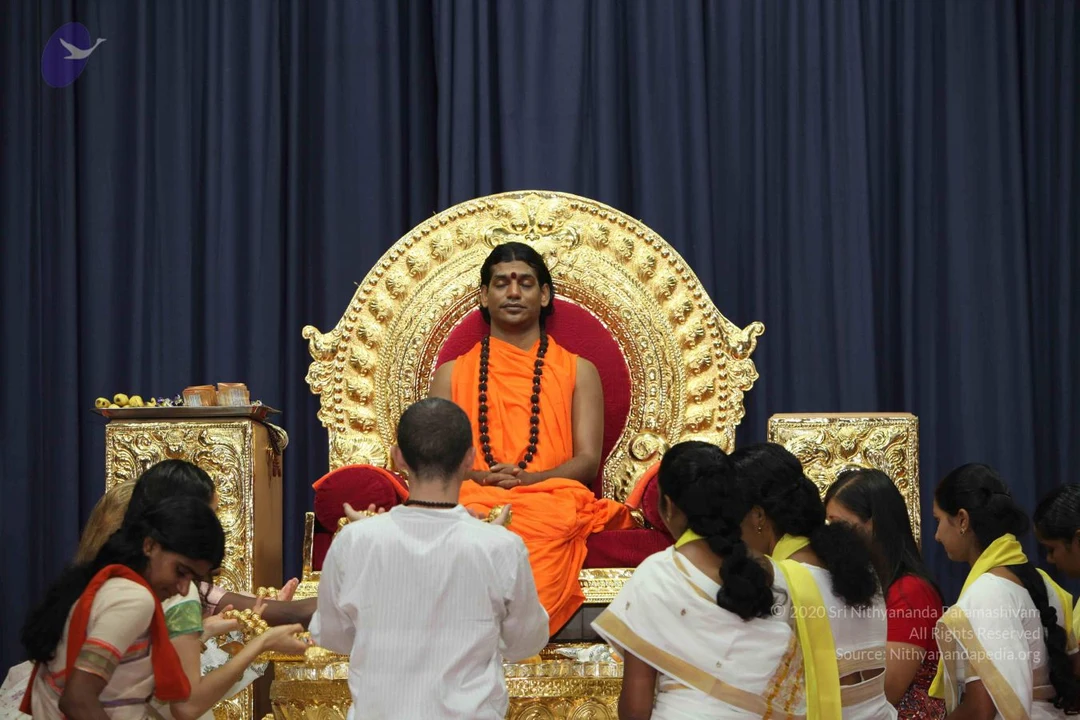
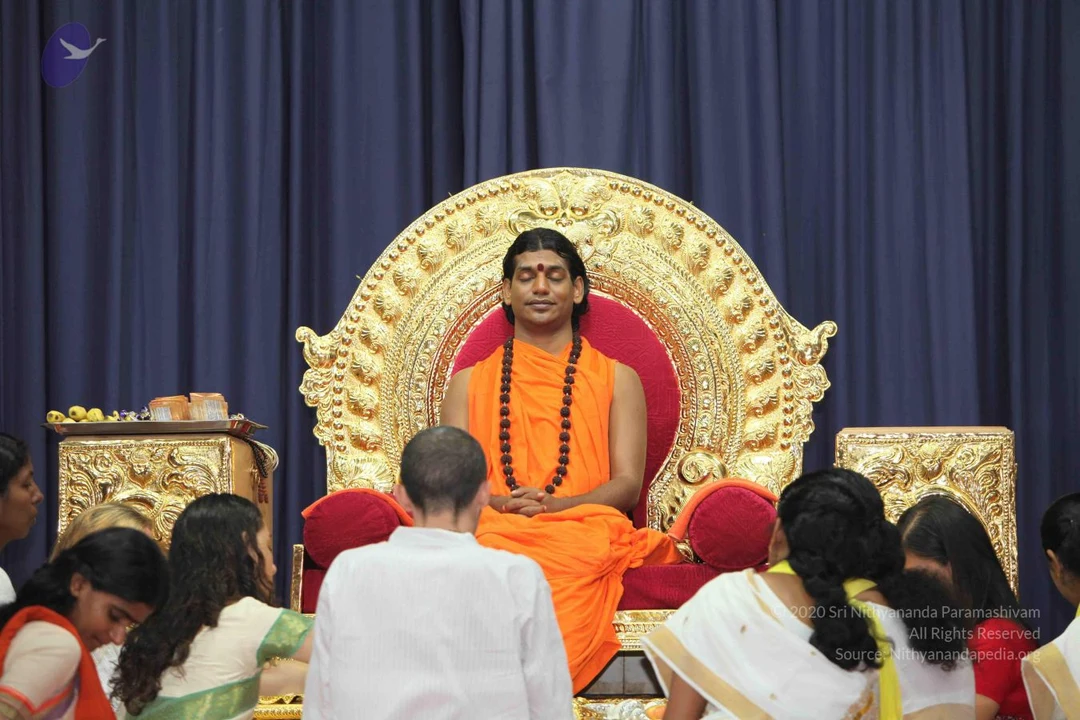
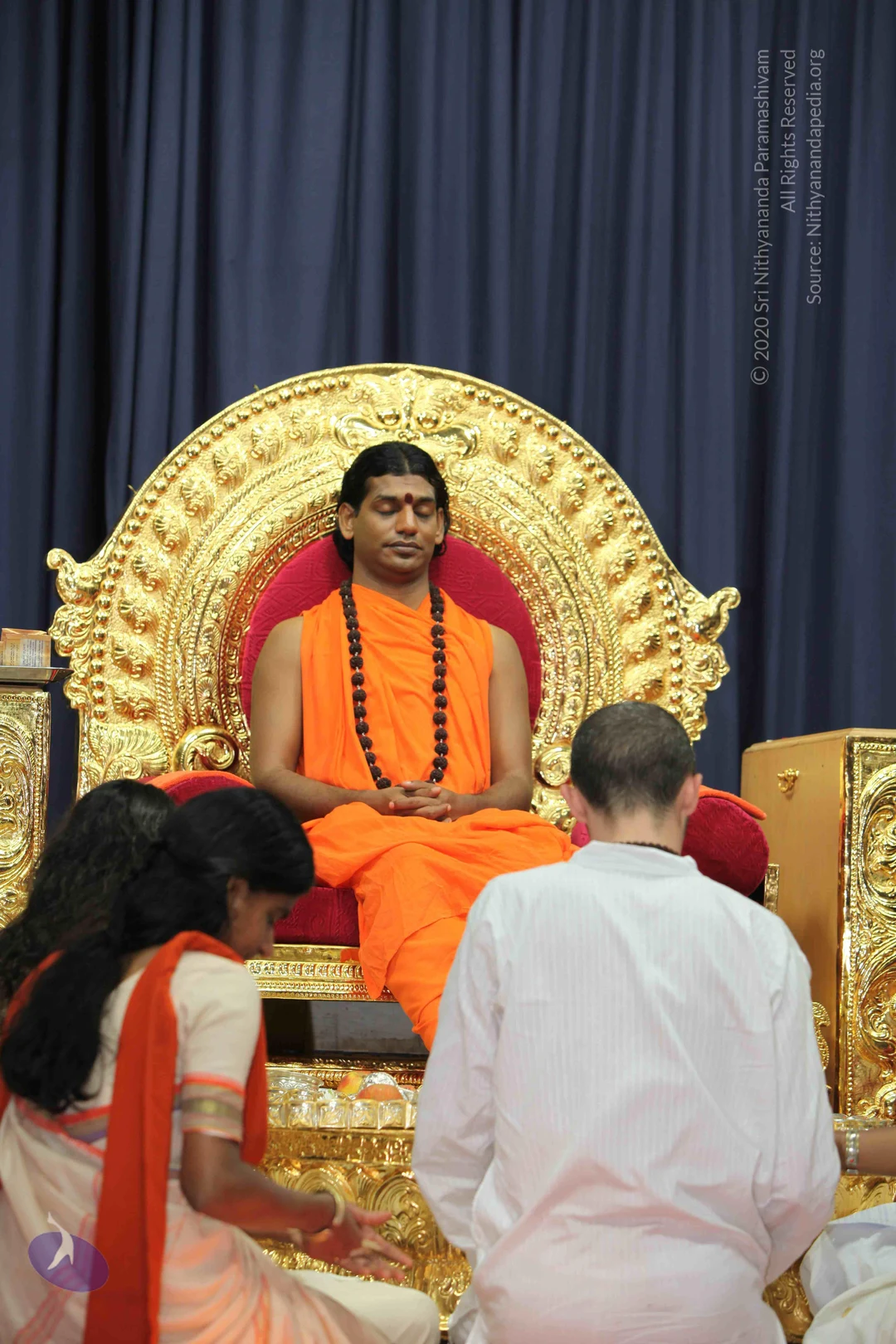
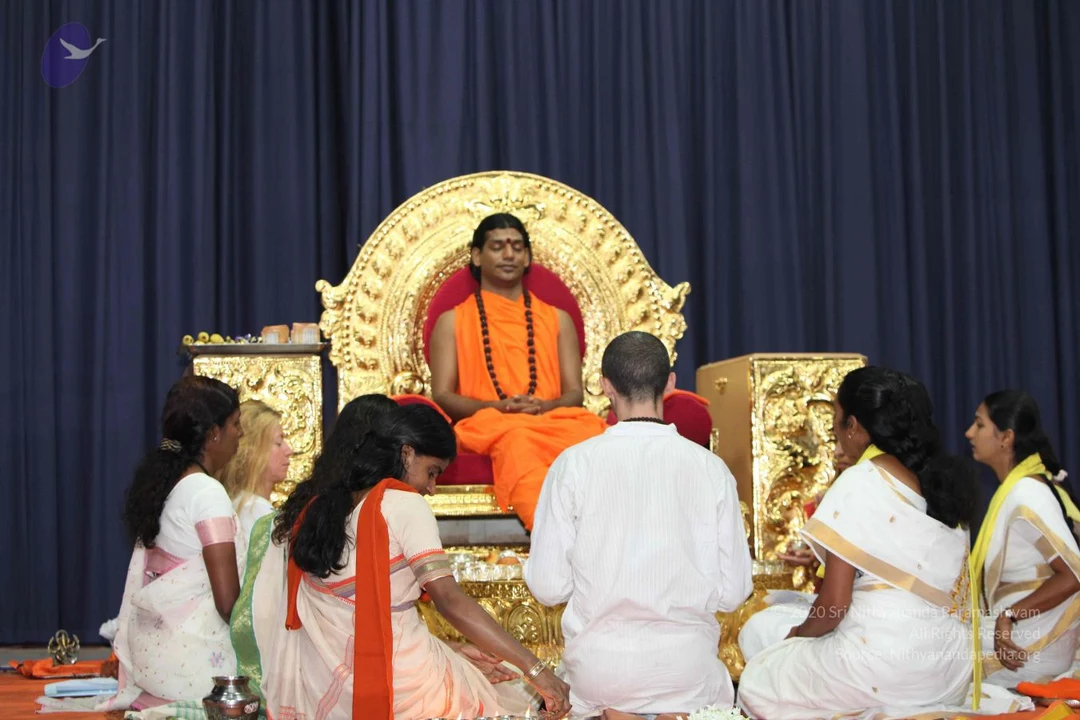
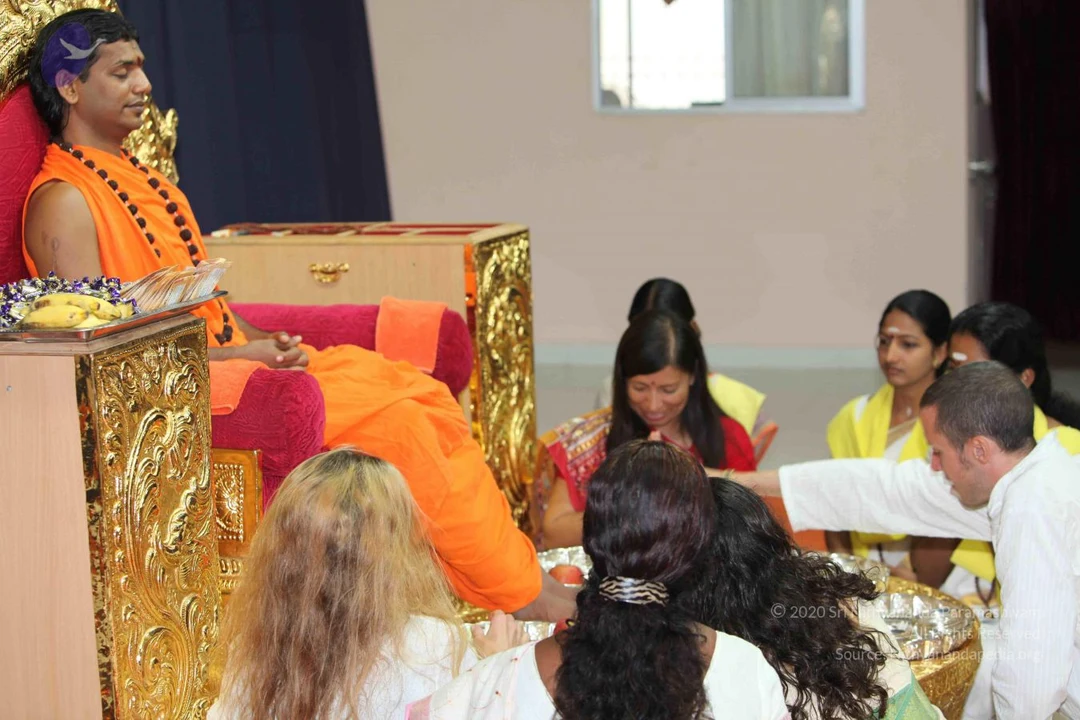
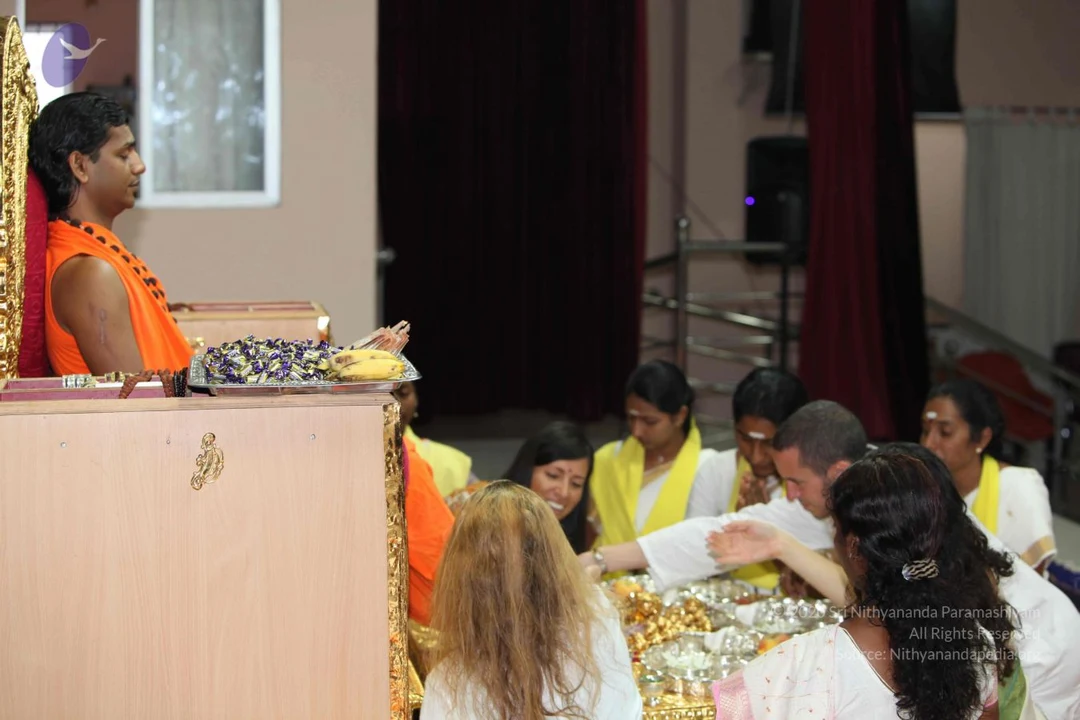
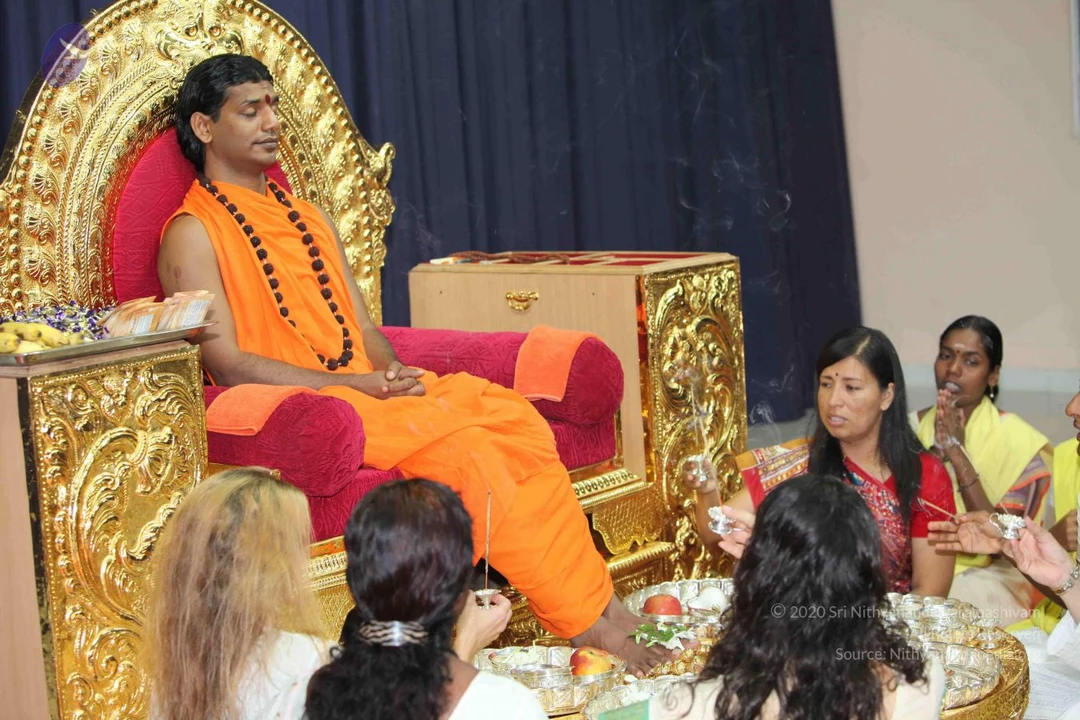
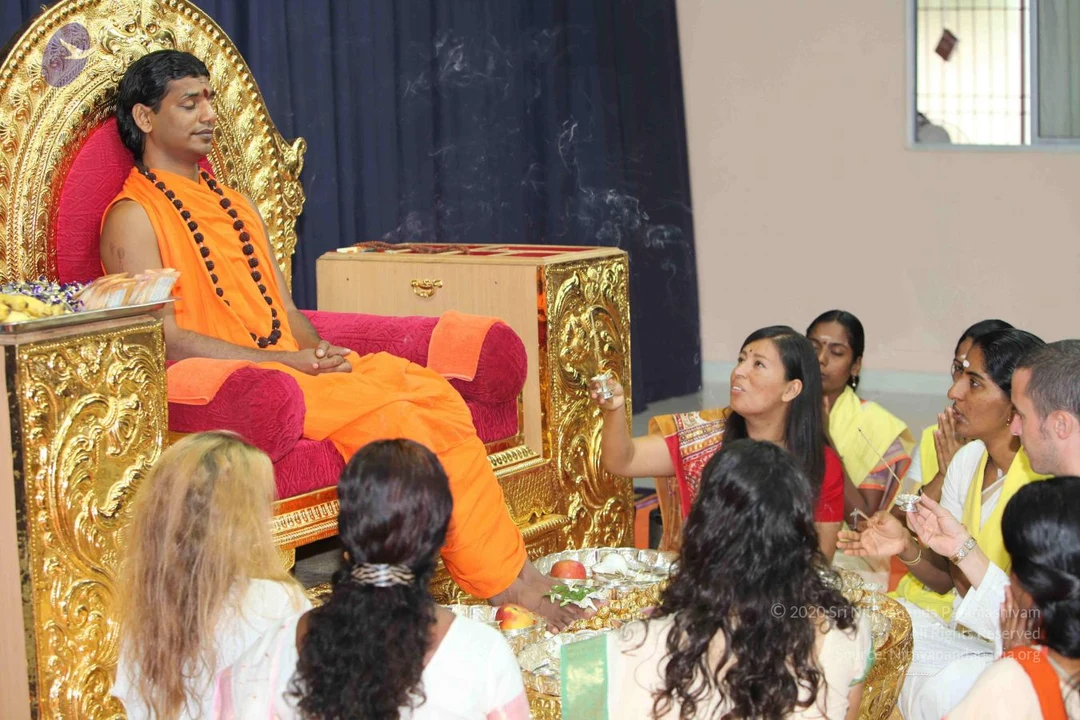
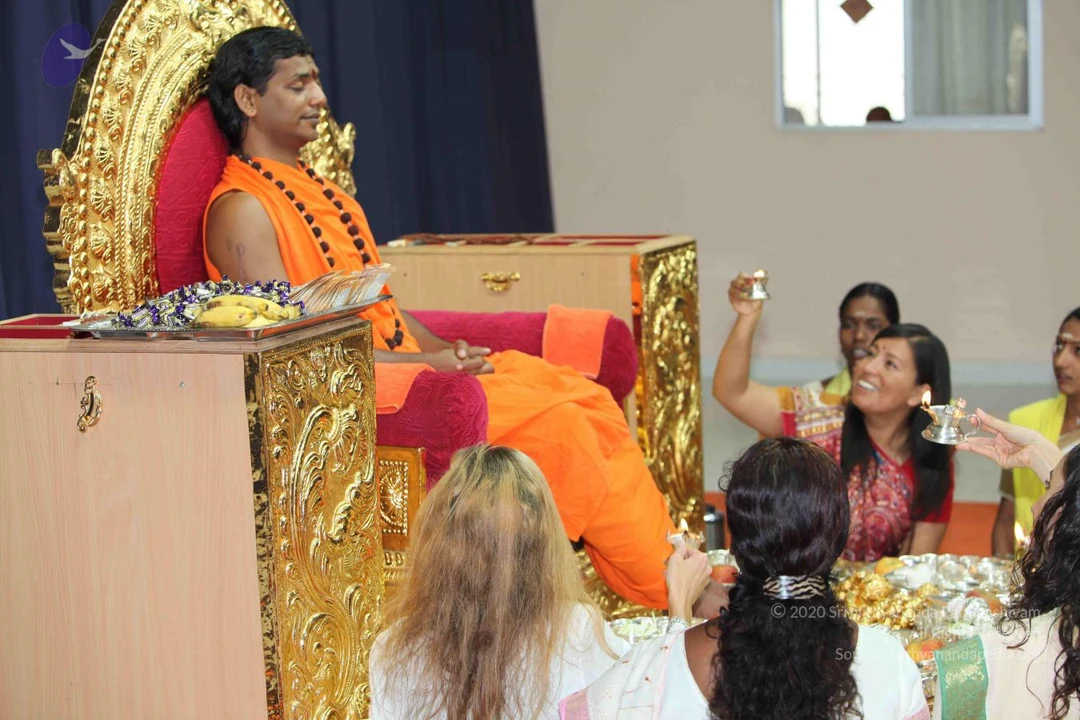
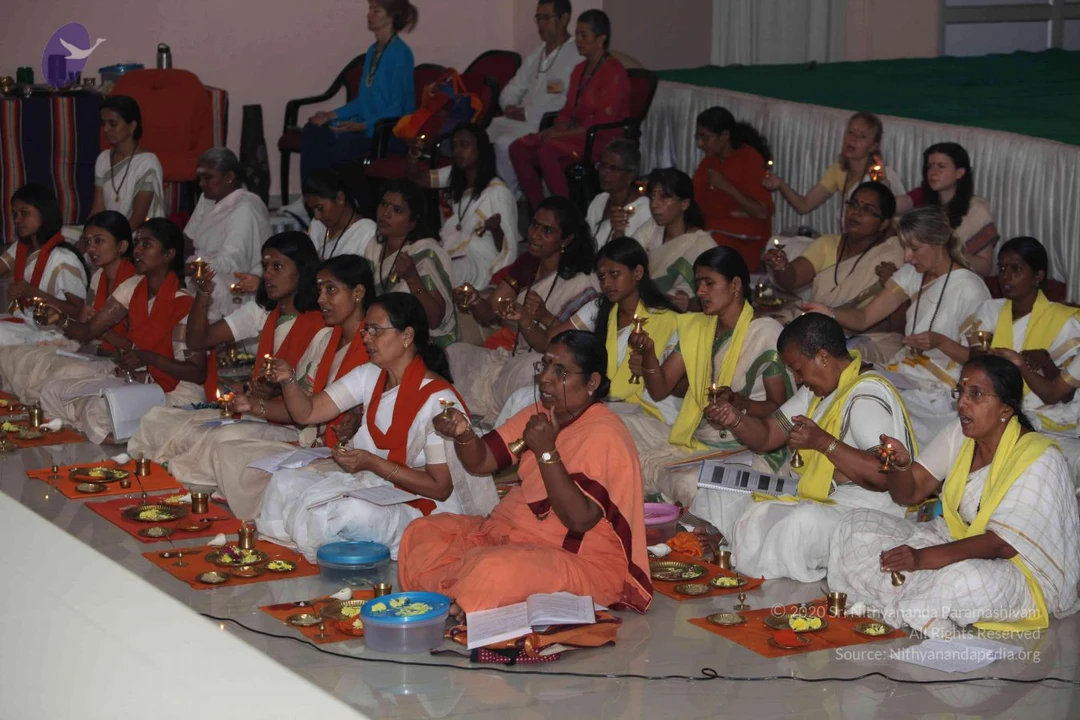
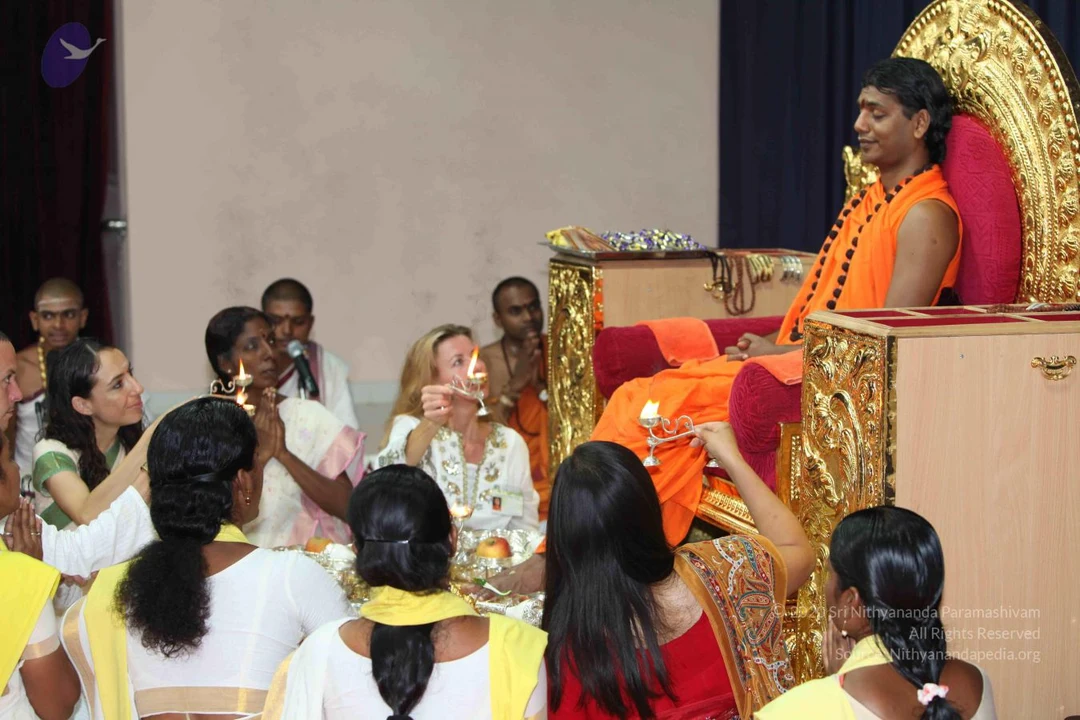
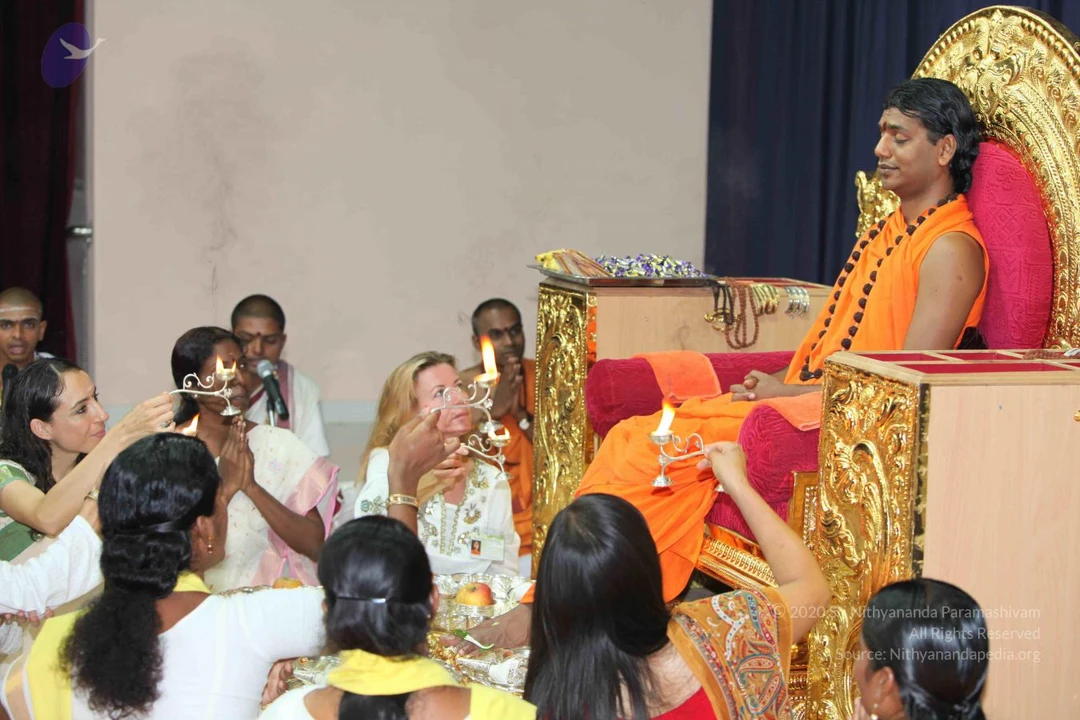
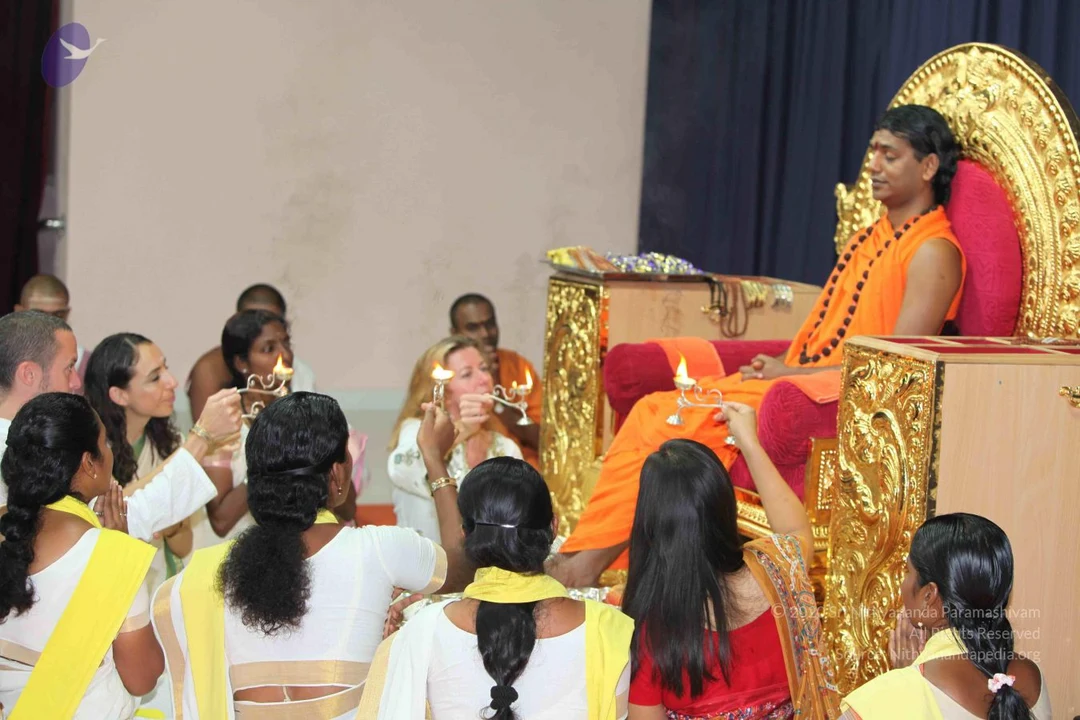
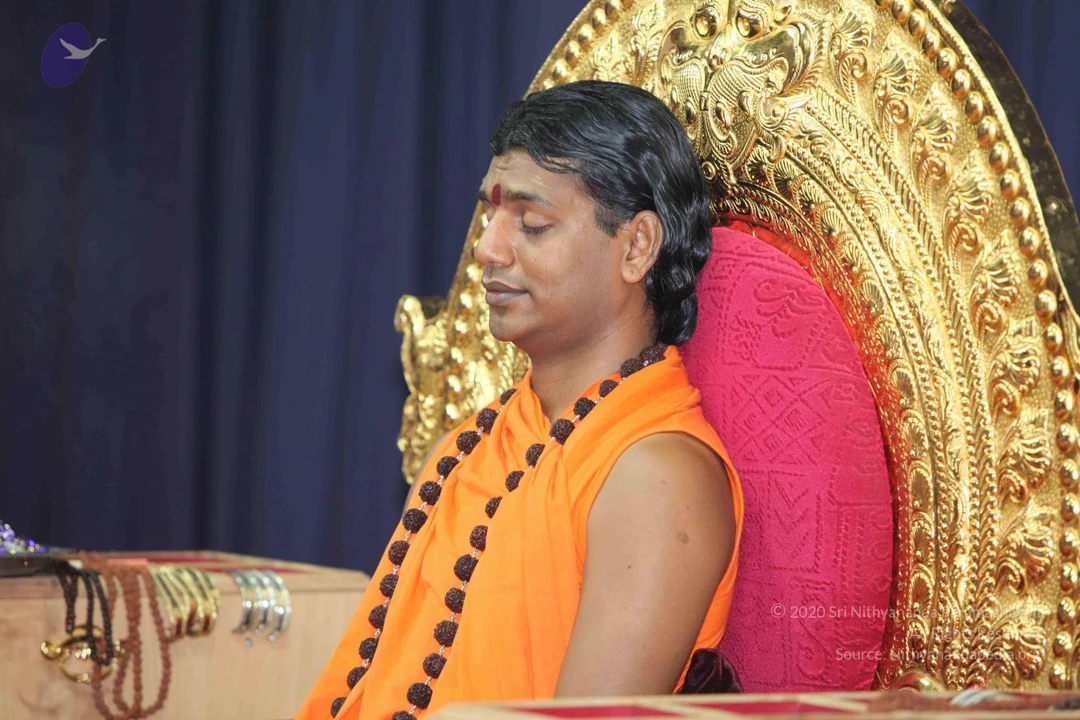
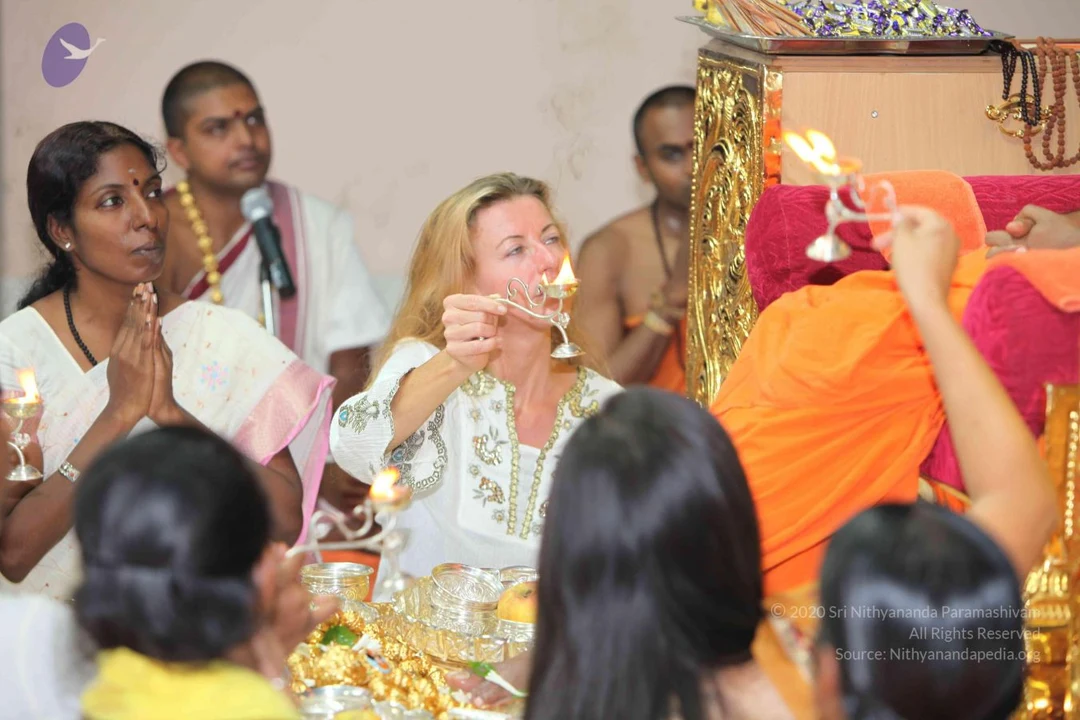
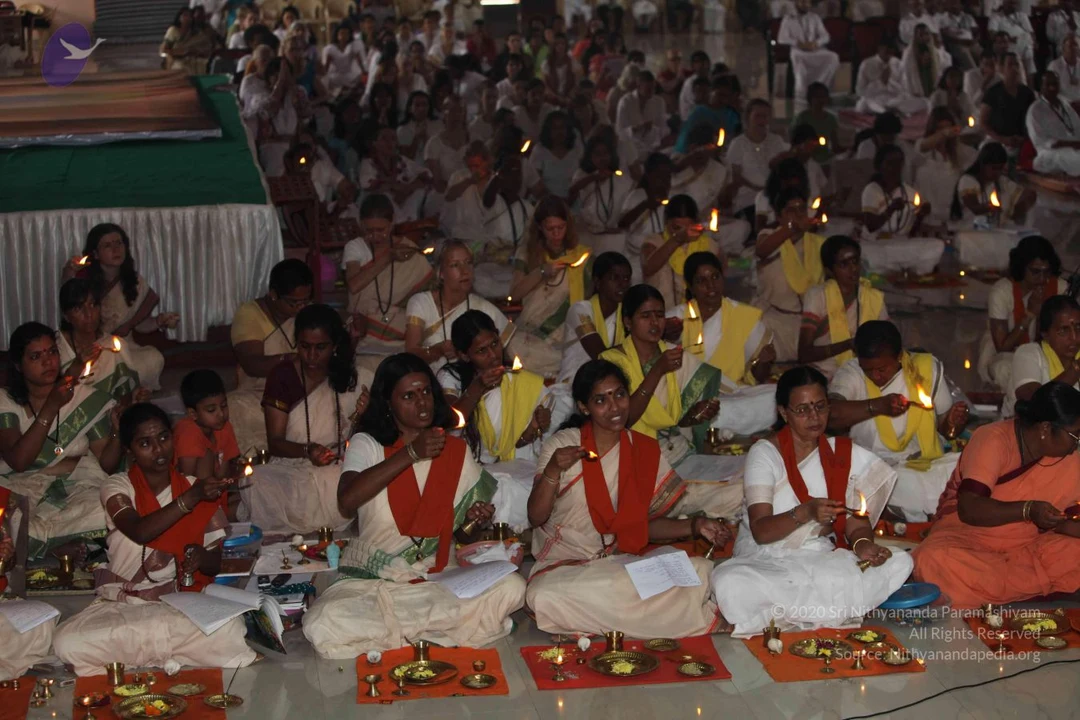
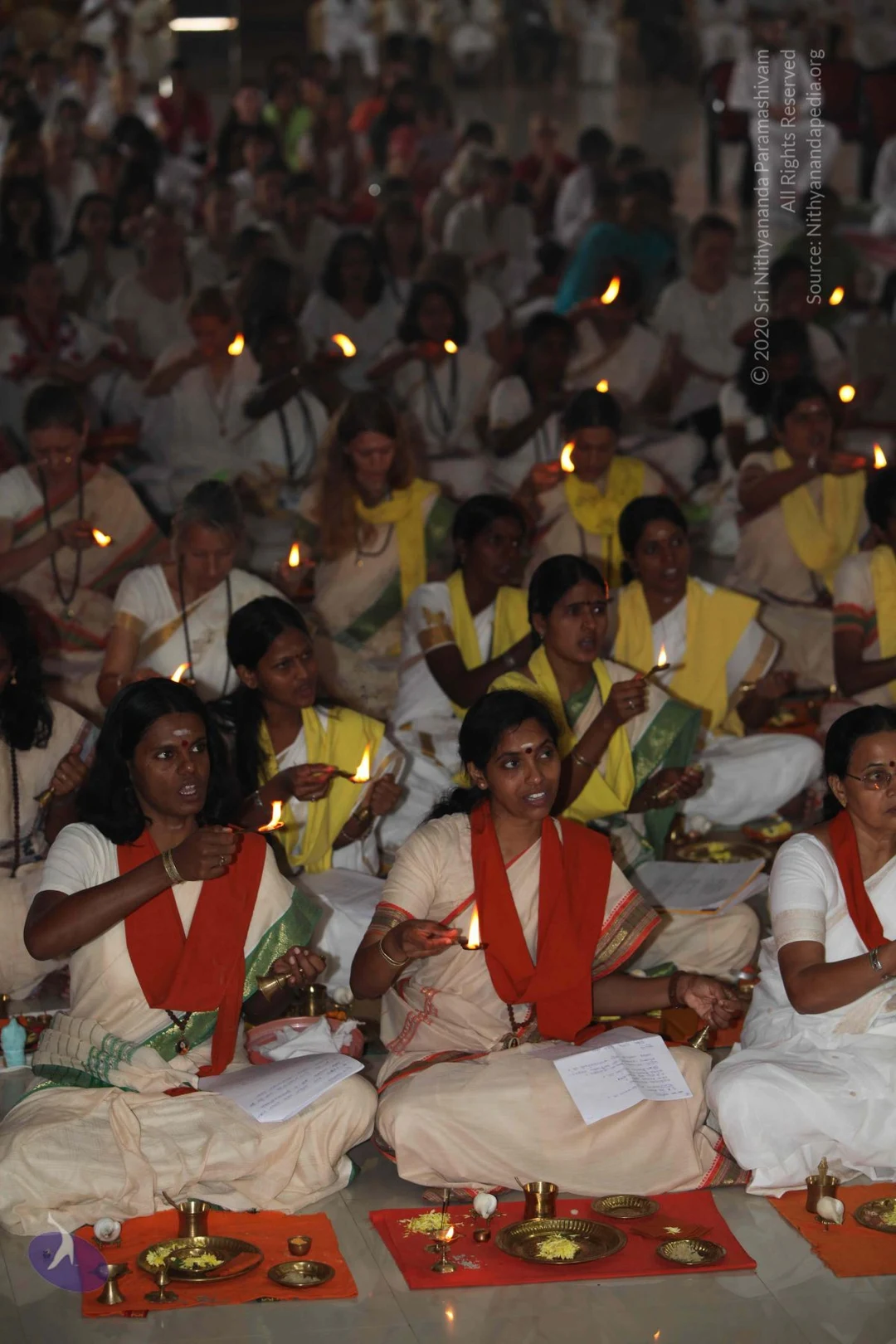
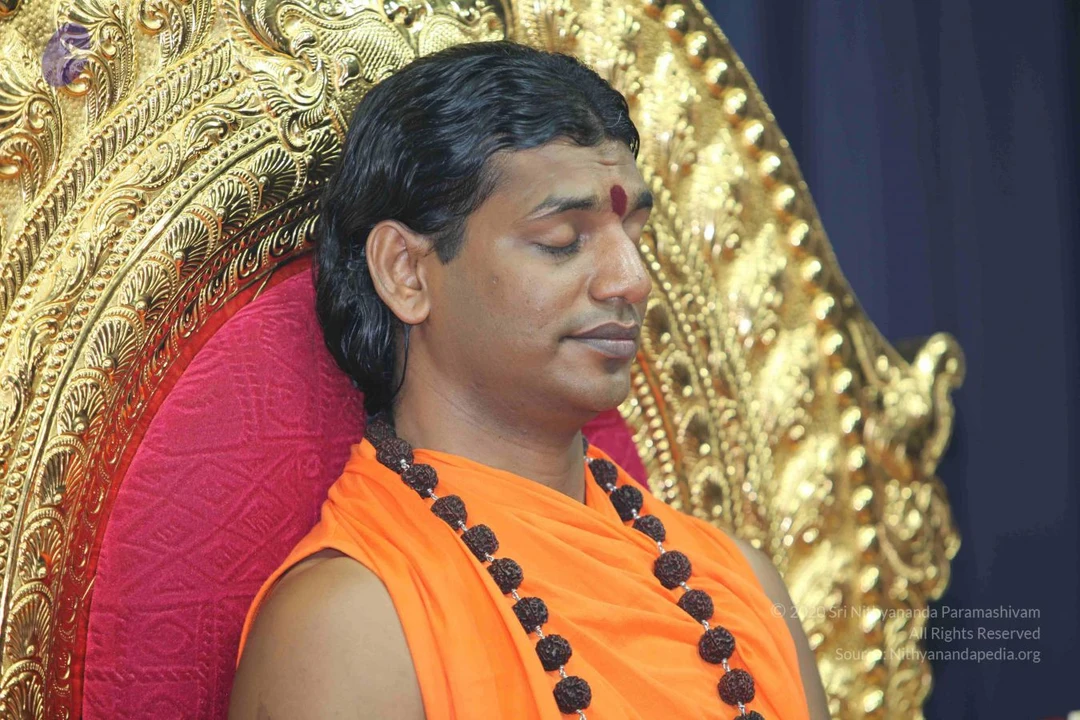
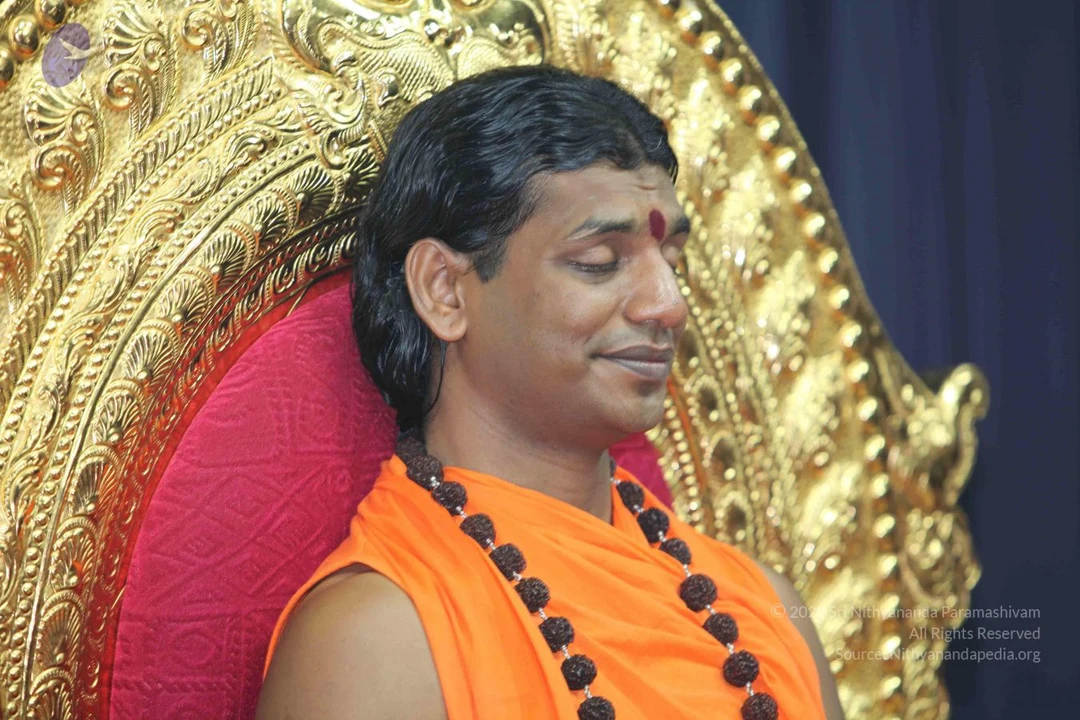
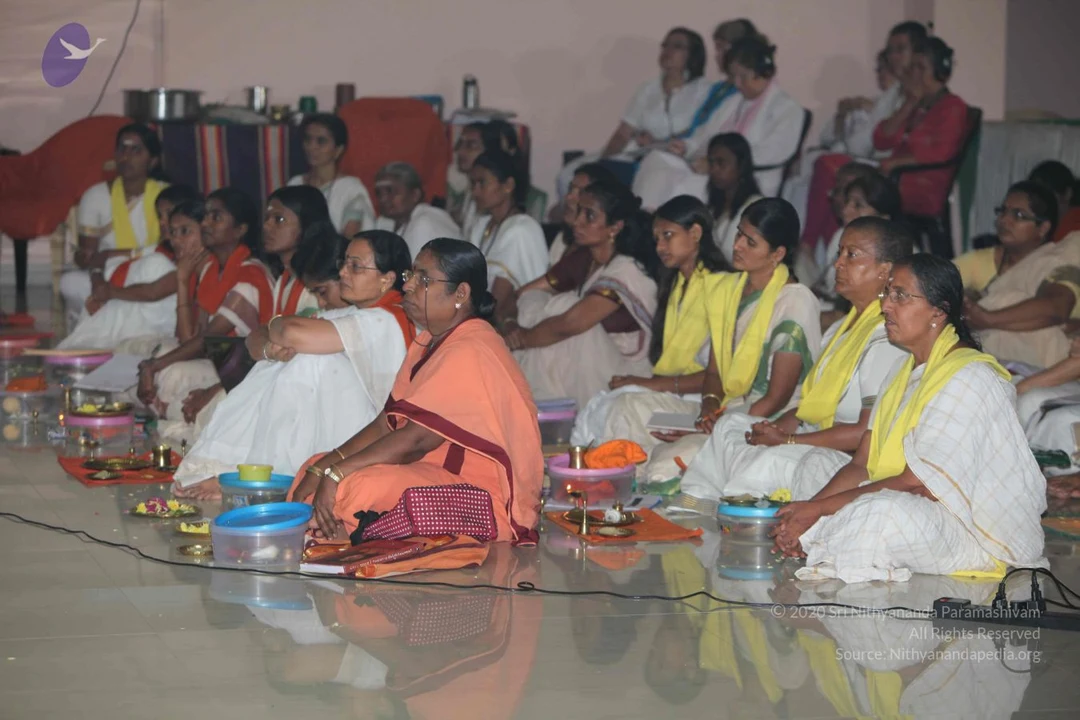
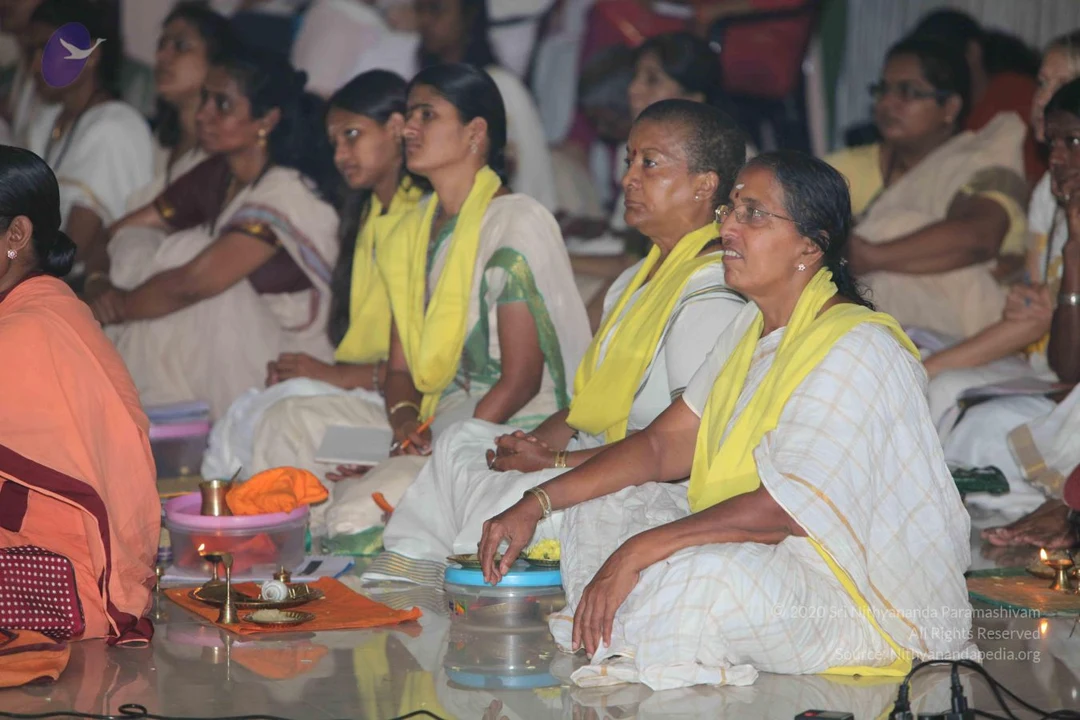
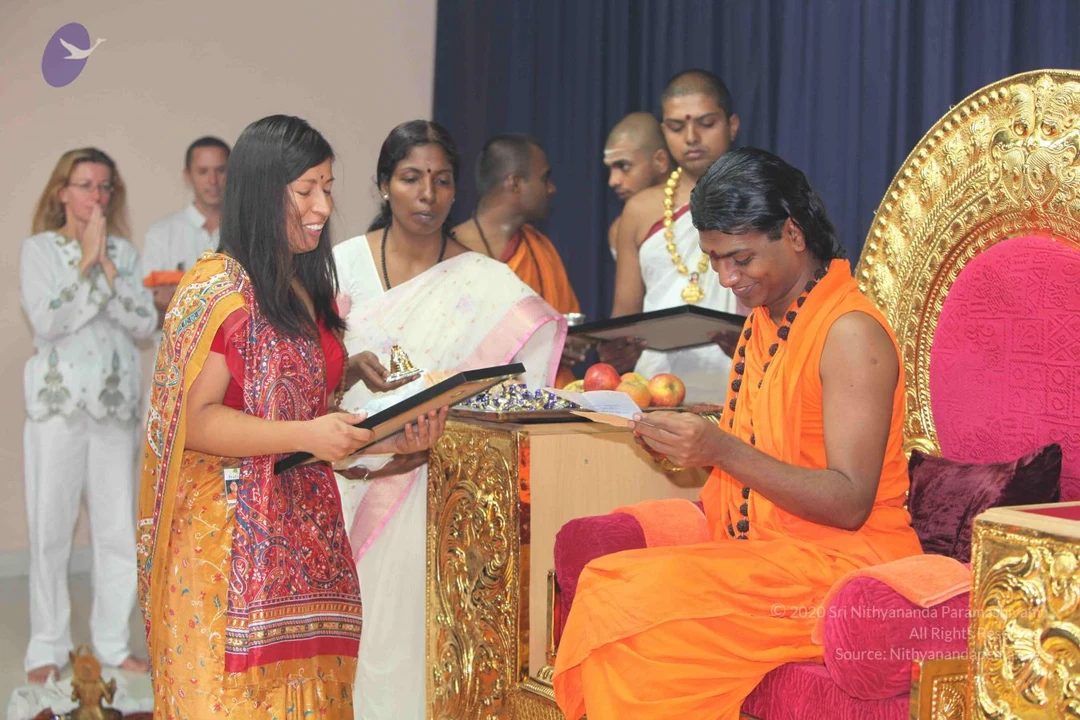
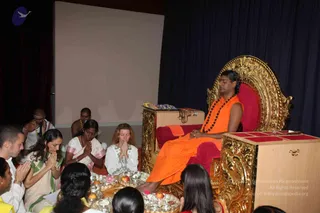
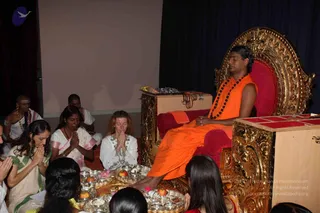
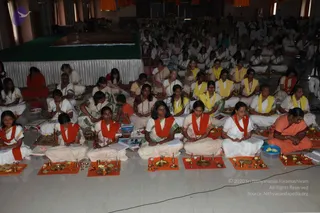
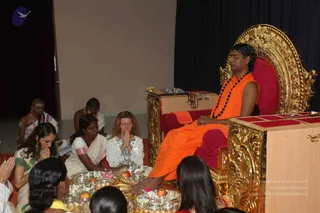
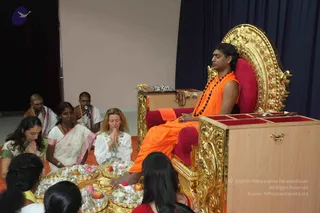
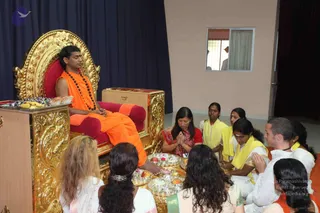
Indoor satsang with a seated figure on an ornate gold-carved throne with red cushions, wearing an orange robe and a long black-and-orange rudraksha mala, long swept-back hair, eyes closed and hands folded in prayer. a person on the throne. Around the dais, several devotees kneel in prayer: a woman in a pink-bordered white sari with hands joined, a woman in a green-bordered sari, a blonde woman in a white top, and a man in white with his hands together at the left edge. Two bald priests in white dhotis with sacred threads sit behind them. Silver trays with fruit, flowers and small lamps are placed on the floor before the throne. A projection screen and dark blue curtains fill the background, and a small wooden lectern with gold trim stands beside the throne.A seated man in an orange saffron robe and a long dark rudraksha mala sits on an ornate gilded throne with red cushions, hands joined in prayer and eyes closed. Around him, devotees kneel on the floor with hands folded in anjali: a woman in a white sari with pink border, a woman in a green sari, a light-haired woman in white, and a bald man in white dhoti with a sacred thread and tripundra marks. Silver and brass plates in front of them hold fruits, flowers and small bowls as offerings. A projection screen and dark blue drapes form the backdrop of this satsang setting.A large indoor hall filled with seated devotees, mostly women, in white and cream garments with red, orange and yellow shawls and stoles. In the foreground rows sit on the floor before small brass puja plates, lamps and bowls arranged on orange and red mats, with open notebooks and books beside them. A white-draped raised dais and green-carpeted stage stand at the front, and orange fabric hangs from the ceiling. Some women have their hands joined in prayer while others sit with eyes closed. Many more people fill the back rows.A photograph of a satsang hall where a man in an orange robe with a dark rudraksha mala sits on an ornate gold throne with red cushions, eyes closed, hands folded, one bare foot extended toward a tray. Several women kneel in front of him with palms pressed together, one in a white sari with pink border, another in a white outfit. Before them are brass and silver padapuja trays holding fruit, flowers and small bowls. A partly visible shaved-headed priest in white sits at the left, and a bald man in white with a gold chain also sits nearby. Behind the throne hangs a dark curtain, and a wooden pedestal stands to the right.A photograph of a man in orange robes and a rudraksha mala seated on an ornate gold-and-red throne, with long swept-back hair and eyes closed, his feet resting on a low platform. Before him, several women and a few men sit on the floor, some with palms pressed together in prayer. In front of them are silver trays holding apples, flowers, small bowls and lamps. A man in white with a shaved head and another in white with a rudraksha mala sit at the back, one near a microphone stand. Dark blue drapes frame the stage. A wooden lectern with gold trim stands at the right edge. Counting visible people gives about ten.A photograph of a seated man in saffron-orange robes and a rudraksha mala on an ornate gilded throne with red cushions, a person candidate receiving padapuja-style worship. Several devotees kneel on the floor before him; one woman in a red blouse presses her palms together, while others in white and yellow dupattas sit nearby. Brass plates holding bananas, fruit, flowers and small lamps sit at the foot of the throne. A blue curtain hangs behind, and a man in white stands by the window at the back.
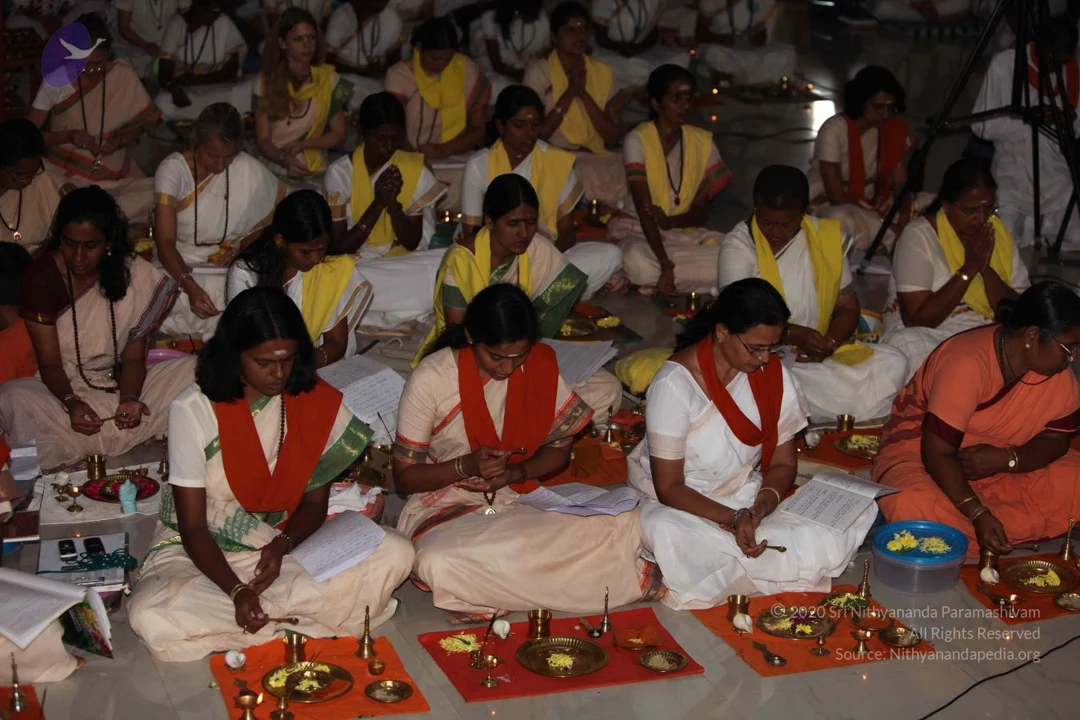
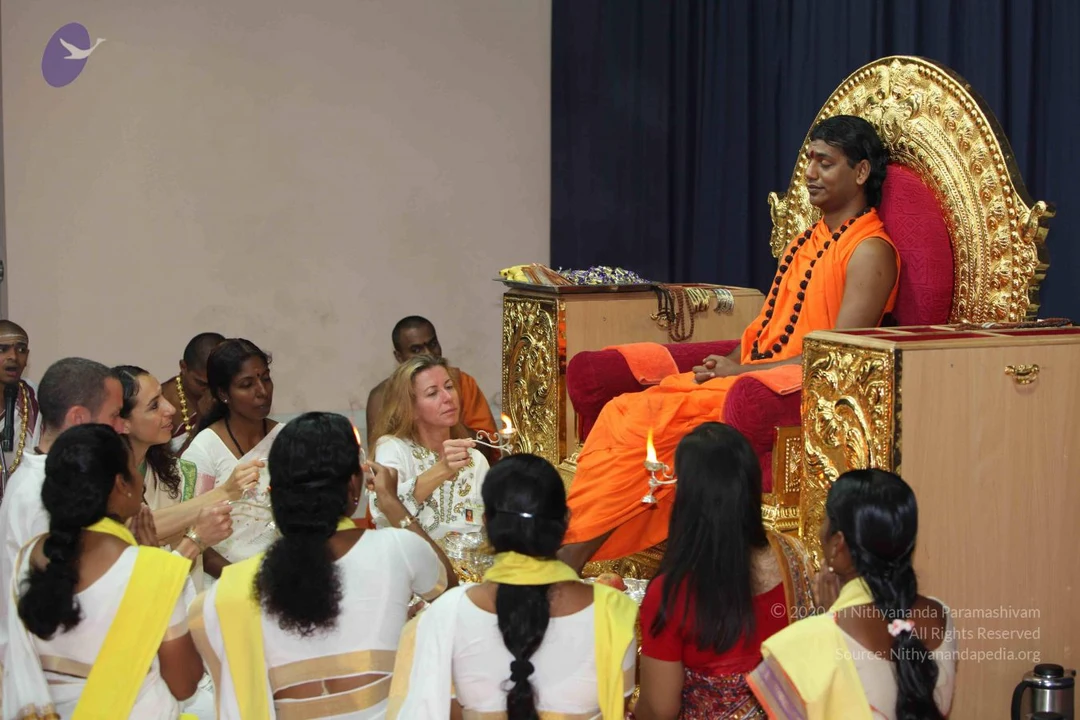
NITHYA-SATSANG
21 photosSource gallery
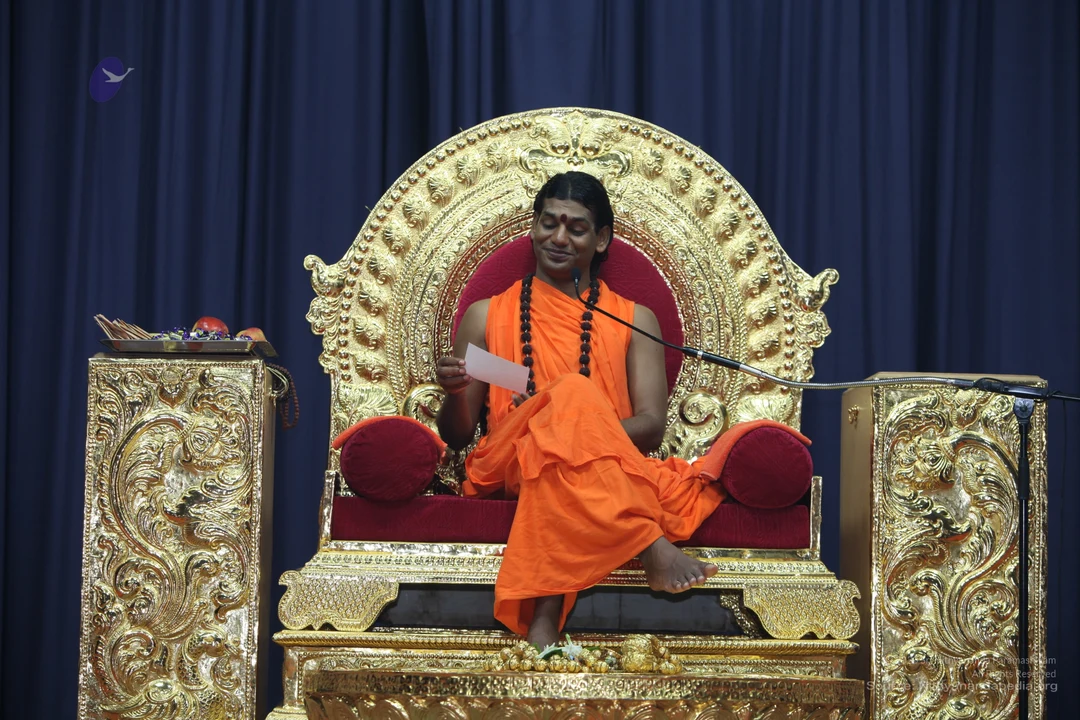
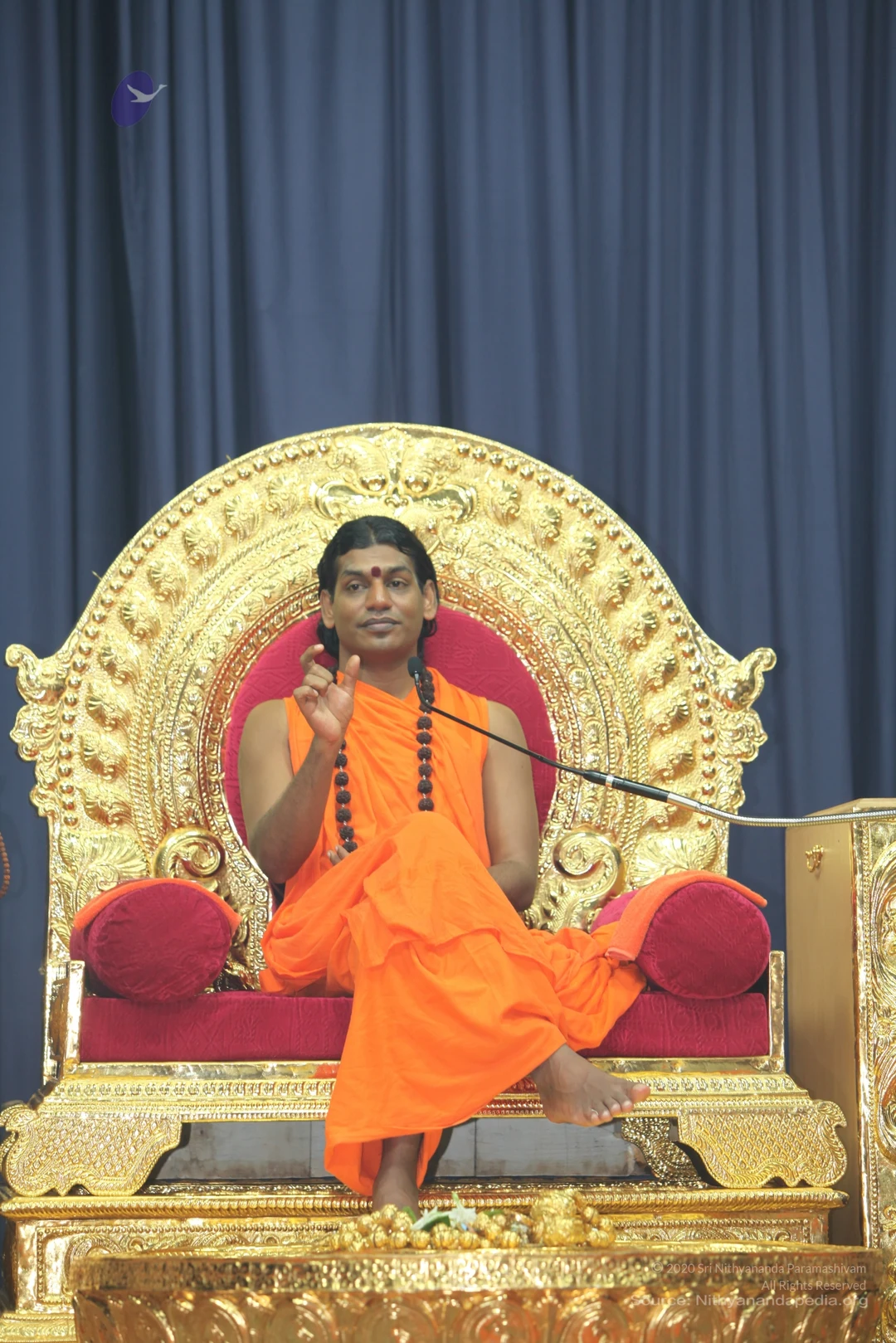
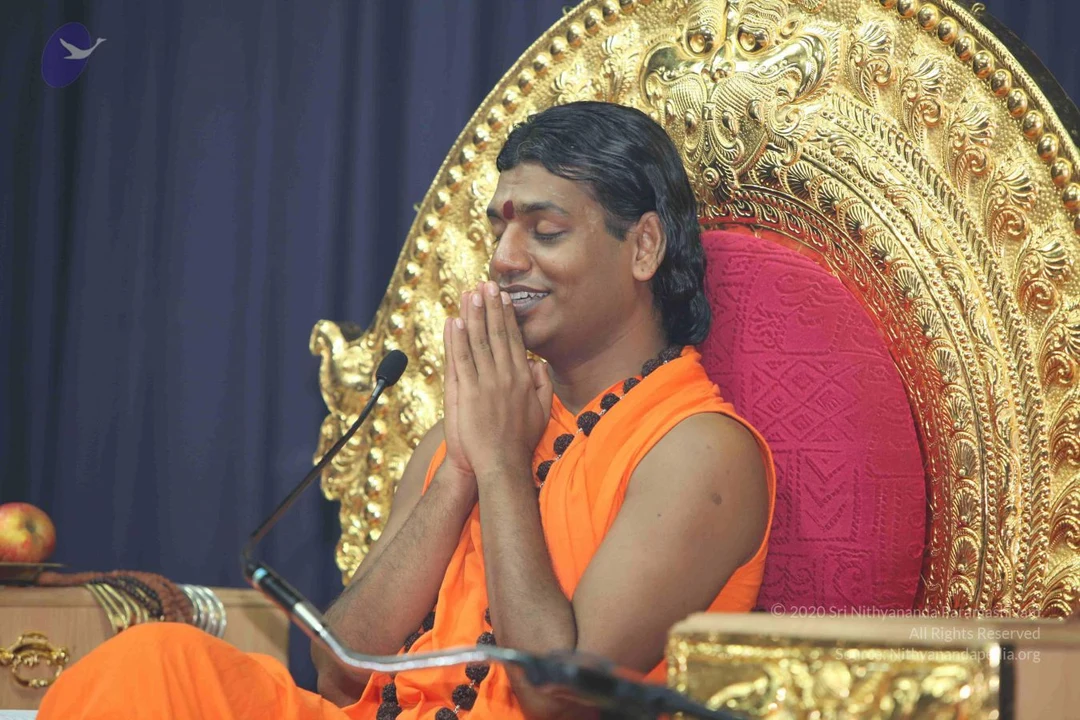
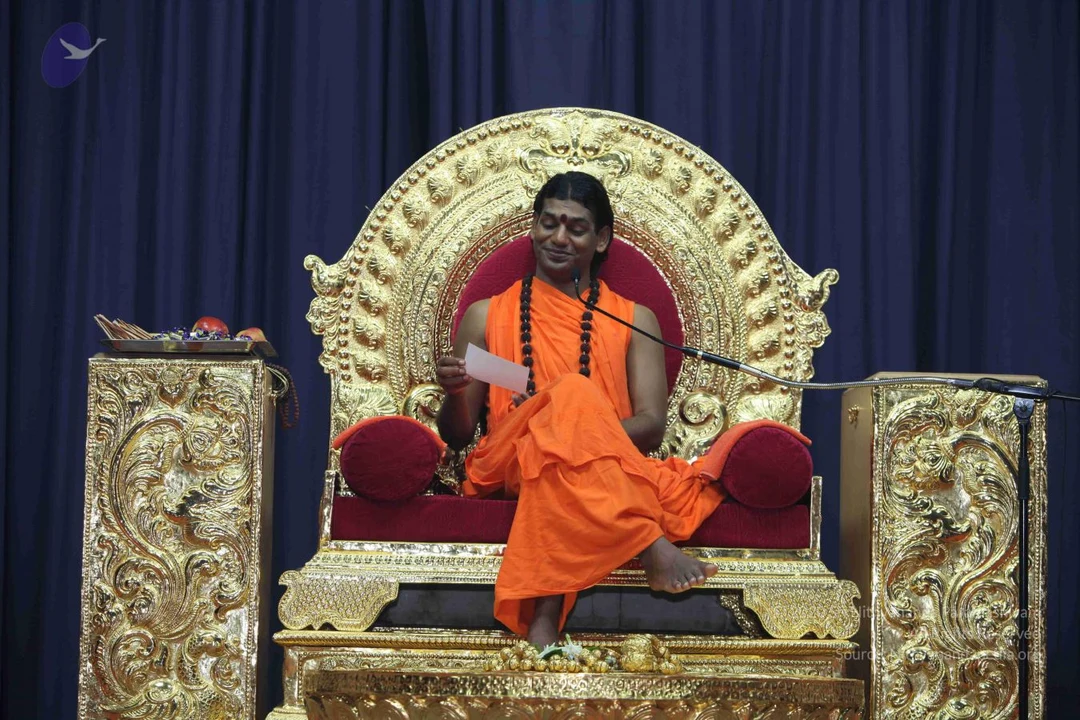
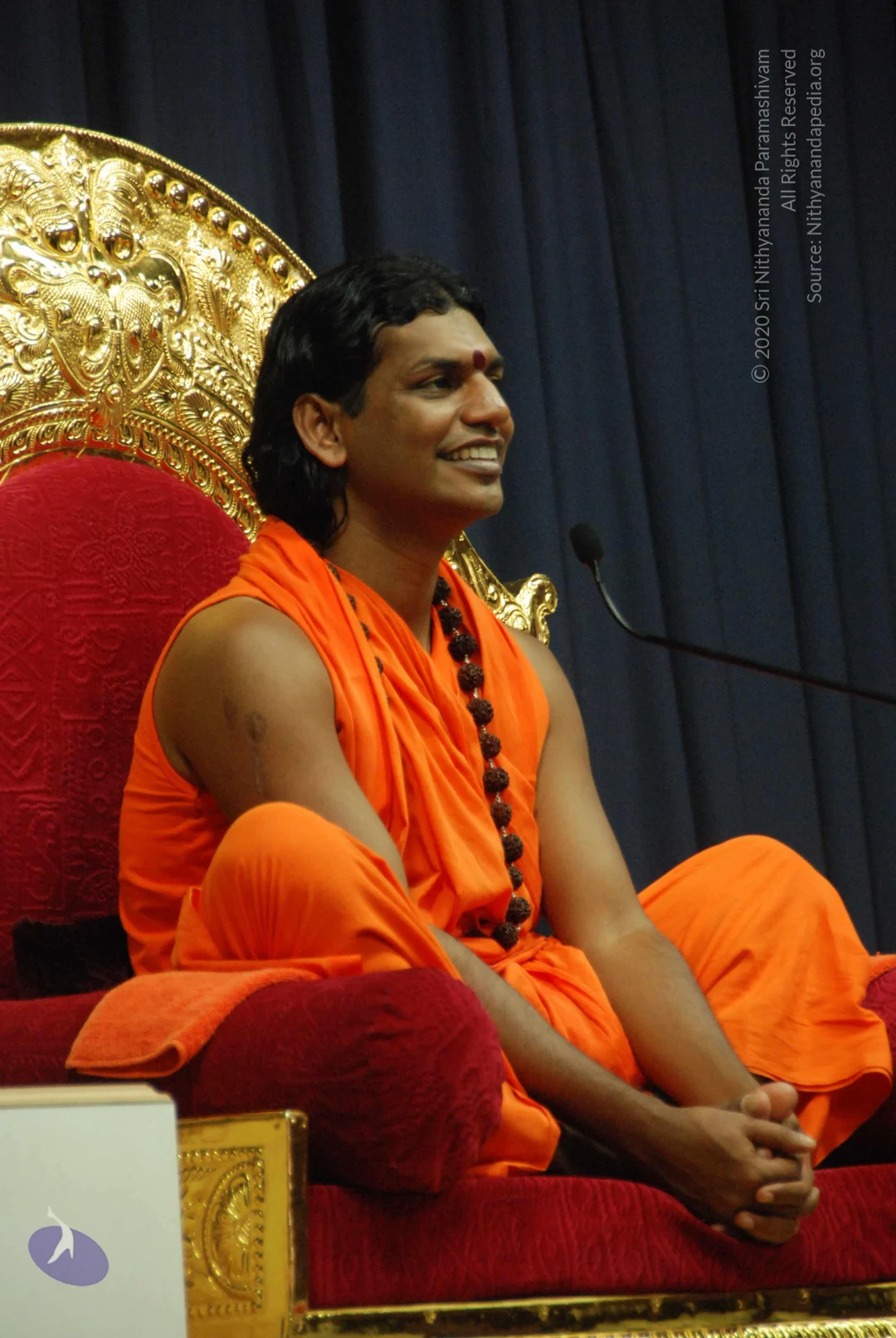
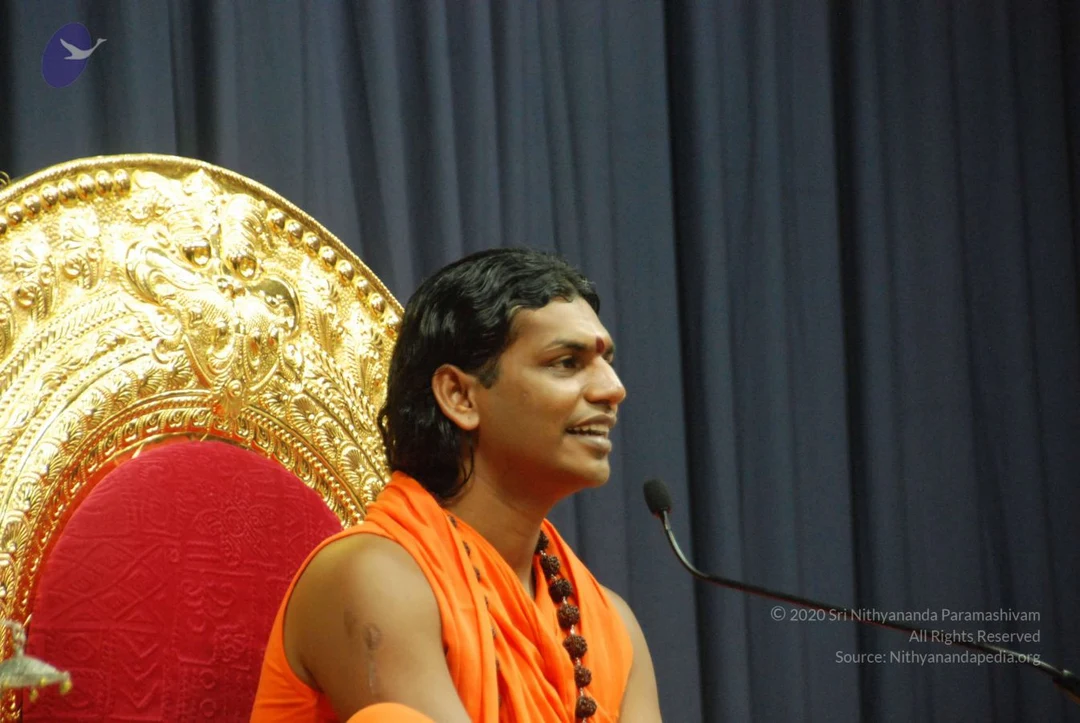
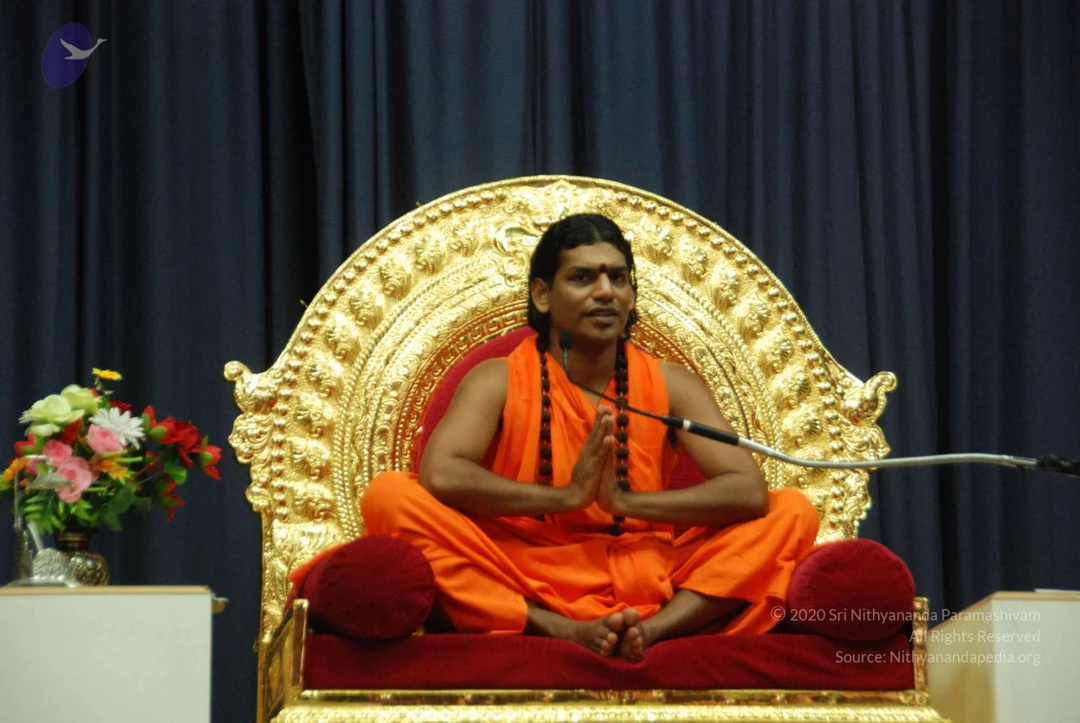
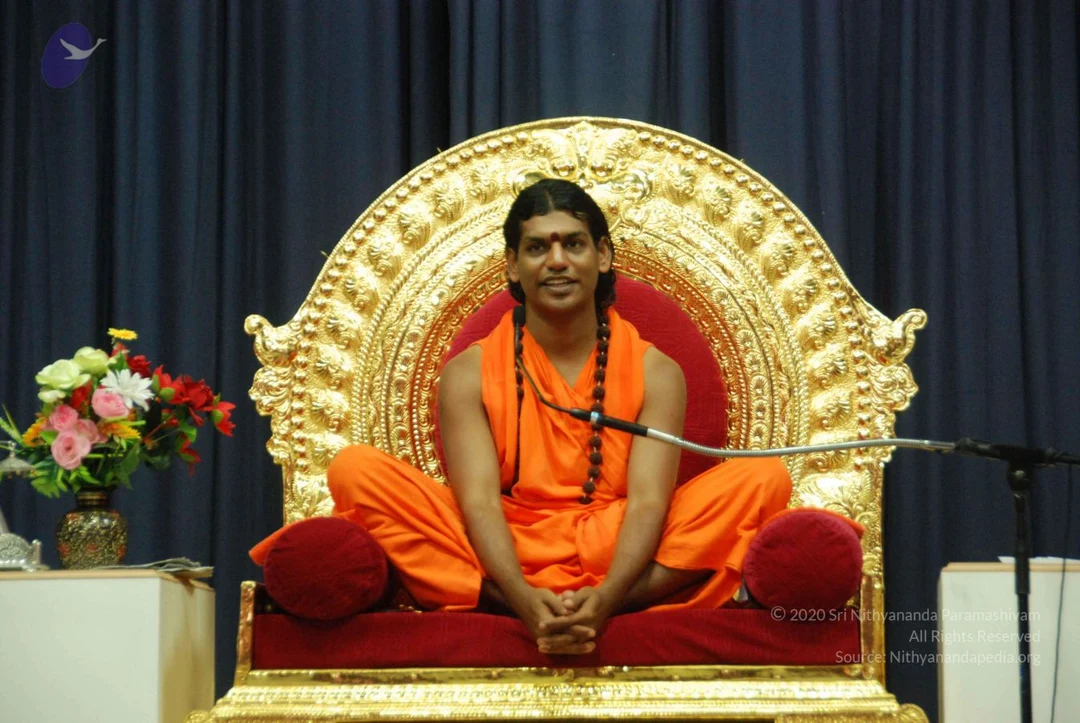
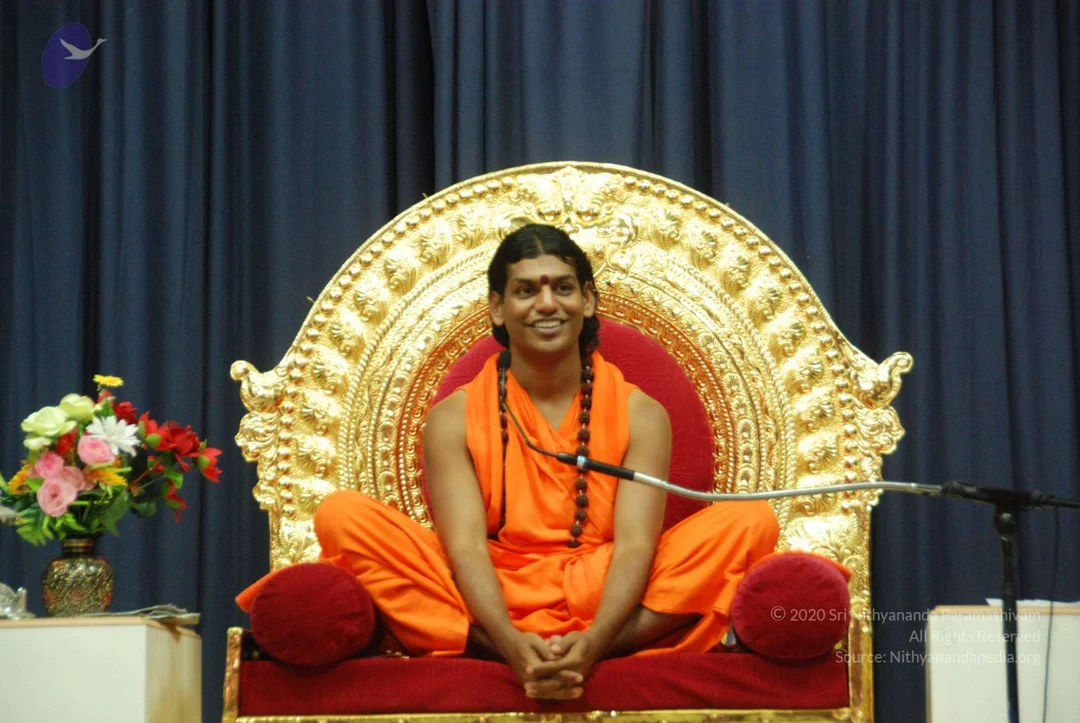
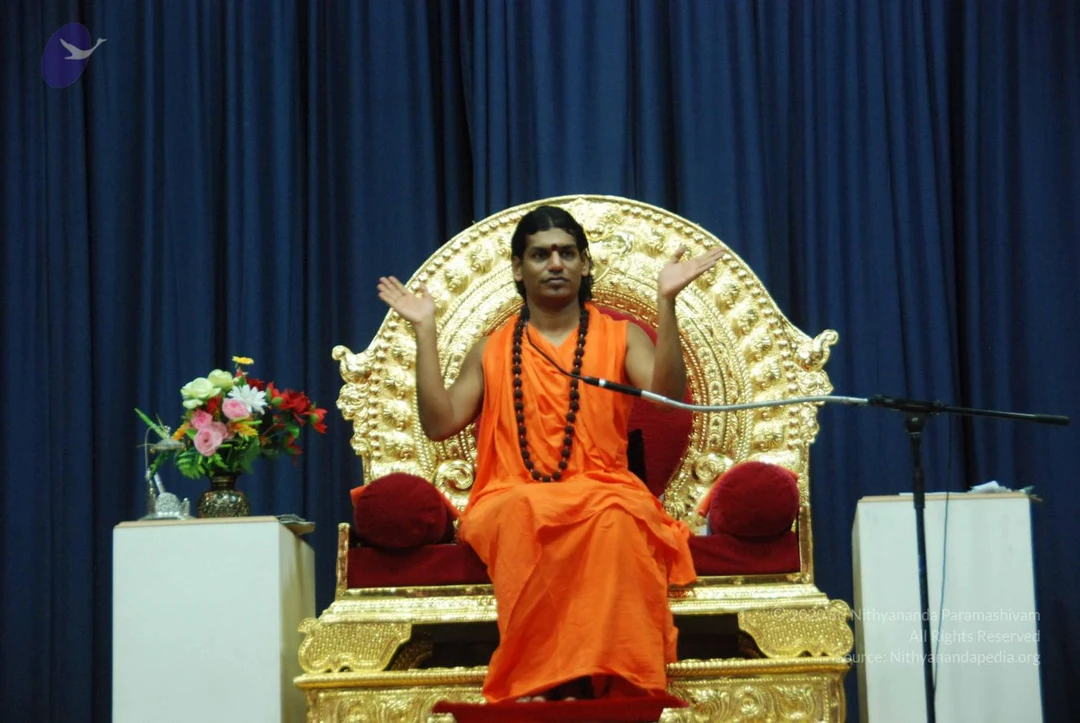
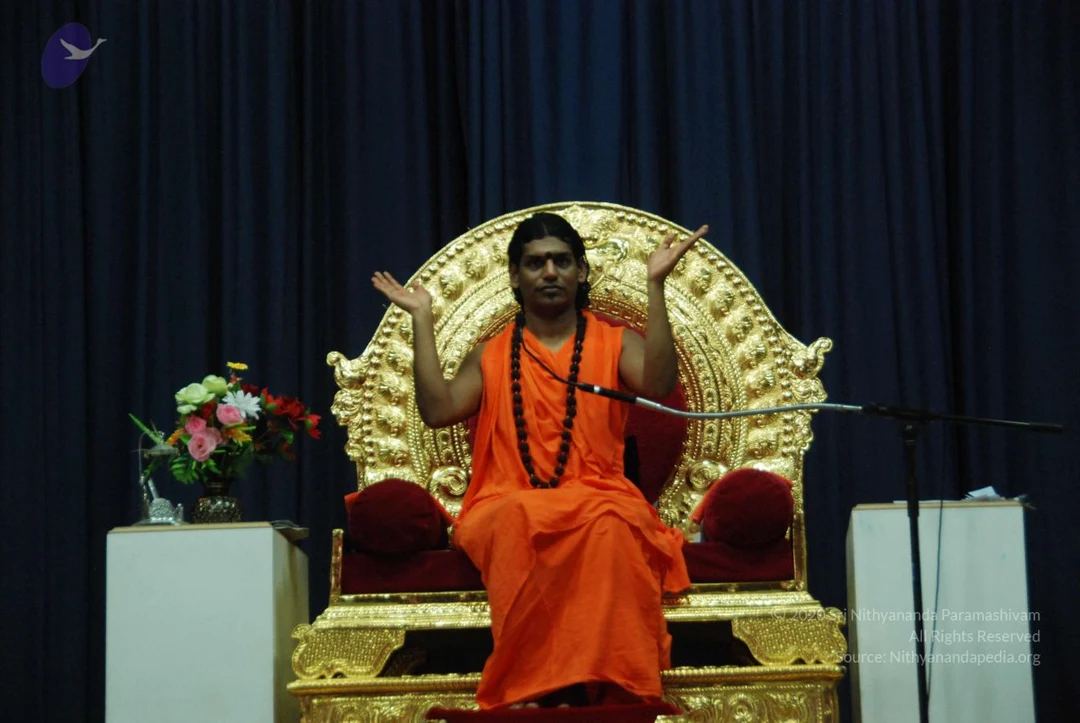
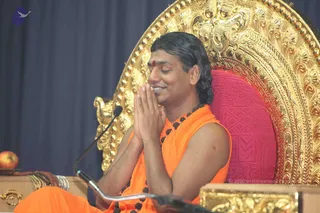
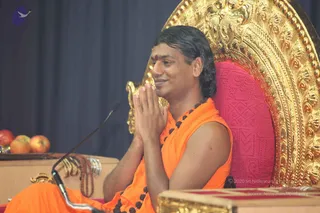
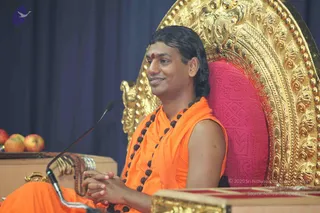
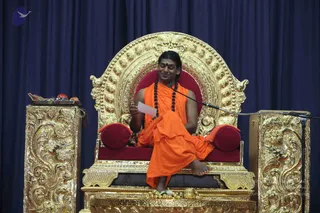
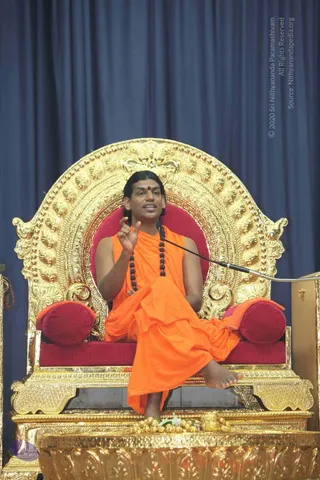
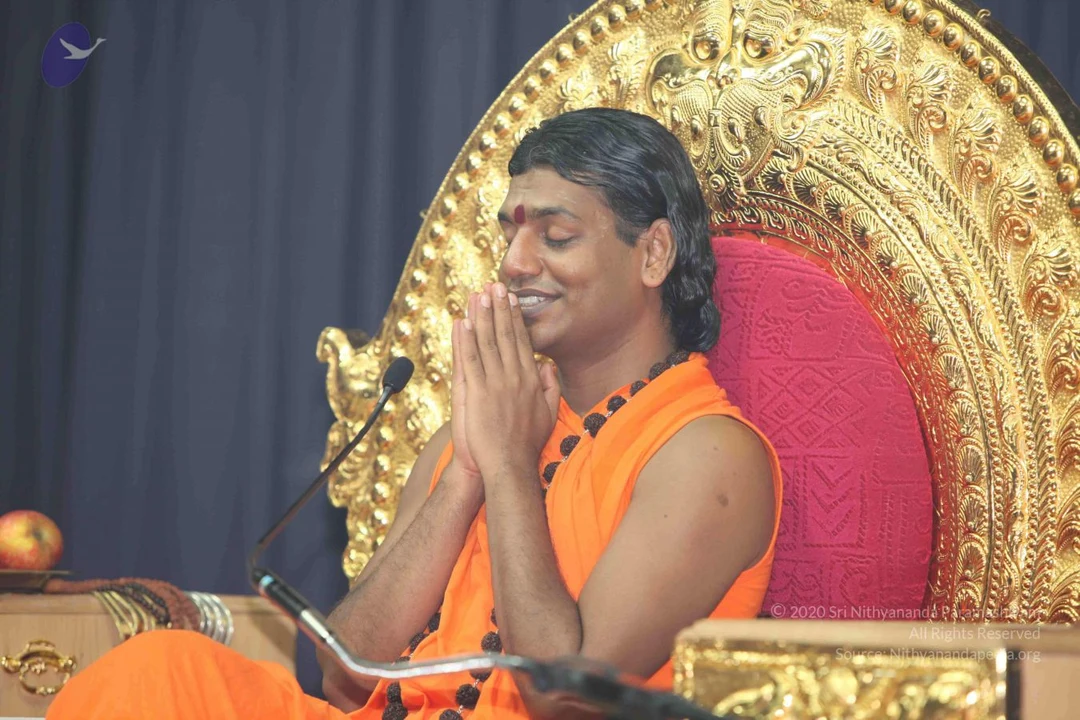
A man seated on an ornate gold throne with a red cushioned back, palms pressed together in namaste with eyes closed and a gentle smile. He wears an orange saffron robe, a dark rudraksha mala around his neck, and a red bindi/tilak on his forehead. A microphone stands near him and a red apple sits on a wooden table at left. a person — a seated teacher in saffron with rudraksha beads and a red forehead mark, giving a satsang talk on a dais. The background is a dark blue drape.A photograph of a man seated on an ornate gold throne with a red cushion, pressing his palms together in namaste with a gentle smile. He wears a saffron-orange sleeveless garment and a dark rudraksha mala draped across his chest, with a red tilak on his forehead and long swept-back dark hair. A microphone stands at left, and a wooden table holds apples and brass items. The background is a dark blue drape. The appearance is consistent with a person, seated for a public satsang talk.A seated man in saffron-orange sleeveless robes and a rudraksha mala sits on an ornate gold throne with a pink cushioned back, smiling with hands clasped in front of a microphone on a stand. A red bindi marks his forehead and long dark hair falls past his shoulders. Red and green apples and a brass tray sit on a wooden table at left, with a navy curtain behind. Probable Swamiji cues: long swept-back hair, saffron robes and rudraksha mala, seated on a throne at a satsang-style talk.A seated man in saffron-orange robes sits on an ornate golden throne with red cushions, holding a small white paper and smiling. Long dark hair is swept back, with a red bindi on the forehead and multiple rudraksha malas hanging around the neck and chest. A microphone stands in front of him. Behind is a deep blue draped curtain, and gold-carved pedestals flank the throne. A small tray of fruit and flowers sits on the left pedestal. Visible appearance cues are several: long swept-back hair, saffron clothing and rudraksha malas on a throne, so the seated figure is labelled Swamiji (probable) as a speaker giving a satsang talk.A man seated on an ornate gilded throne with a red cushioned seat and red bolster pillows speaks during a satsang talk. He wears a sleeveless saffron-orange robe, a dark rudraksha mala around his neck, and a red tilak on his forehead; his right hand is raised in a gesture while he speaks into a microphone on a stand. Behind him hangs a dark blue draped curtain, and a gilded table in front holds a small floral garland. Swamiji (probable) is seated on the throne and teaching, with long swept-back hair, saffron robes and a rudraksha mala as the distinguishing cues.A man with long dark hair and a red bindi sits on an ornate gold throne with a red velvet seat and red bolster cushions, in front of a blue draped backdrop. He wears an orange saffron robe and a long rudraksha mala, raises one hand in a teaching gesture, and speaks into a microphone on a stand.

SARVA-DARSHAN
4 photosSource gallery
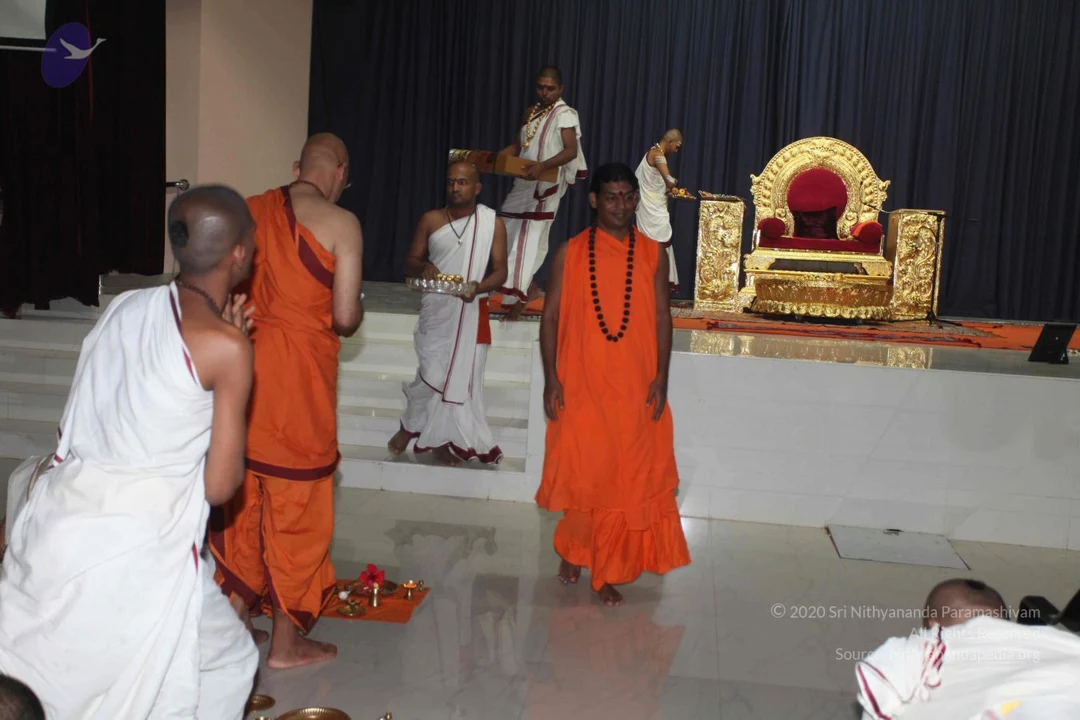
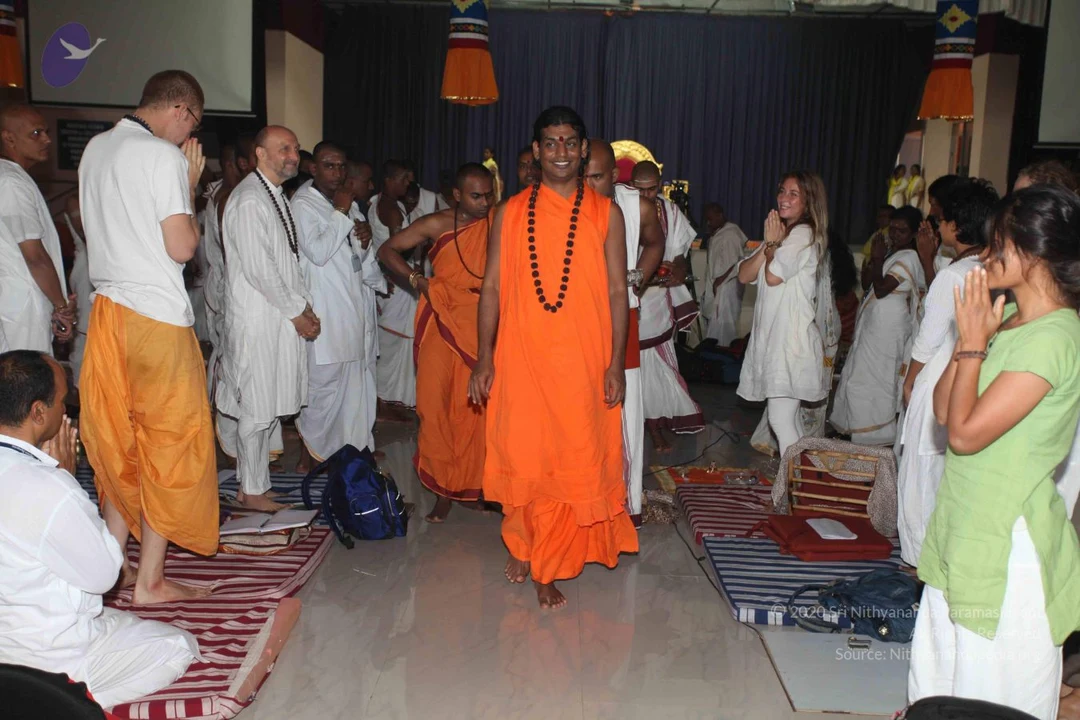
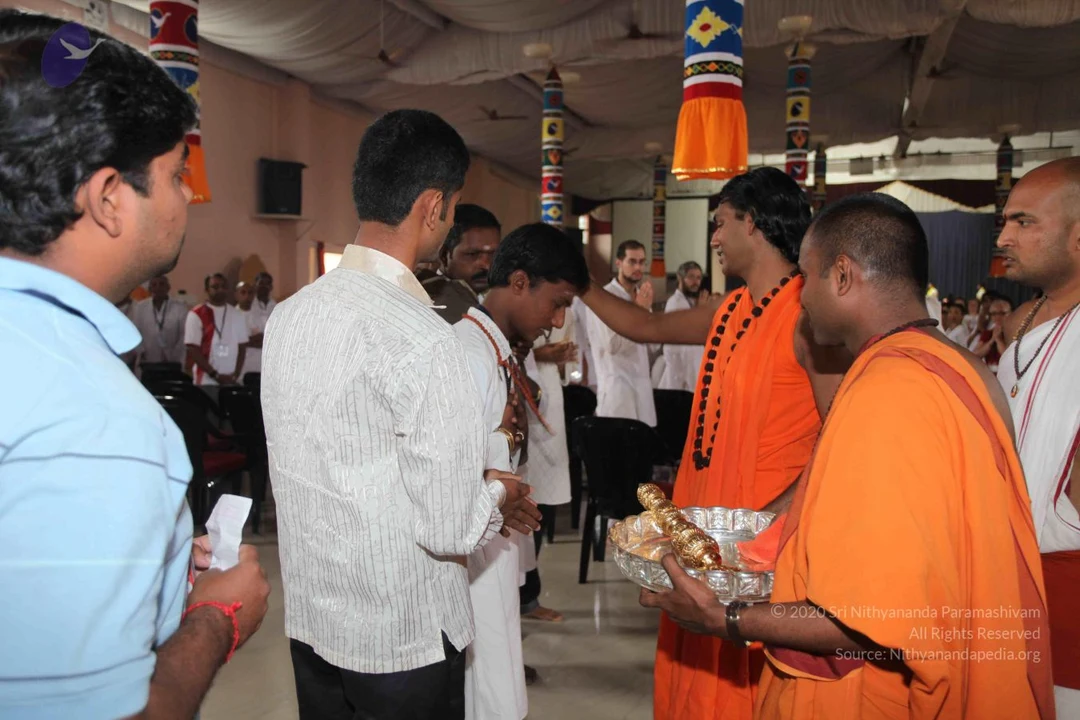
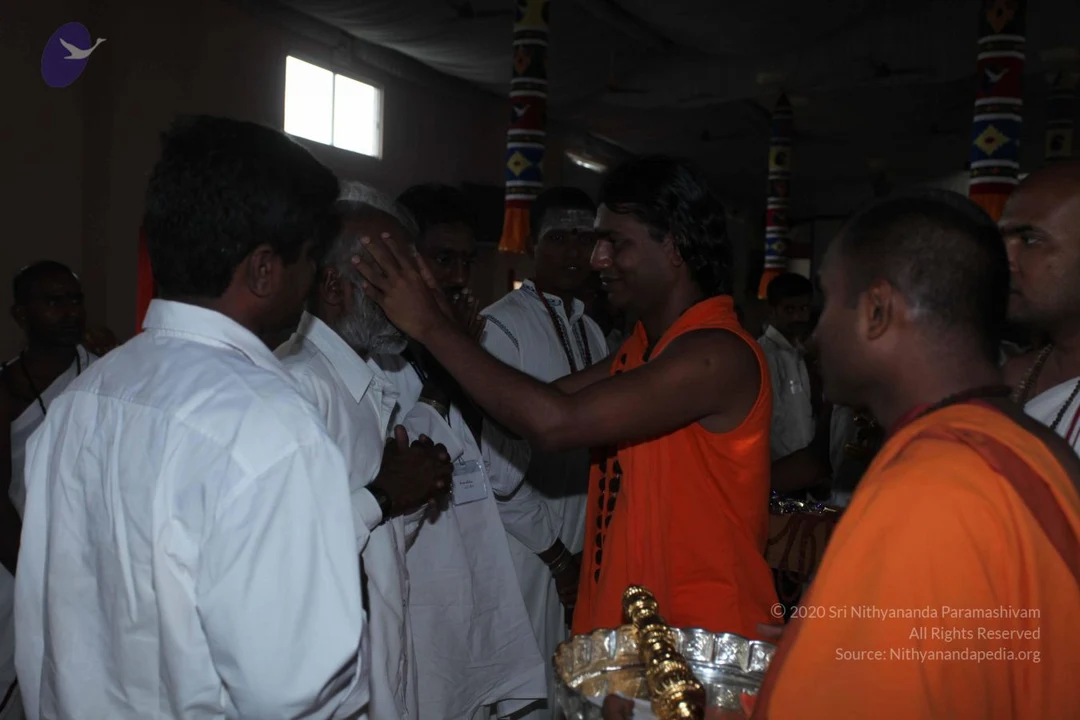
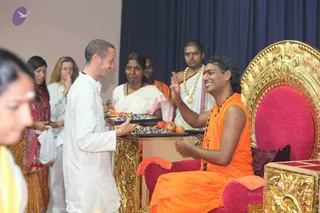
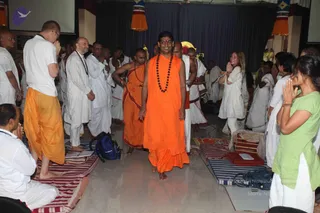
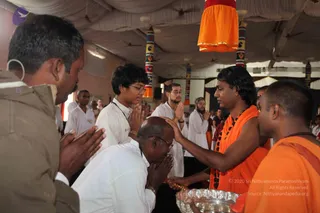
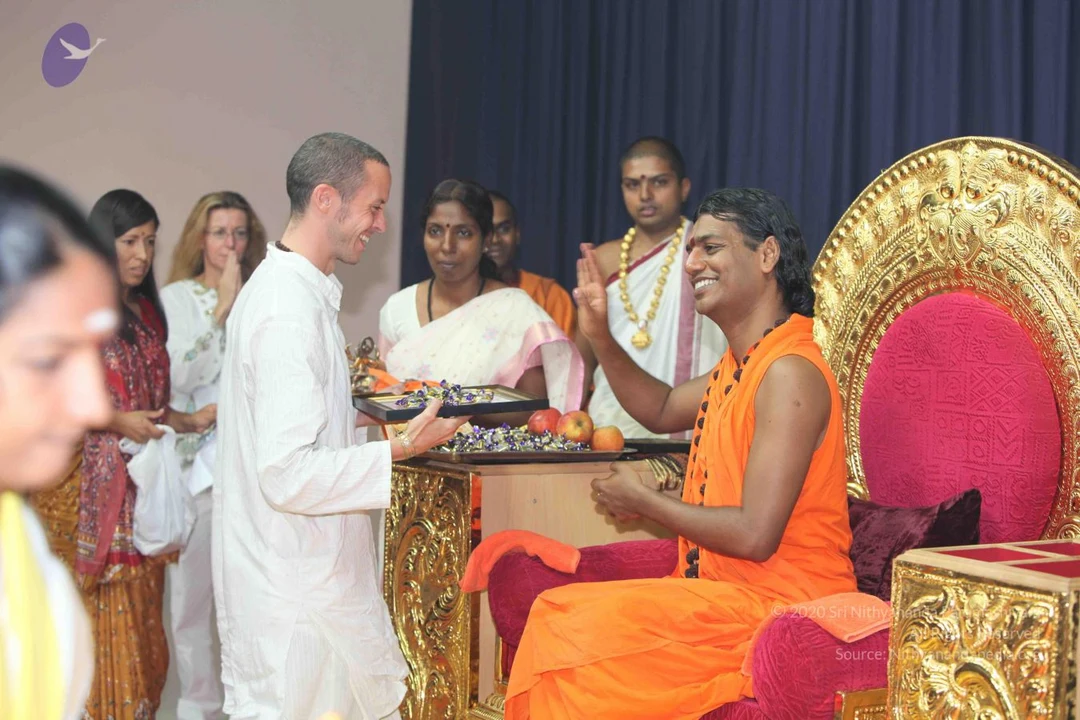
Indoor satsang photo with a man in a white kurta offering a tray of apples and purple flowers to a seated figure on an ornate gold-and-red throne. The seated man has long swept-back dark hair, wears saffron-orange robes, a rudraksha mala, and raises one hand in blessing while smiling. Behind him a priest in white dhoti with orange shawl and gold necklace stands, and several devotees in saris and white clothing watch. Gold-trimmed low table holds fruit and flowers. a person seated on the throne, blessing the devotee offering fruit.A stage-side ritual scene before a golden ornate throne with a red velvet seat and a dark blue draped backdrop. In the foreground, a shaved-headed man in white ritual clothes with red-edged border stands with hands folded, facing a man in saffron-orange robes and orange shawl. A man in orange robes with a dark rudraksha mala, in the centre, walks barefoot across the white floor. Behind, a man in white dhoti holds a brass plate, and another in white and red-bordered cloth holds a wooden box. A figure in white at the throne lifts a flame or lamp toward the seat. Brass oil lamps and a red flower sit on an orange cloth at lower left. Appearance-based candidate uncertain; roles described only.A photograph of a satsang hall where a man in a saffron-orange robe and a dark rudraksha mala walks barefoot down the centre aisle, smiling, with his hands at his sides. Around him devotees in white and cream clothes sit and stand on striped mats, many with palms pressed together in namaste. A woman in a light green top at right and a man in a white shirt and orange dhoti at left also hold their hands together. Behind them hang orange and blue tassels and a dark blue curtain, and a projection screen is at top left.Photograph inside a tent-covered hall during a devotional gathering. A man in an orange robe with a rudraksha mala and long swept-back dark hair stands at right, placing his hand on the head of a bald, bespectacled devotee in white who kneels with hands folded. Several white-clad devotees stand behind with palms pressed together in namaskar. A silver plate holding offerings sits in front of the kneeling devotee. A second orange-robed monastic stands at far right. Hanging orange cloth and colourful striped pillars decorate the ceiling and columns.

LEP-SESSION-BY-HDH
33 photosSource gallery
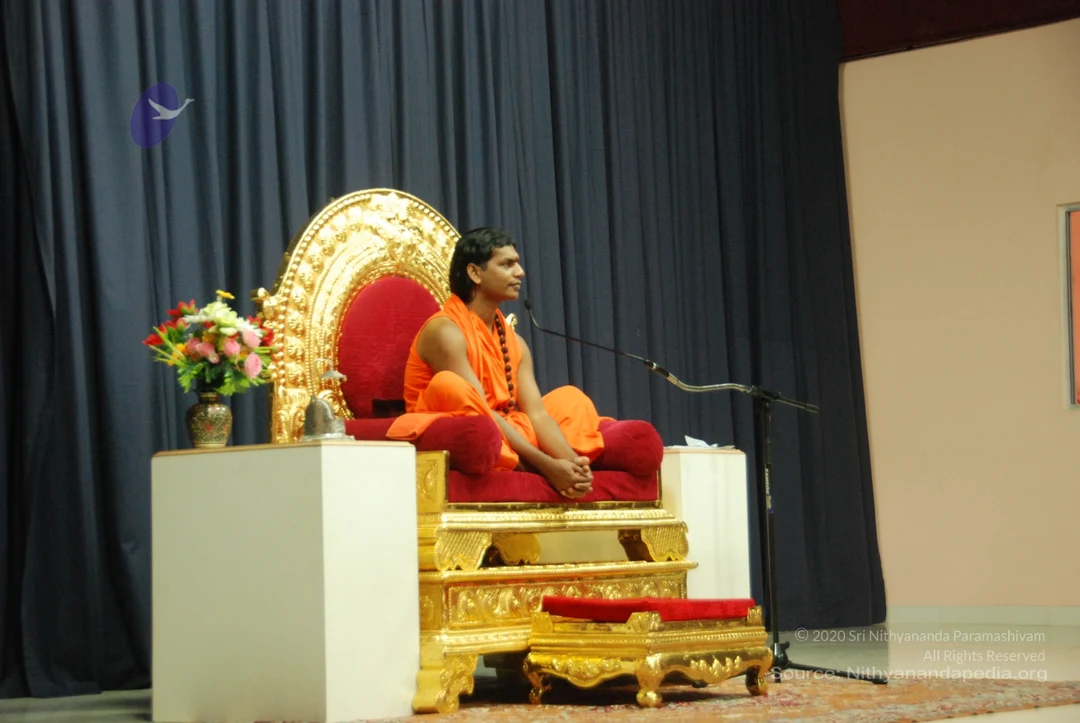
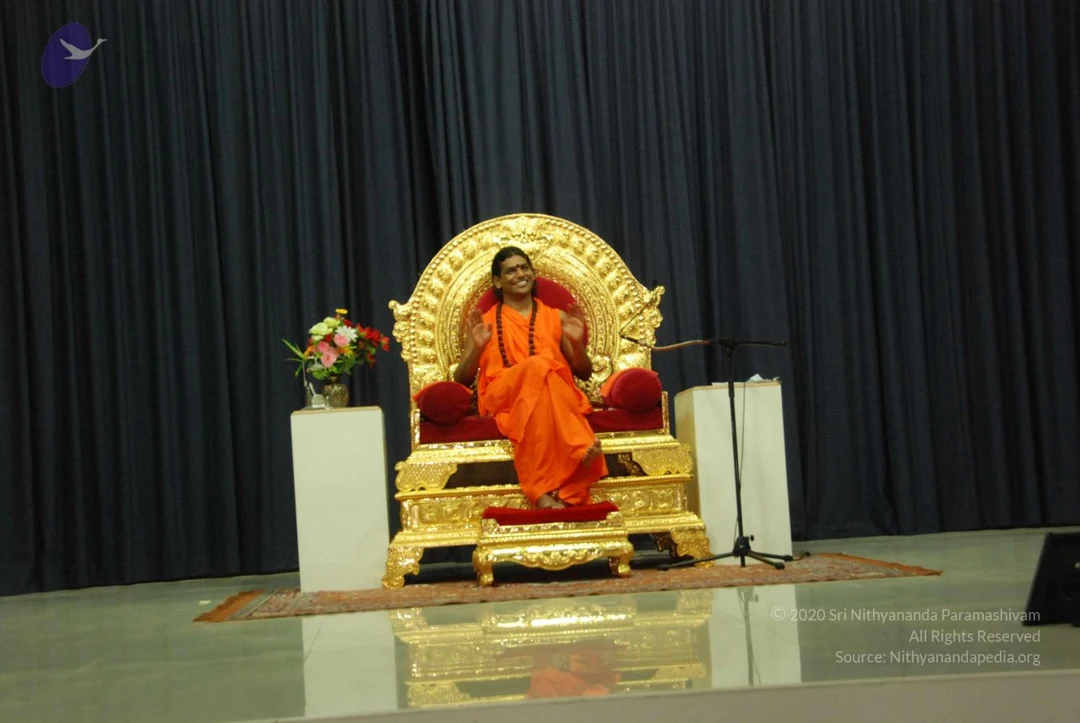
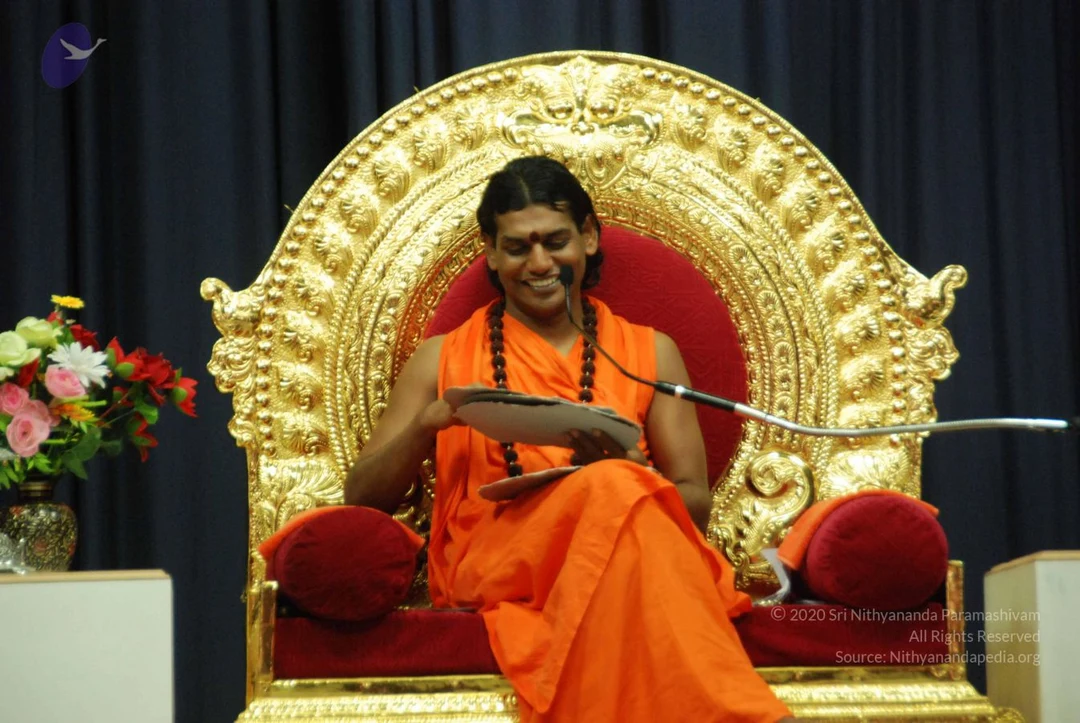
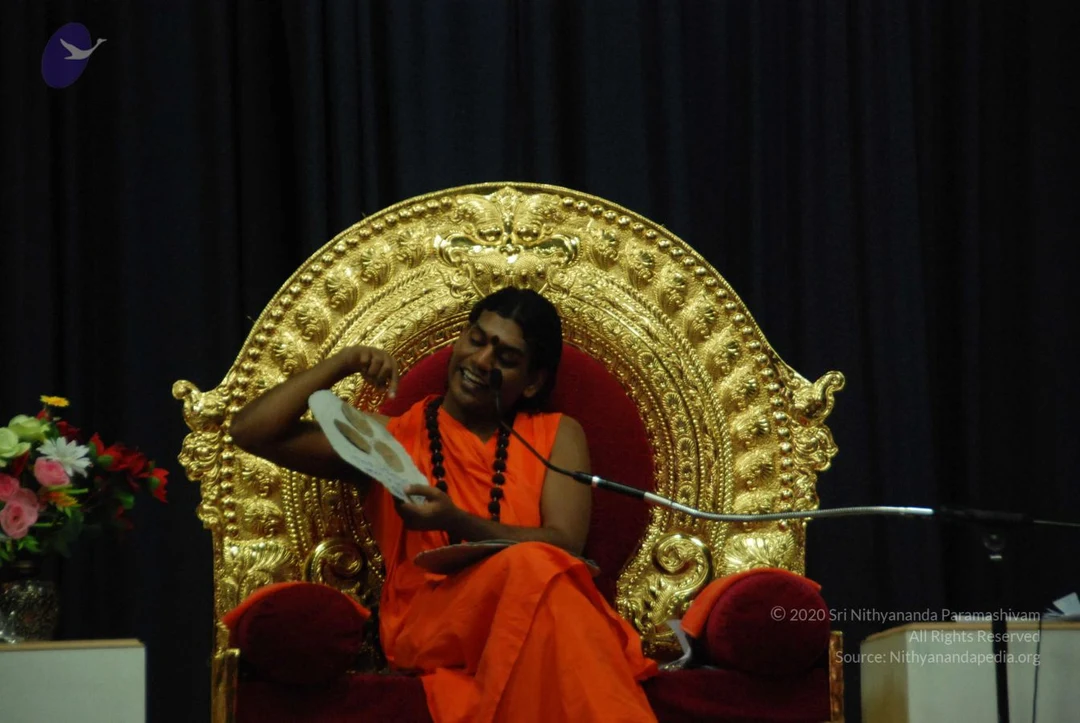
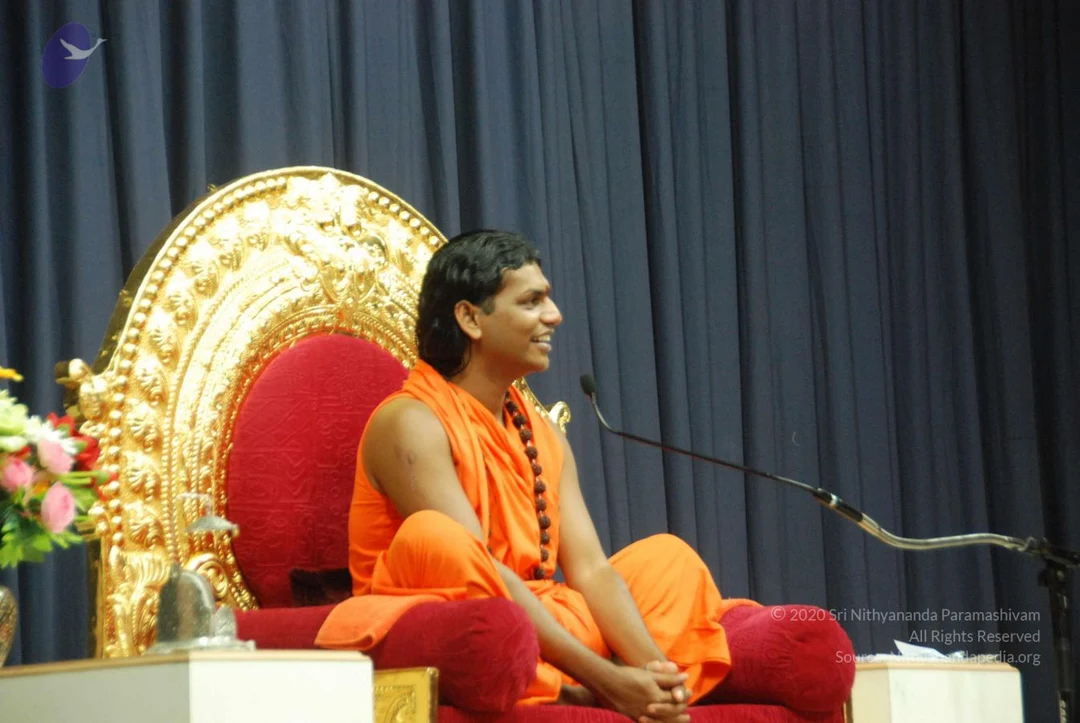
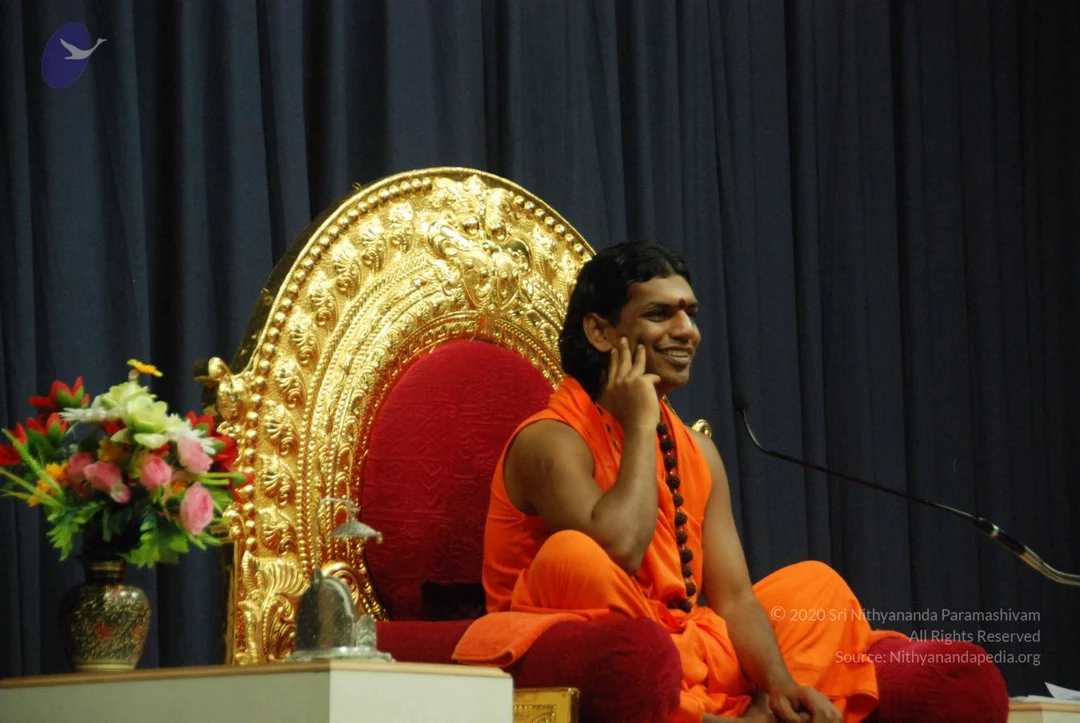
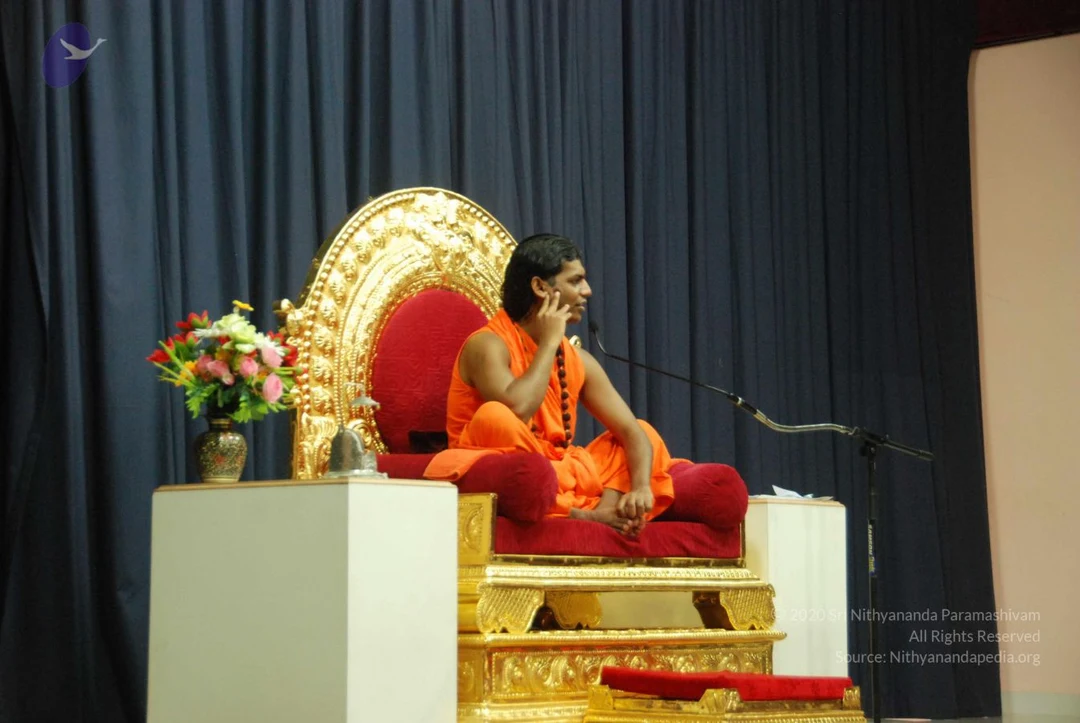
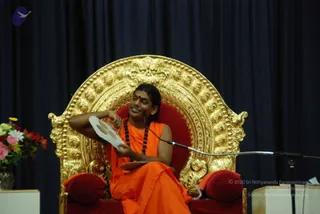
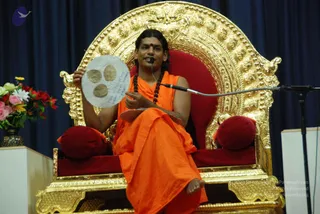
A photograph of a seated figure on an ornate gold throne with red cushions on a stage in front of dark blue draped curtains. The person wears an orange saffron robe and a rudraksha mala, with long dark hair, and gestures with both hands while speaking. A footstool with a red cushion sits in front of the throne, with a microphone stand to the right and a vase of pink and red flowers on a white pedestal to the left.A seated figure in saffron-orange robes and a rudraksha mala sits on an ornate gold throne with red cushions before a dark blue draped curtain. He wears a red bindi, holds a white paper or fan-like sheet in both hands and smiles while speaking into a microphone on a stand. A vase of pink and red flowers stands at the left edge of the stage. a person cues are present: saffron clothing, rudraksha mala and a ceremonial golden throne, with a speaking role at a satsang-style talk.A man in saffron-orange robes sits on an ornate gold throne with a red cushioned seat and red back cushions, speaking into a microphone on a gooseneck stand. He wears a red bindi, a rudraksha mala necklace, and has long hair swept back. He holds up a round white paper disc with several small brown circles and handwritten writing, while holding a folded paper in his other hand. Behind him hangs a dark blue curtain, and a flower arrangement of pink, white and red blooms sits to the left. Swamiji (probable) is seated as the speaker in this satsang discourse, with saffron clothing, rudraksha mala and long swept-back hair as visible cues.A man seated on an ornate gold throne with a red cushioned seat and red bolster pillows, in front of a blue draped backdrop. He wears an orange-saffron robe, a long rudraksha mala, and a red bindi, with long dark hair swept back. He holds a white sheet with drawings and text in one hand while speaking into a microphone on a stand. Red and yellow flowers stand at the left edge, and a logo appears at the upper left. This is a probable Swamiji (probable) seated for a satsang-style talk, identified by the saffron robe, rudraksha mala, long swept-back hair and throne setting.A seated man in saffron-orange robes and a shawl sits cross-legged on an ornate gold throne with a large gold arched backrest and red cushions. He wears a rudraksha mala and a red tilak on his forehead, with long hair swept back, and his hands rest together in his lap while he smiles toward the audience. A gold-colored microphone stand and a flower vase with pink, red and white blooms stand beside the throne in front of a dark blue draped curtain.A man seated cross-legged on an ornate gold throne with a red cushion backrest and red seat cushions speaks into a gooseneck microphone. He wears an orange saffron sleeveless robe and a long rudraksha mala of dark beads, with a red bindi on his forehead and long swept-back hair. His hands are clasped in his lap. Behind him hangs a deep blue draped curtain, and a vase of pink, red and white flowers stands at left. Swamiji (probable): the seated speaker's appearance shows a distinctive combination of long swept-back hair, saffron clothing and a rudraksha mala, consistent with the page's claim that he was present at this satsang.

PANCHA-TAPAS
37 photosSource gallery
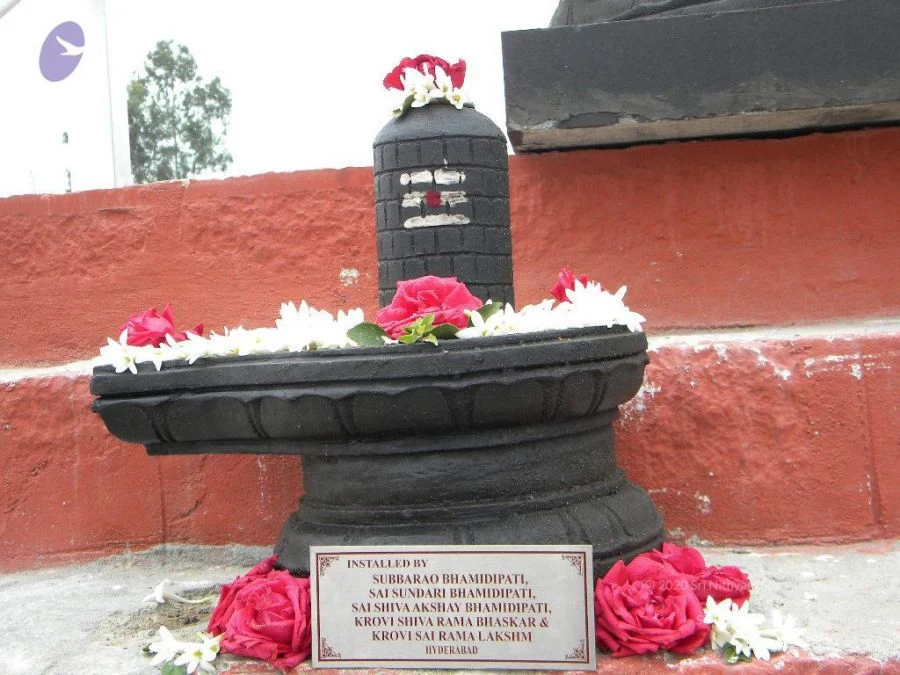
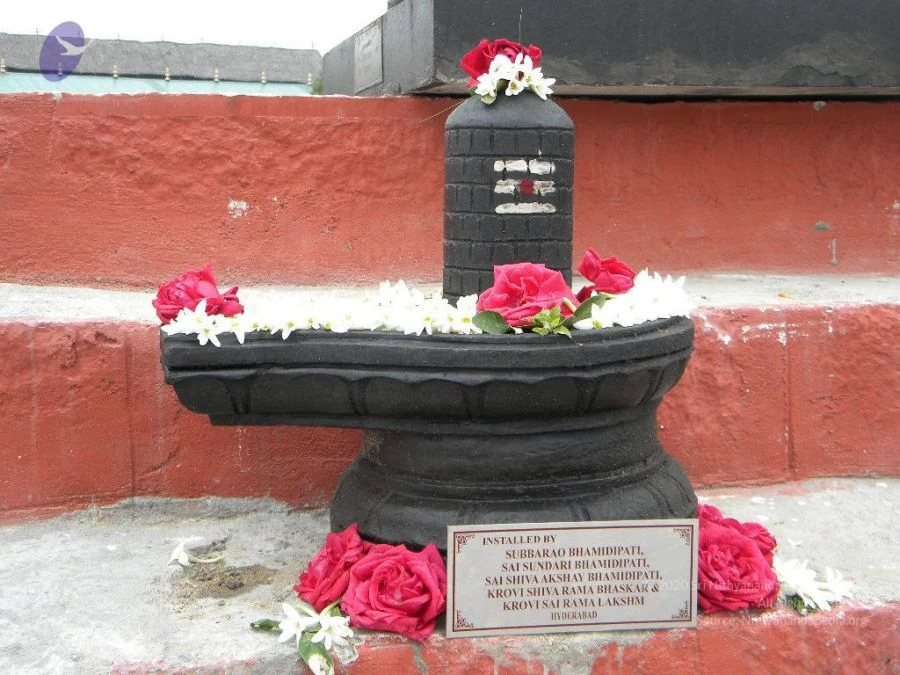
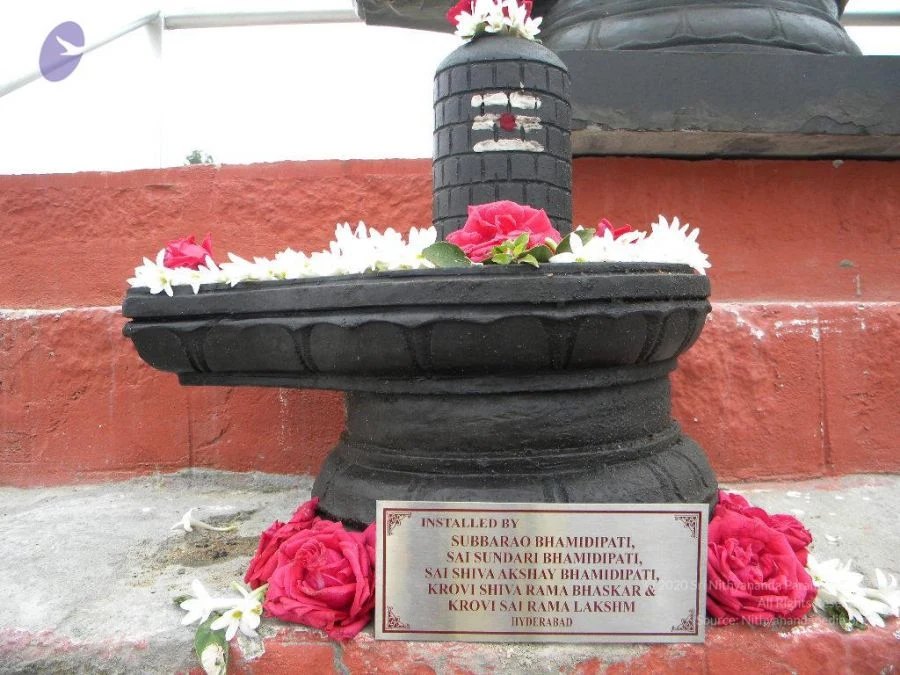
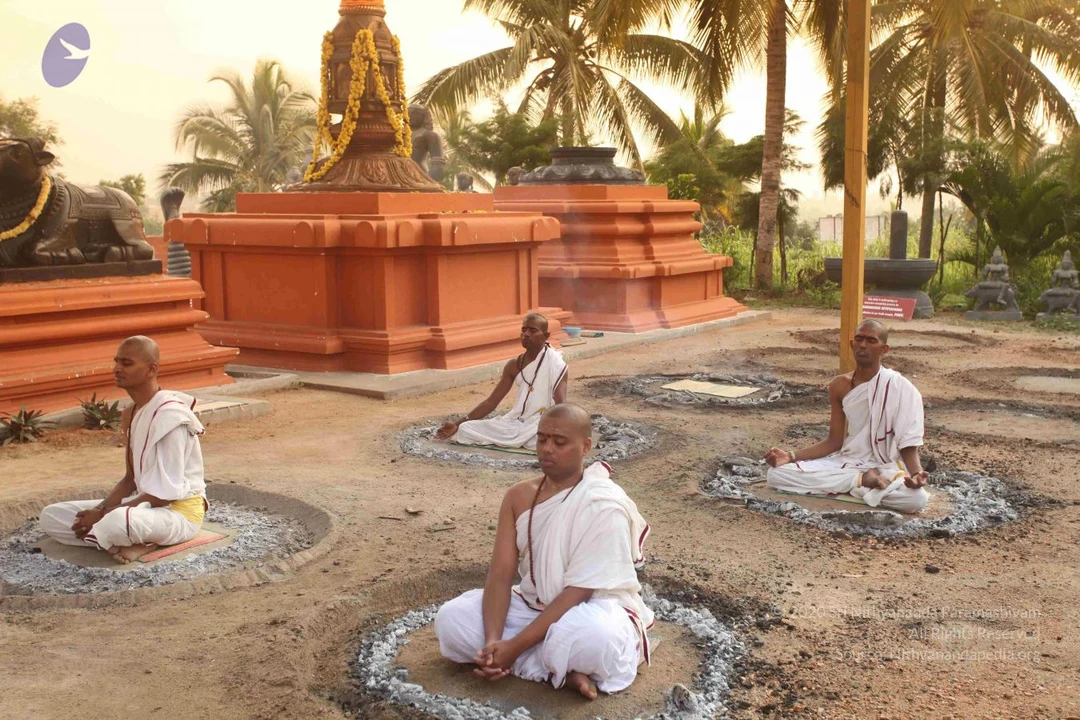
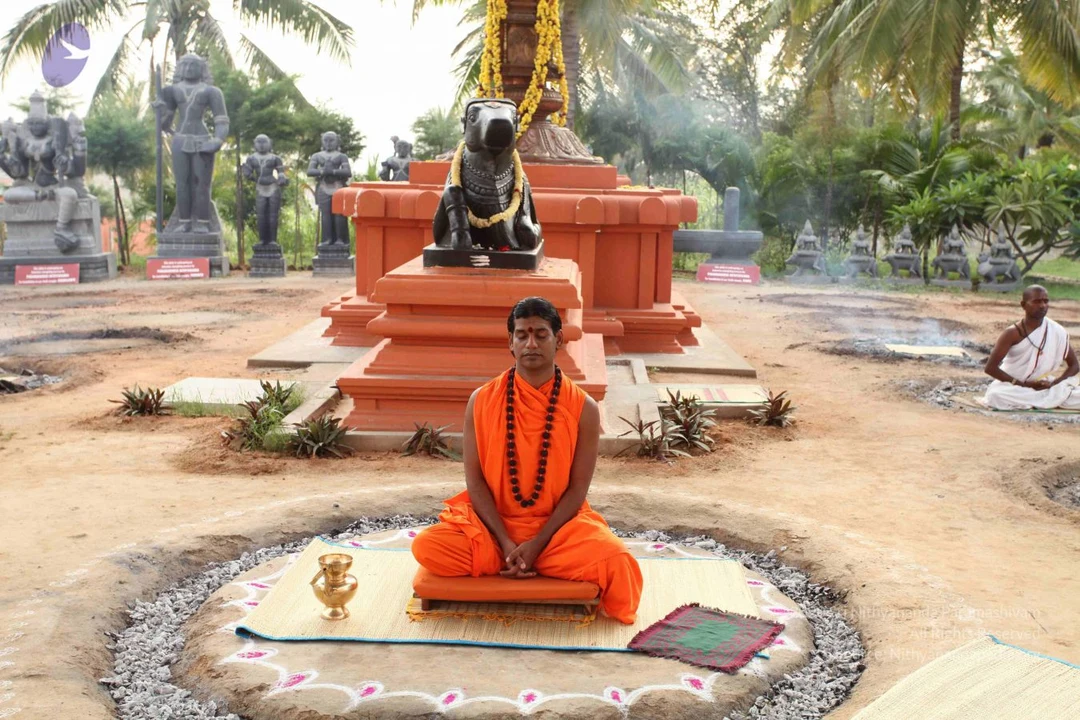
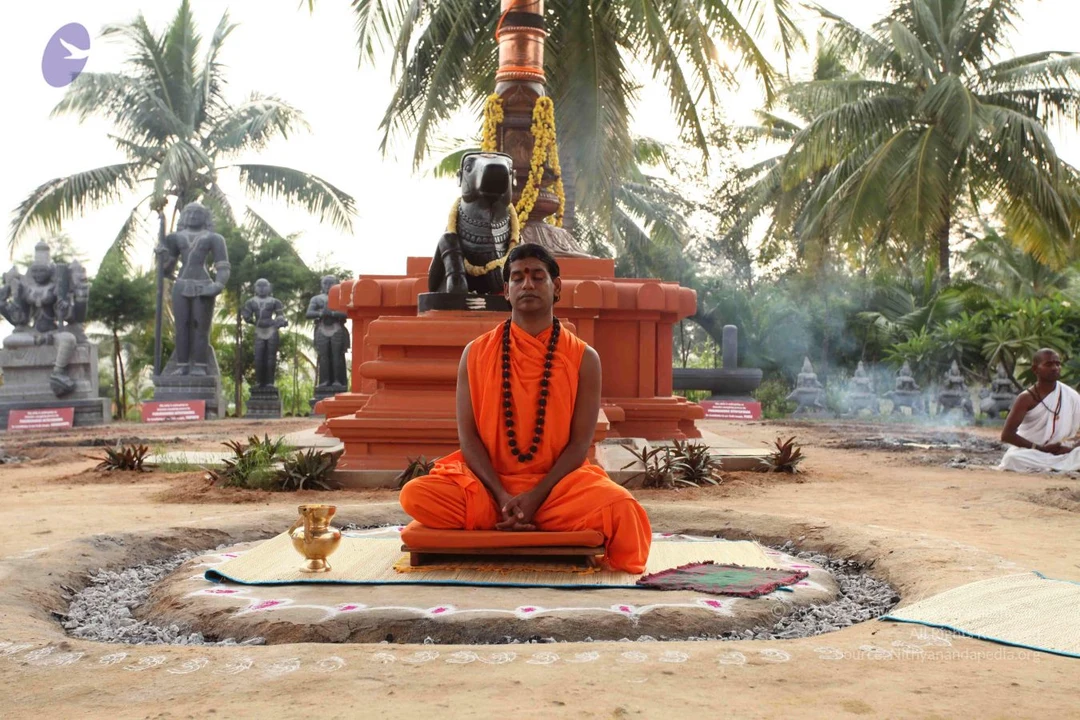
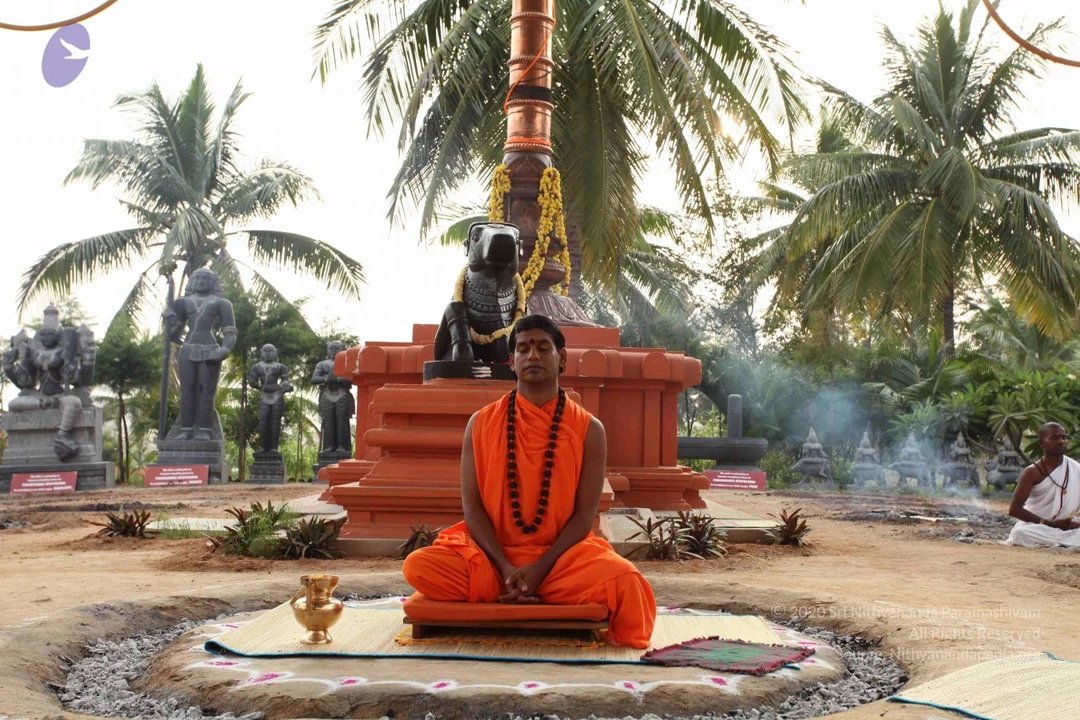
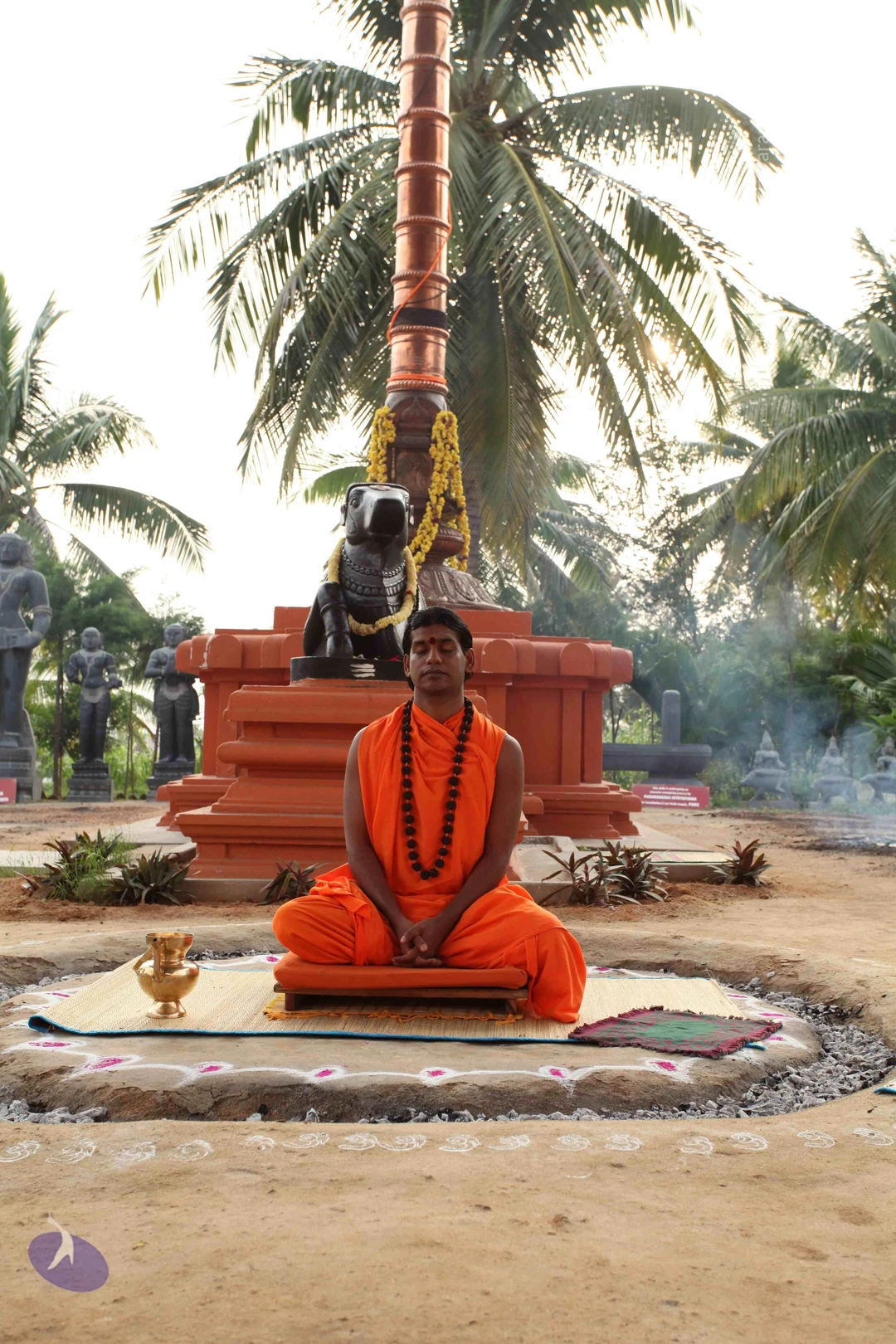
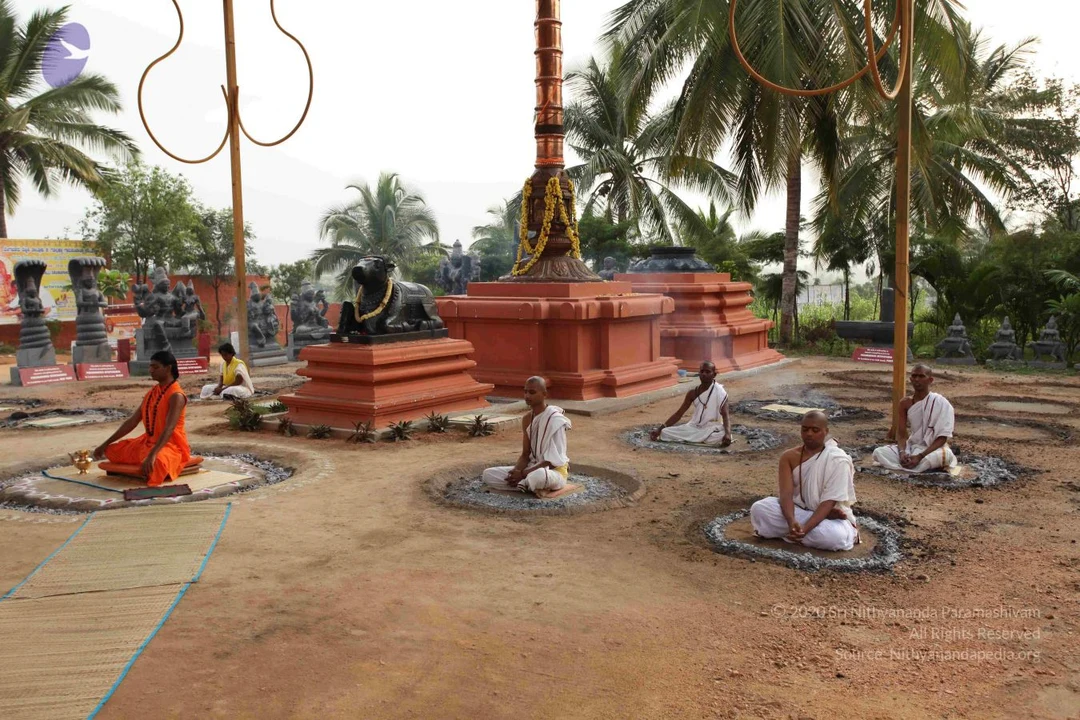
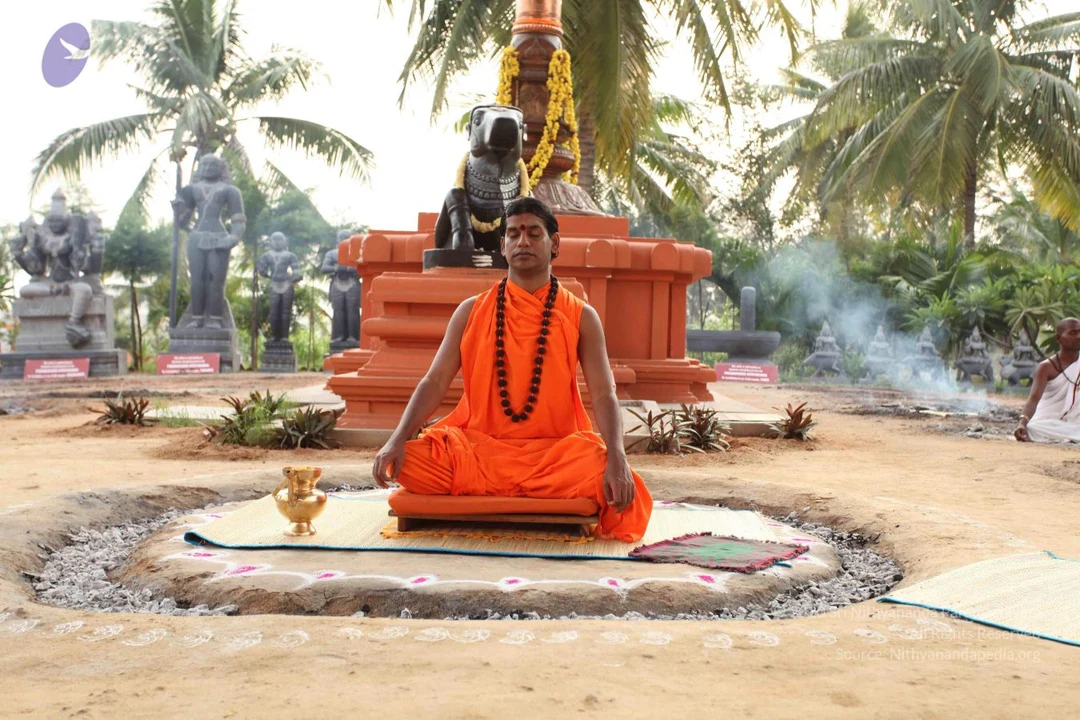
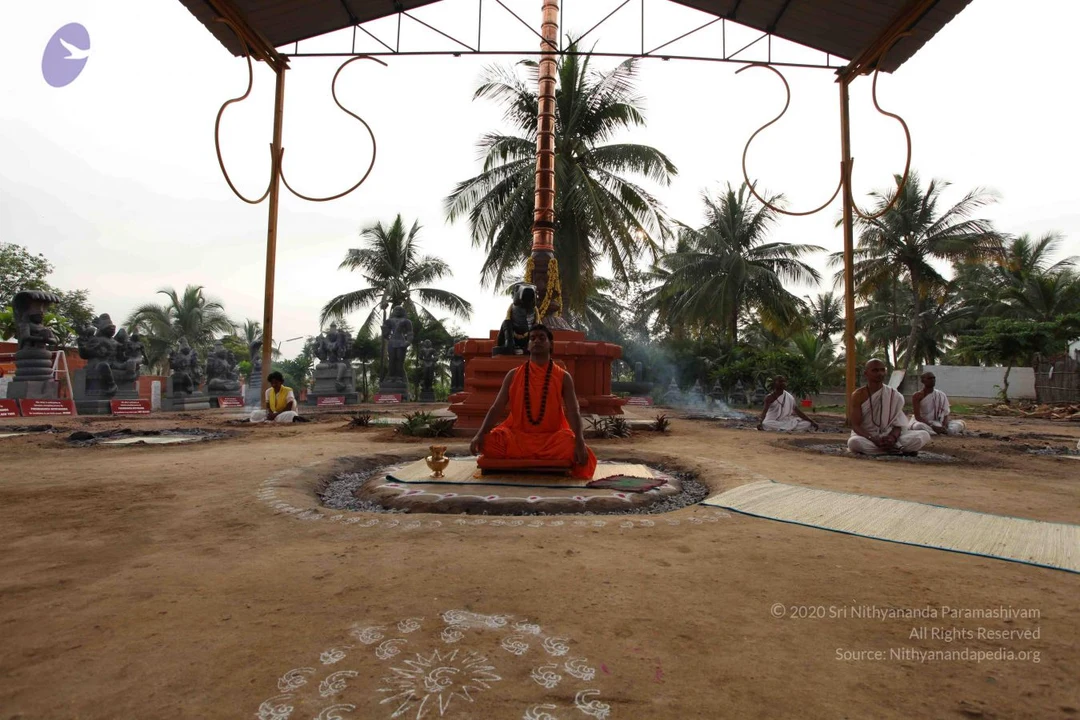
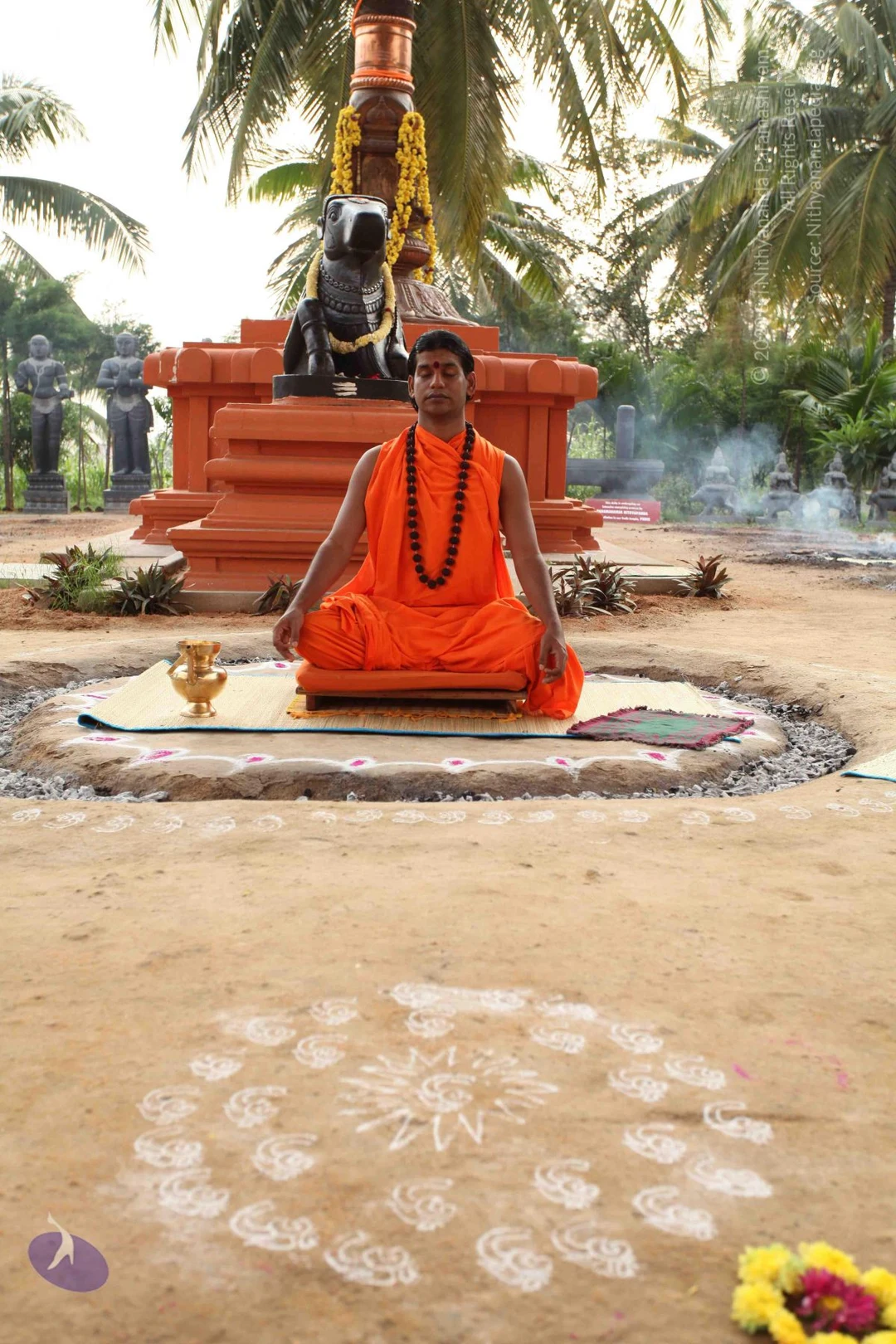
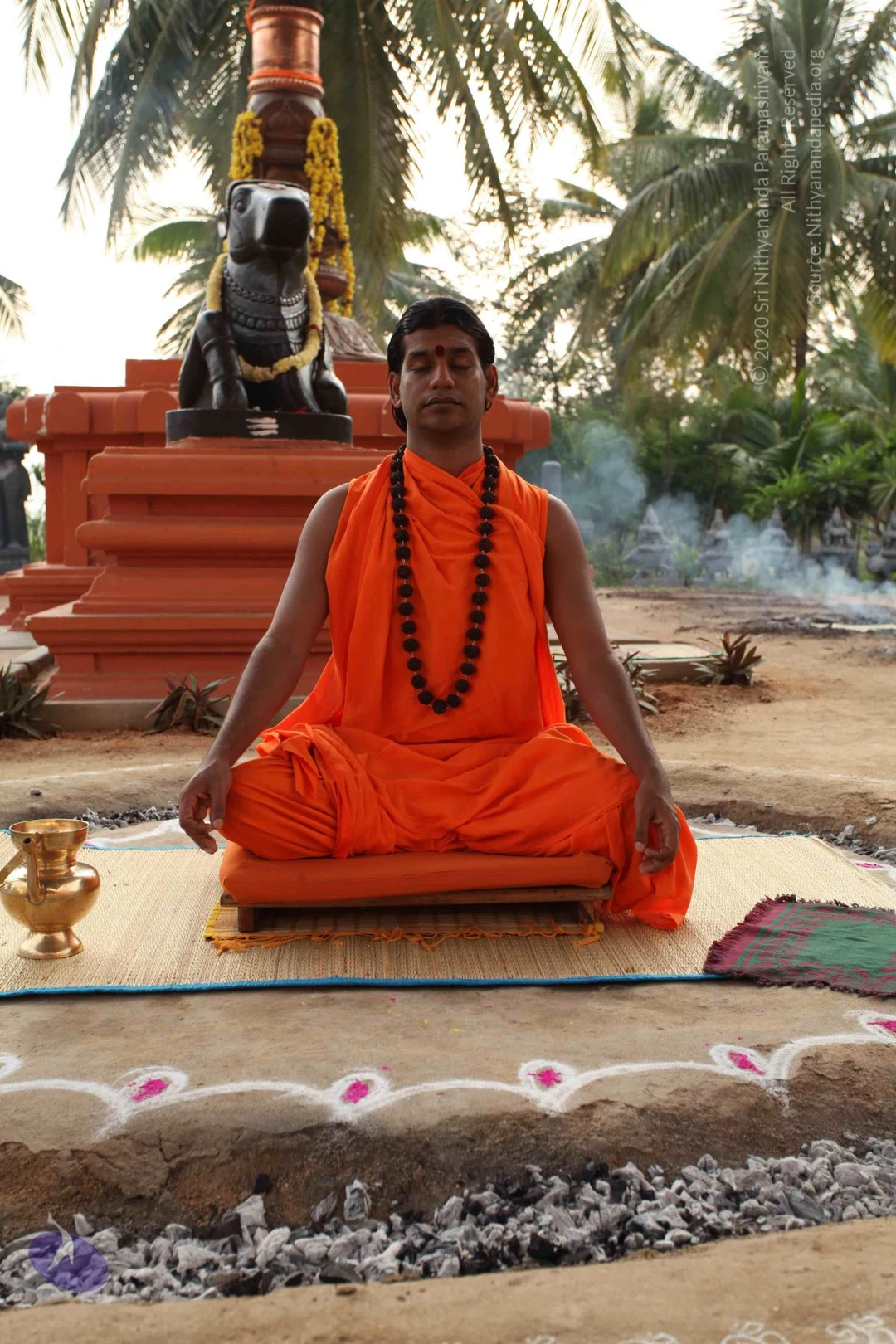
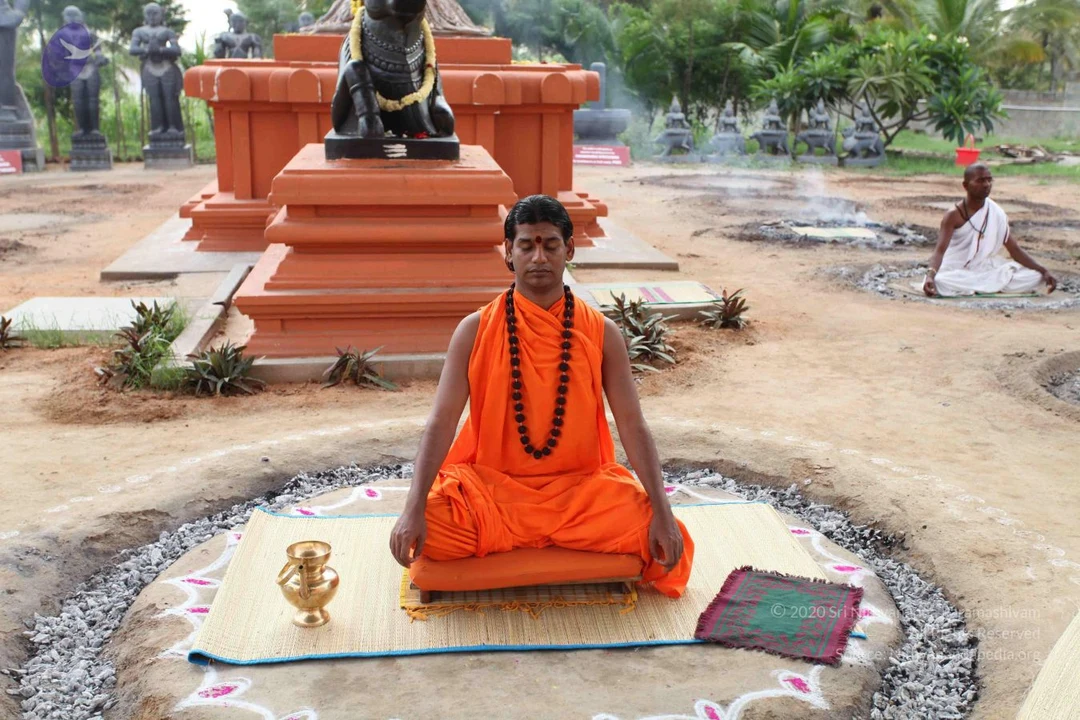
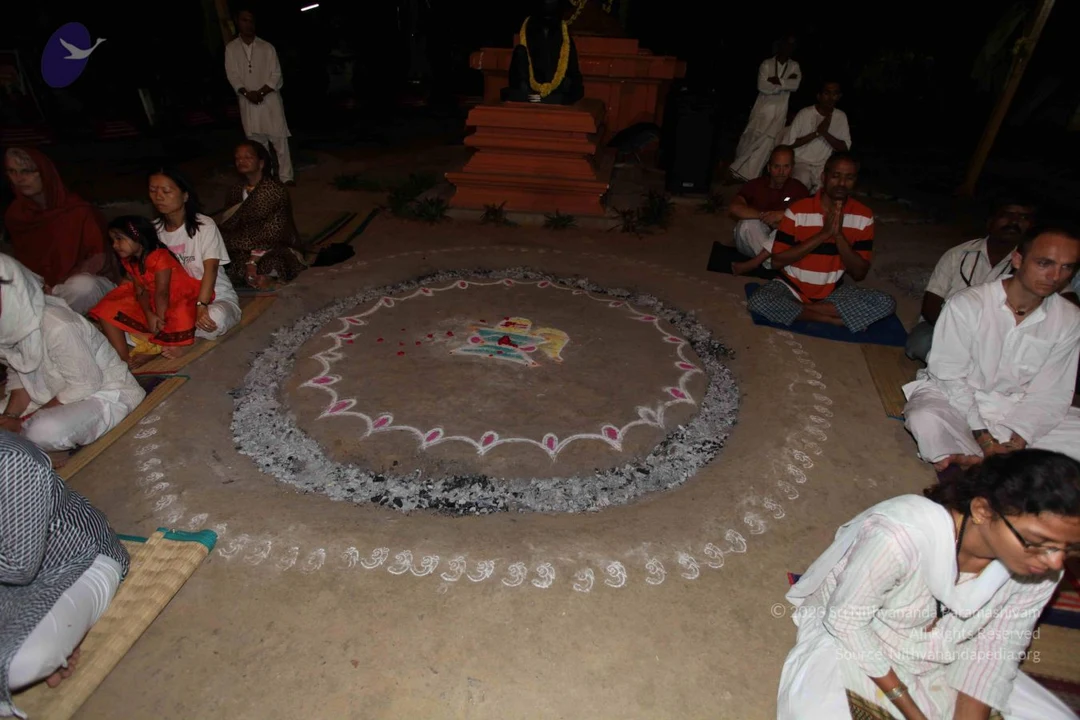
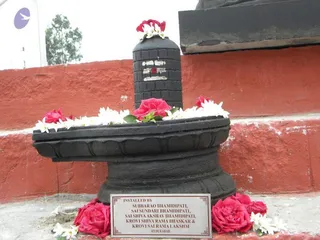
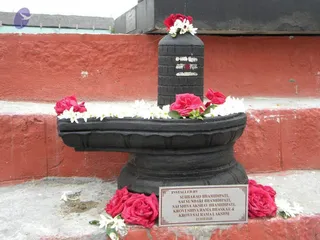
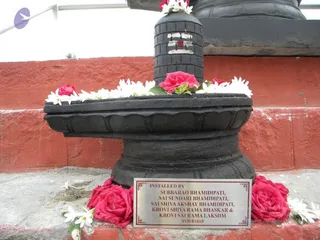
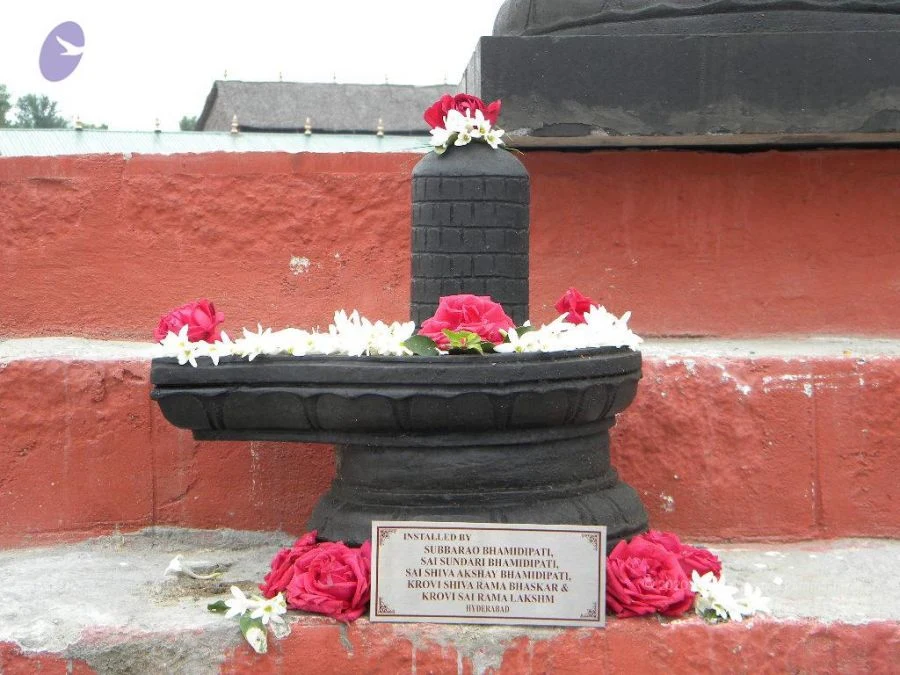
Photograph of a black stone Shivling on a black yoni-shaped pedestal set against a red-painted wall, with three white horizontal tripundra lines and a red dot marked on its front. White jasmine garlands and red roses are draped over the pedestal and the shivling's top, and more red roses lie at its base. A small brass plaque on a stone ledge in front of the pedestal reads that it was installed by named donors from Hyderabad. No people are visible.A black stone Shivling rests in a black yoni-pitha base on red-painted steps, decorated with red roses and white jasmine-type flowers laid around the base and on top of the lingam. A small brass plaque at the front bottom reads that it was installed by named donors from Hyderabad. No people are visible in the scene.A black stone Shivling rises from a black lotus-shaped yoni pedestal set on a red-painted step. Three horizontal white stripes and a red dot mark the lingam. Pink roses and white flower garlands are heaped on the pedestal and scattered on the ground. A brass plaque on the base reads installed by Subbarao Bhamidipati, Sai Sundari Bhamidipati, Sai Shiva Akshay Bhamidipati, Krovi Shiva Rama Bhaskar and Krovi Sai Rama Lakshm, Hyderabad. No people are visible.A seated man in saffron-orange robes sits cross-legged on an orange cushion with hands folded in his lap and eyes closed, in an outdoor temple courtyard. He wears a dark rudraksha mala and a red tilak on his forehead. A brass kalasha pot sits beside him on a woven mat within a shallow circular pit lined with stones and white kolam-style patterns. Behind him stands a large orange stepped platform topped with a black stone Nandi bull draped in yellow-orange marigold garlands, and a tall copper-coloured pillar rises above. Dark stone deity statues and small shrines are arranged among palm trees, and a second man in white dhoti and shawl sits at the right edge near smoke rising from a fire area. Red signboards with text stand in the courtyard.Outdoor photo of a seated man in orange saffron robes and a rudraksha mala, meditating cross-legged on a raised wooden seat over a mat at the centre of a shallow pit edged with gravel and white rangoli dots. Behind him stands a dark stone Shiva linga draped in a yellow-and-orange flower garland, set on a red-orange plinth with a tall copper pillar and palm trees beyond. Stone deity sculptures line the left side, and a faint smoke rises on the right. A brass kalasha-style vessel sits on the mat in front of him. A bare-chested man in white dhoti and shawl sits in the background on the right. Printed copyright text overlays the lower right corner.Outdoor photo of a man seated in lotus posture with eyes closed and hands folded in his lap, on a woven mat atop a raised sandy platform ringed with white kolam designs and gravel. He wears a sleeveless saffron-orange cloth draped over his shoulders and a long black rudraksha mala with a red tilak on his forehead. Behind him stands a black stone Nandi bull draped in a yellow marigold garland, with a tall copper-clad pillar and a terracotta-red stepped pedestal. A brass kalasha stands at his left, and stone deity sculptures and palm trees frame the scene. Smoke rises at the right edge. The seated man is the only physical person visible.

NAVARATRI-HOMA
55 photosSource gallery
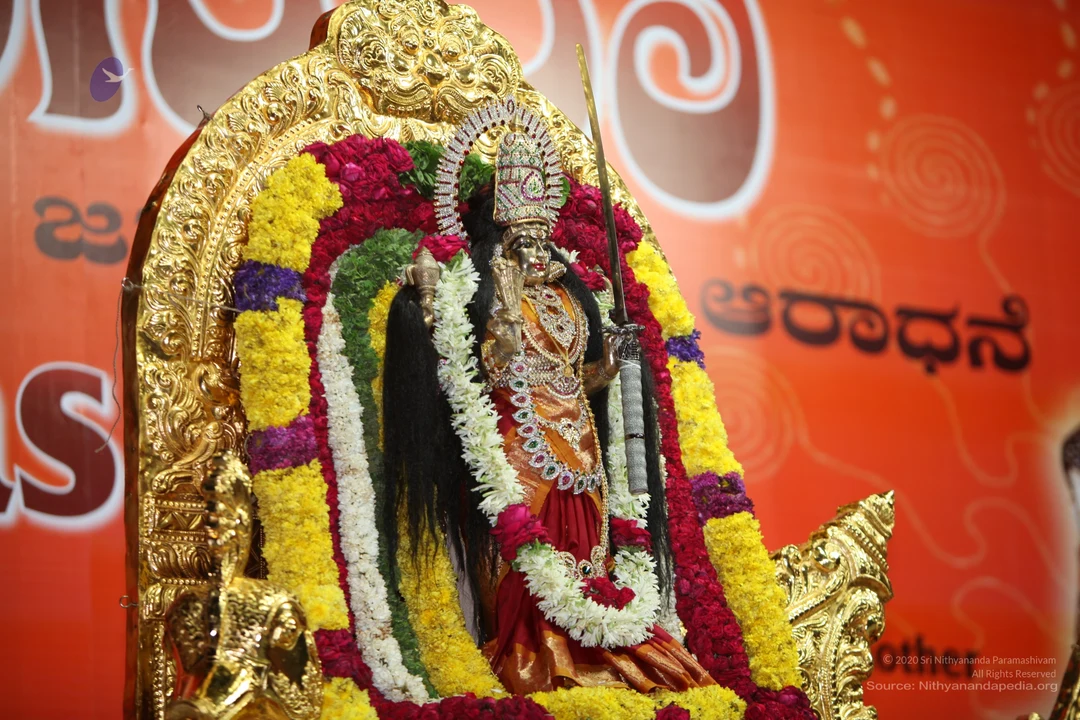
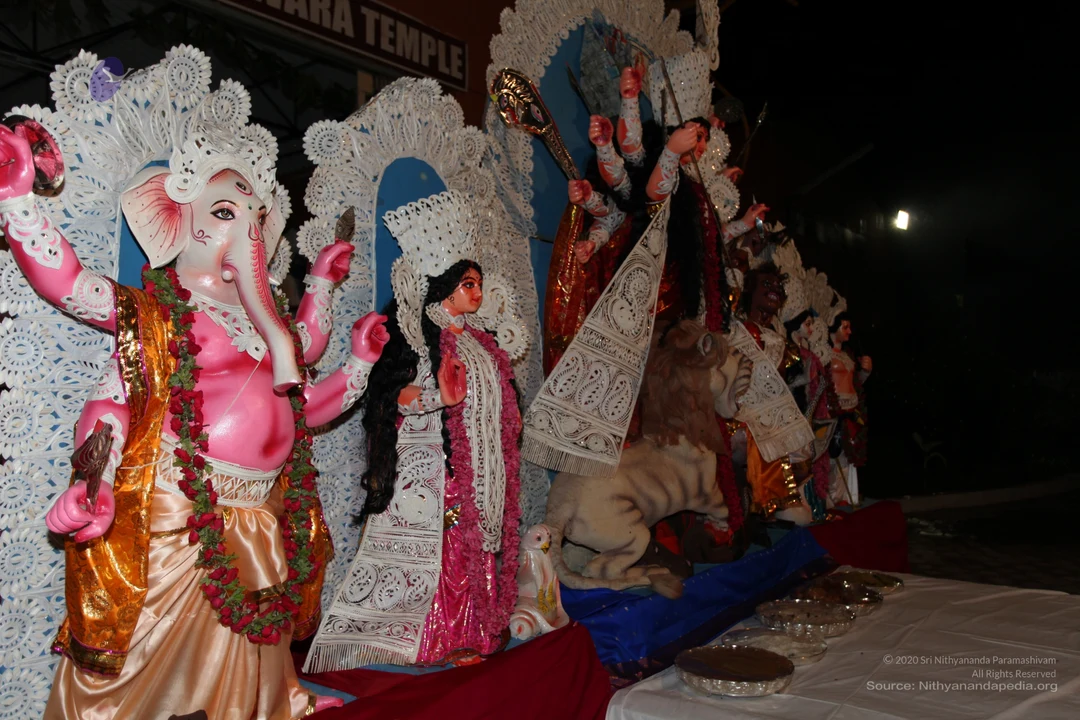
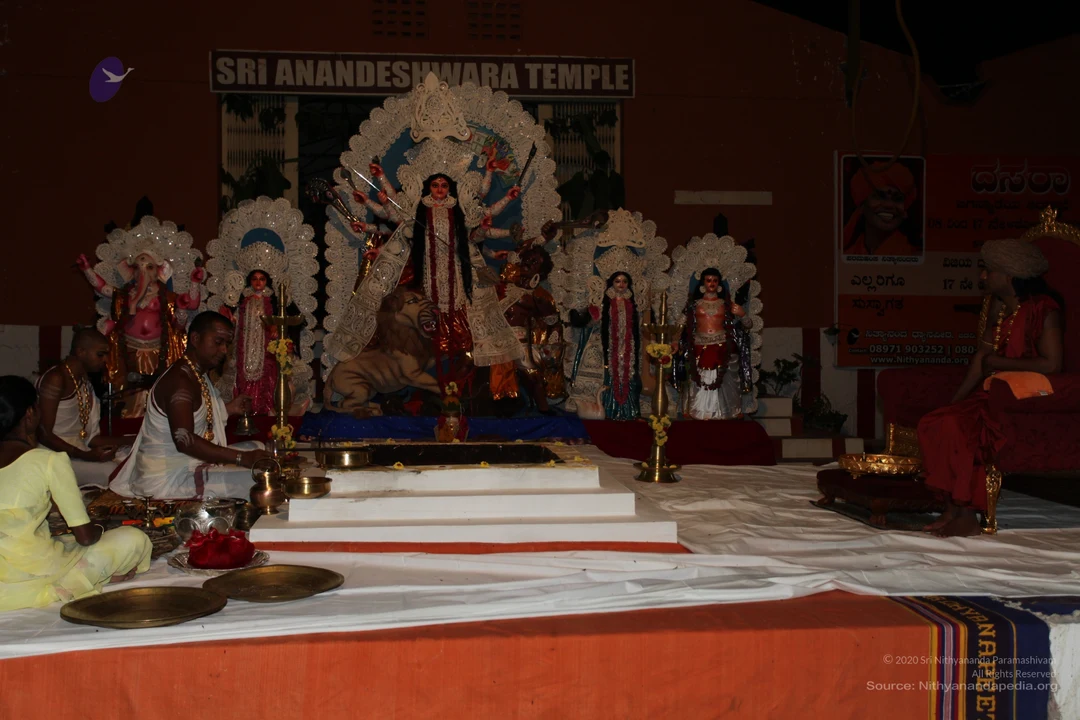
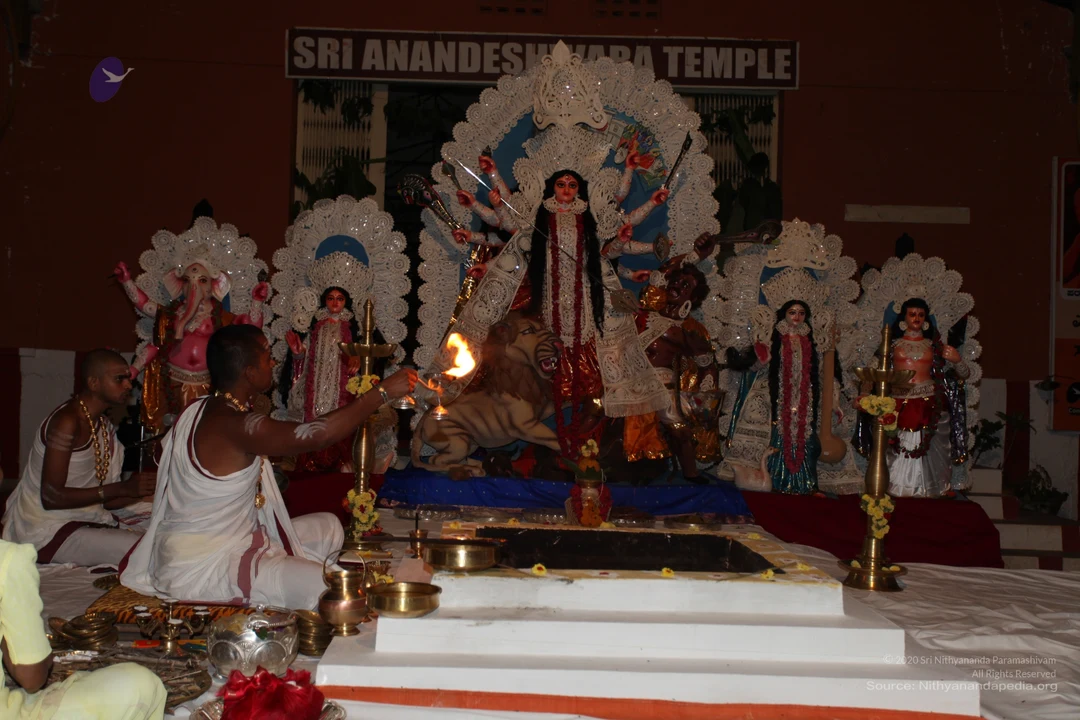
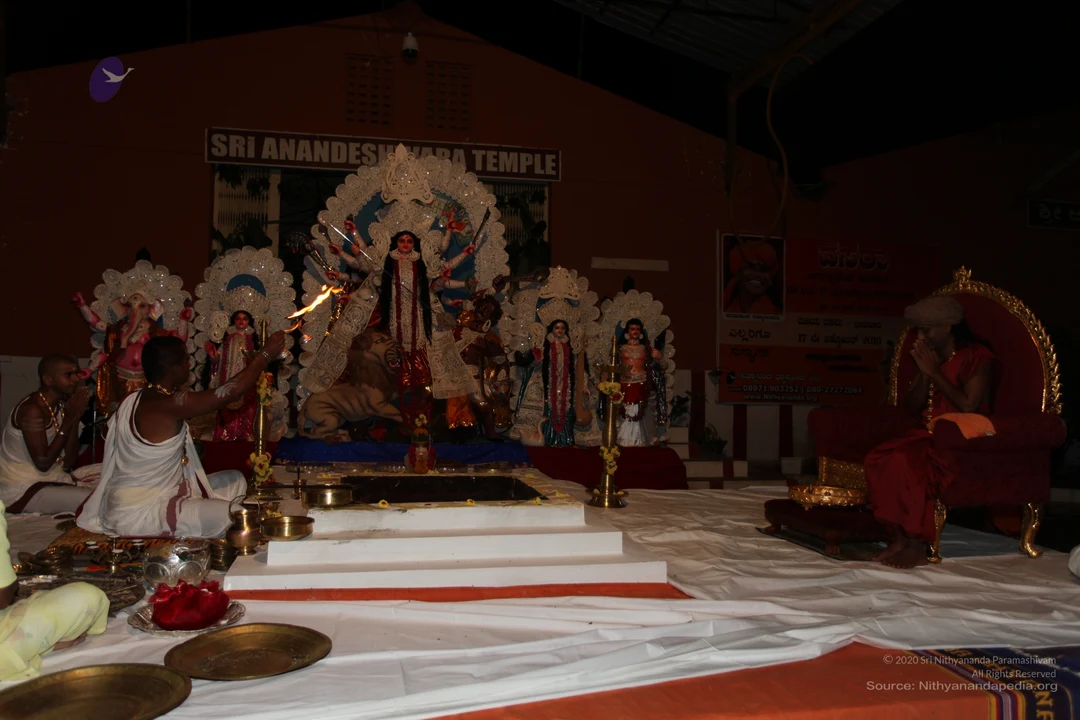
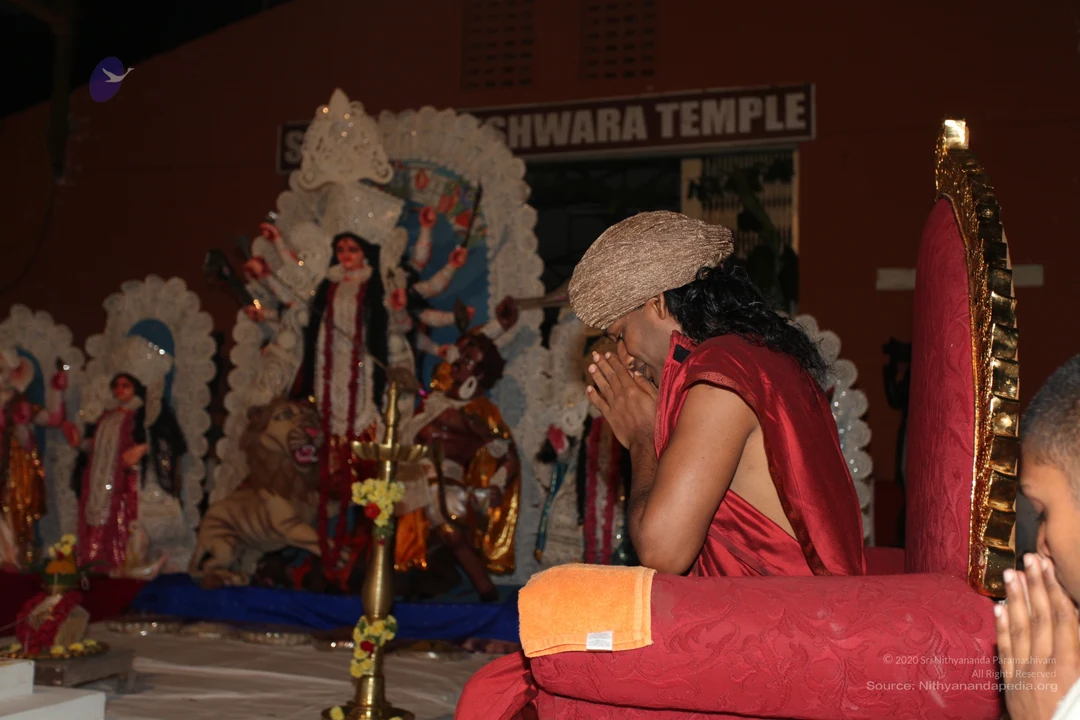
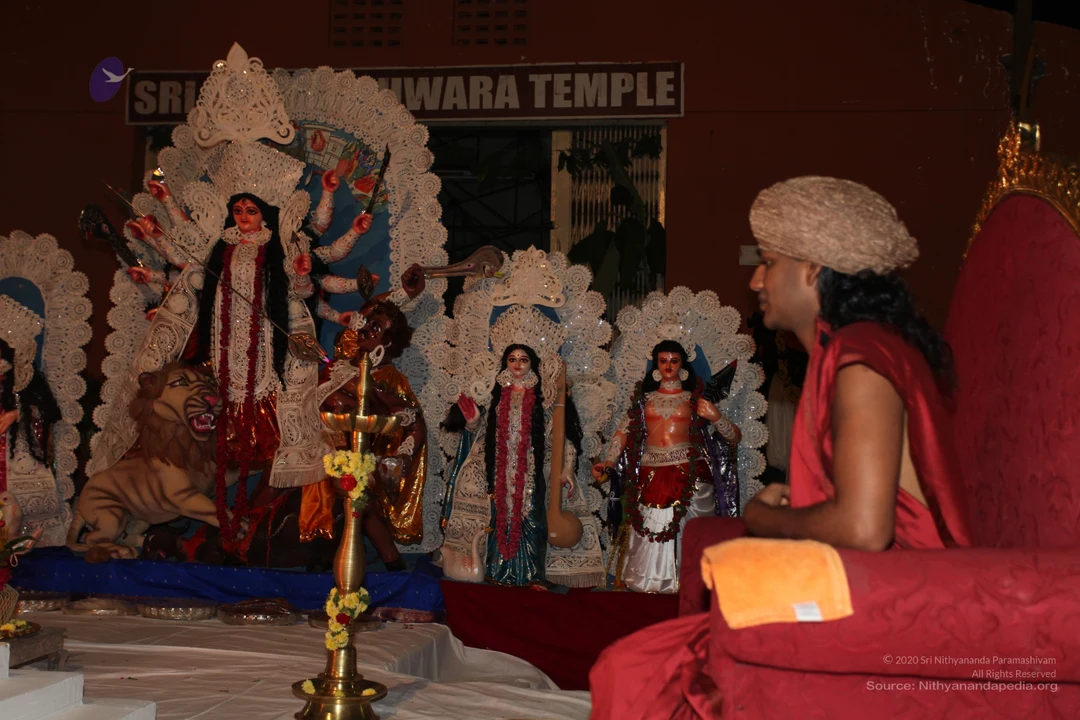
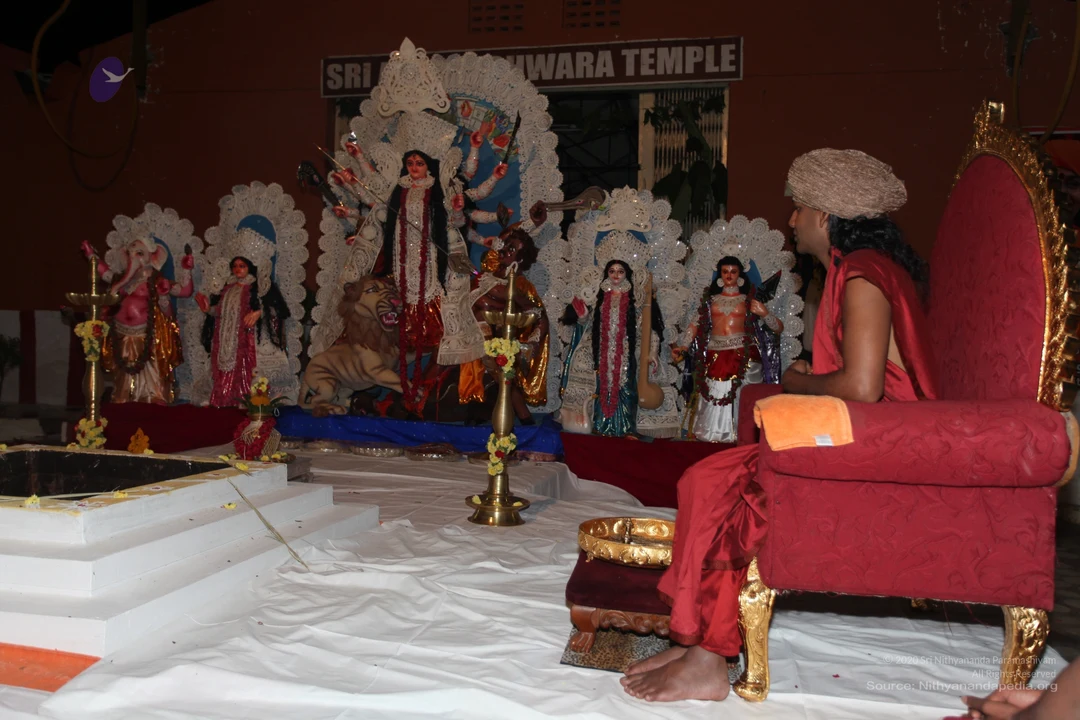
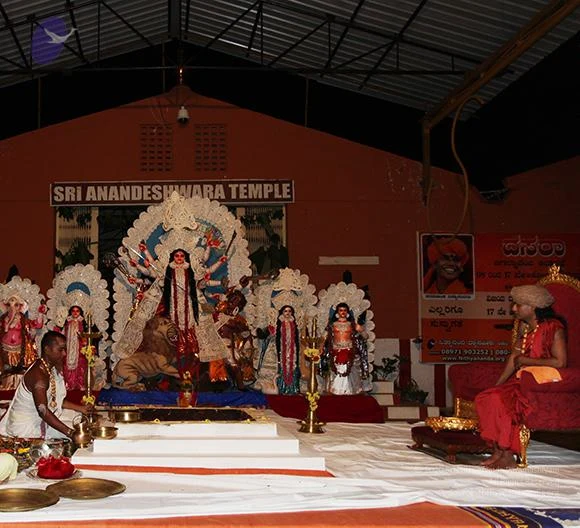
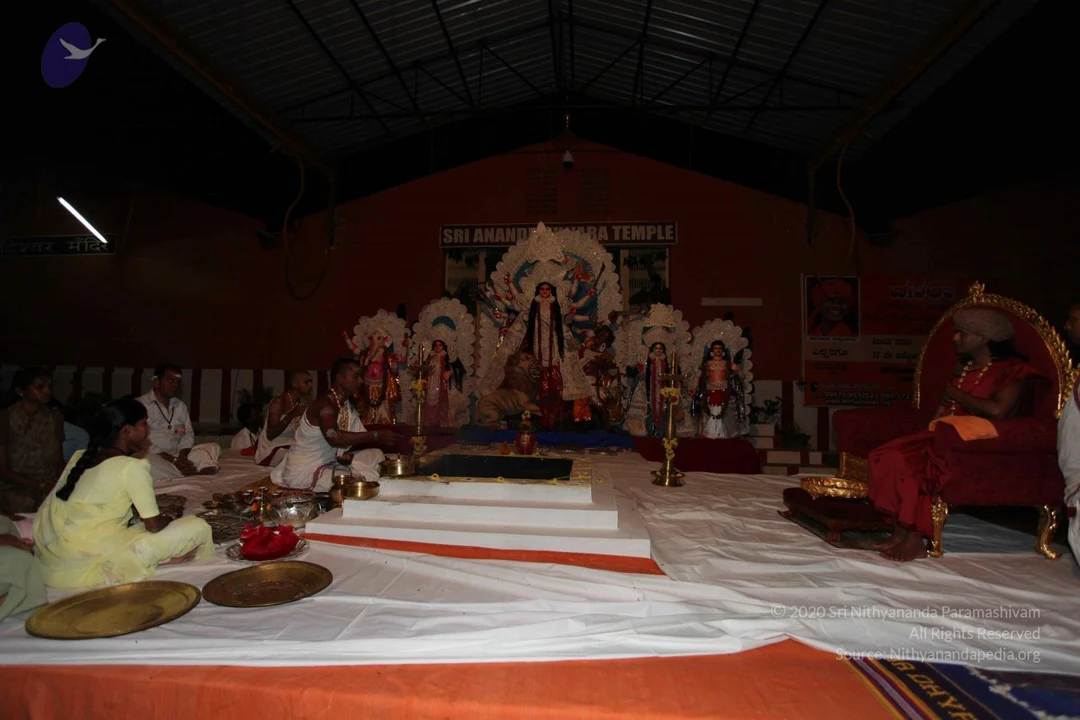
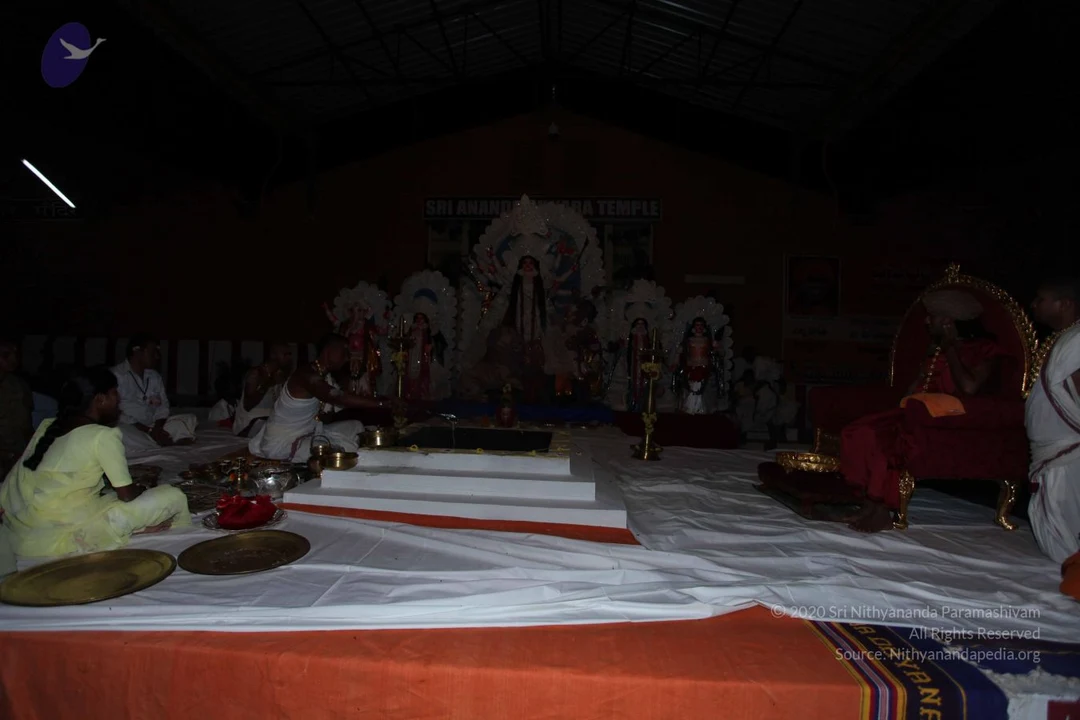
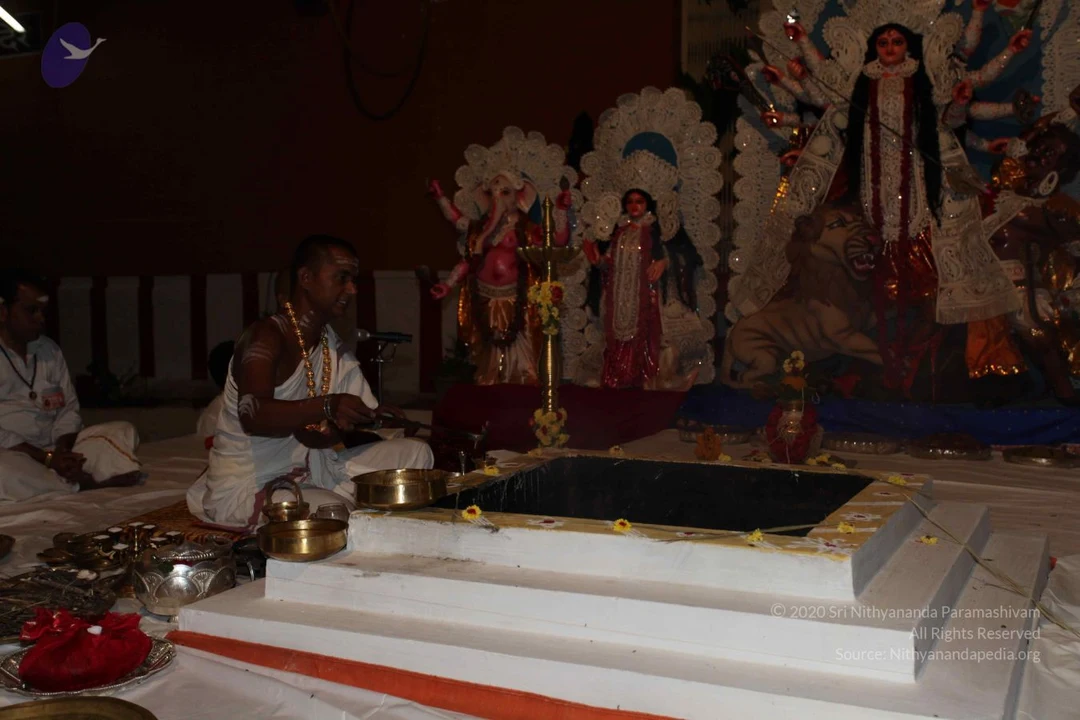
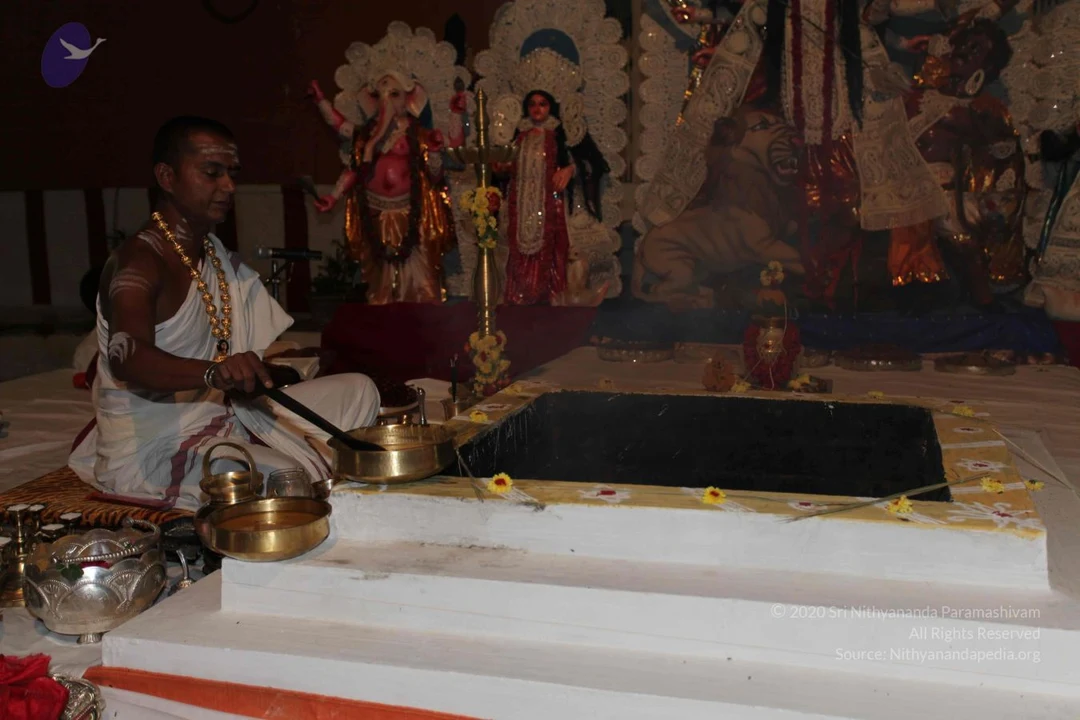
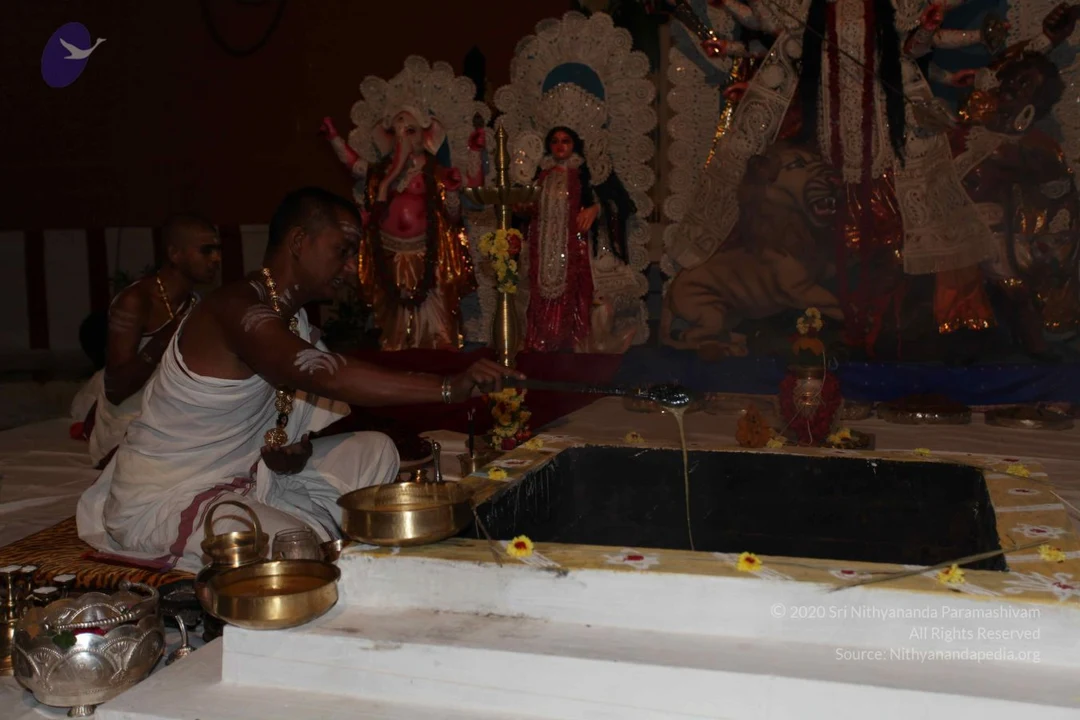
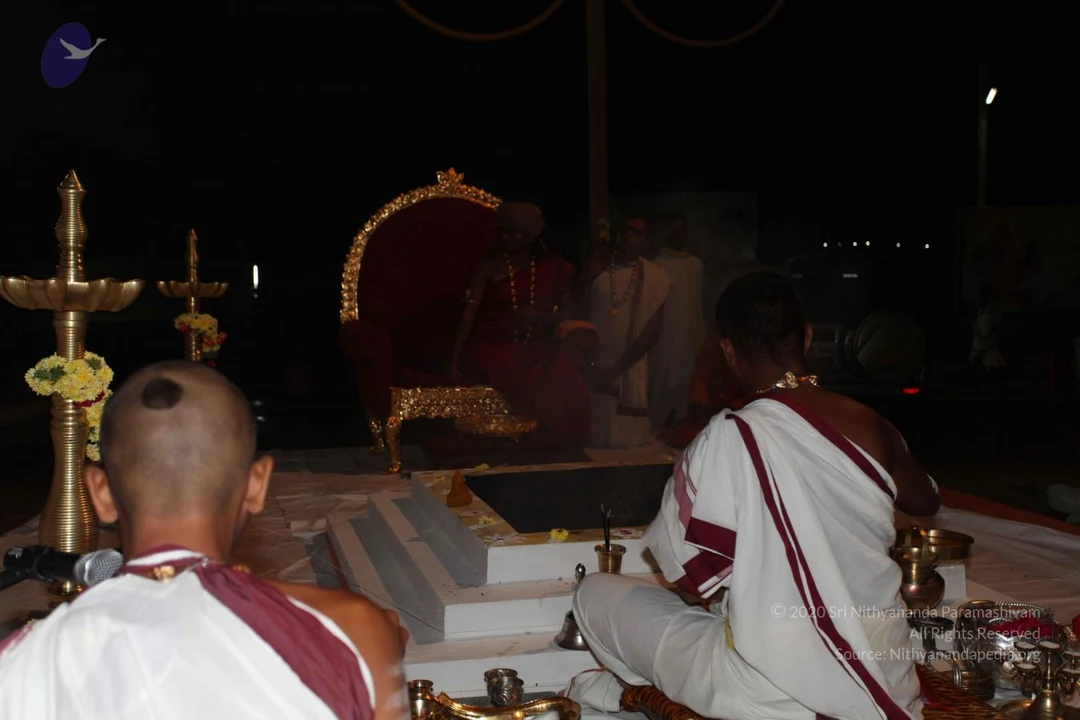
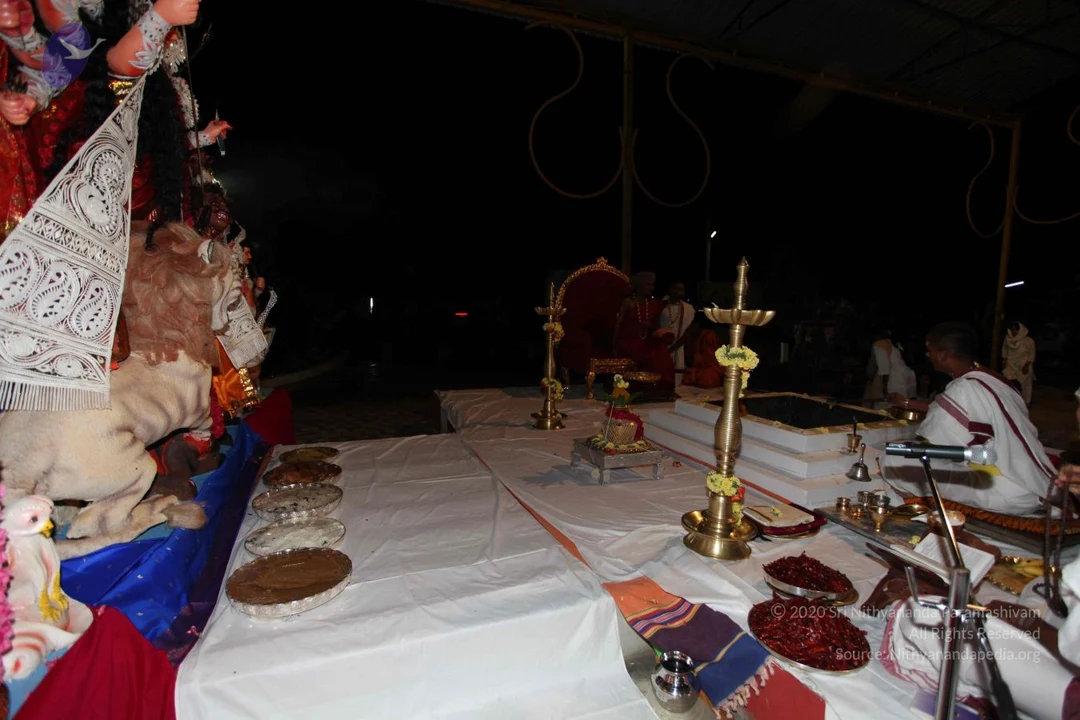
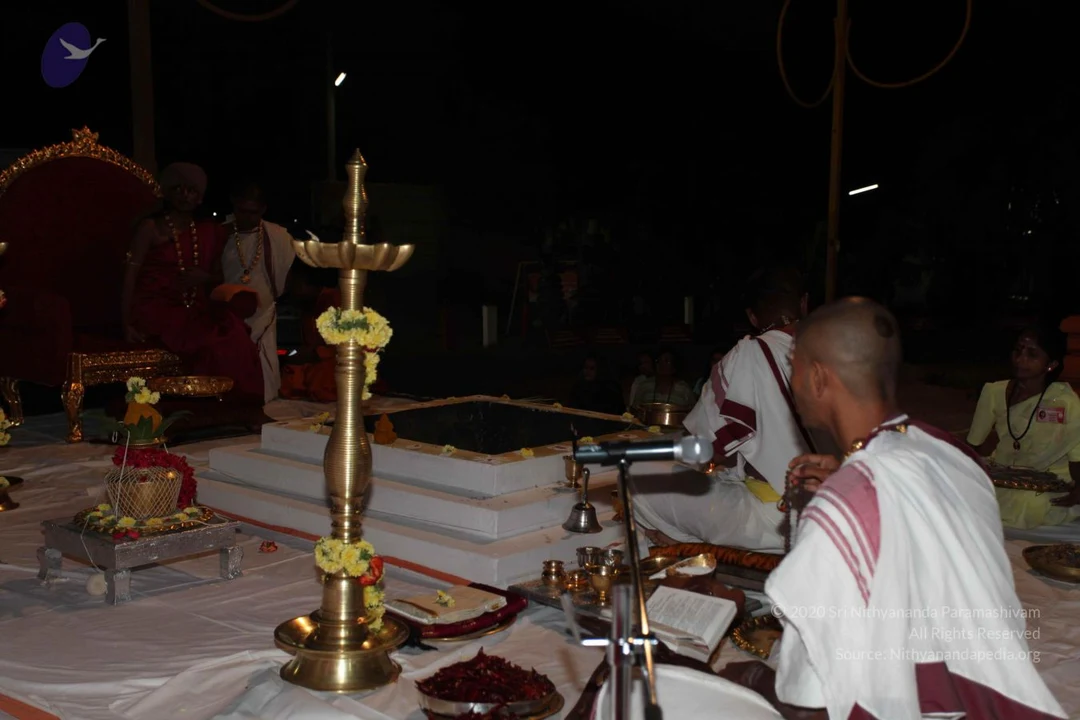
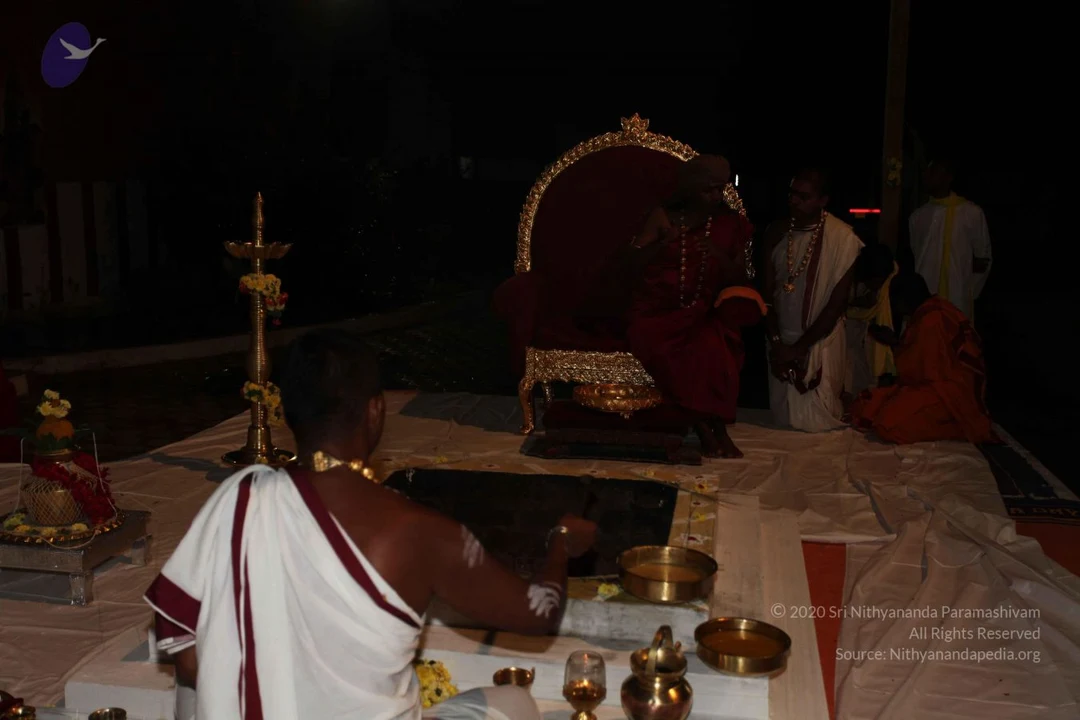
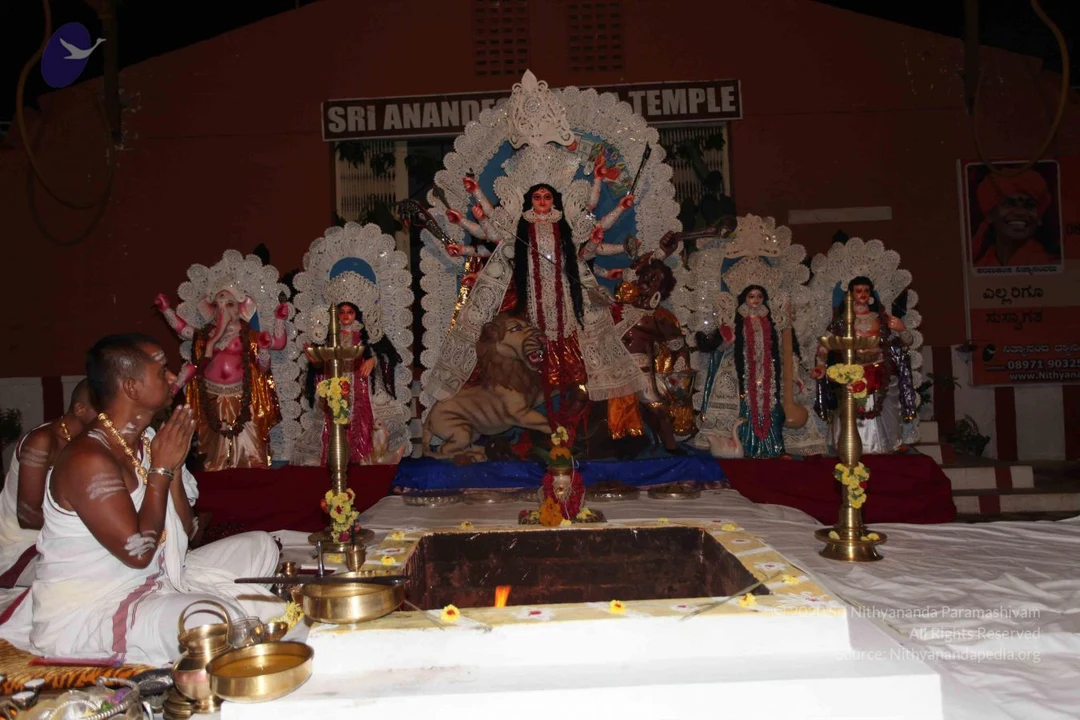
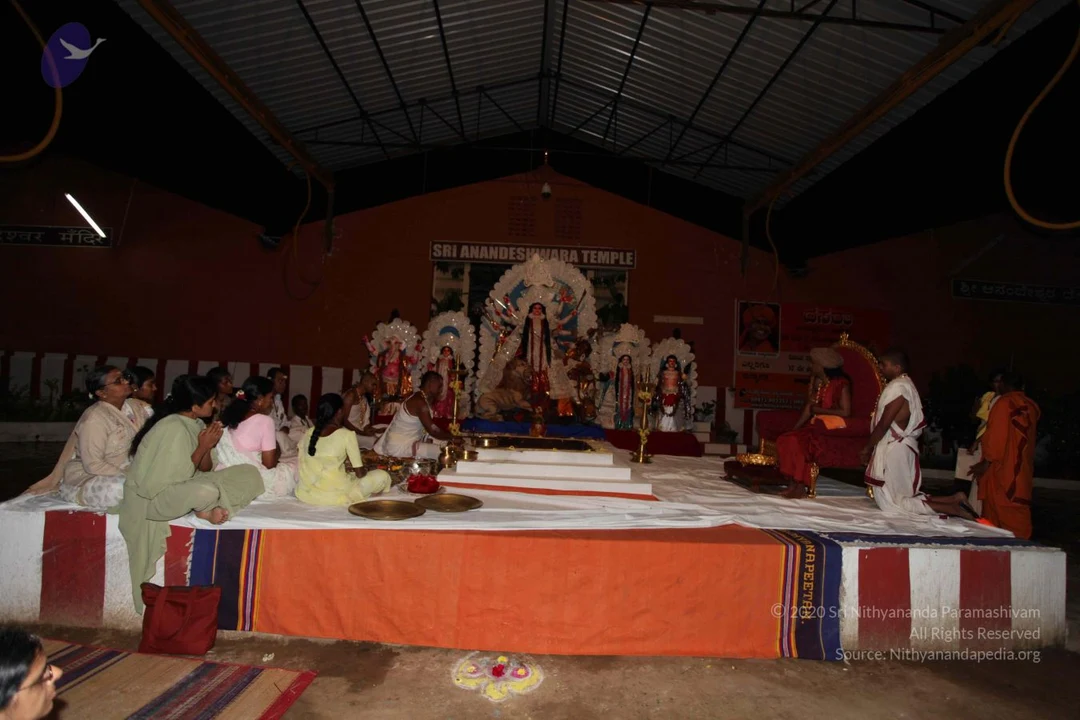
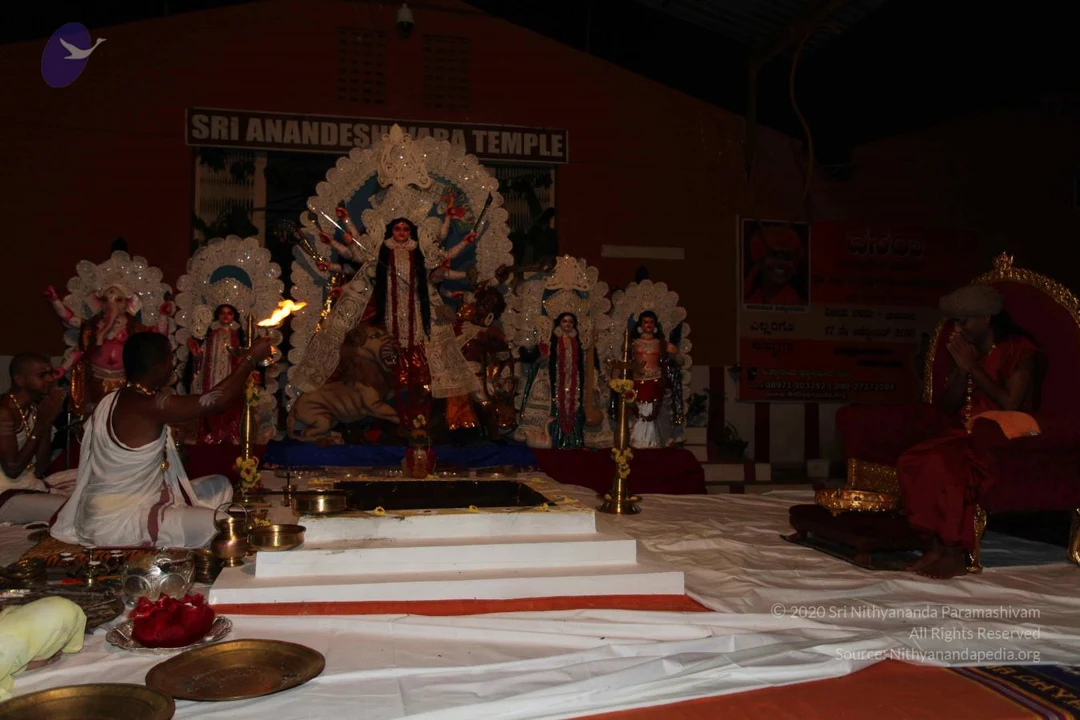
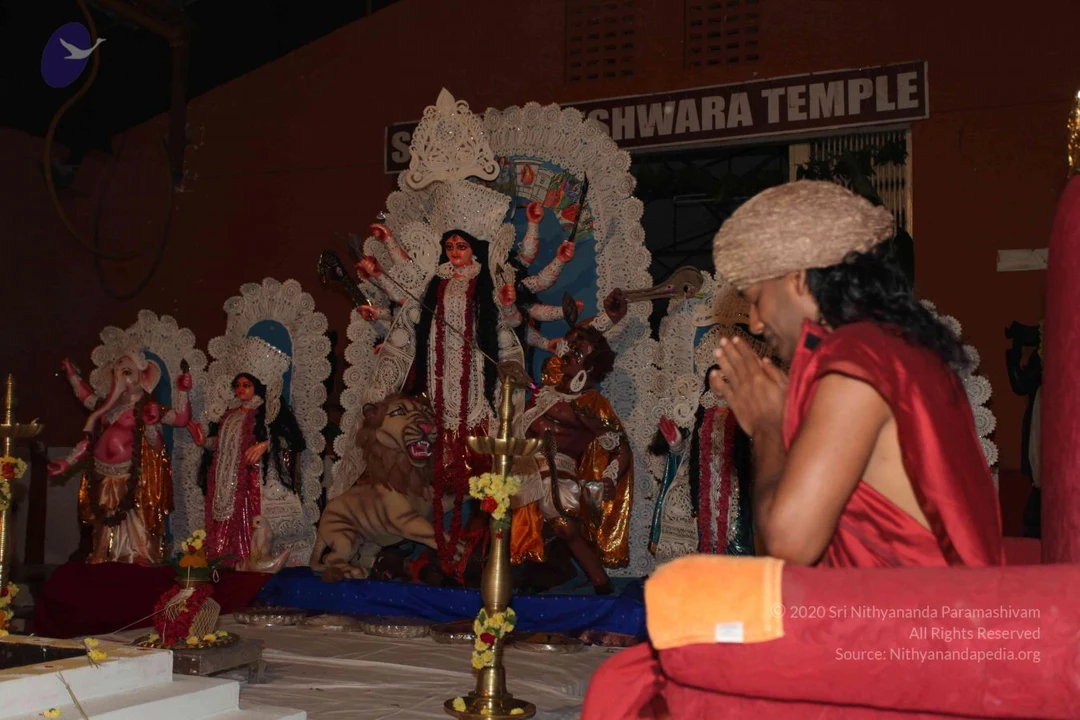
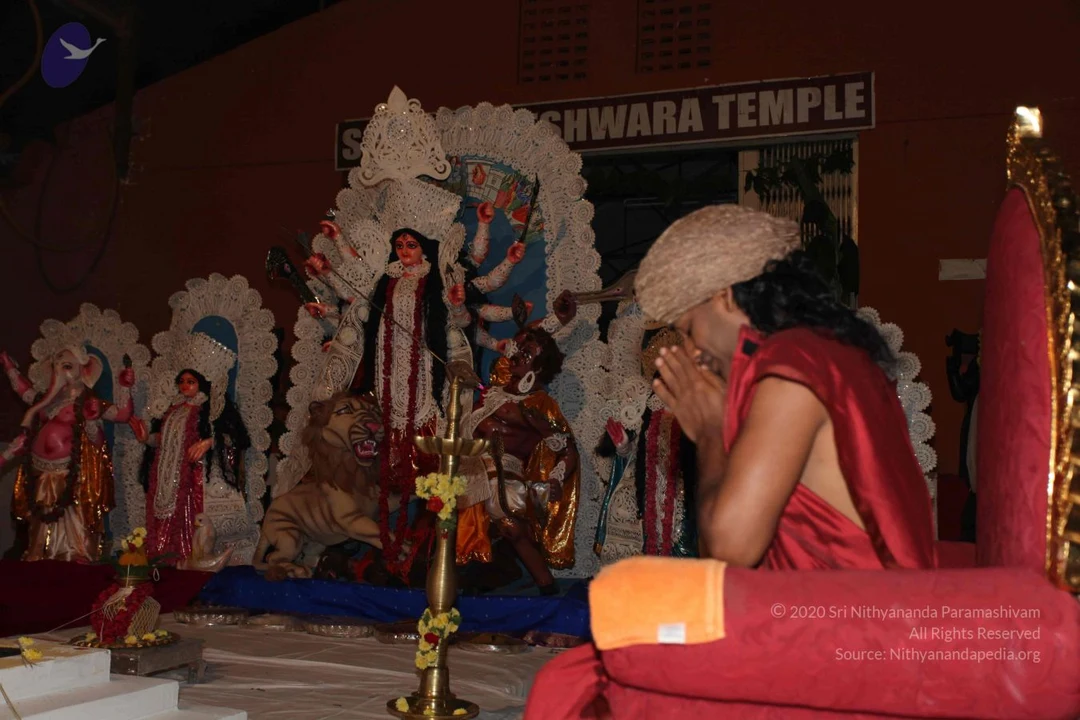
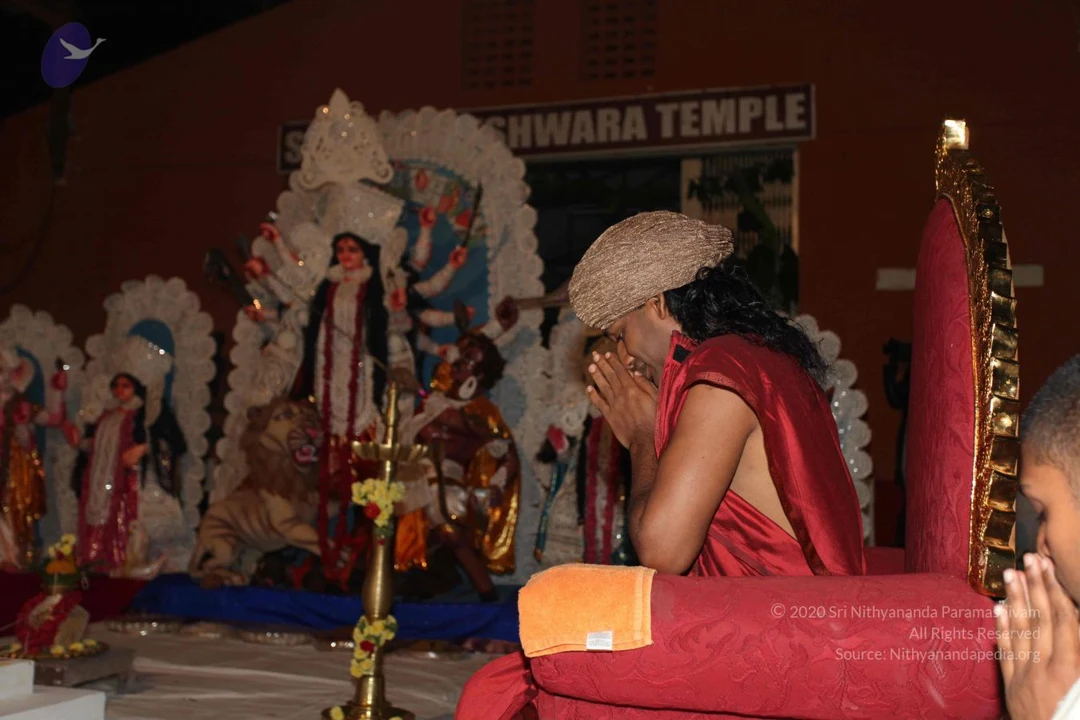
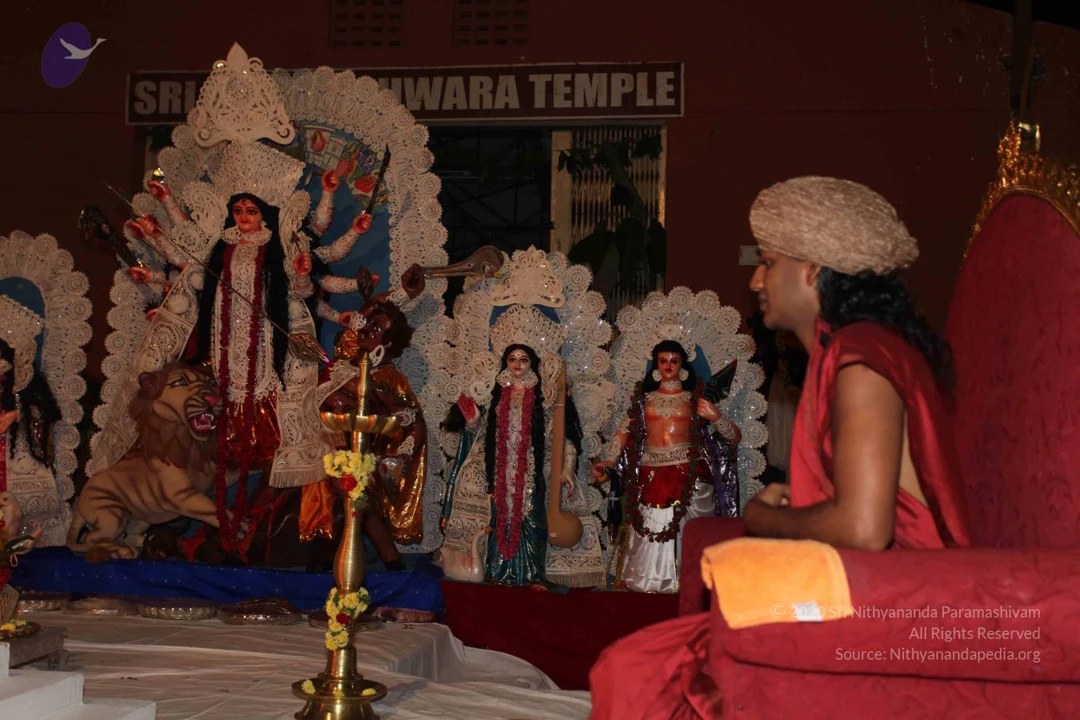
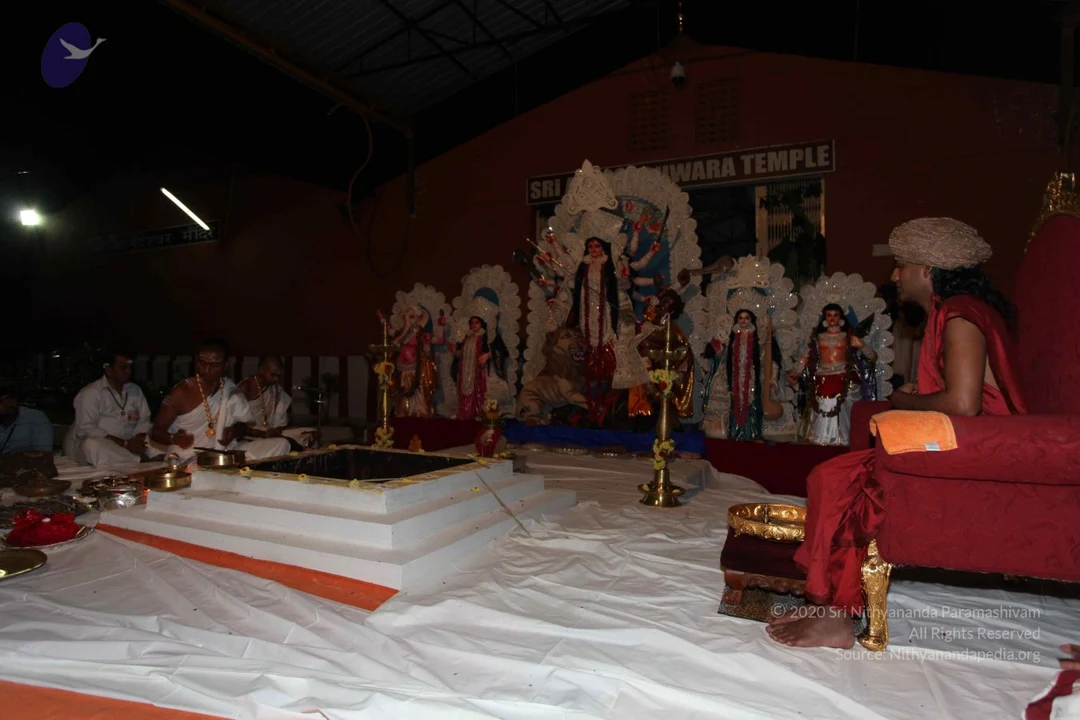
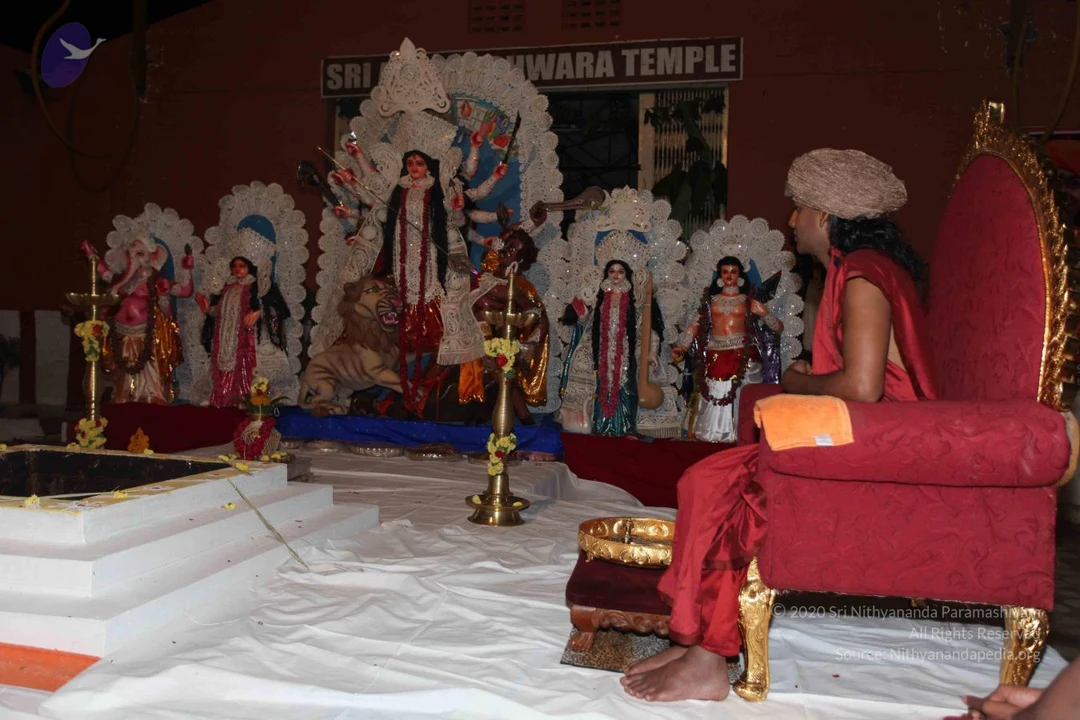
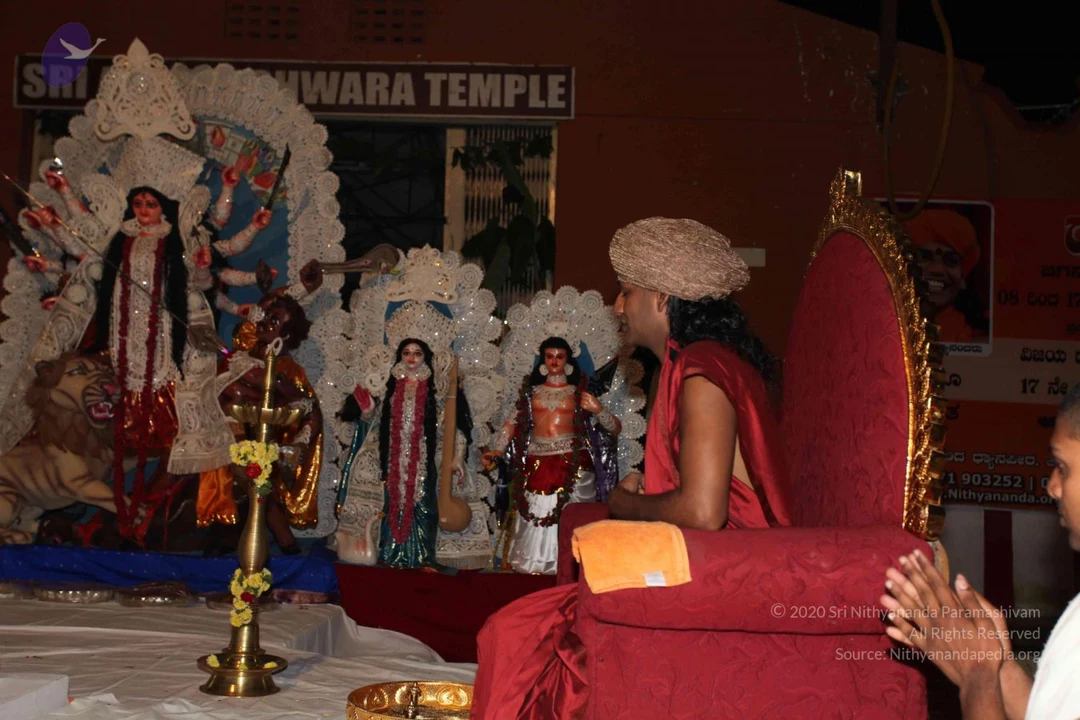
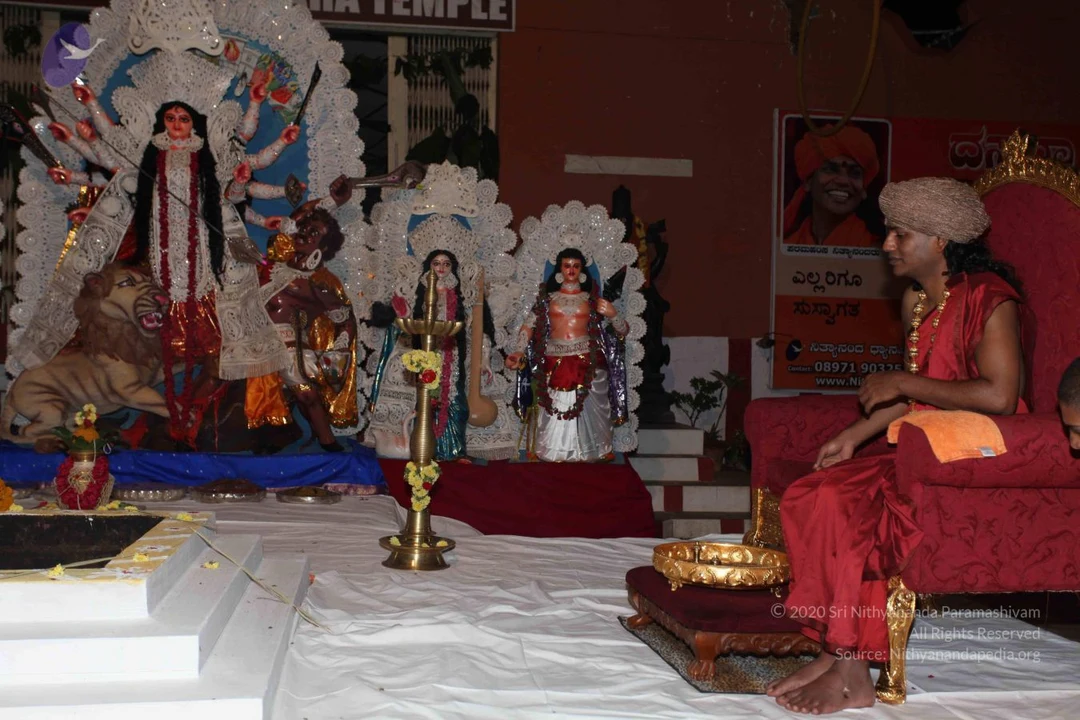
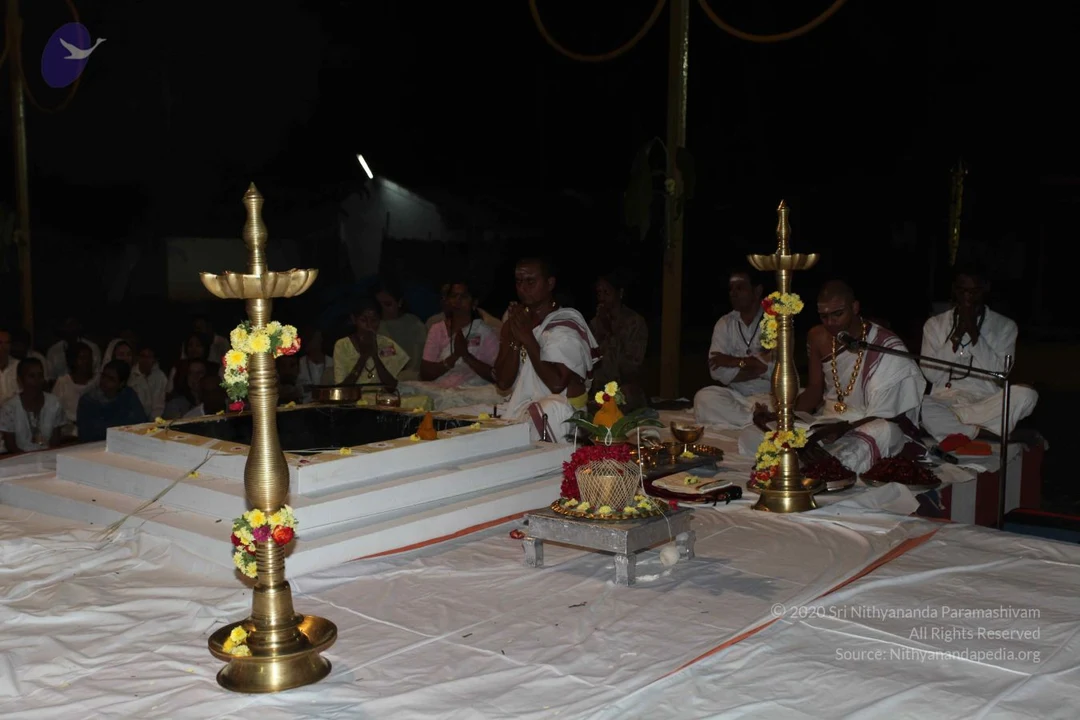
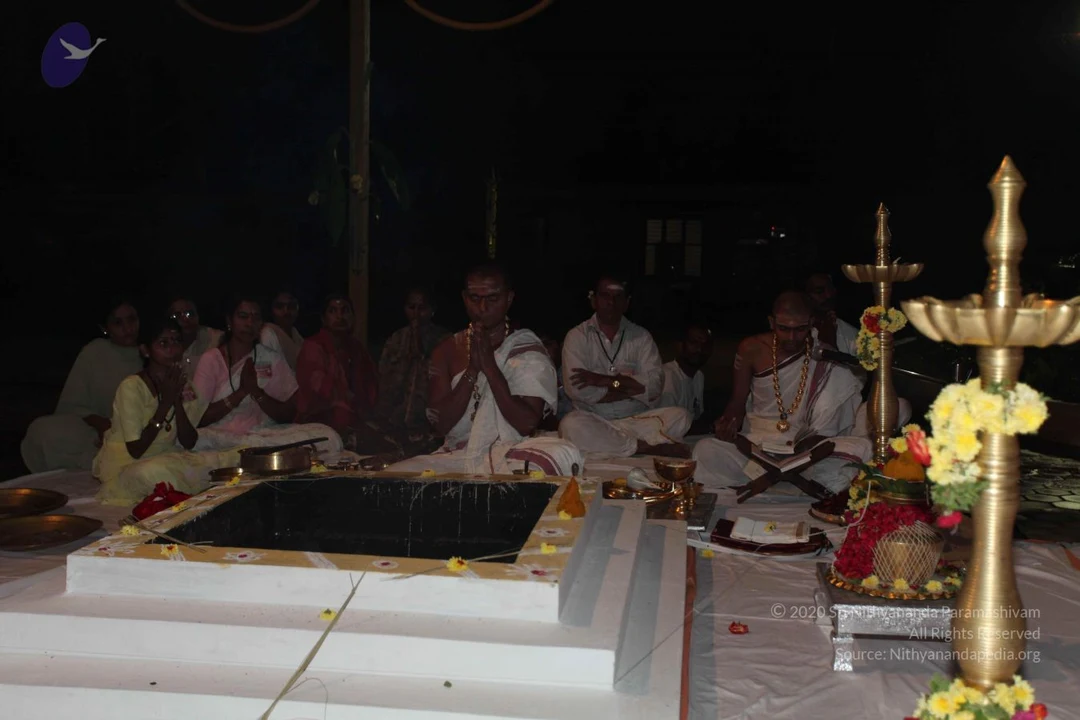
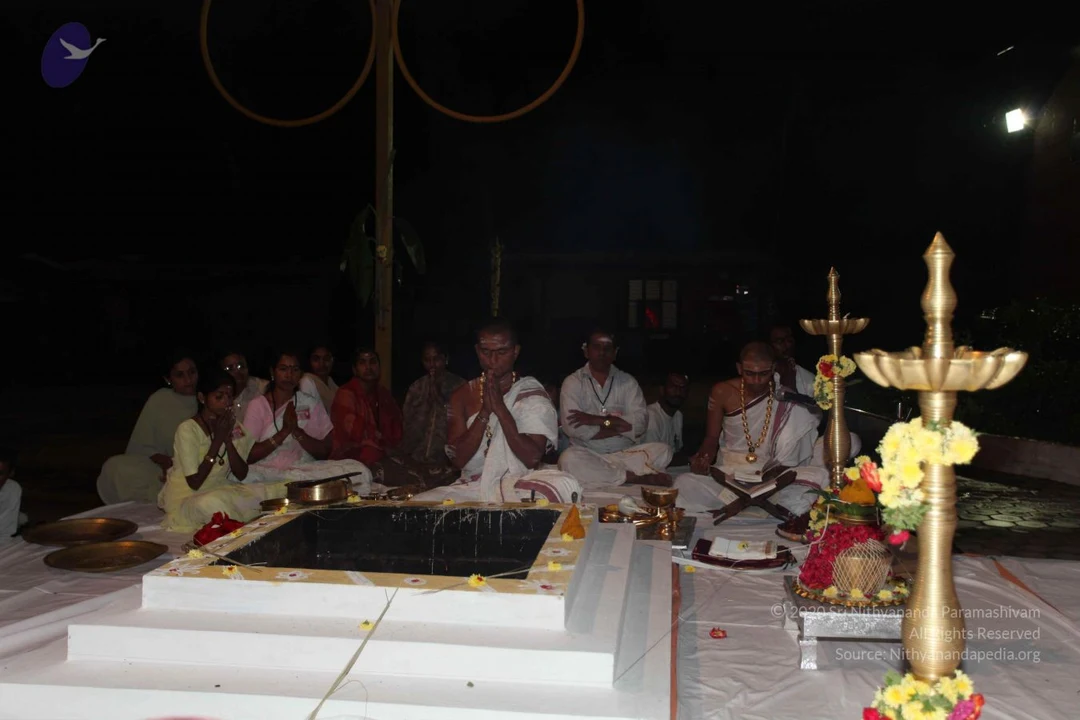
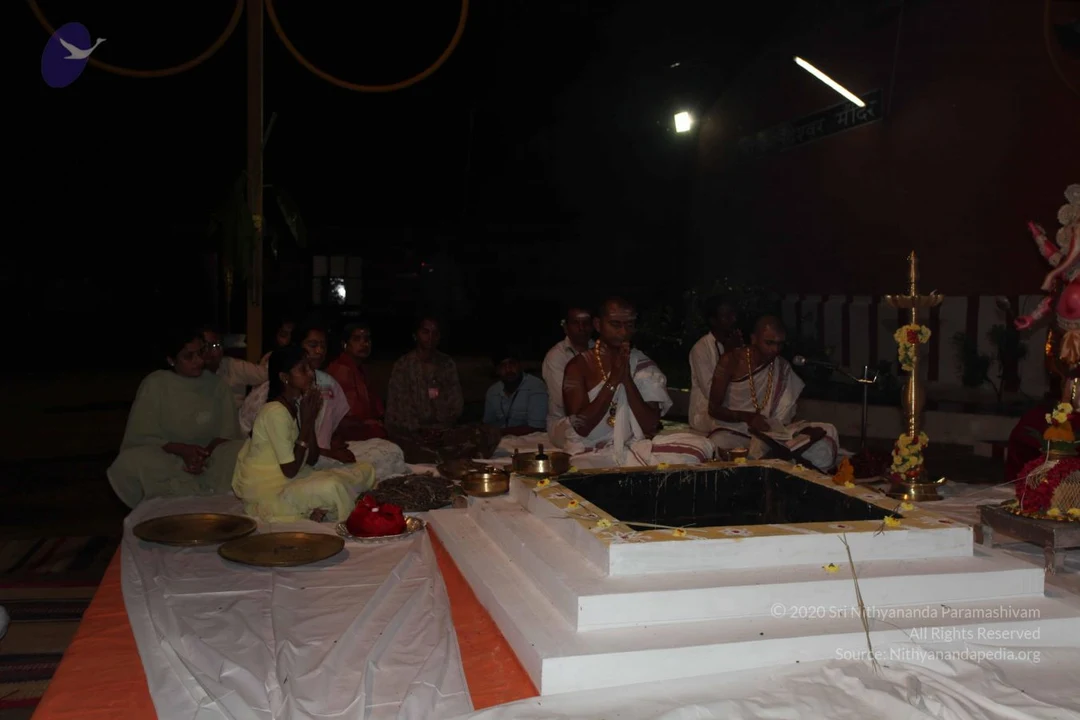
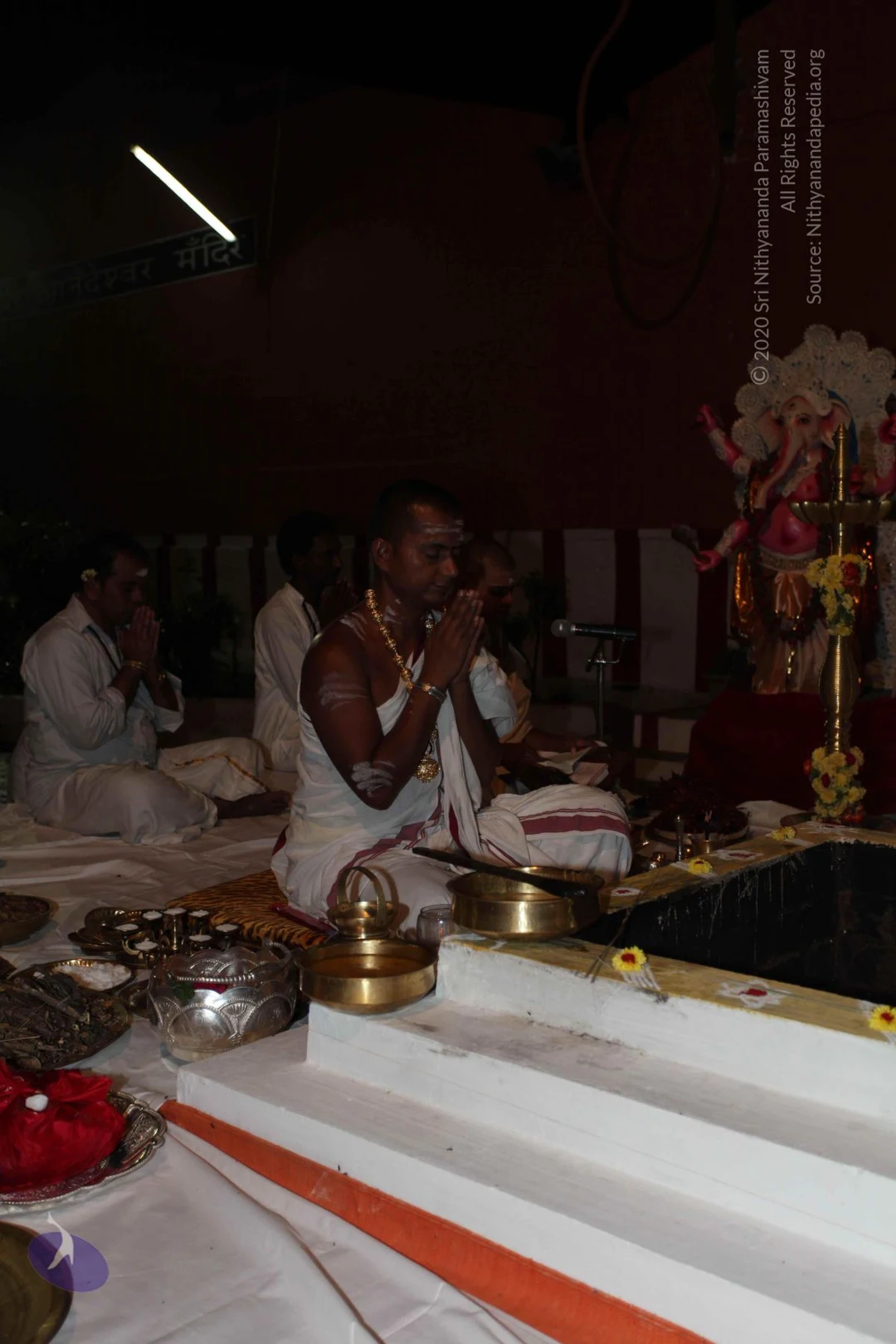
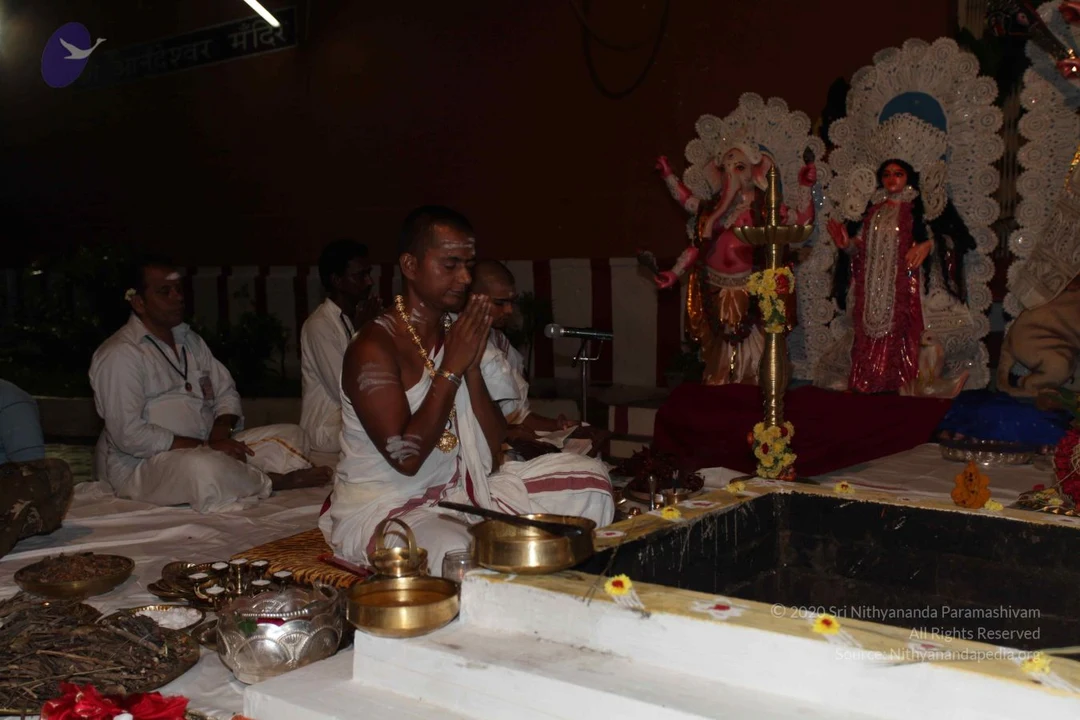
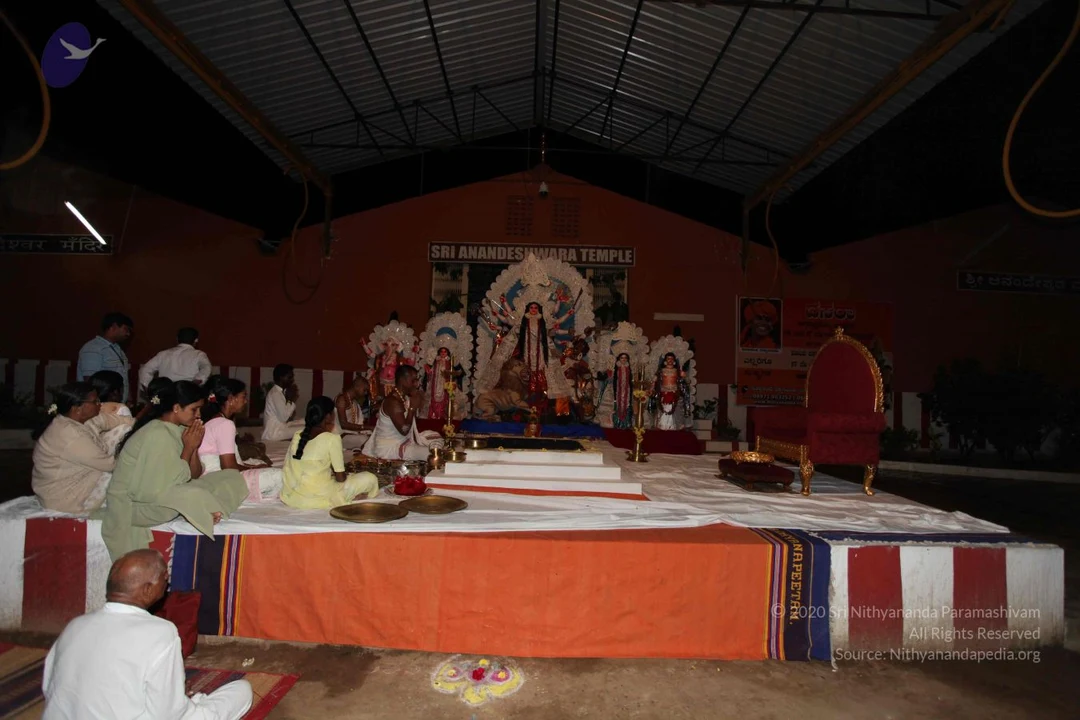
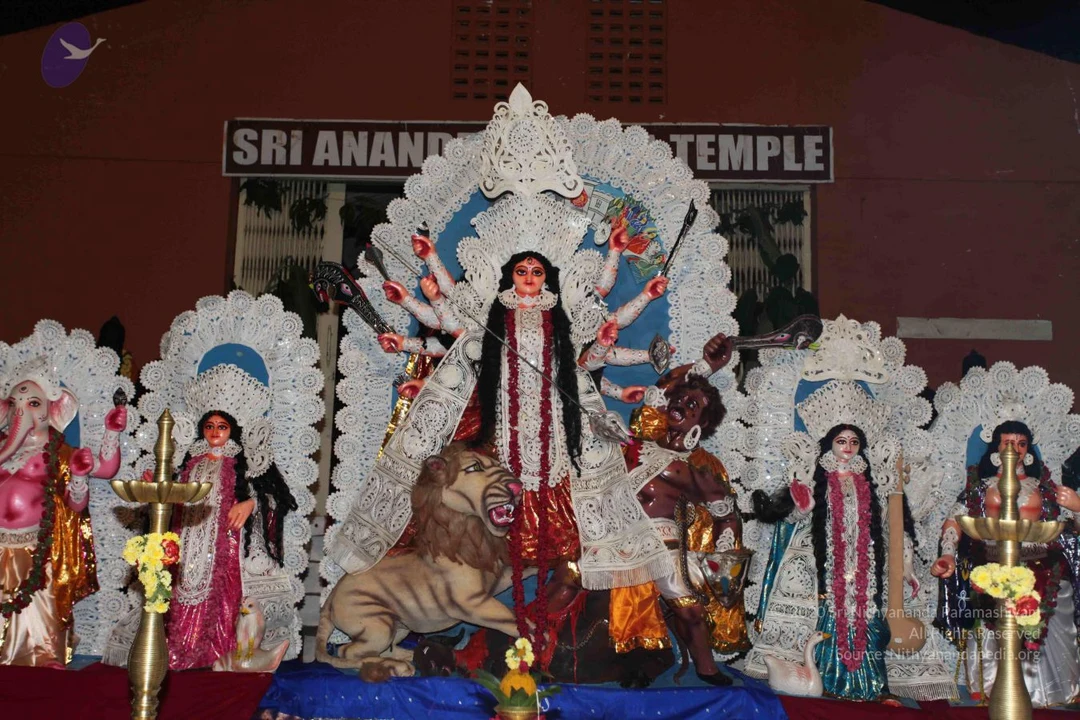
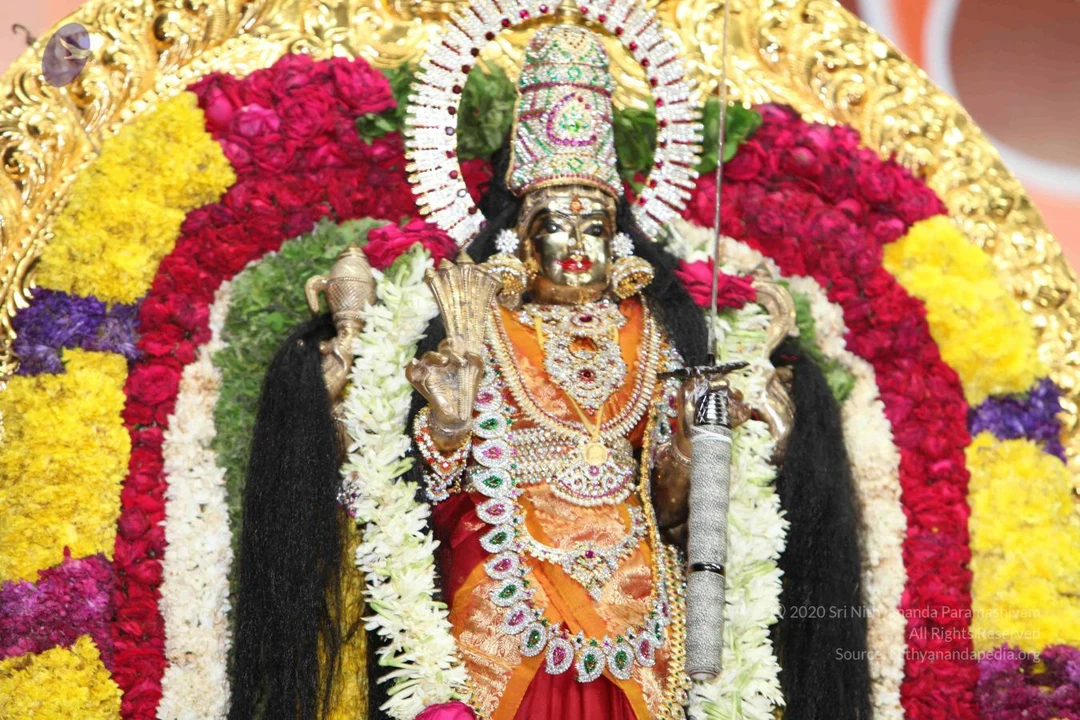
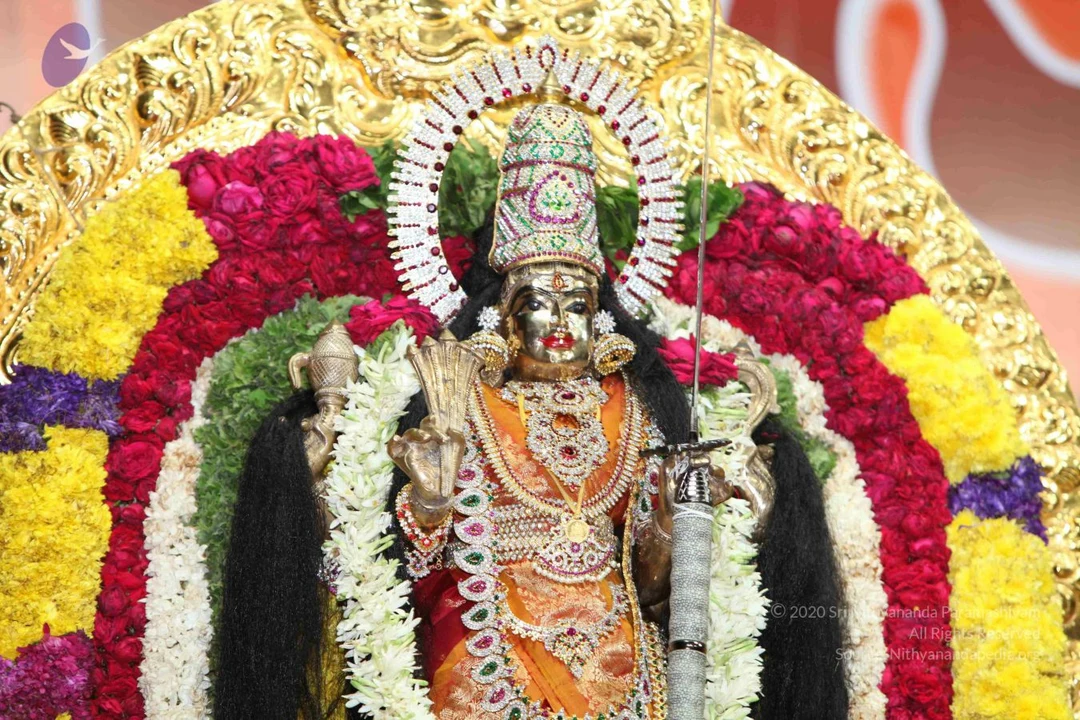
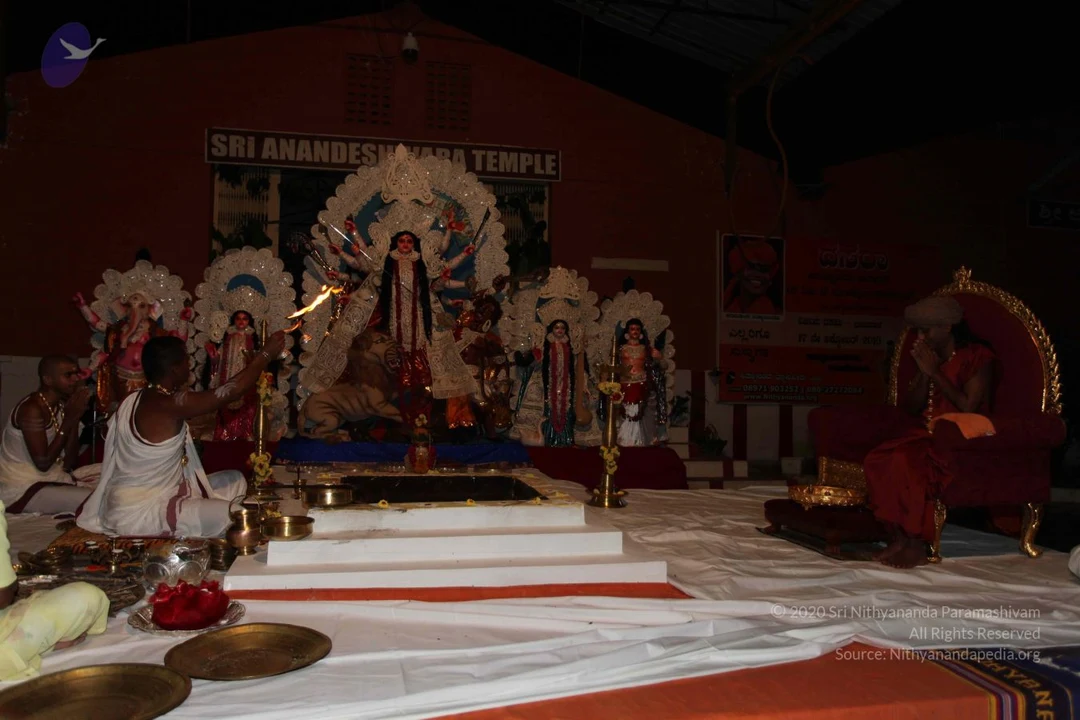
A dimly lit temple hall with a red-painted back wall and a sign reading SRI ANANDA ... TEMPLE. A large deity murti with multiple arms and an ornate white arch stands centrally, flanked by smaller painted clay figures in white halo frames. Before the murti, a priest in white dhoti and shawl sits on the floor behind a white-draped platform with brass plates, a small red offering, and oil lamps. On the right, a seated figure in an orange-red robe with gold-trimmed throne sits on a gold chair, with a framed portrait on the wall behind. A white and orange cloth covers the floor.Indoor temple scene at Sri Ananda Durga Temple under a corrugated roof, with a deity murti of Durga with multiple arms and a red-and-gold figure at centre, flanked by ornate white-and-silver arched frames holding smaller figures. Along the floor, a priest in white dhoti and shawl sits before a white-draped platform with brass lamps and a kalasha, performing a puja. A woman in a yellow sari sits at left before brass plates with flowers and offerings, and several seated devotees are behind them. At right, a person in red-and-orange clothing with a rudraksha mala sits on a red and gold throne, and a signboard with printed text hangs nearby.A dim indoor temple hall during an evening puja. Several large deity murtis with halo-like arches stand on a central altar, decorated in white and garlanded. A white-draped platform holds brass lamps and vessels. A man in white dhoti sits at the altar performing worship. On the right, a figure in red and orange robes sits on an ornate red and gold throne while a man in white stands beside it. A woman in yellow sits to the left near brass plates. A banner with the words Sri Ananda... Temple is on the back wall. Several other seated people in white are visible in the background.A night photograph of a large festival tableau in front of a red-orange building with a sign reading SRI ANANDA ... TEMPLE. At centre stands a multi-armed goddess murti with long black hair, a white lace halo and red-and-gold sari, riding or standing beside a lion, holding weapons in her raised hands. Flanking her are a pink Ganesha murti on the left, two female figures in pink and teal, and a dark-skinned demon figure in gold clothing near the goddess. Brass oil lamps with marigold garlands stand at the sides, a fire pit with offerings and flower garlands lies in front, and a seated devotee in yellow sits at the far right edge. Marigold garlands decorate all the figures.A night-time photograph of a Durga puja pandal set up in front of a red-painted building bearing a sign reading "SRI ANANDA ... TEMPLE". At the centre, a multi-armed goddess Durga murti in red and gold sari with a white lace halo rides a lion and holds weapons, flanked by statues of Ganesha in pink with orange garland, a dark-complexioned demon figure, and female deity statues in lace-backed niches with garlands. Brass oil lamps stand on the white-draped platform in front of the murtis, with marigold garlands, a kalasha-like offering and scattered flower petals. A seated woman in yellow is partly visible at the far right edge. No identifiable a person appears.A photograph of a Durga puja tableau in front of a red building with a white signboard reading "SRI ANANDA ... TEMPLE". Central large deity murti of Goddess Durga with multiple arms, wearing a white lace-like aureole, red sari and a red-and-white flower garland, riding a golden-brown lion, while she spears a dark demon figure in orange and gold. Flanking figures include a pink-bodied Ganesha with elephant head and gold garment, and two female deity murtis in pink, green and blue saris with white lace backdrops. Brass oil lamps stand at the sides, marigold and yellow flowers decorate the base, and a red kumkum-filled offering plate sits in front of the platform. No people are visible.
DASARA-CULTURAL-PROGRAM
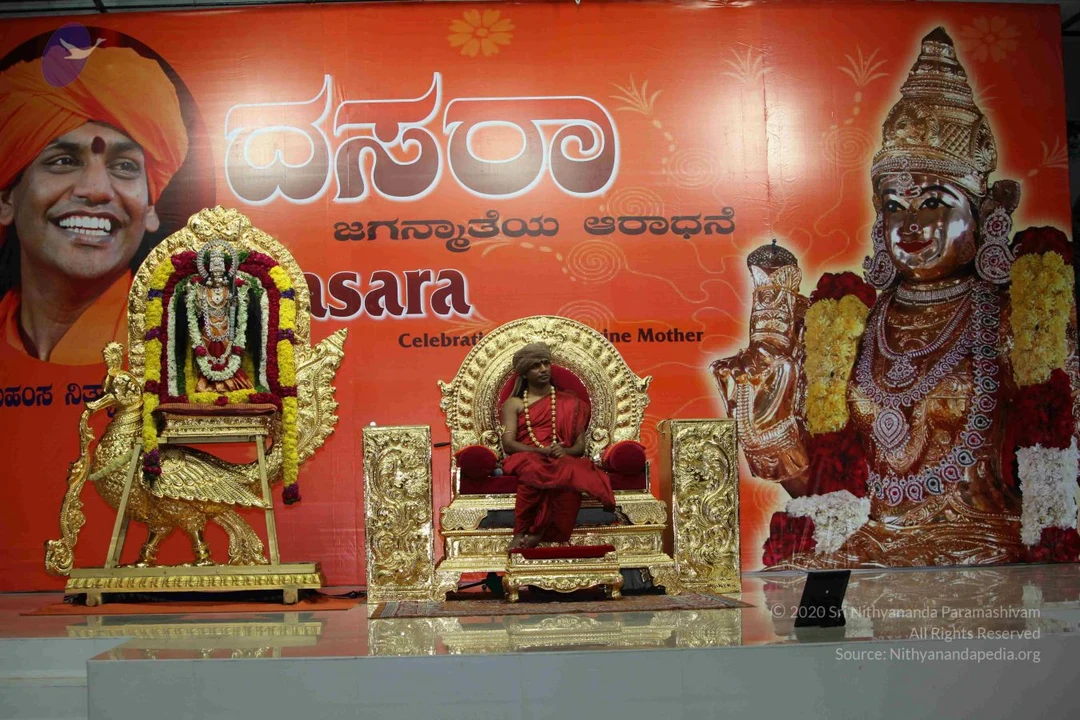
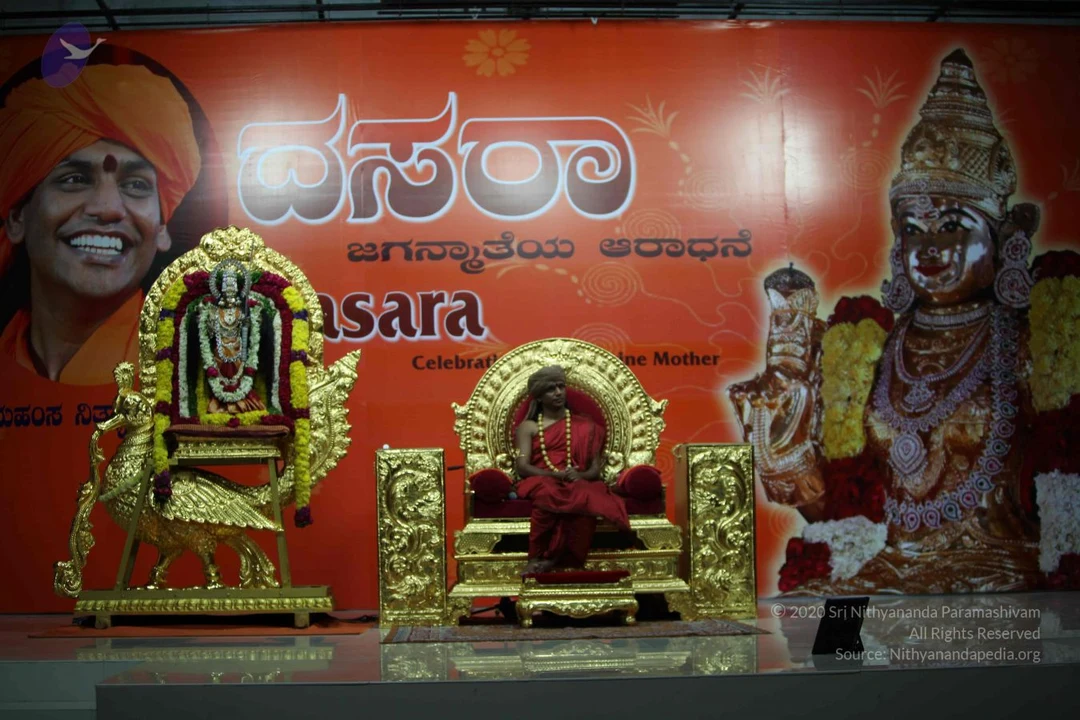
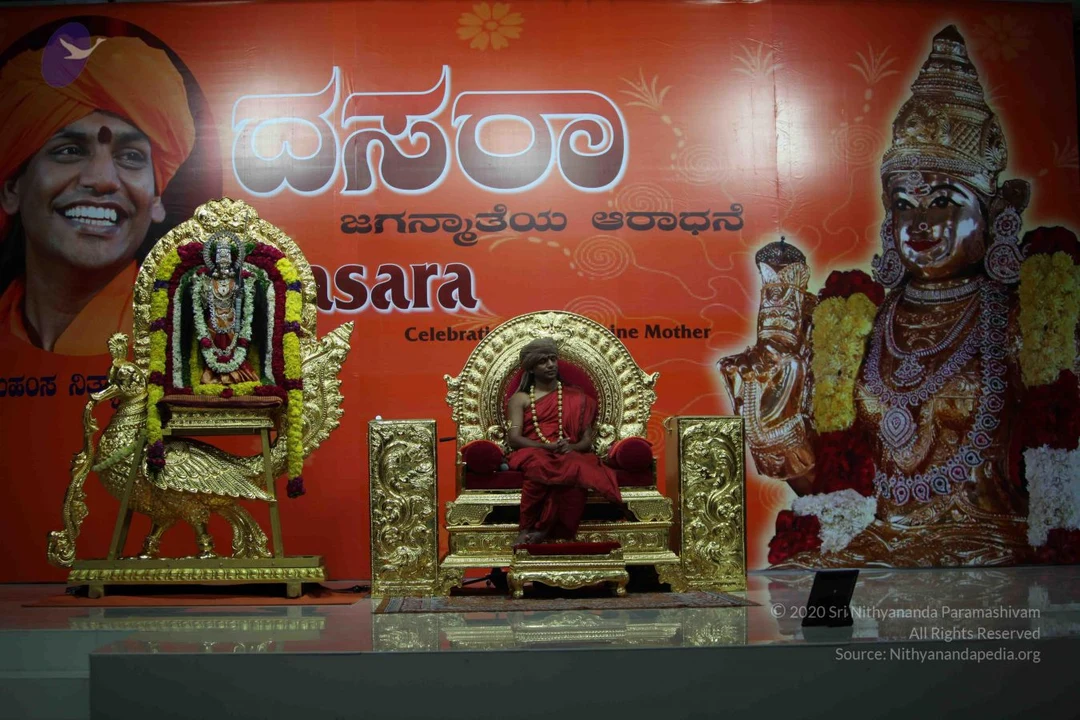
227 photosSource gallery
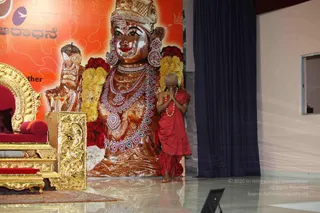
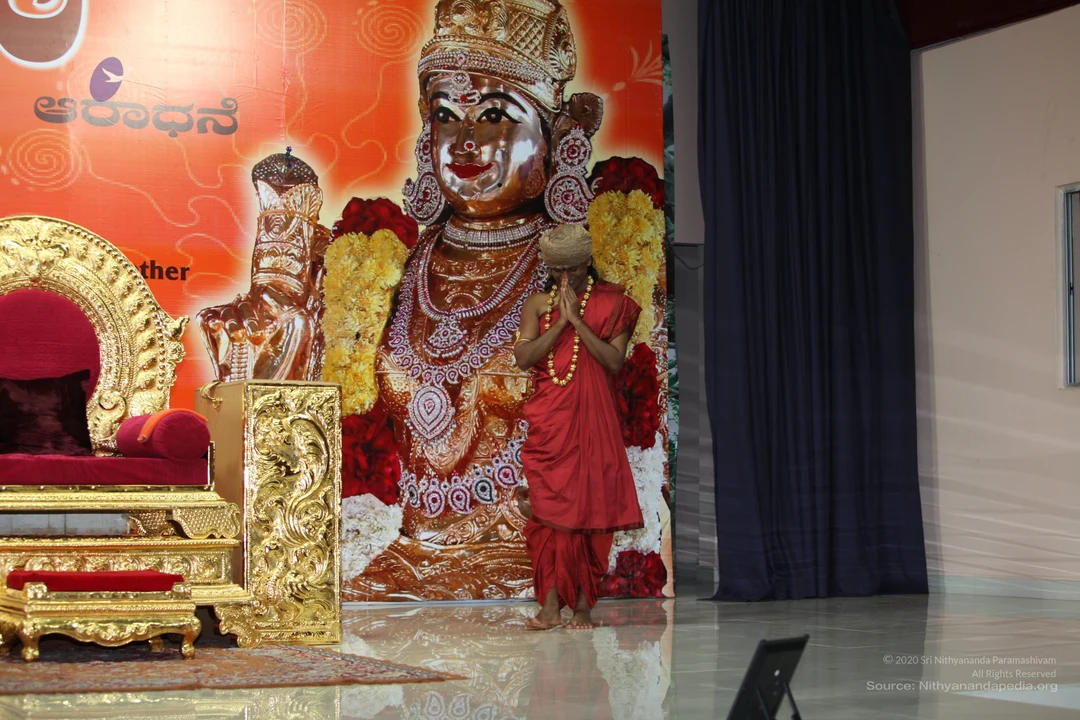
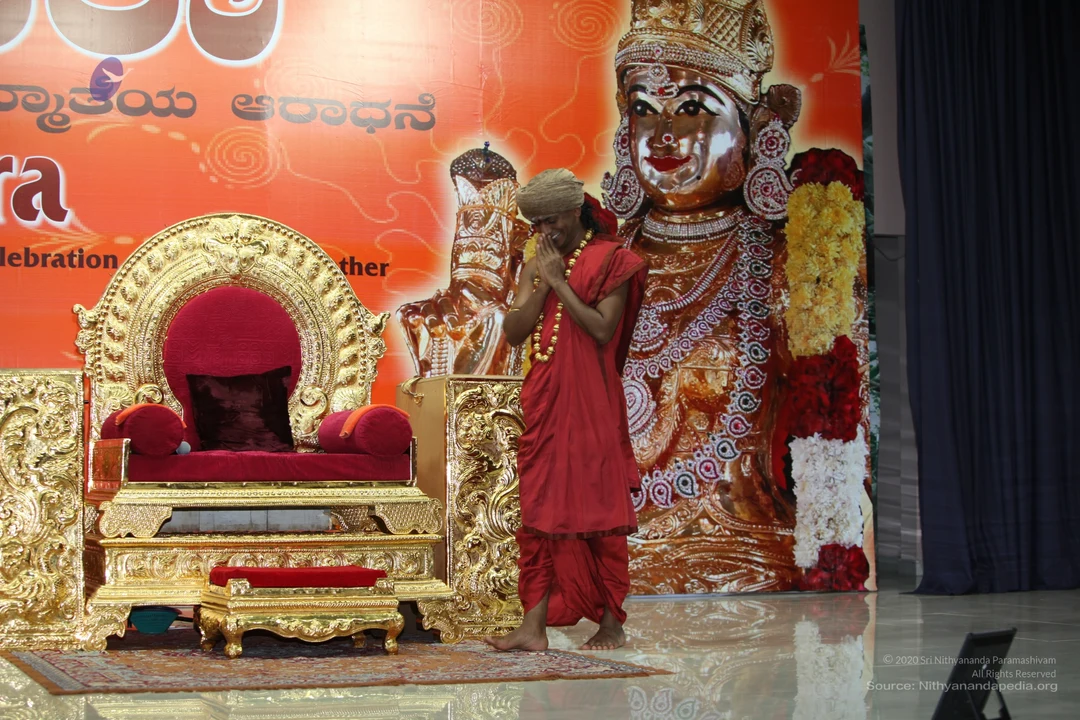
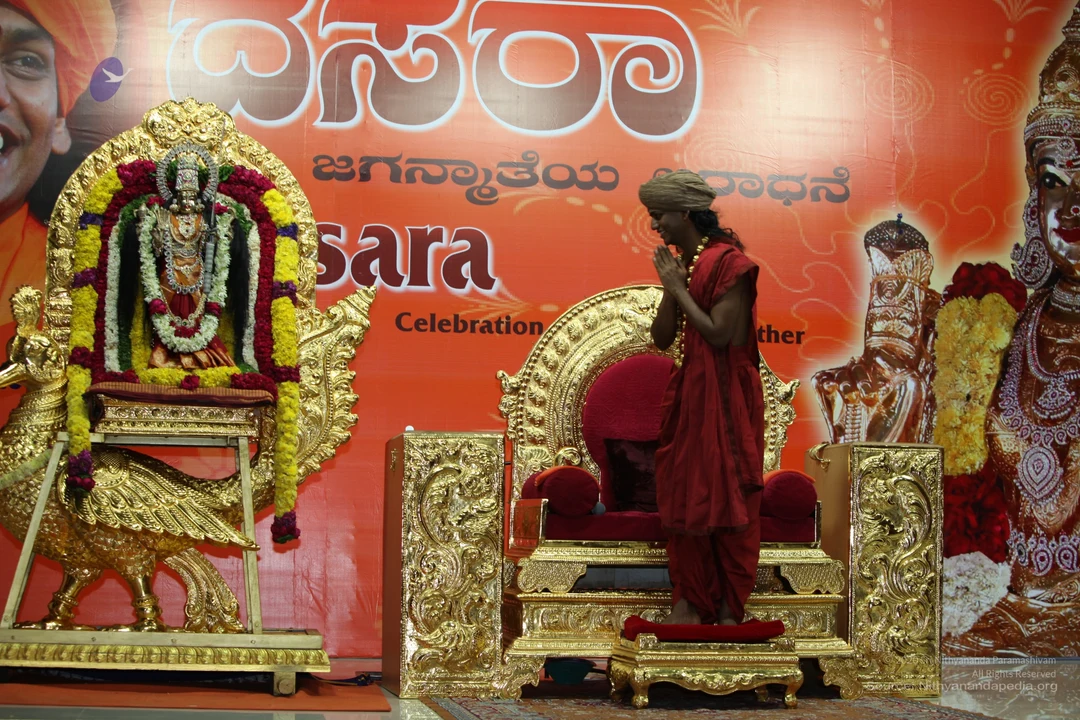
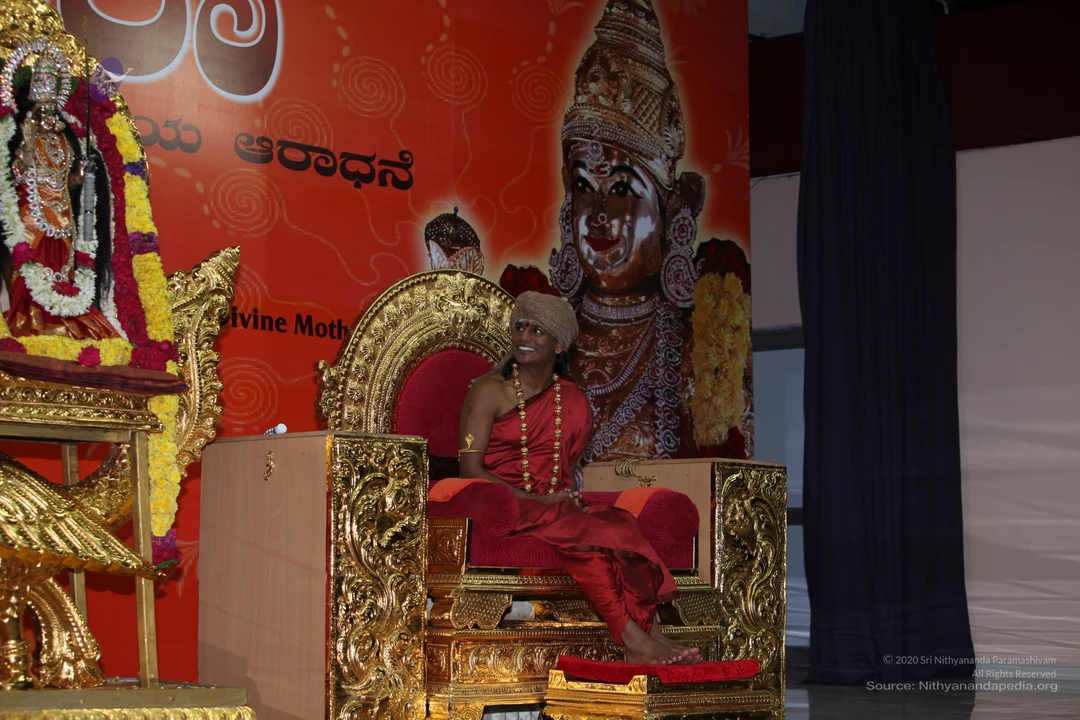
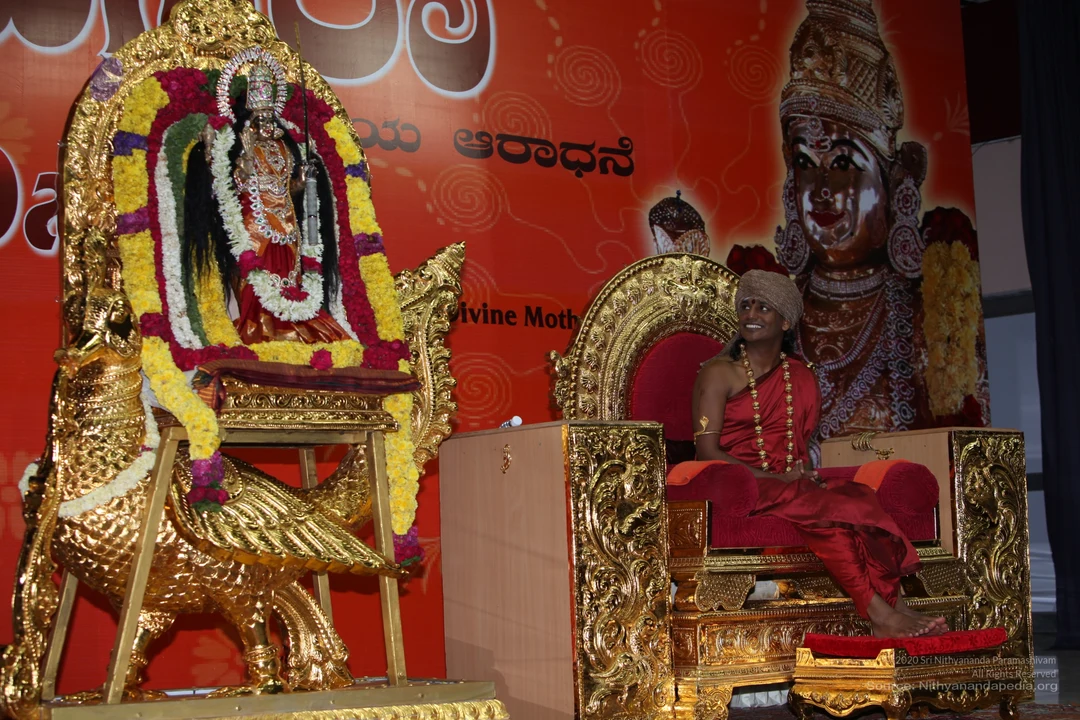
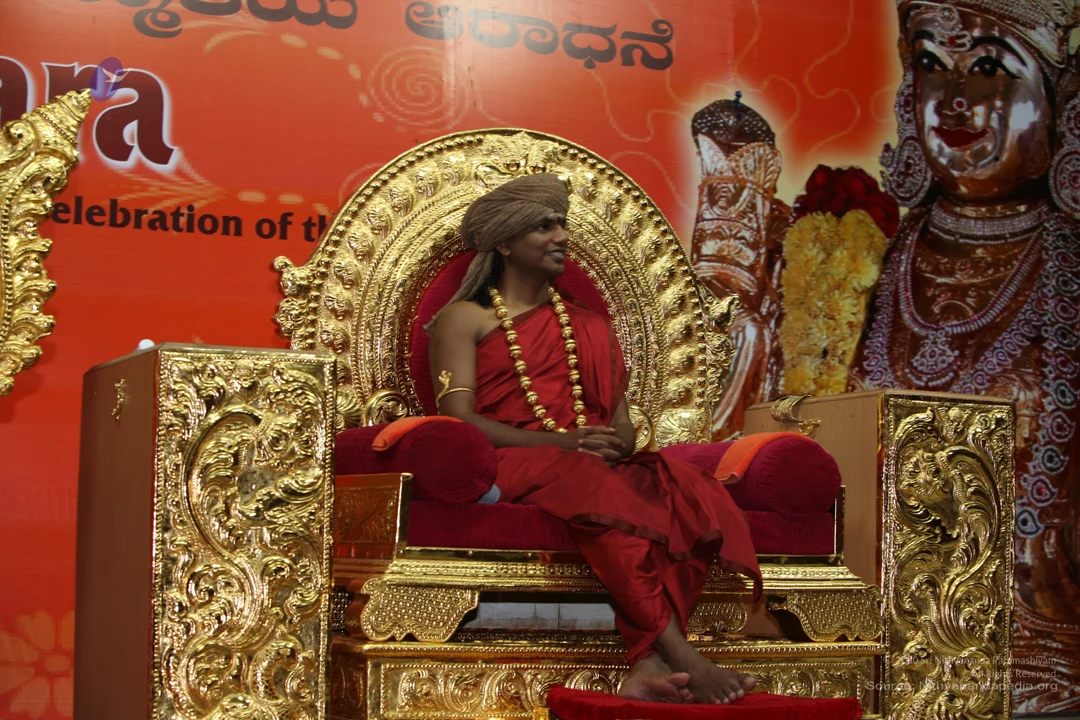
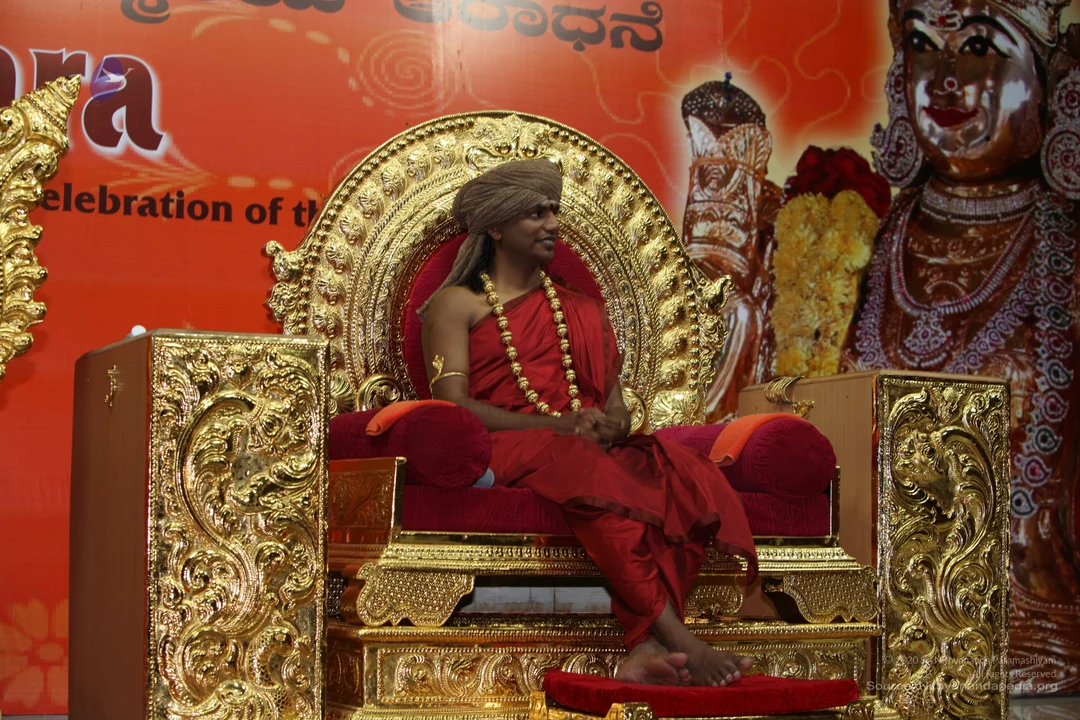
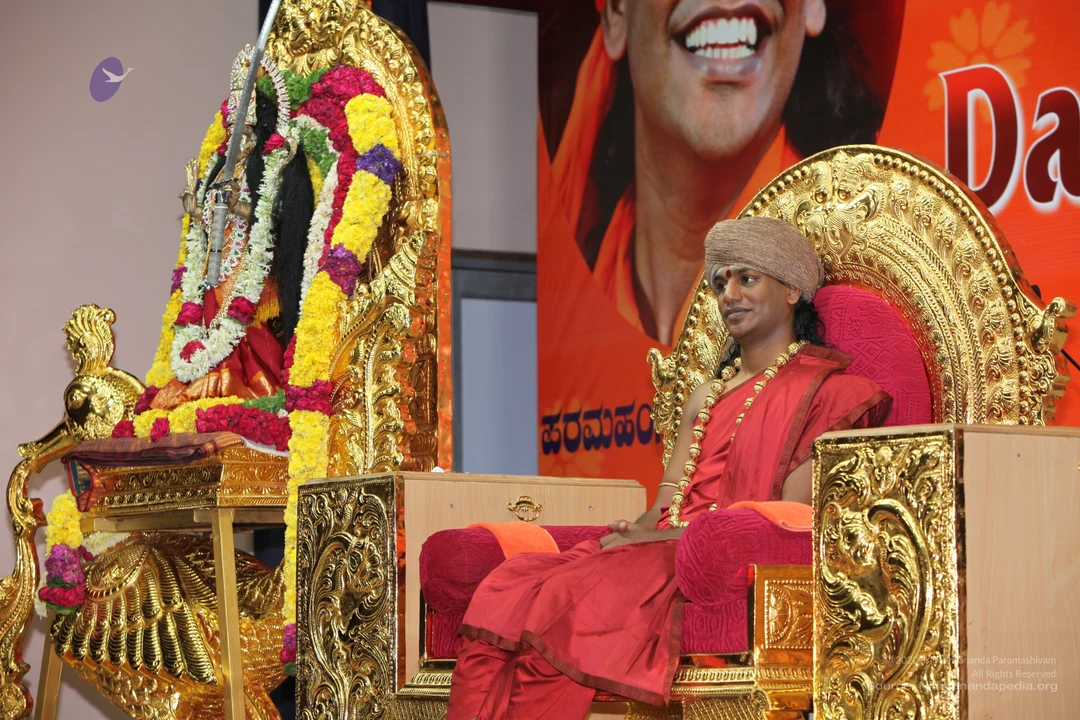
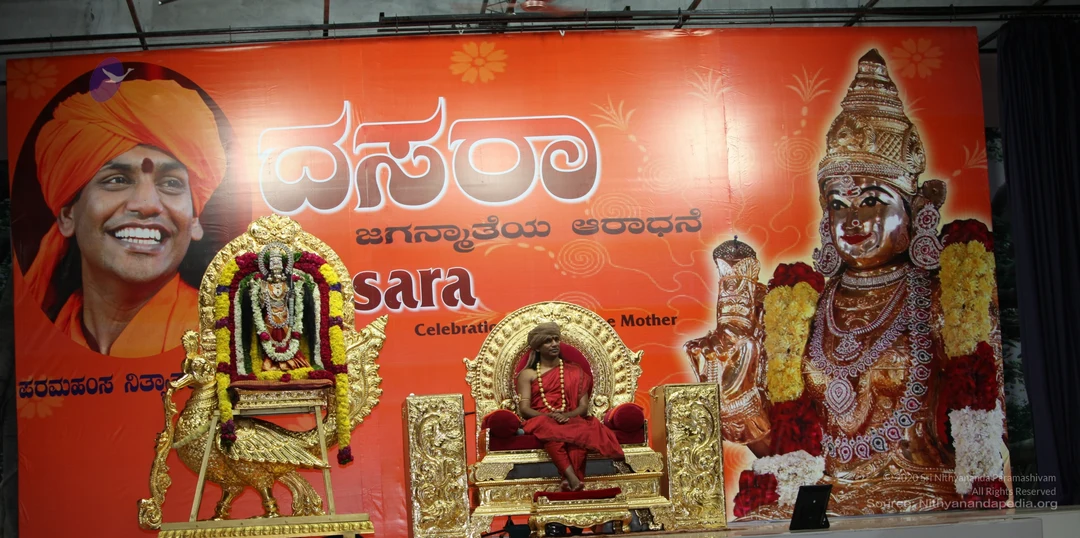
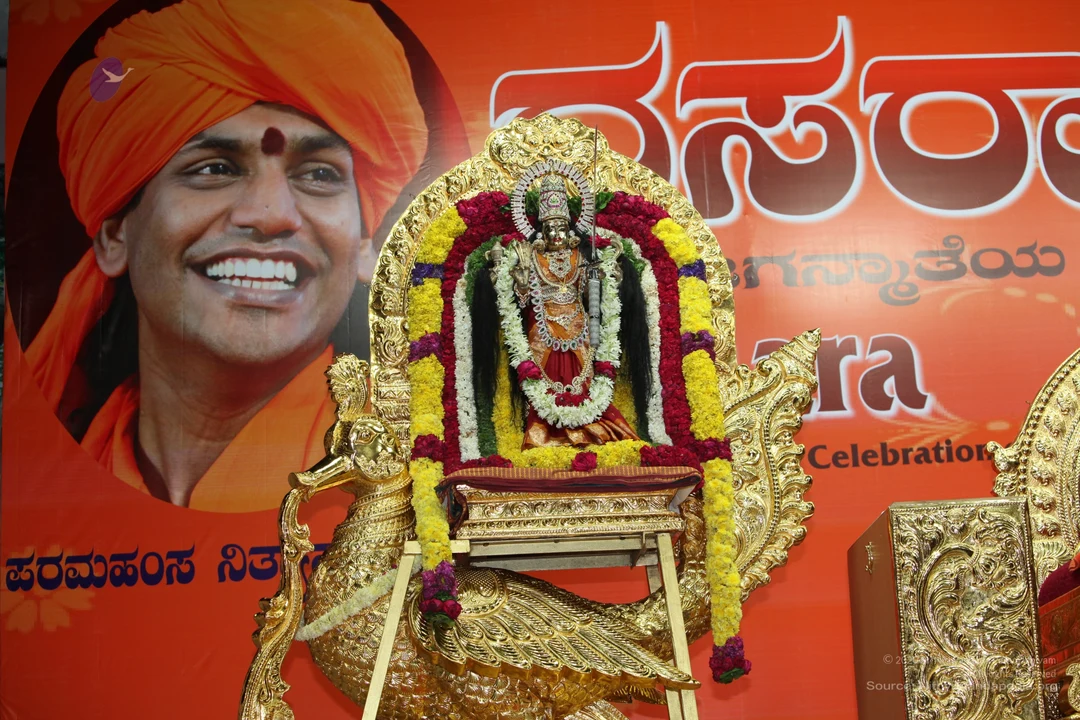
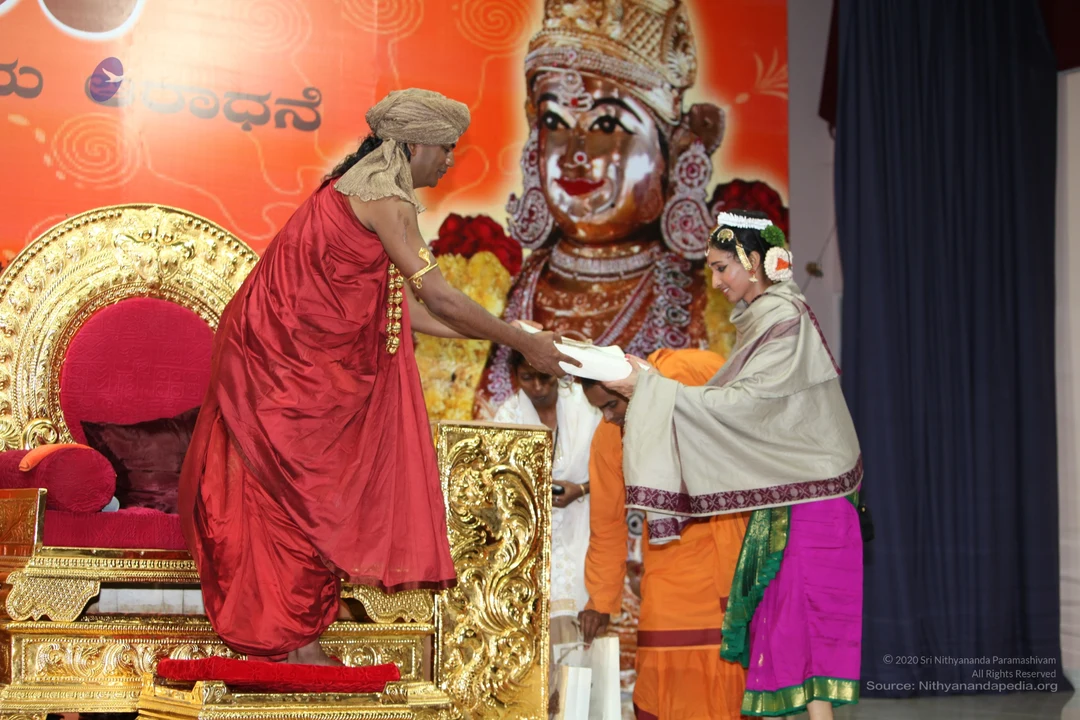
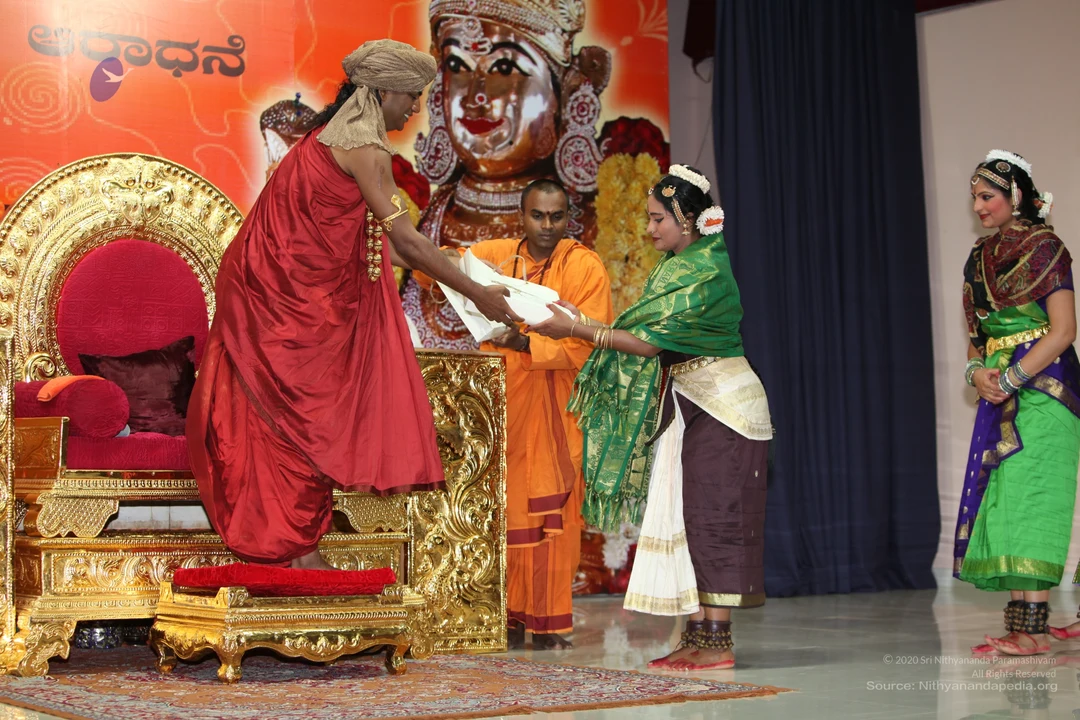
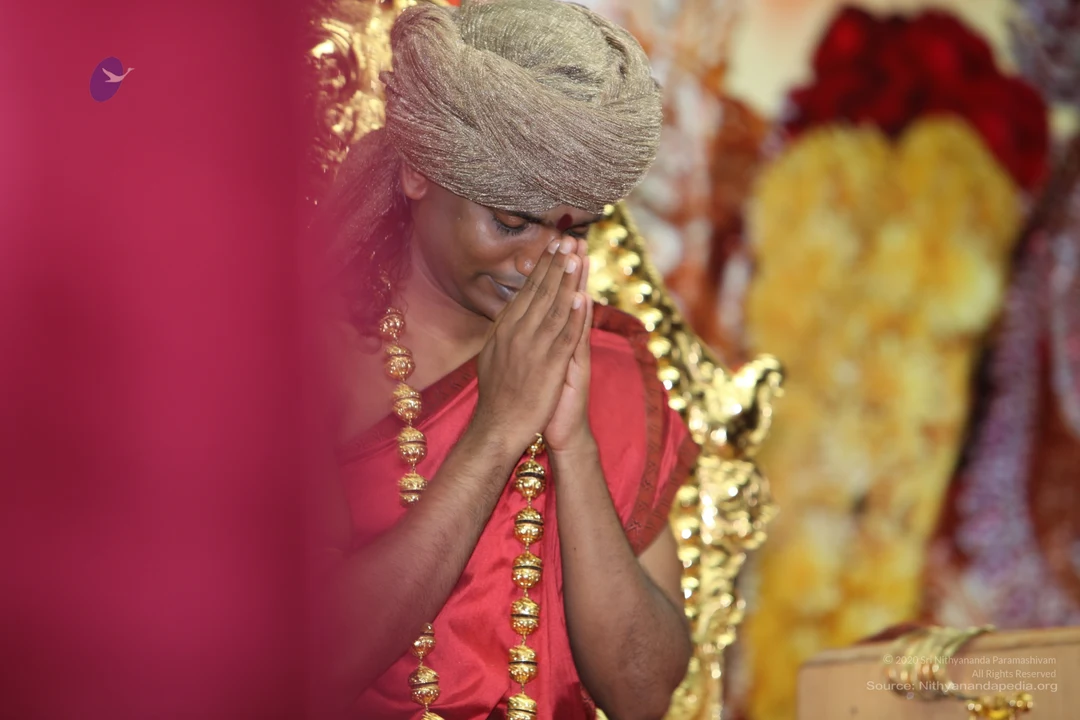
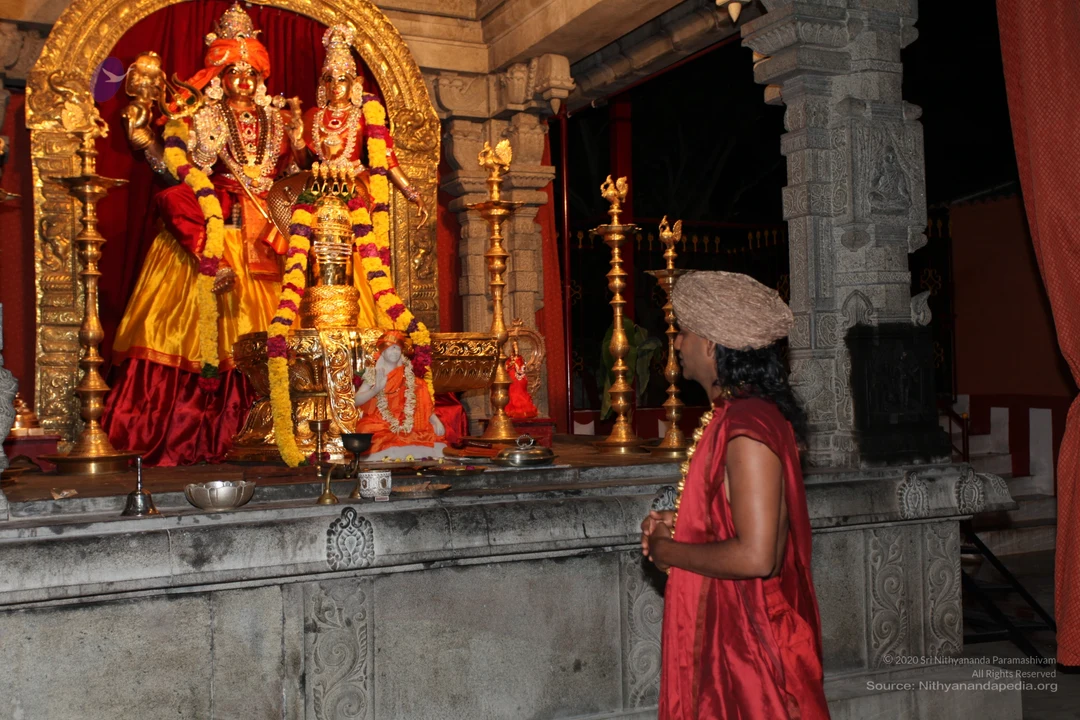
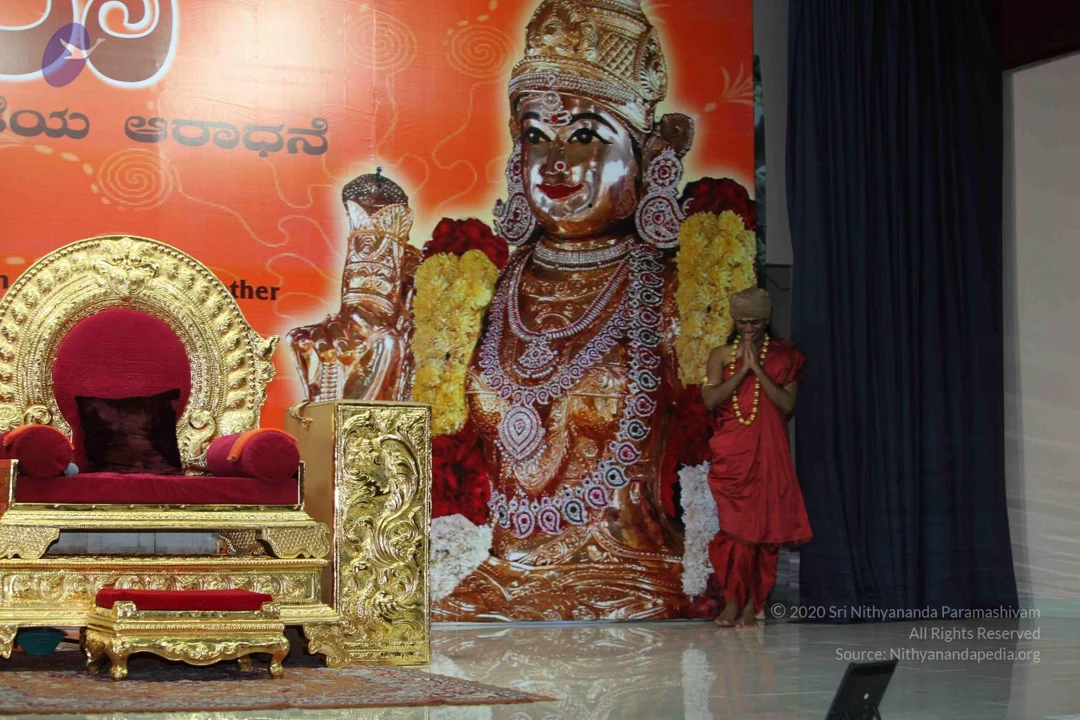
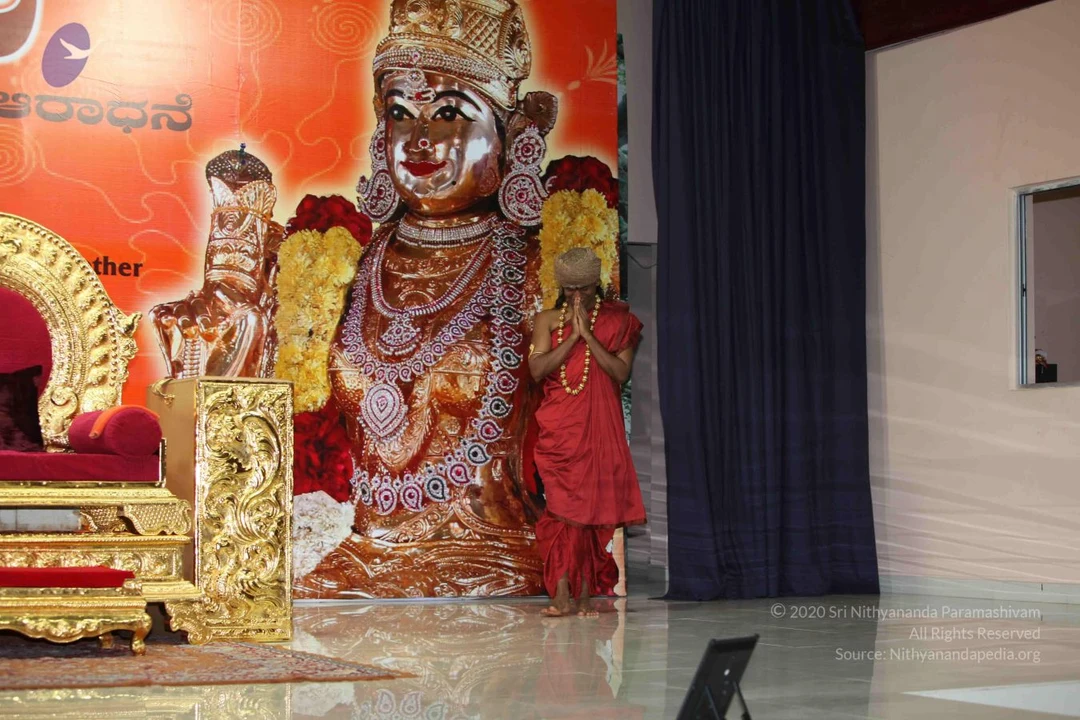
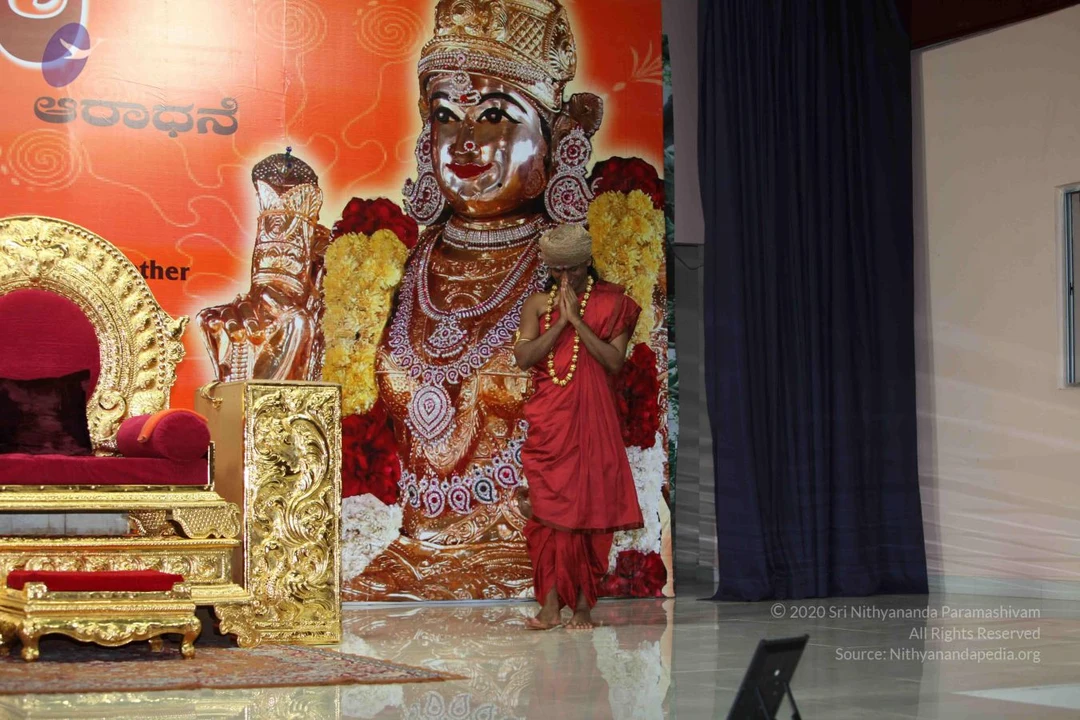
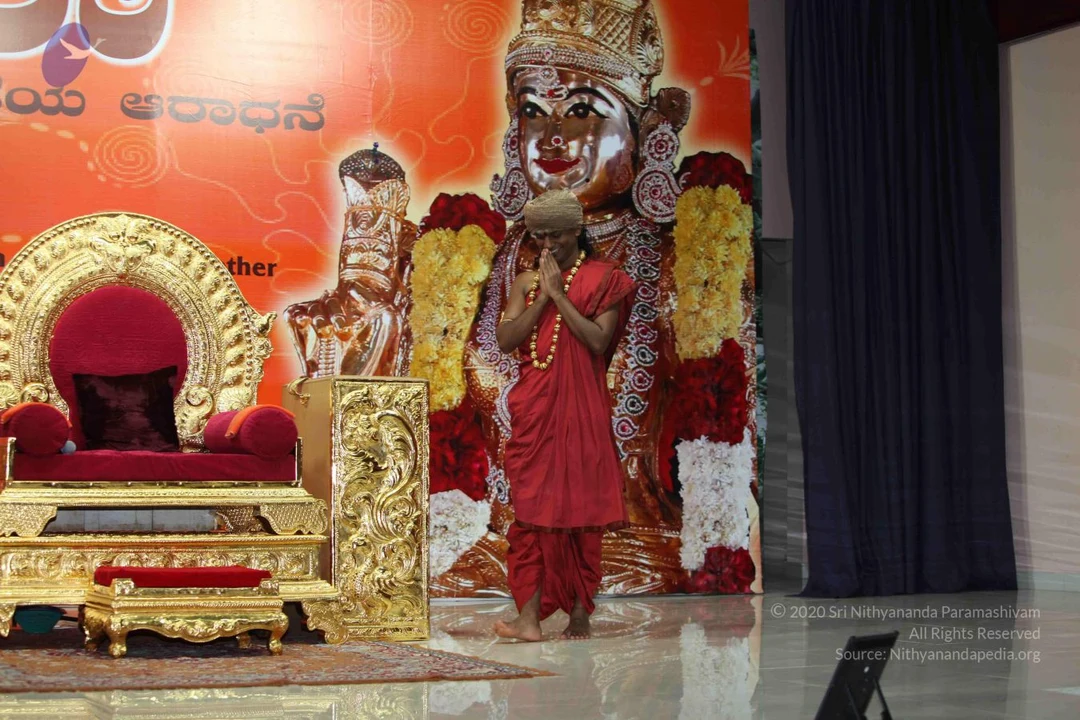
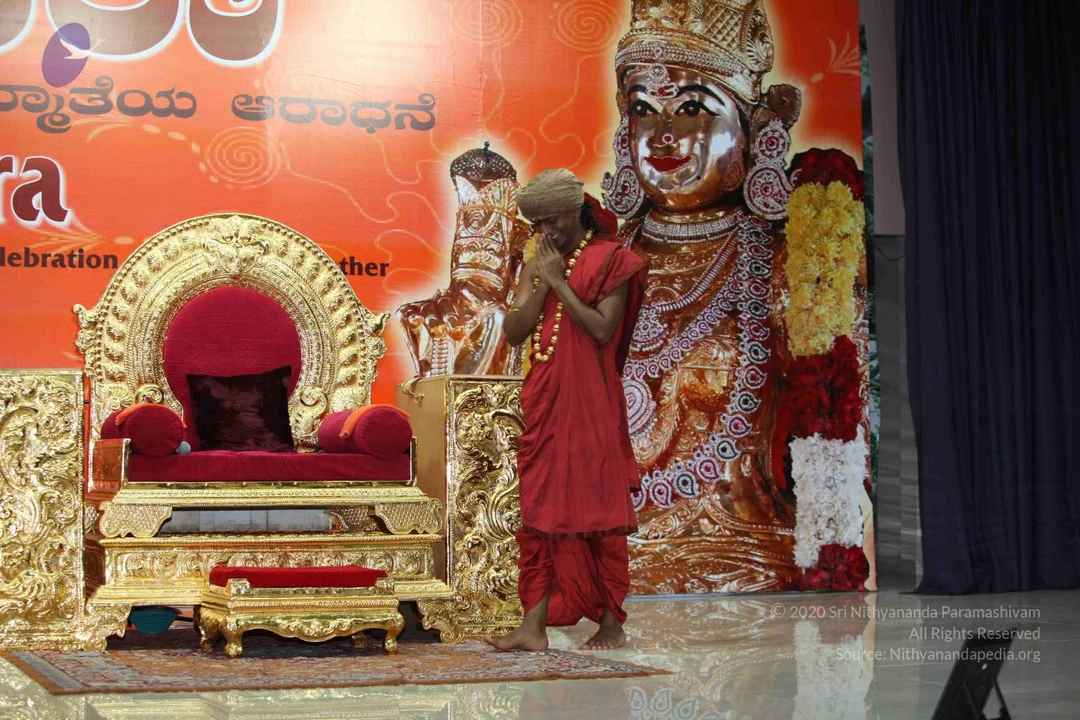
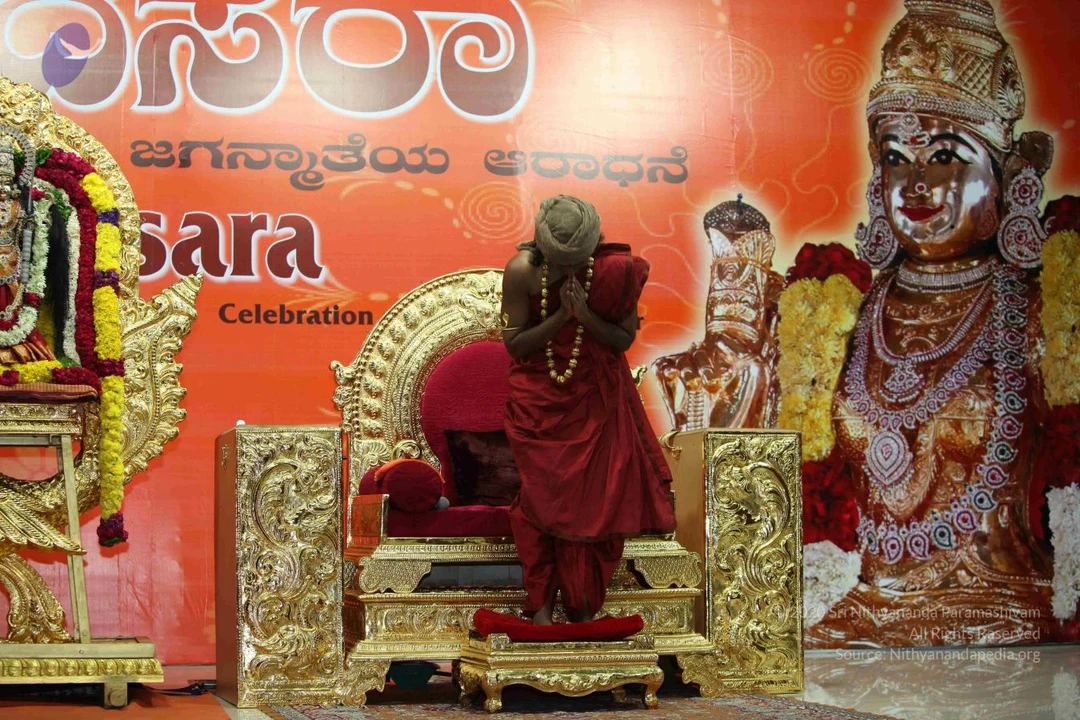
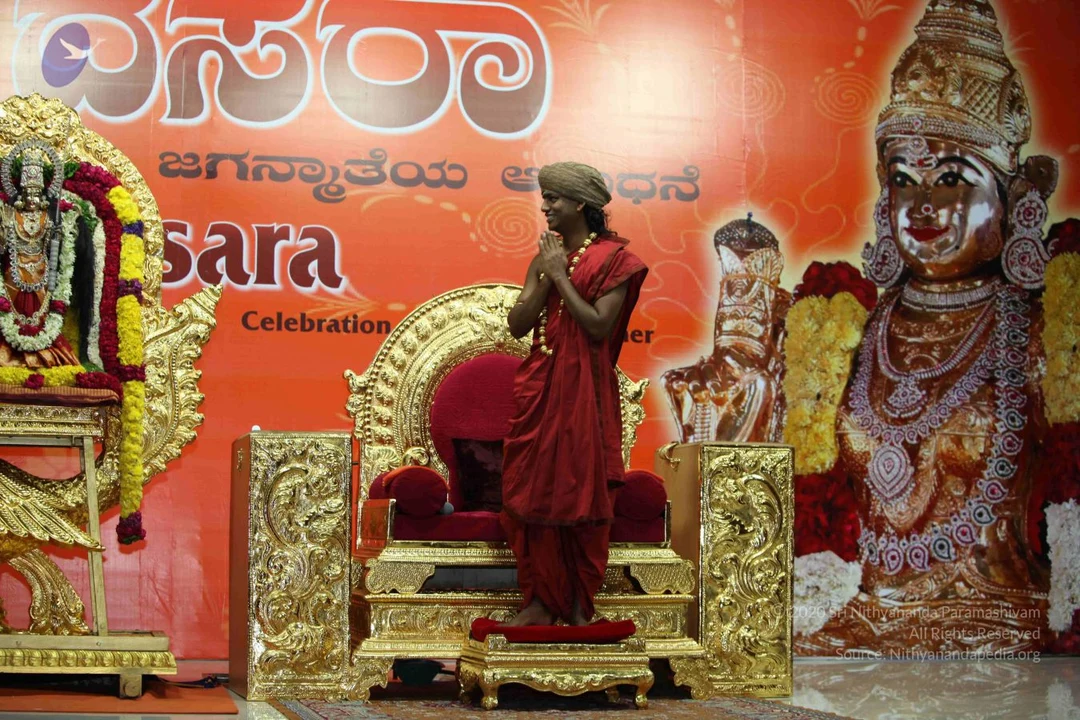
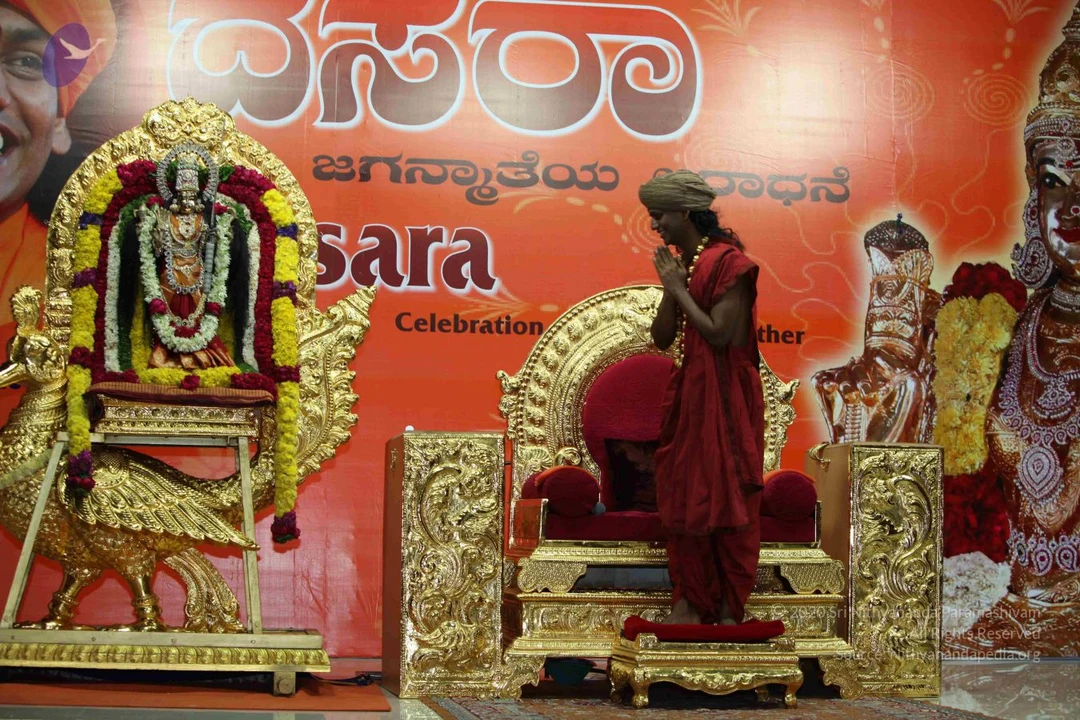
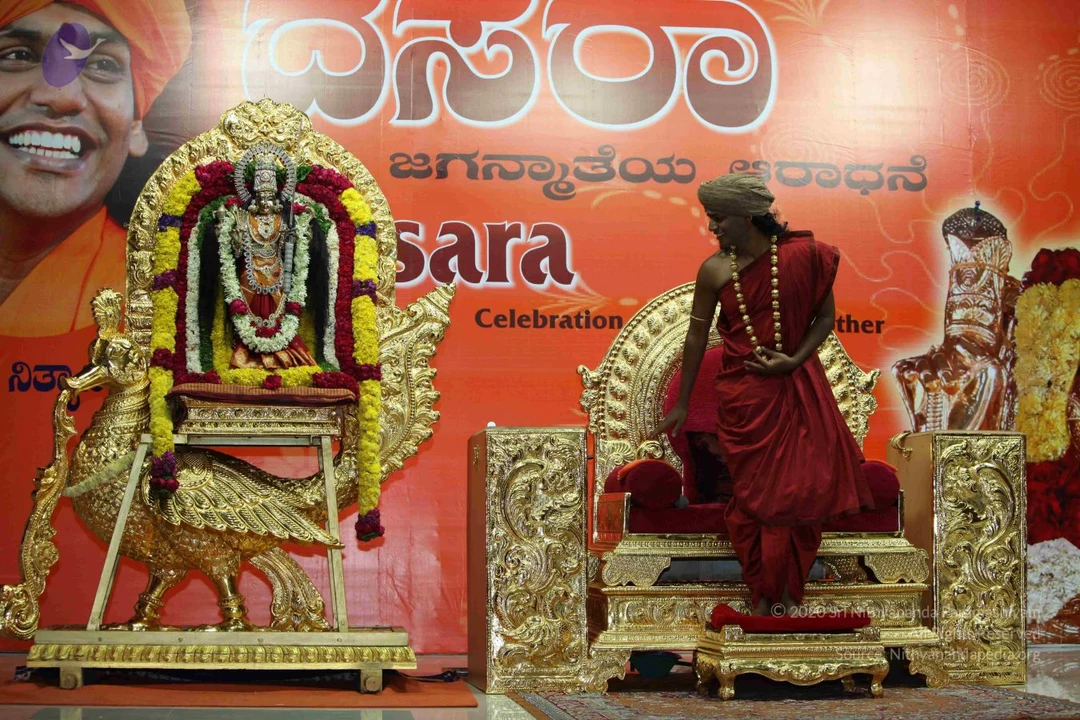
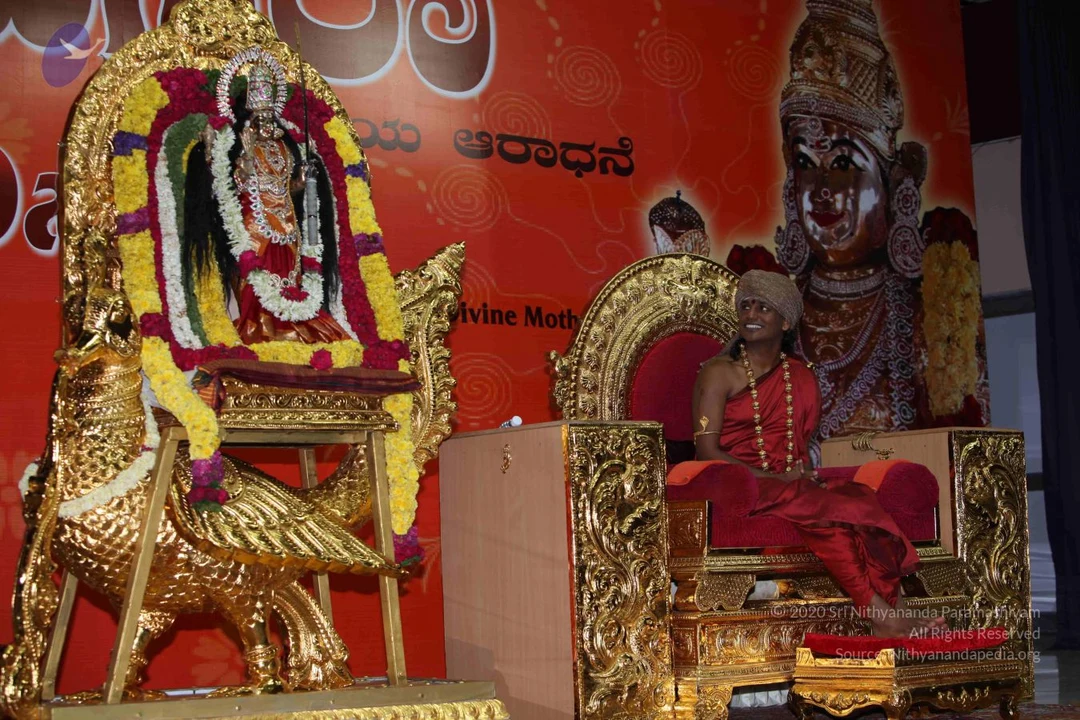
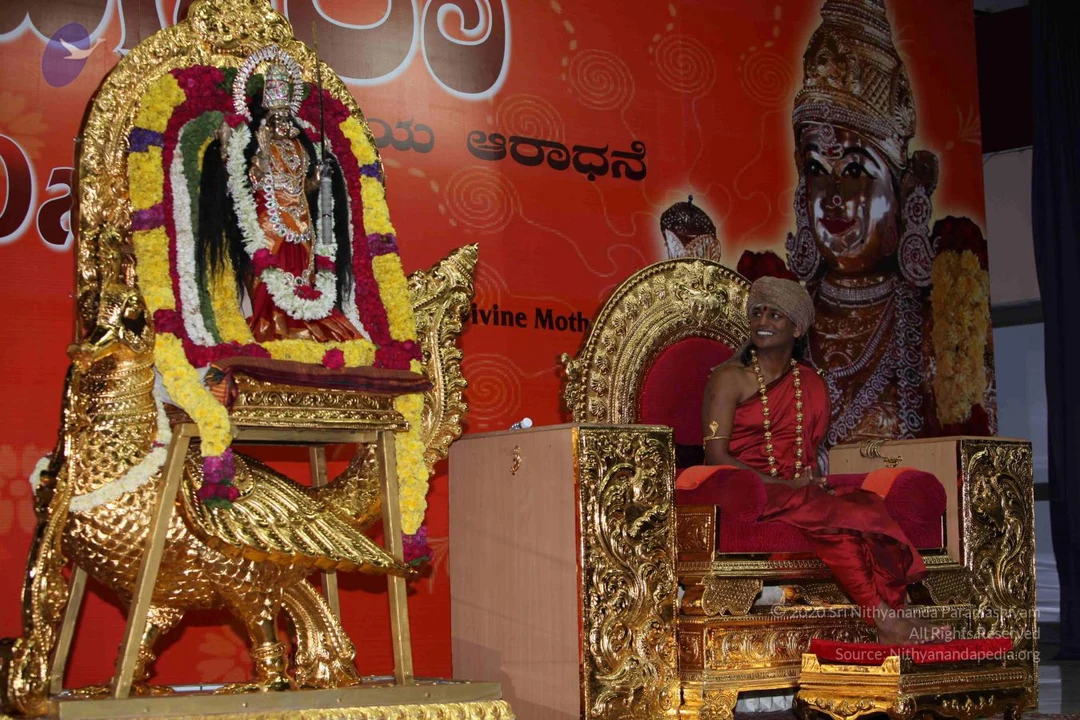
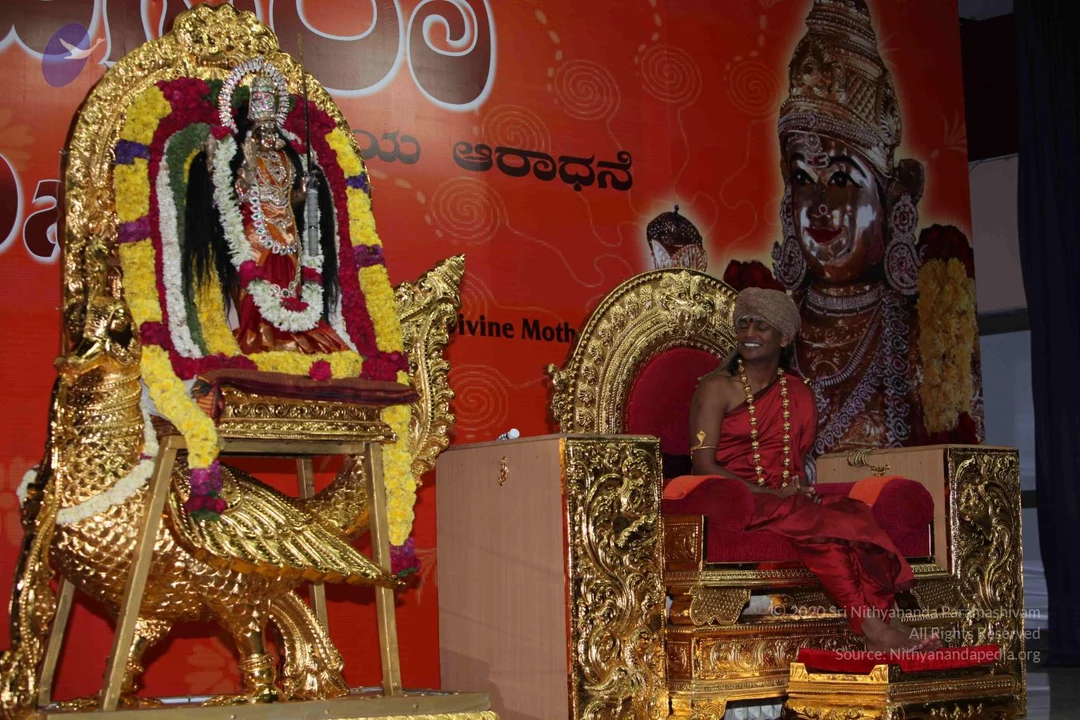
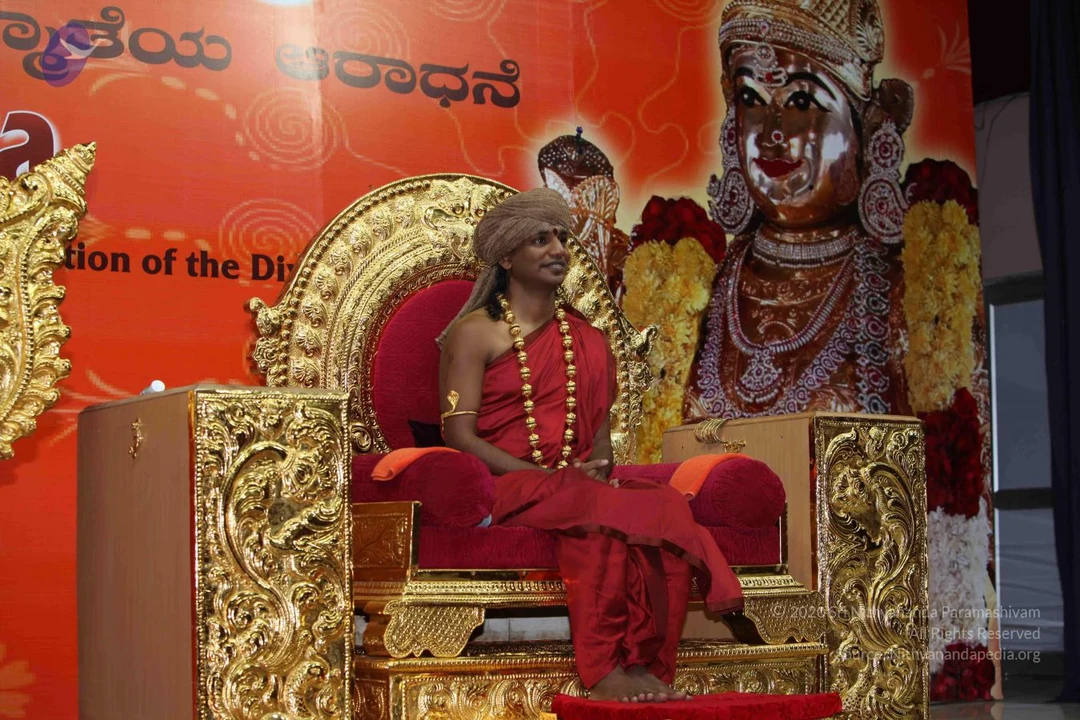
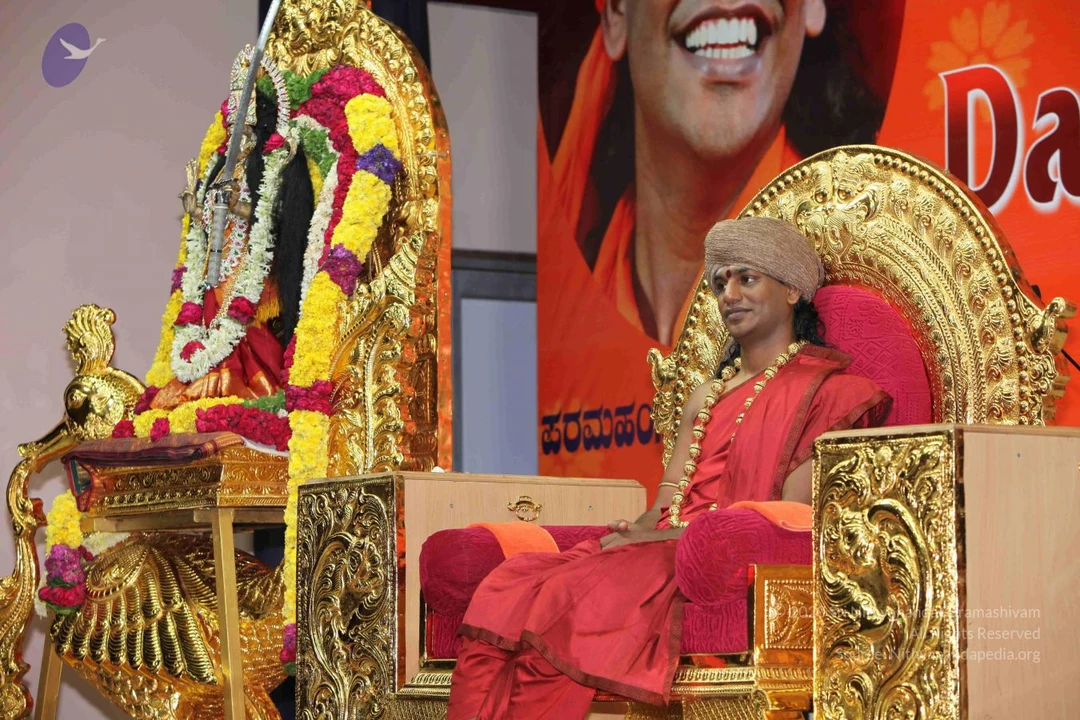
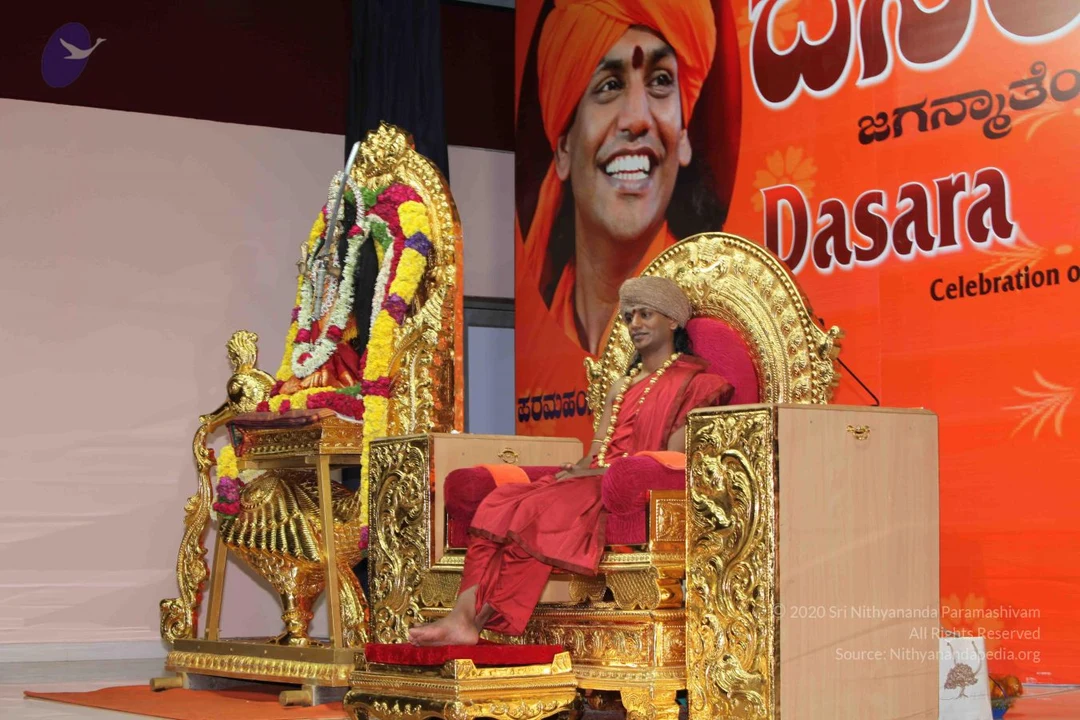
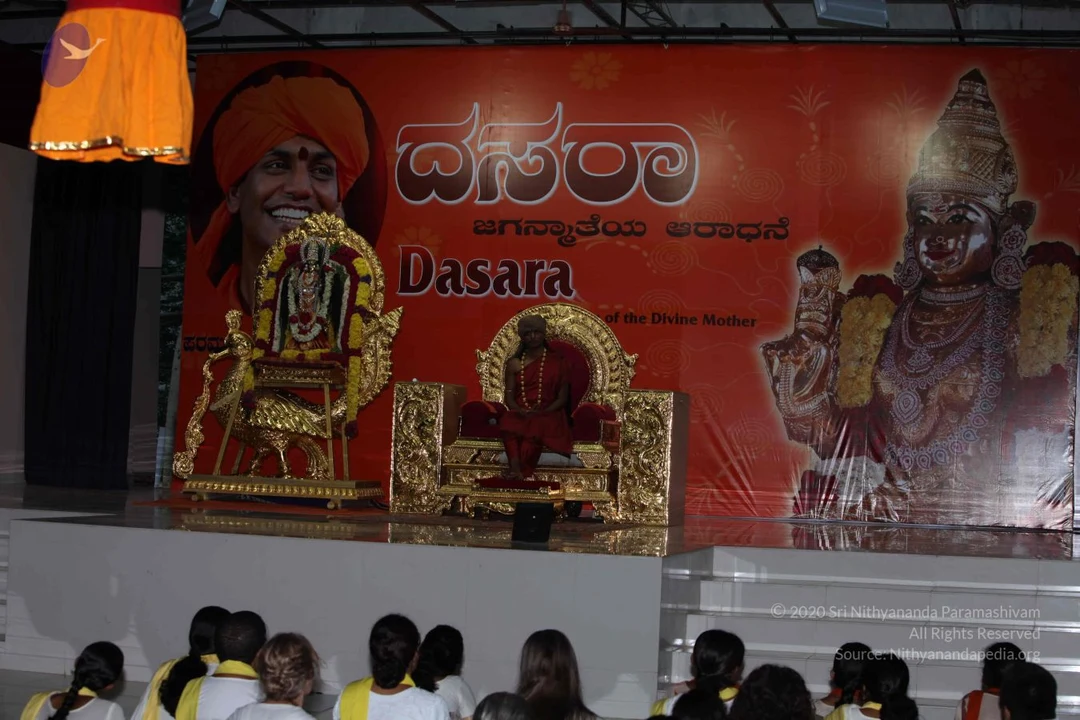
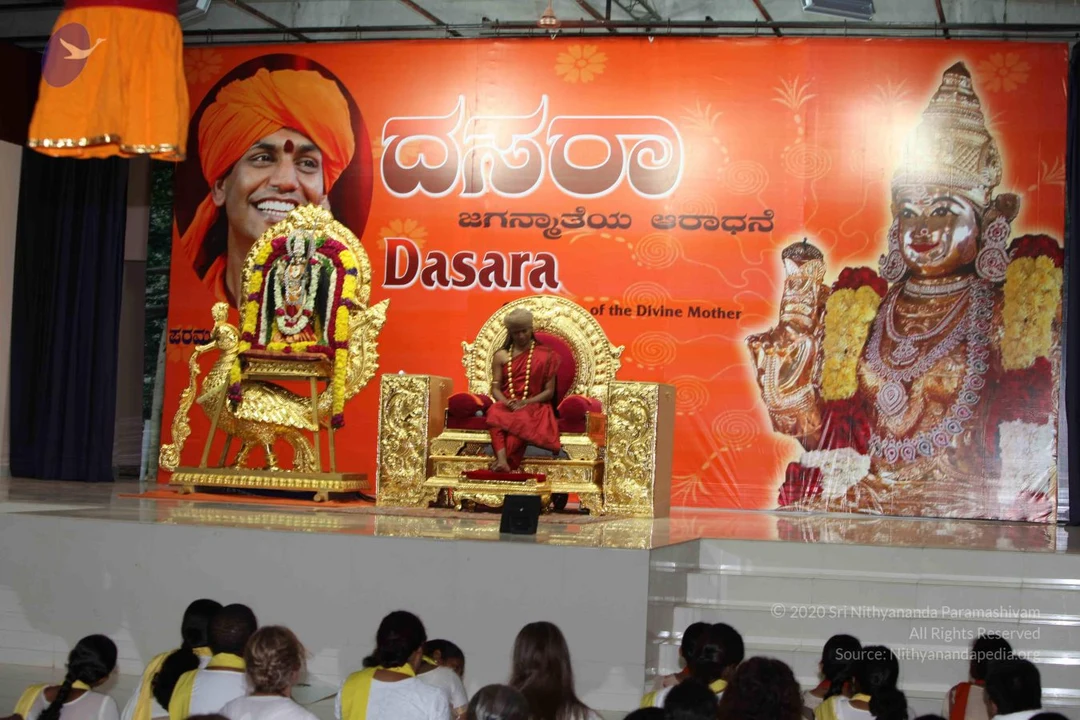
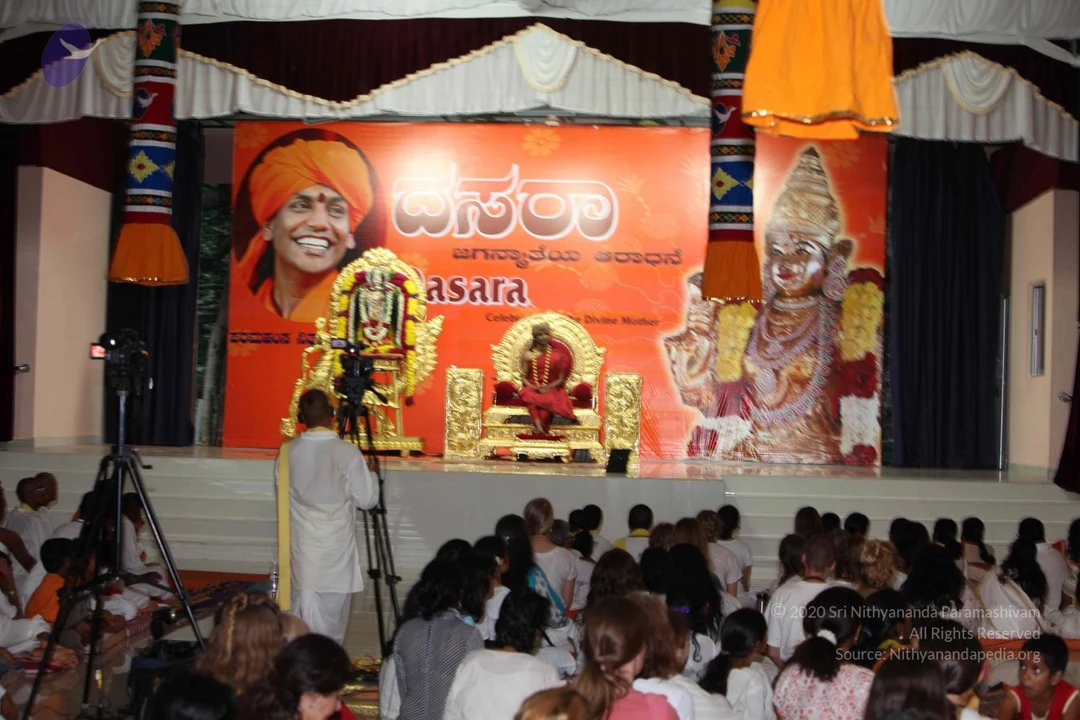
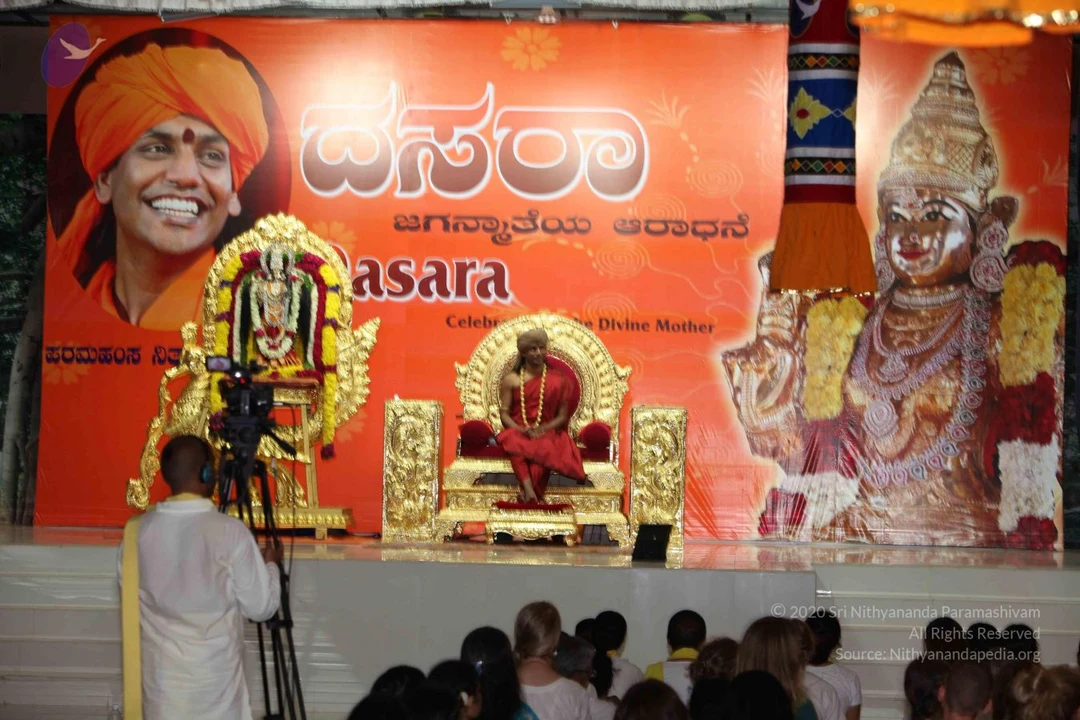
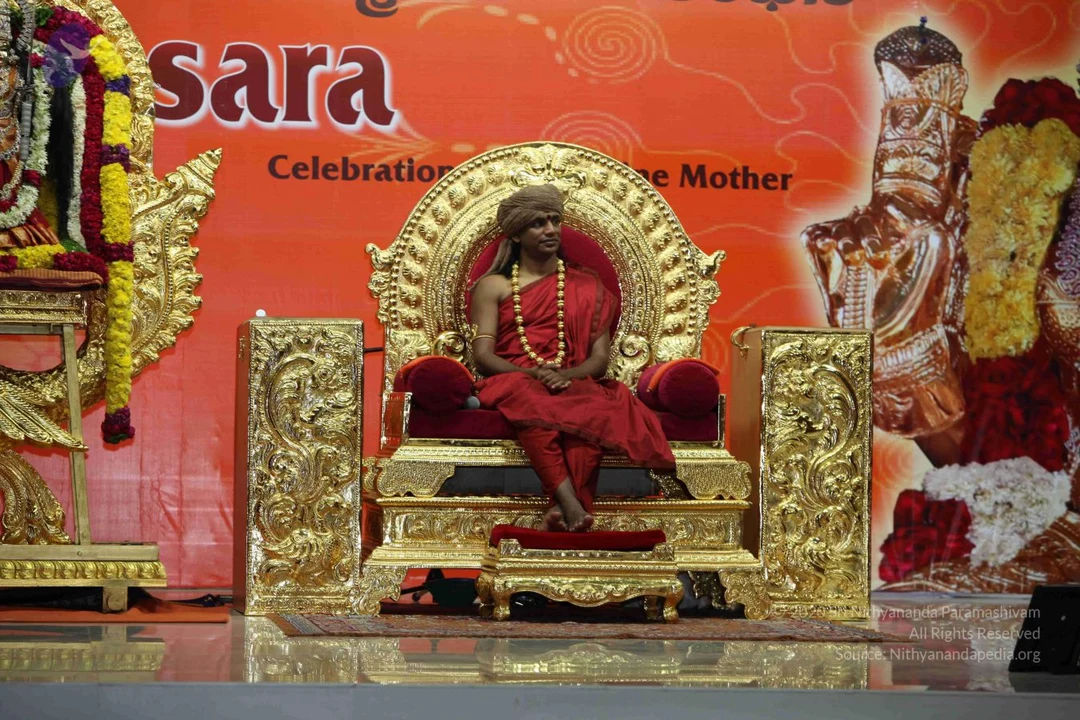
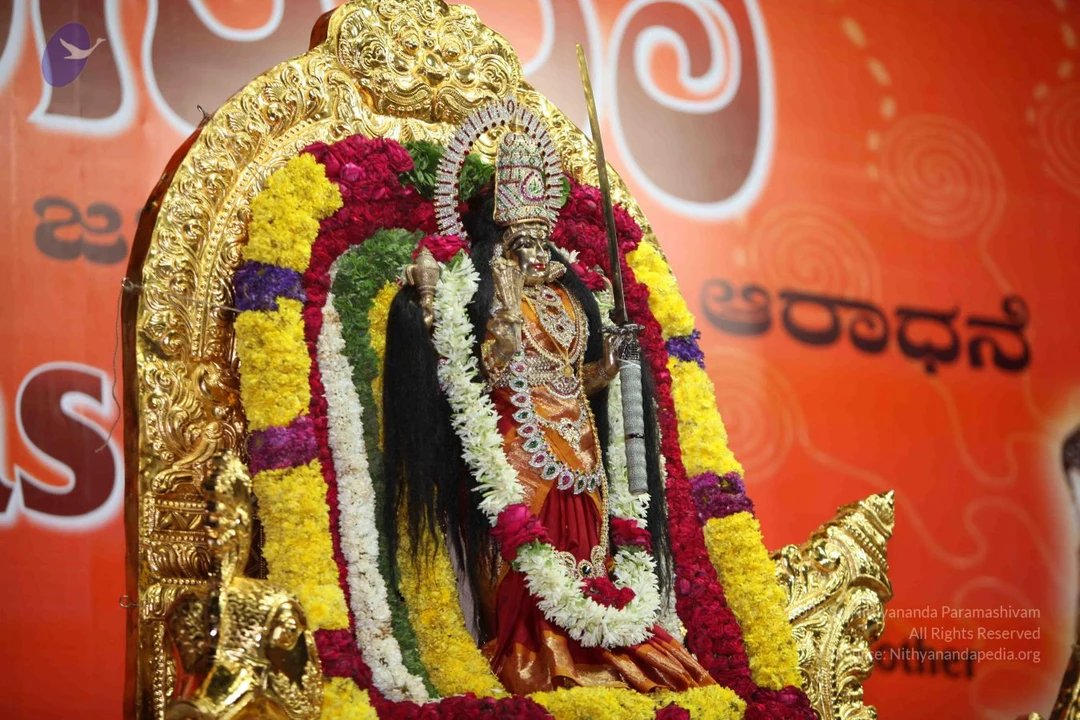
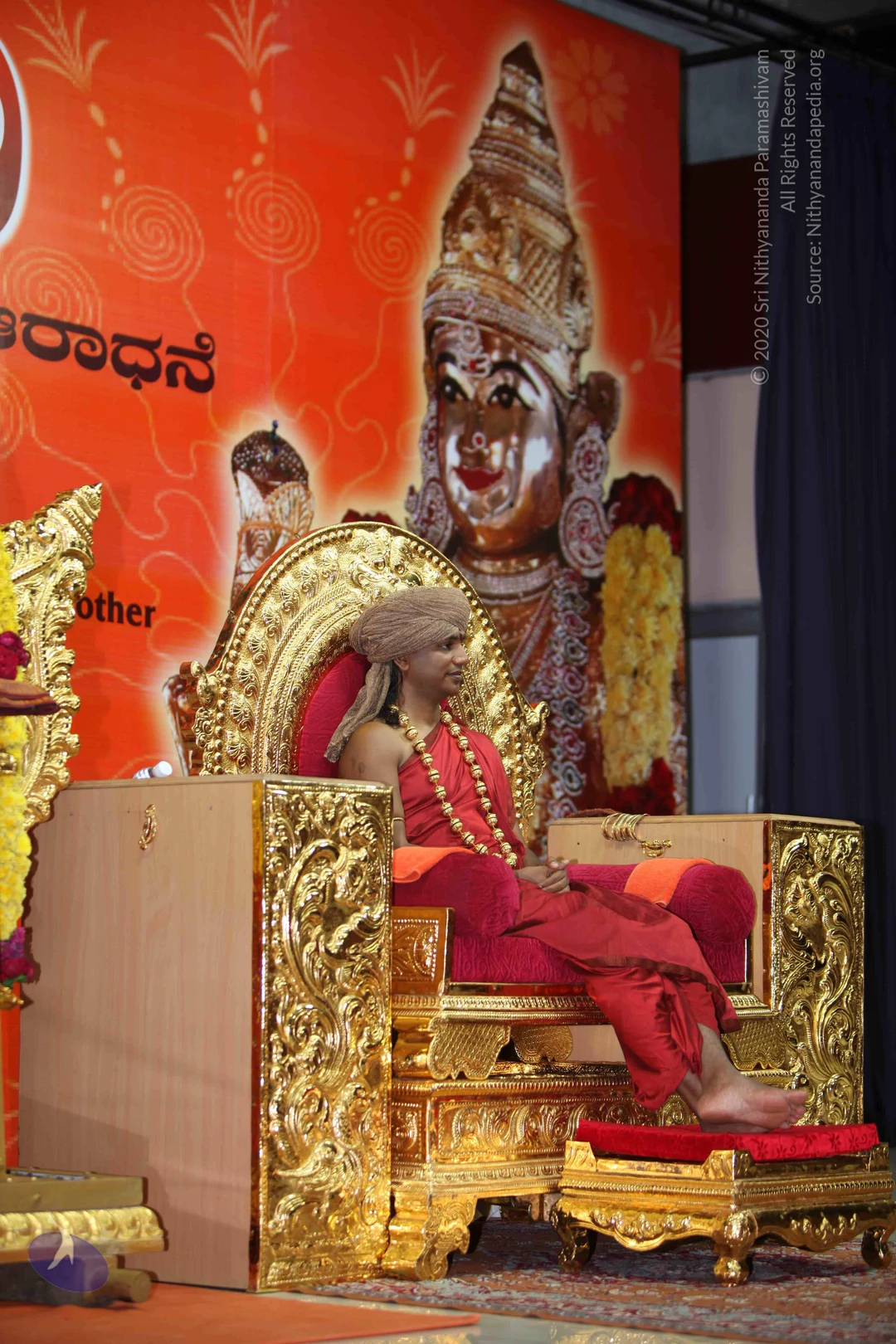
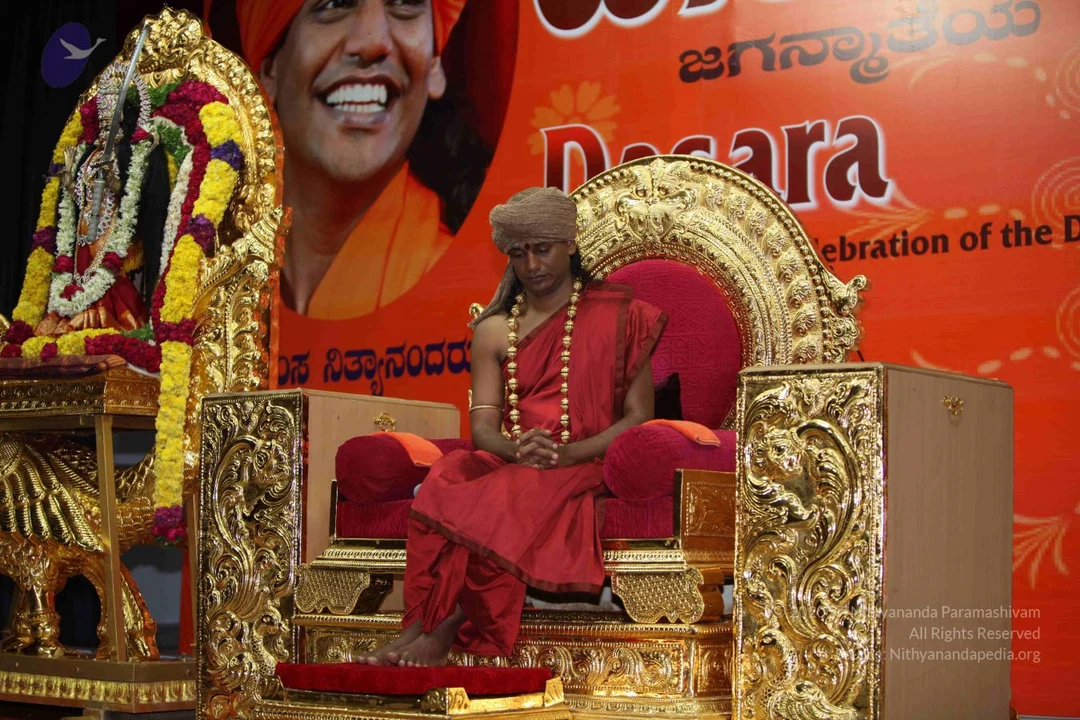
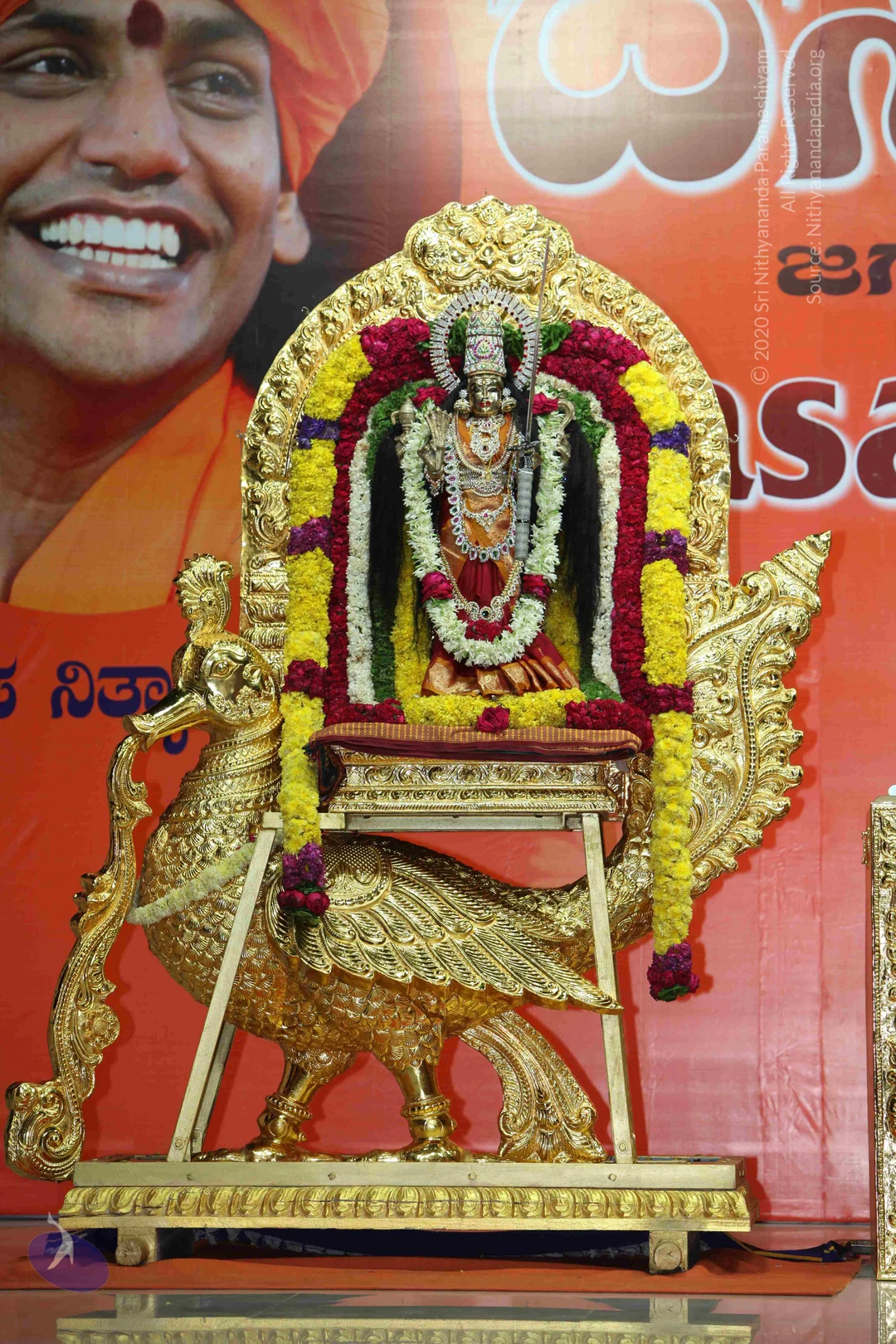
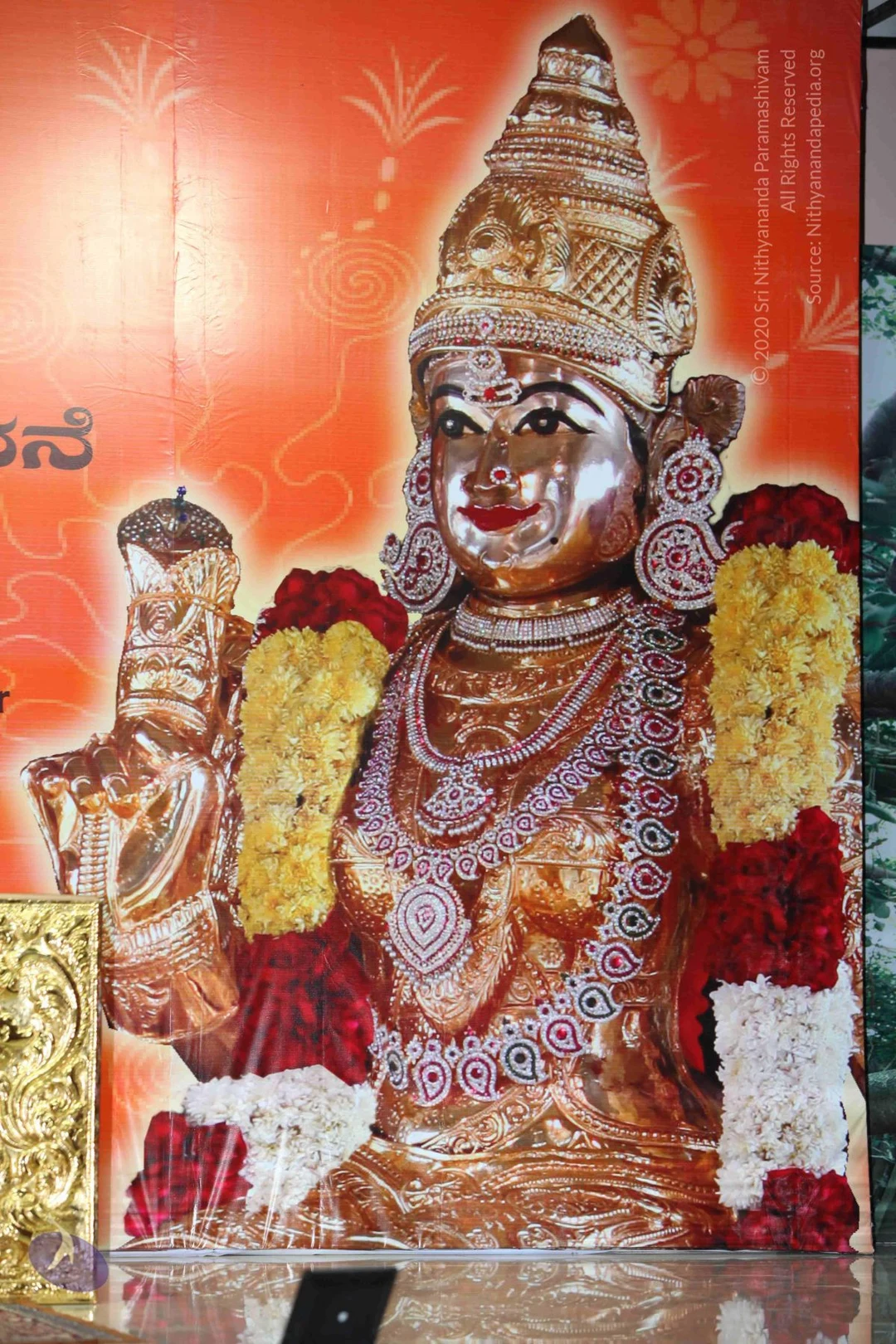
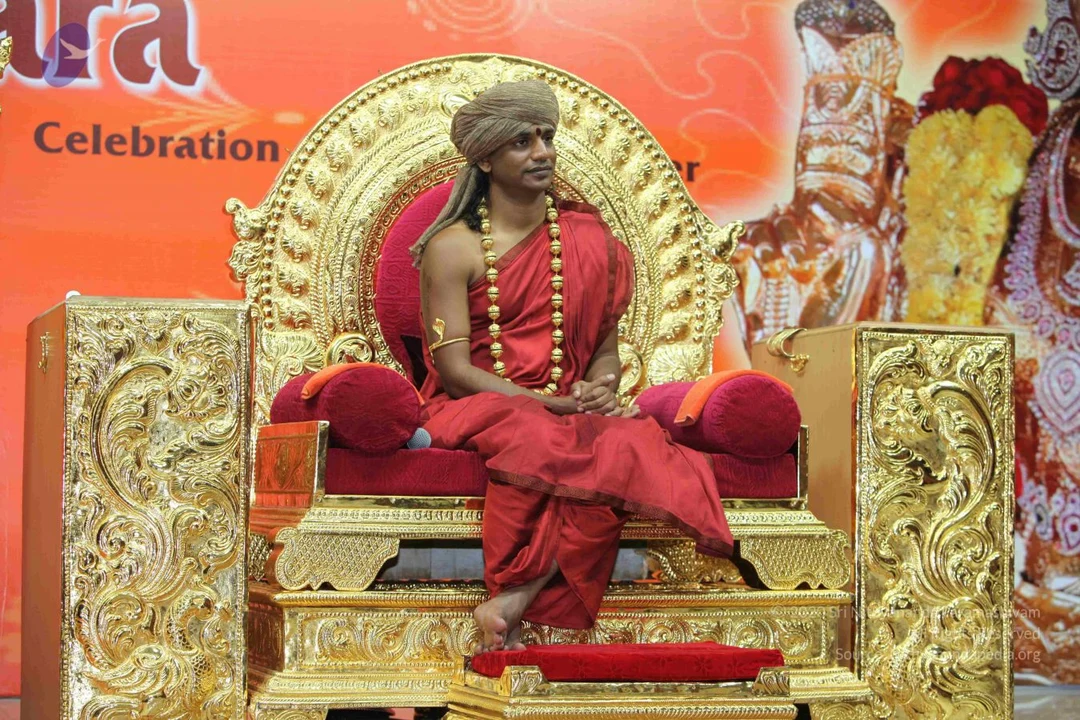
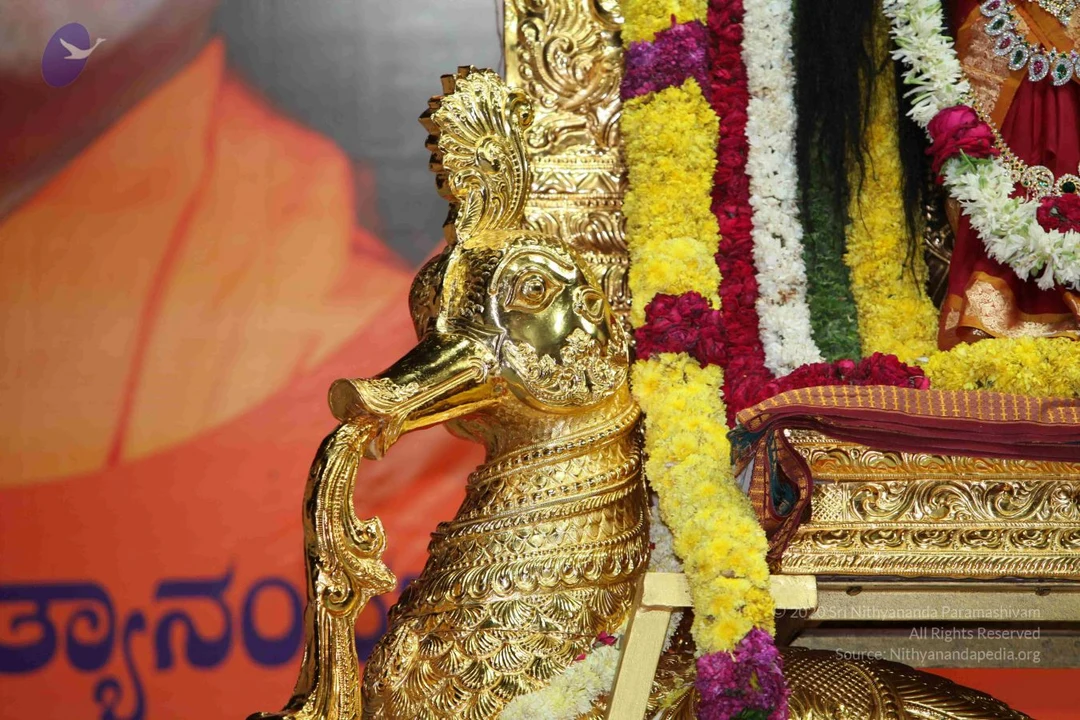
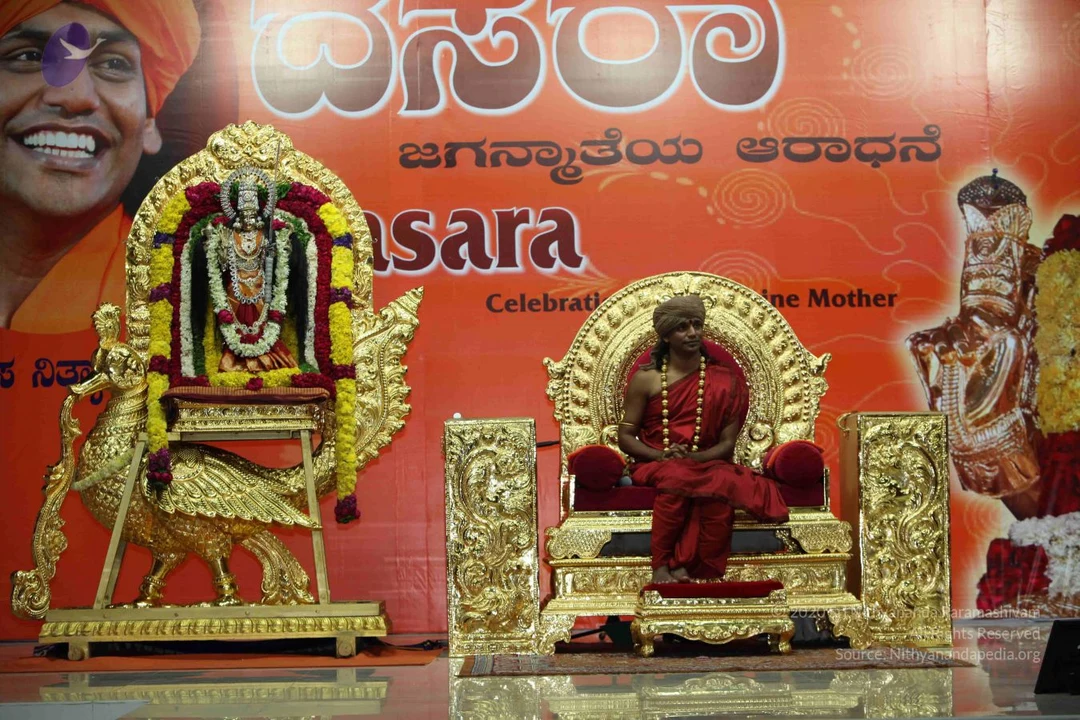
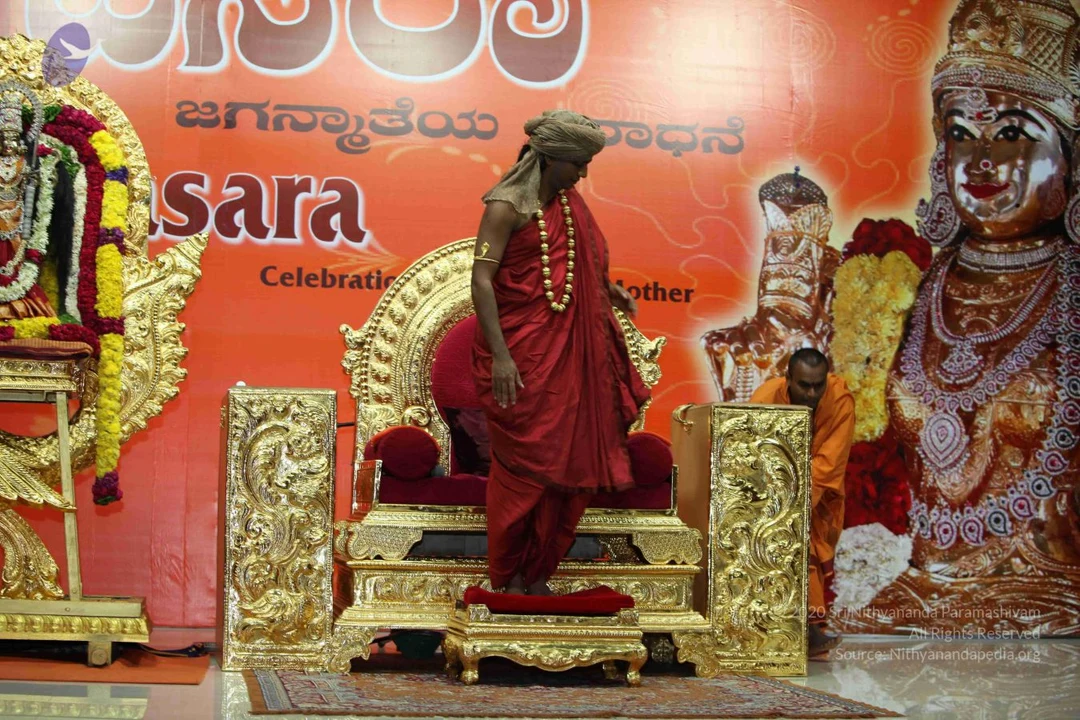
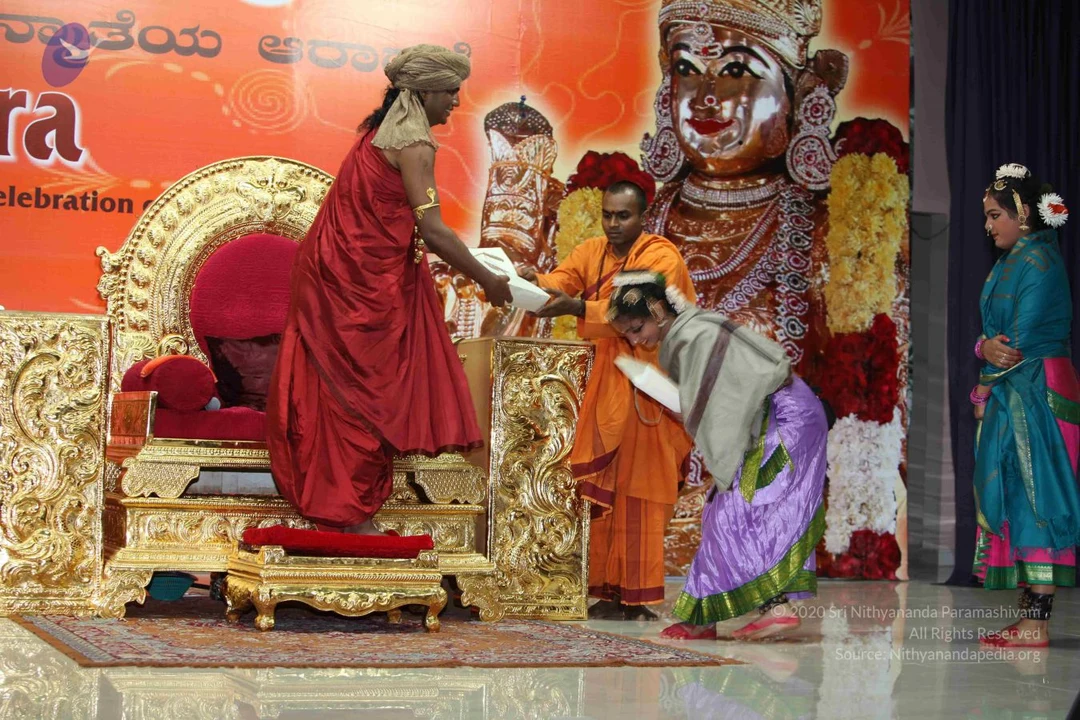
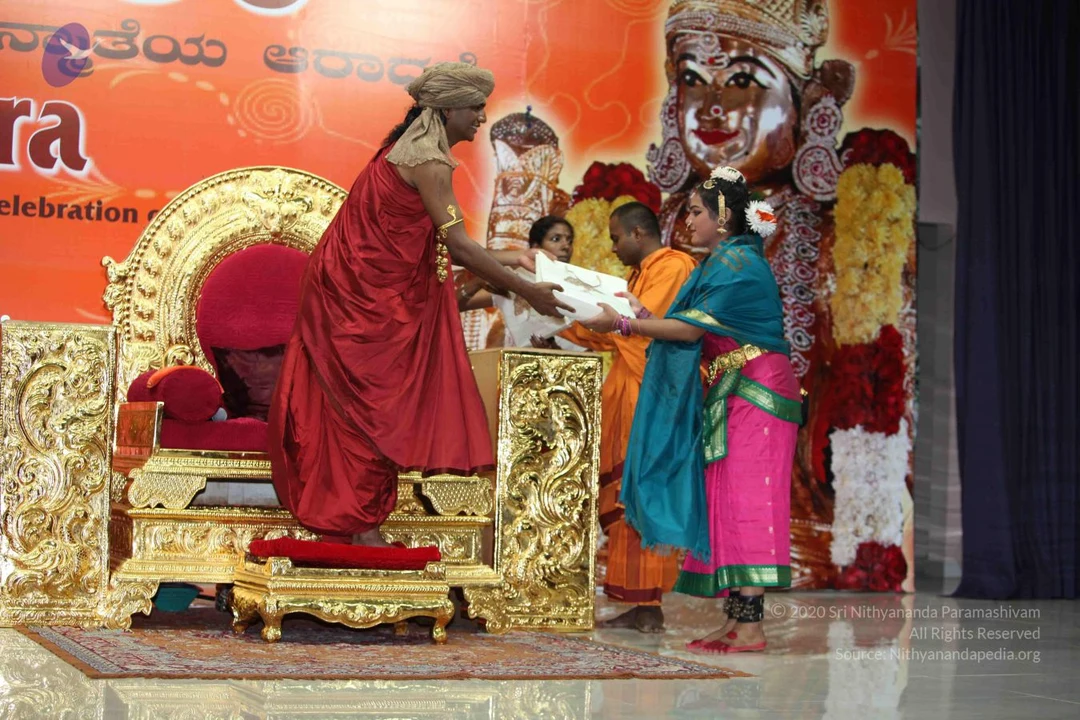
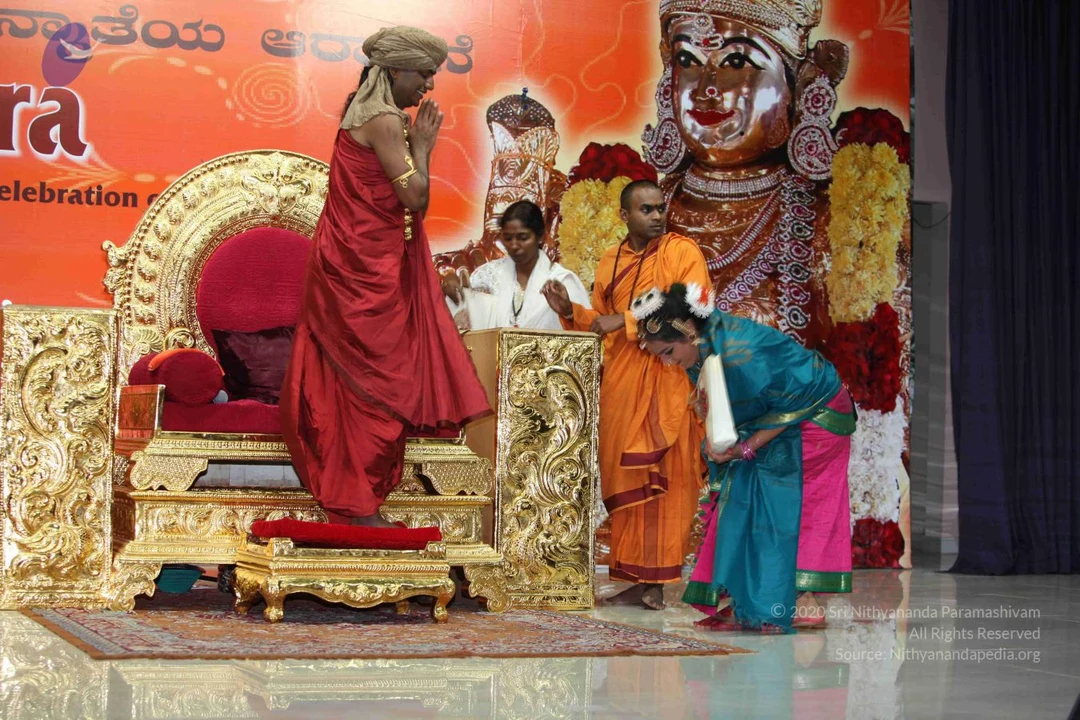
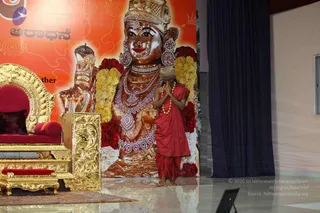
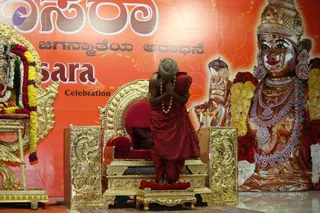
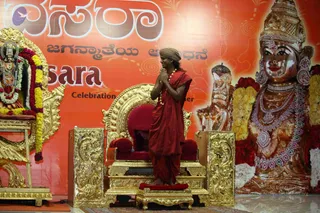
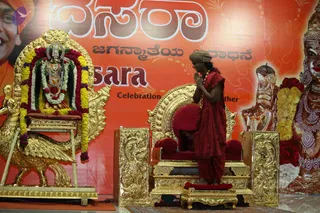
A photograph of a stage set for a Navaratri event, with an ornate gold throne upholstered in red on the left and a large golden-bronze deity murti of a goddess behind it, adorned with layered beaded necklaces, red and yellow marigold garlands, and a crown. A single person in a red-orange robe with a matching shawl stands at the right edge, hands pressed together in anjali mudra, with a rudraksha-style bead necklace and a wrapped head covering. The orange backdrop bears Kannada script. A dark curtain and a white screen frame the right side.A figure in a red robe and a cloth head wrap stands with palms pressed together in namaskar beside a large golden-bronze deity murti with a crown, earrings and layered jewelled necklaces, adorned with yellow marigold garlands and red flowers. A golden ornate throne with red cushions stands to the left, and a dark blue curtain hangs on the right of a stage with a glossy floor. A Kannada banner with orange background is partly visible behind the murti.A barefoot person in a red-orange robe with a saffron-coloured cloth wrap stands with palms pressed together in namaskar before a large golden deity murti on a backdrop. The figure wears a light cream or tan head covering and a red-orange prayer bead necklace. Behind is a gilded, bejewelled deity figure with a crown, pearl and jewel necklaces, earrings and yellow and red garlands. To the left is an ornate gold and red velvet throne with a red cushion and a gold footstool. The backdrop has Kannada text and an orange and red design. The polished floor reflects the scene. The figure appears to be a devotee or sannyasi offering respect at the stage shrine, not clearly identifiable as a person from appearance.A figure in a red-maroon robe with a grey-green turban and a rudraksha mala stands in front of an ornate gold throne with red cushions, hands pressed together in namaskar with head bowed. Behind is a large orange banner with Kannada script and the word 'Celebration'. To the right is a large glossy image of a goddess with a crown, red-and-white garlands and jeweled necklaces, beside a gilt ceremonial object. Gold-framed decorative elements and flower garlands surround the stage.A standing man in a red-orange robe and matching saffron-red turban performs a namaste greeting with palms pressed together in front of a gold ornate throne with red cushions. He wears a beaded necklace and stands barefoot on a red-cushioned footstool. Behind him a large orange banner shows a golden deity face with a crown, red and white flower garlands, and pearl necklaces, alongside a decorative figure. Gold garlands of marigold and rose decorate the left side. The setting is a navaratri celebration stage.A standing figure in a rust-red robe and matching wrap with a tan head turban stands with palms joined in anjali before an empty gold-carved red velvet throne. To the left, a gold peacock-form vahana carries a garlanded deity murti decorated with yellow and red flowers. To the right, a large deity figure with a crown and jewelled ornaments stands beside a gold-tinted statue. Behind them, an orange banner shows Kannada and English text and a portrait of a smiling figure in saffron. The scene reads as a ceremonial stage setting. The figure's appearance is ambiguous at this resolution, so the identity is unsure.