Skip to content
Thursday

7 October 2010

Dated photos
476
Source pages
1
Media
2

October 07 2010

Original wiki page
Contents

Title:

Unlock Your Brain Potential Nithyananda

Narration:

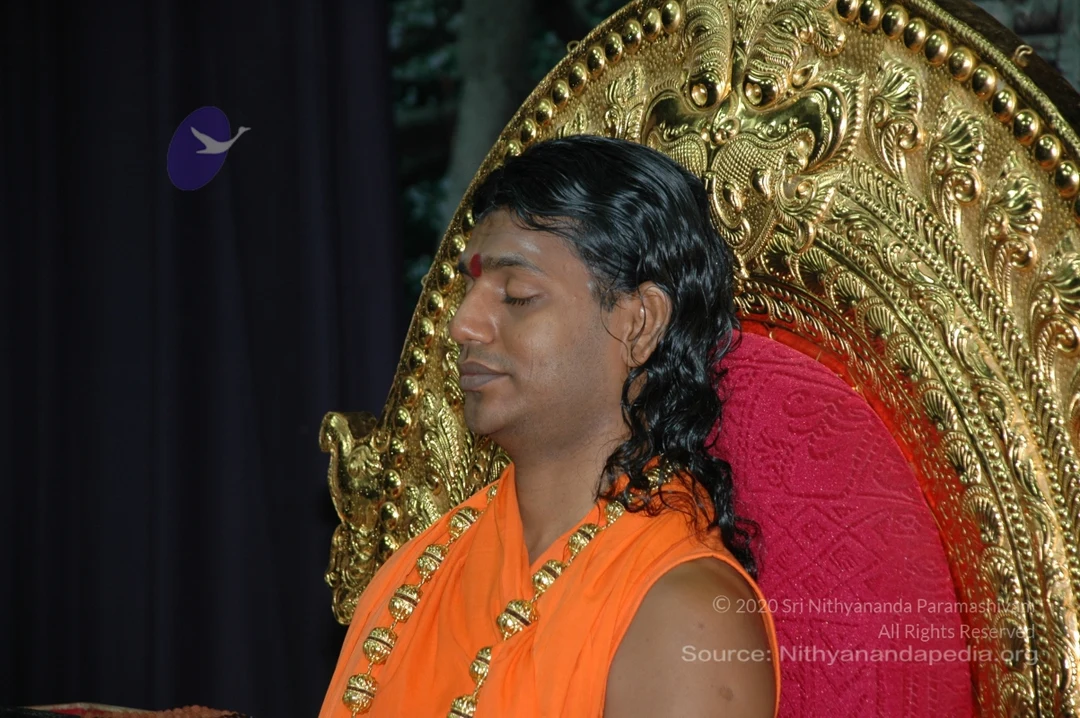
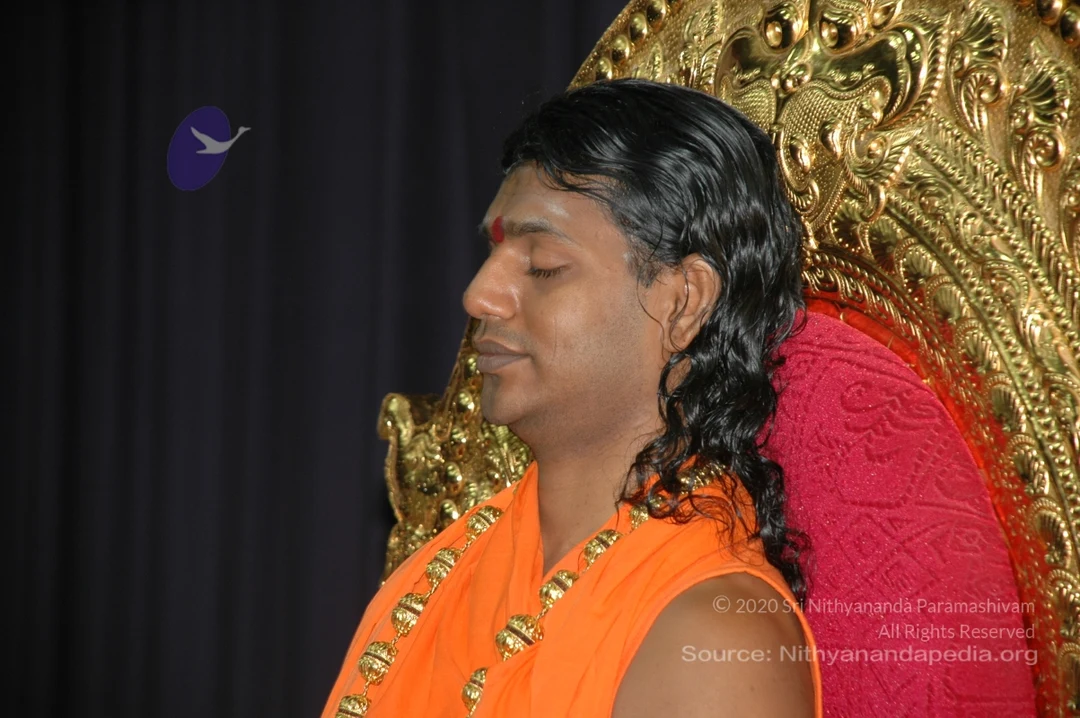
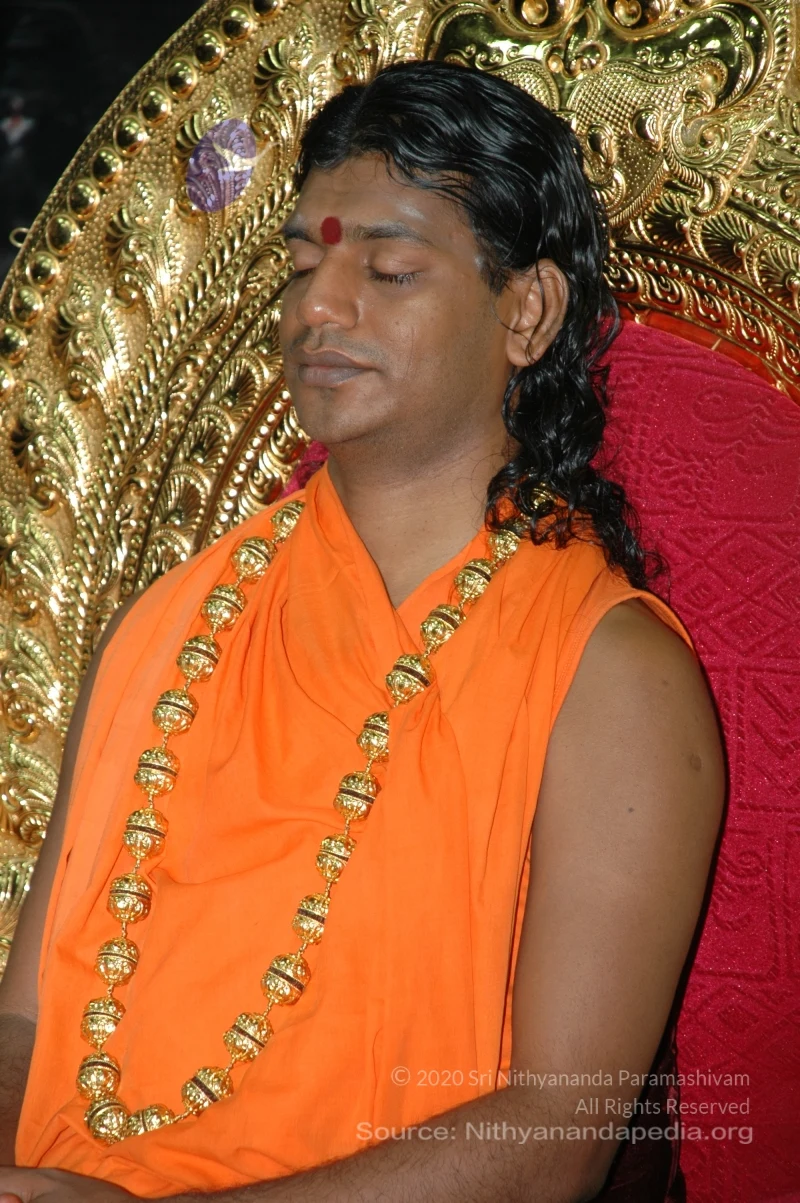
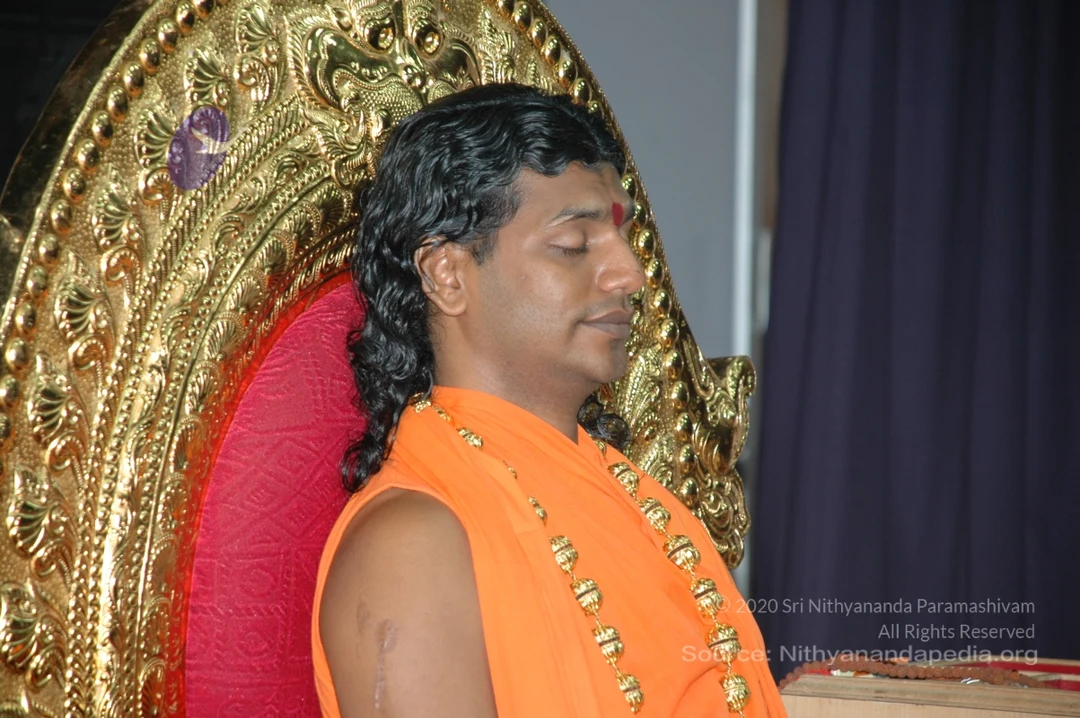
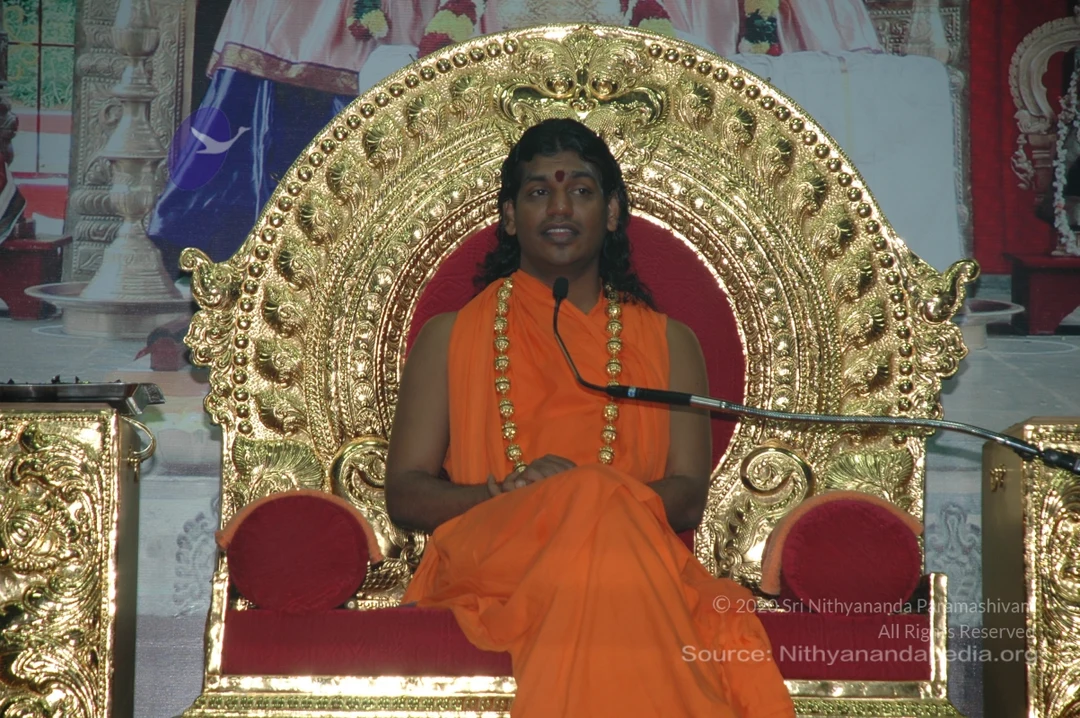
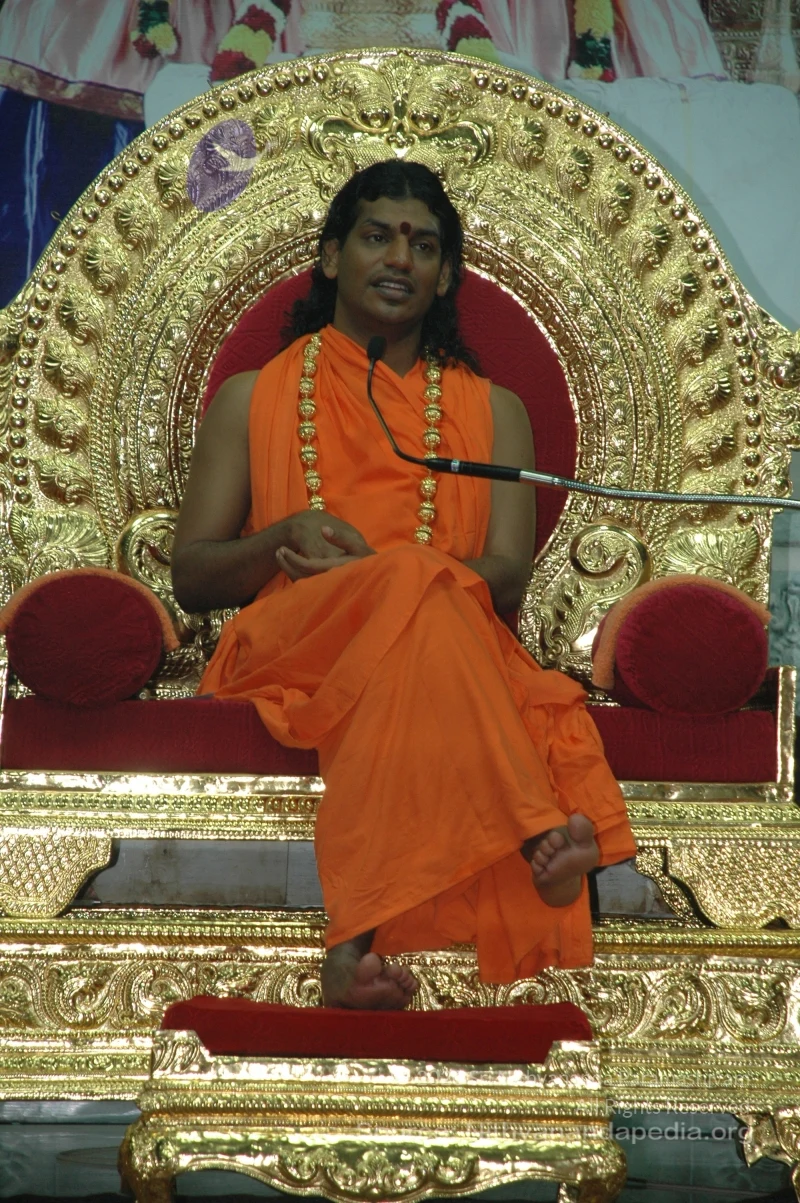
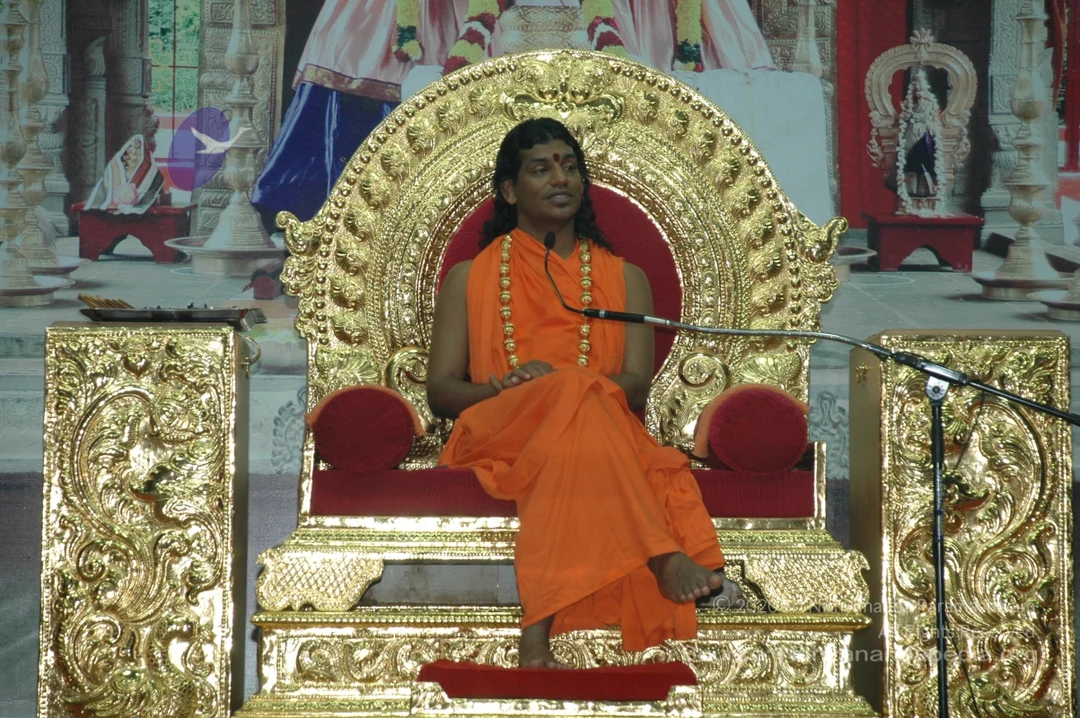
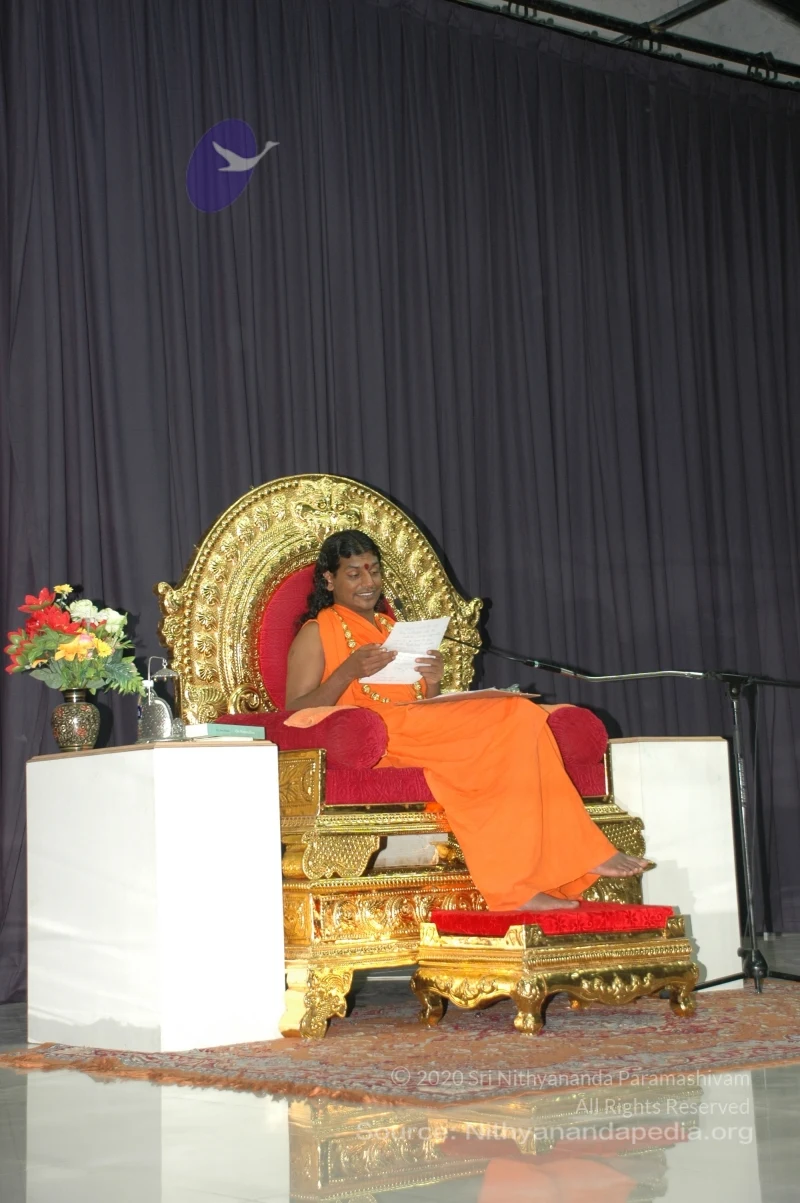
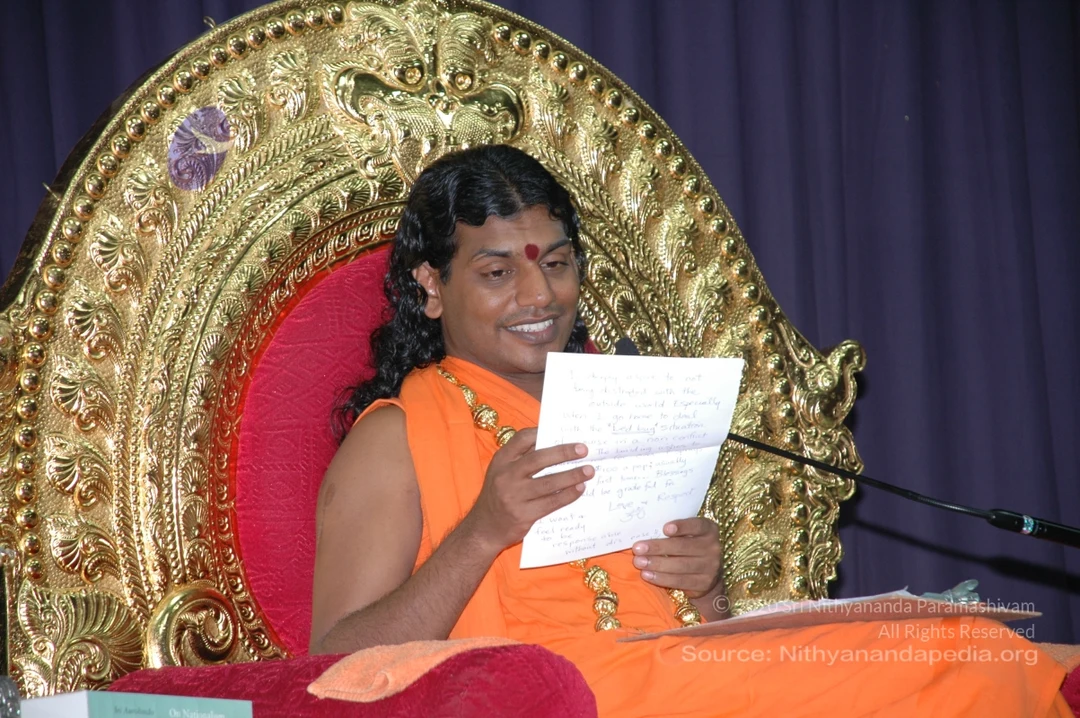
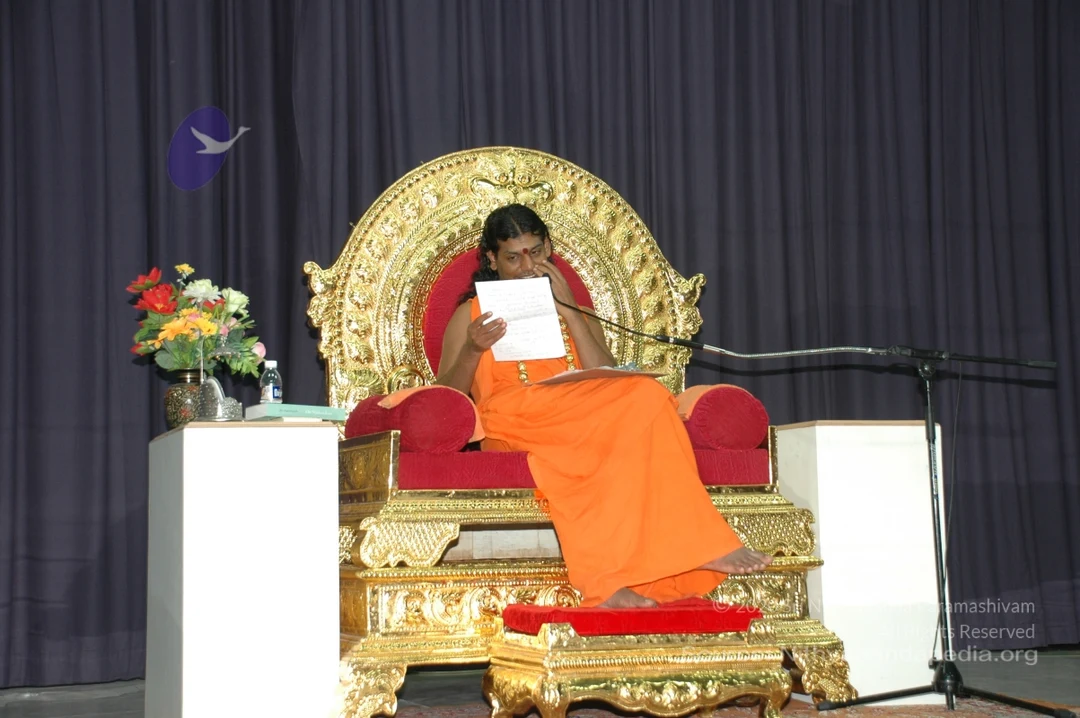
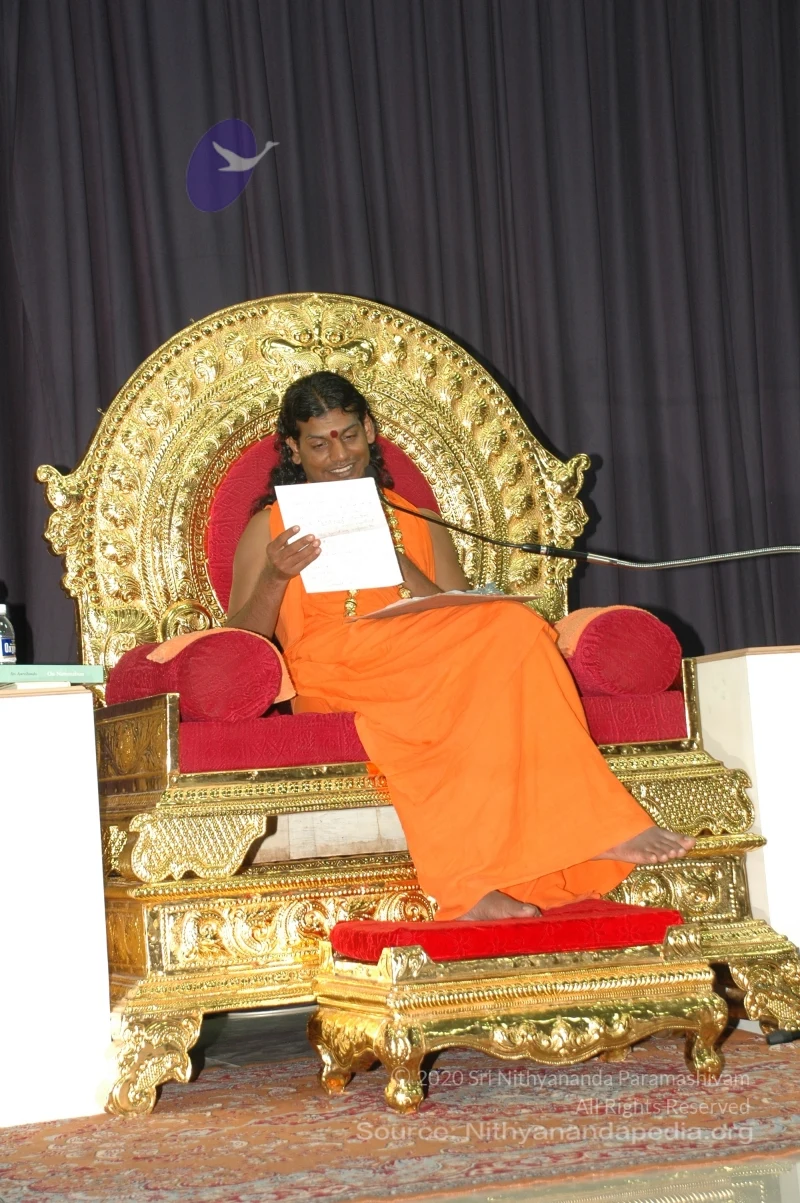
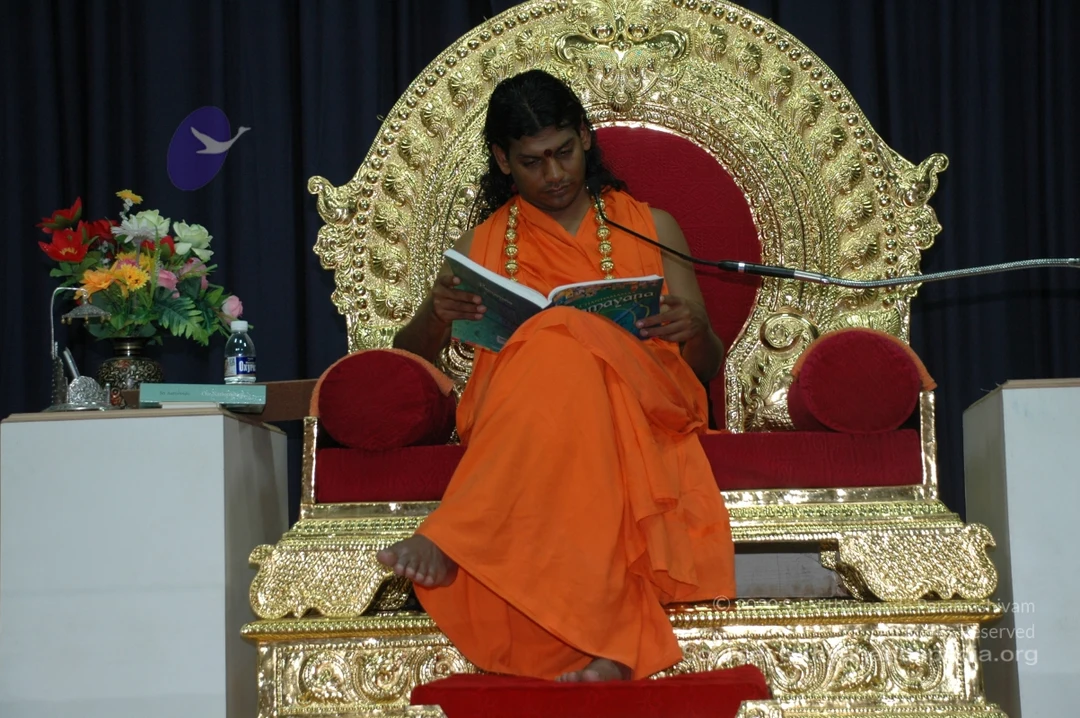
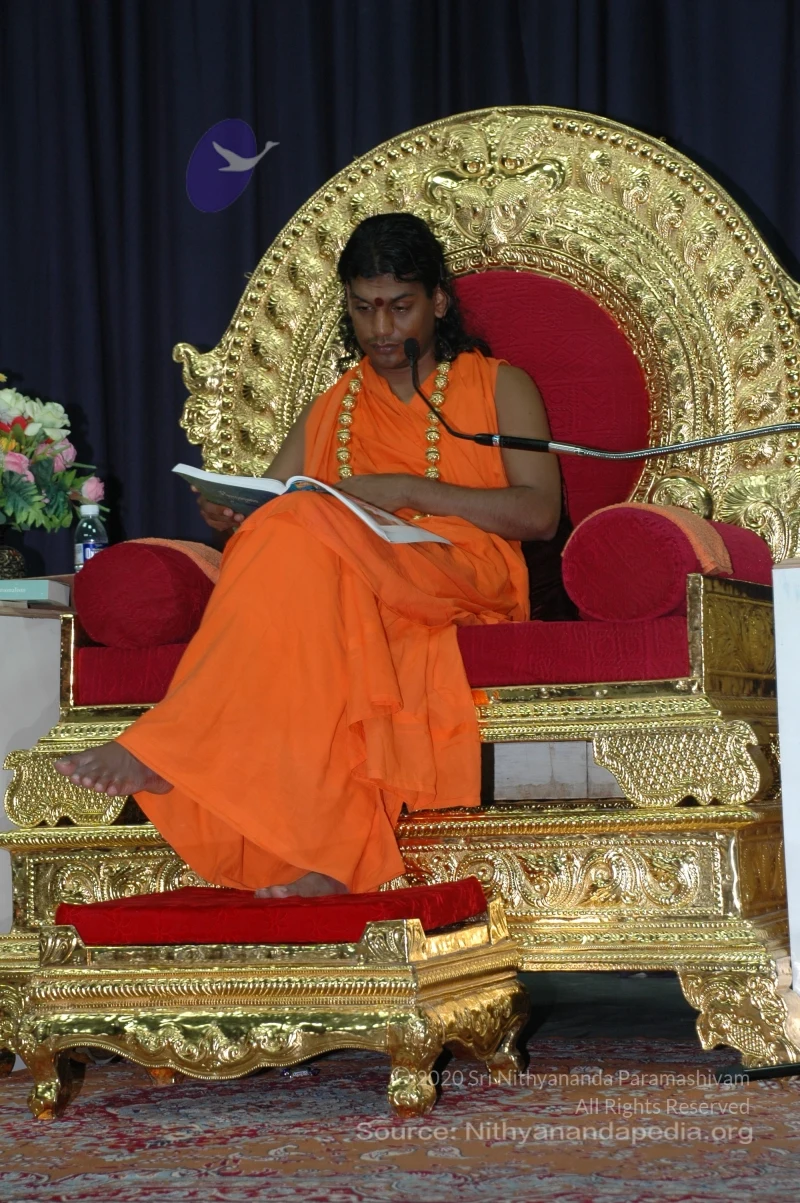
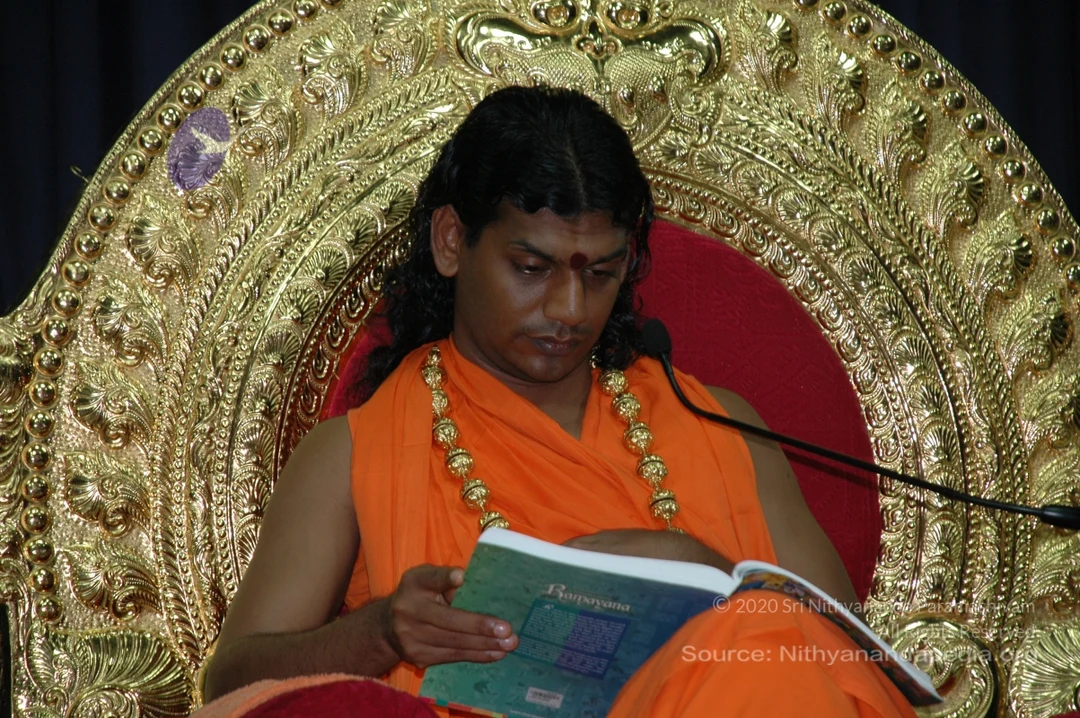
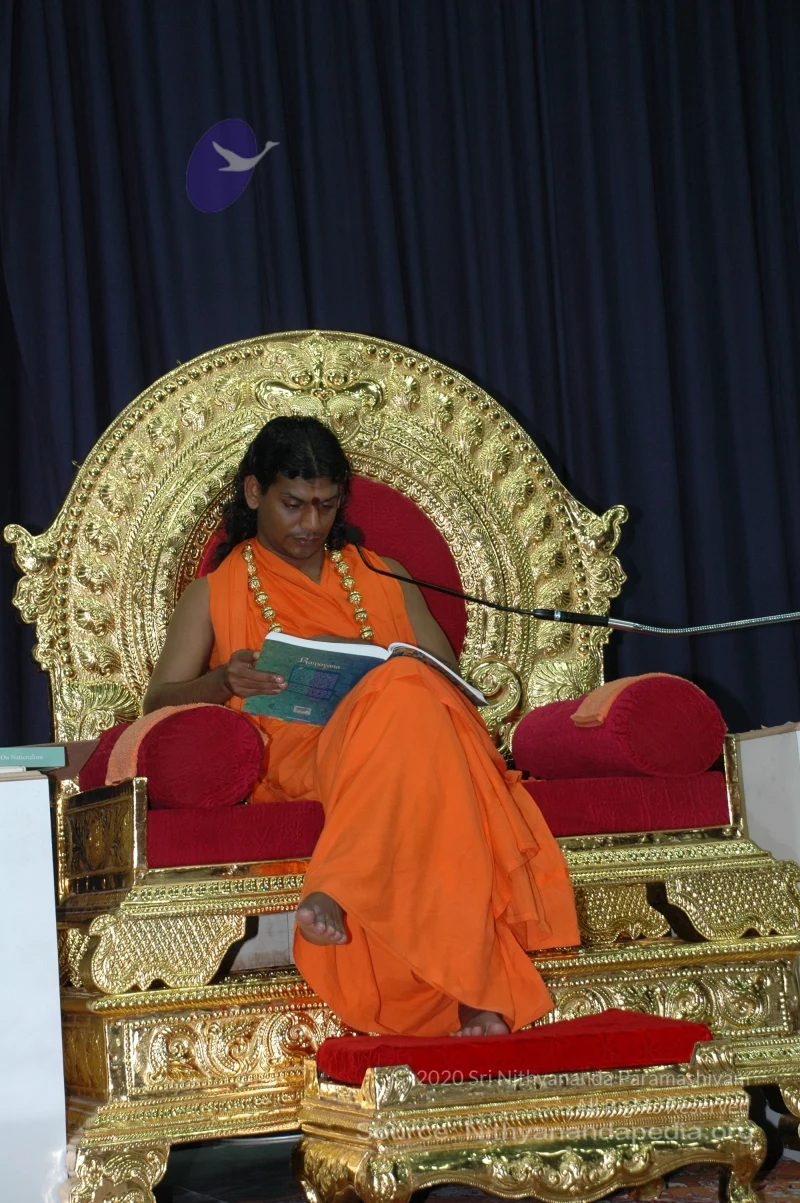
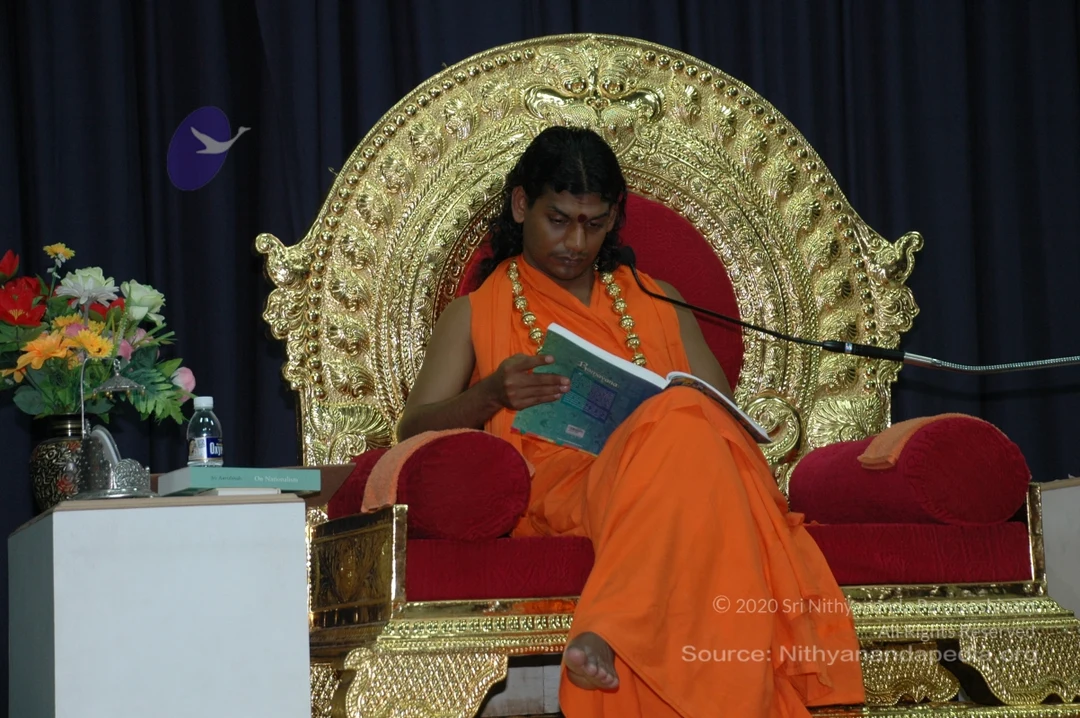
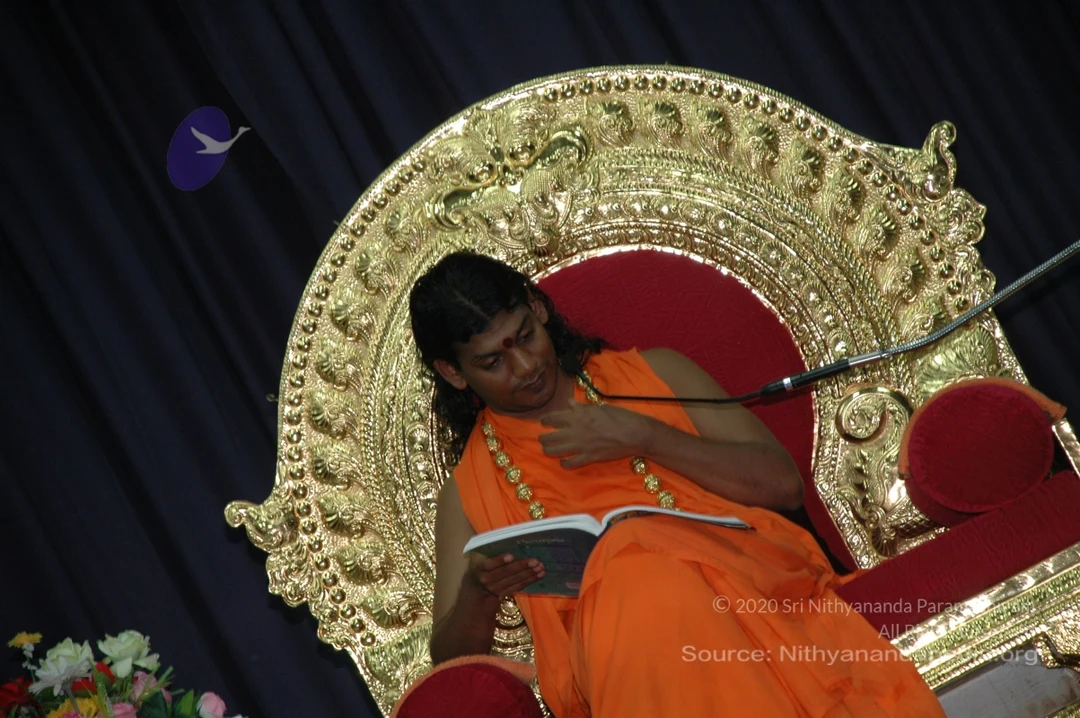
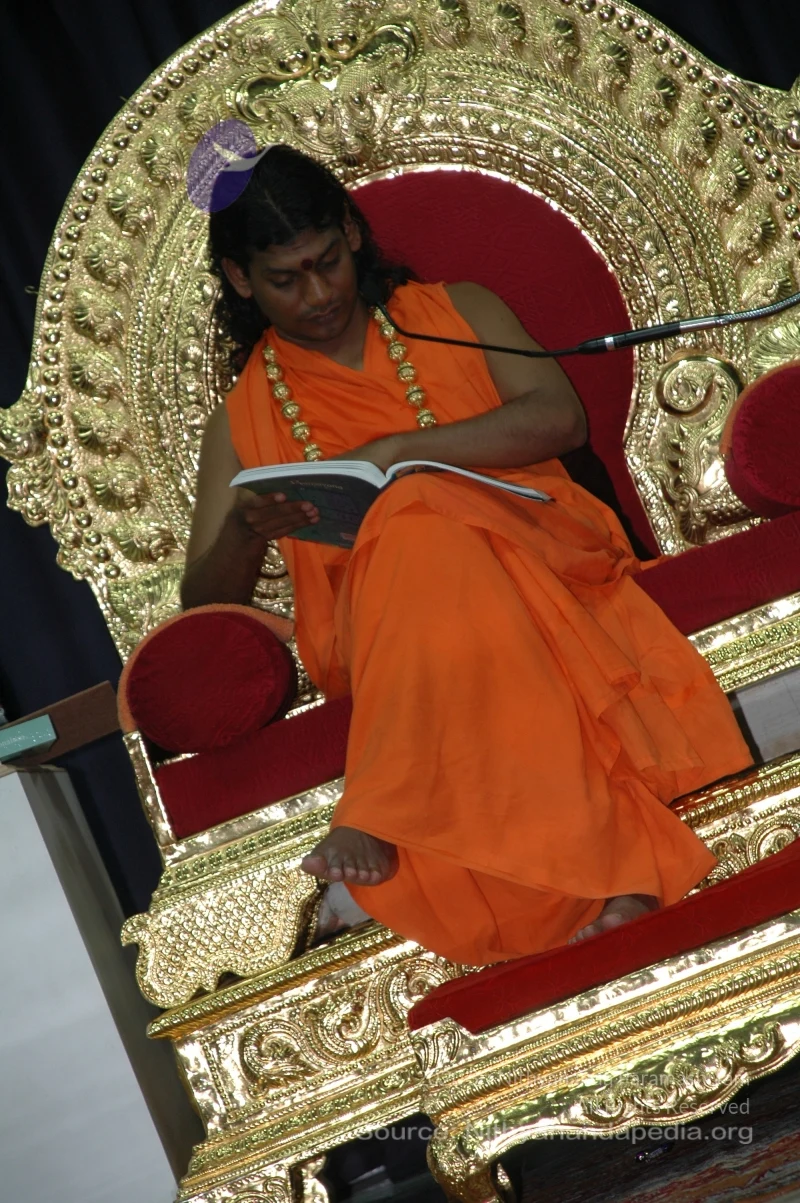
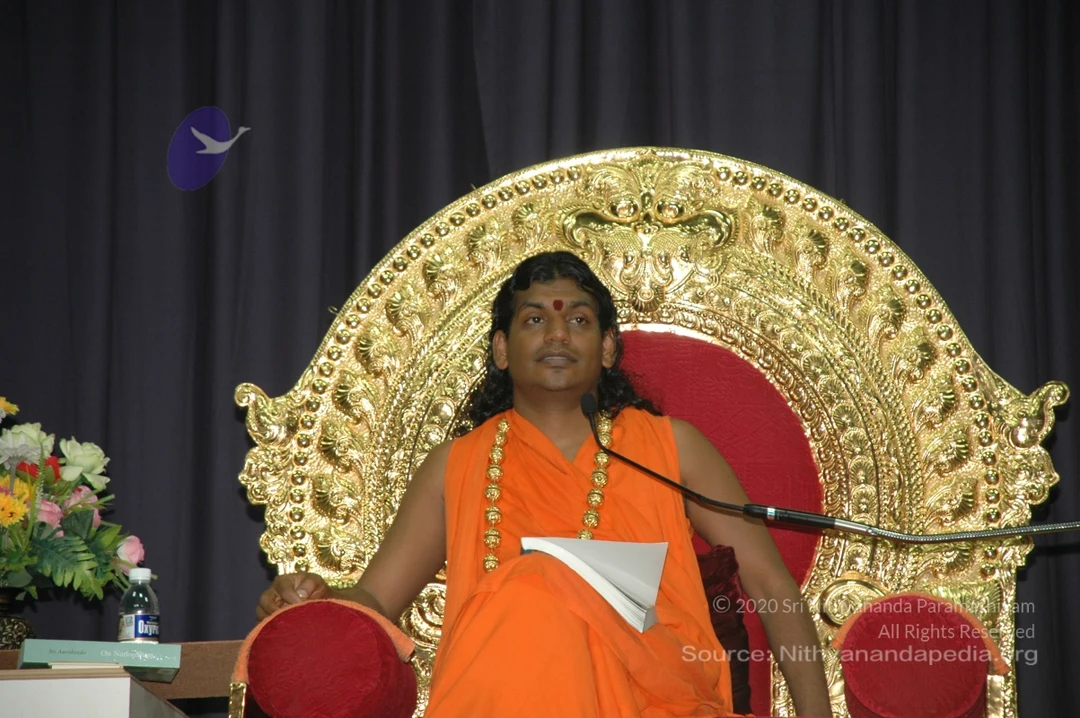
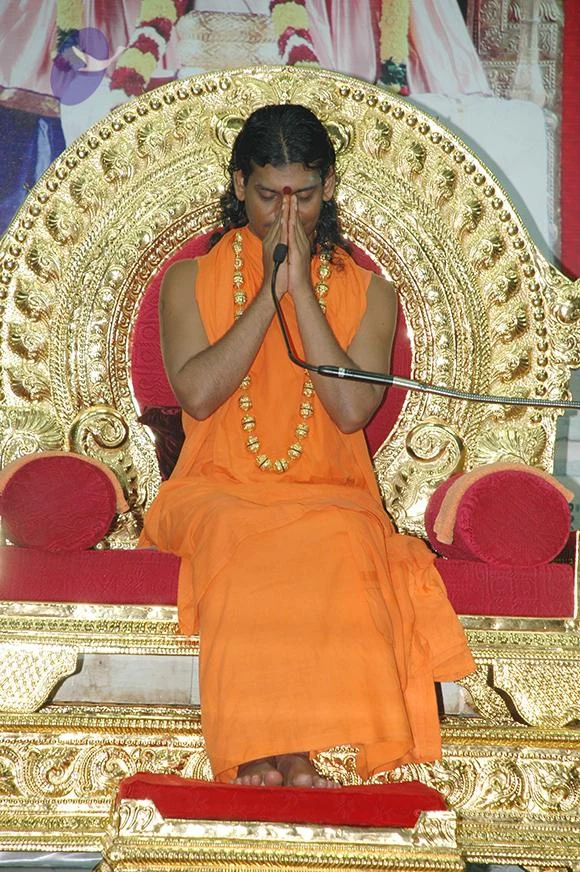
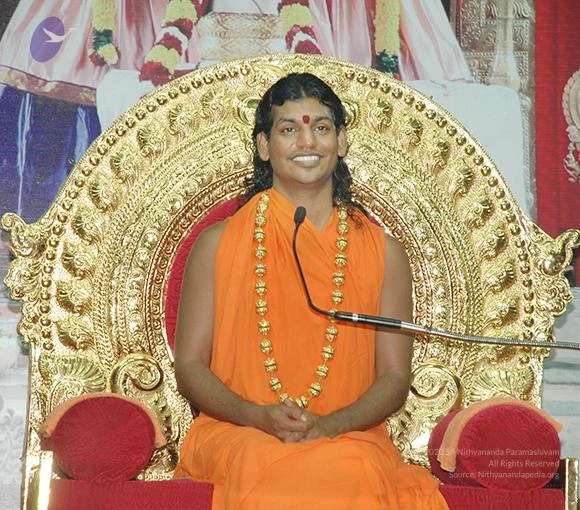
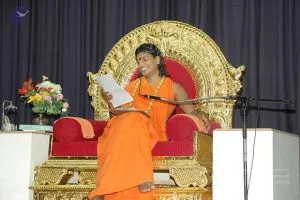
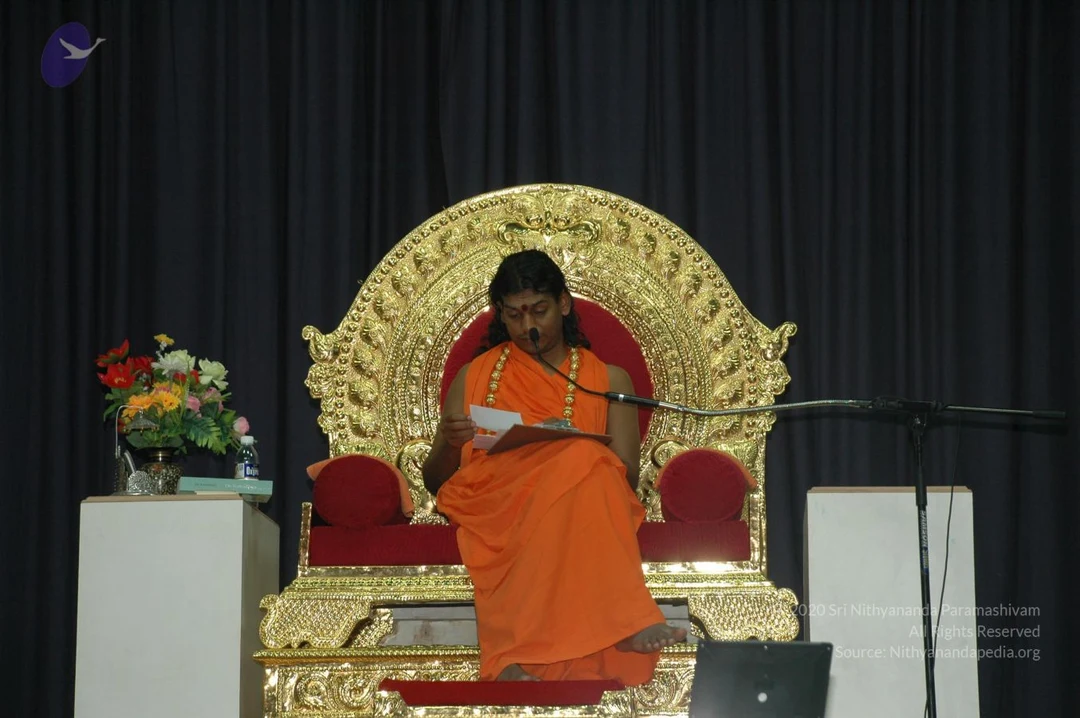
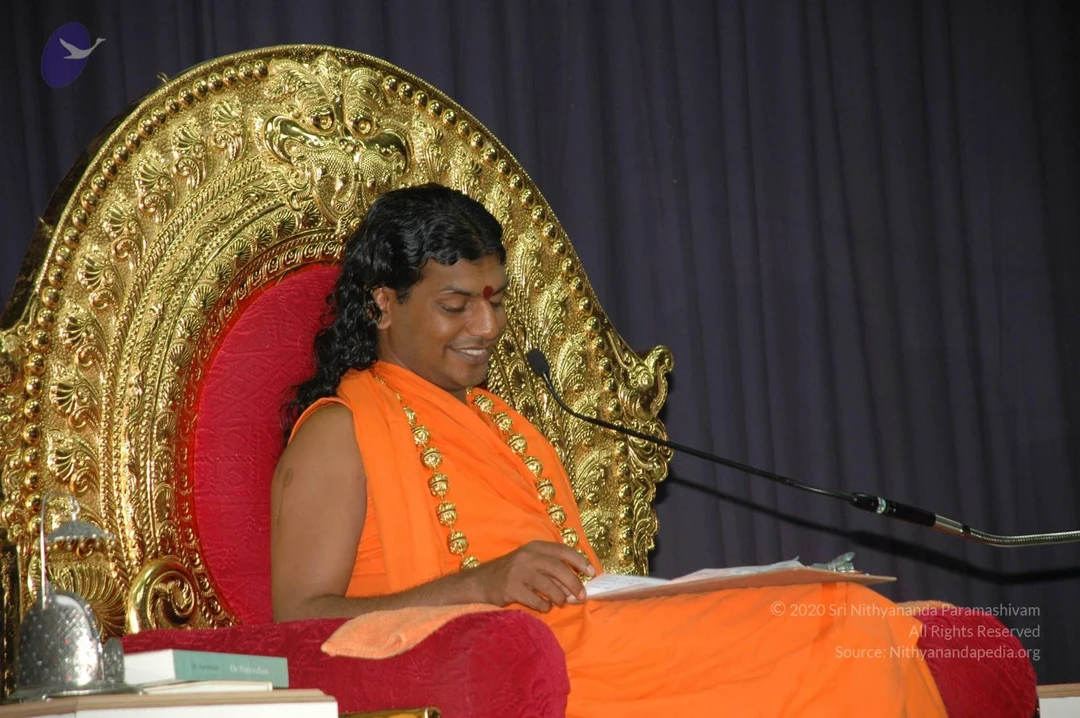
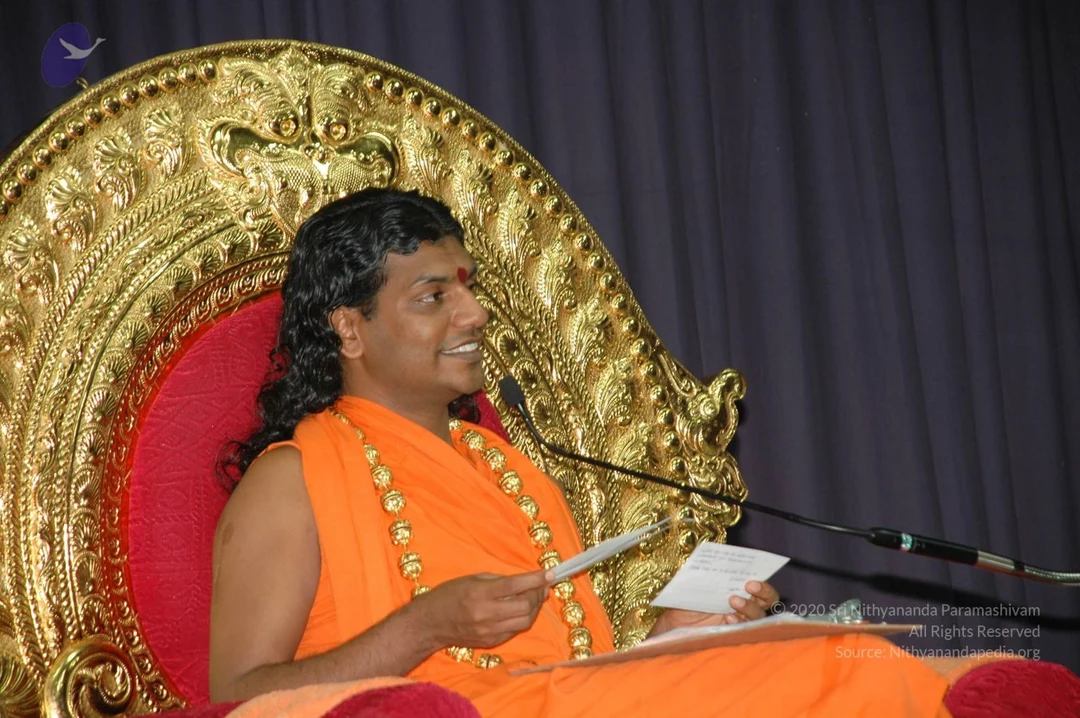
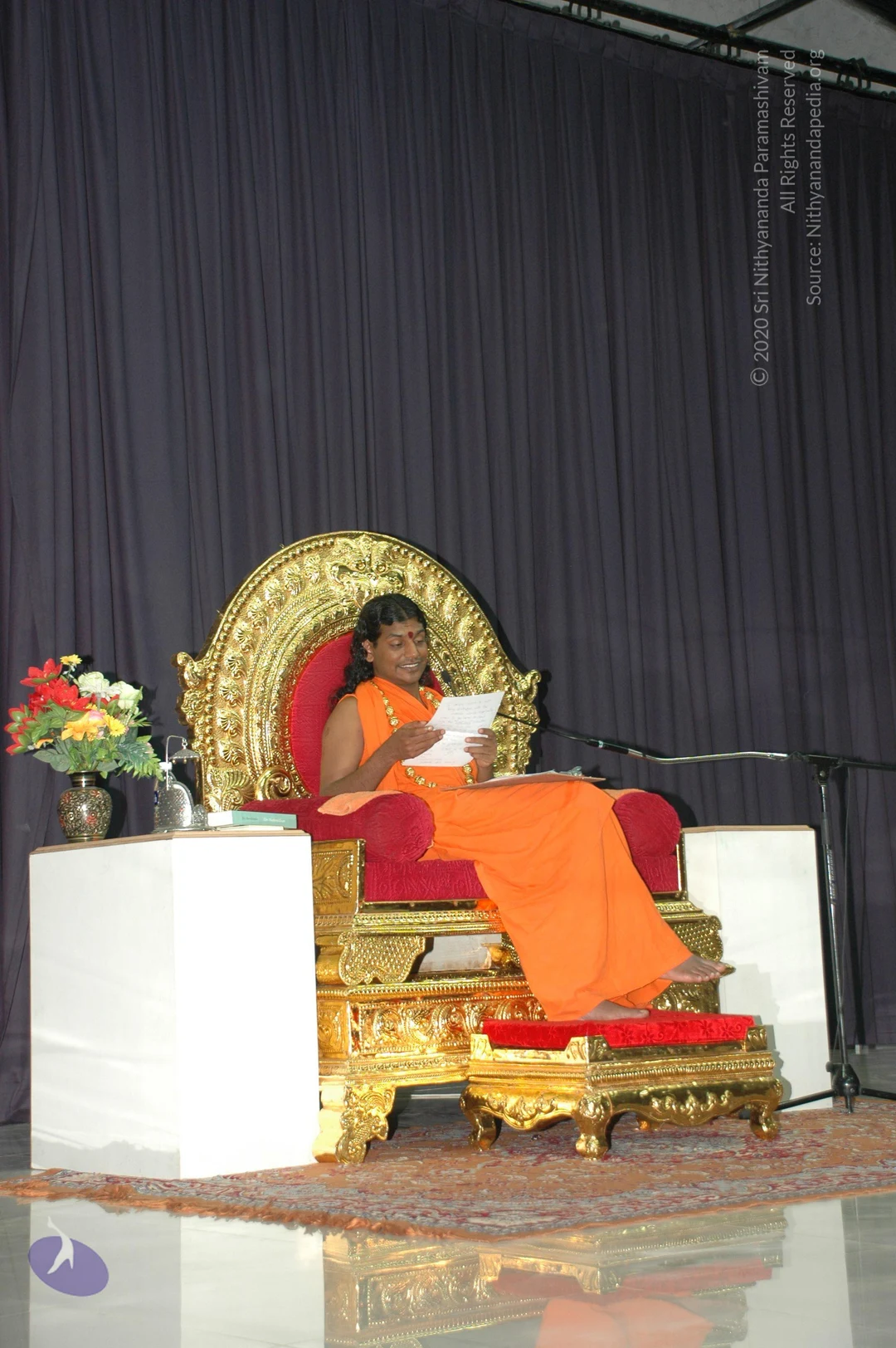
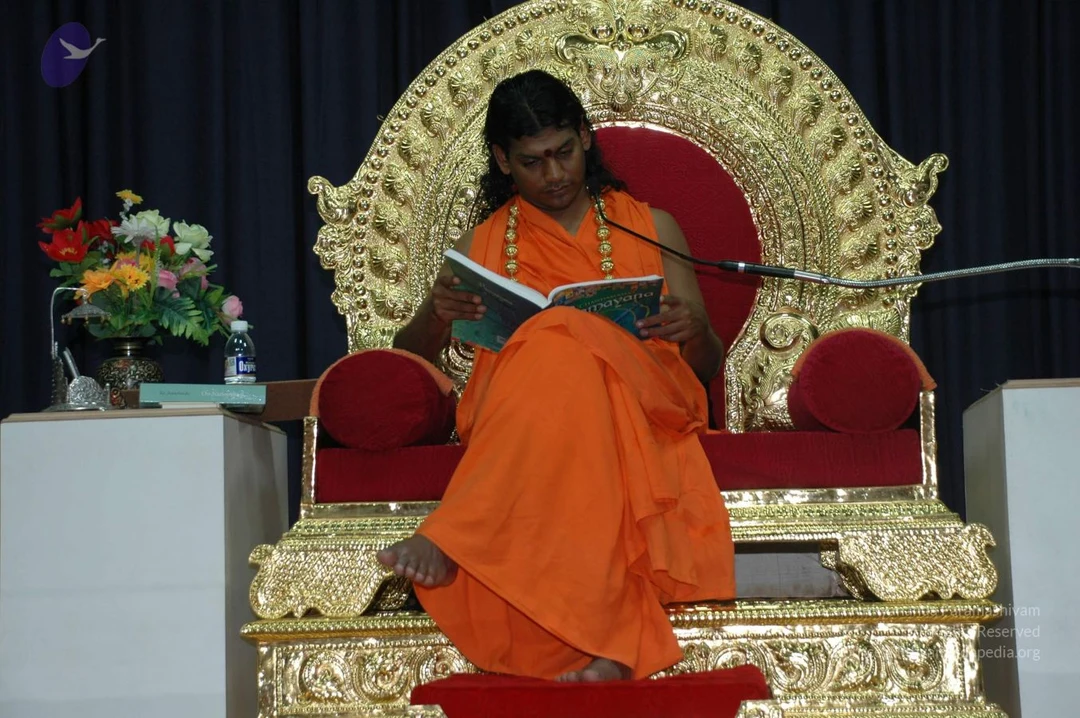
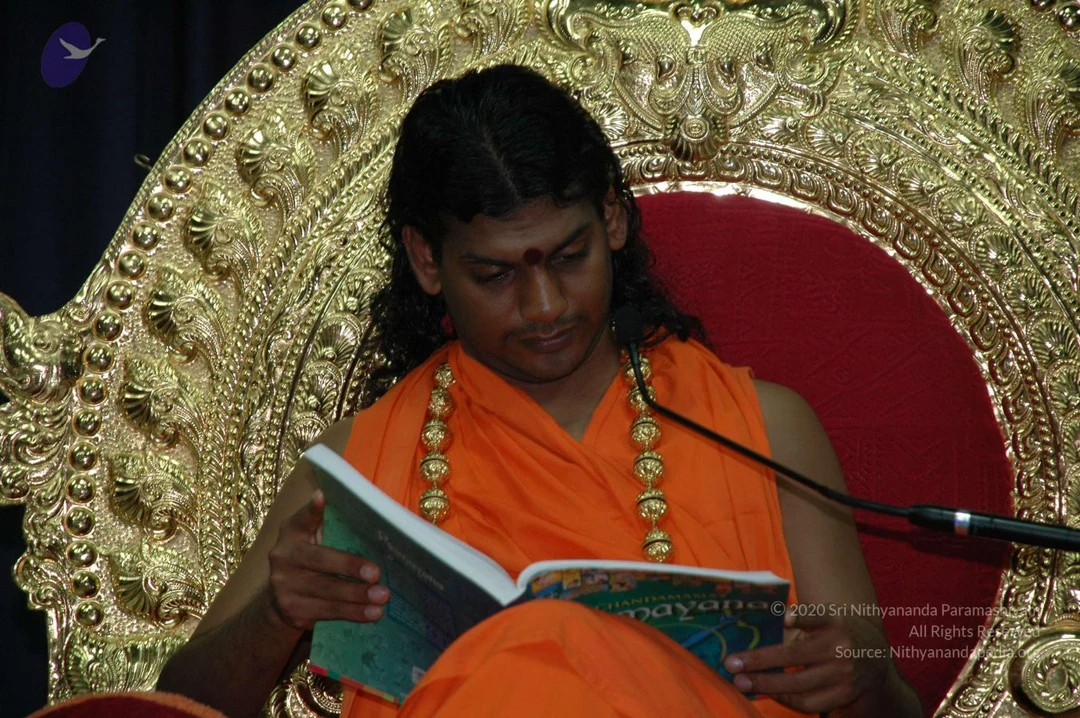
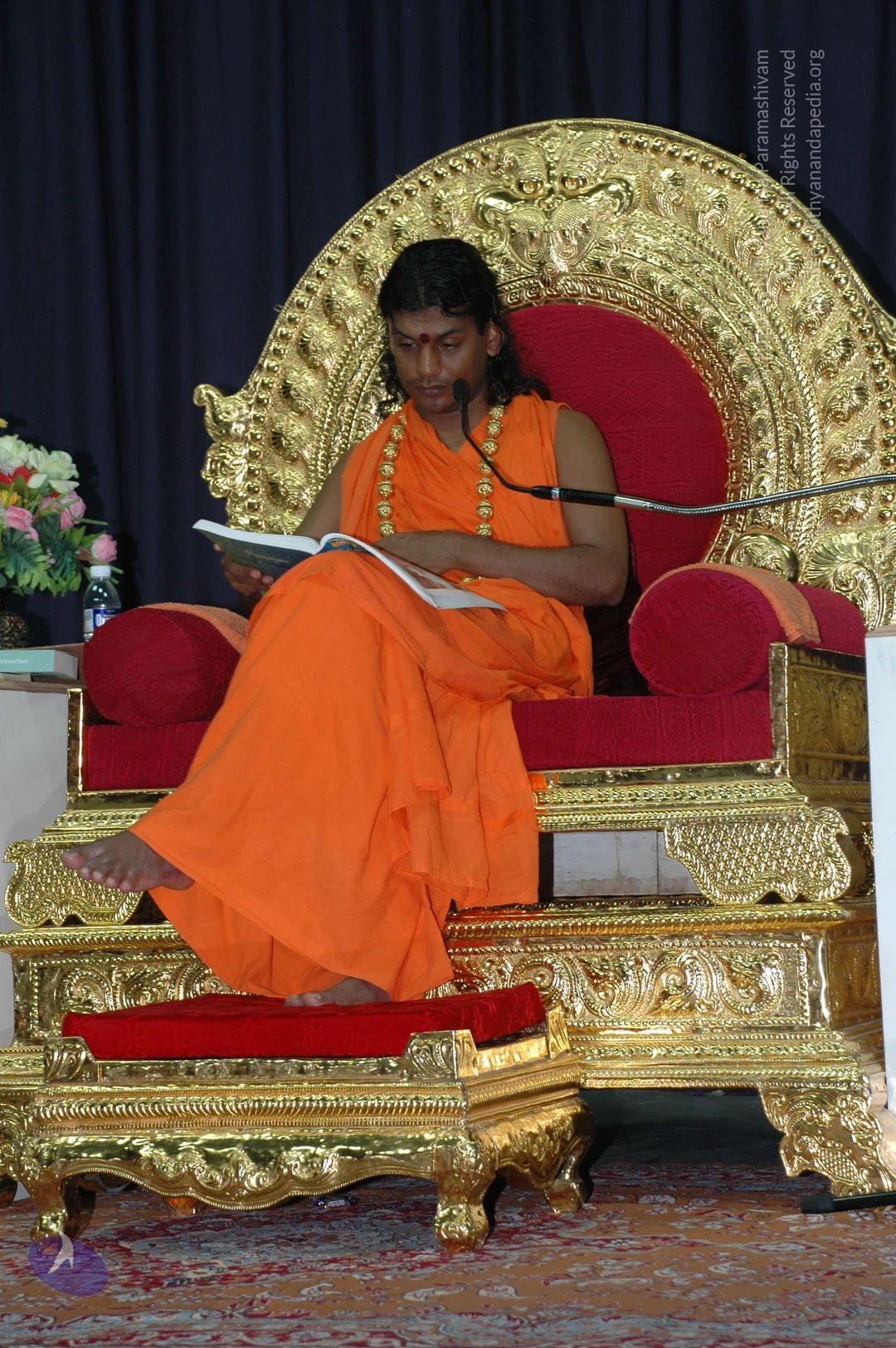
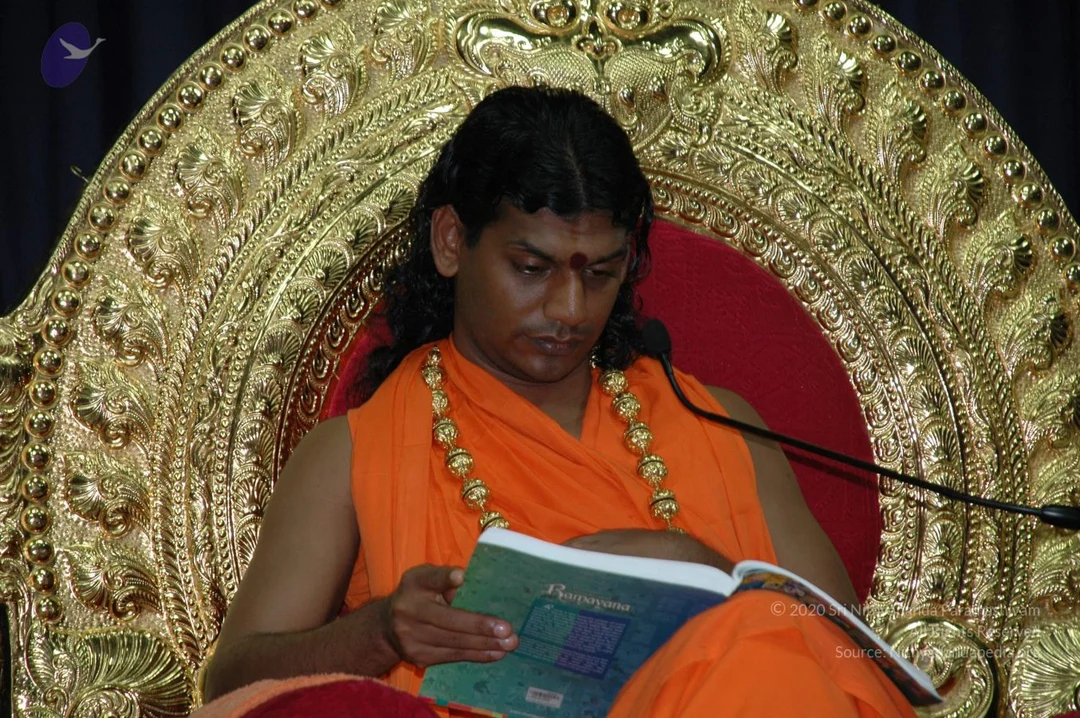
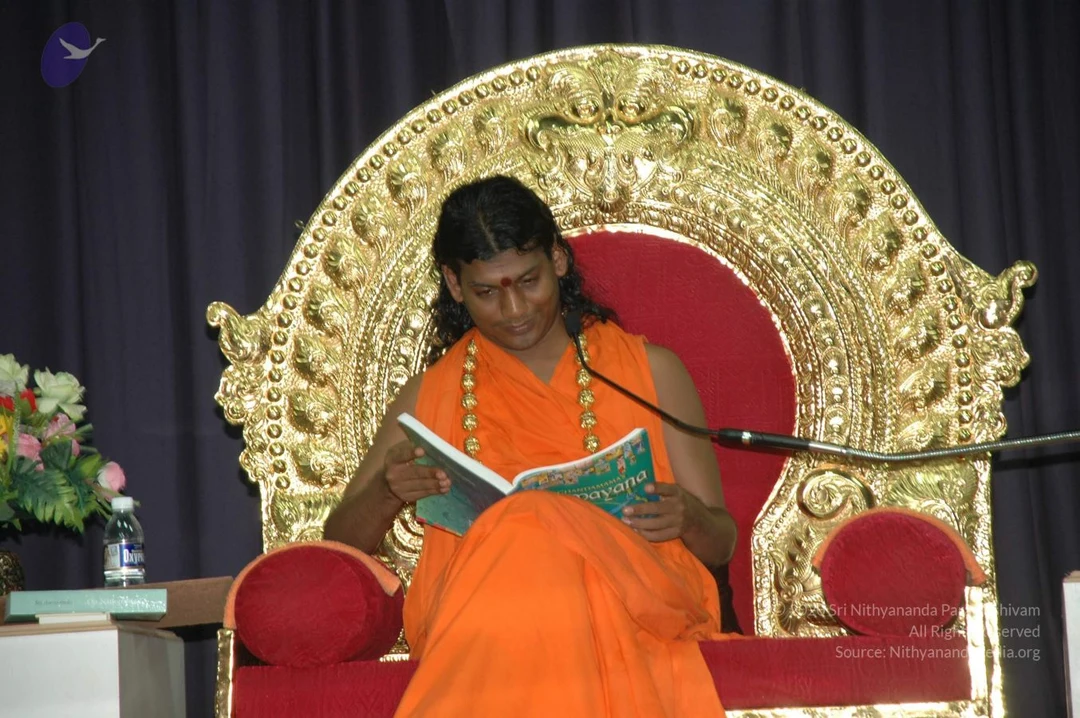
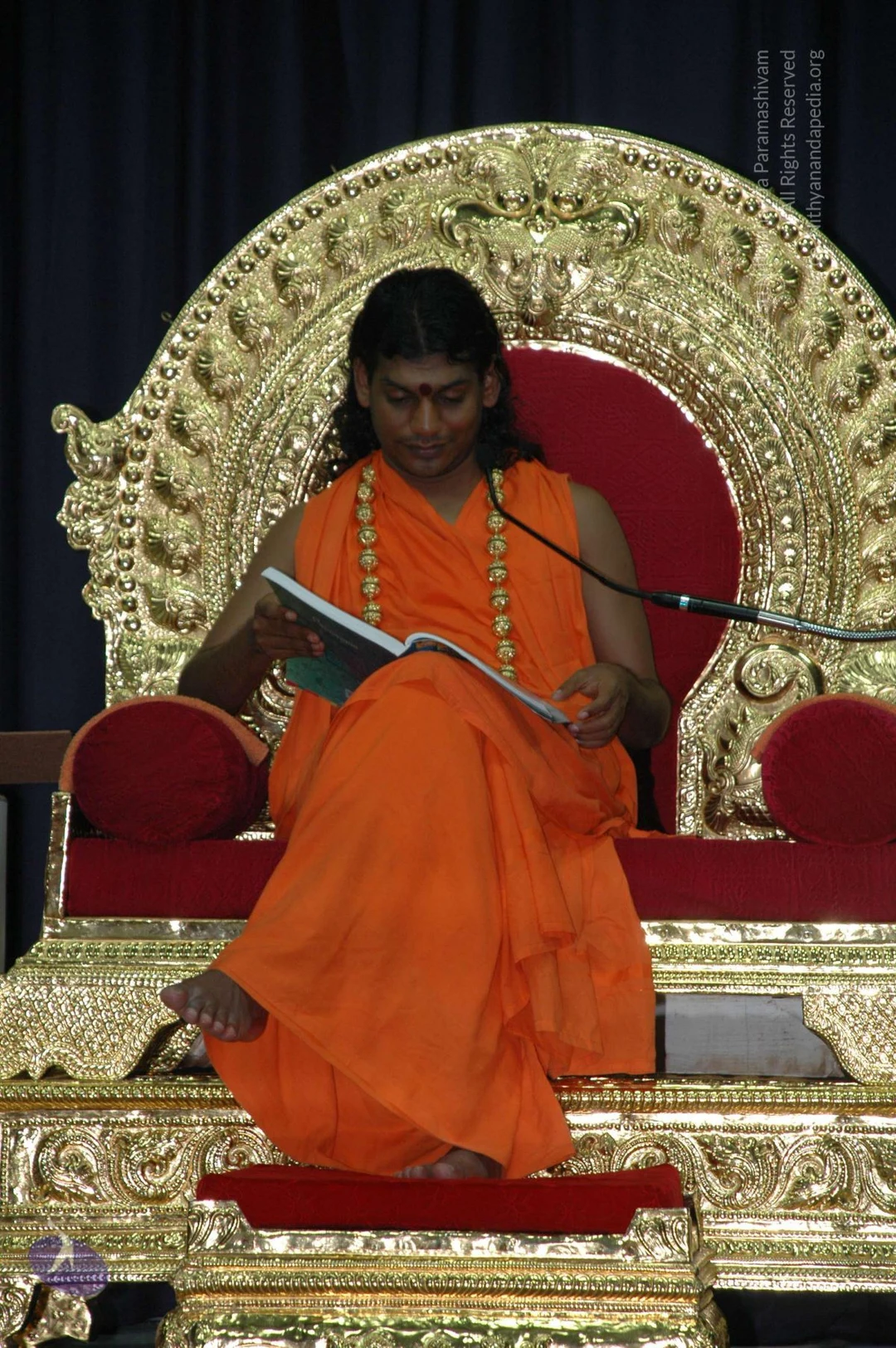
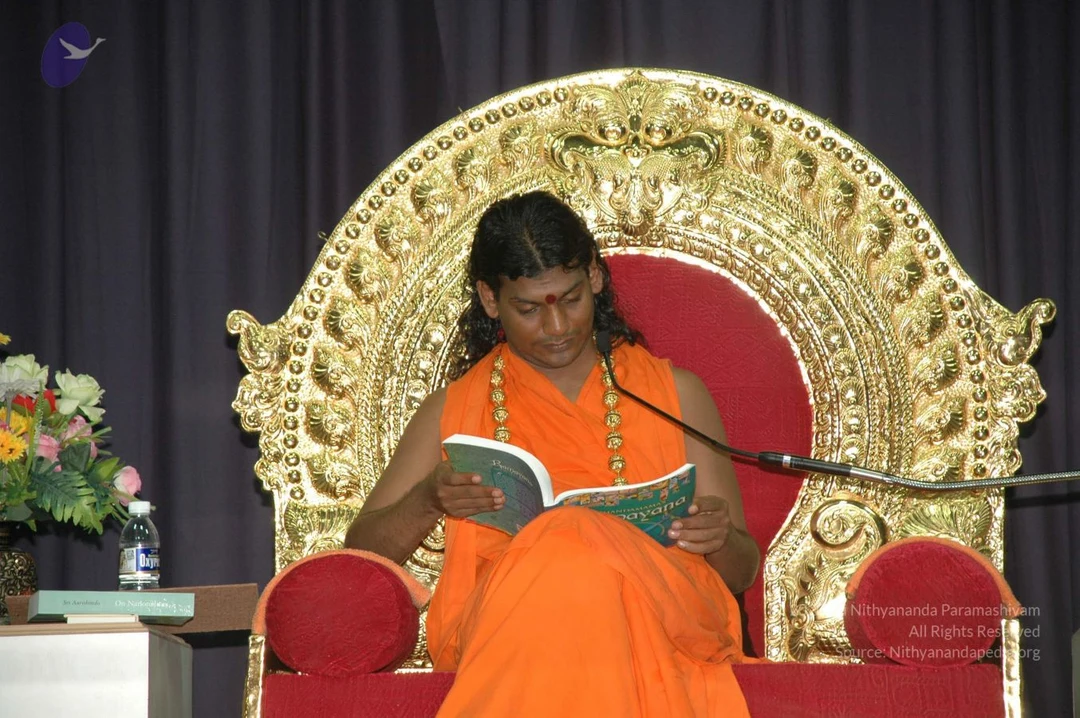
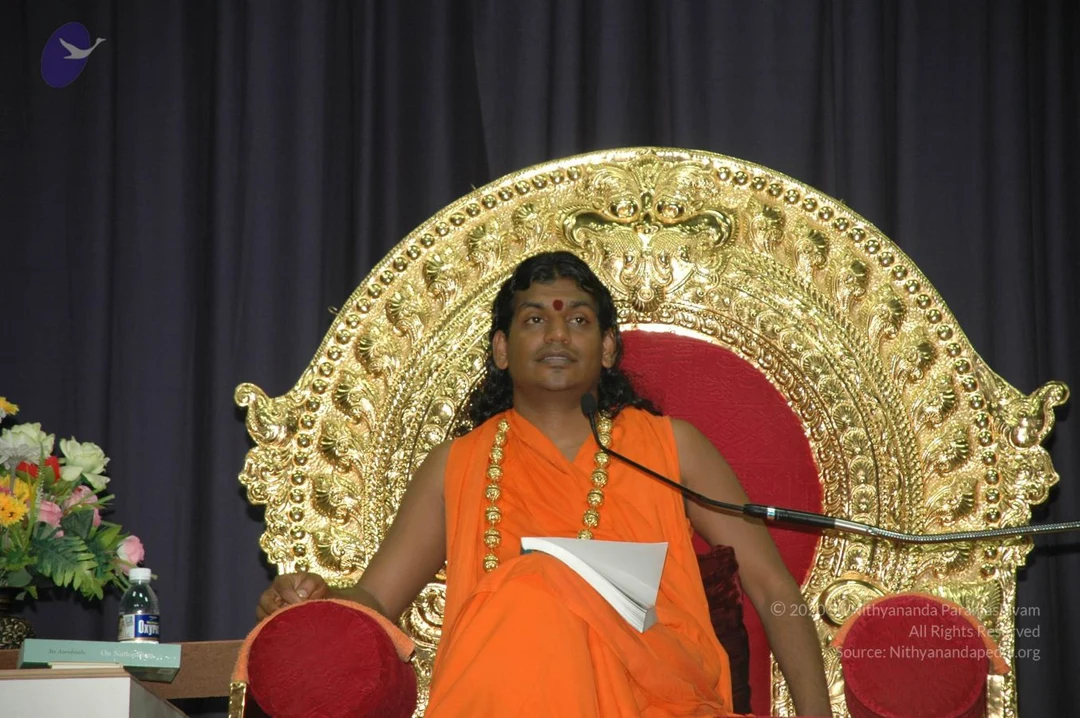
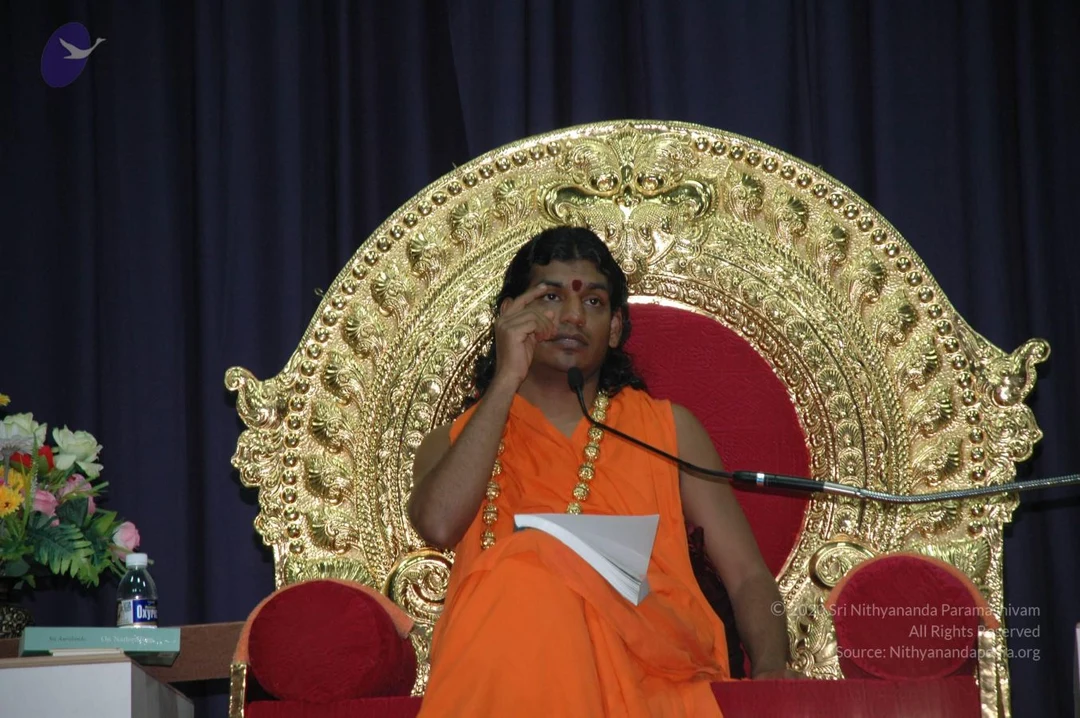
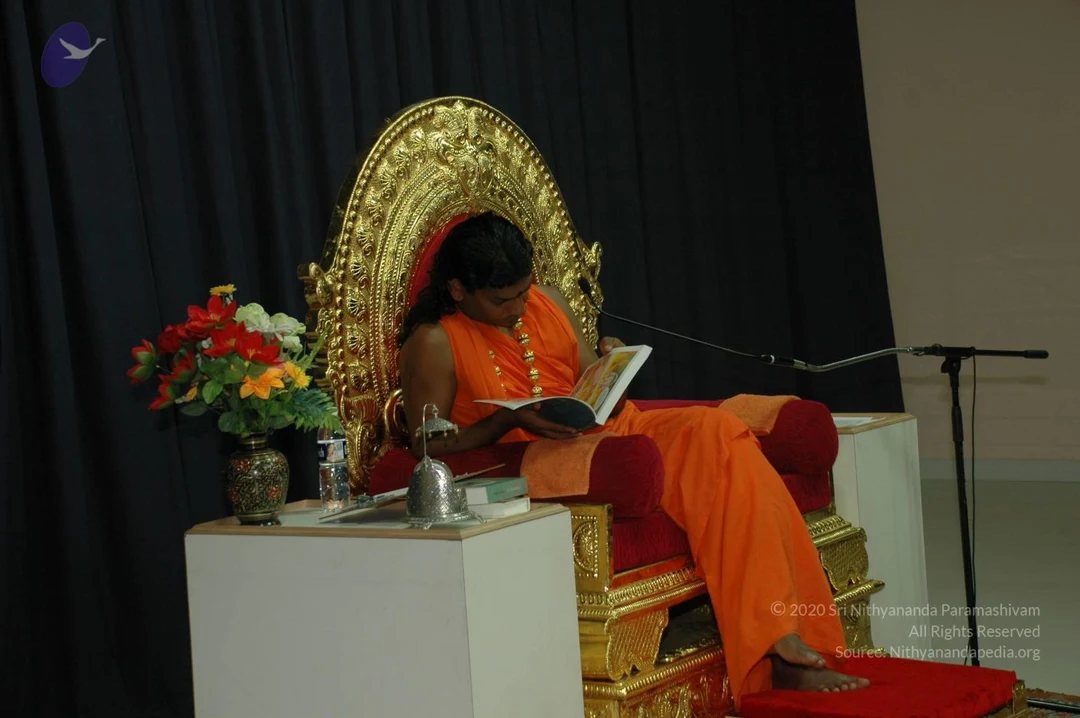
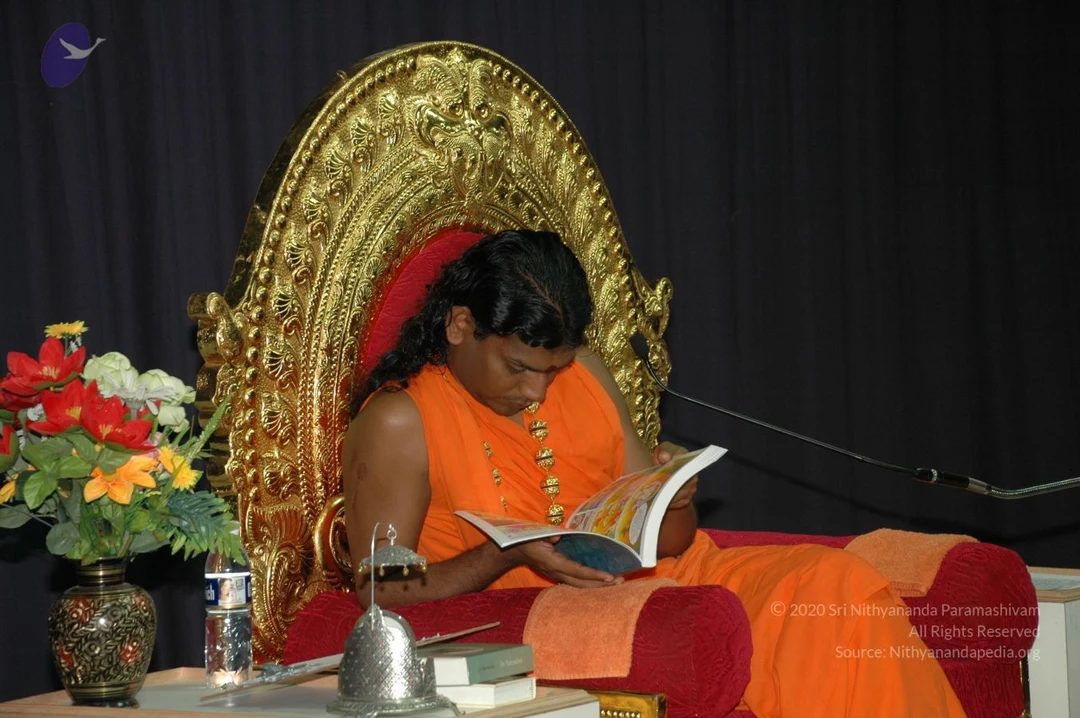
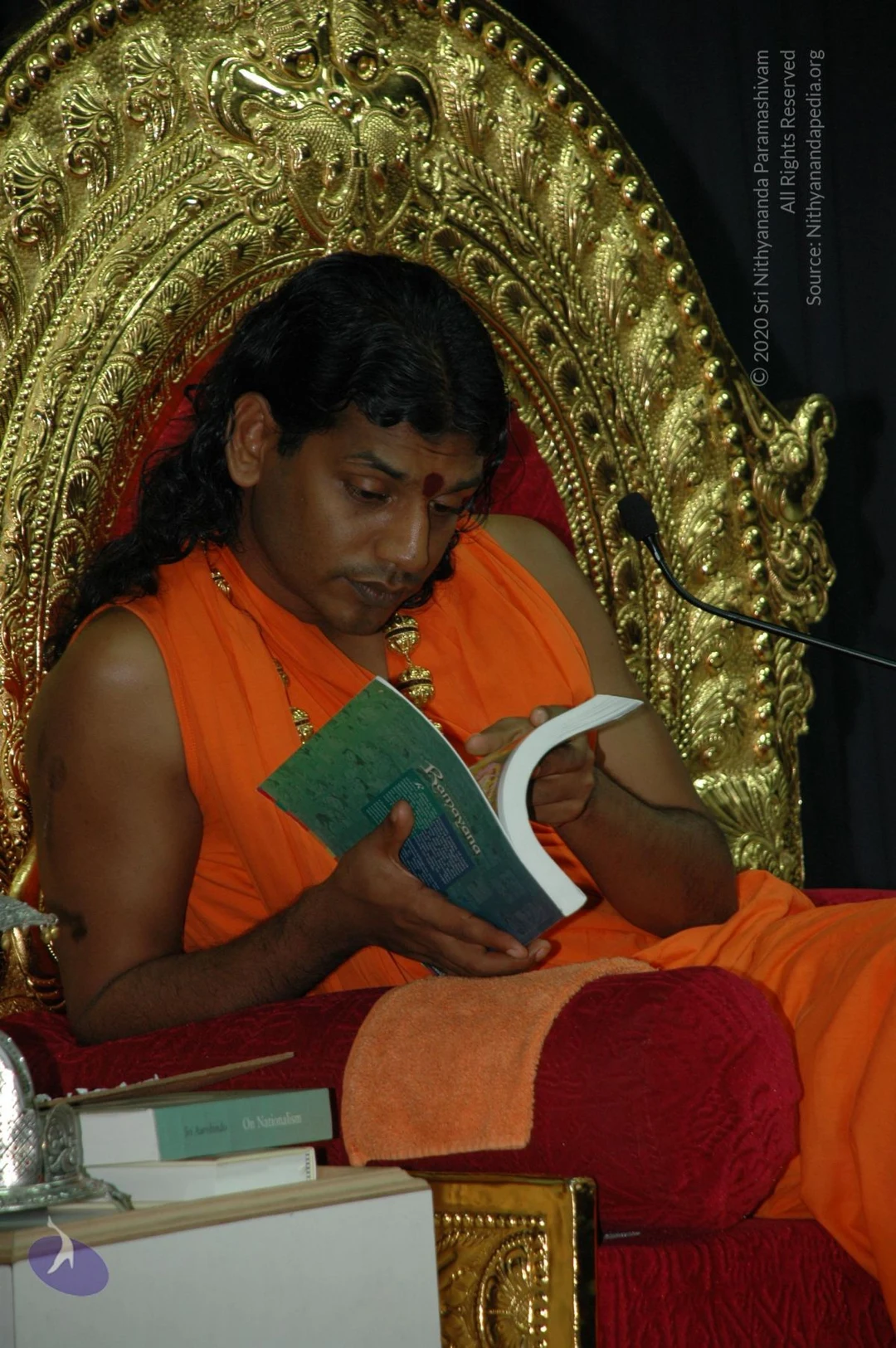
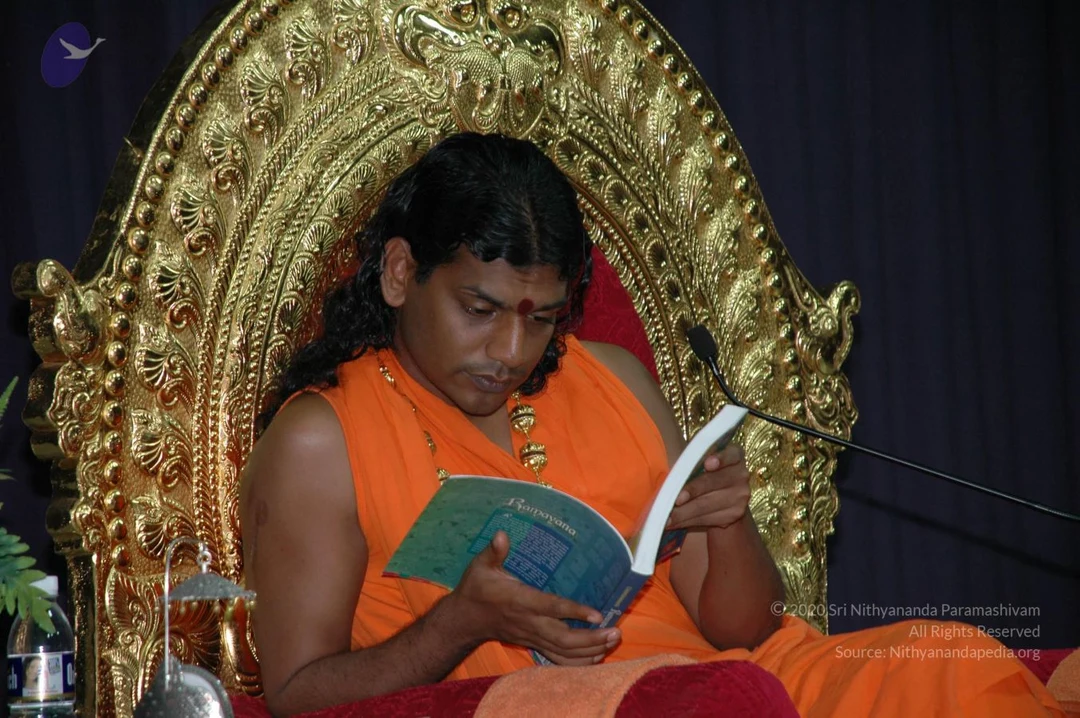
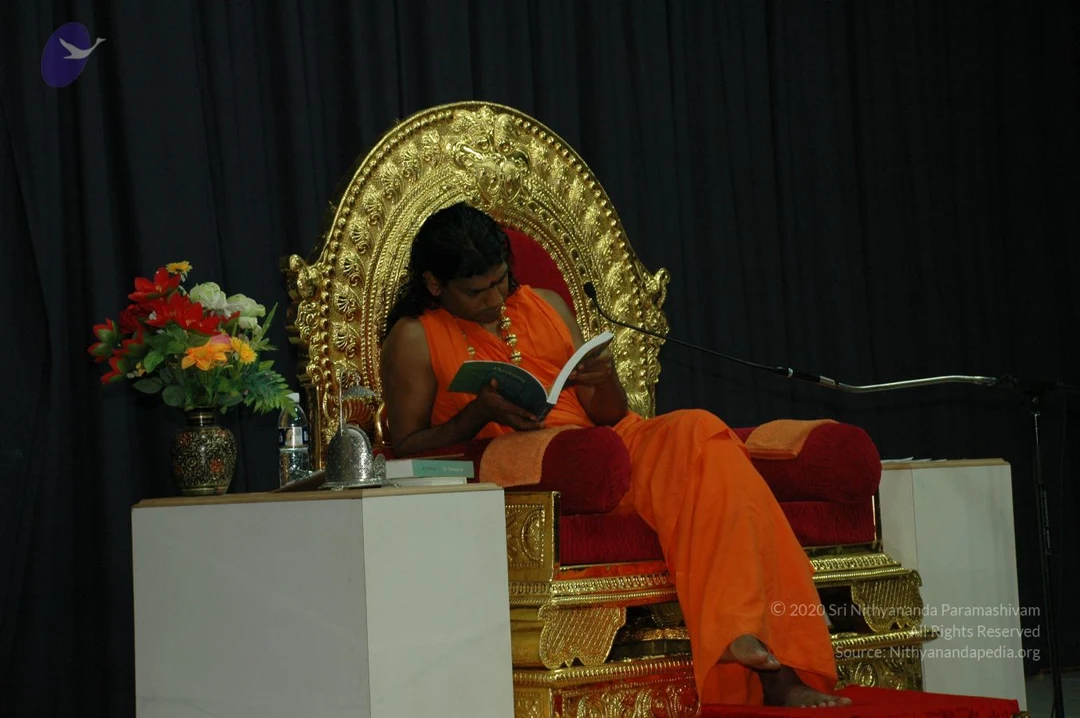
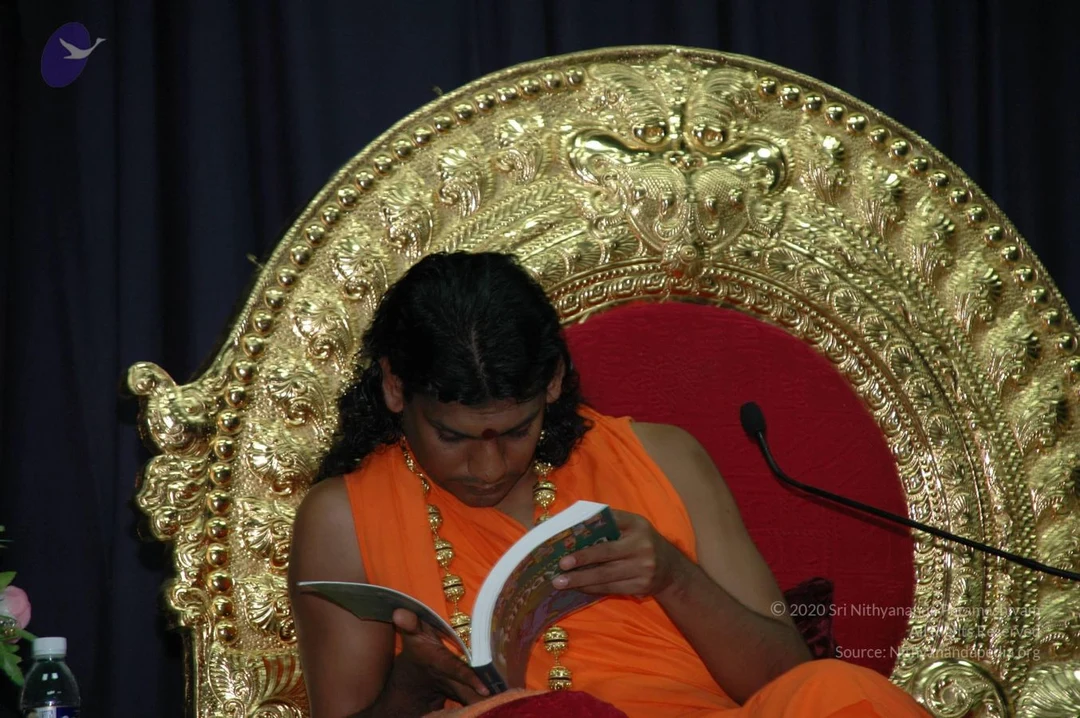
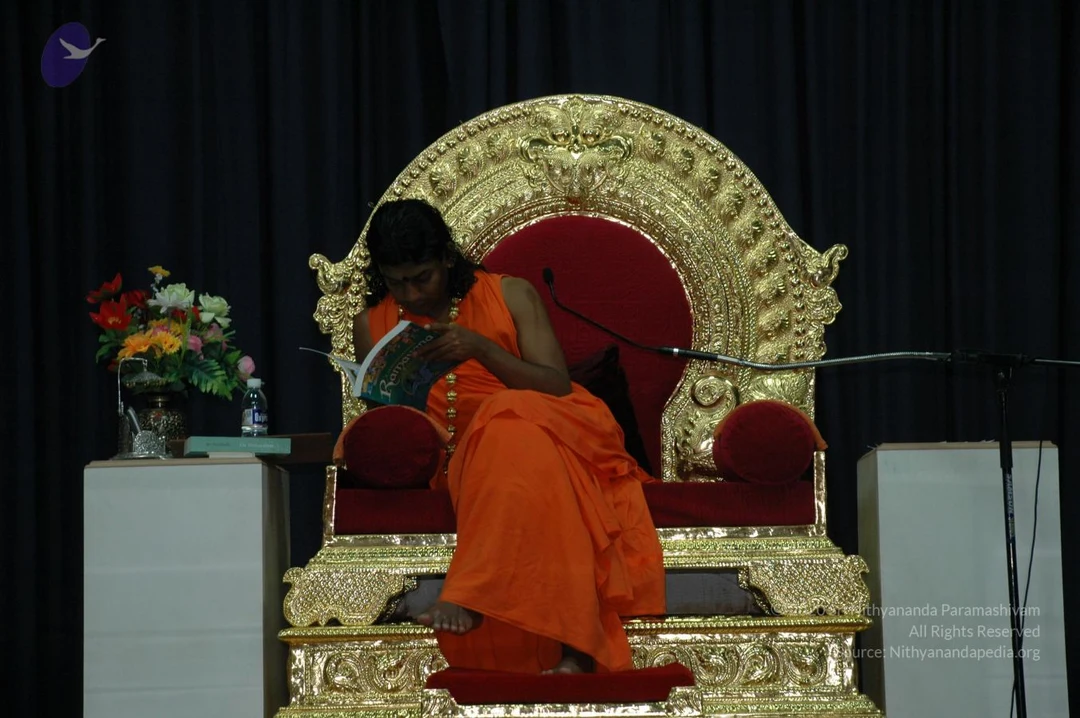
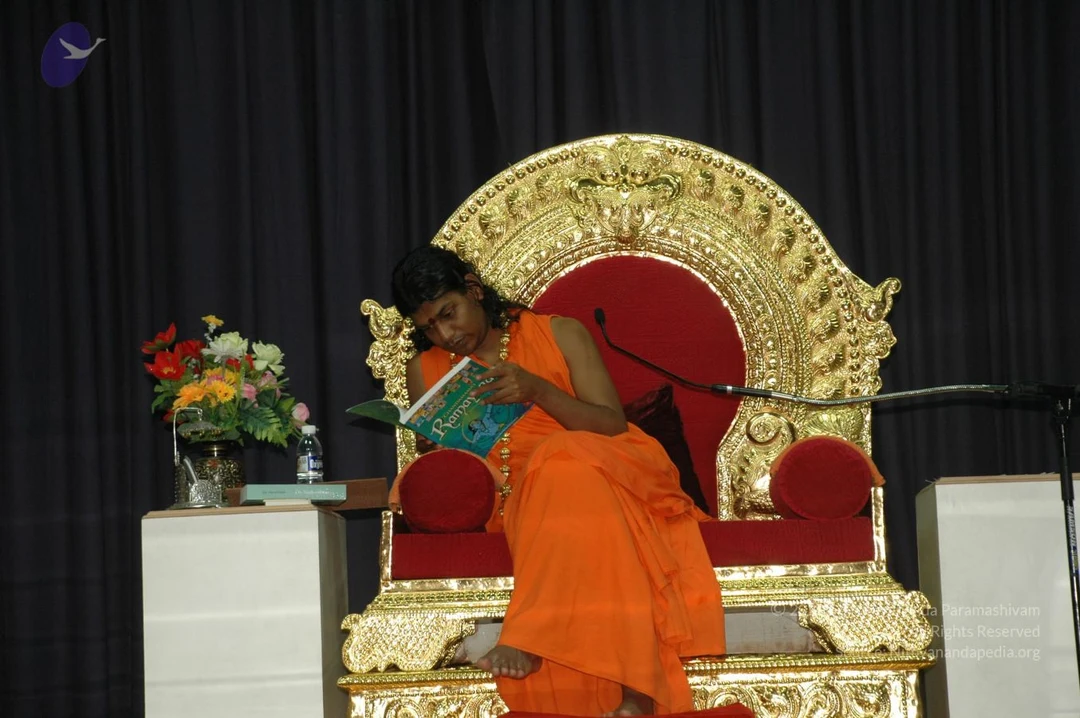
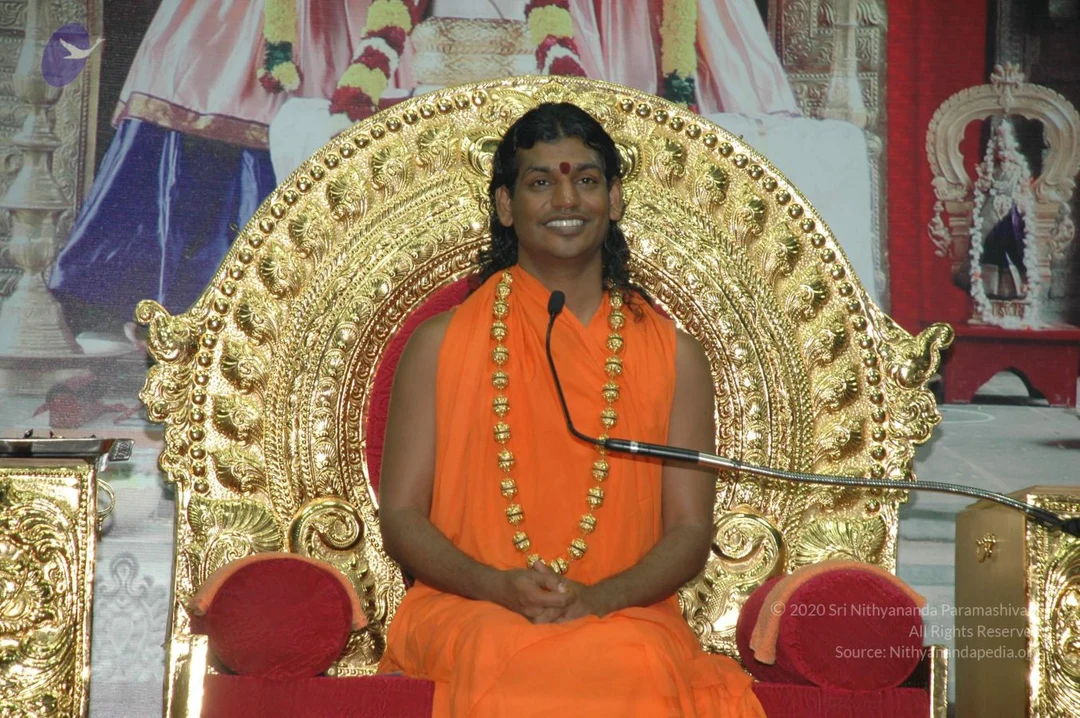
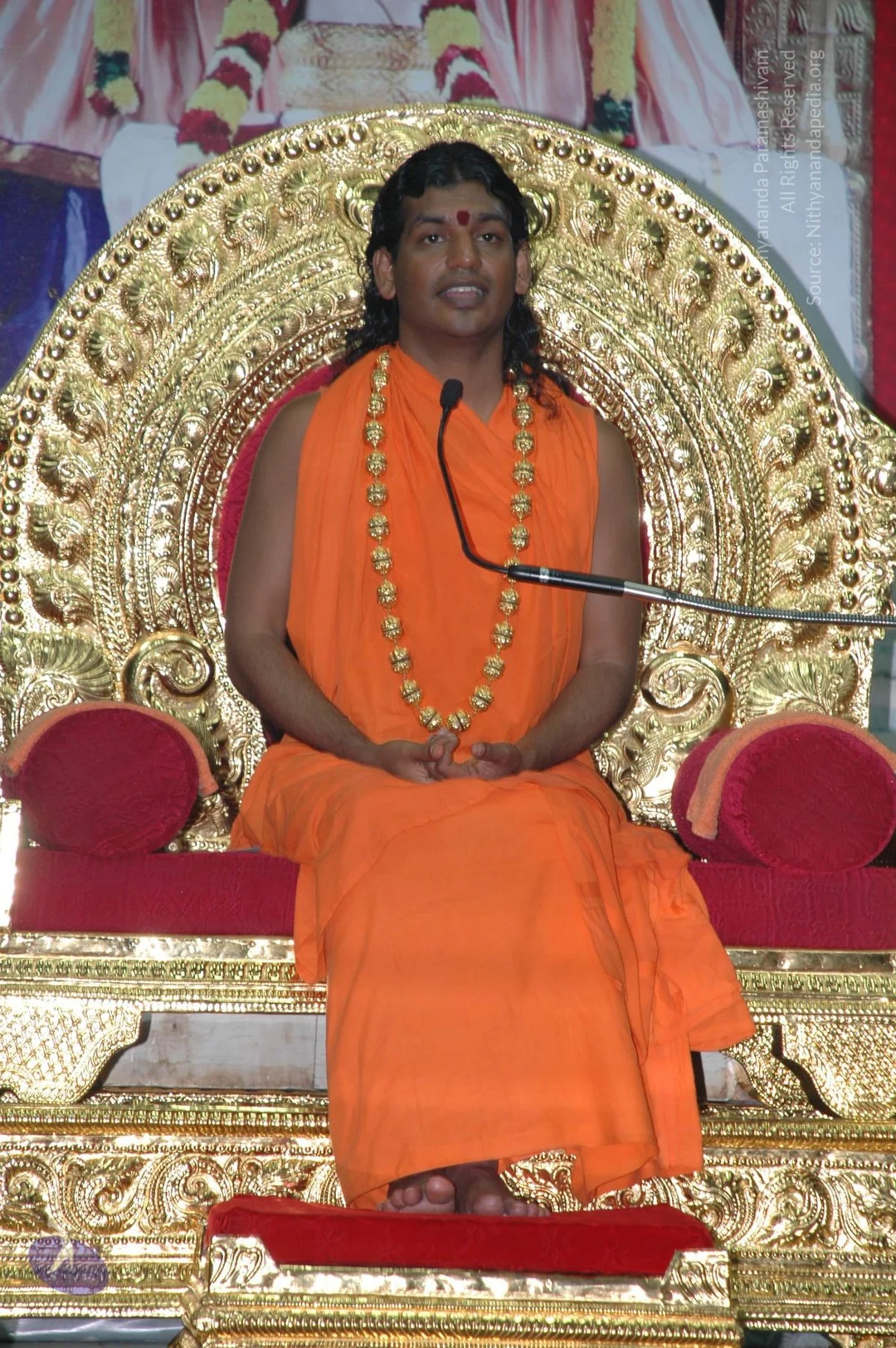
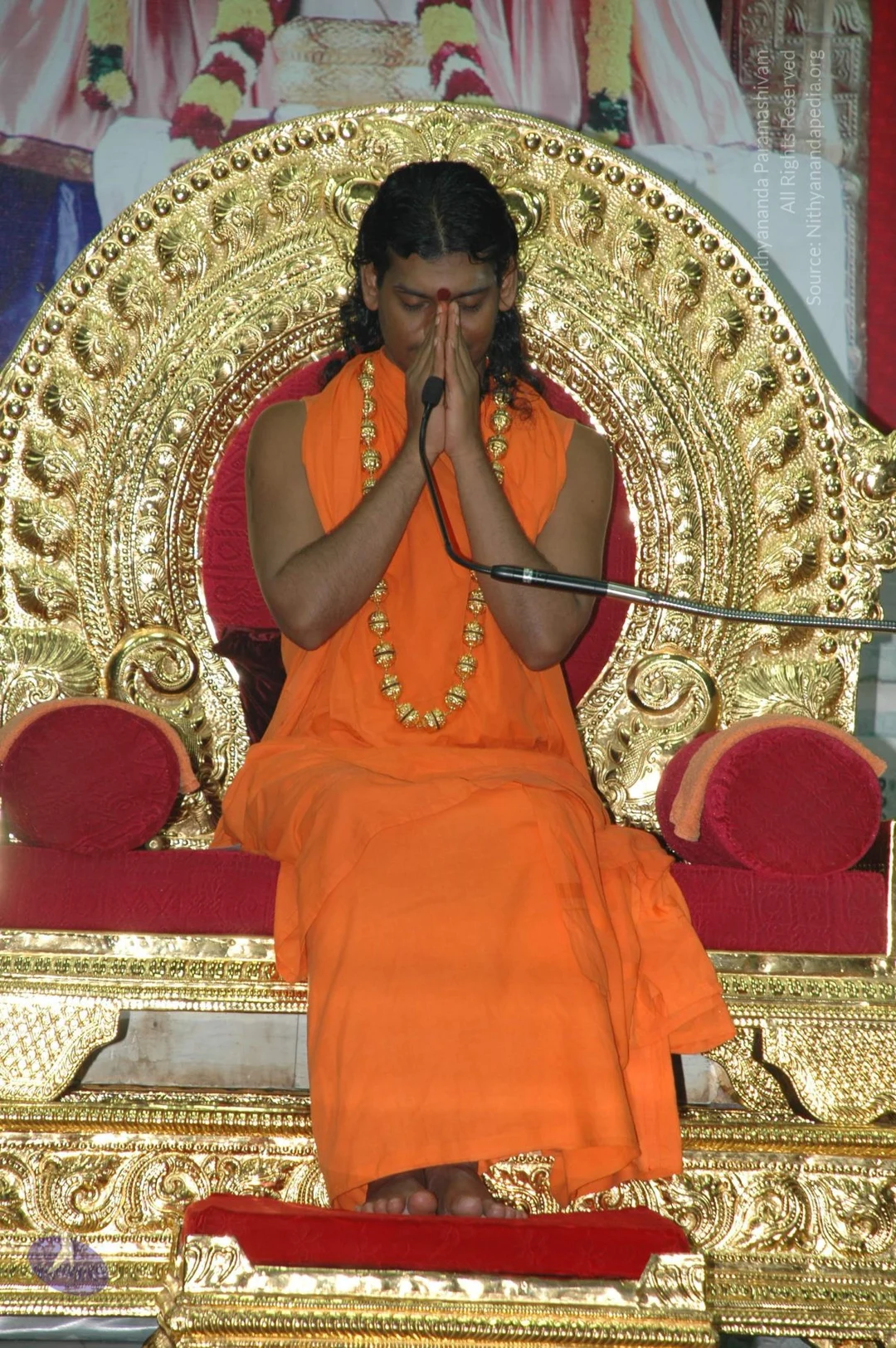
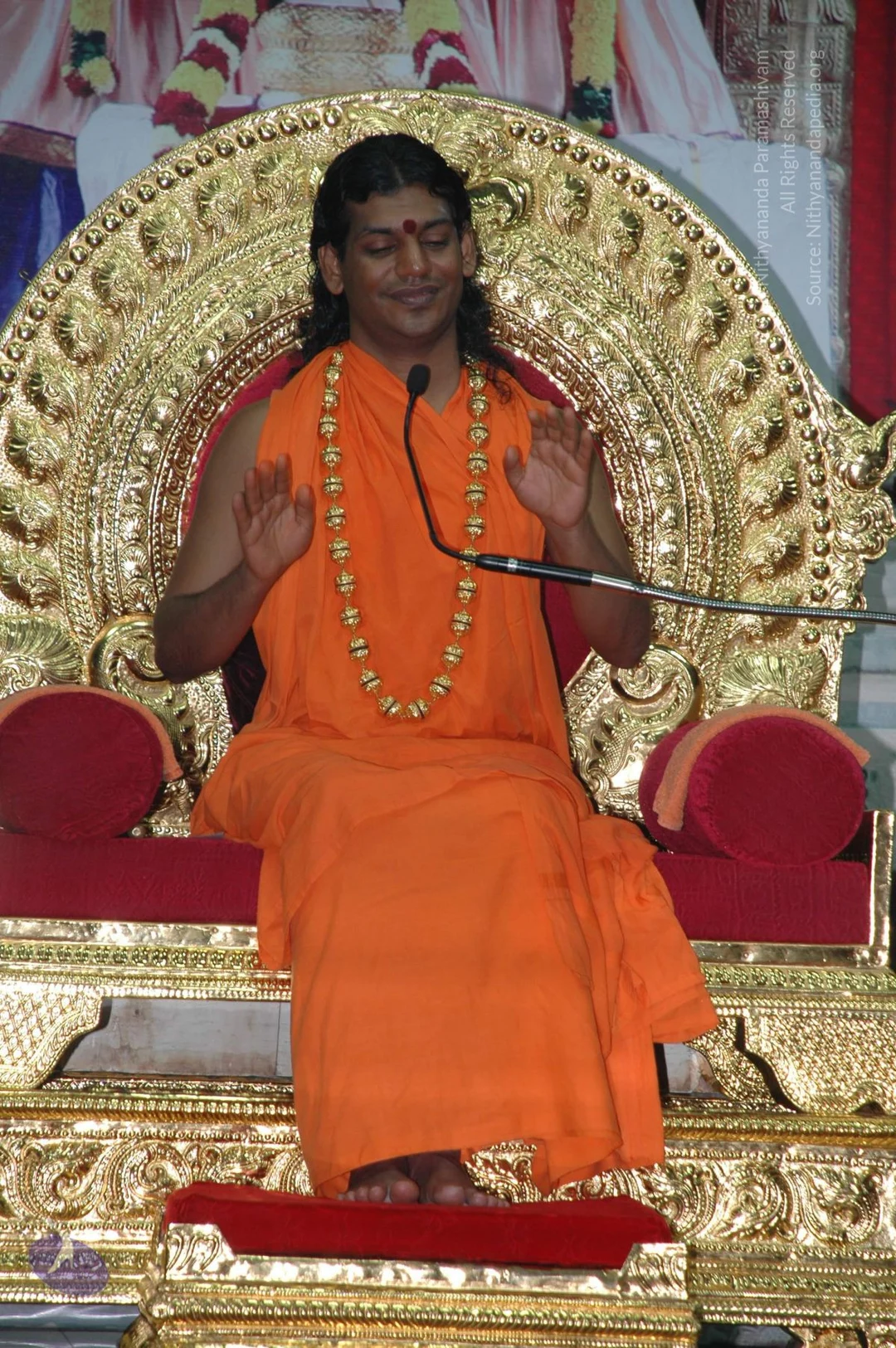
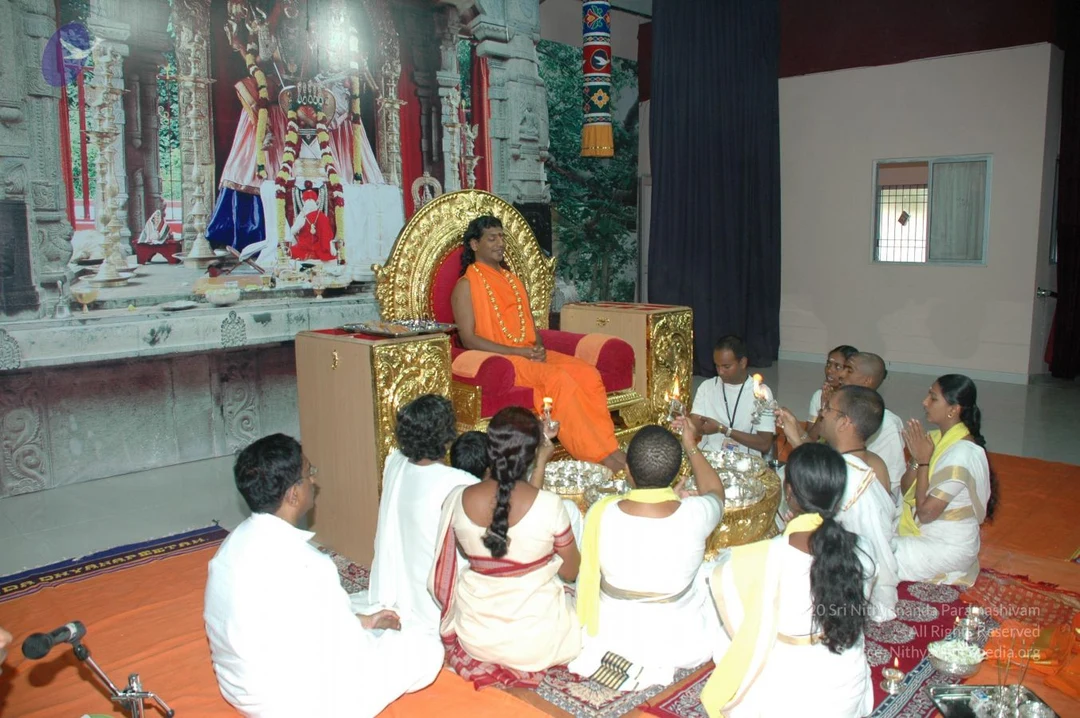
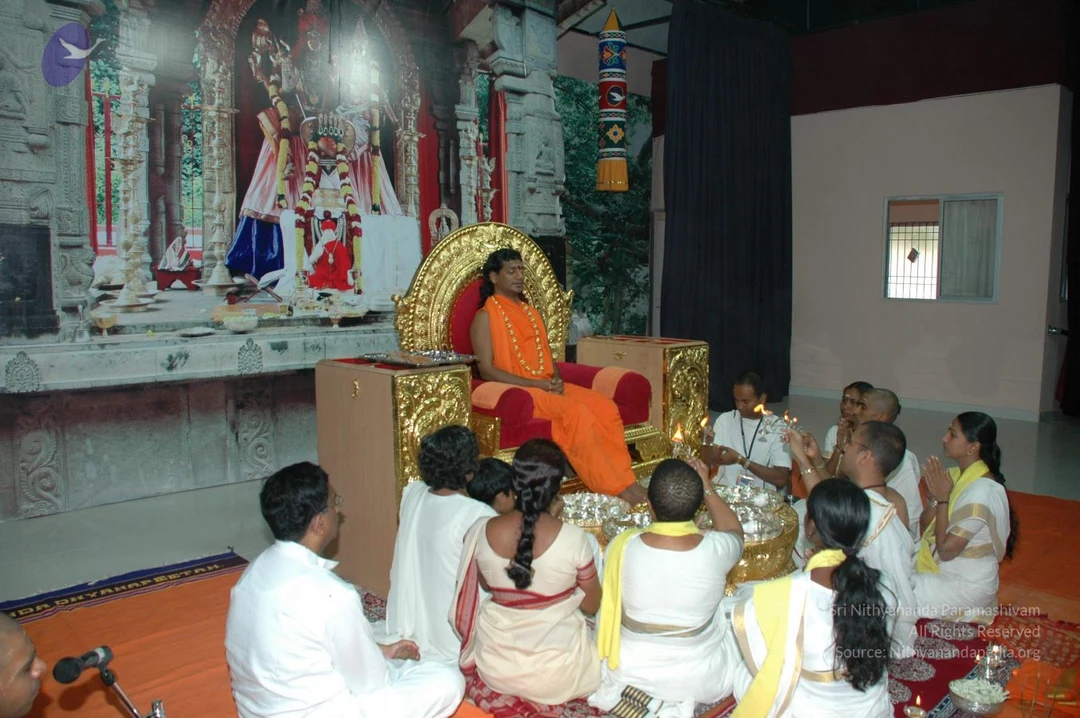
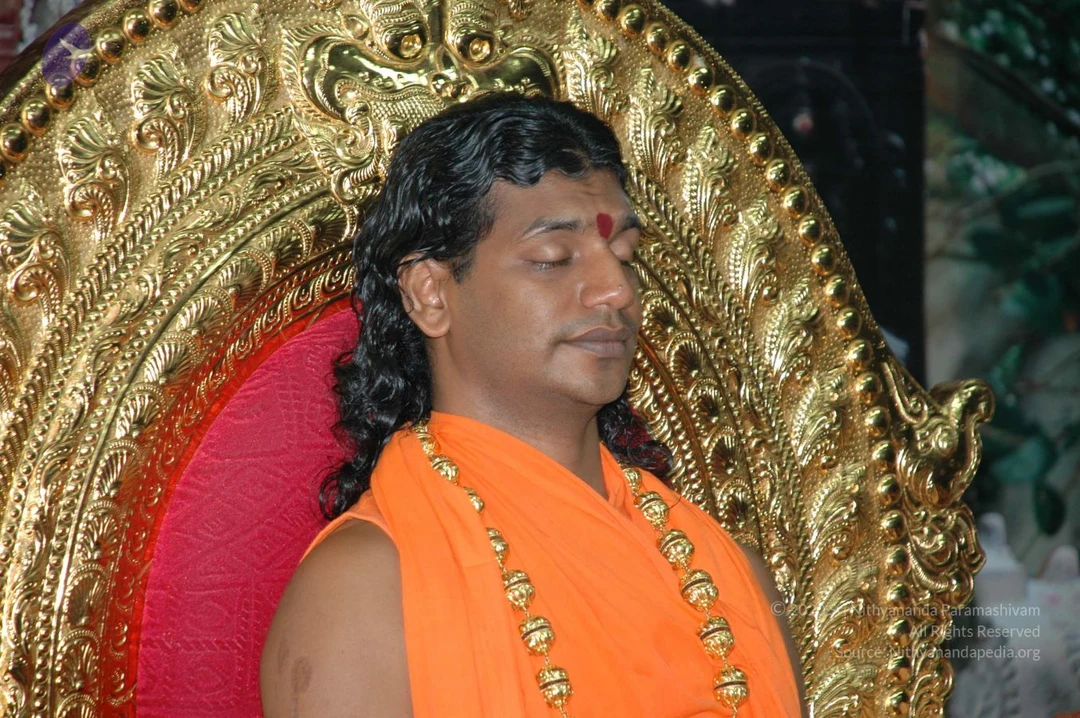
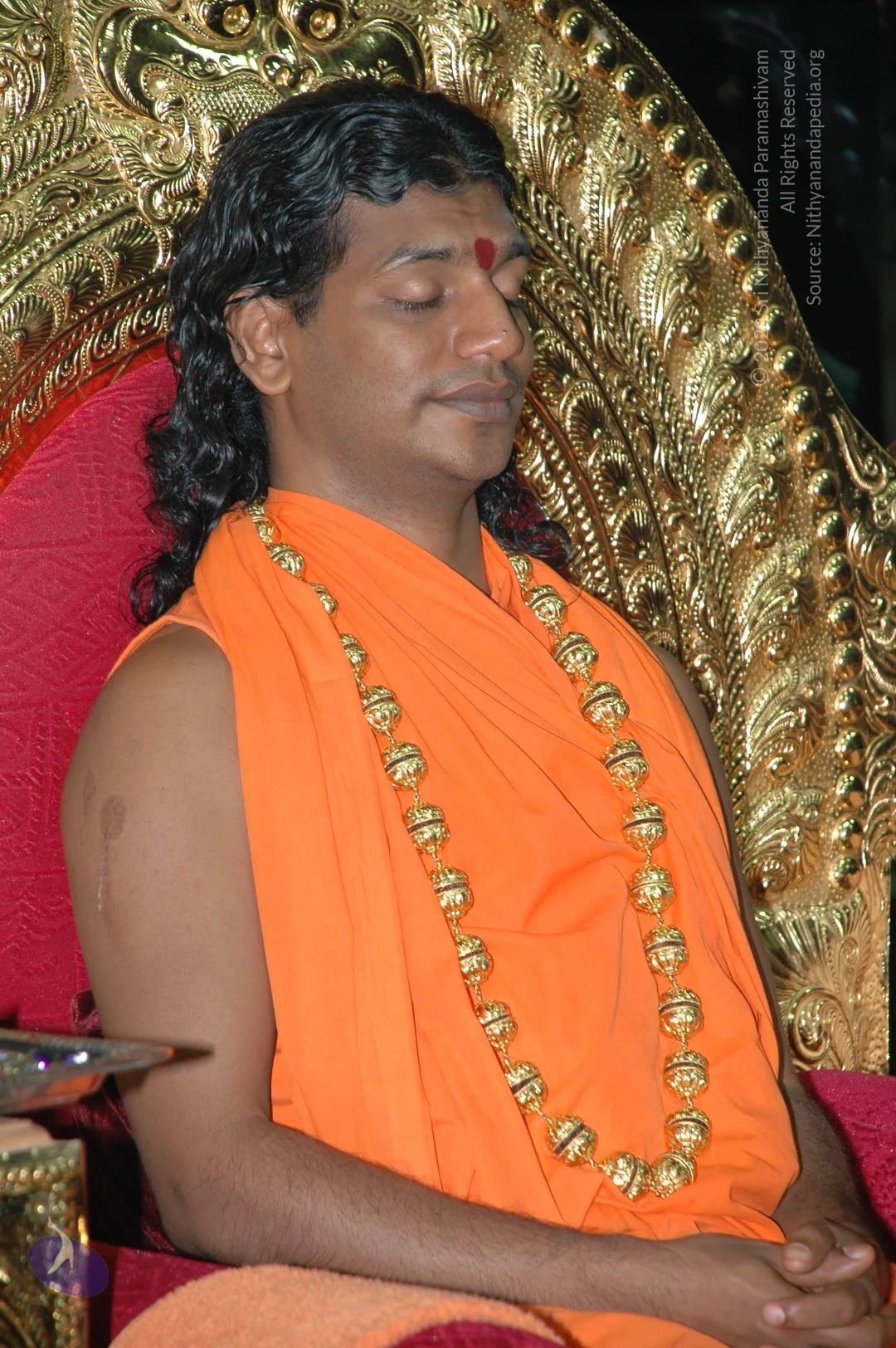
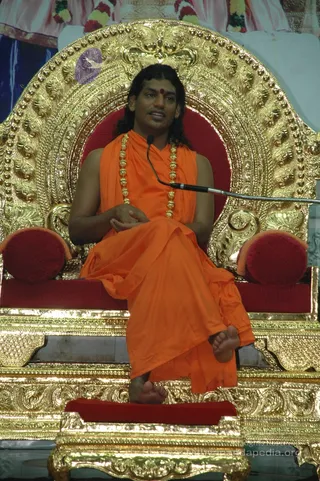
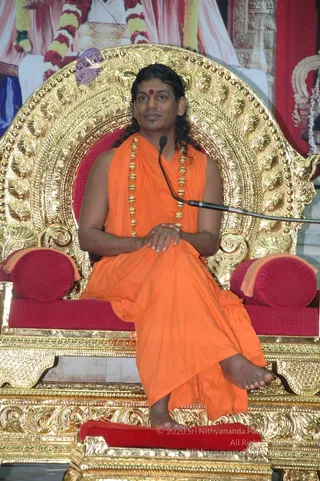
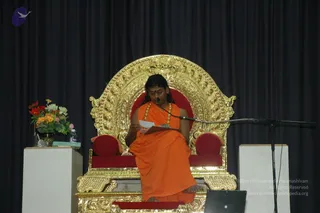
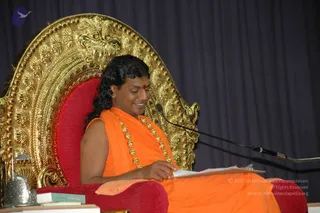
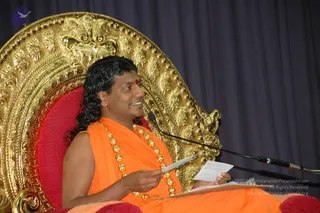
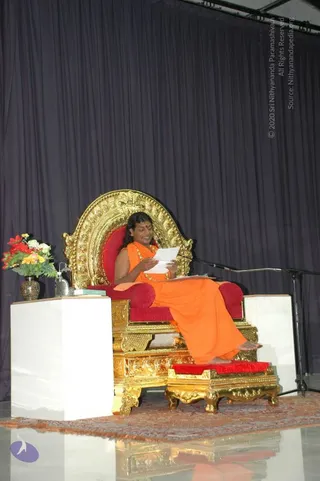
The Supreme Pontiff of Hinduism, Jagatguru Mahasannidhanam, His Divine Holiness, Bhagavan Nithyananda Paramashivam, expounded on the Cosmic Principles of Consciousness, Brain and Mind during the everyday live public talk - Nithyananda Satsang. In this talk entitled Unlock Your Brain Potential, The Supreme Pontiff of Hinduism revealed that the brain is not your mind but it is a blueprint of your mind. He shared that awakening your brain, the non mechanical parts of the brain and keeping it clean and alive will make your mind true to the Consciousness which is Enlightenment. He shared that your brain is not created to receive information, process and respond but that it has the cosmic connection. Therefore, all you need to know is by nature you have a cosmic connection and you can go on downloading anything you want and sharing it with the world.

Video and Audio:

VideoAudio

Transcript:

(0:15)

||Sadāshiva samārambhām Shankarācāryā madhyamām | Asmat ācārya paryantām vande Guru Paramparām ||

(0:58)

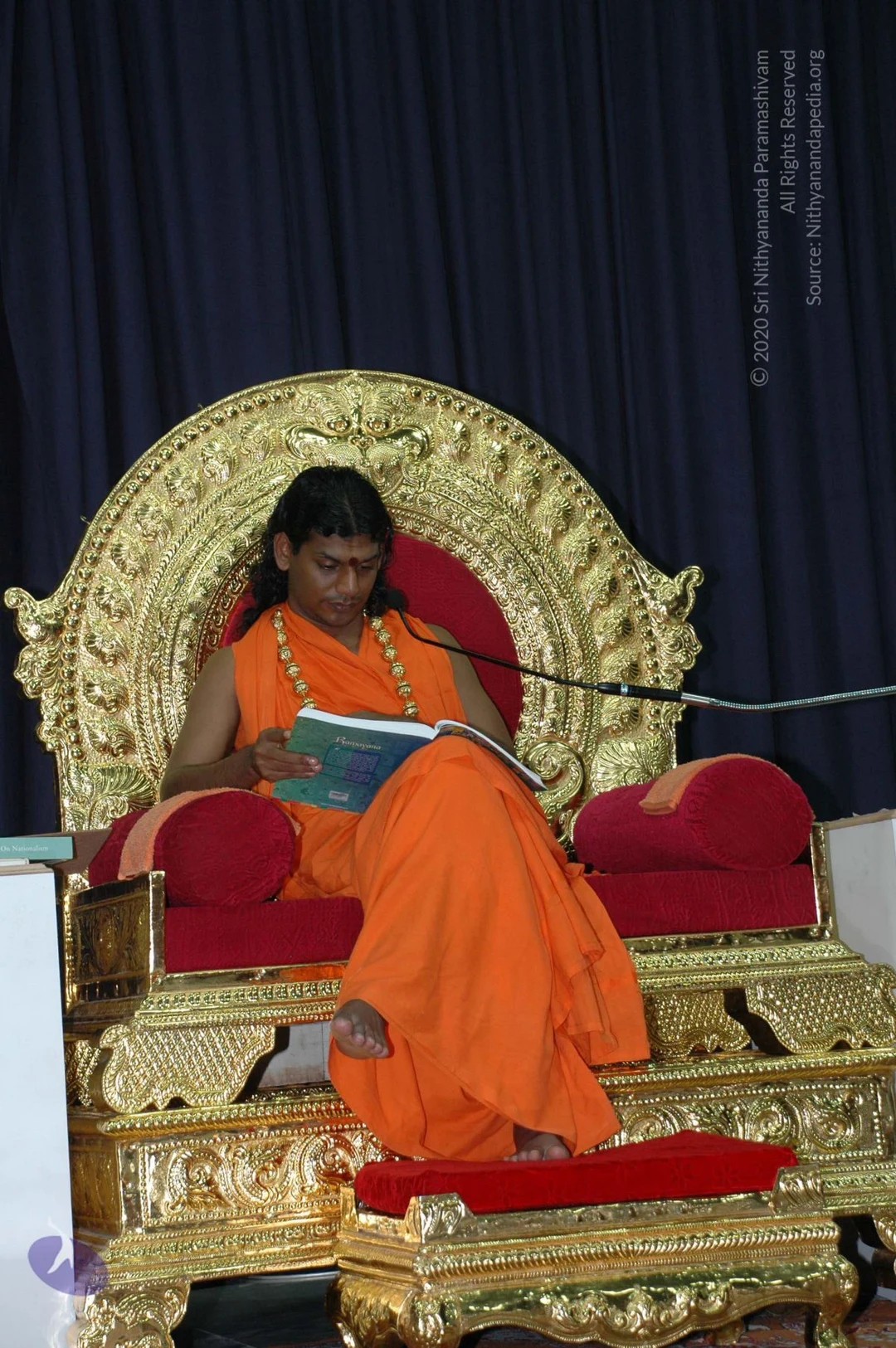
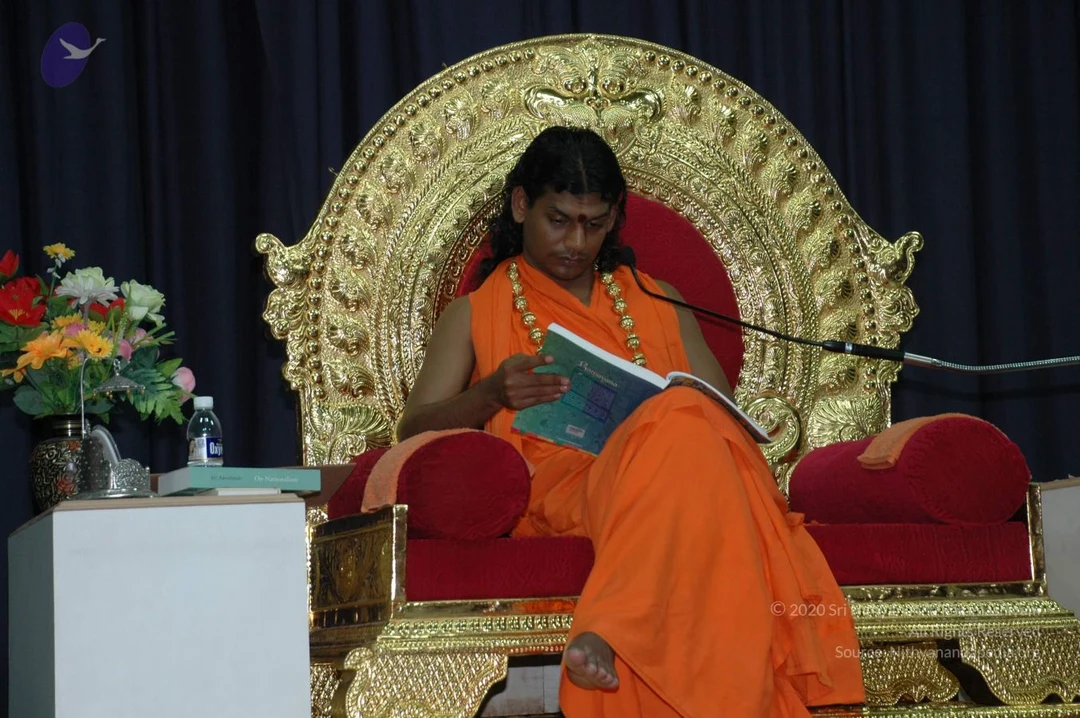
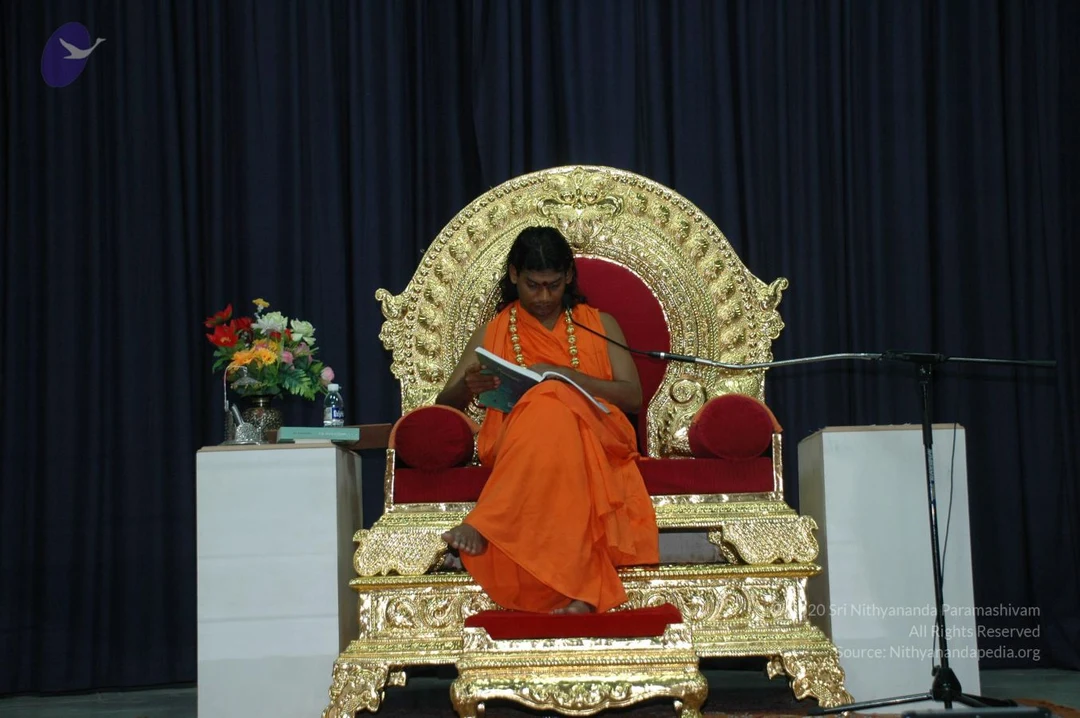
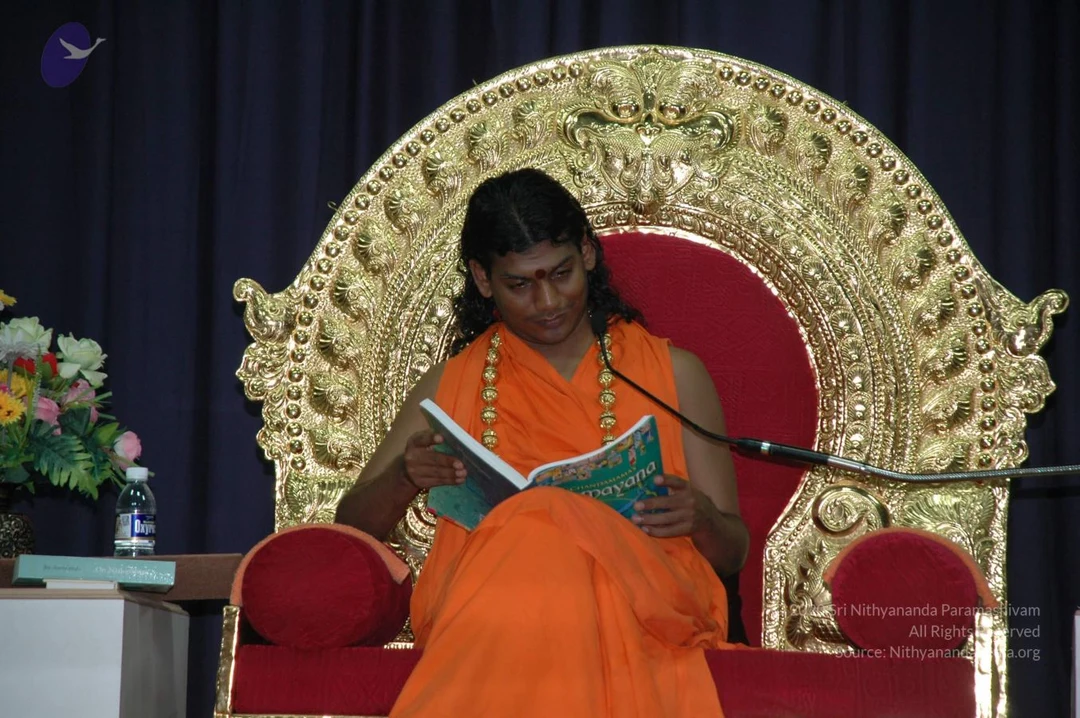
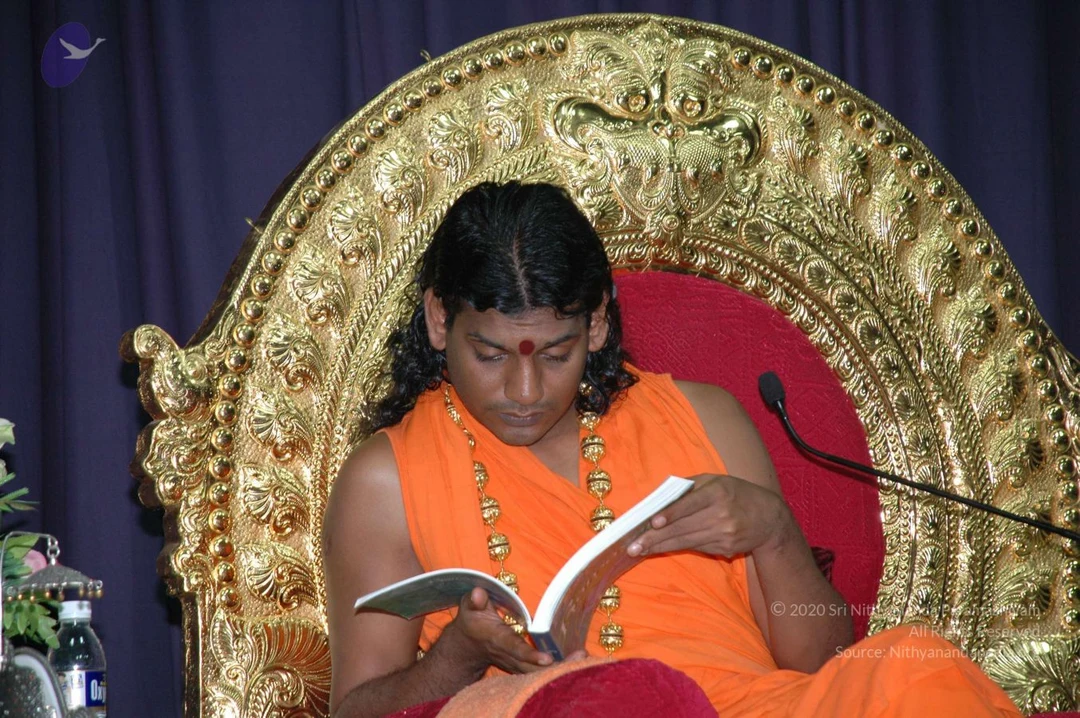
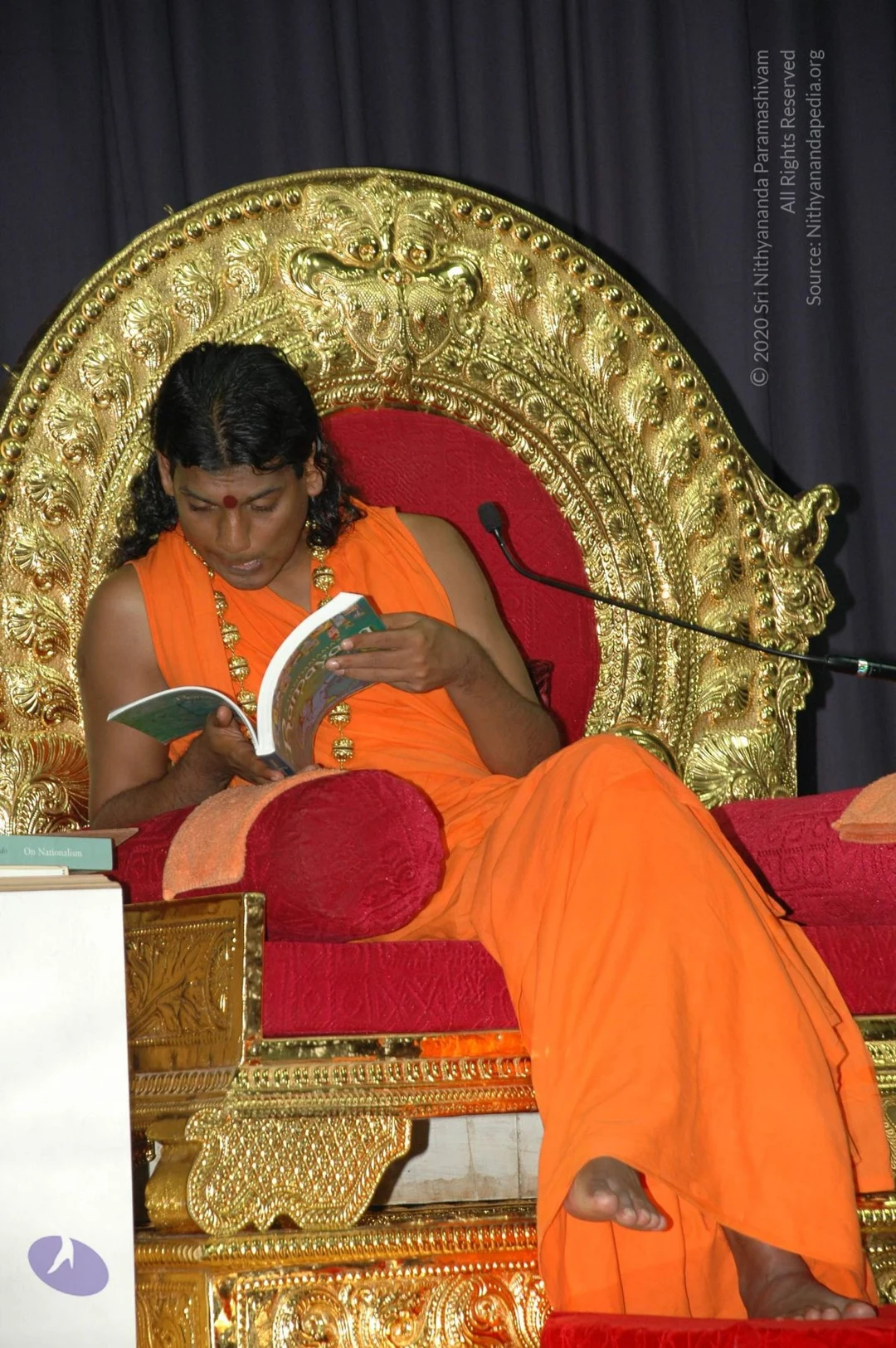
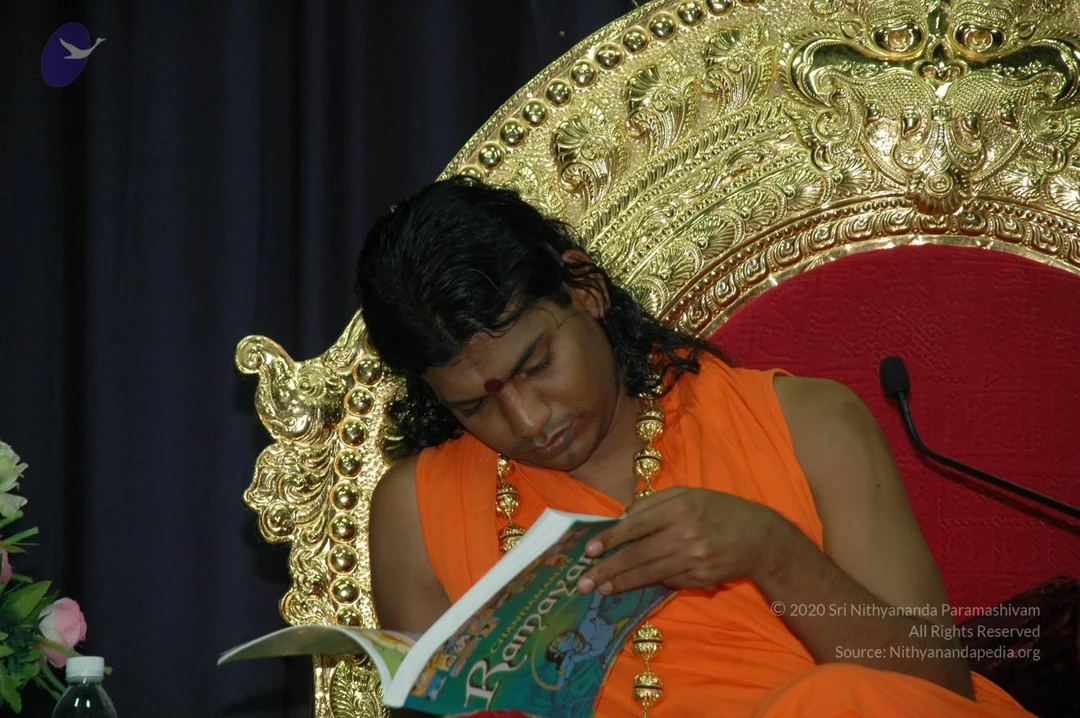
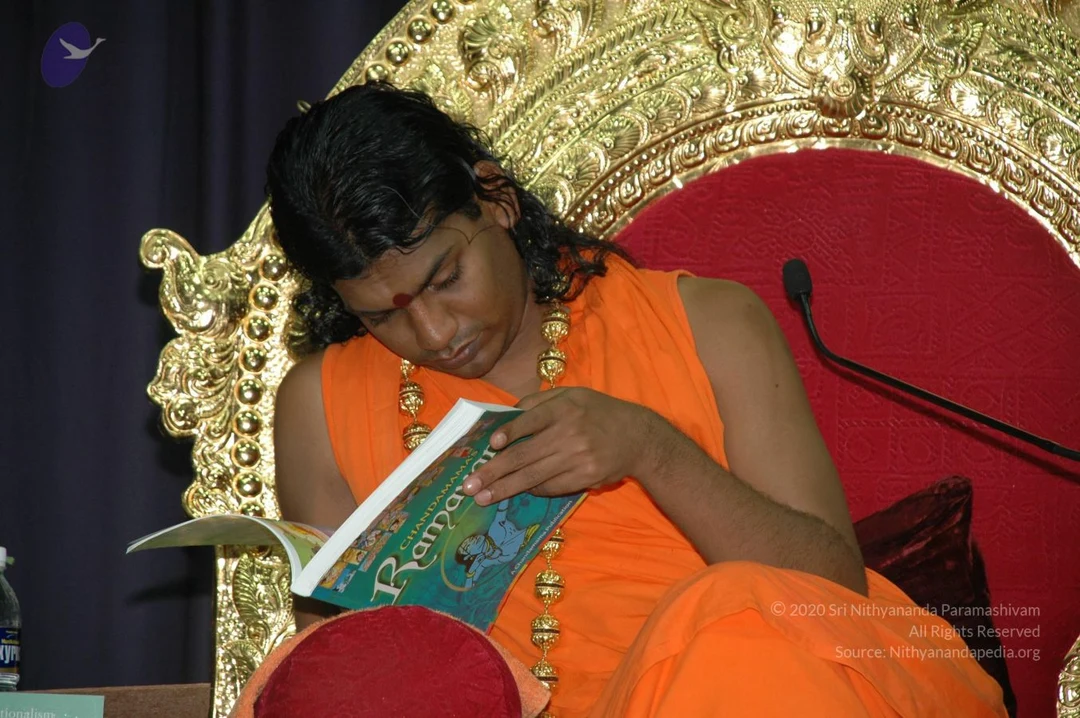
Today’s subject is ‘Unlock Your Brain's Potential’; if you have it. I’ll introduce few truths about brain, before that. Brain is physical, gross, blue-print of your mind. Please understand brain itself is not mind, it’s a blue-print of your mind.

(1:44)

I wanted to introduce few of the truths, about the Consciousness, mind and brain. If I give you an example - Sun reflecting on the mirror; the Sun is the Consciousness, the reflection is mind, the mirror on which, the part of the mirror on which the reflection is happening, that area is brain. Consciousness is Sun, the reflection itself is mind, the area of the mirror on which the reflection is happening is brain.

(2:47)

By awakening the non mechanical parts of your brain, you create a clean mirror, for the reflection to be more pure, reflection to be more true to the Consciousness. When you clean the mirror, the reflection - mind - can be more true to Consciousness. When you clean the mirror, the reflection can be more true to Sun. If there is a mis-shape, dust or part of the mirror which does not reflect properly, the reflection will not be true to the Sun. So awakening your brain, non mechanical parts of the brain and keeping it clean and alive will make your mind true to the Consciousness.

(4:07)

Making your mind true to the Consciousness is Enlightenment. If your mind can reflect Consciousness as it is, without adding or deleting, illusion or delusion you are living Enlightenment.

(4:31)

Other day, I was reading an article, very beautiful information - truth. The highest achievements done by a human being, in the weight lifting or bench press powers and all that, with all the training and everything; in Guinness record, is much, much, much lower than, the same set up gorilla’s bench press power. The same brain, body, almost same - gorillas carry the same structure. Their bench press power is something like 4000. The human beings with all their train...The gorillas’ bench press power is 4000, without any training or trying to be stronger. With human beings, with all the training, everything, it is not even one-fourth. Why, you know? First thing, we forget our strength.

(5:54)

See, gorilla never tries to be stronger. He is just, be himself, that’s all. In our case, we forget our strength, set a wrong trend. From that wrong stand, we try to be stronger. That is where the struggle starts. Even with our brain, the same thing. Basically we start believing, it can function only if the informations go inside. Our basic education system, which makes you believe - ‘you will not know which you are not taught, you will not know which is not put inside systematically through eyes or ears’ - is the most dangerous and wrong belief system goes inside.

(7:06)

Your brain is not a computer, which can process, only the information which is fed inside. It is like a, the brain can be used in the other way, like a computer to access the internet, where everything is available, just download. You use your brain like an ordinary PC, where whatever informations are fed, that can be processed, developed and result can be given. That is not the truth. That is not the potential of your brain. Use that as a computer, to download all the information, available in all internet. Your brain is like a computer given to you. Either you can use it as a PC or you can use it as a computer, with internet connection.

(8:09)

You are taught from the young age, it is a PC. No, which is not true. It is a computer, with internet connection, where you can download any information available in internet - means, in the world. Your brain is not created to receive information, process and respond. No. It has the Cosmic-connection. All you need to remember, need to know is, by nature you have a Cosmic-connection and you can go on downloading anything you want and sharing it with the world.

(8:55)

I remember, very powerful incident happened in My life. One day very playfully, all My classmates, wanted to have a debate with Me. Some questions they asked, about Ganesha. I answered very strongly. Then one fellow said, “He talks as if He knows everything”. The other fellow said, ”No, no, no He knows everything”. And then they said, “Alright tomorrow we will come up with question, we will ask; any question You answer, we will give You five rupee”. Those days five rupee is a big money, and any question I am not able to answer, I have to give five rupee. Some ten boys gathered. I went to Kuppammal. She told Me, “Go and attend, nothing to be afraid. Go and do it”. Somehow I had the confidence. And, I did not even have the thought, if I don’t know some answer what will I do?

(10:29)

Anyhow I went, and they started question, putting all kinds of questions, went on and on and on. I was answering. Suddenly one very tricky question came. See in Tiruvannamalai, there is a small temple on the Pearl Hill, means Pavalakundru, on that there is a small temple. The whole city believes that temple as Subrahmanya temple, because only for Subramanya’s function people will go there and have darshan and come. And always on the top of the hill, only Subramanya’s temple will be there, in Tamil Nadu. They just asked Me one question, “That temple they celebrate the Subramanya’s celebration, is it Subramanya’s temple?” Whole village and the whole, everybody knows it’s a, it as a only Subramanya temple.

(11:26)

Before answering, I just looked in. I saw very clearly, the point which I call as balance. If you just, put a rod between your ears, and a rod through your third eye, where the two rods meet, that point is called balance. I saw very clearly, that balance opening up and the information getting downloaded, ‘No it is not Subramanya temple, it is Ardhanarishwara’s temple. Subramanya’s shrine is also there but the main deity is Ardhanarishwara’. And I tell you honestly, never that information was fed into me, through eyes or through ears; because I had never been inside that temple’s garbha-mandir, before; or never I heard from somebody, it is Ardhanarishwara’s temple. Never ever the information was fed to Me through eyes or through ears.

(12:34)

If you open the channel of receiving the information, where the eyes and ears meet, that is what I call internet connection - the balance - the sixth sense. If the balance, has access to information, it is internet connection. Your eyes are like web-camera. Your ears are like speaker in the computer. You all know only, how to use the eyes and ears and the keyboard; you miss the internet connection. By nature you have the internet connection in you all. Just because you are breathing, you have internet connection and there is no website which you can’t access. There is no fire-wall. There is no security. You can access anything, without getting corrupt or without getting infected by virus. Any information can be accessed and handled.

(13:57)

I saw very clearly, that information being happening, and I responded. One boy who was there, he got really frightened. Because any normal person goes to the temple...Usually the temple will be open only during some celebration. During that celebration time, always the Subramanya will be kept in the front. So nobody will have the access to the garbha-mandir, to go and even have a look of the original deity.

(14:32)

He was shocked, and I saw, really that fellow got shaken so much. He never thought, I’ll know such a intricate information, fact, such deep fact; because he is from a Brahmin family, who does Puja of that temple. So he thought, except his family, nobody knows it is a Ardhanarishwara temple and actually itself nobody knows. Even now in the village, in the city it is considered only as a Subramanya temple. He said, “How do You know? Only we people who enter the garbha-mandir know, it is Ardhanarishwara, it’s not Subramanya”. I said, ‘Arey you enter-garbha mandir every day and come out, I am inside garbha-mandir, how will I not know?’ I said it so spontaneously, not with thinking or ego or arrogance or nothing. I said it so spontaneously, just as a casual - the spontaneous truth.

(15:49)

You see, when gorilla is expressing 4000 bench press power, he is not trying to be egoistic. He is just a gorilla. He is just himself, that’s all. So when I revealed that information, when I said, I am just Myself that’s all; there is no pride or excitement or escalation or ego or arrogance. No. I just said I am there. I never thought, this is an extraordinary power. Only after this debate, I realized this is an extraordinary power. It is actually not extraordinary, if you are not made as ordinary, by your schools and the initial level people with whom you live.

(16:49)

The first fourteen years with whom you live, plays a major role on your life. Kids should not live with dull people, first fourteen years. I tell you, first fourteen years, you should live in an Enlightened community; last twenty years you should live in a place where people live for a long time without depression. Understand. This two period - this first fourteen years, if you live in a community, where the intelligence, knowledge based community, your life will be the best in the world.

(17:51)

If you live, the last twenty years, in a community where people live long without depression, means who accepted the aging gracefully. If you have depression you have not accepted aging gracefully. If you are sick and not living healthily, you have not, you are not aging gracefully. Healthy, peaceful, happy old age - if you are able to live in that kind of a community, understand, your death will be the great gift. This is what I call, ‘Cosmic-airport’, where the landing and take-off happens in a very intelligent way. Small mistake in landing will be an accident. Small mistake in taking off will be an accident

(19:04)

The first fourteen years, kids should live in a place, where many computers have internet access, many brains have the balance access - the sixth sense access. One important thing you need to know, in the internet if you give only the LAN connection, all computers will have the access to the internet - in computers. In brain, even if five-six brains have the Cosmic-connection, if ten more people are added to live in that place, all the other ten will automatically pick it up. You don’t need anything. Just all other ten will automatically pick it up.

(19:52)

Some of the researchers say that, in a village where this Polio prevention drops are given, if you give just 40% of the kids, all other 60% of the kids automatically get immuned. In the 100 kids, if you just give 40 kids the medicine and come away; all other 60 kids, not only they have not taken medicine, they don’t even know about the medicine, but their body gets developed in such a way, automatically they get immuned. So there is something between the kids, which transmits the energy and understanding and fortunately the kid’s body and mind, always gets tuned to the highest possibility.

(20:44)

When you grow up, you are always in tune with the lowest possibility. You see ten people, “Wow even this worst way I can live - that’s great” - then catch the worst thing. That is why, the adult communities are always failure, because when you enter the community, you find out the lowest possibility and you put that as a benchmark and tune yourself and happy. But the kids, they catch the highest possibility and imbibe that. So the first fourteen years, kids living in a place where more people have awakened or working on awakening the non mechanical parts of the brain, will do so much good, which cannot even be told by words.

(21:51)

Just living. You see, accessing the Cosmic information center, is not like a technique need to be taught step by step. Just if the kids know, ‘Wow! This kind of a person, extraordinary intelligence exists!’ That’s all they need to know. That conviction, is the internet access, that’s all. Now the information which I said, that like this I had access to the informations, which was not fed to me through the eyes or ears, if they know that, that’s enough. Their sixth sense - the balance - will just get awakened and will start functioning, and you will see in few days, they also start expressing informations, which was never fed to them through brain, sorry through the hearing or seeing; over. I am opening up a great new possibility.

(23:06)

Our Gurukul system is nothing but, awakening the non mechanical parts of the brain - that internet access. That’s all. Ordinary education system, the Western education system, the book based education system, the information education system, information based education system, teaches you how to use your brain as a computer, personal computer - PC. But eN-based education system, the Gurukul system, which I am creating, teaches you, how to use your brain, use your computer as the internet access system.

(24:00)

When you awaken the balance, the sixth-sense with a simple reminding you - ‘it is your inborn tendency, innate intelligence’ - nothing else, you are with it. Just do it. You’ll see, the kids will start using their brain, more like computer with internet access, where the informations are available, which is not fed through that computer. Any information, any knowledge created at any time in the Planet Earth, is available. All you need is, plug the internet connection and know that you can access and download and process. The balance, the sixth sense is not just, ‘World Wide Web’, it is ‘Cosmos Wide Web’ - ‘cww’; It’s not ‘www’. Any information, created at any time can be accessed, processed and delivered.

(25:39)

Simple understandings, clarity - giving them the courage. First thing, kids should not be brought up by the people who themself believe, their brain is like personal computer. Means, they themself have become corrupt. The corrupt people should not bring up the kids. Kids should be brought up by the people, who realize that they have internet connection, or at-least they understand, they have some part, they are not able to access. That’s all. Then you’ll see, kids happen, without losing their non mechanical parts of their brain’s power; and they’ll happen without losing their basic intelligence. They will happen, just with their nature.

(26:53)

Just this reminding, will keep them awake, keep their non mechanical parts alive, awake; Kundalini alive, awake; and when they have some three-four miracles happening in their life...I tell you, this one miracle in my life, which happened, I realized, Oh God! I am talking about the informations which was never fed inside me. I’m expressing informations which was never fed inside me. The tremendous confidence which came in me, made the Kundalini, a permanent in my bio-memory. It’s not like...It’s like a wireless internet access. First experience like a card, through card. When the experience becomes solid, it becomes just like a wireless internet acccess. Now you know, Oh God! I can do it. I am doing it. So if kids realize one or two miracles, then suddenly they know, they can do it and they are doing it. They are doing it.

(28:09)

Awaken the true potential, just by clearly understanding, nothing else. I tell you, the best thing can be done by a human being, is living in a community where intelligence and Enlightenment is in the waves, in the air. I tell you, not for promoting My Sangha. With any money, with any luxury, with any comfort, man cannot experience pleasure more than six points in the body - five sense and the heart, sixth point - that’s all. But only in a intelligent community - where everything is centered on Enlightenment, where the idea of Enlightenment is constantly in the air, where you are hearing about it every day at least twenty times, where you are thinking about it at least hundred times a day, where constantly you are bombarded with these truths - you will have the pleasure in all points of your life.

(29:21)

I tell you, either become part of the community which is Enlightenment based; if you can’t, at least wherever you stay, wherever you live, create a community around you which is Enlightenment based. Even if they are little less than your strength, your knowledge; create, so that they will be constantly reminding you when you go low.

(29:53)

The Jains have a great habit, Jain monks. They will not eat in anybody’s house other than the, their sampradaya, their tradition. I also wanted all our Ashramites to start this as a habit. Don’t eat in any other place, other than our devotees’ house. Means what? You will create the Enlightenment based community, wherever you are, just as a survival need. Eating means what - sharing your time, sharing your understanding, sharing your friendship. Eating, with eating so many hundreds of things happen. Understand, eating is not just little food and you swallow and go. No. With eating, hundreds of socio-politico, economics, so many things happen. Much can happen over a cup of coffee. So eating means, not just an ordinary taking. There is so much of psychological connection. So many other things happens just with eating, sharing of food.

(31:20)

So decide. So today I am giving this as an understanding, to all our Ashramites and Devotees and Disciples and Swamis and Brahmacharis. Make this as a point. Avoid eating as much as possible, other than the places of our devotees. Of course, I used the word as much as possible, because I included the devotees also. Only for devotees, the word, ‘as much as possible’ applies, not for the Ashramites, Brahmacharis and Sanyasis and Rishis. For them it should be, ‘Eat only in our Devotee’s places’. So you are bound to create communities, the Enlightened communities, constantly - the Enlightenment based groups, teams, friends.

(32:28)

Understand. More than what you eat, what you talk during eating, plays an important role. With whom you are eating plays an important role. What are you planning? Whatever you are planning while eating or taking bath, will be executed in your life without your knowledge. Understand. Whatever you plan, you think, during taking bath or eating will be executed in your life, without you realizing, before even you realize that this is where your thinking trend.

(33:12)

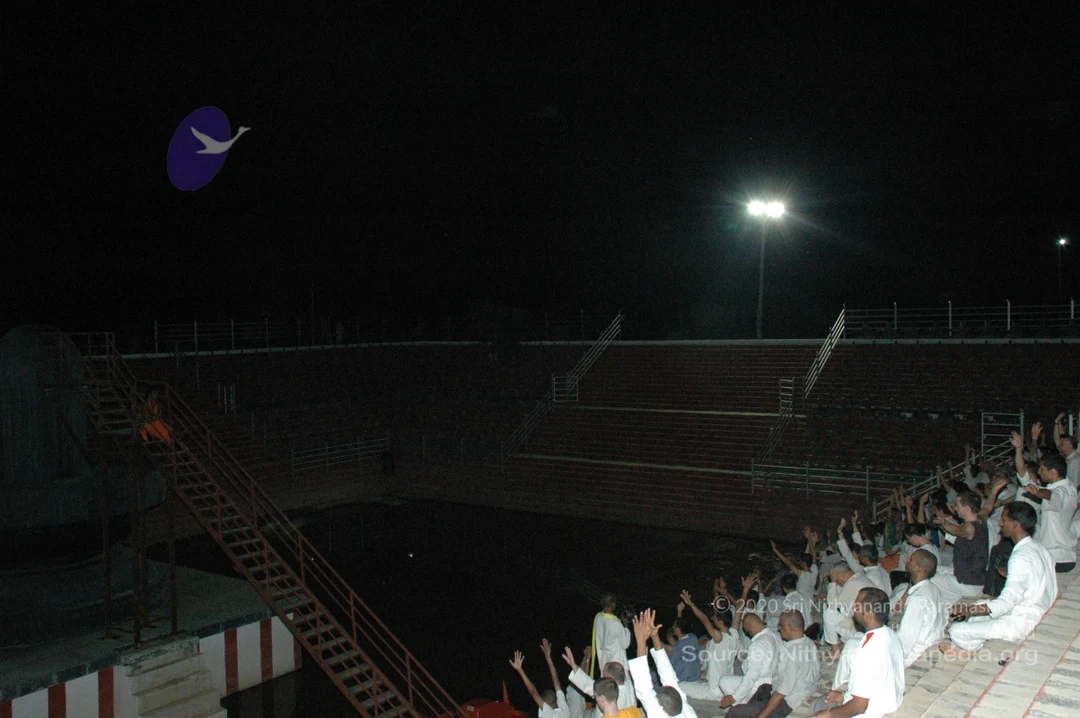
That is why I insist on taking bath in the sacred water bodies. That’s a right word - ‘The Sacred Water Bodies’ like Ganga, the temple tank. The sacred water bodies, plays a major role in making your thoughts into reality. That is a purpose I created this Vaidya Sarovar. And everybody uses that sacred water bodies for regular bath. So much can happen in you, I know. I know the power of taking bath in sacred water bodies, at least once a day. Whatever you think during taking bath or eating, just becomes reality in your life.

(34:28)

Live in a Enlightenment based community, as much as possible. Ramakrishna says, if you drank half a litre arrack, at least drink one-tenth of, one-tenth litre, 100ml, the water from the rice cooking. If you drink that water - rice kanji - that arrack effect will go away. Same way, if you live one year in the society, getting into all the corruption and nuisance and nonsense, at least come and spend 21 days in Enlightened community, Enlightenment community. At least come and spend 21 days, so that - the all the effect of the arrack leaves your system - all the effect of the society leaves your system. You become more pure. So live in Enlightenment based community, as much as possible and wherever you are staying, create an Enlightenment based community.

(35:47)

Even casually, in the parties, where people talk about these great things; not that same foolish nonsense of ‘What is your stock?’, ‘Where is your share value?’, What is going on with that jewelry, this sari, that cinema?’. Ramakrishna says, “If somebody talks about the worldly things, I feel they are pouring the molten lead in my ears. I can’t tolerate. I run away from that place”. Let you create a community where constantly the Enlightenment based ideas are spoken, exchanged, shared, lived, loved. I tell you, that’s a greatest thing you can do for yourself.

(36:44)

If you, all the people below fourteen, should live in an Enlightenment based community, where many people, already awakened their non mechanical parts of the brain or working to awaken the non mechanical parts of the brain. So last twenty years, you should live in a place, where people live, the depression-less, peaceful healthy, old age. Between that time of fourteen and last twenty years, live in a place, where Enlightenment based civilization exists. It means what - from birth to death, be with the Master. That’s what I am saying, with so many different words.

(37:51)

Start living in Enlightenment communities, as much as possible. Start creating Enlightenment based communities, as much as possible. After all, now I made, creating Enlightenment based community as a such a simple franchise project. See all the tools necessary are available. We made a clearly already franchise document available. Whole thing is available in YouTube. Whether it is a form of rituals or form of meditations, form of spiritual ideas, whole thing is available in YouTube now. You guys don’t even need to feel that you have to be bound physically in Bidadi.

(38:34)

Wherever you are, create a franchise; franchise eN-community. That’s what I call, ‘eN Satsang Centers’. Make people more and more interested. This YouTube discourses, books and all that - that’s all. Don’t think, ‘No no no people are very foolish. They don’t, they are not interested’. No. You have not tried. People are surely more intelligent than you. When people like you can get interested into Enlightenment, surely people whom you think are dull or foolish than you are intelligent. You have not told in right way. Maybe when you tell, you are talking more about you than about me. Hide you, put me. You will see, they will become interested. They will start creating an Enlightenment in them.

(39:35)

So at-least, for your health’s sake, create eN-communities around the world. Let the kids, live in Enlightenment based communities; let elders live in Enlightenment based communities; let the middle-aged people live in Enlightenment based communities. And not only that even in the communities, Enlightenment based communities, let us add more and more Enlightenment into actions, more and more of these truths into actions.

(40:17)

Understand about your brain not as a personal computer, but as a laptop with internet connection, wireless internet connection and awaken its true potential. Live and radiate Enlightenment.

(40:35)

Let you all live and radiate the Eternal Bliss. Nithyananda. Thank you.

(40:45)

Photos

Panchatapas
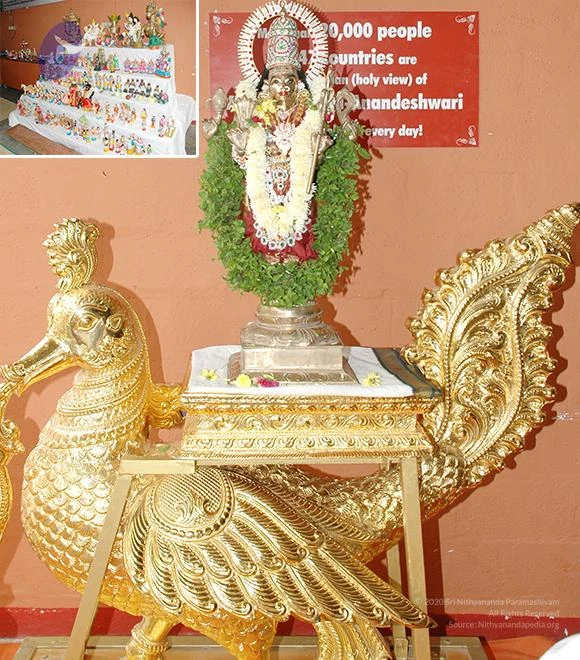
Navaratri-Golu-Pooja-By-Swamiji

Flag-Hoisting
Paadapooja

Morning-Satsang

Sarvadarshan

Lep-Morning-Session

Lep-Evening-Session-In-Vaidyasarovar

Photos Of The Day:

nithyananda-bidadi

Photos Of The Day:

Dasara-celebrations-in-Seeragapadi-Nithyananda-Dhyanapeetam

Photos Of The Day:

Evening-LEP-Session

LEP-Session

Flag-Hoisting
Morning-Message

Navaratri-Golu

Pada-Puja

Pancha-Tapas

Sarva-Darshan

Bidadi-Temple

Photos from this day

View all 476 photos

Panchatapas

5 photosSource gallery
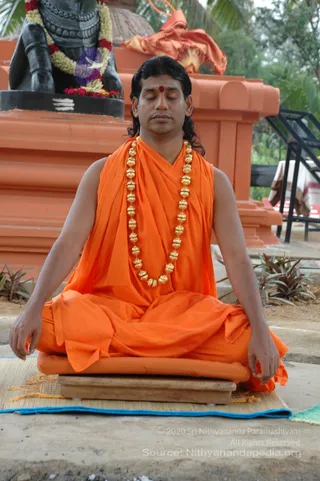
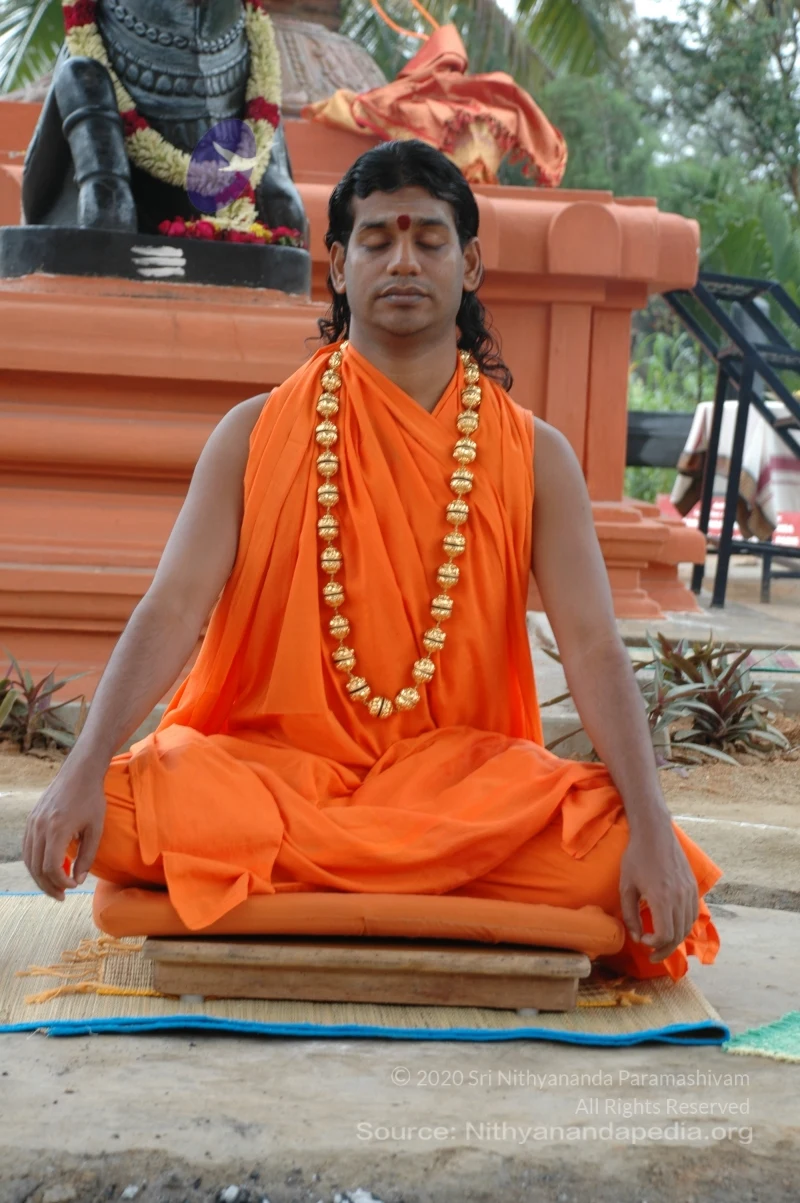
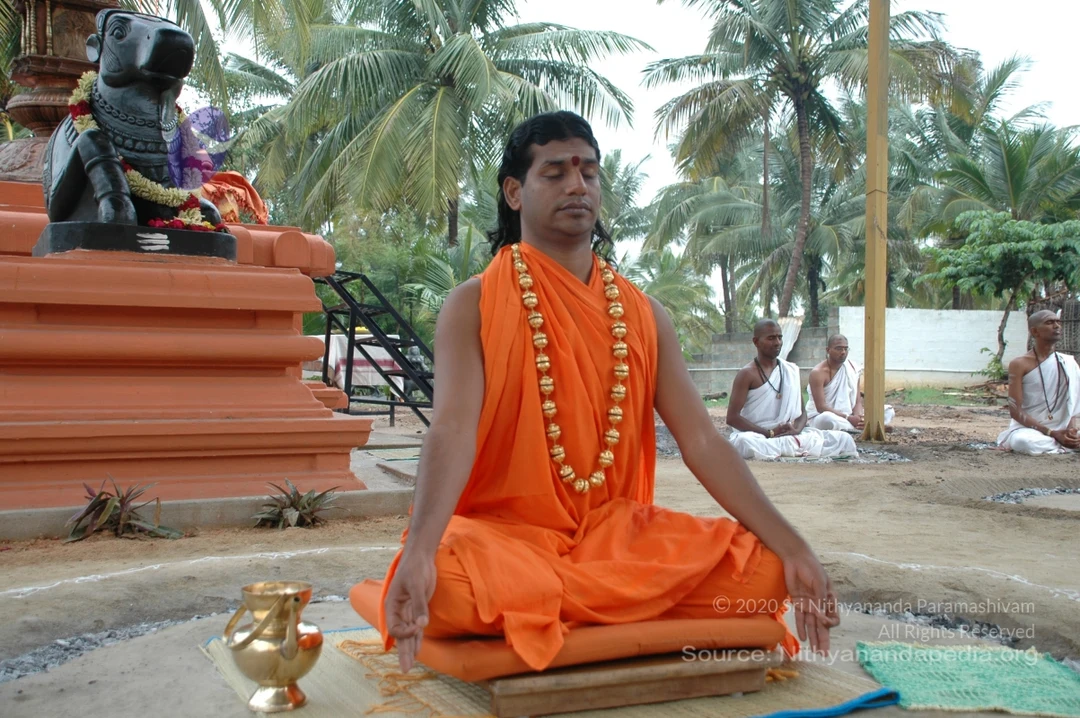
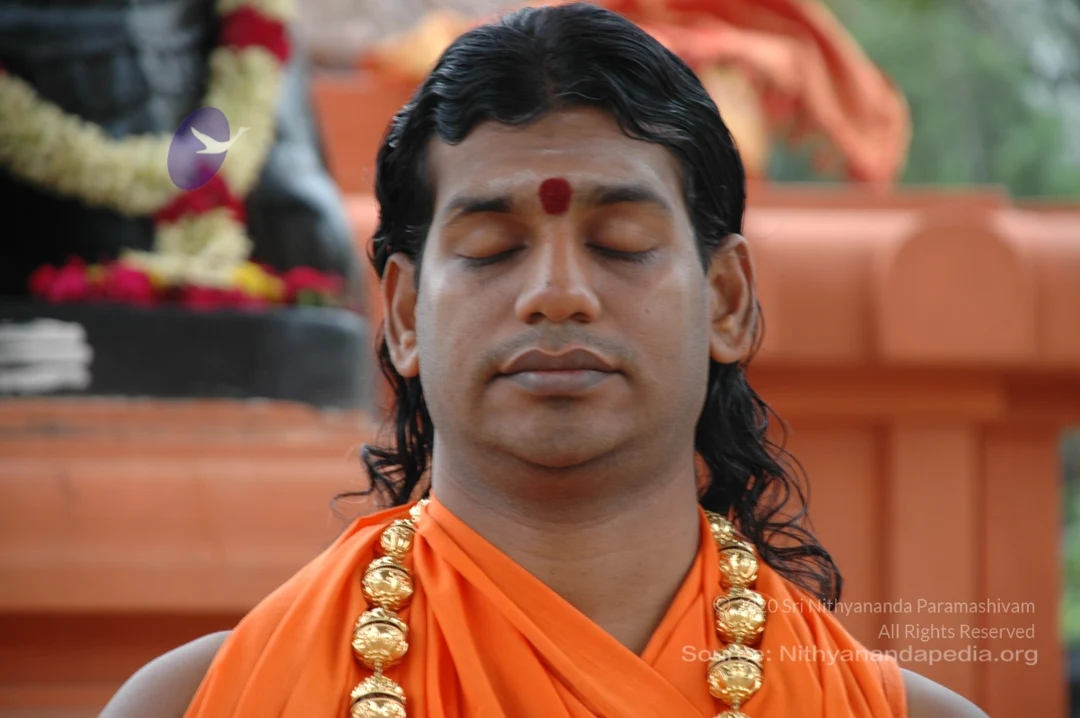
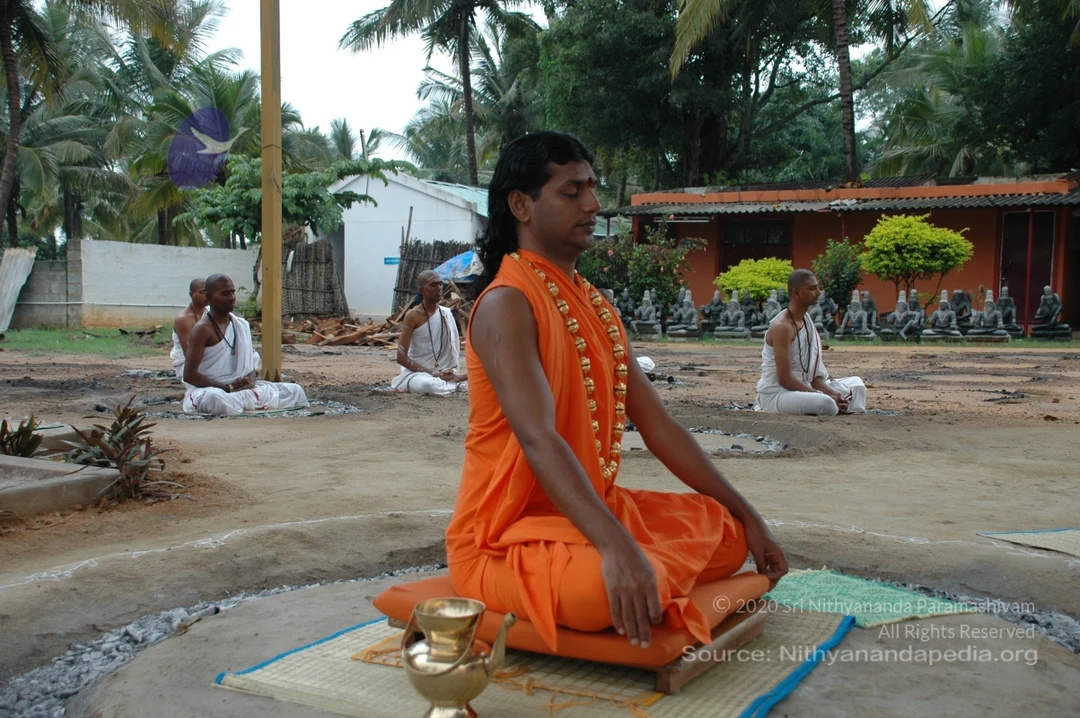
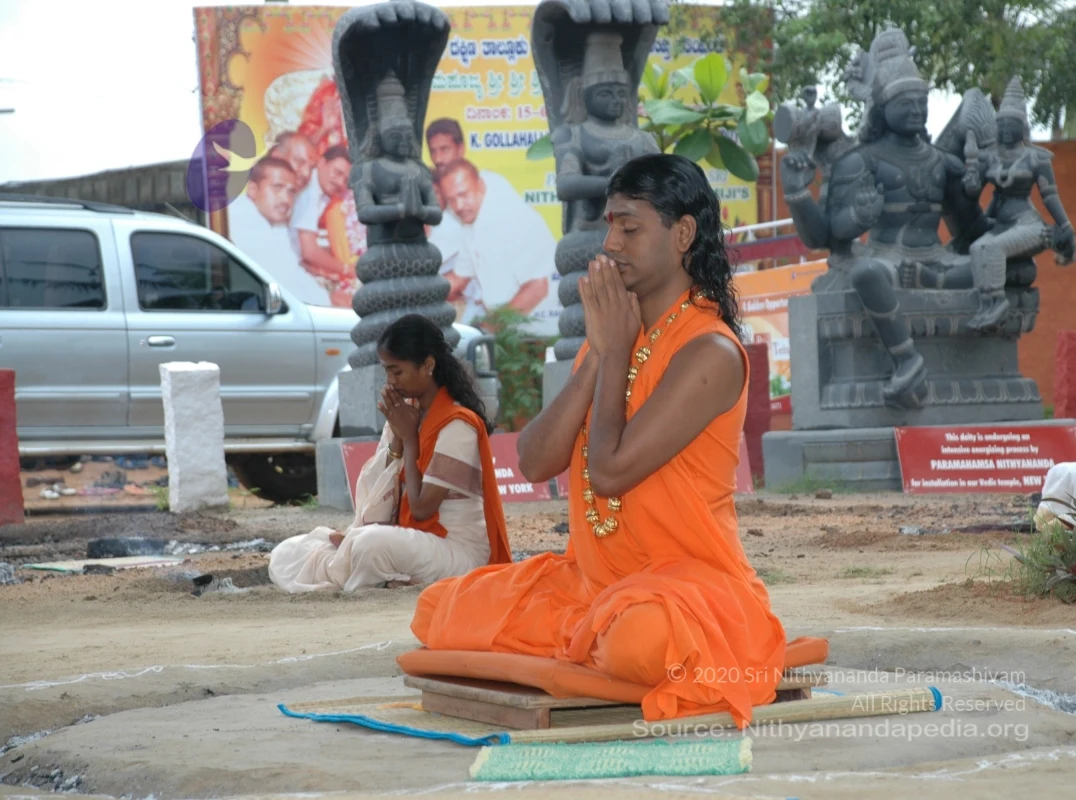
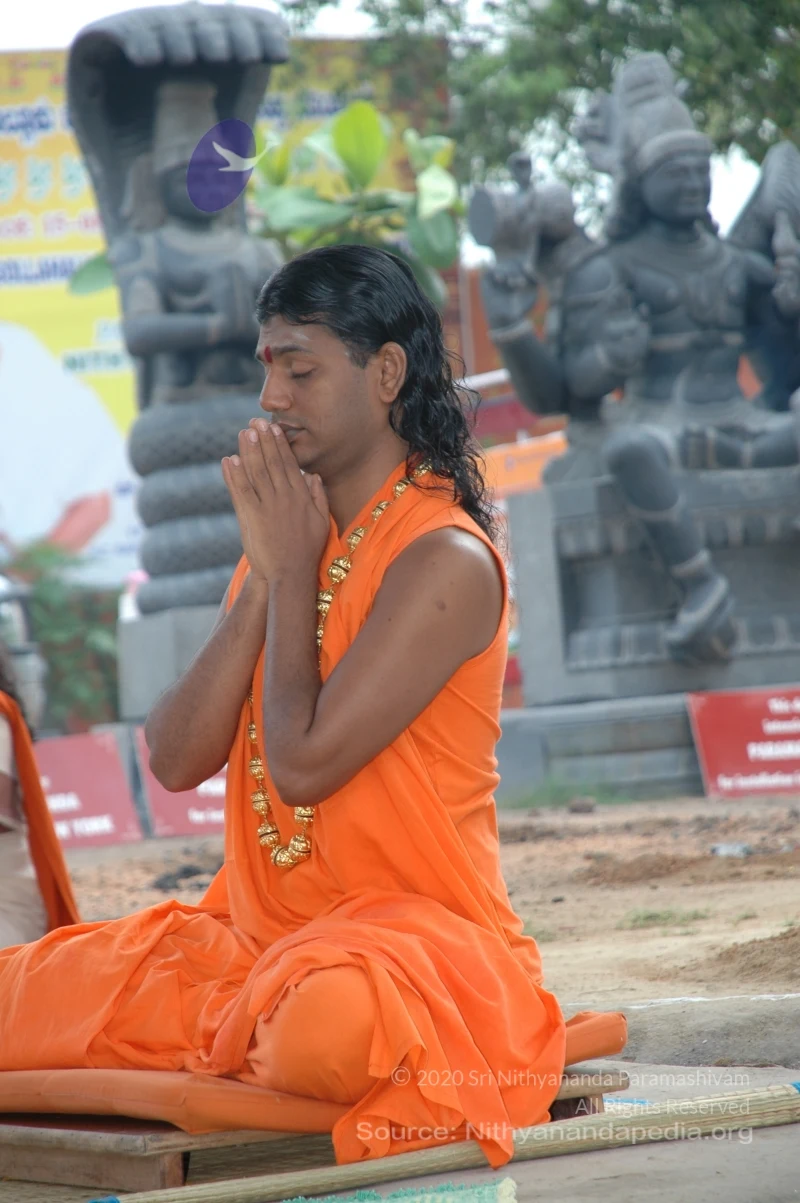
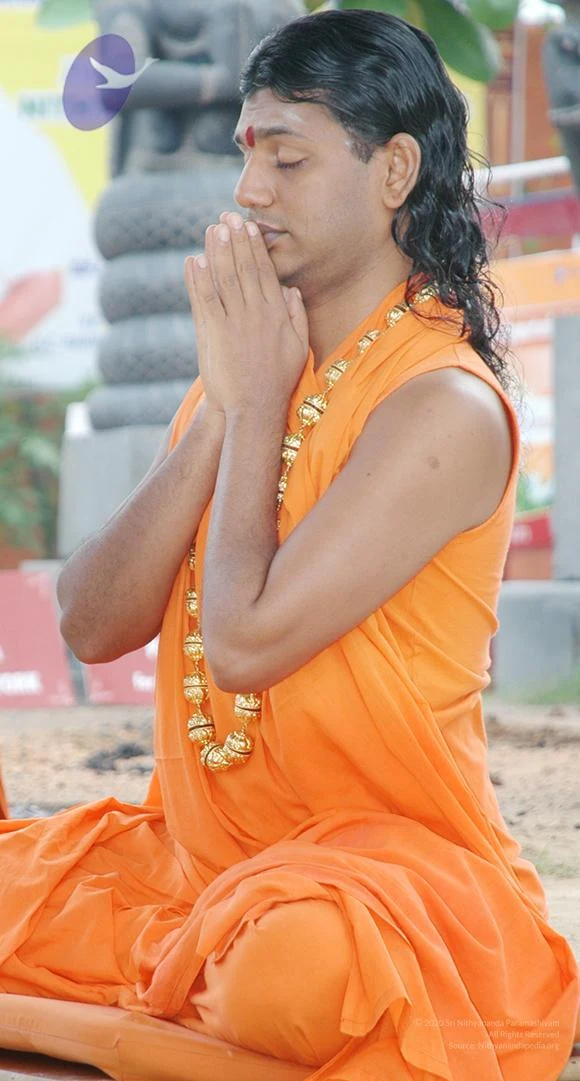
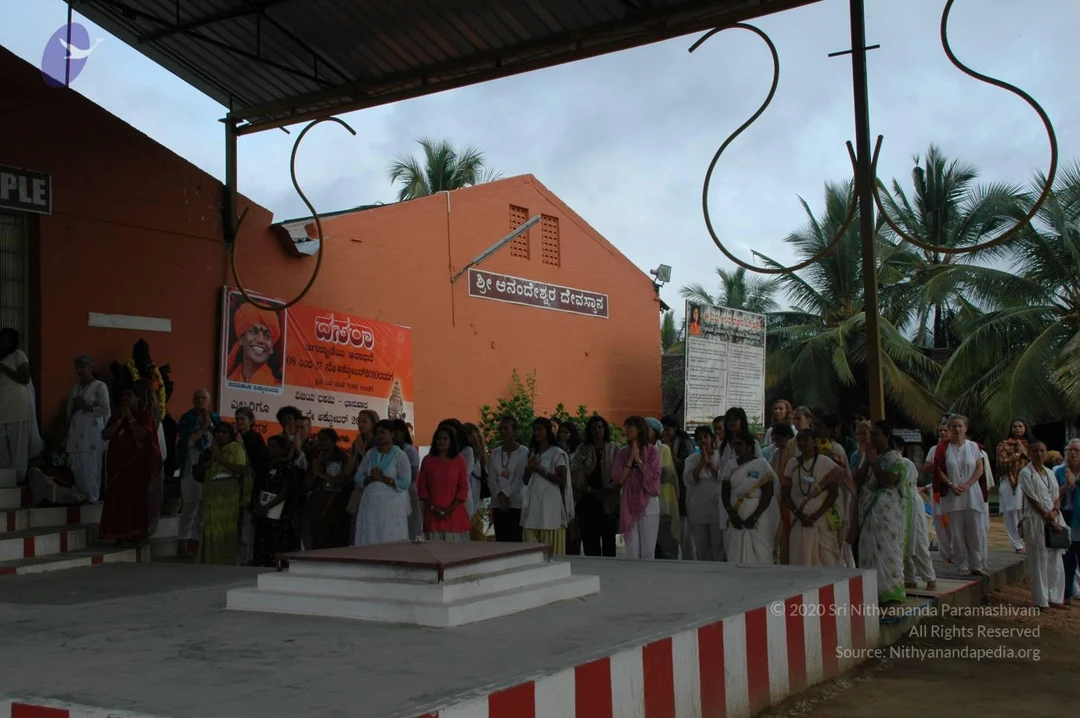
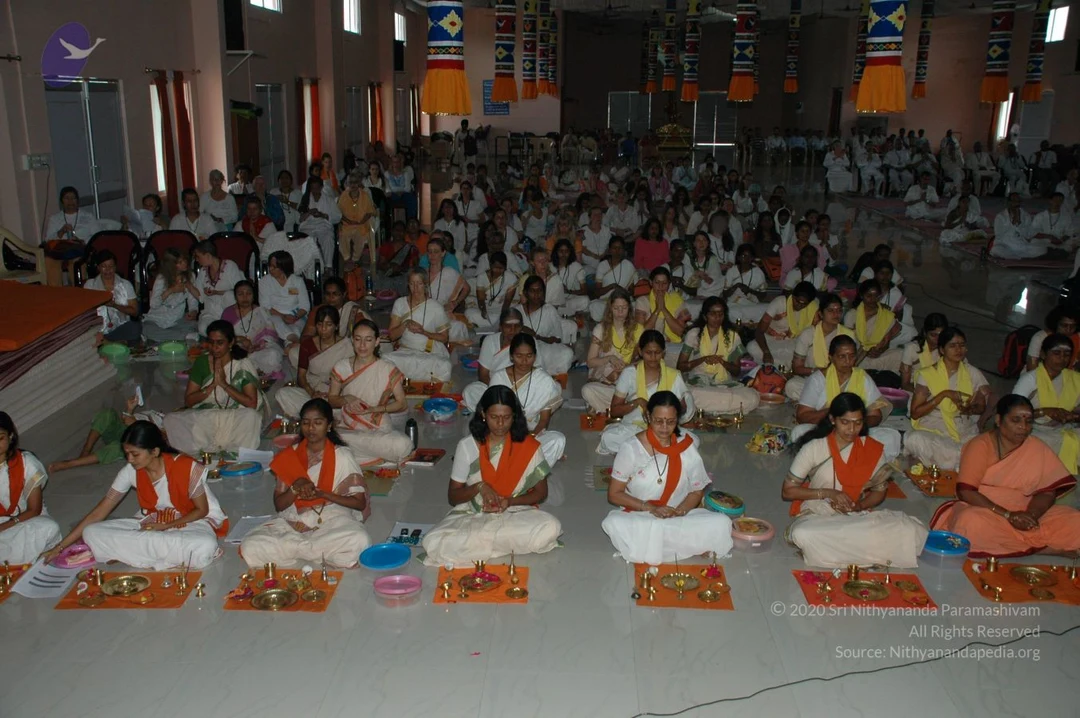
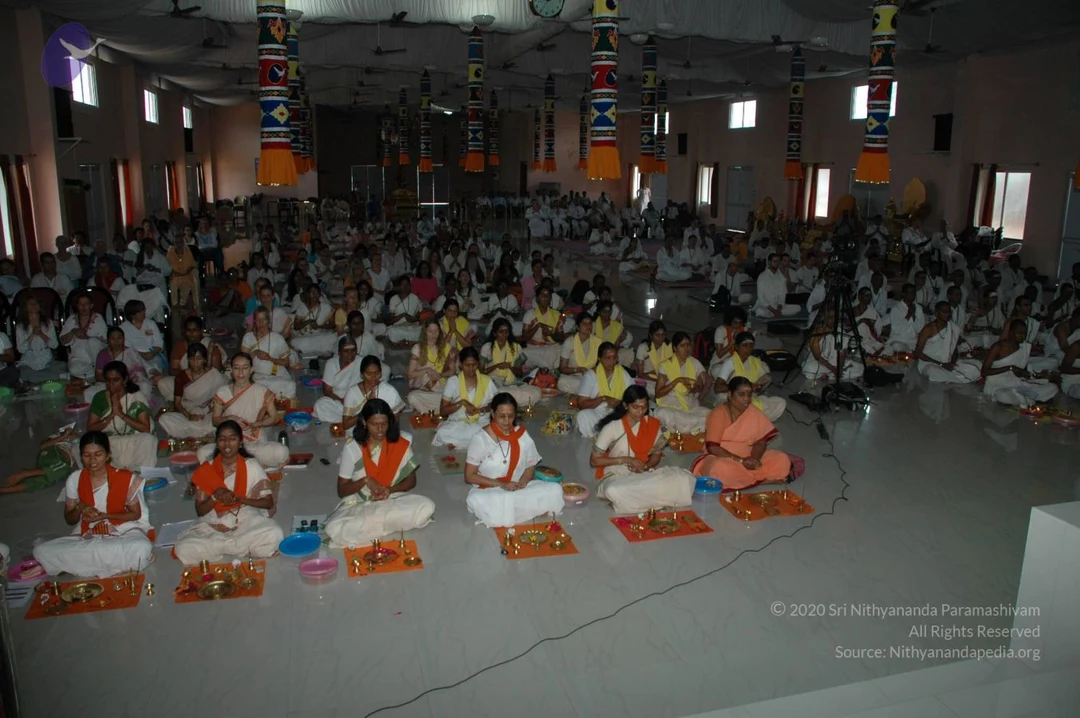
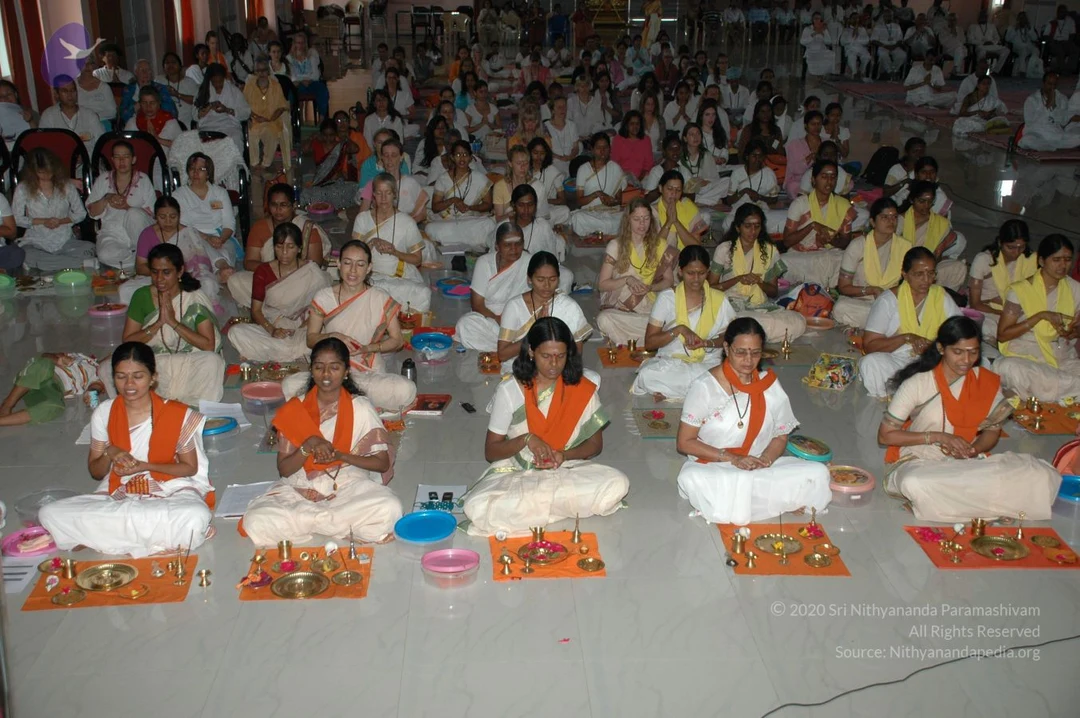
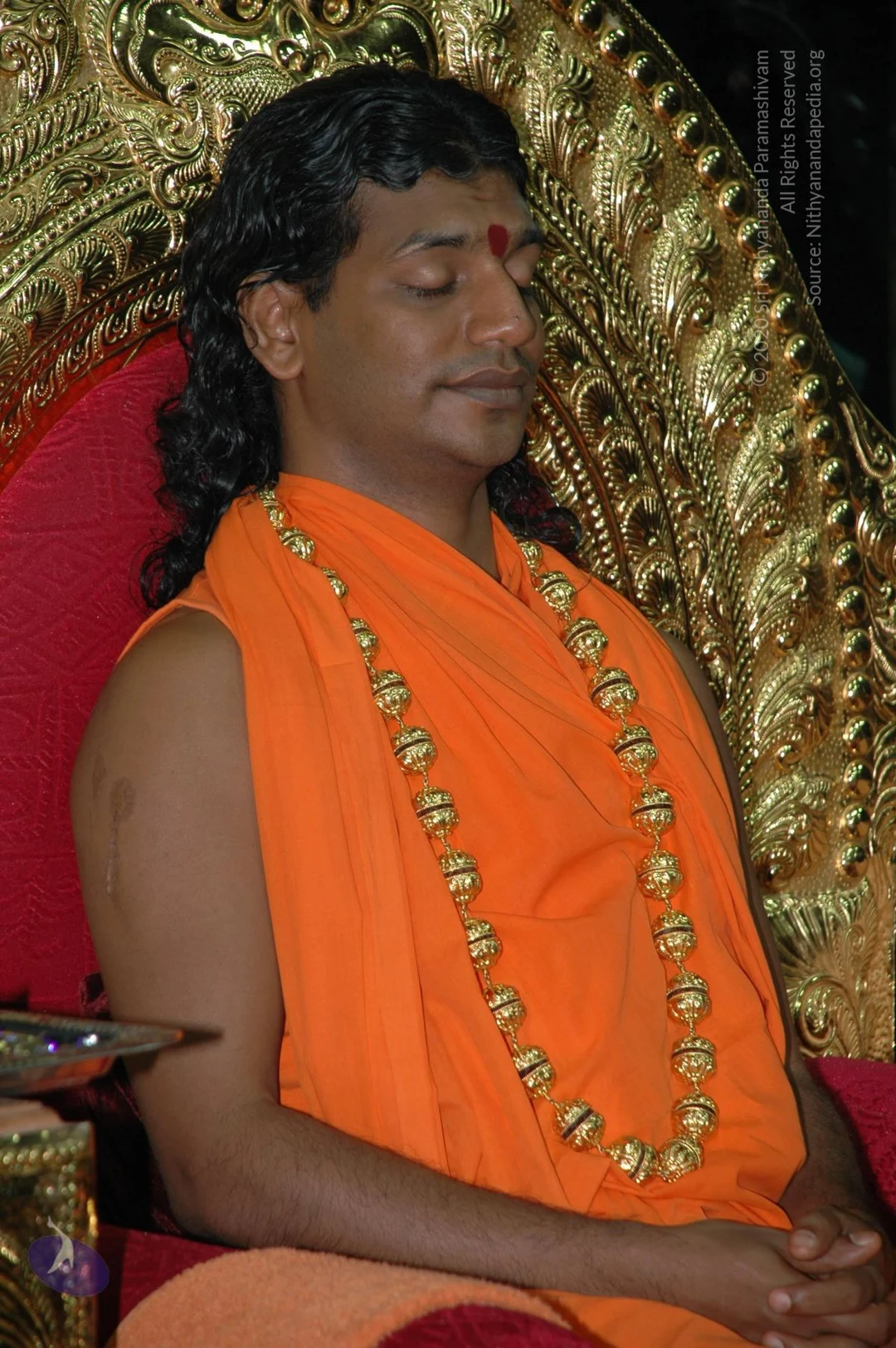
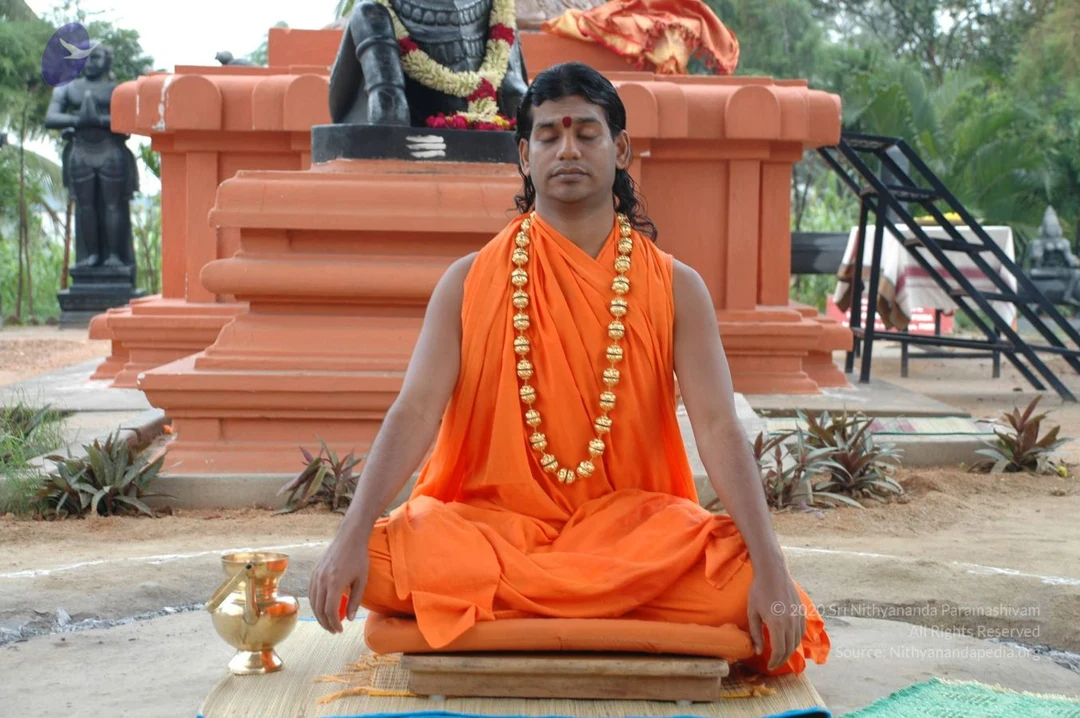
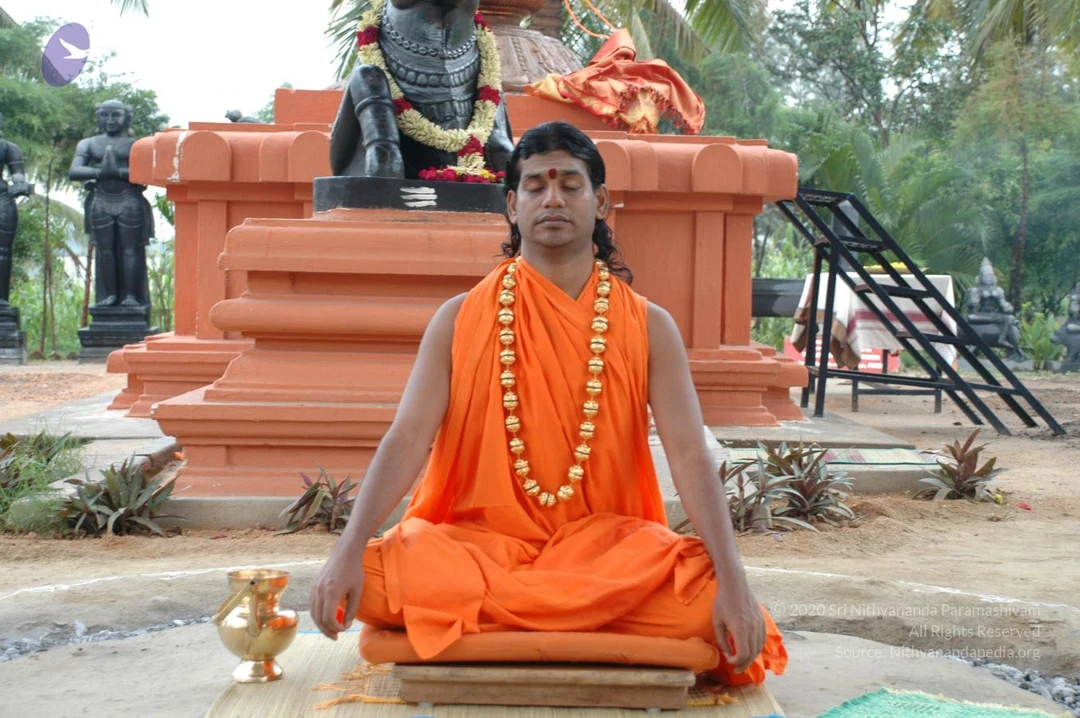
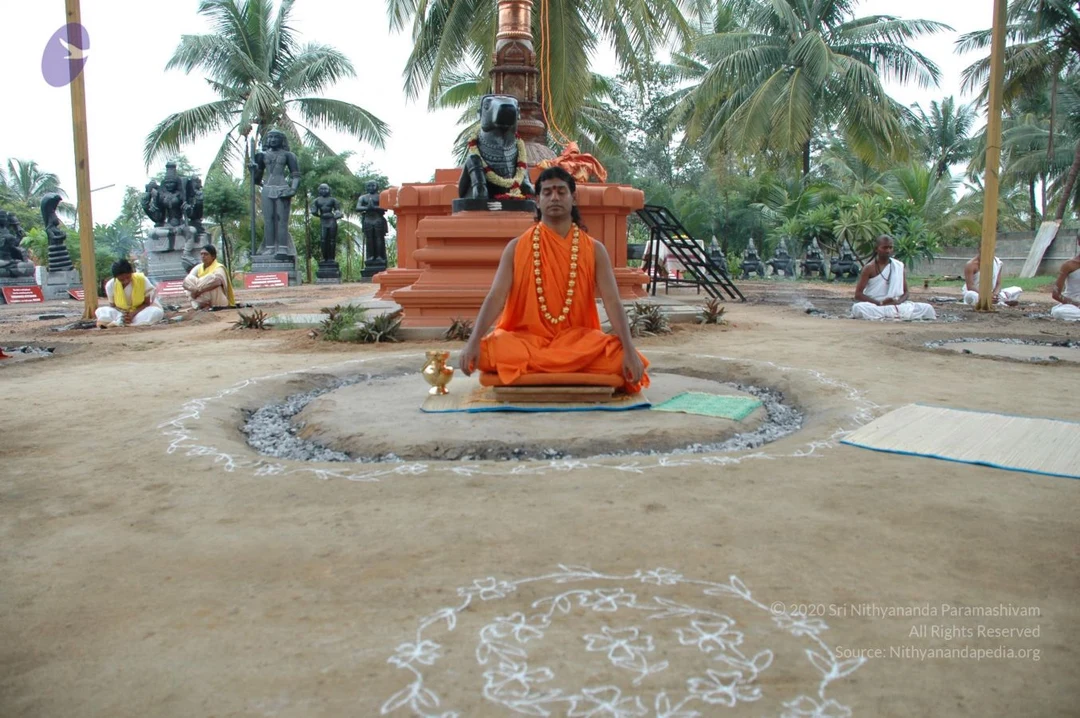
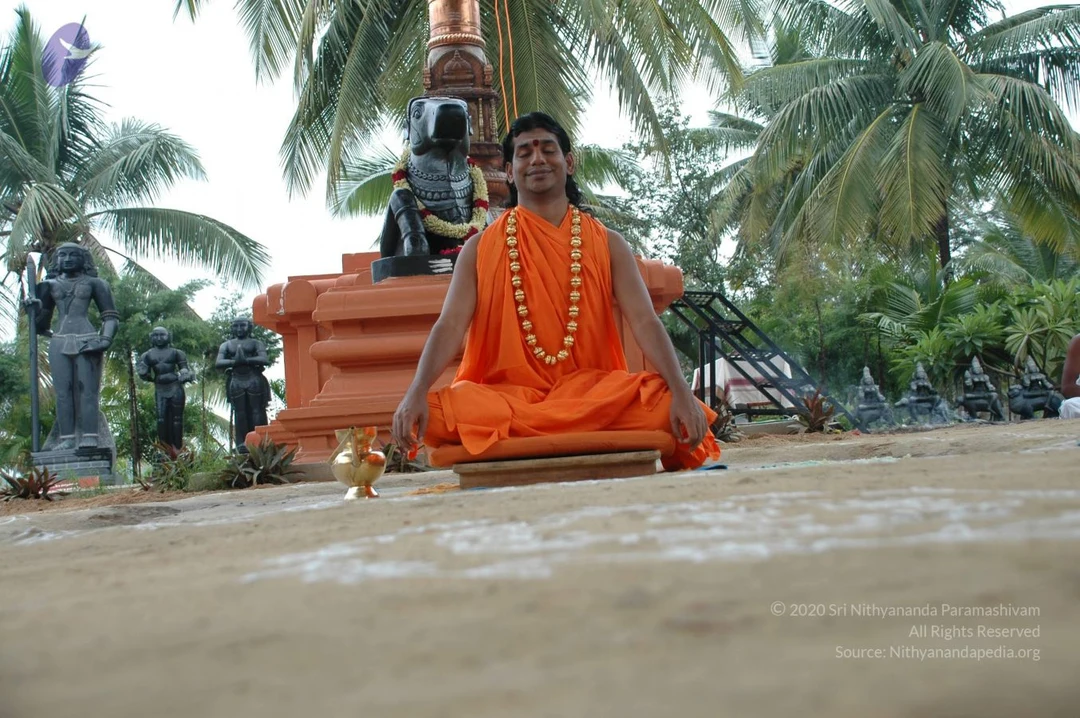
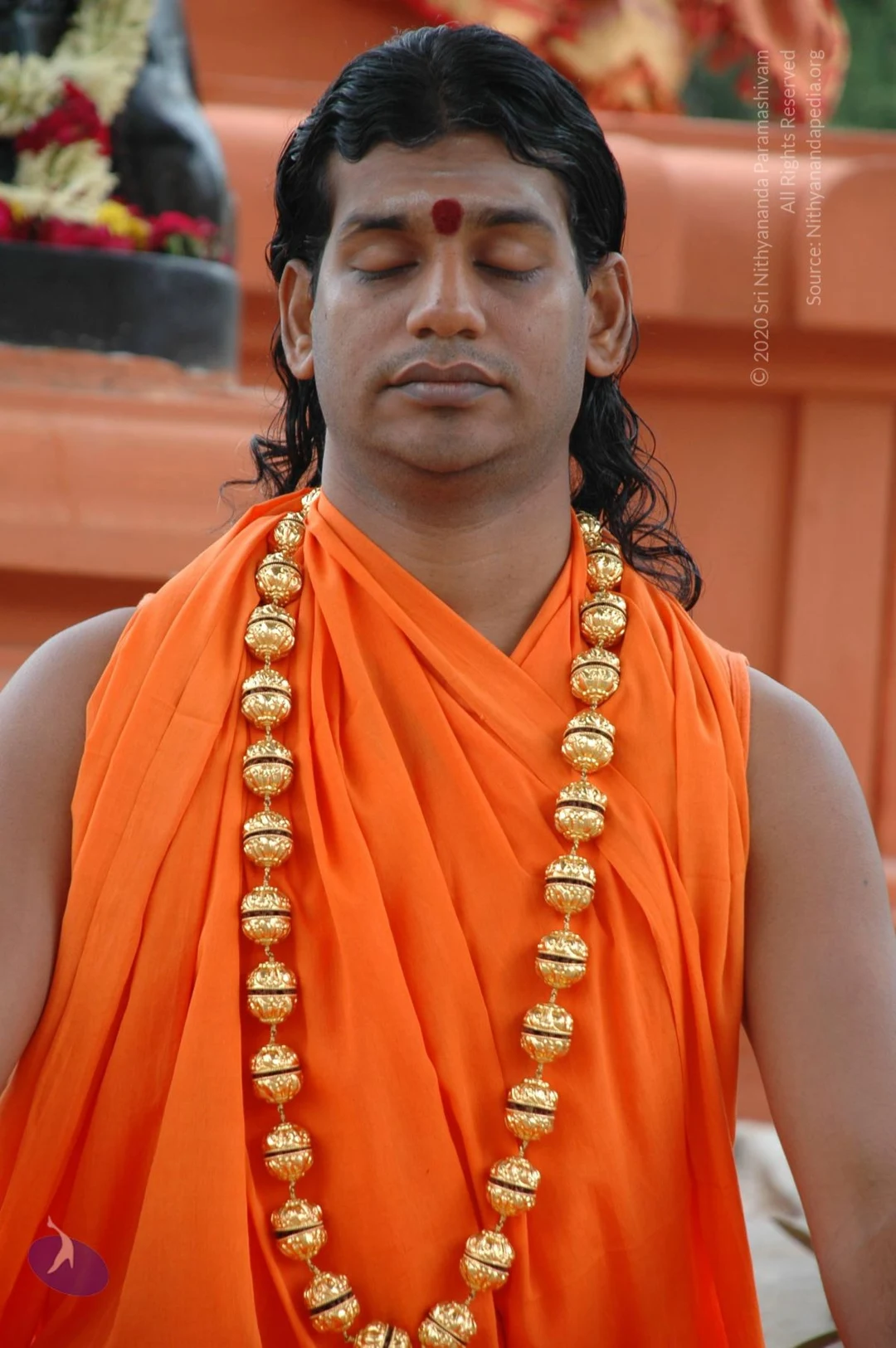
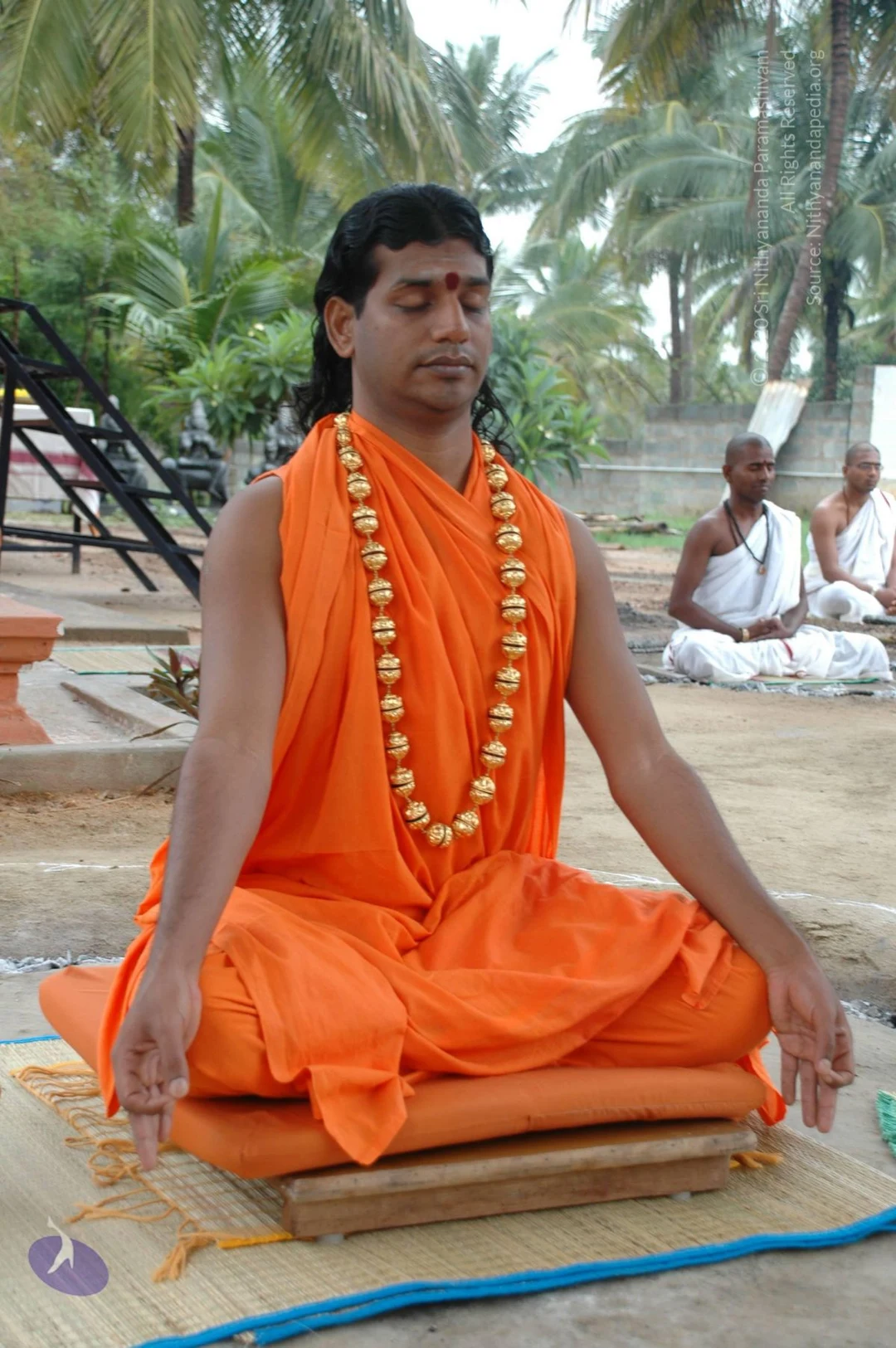
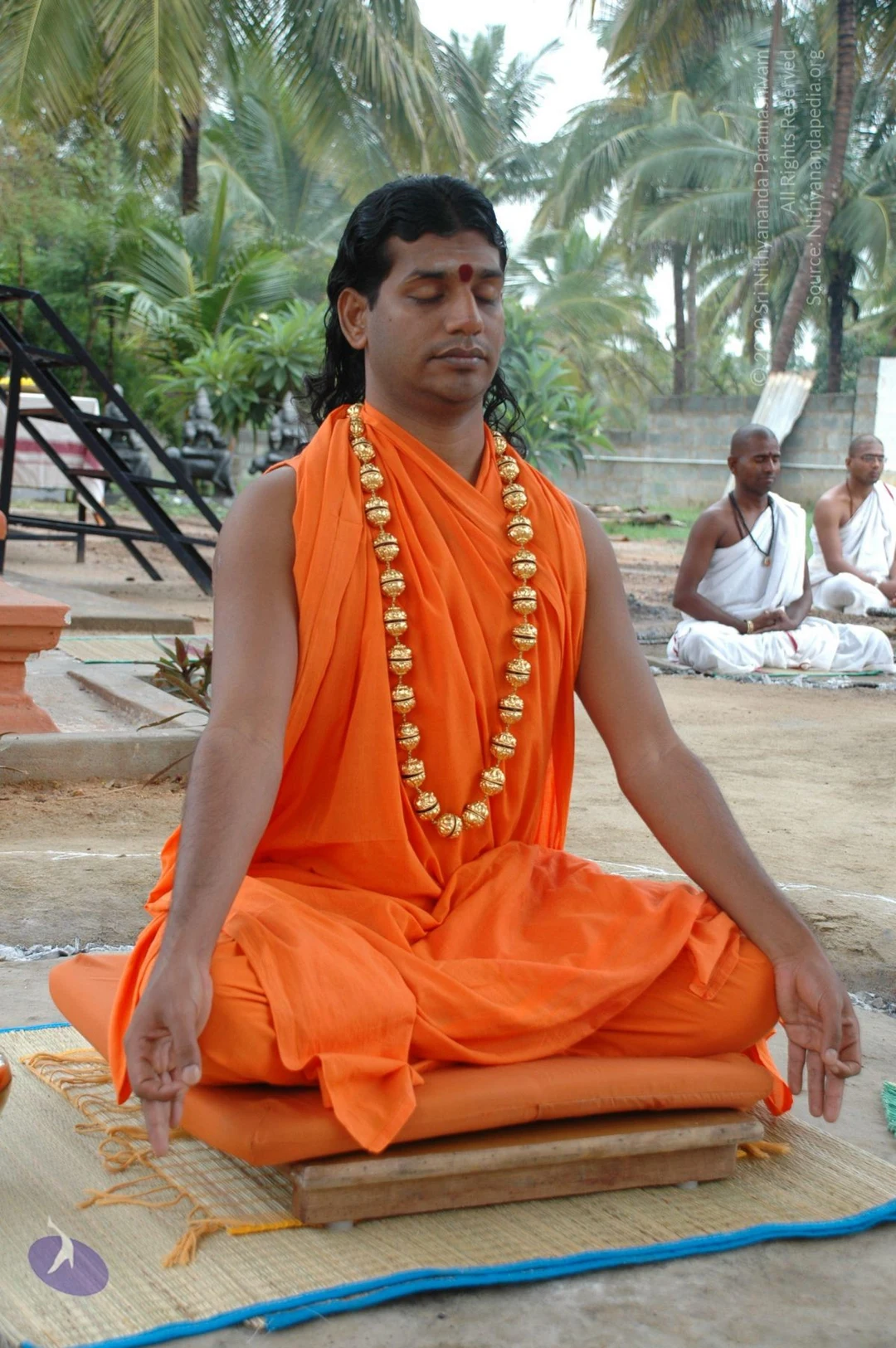
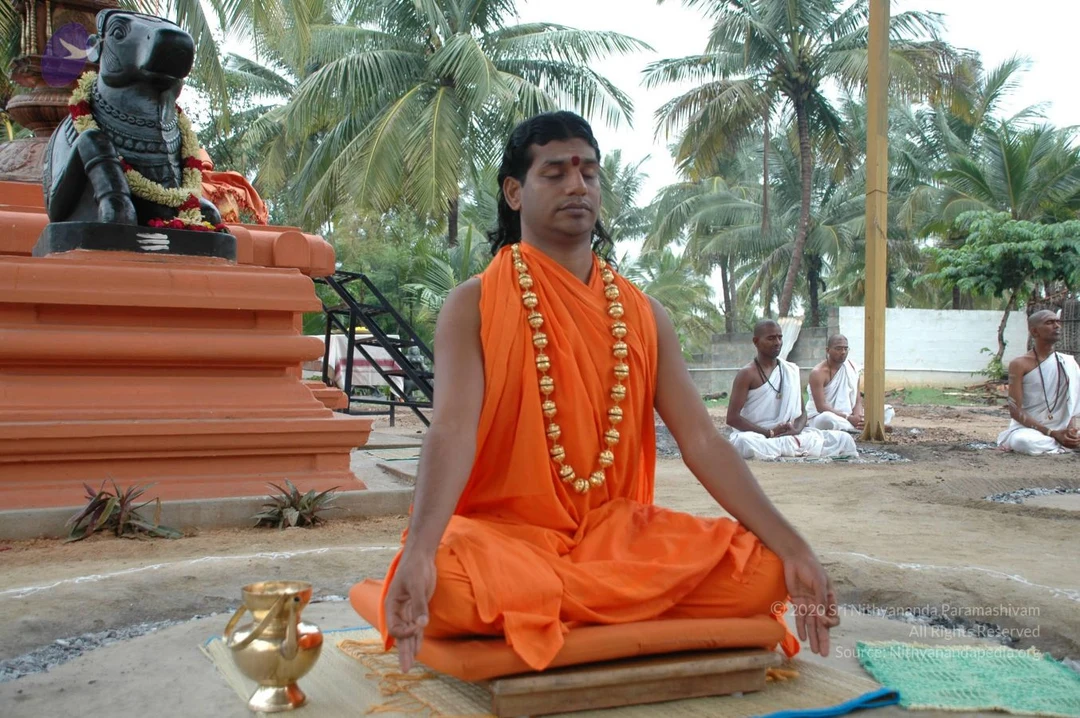
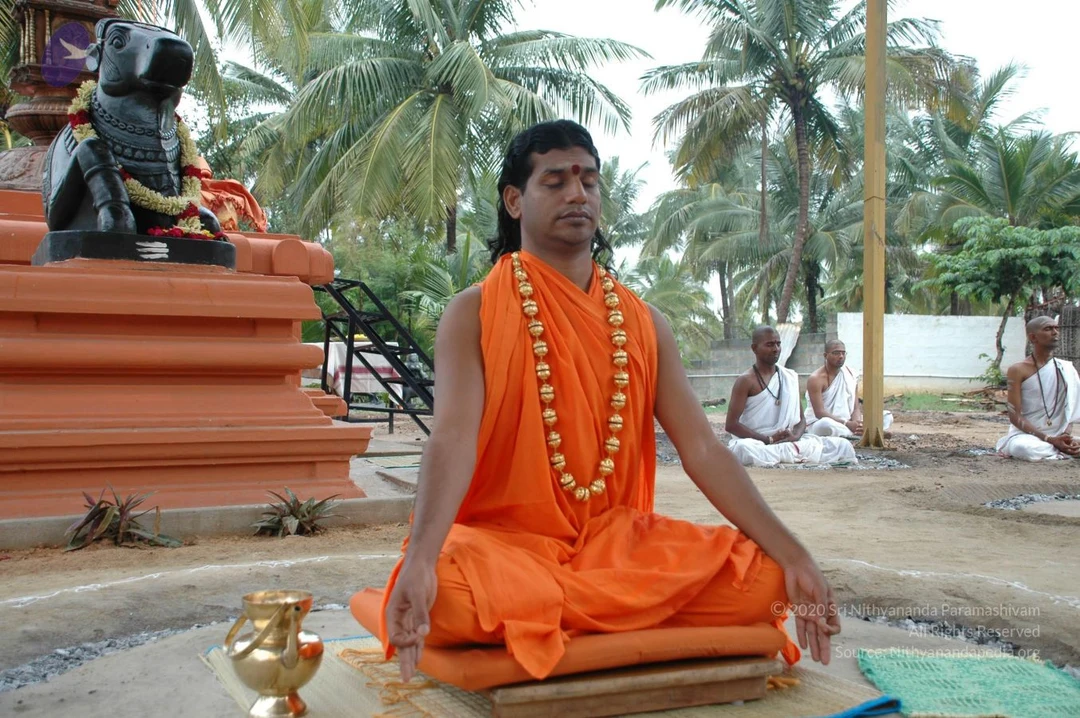
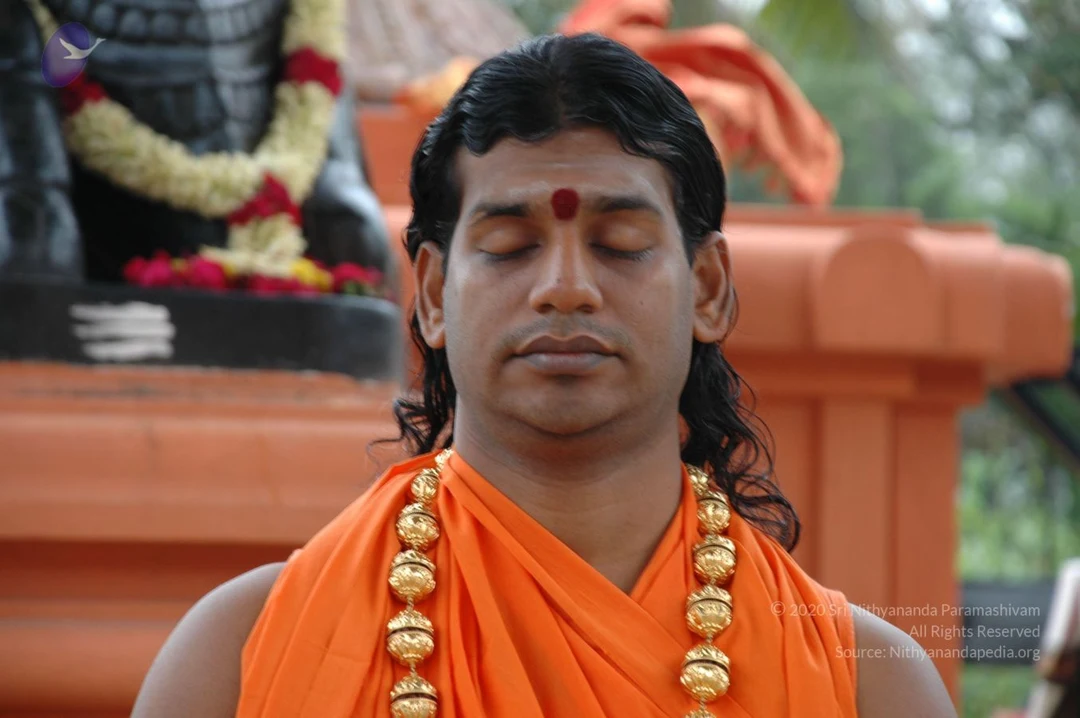
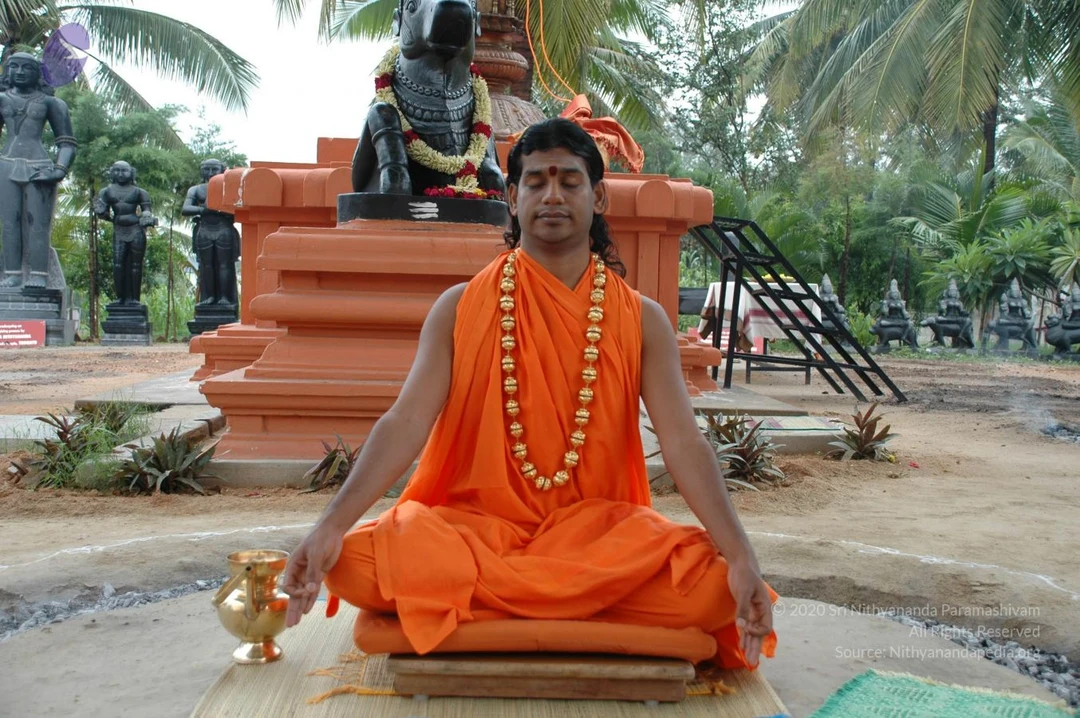
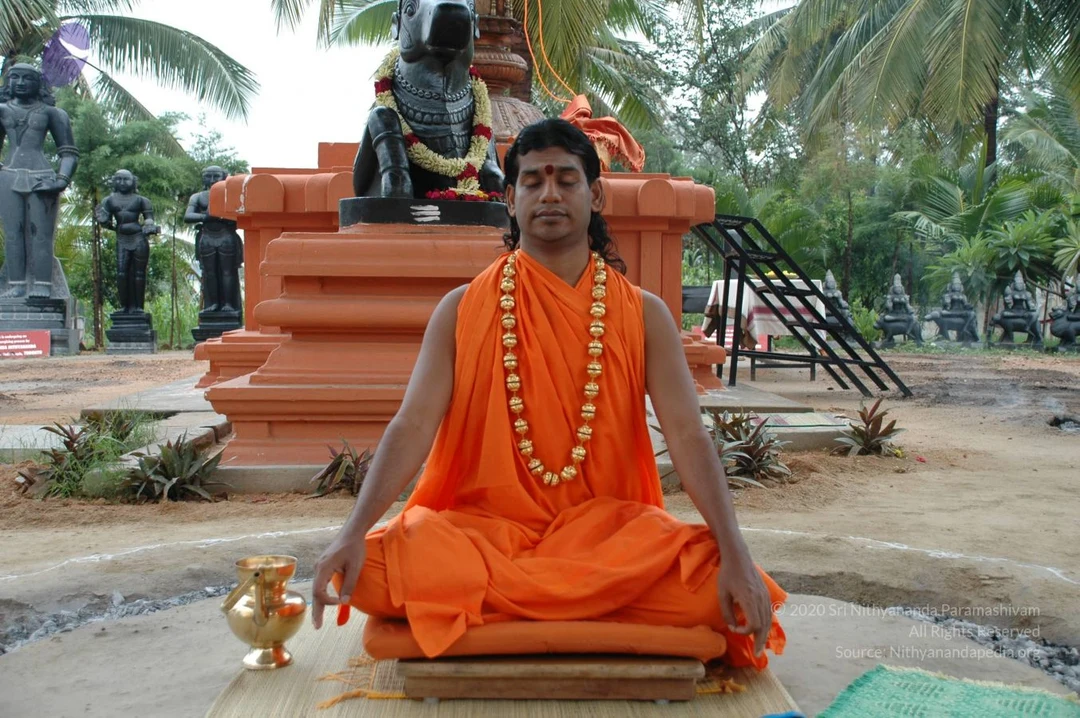
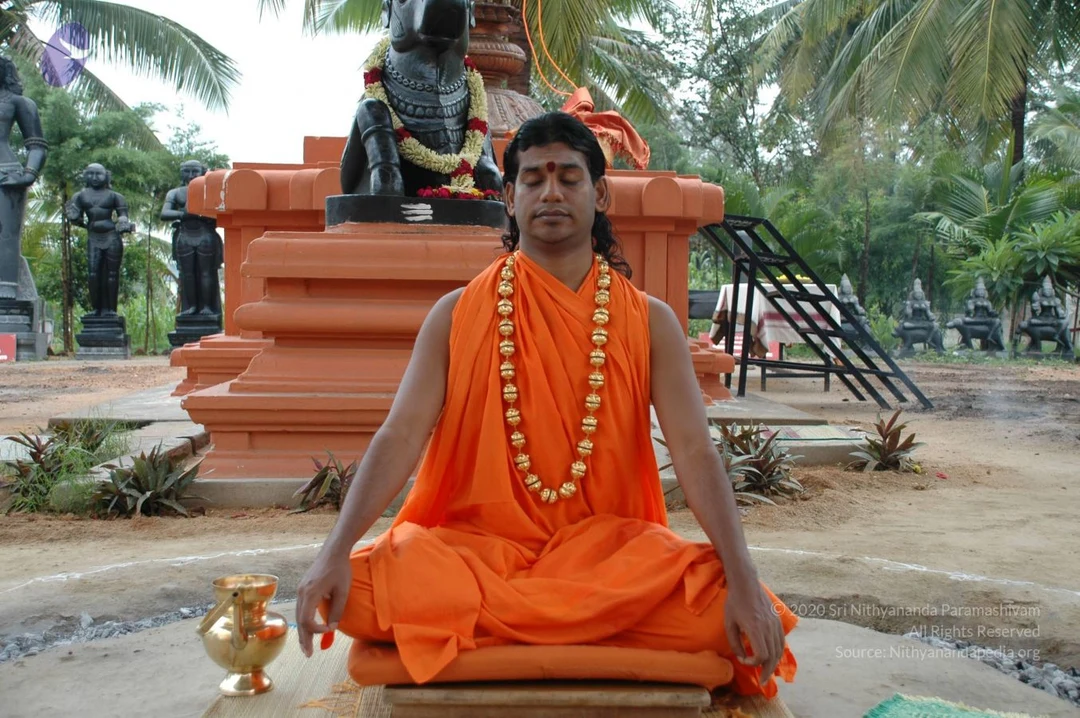
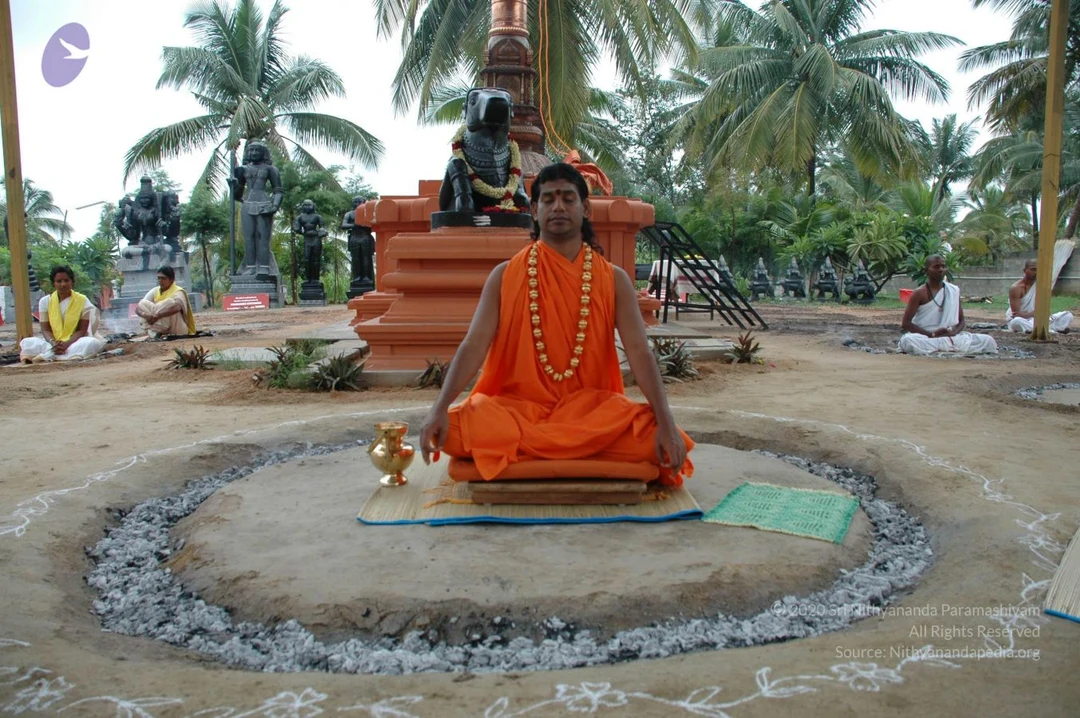
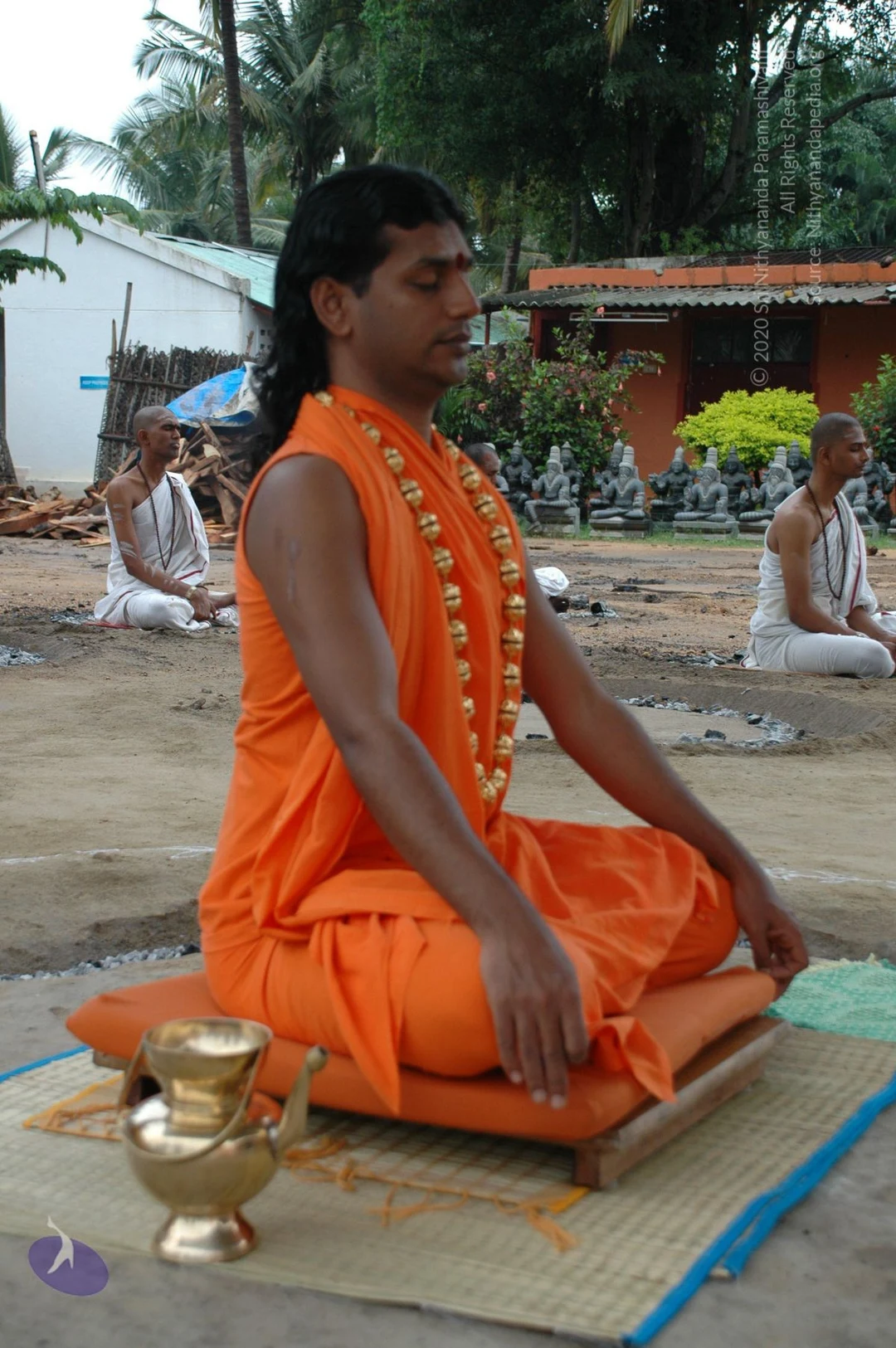
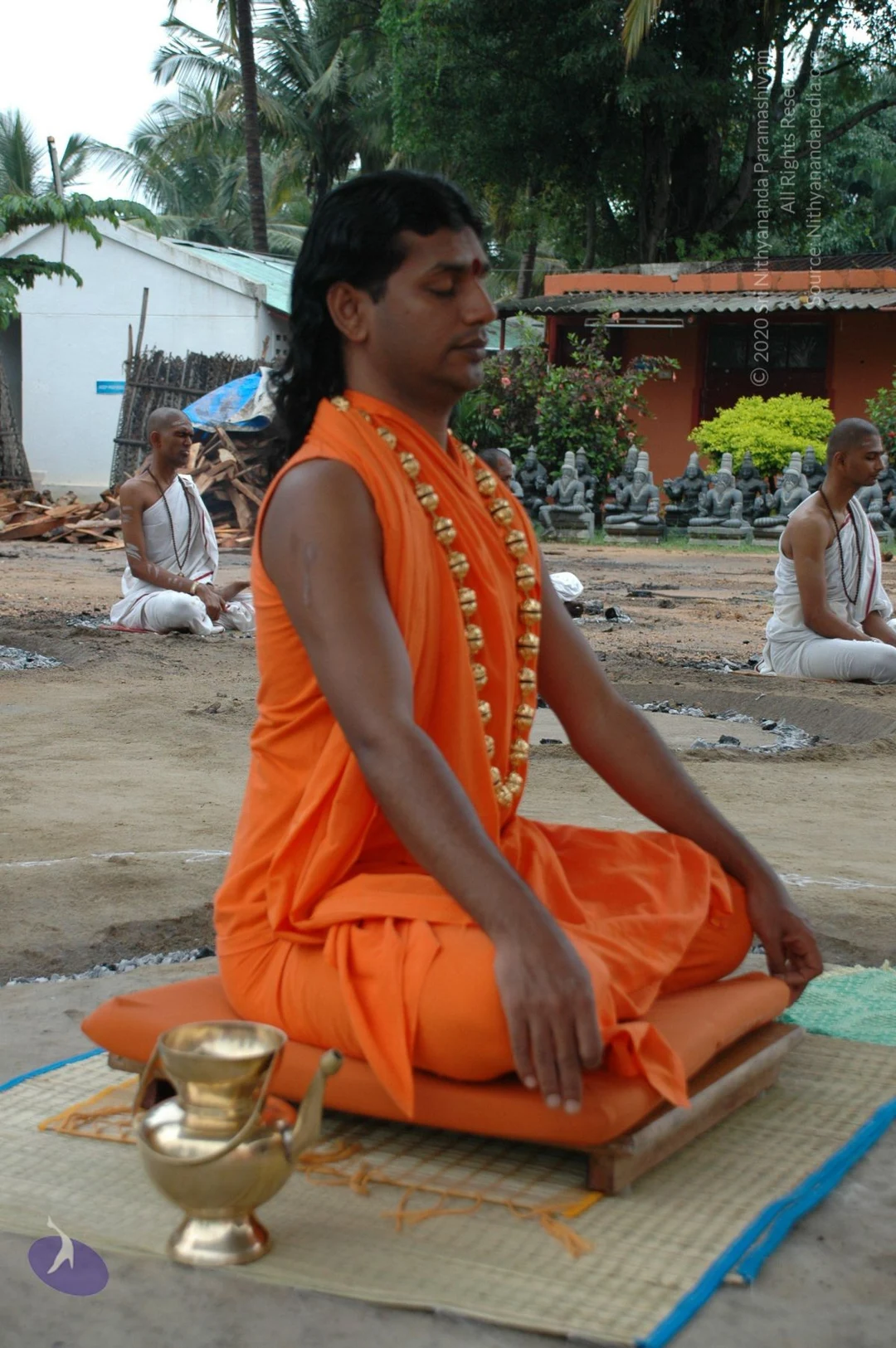
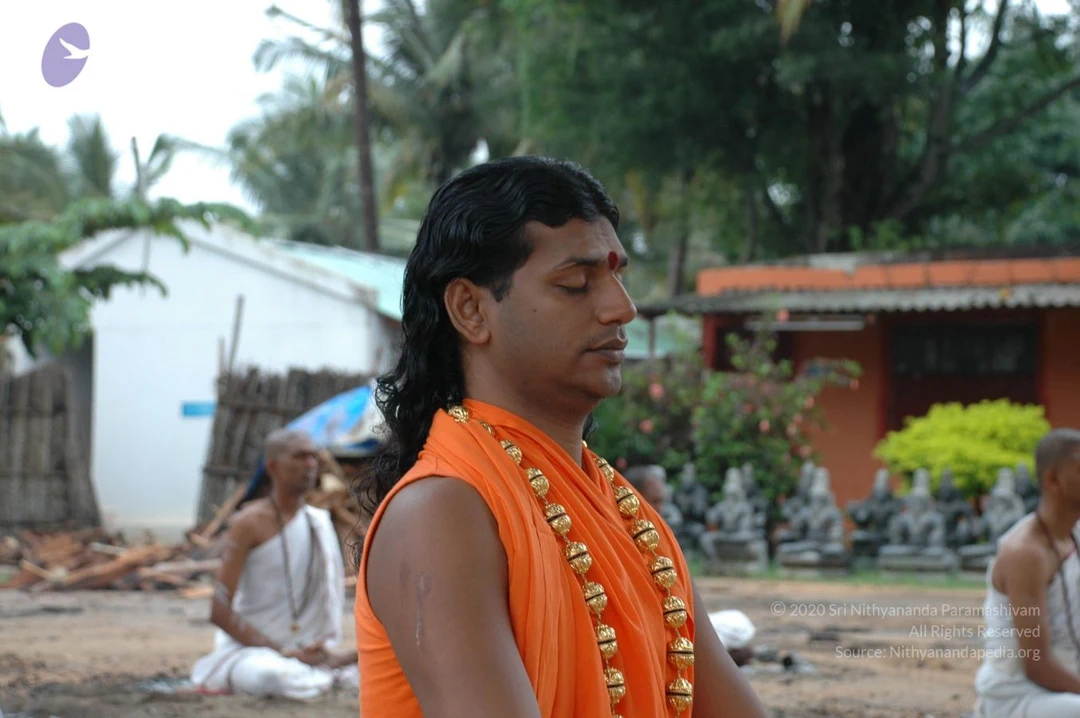
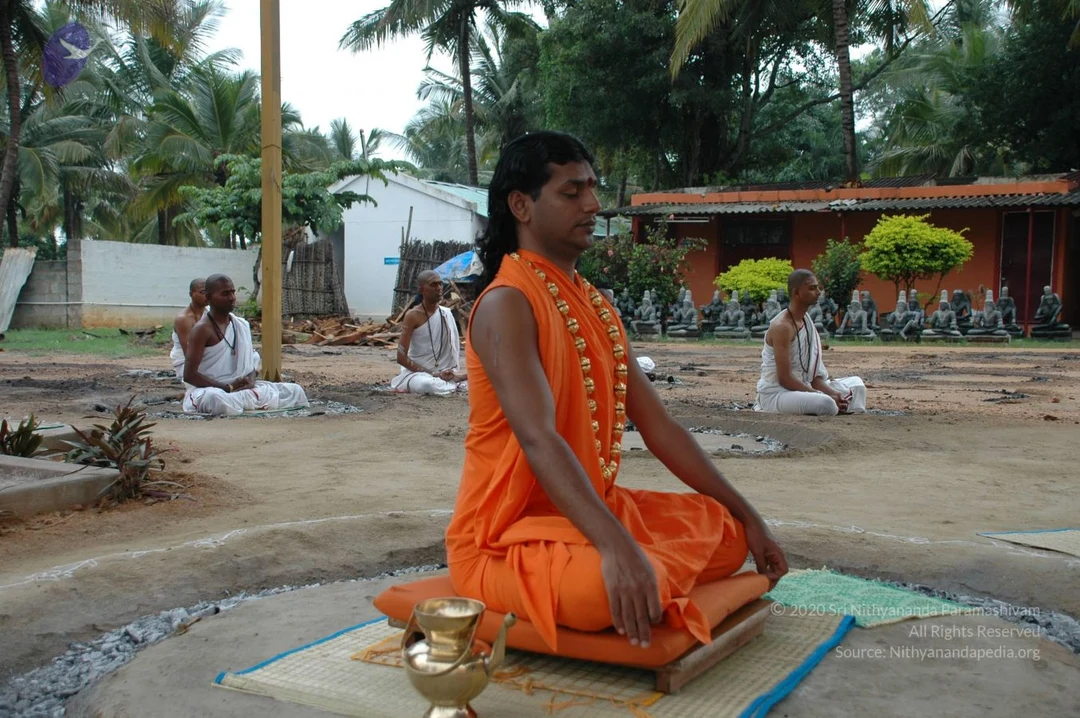
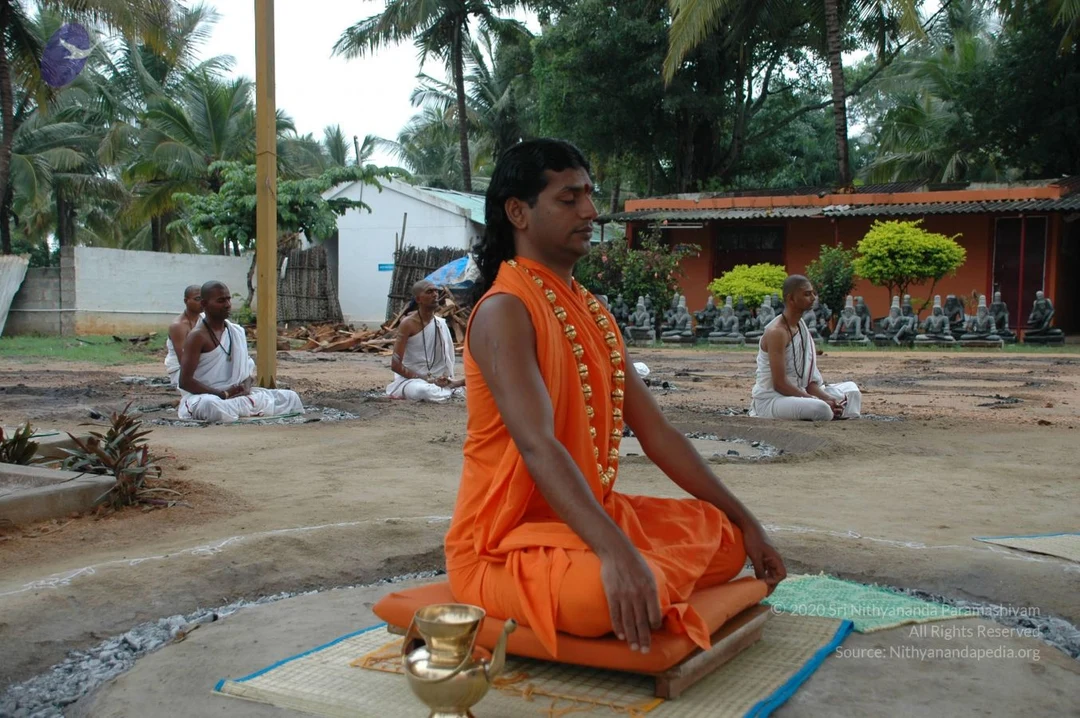
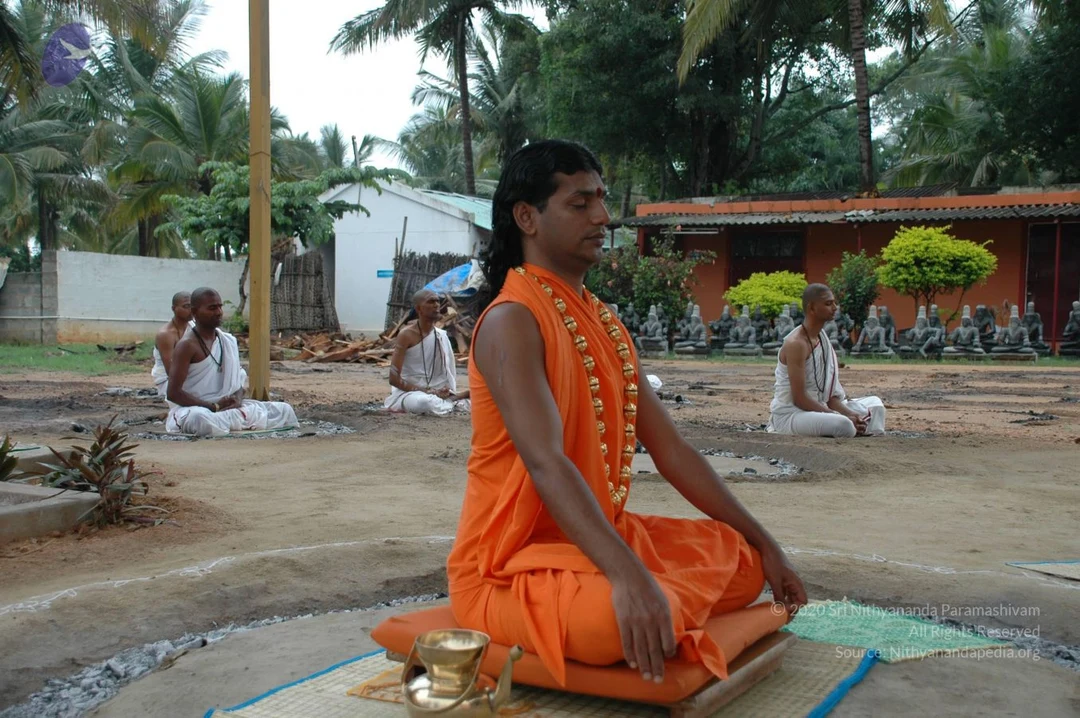
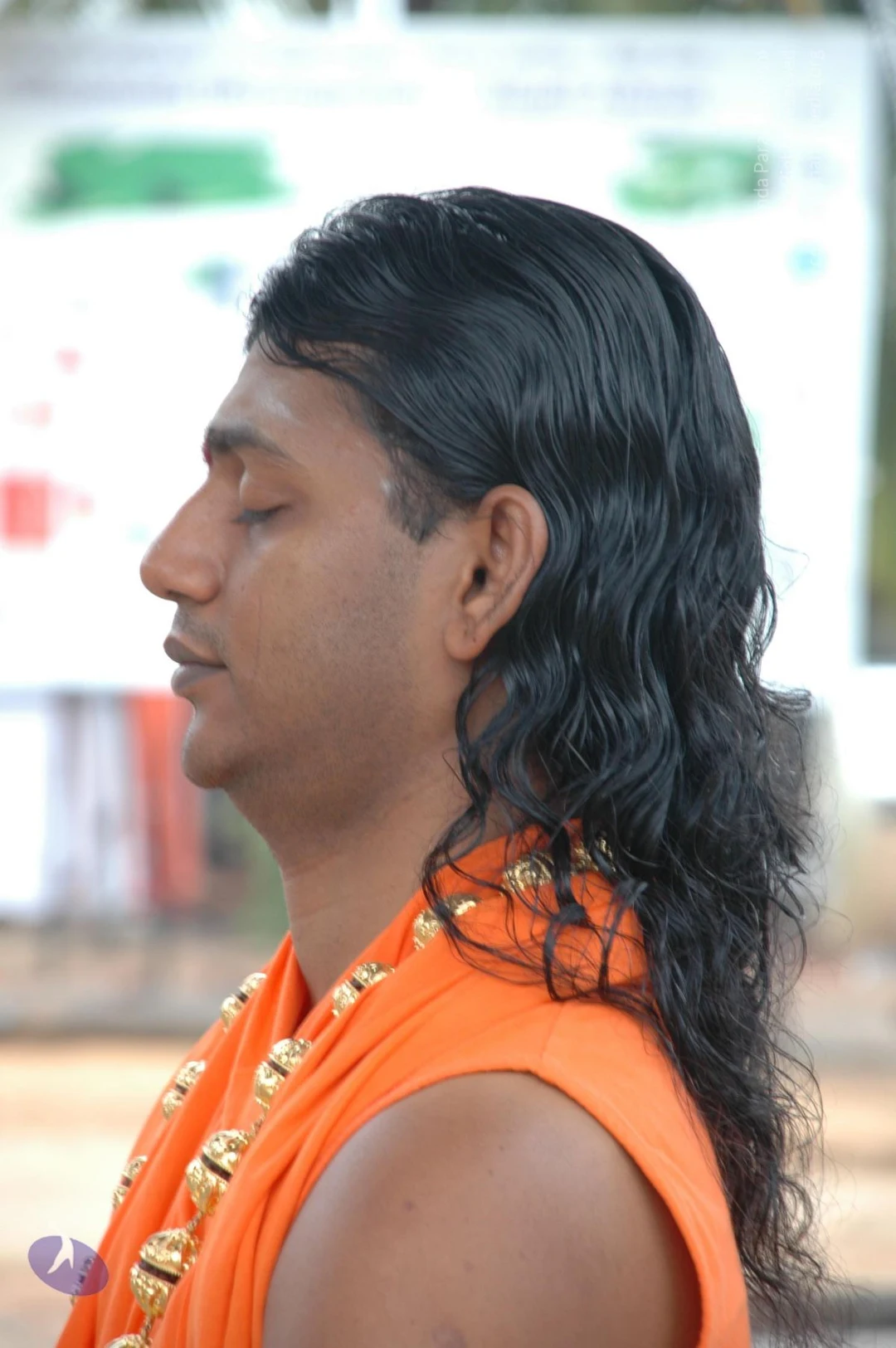
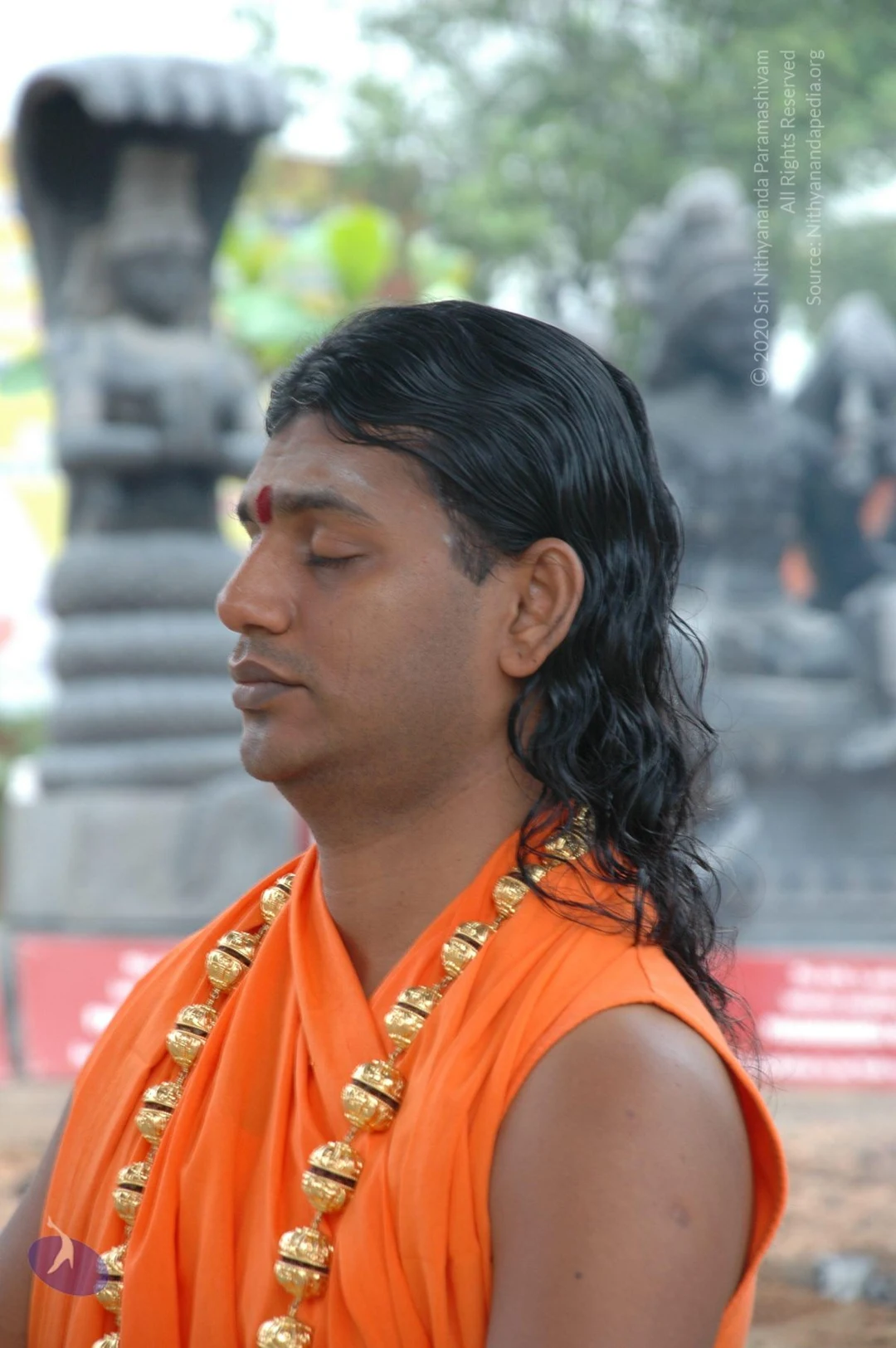
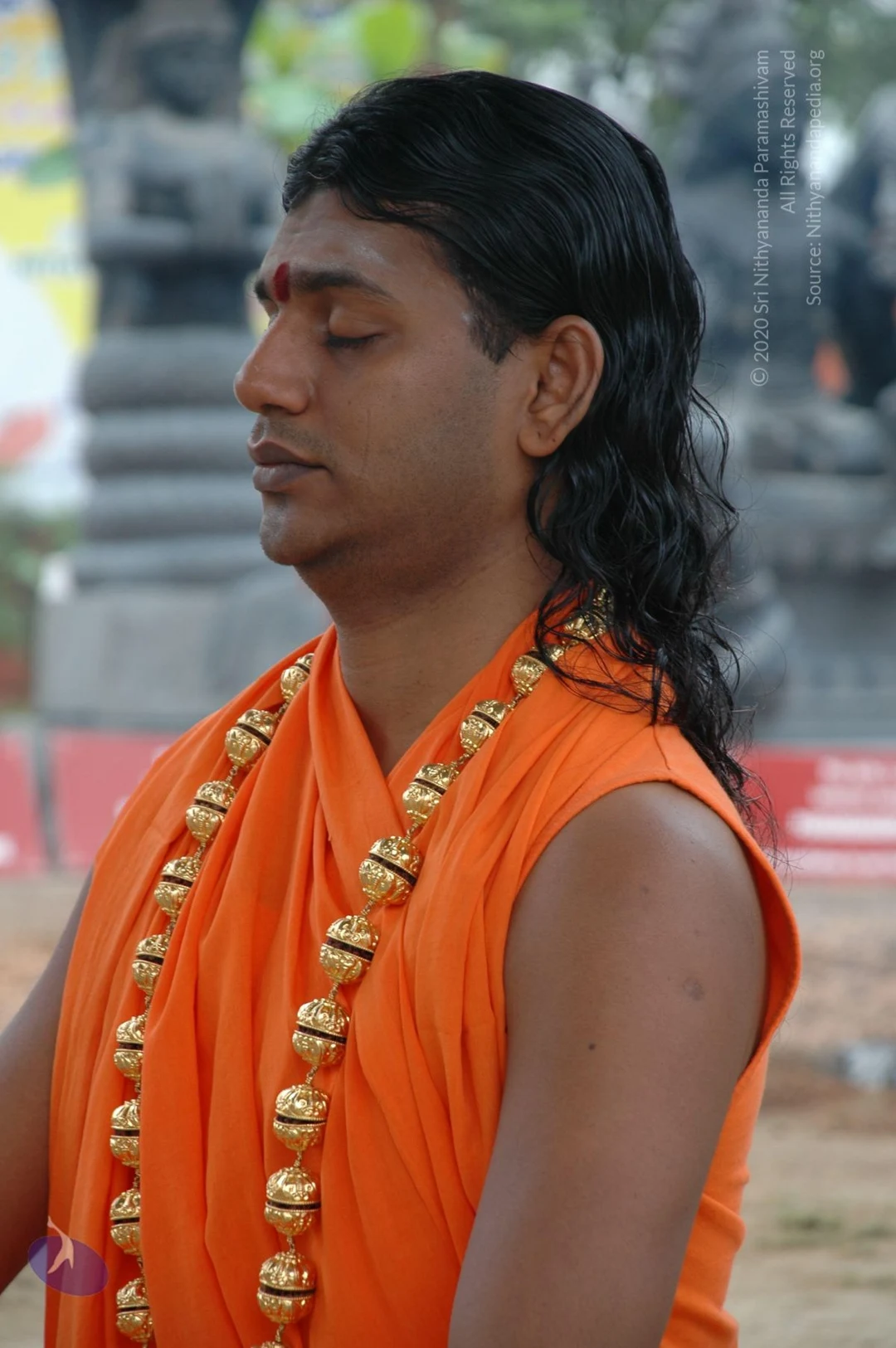
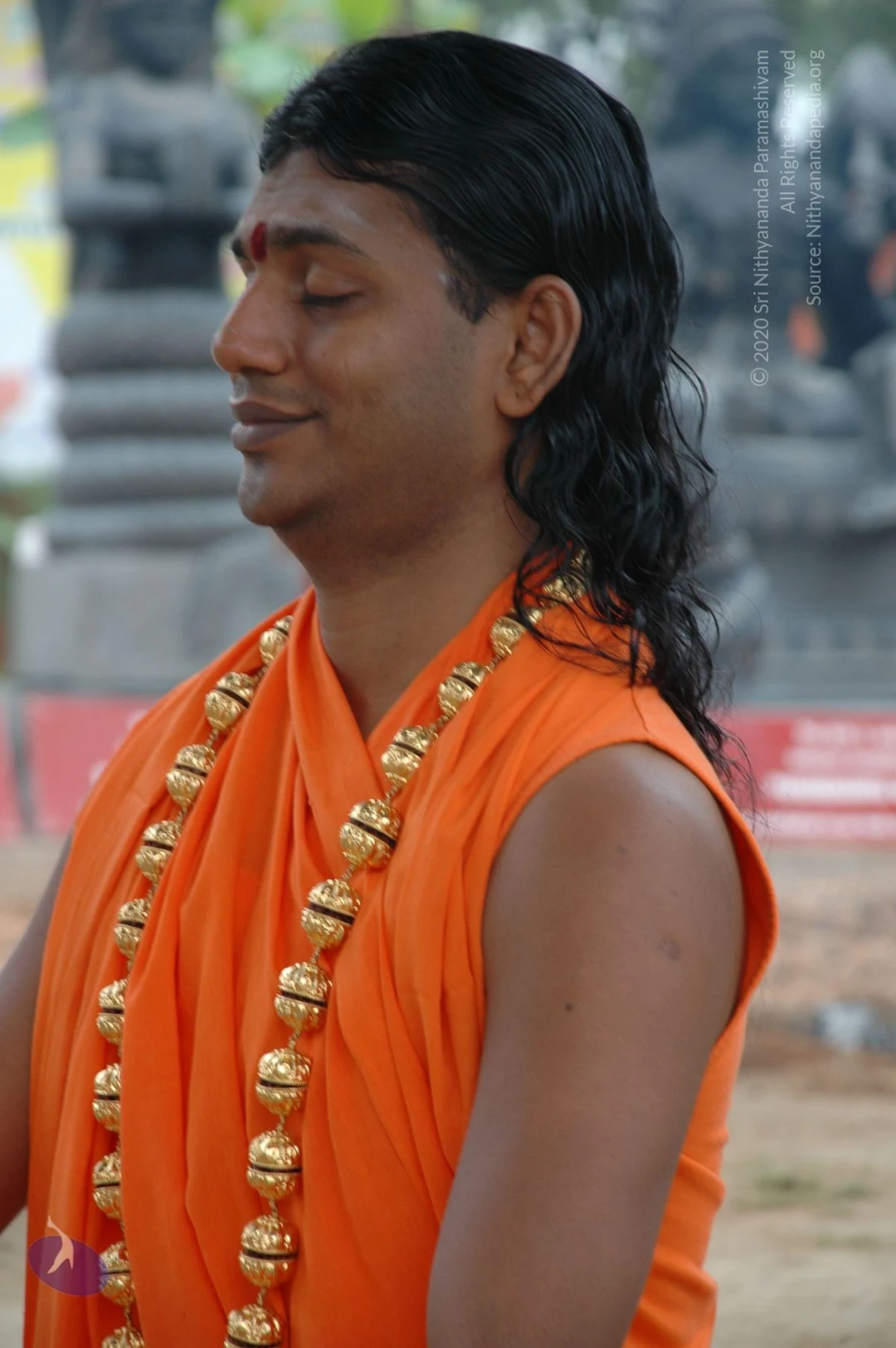
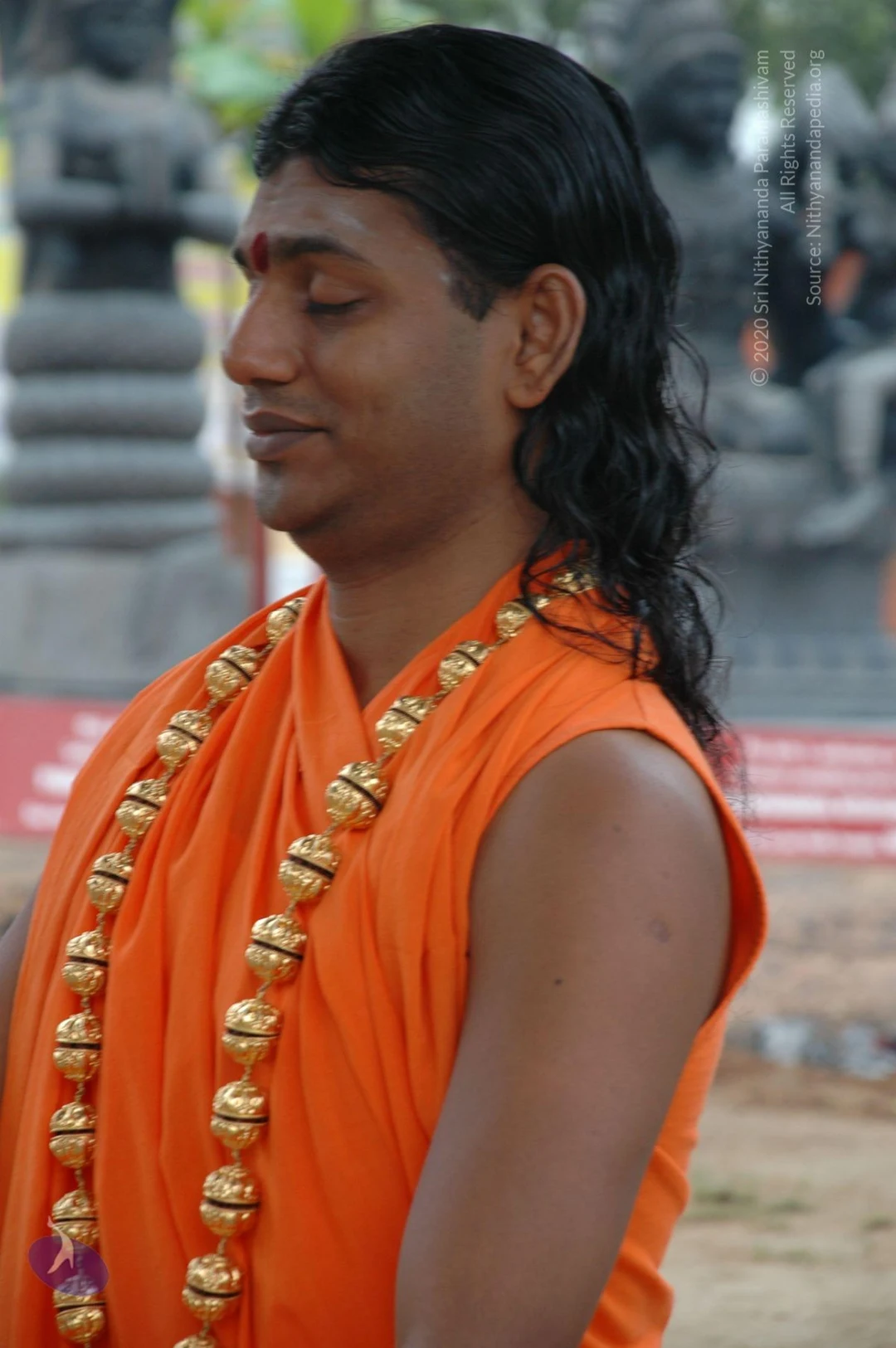
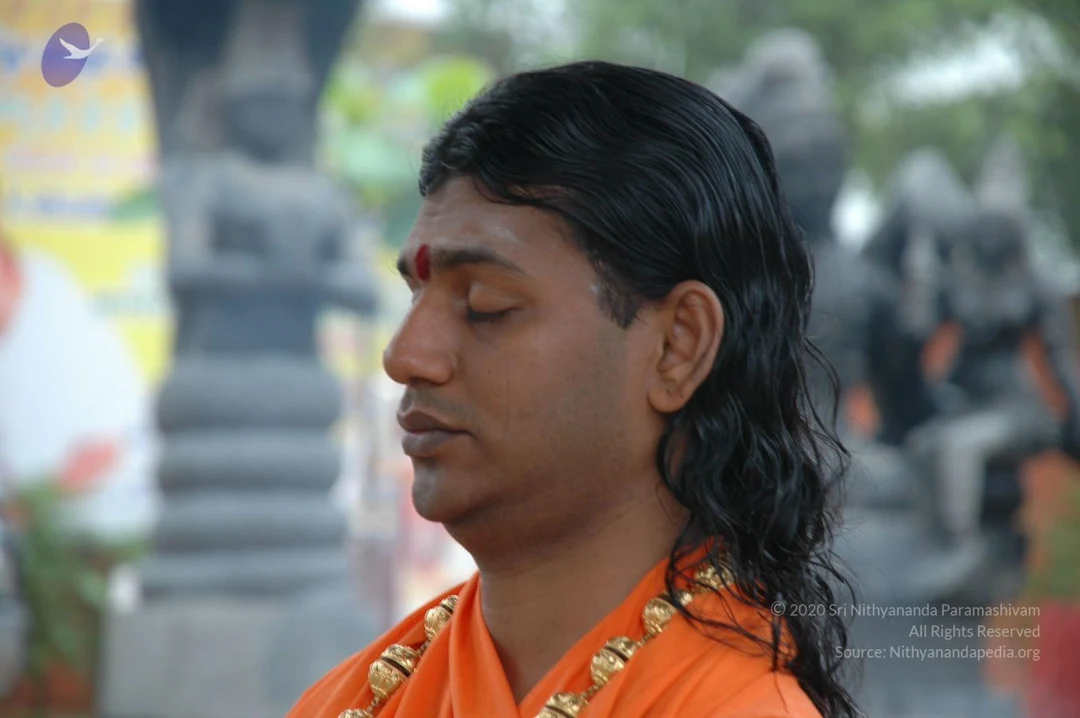
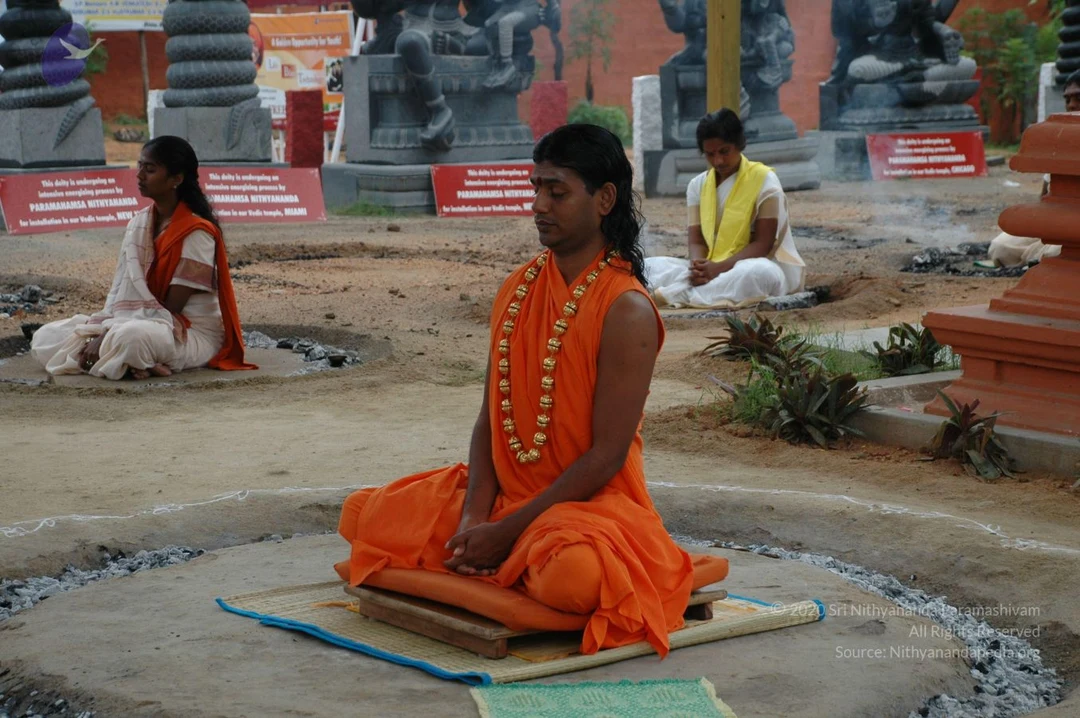
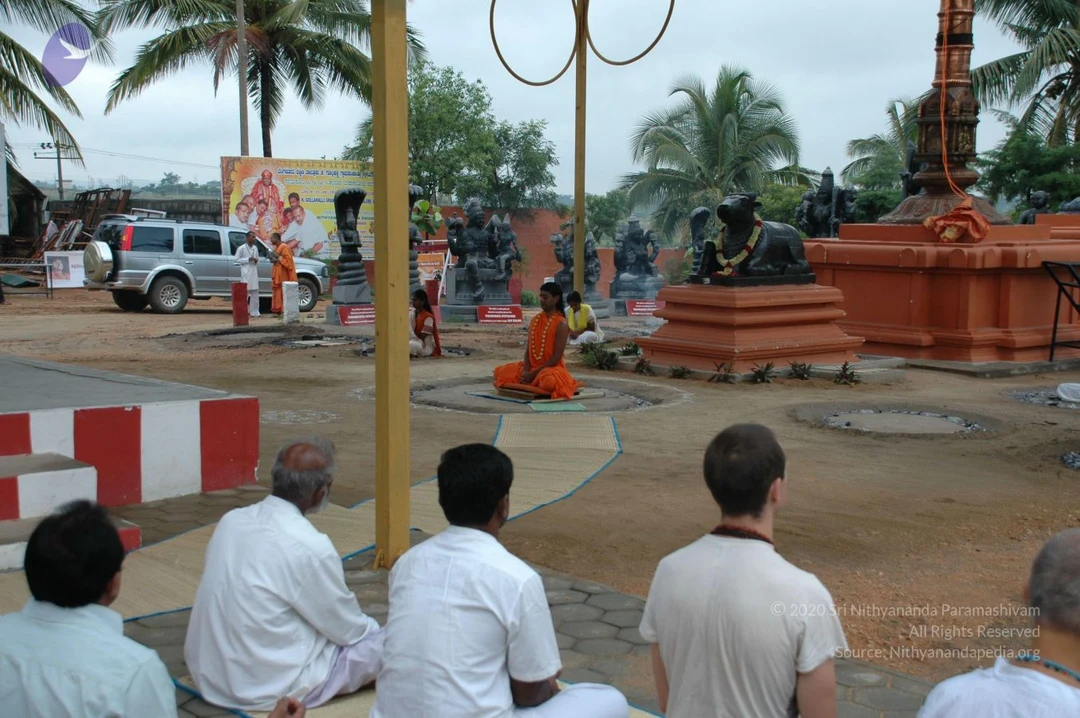
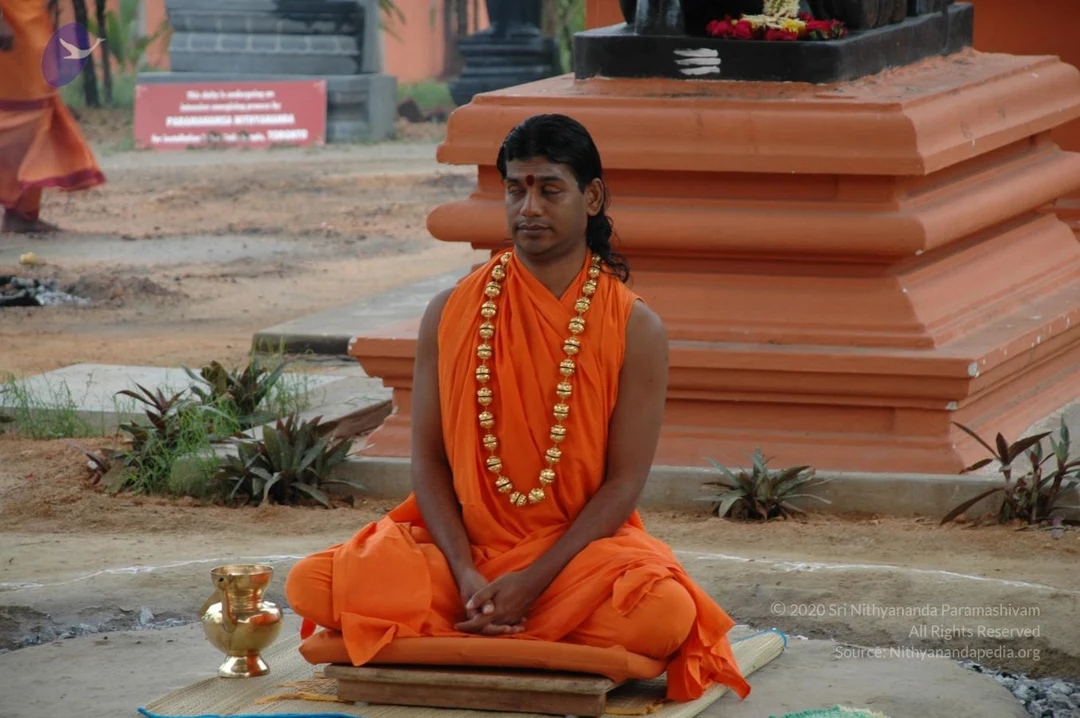
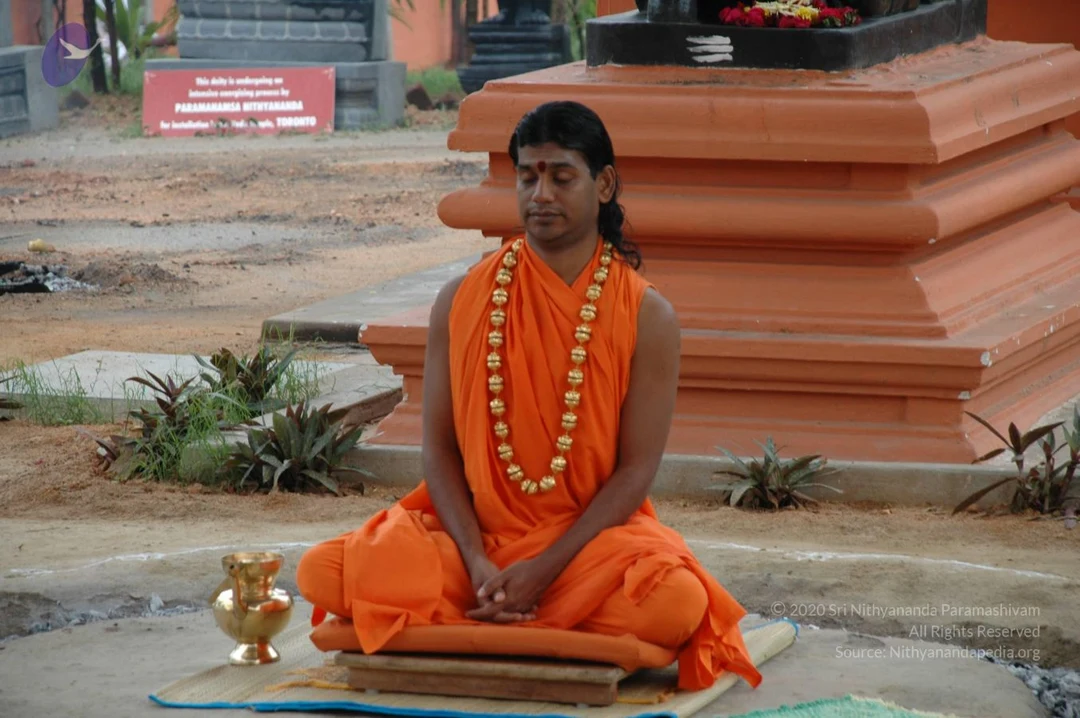
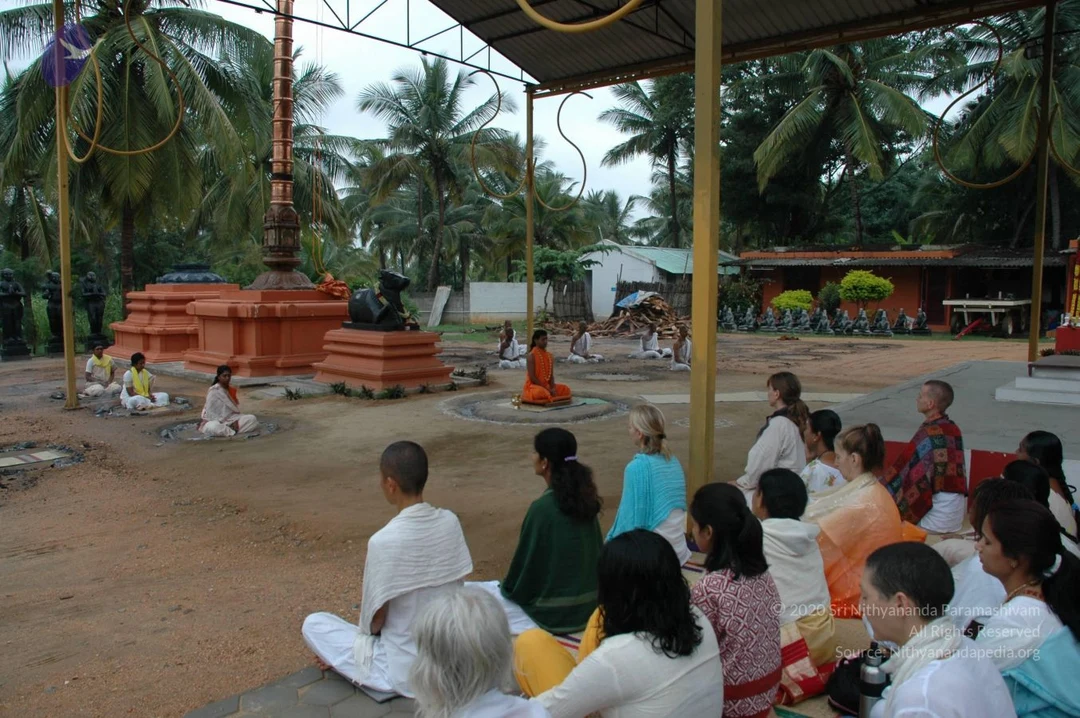
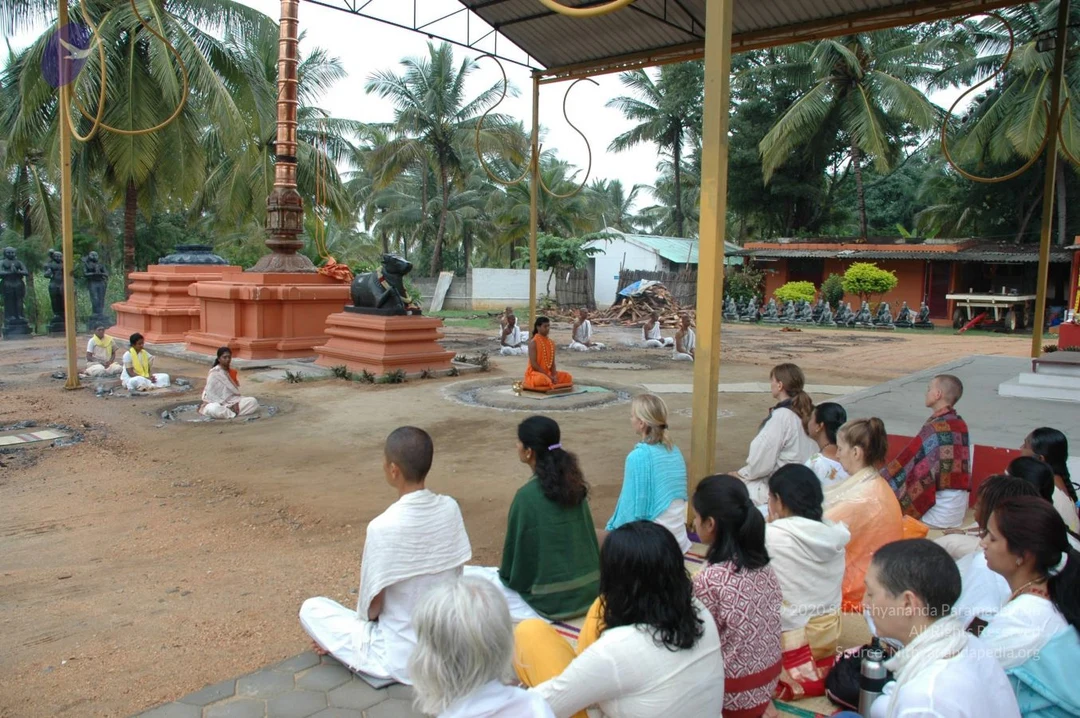
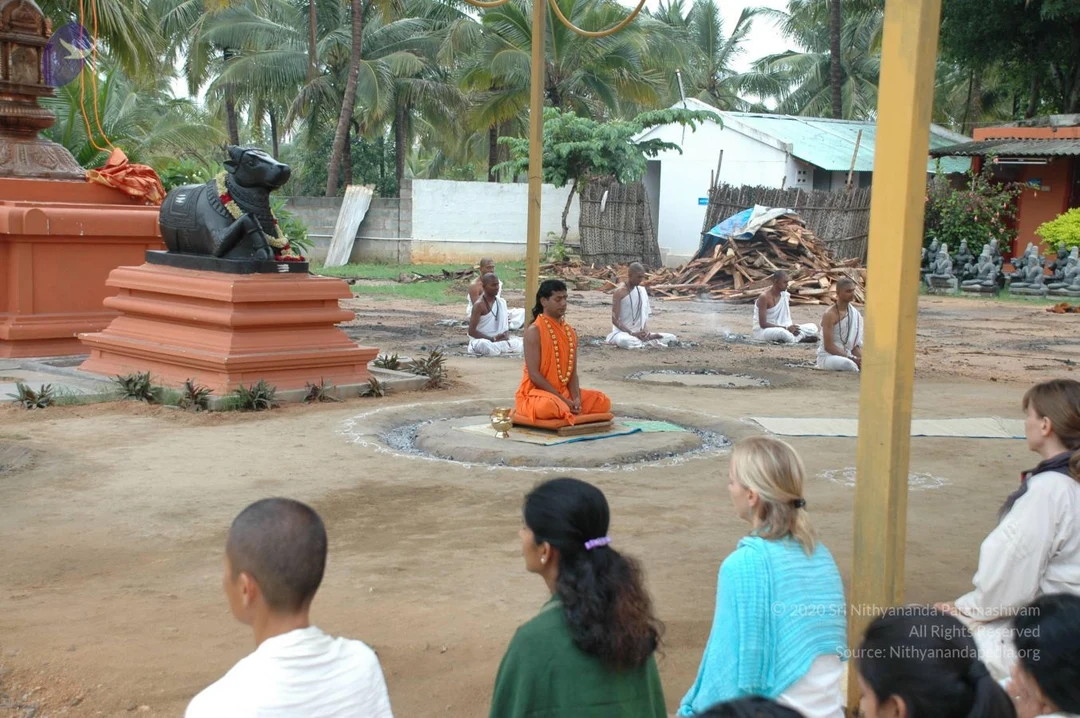
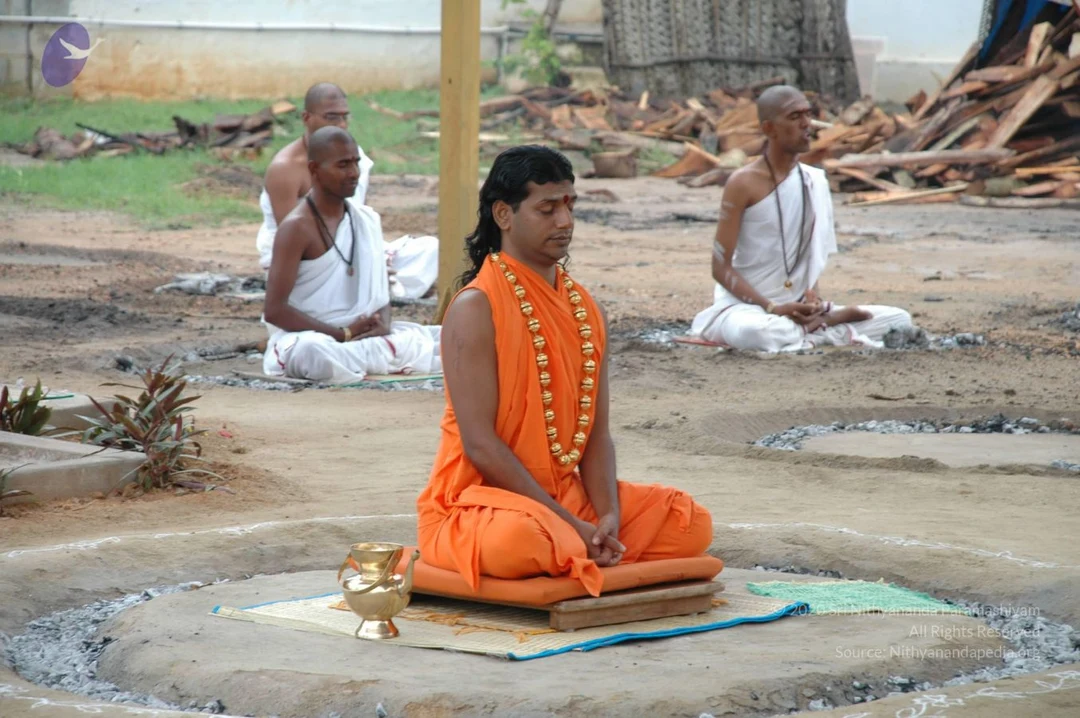
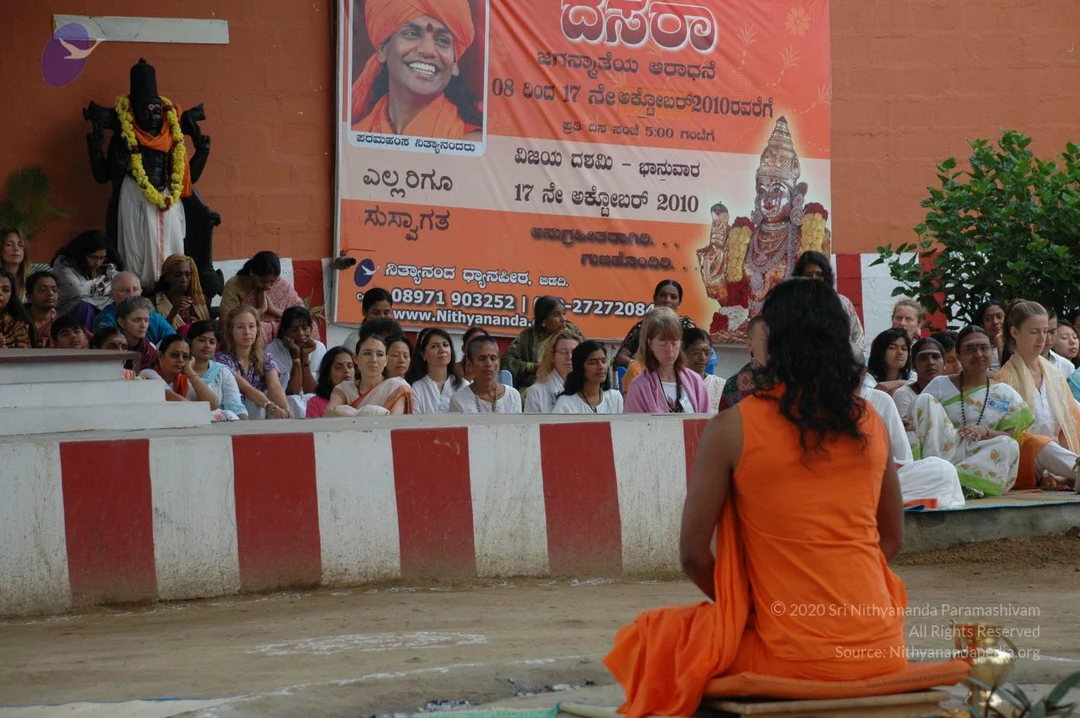
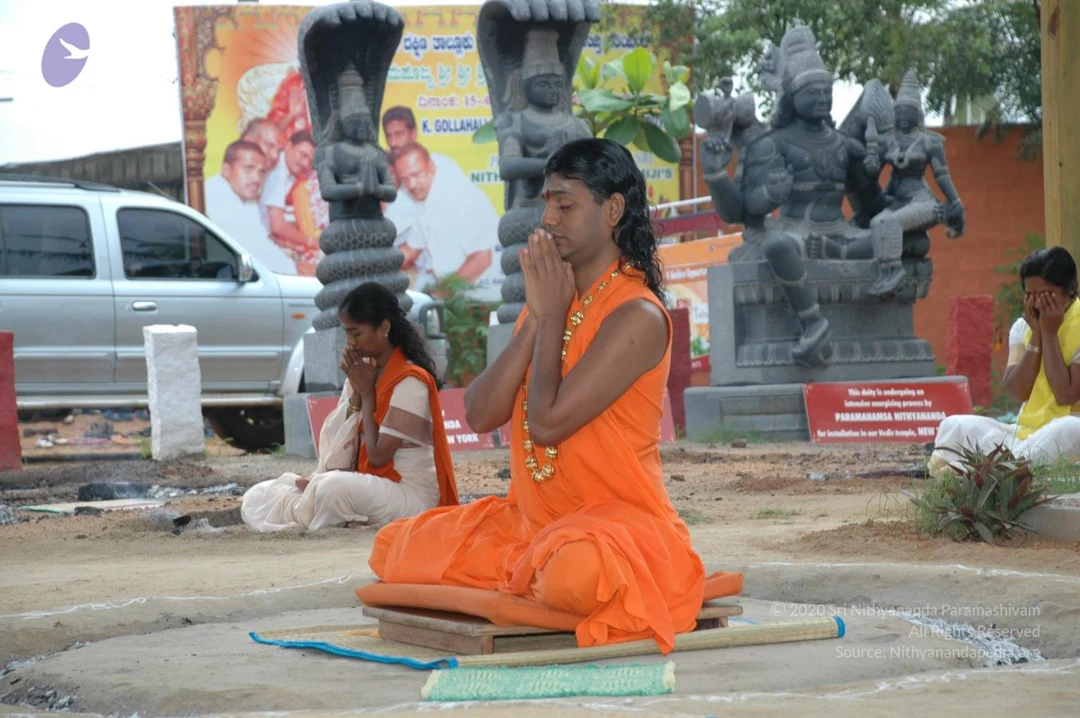
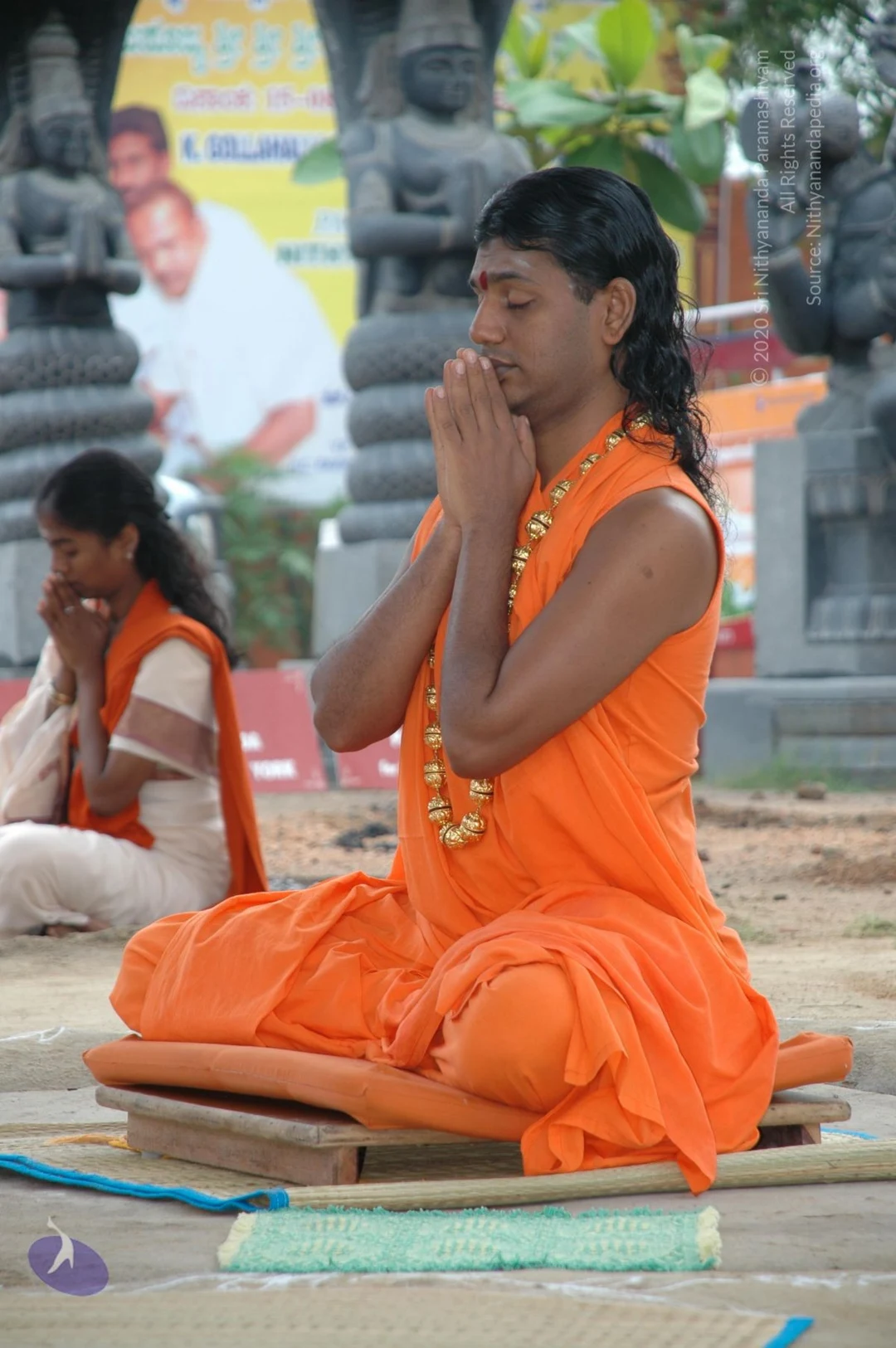
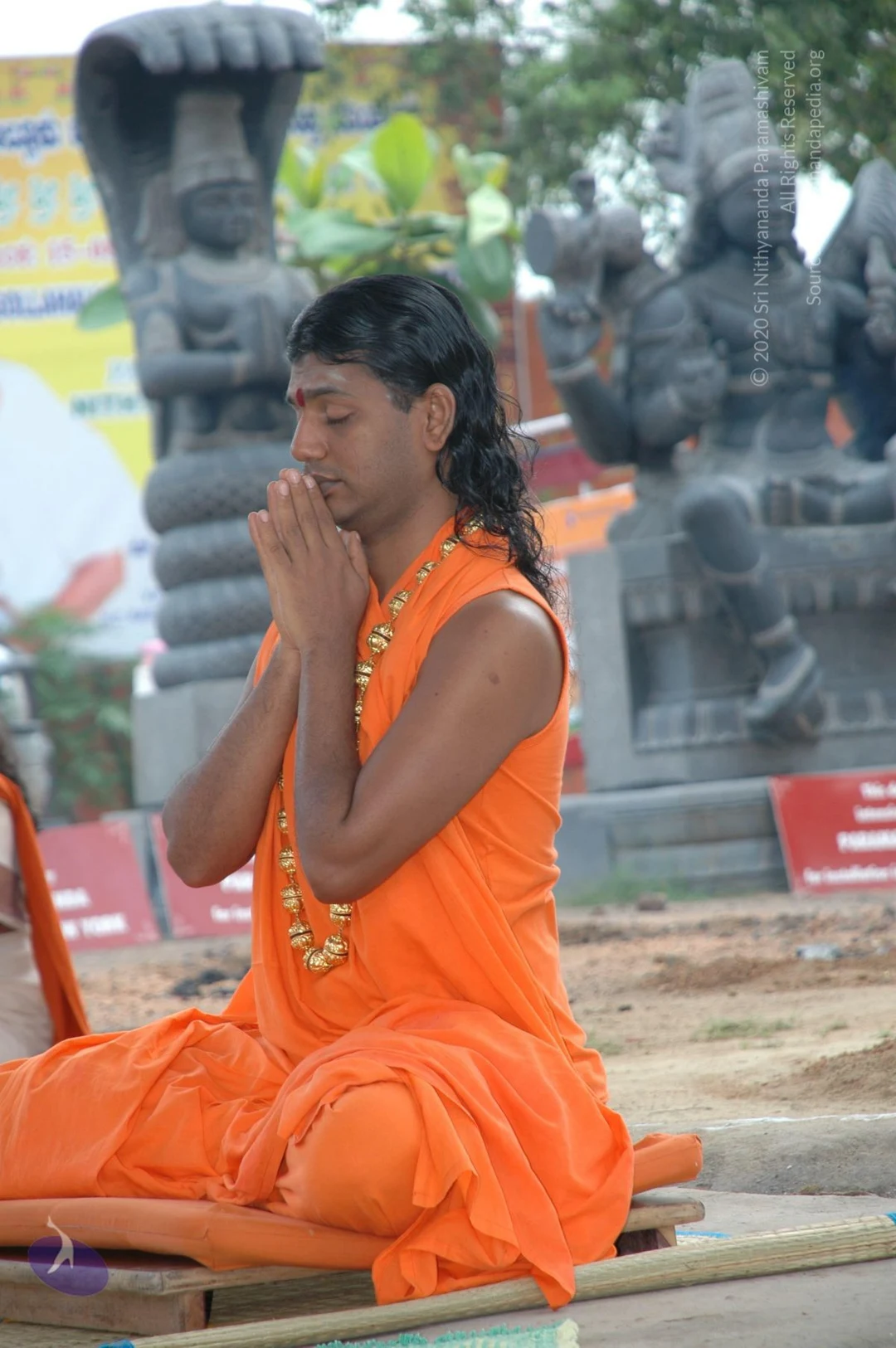
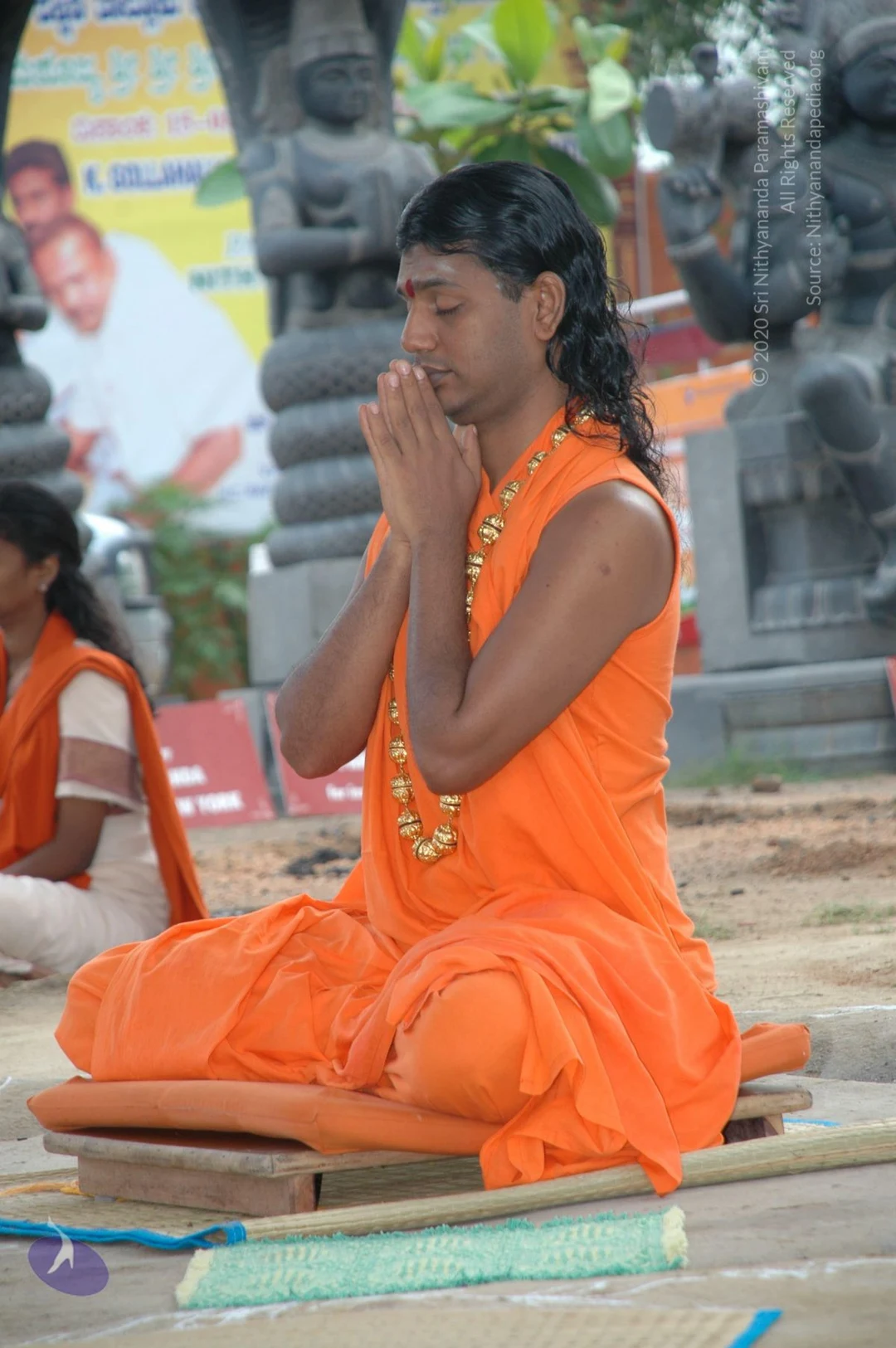
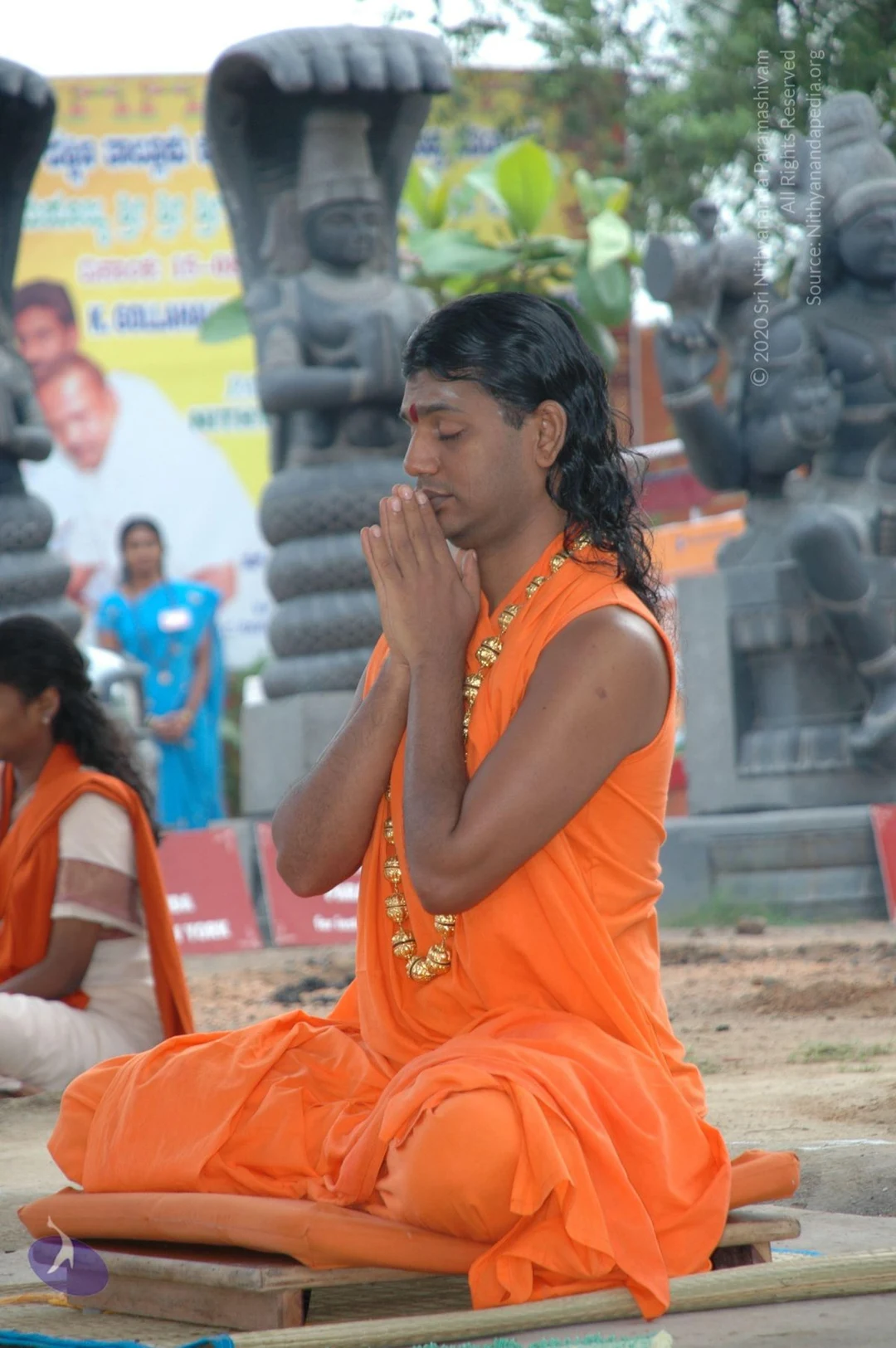
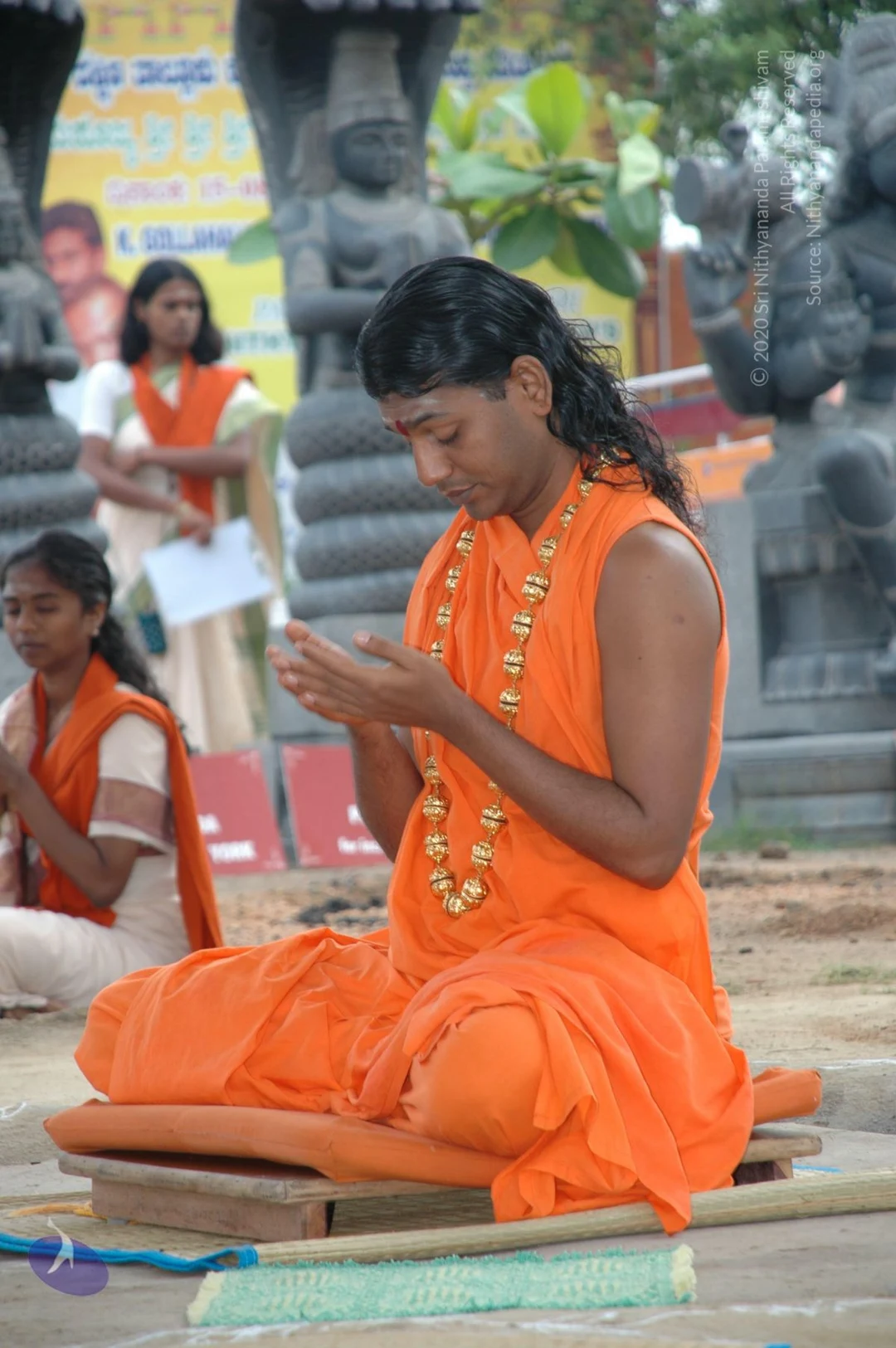
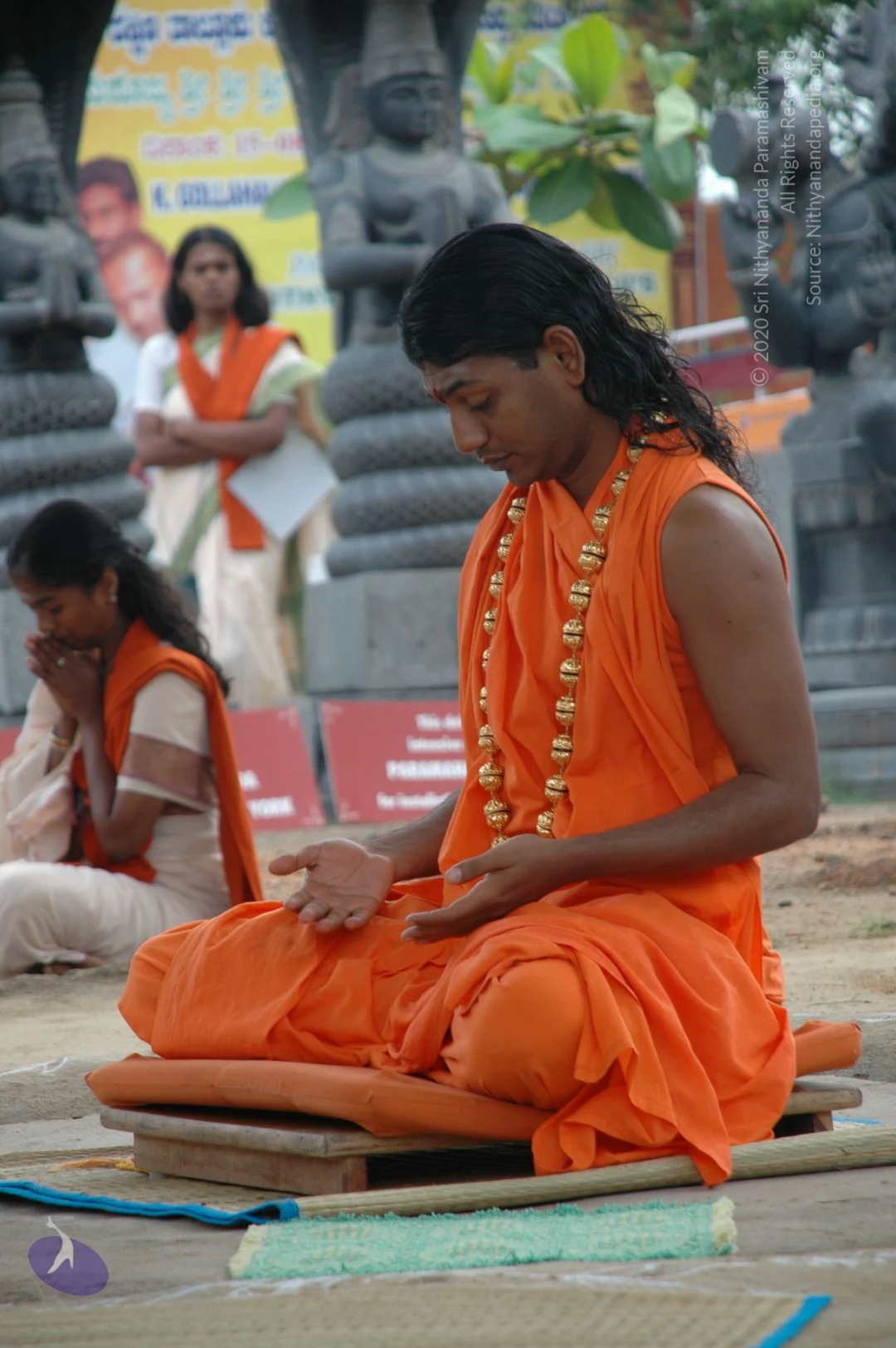
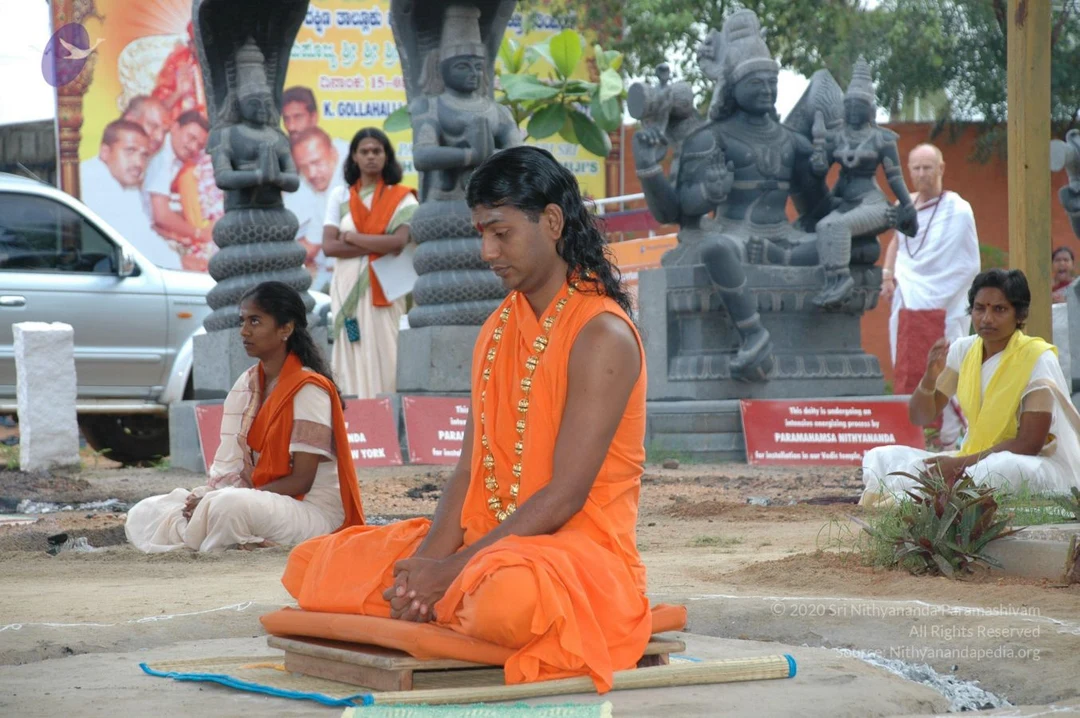
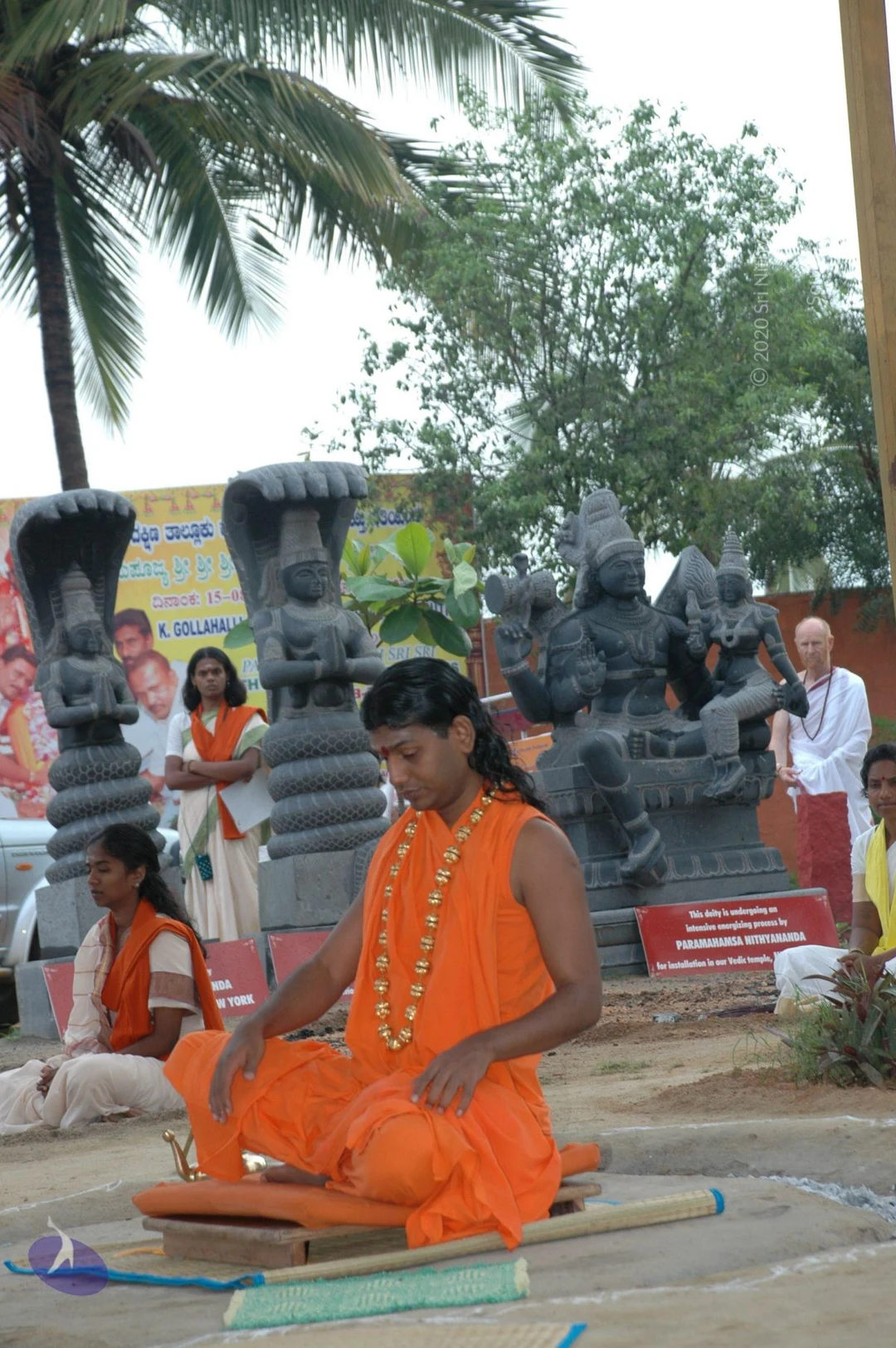
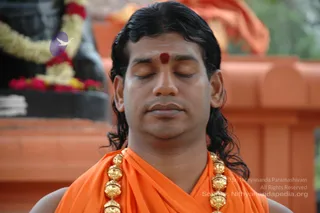
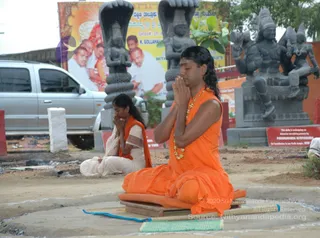
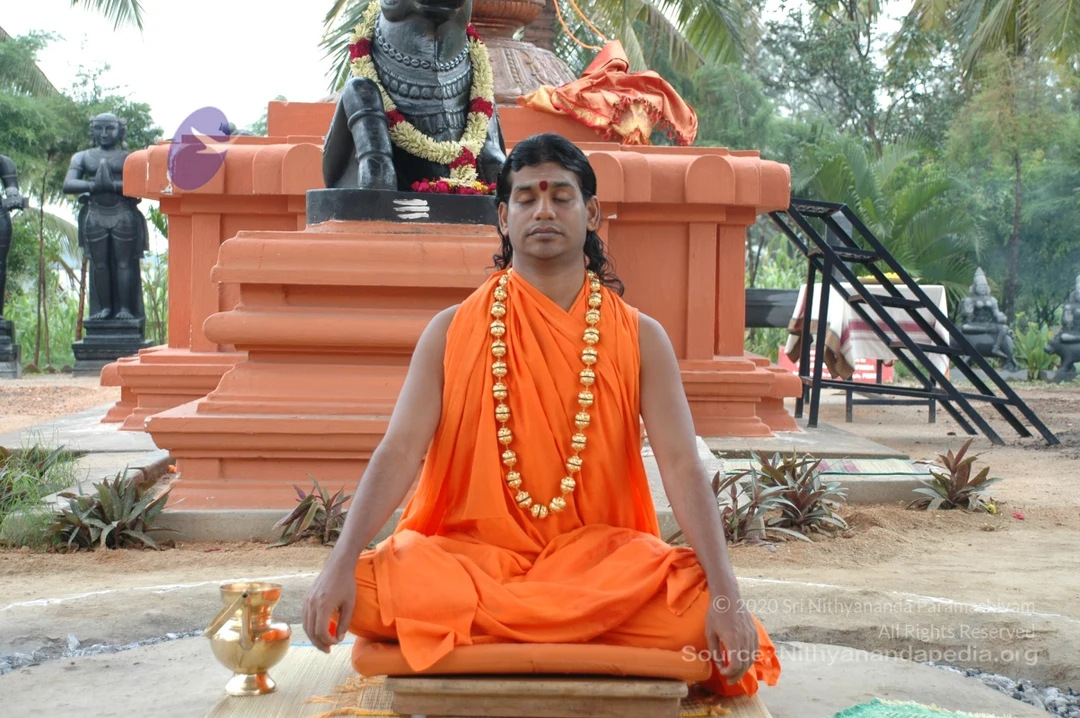
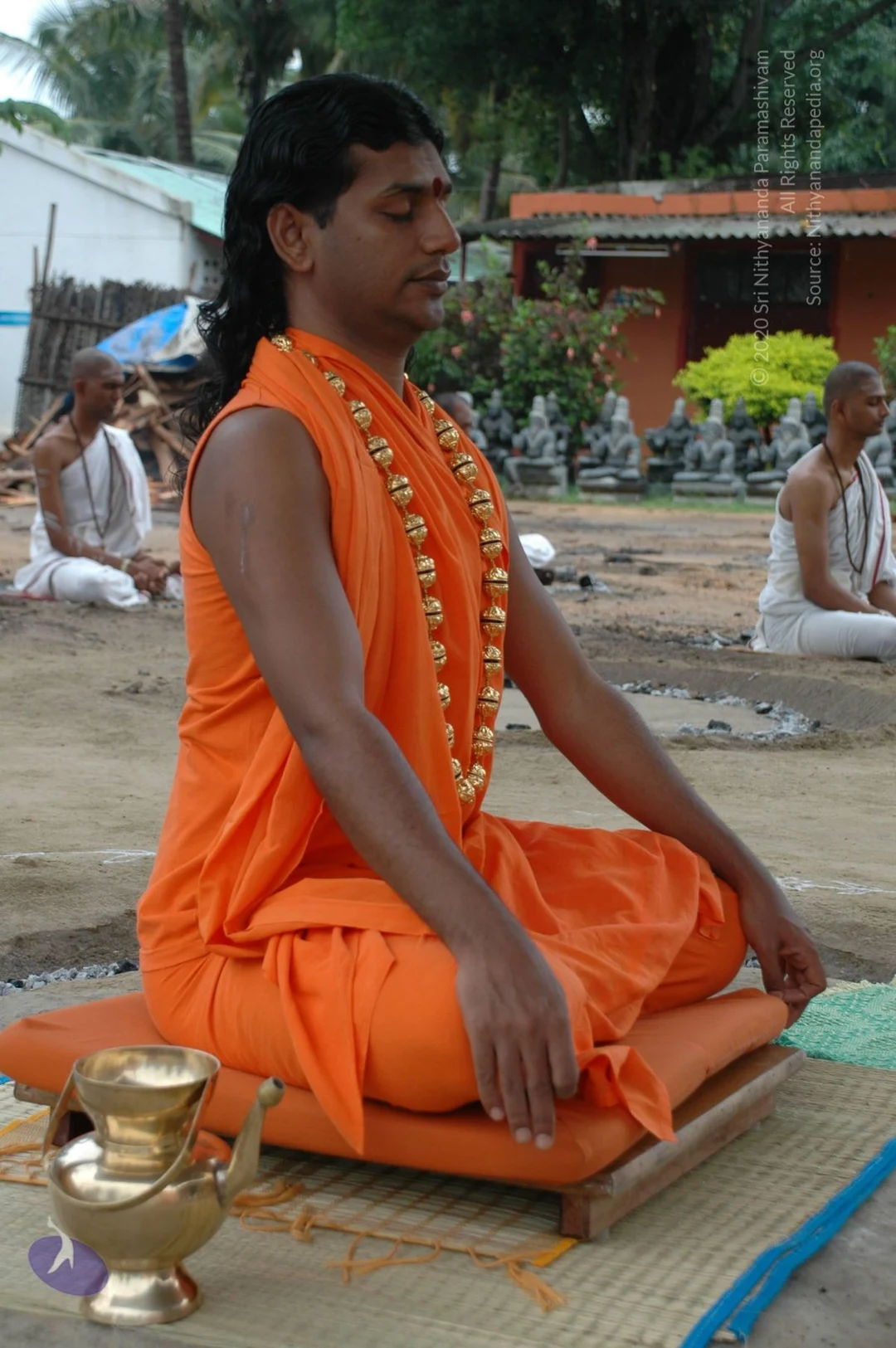
A man with long swept-back dark hair sits cross-legged in meditation on a low orange platform outdoors, eyes closed, wearing a saffron-orange shawl and a long ornate gold bead necklace, with a red tilak on his forehead. A small brass vessel stands at his left on the ground. Behind him a large dark stone deity murti wearing a garland of red and white flowers sits on an orange pedestal, with standing dark stone figures and palm trees around. Swamiji (probable) is the seated meditating figure, identified by long swept-back hair, saffron clothing and ornate gold necklace.Outdoors on a dirt ground, a man with long swept-back dark hair, a red bindi, orange saffron robes and a gold necklace sits cross-legged on an orange cushion with hands pressed in anjali. Beside him a woman in an orange shawl over white clothes sits with hands joined in prayer. Behind them stand large dark stone deity murtis, including a multi-headed cobra-hooded figure and a seated deity with multiple arms. A poster behind shows several men in white and a banner with readable text. A red sign reads Paramahamsa Nithyananda for installation in our Vedic temple, New York. A silver minivan is parked to the left.

Navaratri-Golu-Pooja-By-Swamiji

5 photosSource gallery
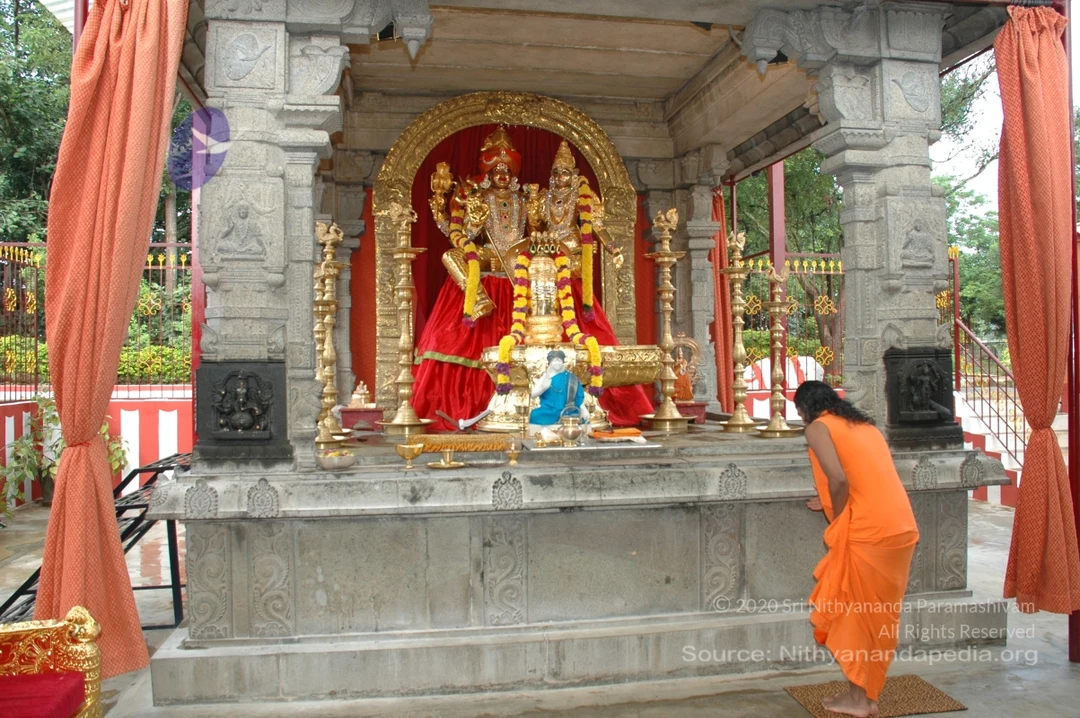
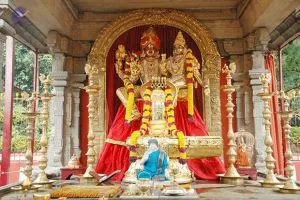
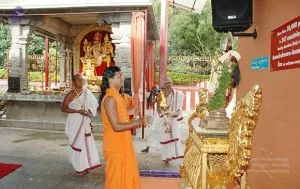
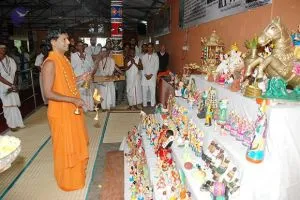
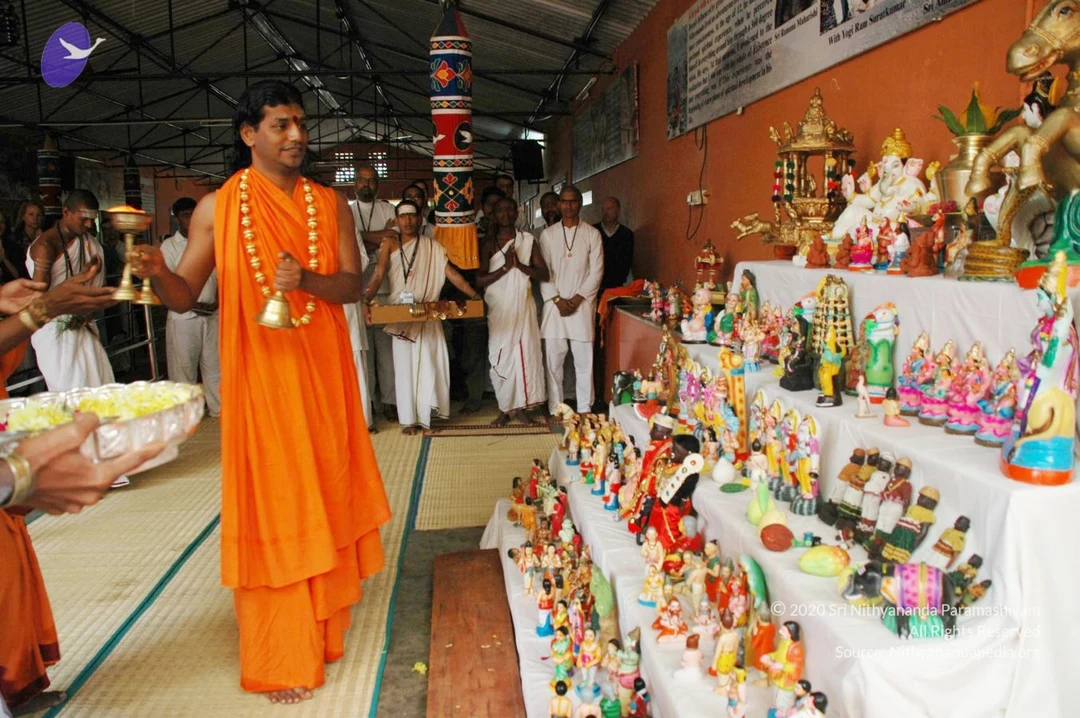
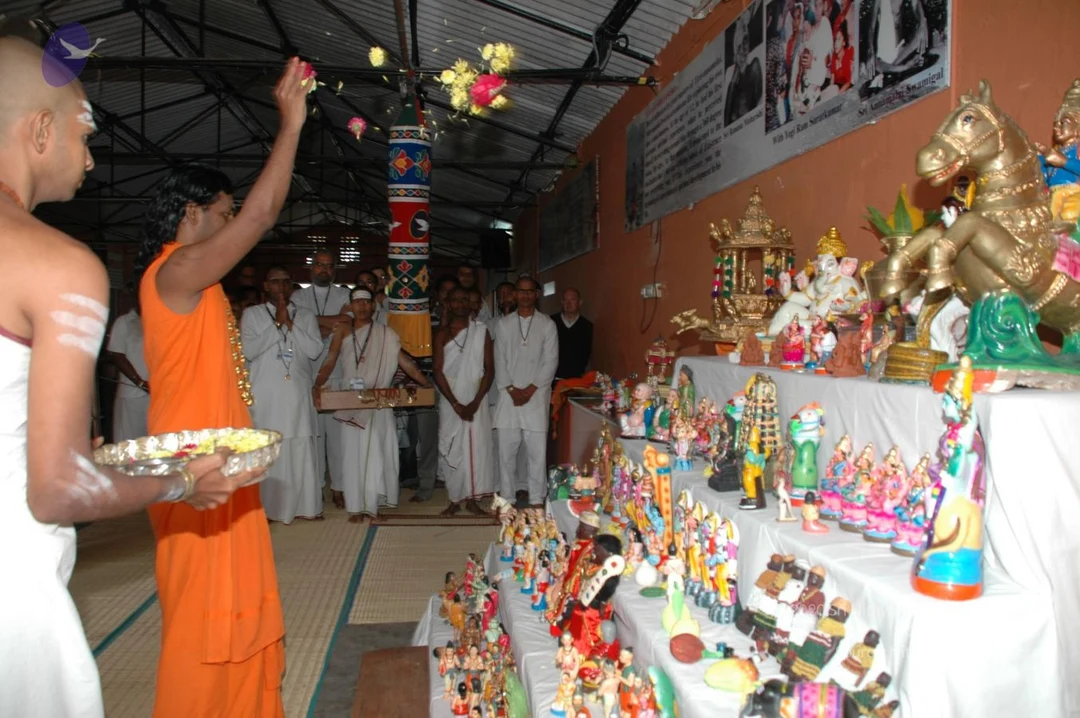
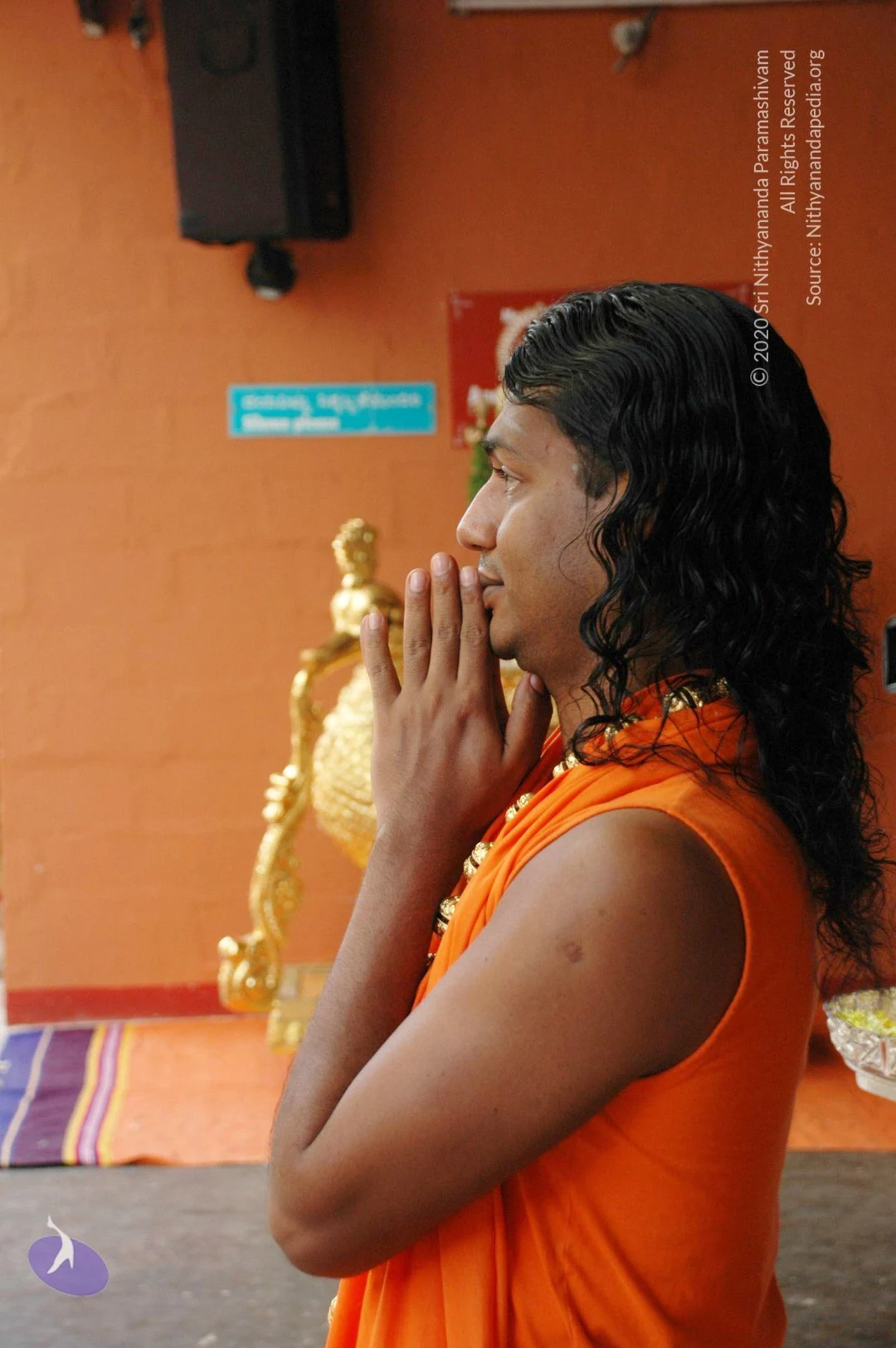
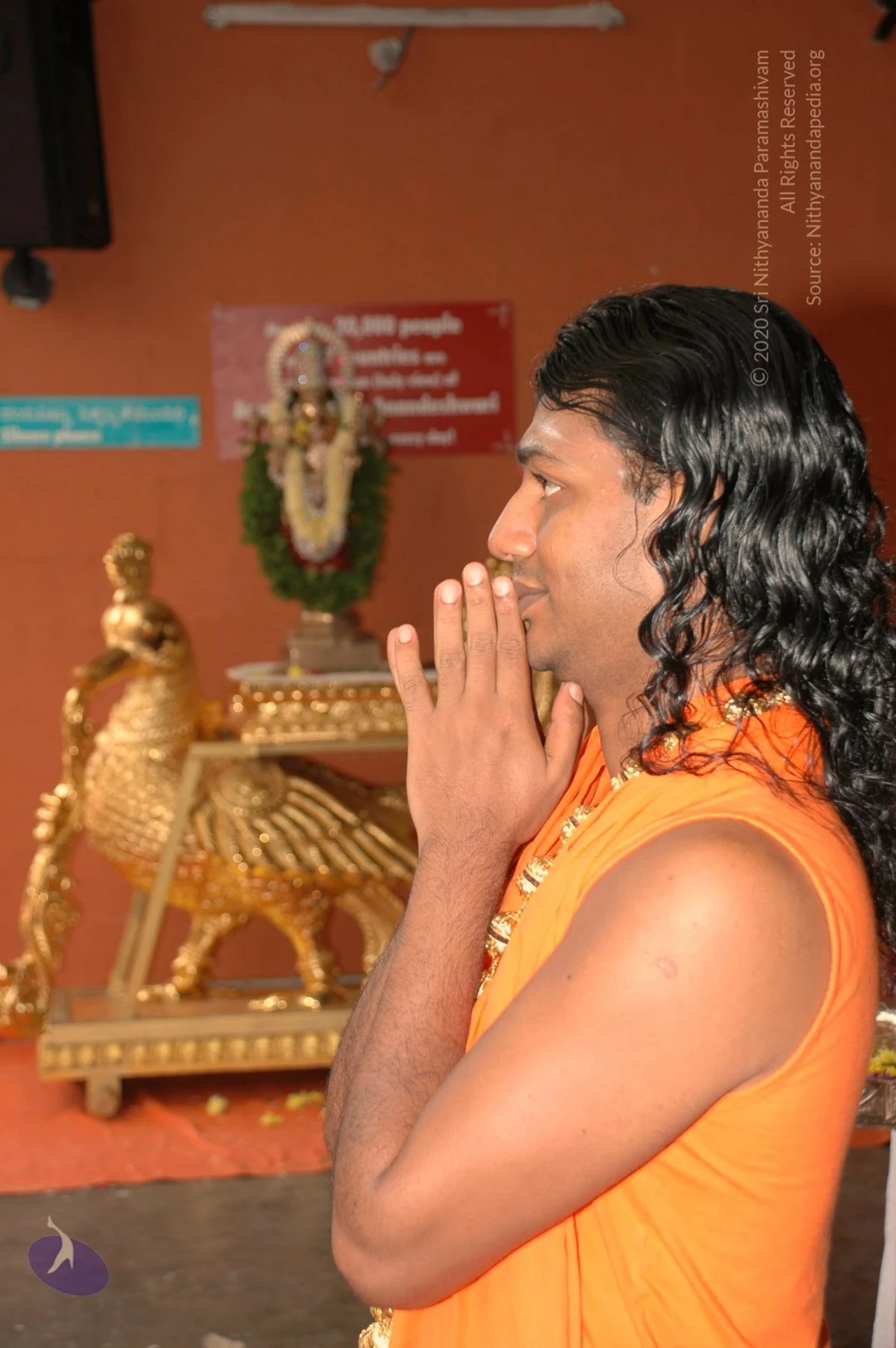
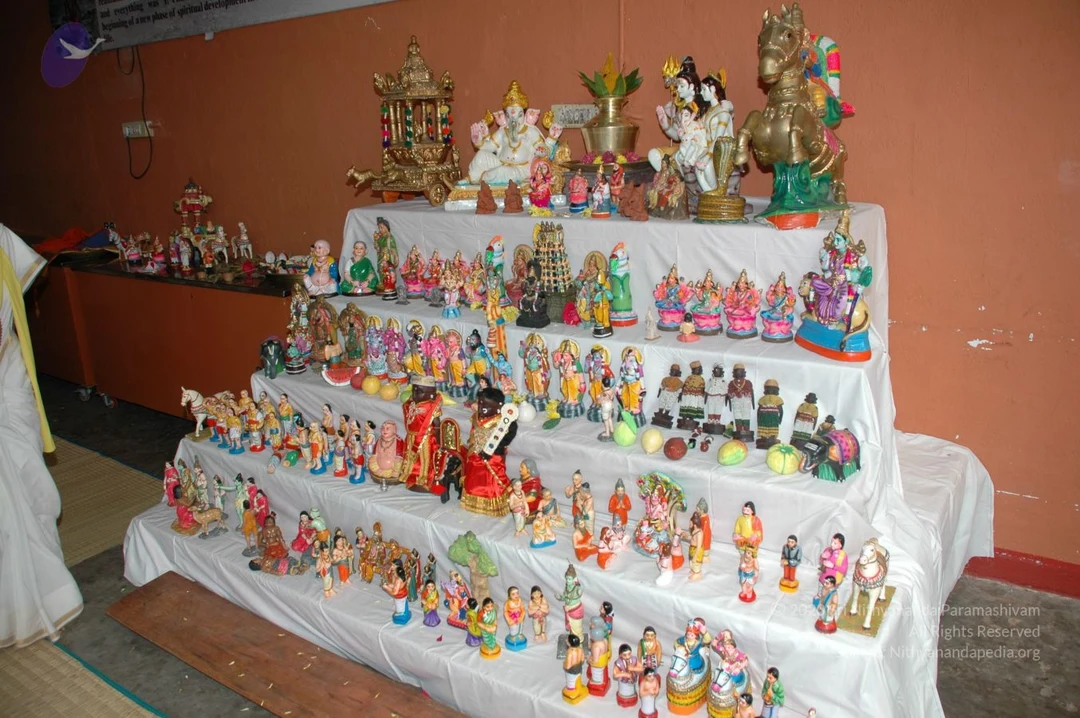
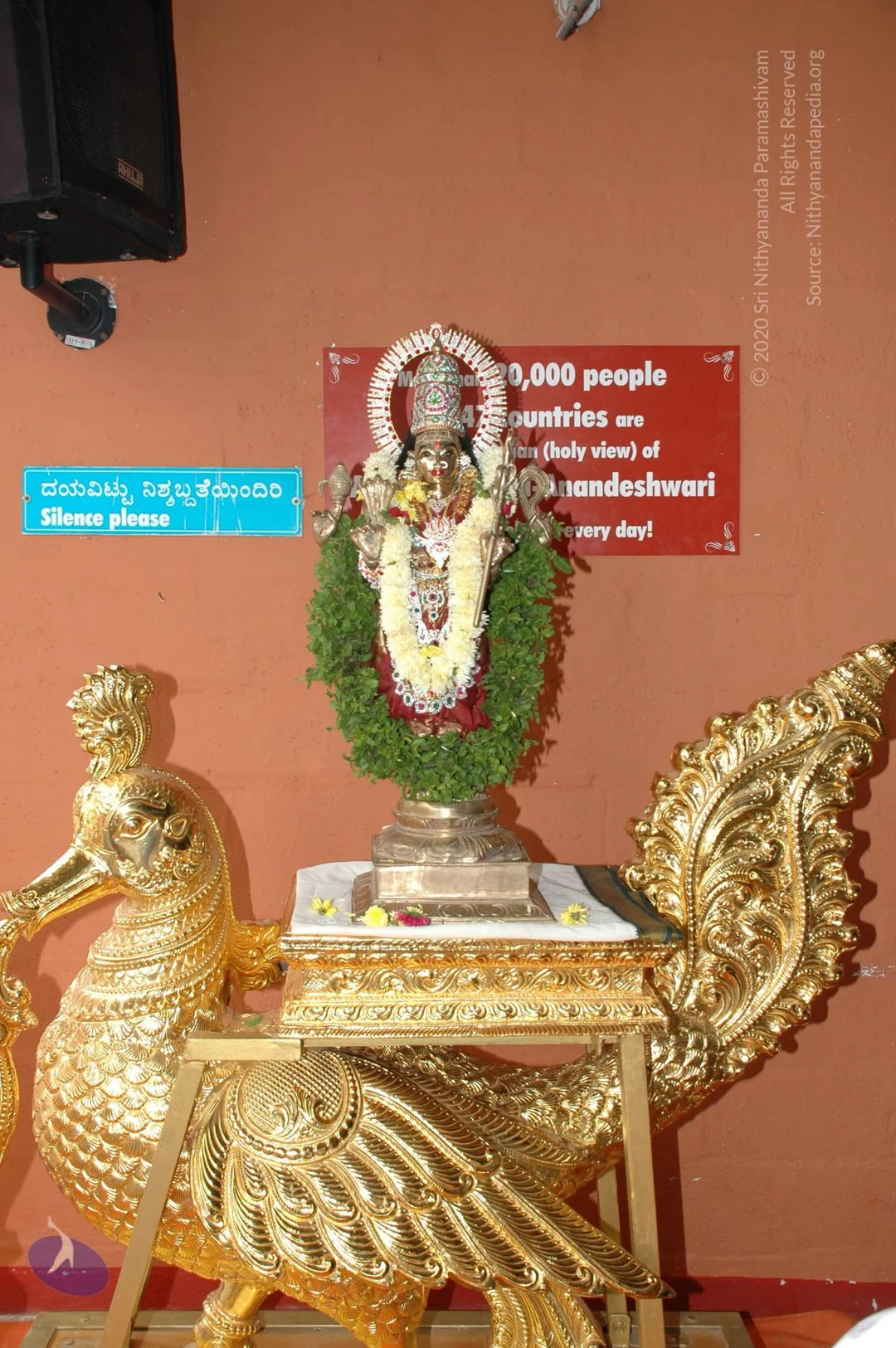
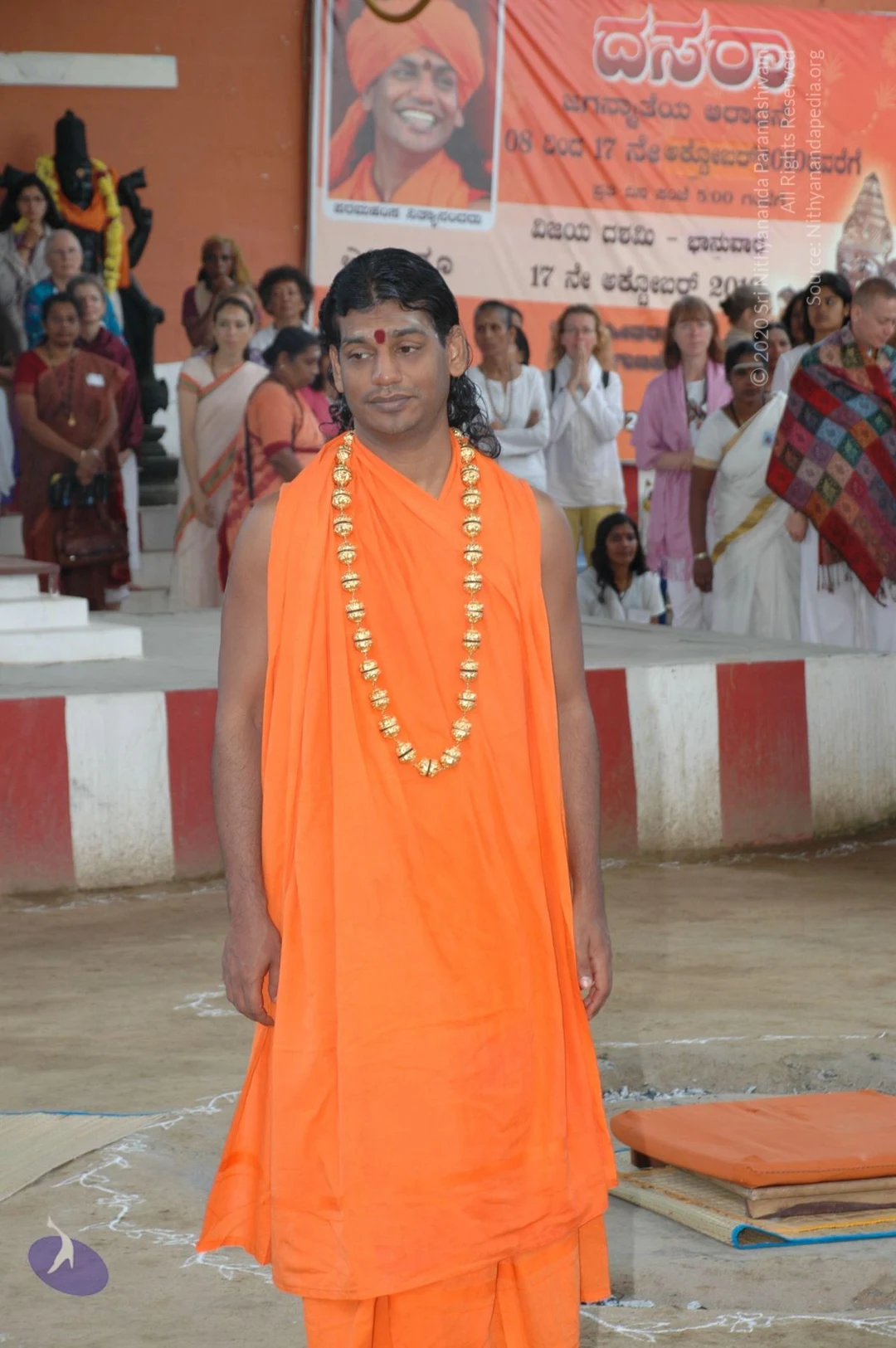
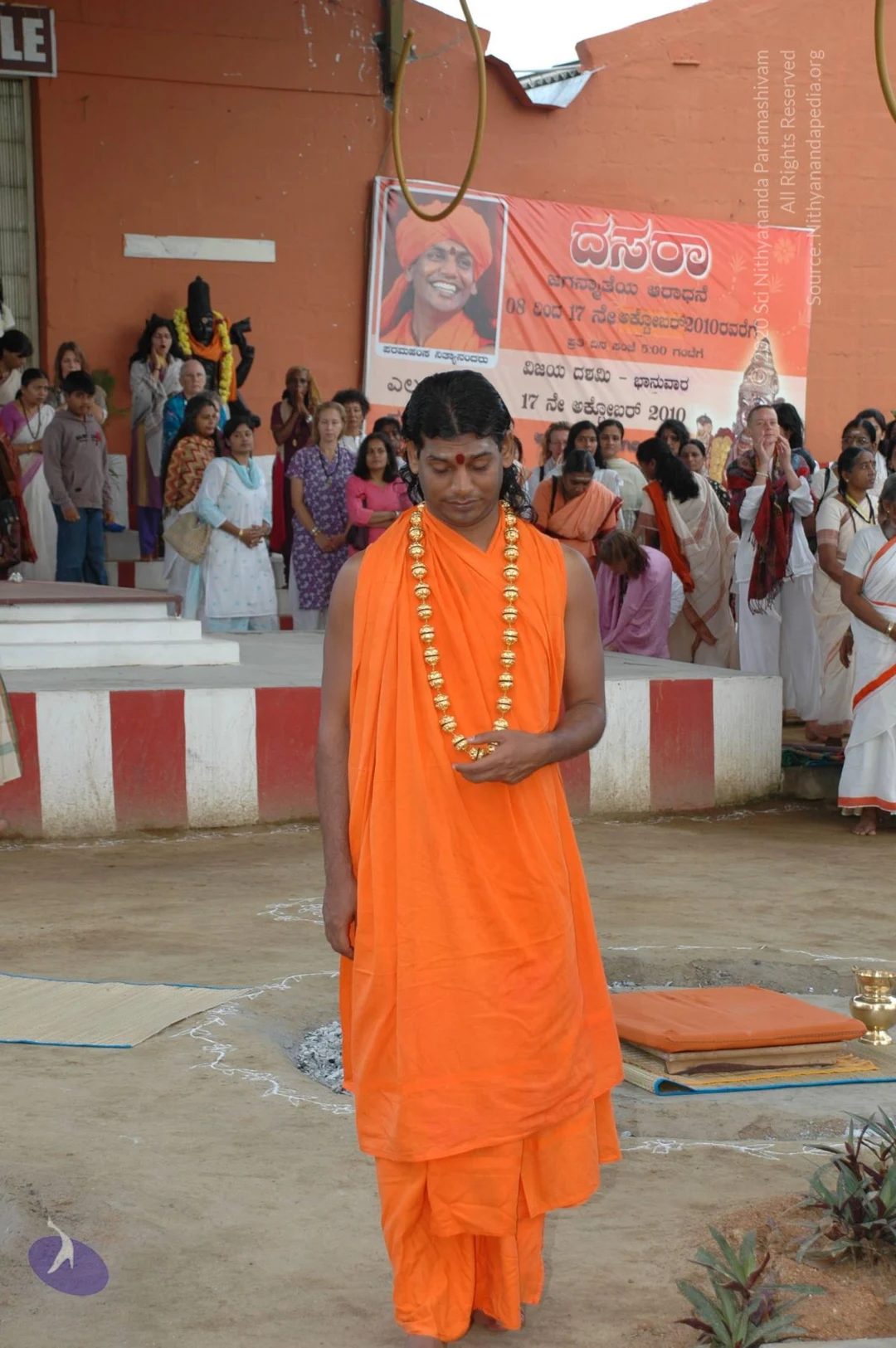
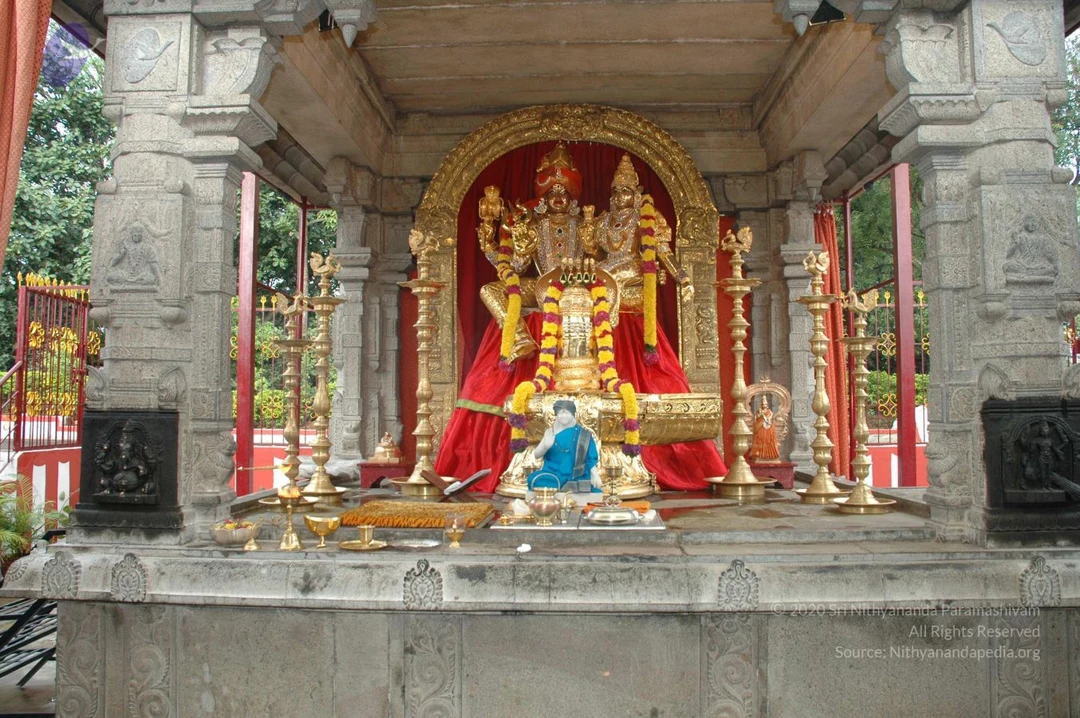
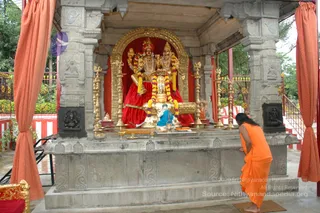
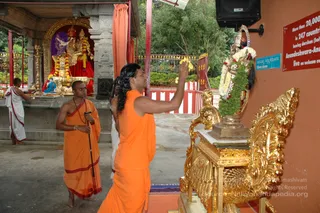
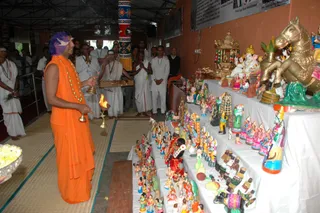
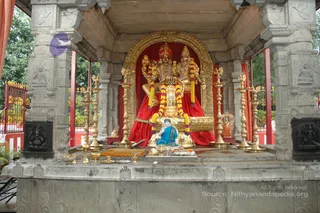
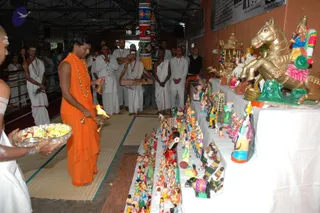
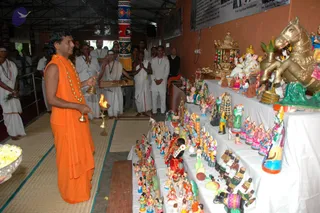
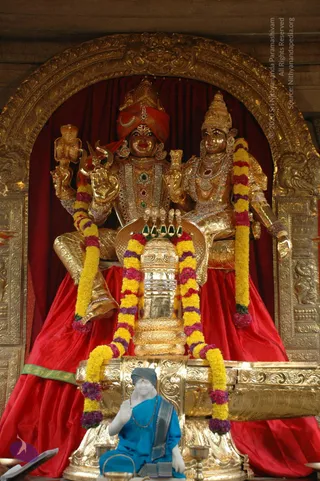
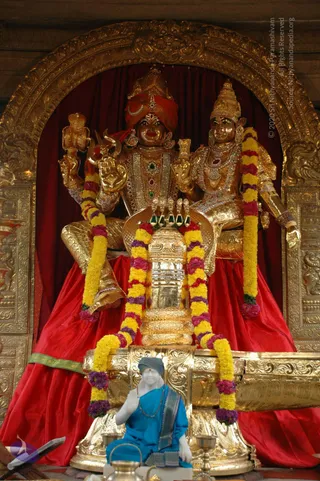
A figure in a saffron-orange robe with a gold and beaded garland and a purple-painted head stands at left holding a brass ritual bell in one hand and a lit oil lamp flame in the other, facing a long table draped in white cloth. The table is crowded with colourful clay and painted figurines, a golden horse, a golden ceremonial palanquin and a Ganesha figure. Behind, several men in white dhotis and shirts, some with lanyards, stand with hands folded in a hall with a red-and-white decorated pillar and a wall banner. A small plate of flower petals sits at lower left. Setting appears to be a temple-style pavilion with reed mats on the floor.Side profile of a man with long, dark, wavy hair standing with palms pressed together in namaste before a golden ornamental stand and an orange-painted wall. He wears an orange sleeveless garment with a gold necklace or ceremonial ornaments. A blue sign and a purple bird logo are on the wall, and a tray of flowers sits at the right edge.A photograph of an open-sided stone shrine with grey carved pillars and a gold arched niche. Inside, a gilded deity murti seated on a throne is garlanded with yellow and orange marigold strands, with a red cloth backdrop. In front, a small blue figure sits on a raised golden platform surrounded by brass oil lamps, a kalasha-like vessel, brass bowls and a yellow cloth on the floor. No people are visible. Trees and a red gate frame the background.

Flag-Hoisting
14 photosSource gallery
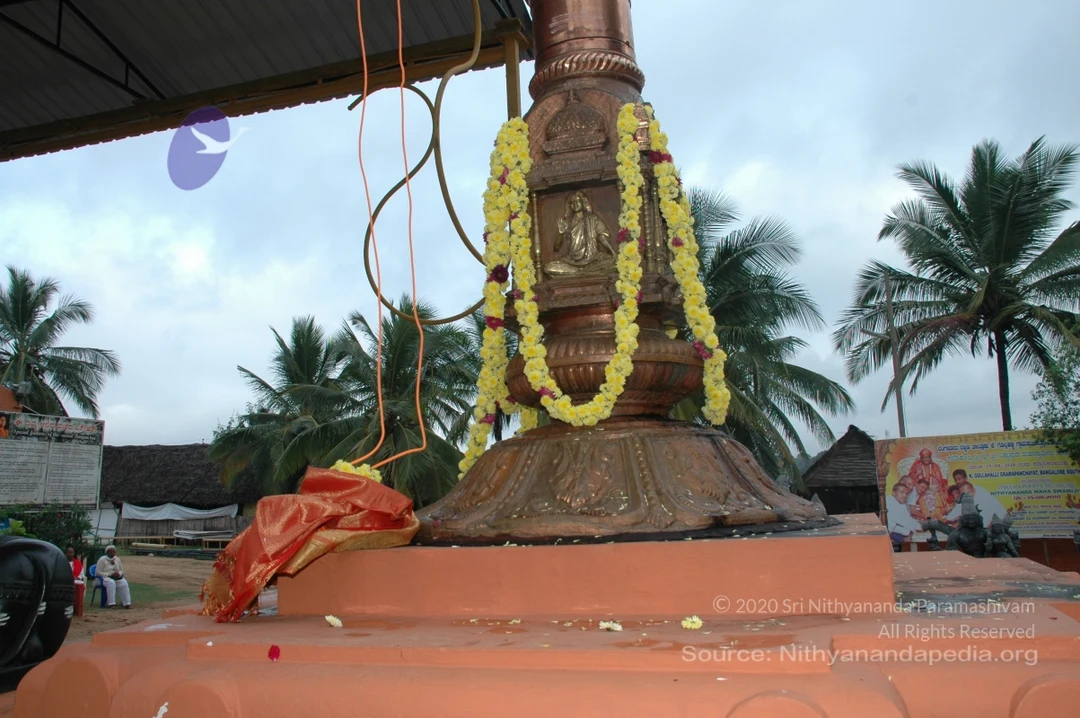
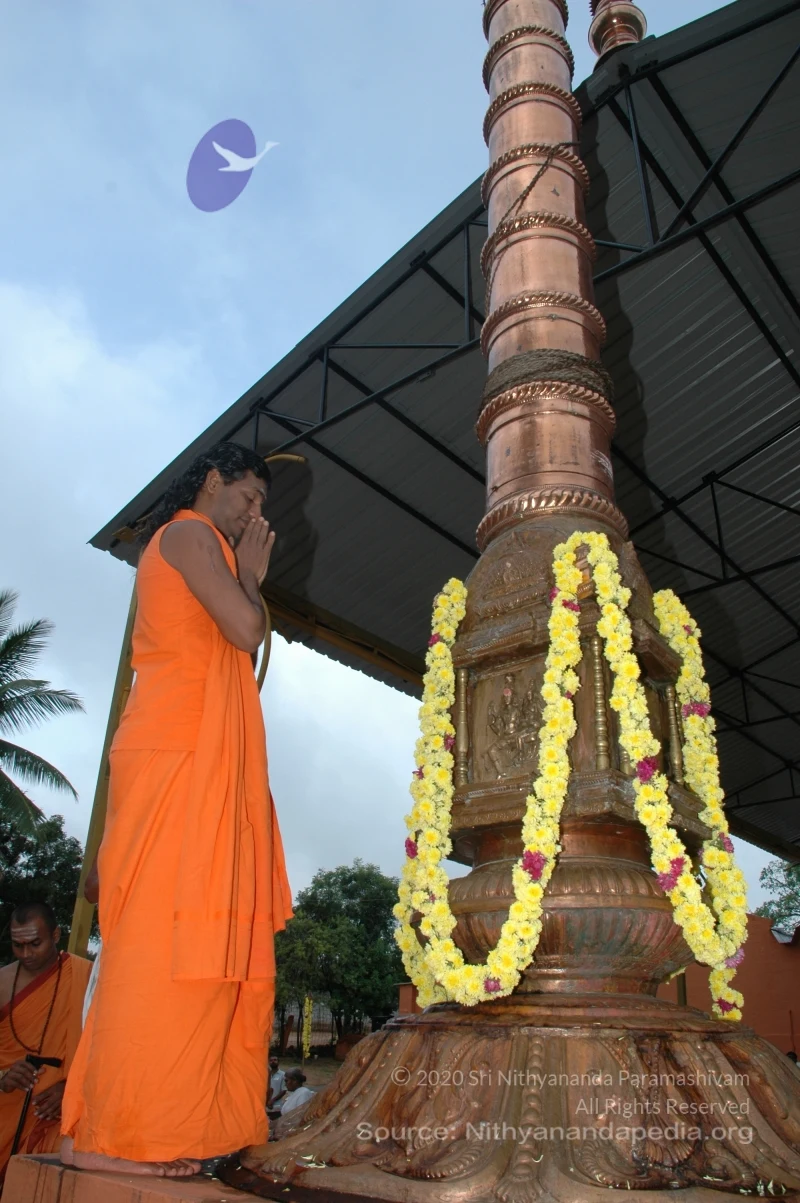
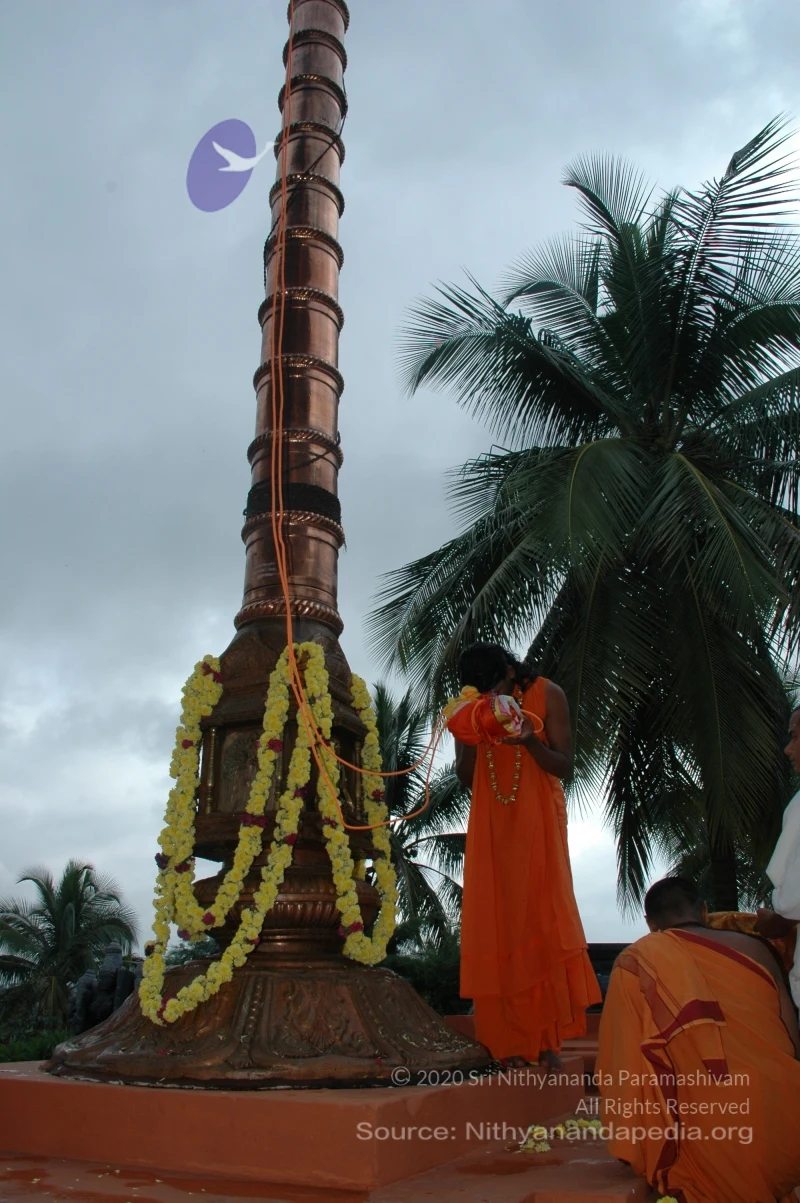
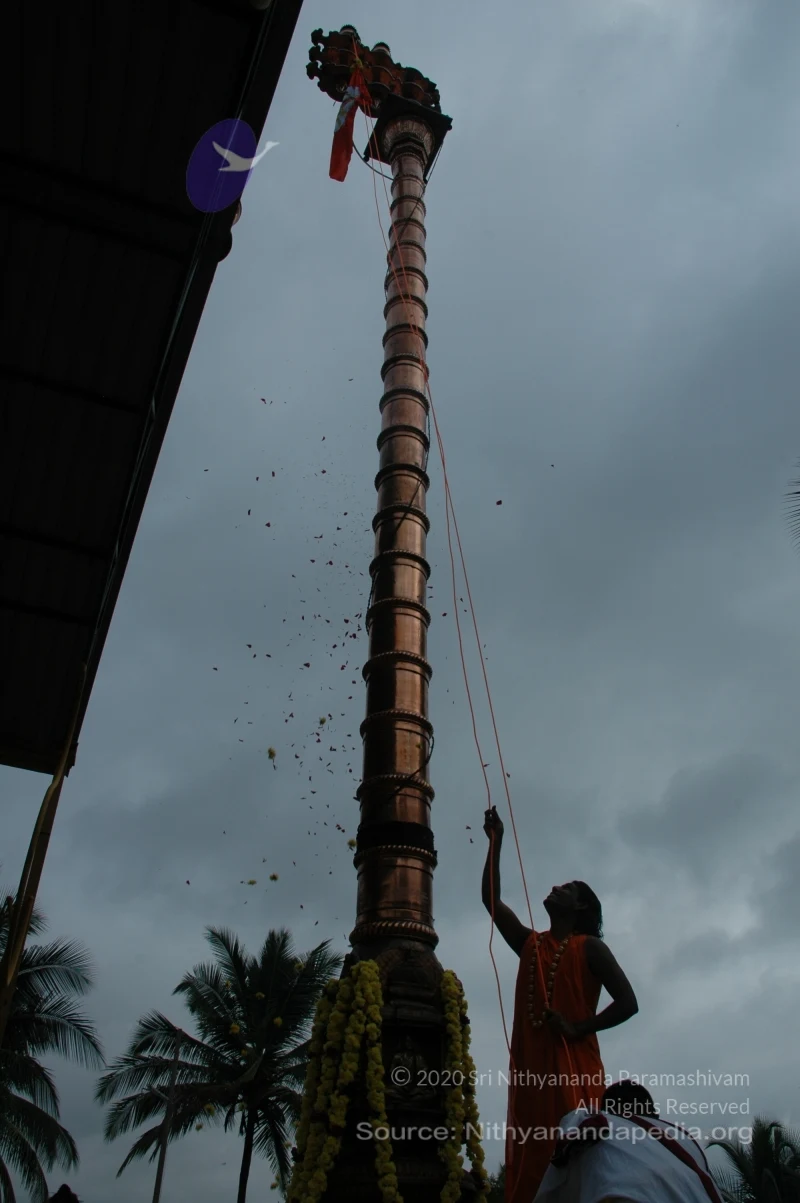
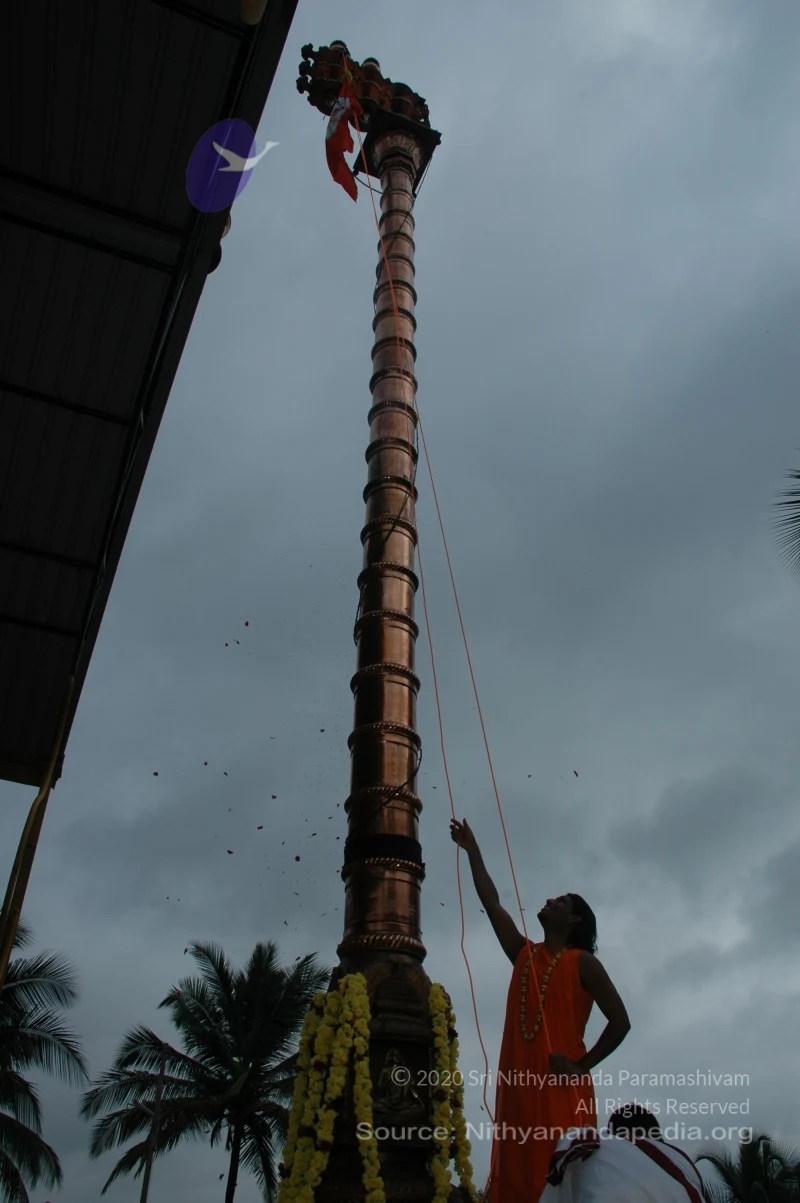
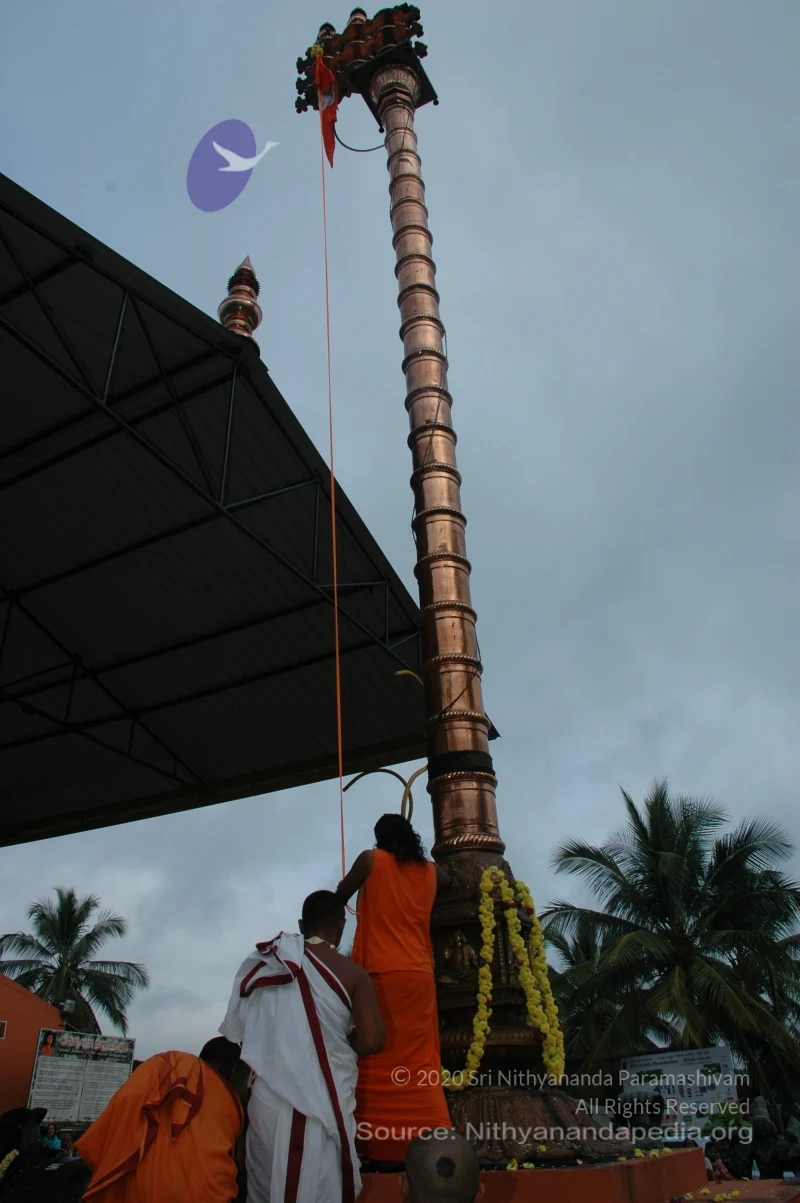
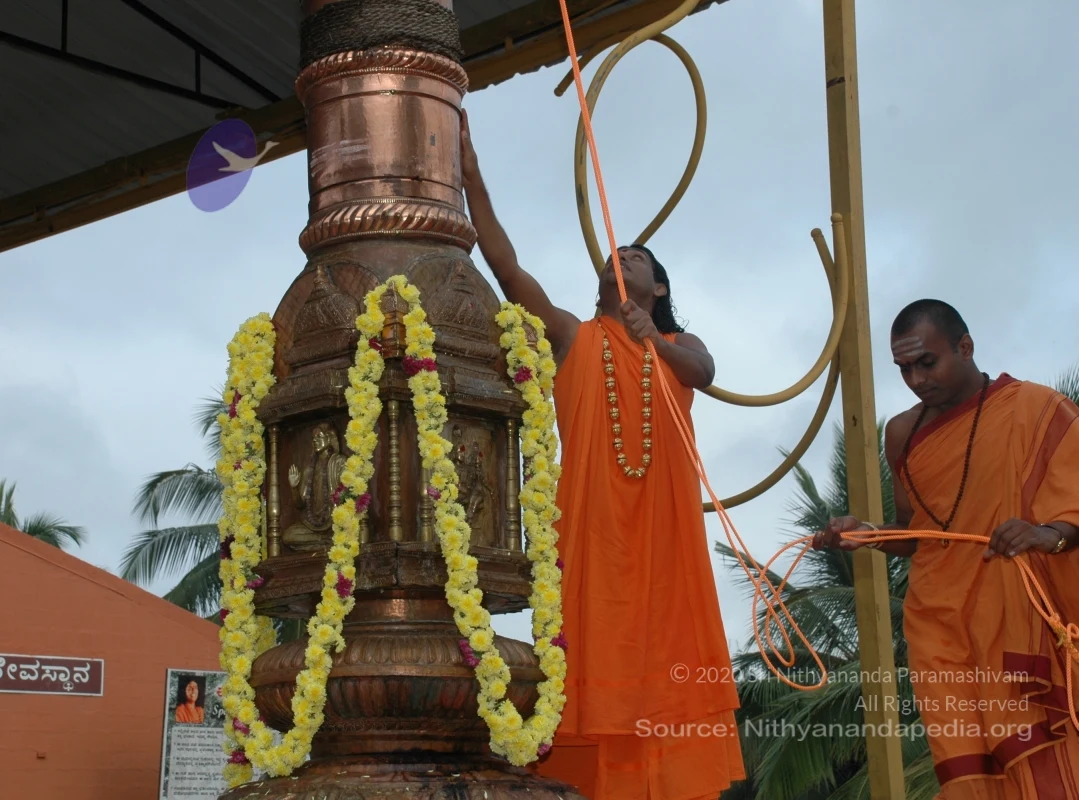
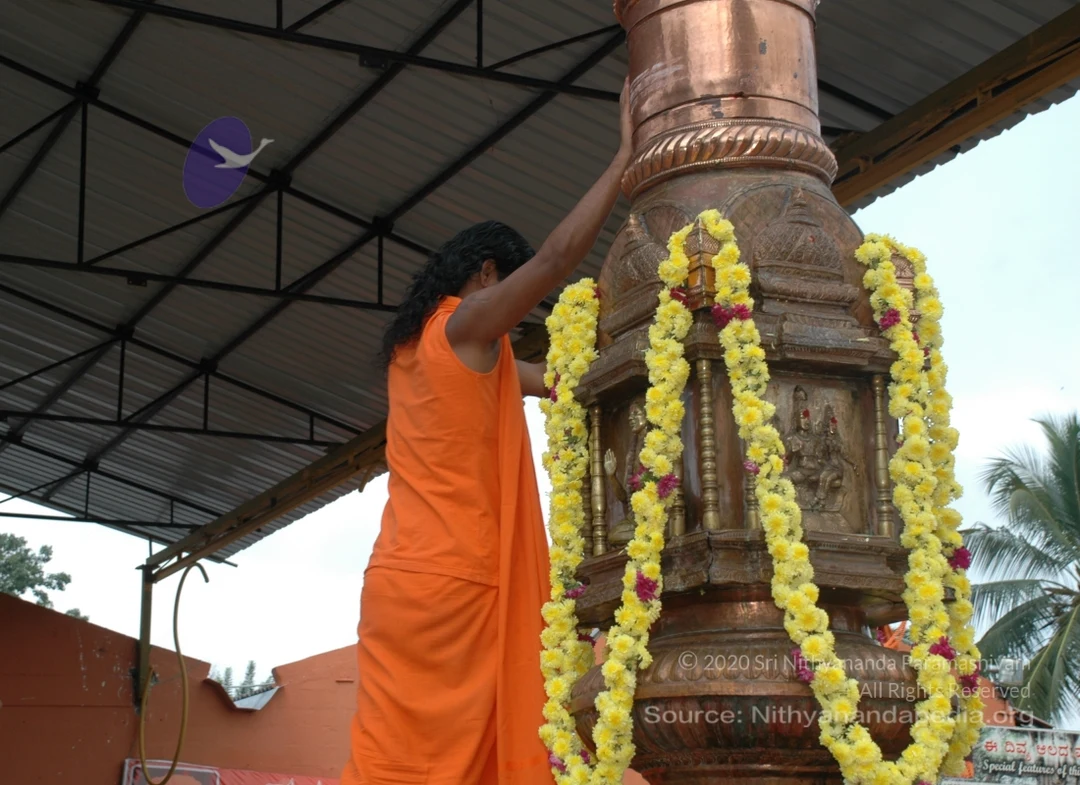
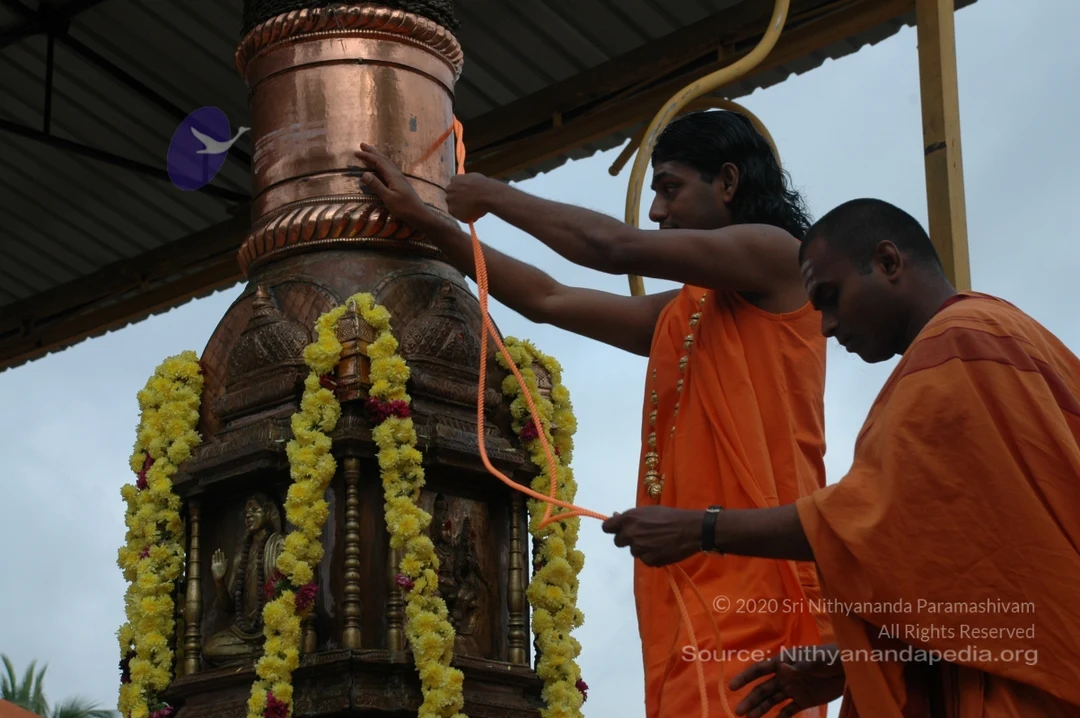
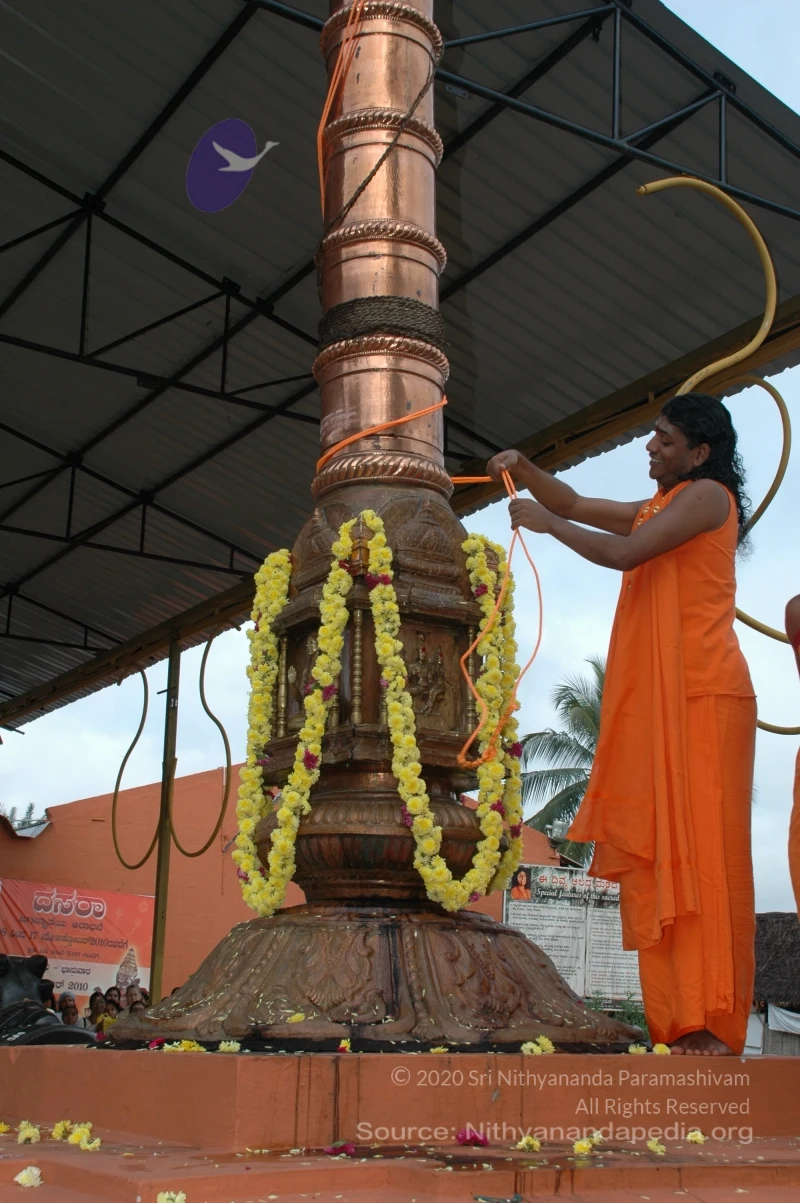
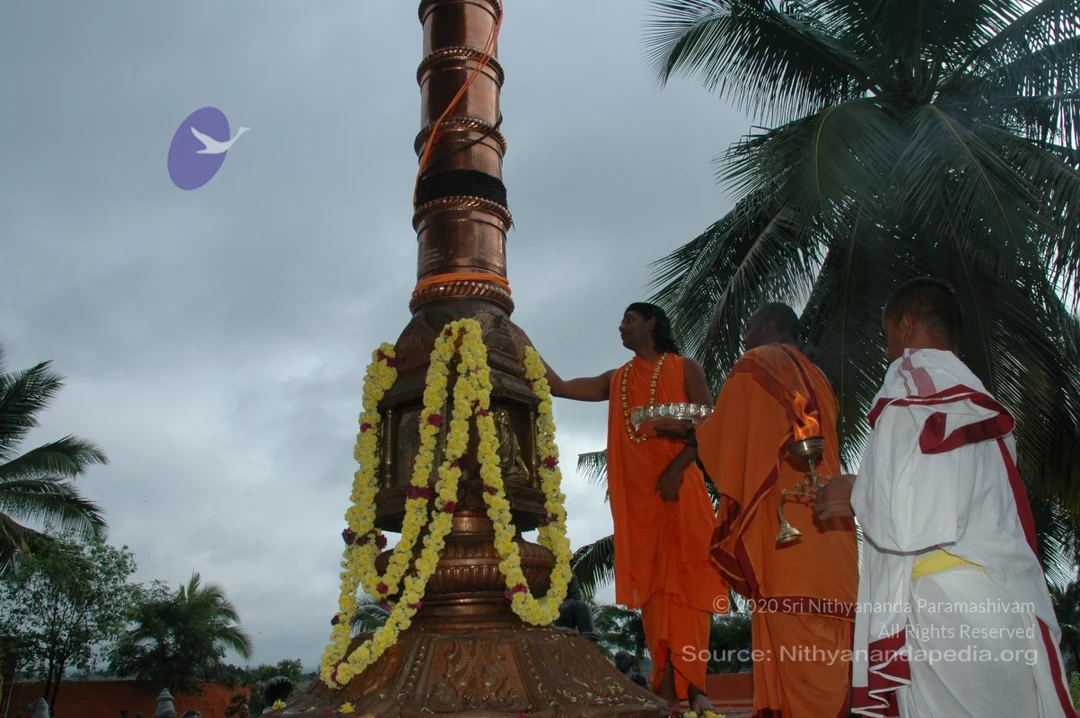
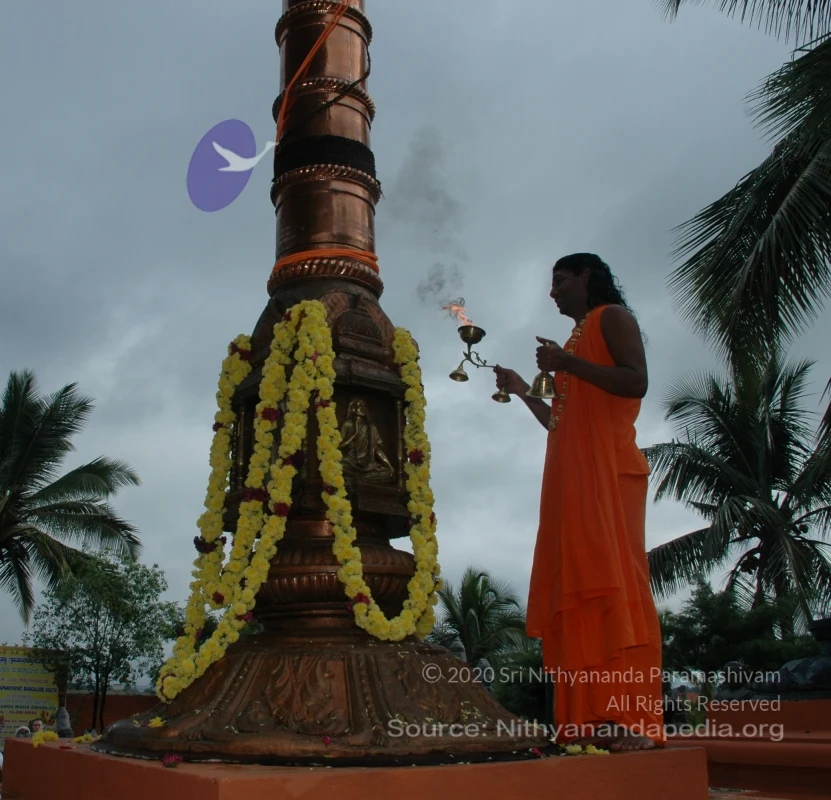
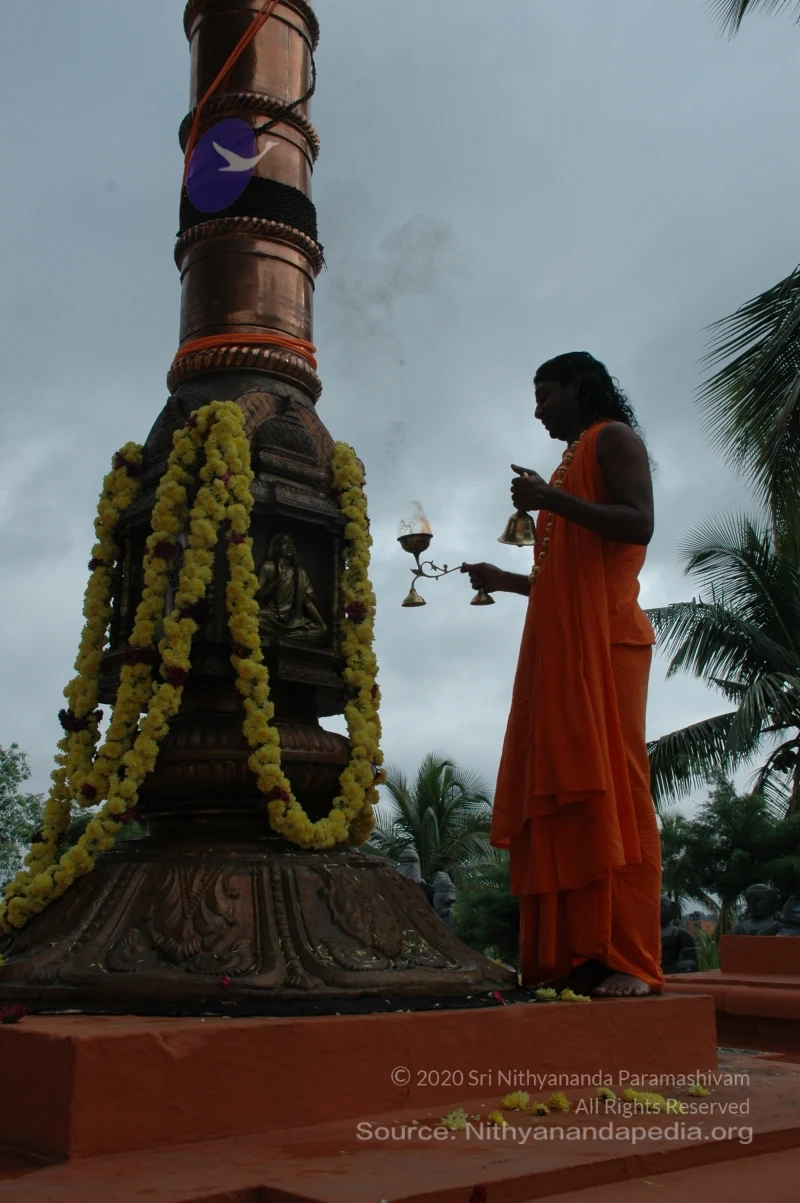
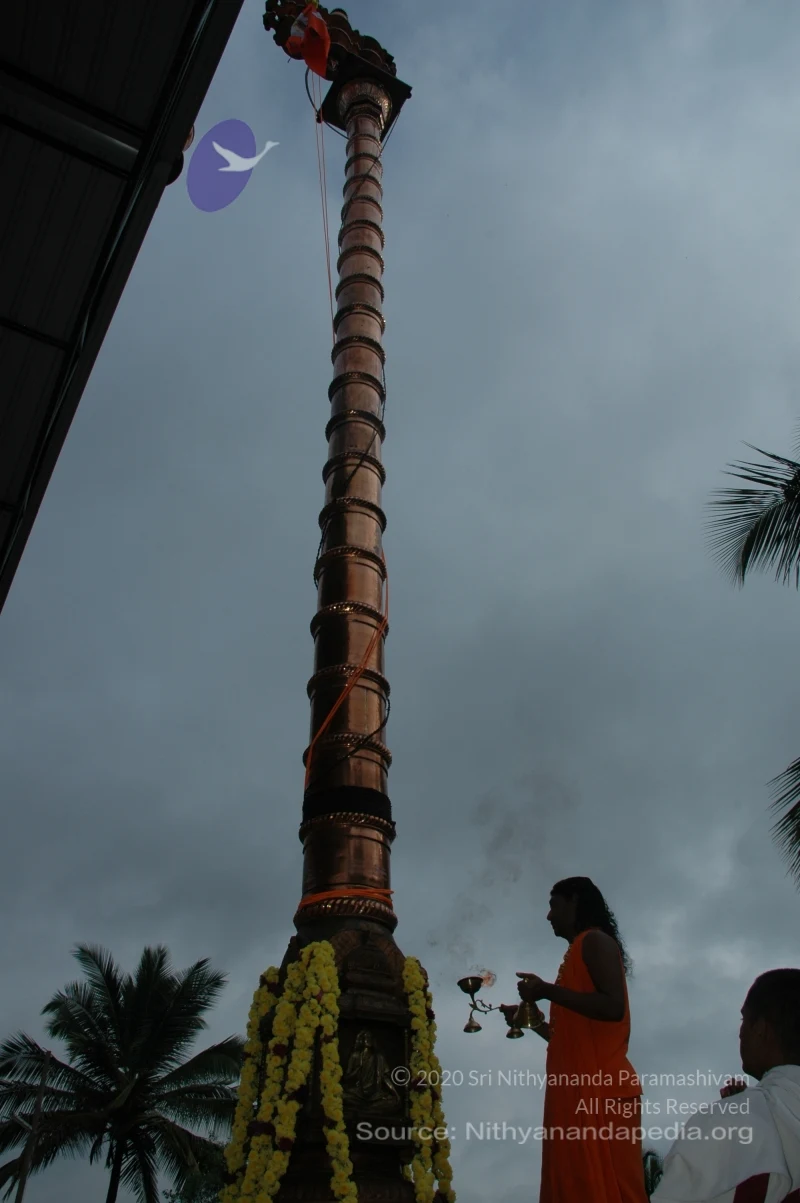
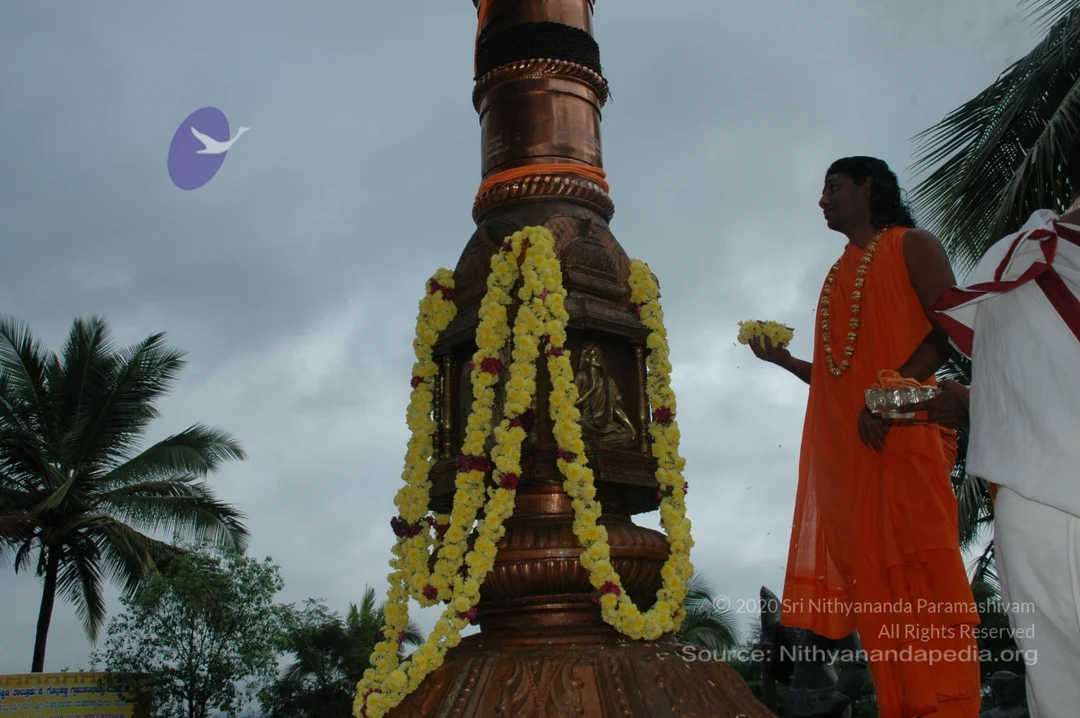
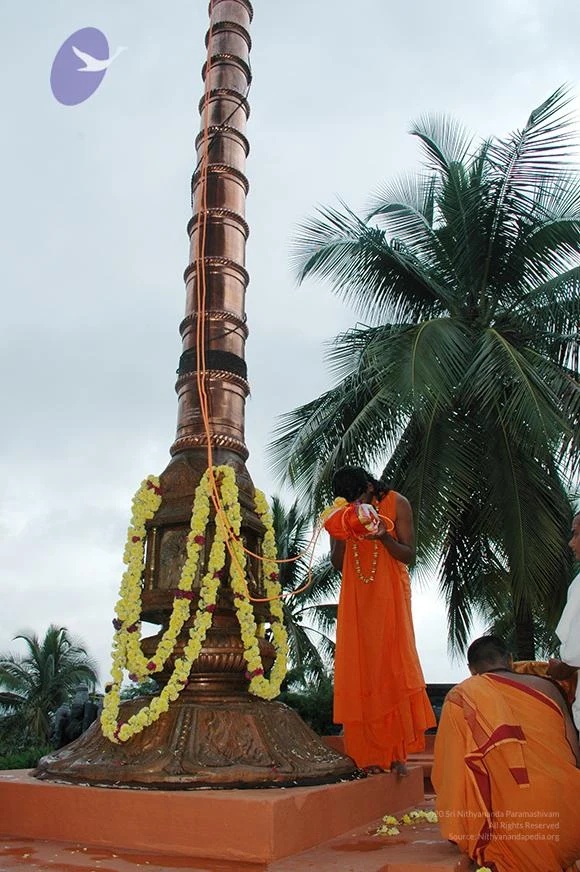
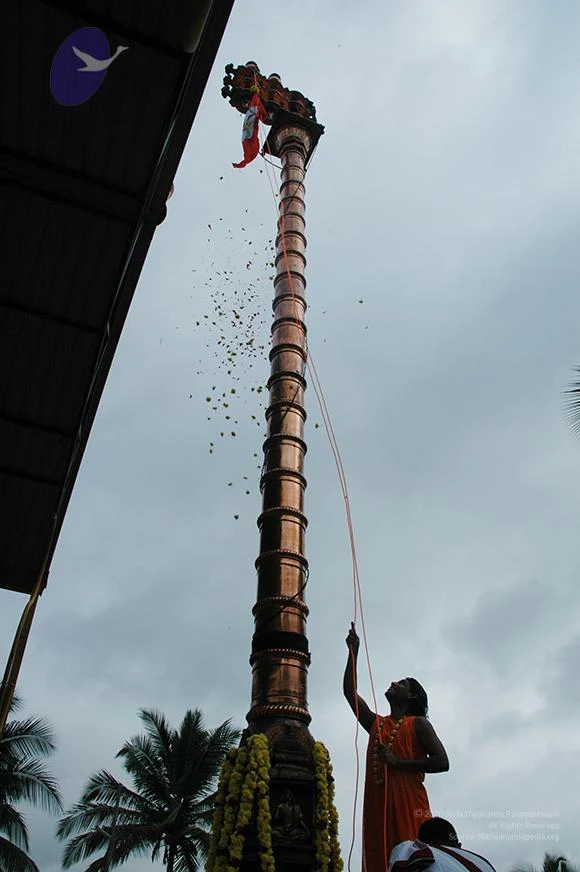
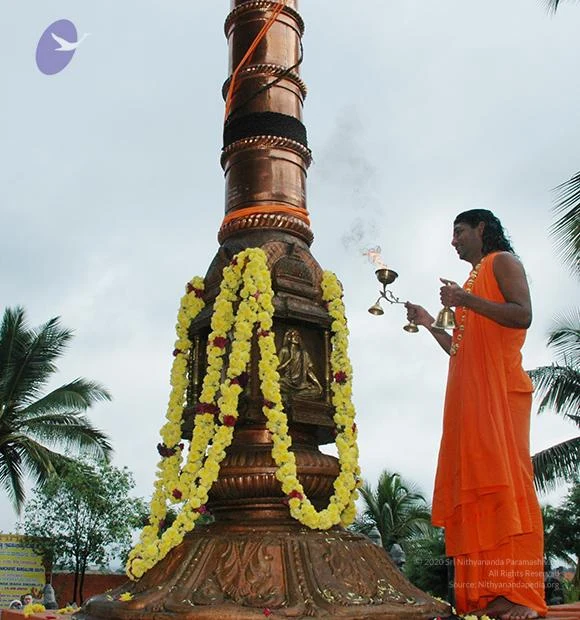
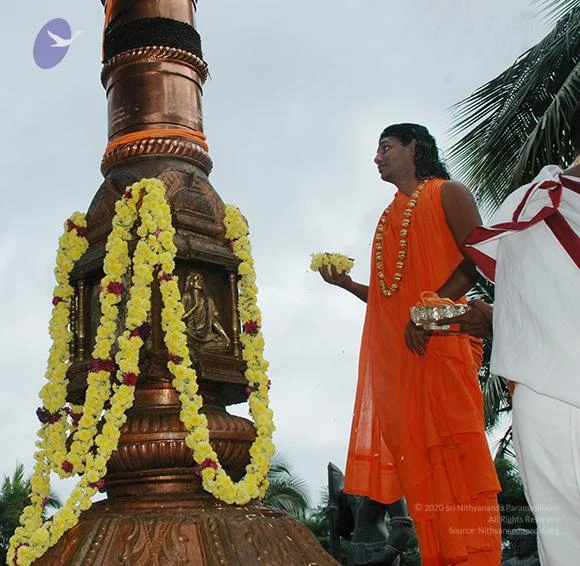
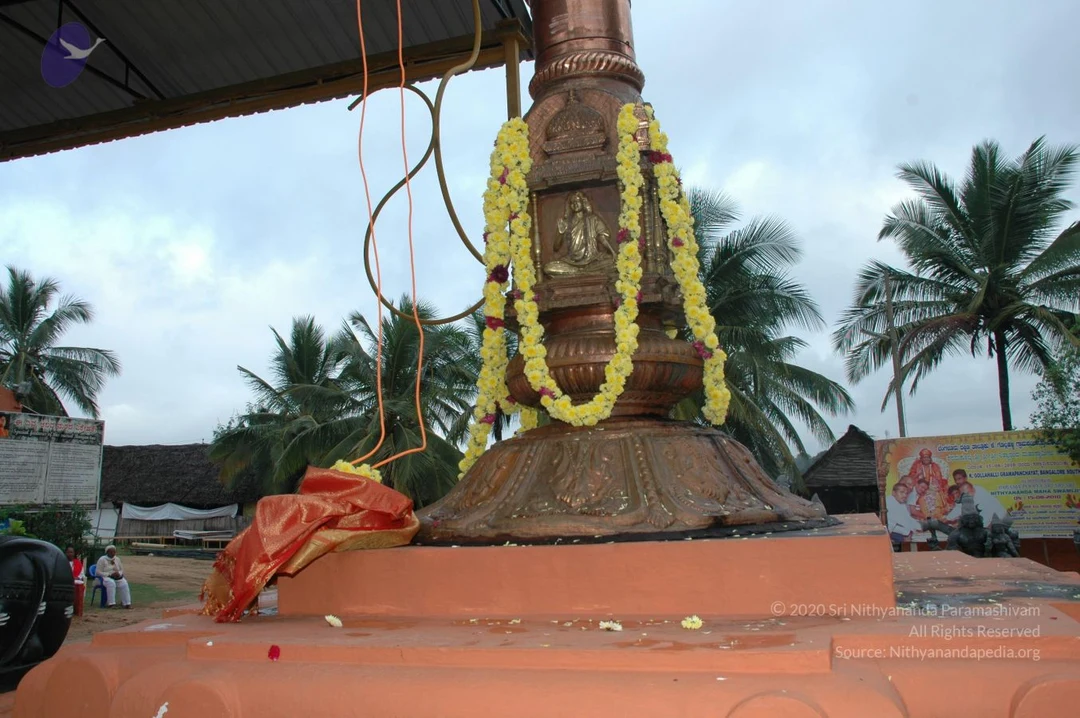
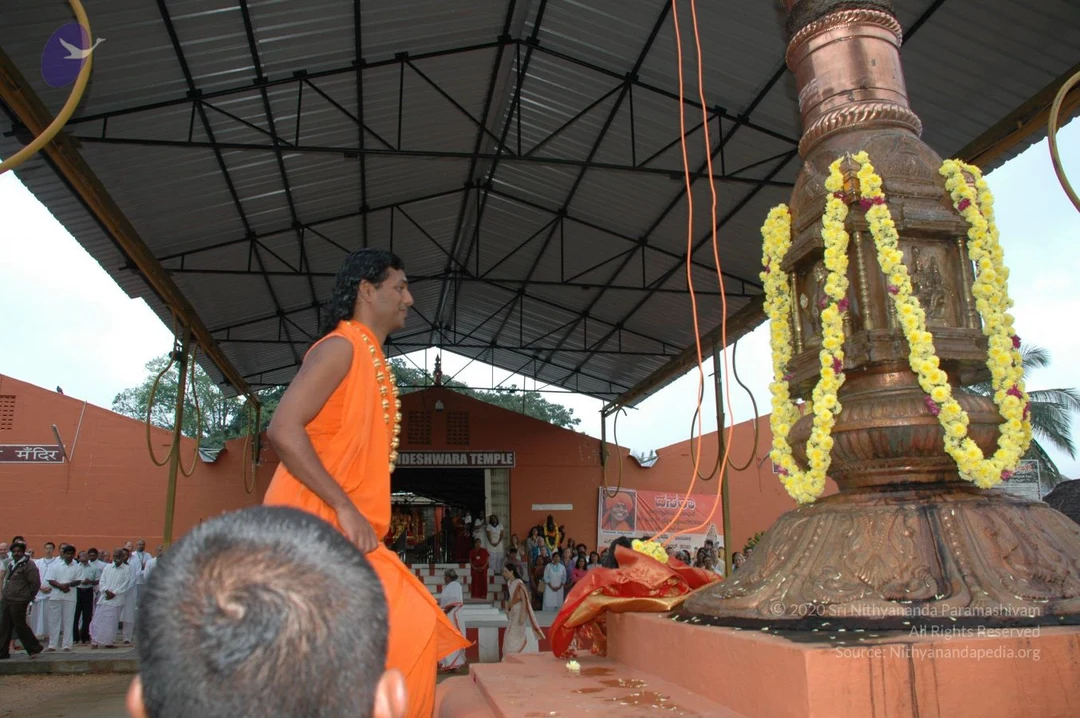
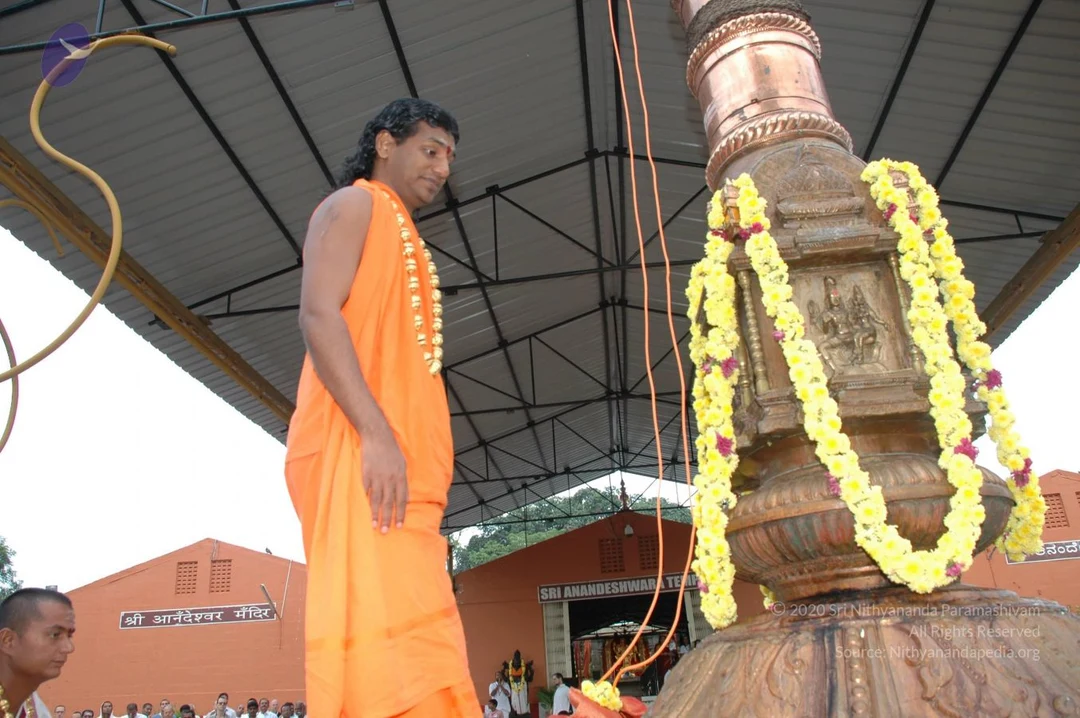
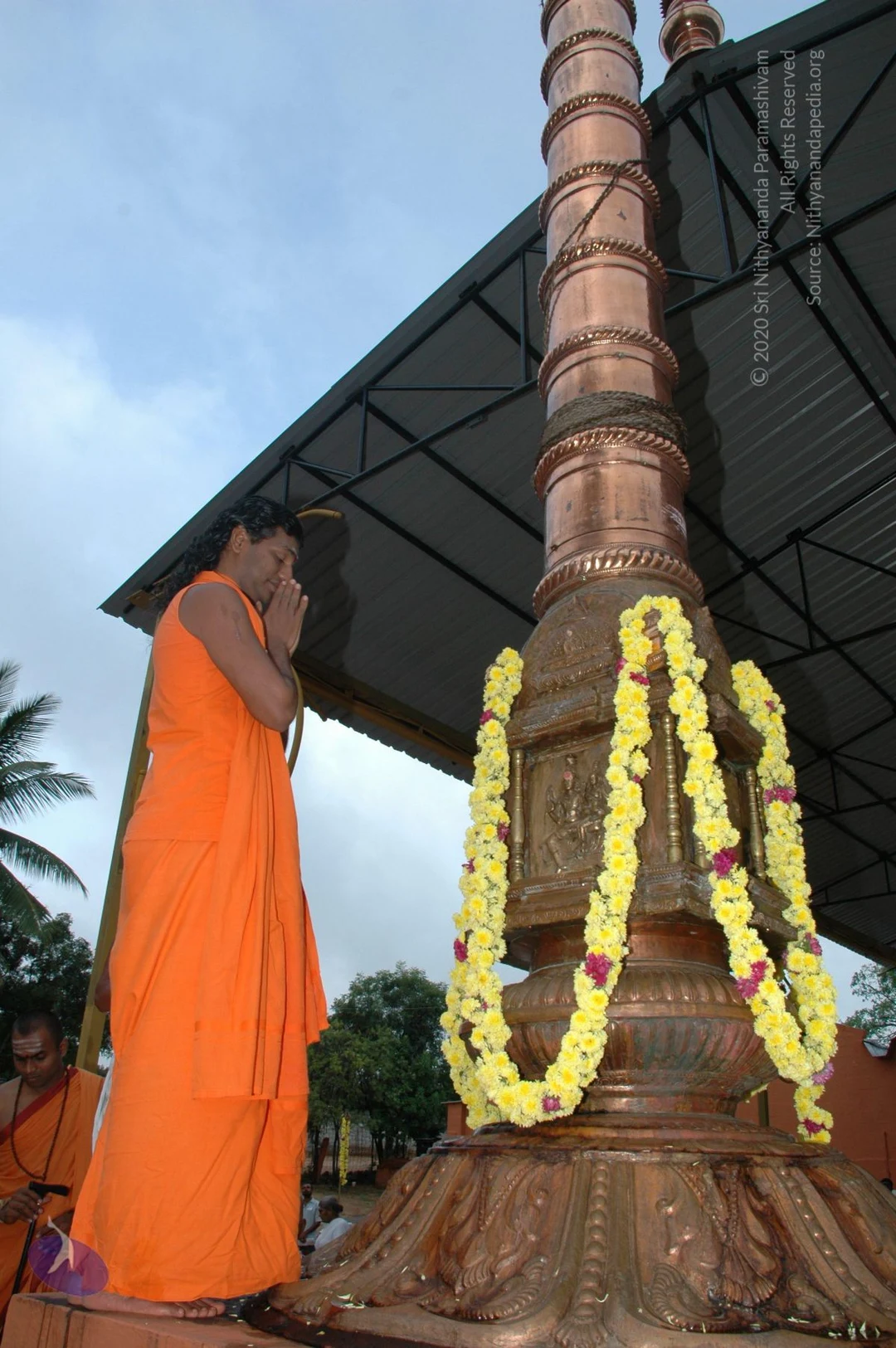
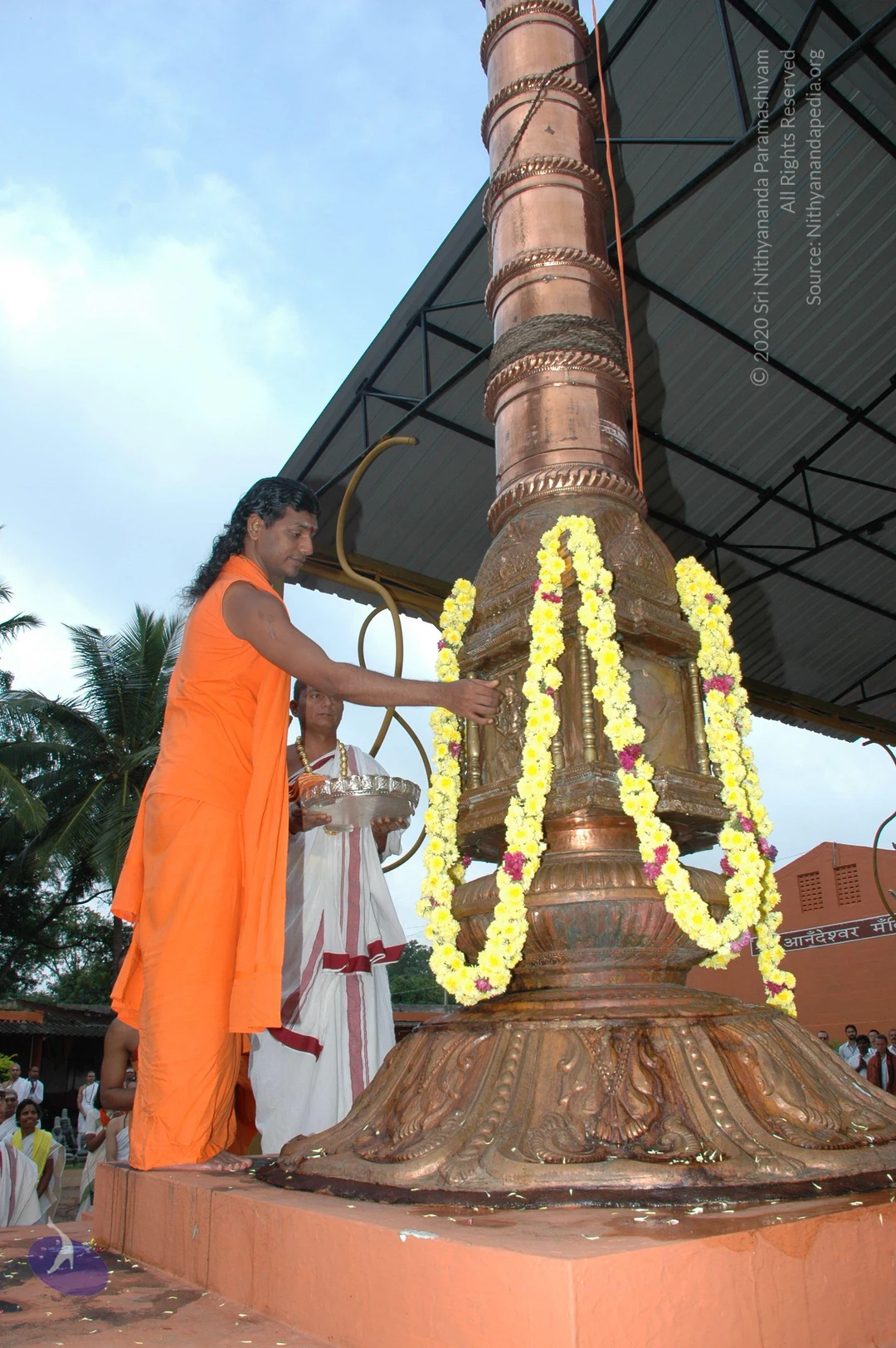
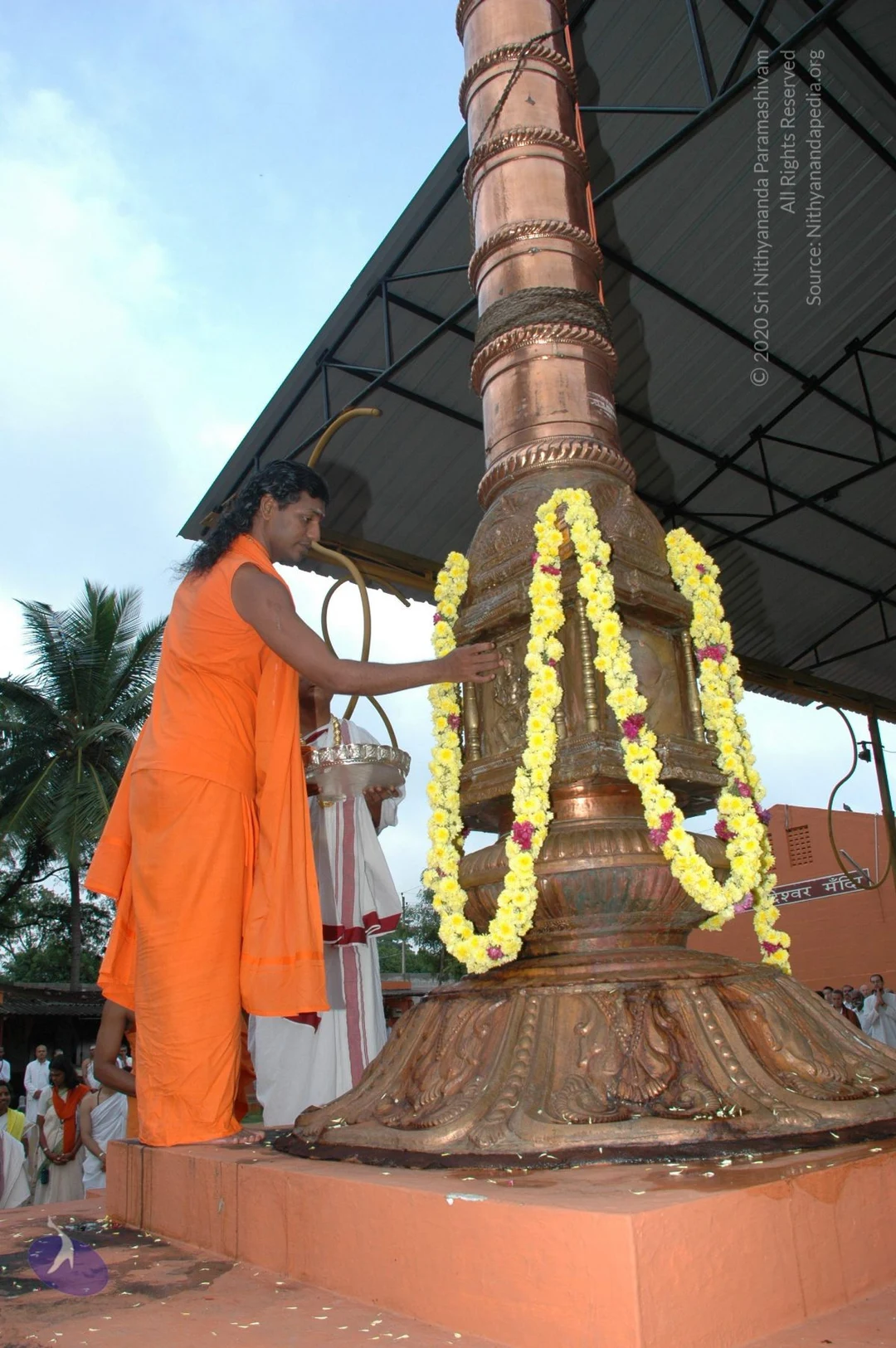
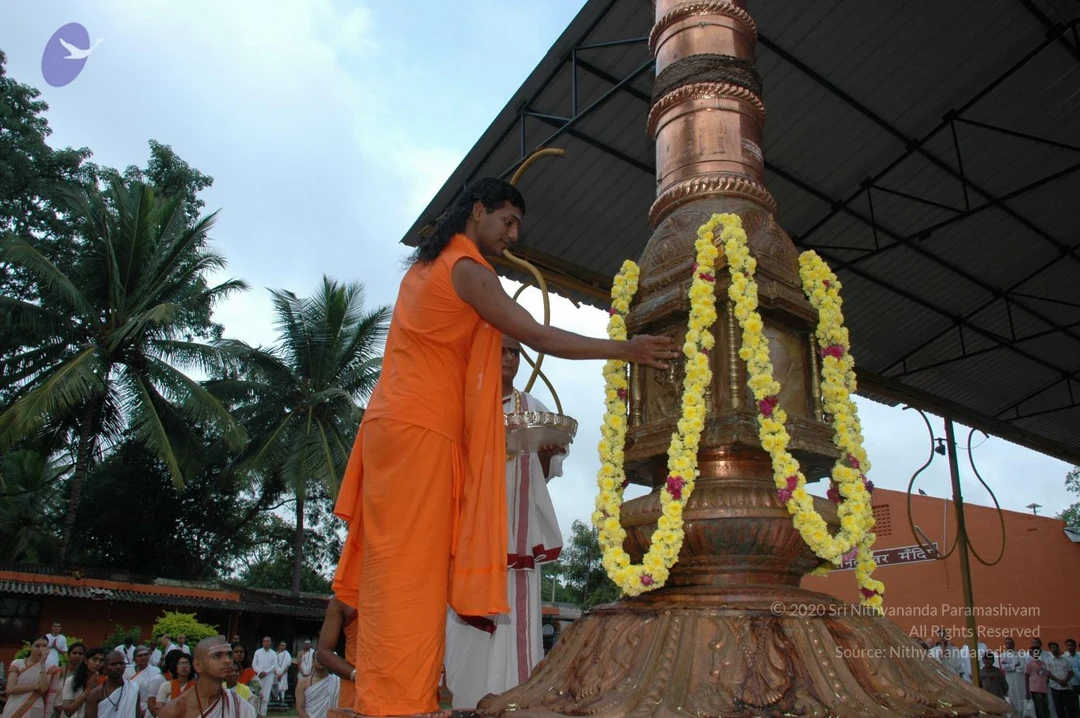
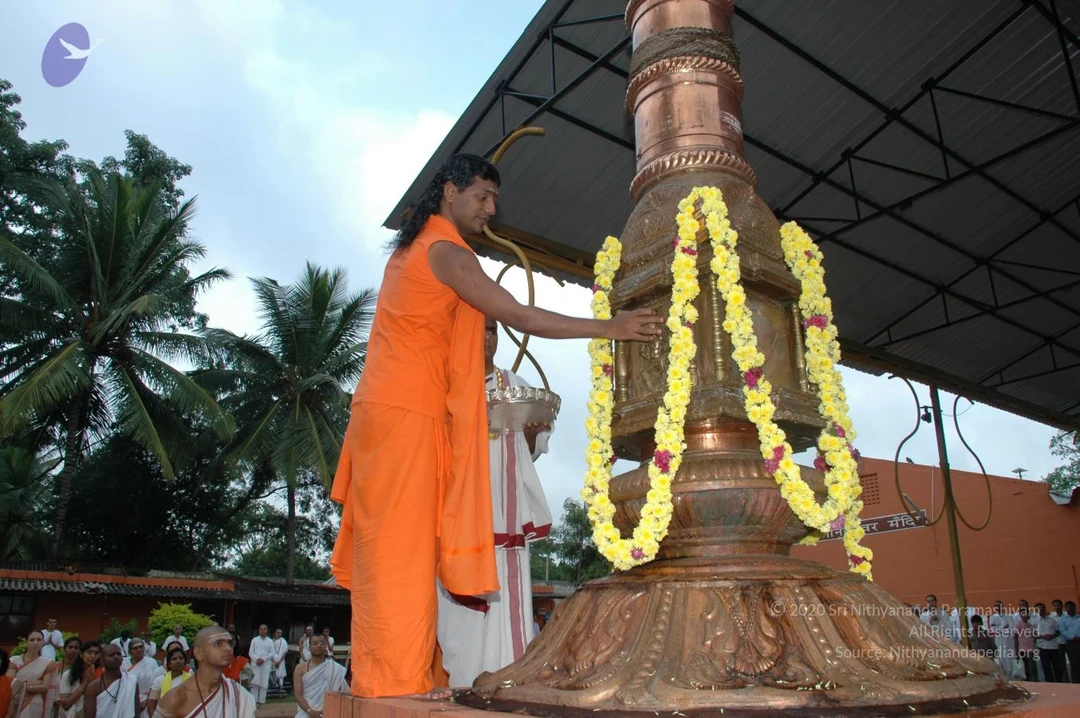
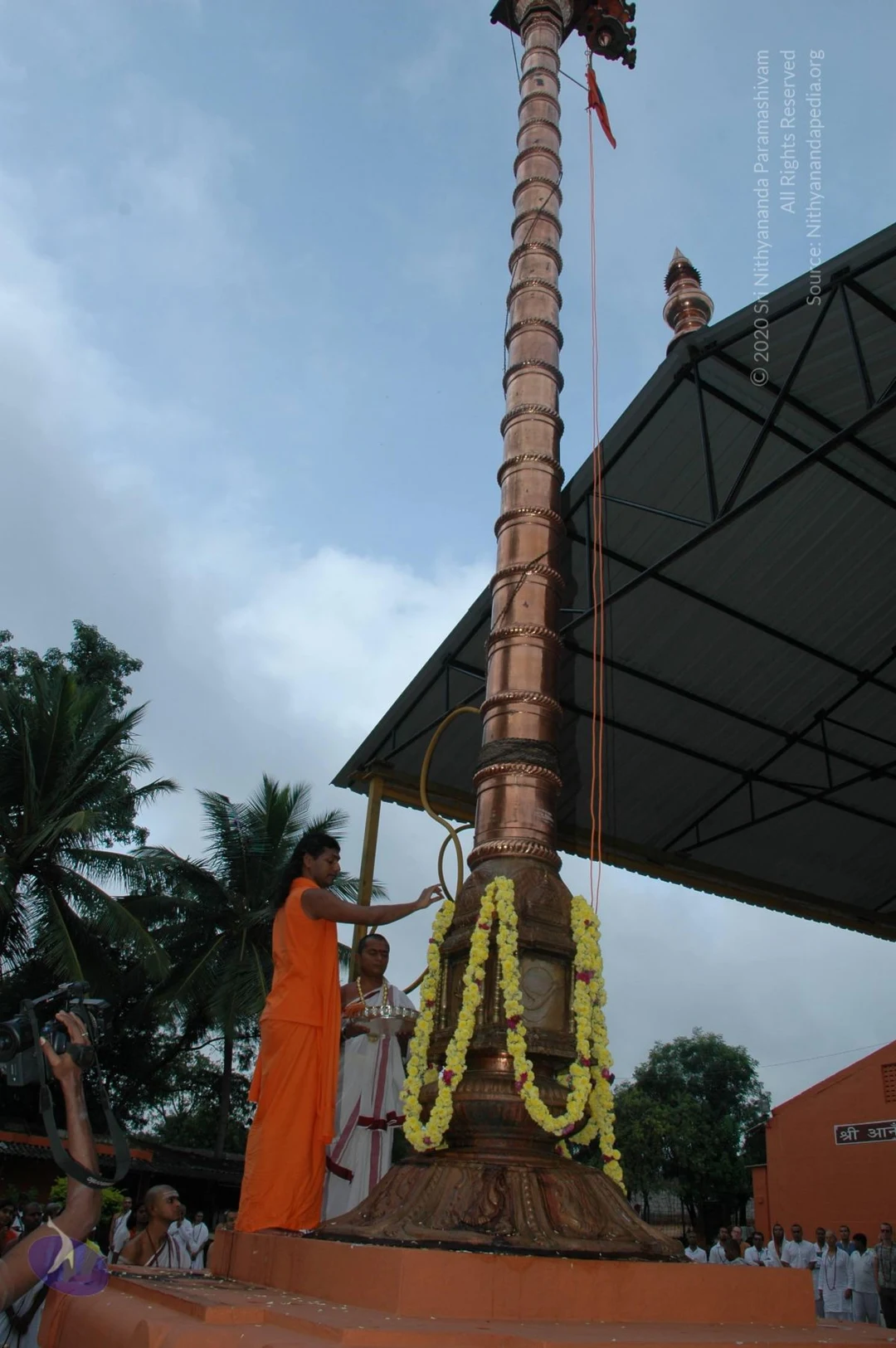
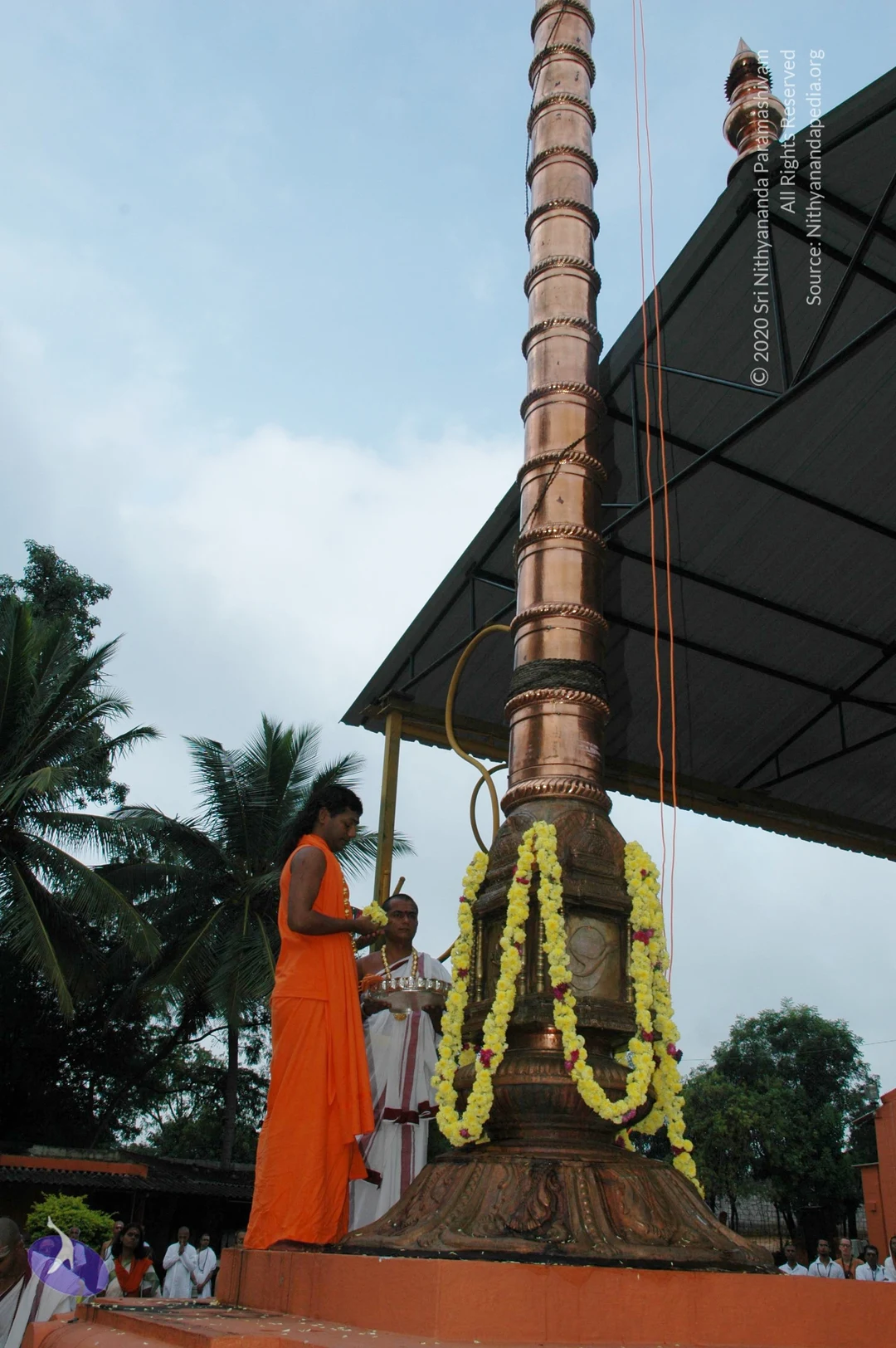
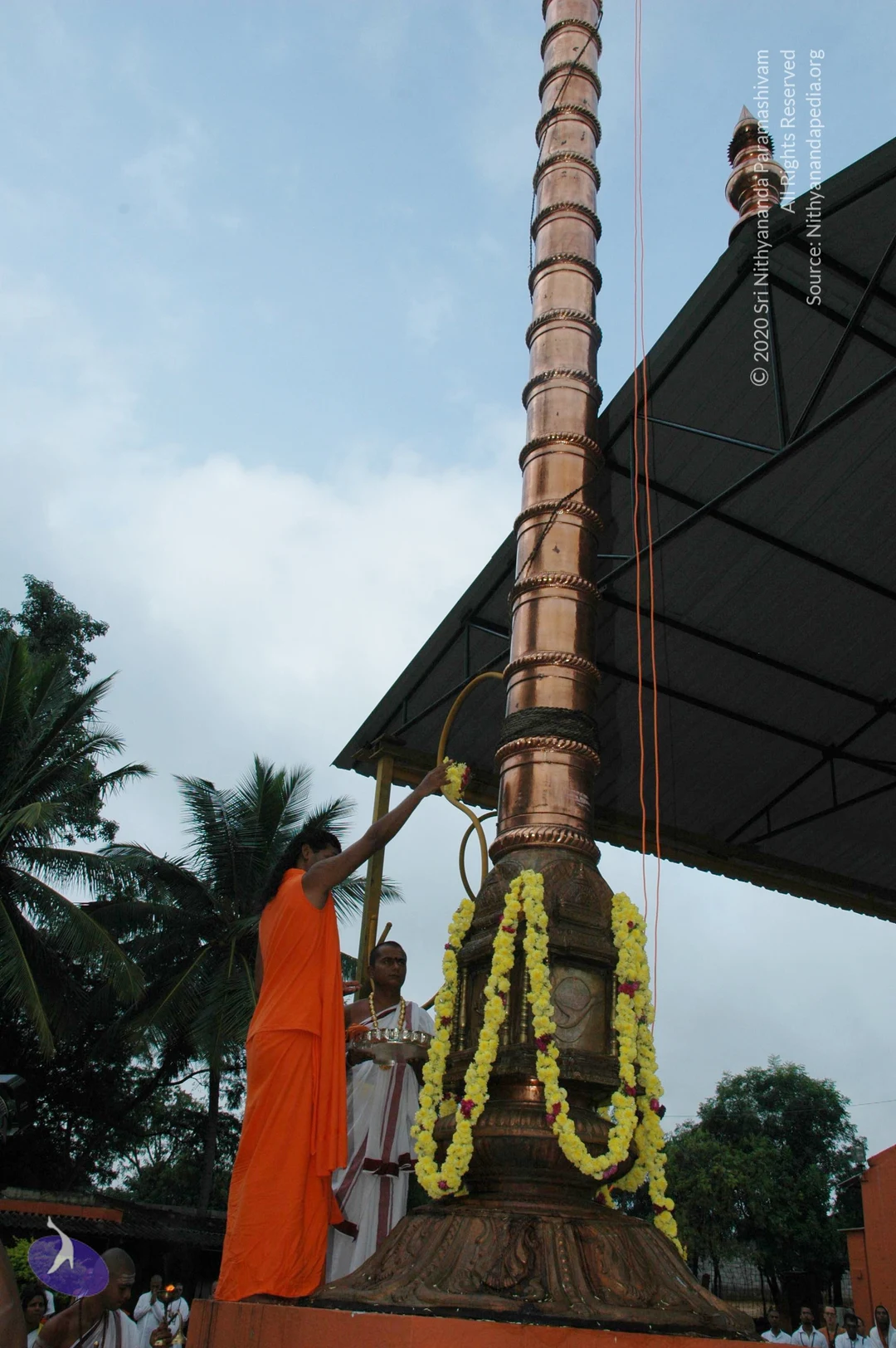
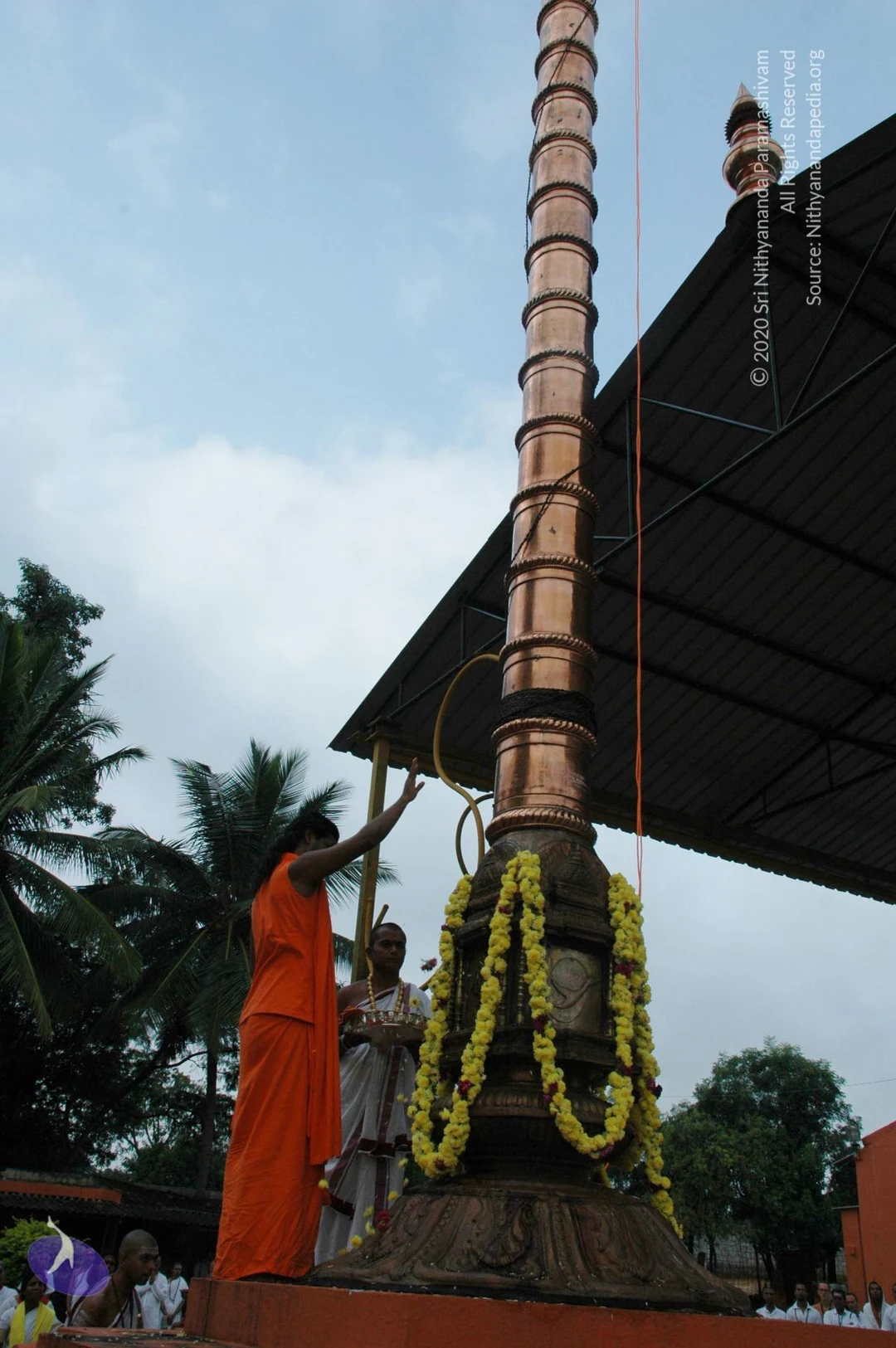
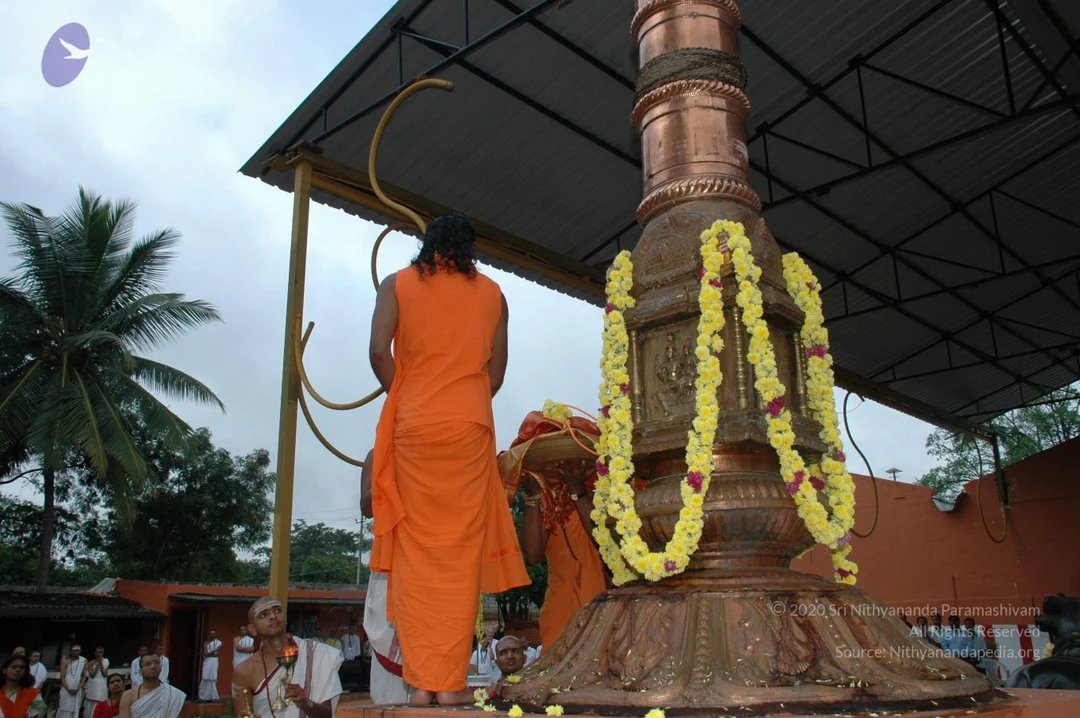
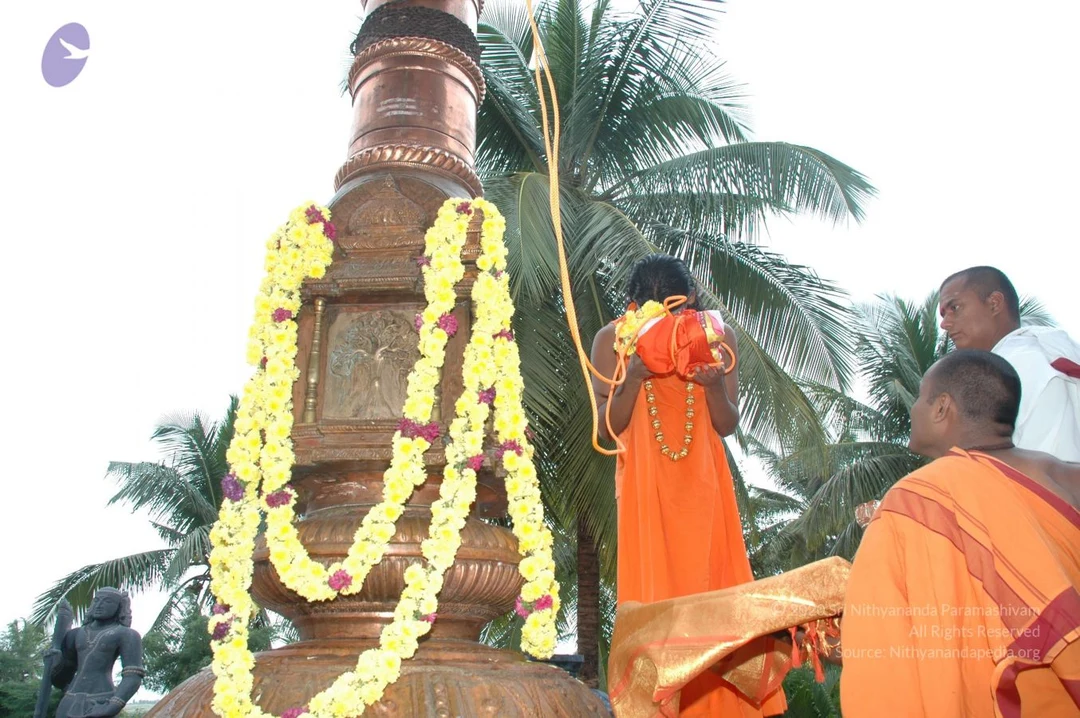
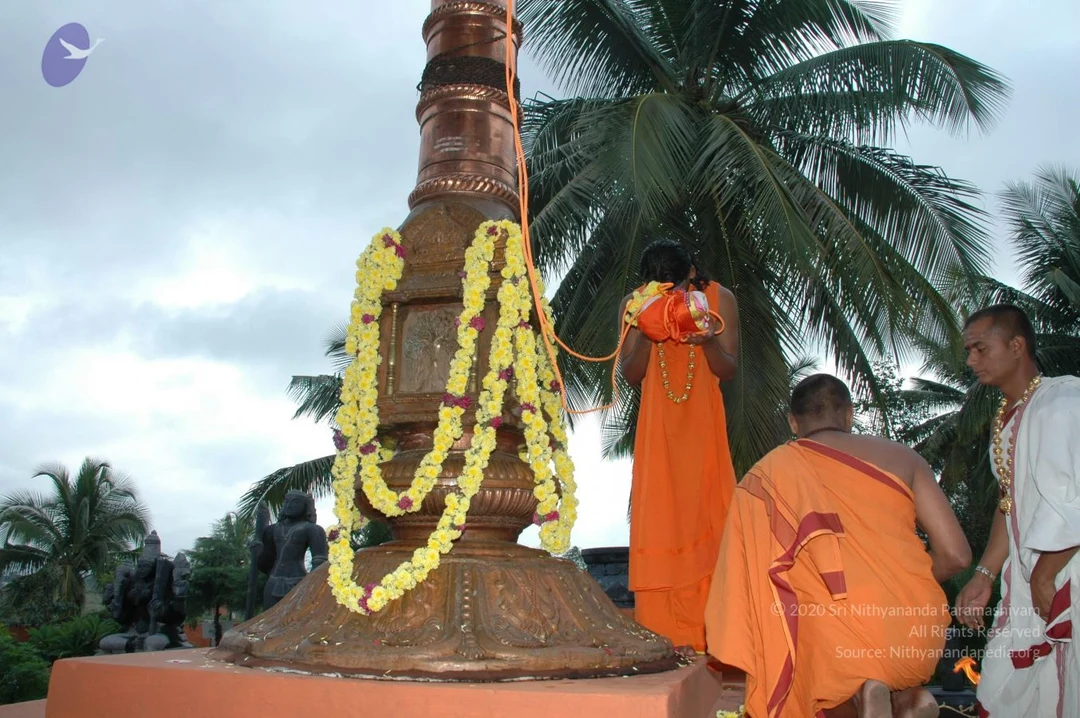
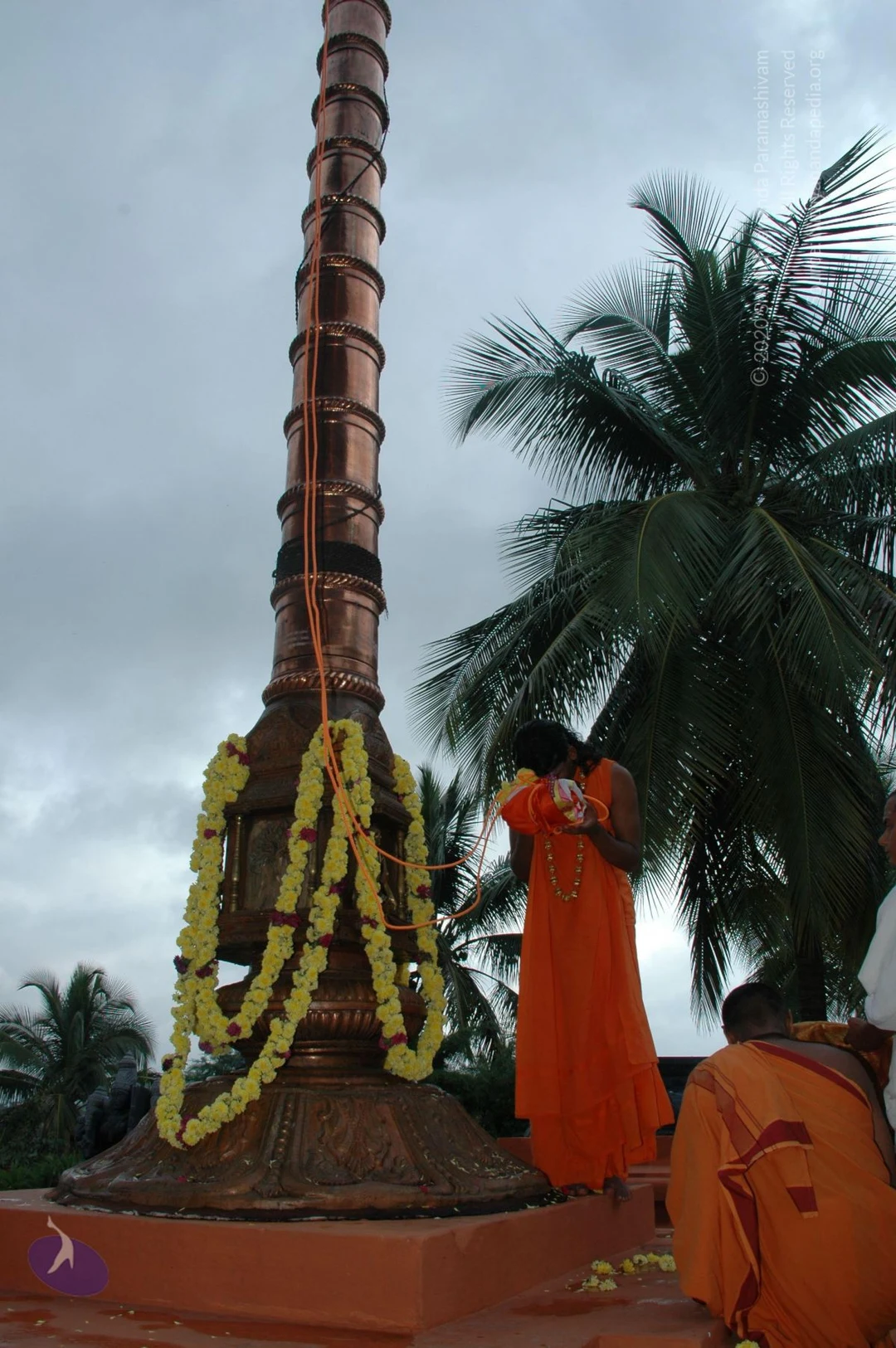
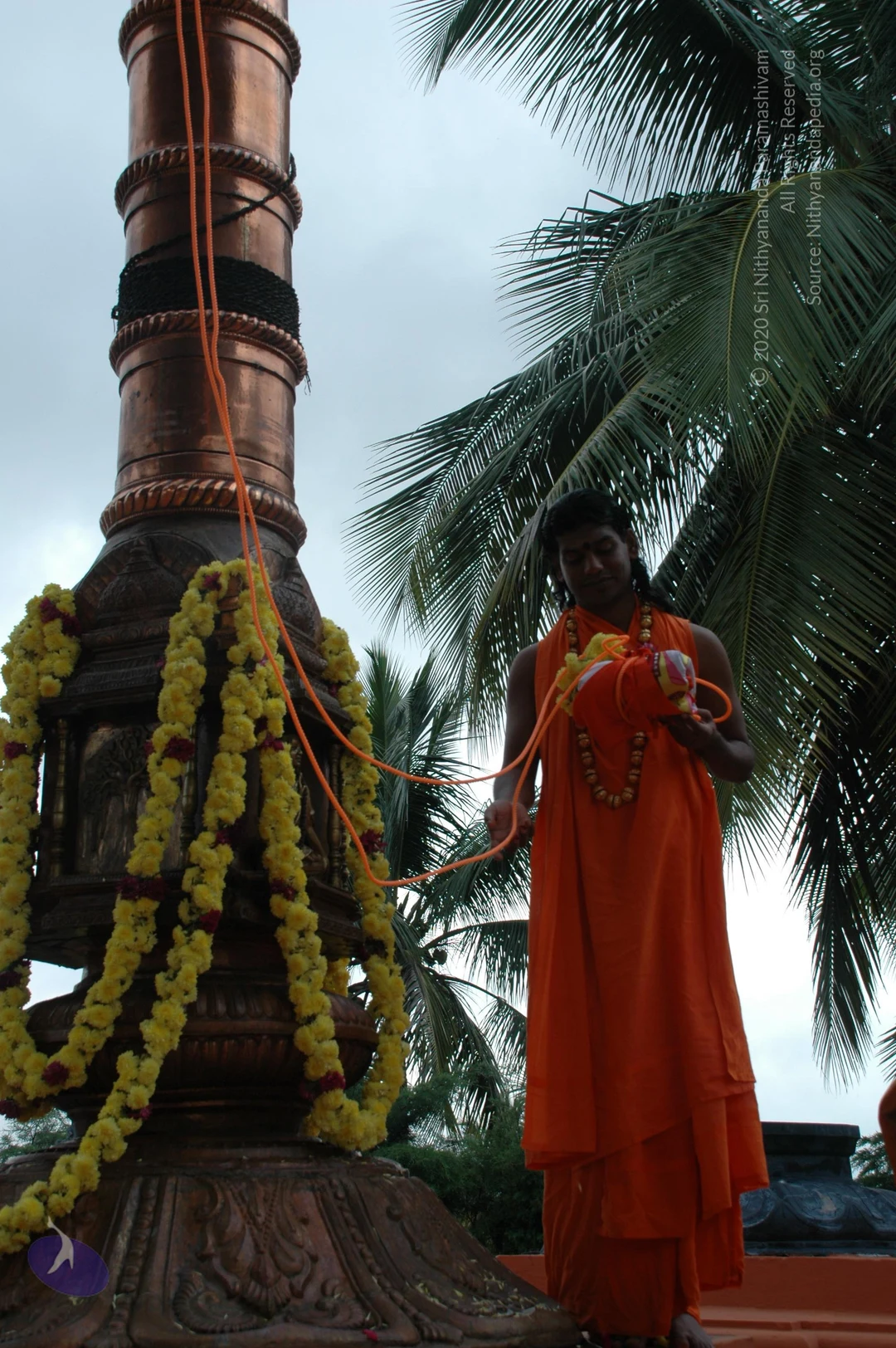
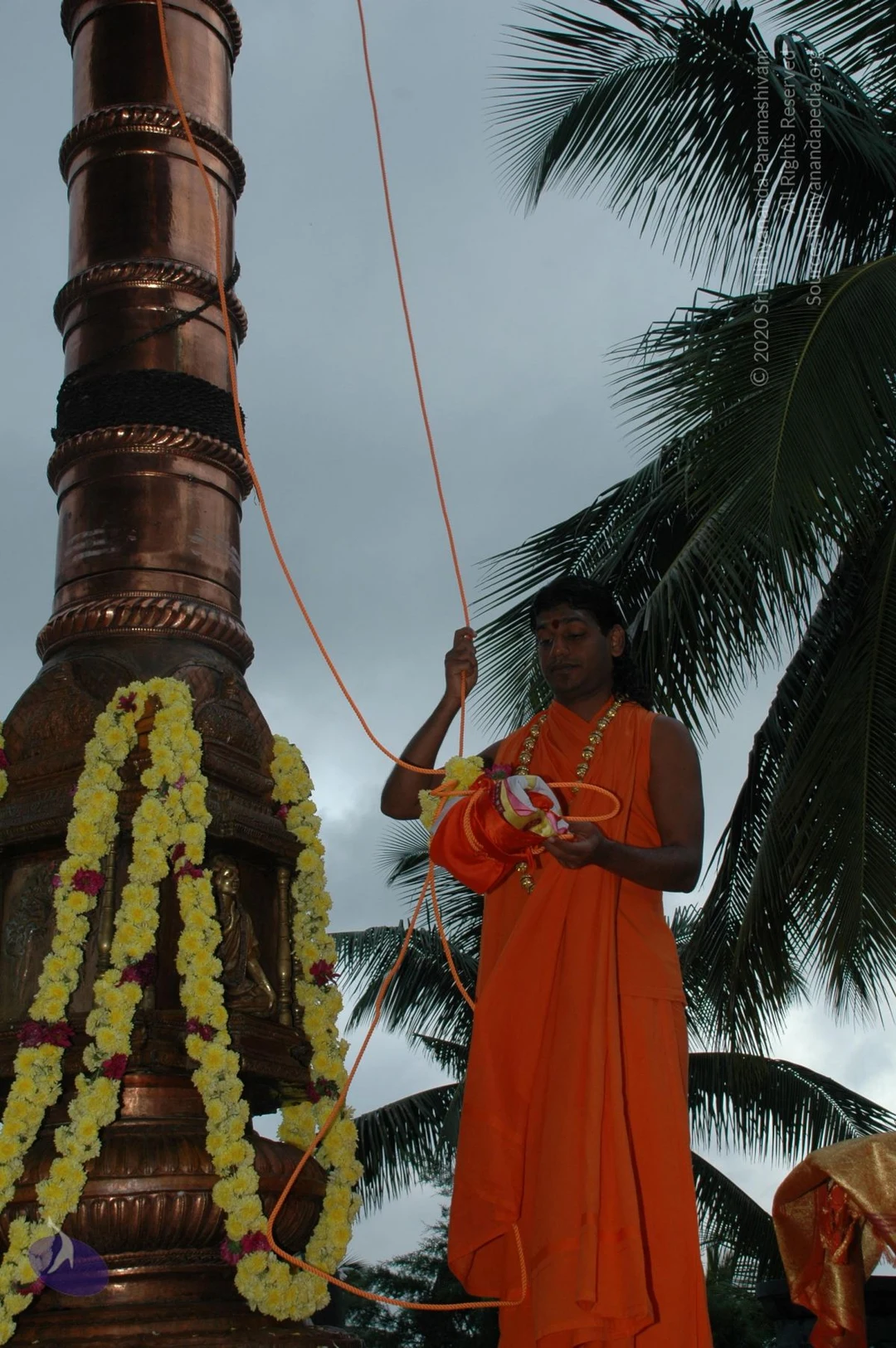
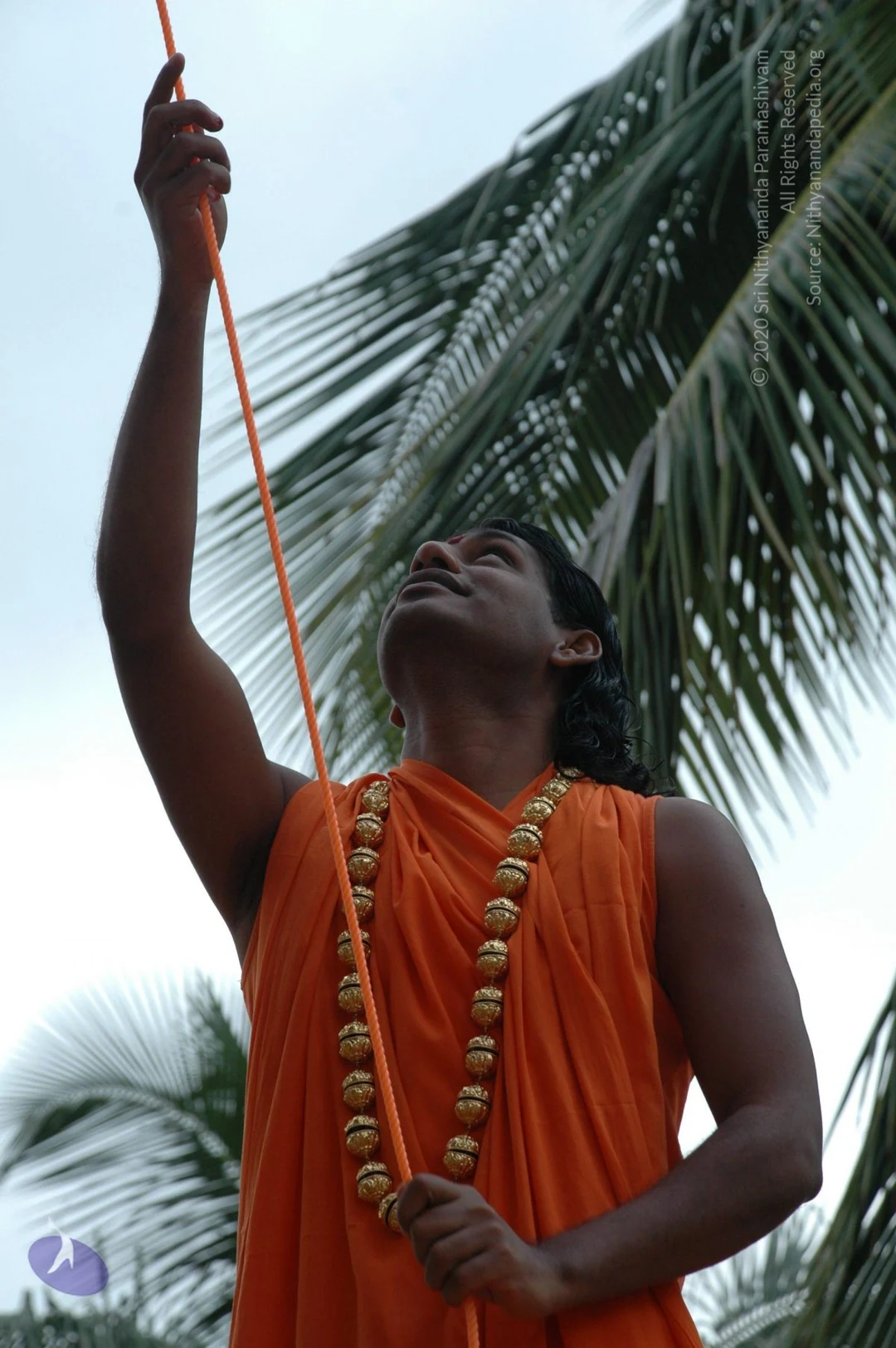
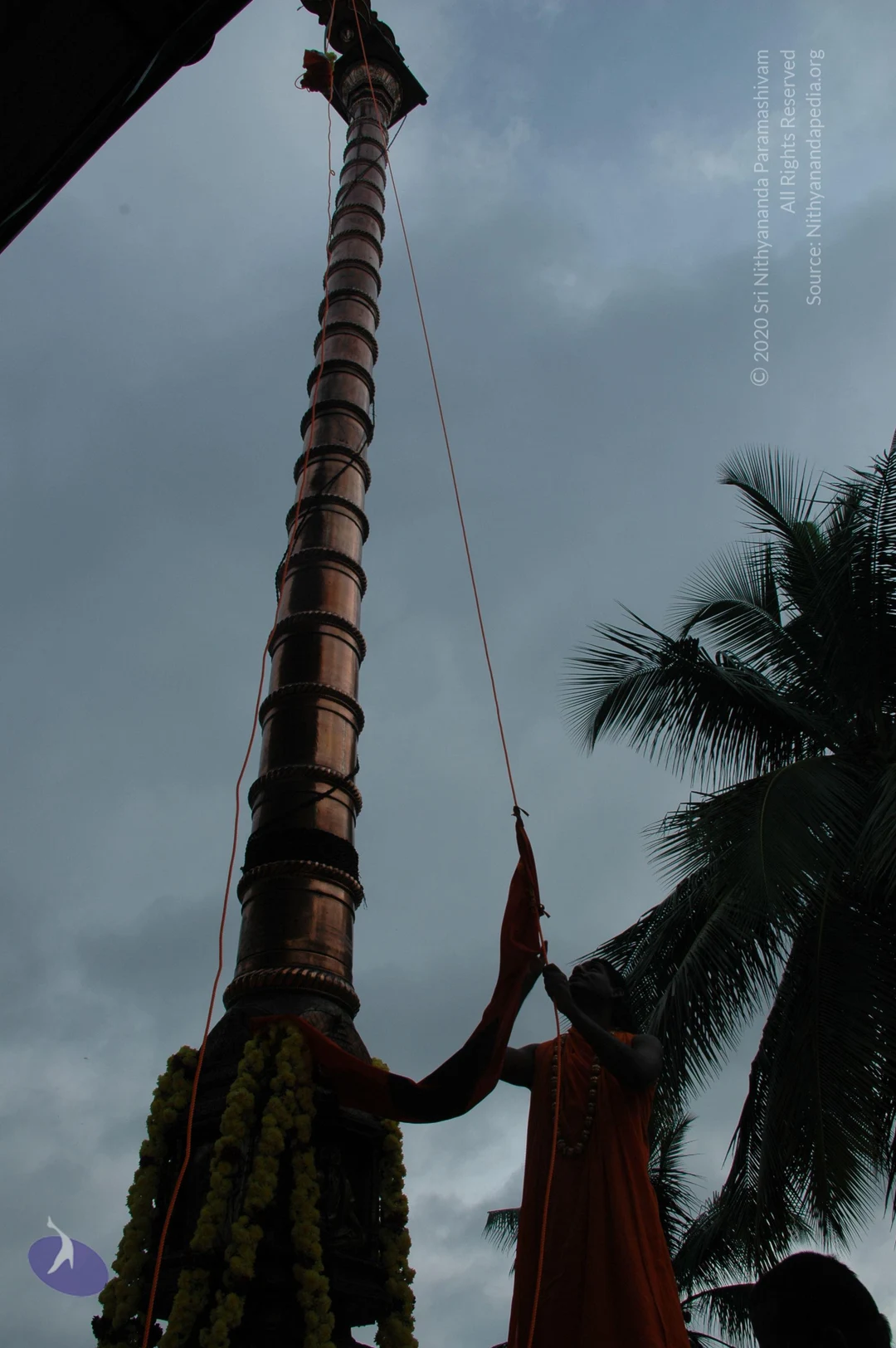
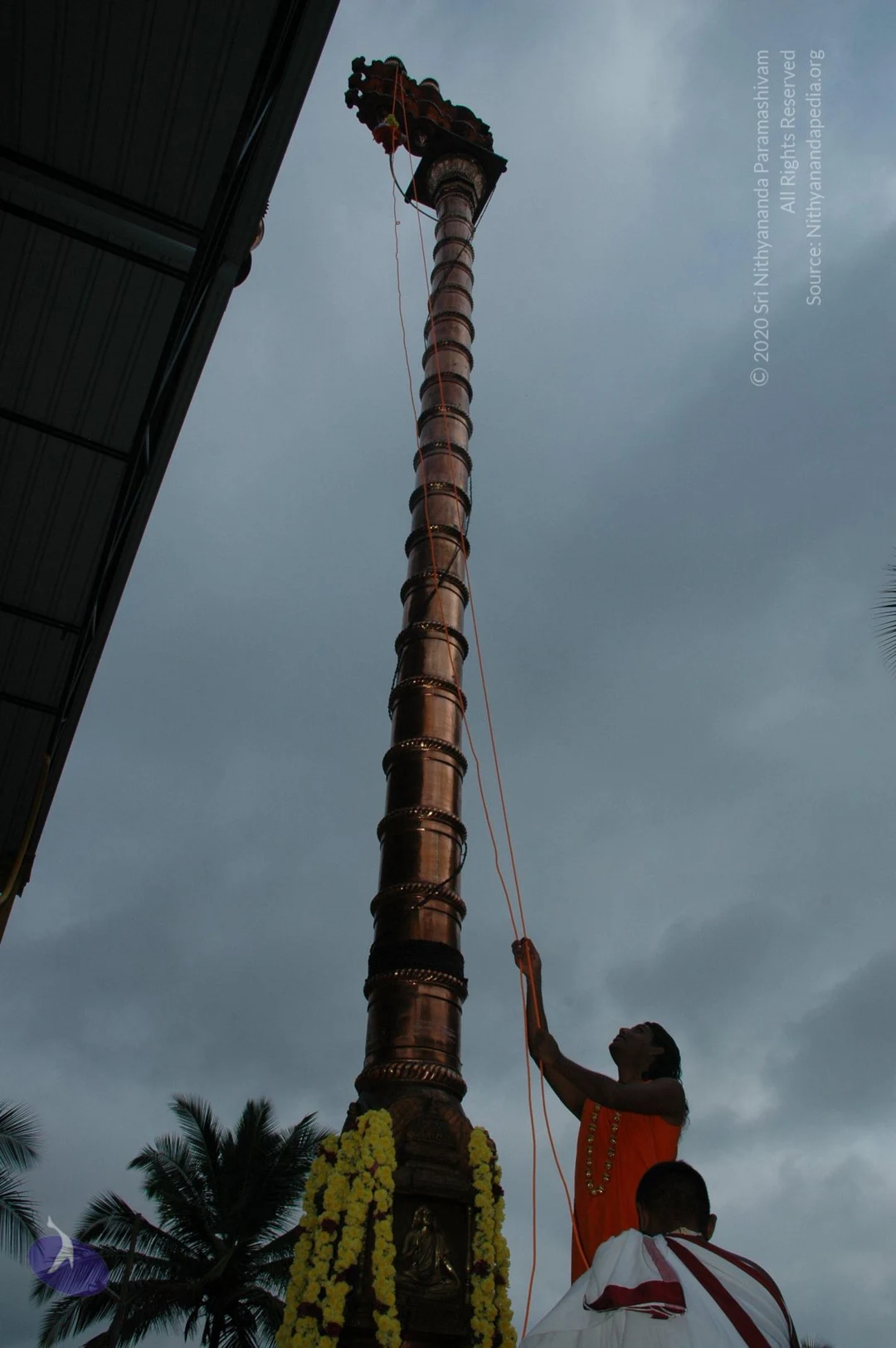
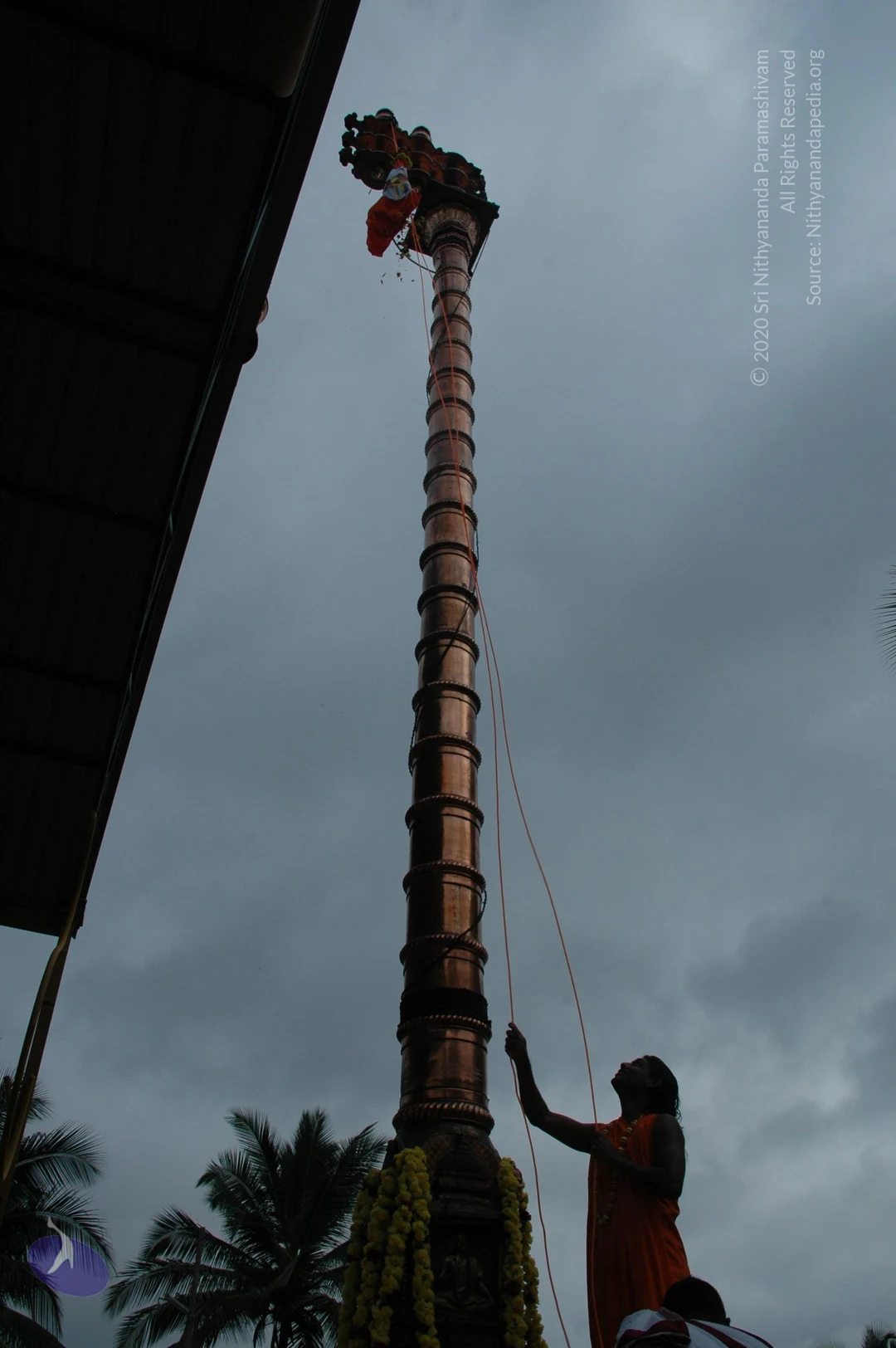
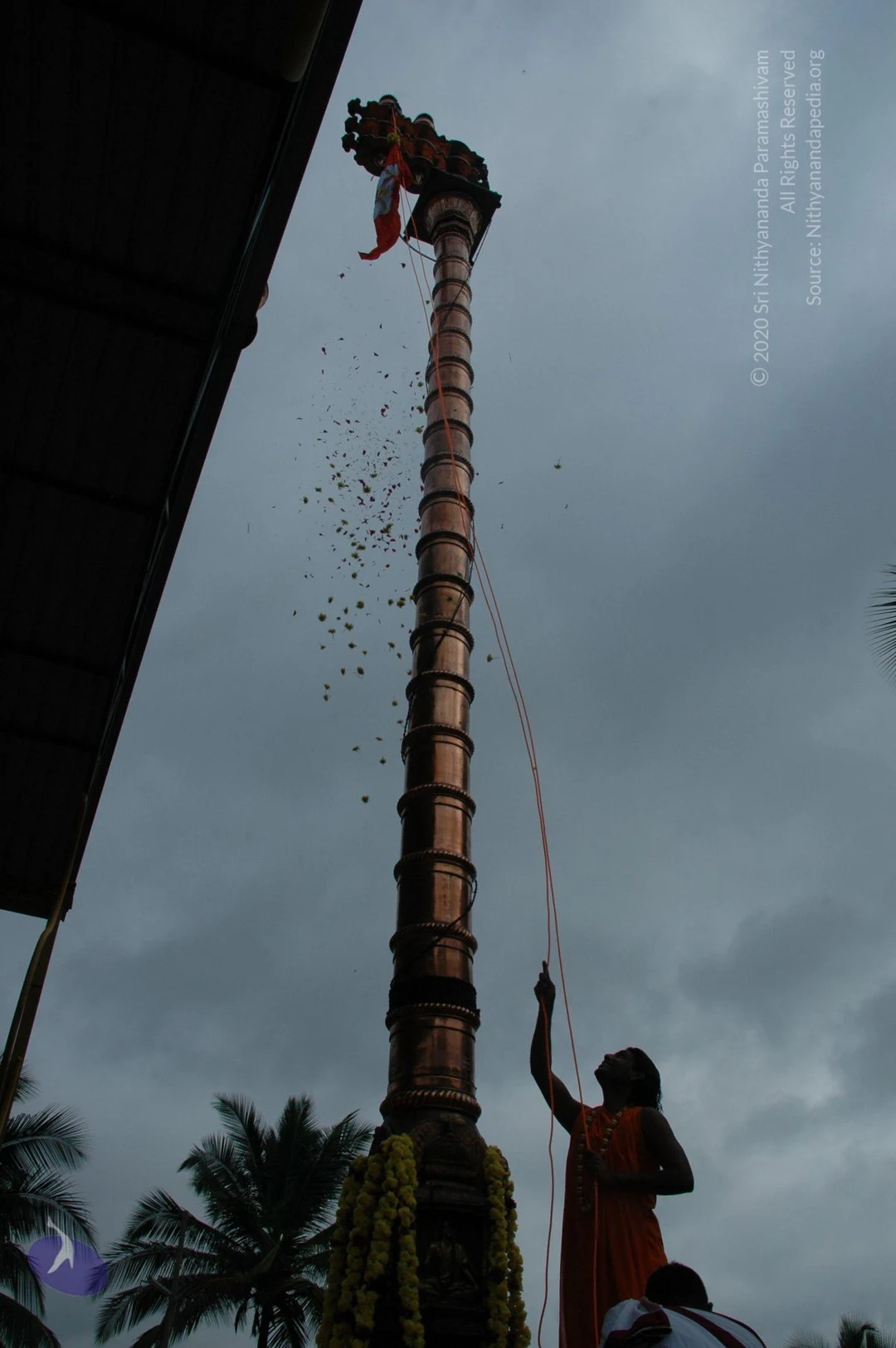
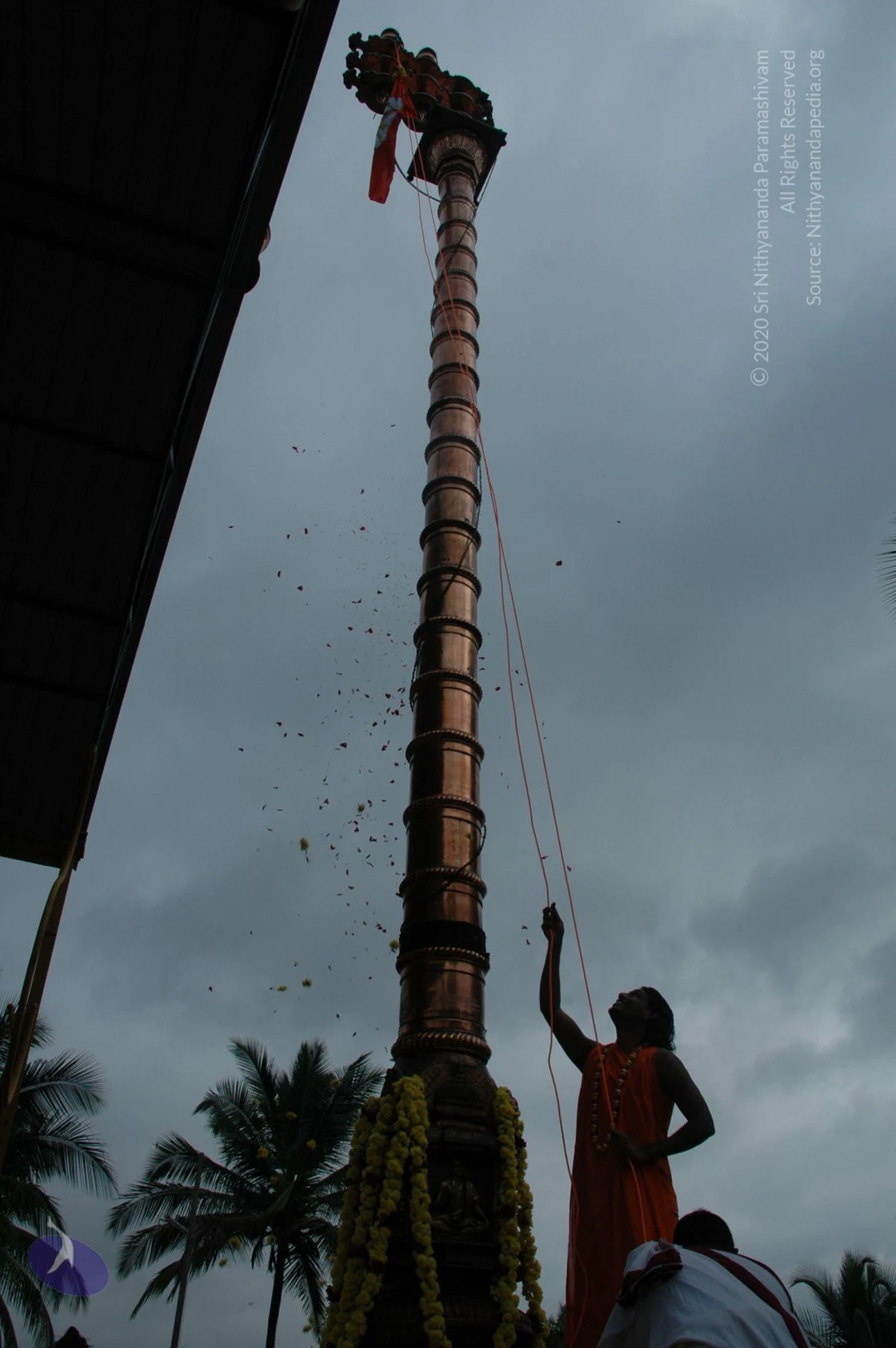
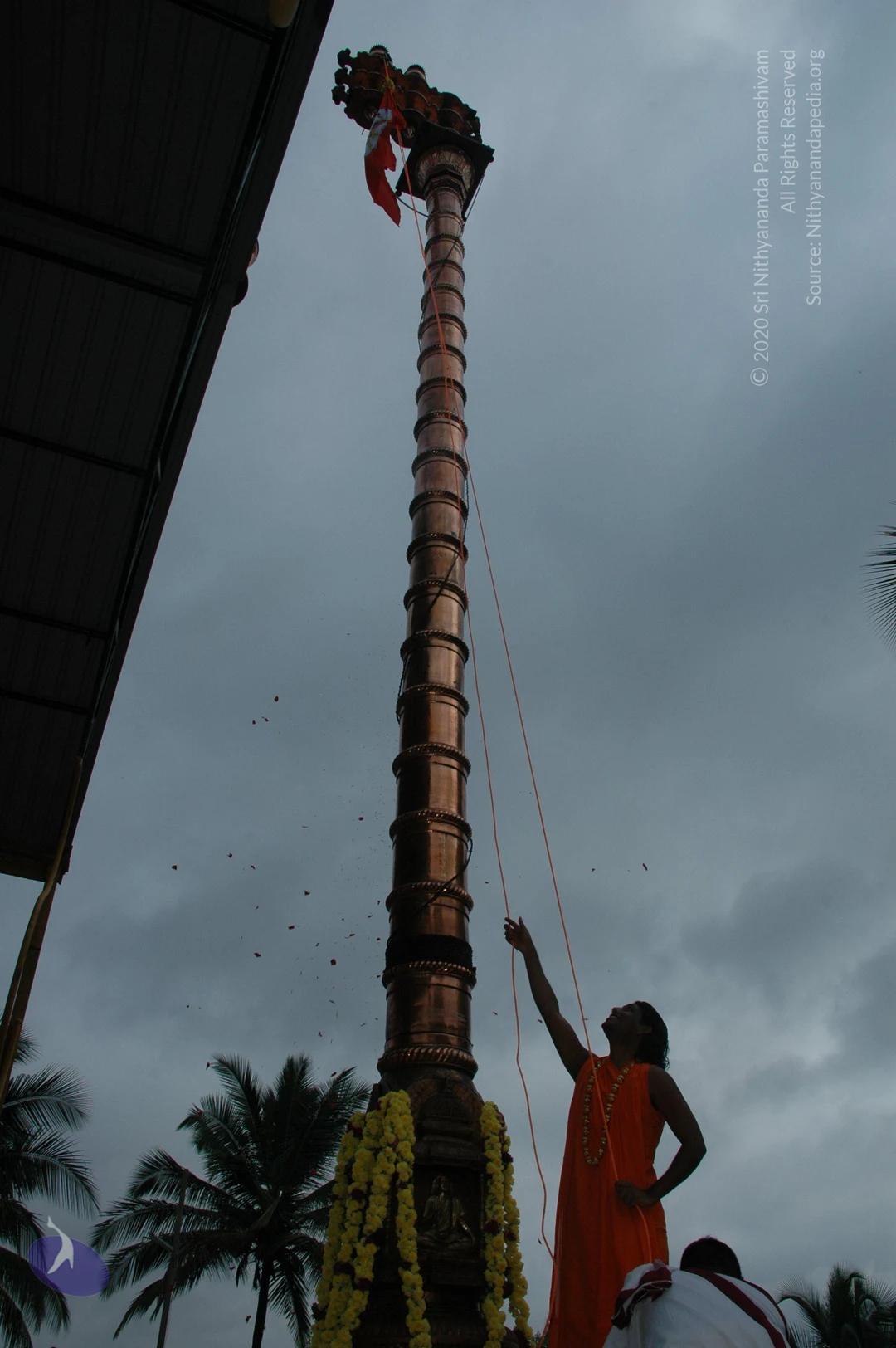
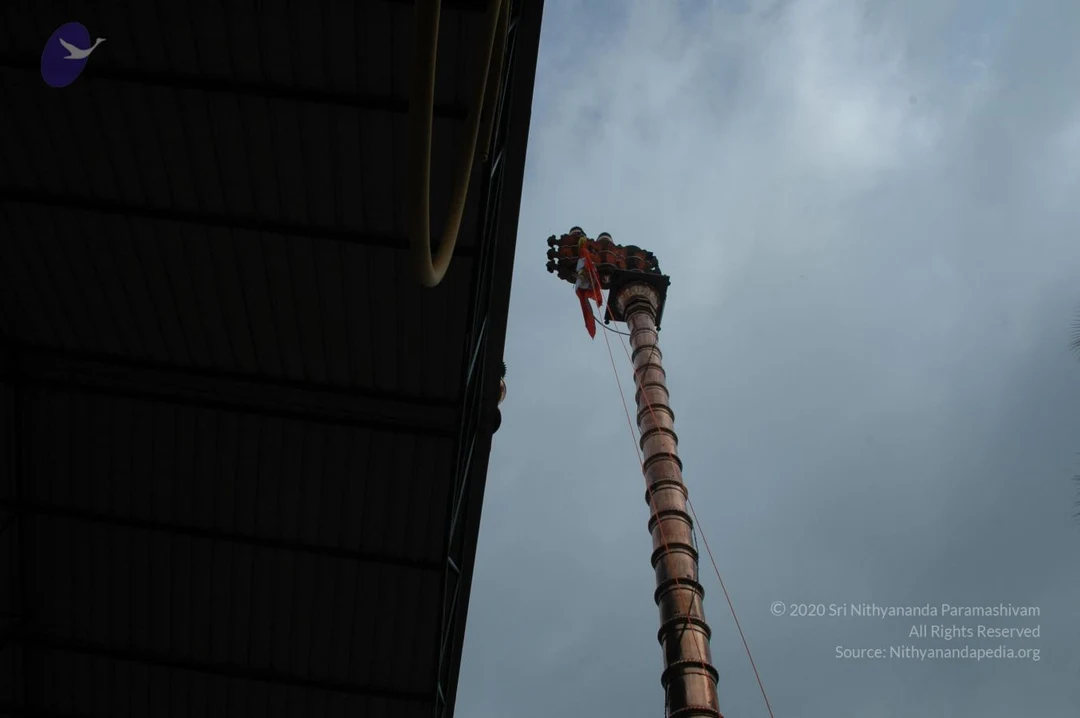
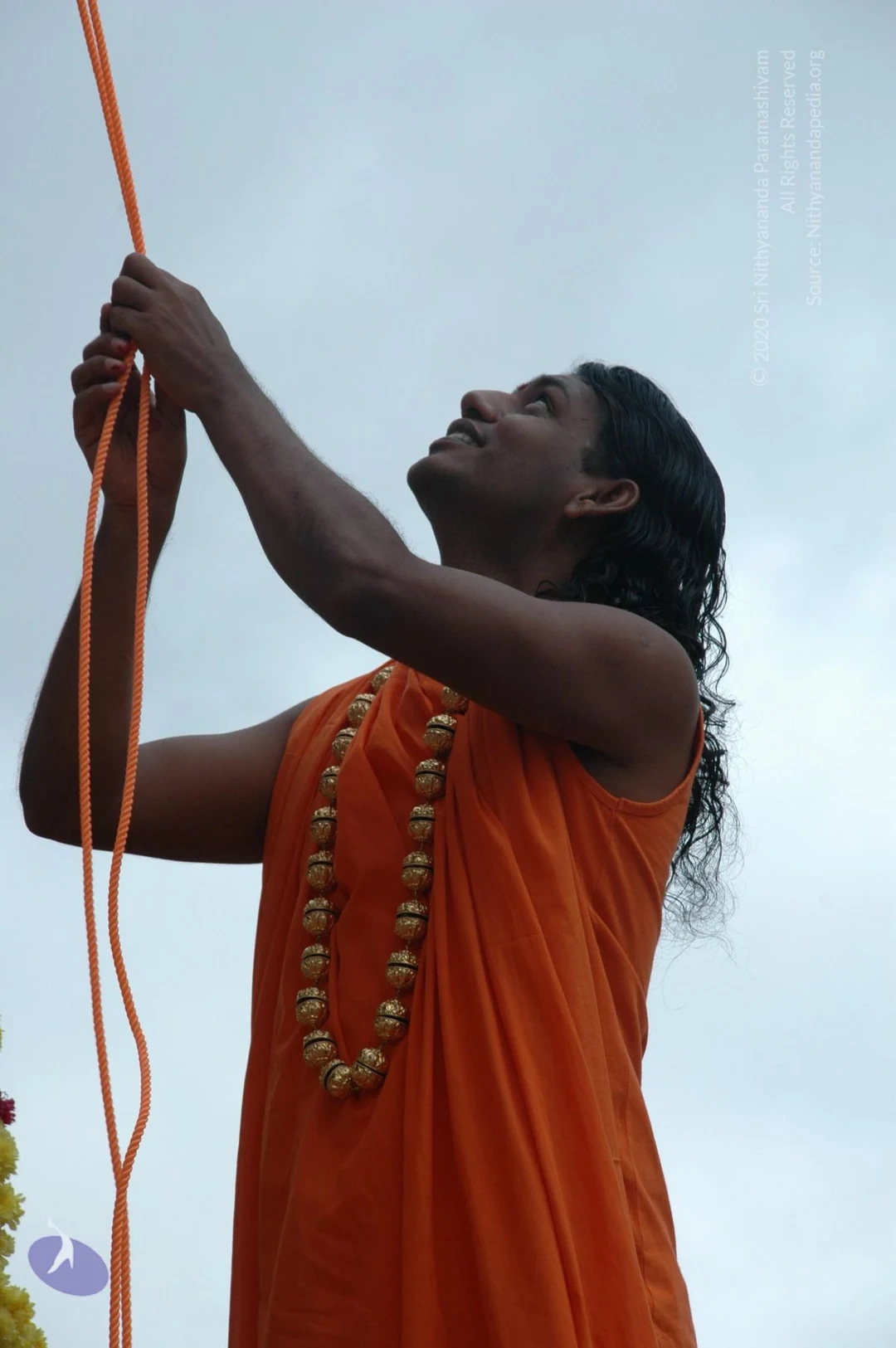
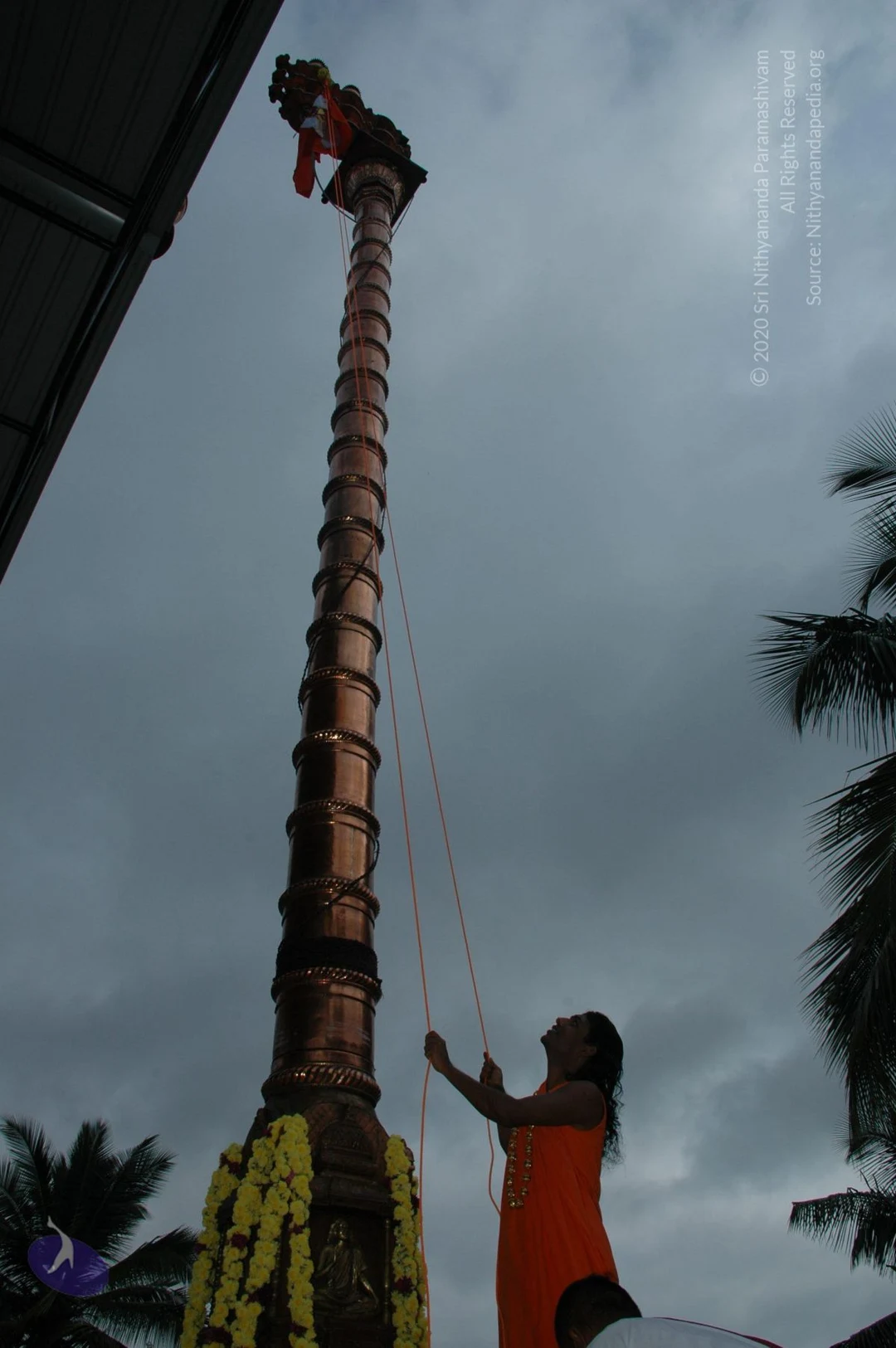
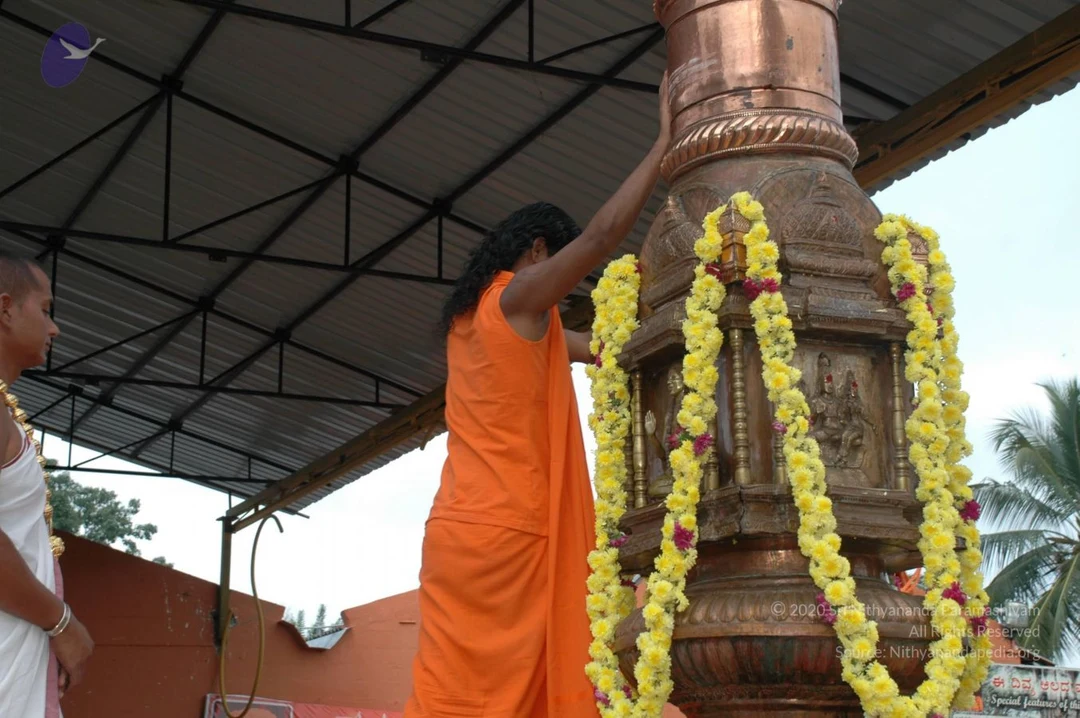
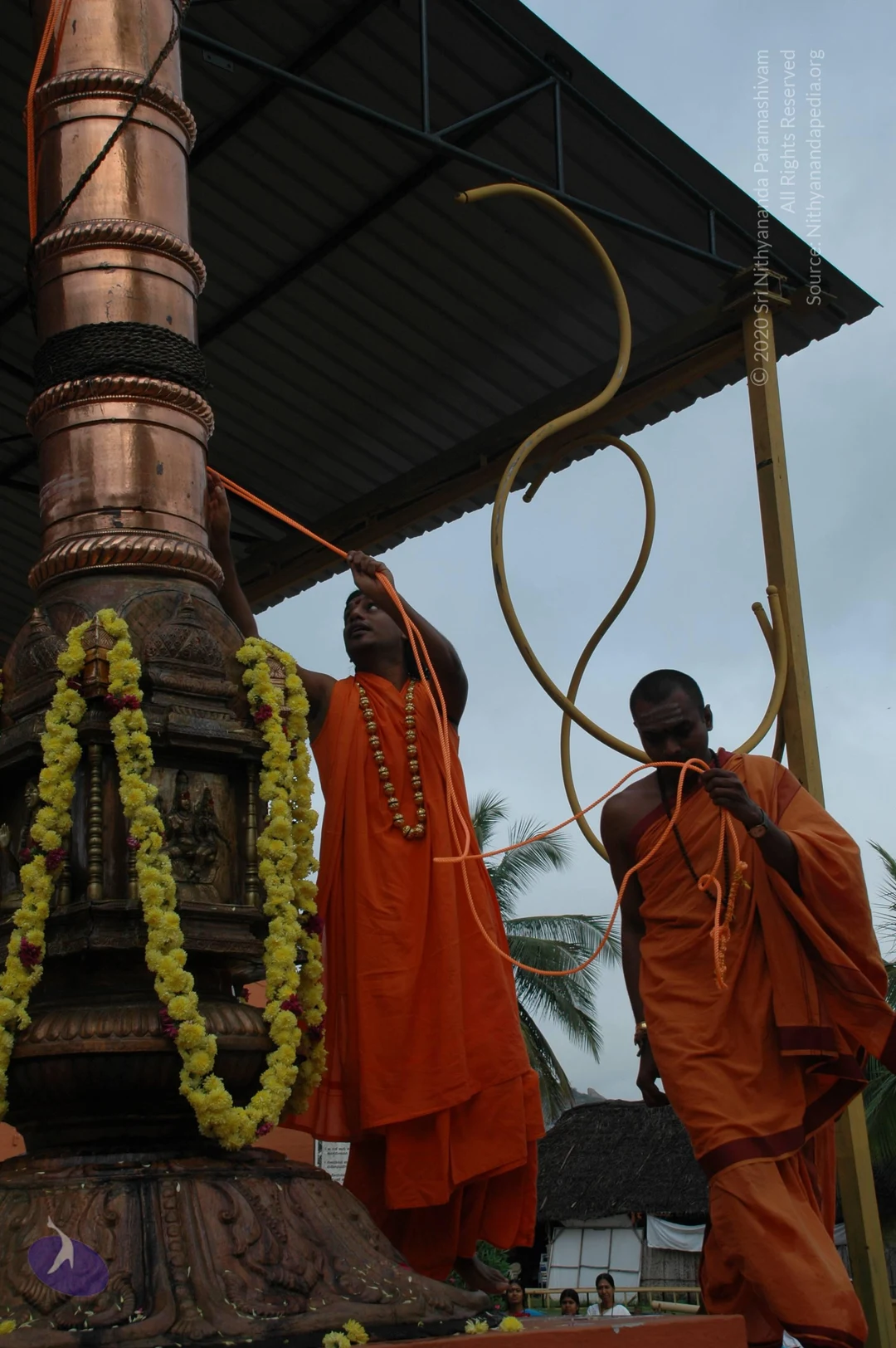
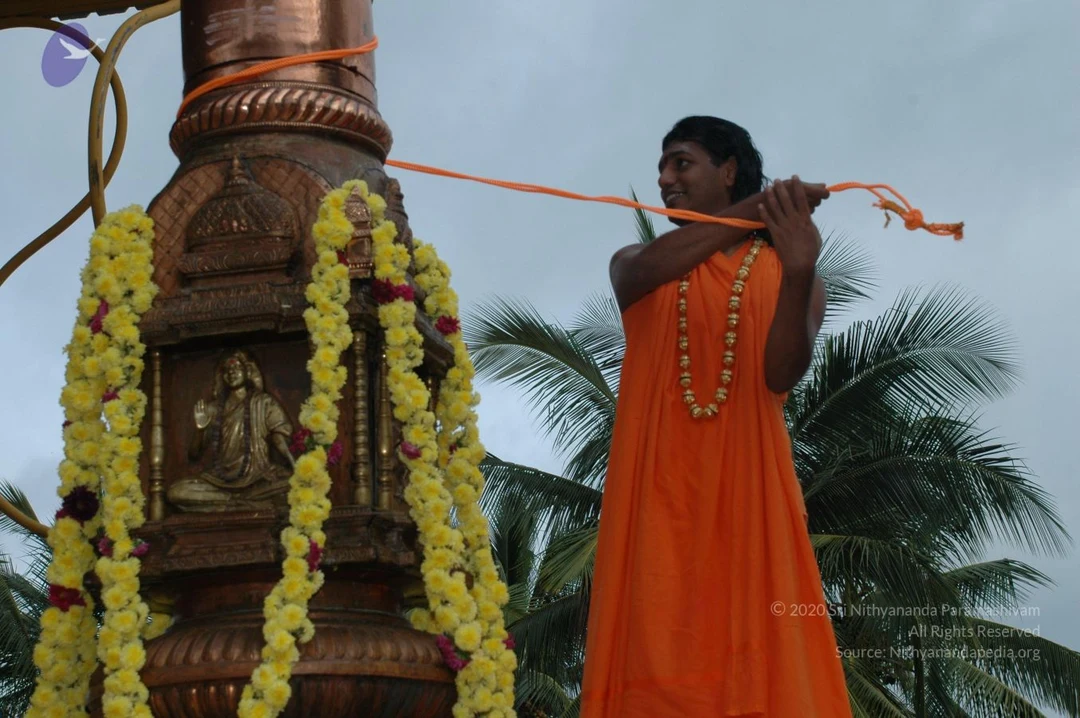
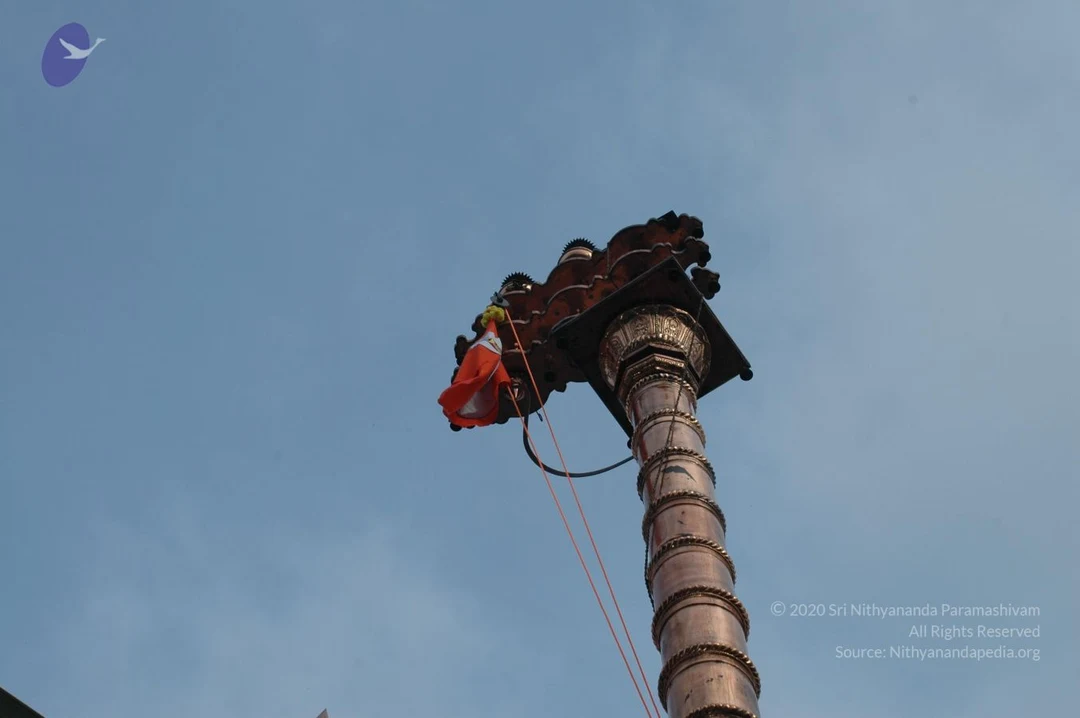
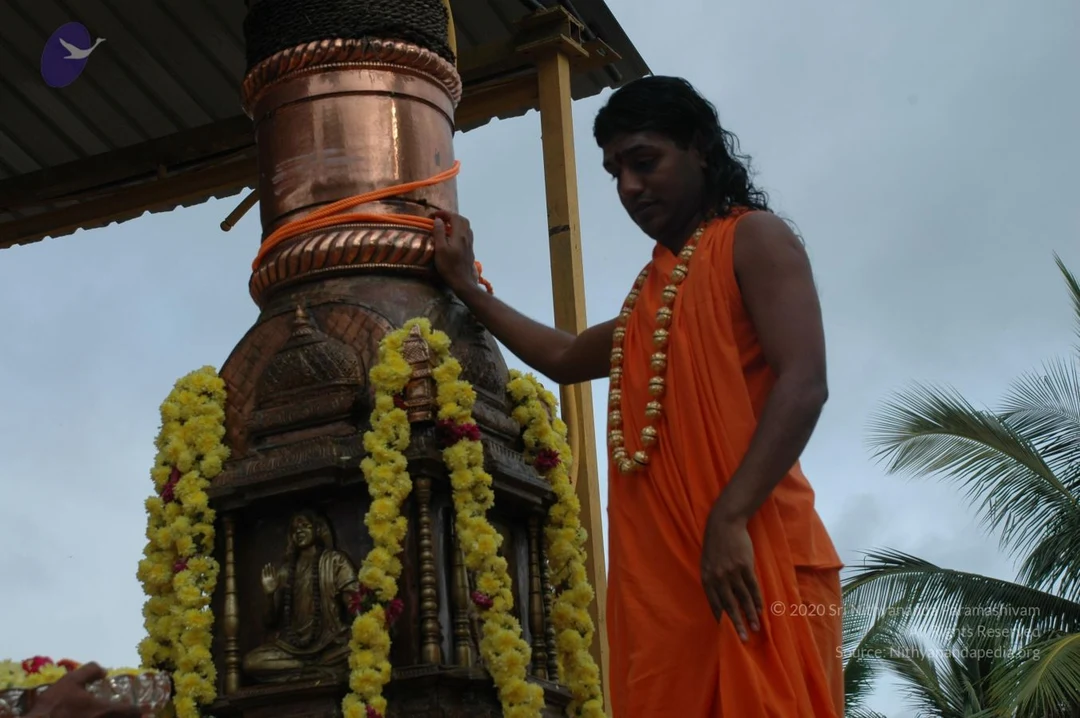
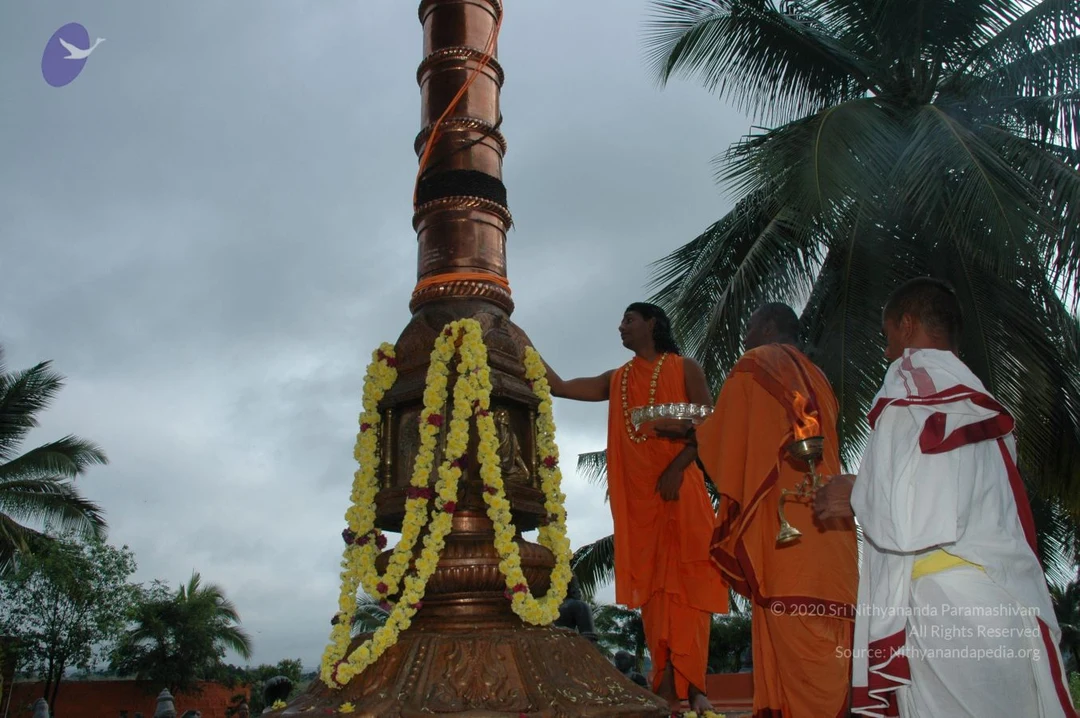
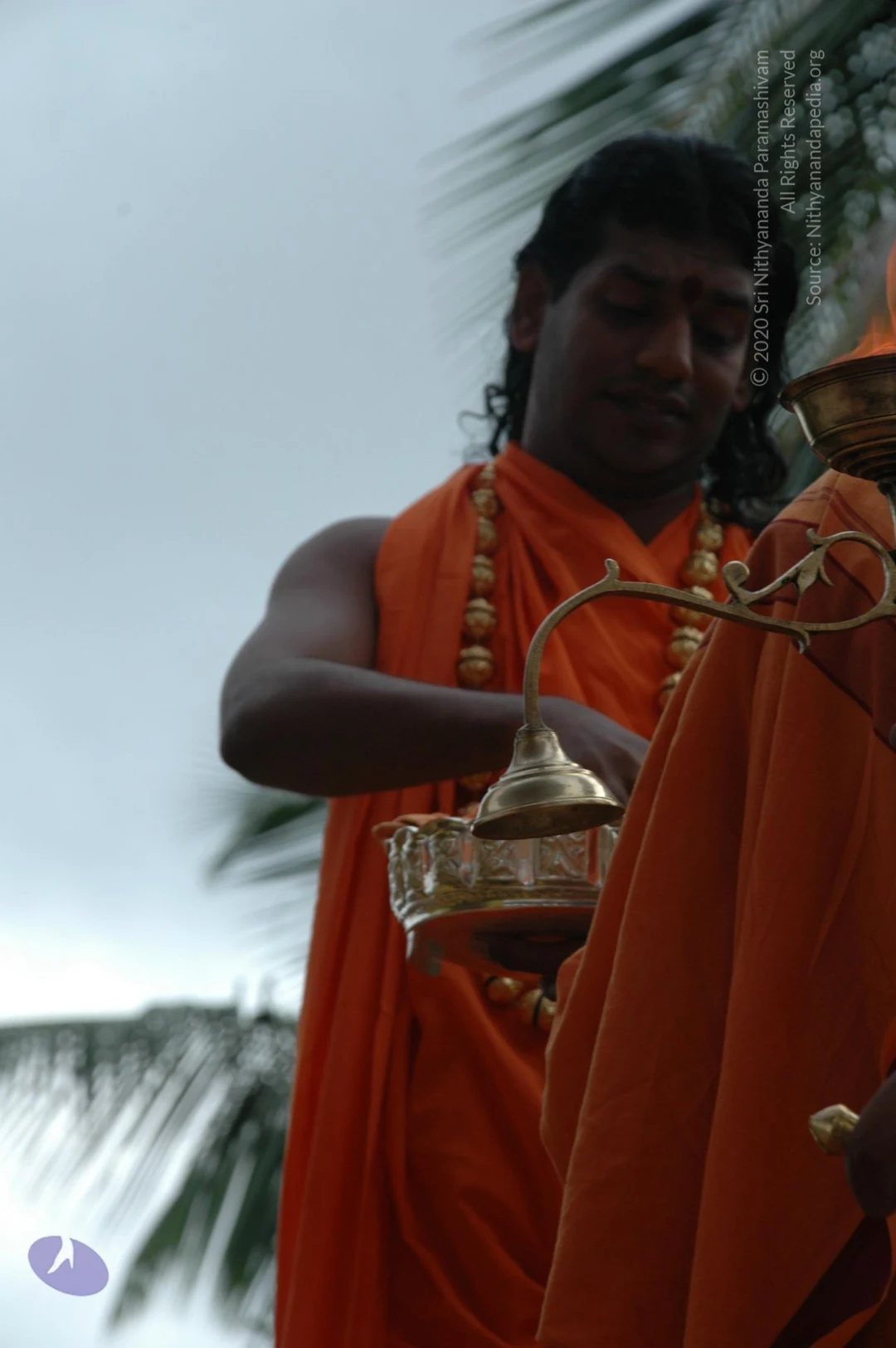
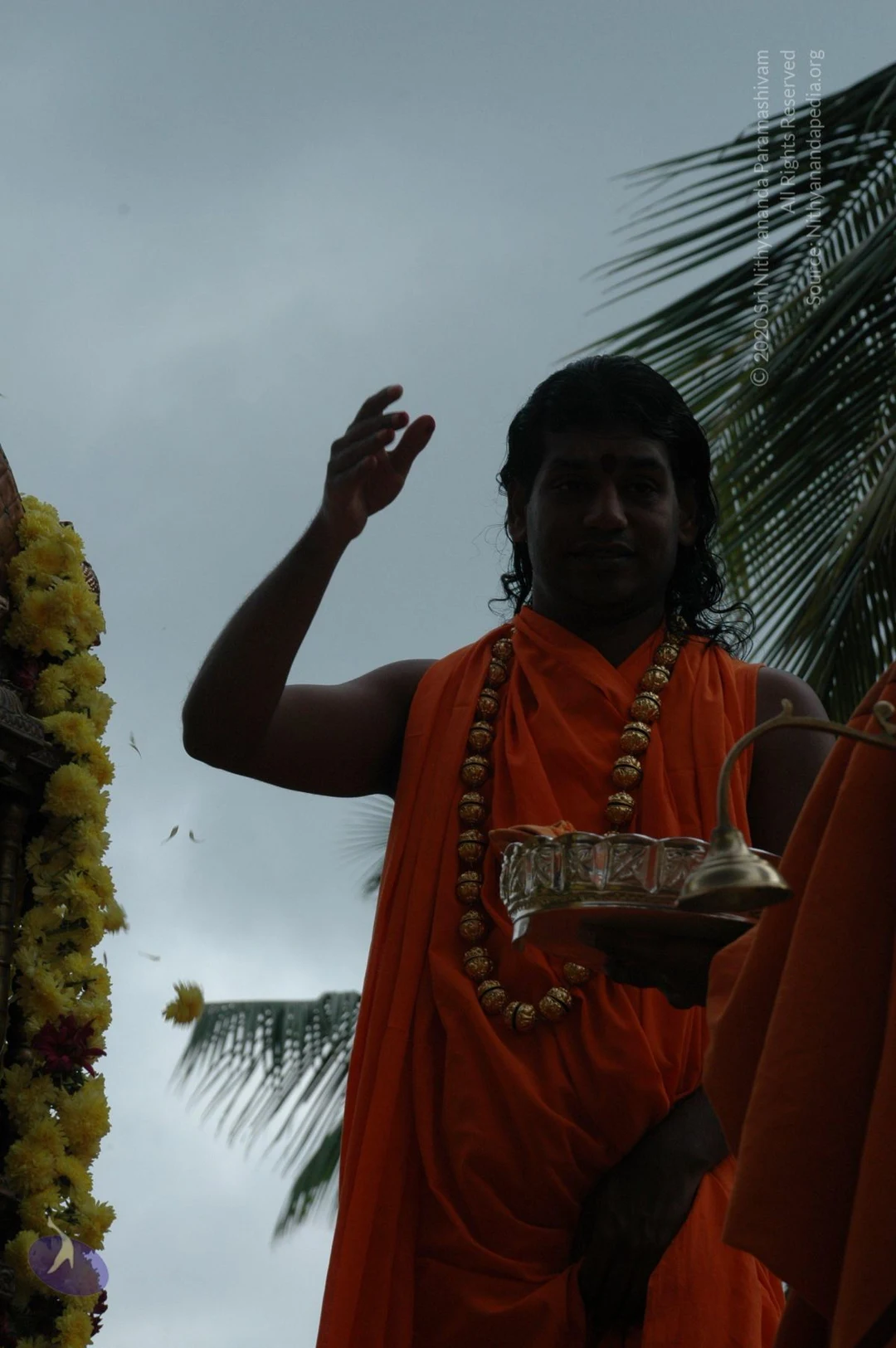
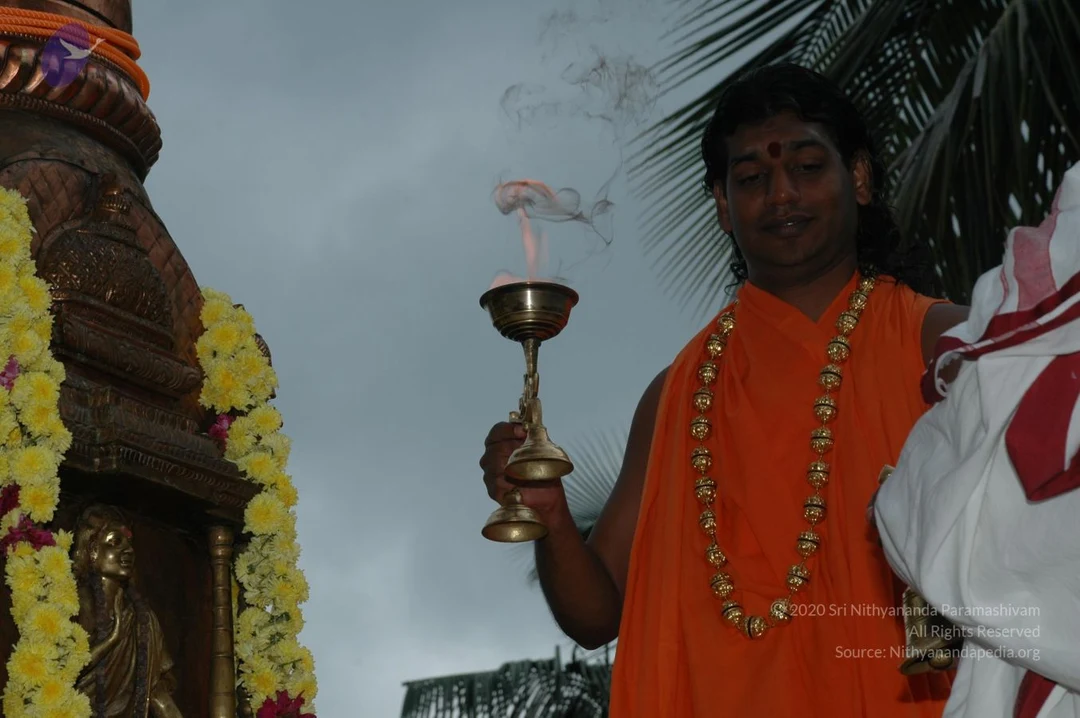
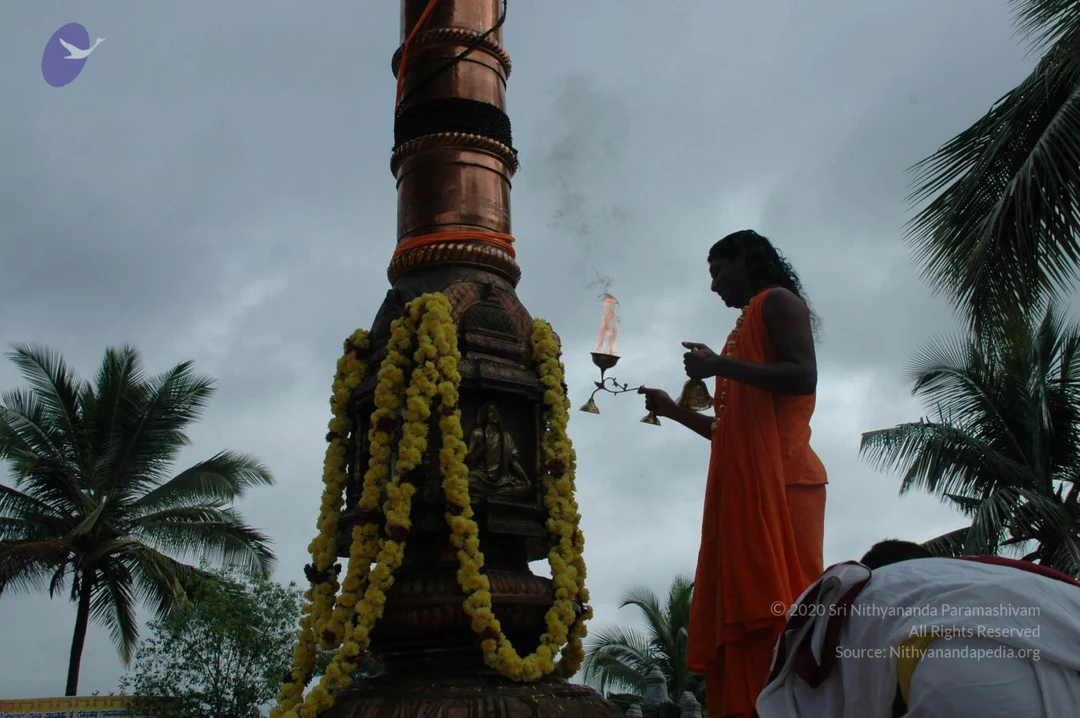
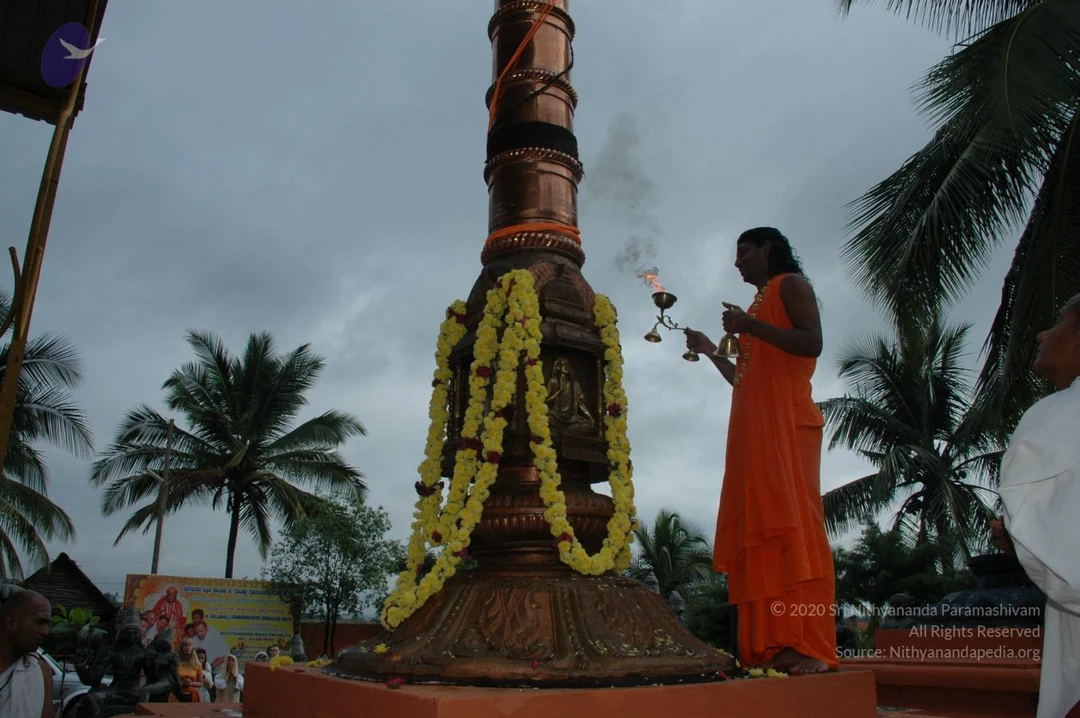
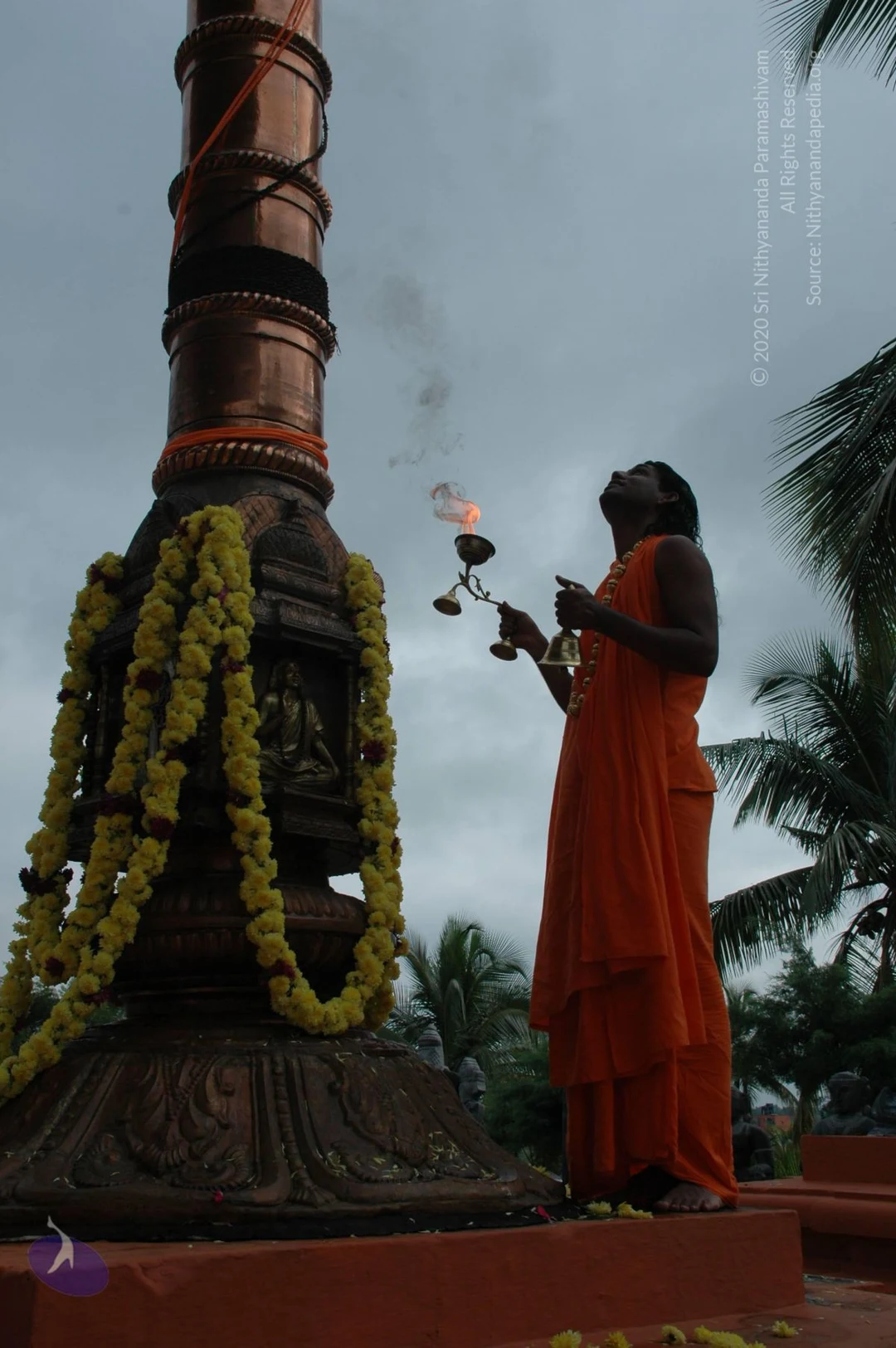
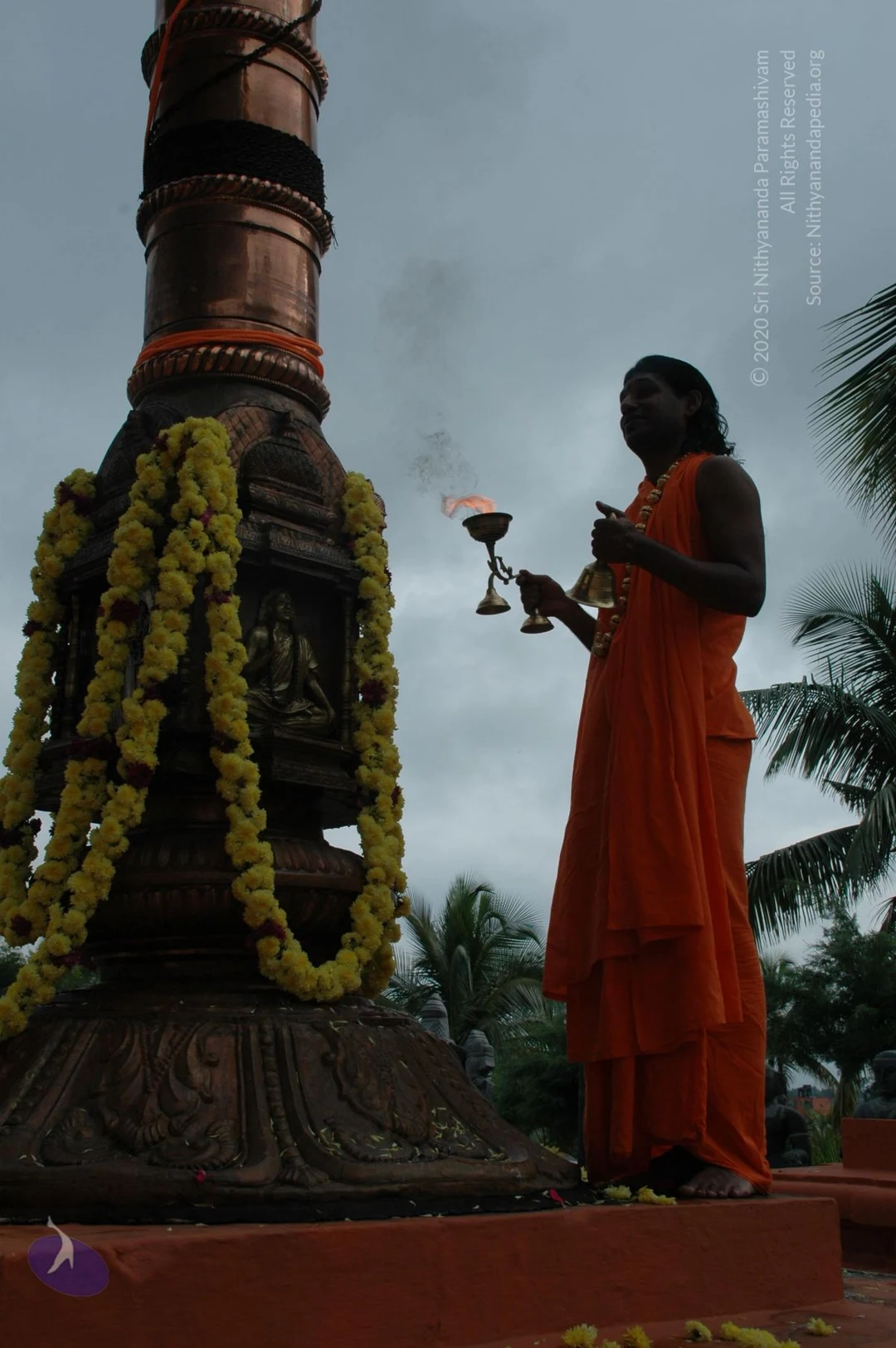
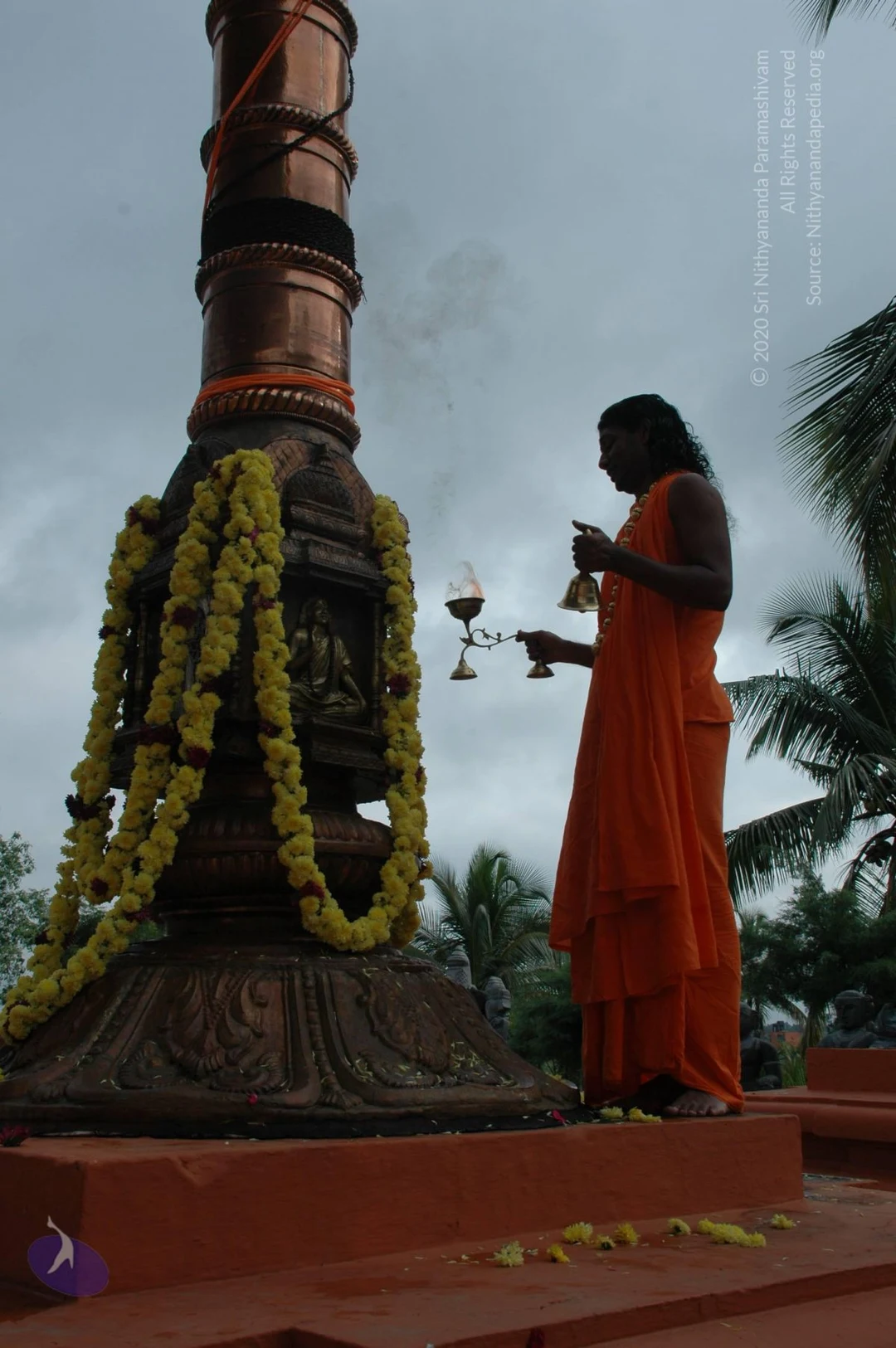
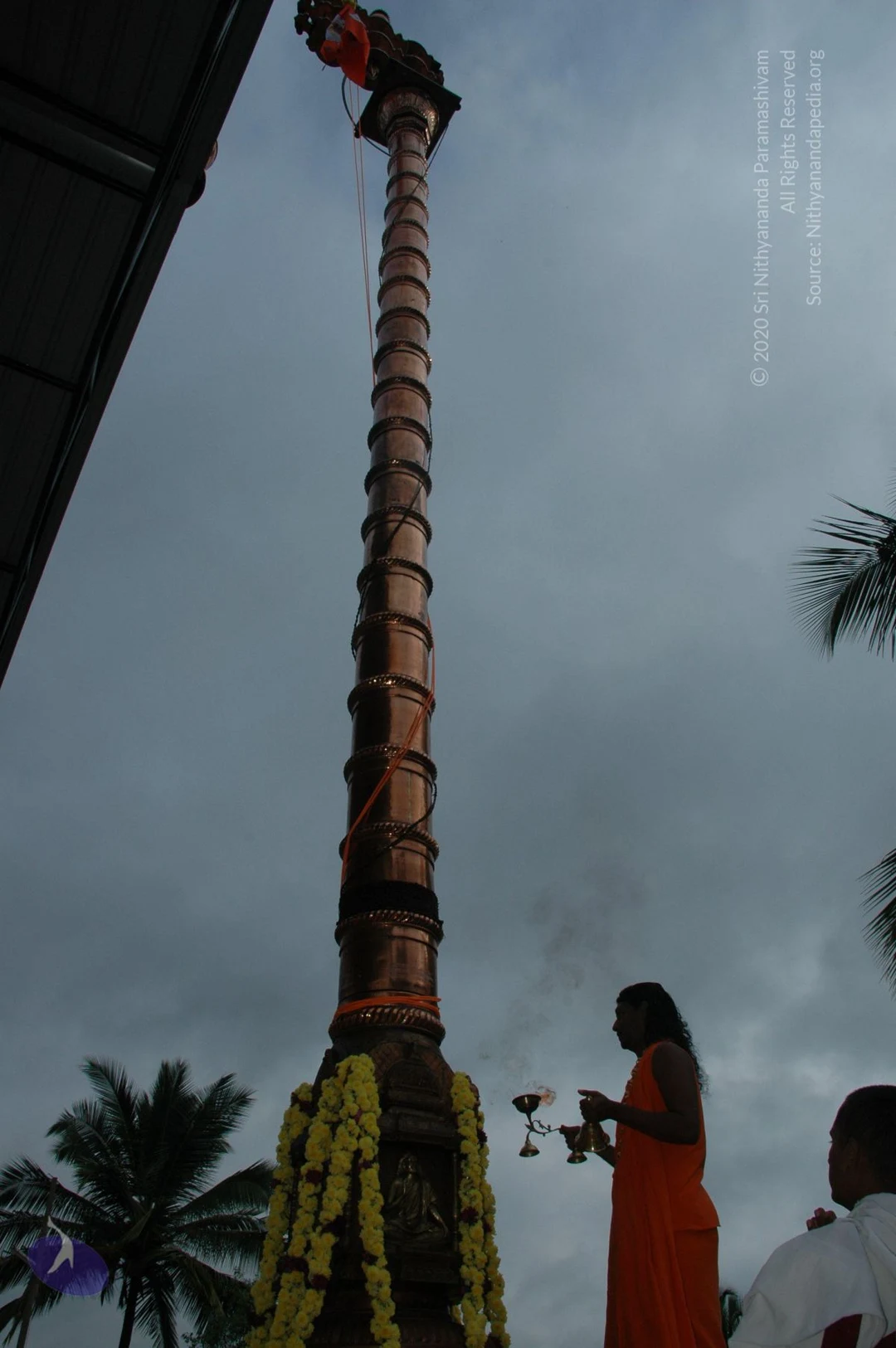
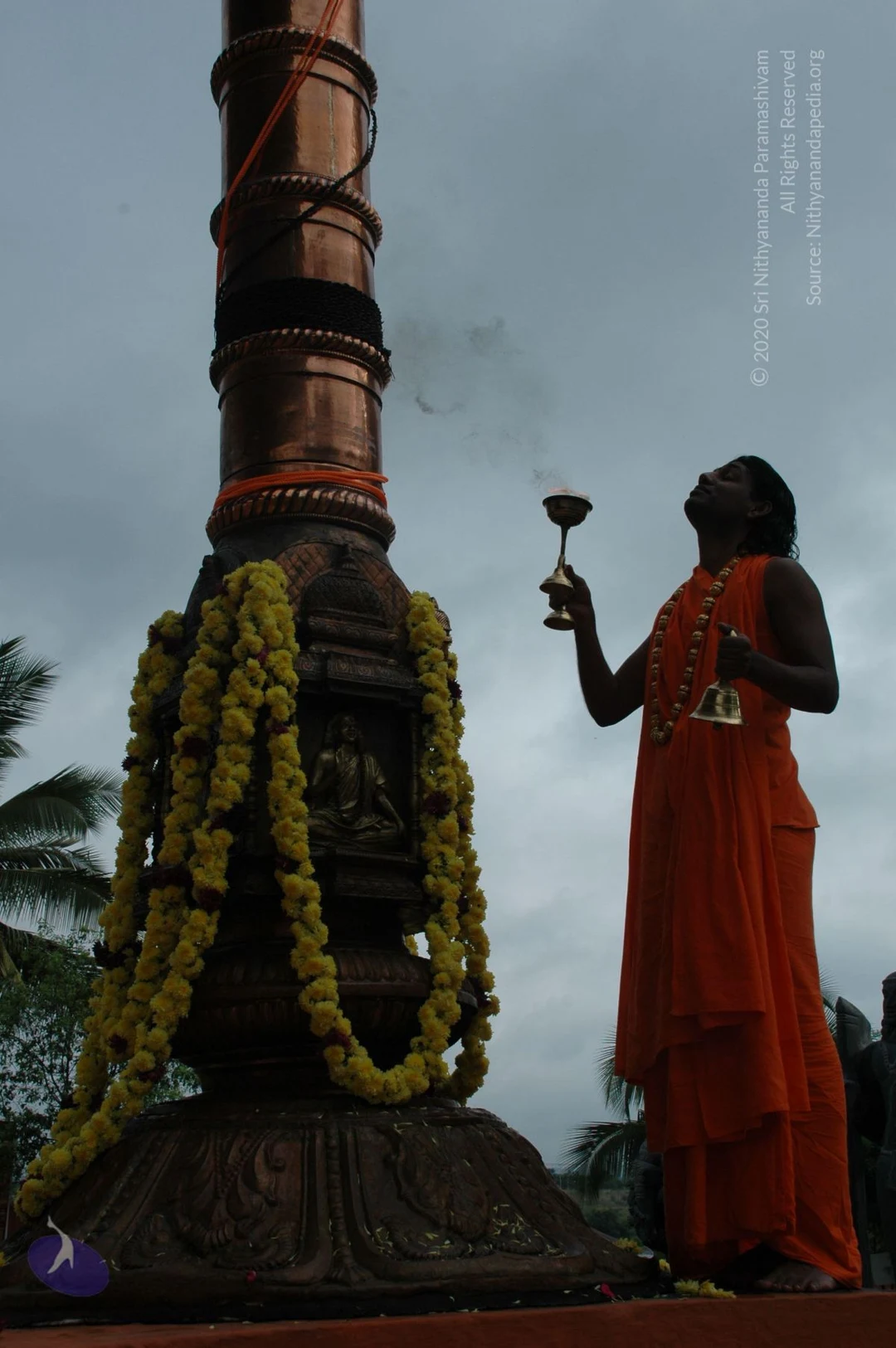
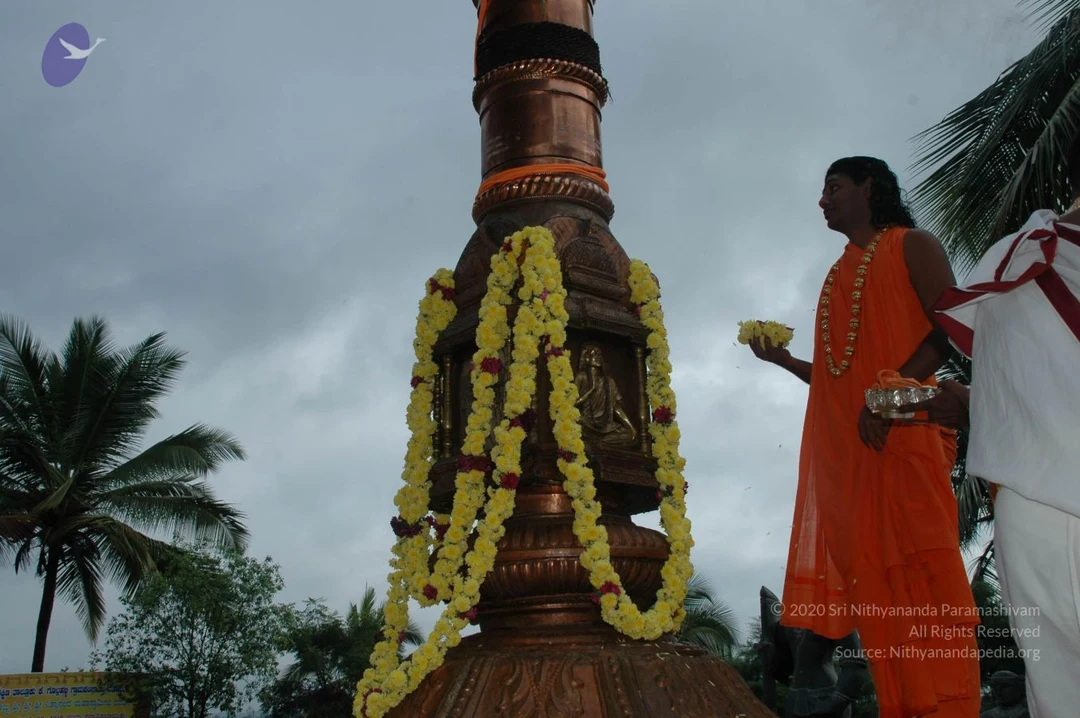
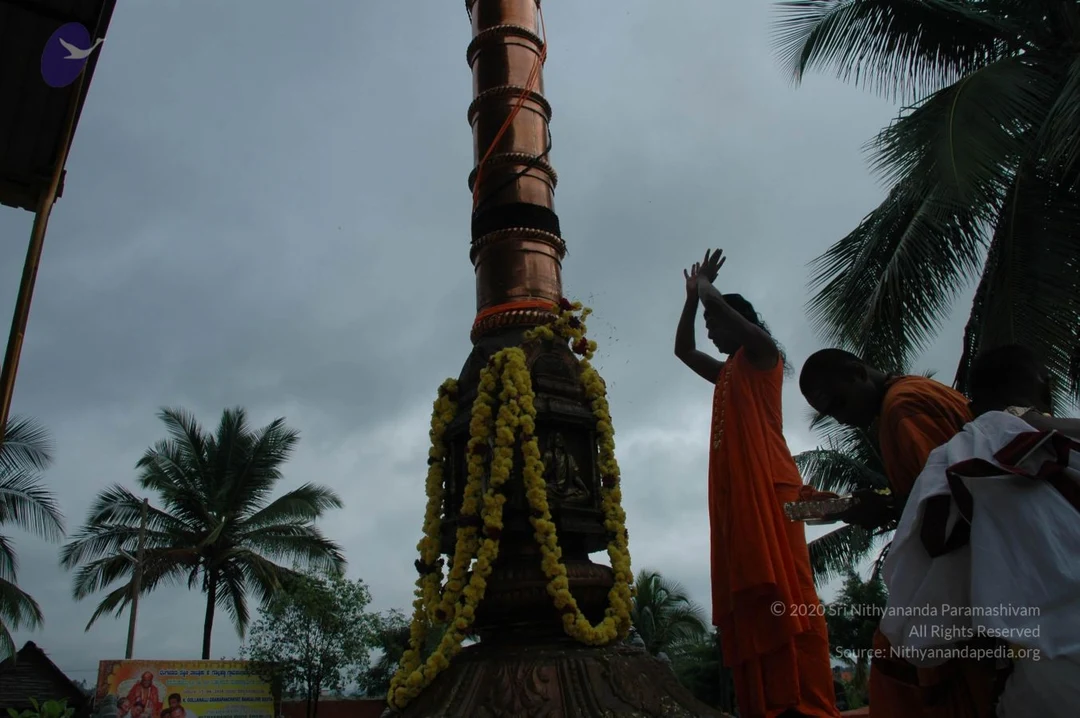
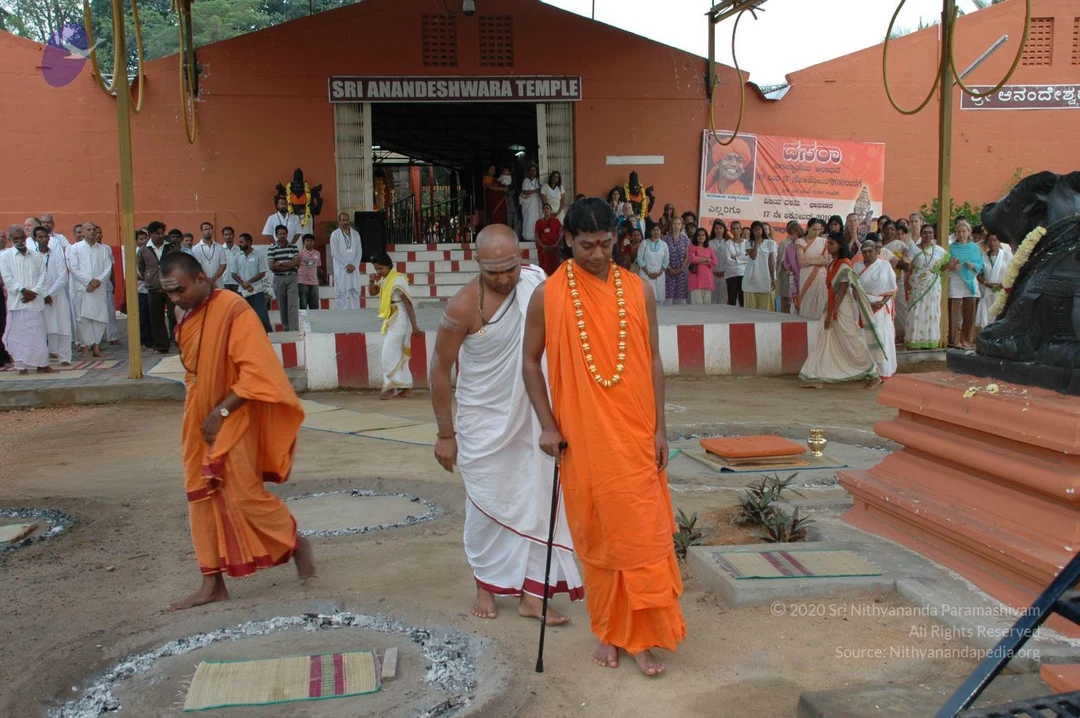
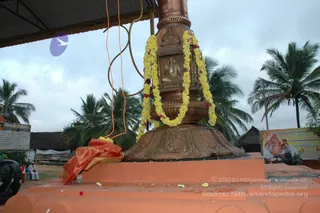
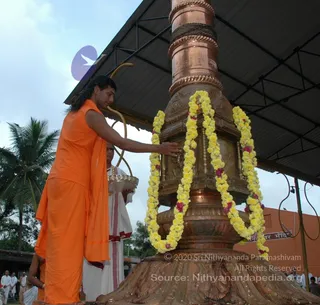
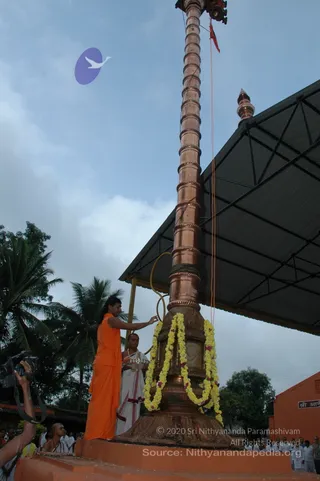
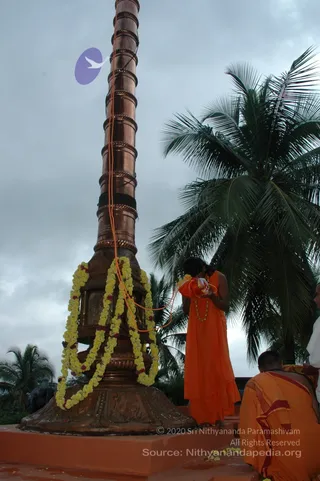
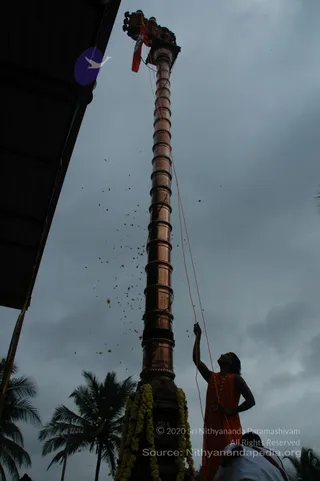
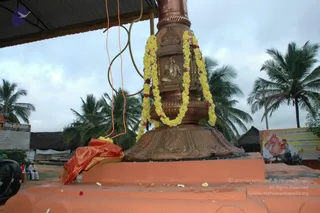
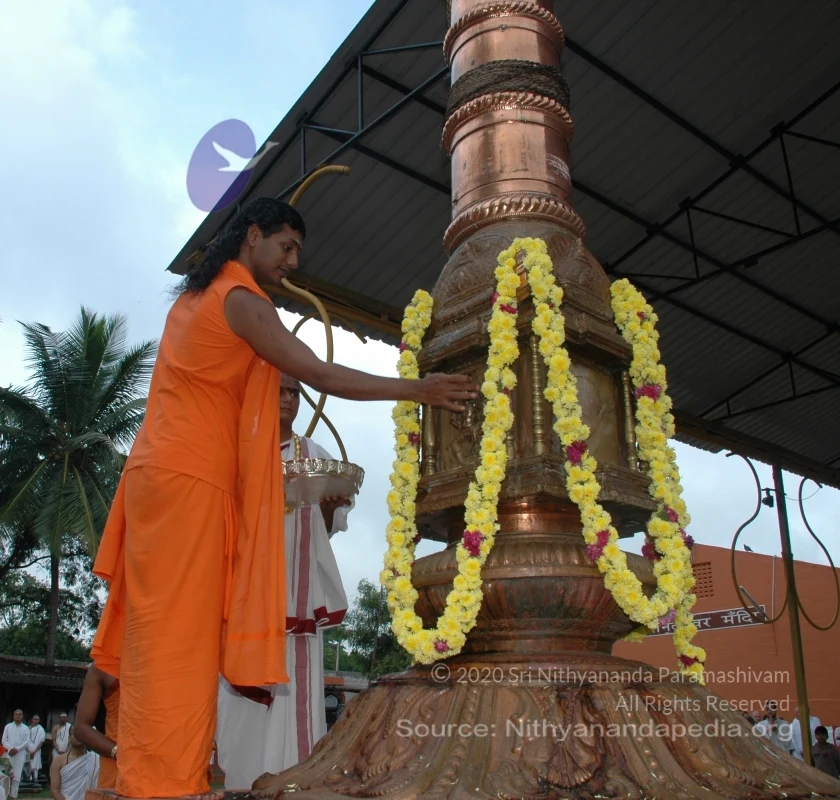
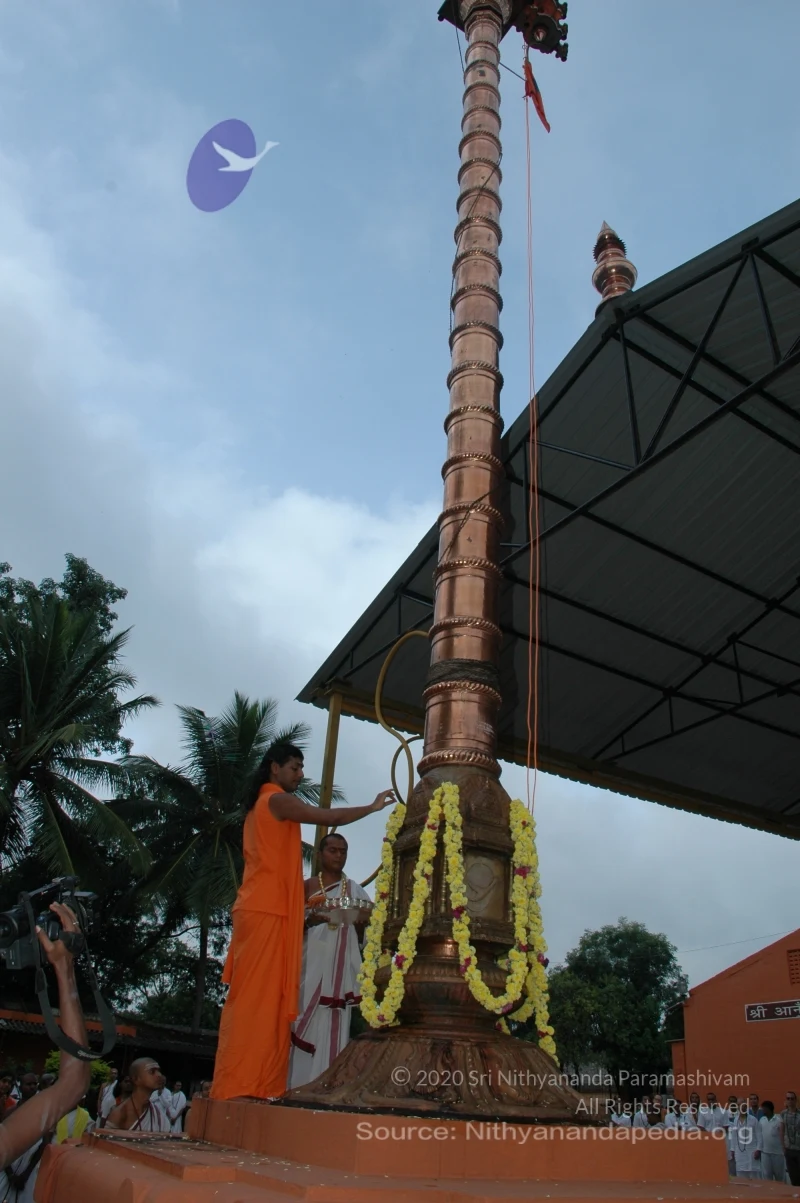
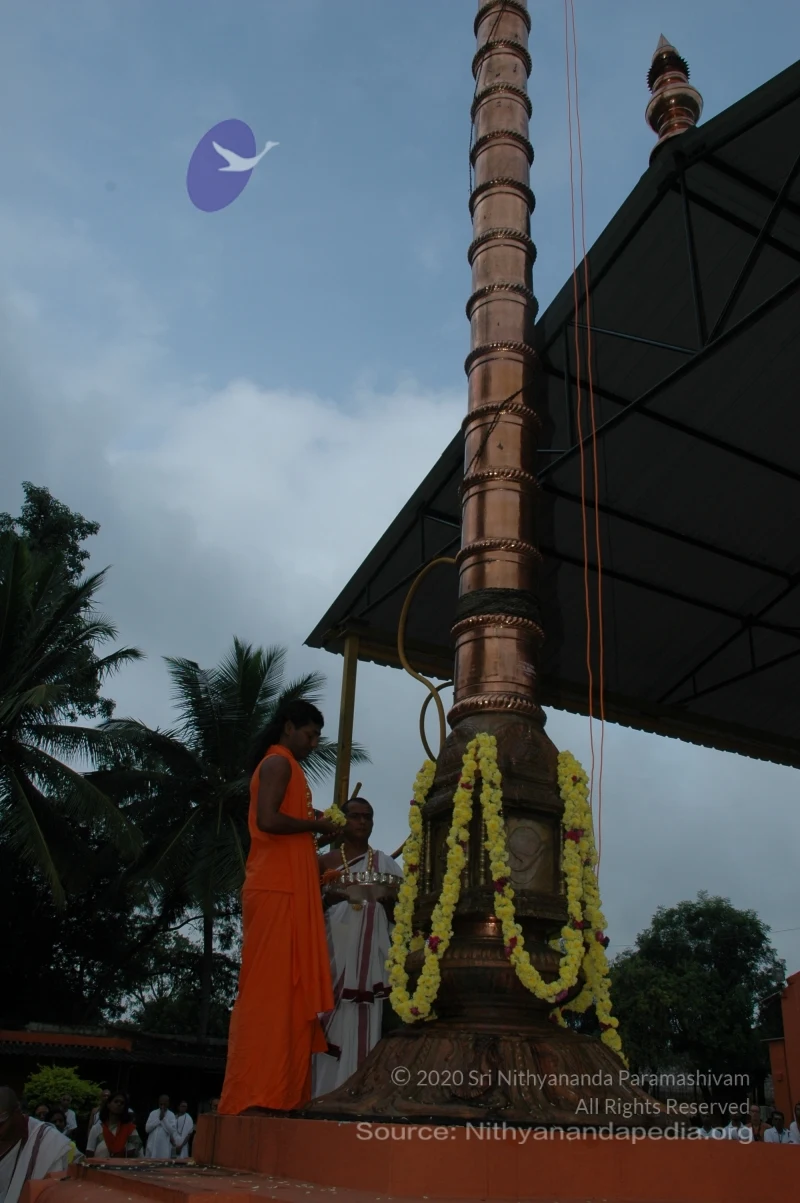
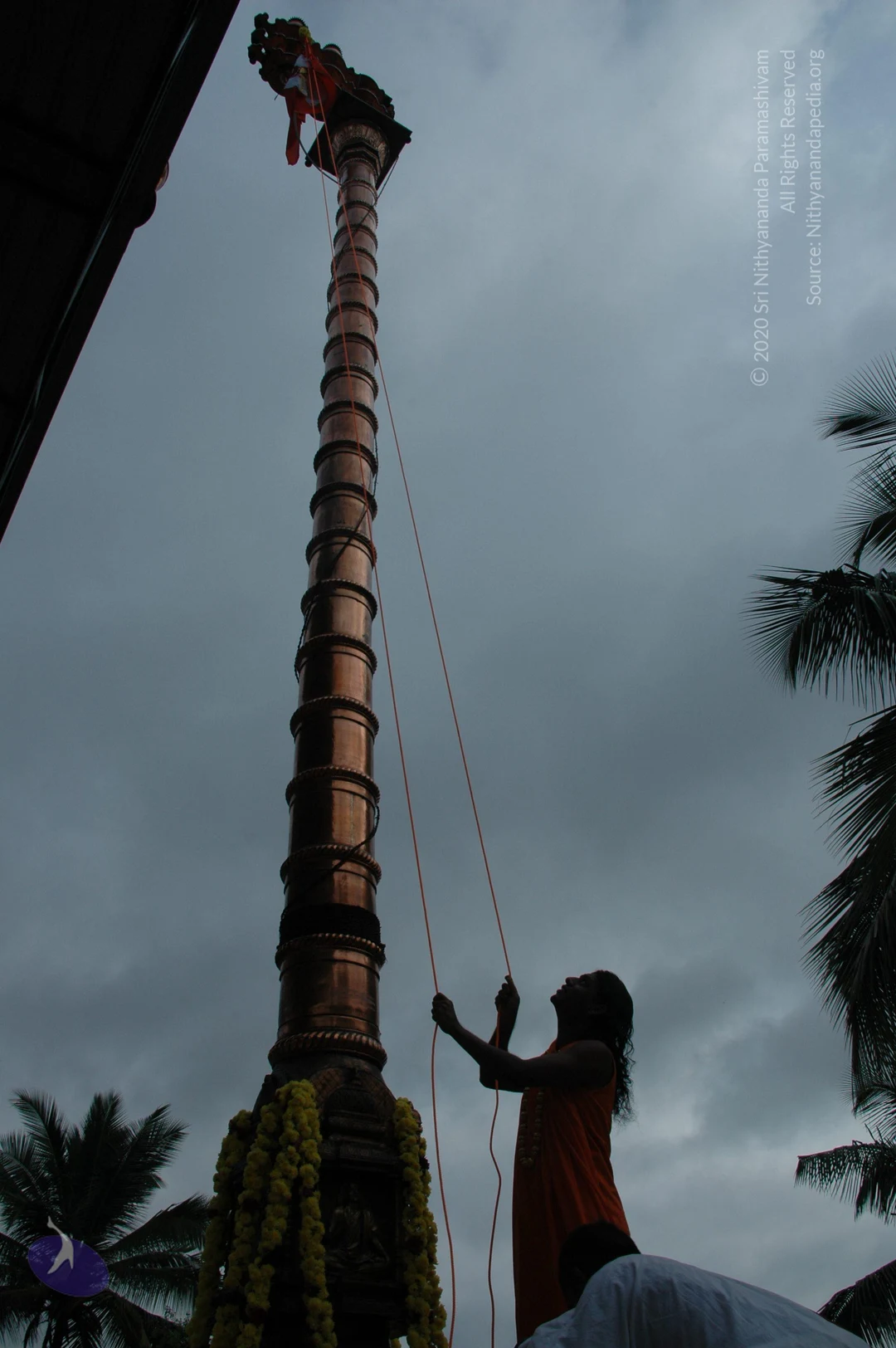
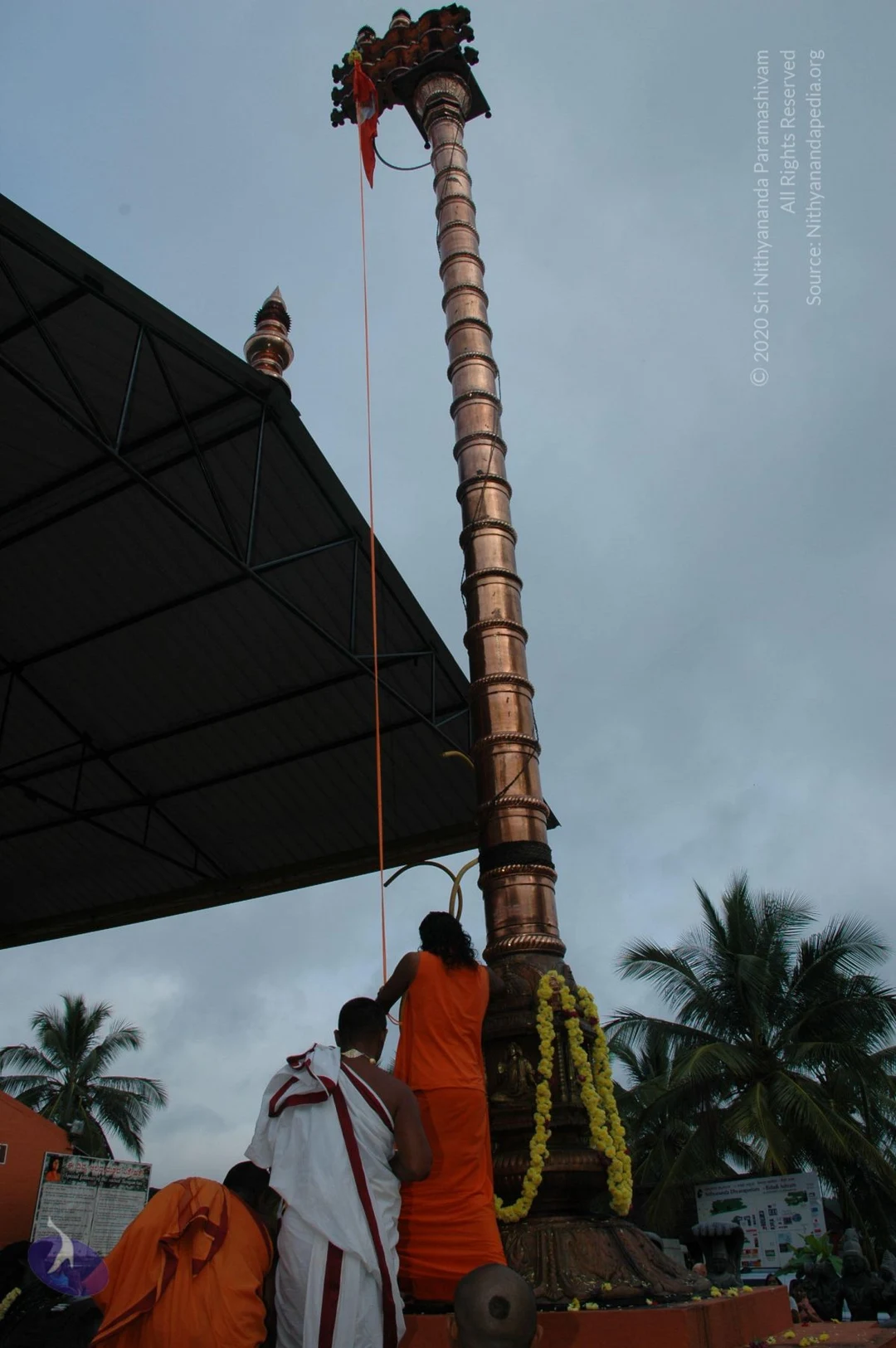
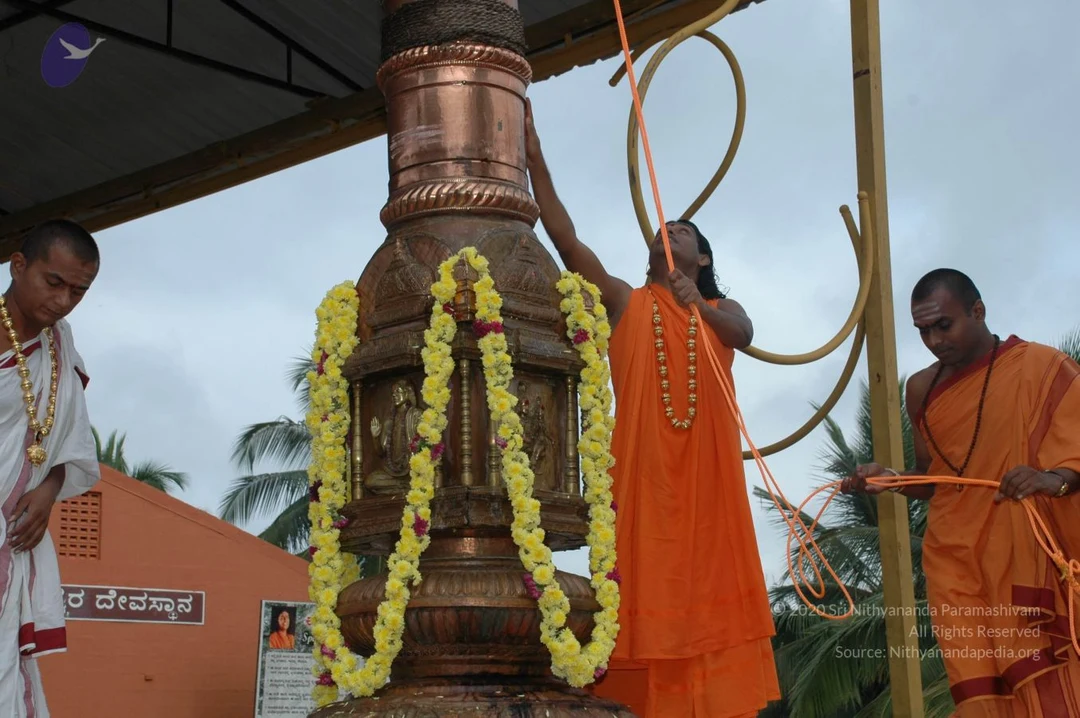
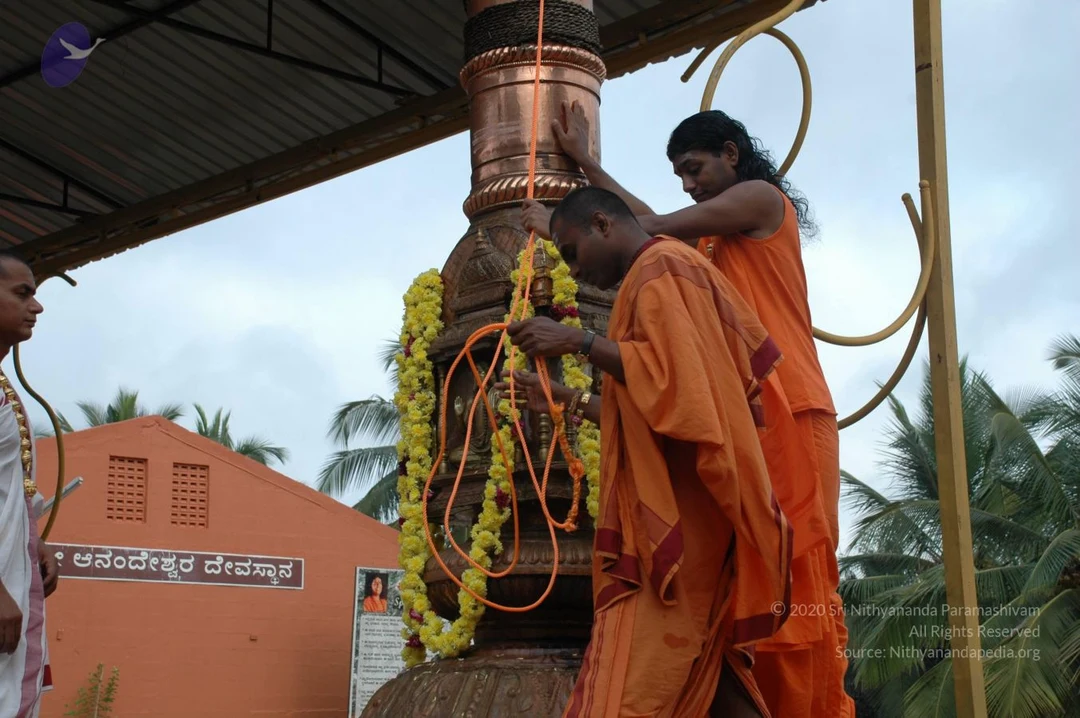
Outdoor photo of a tall copper-coloured ceremonial column or kalasha-topped pillar on an orange-painted stepped base, decorated with garlands of yellow marigolds with red flowers draped around its shaft. A relief figure of a seated deity is set into the column's ornate metal body. A red and gold cloth lies at its foot with scattered petals. Coconut palms and a thatched roof stand behind, with a seated elderly man in white at left and a banner with a portrait at right. No people are clearly visible in the central scene apart from the seated figures at edges.Outdoor temple scene under a corrugated metal canopy. A man with long swept-back dark hair, wearing a saffron-orange robe and shawl, stands at left with his right hand pressed to a tall copper kalasha-like column wrapped in yellow and white marigold garlands with pink flowers. Behind him, a priest in white dhoti and cloth stands near a brass vessel, and a few people in white stand at left. A palm tree and an orange temple wall are visible at right. The orange-robed figure shows distinctive long hair and saffron clothing, a person performing a ritual touch on the copper column.A tall copper flagstaff, ringed with copper bands and topped by a decorative finial, rises beside a wooden canopy. A figure in a saffron-orange robe stands on a raised orange platform, reaching up to touch the pole, while a second man in white ritual dress with a red-bordered cloth stands beside him holding a small object. Yellow and orange marigold garlands hang around the base of the pole. A camera operator is visible at the left edge, and a few people stand in the background among palm trees under a cloudy sky. A translucent purple-and-white dove logo appears in the upper left sky, and a red flag hangs from the pole.Outdoors under a corrugated metal canopy, a figure in an orange saffron wrap and dhoti stands with back to the camera, long dark hair falling on the shoulders, facing a tall copper pillar wrapped with yellow and white marigold garlands with red accents. The copper column has relief carvings and a decorated base. Behind, another person in orange and a priest in white dhoti with a lit lamp in hand, plus several white-clad devotees and attendants stand near a palm tree and a red-orange wall. The scene suggests a ritual pillar worship, with the saffron-clad figure's cues being long hair and orange robes; the identity is uncertain.A tall copper flagstaff, ringed with bands and topped with a decorative finial and red flag, rises against an overcast sky beside a palm tree. A man in an orange robe with a beaded necklace stands at right, pulling a red rope that runs up the pole, while petals scatter from the top. Yellow marigold garlands hang at the base of the pole, and a white-clad figure is partly visible at bottom right. A dark roof edge frames the left side of the frame.

Paadapooja

9 photosSource gallery
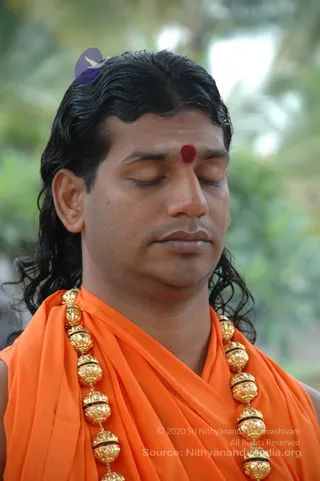
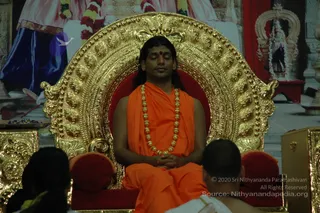
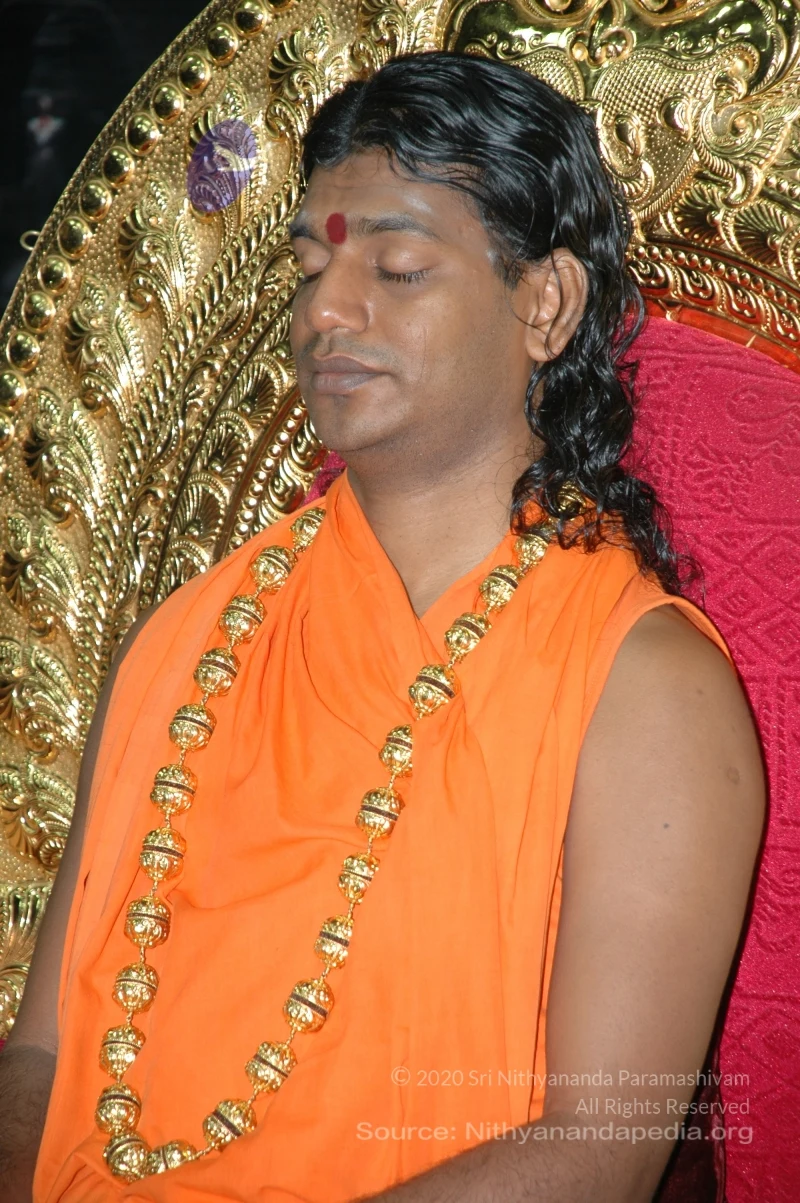
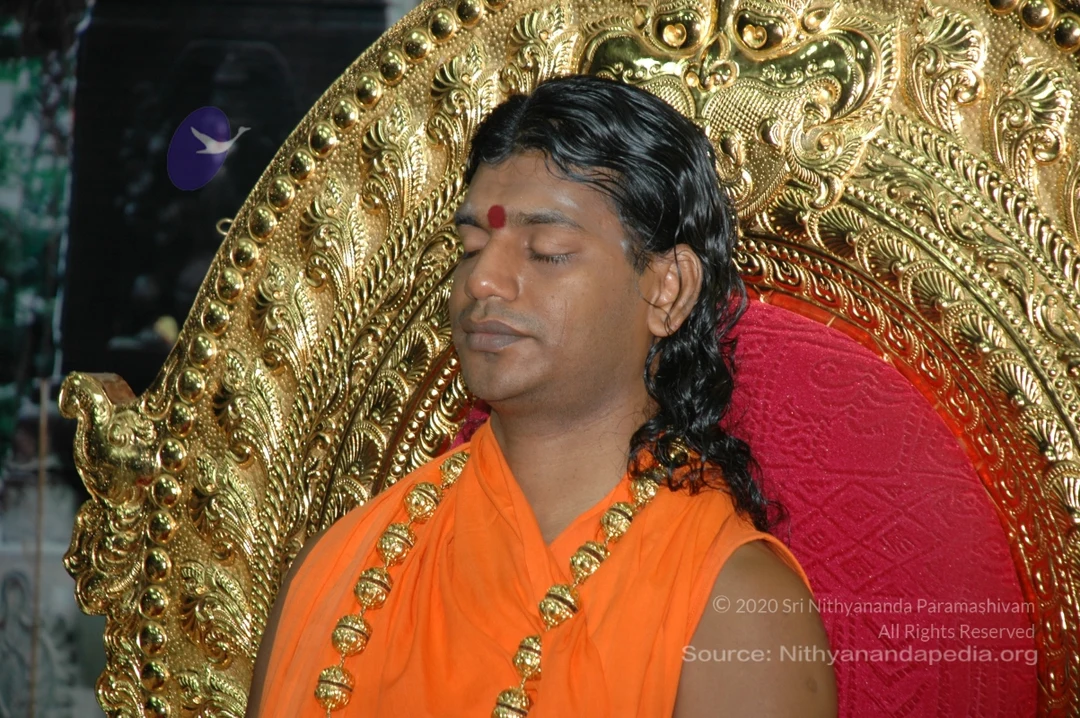
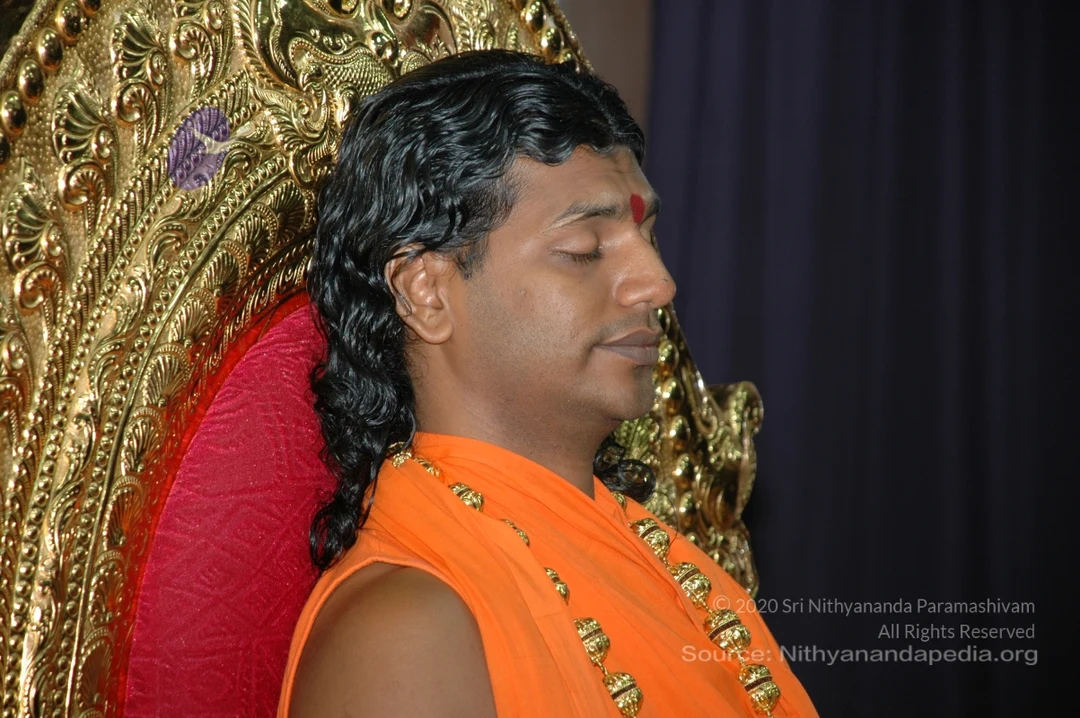
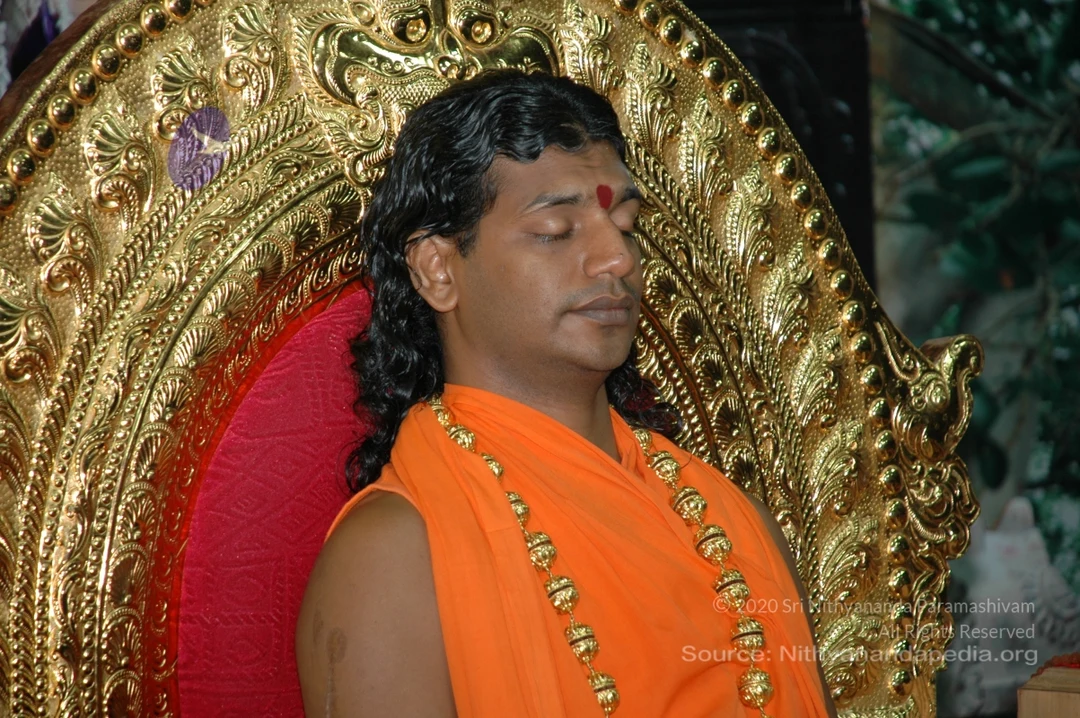
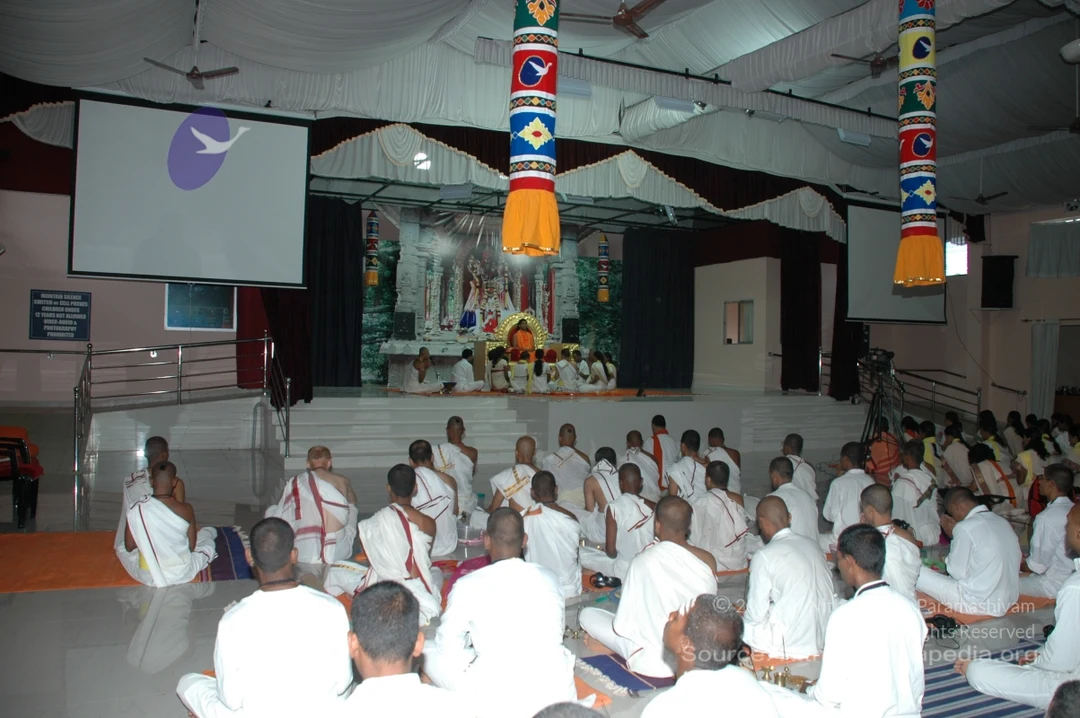
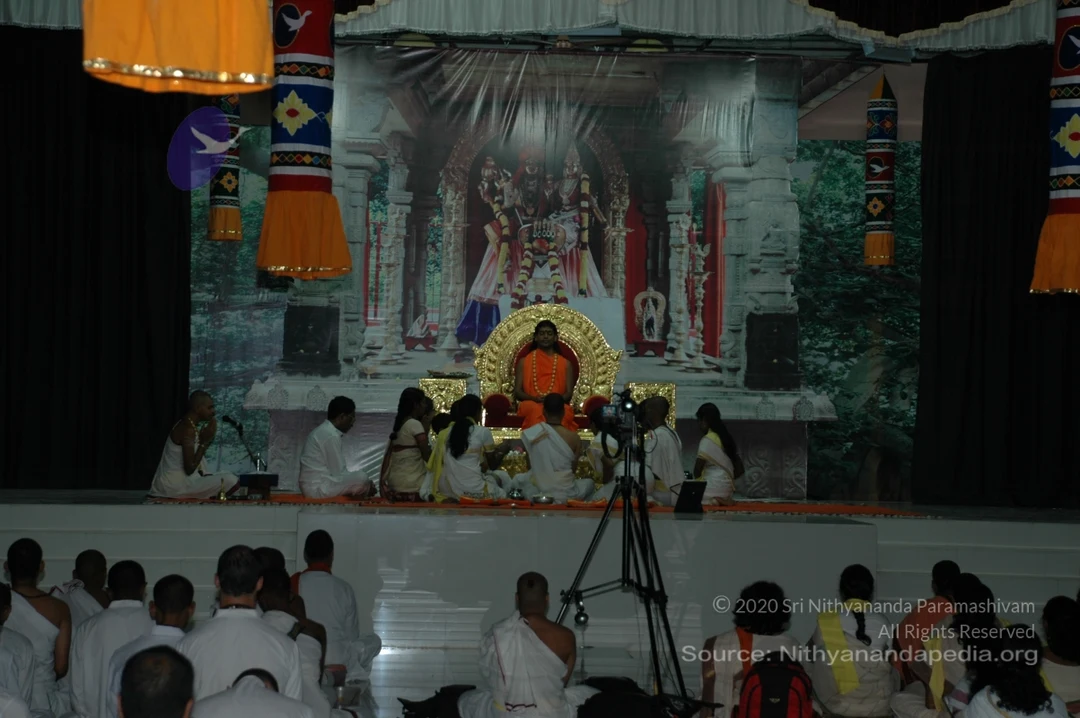
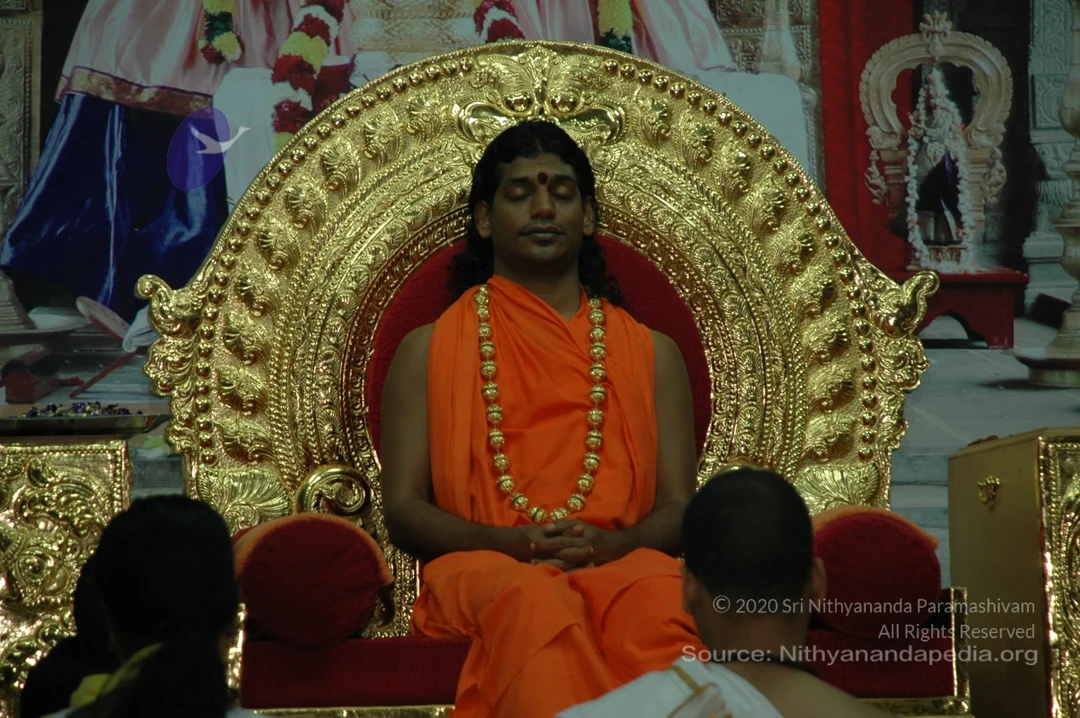
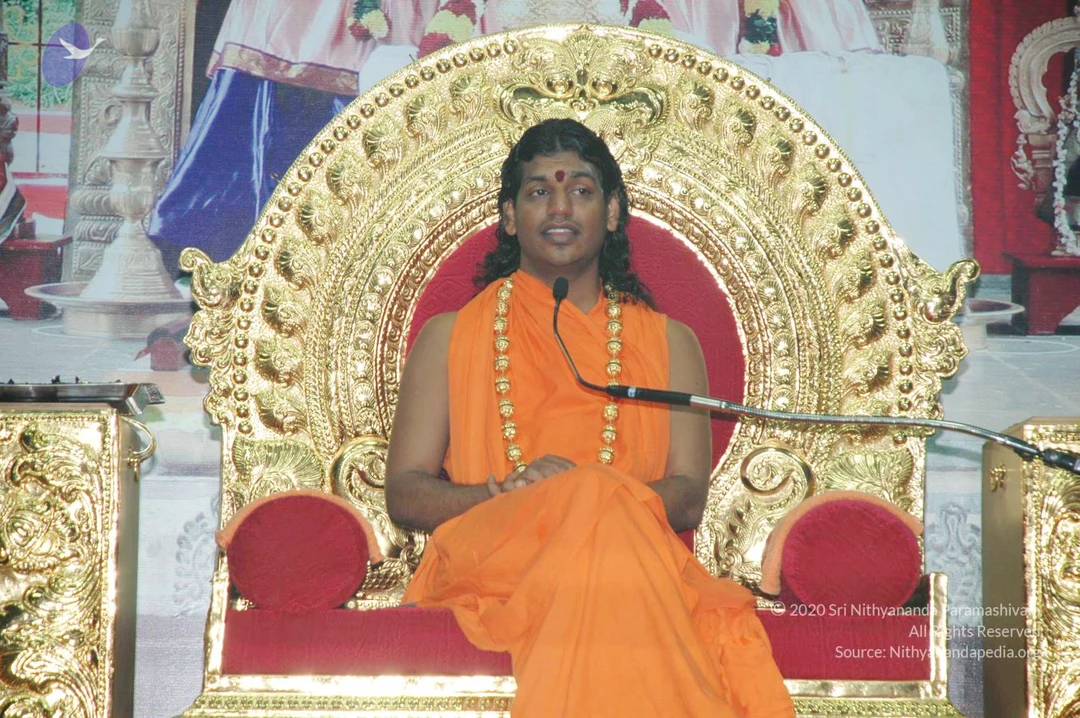
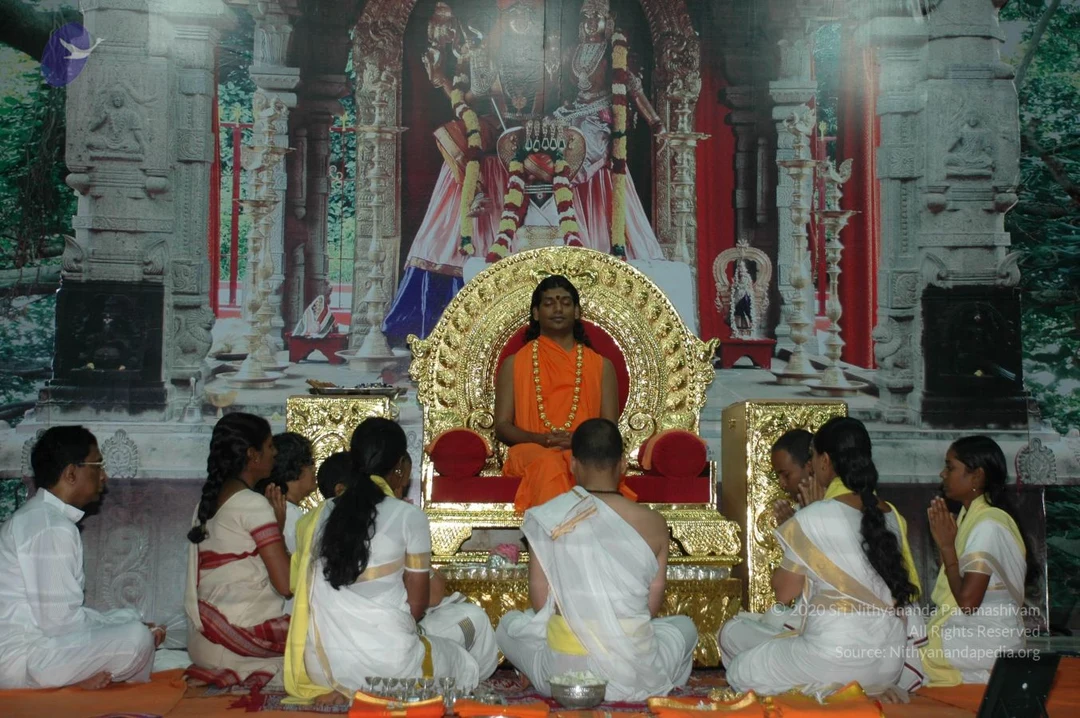
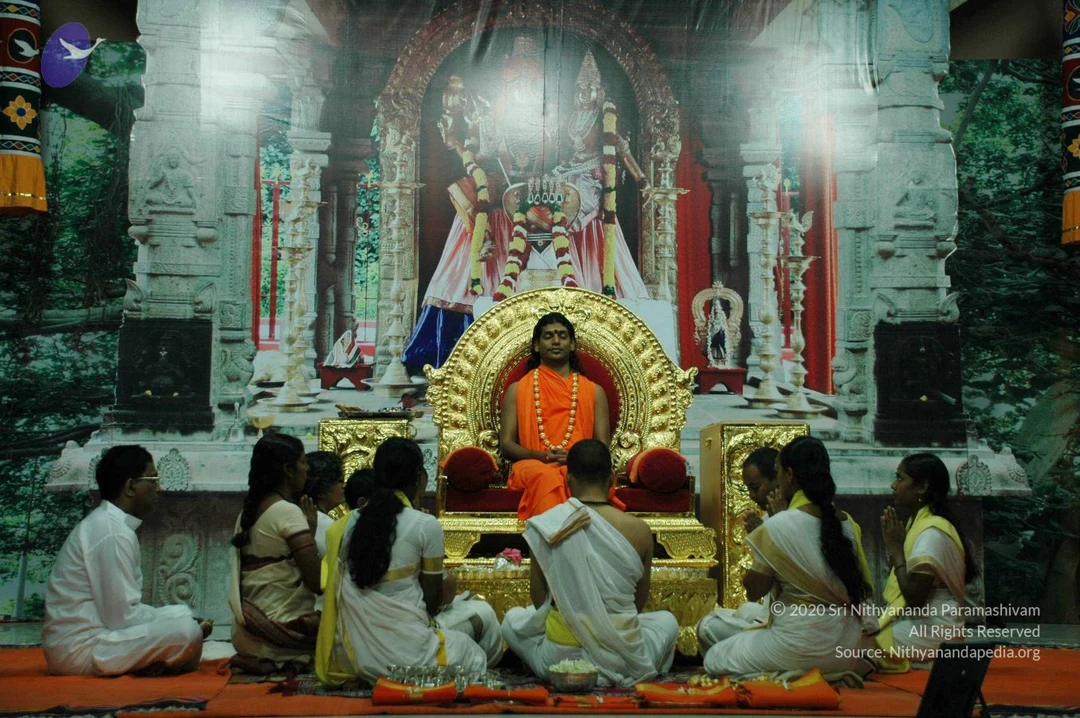
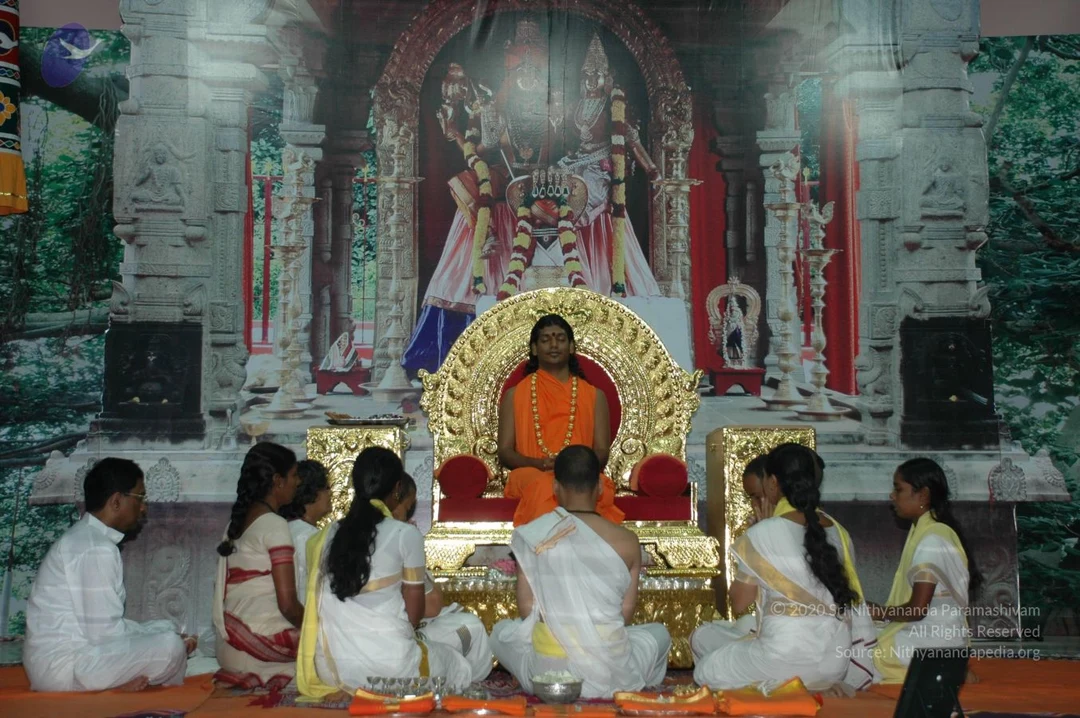
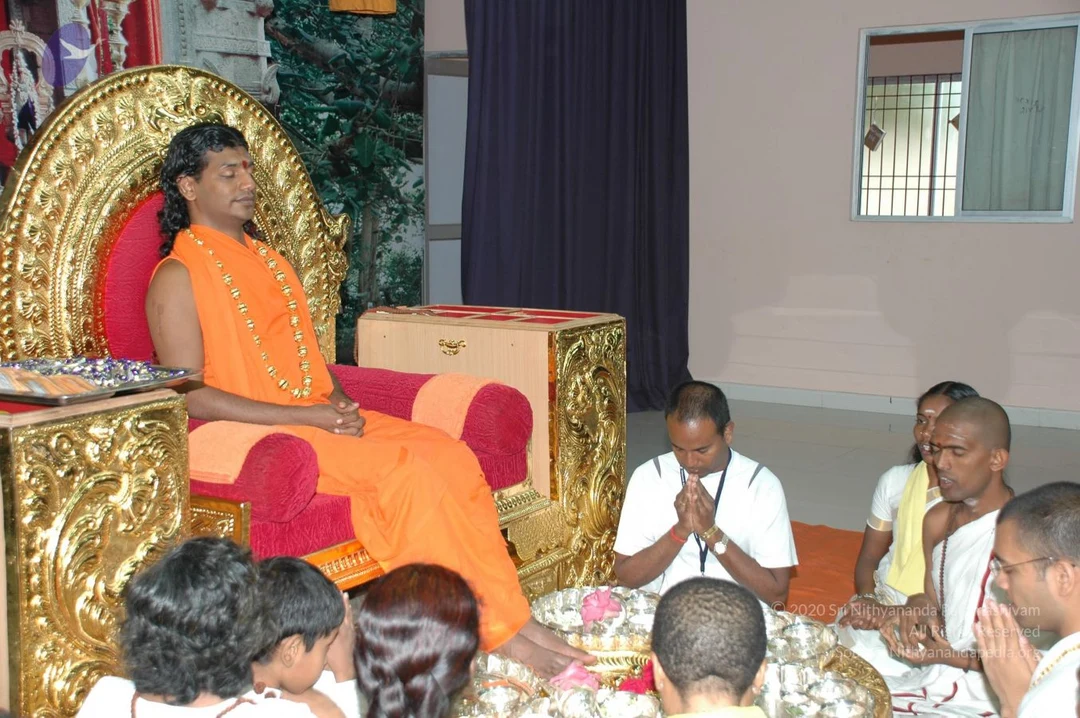
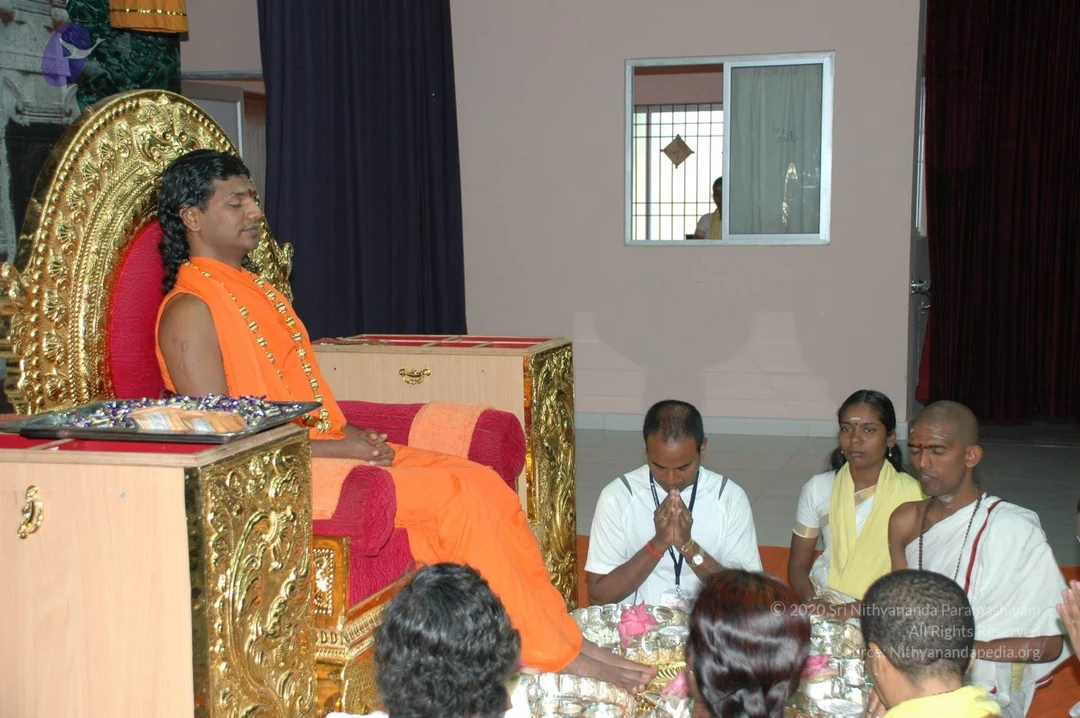
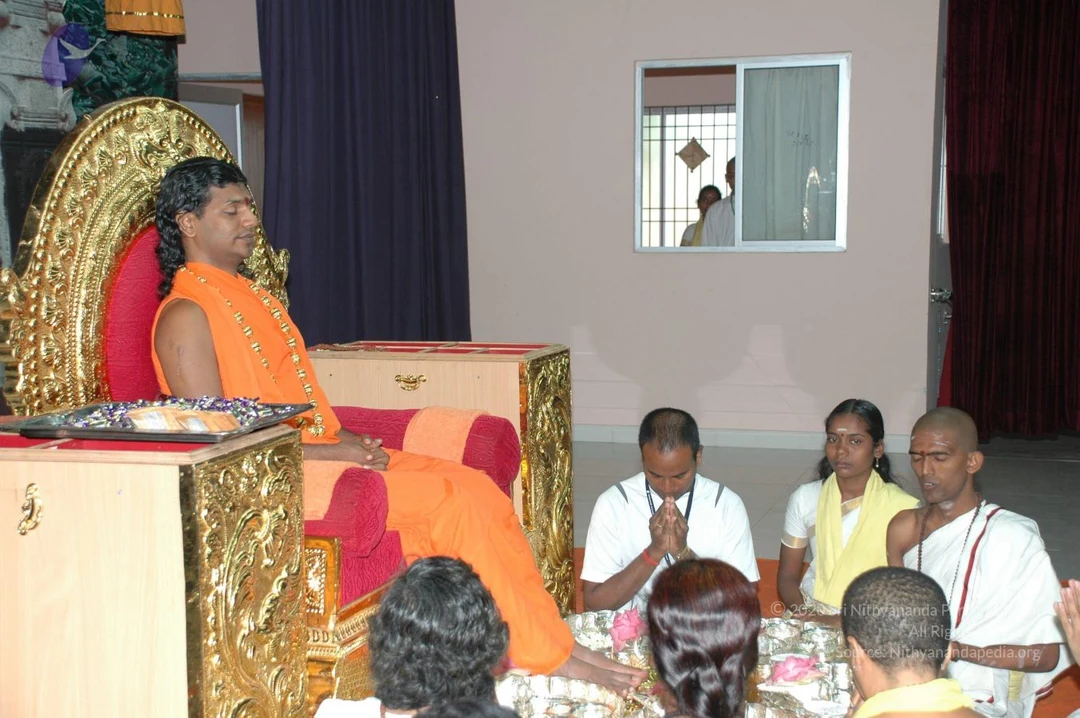
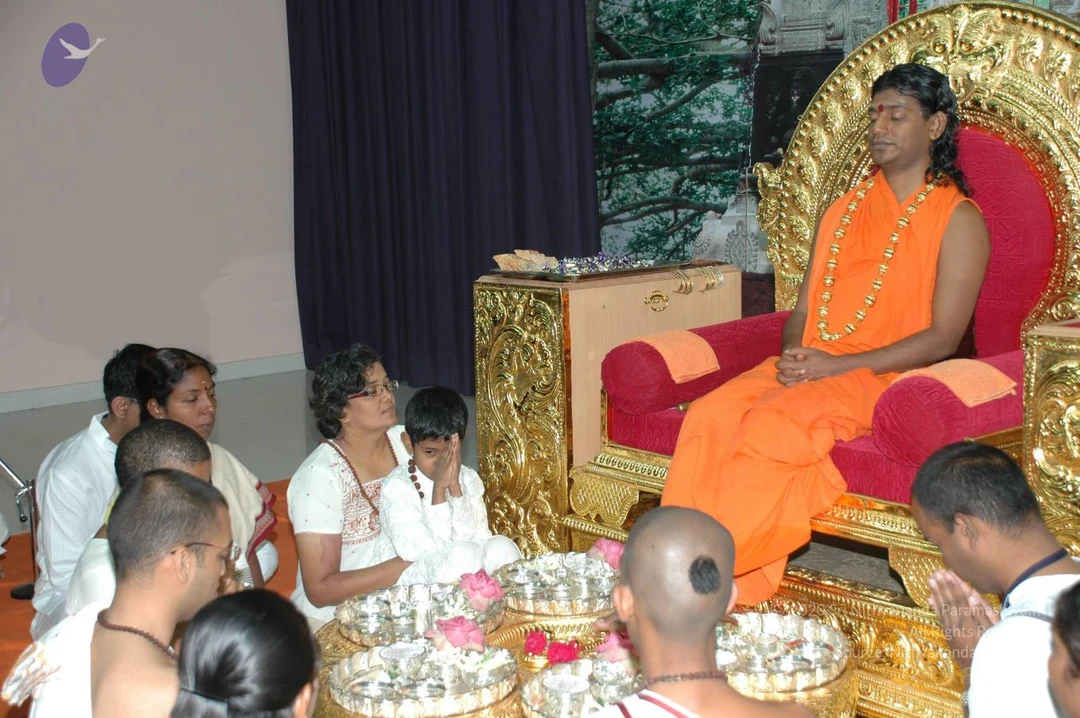
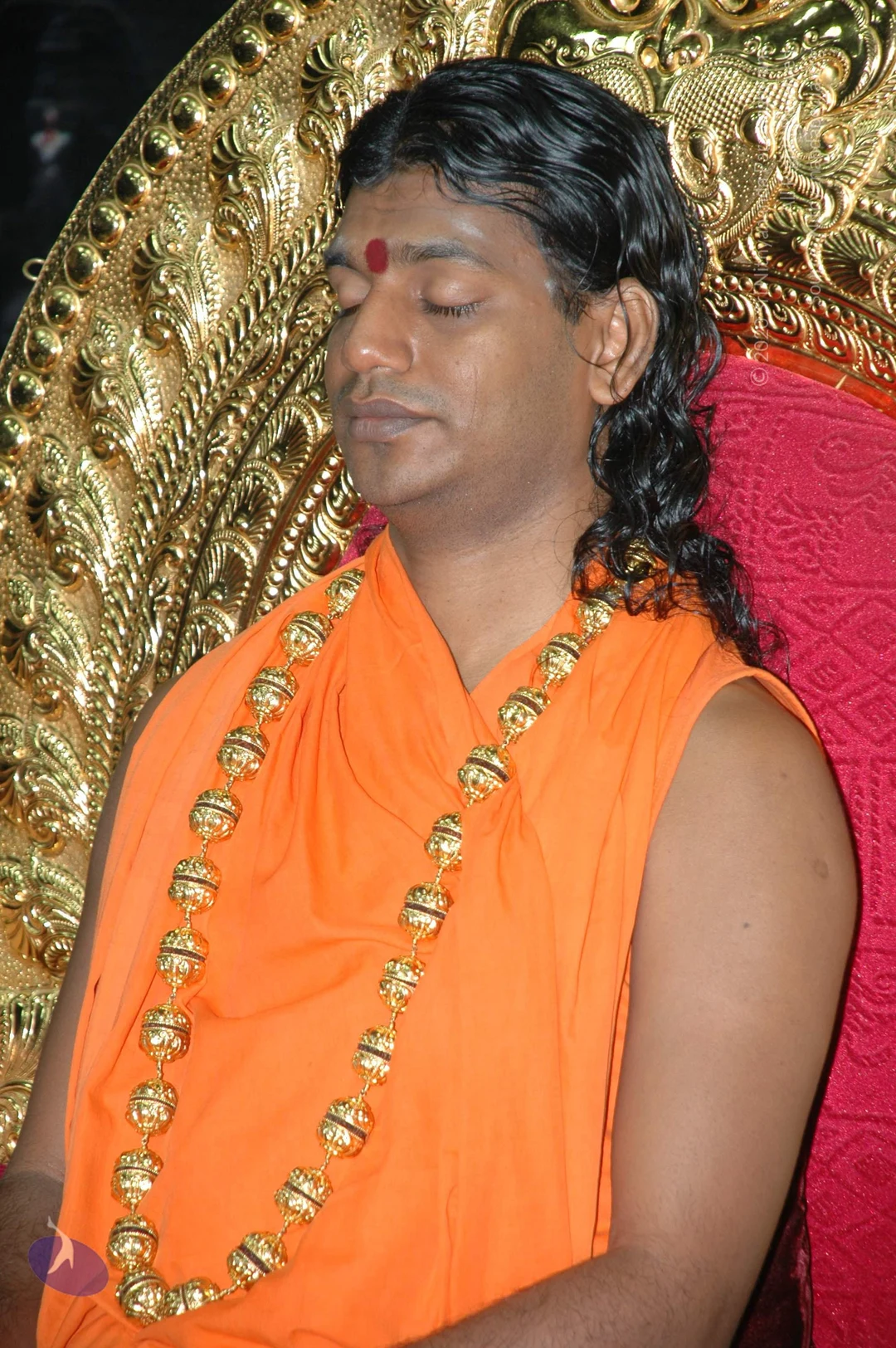
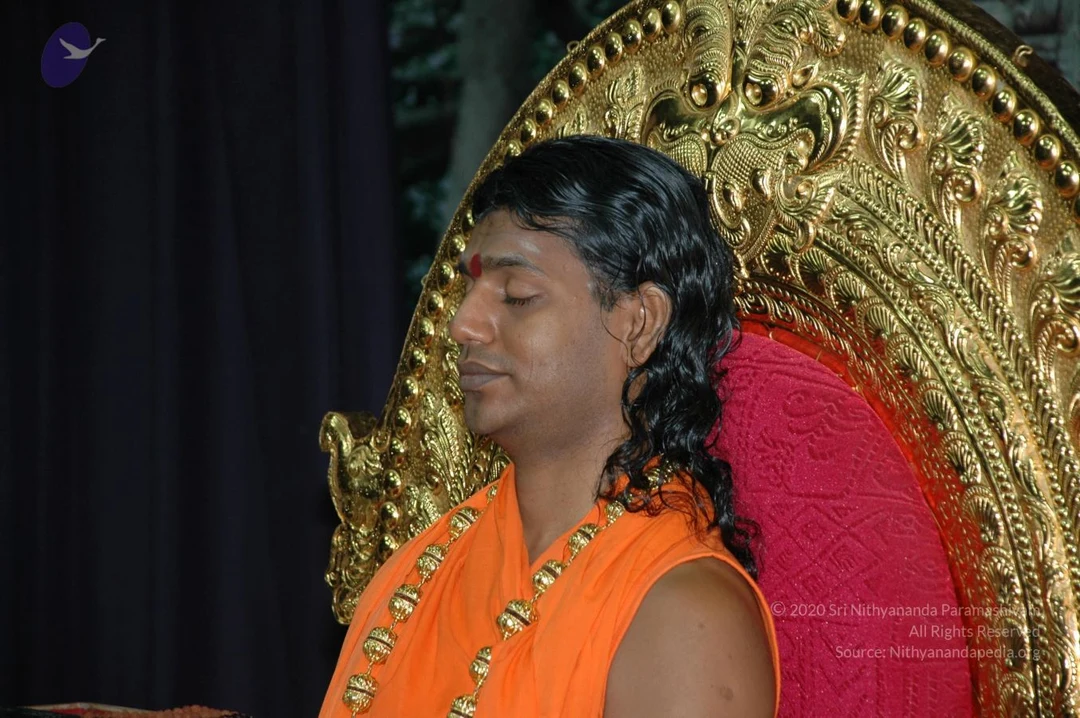
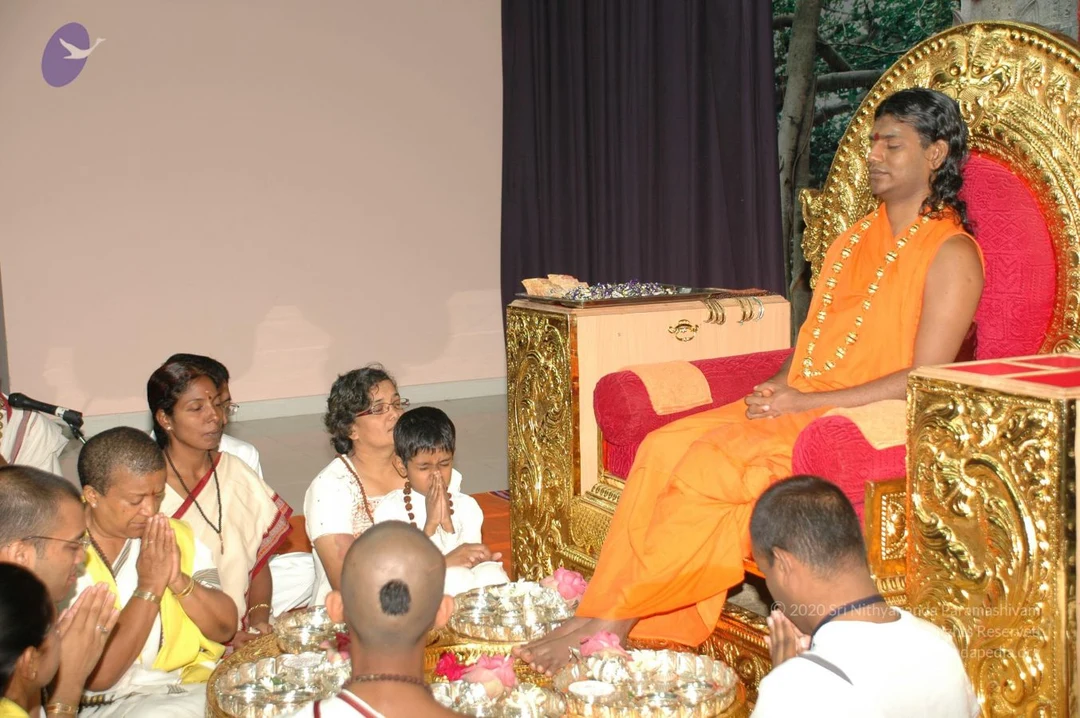
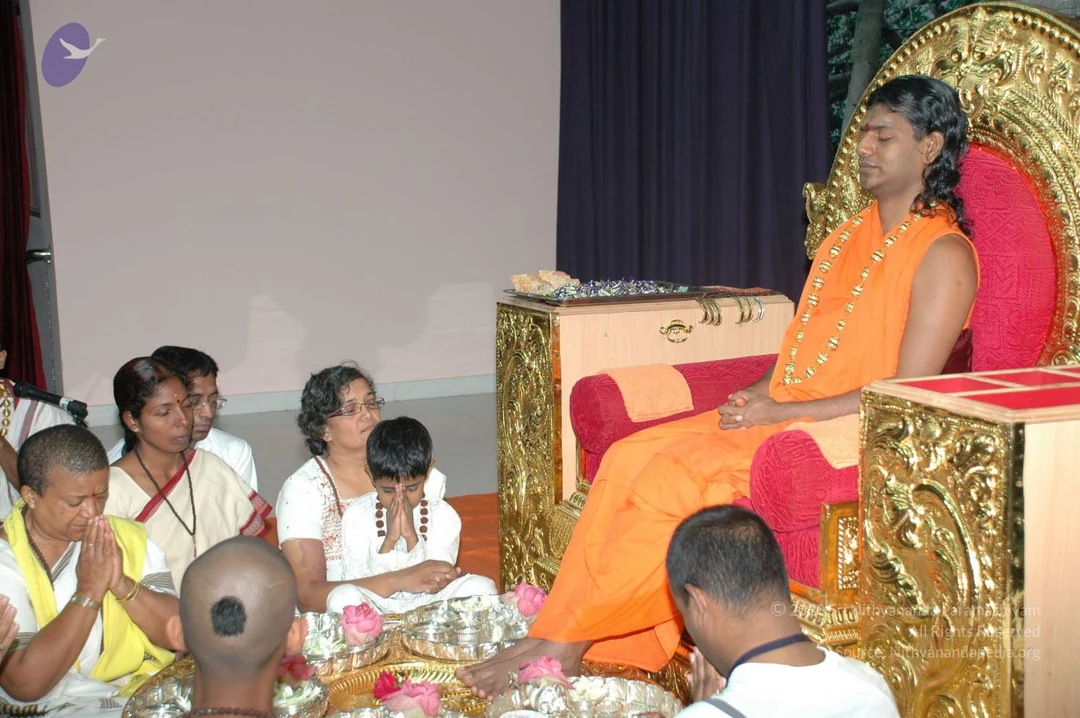
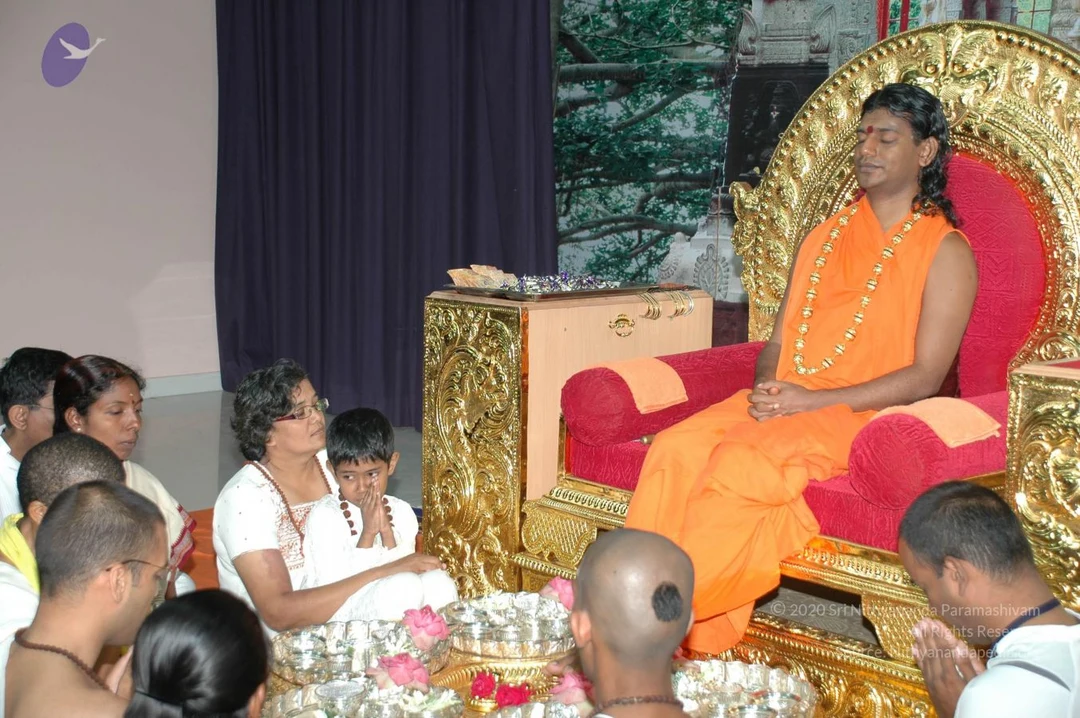
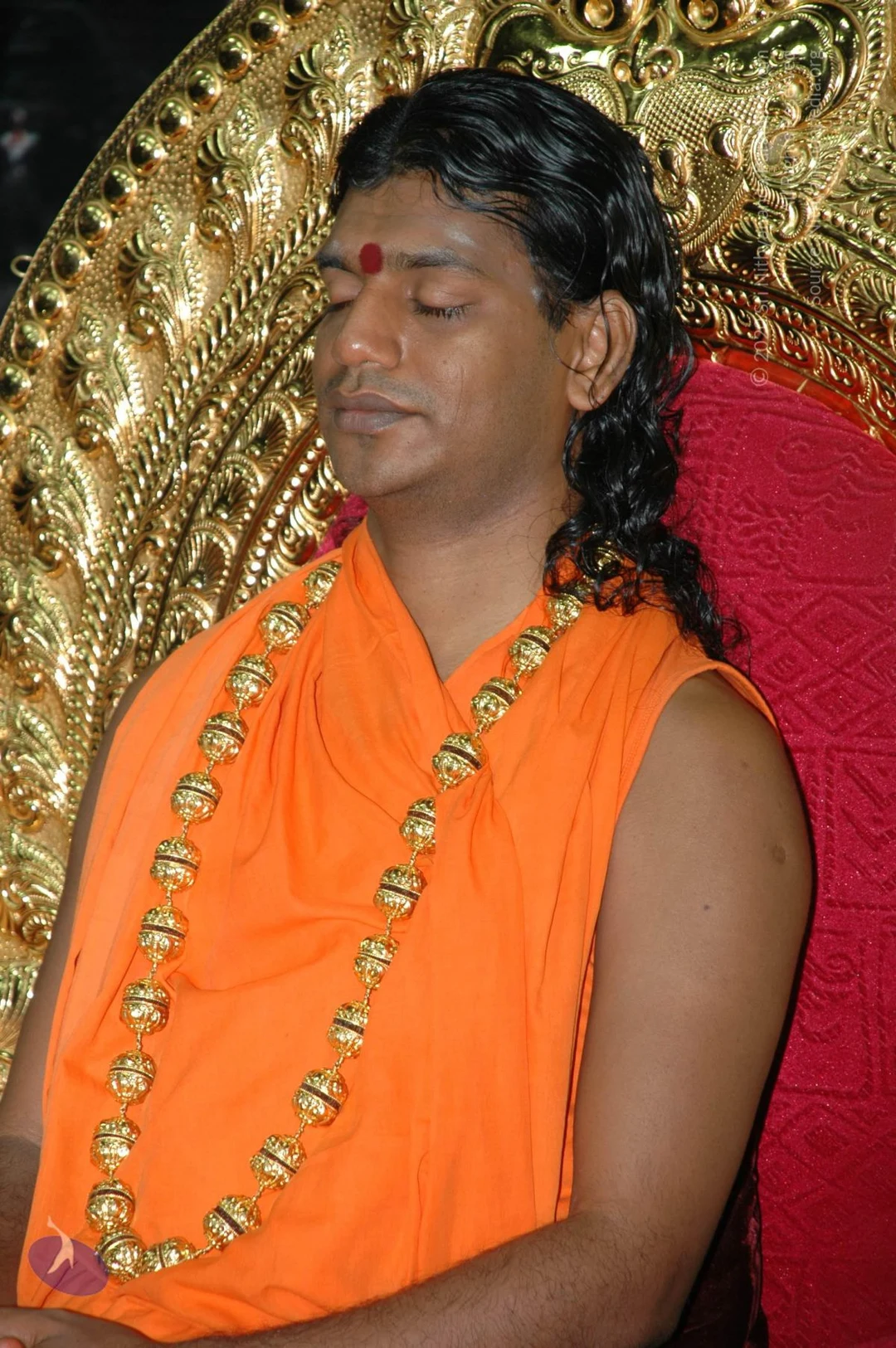
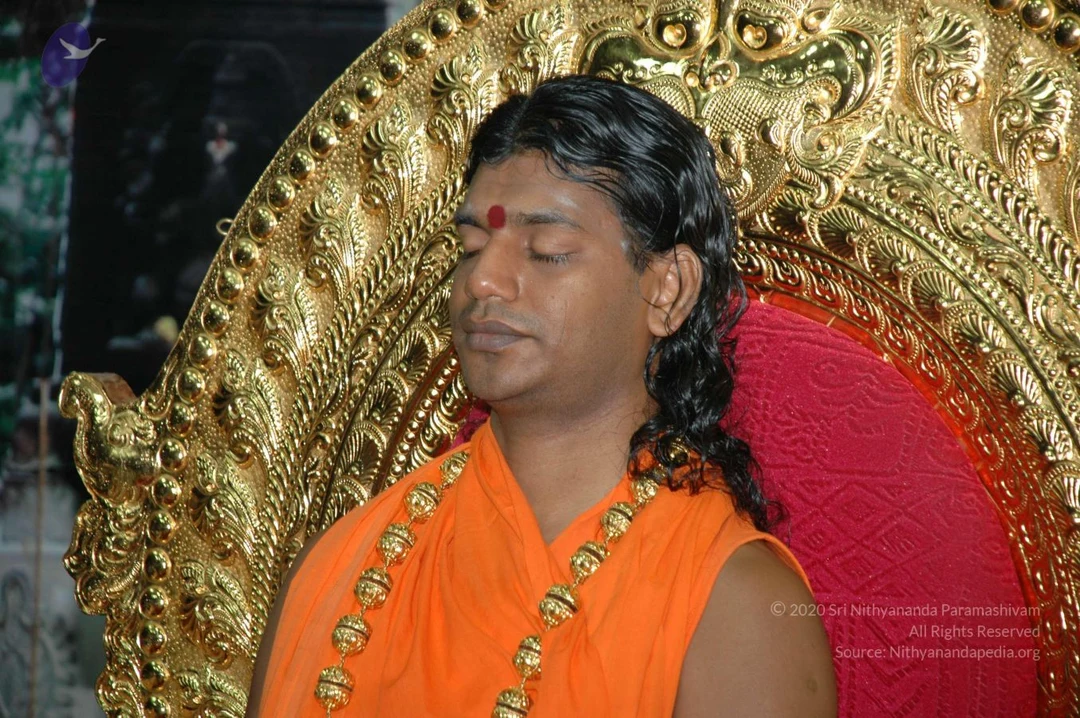
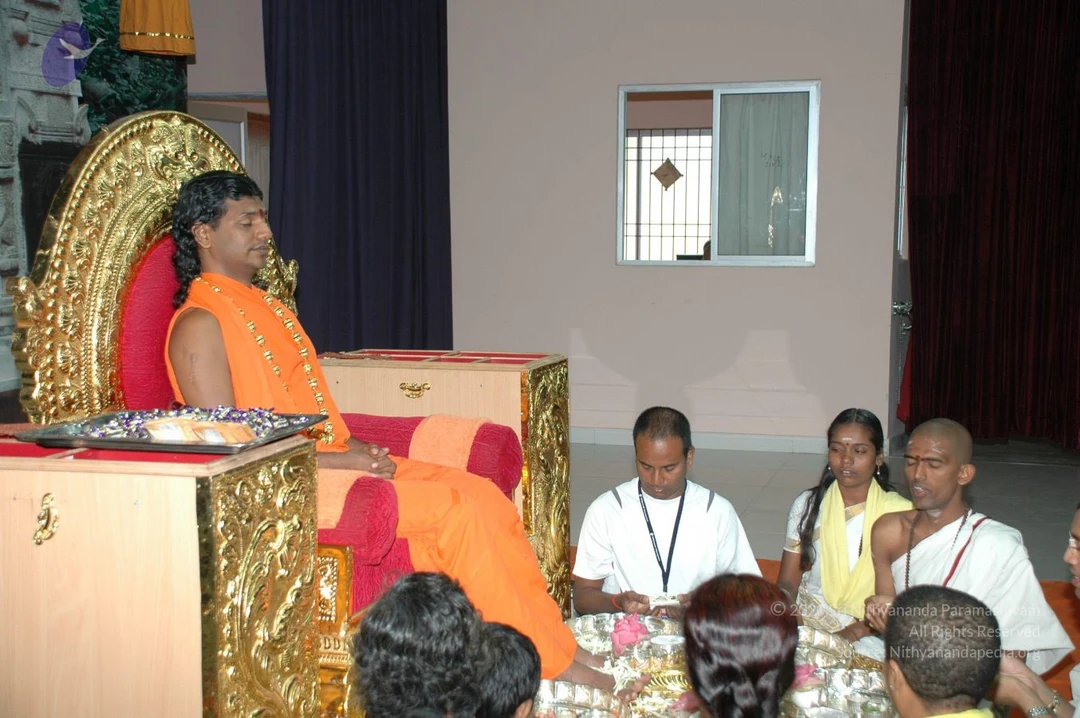
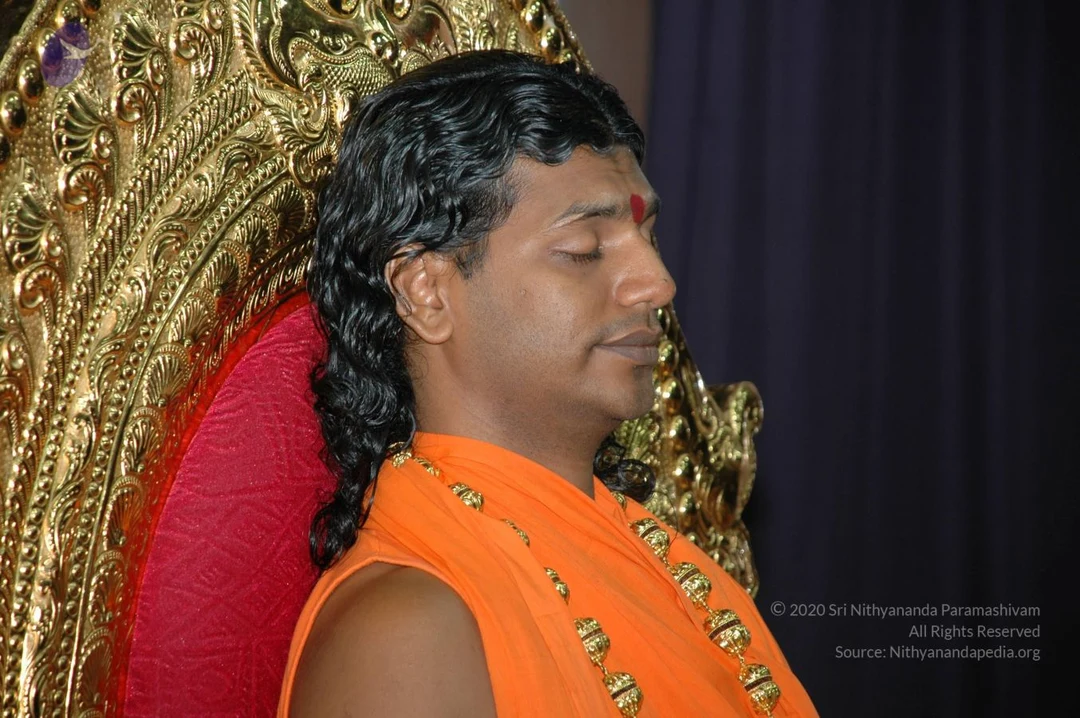
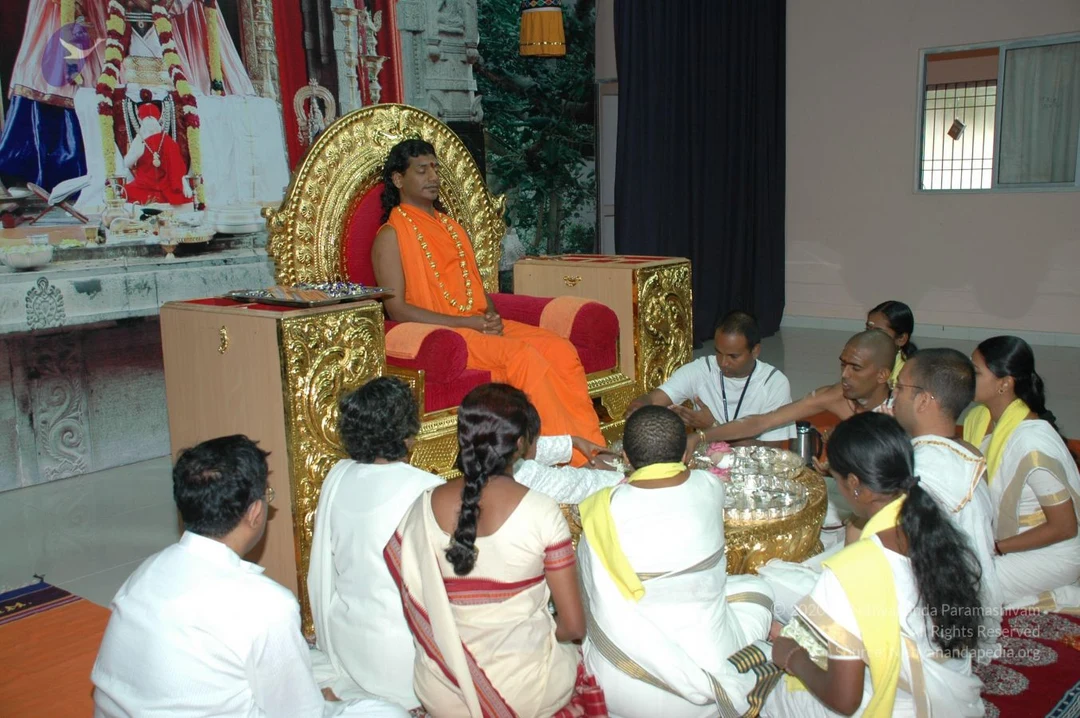
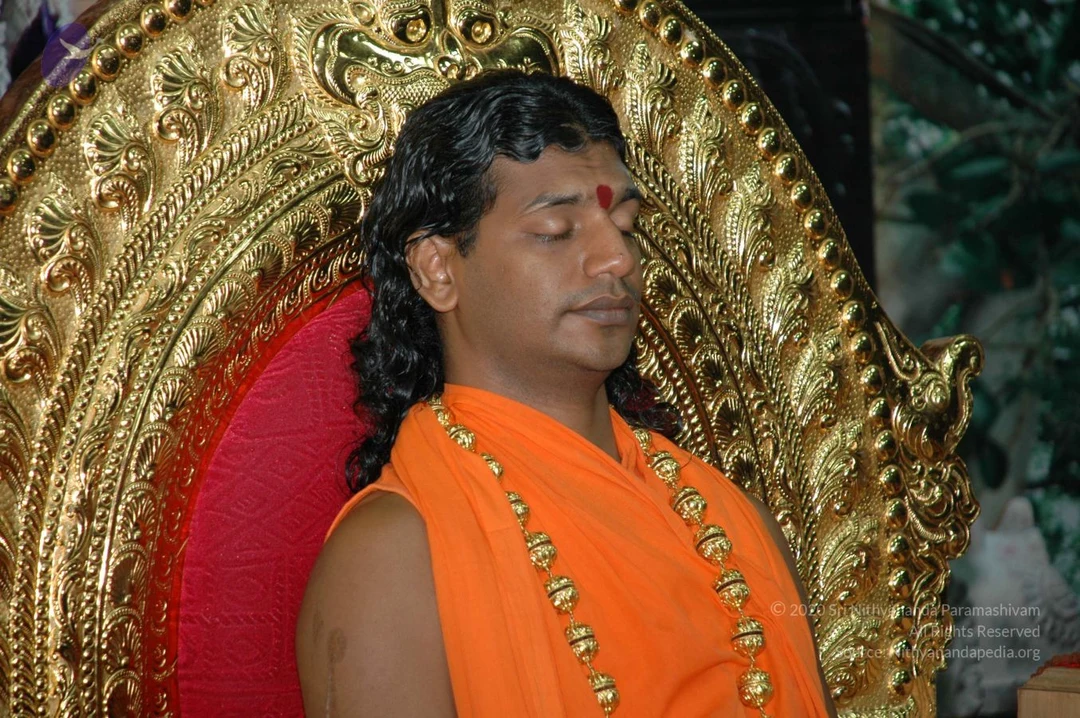
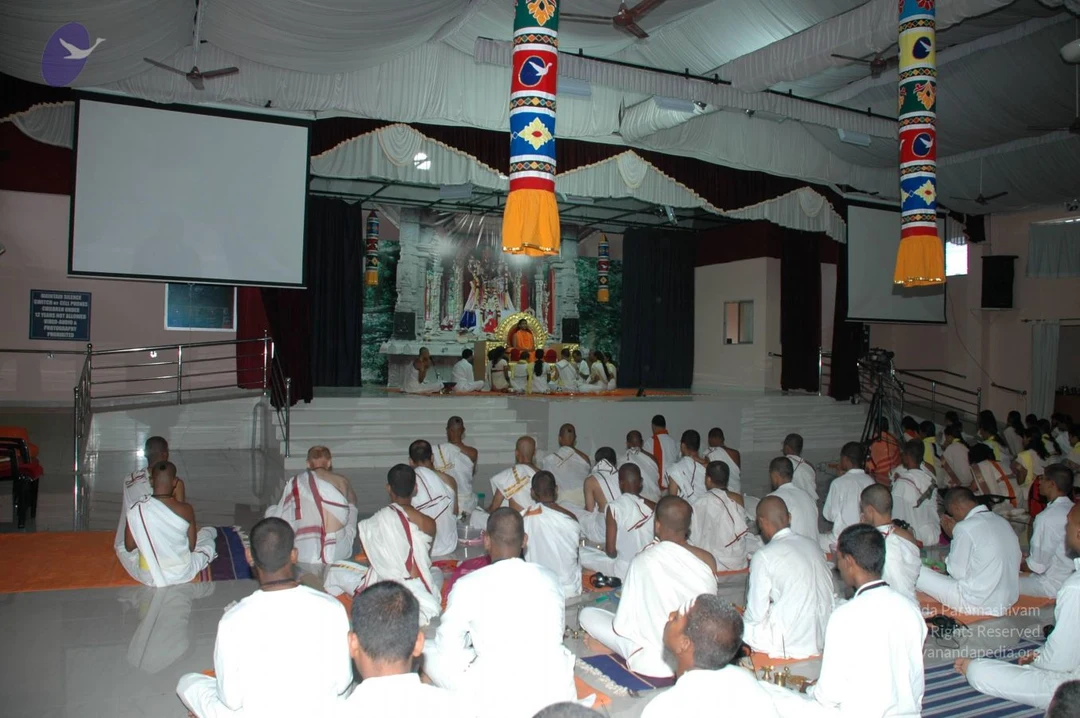
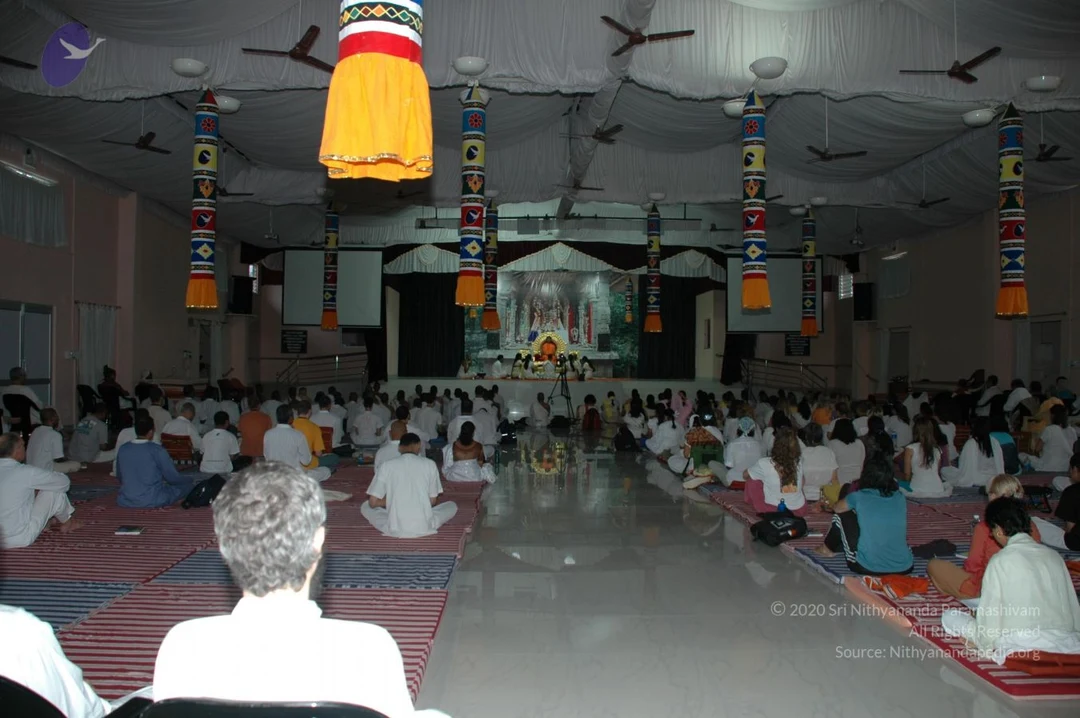
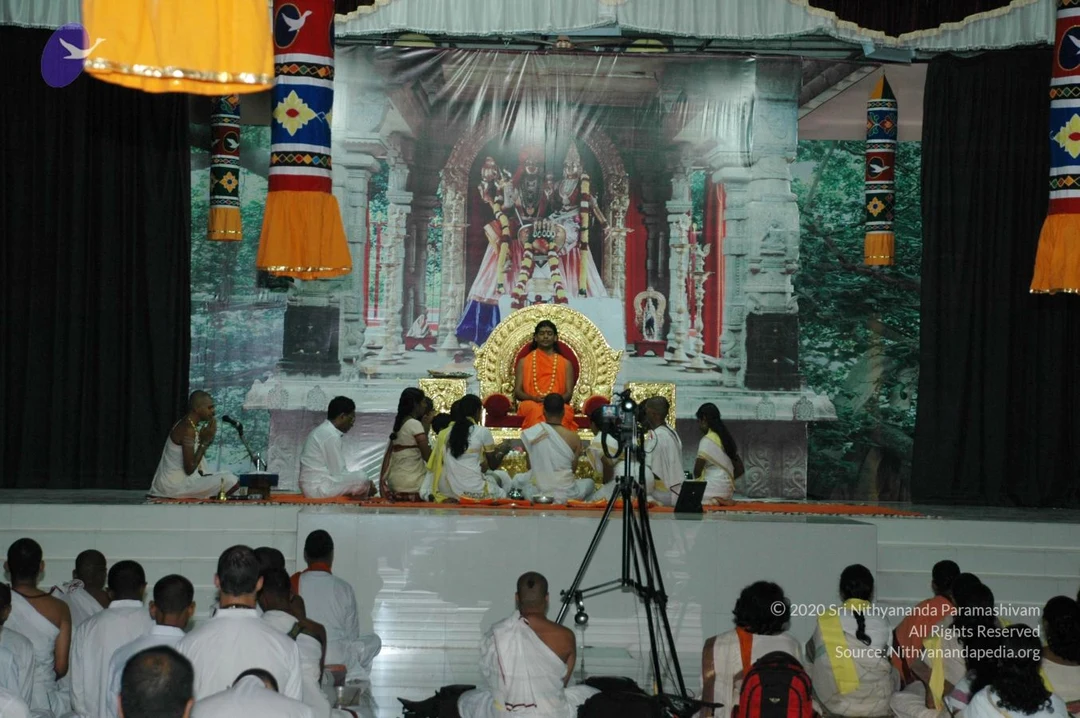
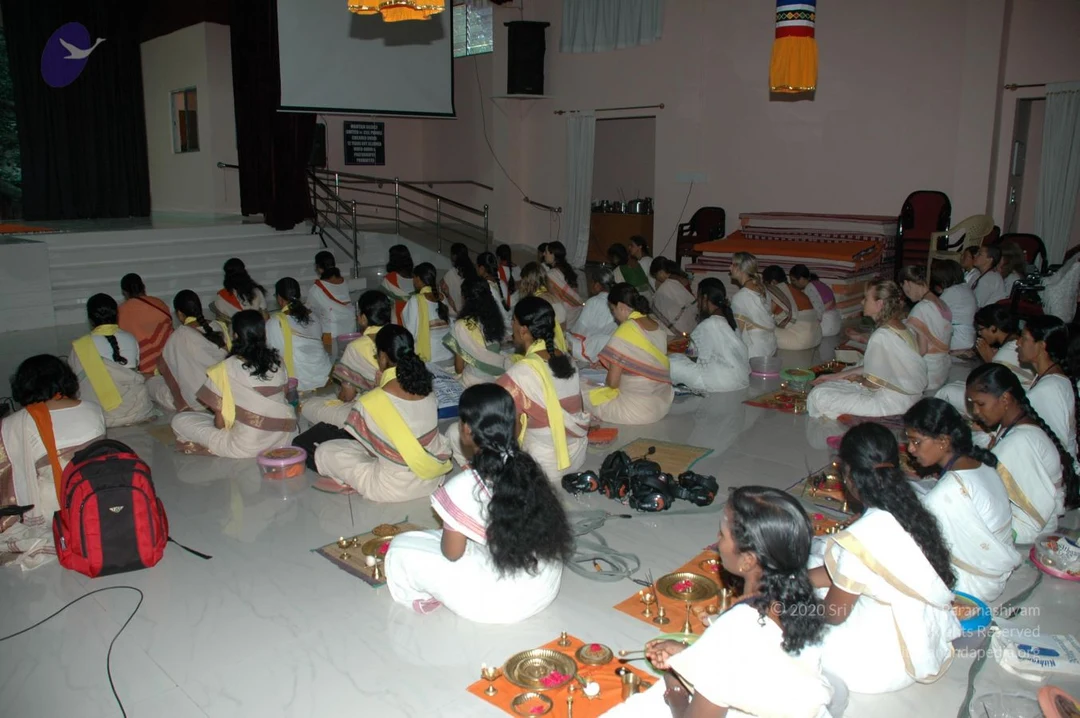
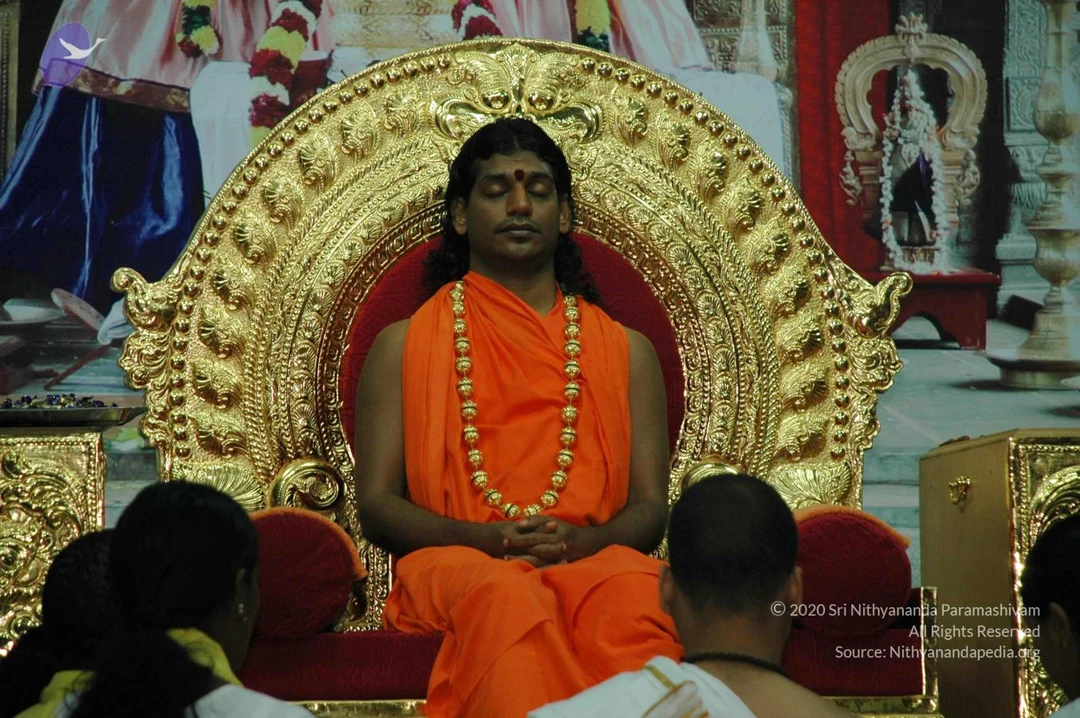
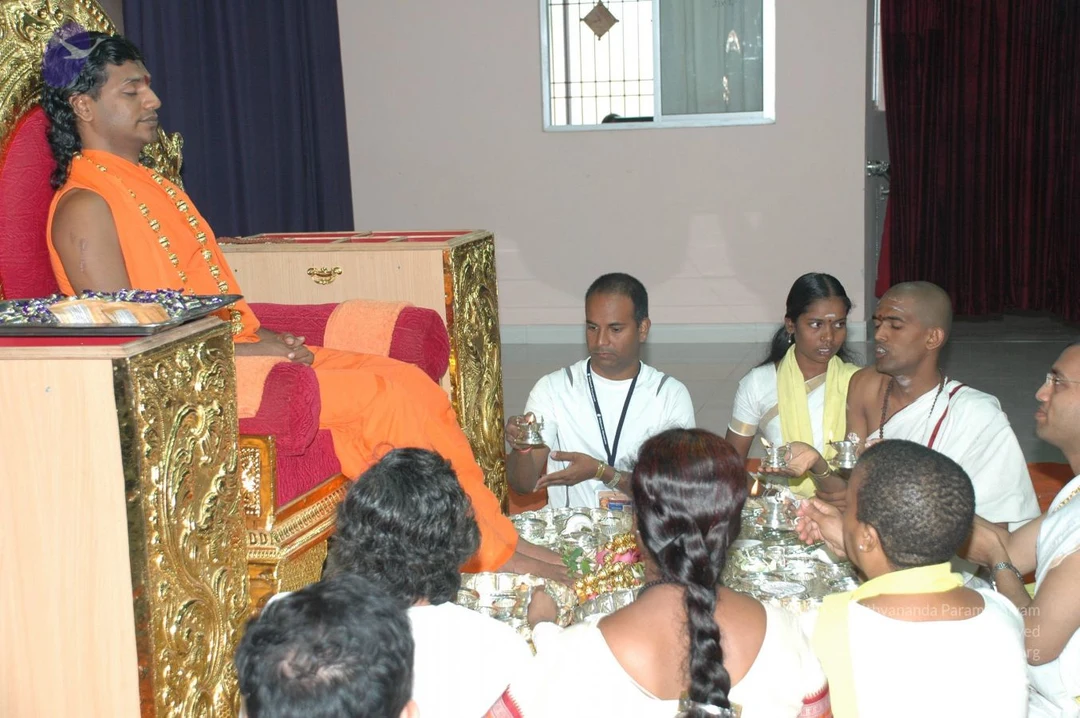
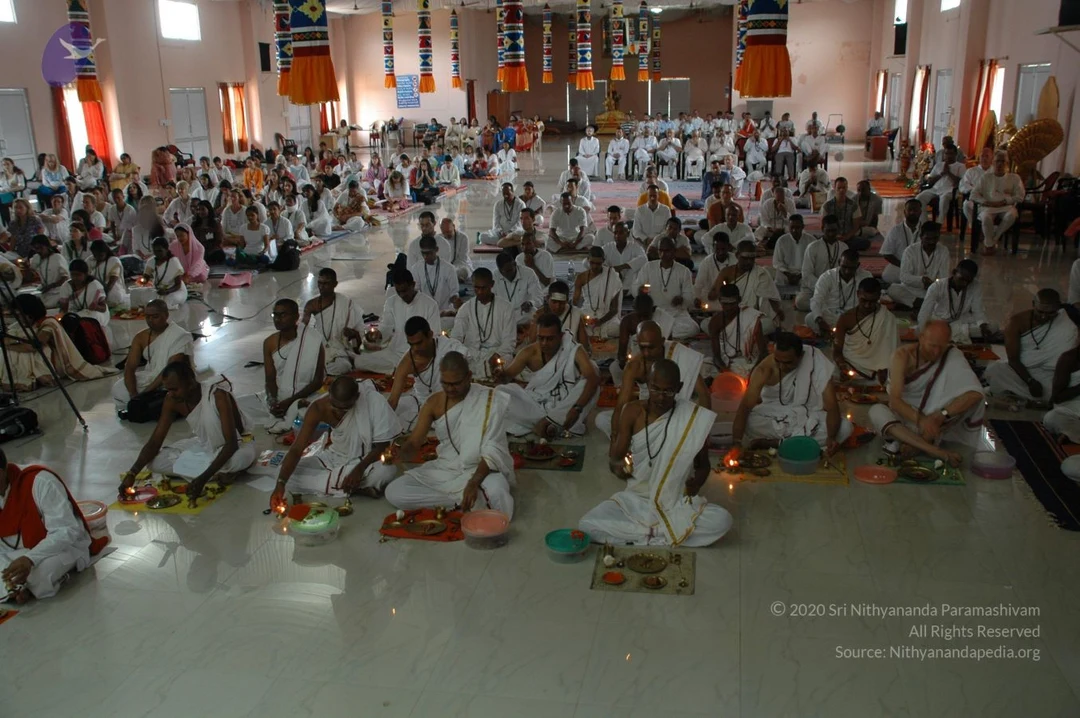
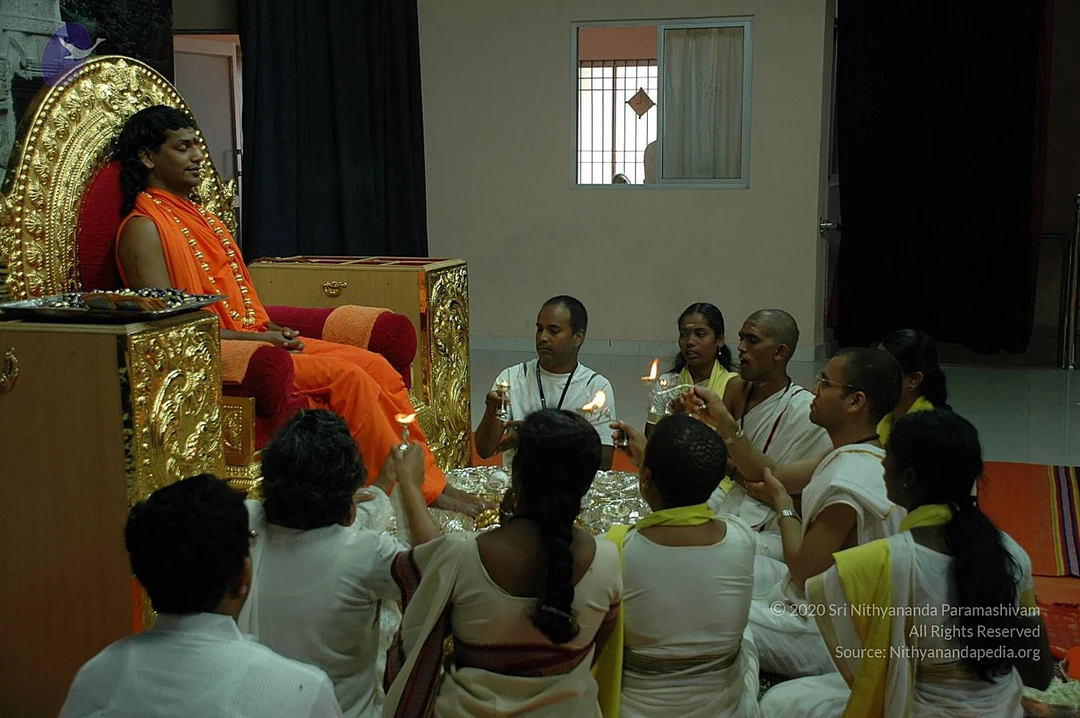
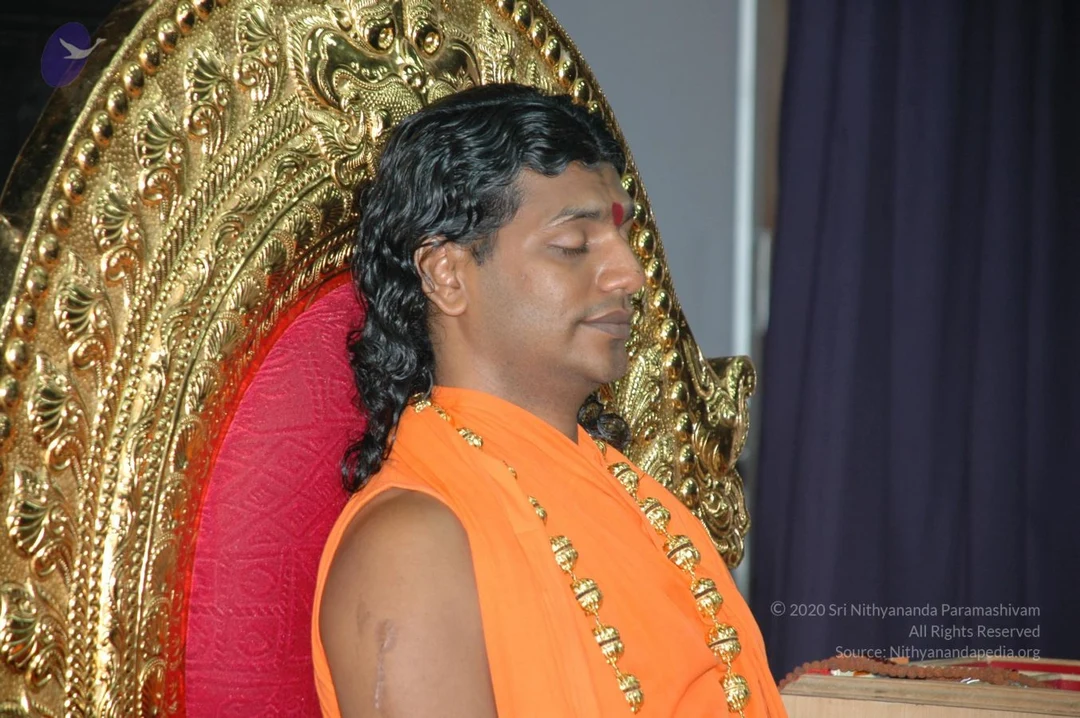
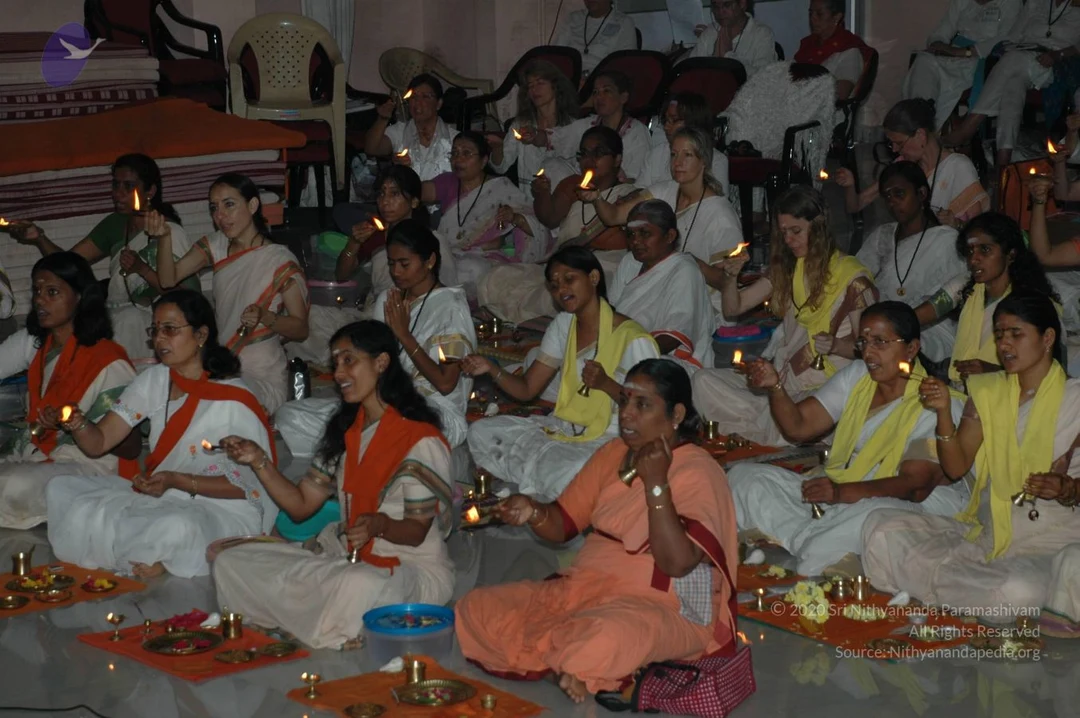
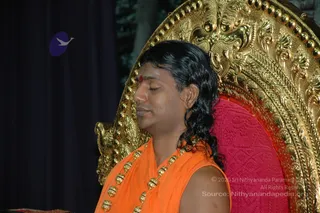
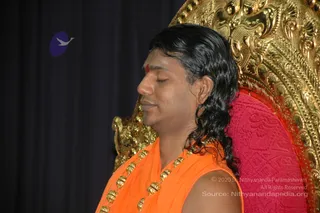
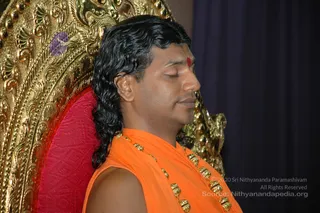
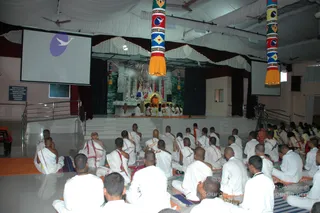
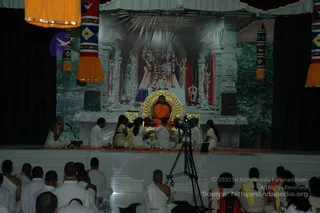
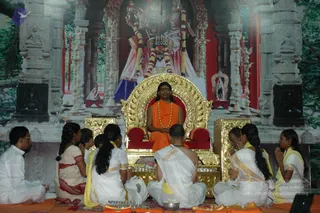
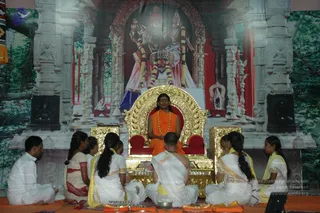
A single lit oil lamp in a dark room. A brass lamp with a footed base and star-shaped cut-out holes sits on a wooden surface, its flame burning brightly in the cup. A plate of food is partly visible at the left edge. No people are visible; the scene is a quiet still-life of a lamp.A seated man in profile with eyes closed, wearing an orange sleeveless garment and a long gold bead necklace, a small red mark on his forehead. His long dark wavy hair falls past his shoulders. He sits before an ornate gold throne with raised floral carvings and a red cushion behind him, against a dark blue curtain. The pose suggests a teaching or meditative moment during a satsang talk.A man with long, swept-back black hair and a red bindi sits with eyes closed in profile before an ornate gilded throne with a red cushion. He wears an orange sleeveless garment and a long ceremonial gold necklace of beads. Dark curtains form the background, and a small purple and white bird logo appears at upper left. a person seated in meditation during a satsang setting.A photograph of a satsang discourse in a hall with a raised white stage. A seated figure on a gold-framed throne wears an orange robe and a red-orange beaded mala, with a red cushion behind him. Behind the throne a large backdrop shows a deity murti with garlands and a temple gateway set against green foliage. Seated devotees in white dhotis and white clothing fill the stage around him, several women in yellow and white saris among them, with a kalasha-style brass vessel and offerings near the throne. In the foreground, rows of seated people in white attire face the stage, and a tripod-mounted camera stands at the front edge. Orange and multicoloured banners hang at the sides of the stage.

Morning-Satsang

7 photosSource gallery
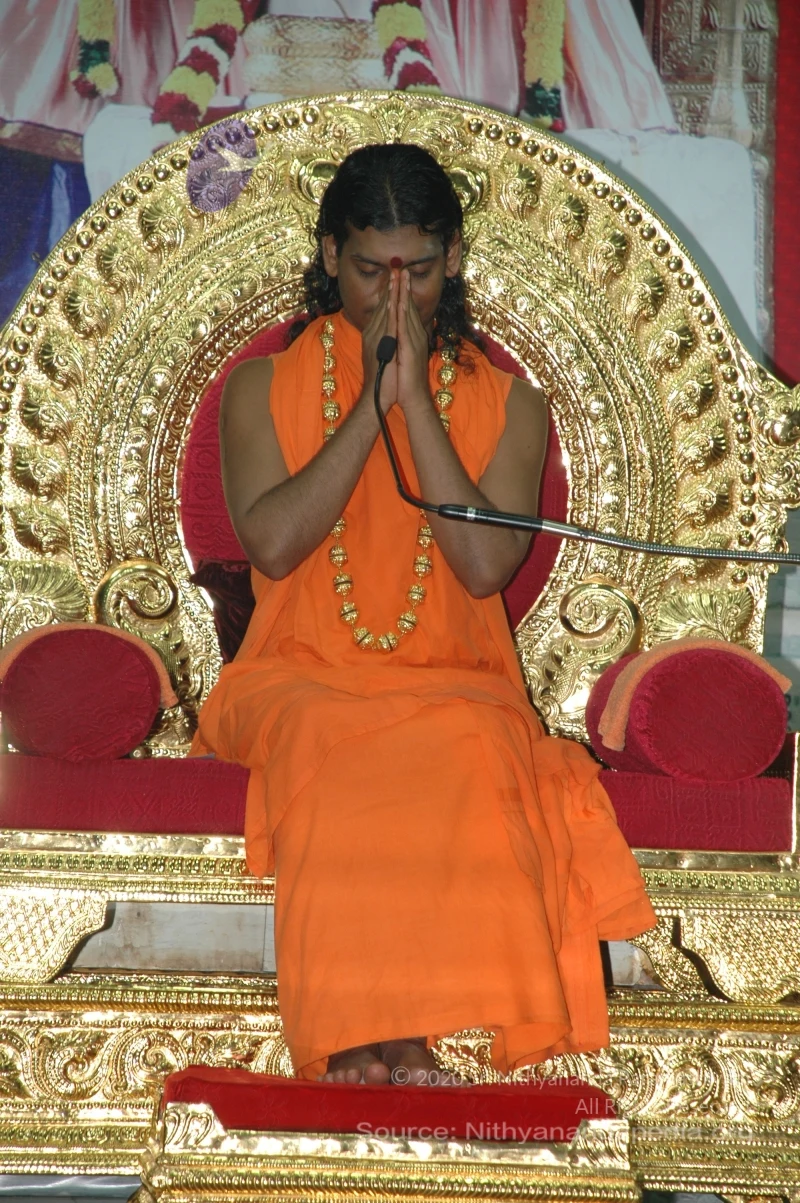
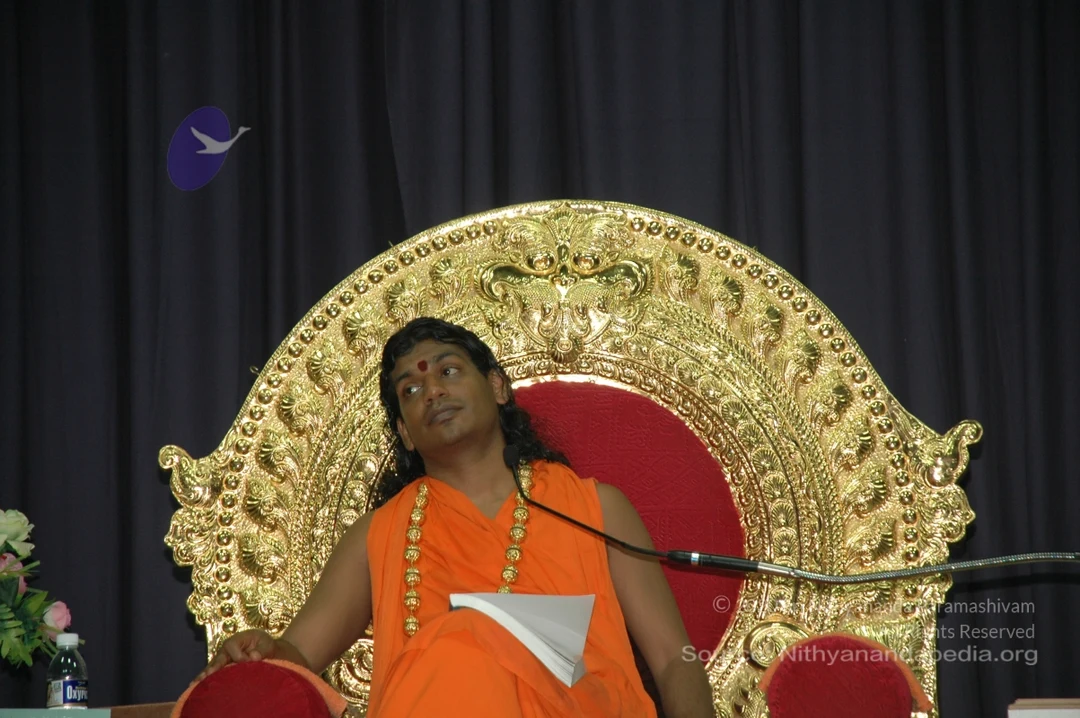
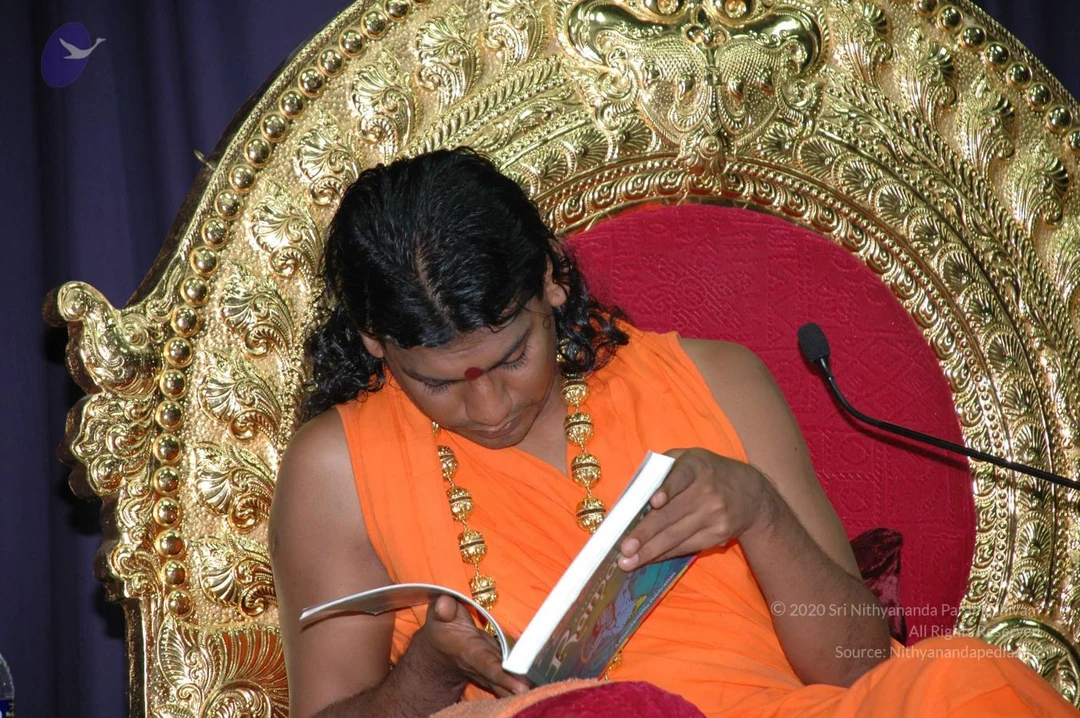
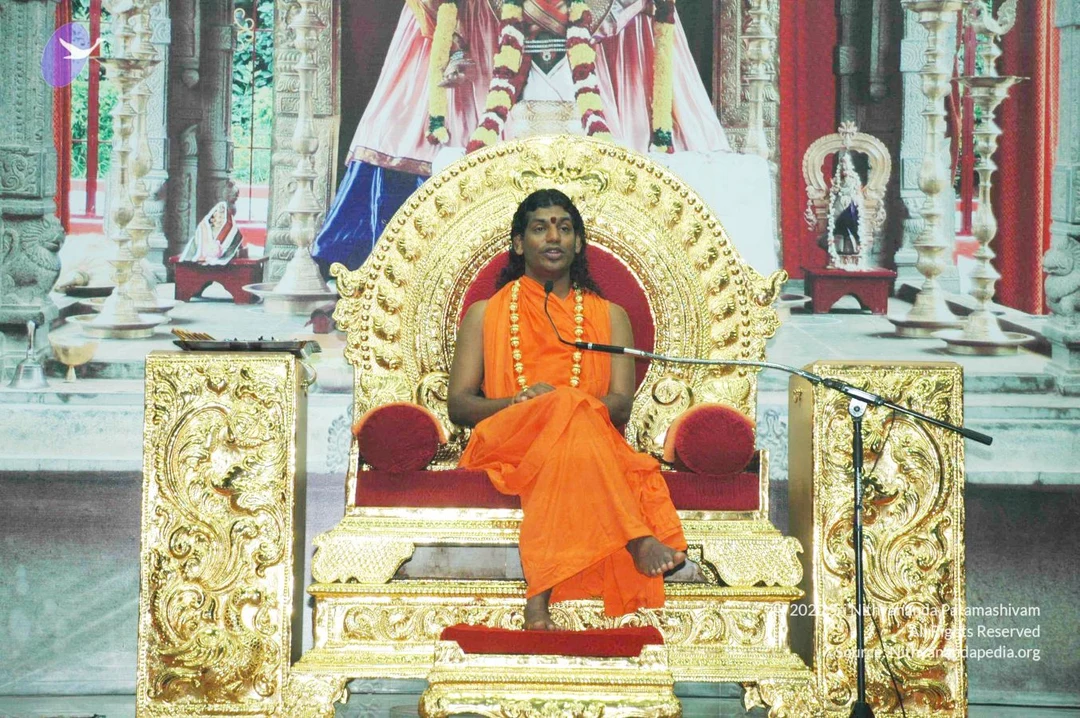
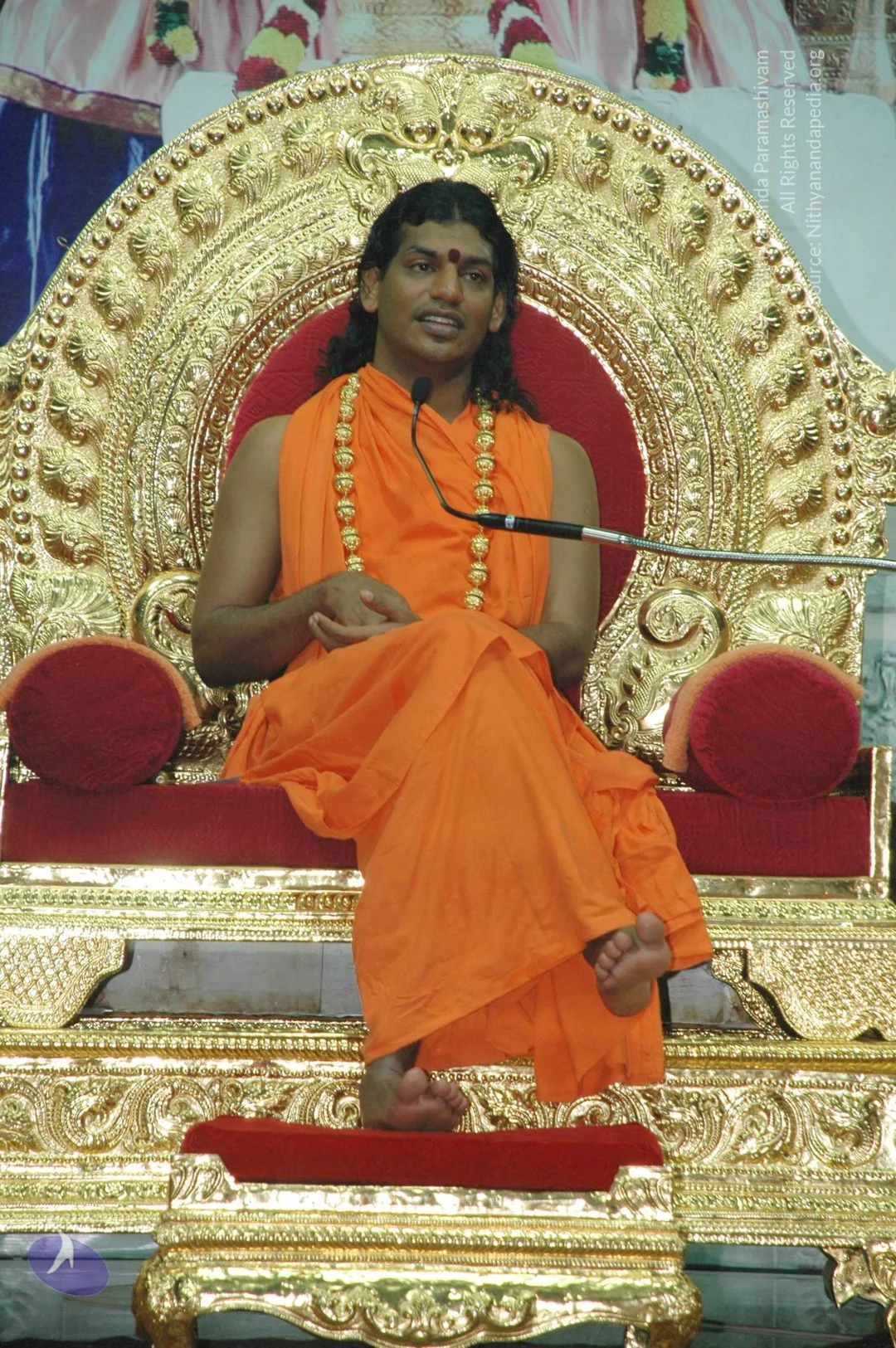
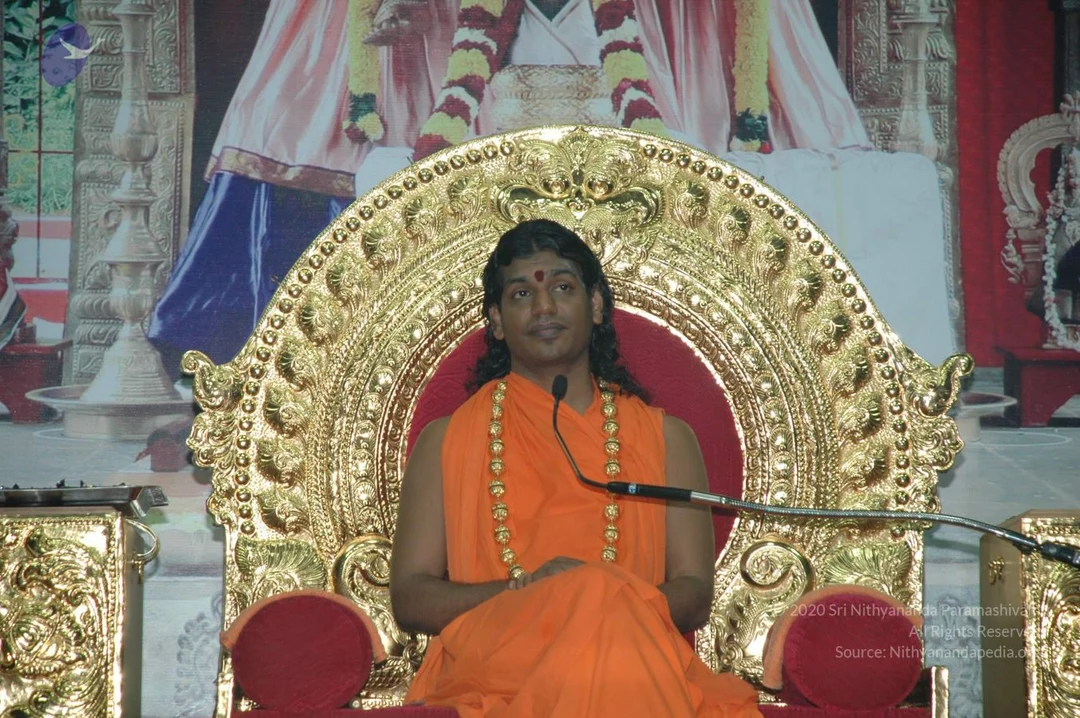
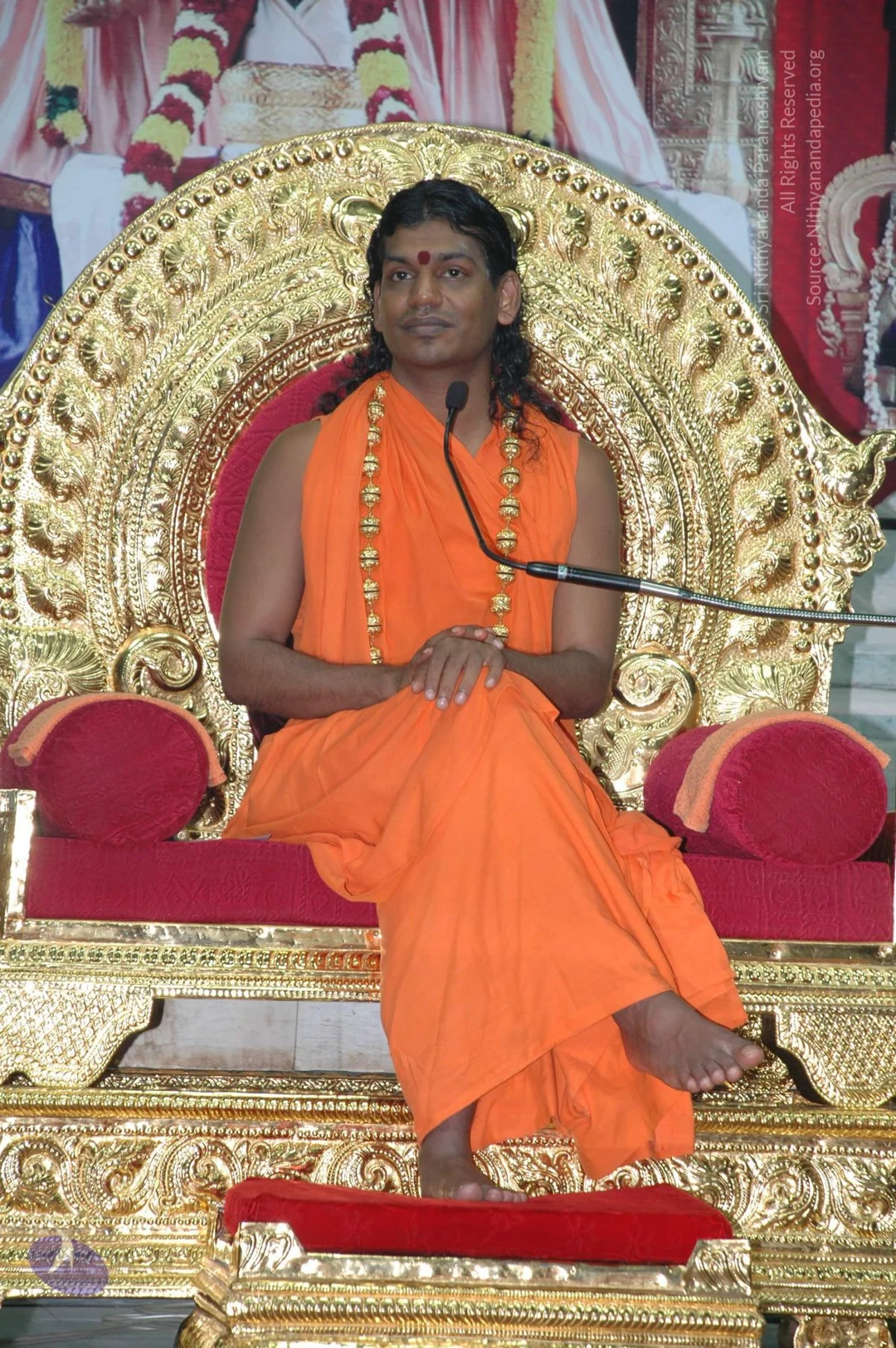
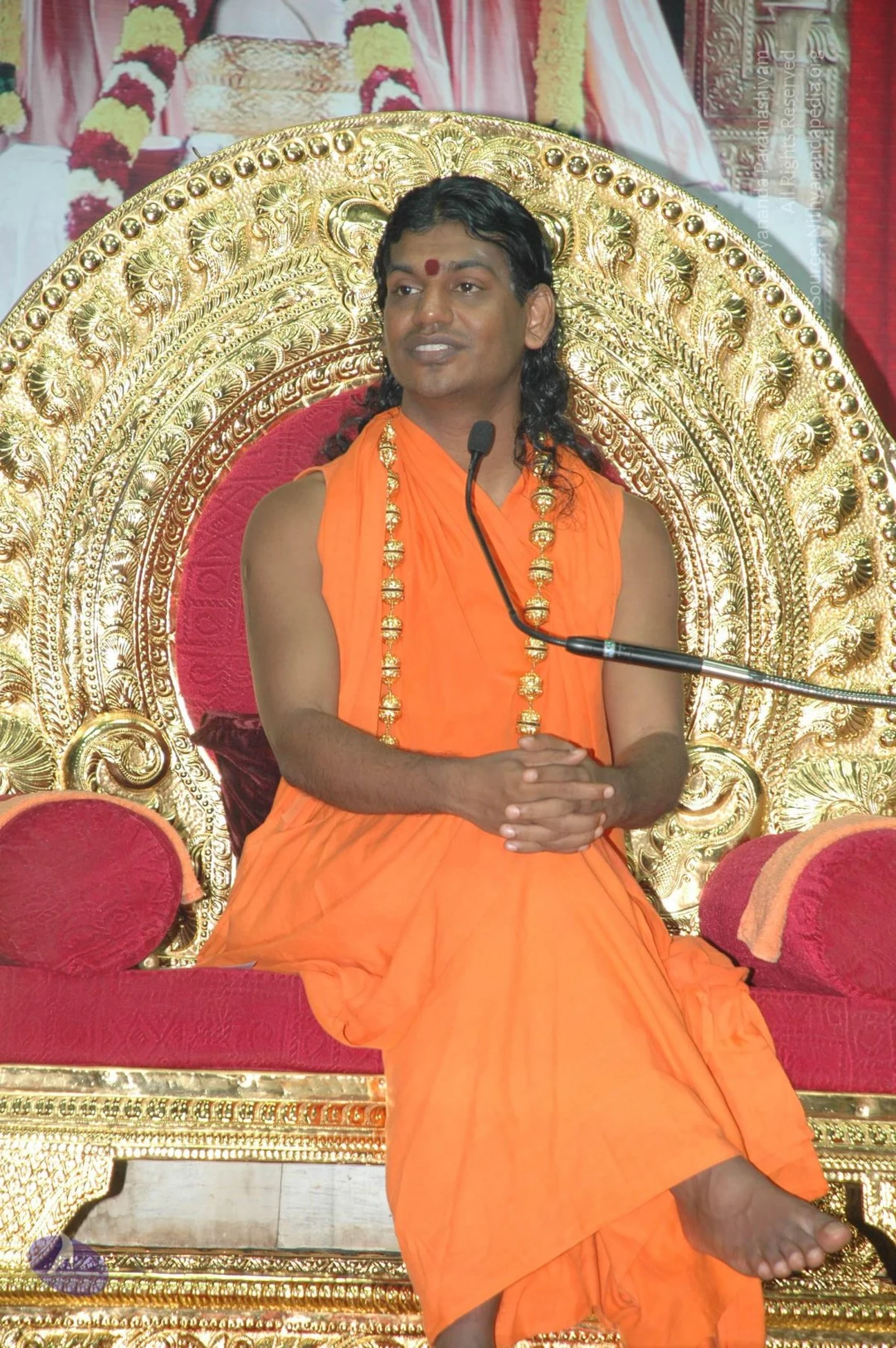
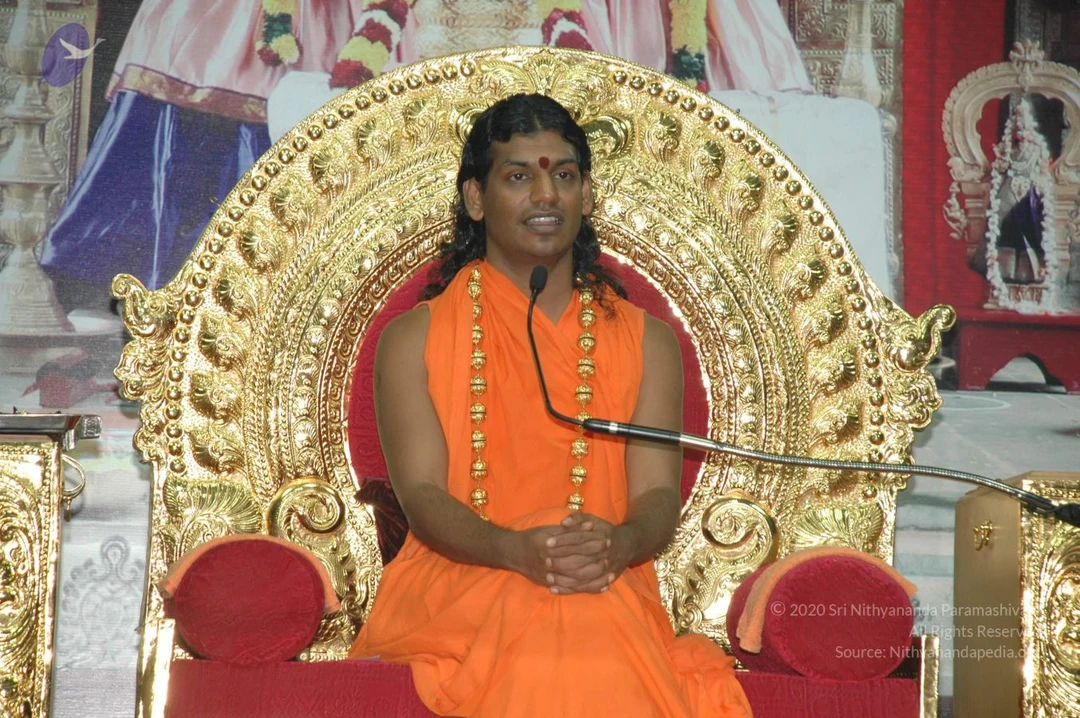
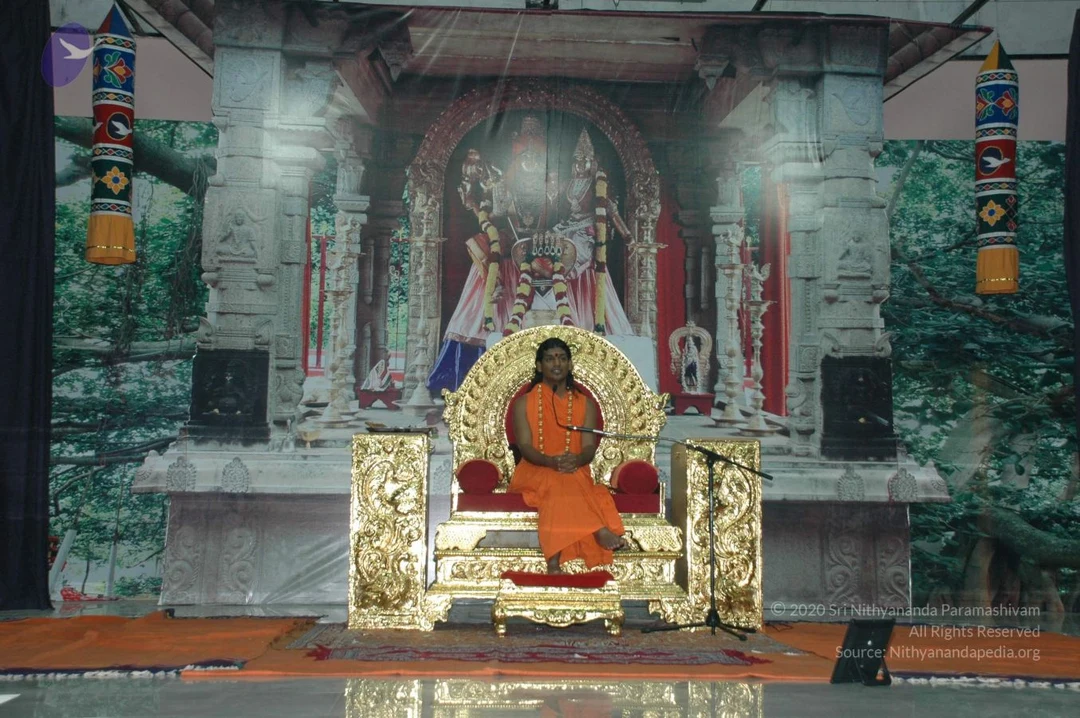
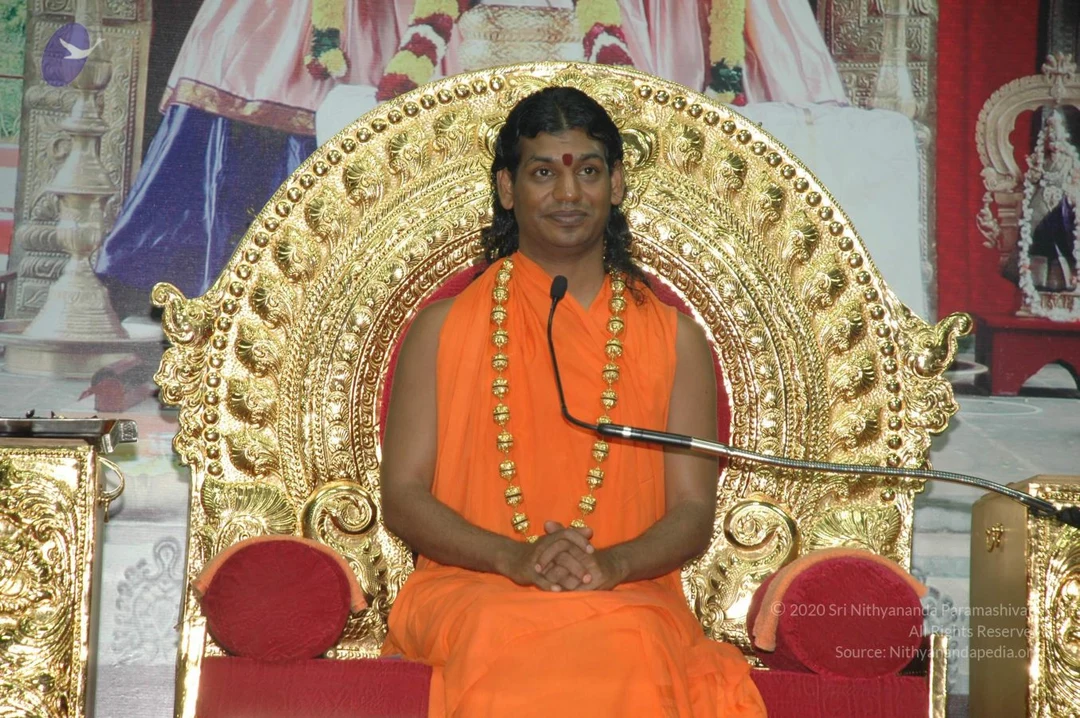
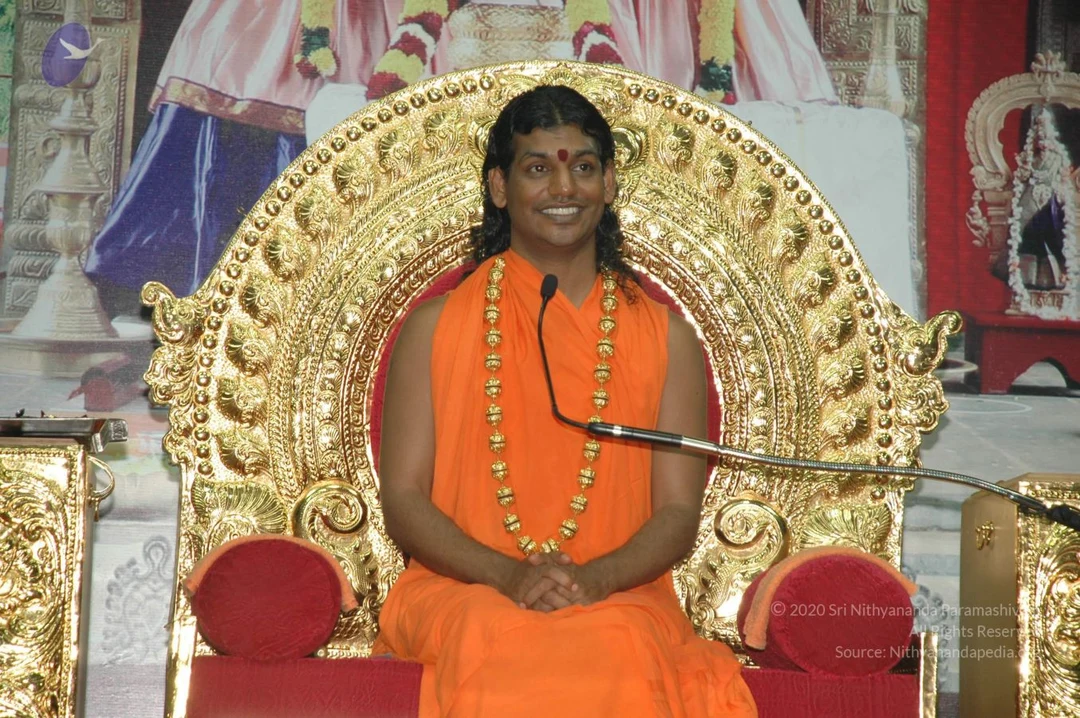
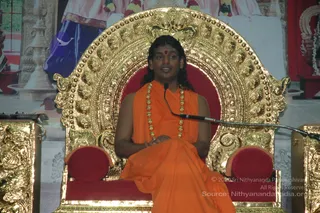
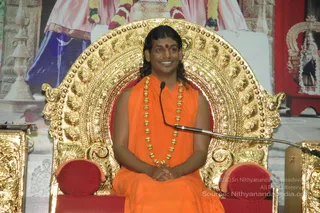
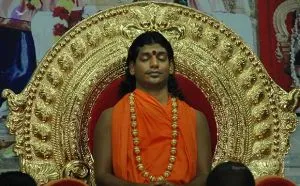
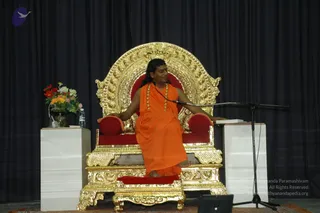
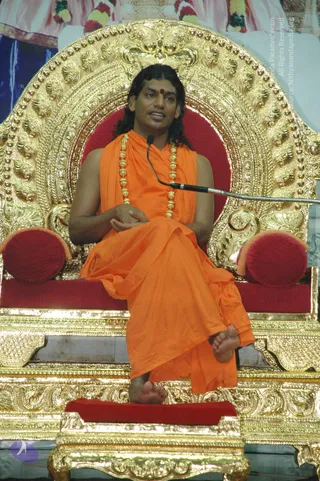
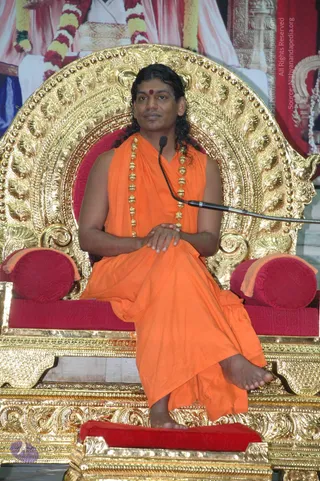
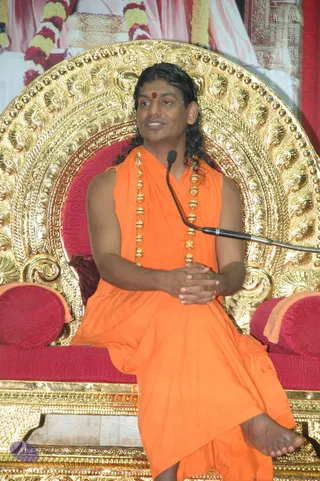
A man with long swept-back dark hair and a red bindi sits on an ornate gold throne with red cushioned seat and armrests. He wears a saffron-orange robe and a long strand of gold beads around his neck, and speaks into a microphone on a stand. Behind him are red and gold backdrop panels with a lit oil lamp on a stand at left. The scene suggests a seated satsang discourse. Swamiji (probable): the seated speaker on the gold throne, with long hair, saffron robe and gold necklace, is the probable Swamiji.A man with long, swept-back dark hair and a red bindi sits on an ornate gold throne with red cushions, speaking into a microphone on a stand. He wears an orange saffron robe draped over his shoulders and a long gold-bead necklace with rudraksha-style beads. His bare feet rest on a red footstool. Behind him are draped pink and white fabrics and floral garlands.A seated man in an orange-saffron robe and a long orange-beaded rudraksha-style necklace sits on an ornate gold throne with red cushions, a red bindi on his forehead and long swept-back hair, speaking into a microphone on a stand. Behind him a backdrop shows painted temple scenes with a gold-trimmed stage and brass lamps. Swamiji (probable) is the appearance-based candidate, matched by the saffron robe, beaded necklace, long hair and throne. No other people are visible.A seated man in saffron-orange robes sits on an ornate gold throne with red cushions, speaking into a microphone on a stand. He wears a long string of gold beads and a rudraksha-style gold necklace, has long swept-back dark hair and a red bindi on his forehead, and rests his hands in his lap. Behind him are red and pink garlanded backdrops and floral garlands. Probable Swamiji, the seated speaker in saffron with long hair, gold necklaces and a crowned golden throne, is shown addressing the audience. No other people are visible.

Sarvadarshan

5 photosSource gallery
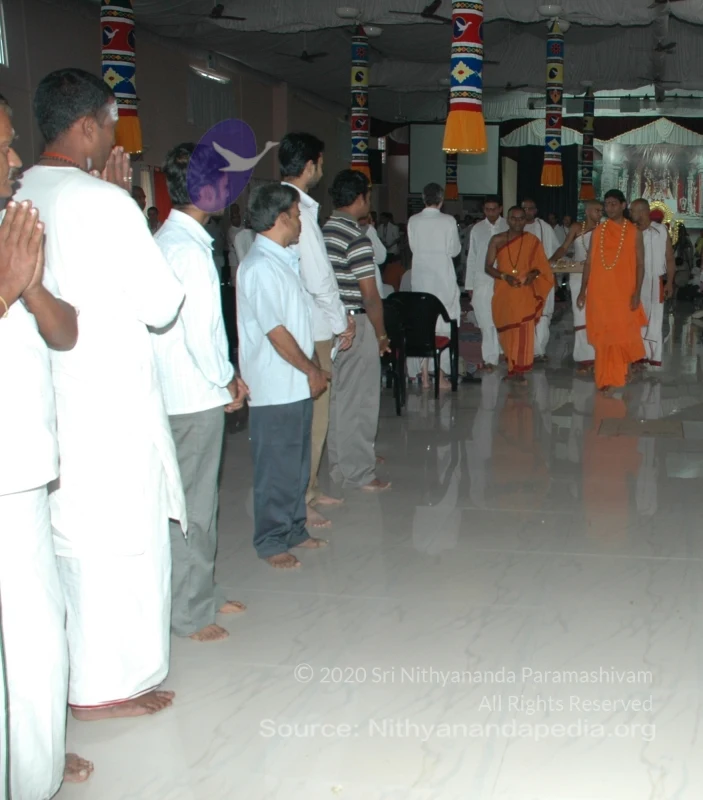
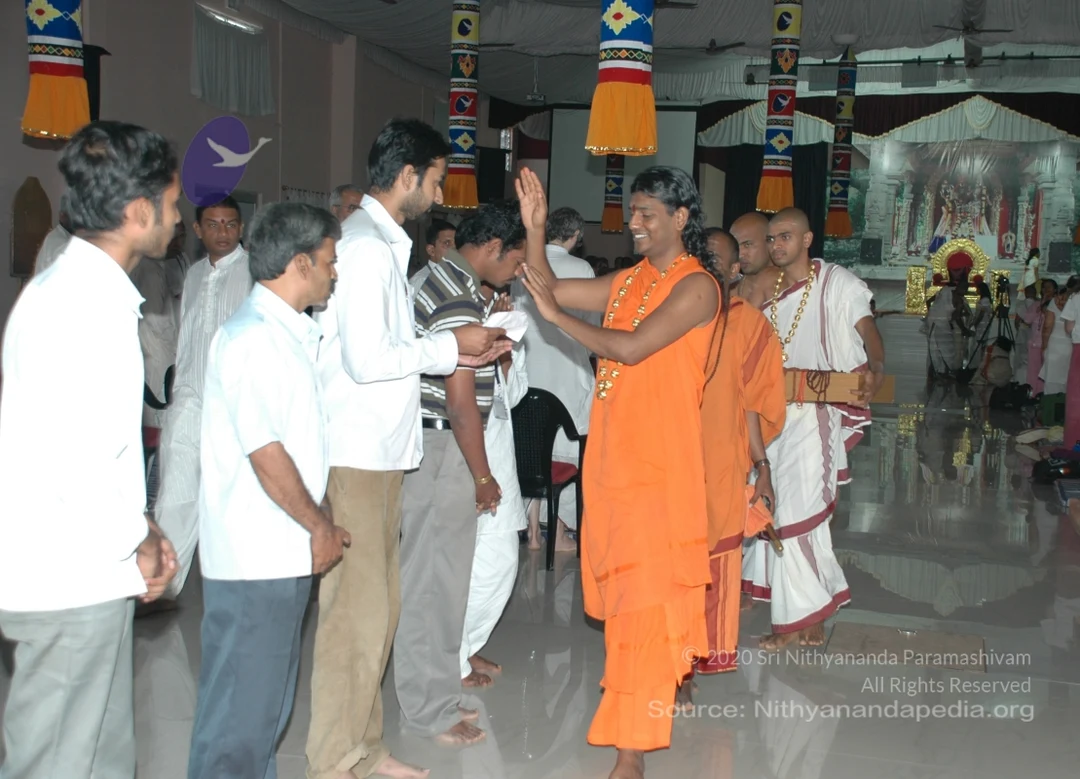
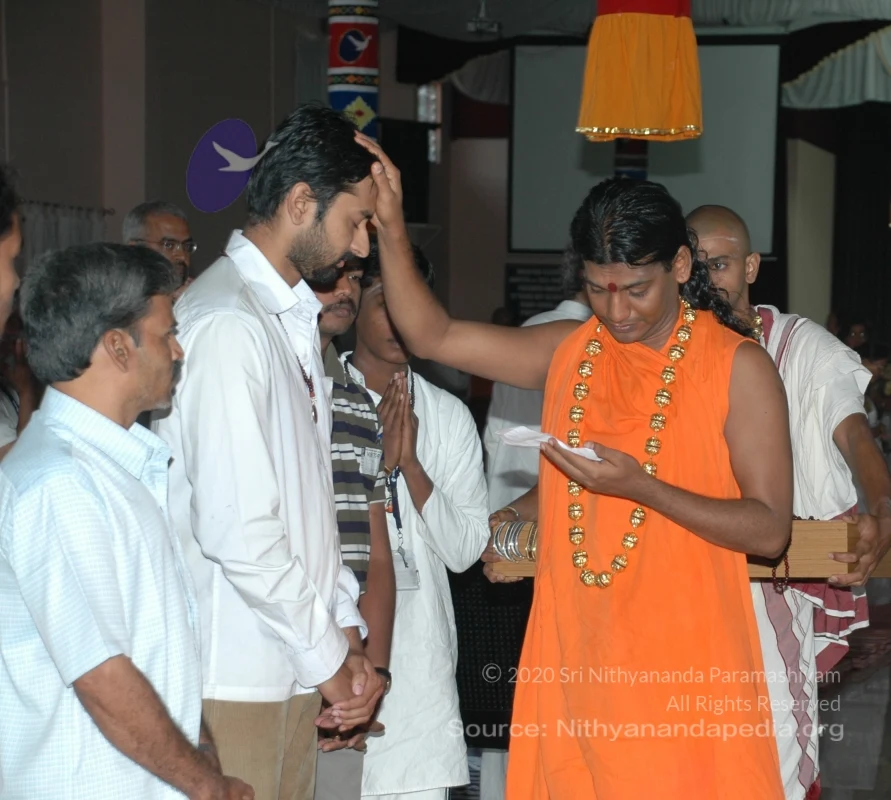
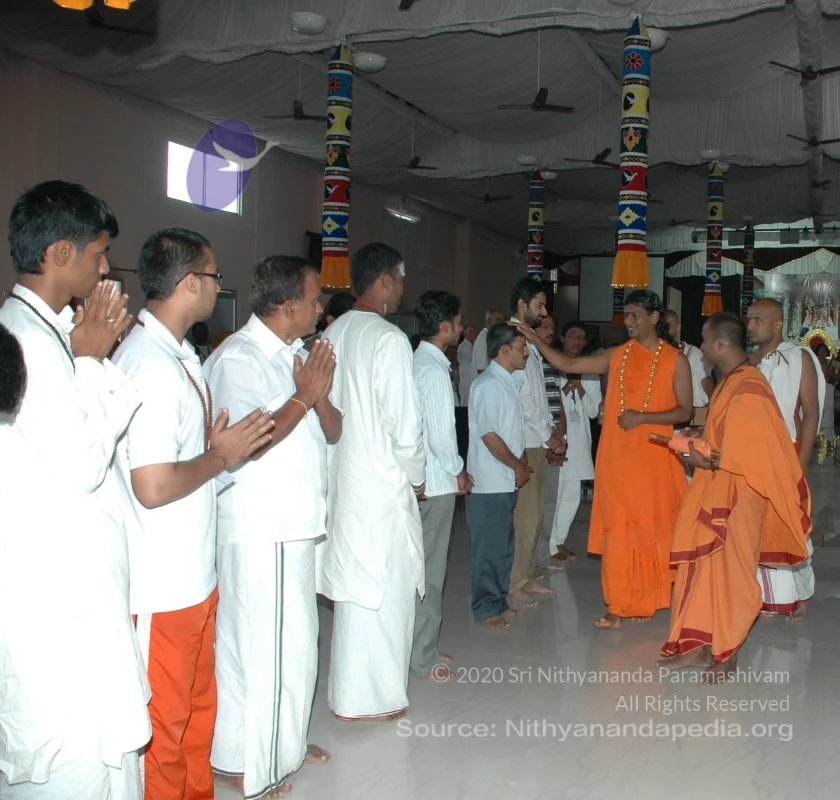
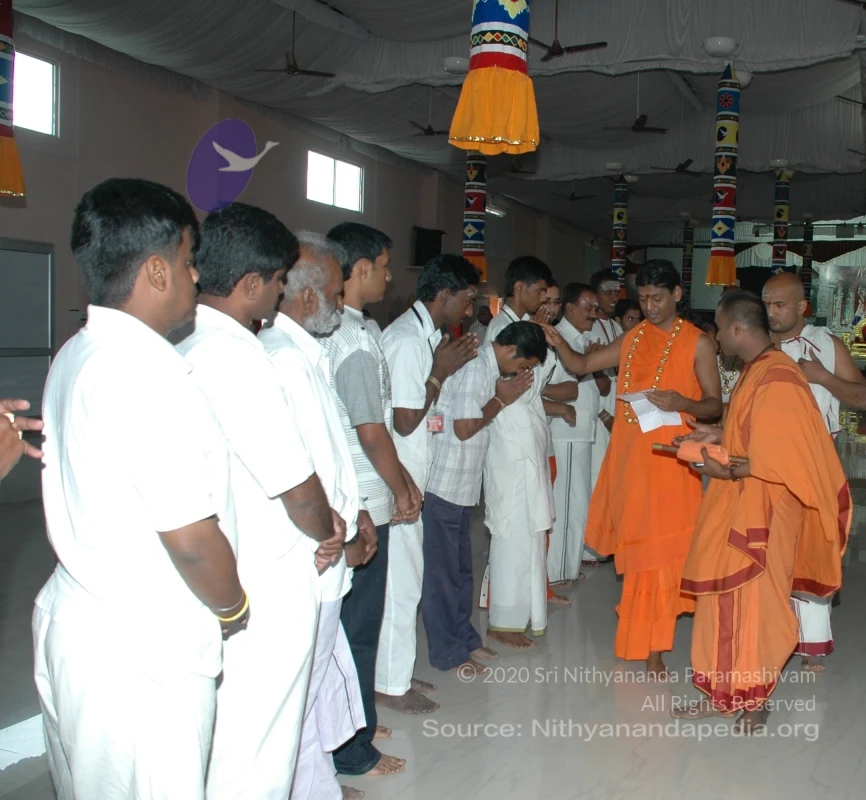
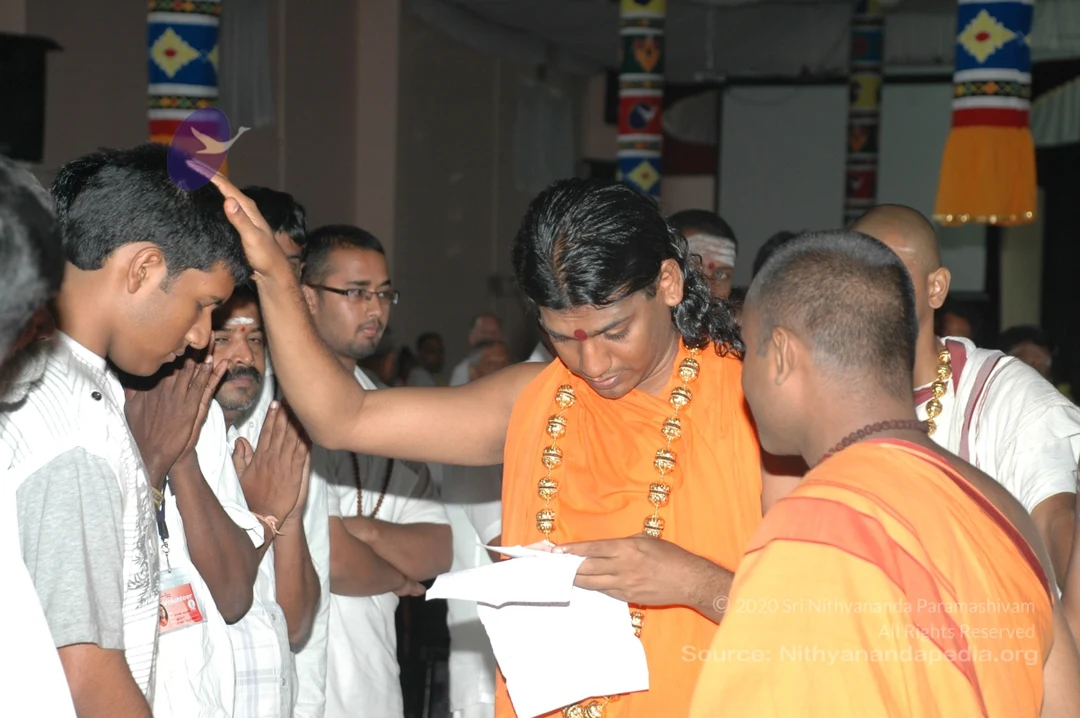
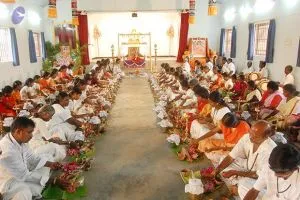
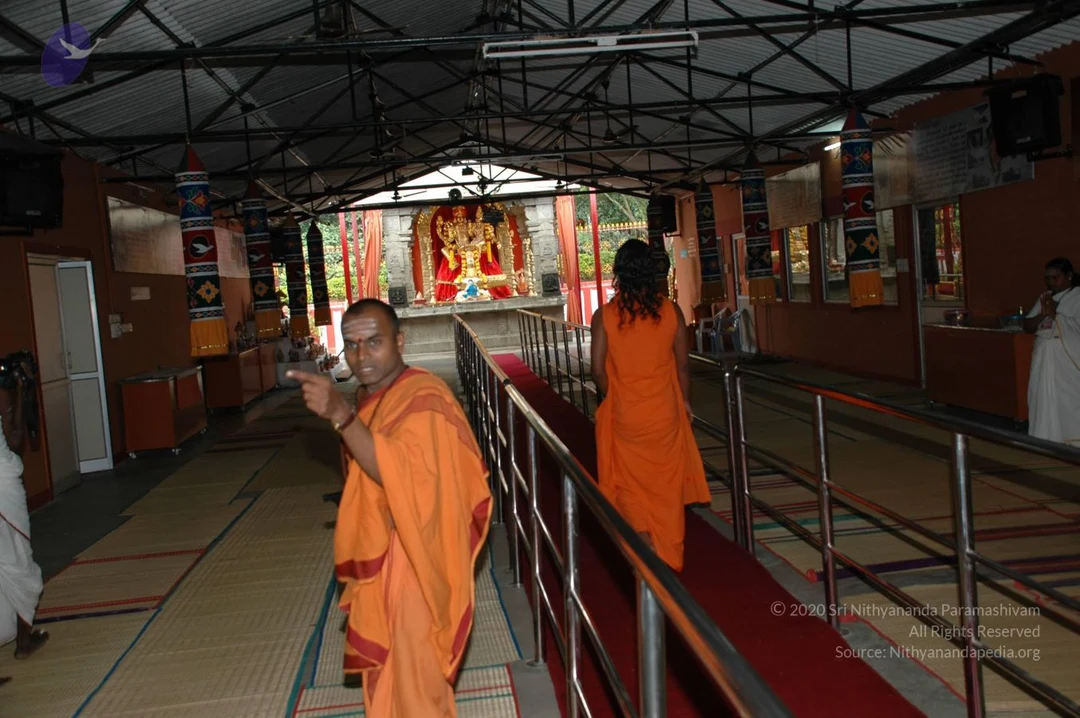
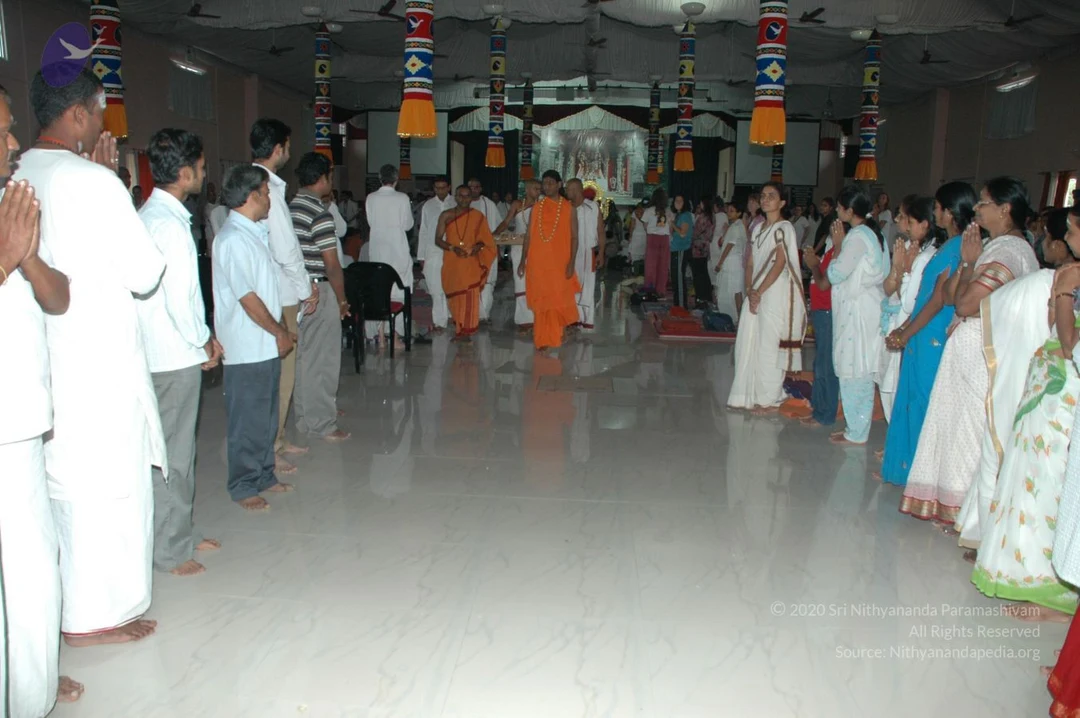
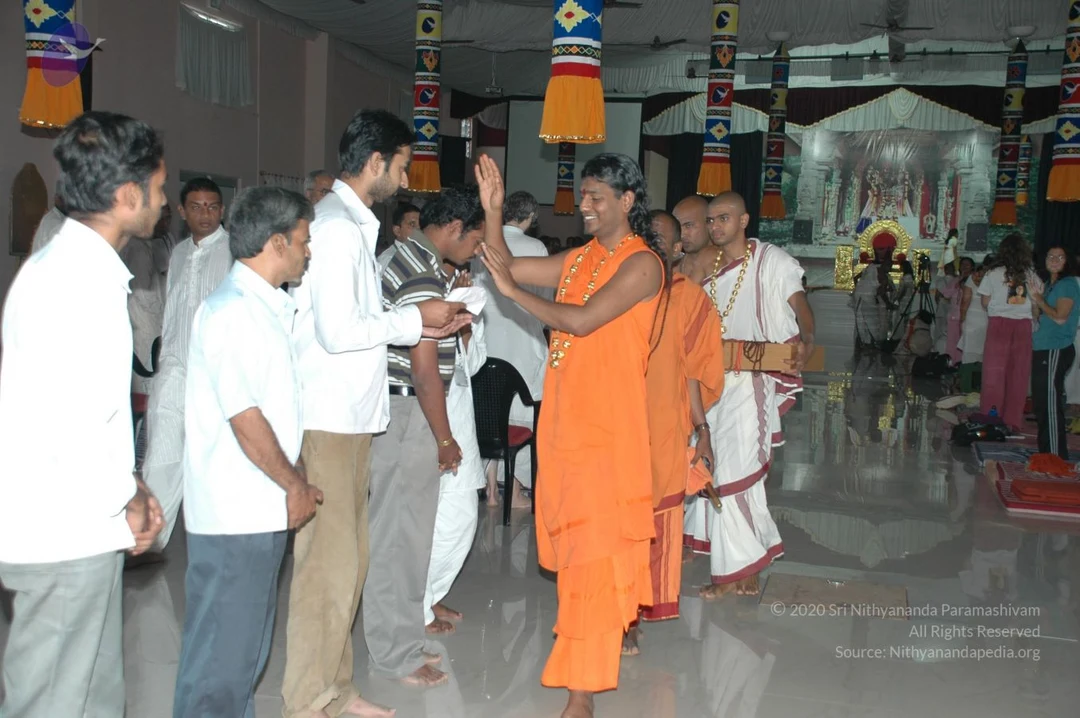
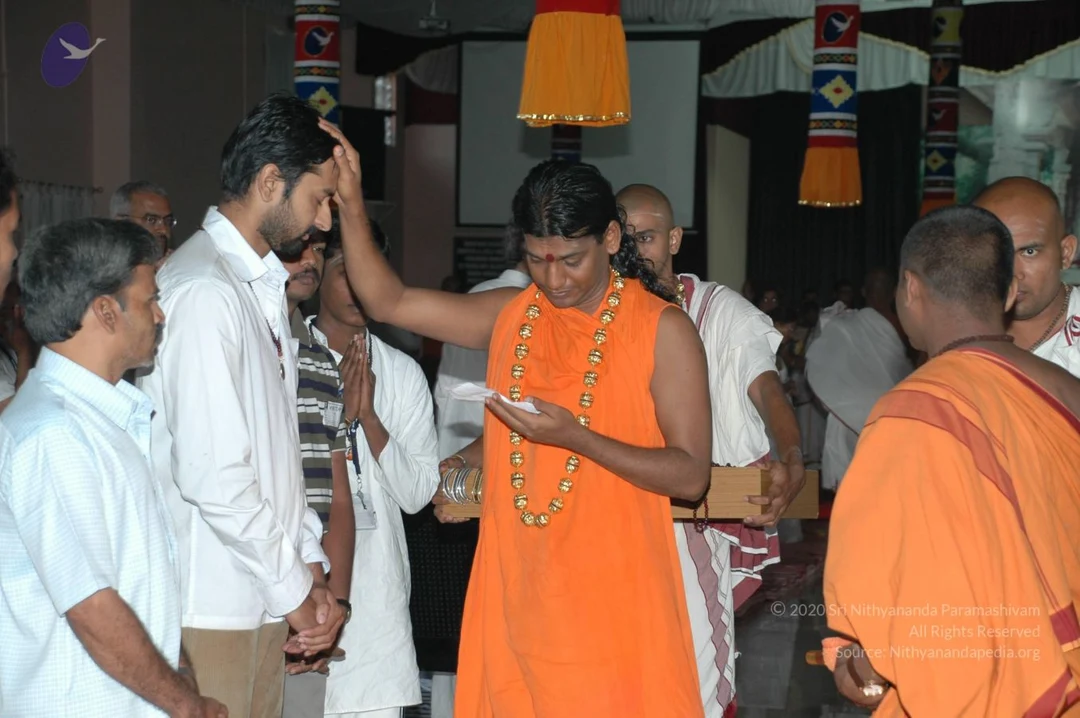
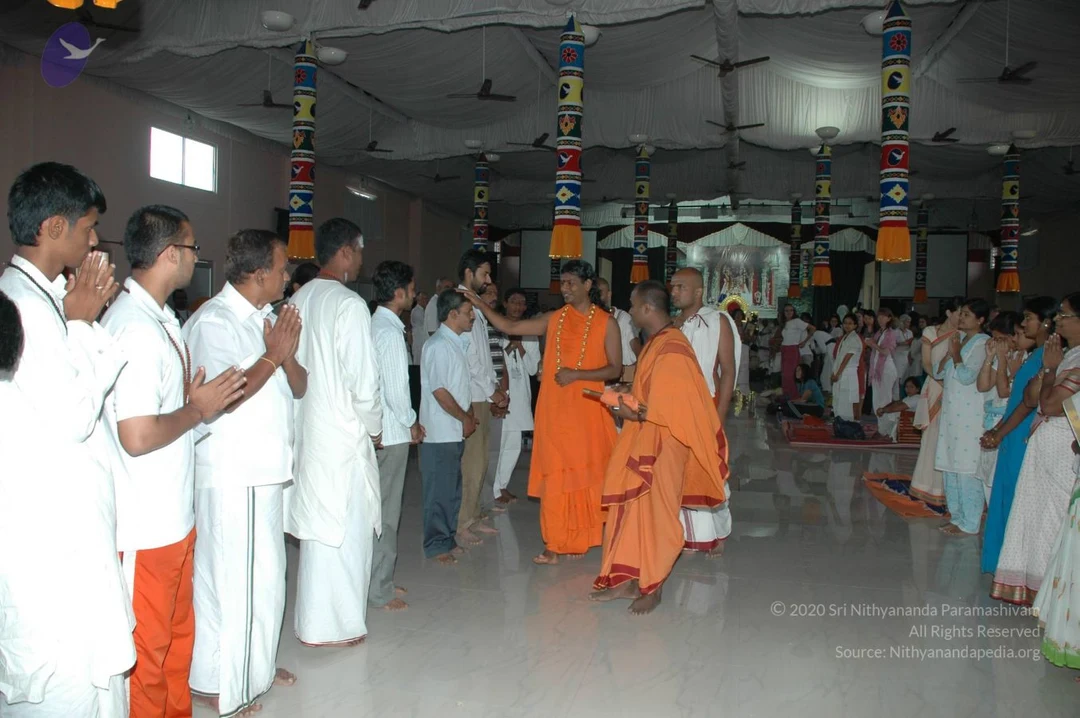
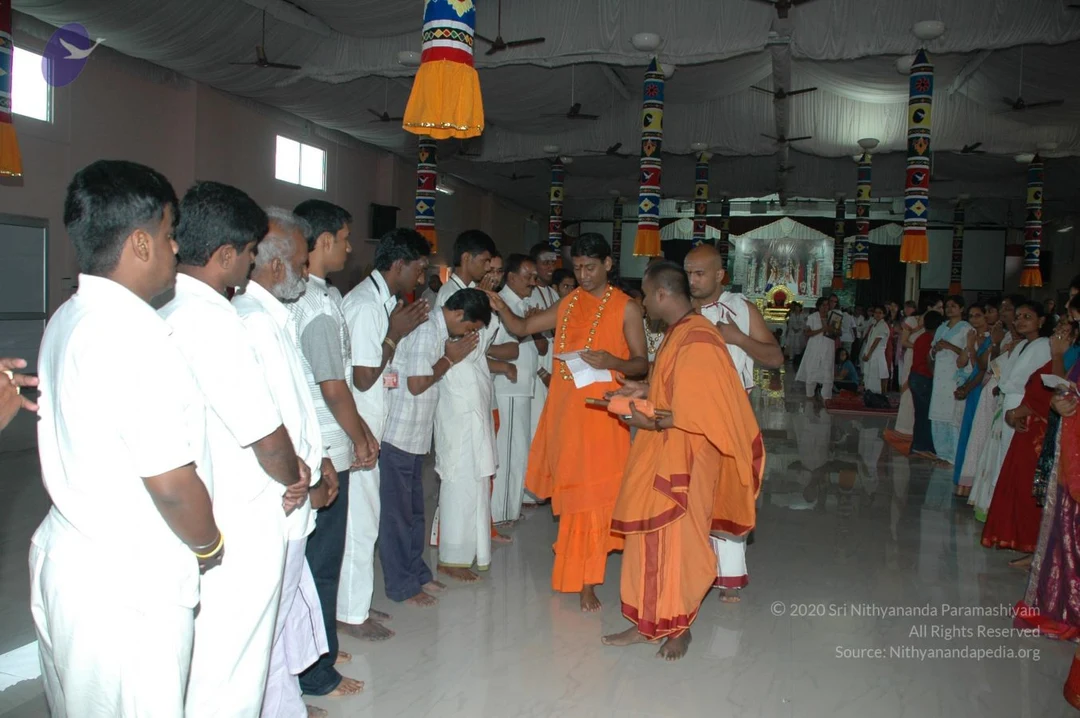
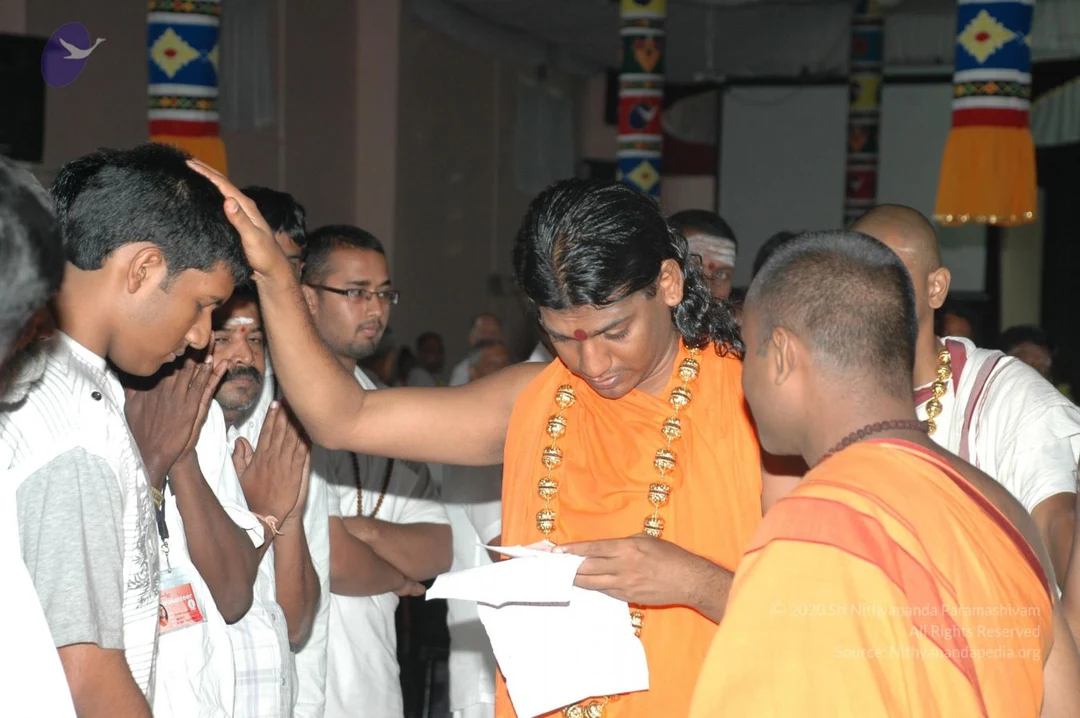
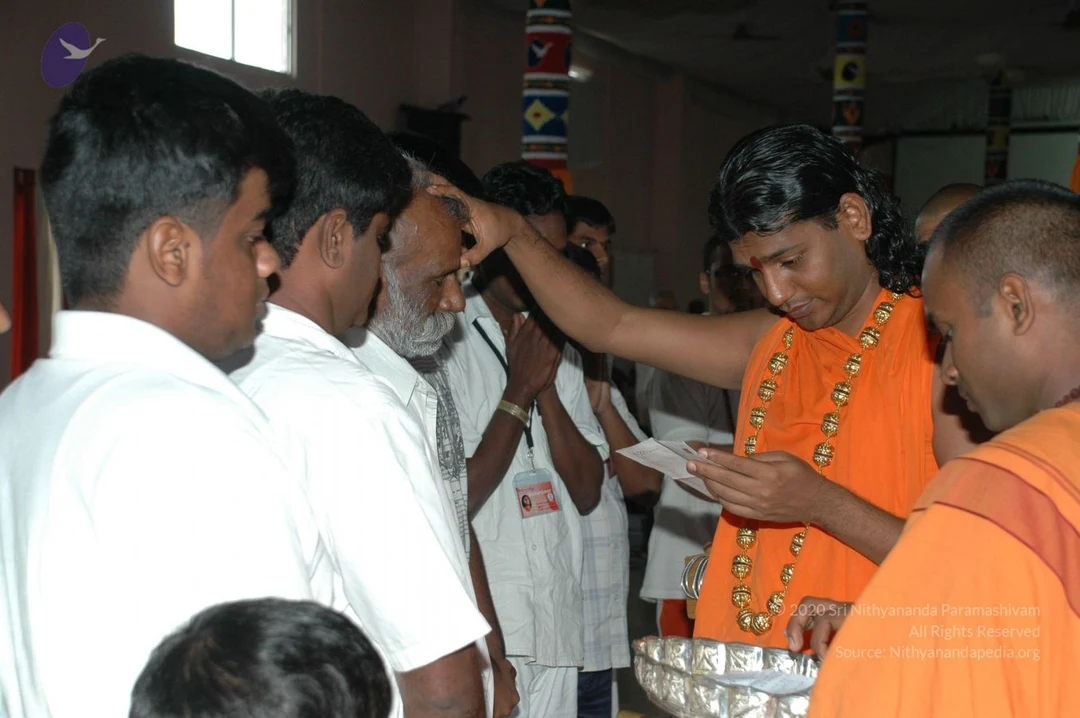
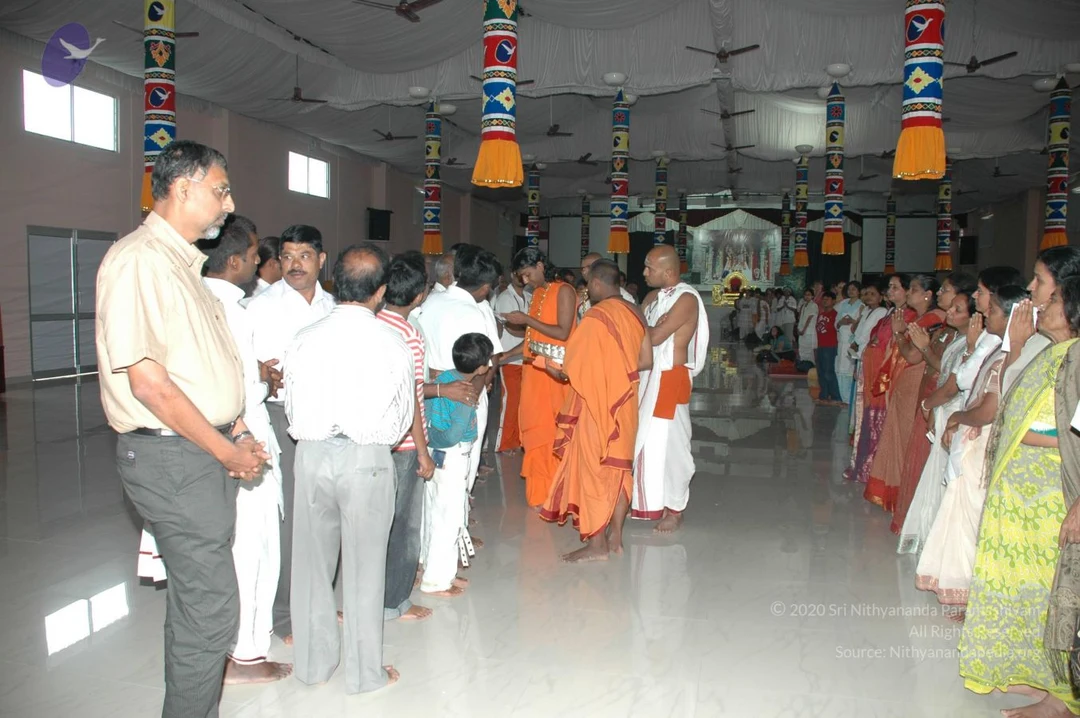
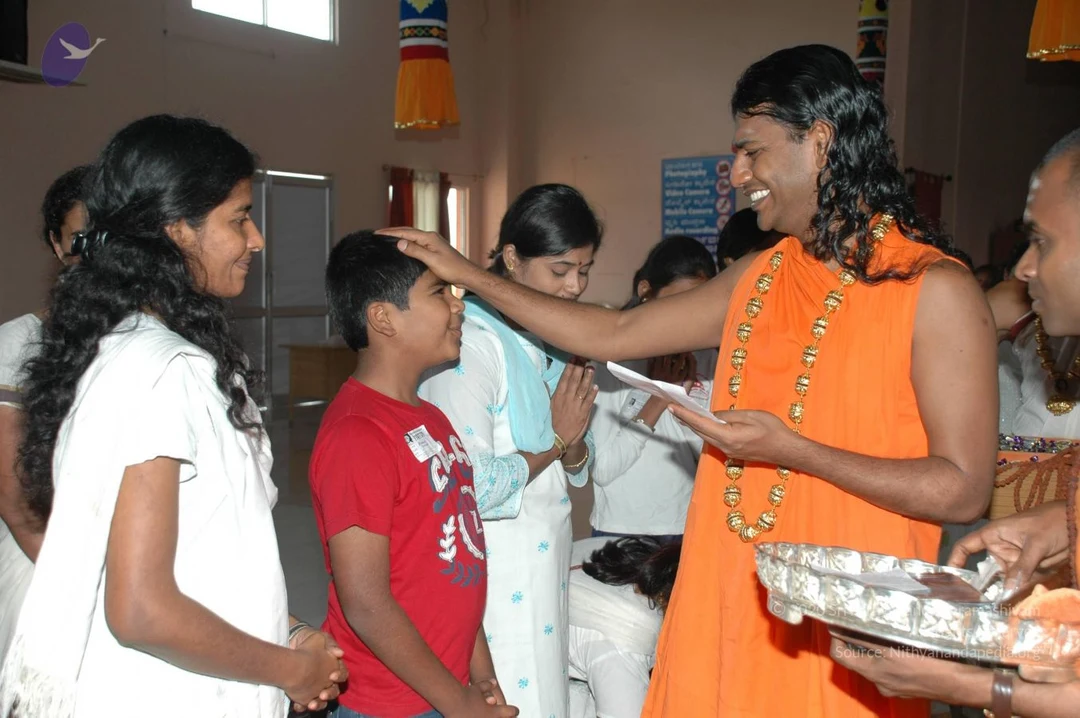
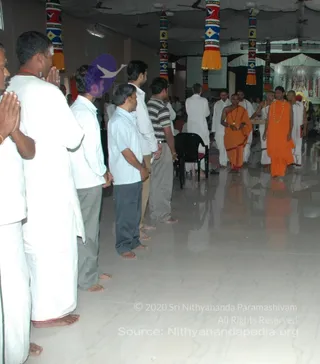
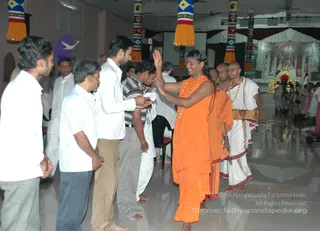
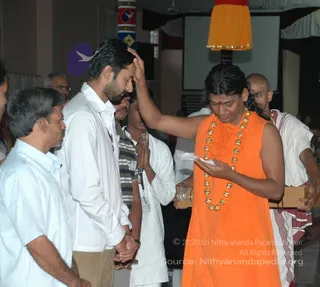
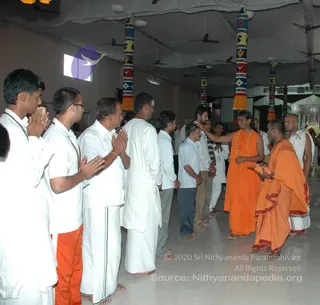
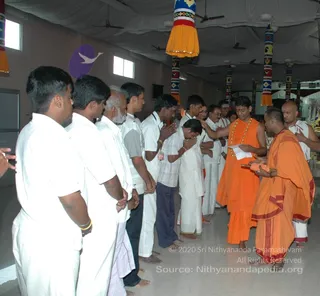
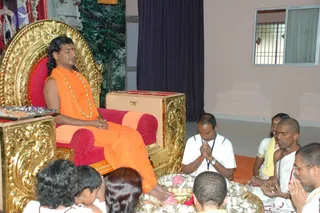
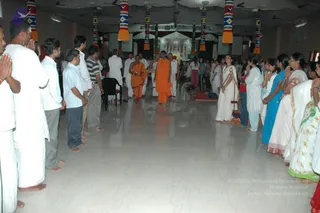
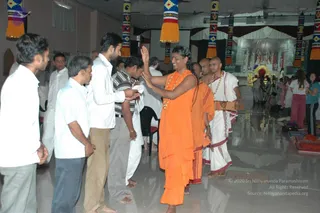
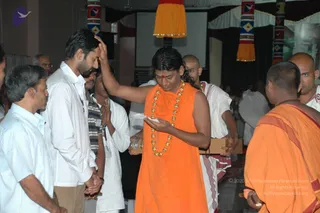
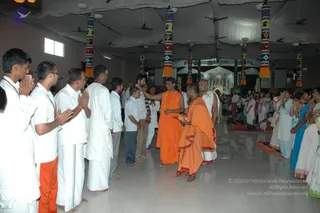
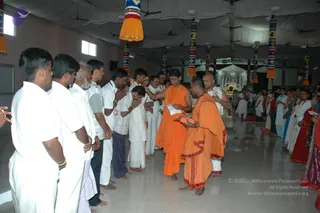
A photo inside a bright marble-floored hall where a line of men in white dhotis and white shirts stand barefoot with palms pressed together in namaskar on the left. In the centre, two saffron-robed figures walk through the hall, one in a saffron wrap holding an object and another in saffron robes wearing an orange-beaded mala, while white-clad attendants follow behind. Colourful striped pillars with tassels hang from the ceiling, and a decorated altar with floral garlands stands at the far right. A chair sits in the middle of the floor and fans are visible on the ceiling. a person appearance cues: the saffron-robed figure in the foreground wears a long orange-beaded mala and orange robes, but identity is uncertain from appearance alone.A photograph inside a hall with glossy white floors, where a man in saffron-orange robes and a rudraksha-style beaded necklace stands with raised palm extended toward a line of men in white and light shirts who are bowing or greeting him. A sannyasi-like figure in saffron and a priest in white dhoti and shawl with a shaved head stand to the right holding a small wooden object. Decorative pillars with colourful woven tassels, a purple bird logo on the left wall, and a backdrop with a deity image and garlands frame the scene, with additional people in white visible in the background.Indoor photo of a robed figure in an orange sleeveless garment with a long gold-bead necklace and a red tilak on the forehead, his long dark hair swept back, placing one hand on the forehead of a young man in a white shirt, who stands with hands clasped. The figure holds a small white paper in the other hand and a wooden tray or box. Nearby, a man in a light blue checked shirt, another man in a striped shirt with hands folded in namaste, and a bald man in white dhoti-style cloth stand by. A hanging orange-and-gold lamp shade and a banner with colourful patterns hang in the background. Swamiji (probable) is the robed figure in orange with the gold bead necklace and long swept-back hair, shown in a blessing or initiation role.A photograph of devotees in white dhotis and shirts standing in a line with palms pressed together in namaste, facing right in a decorated hall with patterned cloth pillars, white ceiling canopy and ceiling fans. At the centre-right, a person with long hair and a shawl, wearing an orange robe and a long garland of orange beads, reaches forward to touch the shoulder of a saffron-robed sannyasi holding a small object. Another bald man in white stands behind them. Partial view of a decorated altar with lights on the right. The central figure is a probable Swamiji by appearance cues: long hair, saffron ornate robe and garland. Several people in the background wear white and light shirts, and a few stand near the wall. Visible people total roughly a dozen to twenty.A photograph inside a hall with white canopy ceiling and decorated colourful pillars with orange fringe. A line of devotees in white dhotis and shirts stands with palms joined, several bowing. At the right, a figure in saffron-orange robes with a beaded garland holds a paper and a small orange object, while a second monk in orange robes with a sash stands beside him, and another man in white stands further right. A purple logo with a white bird is on the wall.

Lep-Morning-Session

12 photosSource gallery
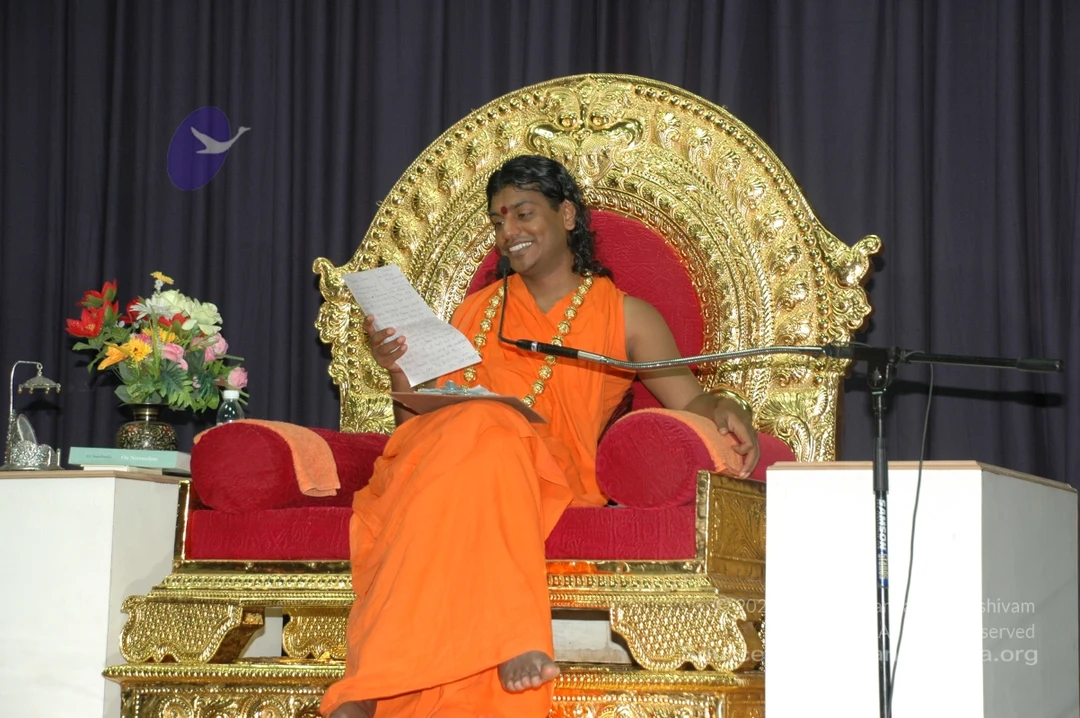
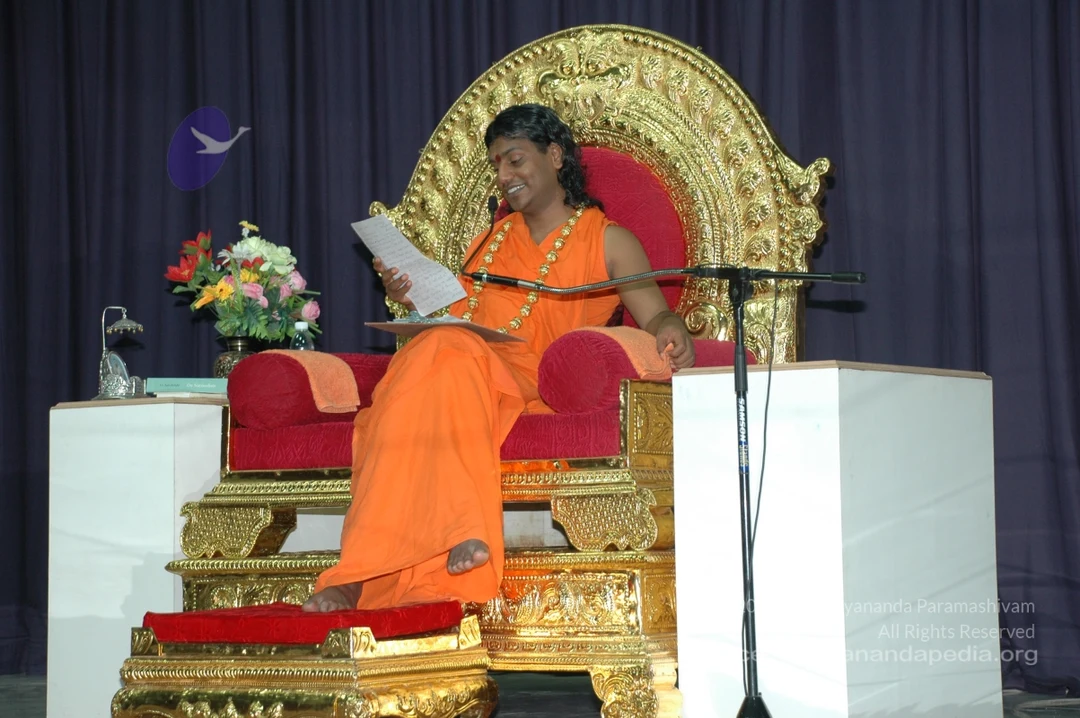
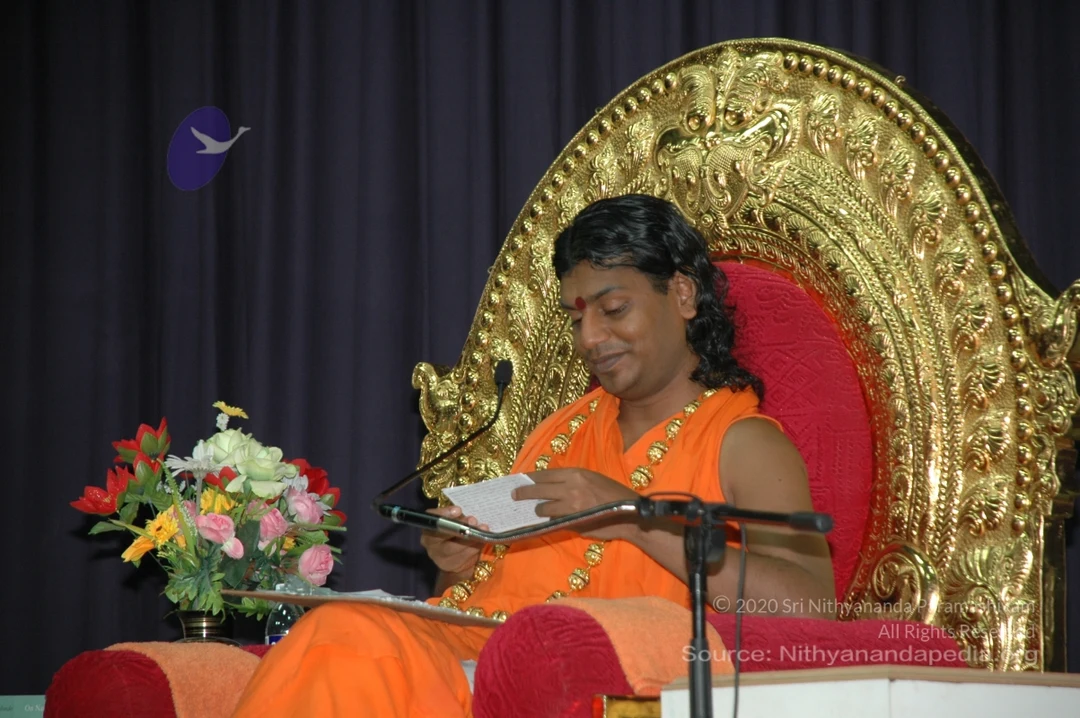
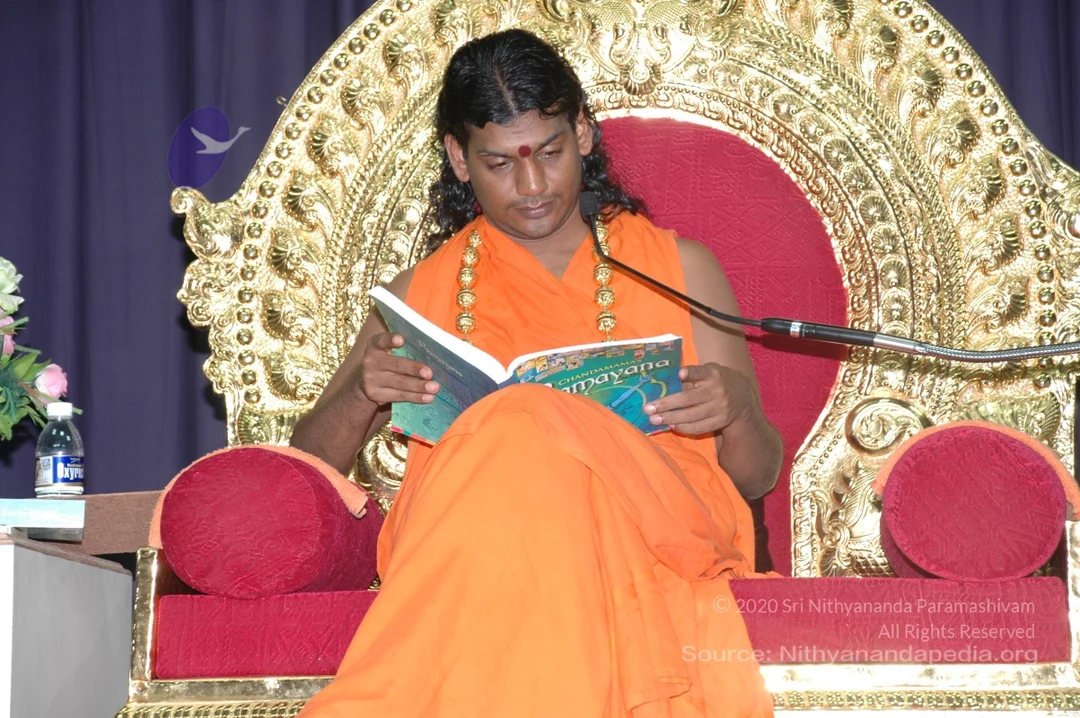
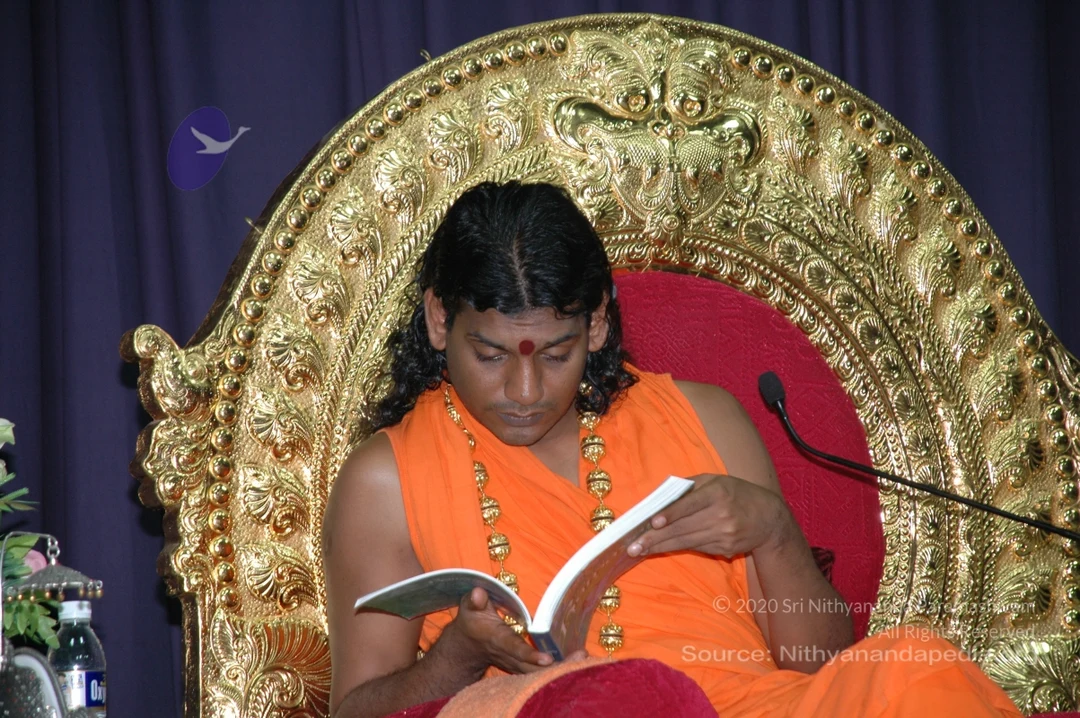
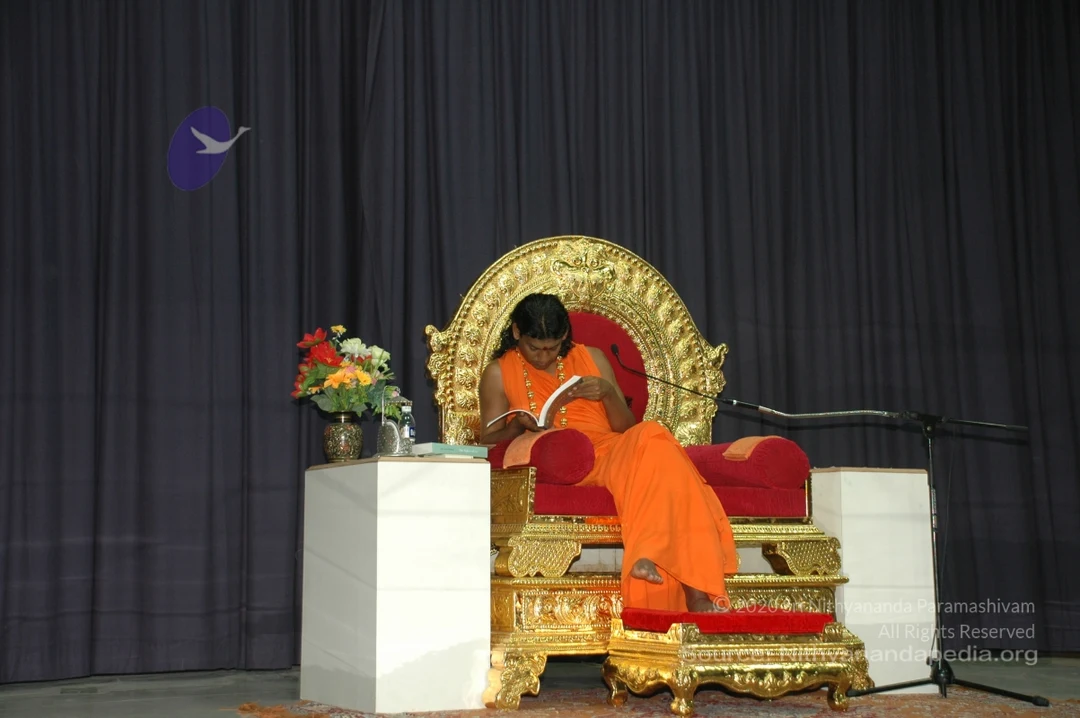
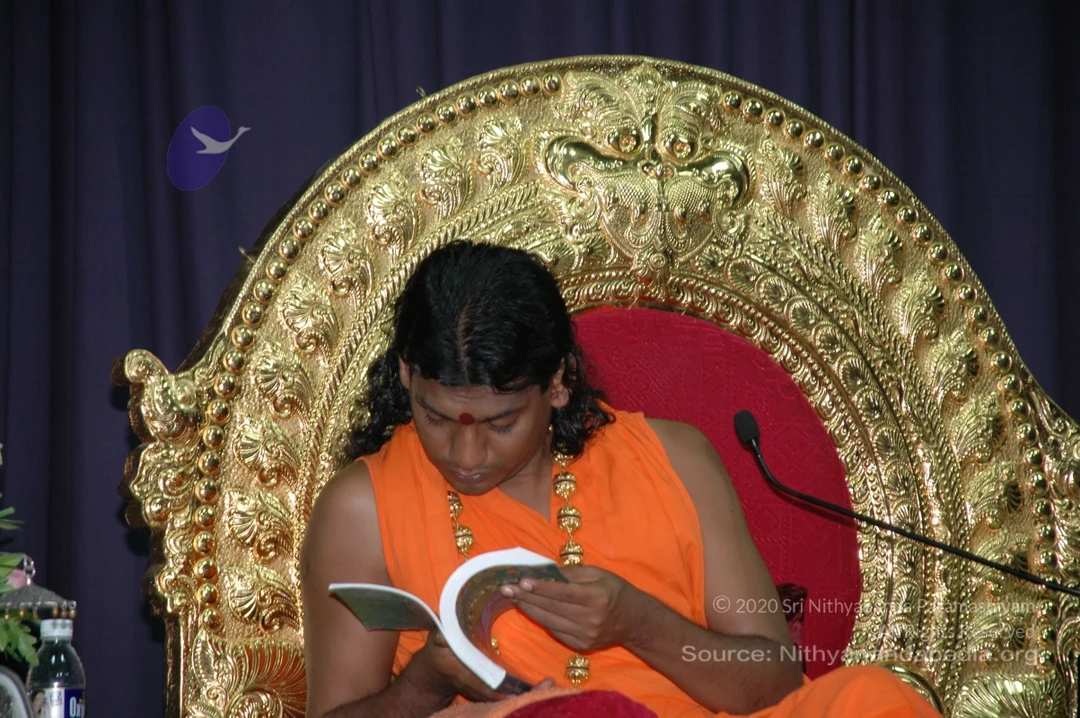
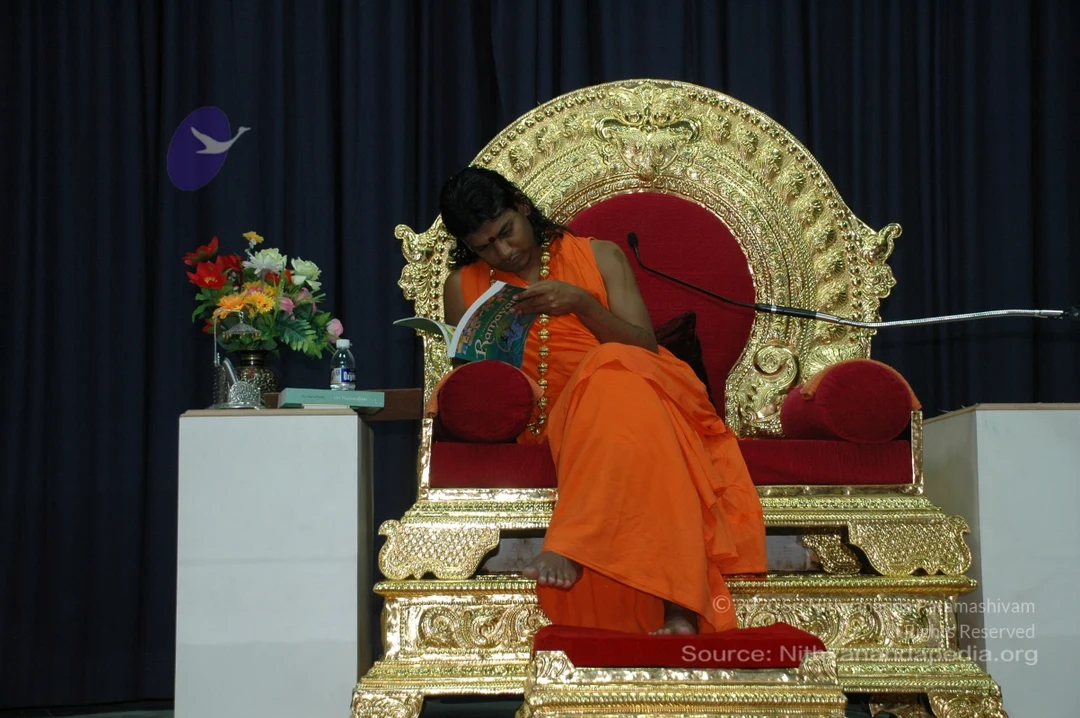
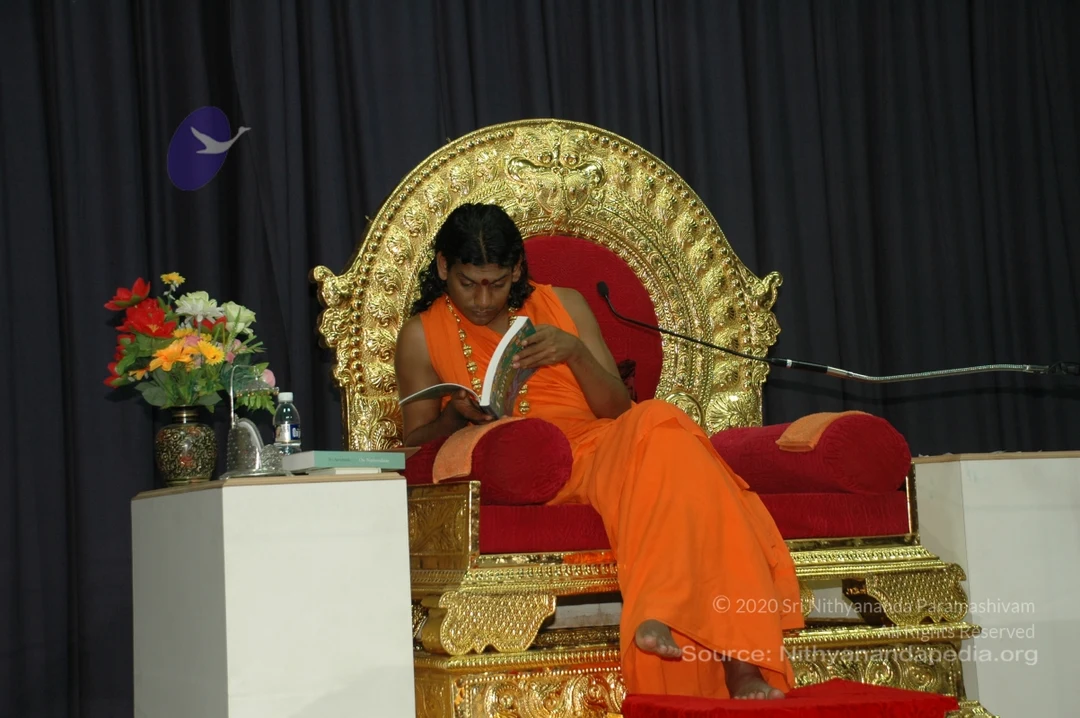
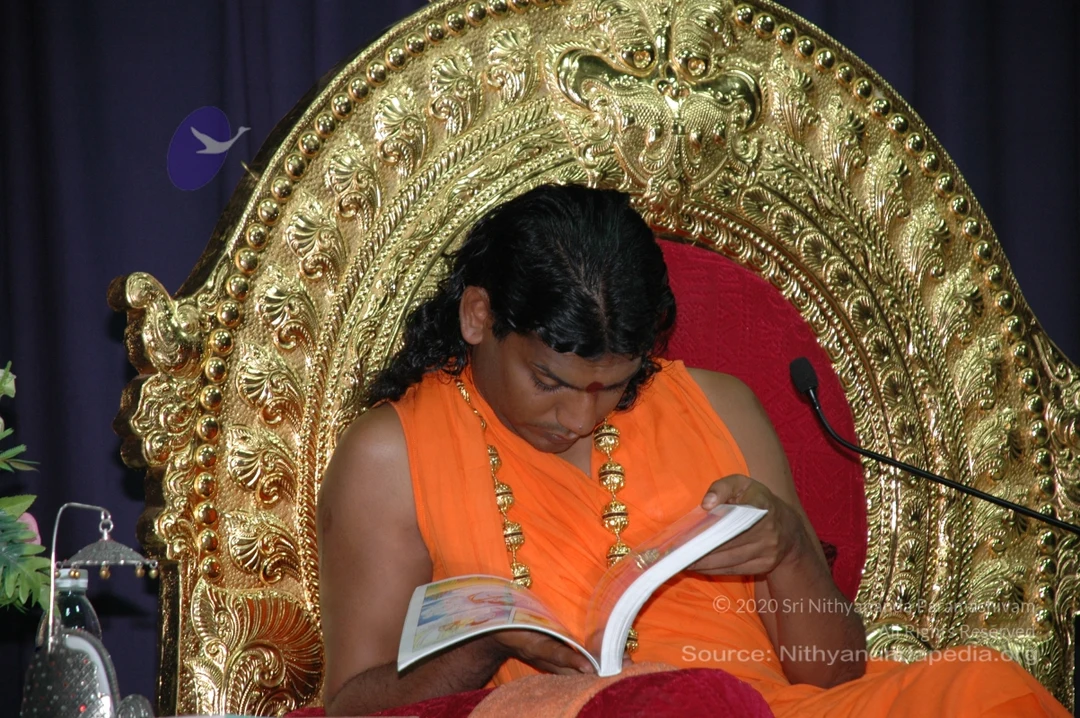
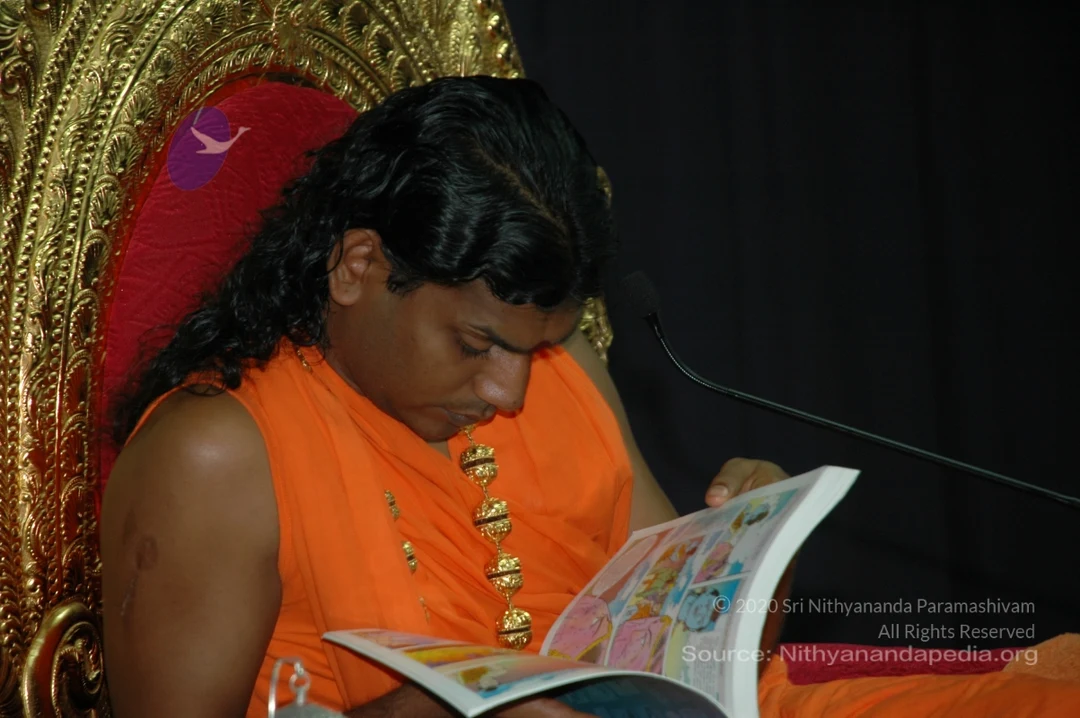
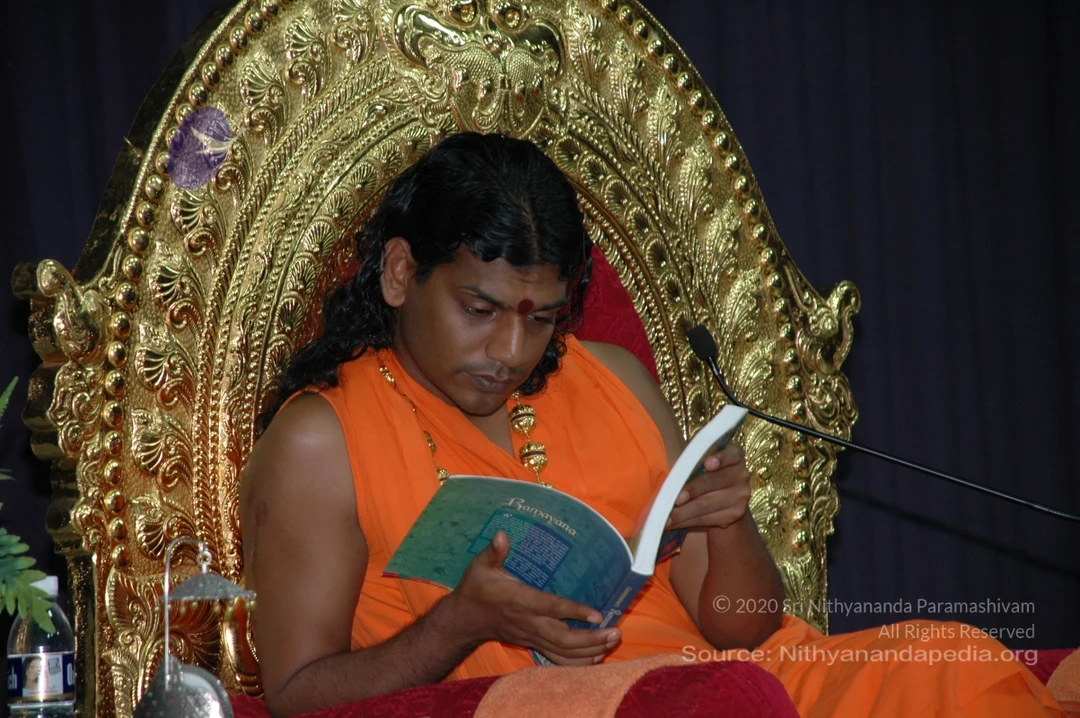
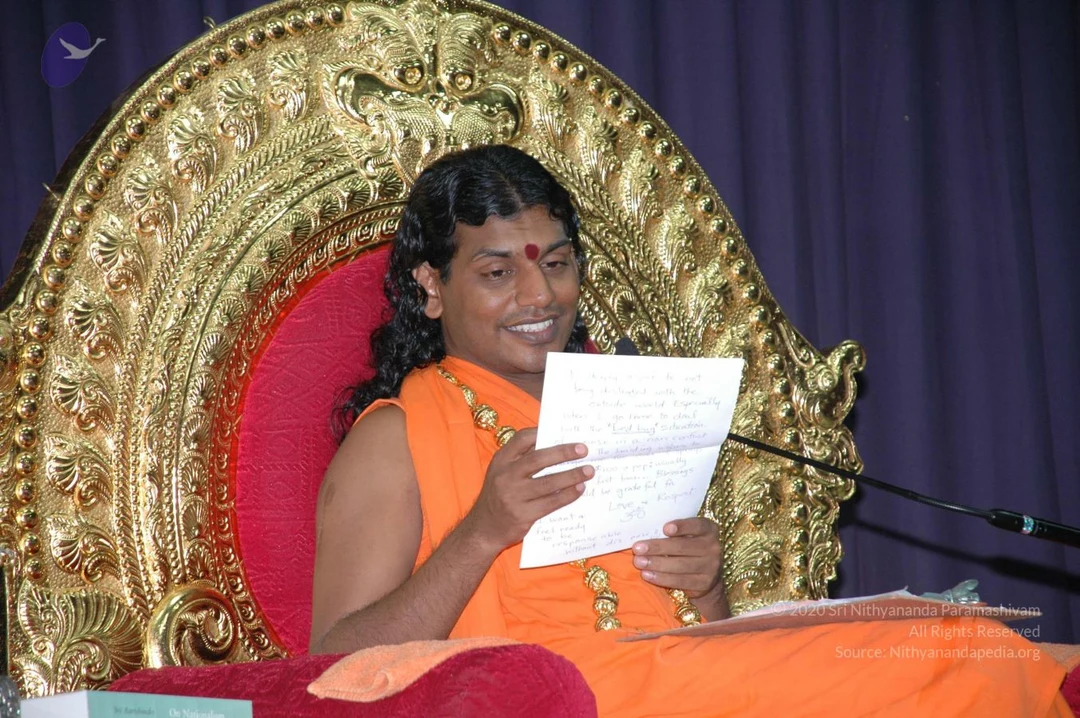
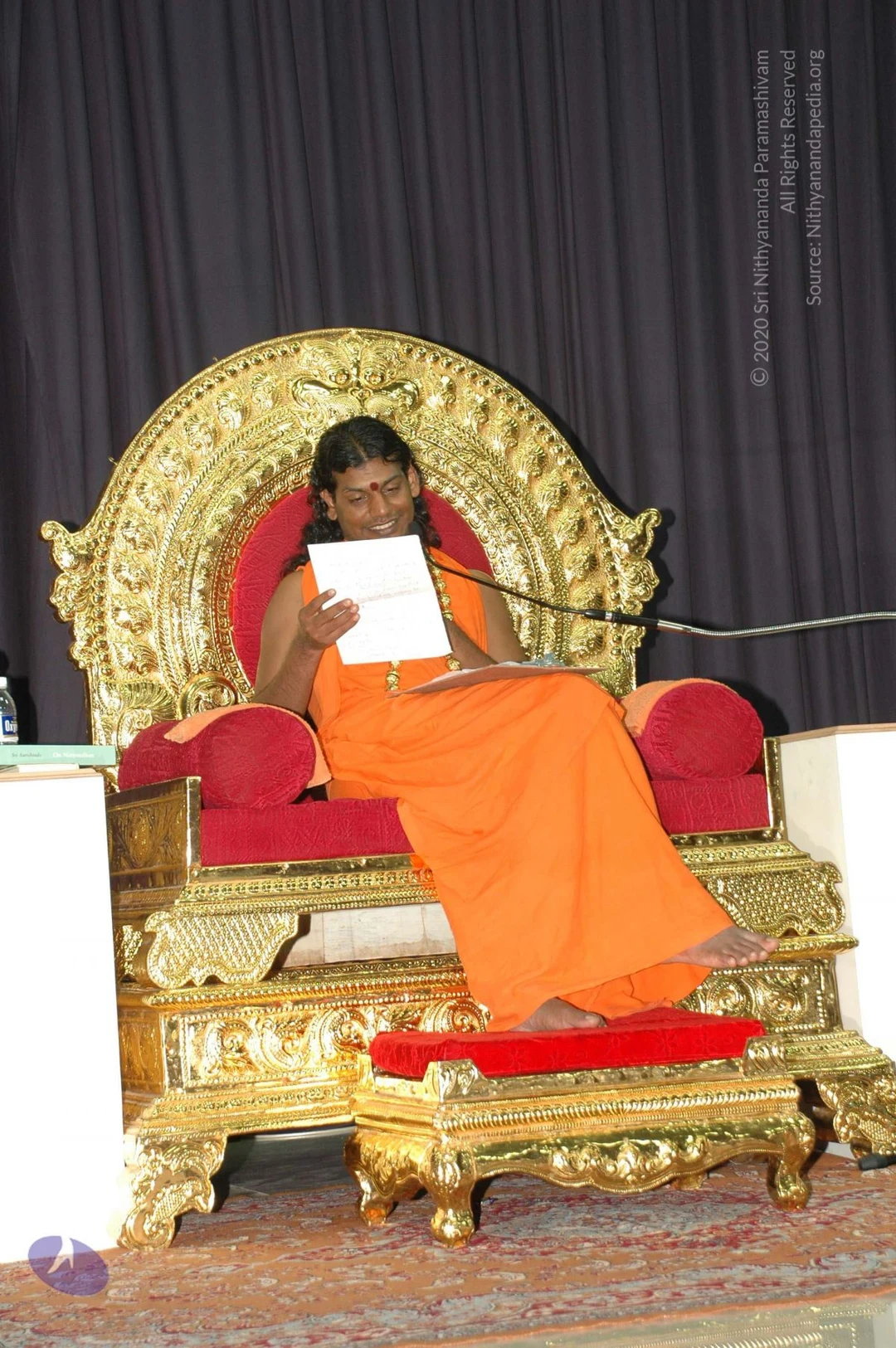
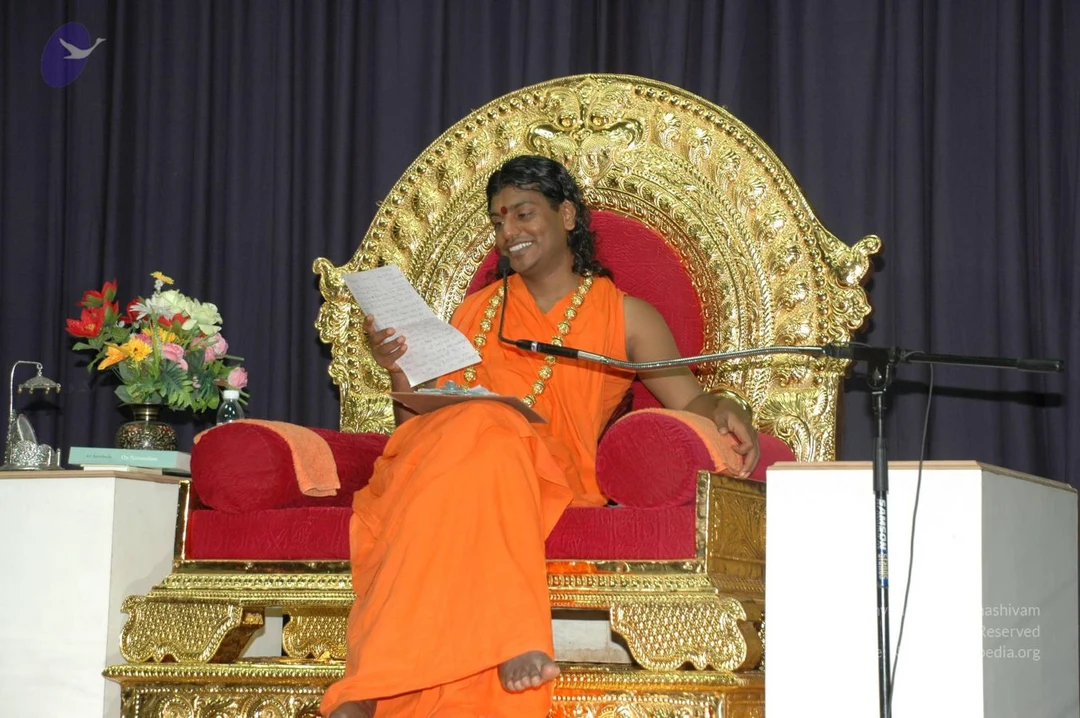
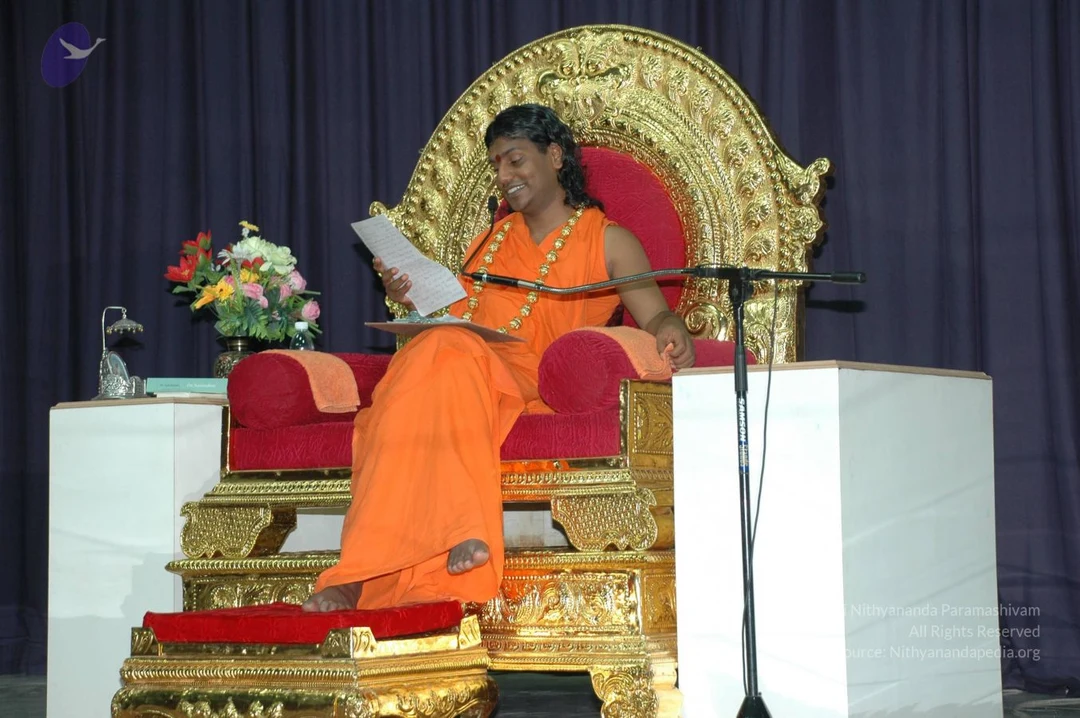
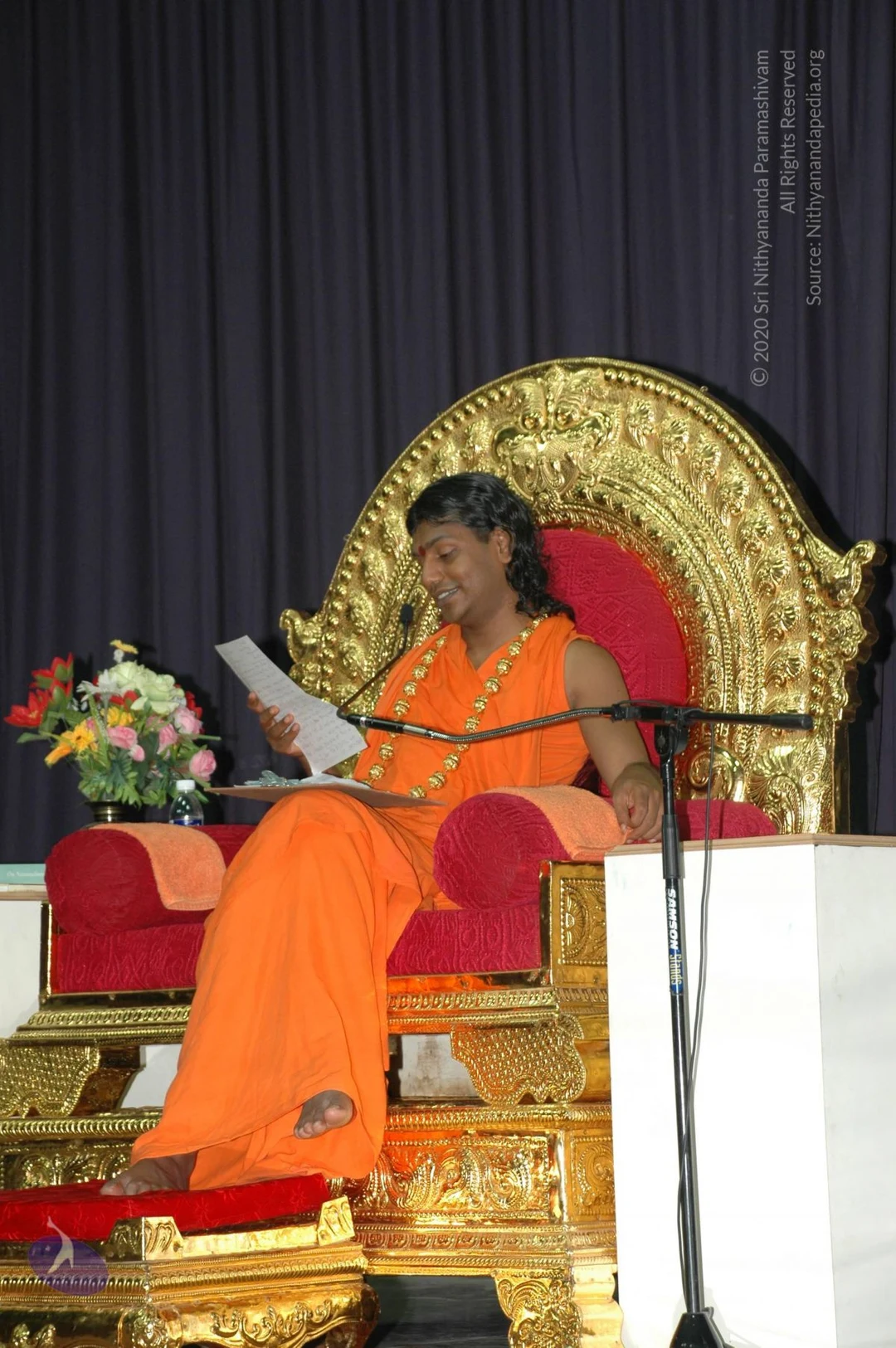
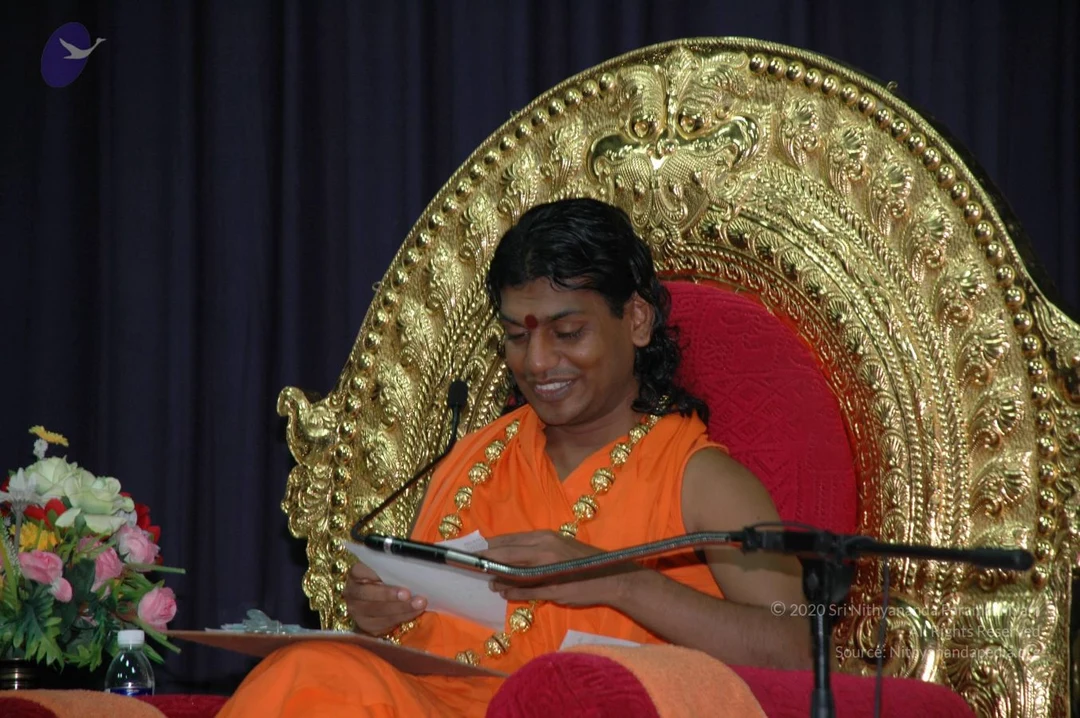
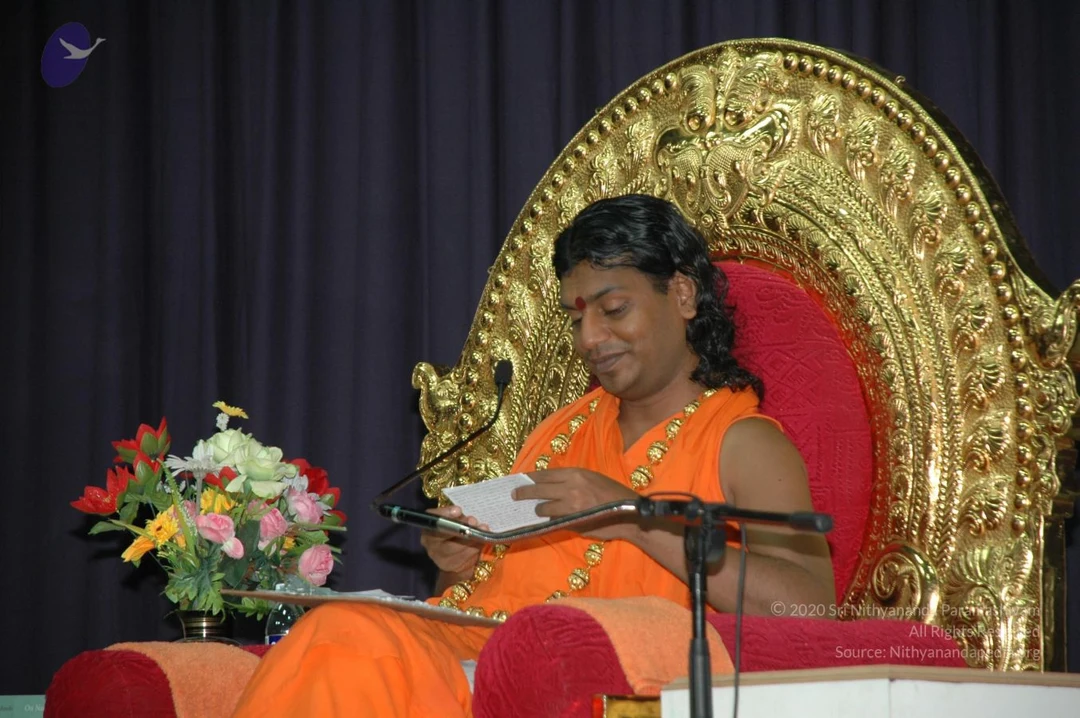
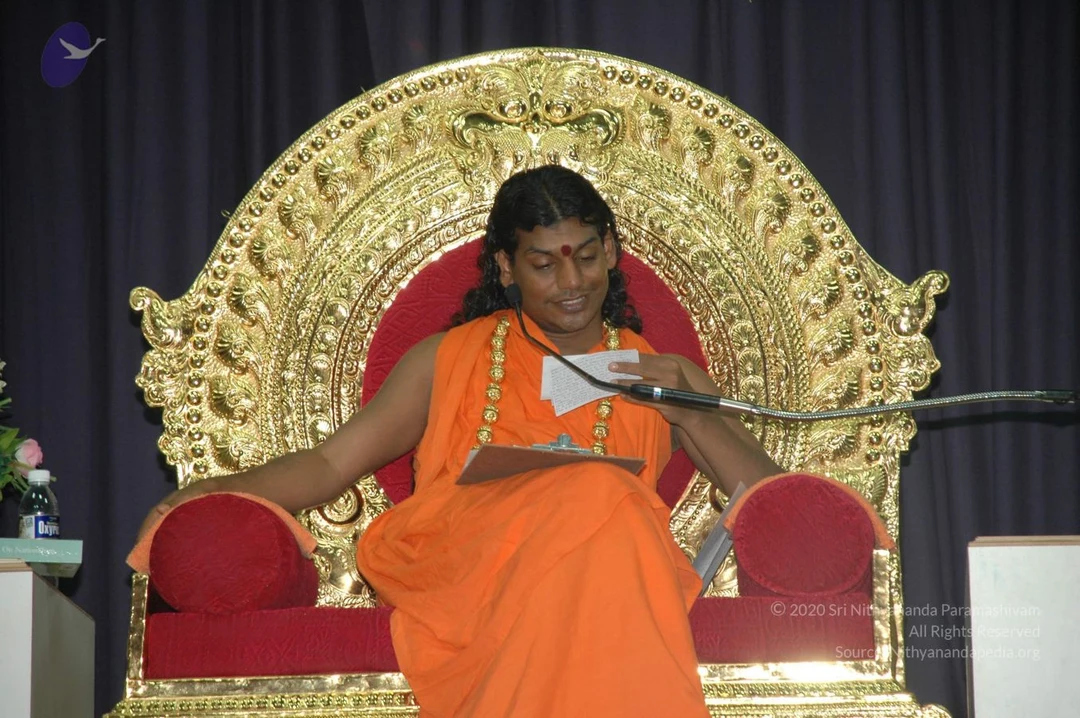
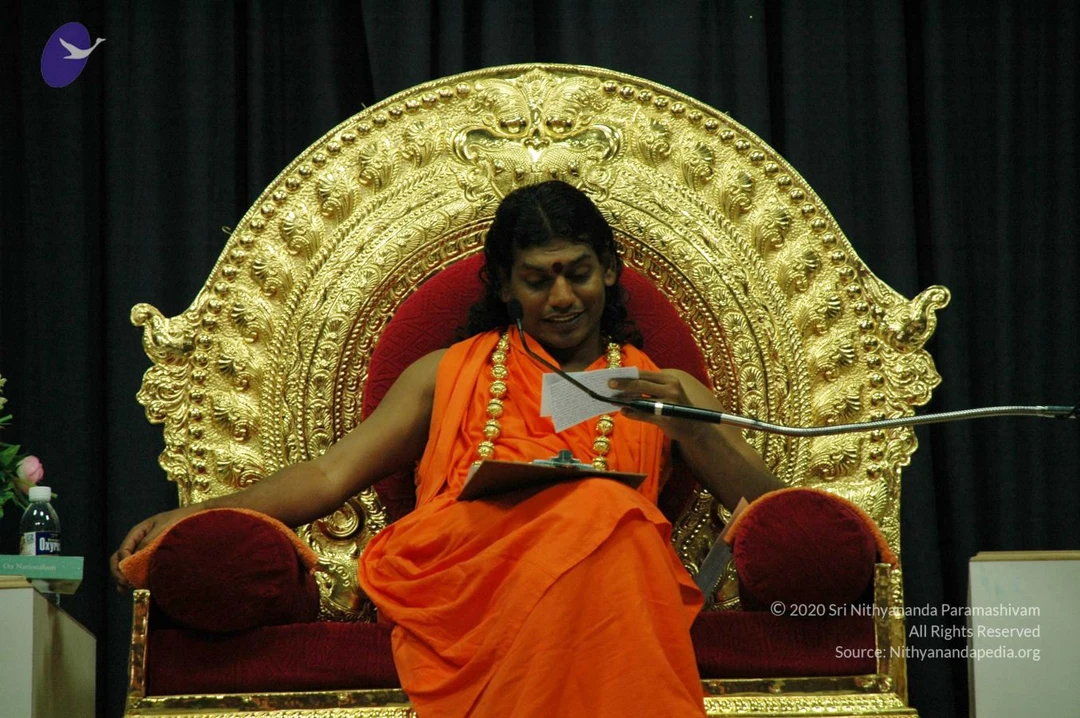
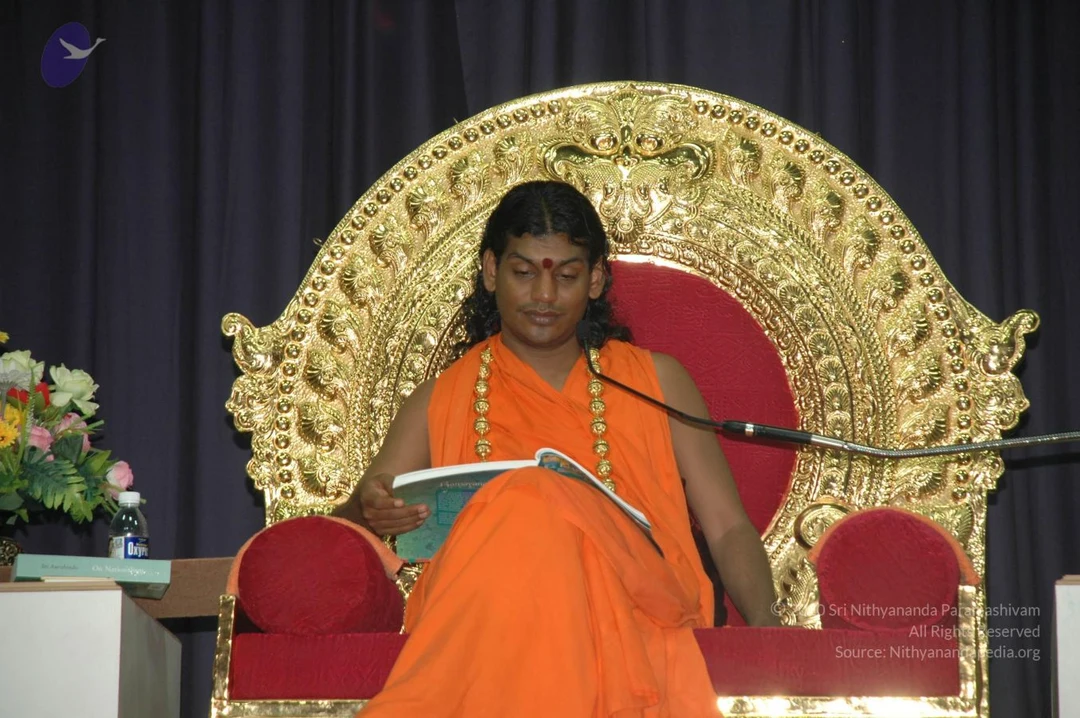
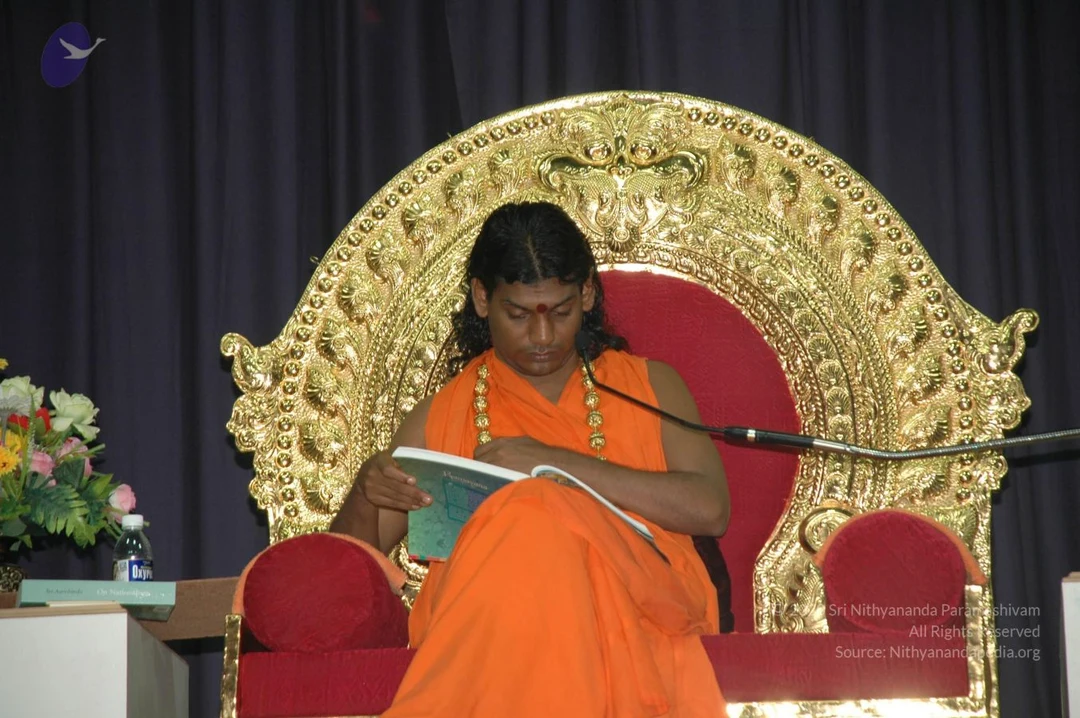
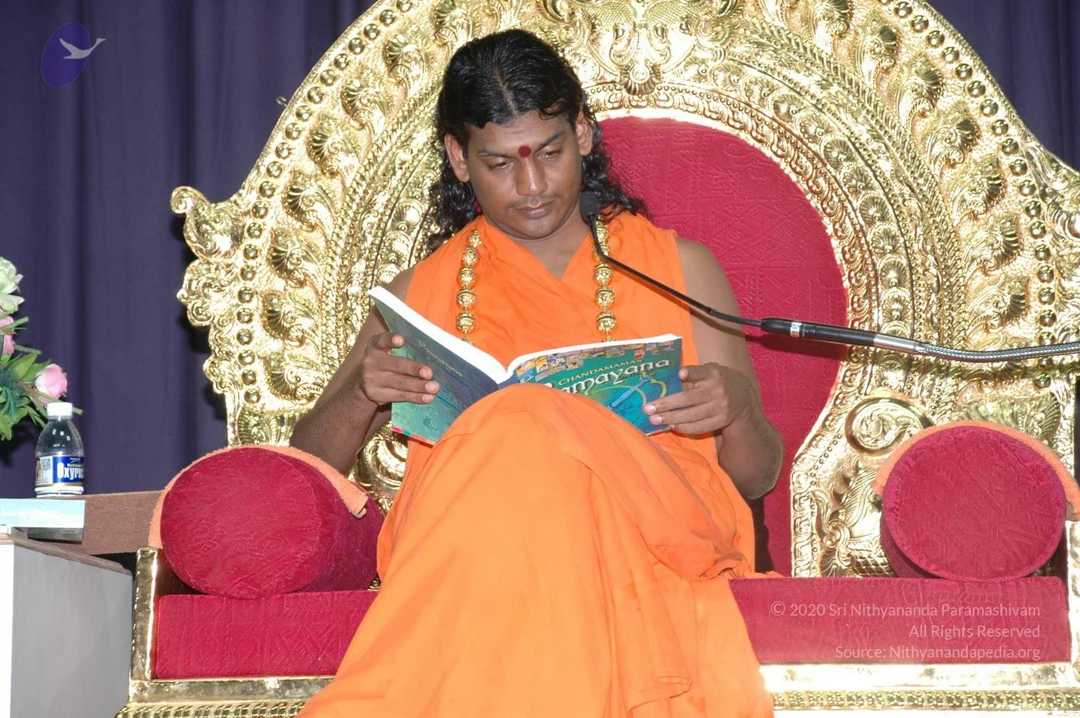
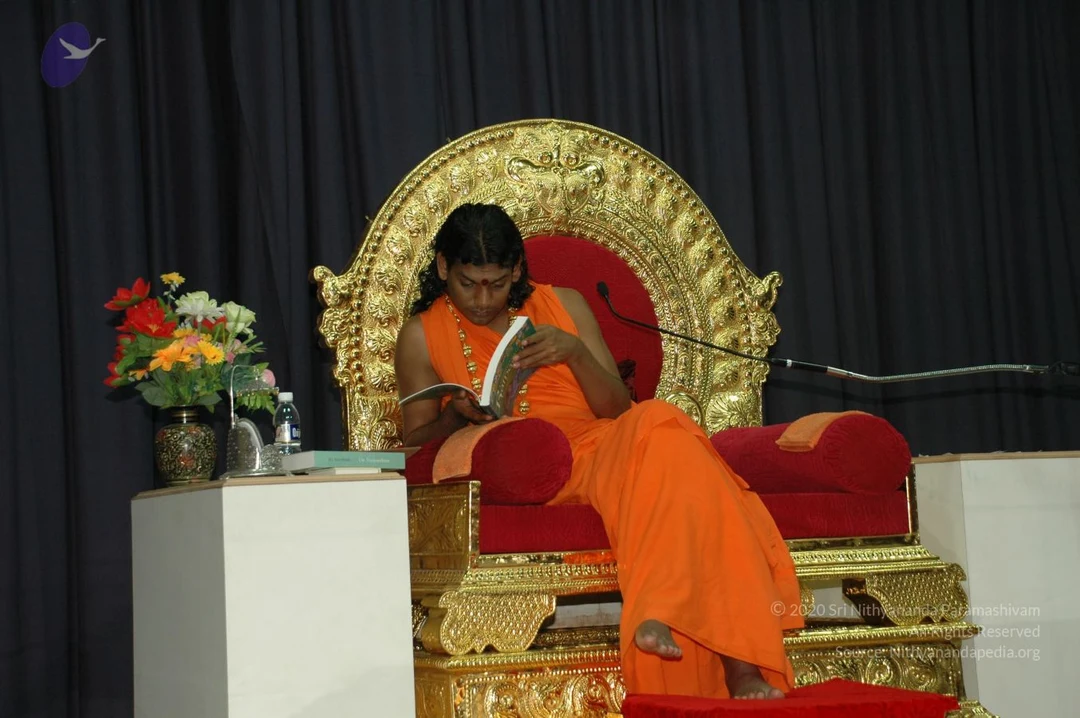
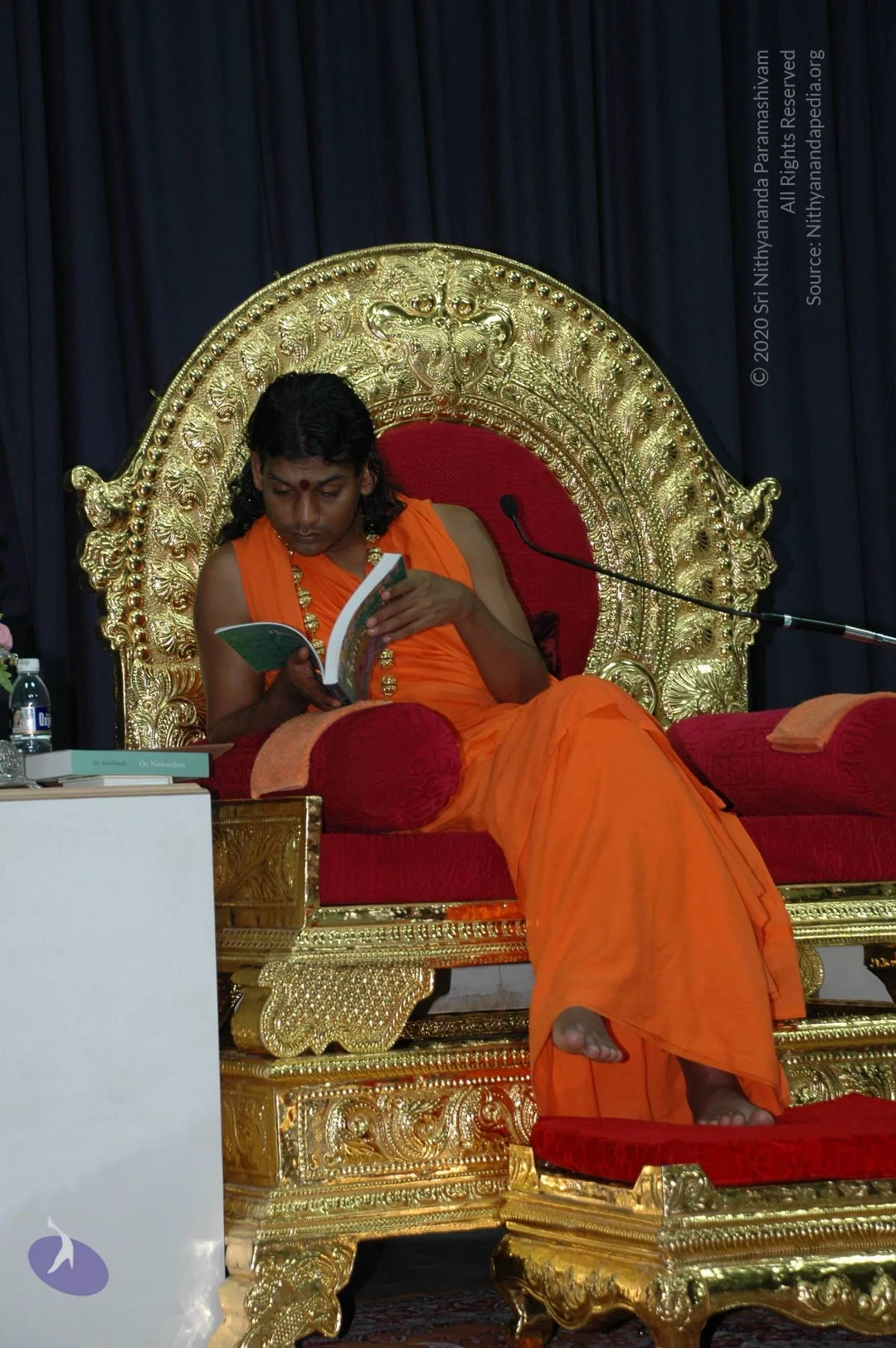
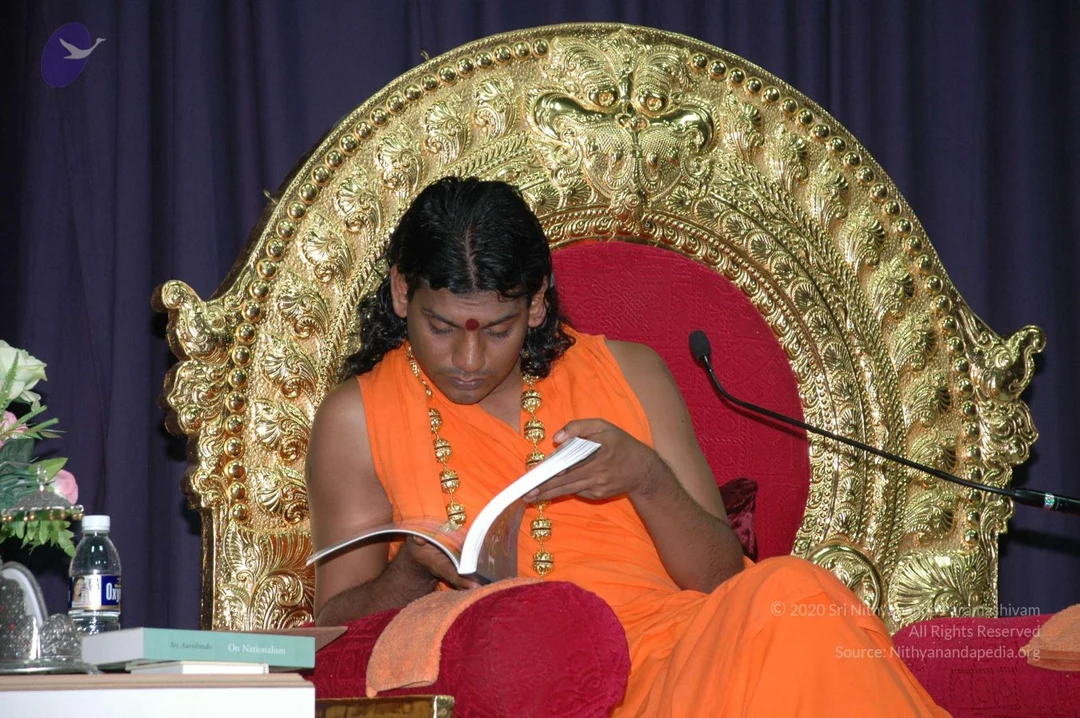
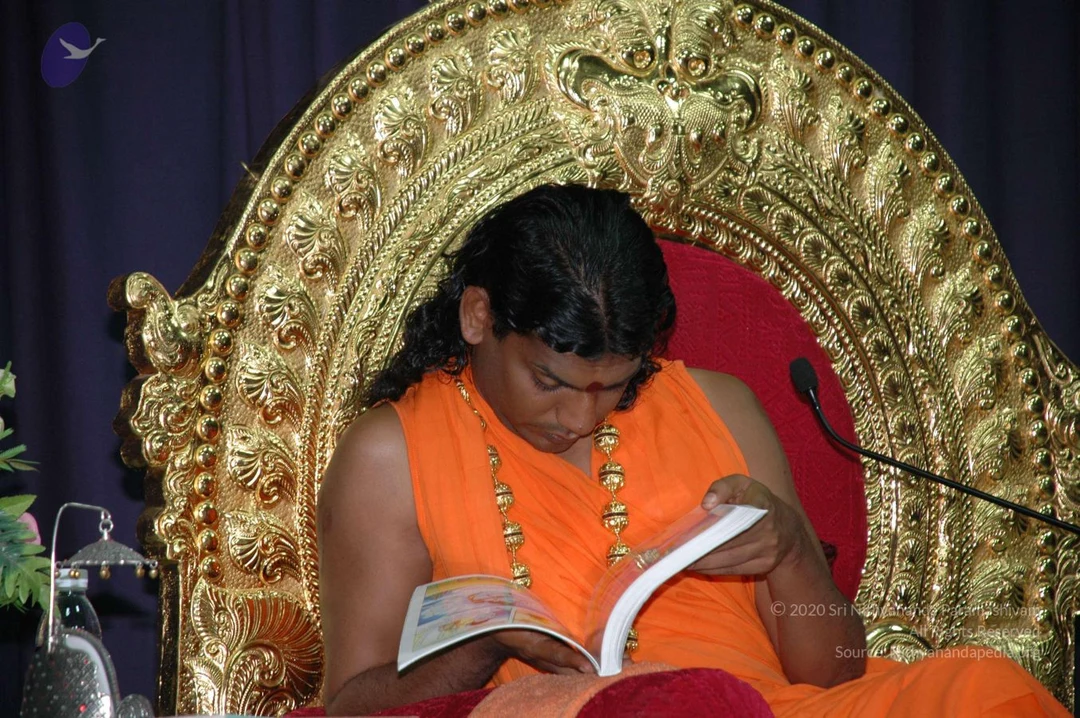
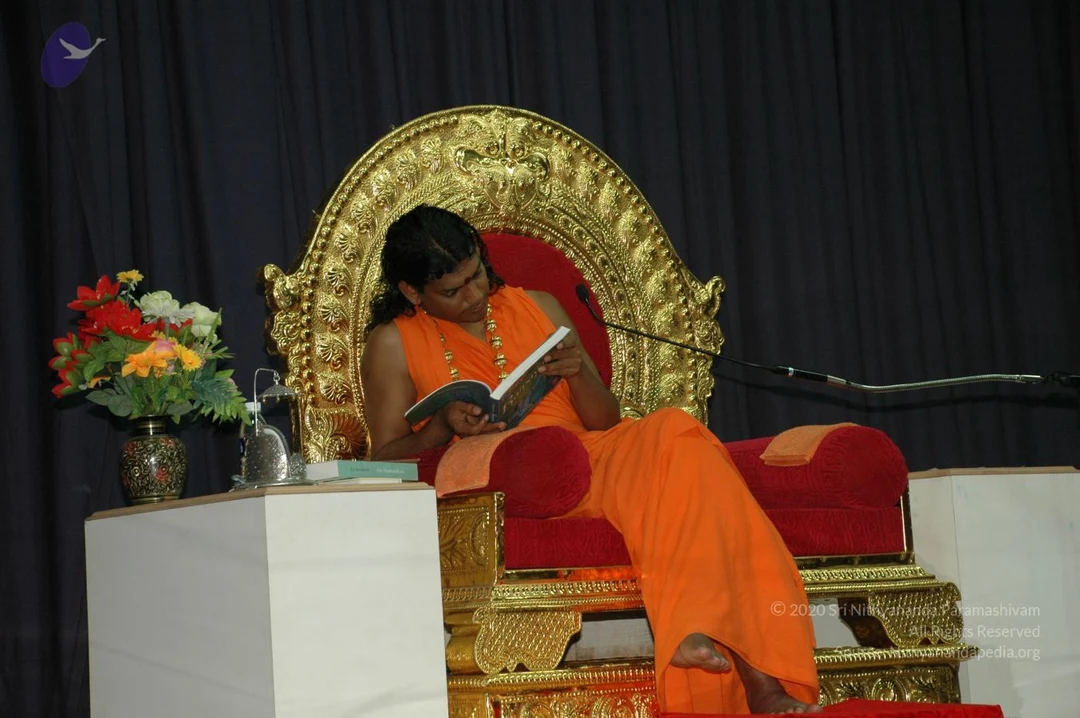
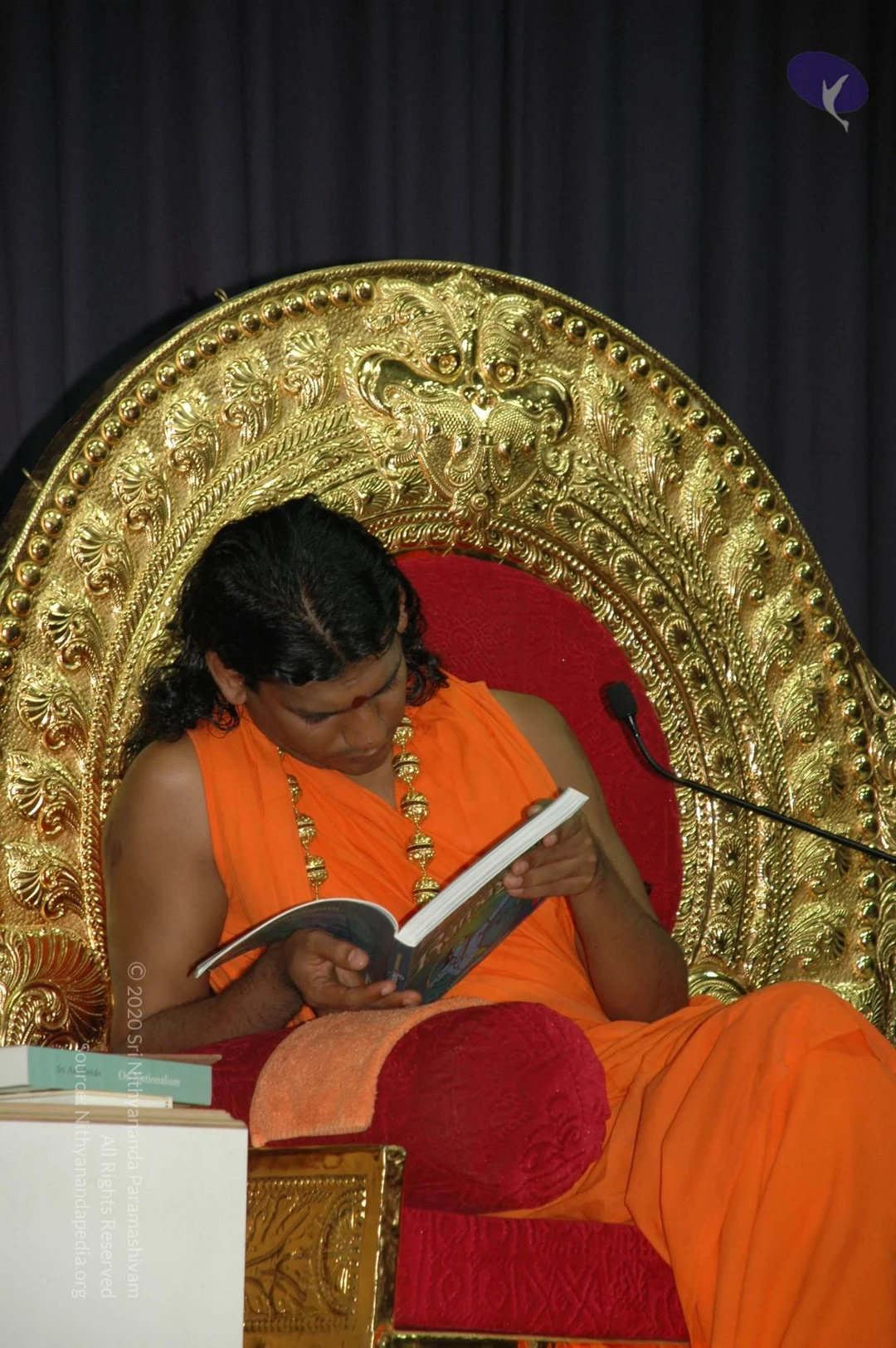
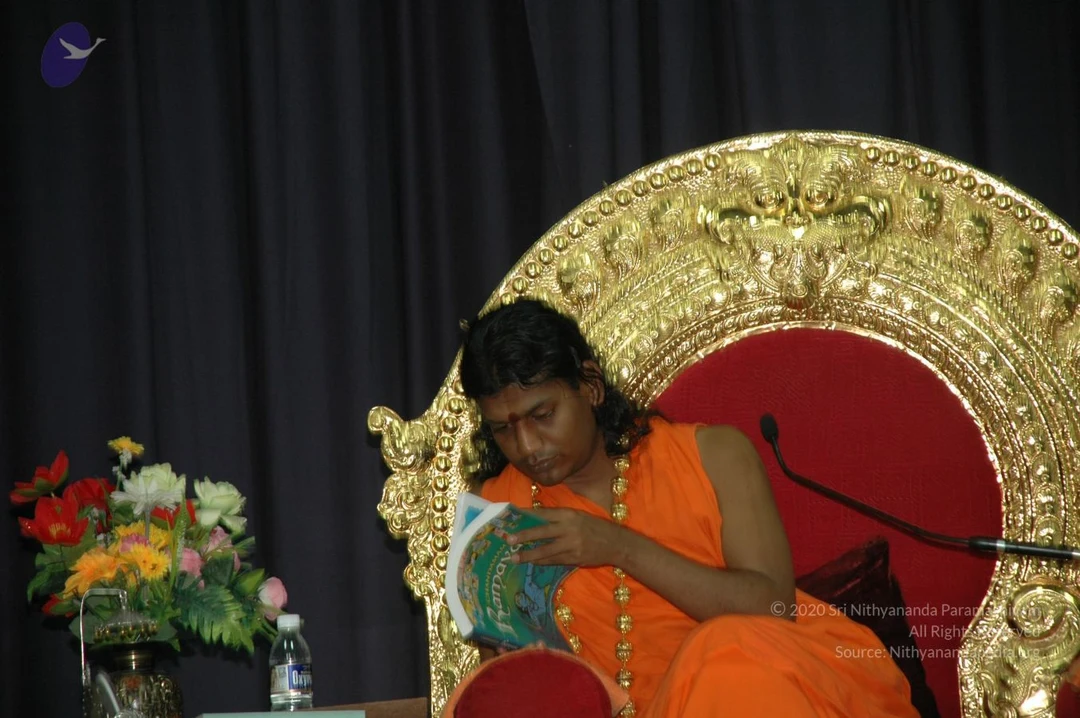
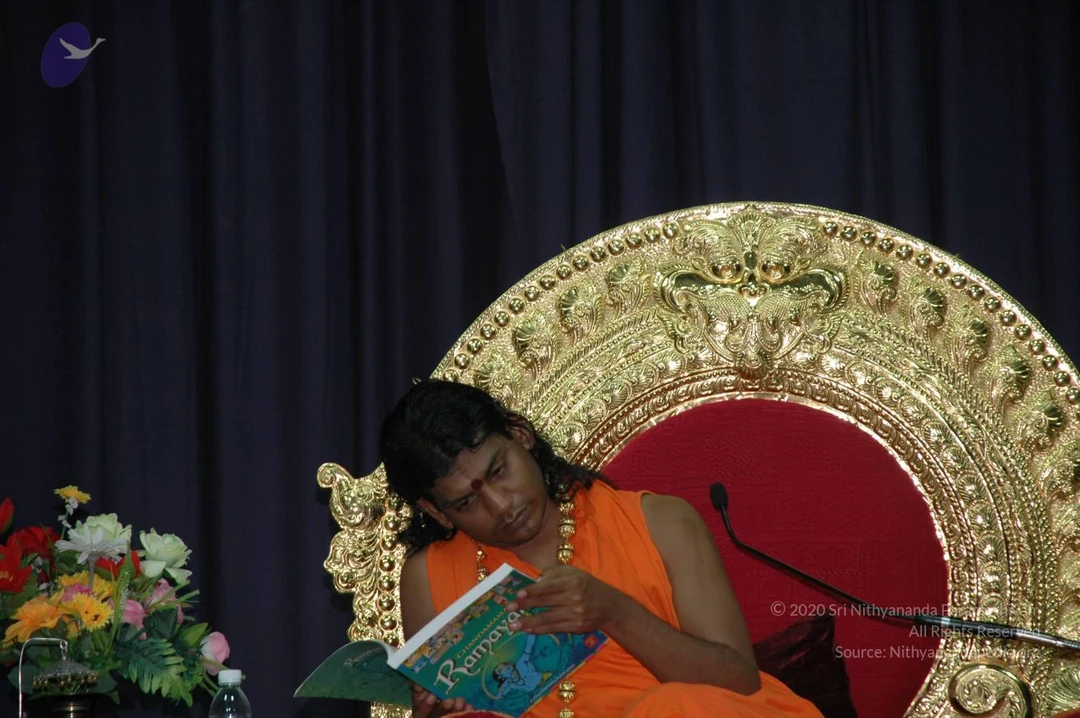
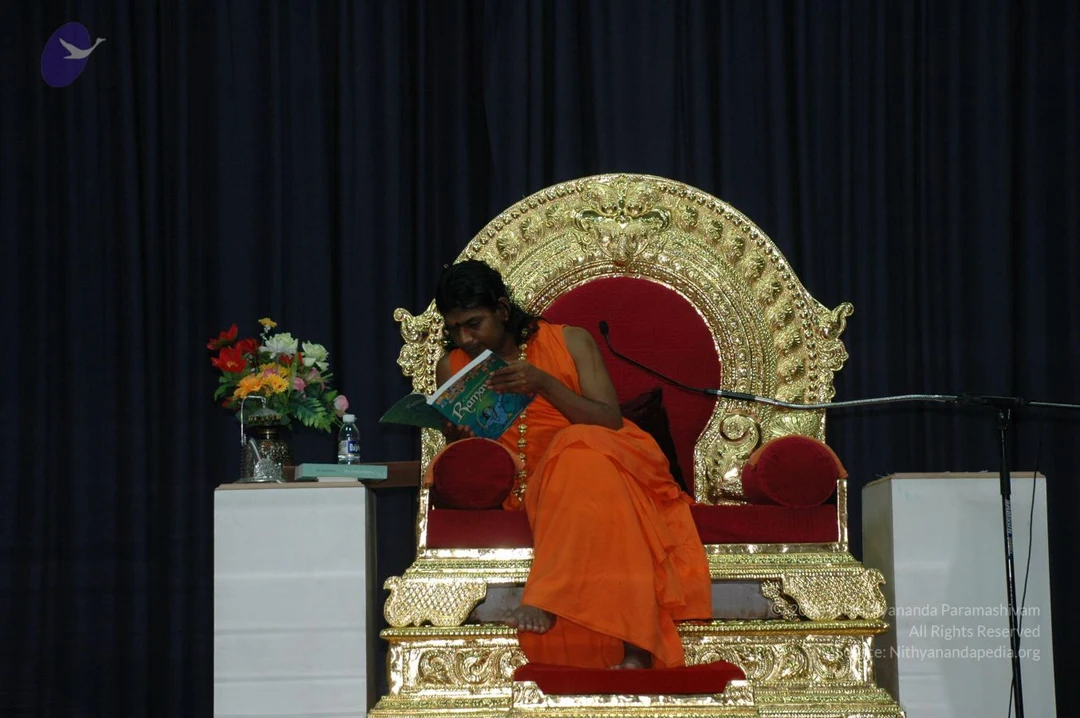
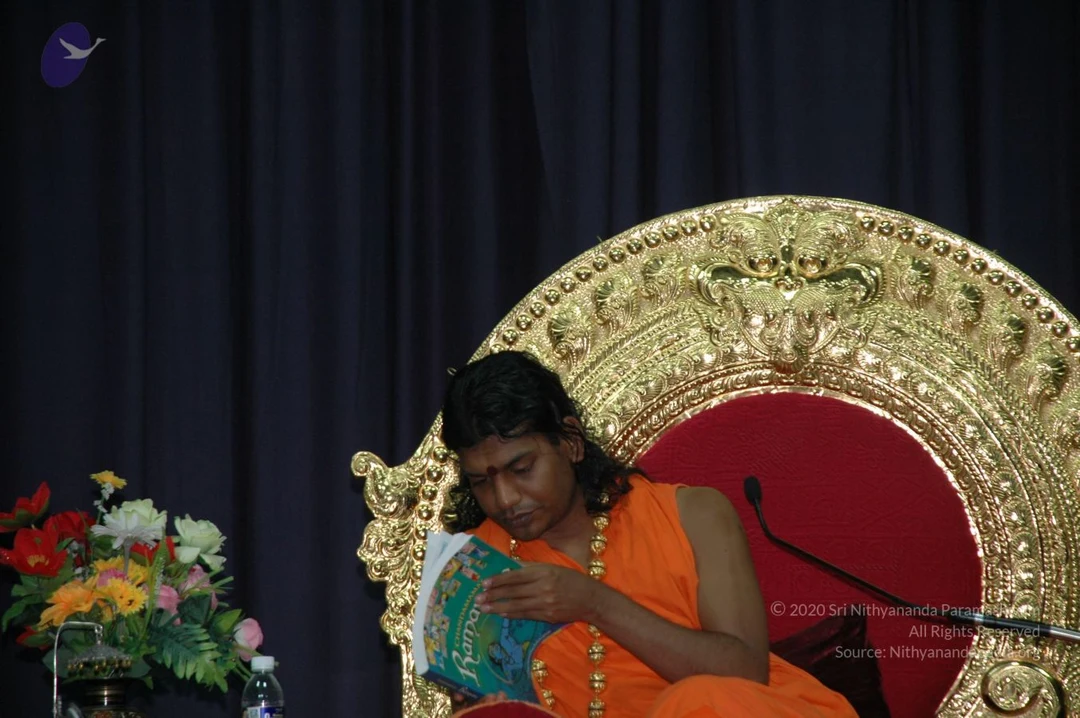
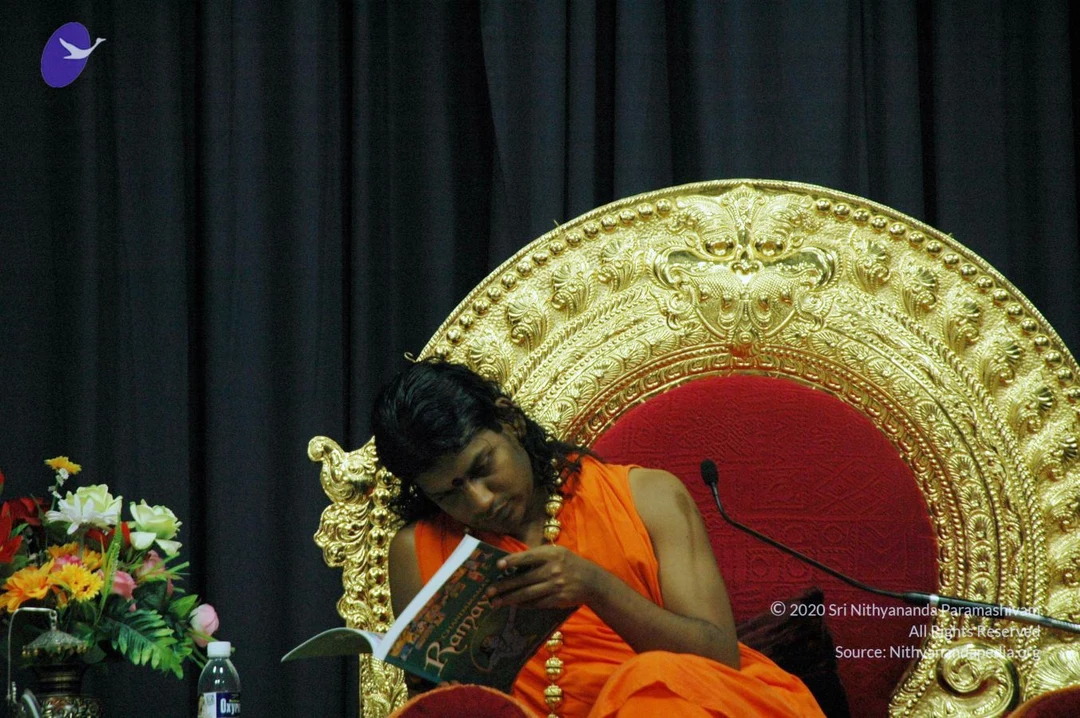
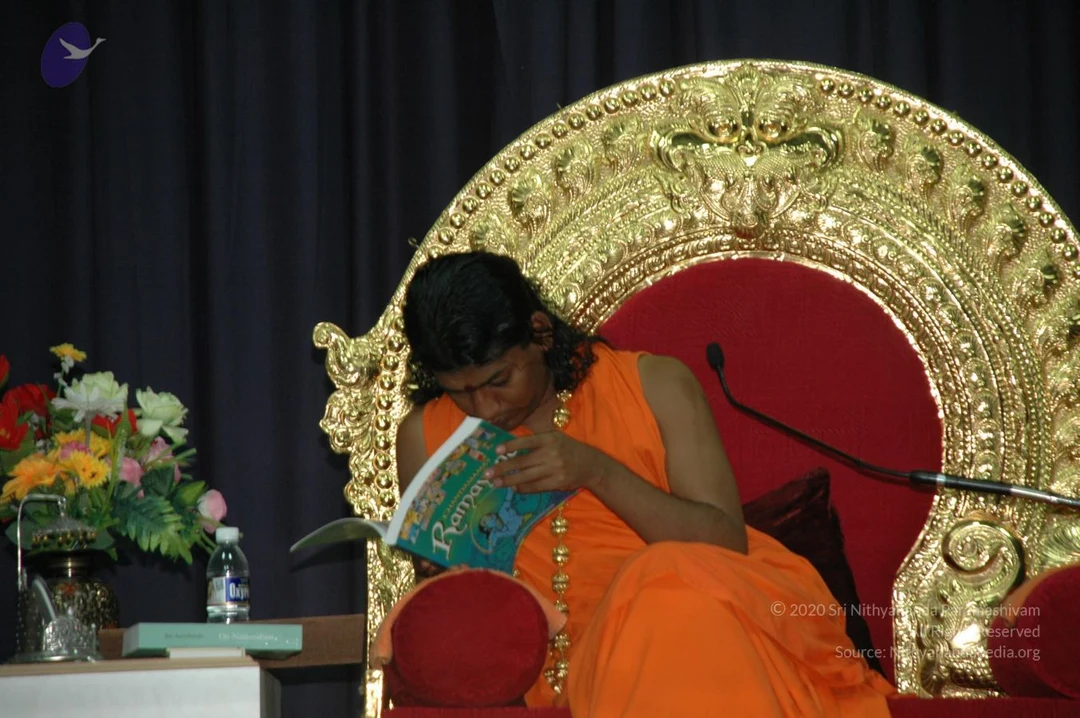
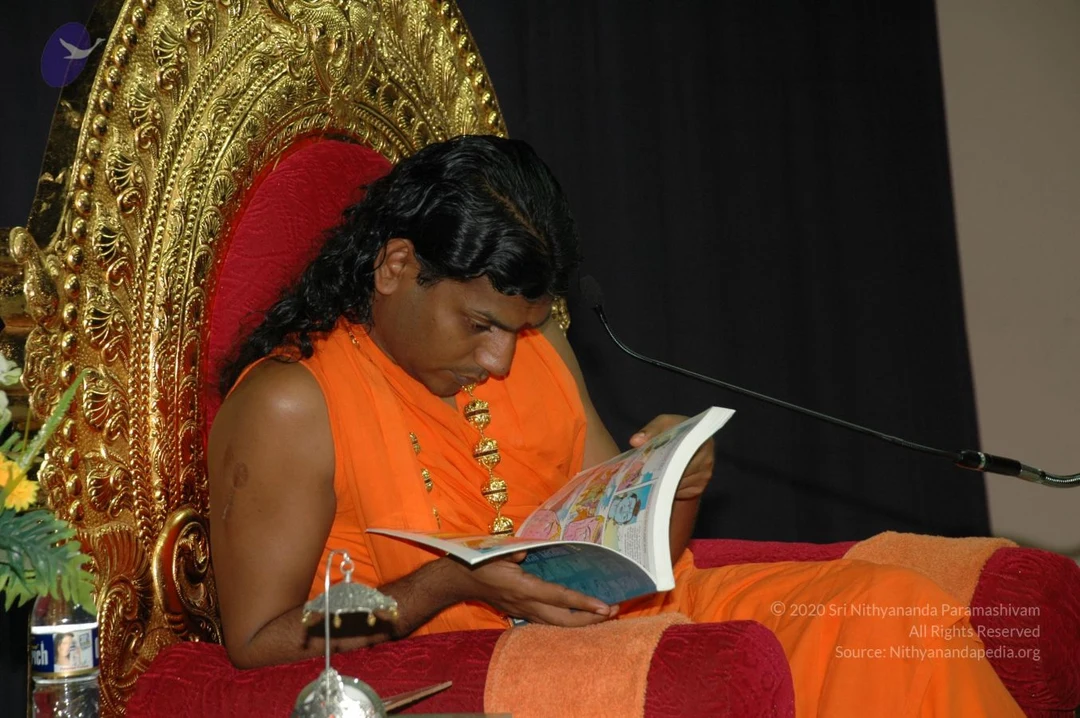
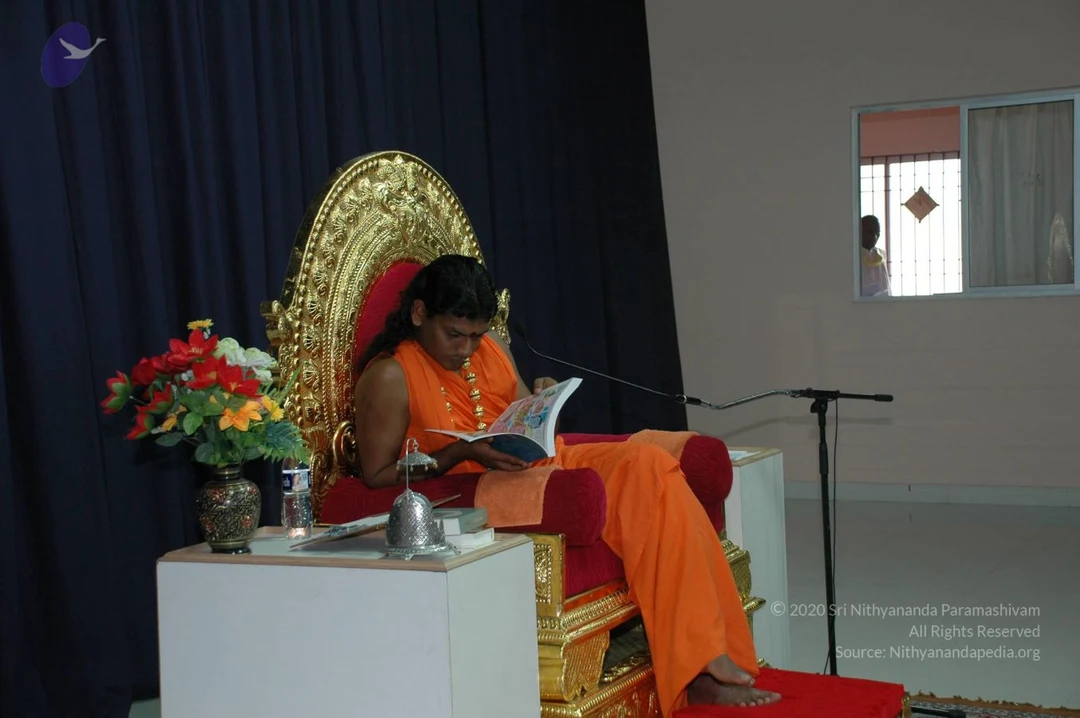
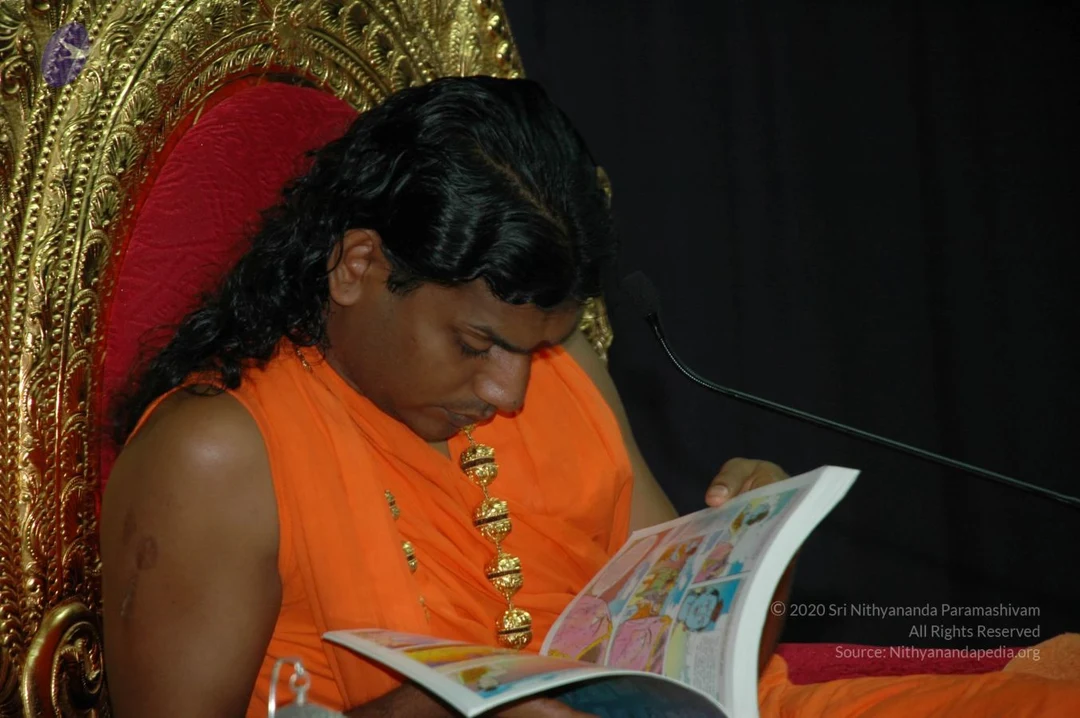
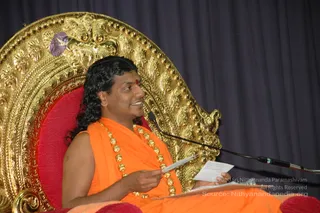
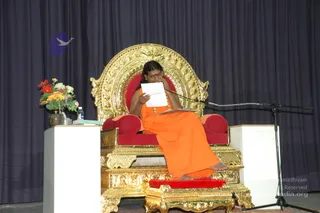
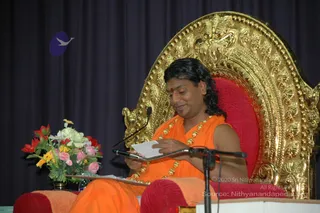
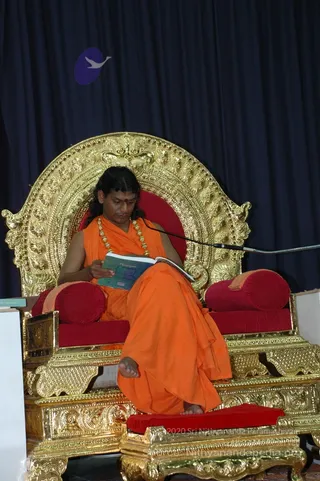
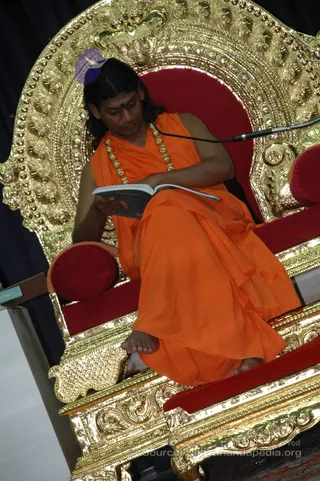
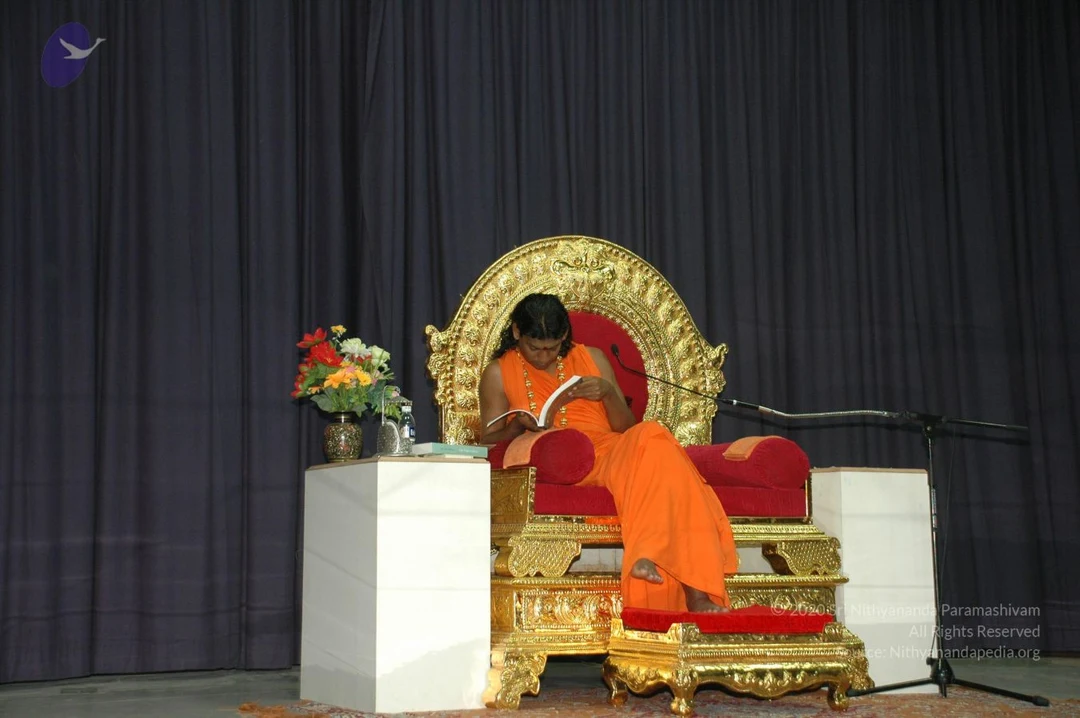
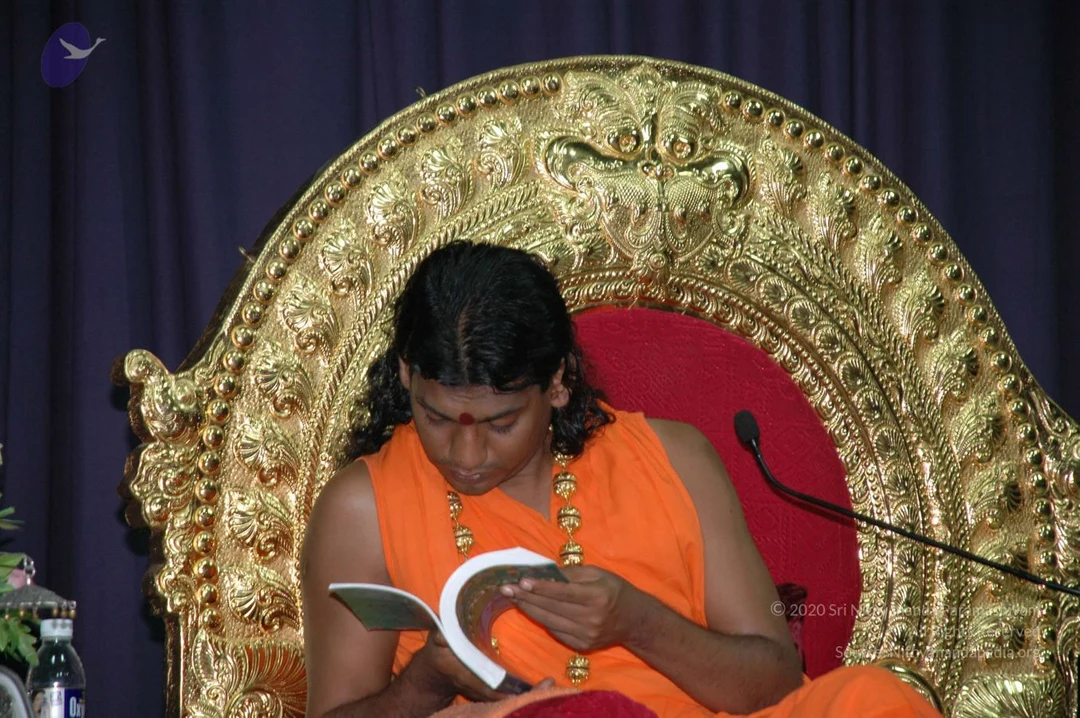
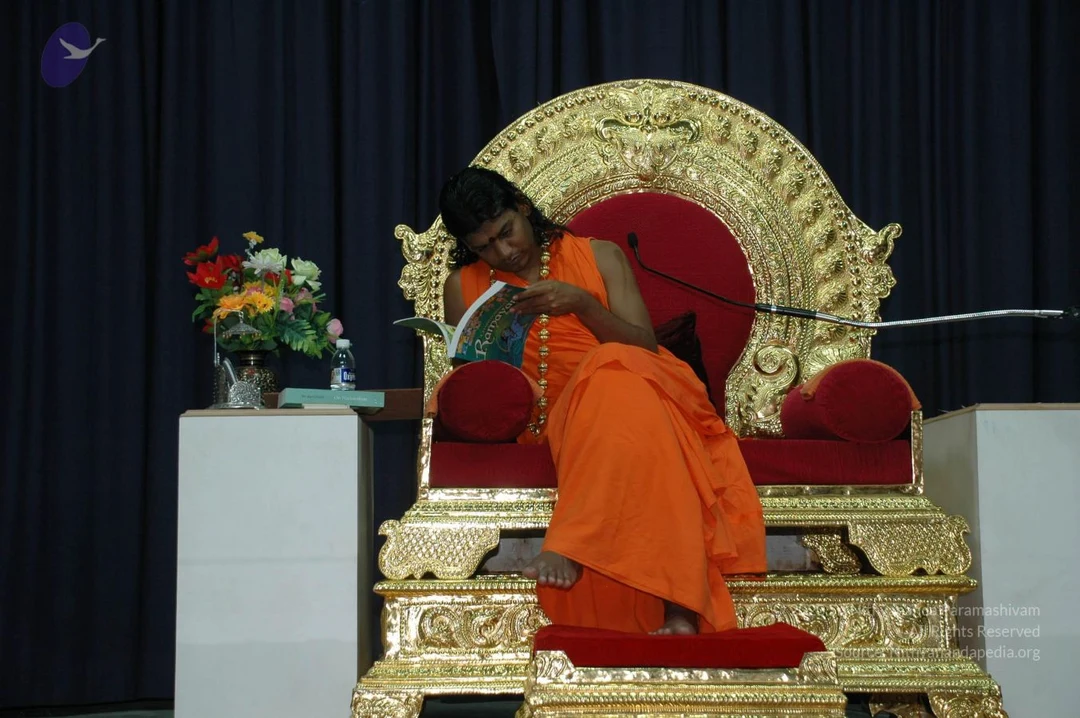
A man with long, swept-back dark hair sits on an ornate gold throne with red cushioning, wearing an orange sleeveless wrap and a long gold-bead necklace, with a small red mark on his forehead. He holds a sheet of paper in both hands and gazes to one side, with a microphone on a stand before him and a dark blue drape behind.A photograph of a figure seated on an ornate gold-and-red throne on a low stage in front of a dark purple curtain. The seated person wears a flowing saffron-orange robe and has long dark hair, a red forehead mark, and bare feet resting on a red cushion. He holds a sheet of white paper in one hand and appears to be reading from it. A microphone stands to the right, a flower arrangement in a vase and a water bottle sit on a white table at left, and a purple bird logo hangs on the curtain. Per the page, Swamiji is the speaker at this satsang, and the visible cues of long hair, saffron clothing and ornate throne make the identification probable.A seated speaker in saffron-orange robes and a gold rudraksha-style necklace sits on an ornate gold throne with a red cushion, reading from a sheet of paper held in both hands. A small red bindi marks his forehead and long dark hair falls past his shoulders. A microphone stands at his side on a stand, and a vase of pink, white and yellow flowers sits to the left against a dark blue curtain. A bird motif appears on the backdrop, and a red-cushioned footrest is in front of him.A man with long swept-back dark hair, wearing an orange saffron robe and multiple beaded rudraksha-style malas with gold ornaments, sits on an ornate gold-carved throne with red cushions. He holds an open book in one hand and gestures with the other while speaking into a microphone on a stand. Bouquets of flowers sit at the lower left against a dark blue curtain backdrop.A man in saffron-orange robes sits on an ornate gold-and-red throne with carved gilded scrollwork and red velvet cushions, reading an open book held in both hands. He wears a gold-bead necklace and a small purple cap-like ornament at the top of his head, with a red bindi on his forehead. A microphone stand arcs toward him from the right, and a dark blue backdrop fills the background. His bare feet rest on the lower gilded platform. a person is seated here, identified by his saffron robes, long swept hair, gold-bead garland and the throne setting, consistent with a satsang discourse.

Lep-Evening-Session-In-Vaidyasarovar

11 photosSource gallery
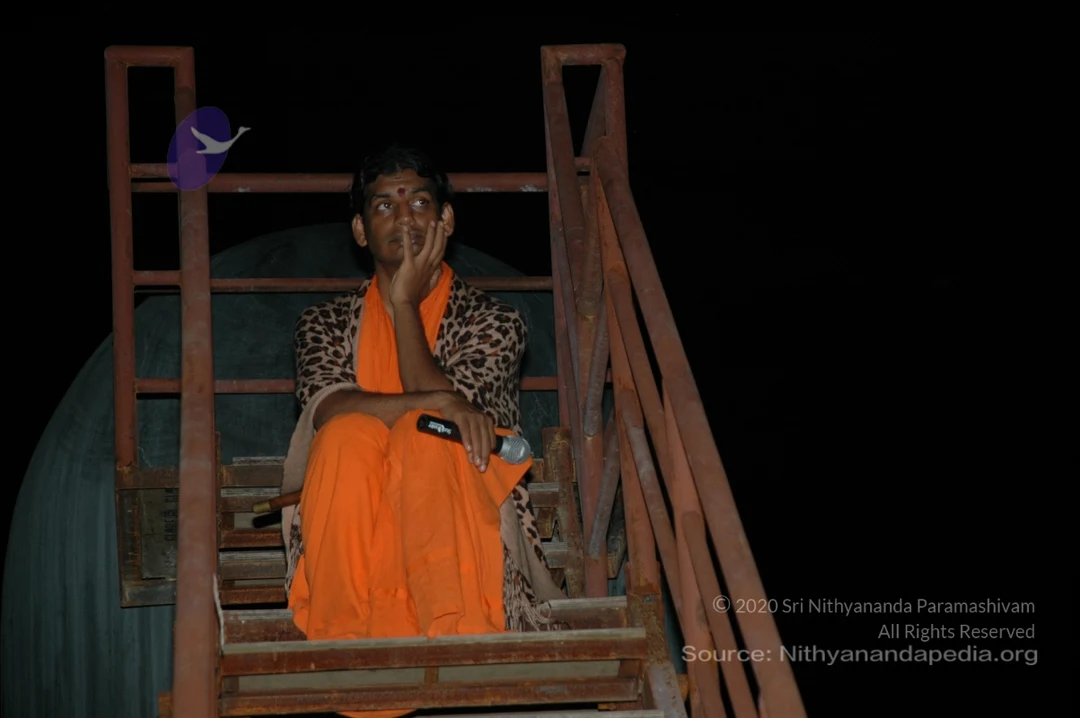
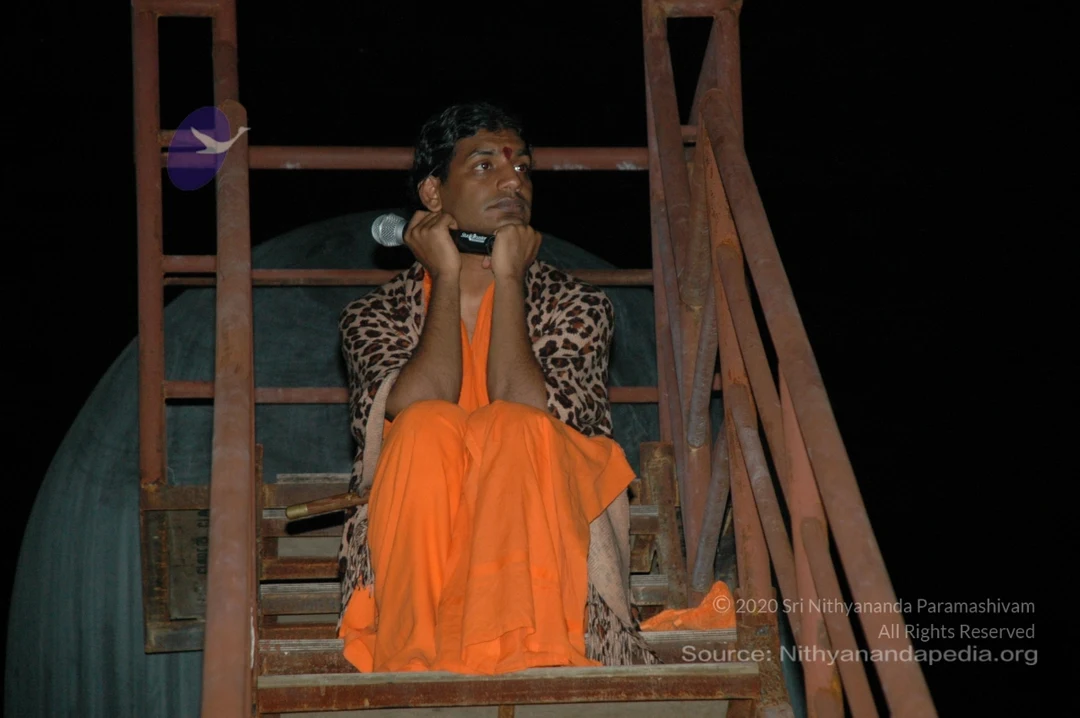
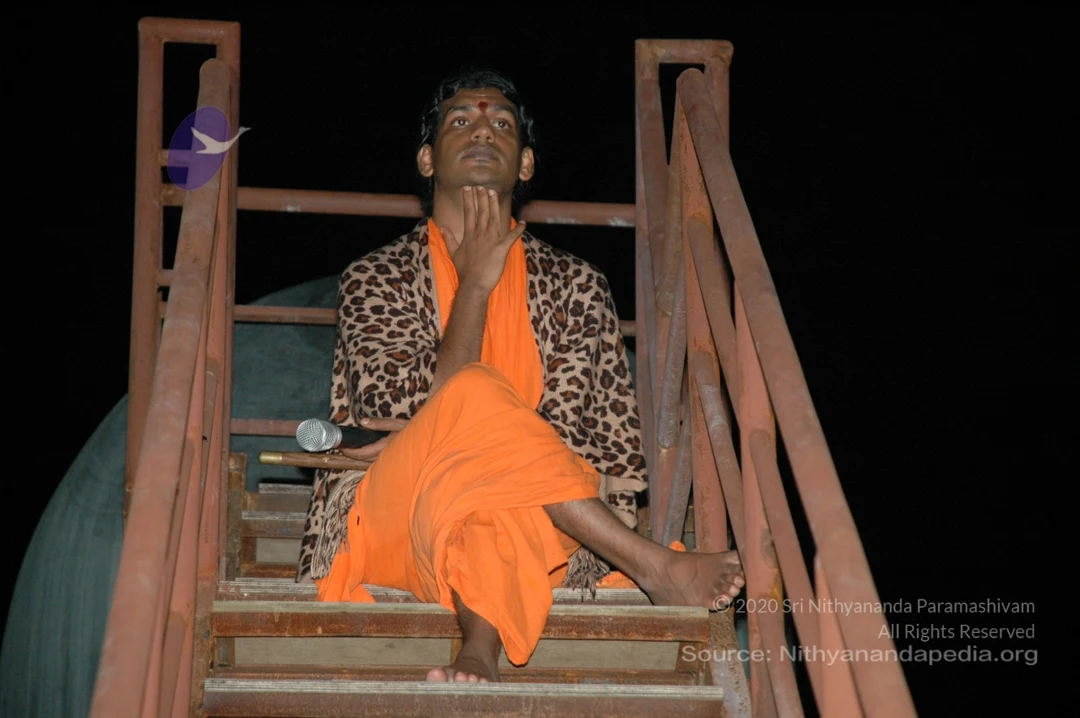
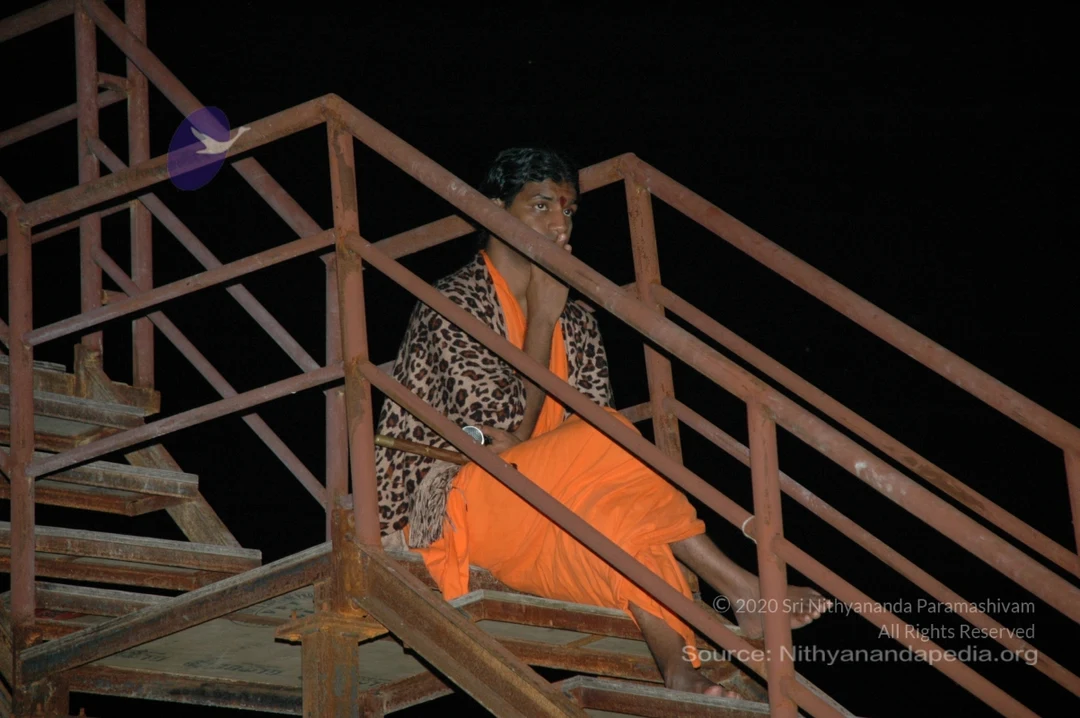
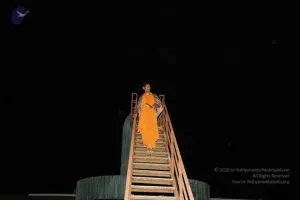
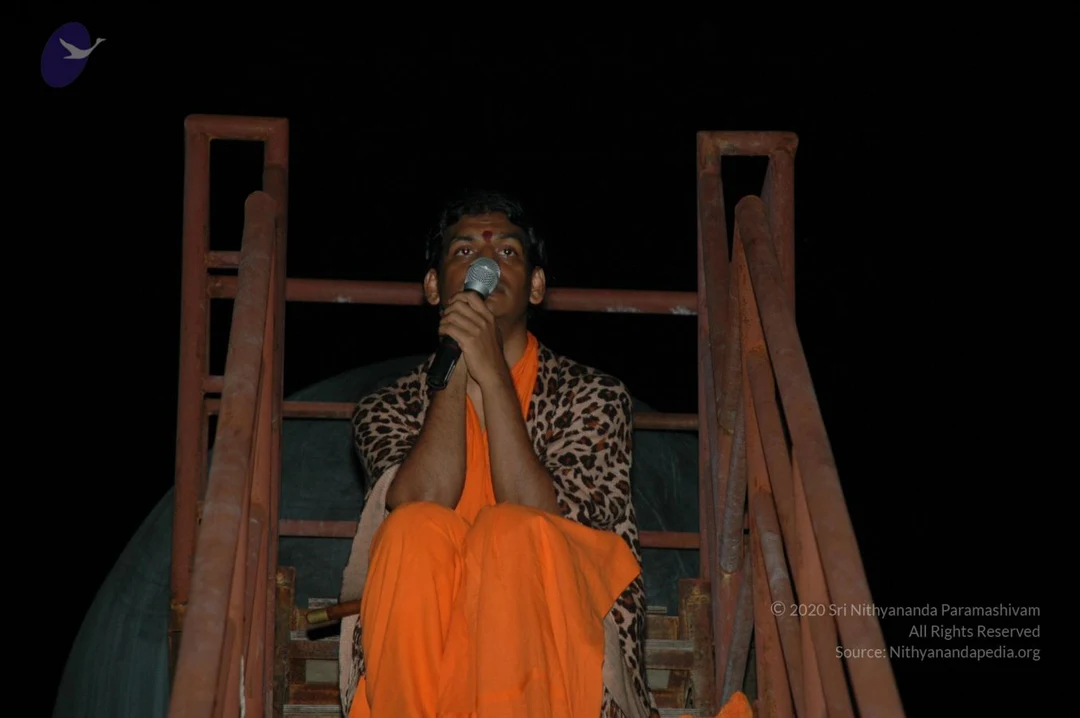
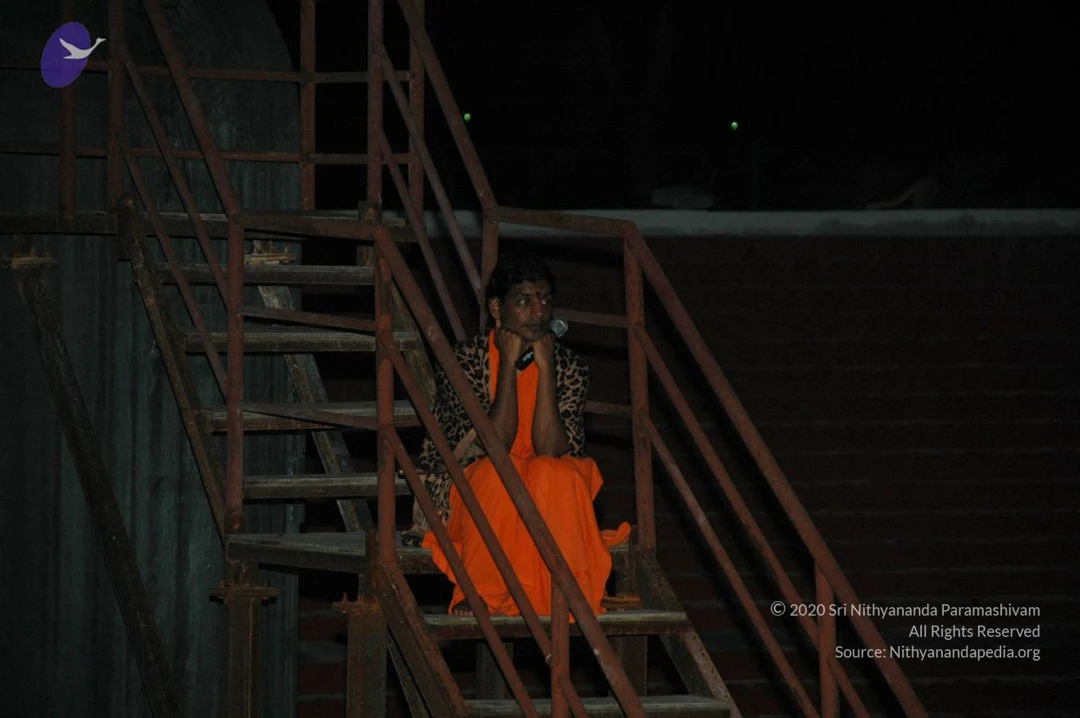
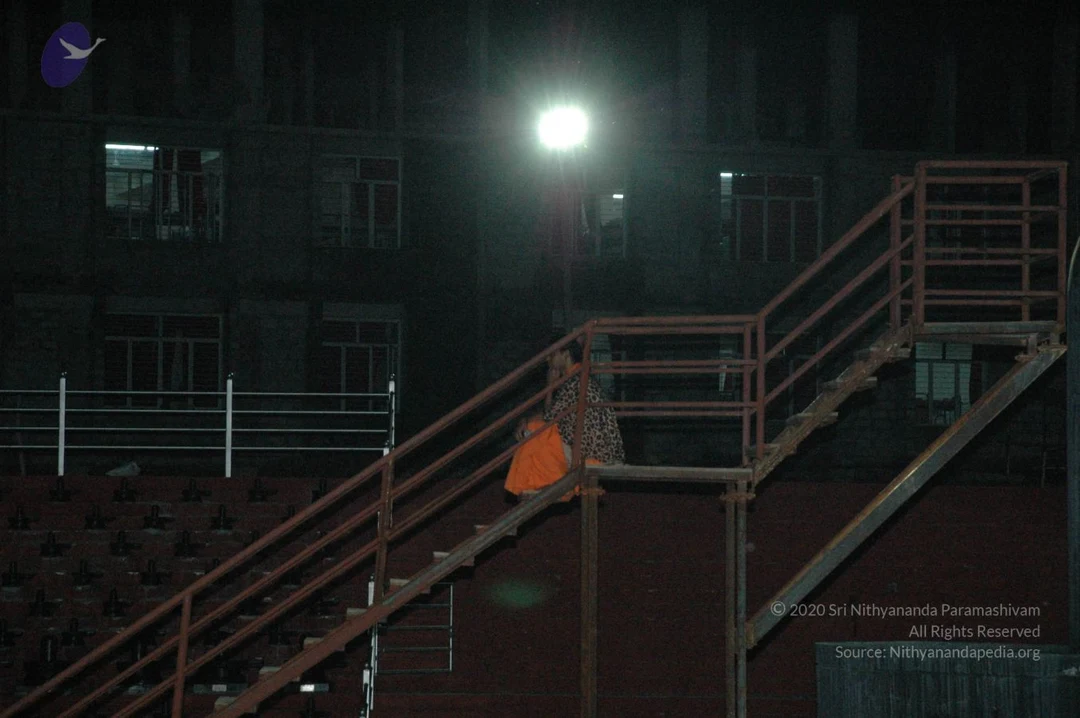
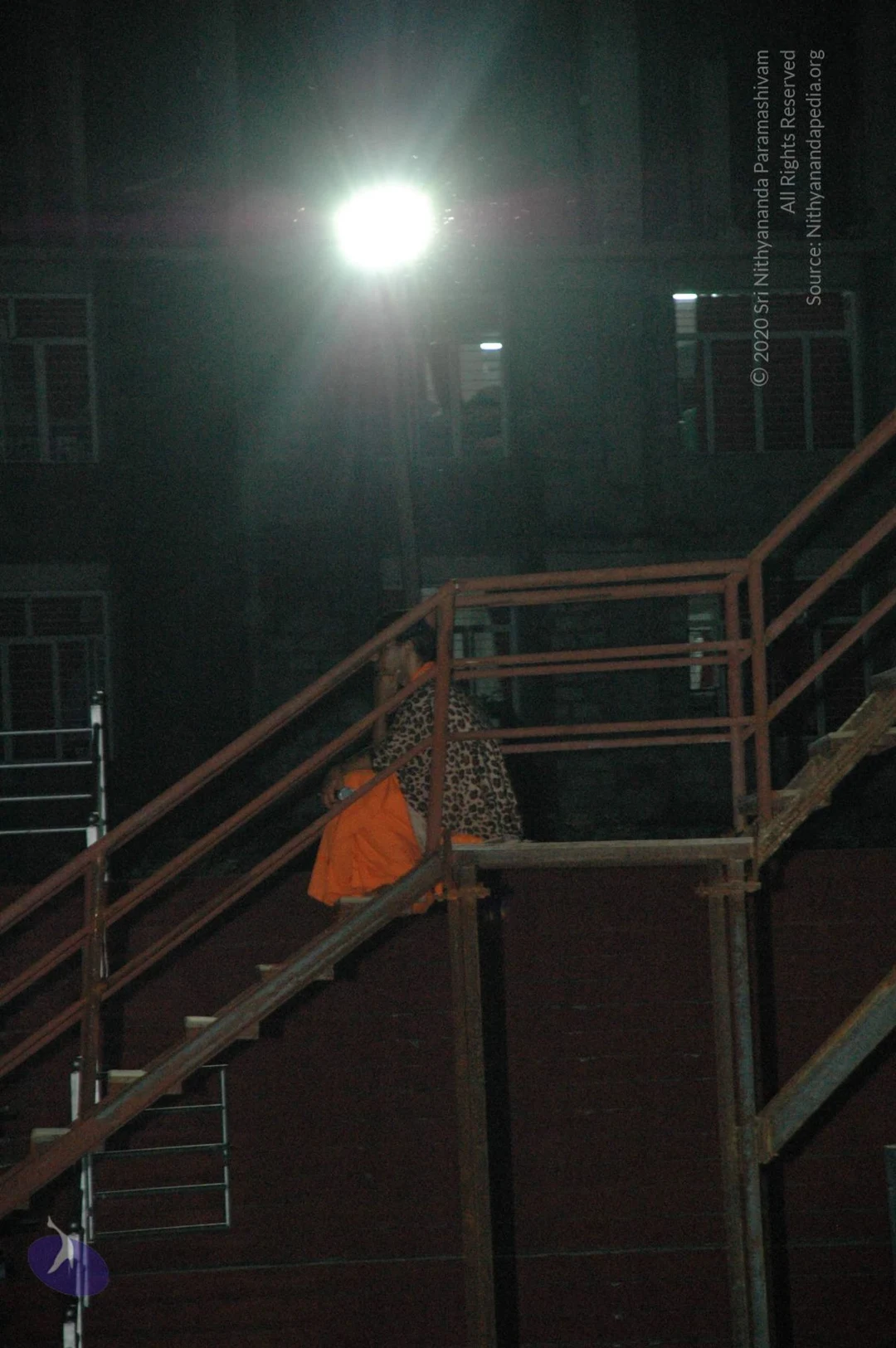
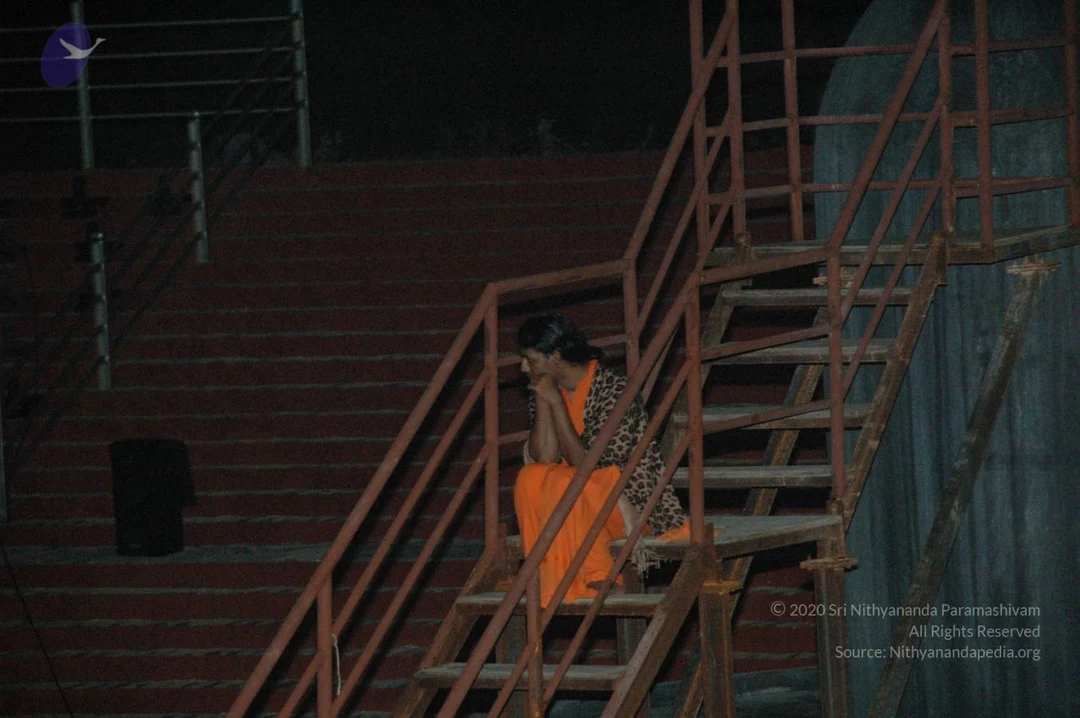
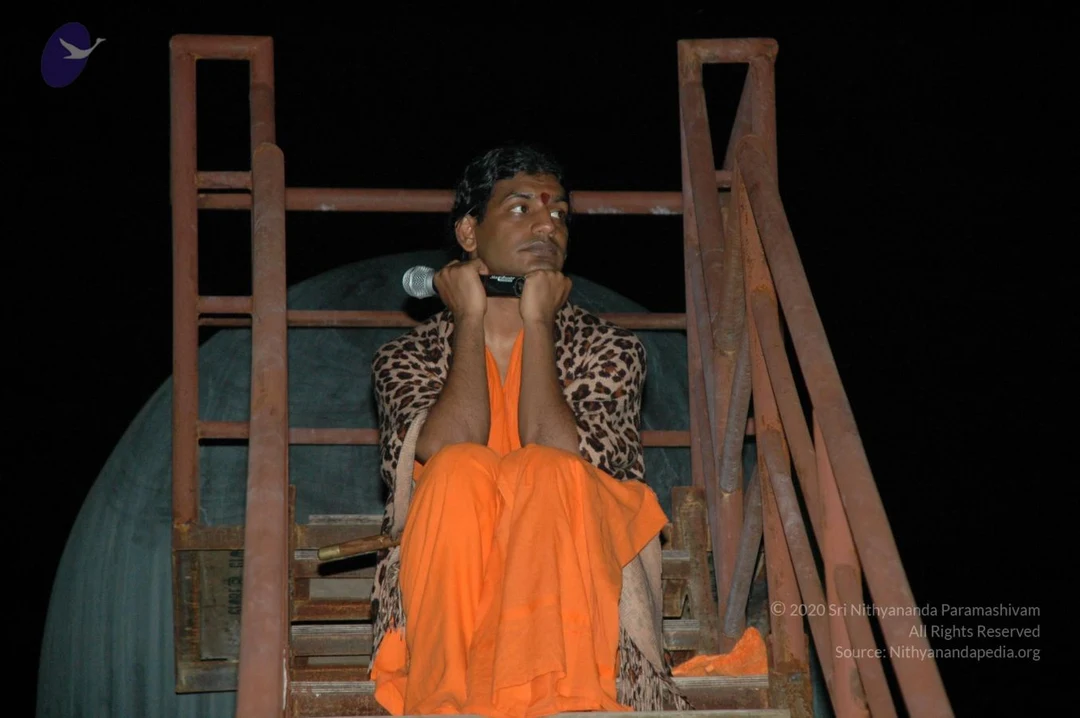
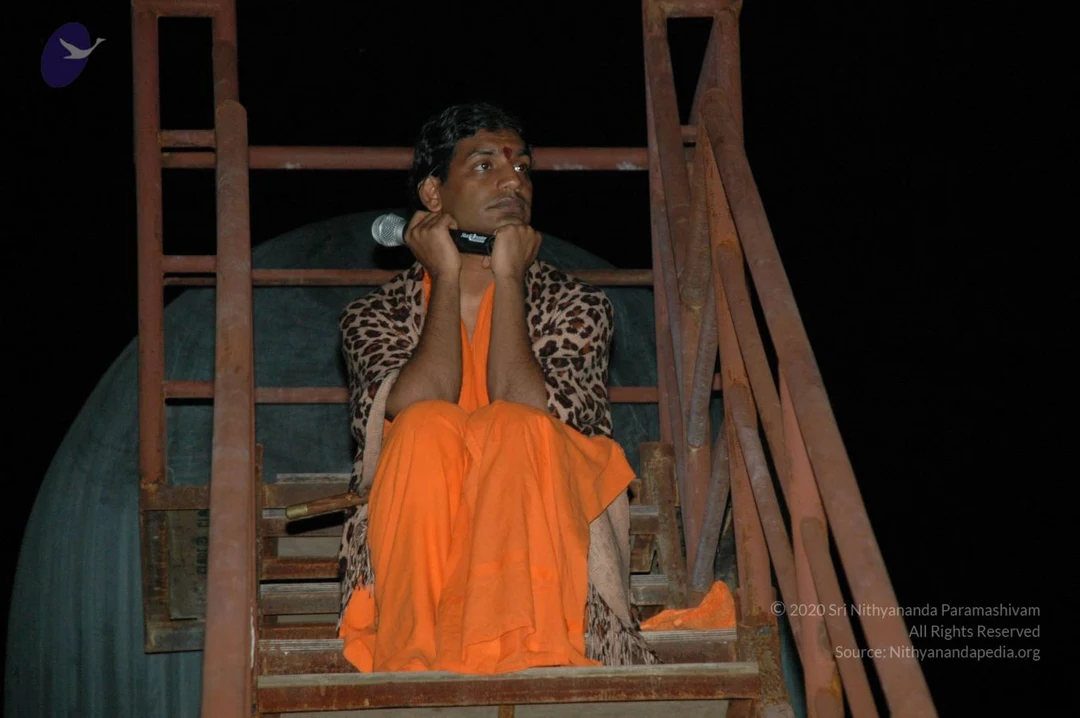
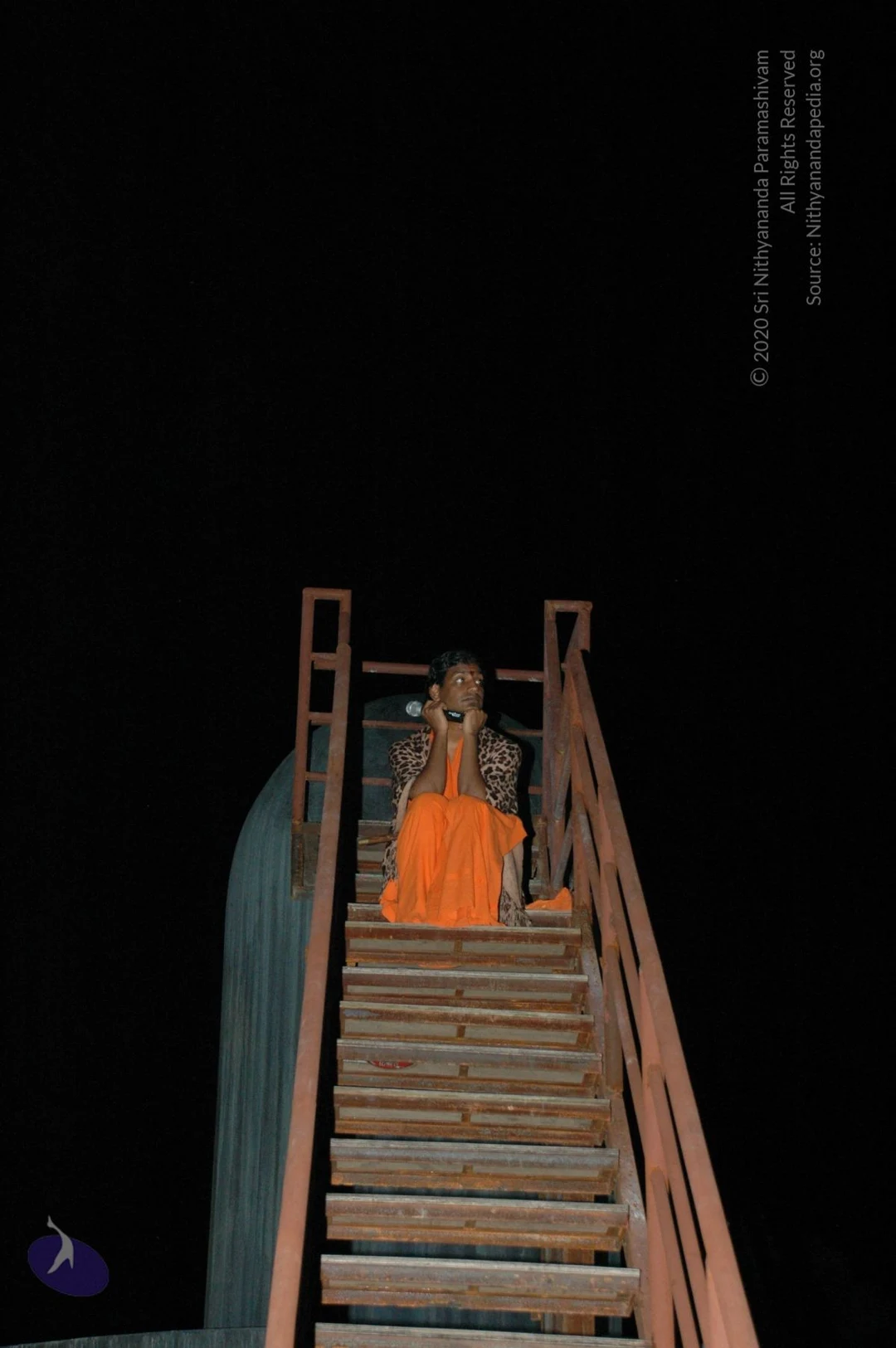
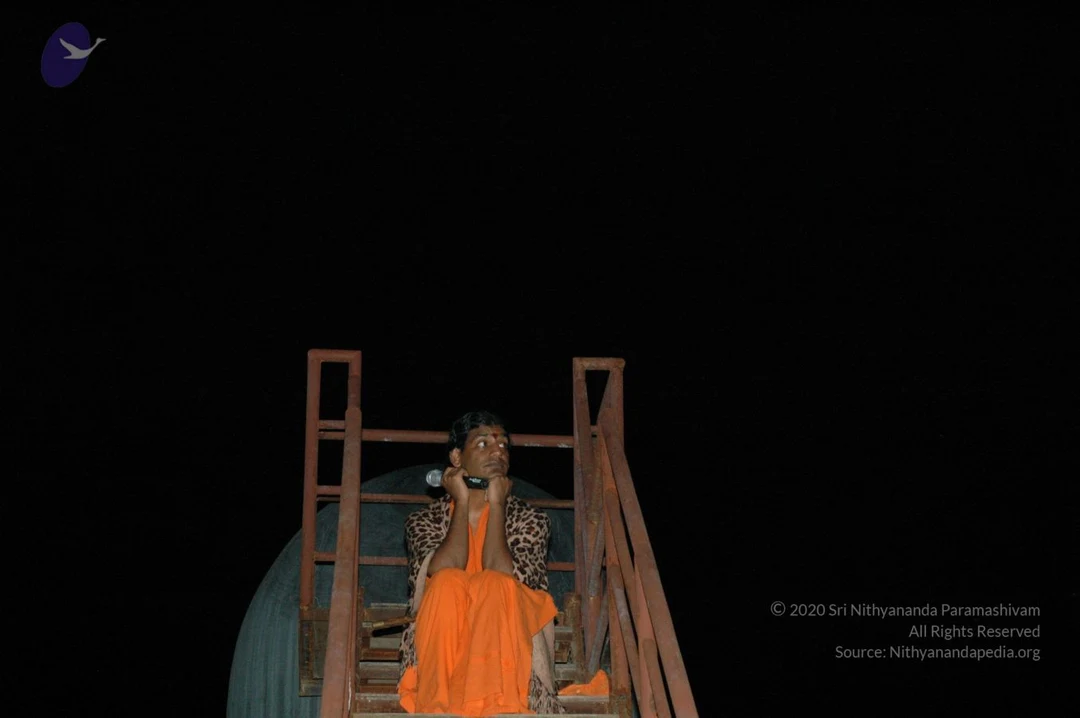
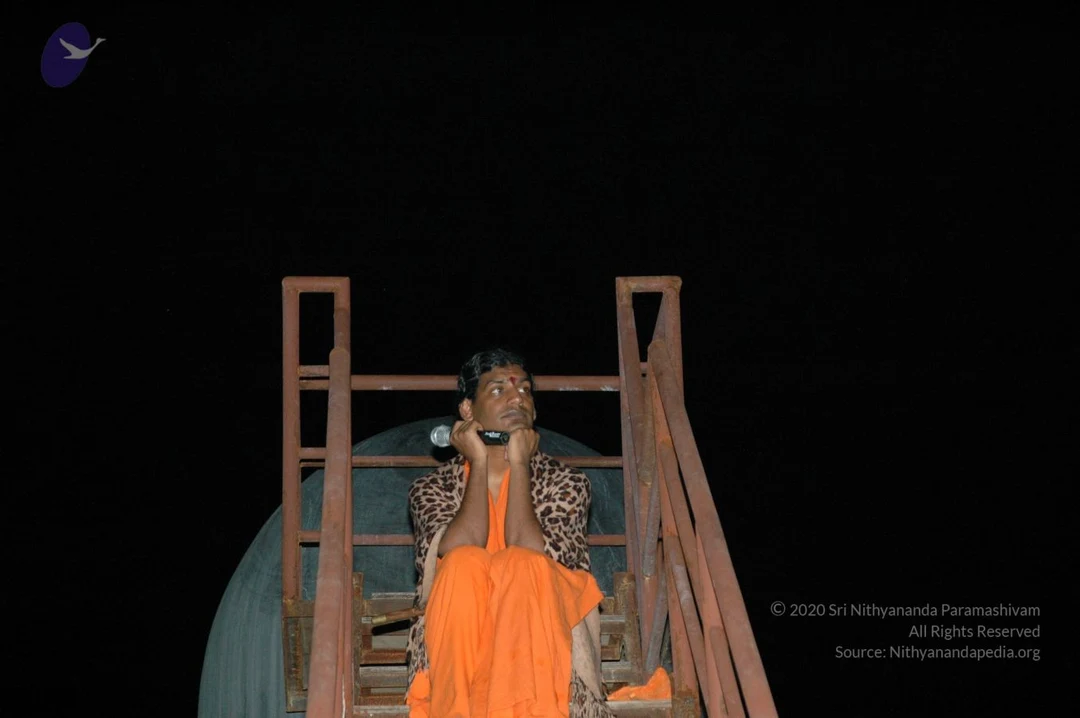
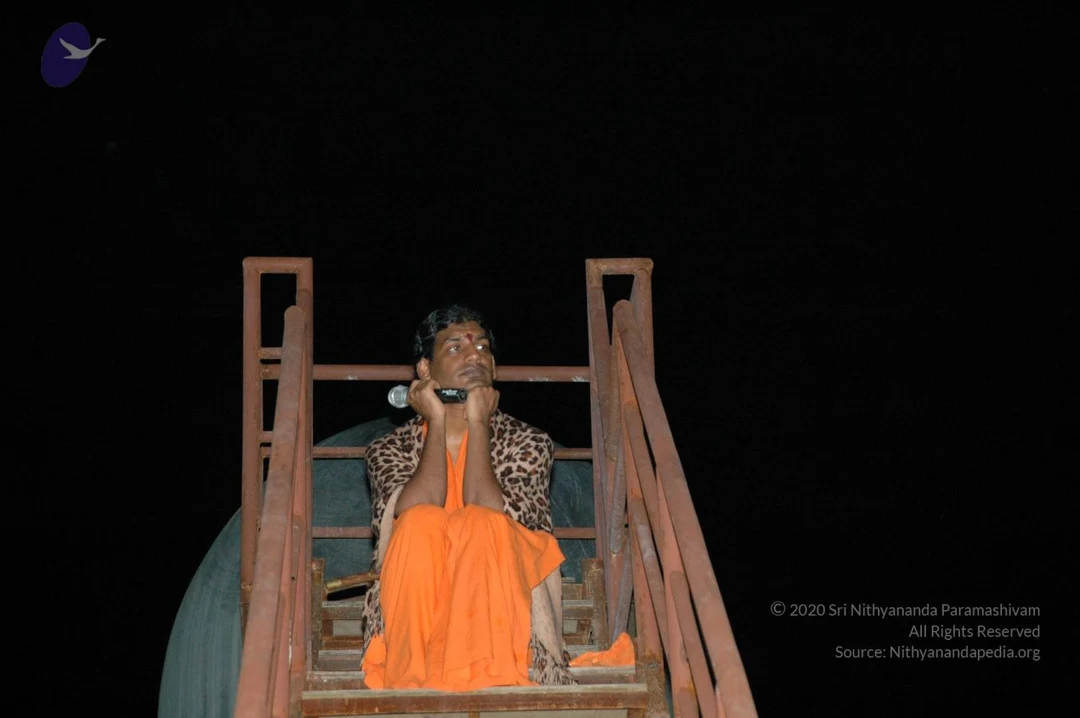
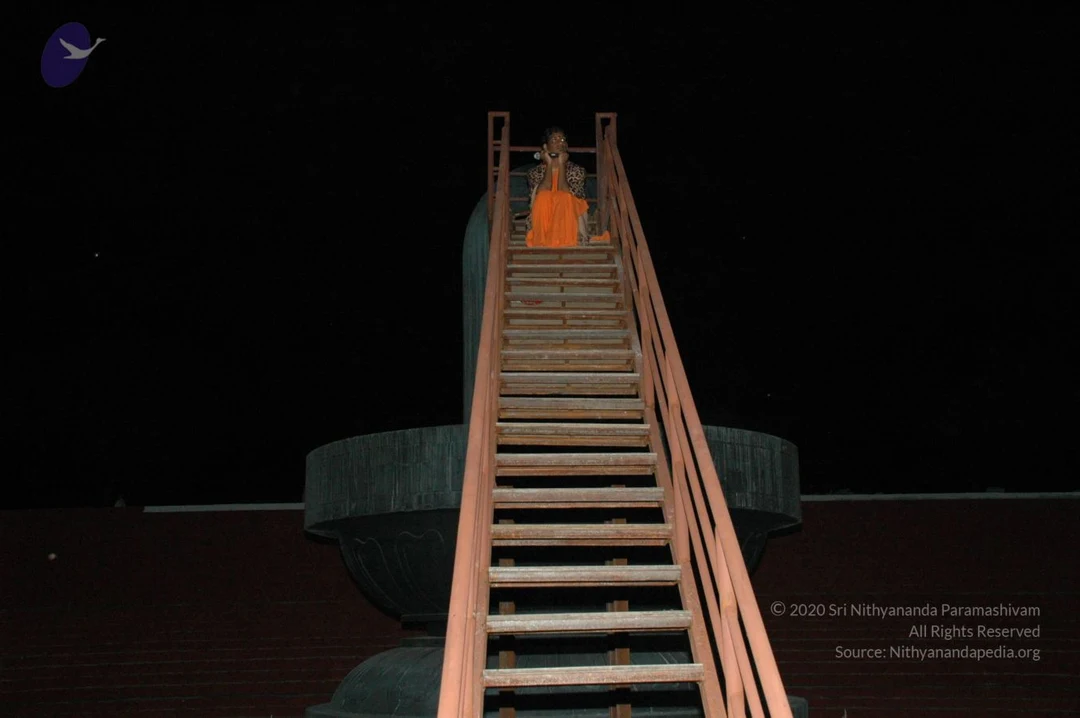
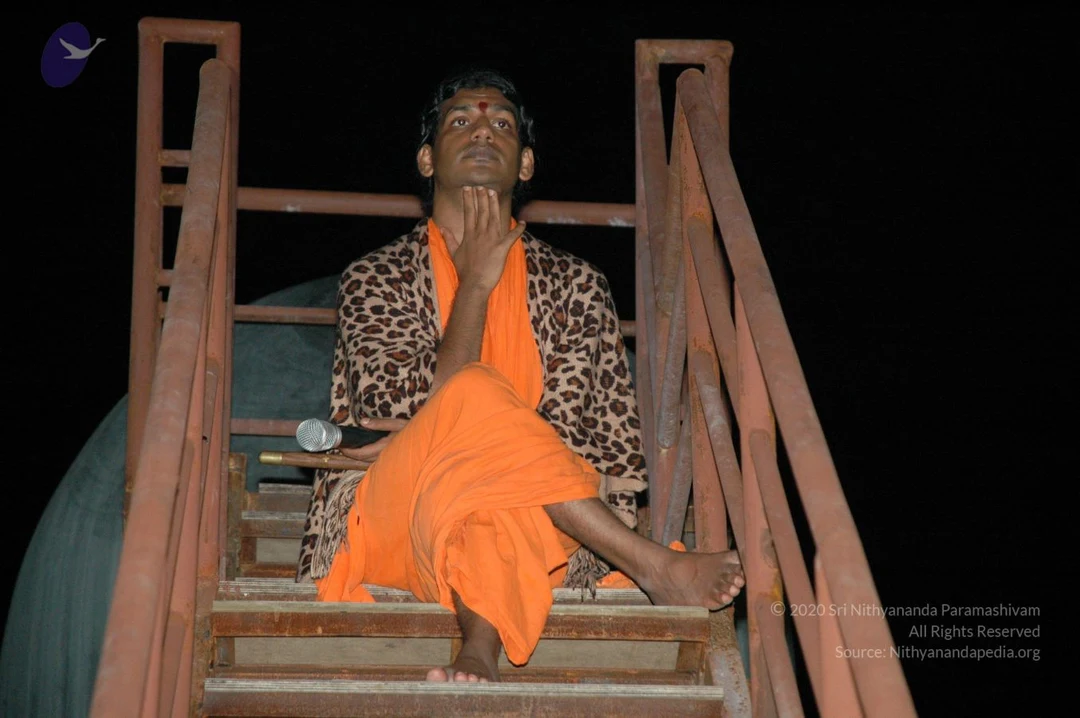
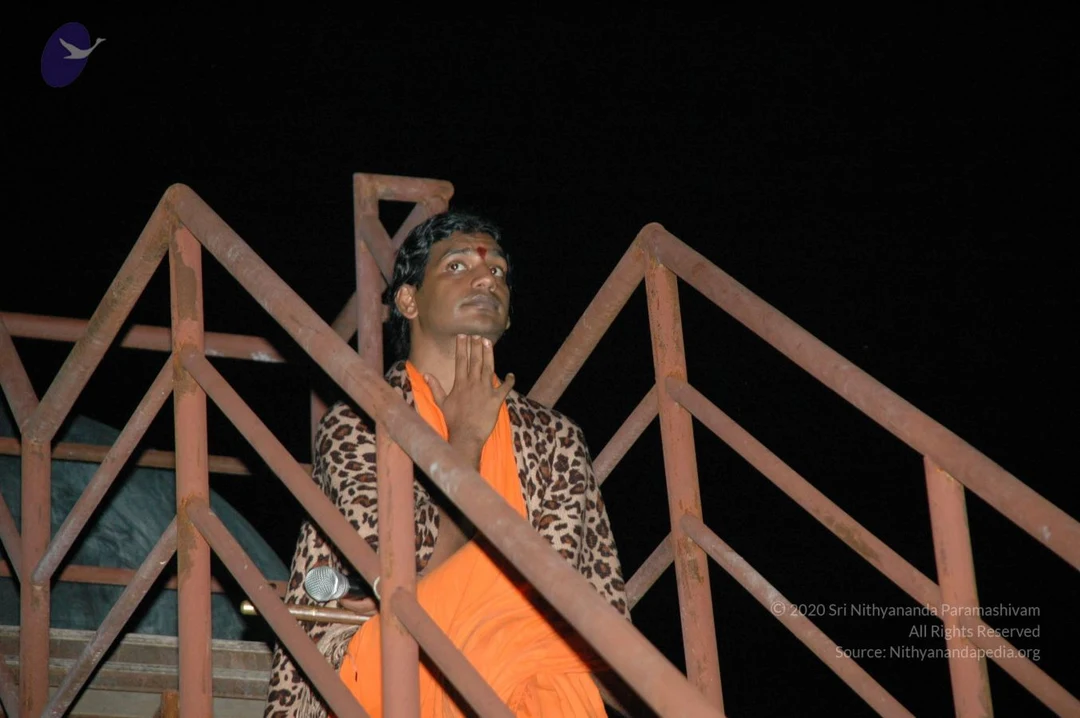
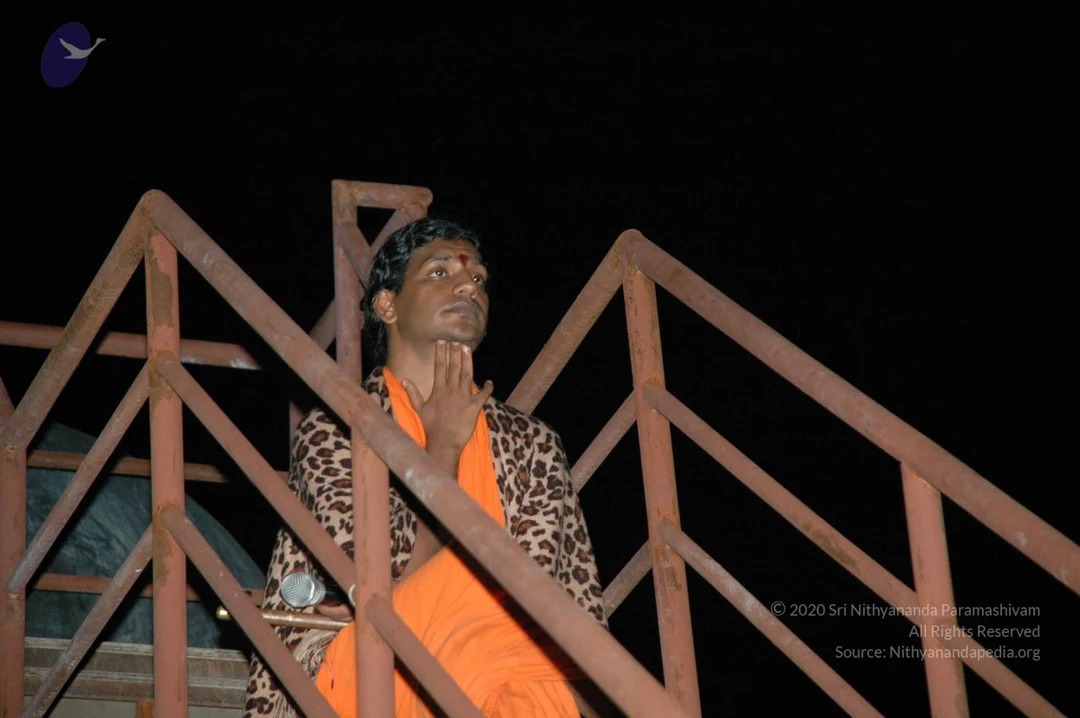
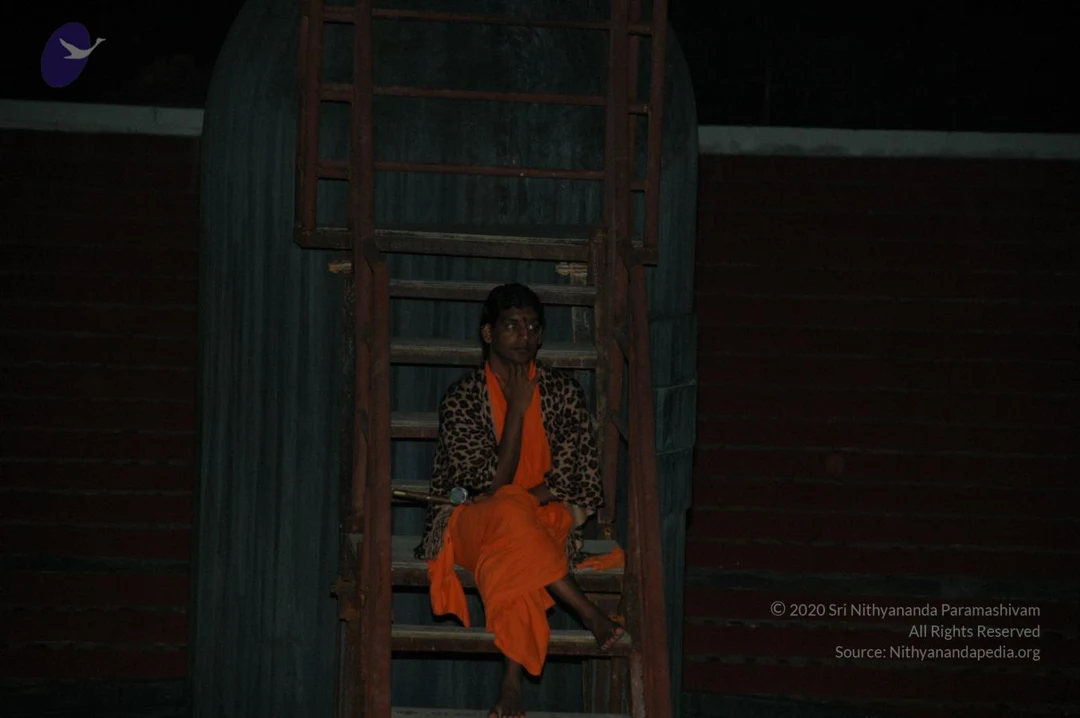
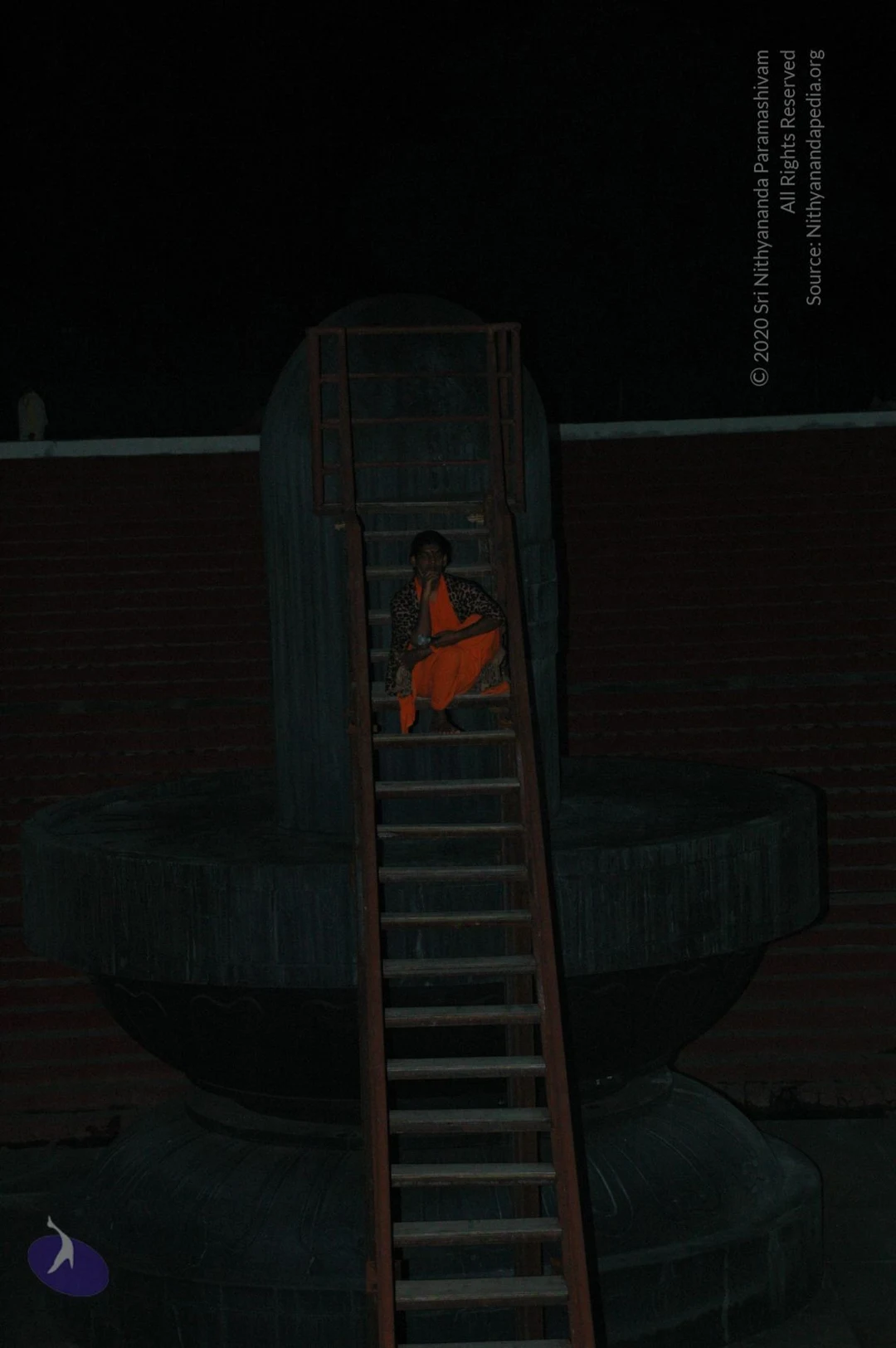
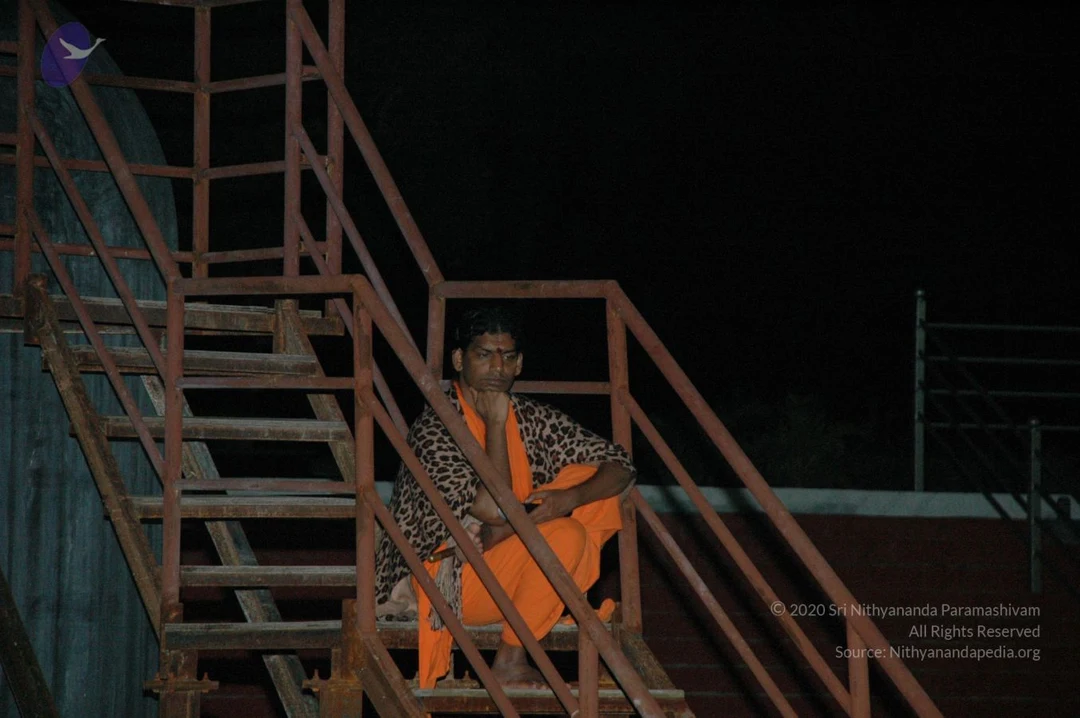
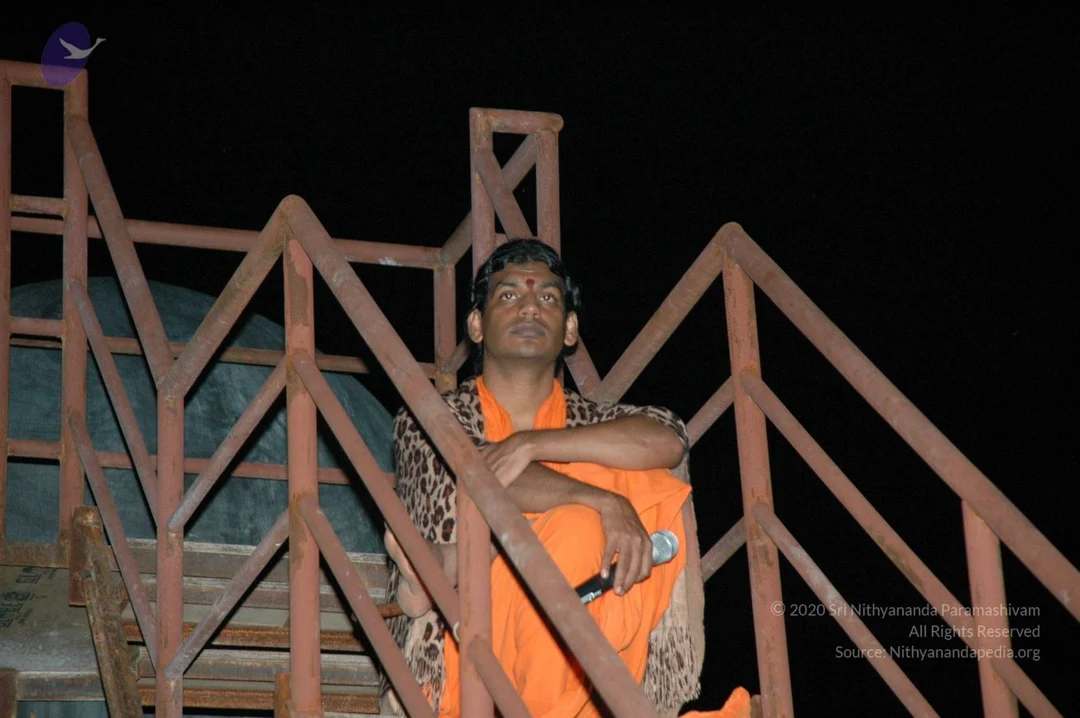
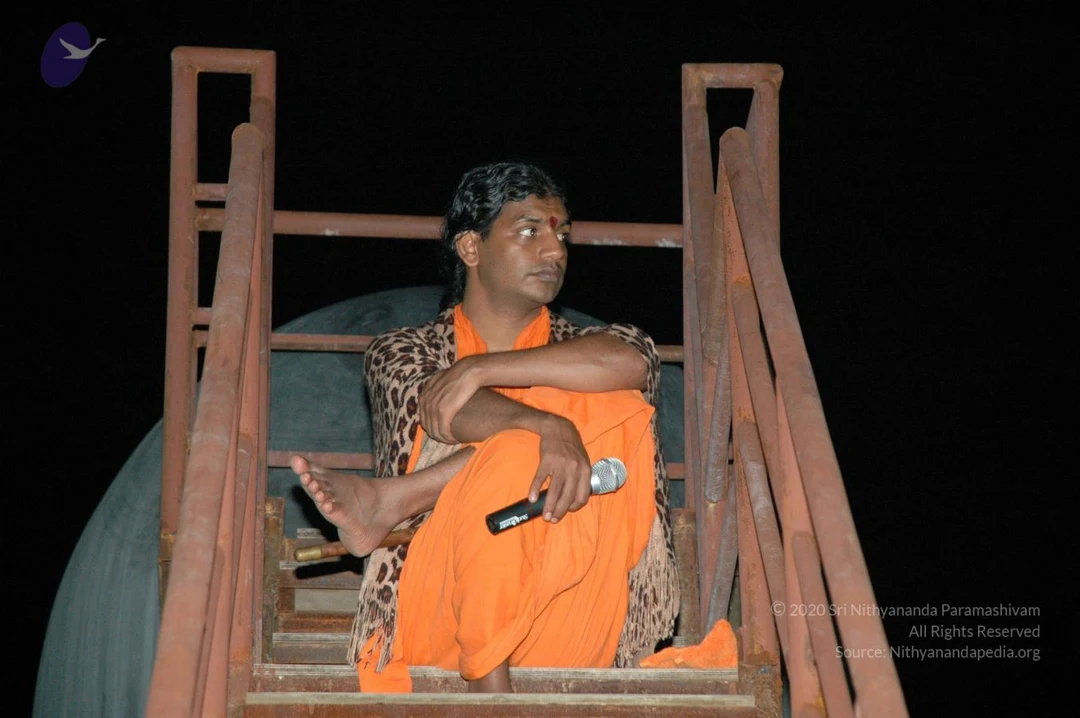
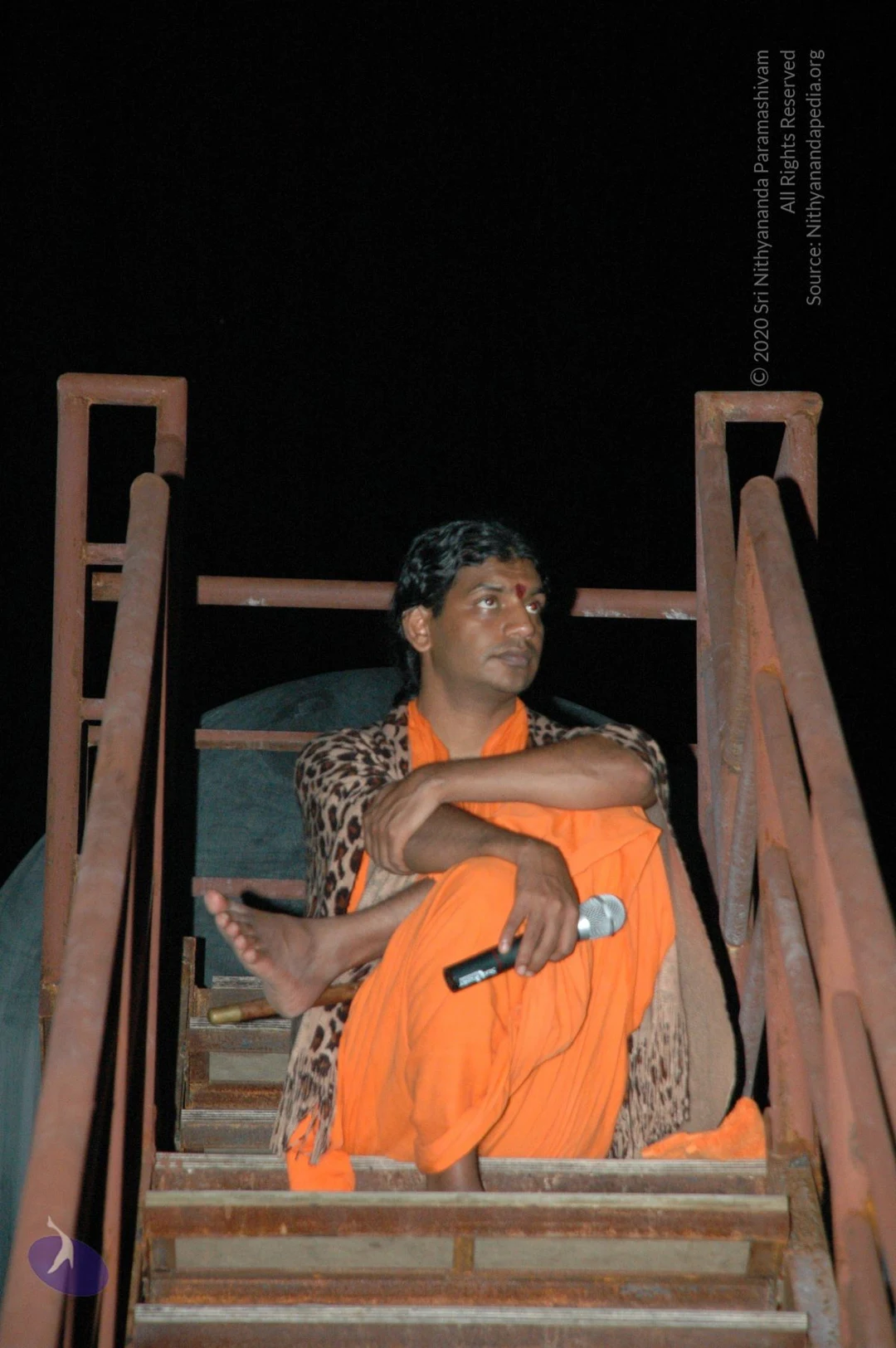
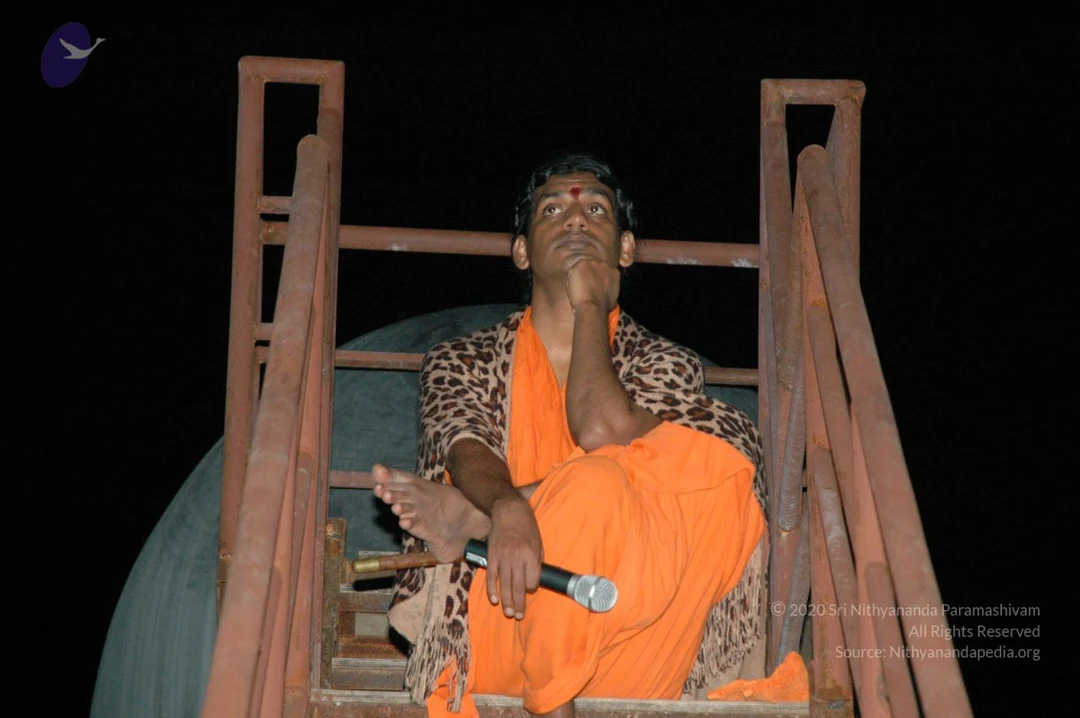
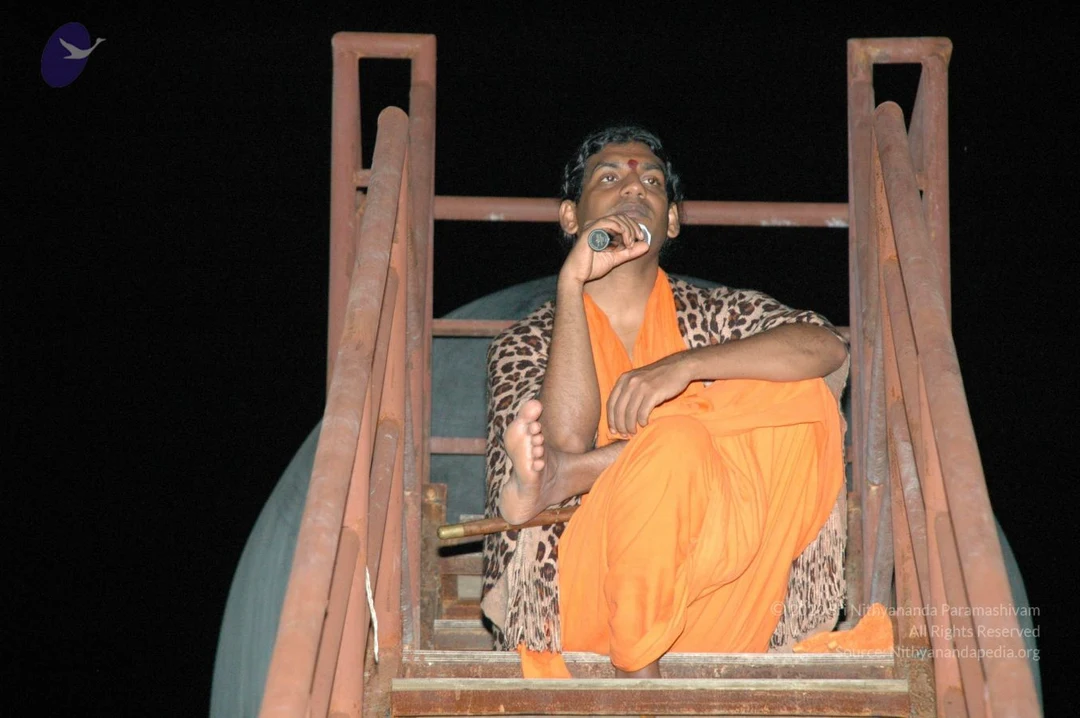
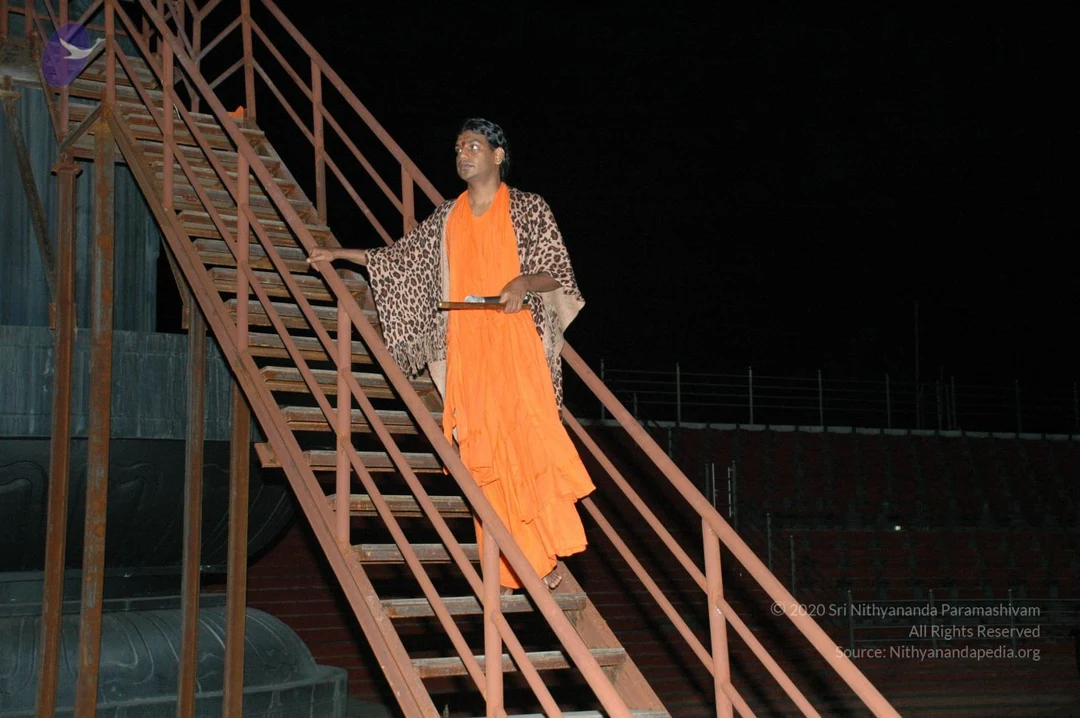
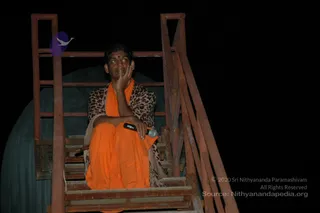
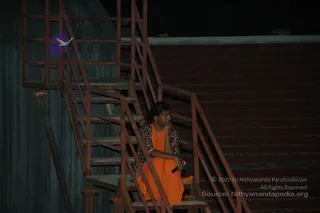
A man in orange clothing sits on a wooden platform set against a dark background with an iron frame. He wears an orange dhoti and a leopard-print shawl over his shoulders, with a red bindi on his forehead. He holds a handheld microphone in one hand and raises the other hand to his face while looking upward, as if speaking or reflecting during a satsang talk. a person by appearance cues (orange clothing, leopard-print shawl, bindi) seated in a public speaking setting.A photograph taken at night of a person sitting on a metal staircase with railings against a dark background. The person wears an orange saffron robe and a leopard-print shawl draped over the shoulders, and rests the chin on one hand while holding a small microphone near the face. A purple and white bird logo appears at the upper left, and a copyright notice is visible at the lower right. The person is seated alone and appears to be listening or speaking to an audience out of frame.A dimly lit photograph of a single seated person on a rusty metal staircase with railings at night. The person wears an orange-saffron robe and a leopard-print shawl draped over the shoulders, and holds a handheld microphone near the face while resting the chin on the other hand. The background is dark with a faint purple and white bird logo at upper left. a person: the saffron robe and draped shawl are distinctive clothing cues, and the seated person is presenting a talk with a microphone; appearance is not sufficiently distinctive to confirm identity, so the seated person is described by role.A dimly lit night photograph of a single person seated on a metal ladder-like staircase against a dark arched backdrop. The person wears an orange saffron robe and a leopard-print shawl, with one hand raised to the chin in a thoughtful pose and a small handheld microphone in the other hand. A blue and white bird logo appears at upper left. The surroundings are almost entirely dark, with a steel railing running up the frame.A photograph of a person in orange robes sitting on a metal staircase at night, resting their chin on one hand while holding a microphone in the other. The figure wears a leopard-print shawl over the orange garment and has long dark hair swept back. The staircase has rusted red railings and steps, with a dark tiered seating area behind. A purple circle with a white bird logo appears on the left. The setting appears to be a stage or event venue. a person candidate: the figure has long swept-back hair, saffron-orange clothing and a leopard-print shawl, but the face and appearance are not clear enough for certainty.A man in an orange saffron garment sits on the steps of a rusty metal staircase at night, holding a handheld microphone in his right hand while raising his other hand near his face as he speaks. He wears a leopard-print shawl over his shoulders. The background is dark, with a metal railing and a grey platform edge visible. A small purple and white bird logo appears at upper left.

nithyananda-bidadi

22 photosSource gallery
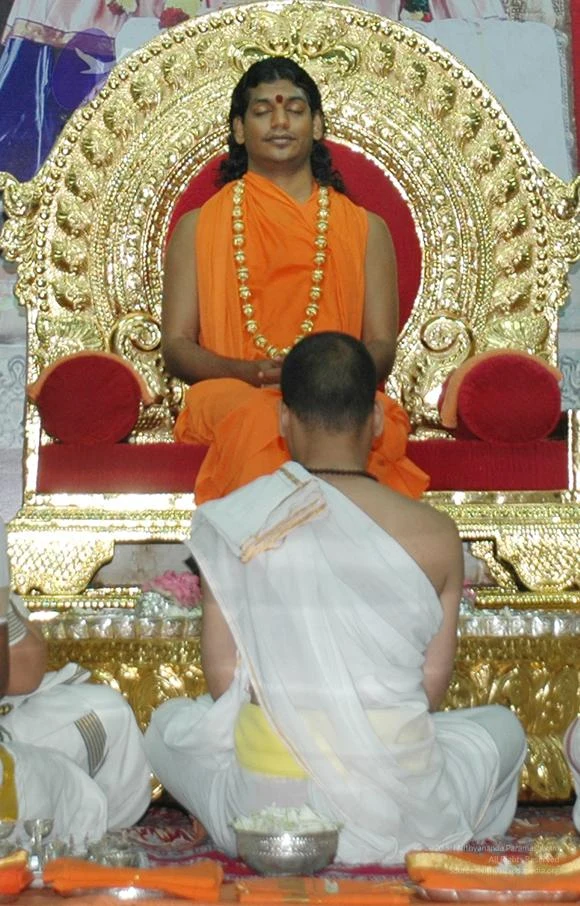
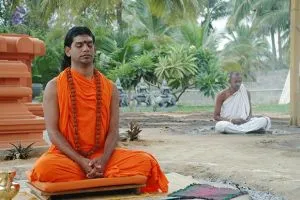
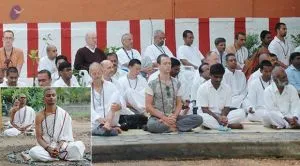
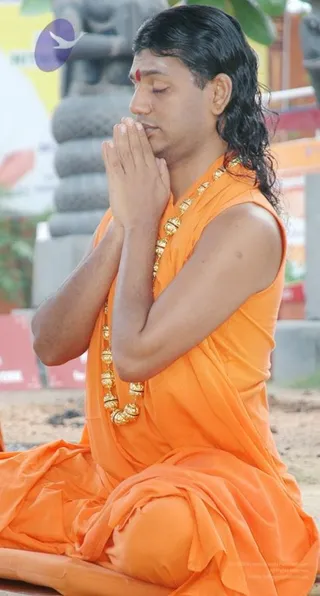
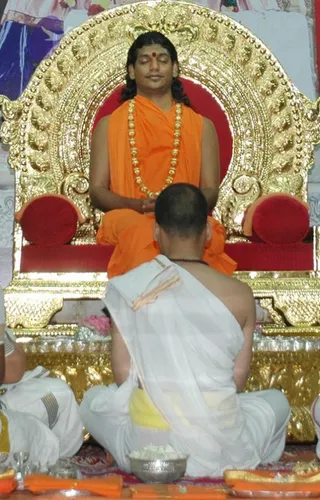
Outdoors under palm trees, a young man in saffron-orange robes with long dark hair sits cross-legged on an orange cushion, hands clasped in his lap, eyes closed in meditation. A saffron shawl drapes over his shoulders with a rudraksha-style mala. Behind him at right, an older man in white dhoti and white shawl sits on the ground, also meditating. Orange brick pillars and a small brass lamp with offerings sit at the left edge, with a dirt courtyard and parked vehicles beyond.A photograph of a large group of people seated in rows on a grassy lawn in front of a red and white striped backdrop. Most wear white clothing, and a few wear saffron or orange robes. Some seated figures have shaved heads and some are bald. Several people in the foreground sit cross-legged in meditation or attentive posture. The inset in the lower left shows two people seated in white clothes on a green lawn. The scene appears to be an outdoor satsang or meditation gathering. Several people are visibly present, and a man in light grey clothing sits in the middle foreground. No figure can be confidently identified as a person from appearance alone.A seated man in saffron-orange sleeveless robes sits cross-legged outdoors with eyes closed and palms pressed together in anjali mudra at chest height. He has long, swept-back dark wavy hair, a red bindi on his forehead, and a heavy gold necklace of beaded ornaments hanging over his chest. Behind him are stone sculptures and blurred banners with red and white panels. Appearance-based label: a person, seated in prayer, a sannyasi-style figure in saffron with a gold mala and long hair, shown in an outdoor satsang-style setting.A seated man in saffron-orange robes and a long gold necklace sits on an ornate gold-and-red throne with a rounded gilded back, eyes closed with hands in a meditative mudra, a red bindi on his forehead and long hair swept back. In front of the throne, a shaved-headed priest in white dhoti and shawl sits with his back to the camera, with a steel bowl of white flowers or rice and brass ritual vessels on the cloth-covered floor nearby. Pink and orange offerings, bright cloth and gilded decor fill the background.A three-panel collage photograph. On the left, a row of shaved-headed men in white ritual clothes sit on the floor at a puja, performing a fire ritual with brass plates and small lamps. In the centre, a close-up shows a seated man with long dark hair and a saffron-orange garment, adorned with a gold necklace, bare shoulders covered by a shawl, seated on an ornate golden throne. On the right, a shaved-headed man in white sits on the floor, partly visible, beside a ritual plate. The collage shows a devotional gathering with ritual activities.A man seated cross-legged on an ornate gold-and-red throne with carved gold scrollwork and a red cushioned seat, eyes closed in meditation. He wears an orange-saffron robe, a rudraksha mala draped across his chest, and a ceremonial gold necklace. His hair is long and swept back with a red-brown forehead mark. Behind him hangs a blue and red decorated backdrop. Two seated devotees in the foreground have their backs to the camera. Swamiji (probable): the seated figure on the throne shows long swept-back hair, saffron robe, and rudraksha mala cues, shown in an in-person setting.

Dasara-celebrations-in-Seeragapadi-Nithyananda-Dhyanapeetam

10 photosSource gallery
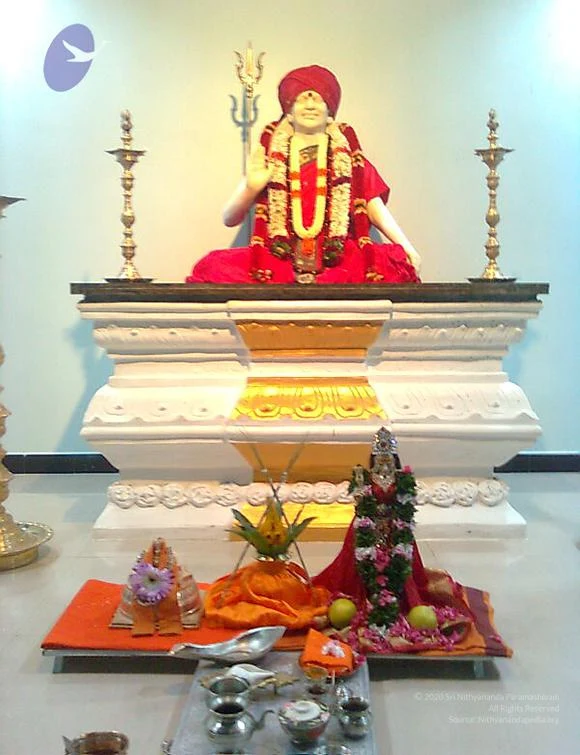
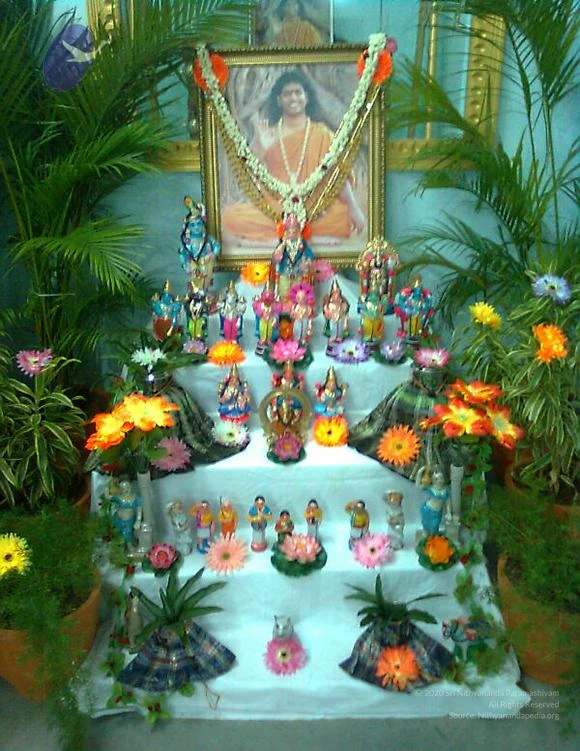
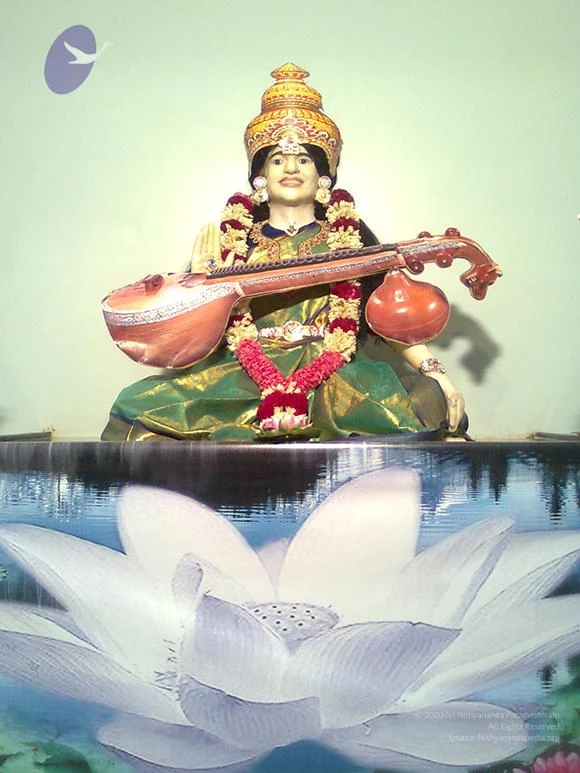
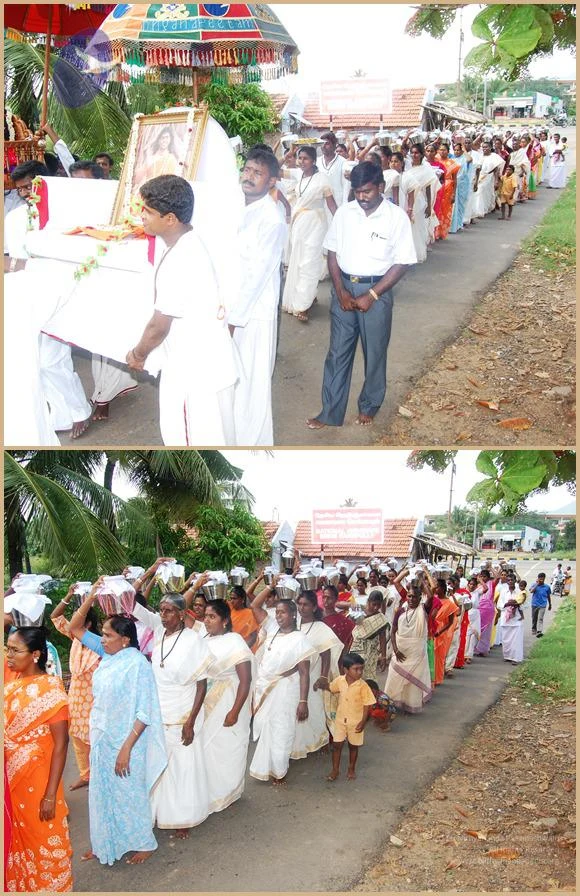
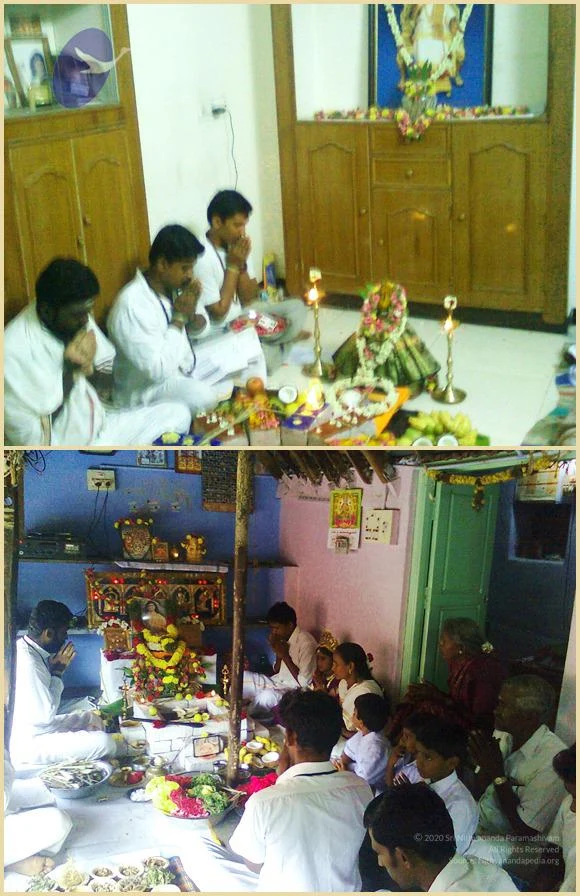
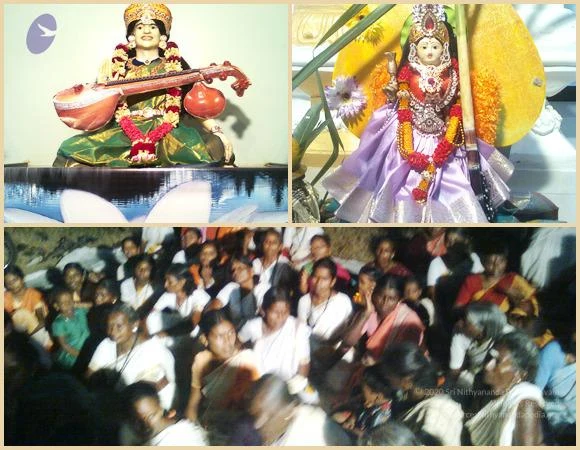
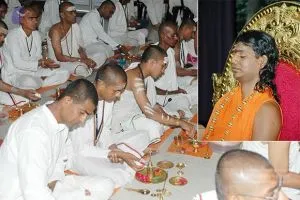
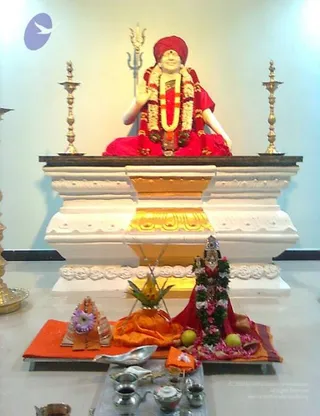
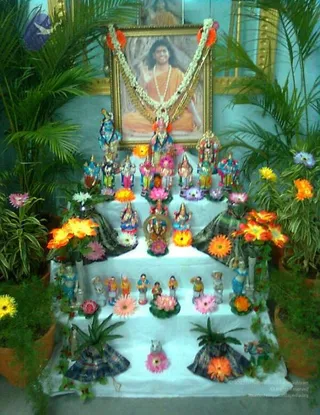
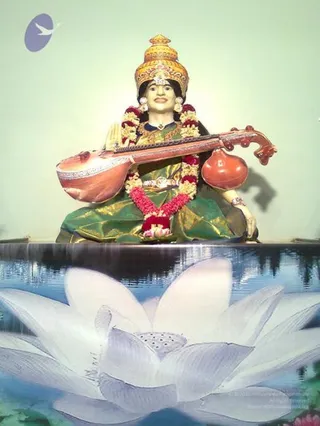
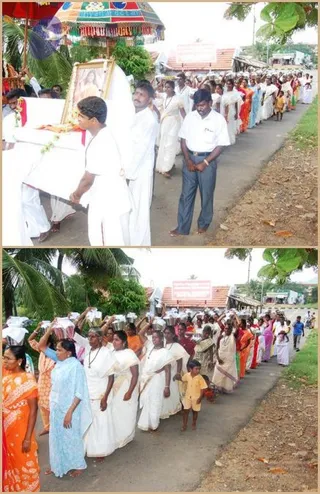
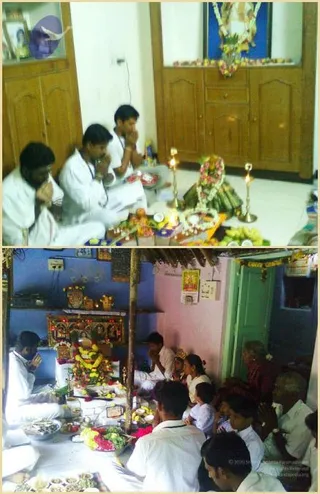
A seated statue of a figure in red robes and a red turban, decorated with flower garlands and a red and gold shawl, sits atop a tiered white pedestal with gold accents. A trident stands behind the figure's shoulder, and a gold lamp stand flanks each side. In front, orange cloths hold a brass kalasha-like vessel, fruits, flowers, a small silver shrine piece, brass pots and a silver tray, forming a puja arrangement. The statue depicts a seated figure, not a living person, so no physical people are present.A decorated altar display with a framed portrait at the top showing a man with long dark hair, a white garland and an orange-brown garment, draped with a white and orange flower garland. Below, rows of colourful painted deity figurines and small statues stand on tiered white-draped platforms, surrounded by green potted palms, orange, pink and white flowers, and a central Ganesha-like figure. No physical people are visible. The portrait is a depiction on a printed frame, not a physically present person.A seated statue of the goddess Saraswati plays a veena. She wears a green silk sari with gold border, a gold crown, and a long garland of red and white flowers across her body. A large translucent white lotus floats in water in the foreground, and the scene is set against a pale green wall. The statue is a deity murti, not a person.A photograph of an outdoor religious procession moving along a village road lined with palm trees. In the foreground, a young man in a white dhoti and white shirt carries a large framed portrait of a deity or saint with a garland, over a white cloth-covered platform, while other men in white and a man in a white shirt and dark trousers walk nearby. Behind them a long line of devotees, many in white and saffron or orange garments, follows along the road, and a decorated canopy with red and gold trim stands at the top left. The scene suggests a ratha or palanquin-style procession with garlands and a framed image carried ceremonially.A two-panel photo collage of a village road procession. Top panel: a man in a white shirt and white dhoti carries the front of a palanquin or ratha bearing a framed portrait of a woman with a garland, under a decorated canopy with coloured fringe; behind them a long line of people in white and coloured saris and white shirts walks, and a man in a white shirt and grey trousers stands at the roadside. Bottom panel: women in white saris with gold borders and coloured saris carry brass kalasha pots on their heads along the road, with a young child in a yellow outfit walking among them, and a sign with red and white lettering on a building beside the road. Collage of two photographs; the top panel's portrait is a printed image, not a physical person.Two-panel photograph of domestic puja rituals in a home shrine. Top panel: three men in white ritual clothes sit on the floor with hands folded in prayer before a decorated deity murti garlanded with flowers, with two brass oil lamps lit and fruits, bananas and offerings laid out. Bottom panel: a man in white kneels at a flower-garlanded shrine with a framed picture of deities, plates of fruit and food offerings in front, while a woman in a red sari, a young woman, children and older men sit on the floor with hands folded in devotion.

Evening-LEP-Session

50 photosSource gallery
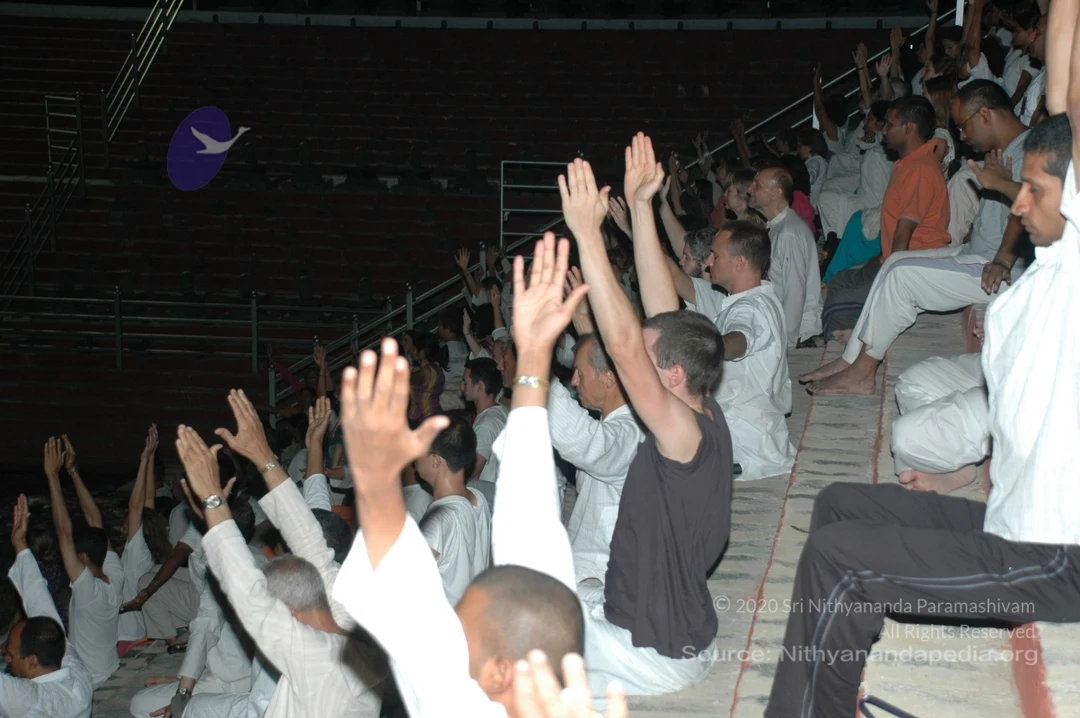
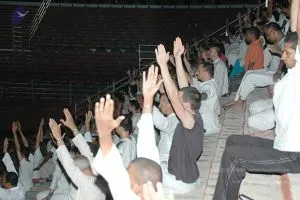
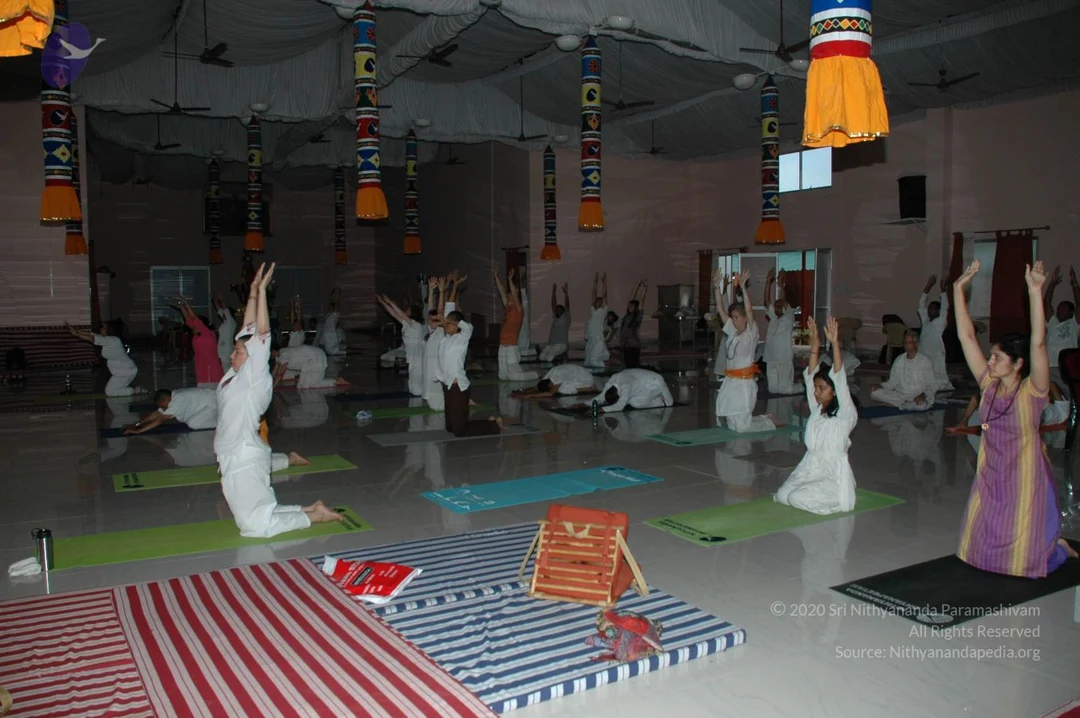
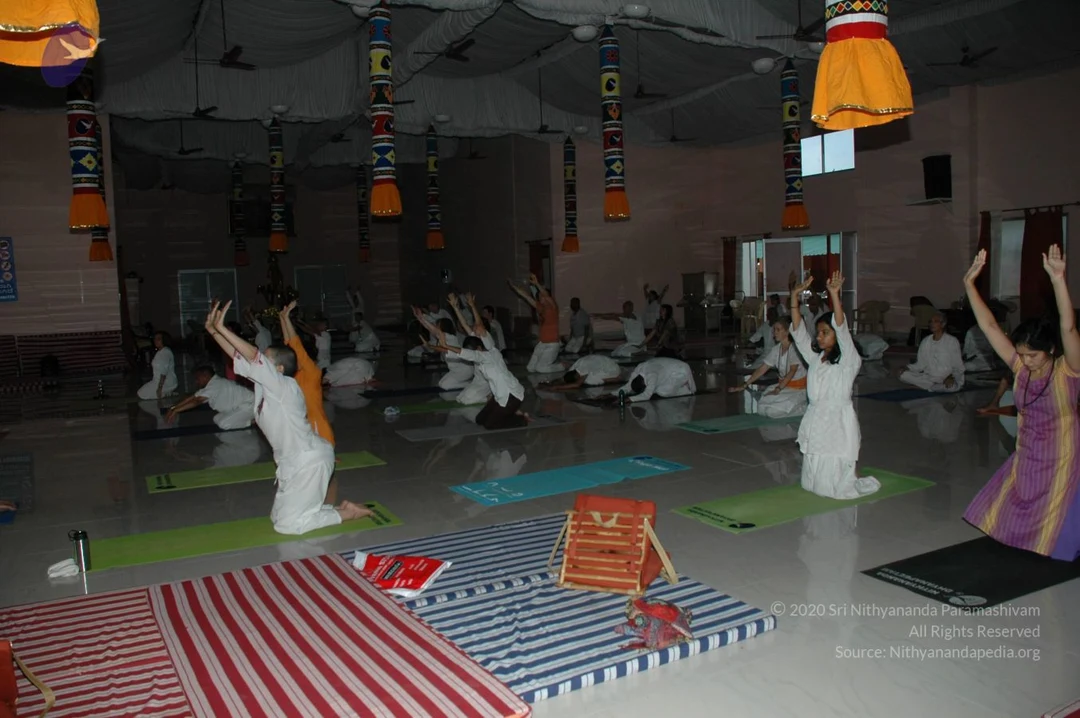
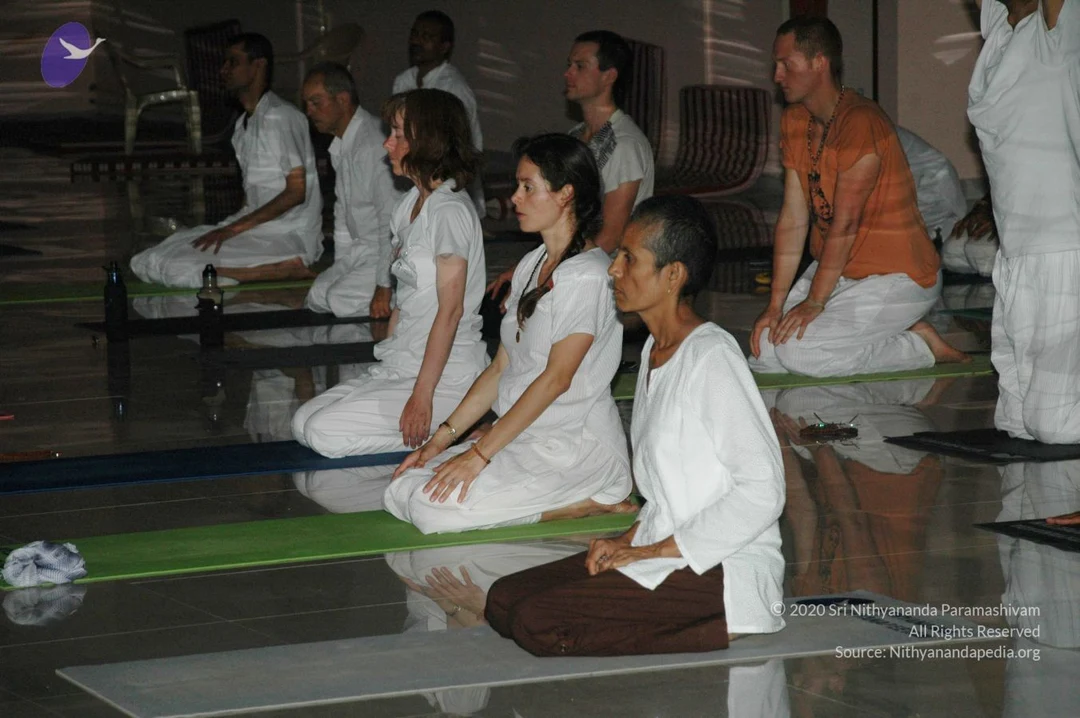
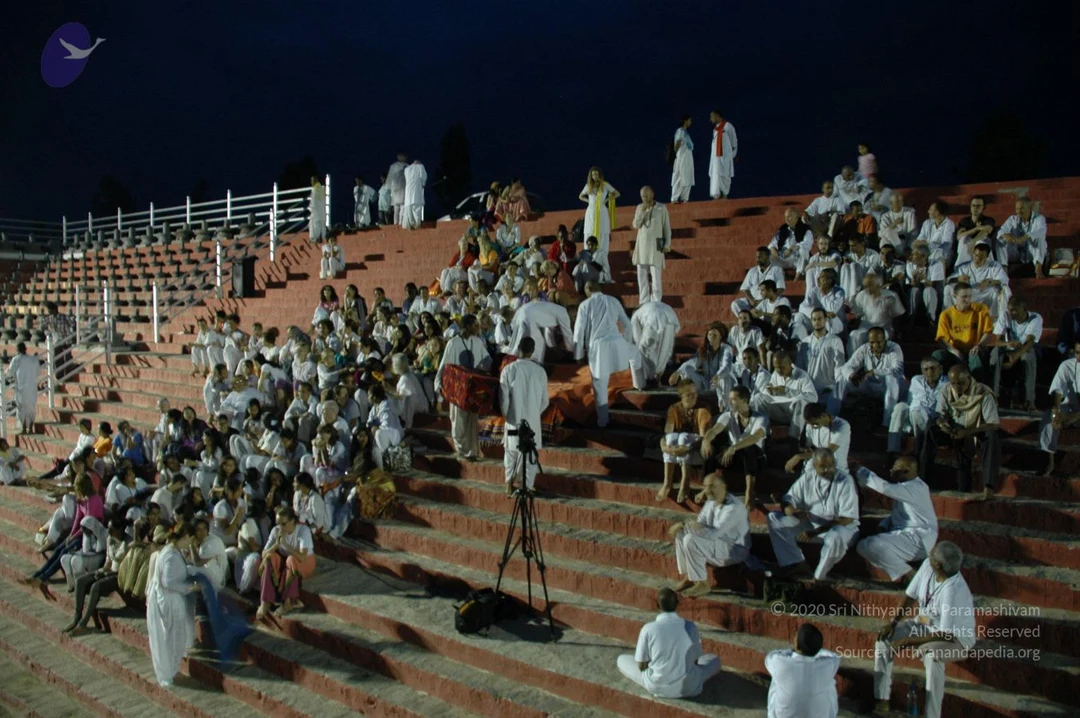
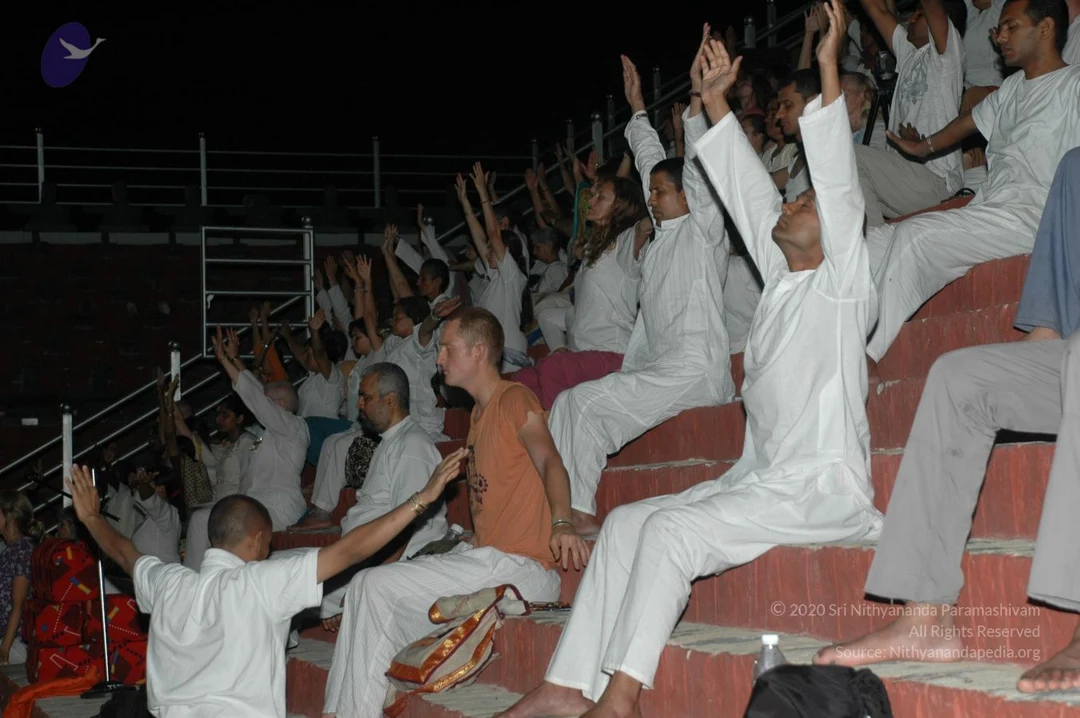
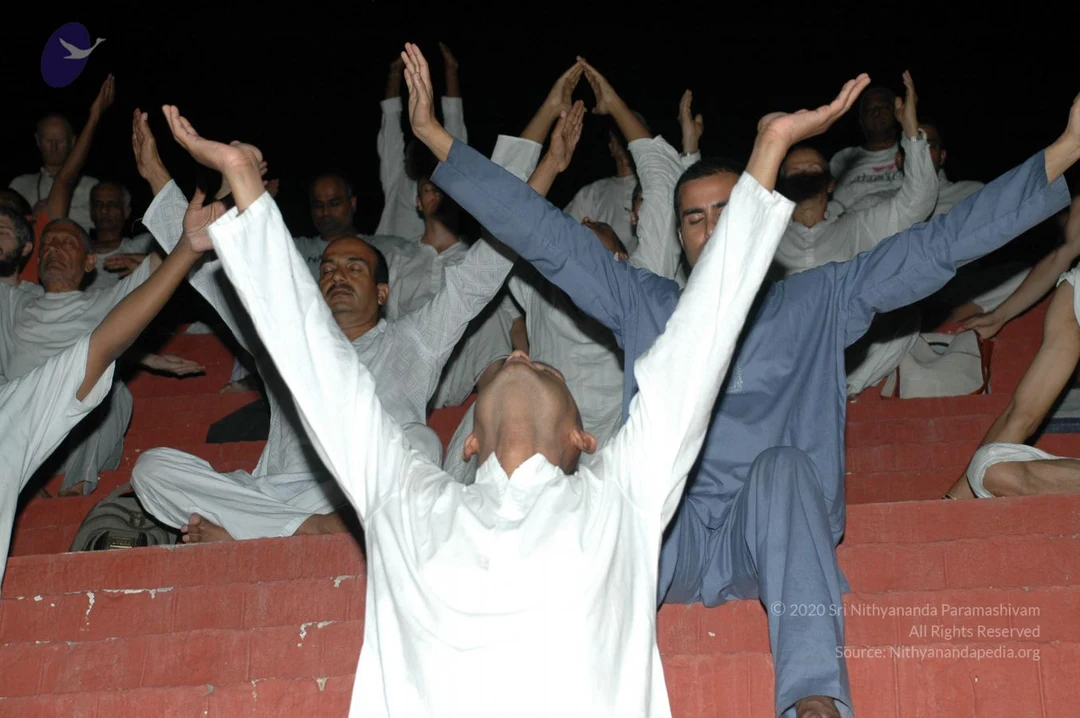
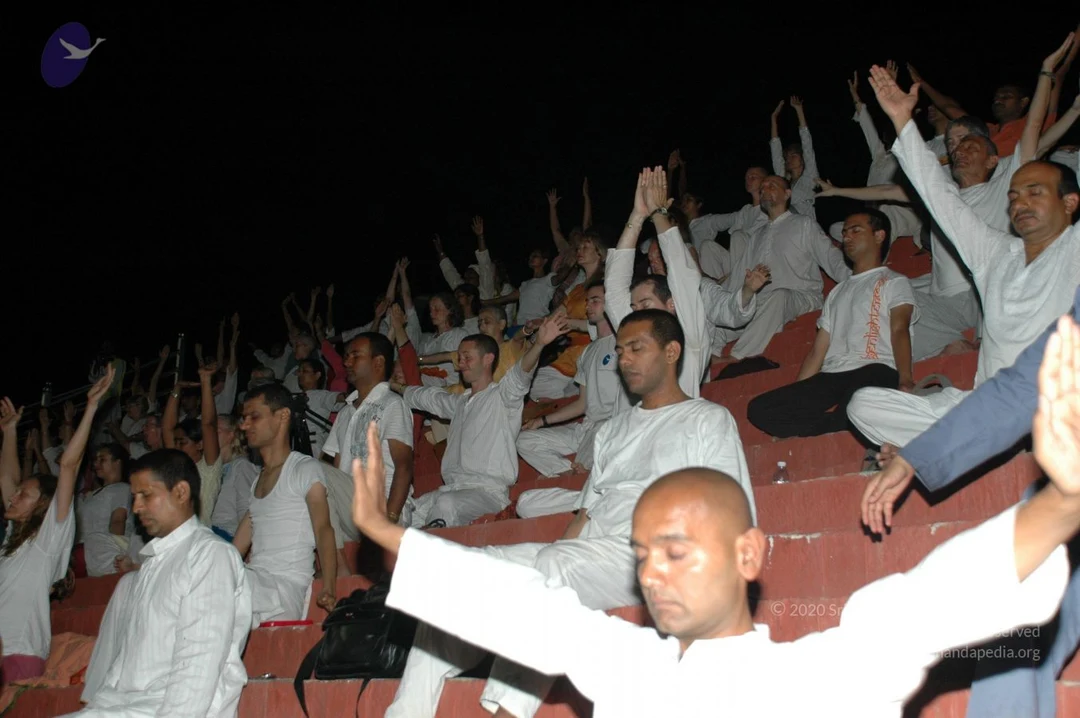
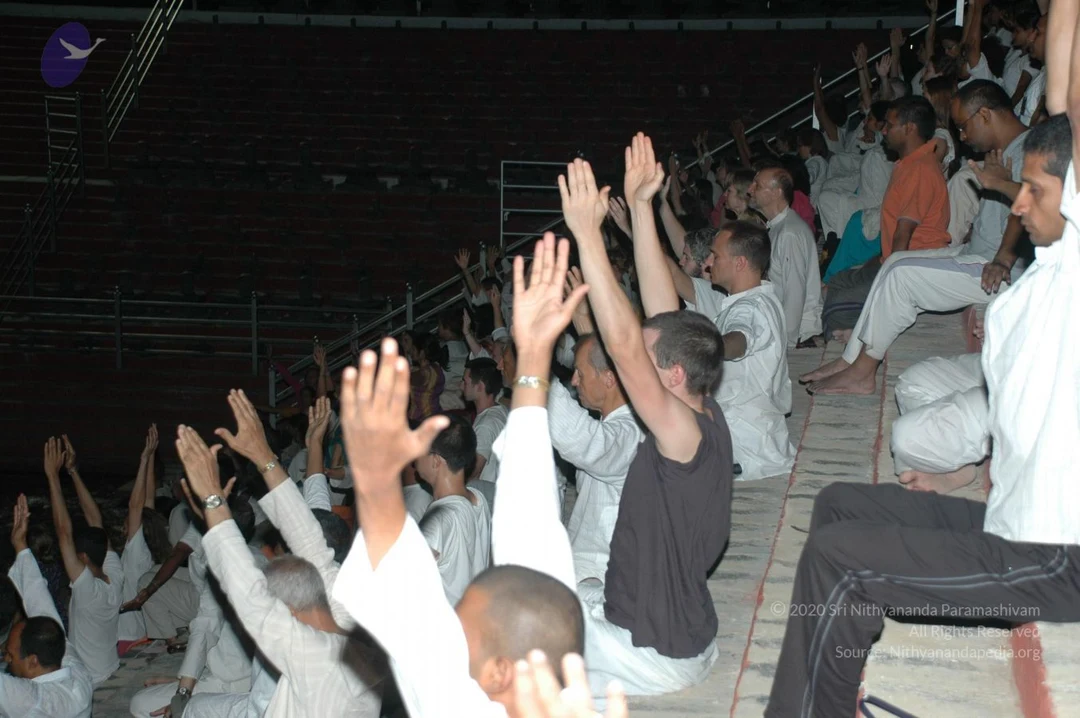
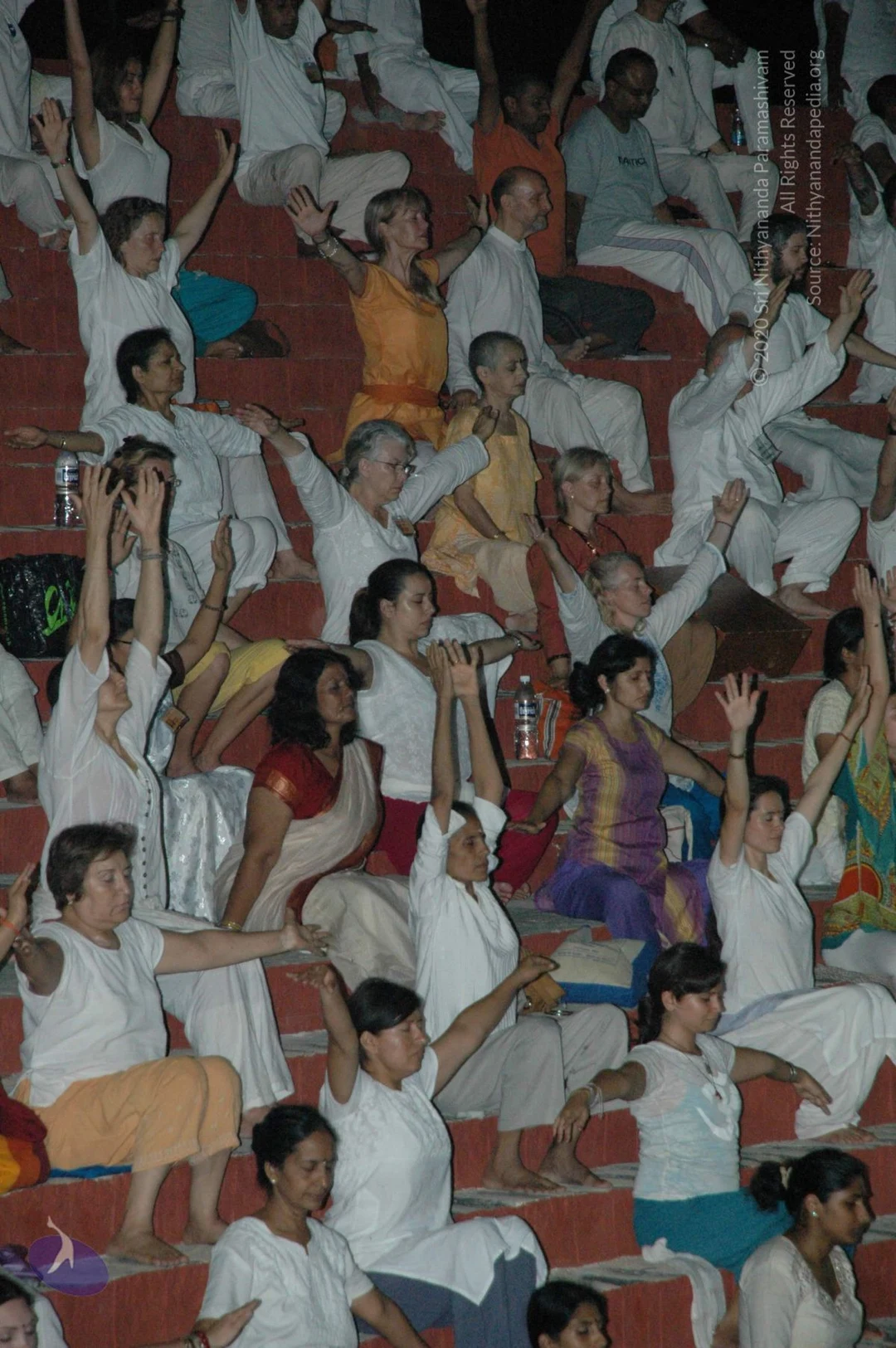
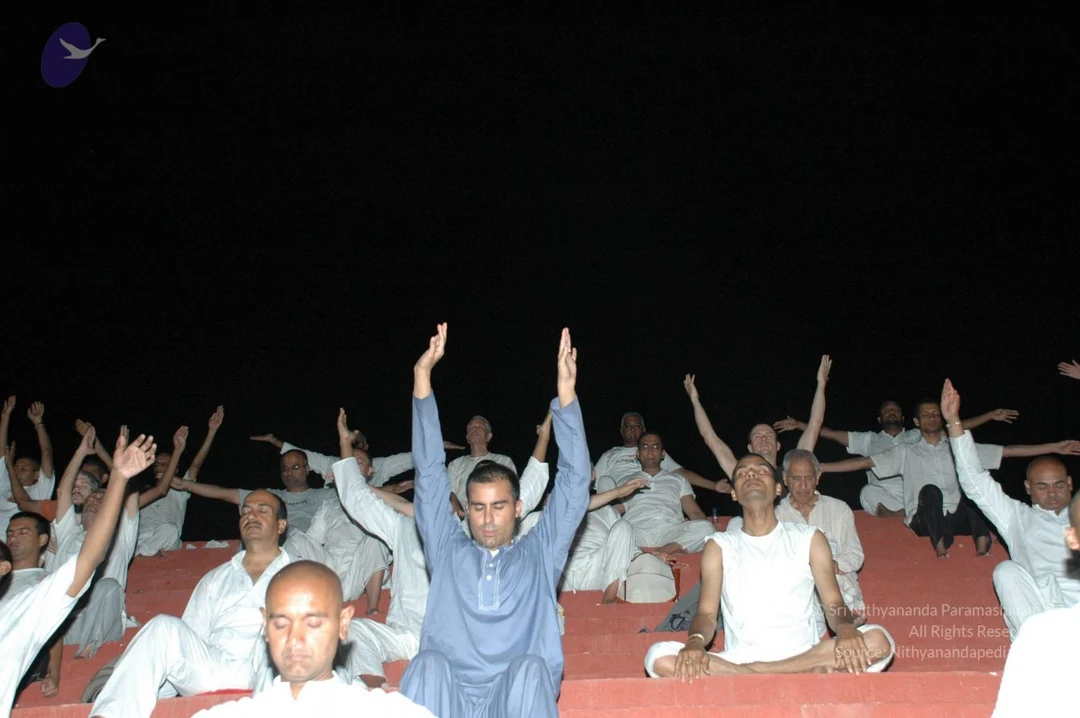
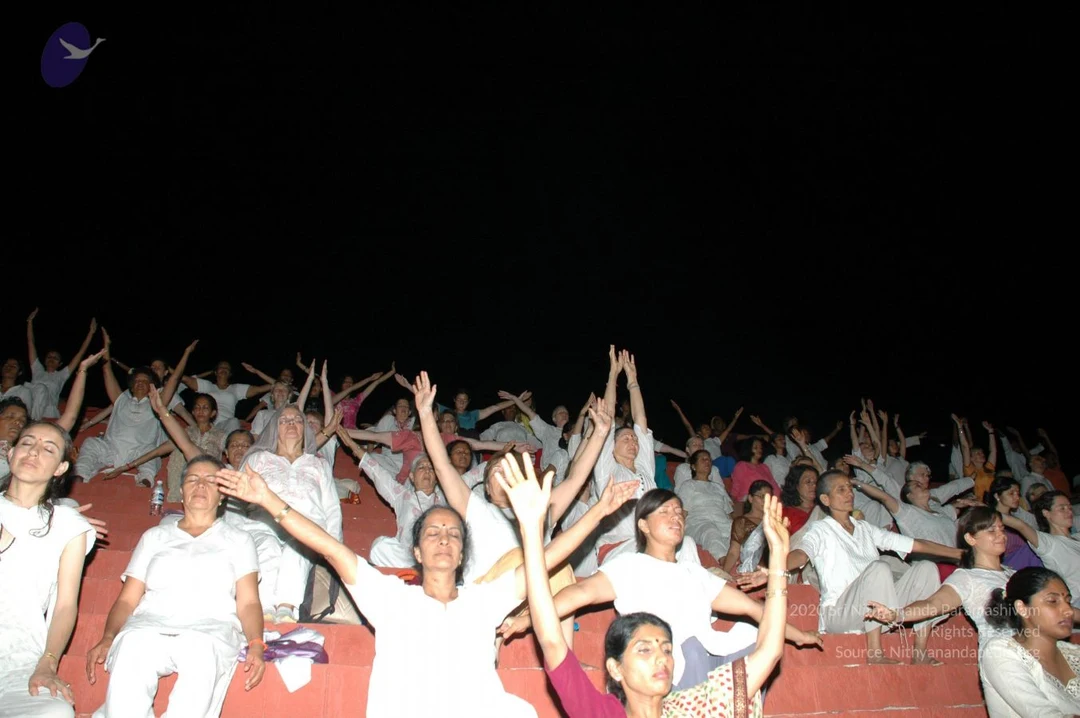
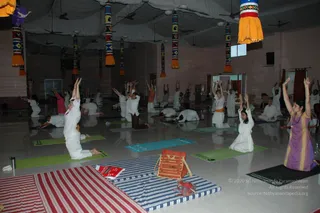
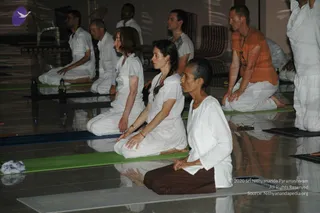
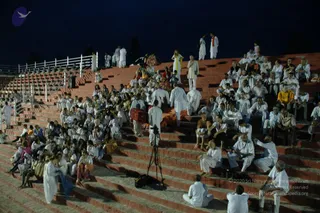
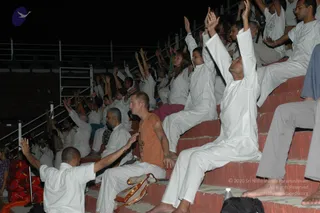
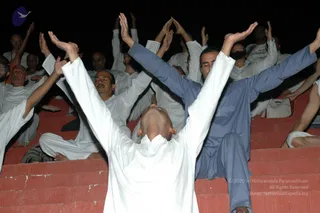
A photo of a yoga session in a large hall with a glossy white floor and hanging colourful tassel banners overhead. Many participants in white clothing kneel on green, blue and black mats with arms raised overhead, while a few sit cross-legged. A woman in a purple and yellow striped dress stands at the right, arms raised. Striped red and blue floor mats and a small wooden stand are in the foreground. No identifiable a person candidate is visible; the people are practitioners in white and other colours.A hall with a polished grey floor where many people kneel on green, teal and black yoga mats, arms raised overhead in a stretch. Most wear white clothing; a few women wear orange or purple garments. Striped red-and-white and blue-and-white floor mats lie in front, with a small wooden stand and a red object on the floor. Tall hanging decorations in orange, yellow and patterned fabric hang from a white draped ceiling, and fans are visible above. No individual can be confidently identified as a person from appearance in this view.A photograph of a seated group meditation or satsang in an indoor hall with polished dark floor reflecting the participants. In the foreground a woman with short grey hair in a white top and maroon-brown trousers sits on a green mat with hands resting on her knees. Beside her a woman with a long dark braid wears white and sits with hands clasped. Behind them several people in white clothing sit on mats, and a man on the right wears an orange top with a beaded necklace. A standing person in white is partly visible at the right edge. Chairs and a small cloth bundle sit on the left.Night outdoor gathering on red-brick tiered steps of an amphitheatre-style venue, with a large crowd of devotees seated in rows, mostly dressed in white ritual clothing. Several people stand on the steps, including a figure in a white robe and another in white with an orange-red shawl. A tripod-mounted camera stands in the foreground near the steps, with a bag on the ground beside it. Some devotees sit in front, and a few wear coloured garments. Large white railings and dark trees surround the venue under a night sky. A small logo appears in the upper left corner.A night-time outdoor satsang on red-tiled stepped seating. Many devotees in plain white clothing sit and raise their arms overhead with palms open, several in a kneeling or seated posture. A man in an orange top sits near the center with his hands together, and a bald man in white stands at the left extending his arm. Metal railings and a few water bottles are visible on the steps. No speaker or ceremonial figure is clearly visible.Night outdoor gathering of devotees seated on red brick steps, arms raised high with palms open upward in a devotional or meditative gesture. A bald man in a white kurta, seen from behind at front left, raises both arms; beside him a man in a blue kurta sits with arms outstretched. Others in white and grey clothes fill the tiers, some with eyes closed. Dark night sky behind.

LEP-Session

60 photosSource gallery
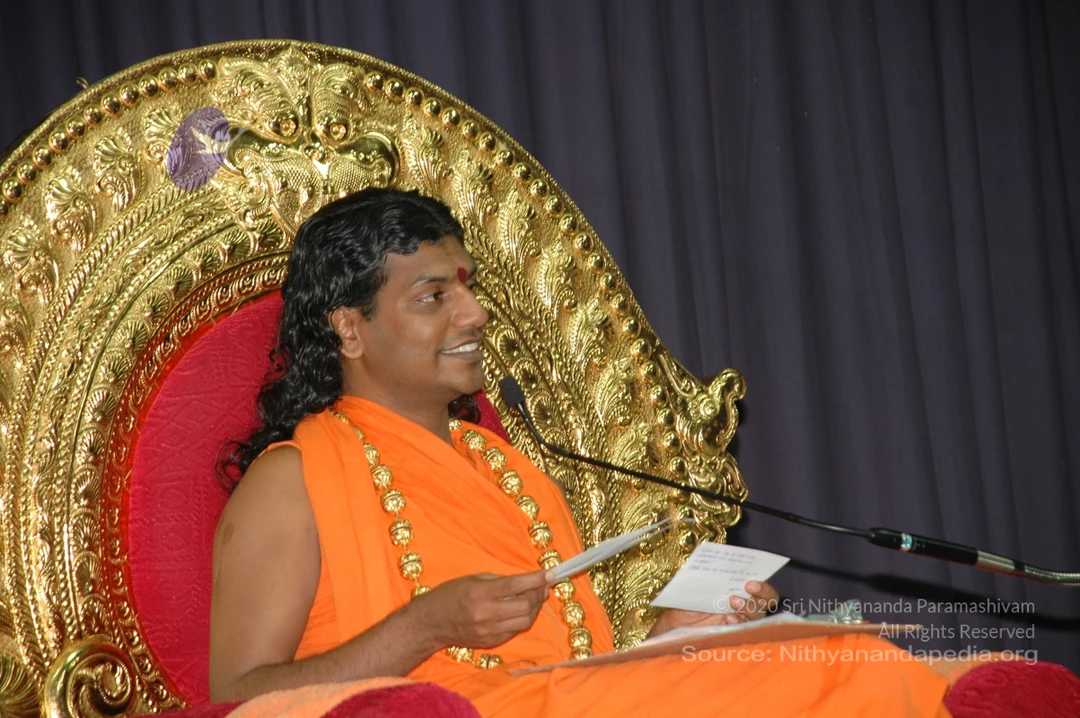
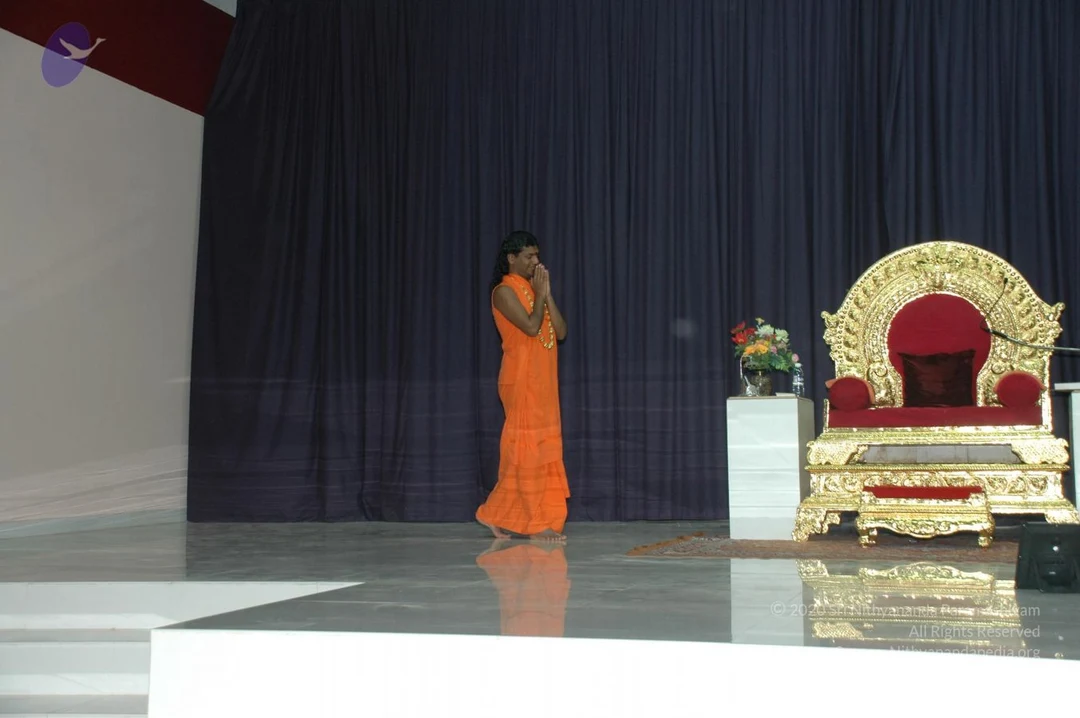
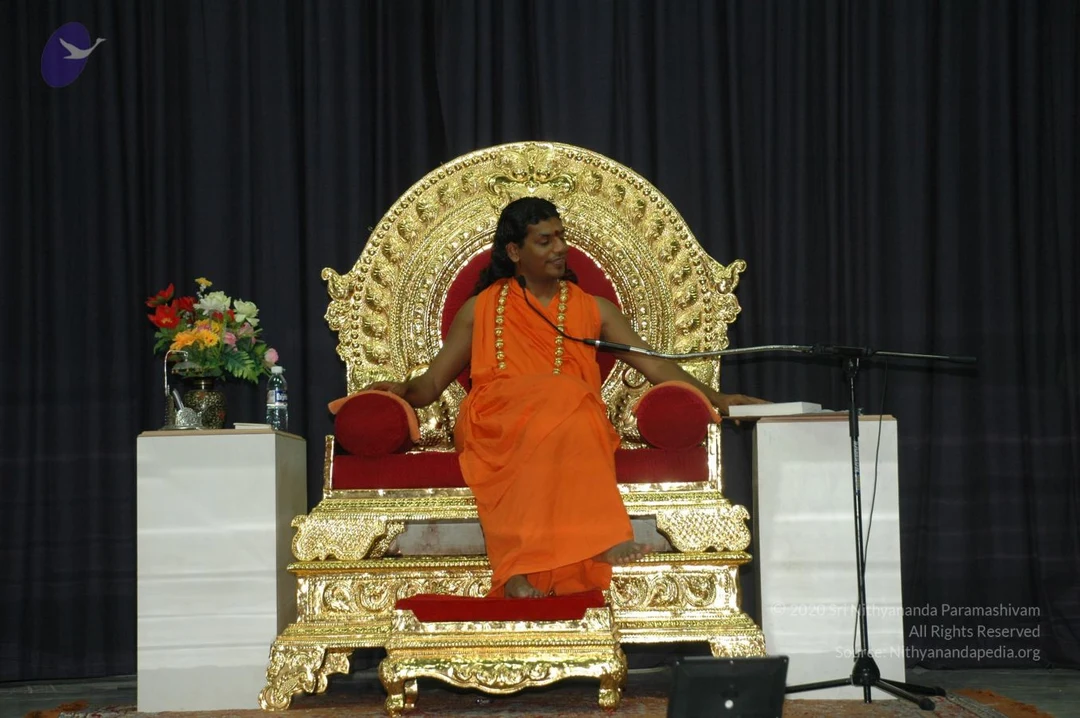
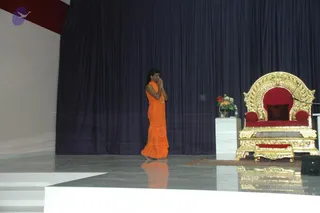
A standing person with long dark hair, wearing an orange saffron robe and a light orange shawl over the shoulders, performs an anjali namaskar with palms pressed together on a grey stage in front of a dark blue draped curtain. Beside them stands an ornate golden throne with a red velvet seat and backrest, with a small vase of mixed flowers on a white pedestal nearby. A microphone stand is visible at the right edge. Only one person is physically present. The throne is empty and is not a physical person.A seated man in saffron-orange robes sits on an ornate gold throne with red velvet cushions and armrests, speaking with arms outstretched before a dark stage curtain. He wears a long beaded necklace and a red bindi, and his long hair is swept back. Bare feet rest on a red footstool. A microphone stand stands at right, and a vase of colourful flowers and a water bottle sit on a white pedestal at left. Appearance-based label: Swamiji (probable), seated in an orange robe with rudraksha-style beads and long hair on a throne at a satsang talk.A photograph of a seated man in an orange saffron robe on an ornate gold throne with red cushions, reading from loose paper held in both hands. He has long dark hair swept back, a red tilak on his forehead and a long beaded mala with gold-toned elements around his neck. He is barefoot on a red footstool. A microphone on a stand is angled toward him. Beside the throne stands a vase of red, white and orange flowers on a white pedestal, and a dark curtain forms the backdrop. The setting is a stage at a satsang talk.A photograph of a seated man in saffron-orange robes on an ornate gold-and-red throne with carved gold backrest, resembling a dais setting. He has long dark hair, a red bindi on his forehead, and multiple gold beaded necklaces. He reads from papers held on his lap, with a microphone stand beside him. A small silver lamp or kalasha sits on the left, and a dark blue curtain forms the backdrop. Appearance-based label: a person, seated on the throne as speaker during a satsang discourse.A man with long swept-back black hair and a small red bindi sits on an ornate gold throne with a red cushion, smiling as he reads from small white cards held in both hands. He wears an orange sleeveless garment with a gold-bead necklace, and a black microphone stand is visible at right. Behind him hangs a dark blue curtain.A seated man in saffron-orange robes reads from a sheet of paper on an ornate gold and red throne with a matching gold footstool, bare feet resting on it. He wears a rudraksha-style necklace and a red bindi on his forehead, with long dark hair swept back. A microphone stand stands at right, a white pedestal with a floral arrangement and a small lamp at left, and a dark purple draped curtain forms the backdrop above a patterned rug on a reflective floor. The scene resembles a seated satsang talk, with the speaker reading from notes.

Flag-Hoisting
65 photosSource gallery
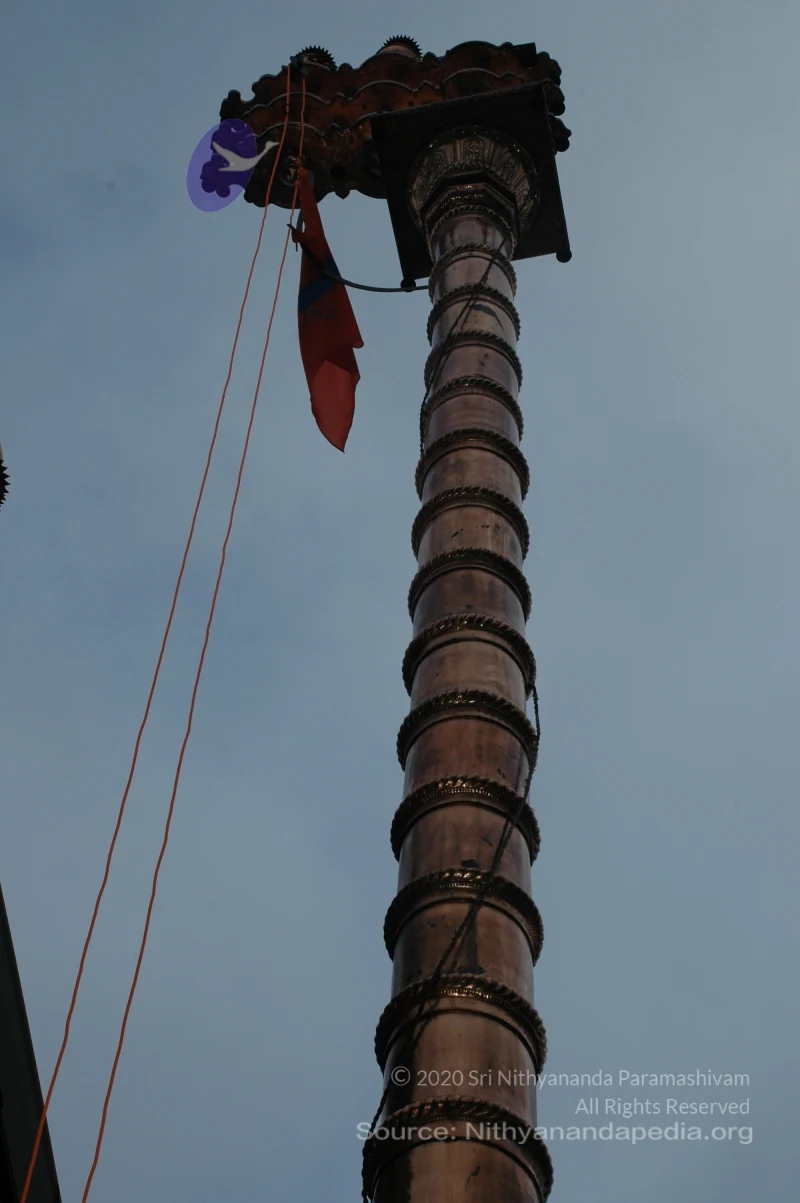
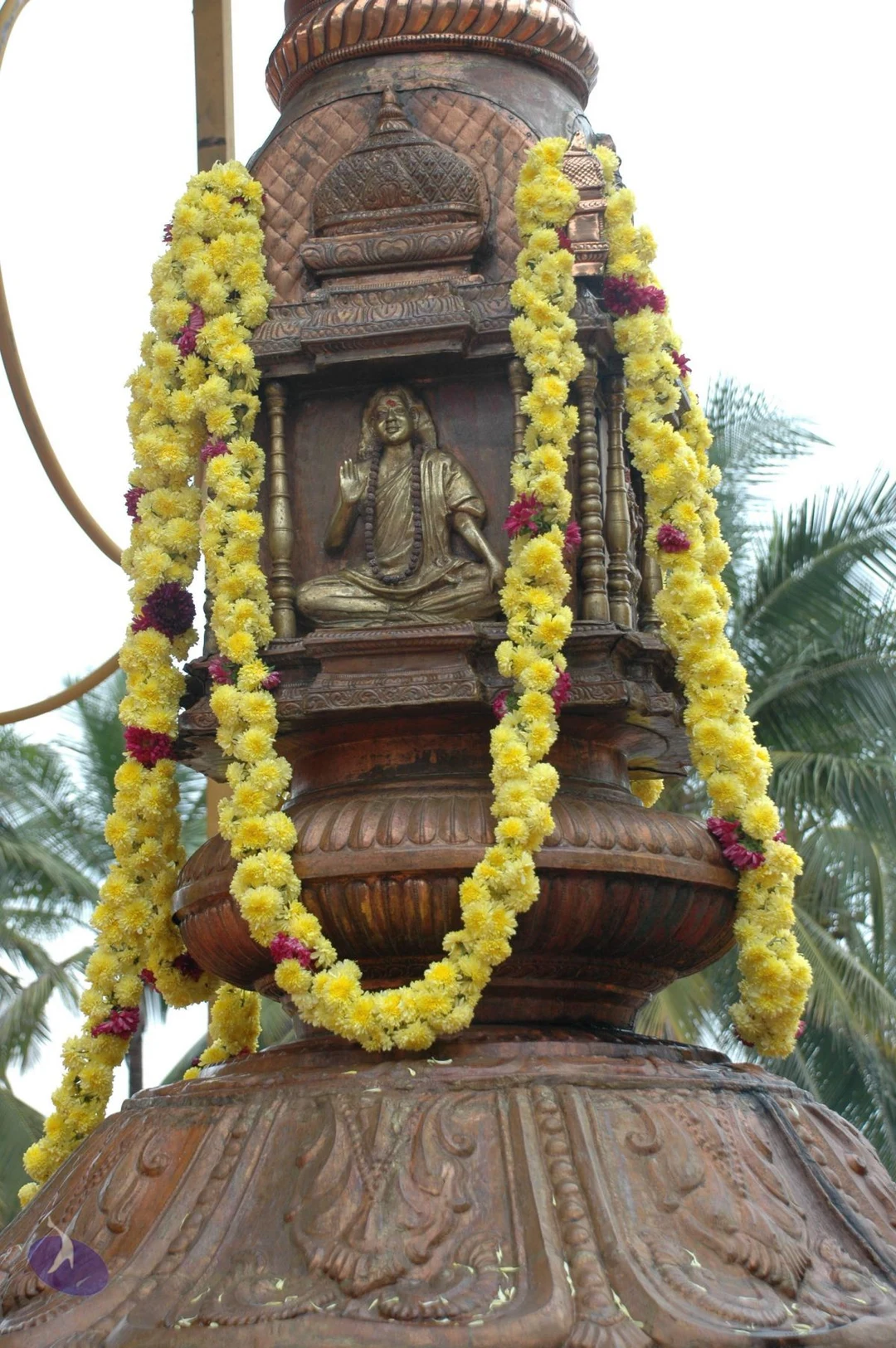
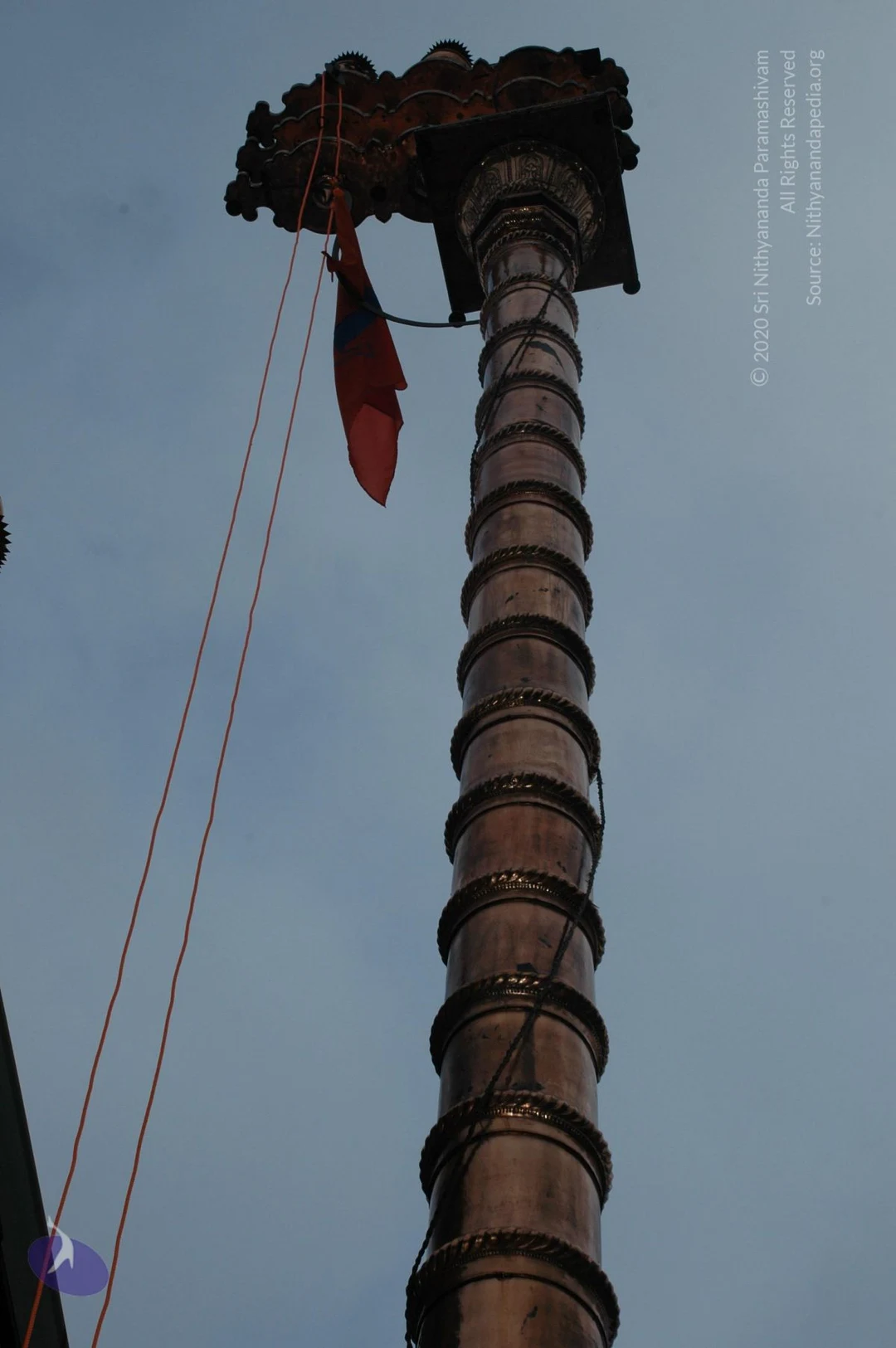
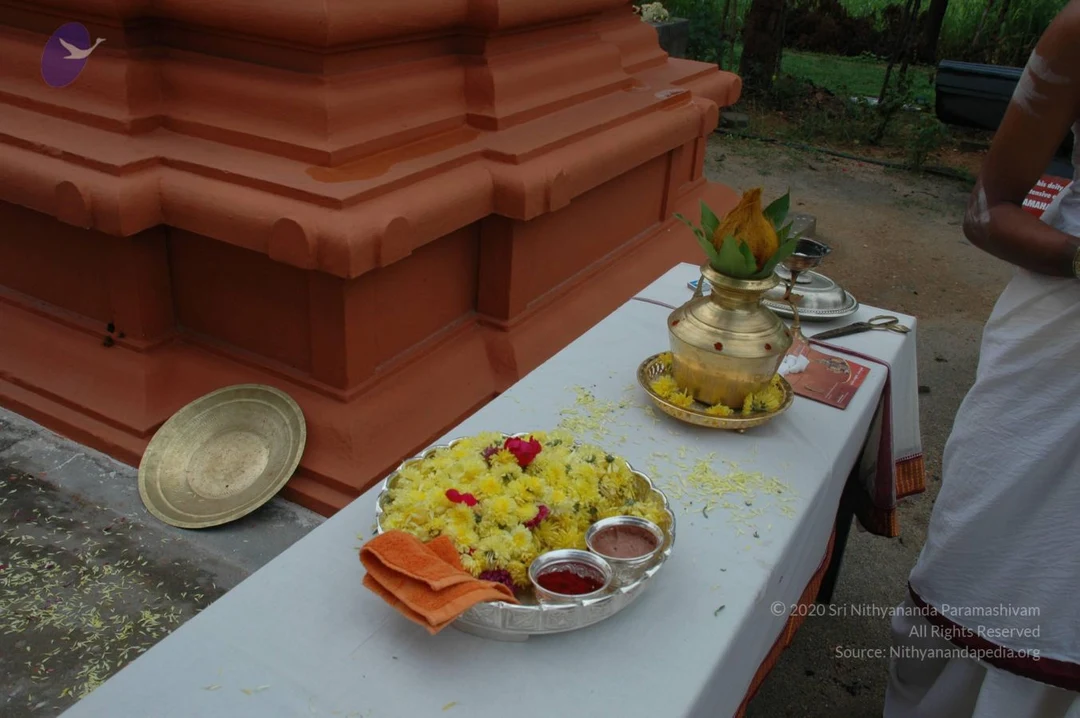
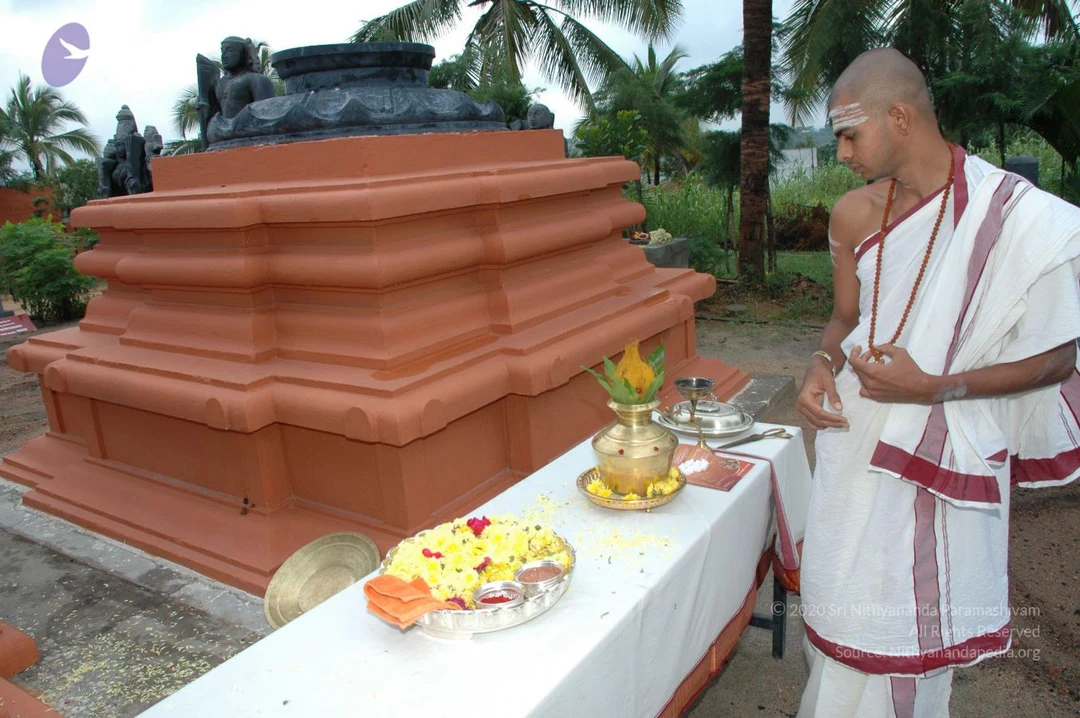
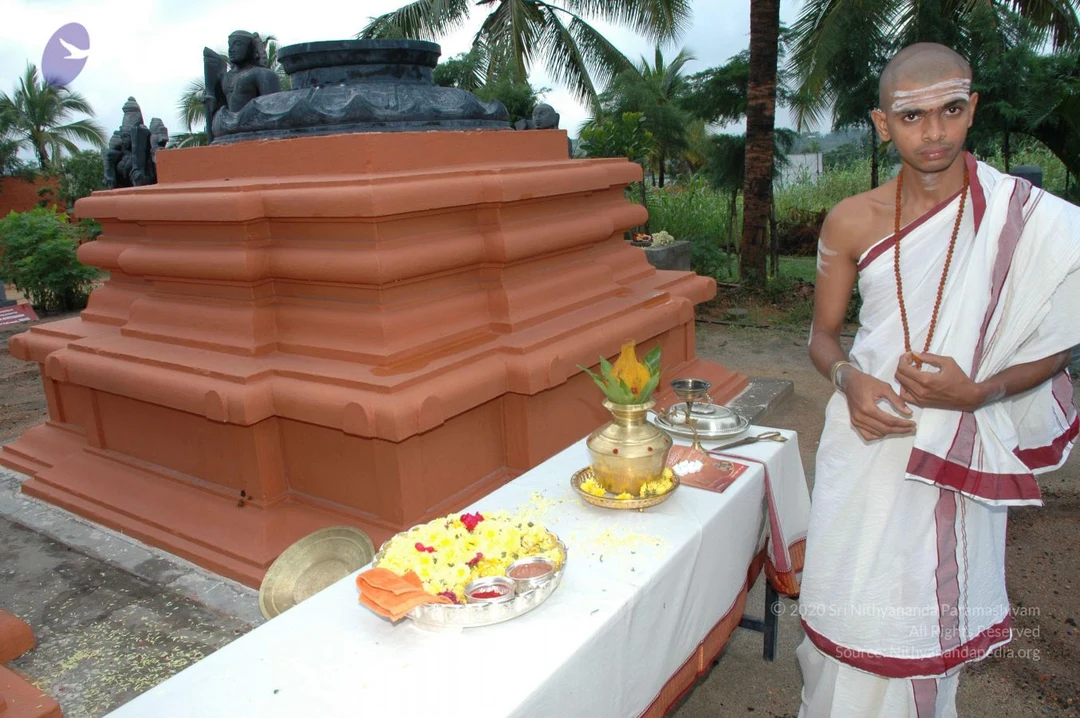
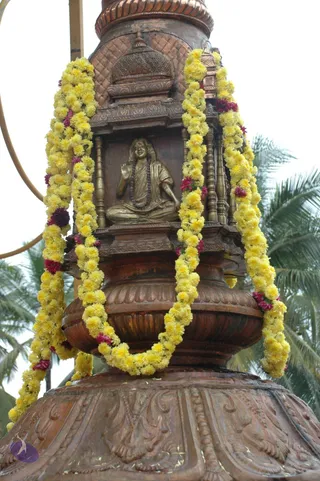
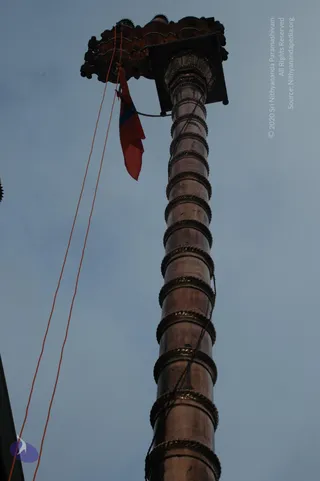
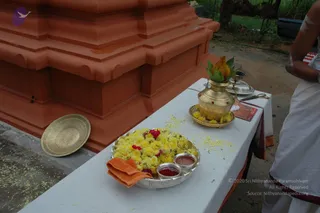
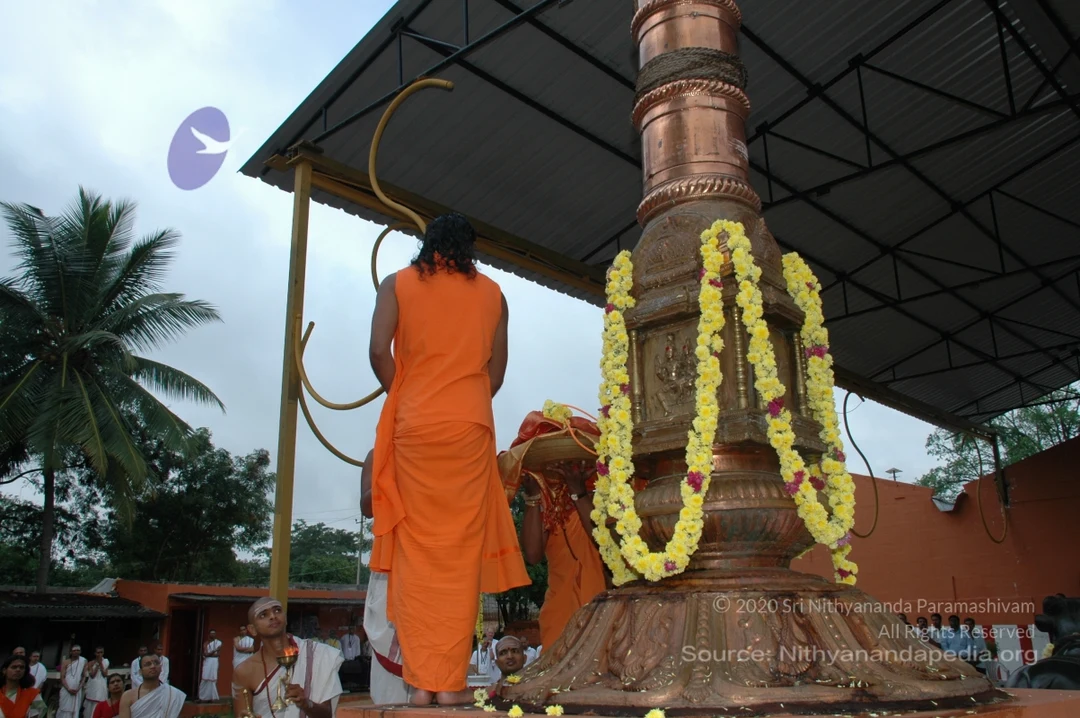
A photograph of an outdoor temple setting with a tall copper pillar or dhwaja-style column on an orange-painted square base. Yellow marigold garlands with red flowers are draped around the column, and a small gilded figure stands in a niche on its shaft. Red and gold cloth lies at the base beside scattered petals. Palm trees and a thatched-roof structure surround the area under an overcast sky. On the right, a large banner shows printed figures and a caption. One seated person in white clothing sits at the left edge, and a few other people stand at the far left.A photograph of an ornate copper-and-brass pillar or ritual column with a seated bronze figure in a small niche. The seated figure sits cross-legged, raises one hand in blessing, and wears a rudraksha mala and a draped robe; it is a statue, not a living person. The niche is framed by miniature carved pillars and a domed canopy, and the column is wrapped with long garlands of yellow marigolds and magenta flowers. Carved foliate bands cover the base, and palm trees appear in the background against a pale sky.Photograph looking up at a tall, slender metal flagstaff or dhvaja stambha against a pale blue evening sky. The pole has a series of decorative bands and ornamental rings along its length, and it tops a carved, ornate square finial. A red-and-blue cloth flag hangs from the upper section, held by two thin red ropes running down the pole. No people are visible in the frame.Outdoor temple scene beside a terracotta-red stepped base. A white-draped table holds a silver tray of yellow marigold flowers with red petals, two small bowls of red and reddish powder (kumkum), an orange-and-saffron cloth, and a brass kalasha with mango leaves and a coconut on top set on a brass plate. A brass plate lies on the ground, scattered petals cover the floor, and a person in white ritual dress with a red-marked forehead stands at the right edge, partly visible.A shaved-headed man in white ritual dhoti and shawl with red-bordered edges stands at right beside a white-draped table set with offerings. The table holds a brass kalasha with a mango-leaf topping and yellow flowers, a brass plate of yellow and red flowers, small brass bowls, a brass lamp and a betel or flower tray. A large red-brown stepped stone platform with a dark carved peetha and figures stands behind, with palm trees and green shrubs around. A rudraksha mala hangs on his chest and a white tilak marks his forehead. Outdoors, with flower petals scattered on the ground, this appears to be a puja or abhishekam offering setup.A young shaved-headed man in white dhoti and shawl with red border stands beside a white-draped table at an outdoor temple site. He wears a rudraksha mala and white-and-red forehead markings and holds his hands together at his waist. On the table sit a brass kalasha with a yellow flower and green leaves, a brass plate of yellow and red flowers, small bowls of kumkum, and a brass lamp. A tiered terracotta-coloured pedestal with dark stone deity sculptures stands behind, with palm trees and greenery beyond.

Morning-Message

12 photosSource gallery
A man with long dark hair and a red bindi sits cross-legged on an ornate gold throne with red cushions, speaking into a microphone on a stand. He wears a saffron-orange robe and a multi-strand necklace of amber-coloured beads. Behind him a large backdrop shows two figures in white and red garments decorated with yellow garlands, flanked by golden lamp stands and a small shrine. A brass oil lamp and a small dish sit on a gold side table at left.A man with long dark hair and a red bindi sits on an ornate gold throne with red cushions, speaking into a microphone on a stand. He wears an orange saffron robe draped over his shoulders and a long gold-beaded necklace. His hands rest folded in his lap. Behind him are large printed backdrop images of figures in pink and blue garments, a brass lamp stand and a red-draped altar area. The appearance of the seated speaker matches the probable Swamiji cues of long swept-back hair, saffron clothing, ornate gold necklace and a throne seat, and he is delivering a talk.A man seated on an ornate gold throne with red velvet cushions speaks into a microphone during a talk. He wears an orange saffron robe draped over one shoulder and a long gold bead necklace, has a red bindi on his forehead and long swept-back dark hair, and his bare feet rest on a red footstool. Behind him are draped pink and white fabrics with garlands of red and yellow flowers. The appearance and seated throne setting are consistent with a Swamiji (probable) giving a satsang discourse, based on the saffron robe, long hair, gold necklace and throne cues.A man with long, swept-back dark hair and a small red bindi sits on an ornate gold throne with a red cushioned seat, facing forward with hands resting in his lap. He wears a saffron-orange robe and a long gold-bead necklace. A microphone on a stand is positioned in front of him. Behind the throne, a large backdrop shows a figure in pink and white garments adorned with garlands of yellow and red flowers, with brass lamp stands and temple-style decor at the sides. This appears to be a public discourse setting. Swamiji (probable): the seated figure has long swept-back hair, saffron clothing and gold beaded necklaces, presented as the speaker at the discourse.A man with long, swept-back dark hair and a red bindi sits on an ornate gold throne with red cushions, speaking into a gooseneck microphone. He wears a flowing saffron-orange garment wrapped over one shoulder and a long gold bead necklace, with his hands resting in his lap and bare feet on a red footstool. Behind the throne, garlanded figures in white and red fabric are partly visible against a pink backdrop.A seated man in an orange sleeveless robe with a red bindi and long dark hair sits on an ornate gold and red throne with a microphone in front of him. He wears a long gold bead necklace and has his hands clasped in his lap, with one bare foot visible. Behind the throne, a backdrop shows floral garlands of white, yellow and red blooms. Appearance-based label: a person, with a long dark swept-back hairstyle, saffron robes, a gold bead necklace and a throne setting. The image is a photo of one physical person.

Navaratri-Golu

16 photosSource gallery
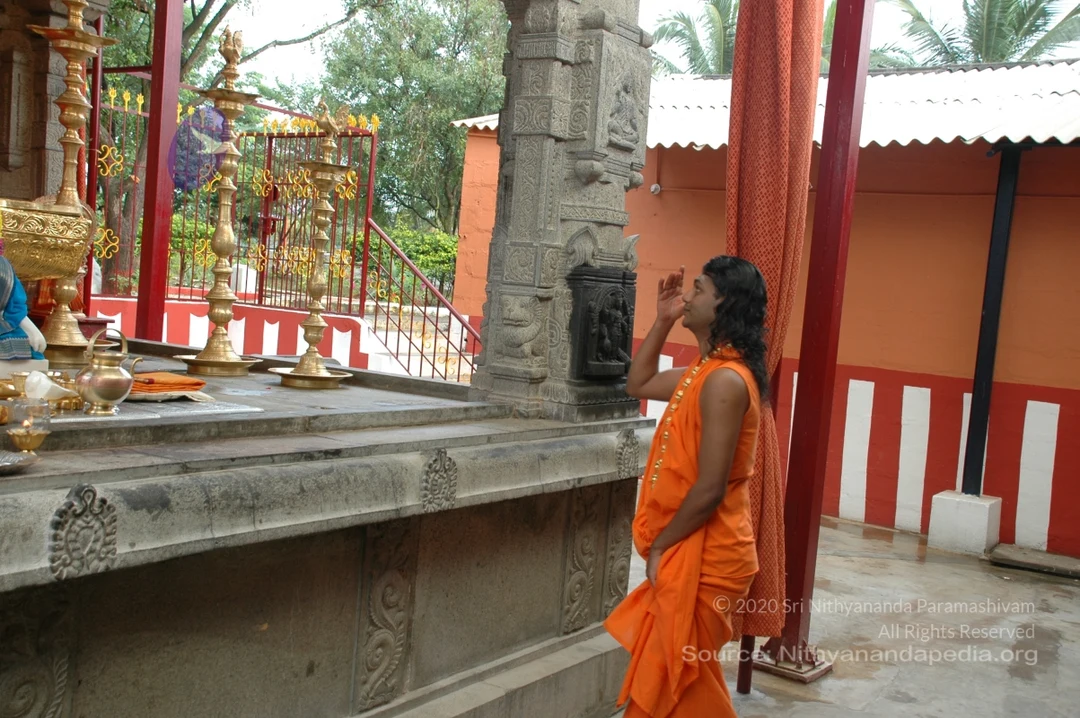
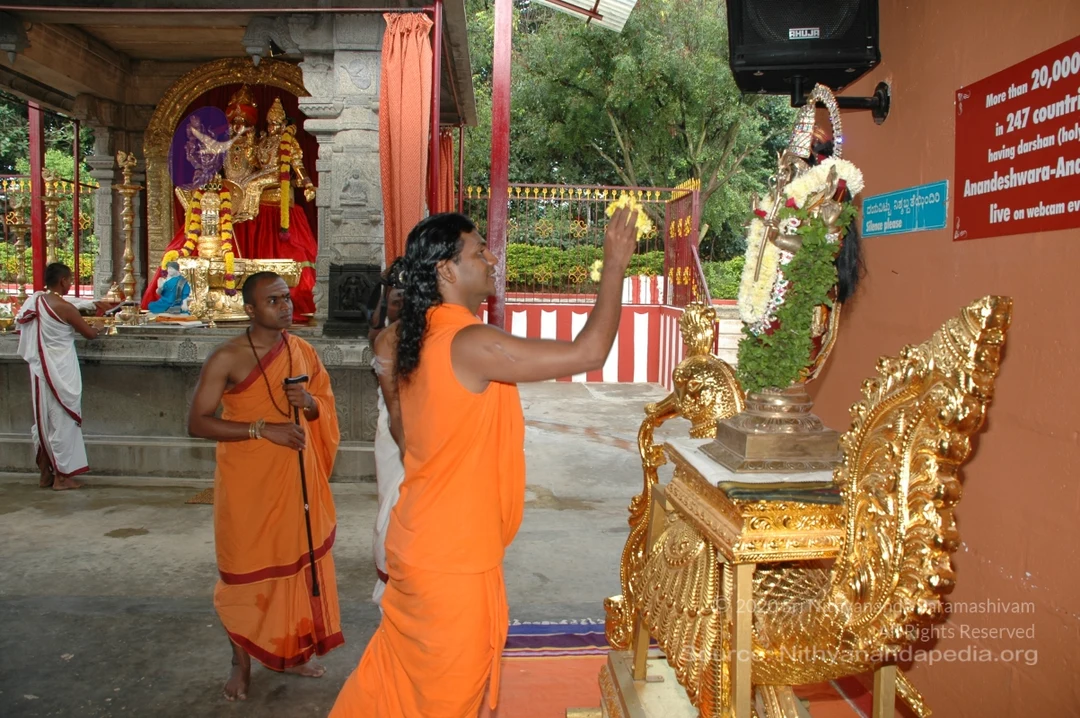
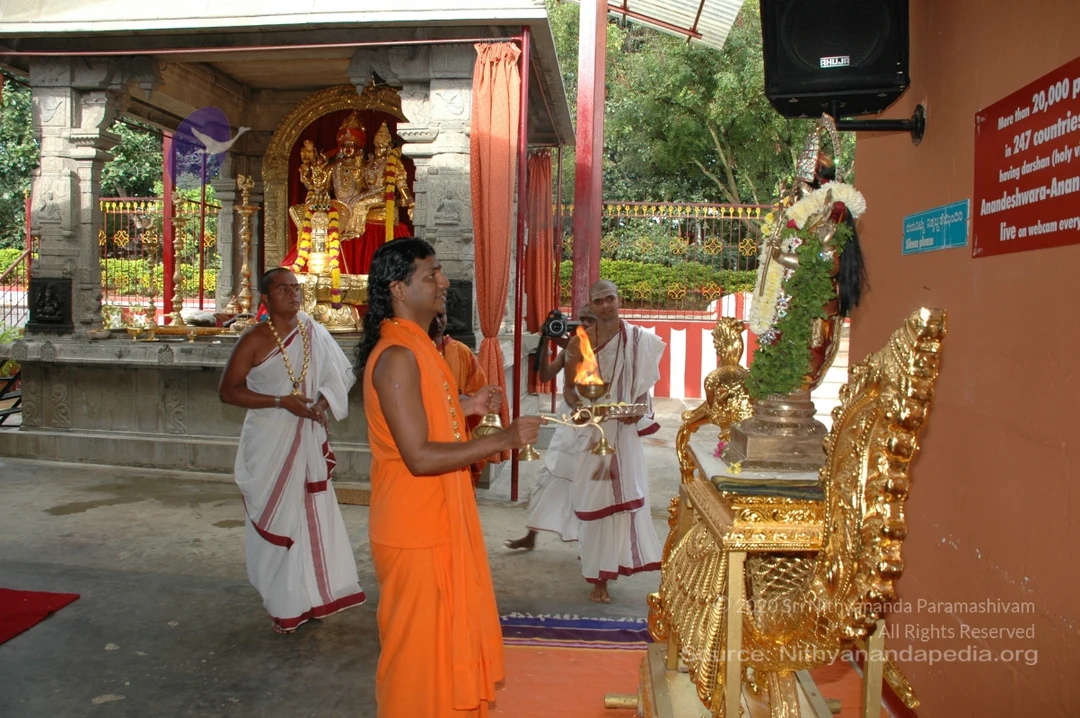
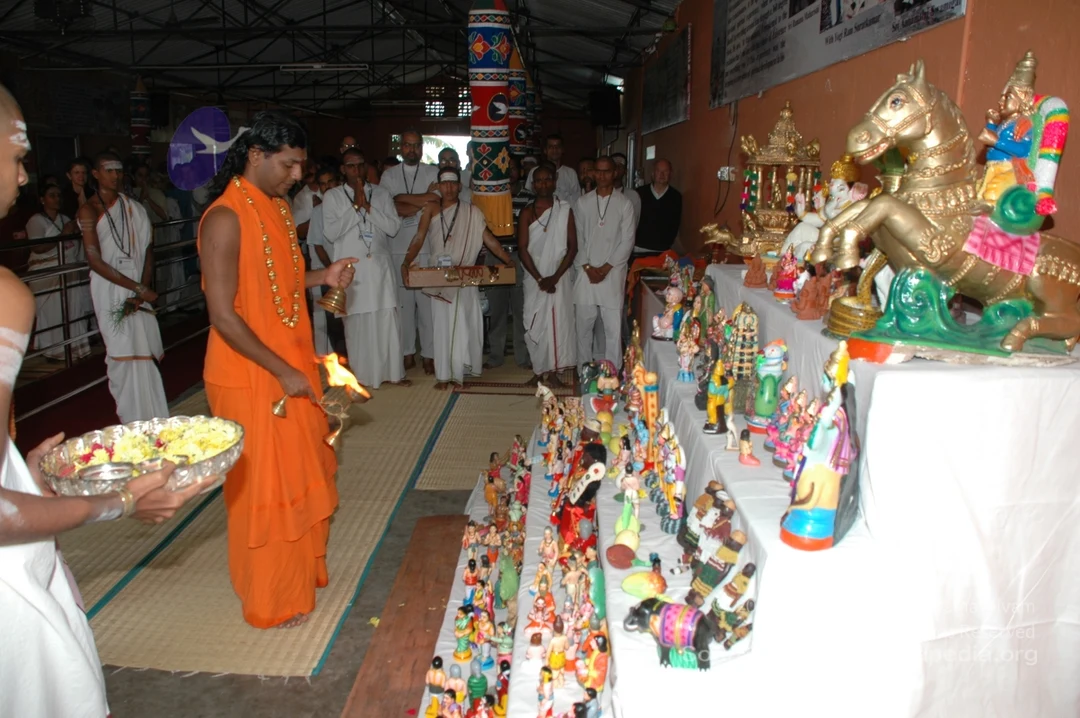
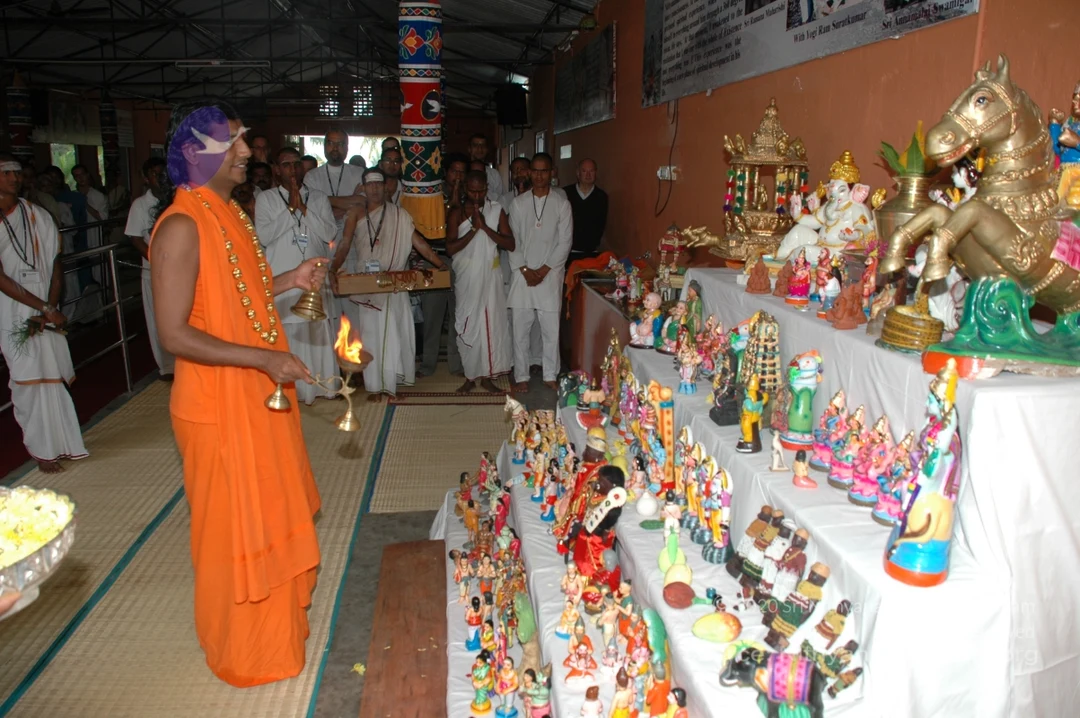
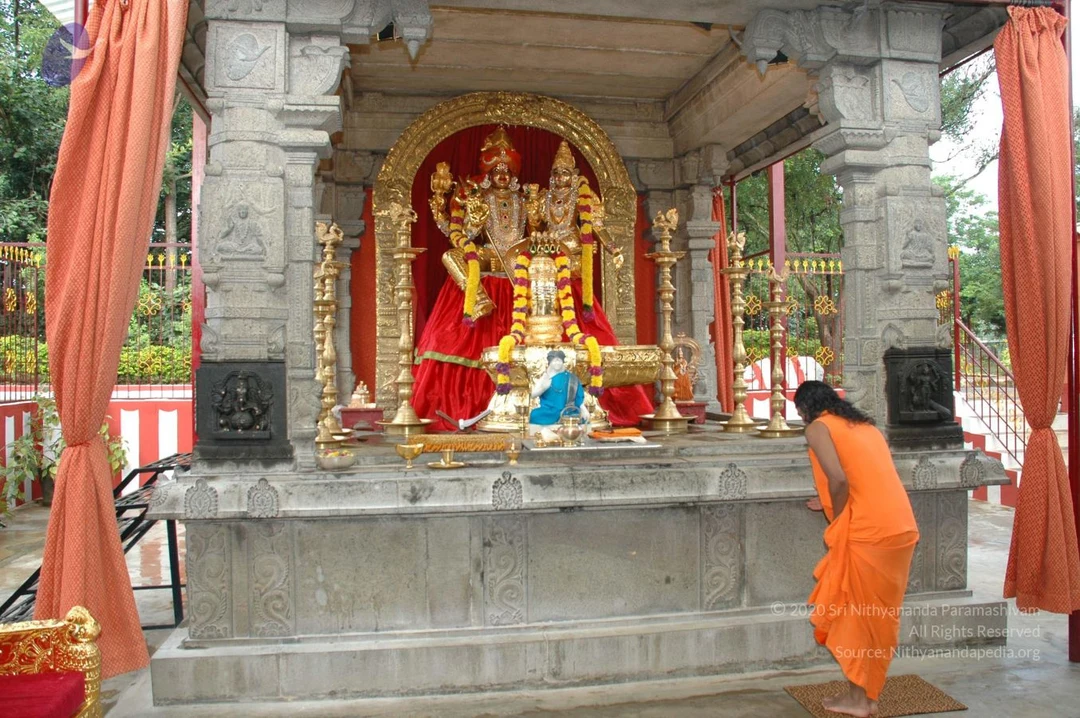
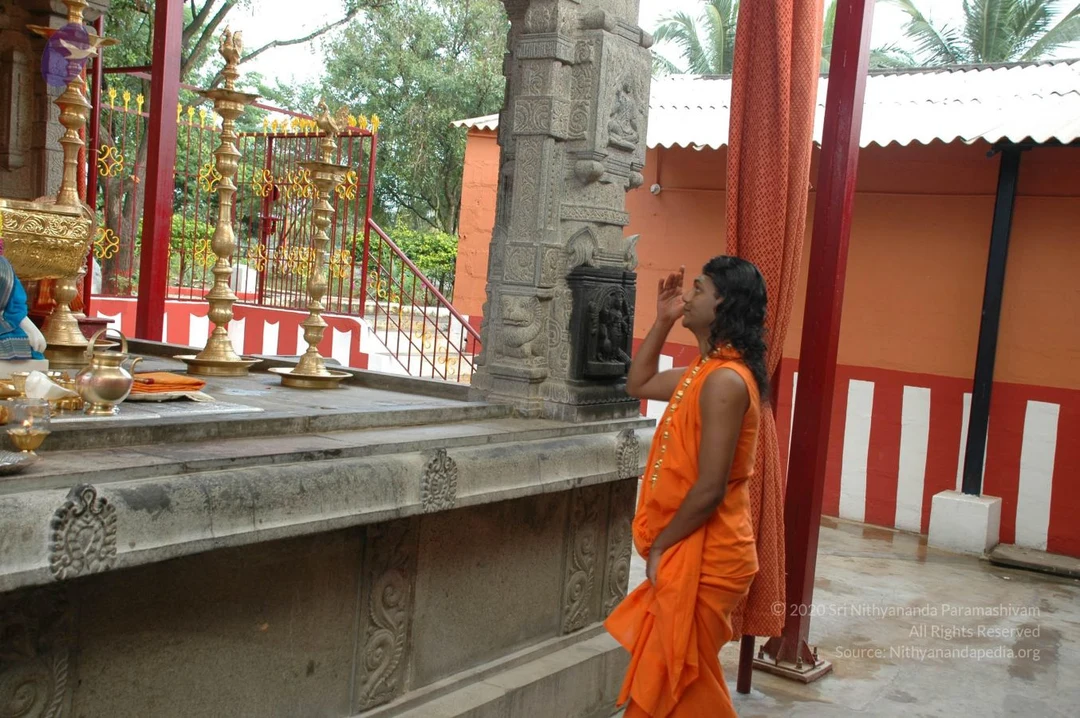
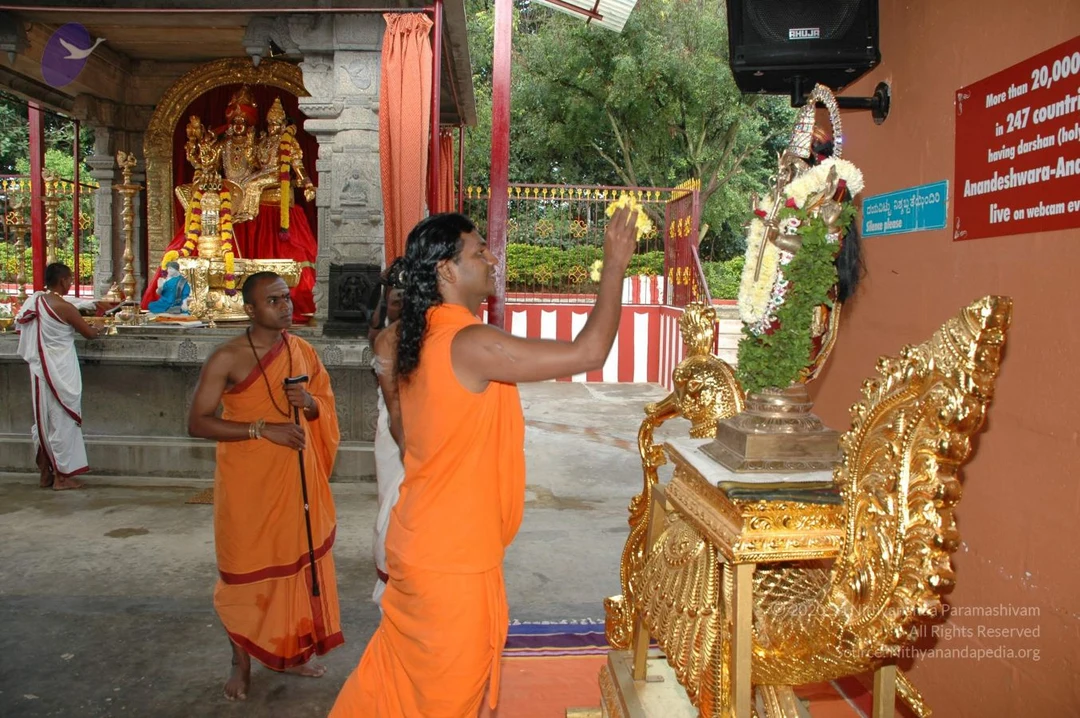
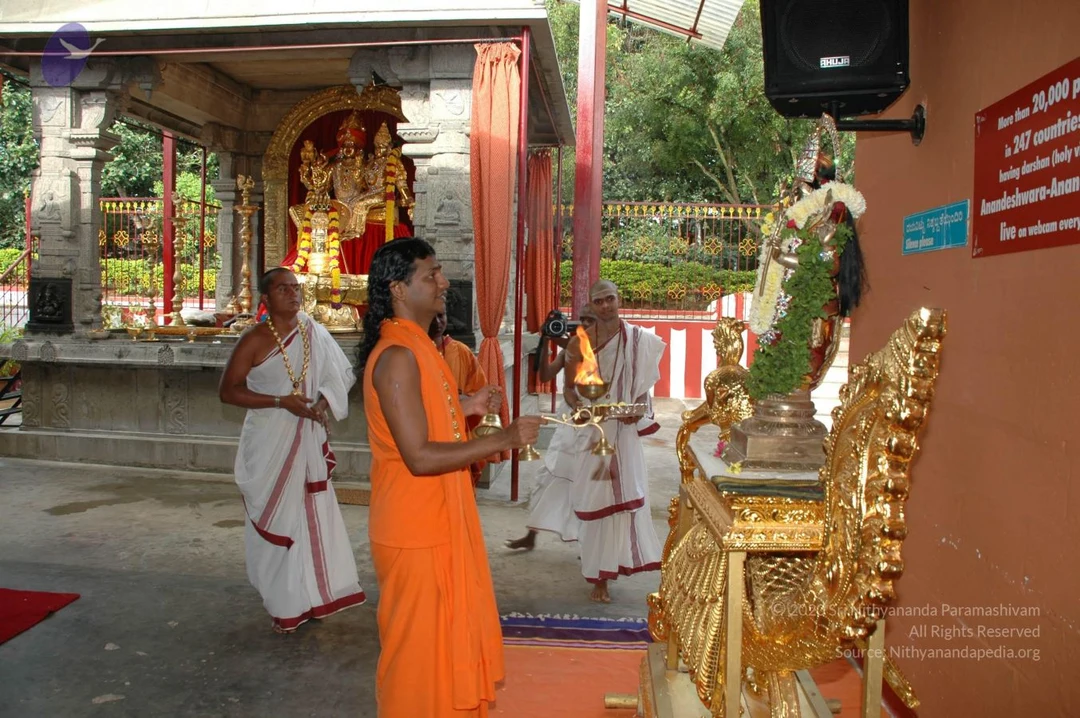
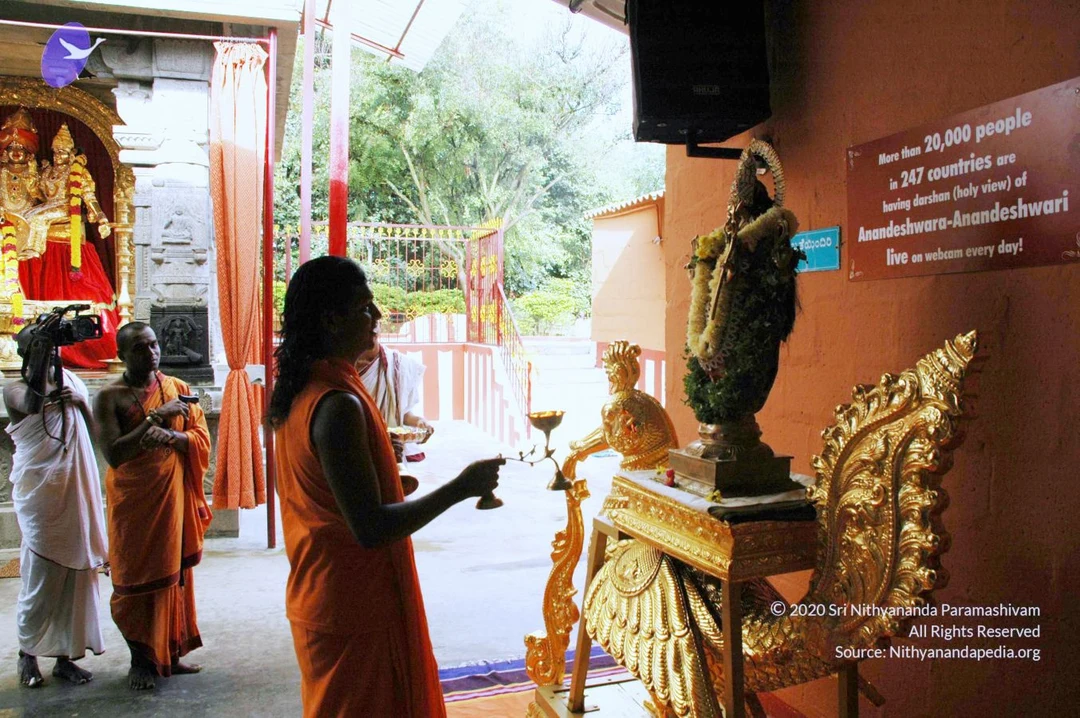
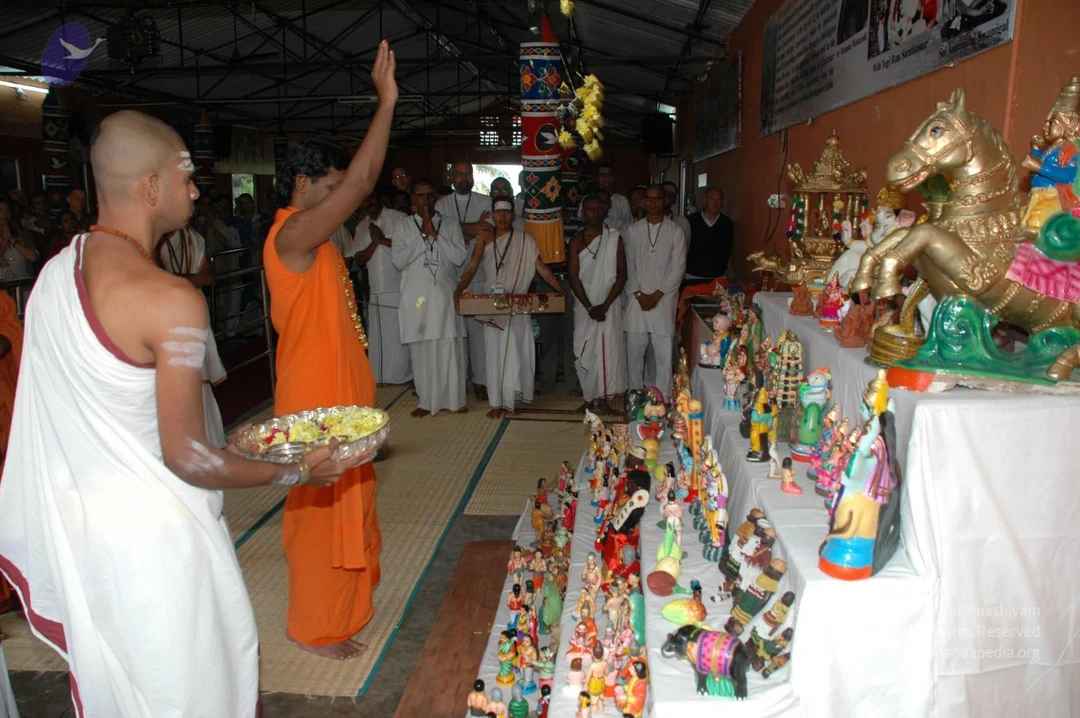
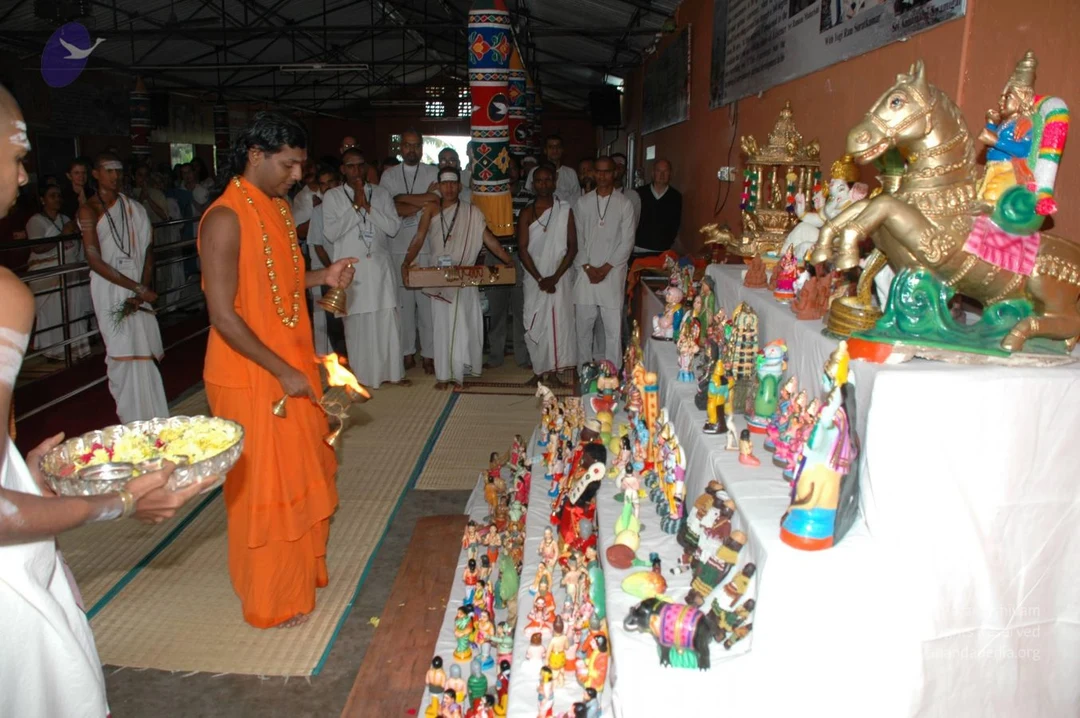
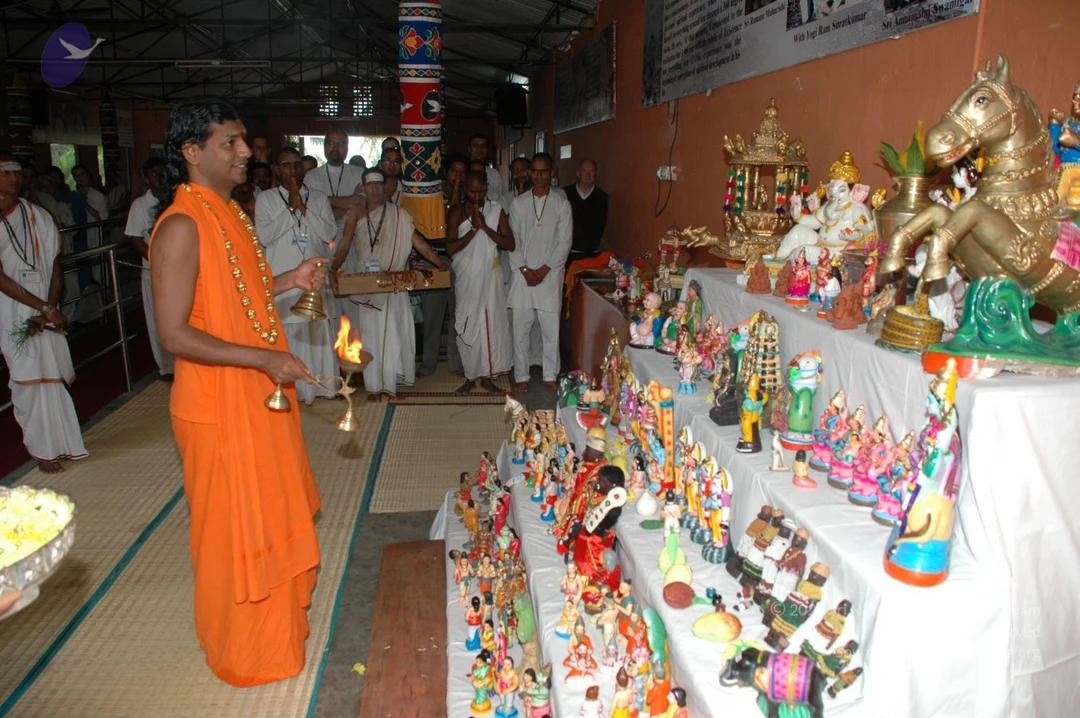
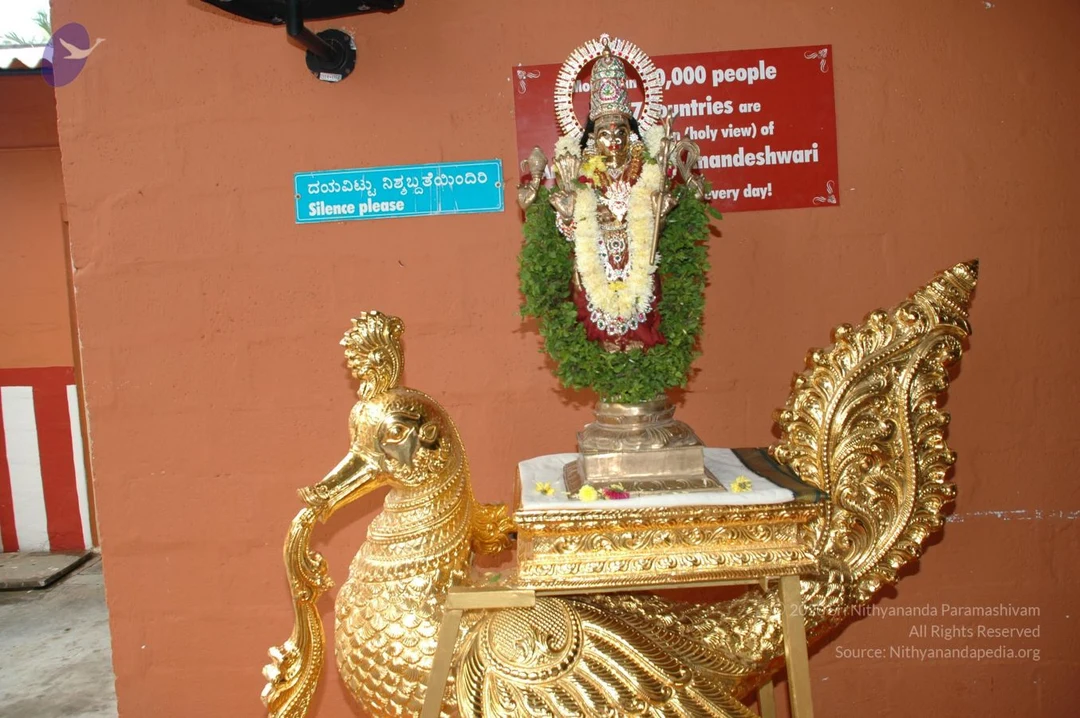
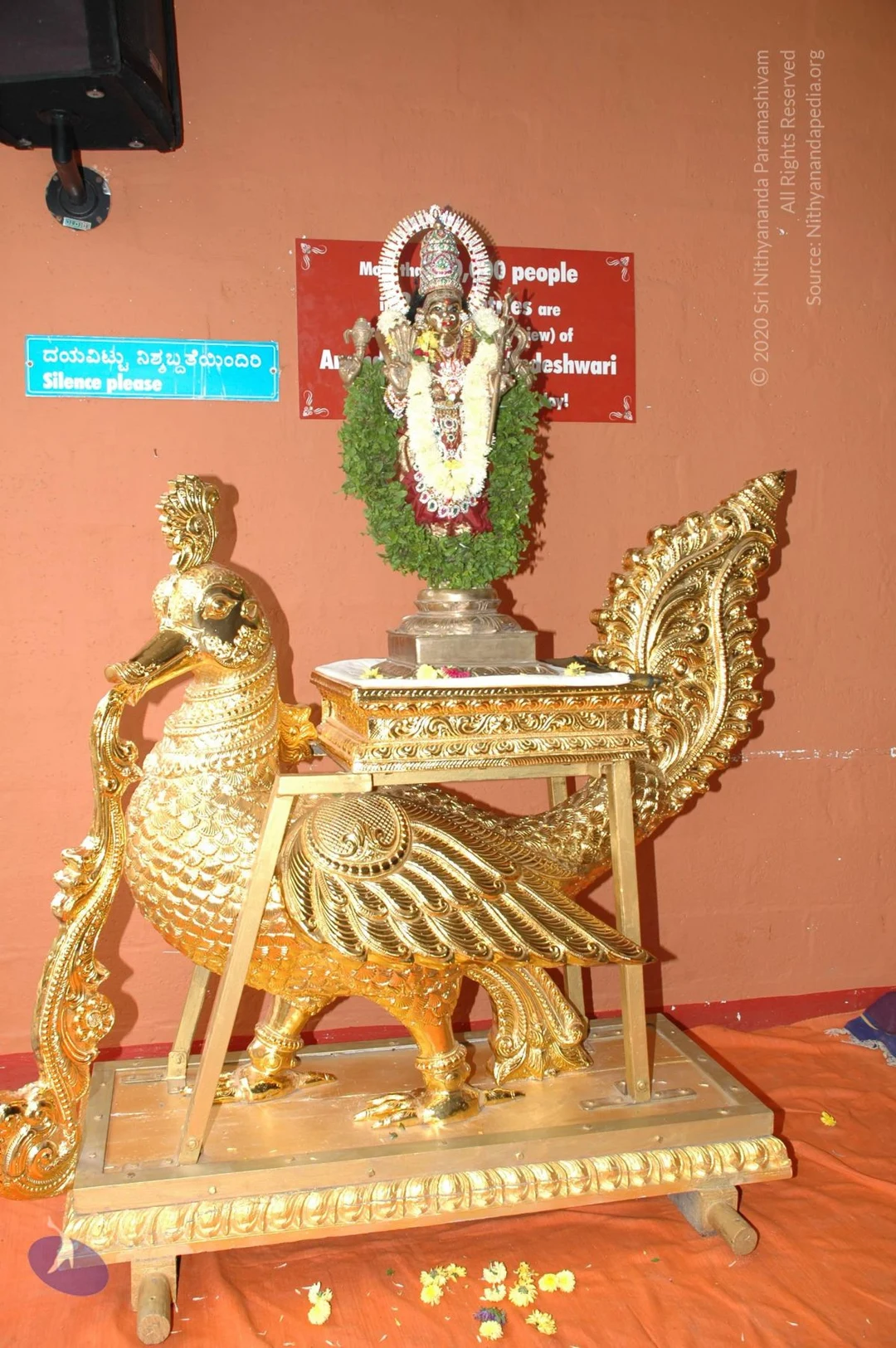
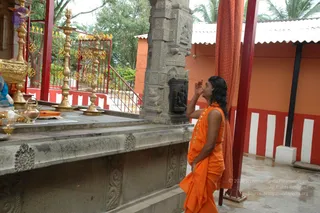
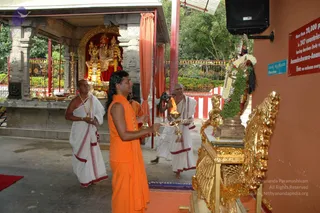
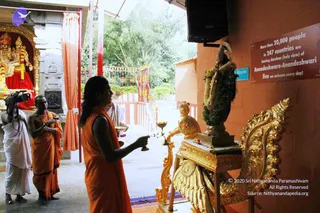
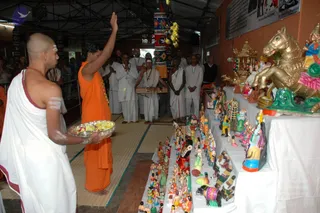
Outdoor temple courtyard with a grey stone plinth holding brass lamps, a brass kalasha-style vessel and a small brass pot with orange cloth. Behind it stands a carved stone pillar with relief figures, a red and white painted wall, and a red iron railing. A single person in a long-haired, saffron-orange robe with a beaded necklace stands at the right, one hand raised near the face in a gesture of reverence or prayer. Palm trees and a tin roof appear in the background. a person: a figure with long swept-back dark hair and saffron robes with a beaded necklace, shown in devotional posture before the shrine.A photograph of an outdoor temple shrine with a pillared stone canopy, red and gold curtains, and a seated deity murti decorated with garlands behind a railing. In the foreground a man with long dark hair wears a saffron-orange sleeveless robe and gold beaded necklace, holding a brass bell in one hand while raising a lit oil lamp in the other during aarti. Beside him two priests in white dhotis with red borders stand near the shrine, one holding a camera. On the right, a gilded ornate pedestal holds a garlanded kalasha-like vessel beneath a wall-mounted speaker and a red sign reading about webcam darshan. Three people are visible.A temple shrine interior with a saffron-robed figure holding a lit oil lamp toward a dark deity murti decorated with a floral garland and a gold-framed stand. Behind, a golden deity image sits on a red-draped altar with gold and garland decorations. A man in a white dhoti stands at left beside a videographer holding a camera, and a second saffron-clad man stands behind the lamp-bearer. A red sign on the right states more than 20,000 people in 247 countries have darshan of Anandeshwara-Anandeshwari live on webcam every day. The scene is an arati ritual at a temple shrine, with the lamp-bearer's appearance uncertain. Not identifiable as a person from appearance; central figure shows long hair and saffron robes but cues are insufficient.A photograph inside a covered temple hall during a ritual. In the foreground, a shaved-headed priest in white dhoti and shawl with white ash marks on his chest and arms stands facing right, holding a silver plate of flowers. Beside him, a figure in saffron-orange robes with a raised right hand, possibly giving a blessing, faces a long white-draped table crowded with small painted clay and wooden figurines, dolls and deity idols, including a golden horse and a golden deity figure with a crown. Behind them, a row of devotees in white clothes stands with hands folded, and a wooden harmonium sits among them. A banner with printed text hangs on the back wall above a shrine. Several people in the background watch the scene.A photograph of a temple ritual in a covered hall with mats on the floor. A man in a saffron-orange robe with a long garland of yellow flowers stands at left, holding a lit oil lamp in one hand and a small bell in the other, facing a long white-draped table lined with painted clay figurines and dolls. Behind the table stands a large golden horse with a rider. Standing devotees in white dhotis and white shirts with prayer beads watch; one man in white holds a wooden tray, and another at far left holds a silver plate of yellow flowers. Painted pillars and a bulb-lit ceiling frame the scene. A poster-like sign with text hangs on the upper right wall.A man in a saffron-orange robe and a rudraksha-style beaded garland stands at left, holding a brass bell in one hand and a flaming oil lamp (aarti) in the other, performing a ritual before a long table covered with white cloth. The table displays rows of colourful painted clay figurines, a golden horse, and a golden Ganesha-style deity murti with a gilded shrine behind. Around him, a group of men and women in white dhotis and white clothing stand in a hall with a tatami-style mat floor, some with hands folded in devotion; one holds a brass tray. A large printed banner hangs on the wall above the table. Several people are visible in the background, and a decorative red-and-yellow pillar stands in the middle.

Pada-Puja

63 photosSource gallery
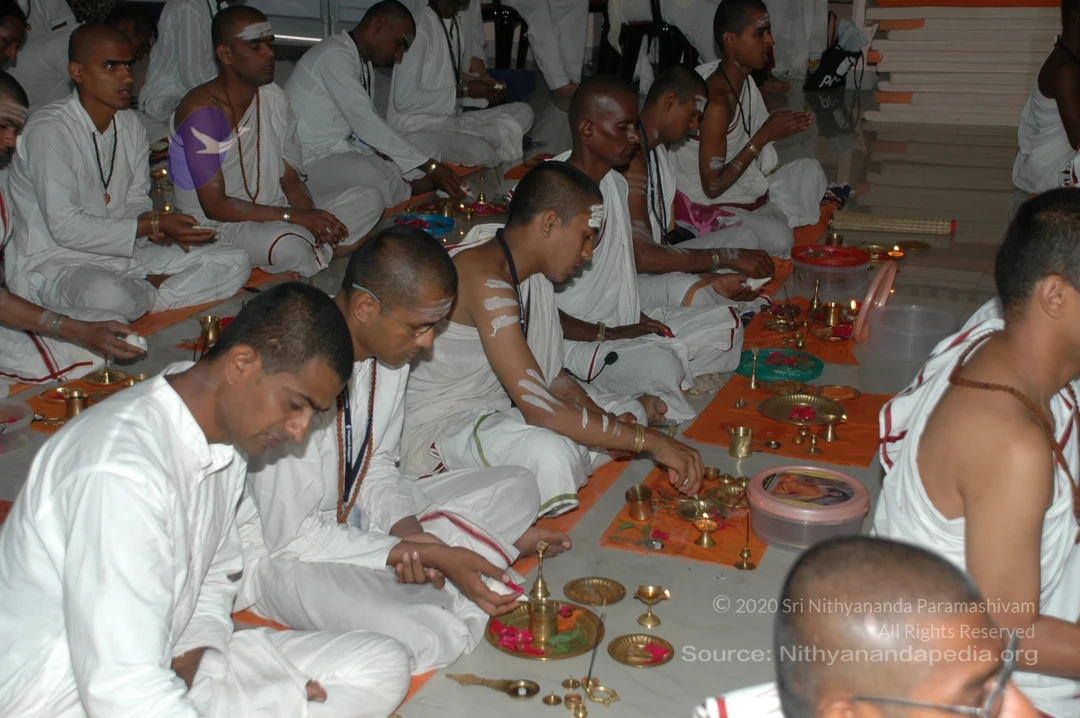
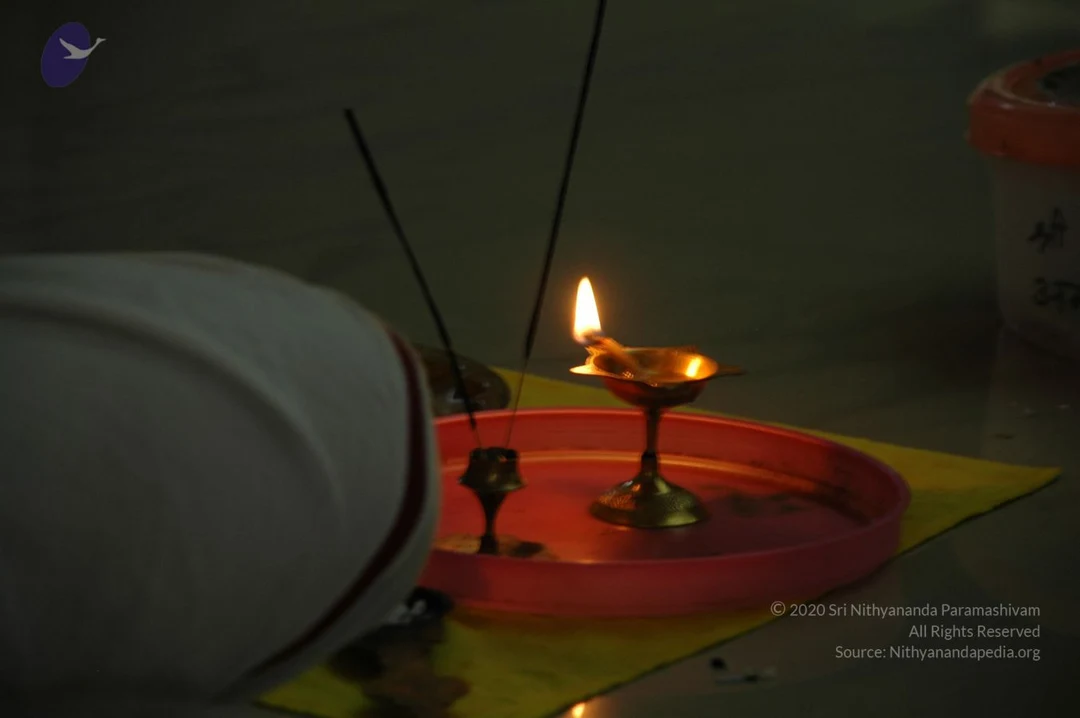
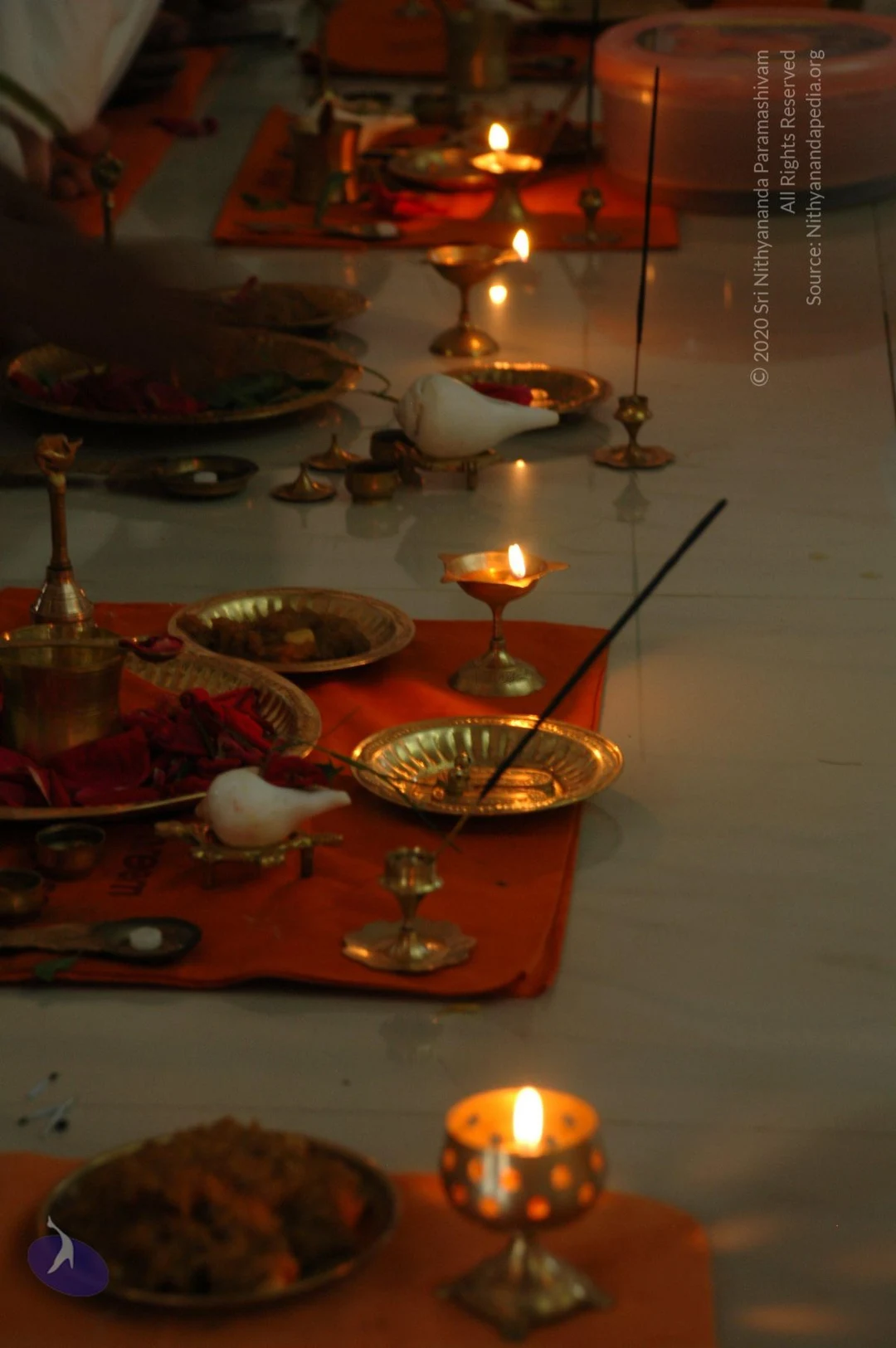
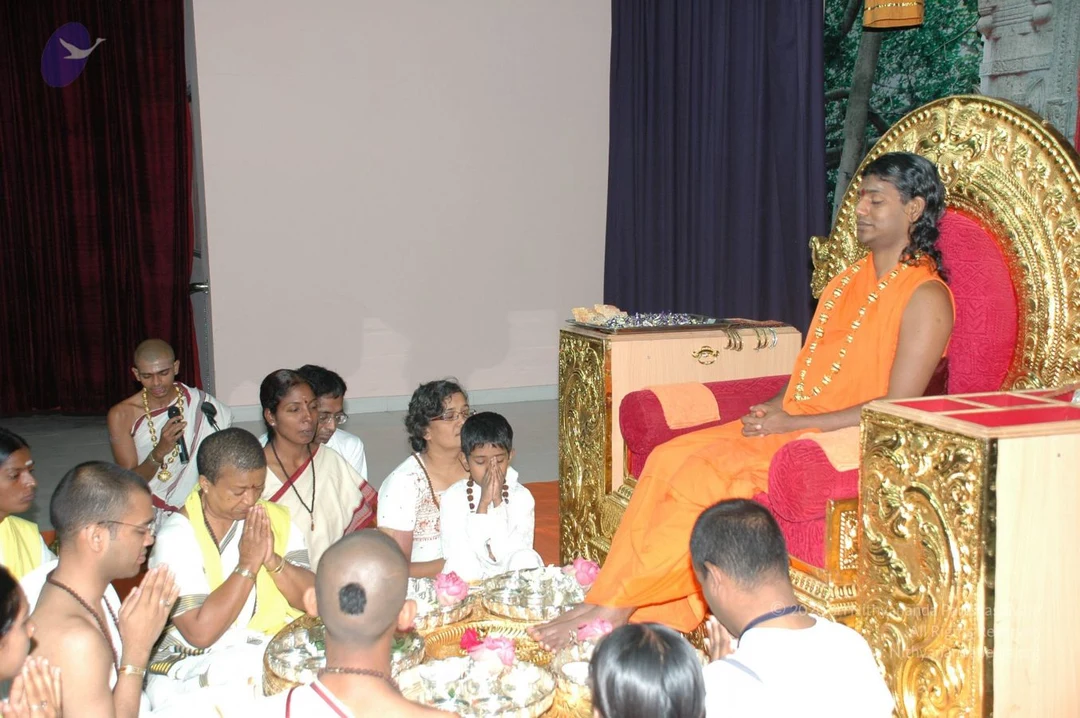
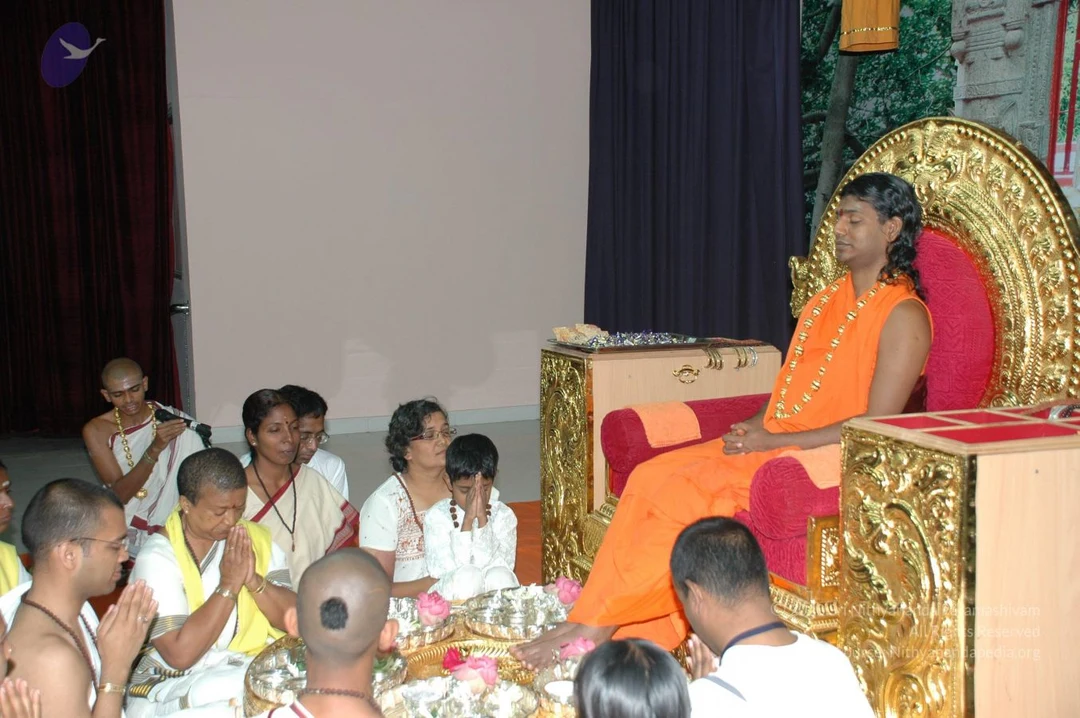
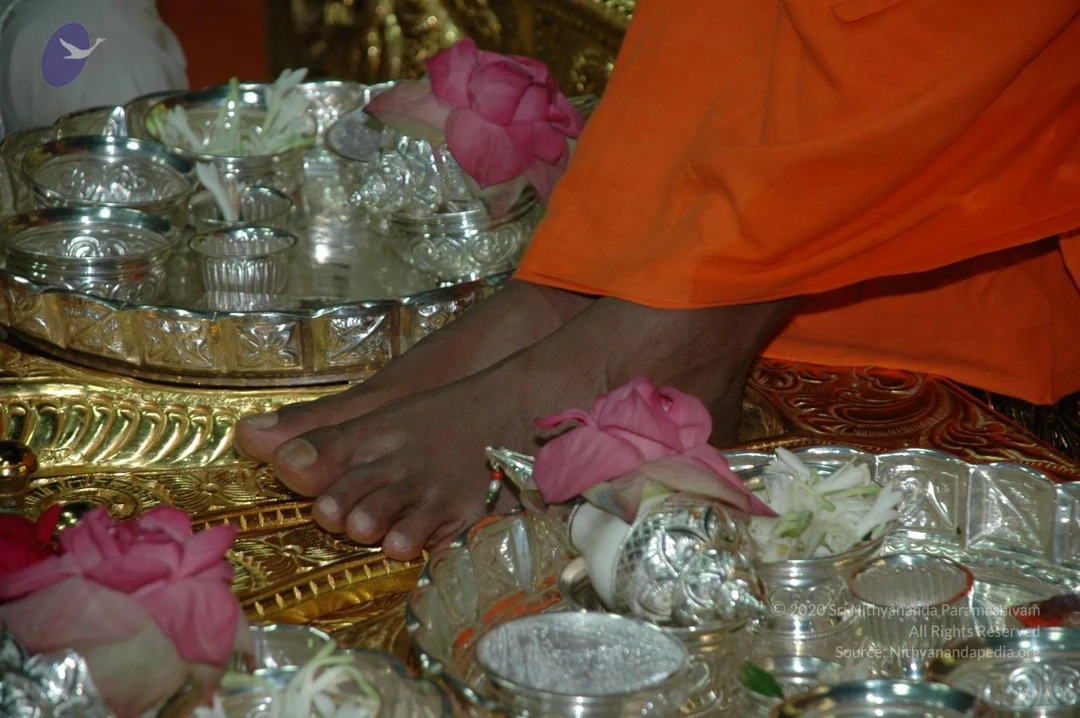
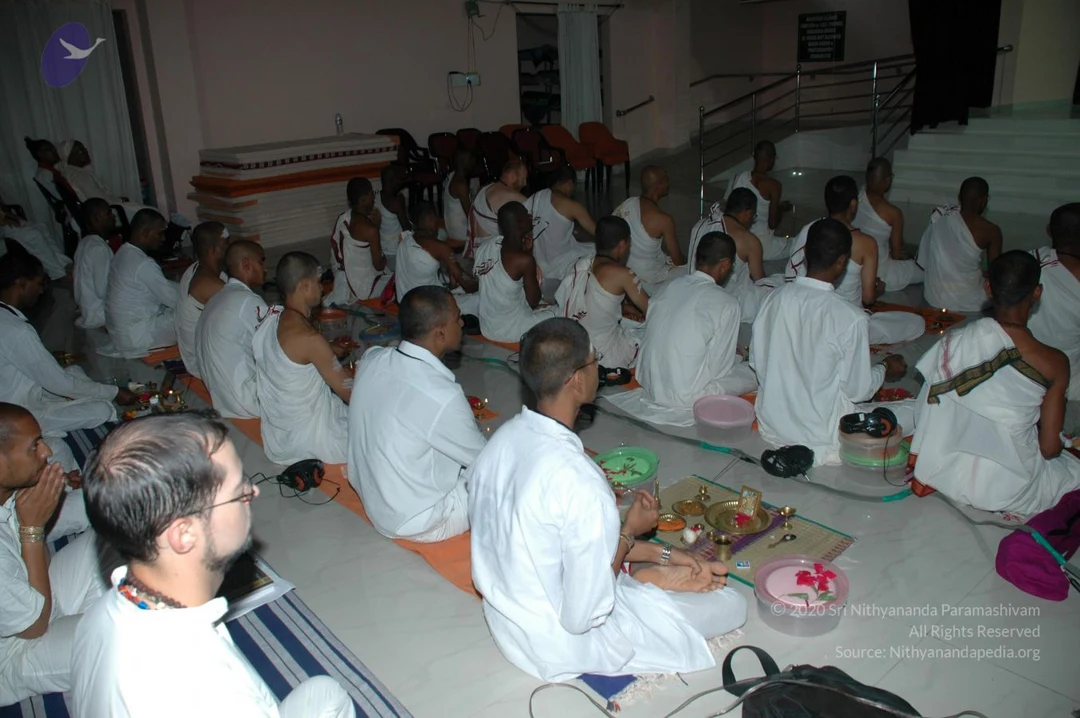
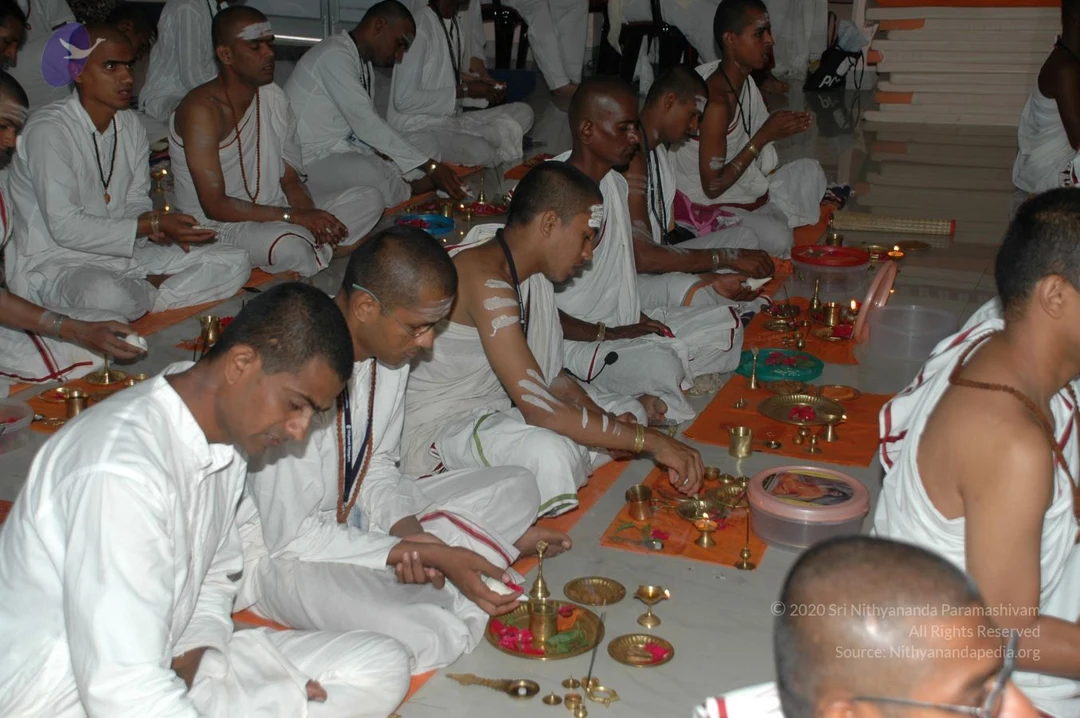
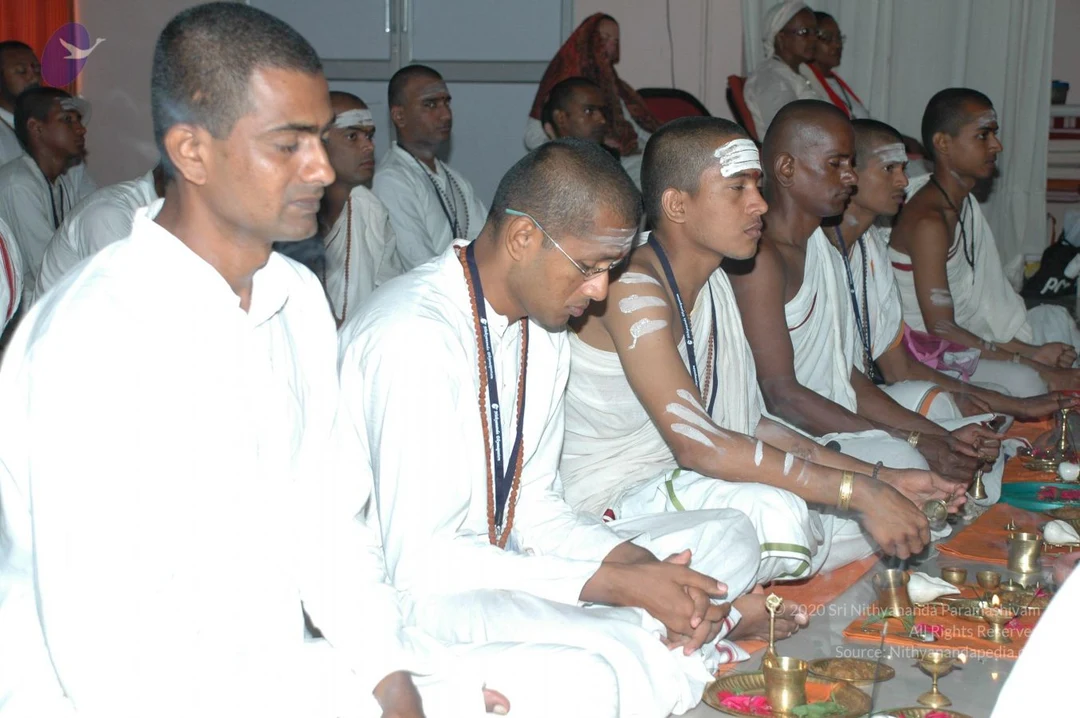
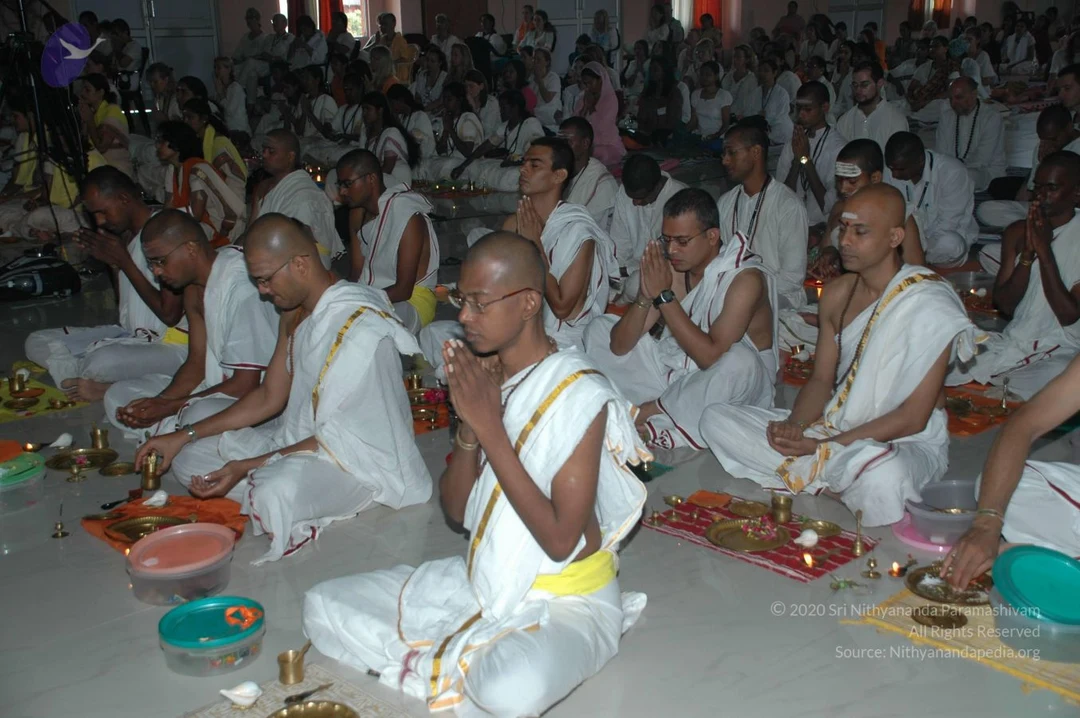
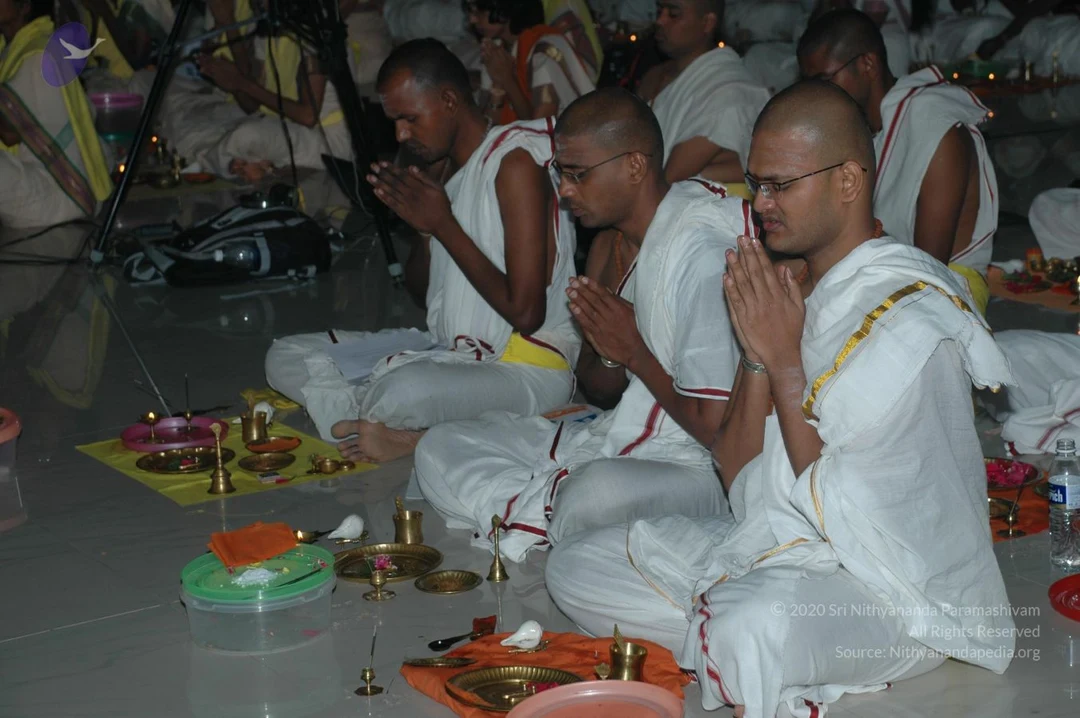
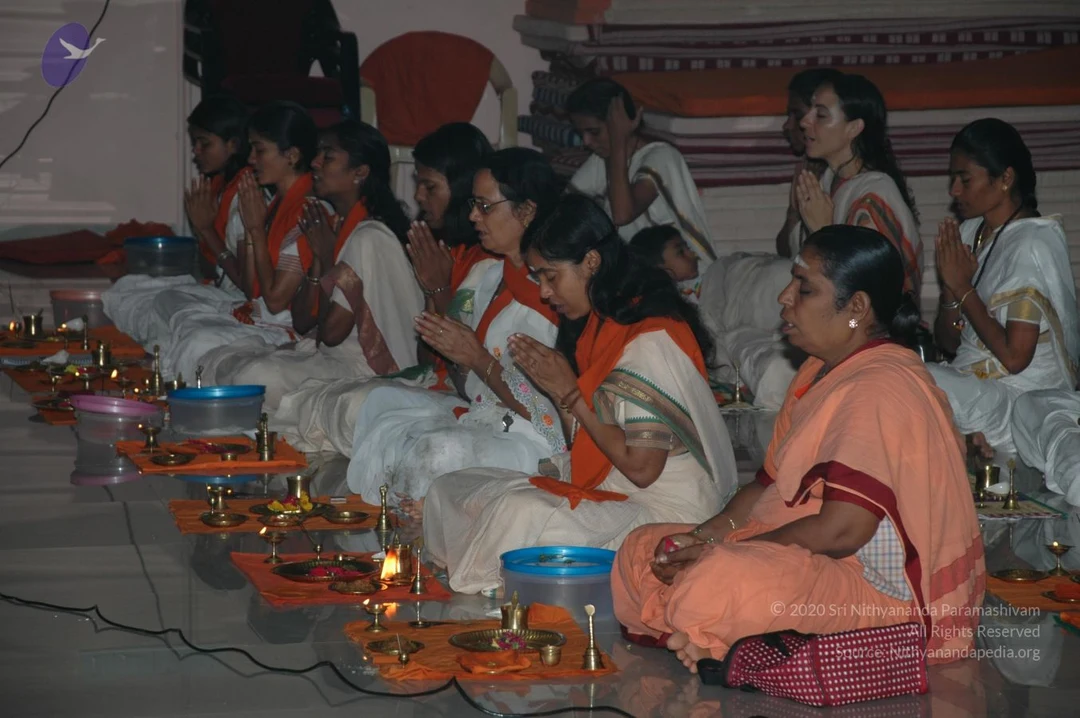
Close photo of a brass oil lamp (diya) lit with a steady flame on a red round tray set over a yellow cloth. Two incense sticks stand in brass holders beside the lamp, with thin smoke rising. In the left foreground, the blurred white cloth and red-striped edge of a garment are visible, belonging to a person whose body is out of frame. A clear plastic container with a red lid sits at the upper right. The room is dim. No person's face or full figure is shown.A close photograph of a ritual setup on a white floor covered with an orange cloth. Several brass oil lamps (diyas) burn with flames, with brass plates holding red flower petals, rice or grain offerings, a white conch shell, incense sticks standing upright and a brass vessel with a spout. Brass bowls and a small spoon sit among the items. No people are visible, and the scene is lit mainly by the lamps.A seated figure in an orange saffron robe with a long rudraksha-style beaded mala sits in a gold ornate throne with red cushions at the centre of a temple-style stage. Behind him a large backdrop shows a deity murti decorated with flower garlands, and carved stone pillars frame the scene. Seven people sit on the floor in front, several with hands folded in anjali. Two women in white and yellow sarees and a man in white dhoti sit near the throne; a metal bowl and brass lamps are on the floor, and a white-clad man in front shows a shaved head.A photograph of a seated figure on an ornate gilded throne with red cushions, dressed in saffron-orange robes and wearing a long rudraksha mala, with hands folded in front. In front of the throne, a bare-chested man in white dhoti with shaved head sits facing the throne, and several devotees in white and yellow ceremonial clothes sit on orange cloths with palms pressed together in prayer. Brass lamps and small offerings sit on the cloths. Behind the throne is a large backdrop of a temple arch with pillars, and a deity murti draped with garlands in red and white. The scene appears to be a satsang or darshan setting. a person: the seated figure in saffron robes and rudraksha mala on the throne, presiding over the gathering.A seated figure in saffron-orange robes with a rudraksha mala and a bindi sits centrally on an ornate golden throne with red cushions, beneath a large backdrop painting of a deity murti flanked by temple pillars and greenery. Garlands of marigolds and red flowers drape the backdrop figures. Around the throne, several devotees sit on orange floor mats: a man in white dhoti and shirt on the left, women in white and red or yellow-bordered saris, a bald man in white dhoti and shawl in front, and young girls in white and yellow. Brass plates with offerings and flowers lie on the floor in front of the seated group. The setting resembles a satsang or discourse. a person seated on the throne, identified by saffron robe, rudraksha mala and bindi along with the throne presentation.A photograph of a seated figure on an ornate gold throne with red cushions, wearing an orange sleeveless garment and a long beaded necklace, with eyes closed and hands in lap. A devotee in a white shirt and blue lanyard kneels with palms pressed together beside a silver tray of flowers and offerings at the feet. Around the throne, men in white dhotis and a woman in a yellow sari sit in prayer, and a child's head is visible at the lower left. The backdrop shows a painted forest scene and a dark blue curtain. a person is identified by his orange robe, long swept hair, and ceremonial beaded necklace while seated on the throne during the padapuja and satsang setting.

Pancha-Tapas

94 photosSource gallery
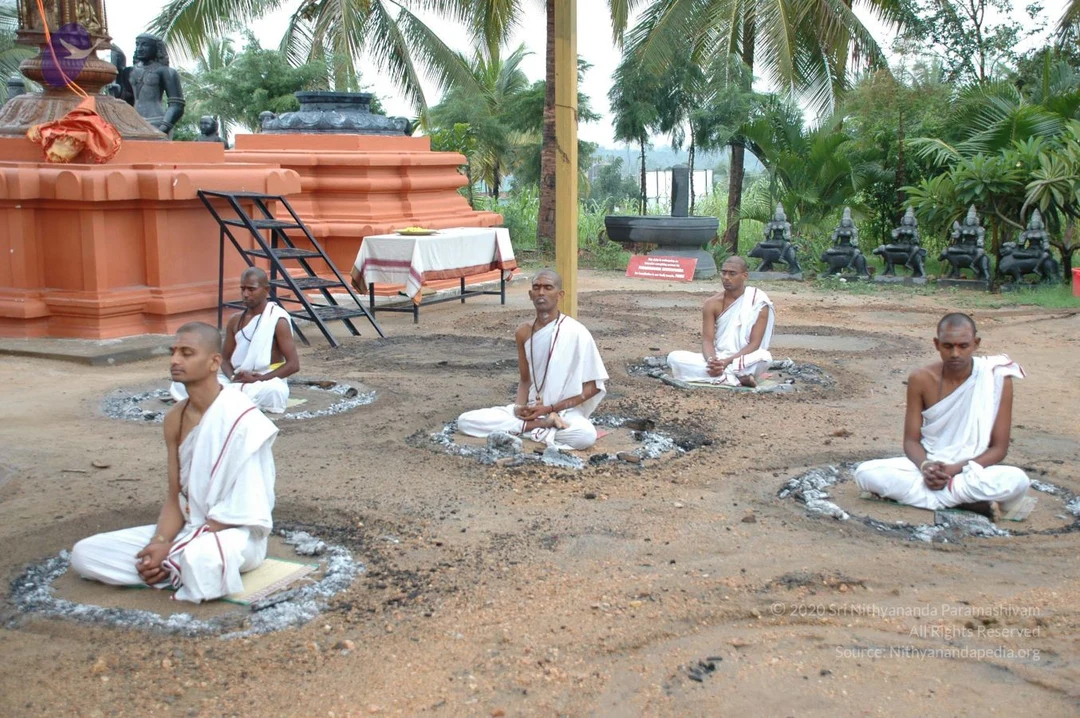
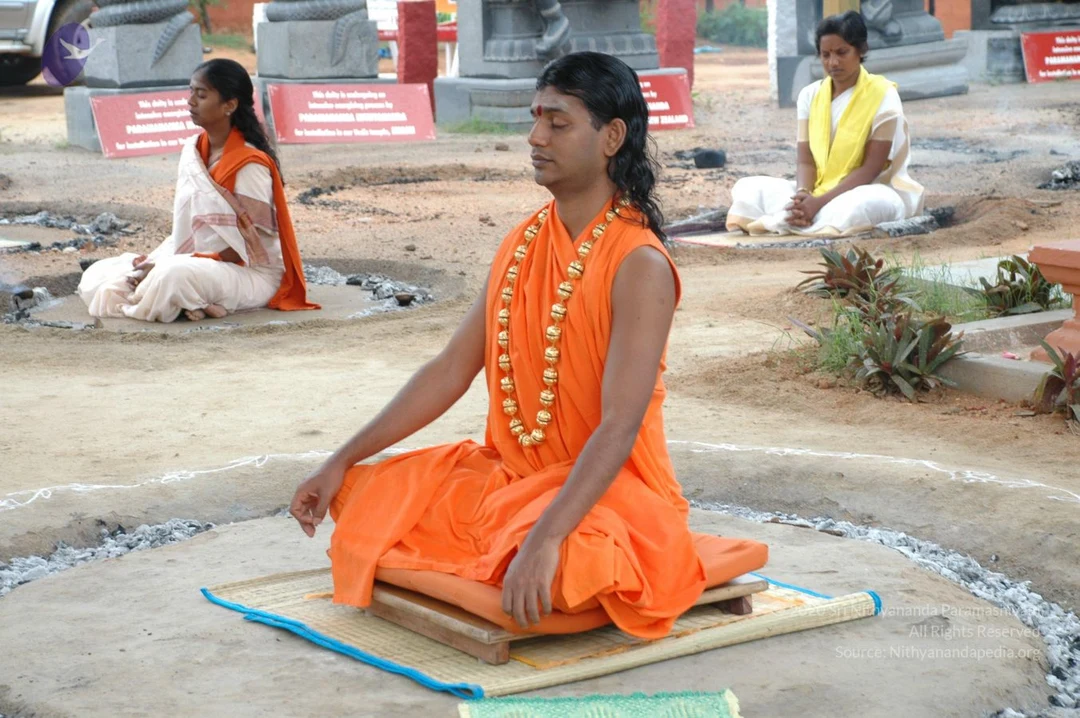
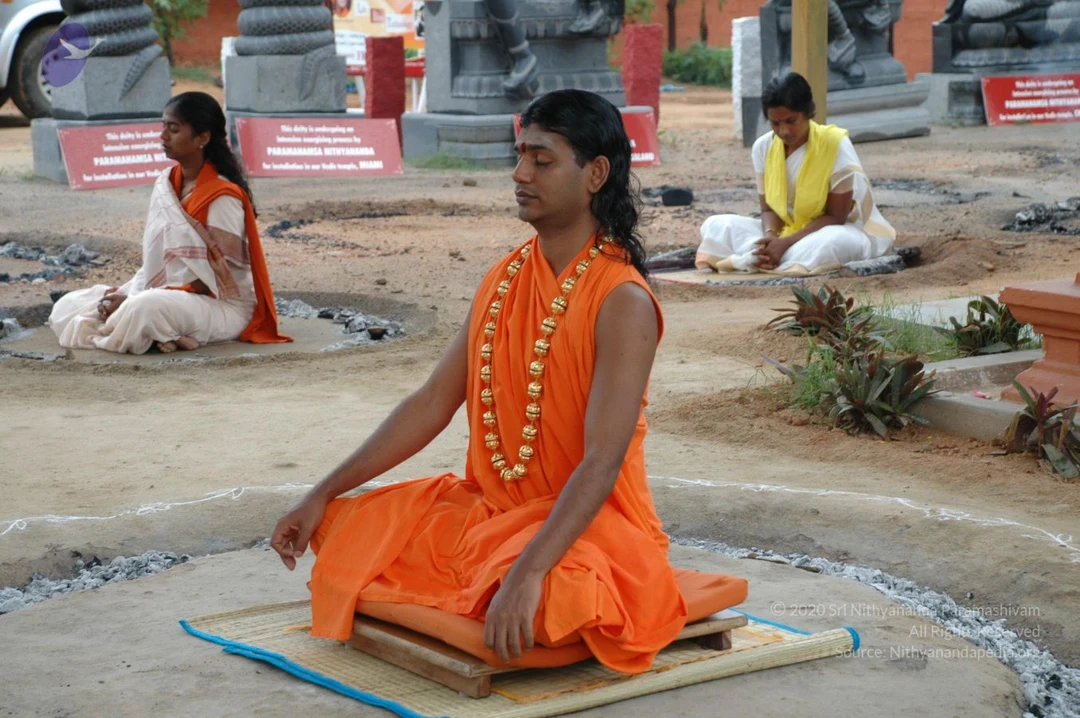
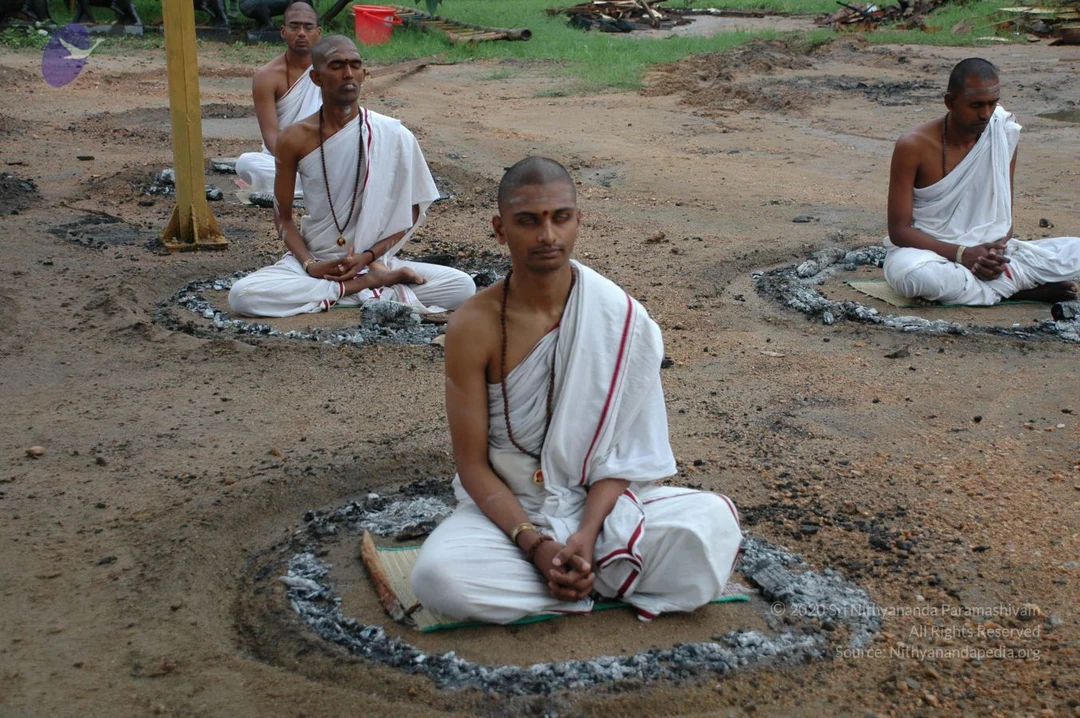
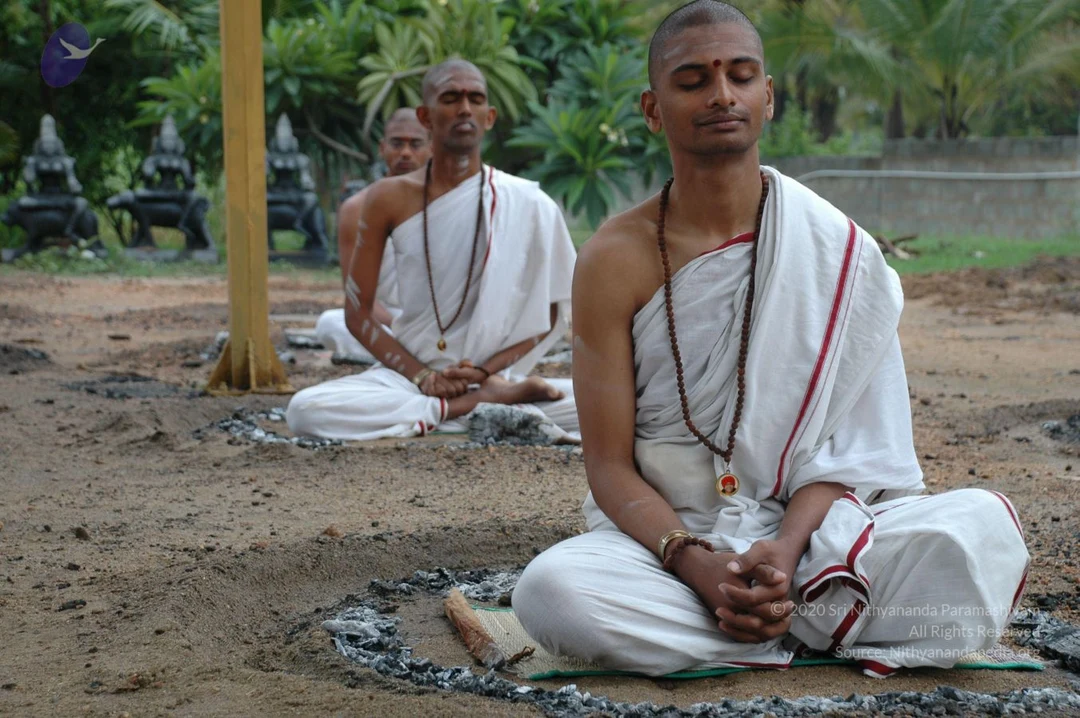
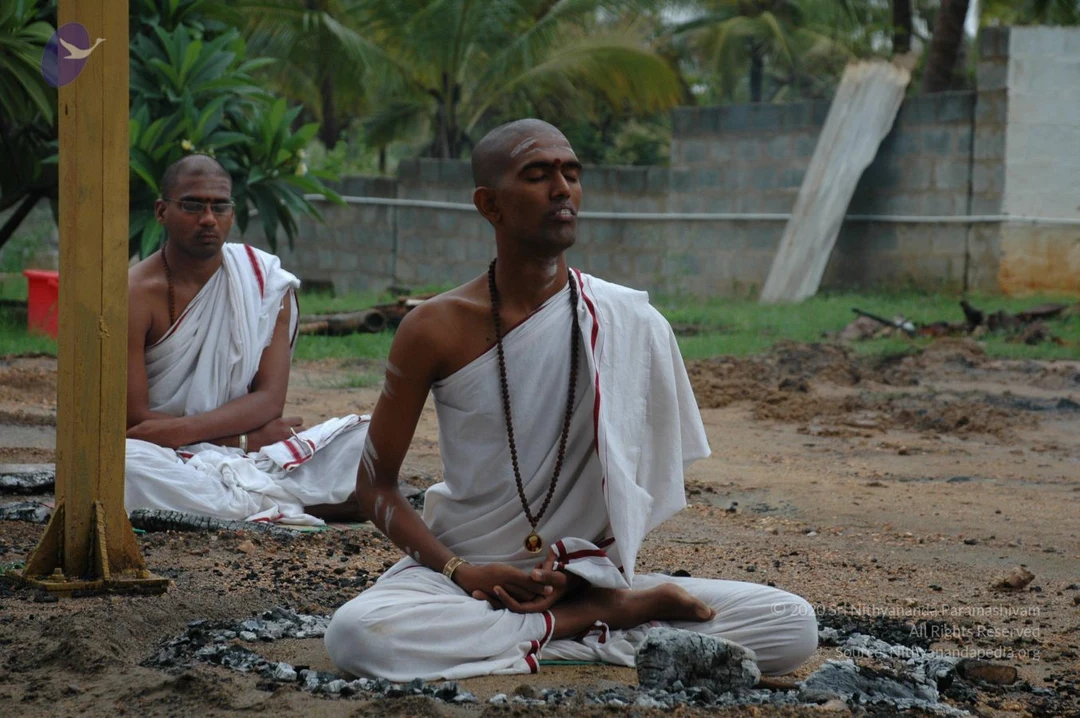
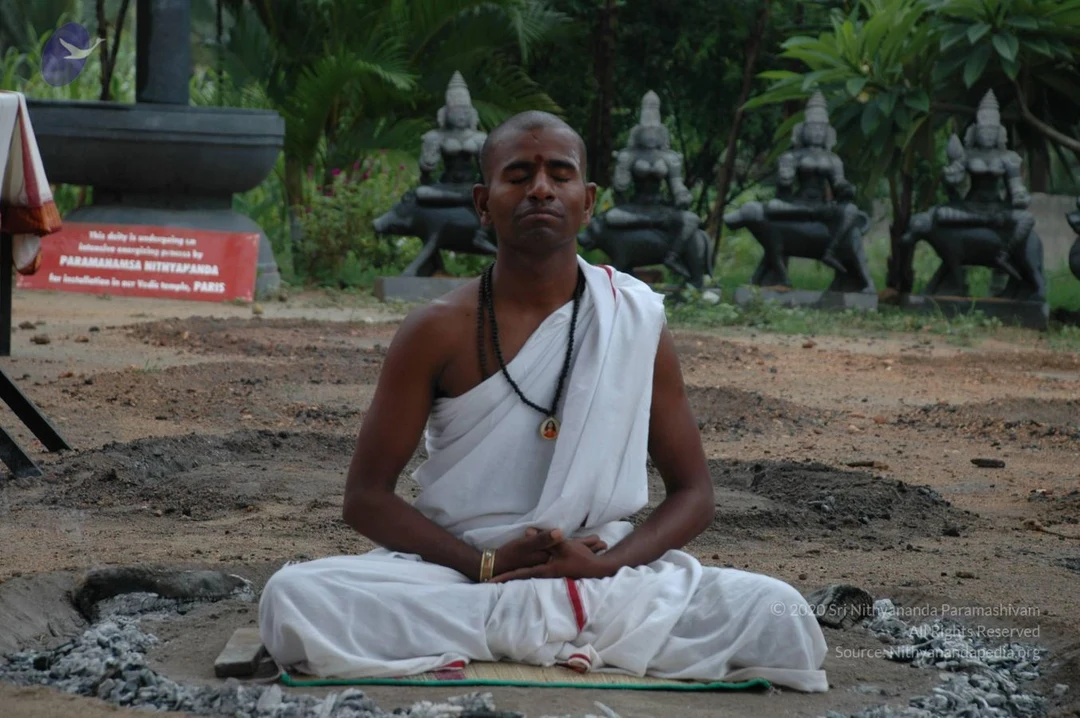
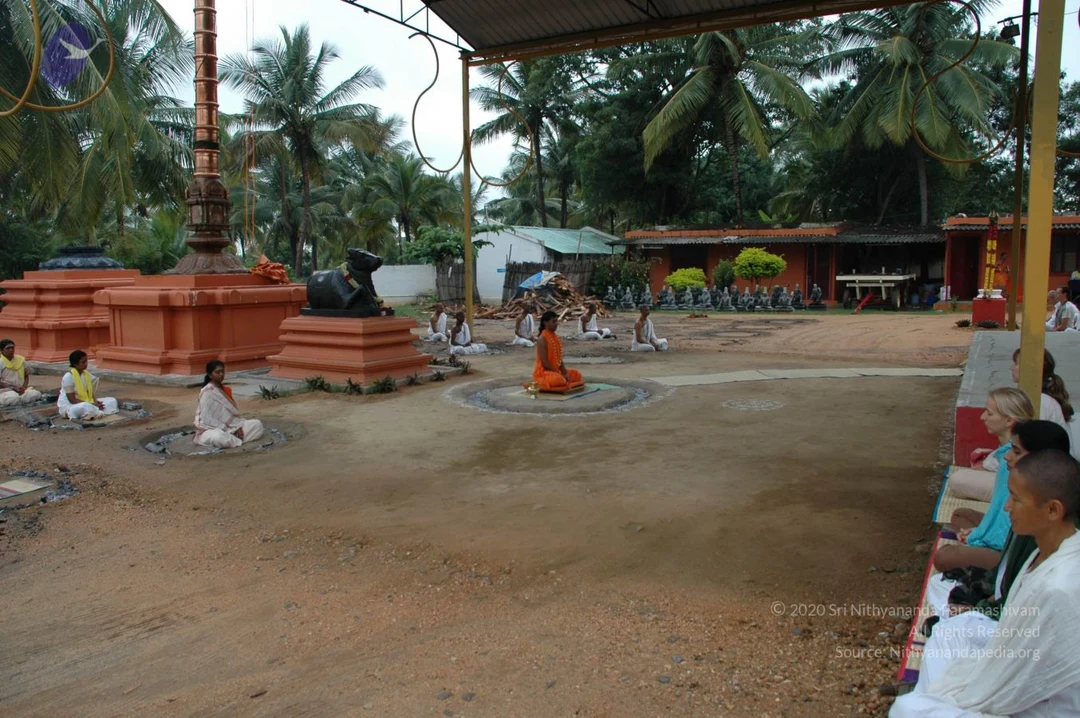
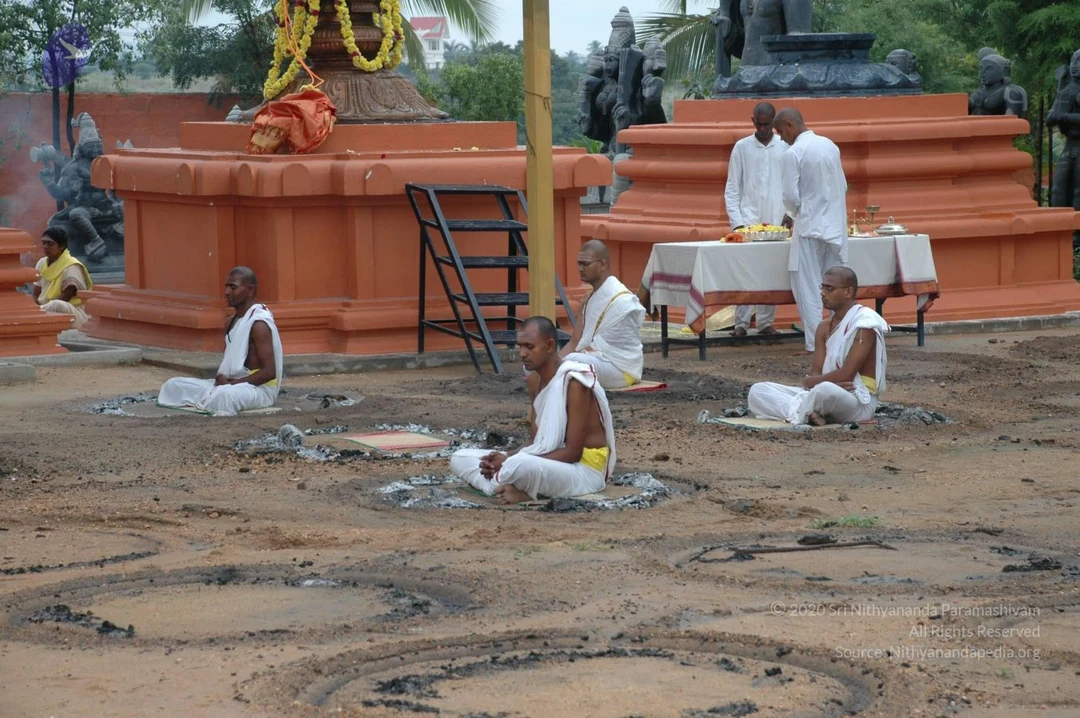
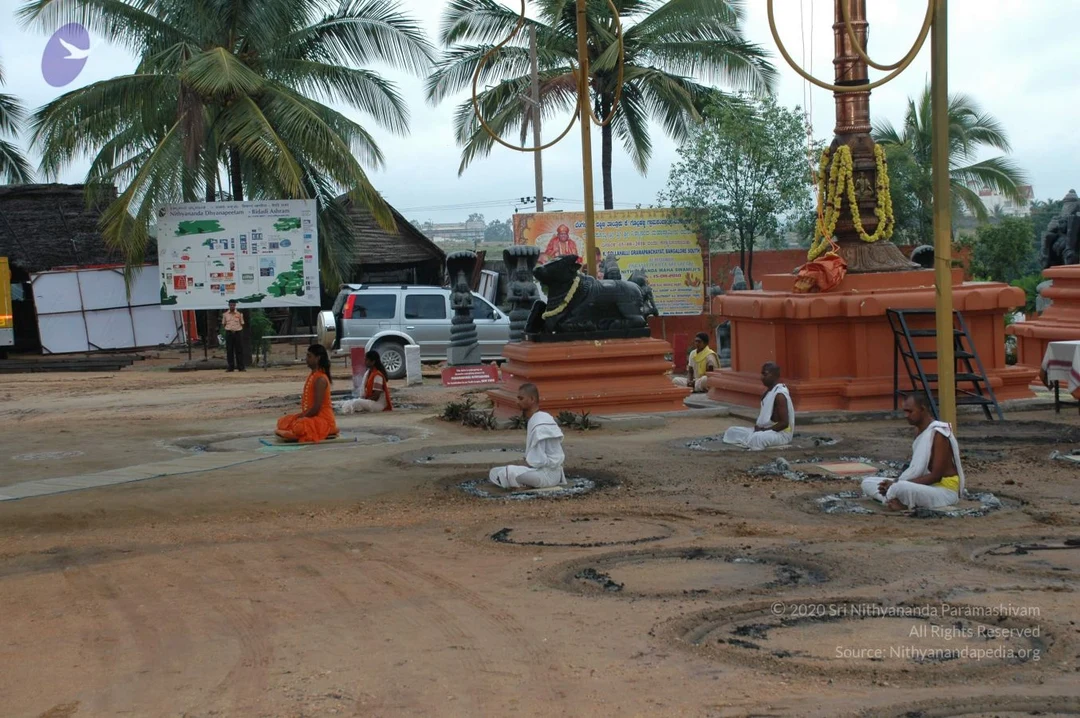
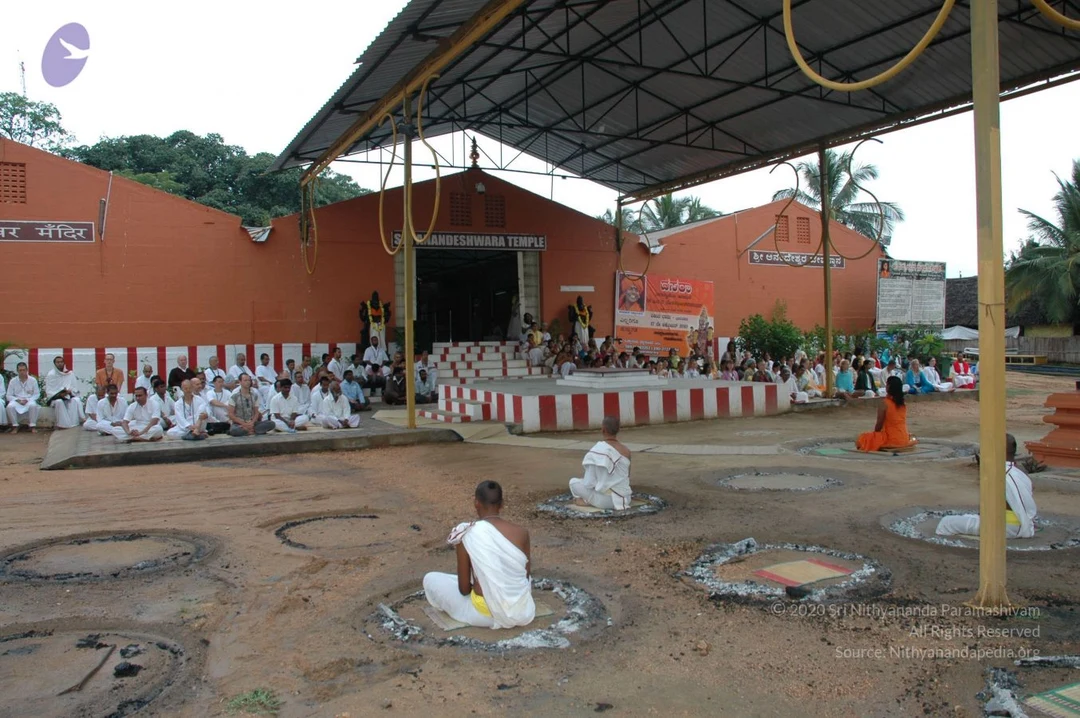
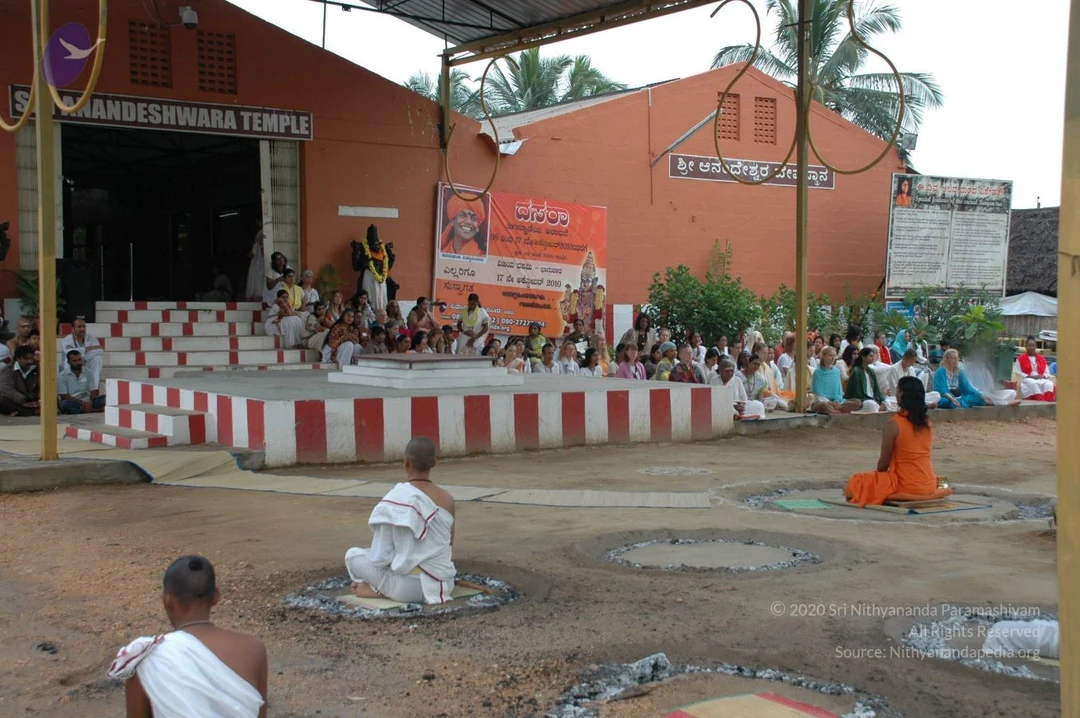
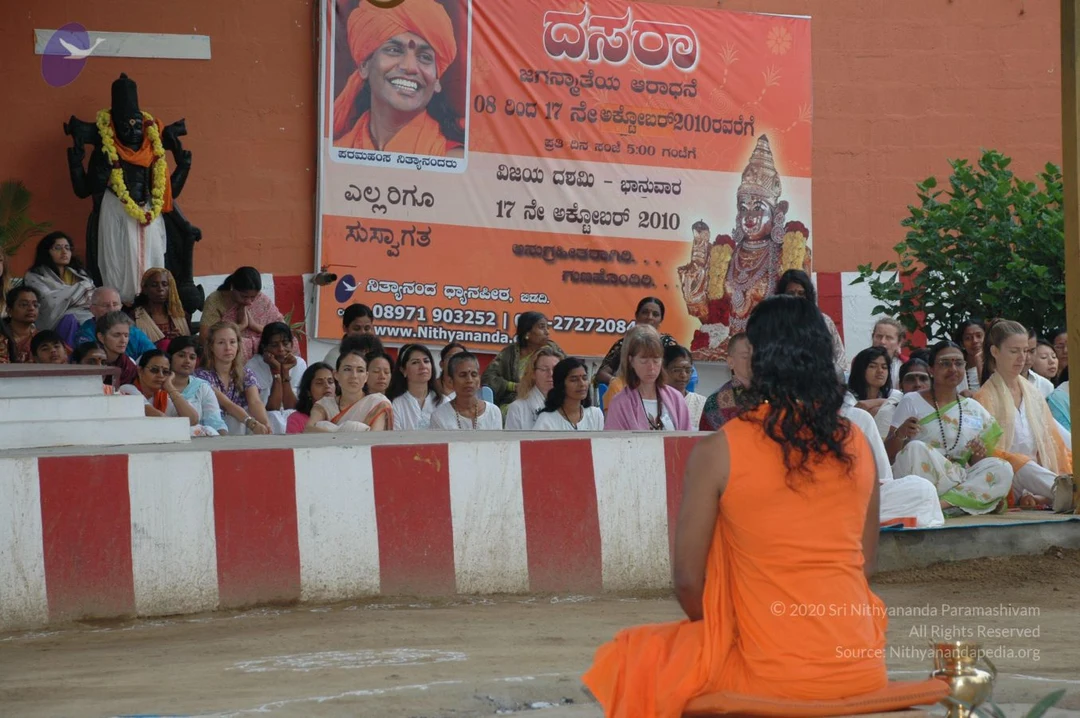
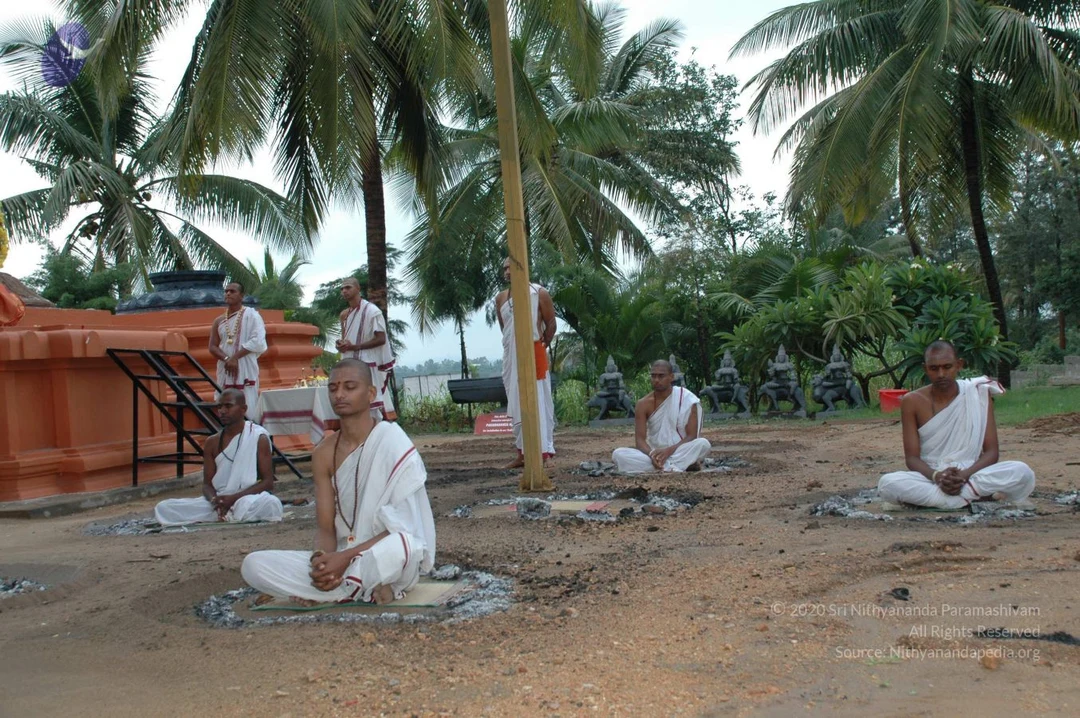
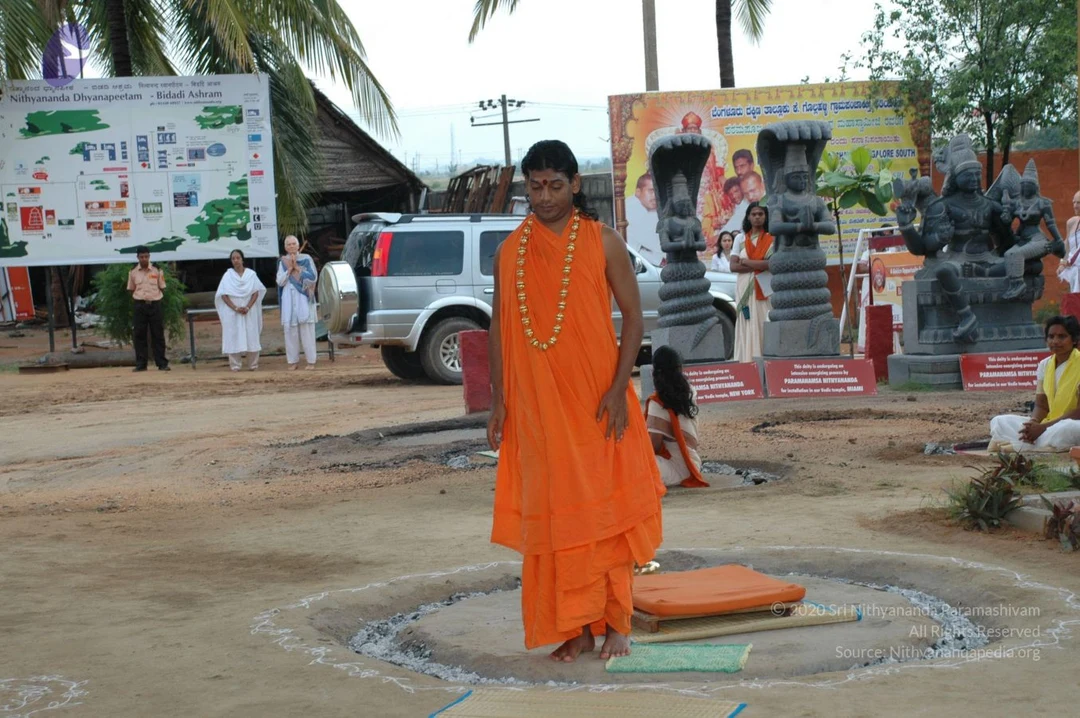
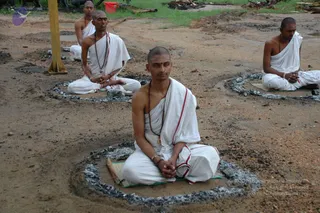
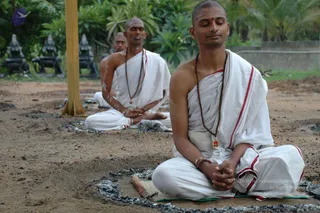
Five shaven-headed men in plain white dhotis and shawls sit cross-legged in a row on sandy ground in an open temple courtyard, meditating with eyes closed and hands resting in their laps. Each sits on a mat inside a circular ring of grey ash. Behind them stand an orange-painted stepped platform, a black stone lingam on a yoni base, rows of black stone sculptures and palm trees. A small table draped in white and red cloth with an offering tray stands nearby, and a small red sign is set into the ground. Nobody in the scene is clearly identified as a person.An outdoor photograph of five shaved-headed men in white dhotis and white shawls seated cross-legged in meditation on bare earth, each within a ring of grey ash. Behind them stands an orange-red stepped stone shrine with a dark stone sculpture on top, a small table with a white cloth and a plate, and a black metal ladder. Palm trees, shrubs and several dark stone figures line the background. A red sign is visible at the far right.Outdoors on a dusty ground, three people sit in meditation on mats within circular fire pits edged with grey ash. In the foreground a man with long dark hair wears an orange saffron cloth draped over his shoulders and a long gold bead mala, with a red tilak on his forehead, eyes closed and hands resting on his knees. Behind him a woman in white with an orange shawl sits cross-legged, and another woman in white with a yellow shawl sits with hands folded. Red signboards with white lettering stand behind them, and stone elephant-like sculptures and tropical plants appear at the edges.Outdoor photo of three people meditating seated on low wooden platforms and mats on a dusty ground with small ash-filled fire pits. In the centre, a man with long dark hair, a red tilak on his forehead, and a long orange sleeveless robe with a gold bead mala sits cross-legged with eyes closed and hands resting on his knee. Behind him to the left, a woman in a white sari with orange border sits meditating, and to the right a woman in white with a yellow shawl sits with hands folded. Behind them are grey stone statues of deities and red placards reading 'This deity is undergoing an intensive energization process by PARAMAHAMSA NITHYANANDA for installation in our Vedic temple, BHAGAVAN NITHYANANDA...' with a Nithyananda Dhyanapeetam style placard.Four shaved-headed men in white unstitched ritual cloth sit cross-legged in meditation on bare reddish earth, each within a ring of grey ash on a mat. Their upper bodies are bare apart from white shawls draped over the shoulders with red borders, and they wear rudraksha malas. The central man in front has eyes closed and hands folded in his lap, while the others sit with eyes closed or lowered. Behind them stand a yellow metal pole, a red bucket and scattered logs and sticks. The three men nearest the camera wear rudraksha malas; the person at the back-left is partly obscured. No one in the scene is identifiable as a person from appearance cues.Outdoor photo of three shaved-headed men in plain white dhotis and shawls with red borders, seated cross-legged on sandy ground with eyes closed in meditation. The nearest man on the right wears a rudraksha mala and a round pendant, holds his hands clasped in his lap and has a small red tilak on his forehead. Behind them a yellow wooden post, dark stone statues of seated figures and lush palms and frangipani fill the background. Grey ash or charcoal outlines a square on the ground in front of them. A purple logo sits in the top-left corner.
Sarva-Darshan

10 photosSource gallery
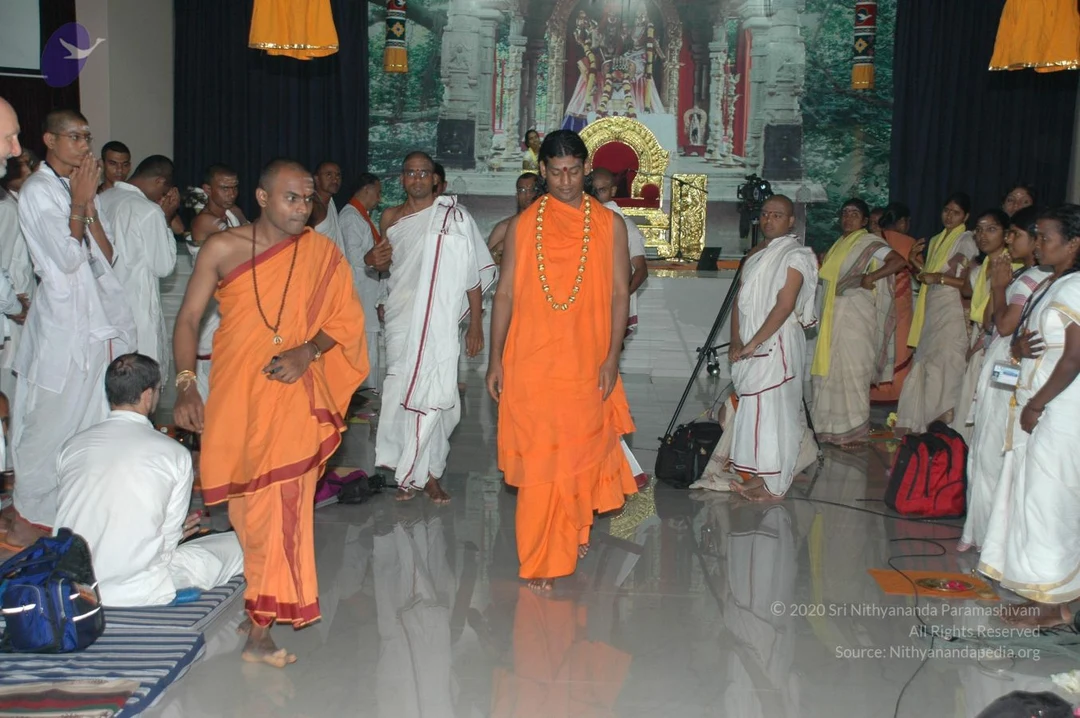
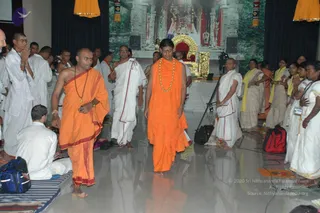
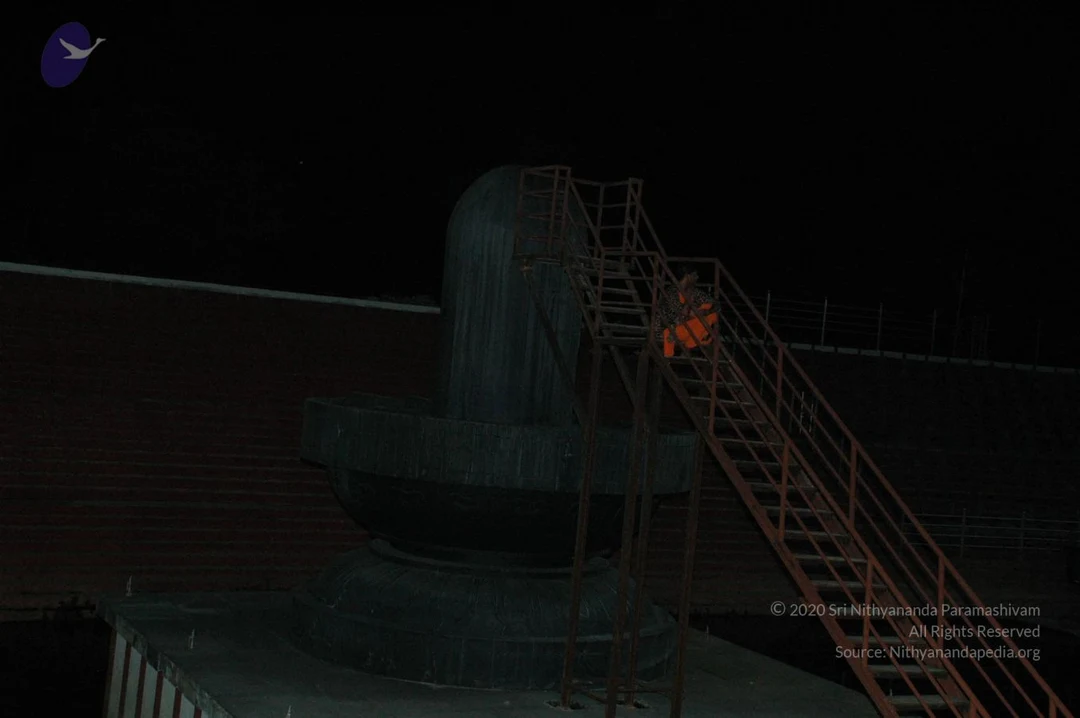
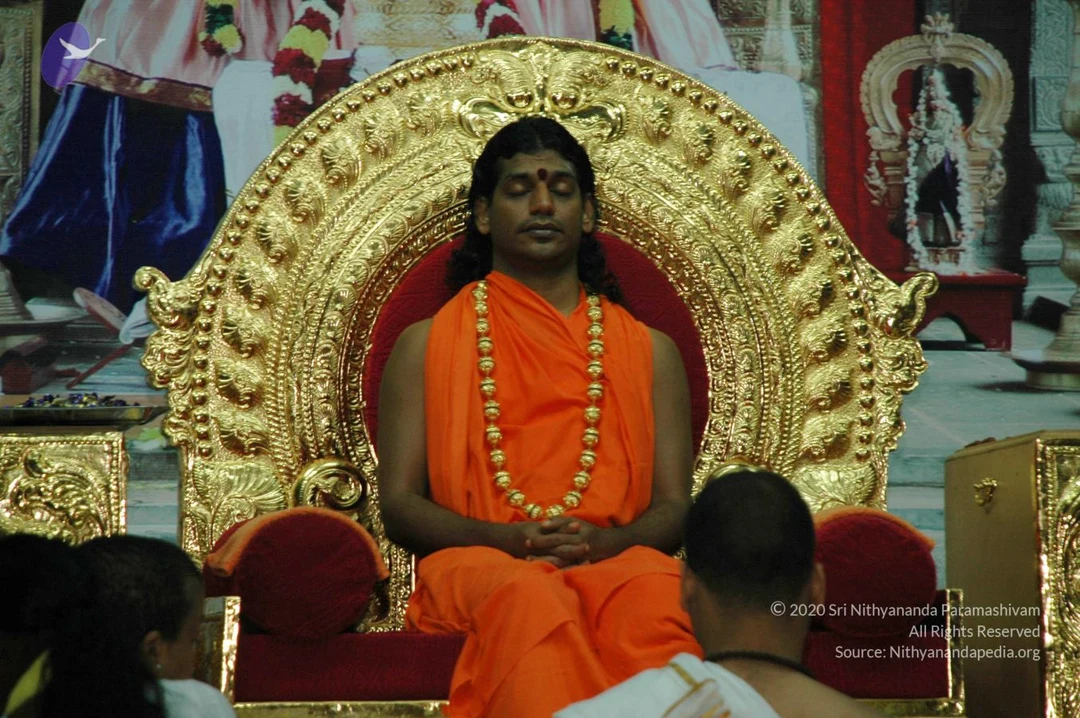
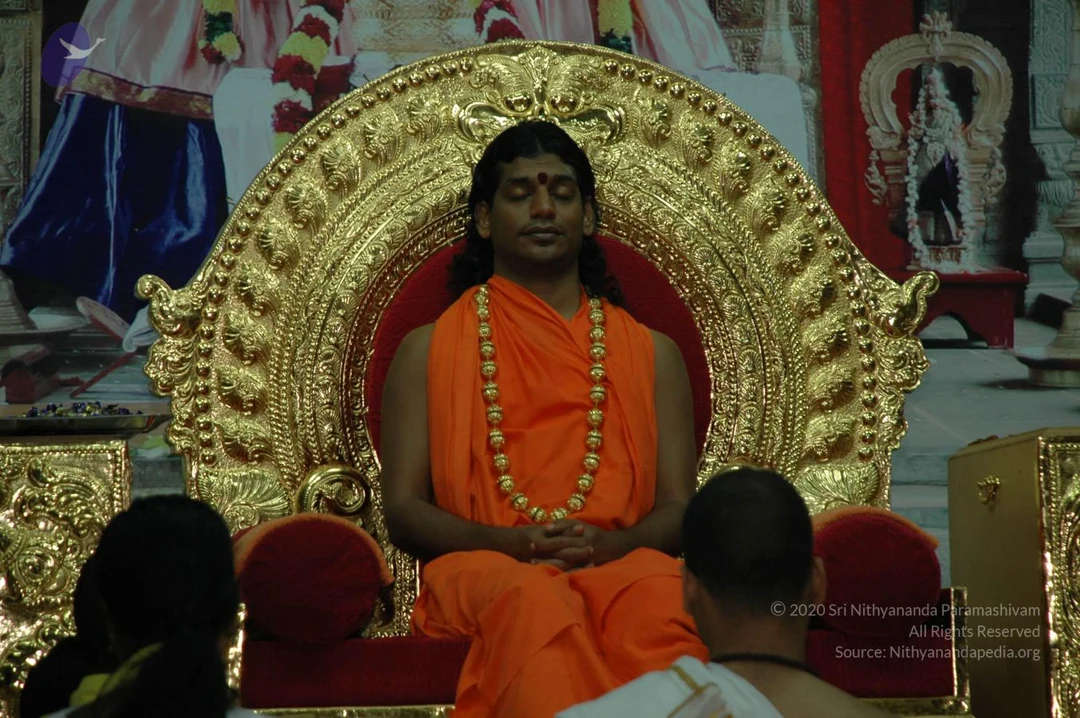
Indoor satsang hall with a polished grey floor and a large backdrop photo of a temple gateway with deity figures. In the centre, a man with long dark hair wears an orange-saffron robe and a long beaded mala necklace, walking forward with a calm expression. Beside him, a shaved-headed man in orange robe with a rudraksha mala walks in step. Behind them, devotees in white dhotis and cream garments stand with palms joined, and women in cream sarees with yellow shawls stand at right. A golden throne-like seat with red cushion sits near the backdrop. Cameras, a tripod and red bags are visible at right. Seated devotees in white are at left.Photograph of a hall with a polished marble floor and colourful striped bunting hanging from the ceiling. Two rows of people stand with palms pressed together in anjali along both sides, men in white on the left and women in white and blue saris on the right. In the centre, two figures in saffron/orange robes walk forward down the aisle, one with a rudraksha mala around the neck, followed by a man in white. A deity shrine with garlands is visible at the far end, and a small wooden pedestal or table sits near the aisle. Several people are seated on the floor in the background. The scene suggests a satsang or puja procession.A photograph inside a decorated hall with white ceiling drapes, hanging colourful tassel banners and a large framed temple backdrop. A man in a saffron-orange robe with long swept-back hair and a rudraksha-style beaded garland raises his hand in blessing toward a line of men in white shirts and dhotis. Beside him stand two shaved-headed priests in white dhotis with cream shawls and gold-beaded necklaces, one holding a small wooden item. A row of devotees stands barefoot on a polished floor, and a deity altar with a gold canopy is visible at right. The orange-robed figure is an appearance-based a person giving darshan to devotees.A photograph of a central figure in a saffron-orange sleeveless robe with a long gold bead necklace, a red bindi, and long swept-back dark hair, pressing a hand to the forehead of a man in a white shirt with hands folded in prayer. The central figure holds a small white cloth or paper in his other hand. Around them, men in white dhotis and white shirts stand, a bald man in white holds a wooden box, and a man in orange garments is seen from behind. Orange and red woven banners hang from the ceiling behind, and a projection screen is visible in the background. a person appearance is probable based on the saffron robe, long hair and gold beaded necklace, with the blessing of a devotee shown.A photograph of a large indoor hall with a white fabric ceiling, decorated pillars wrapped in coloured patterns with orange tassels, and ceiling fans. A man in an orange robe with a beaded necklace stands on a polished white floor, a hand raised toward a bearded man in white dhoti and shirt who presses his palms together. Another orange-robed attendant with a shaved head holds an offering near him. Devotees in white dhotis and shirts stand along the left with palms joined, and women in saris stand on the right with hands folded. An altar with a decorated backdrop is visible in the distance. The scene suggests a greeting or blessing, with about 20 people visible.A photograph inside a hall with a white ceiling canopy and tall striped cloth pillars with orange tassels. In the foreground, a line of men in white ritual dhotis and white shirts stand with palms pressed together, several with heads bowed. At the centre, a man in a saffron-orange robe and a beaded orange-and-gold necklace stands with a folded paper in his hands, and a second saffron-robed sannyasi beside him holds a small orange object and an offering. A bare-chested man in white stands at the right edge. Women in saris stand along the right side, and a decorated altar with a deity murti is visible in the background. The central saffron-clad figure shows only a beaded necklace and a plain saffron robe, so the identity cue is insufficient and he is described by role as a sannyasi.
Bidadi-Temple

6 photosSource gallery
A stone shrine with carved granite pillars and a golden arched niche framing a red draped backdrop. Seated within is a deity murti pair in gold and ornate attire, adorned with yellow and orange marigold garlands. In front stands a golden pedestal holding a small golden linga with garlands, flanked by brass oil lamps on tall stands, brass bowls and a small blue figure seated at the base. Garlanded gold panels and a red and gold gate surround the scene; no people are visible.A photograph of a temple shrine with a gilded deity murti of a standing figure wearing a red-and-gold turban and ornate jewellery, flanked by a second figure, both with garlands of yellow and purple marigolds draped over a golden stand and red silk backdrop. Tall brass oil lamps stand on either side, a small blue-clad statue of a seated figure sits in front, and an oil lamp burns at the lower left. Grey stone pillars and an arched gilded frame surround the shrine. No physical people are visible.A golden shrine inside a temple pavilion with a red silk backdrop. Two gilded deity murtis sit on a gold pedestal, one wearing a red turban and crown with an ornate golden shiva-linga-like form between them, both draped in yellow and purple marigold garlands. Brass oil lamps stand on either side of the shrine. In front, a small blue-robed statue of a sage with a raised hand rests on the altar, with a brass kalasha, a bowl and offerings. The page excerpt refers to a satsang talk, but no speaker is visible in this photo. No people are visible.A gilded shrine with a red drape and an ornate gold arch frames a pair of golden deity murti seated side by side, one wearing an orange turban and a crown with a trident and crescent motif, the other with a tall gold crown and jewelled necklaces. Between them stands a silver-gold cylindrical lingam, draped with yellow and purple flower garlands. In front, a small white figure of a seated person in a blue robe with a blue turban and a rudraksha mala sits with one hand raised, and brass oil lamps flank the shrine. The statues are not living people and no appearance-based candidate for a person is visible.A golden deity murti of a seated Shiva and Parvati pair sits under an ornate gilded arch against a red draped backdrop. The figures wear gold jewellery, jewelled necklaces and crowns, and the male figure holds a trident. A large golden lingam-shaped form stands at the centre, draped with yellow and magenta flower garlands. Below, a small white marble figure in a blue robe with a rudraksha mala sits with hands folded, next to brass oil lamps on a gold-plated base. Shoes and a book appear at the lower edge.A photograph of a gold-clad deity shrine with a seated pair of gilded murti figures on a red draped backdrop framed by an ornate gold arch. The taller figure wears a red turban and holds a trident, the other wears a gold crown and jewelled necklaces. Garlands of yellow and magenta flowers hang across the figures and a gold kalasha-like lingam stands before them. In the foreground a small white and blue-robed statue sits with a rudraksha mala, and brass lamps and vessels rest on the gold pedestal. The scene is a temple altar display with no living people visible.