Skip to content
Thursday

20 November 2008

THE SUPREME PONTIFF OF HINDUISM JGM HDH BHAGAVAN NITHYANANDA PARAMASHIVAM

Dated photos
513
Source pages
1
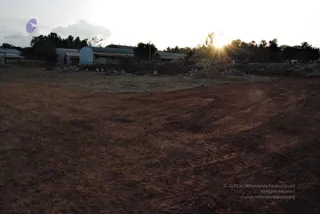
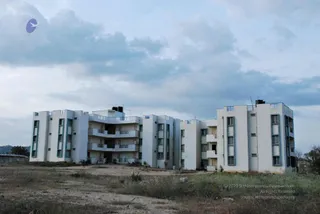
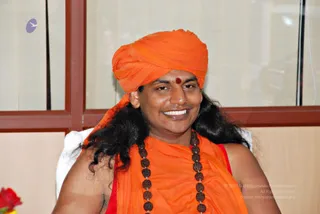
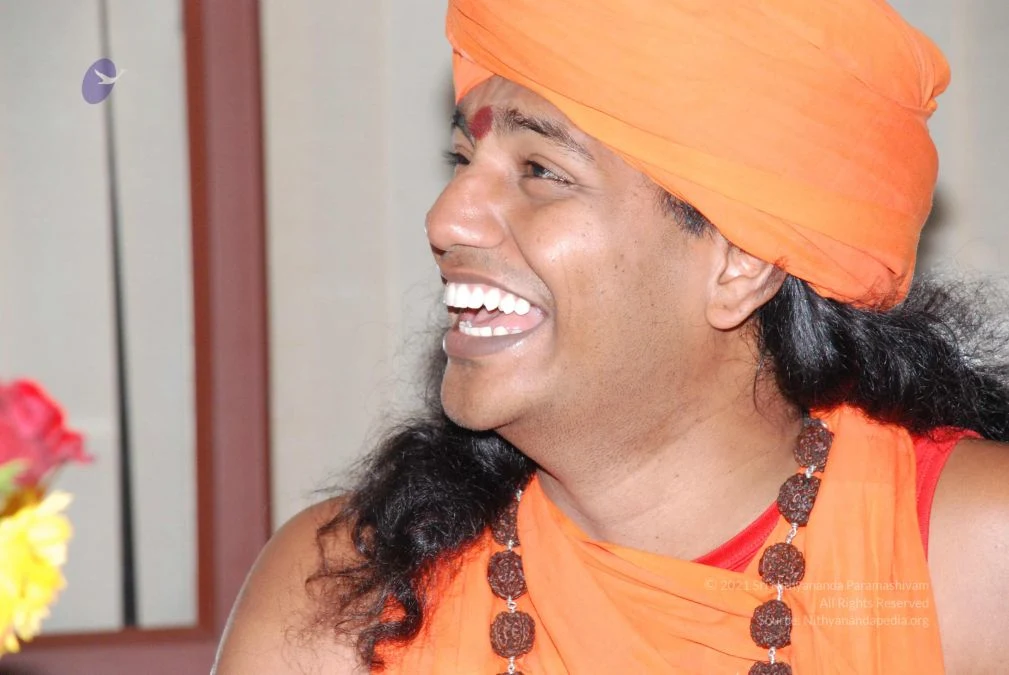
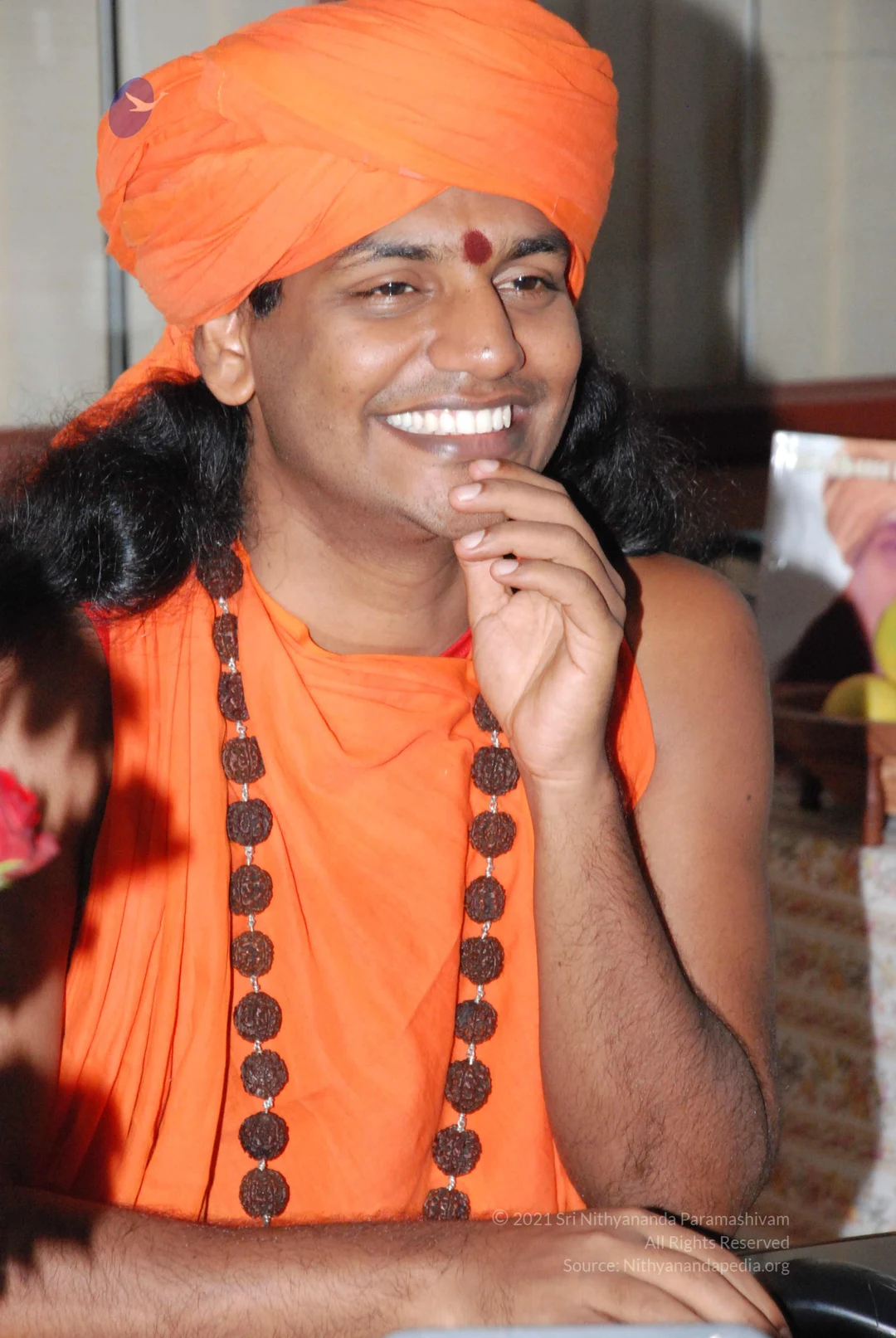
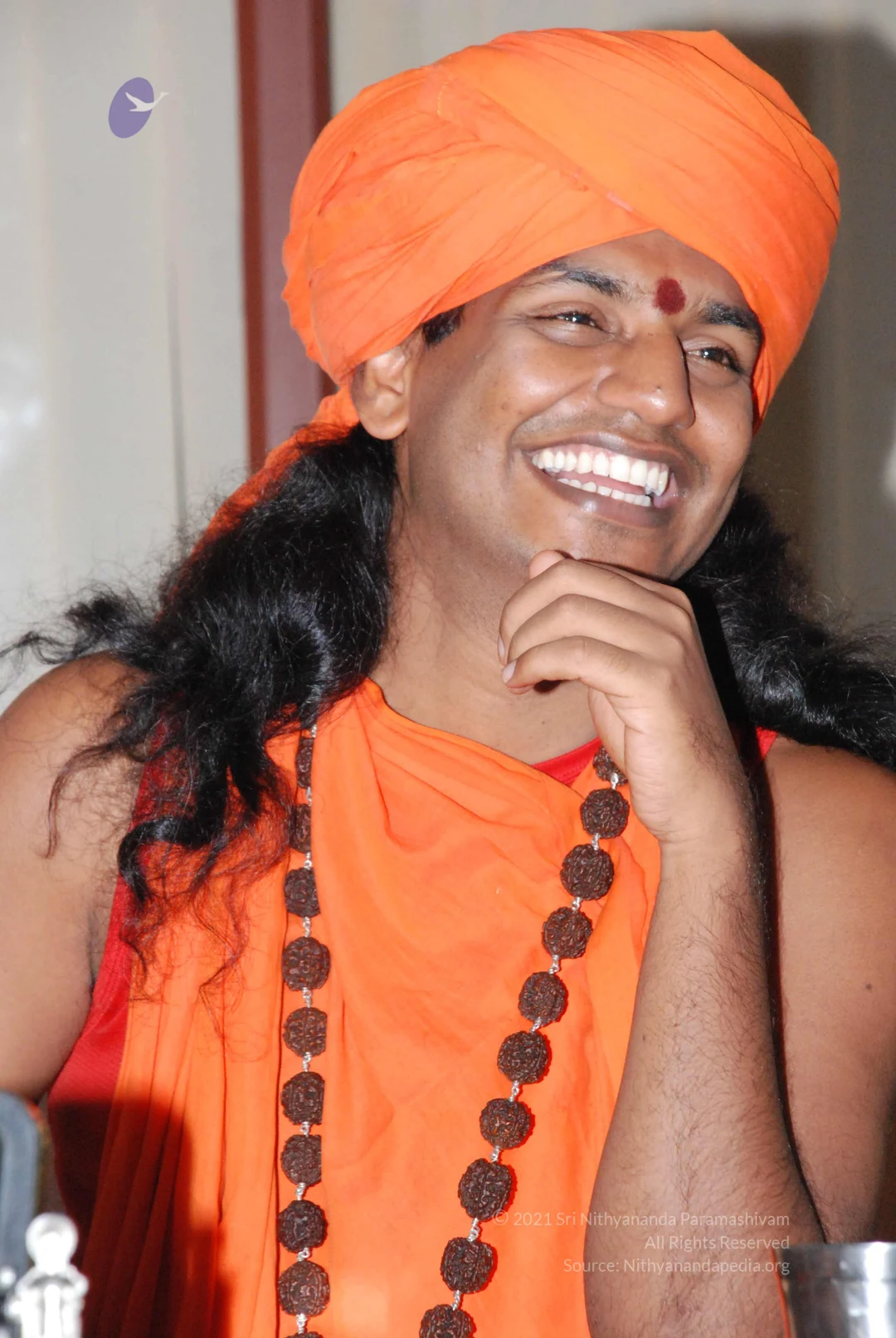
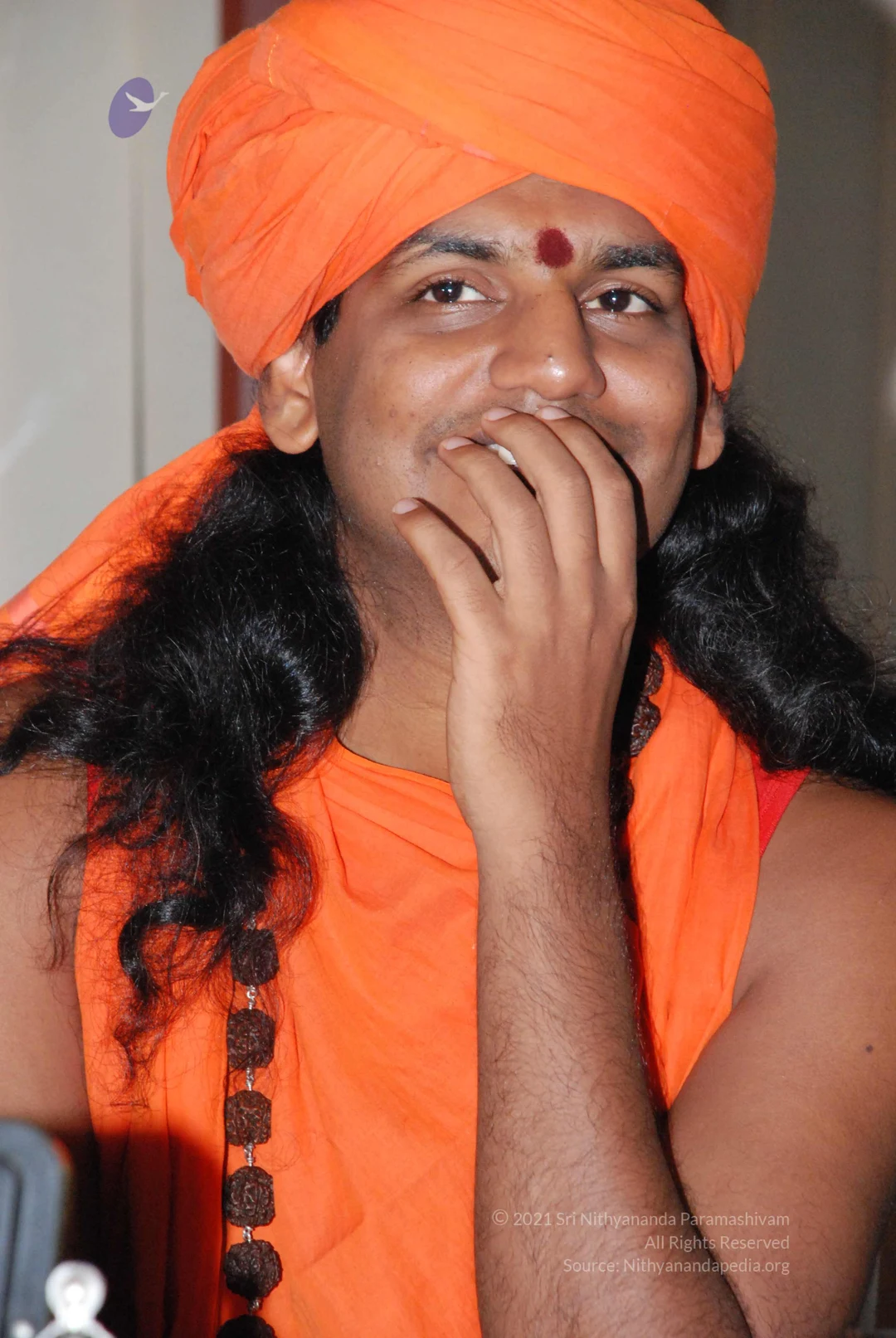
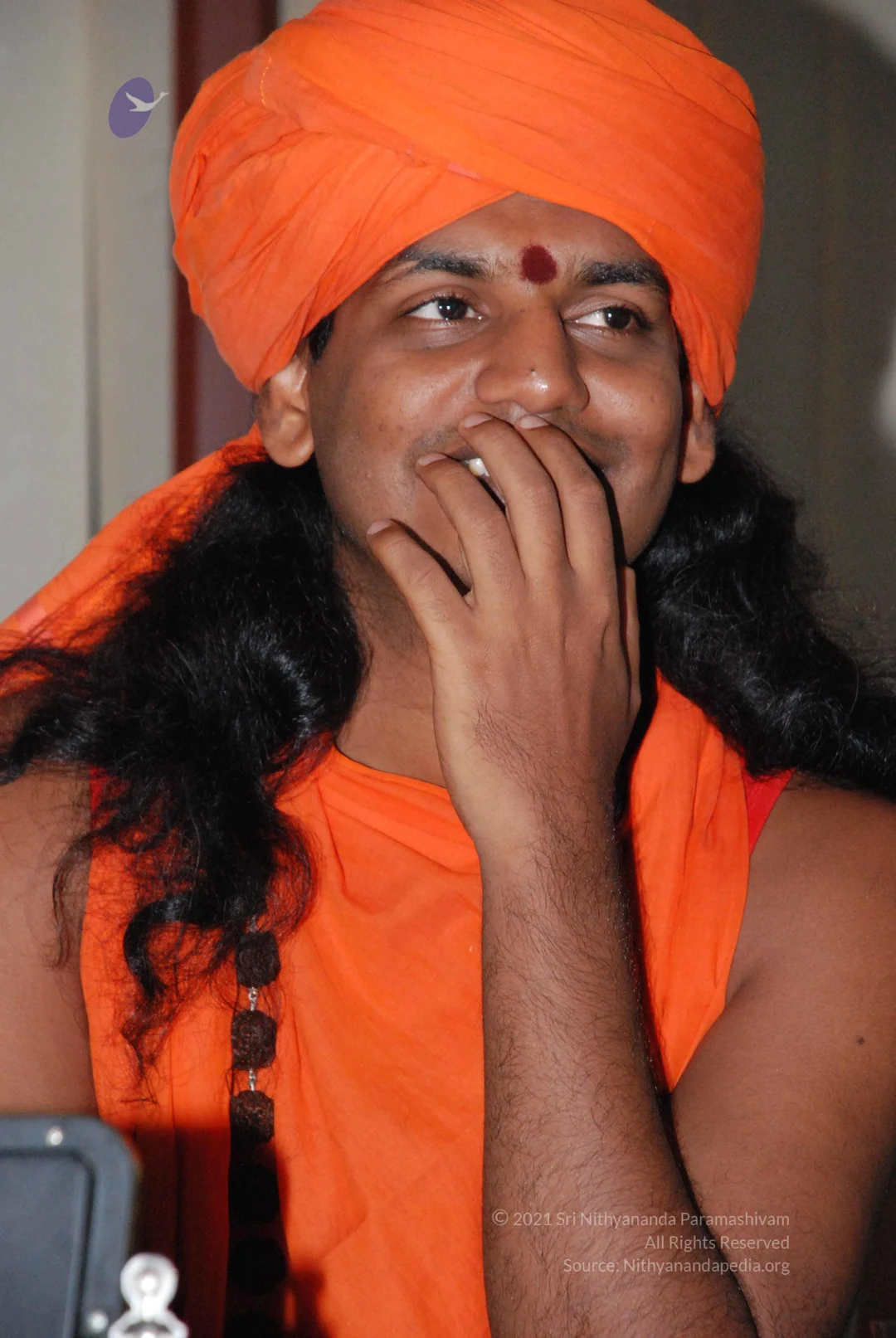
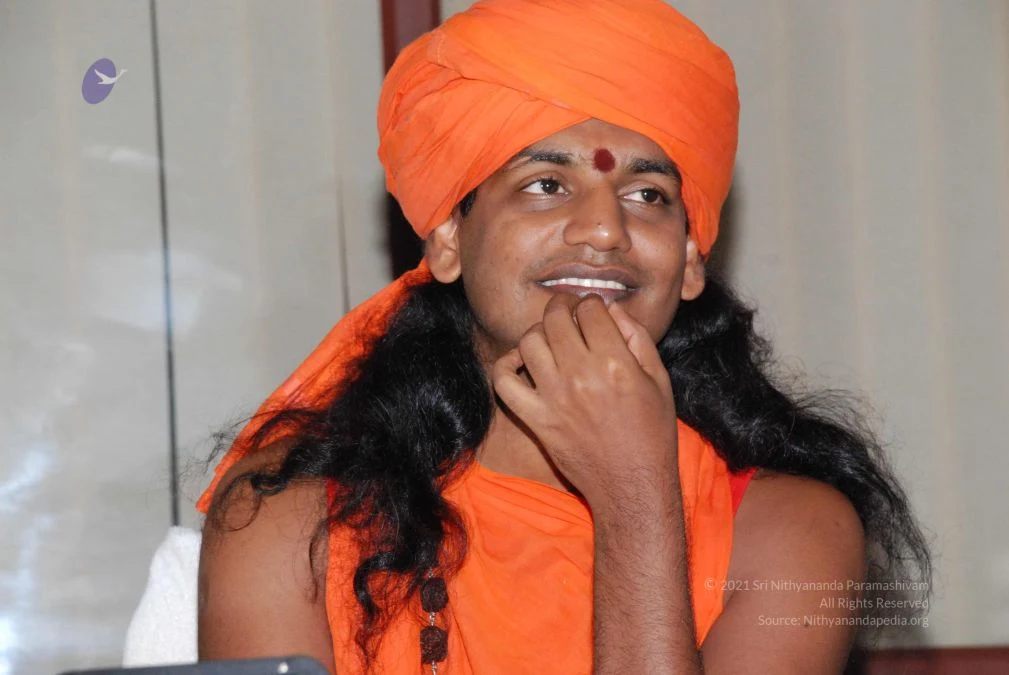
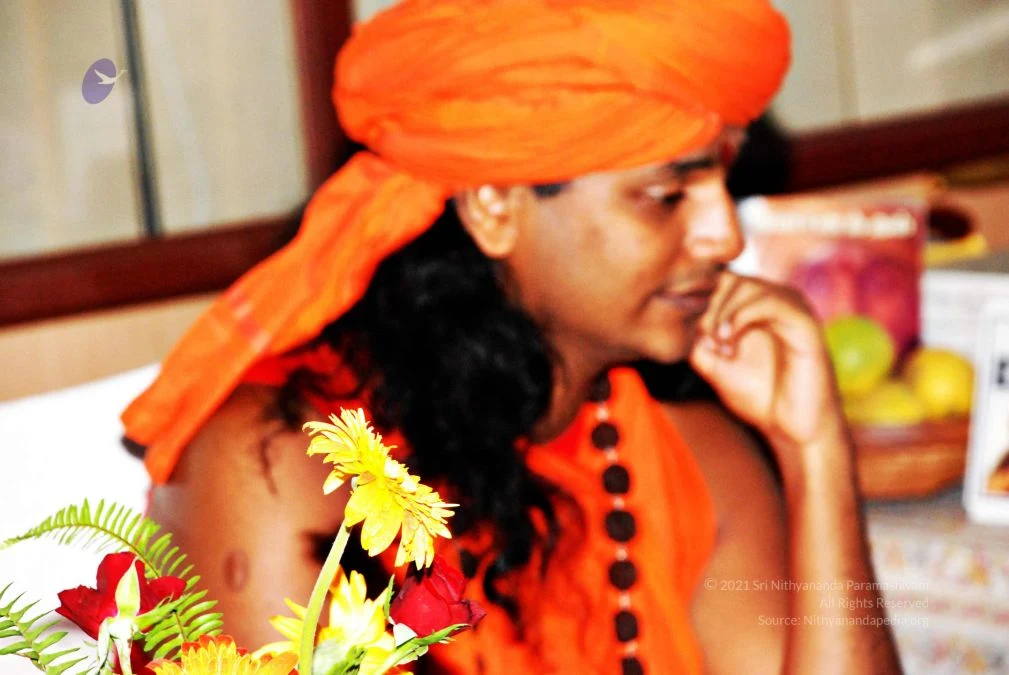
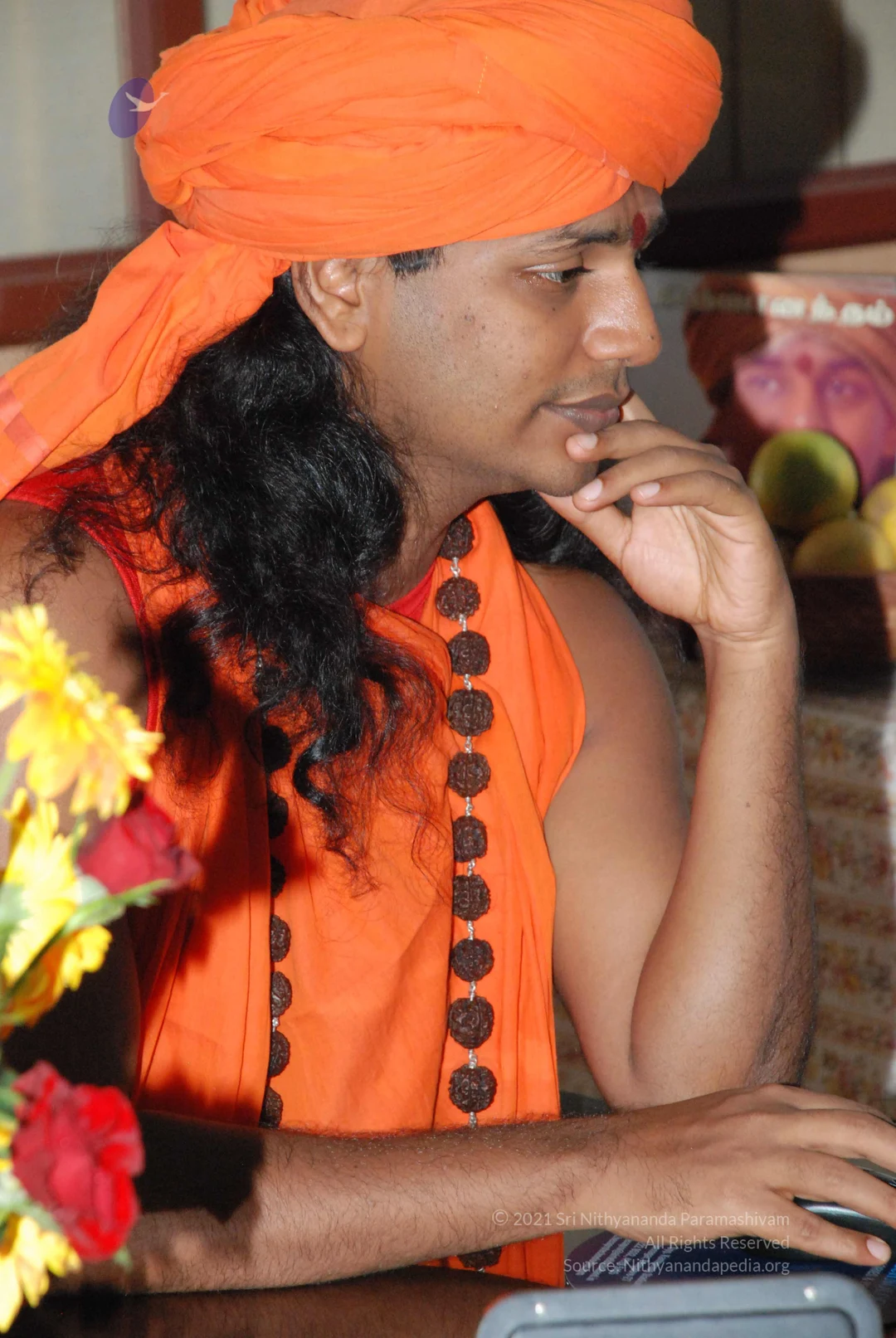
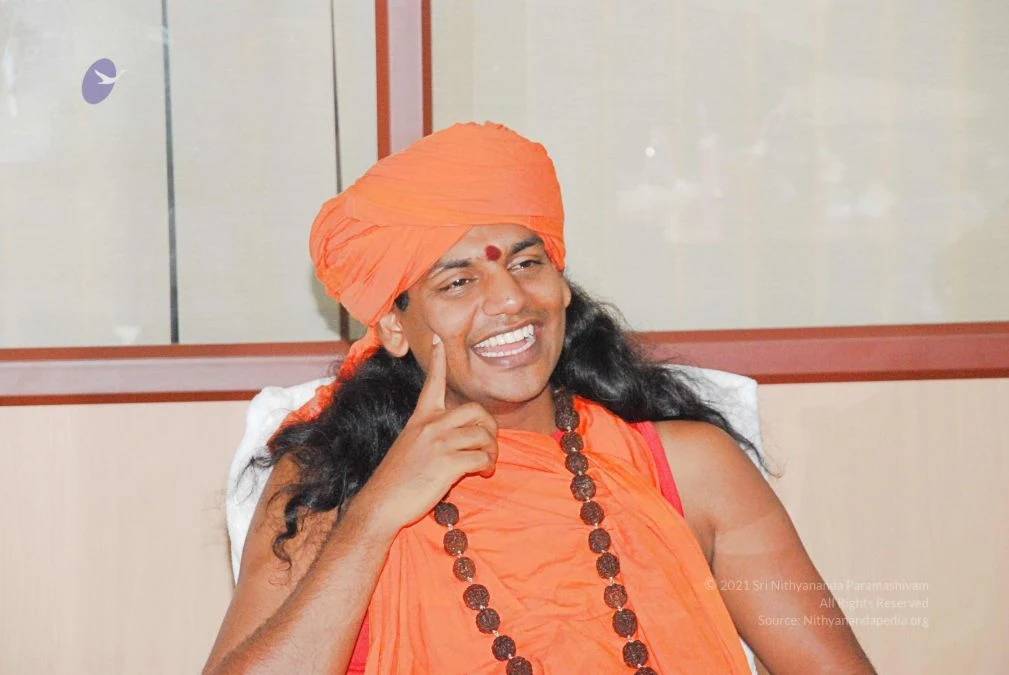
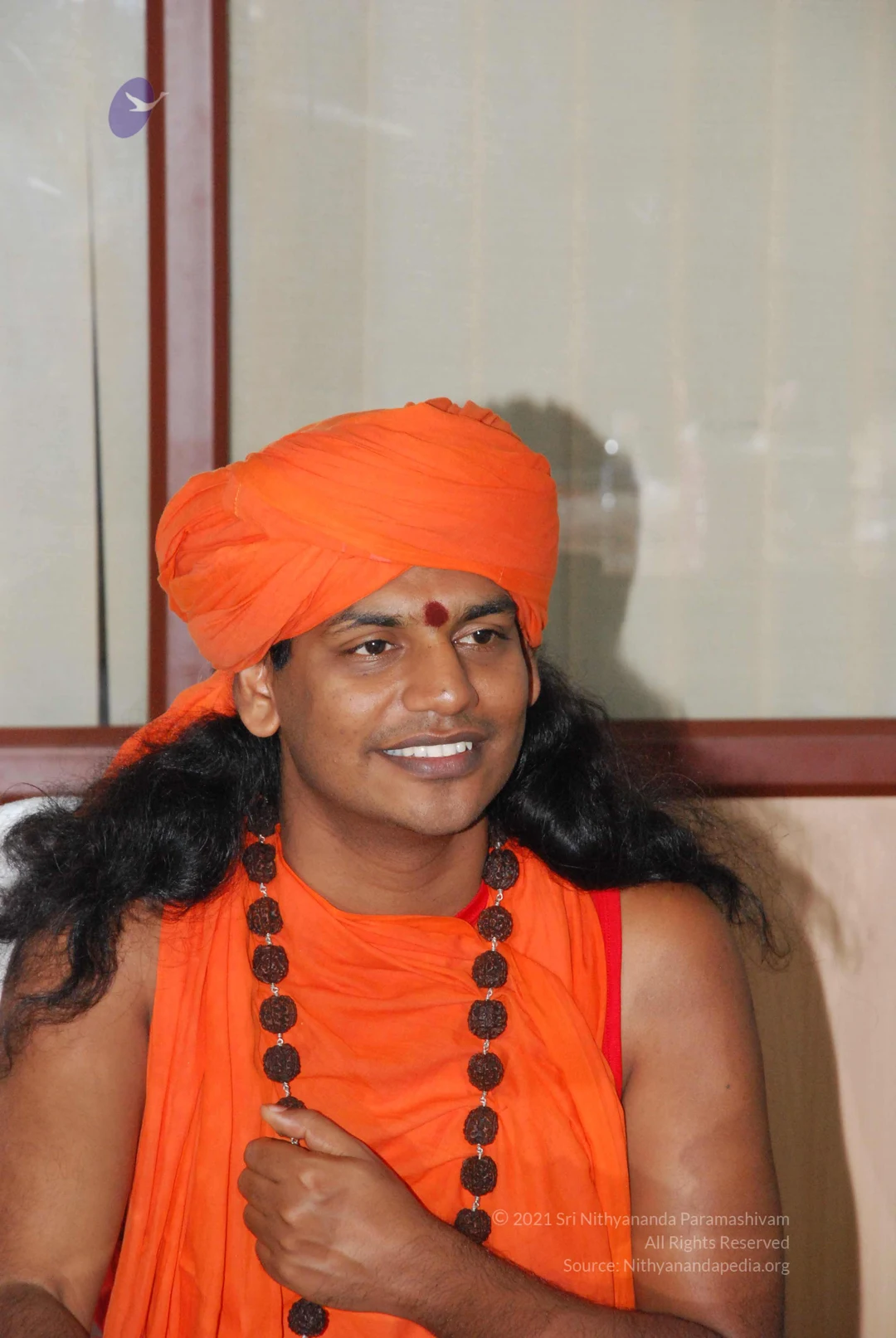
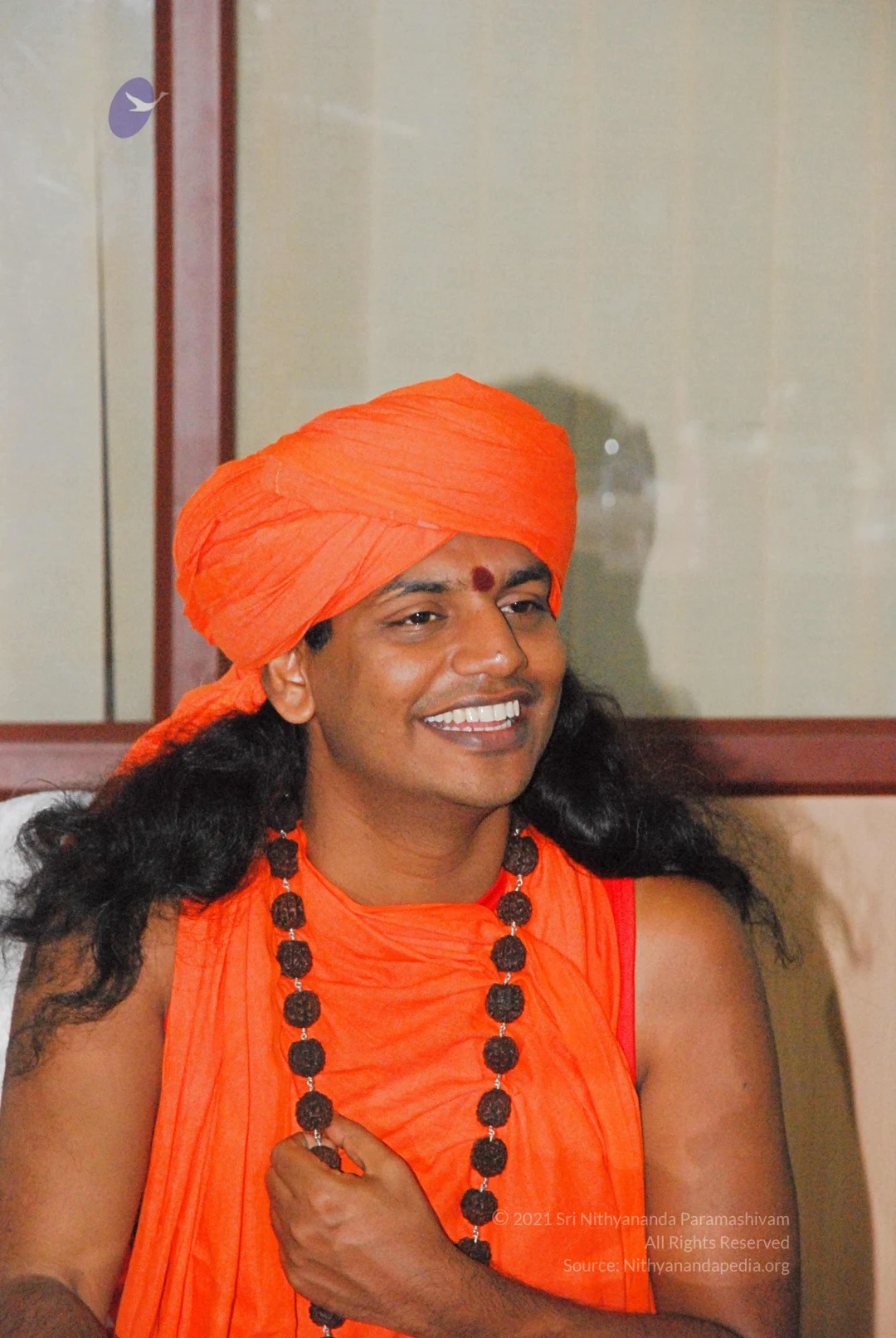
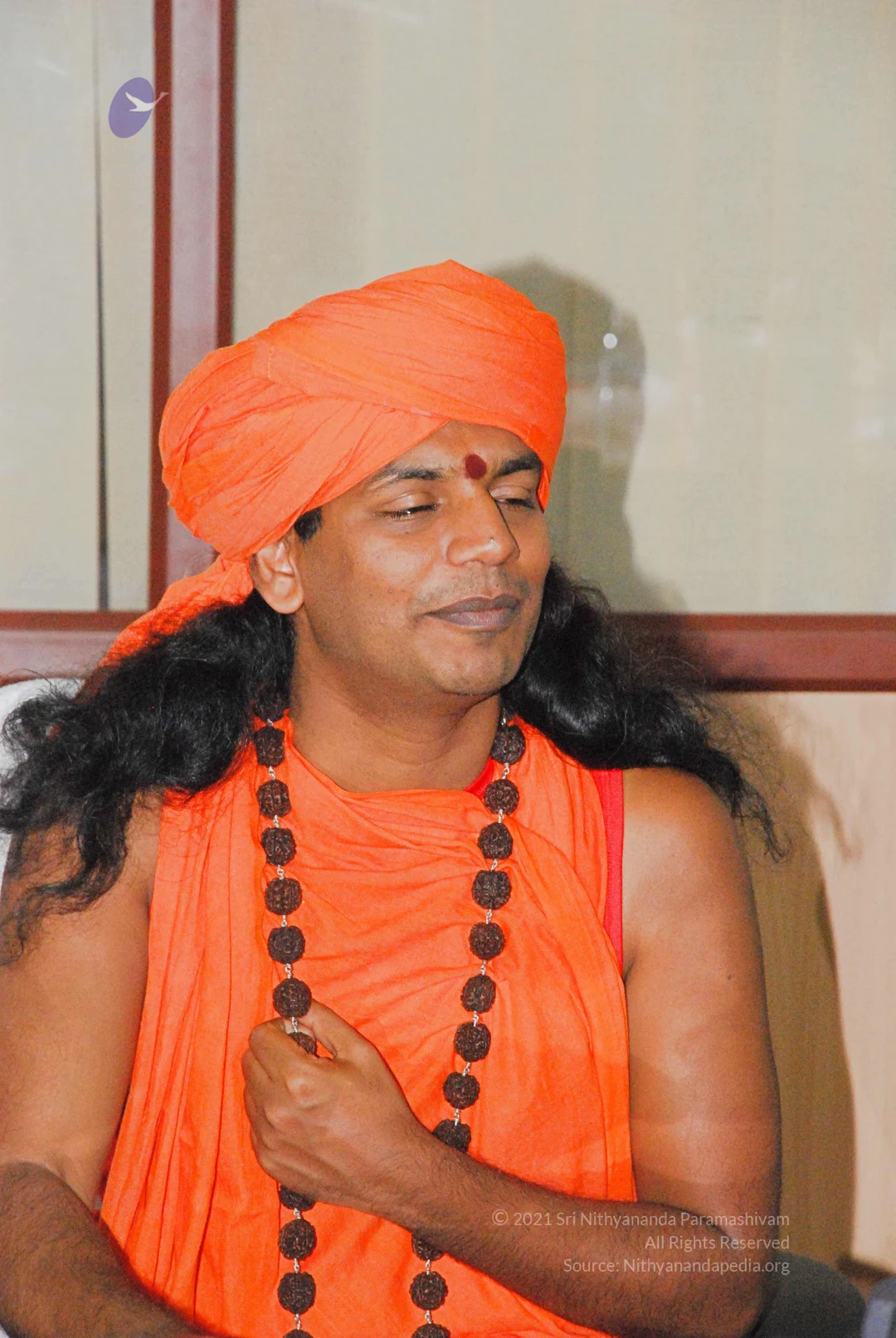
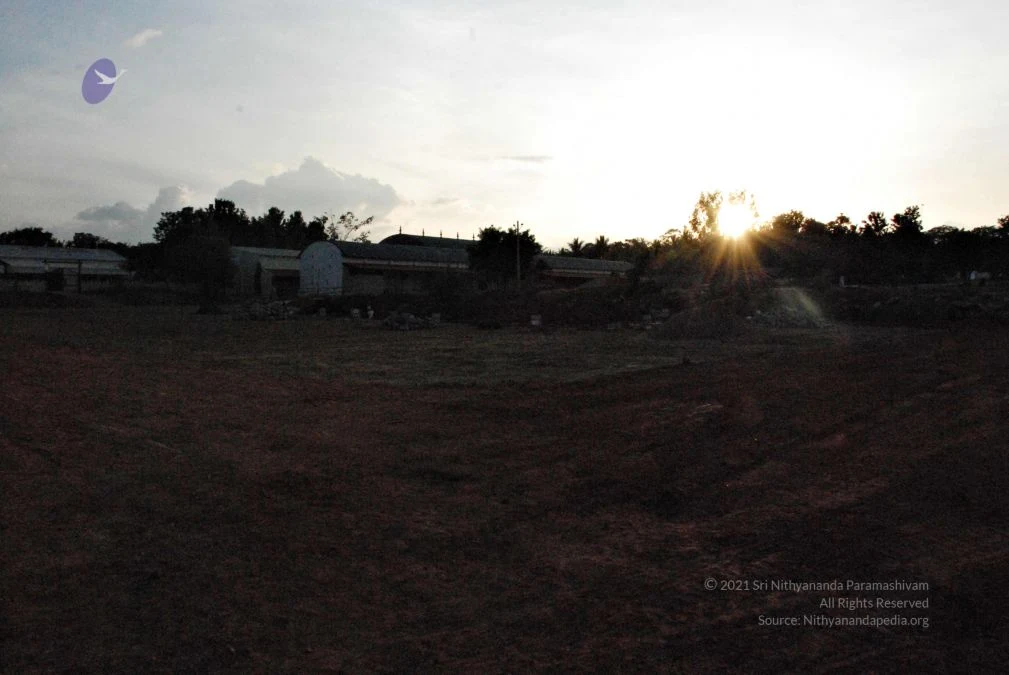
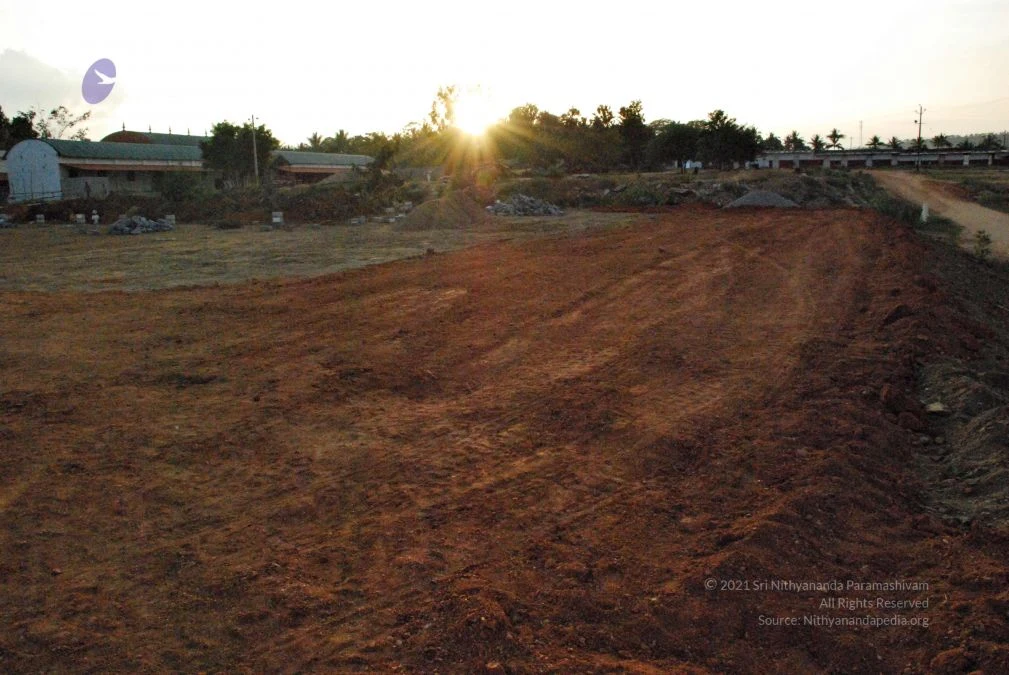
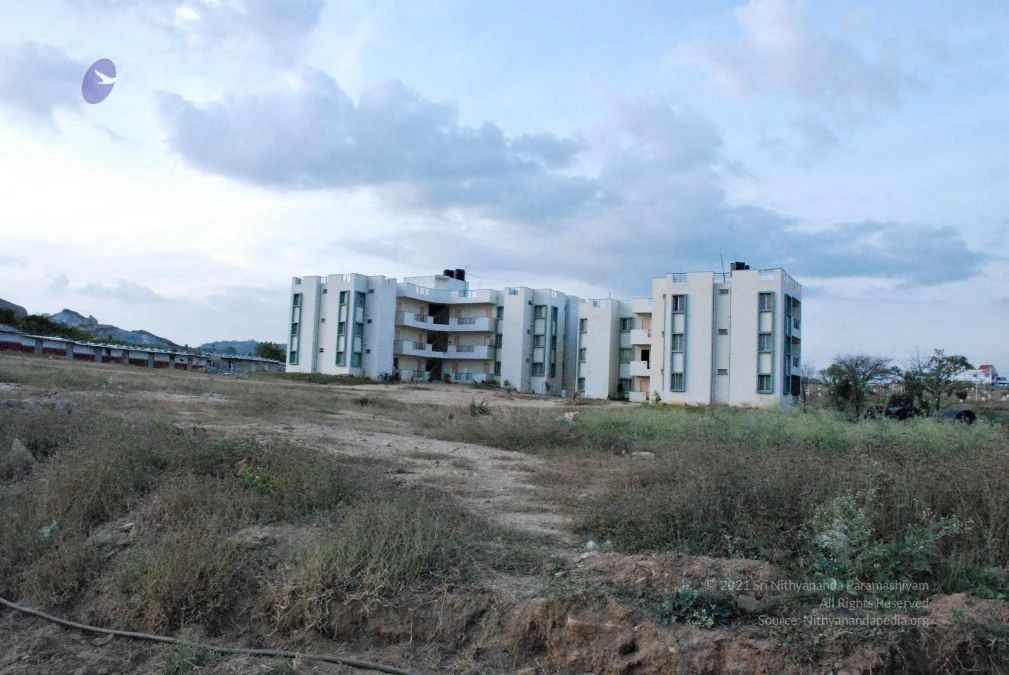
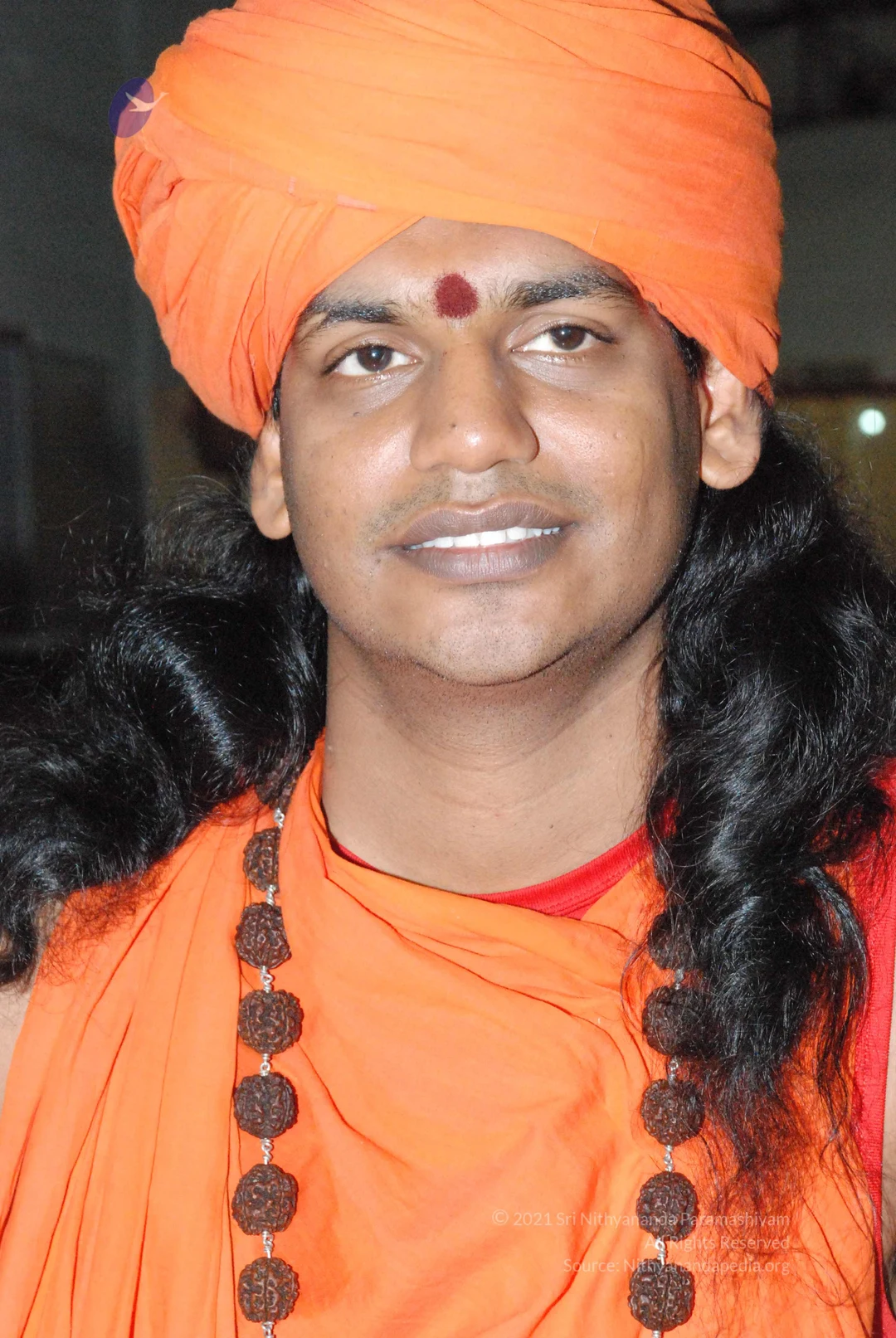
A reddish-brown dirt field at sunset, with the low sun glowing through trees on the right and a haze of light across the frame. Behind the field stand several low sheds with corrugated green roofs, a few stone or gravel piles and a utility pole. No people are visible.Exterior photograph of a cluster of white multi-storey residential blocks with balconies, teal-framed windows and small rooftop structures, set on a dry, scrubby open lot with bare patches of earth under a heavy, overcast sky. No people are visible. The buildings appear to be an unfinished or sparsely used complex in a rural outskirts setting.Close photo of a smiling man seated indoors against a window with a wooden frame. He wears an orange turban with a red bindi on his forehead, an orange shawl over a red undergarment, and multiple dark brown rudraksha mala beads hanging on his chest. Long dark hair falls over his shoulders. A red flower is visible at the lower left edge of the frame. Swamiji (probable): the orange turban, rudraksha malas, long hair and saffron clothing are the qualifying cues for this seated devotee-style presentation.

November 20 2008

Original wiki page
Contents

Title:

THE SUPREME PONTIFF OF HINDUISM JGM HDH BHAGAVAN NITHYANANDA PARAMASHIVAM

Photos

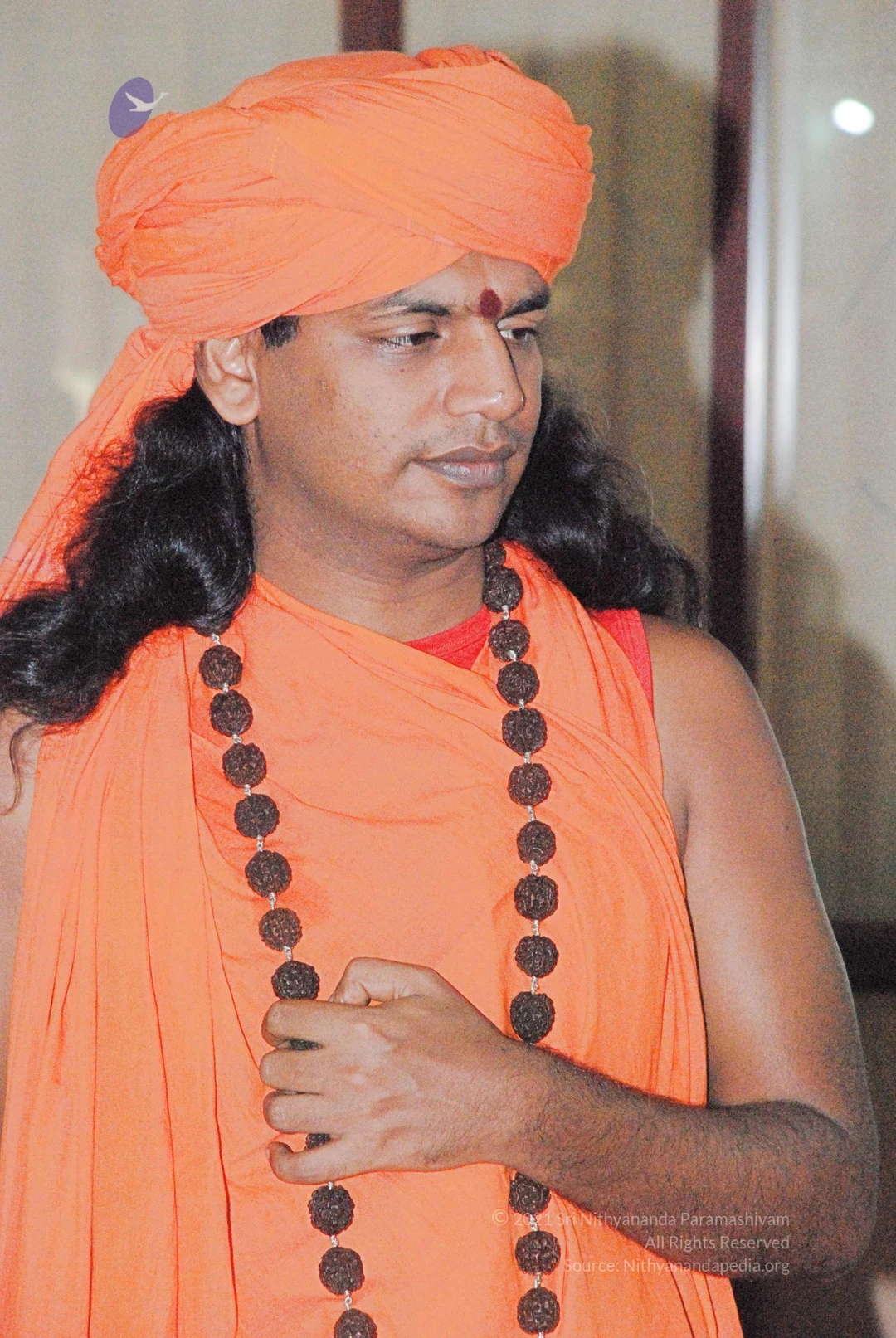
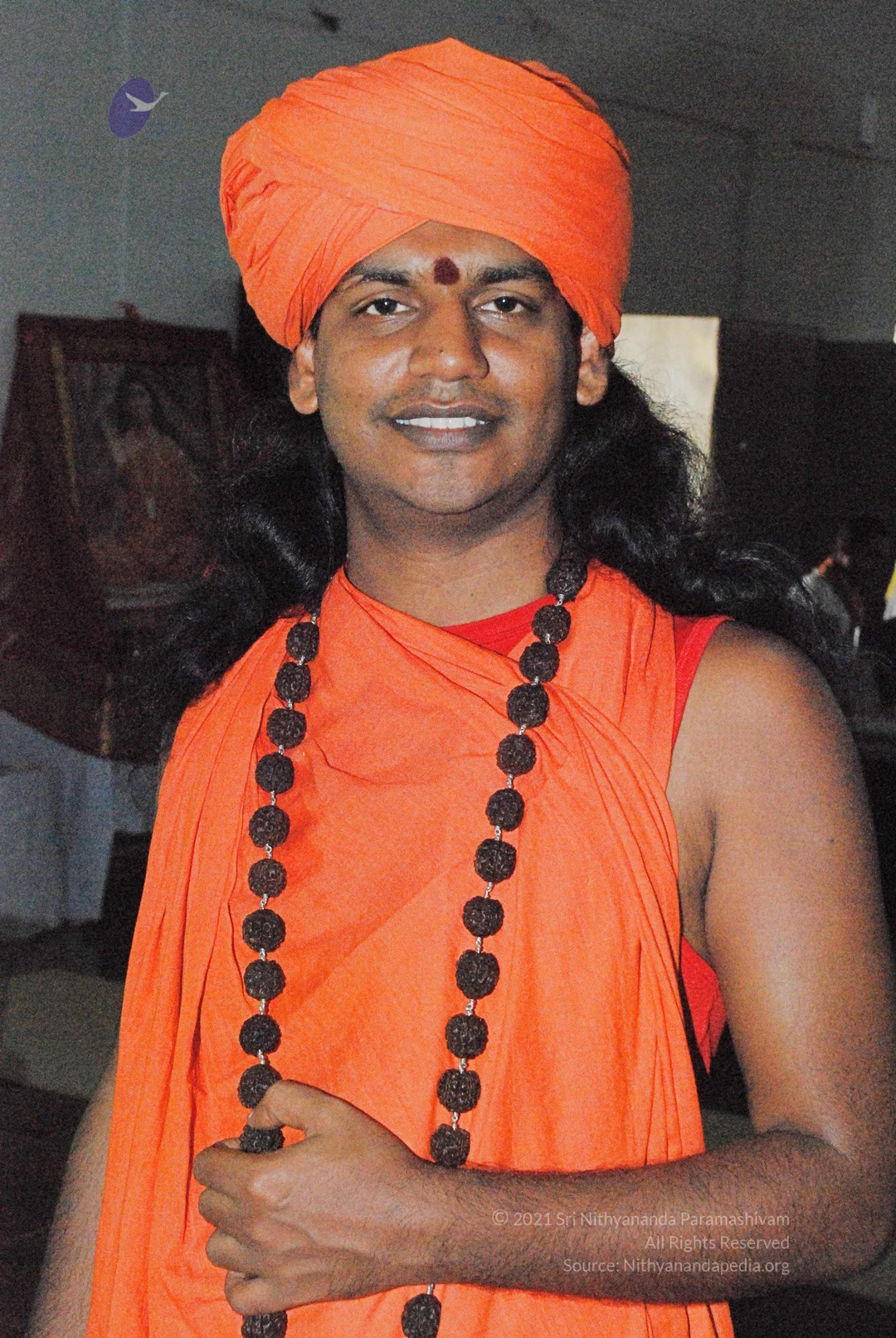
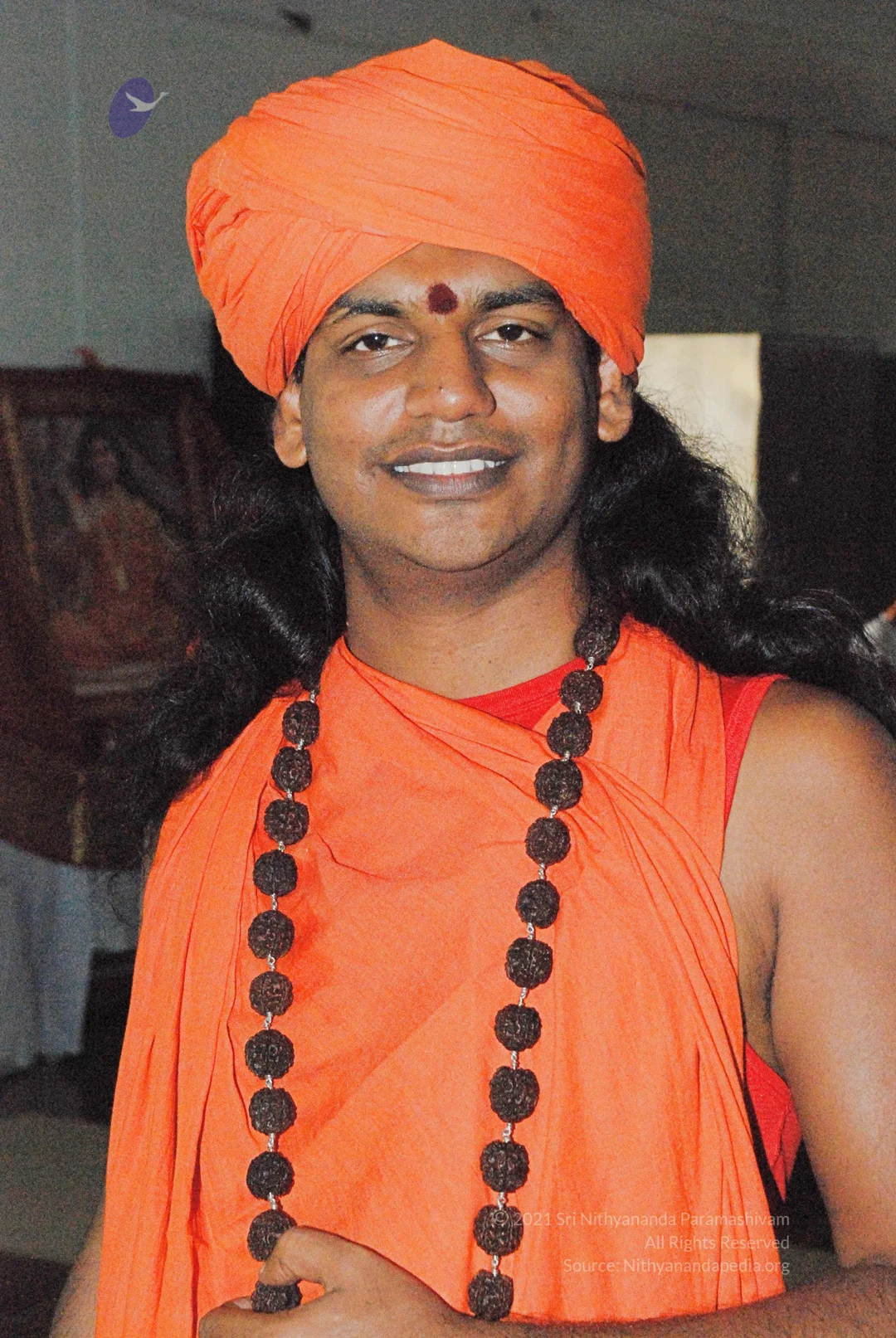
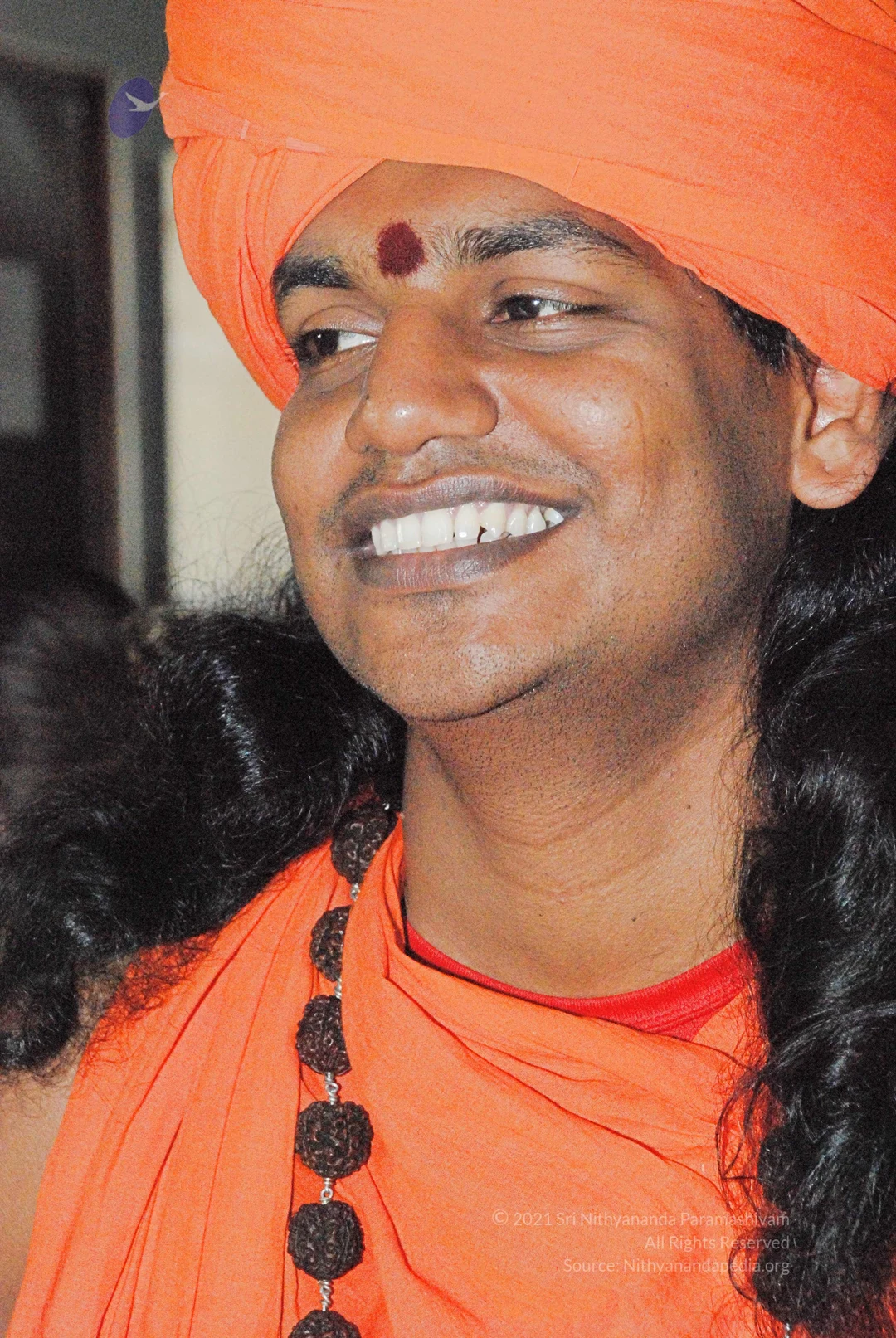
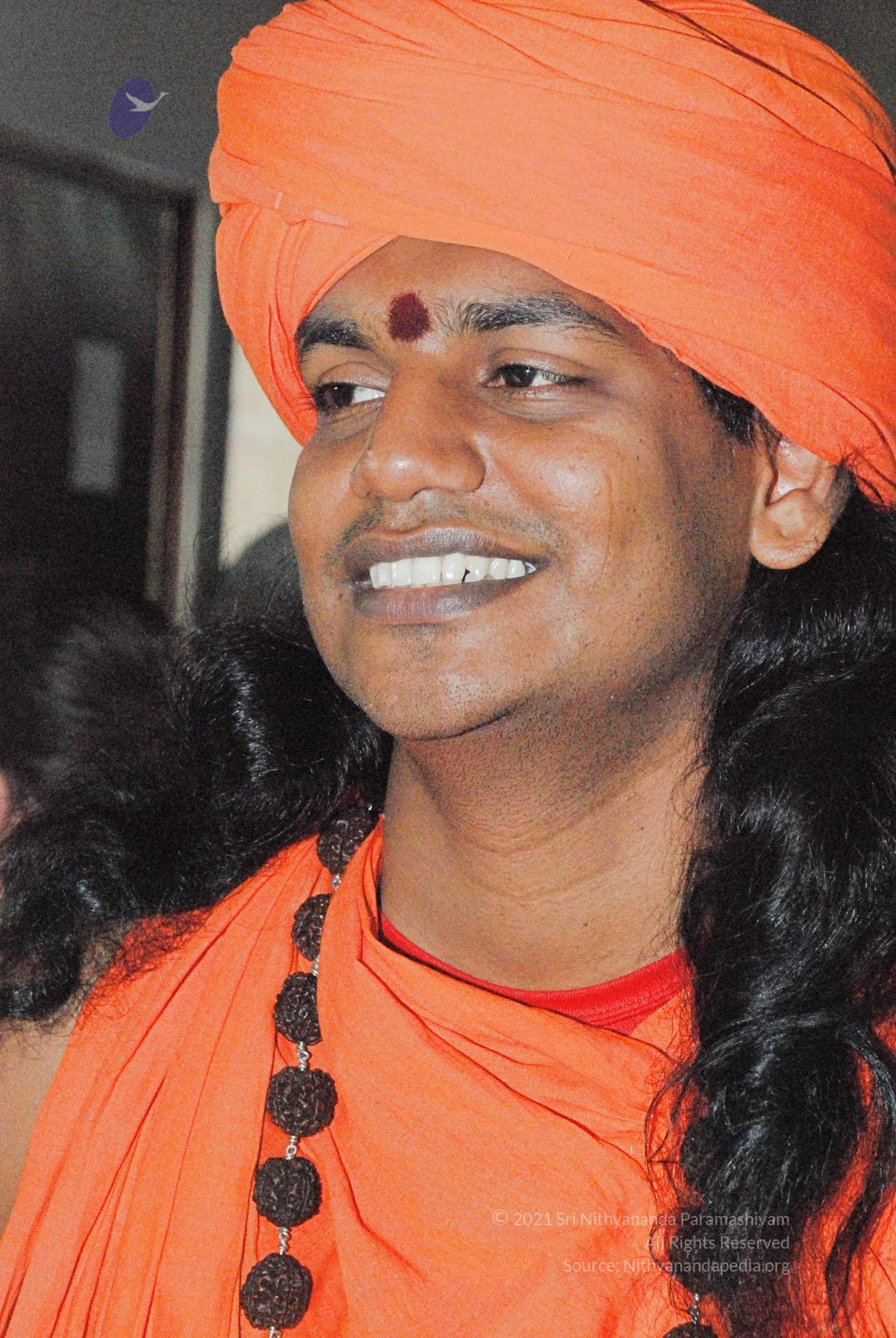
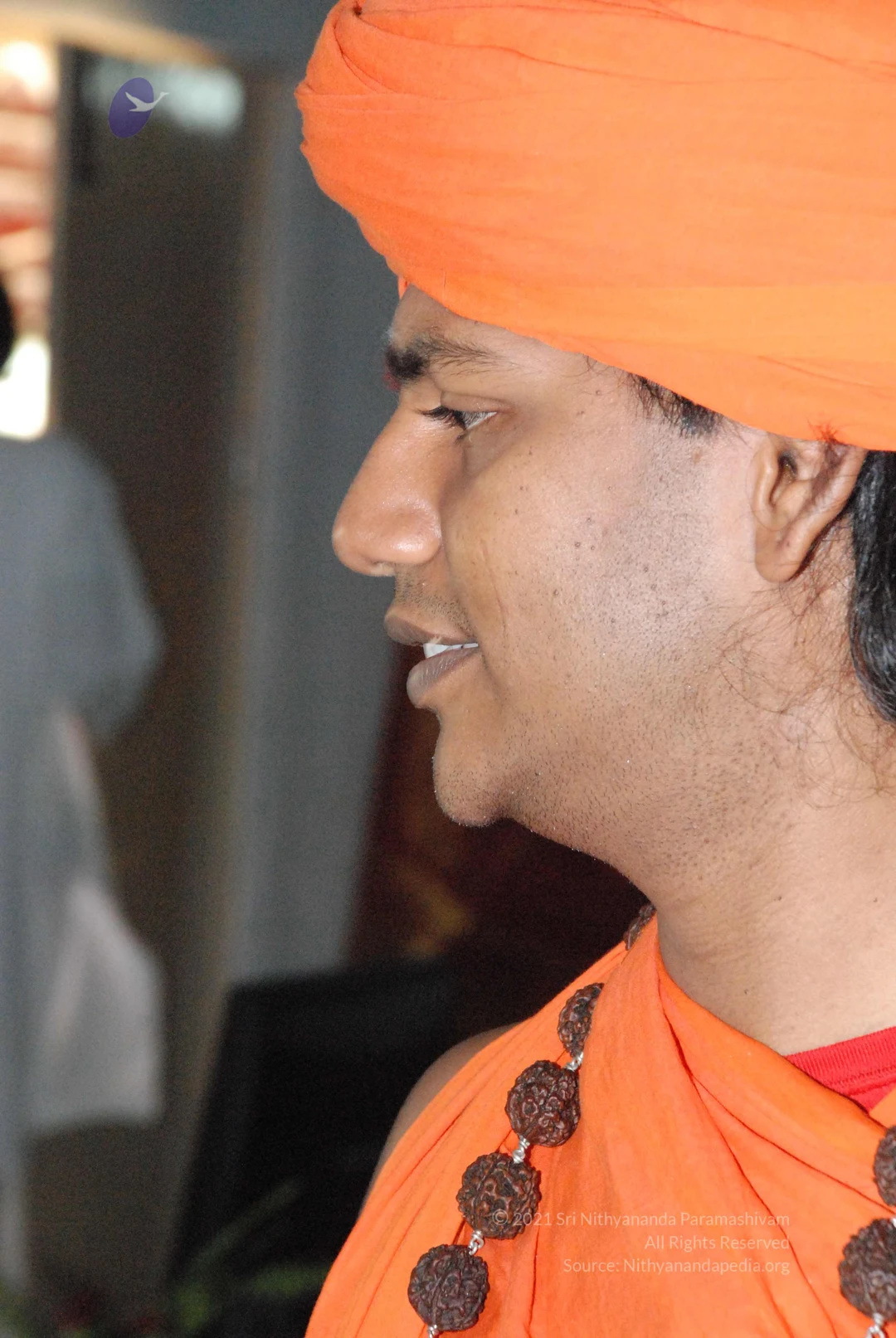
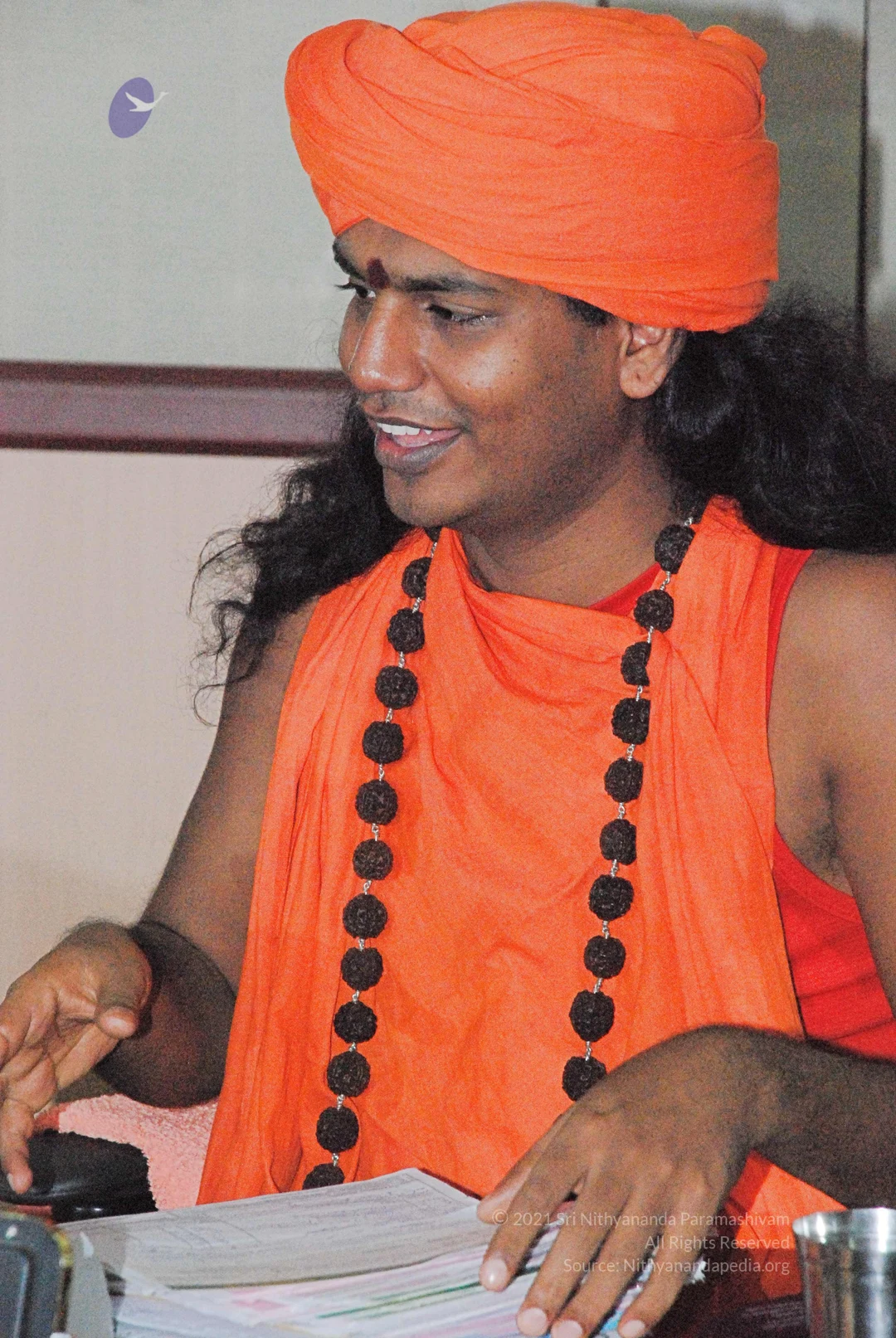
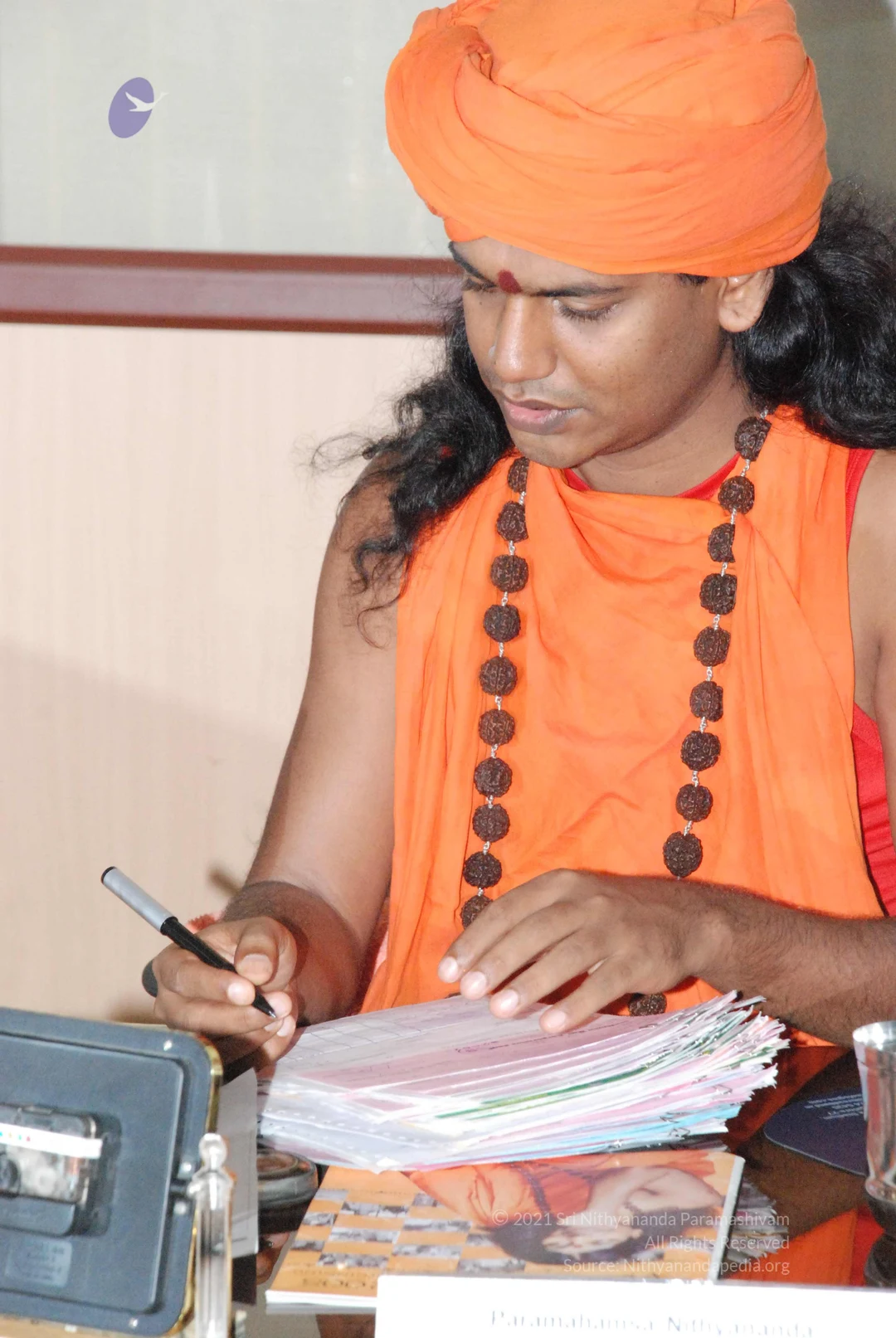
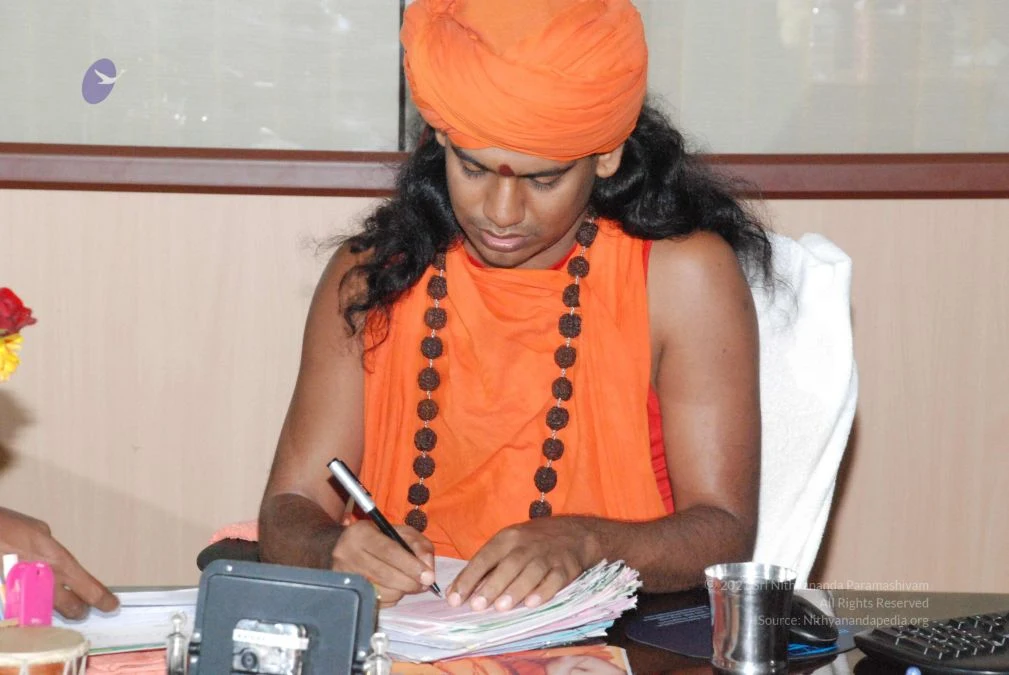
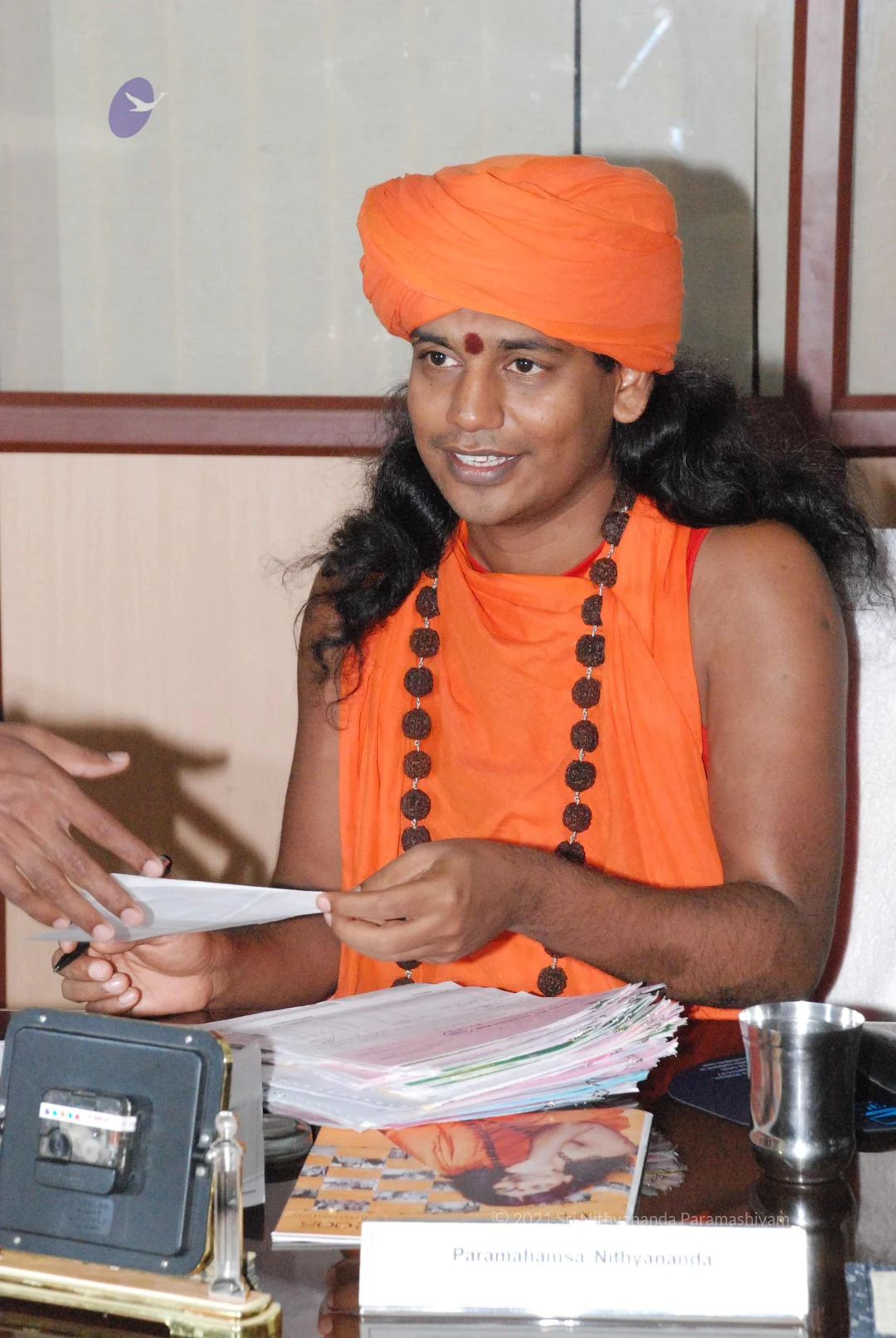
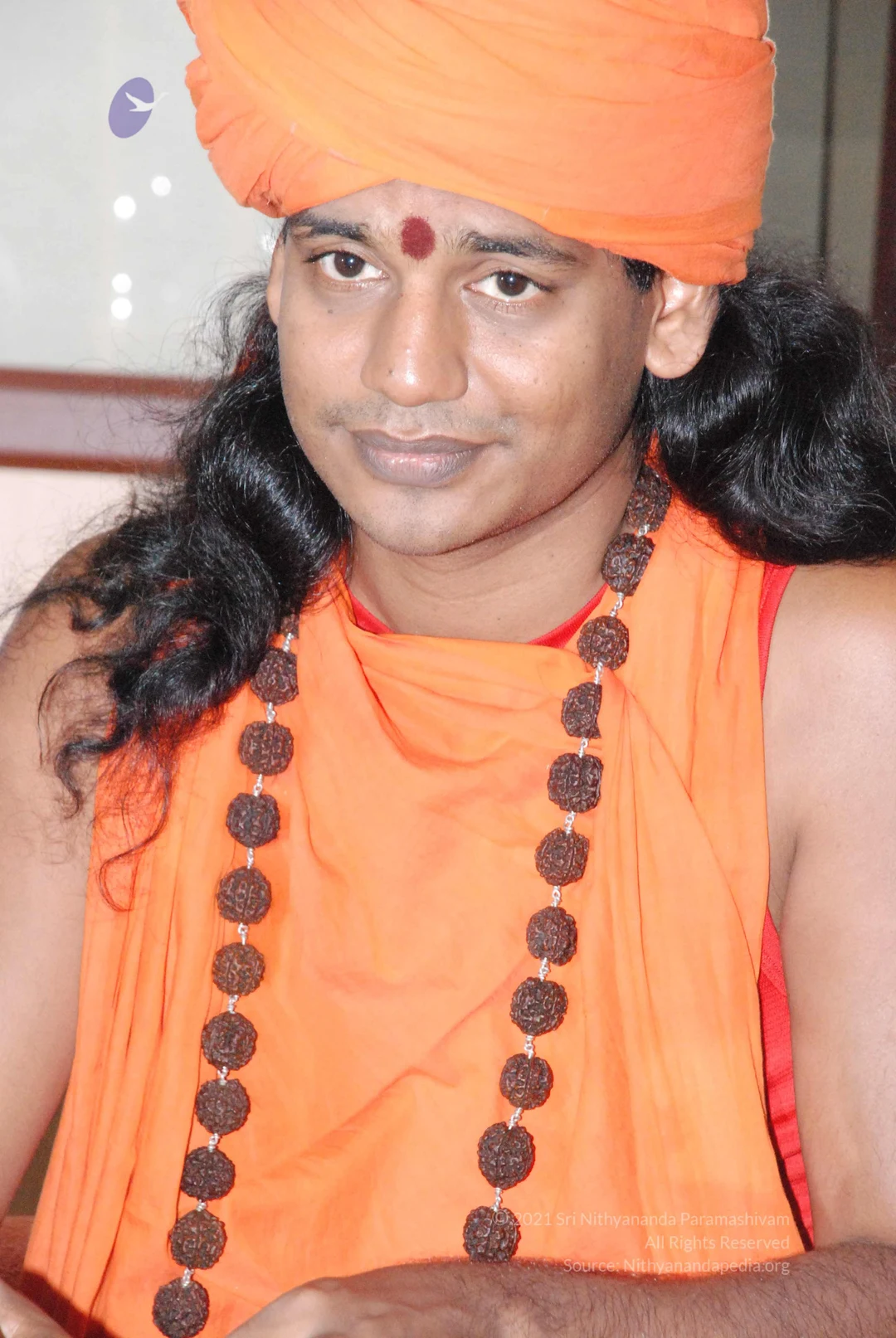
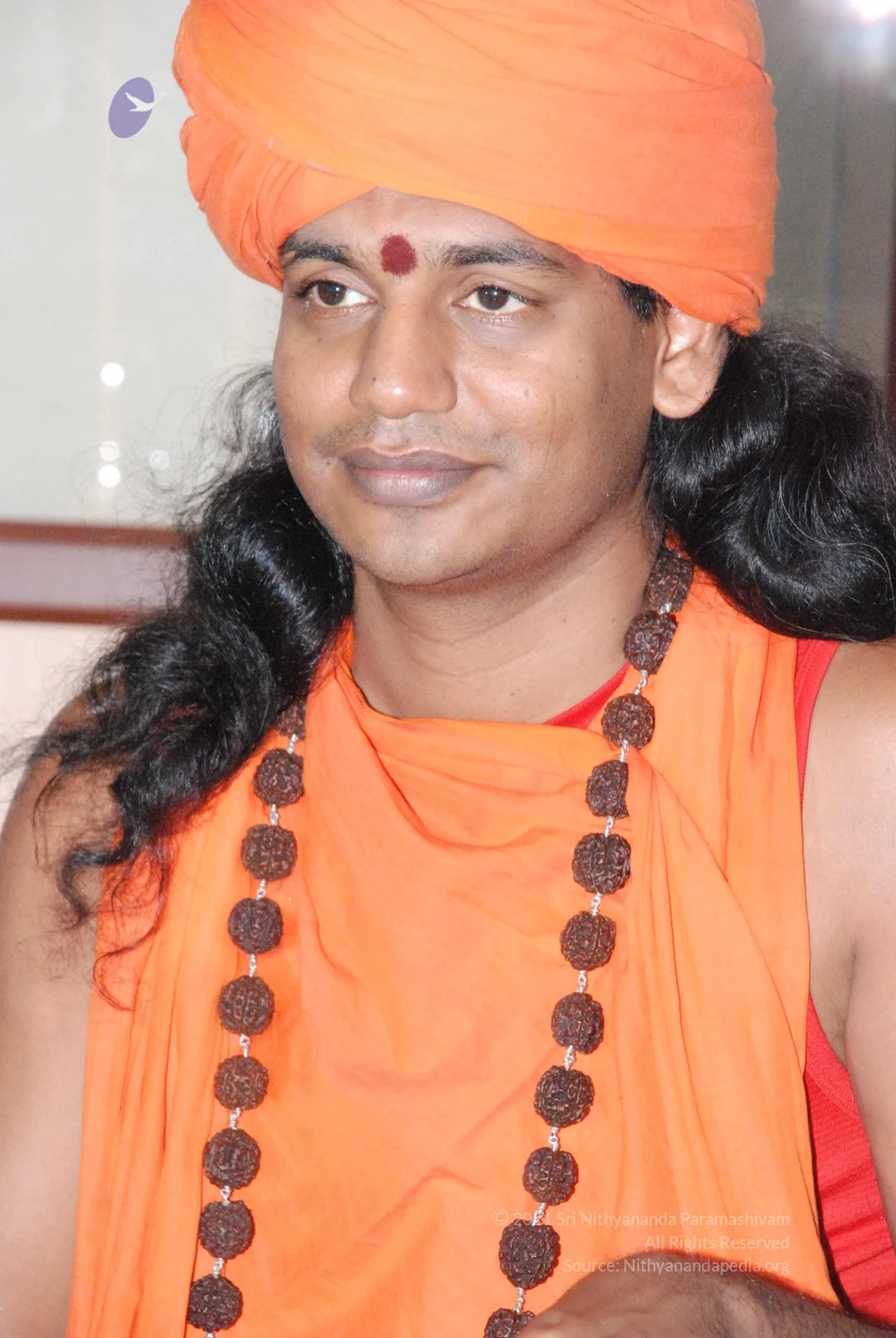
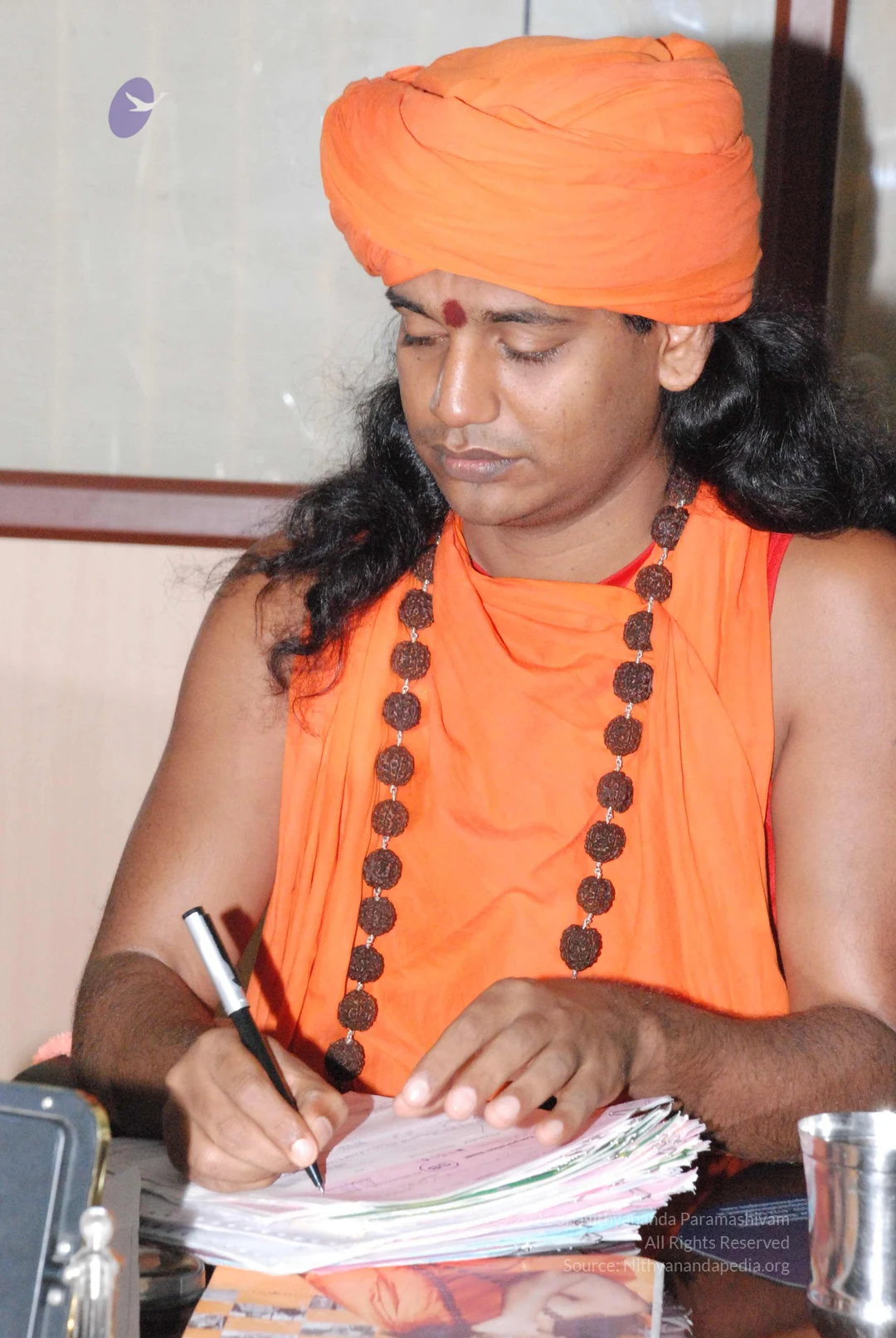
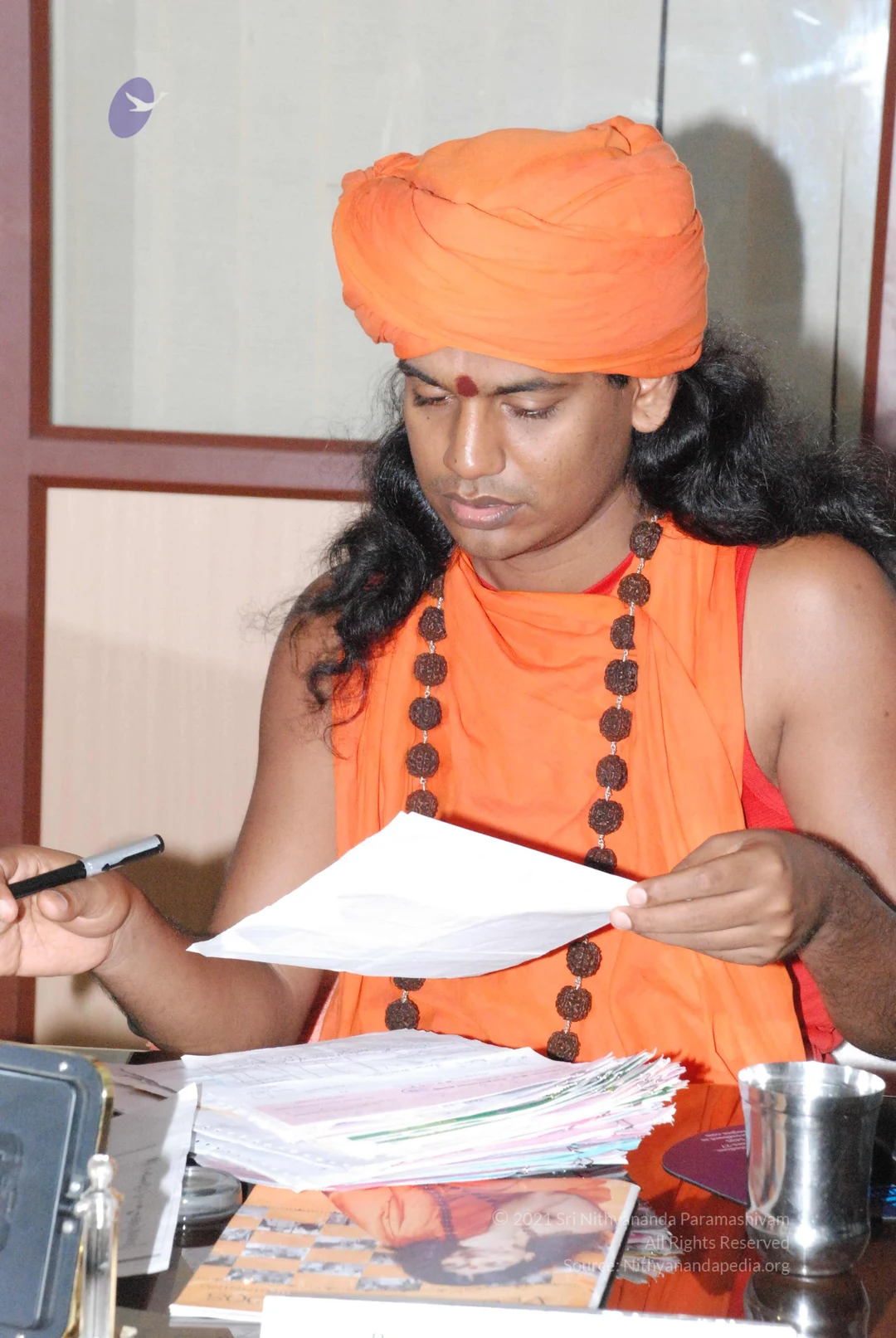
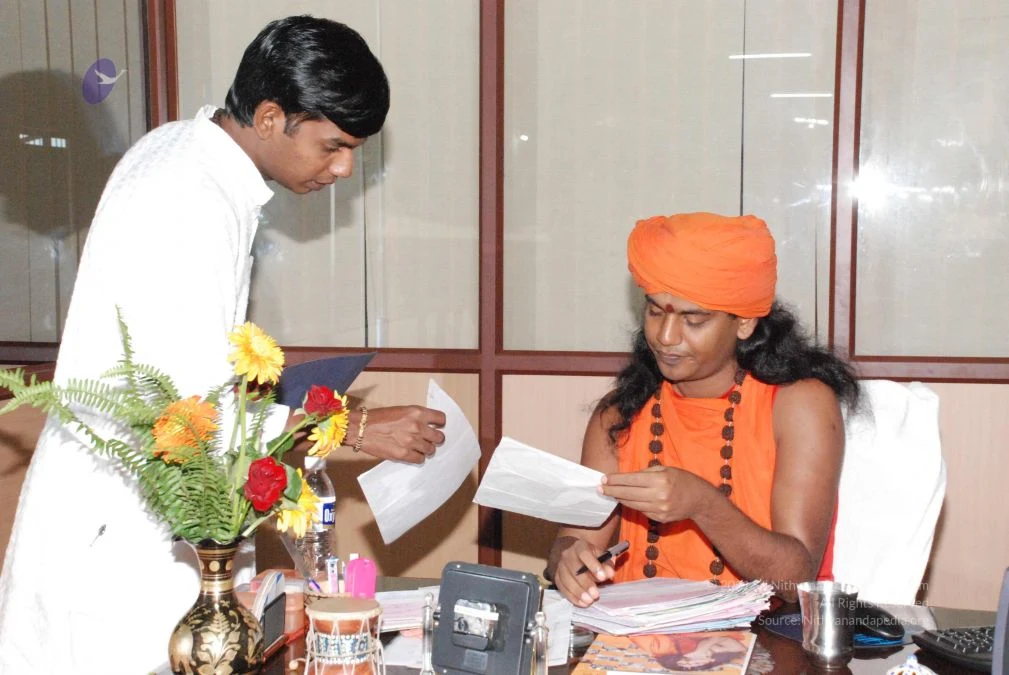
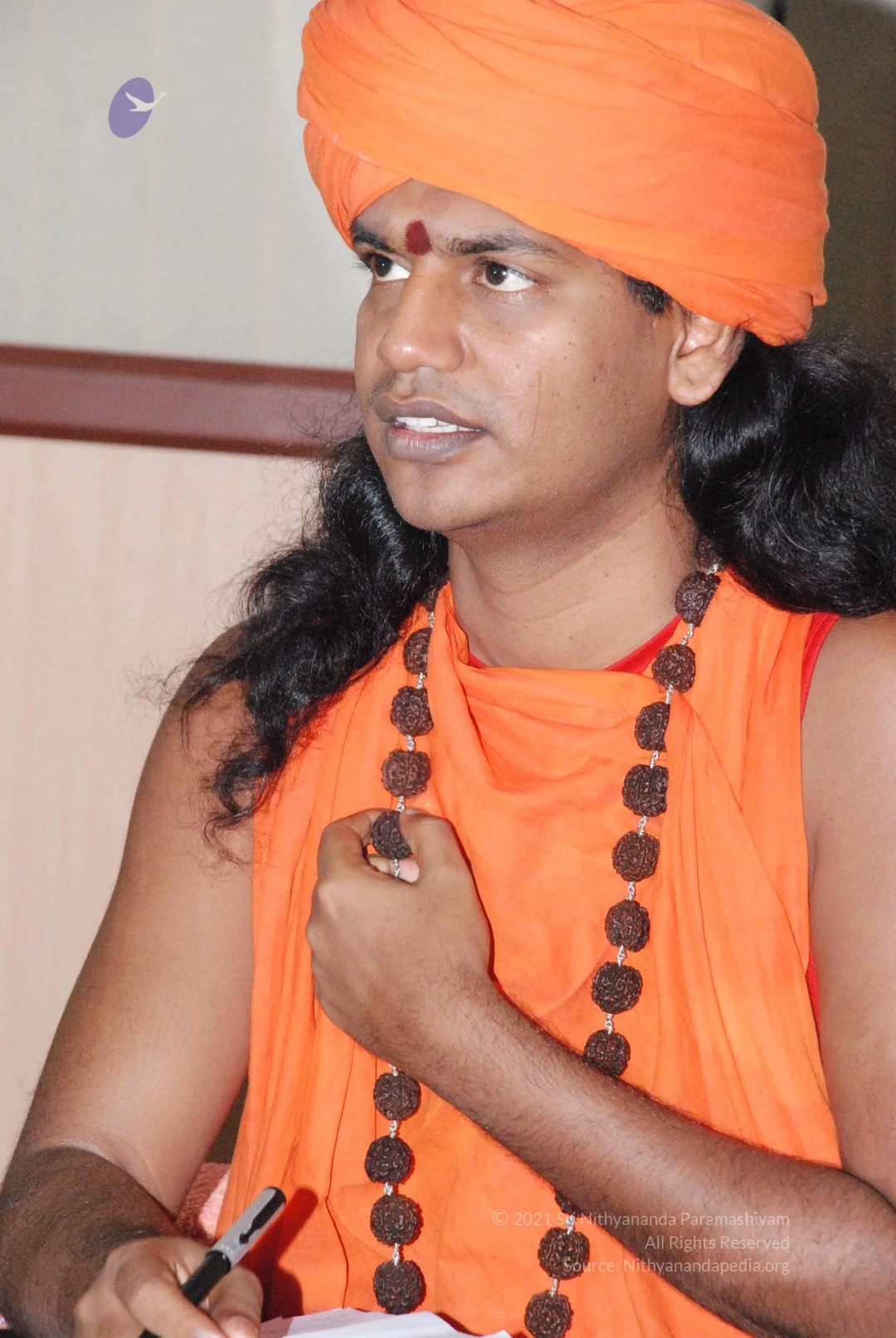
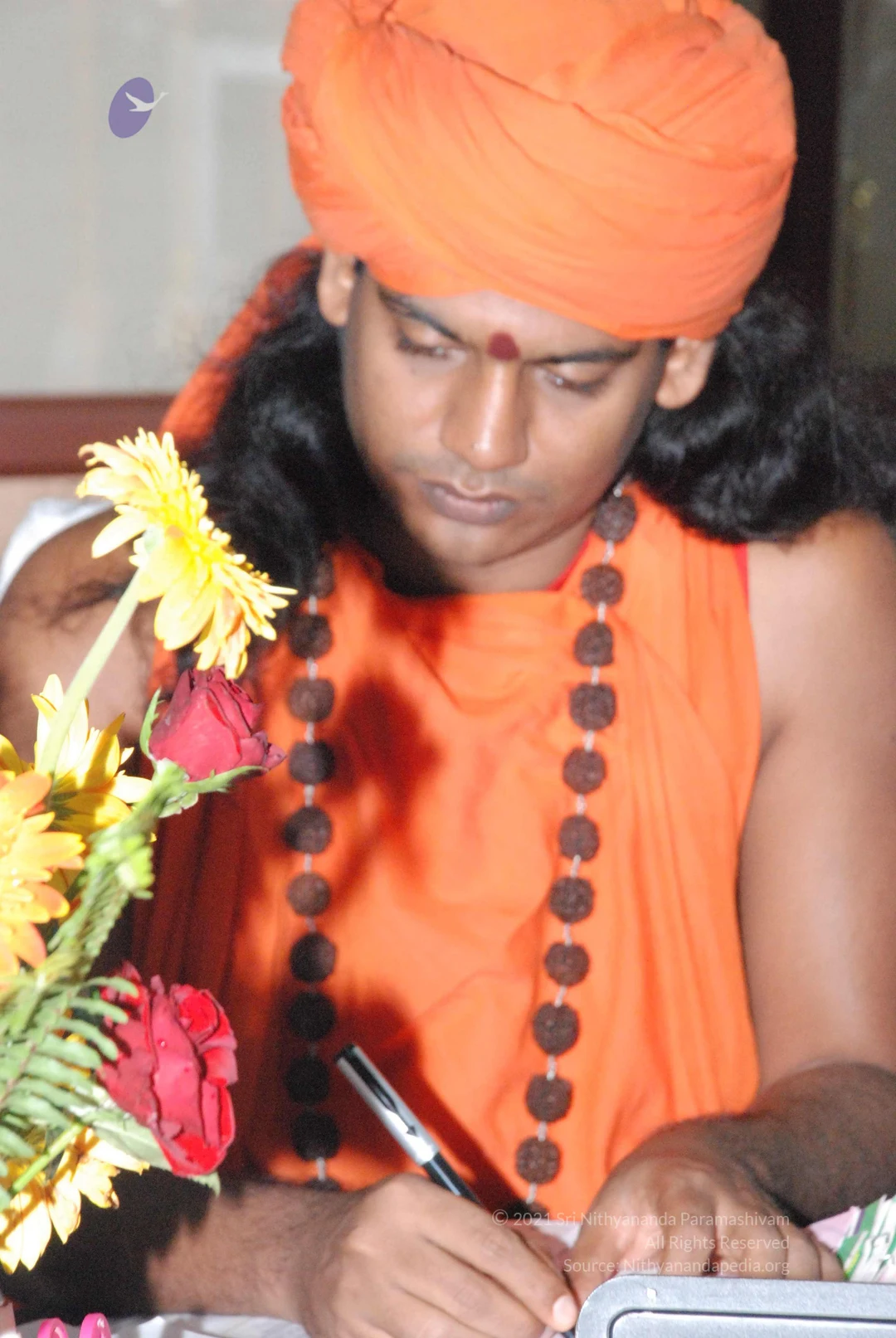
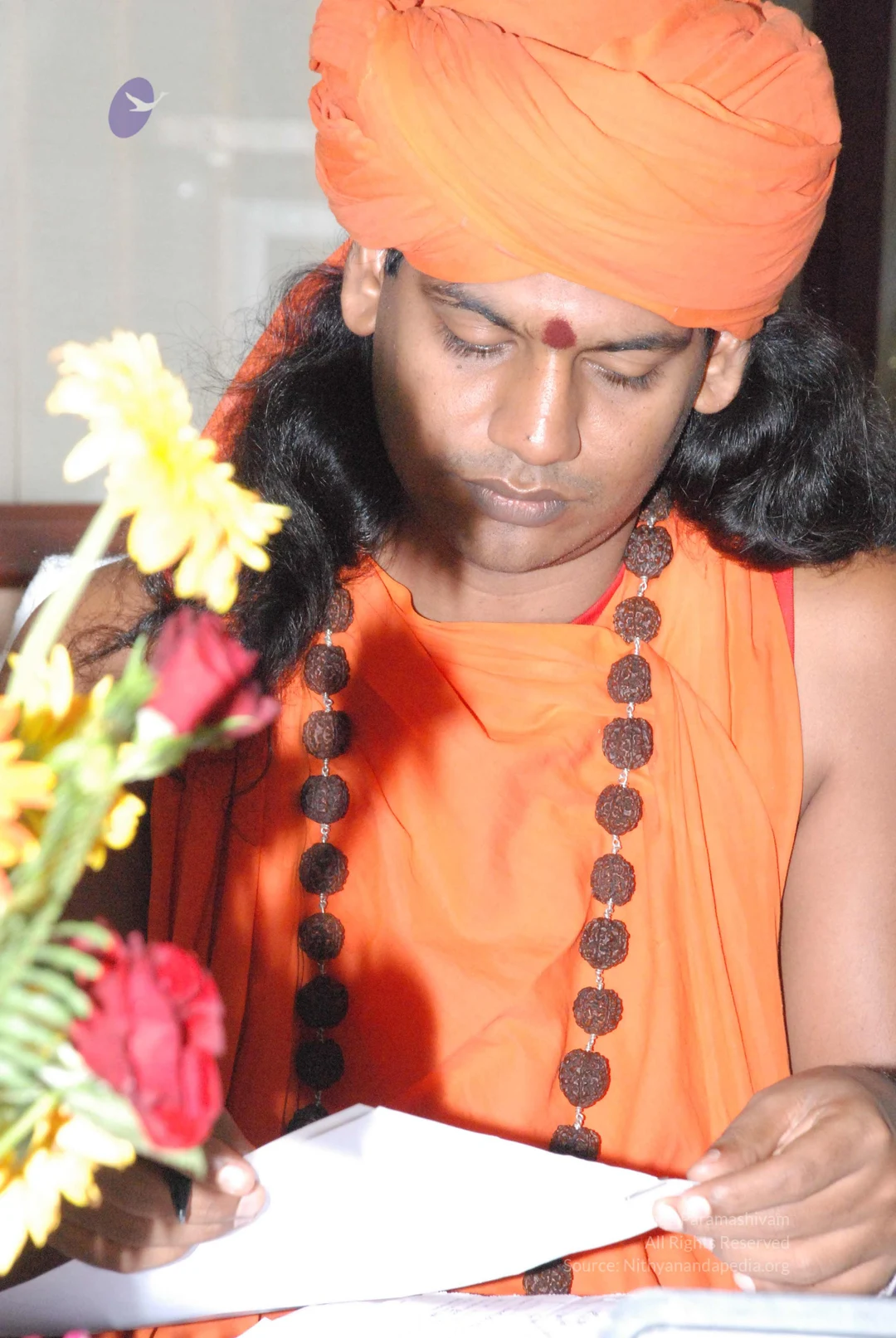
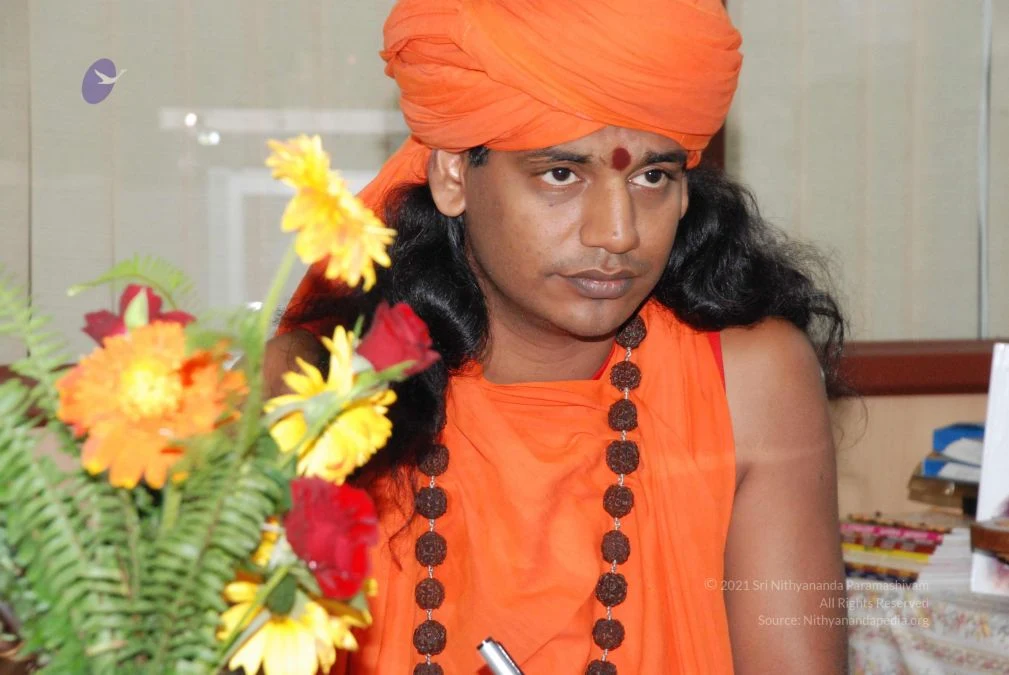
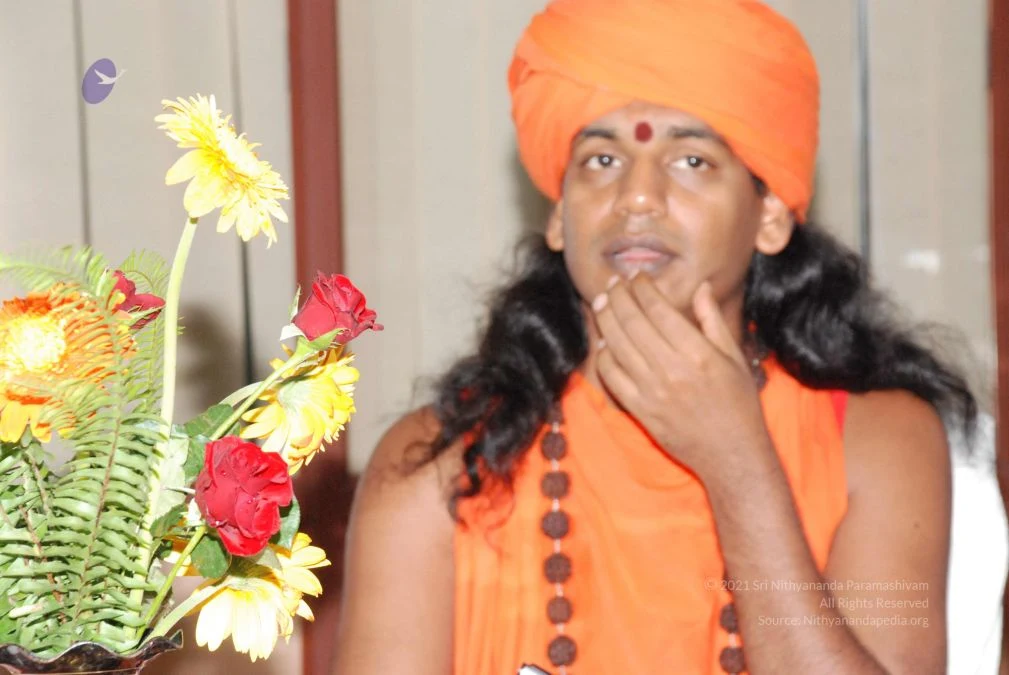
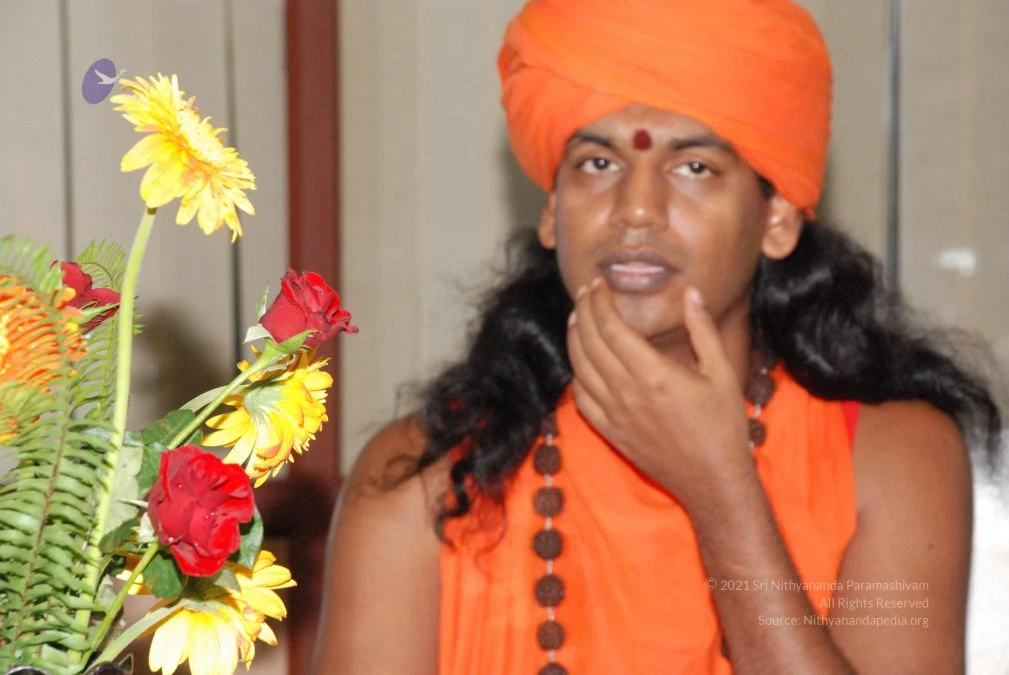
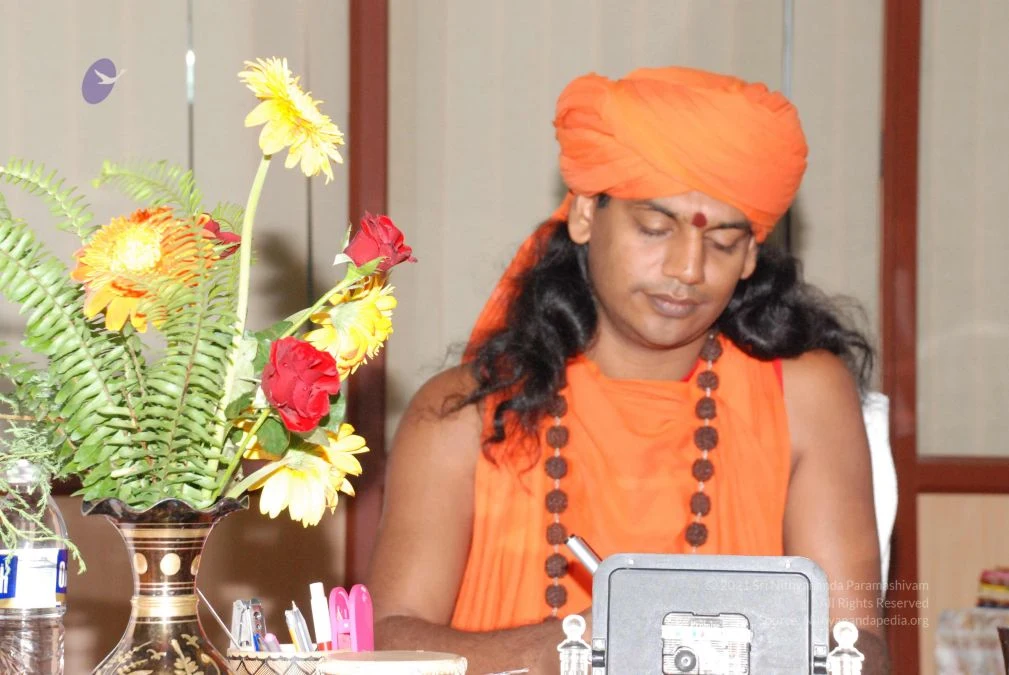
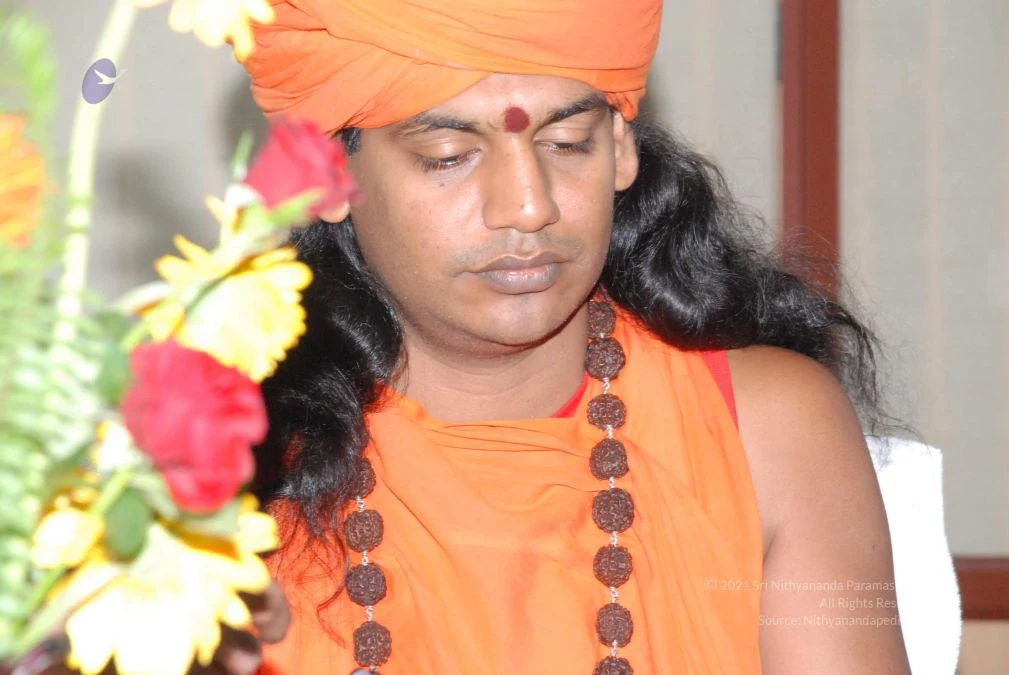
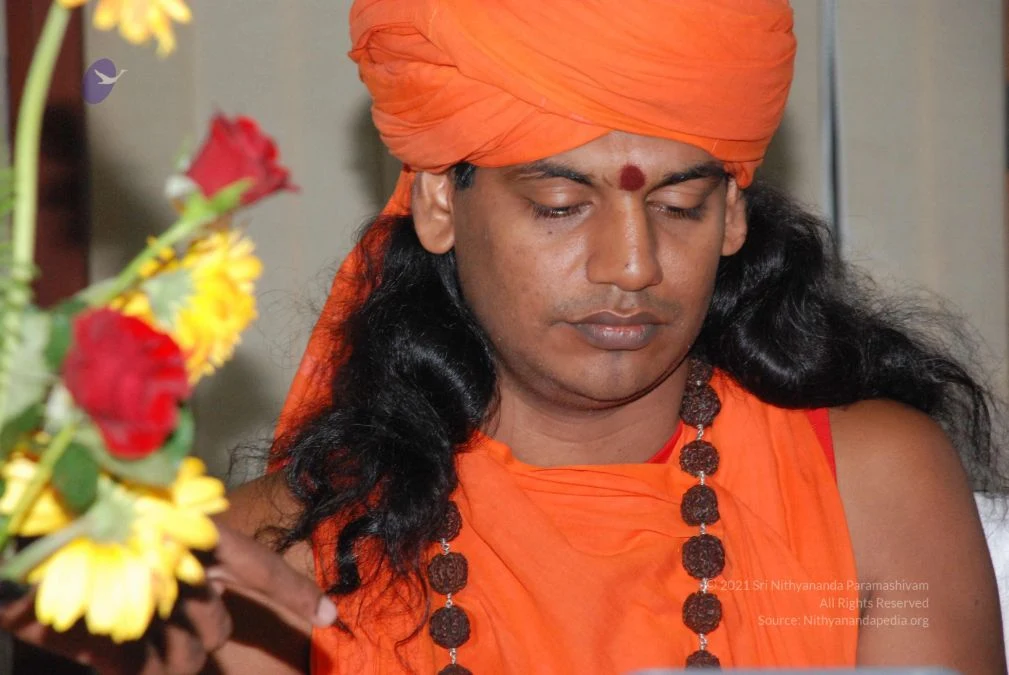
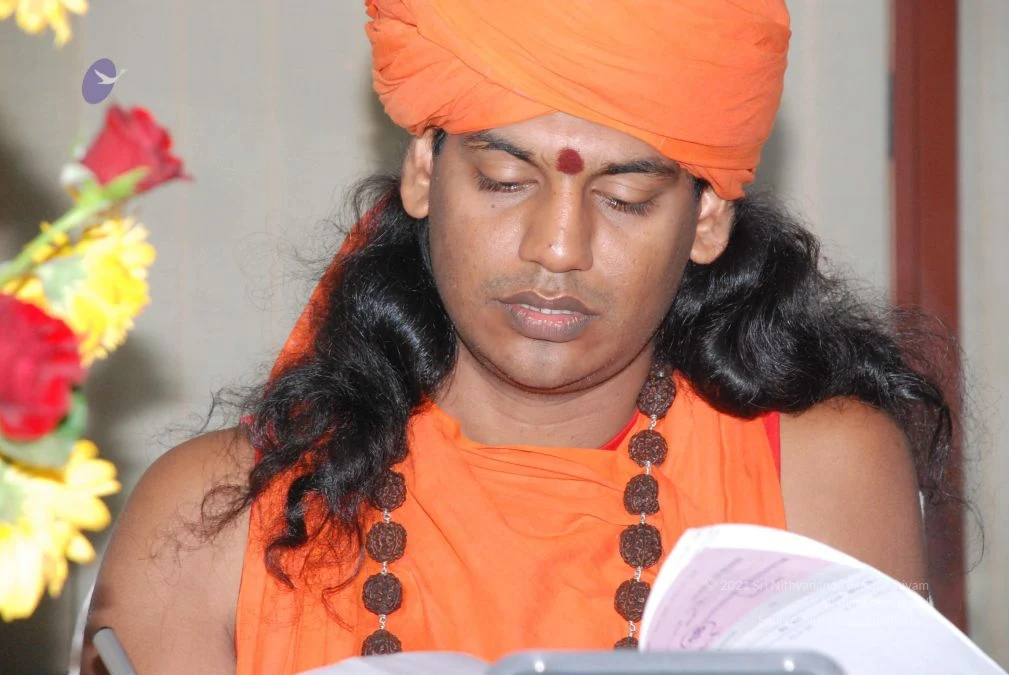
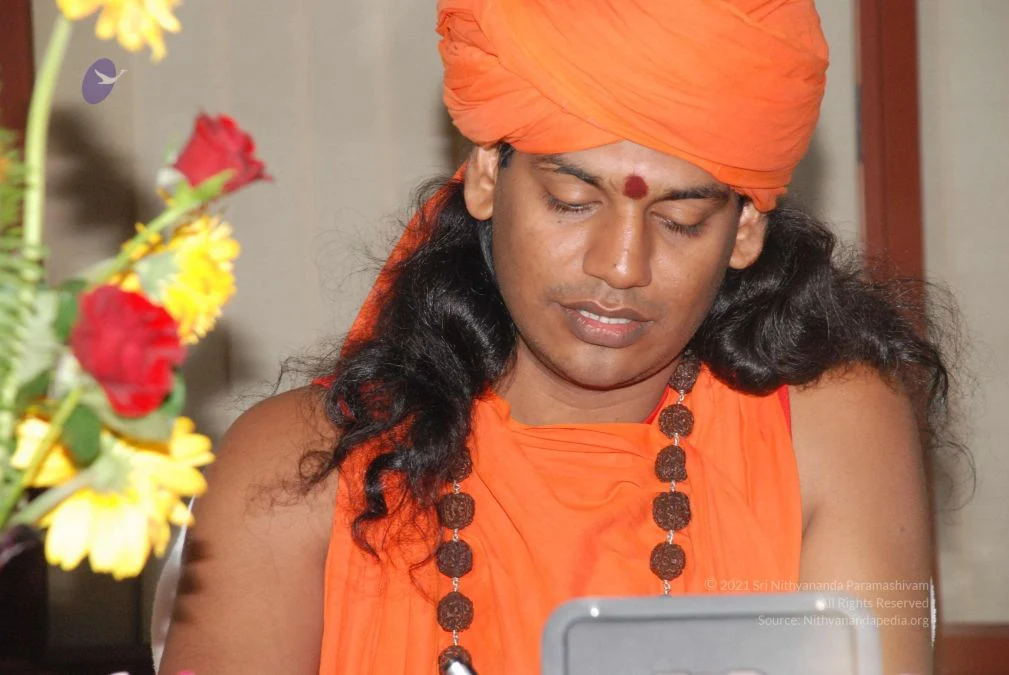
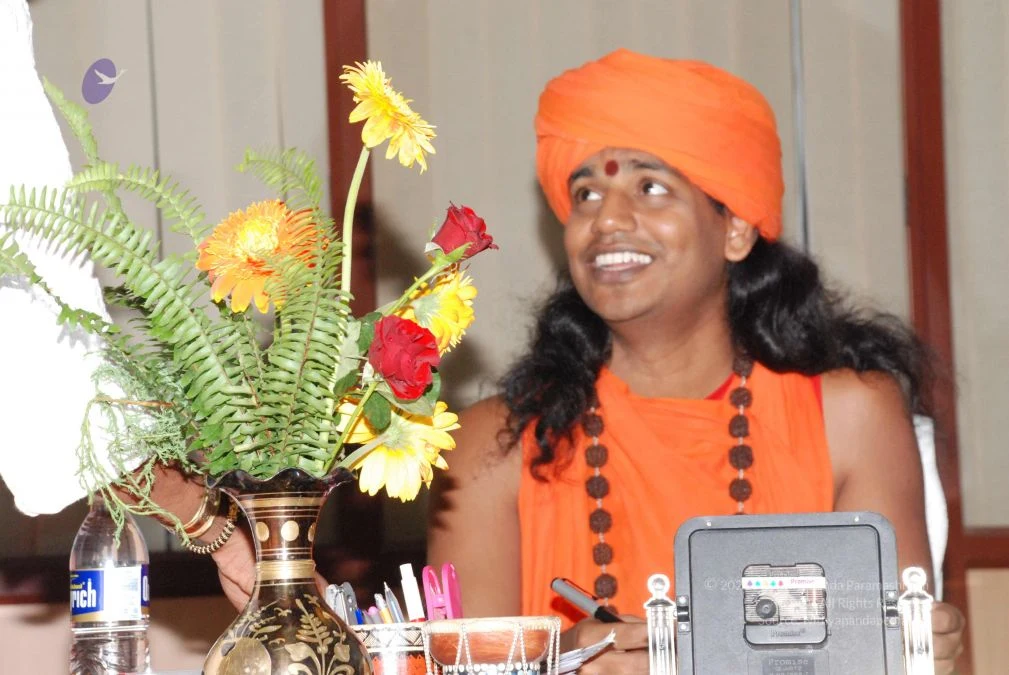
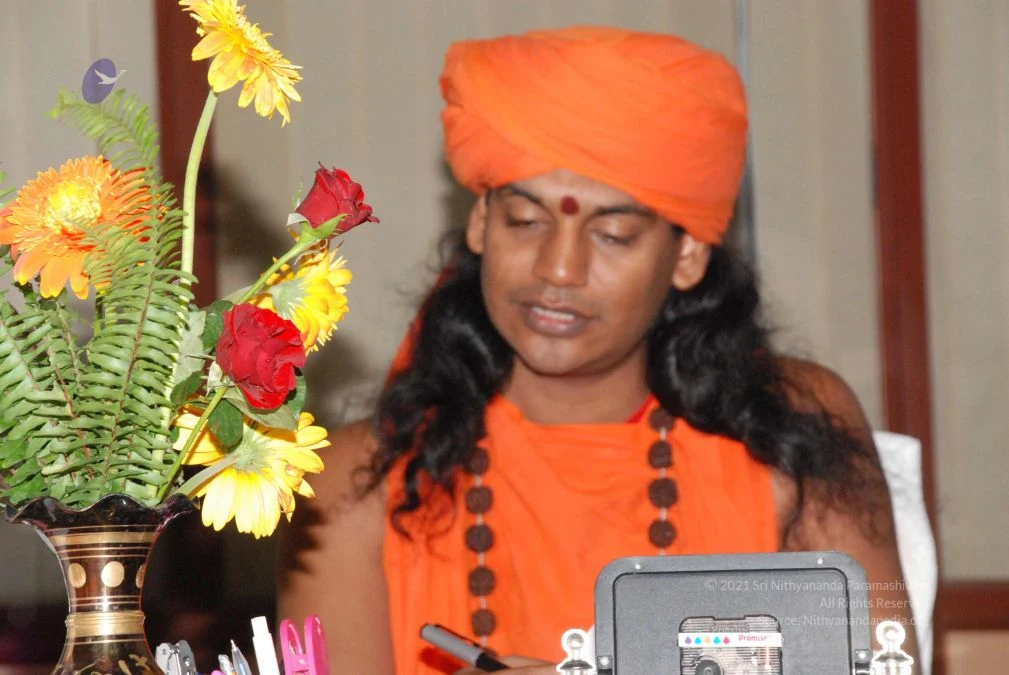
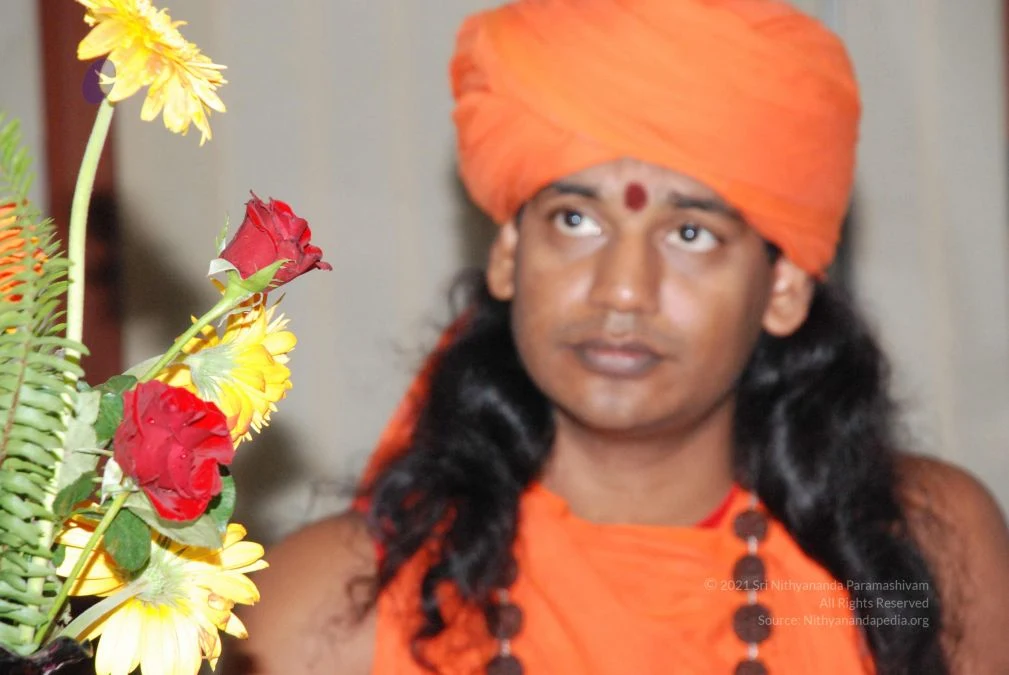
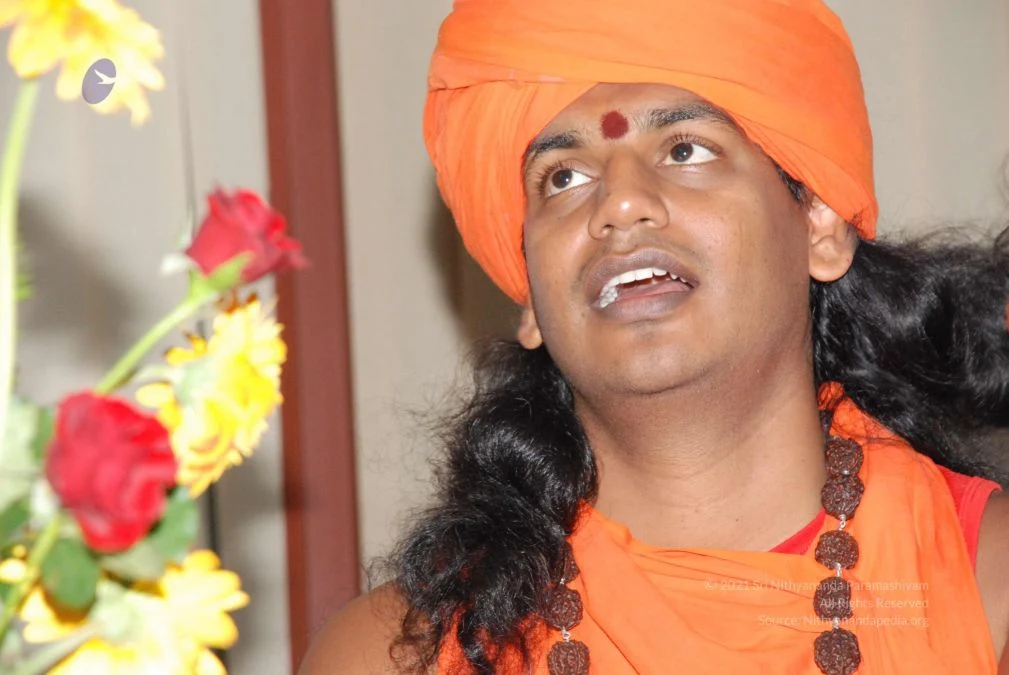
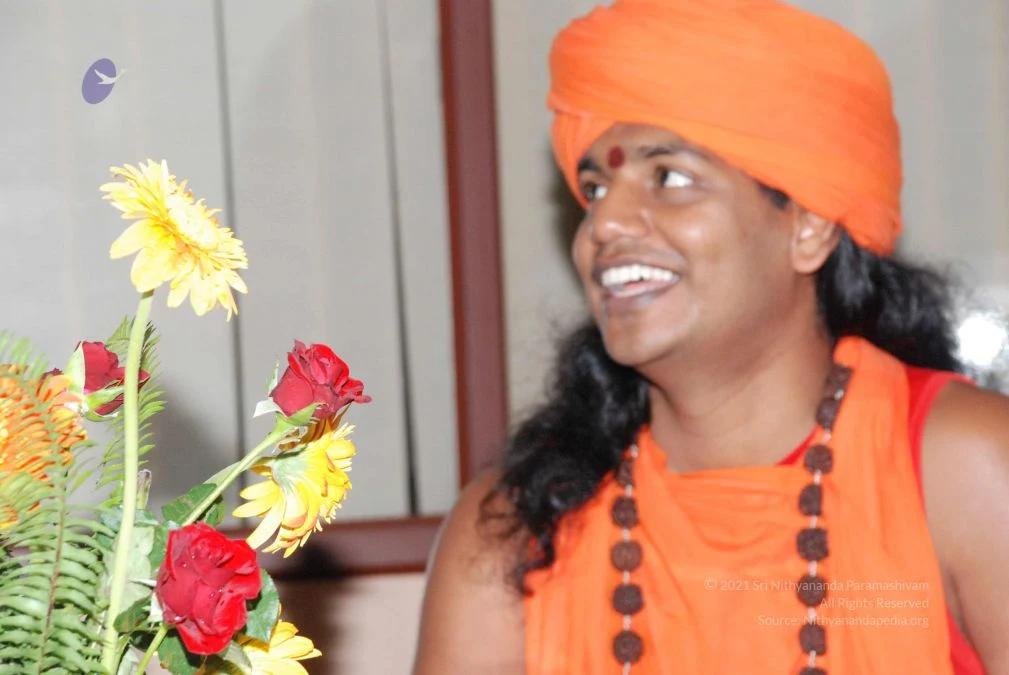
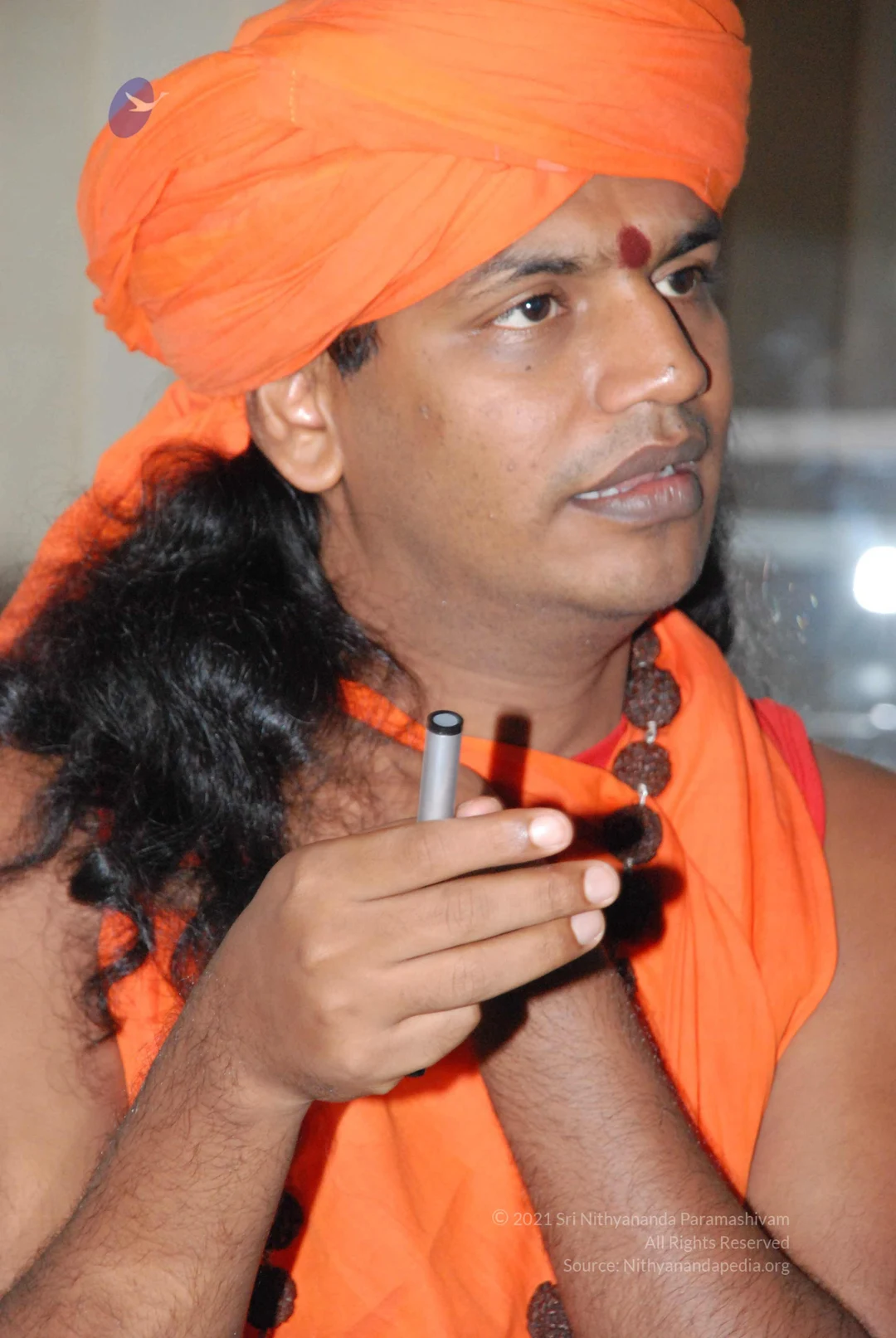
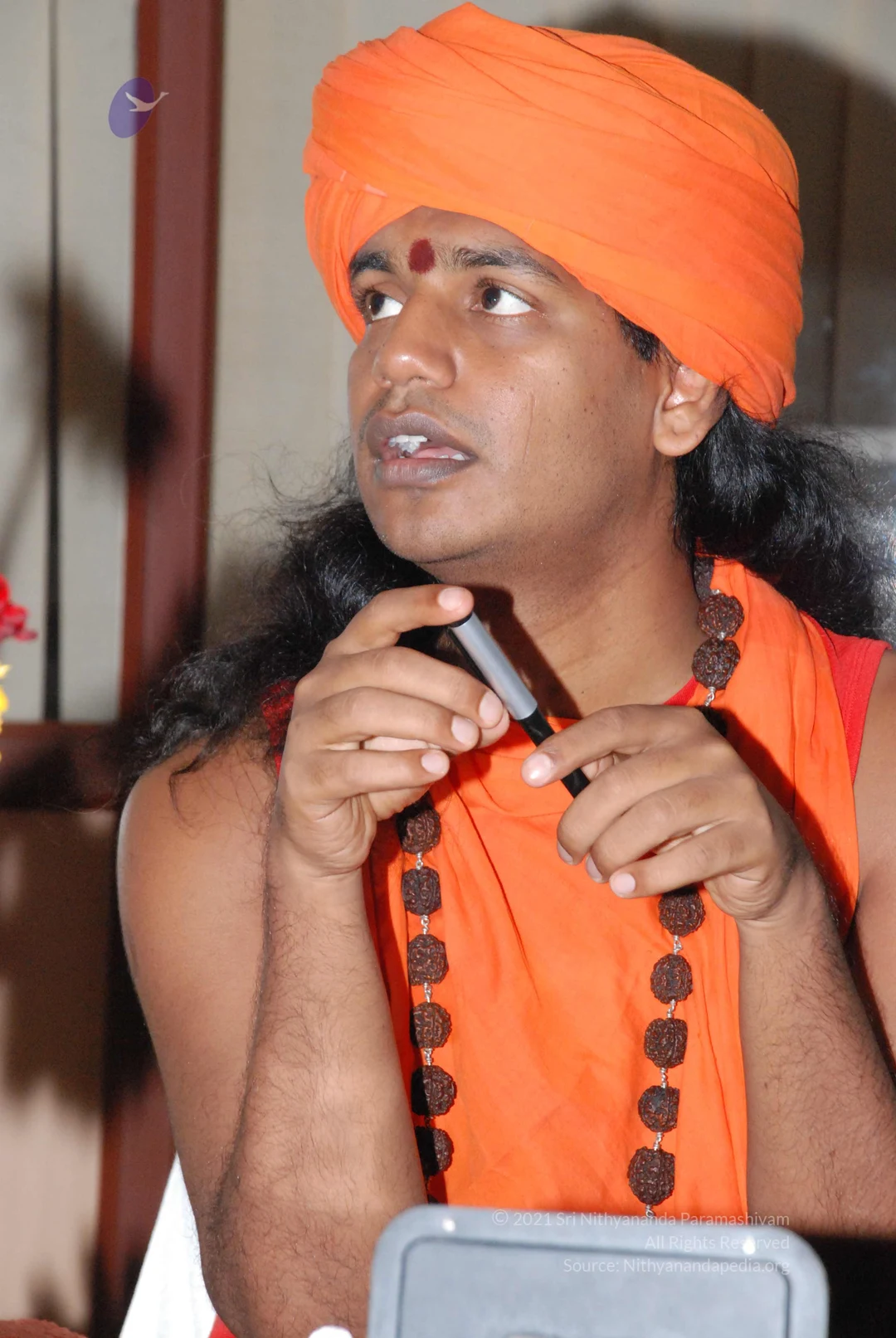
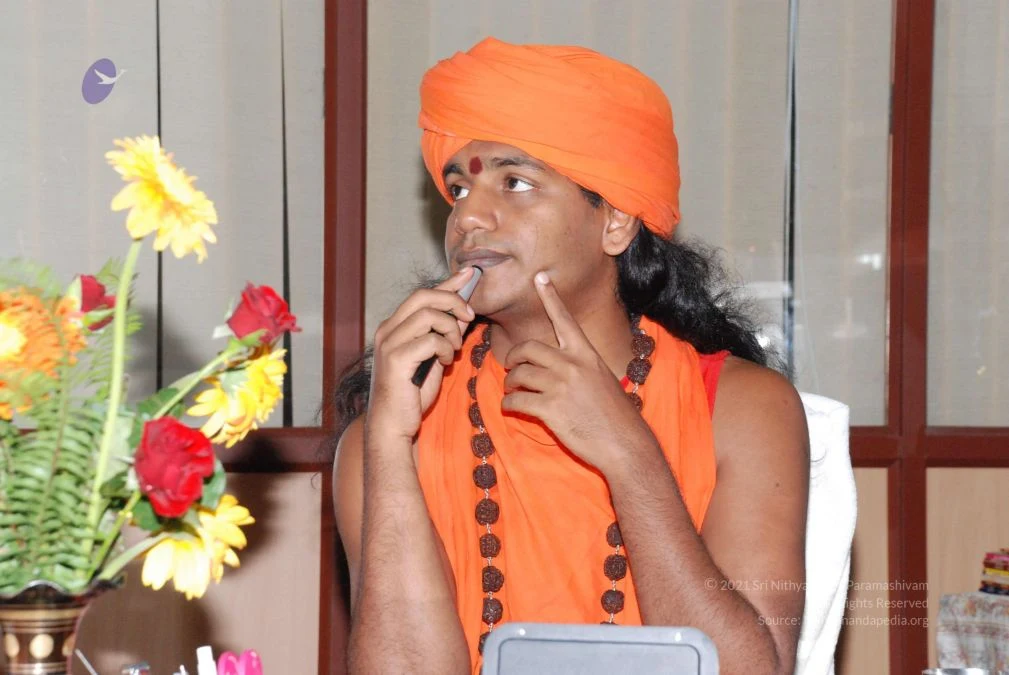
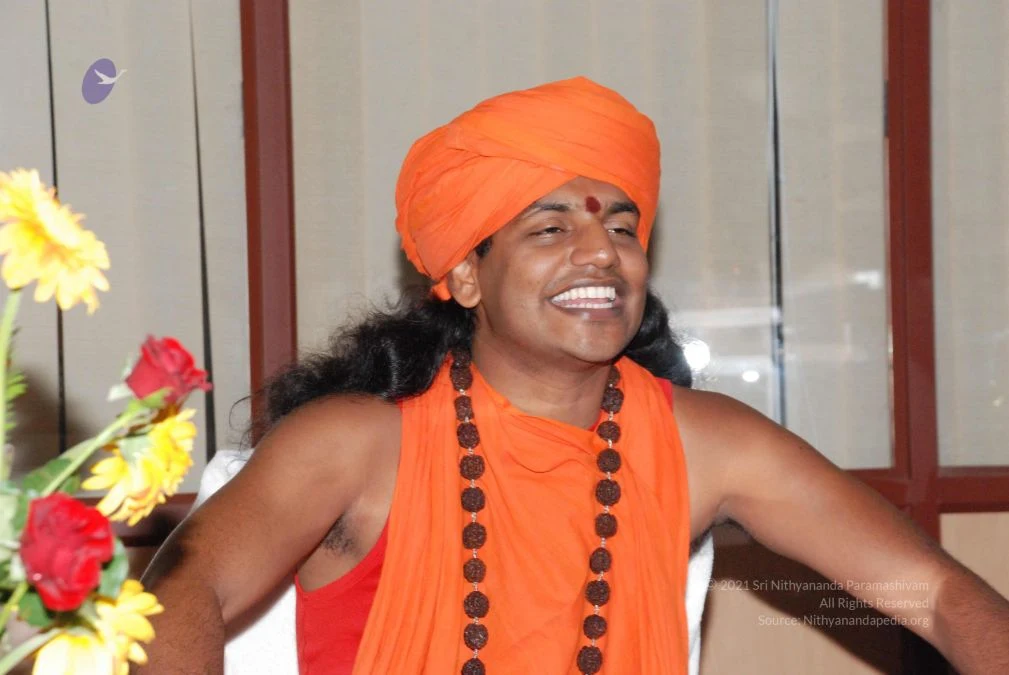
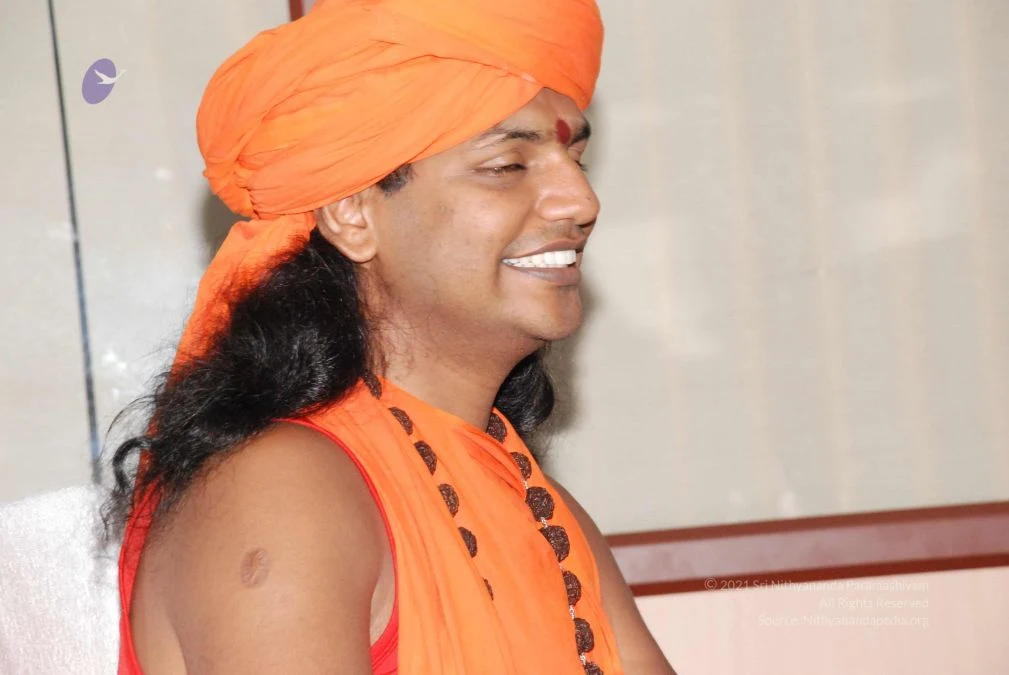
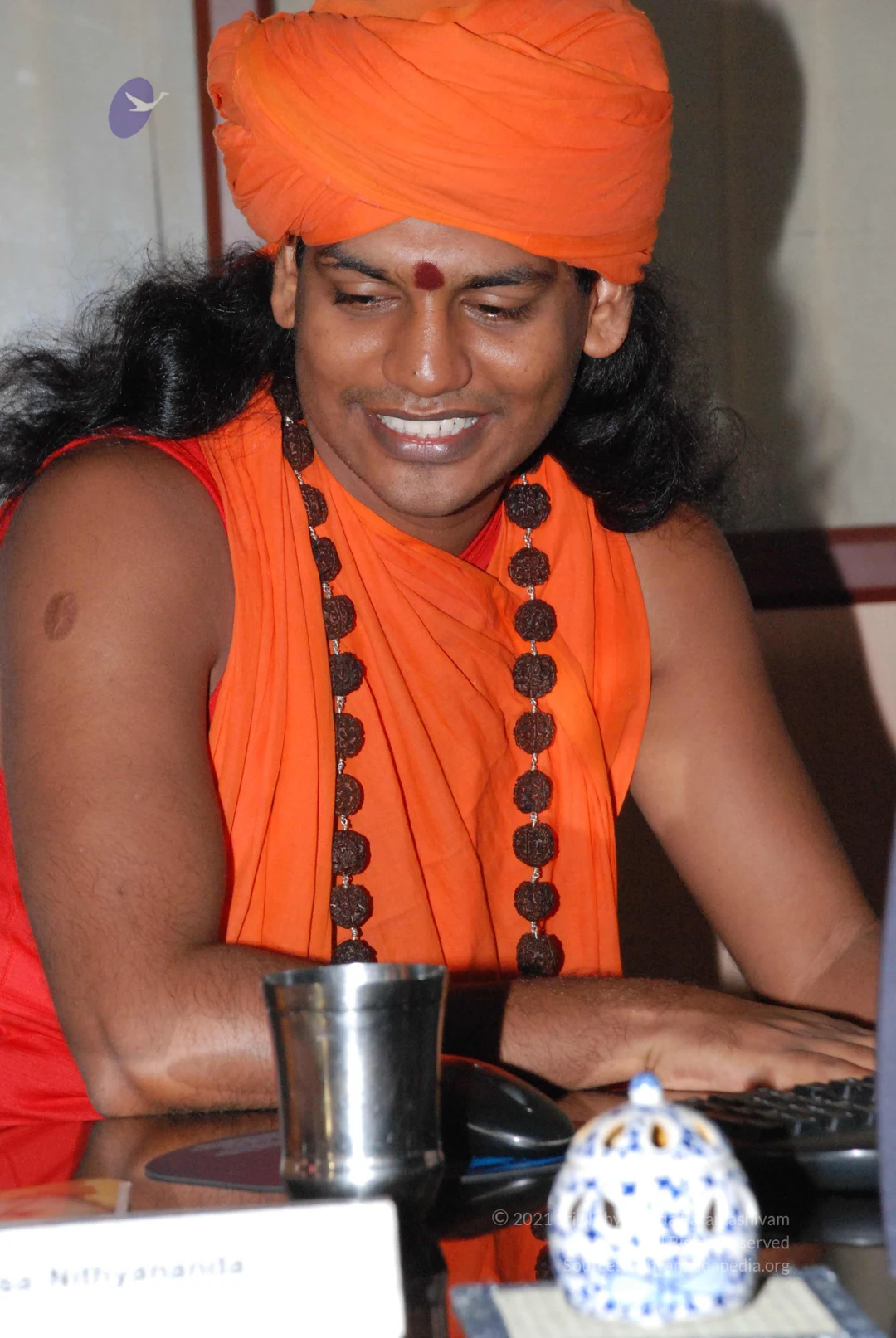
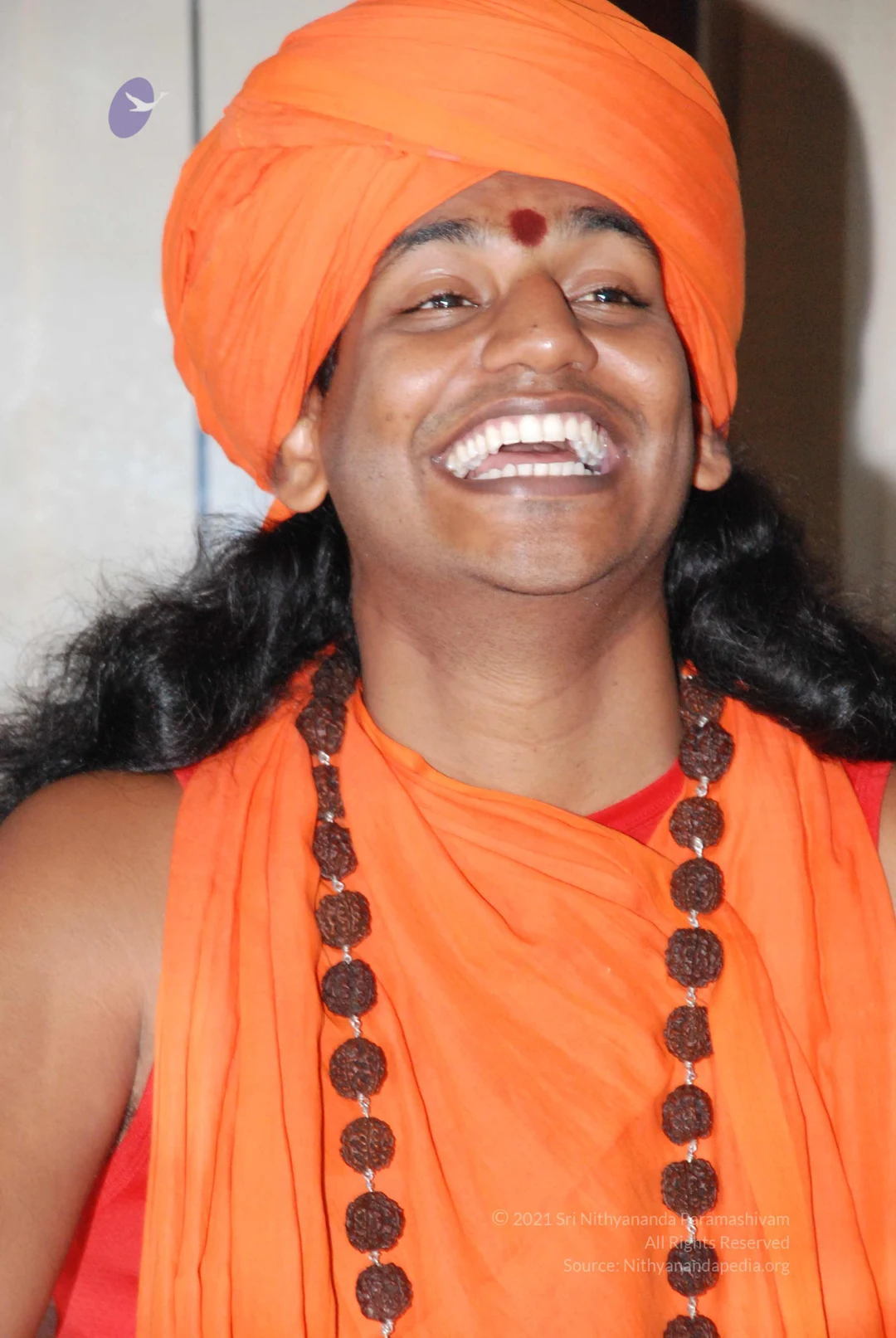
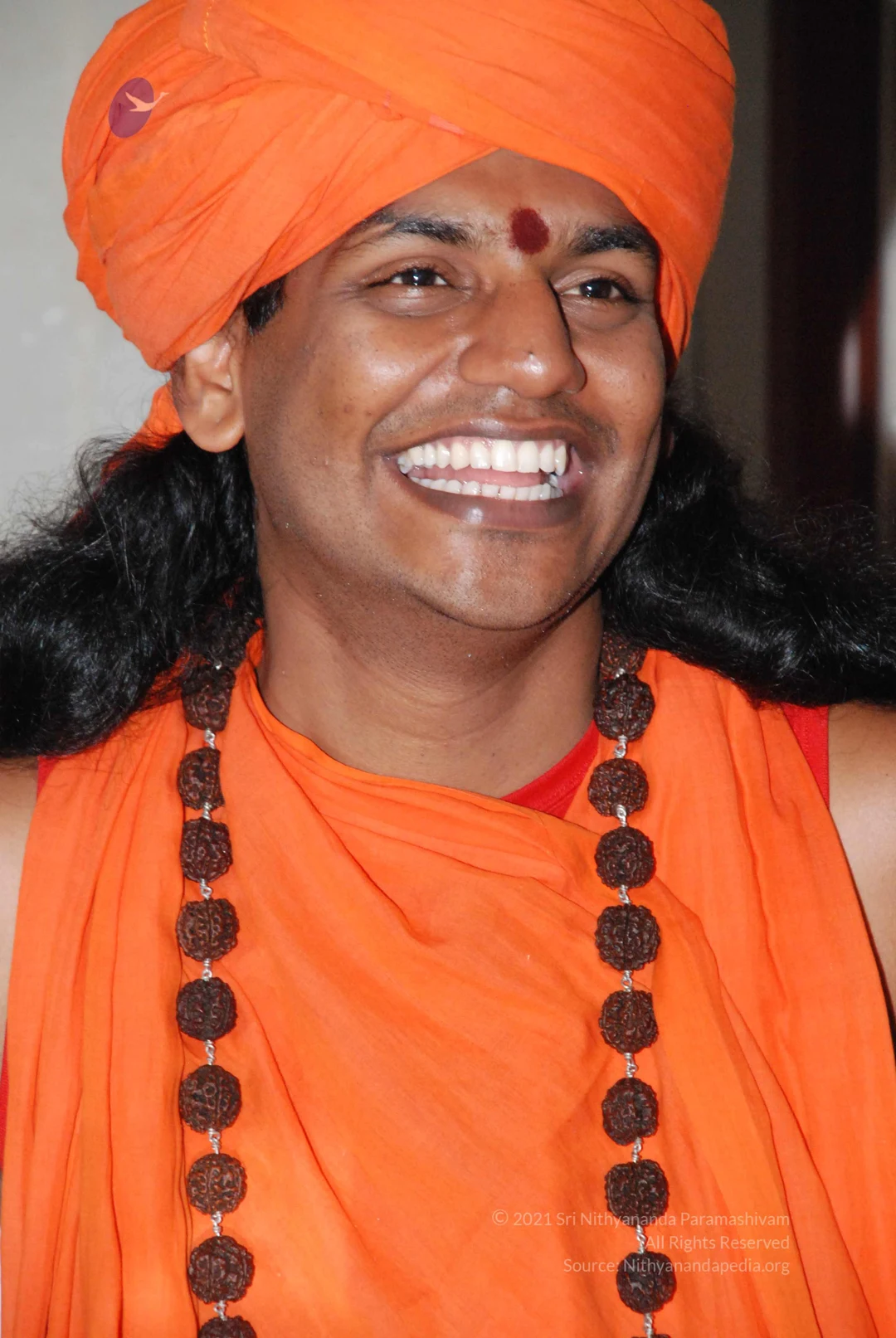
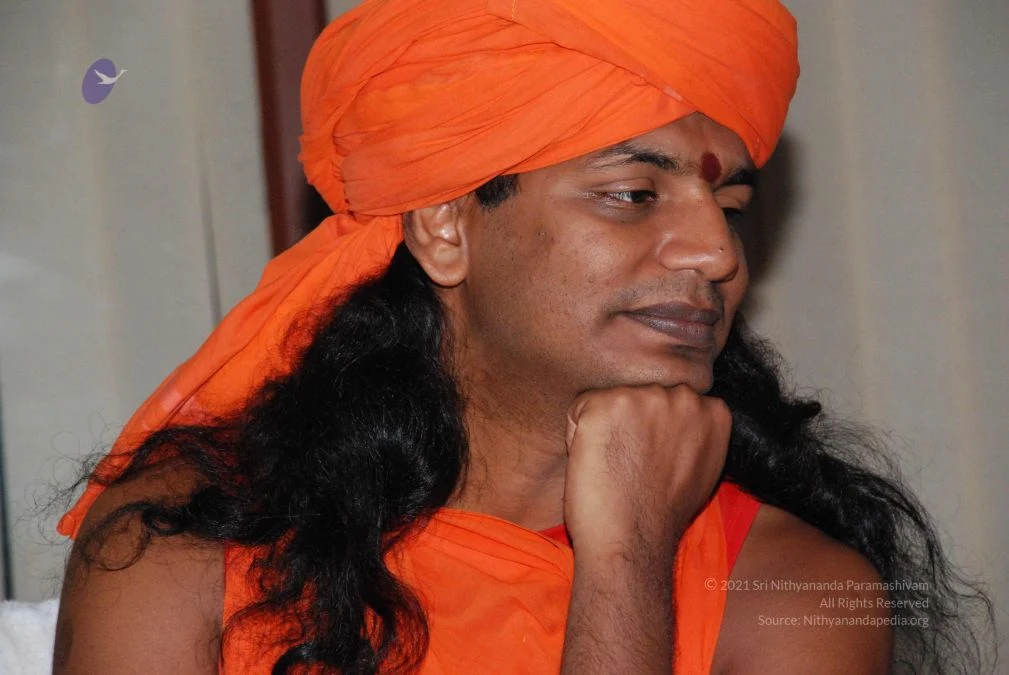
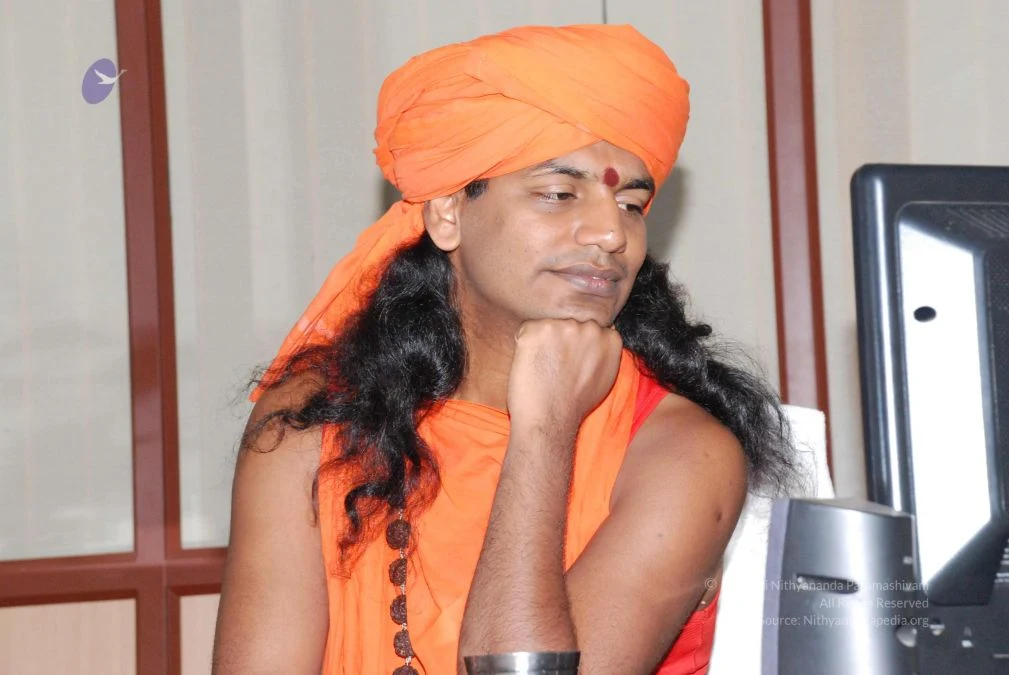
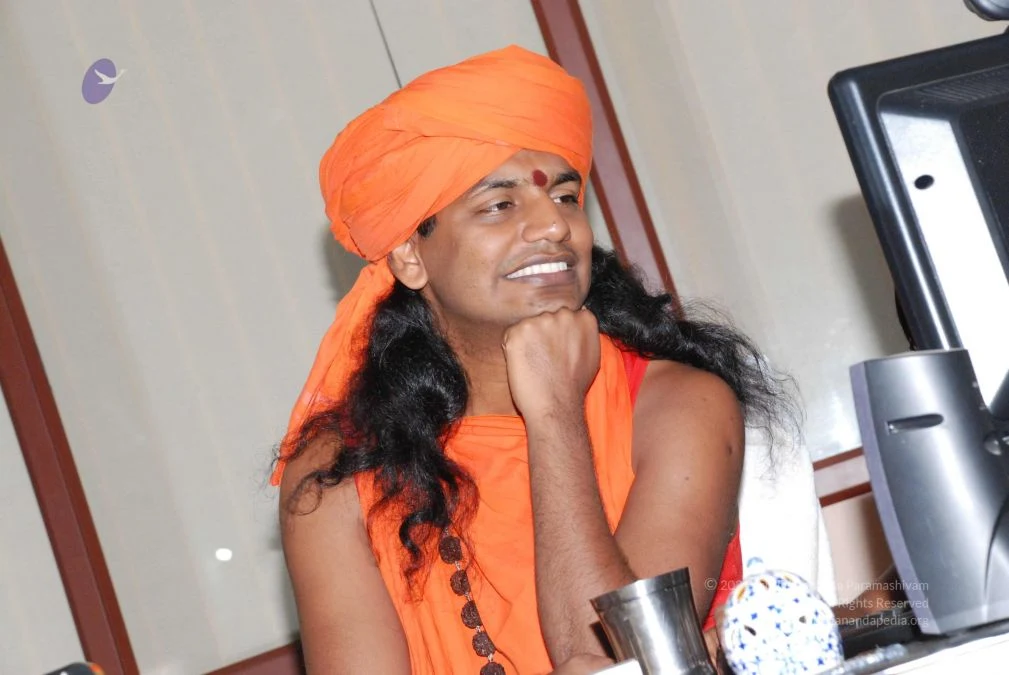
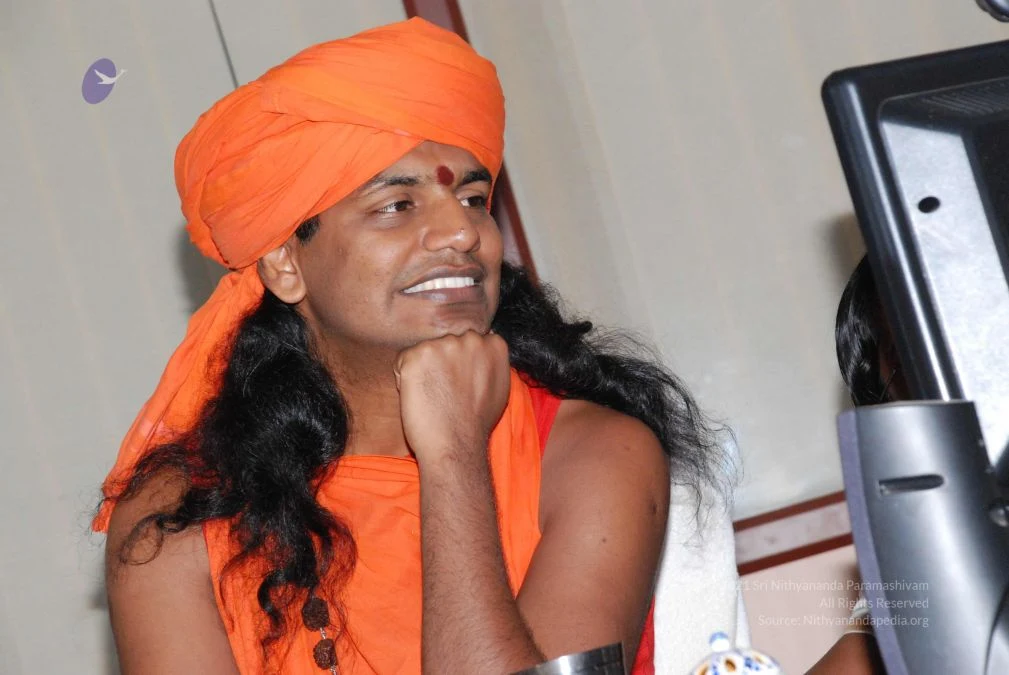
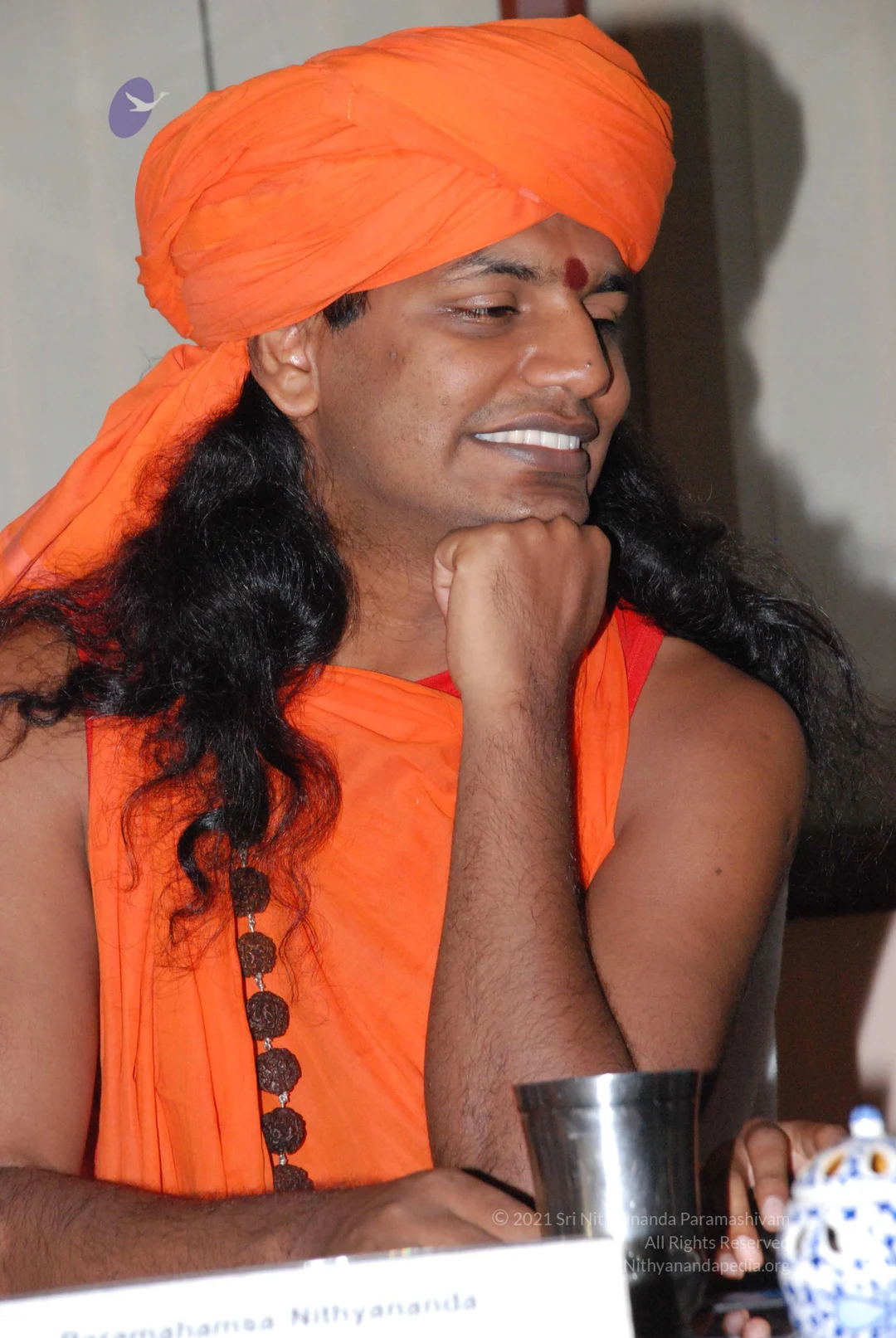
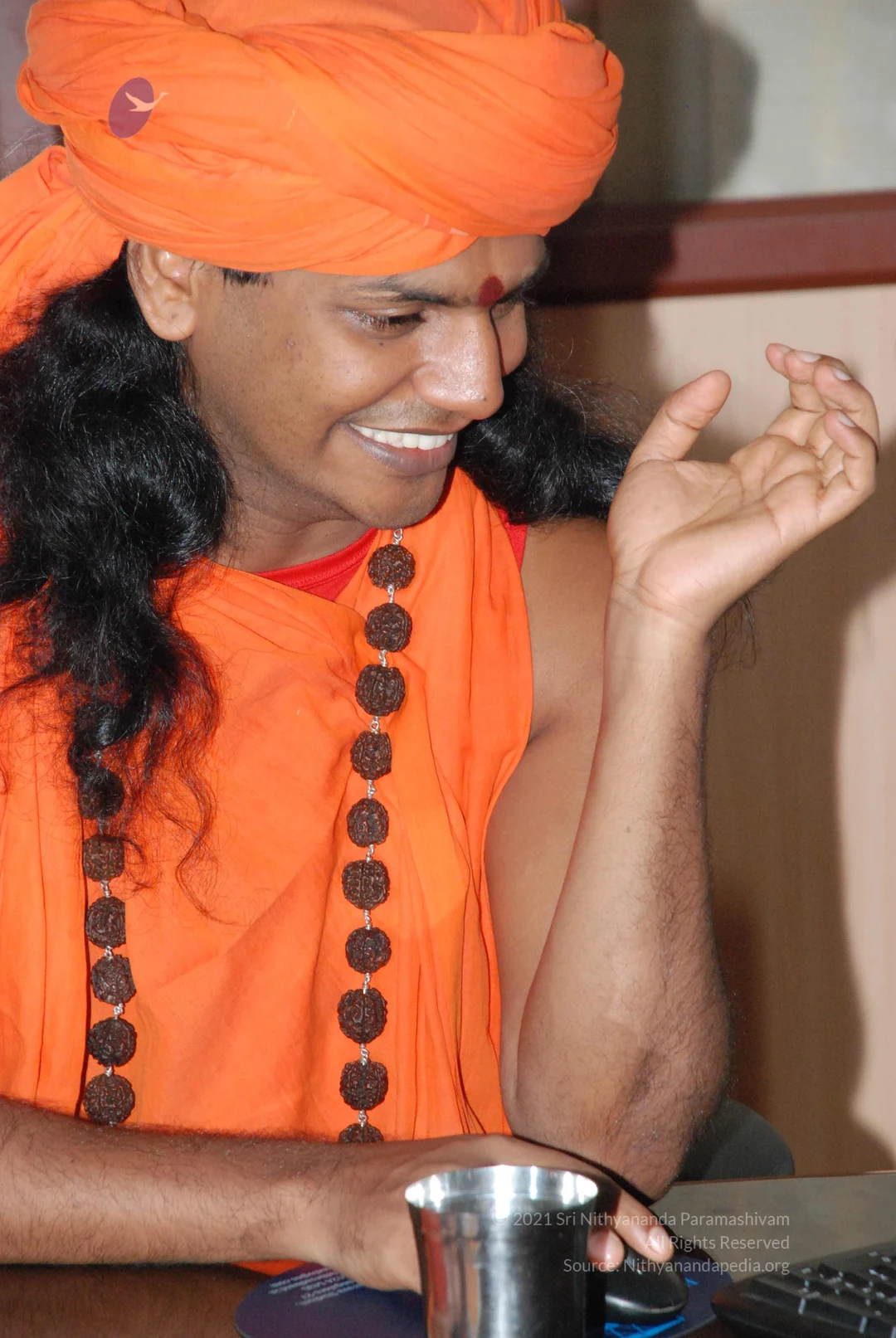
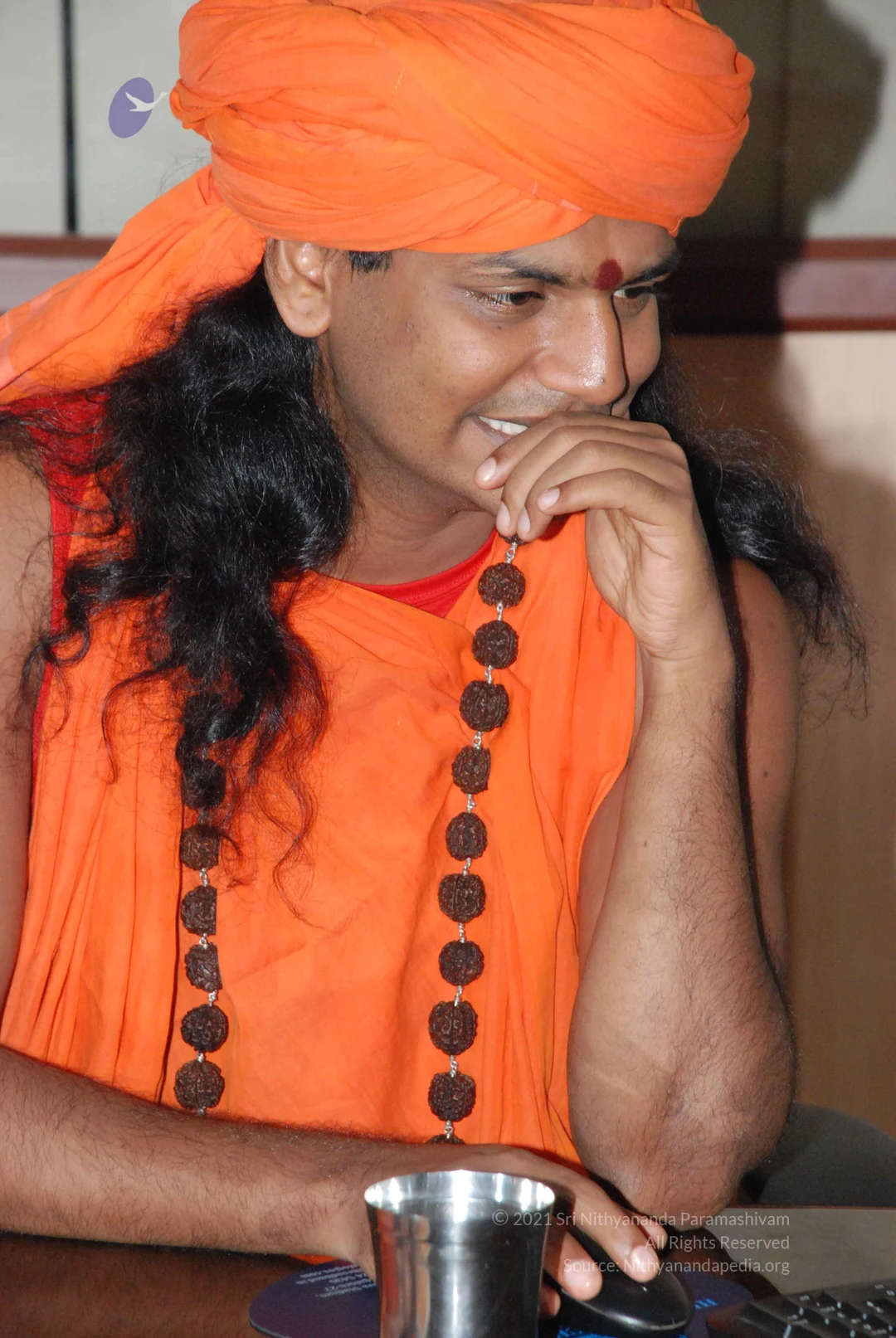
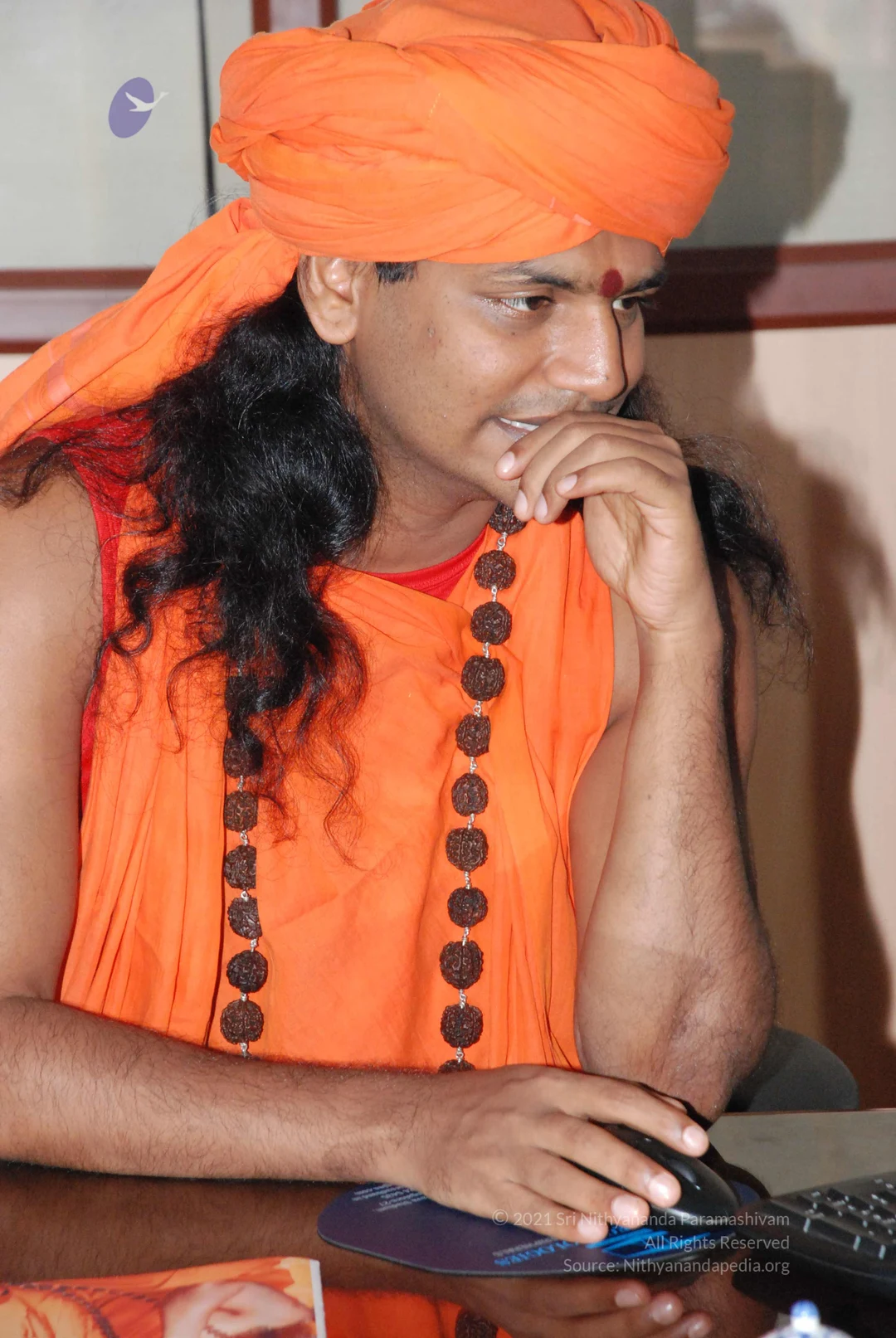
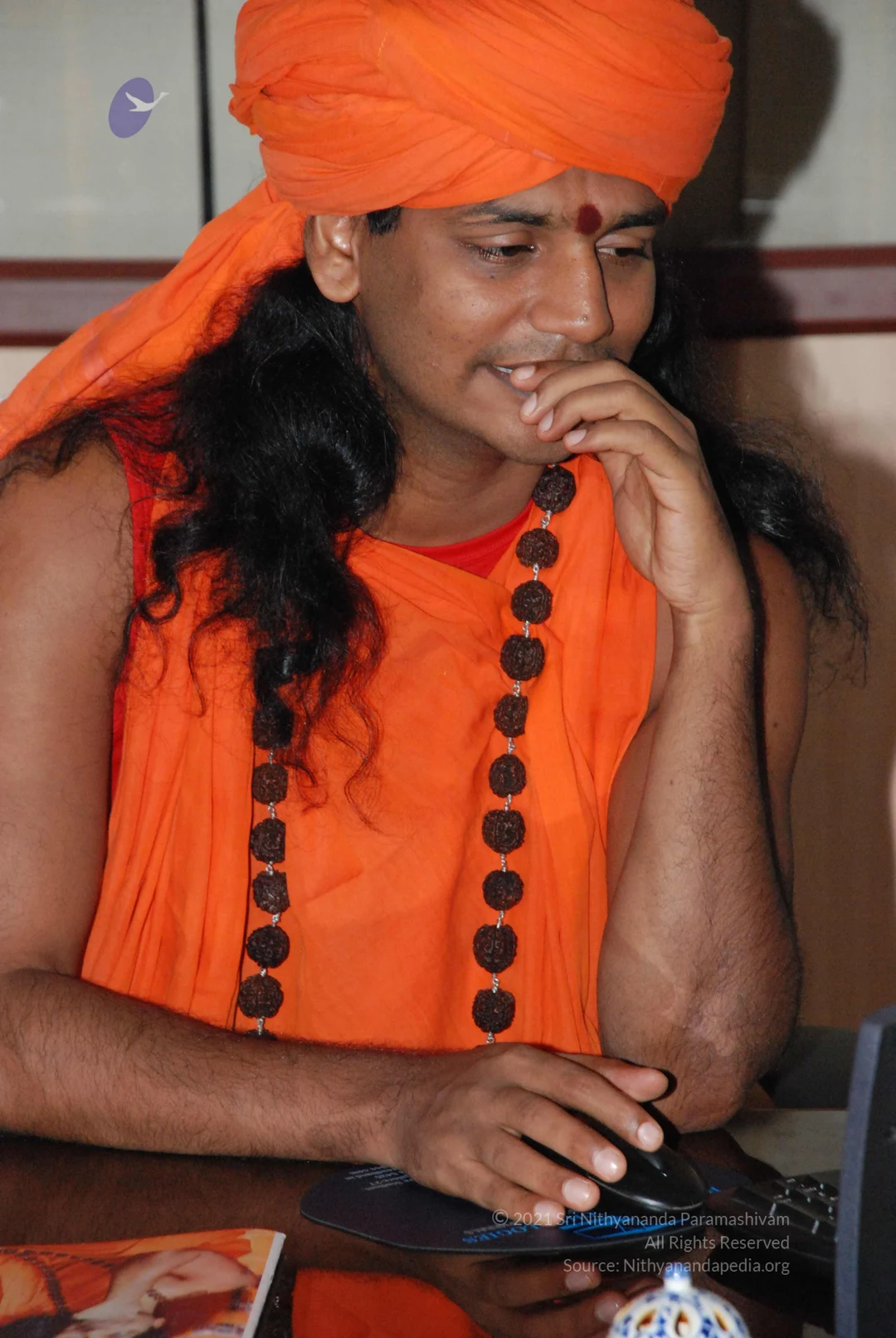
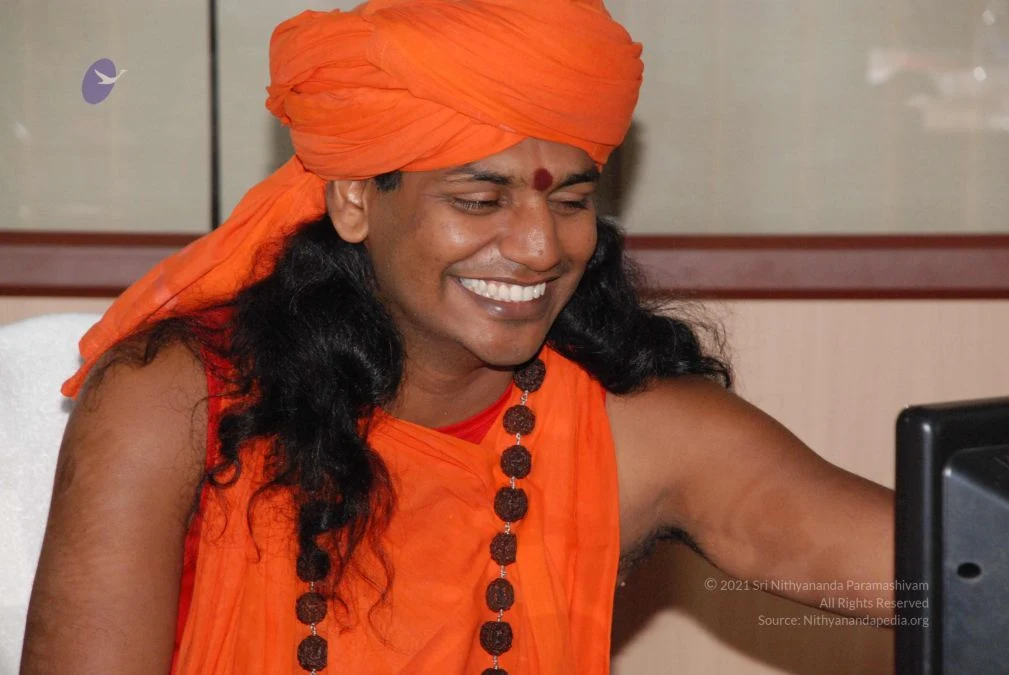
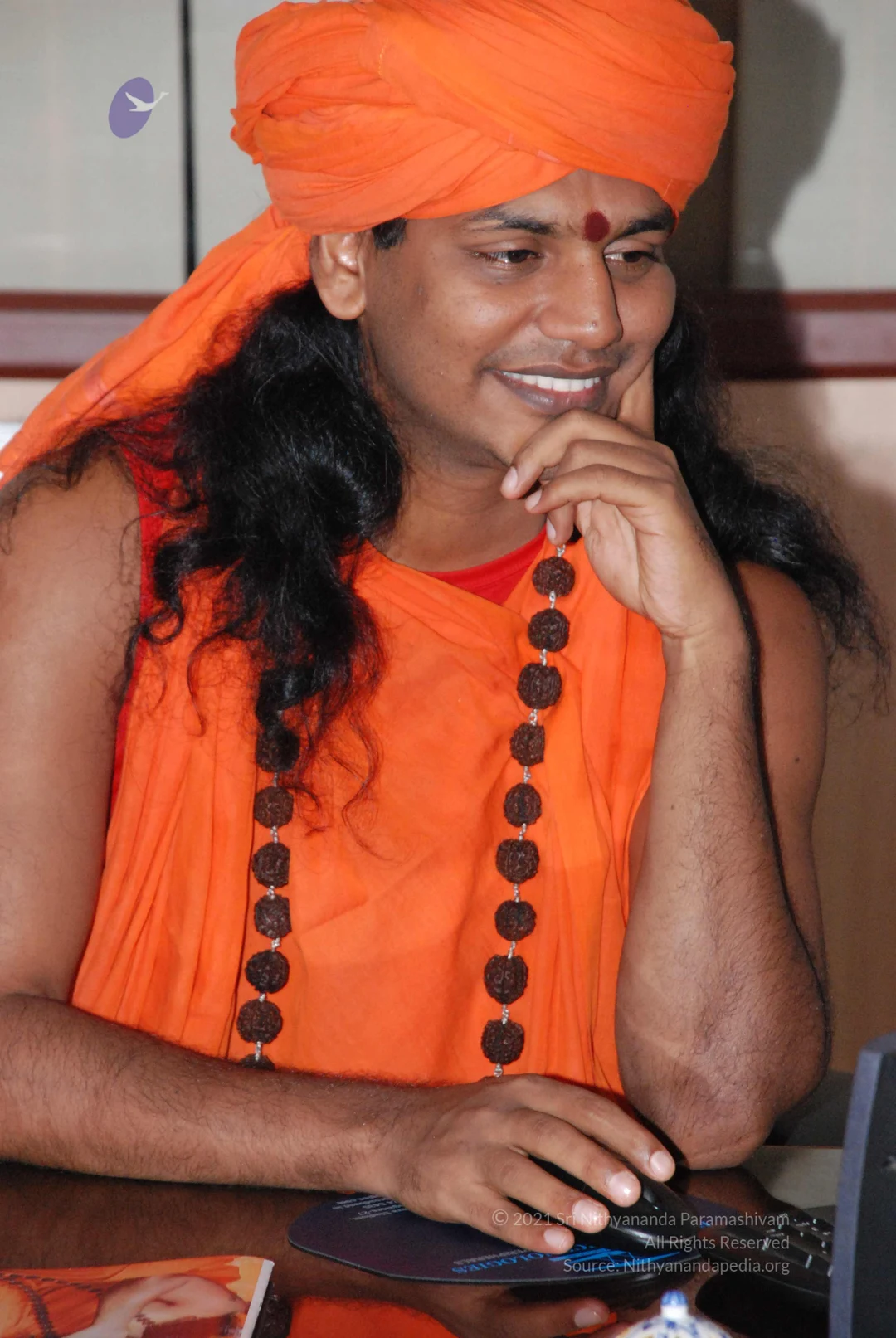
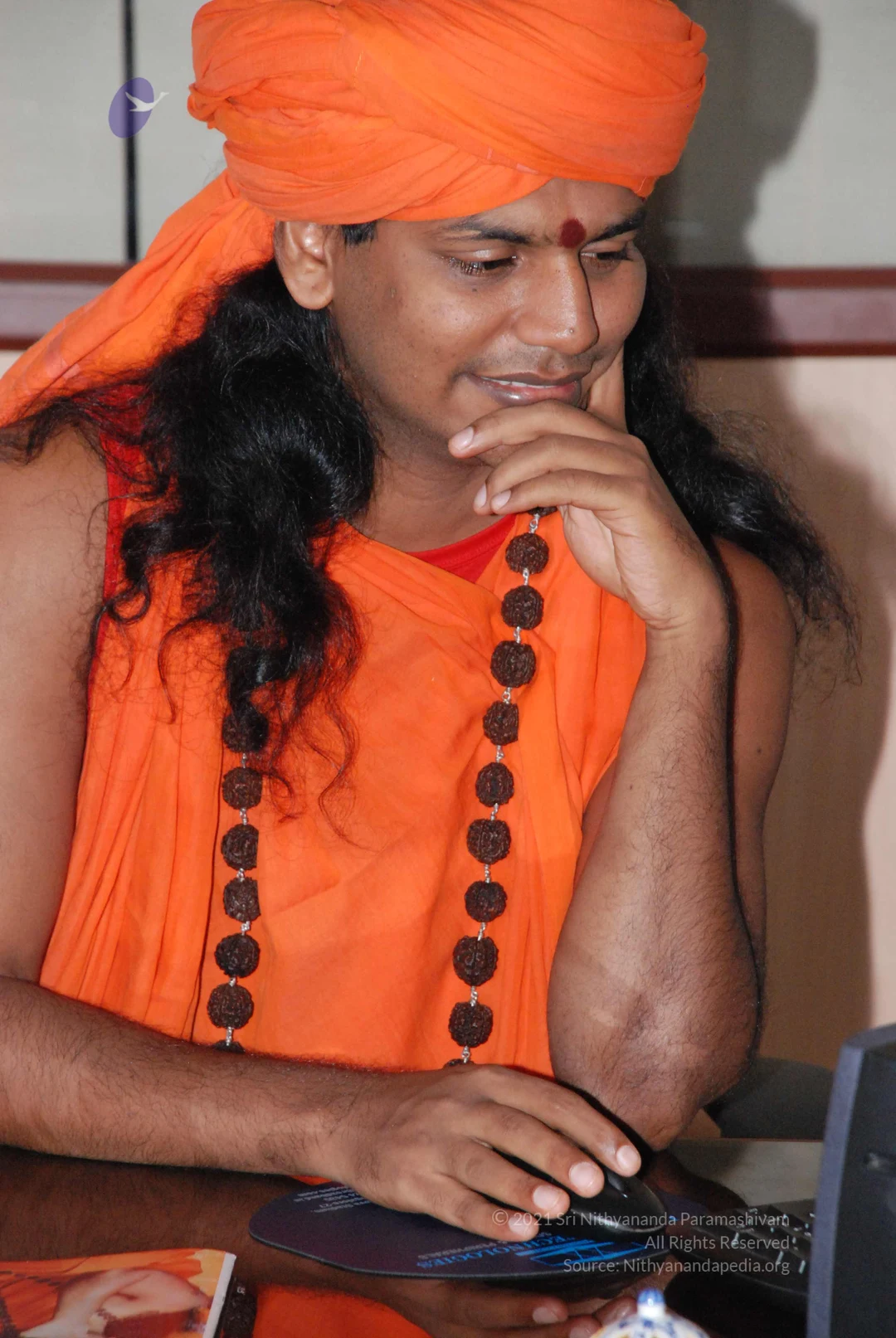
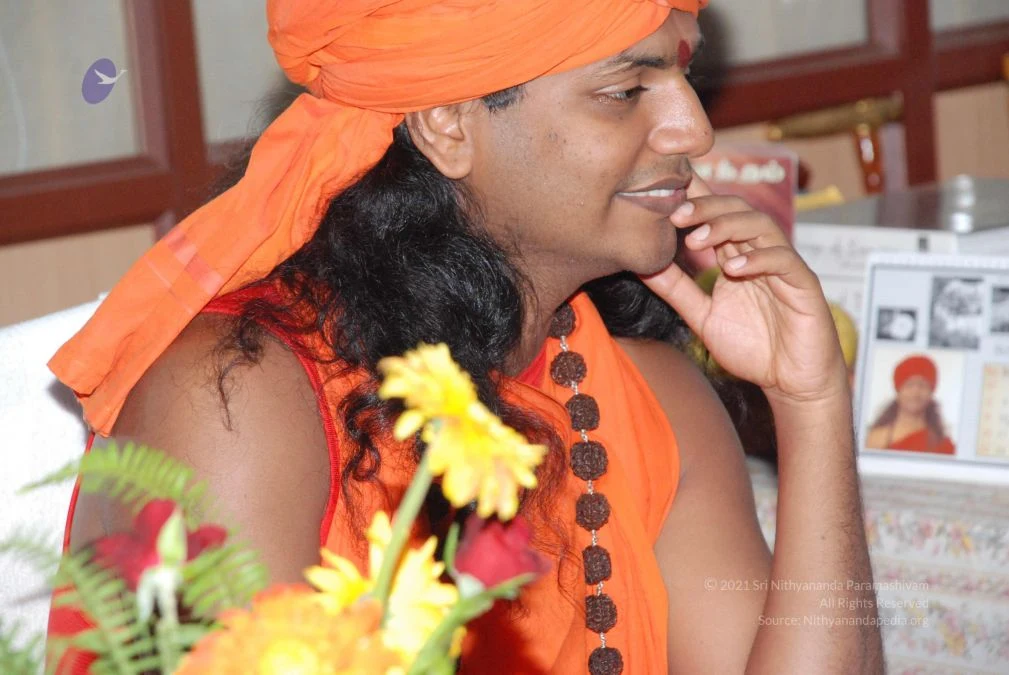
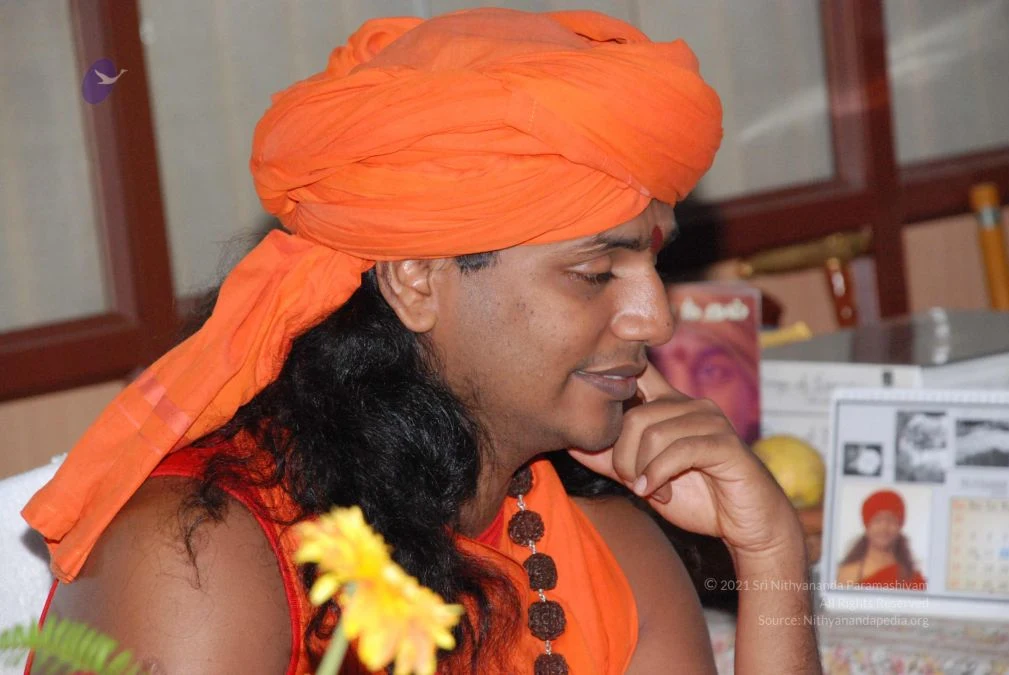
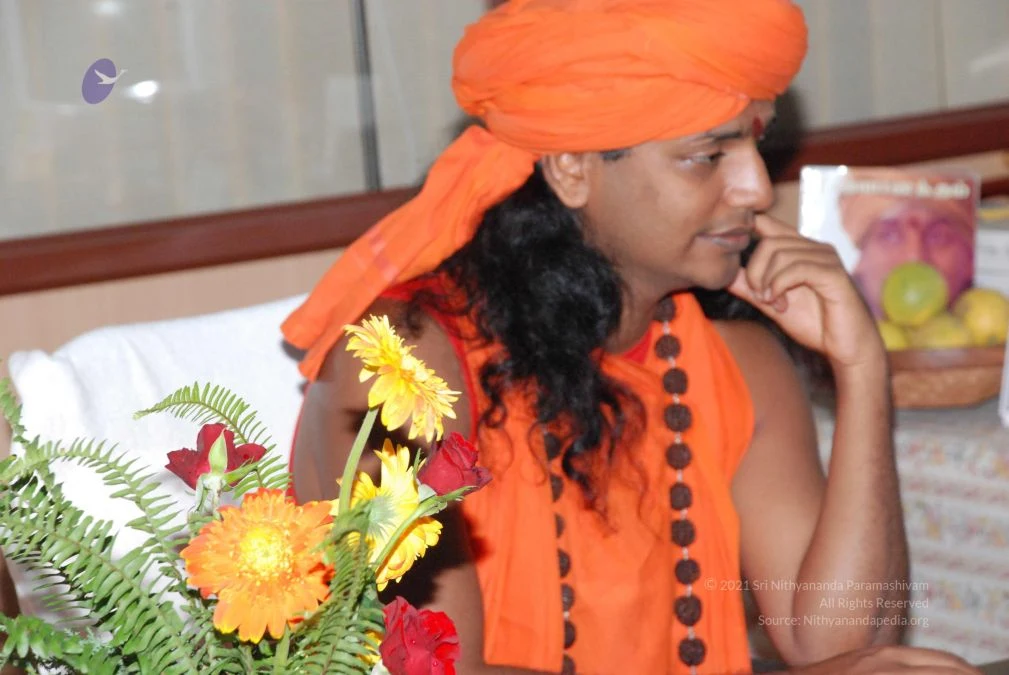
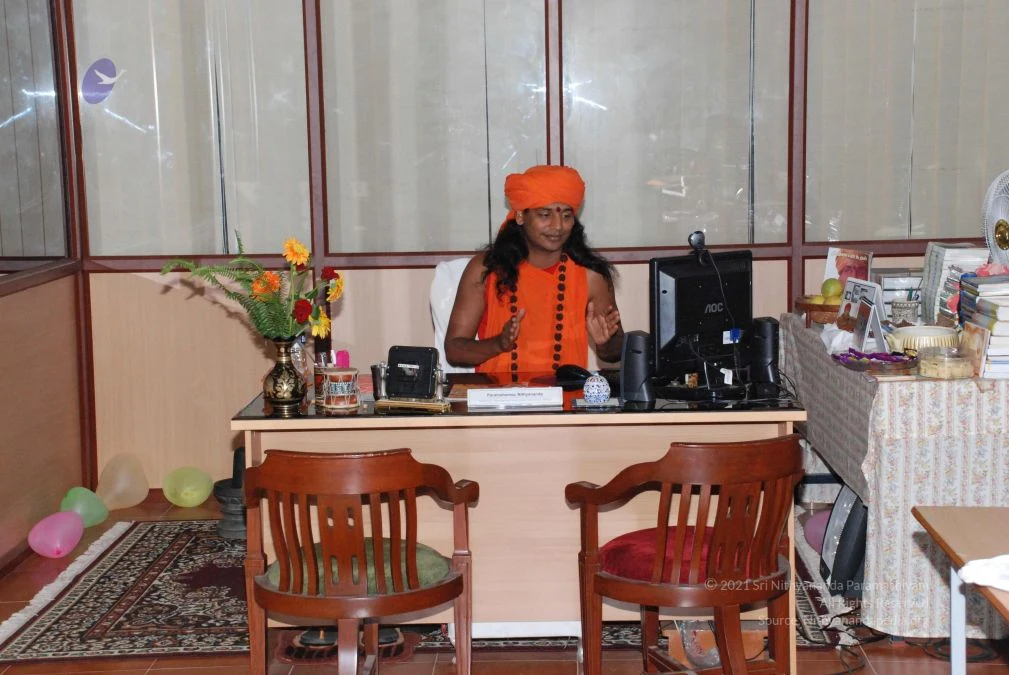
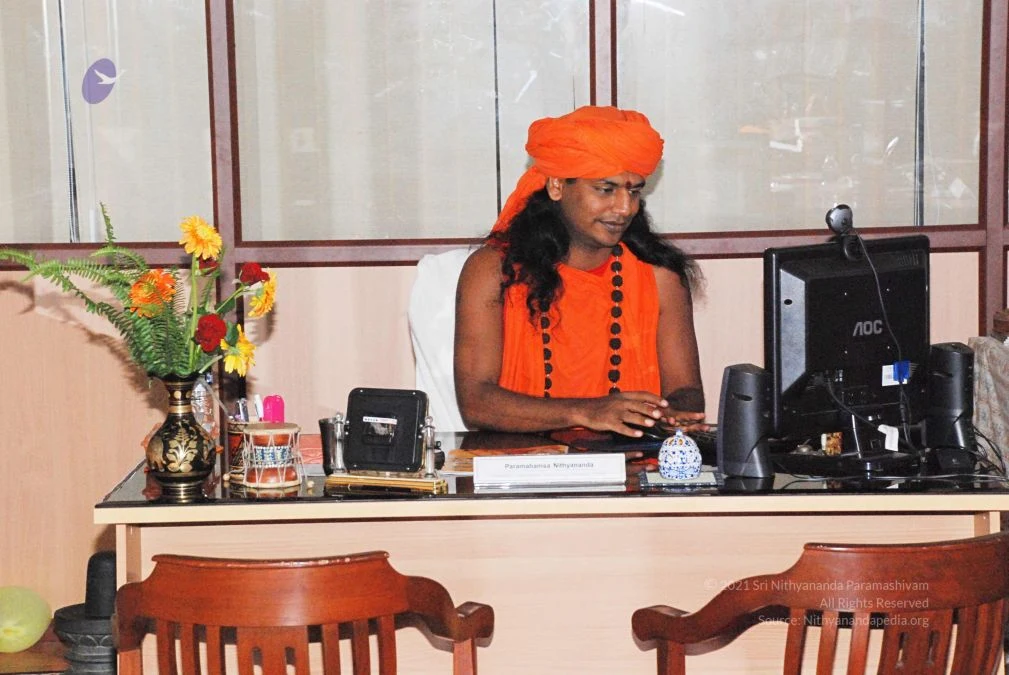
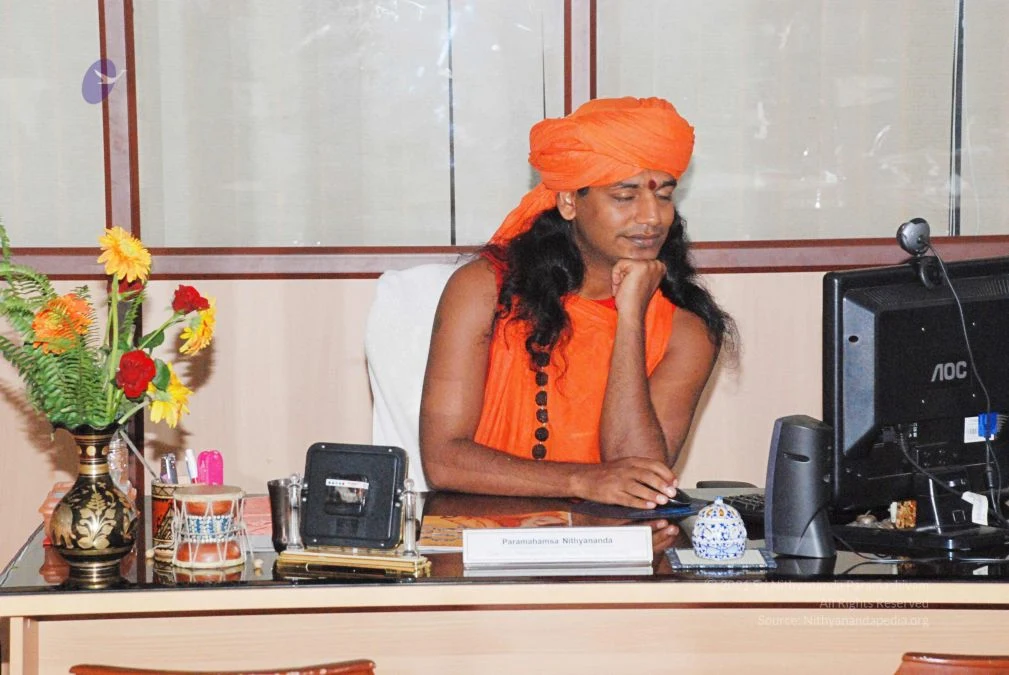
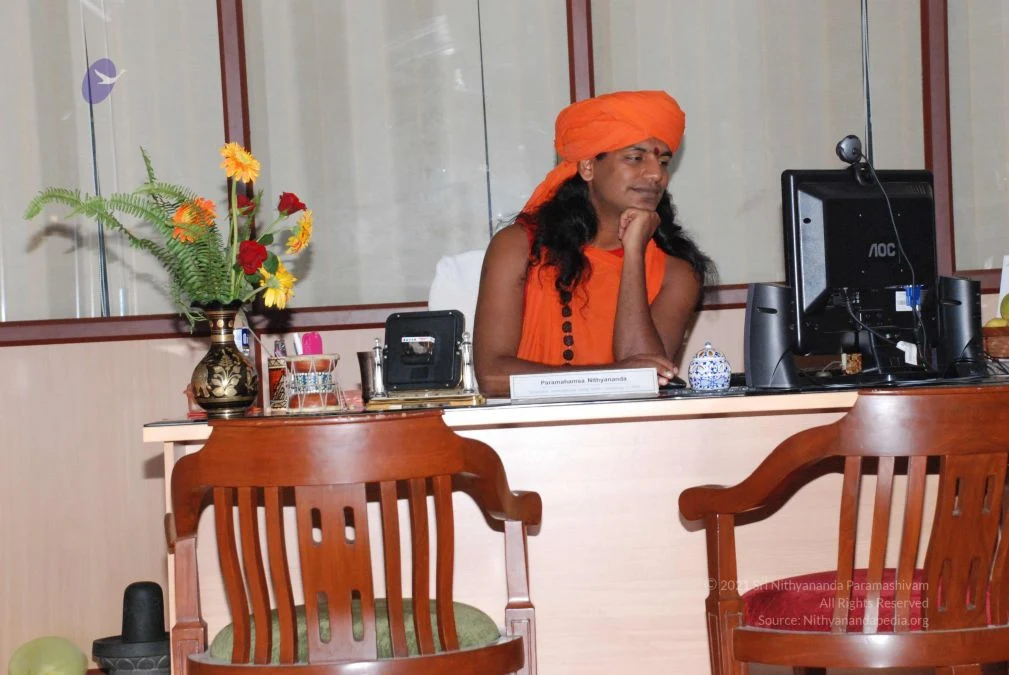
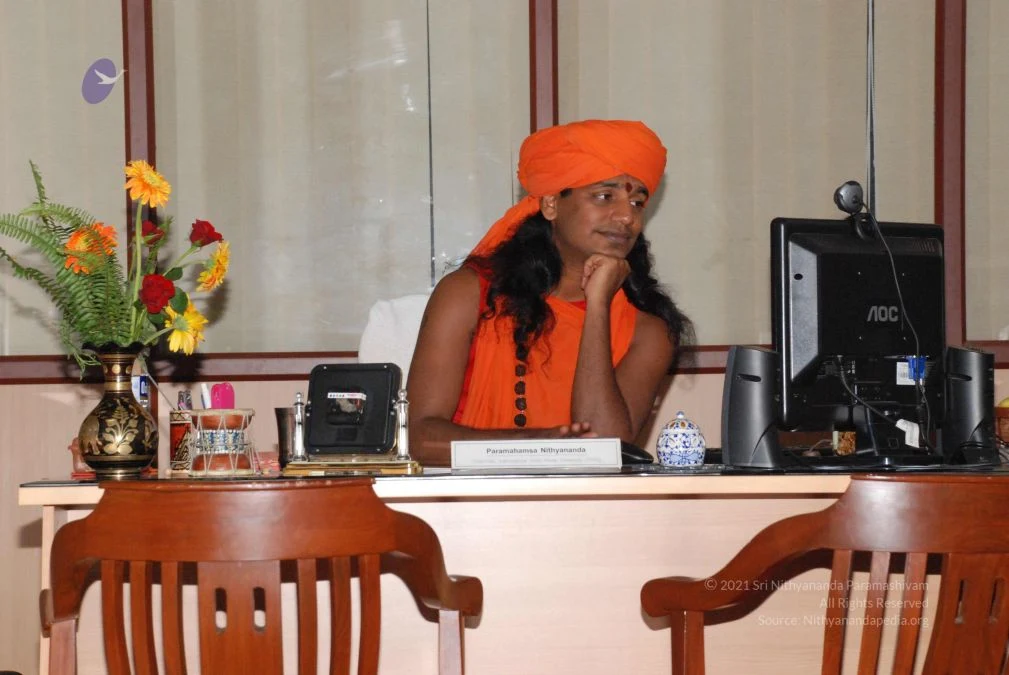
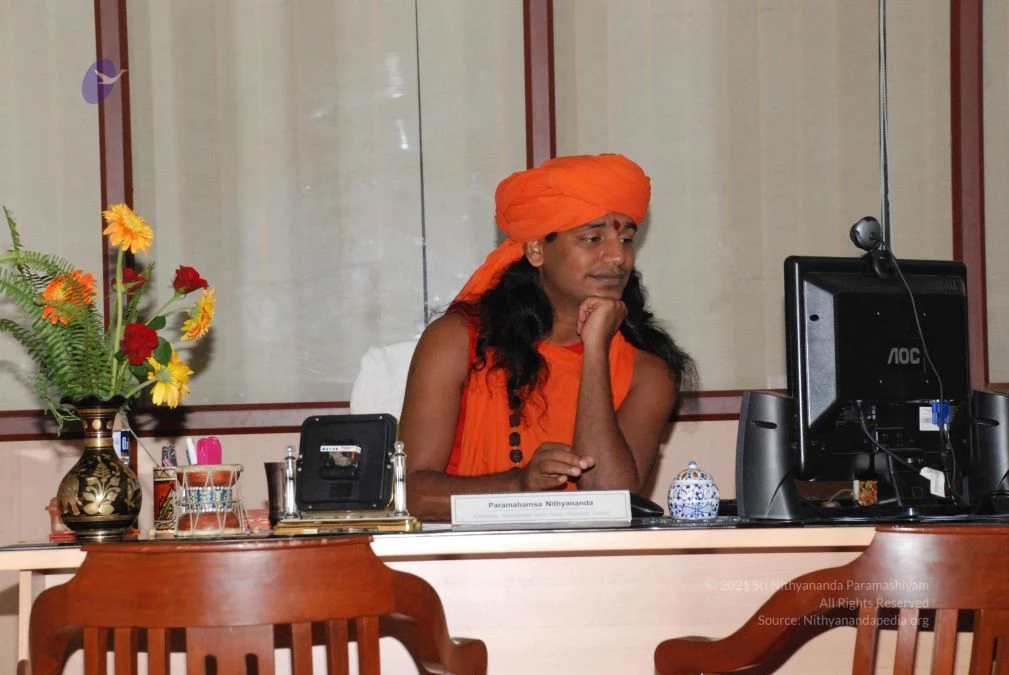
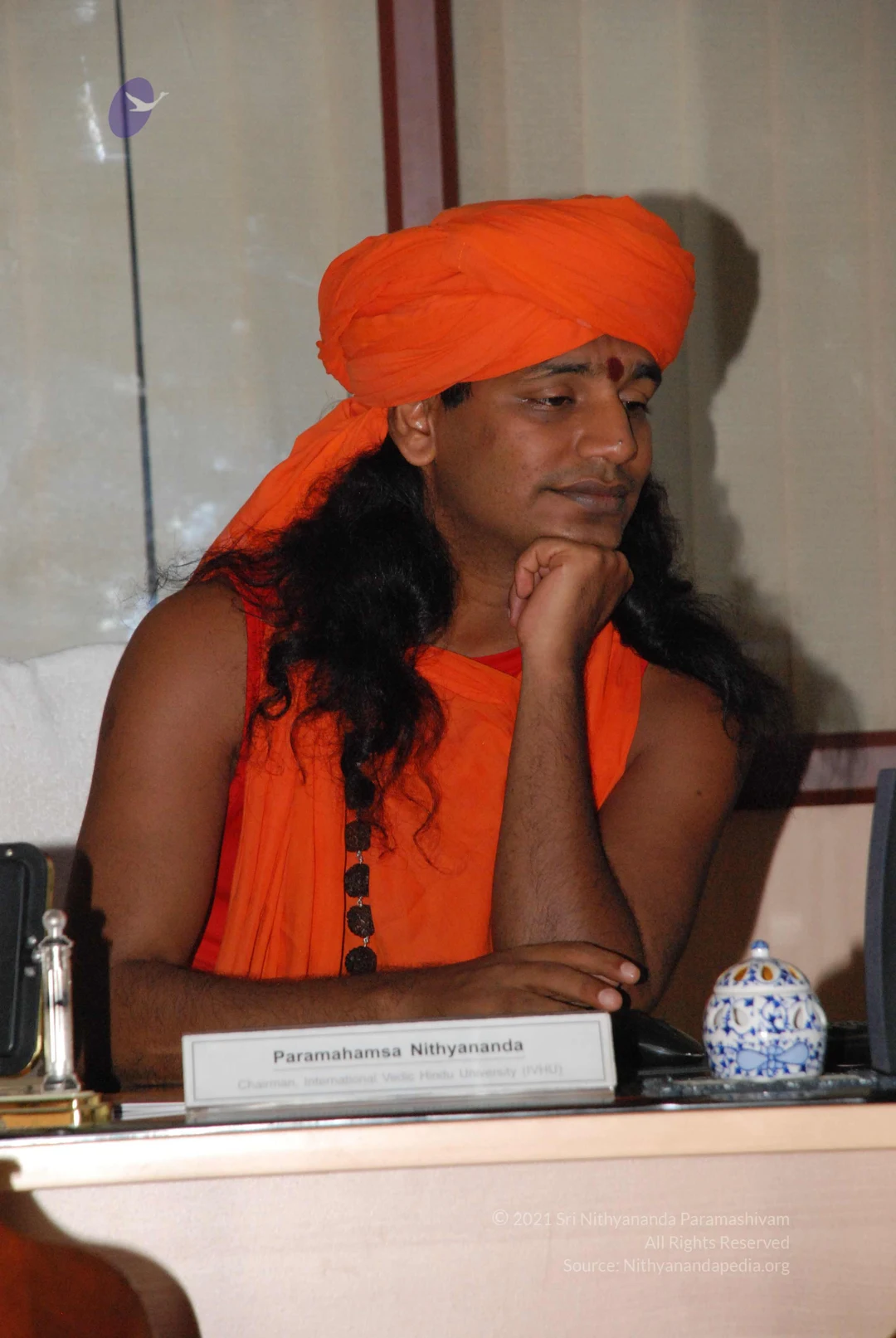
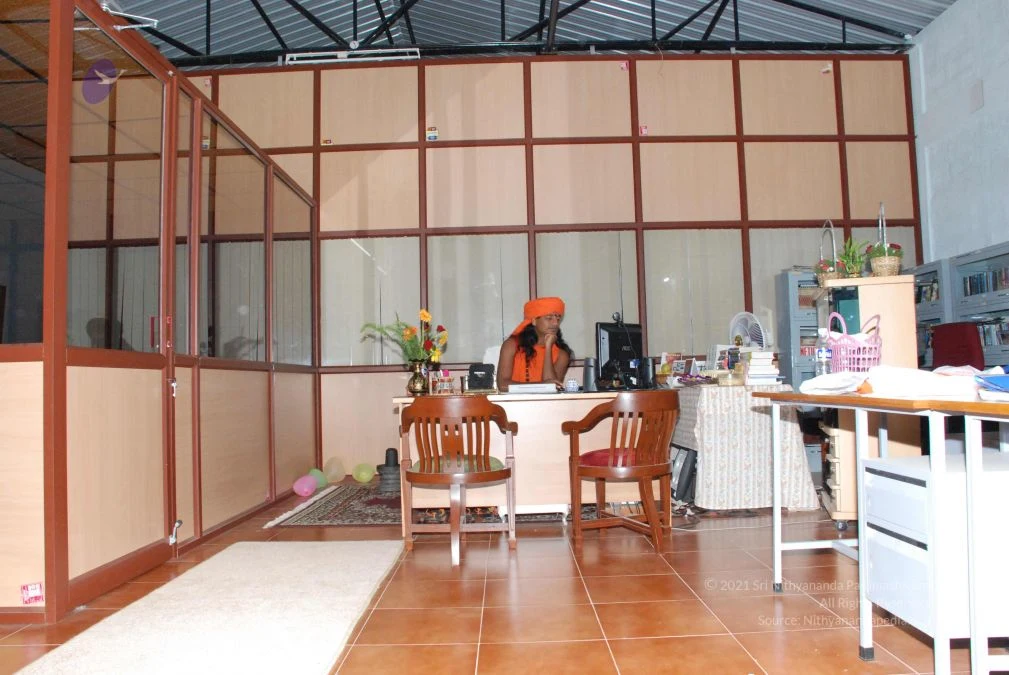
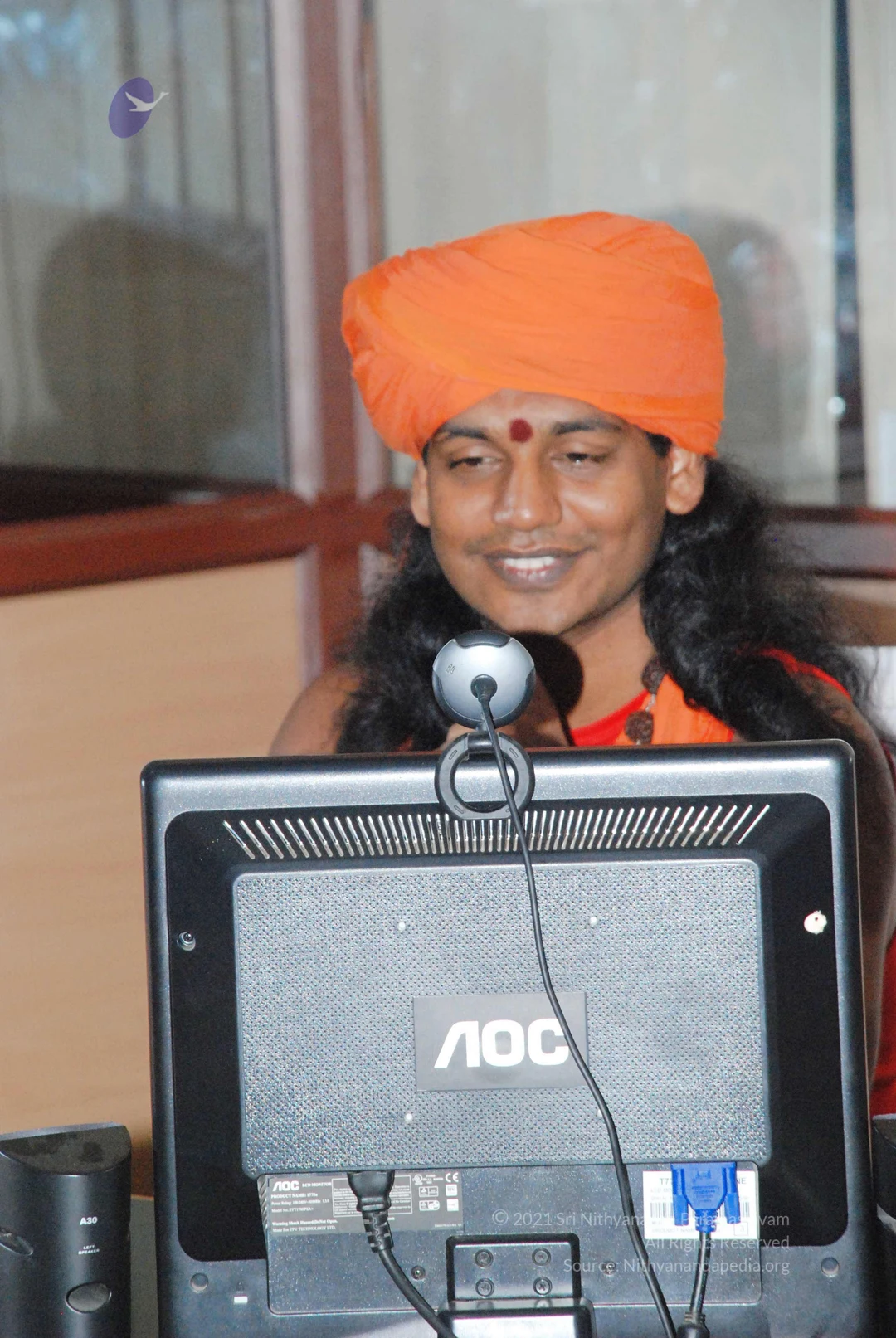
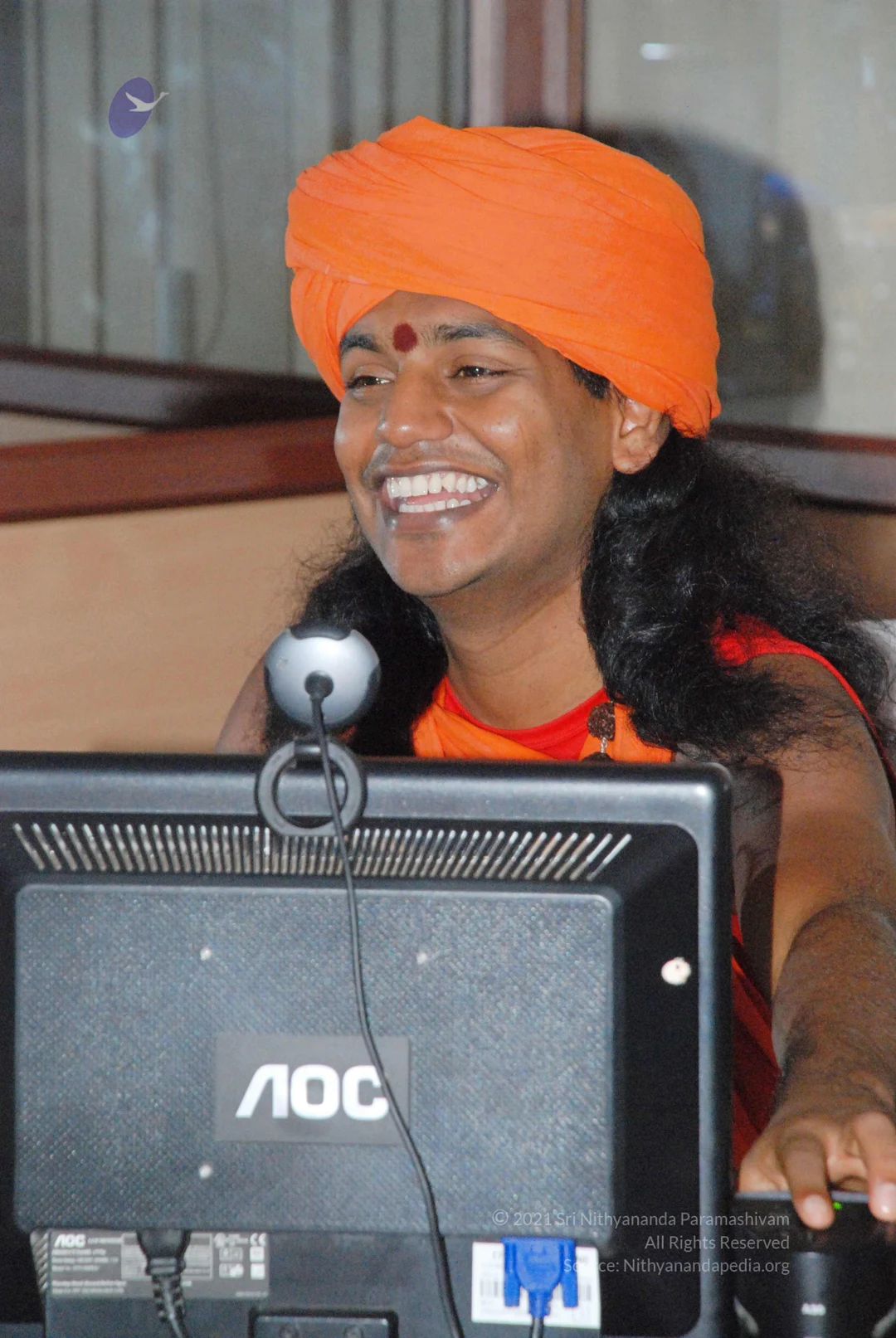
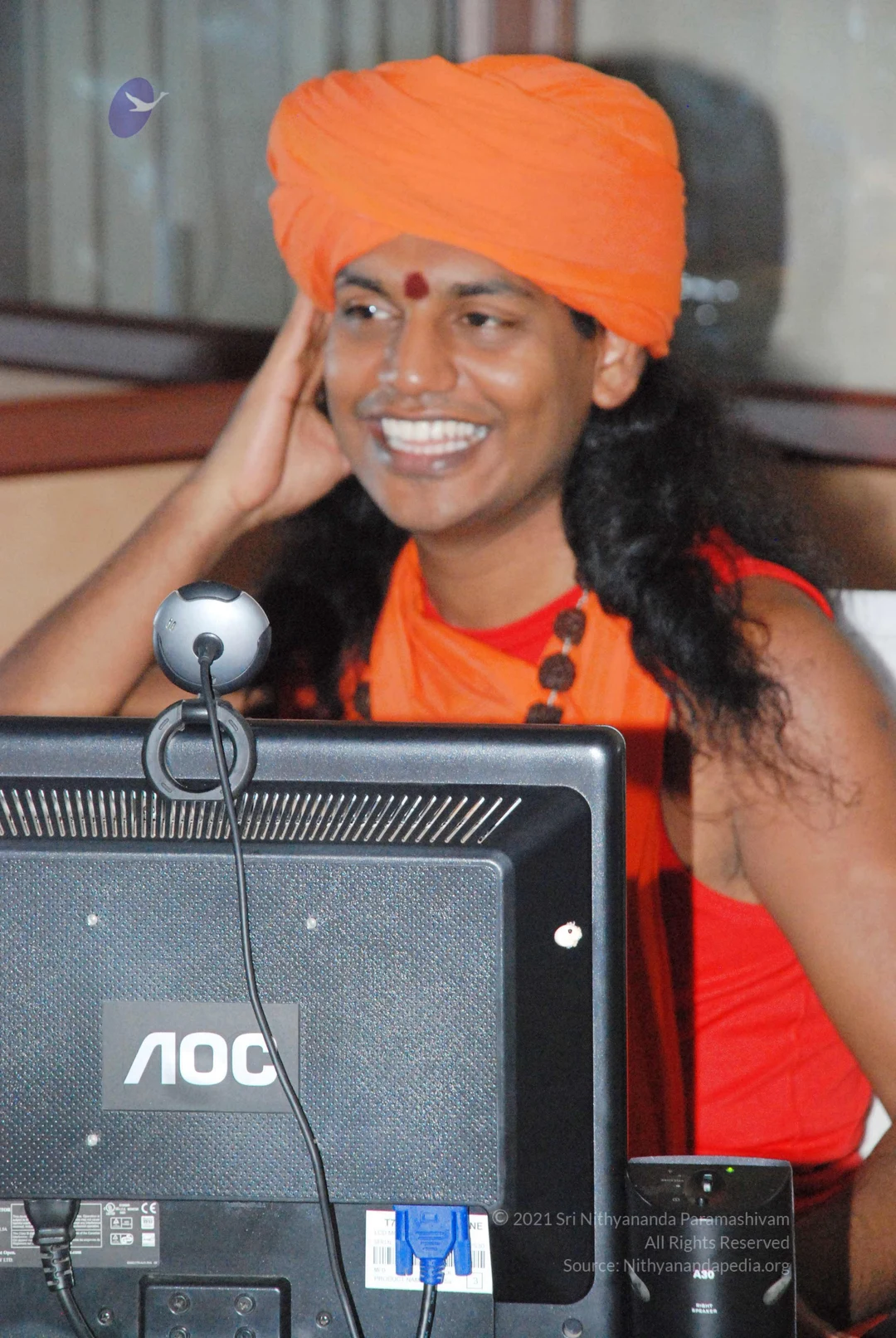
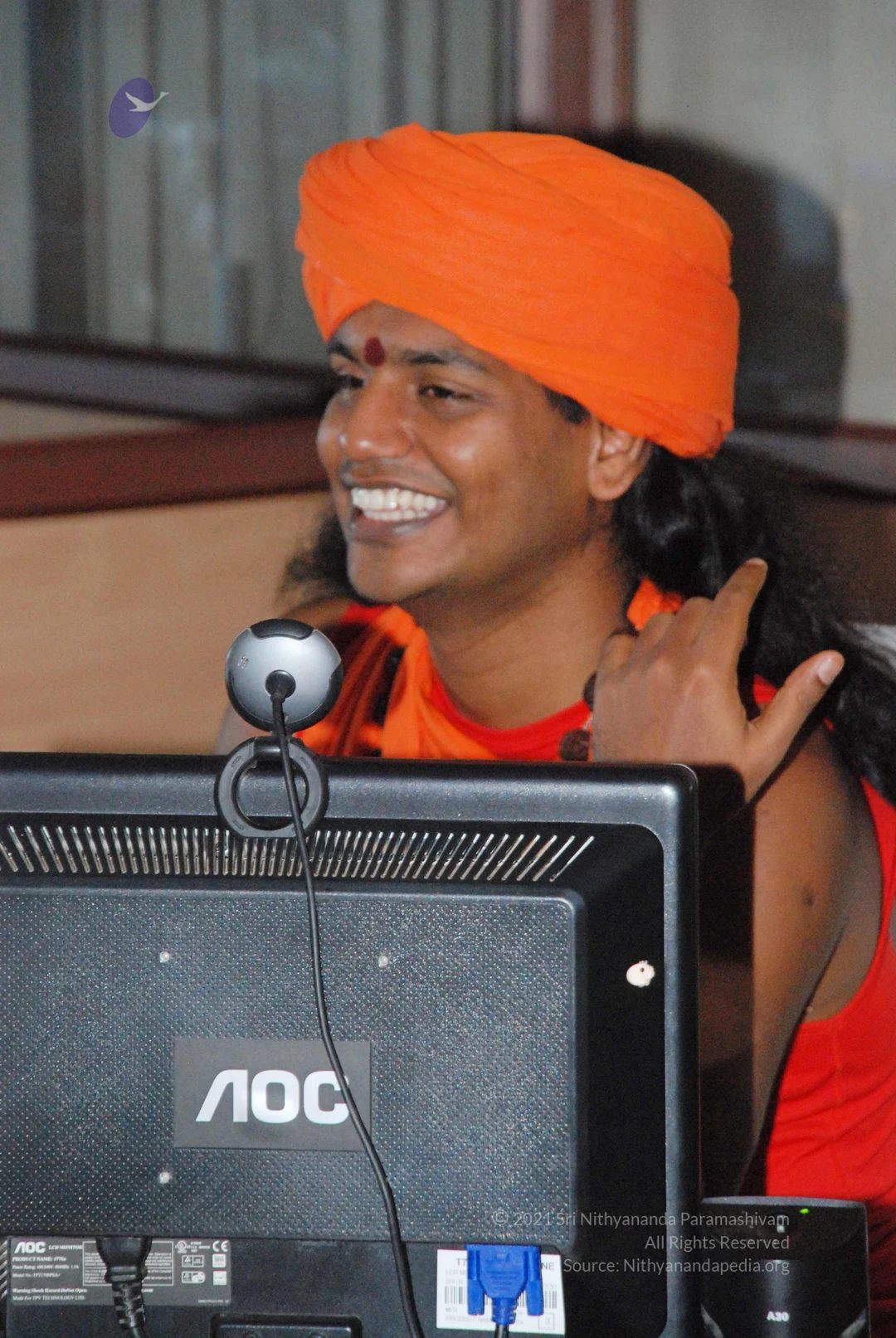
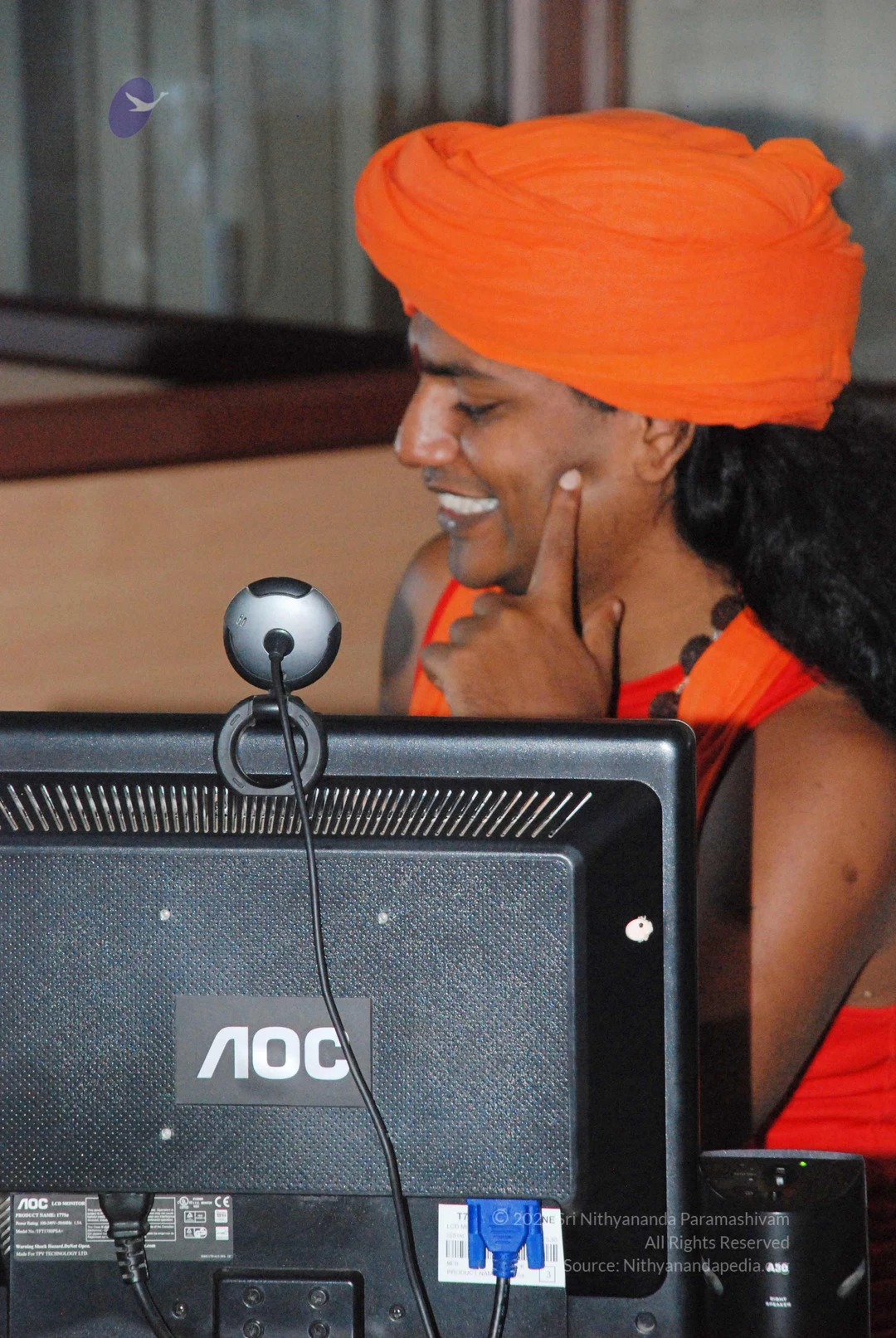
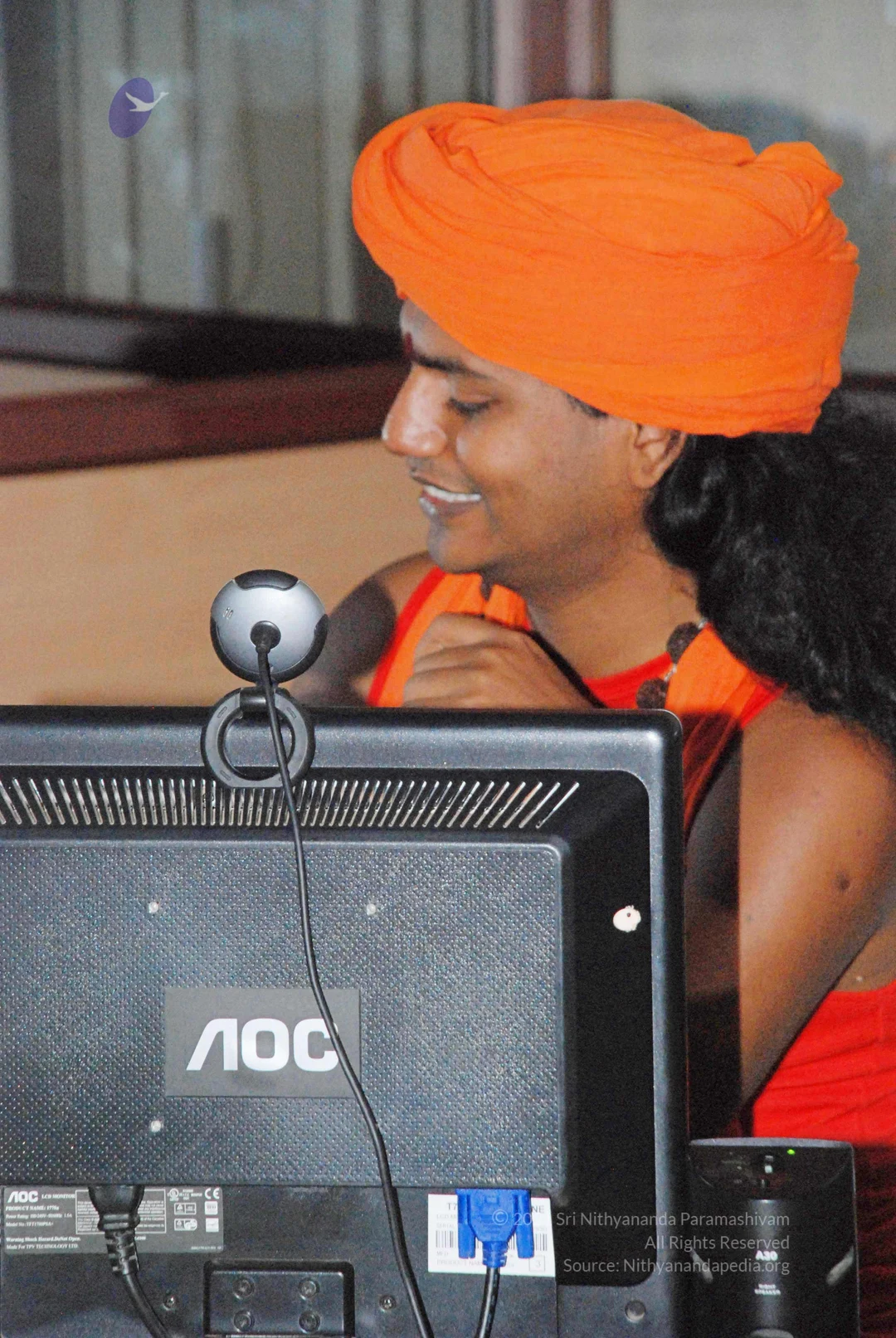
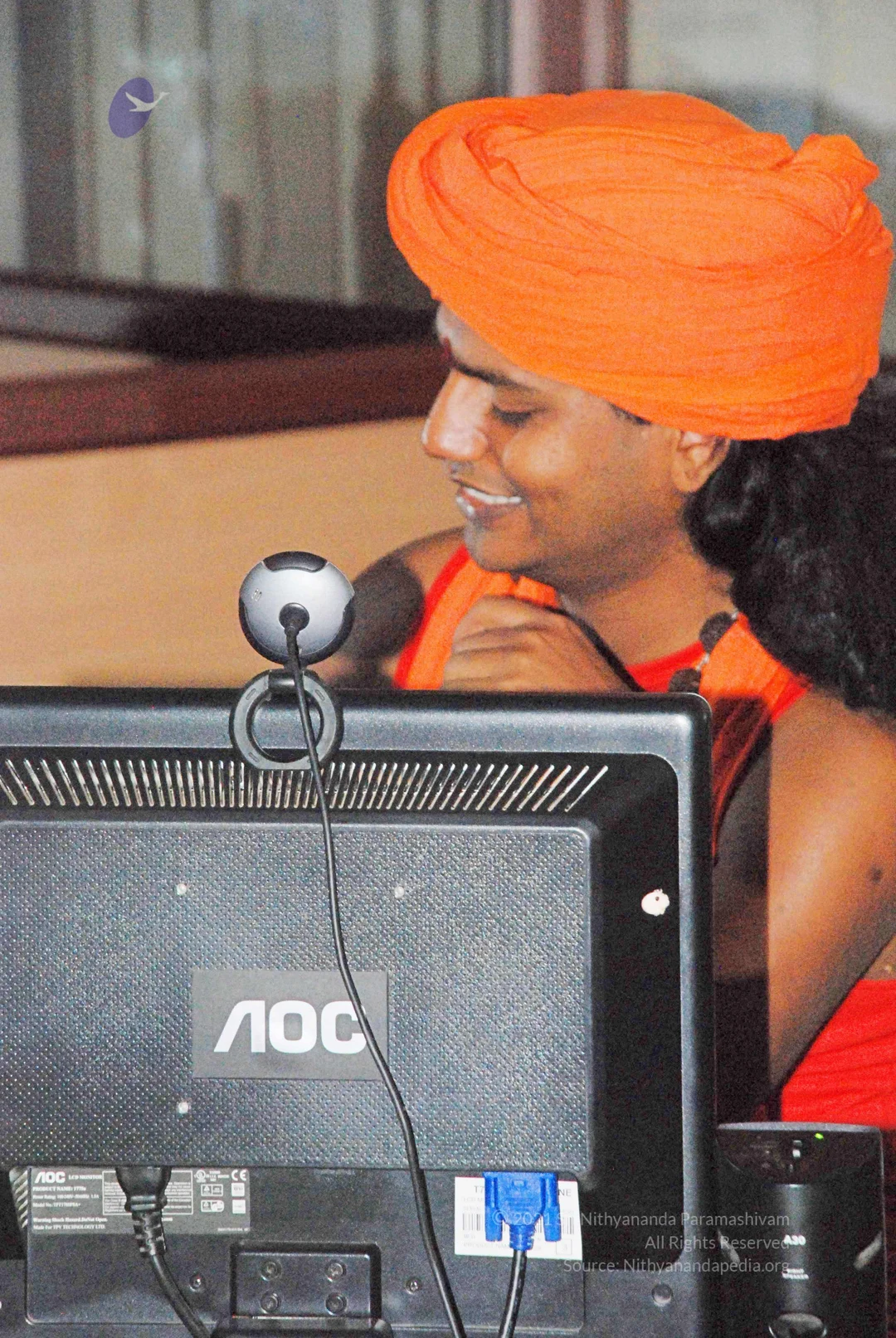
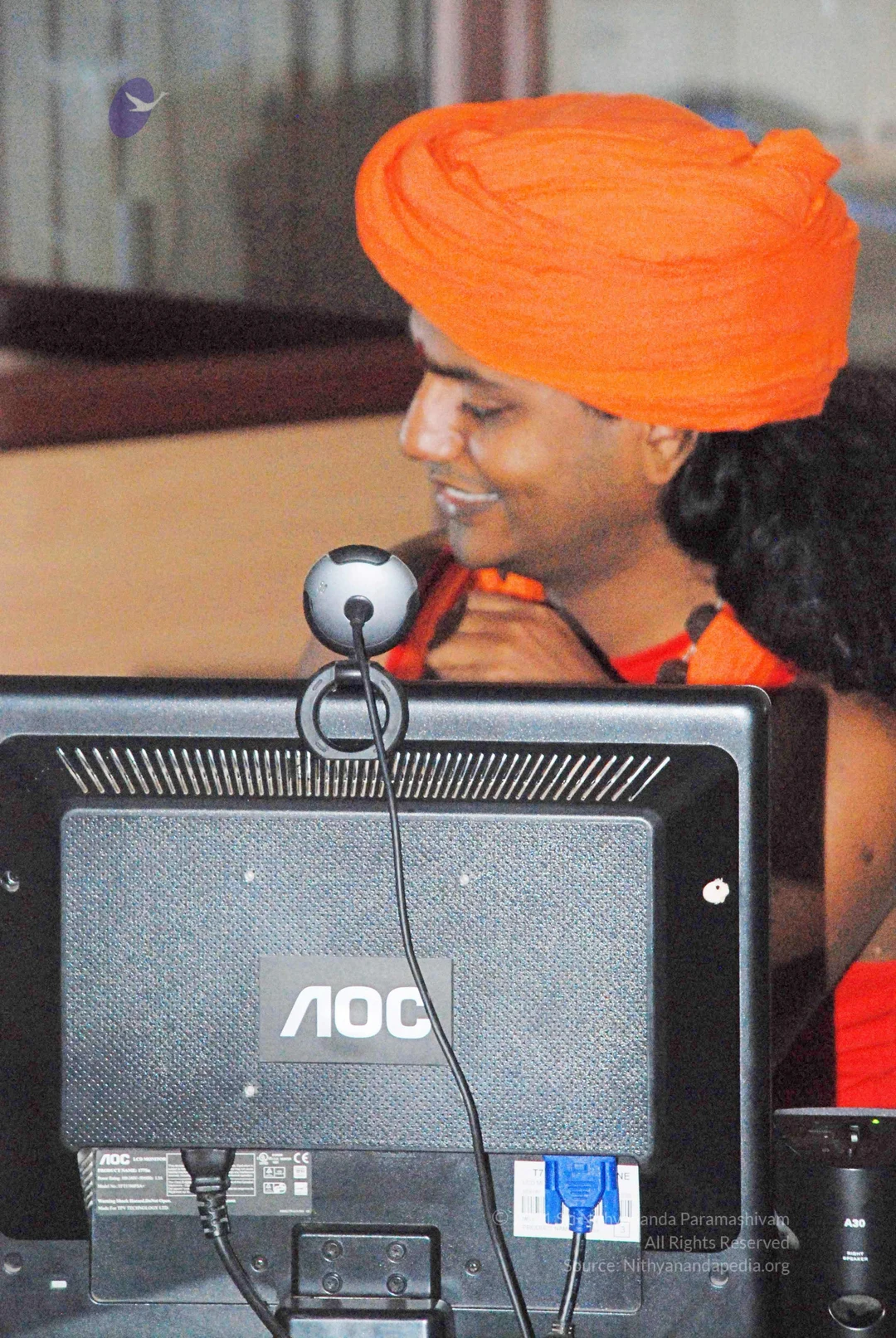
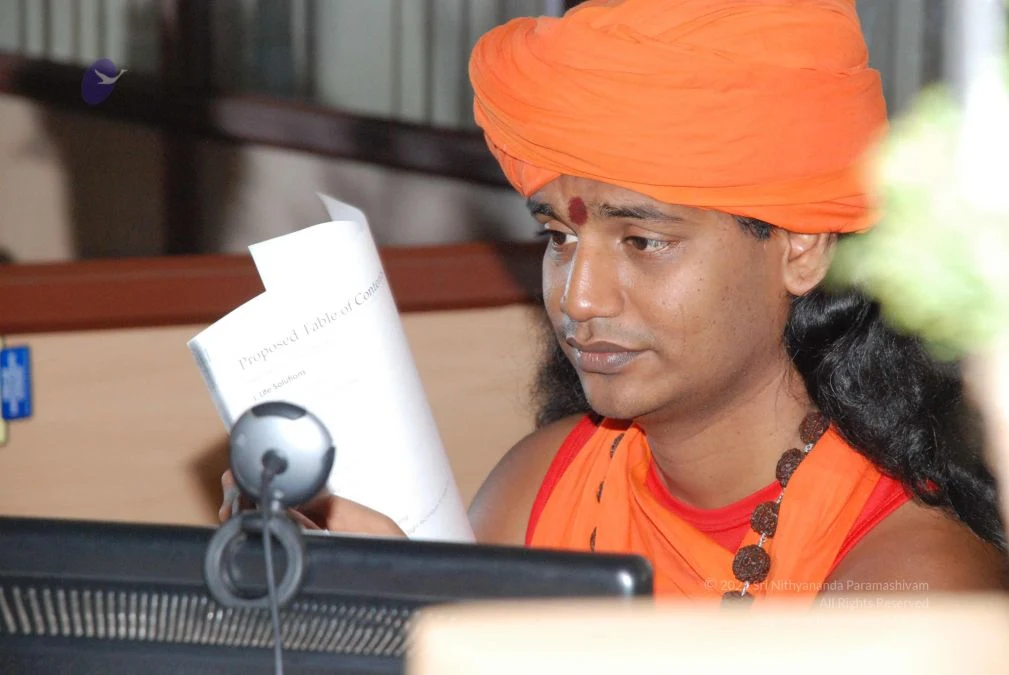
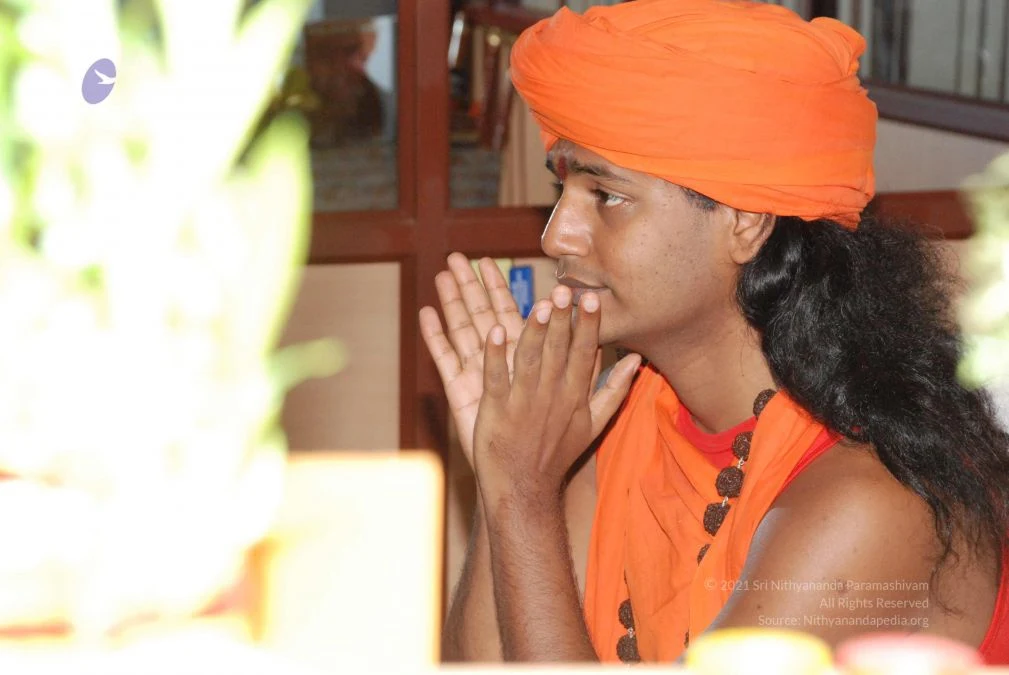
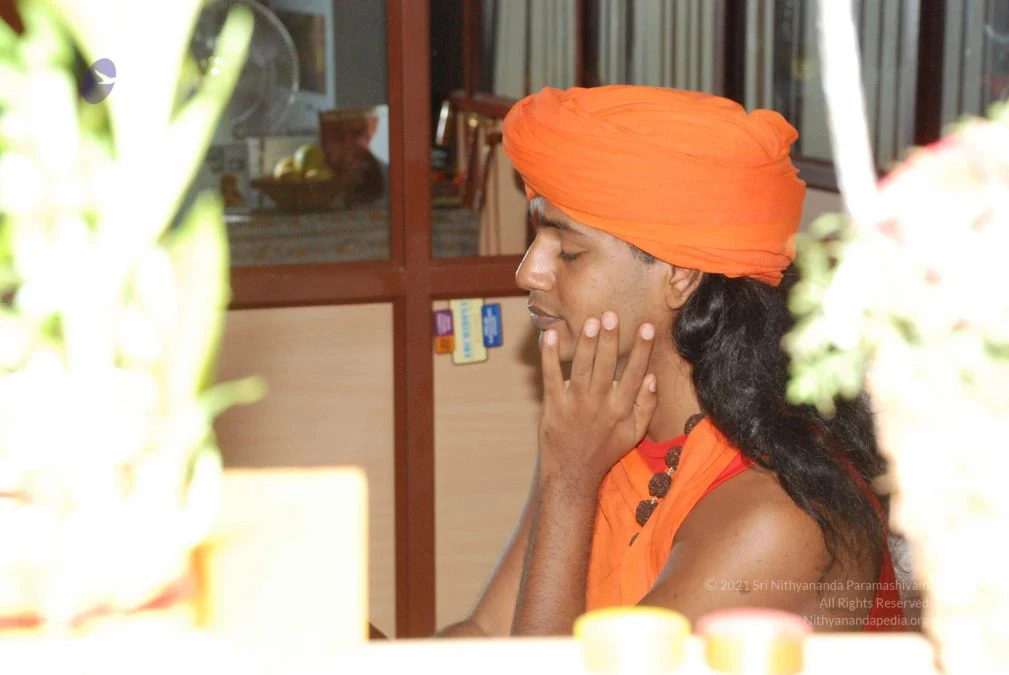
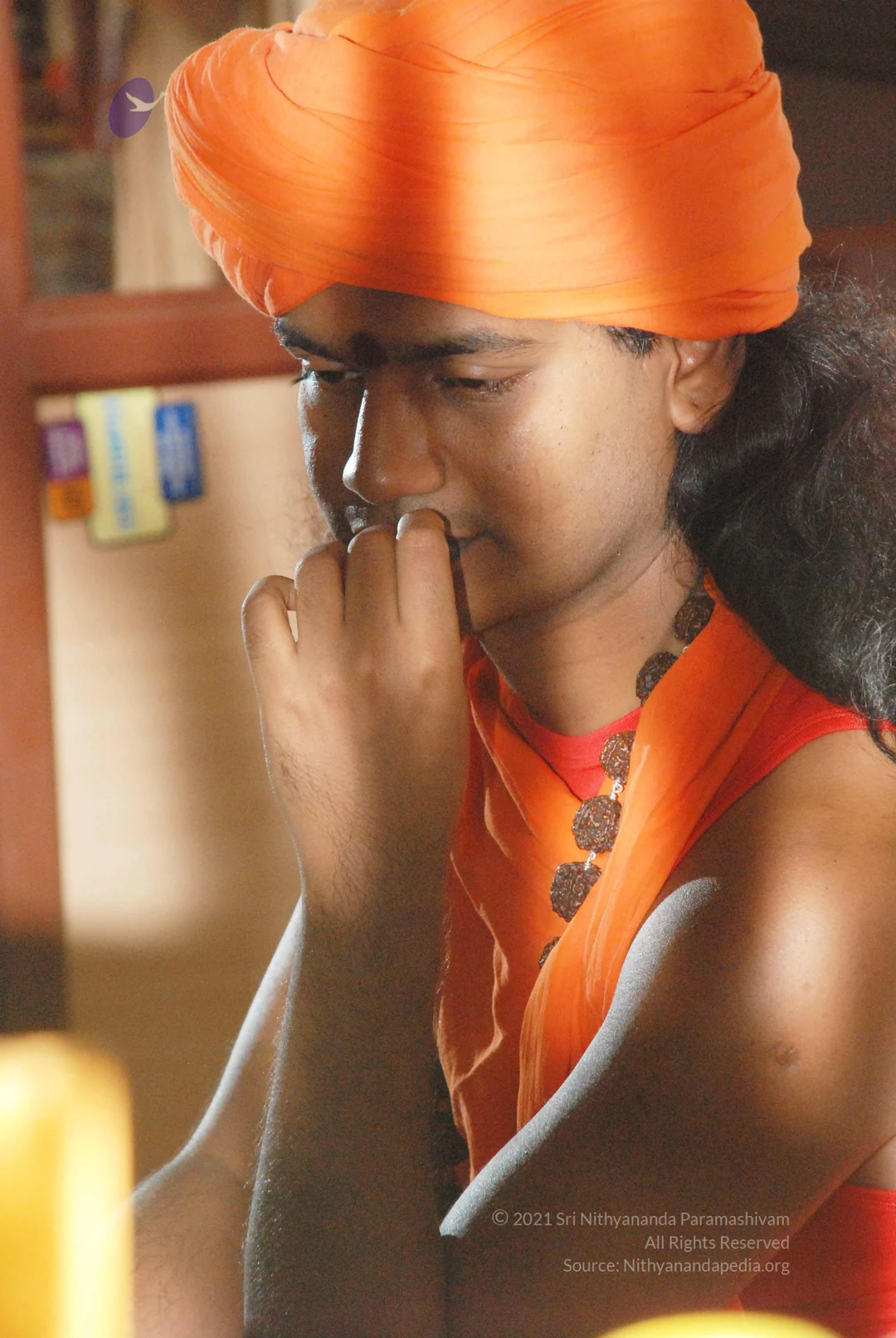
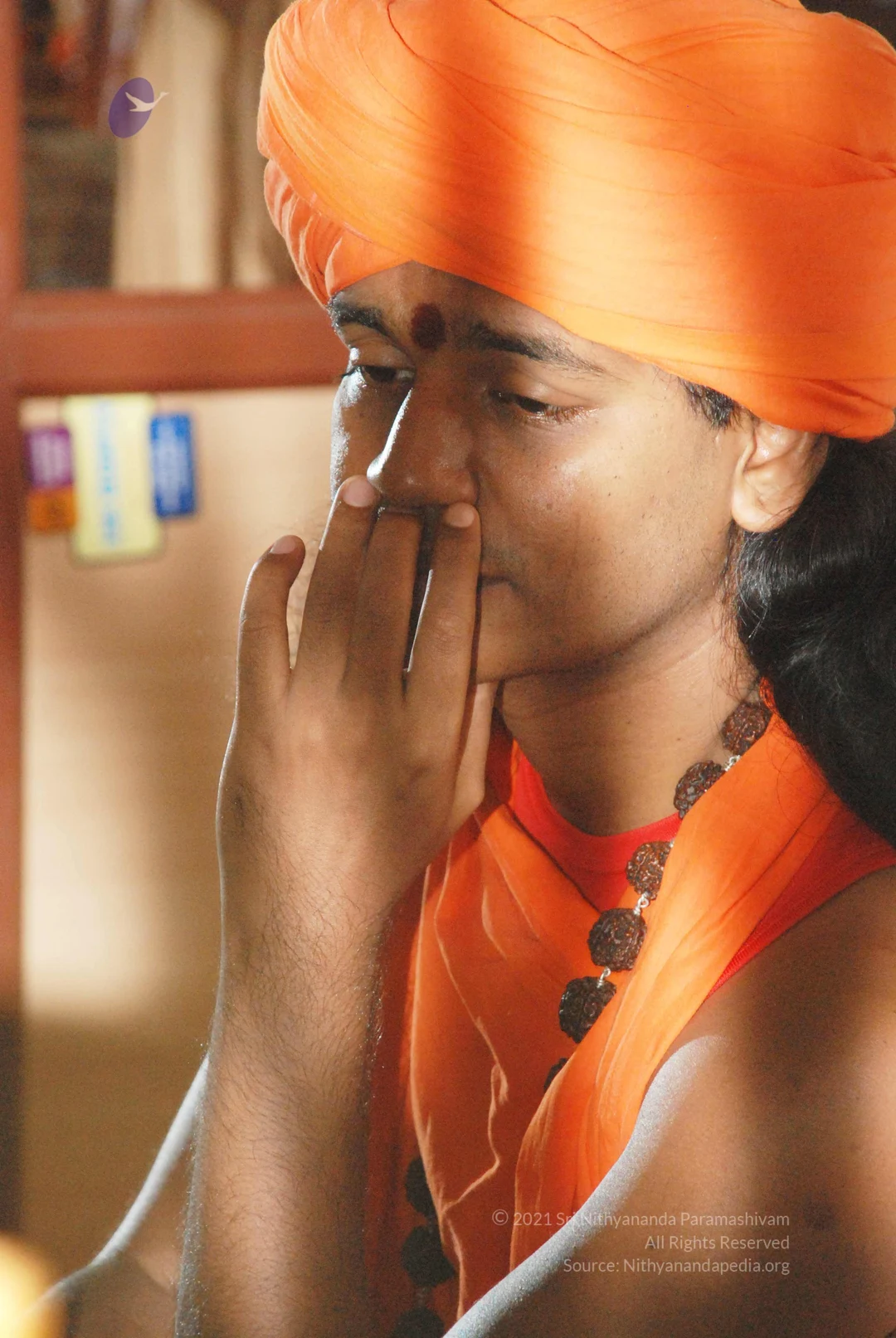
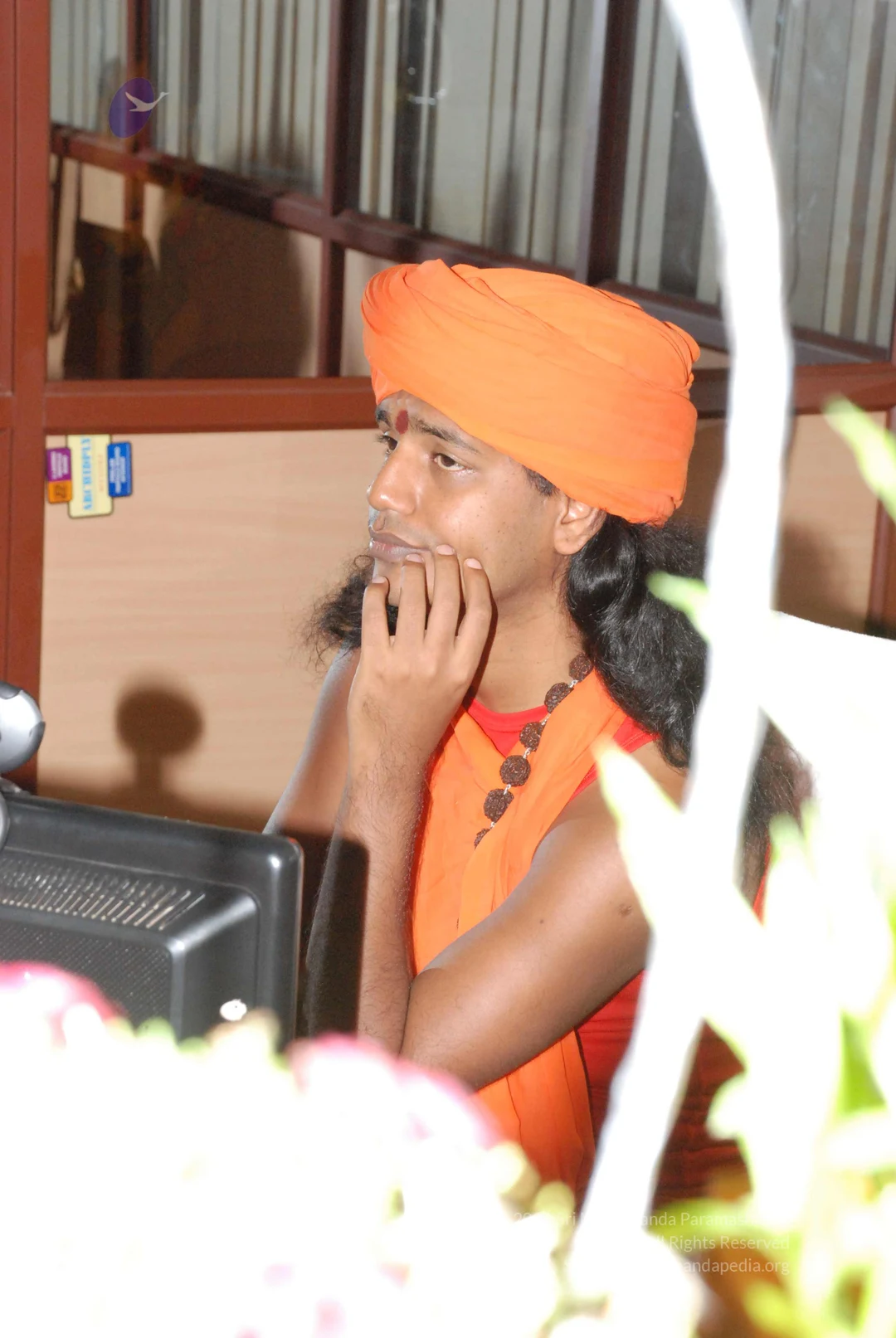
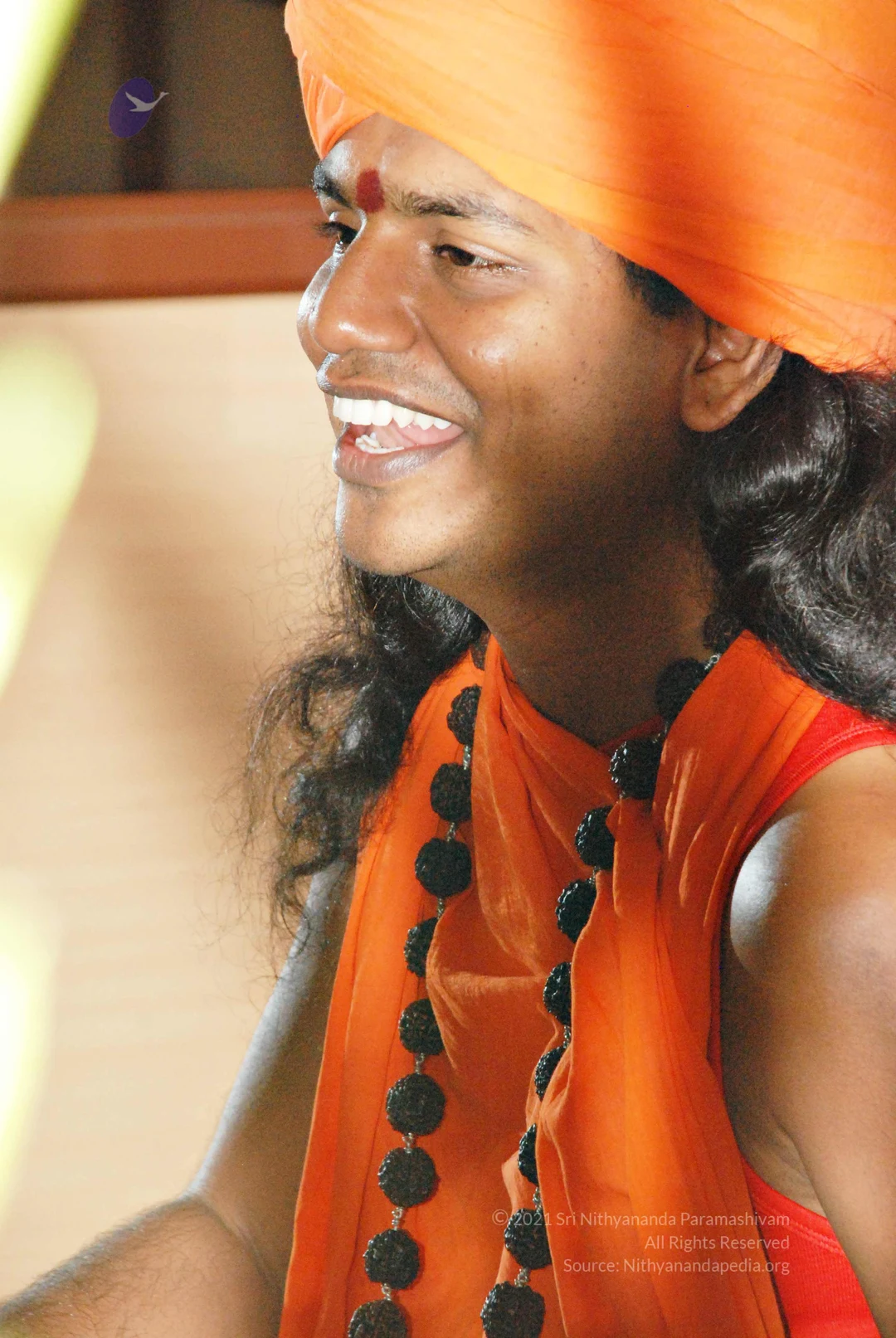
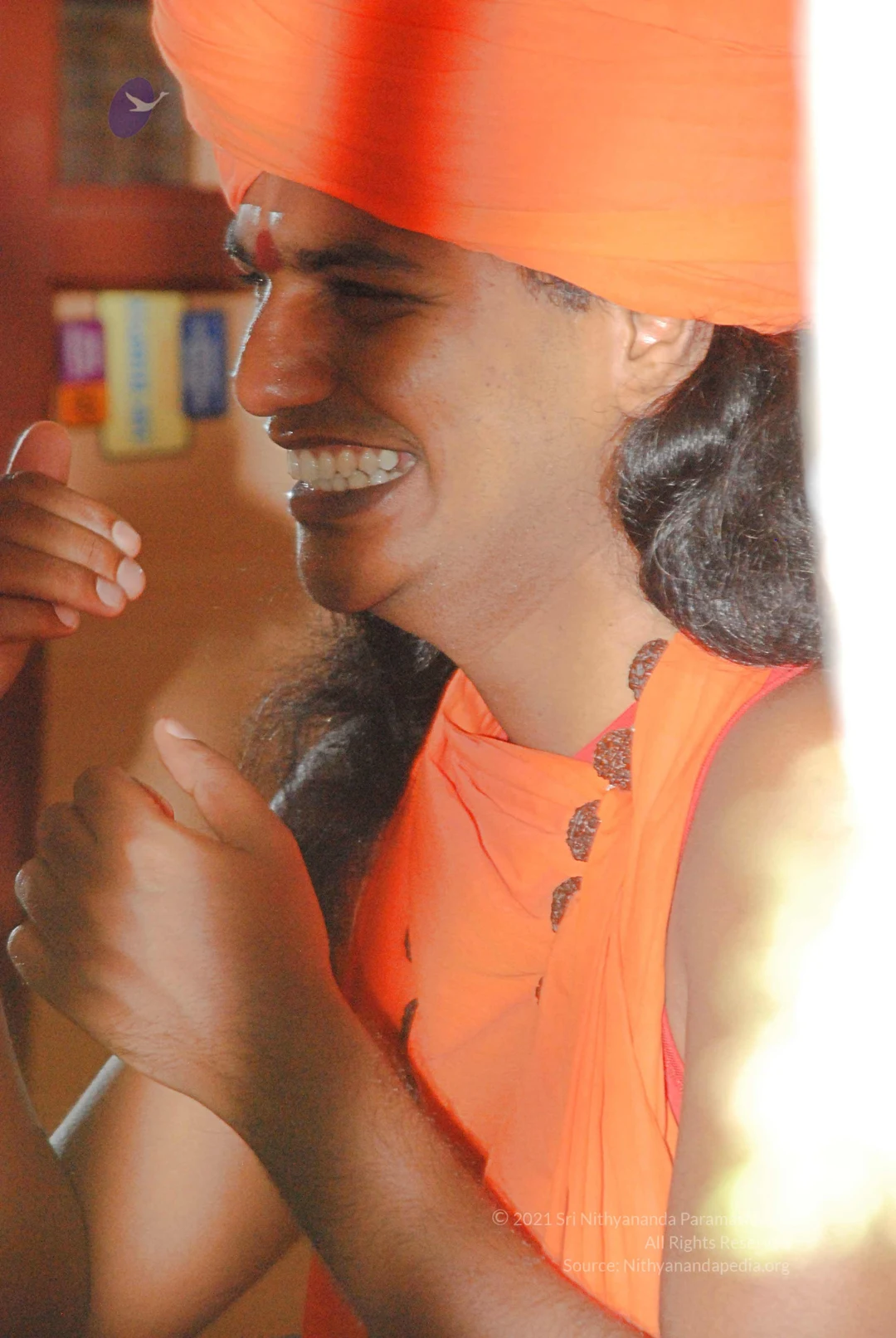
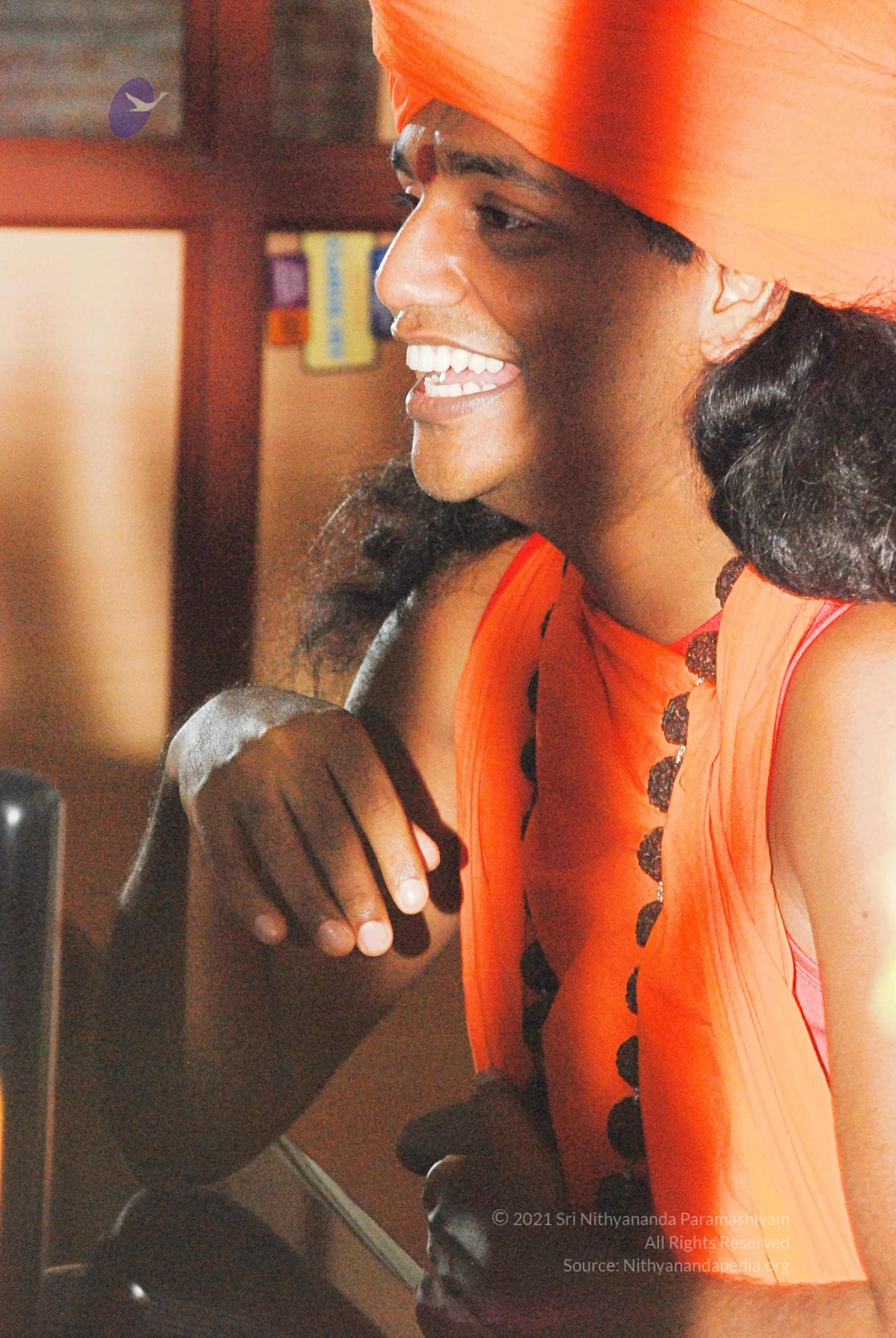
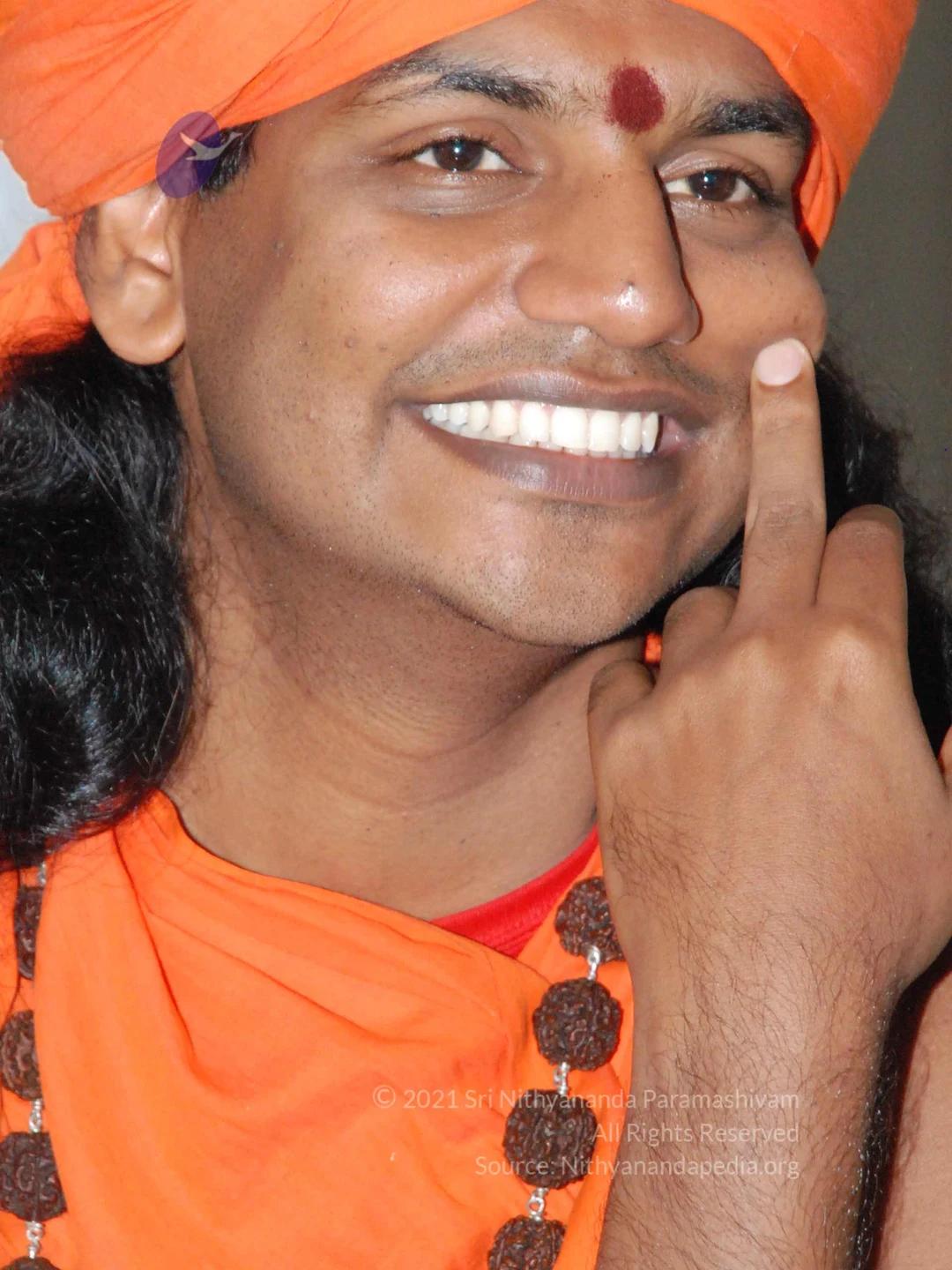
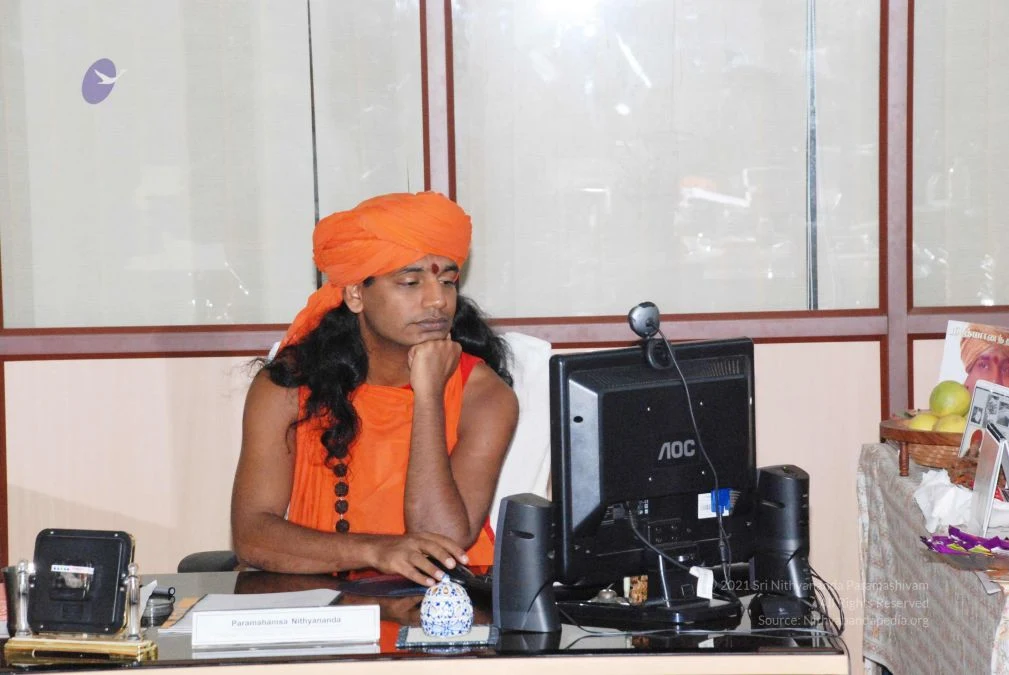
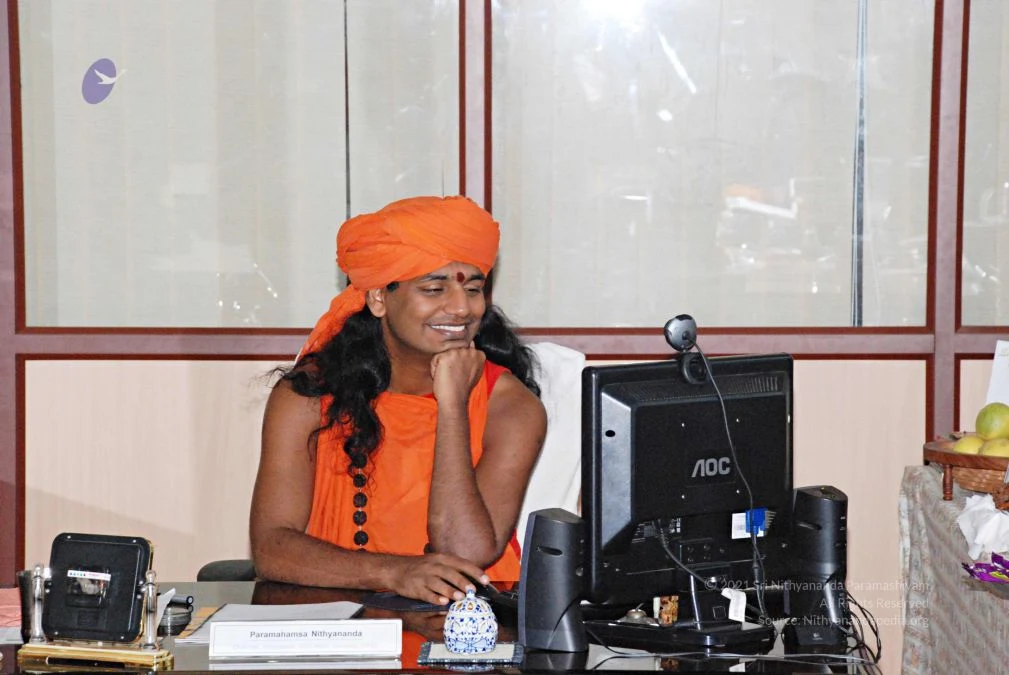
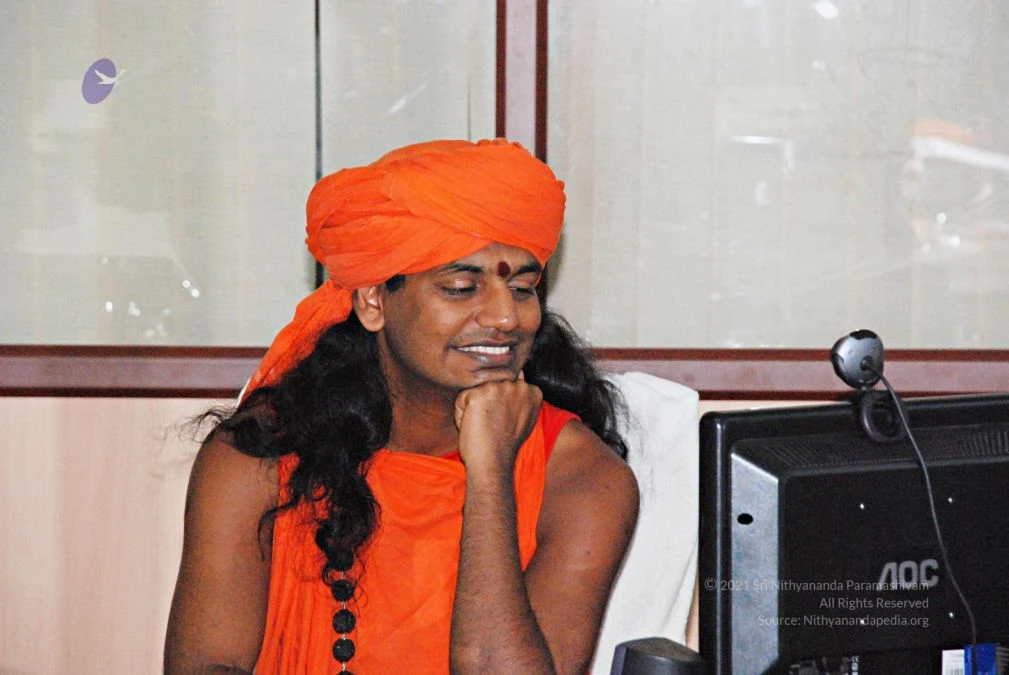
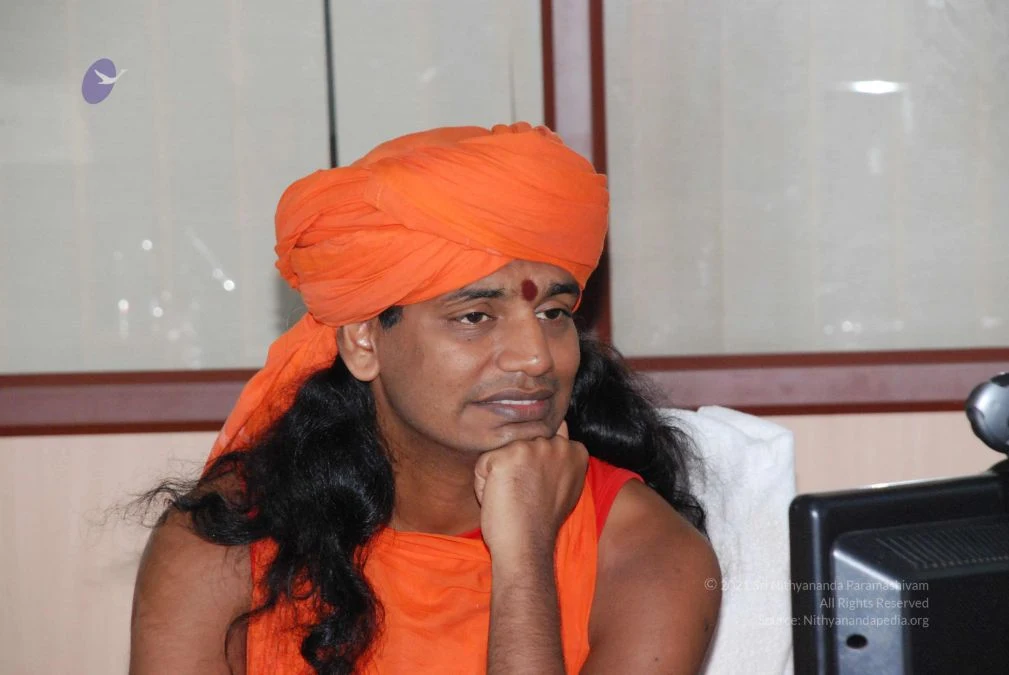
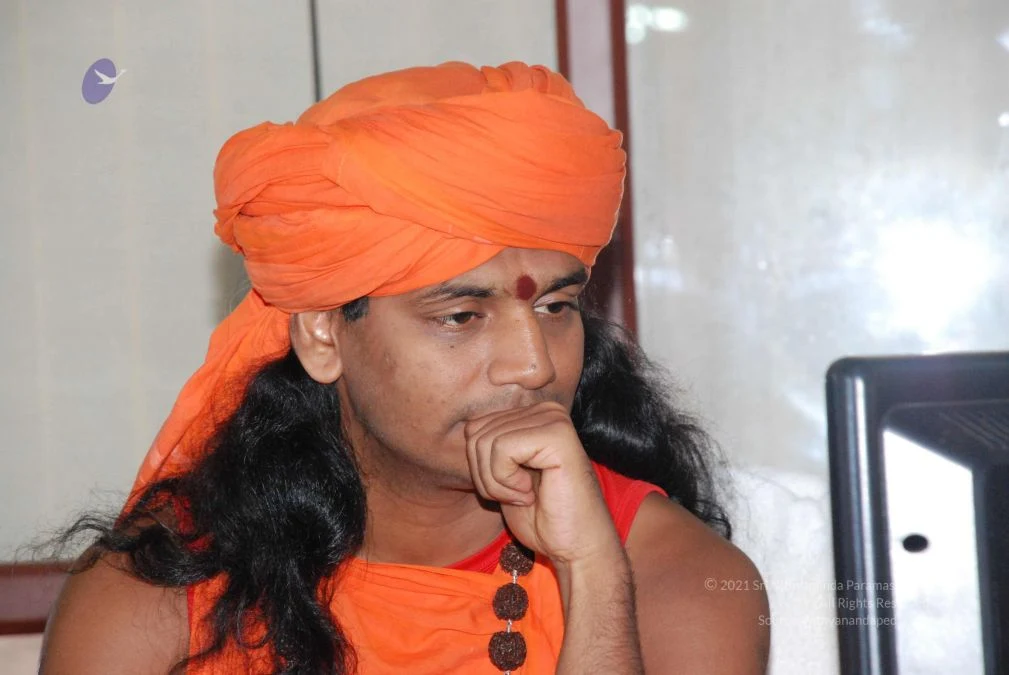
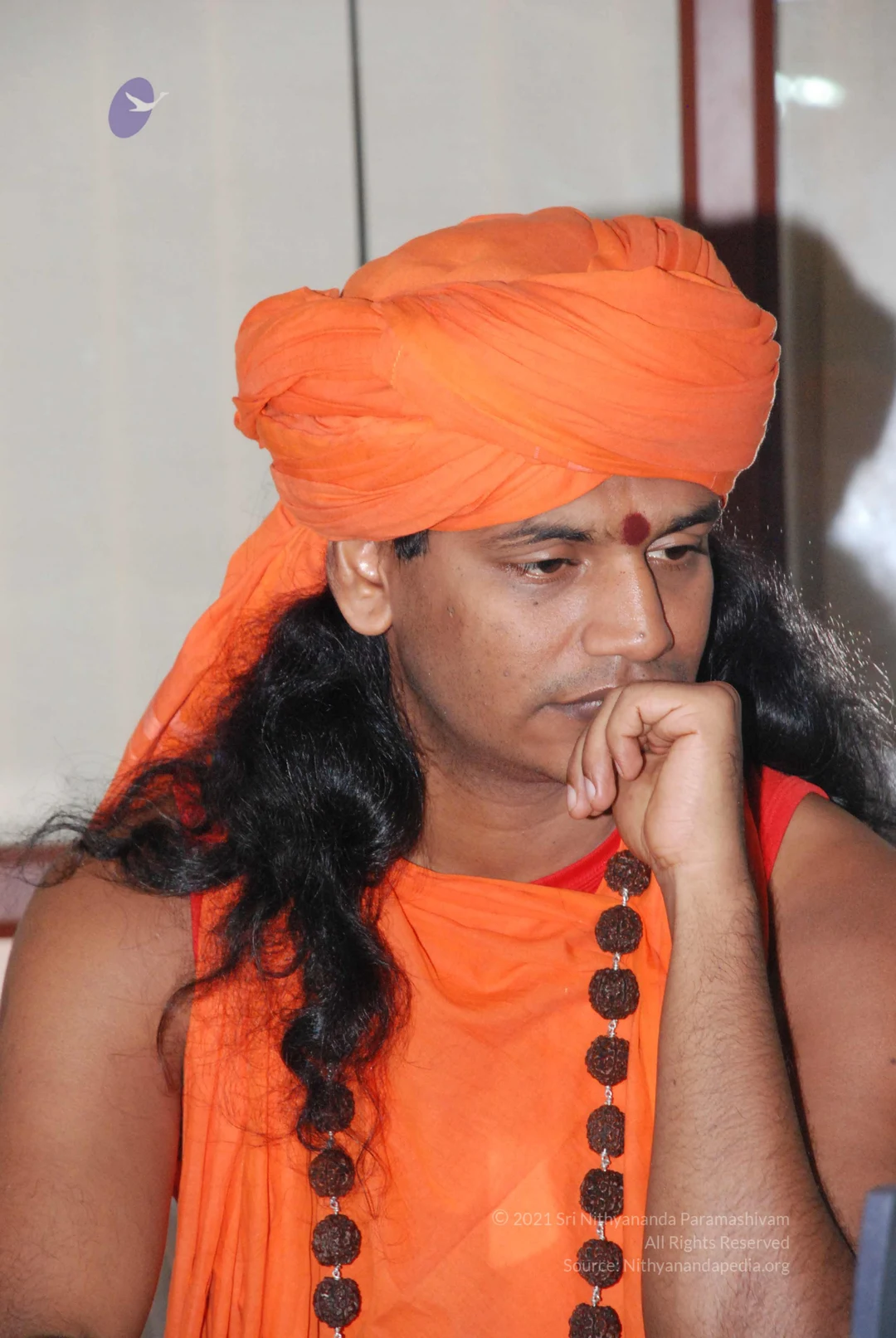
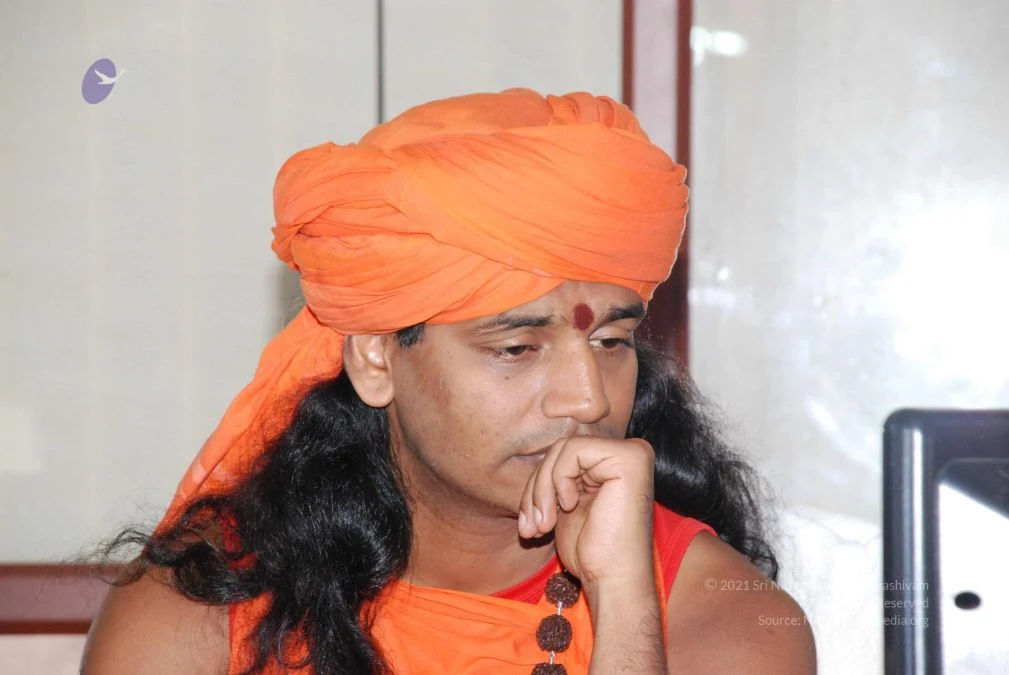
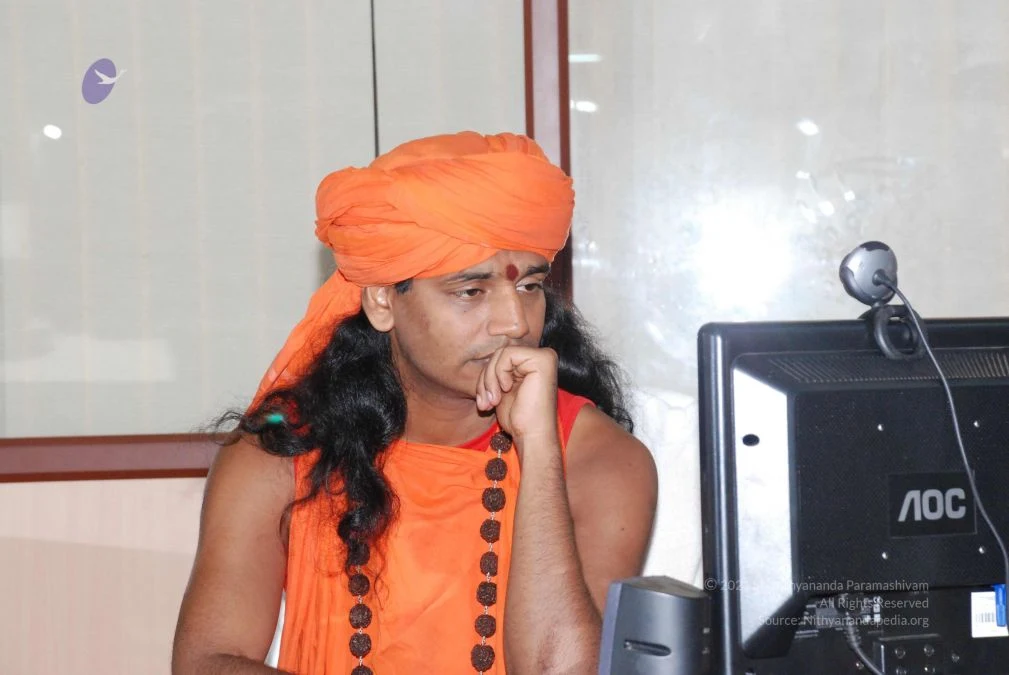
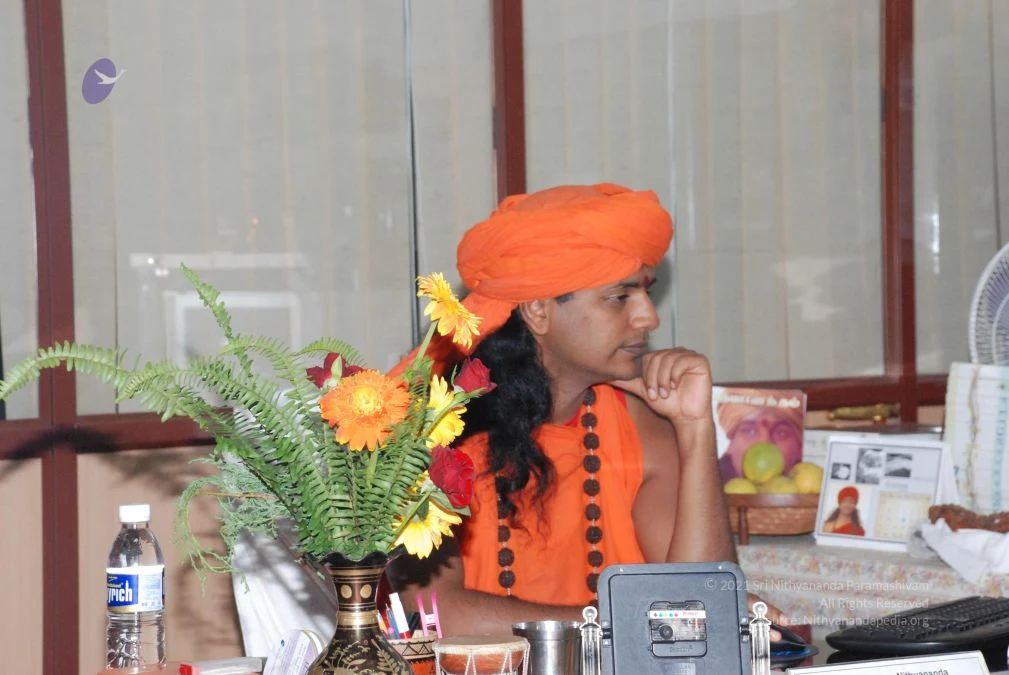
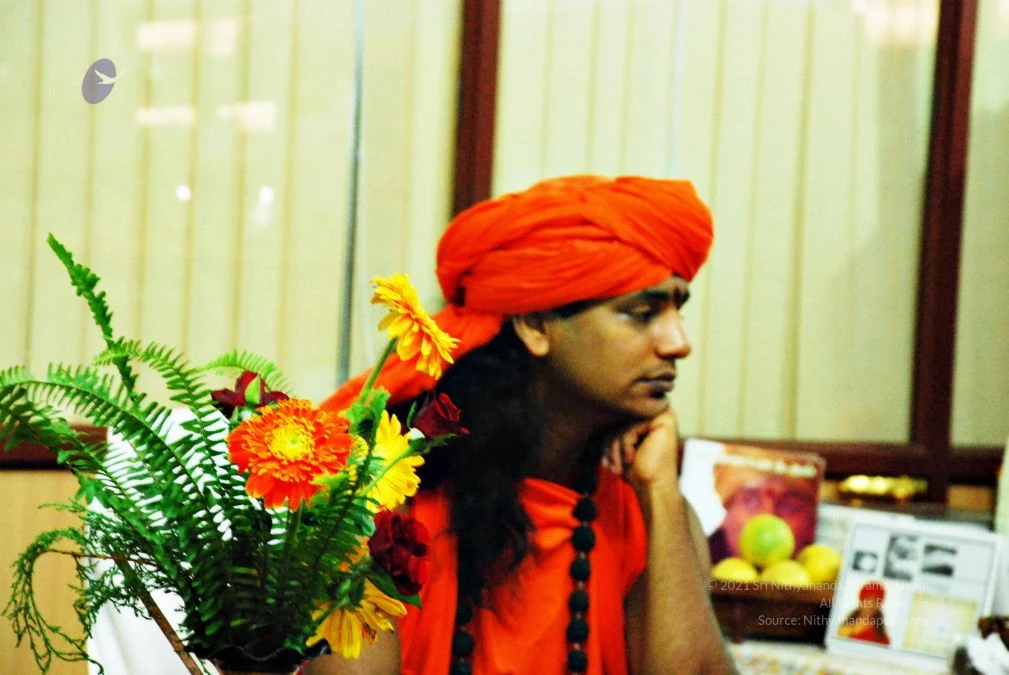
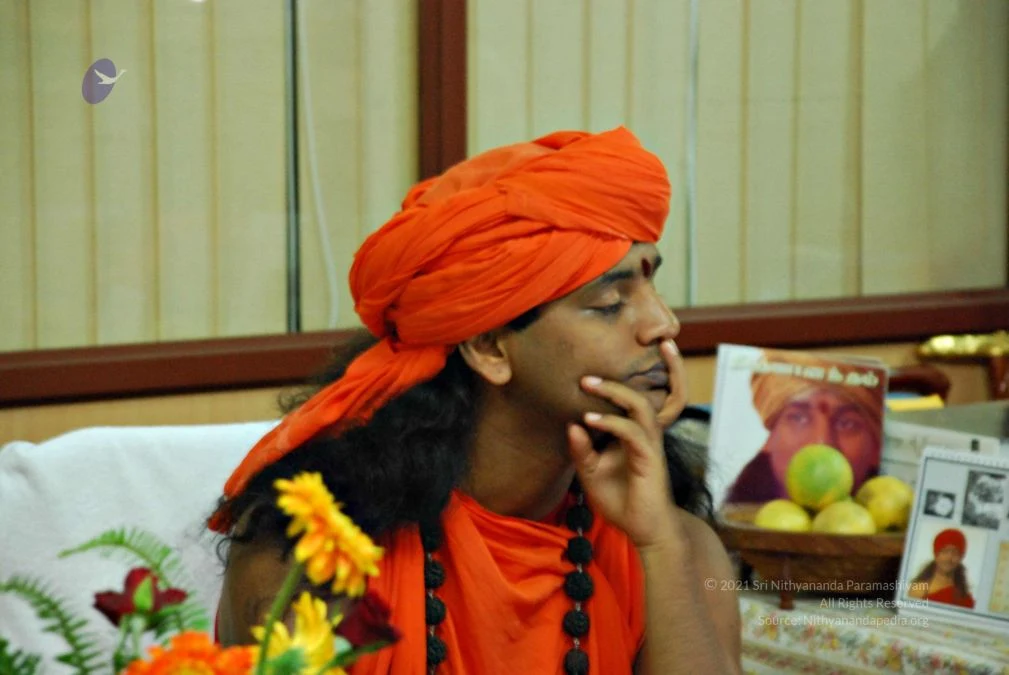
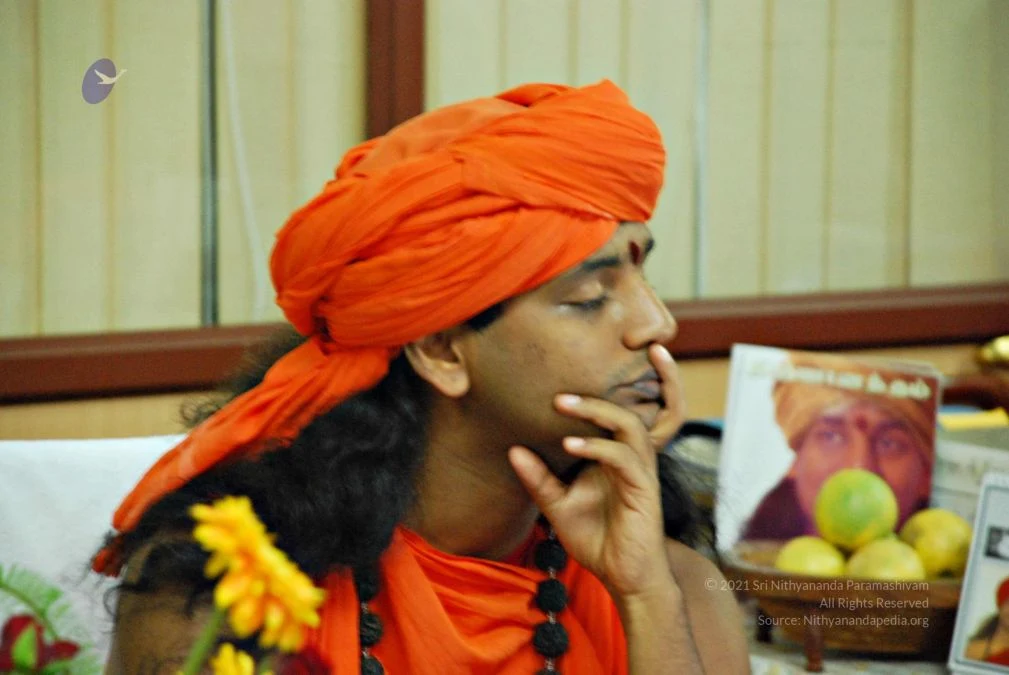
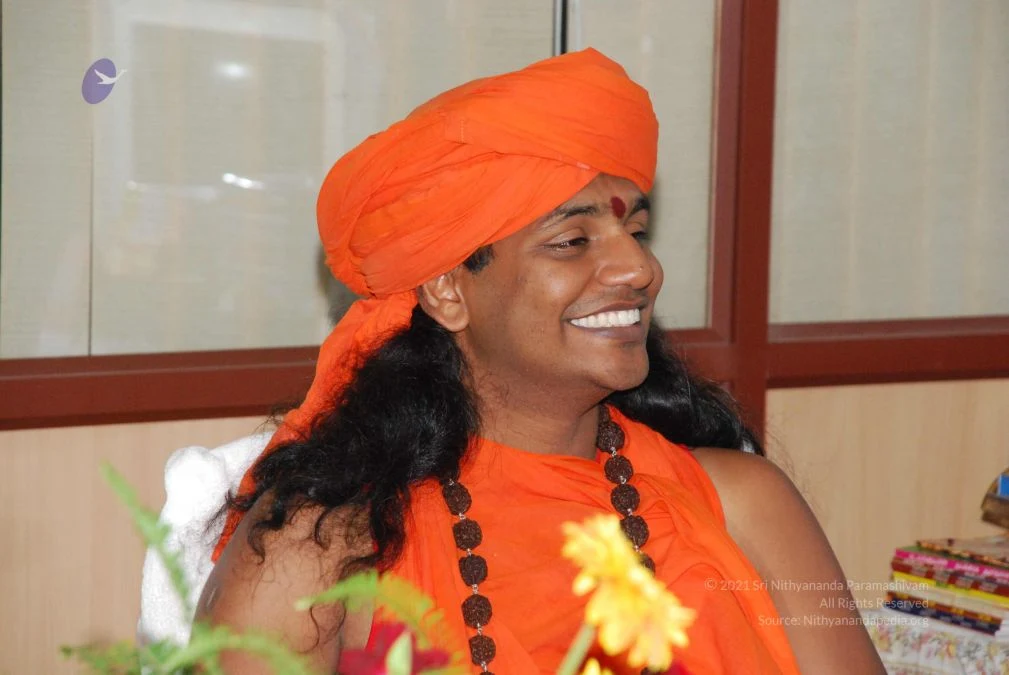
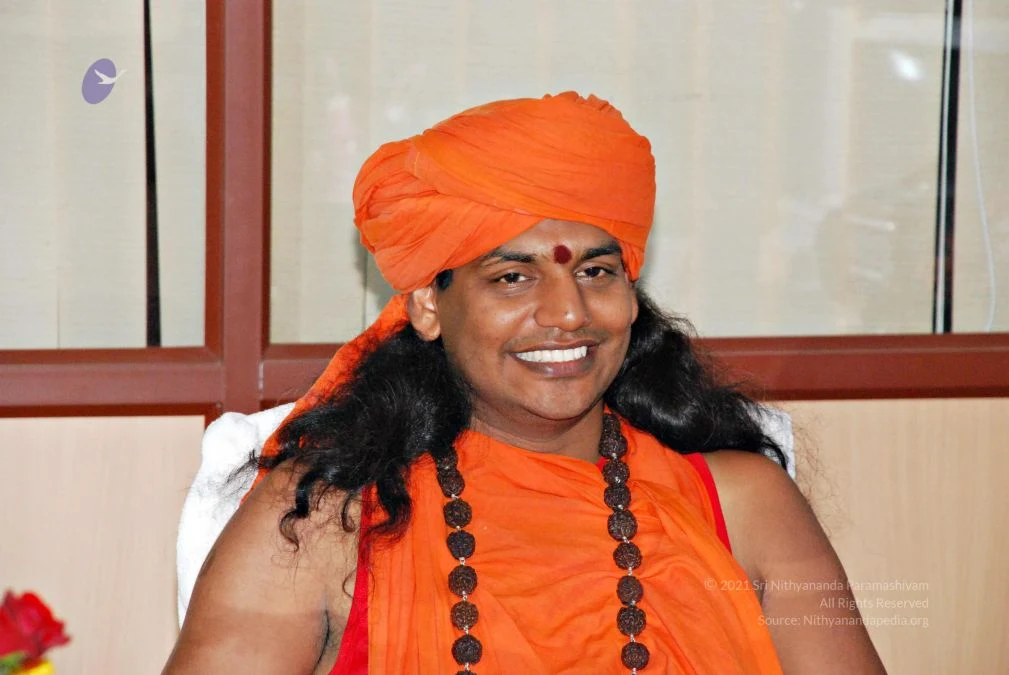
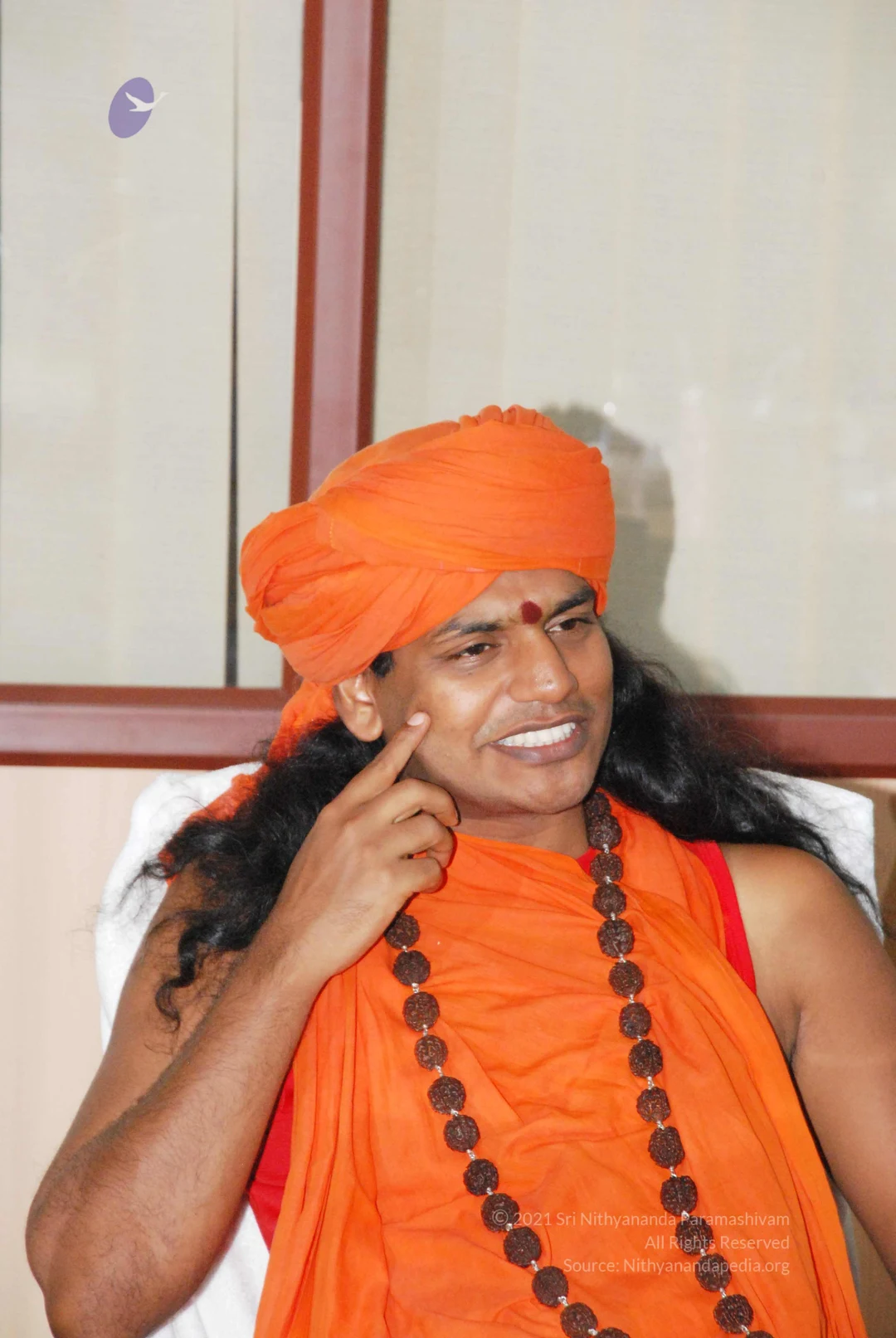
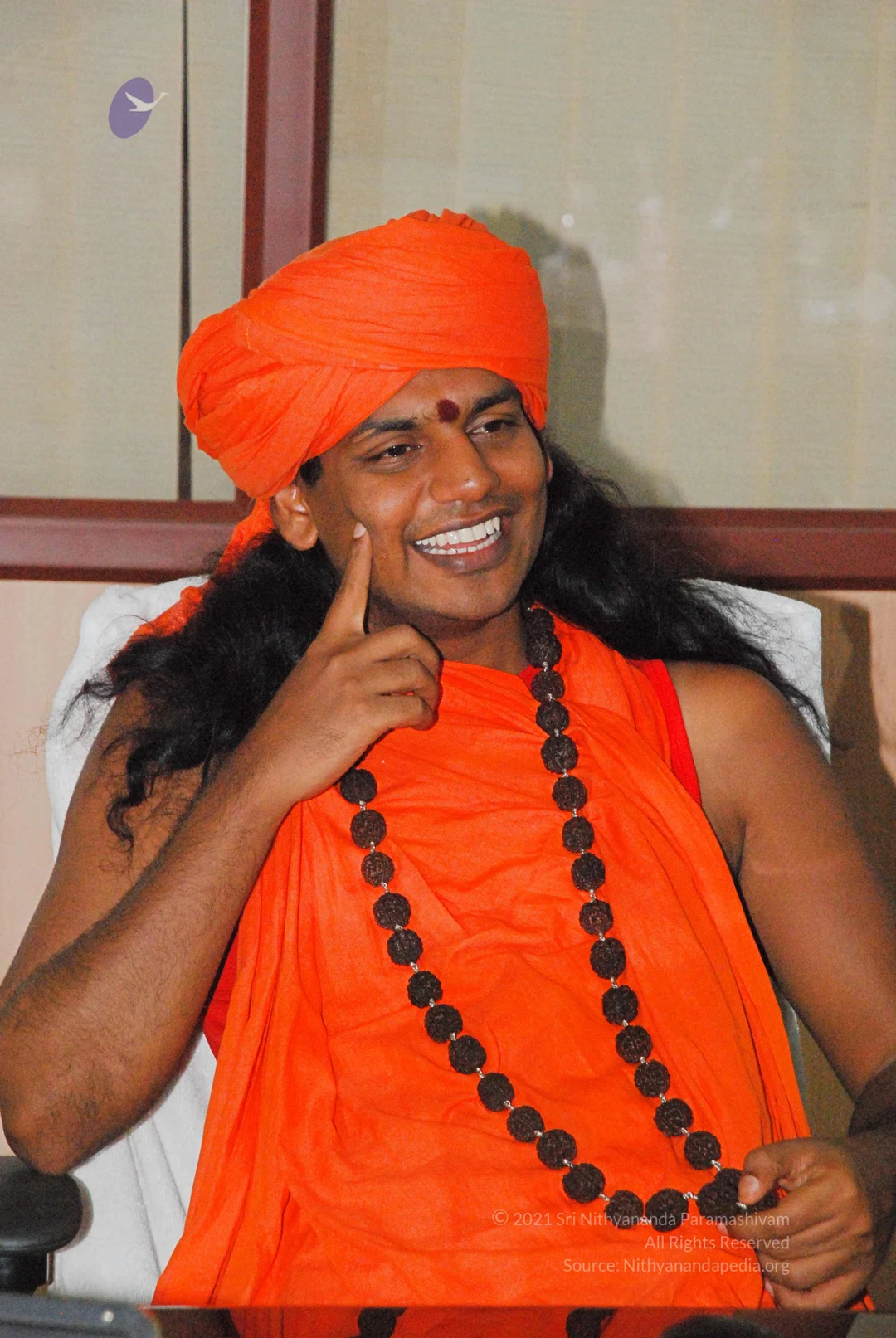
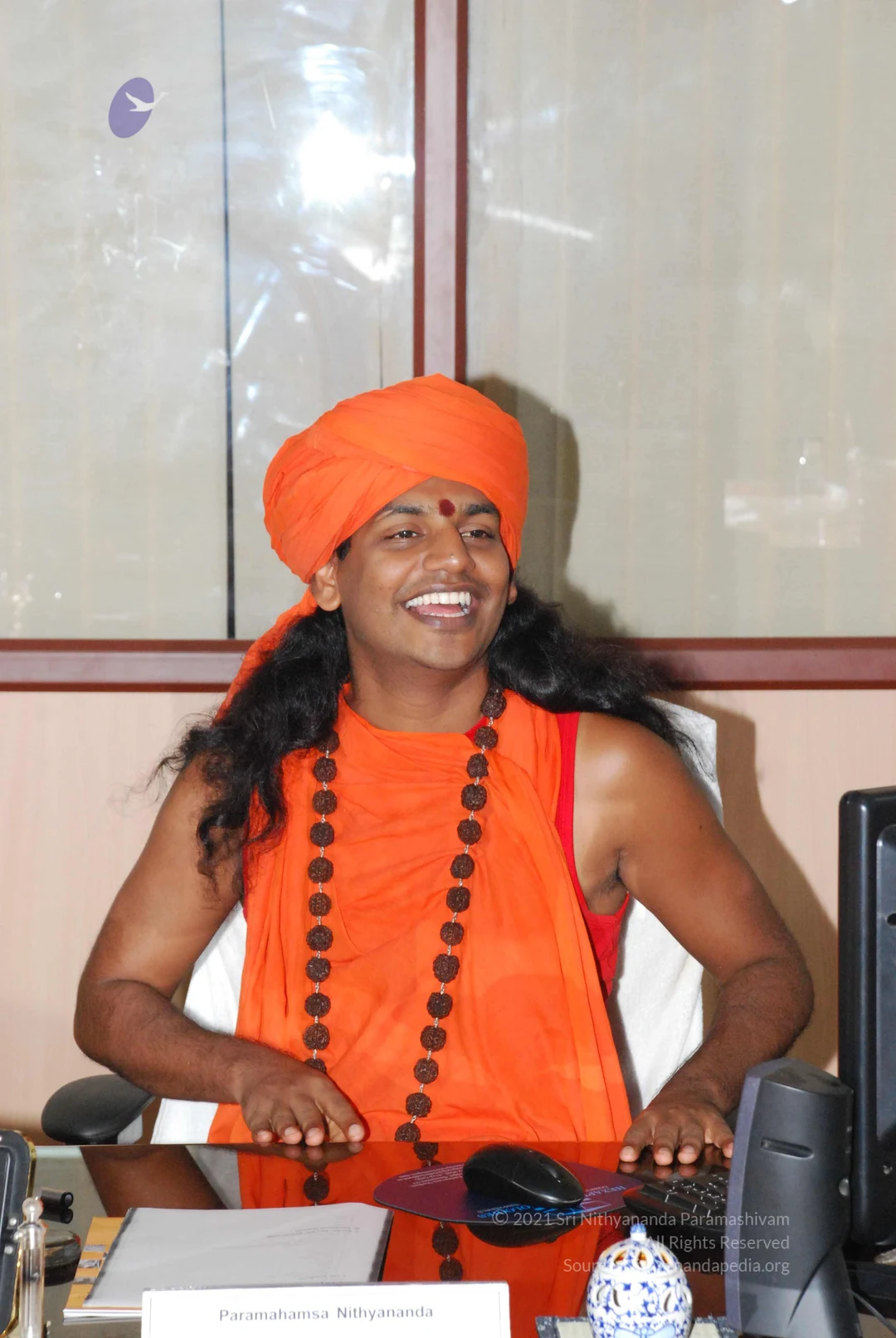
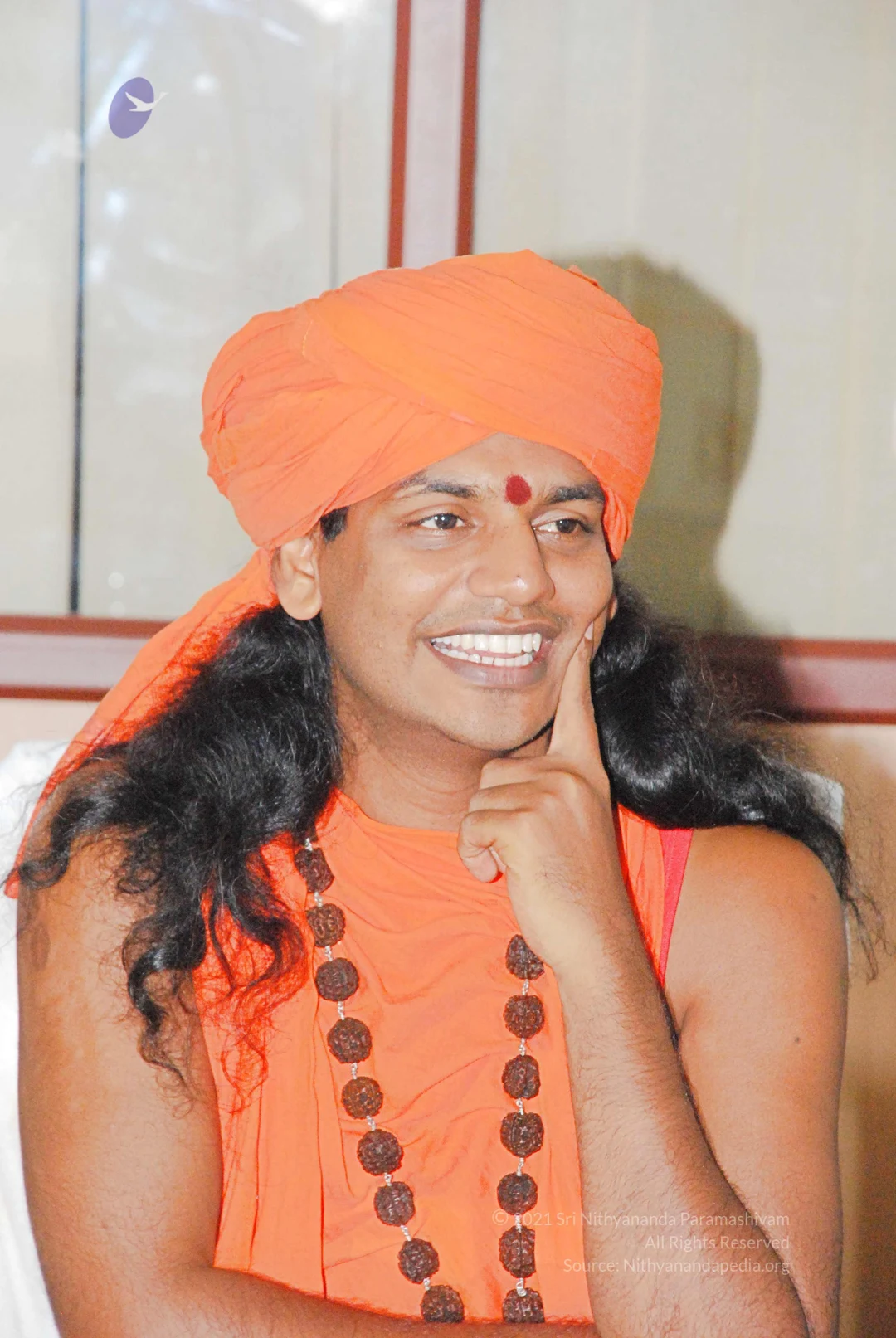
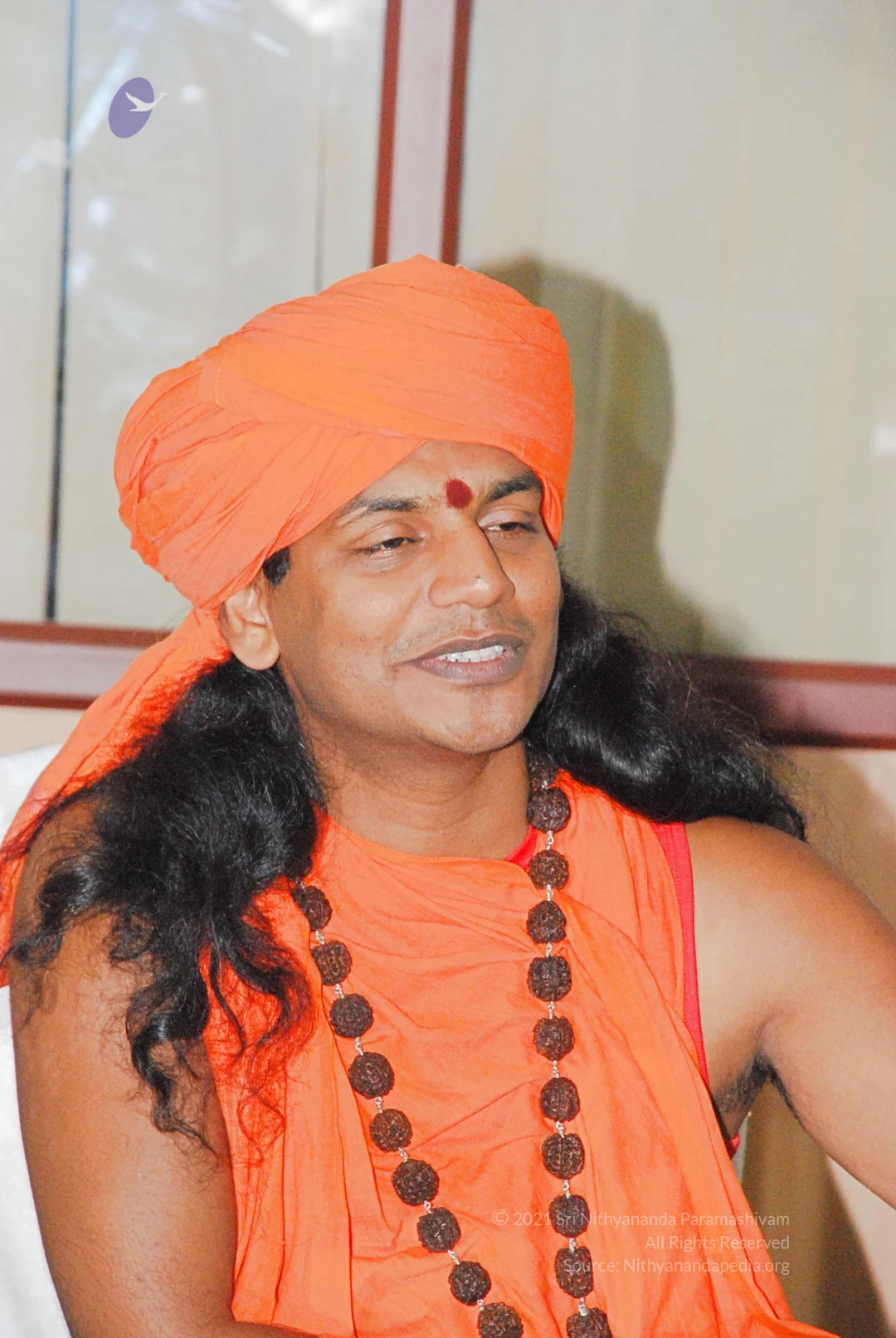
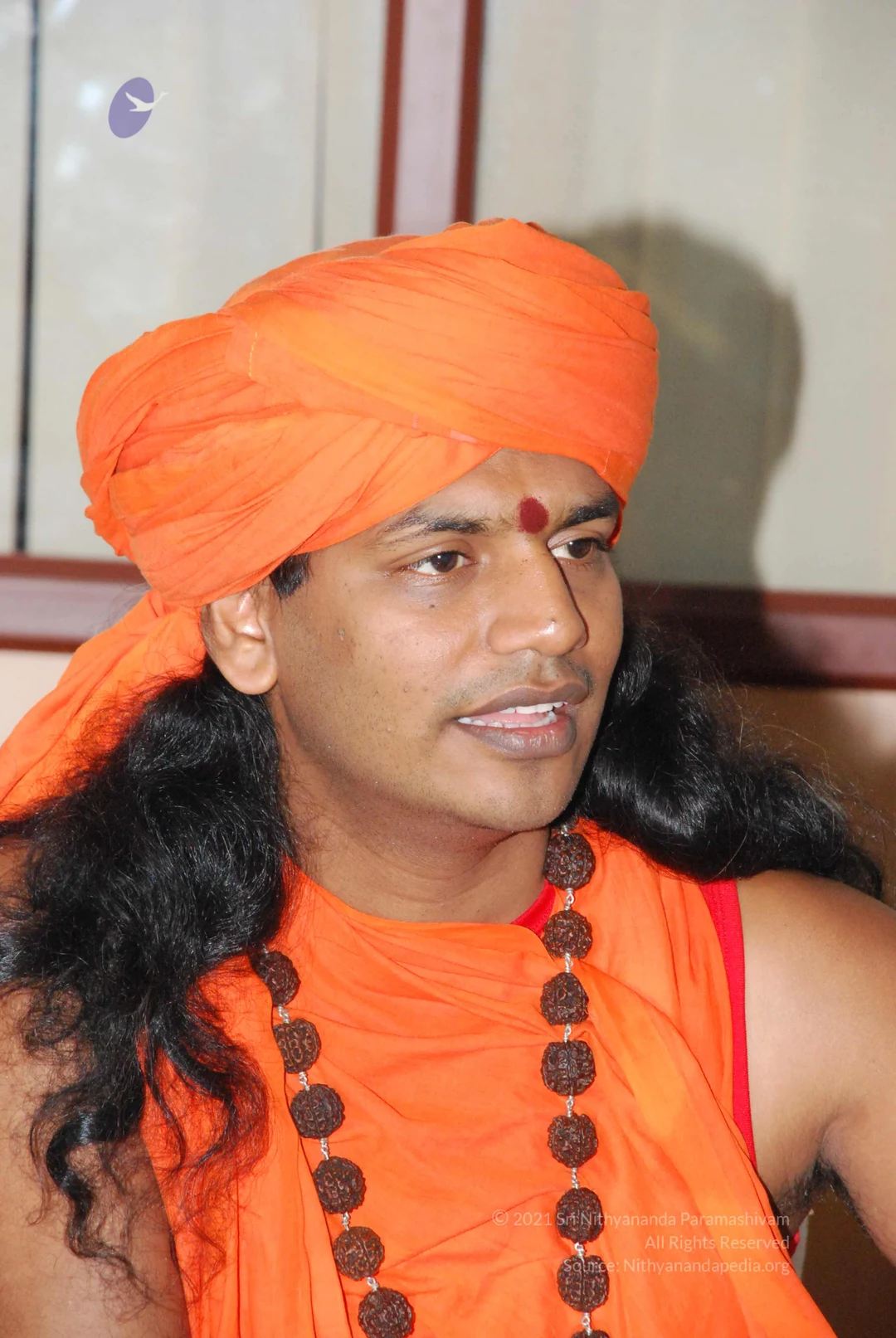
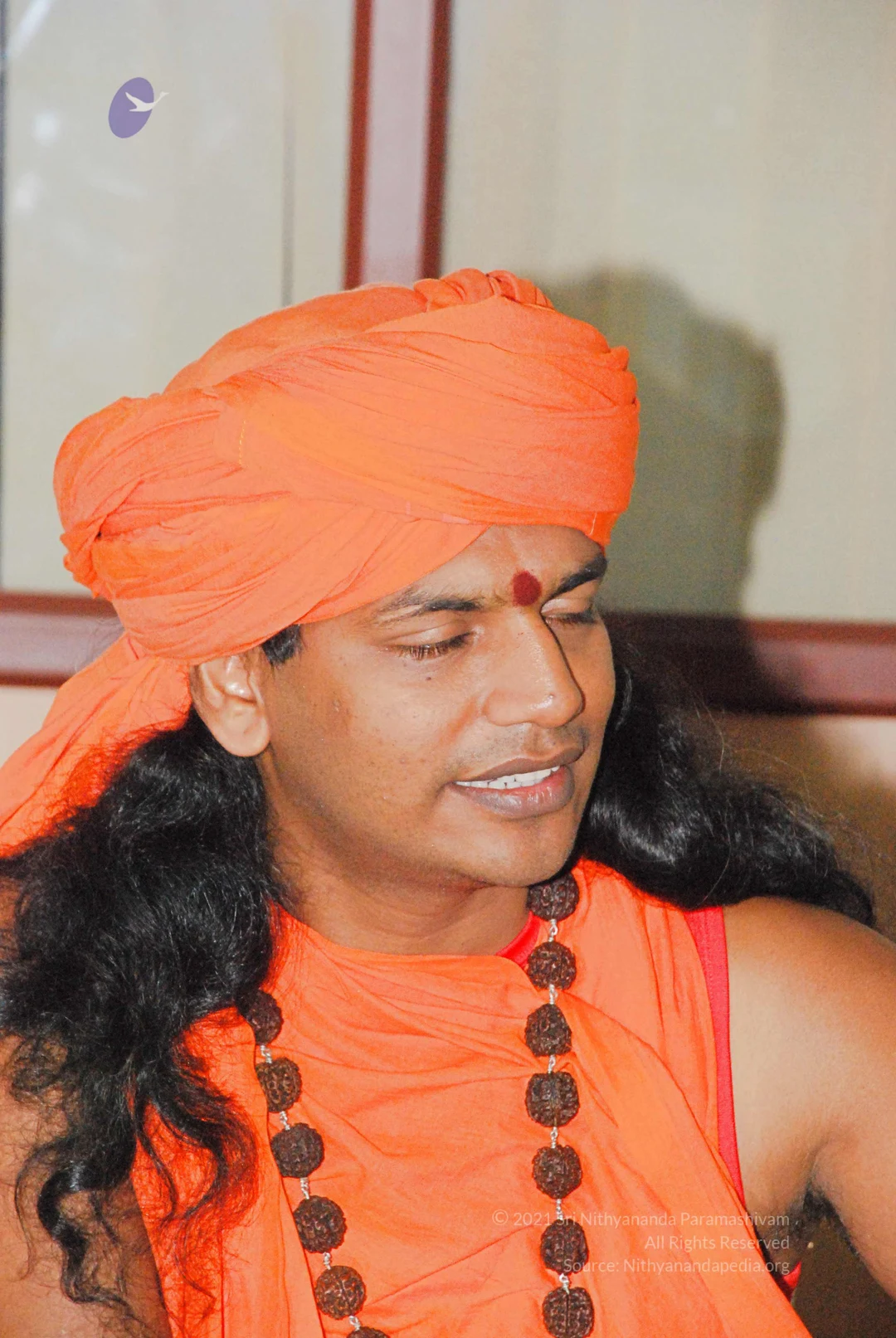
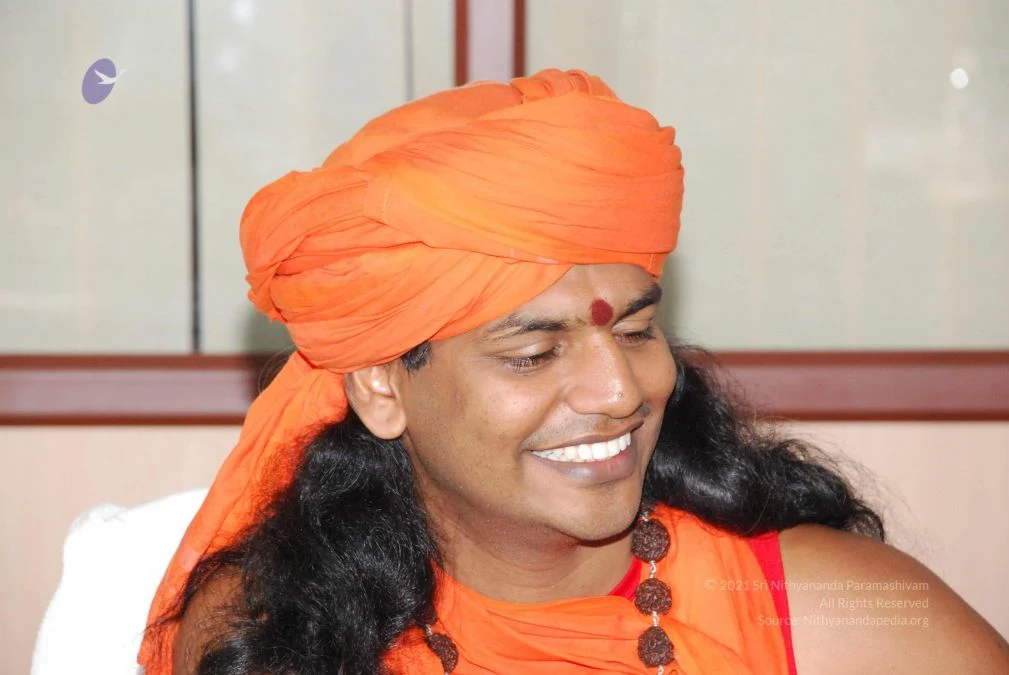
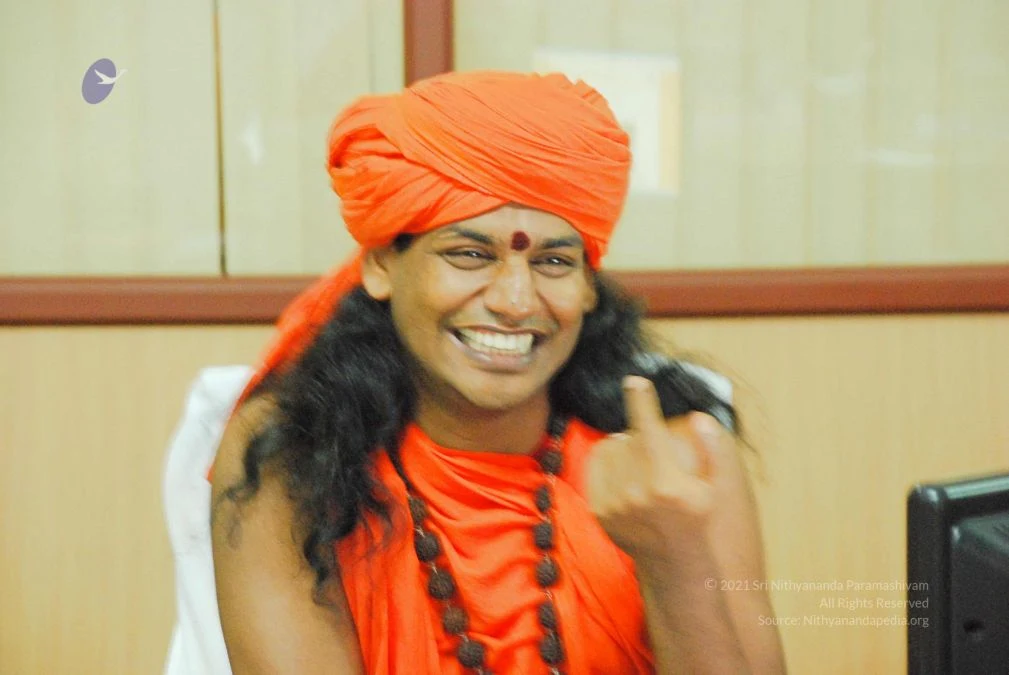
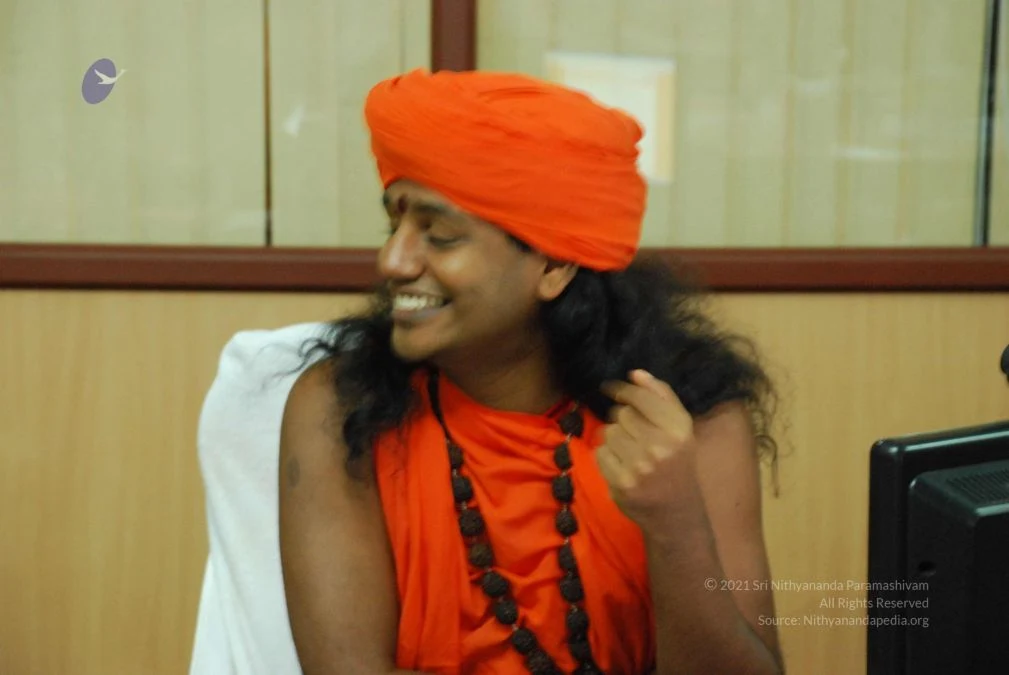
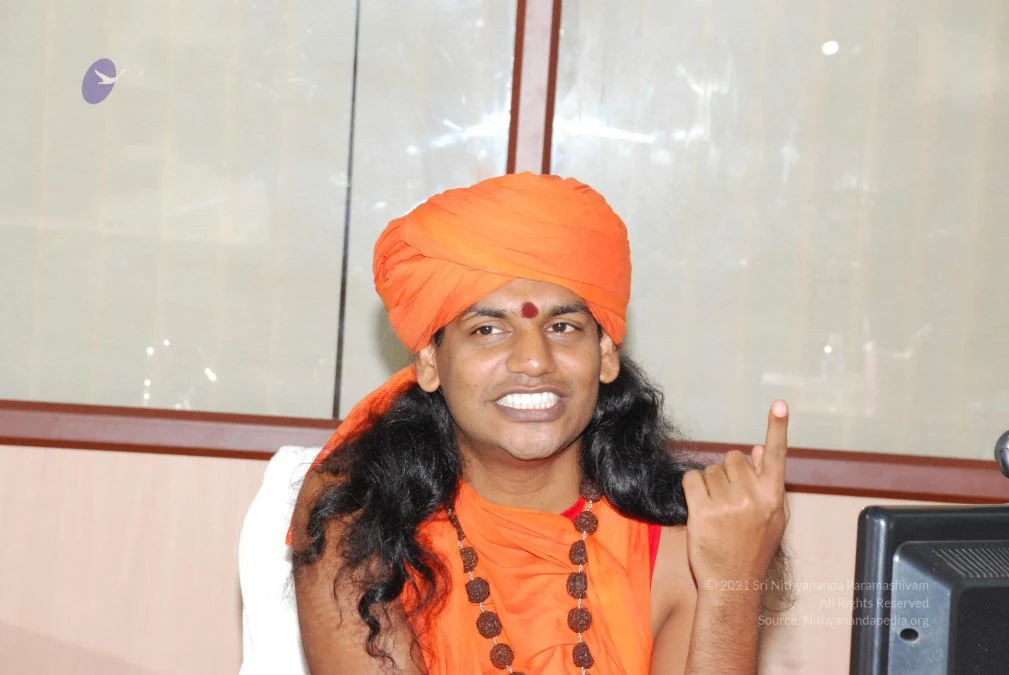
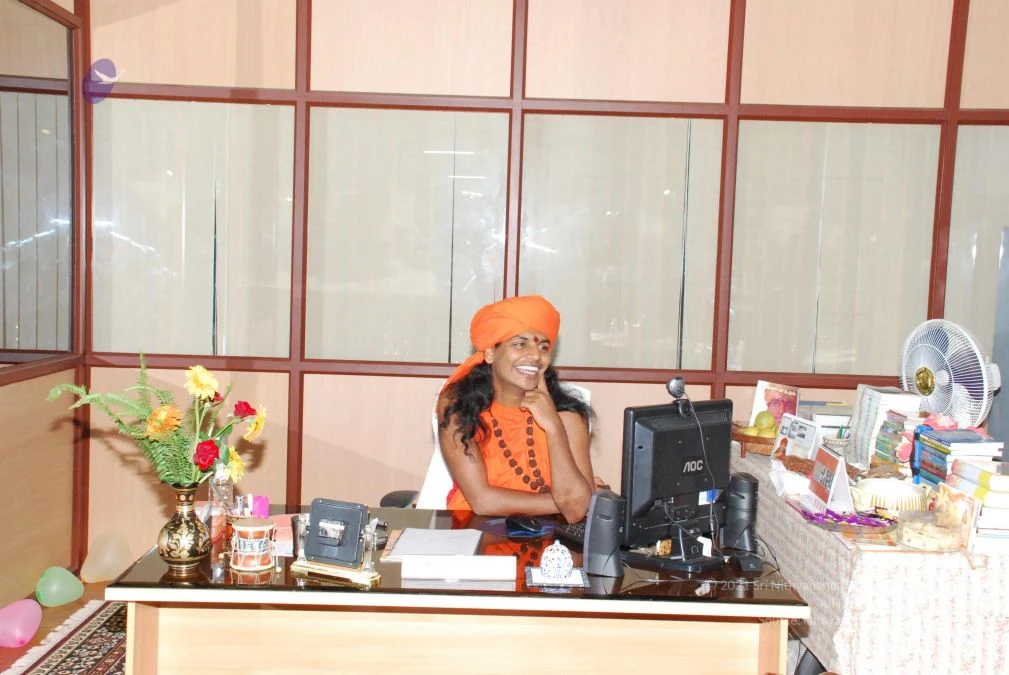
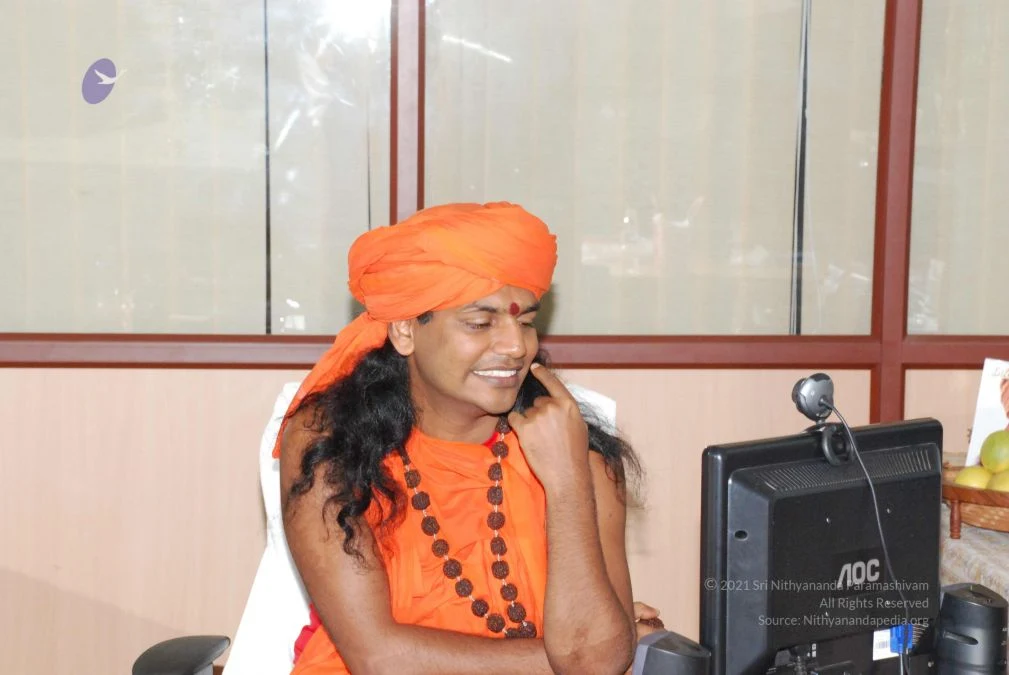
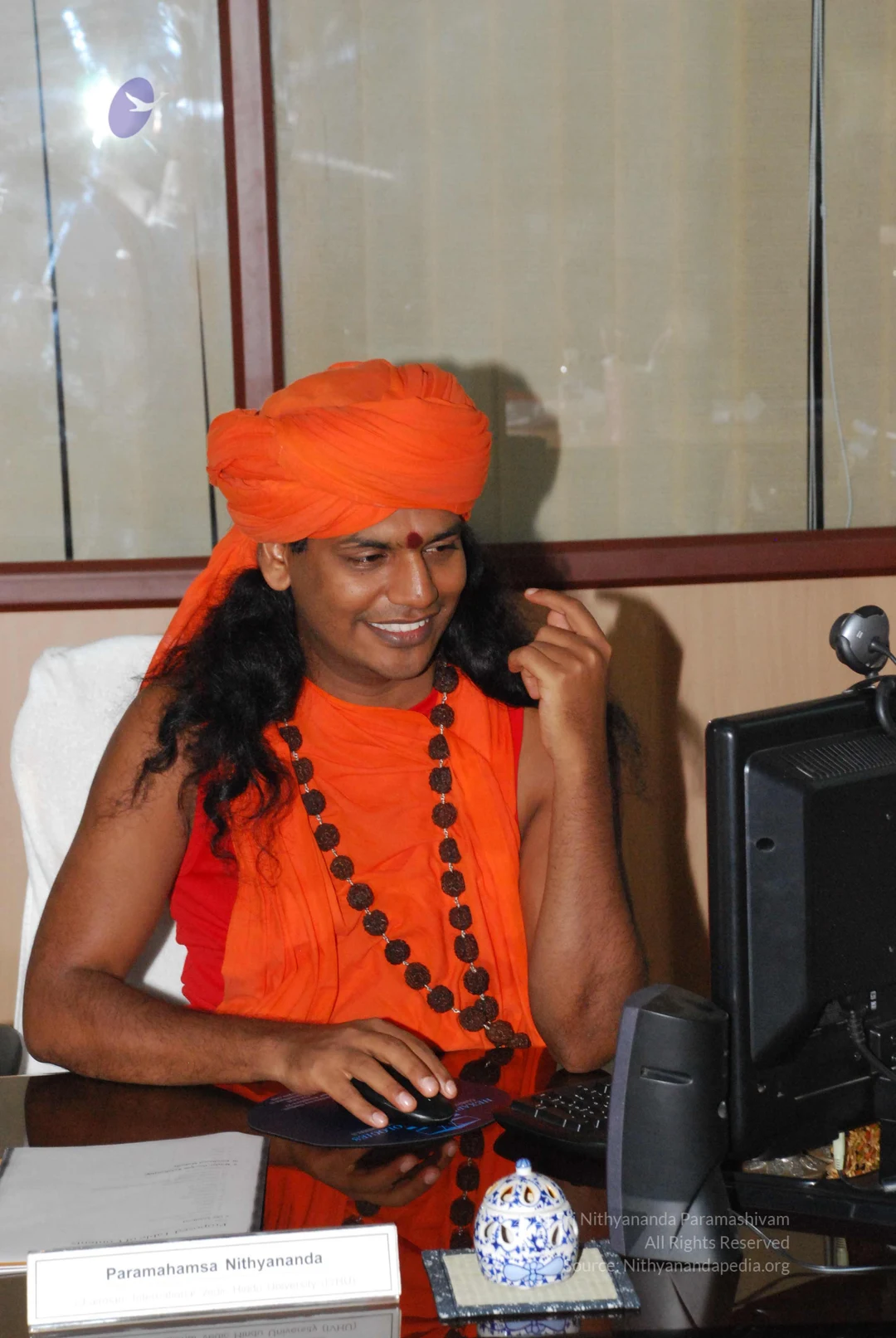
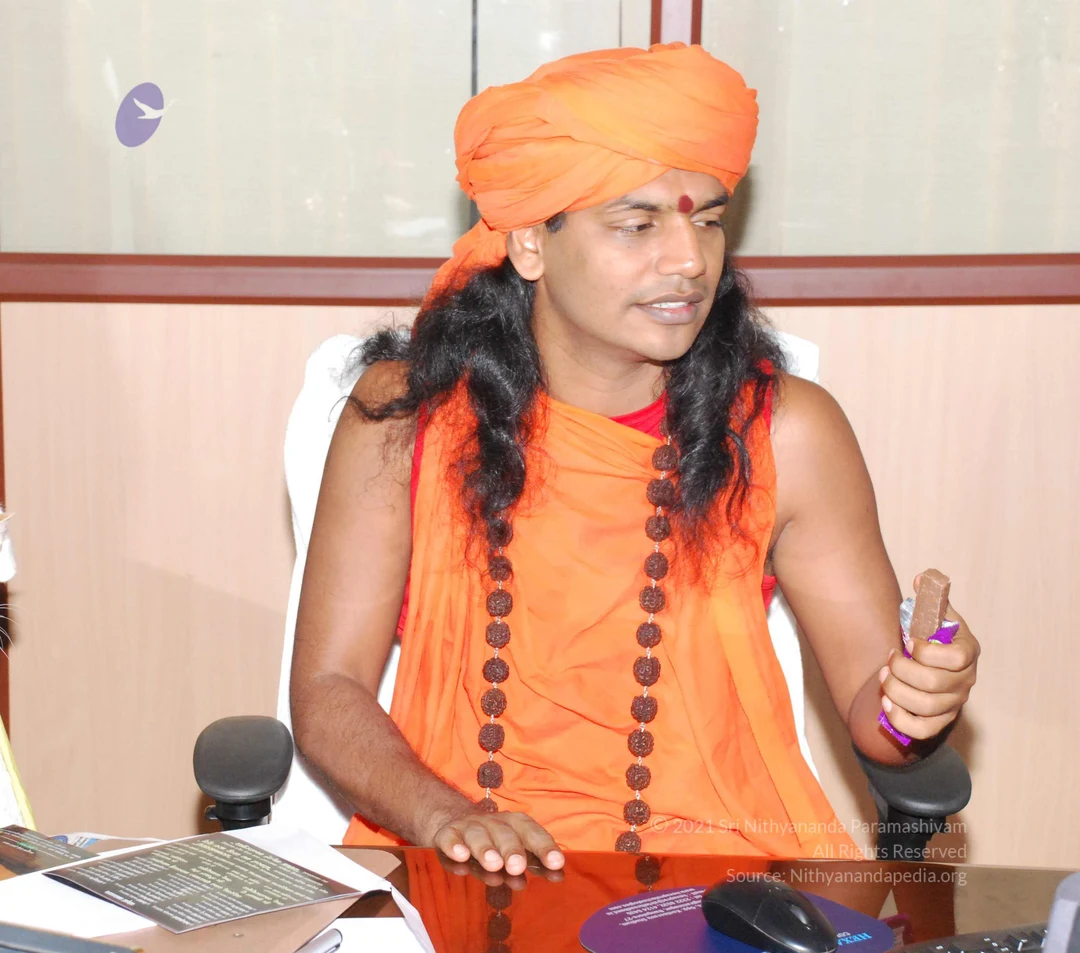
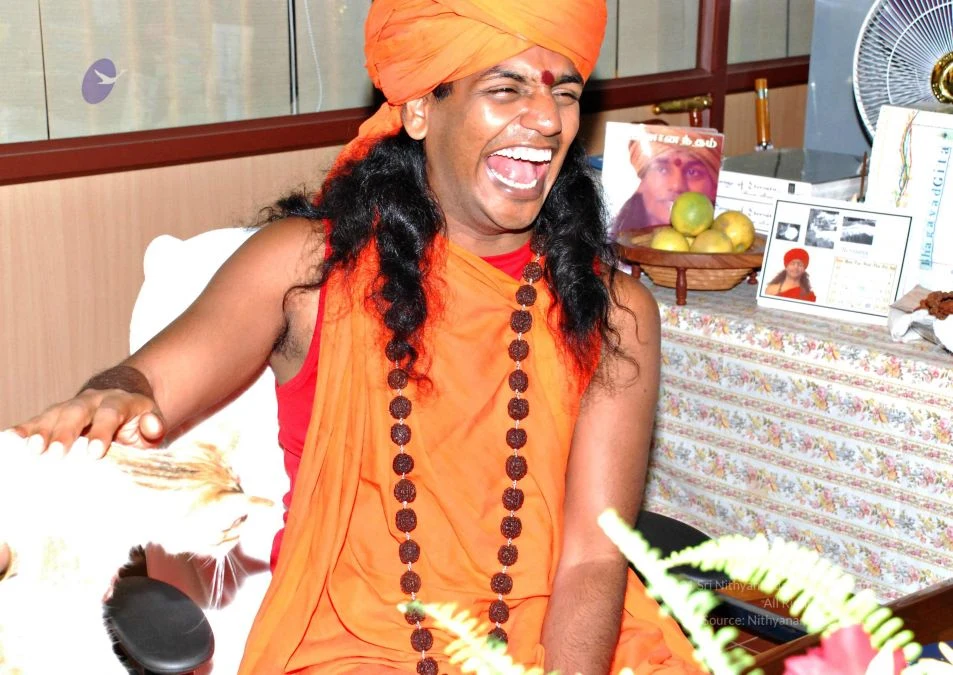
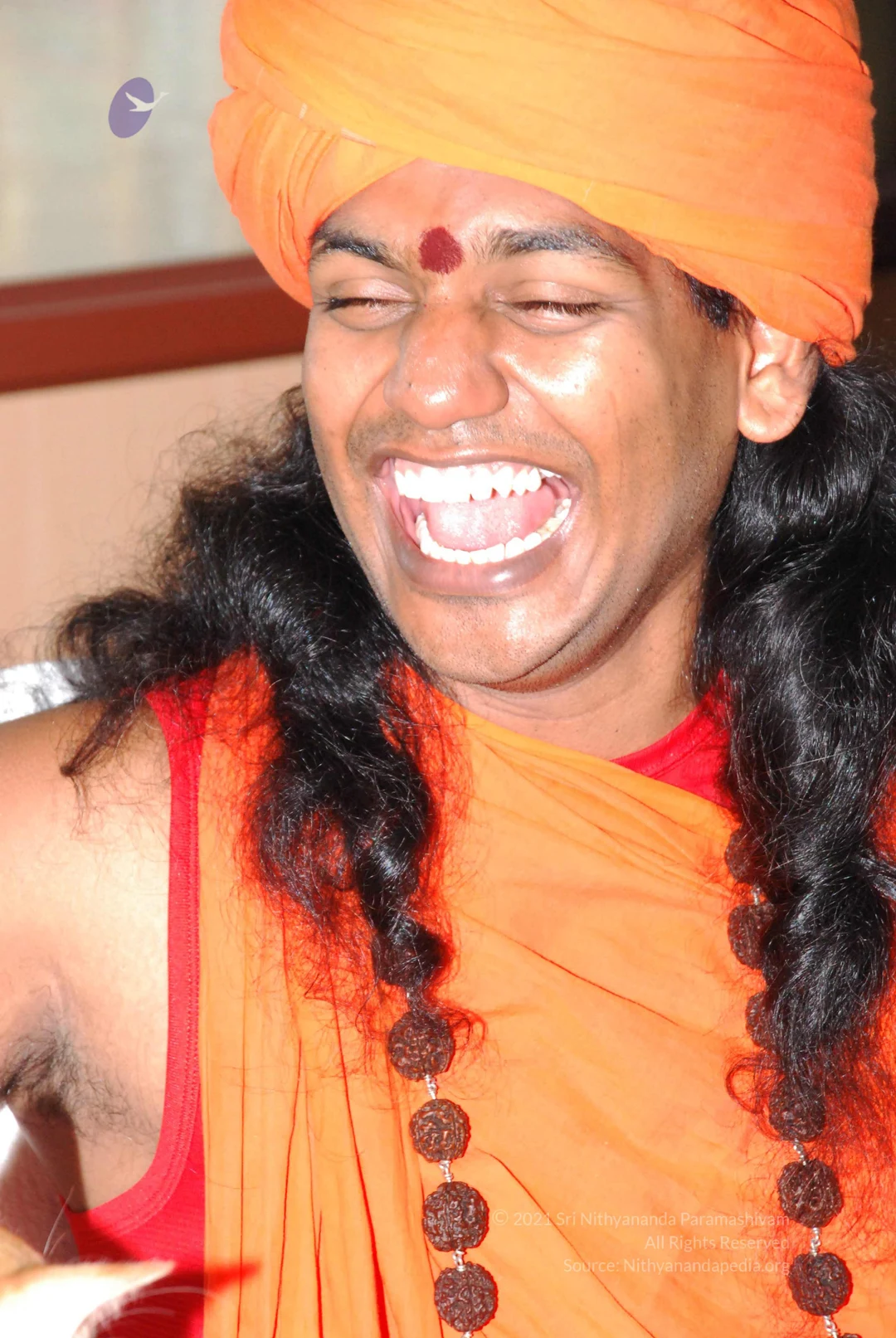
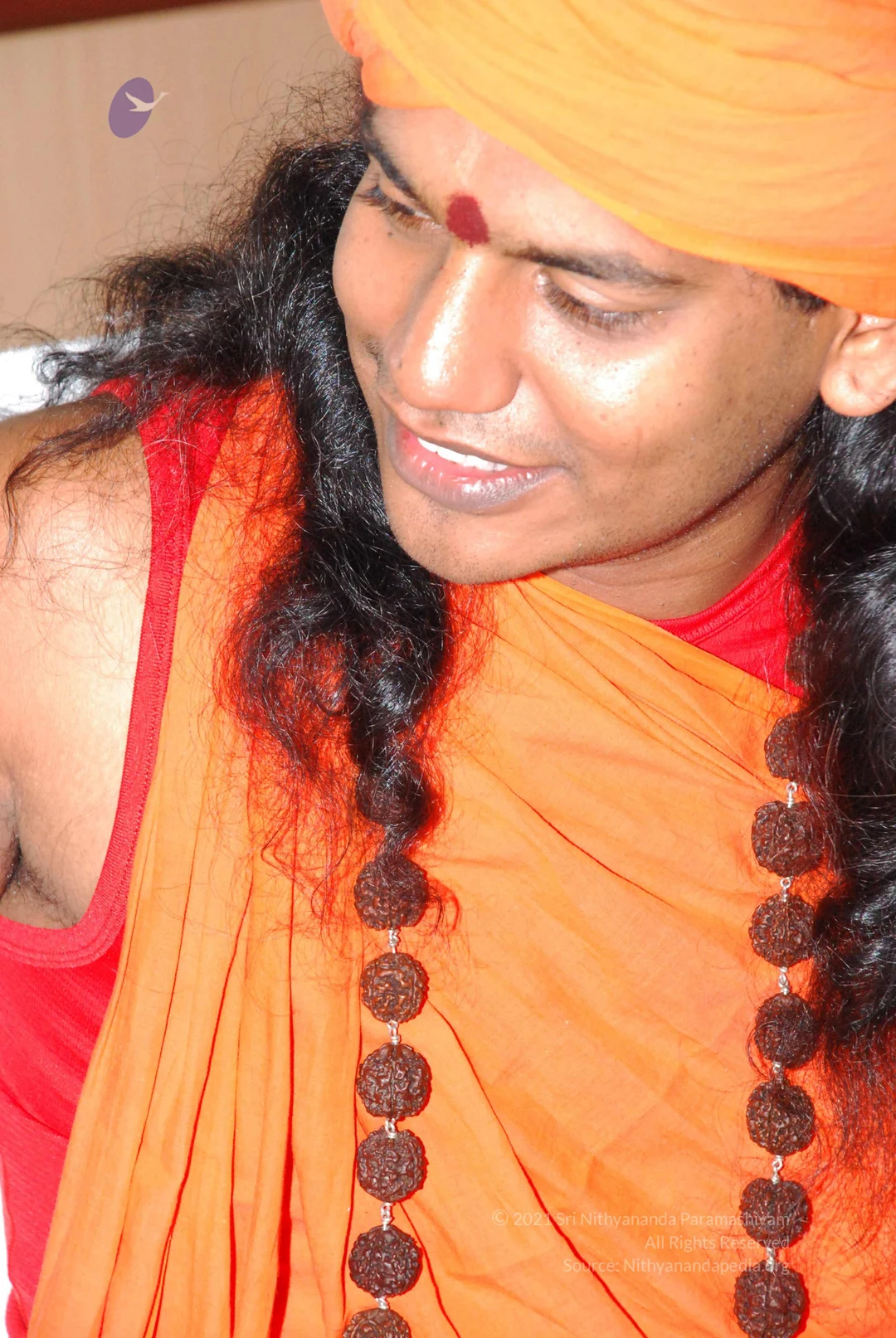
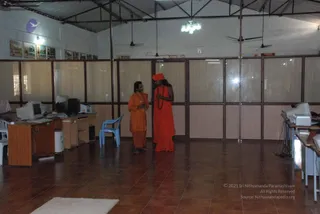
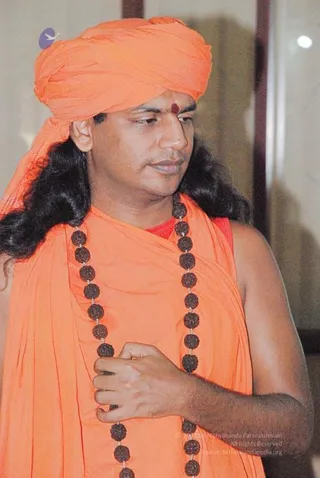
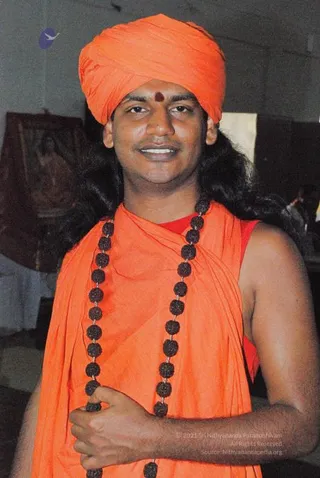
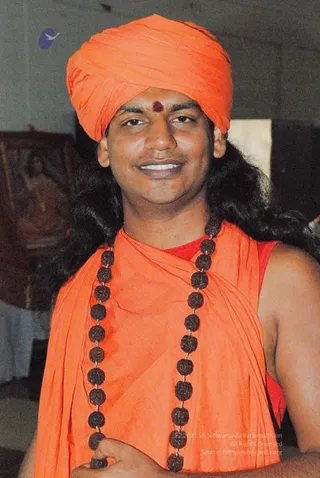
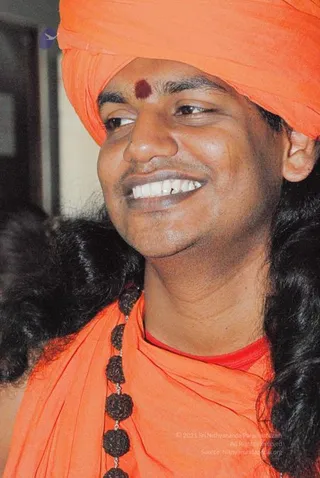
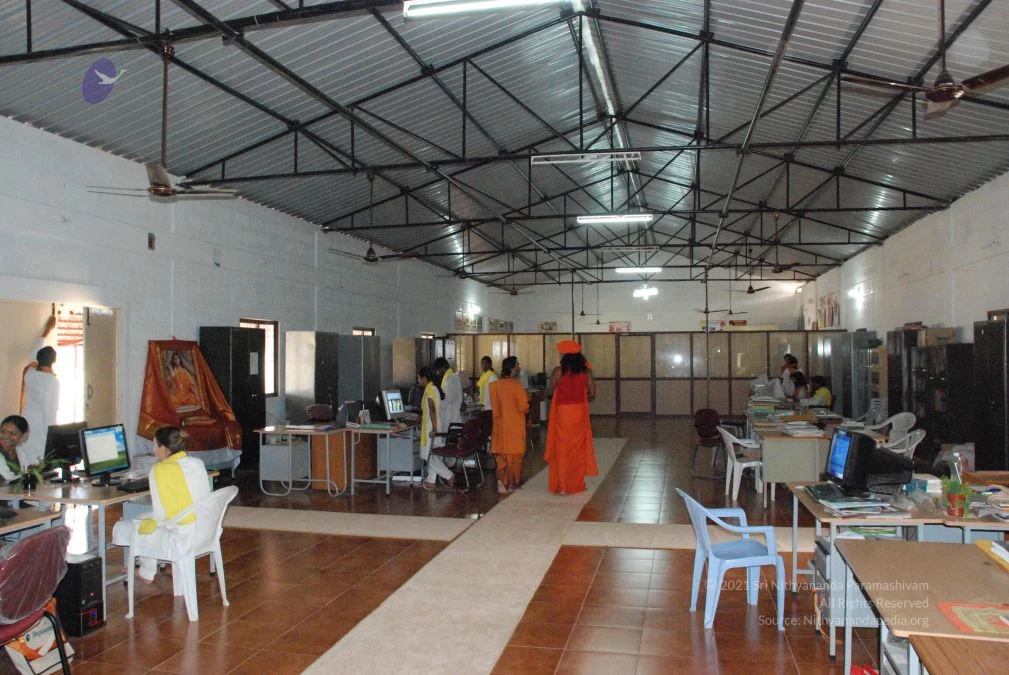
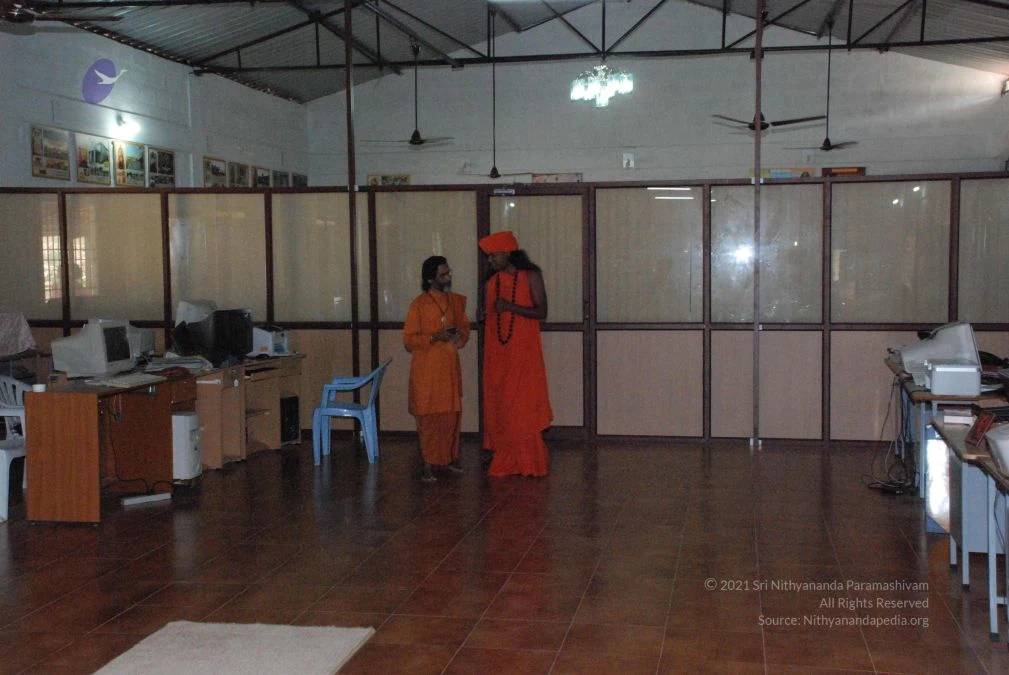
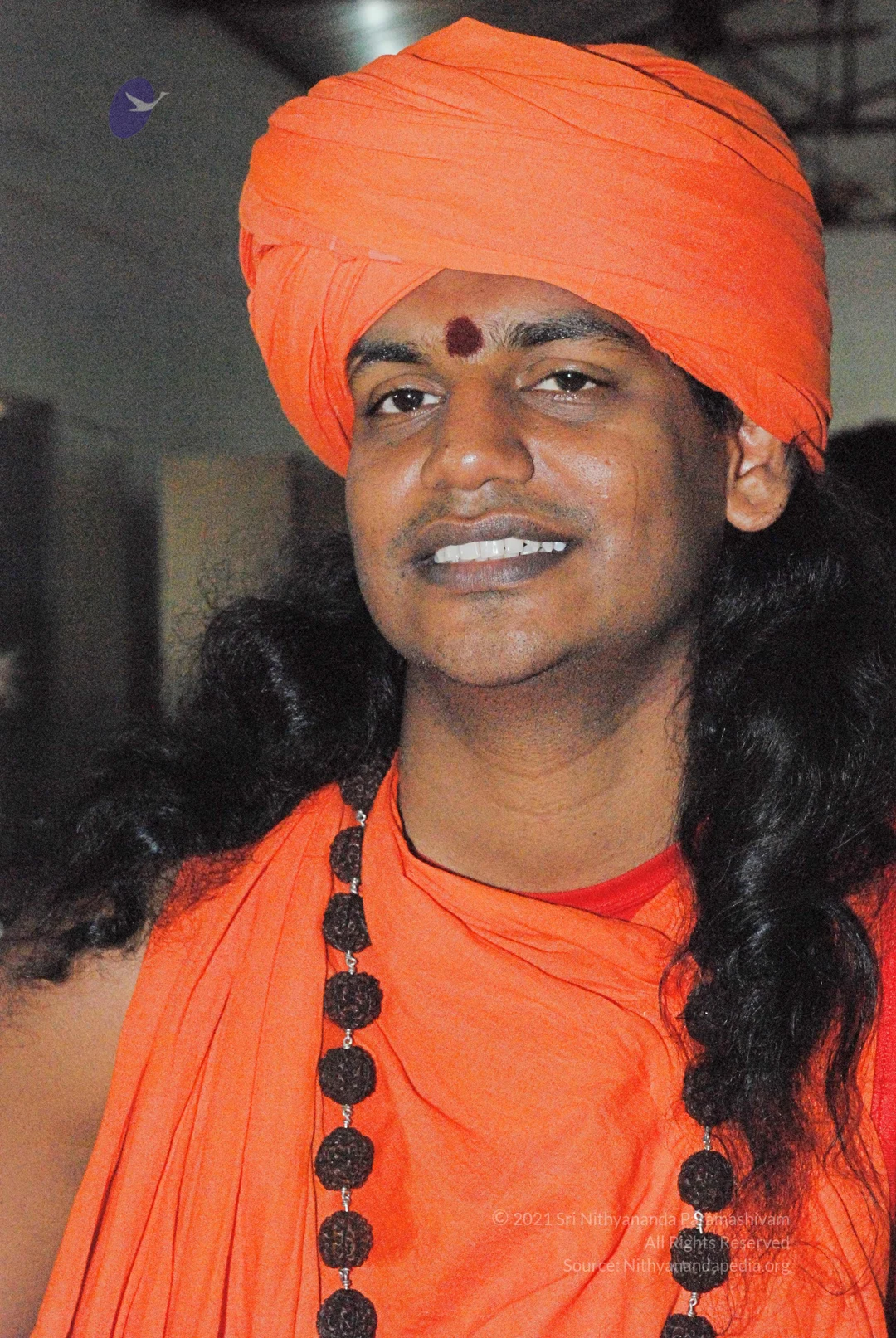
SPH at his desk in the mission office in Aadikailaasa, Bengaluru, India
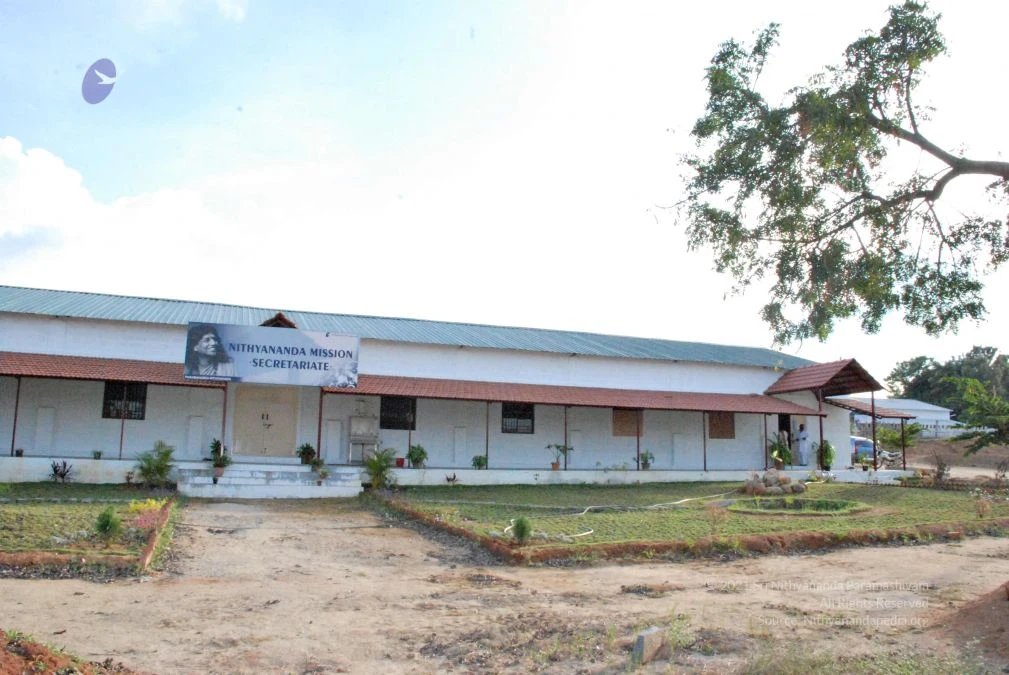
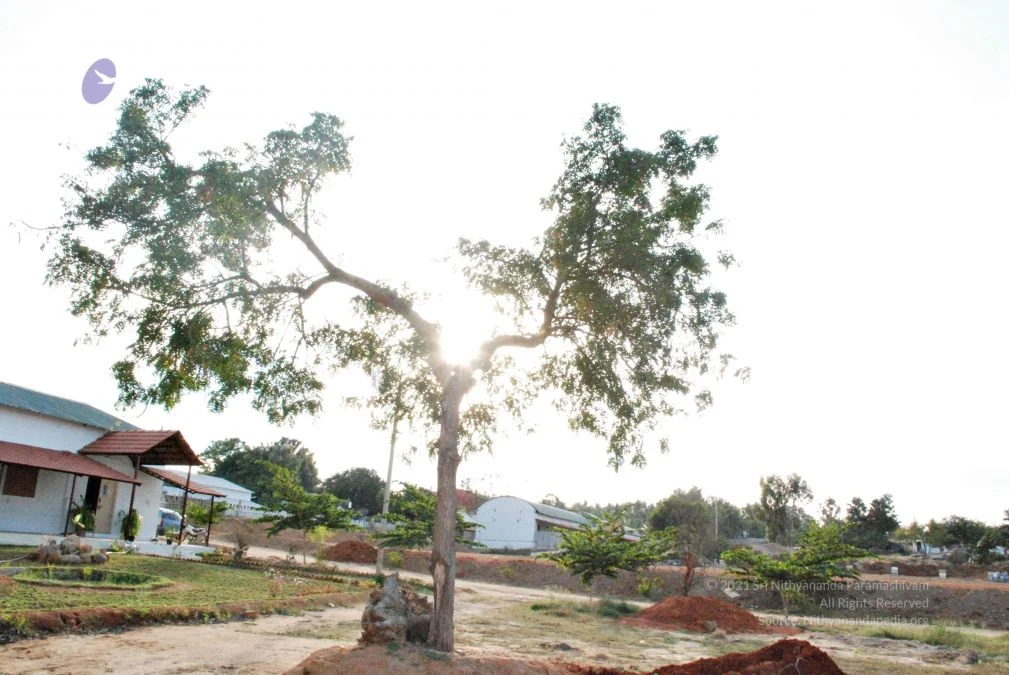
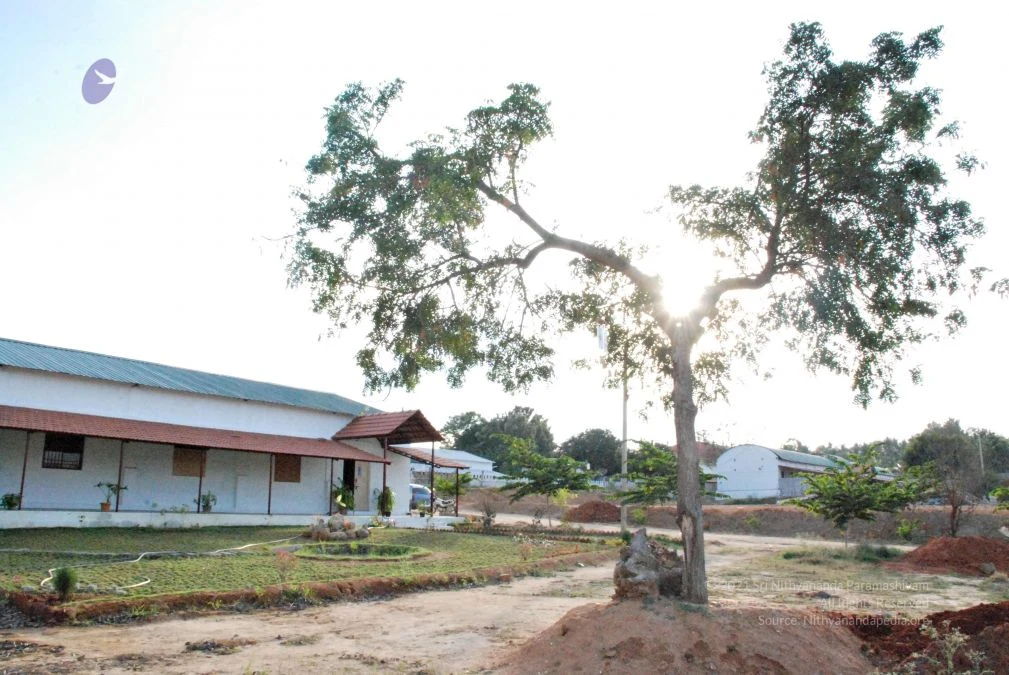
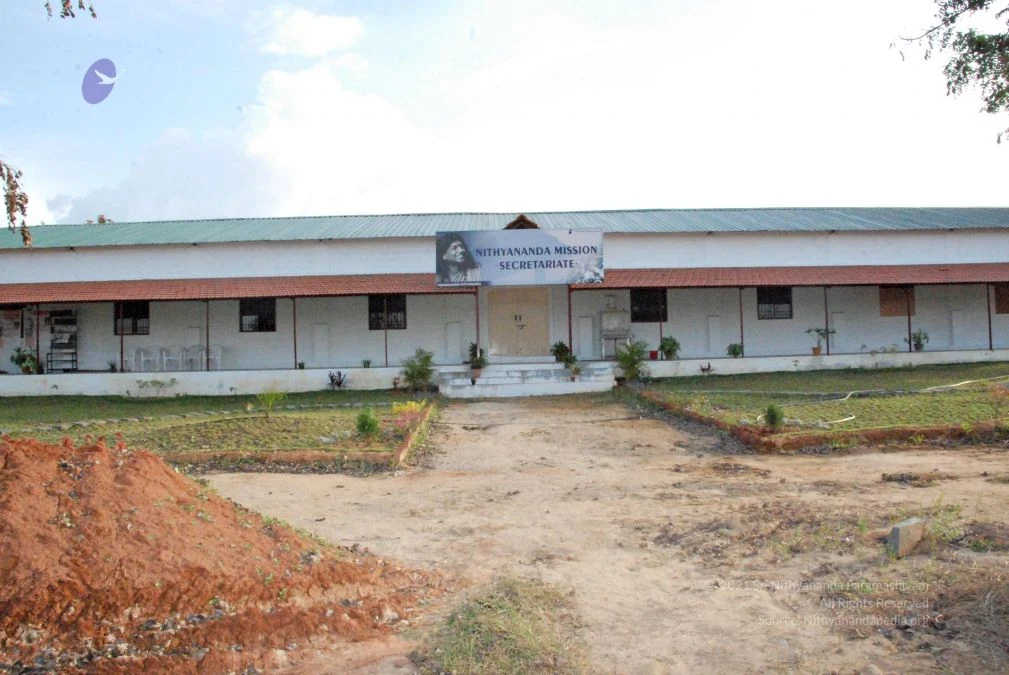
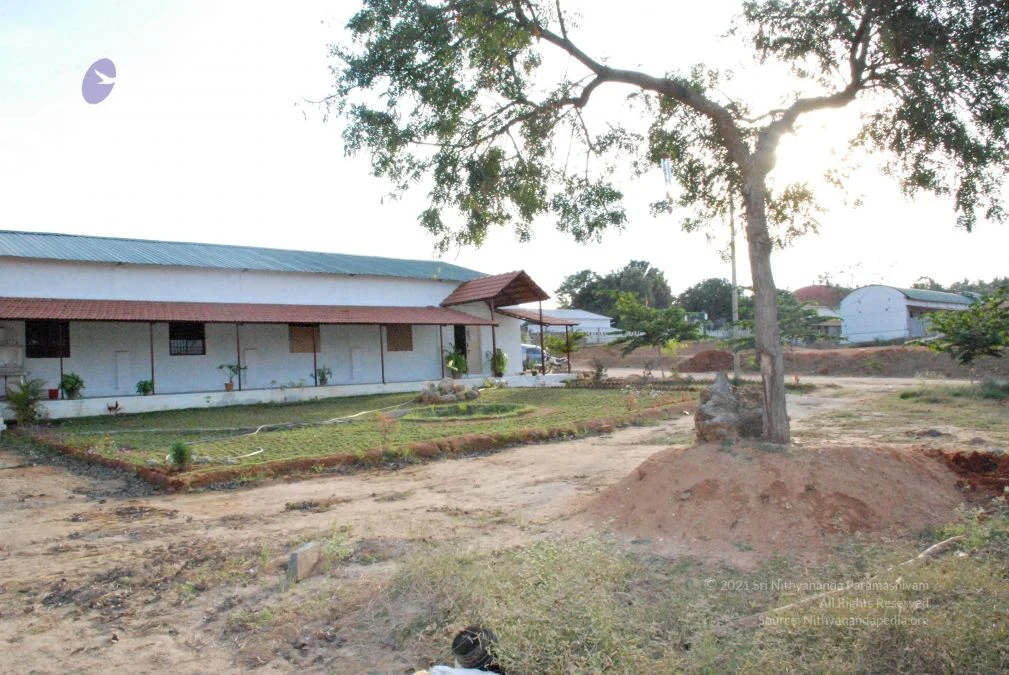
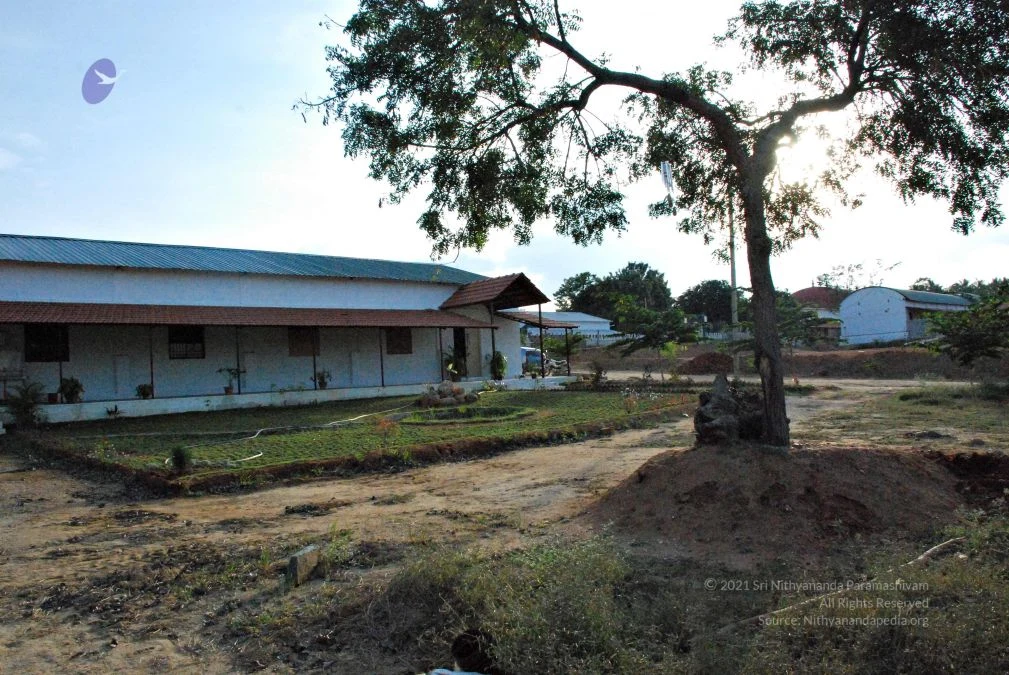
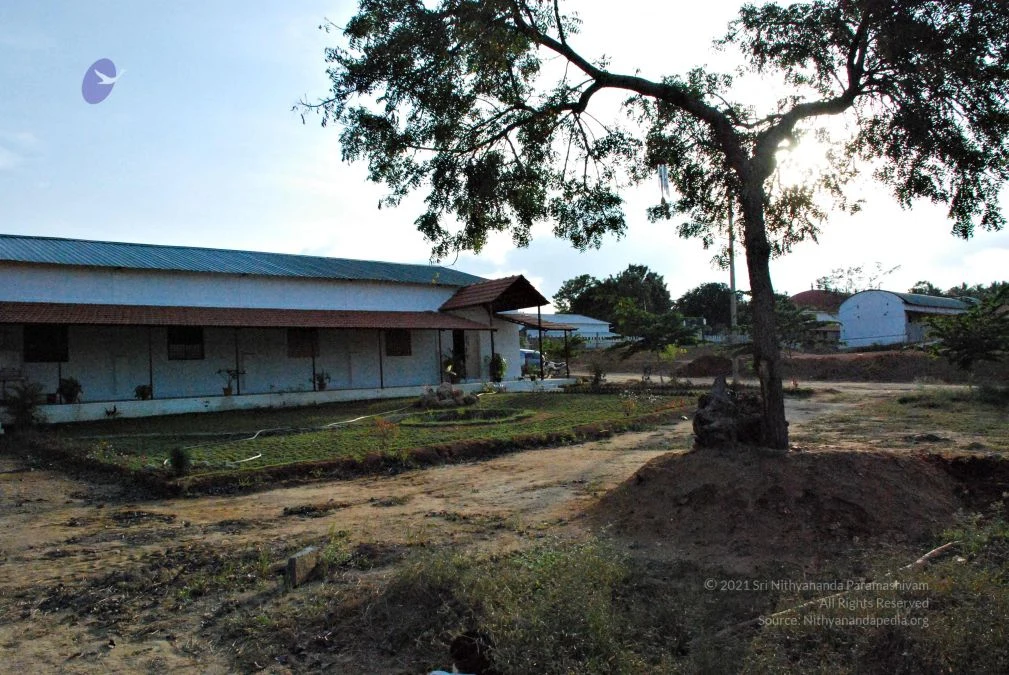
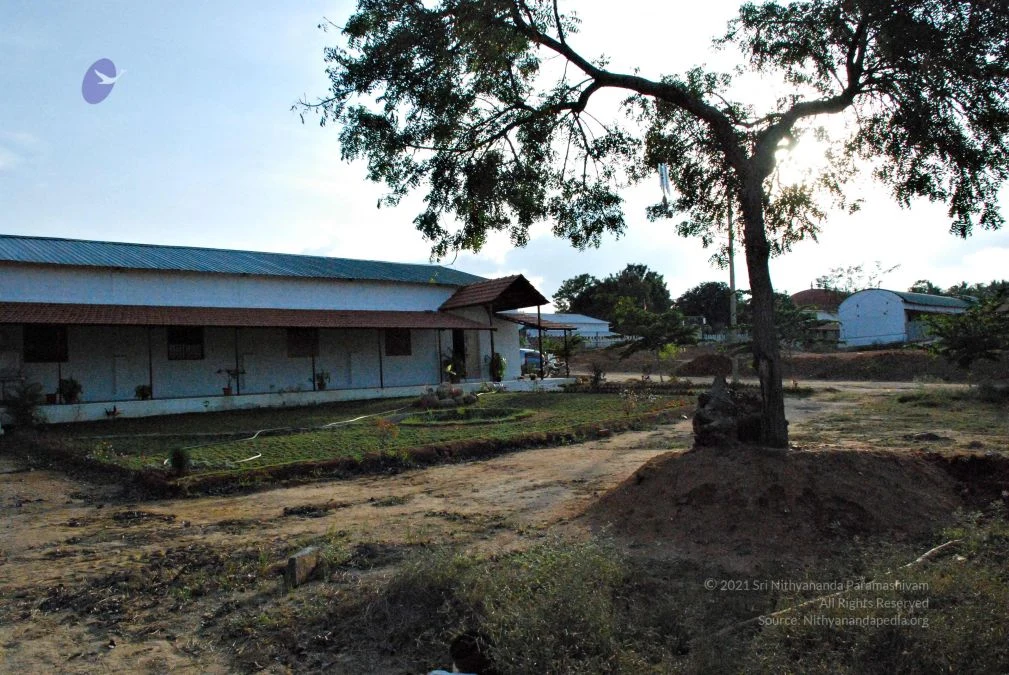
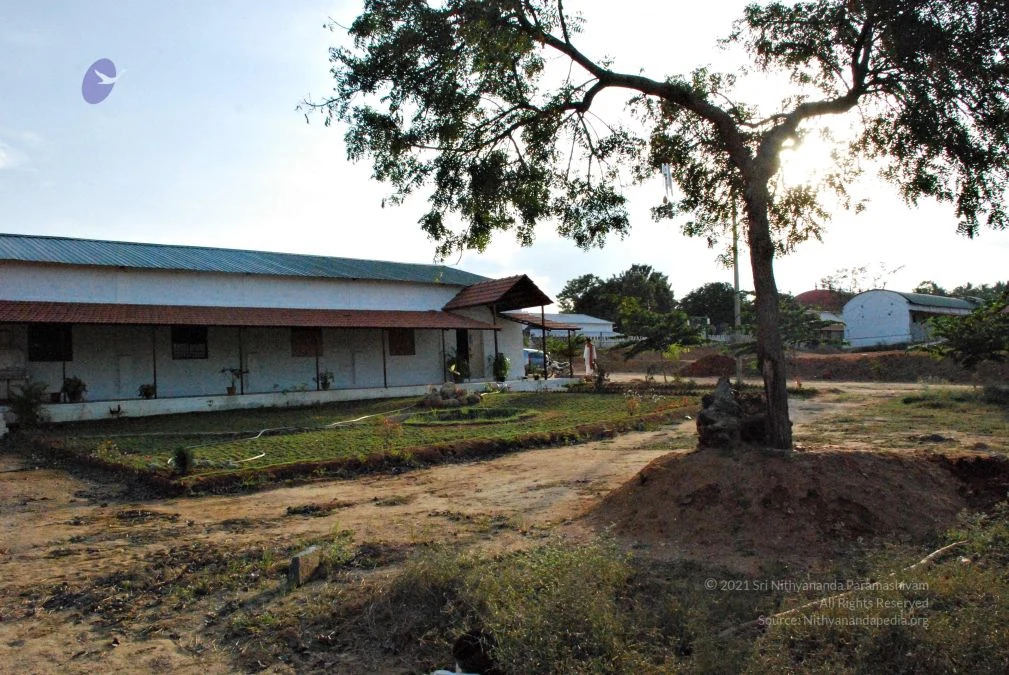
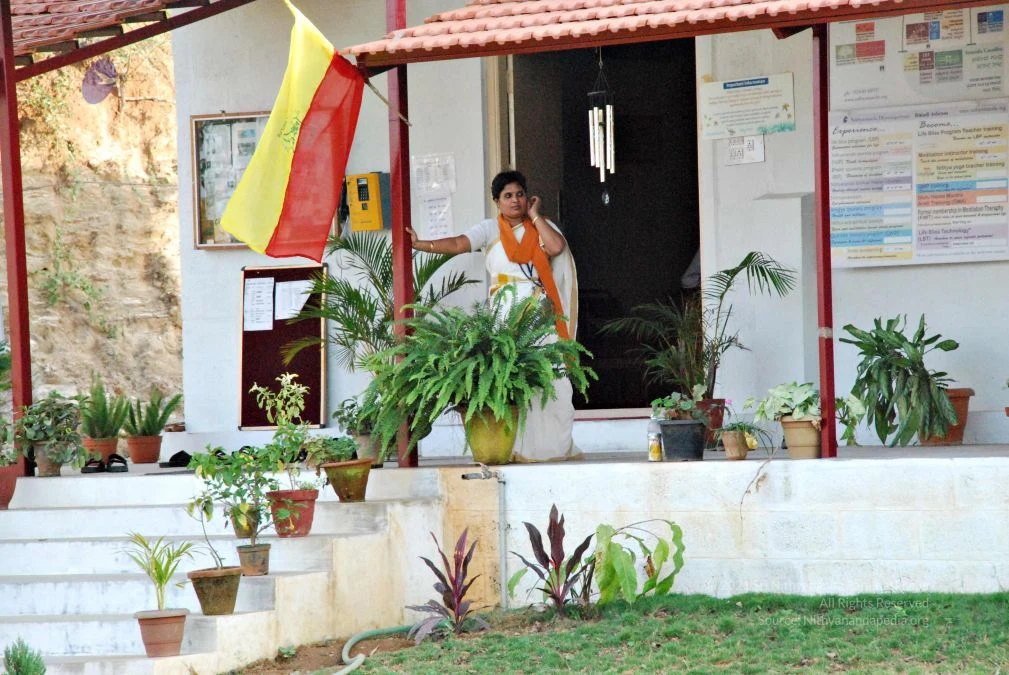
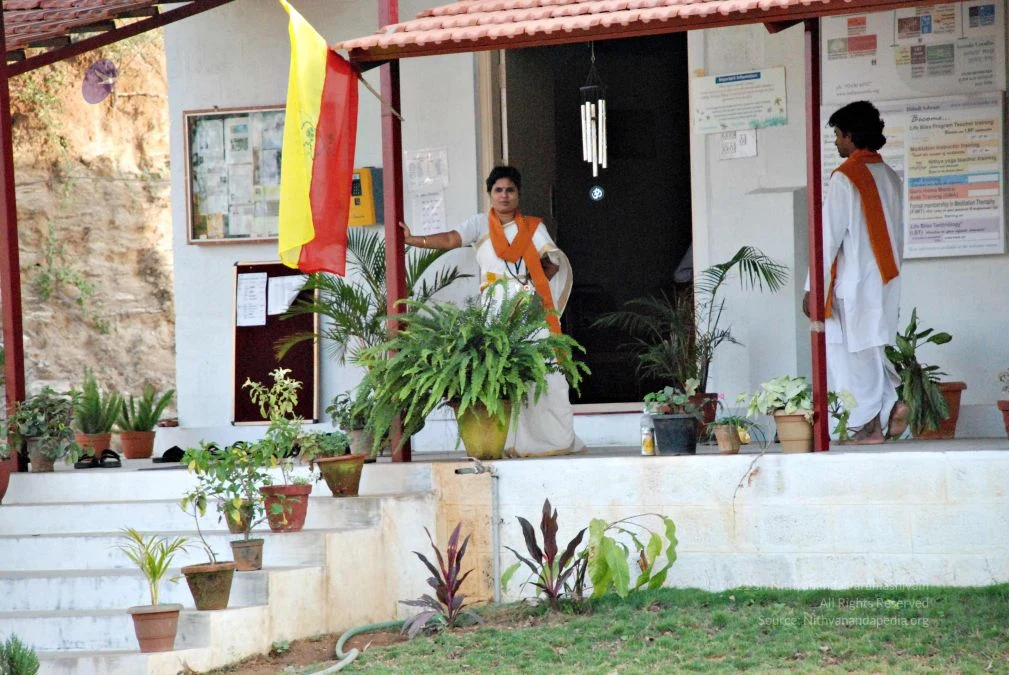
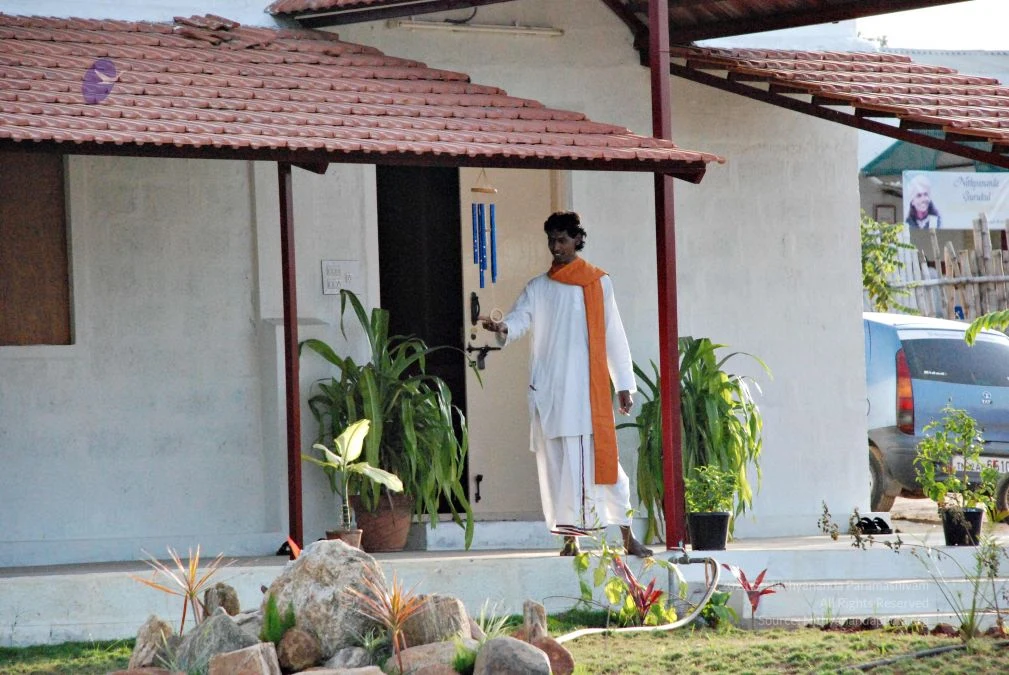
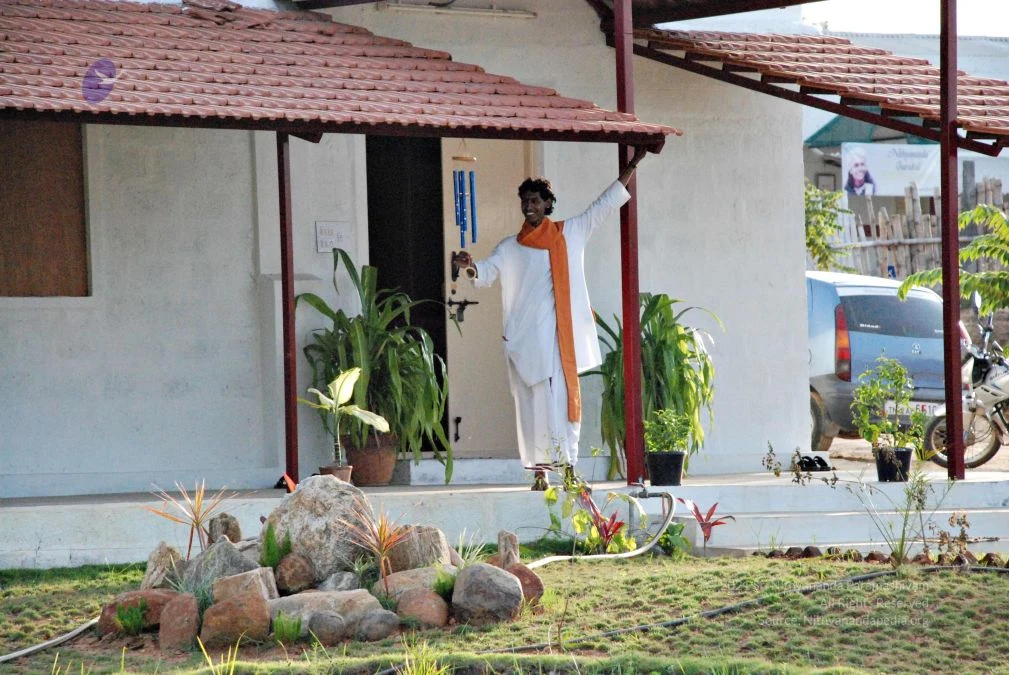
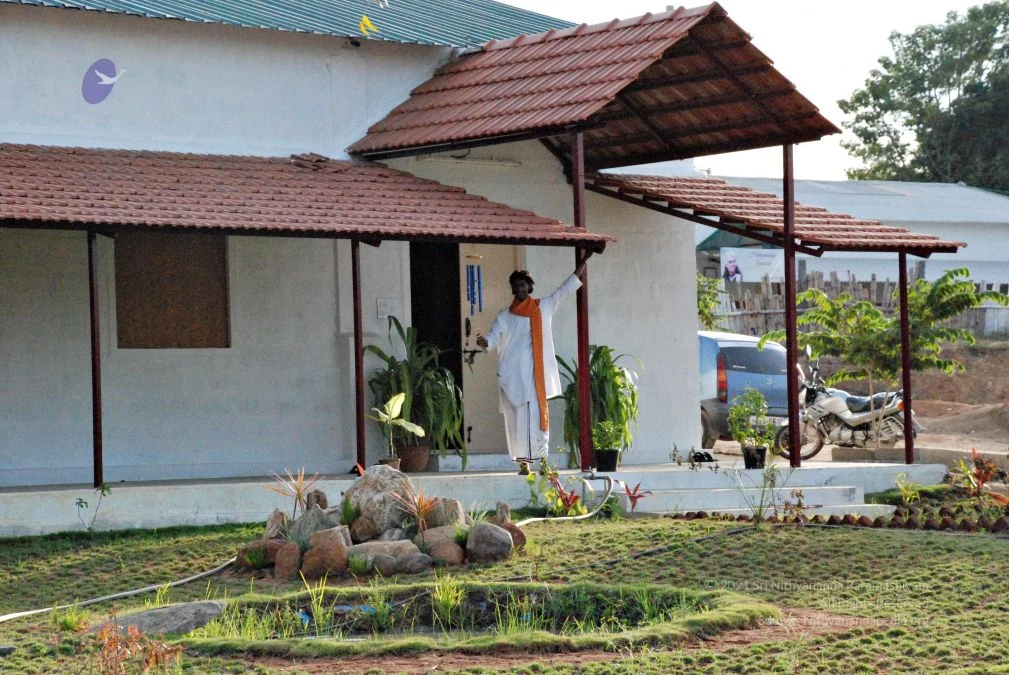
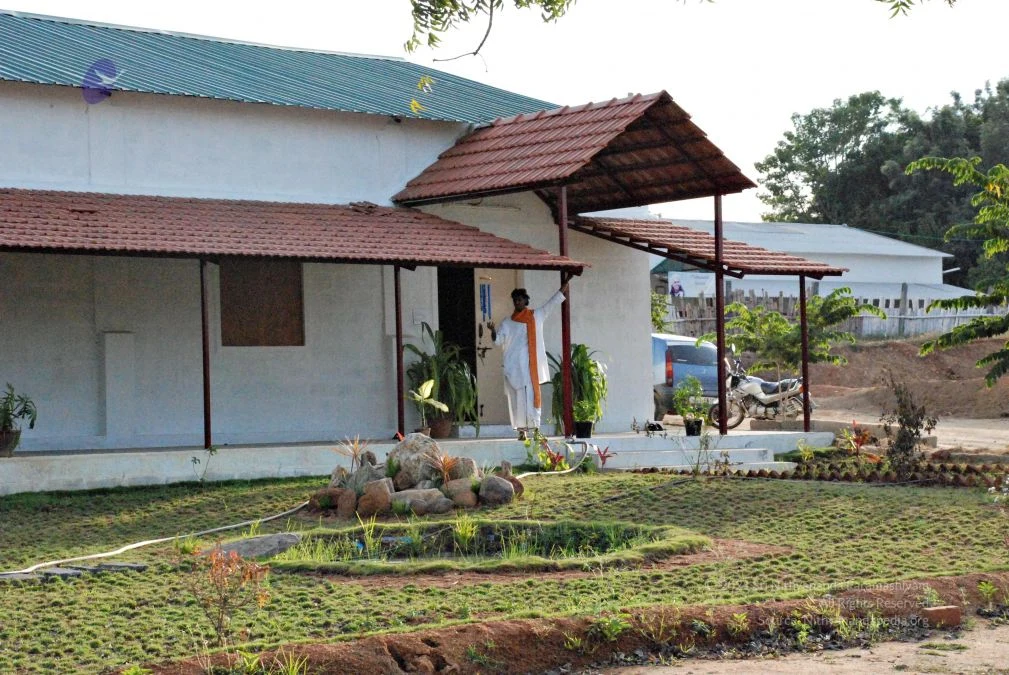
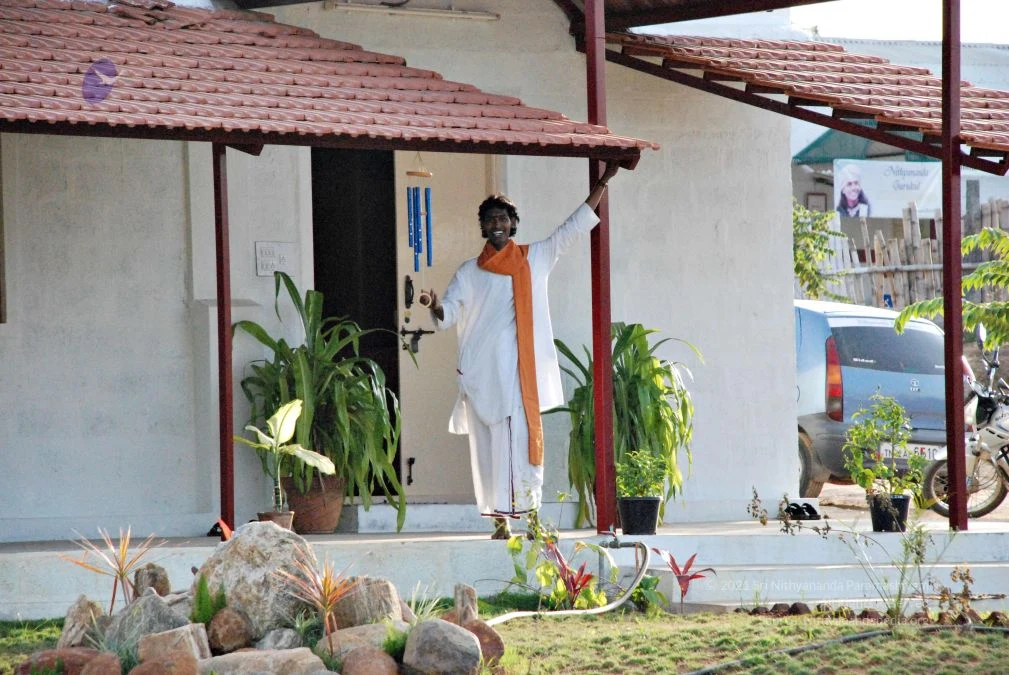
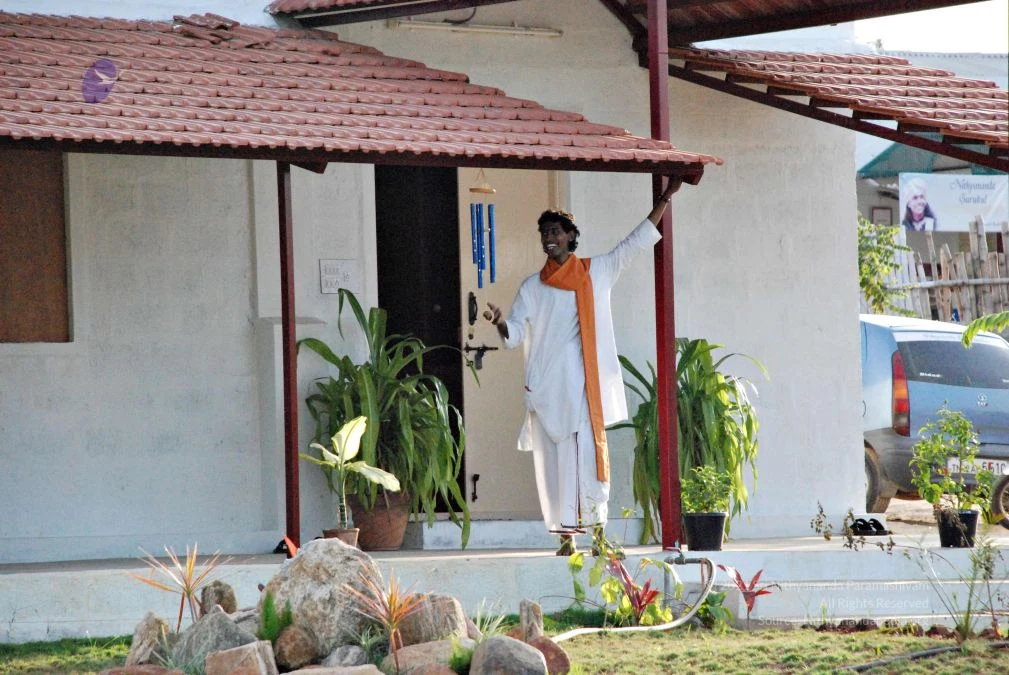
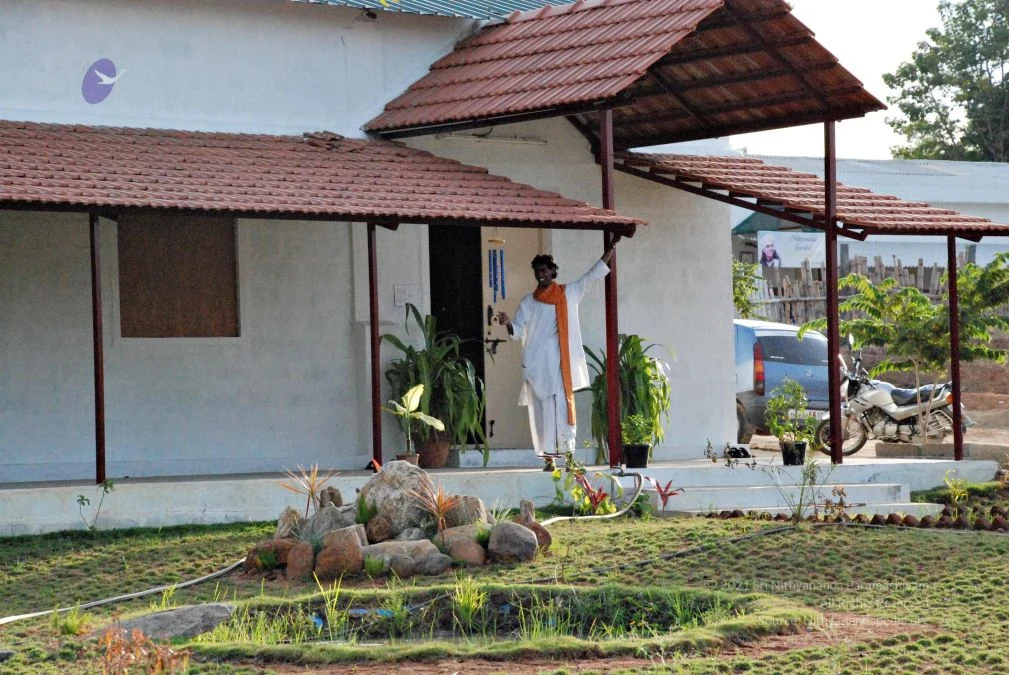
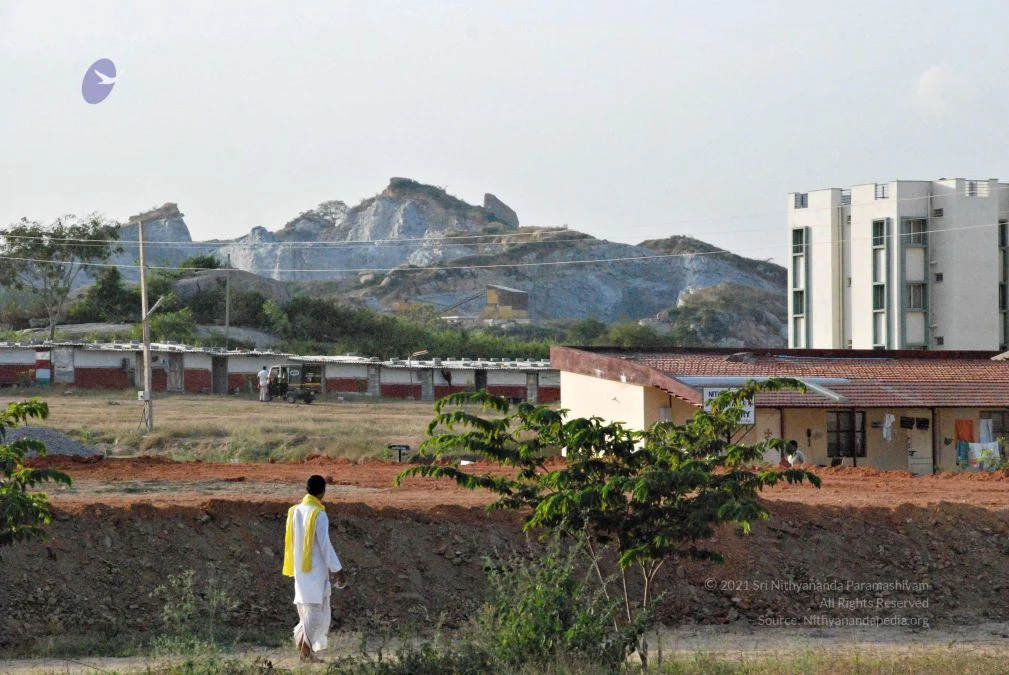
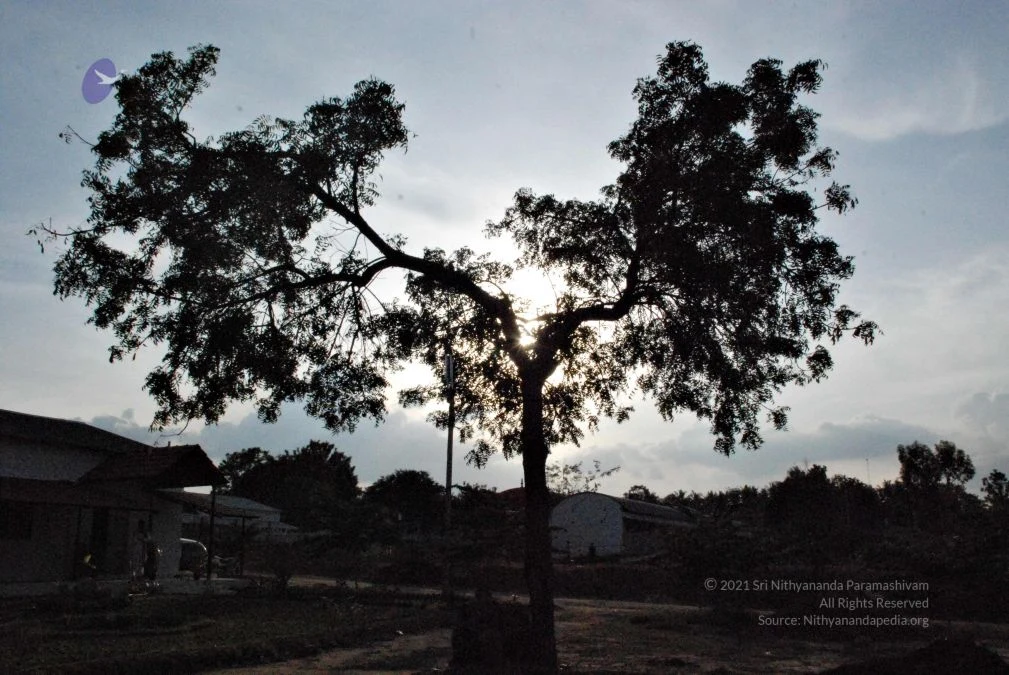
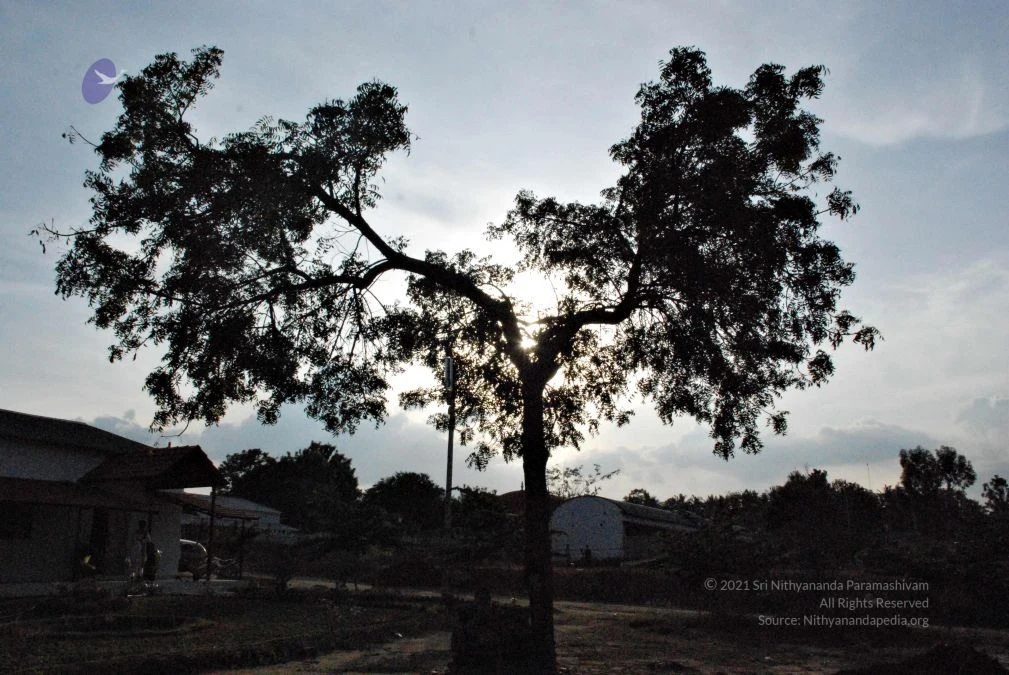
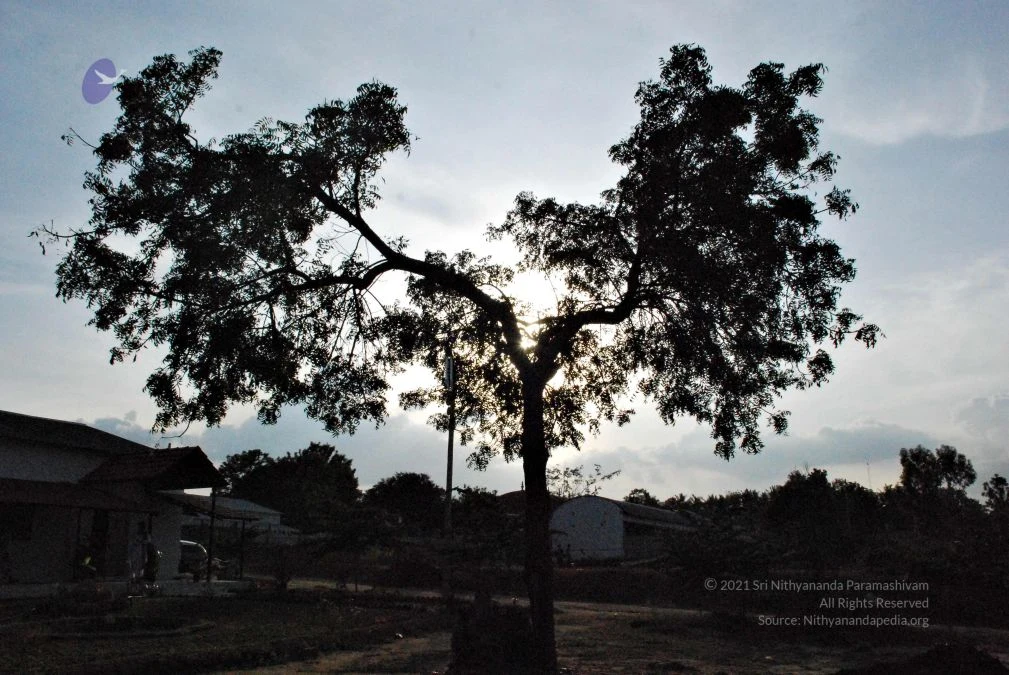
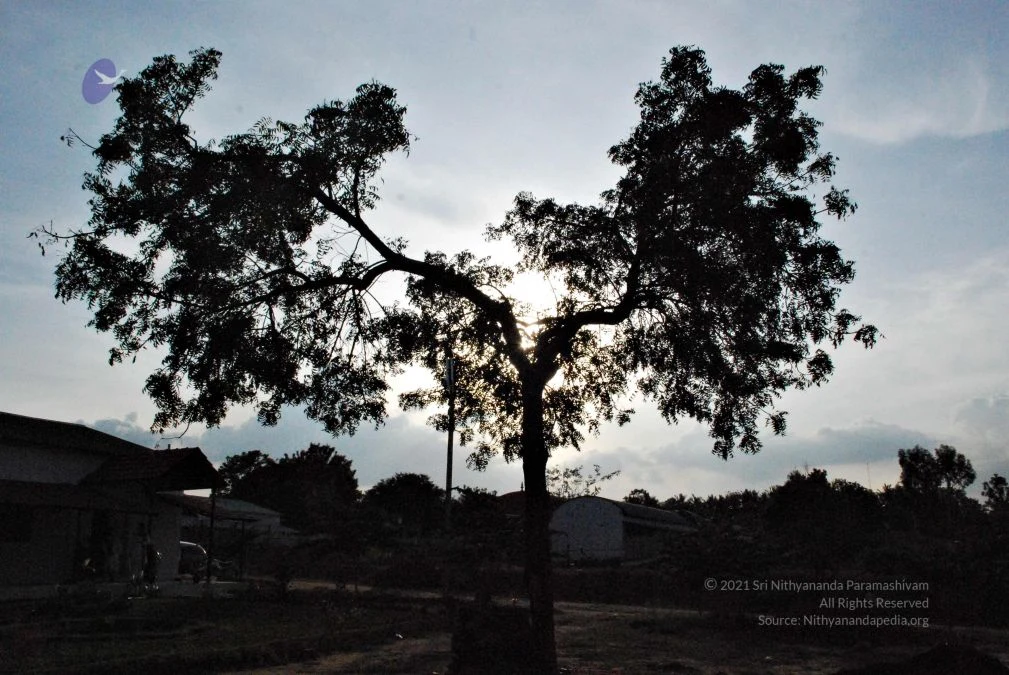
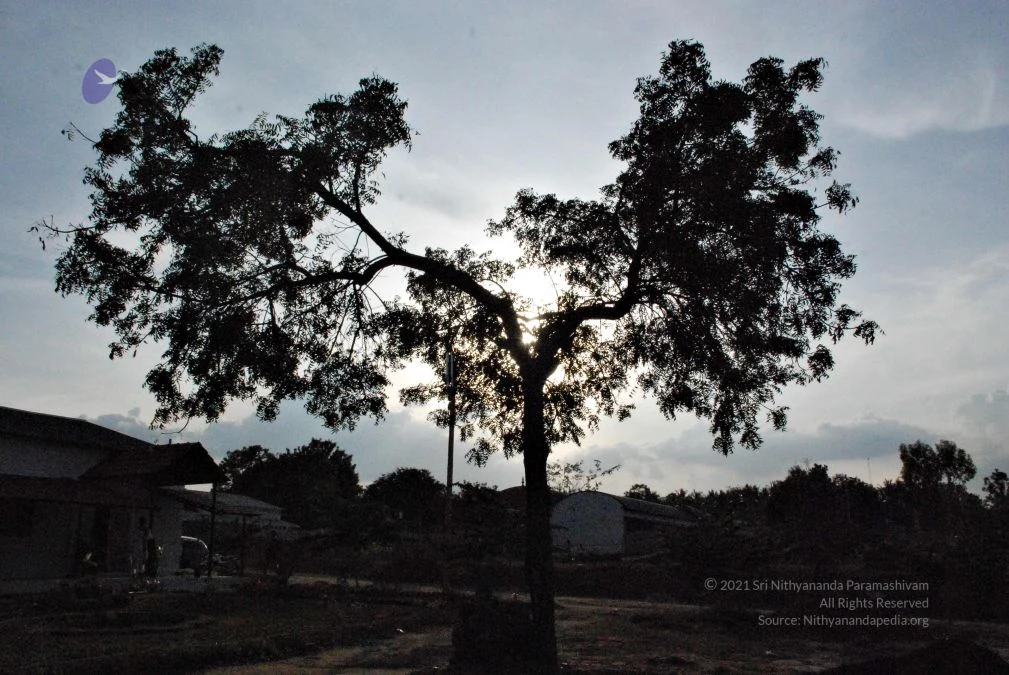
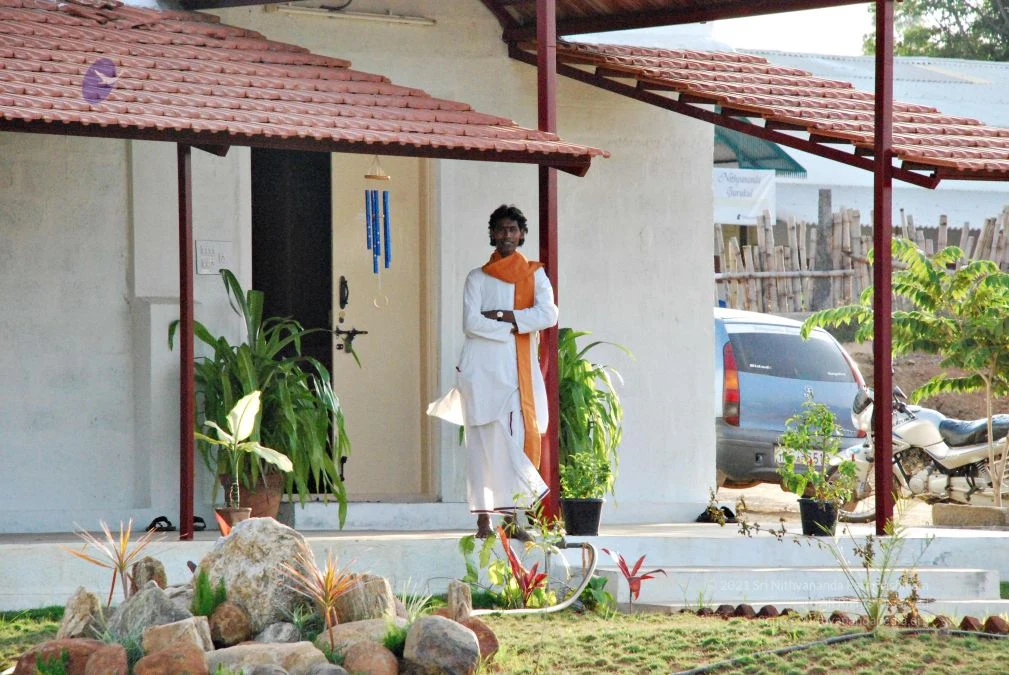
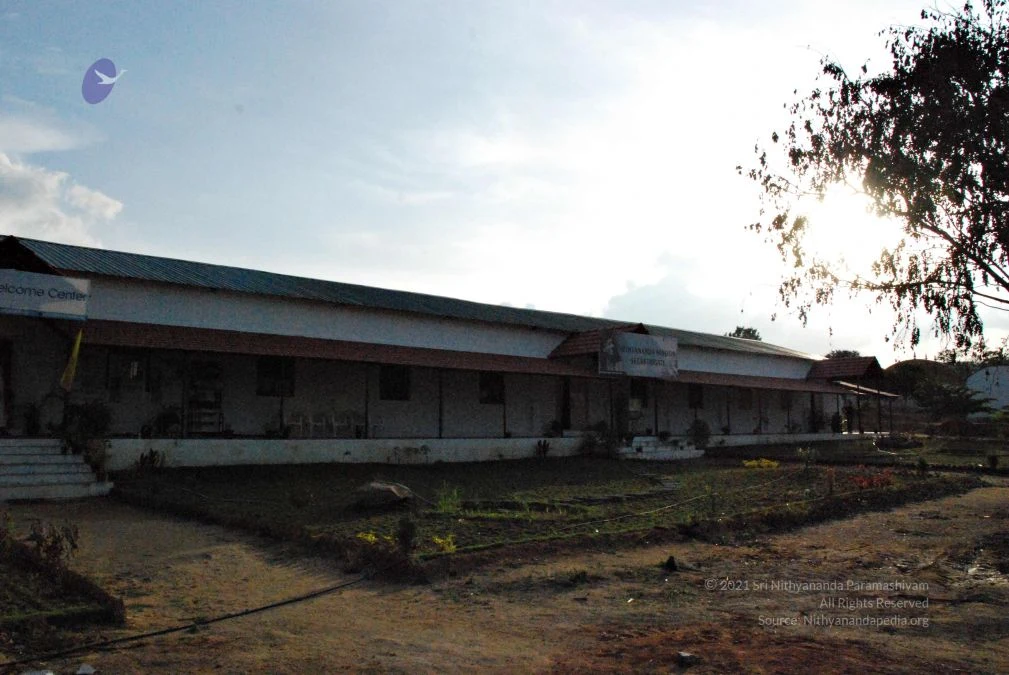
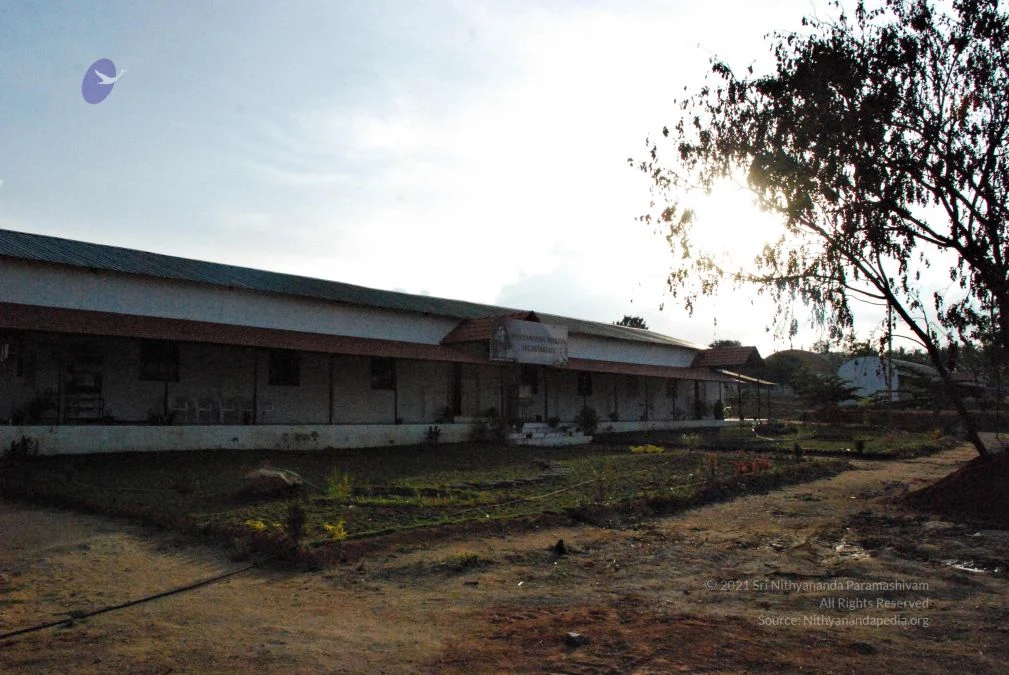
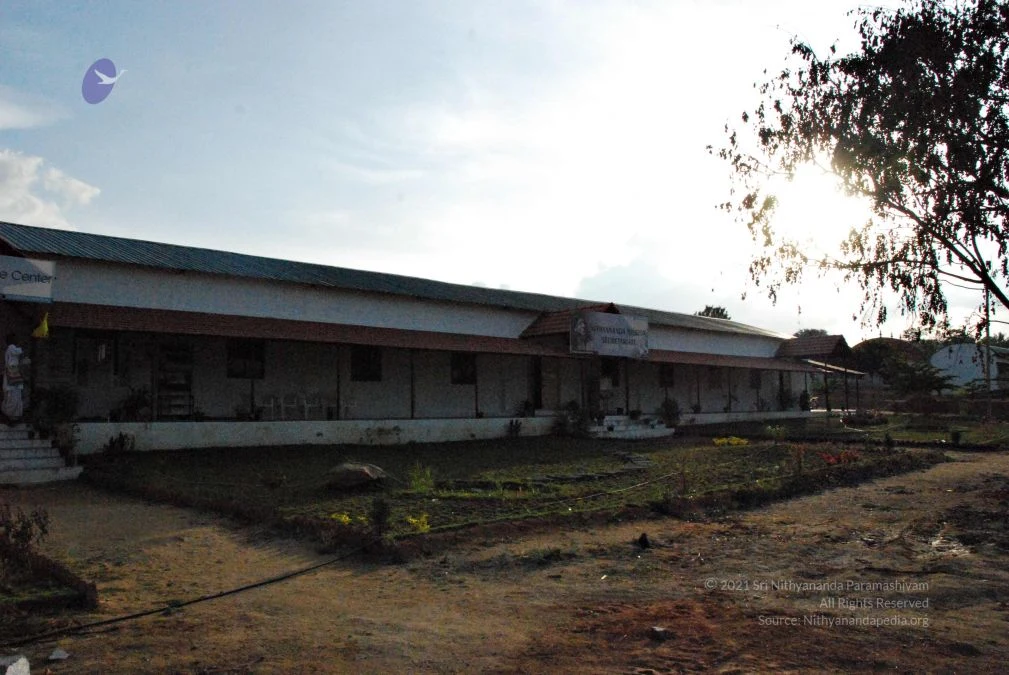
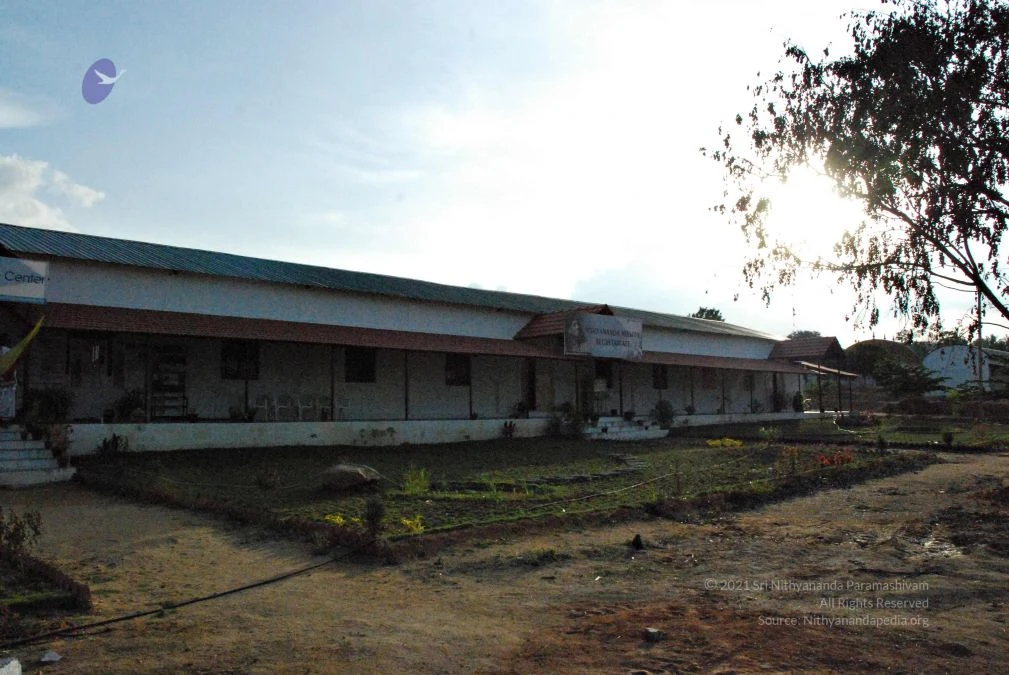
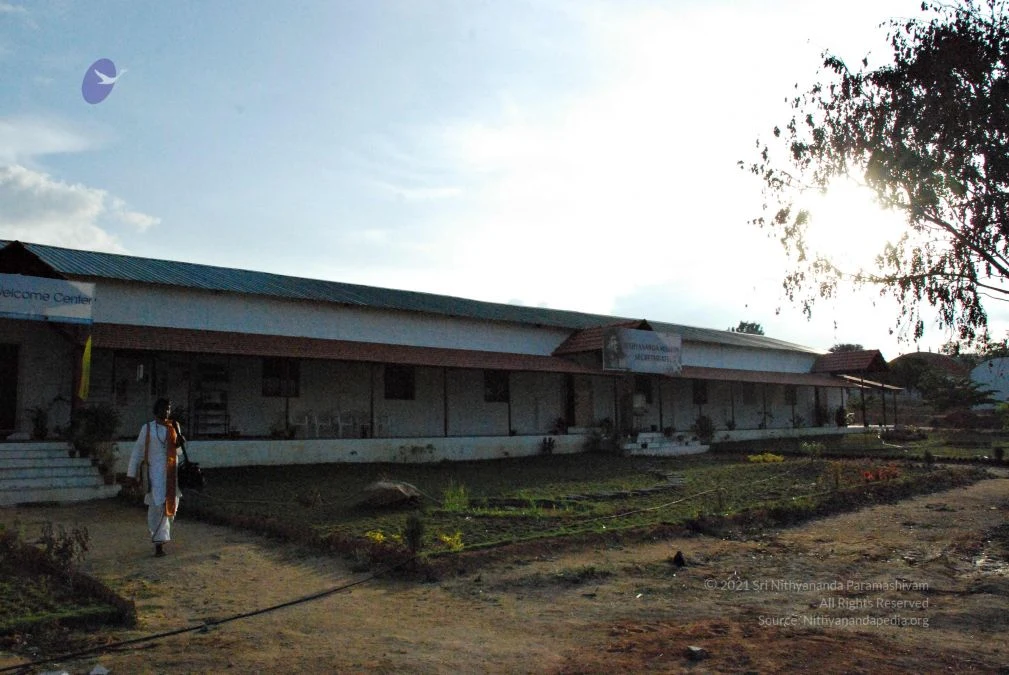
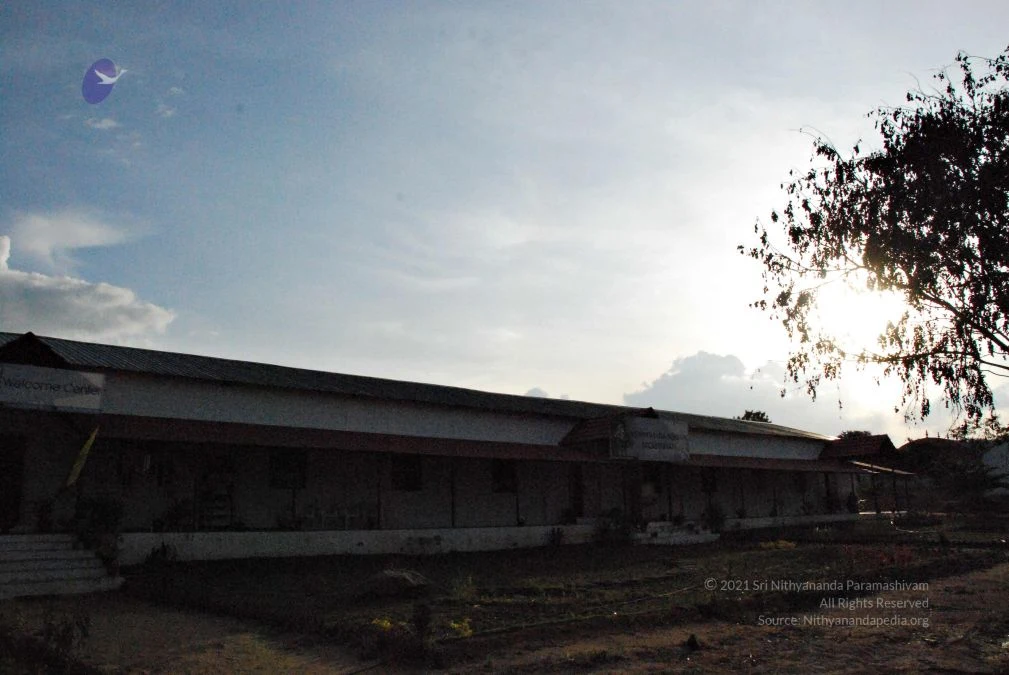
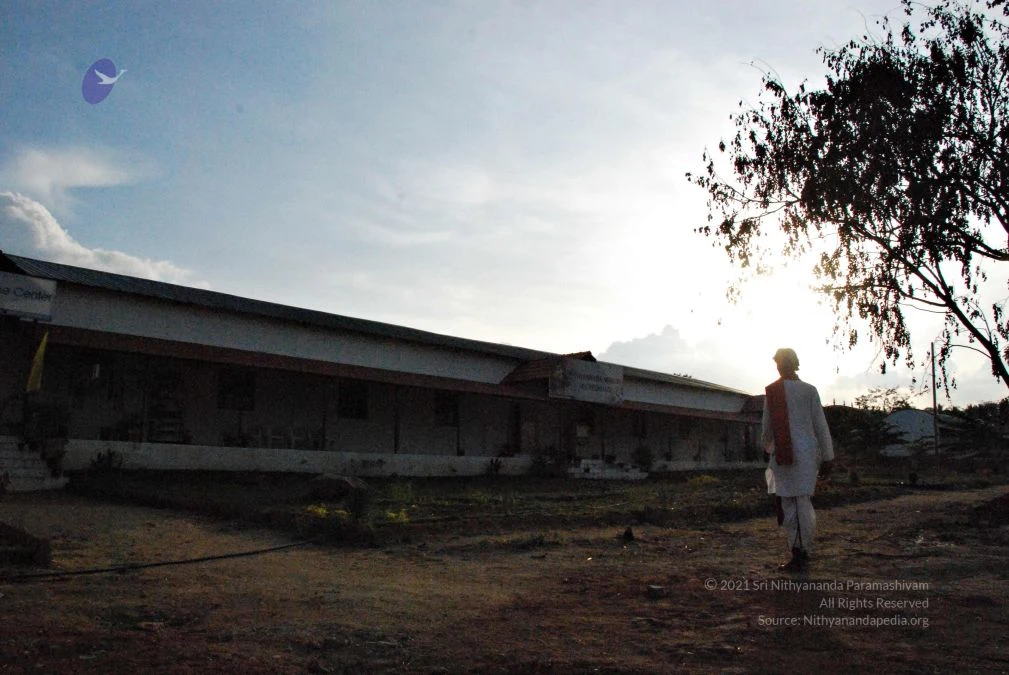
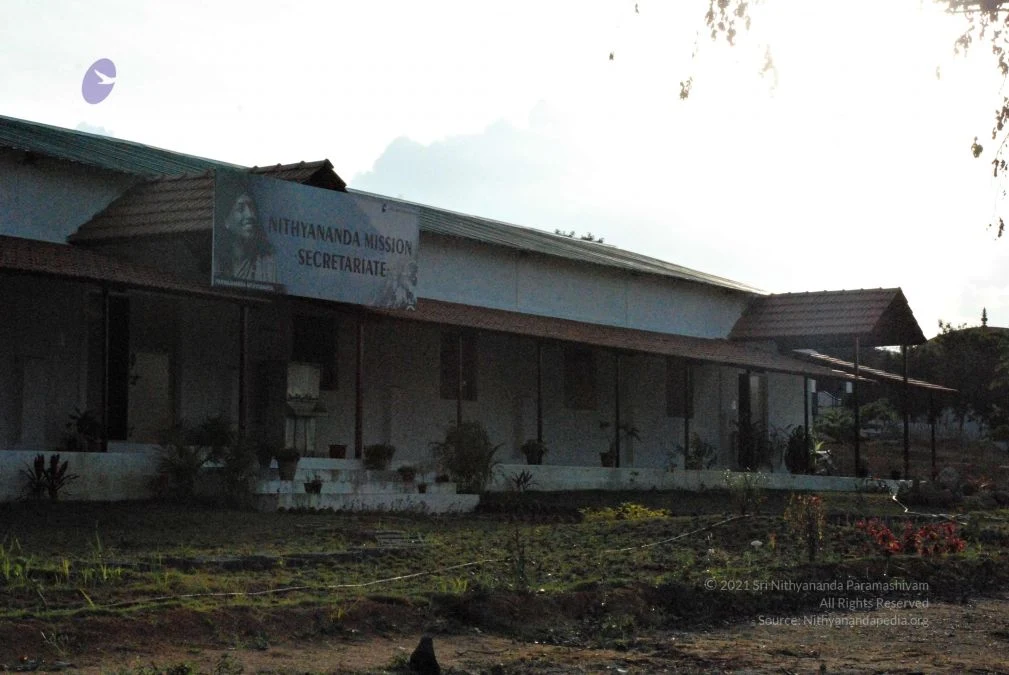
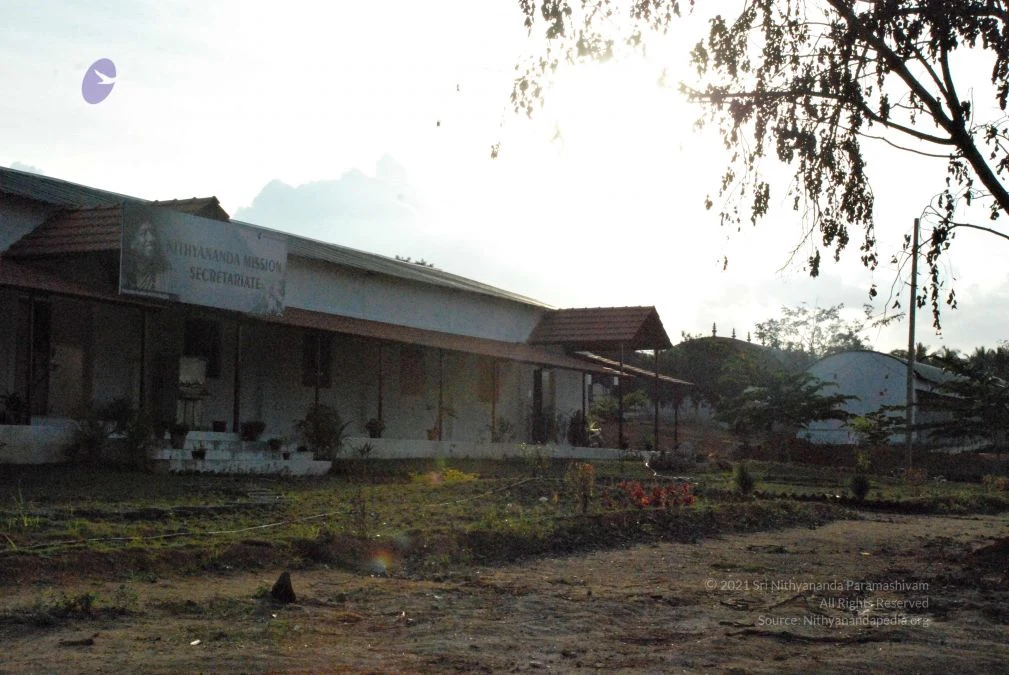
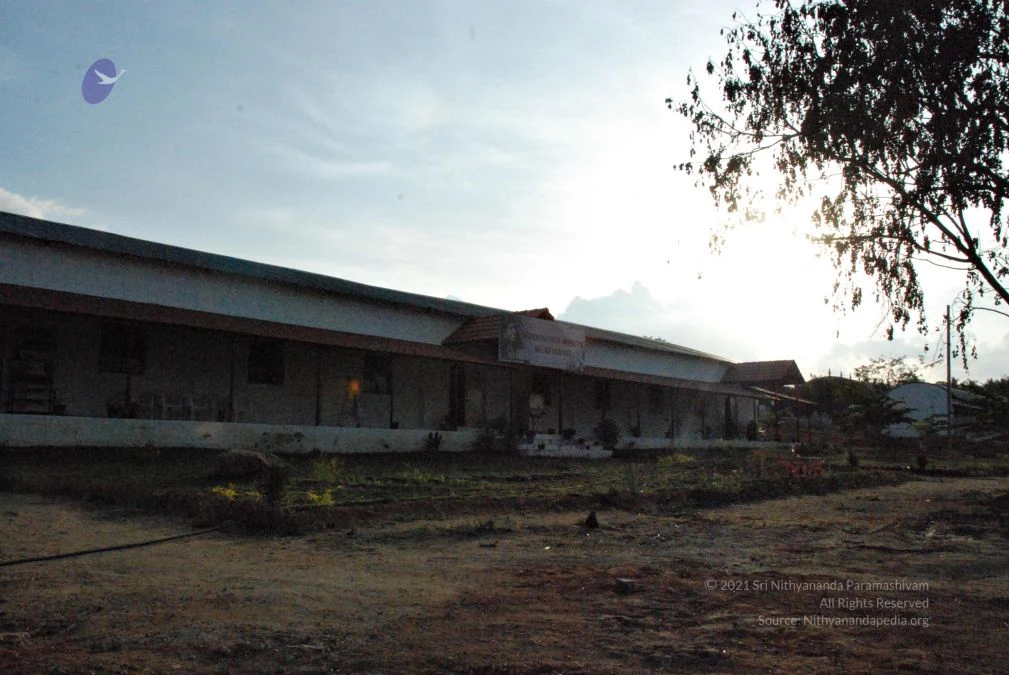
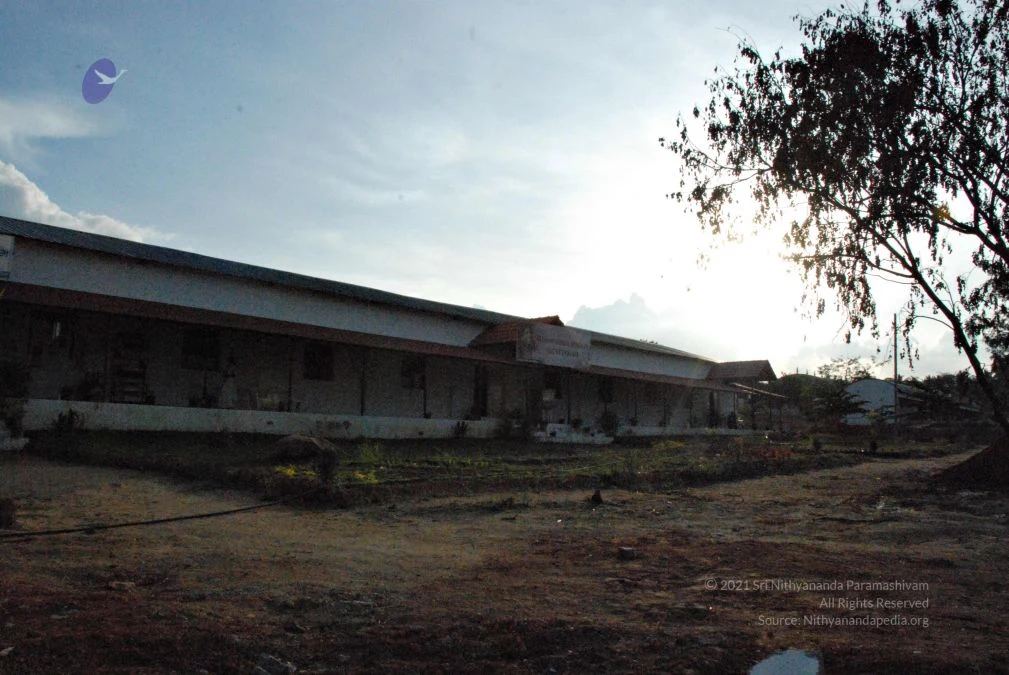
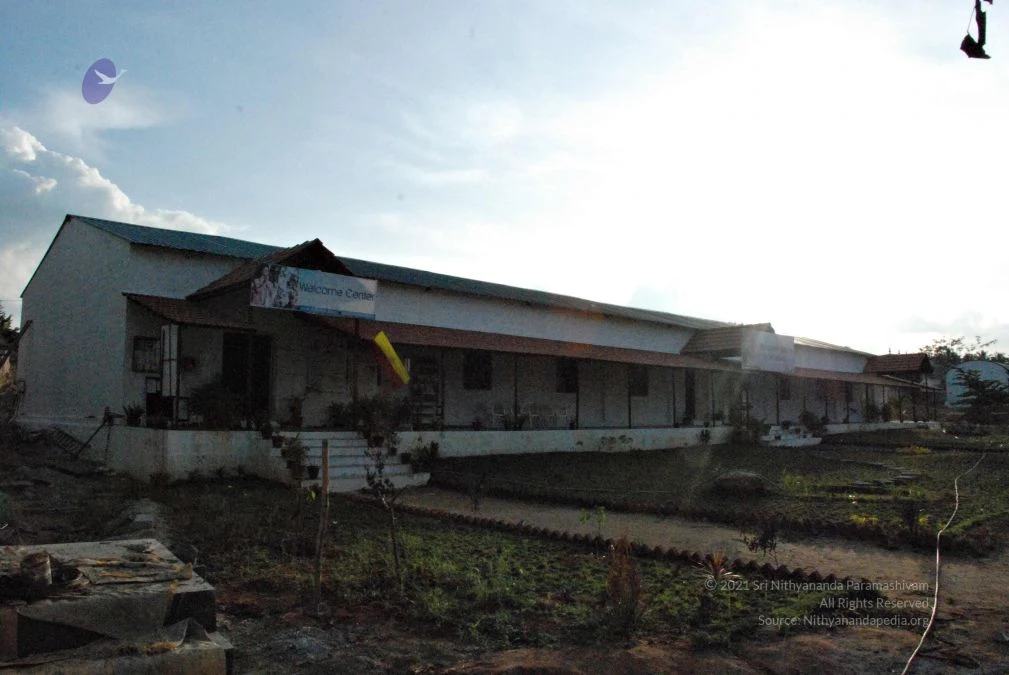
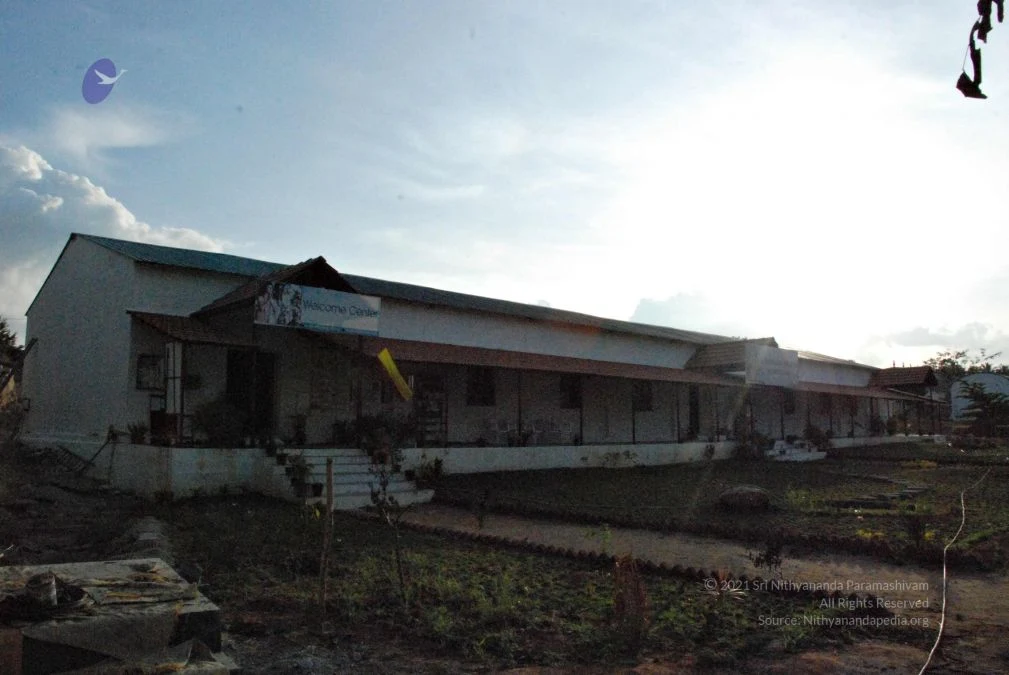
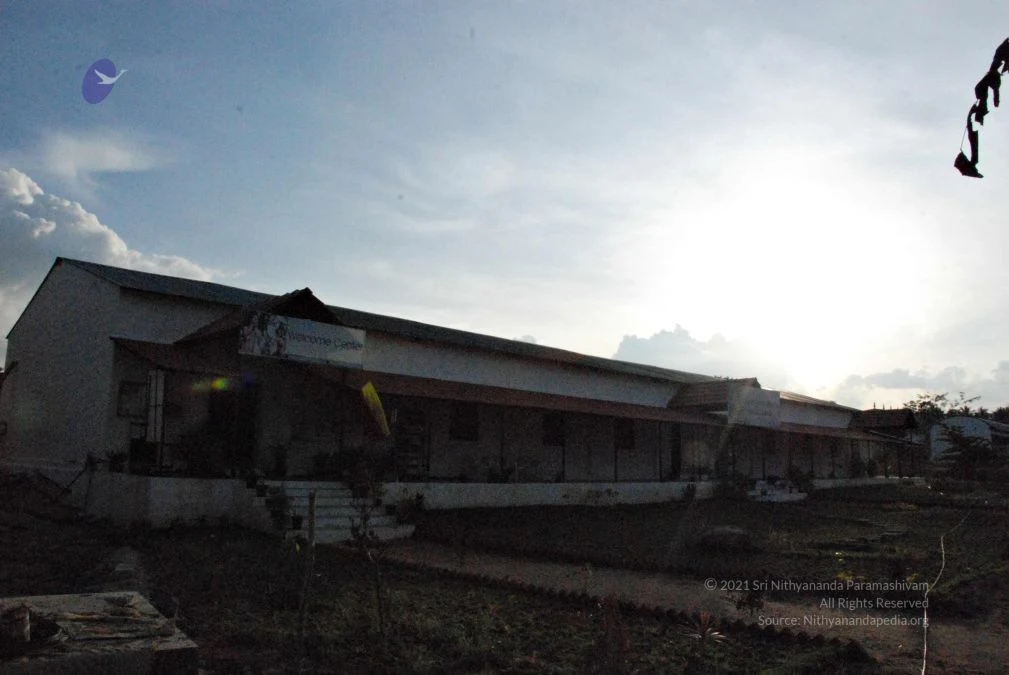
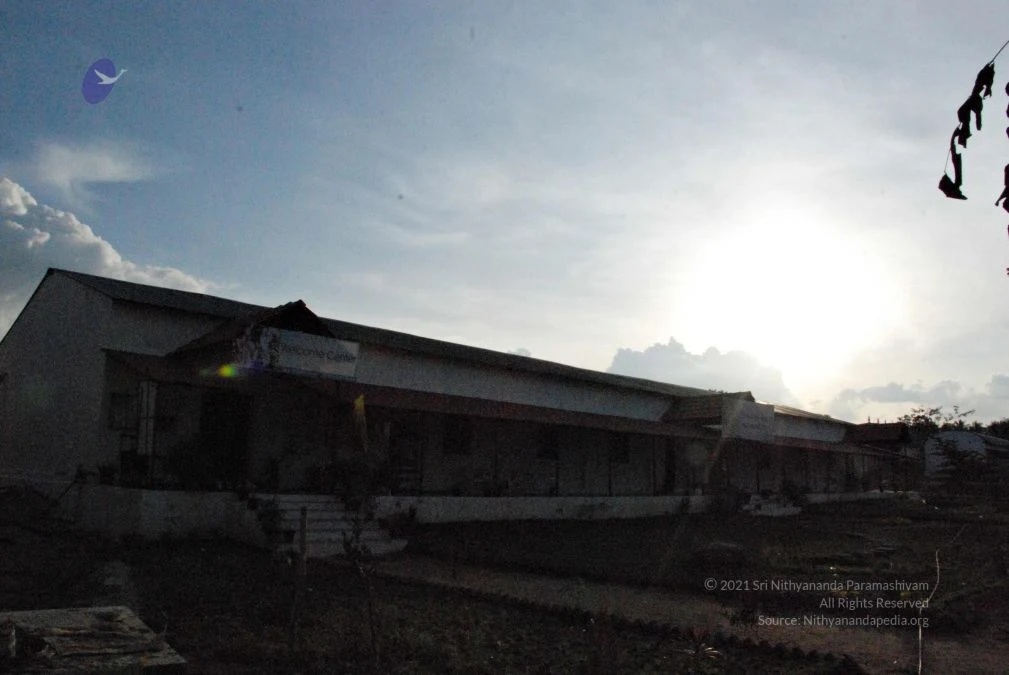
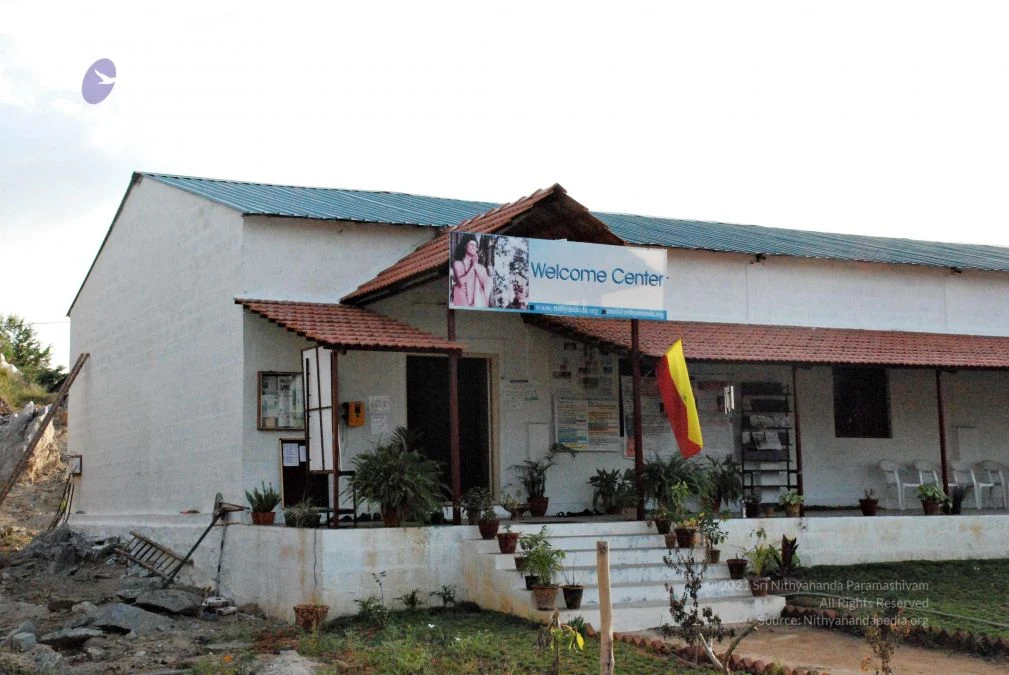
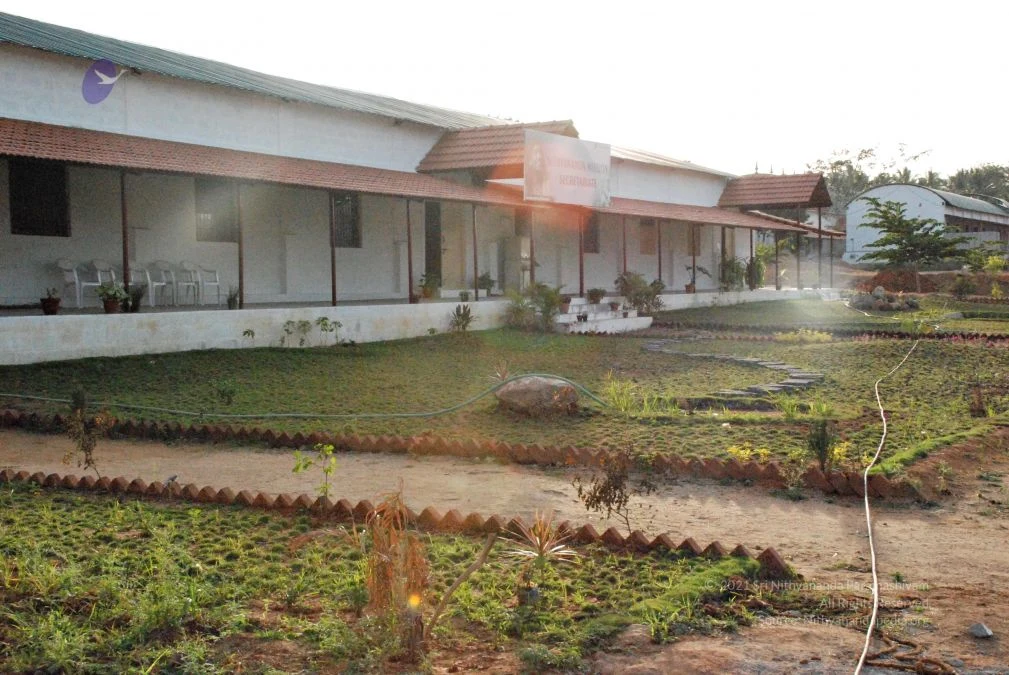
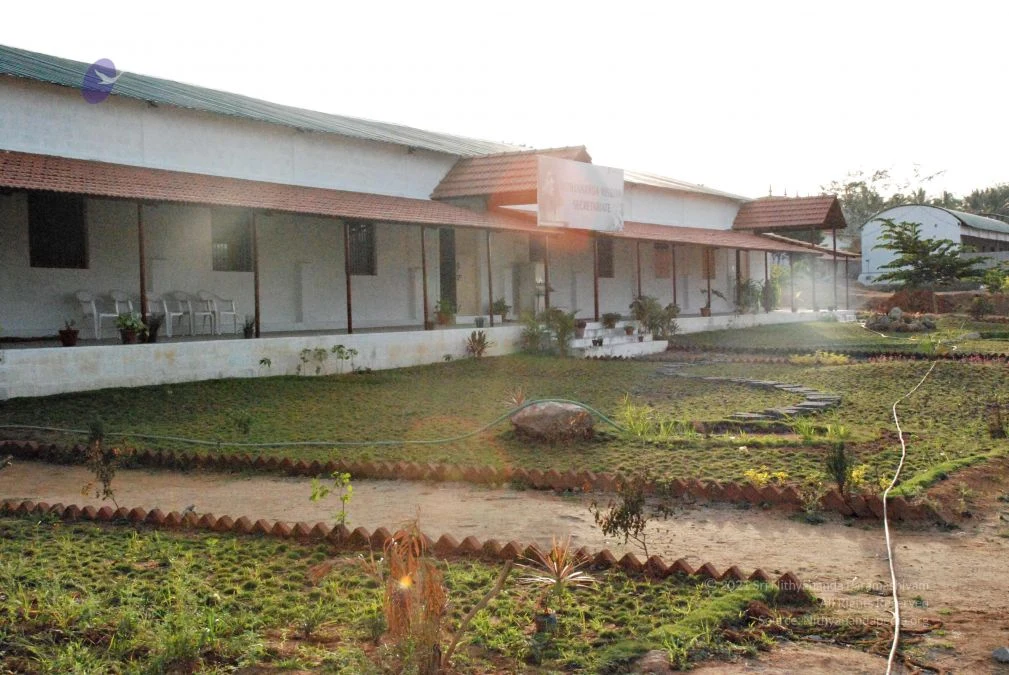
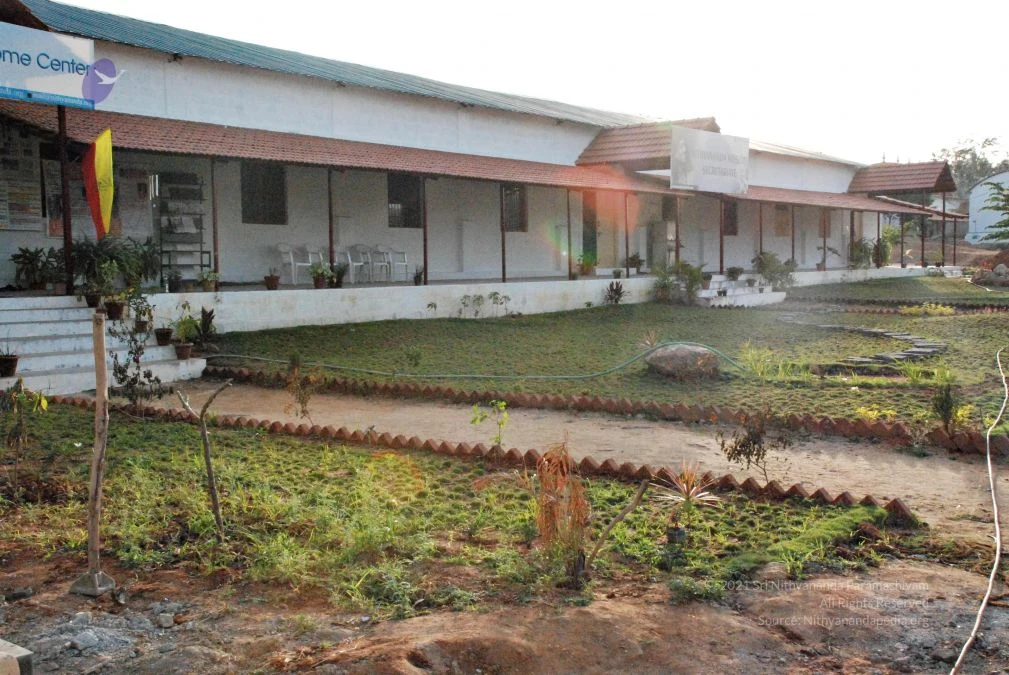
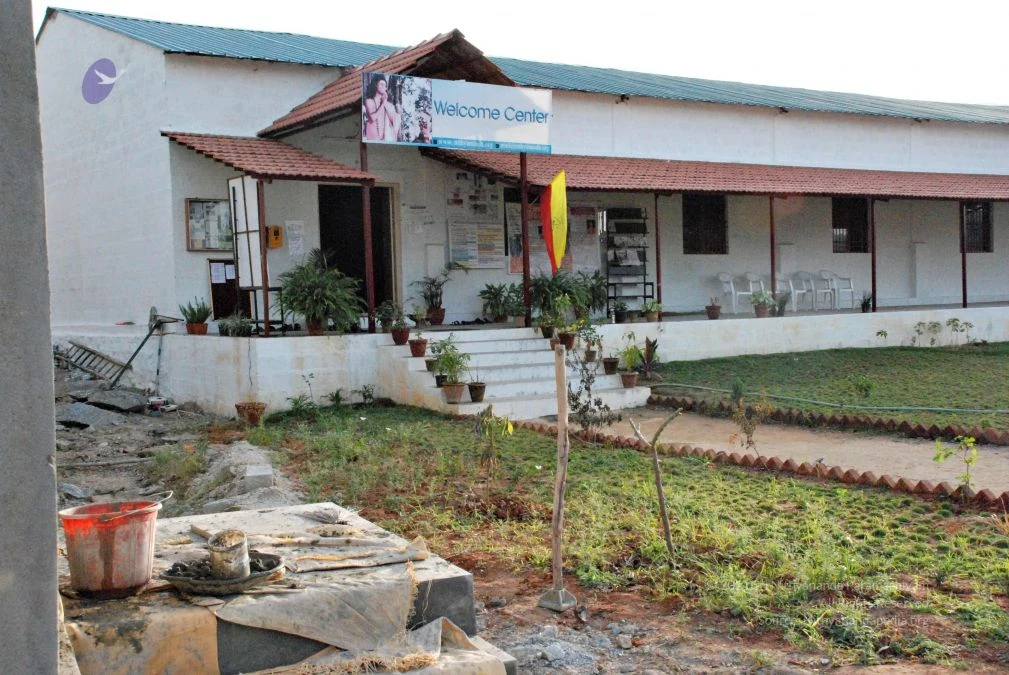
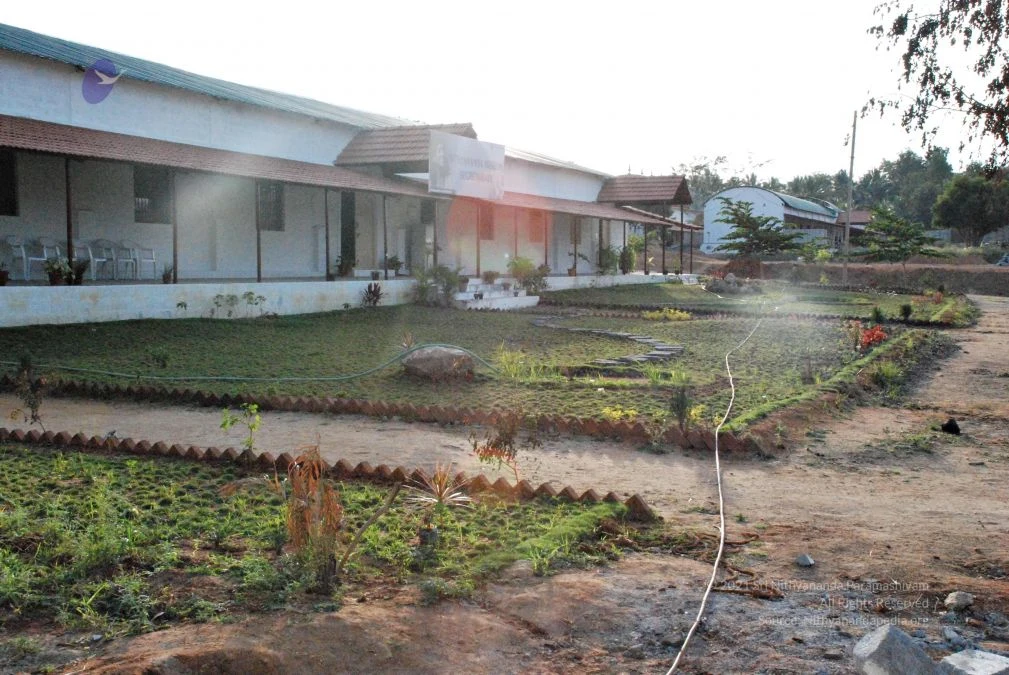
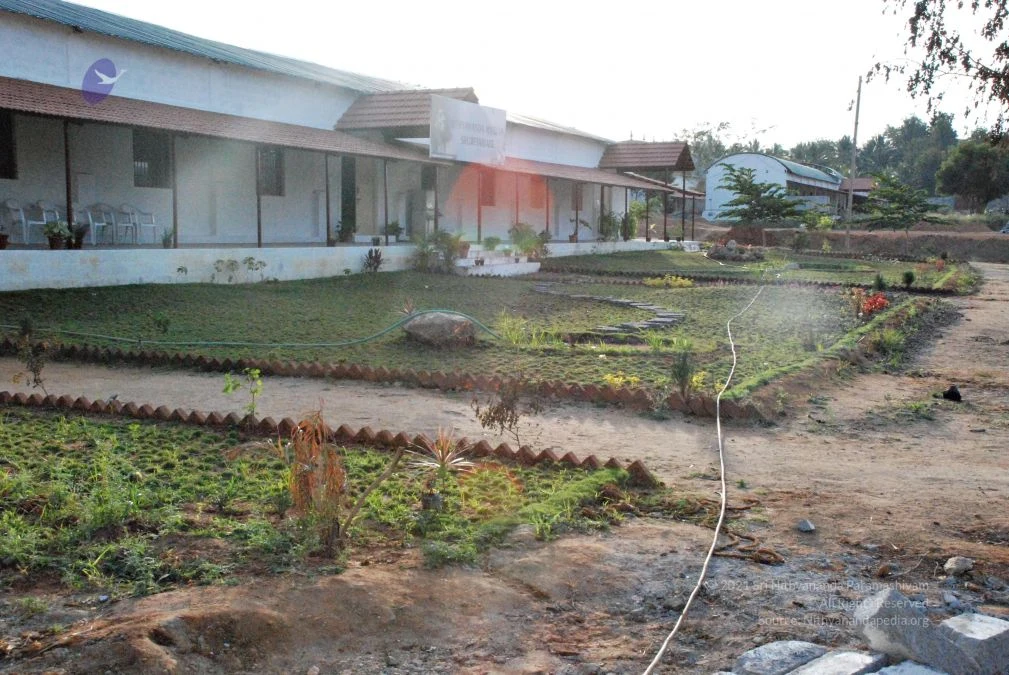
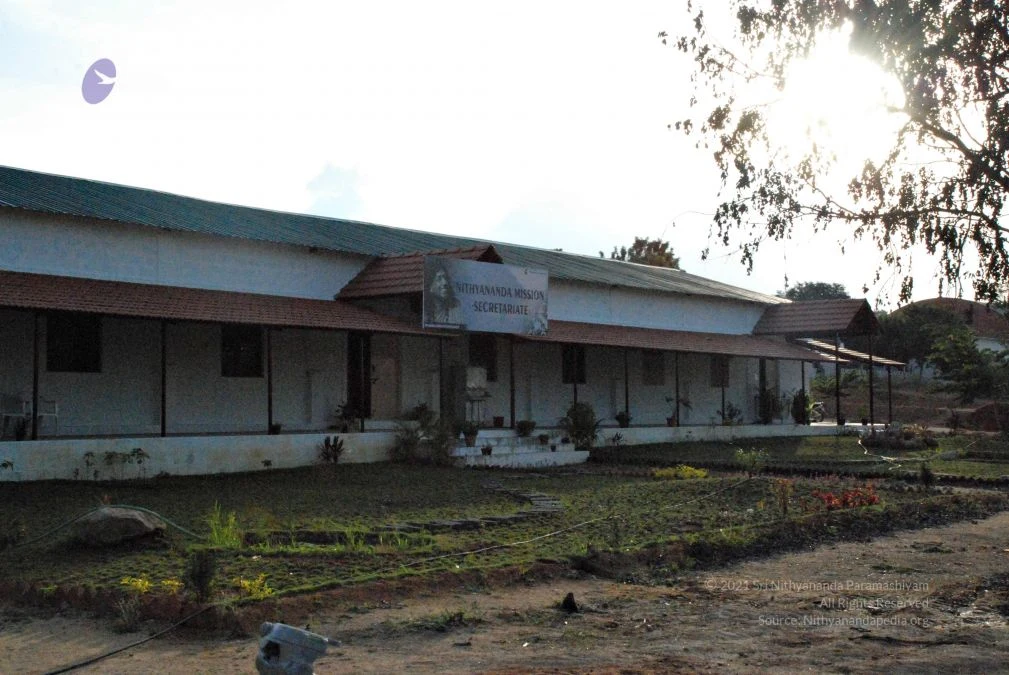
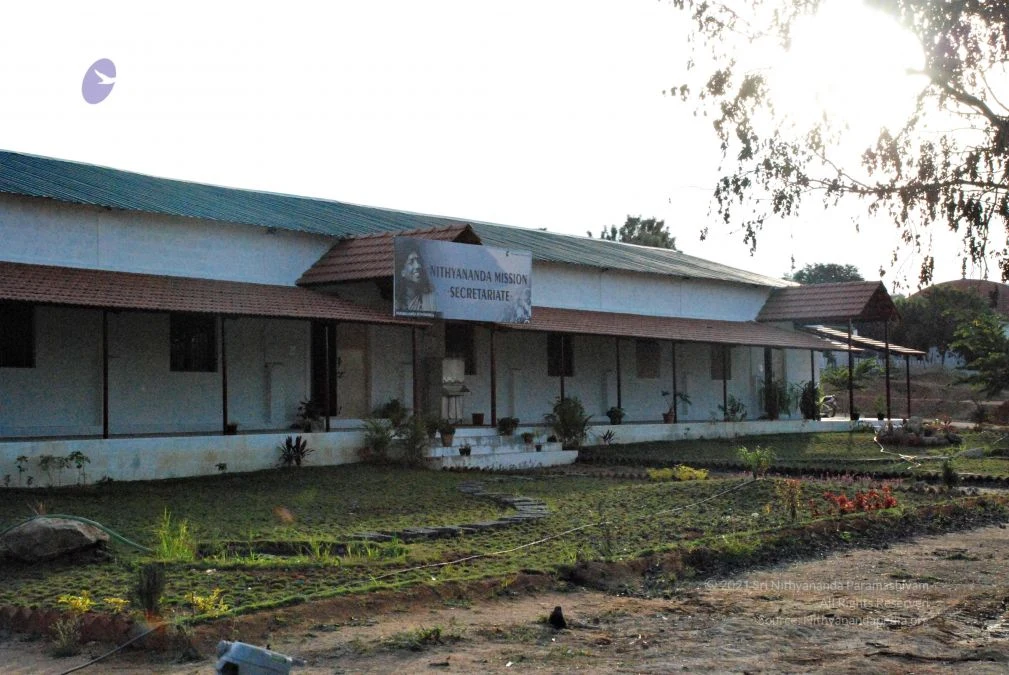
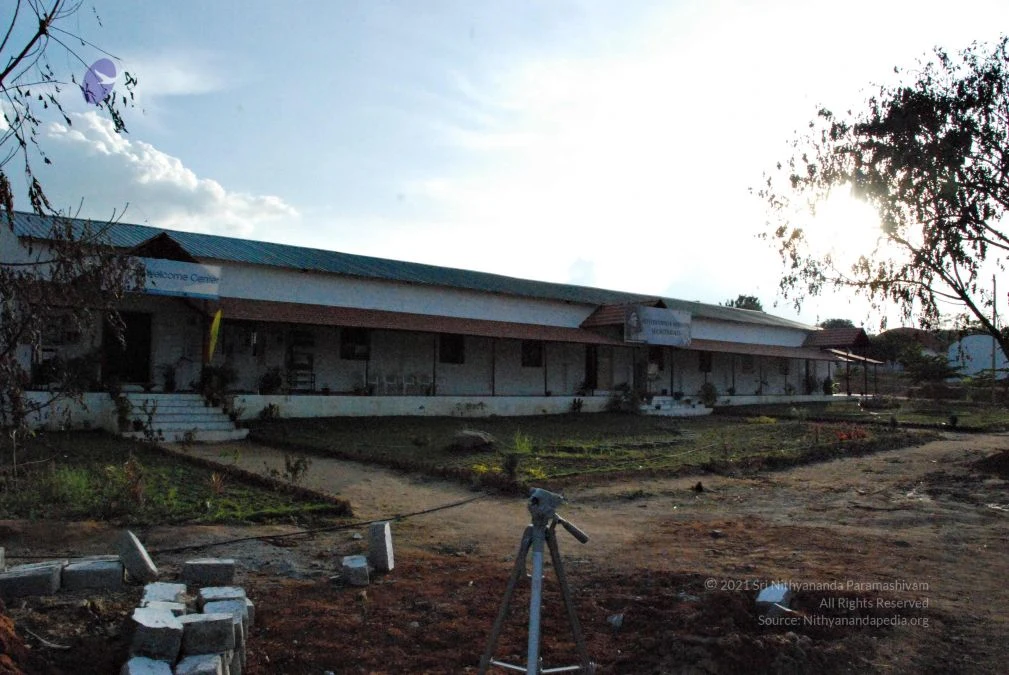
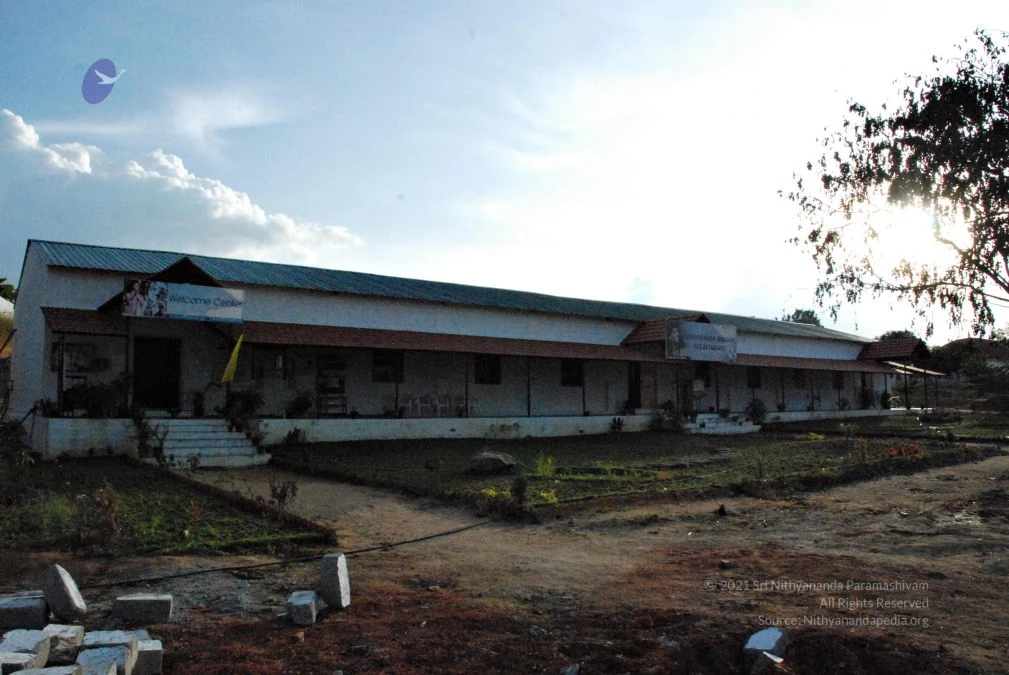
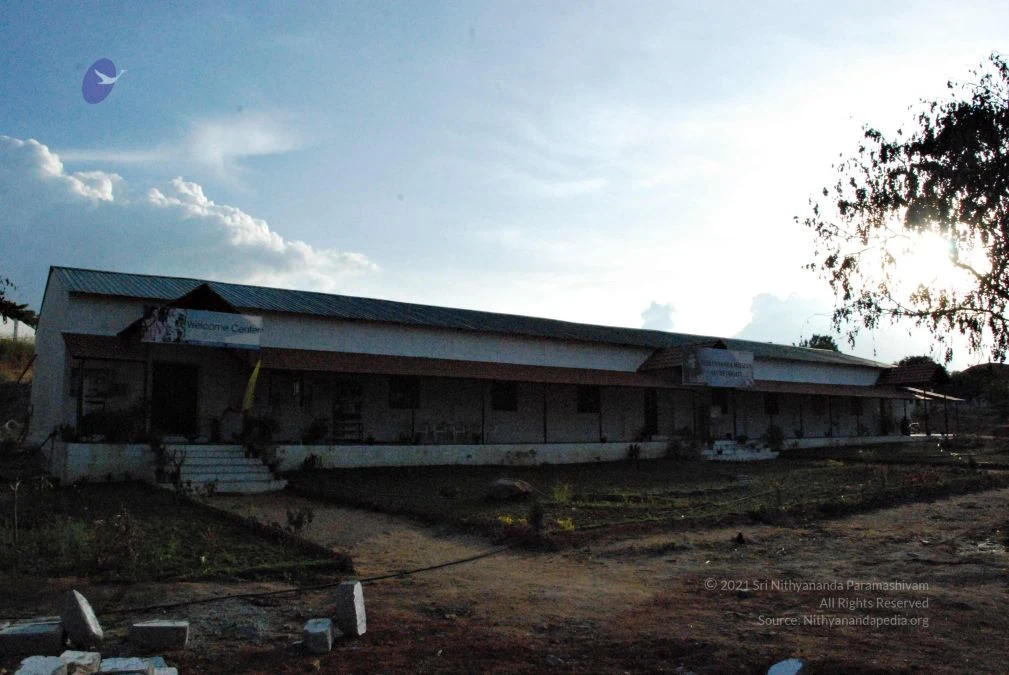
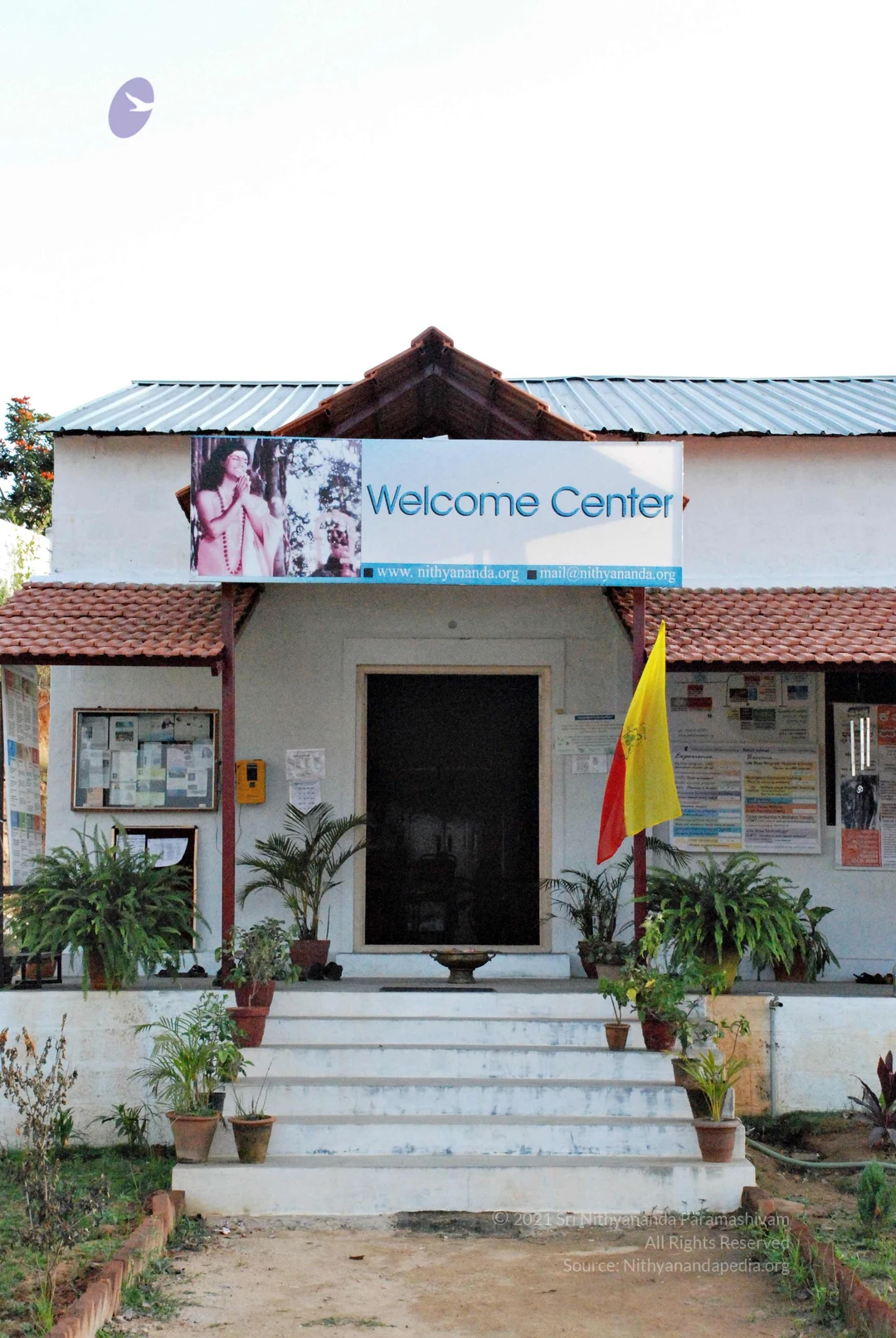
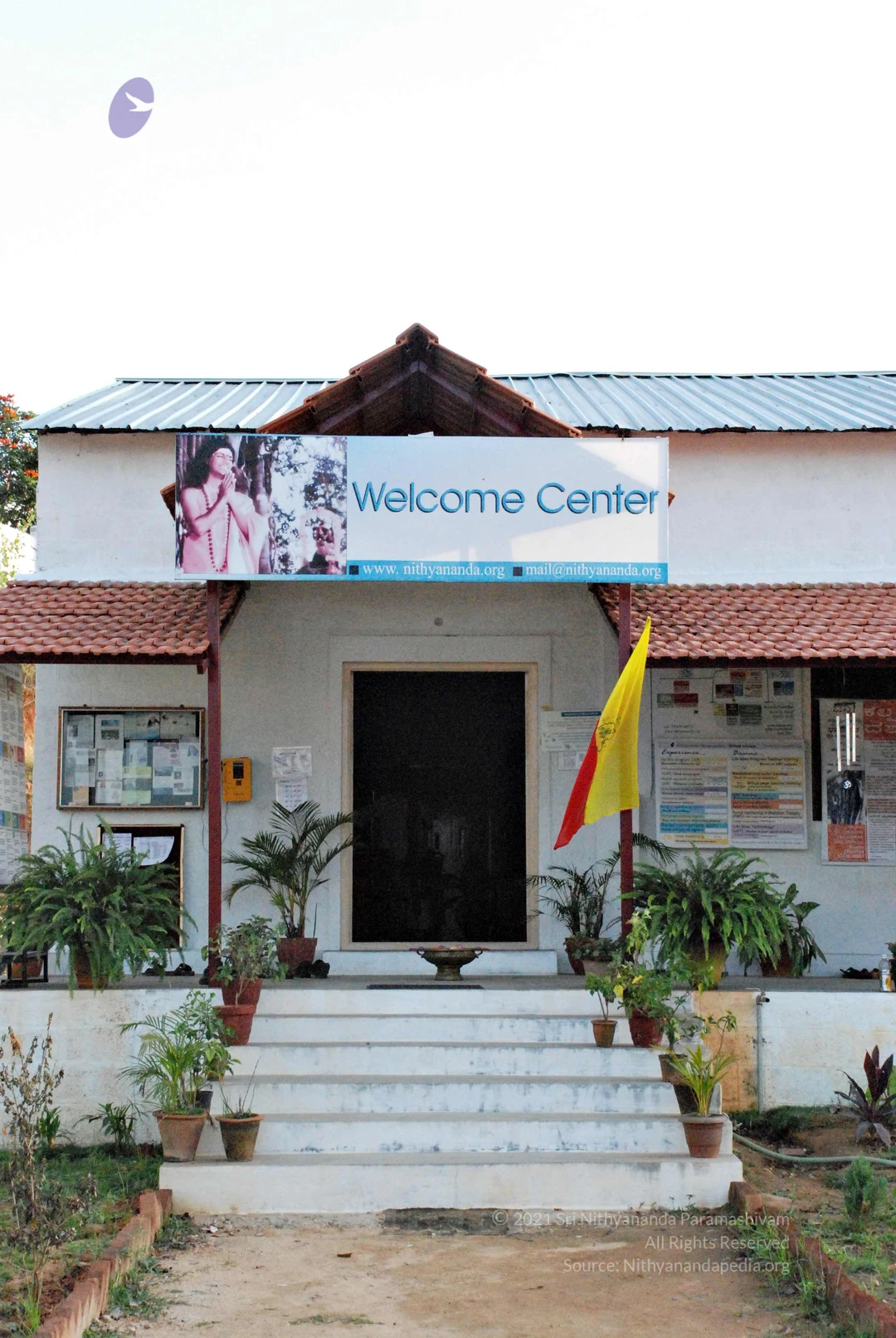
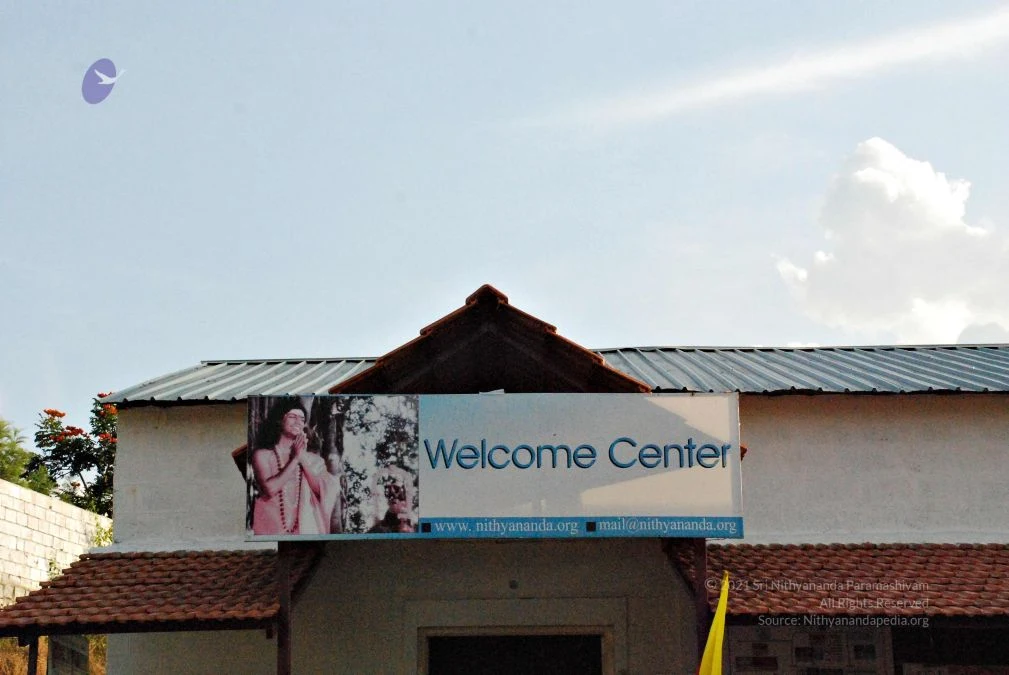
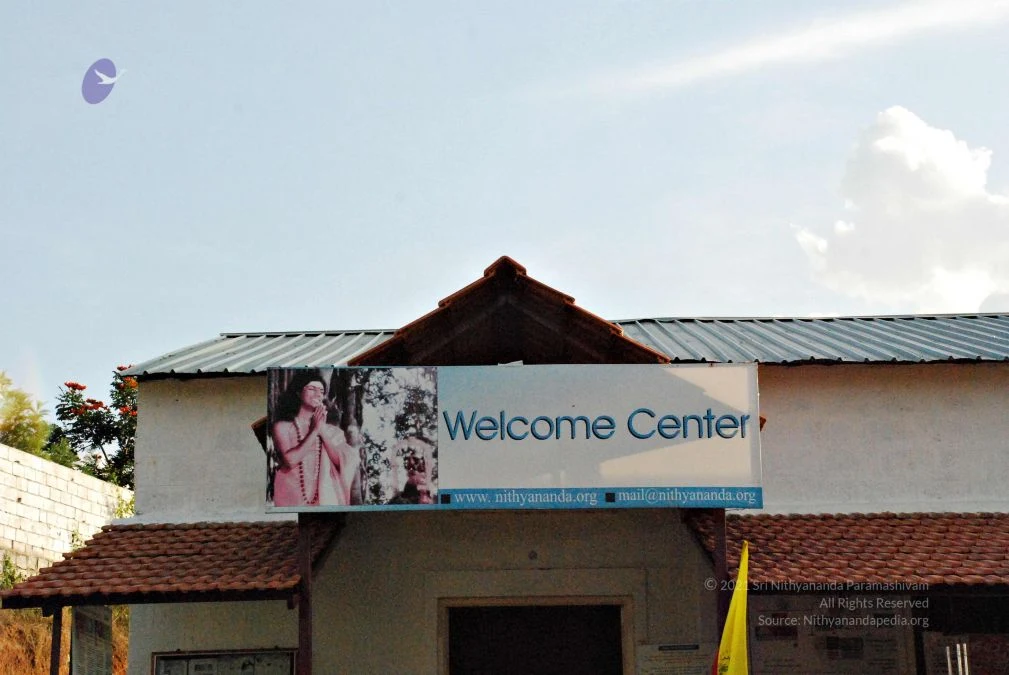
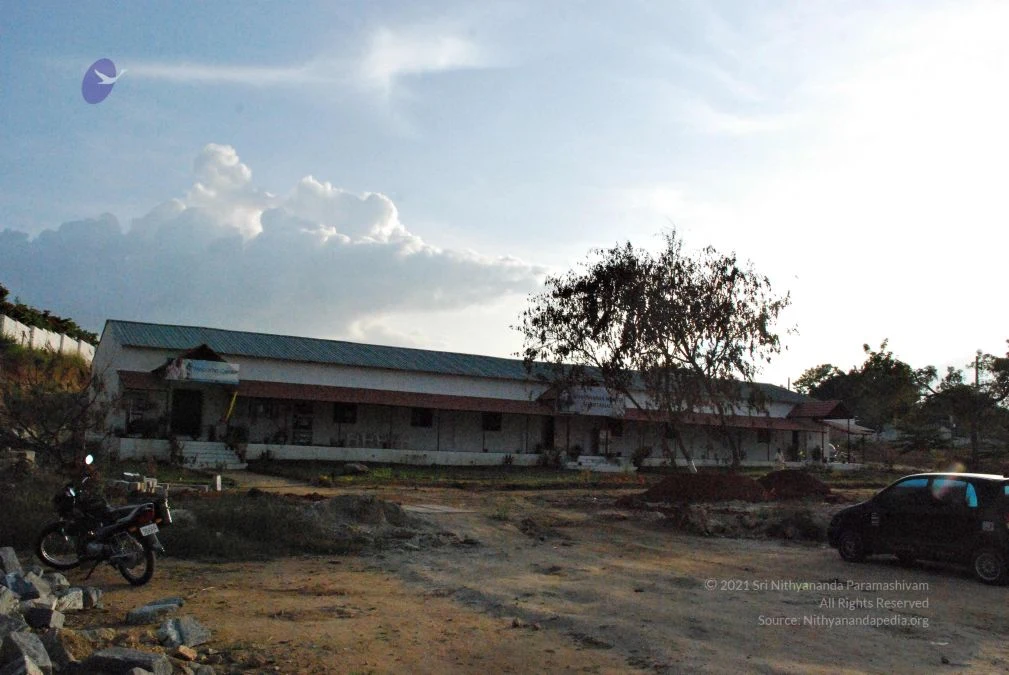
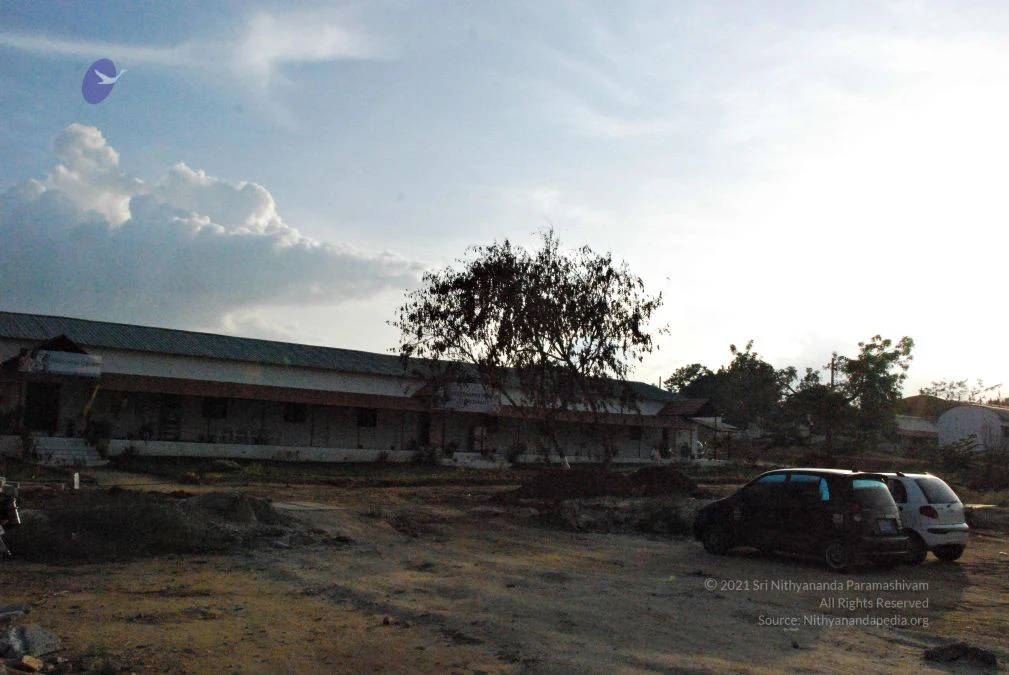
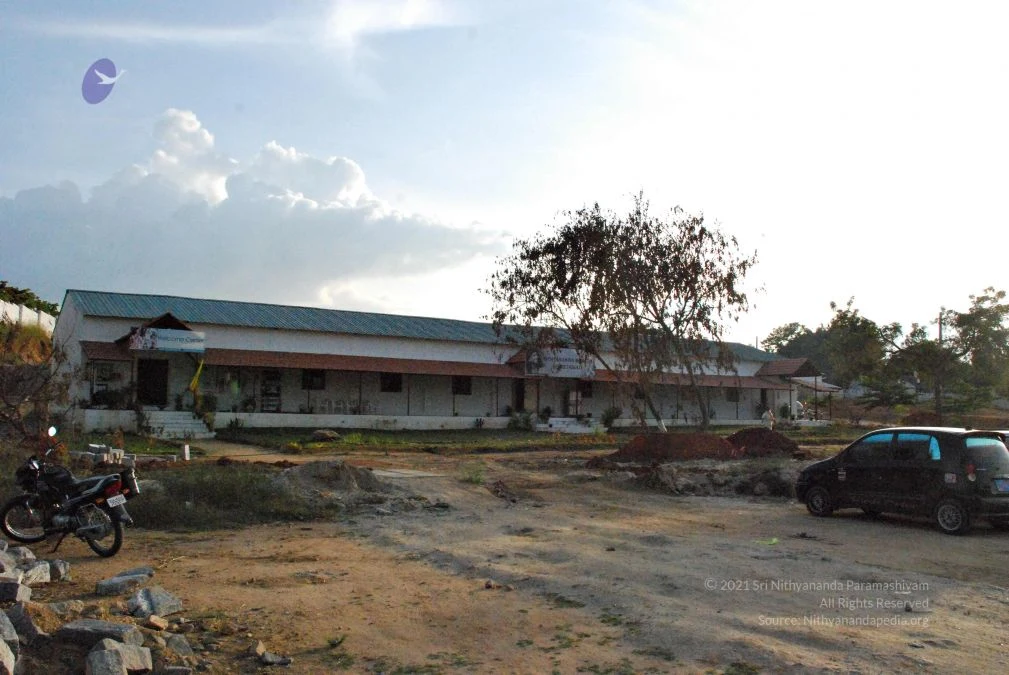
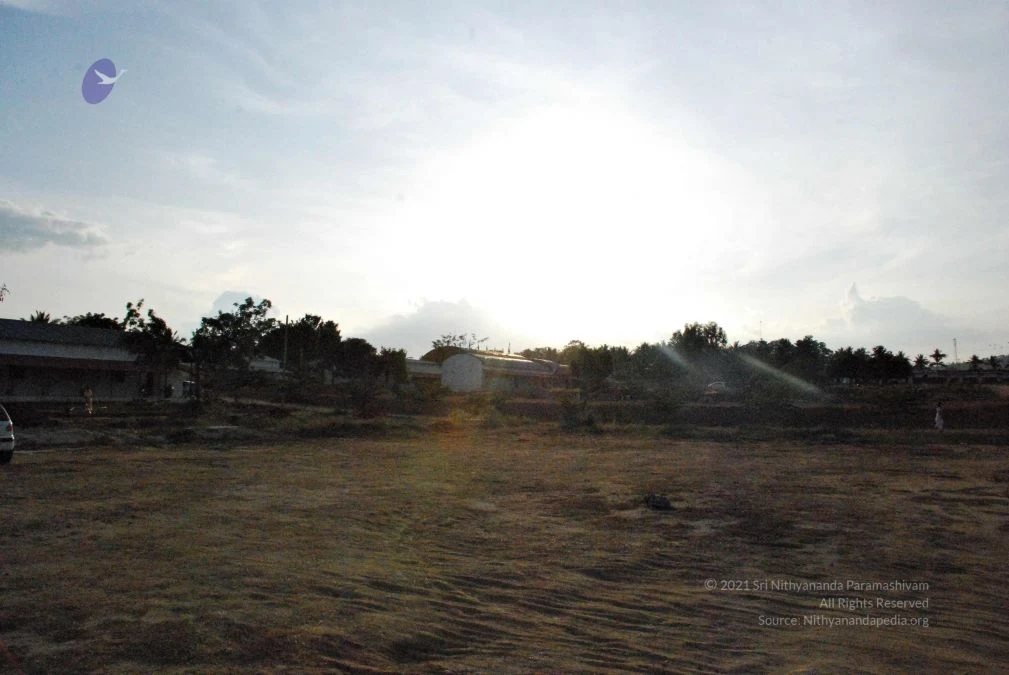
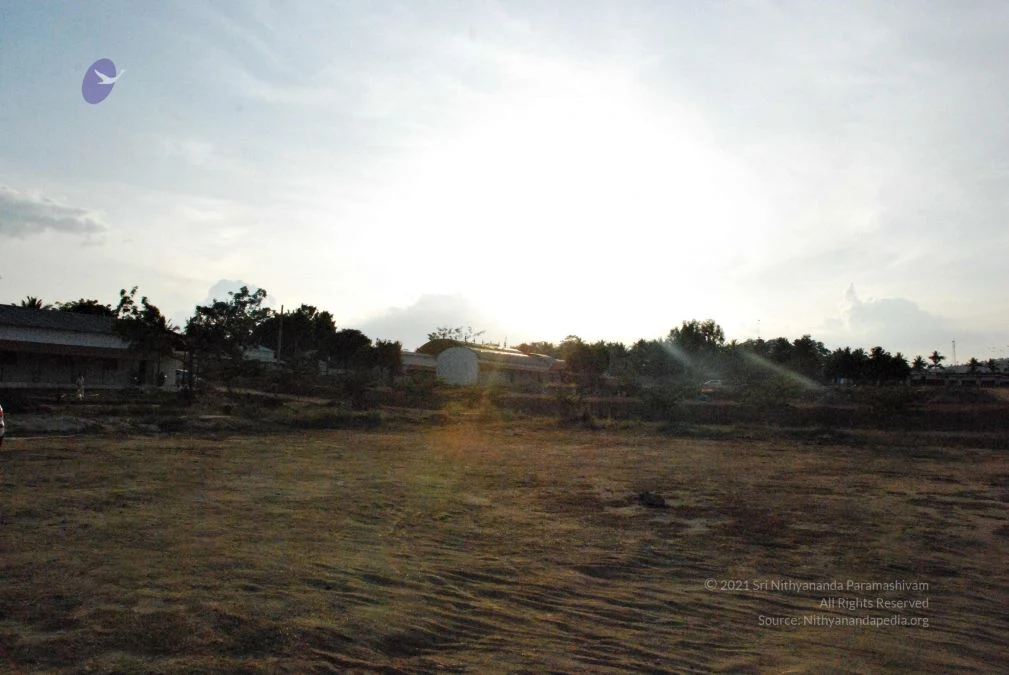
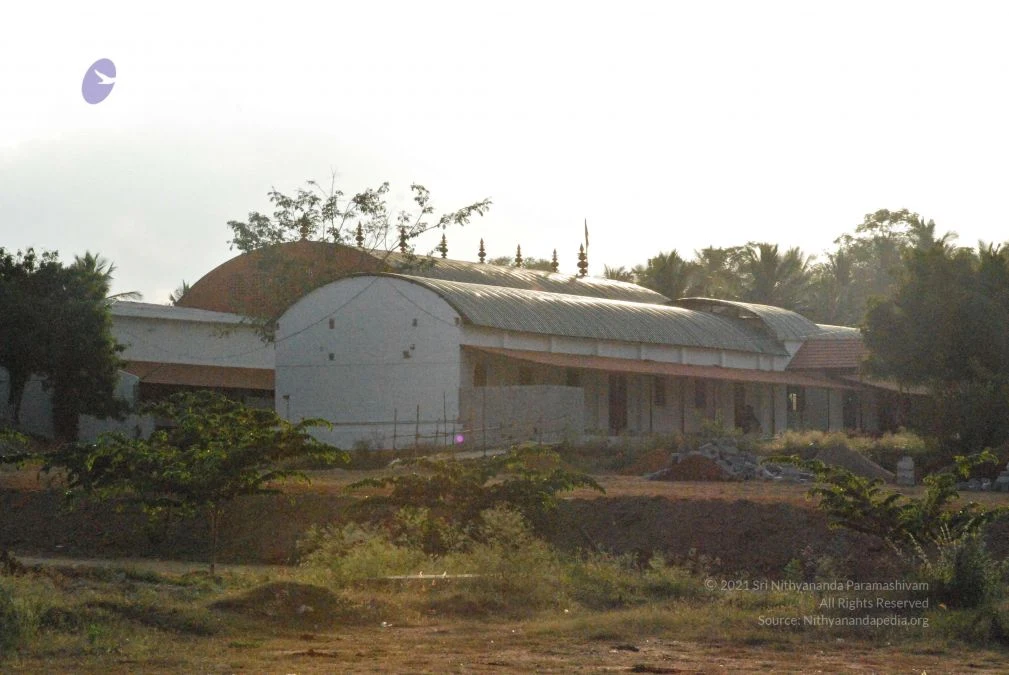
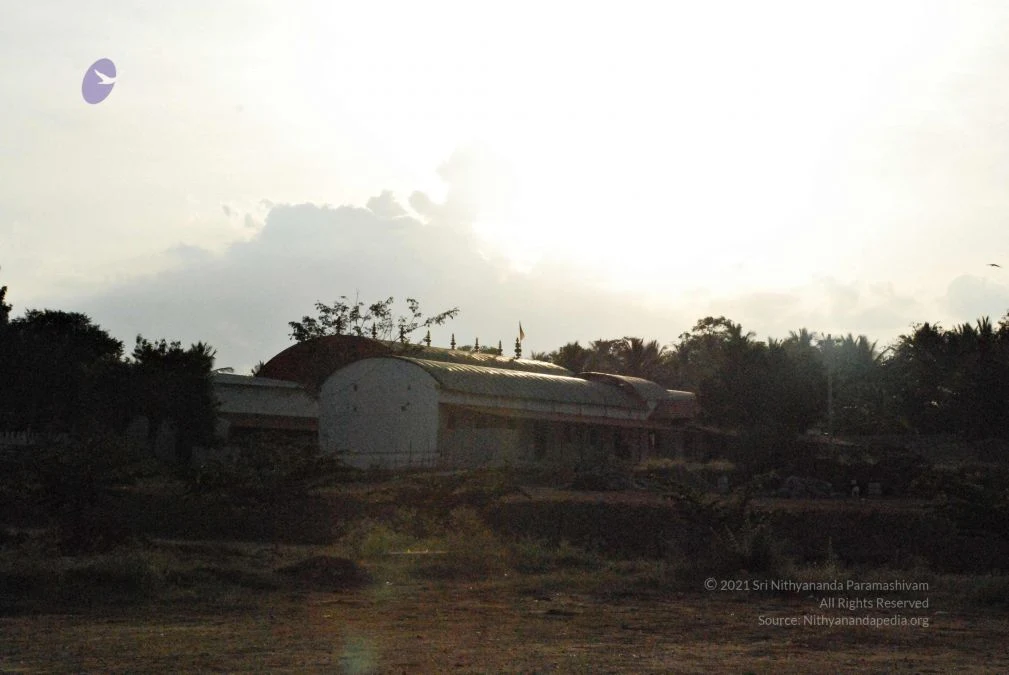
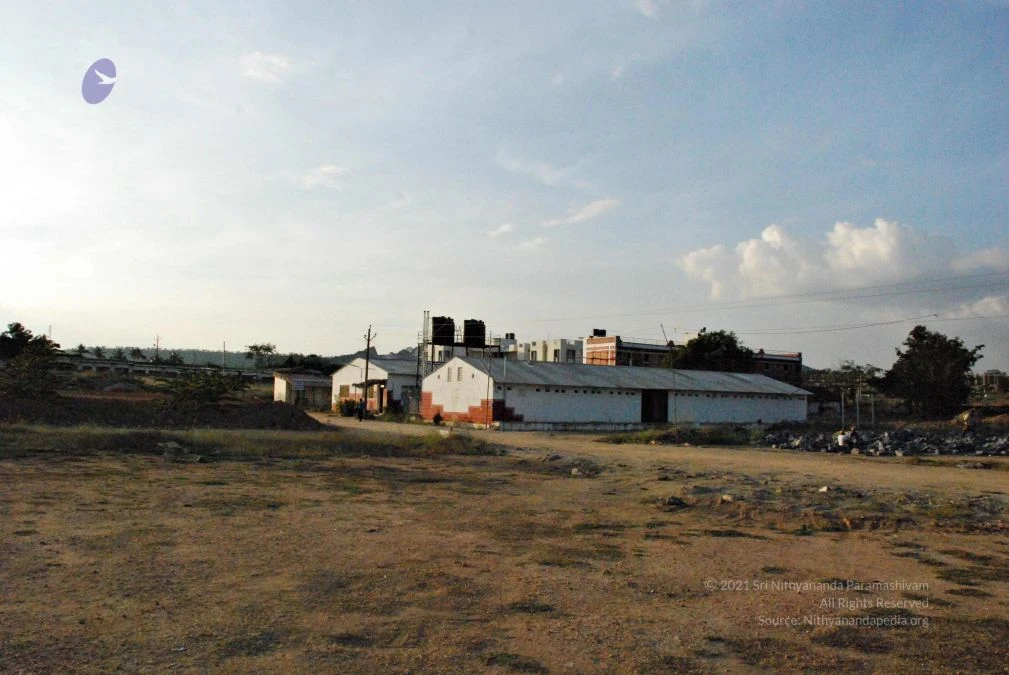
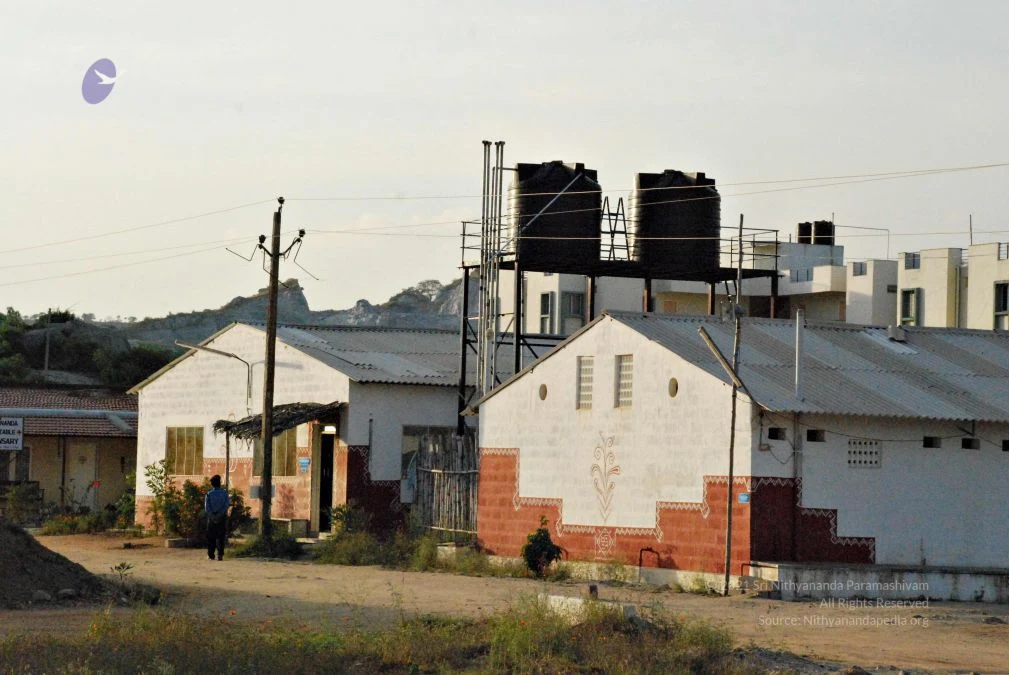
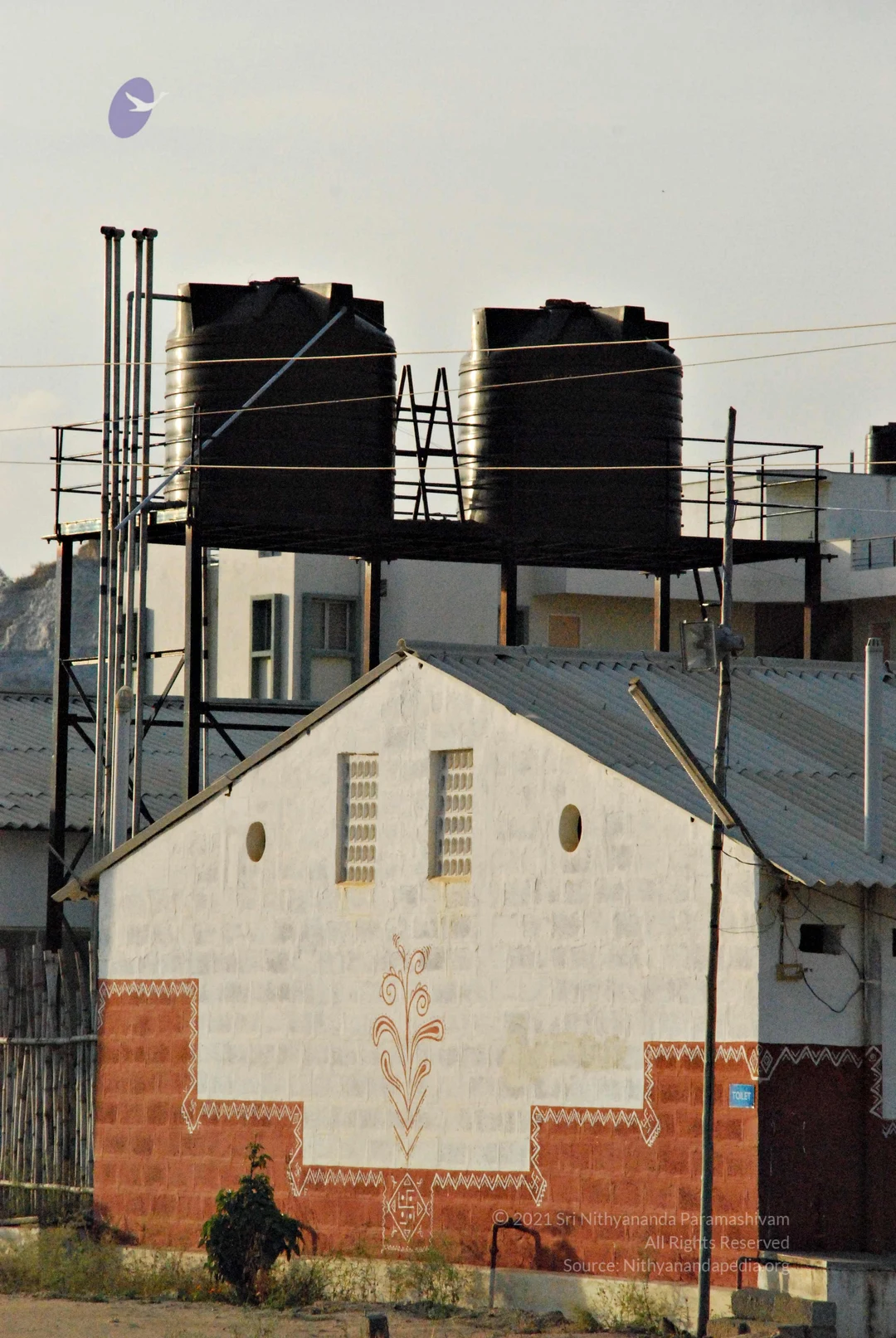
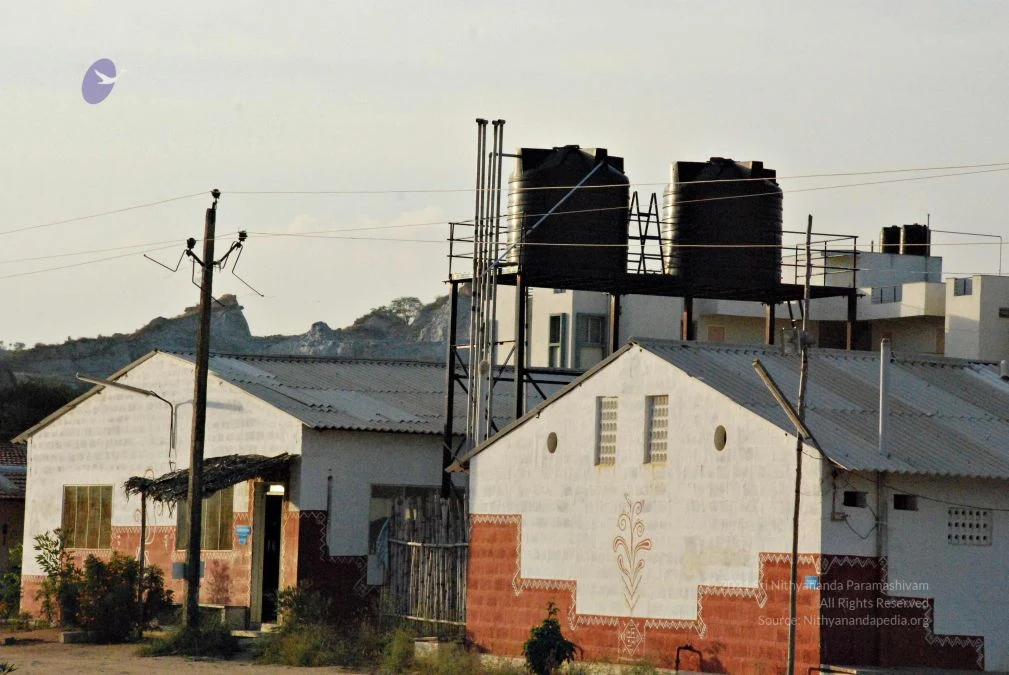
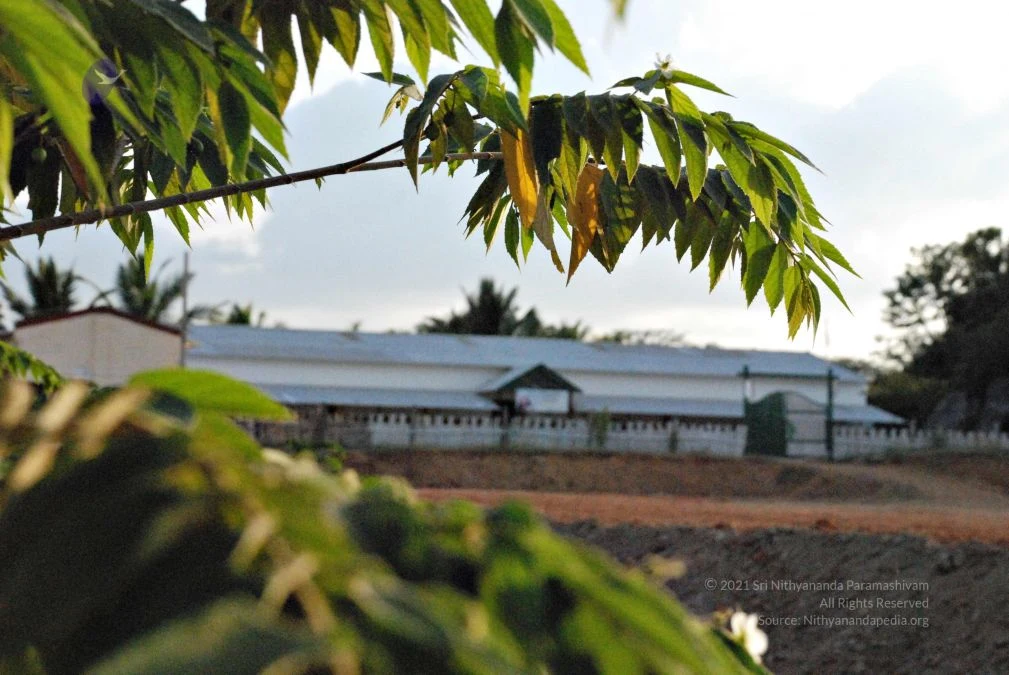
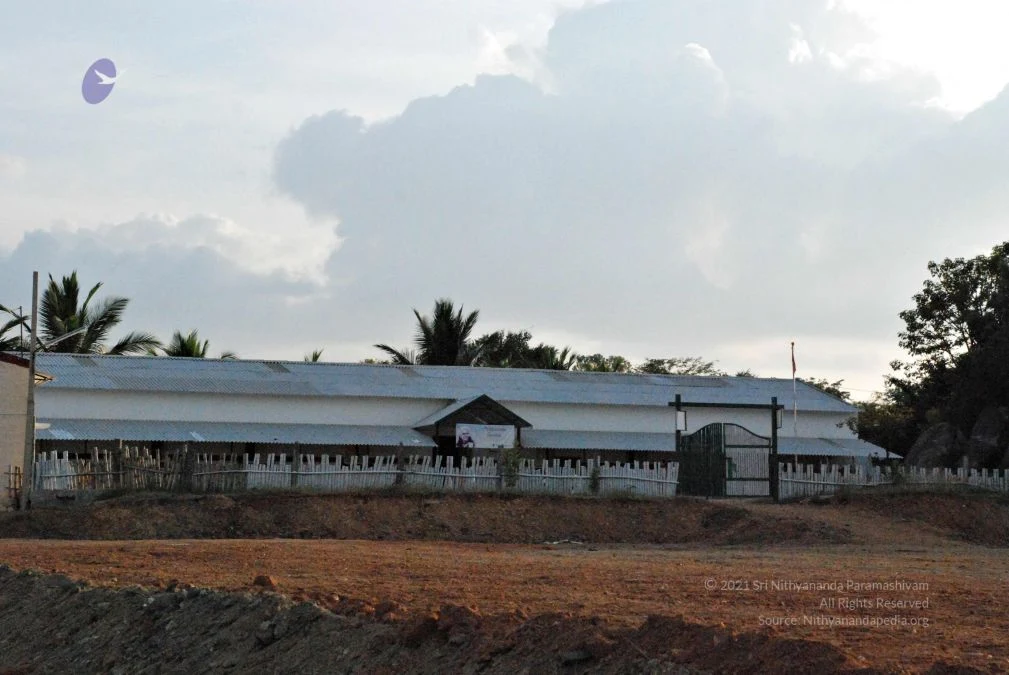
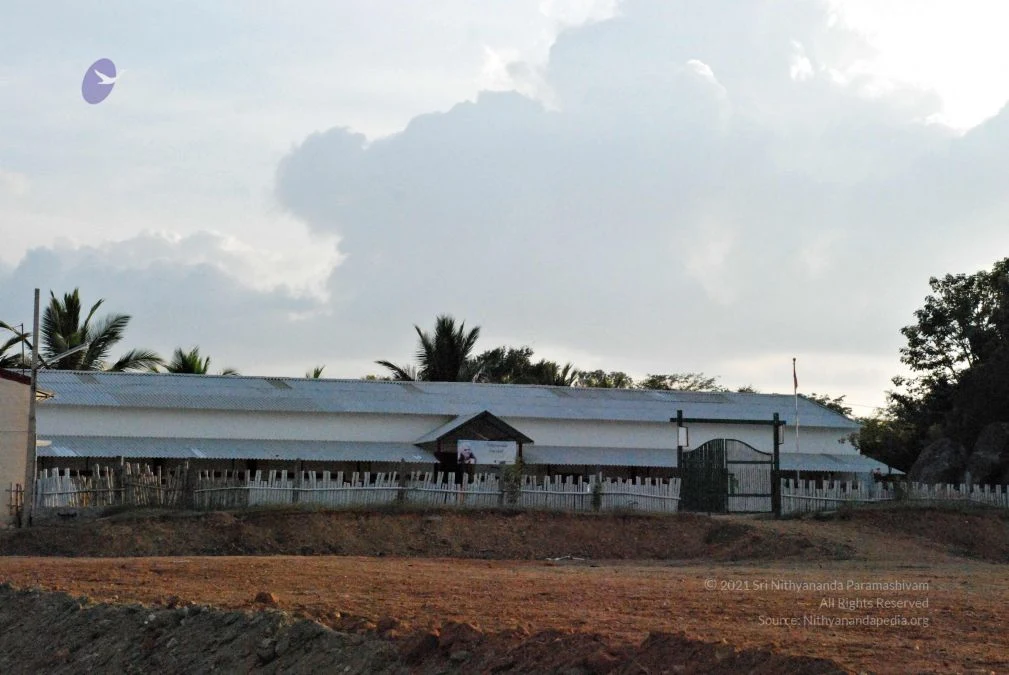
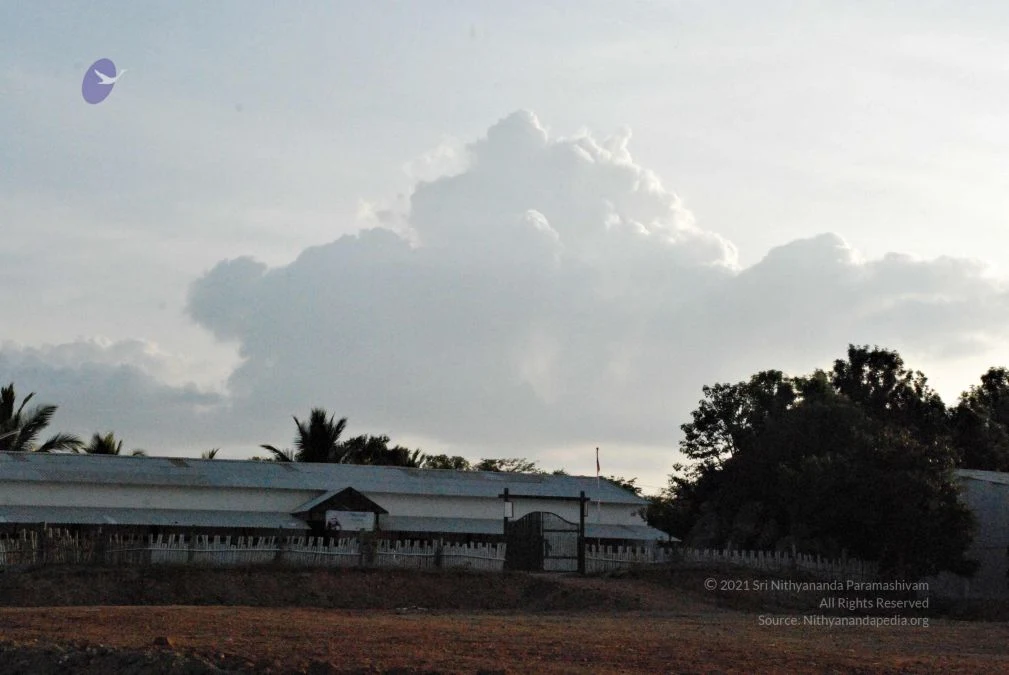
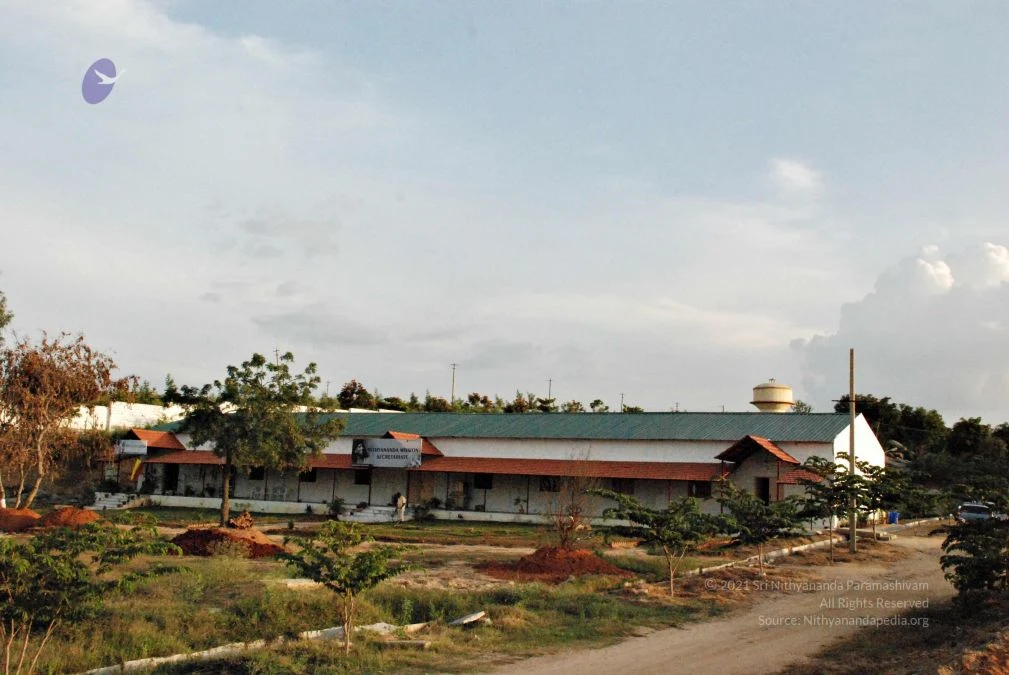
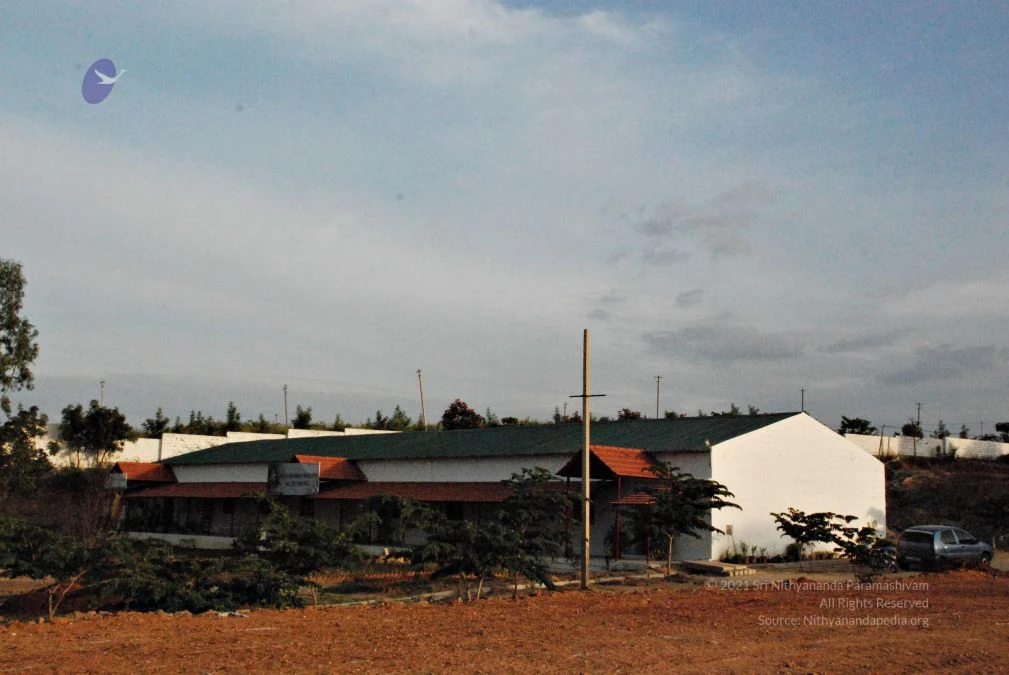
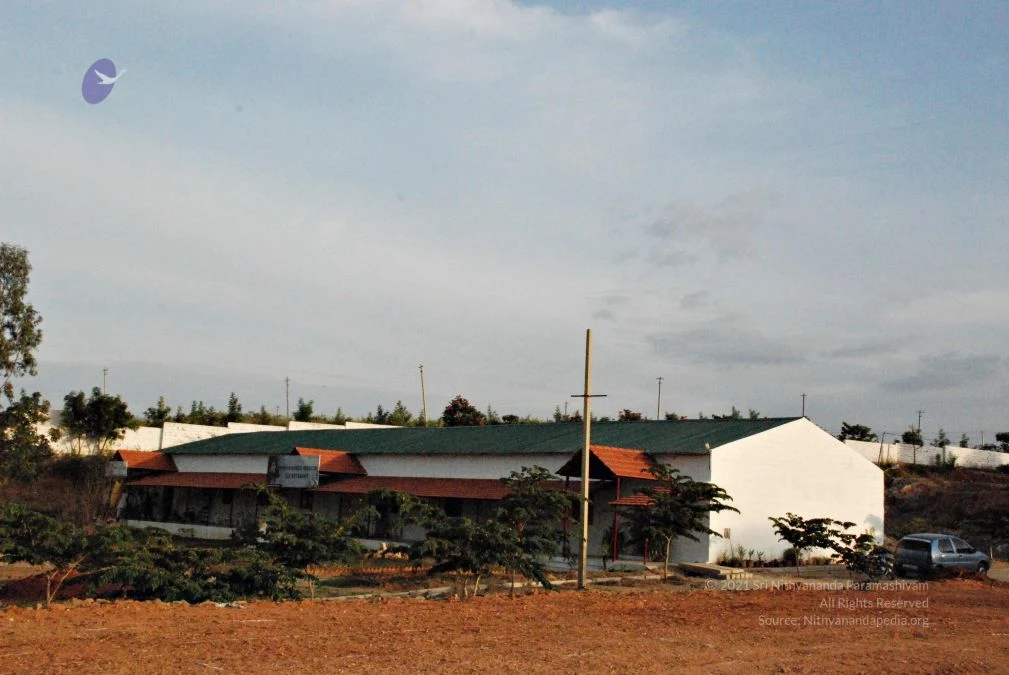
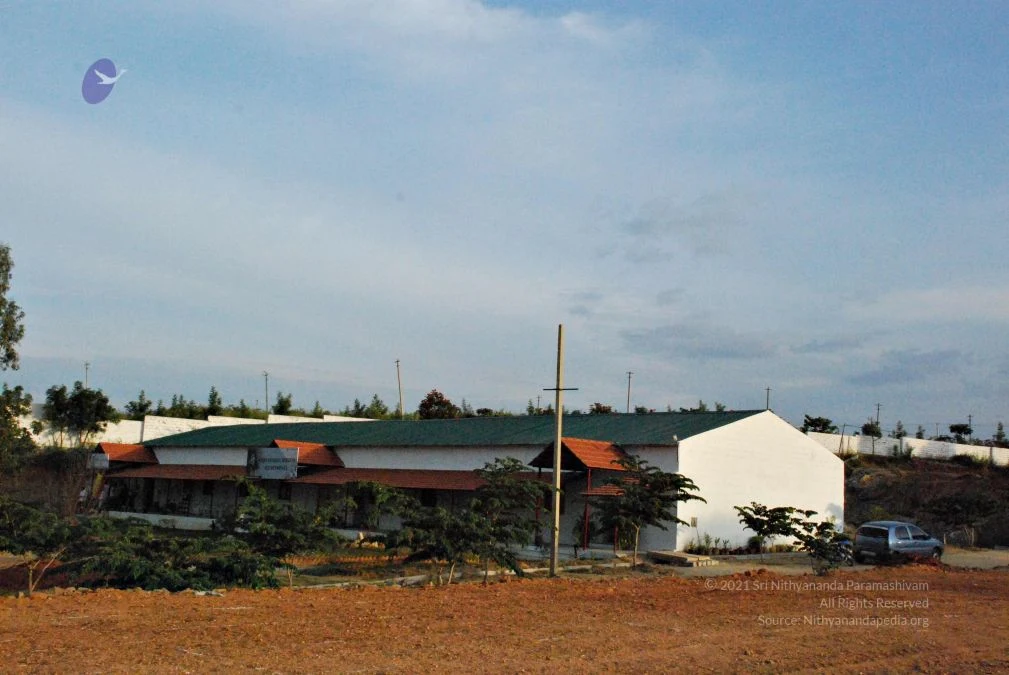
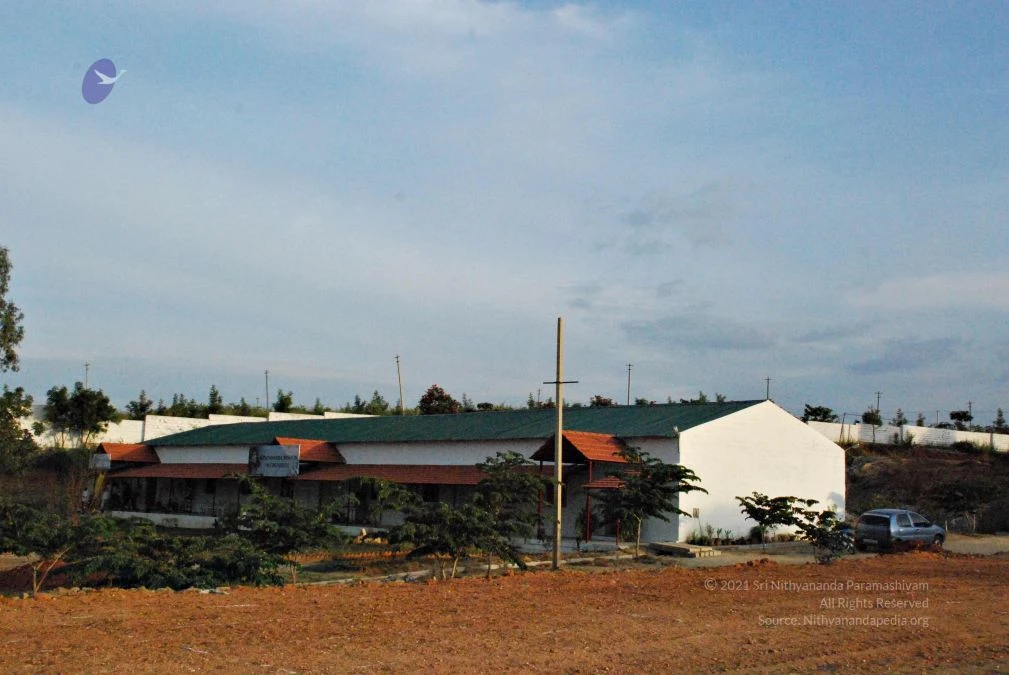
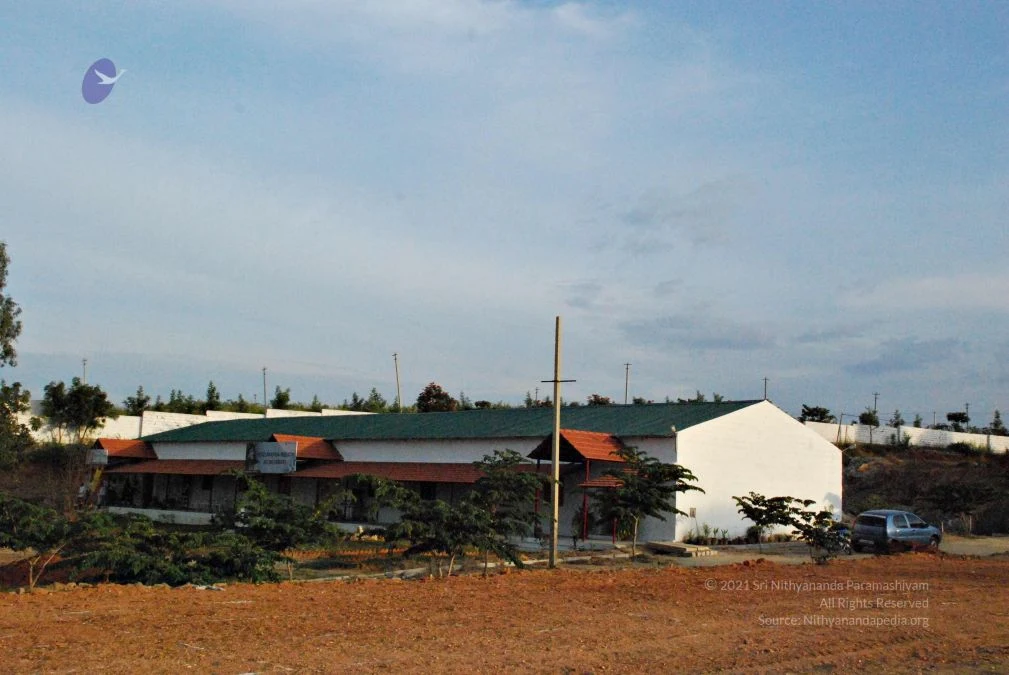
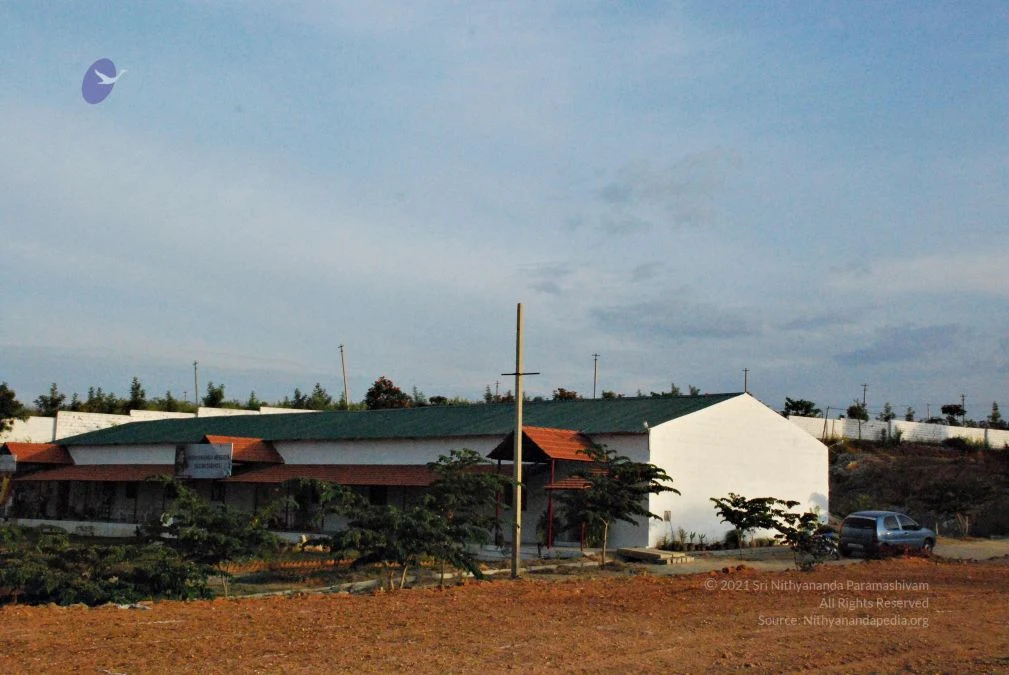
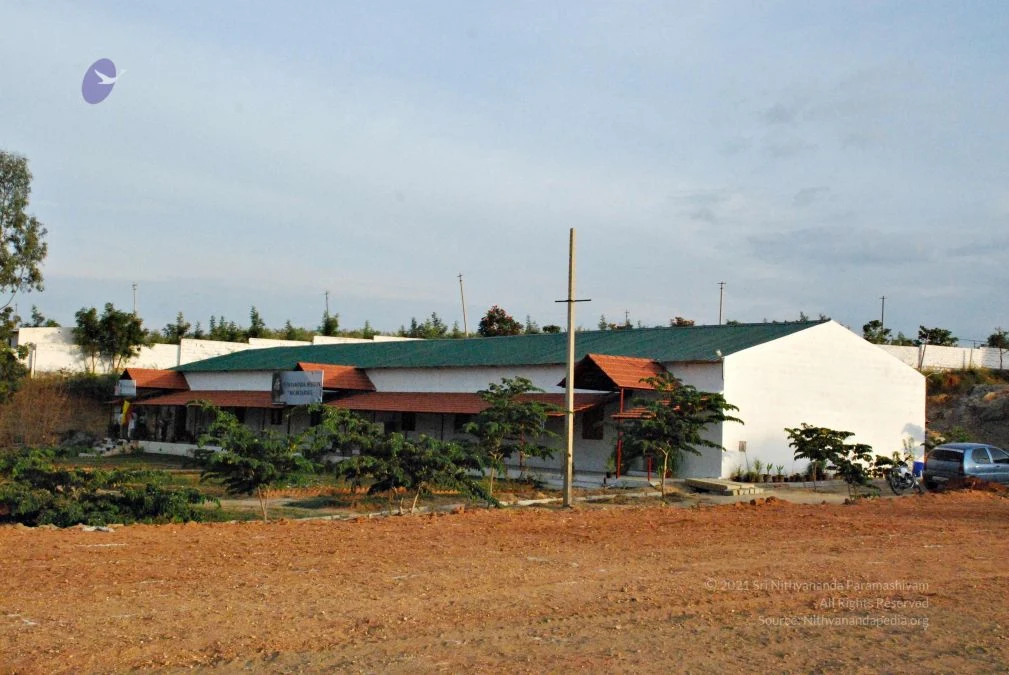
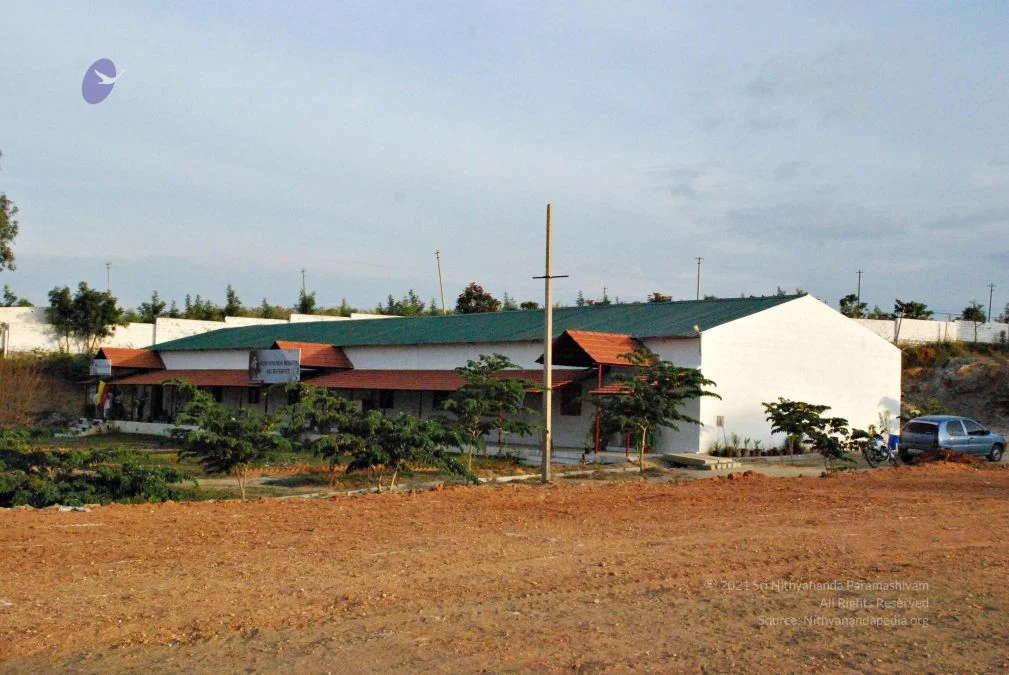
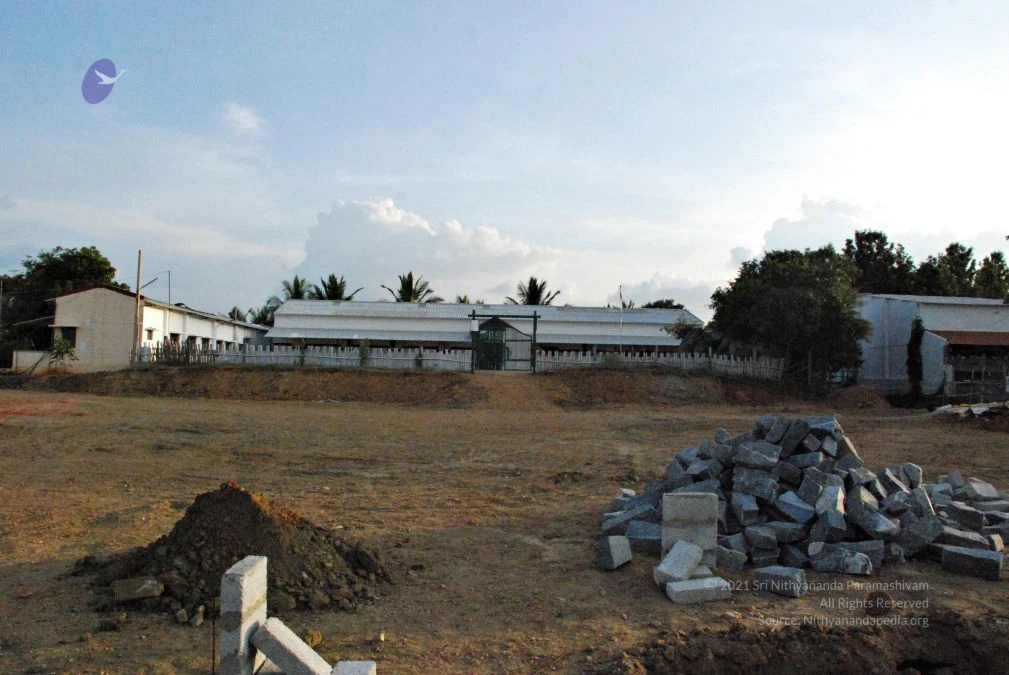
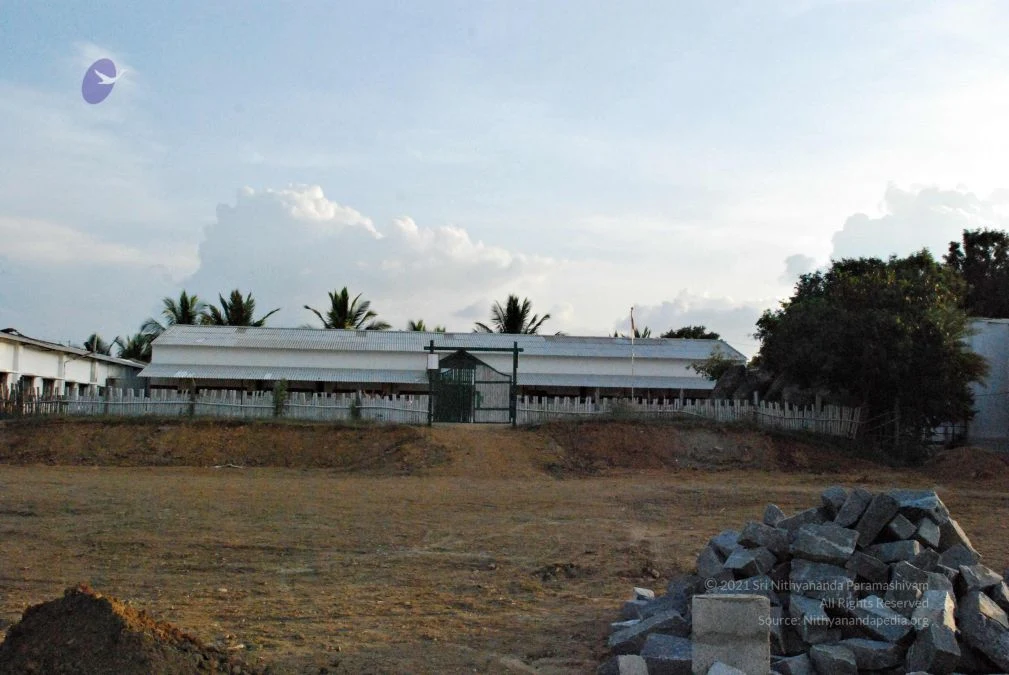
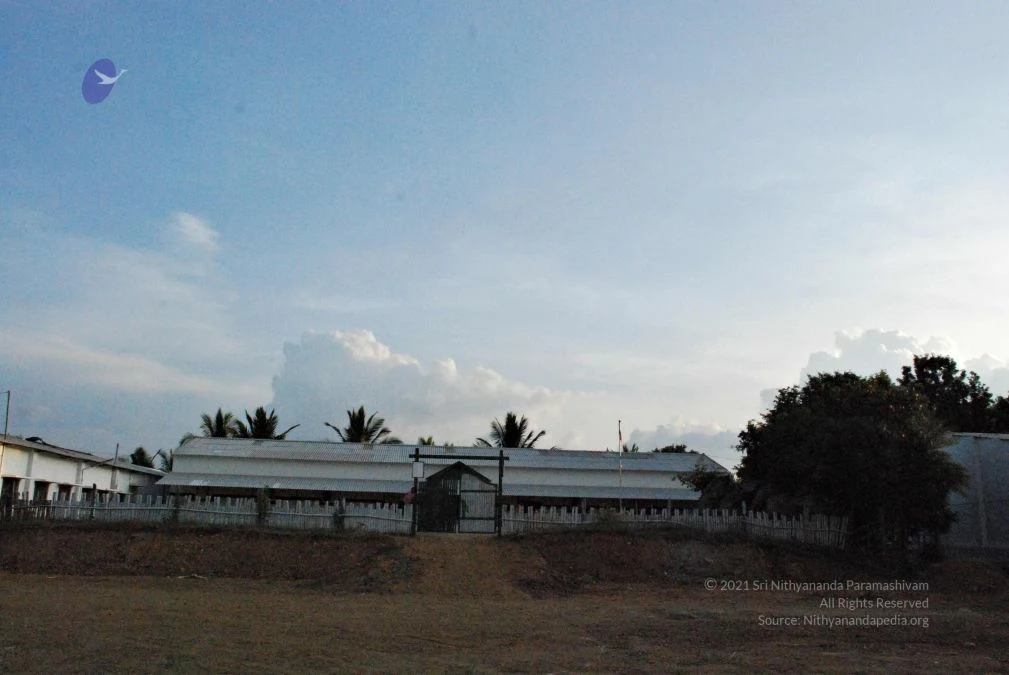
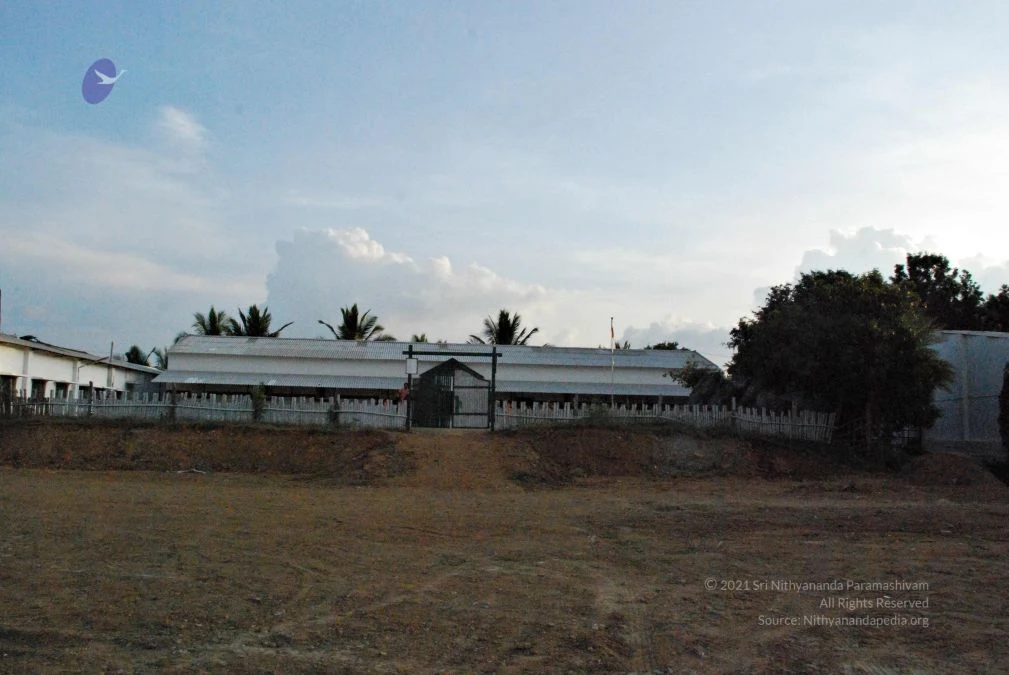
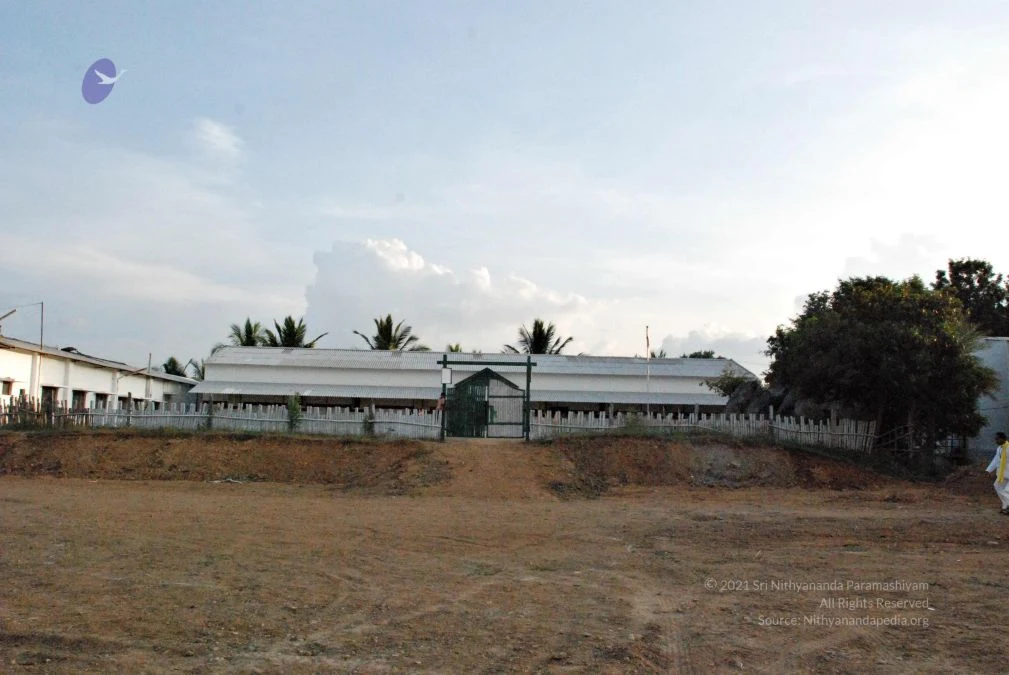
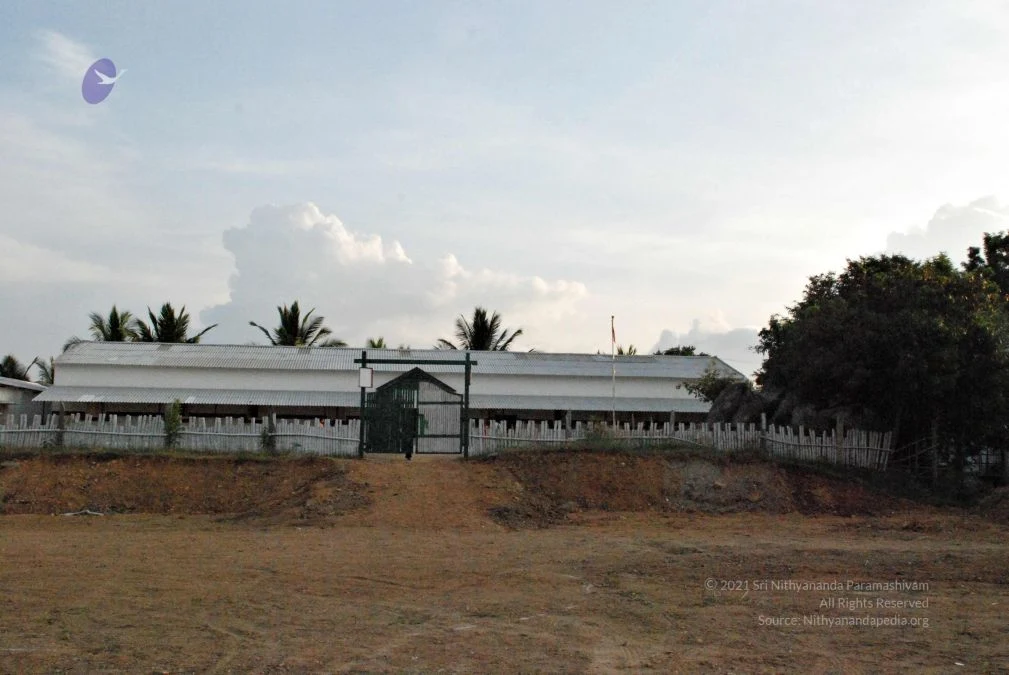
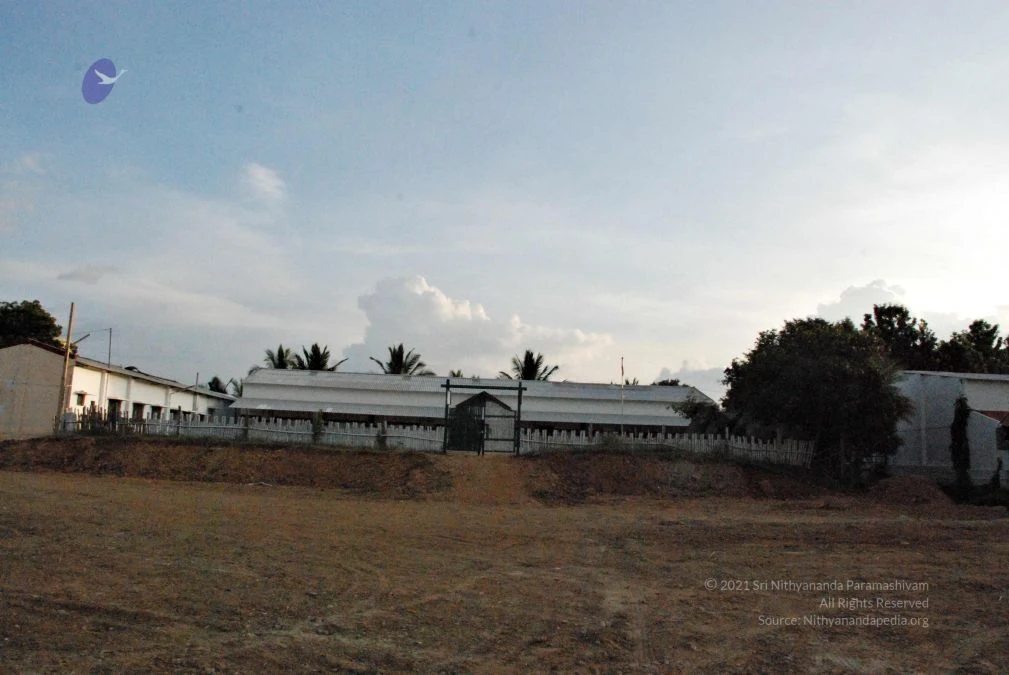
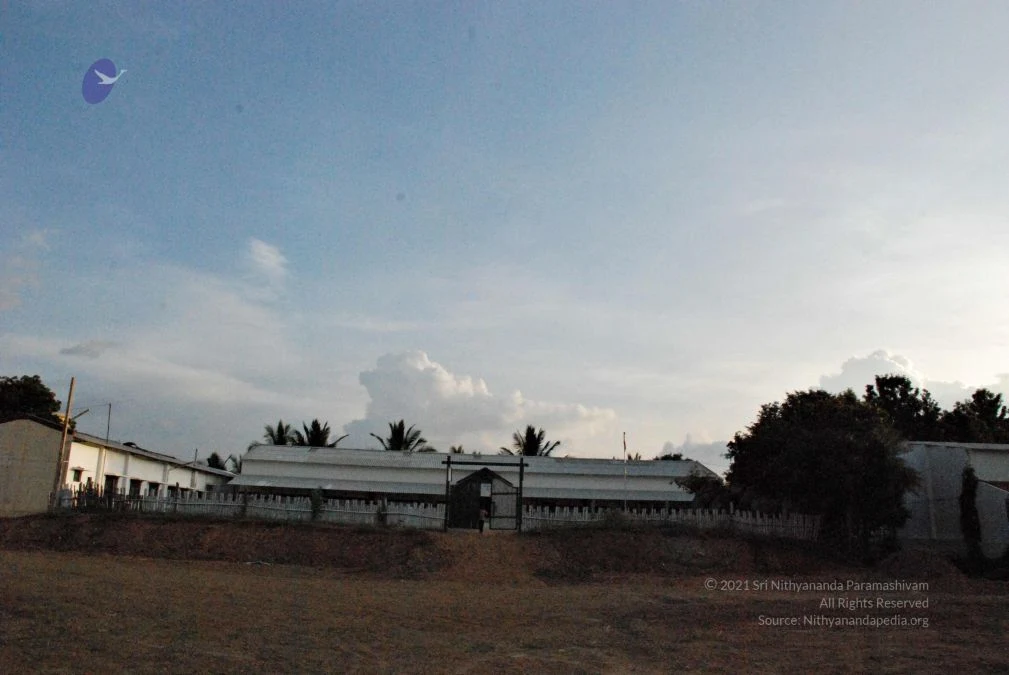
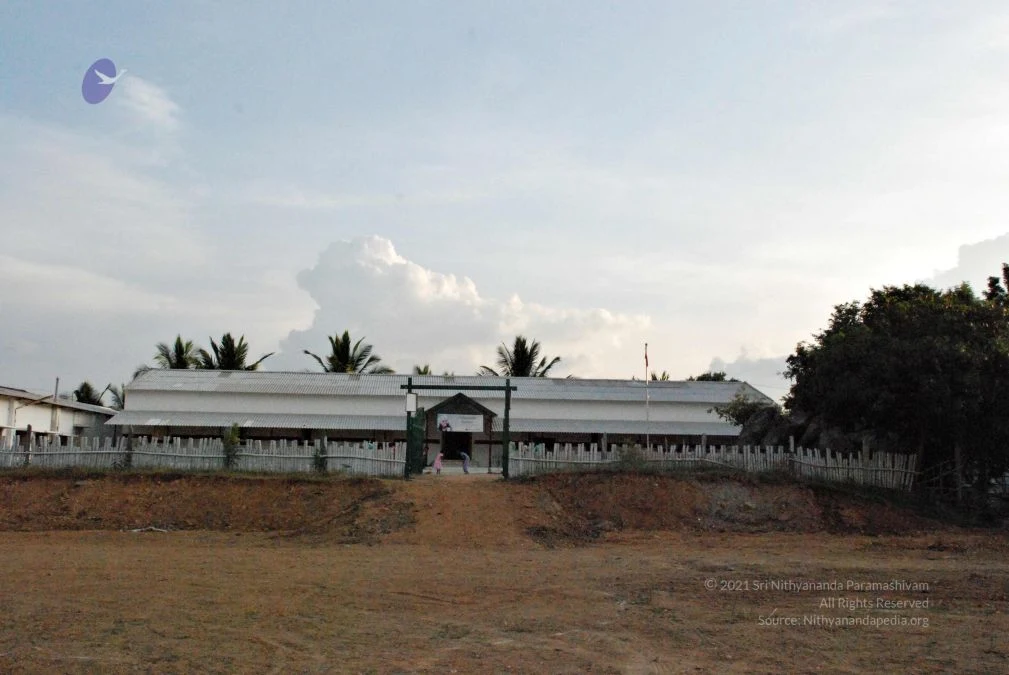
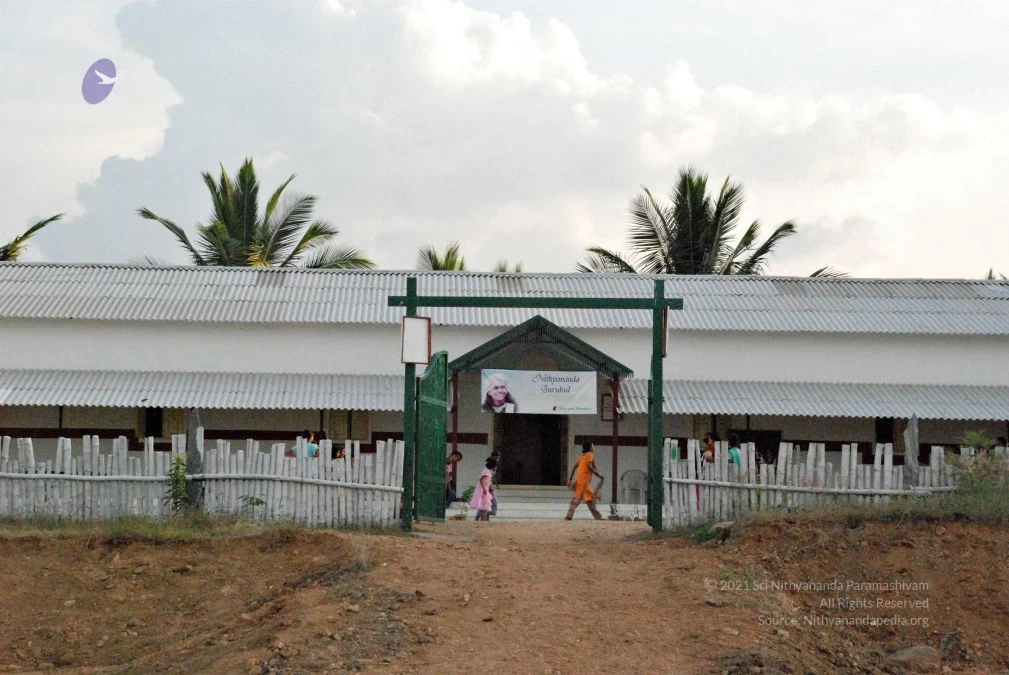
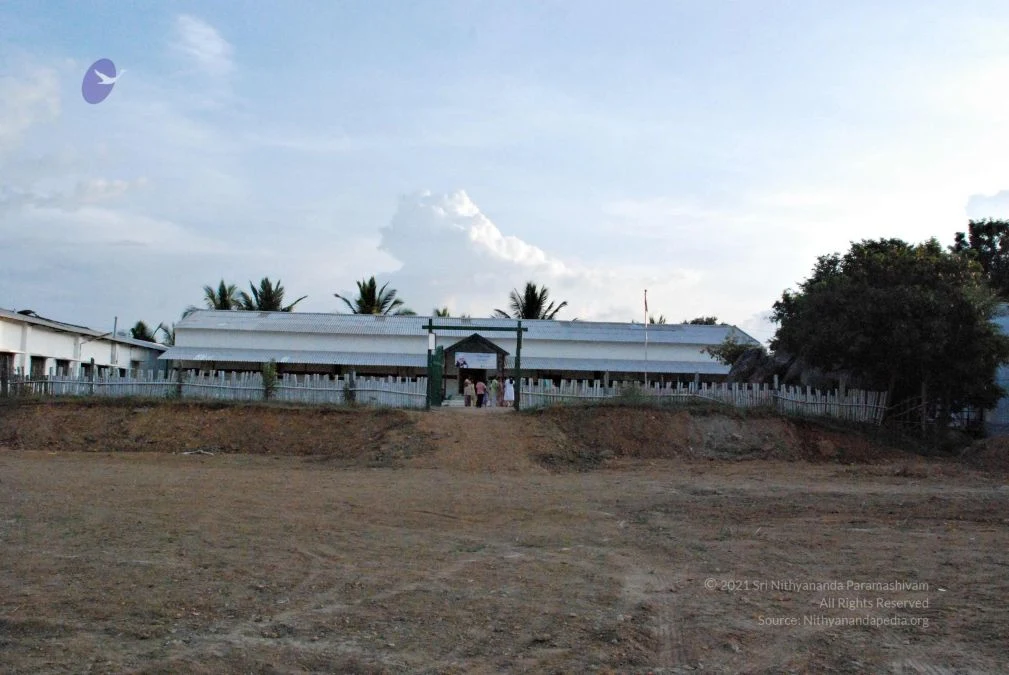
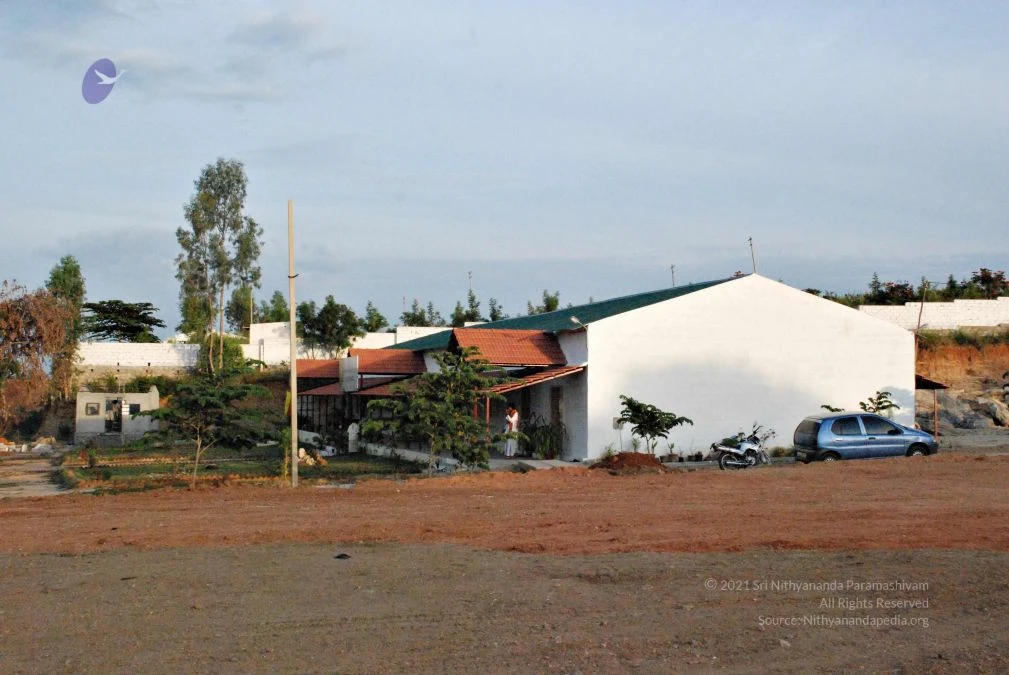
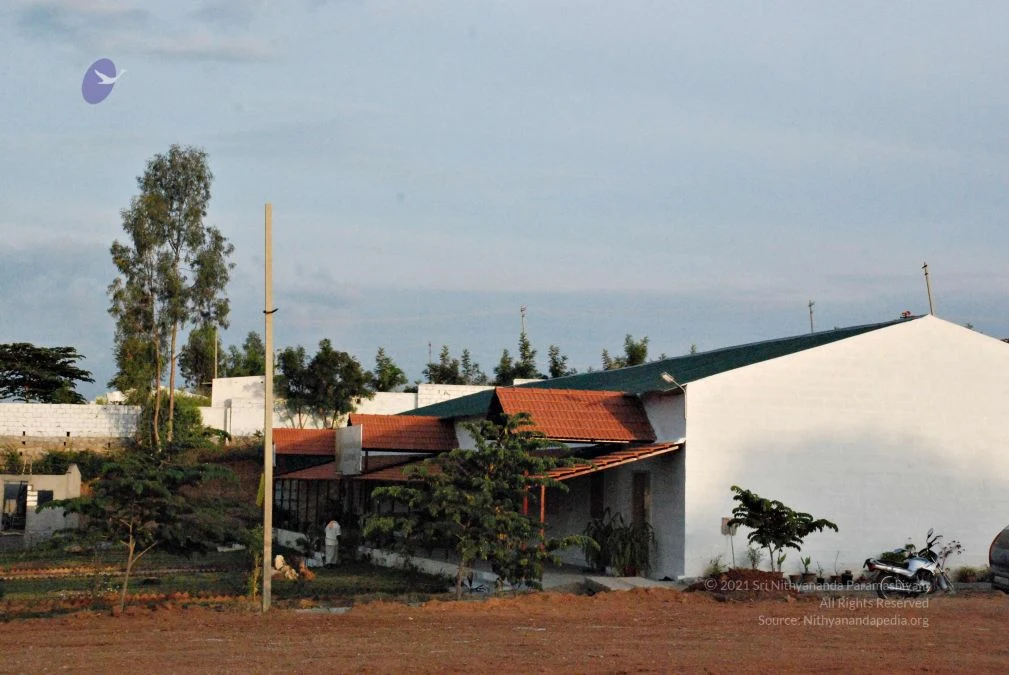
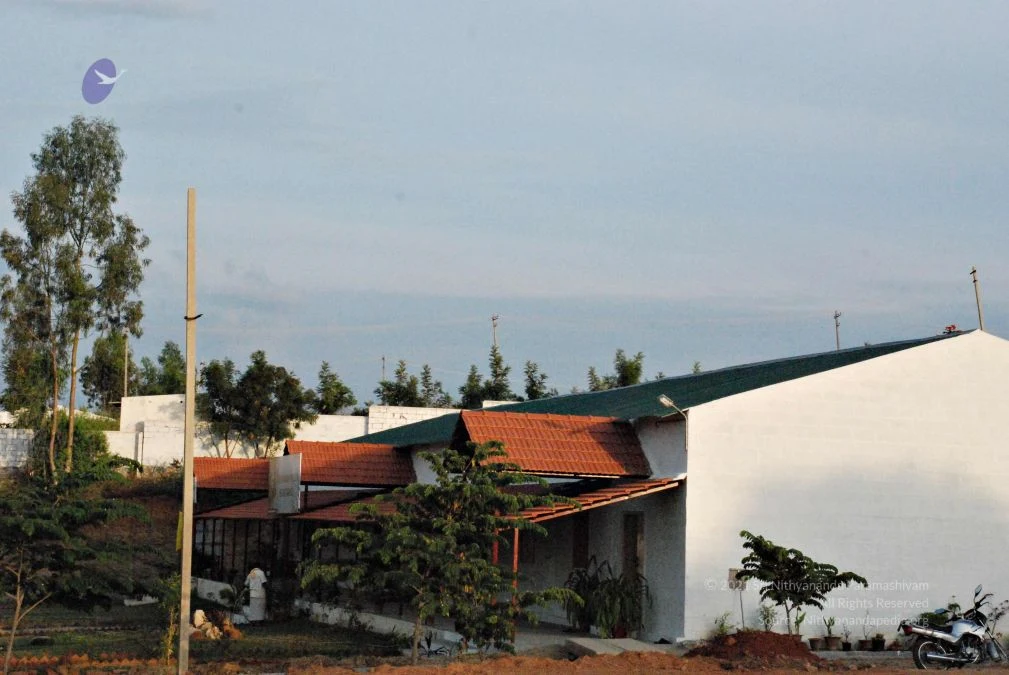
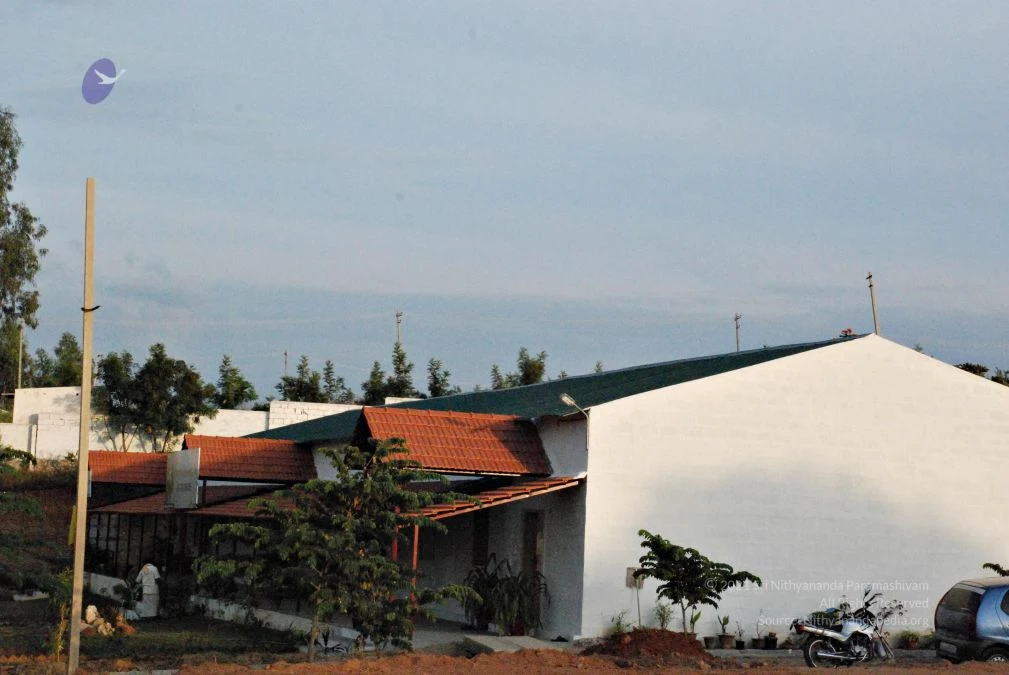
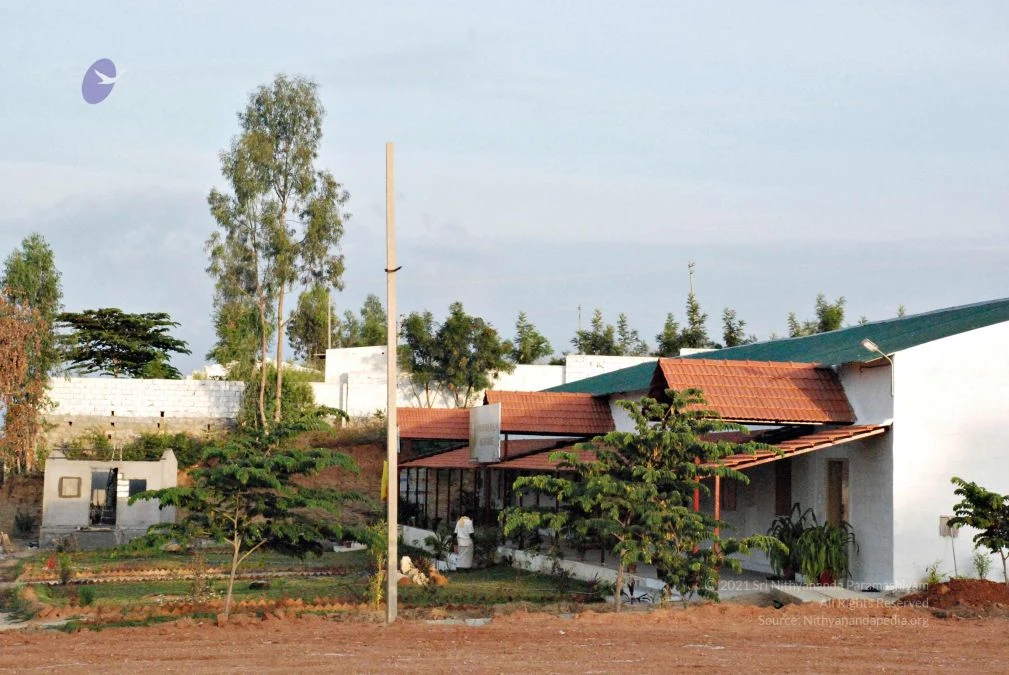
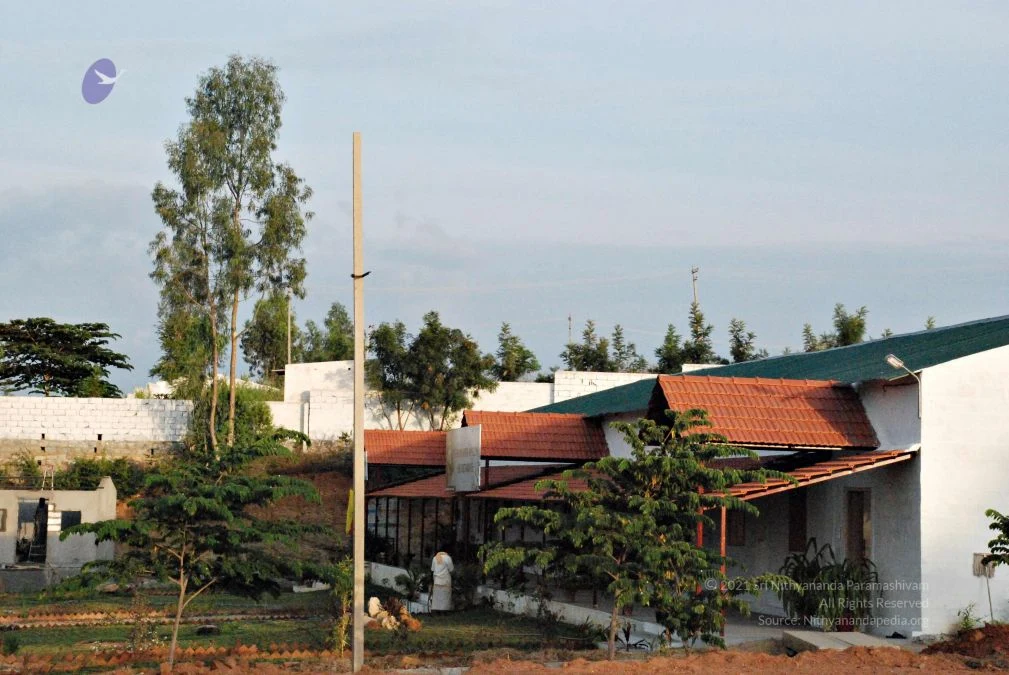
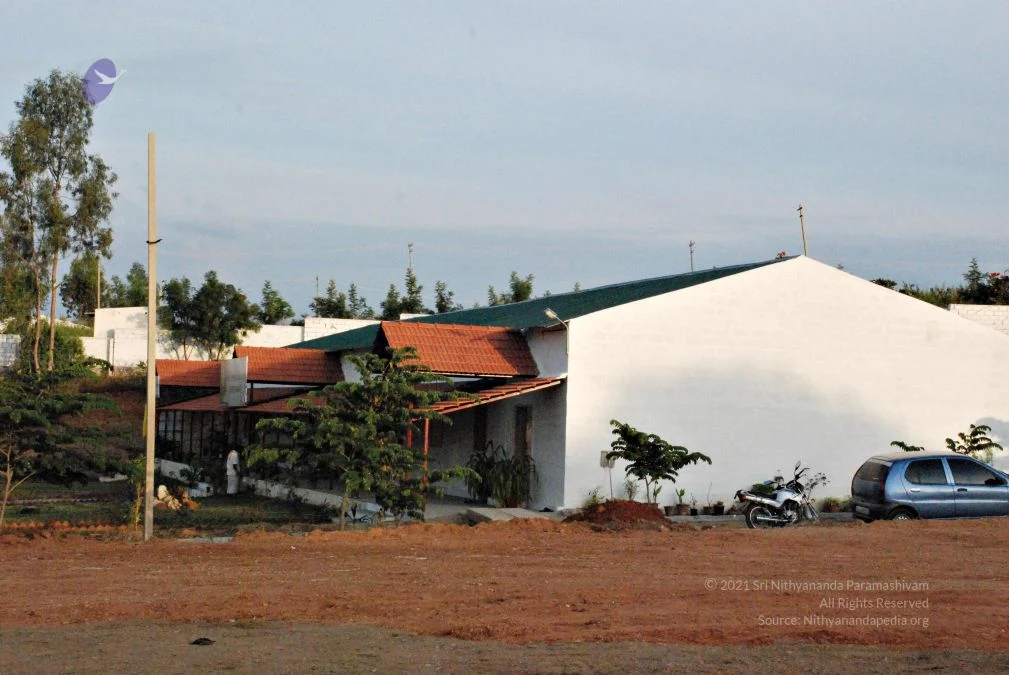
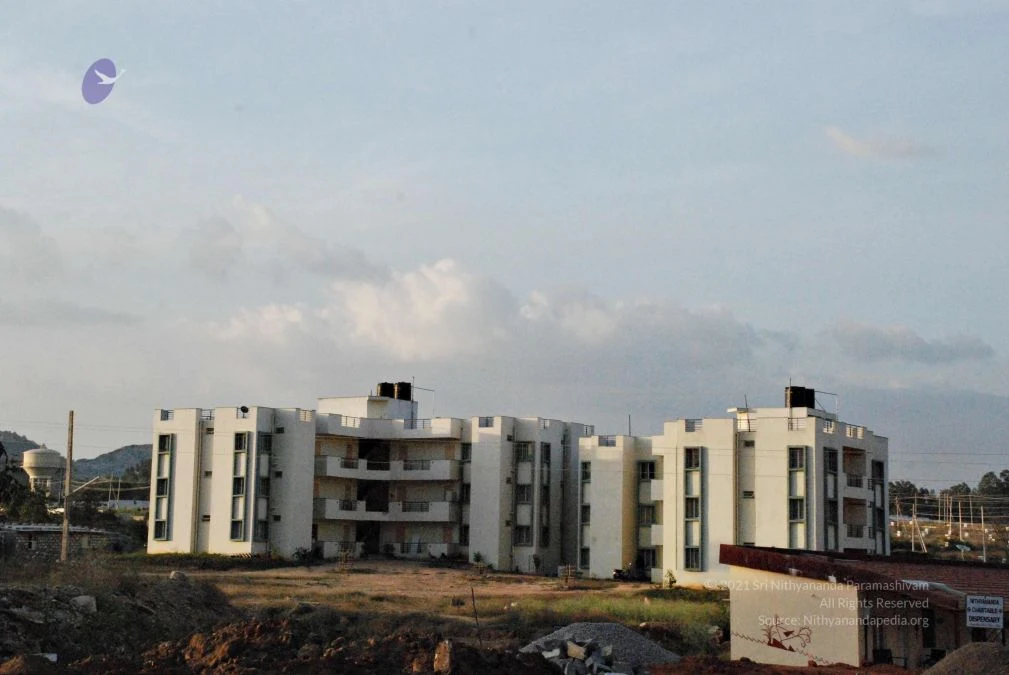
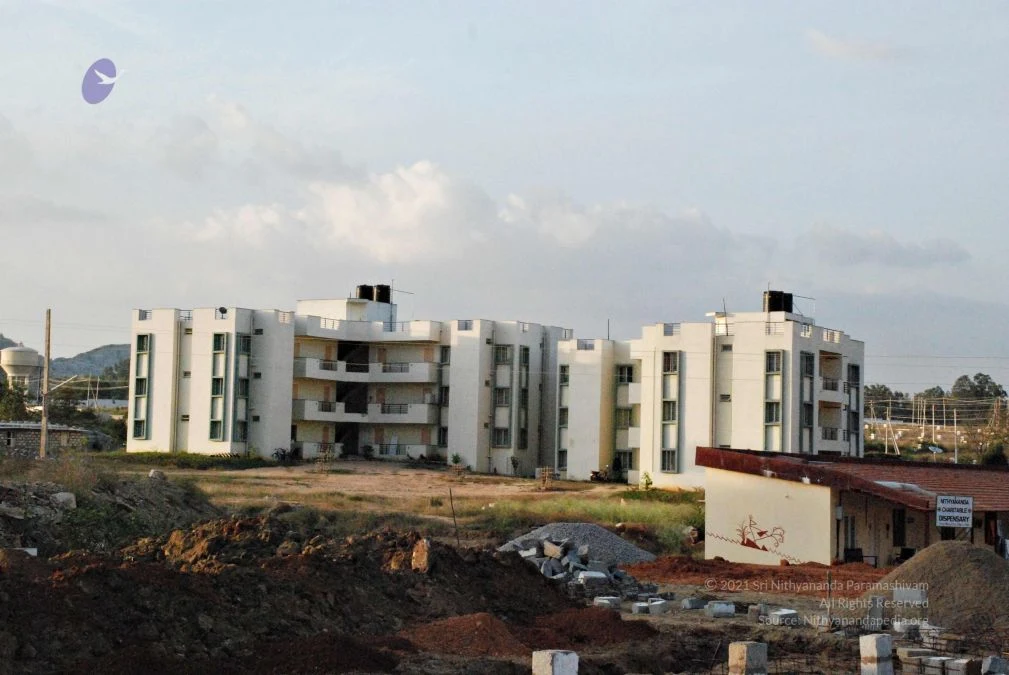
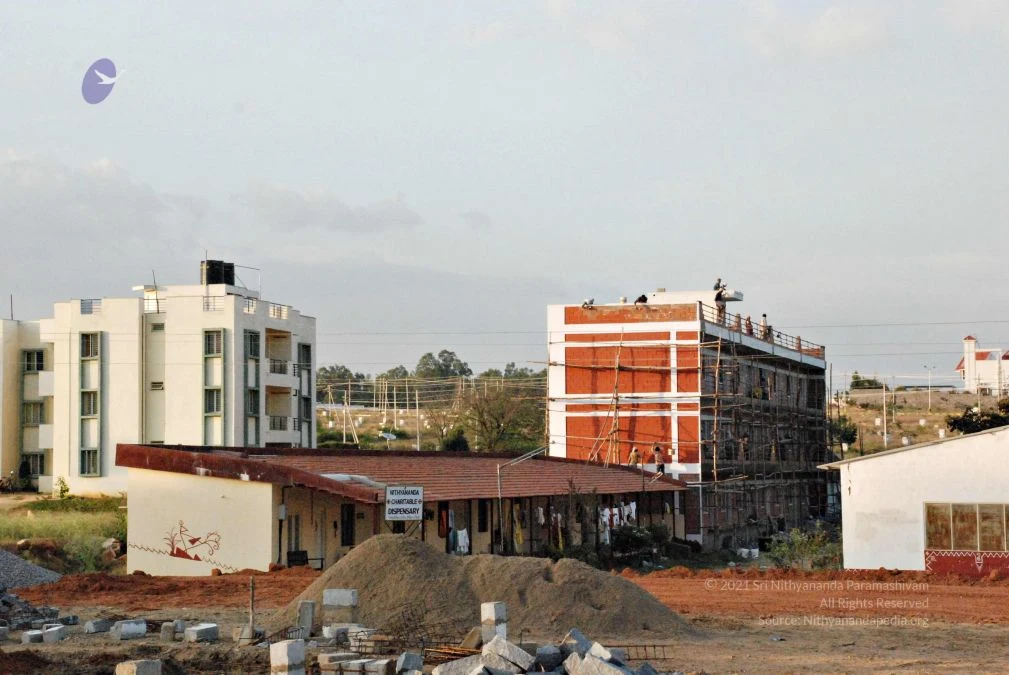
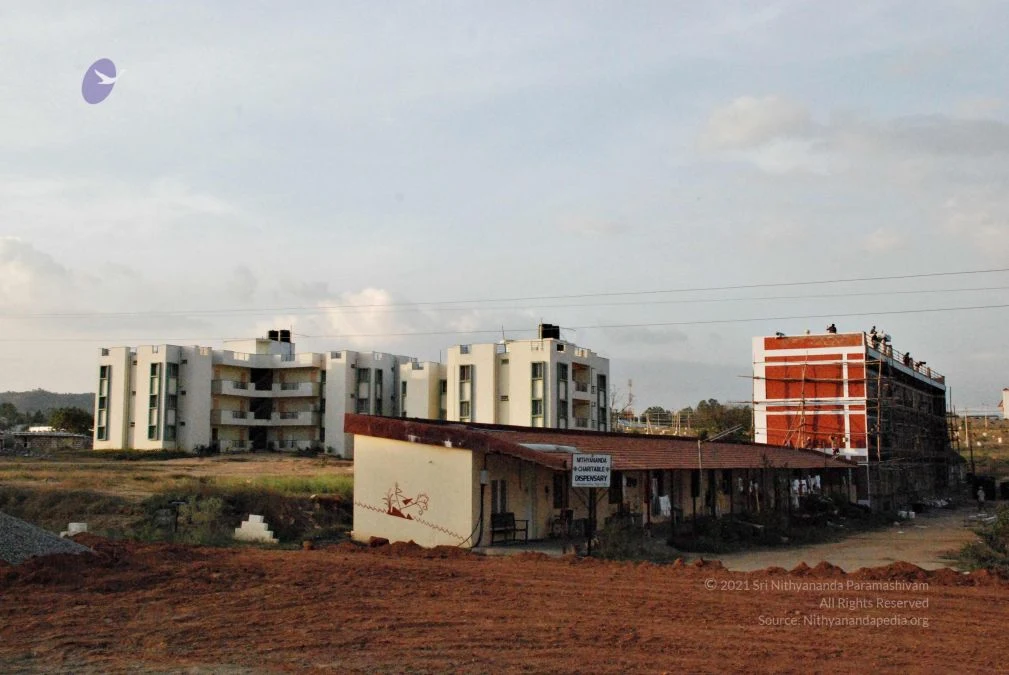
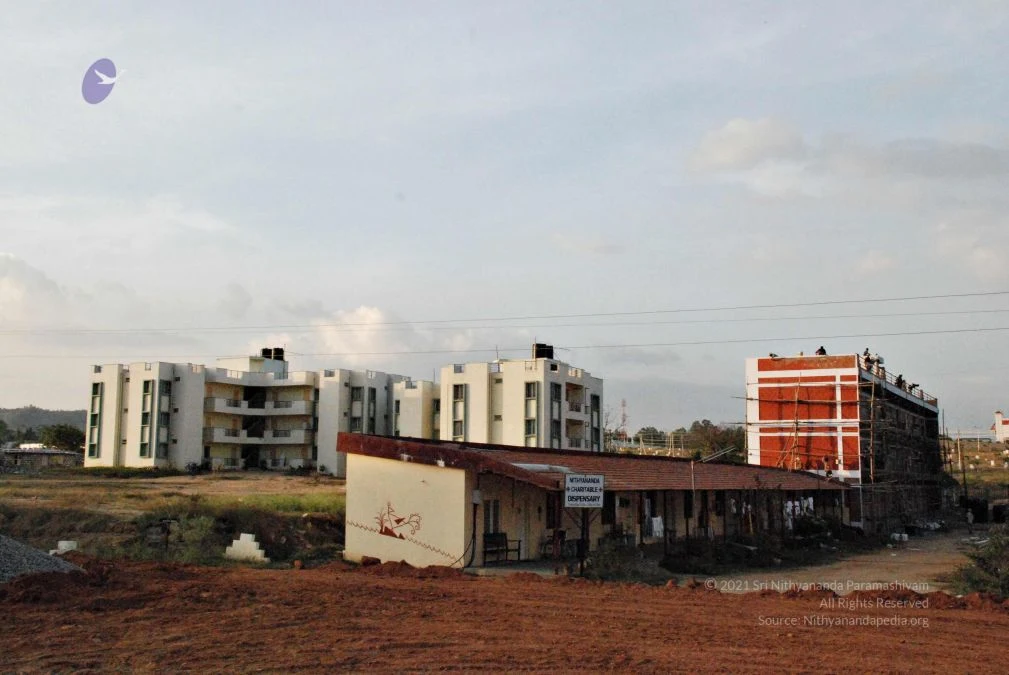
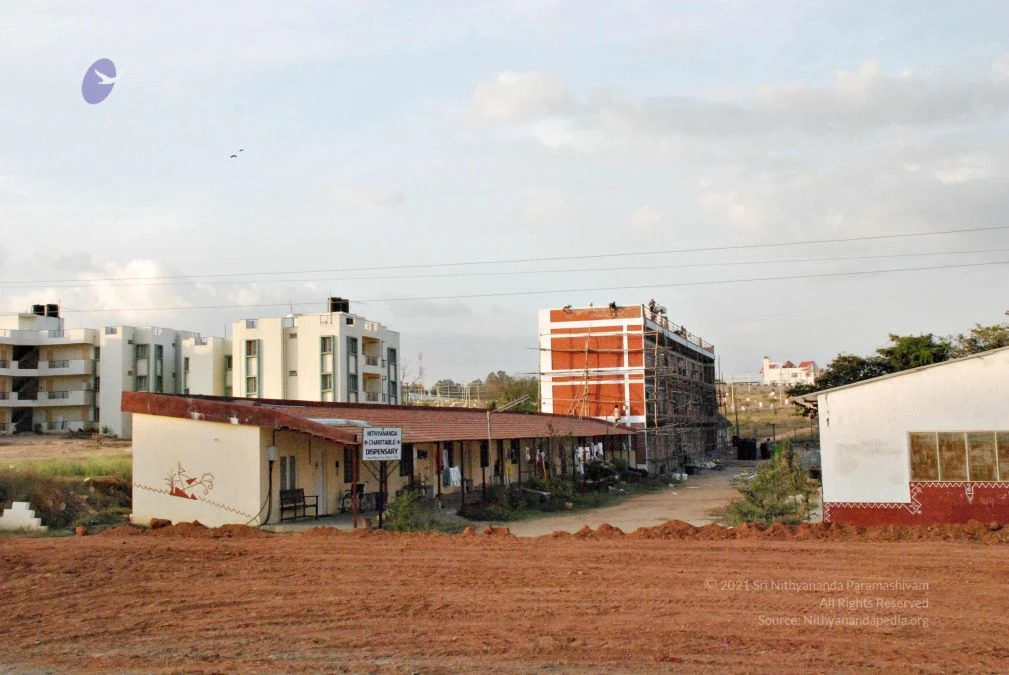
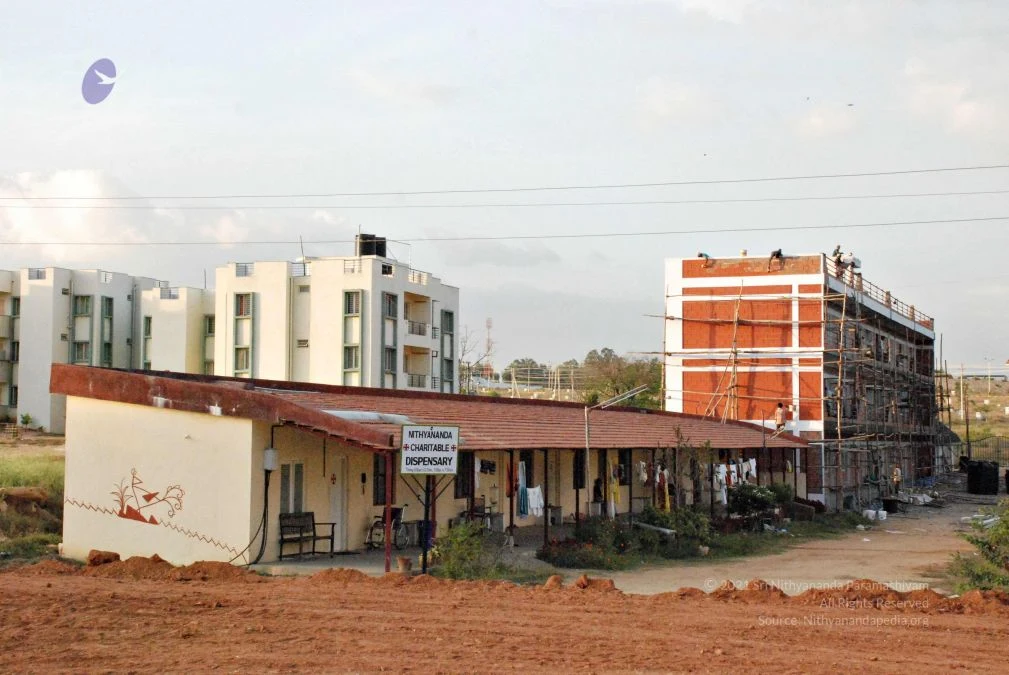
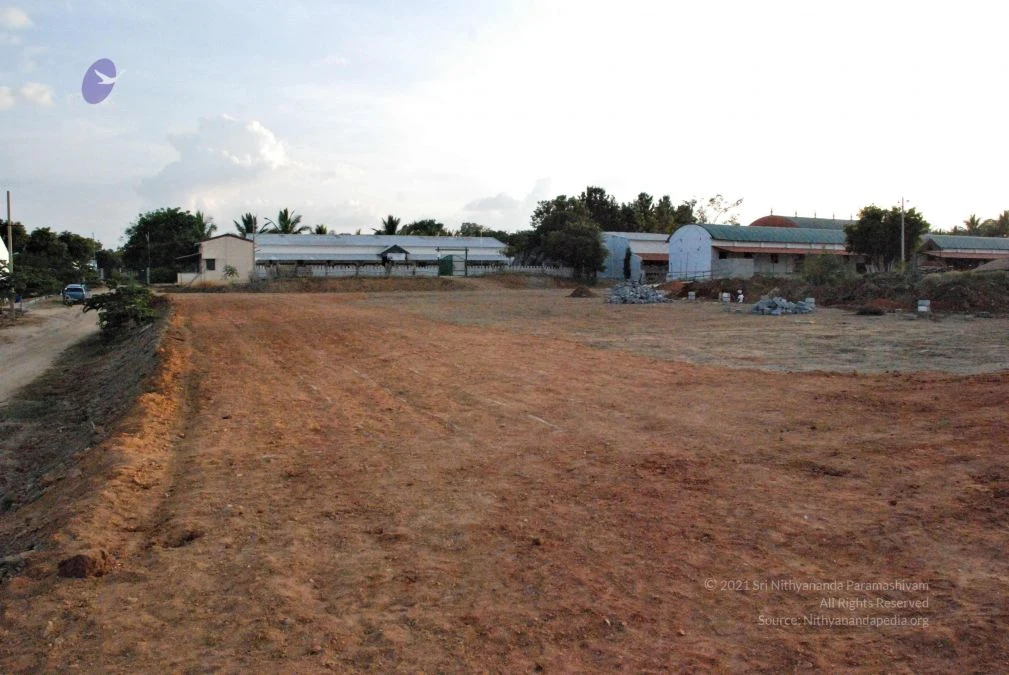
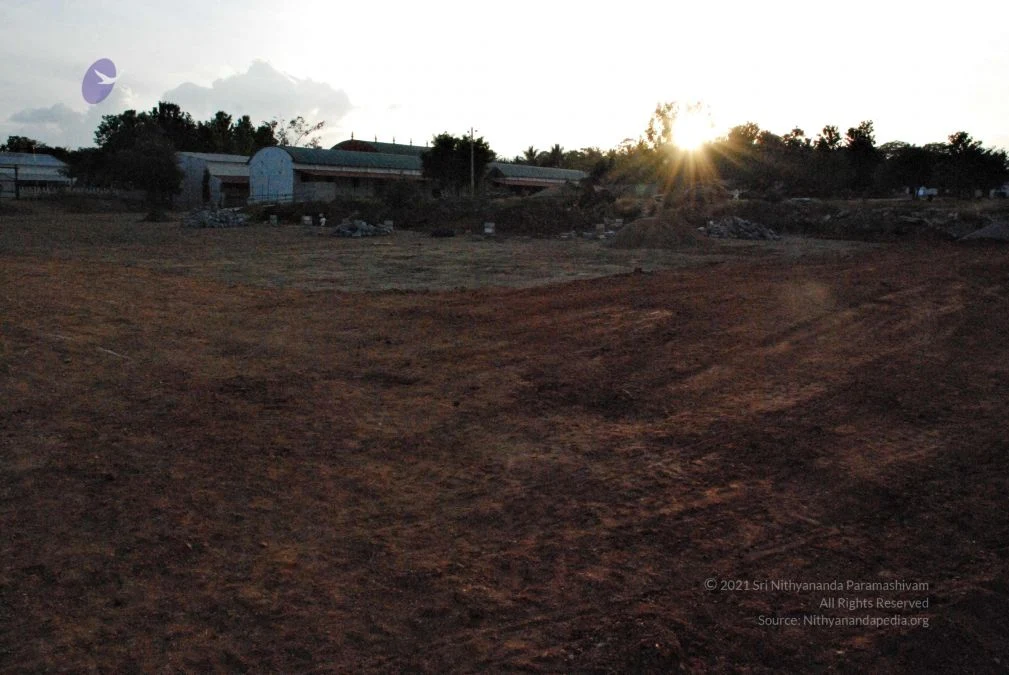
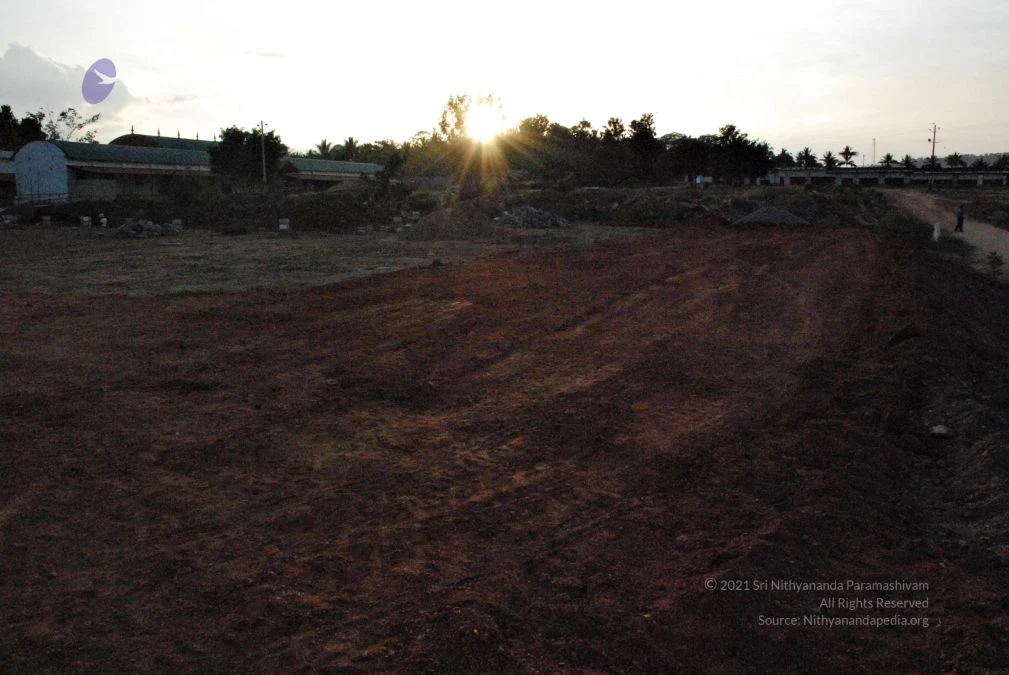
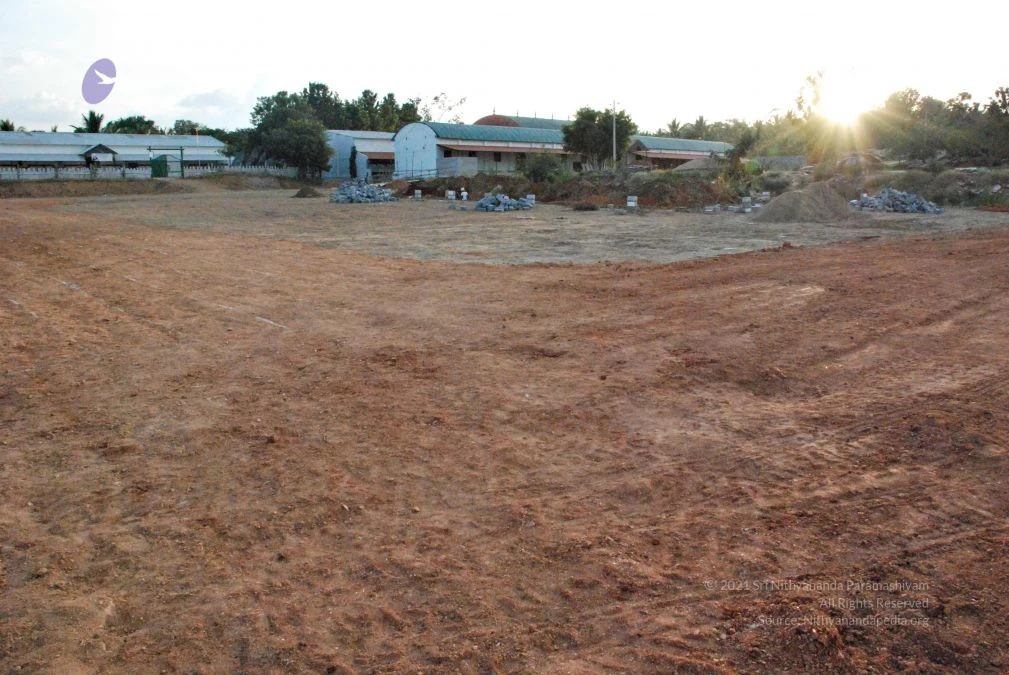
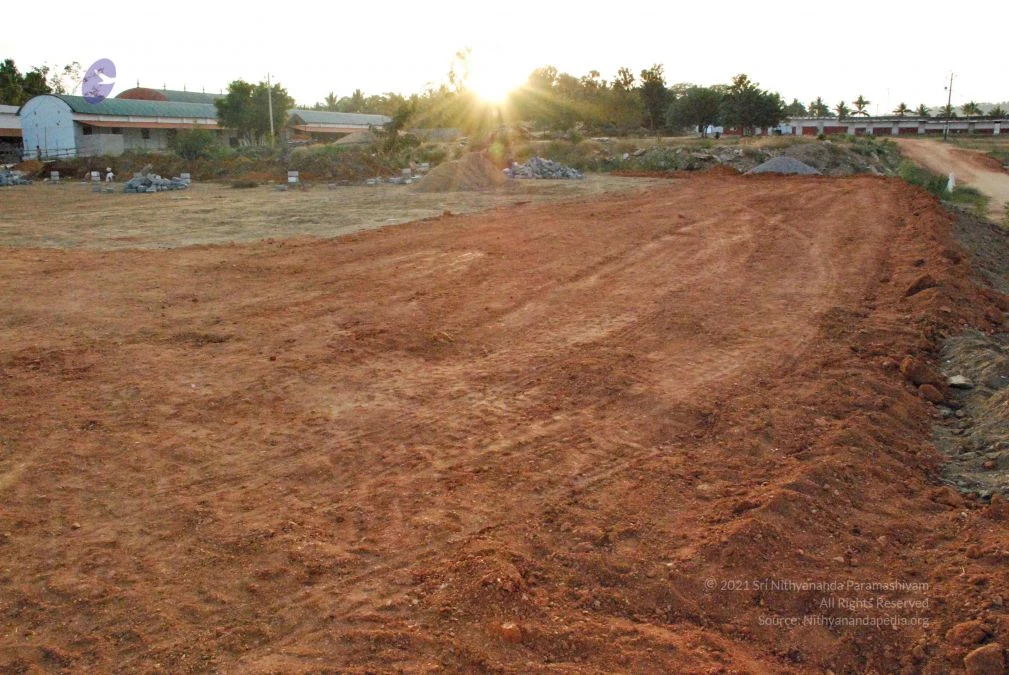
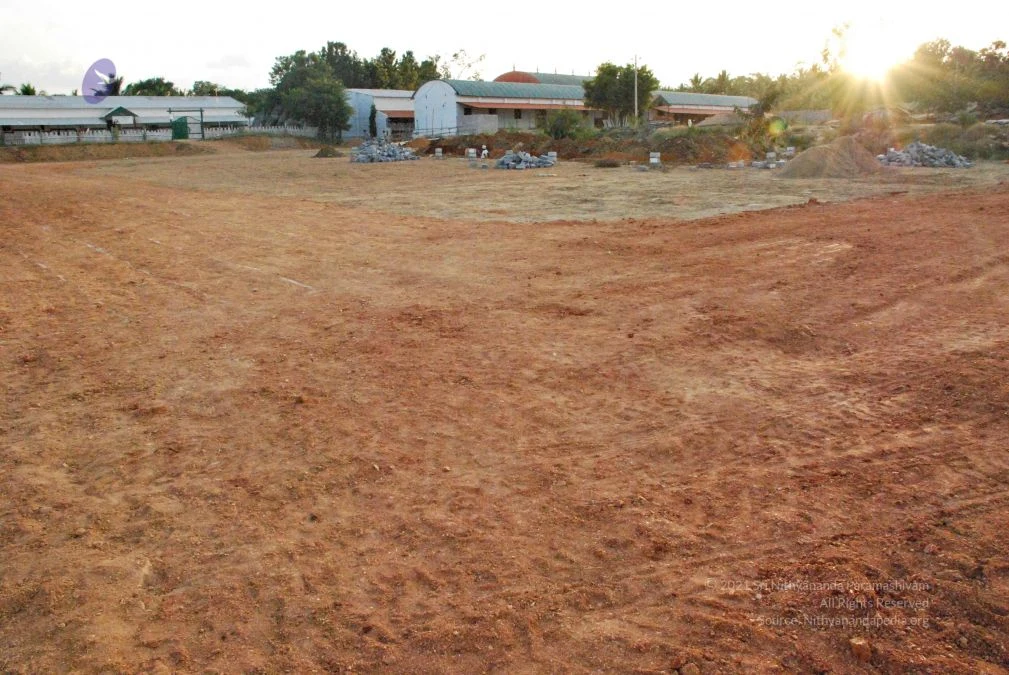
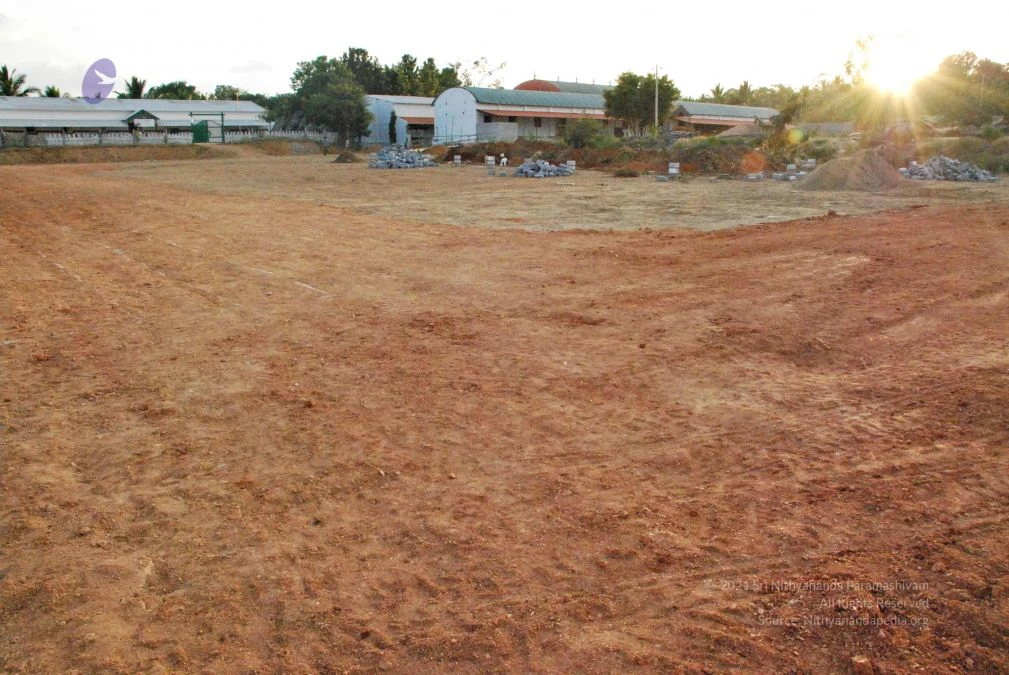
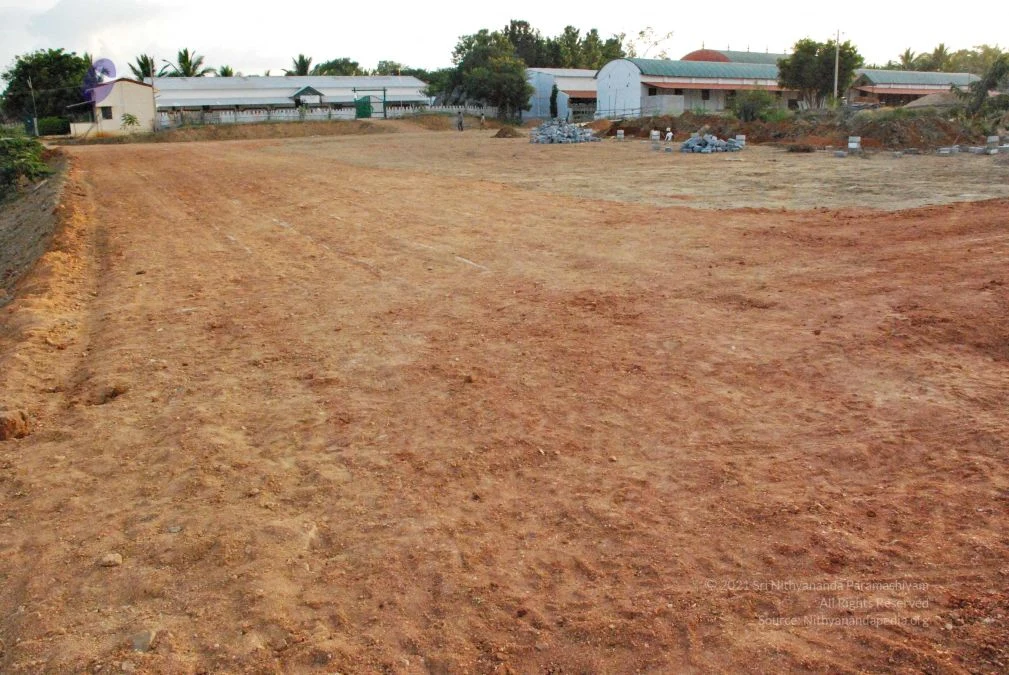
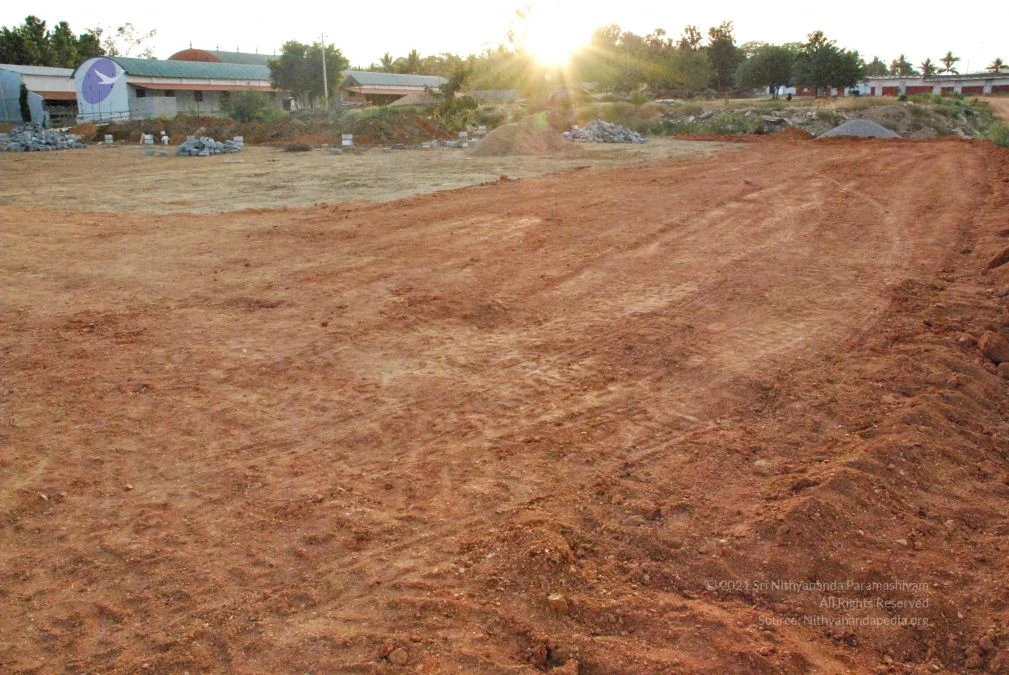
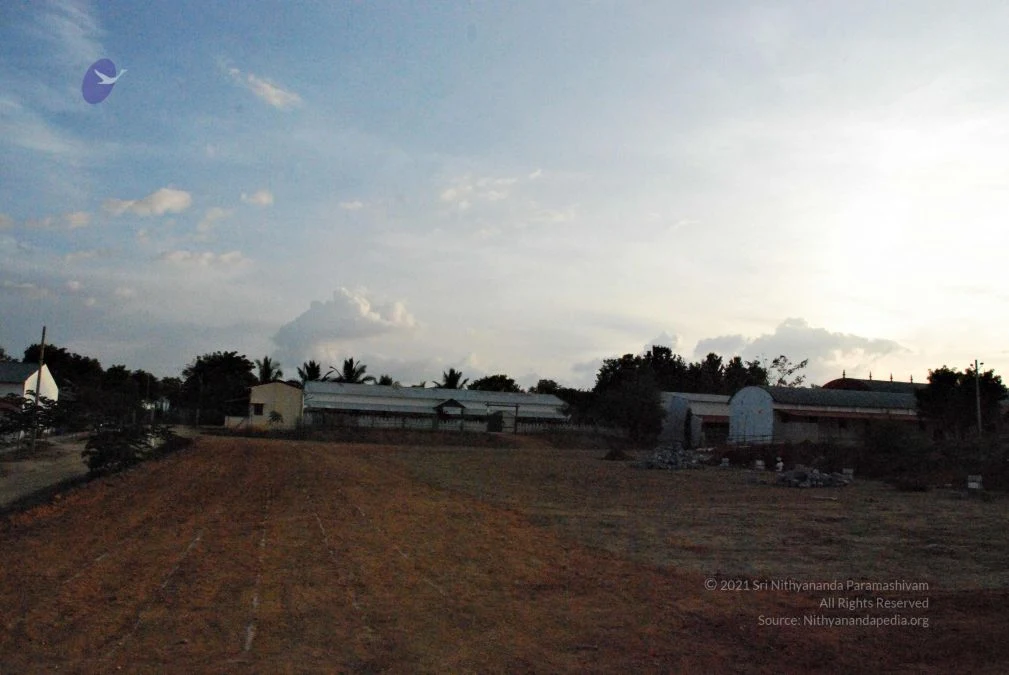
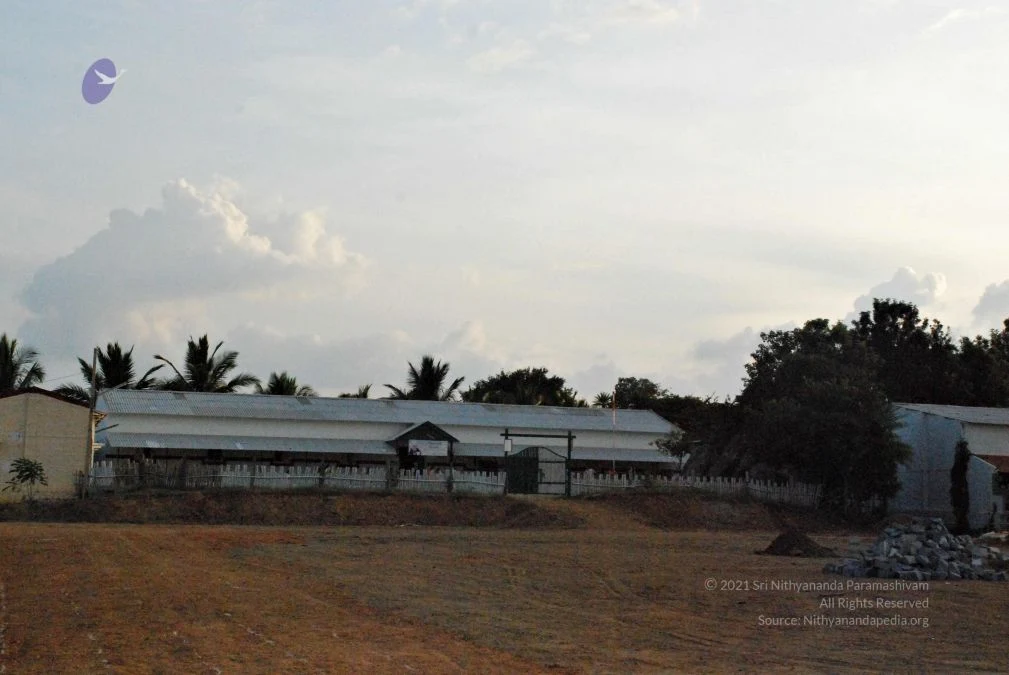
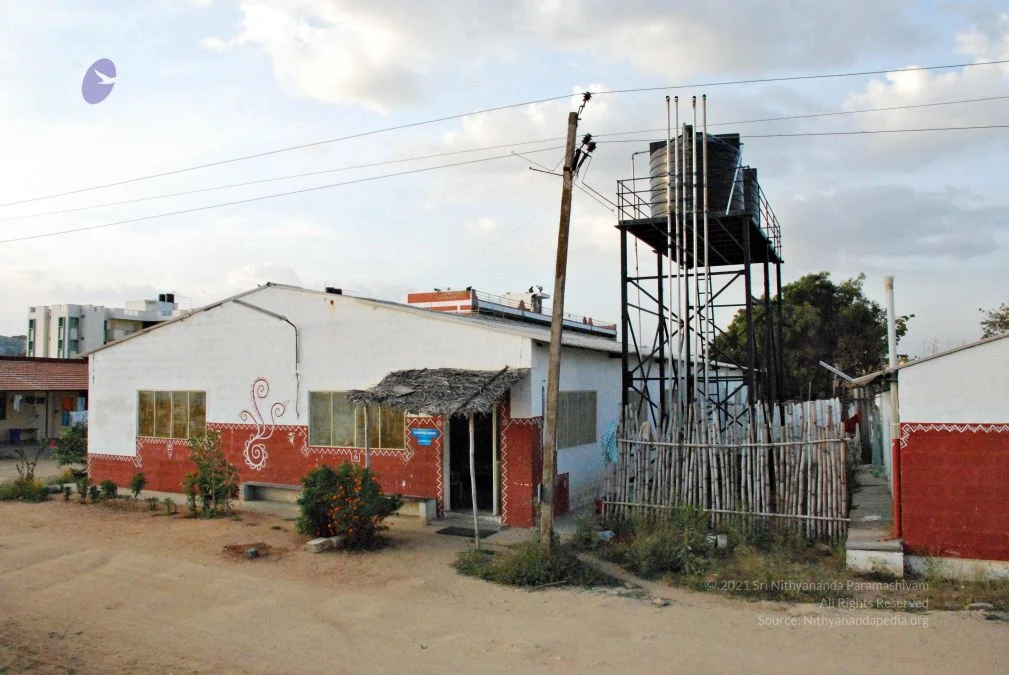
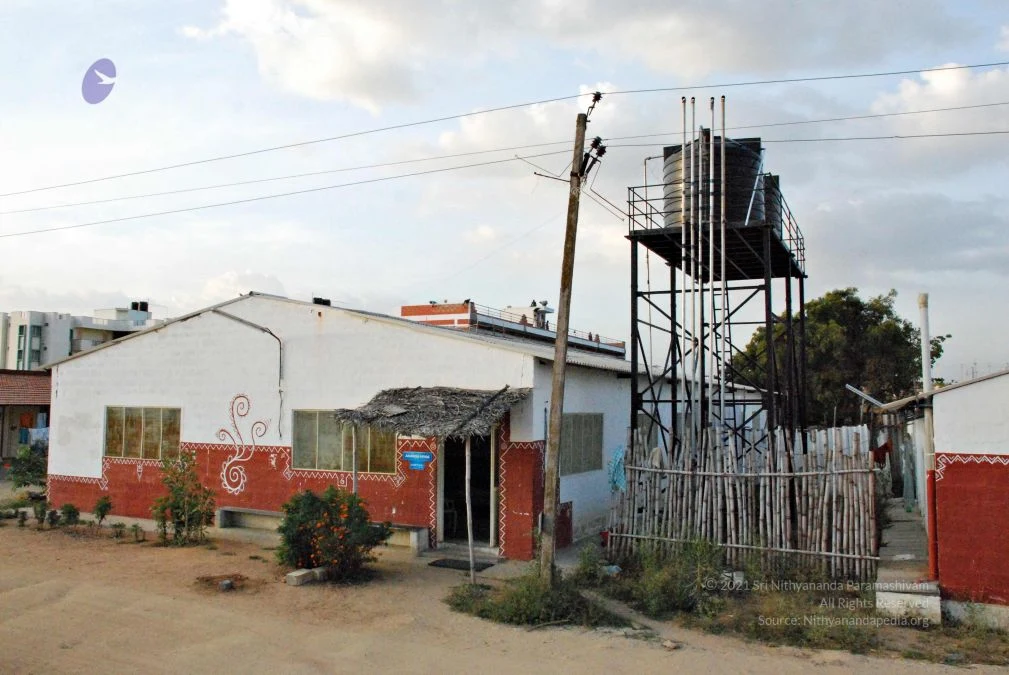
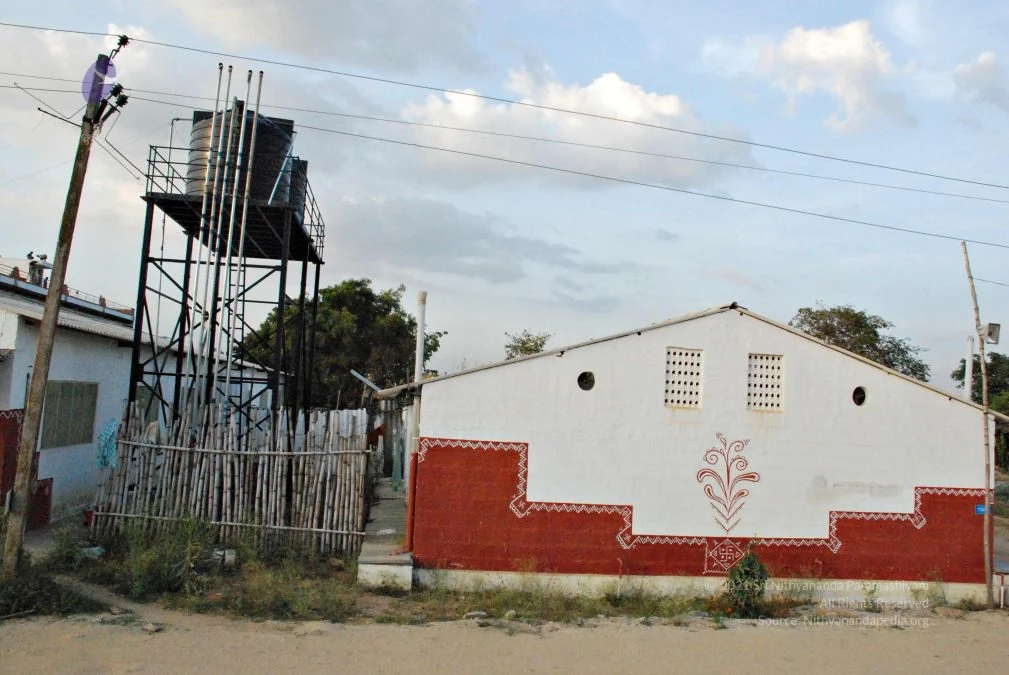
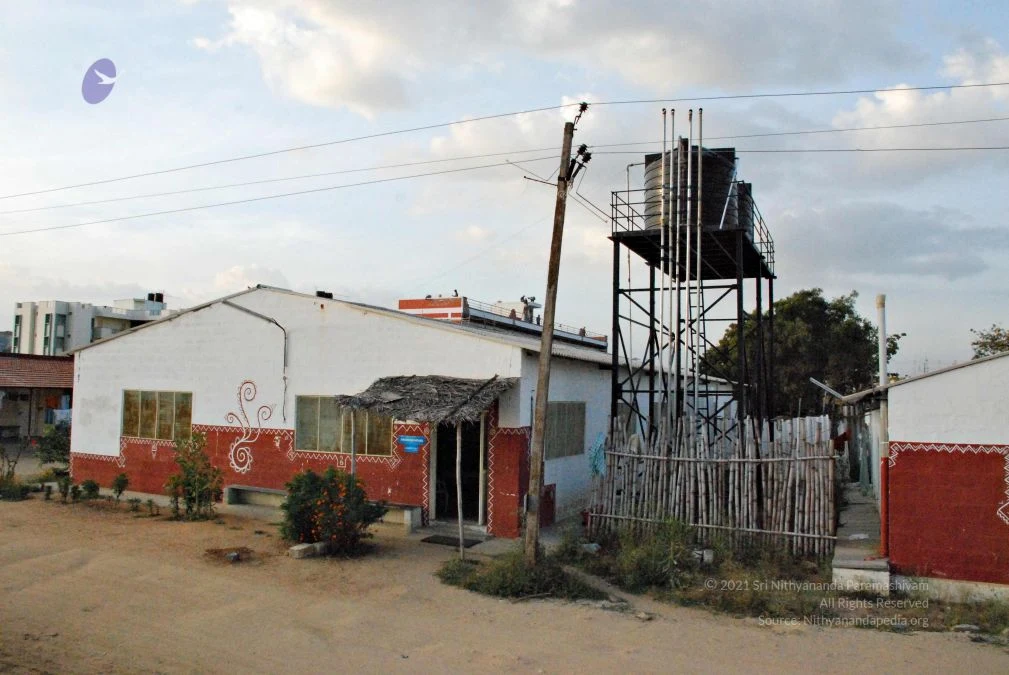
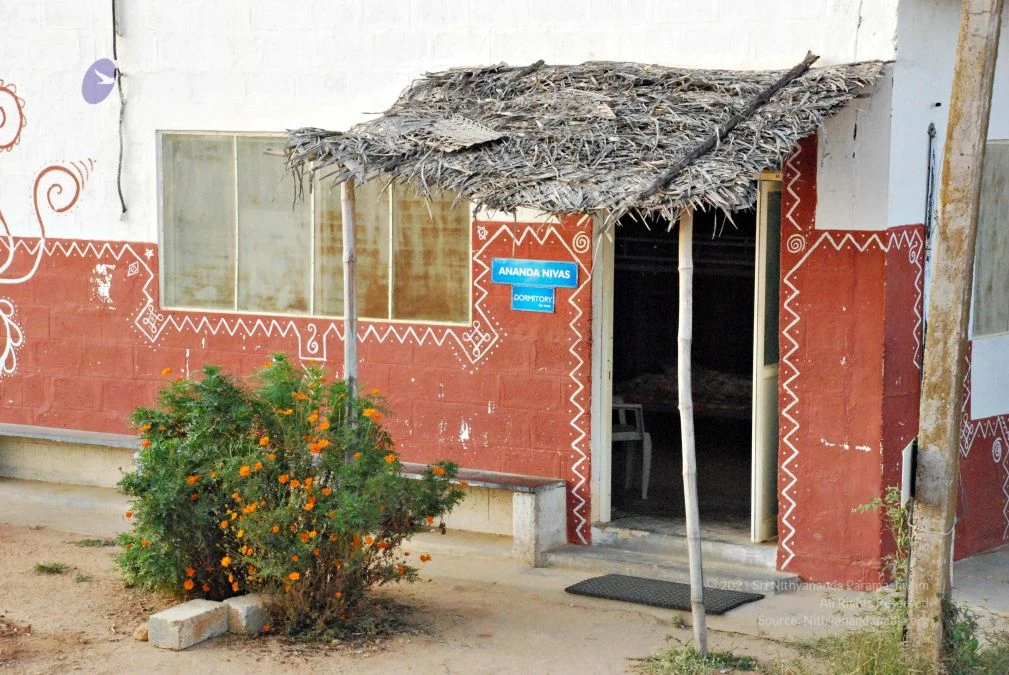
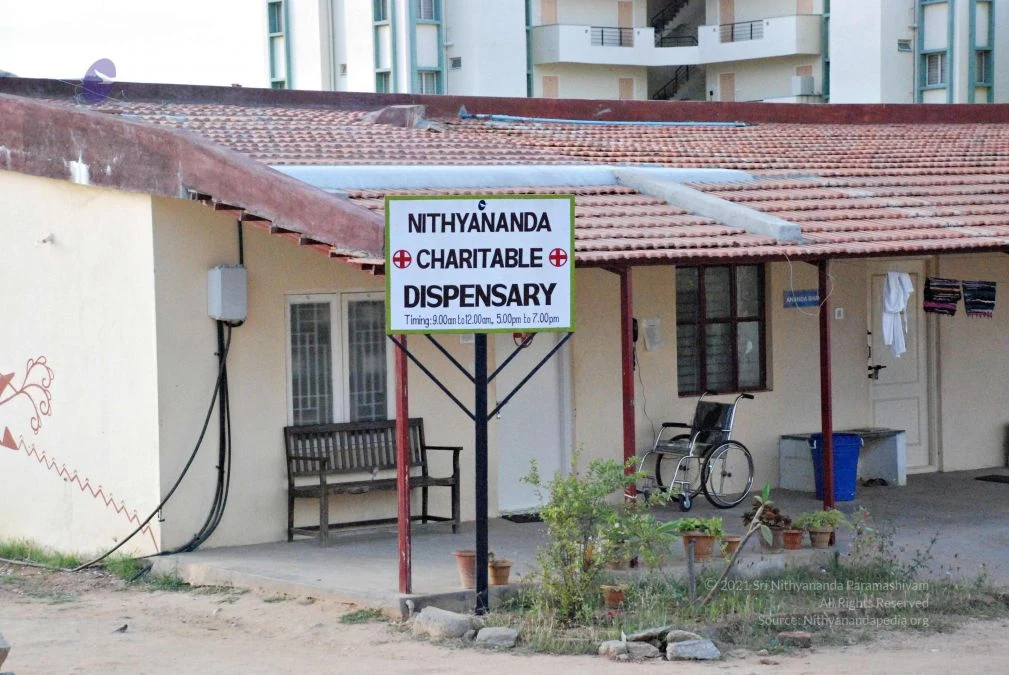
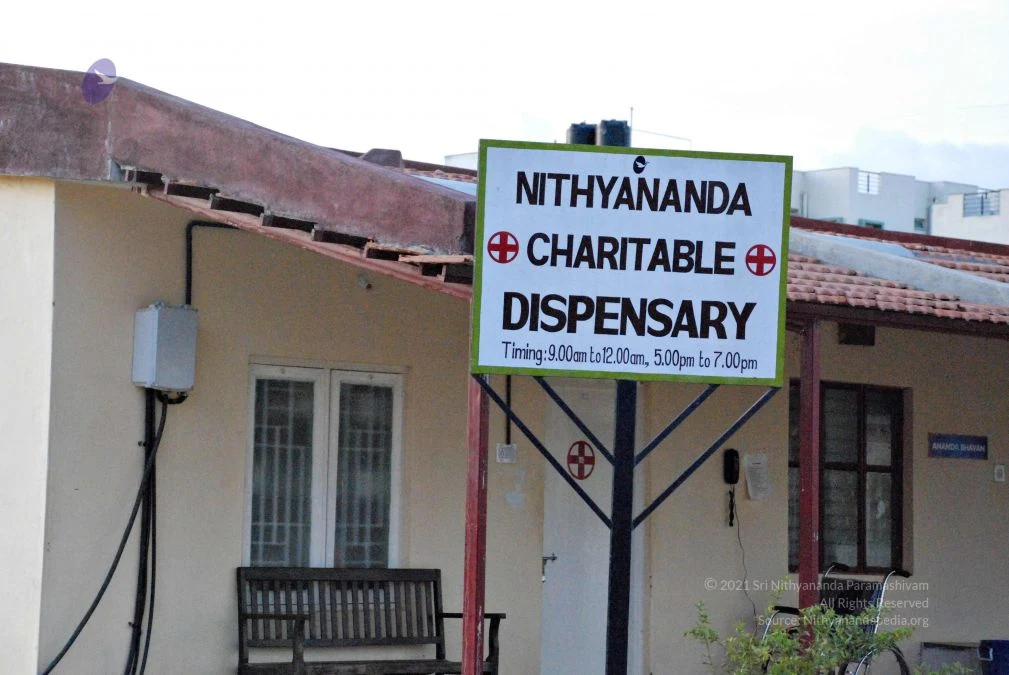
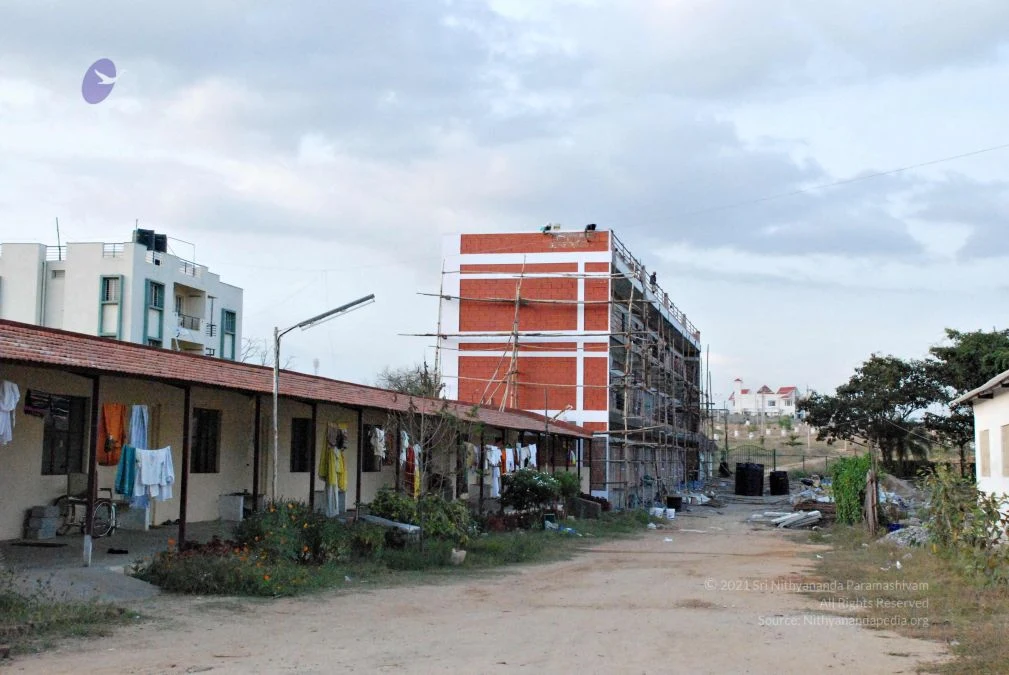
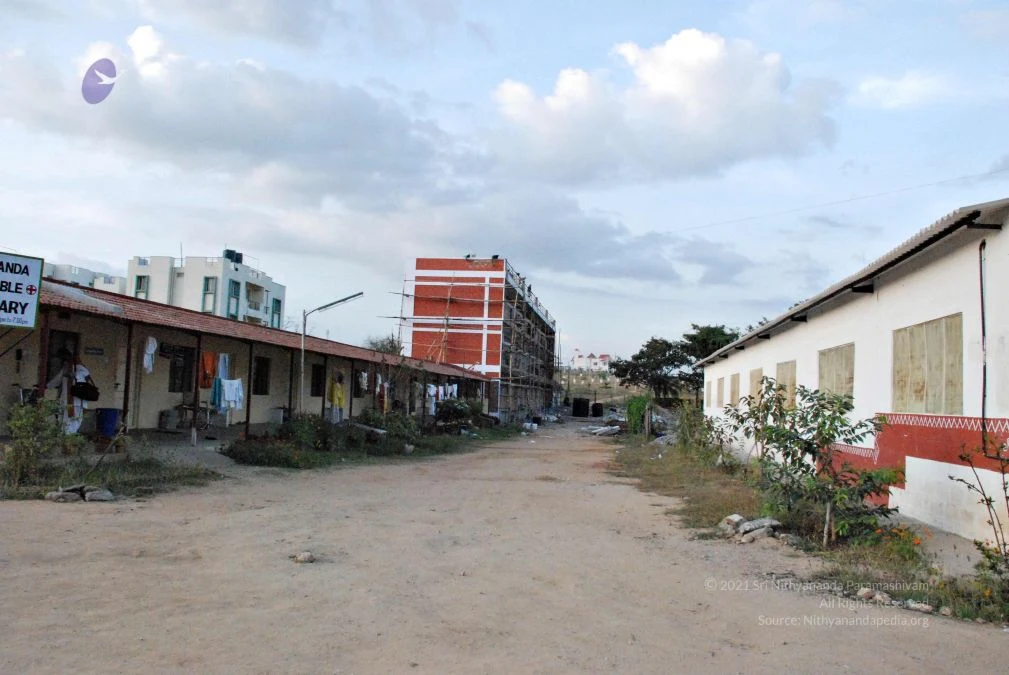
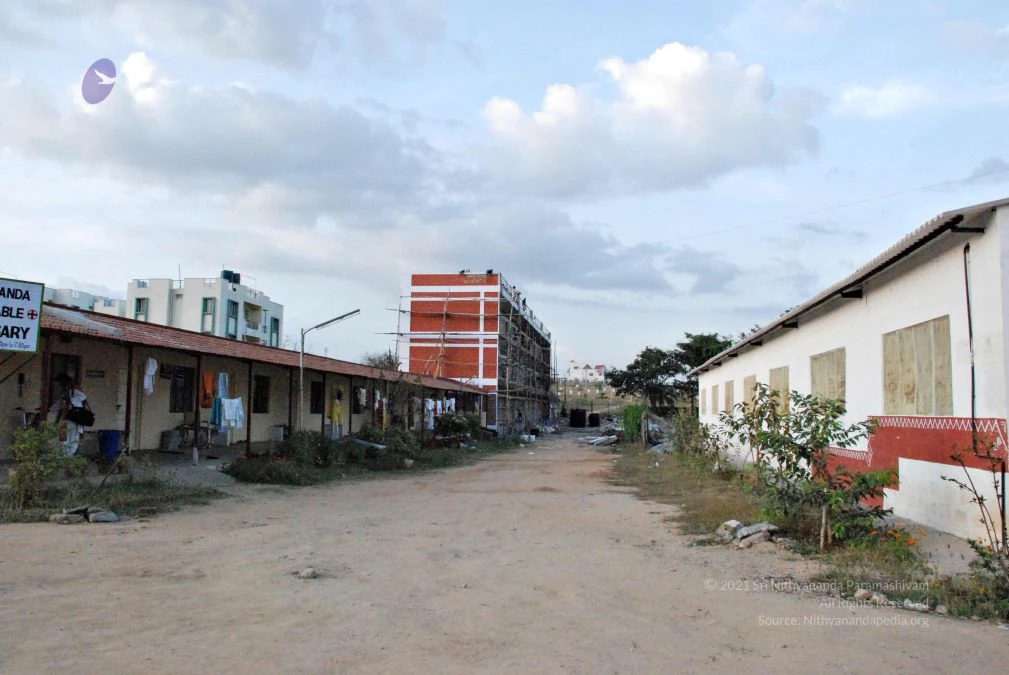
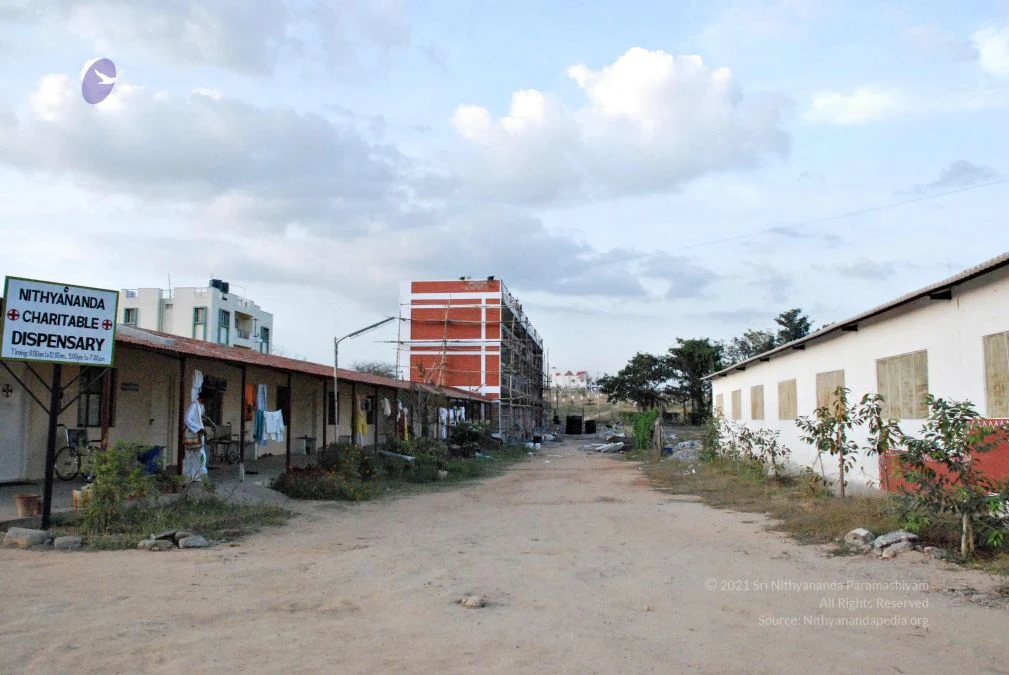
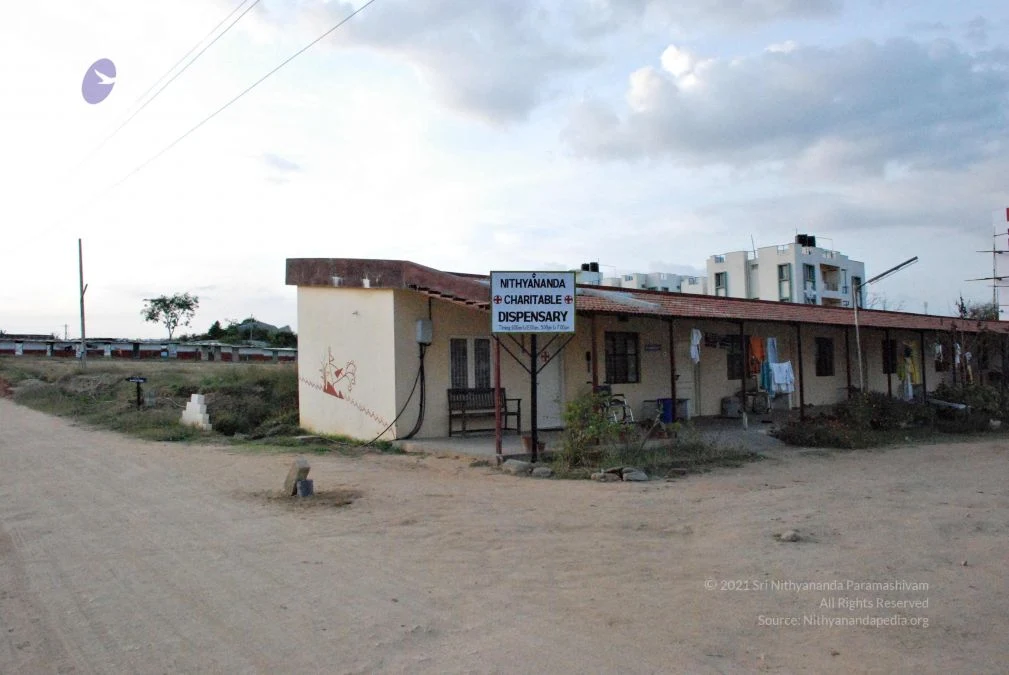
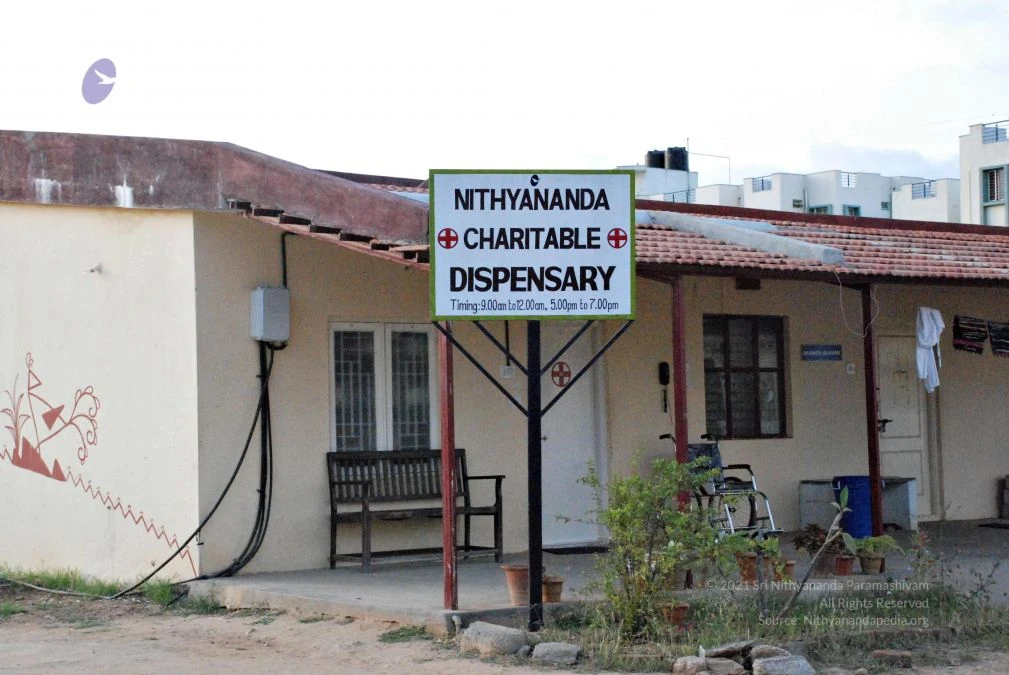
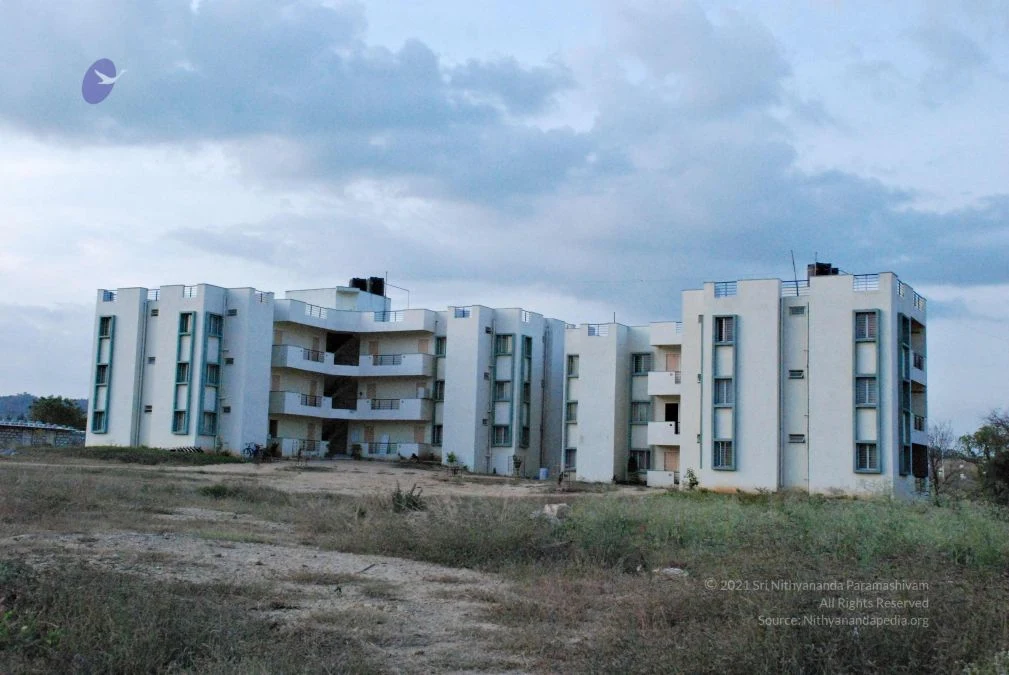
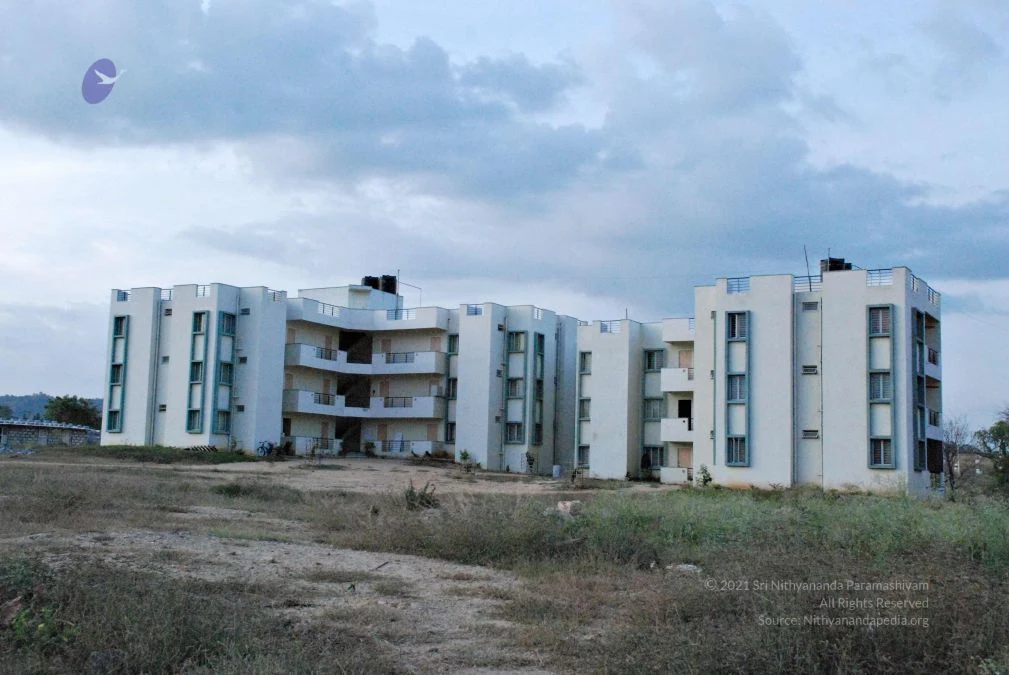
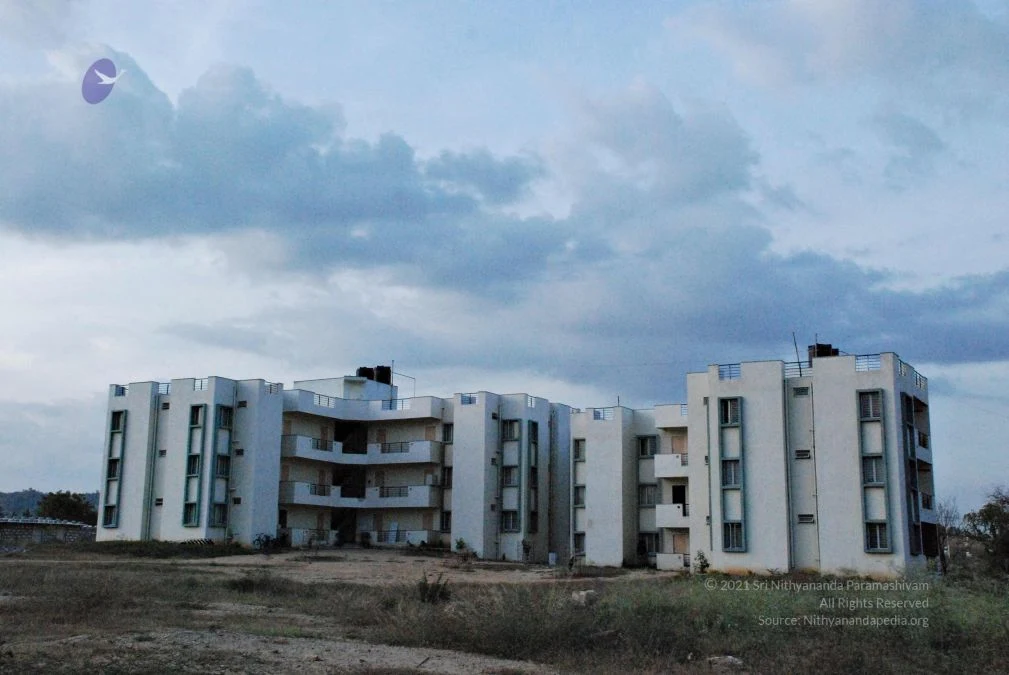
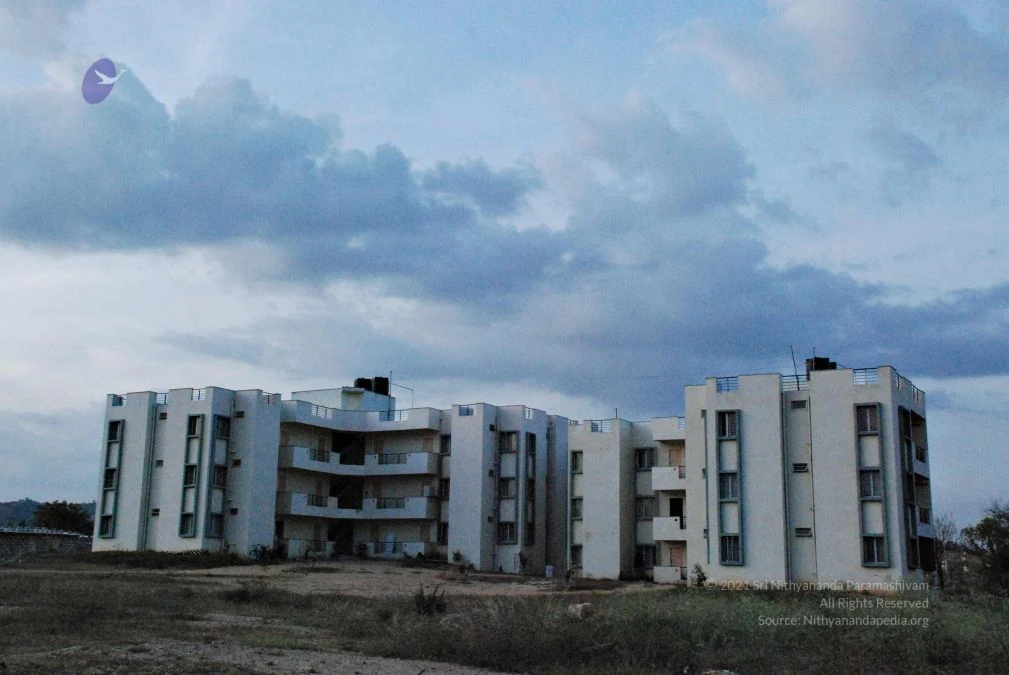
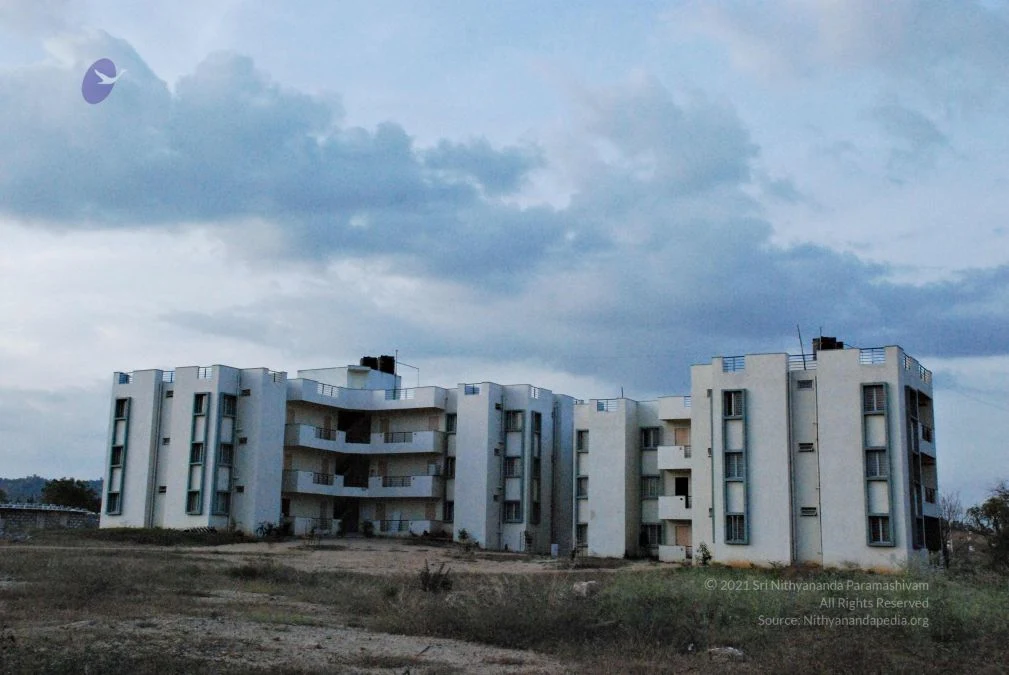
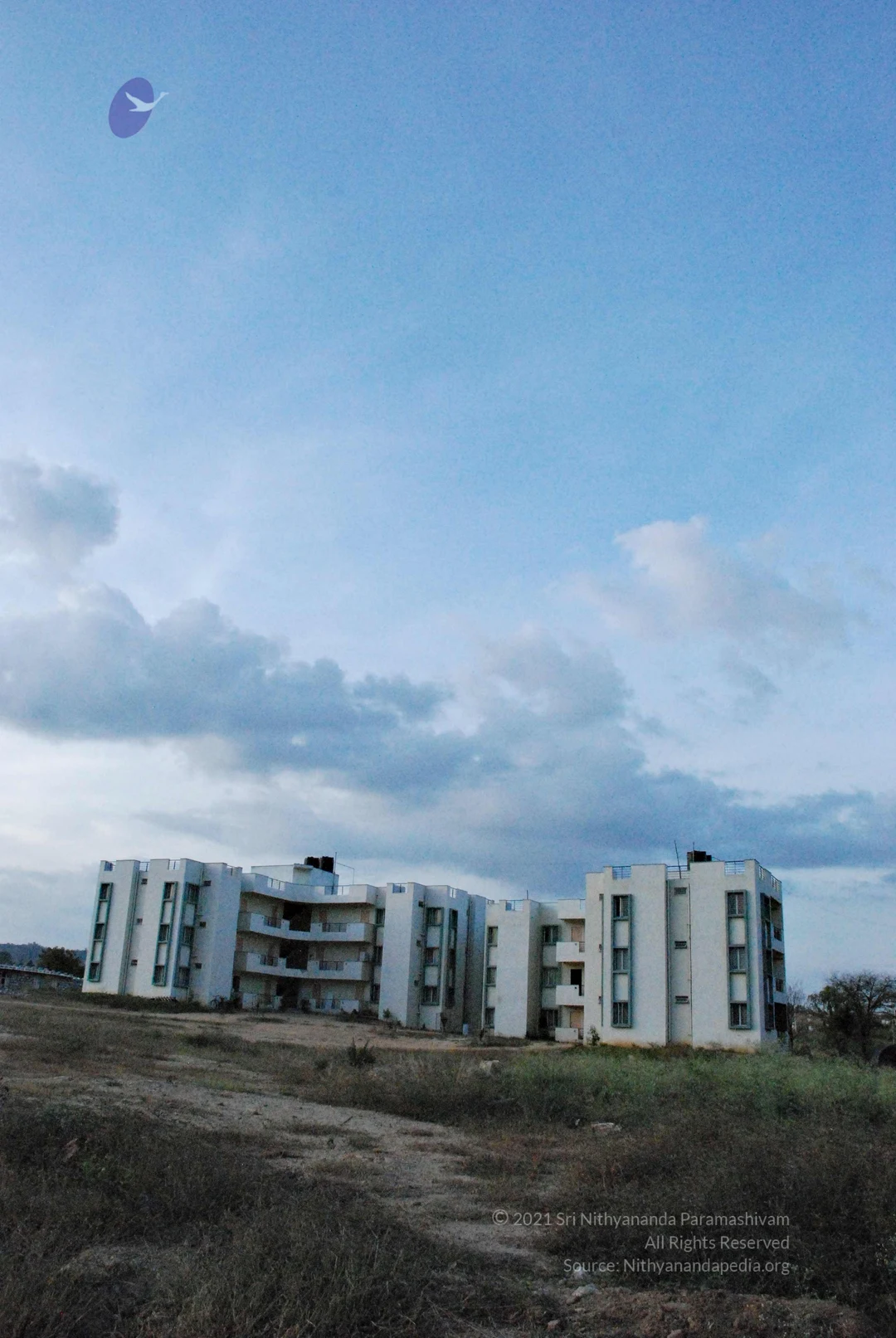
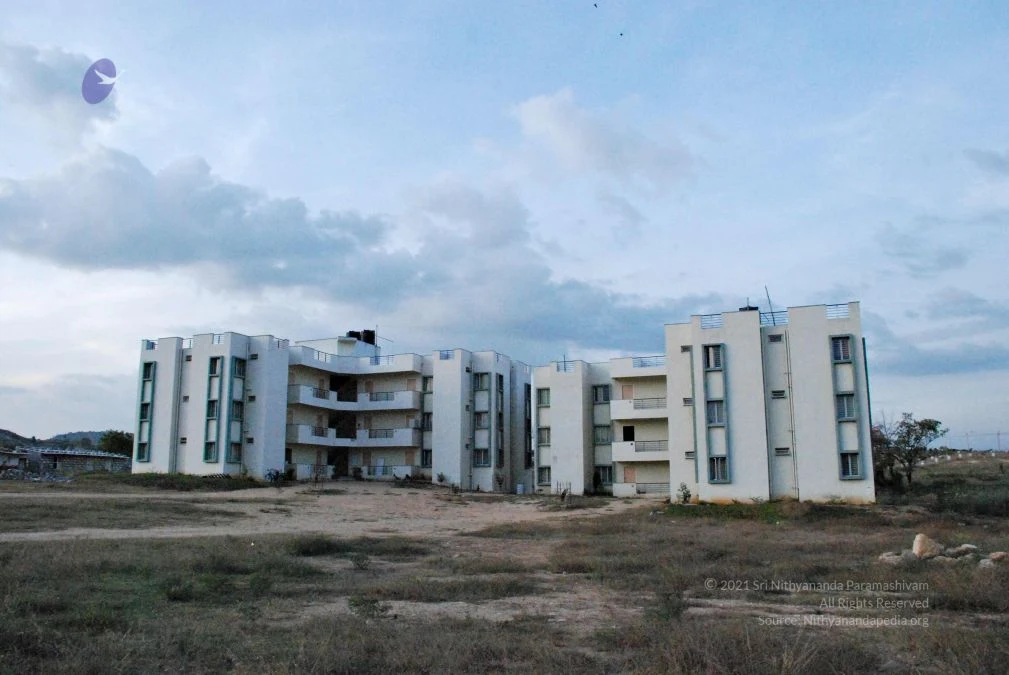
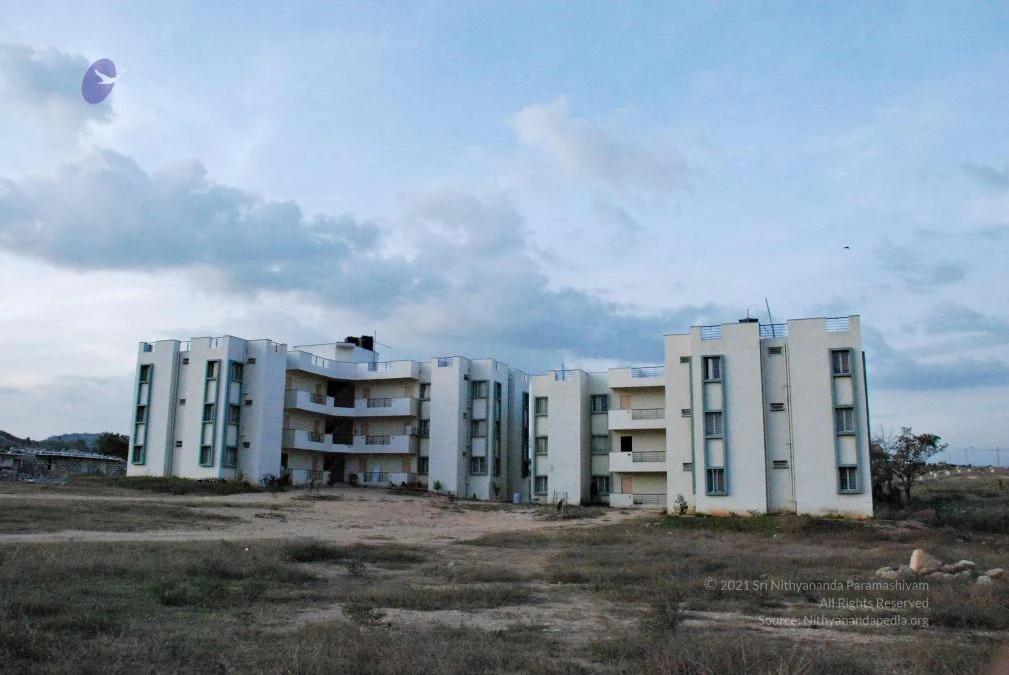
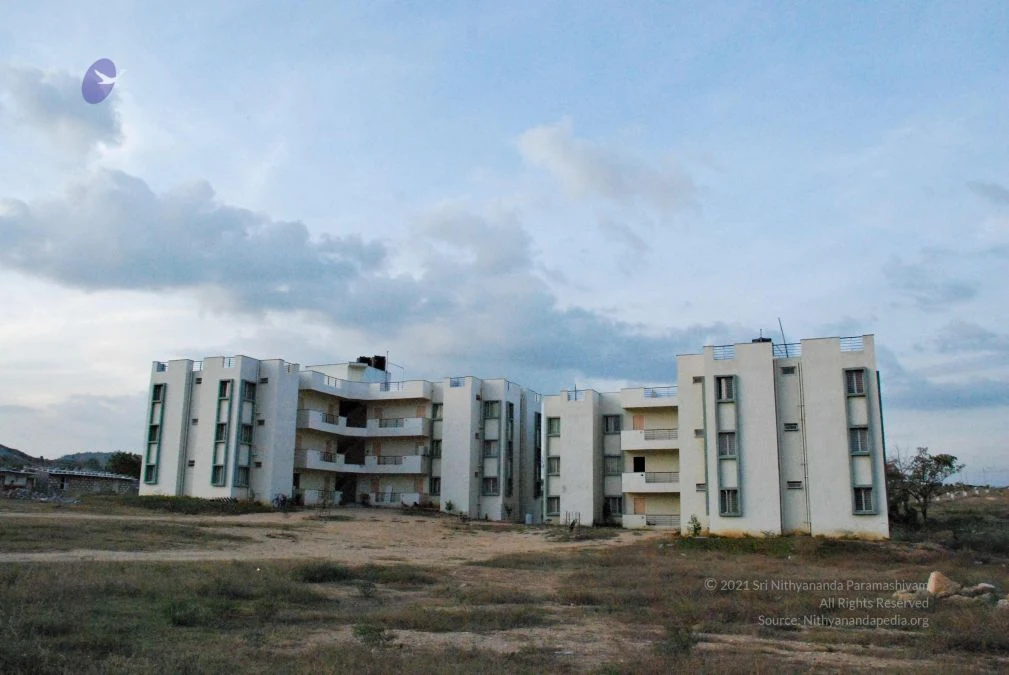
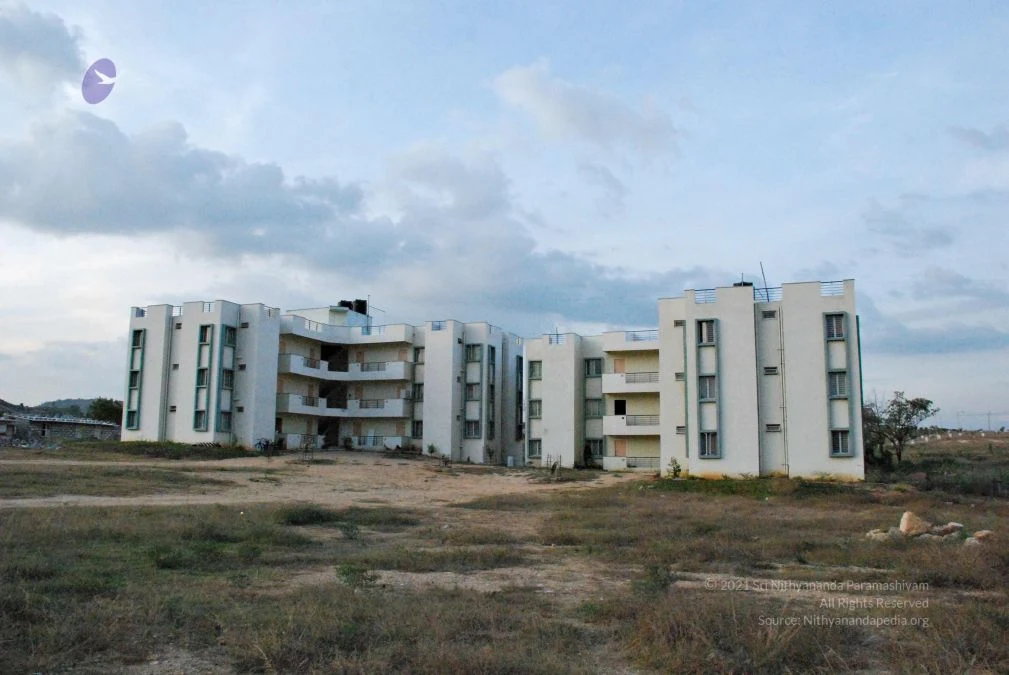
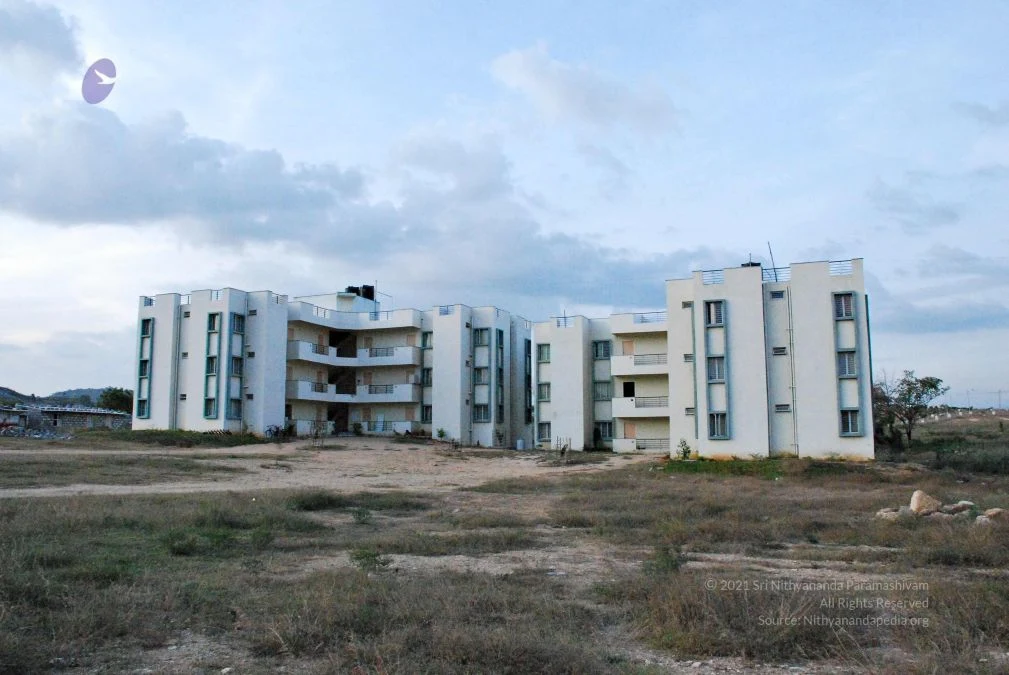
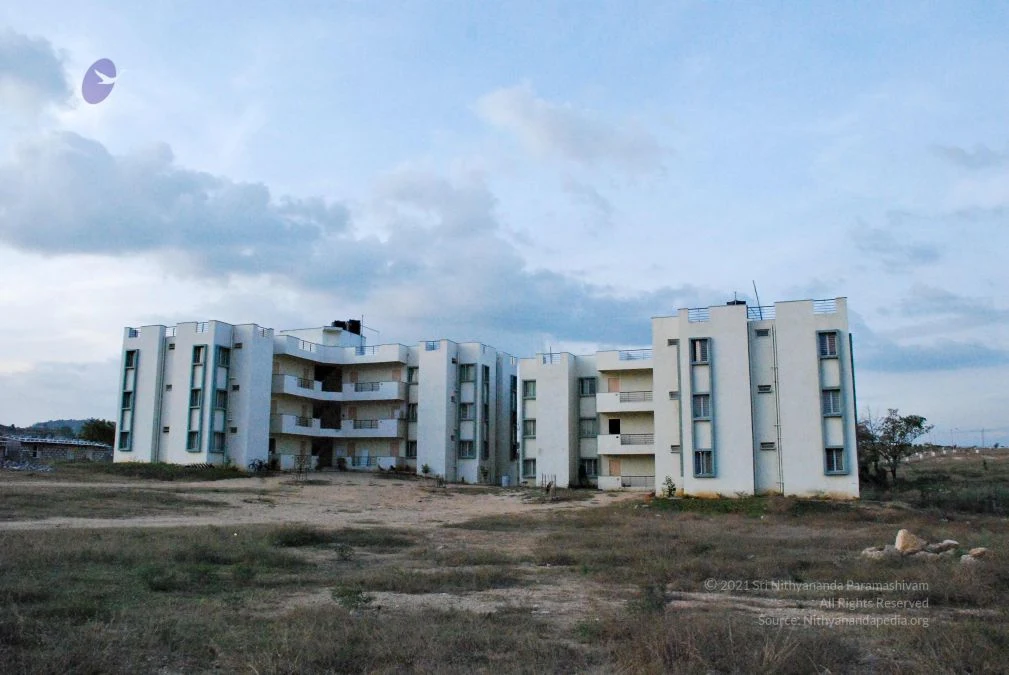
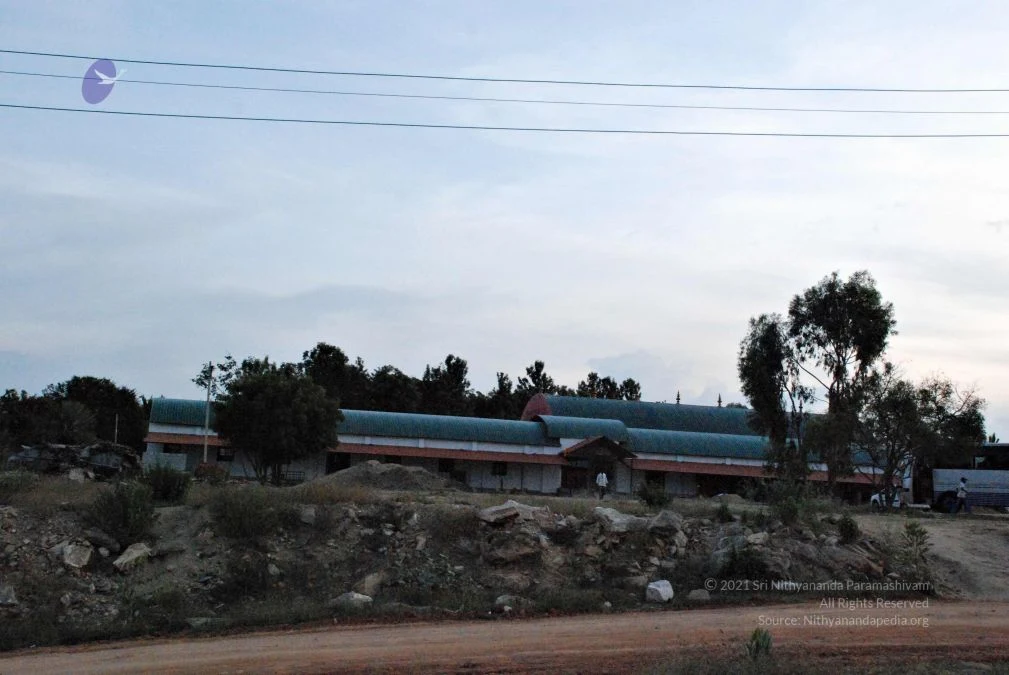
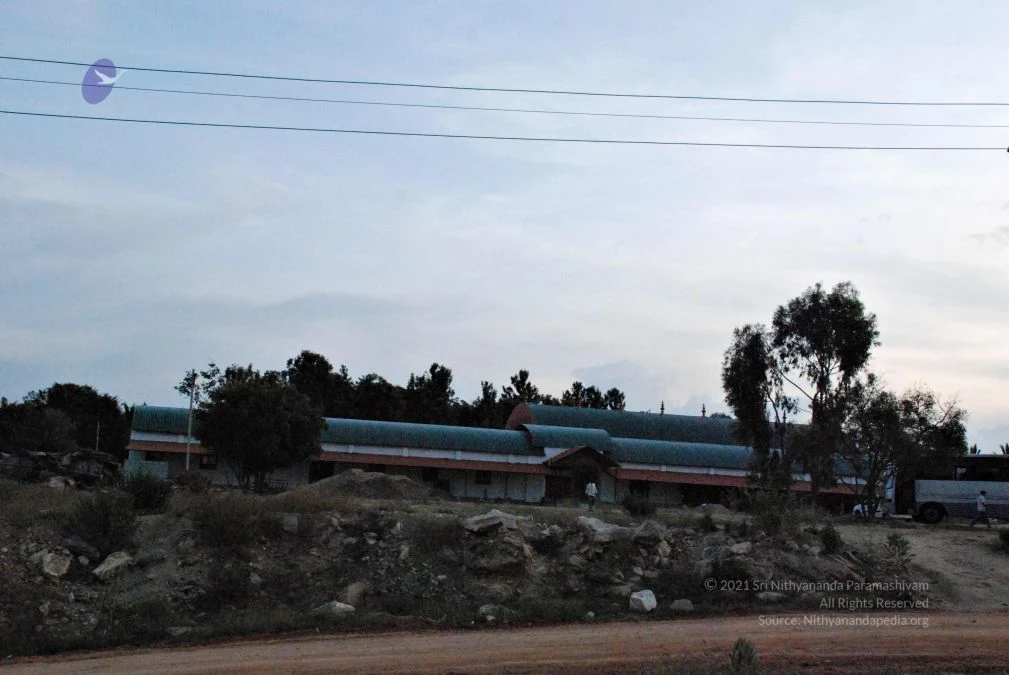
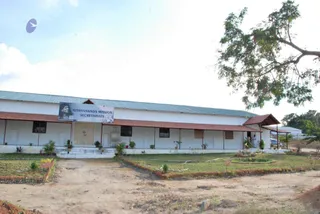
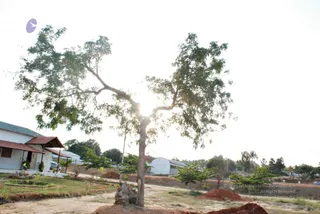
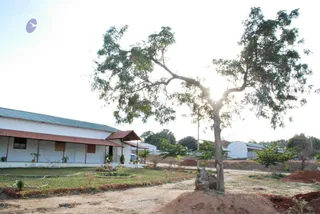
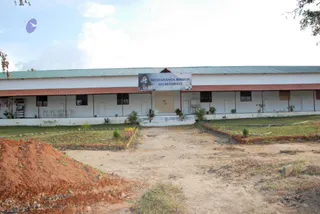
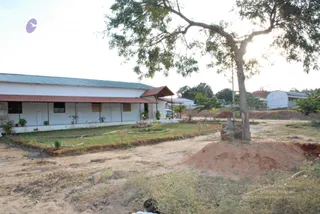
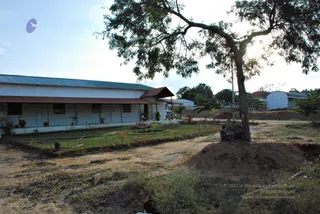
Glimpse of Aadikailaasa, Bengaluru, India

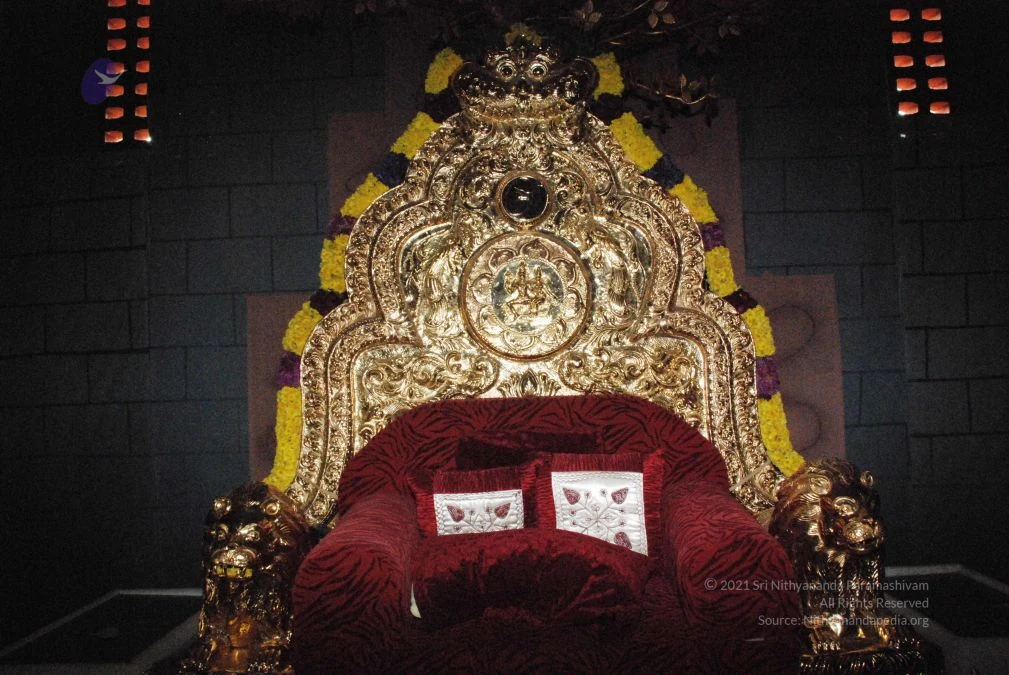
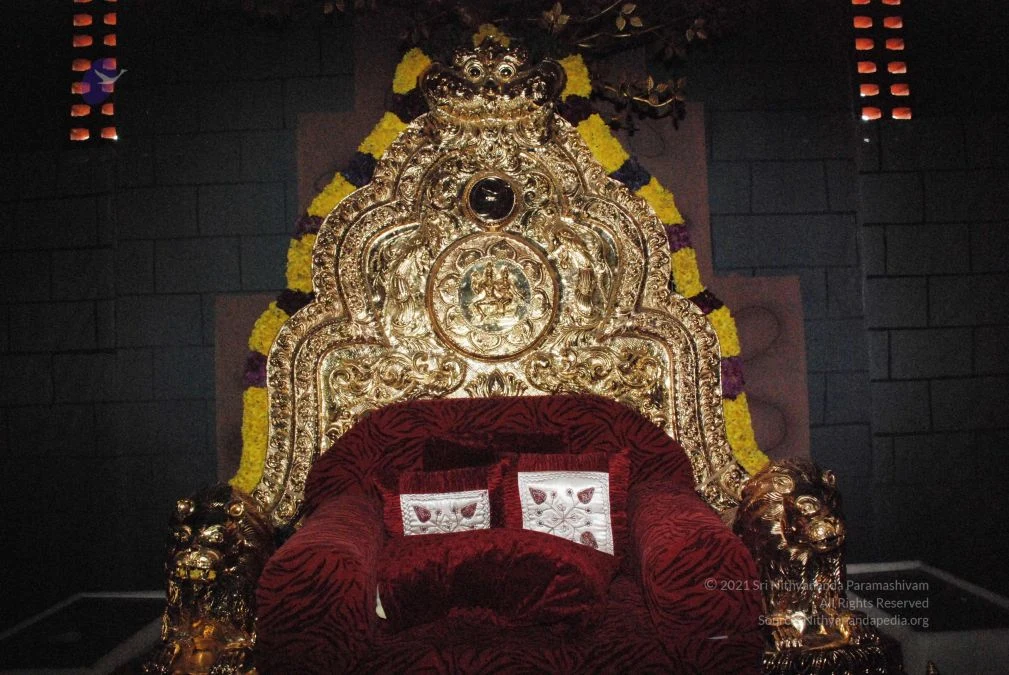
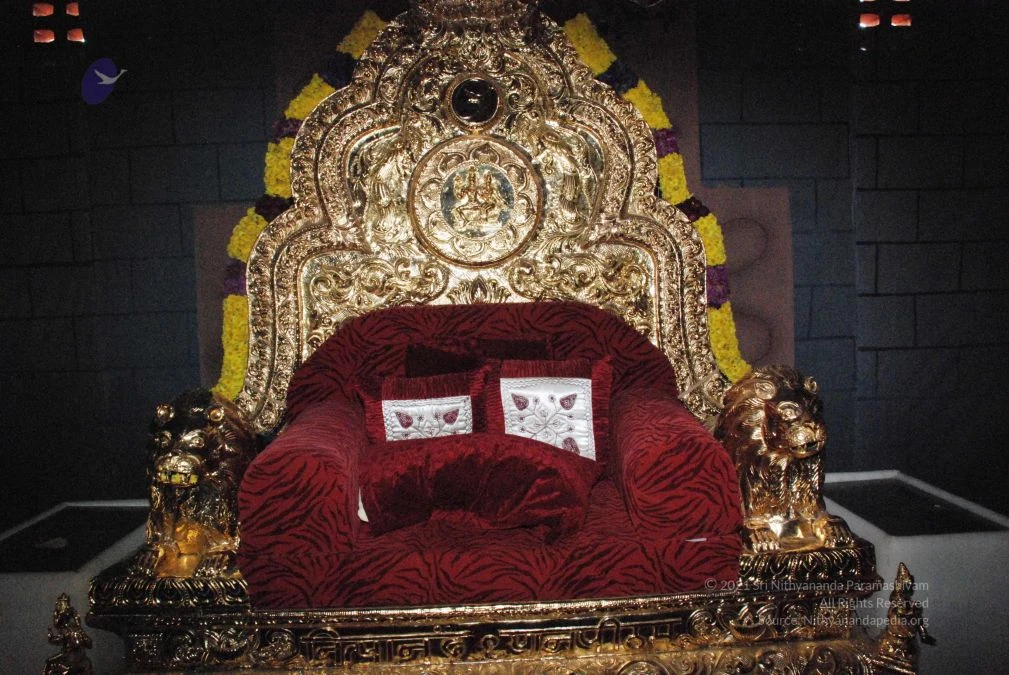
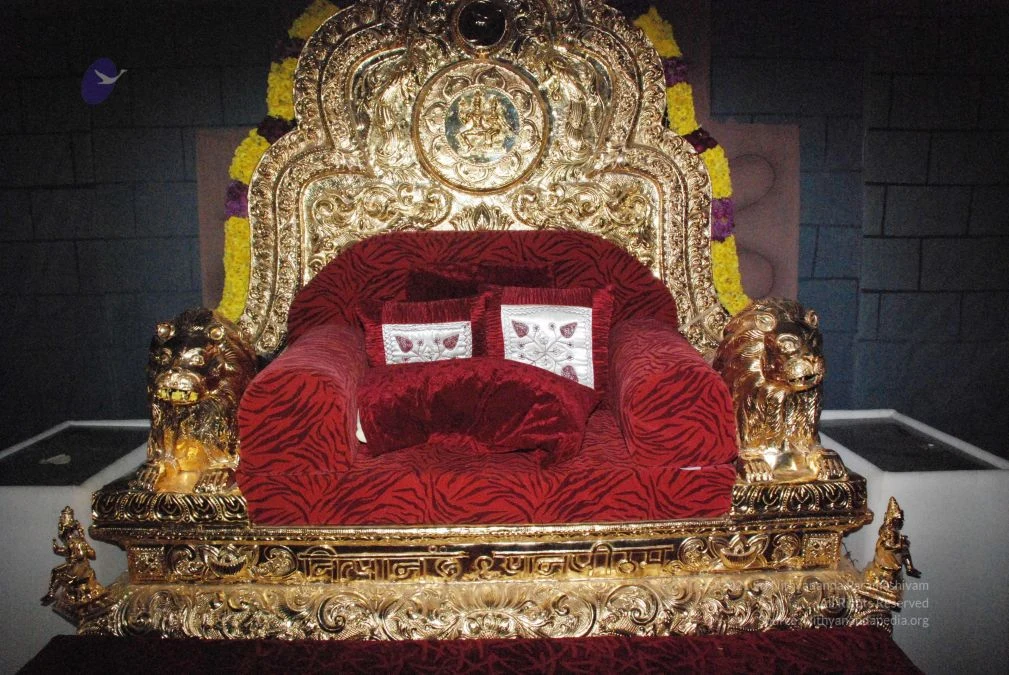
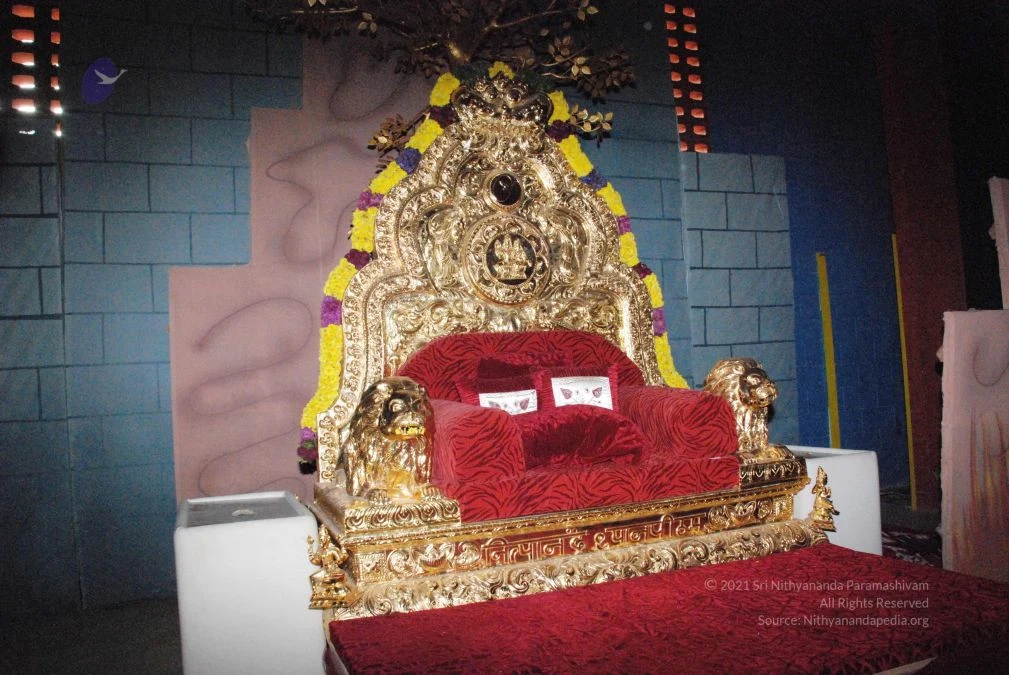
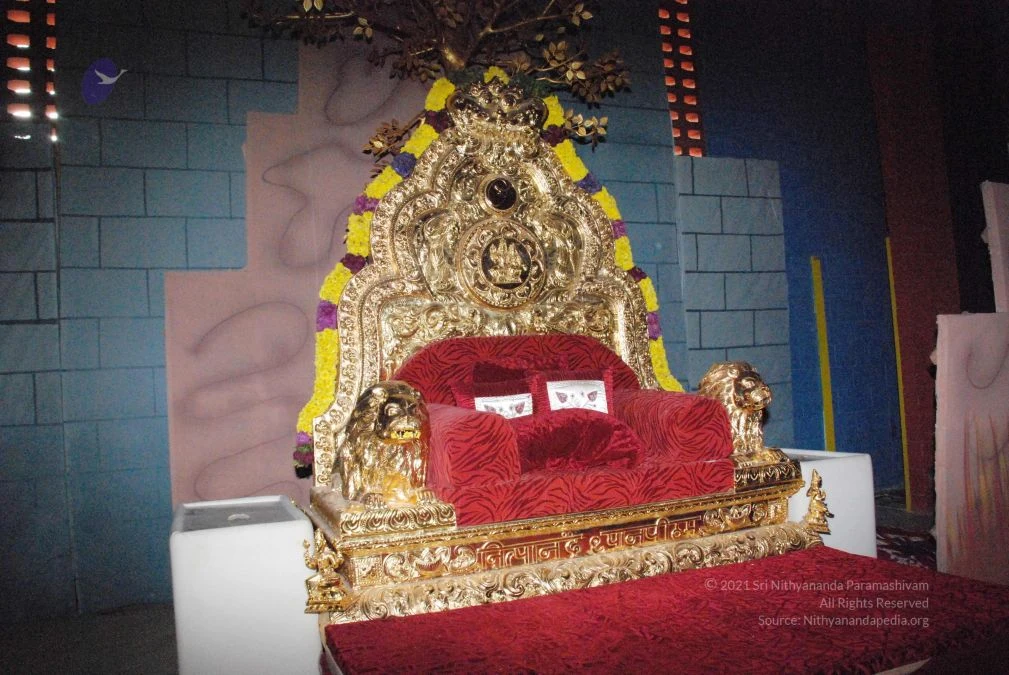
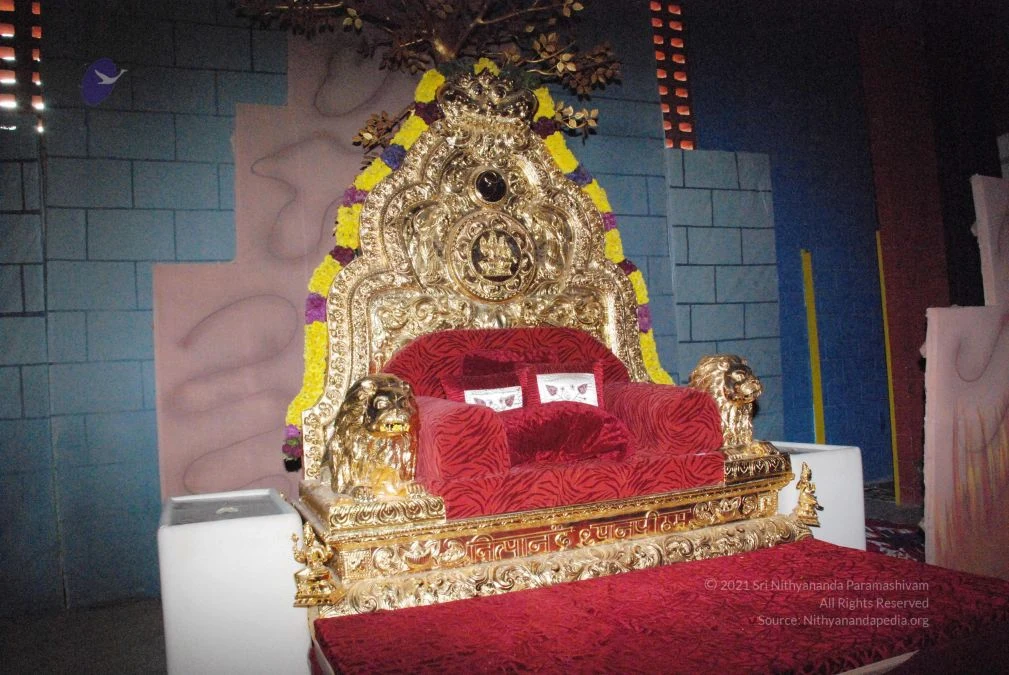
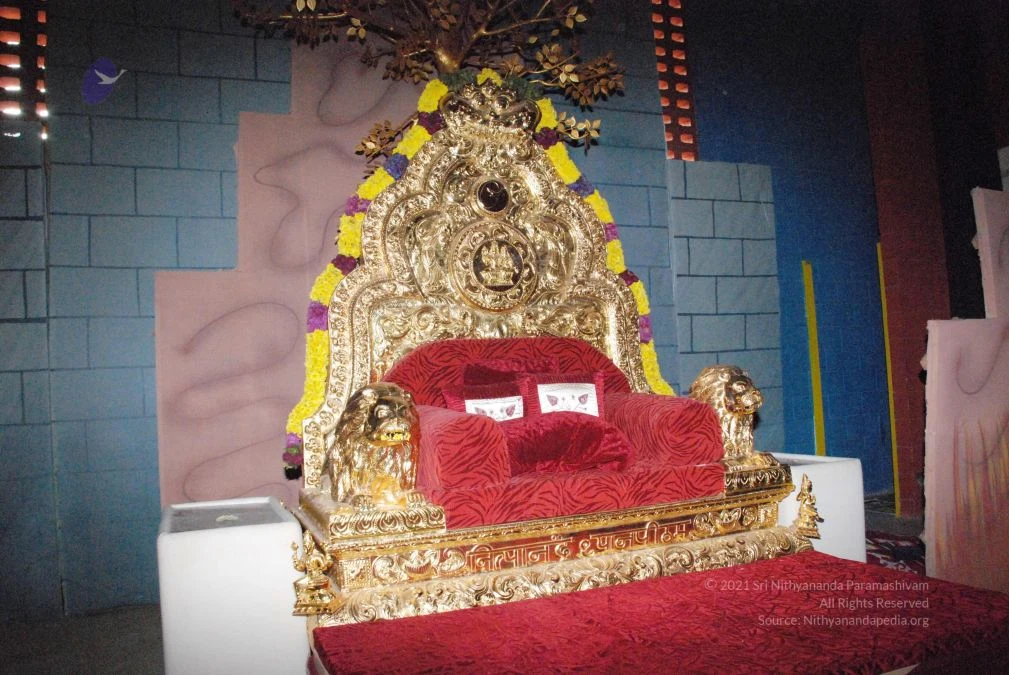
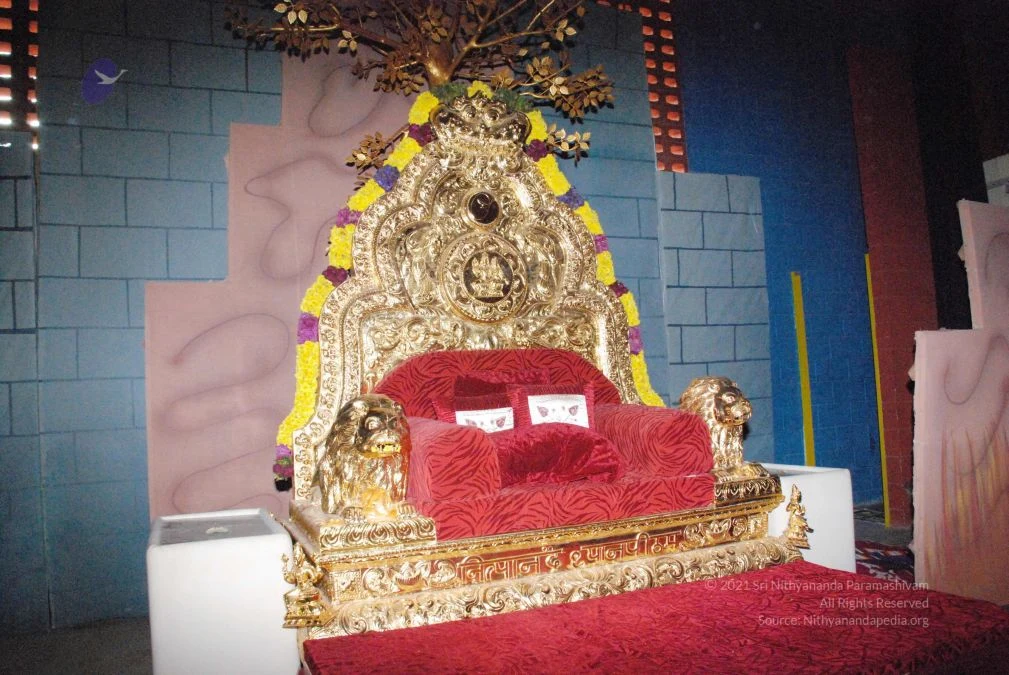
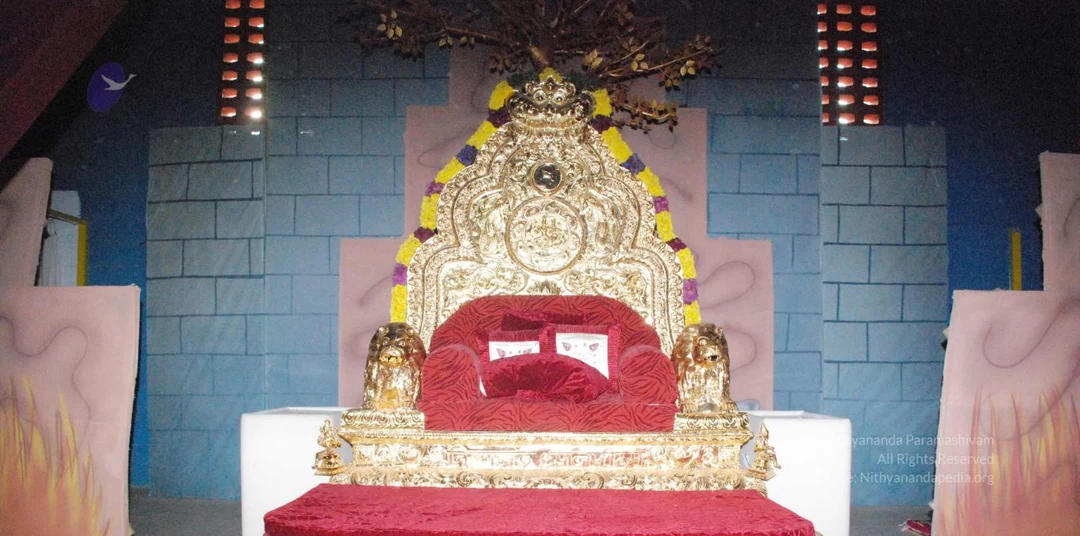
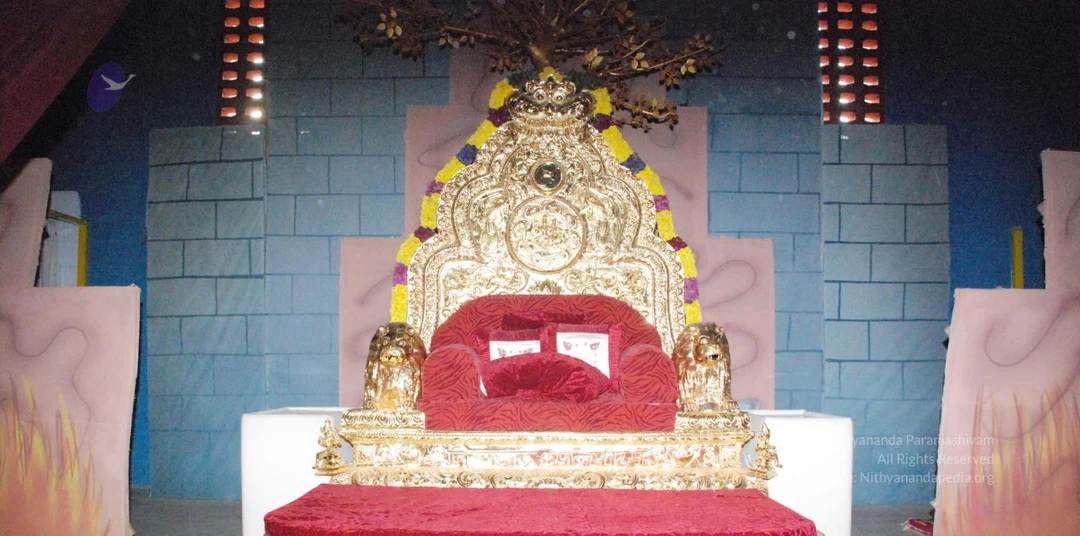
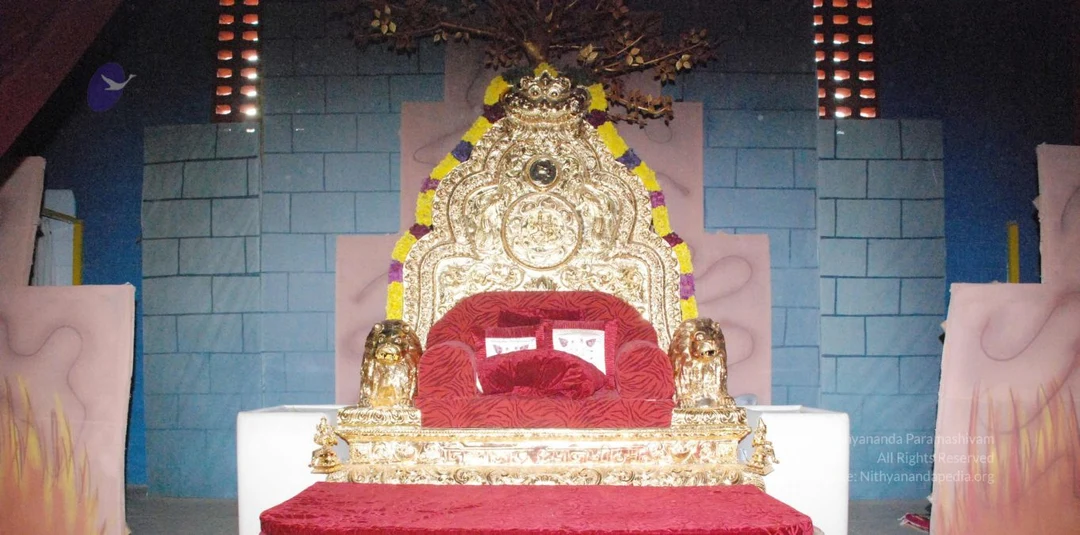
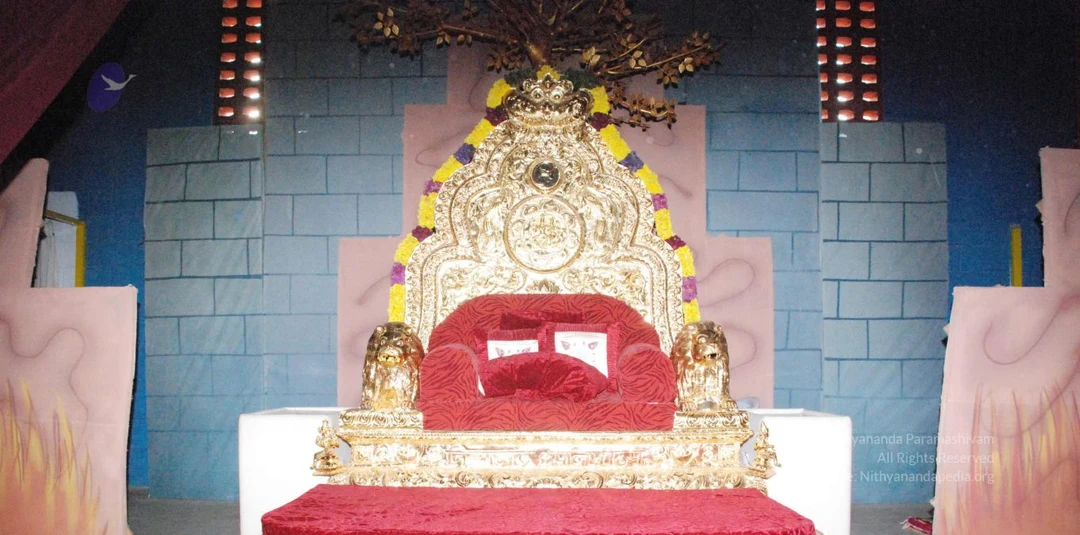
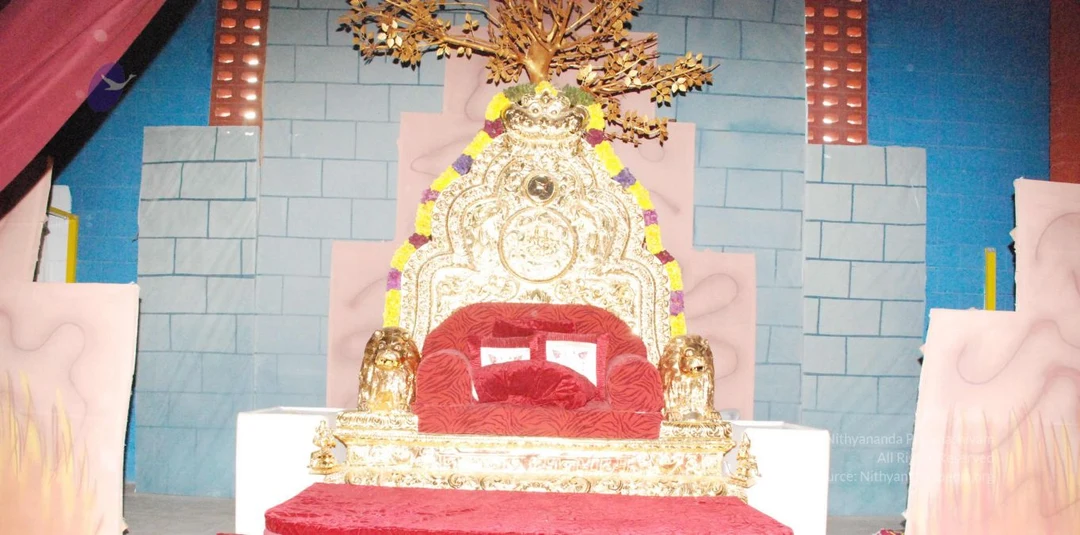
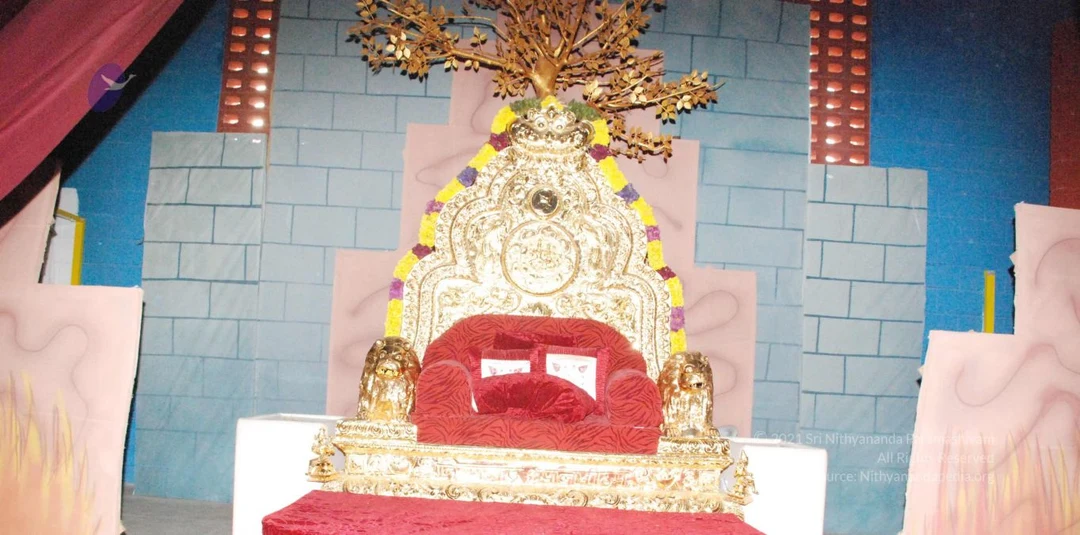
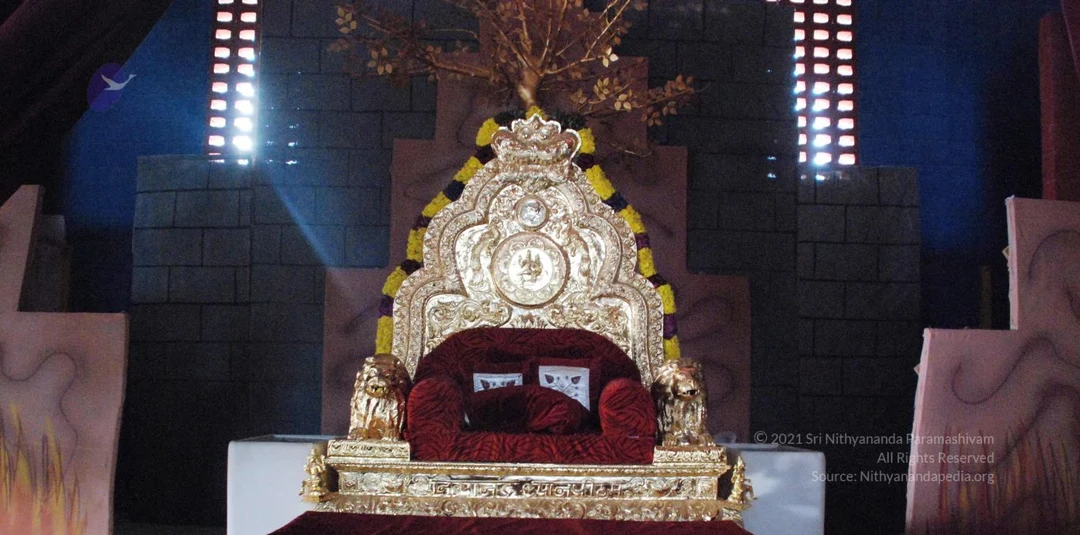
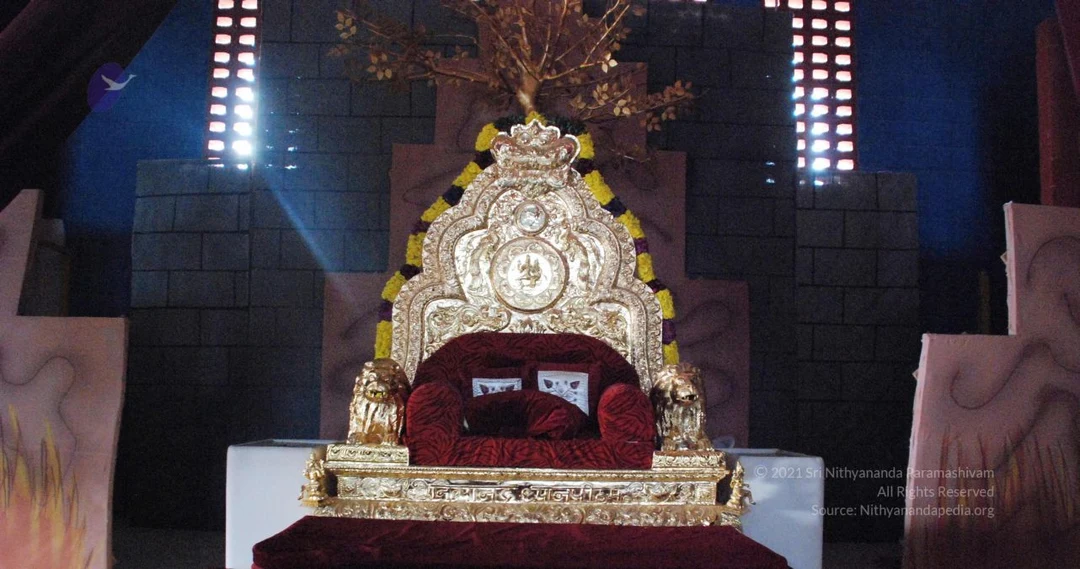
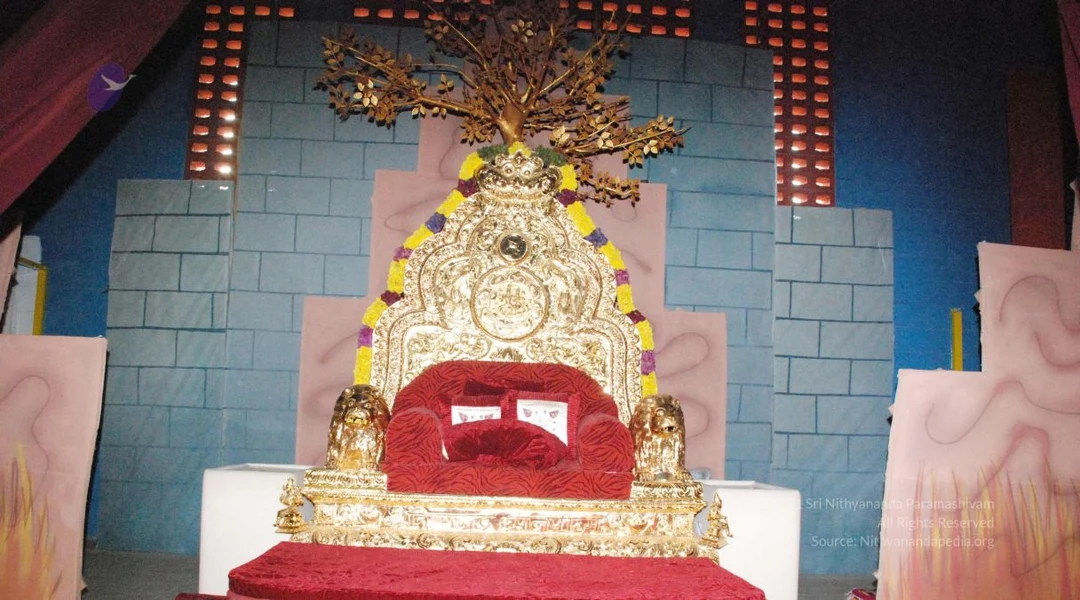
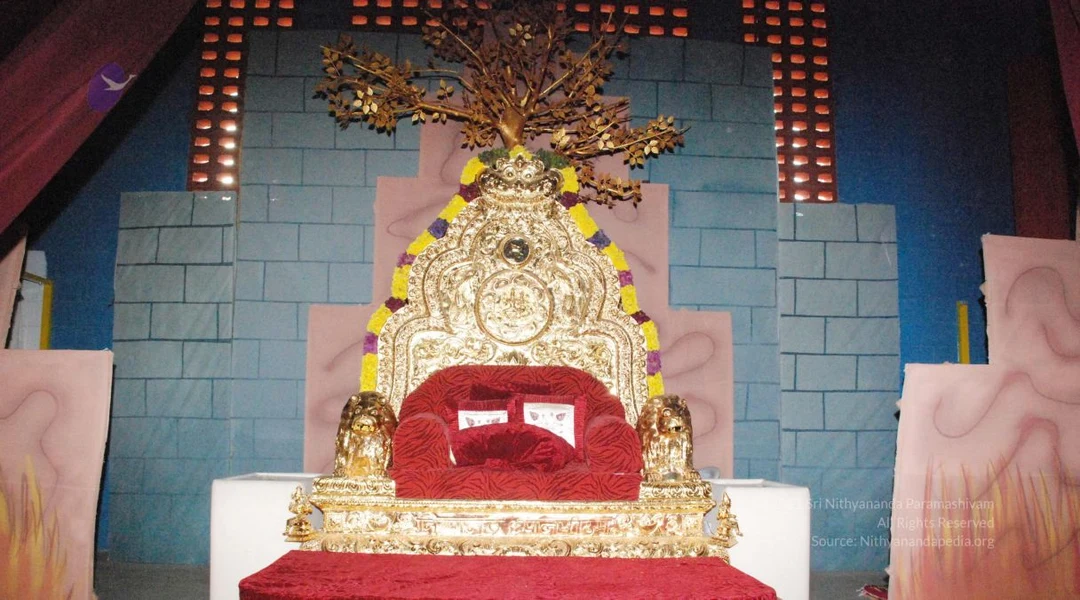
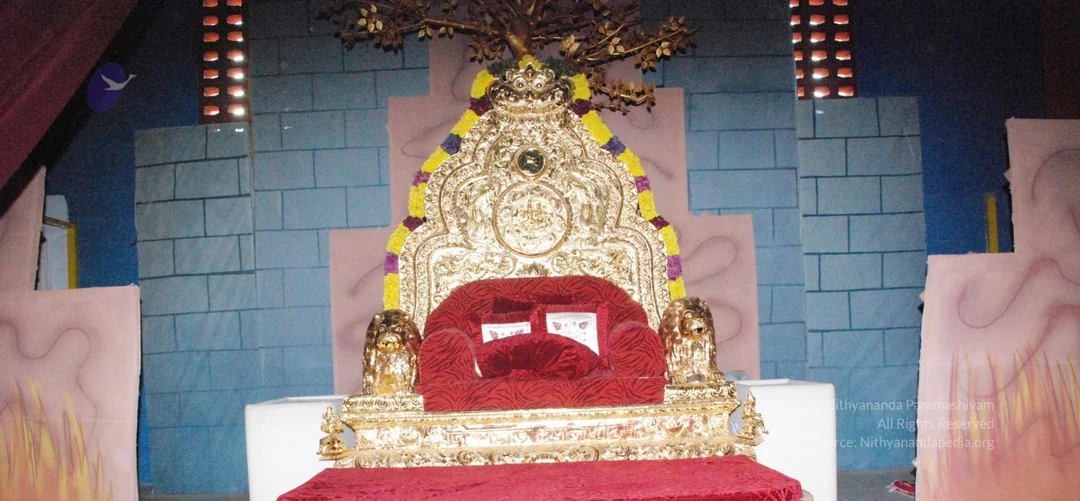
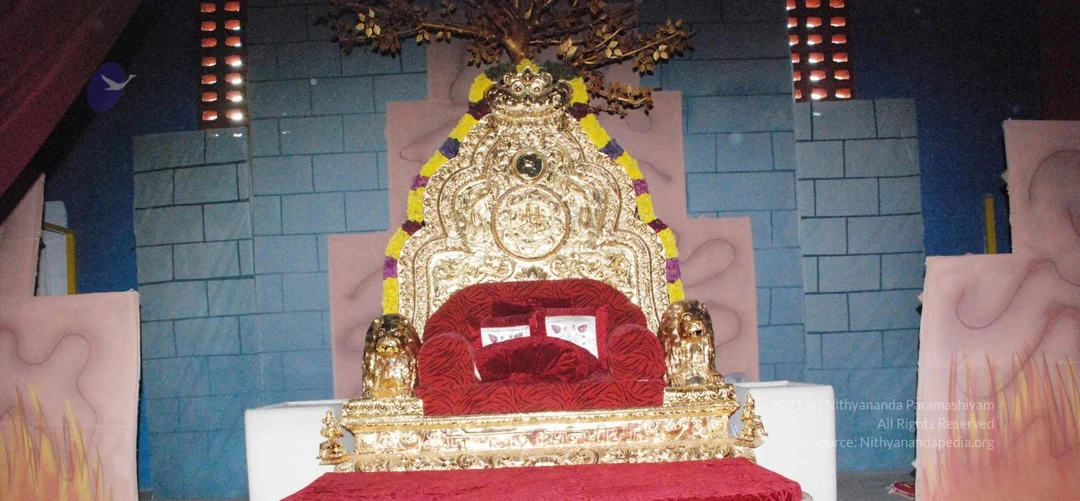
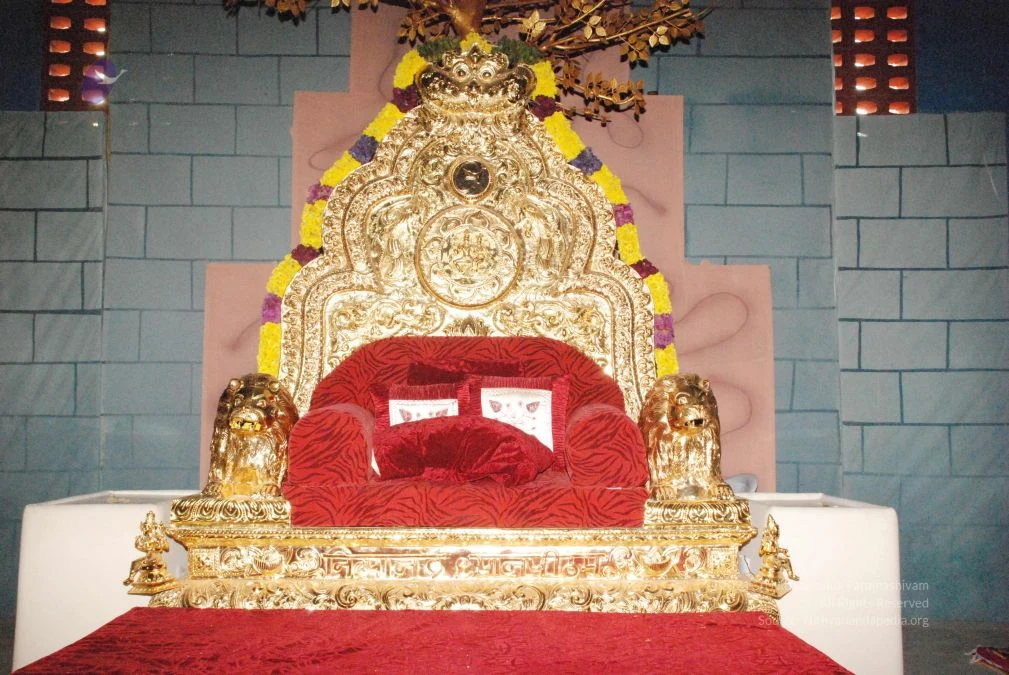
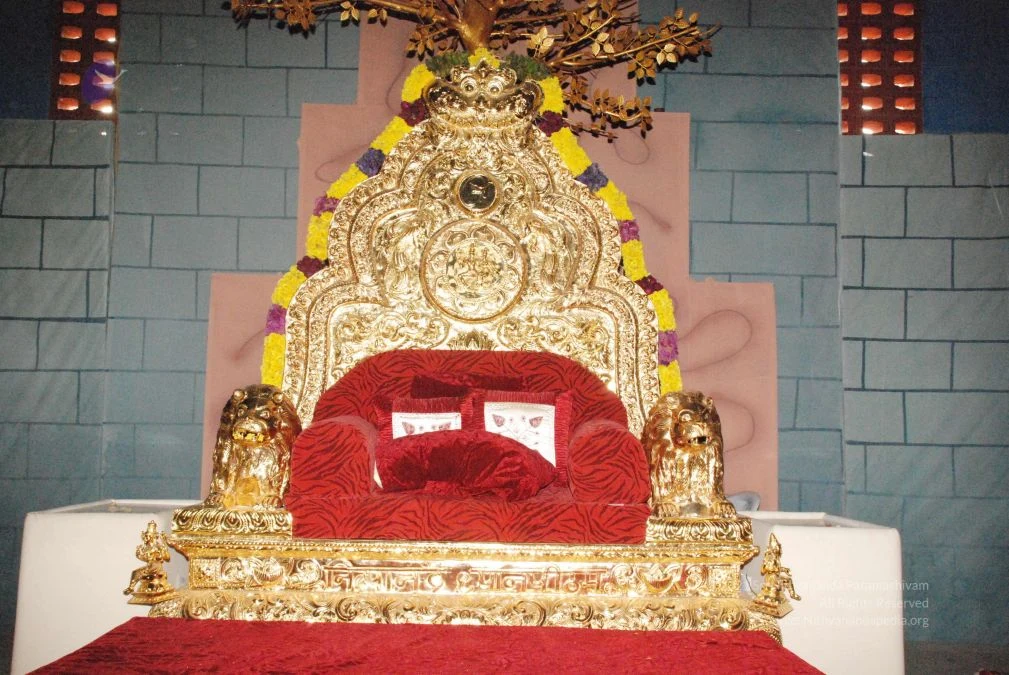
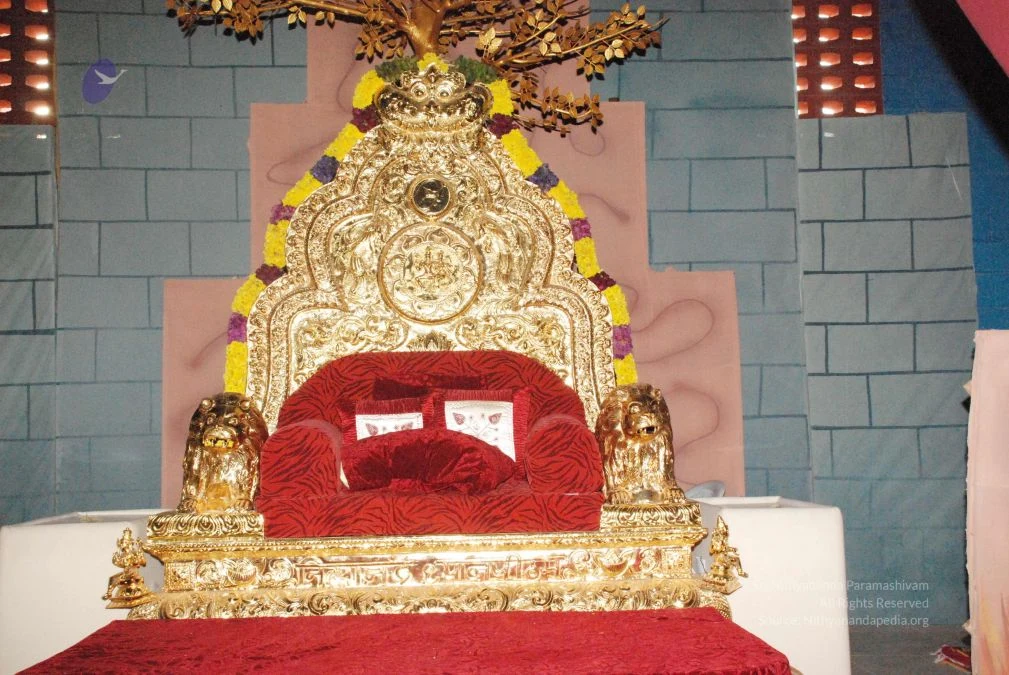
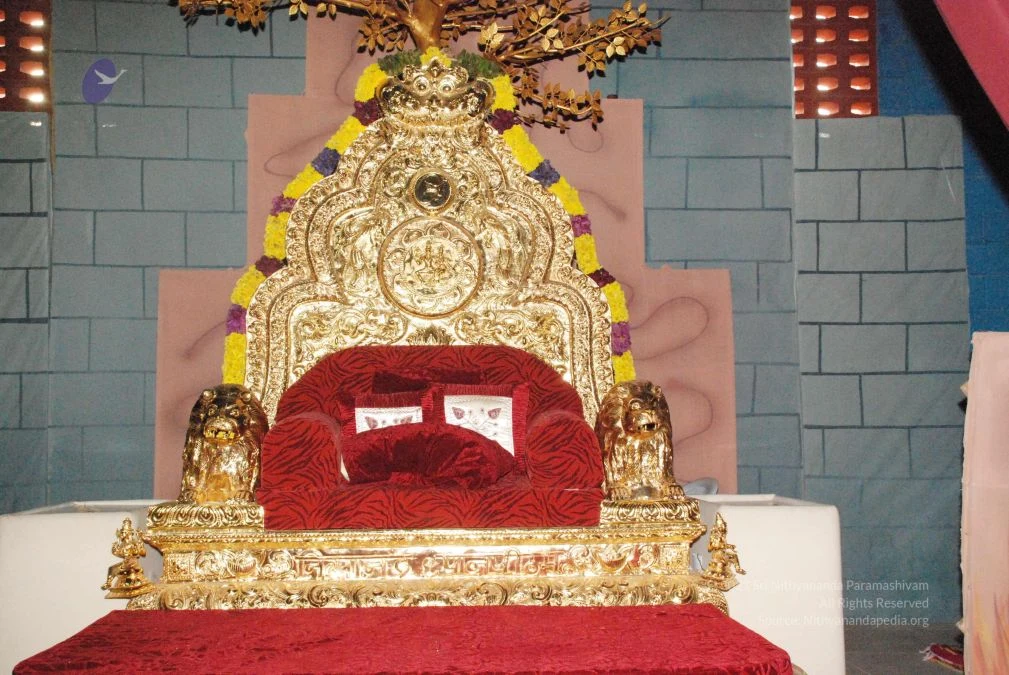
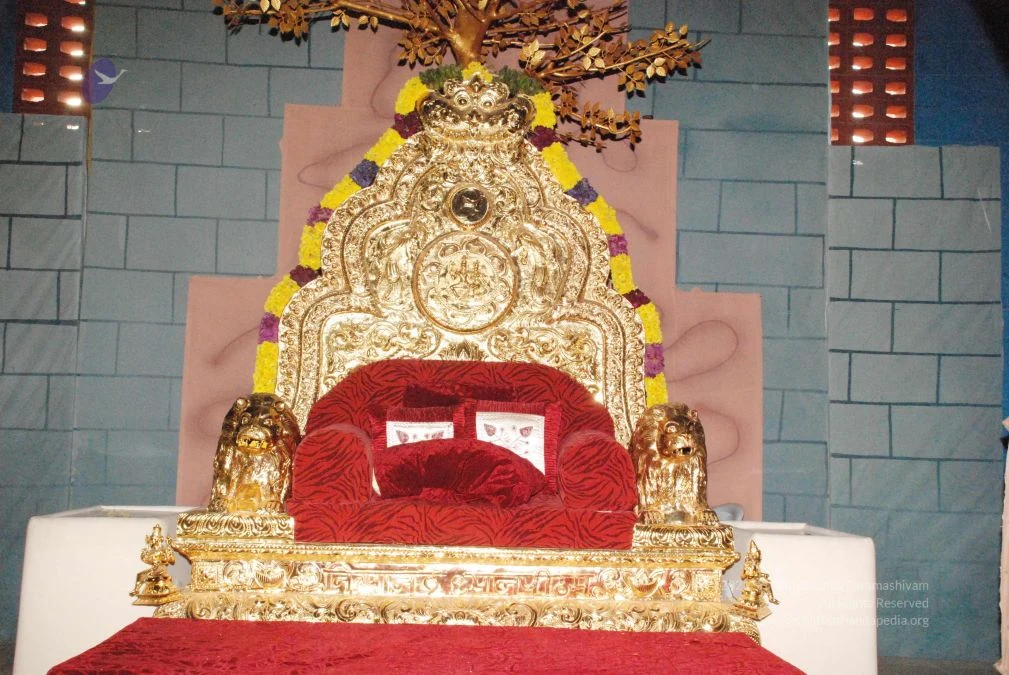
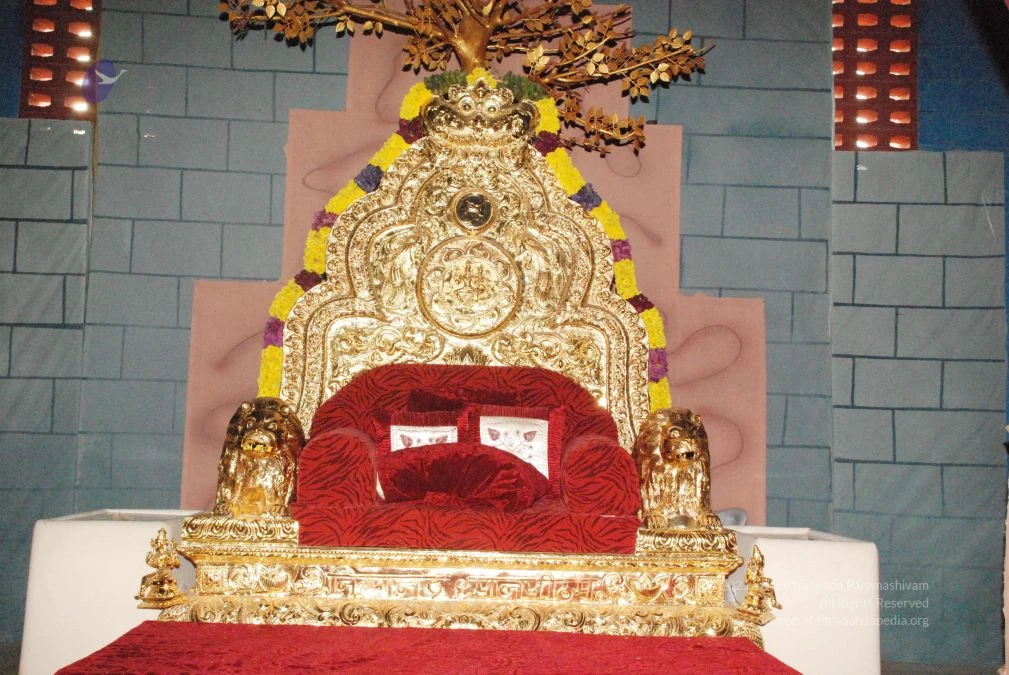
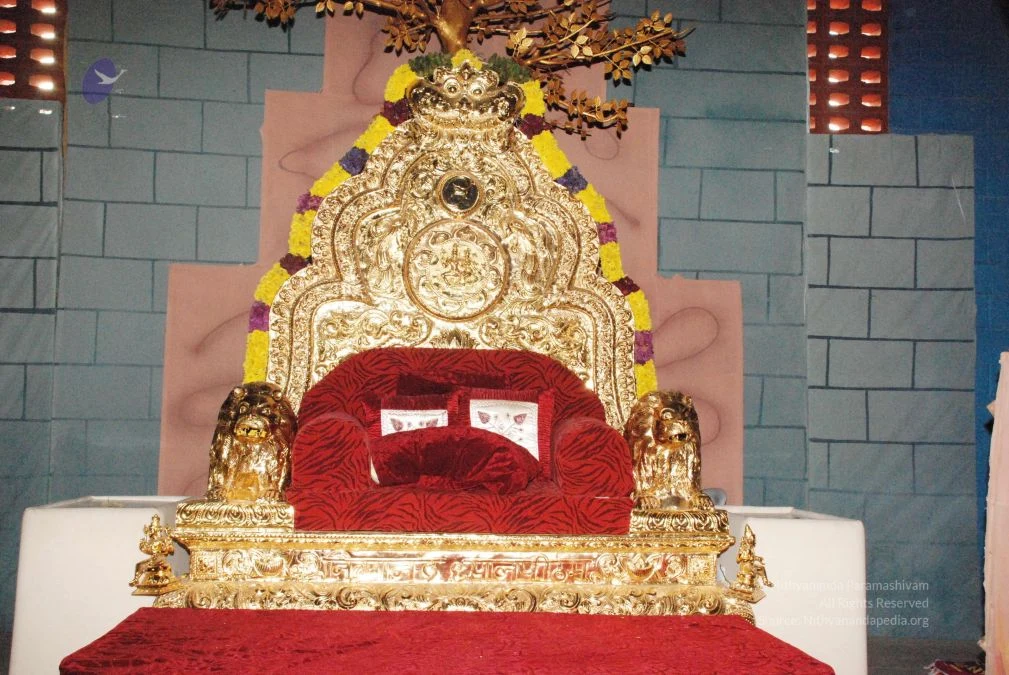
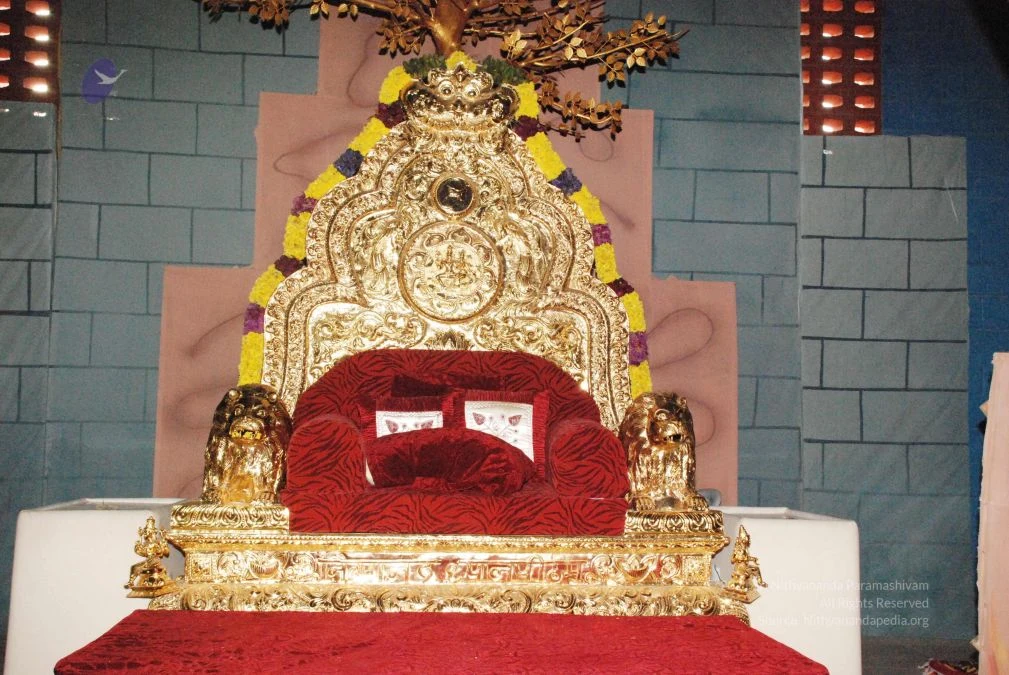
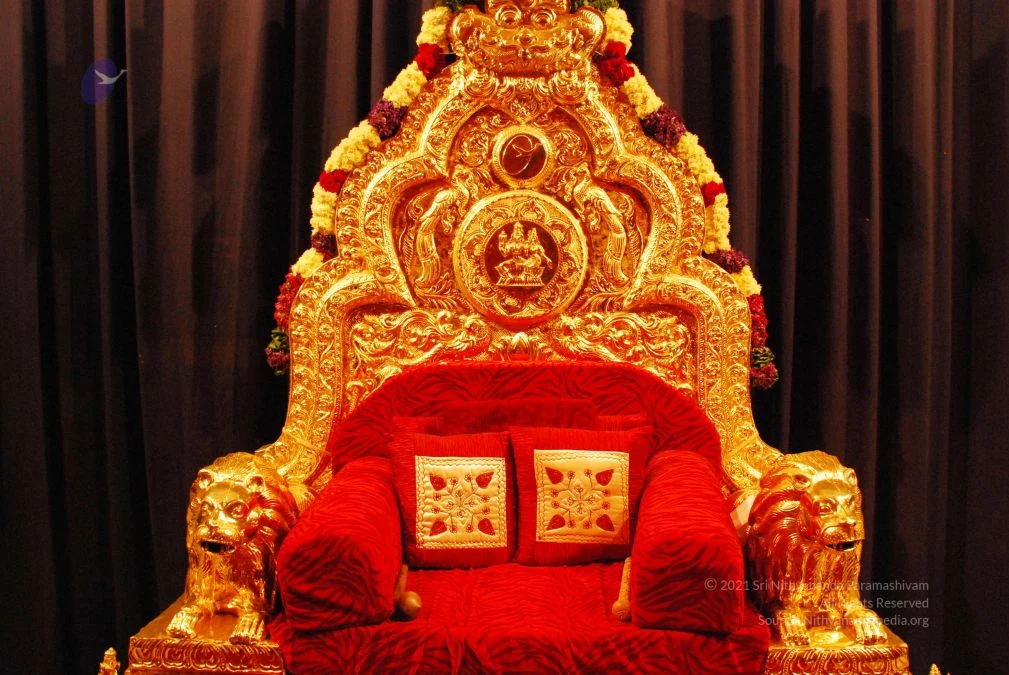
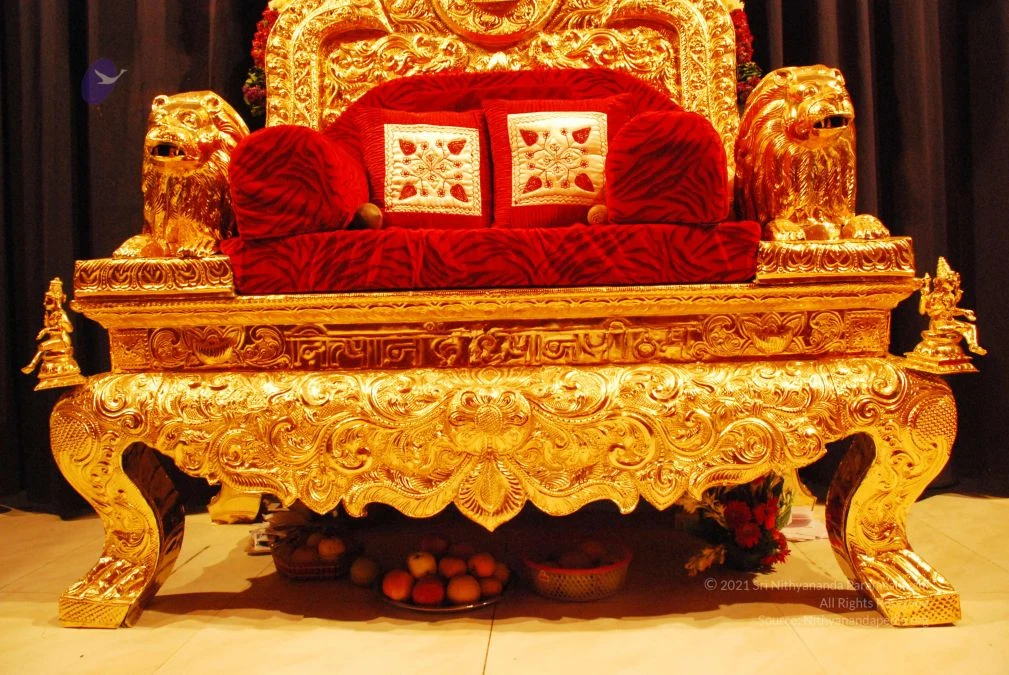
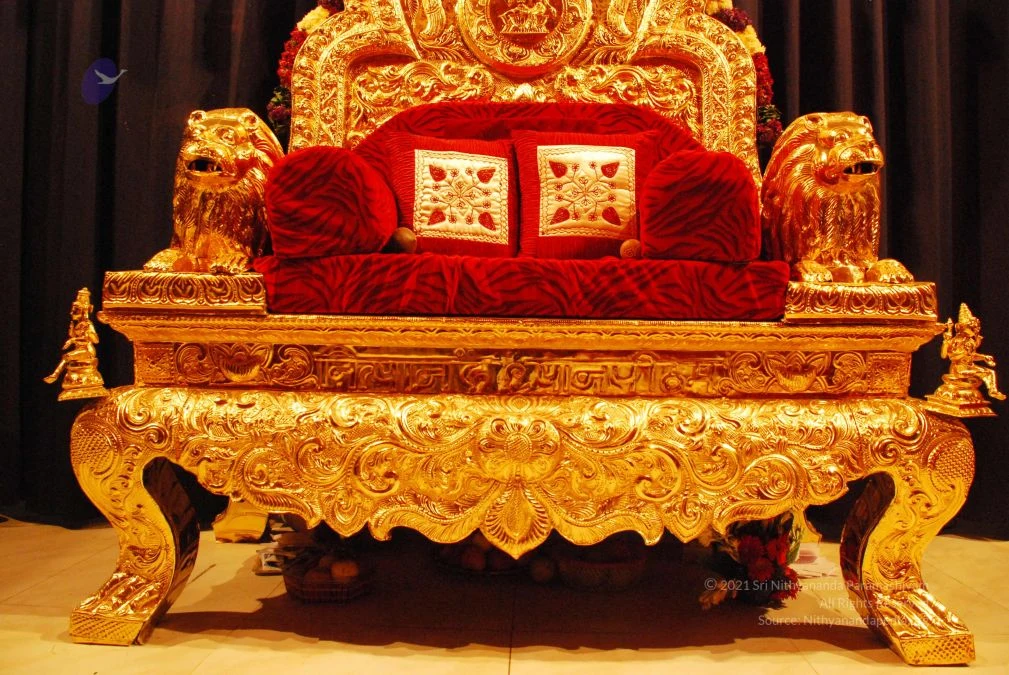
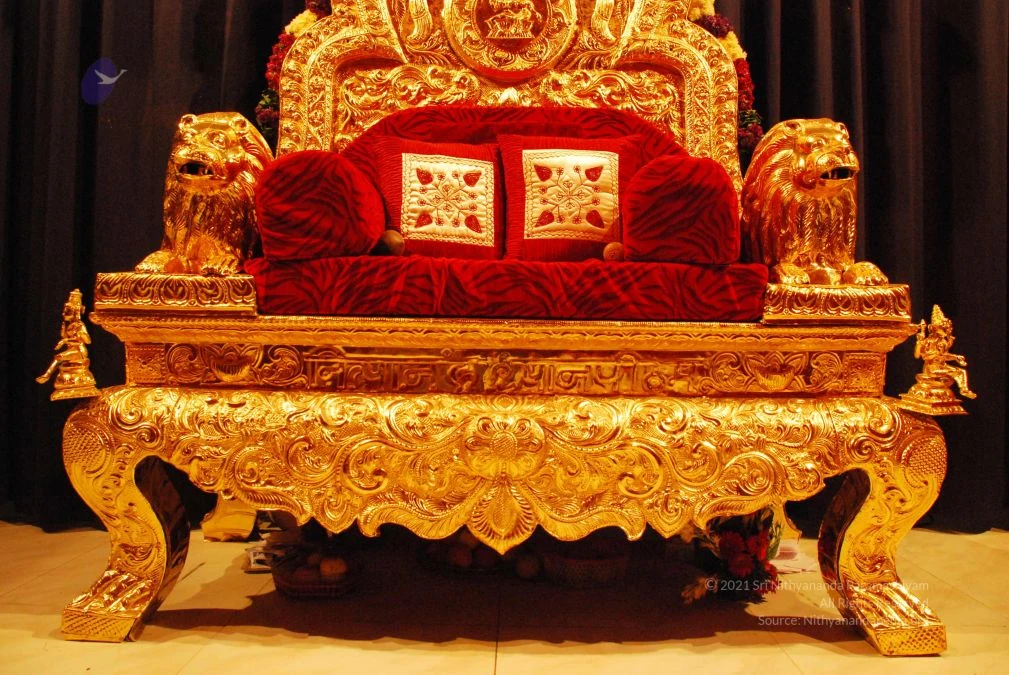
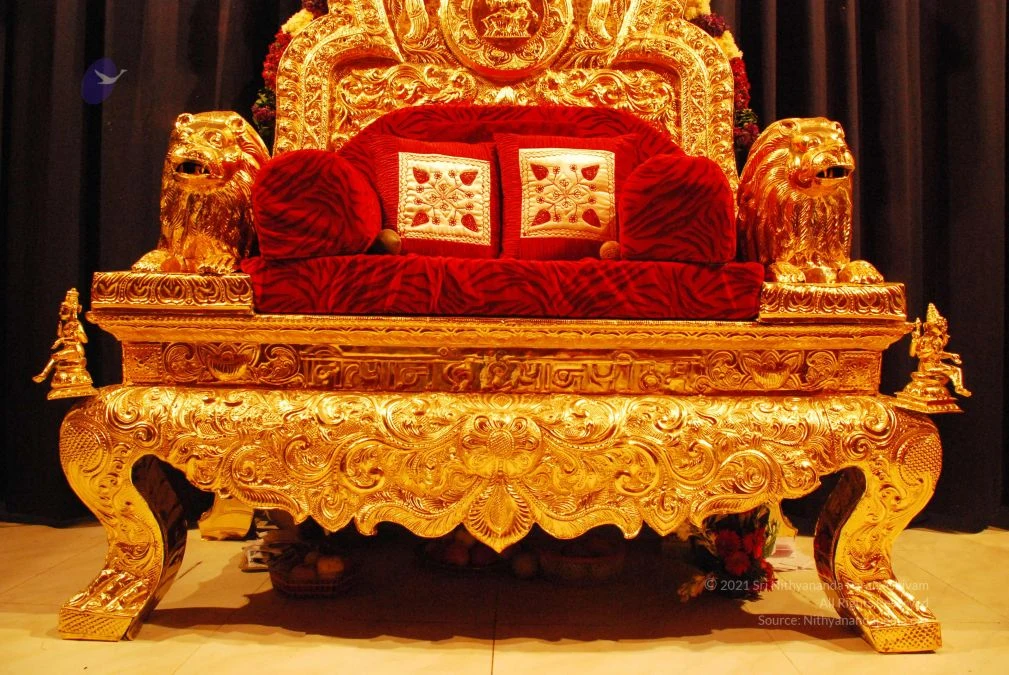
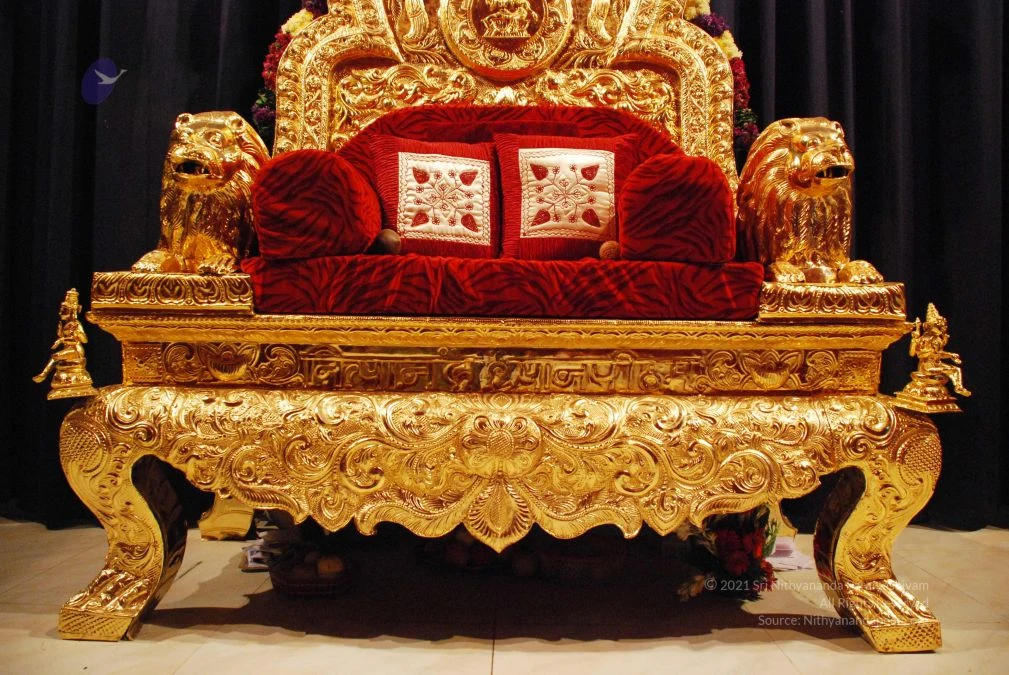
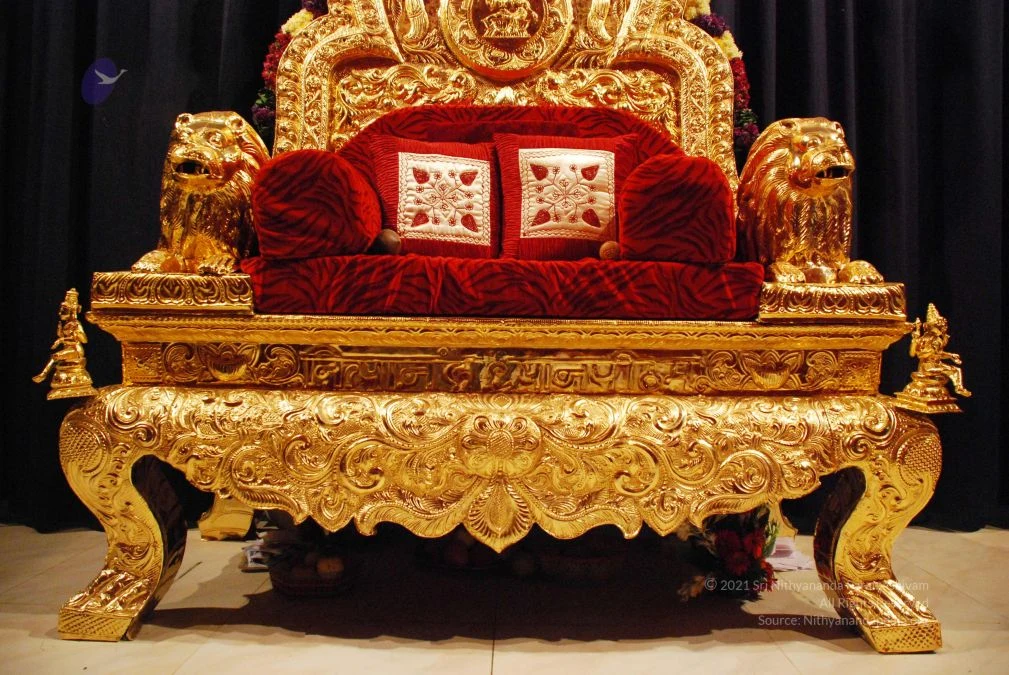
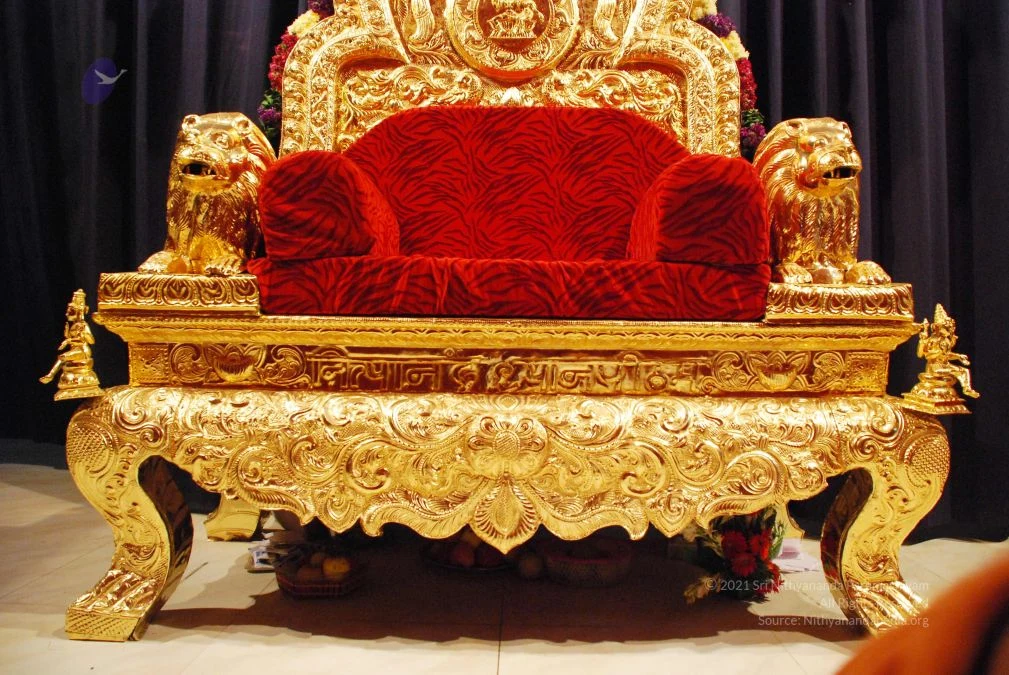
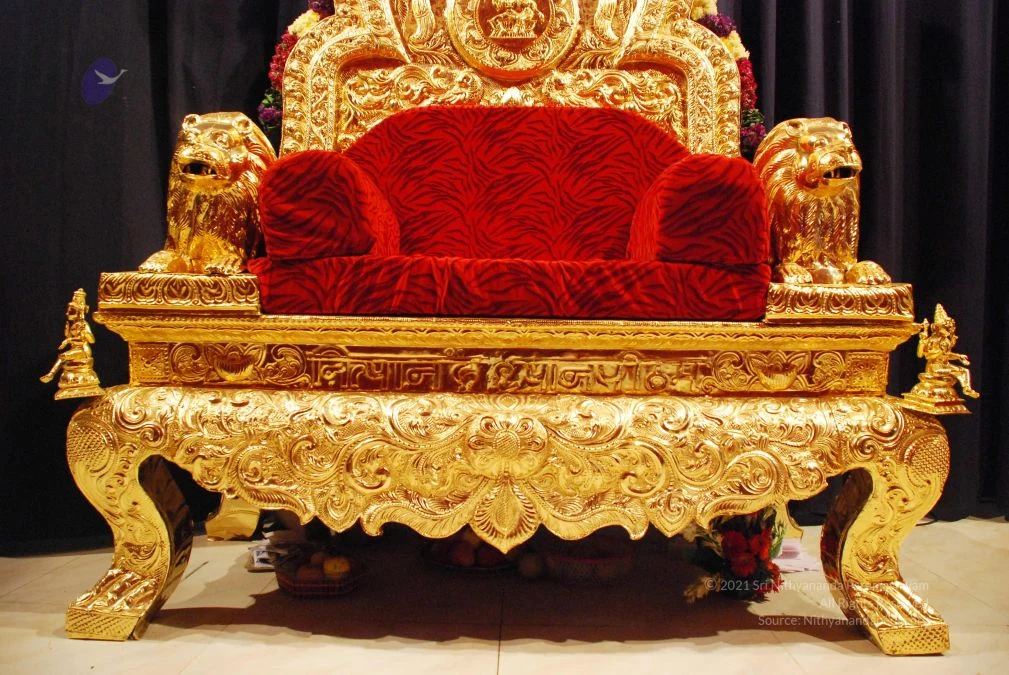
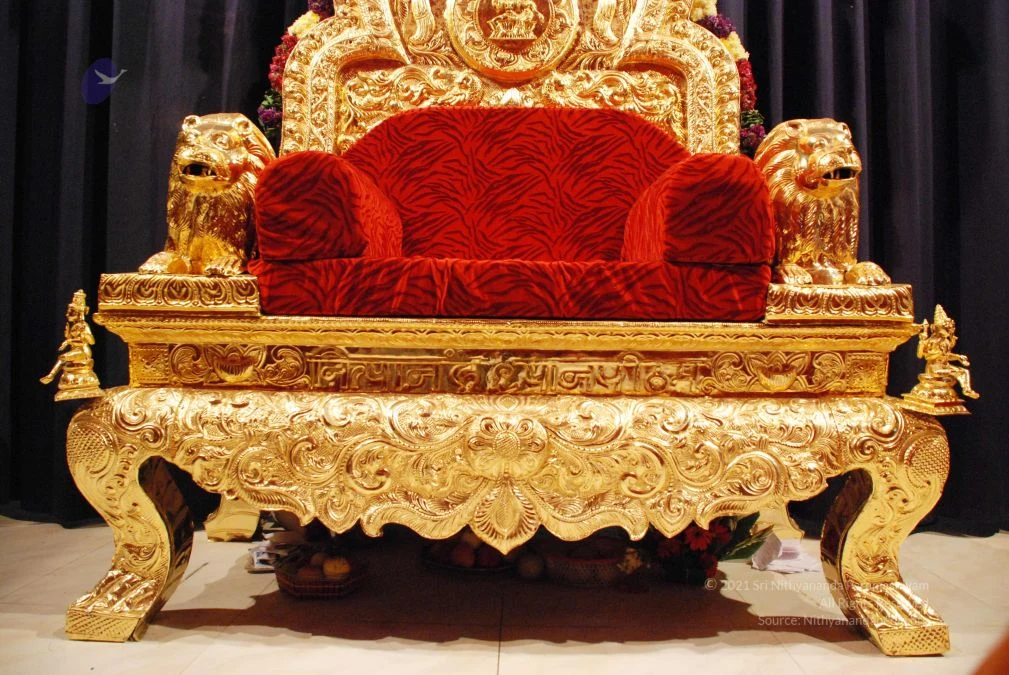
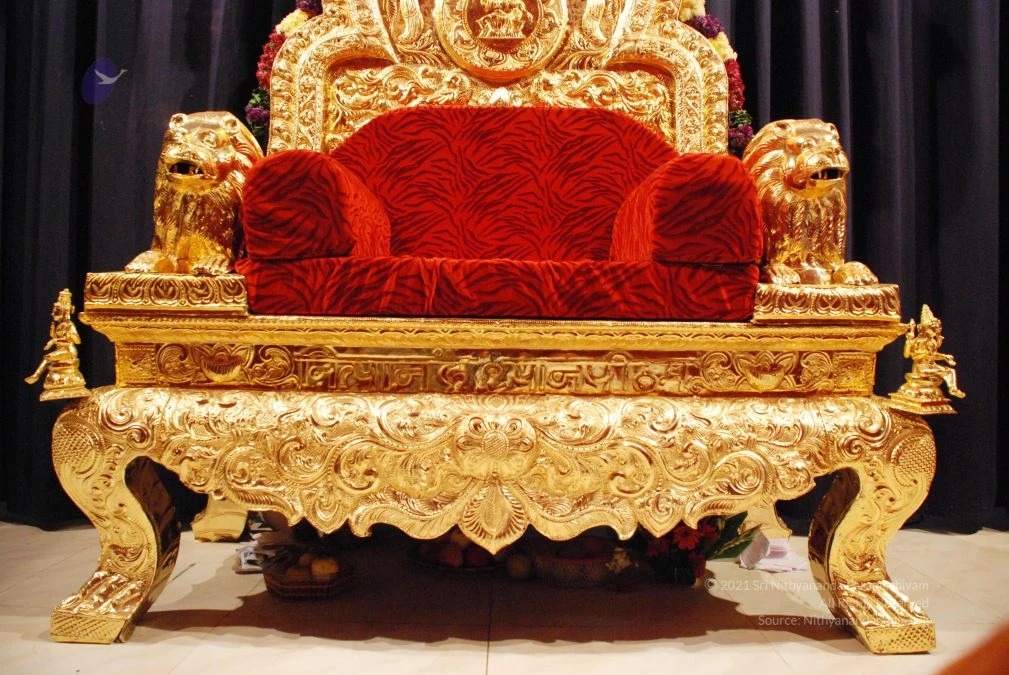
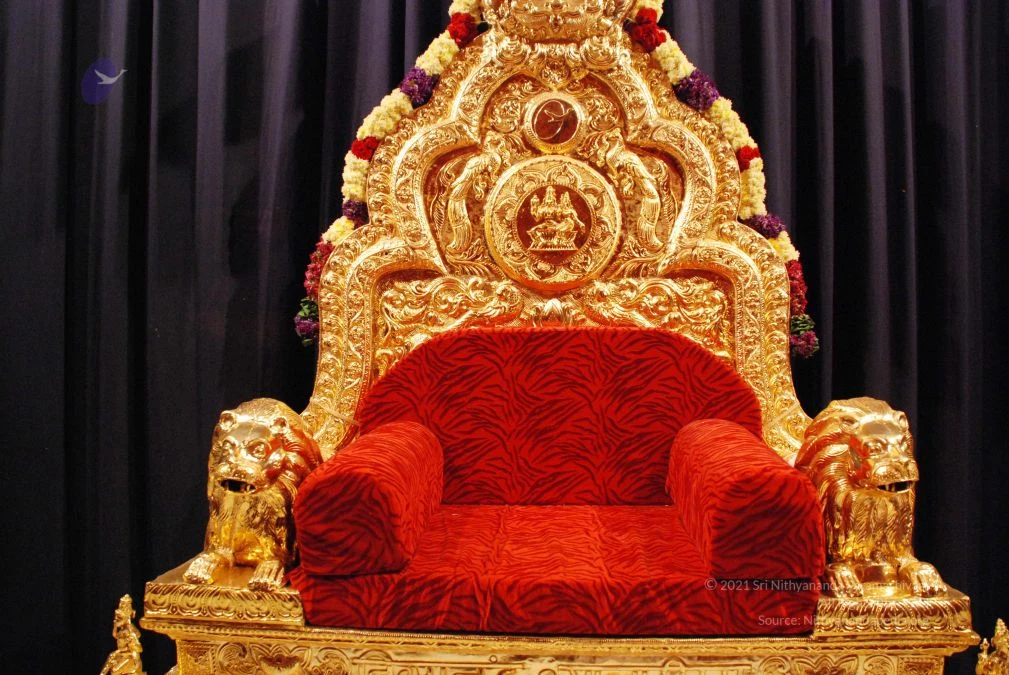
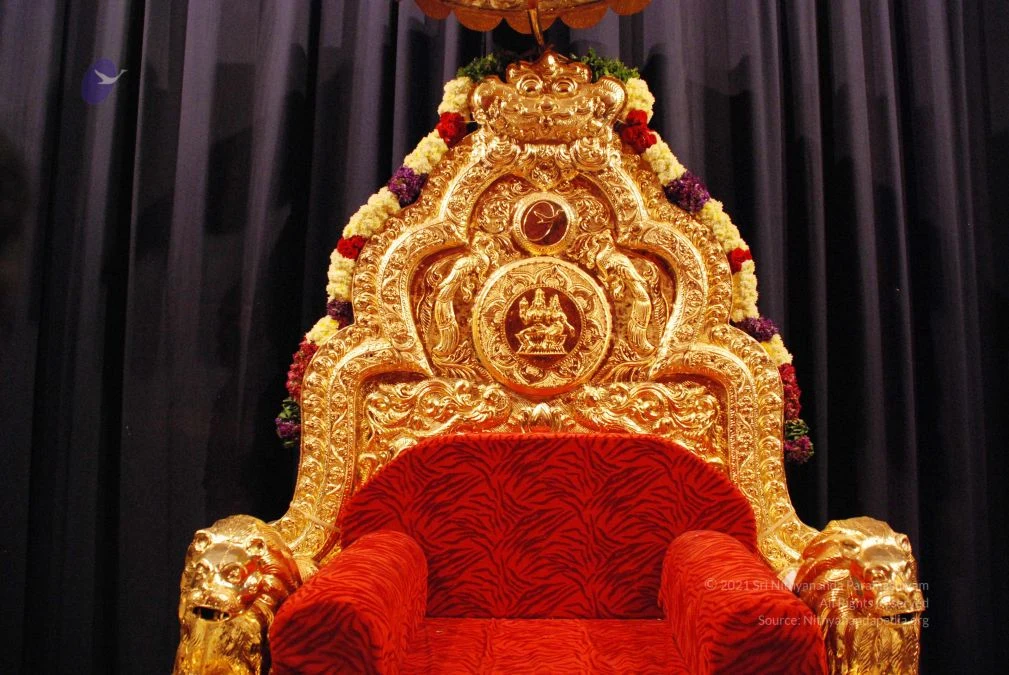
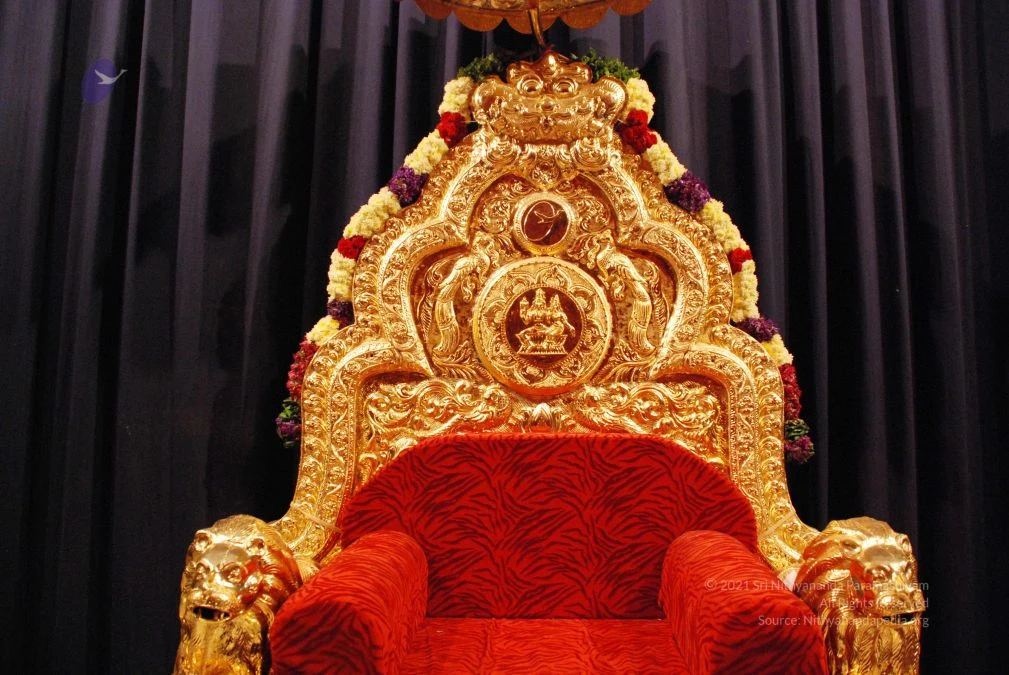
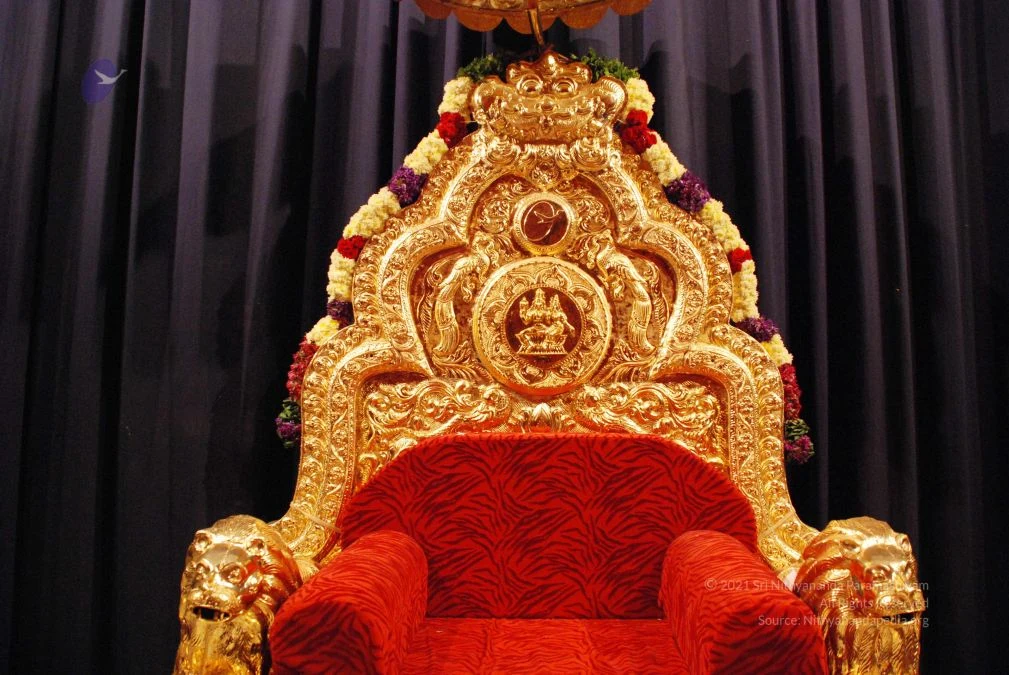
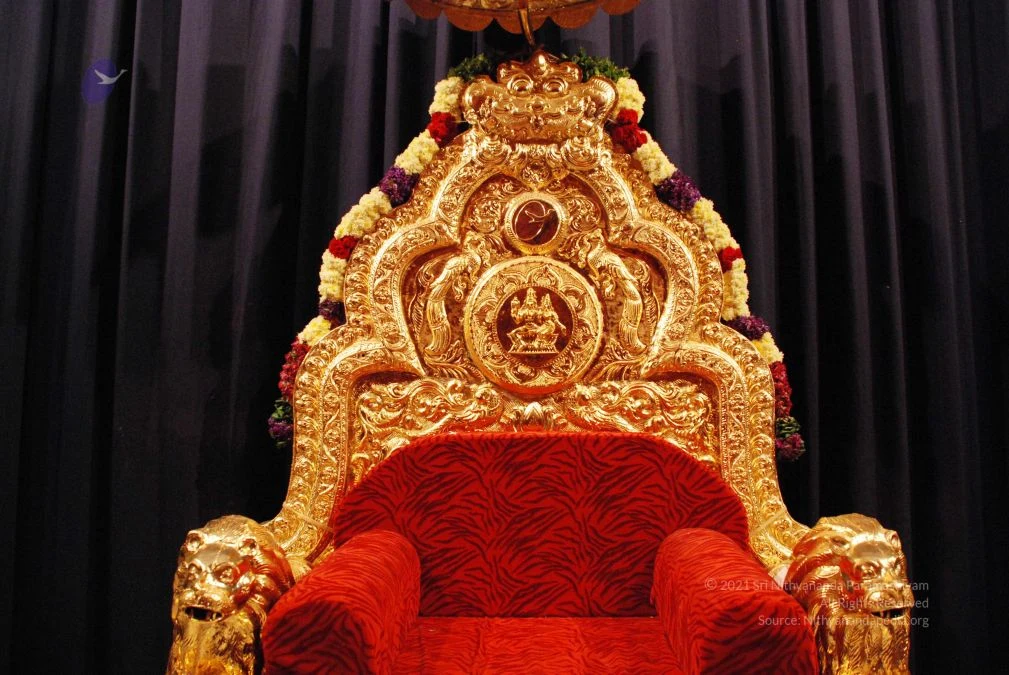
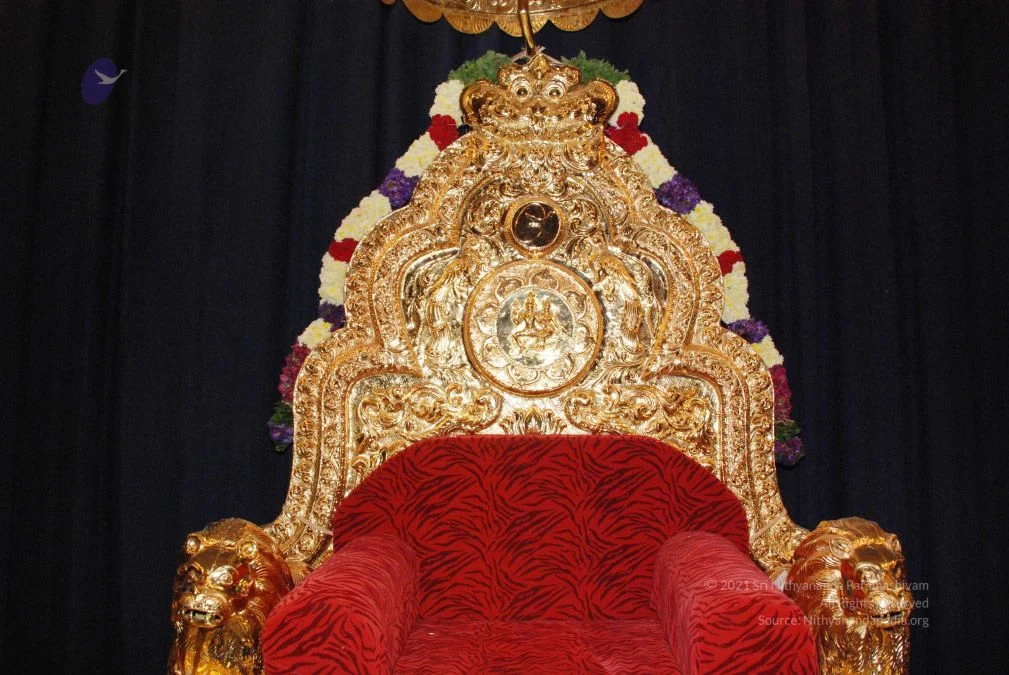
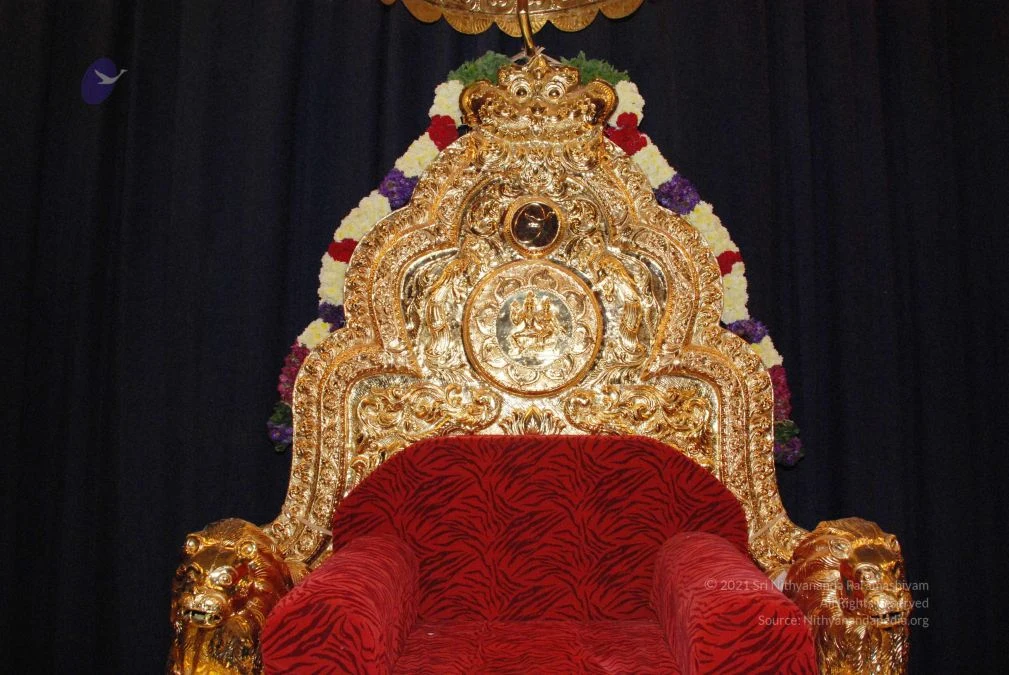
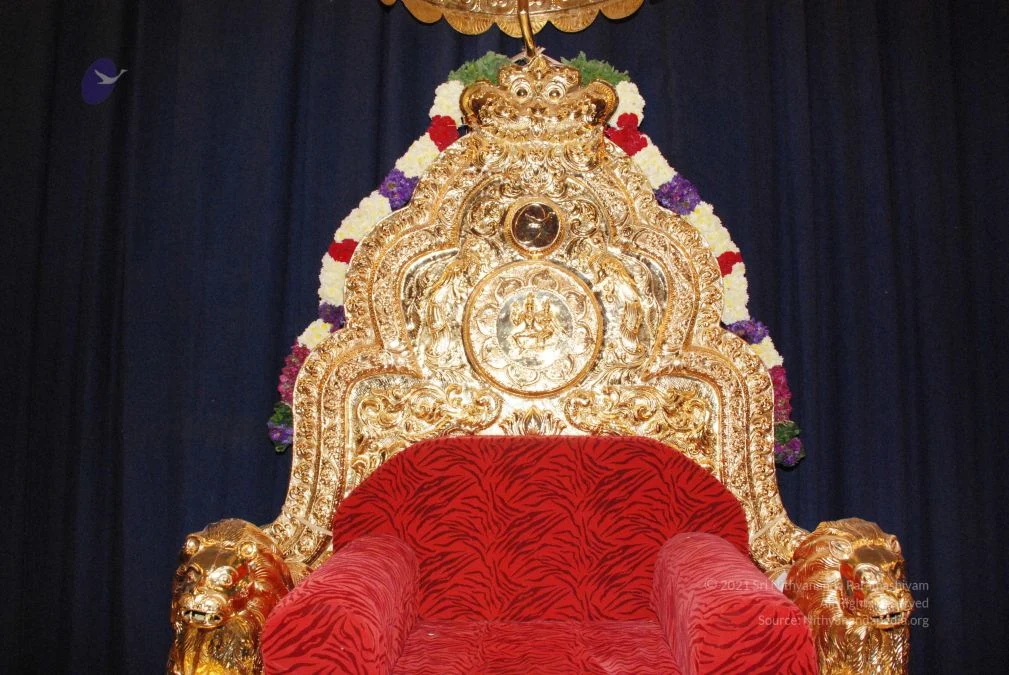
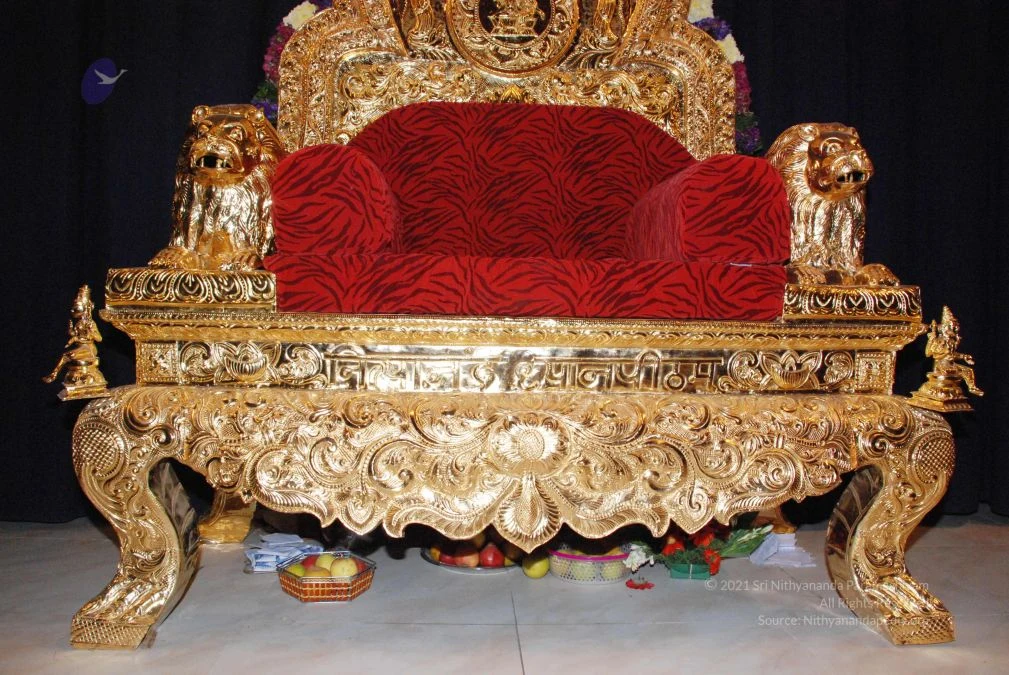
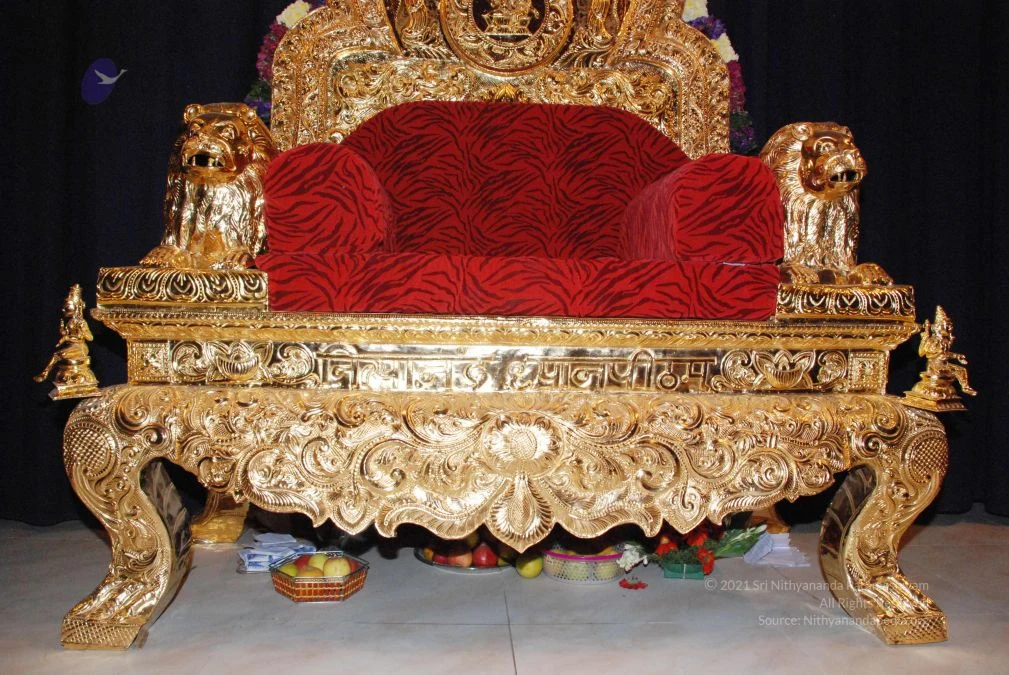
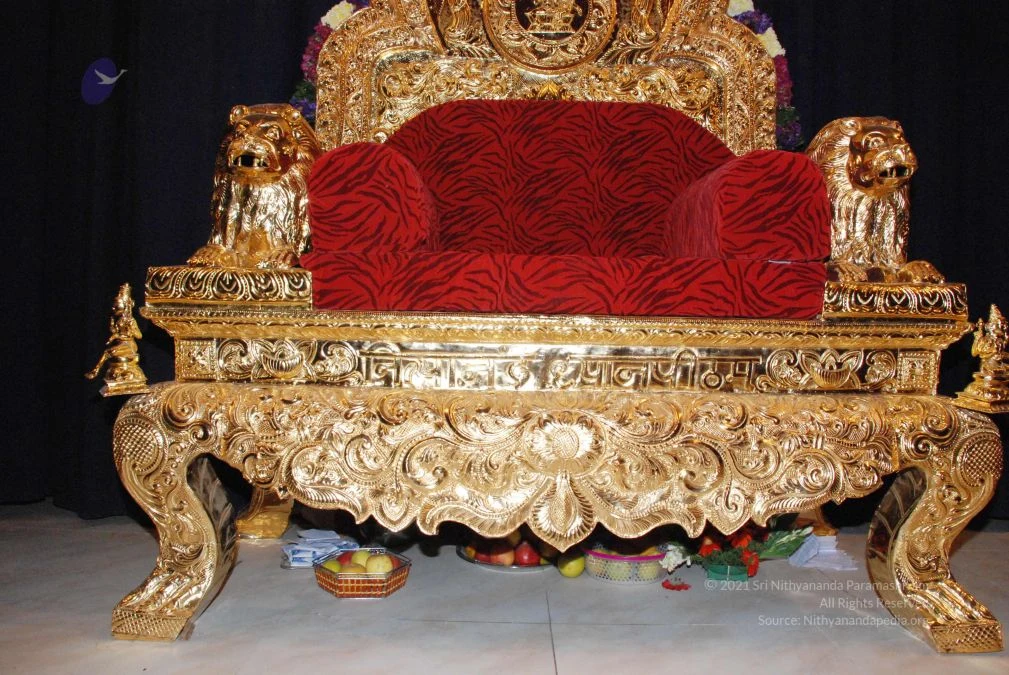
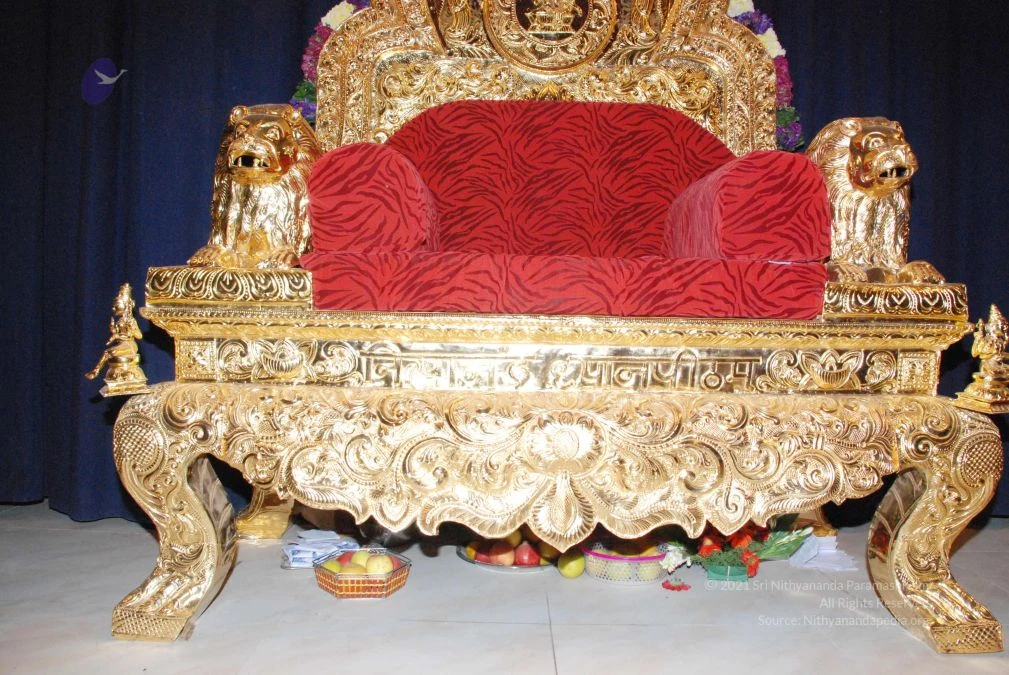
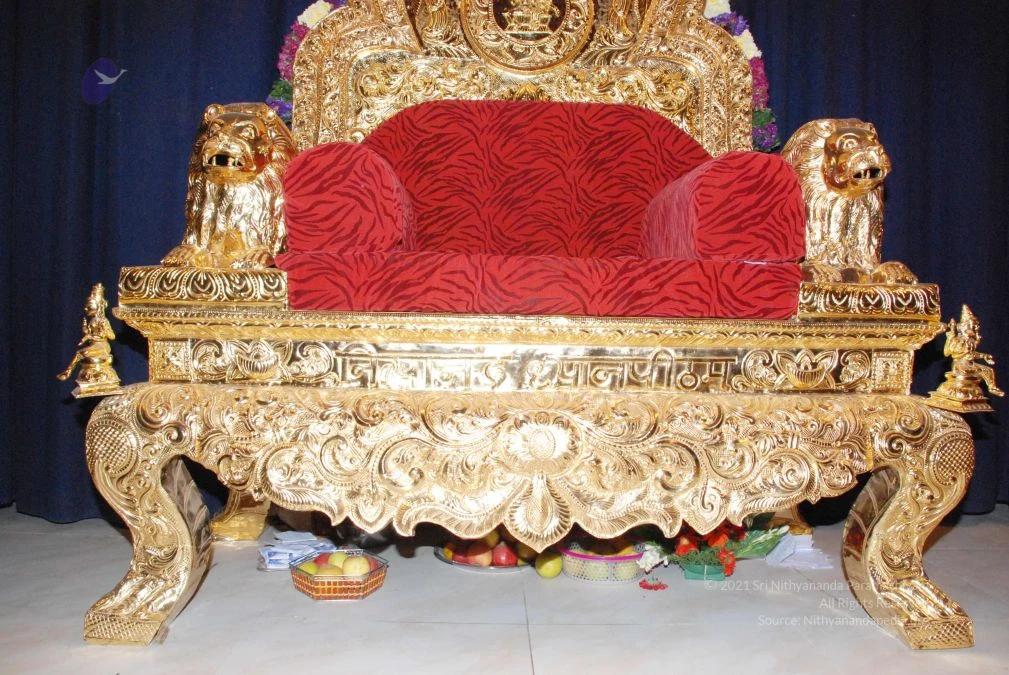
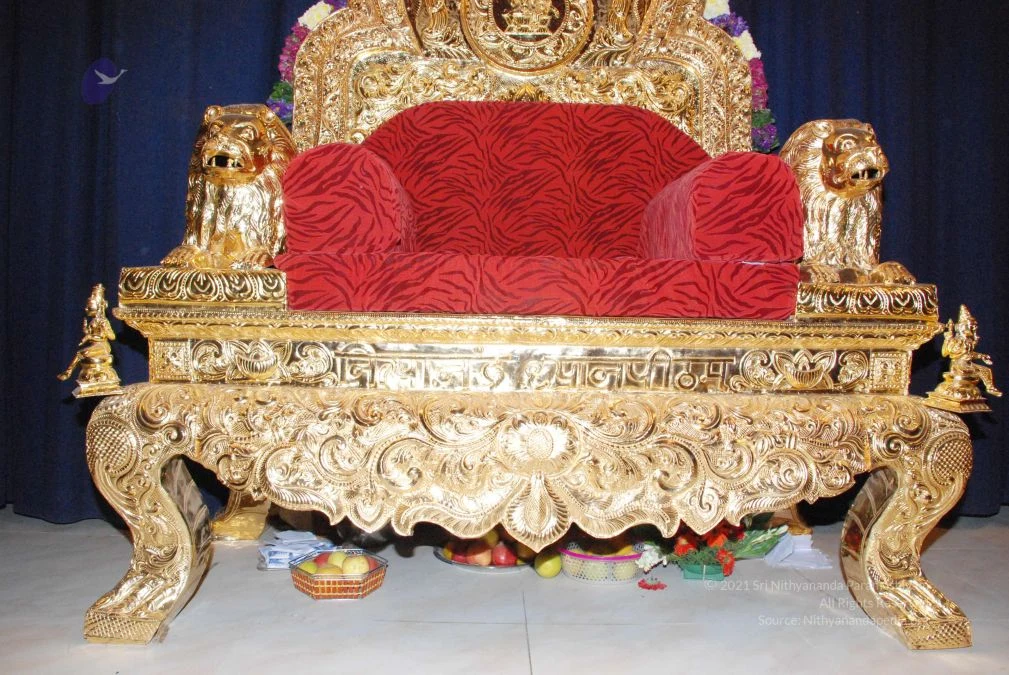
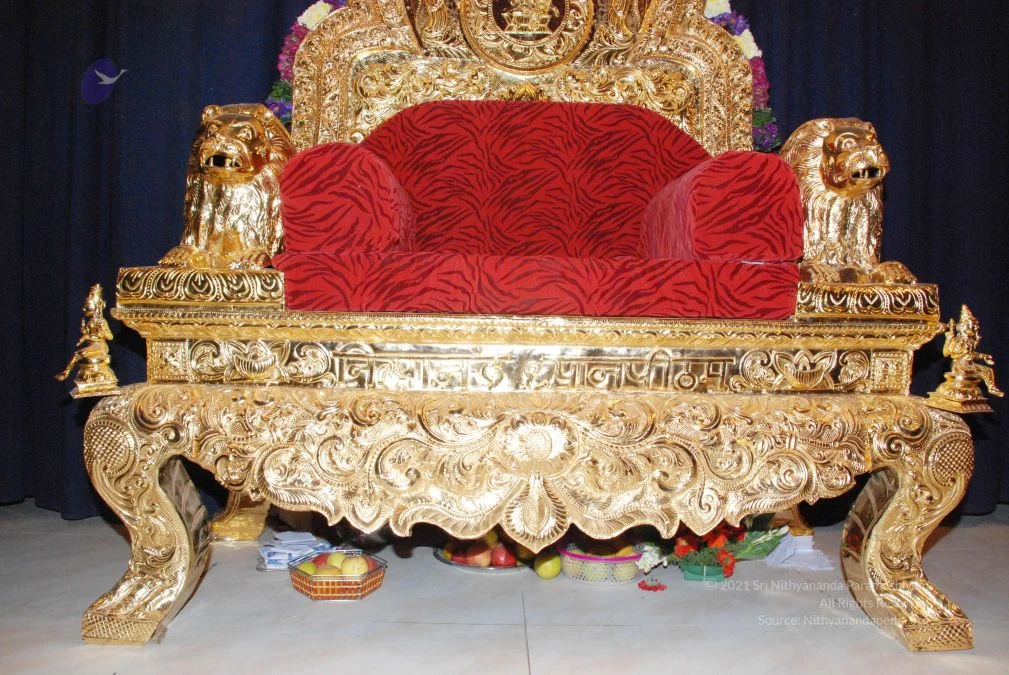
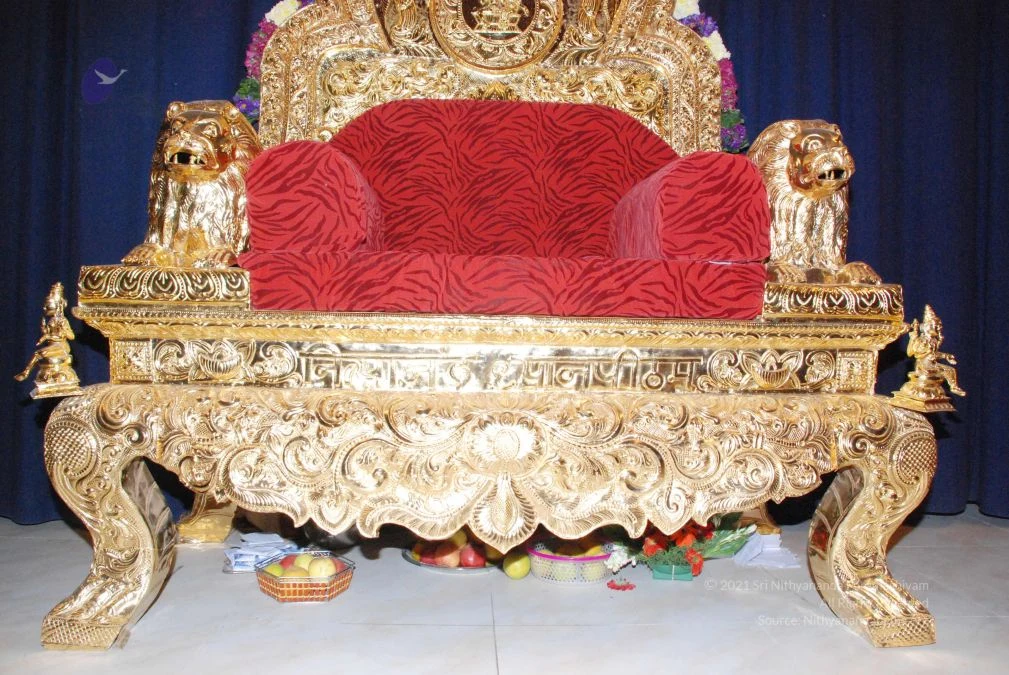
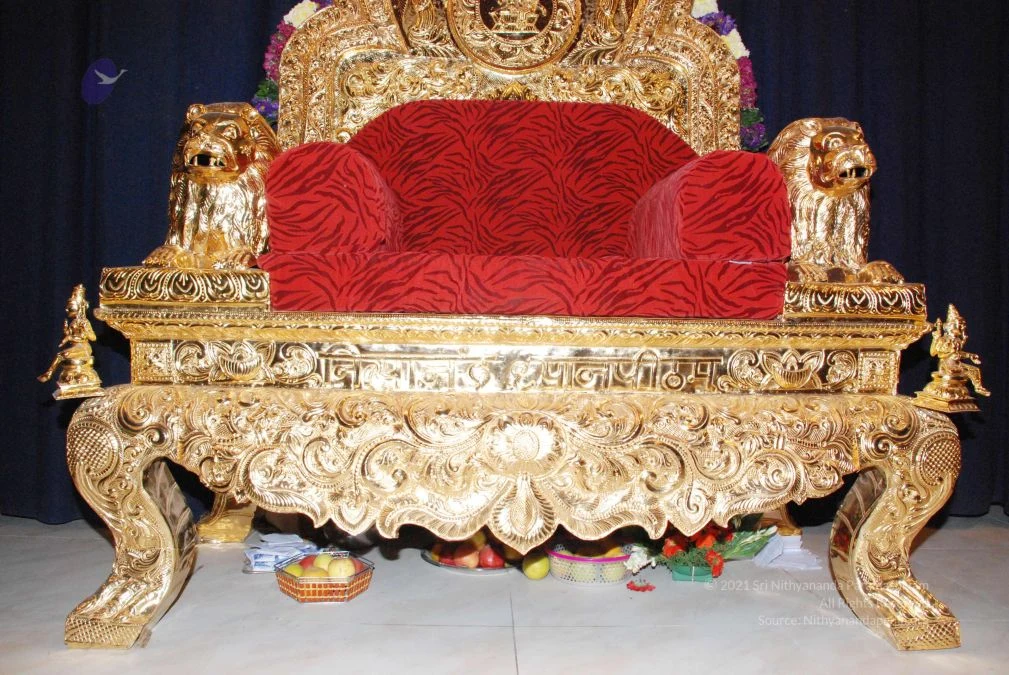
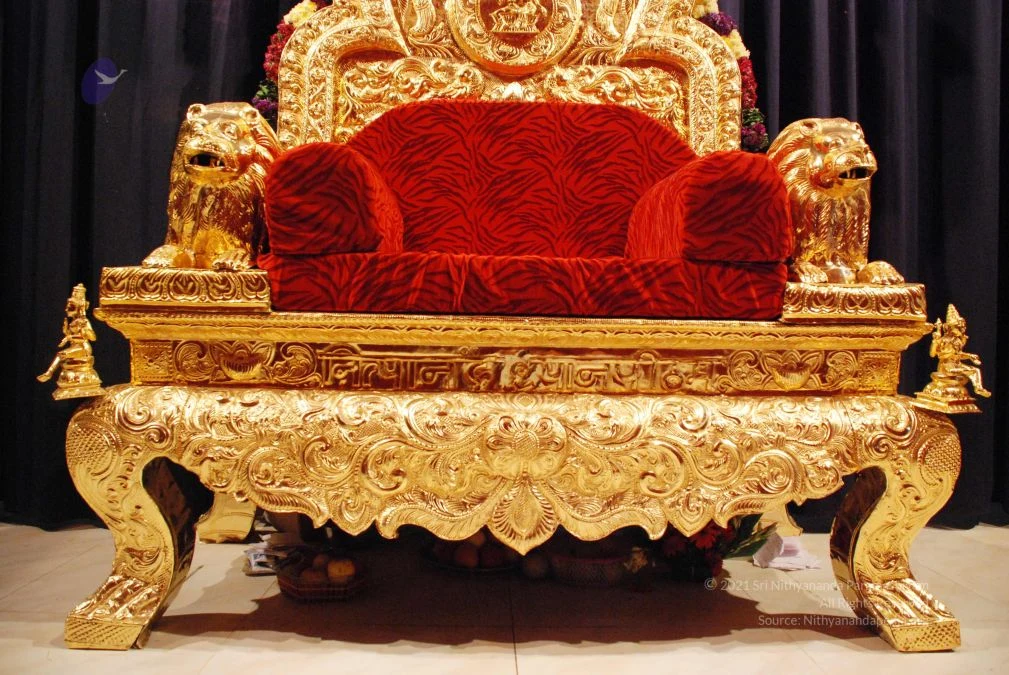
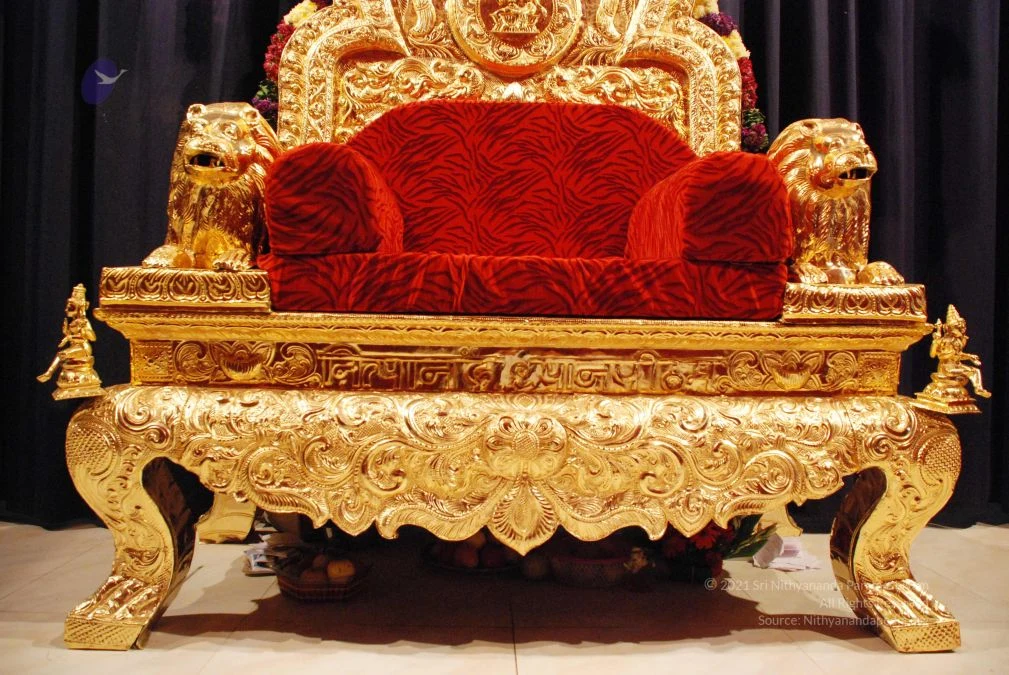
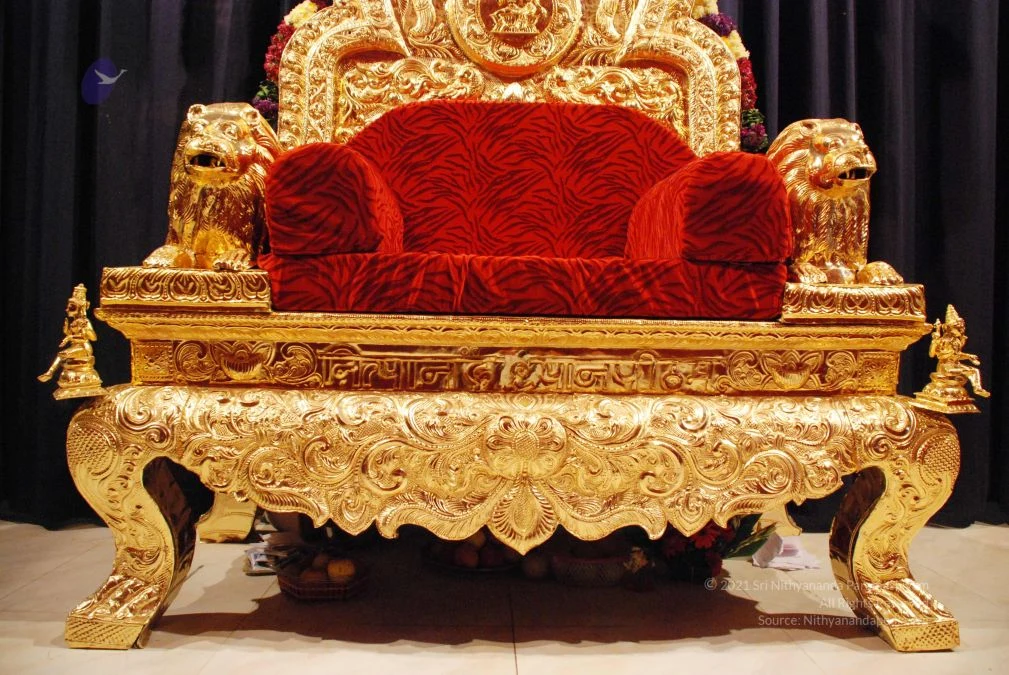
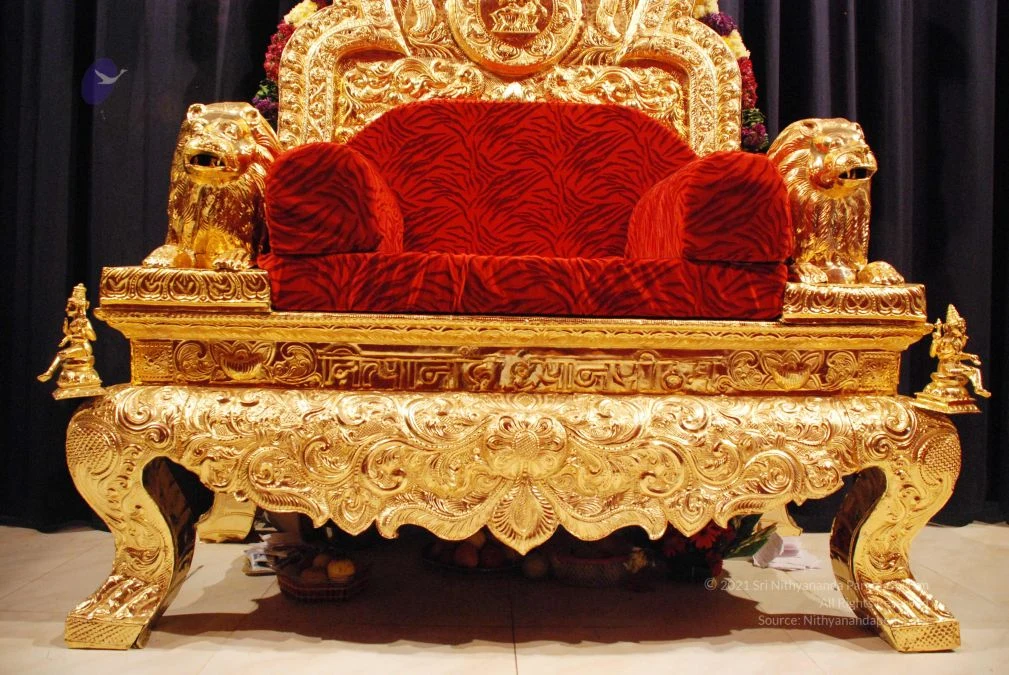
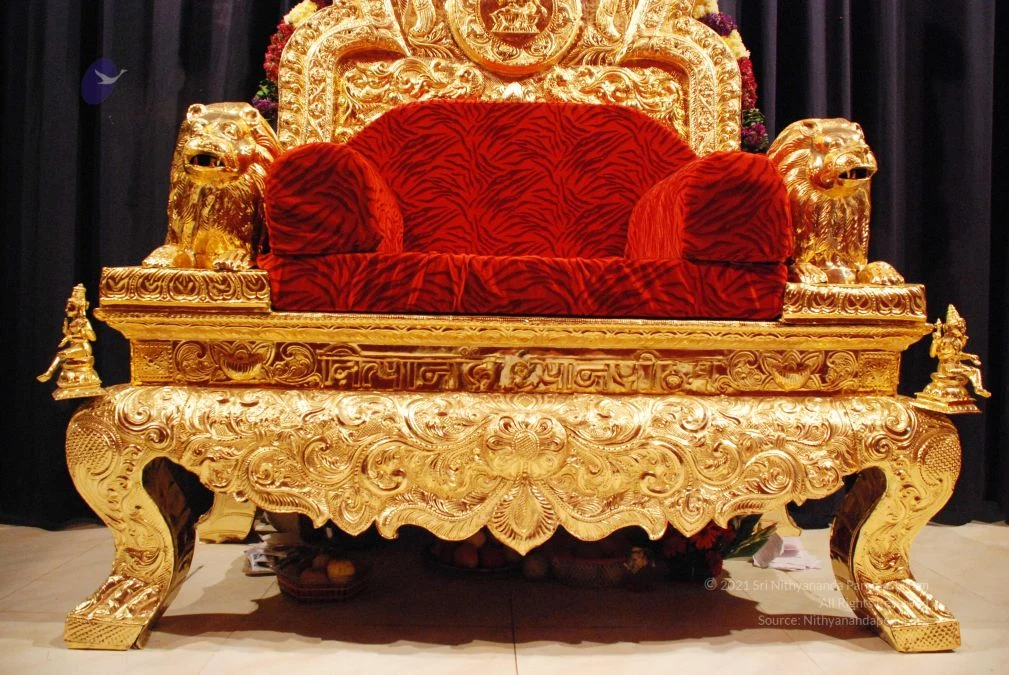
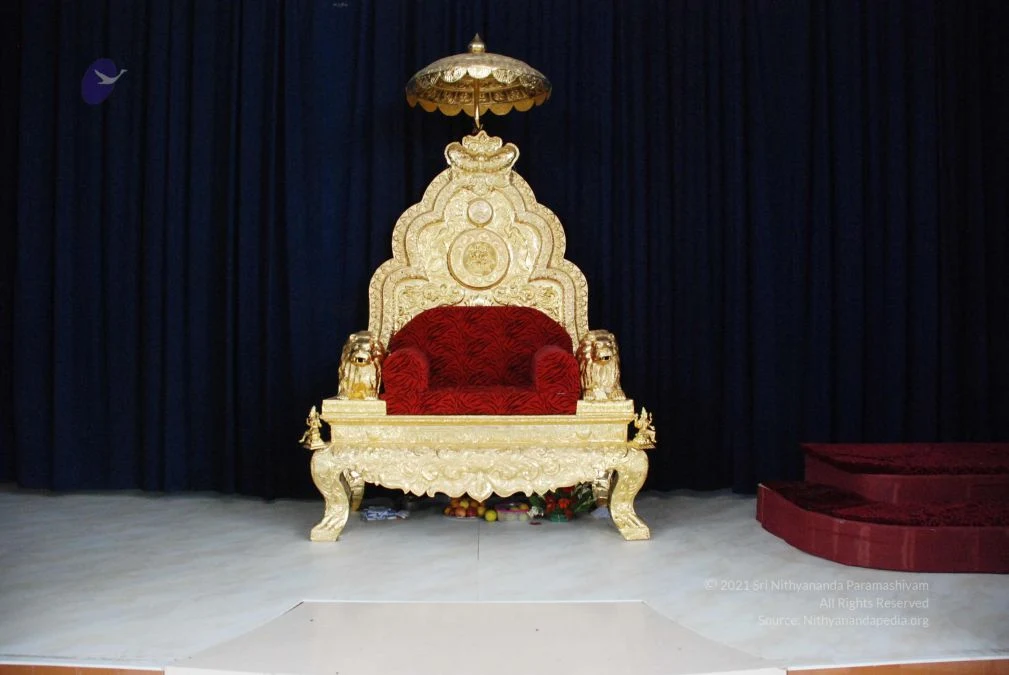
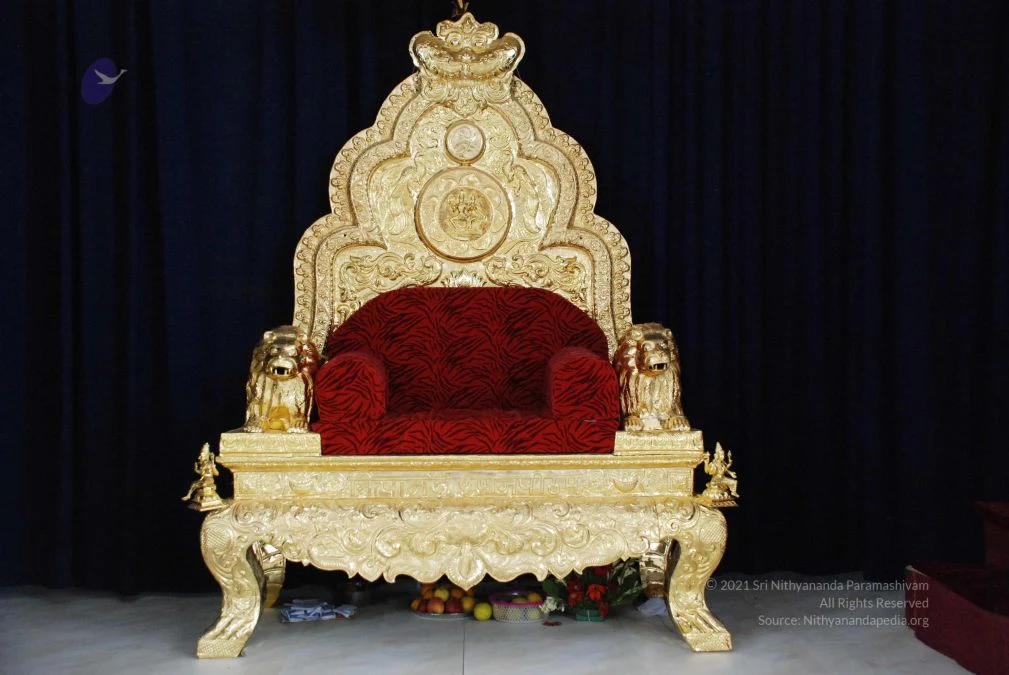
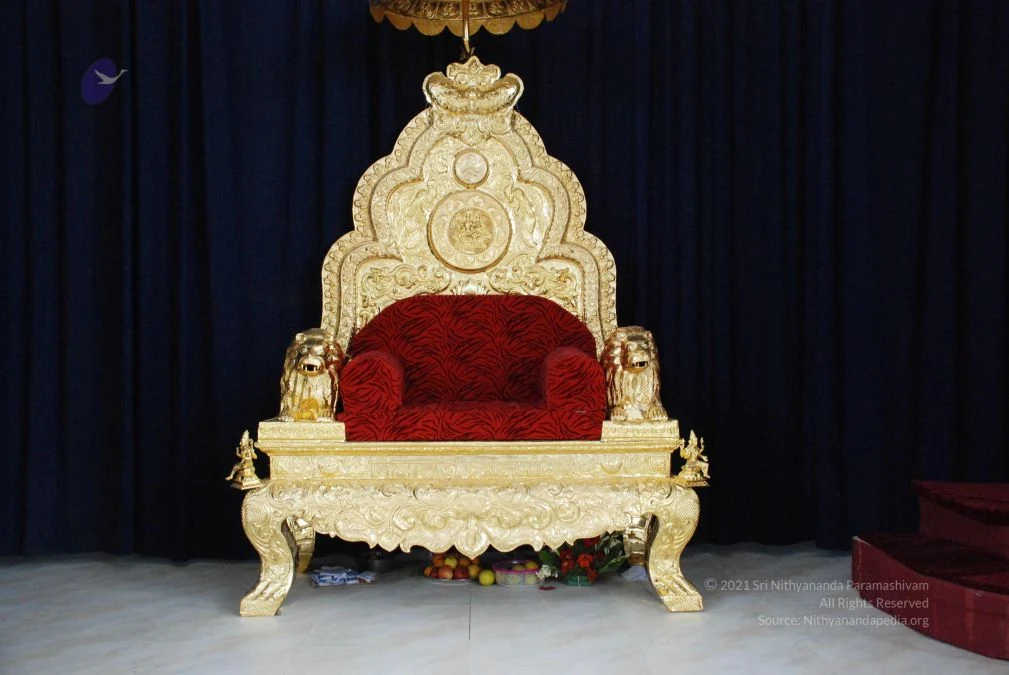
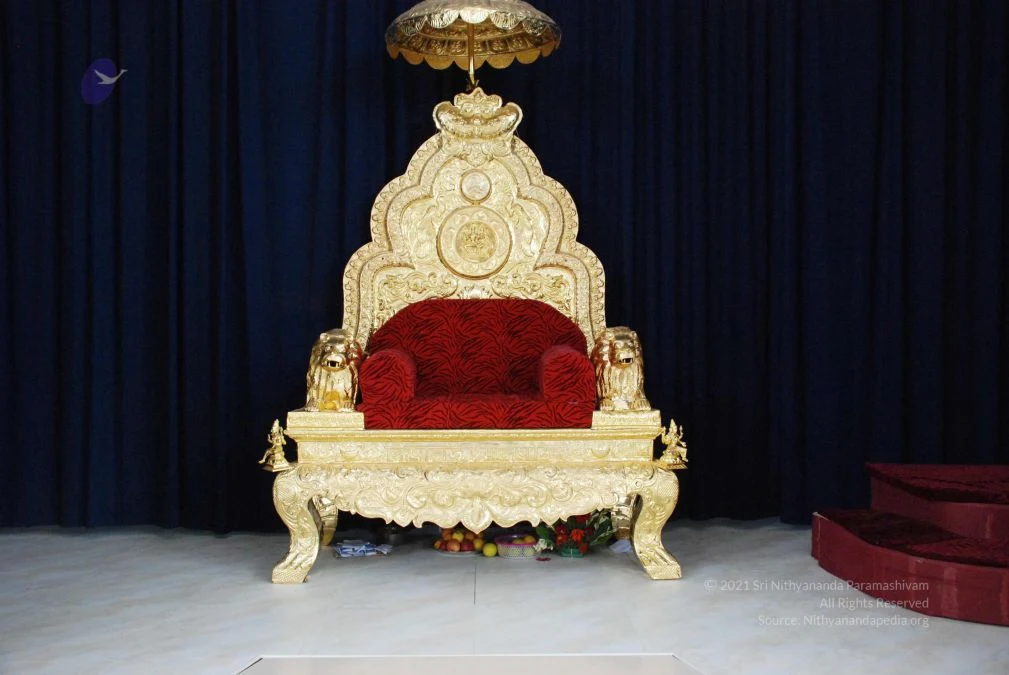
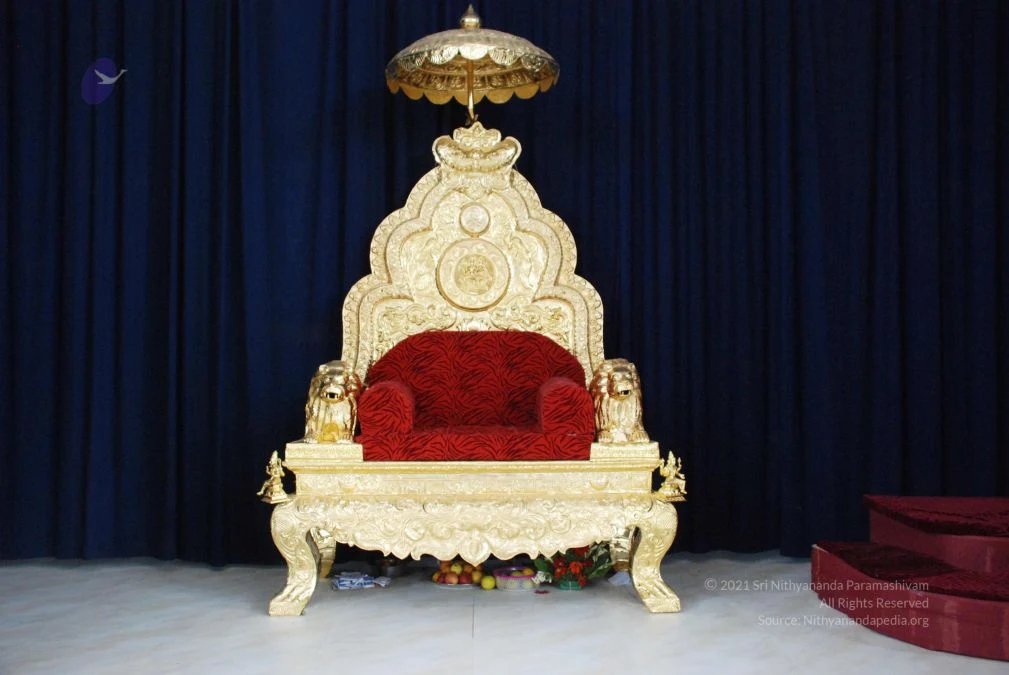
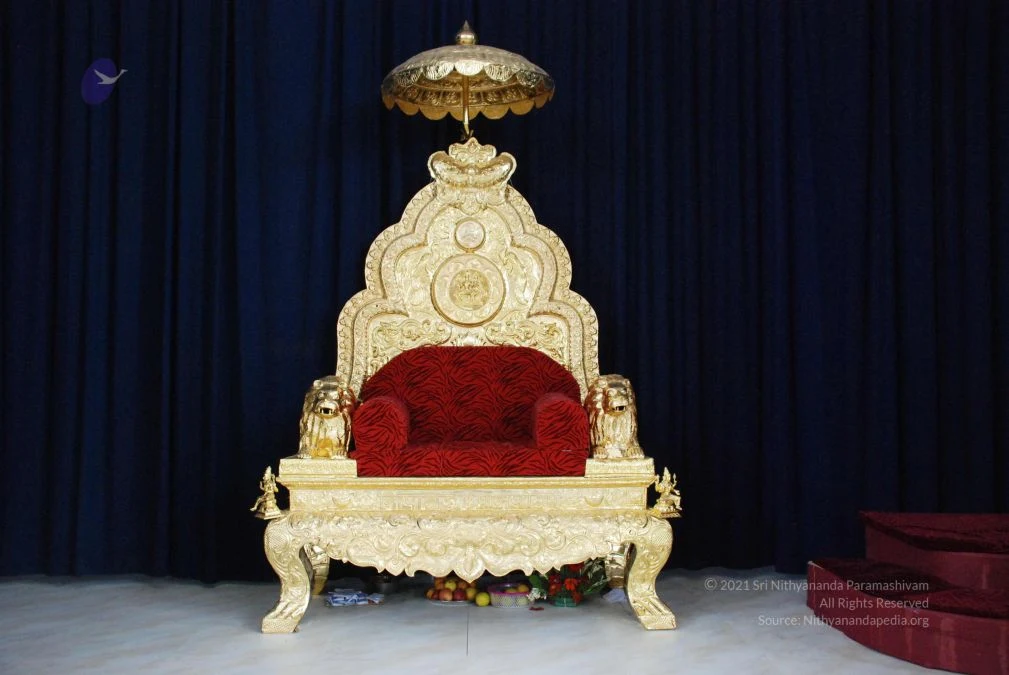
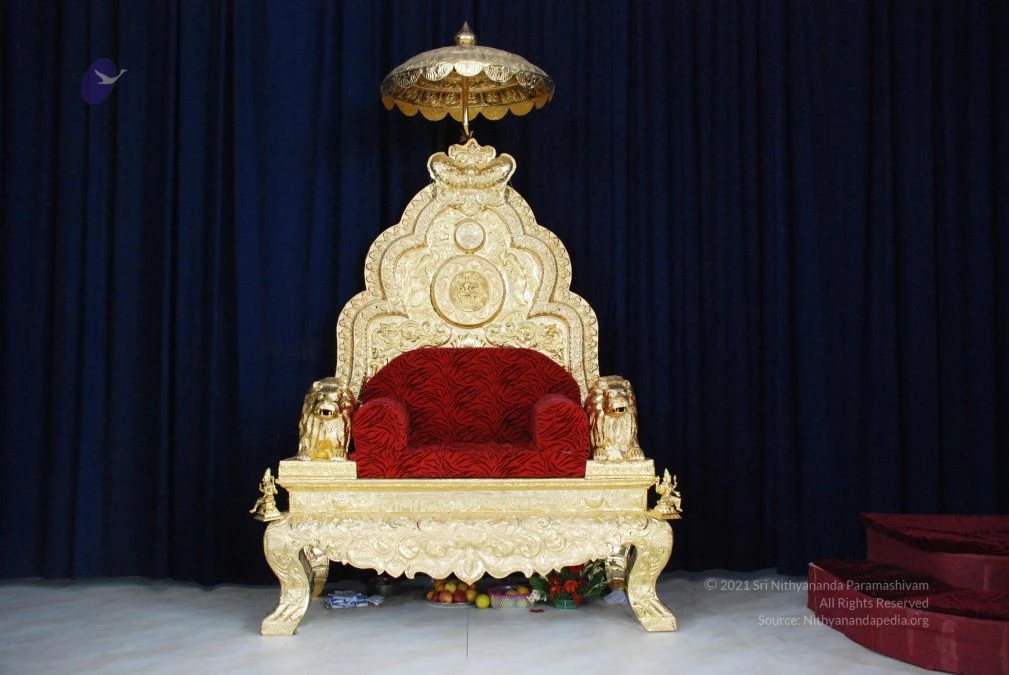
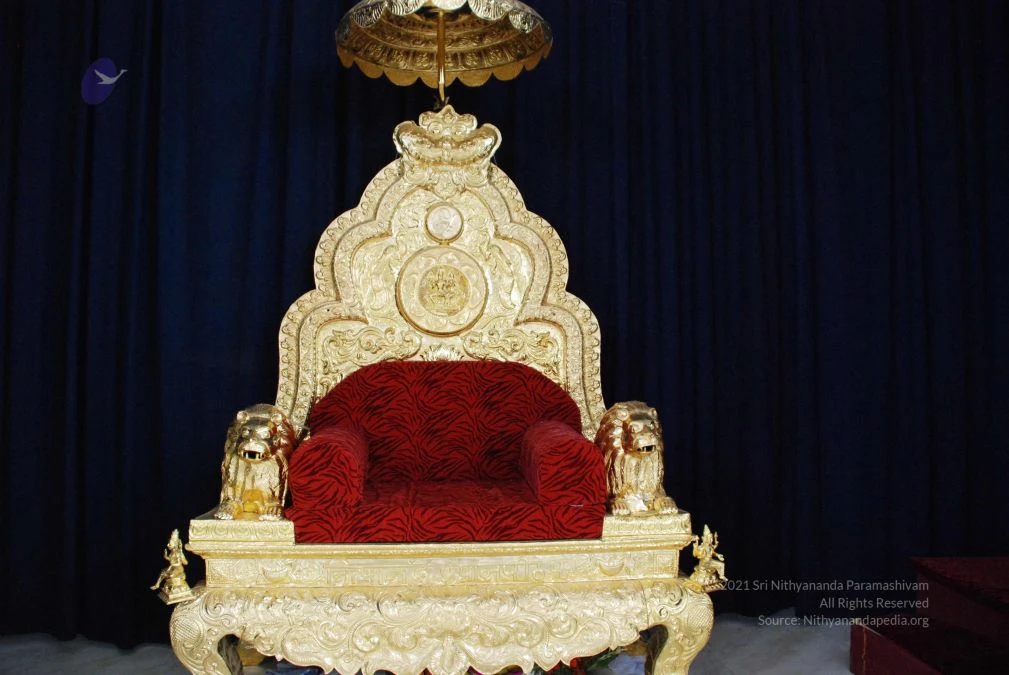
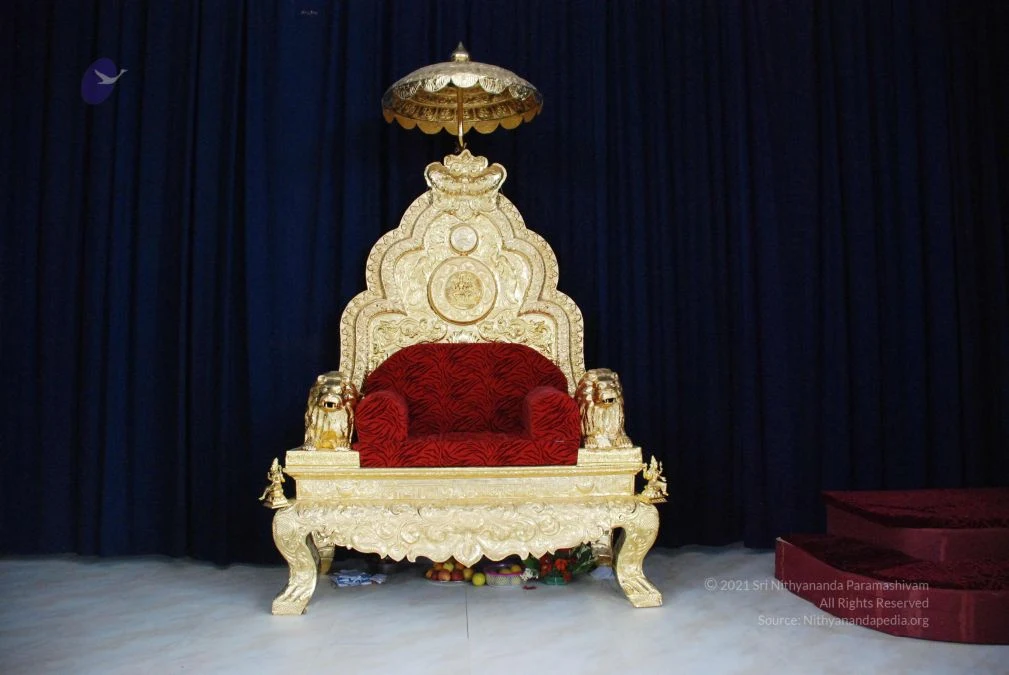
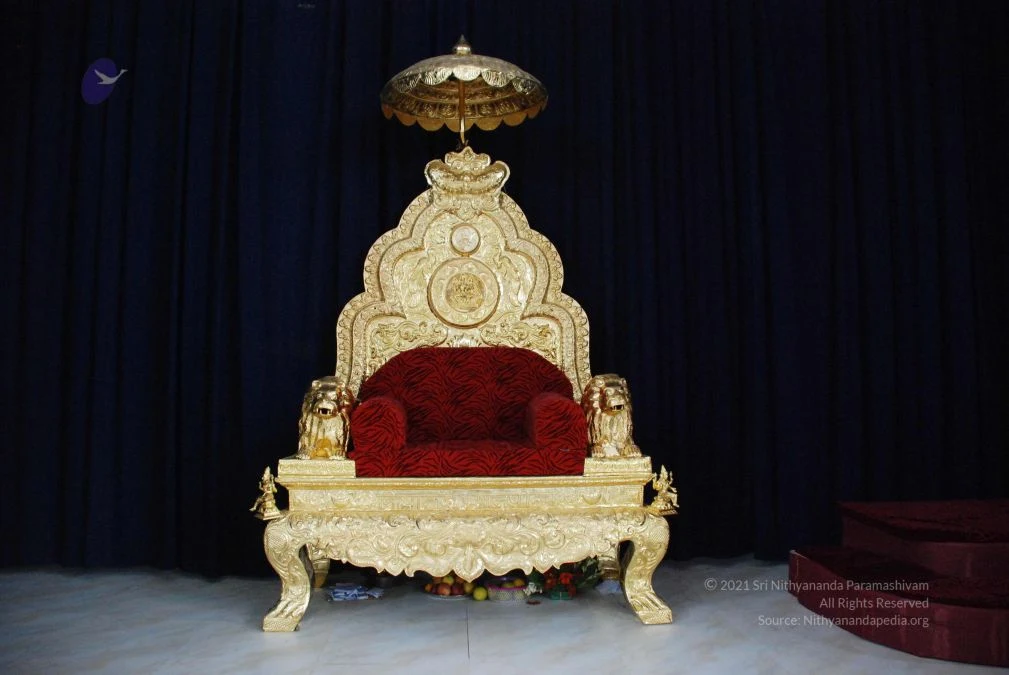
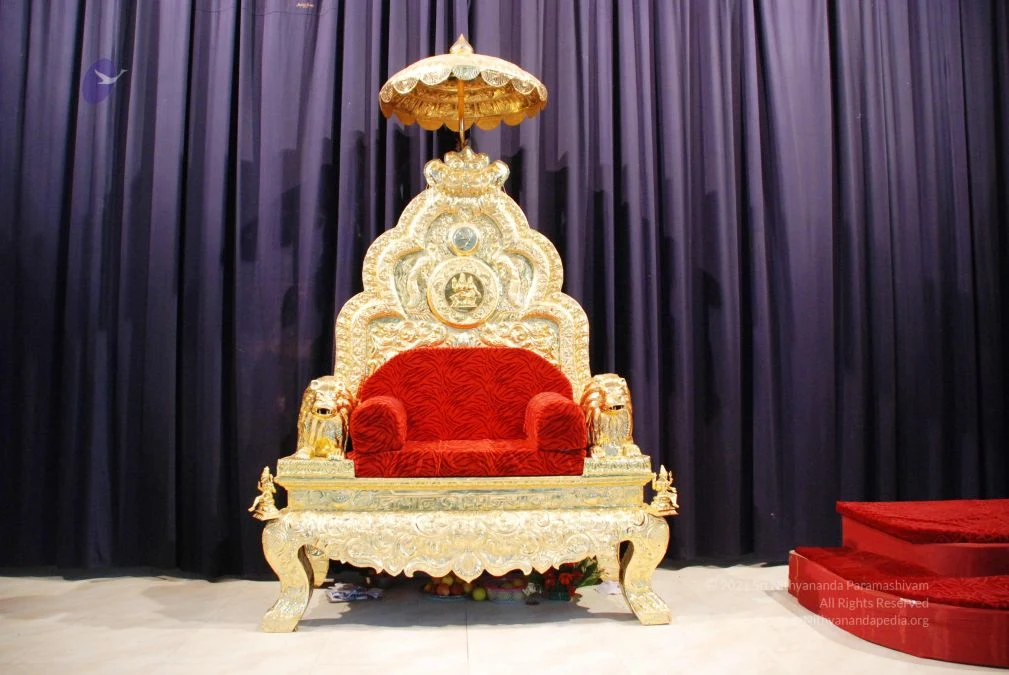
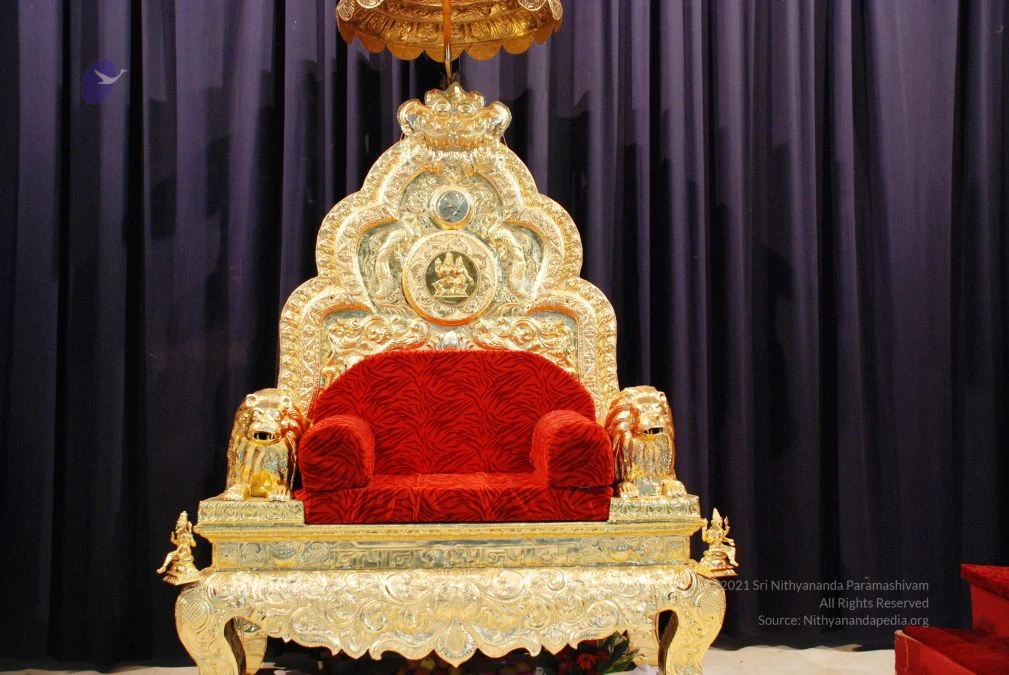
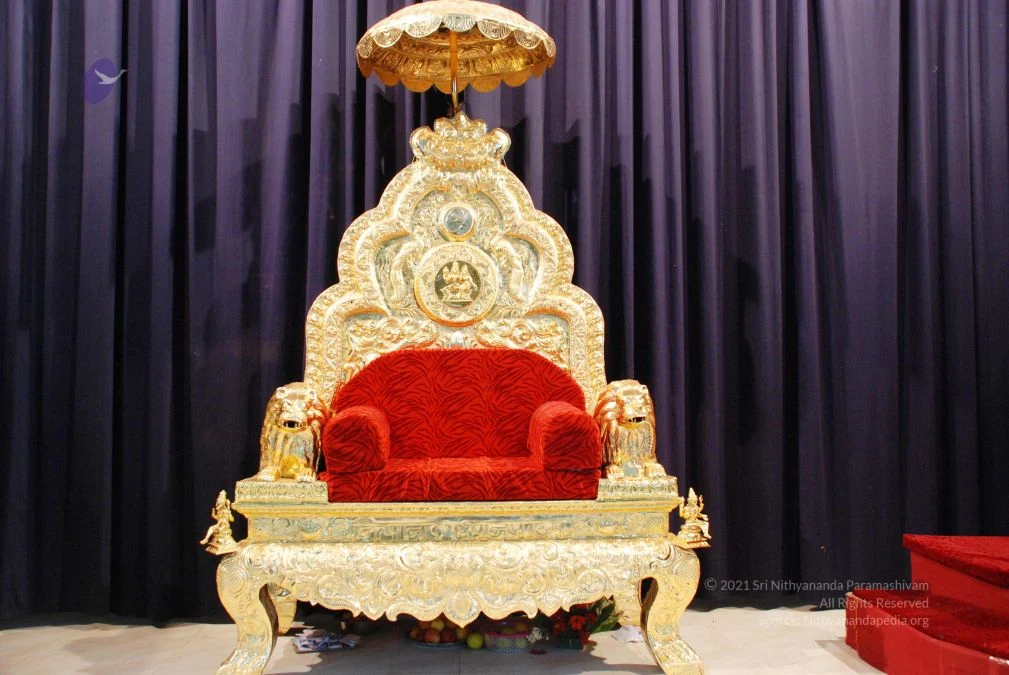
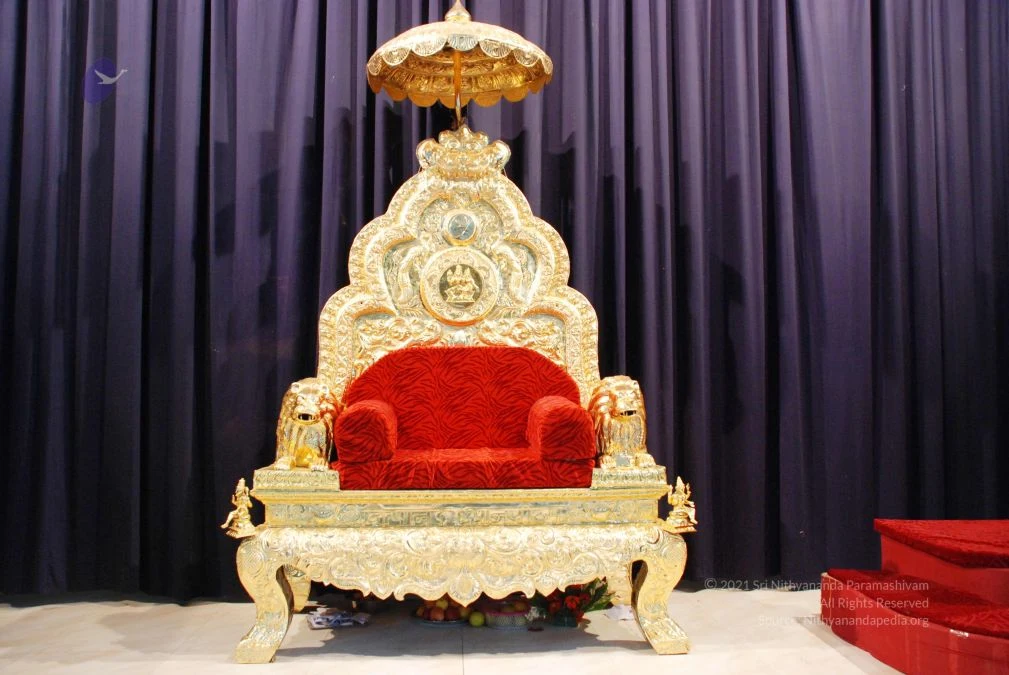
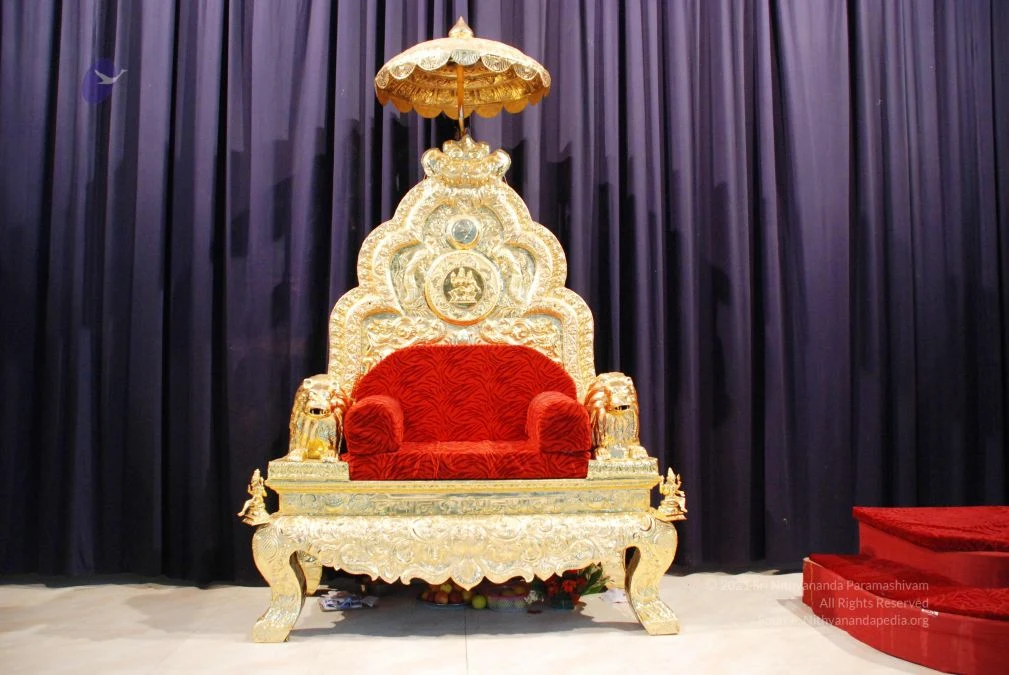
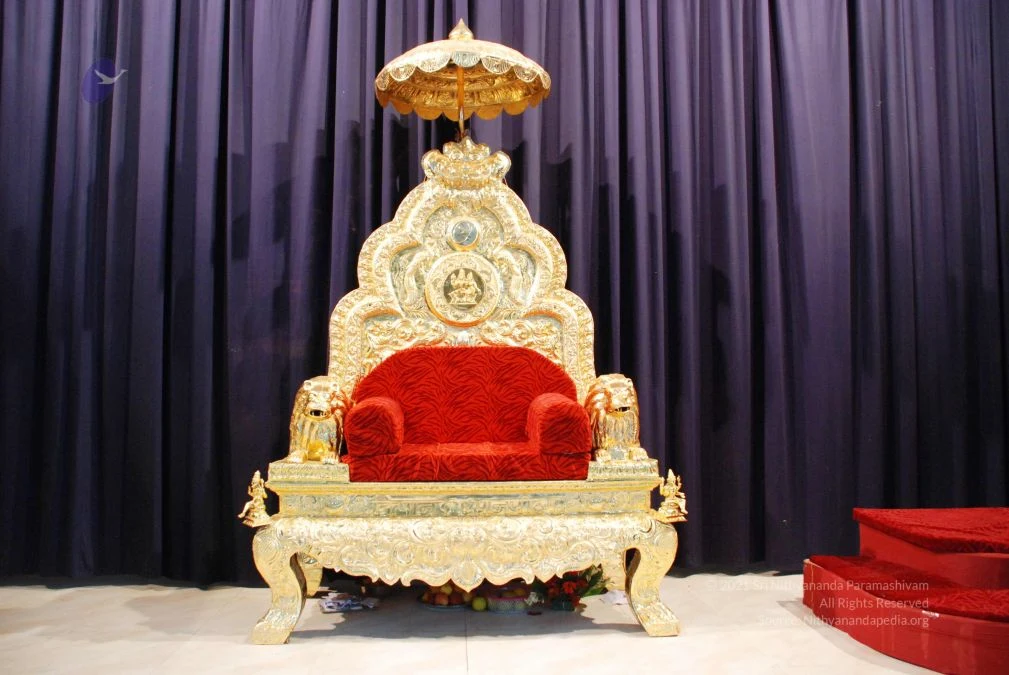
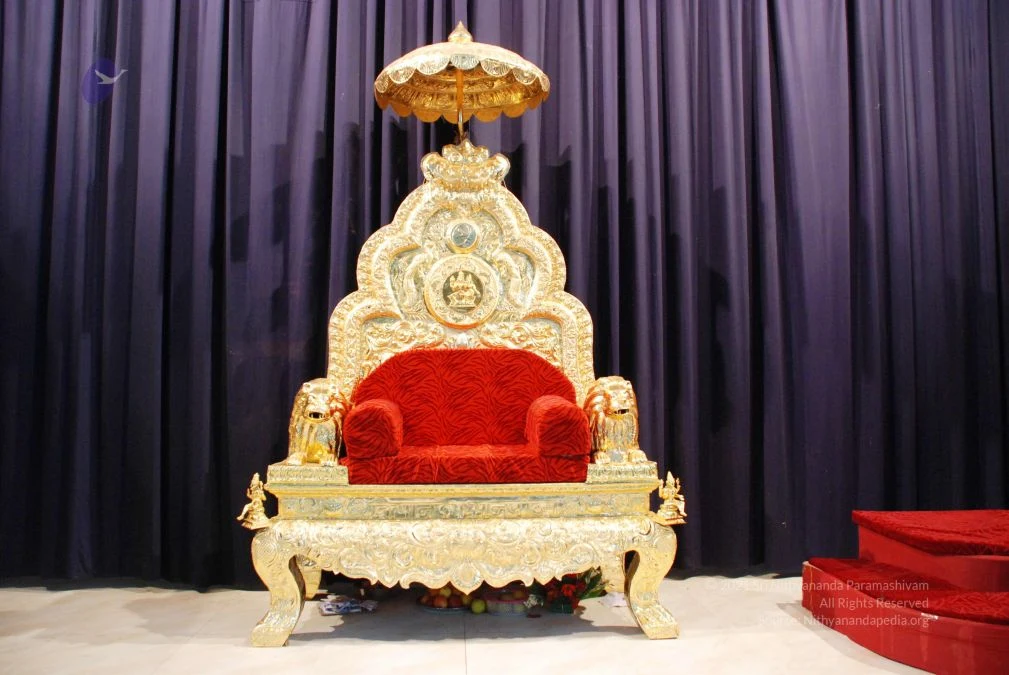
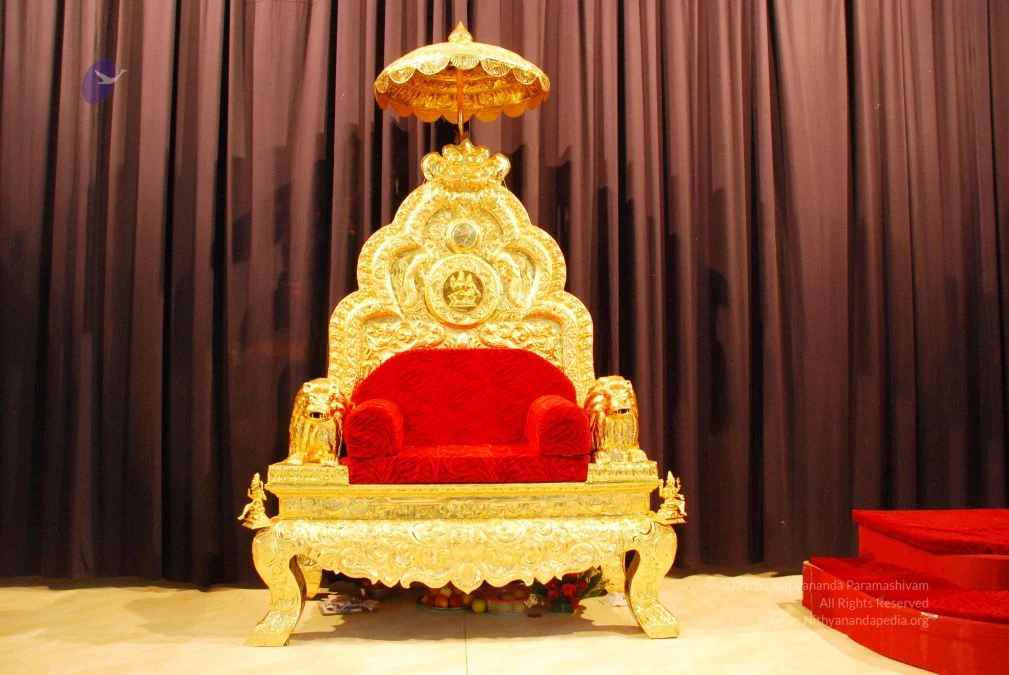
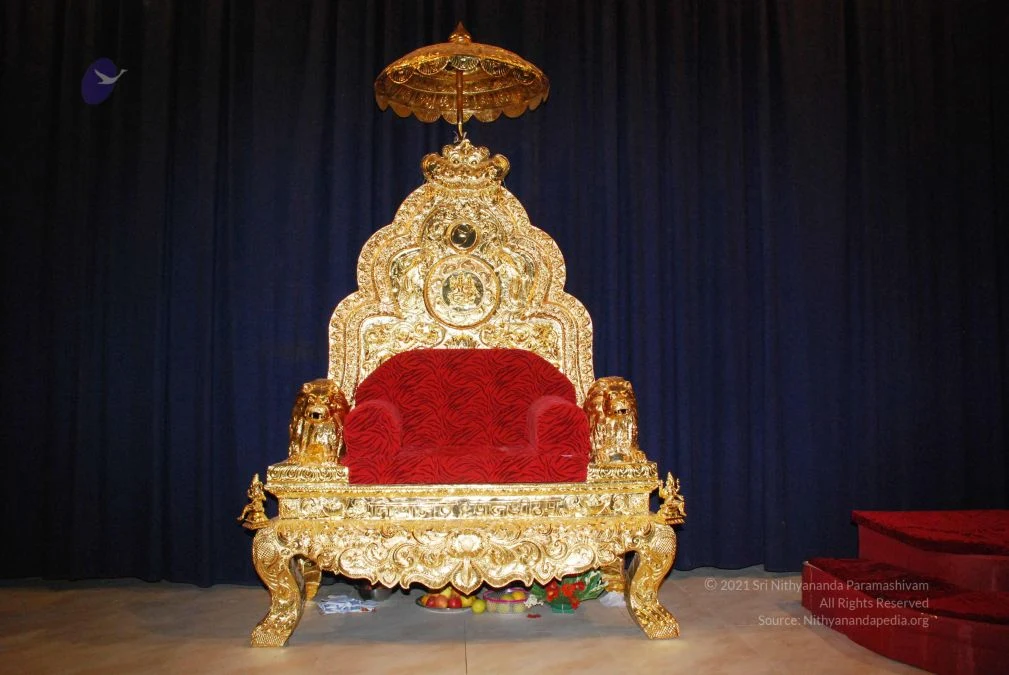
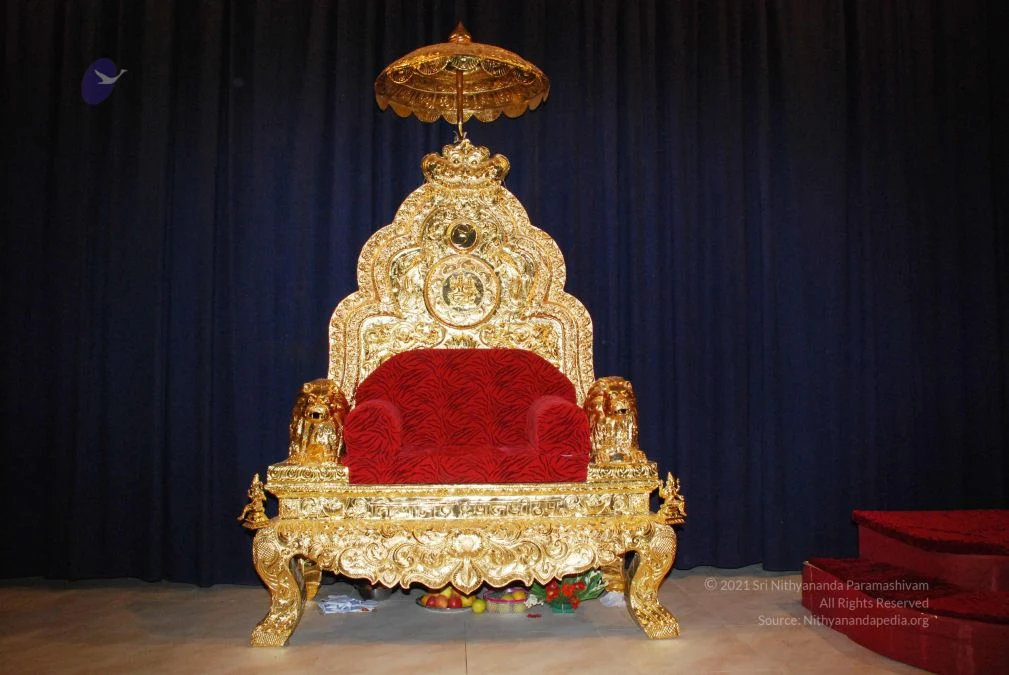
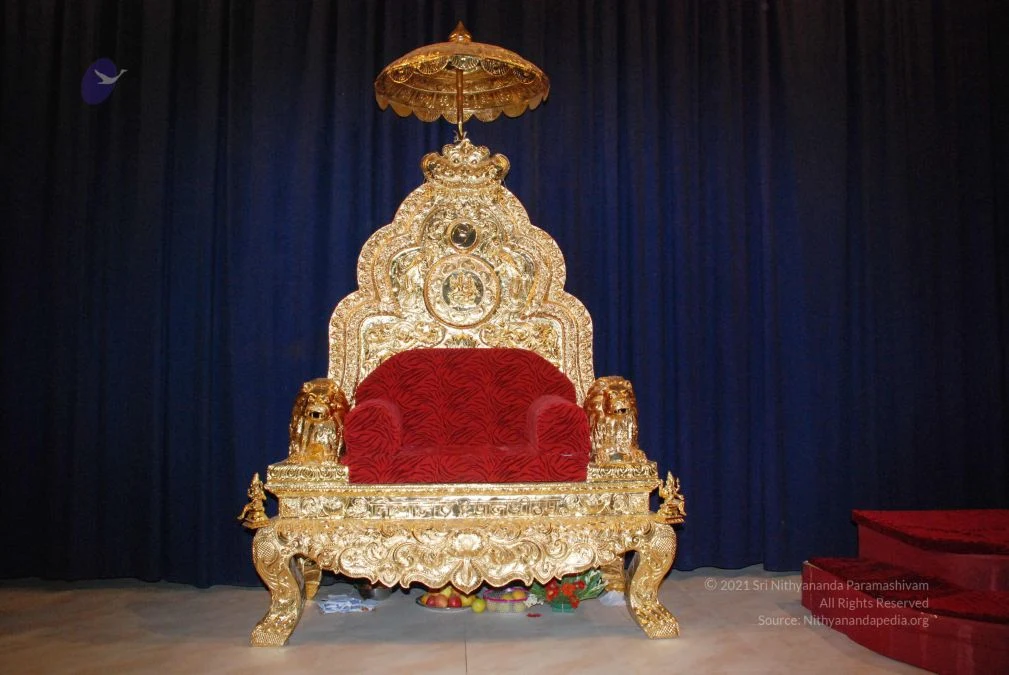
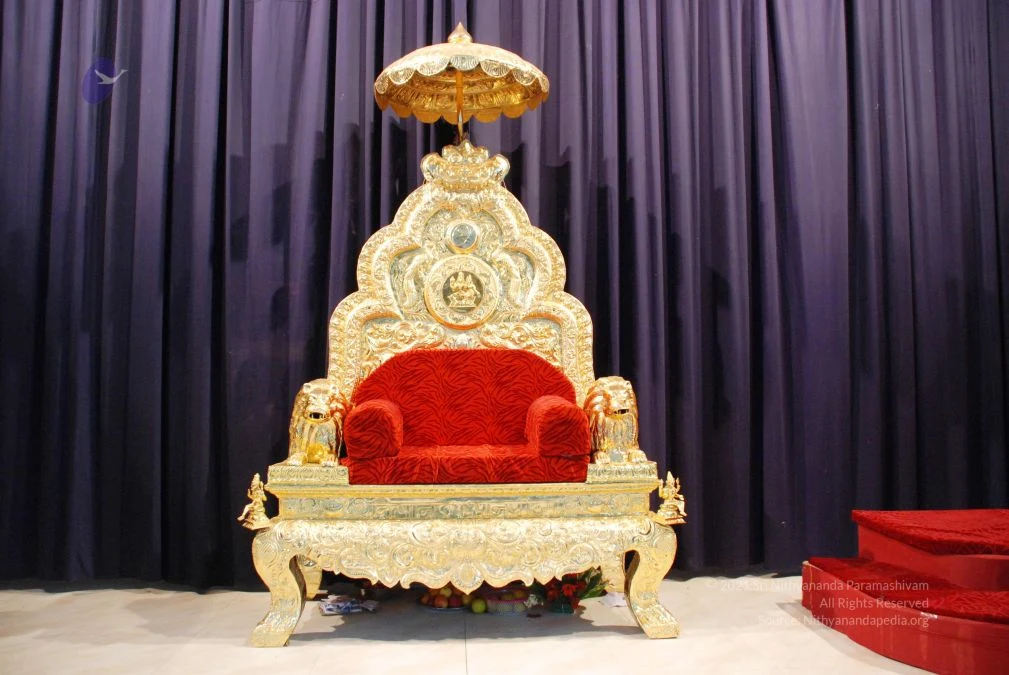
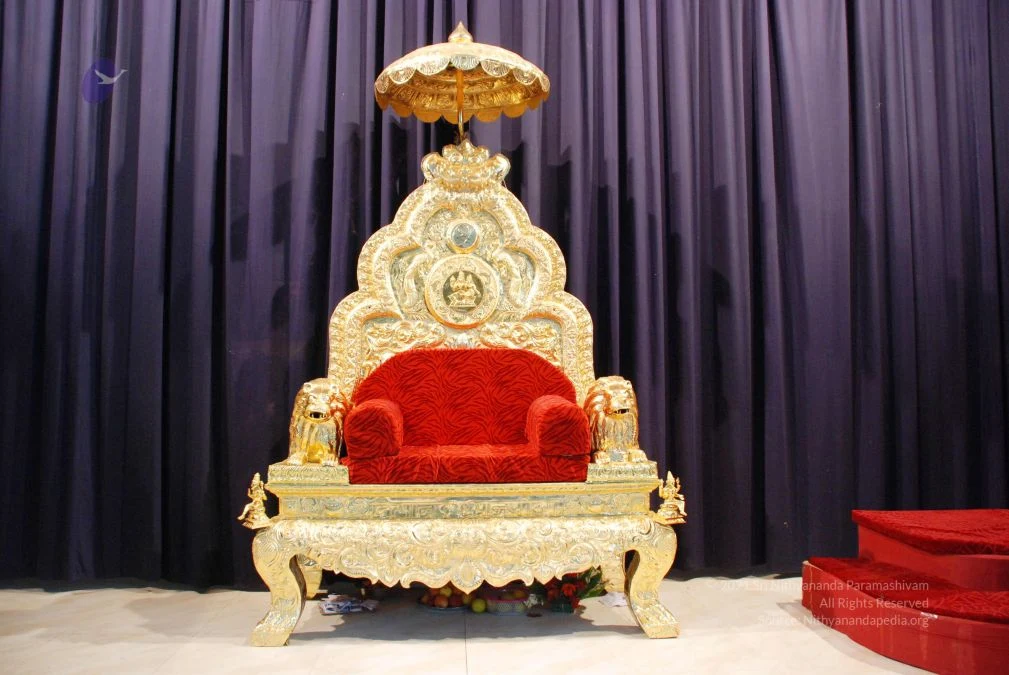
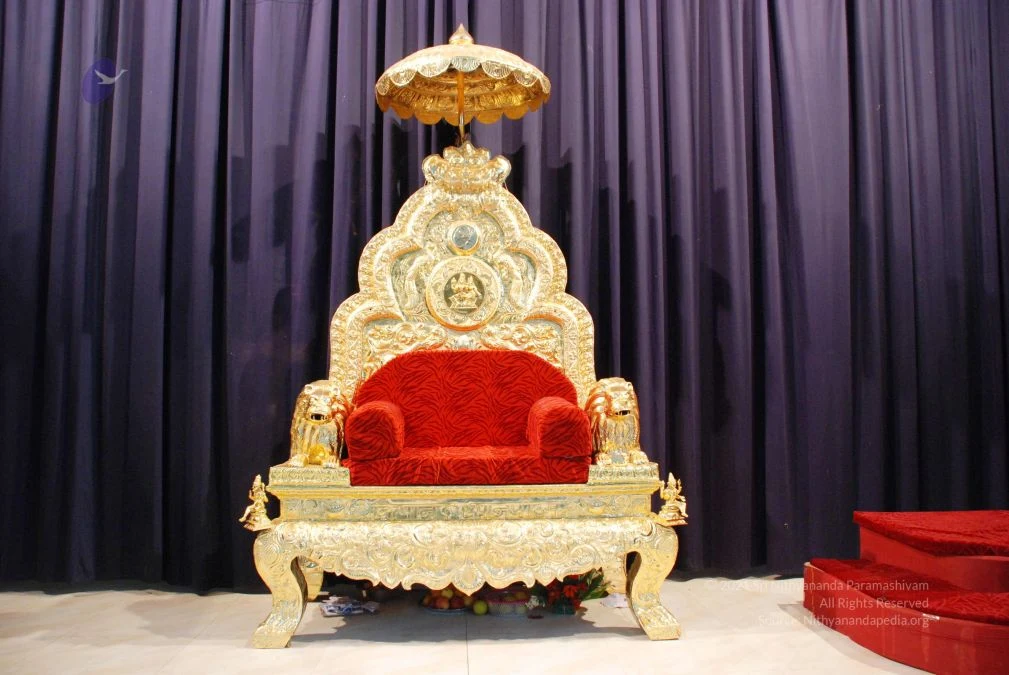
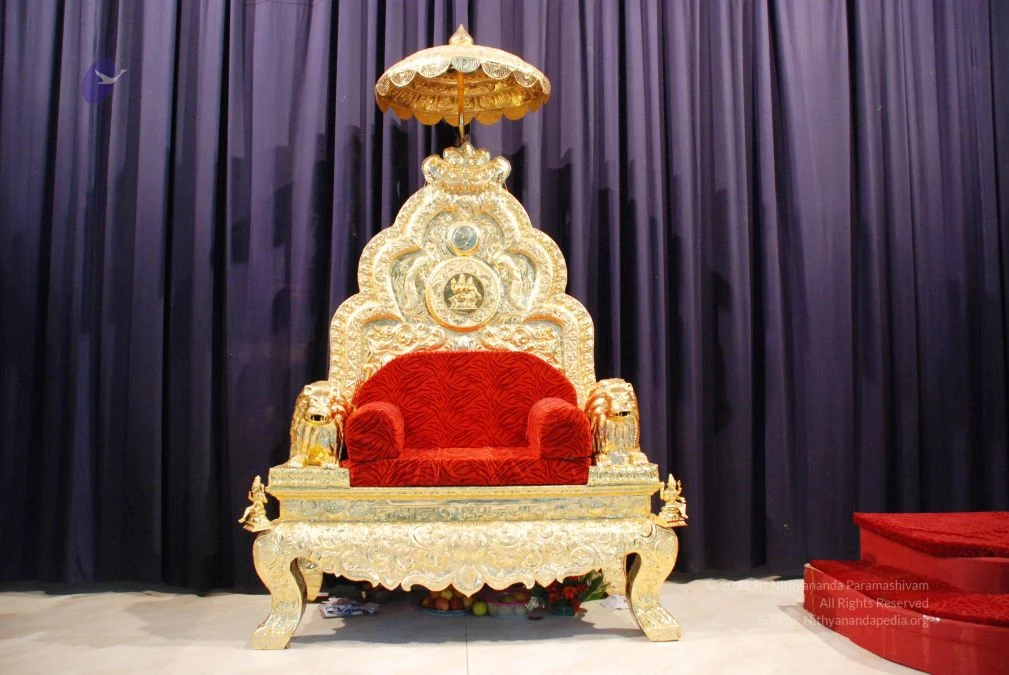
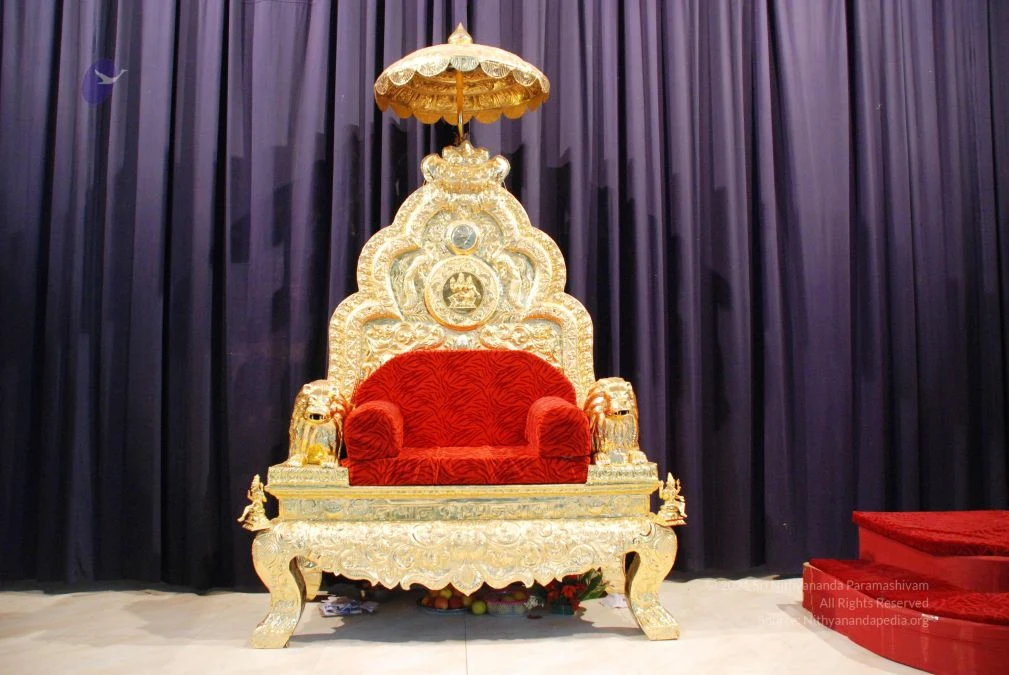
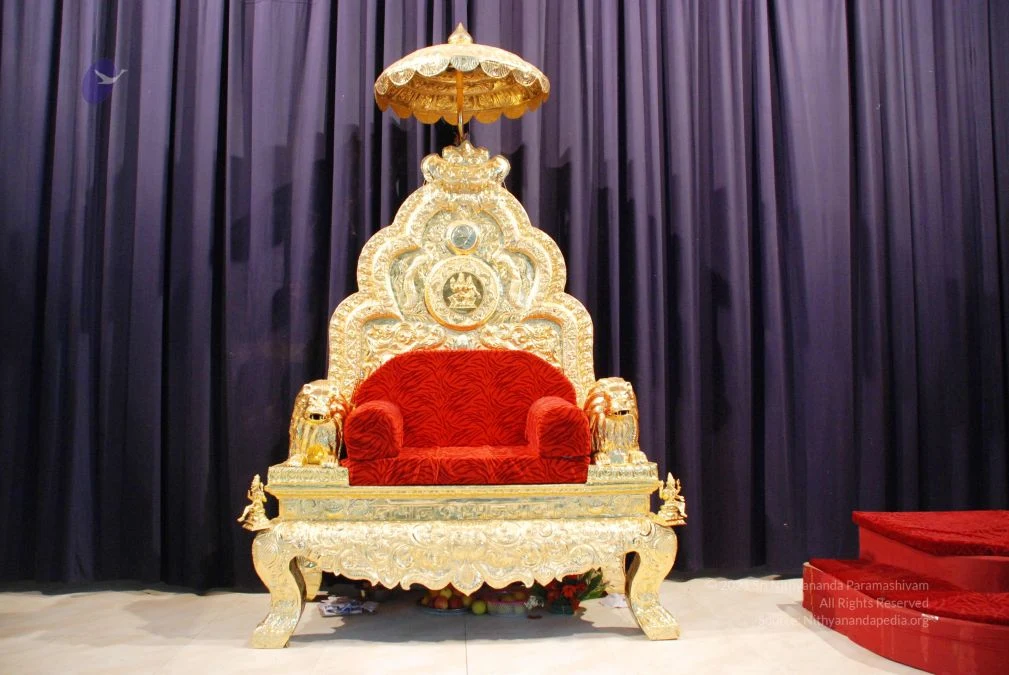
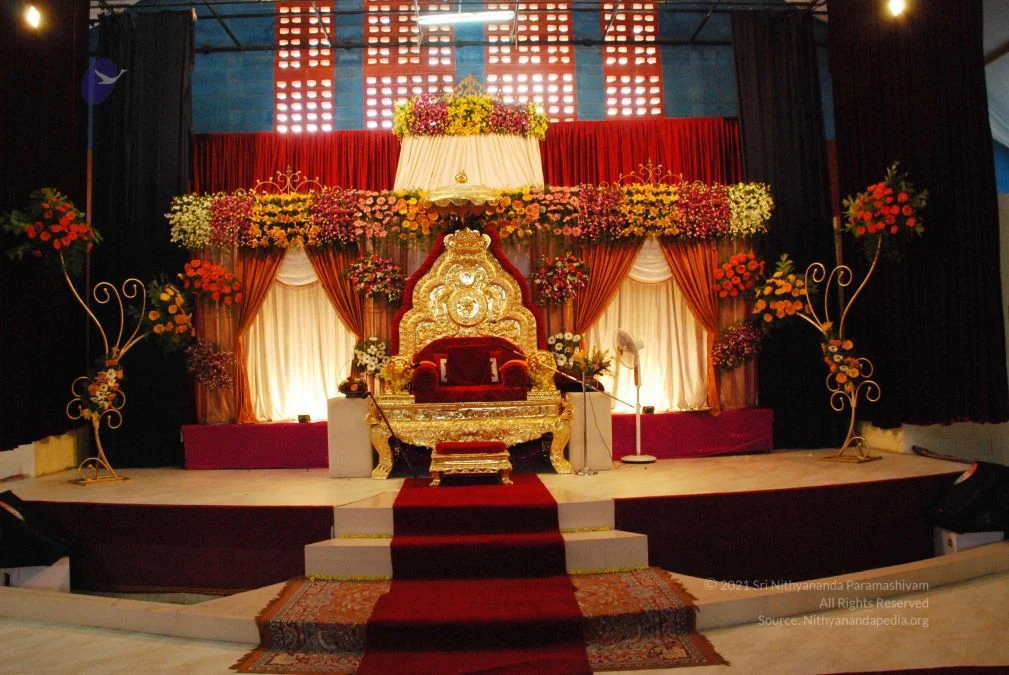
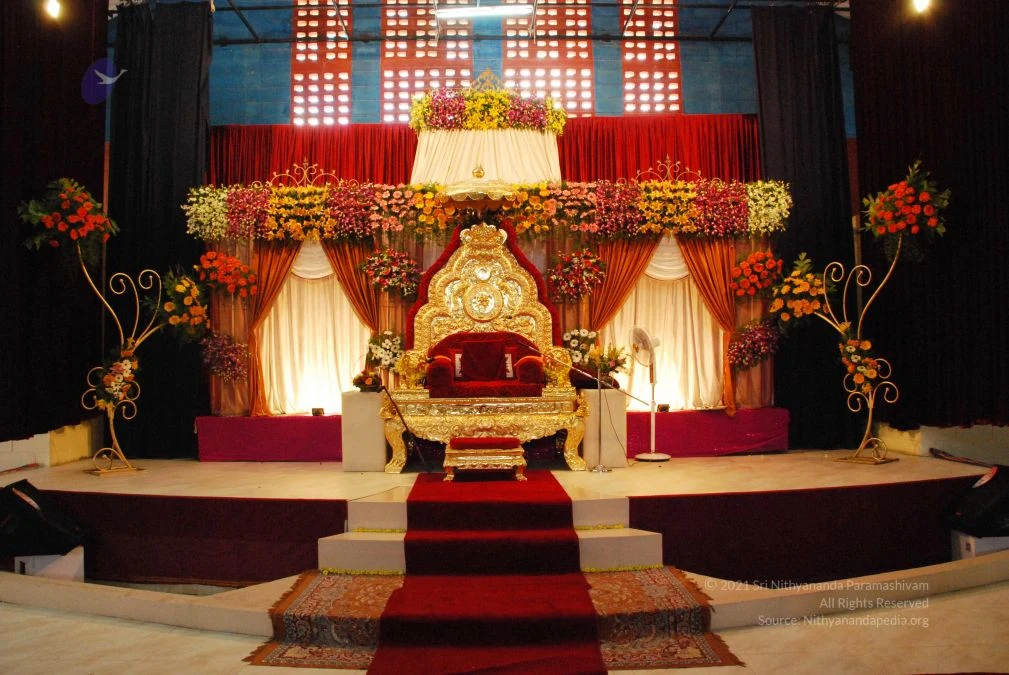
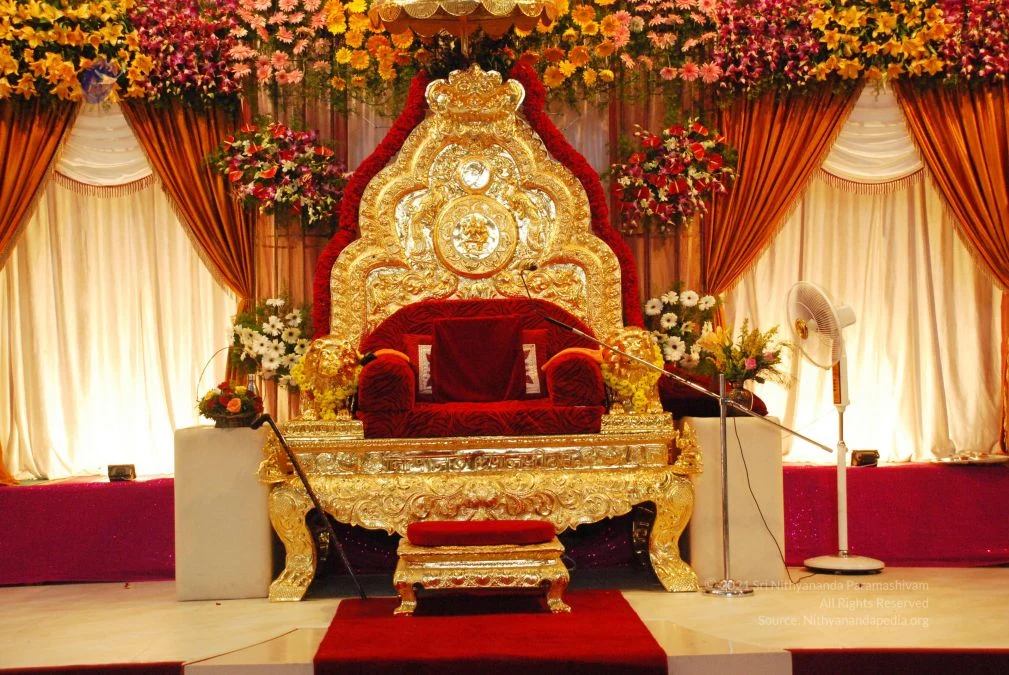
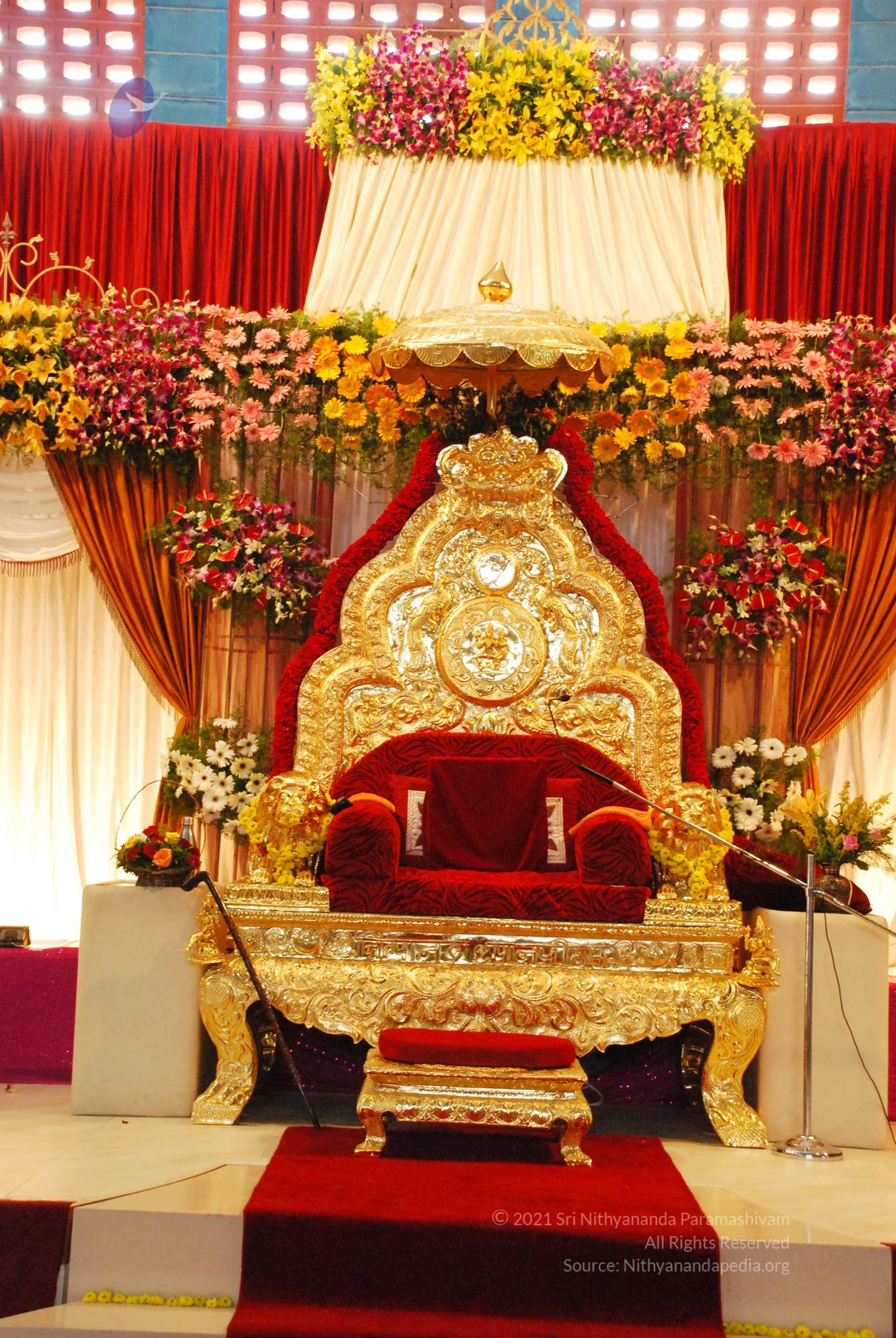
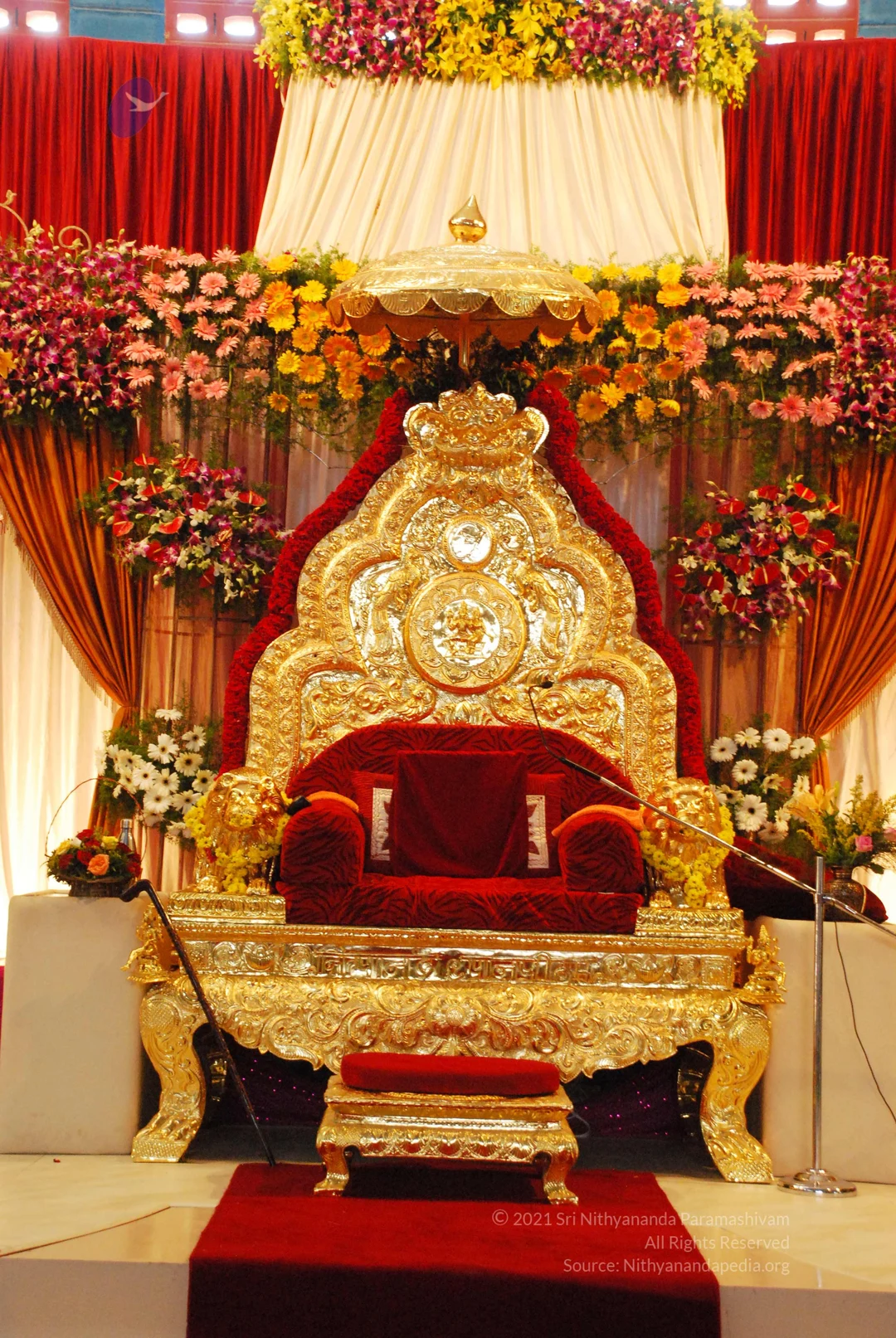
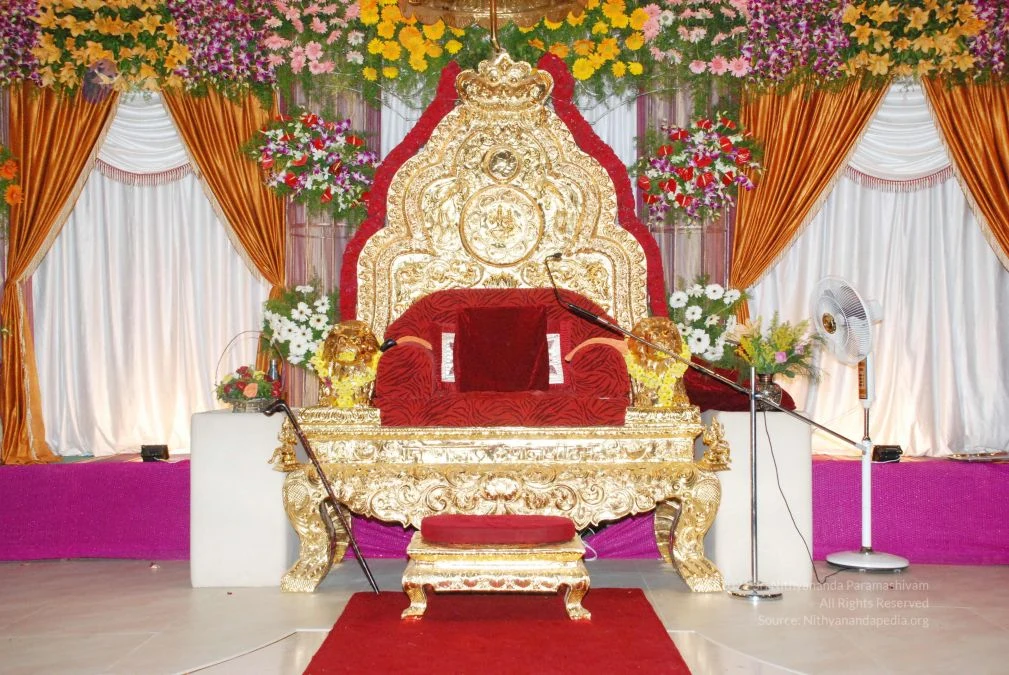
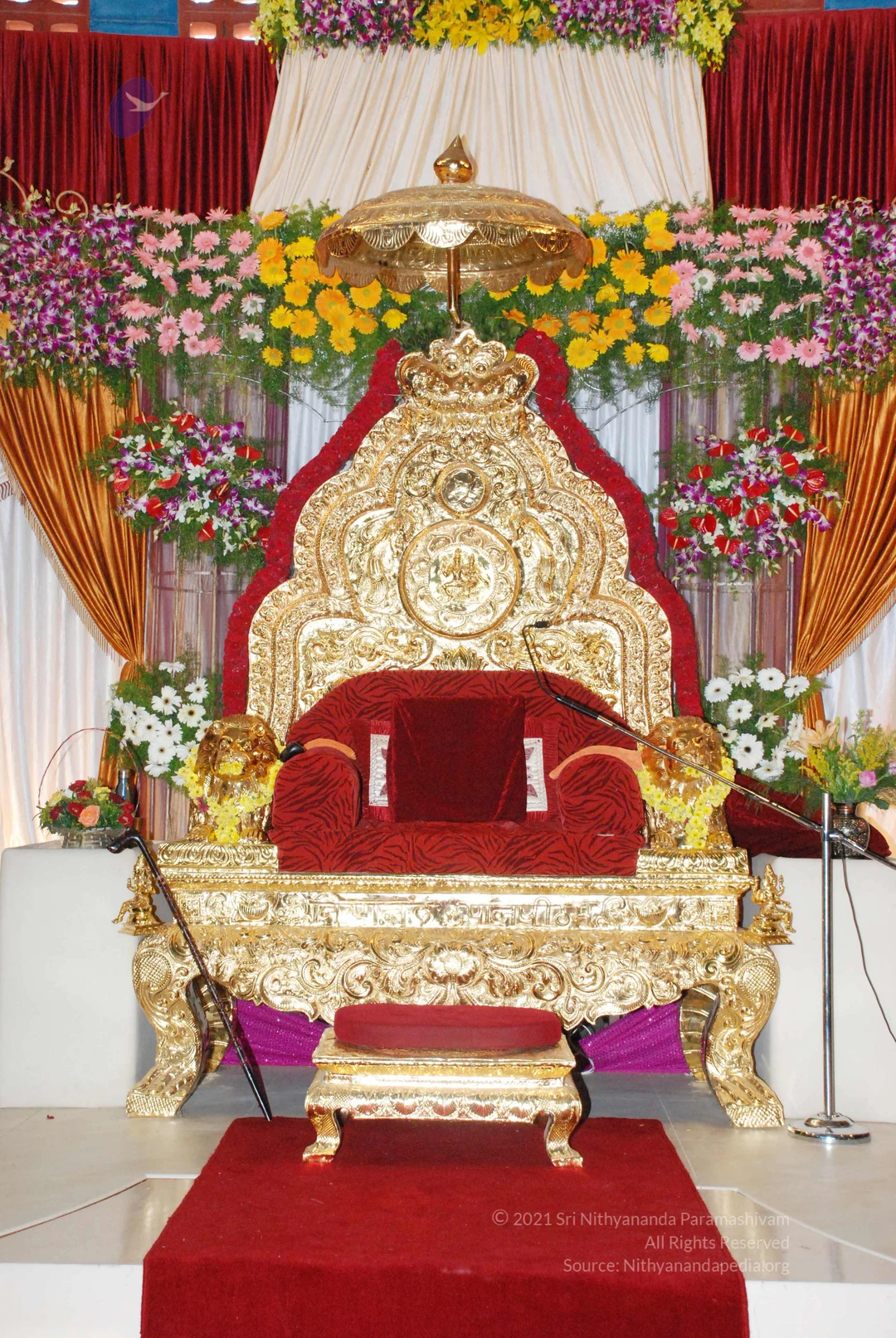
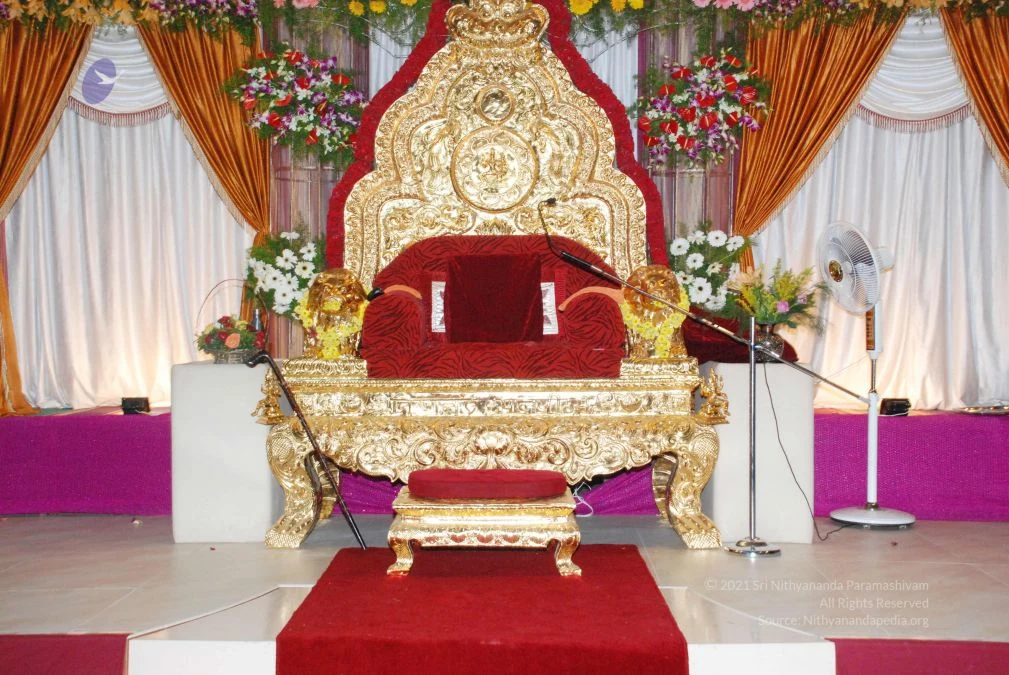
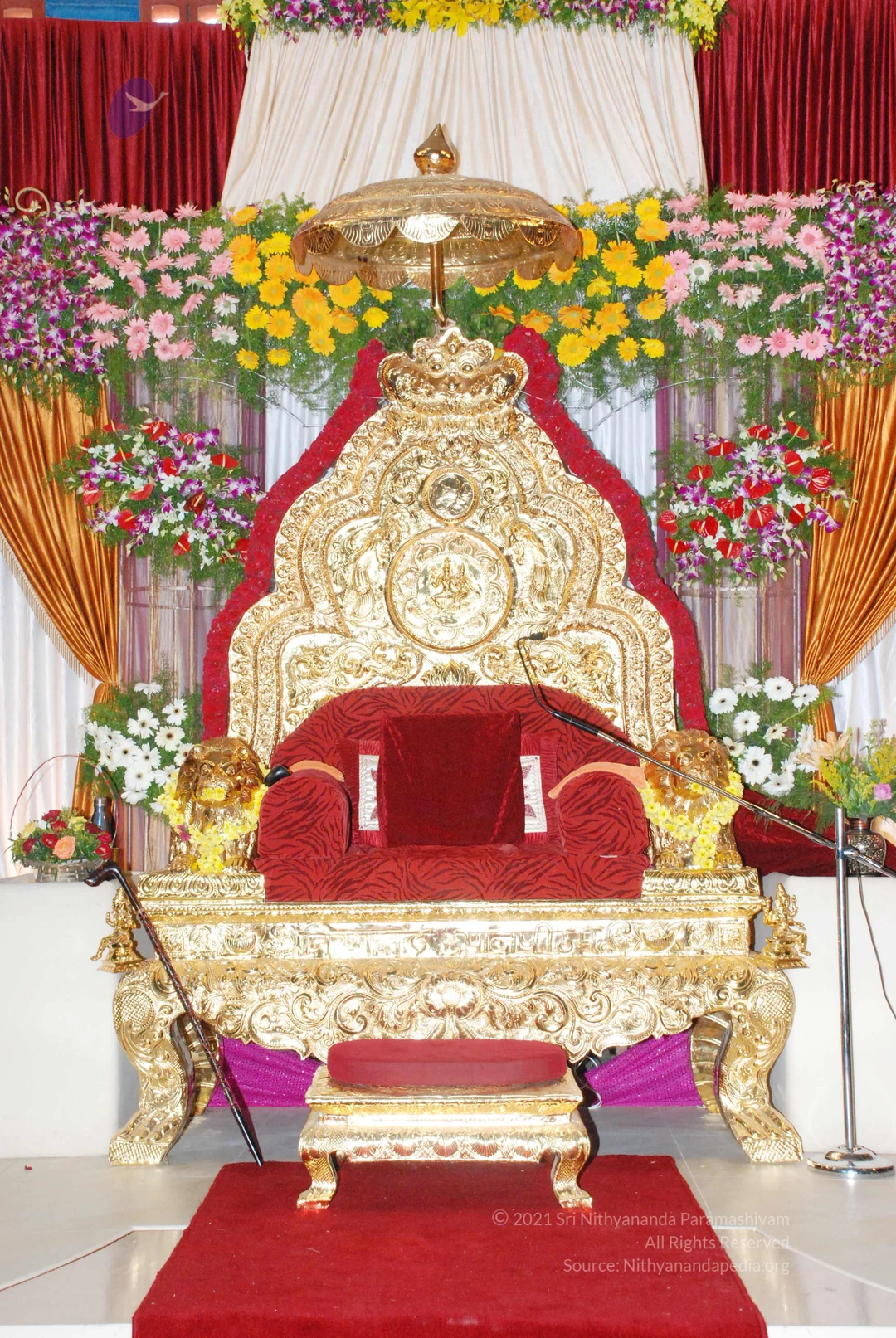
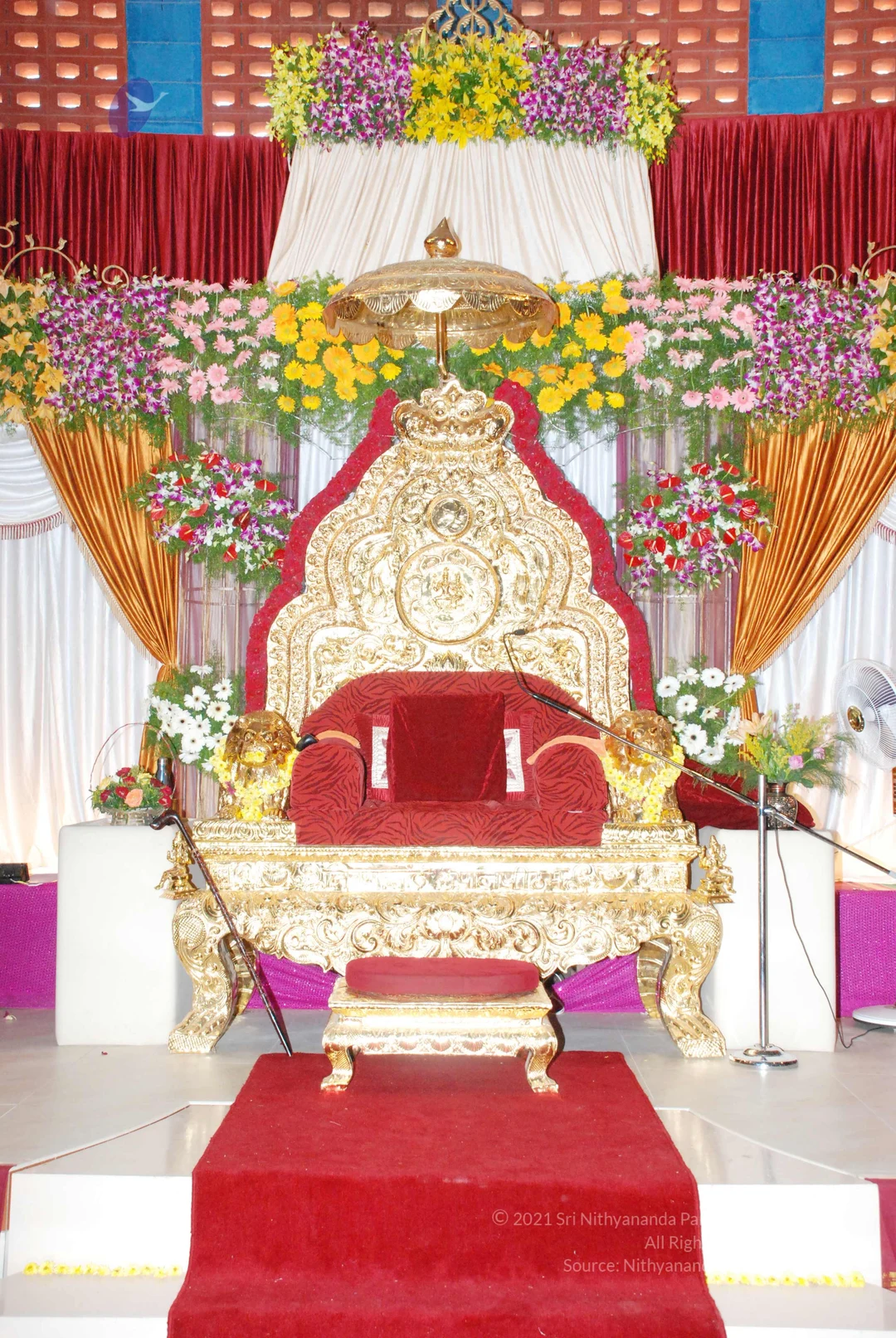
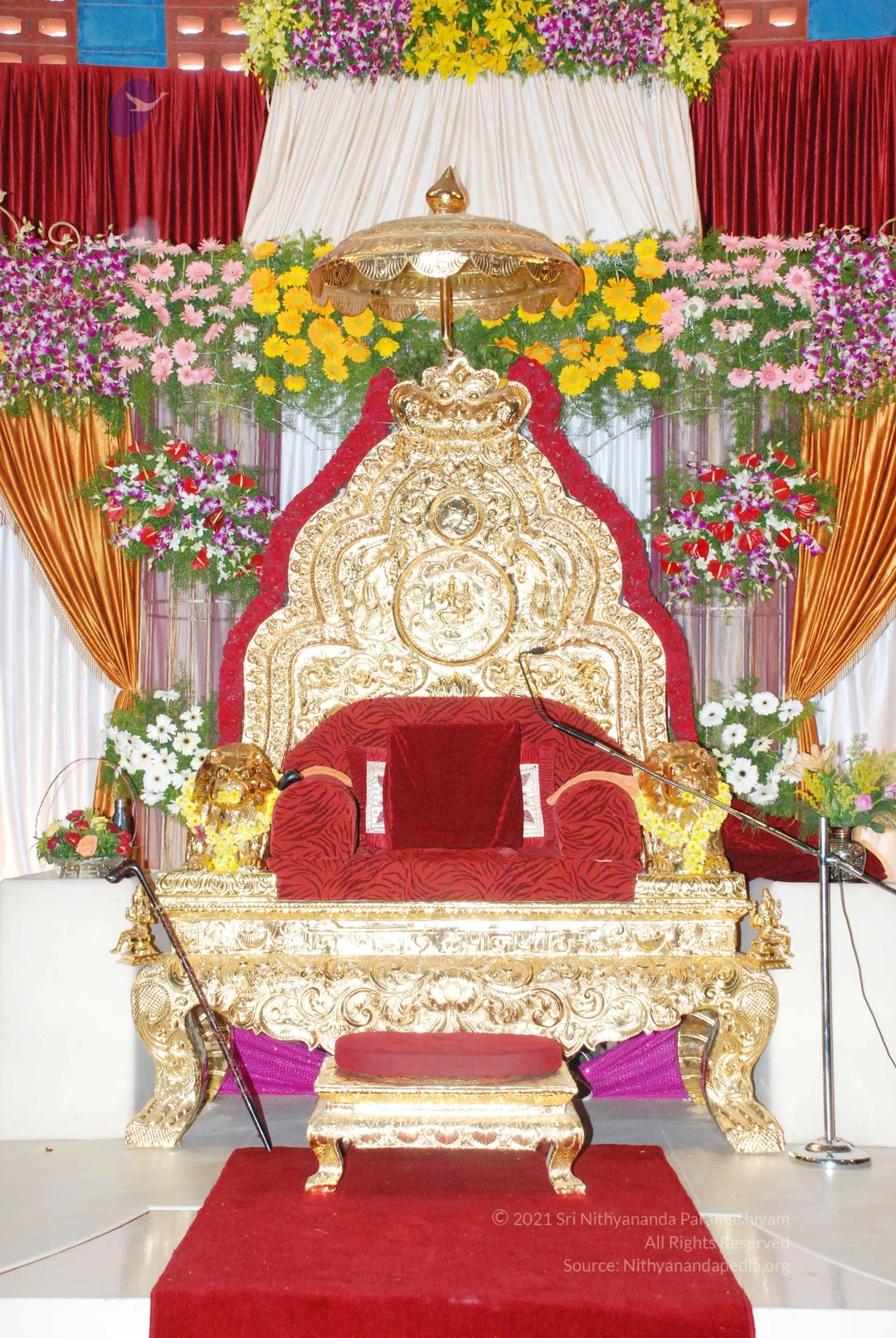
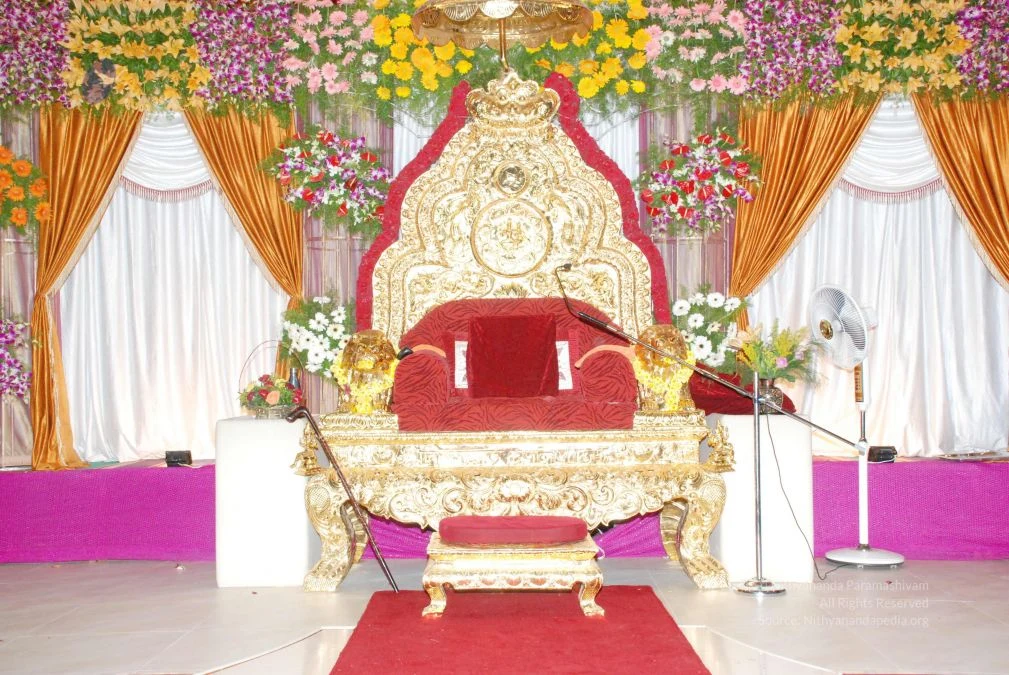
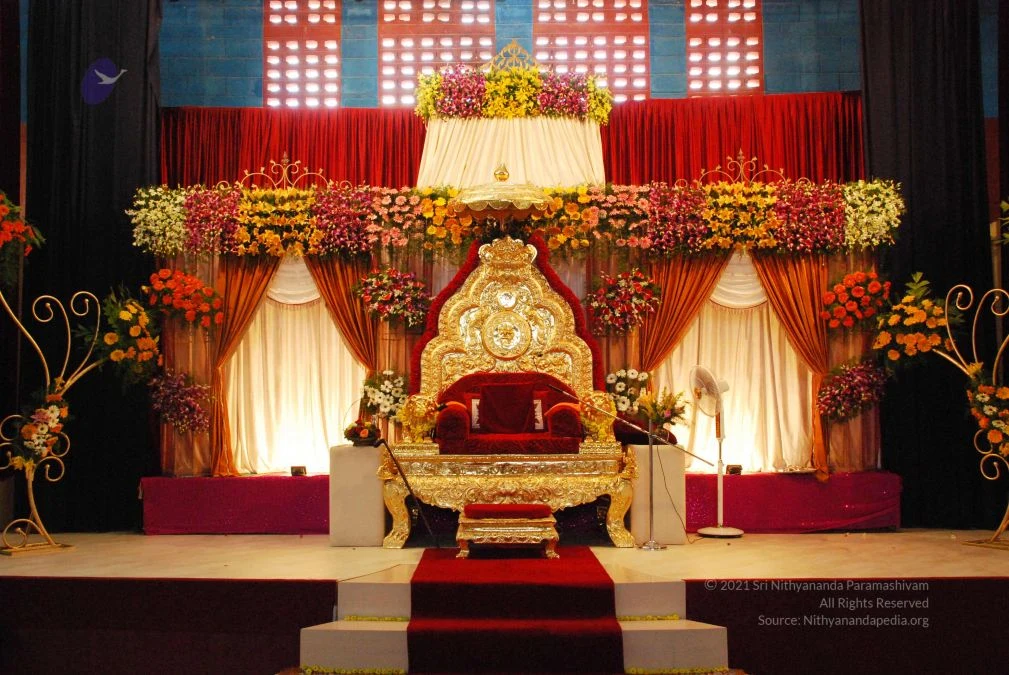
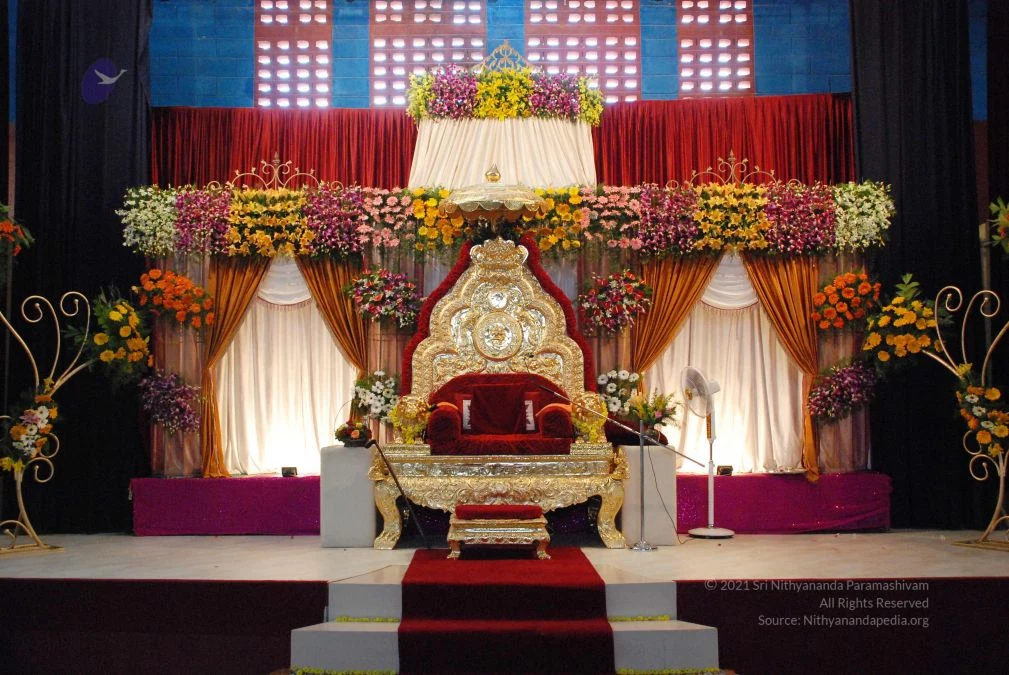
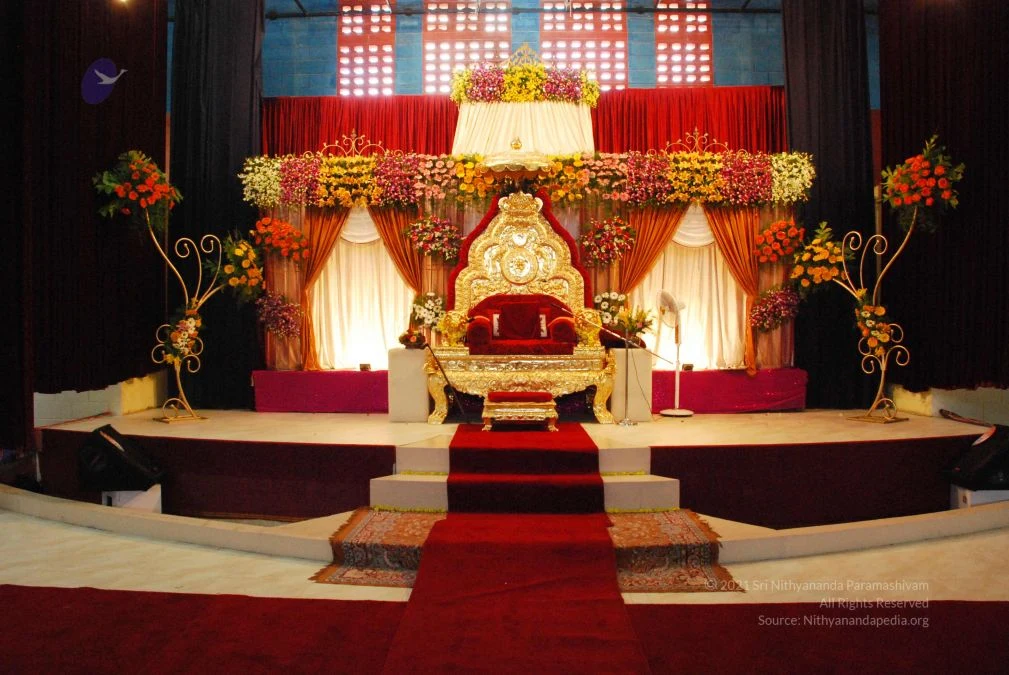
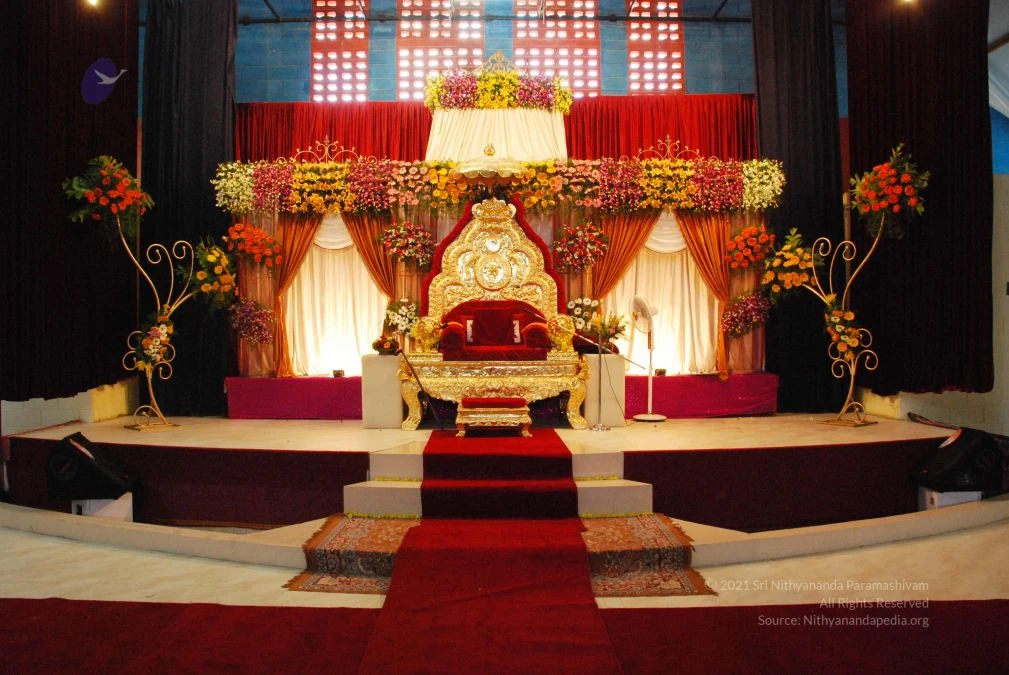
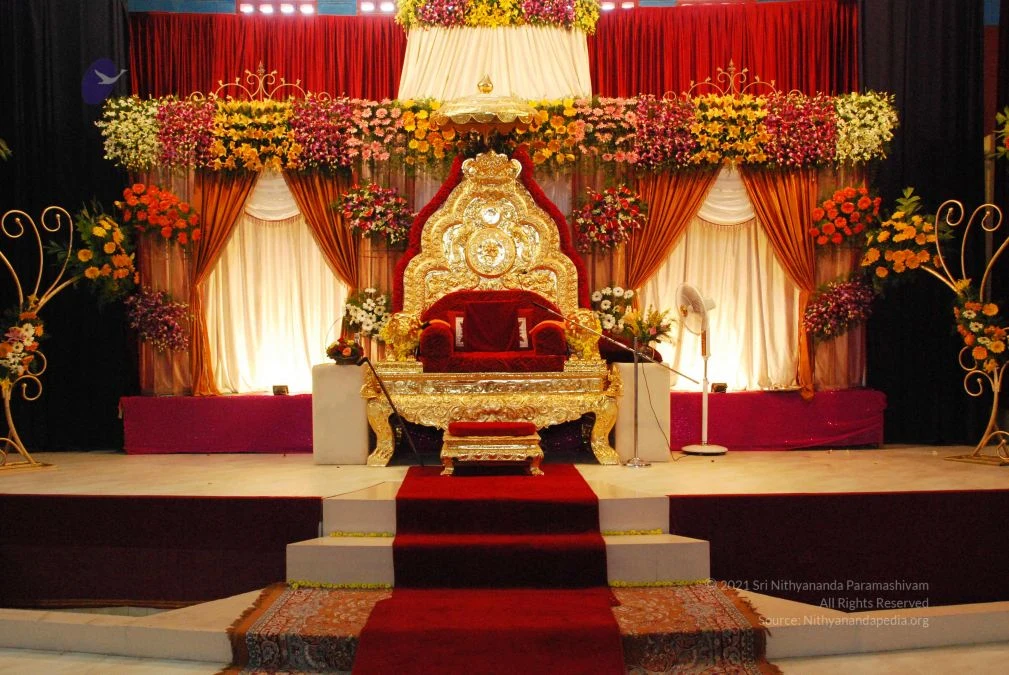
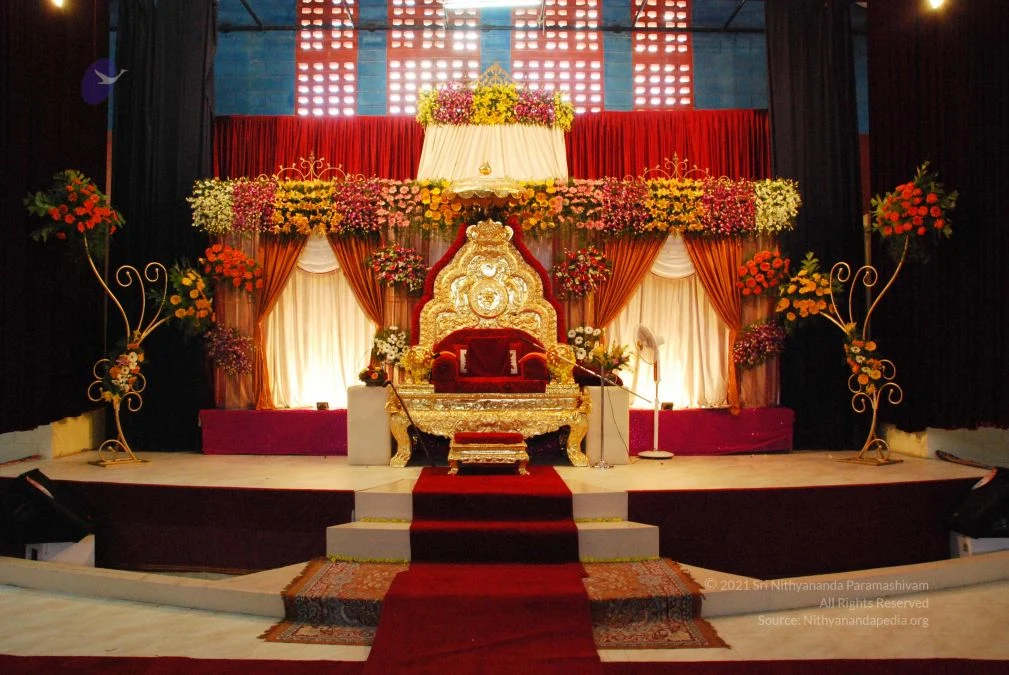
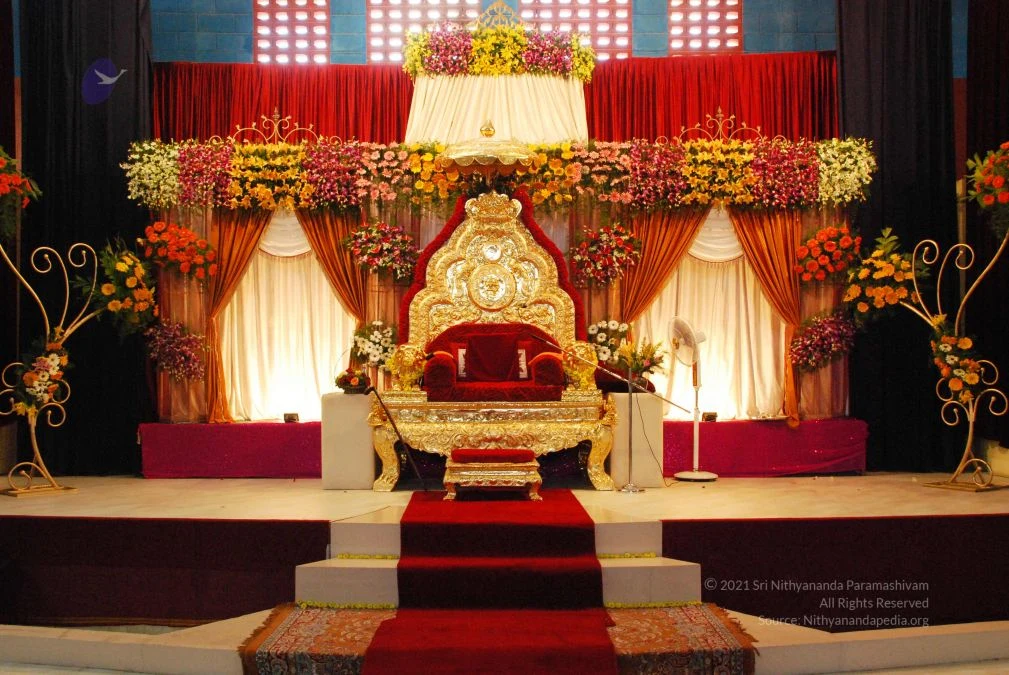
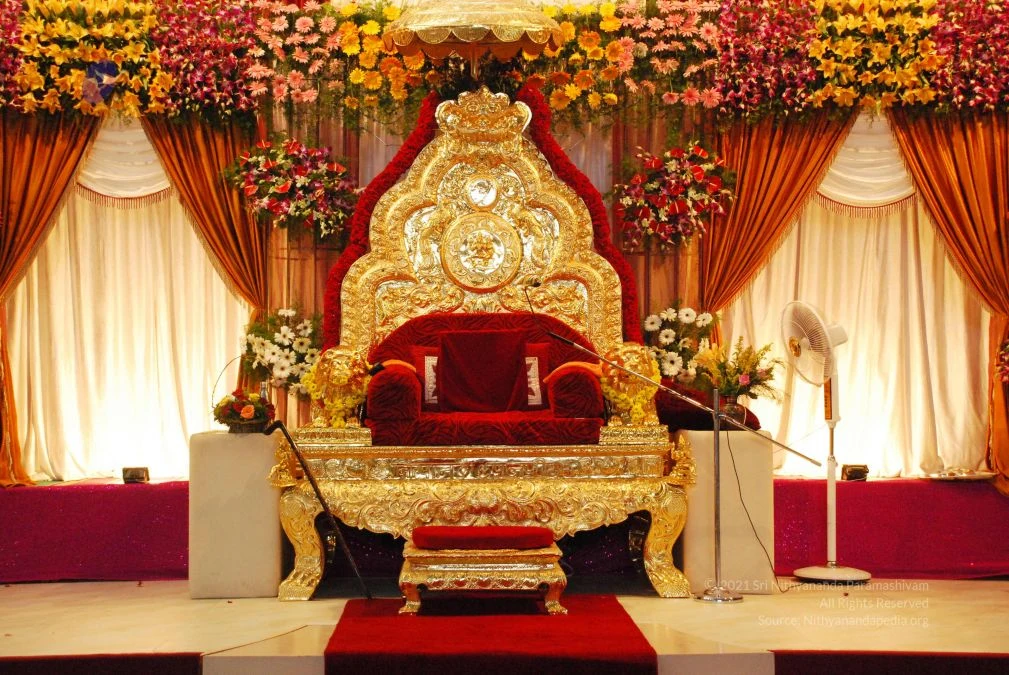
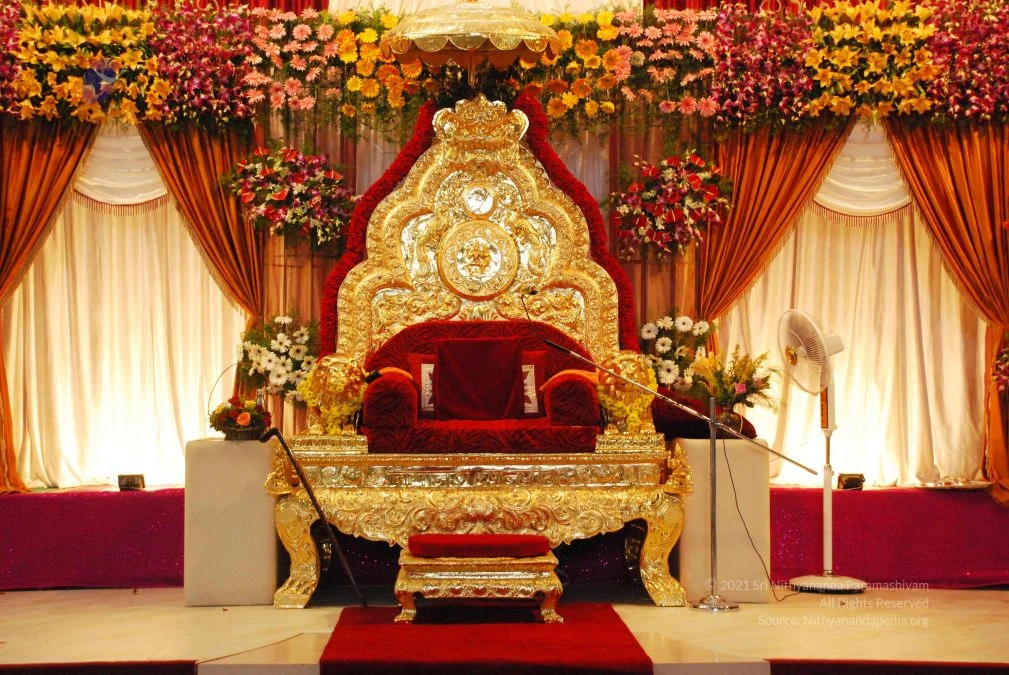
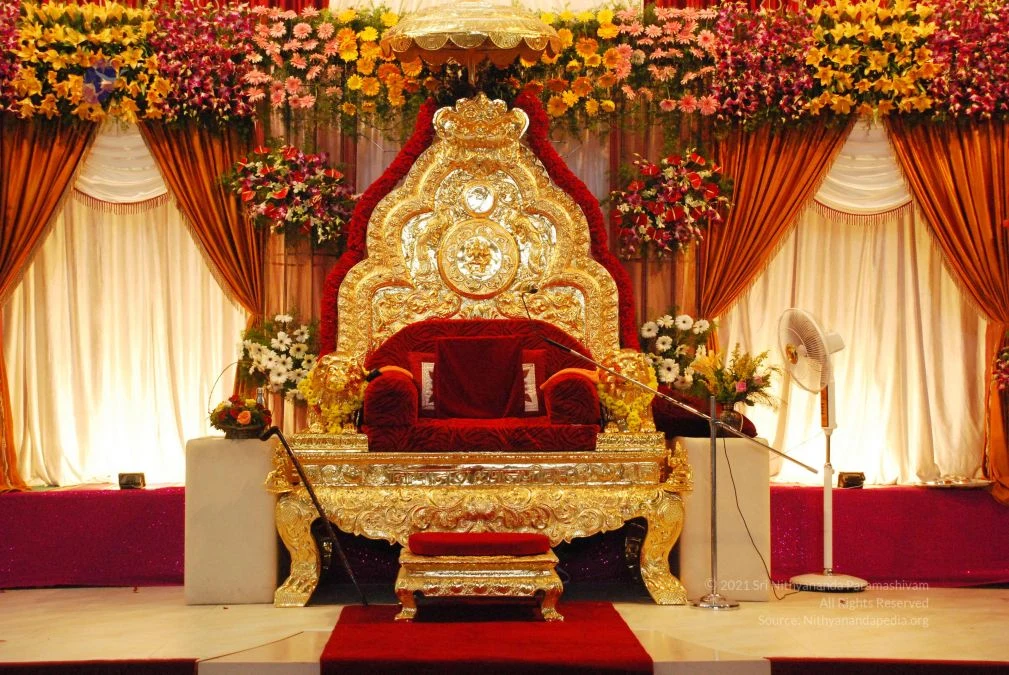
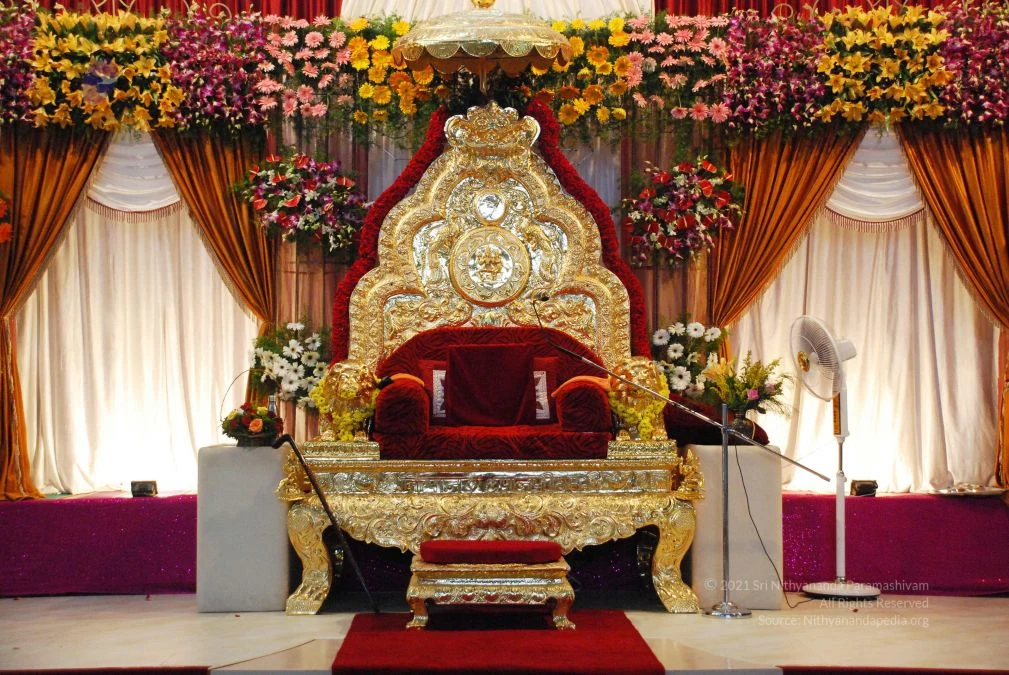
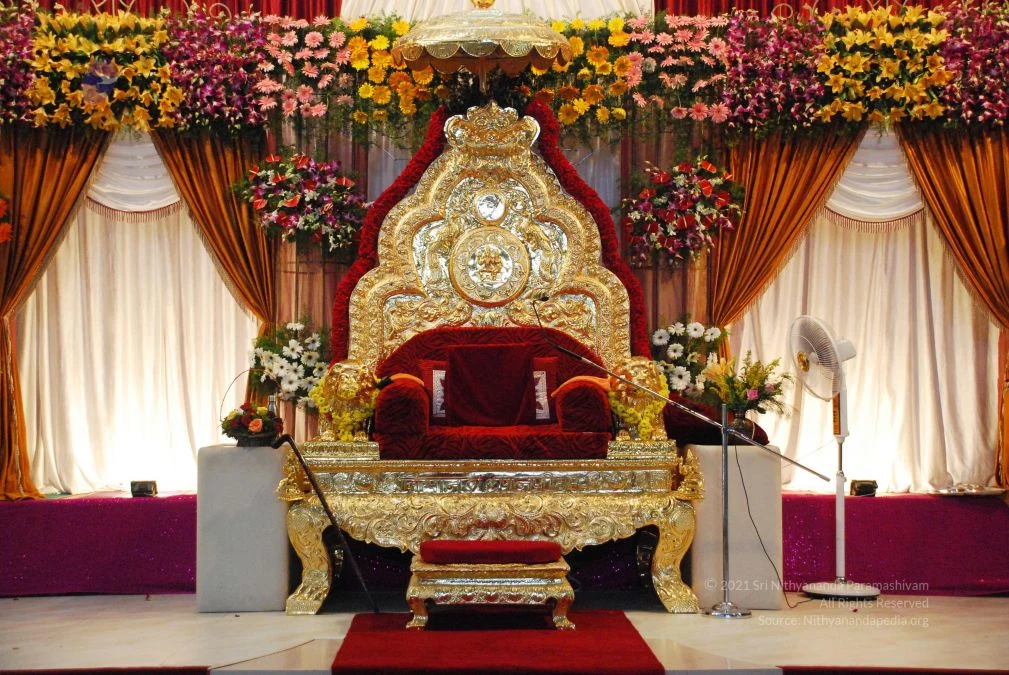
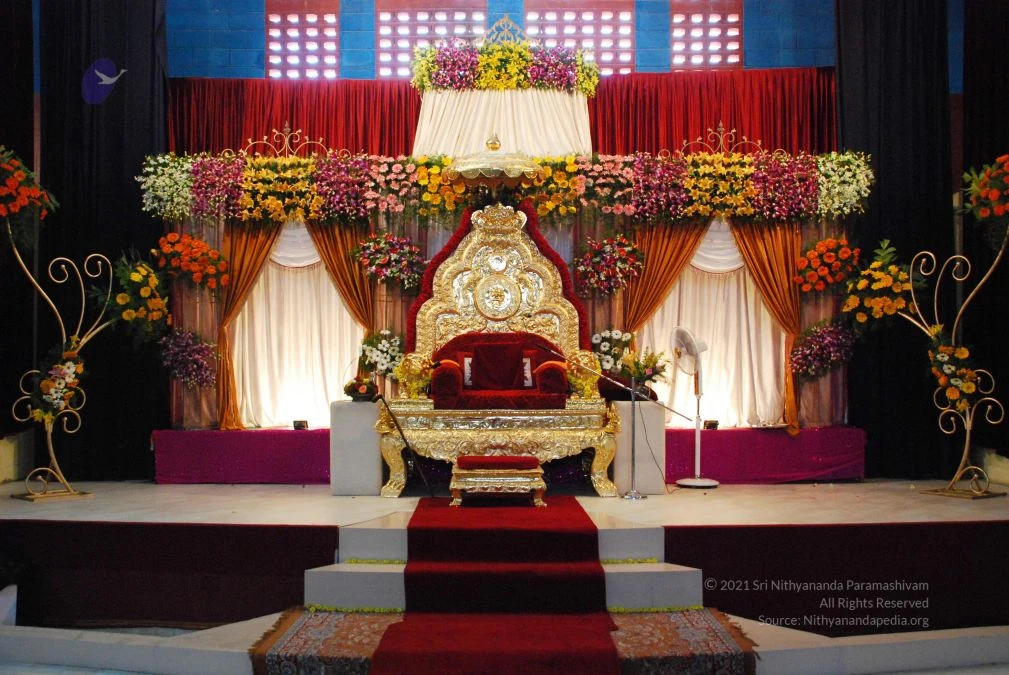
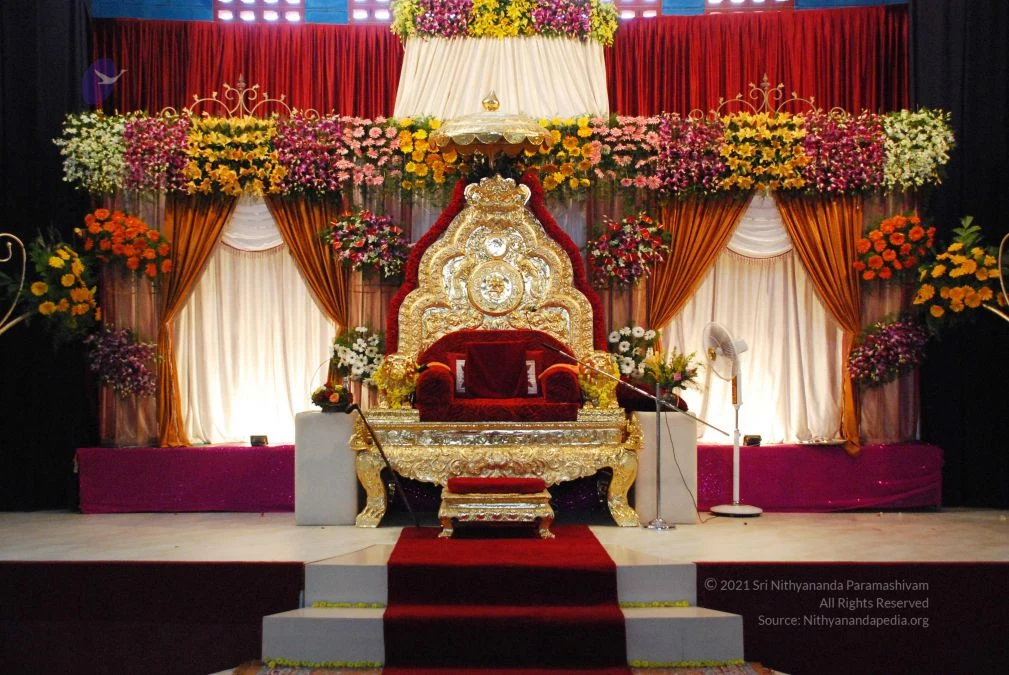
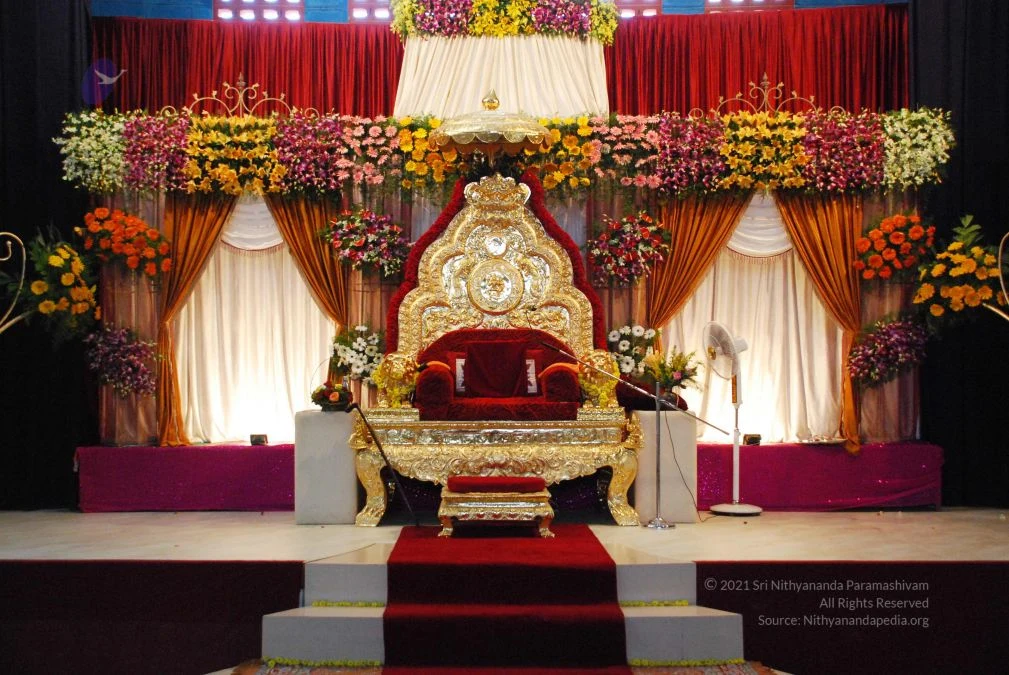
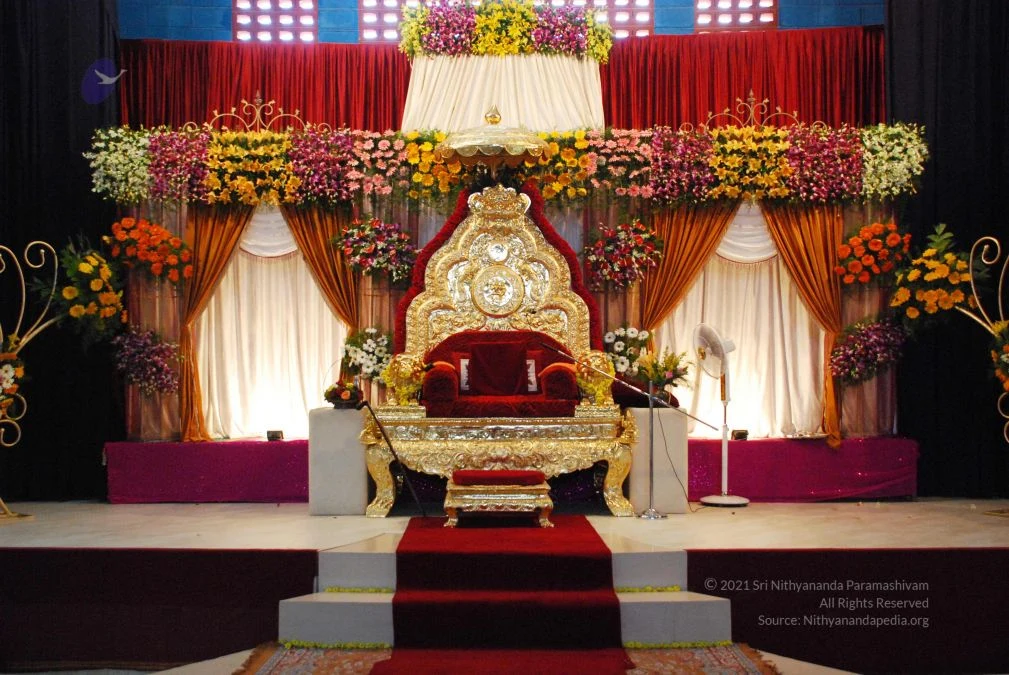
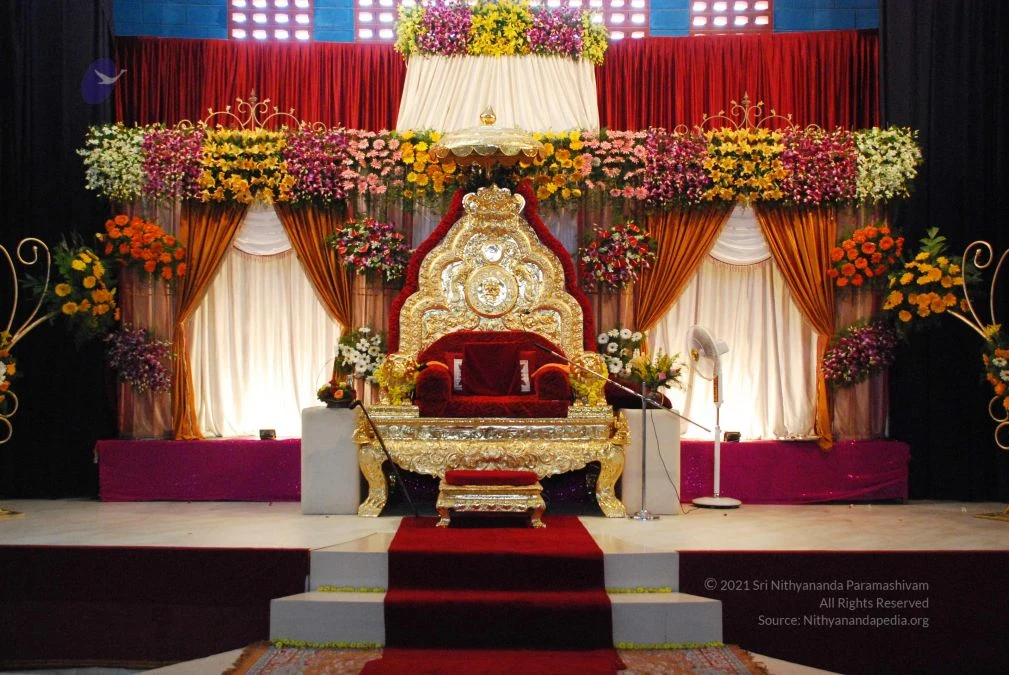
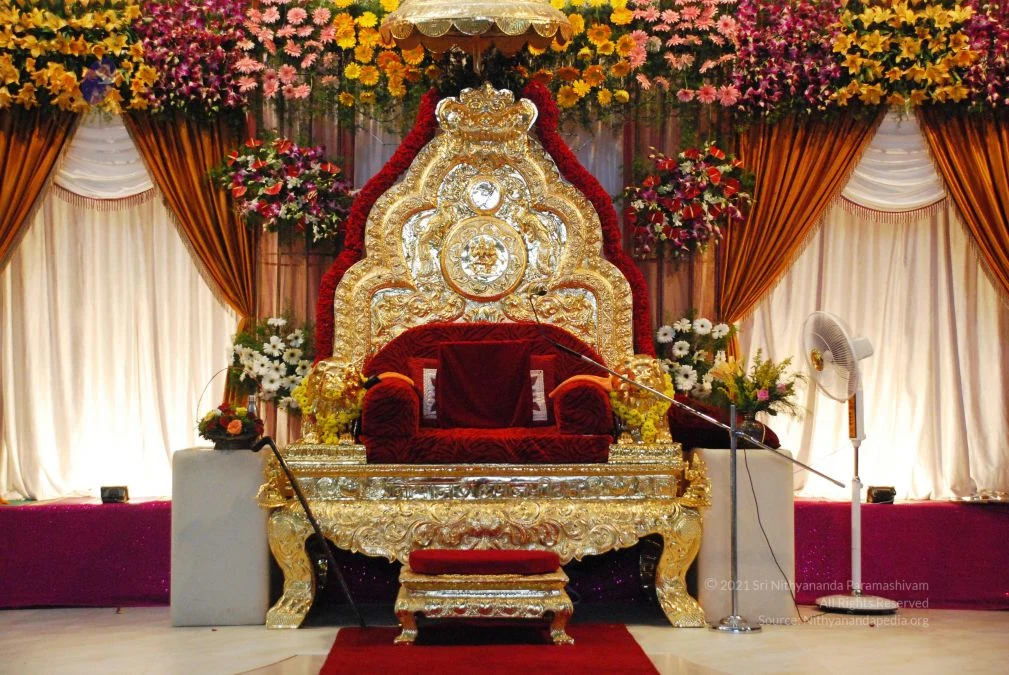
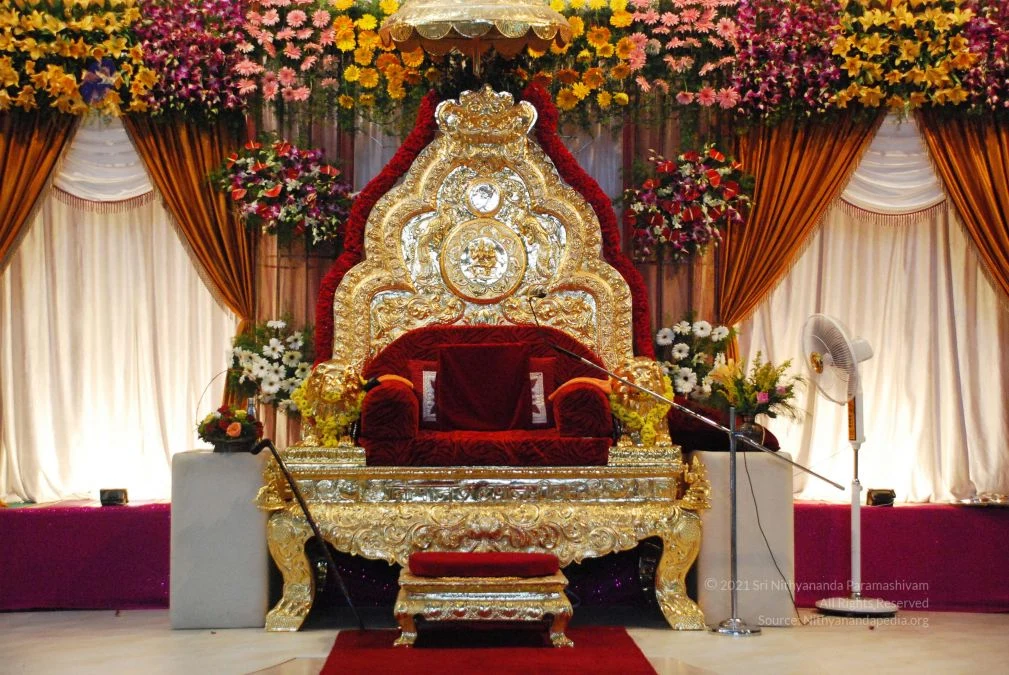
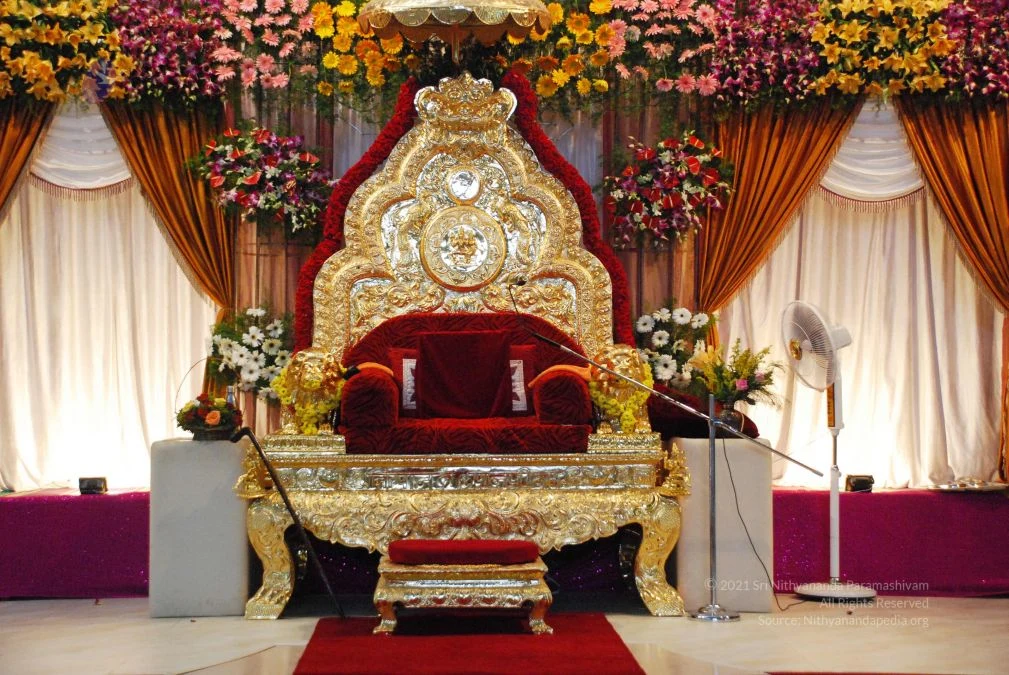
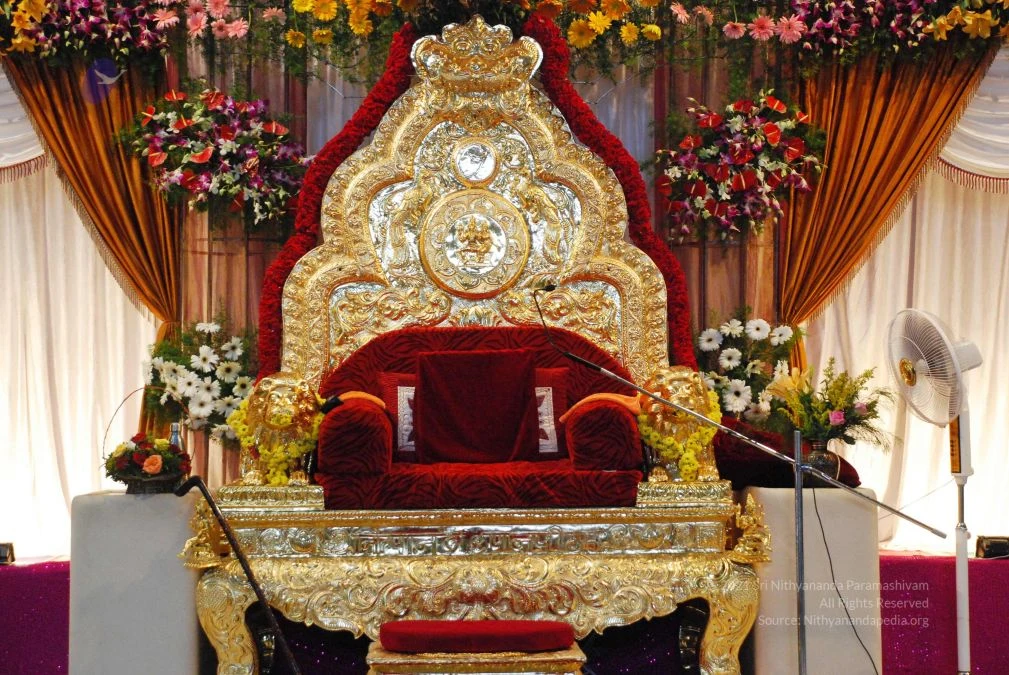
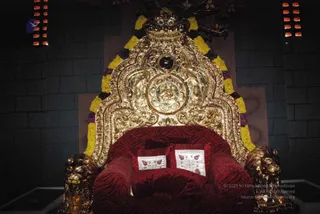
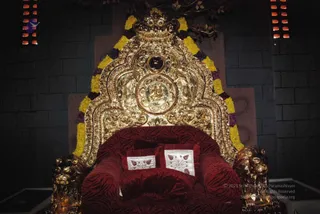
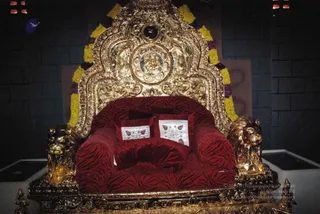
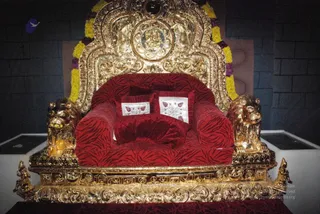
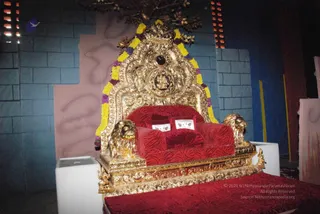
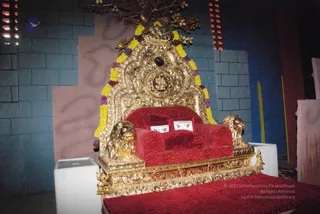
Glimpse of the Sarvajnapeeta at Aadikailaasa, Bengaluru, India

Photos from this day

View all 513 photos

SPH at his desk in the mission office in Aadikailaasa, Bengaluru, India
151 photosSource gallery
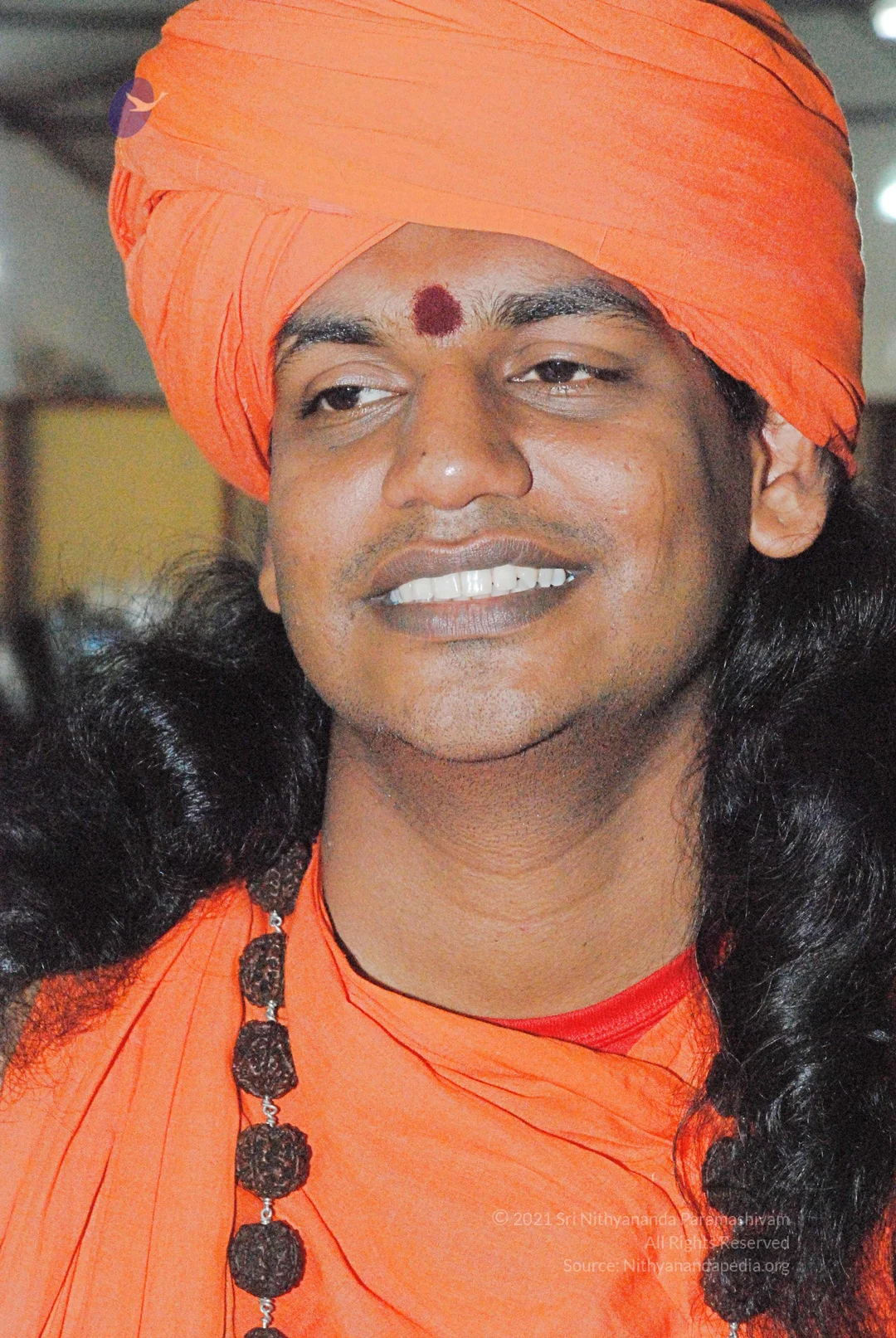
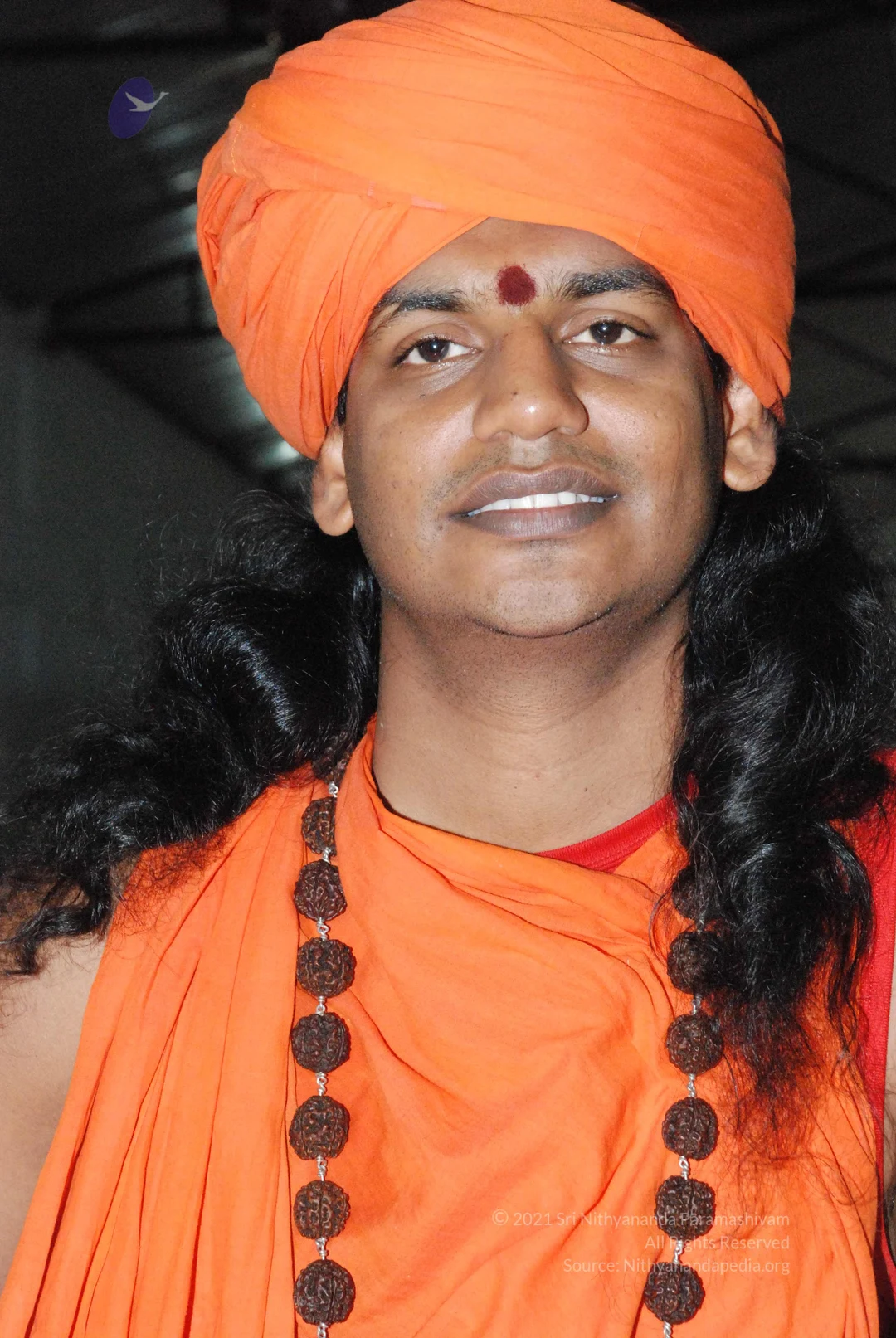
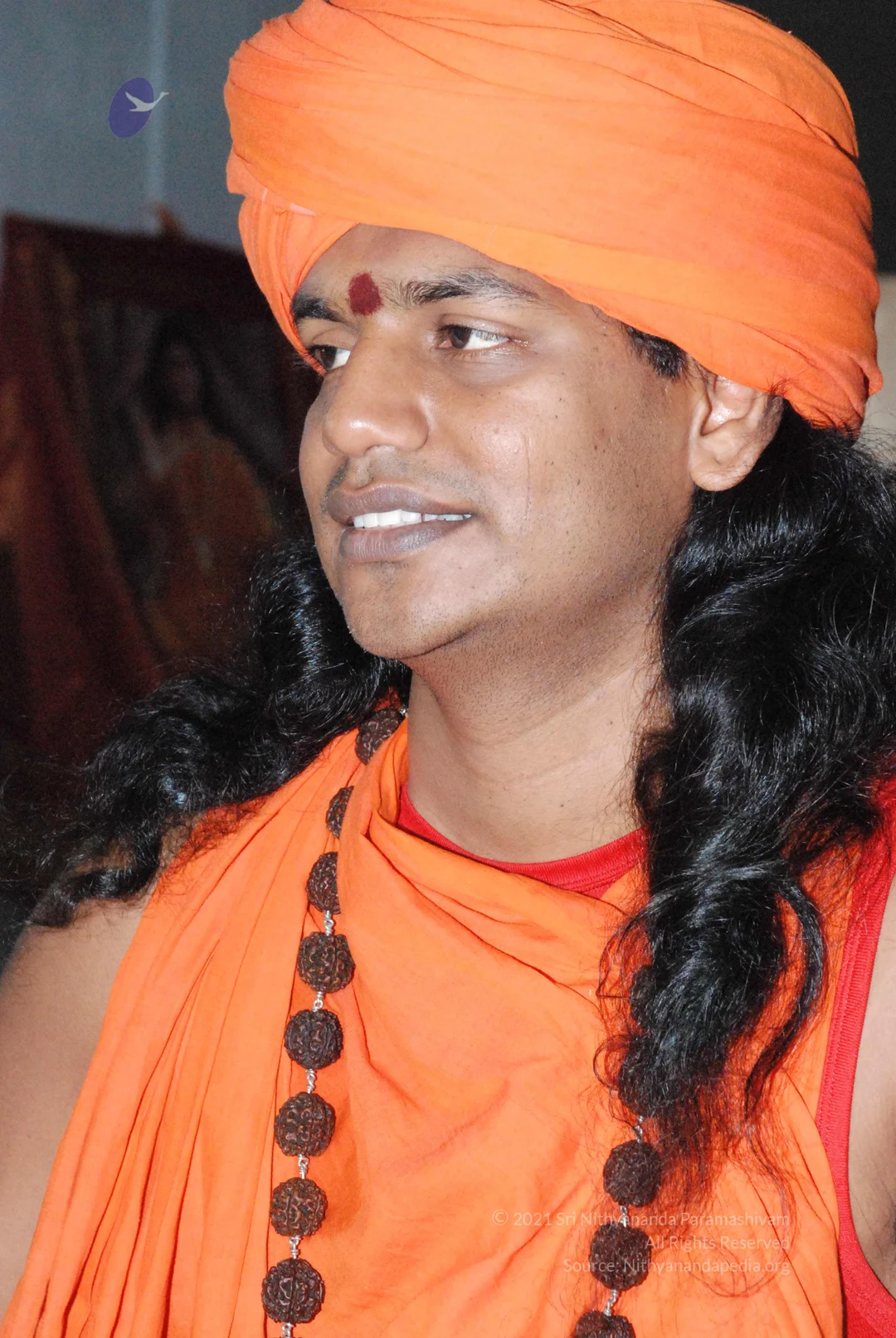
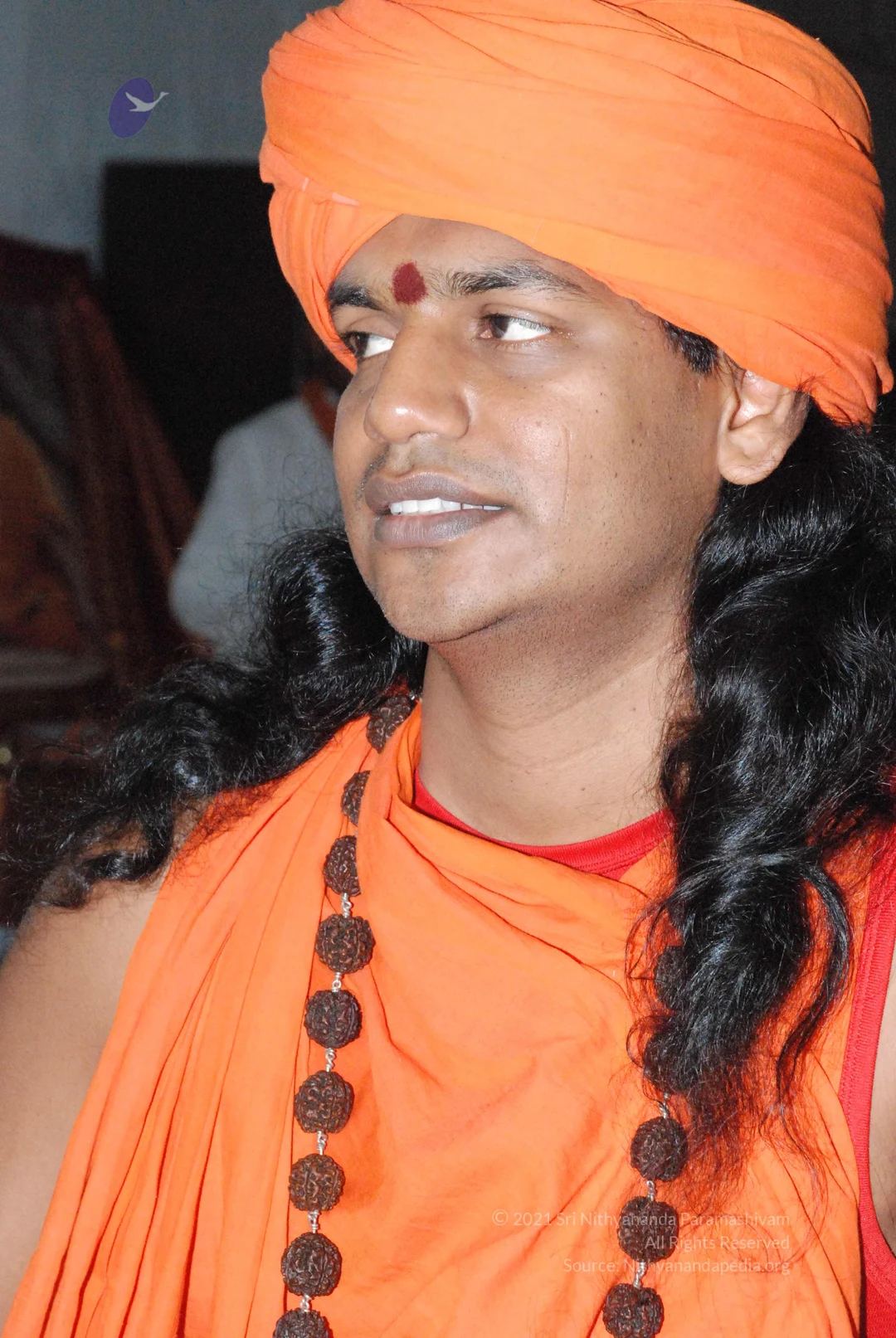
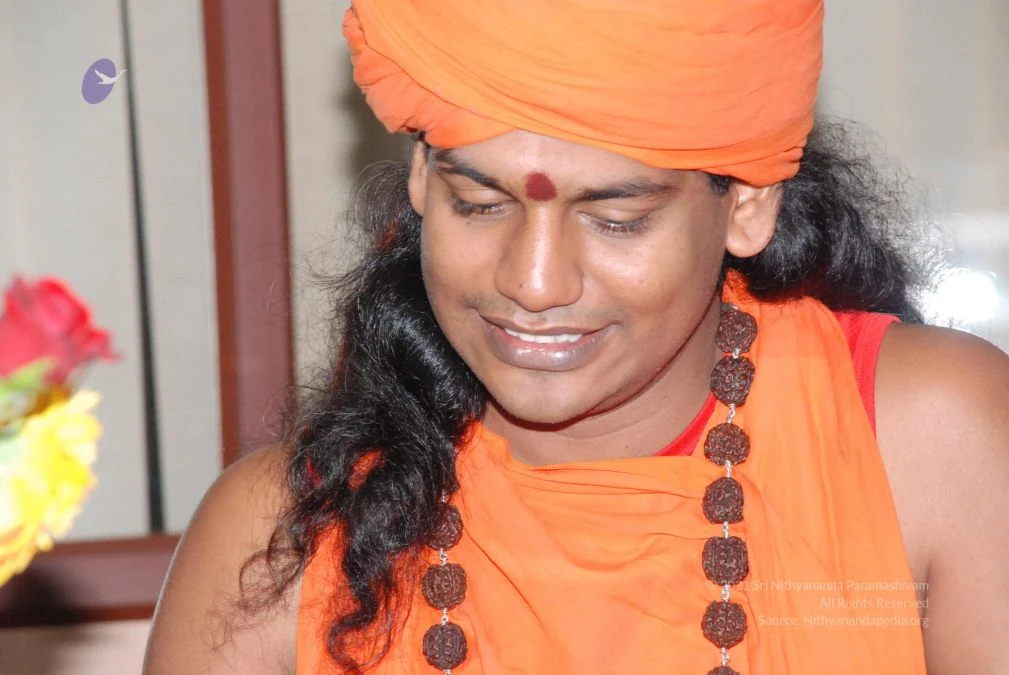
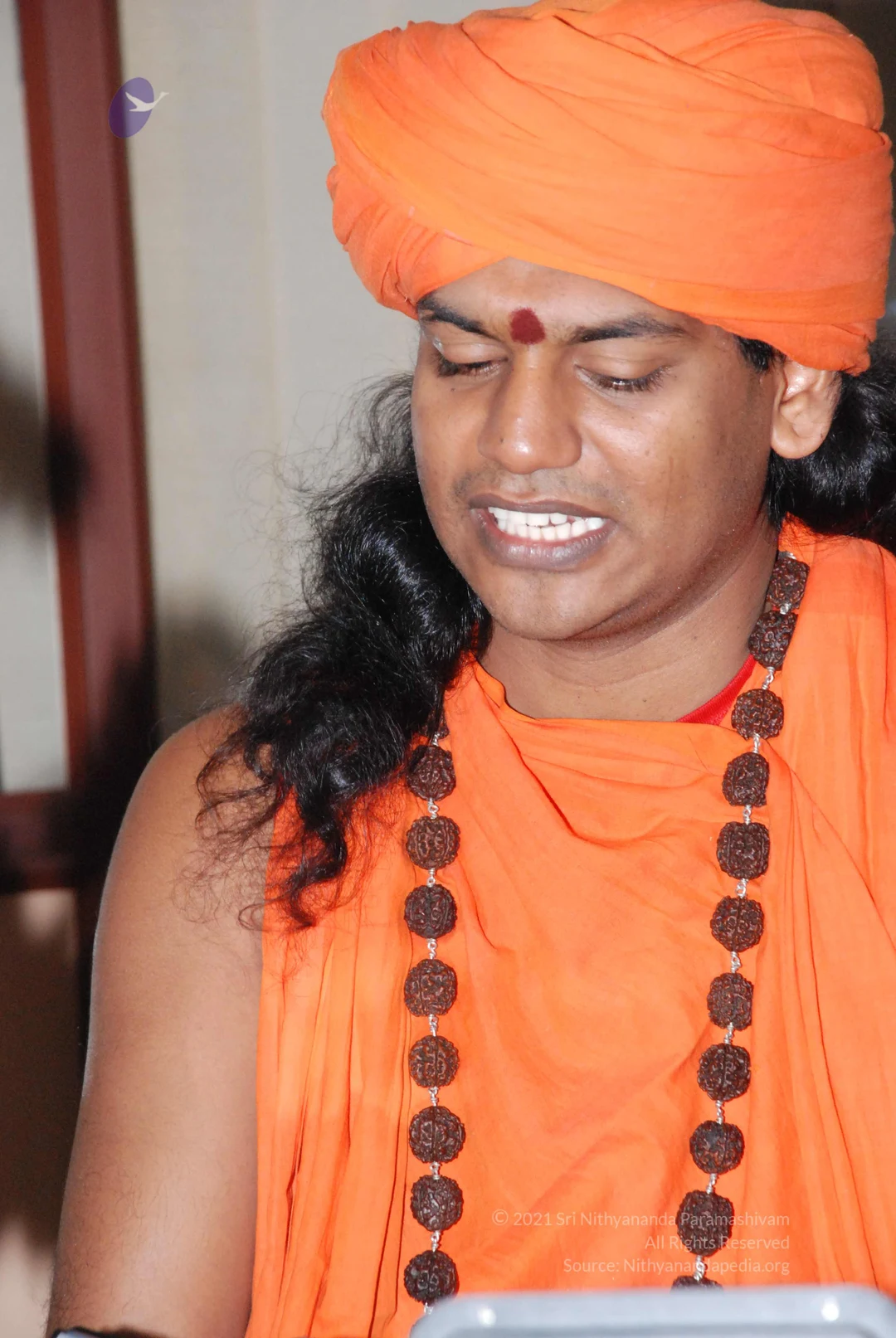
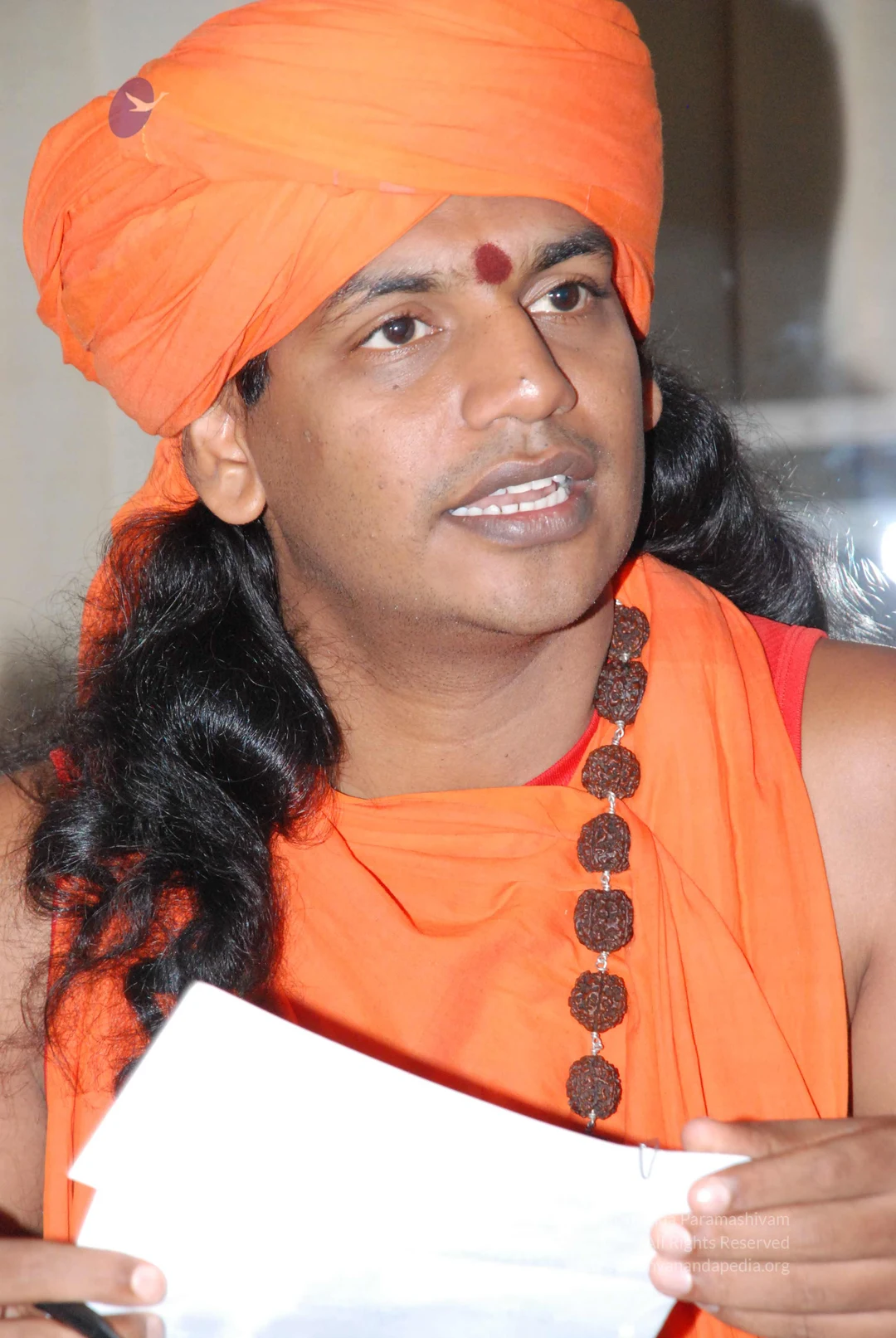
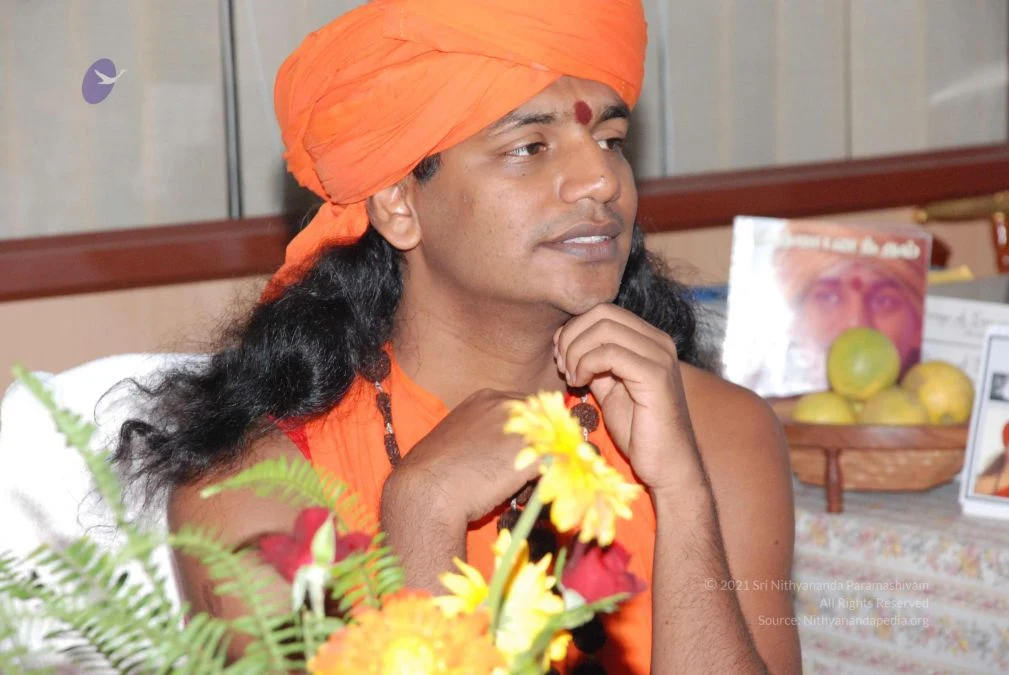
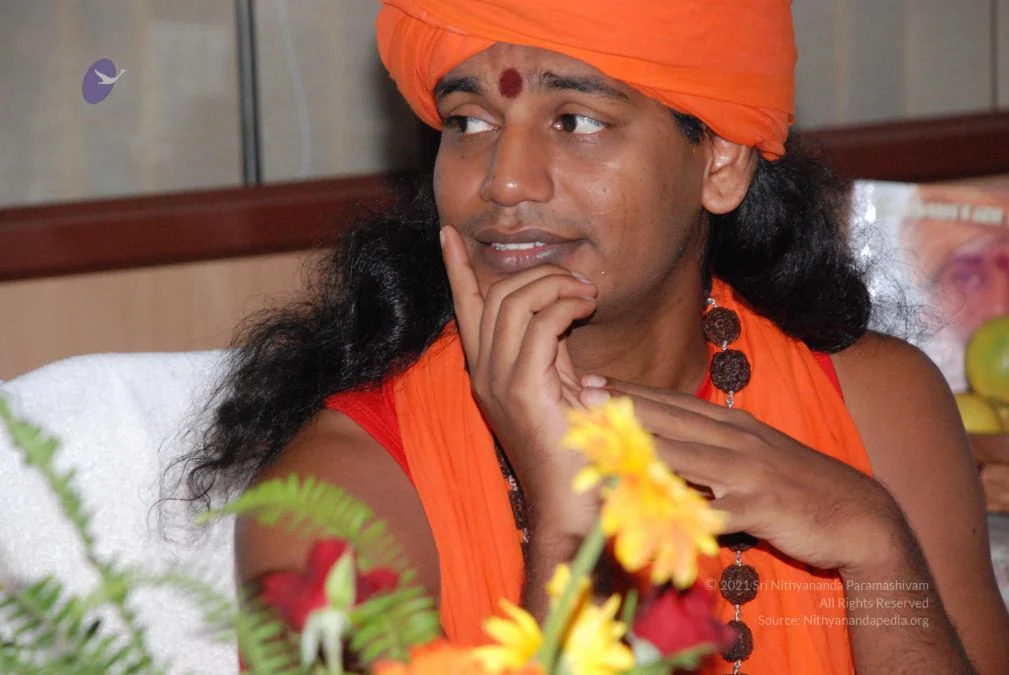
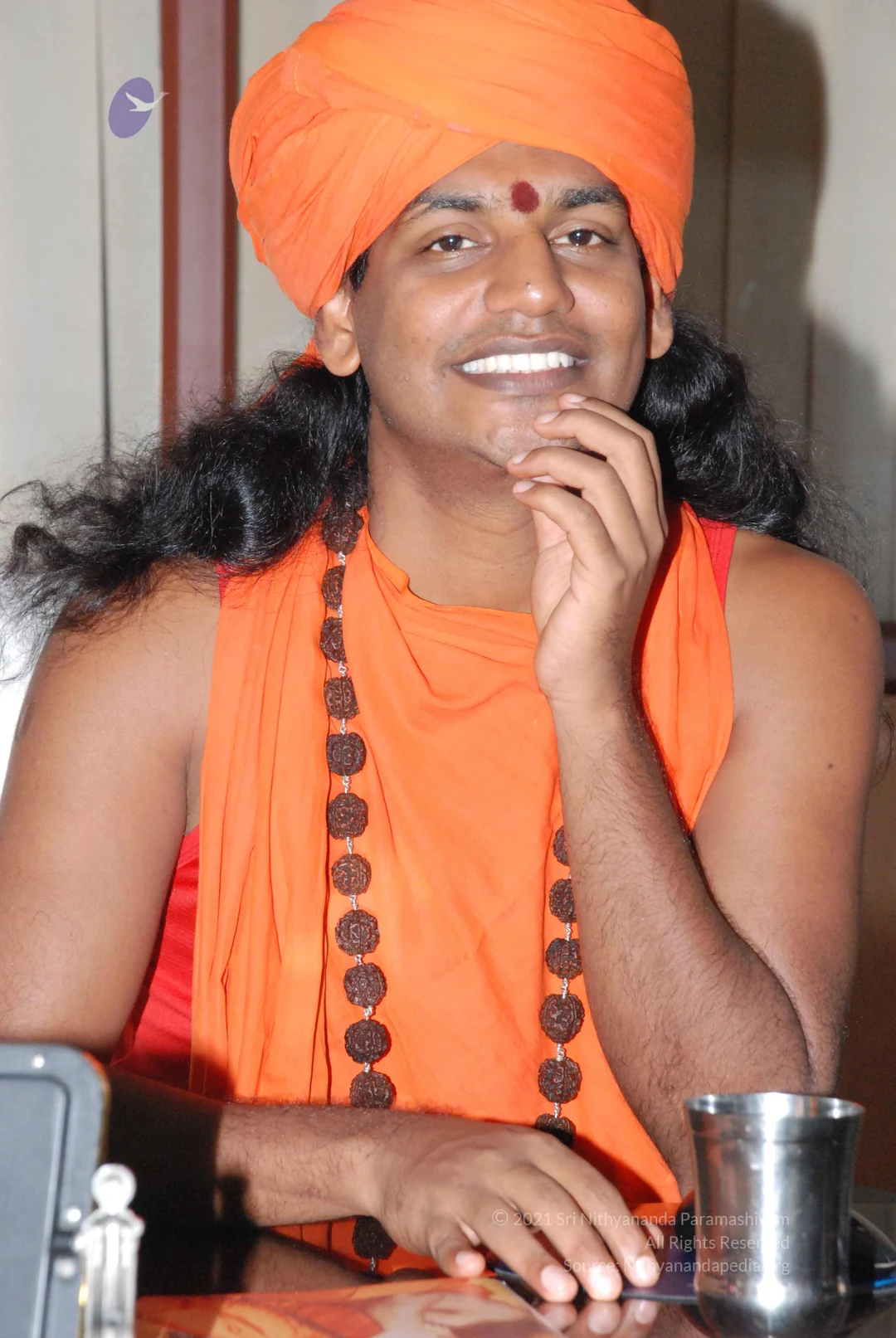
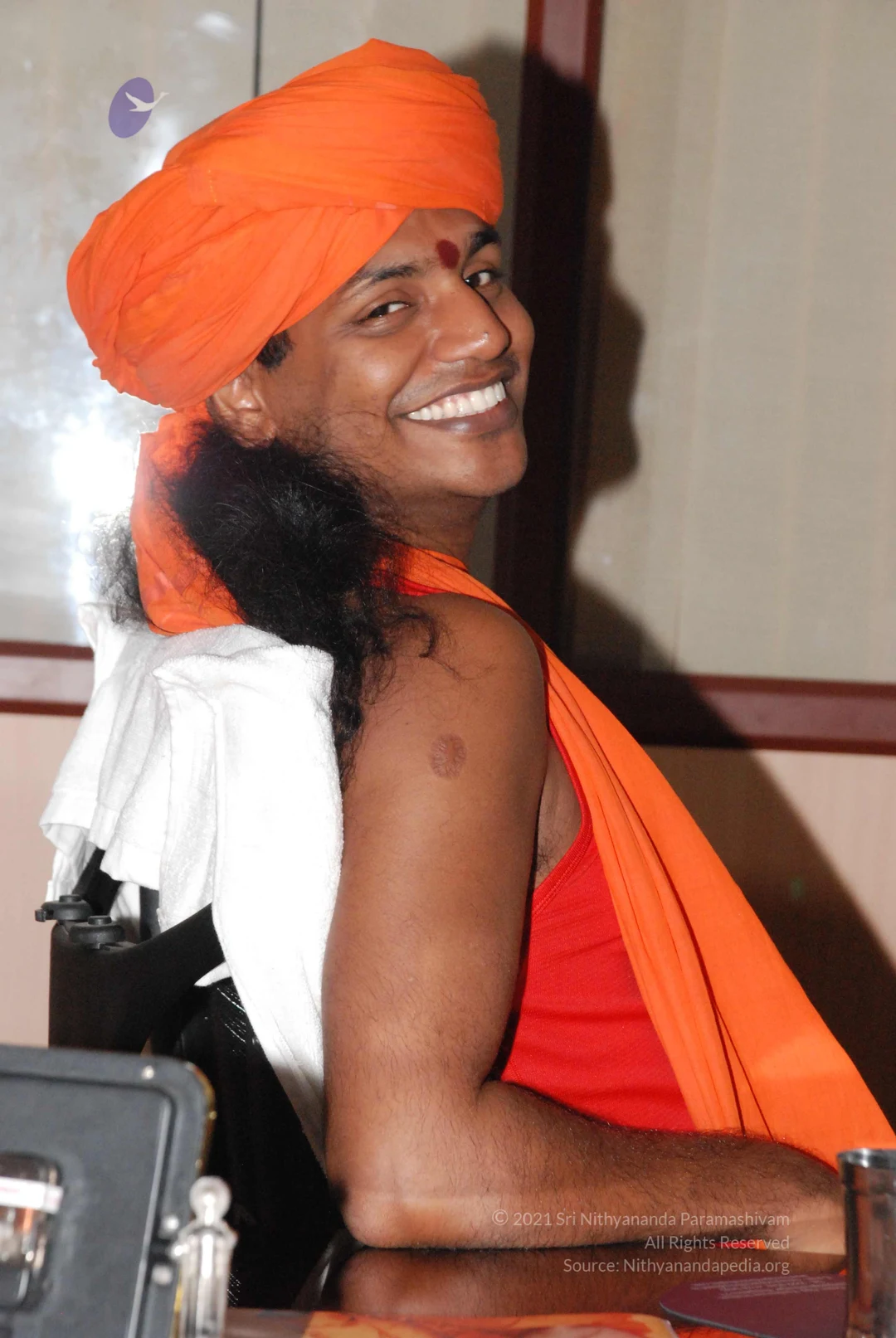
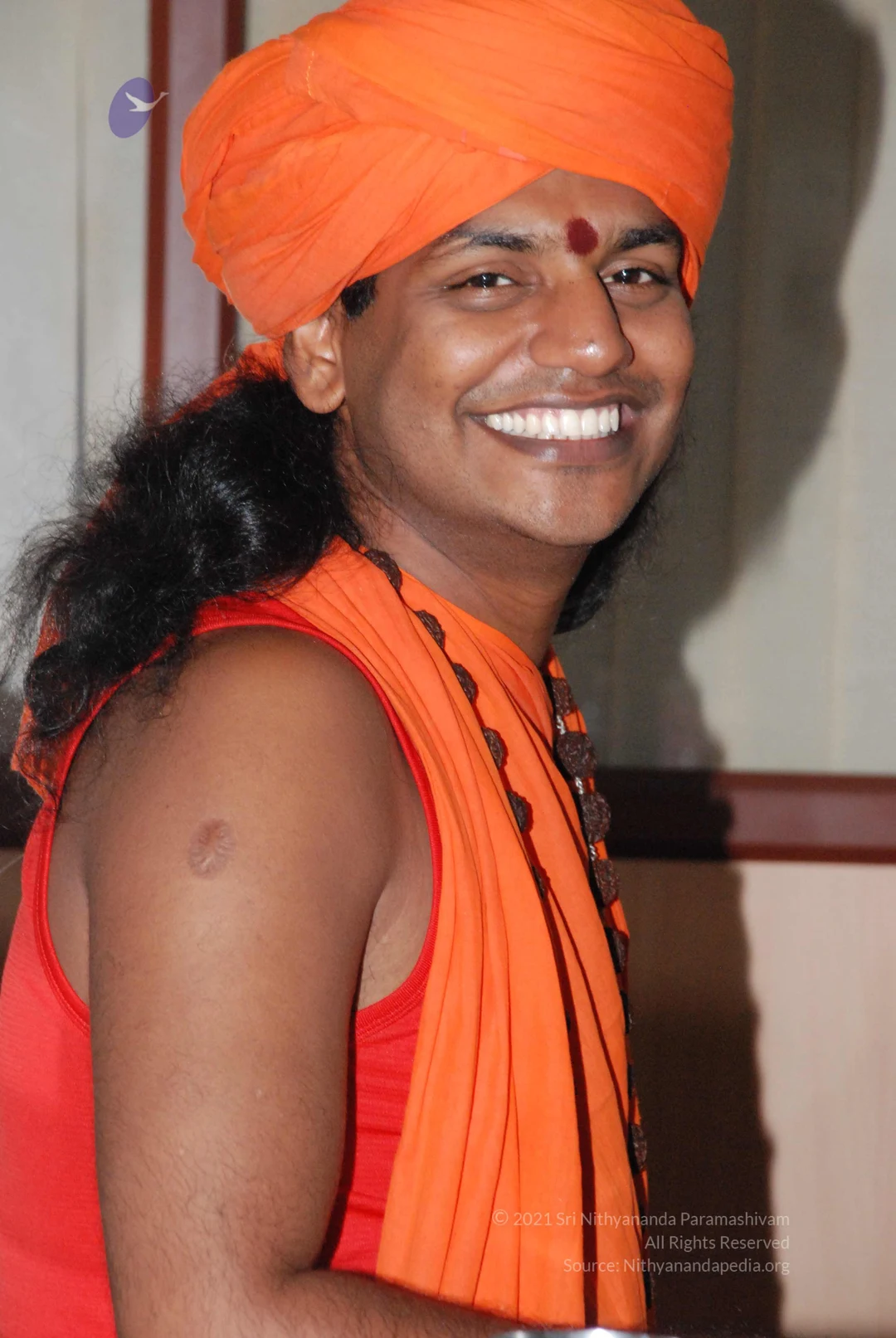
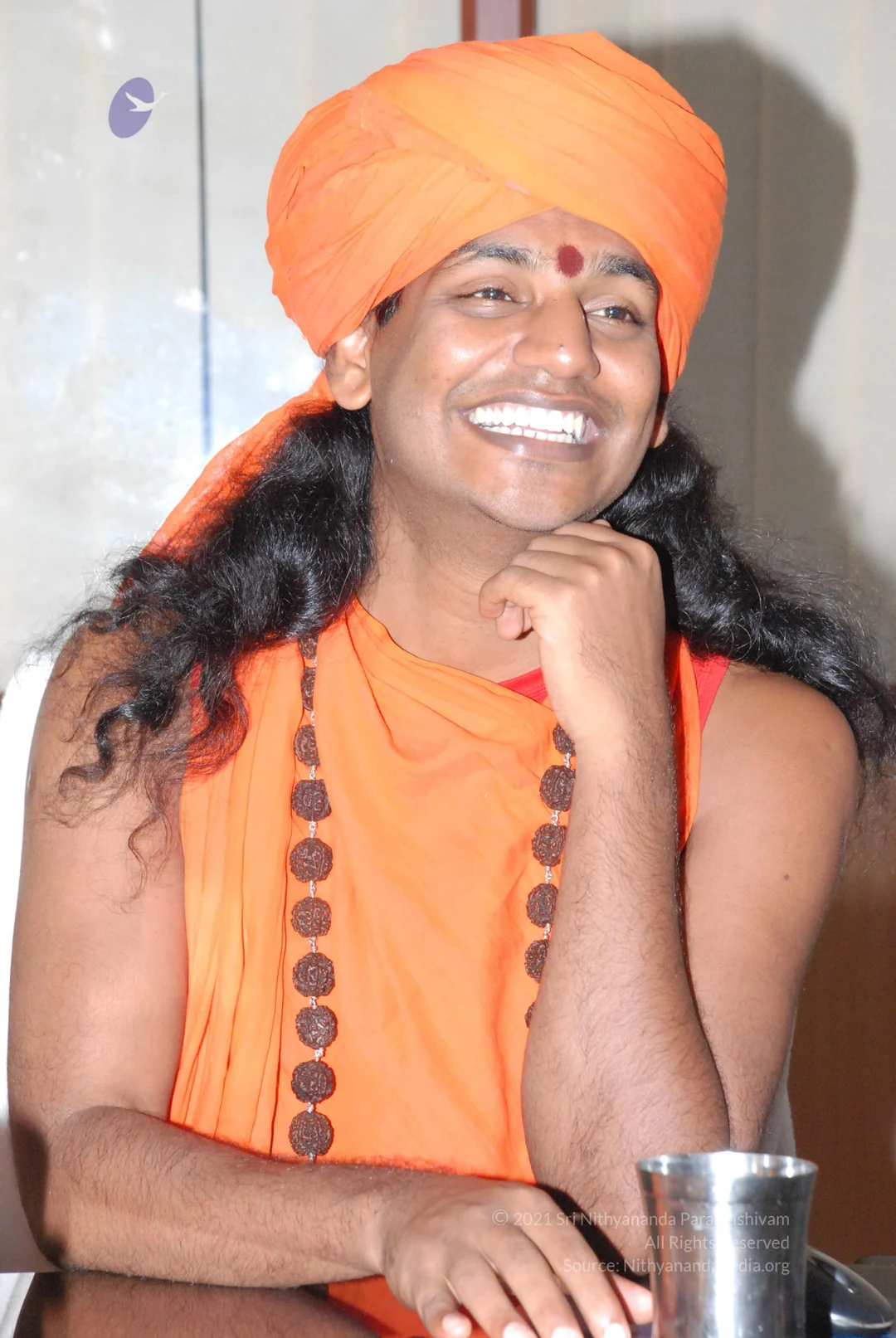
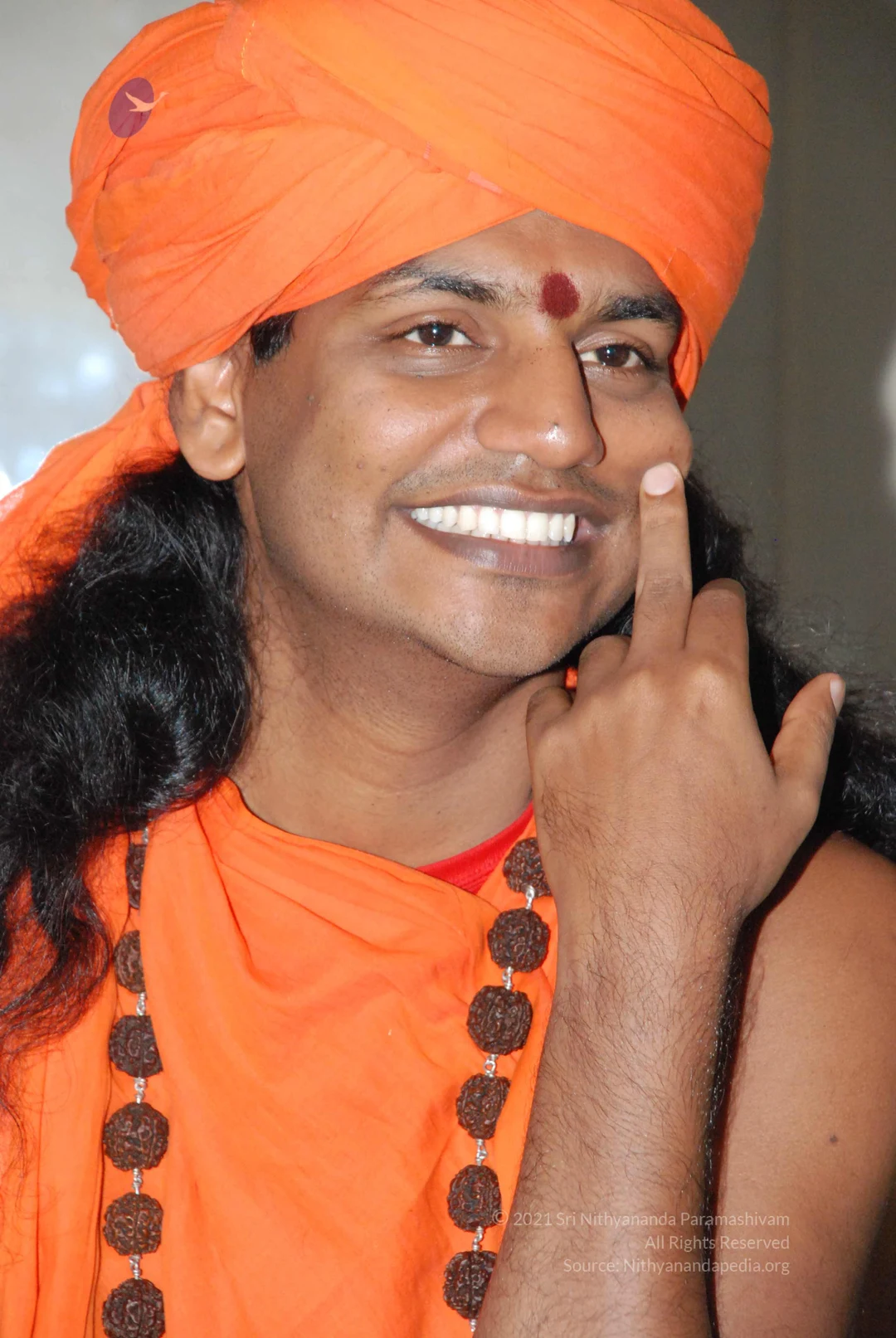
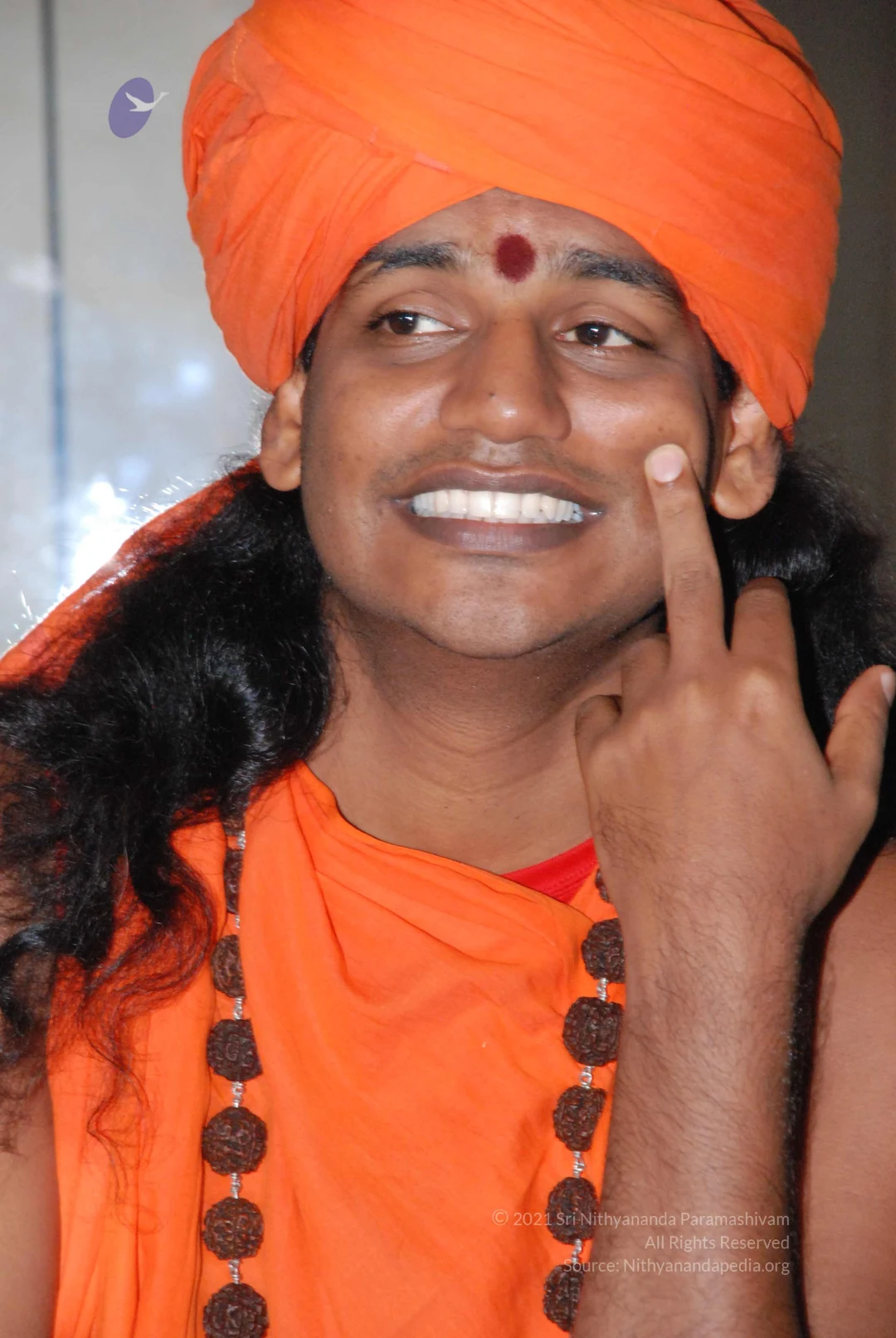
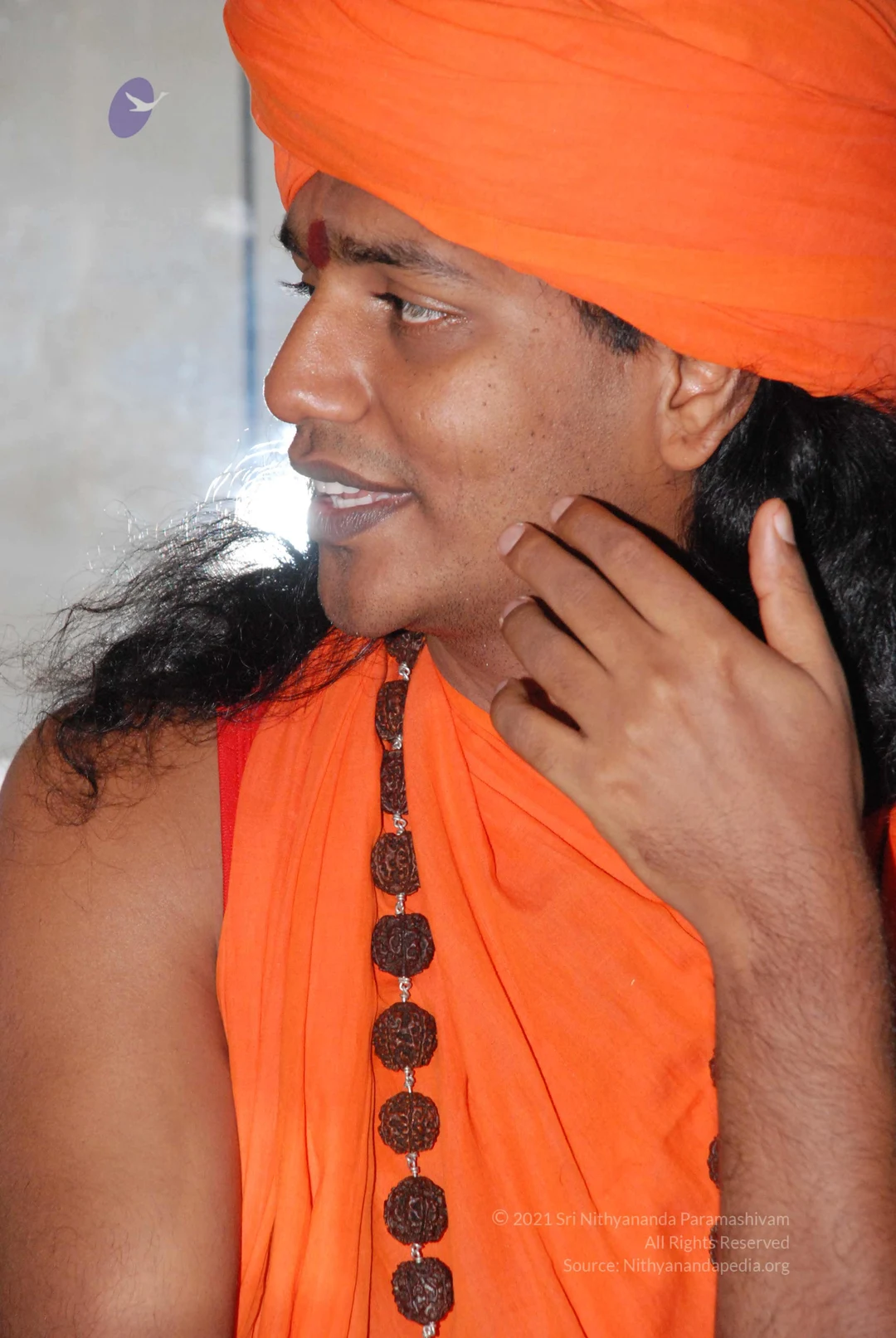
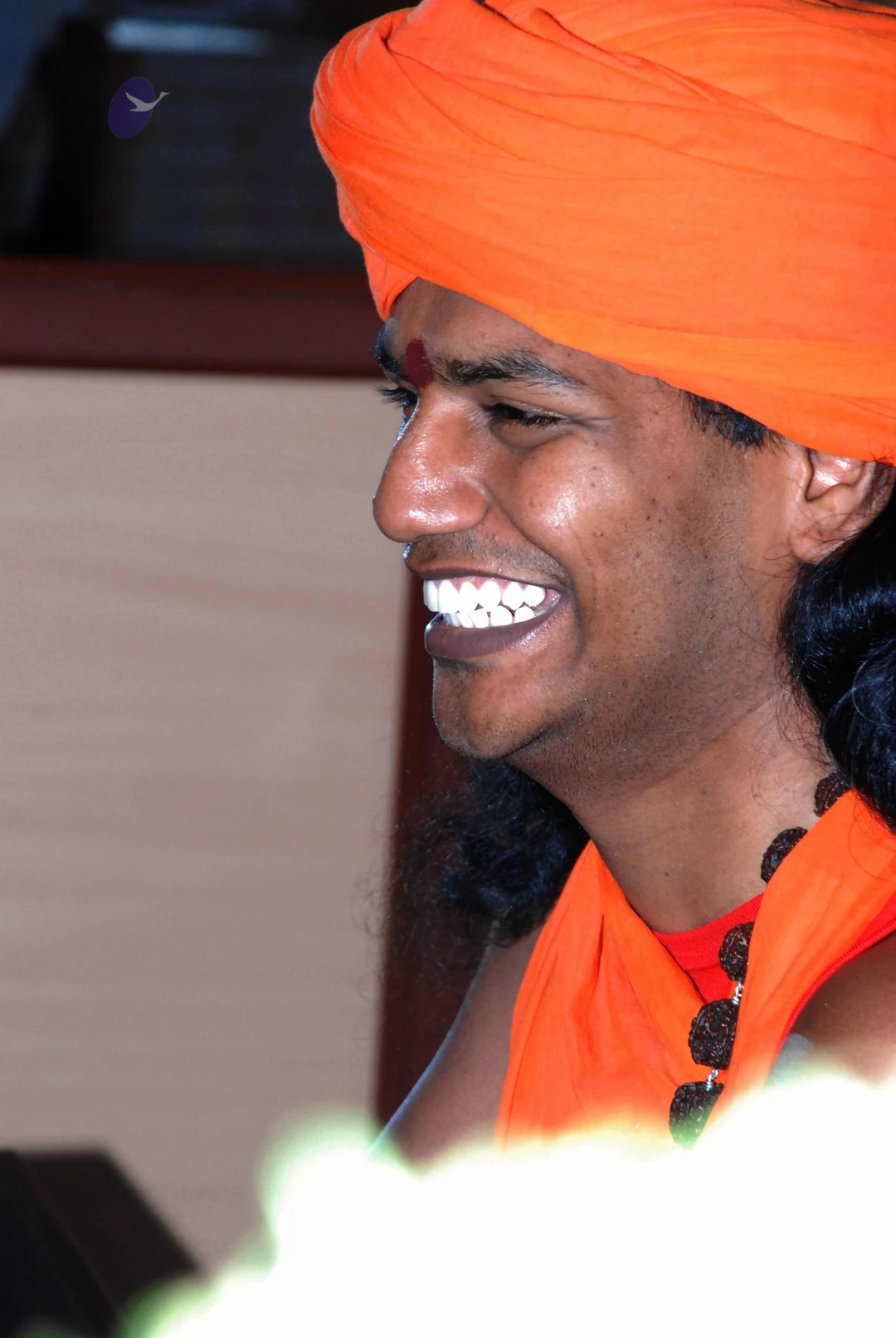
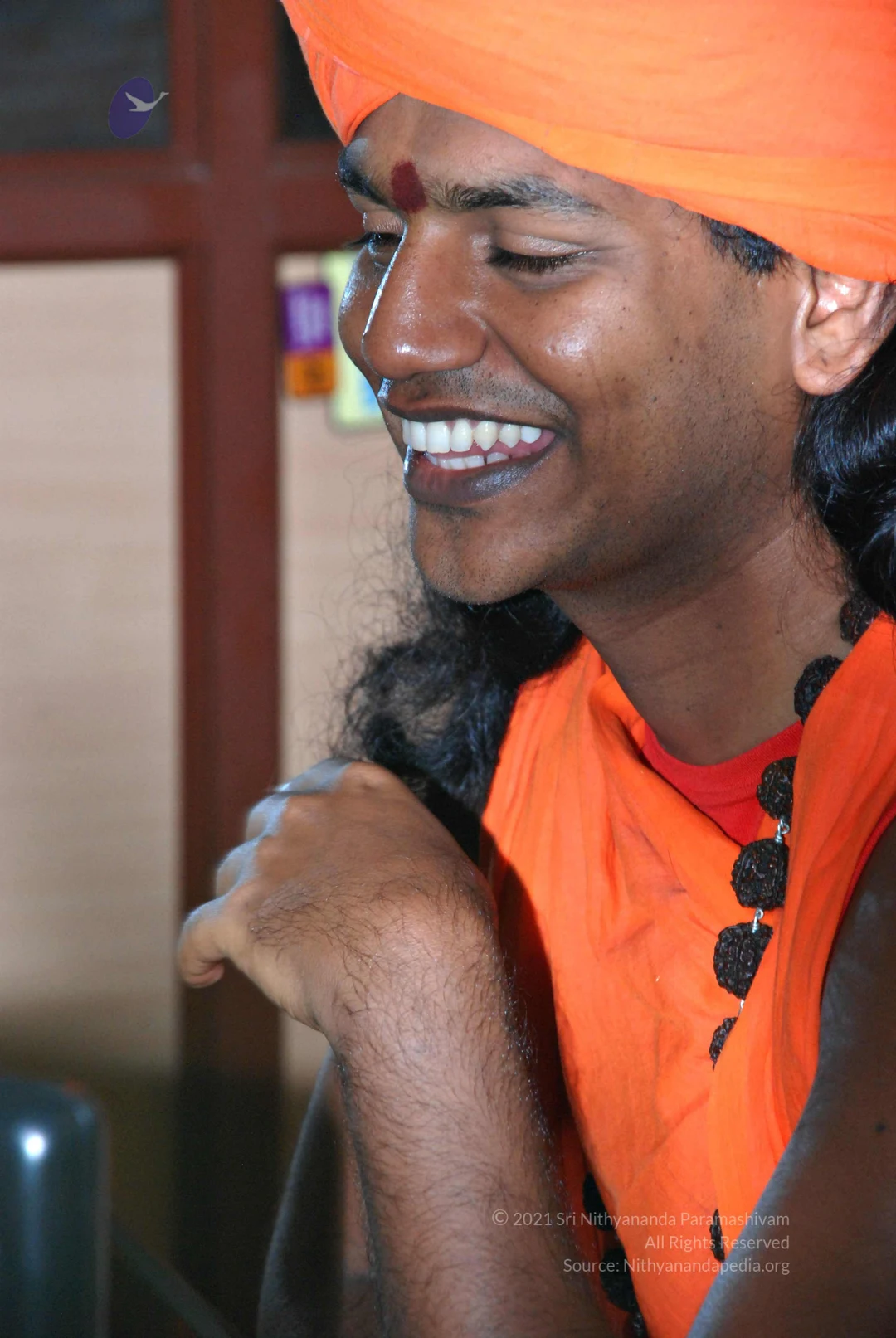
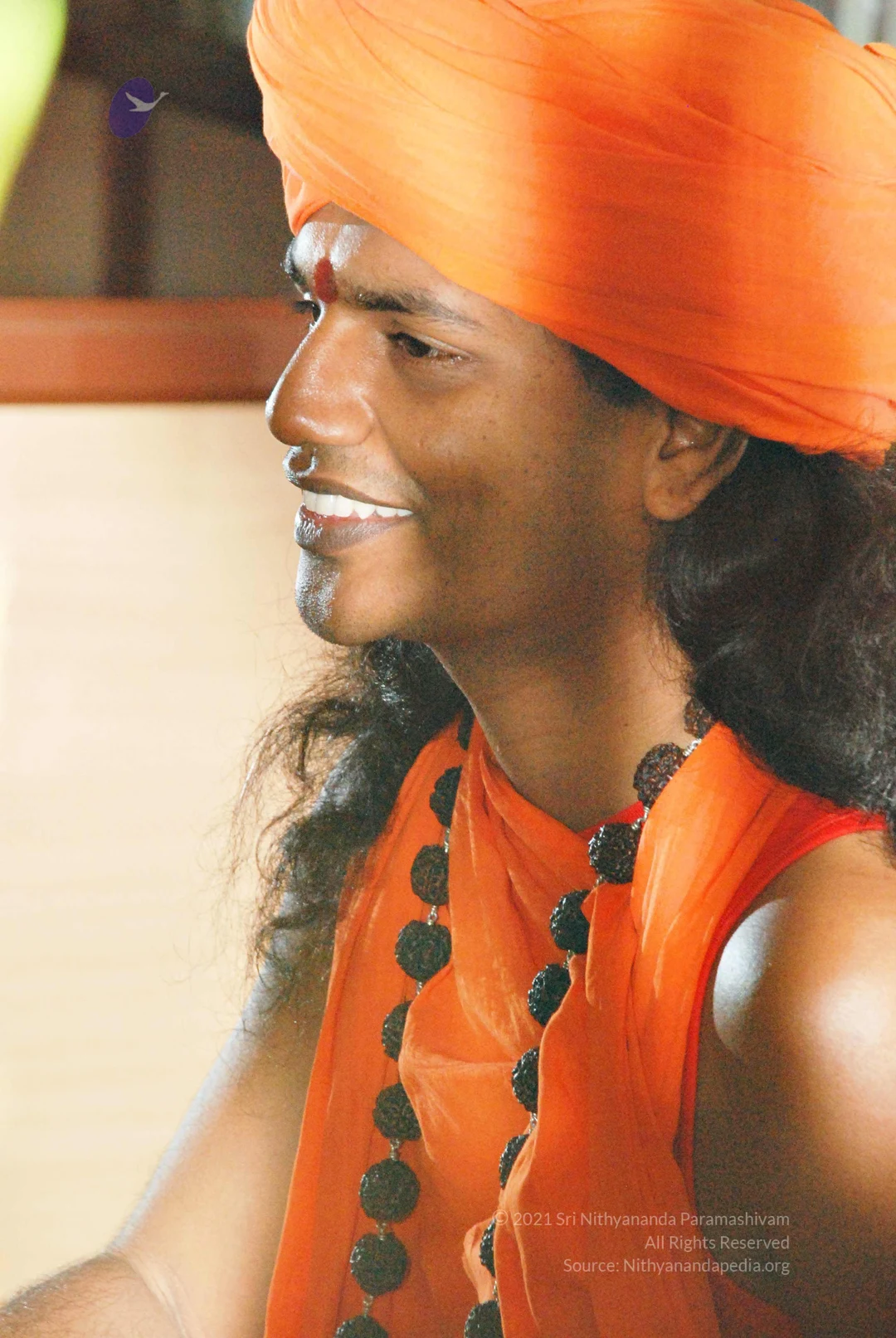
Interior of a large open-plan office under a corrugated metal roof with exposed steel trusses, ceiling fans and fluorescent tubes, white block walls and terracotta floor tiles. Several people work at desks with desktop computers; a woman in white with a yellow shawl sits at the left, and a woman in white works at the far right. A standing woman in saffron/orange robes with a dark head covering walks down the central aisle among other staff in white and yellow. A framed portrait of a saffron-robed figure rests on a red cloth near the left wall; the figure's face is too small and indistinct to identify and no printed caption is legible. Metal filing cabinets, bookshelves and stacks of paper fill the room.Photograph of an office interior with terracotta floor tiles, glass partition panels, desks with computers and printers, a blue plastic chair and a framed photo row on the back wall. Two people in orange robes stand in conversation in the middle of the room: the left figure has long dark hair and wears a plain orange garment with a rudraksha-style beaded necklace, while the right figure wears an orange turban, orange robes and a red rudraksha mala and gestures while speaking. Ceiling fans and a chandelier hang overhead. The left figure's identity cannot be established from appearance, so the role is given instead.A photograph of a man in an orange turban and orange shawl draped over a red undershirt, wearing a long rudraksha mala with dark beads that hangs to his waist. He has a red bindi on his forehead and long dark hair falling past his shoulders, looking downward with one hand gathering the beads at his chest. The background is a plain pale wall with a wooden pillar and light fixture.A smiling man in an orange turban and orange shawl wrapped over a red inner garment stands indoors. A red tilak mark is on his forehead, and long dark hair falls past his shoulders. He wears a long strand of dark rudraksha beads and holds the beads in his left hand against his waist. Behind him is a dark framed picture and a blurred background. Candidate a person: the long hair, saffron turban and shawl, and rudraksha mala match the cues described for the page's subject, so this is an appearance-based label only.Close portrait of a smiling man wearing an orange saffron turban with a small red bindi on his forehead. He wears an orange shawl over a red undershirt and a long rudraksha mala of dark brown beads, with long black hair falling past his shoulders. Appearance-based label: a person, shown in person in a plain indoor room with a dark wooden cabinet behind him.Close-up photo of a smiling man wearing an orange saffron turban with a dark red tilak dot on his forehead. He has long, dark, wavy hair falling over his shoulders and wears an orange saffron shawl over a red undershirt, with a rudraksha mala of dark brown beads hanging across his chest.

Glimpse of Aadikailaasa, Bengaluru, India
258 photosSource gallery
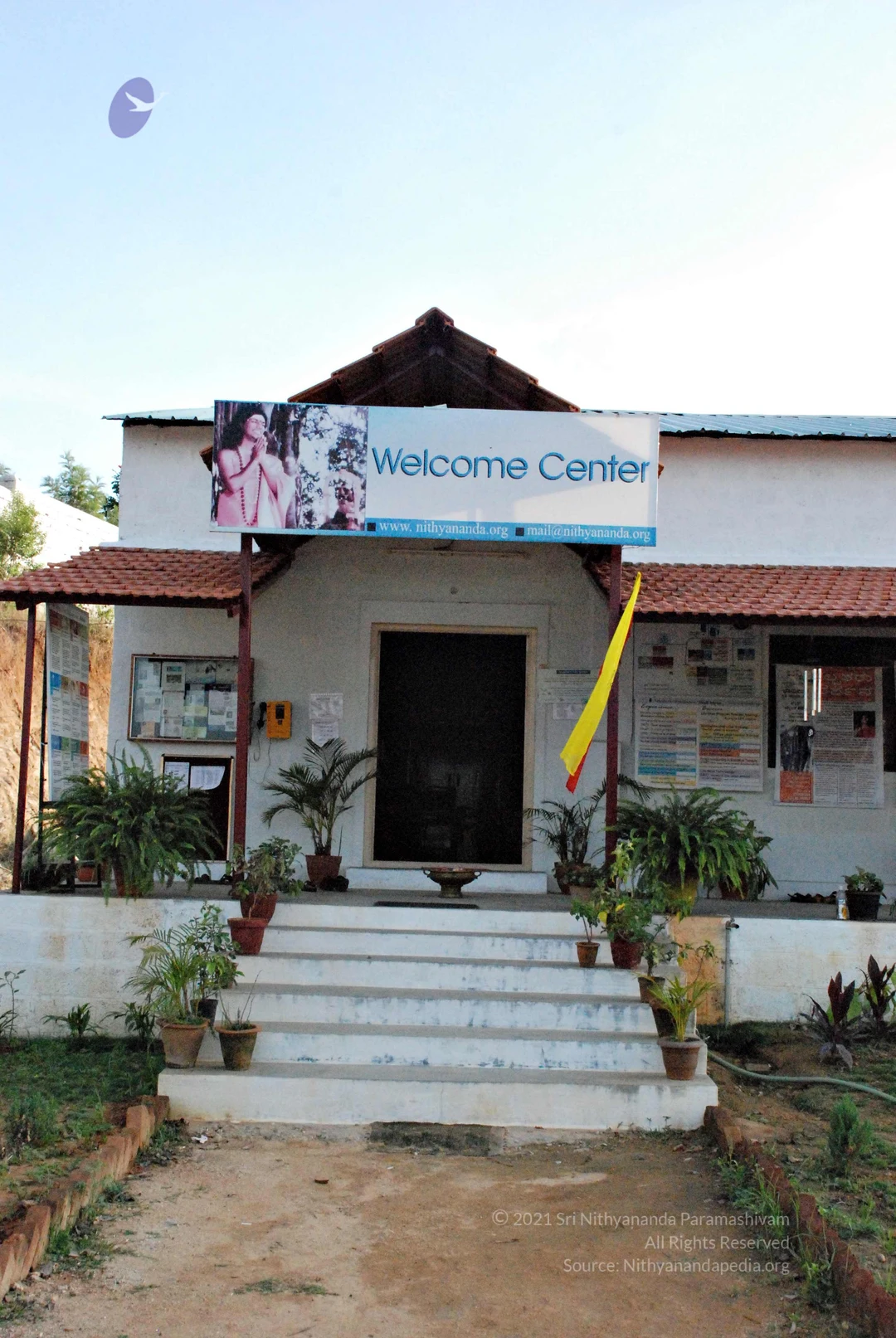
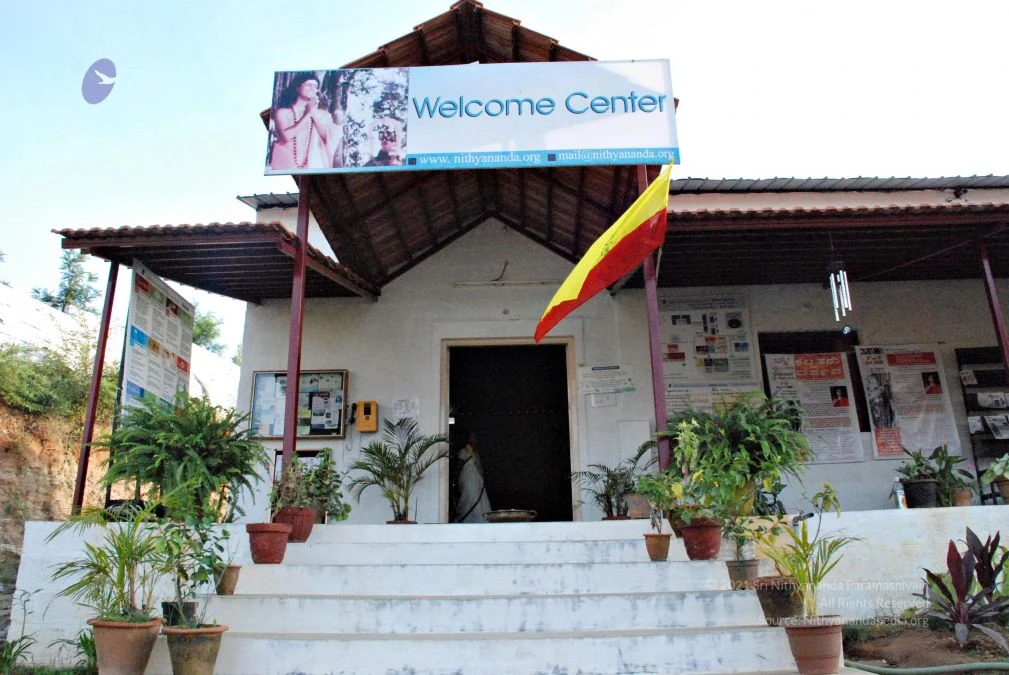
A white single-storey building with a corrugated grey roof and terracotta-tiled verandah, fronted by a bare dirt yard and a small lawn with potted plants. A large banner on the facade reads Nithyananda Mission Secretariate and shows a portrait of a long-haired man, labelled as a printed portrait. A lone figure in white clothing stands near the doorway at right, and a large tree shades the right edge under a pale sky.A photograph of a single tree with a spreading canopy and thin branches, standing on reddish-brown earth at a construction-like site. Sunlight glows behind the foliage. To the left are white buildings with terracotta-tiled roofs and a small landscaped garden with a stone feature. Further back are more white sheds and scattered trees under a pale sky. No people are visible.Outdoor photograph of a tree standing in an unpaved, dusty compound at Aadikailaasa in Bengaluru. Sunlight glows through the branches of a tall leafy tree in the centre. To the left, a long white single-storey building has a corrugated metal roof, a red-tiled awning, barred windows and potted plants along its verandah. A small lawn bed with a stone and a garden hose lies in front. Mounds of red earth and a few other white-walled sheds appear in the background under a pale sky. No people are visible.Exterior of a long single-storey white building with a green corrugated metal roof and terracotta-tiled front verandah, set on bare dusty ground with a patch of lawn and potted plants by the entrance steps. A banner above the central wooden door reads Nithyananda Mission Secretariat and shows a black-and-white portrait of a bearded man with long hair. A heap of red earth lies in the foreground and white plastic chairs sit under the left verandah. No people are visible.A photograph of a long, single-storey white building with a corrugated metal roof and a terracotta-tiled canopy over its front verandah, set in an open dirt yard at Aadikailaasa, Bengaluru. A small lawn bed with potted plants and a hose lies along the front, and a large leafy tree spreads over the right side beside a mound of red earth and a rock. Other white and grey-roofed buildings and trees appear in the distance under a pale sky. No people are visible in the scene.A photograph of a plain white single-storey building with a long corrugated green-grey roof and a covered front veranda with a terracotta-tiled canopy over the entrance. A small square garden bed with green lawn and low plants runs along its front, and a dirt track with raised mounds of red earth sits in the foreground. A large spreading tree with sunlight glowing through its canopy stands at right, with a few other white structures visible in the distance under a pale sky. No people are visible.

Glimpse of the Sarvajnapeeta at Aadikailaasa, Bengaluru, India
91 photosSource gallery
A photograph of an empty ornate golden throne, the Sarvajnapeeta, in a dimly lit hall. The high gilded back carries repousse floral scrolls and a central circular medallion showing a seated deity murti, topped by a carved crown-like finial and a dark round inset. The seat is upholstered in deep red with a tiger-stripe pattern and has embroidered white cushions with red floral motifs. Golden lion figures flank both arms. A garland of yellow and purple flowers drapes behind the throne. No people are visible.A photograph of an empty ornate throne (peetha) in a dimly lit hall. The gilded high back features a central circular medallion with a deity murti, a dark round stone set above it, and a crown-like finial at the top. The seat is upholstered in deep red patterned velvet with embroidered white cushions. Golden lion figures flank the armrests, and marigold and yellow-purple flower garlands drape the back. No people are visible.An empty ornate golden throne, called a peetha, sits in a dim hall with dark stone-block walls. The throne has a tall gilded back with repousse floral scrollwork and a central circular medallion showing a seated deity murti, flanked by carved gold lion figures on the armrests. Strings of yellow and purple flower garlands drape around the backrest. The seat is upholstered in red velvet with black tiger-stripe pattern and has red and white embroidered cushions. No people are present.A golden ornate throne, called a peetha, stands empty in a dim room. It has a red and black tiger-striped cushion, two white embroidered pillows, a tall gilded back carved with a central medallion showing a seated deity murti, and gilded lion figures flanking the seat. A garland of yellow and purple flowers hangs behind the backrest. Carved script runs along the base. No people are visible.An ornate gilded throne, called a peetha, with a red velvet seat and backrest set against a blue brick-patterned wall with pink painted panels. Two golden lion heads flank the seat, and the back is carved with a central gold emblem topped by a crown-like motif and a metal tree branch. A garland of yellow and purple flowers drapes the throne back. A red velvet cloth covers the platform below, and two white pedestals stand at the sides. No people are visible in the scene.Photograph of an ornate gilded throne (peetha) in a decorated hall. The throne has a tall carved golden backrest with a circular emblem at its centre, lion-head armrests, a red patterned cushion and two small white decorative pillows, and is draped with a garland of yellow and purple flowers. A carved golden inscription runs along the base. Behind it are blue and pink painted walls with a golden tree motif above. No people are visible in the frame.