Skip to content
Saturday

4 October 2008

THE SUPREME PONTIFF OF HINDUISM JGM HDH BHAGAVAN SRI NITHYANANDA PARAMASHIVAM - Kalpataru Program

Dated photos
349
Source pages
1
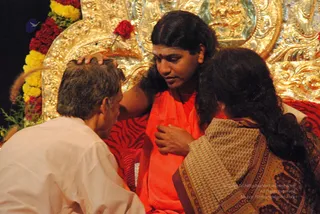
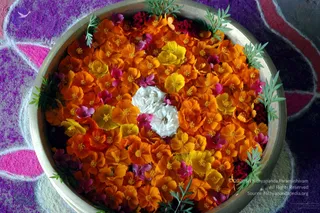
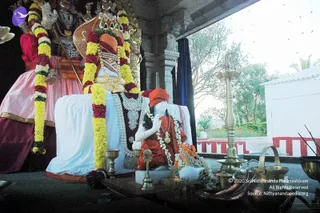
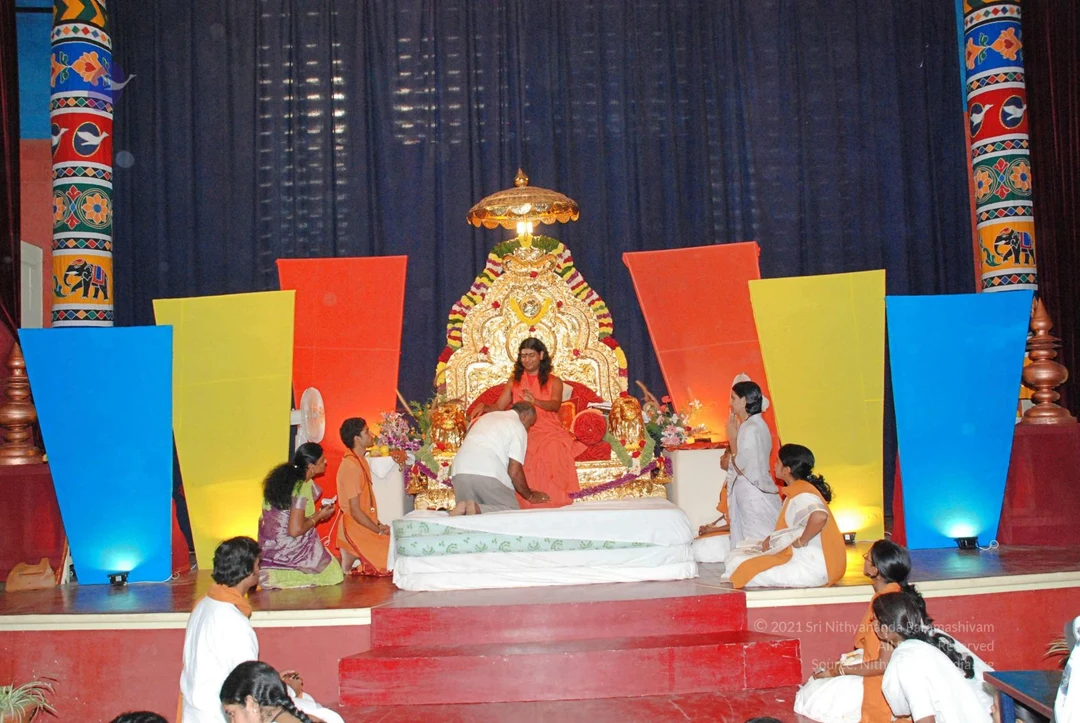
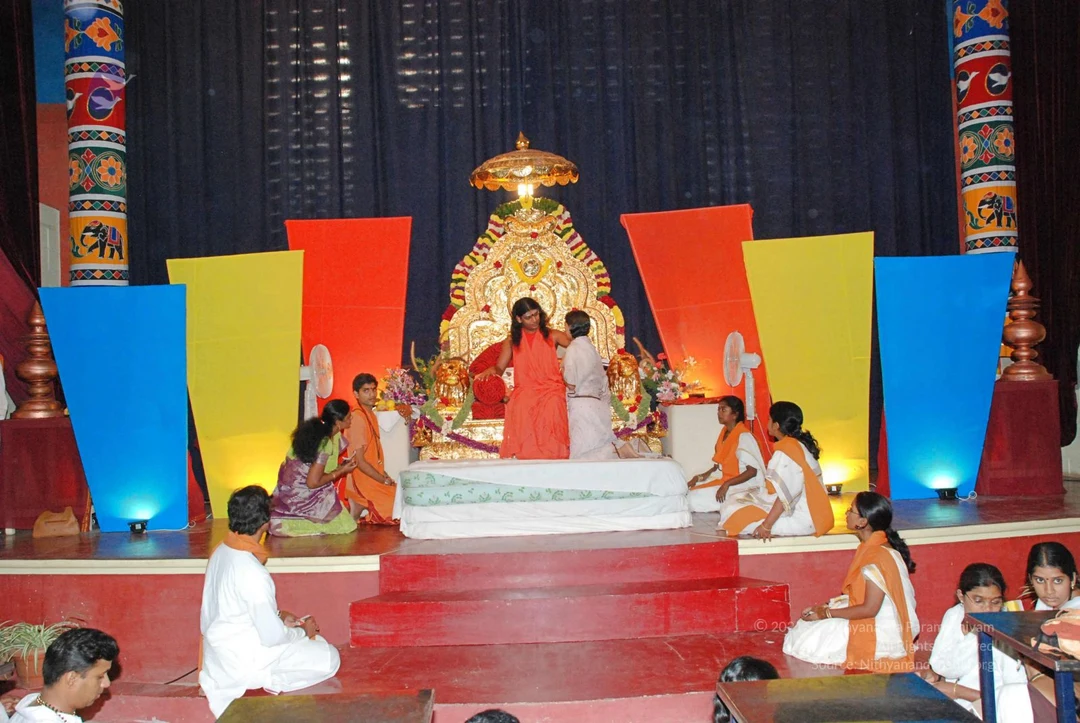
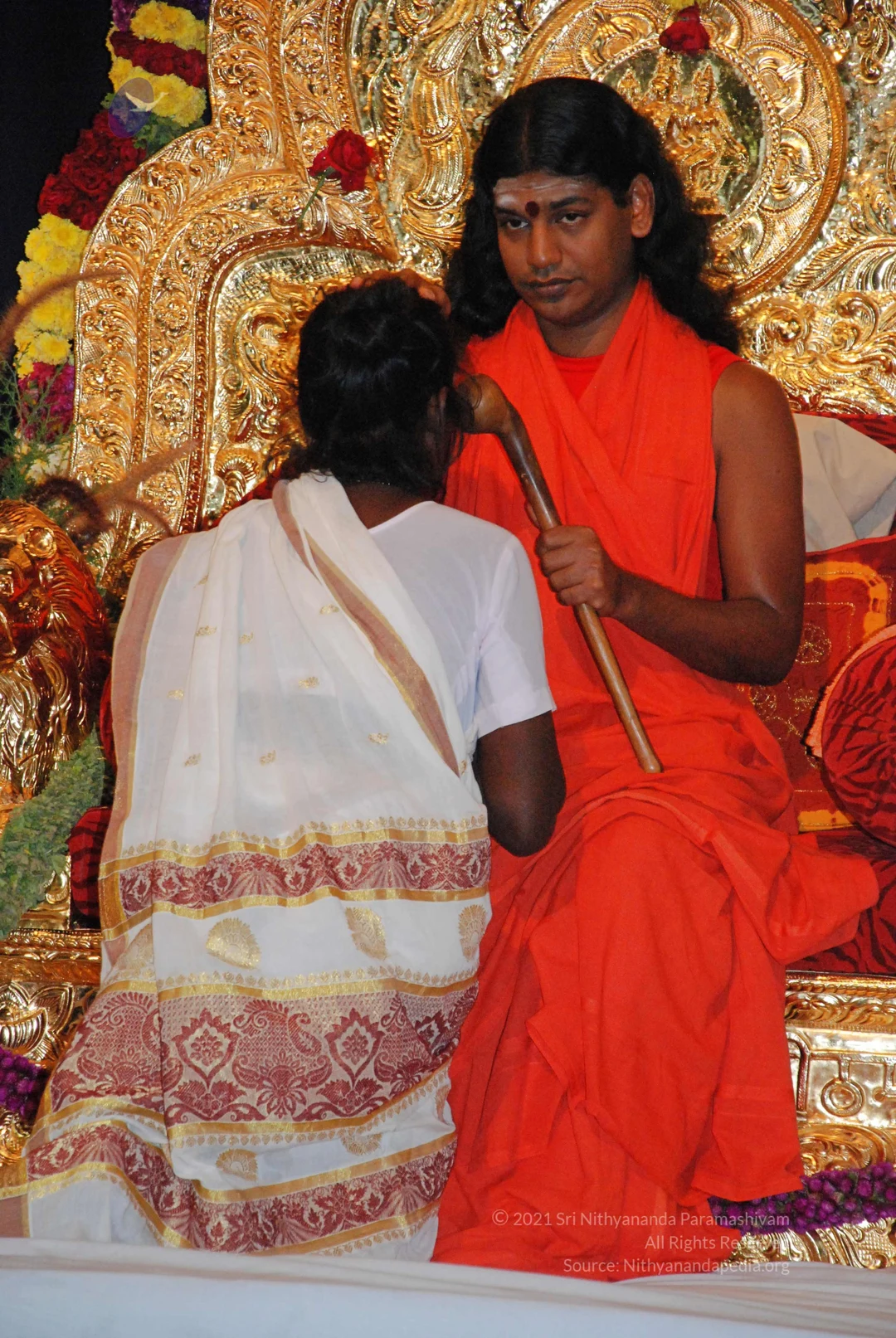
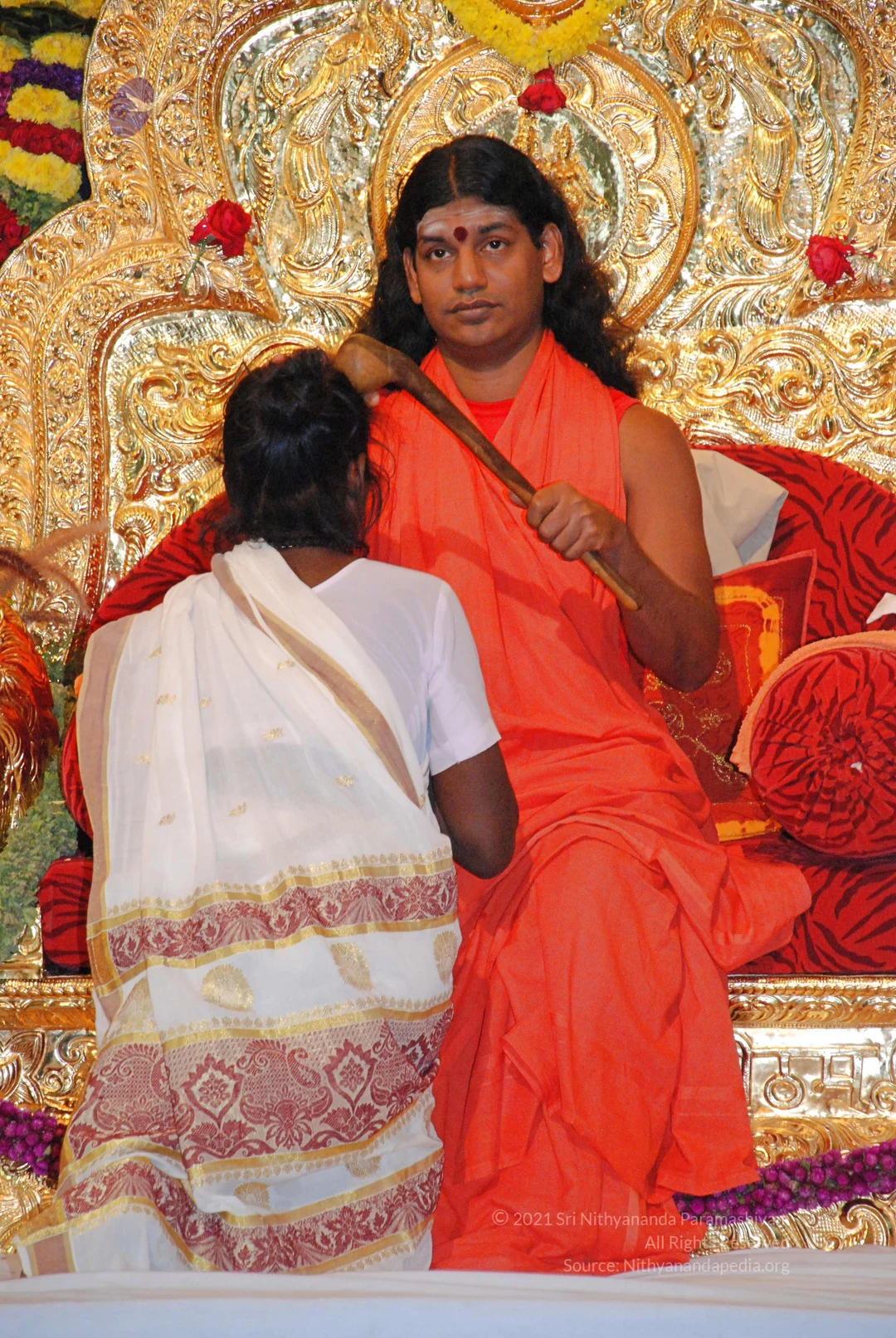
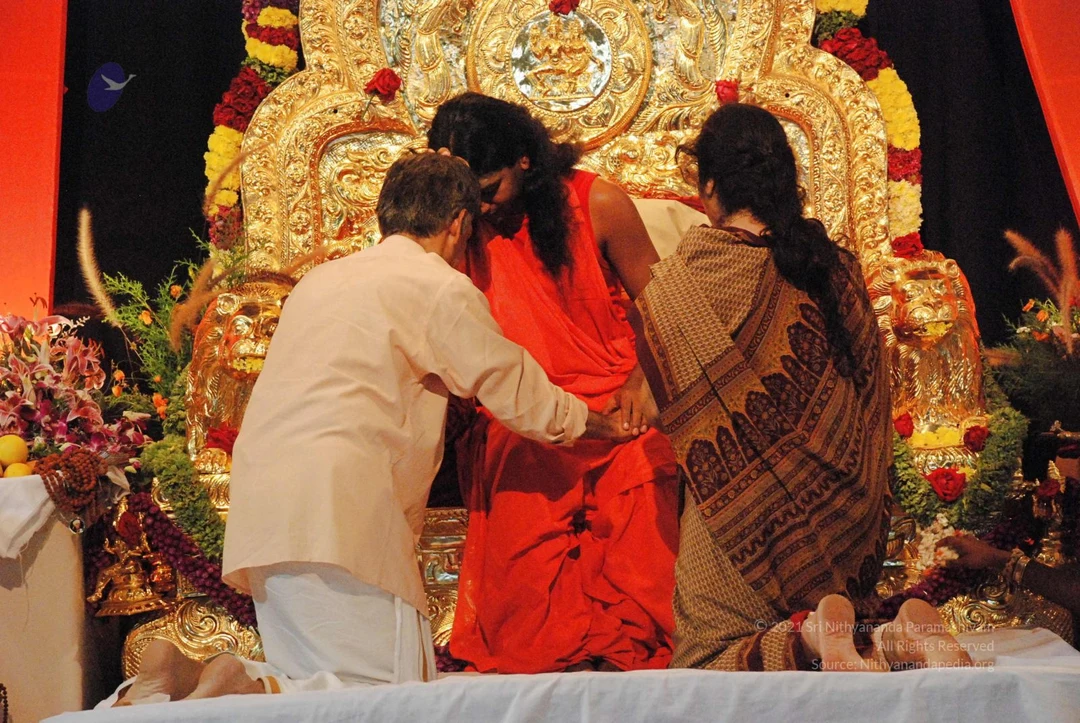
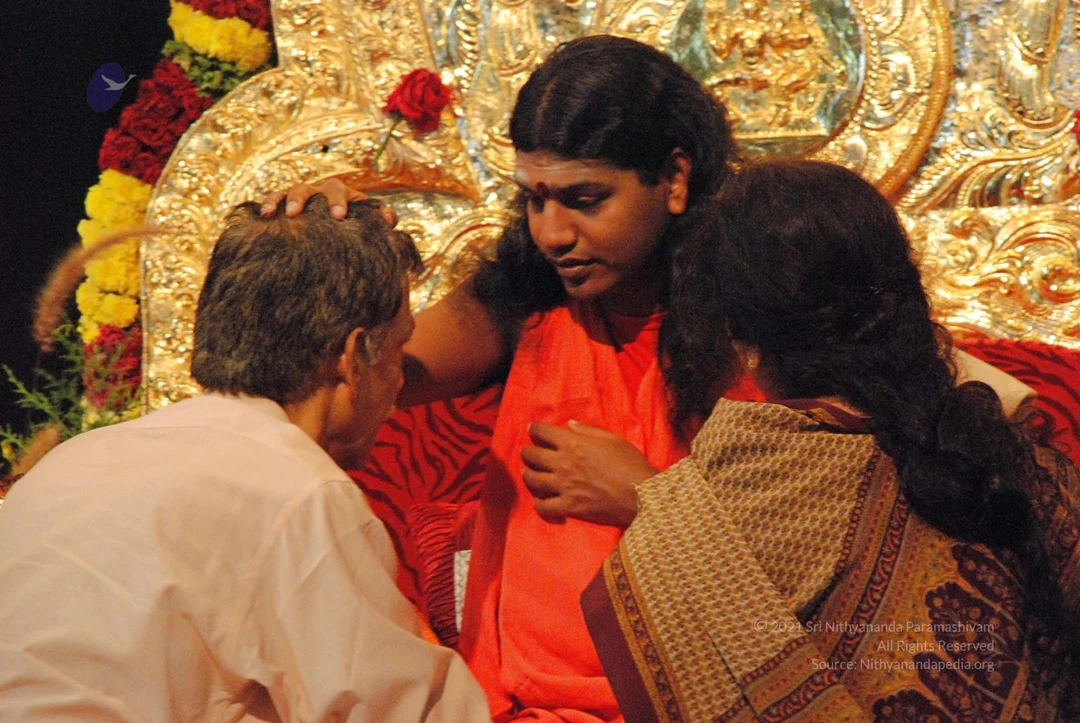
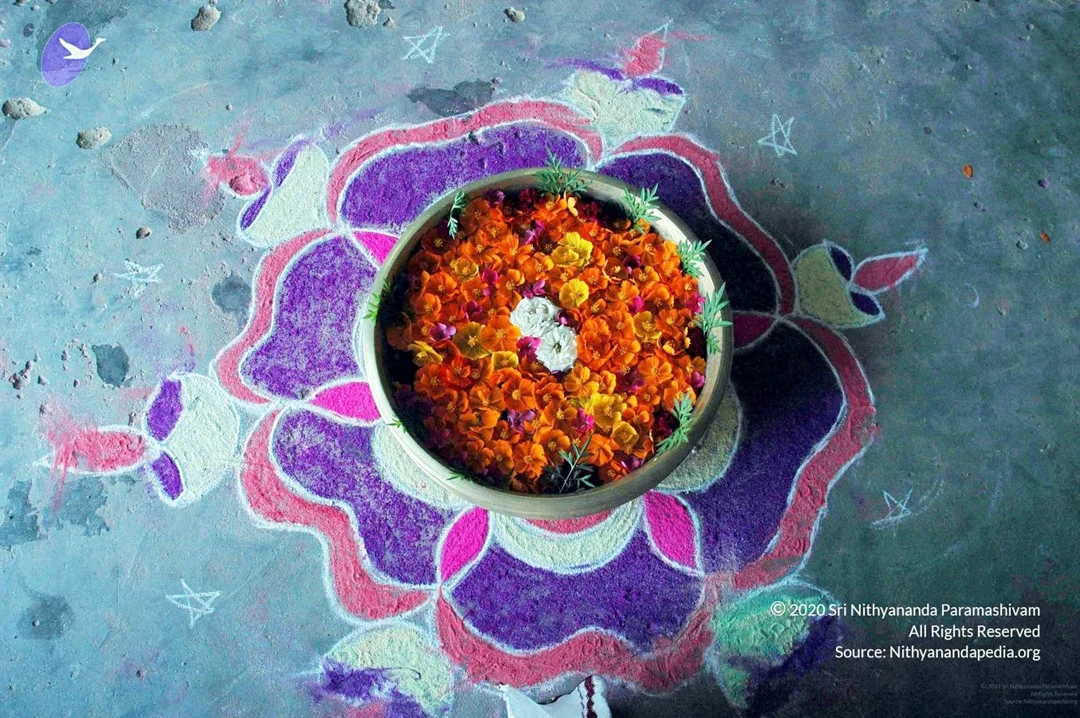
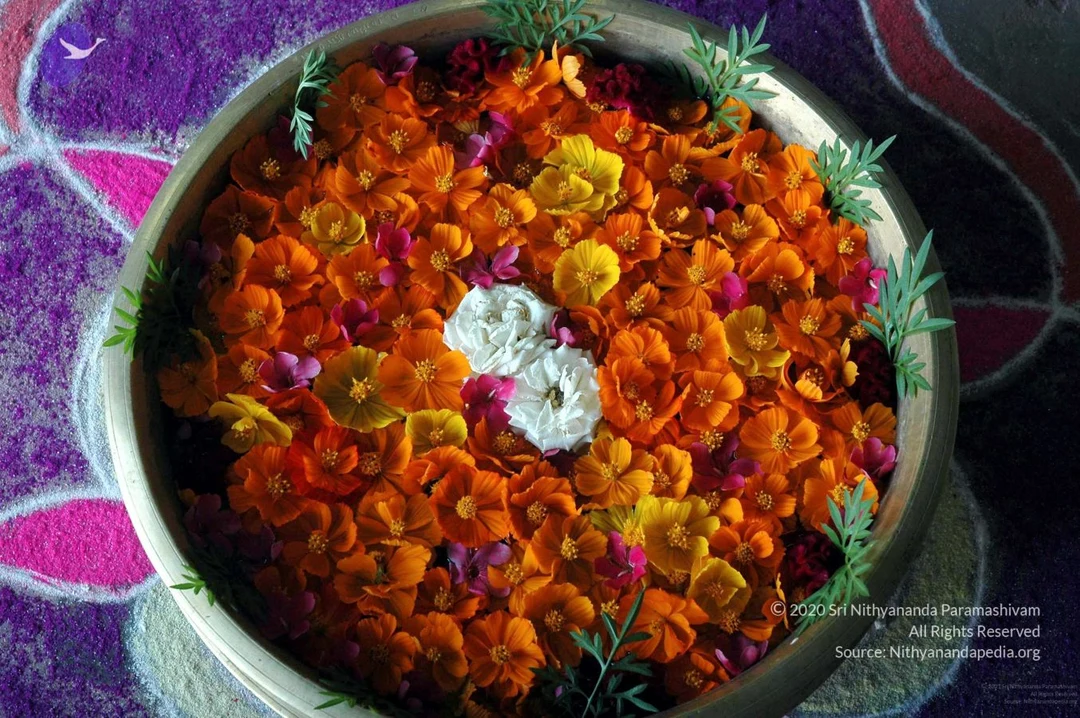
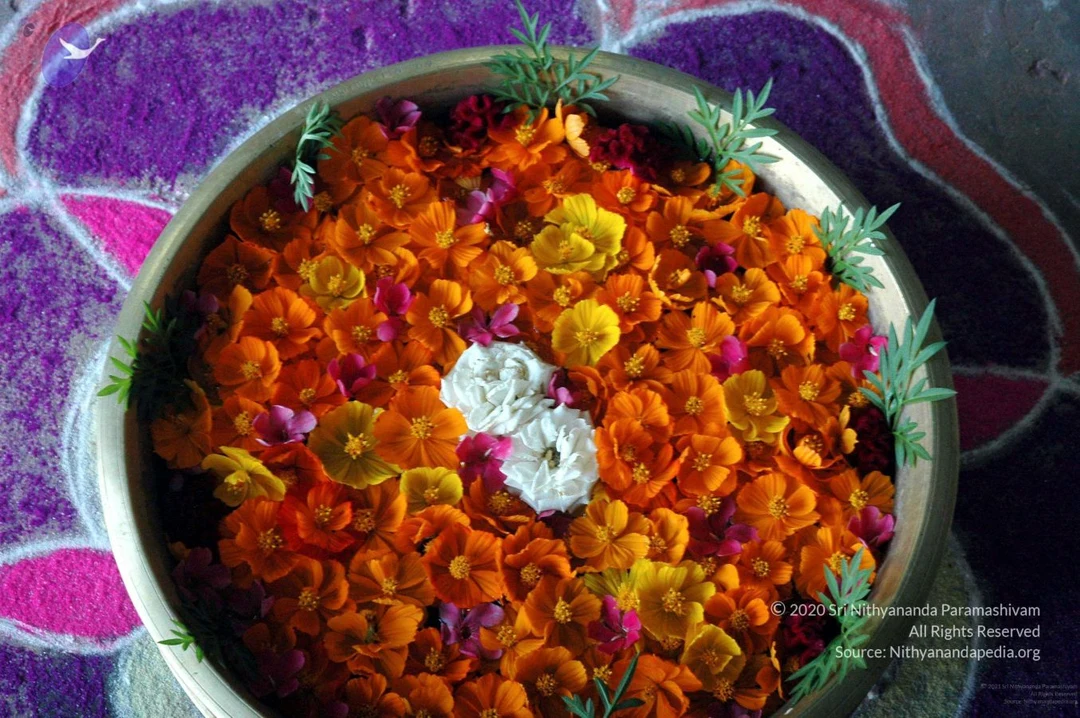
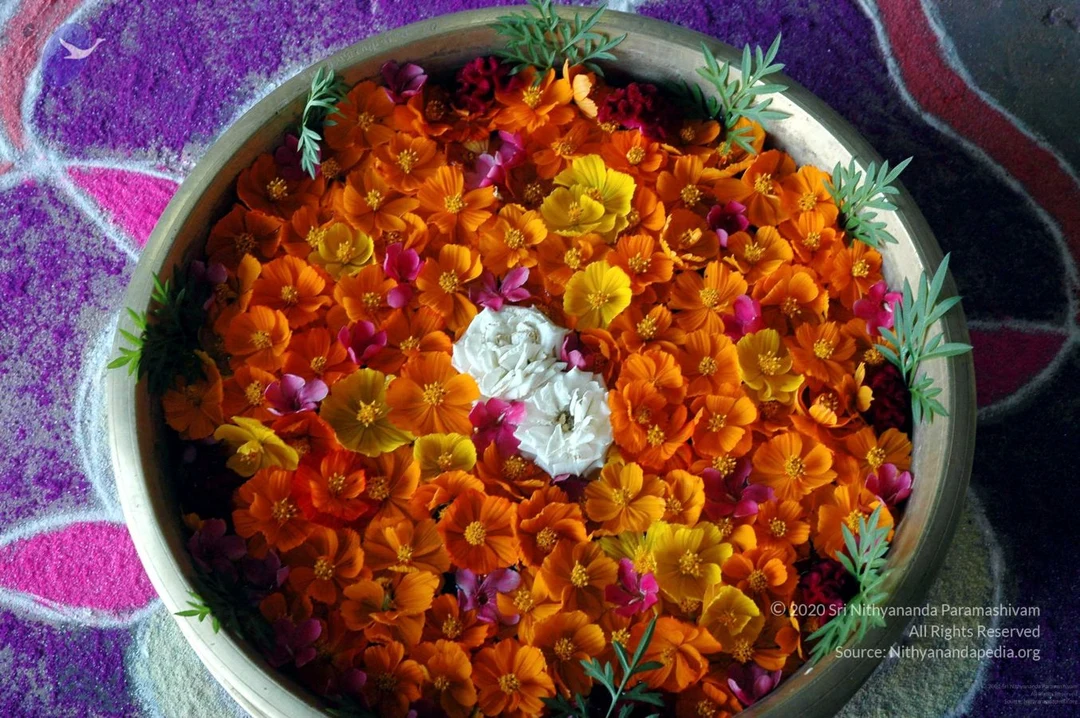
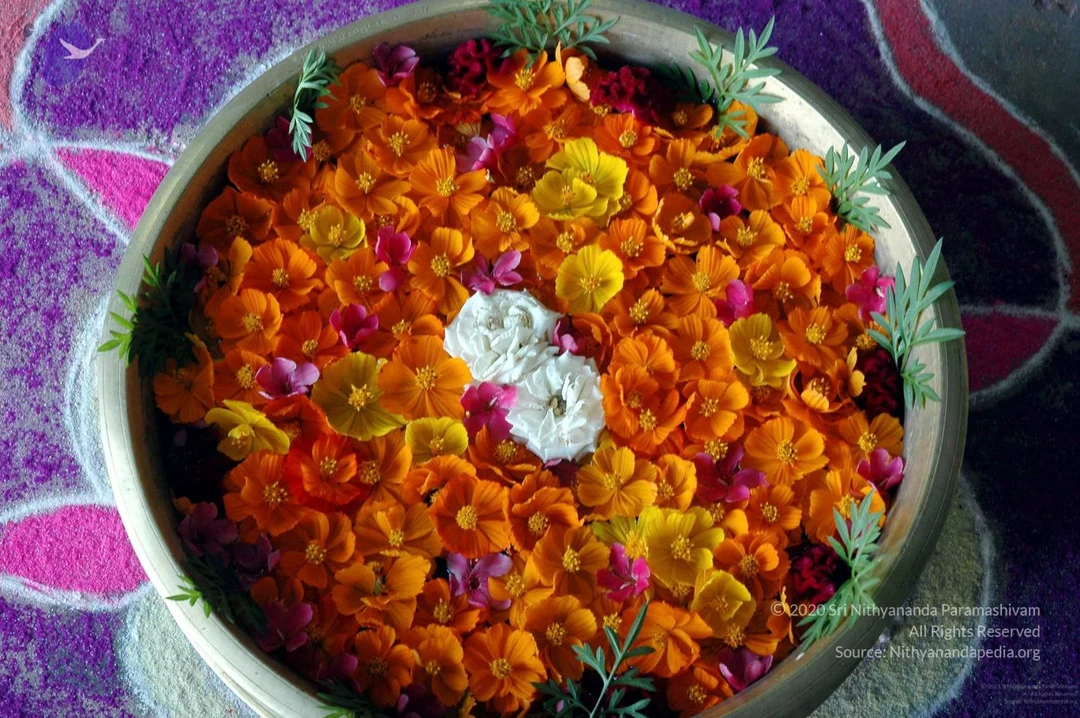
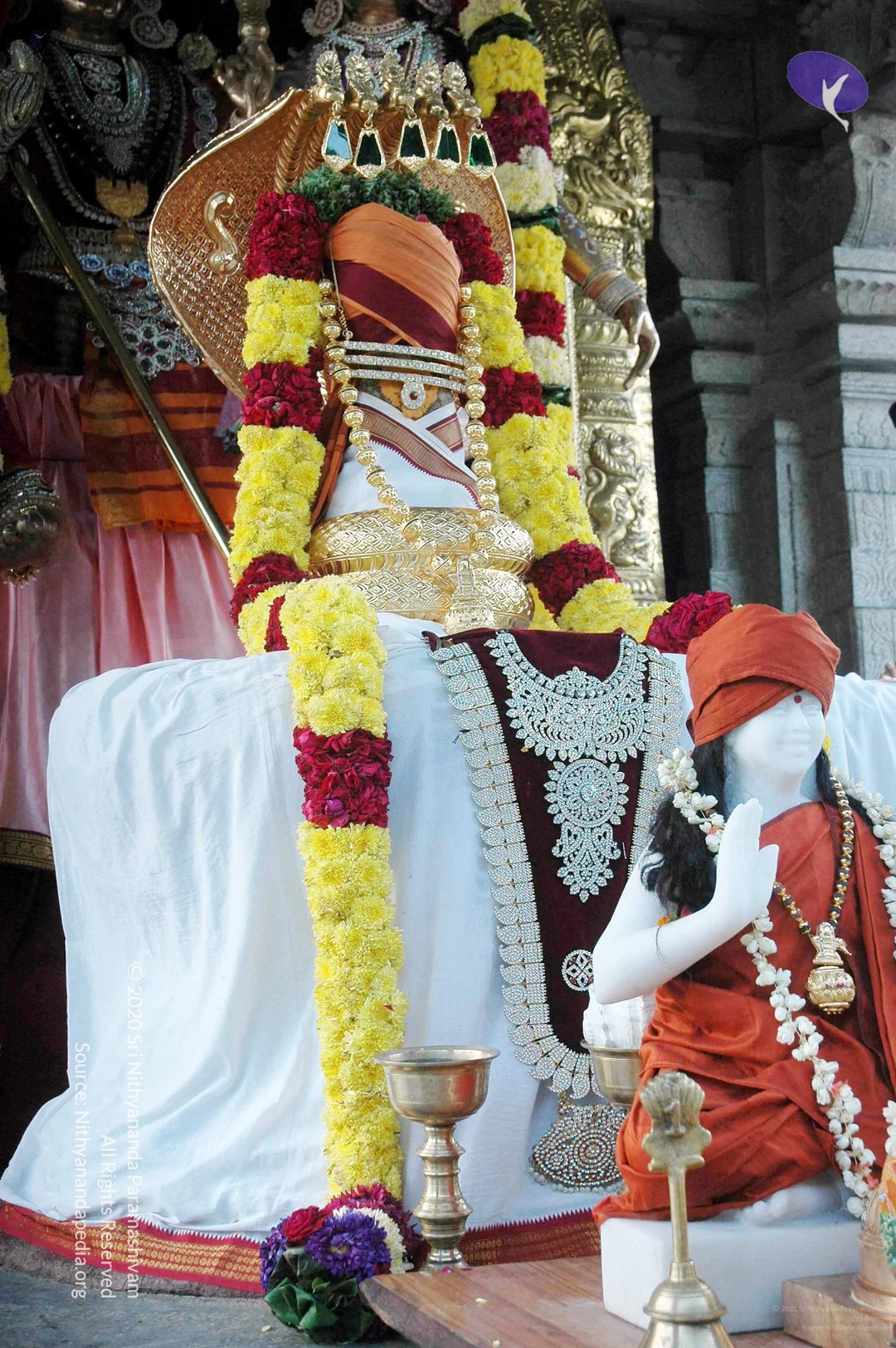
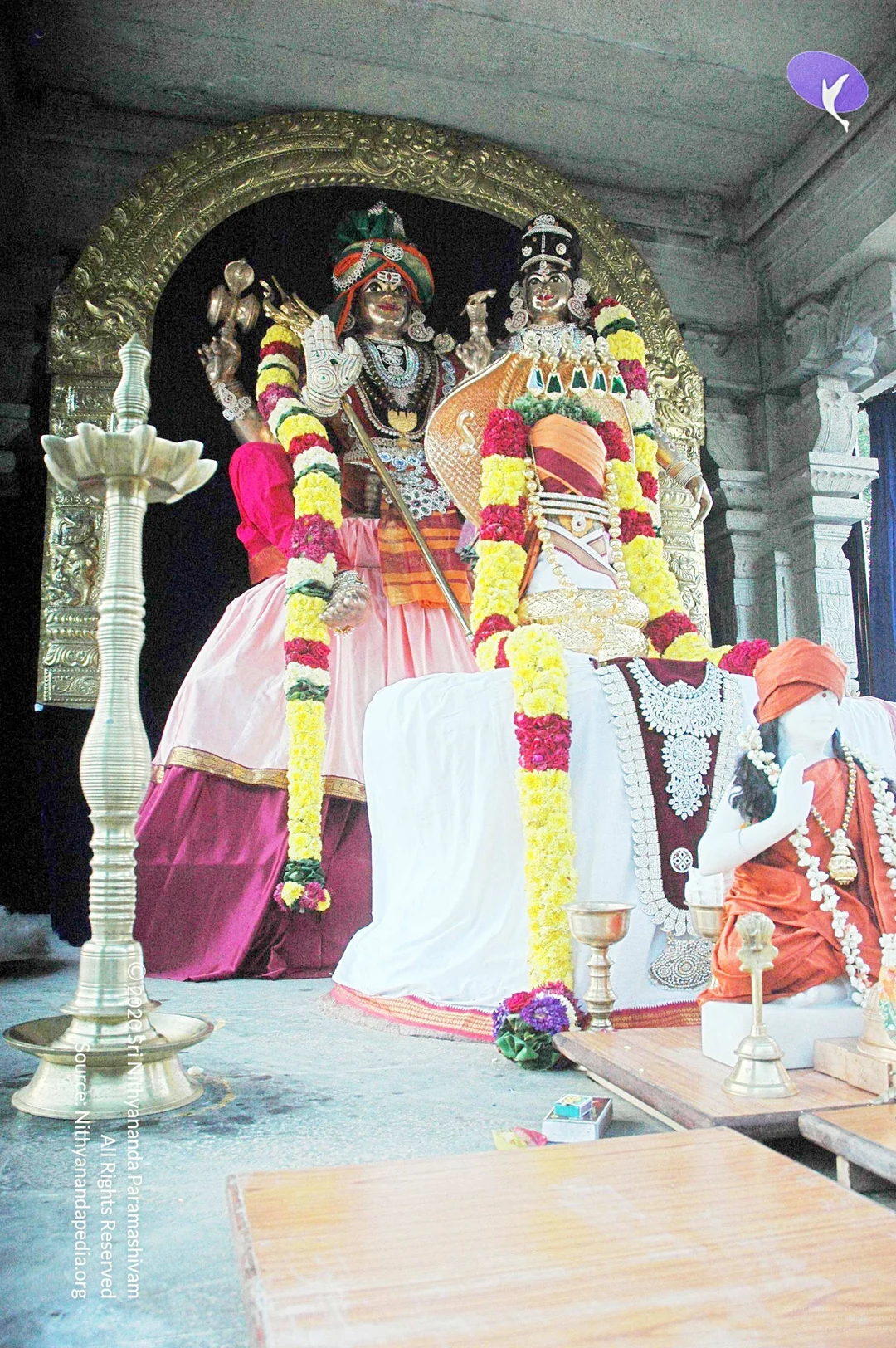
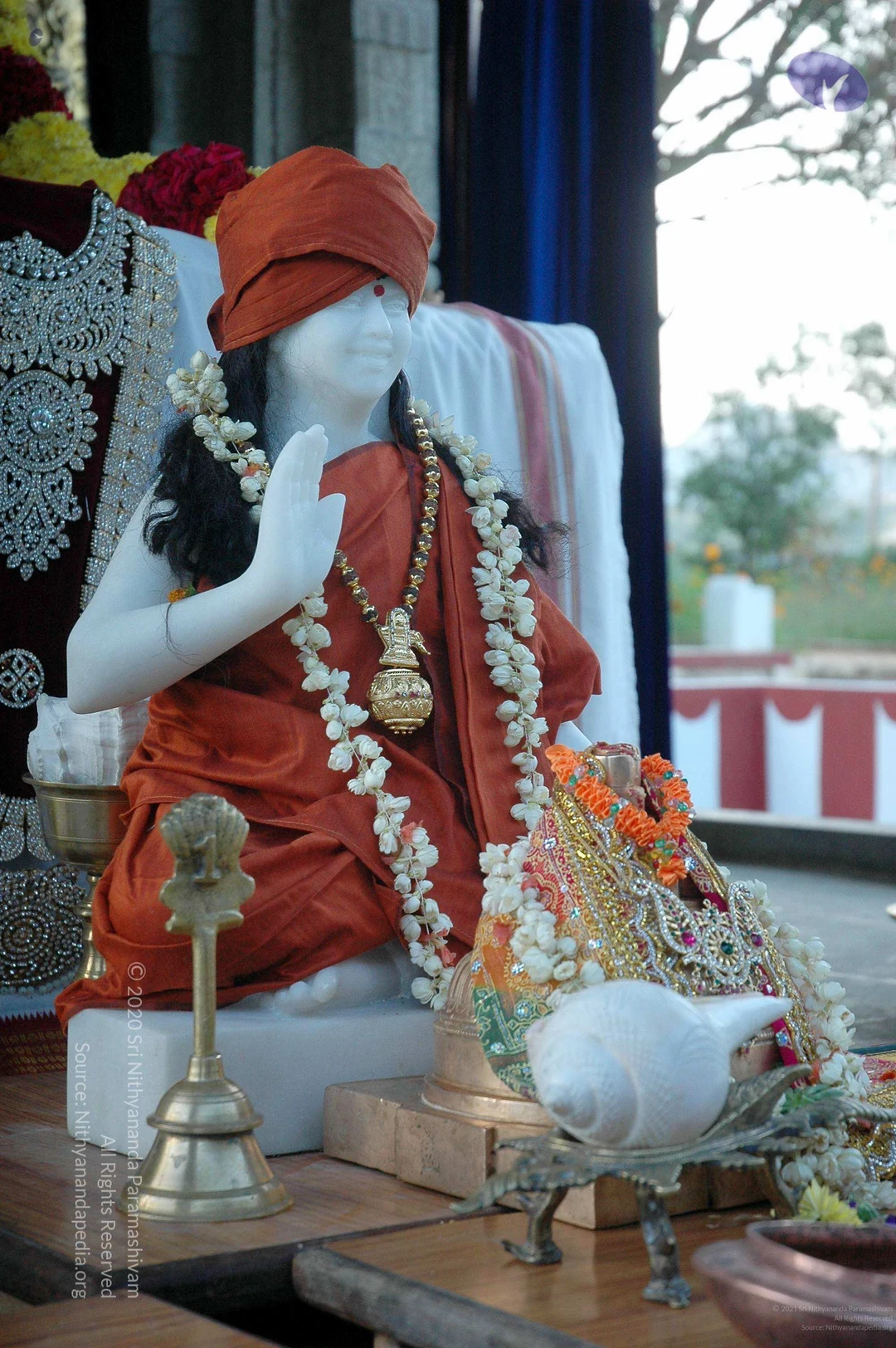
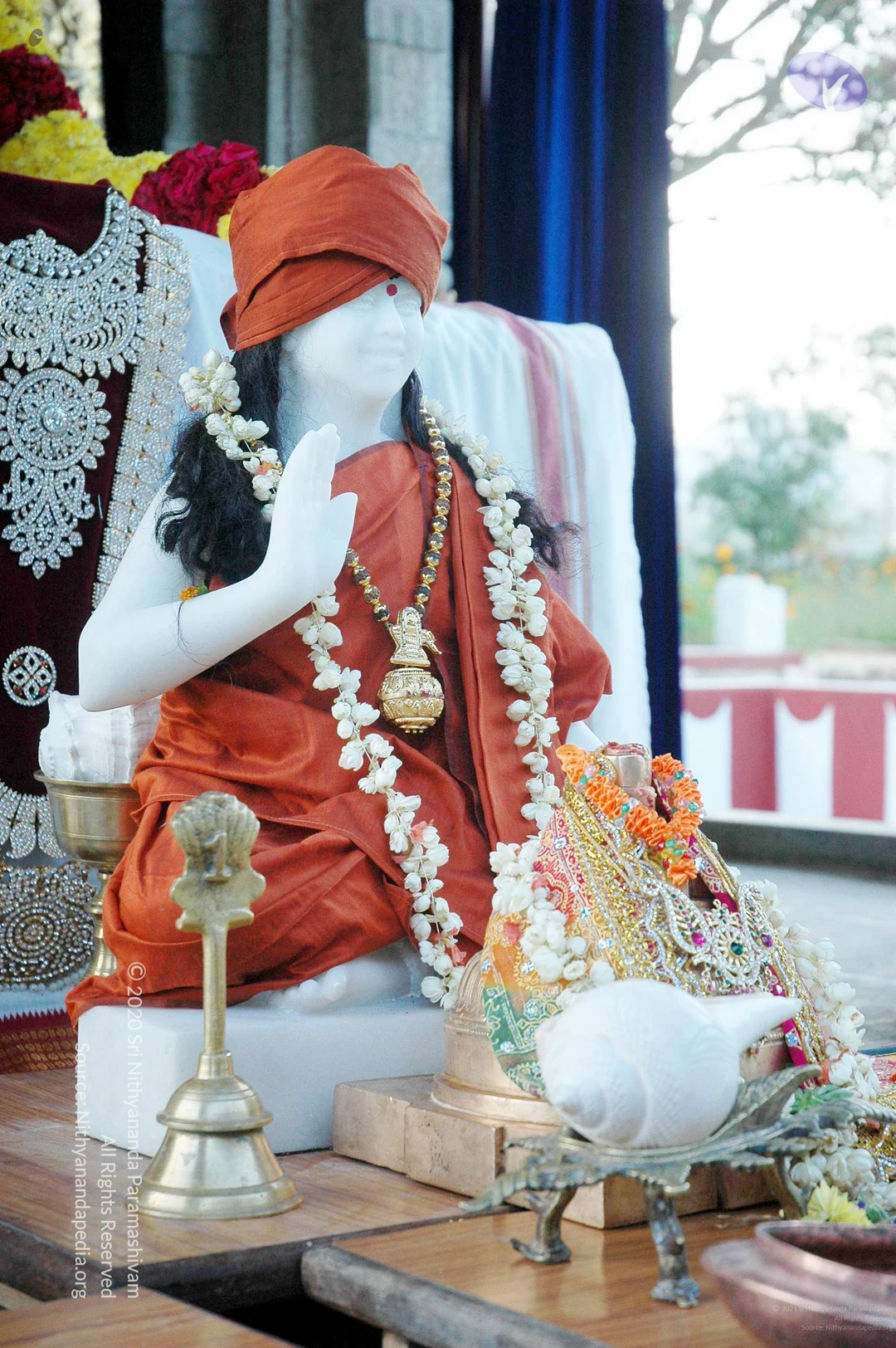
A photograph of a seated figure in an orange-saffron robe with long dark hair and a red tilak on the forehead, seated before an ornate gold and silver throne decorated with figurines. A red flower is tucked into the hair behind him, and a garland of yellow and red flowers hangs at the left edge. A kneeling man in a white shirt bows with his head pressed toward the seated figure, whose hand rests on the man's hair in blessing. A woman with long dark hair in a patterned brown and gold sari stands beside him, one hand resting on his chest. The throne is draped in red fabric with a striped pattern. The setting appears to be a formal darshan or blessing scene.Overhead photo of a round brass vessel filled with orange and yellow marigold-type flowers, scattered magenta and purple petals, green leaf sprigs around the rim and two white blossoms at the centre. The vessel rests on a colourful sand or powder pattern of purple, pink and grey. No people are visible. The image shows floral offering arrangement only.A shrine scene showing a white statue of a sannyasi seated on a white draped pedestal in front of a larger deity murti. The seated statue wears an orange turban, orange robe, a gold-toned necklace and a garland of white flowers, with one hand raised in blessing. Behind it, a tall deity figure in pink and red garments with a gold crown and a trident is adorned with long garlands of yellow and red flowers. Brass oil lamps, a kalasha-style vessel and brass pots sit in the foreground, and an open archway looks out onto trees. No living people are visible.

October 04 2008

Original wiki page
Contents

Title:

THE SUPREME PONTIFF OF HINDUISM JGM HDH BHAGAVAN SRI NITHYANANDA PARAMASHIVAM - Kalpataru Program

Description:

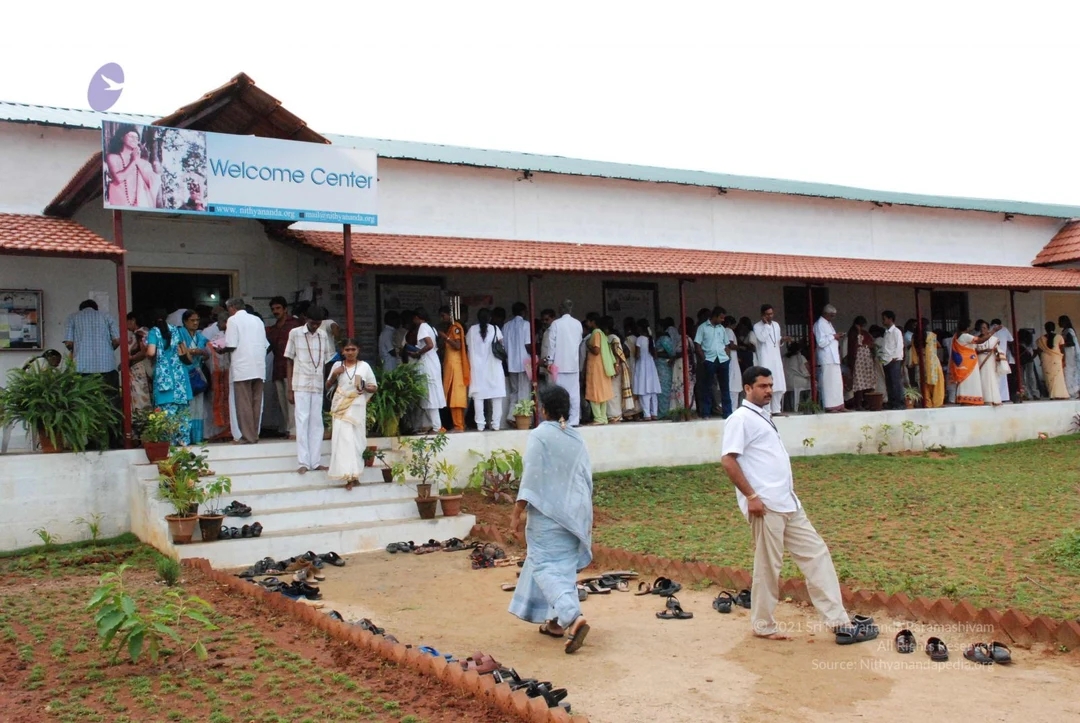
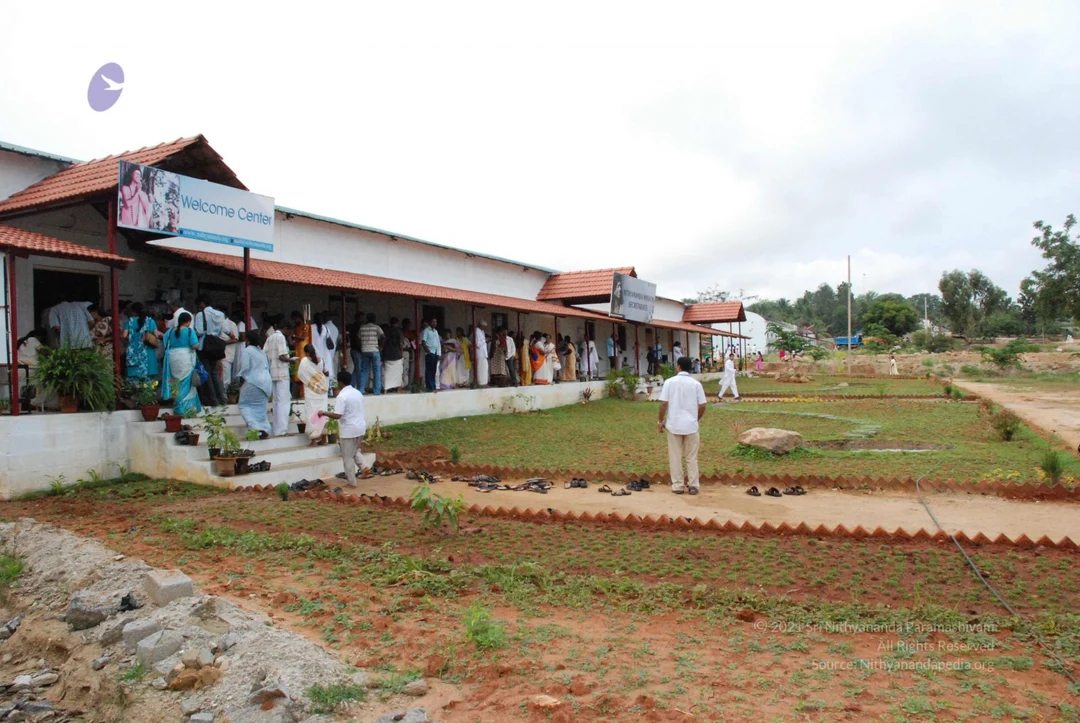
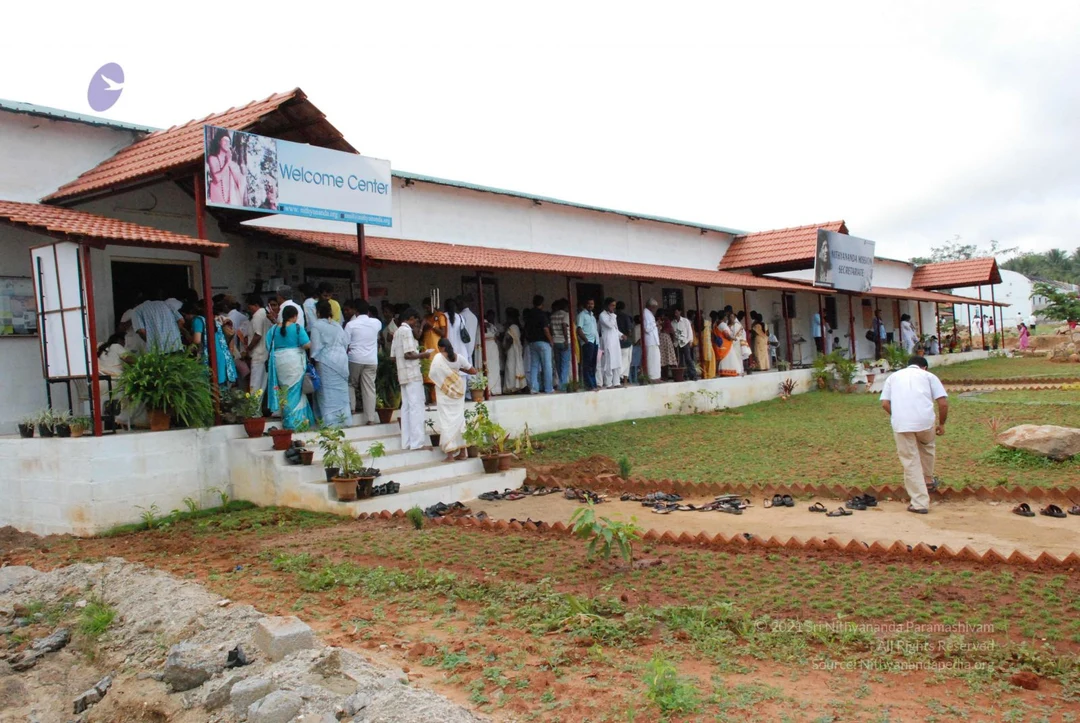
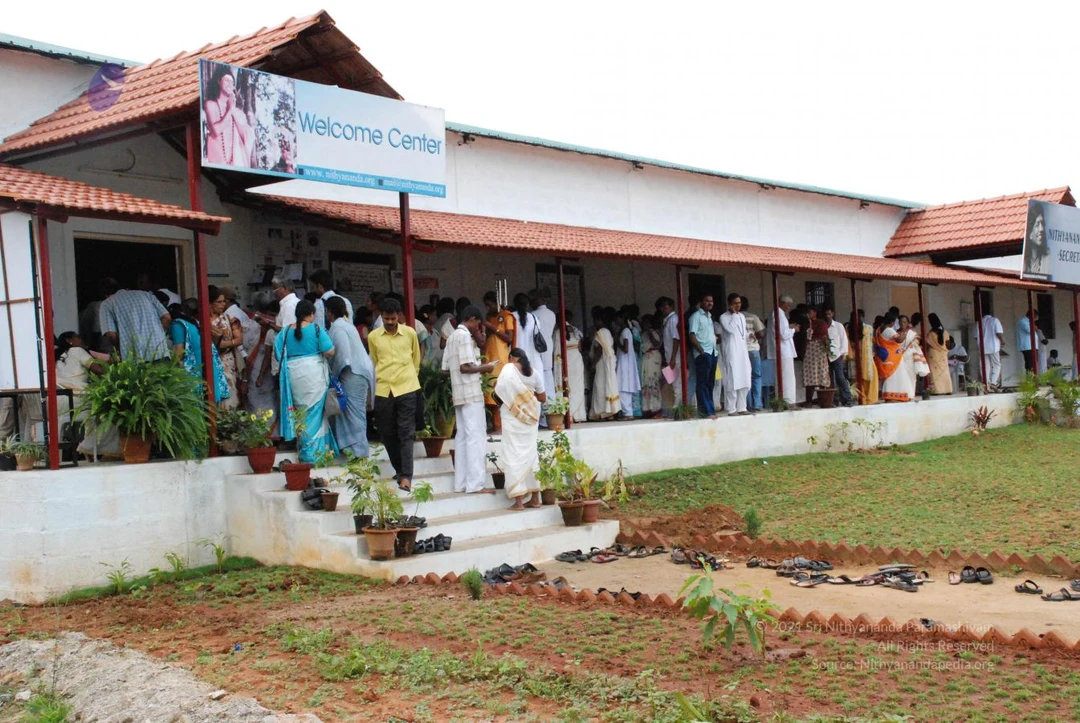
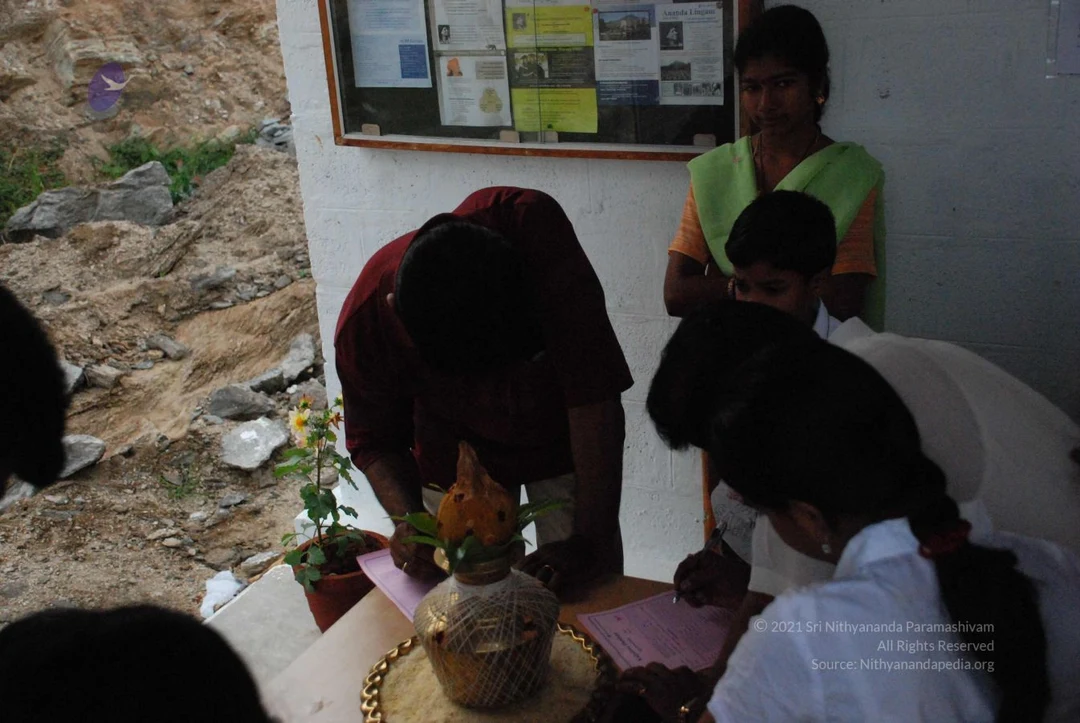
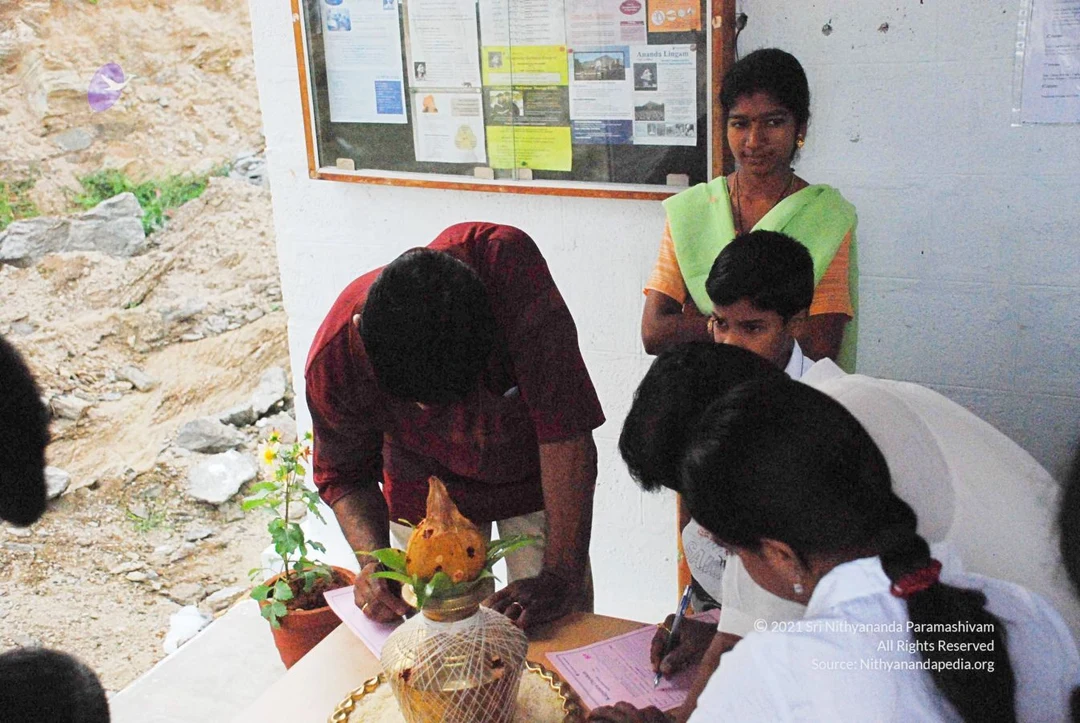
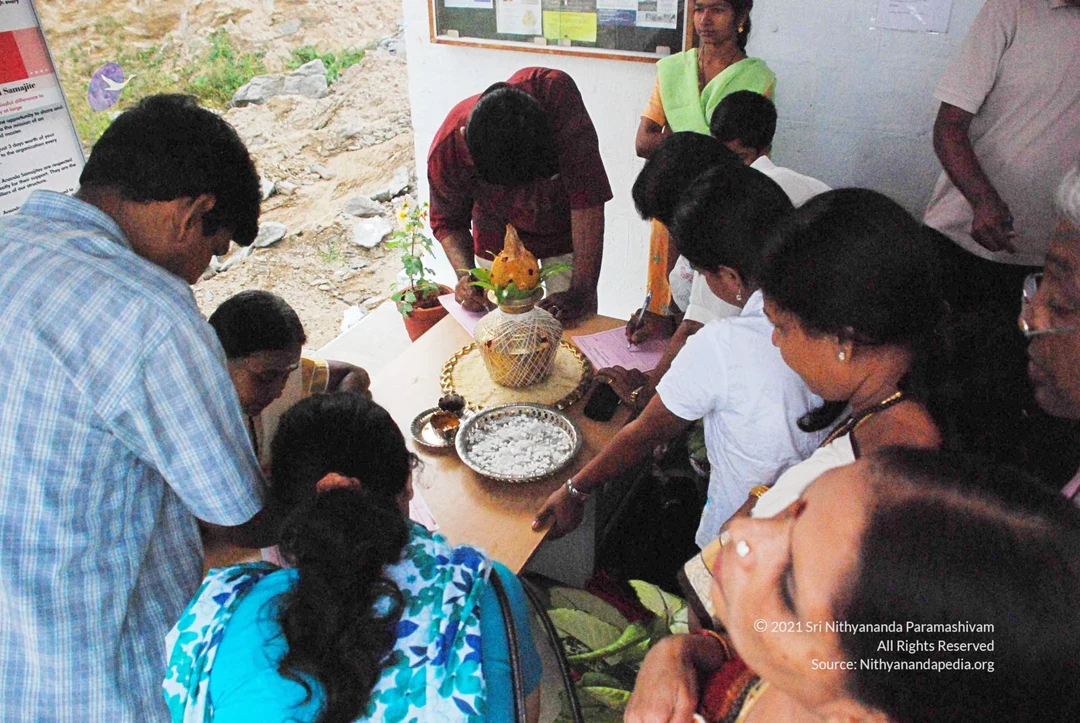
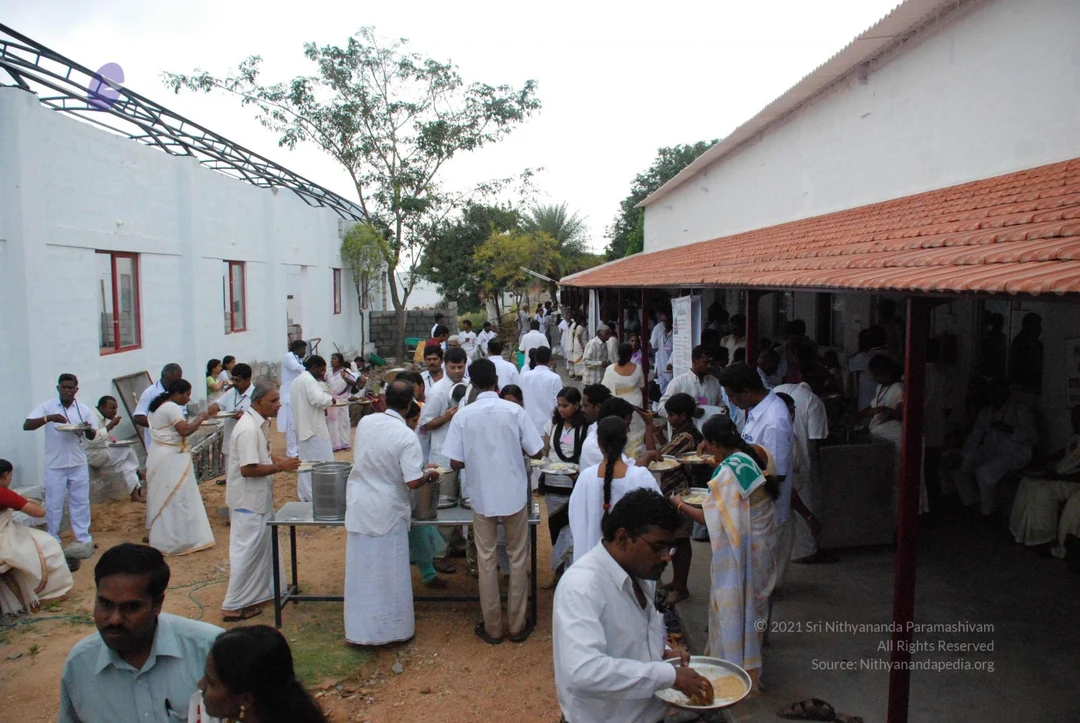
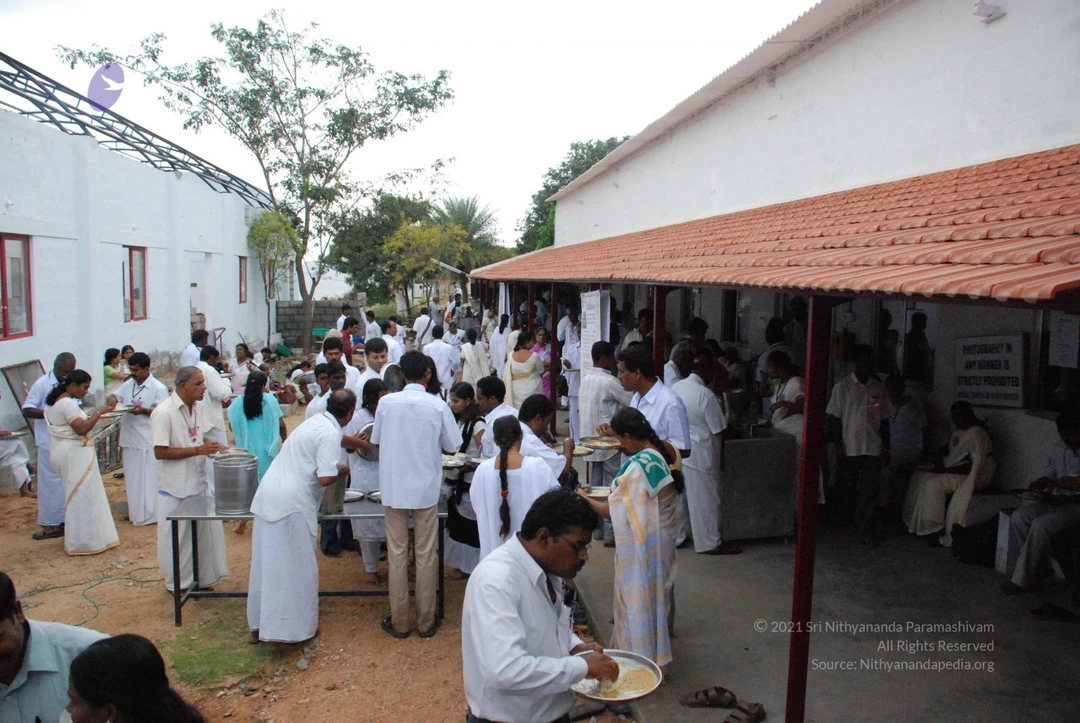
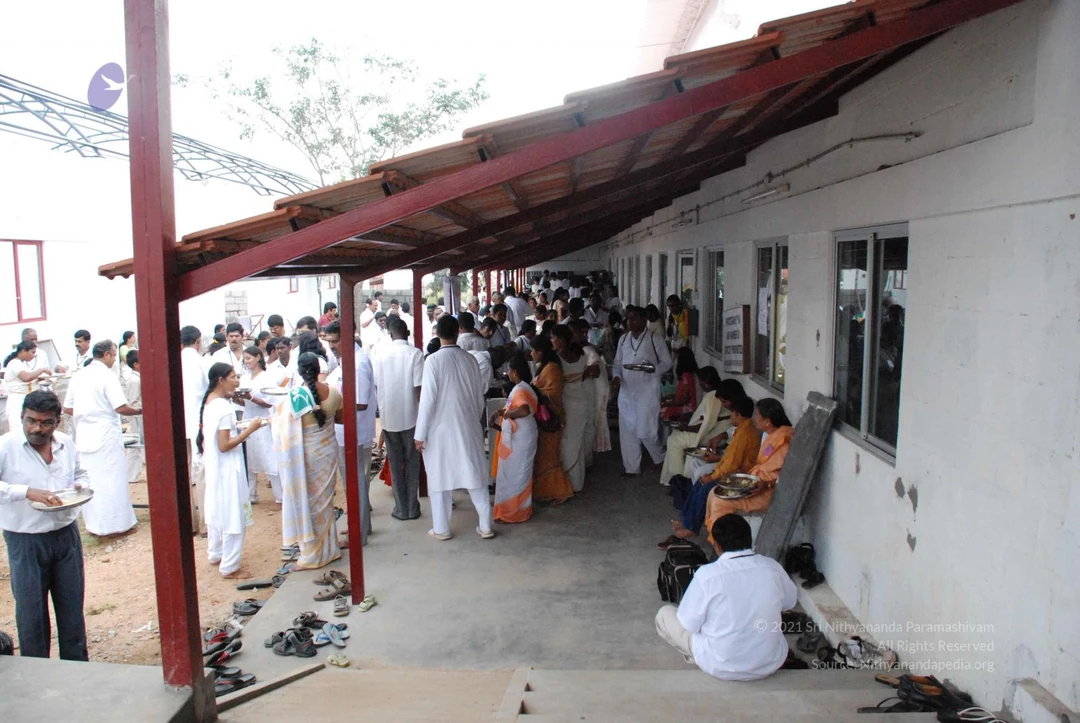
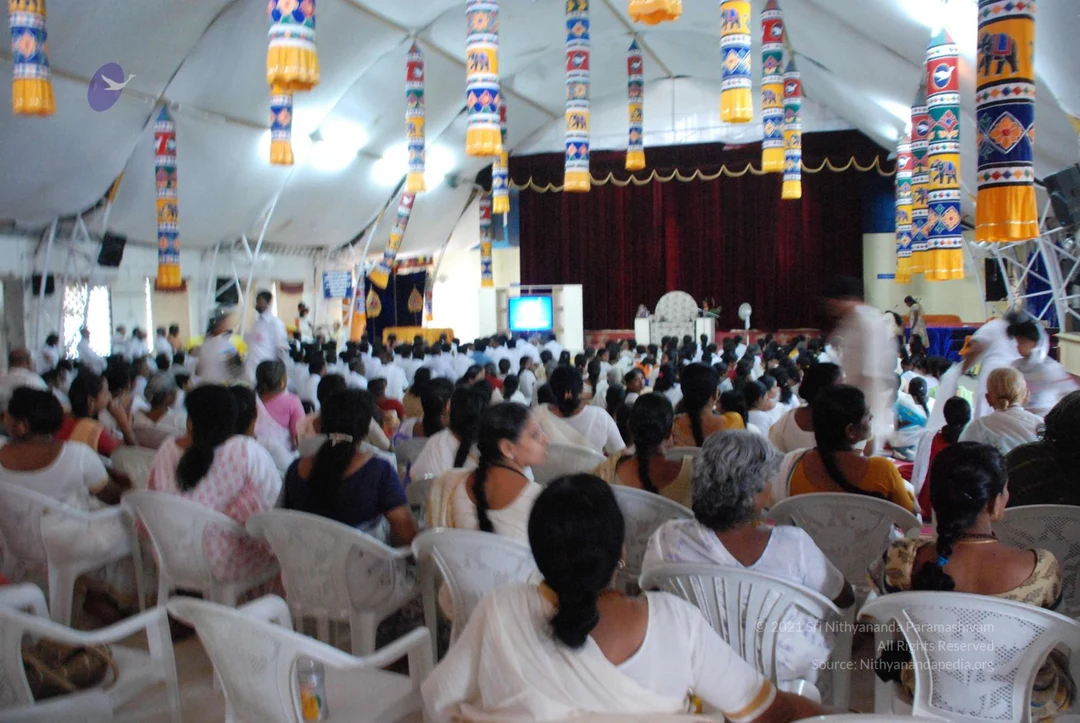
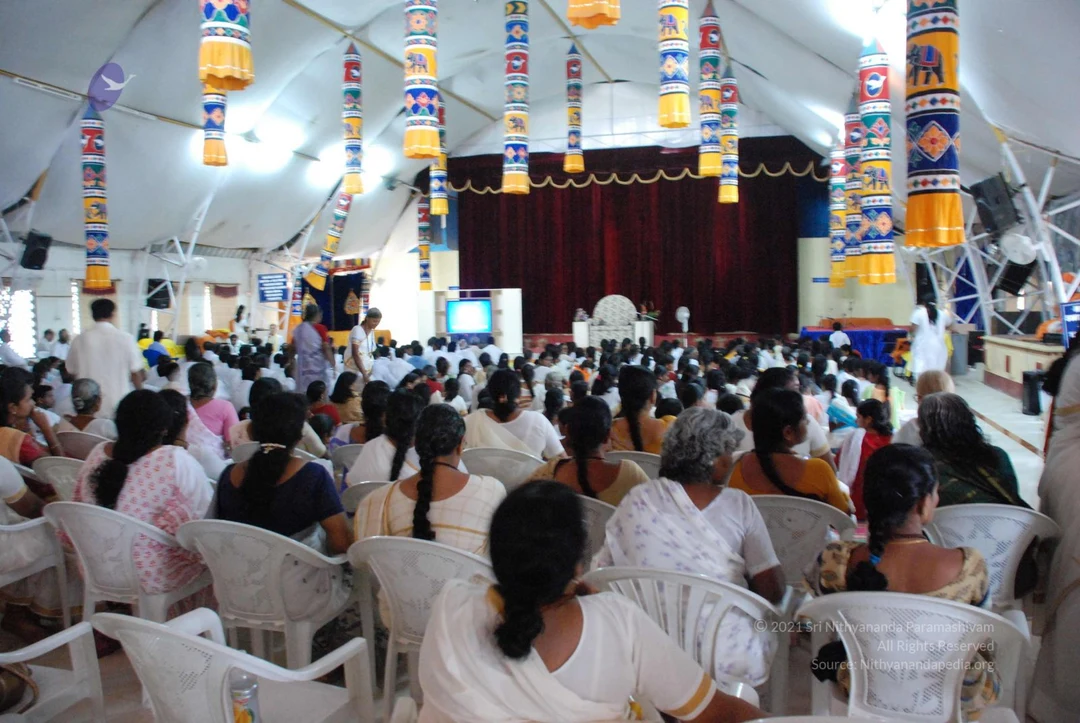
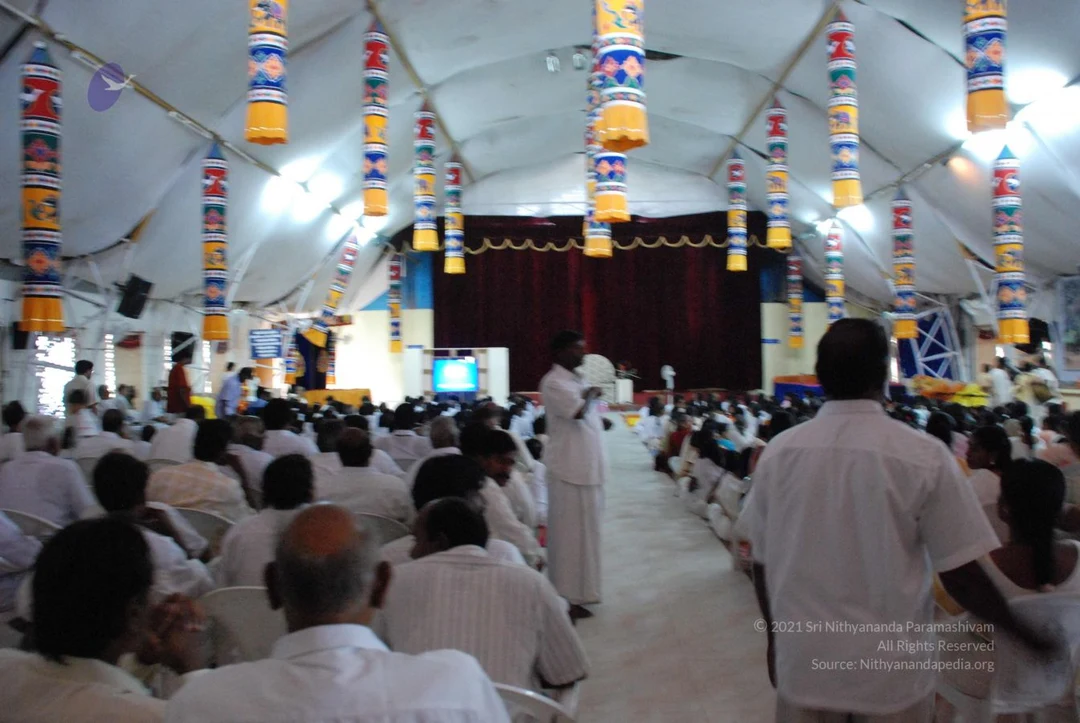
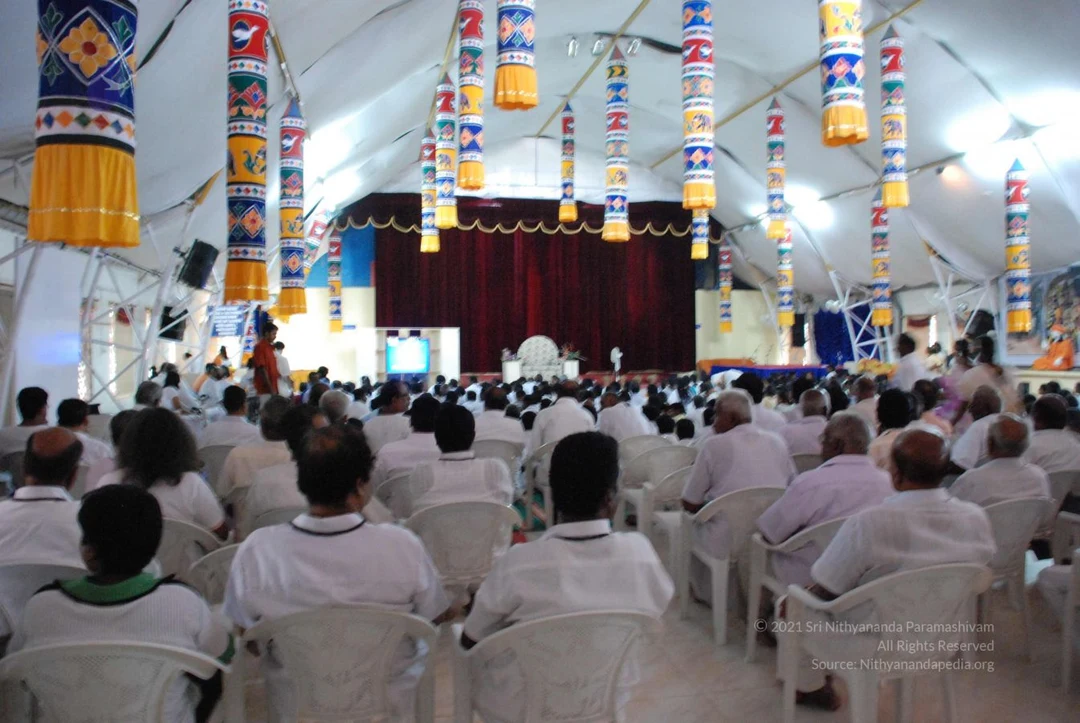
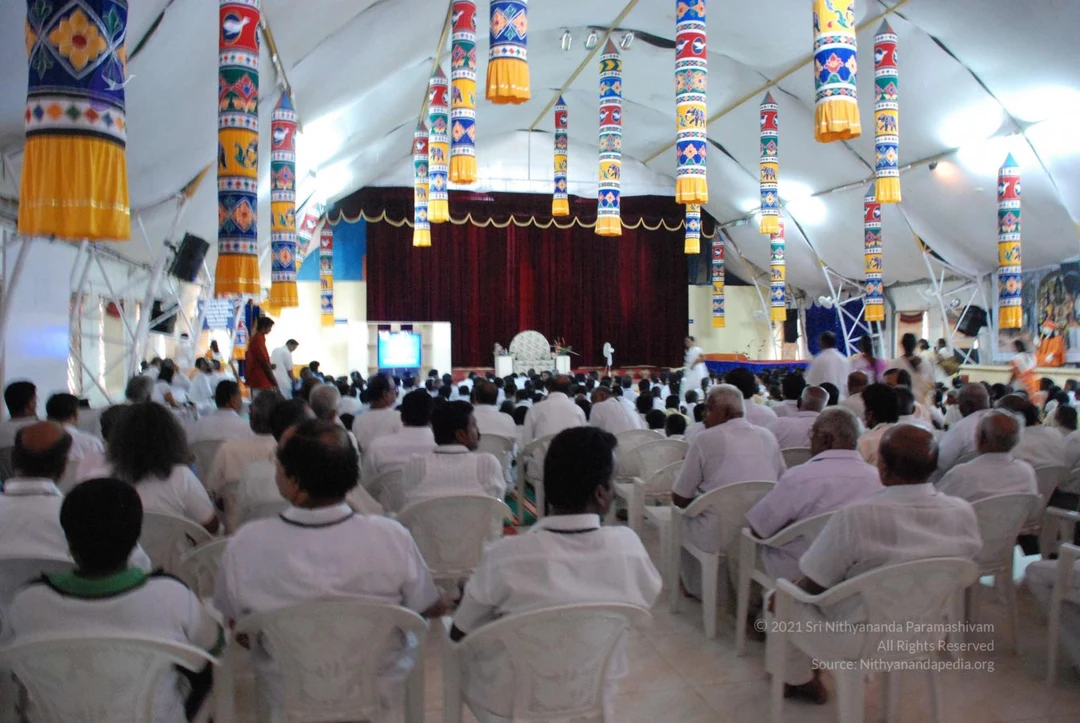
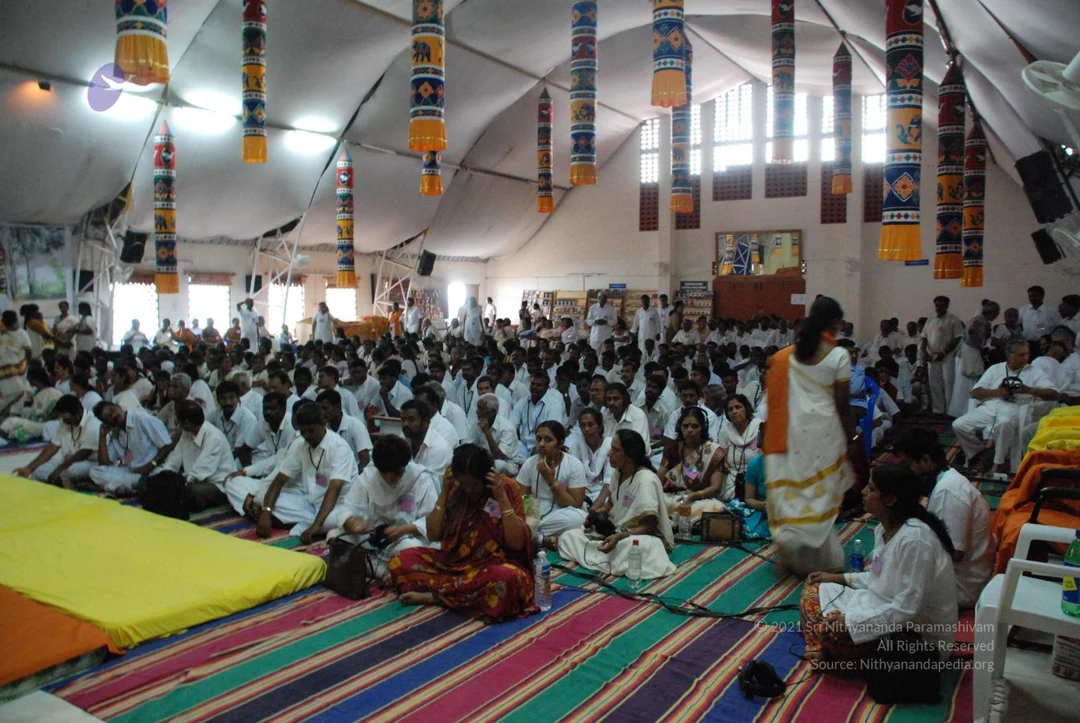
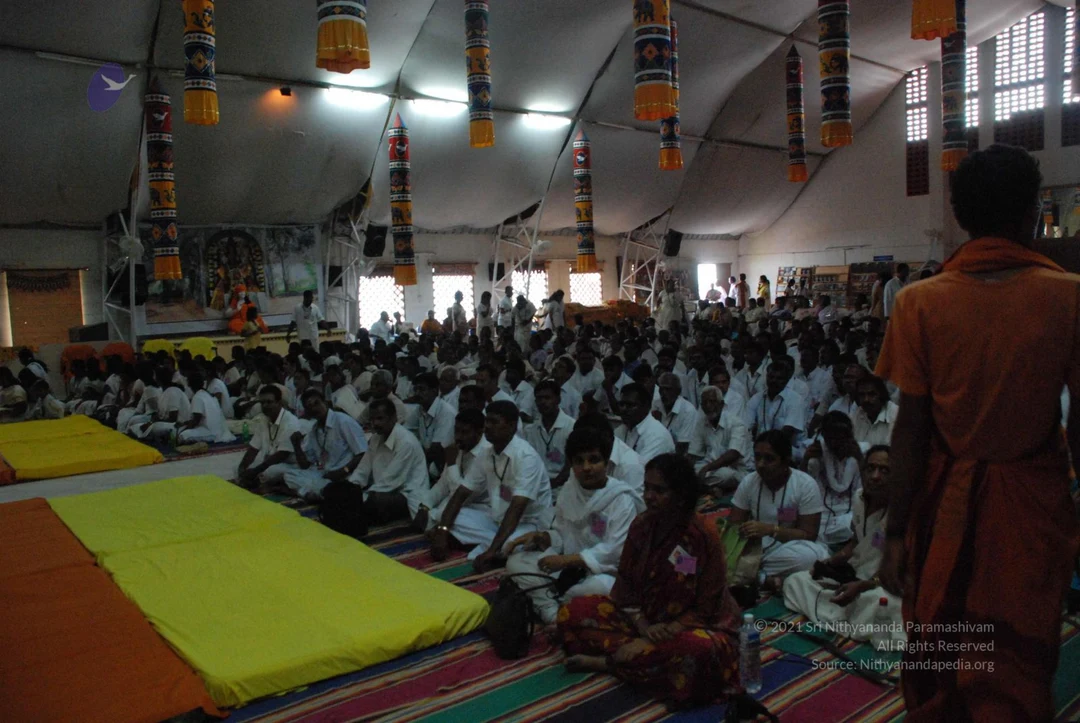
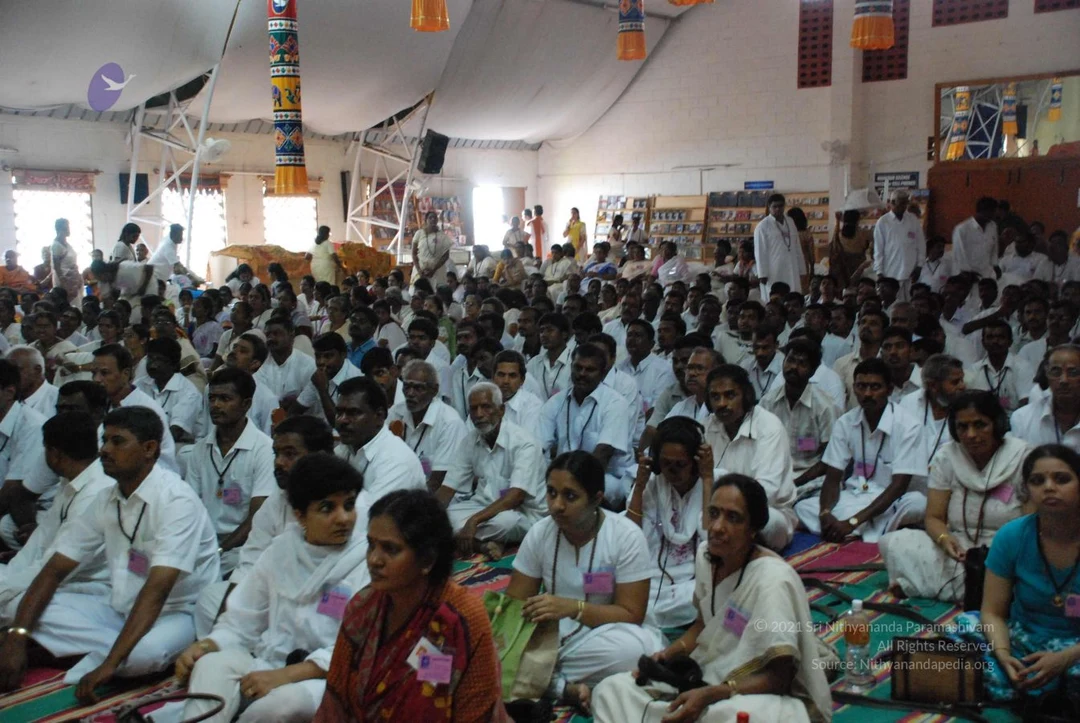
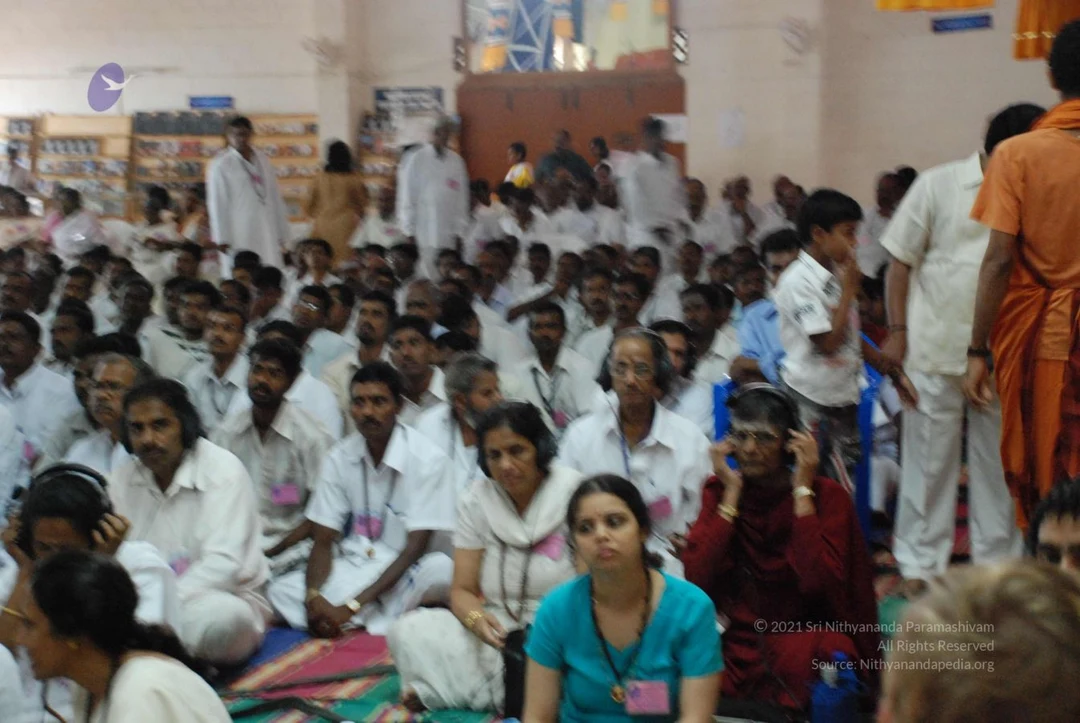
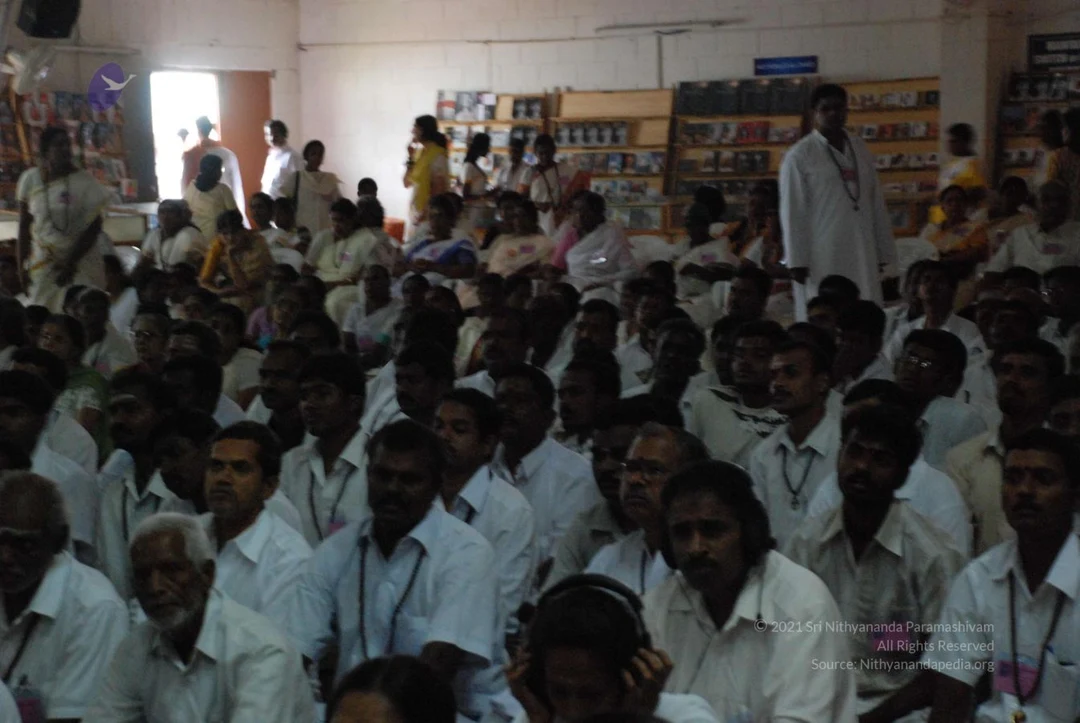
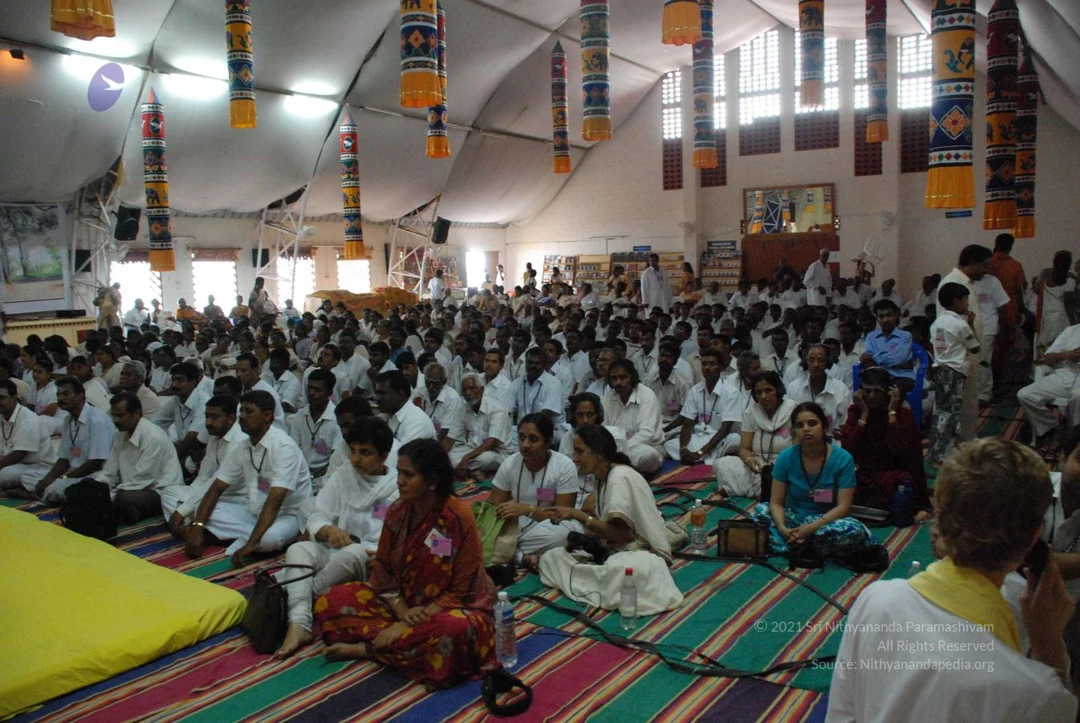
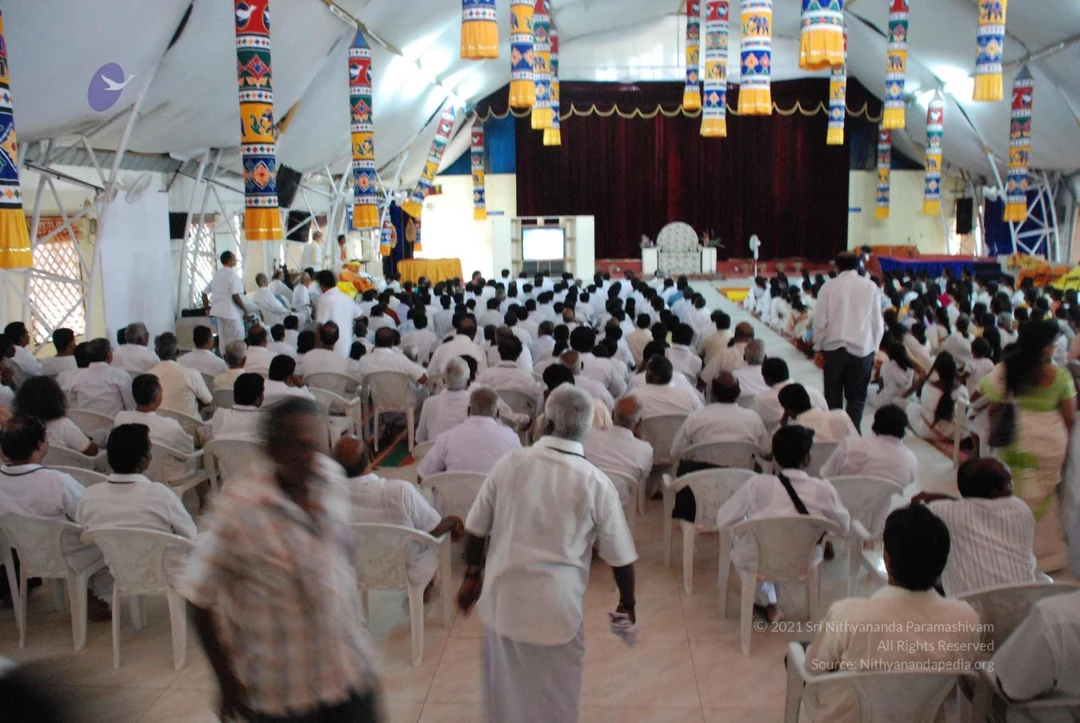
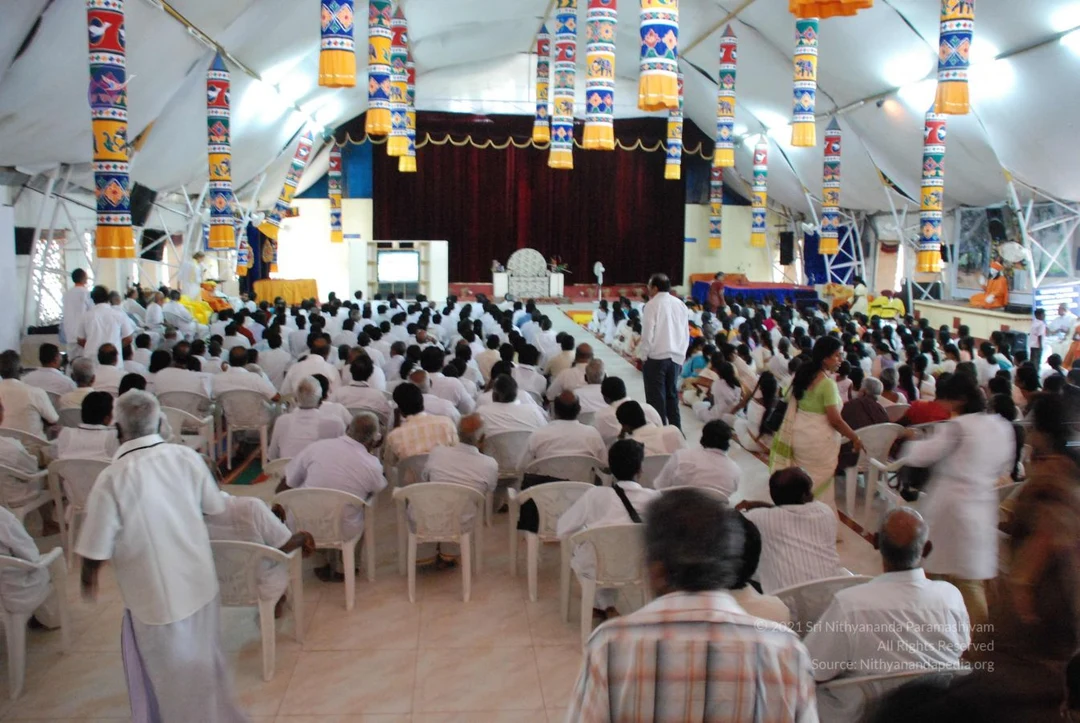
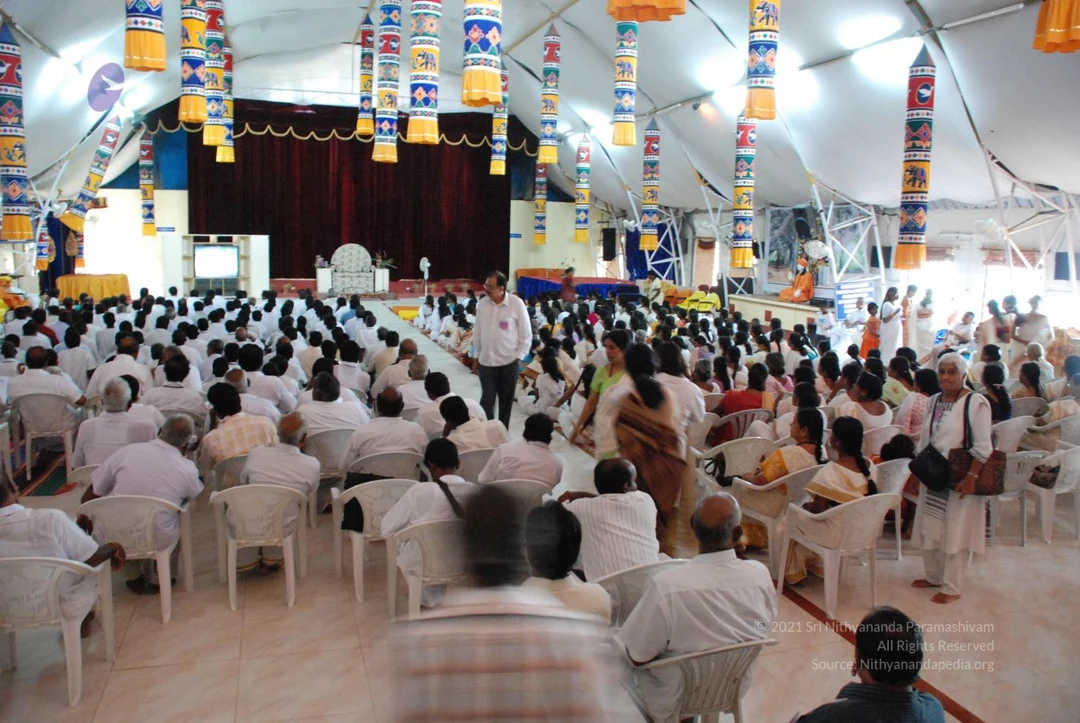
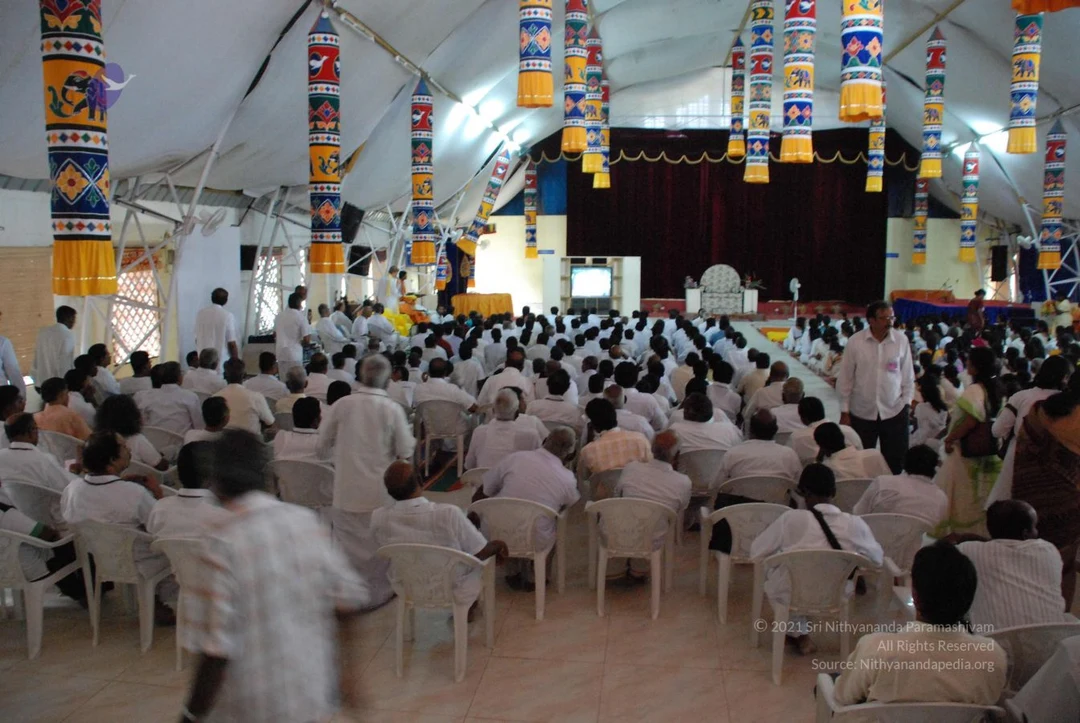
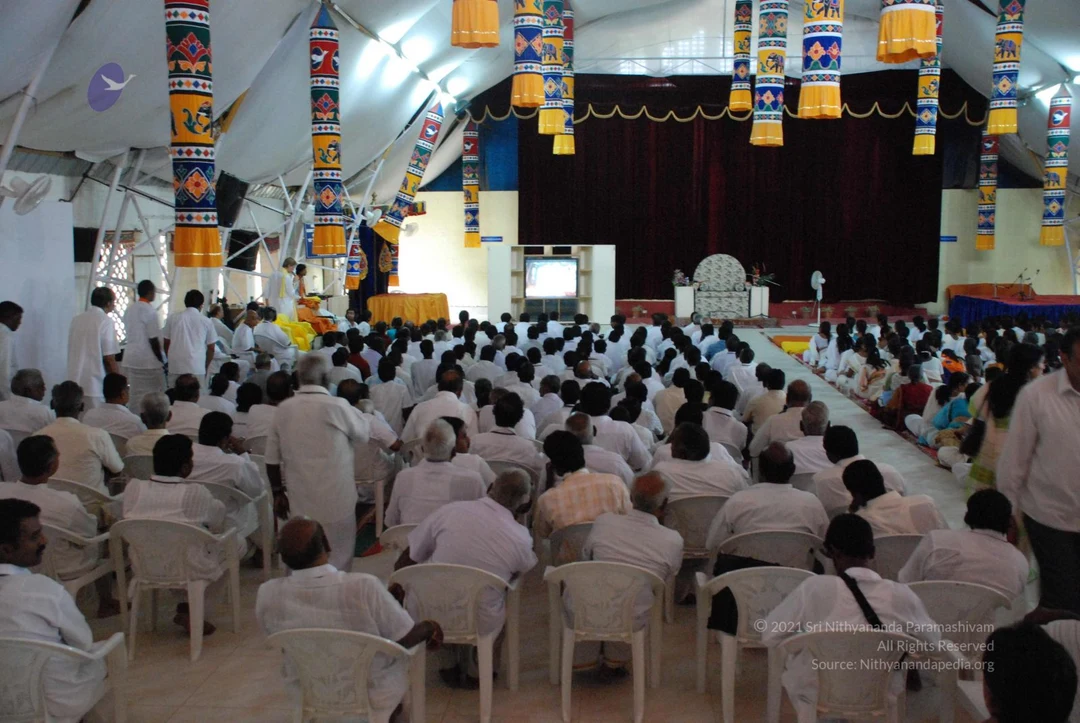
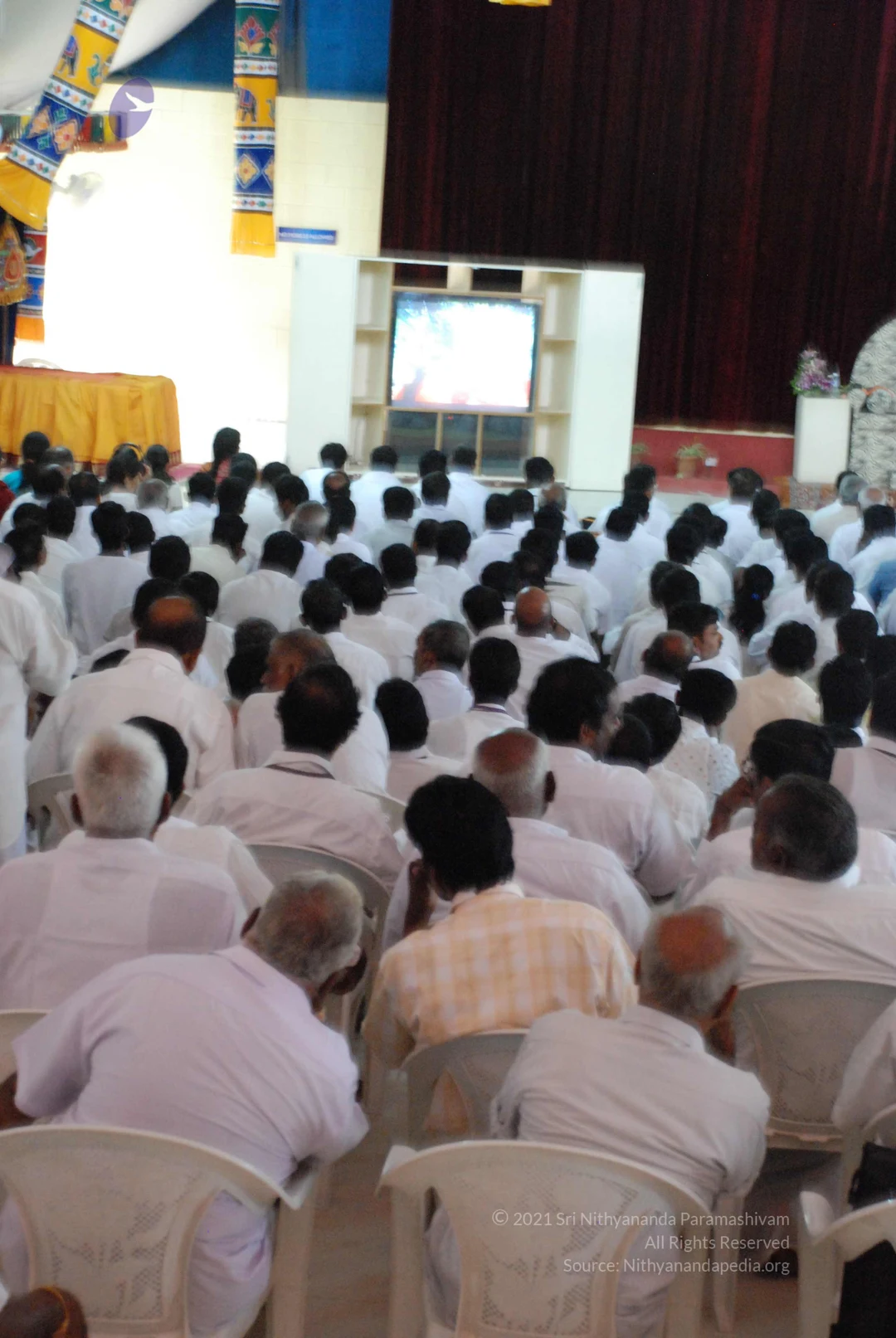
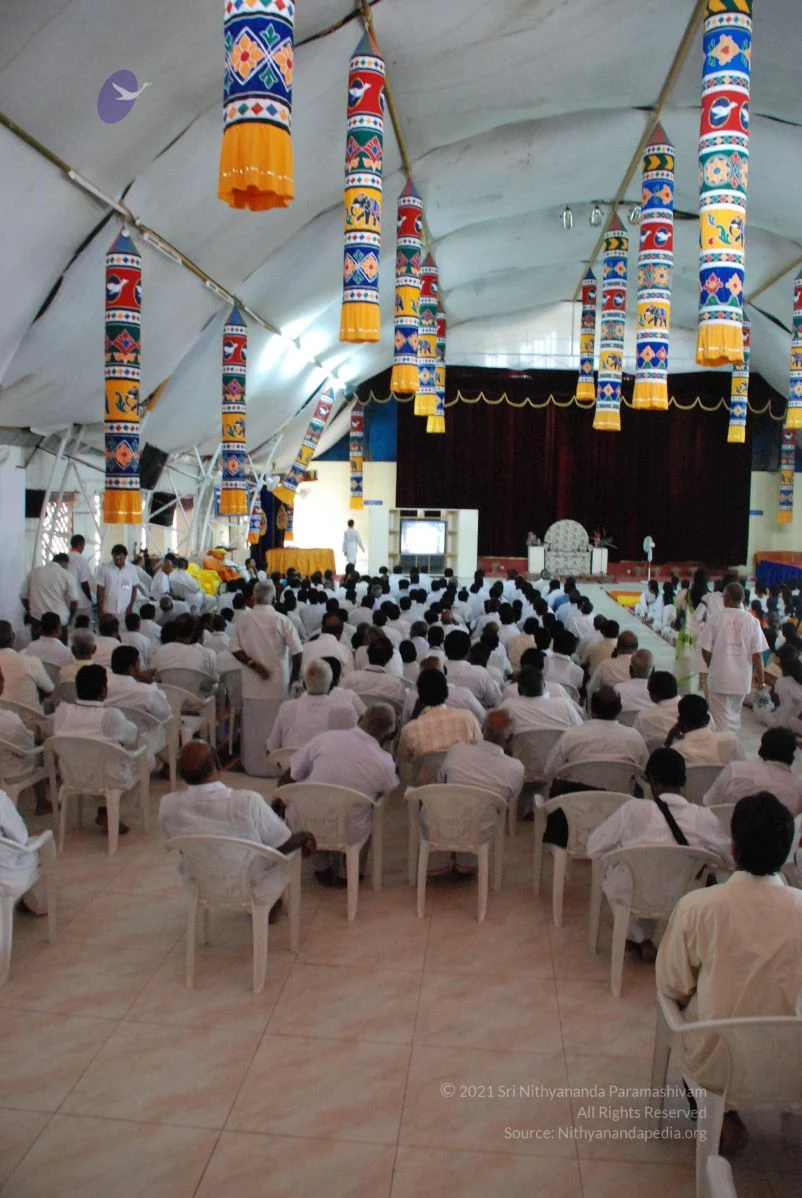
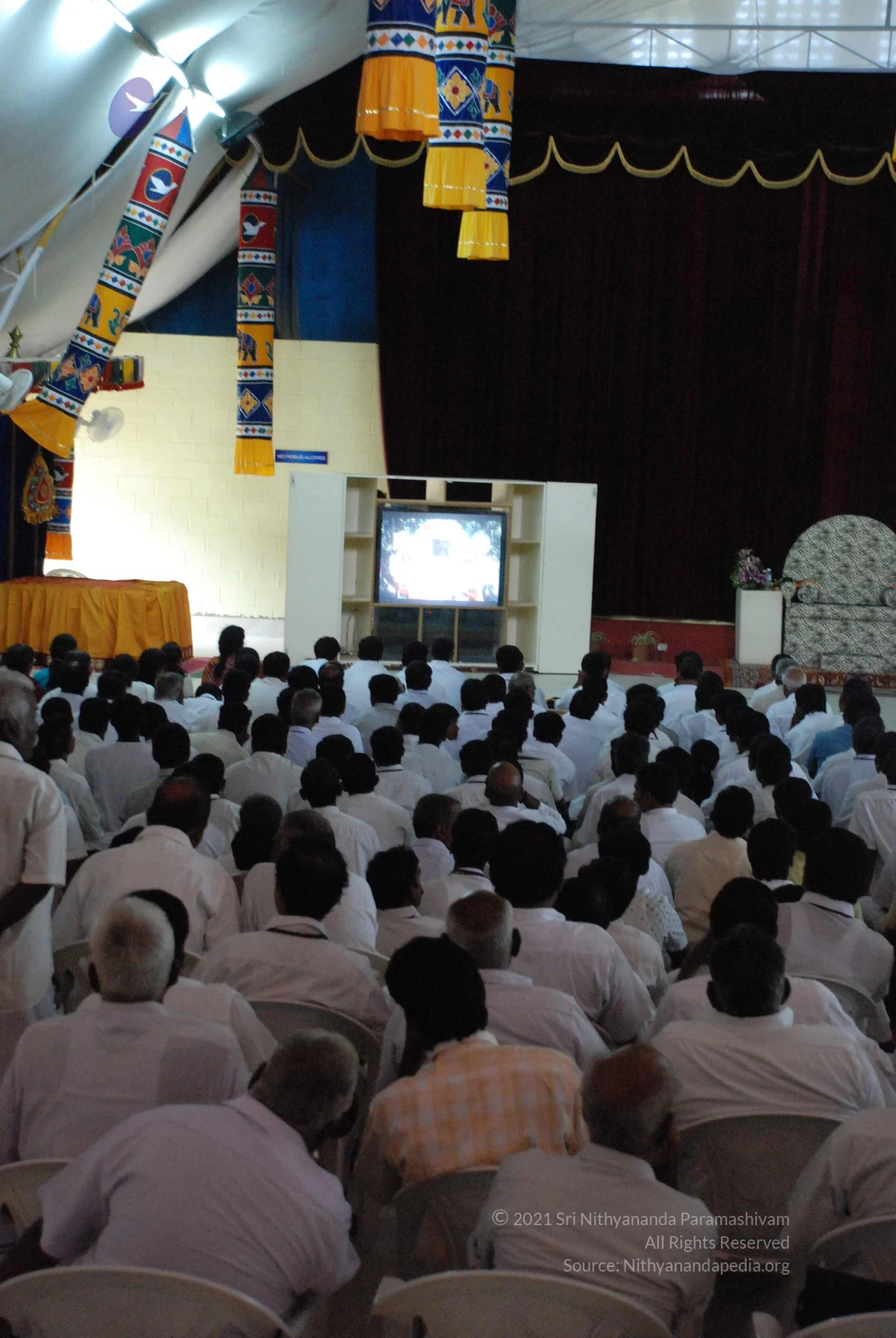
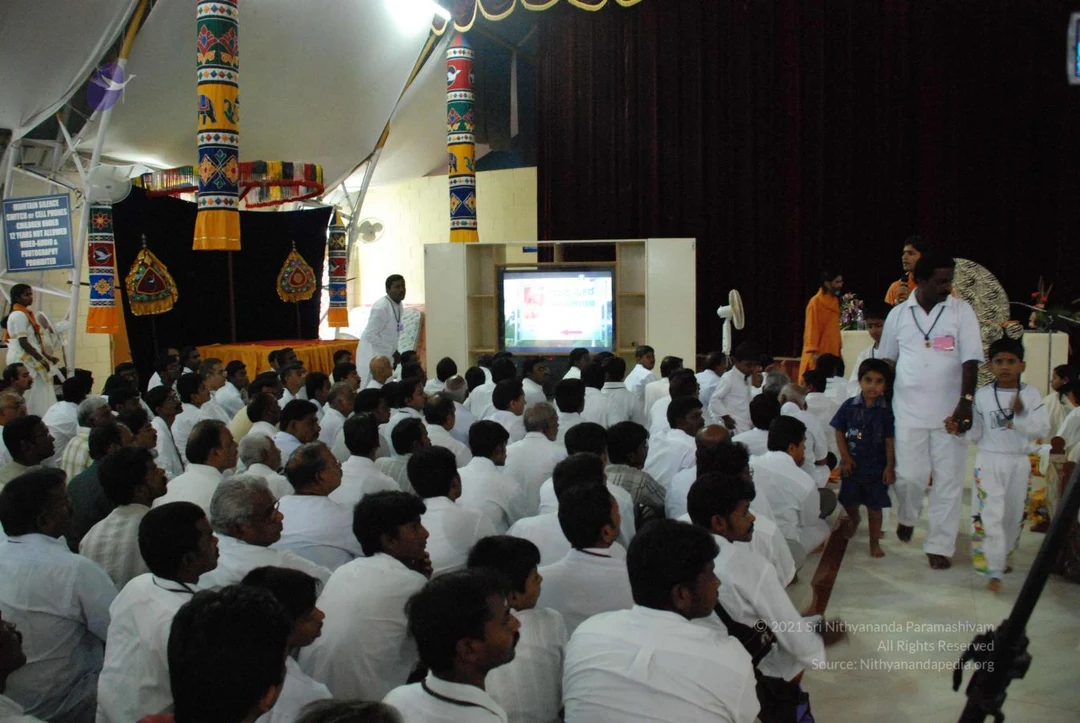
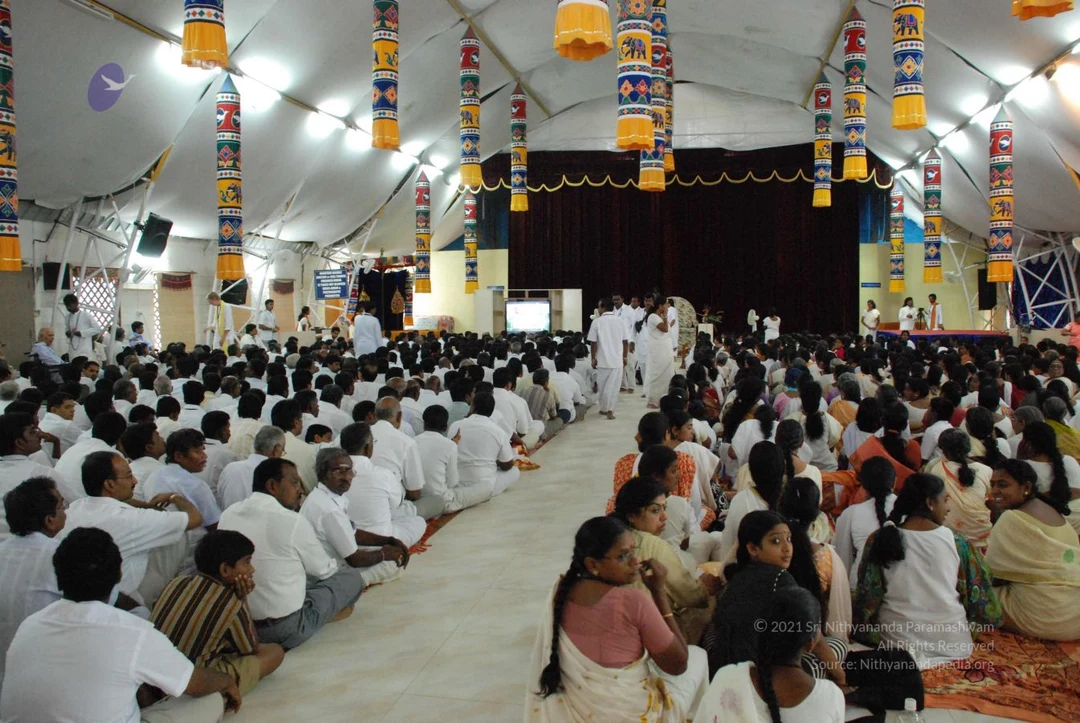
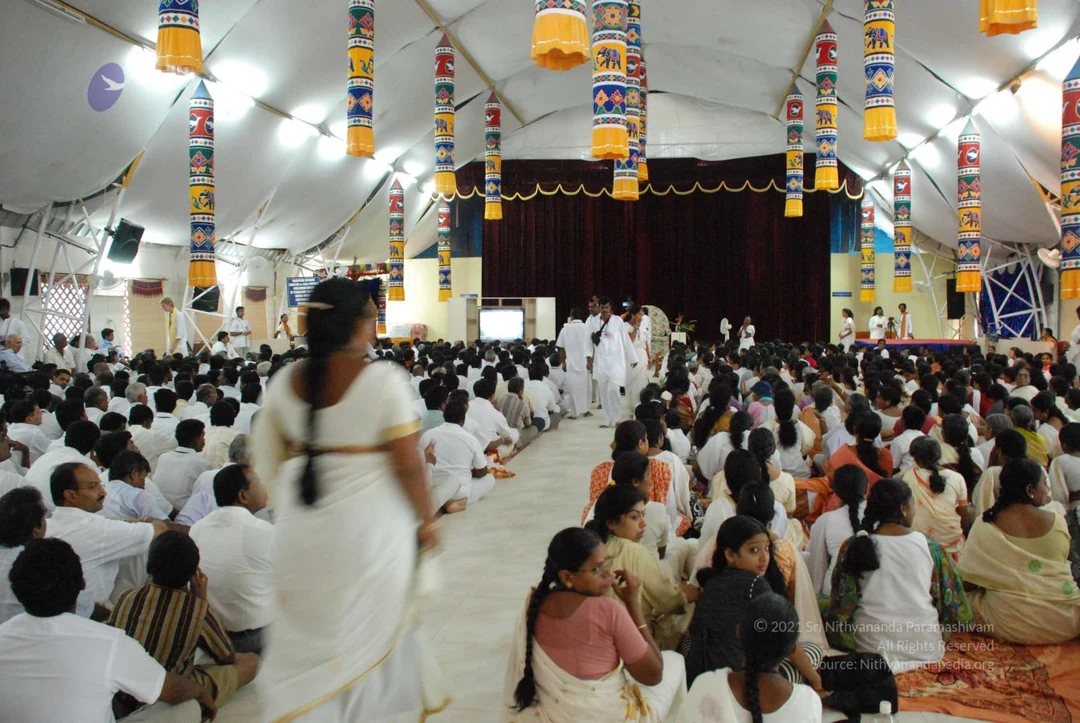
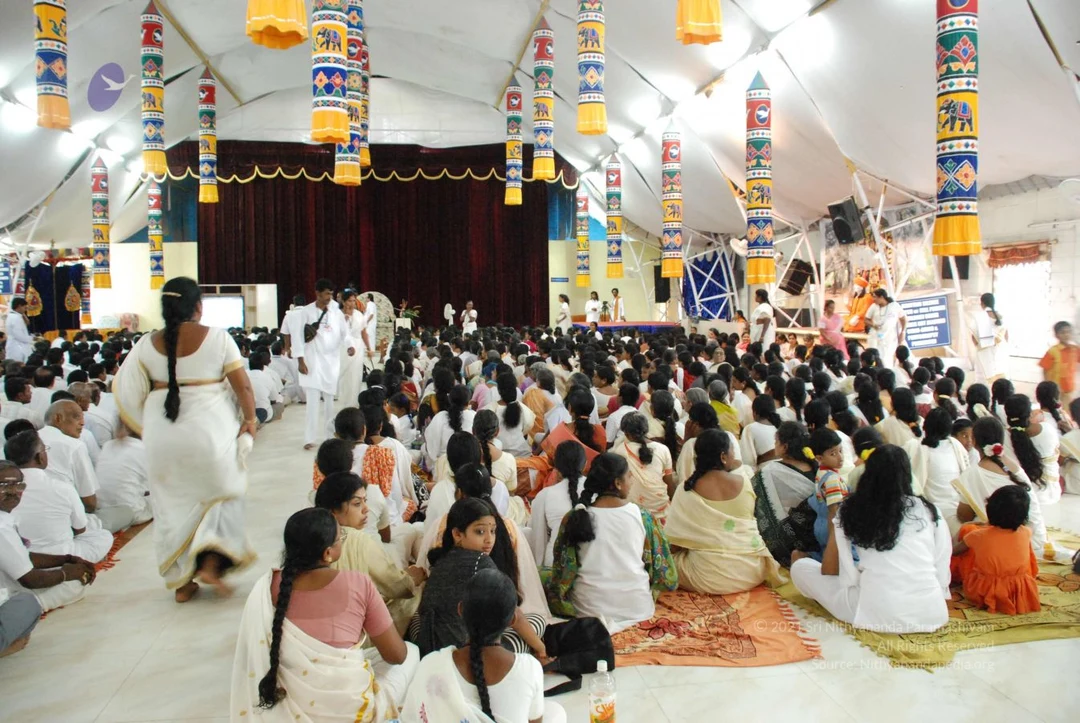
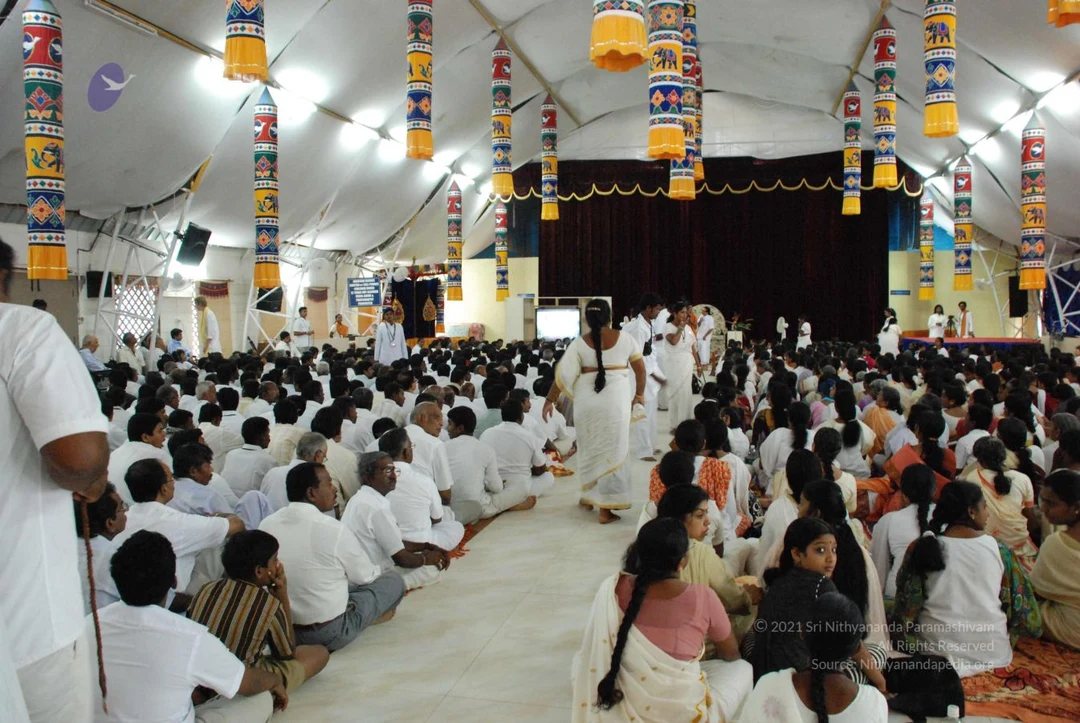
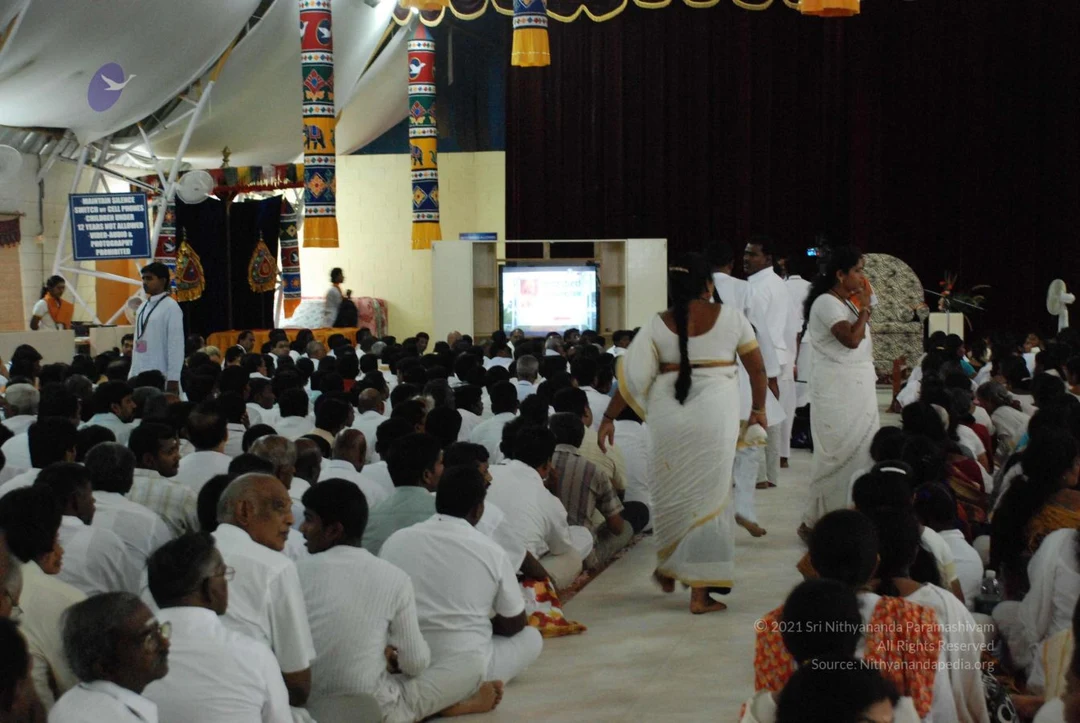
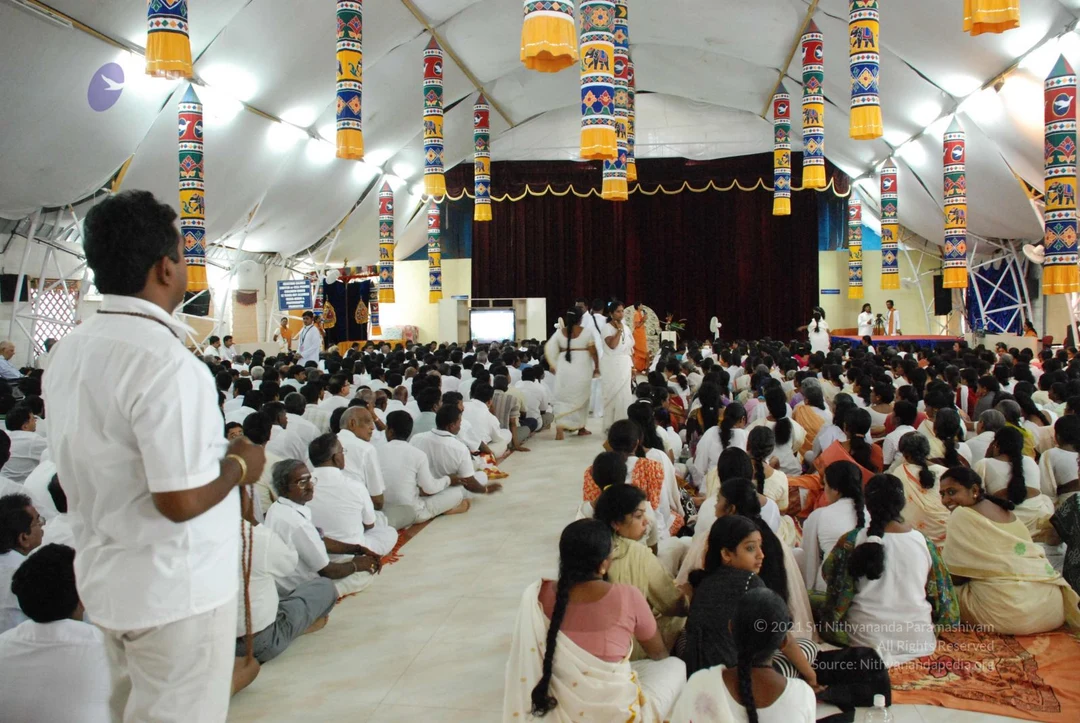
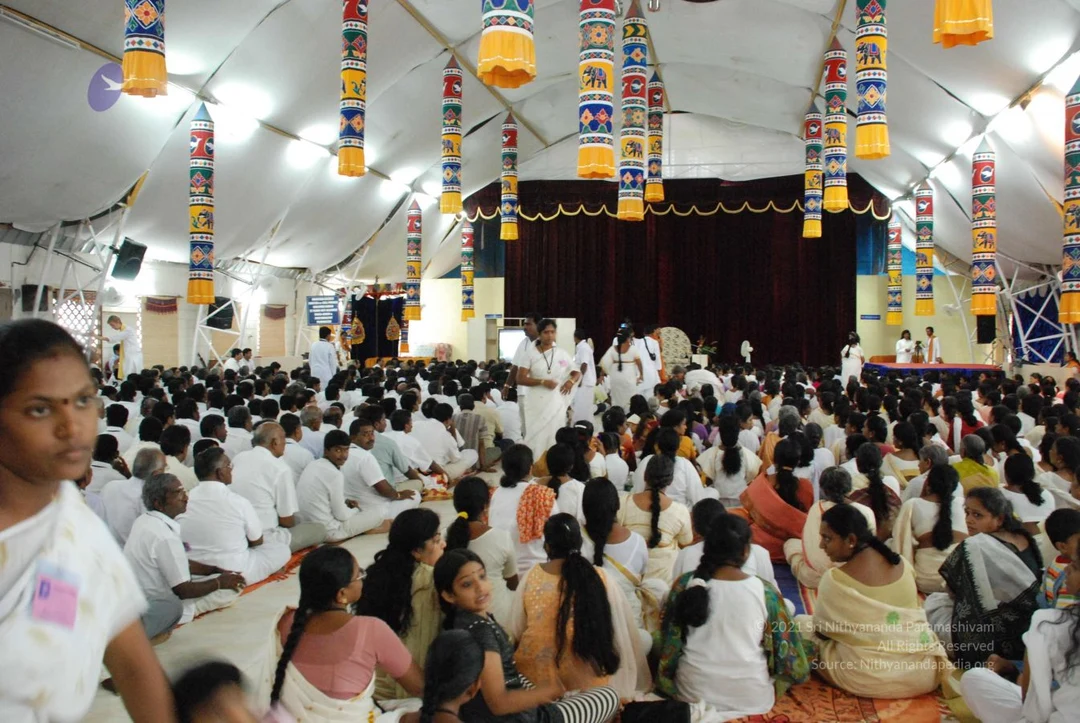
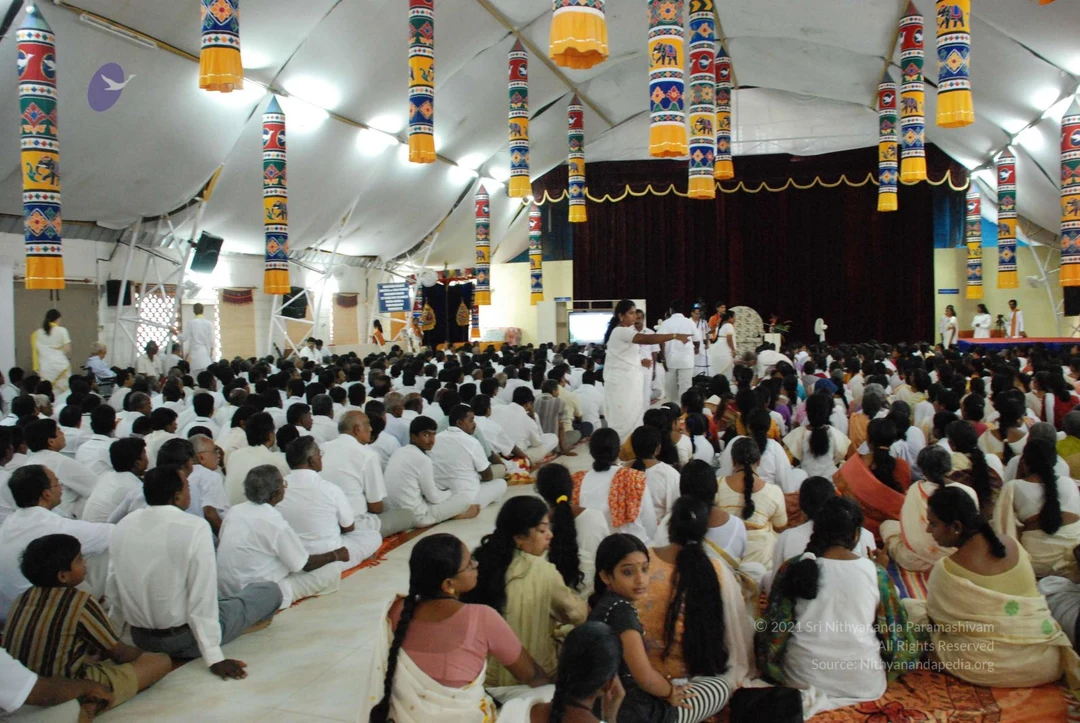
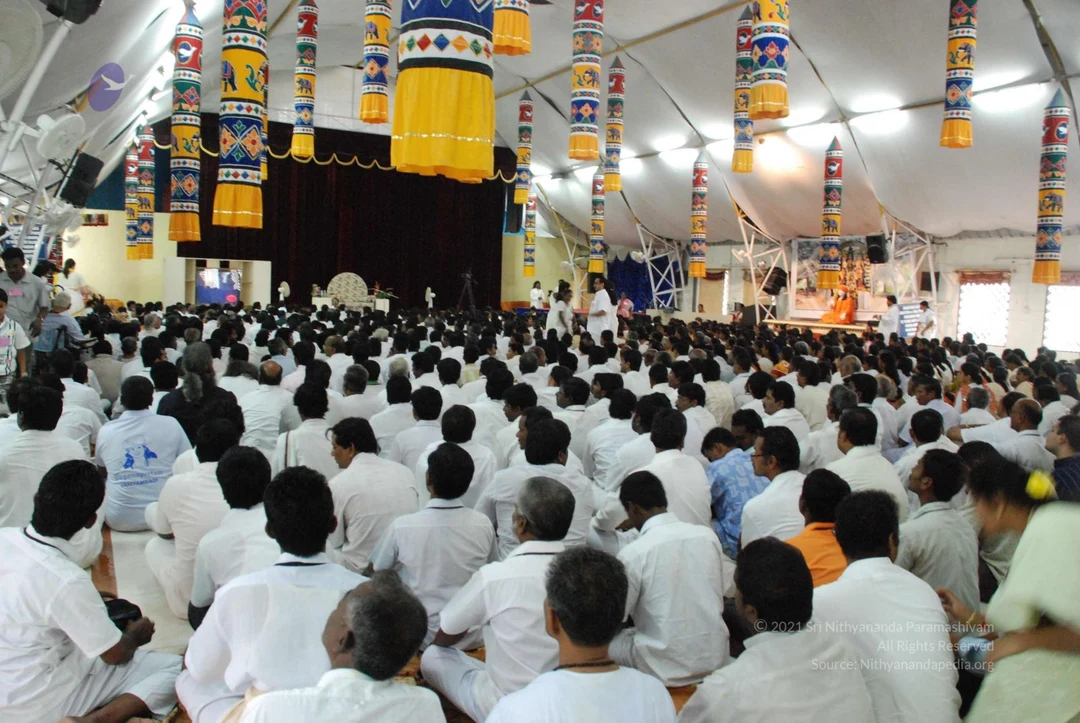
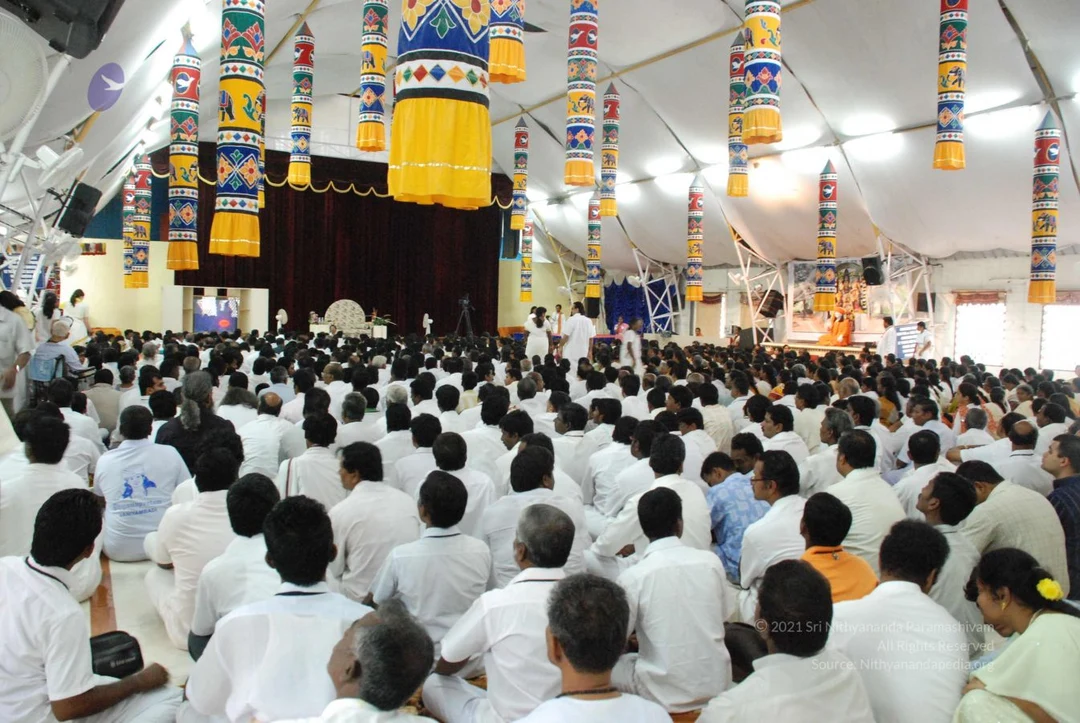
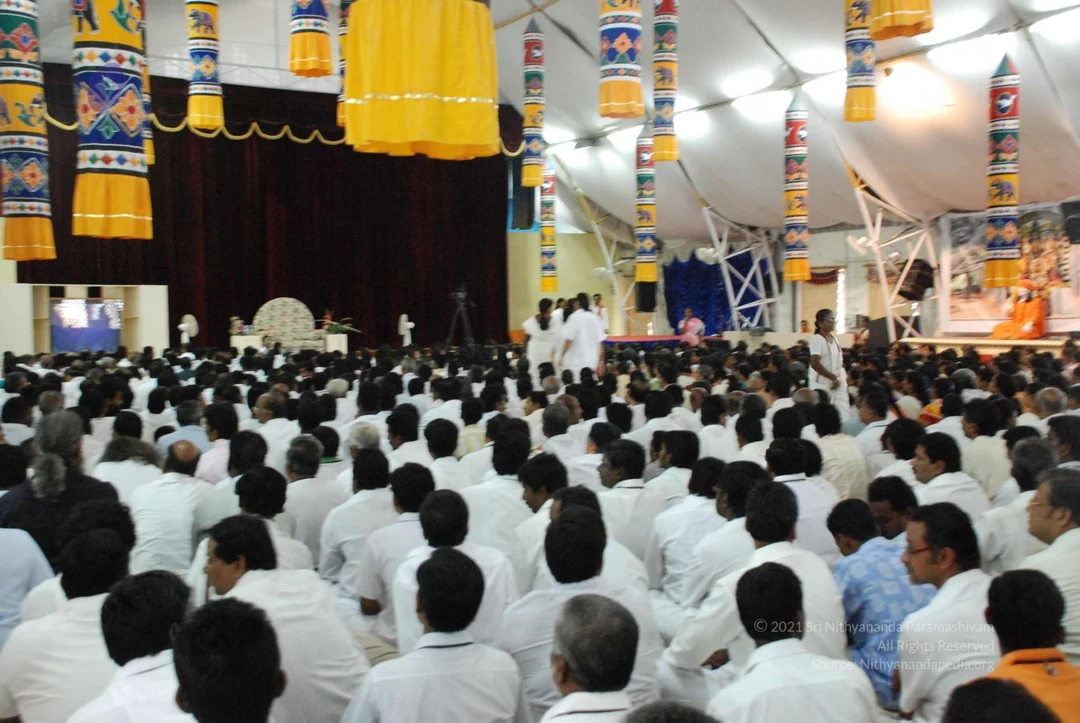
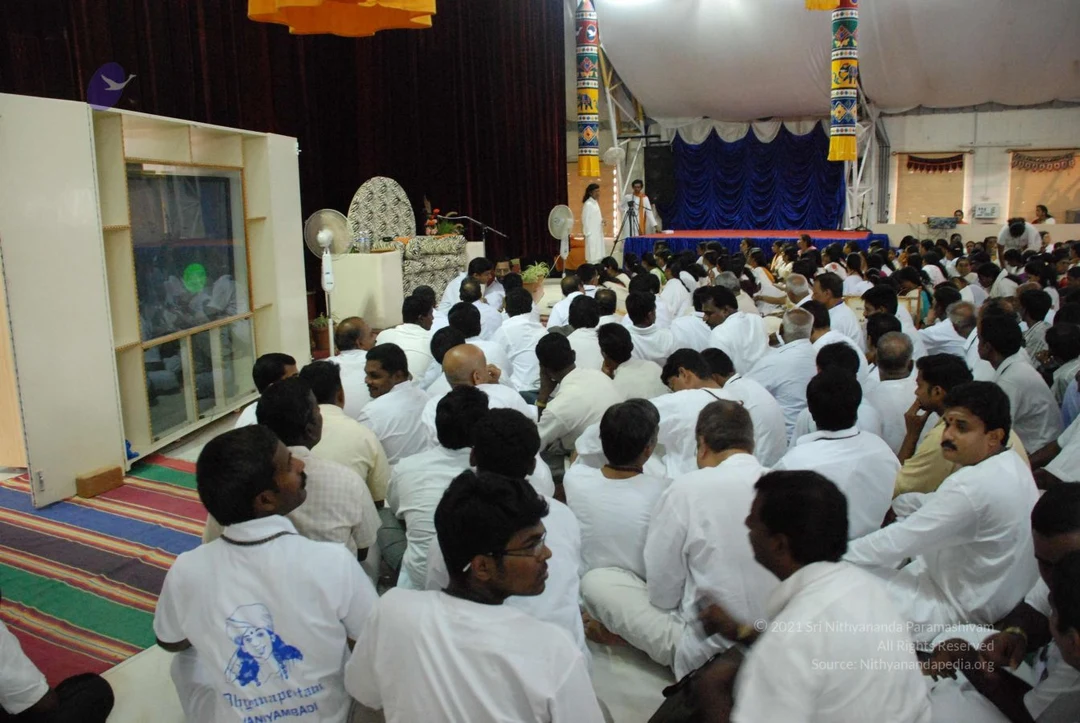
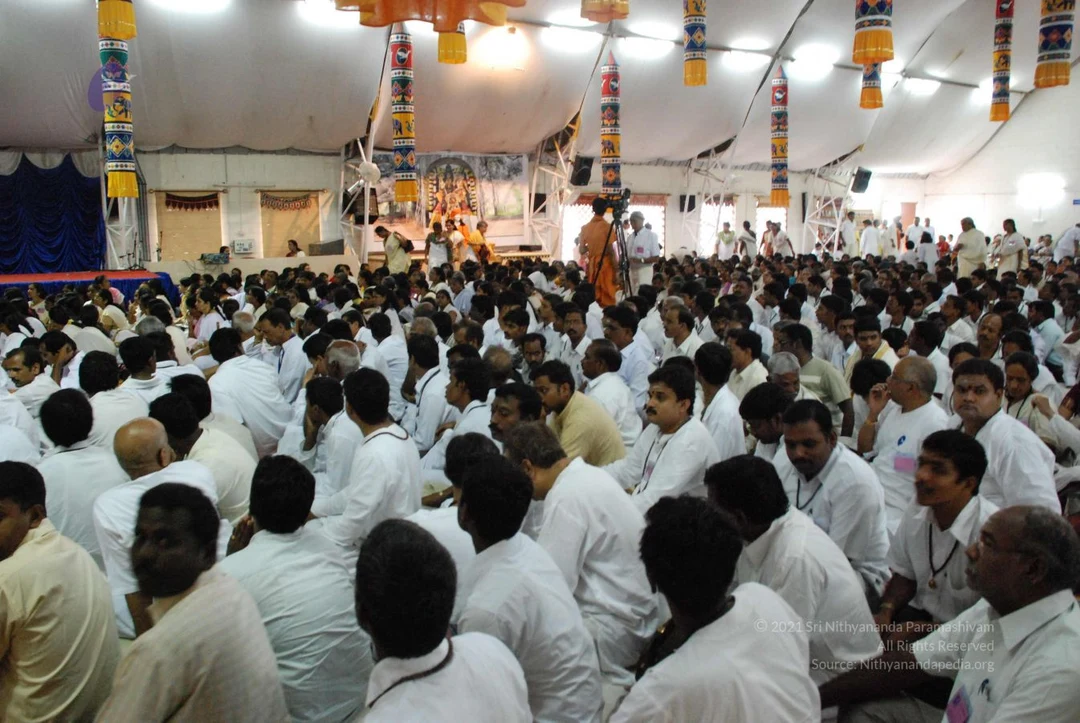
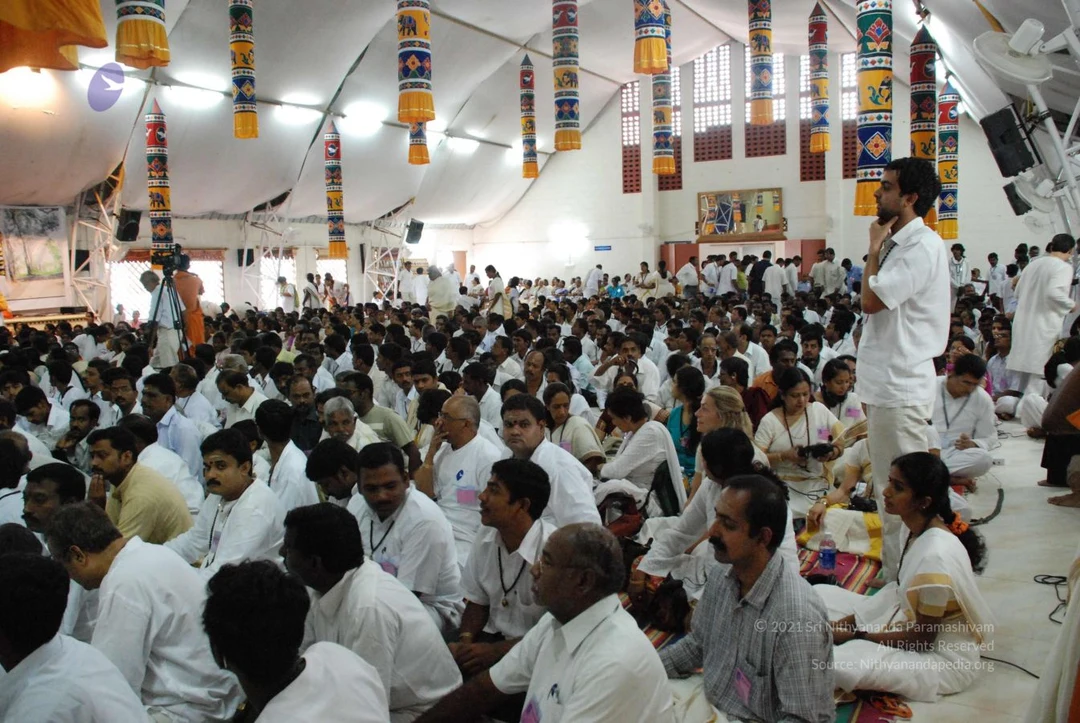
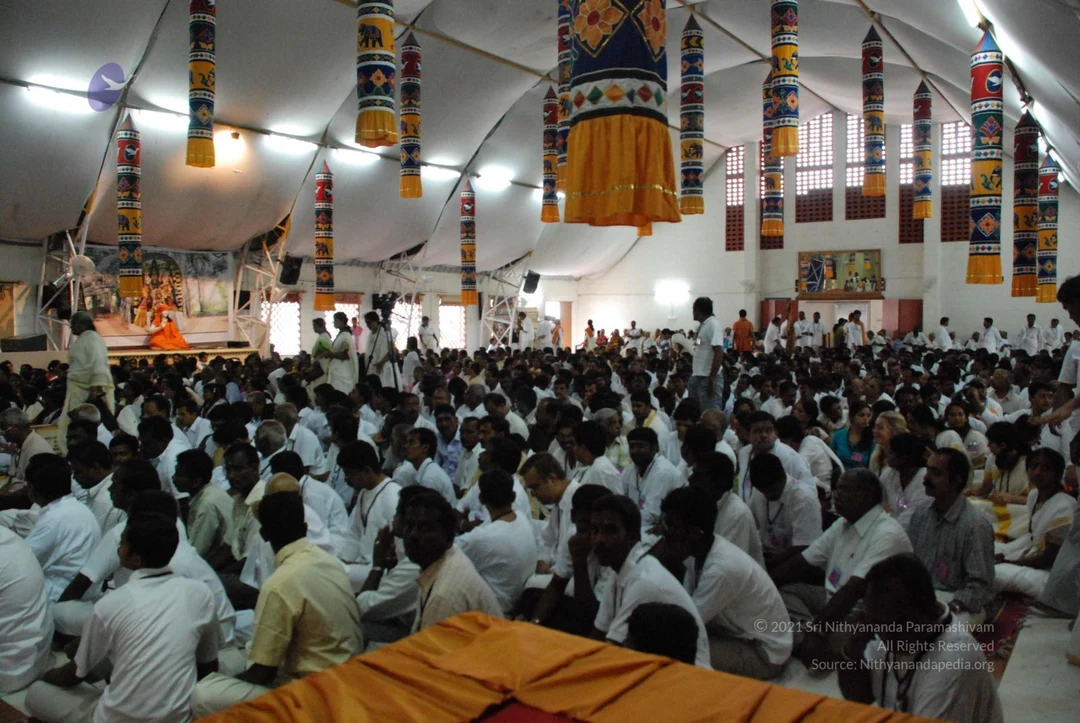
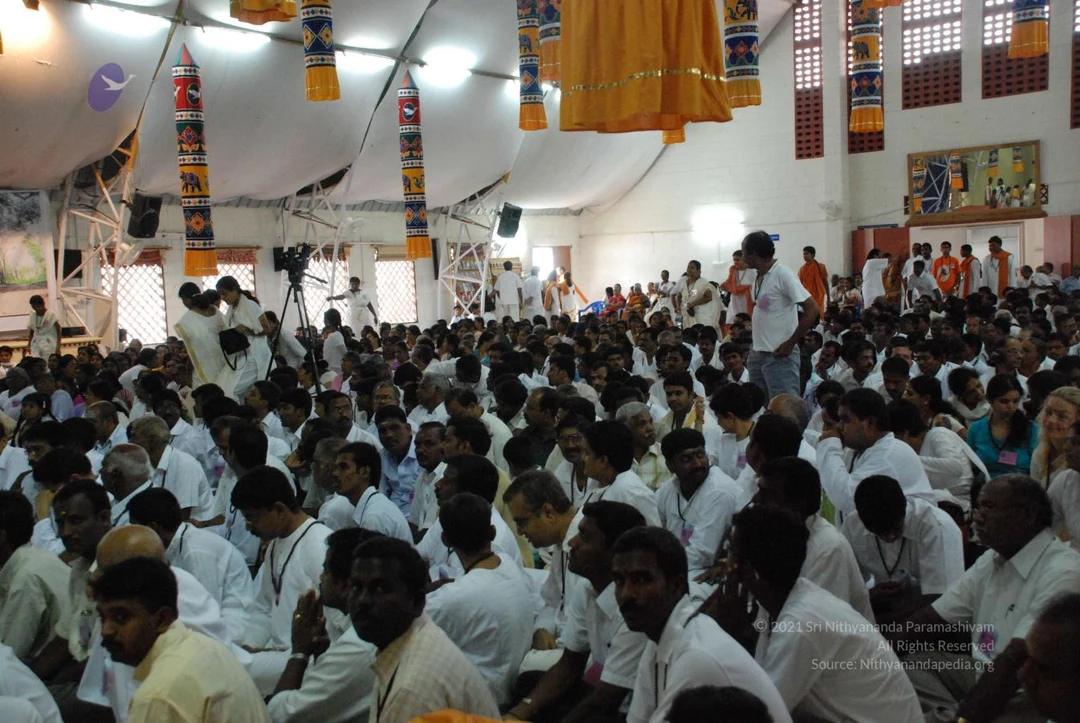
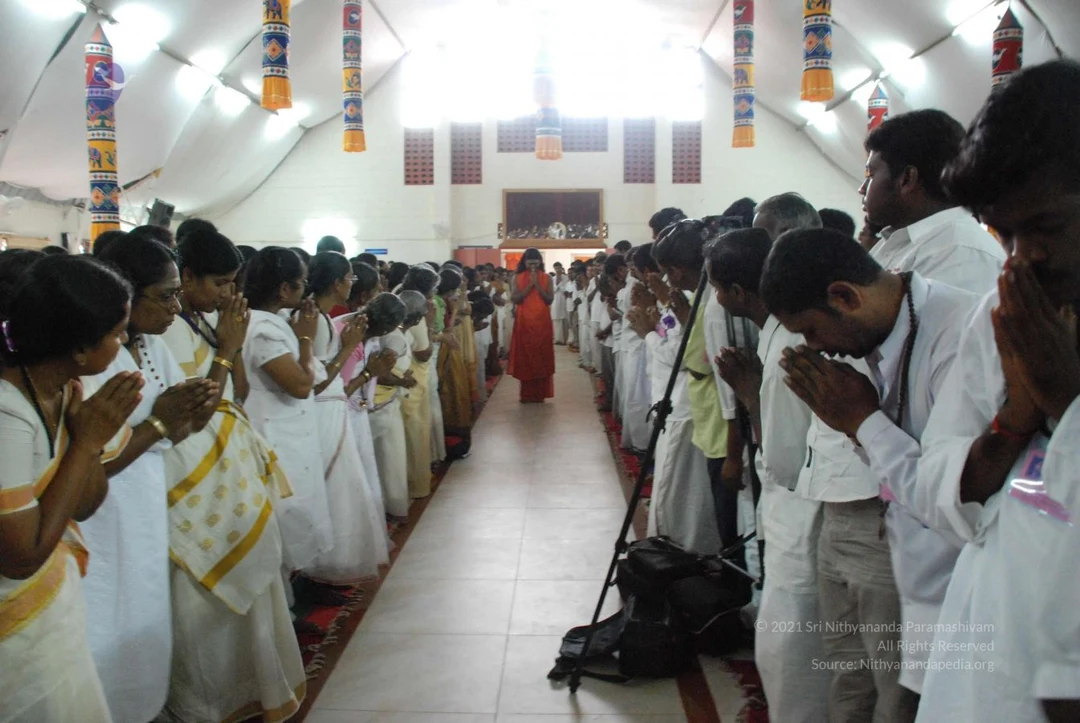
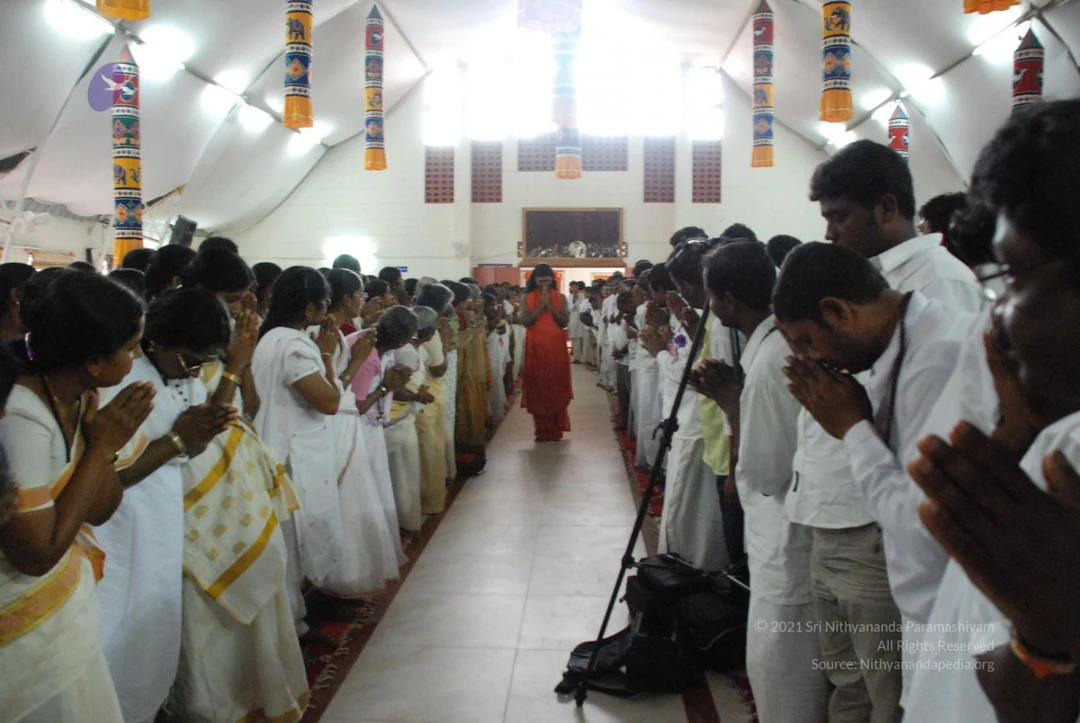
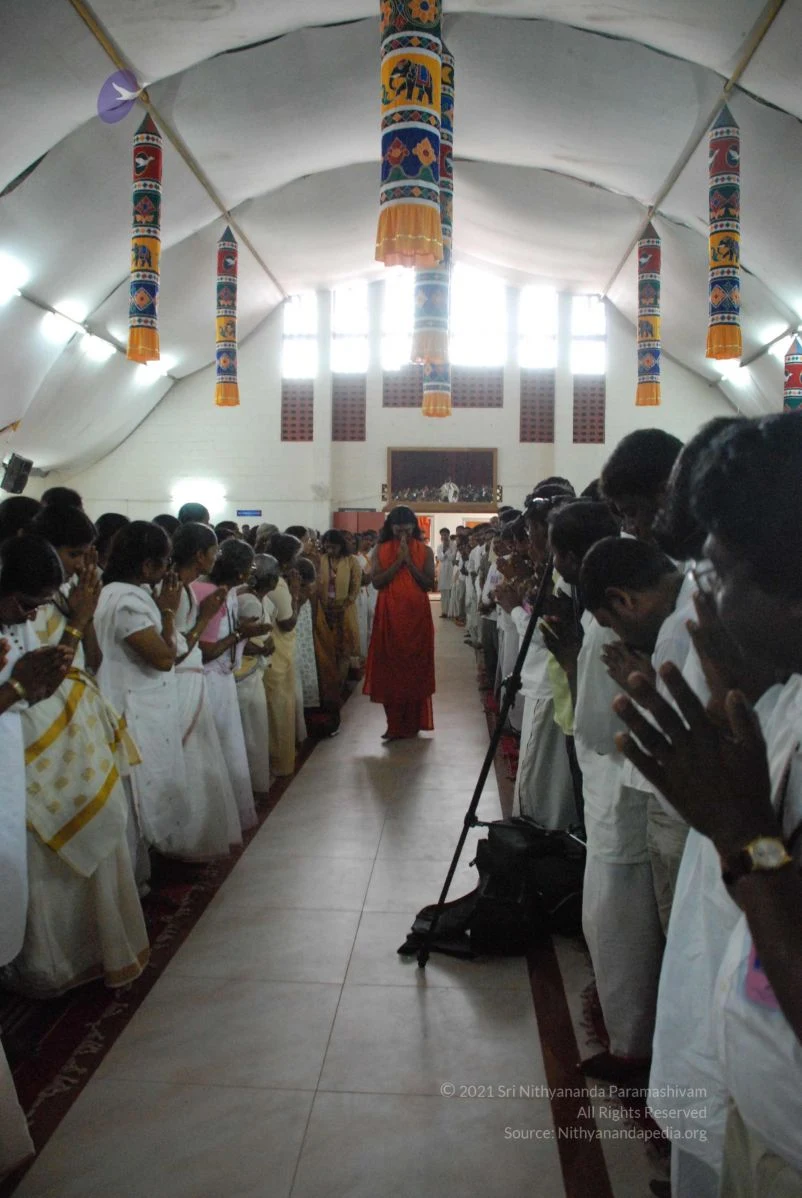
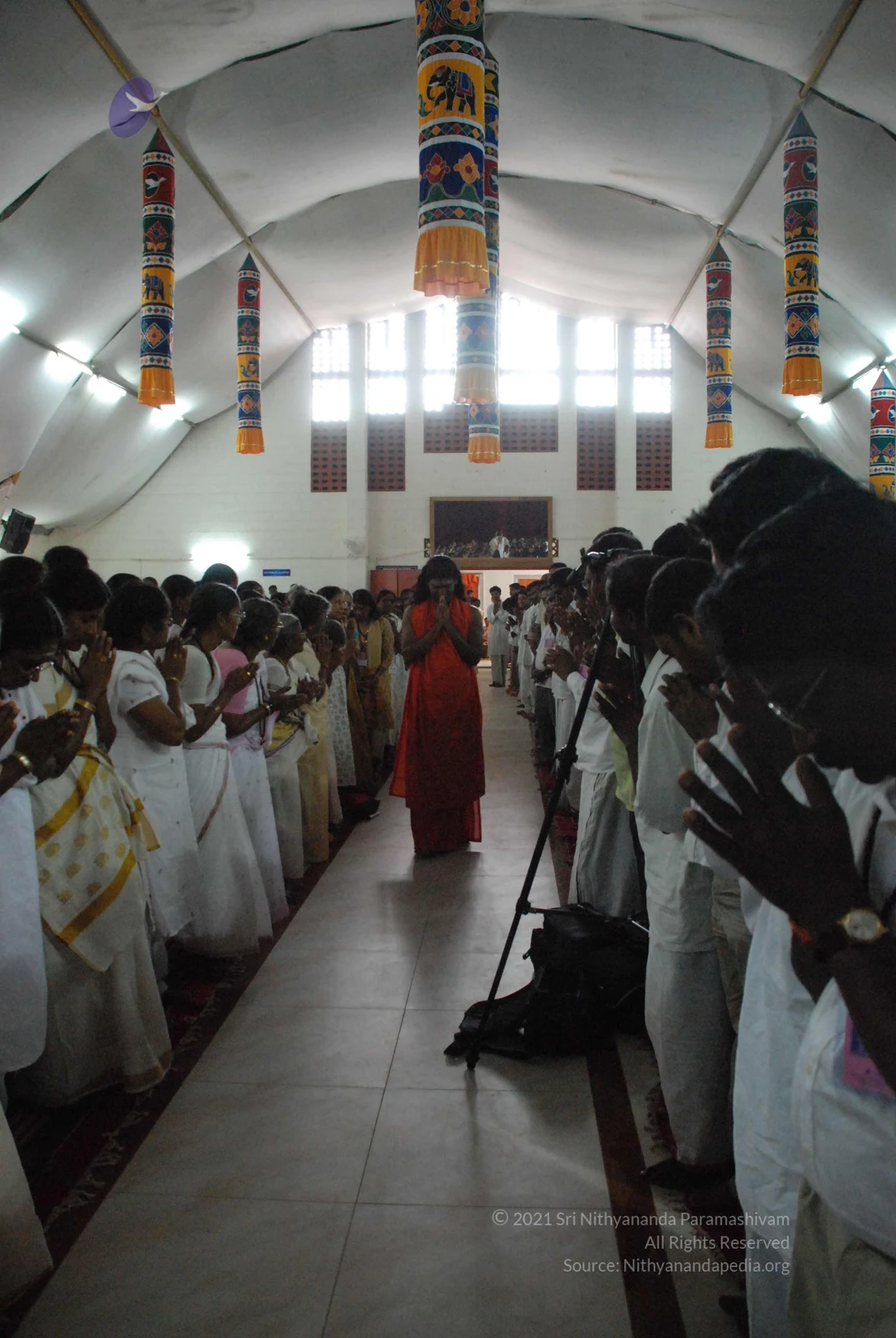
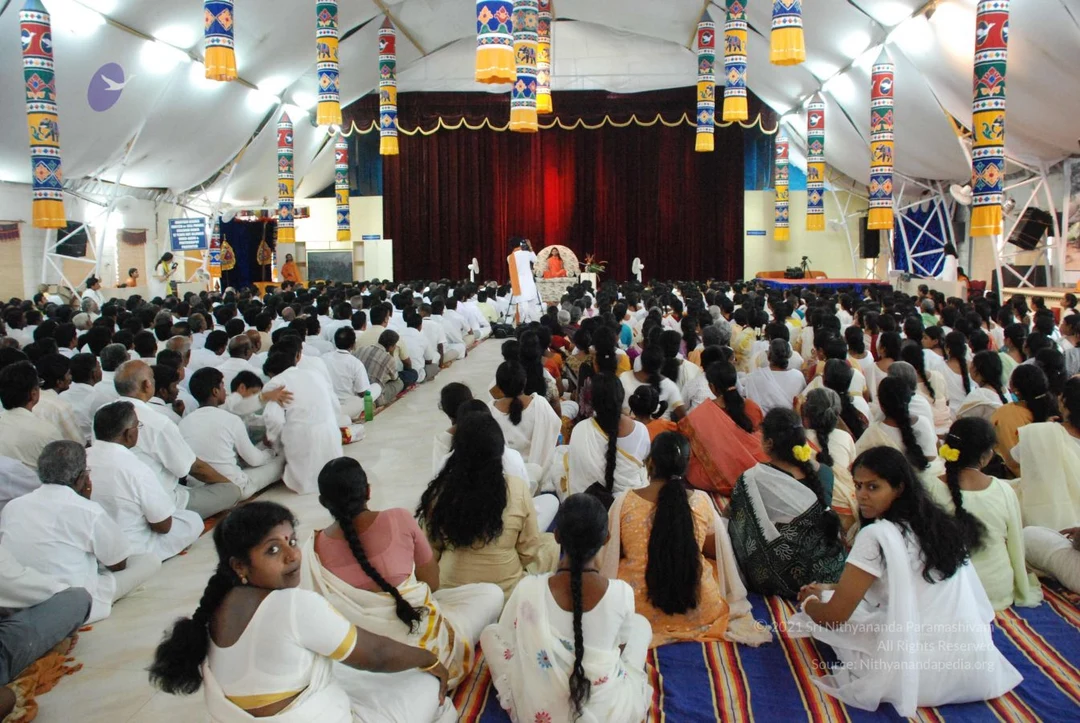
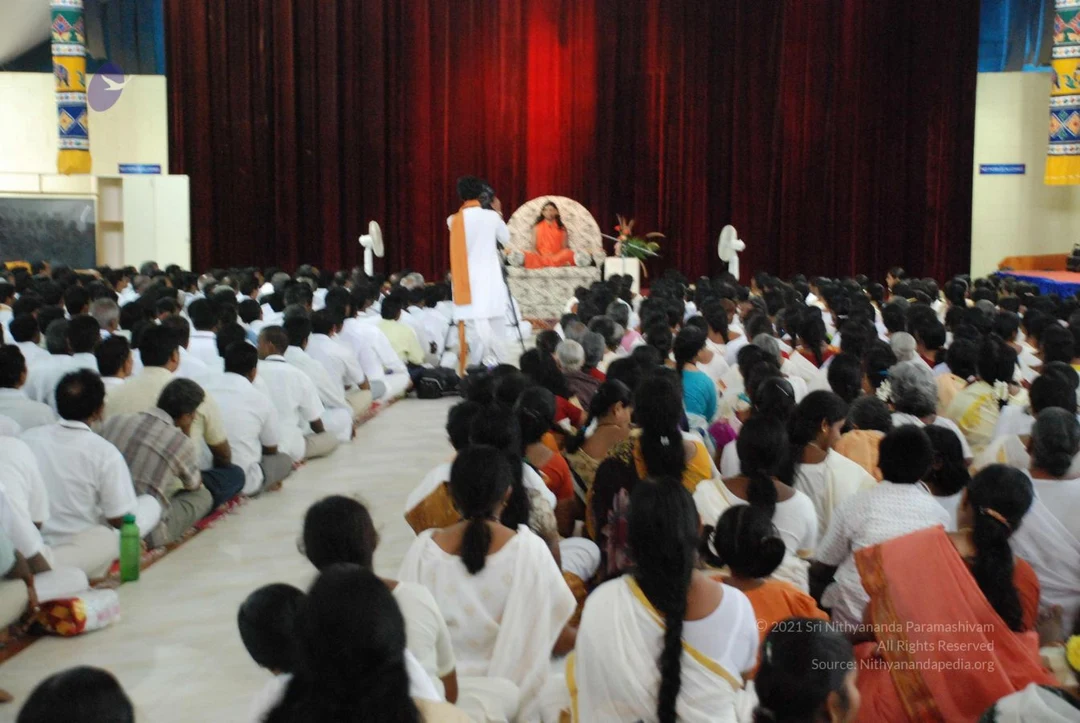
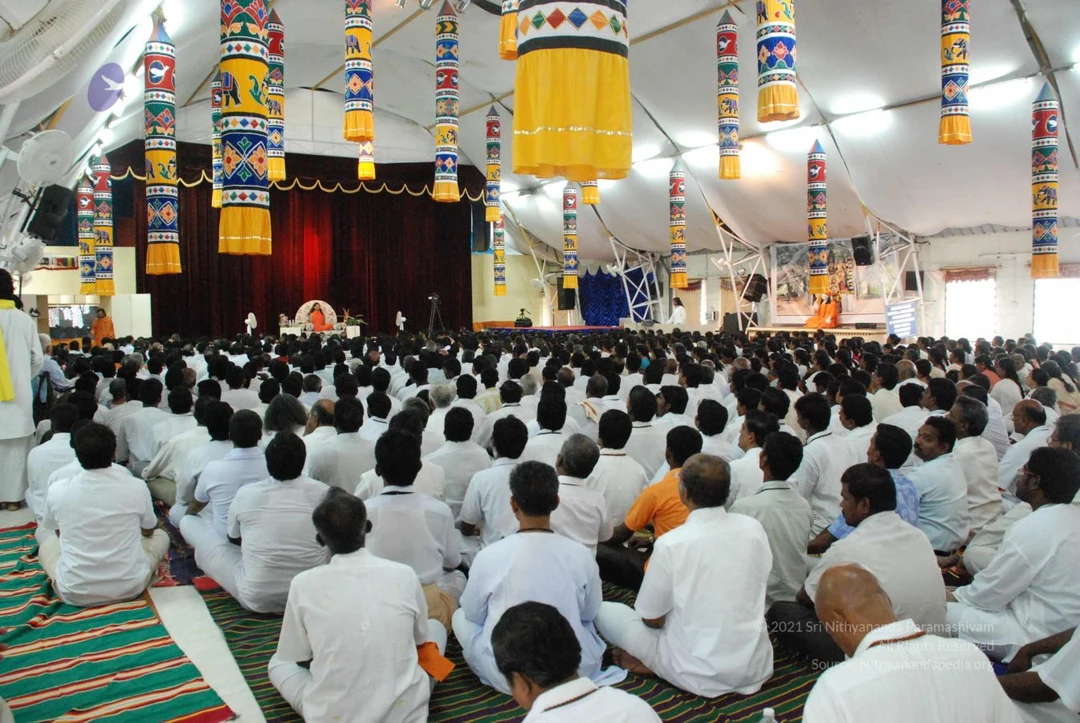
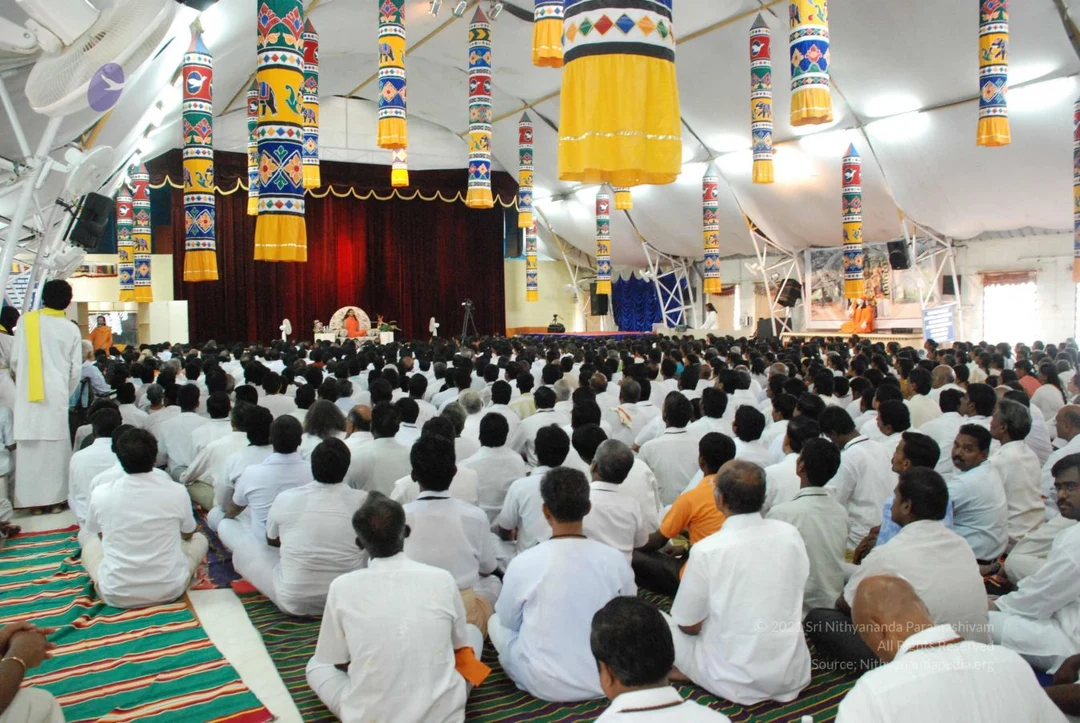
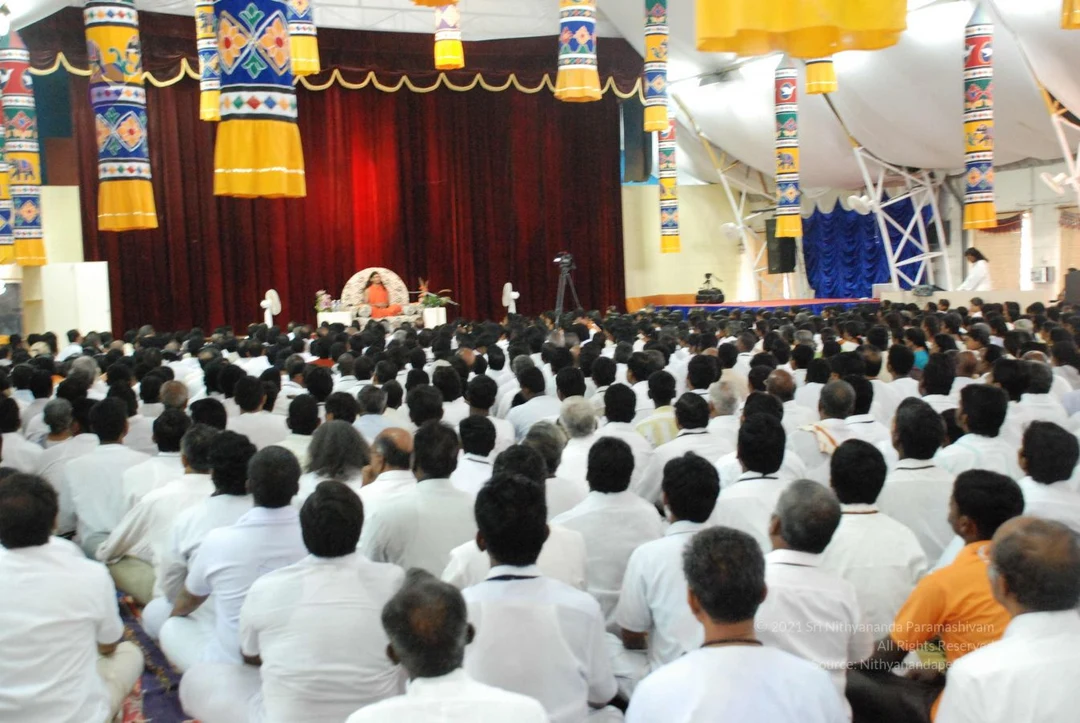
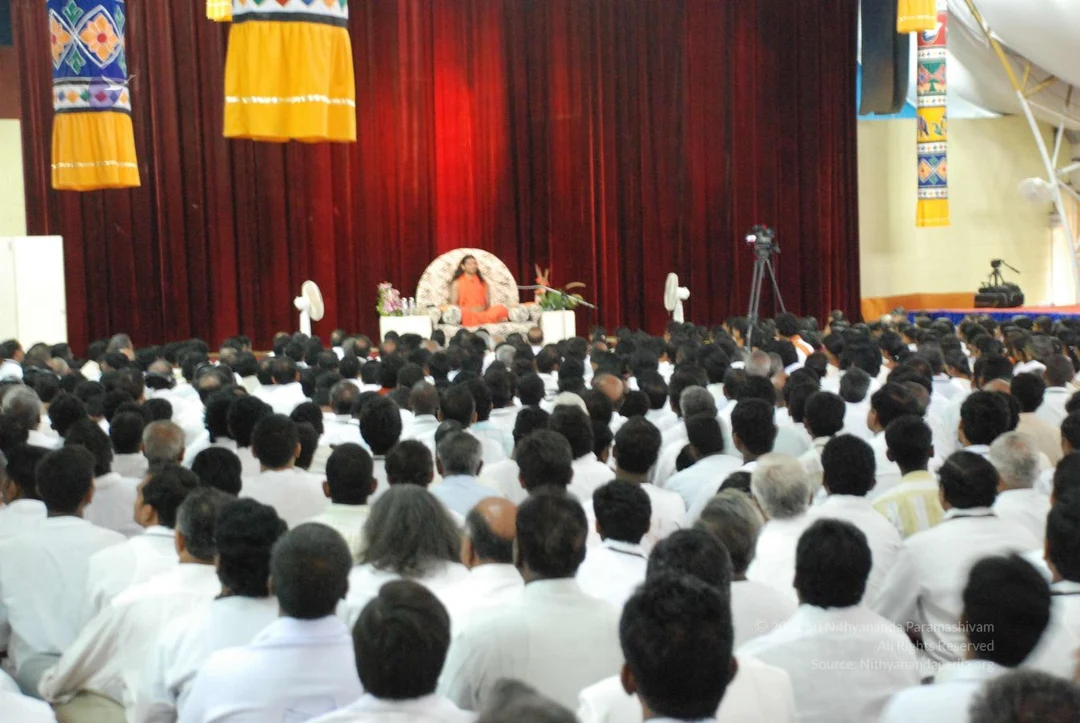
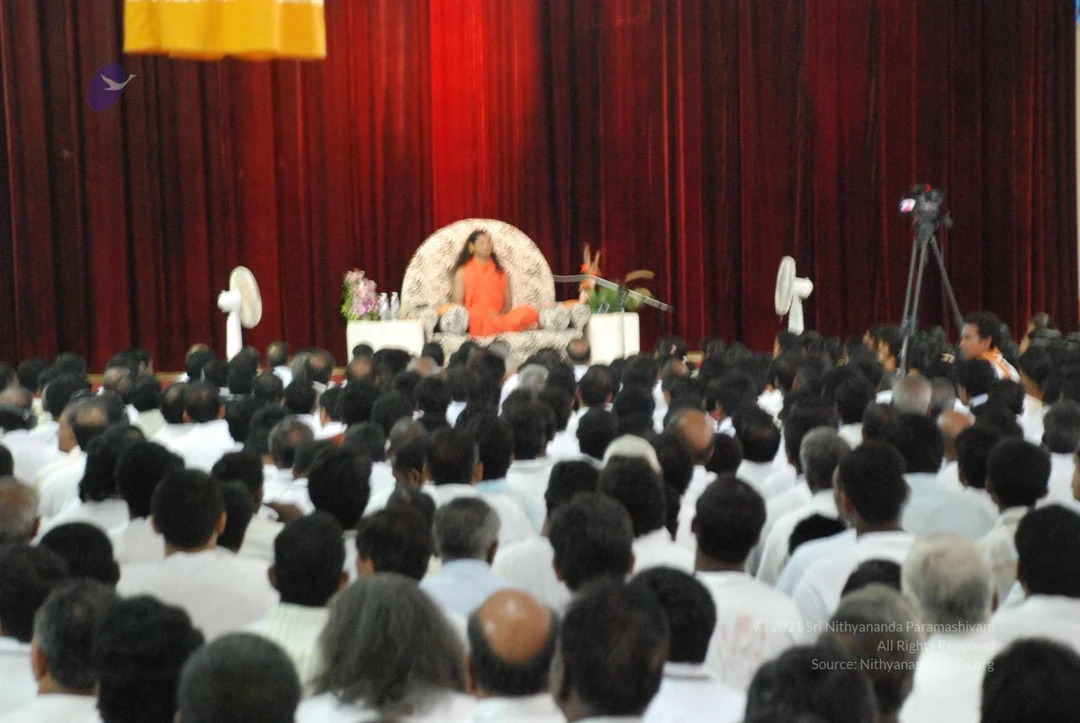
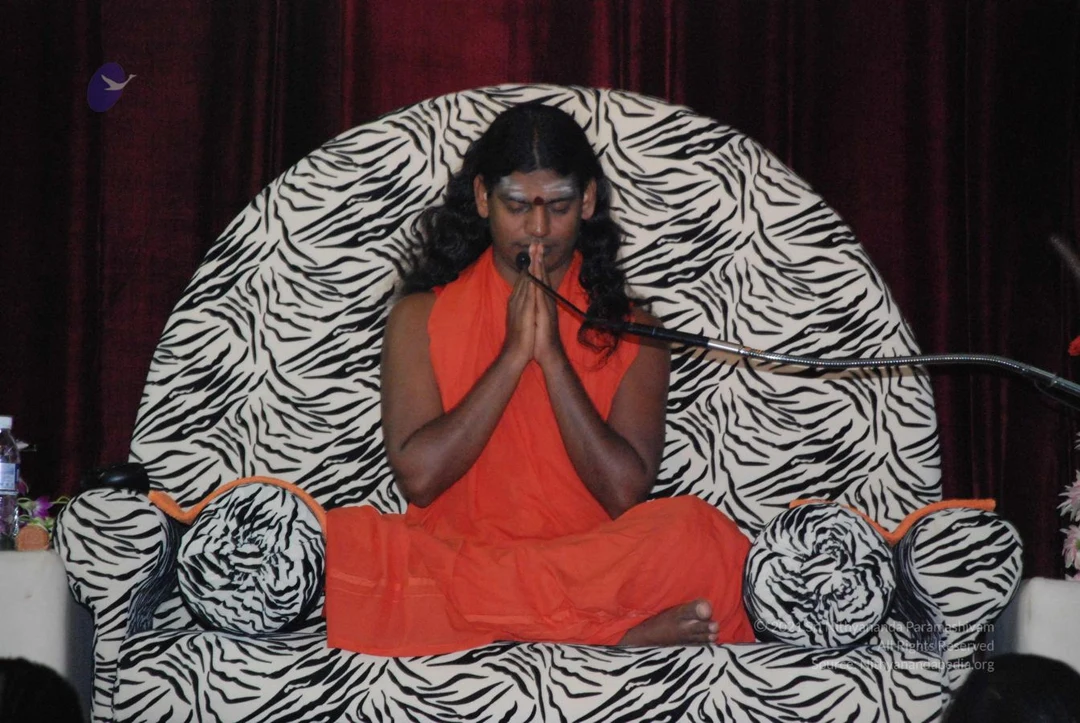
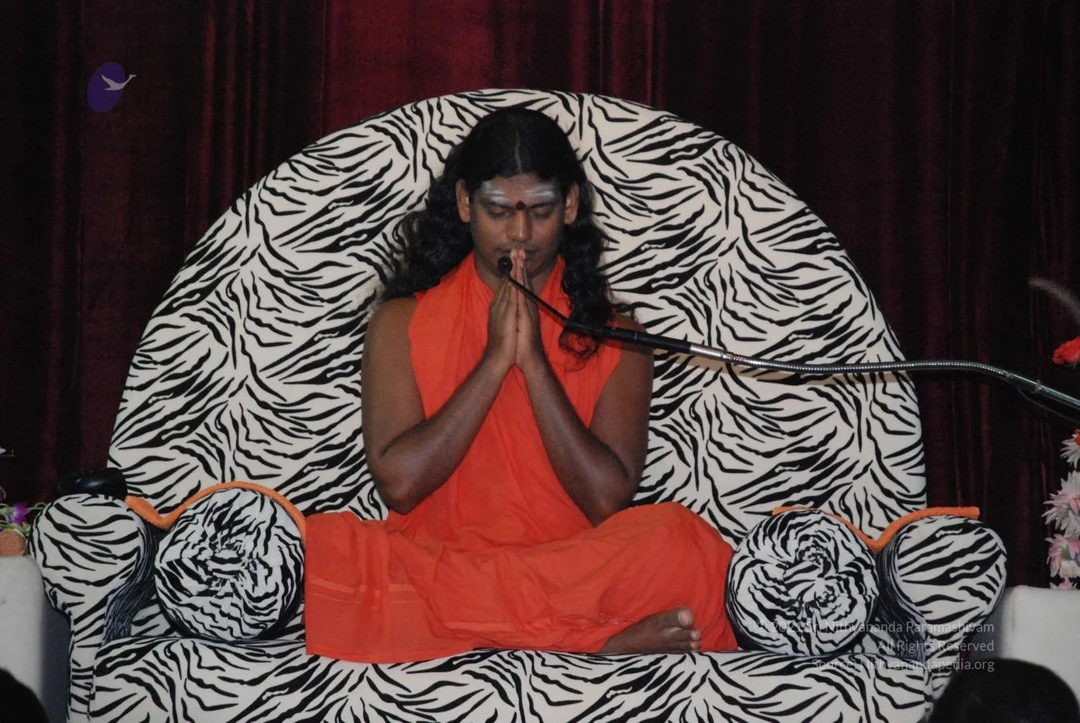
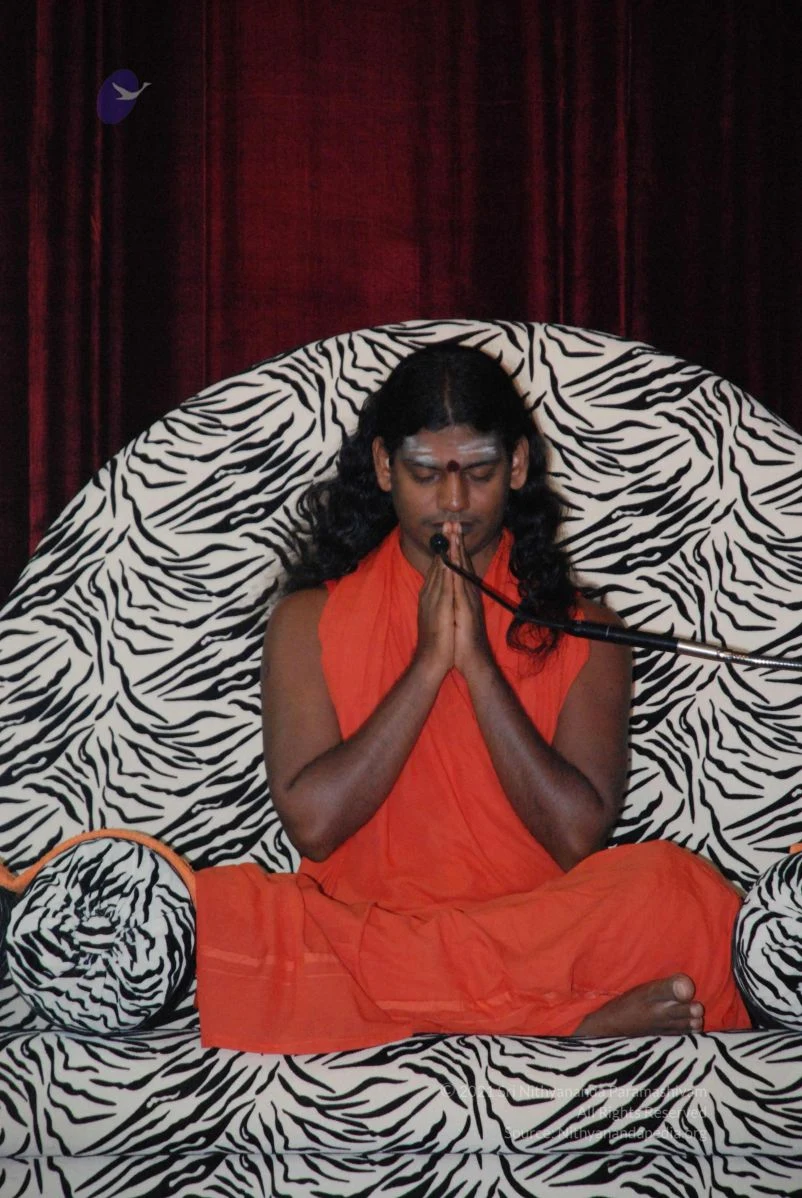
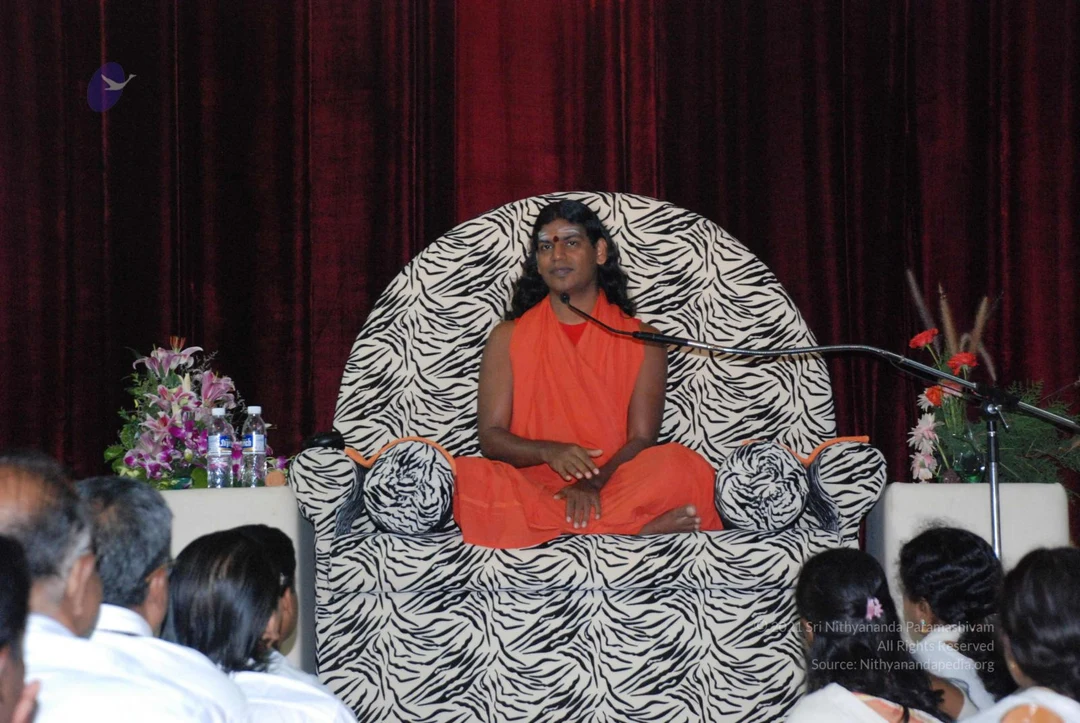
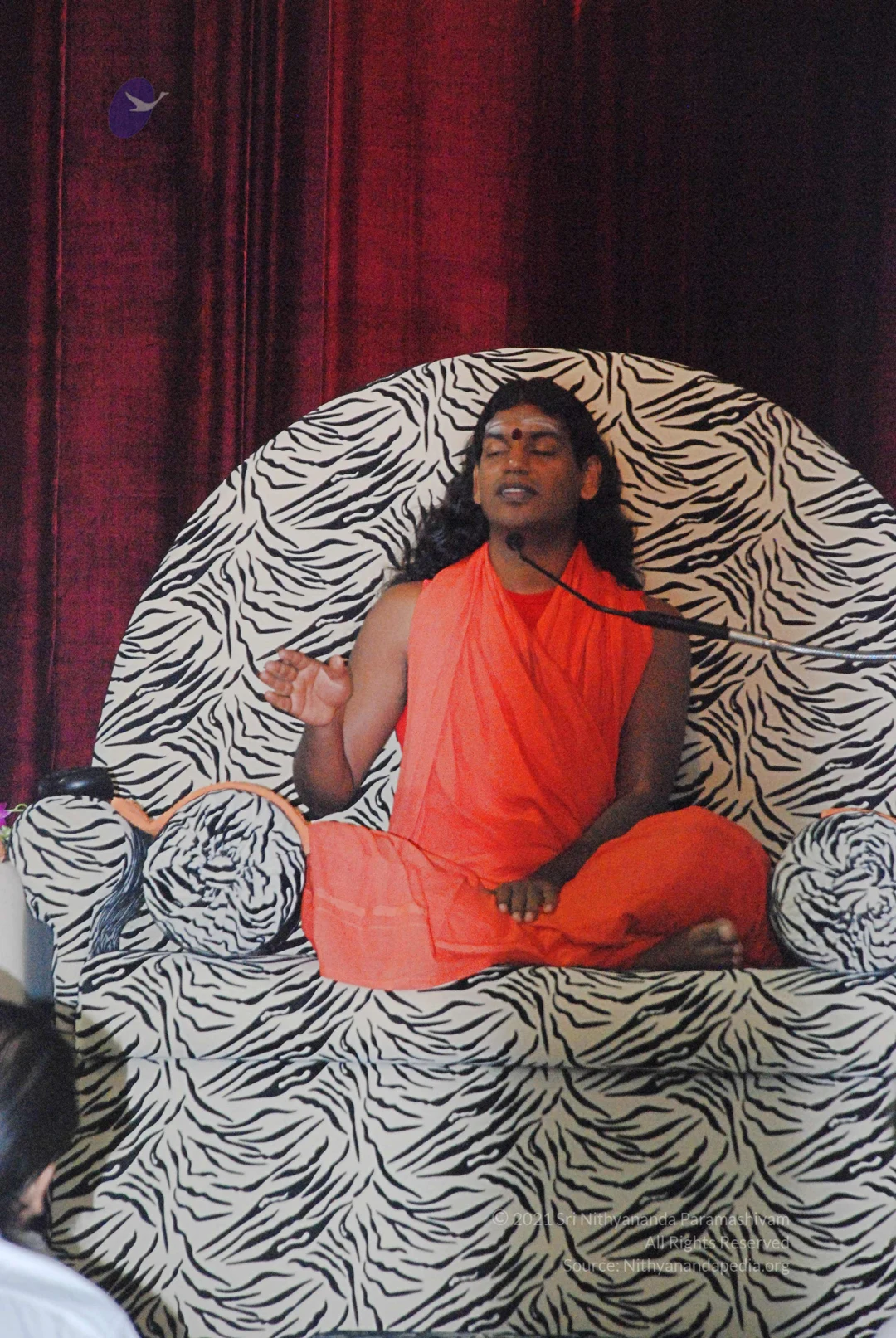
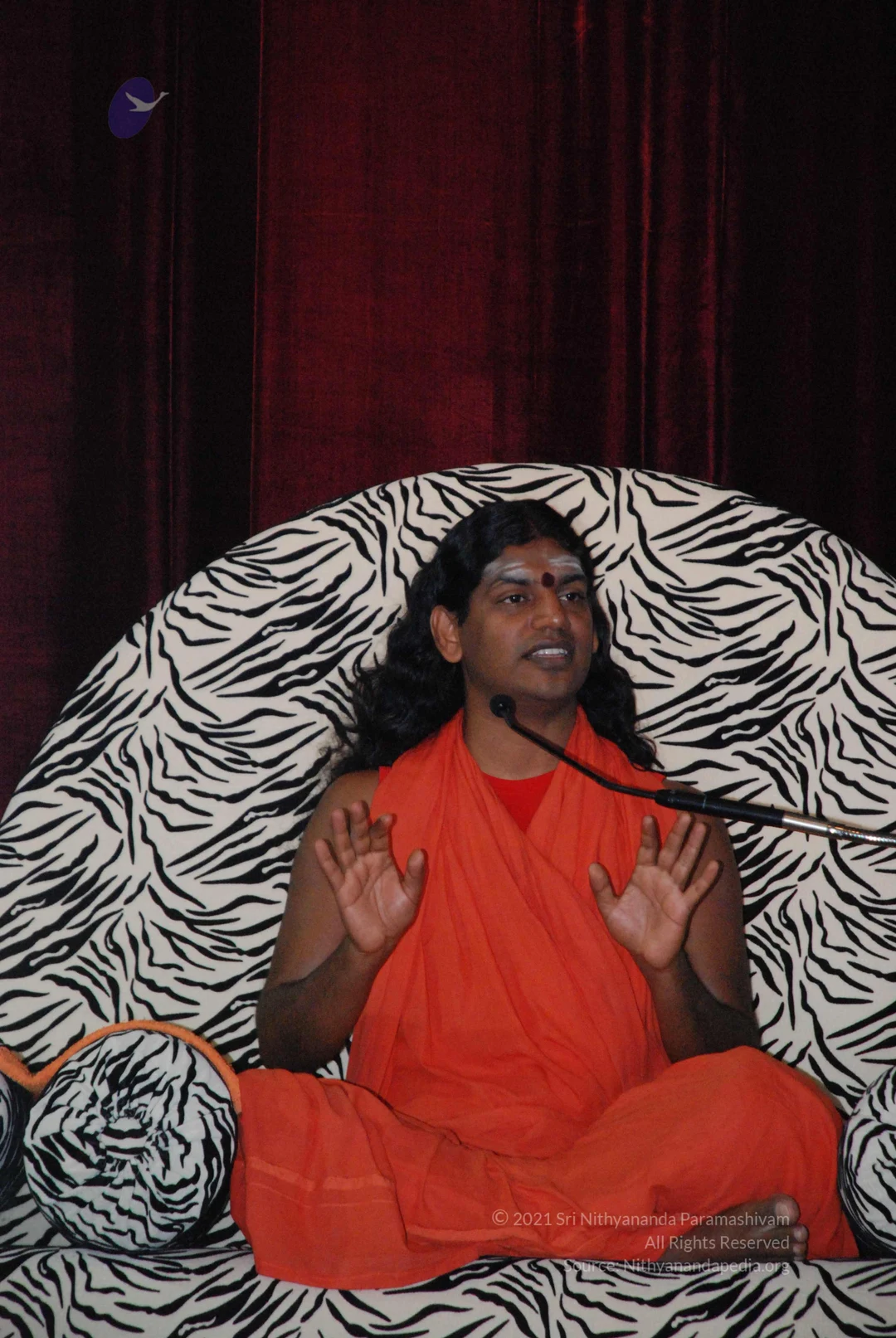
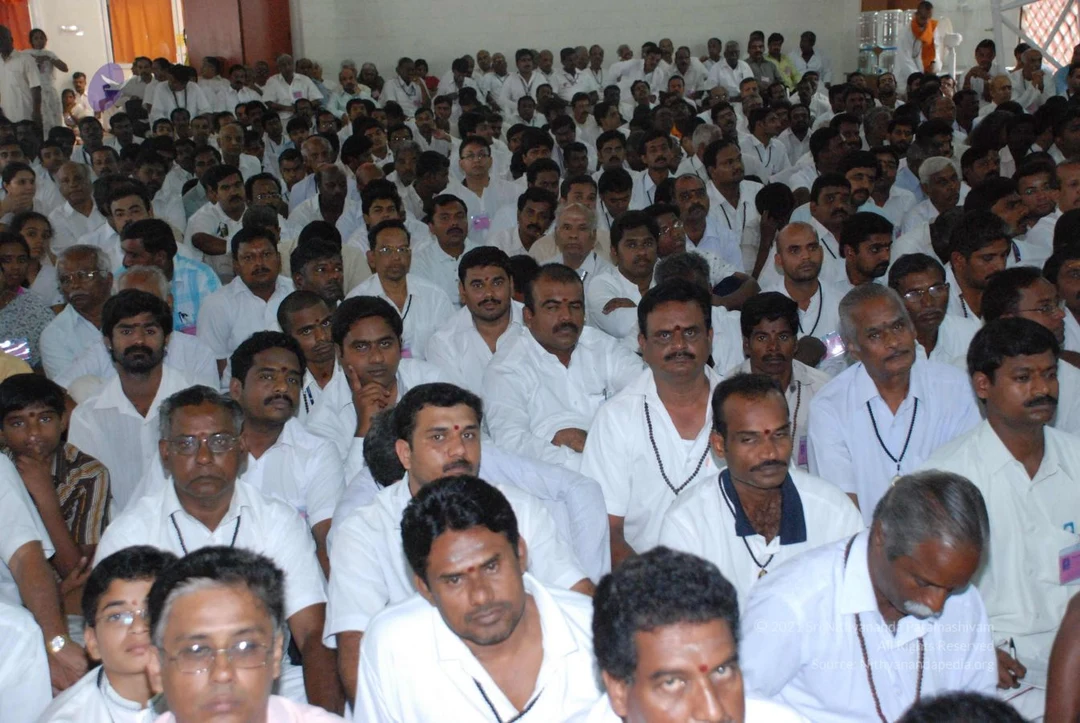
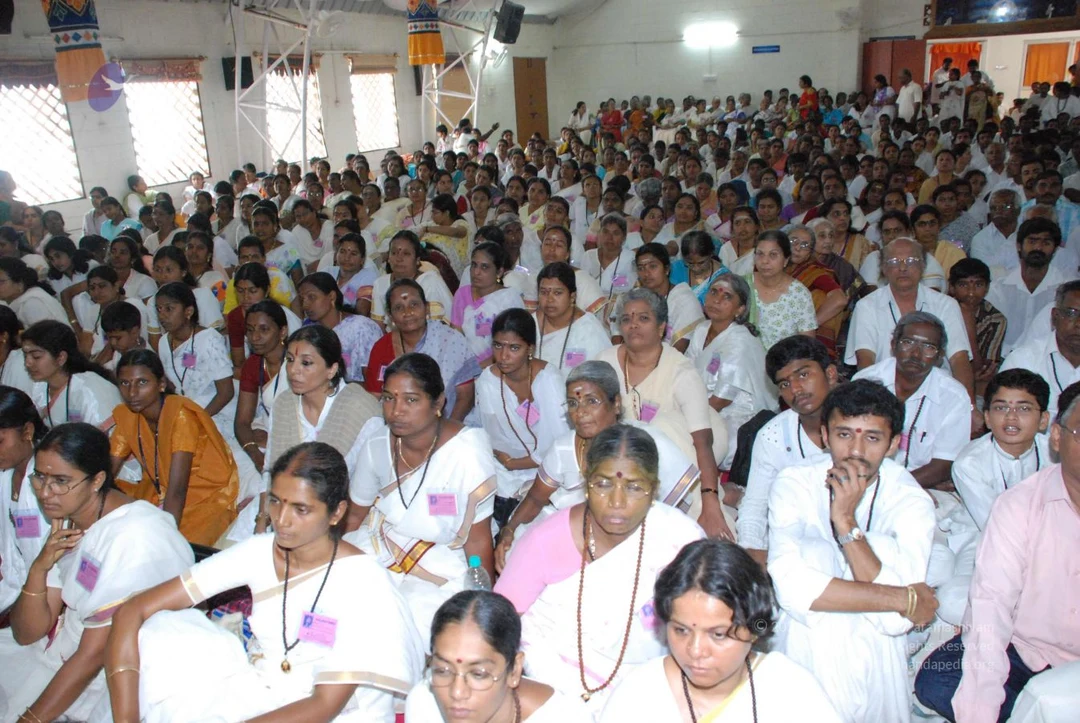
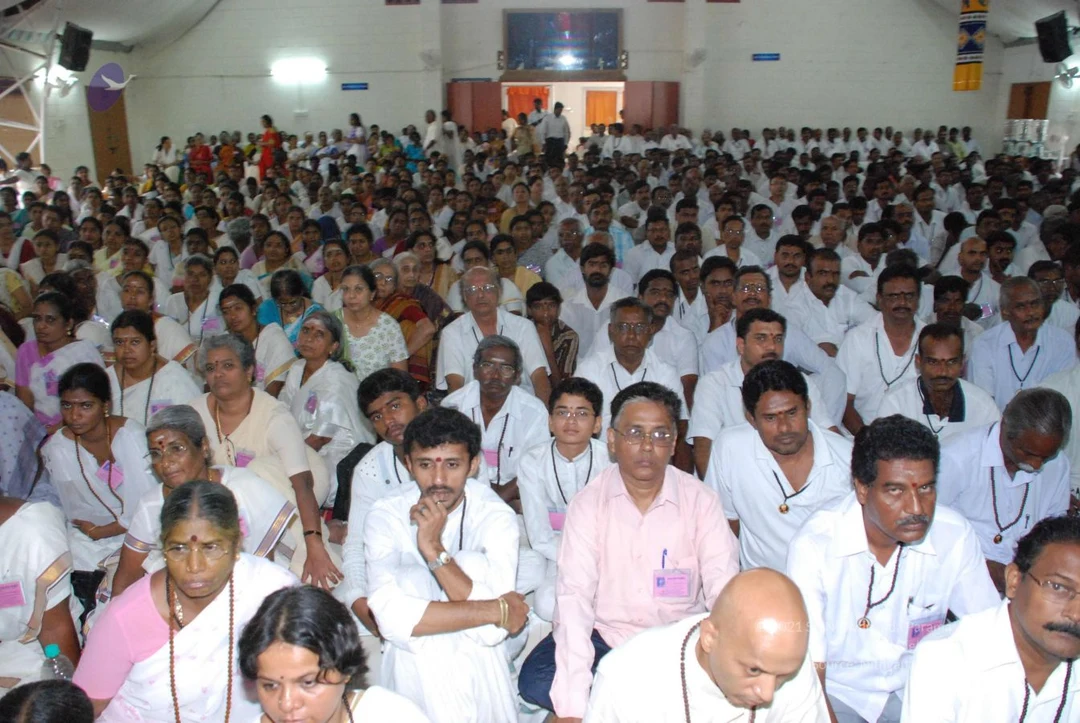
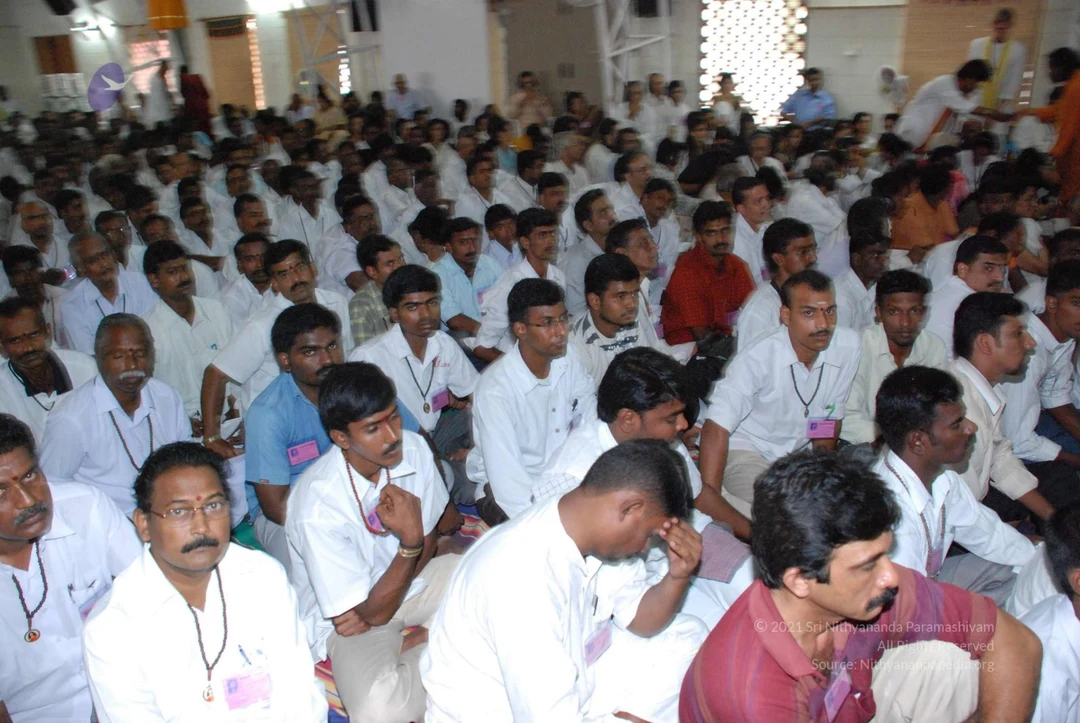
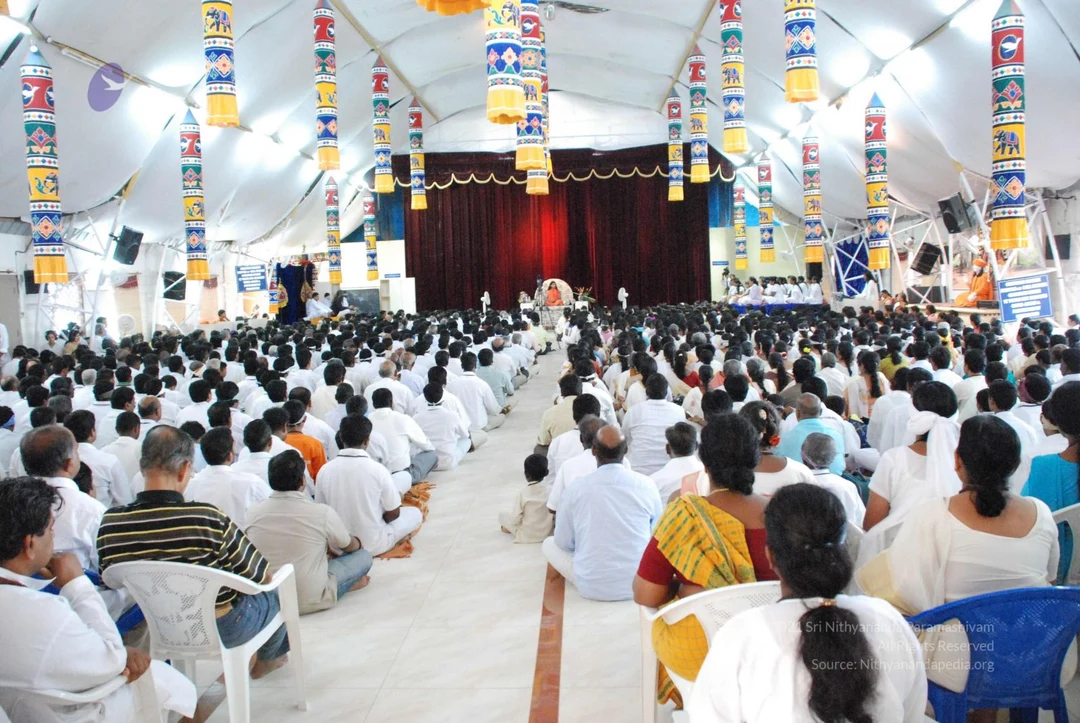
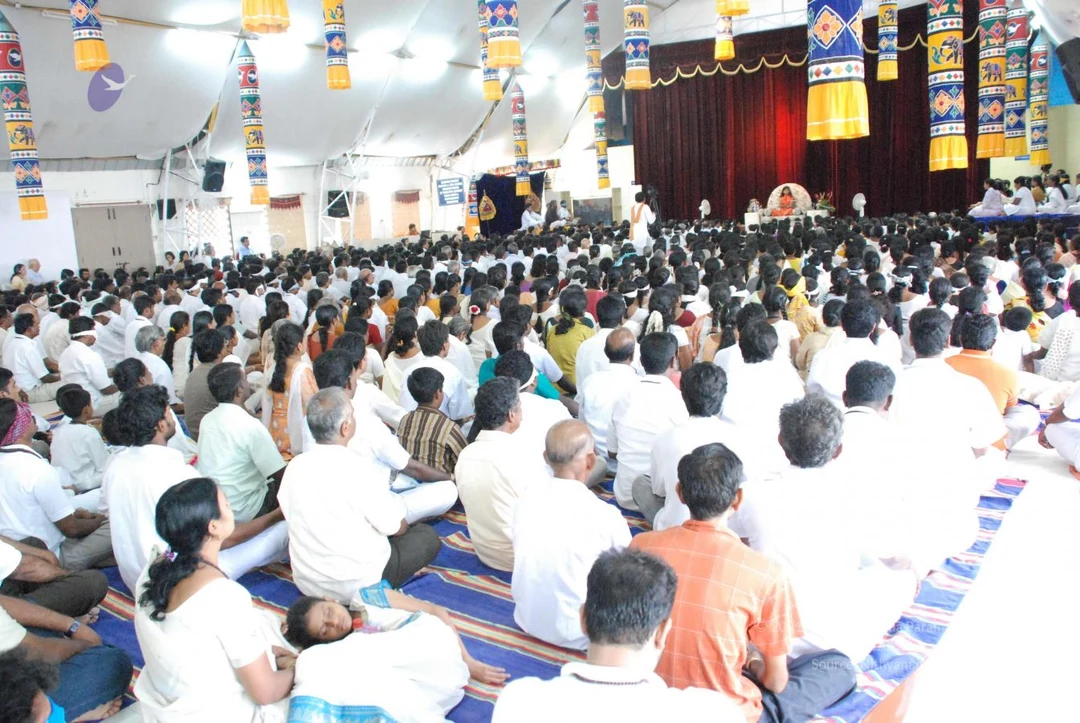
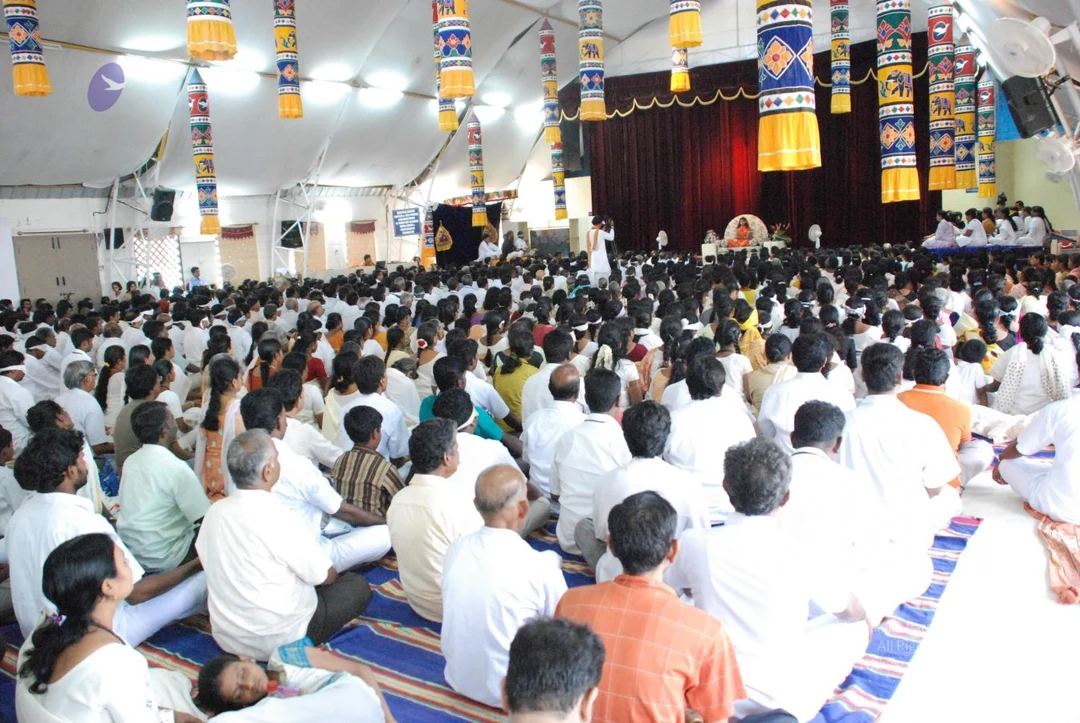
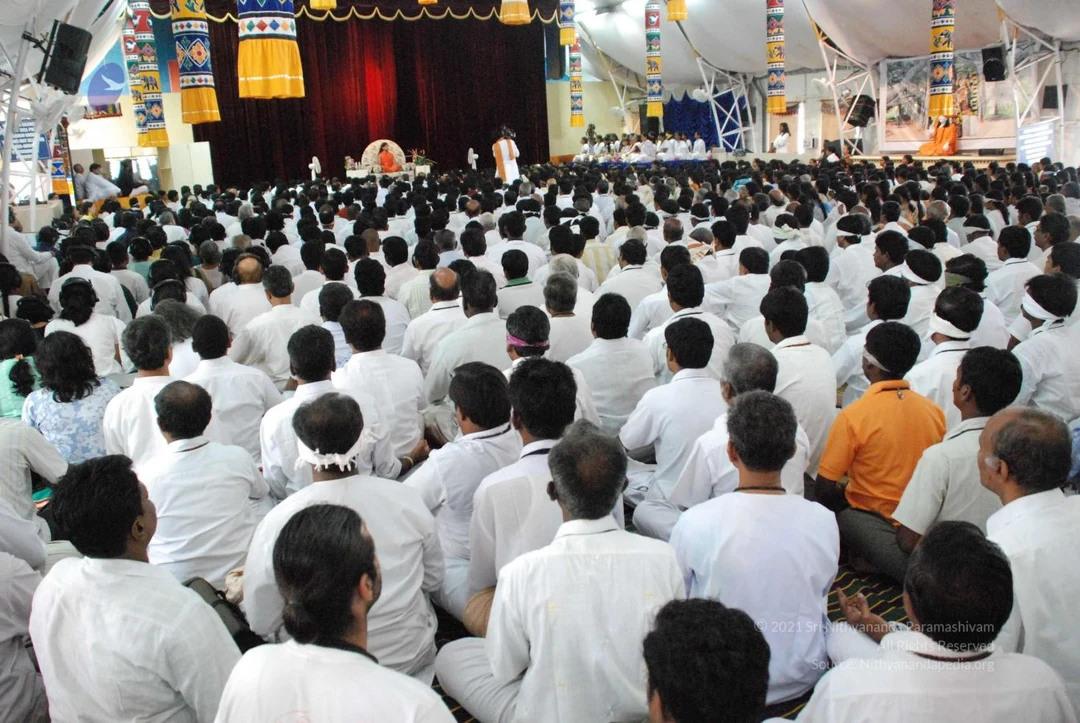
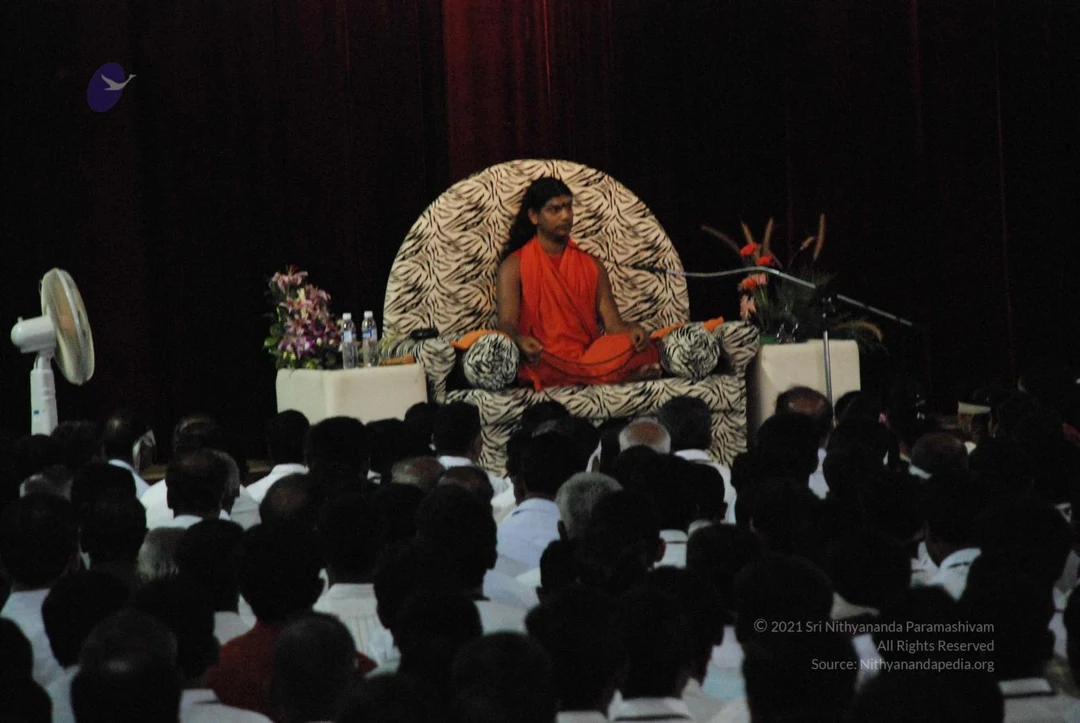
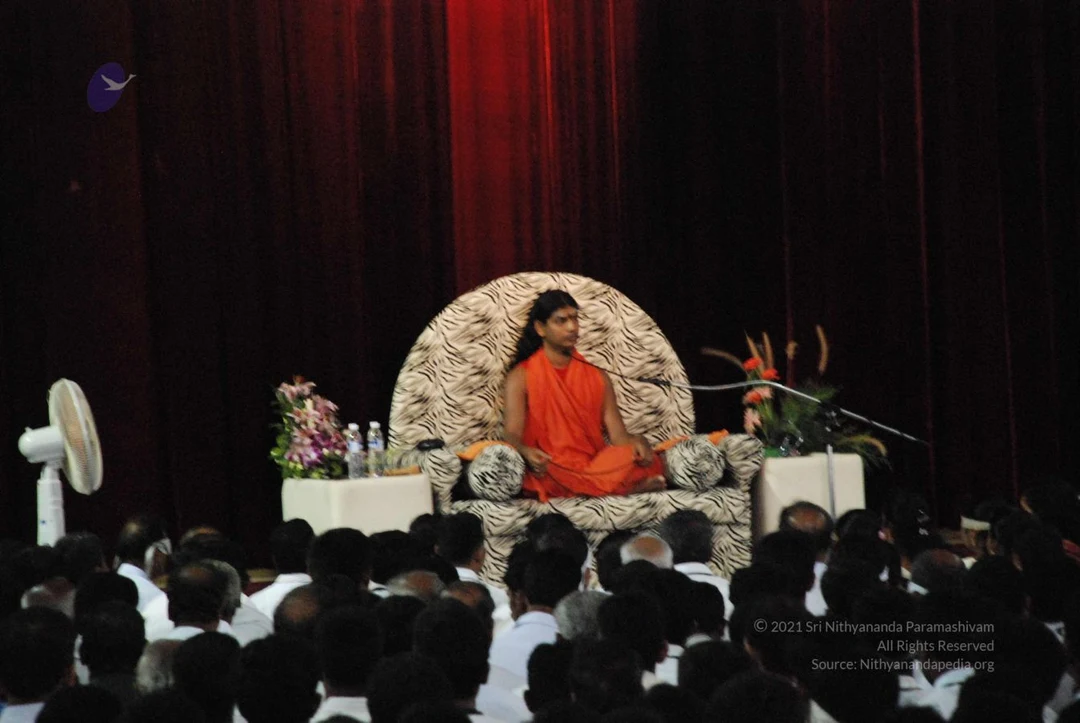
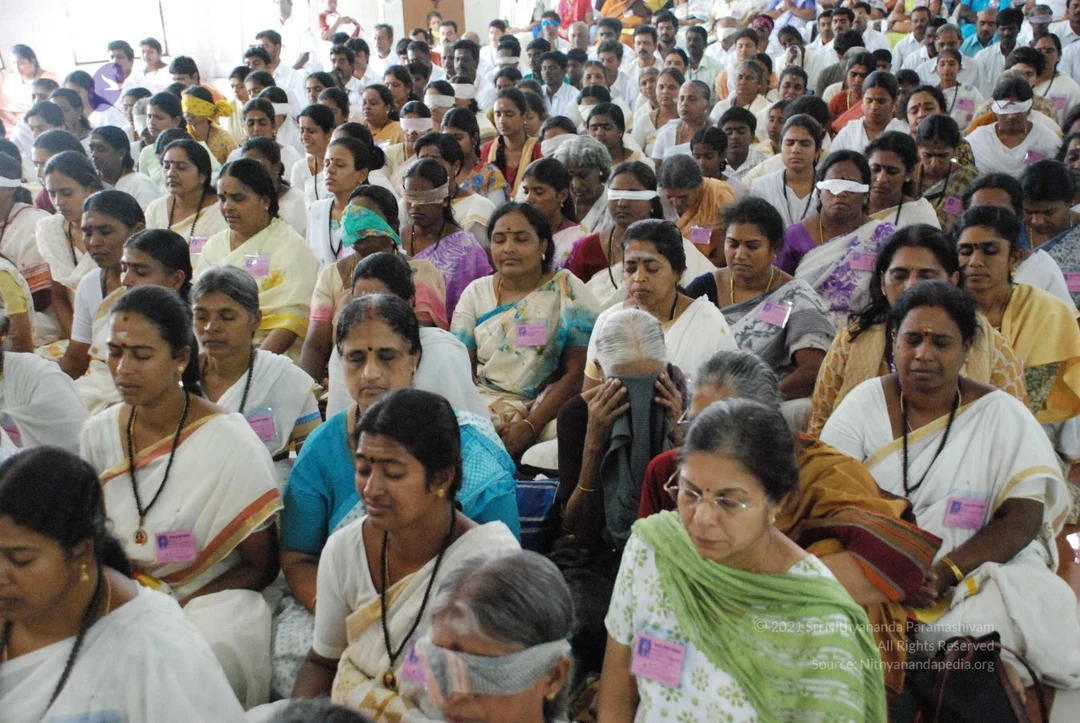
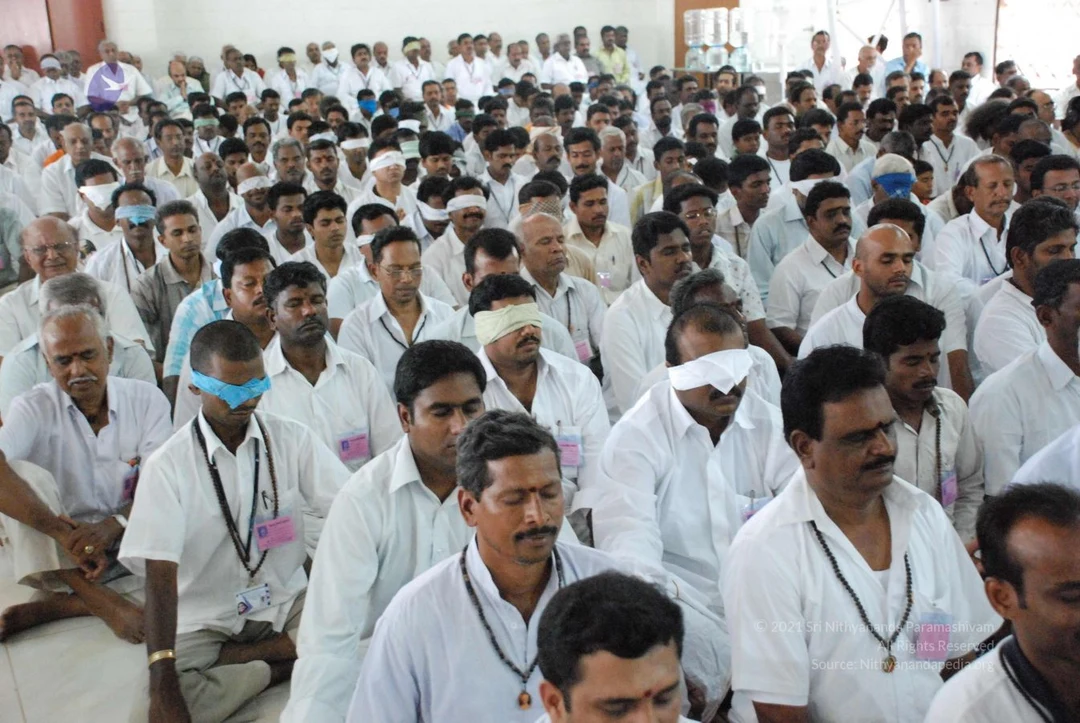
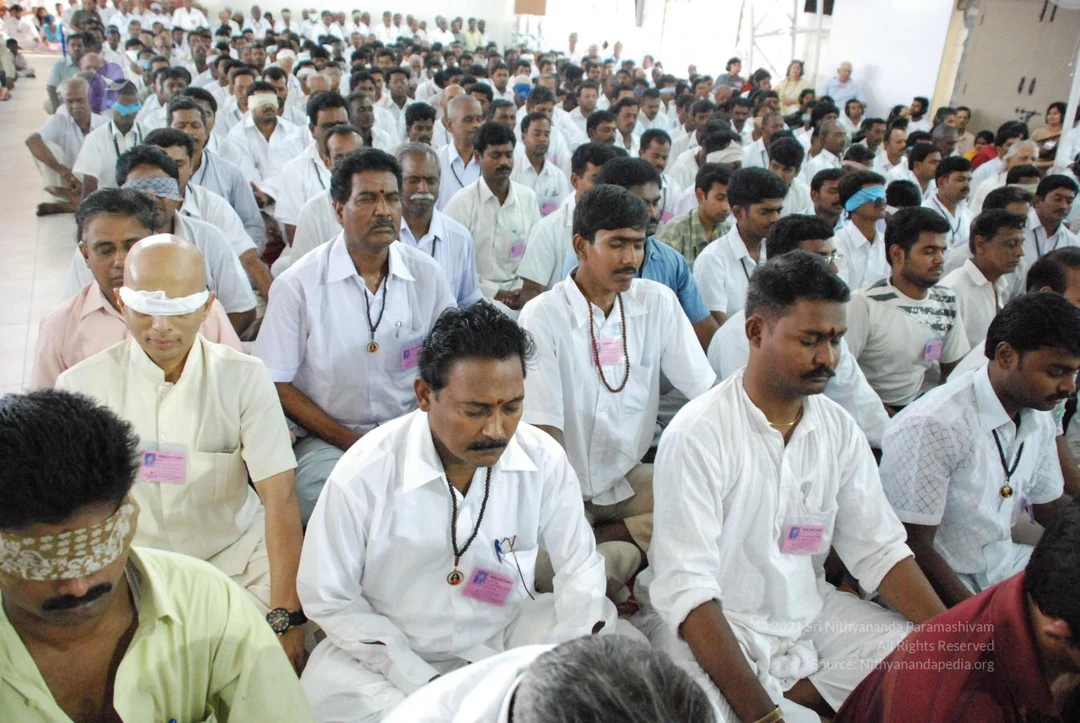
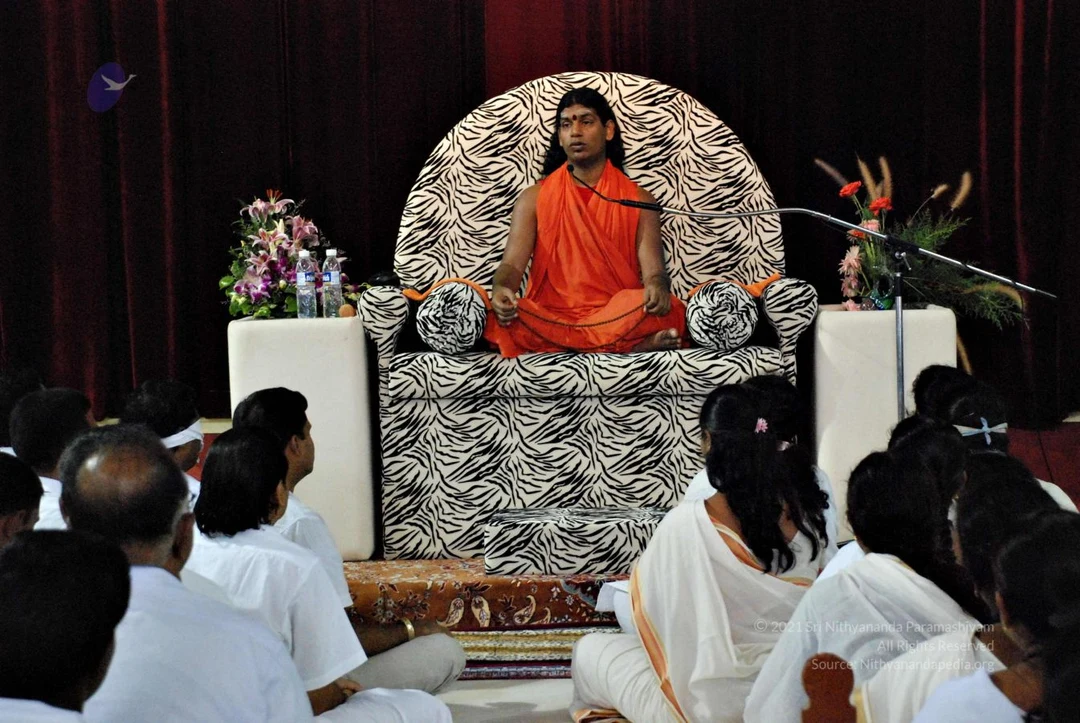
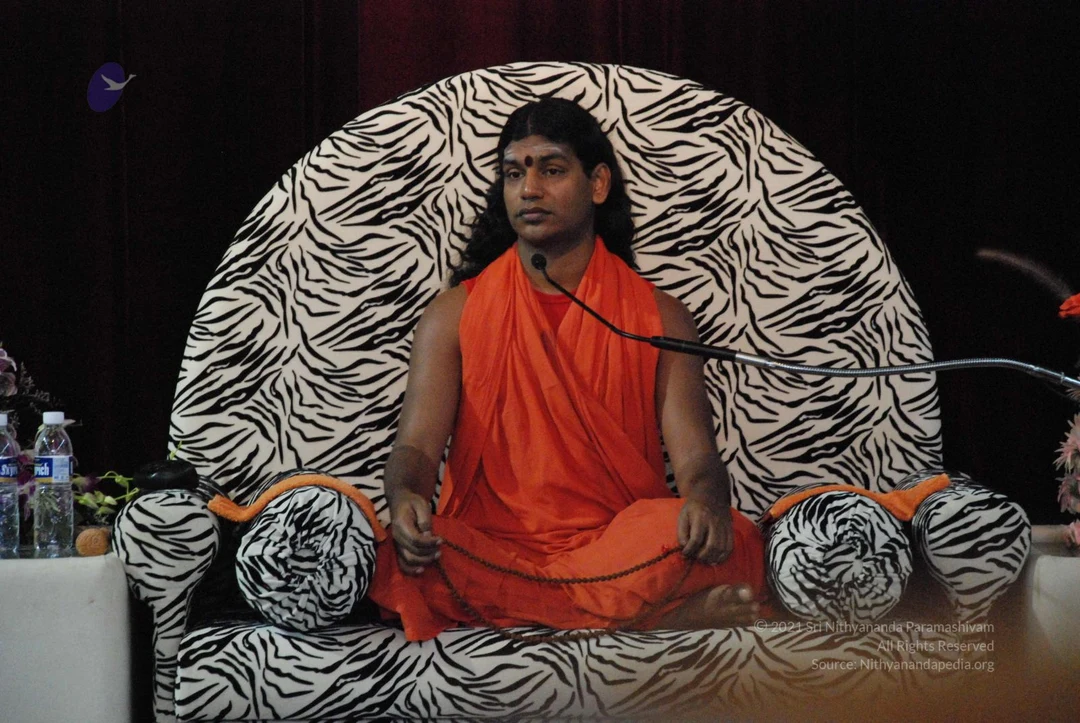
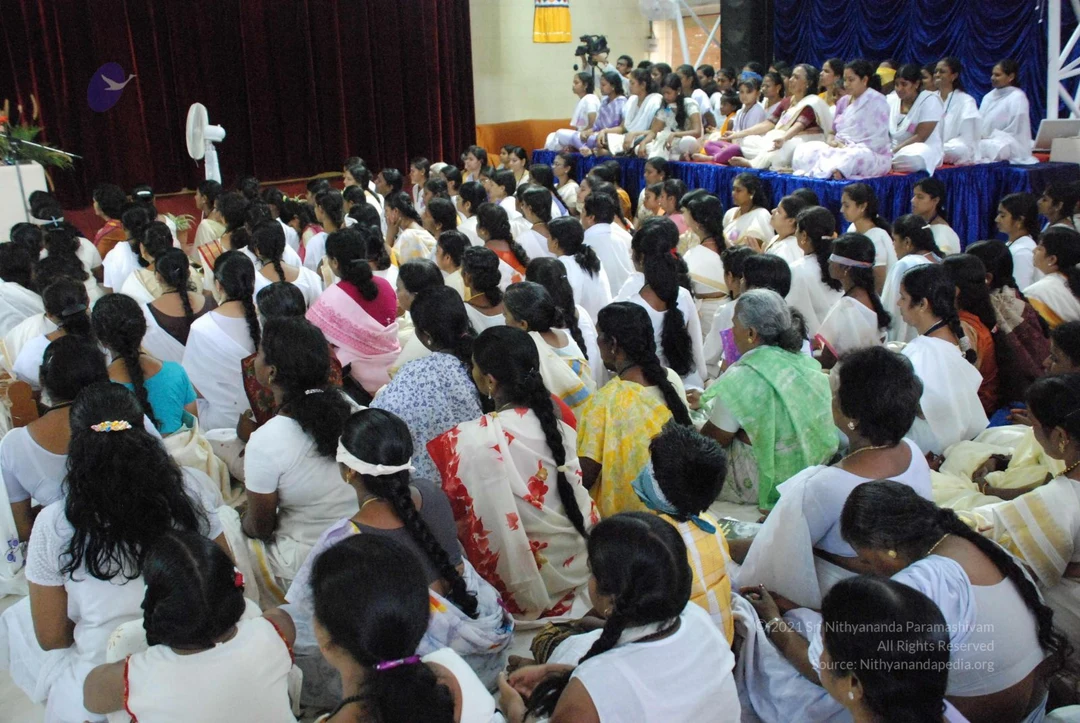
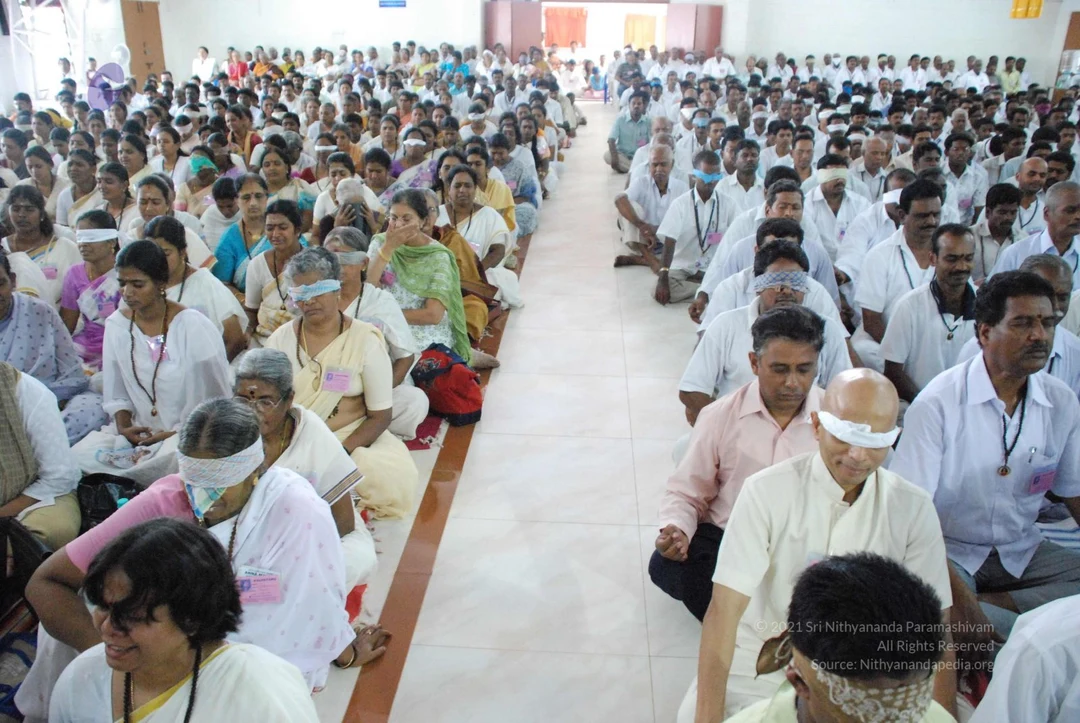
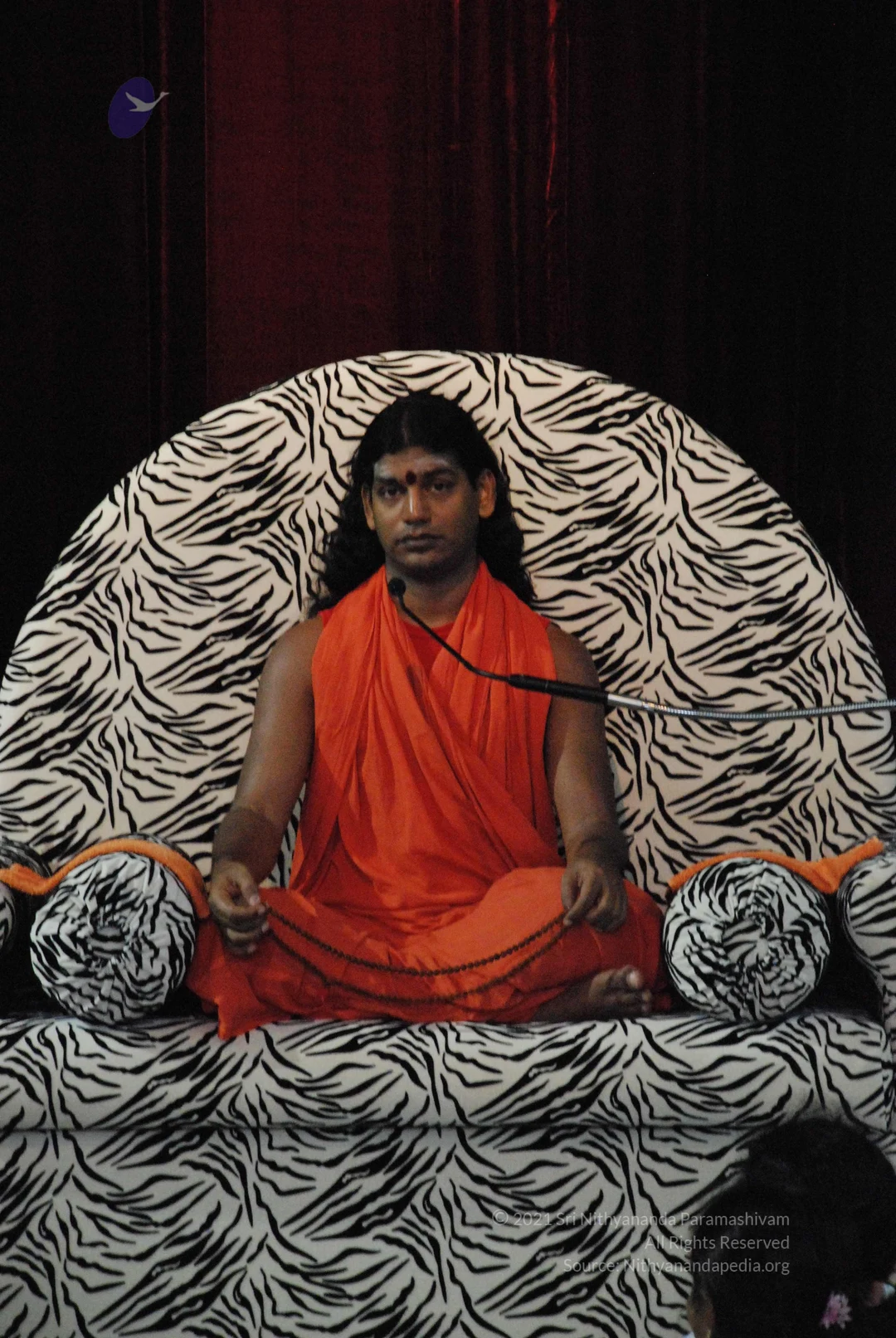
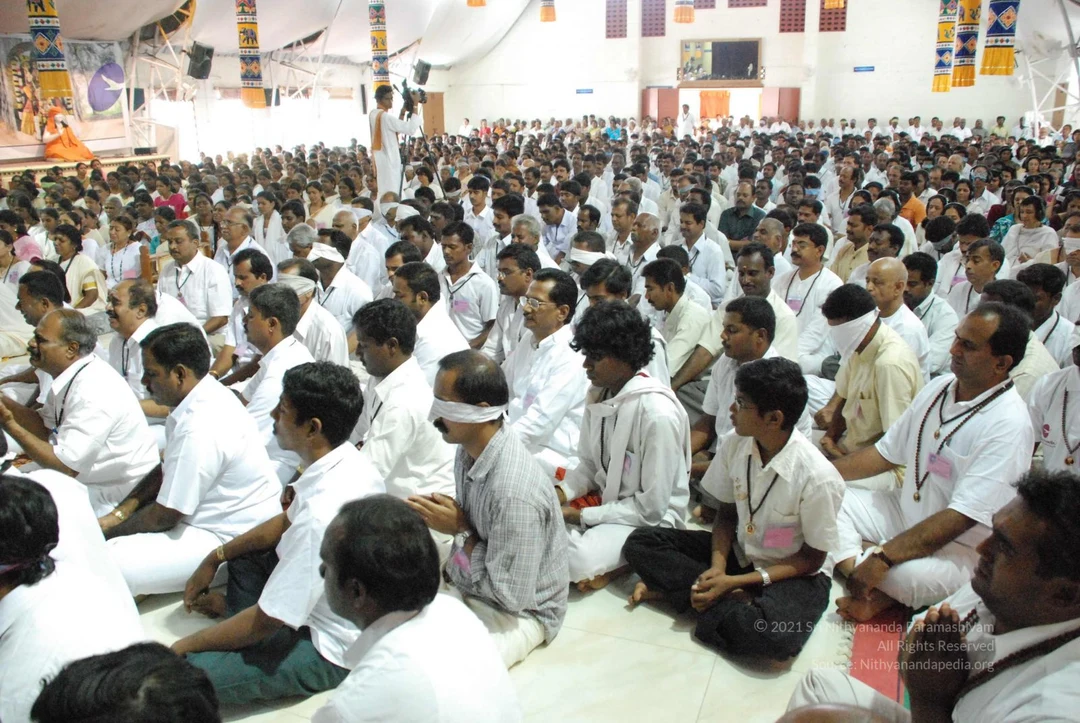
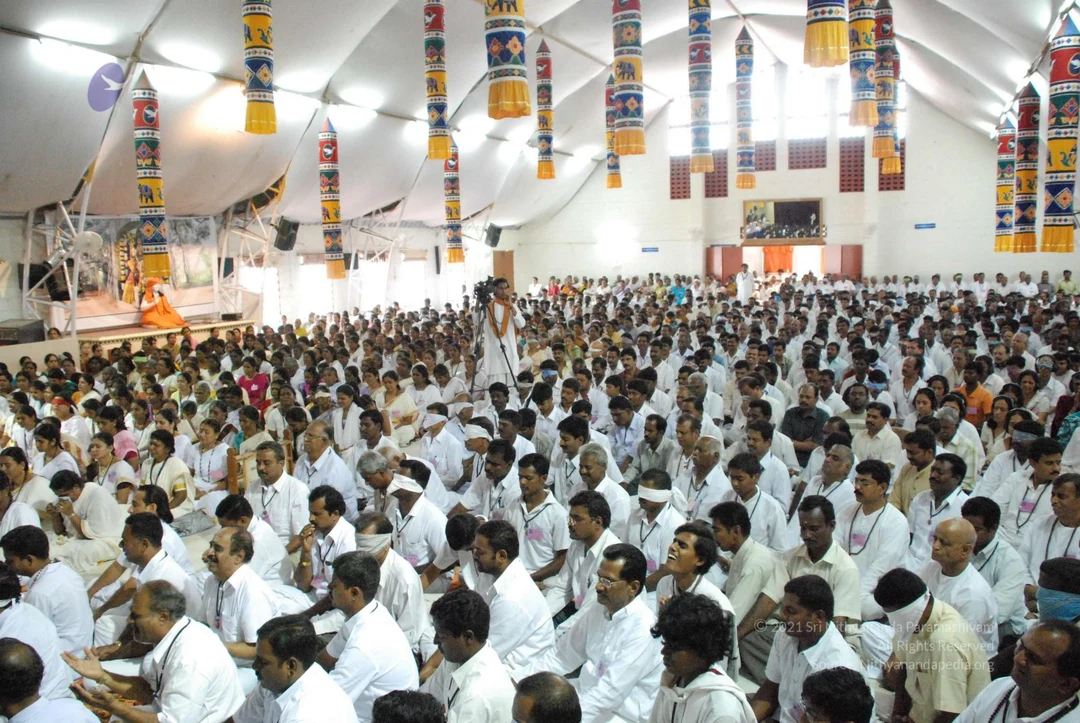
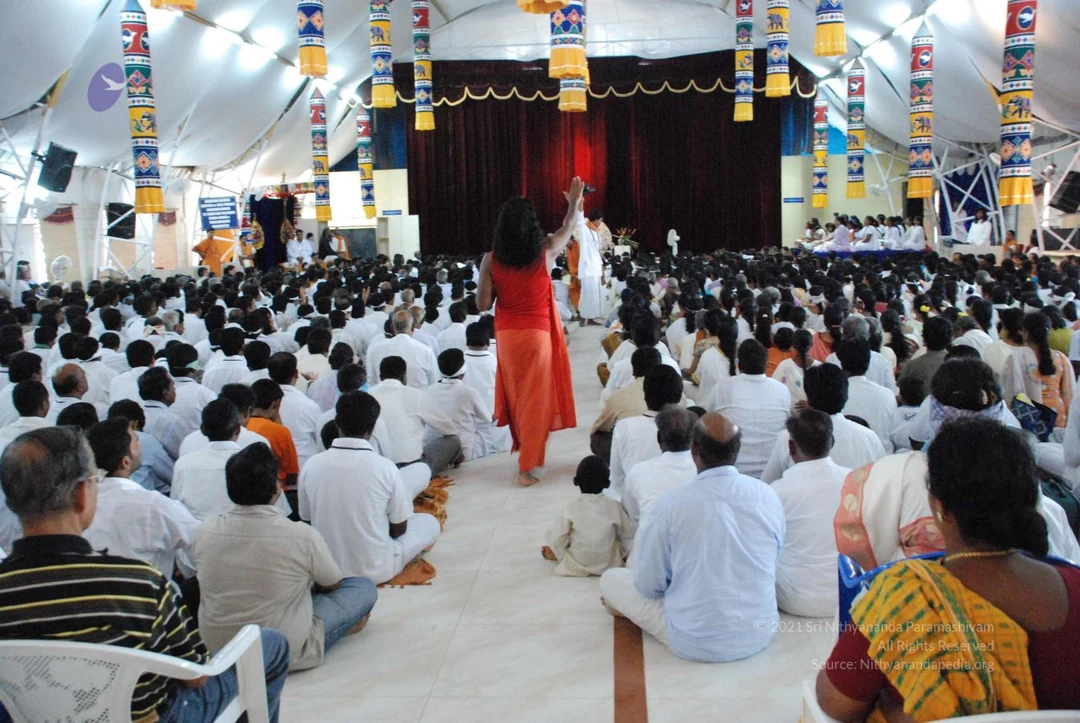
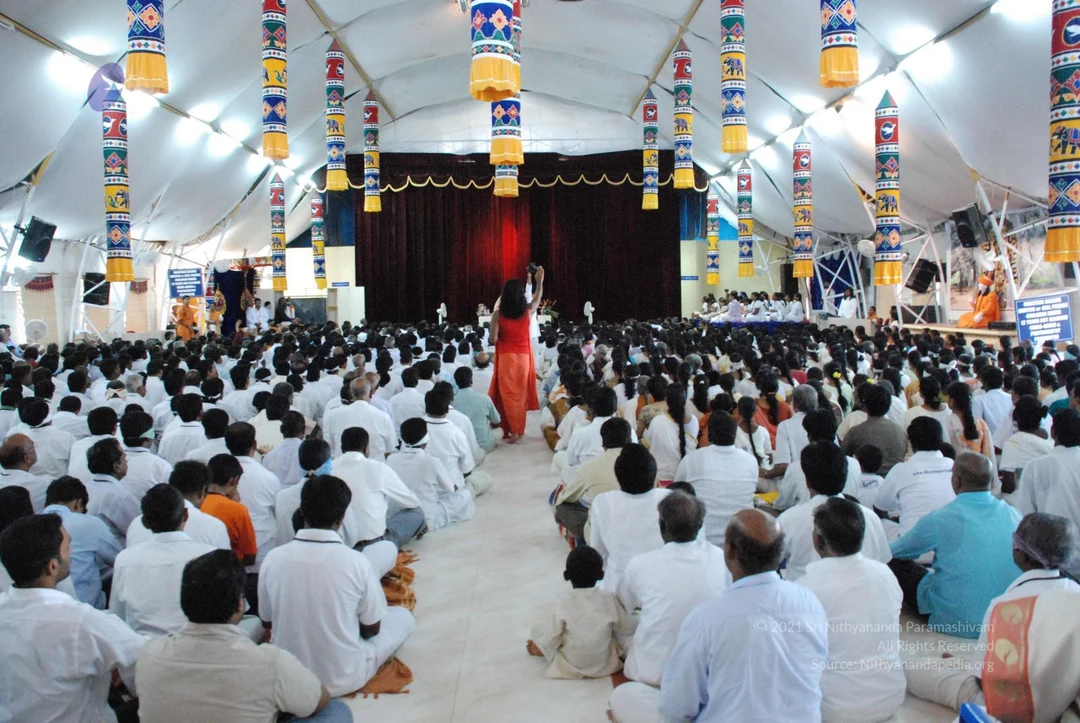
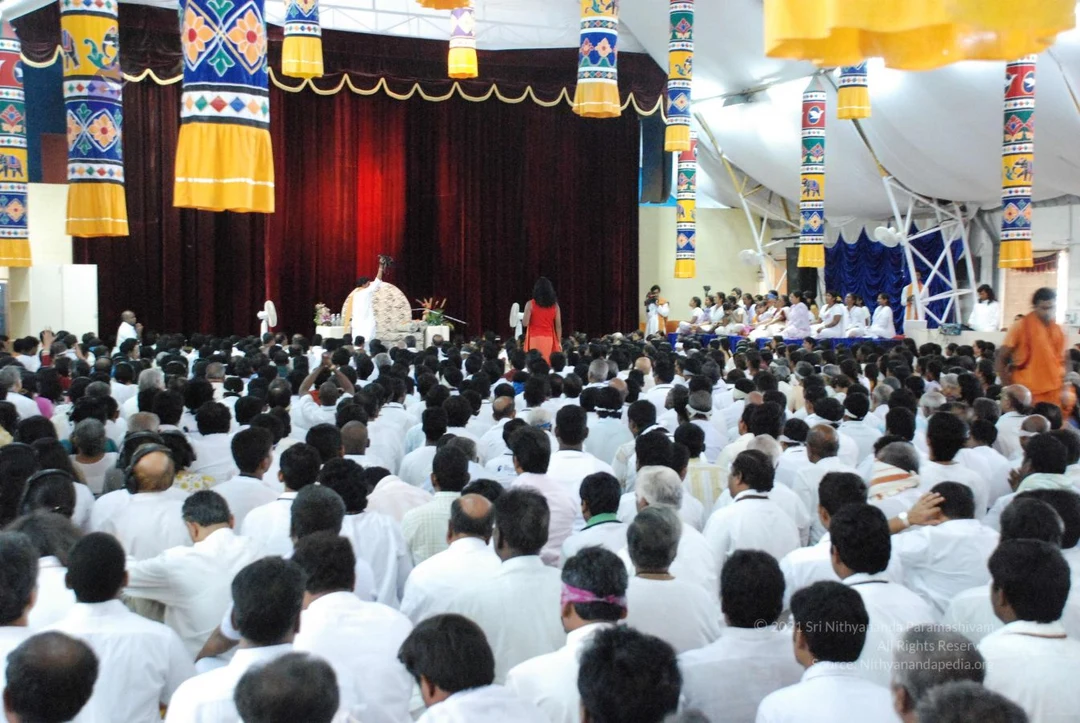
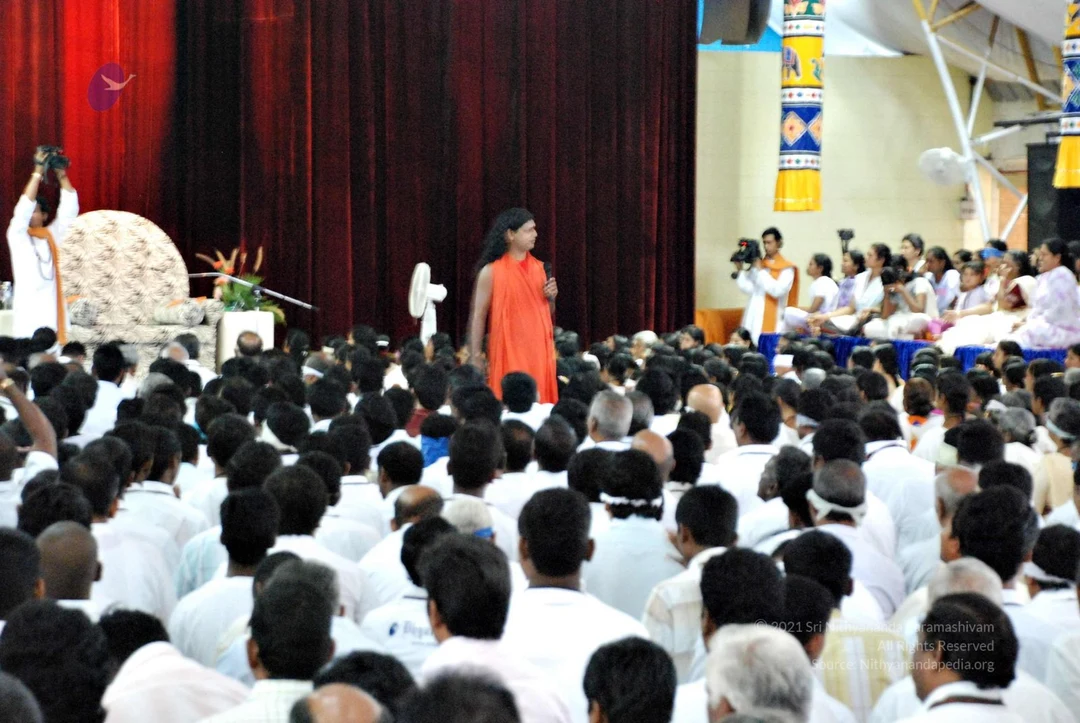
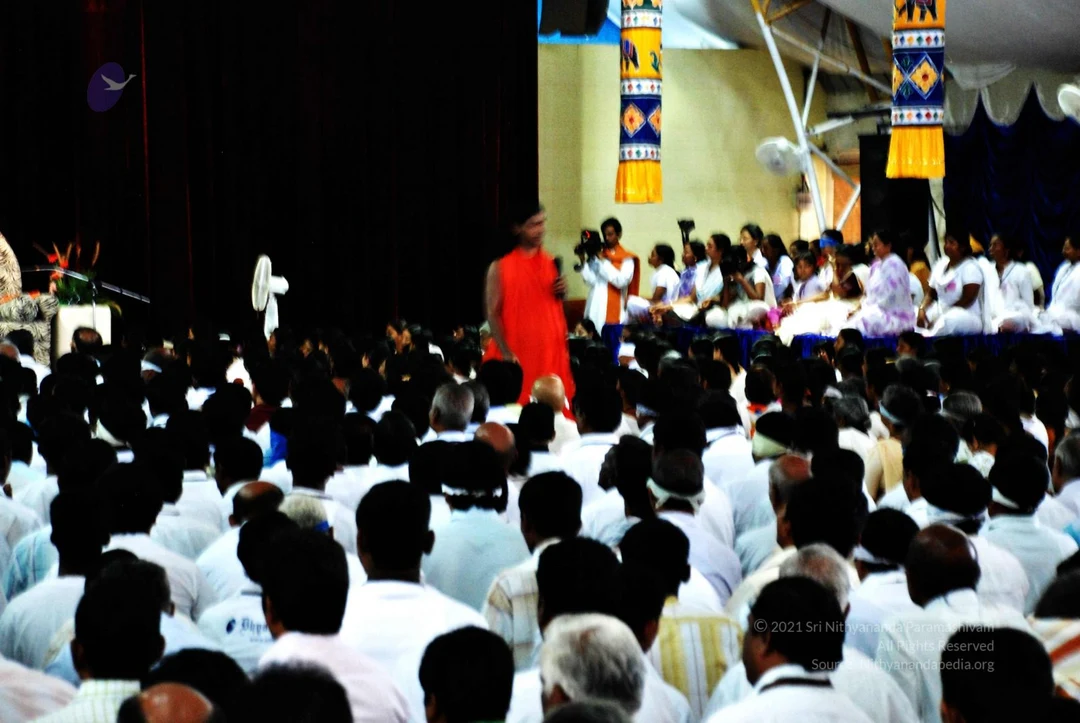
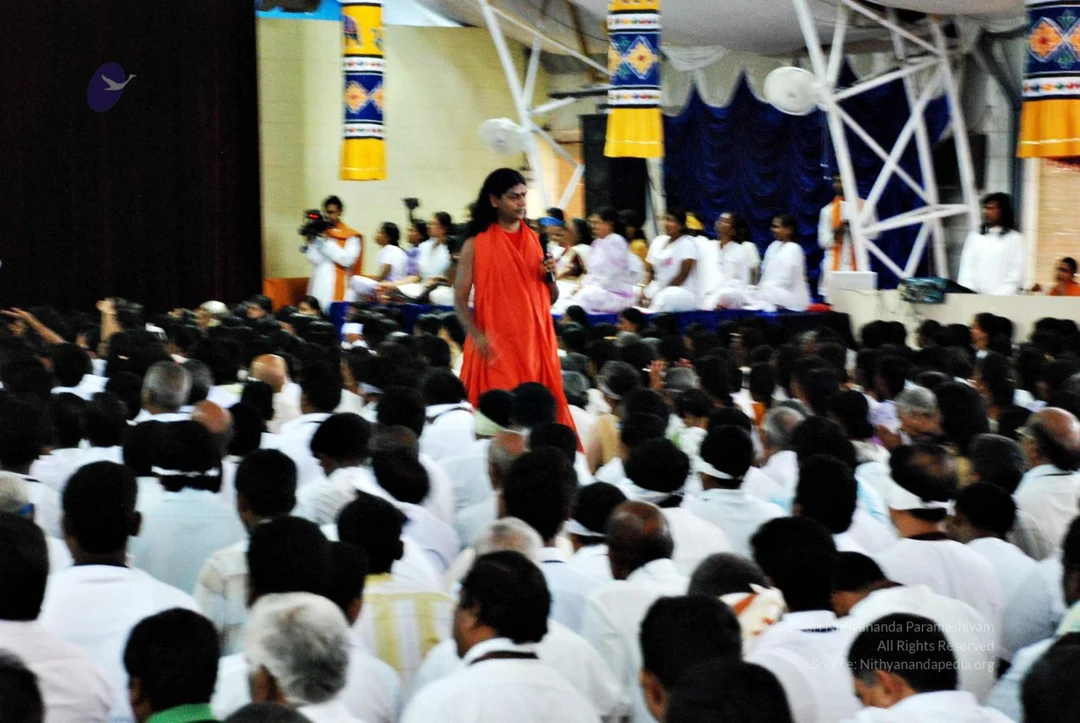
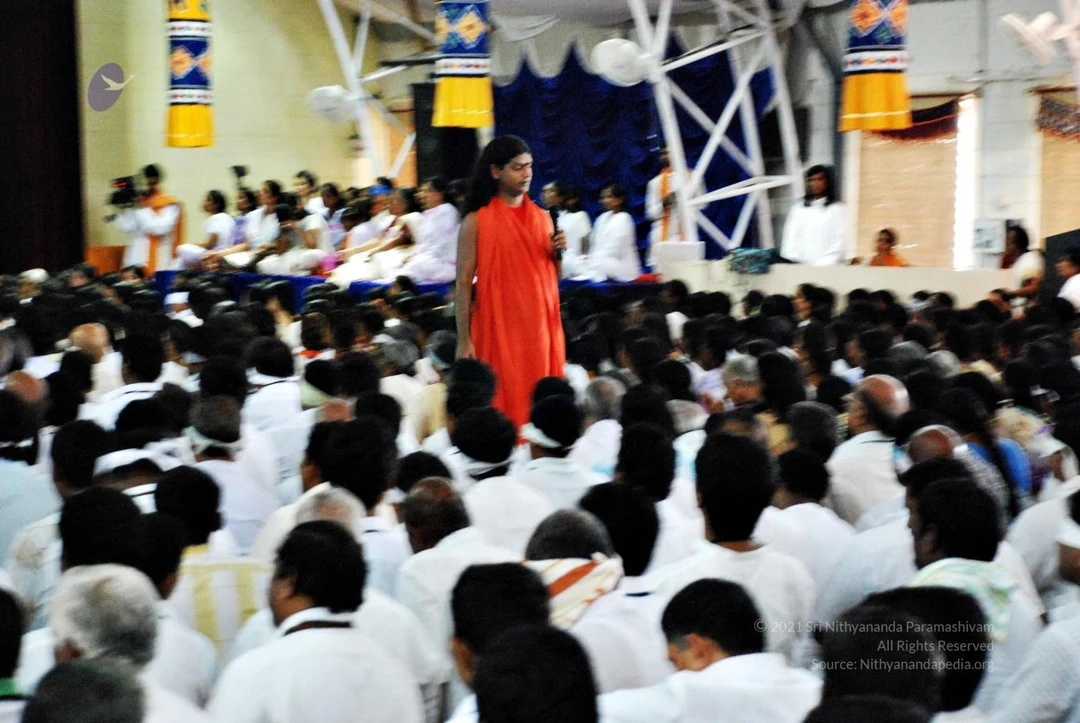
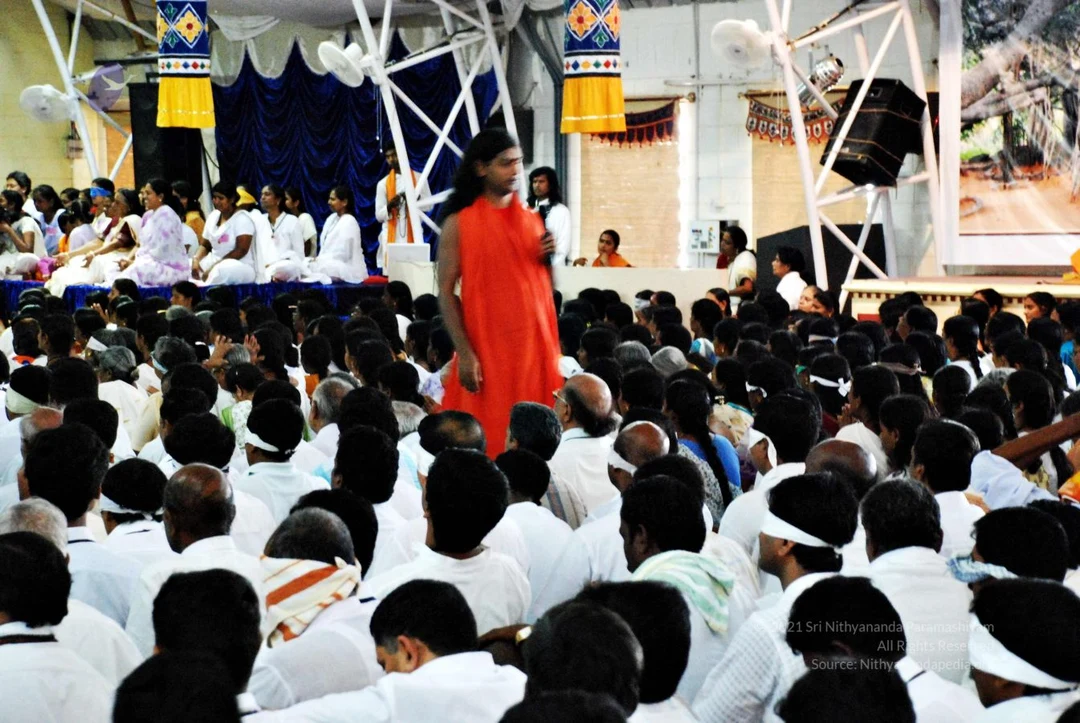
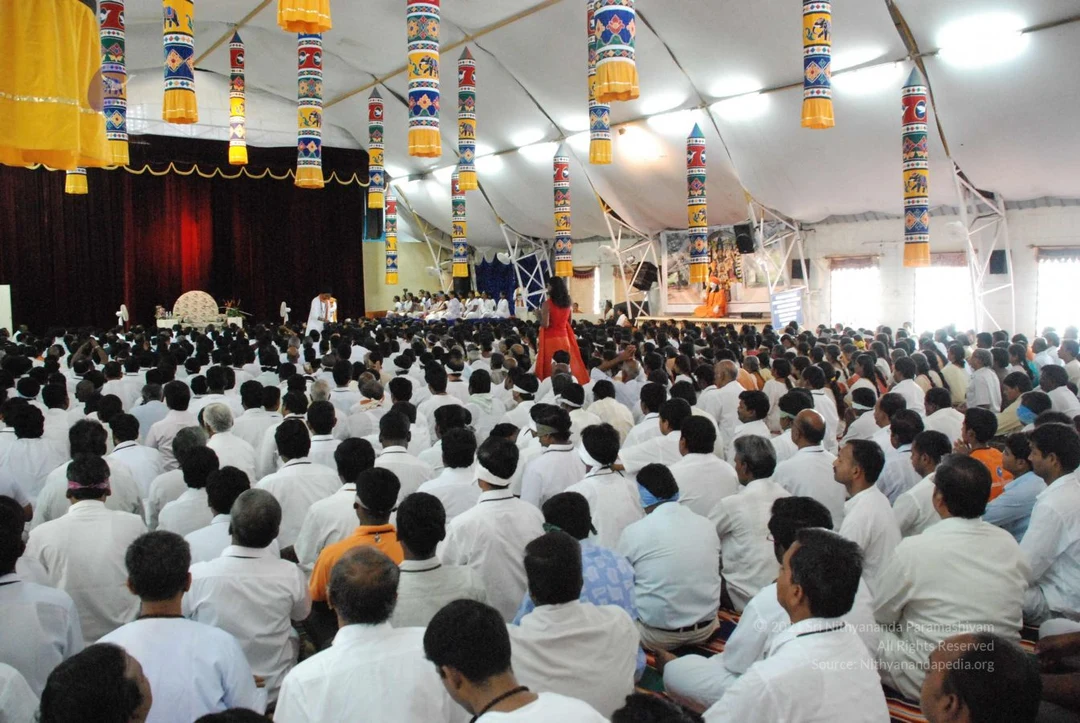
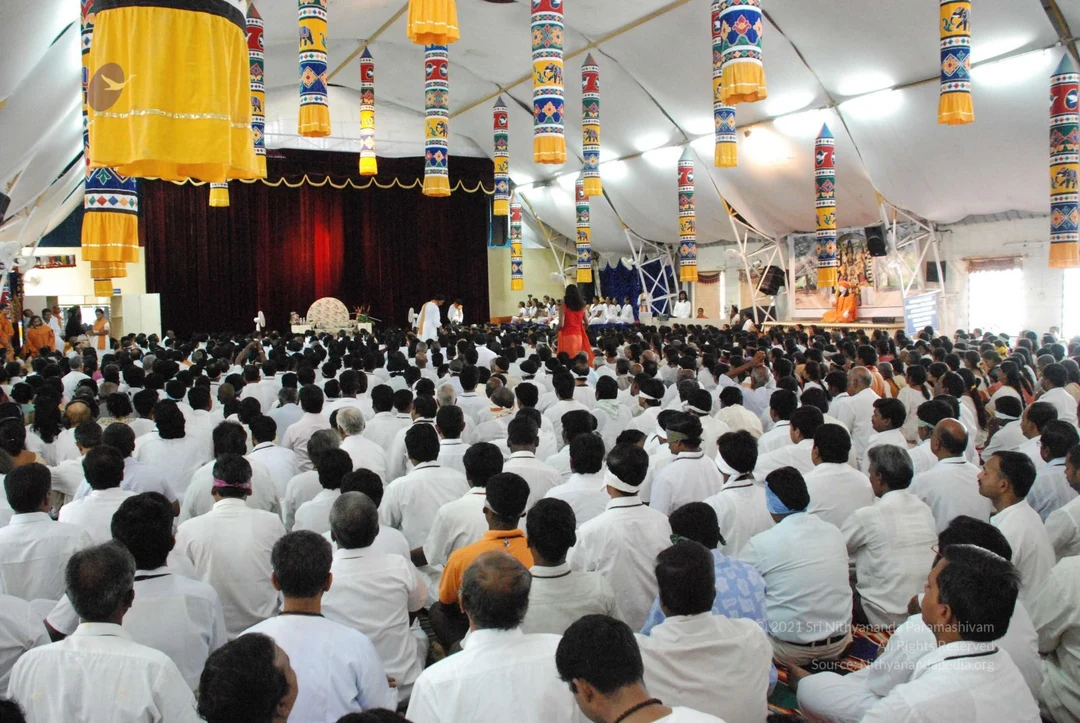
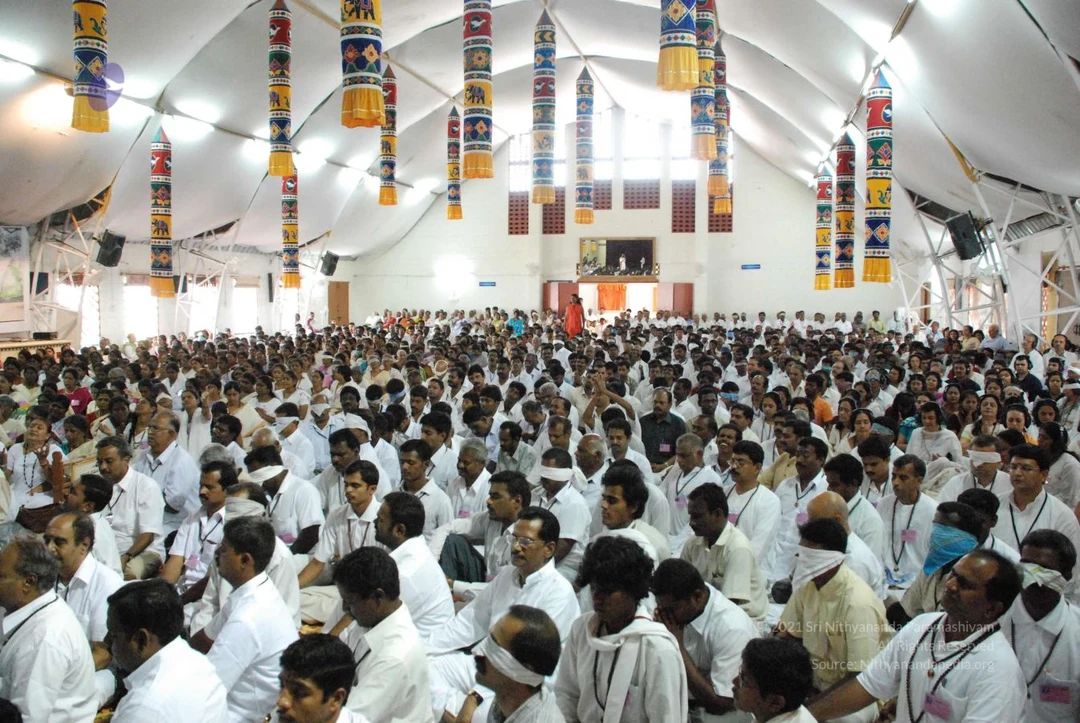
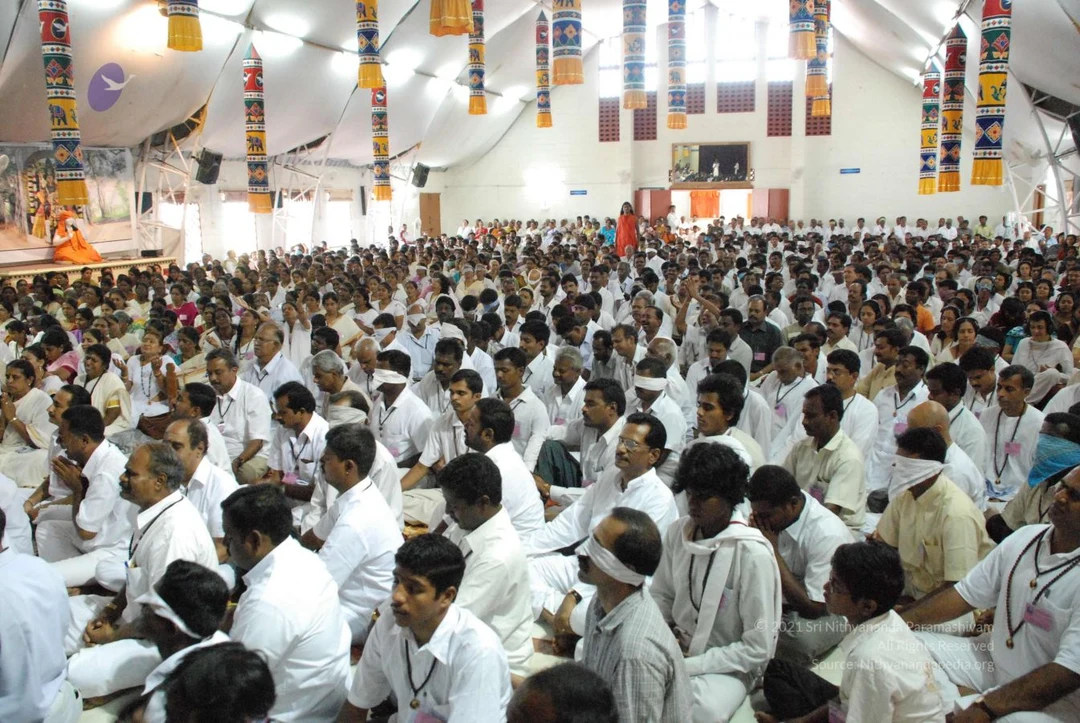
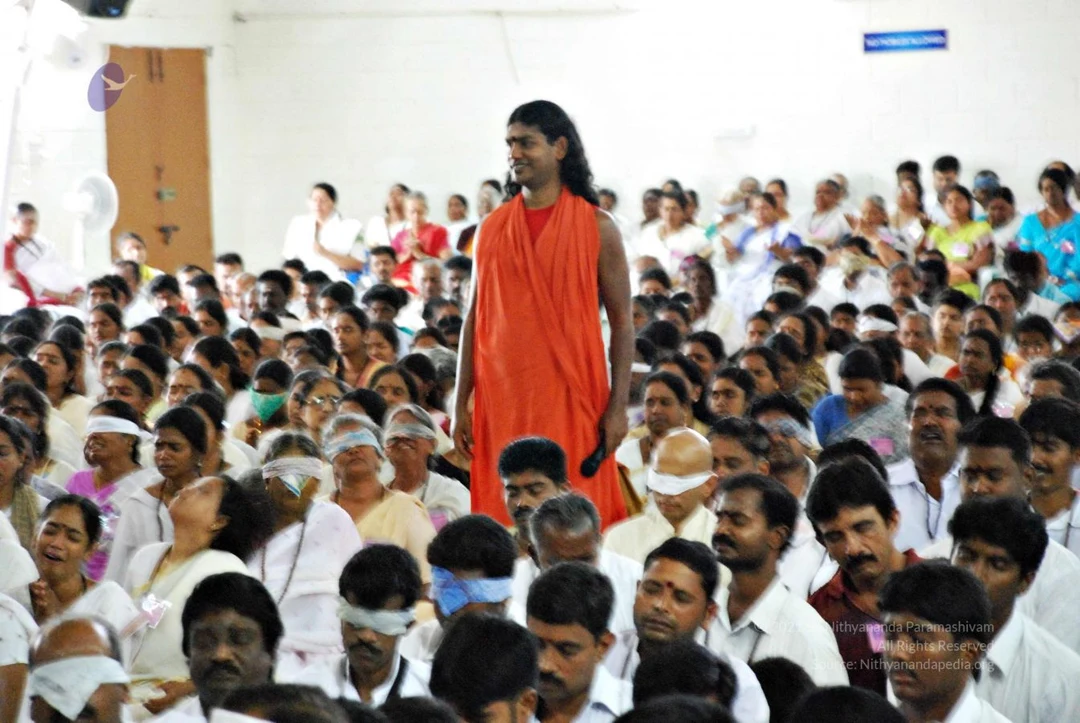
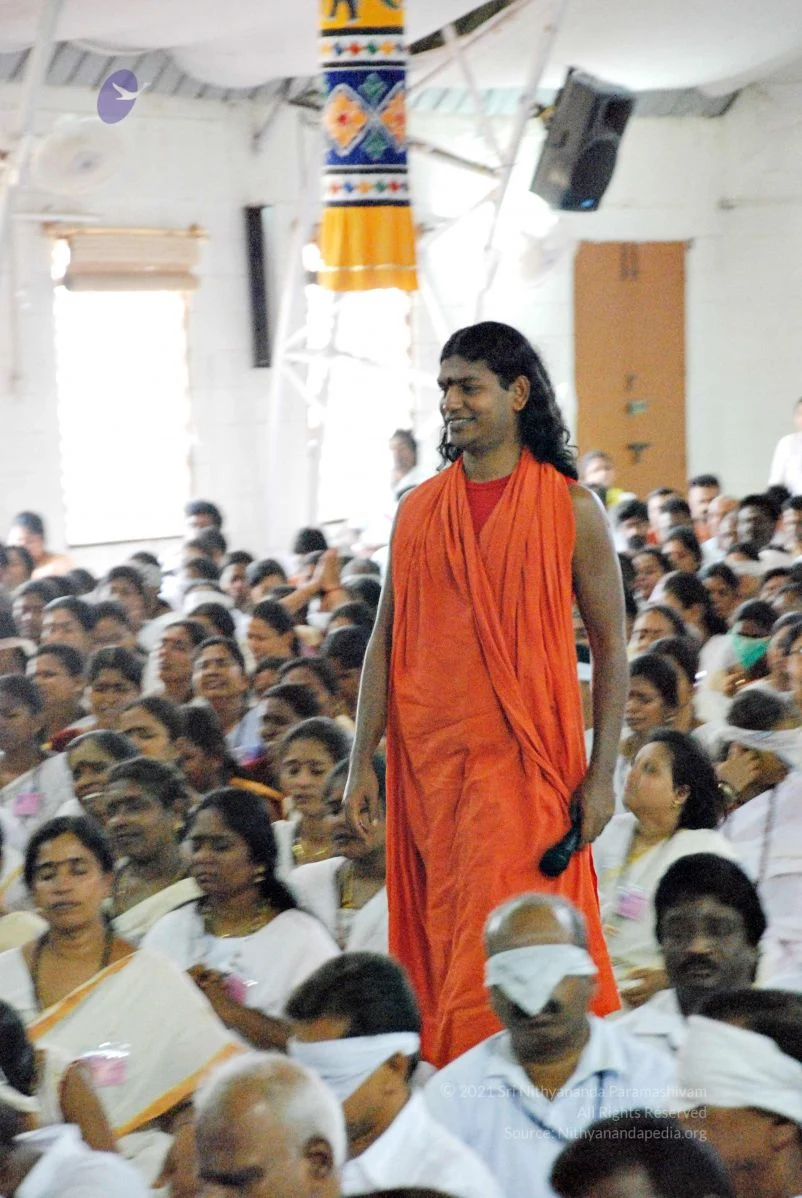
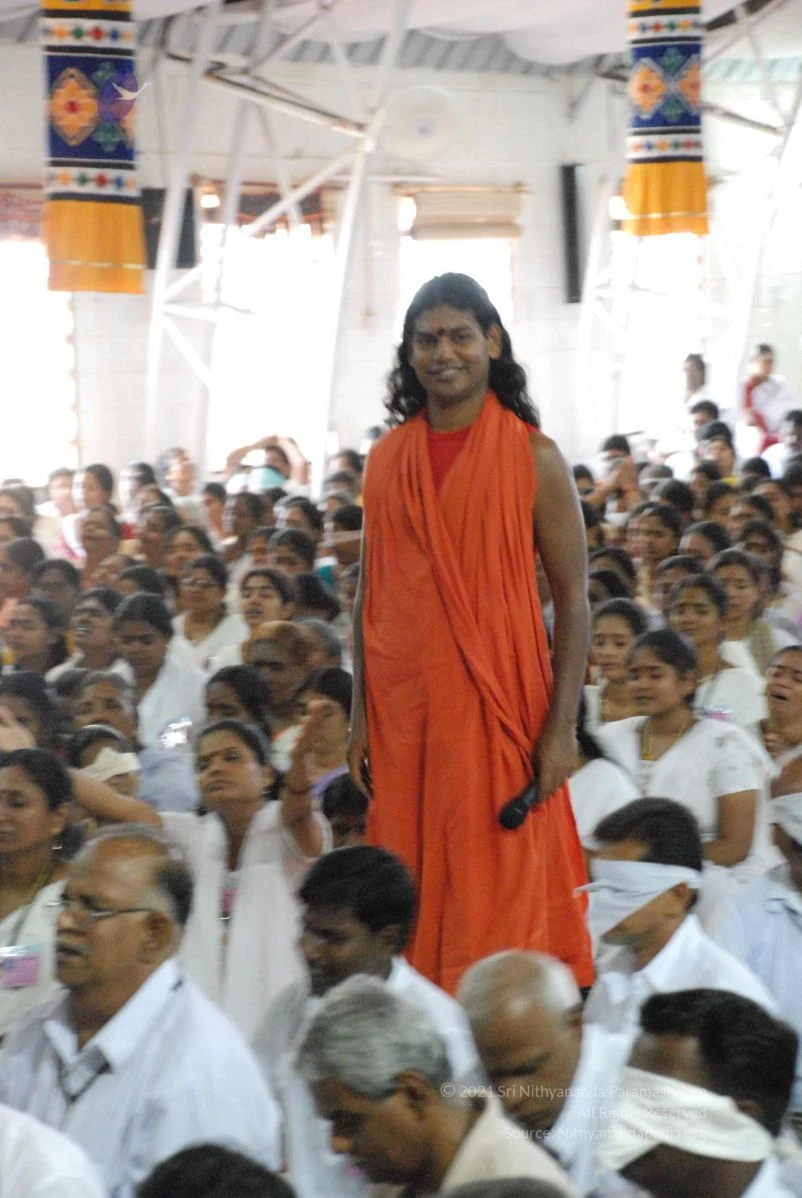
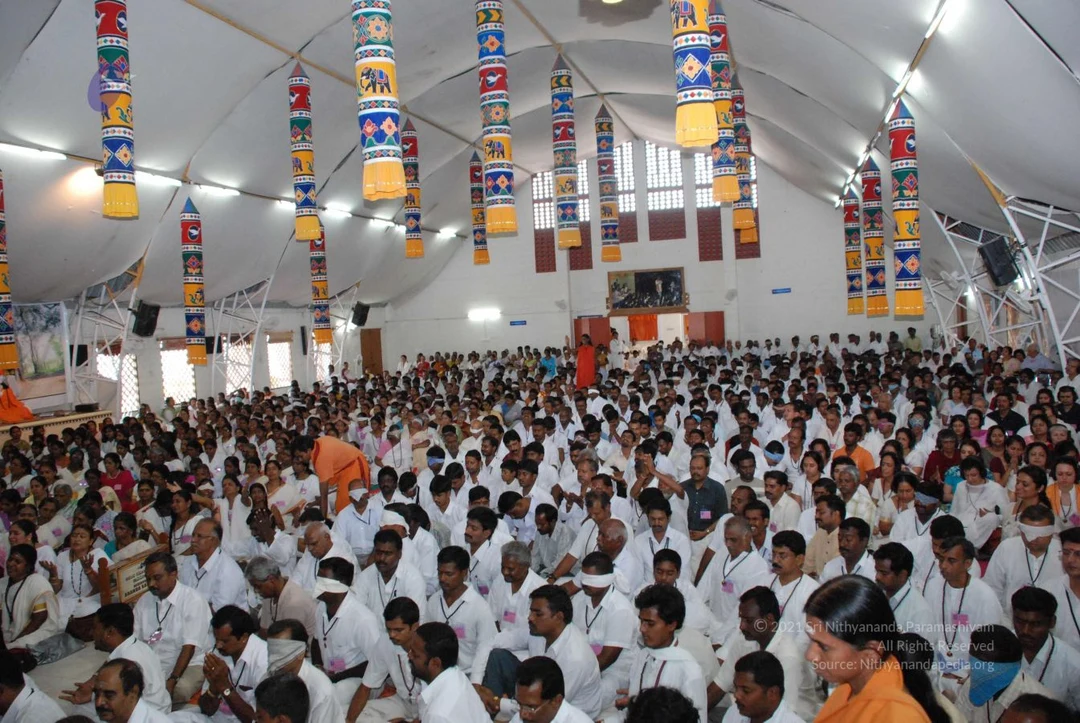
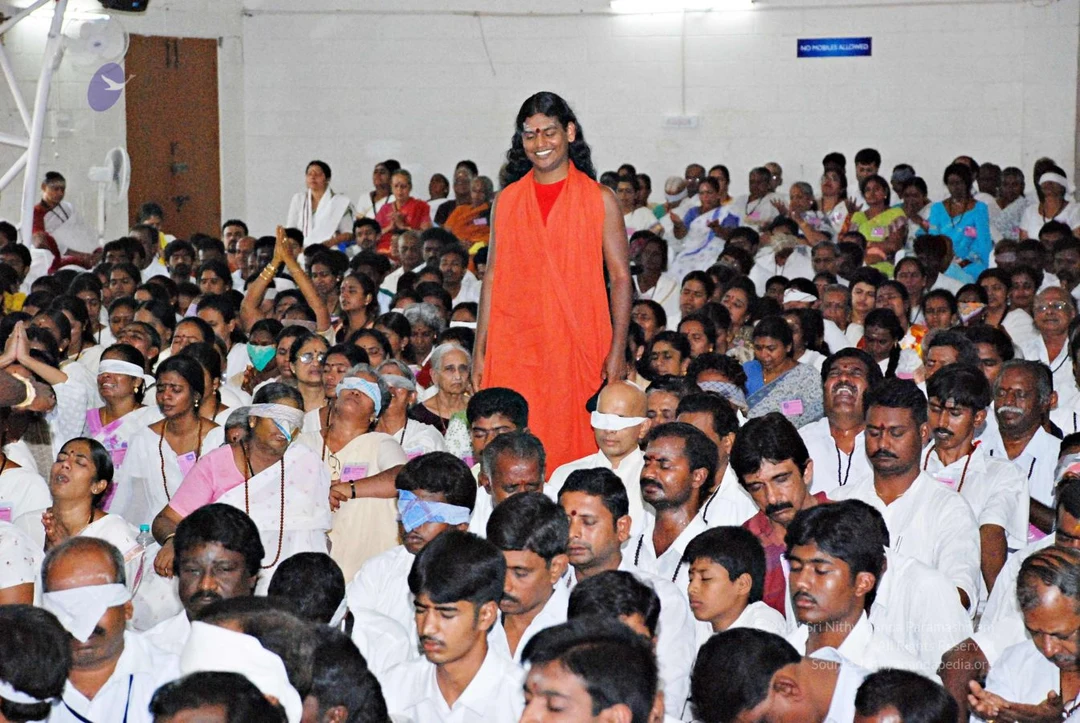
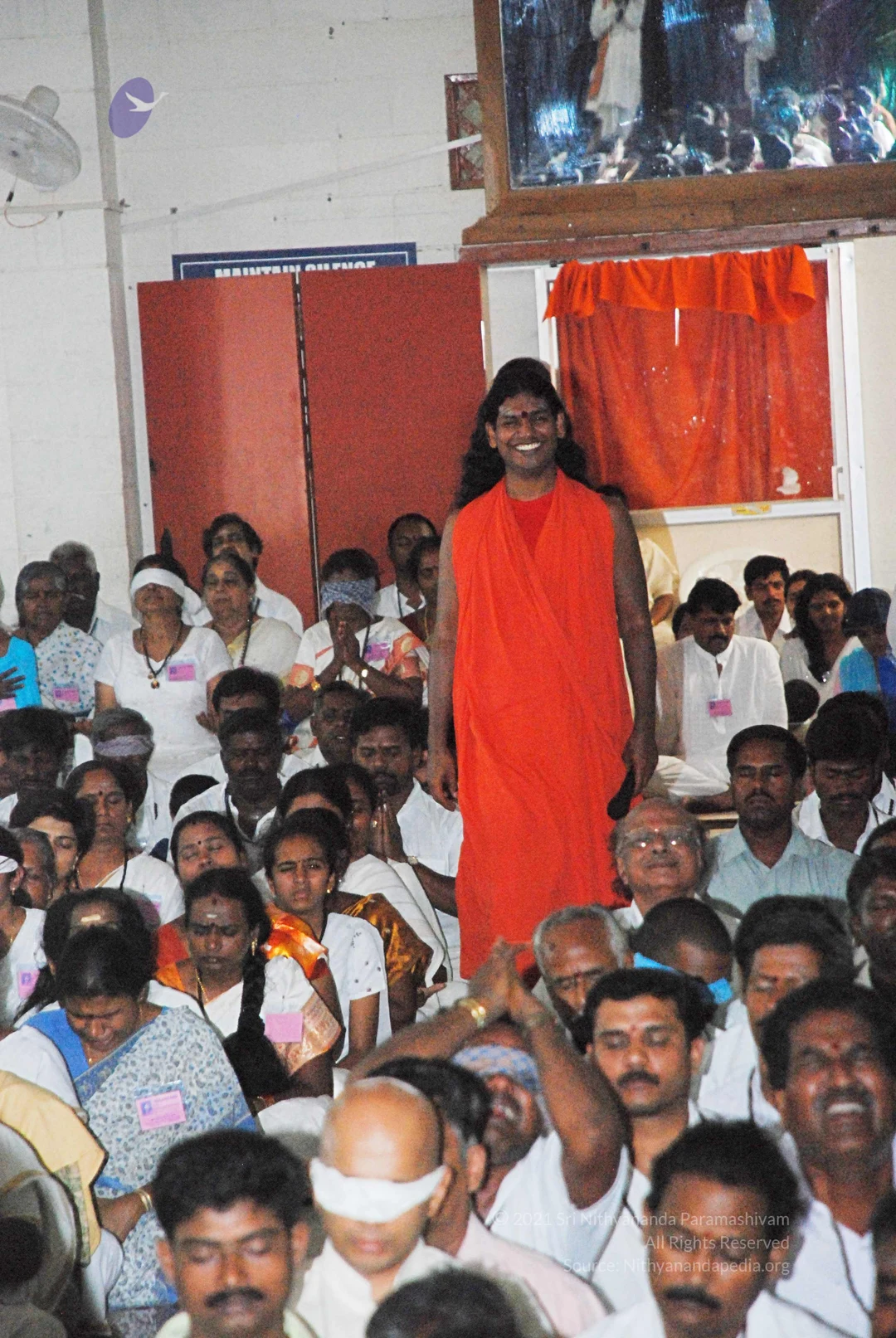
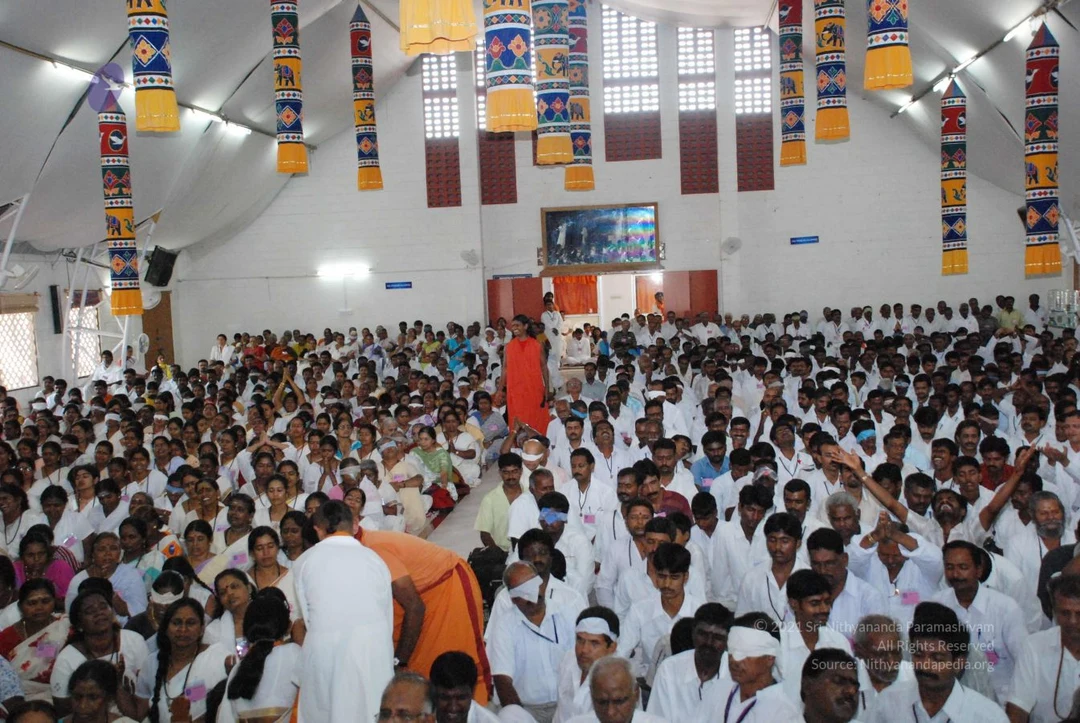
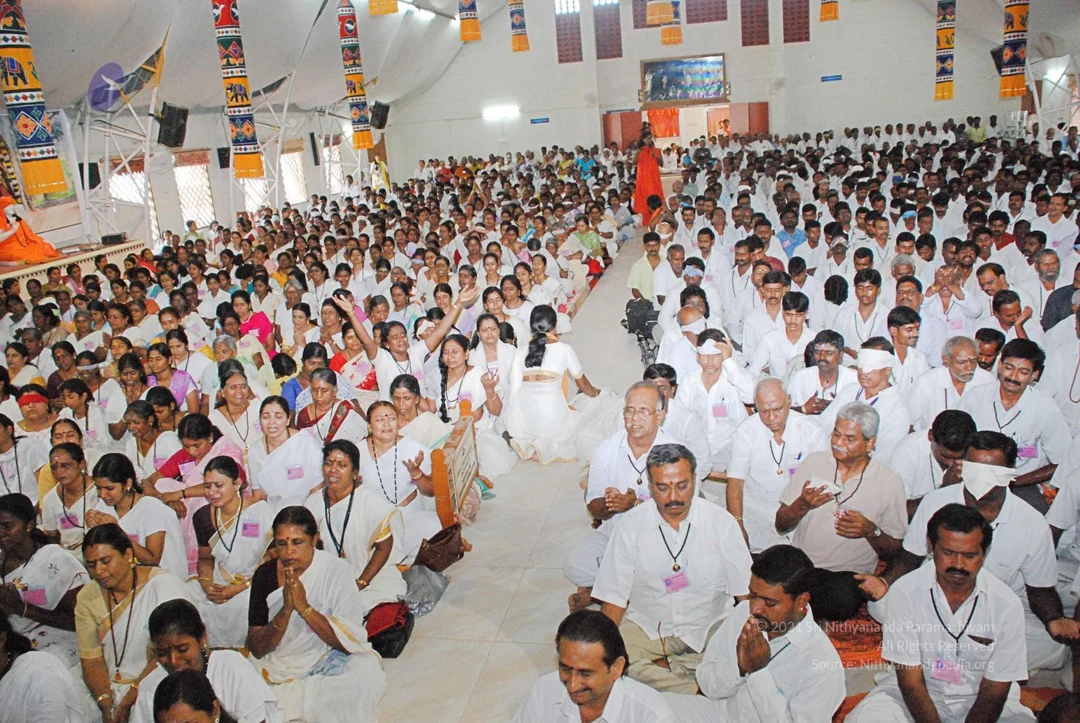
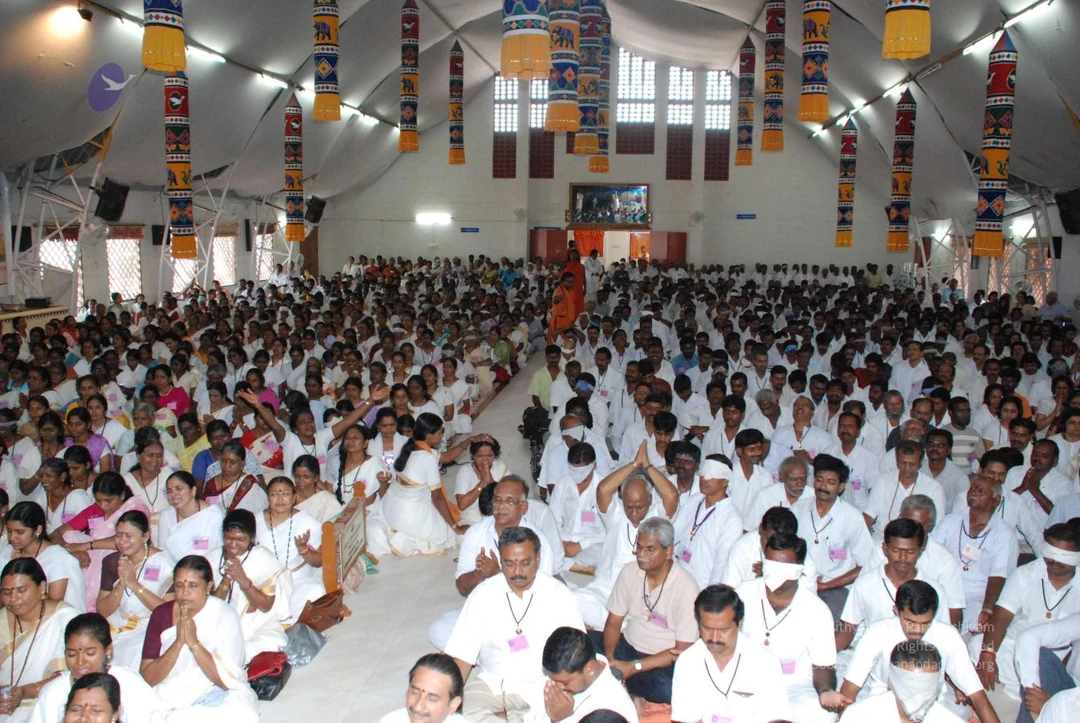
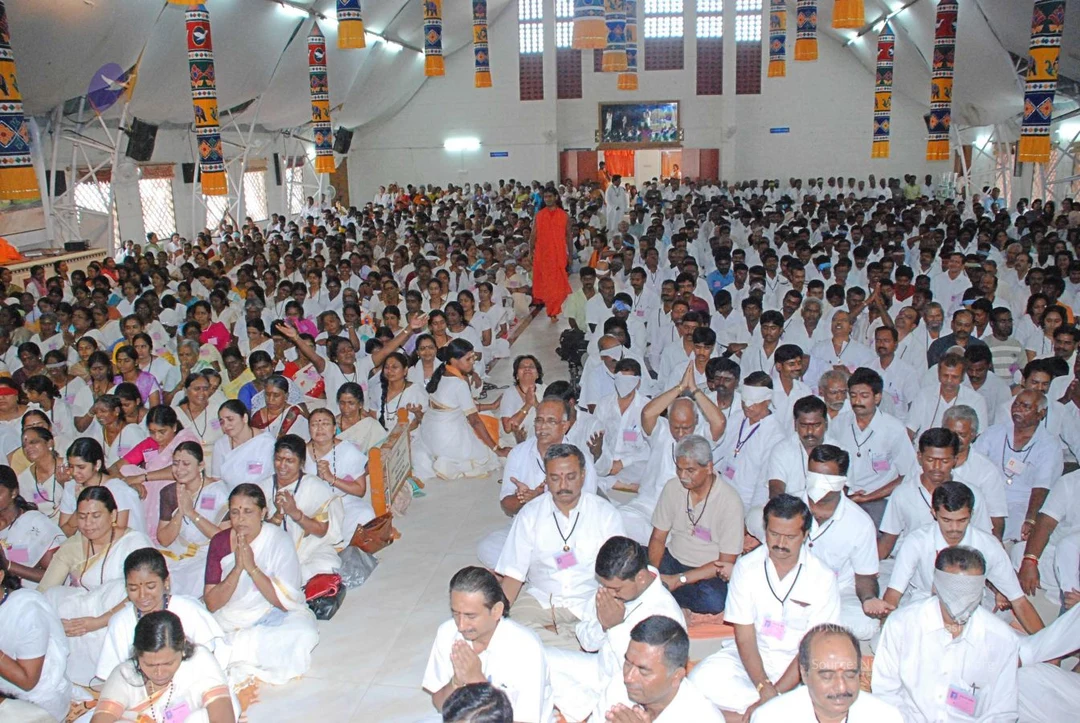
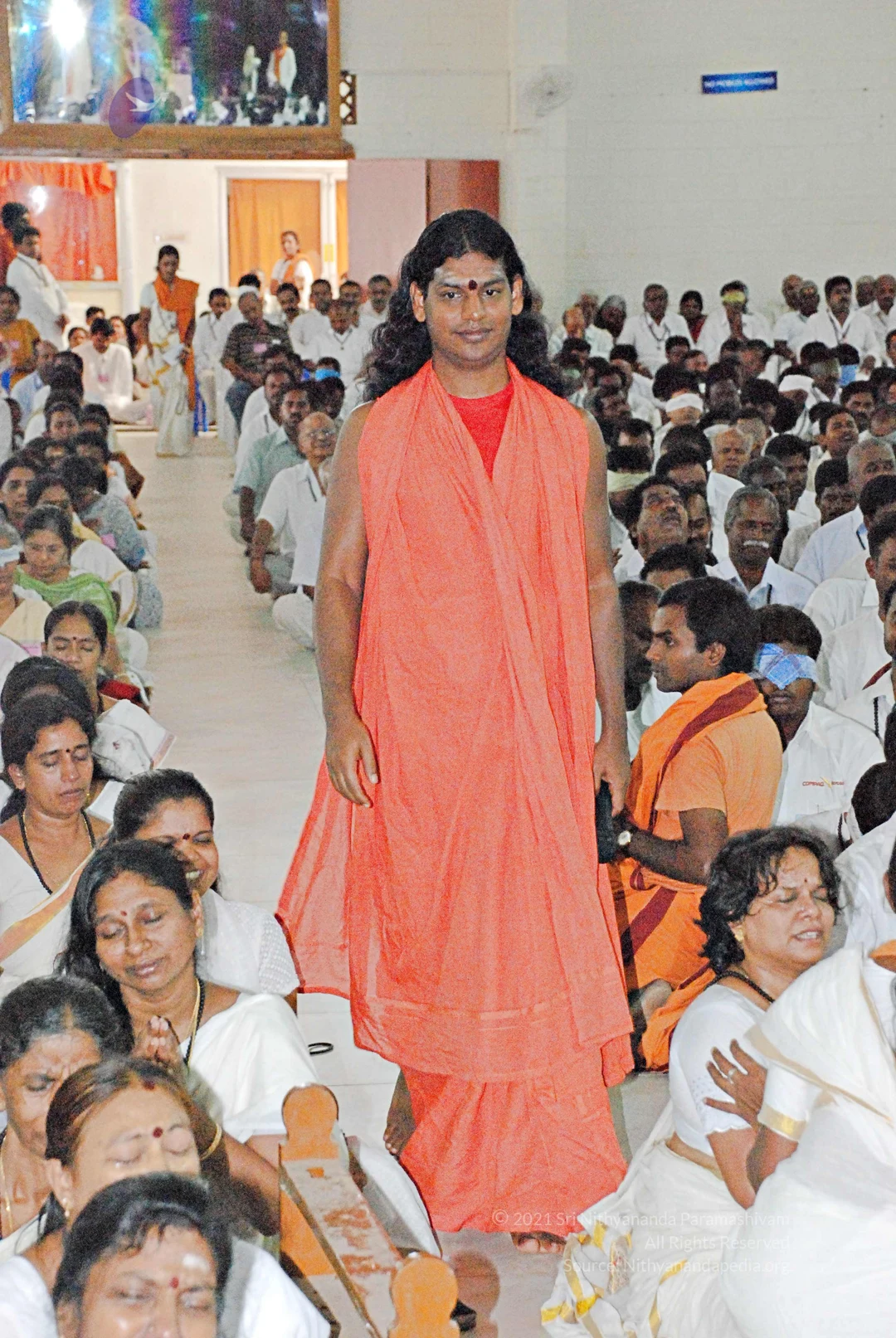
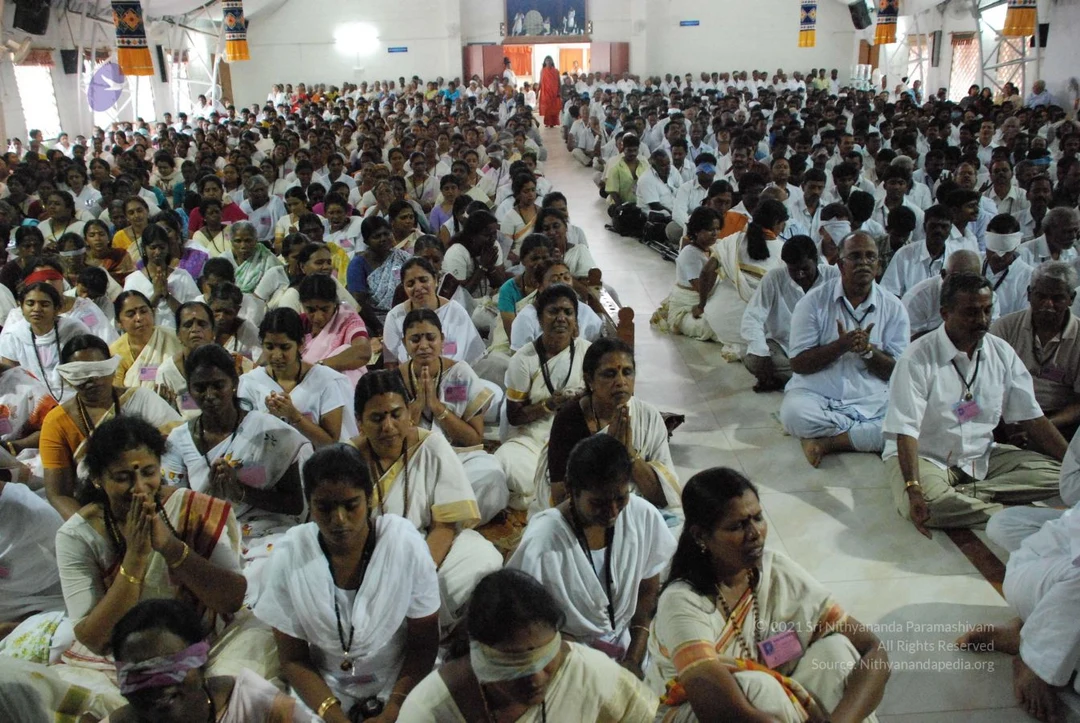
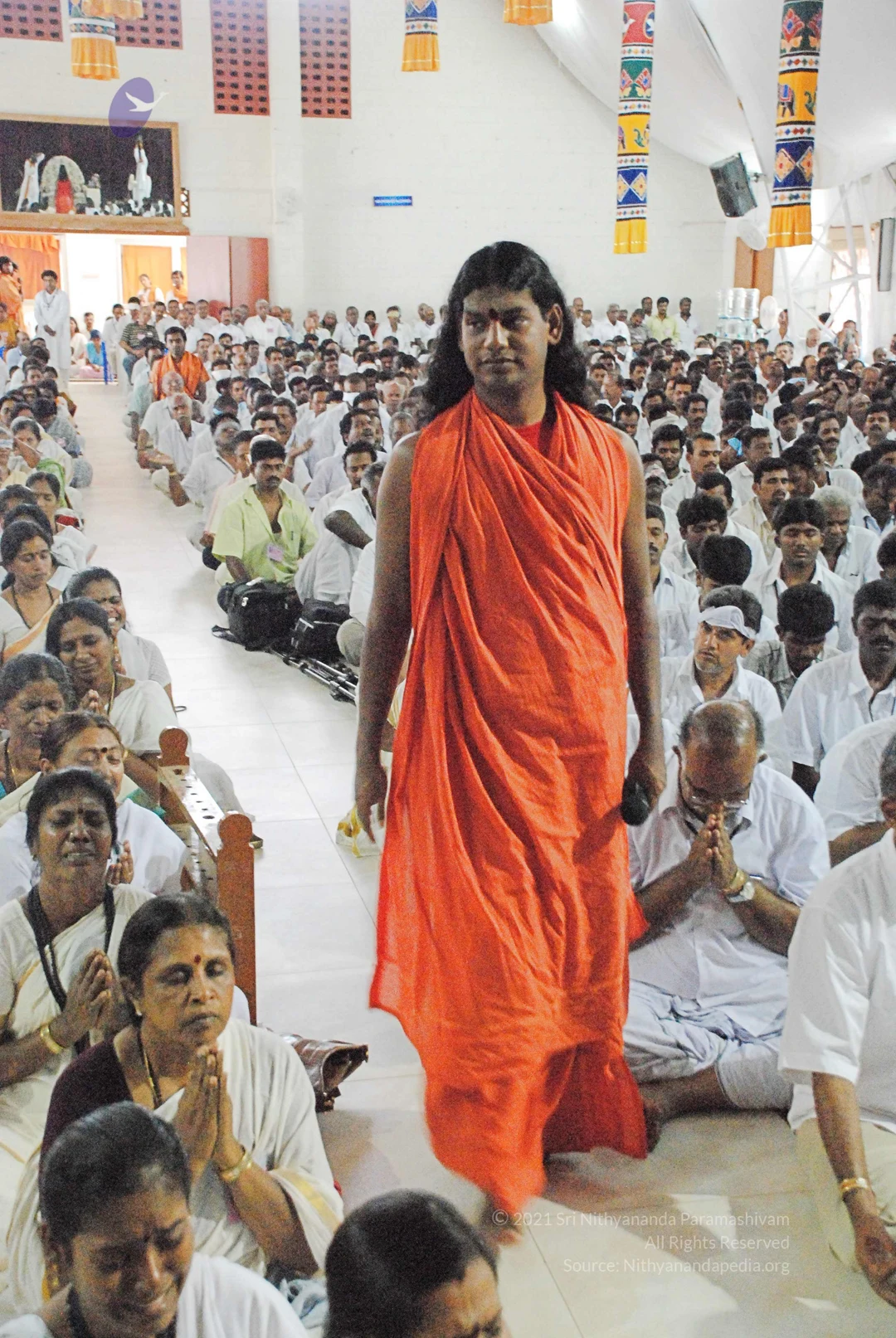
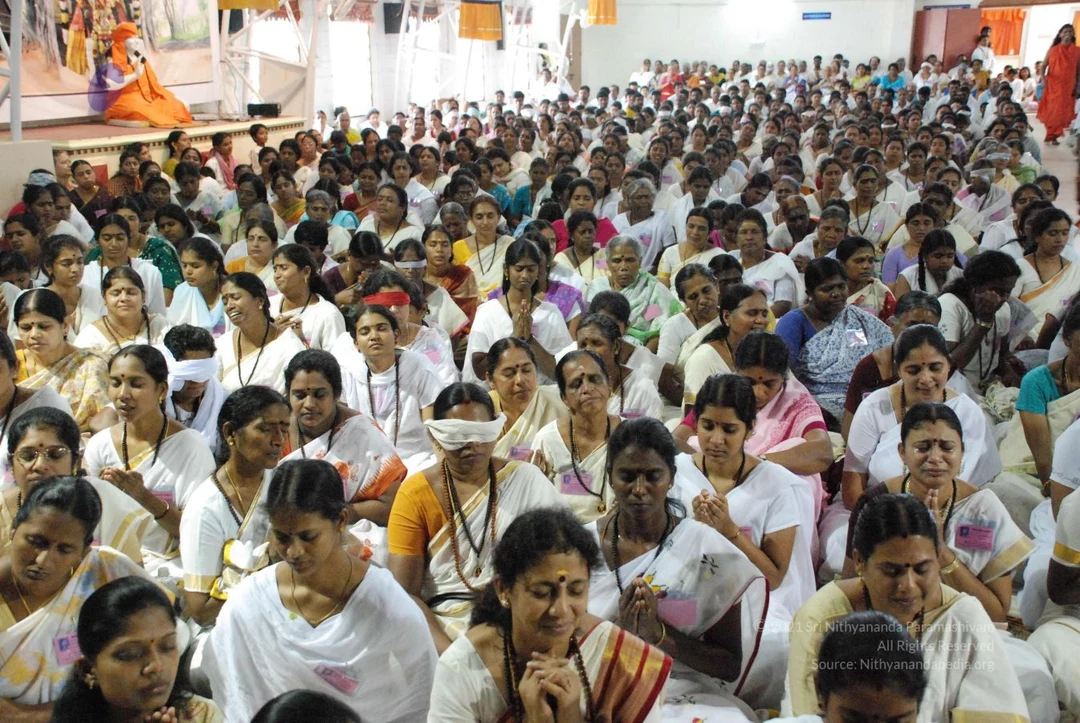
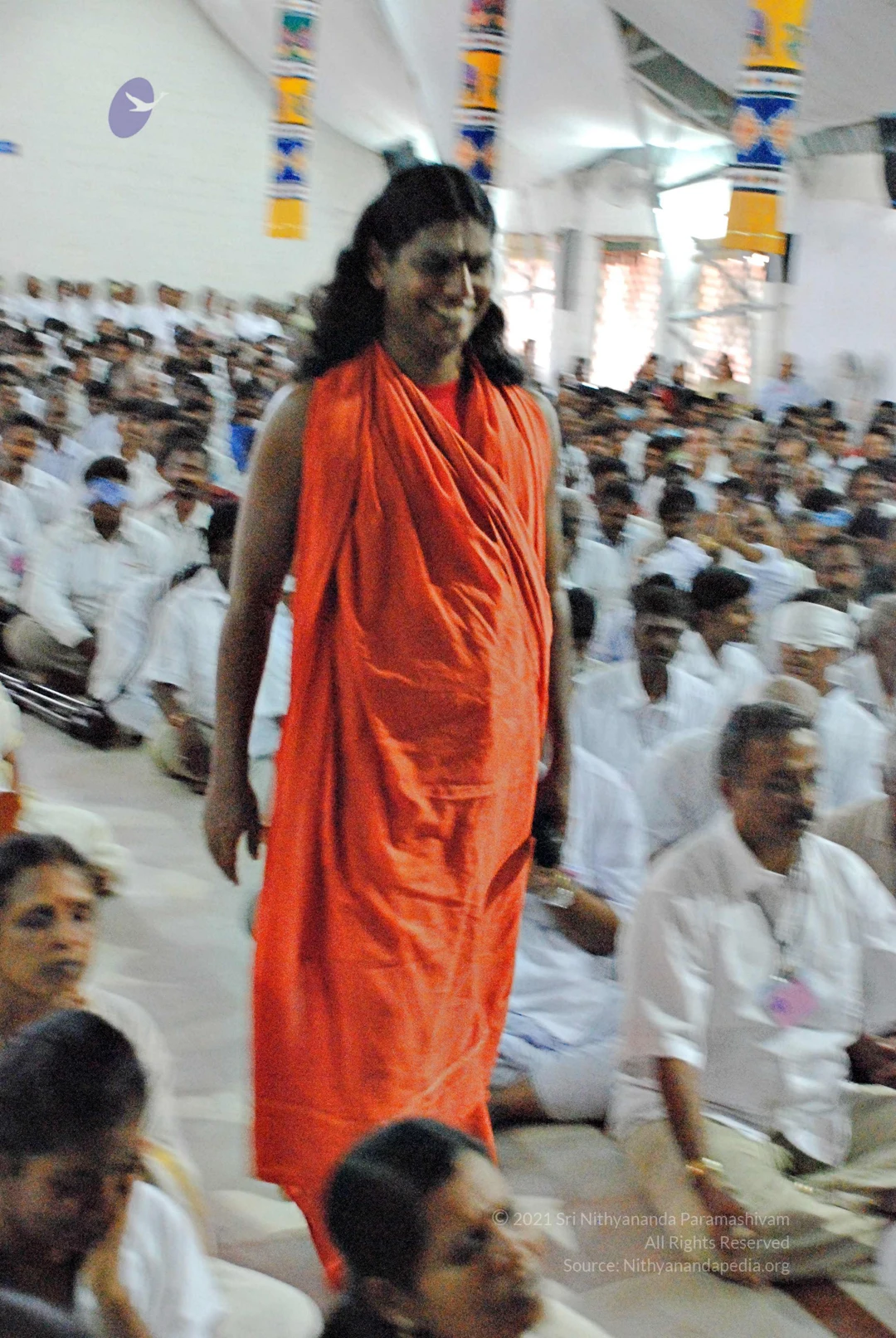
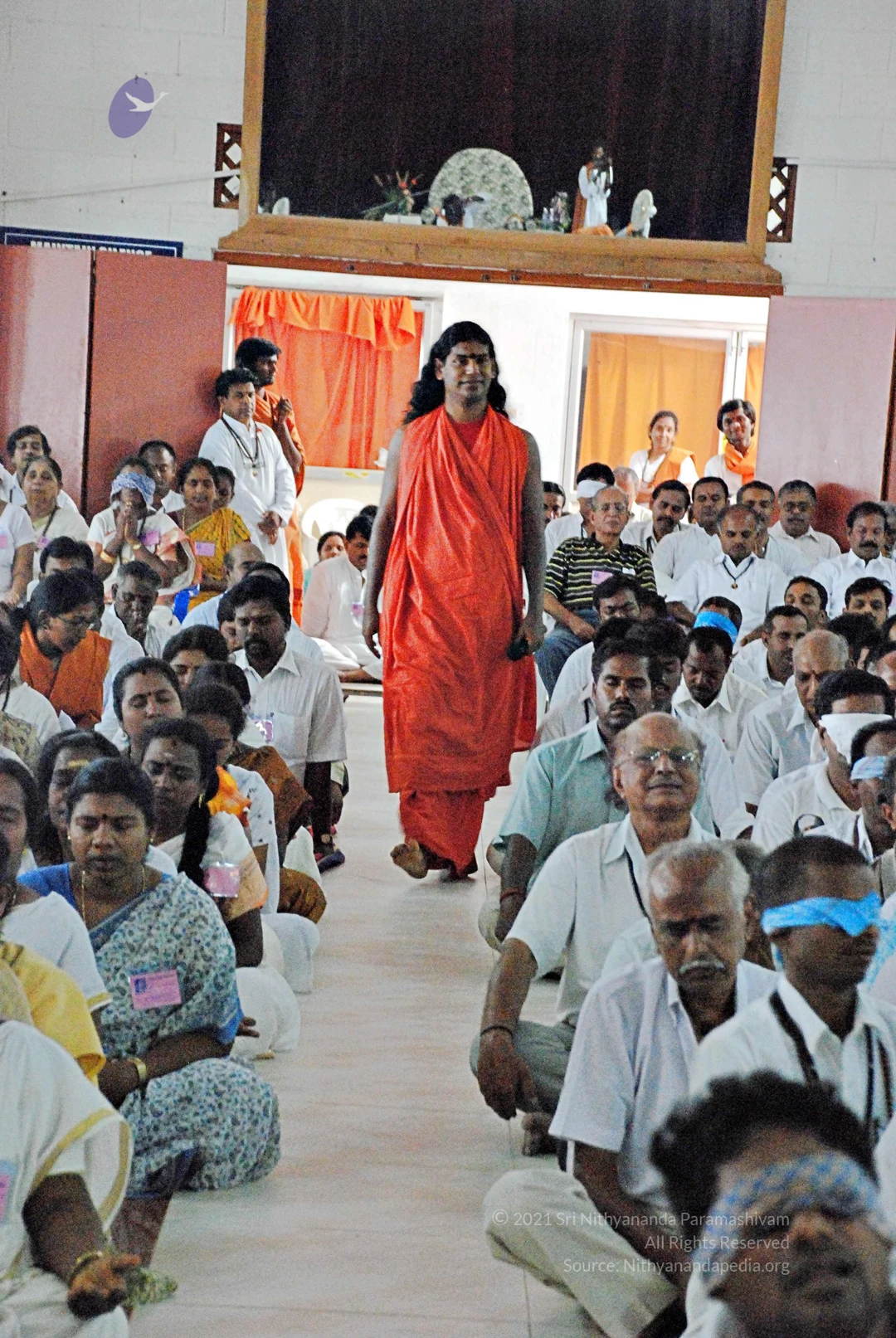
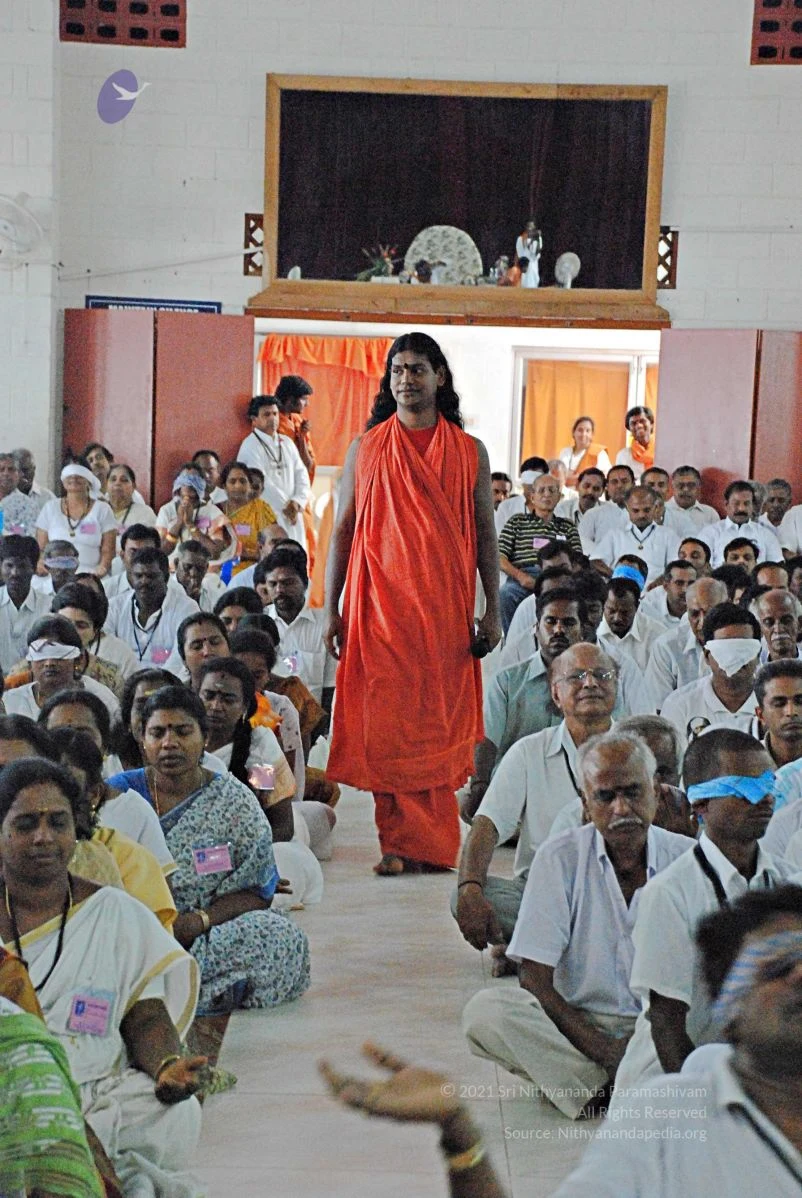
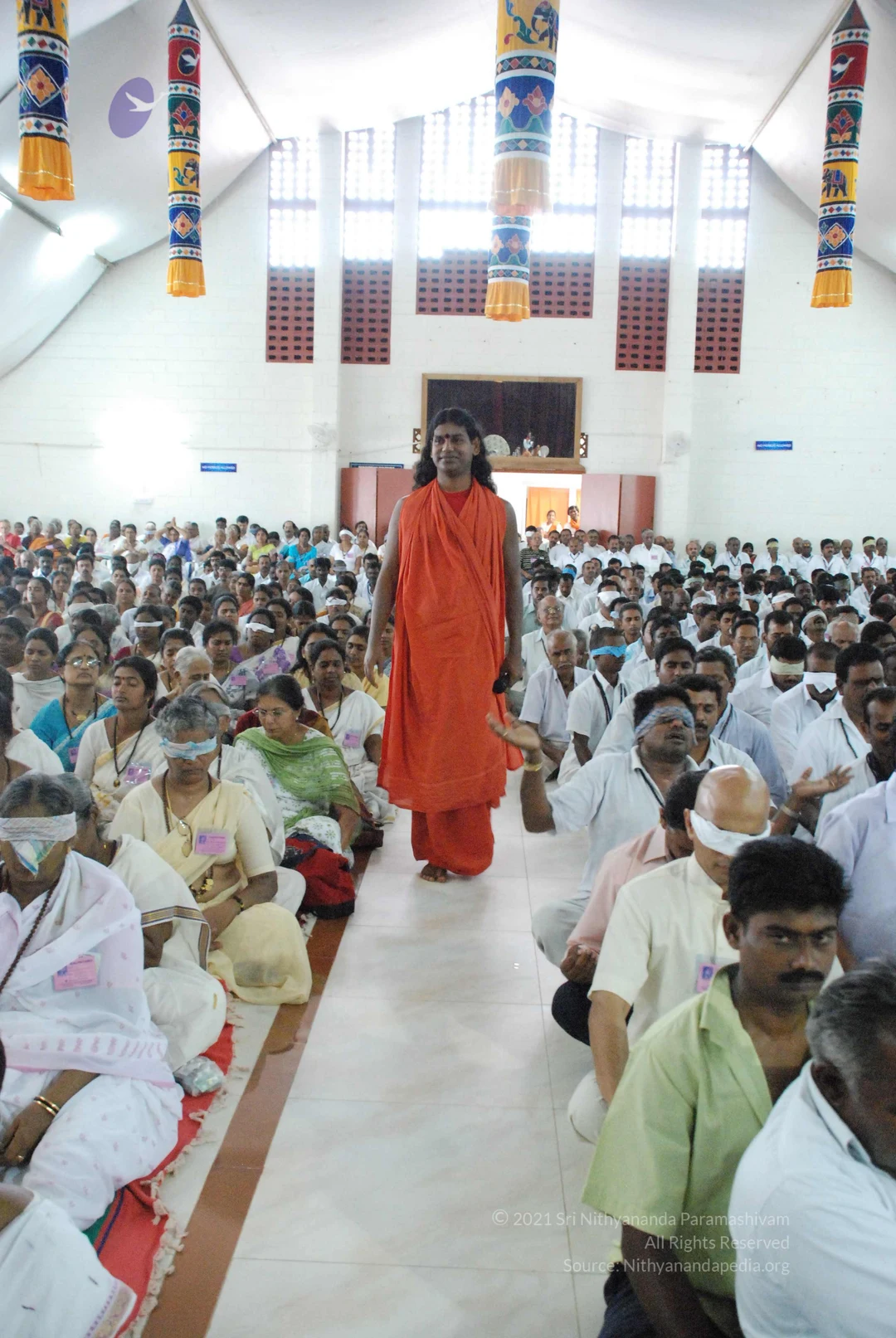
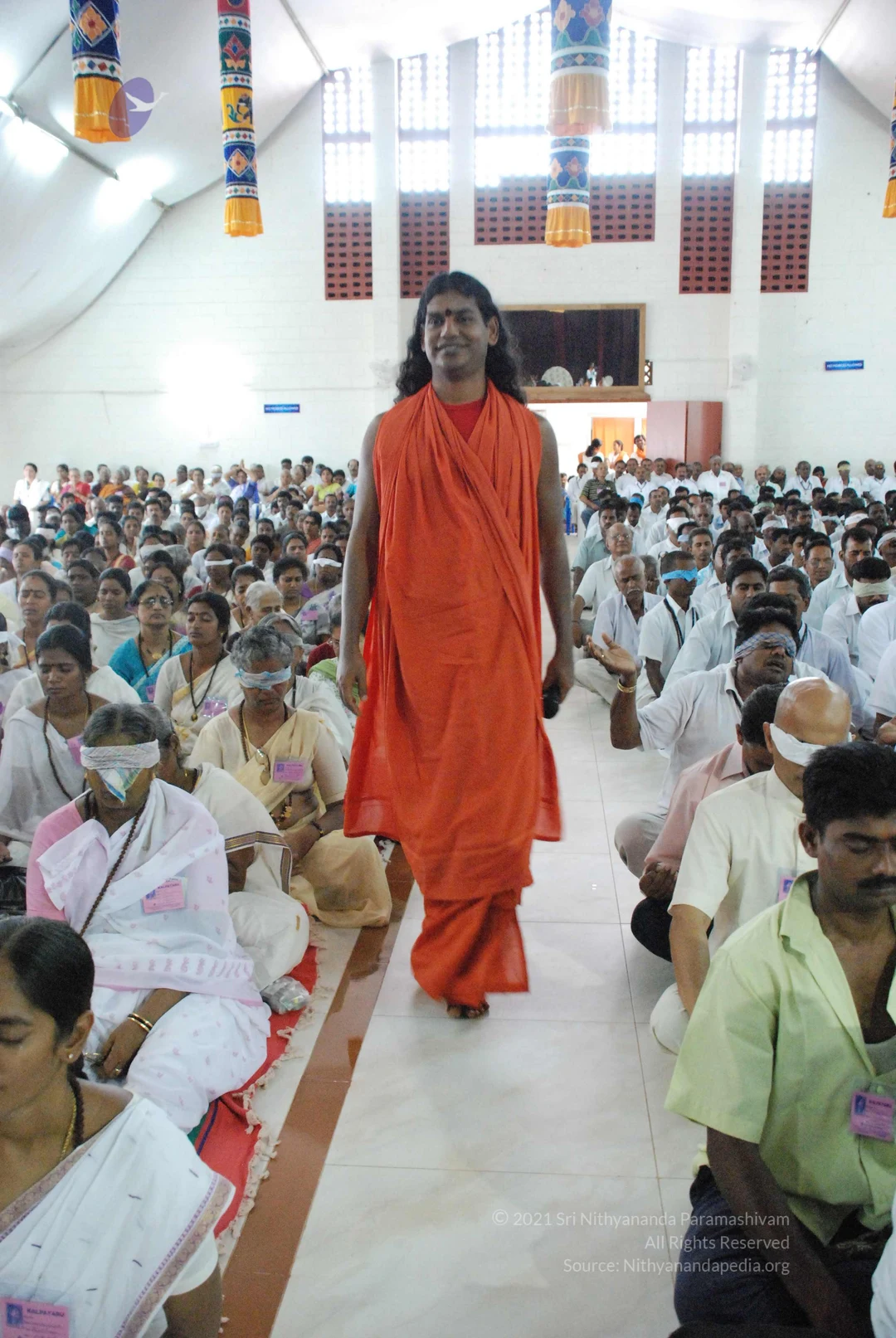
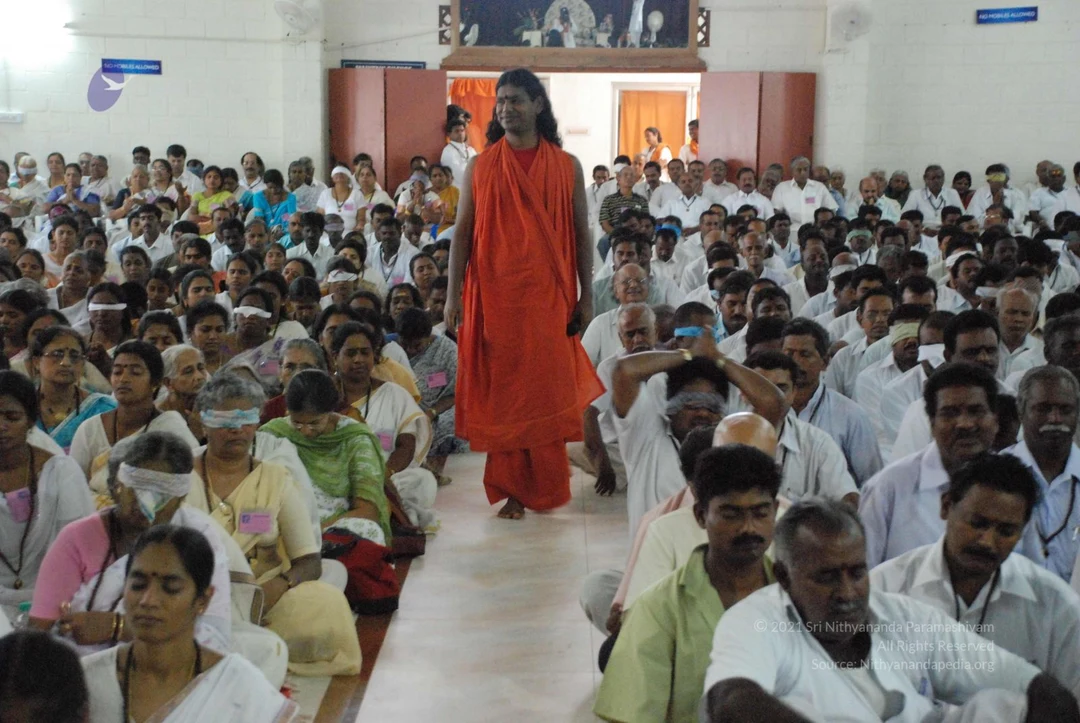
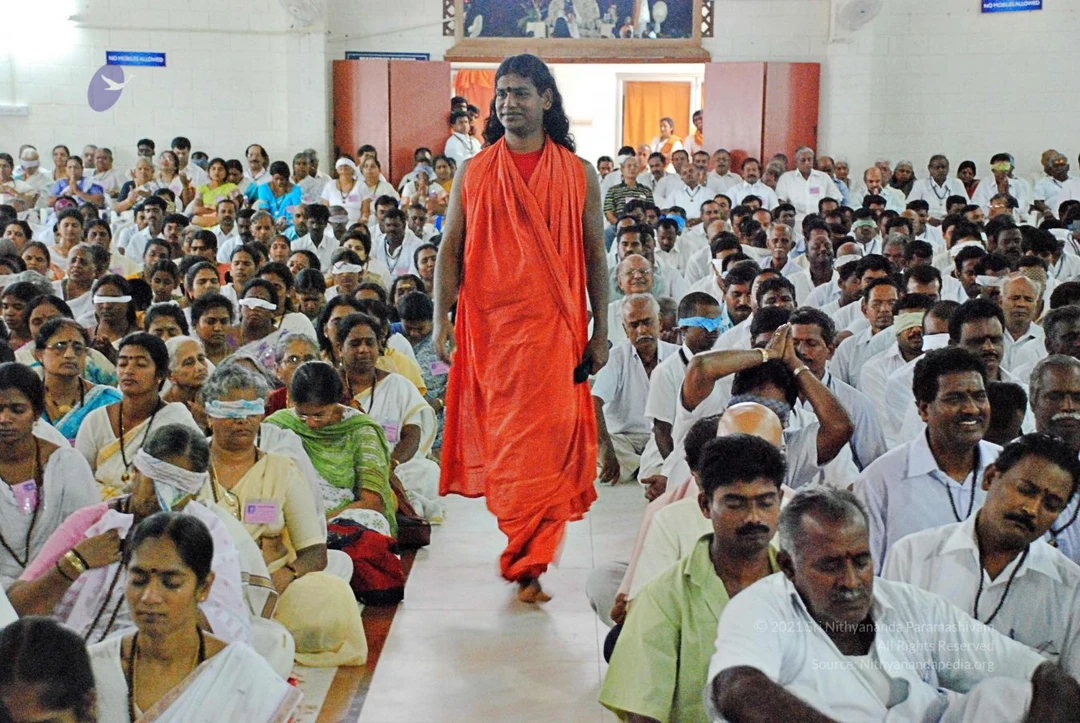
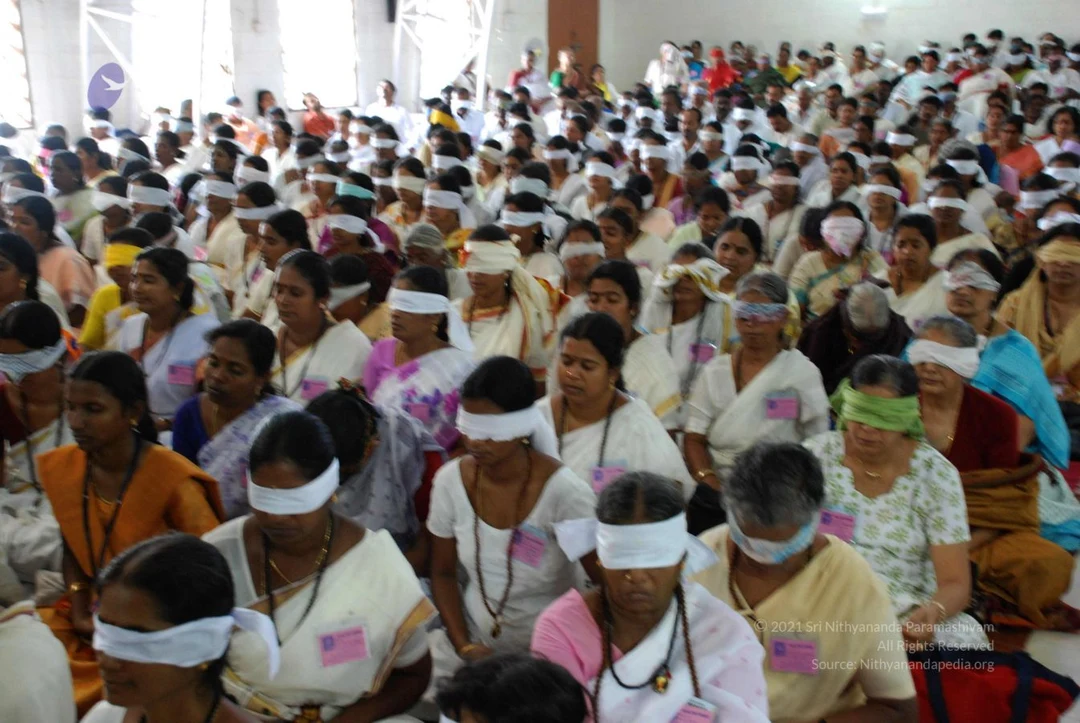
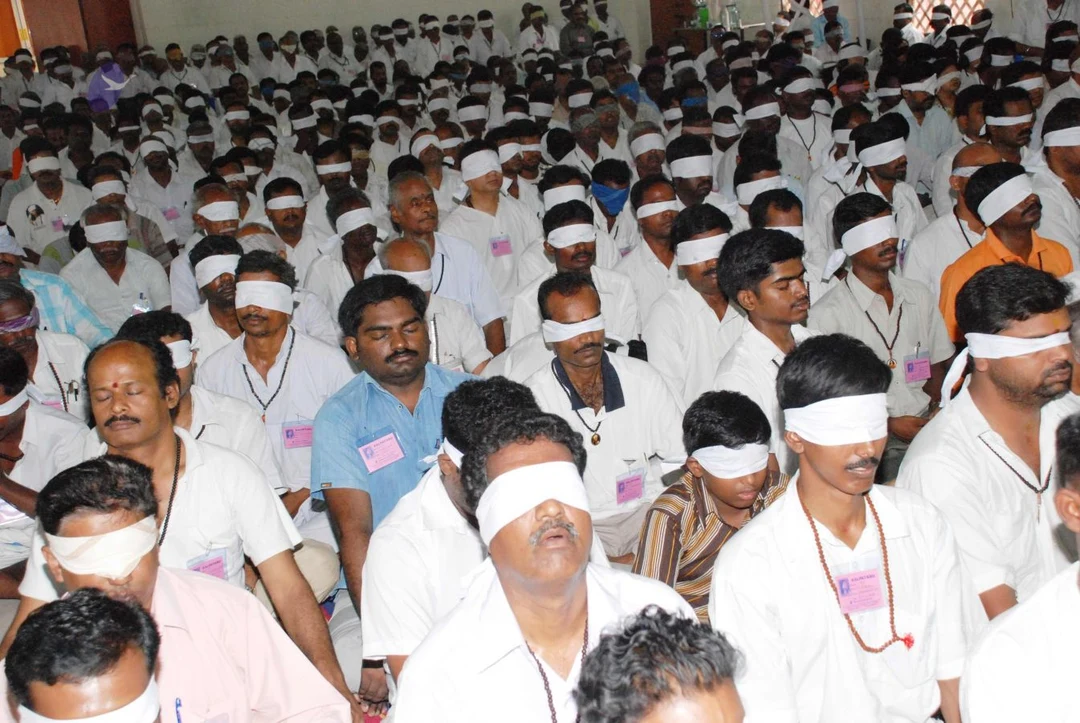
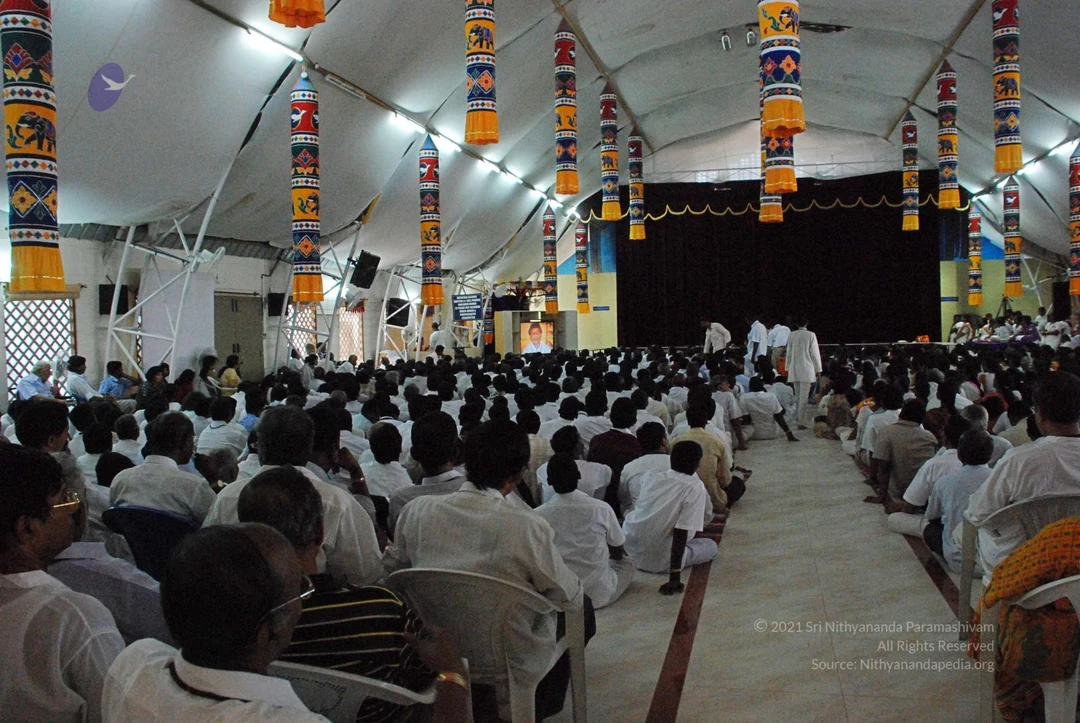
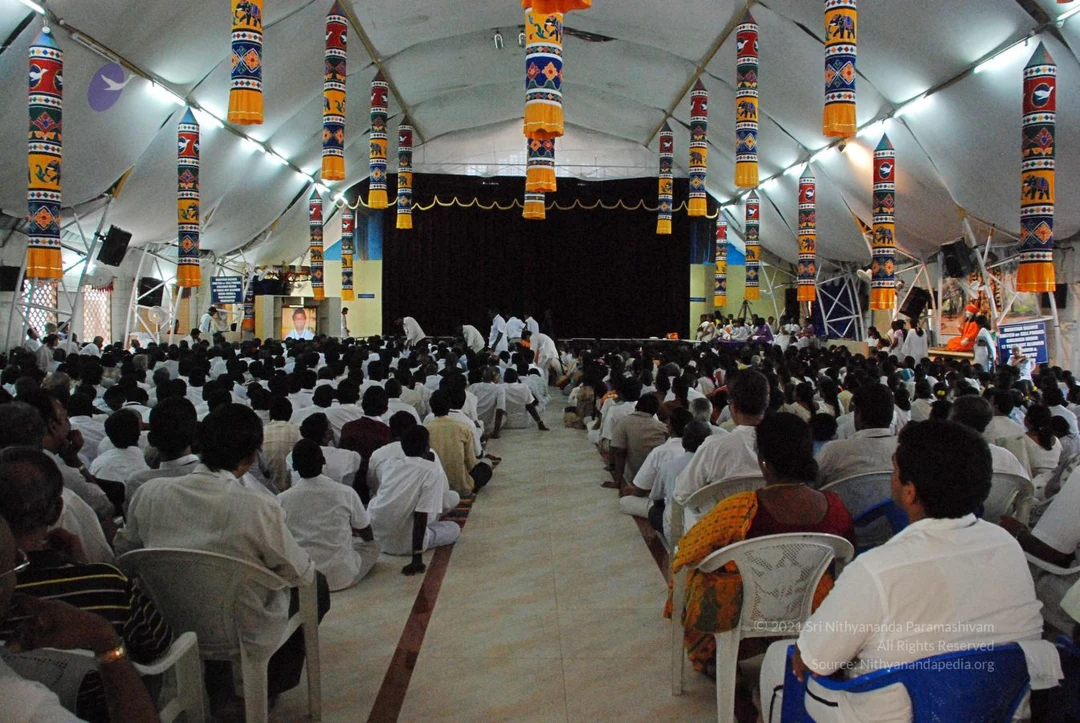
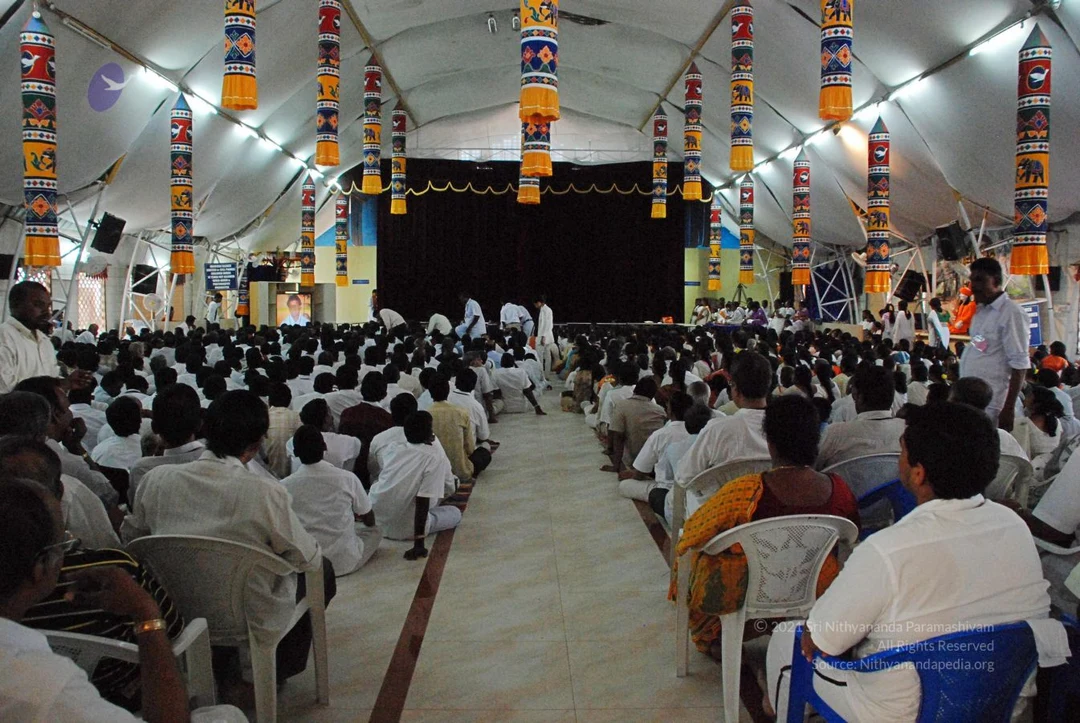
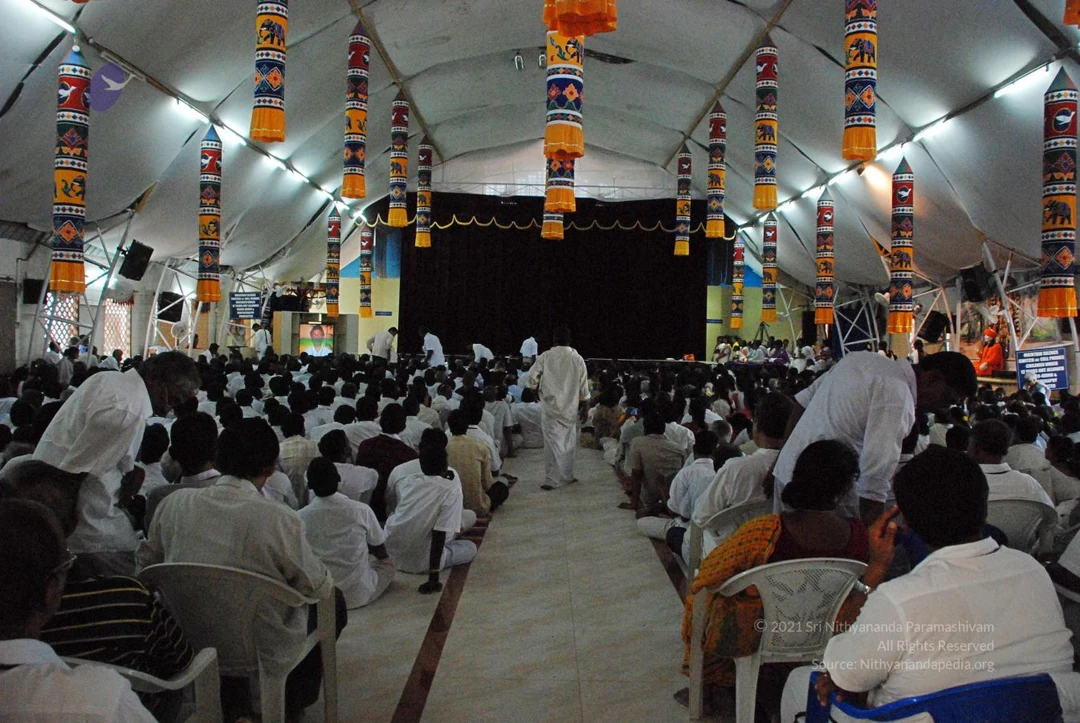
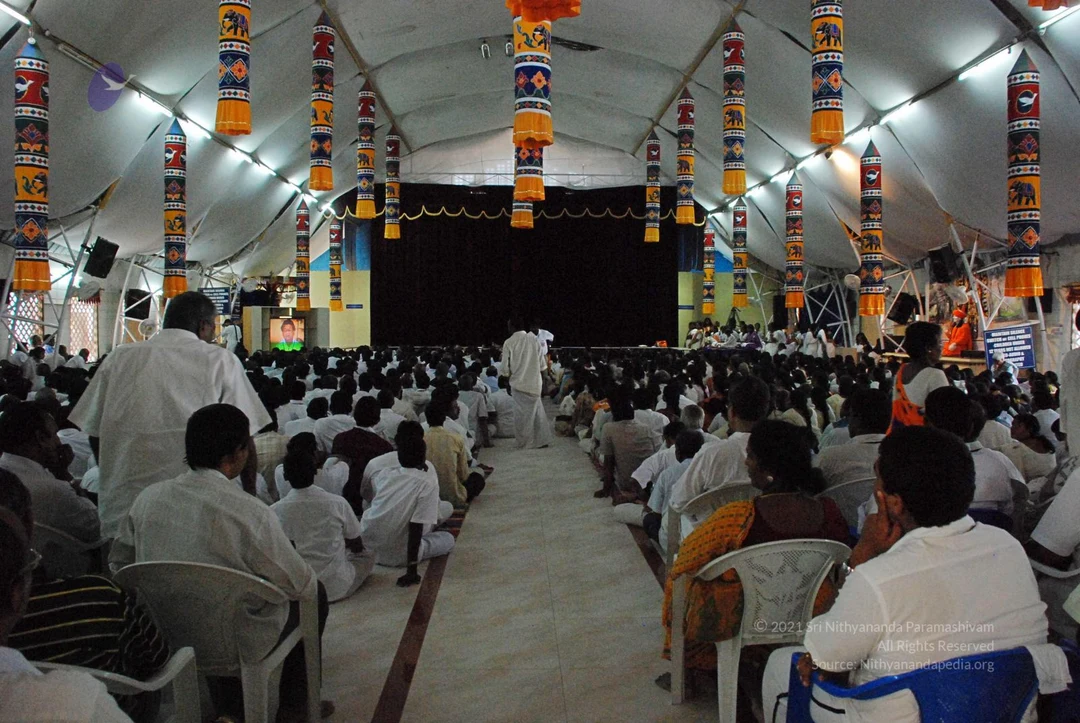
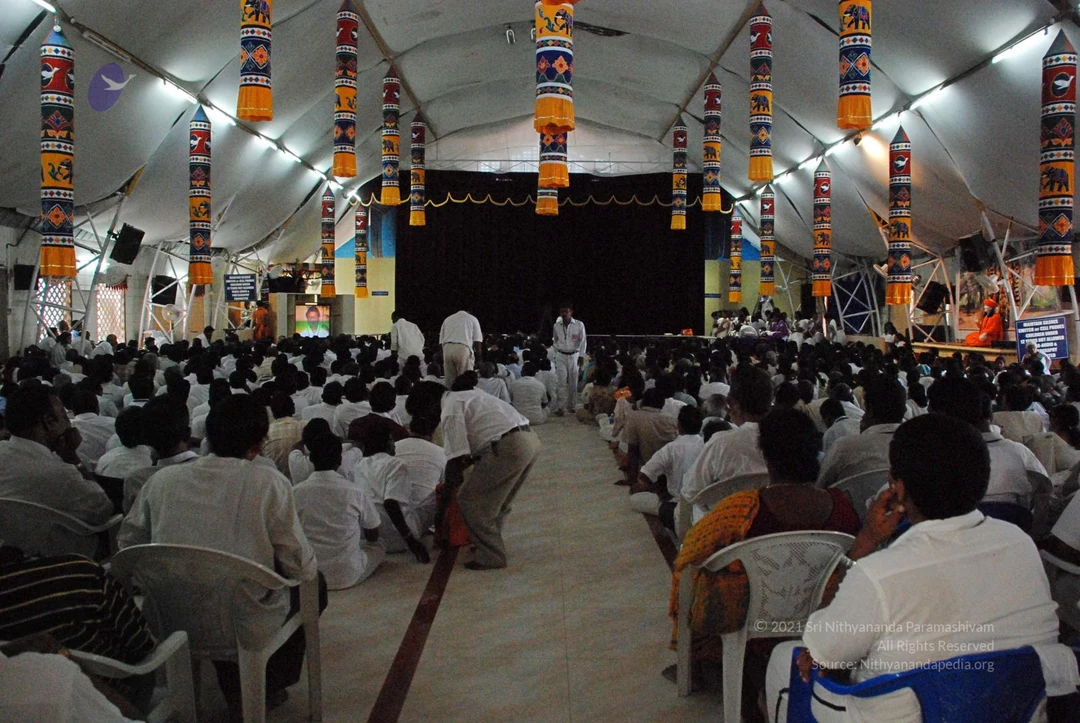
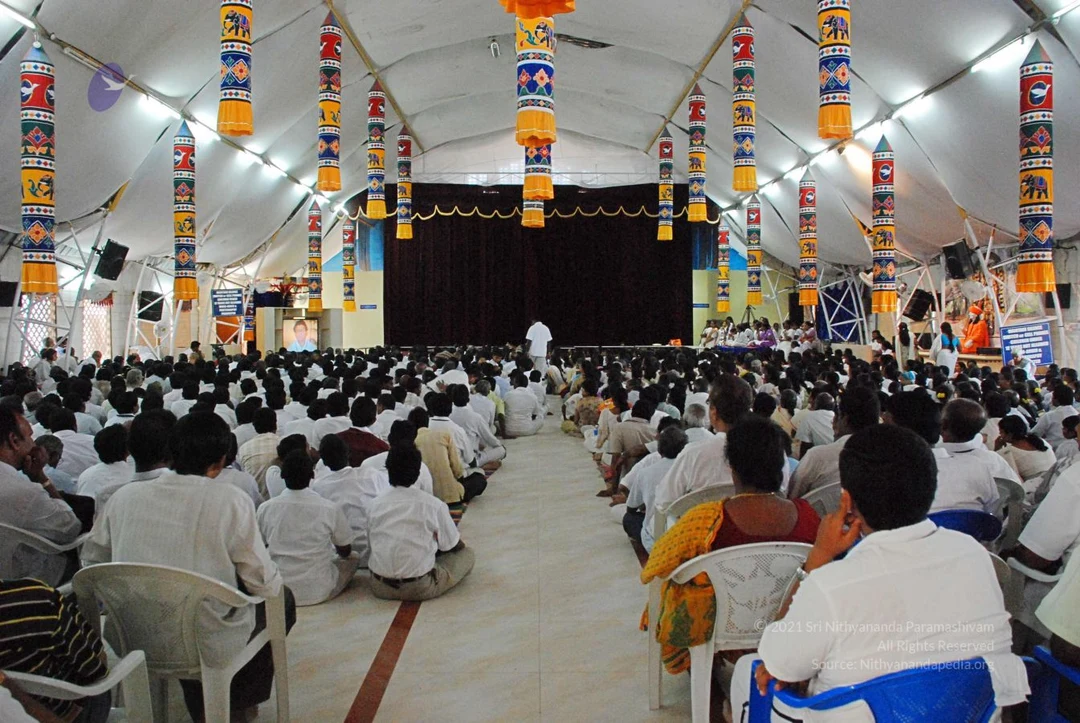
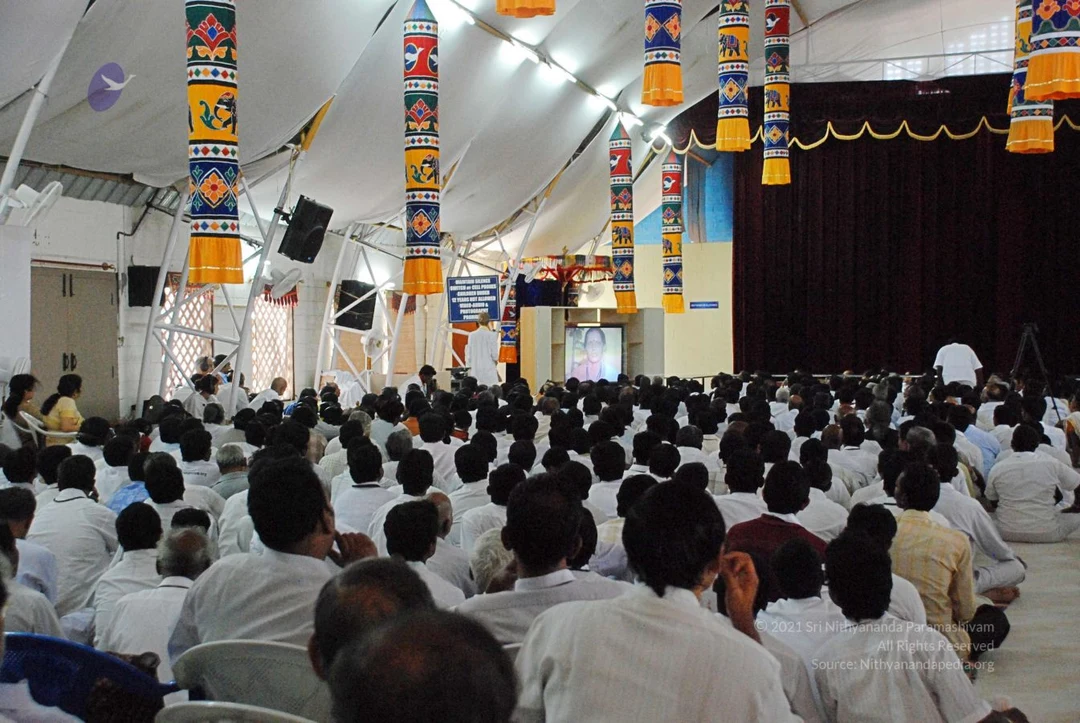
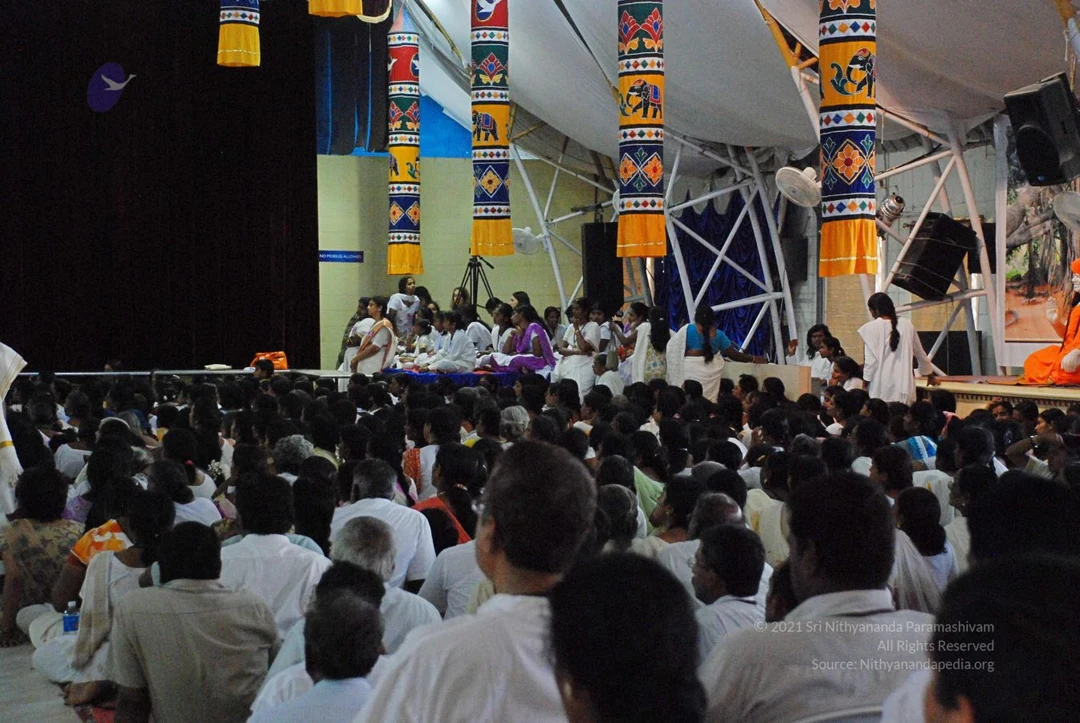
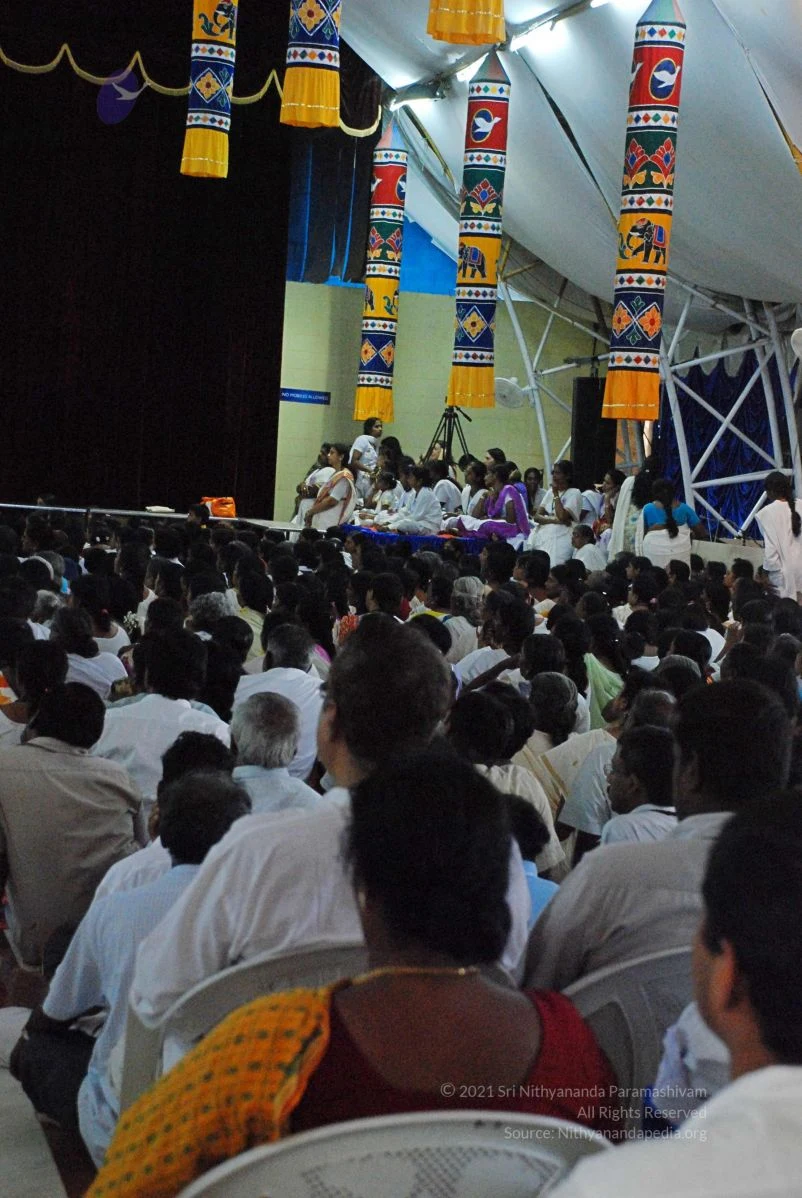
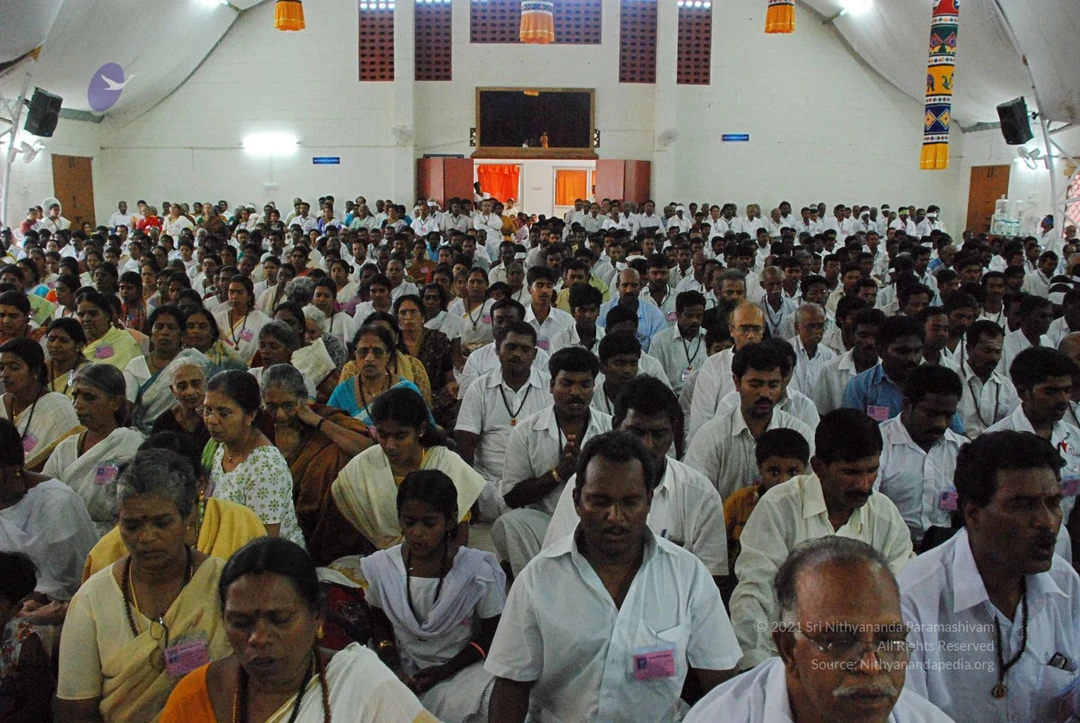
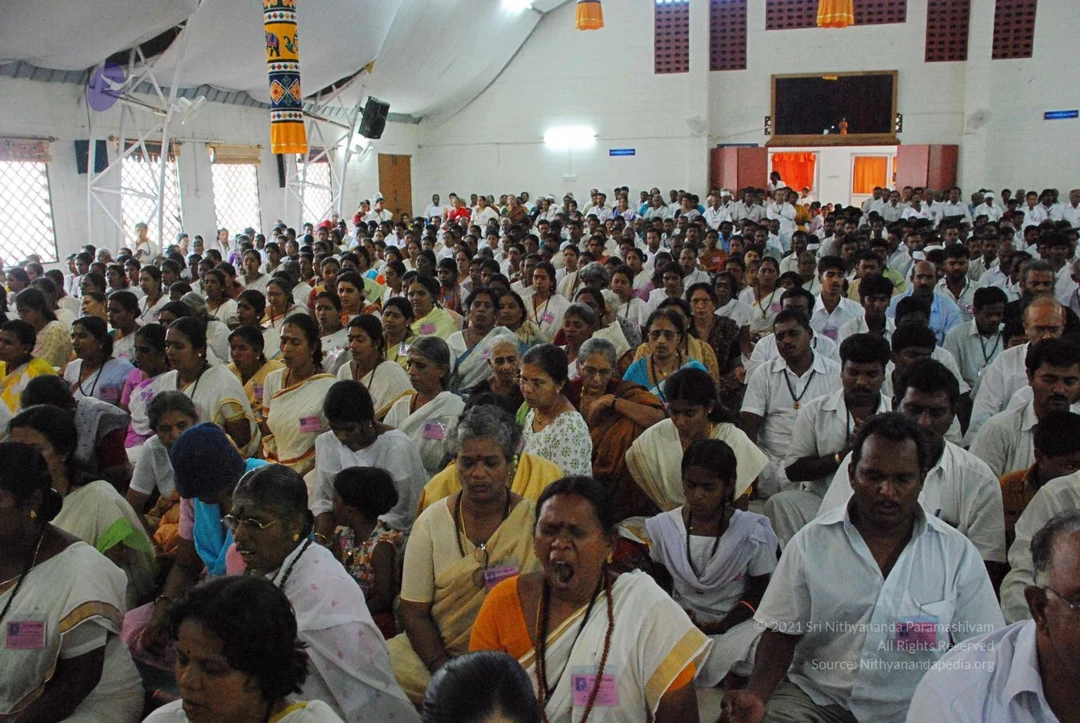
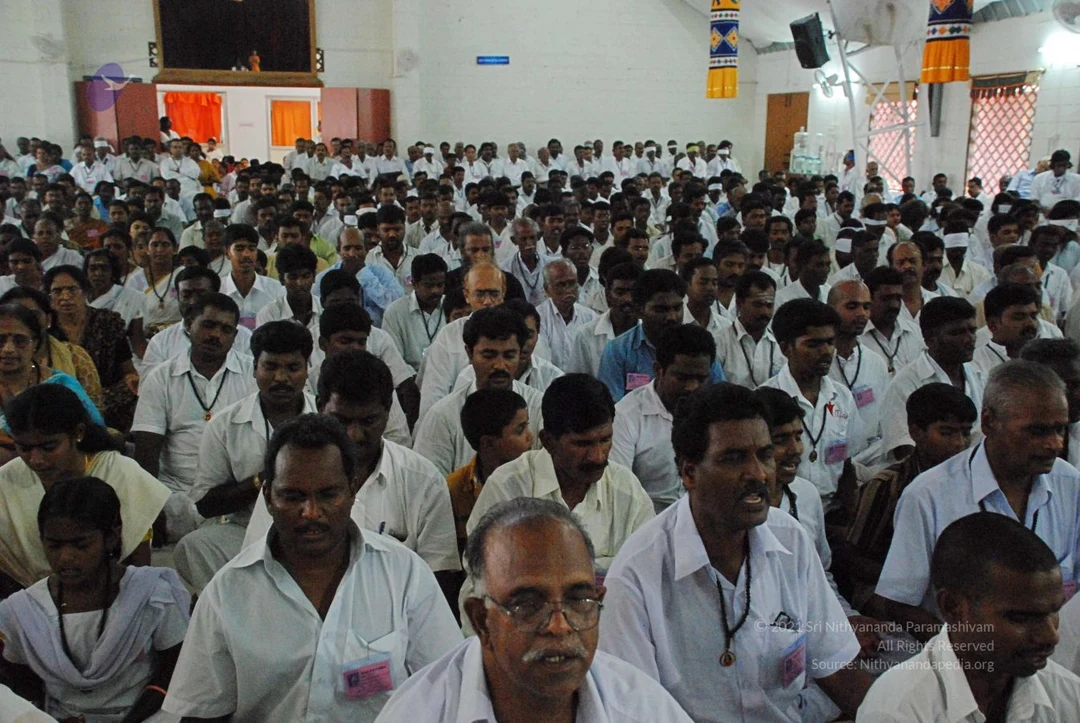
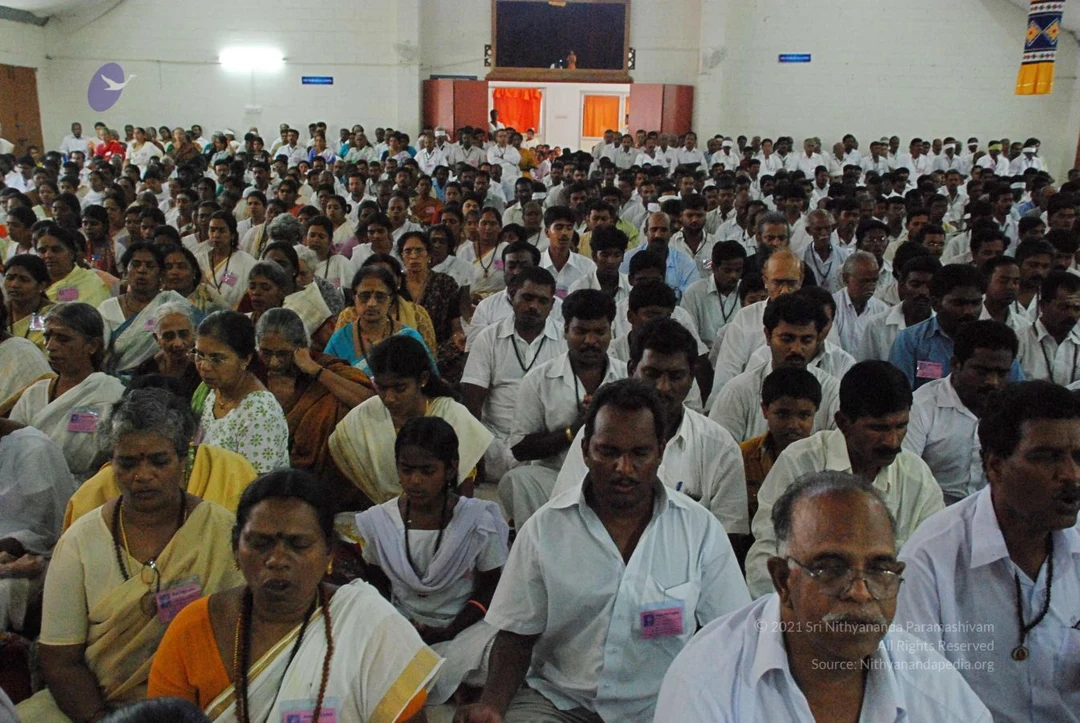
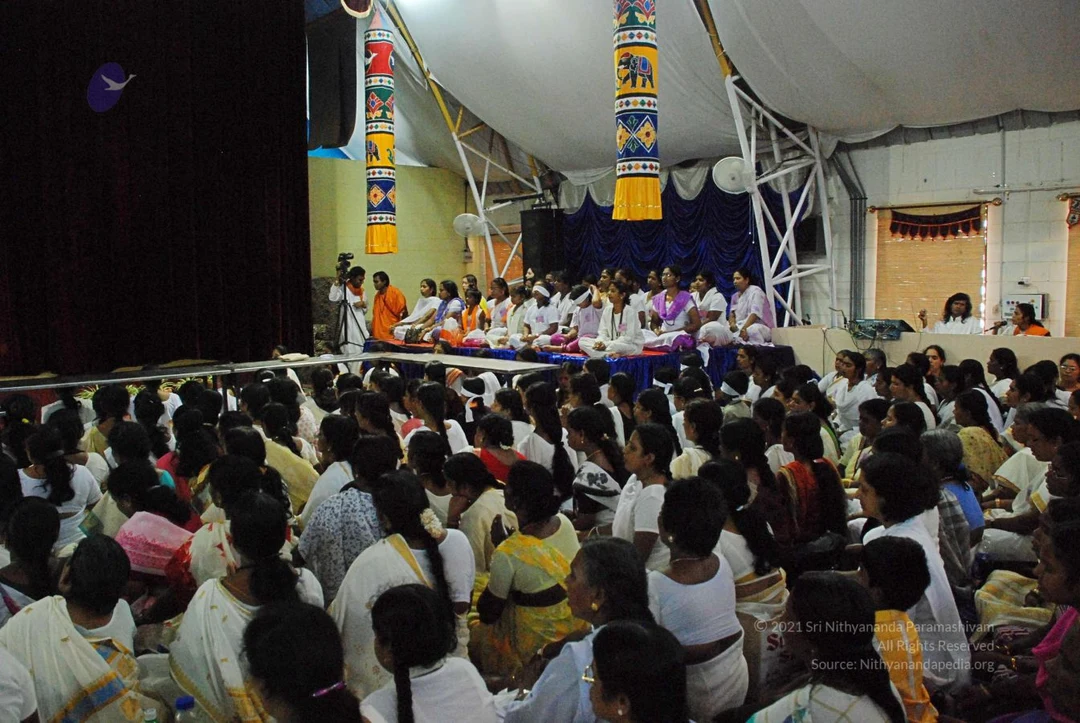
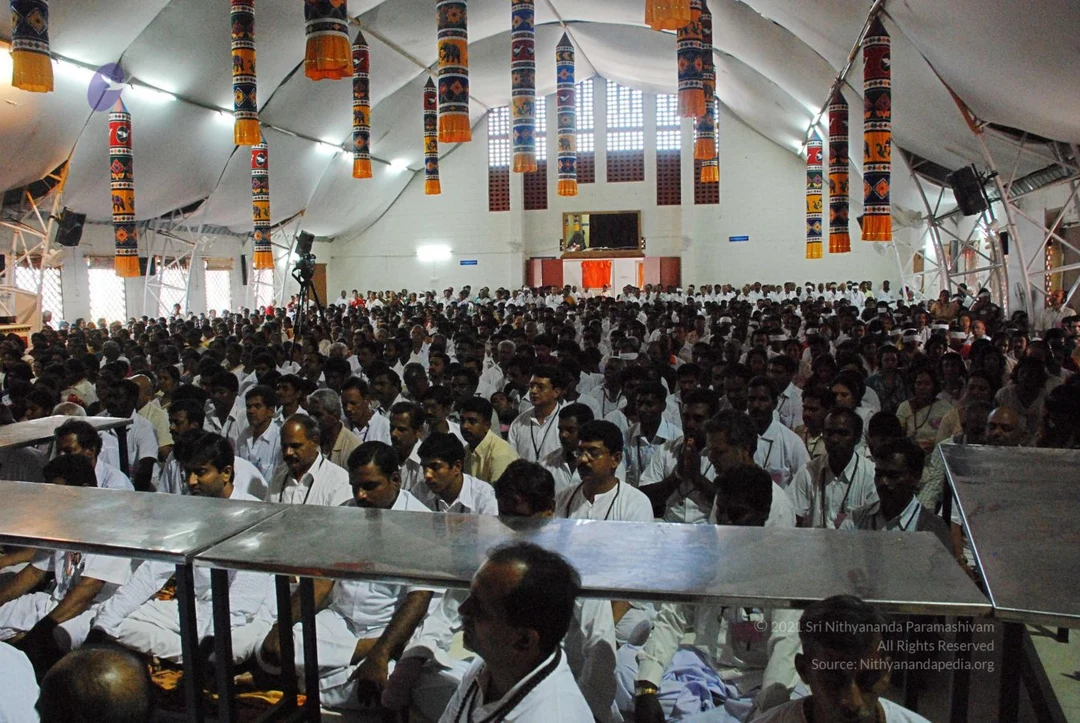
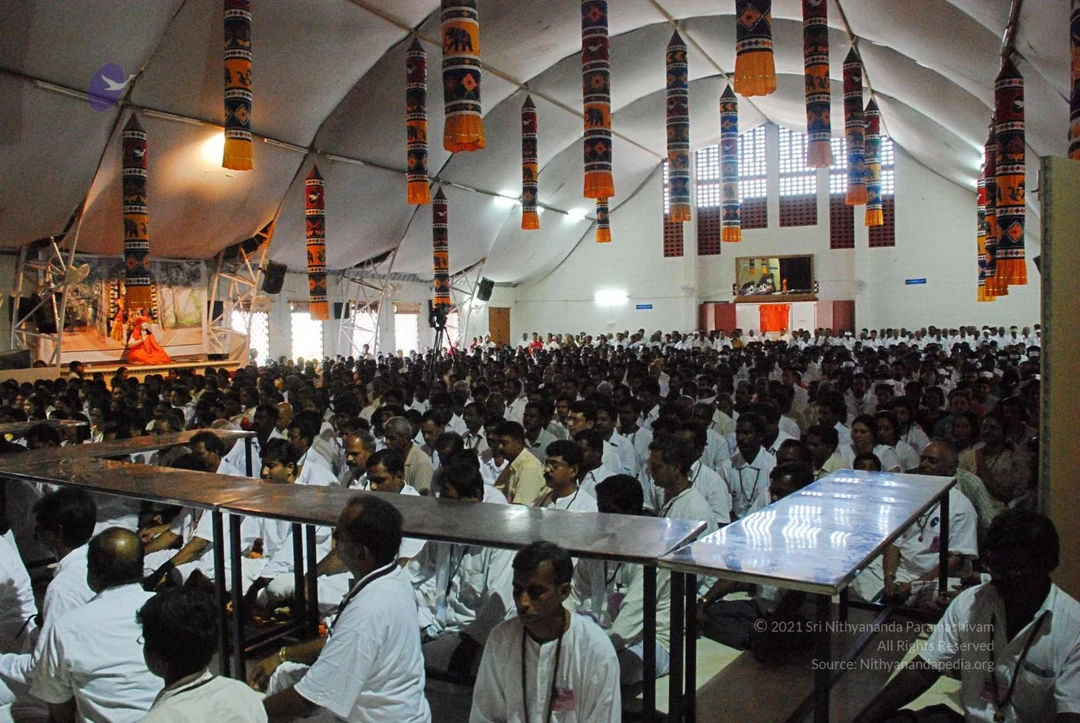
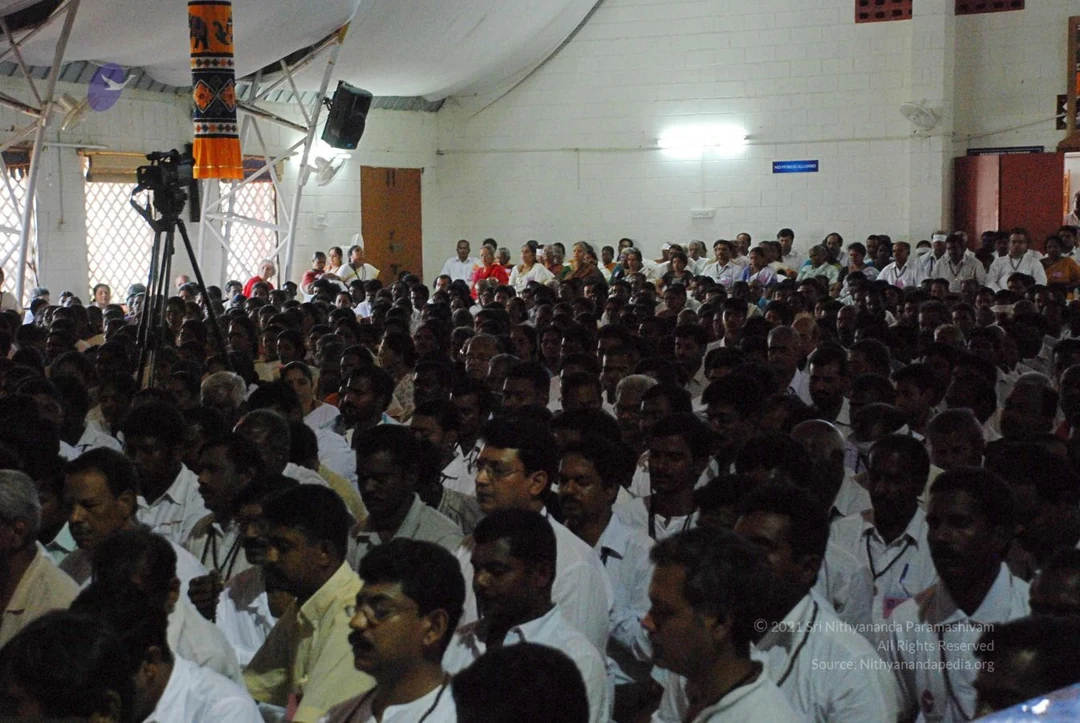
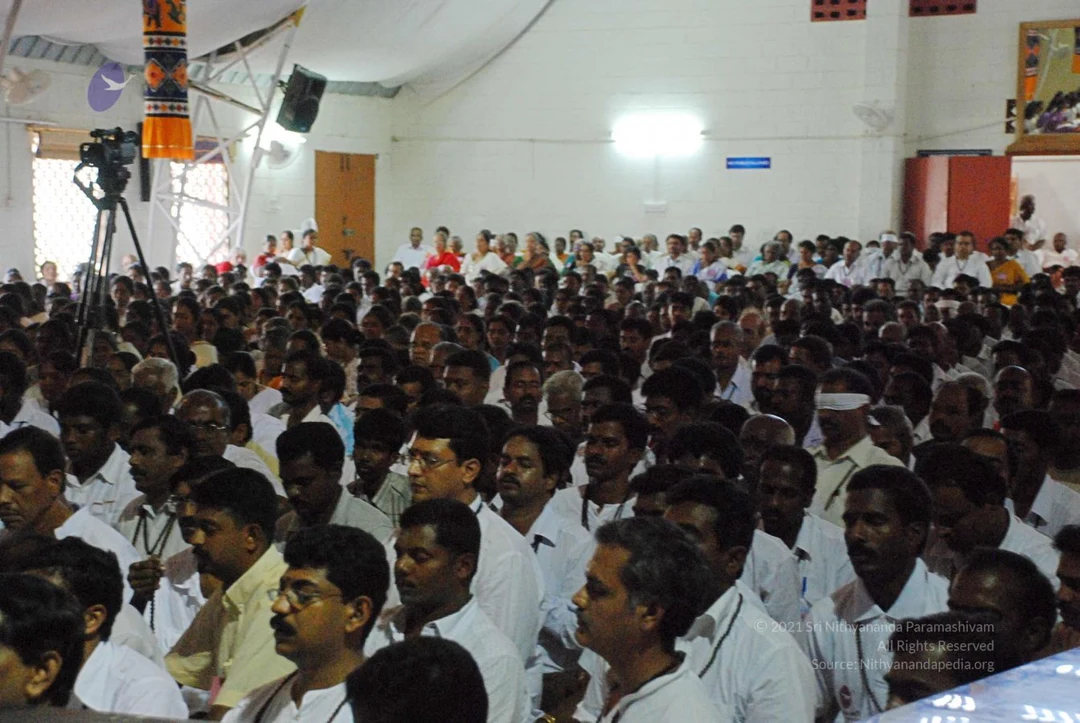
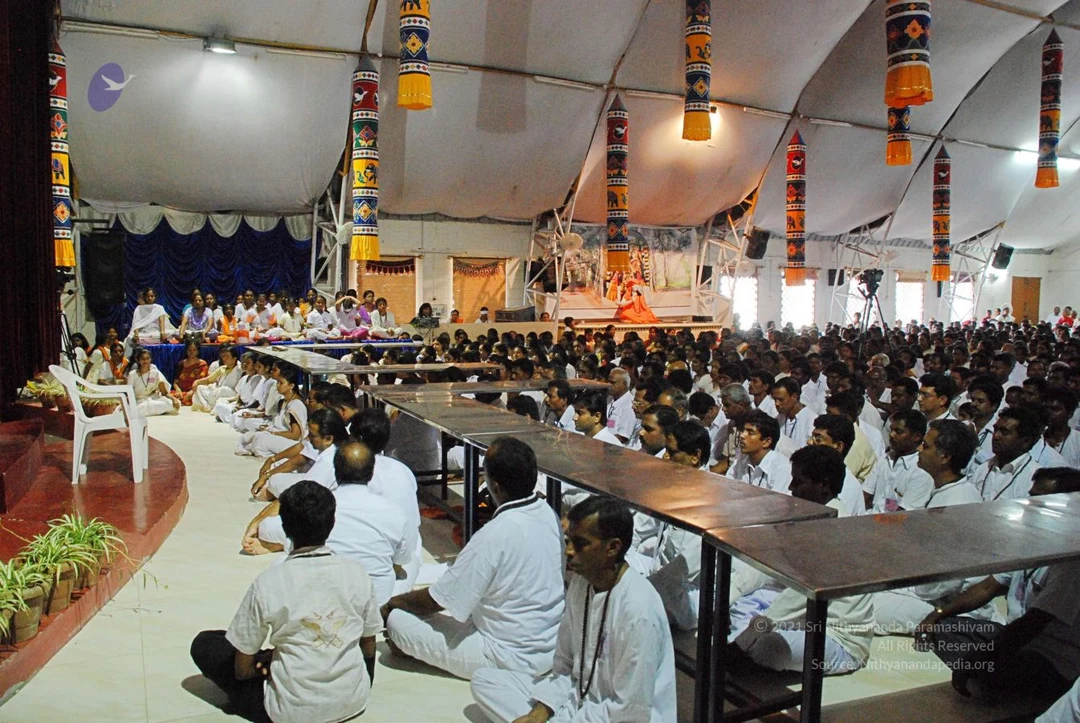
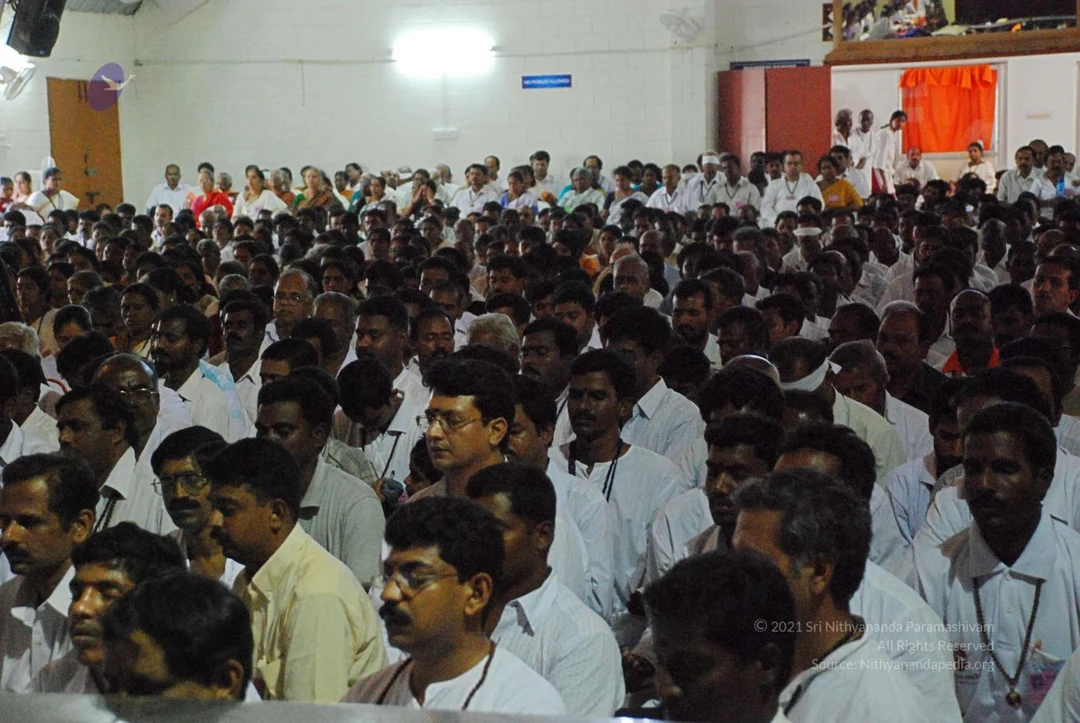
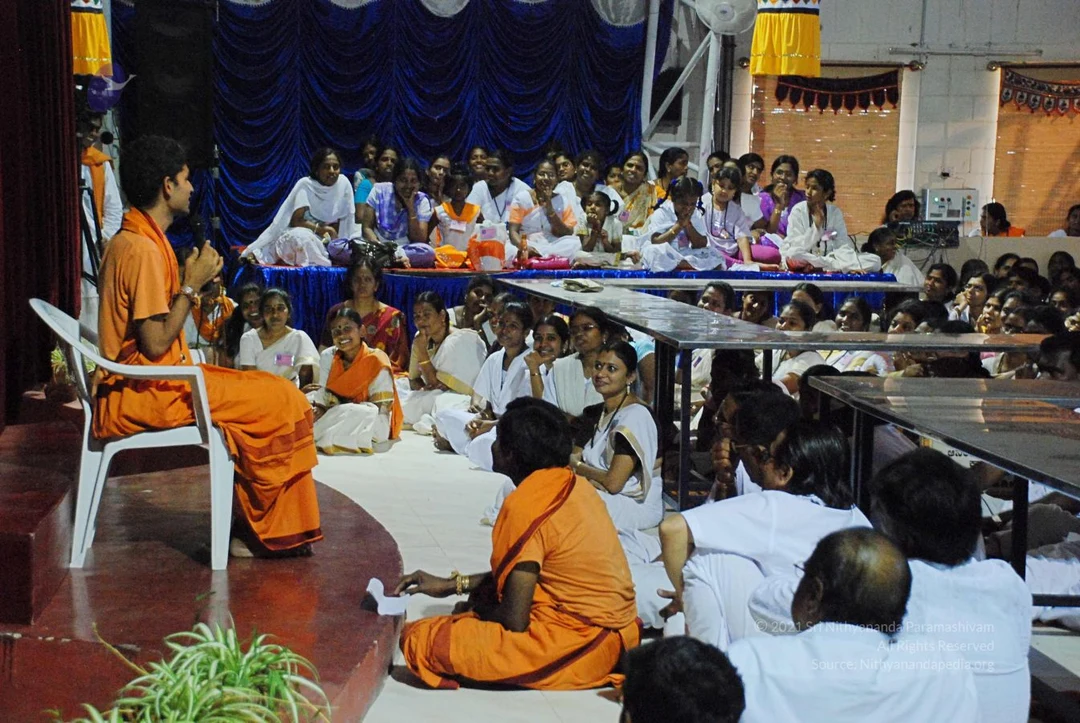
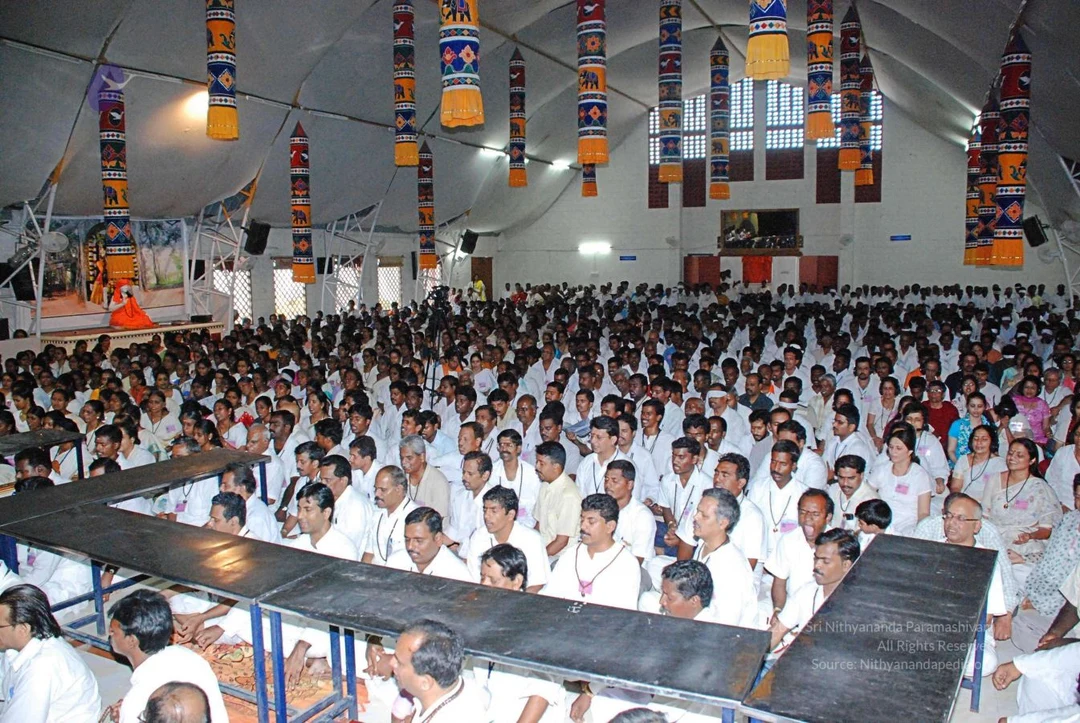
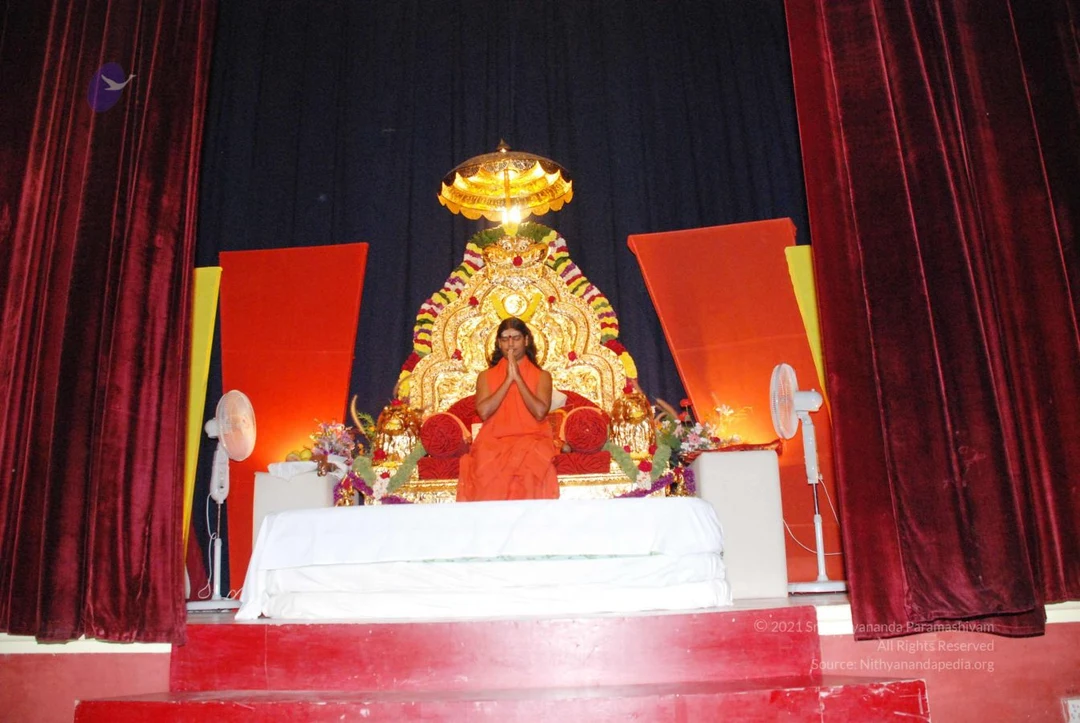
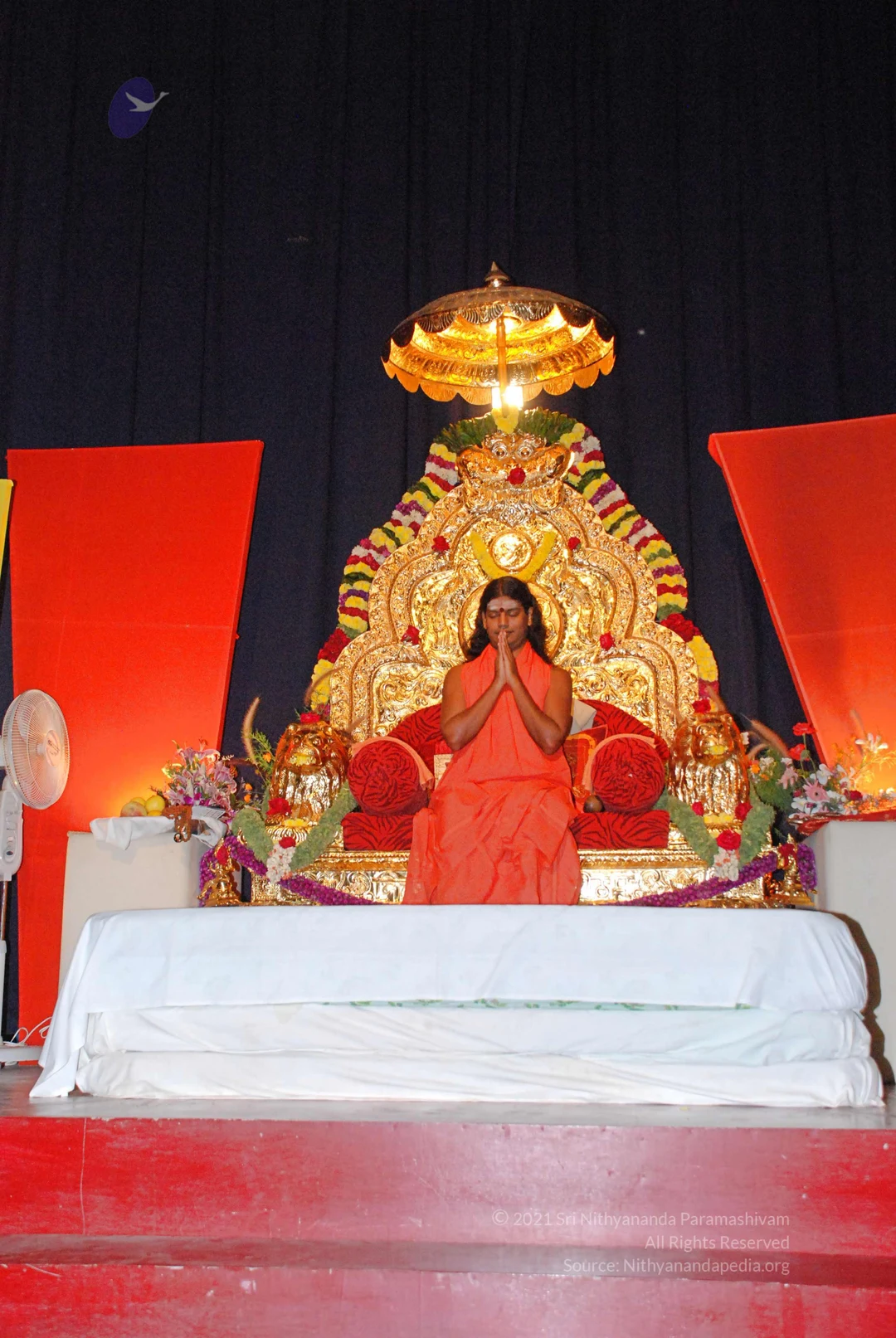
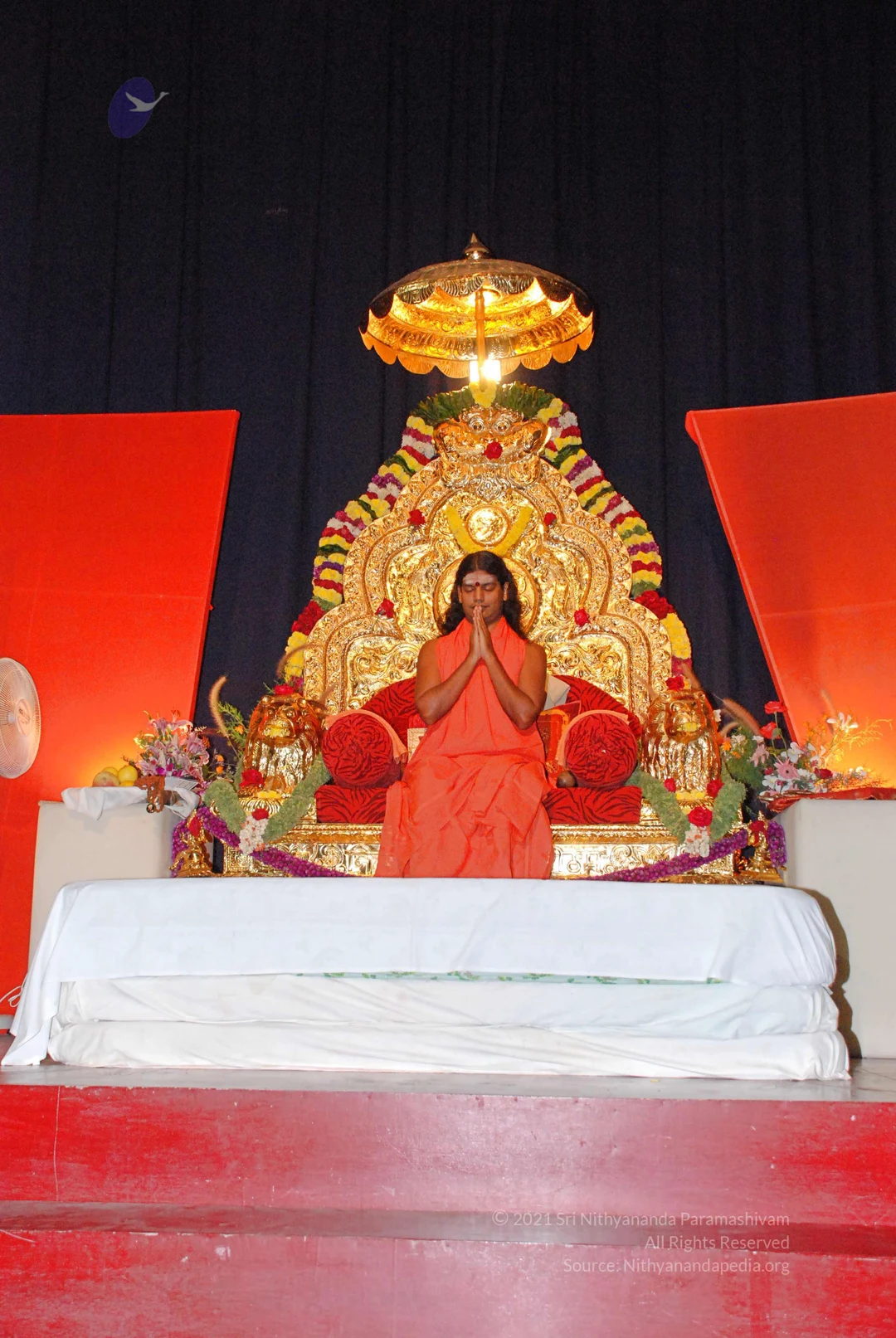
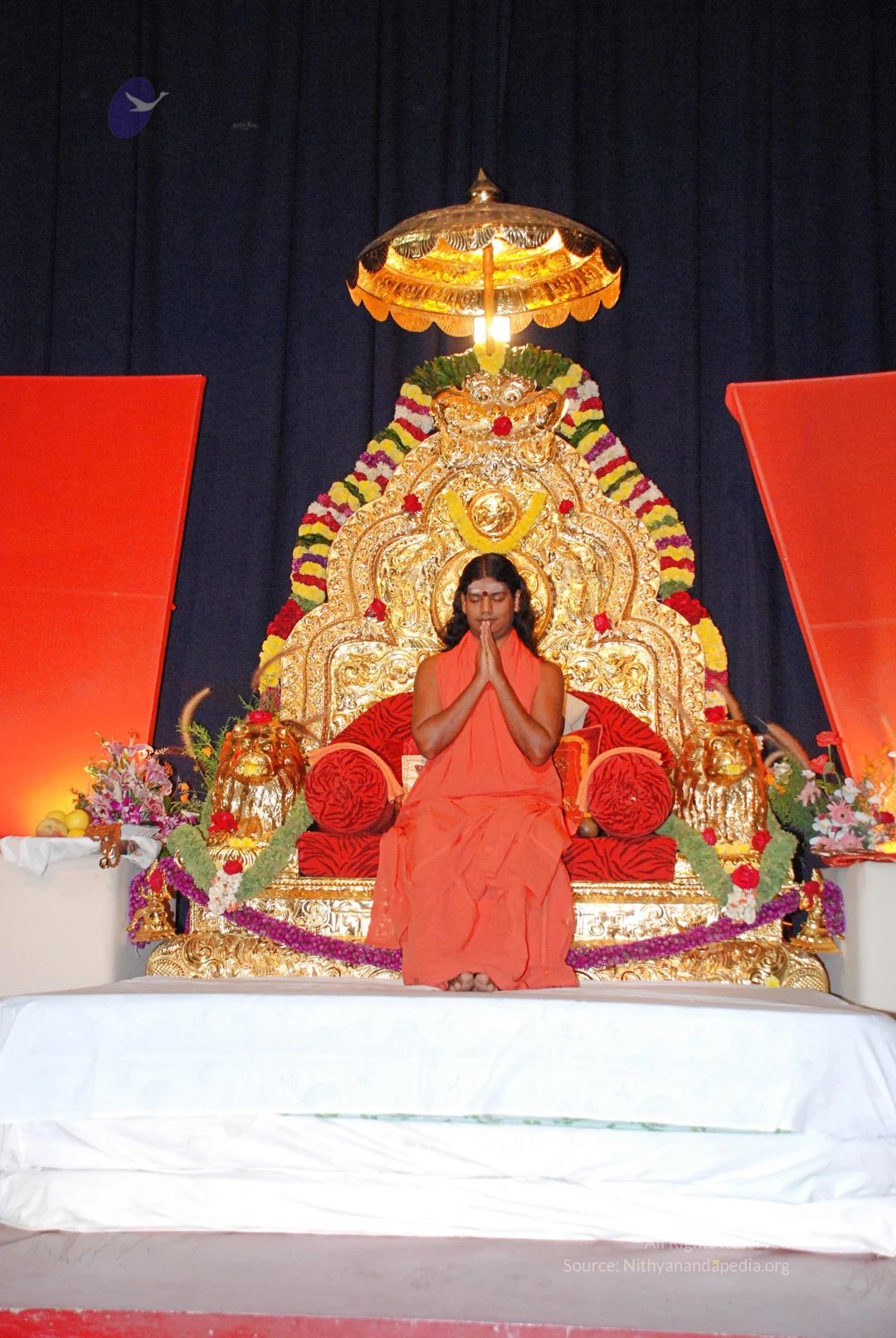
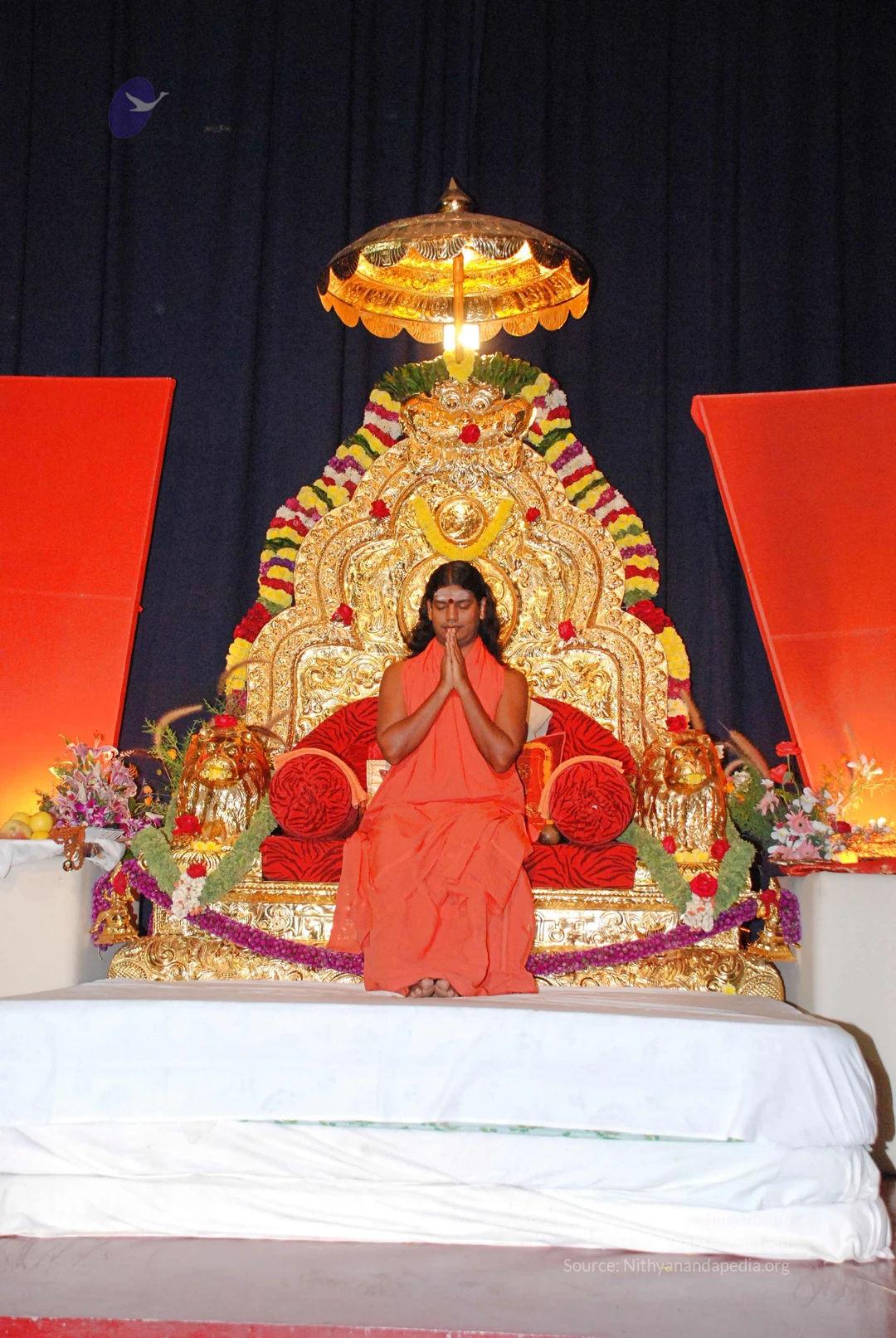
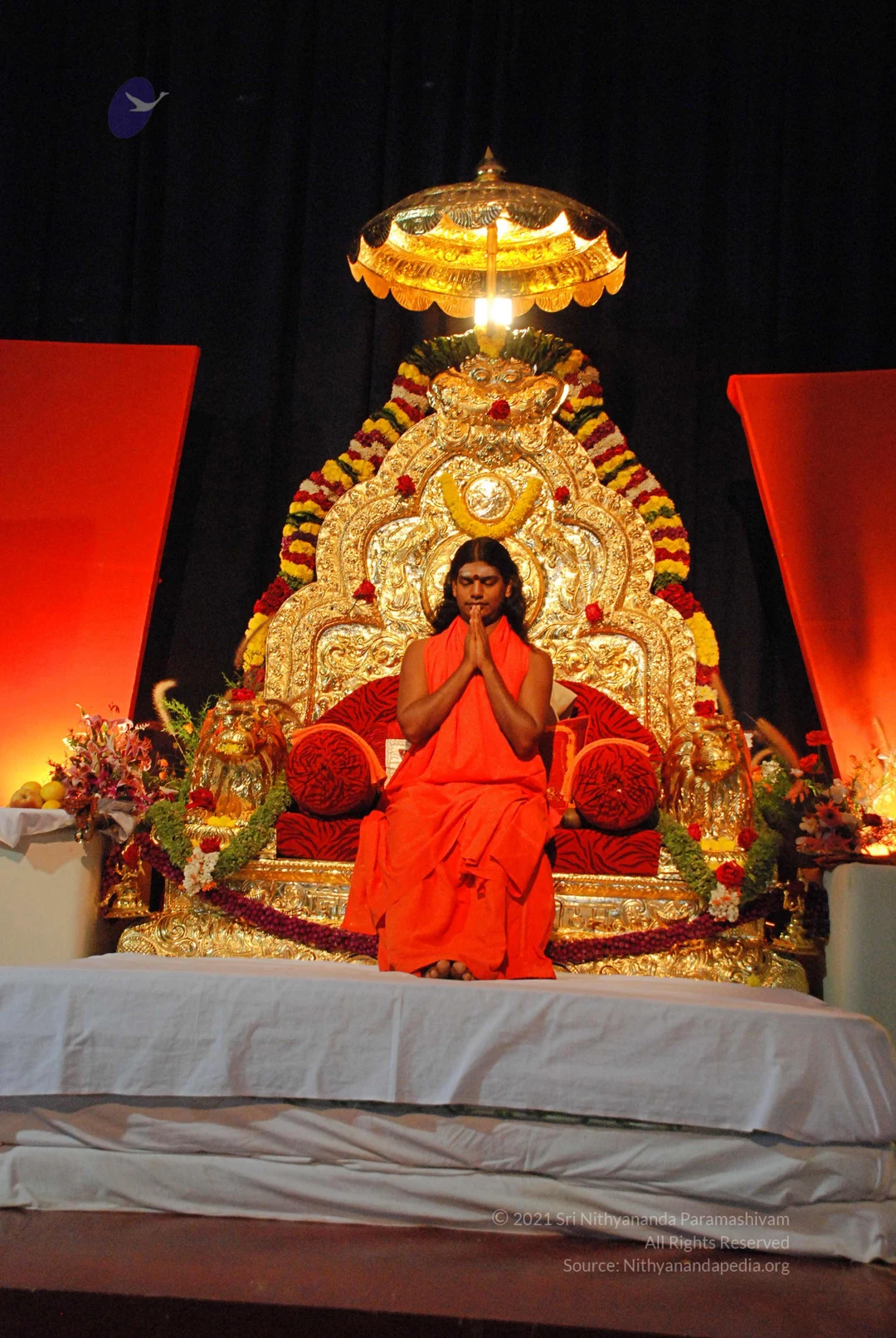
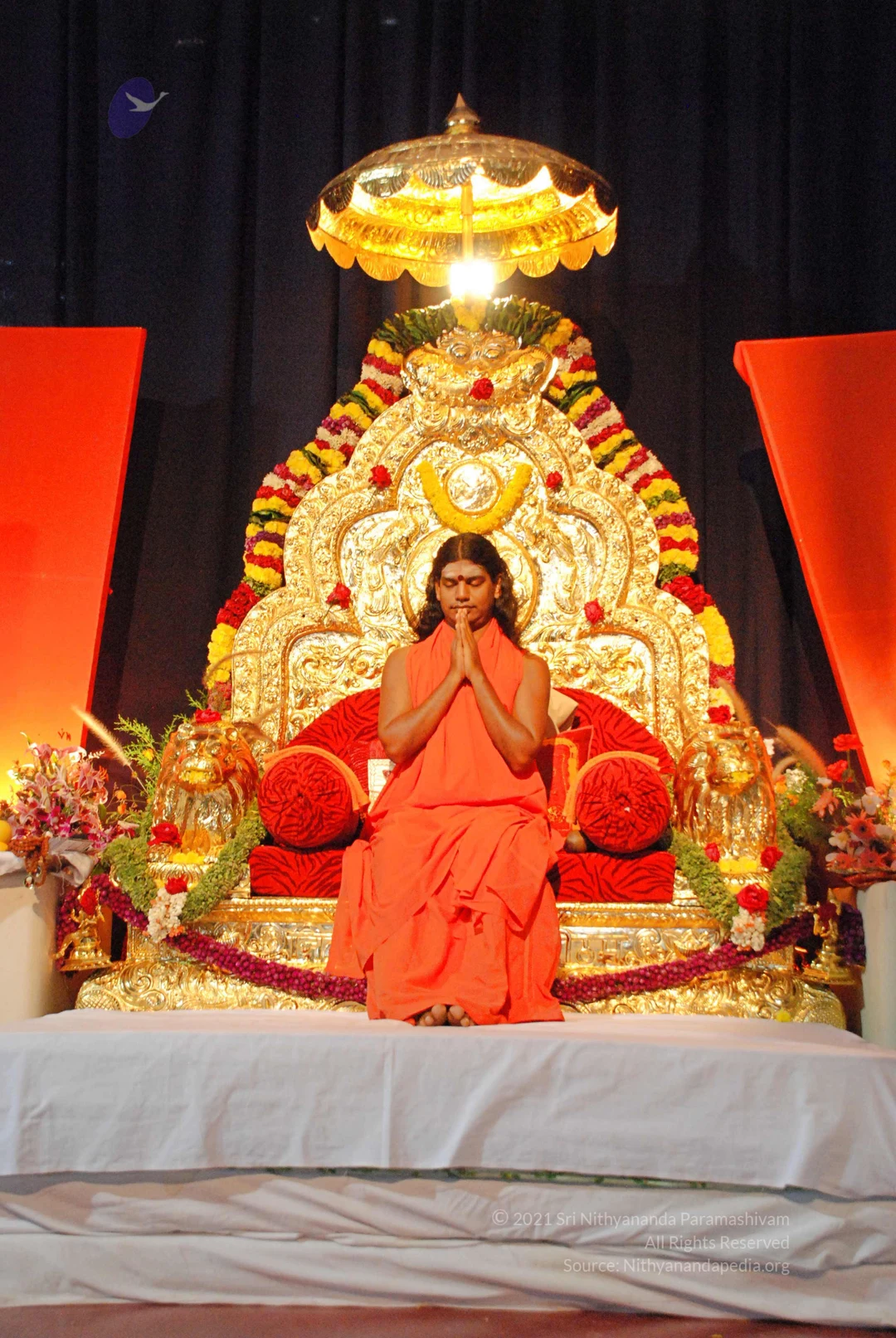
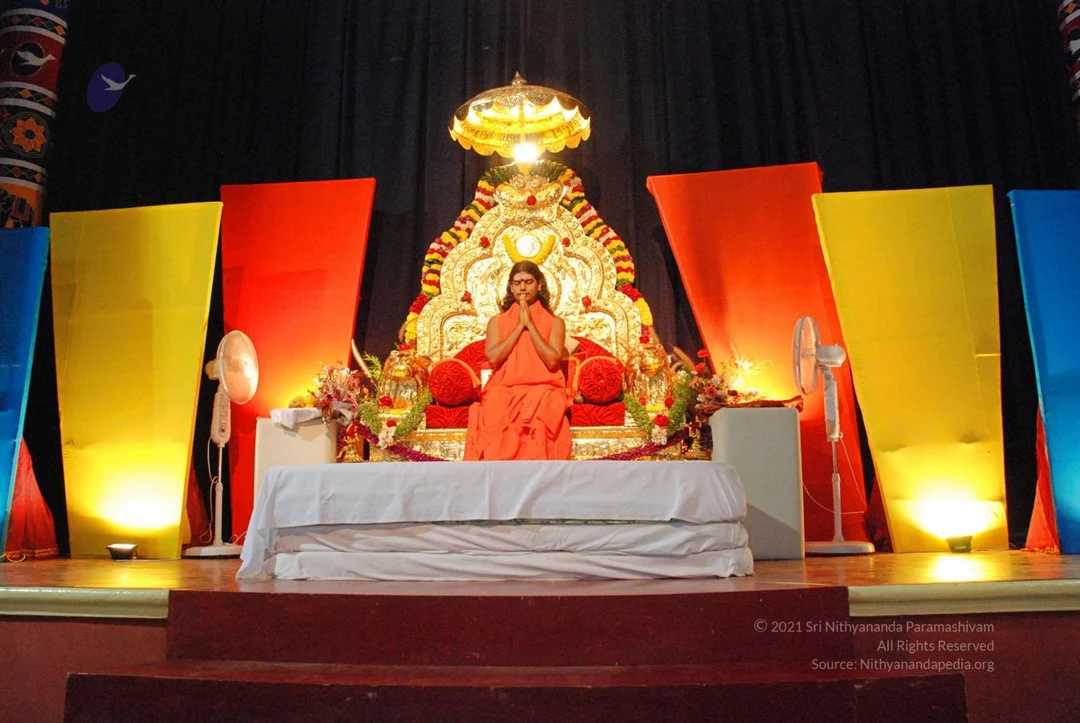
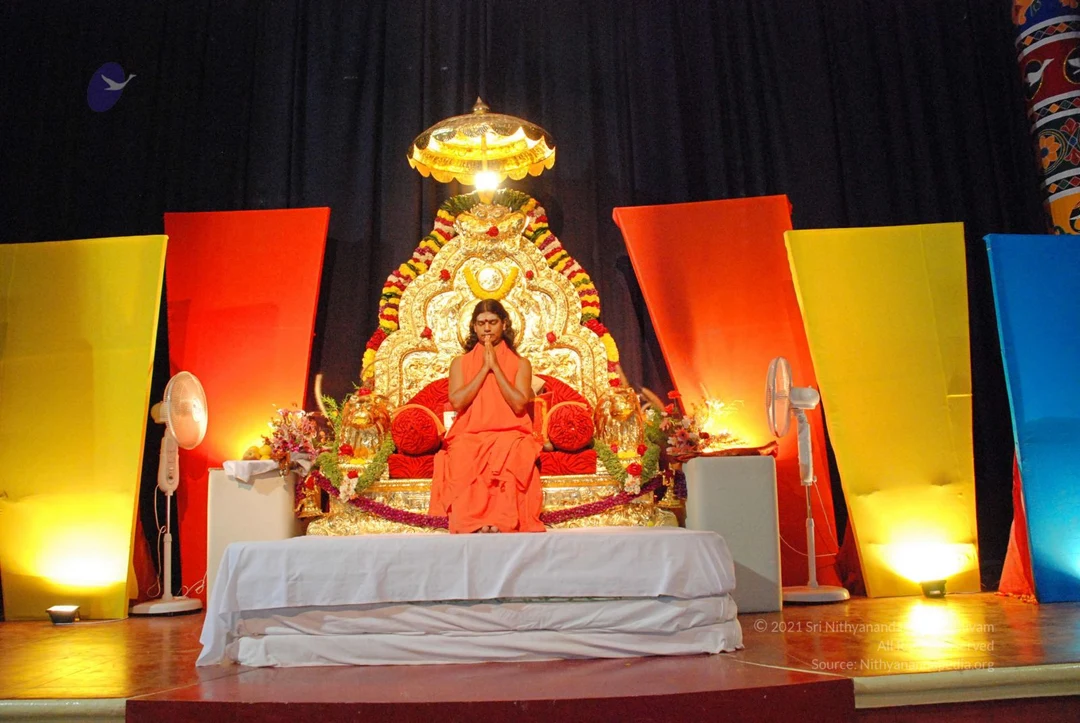
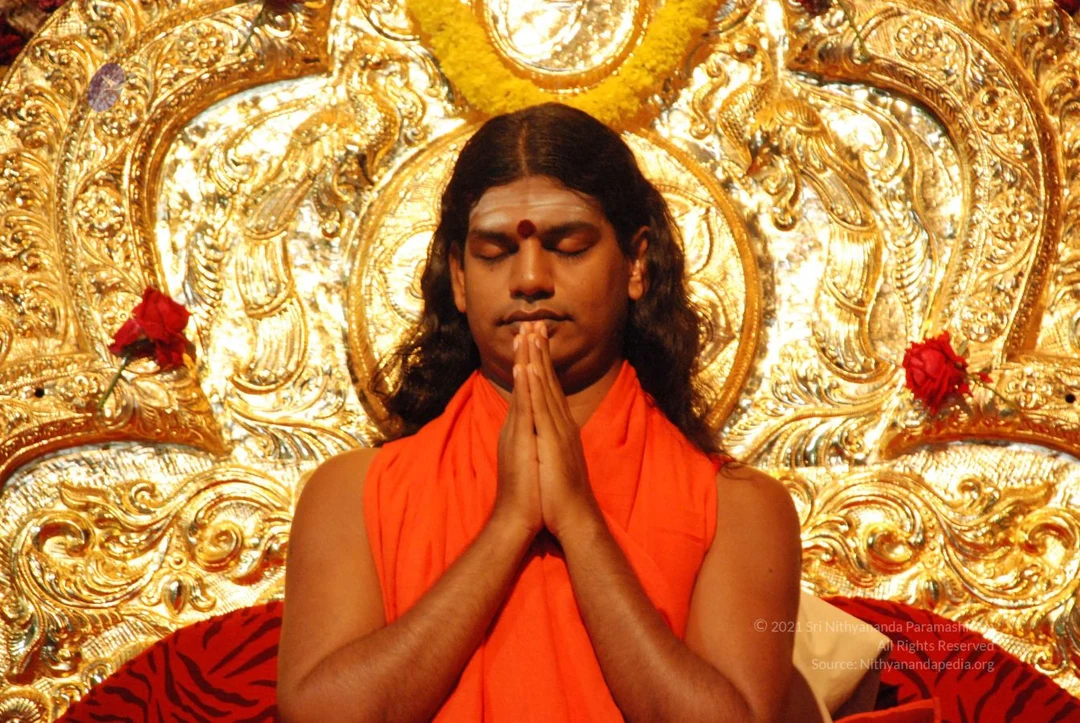
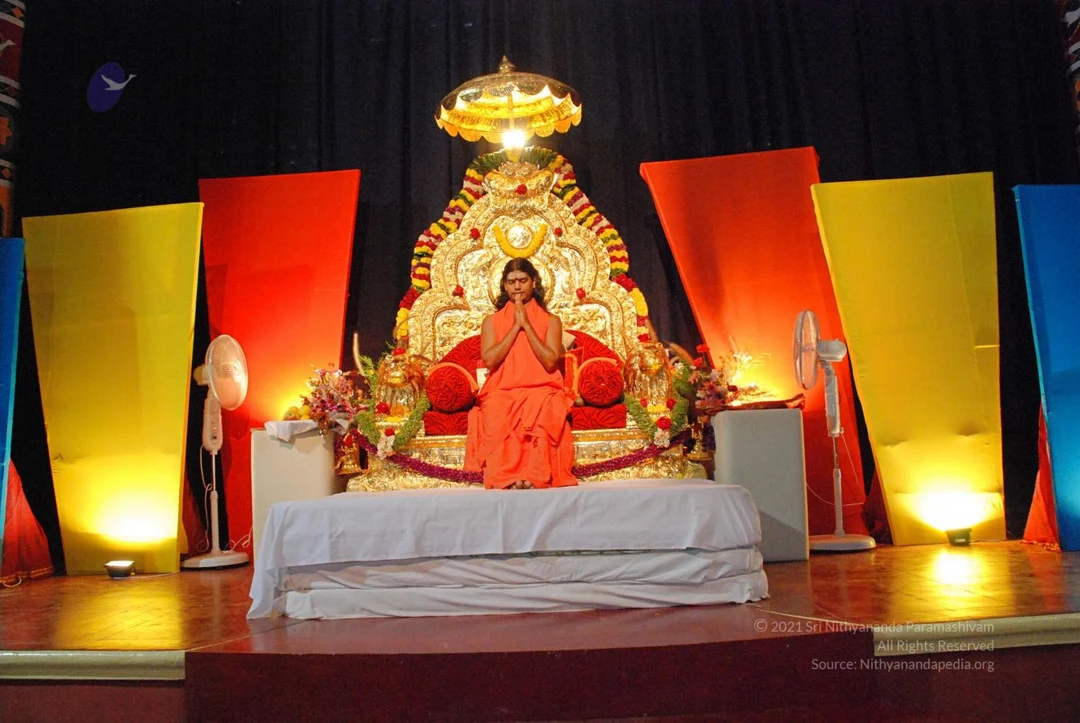
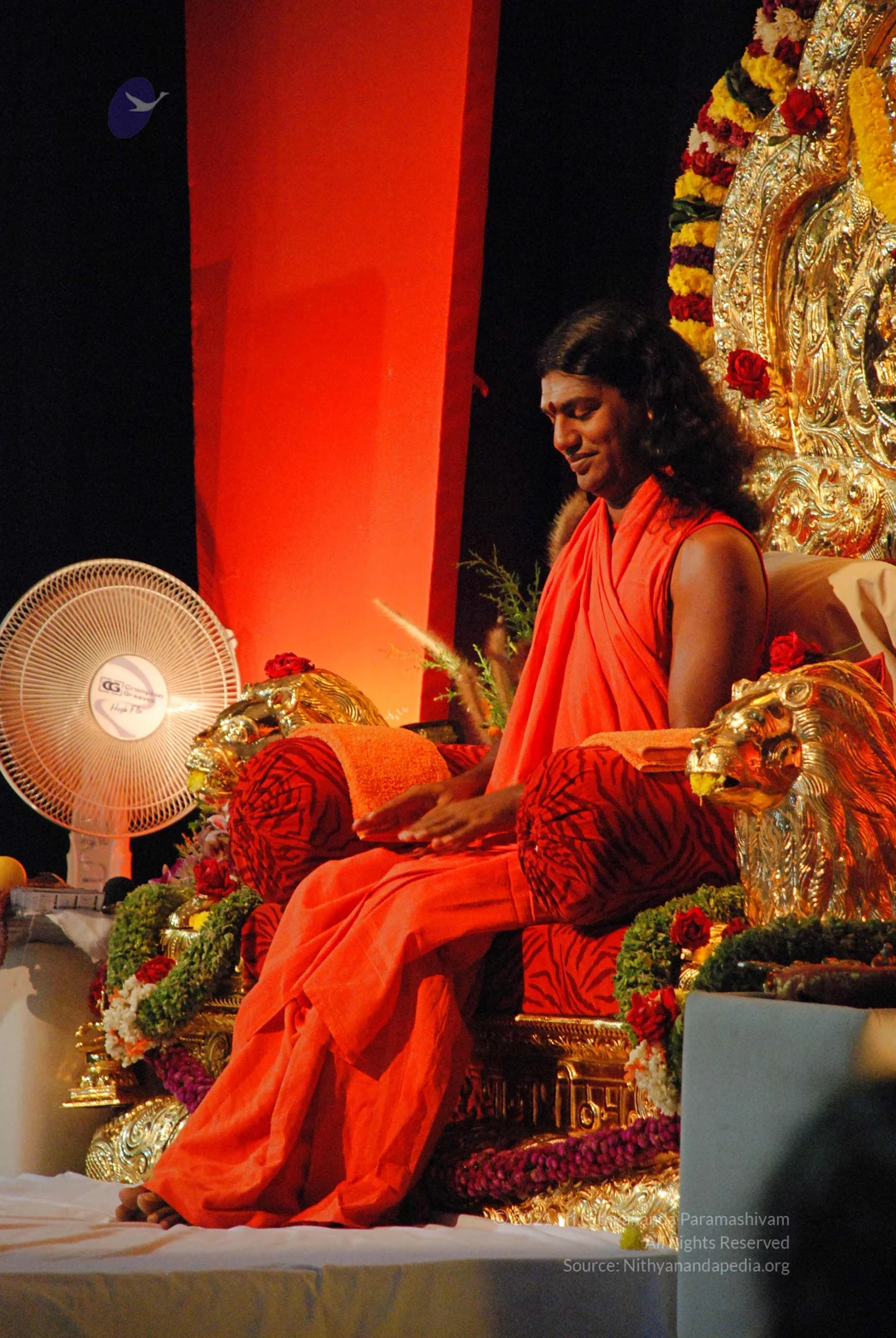
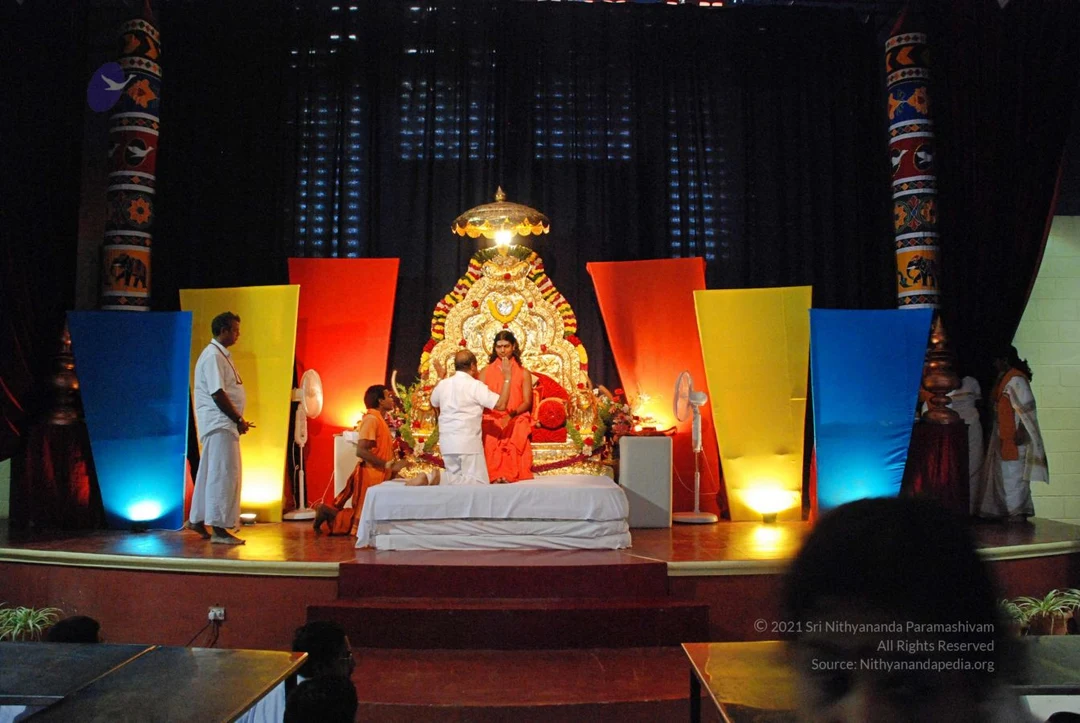
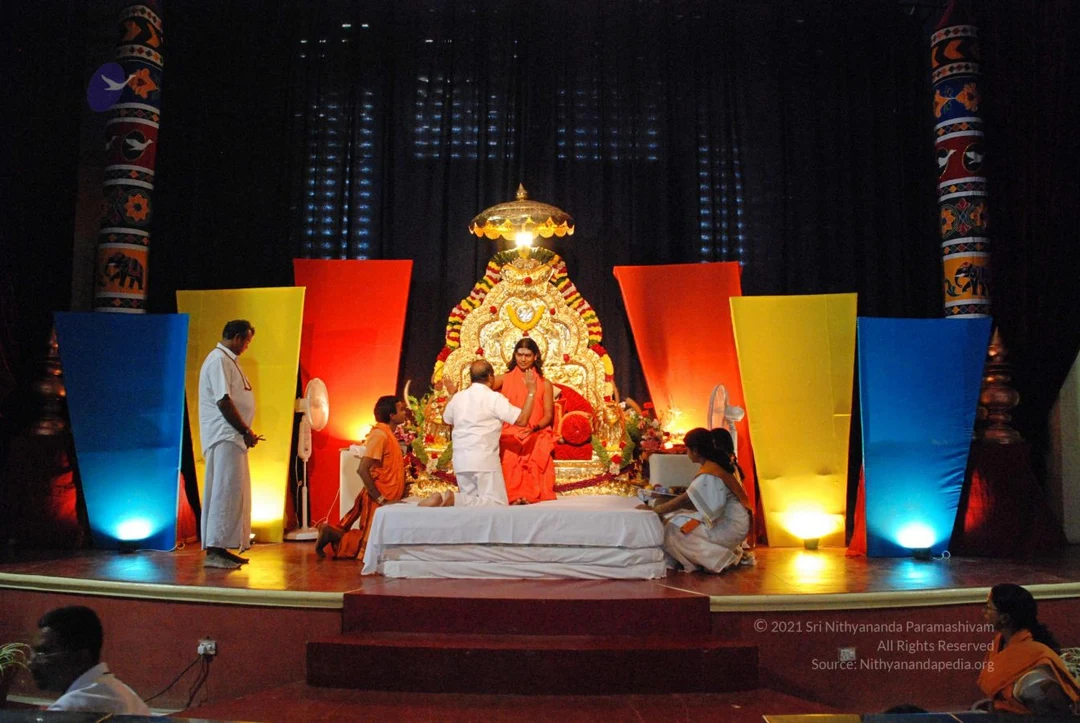
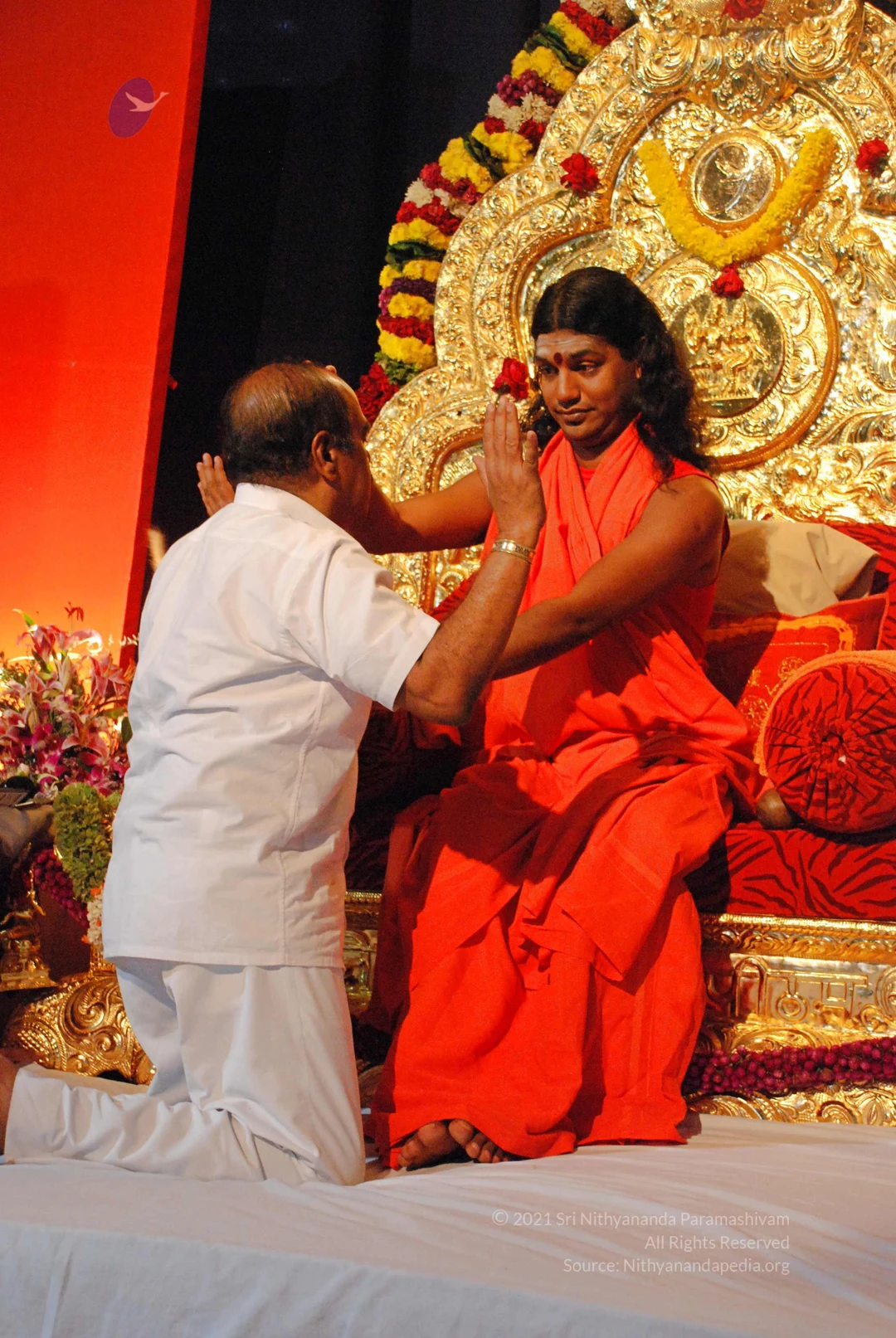
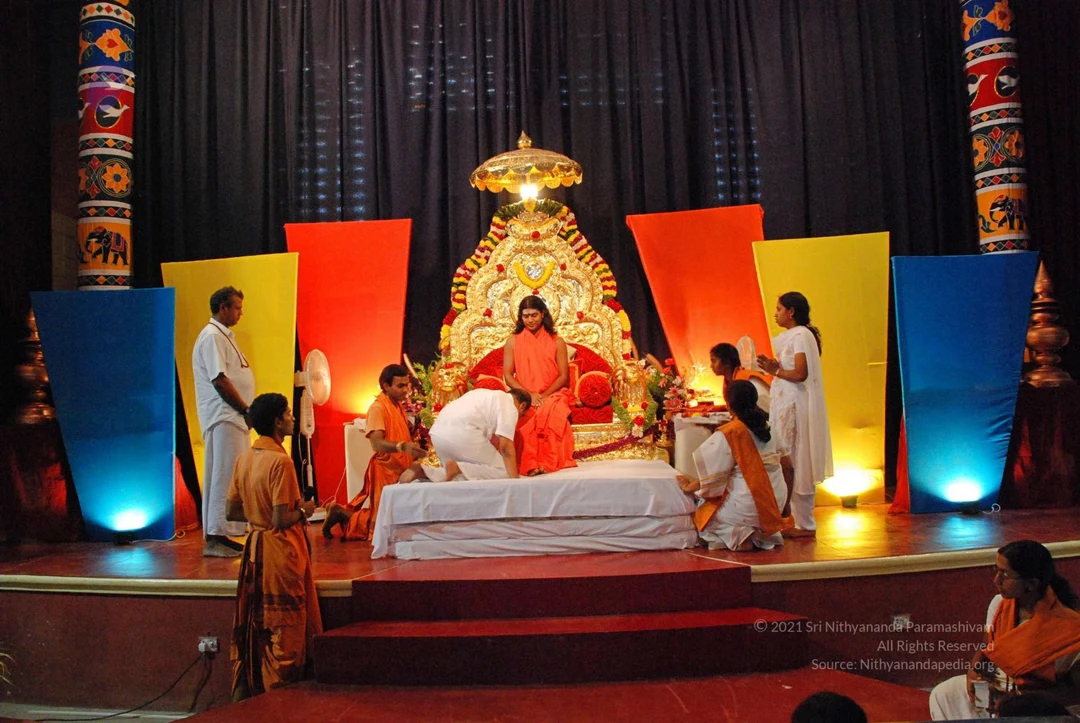
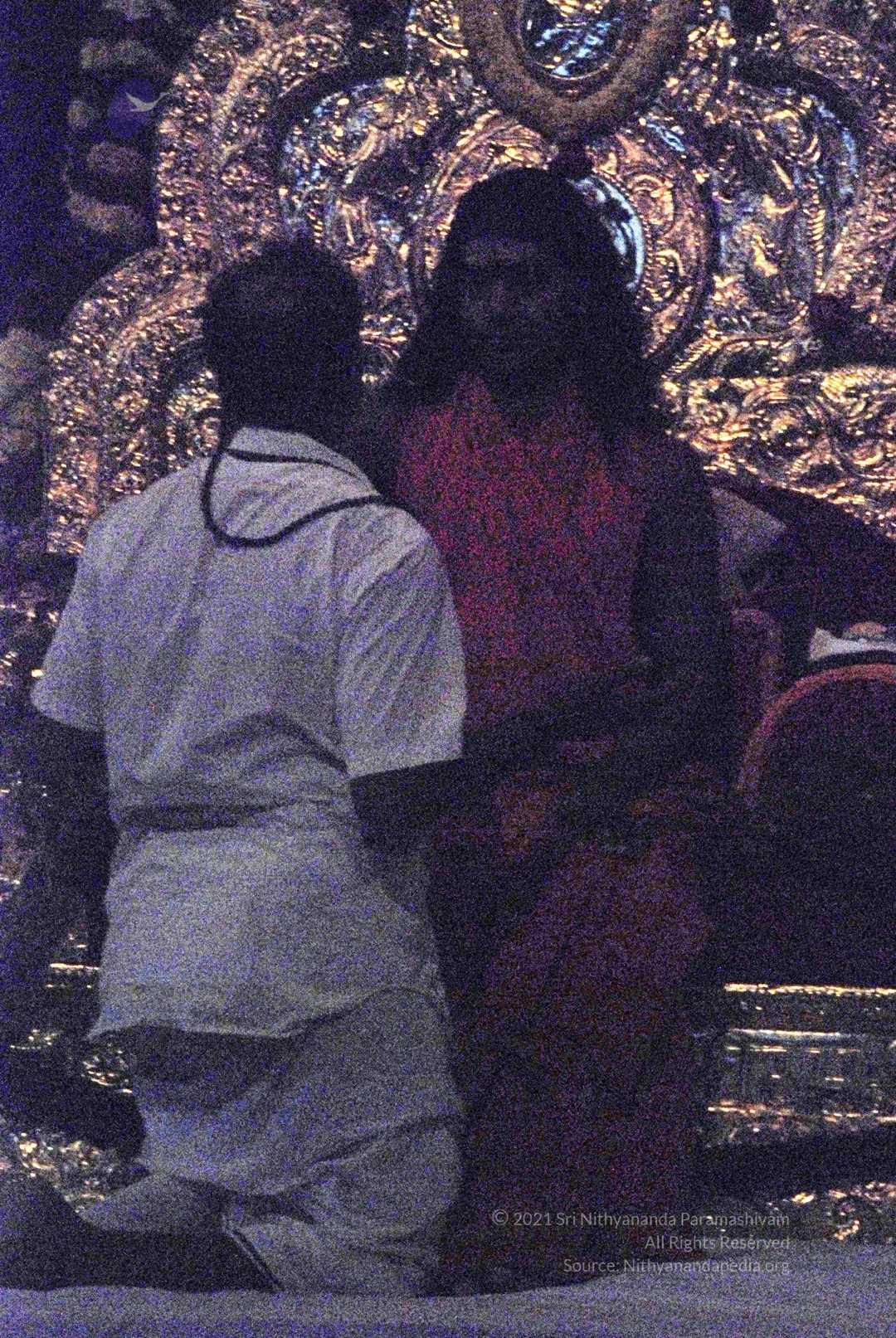
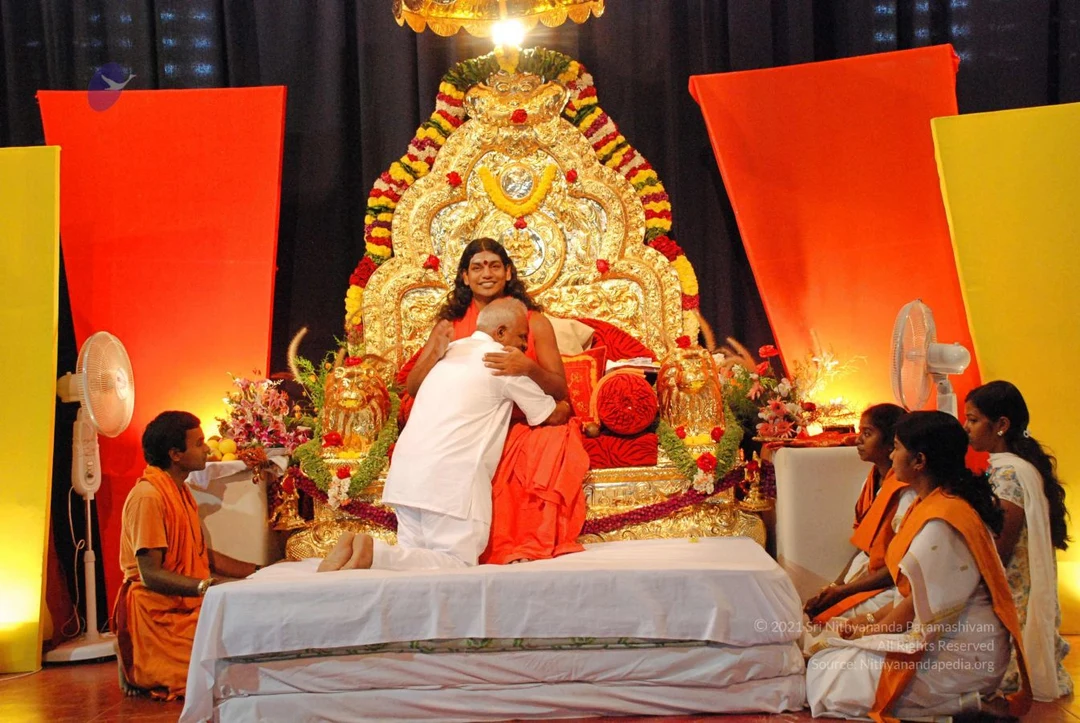
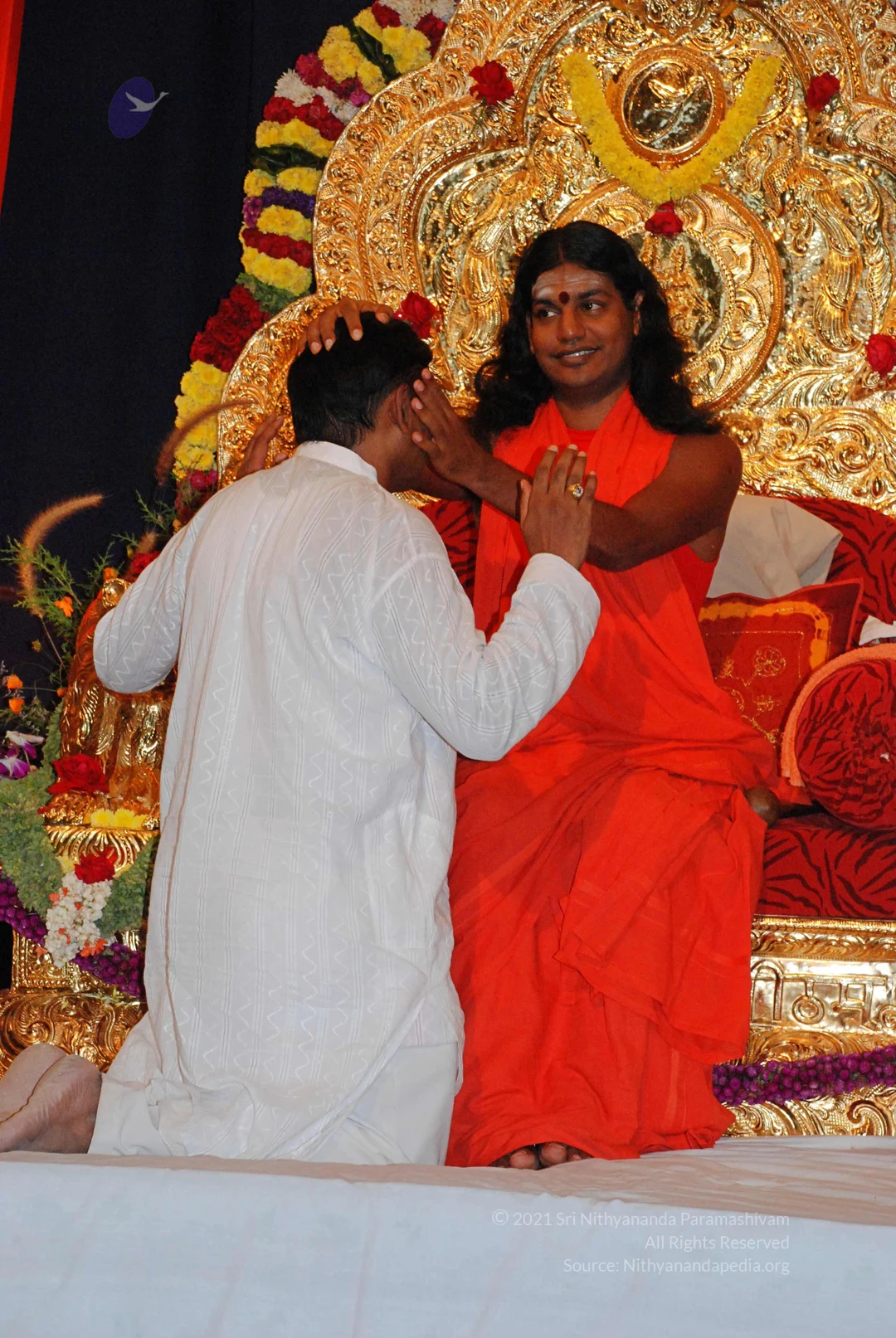
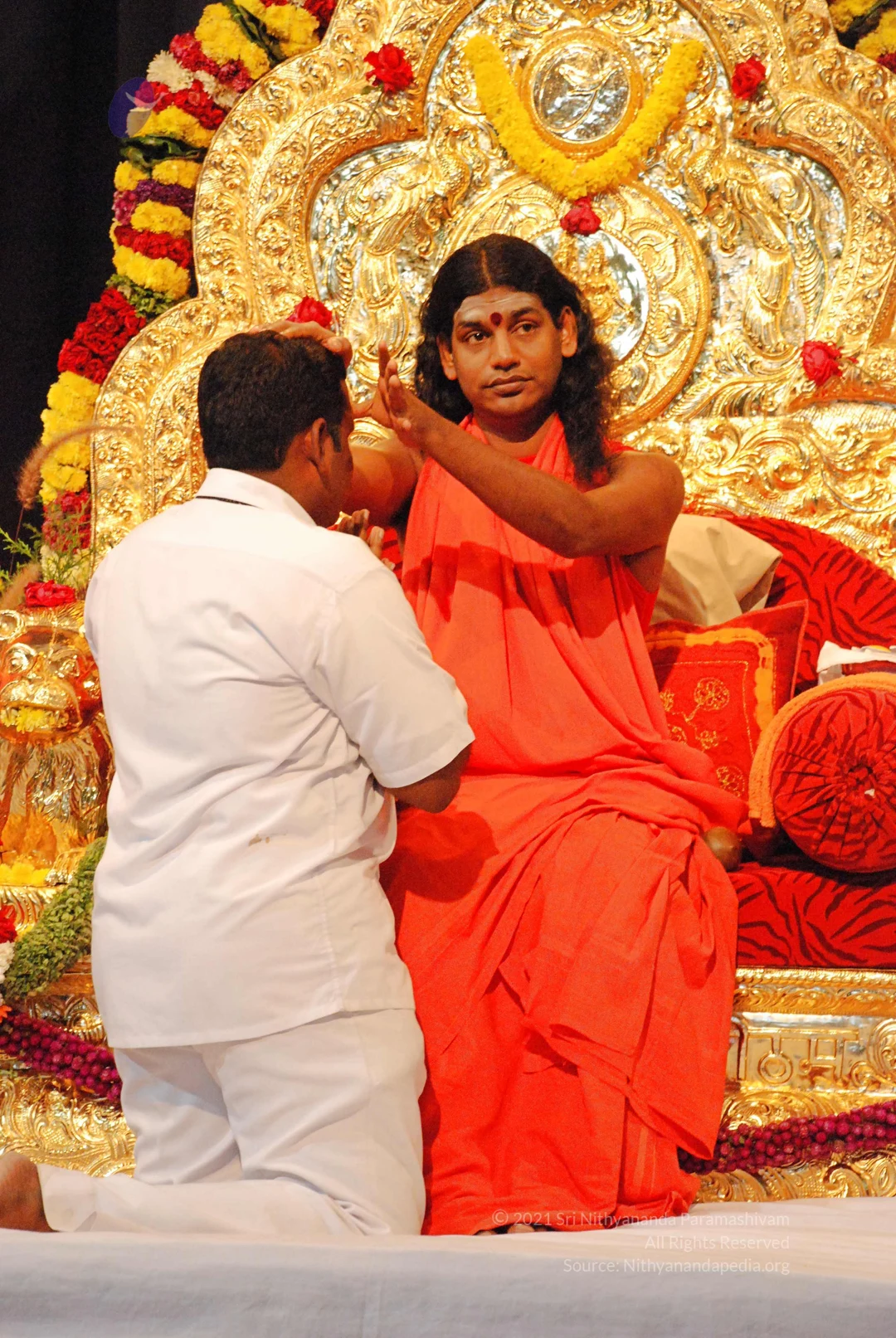
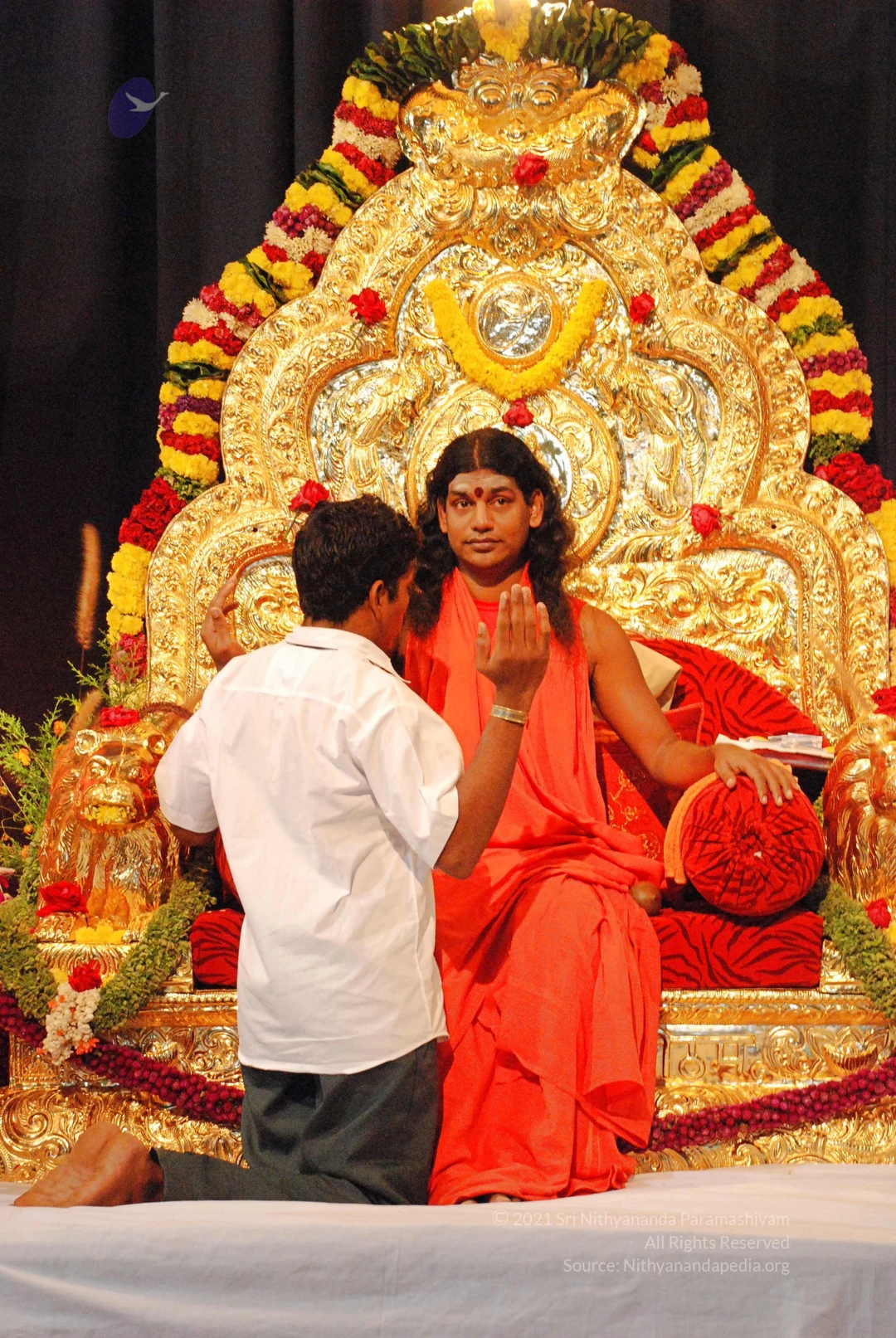
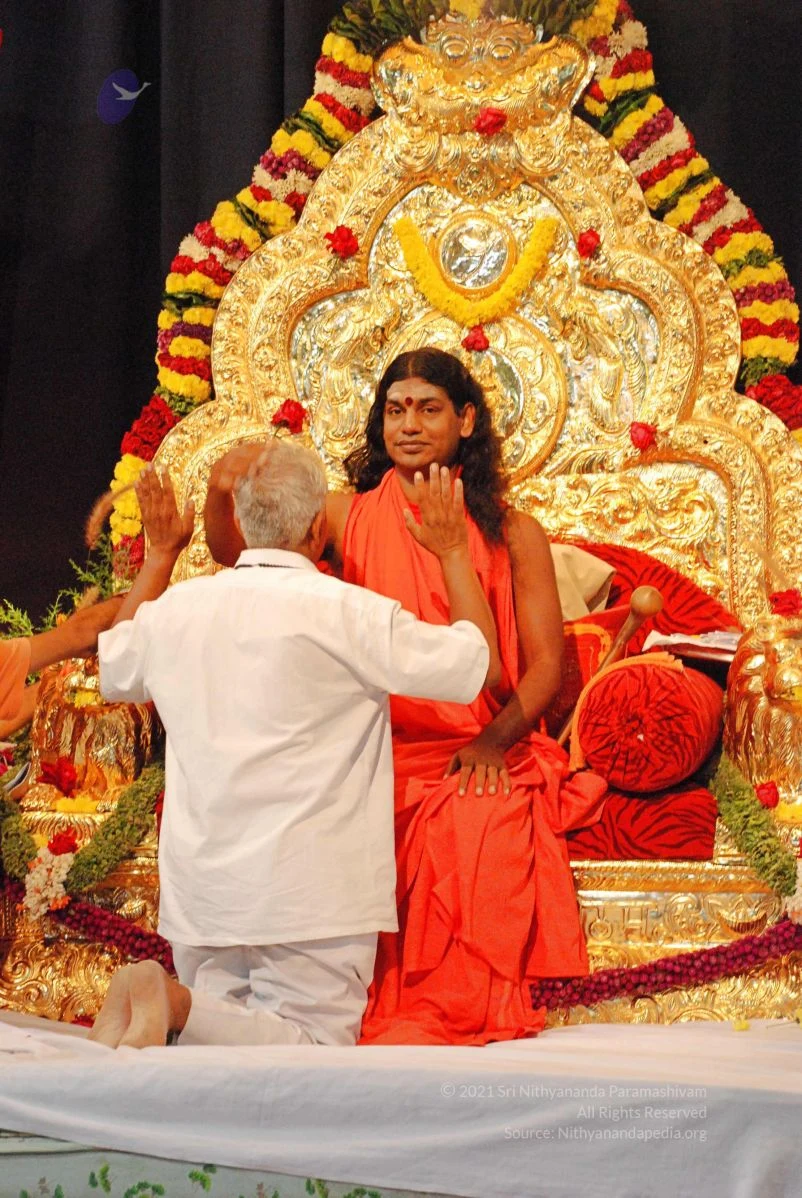
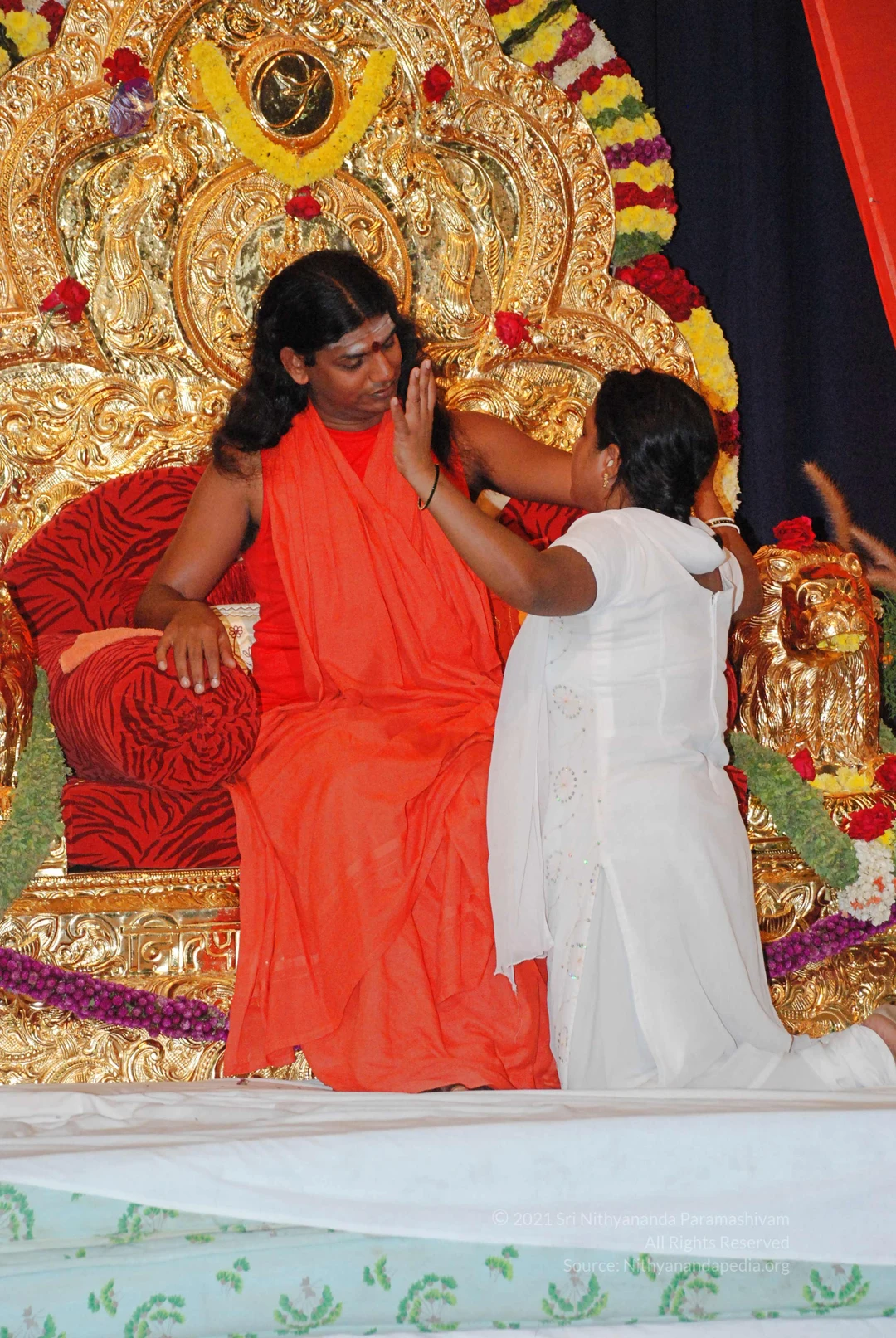
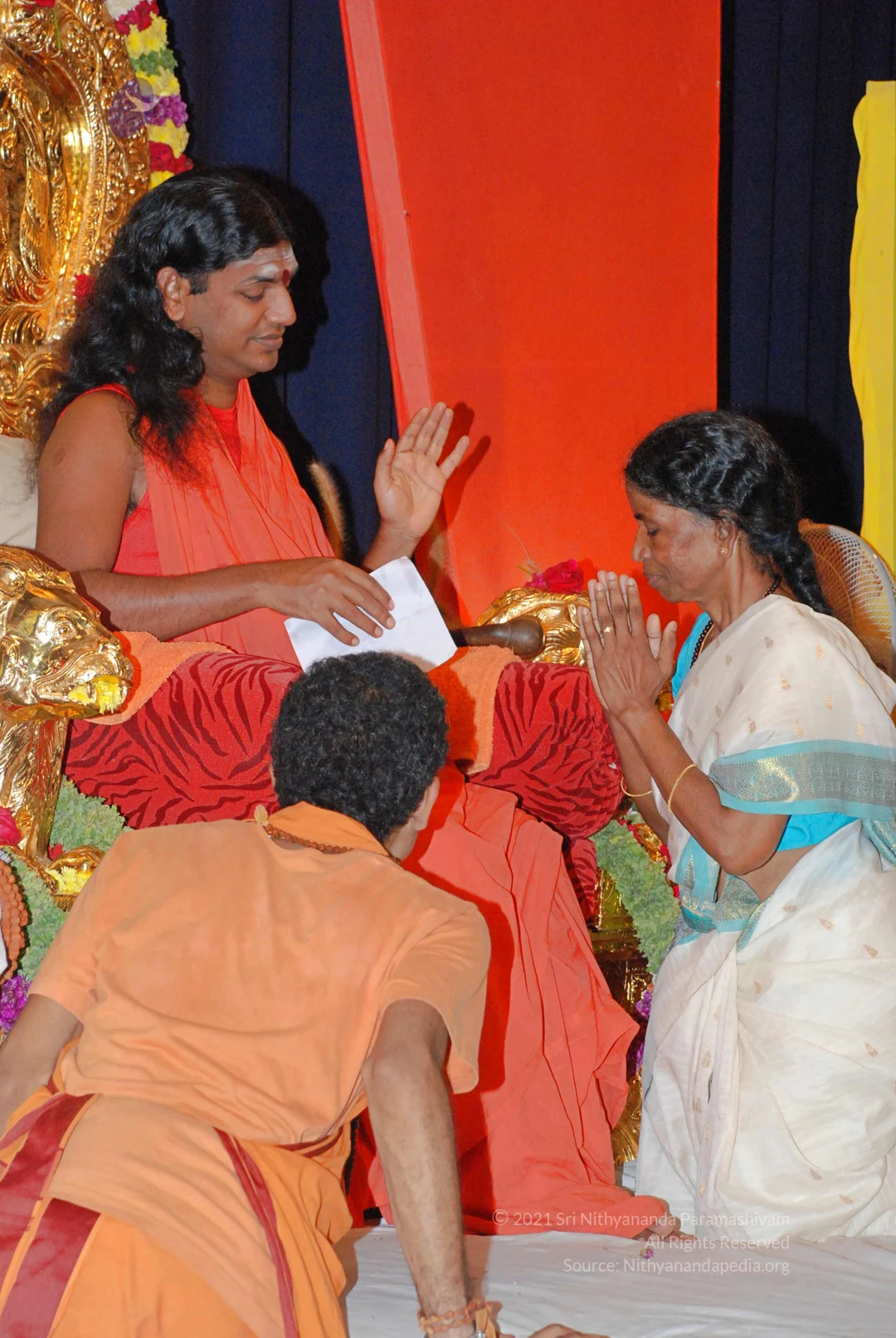
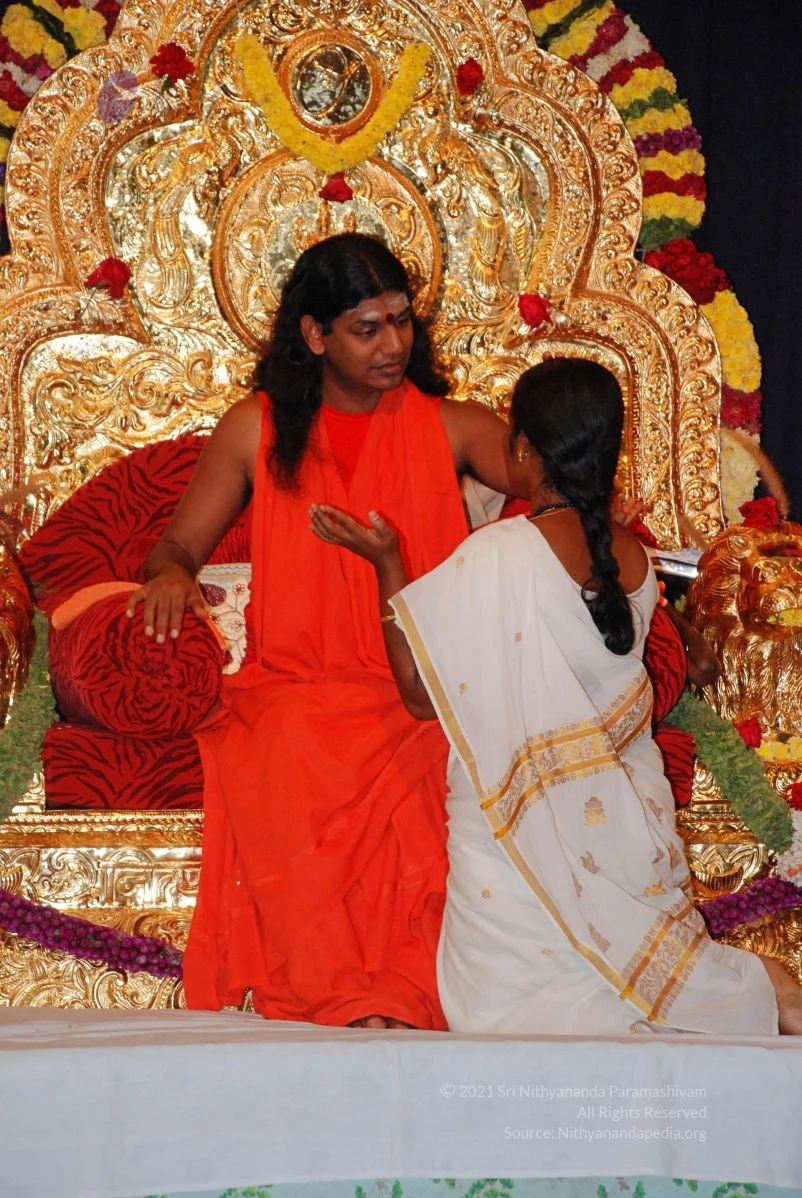
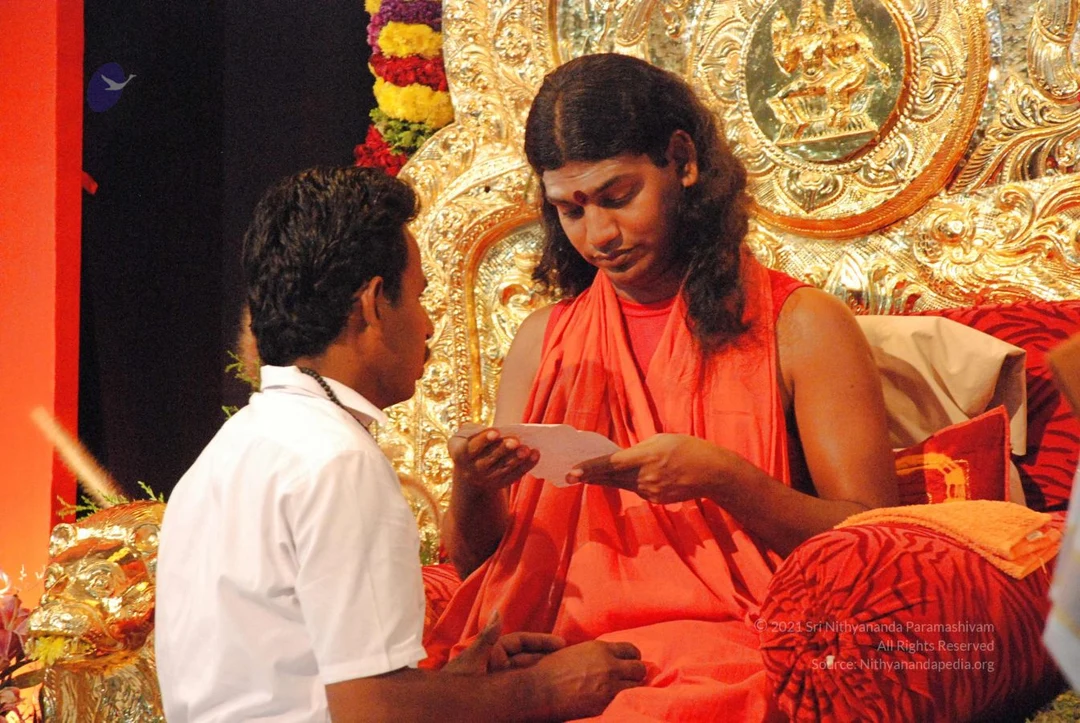
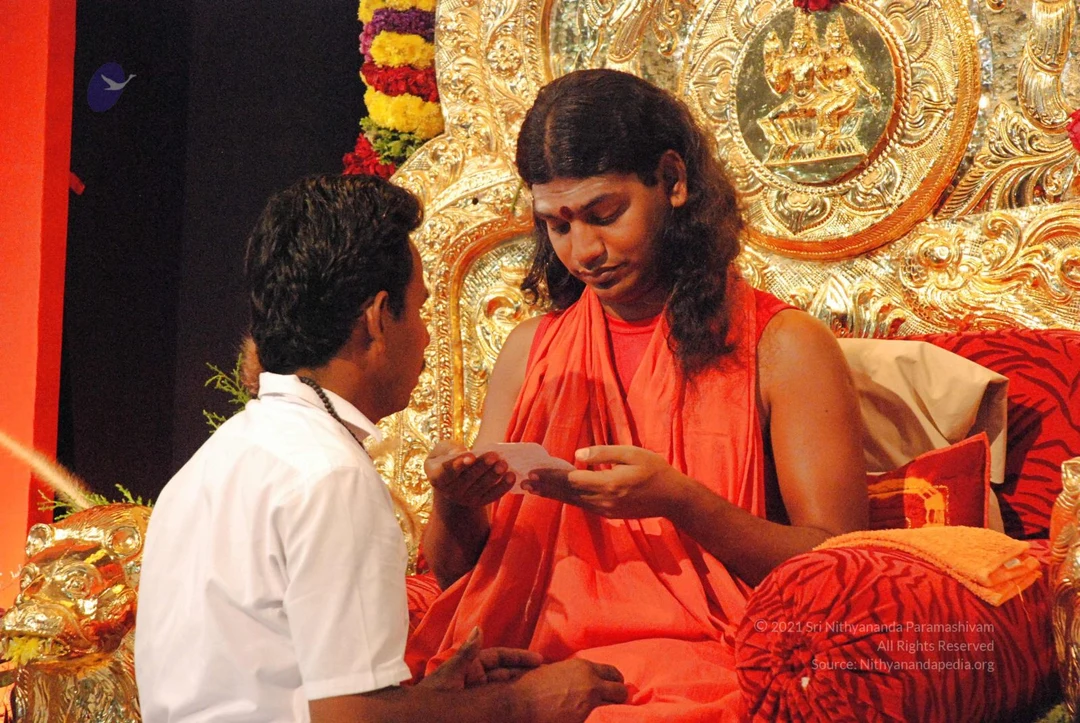
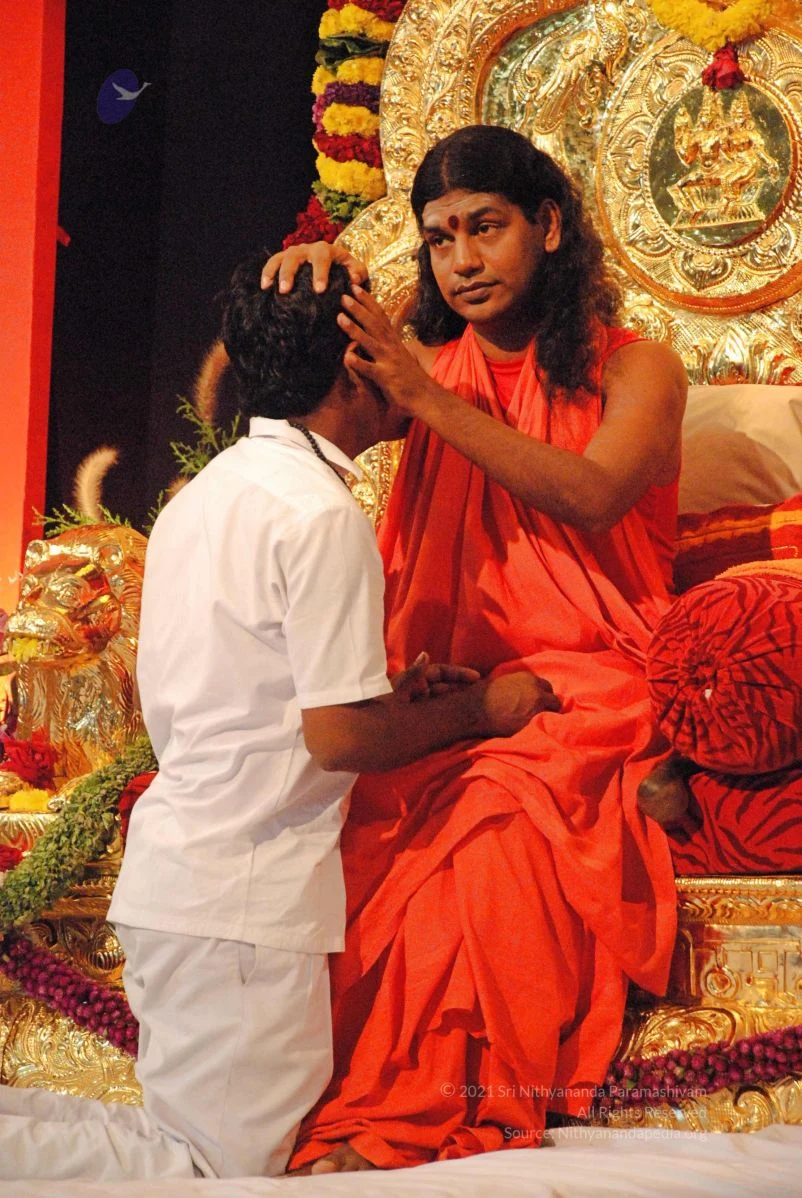
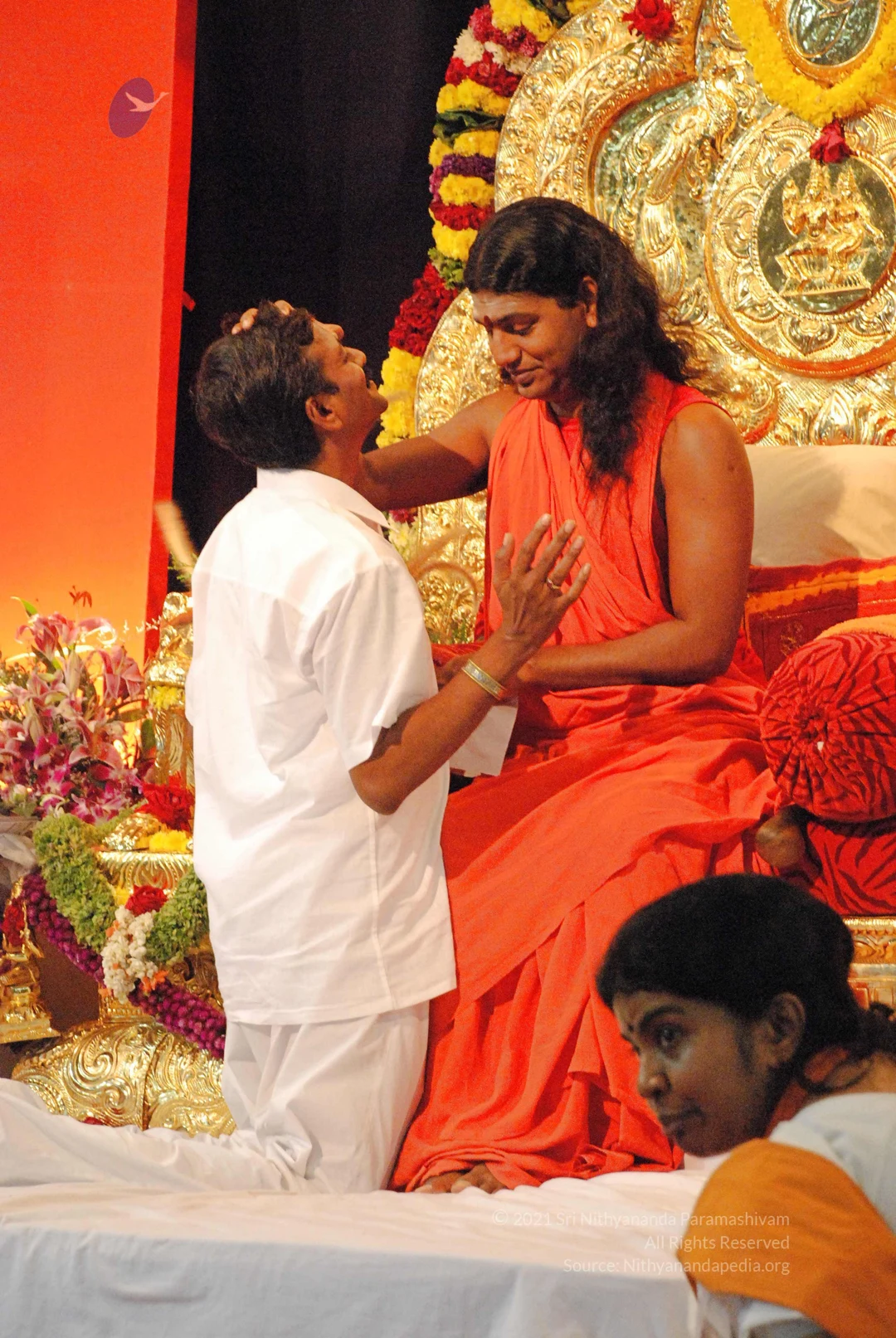
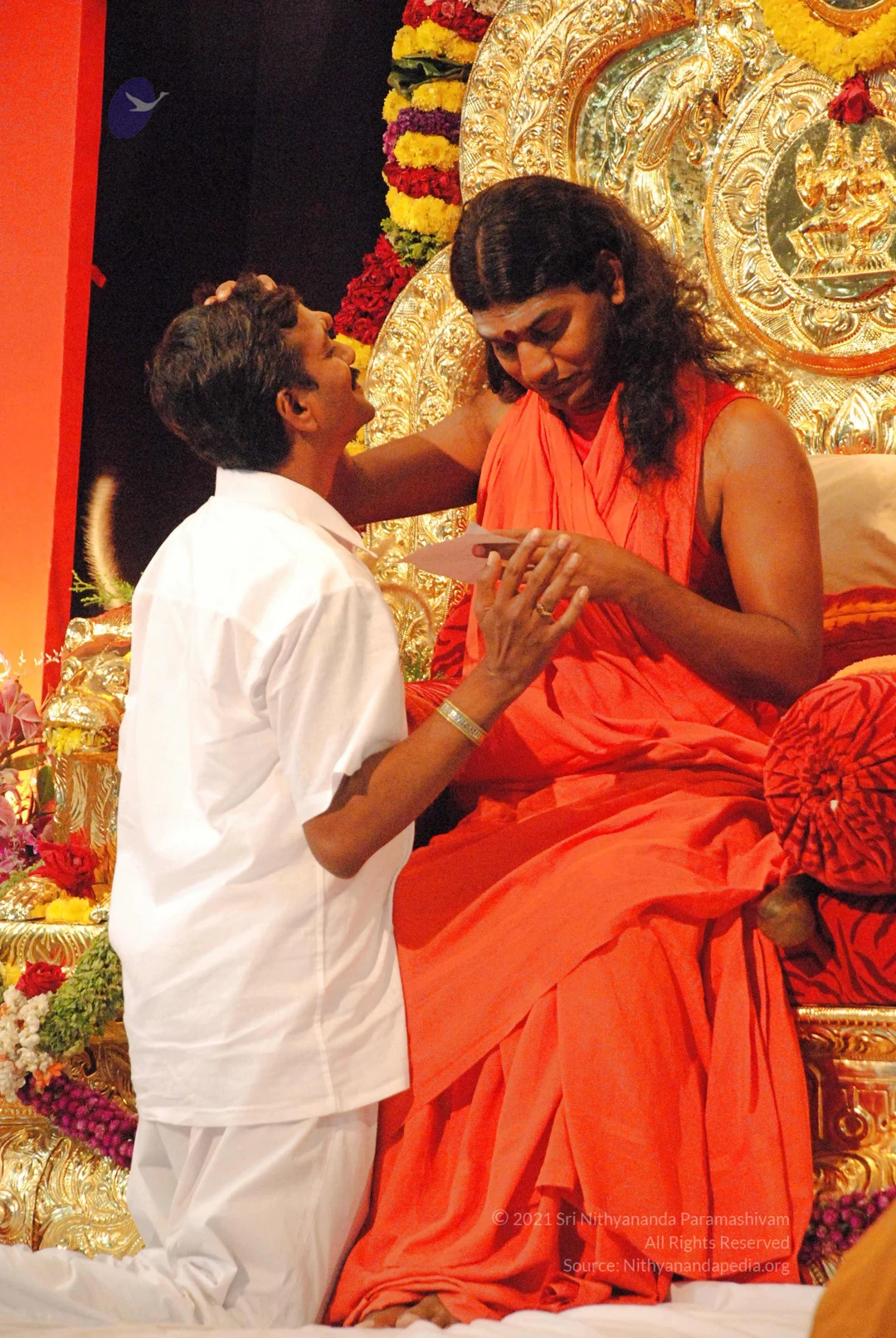
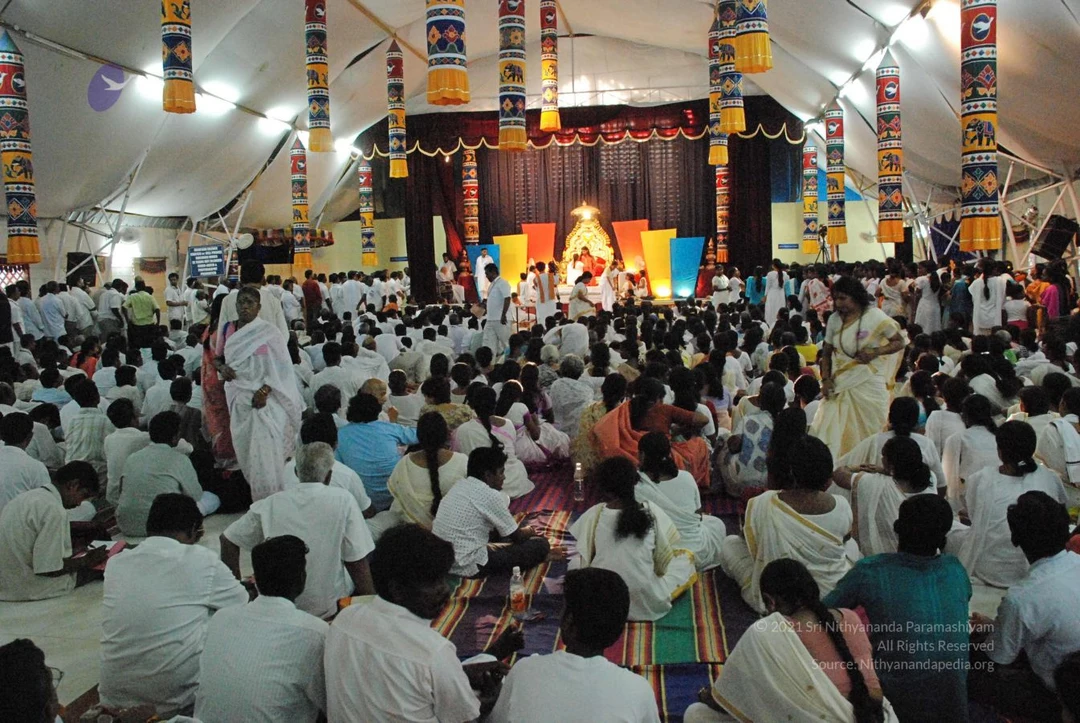
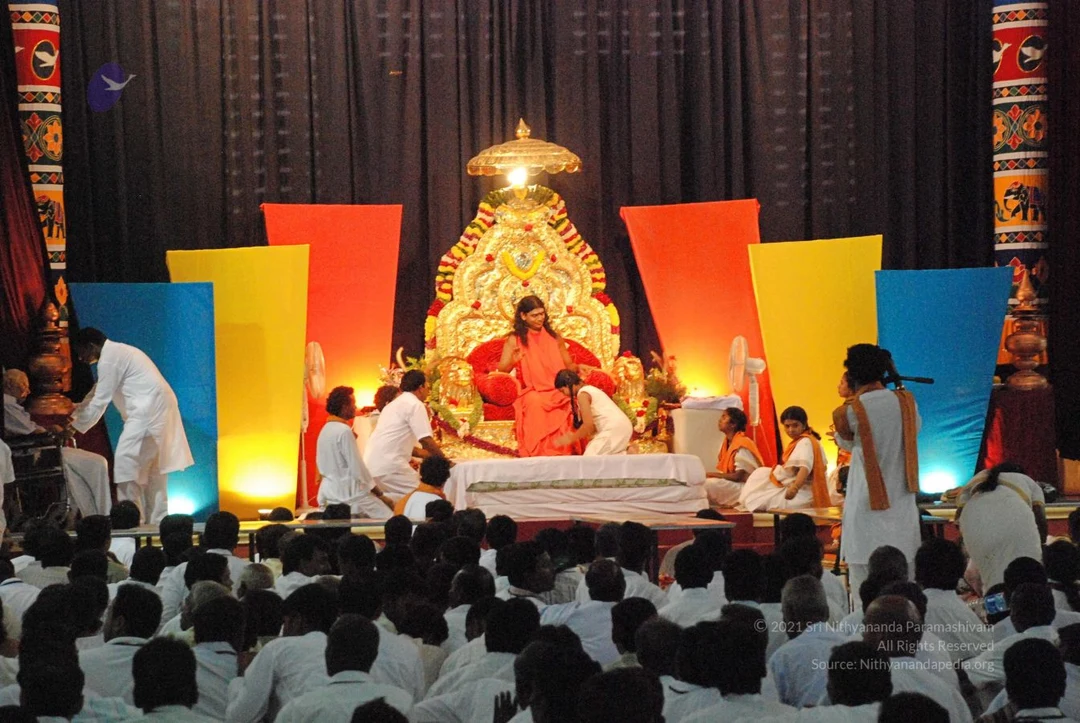
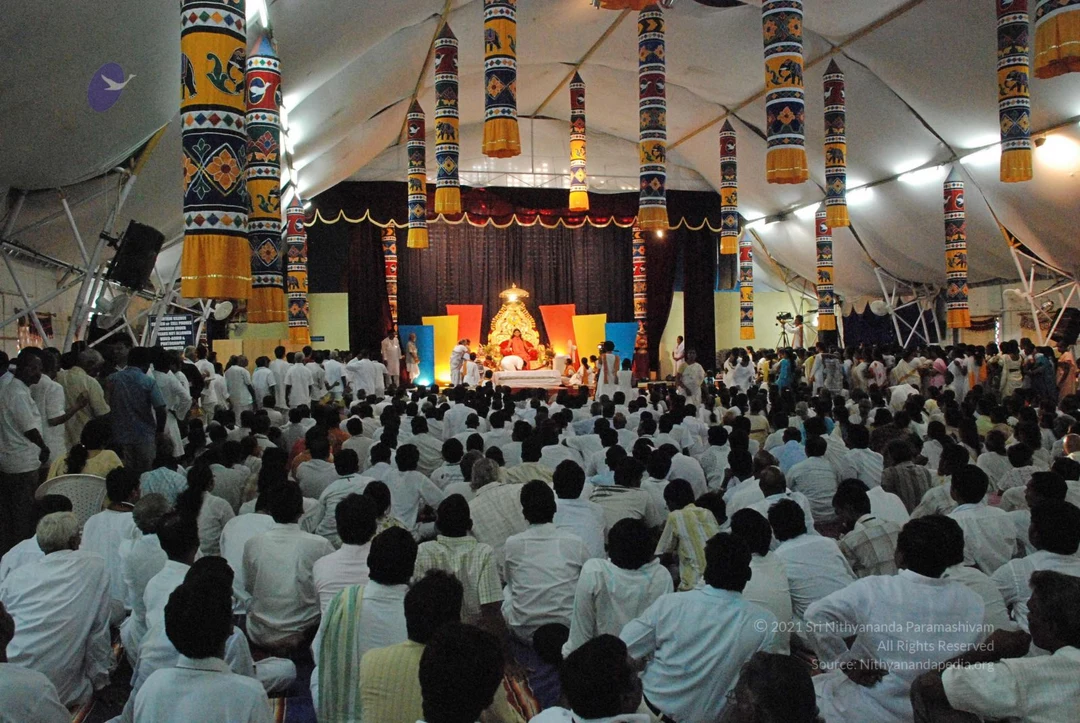
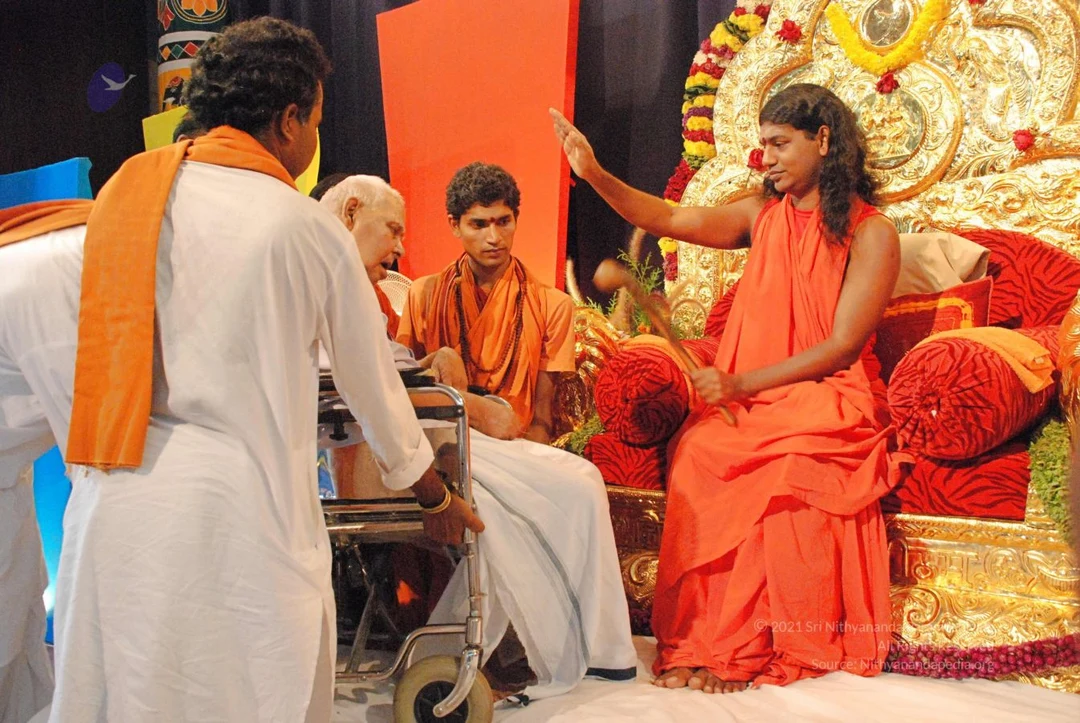
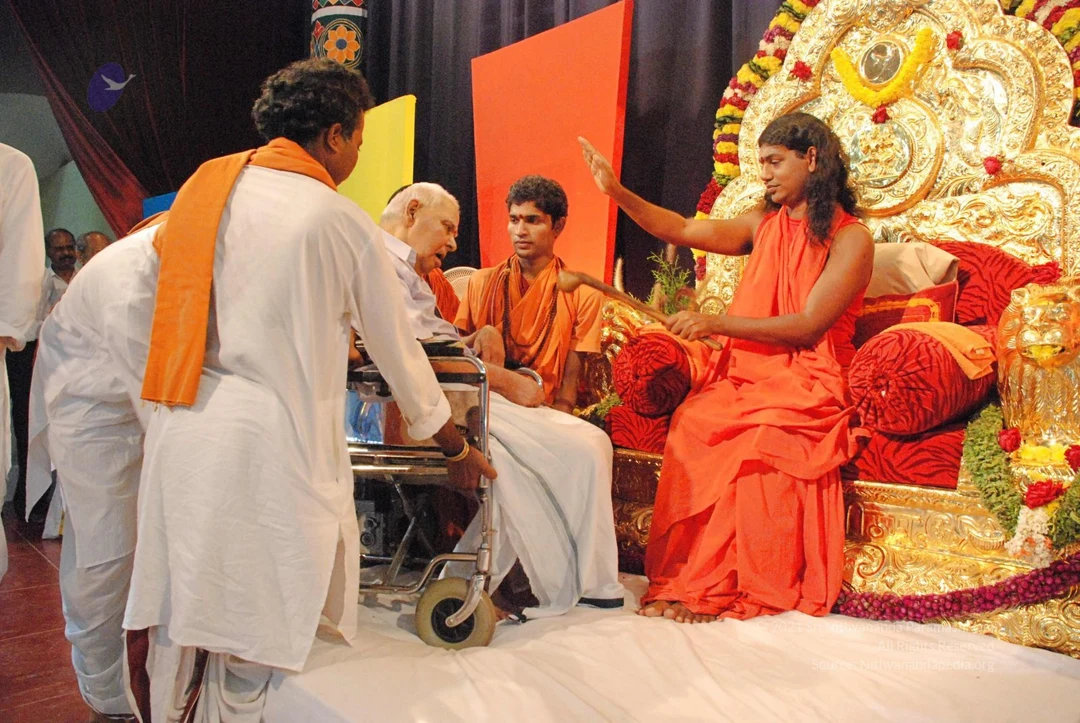
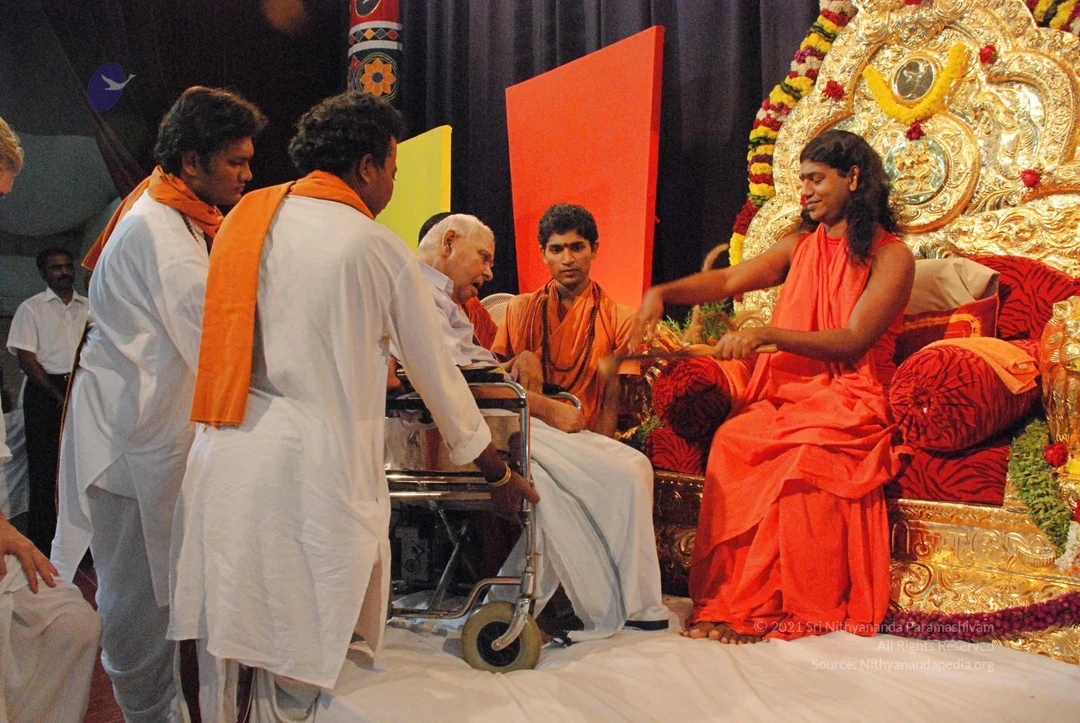
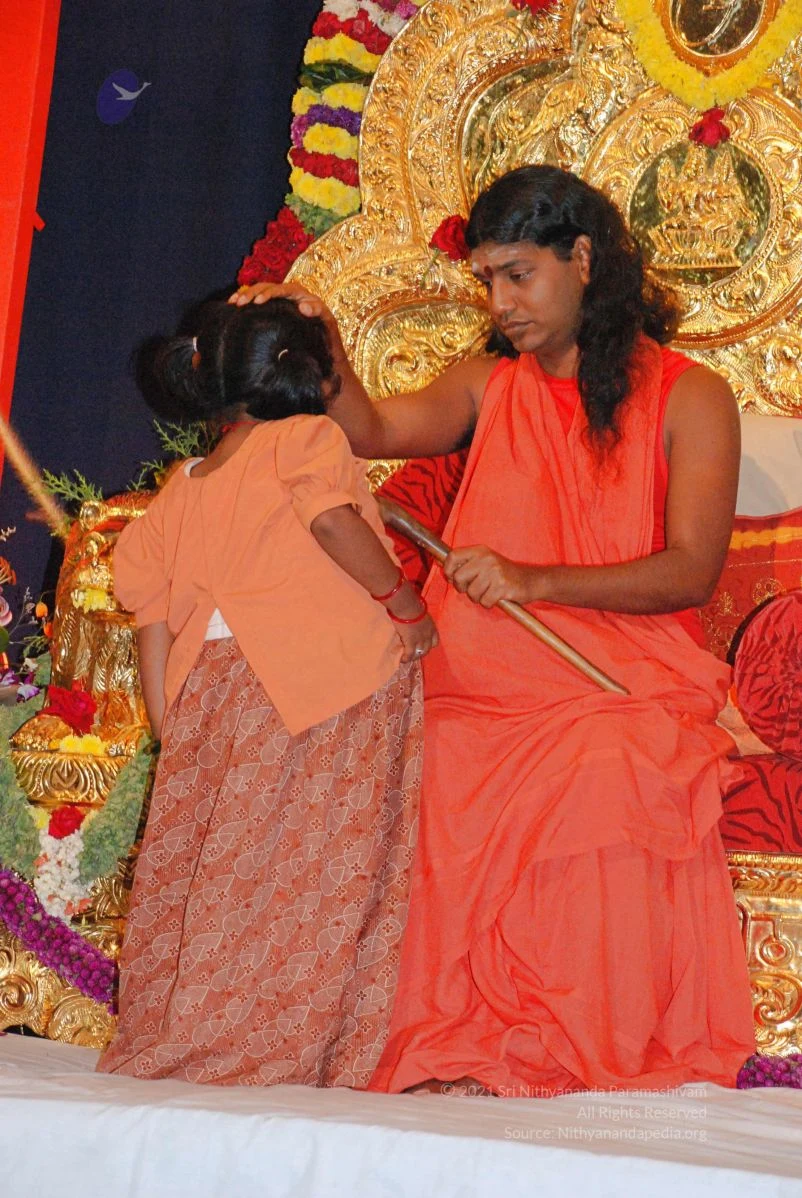
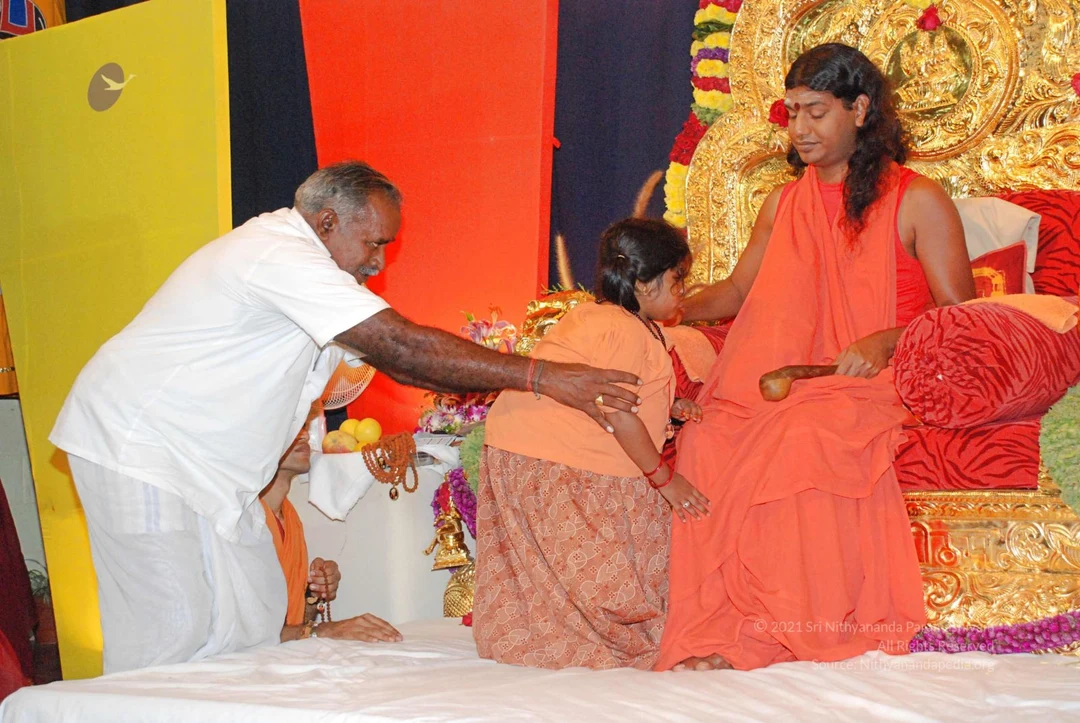
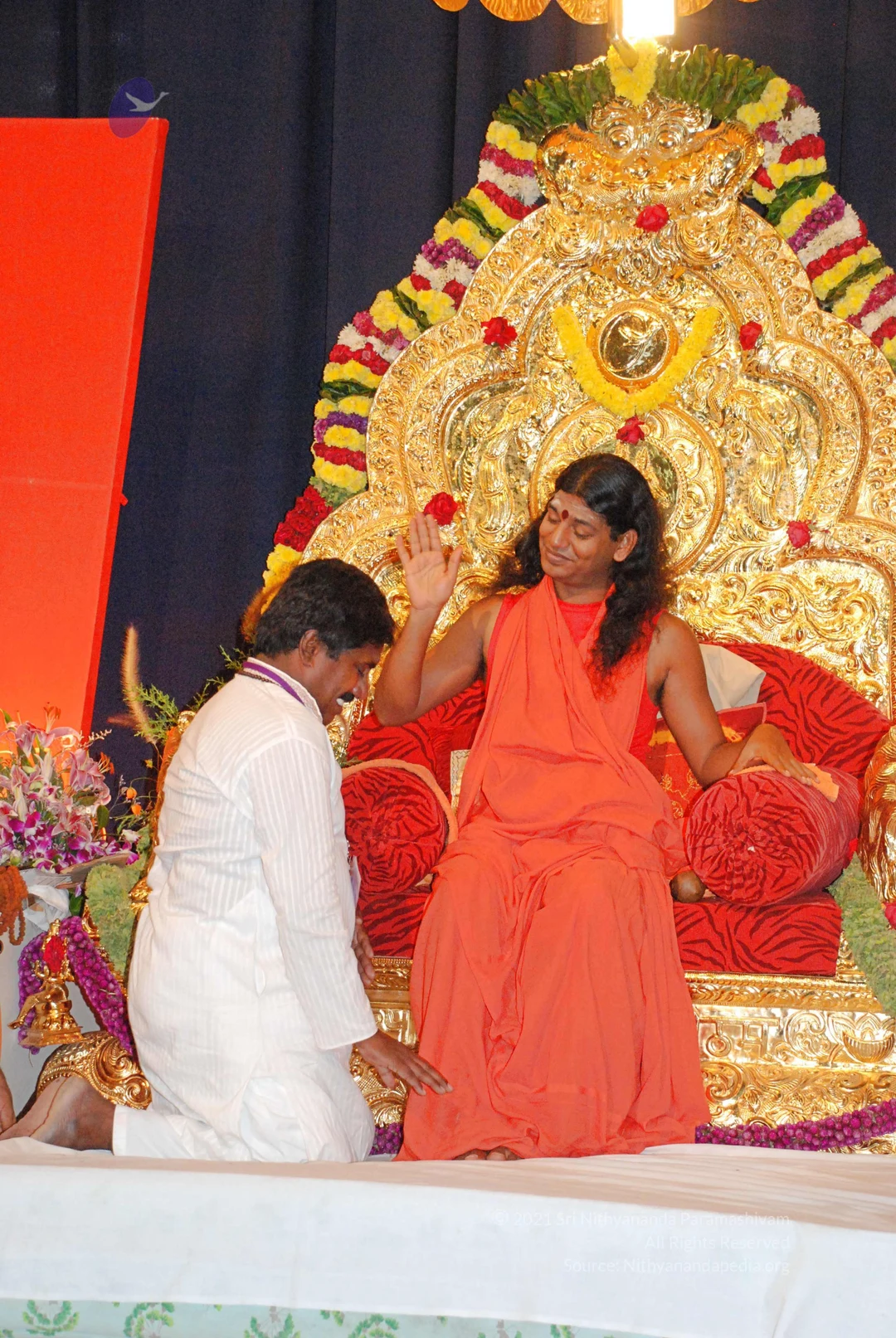
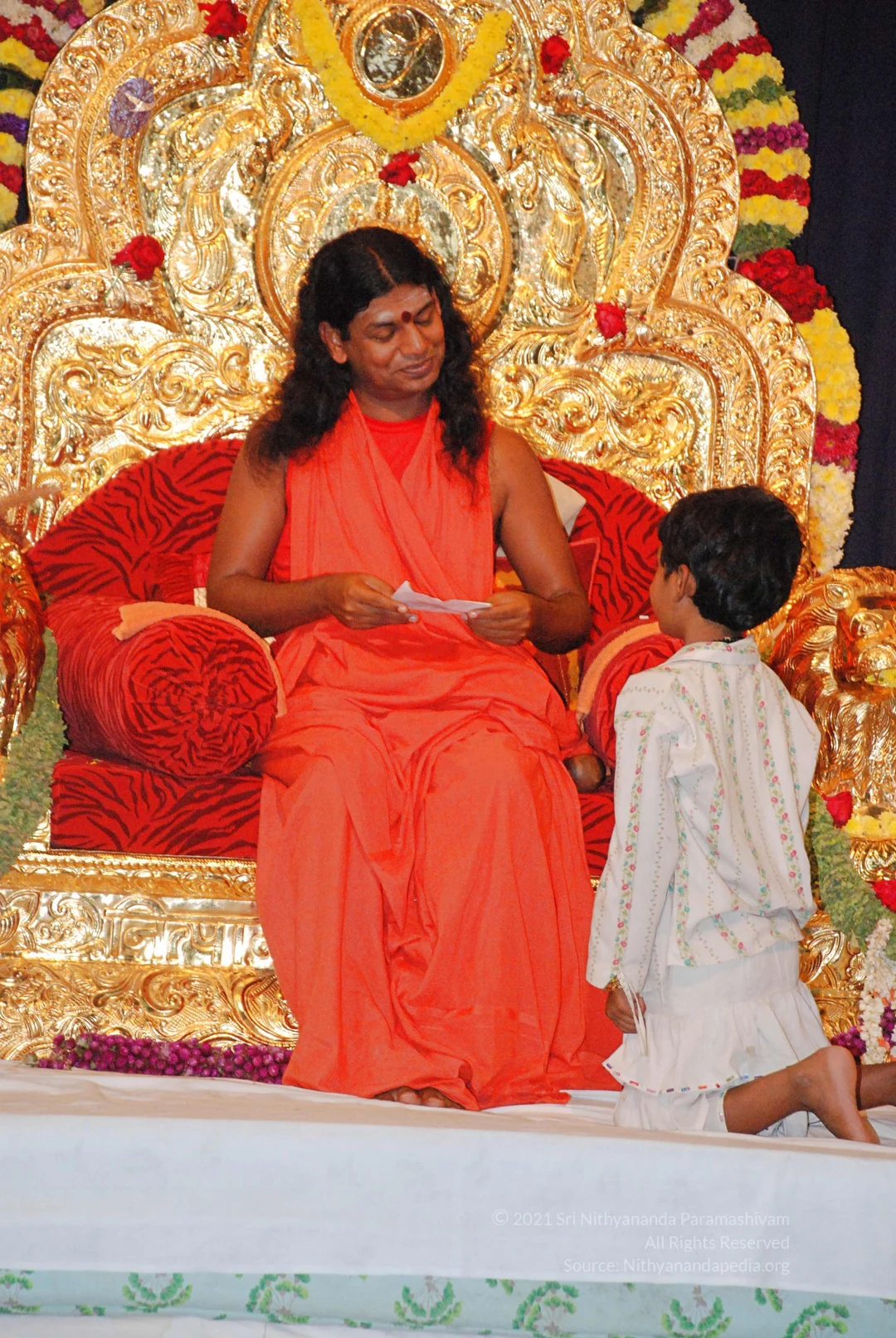
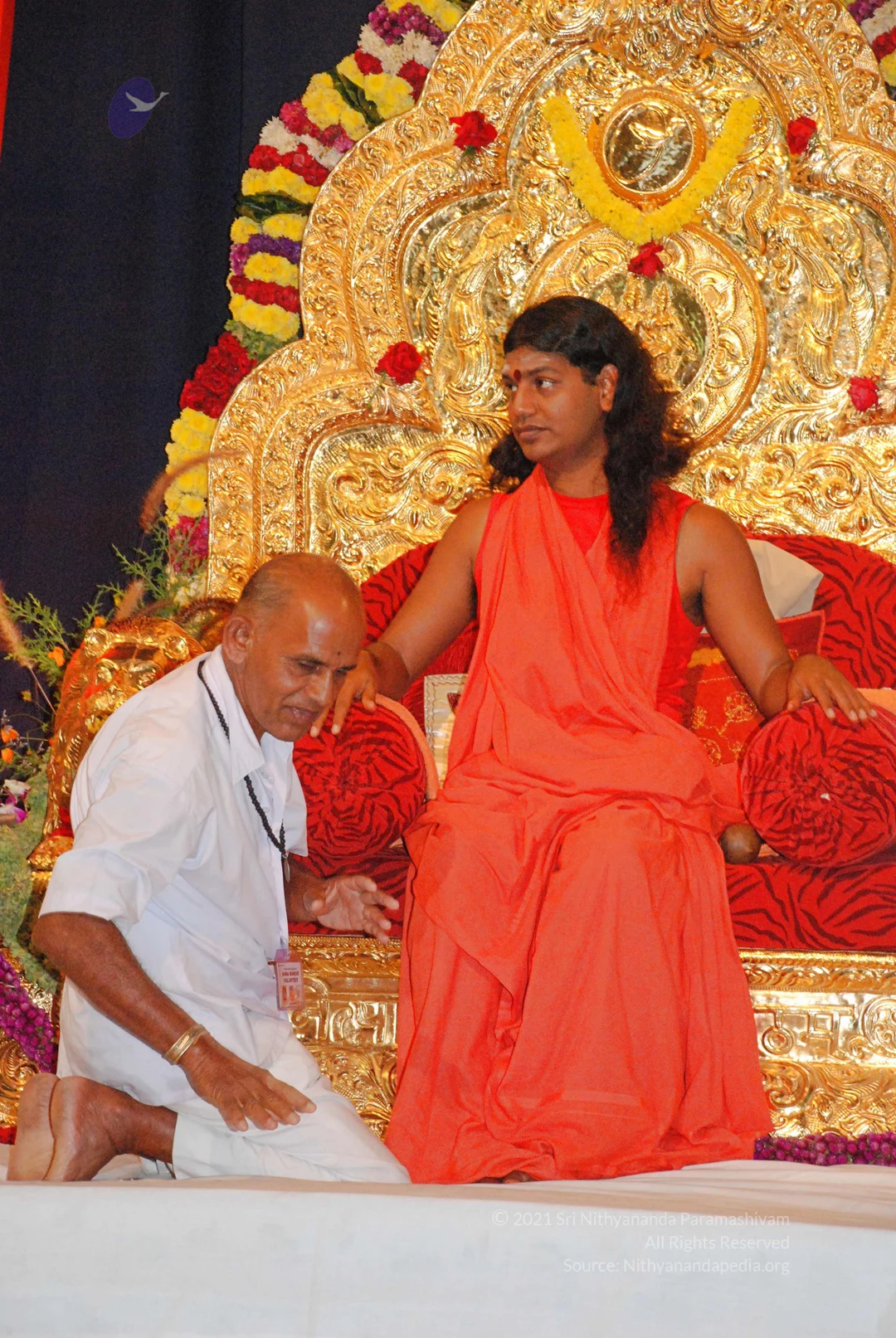
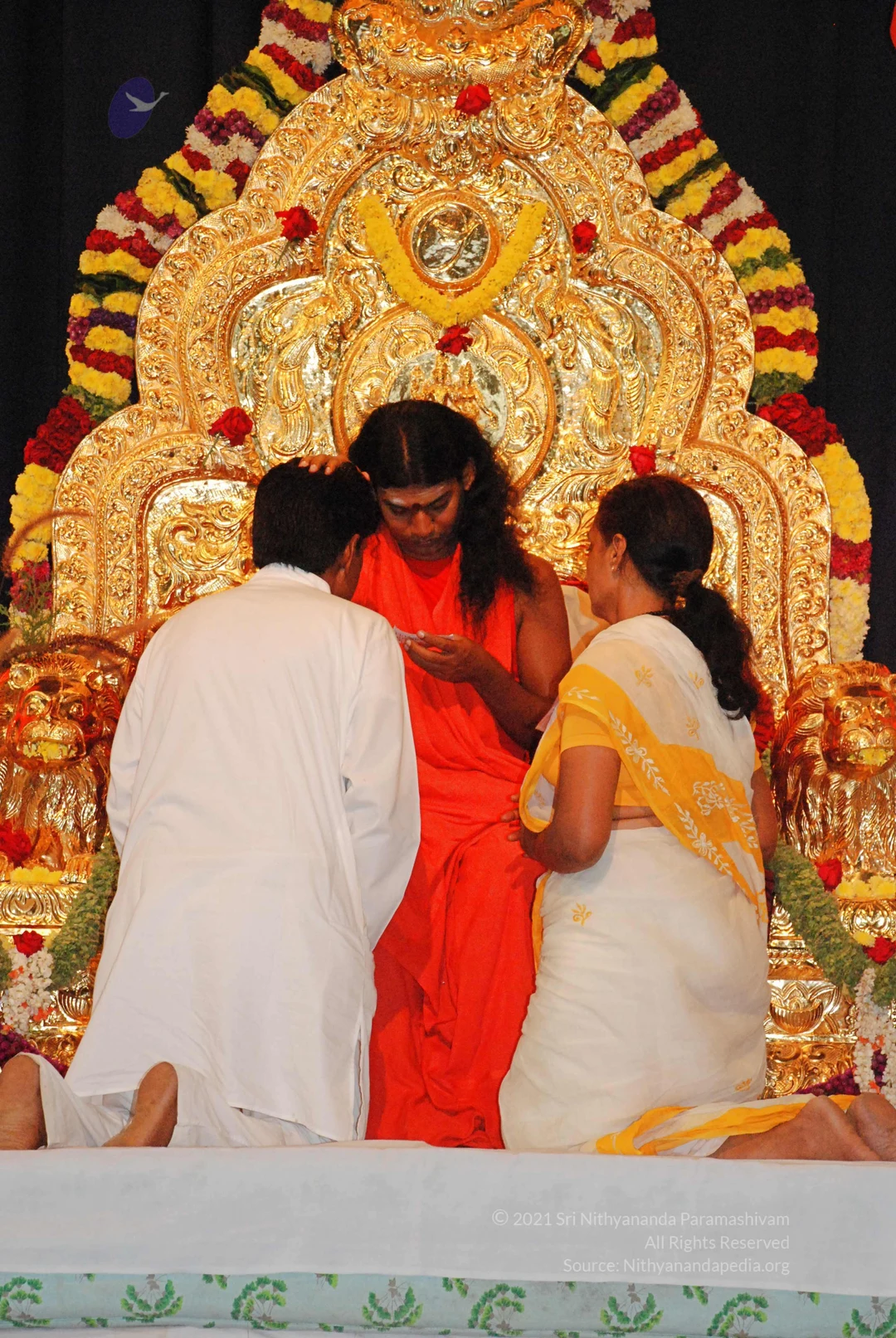
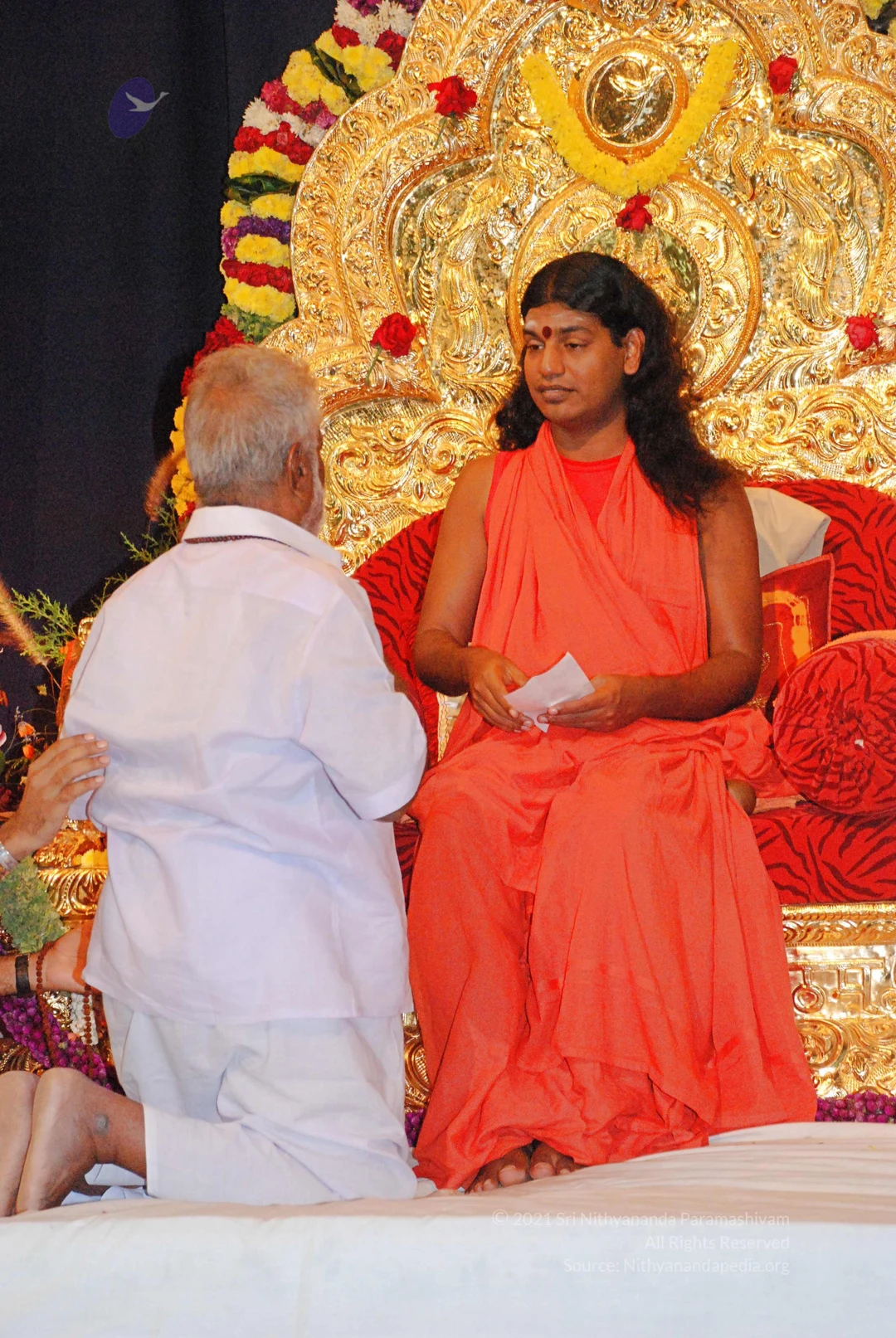
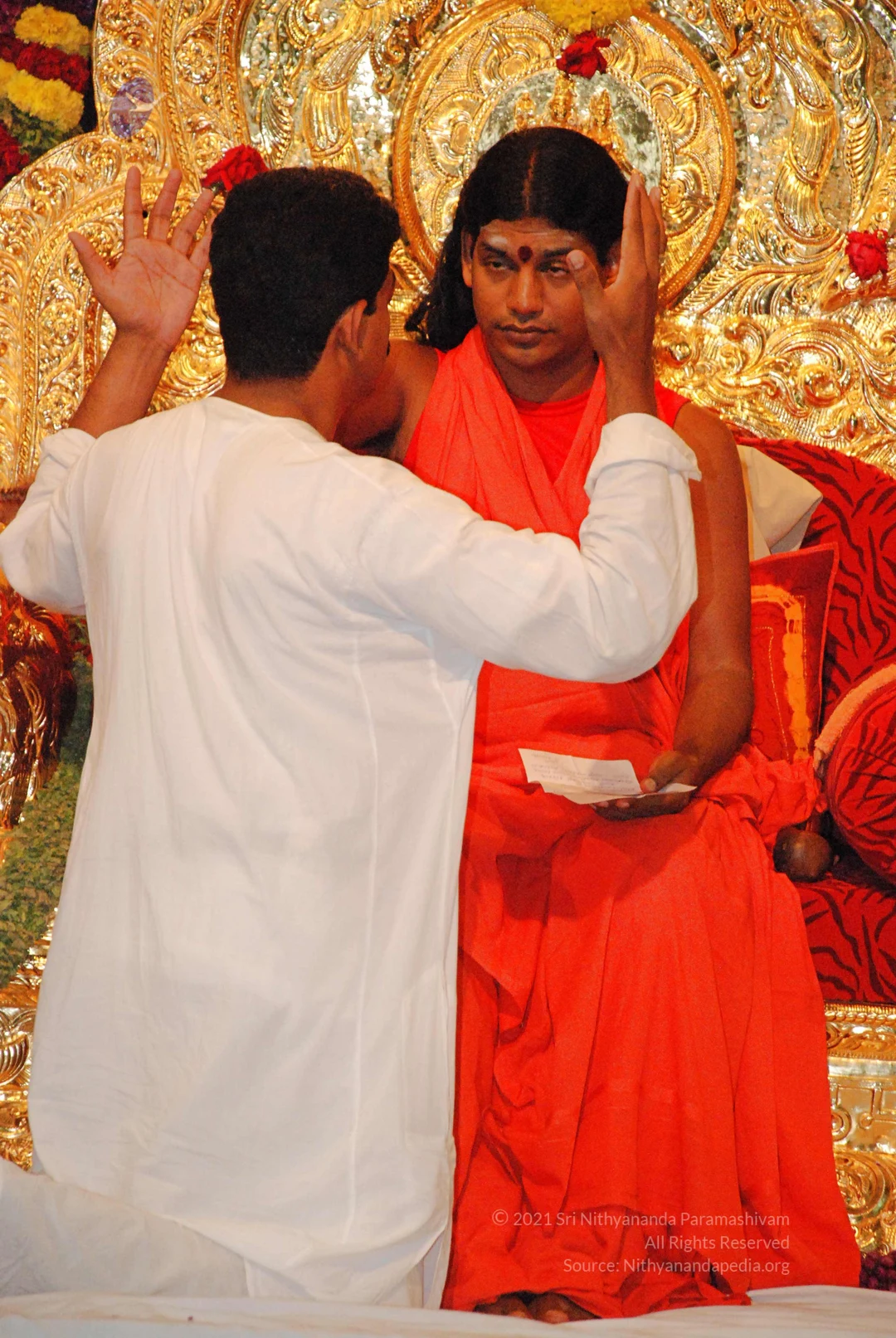
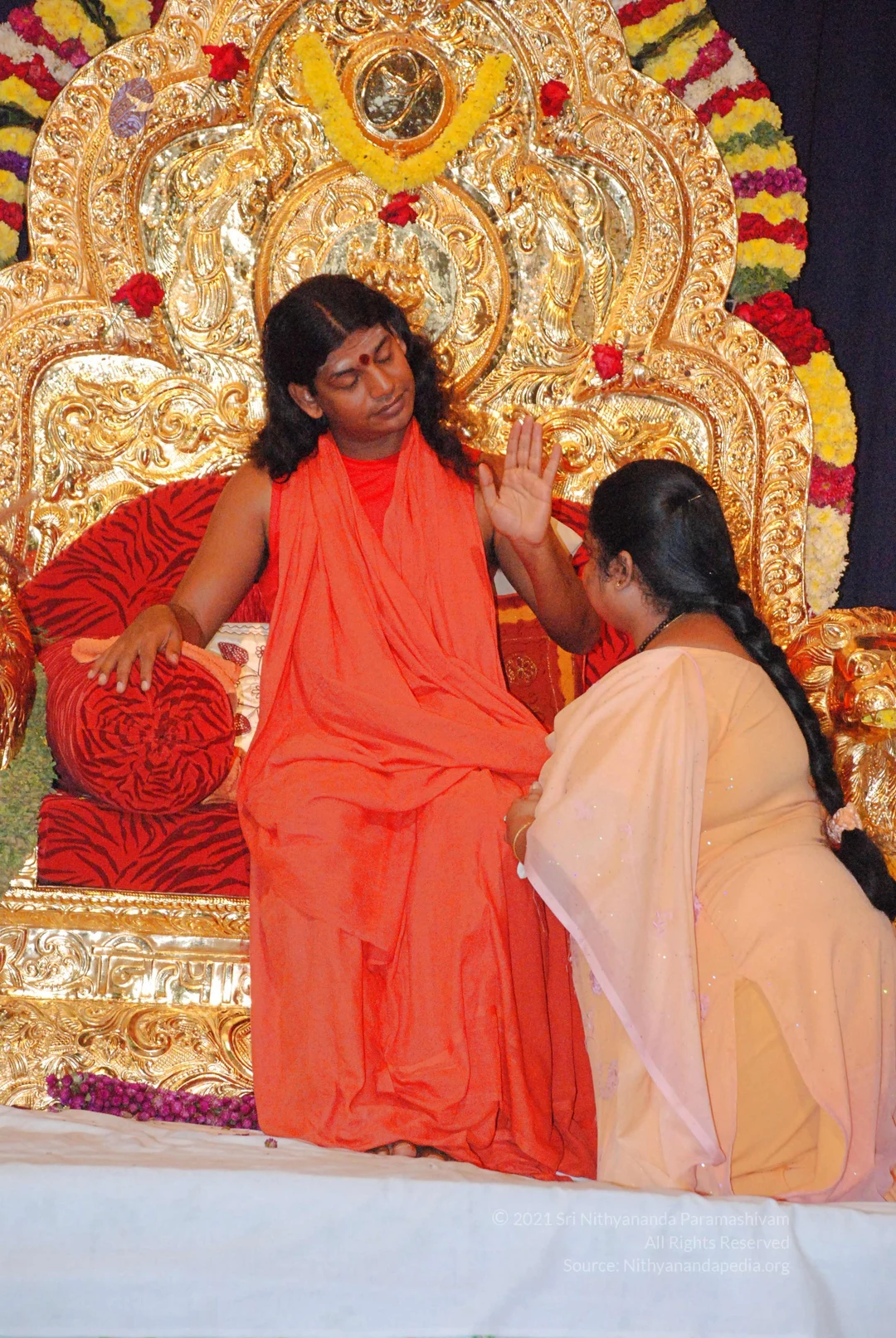
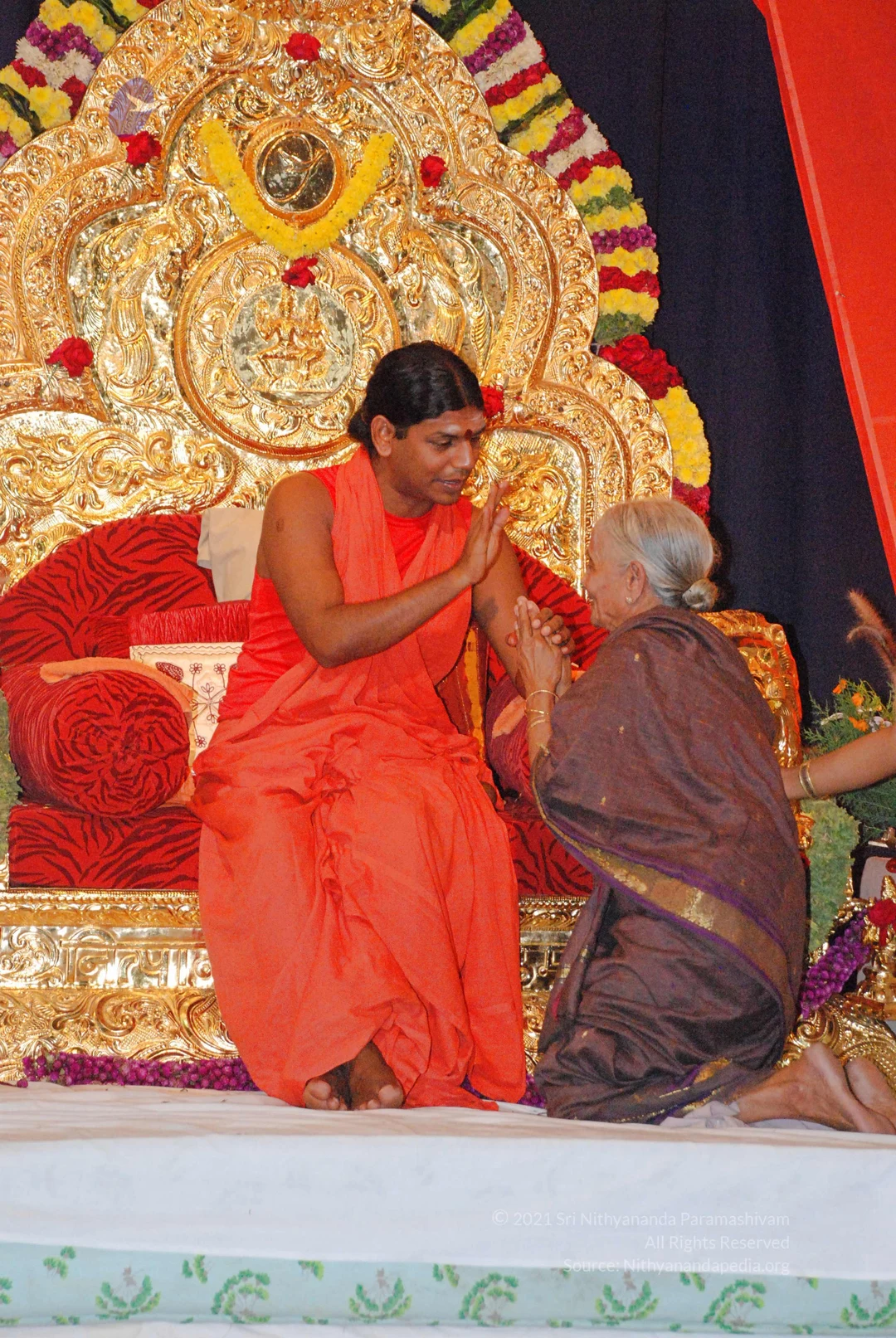
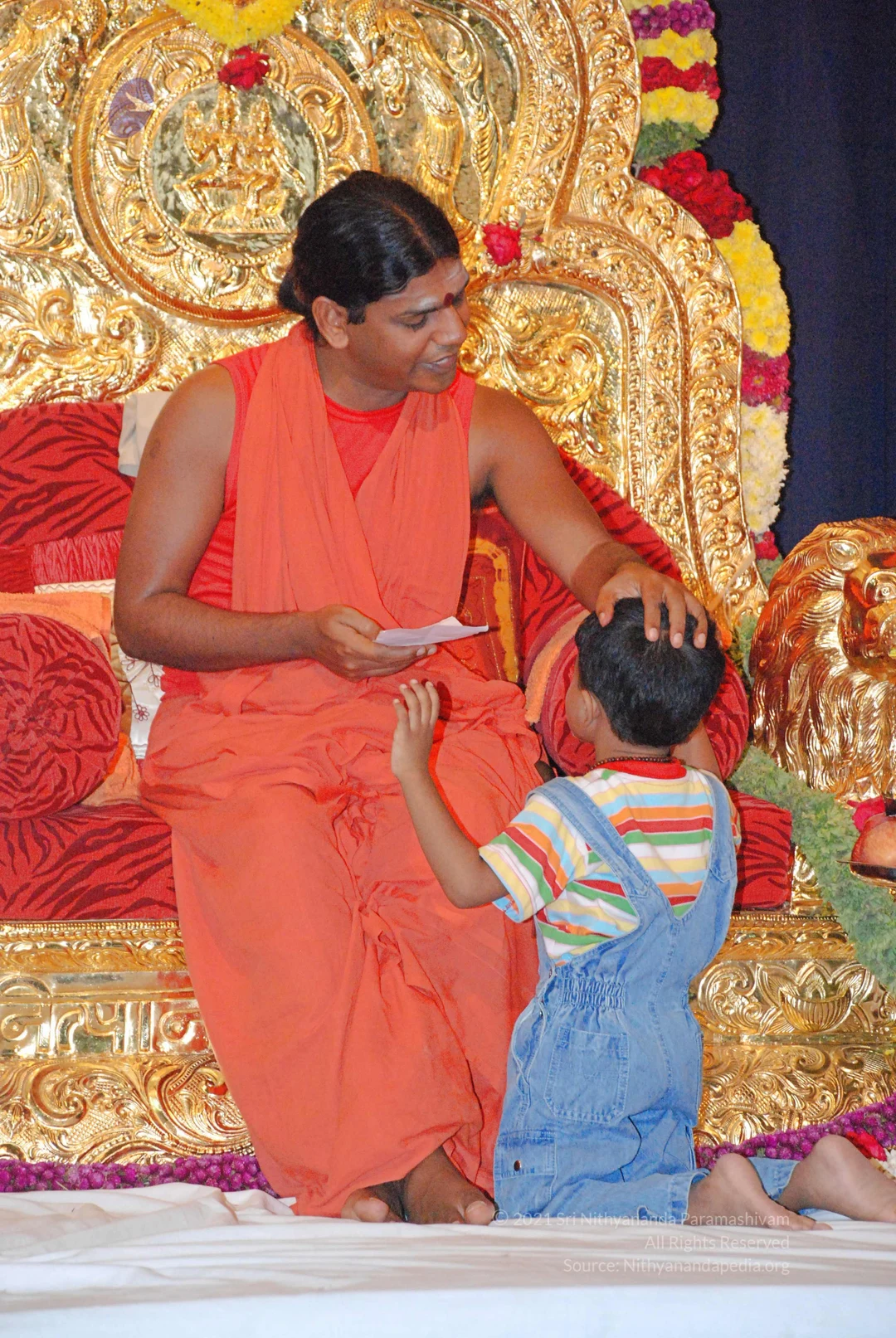
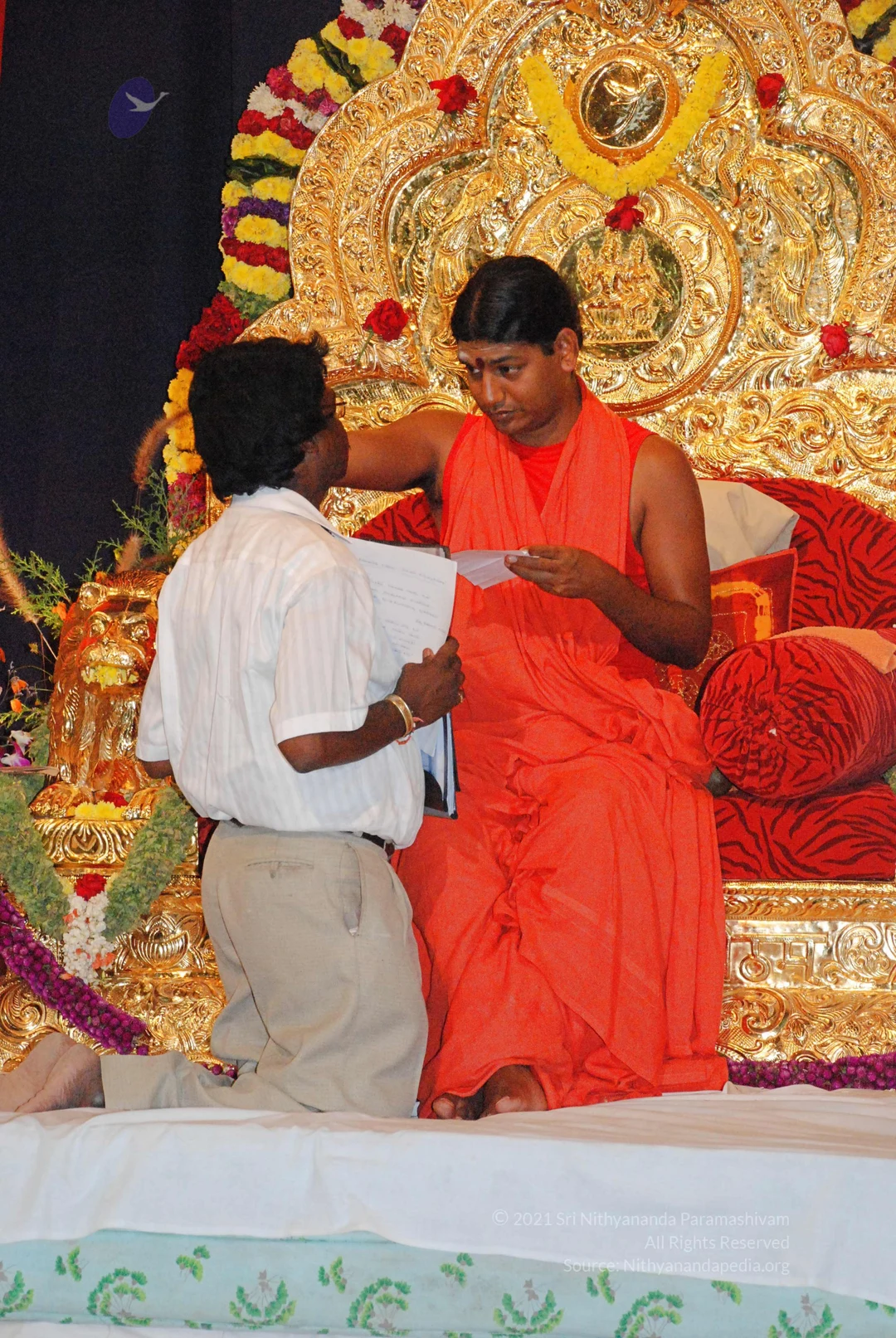
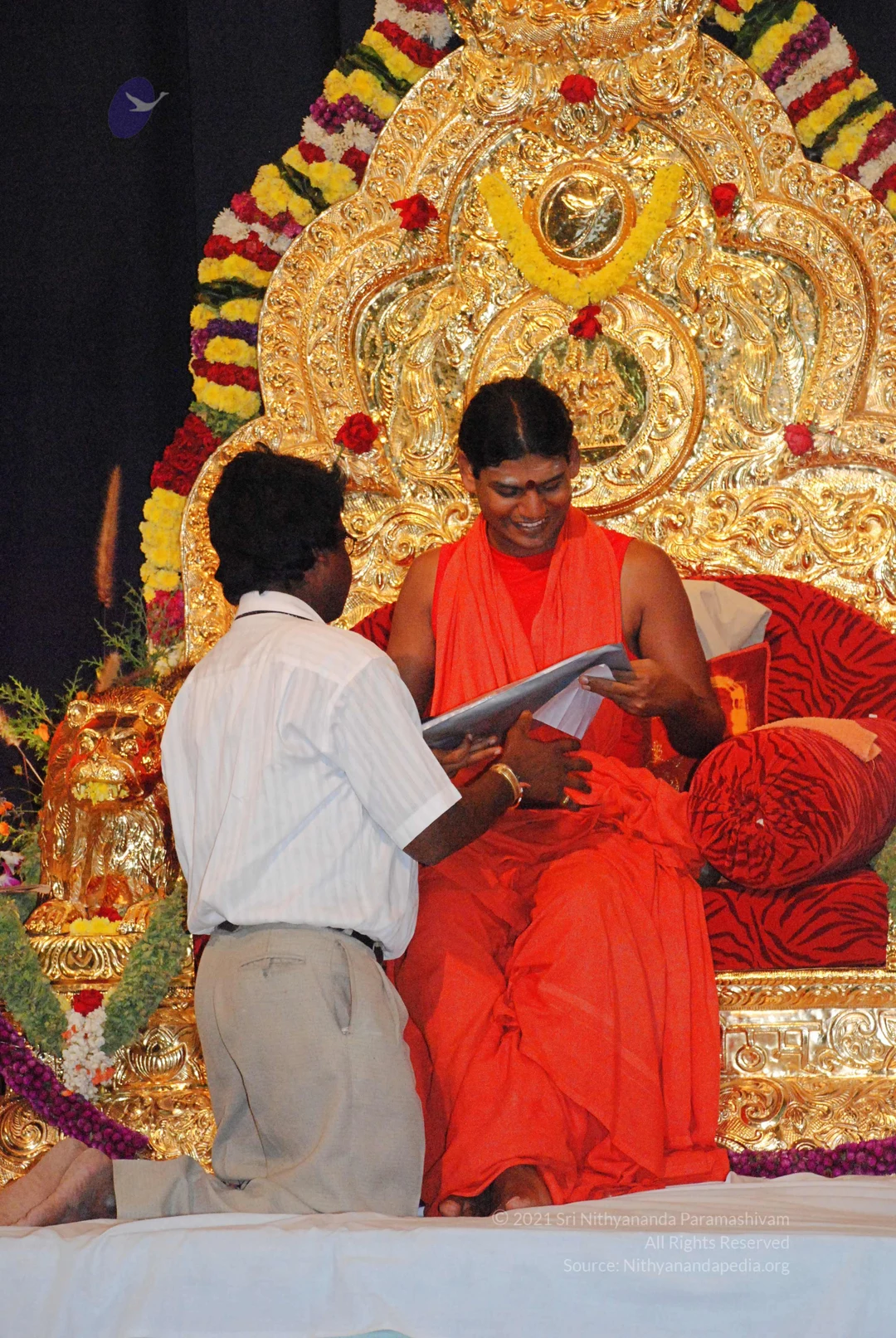
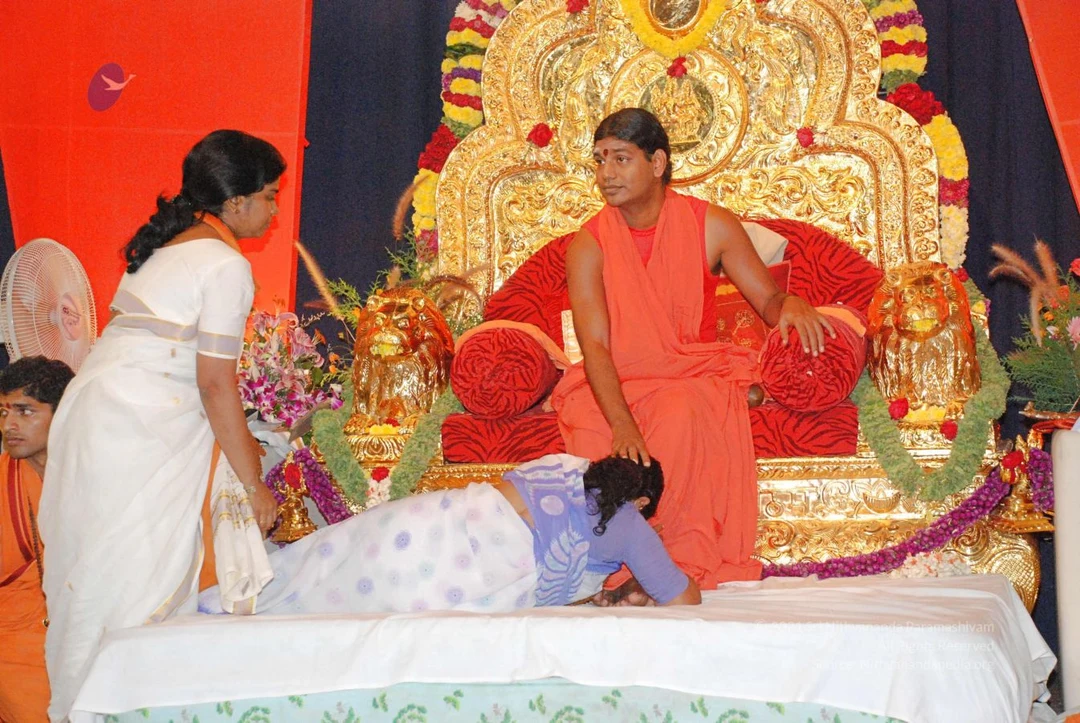
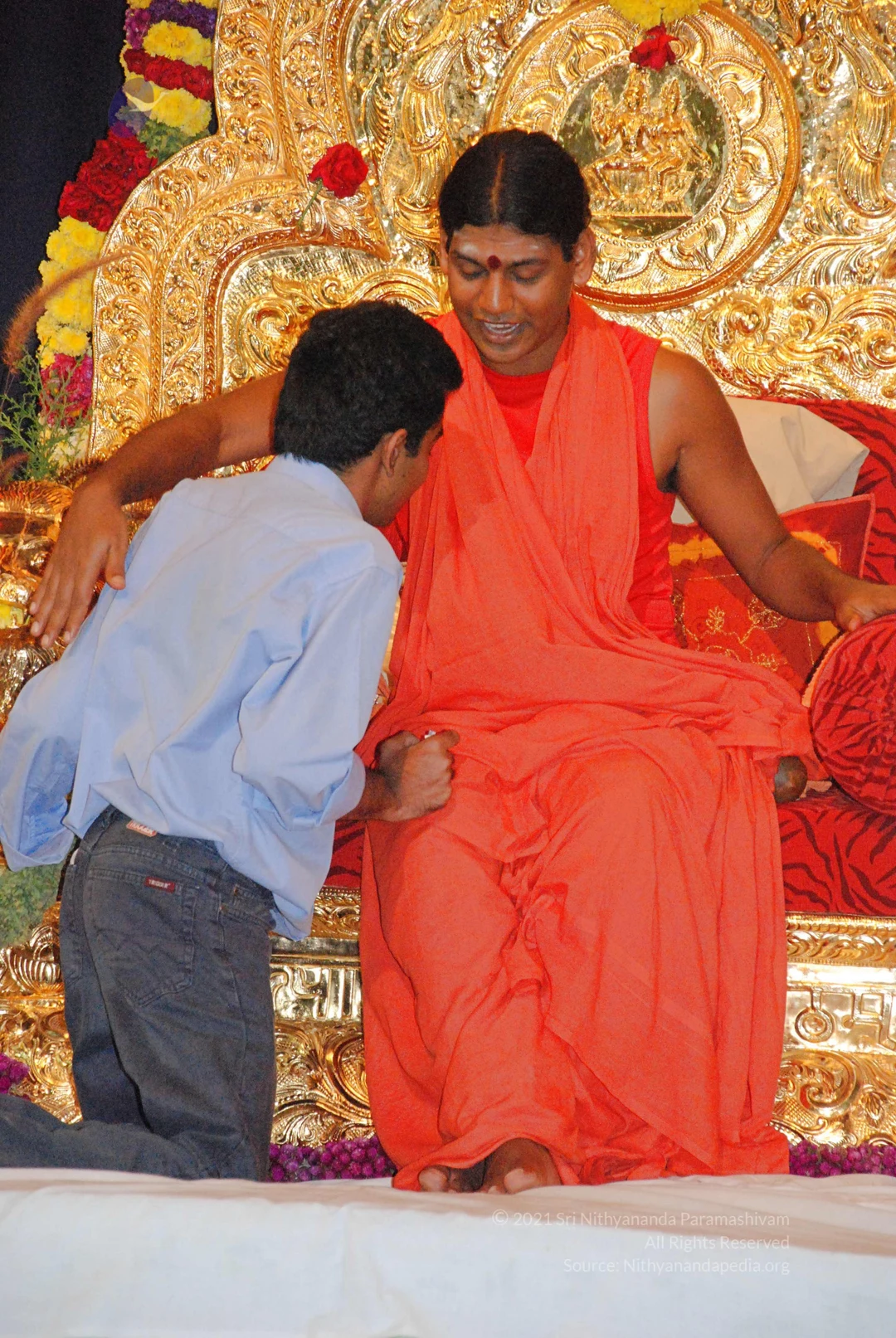
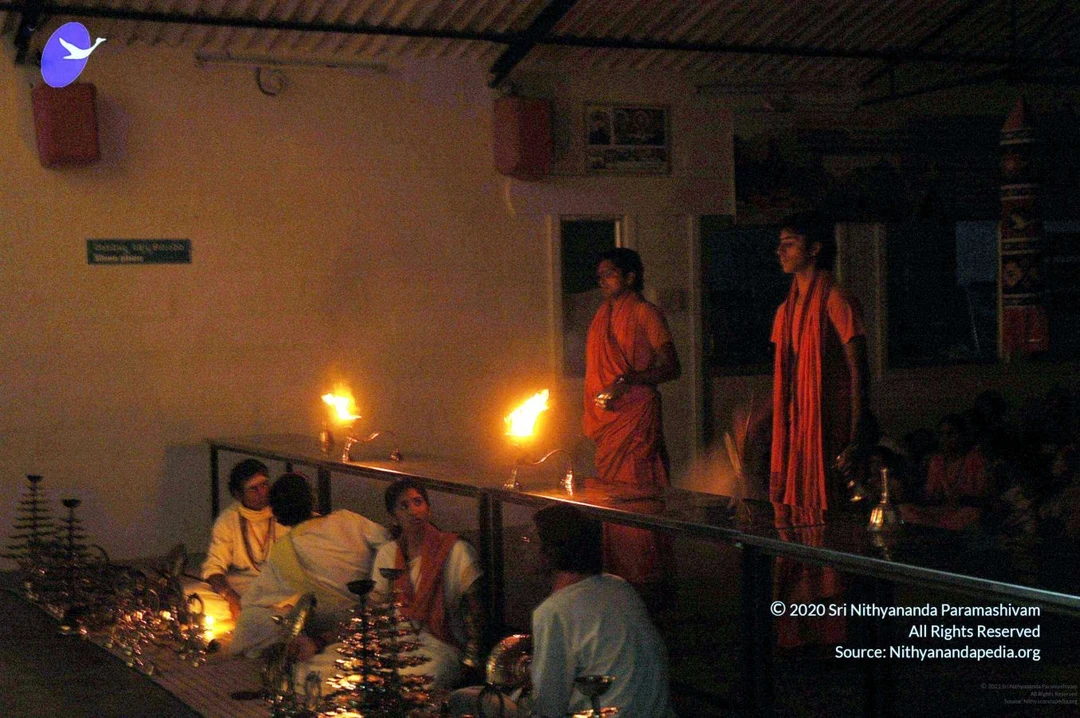
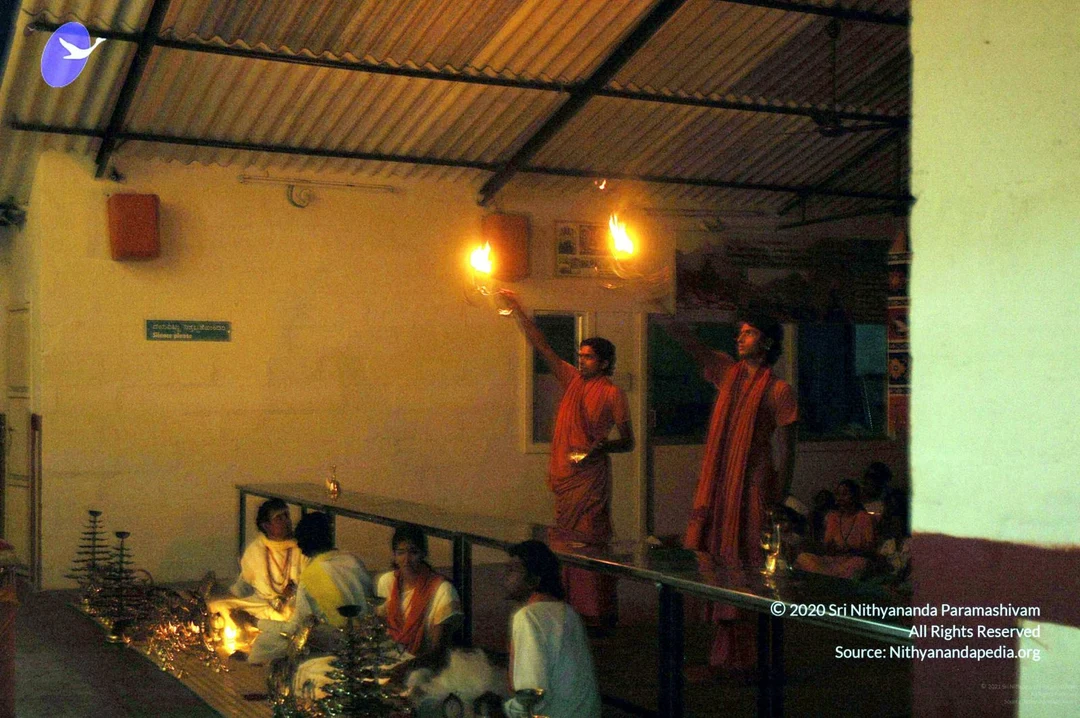
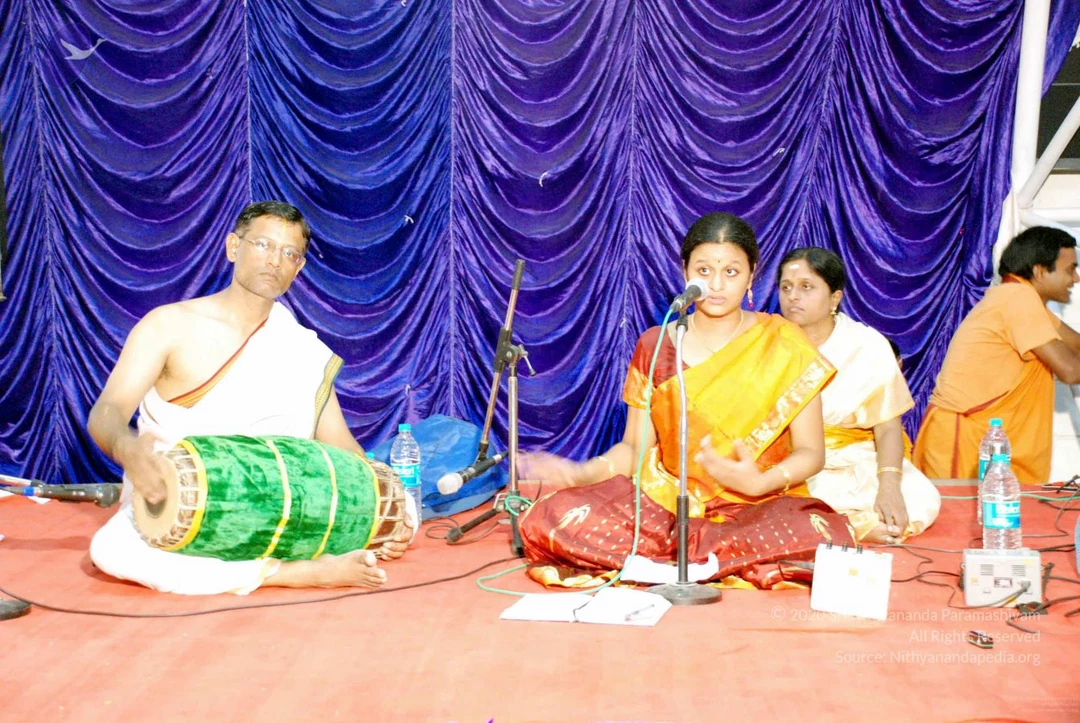
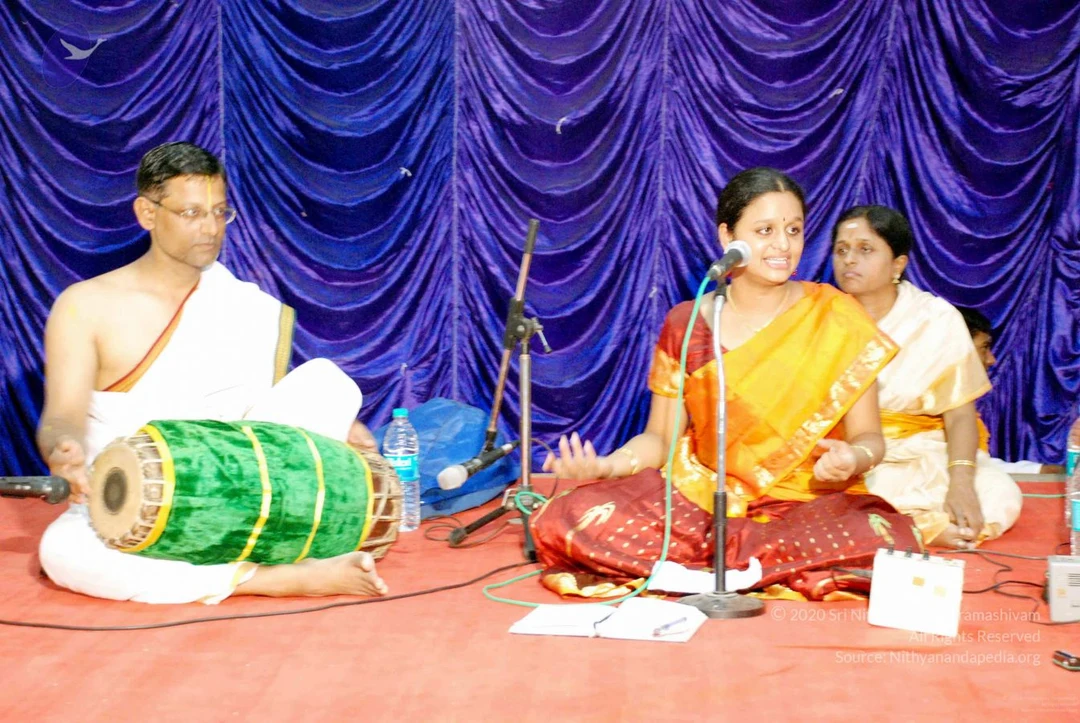
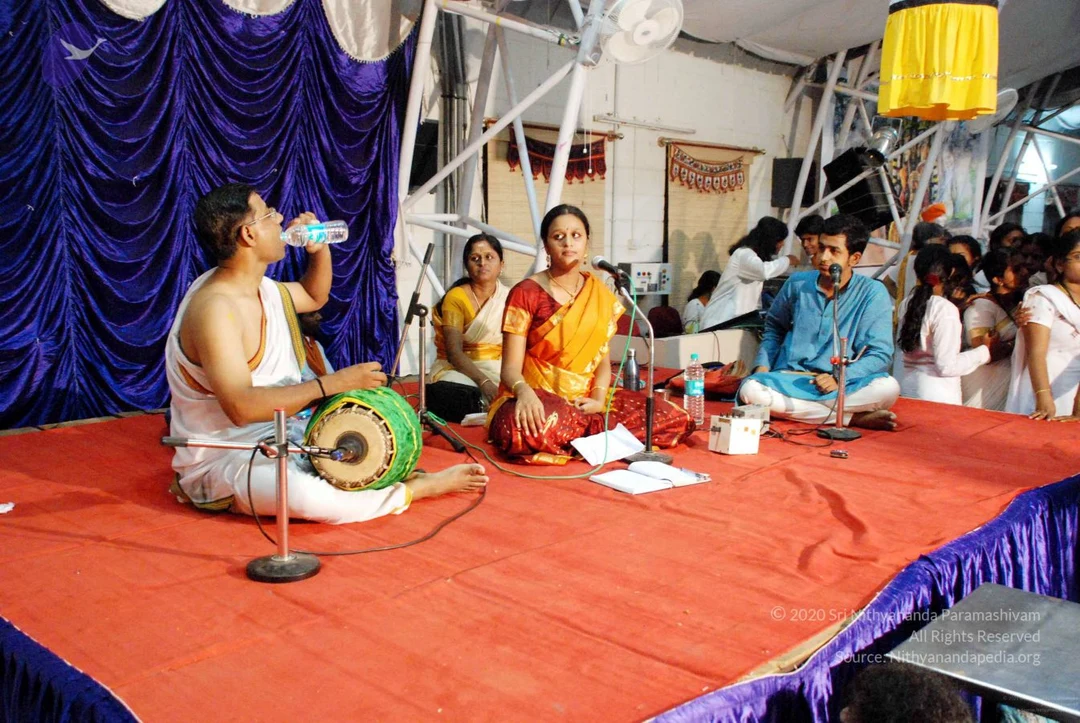
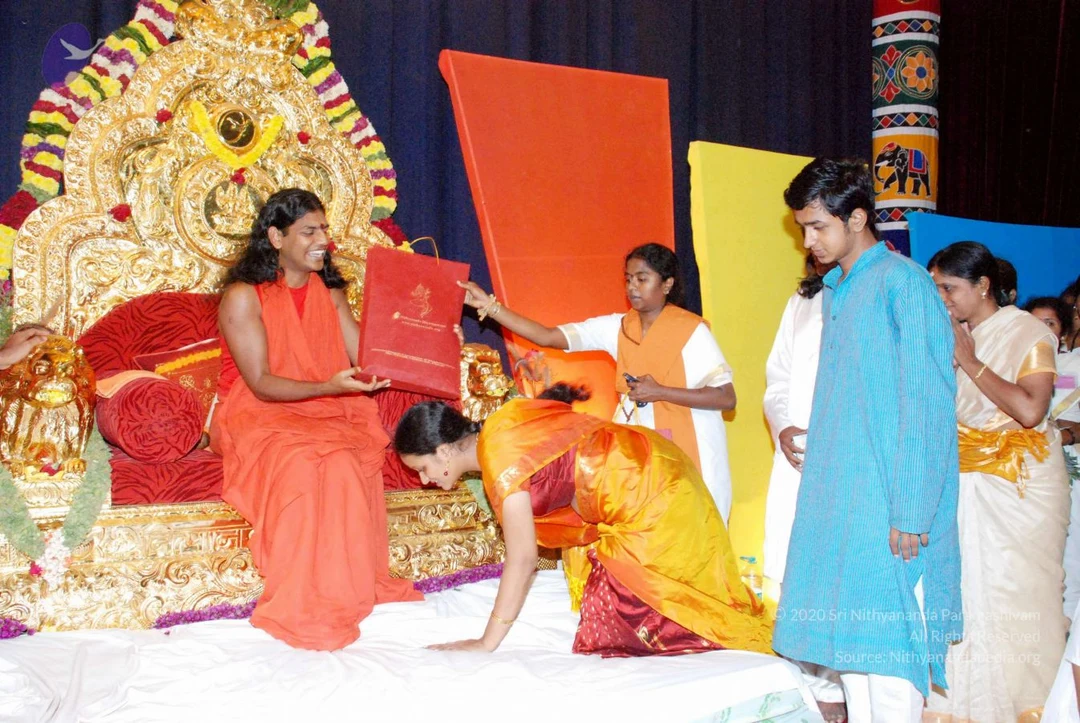
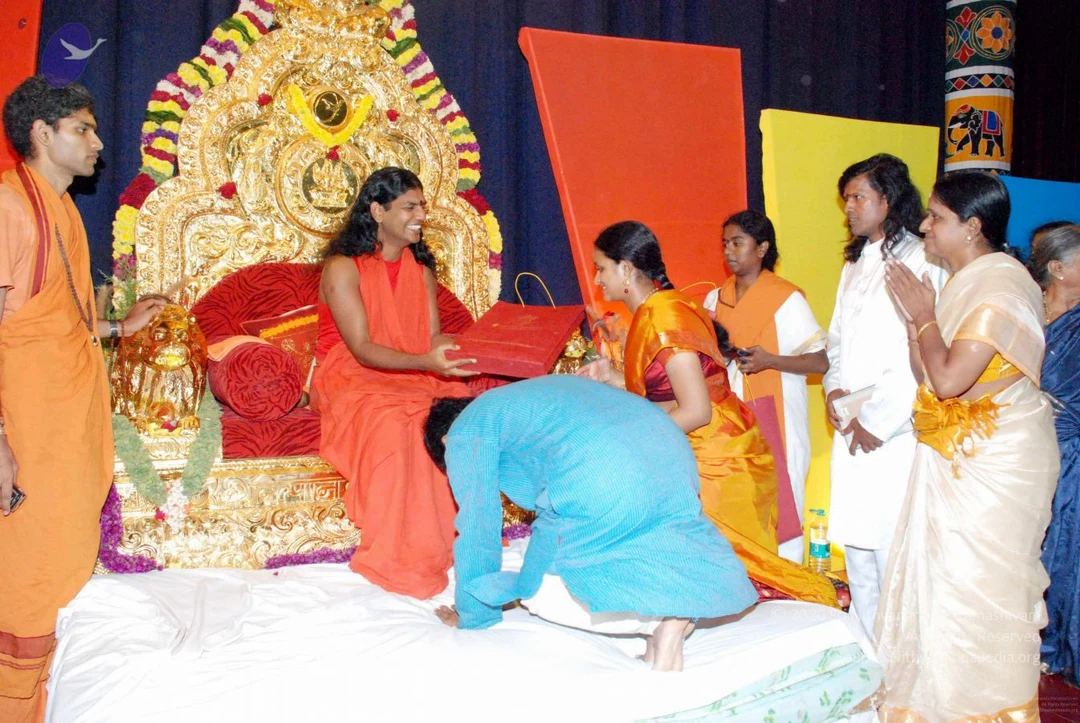
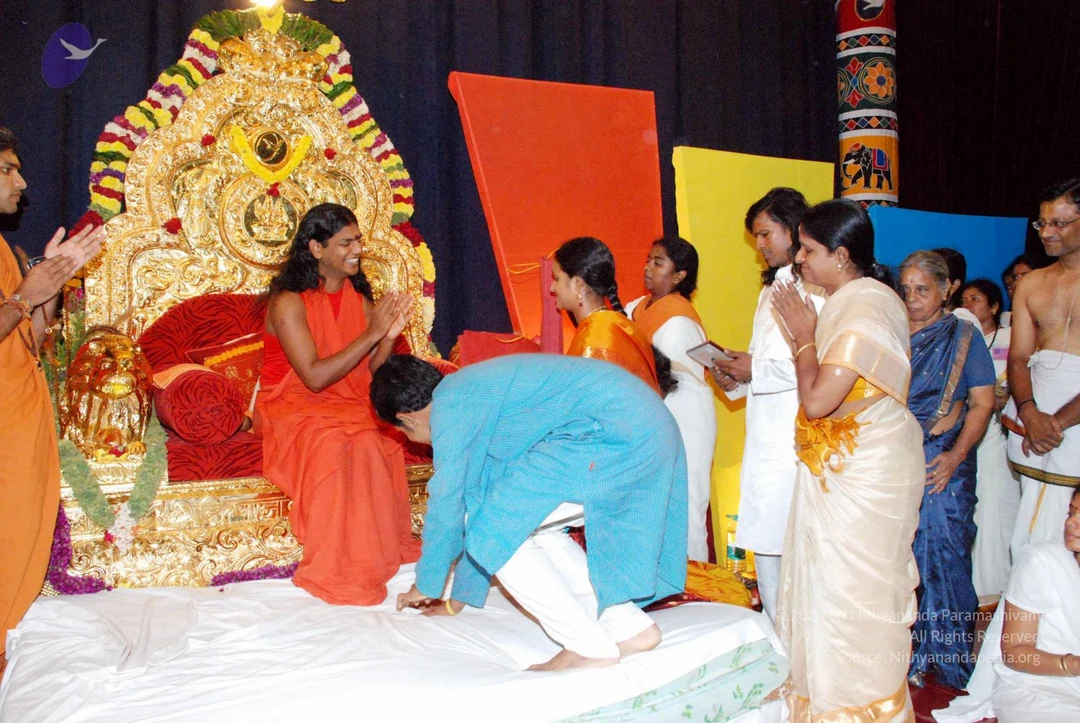
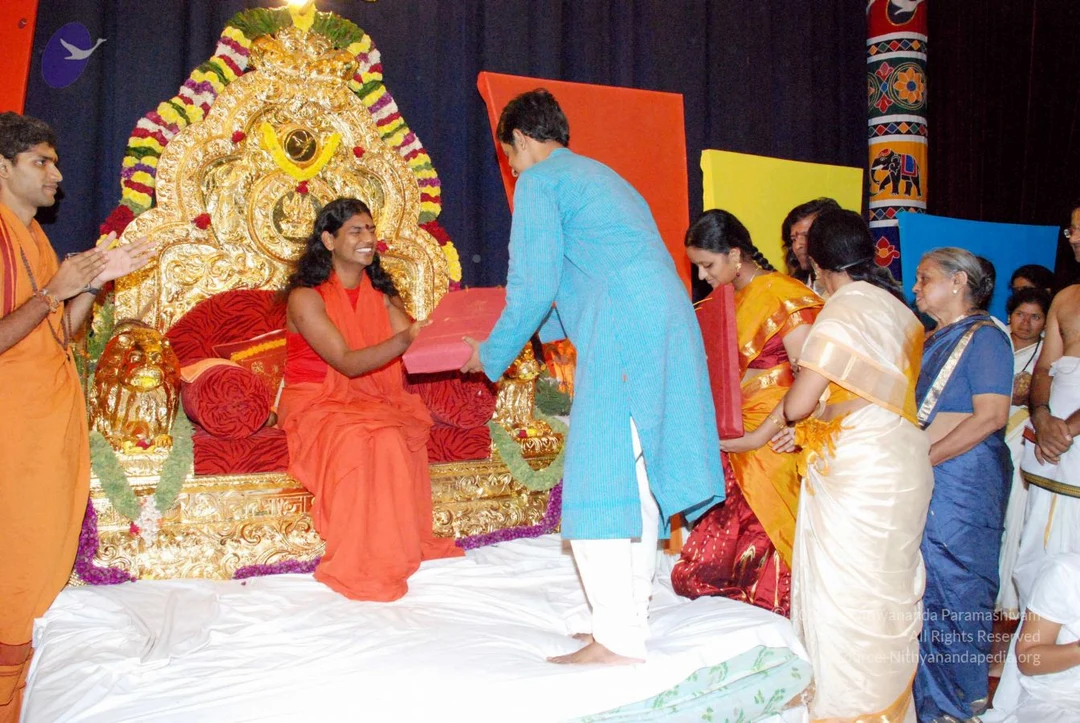
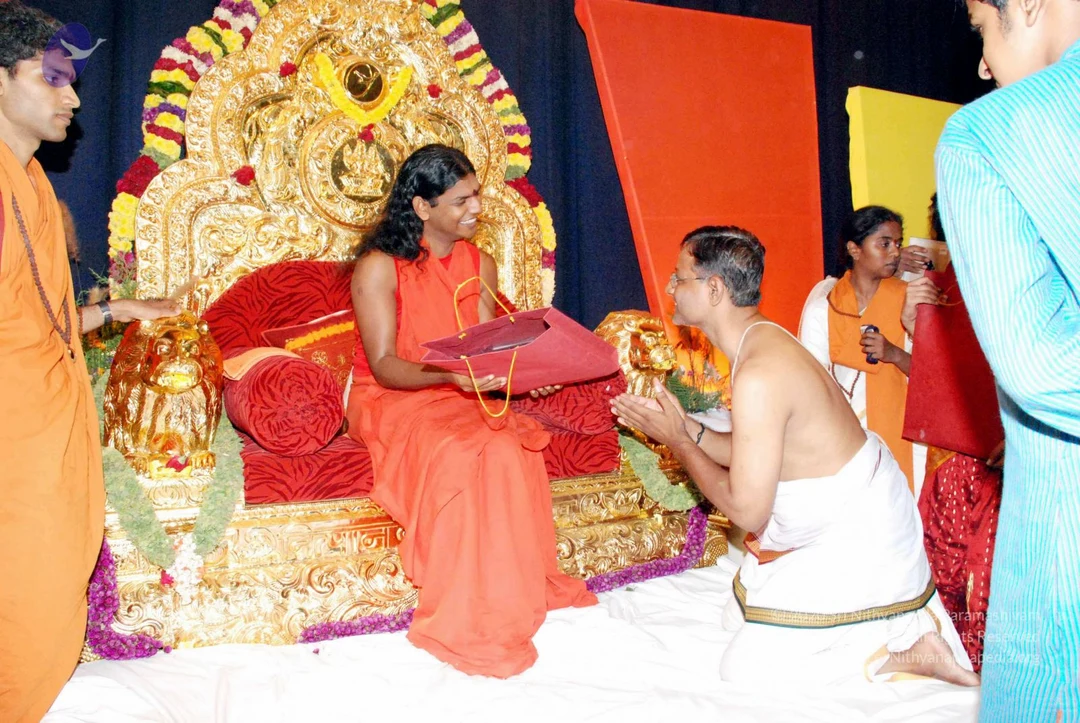
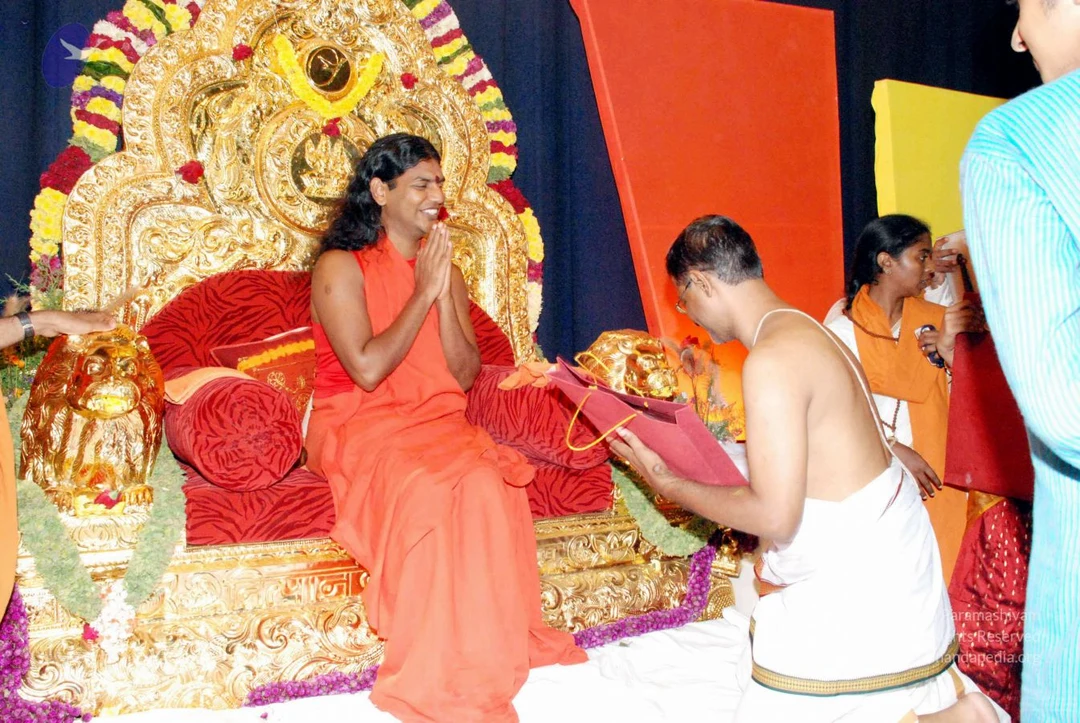
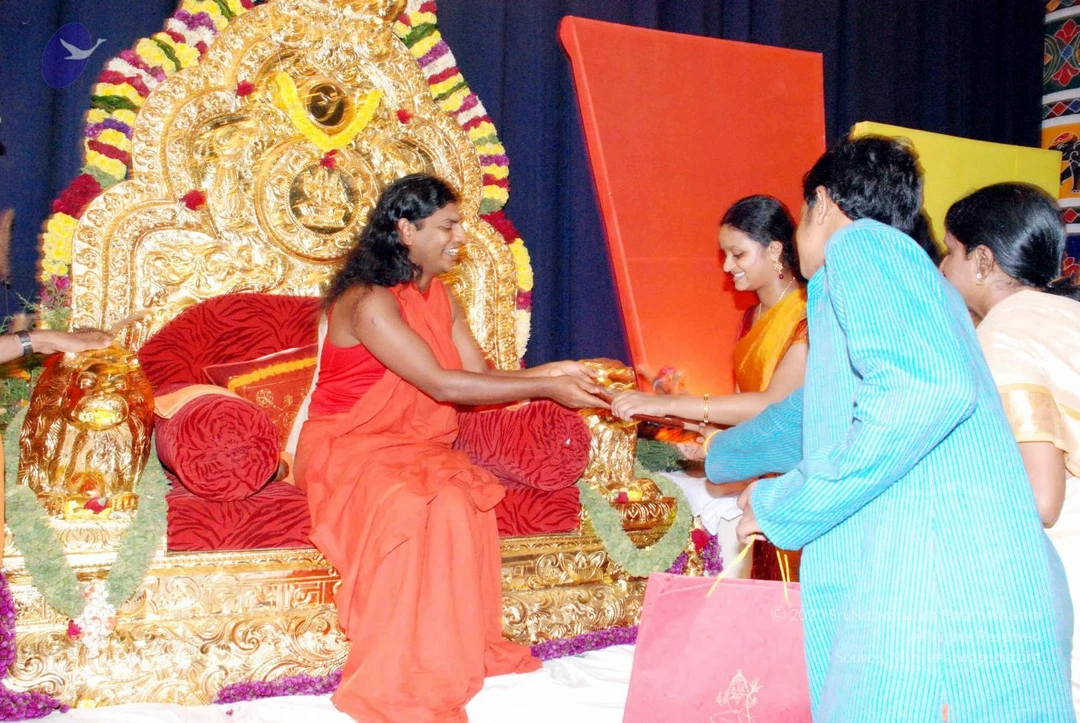
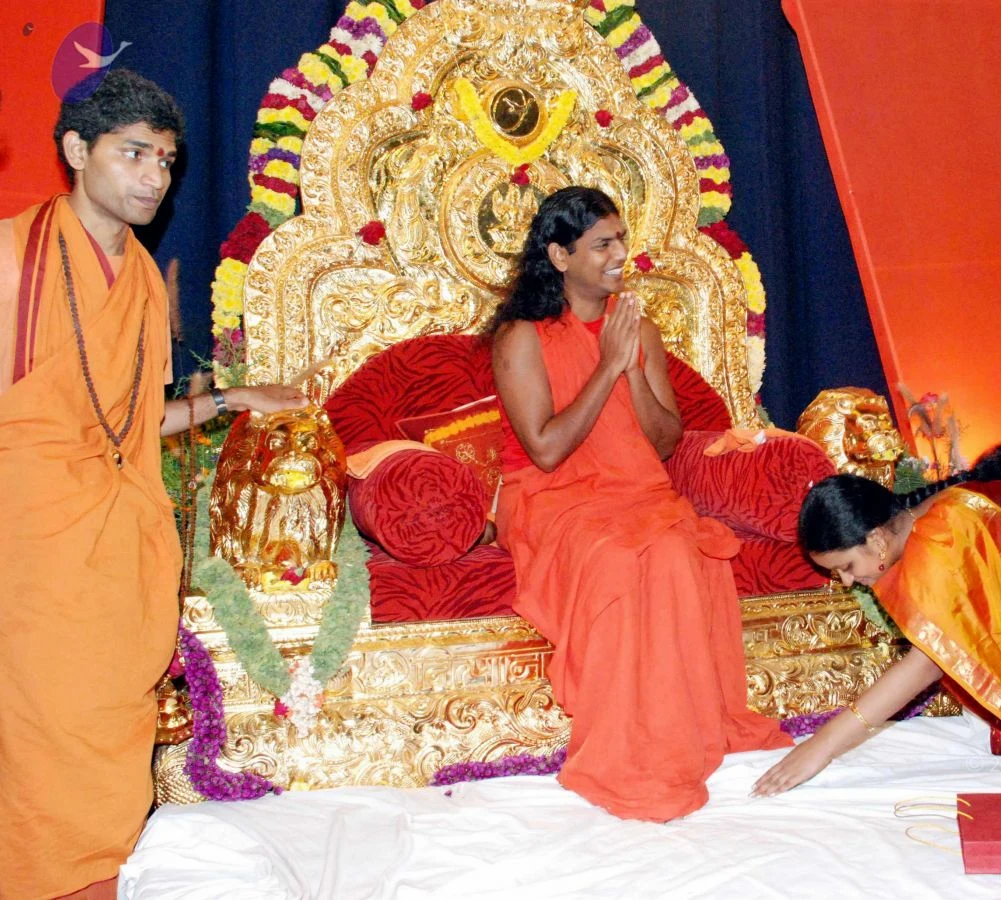
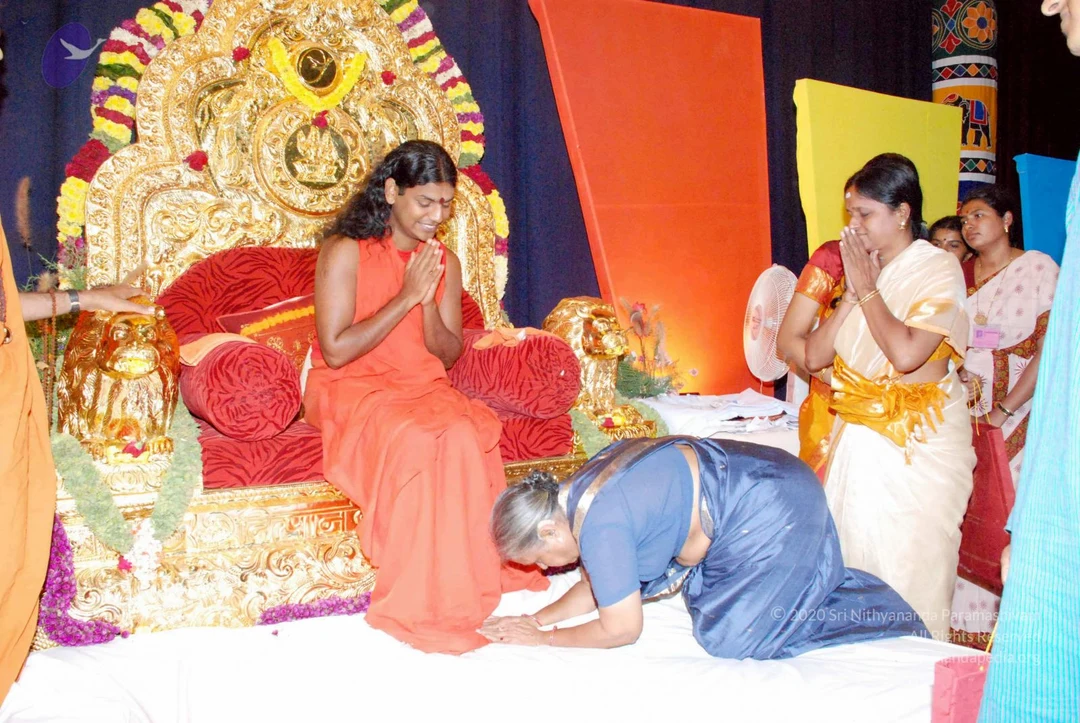
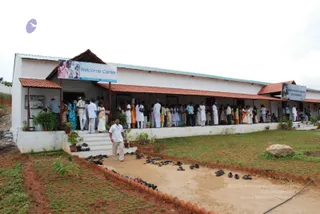
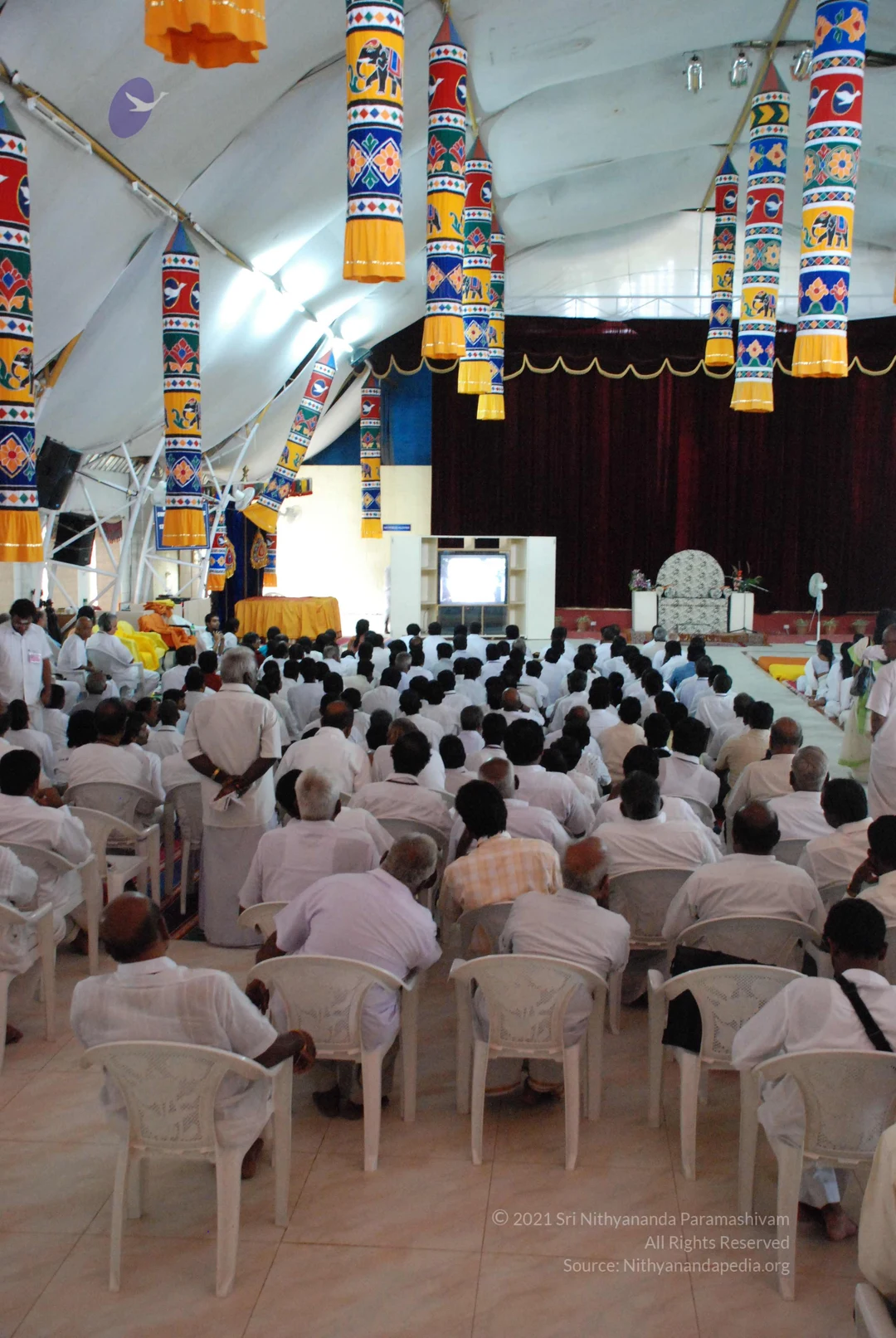
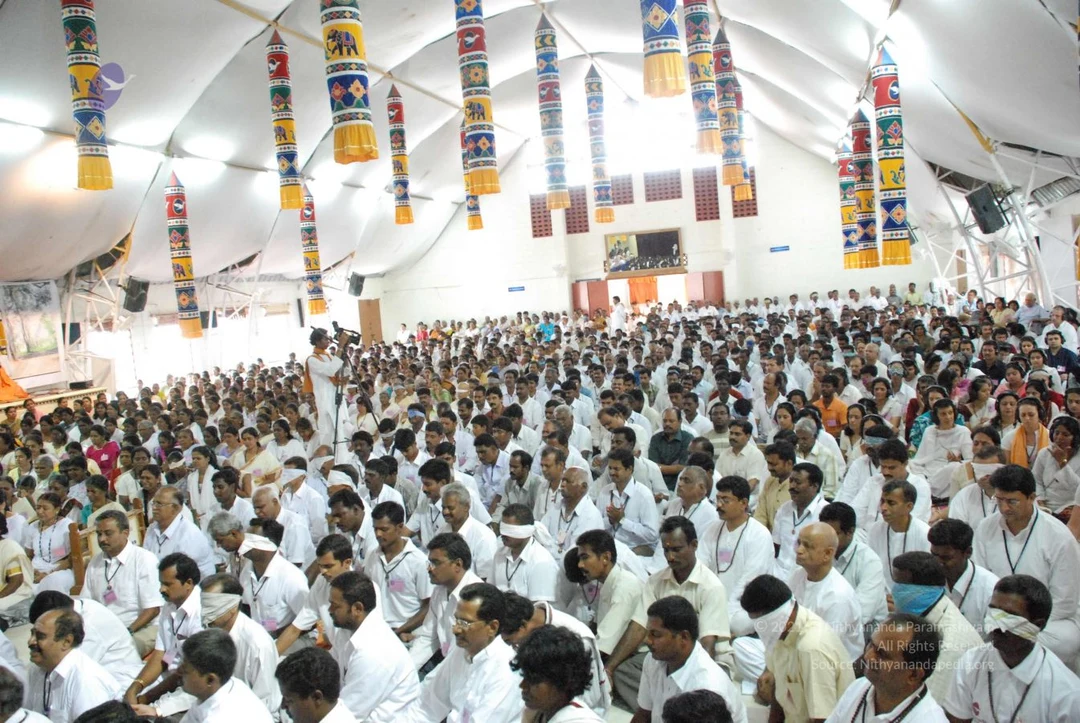
On that day, the Supreme Pontiff of Hinduism Bhagavan Nithyananda Paramashivam conducted a one-day Kalpataru convention in Adi Kailasa. Thousands of people had gathered in order to receive the Darshan of the Supreme Pontiff of Hinduism (SPH), Bhagavan Nithyananda Paramashivam, the greatest happening of our time, Paramavatara - the Ultimate Incarnation of Paramashiva, with each of them bringing books to be autographed, Mala’s to be blessed, requesting healing for themselves and also carrying lists of their relative's names that needed SPH's healing etc. SPH attended tirelessly to each and every one. He enriched and blessed couples and elders with love, compassion and deep listening and each person felt that SPH was there only for them. He gave each person the exact experience they needed at that time in order to move forward in their spiritual path. Kalpataru, from the Sanskrit language with “kalpa” meaning wishing and “taru” meaning tree. Known as the Kalpataru Convention, Adikailash Sarvajnapeetam received thousands so much so, that the Ananda Sabha convention hall was overflowing. People from all walks of life, locally and from abroad attended the program. Kalpataru is one such convention where the qualification of the seeker is irrelevant. It is purely from the compassion and powers of the Guru that He blesses the pure intentions of the delegates to manifest into reality. That day's Kalpataru convention, Meeting With Aadheenavasis and Navaratri Celebrations (Day05) were presided over by the Supreme Pontiff of Hinduism Bhagavan Nithyananda Paramashivam on 04 October 2008 in Adi Kailasa, Bengaluru, Karnataka, India.

Title:

THE SUPREME PONTIFF OF HINDUISM JGM HDH BHAGAVAN NITHYANANDA PARAMASHIVAM

Photos

SPH Giving Kalpataru Darshan At AadiKailaasa, Bengaluru, India
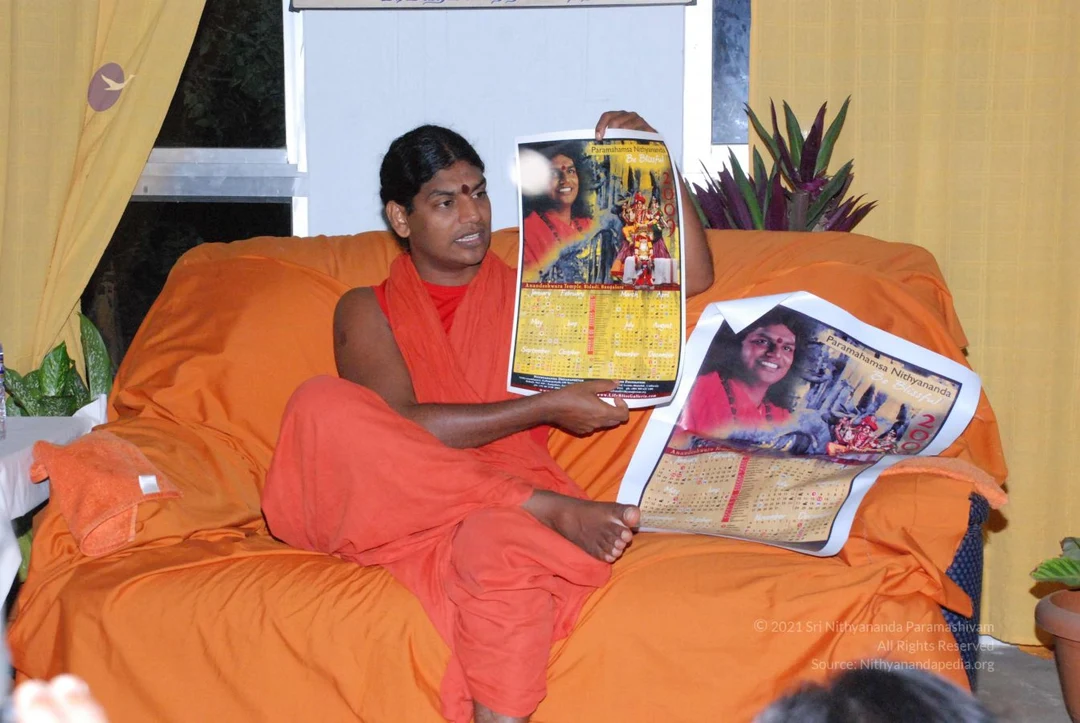
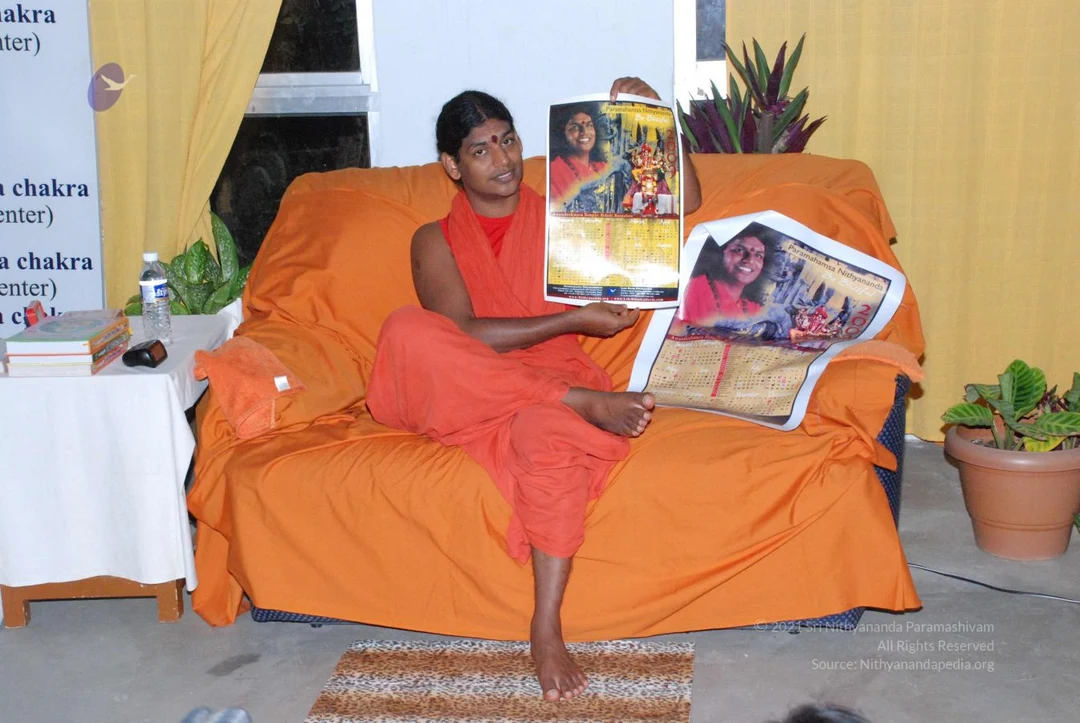
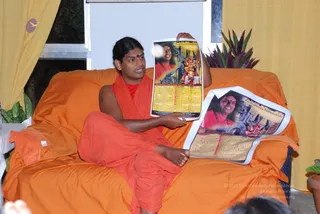
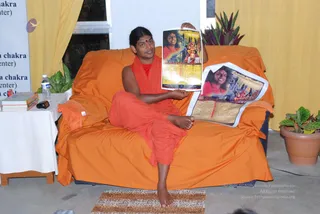
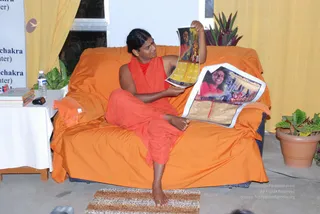
SPH Meeting With Aadheenavasis At AadiKailaasa, Bengaluru, India

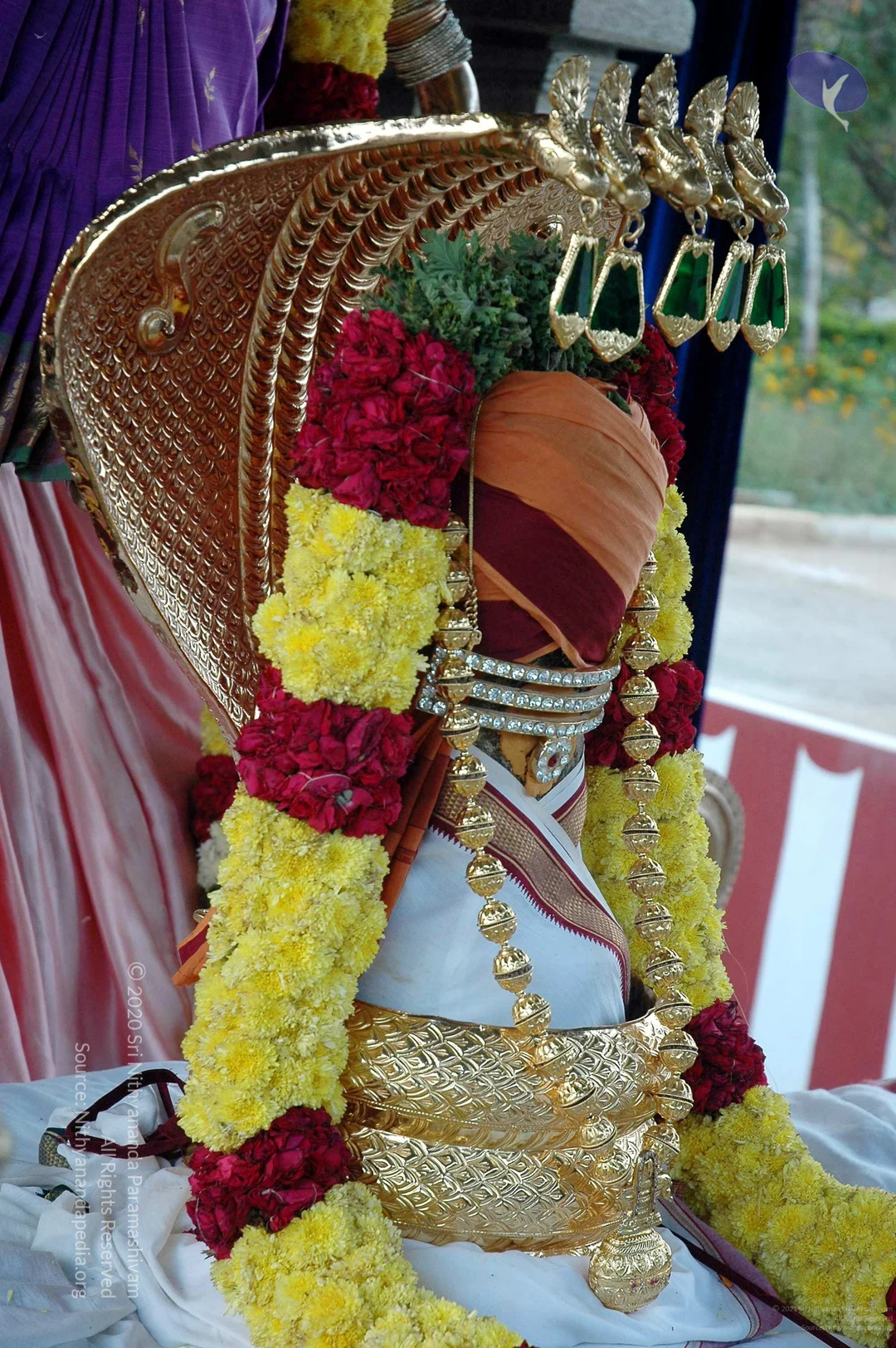
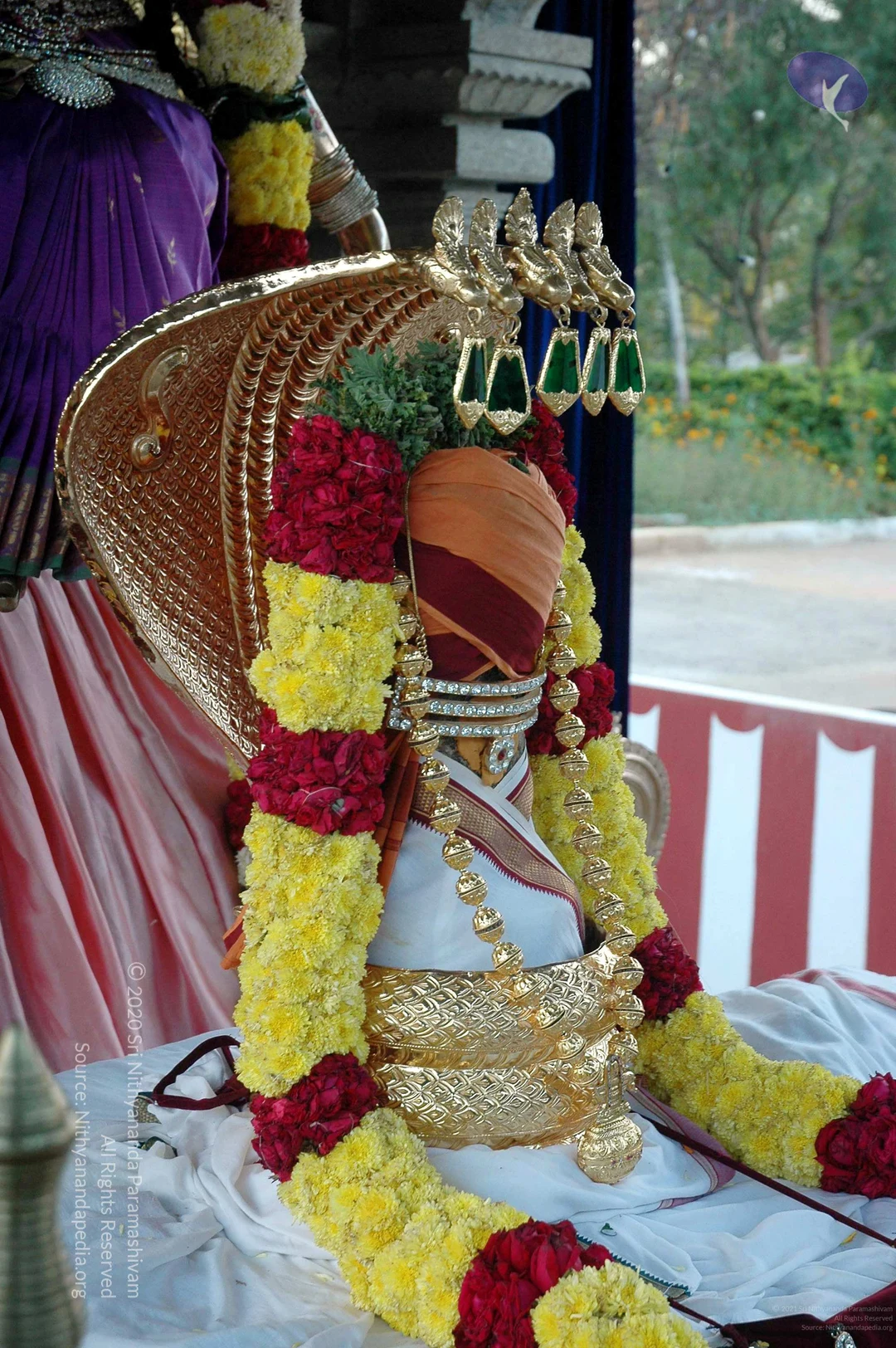
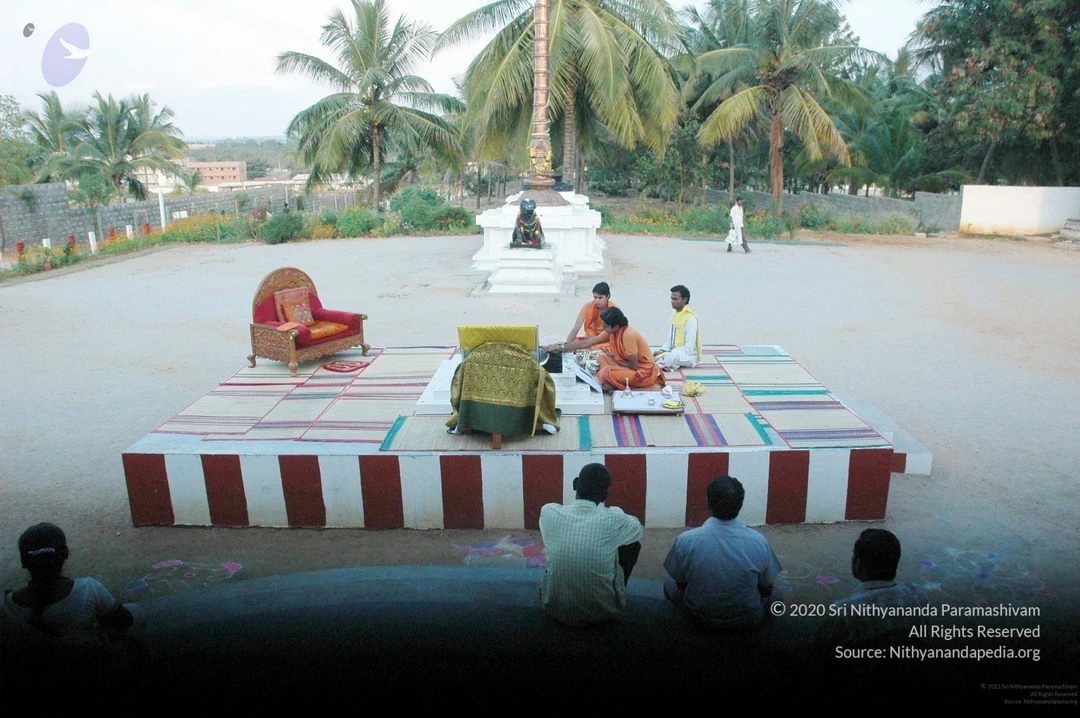
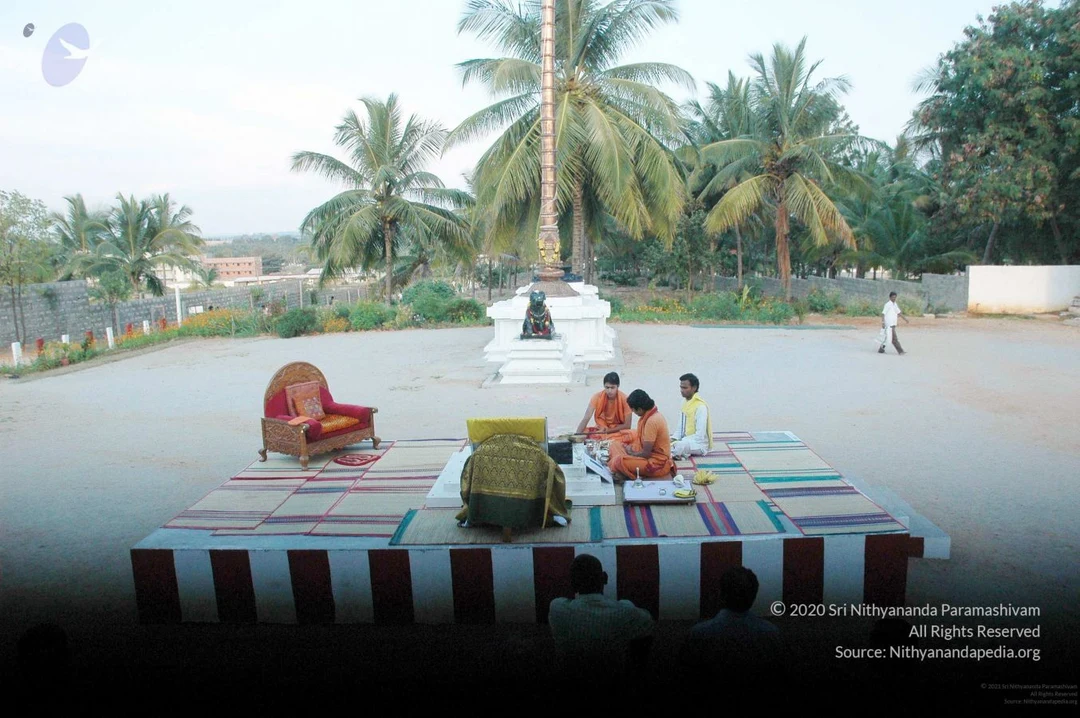
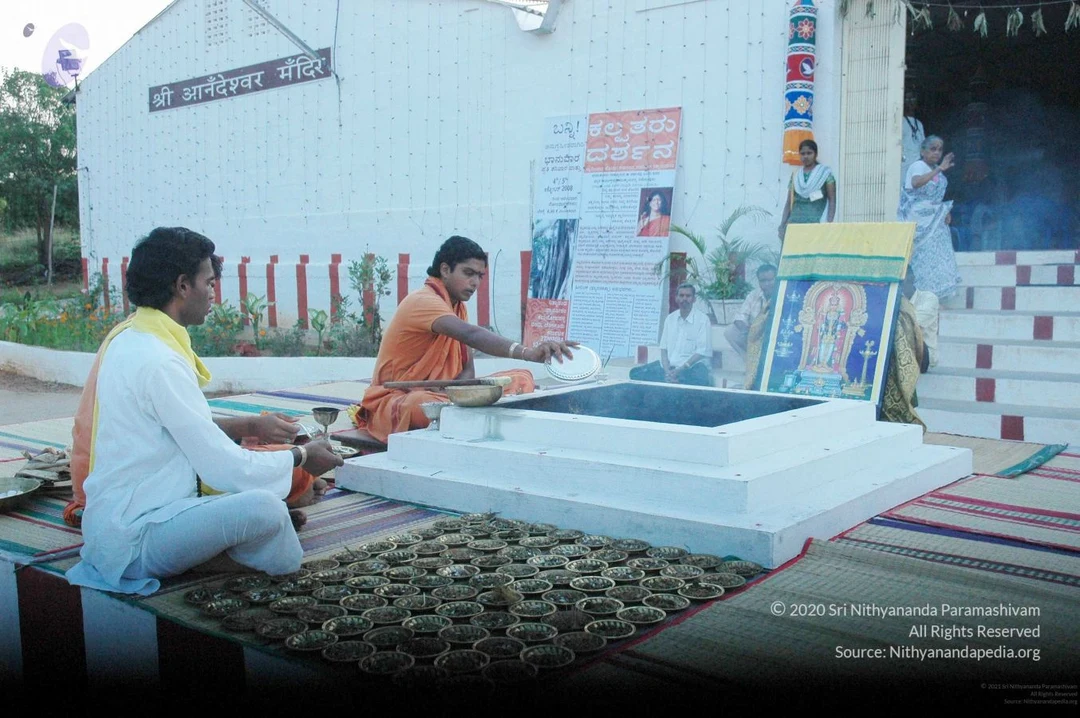
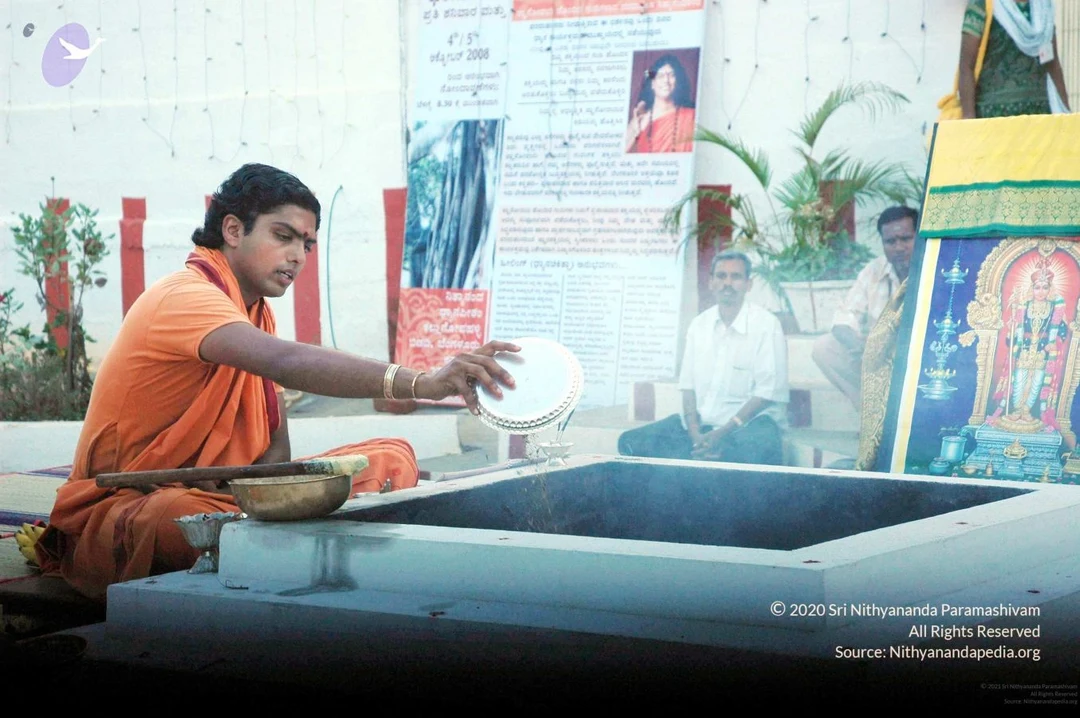
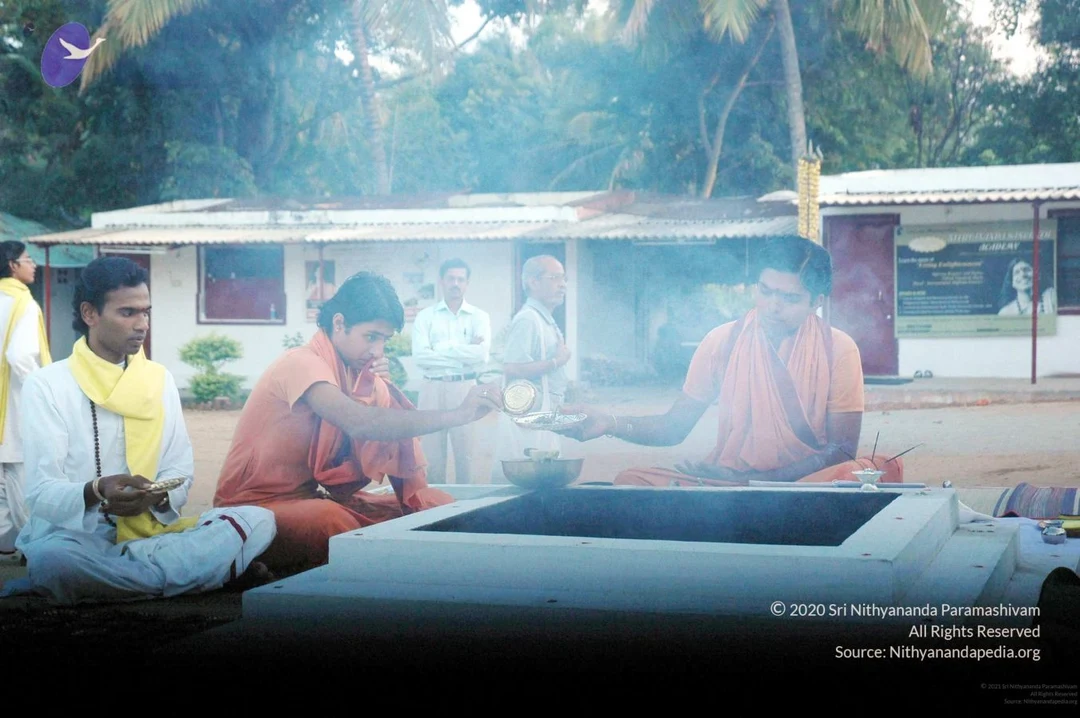
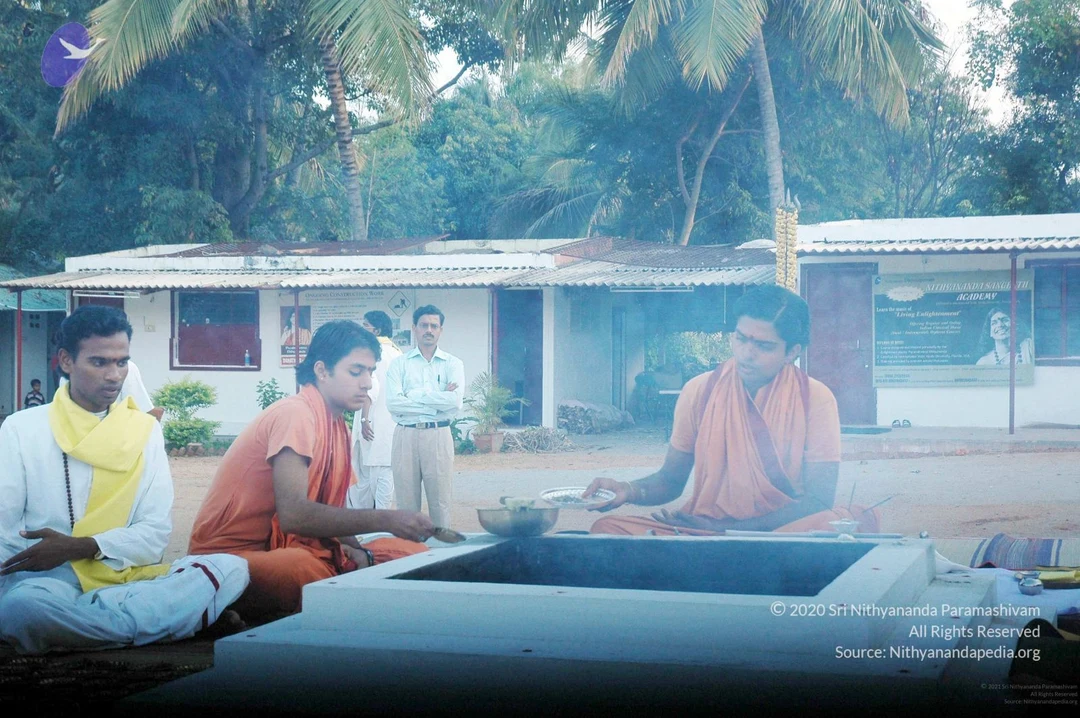
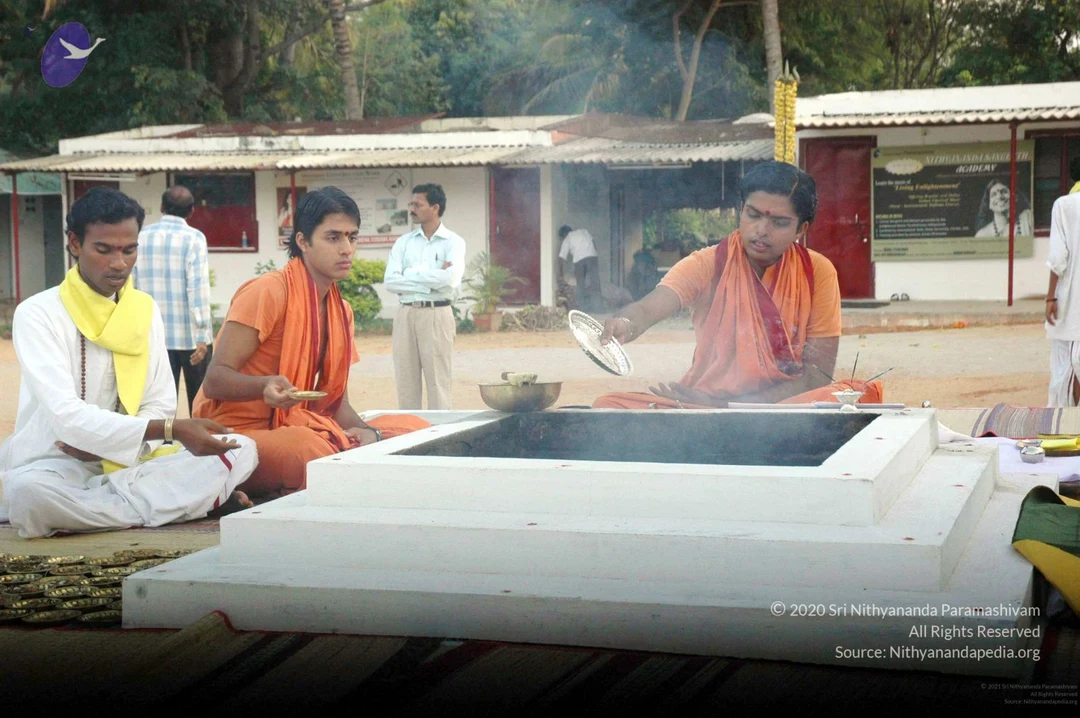
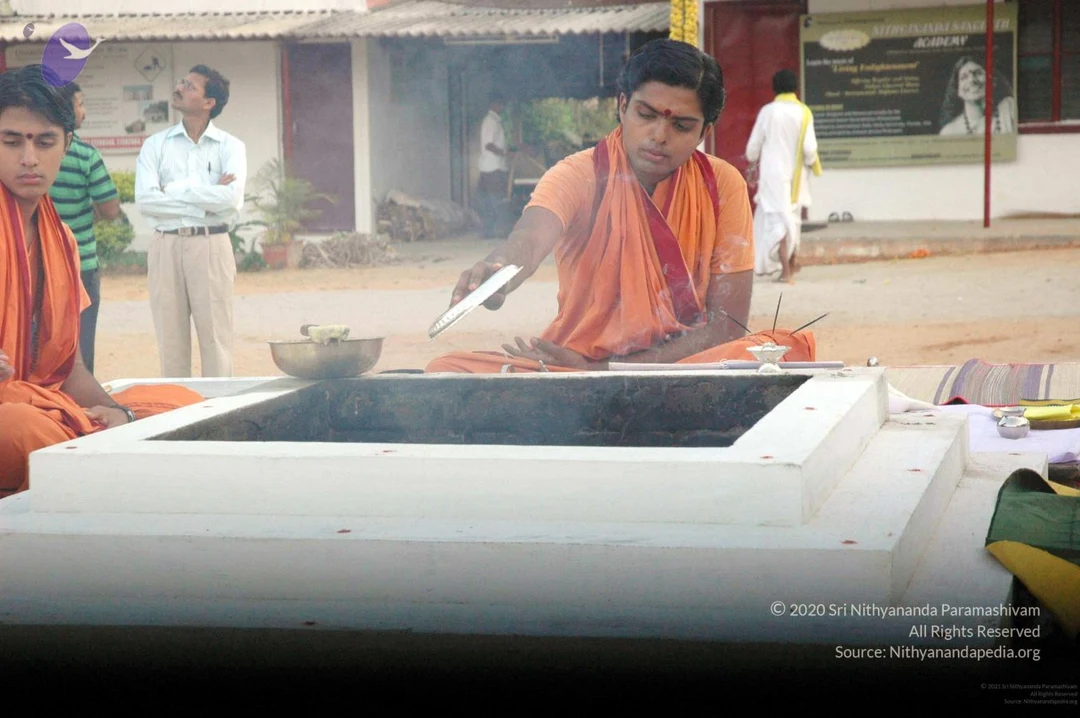
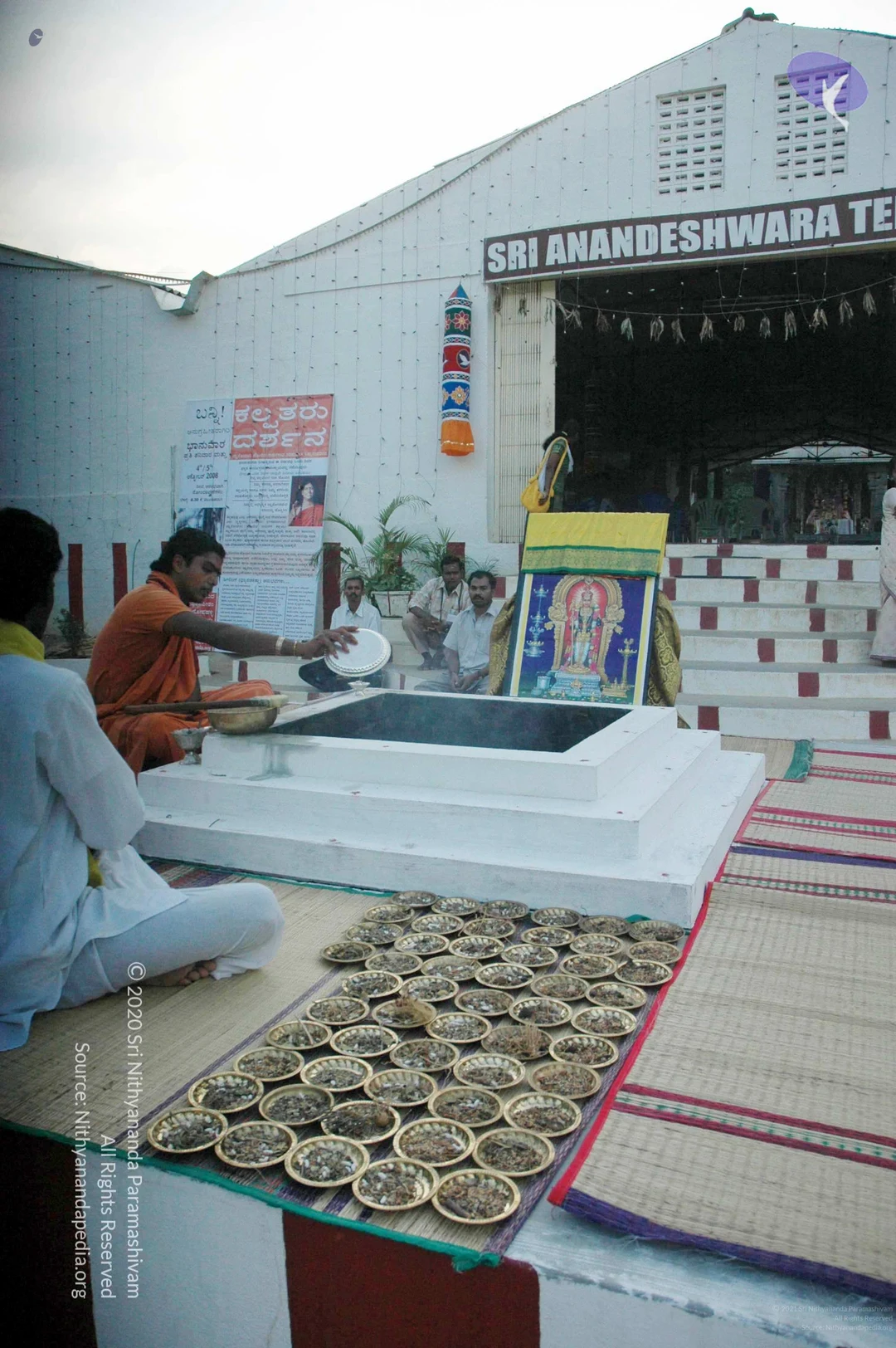
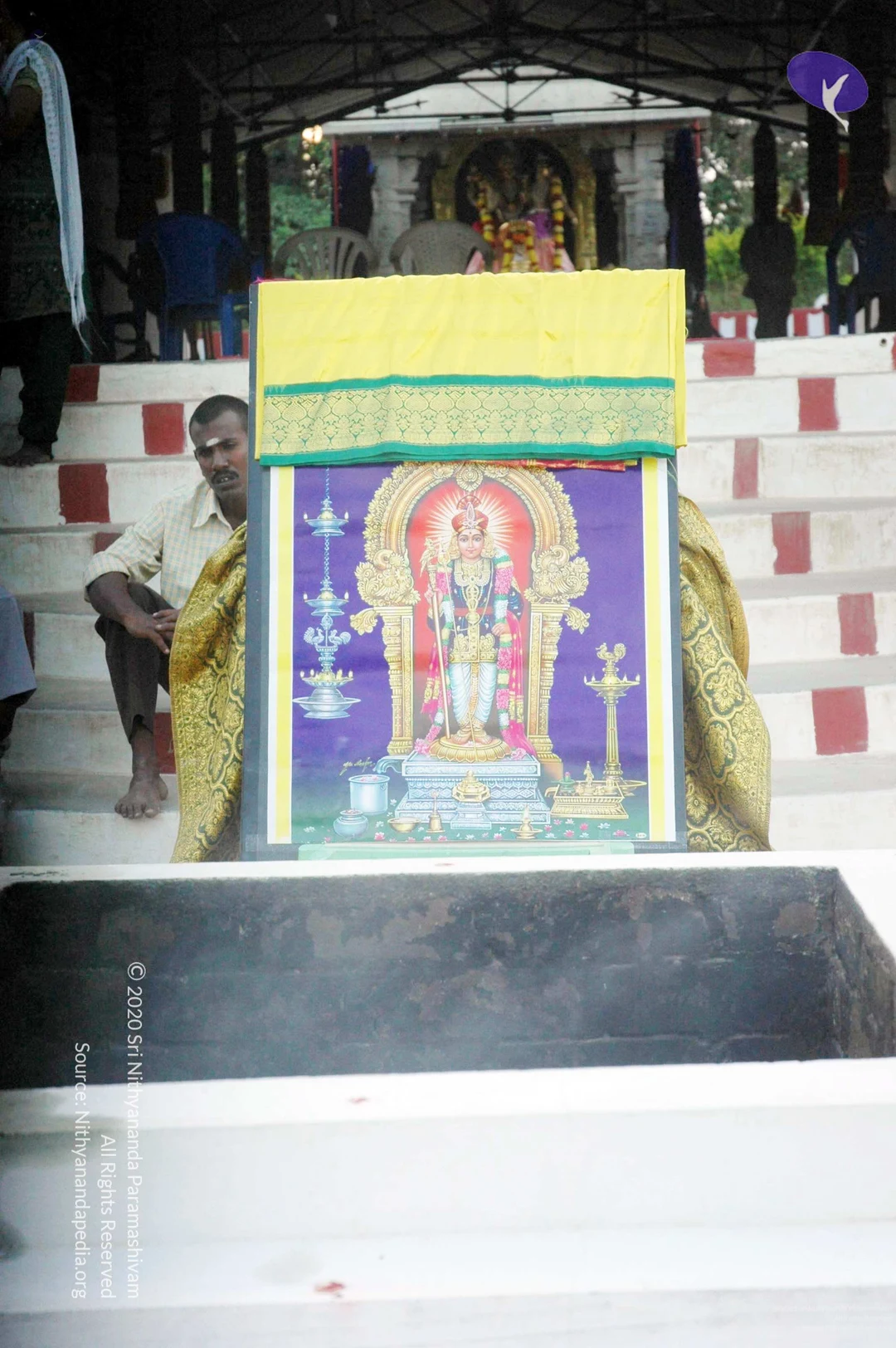
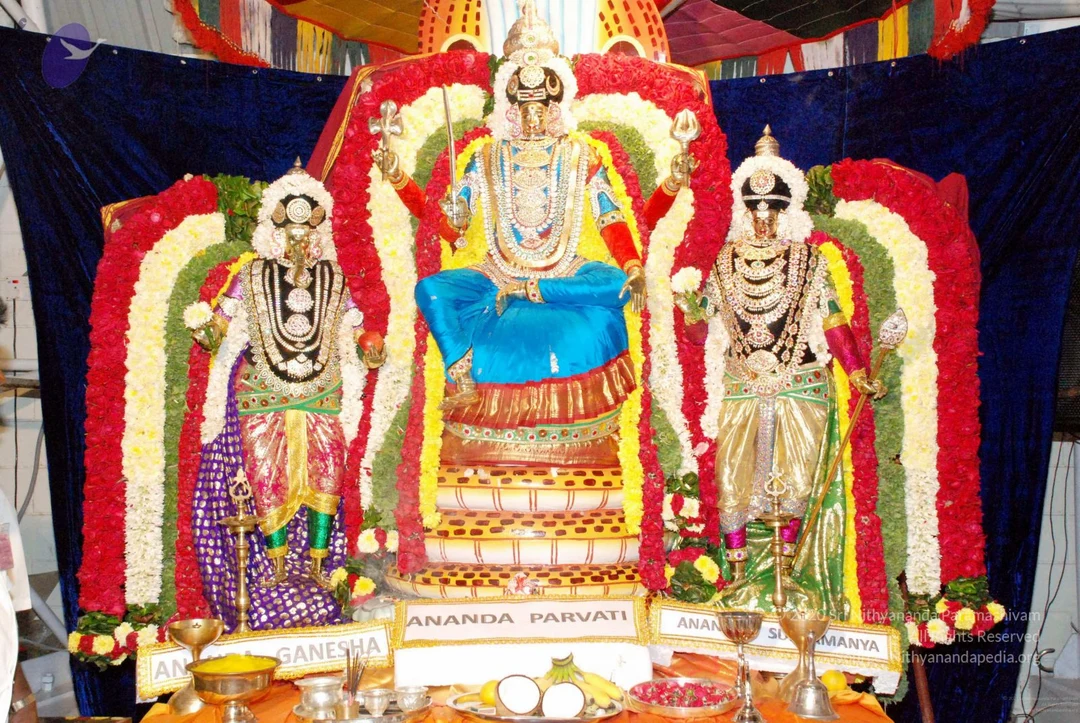
Navaratri Celebration || Day05- Homa||

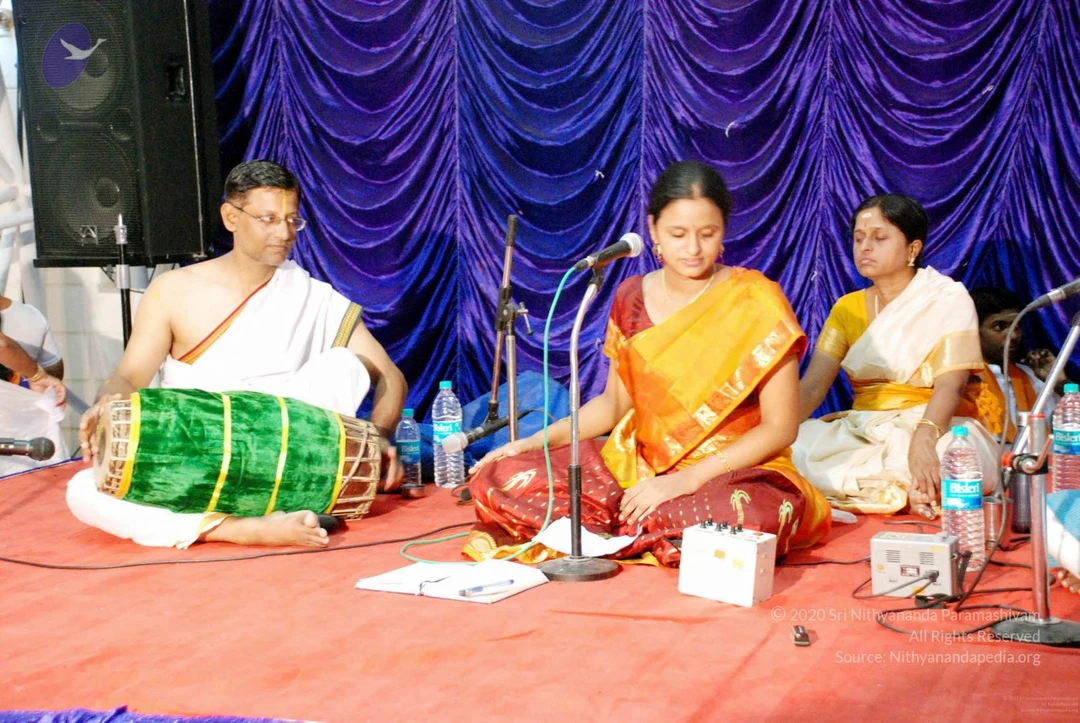
Navaratri Celebration || Culturals ||

Kalaptaru Darshan

English_Flyer

English_Flyer

Photos from this day

View all 349 photos

SPH Giving Kalpataru Darshan At AadiKailaasa, Bengaluru, India
216 photosSource gallery
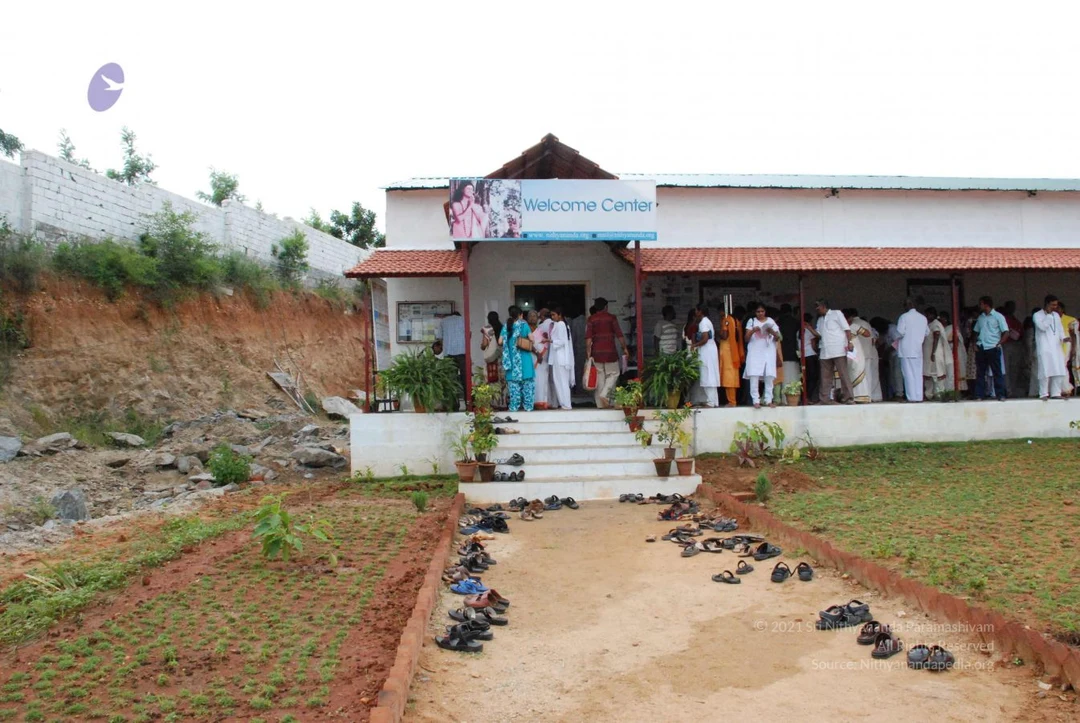
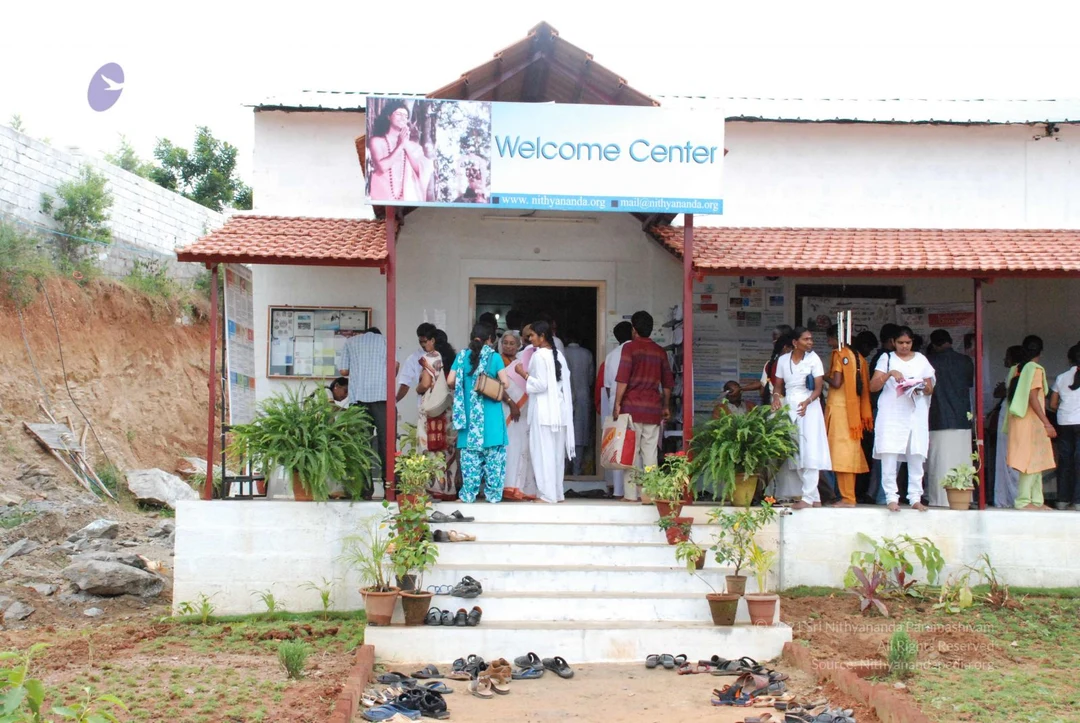
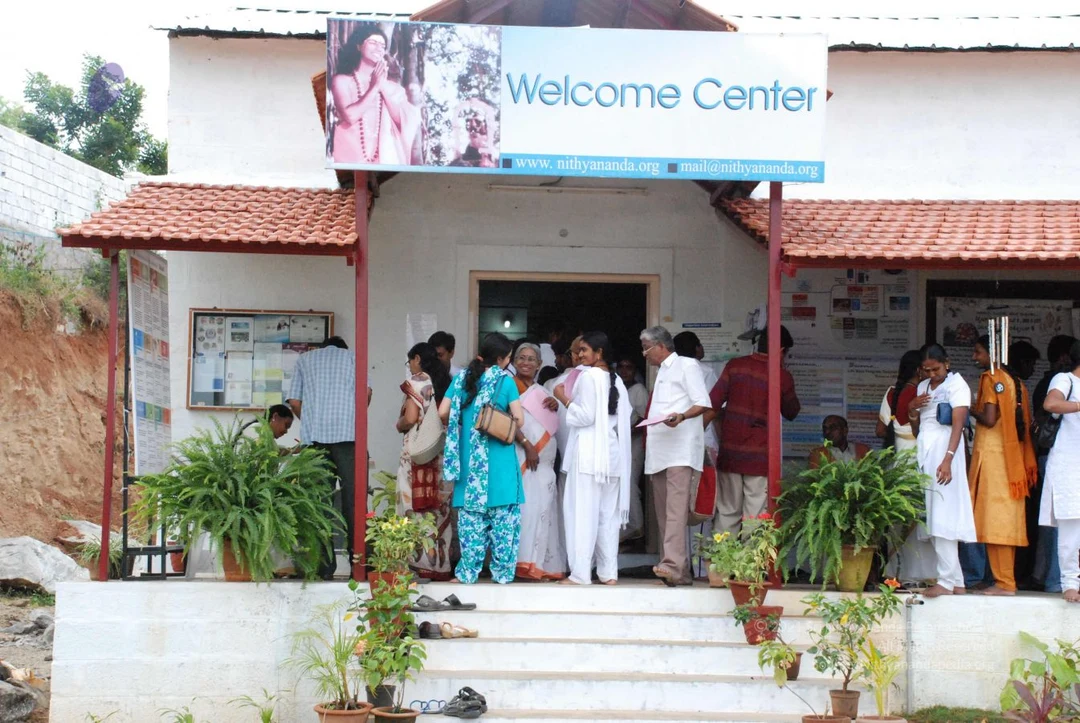
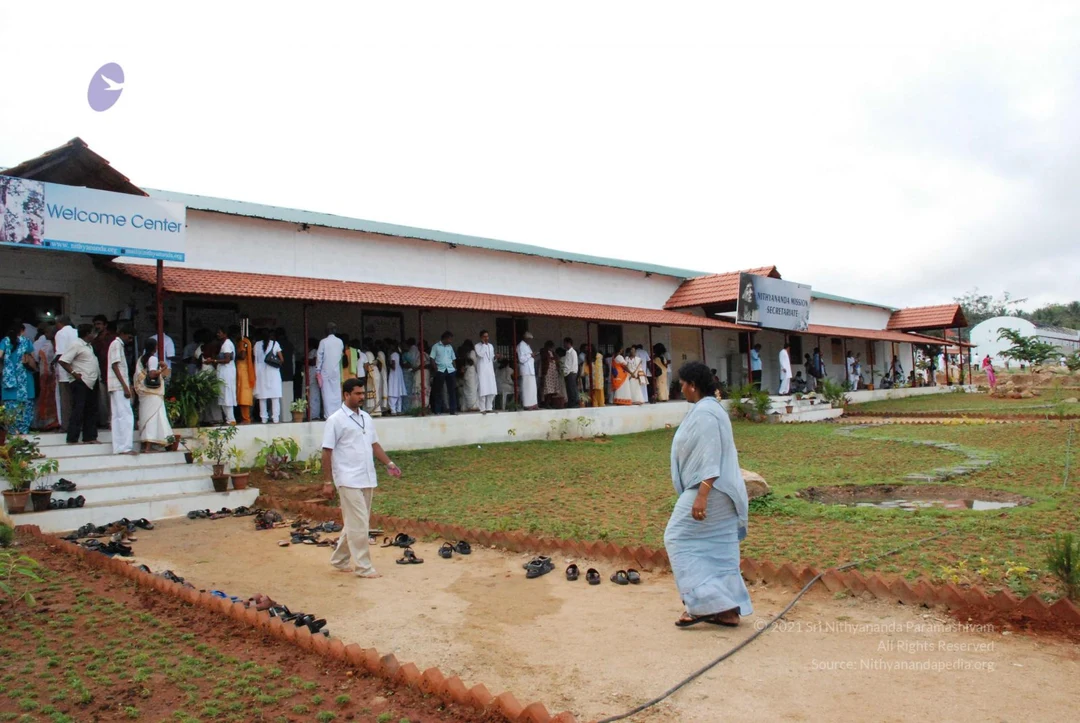
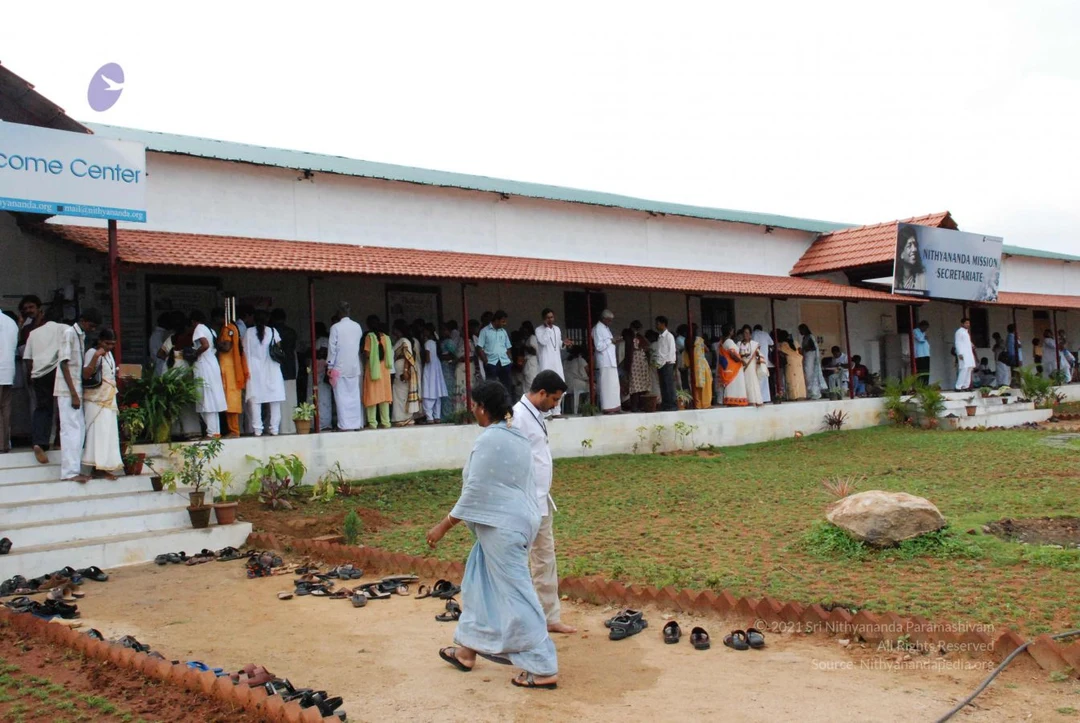
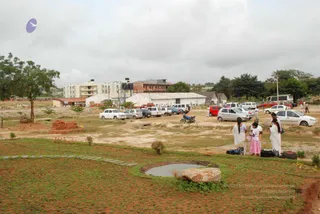
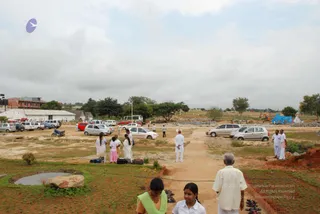
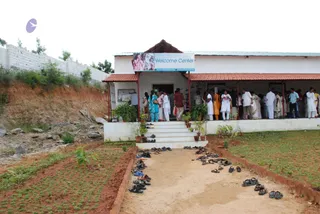
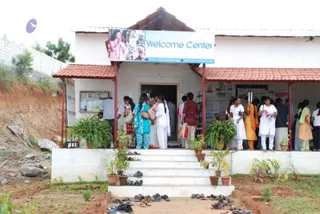
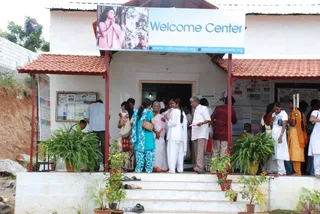
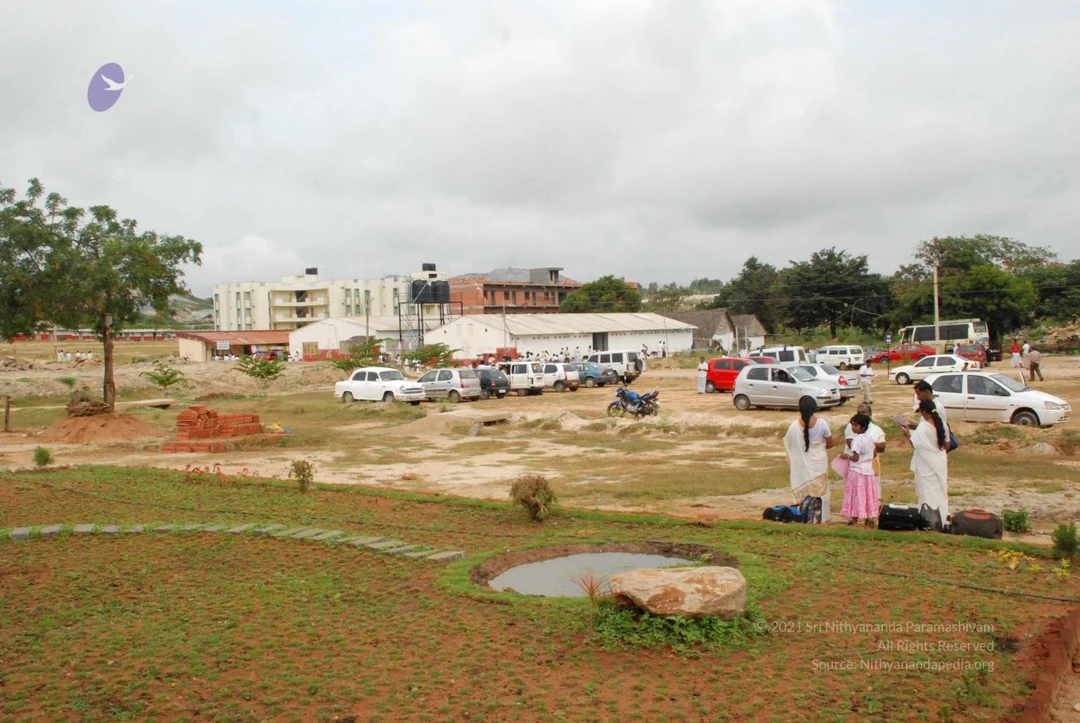
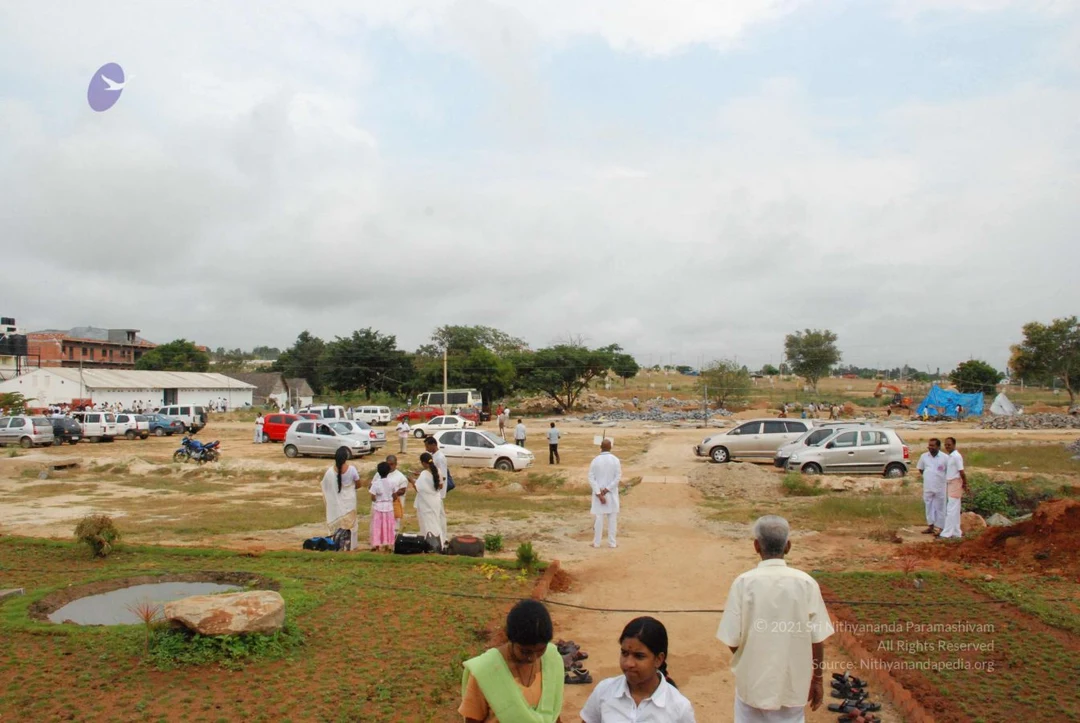
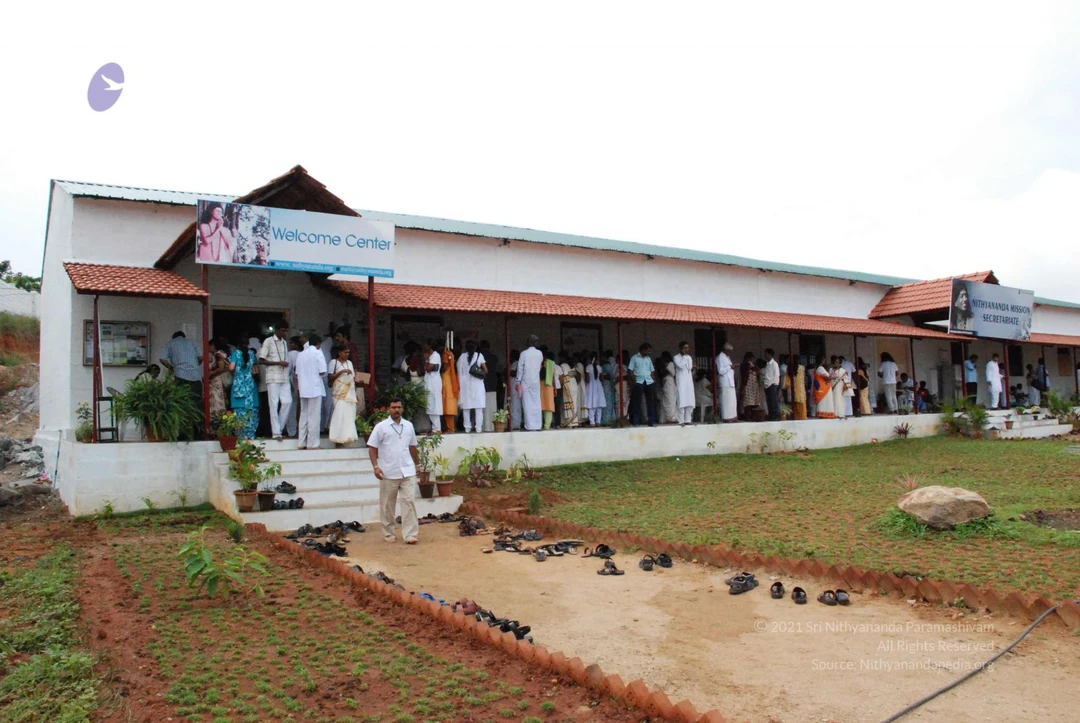
A wide outdoor photograph of a dusty open ground at an ashram-style campus under an overcast sky. Rows of parked cars, including white sedans, red and silver hatchbacks and a white van, fill the middle, with a motorcycle nearby. Low white and beige buildings, a multi-storey block and a bus stand at the back among trees. In the foreground, a grassy lawn with a small circular pond and a large rock. Three women in white saris stand at the right, one holding a small girl in a pink dress, beside luggage bags and suitcases. Other people in white clothing are scattered across the ground. No identifiable a person appears in this scene.Outdoor view of a bare, reddish-brown dirt construction site under an overcast grey sky, with parked cars, a few motorbikes, and a white industrial shed at left. Several people in white clothing move across the ground; a woman in a green sari and a girl in white uniform stand in the foreground beside a row of removed footwear. A man in a cream shirt stands at right, and a small circular pond with a rock sits at lower left.A photograph of a white single-storey Welcome Center building with a red-tiled overhang and a blue-and-white banner reading Welcome Center above the entrance. A line of people in white, orange and blue clothes stands and queues along the covered veranda and steps. Many pairs of sandals and shoes are left on the dirt path in front, and potted plants line the steps. A stone wall and a rocky embankment sit behind the building.Photograph of a white single-storey building with a red-tiled canopy and a blue banner reading "Welcome Center" with the website www.nithyananda.org. A banner portrait labelled with the Welcome Center text shows a figure in pink clothing with a rudraksha-style mala. Several people stand on and around the entrance steps, including a woman in a teal salwar kameez, women in white garments, and a man in an orange-yellow dhoti-style outfit. Potted plants line the steps and a pile of footwear sits at the bottom. Notice boards are mounted beside the doorway.Photograph of a whitewashed Welcome Center building with a terracotta-tiled roof and red pillars, its signboard reading "Welcome Center" with the web address www.nithyananda.org. A portrait labelled on the sign shows a figure in saffron-pink robes with rudraksha malas, hands folded in prayer. Around twenty visible people crowd the entrance steps and porch: a woman in a teal top and floral trousers, women in white saris and salwar, a man in a white shirt and beige trousers holding papers, and a monk-like figure in orange robes at right. Potted ferns and plants line the steps, and notice boards display papers beside the doorway.A long single-storey white building with terracotta-tiled roof overhangs and a sign reading Welcome Center beside a photo banner. A long queue of people stands along the covered veranda, many in white ritual clothes, some in saffron and colourful saris and salwars. A man in a white shirt and light trousers stands on the dirt path where many pairs of sandals and shoes are left outside. A second sign on the right reads Nithyananda Mission Secretariat. Green lawn, potted plants and a rock sit in the foreground.

SPH Meeting With Aadheenavasis At AadiKailaasa, Bengaluru, India
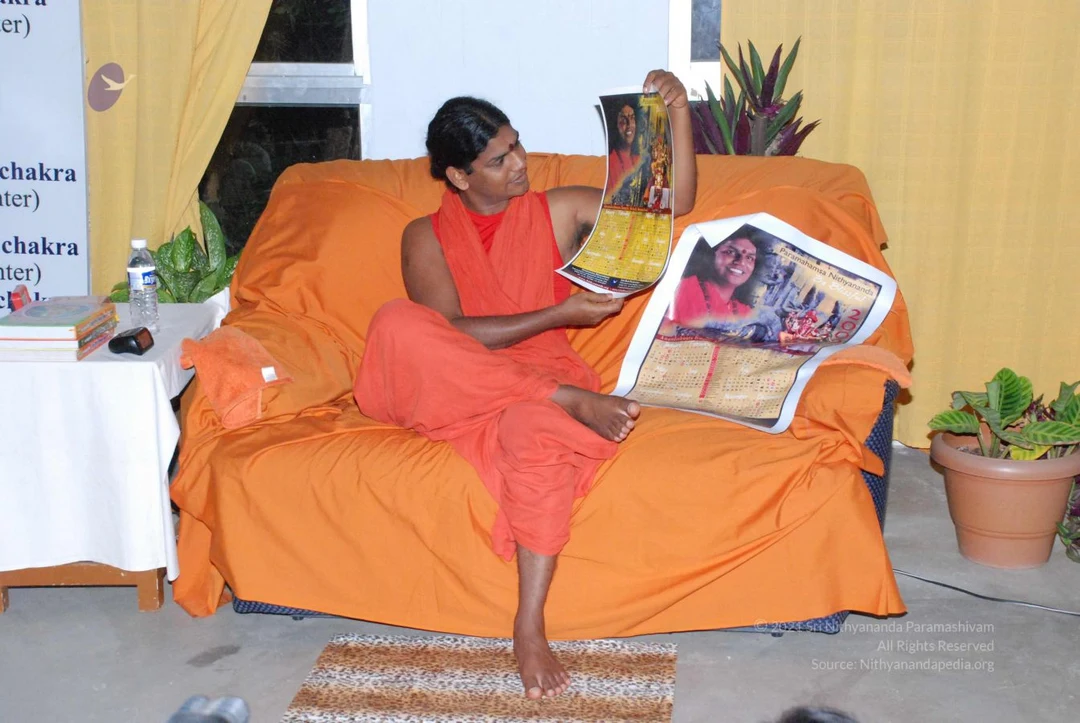
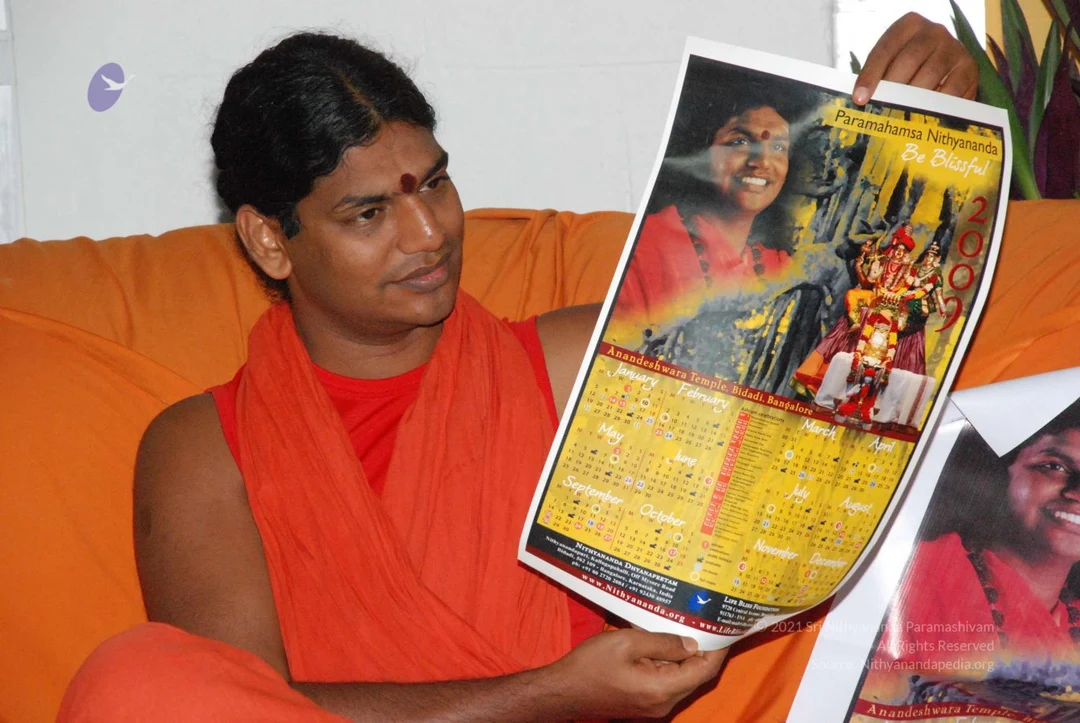
4 photosSource gallery
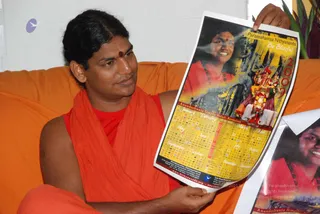
A man in orange robes sits cross-legged on an orange-draped sofa, holding up two calendar posters toward an audience. He wears an orange shawl over a red undergarment, with a red bindi on his forehead and dark hair tied back. The left poster shows a smiling woman in orange with a deity image and a yellow monthly calendar grid. The right poster shows a similar portrait and a calendar. Yellow curtains, a potted plant and a white table frame the scene, and the bottom edge shows the heads of audience members.A person in orange-saffron robes sits cross-legged on a bright orange sofa draped with orange fabric, holding up two large printed calendar posters. A red bindi is on the forehead and an orange shawl drapes the shoulders. The left poster shows a smiling woman in a red top with a deity image below; the right poster is labelled "Paramahamsa Nithyananda" and shows a smiling robed figure with a deity image. Behind is a white sign reading "chakra center" and a yellow curtain, with a potted plant and a small table holding books and a water bottle. The figure appears to match the a person appearance cues of orange robes and a shawl, though the figure's face is not used for identification.A barefoot person in orange-red robes sits cross-legged on an orange-draped sofa, holding up a printed calendar poster with a portrait and deity imagery in one hand while a second calendar lies open across the sofa cushion. Behind them, a white table holds a water bottle, a small device and books beside a potted plant, with yellow curtains and banners reading 'chakra' in the background. A patterned rug lies on the floor in front.A man with short dark hair and a red bindi sits on an orange cushioned sofa, wearing an orange-red sannyasi cloth draped over his shoulders and a red inner top. He holds up a large yellow wall calendar for 2009 printed with a portrait labelled "Paramahamsa Nithyananda" and "Be Blissful", showing a smiling woman in red clothing beside a deity scene. A second printed poster partly visible at lower right shows the same smiling woman in red and an Anandeshwara Temple image.
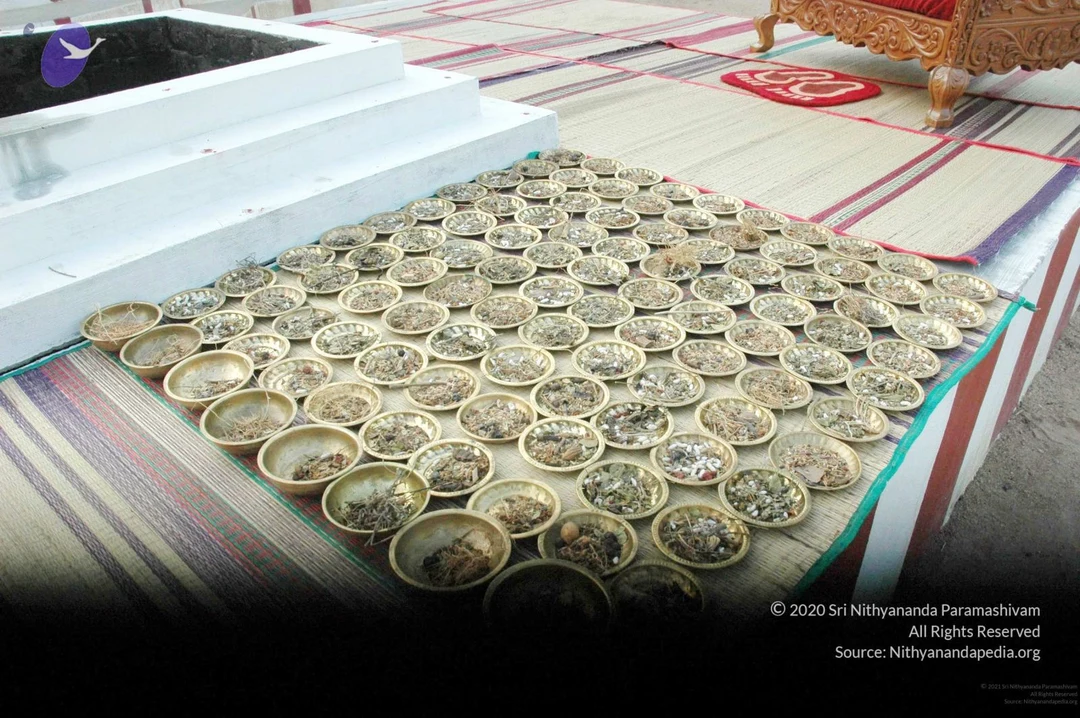
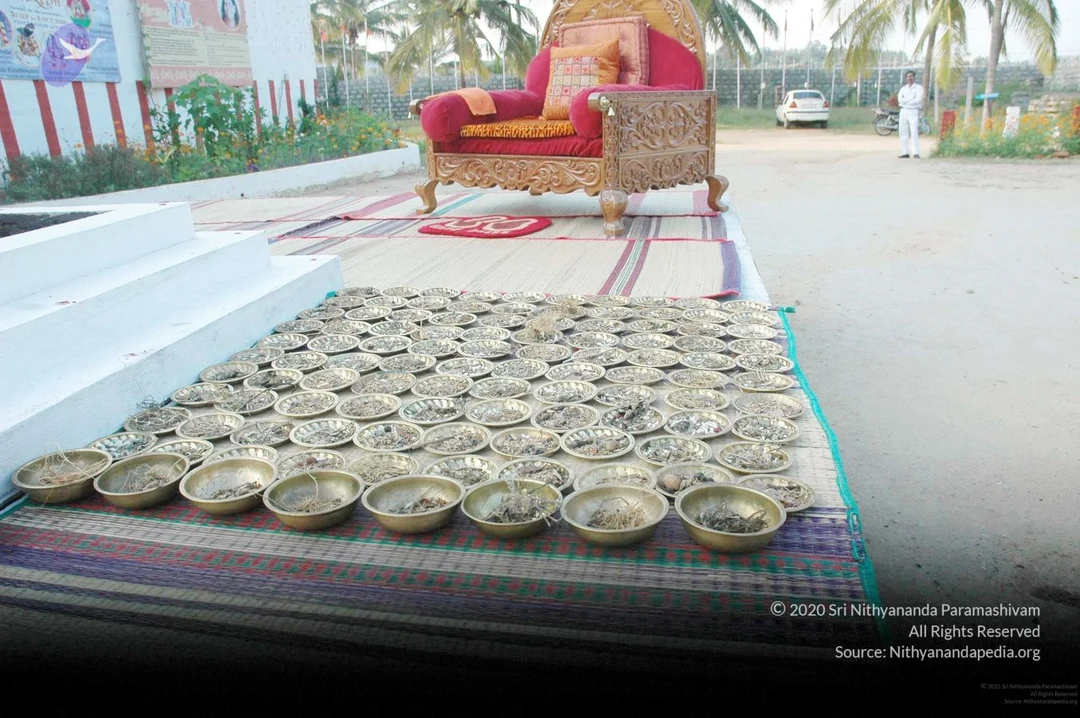
Navaratri Celebration || Day05- Homa||

86 photosSource gallery
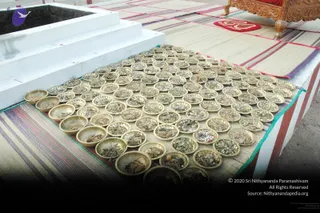
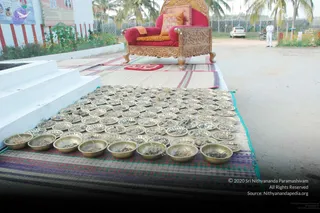
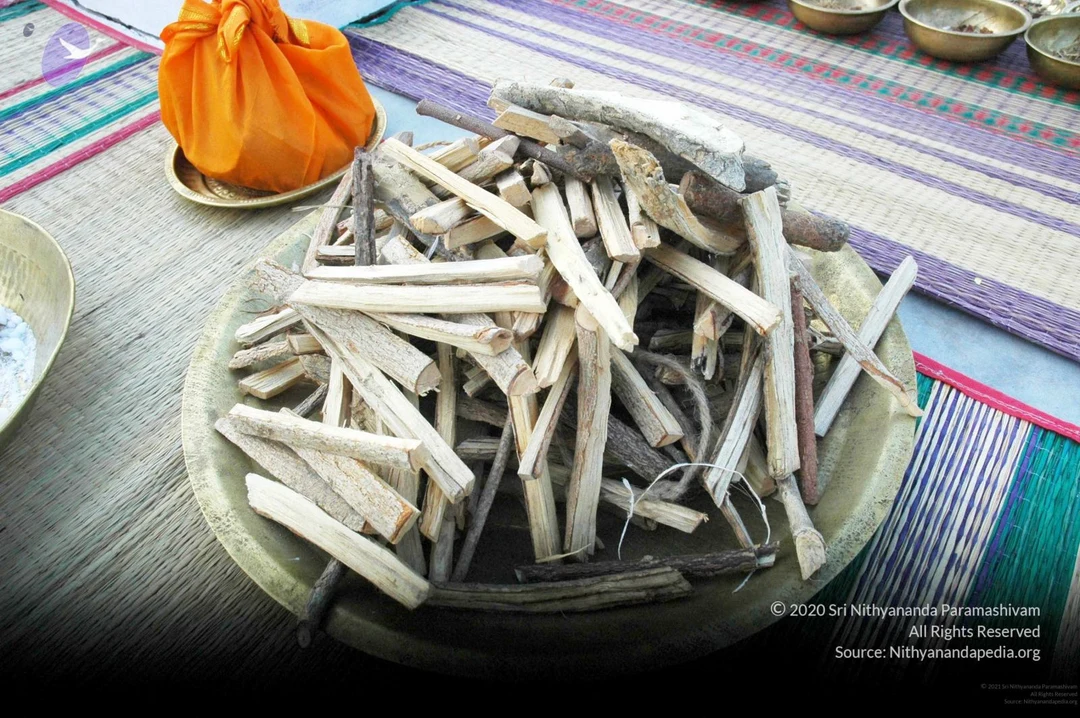
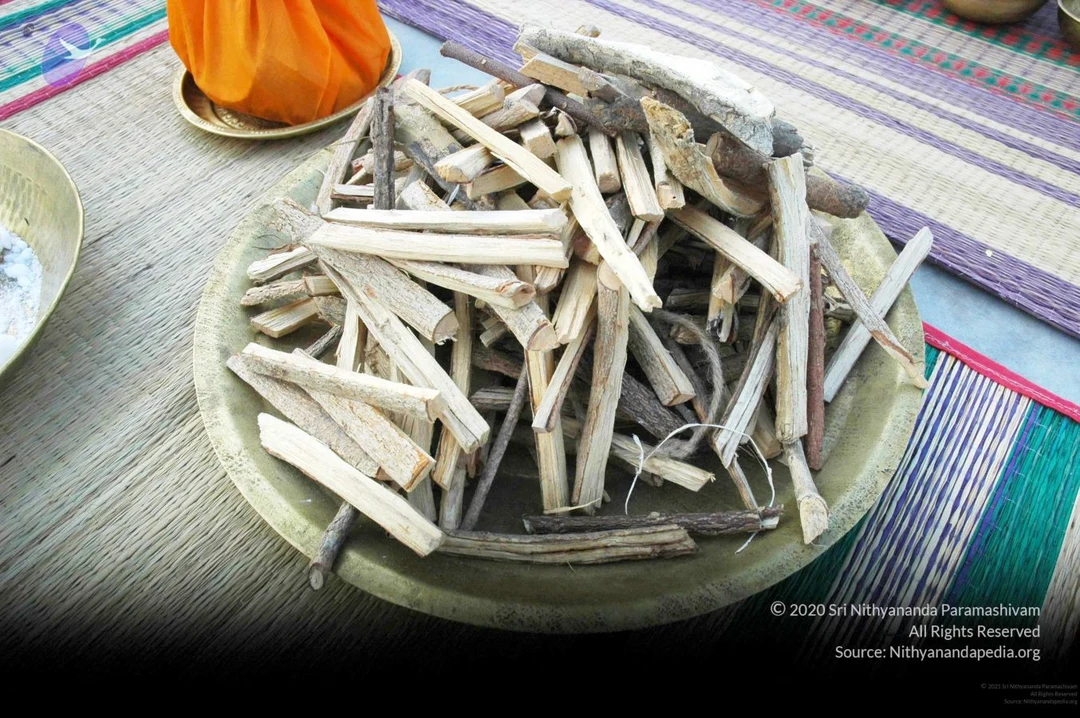
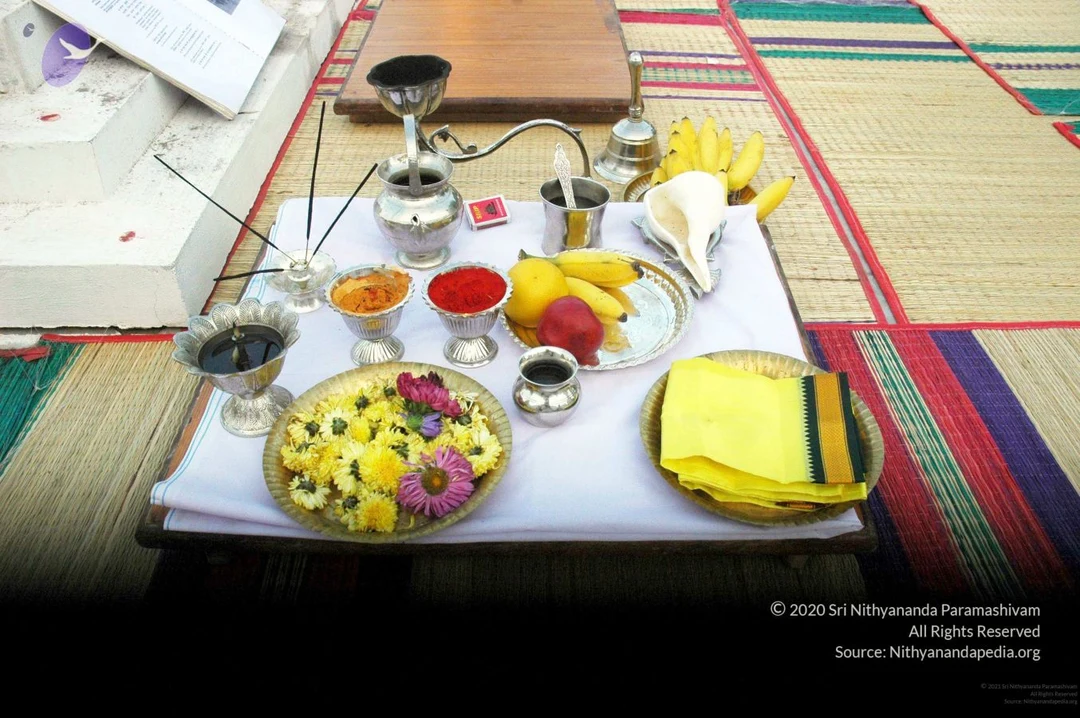
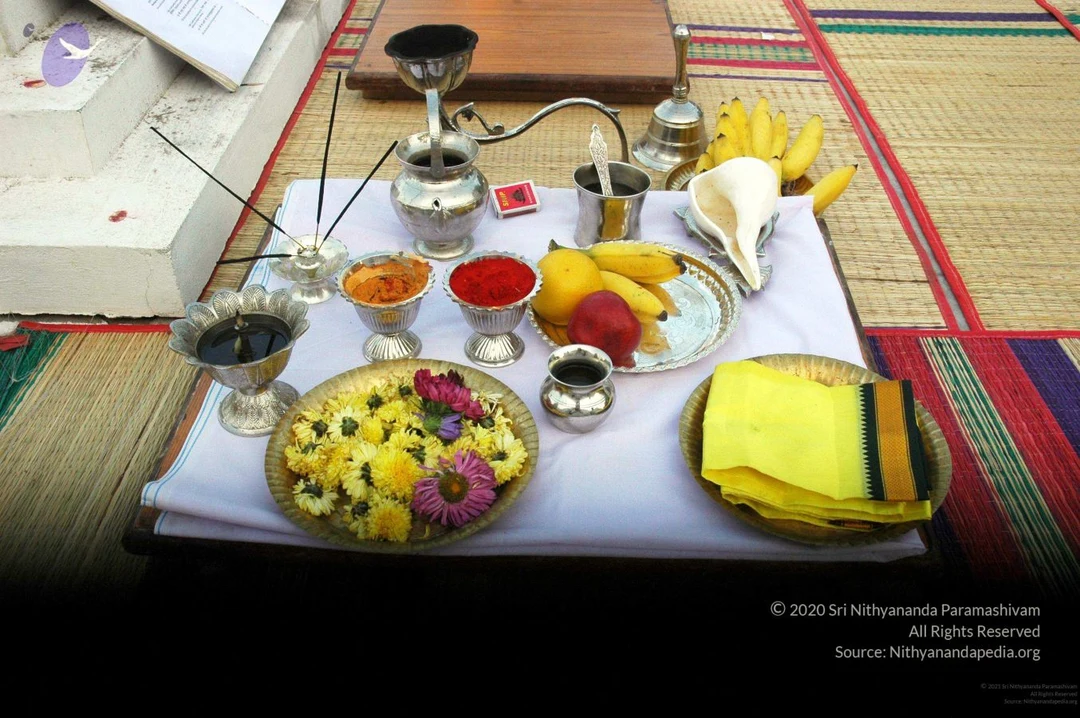
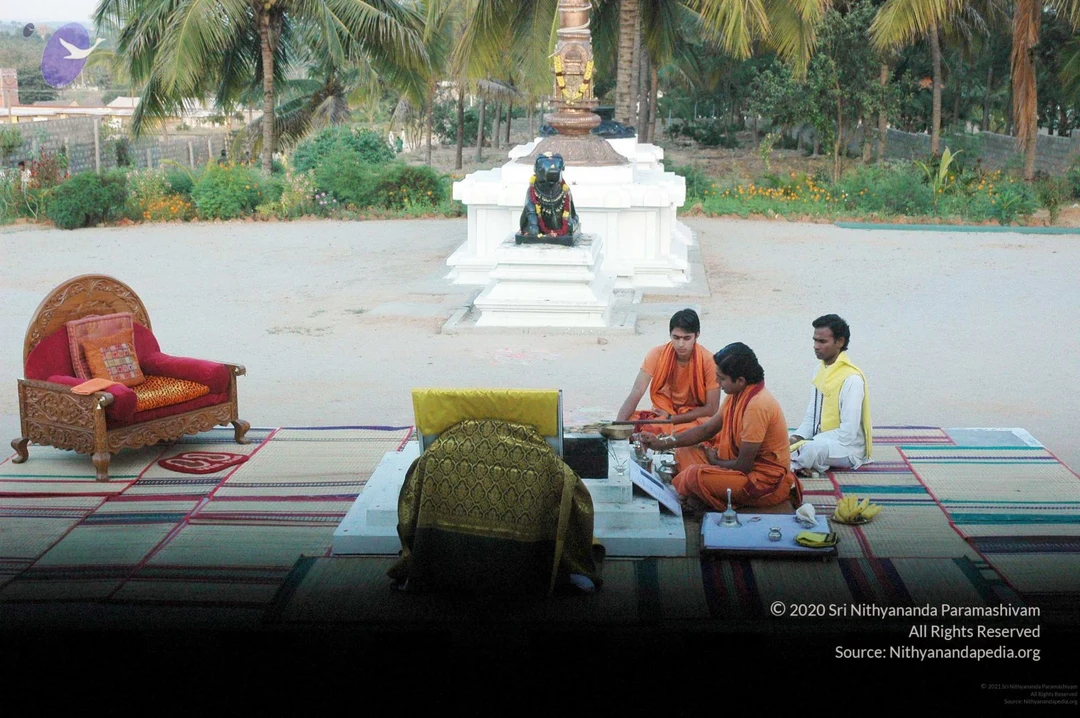
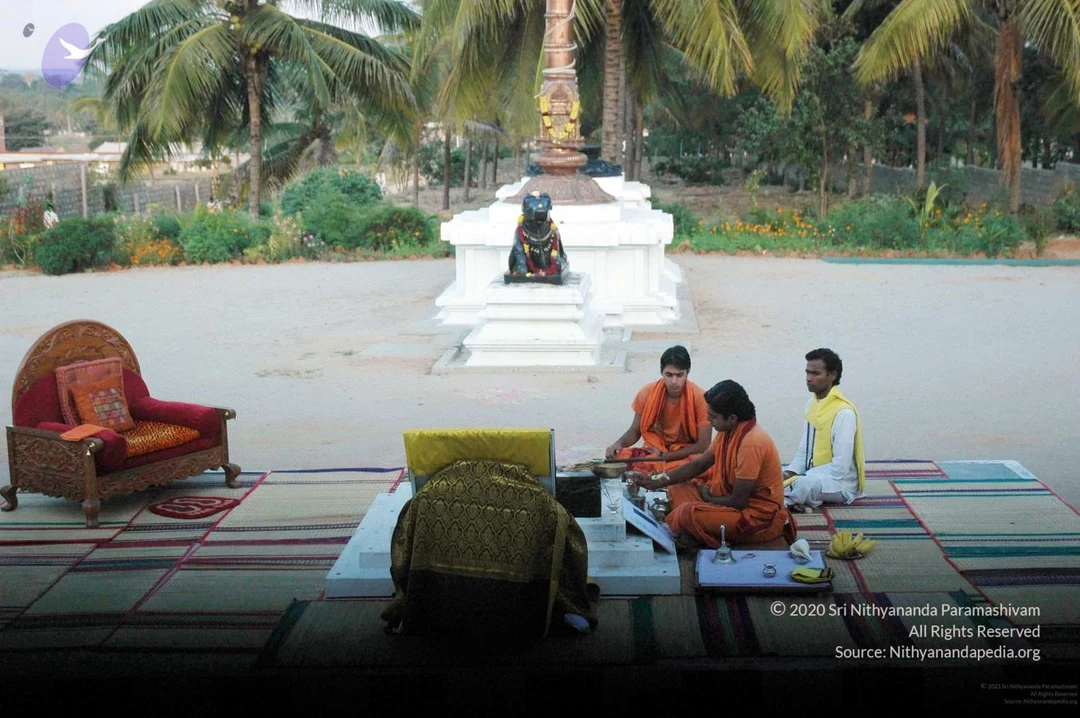
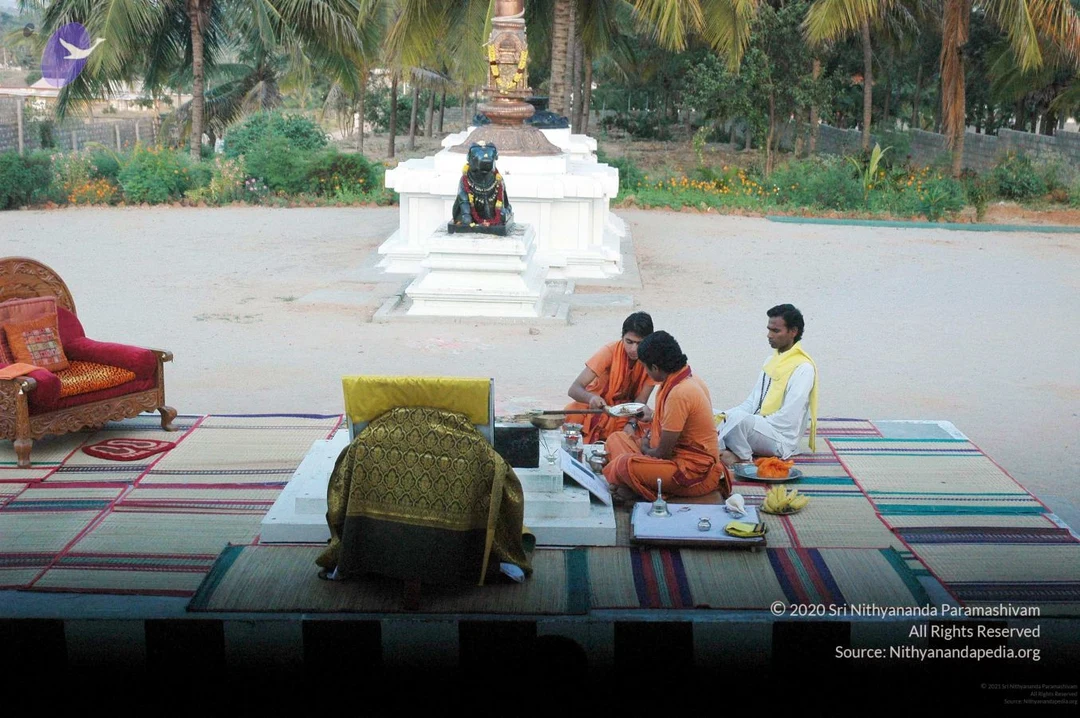
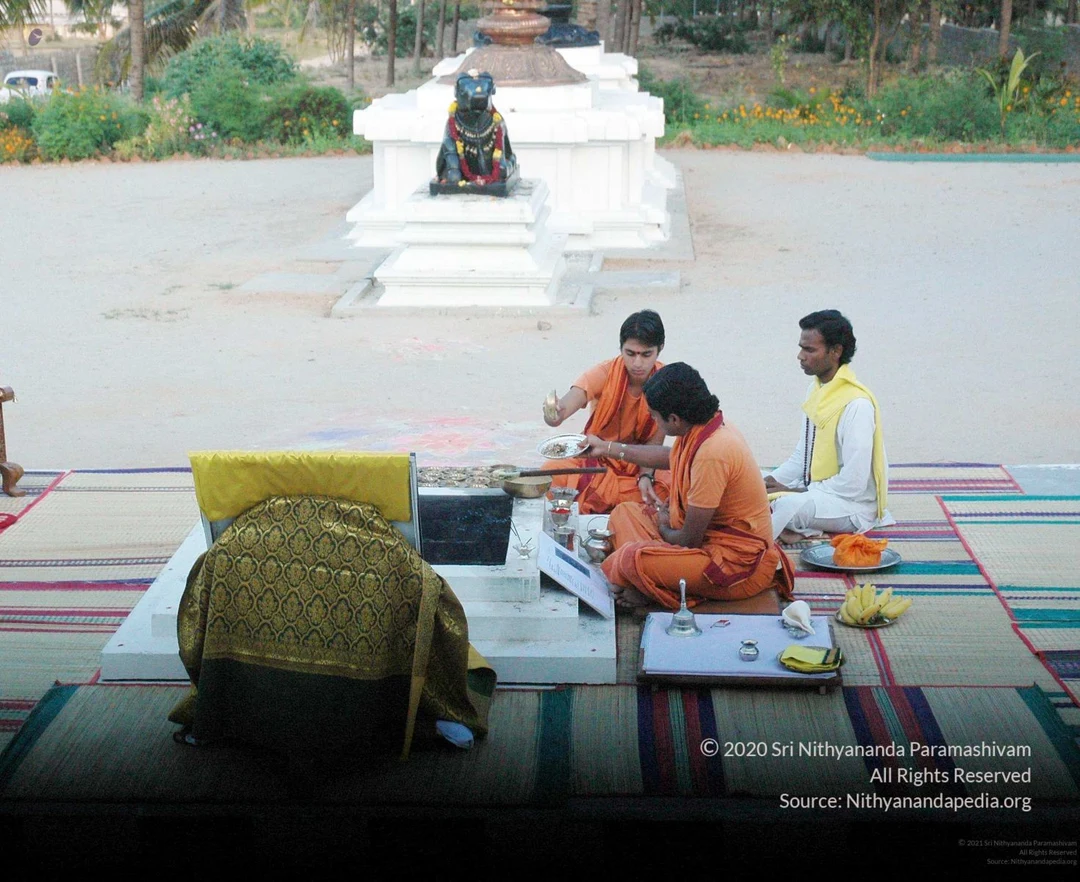
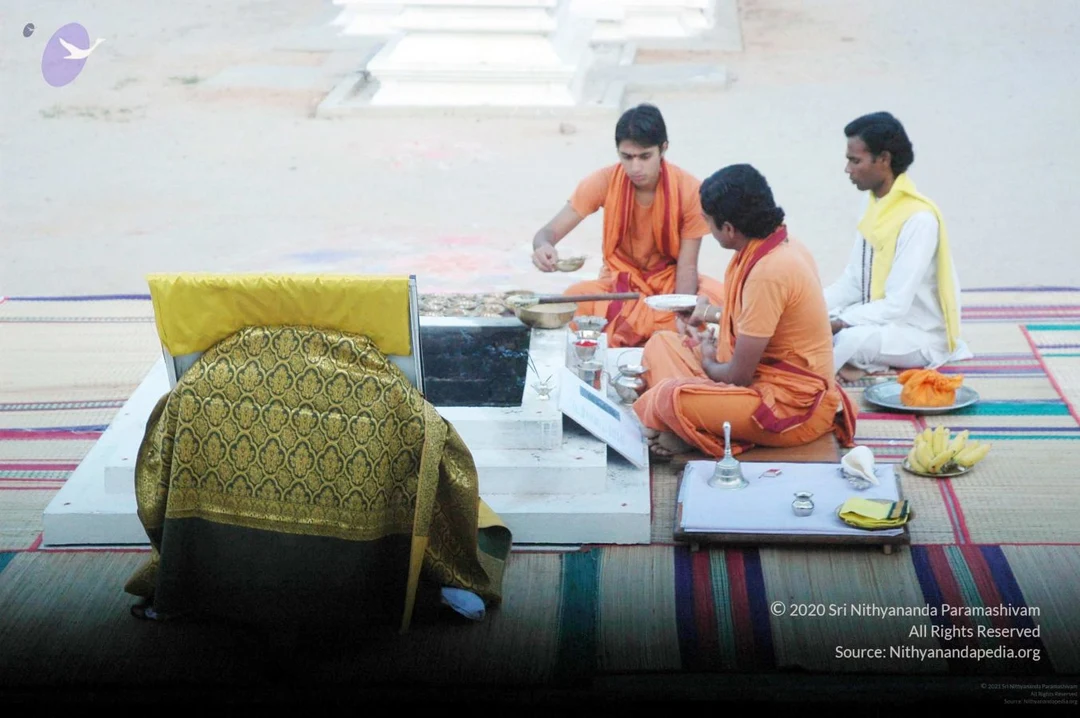
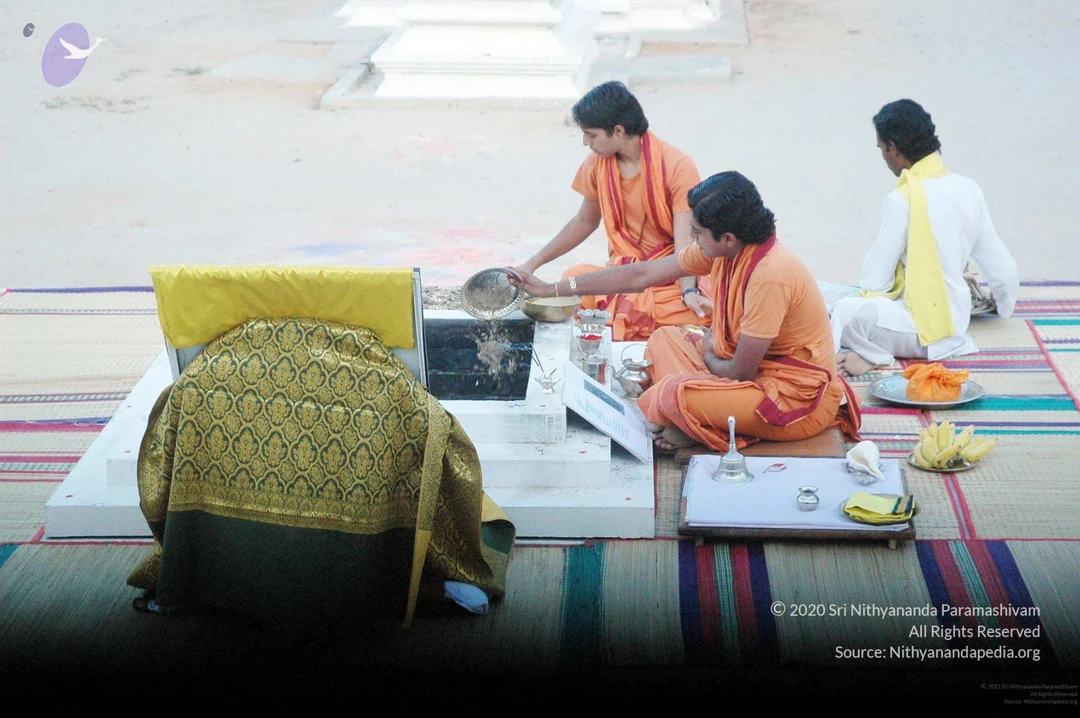
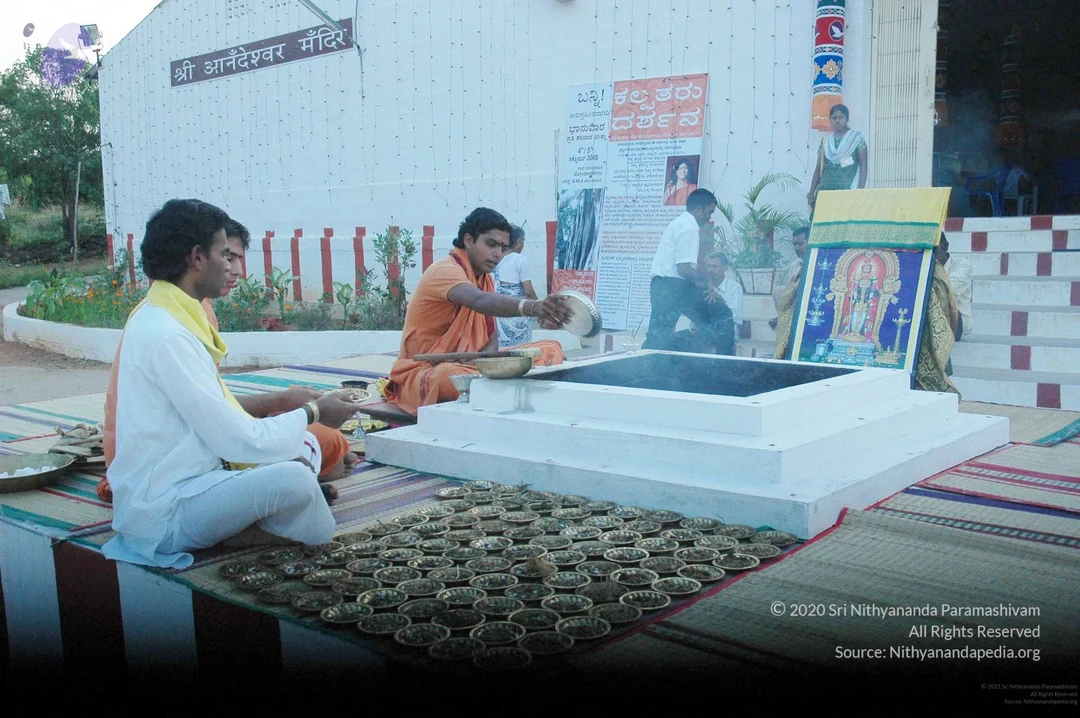
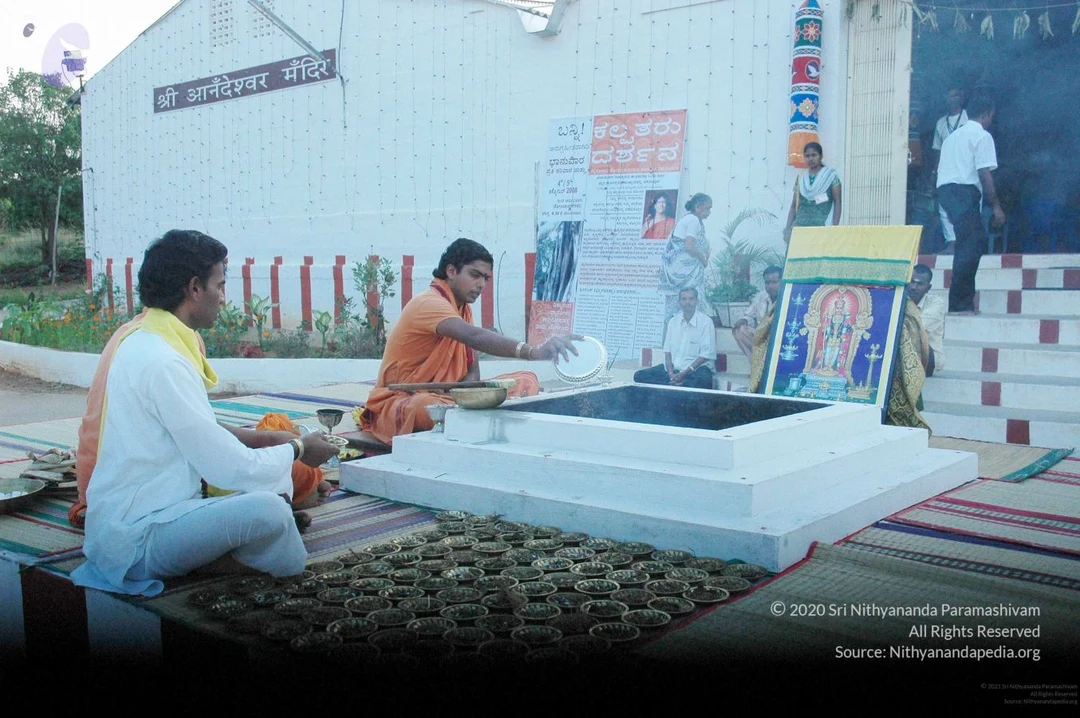
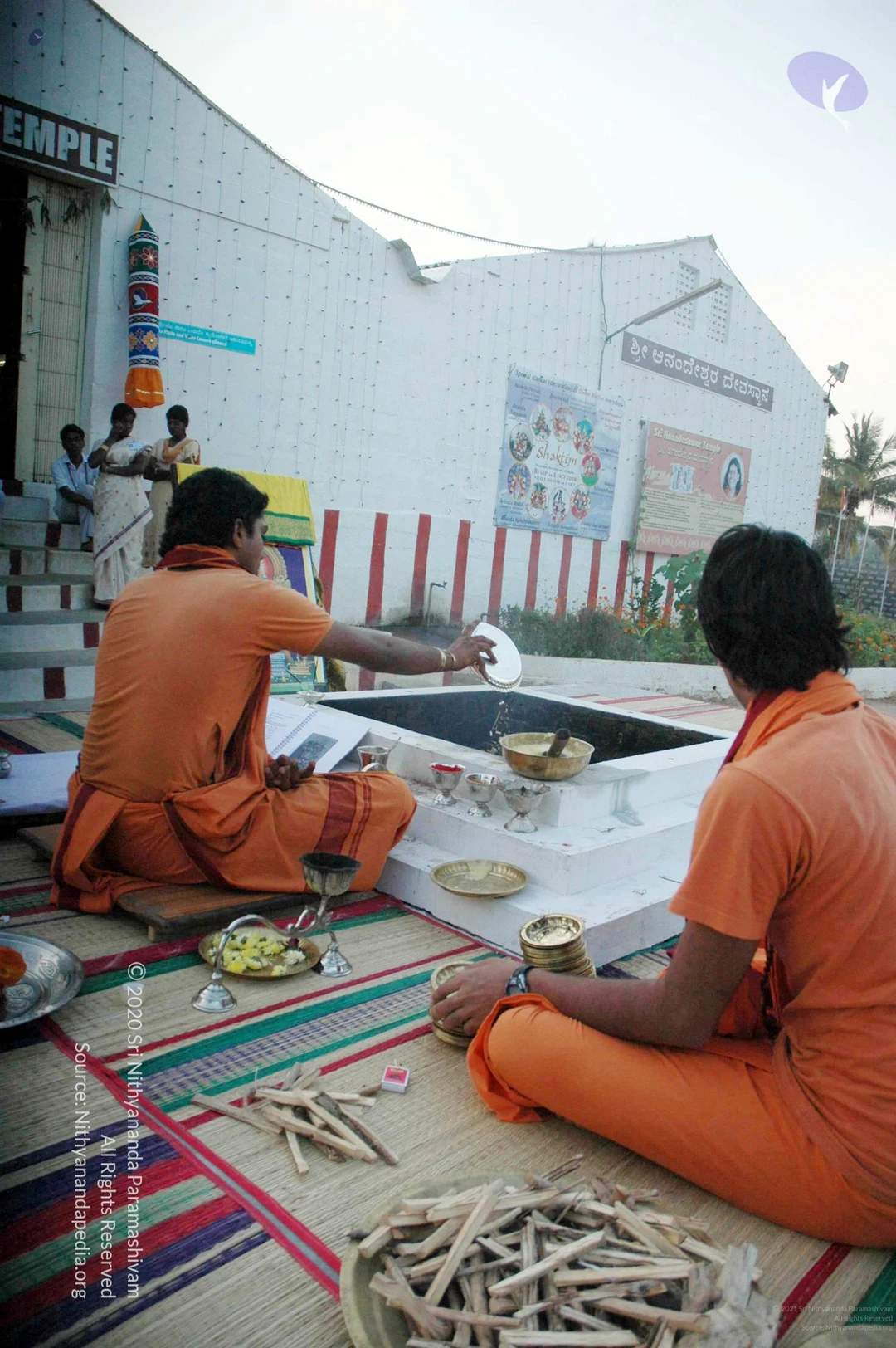
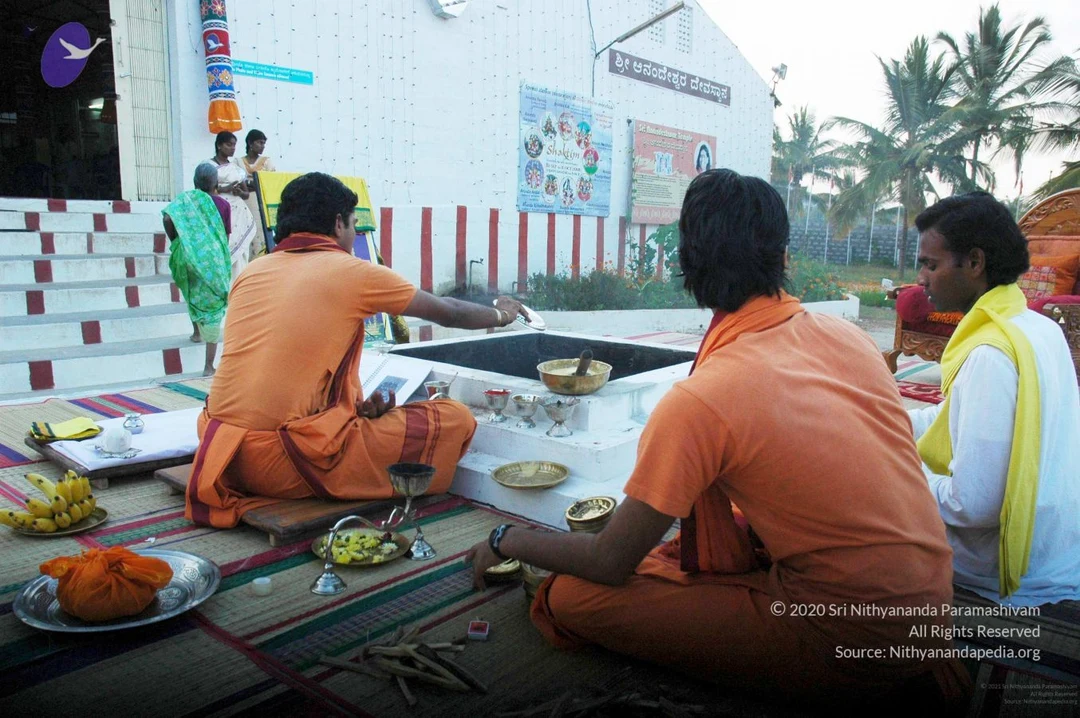
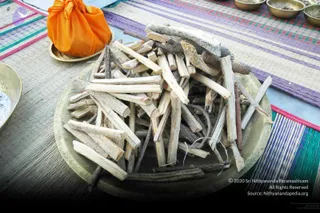
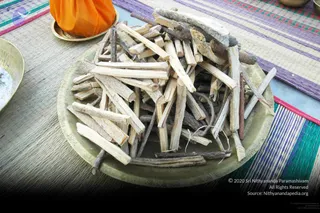
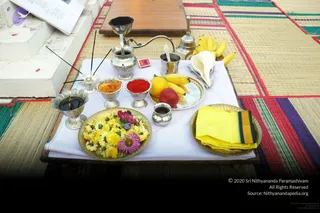
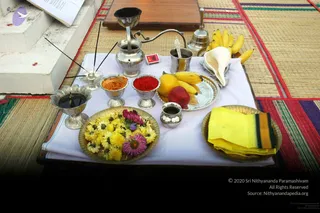
A photograph of a large grid of brass or bronze bowls arranged on a striped woven mat on a raised outdoor platform. Each bowl holds small heaps of offerings, including dried leaves, petals, grains and fragments of herbs and shells, laid out in rows. A white stone-edged pool or tank sits at the upper left, and a carved wooden chair with a red cushion is partly visible at the top right, with a small red mat bearing an Om symbol. No people are visible in the frame.Outdoor photo of rows of small brass plates on a striped woven mat in front of an empty ornate wooden throne with a red cushioned seat and carved armrests. Each plate holds dried herbs or grains. A plain white platform sits to the left, with palm trees and a white compound wall behind. One standing man in white clothes is visible far in the background near a parked car and a motorcycle. No a person candidate is visible; the throne is unoccupied.A photograph of a brass tray piled with thin pale wooden sticks. Beside the tray sits a small brass dish holding a saffron-orange cloth bundle, and a brass bowl of white powder appears at the left edge. The tray rests on a woven mat with purple, green and white stripes, with more brass bowls at the top right. No people are visible.Photograph of a brass plate heaped with thin wooden sticks. The plate sits on a woven mat with purple, green and red stripes. An orange cloth bundle rests on a small brass tray at the top left, and a brass bowl with white powder is visible at the left edge. No people are visible in the scene.A photograph of a puja setup on a low wooden stand covered with a white cloth, on a woven mat. Items include a brass bowl of yellow and purple flowers, a silver kalasha with a spout, a silver lamp with incense sticks, orange and red kumkum powder in silver bowls, a plate of bananas and fruit, a white conch shell, a brass bell, a small silver cup, and a folded yellow cloth on a brass plate. No people are visible.A photograph of a puja setup laid out on a white cloth over a low wooden platform on a woven mat. Central items include a brass plate of yellow and purple flowers, a silver vessel with a spout and cup, bowls of orange and red powder (kumkum or turmeric), a small silver pot, a white conch shell, bananas, a yellow fruit and a red fruit on a plate, a folded yellow cloth with a striped border, incense sticks in a silver holder, a matchbox, and a brass bell. No people are visible.

Navaratri Celebration || Culturals ||

42 photosSource gallery
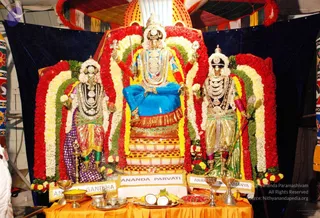
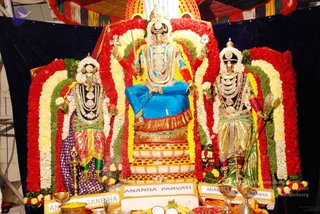
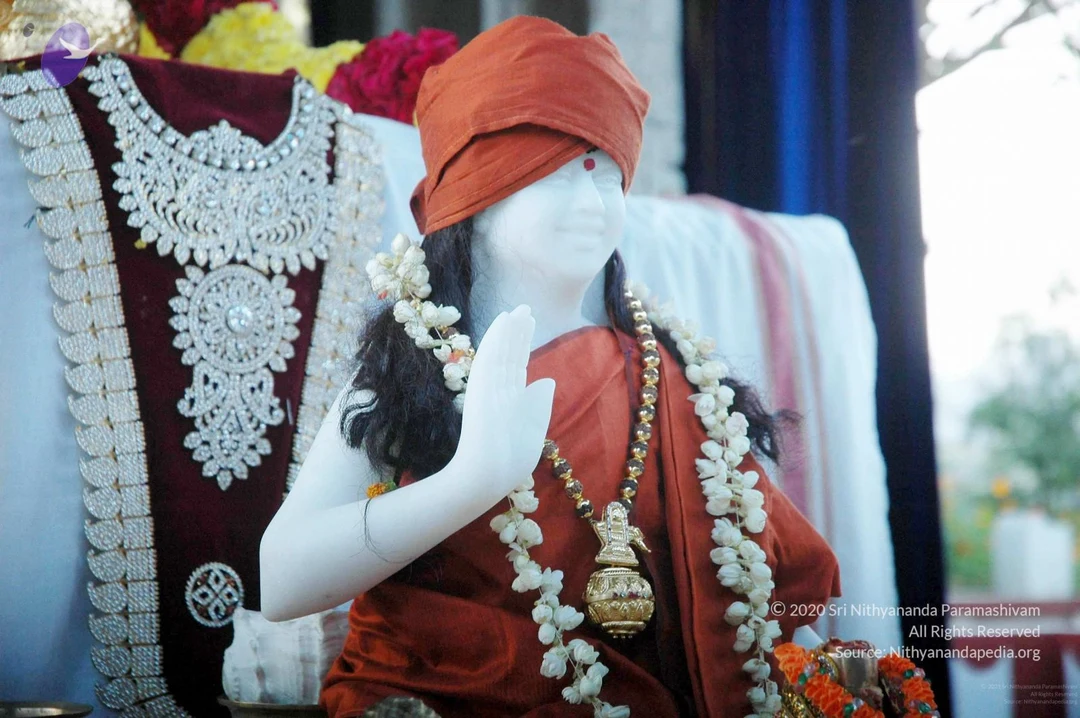
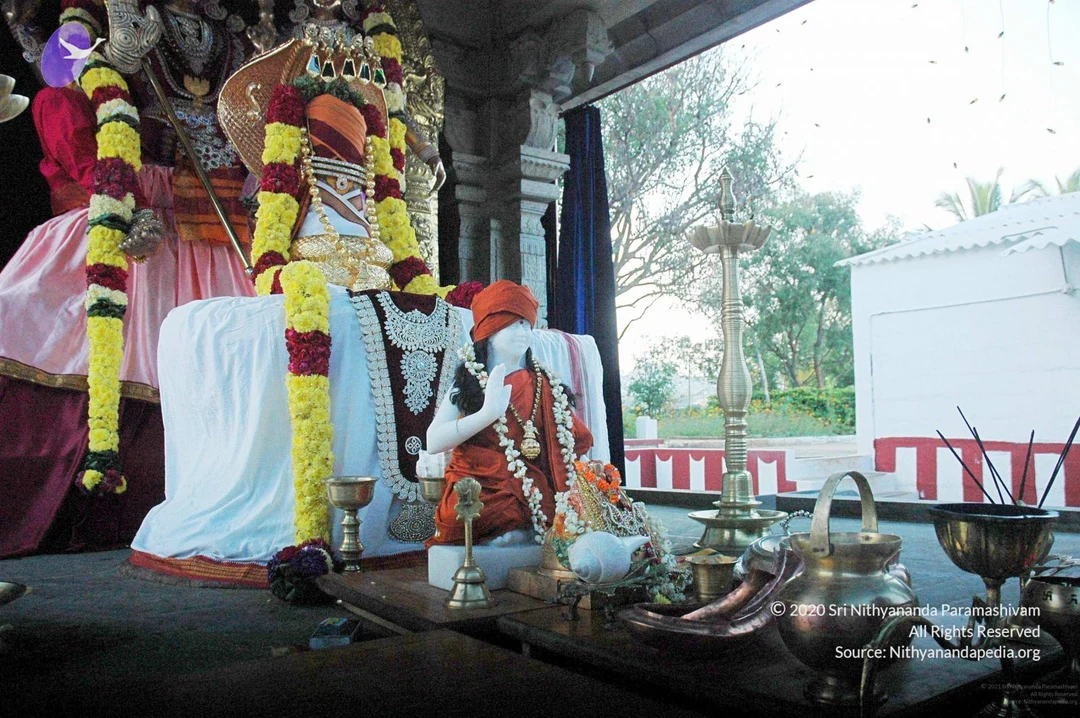
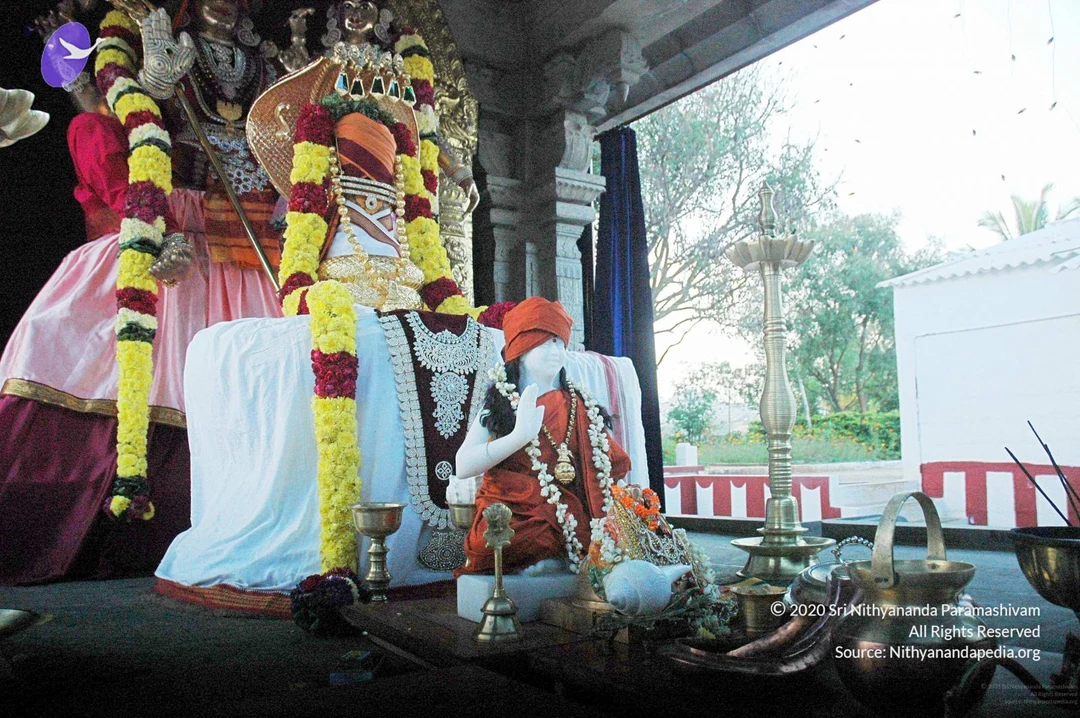
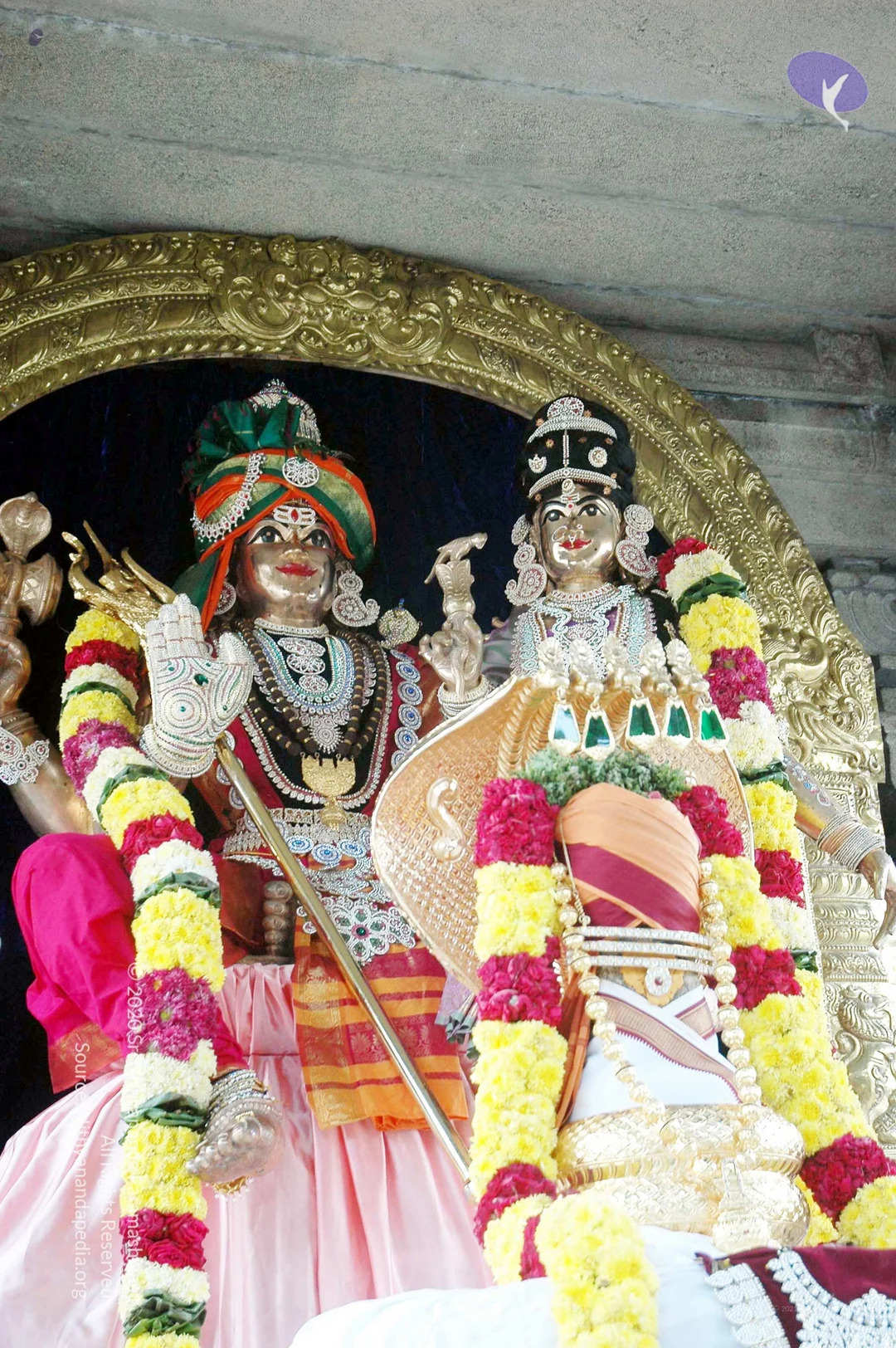
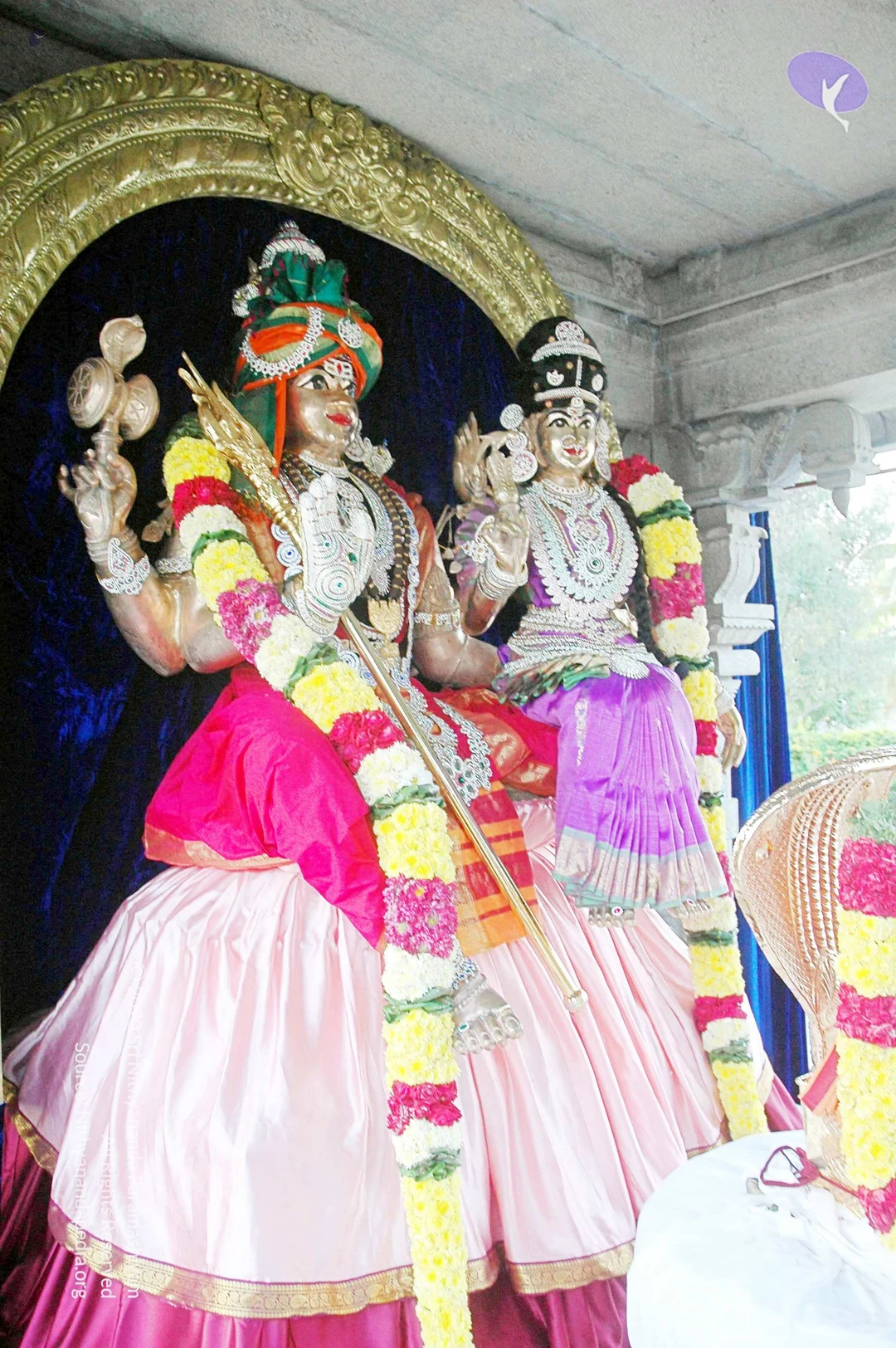
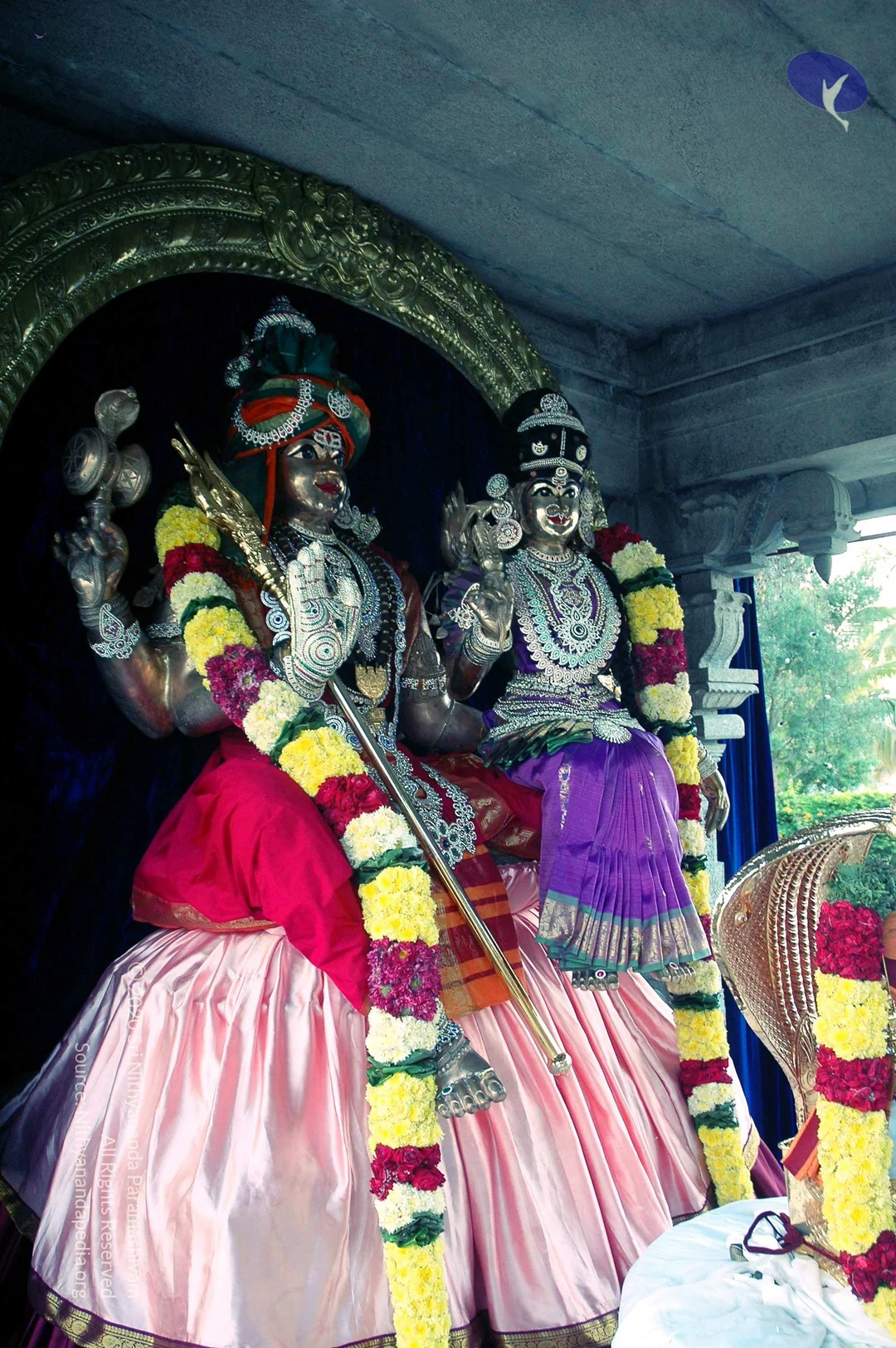
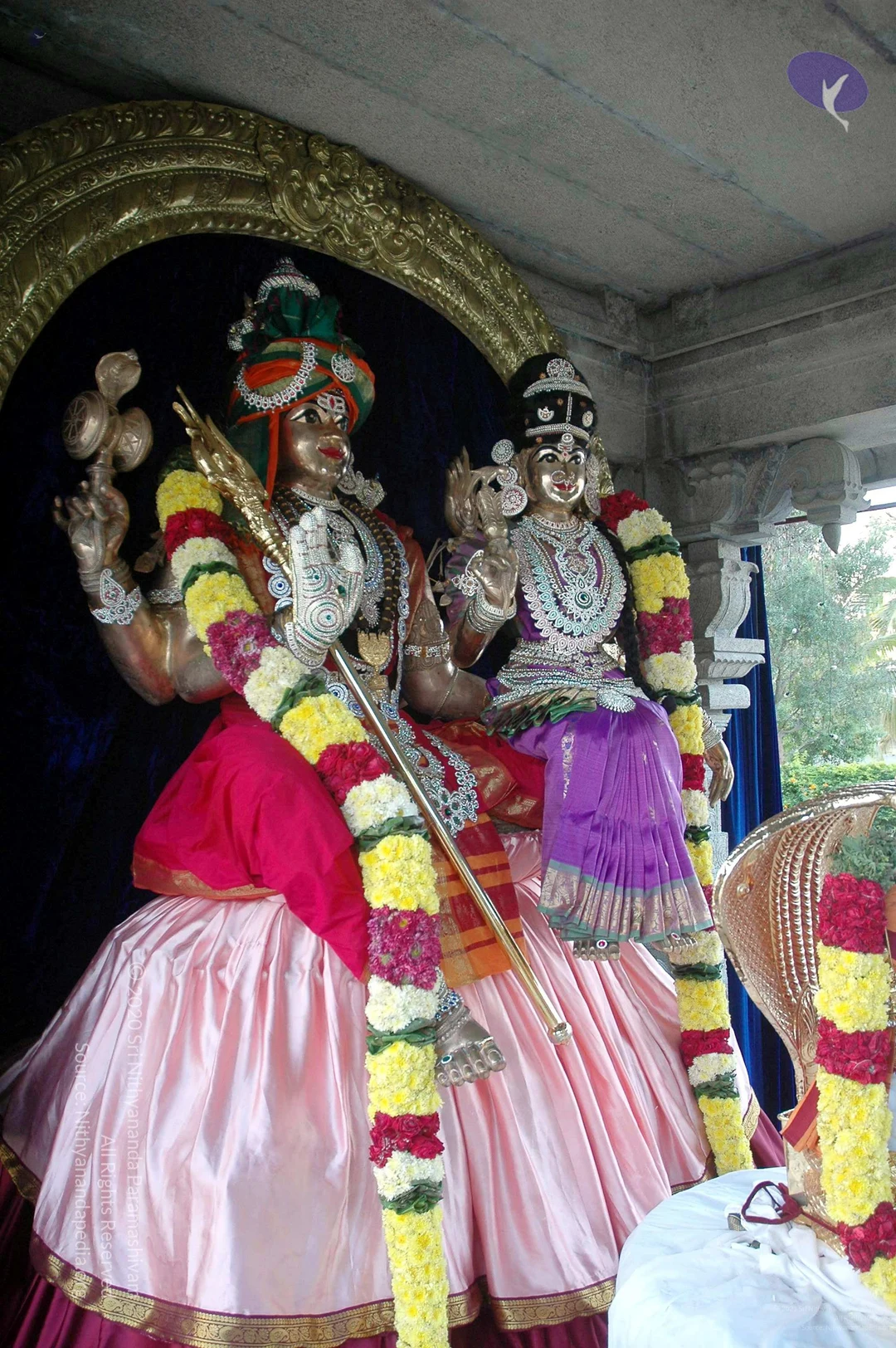
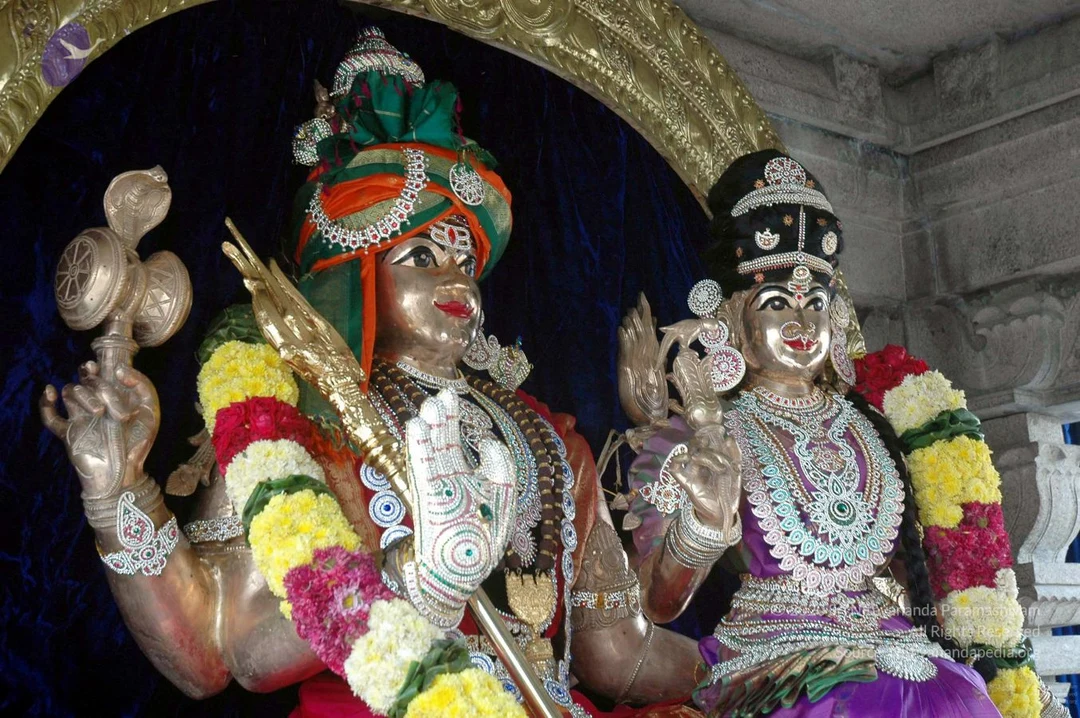
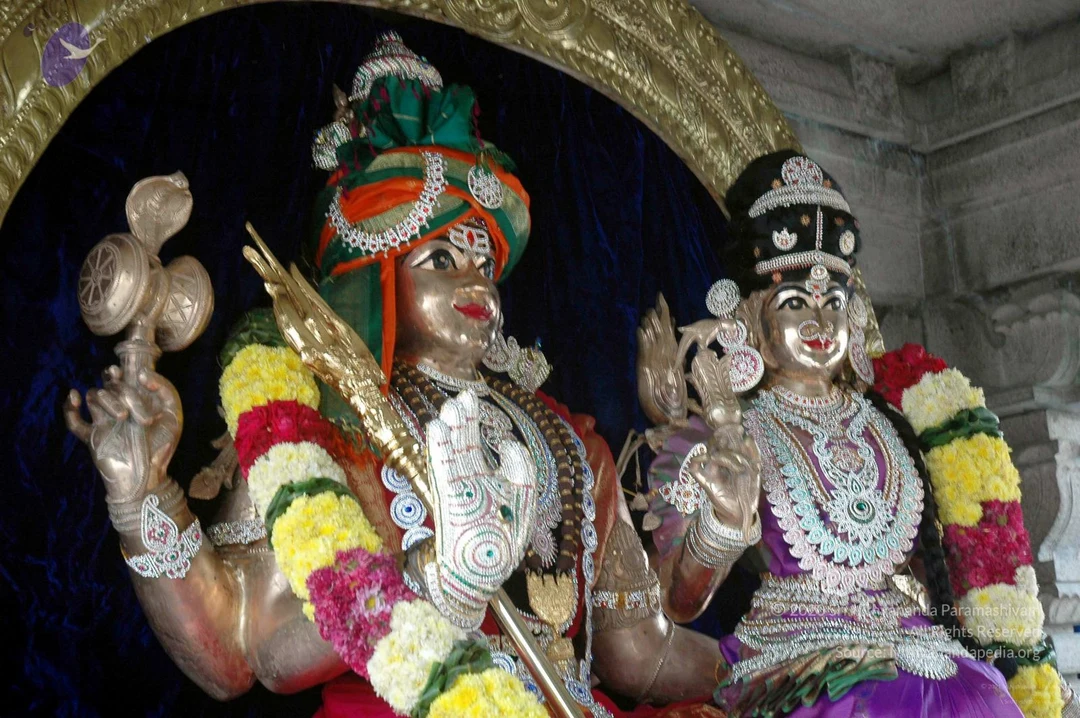
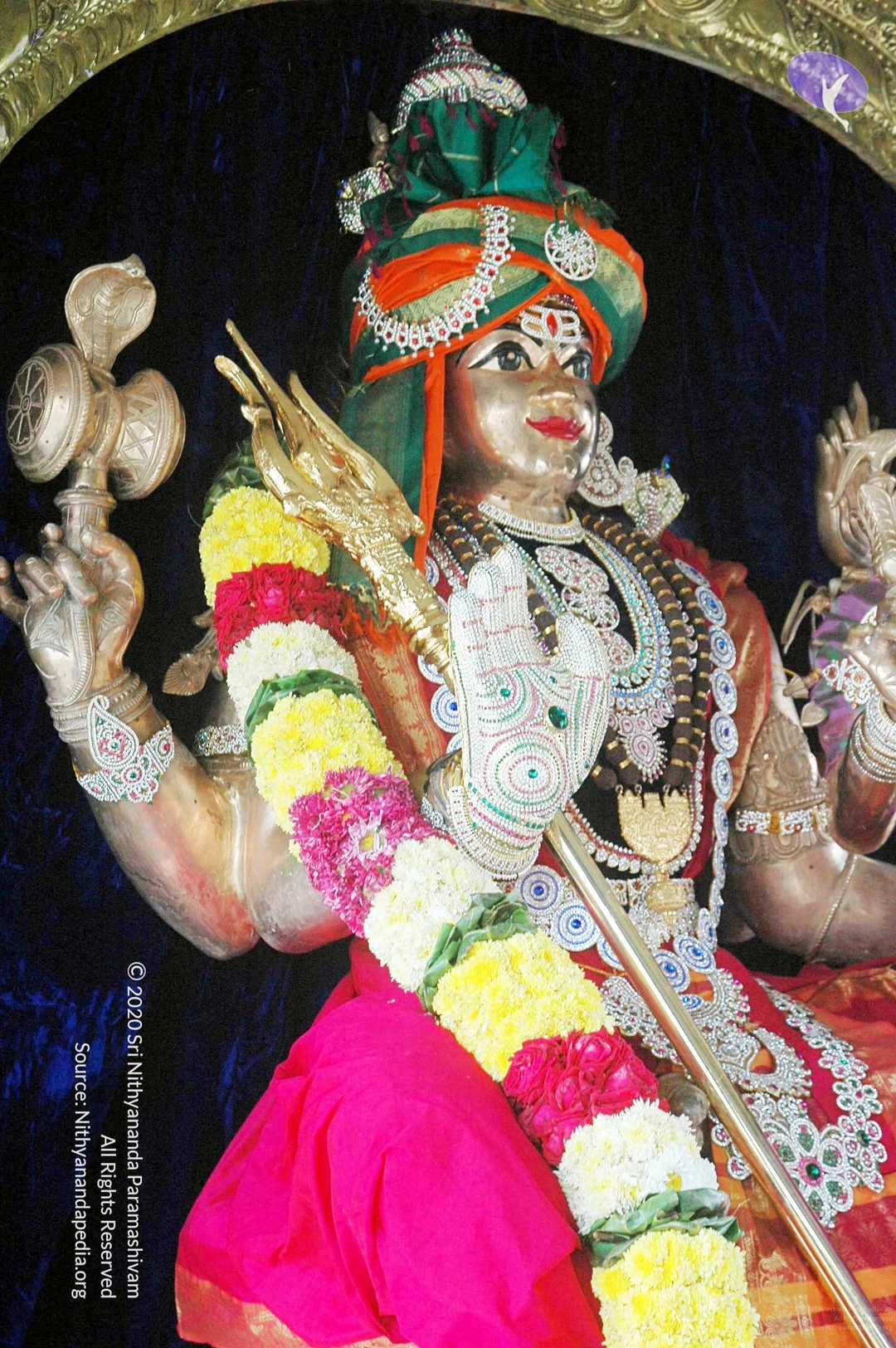
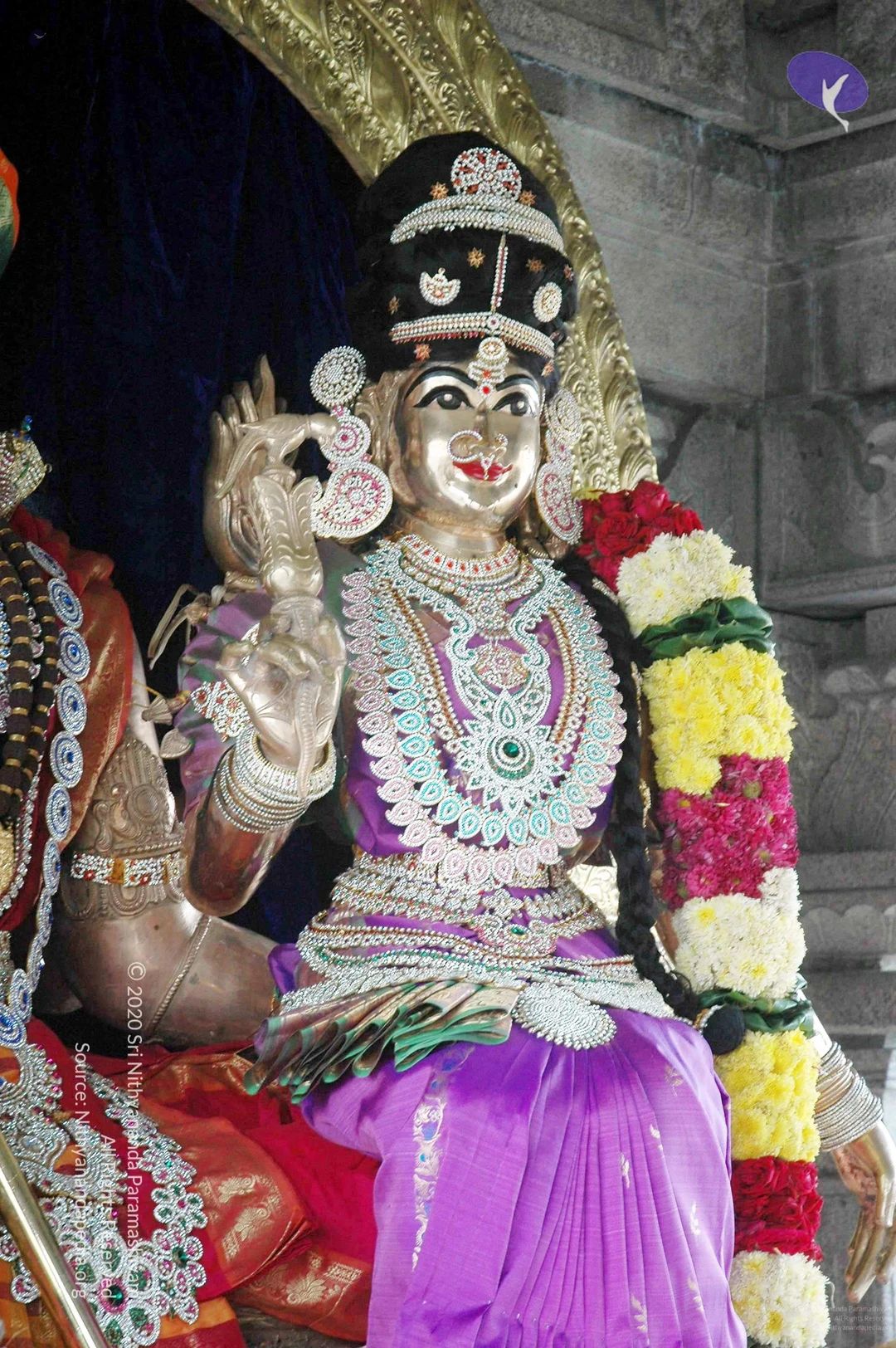
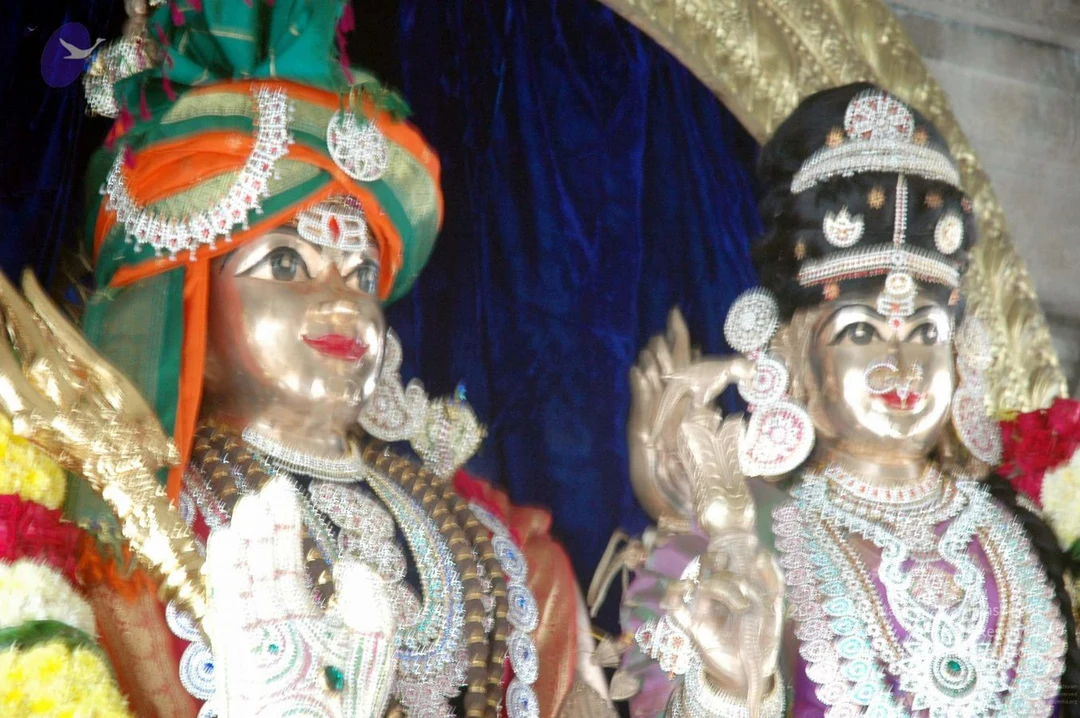
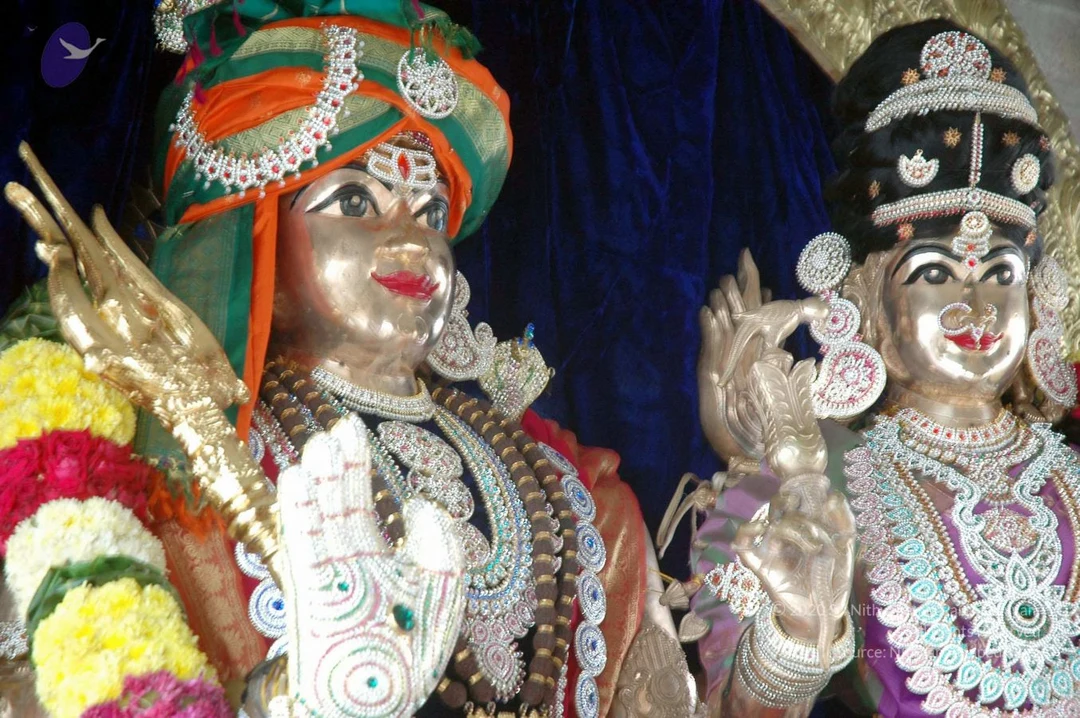
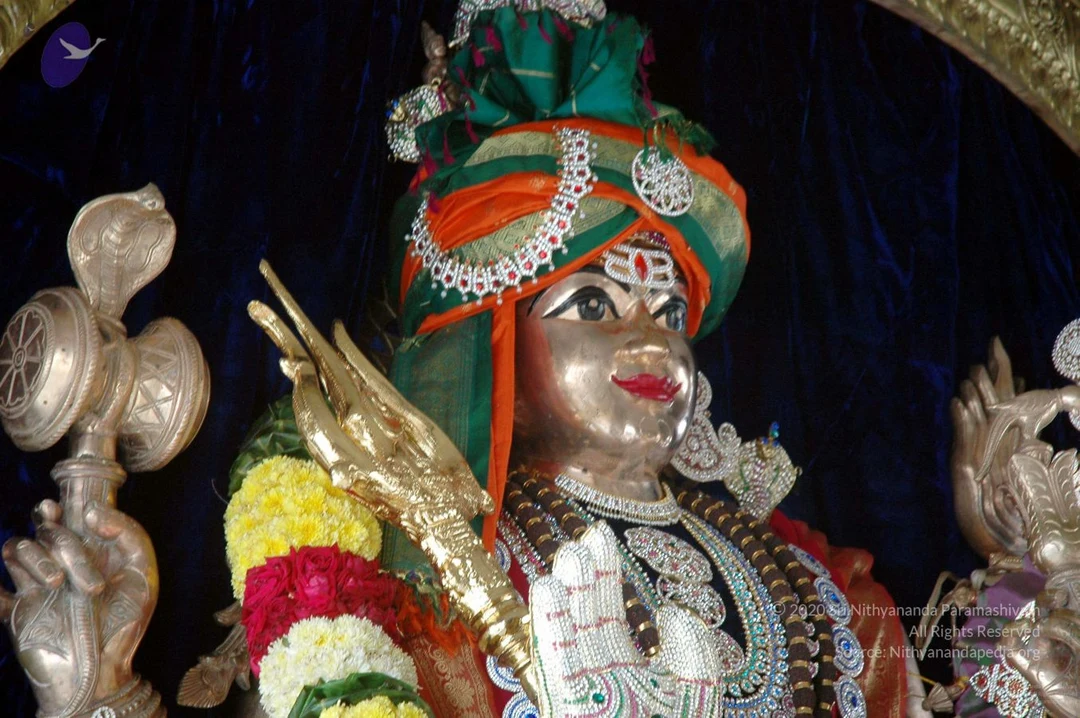
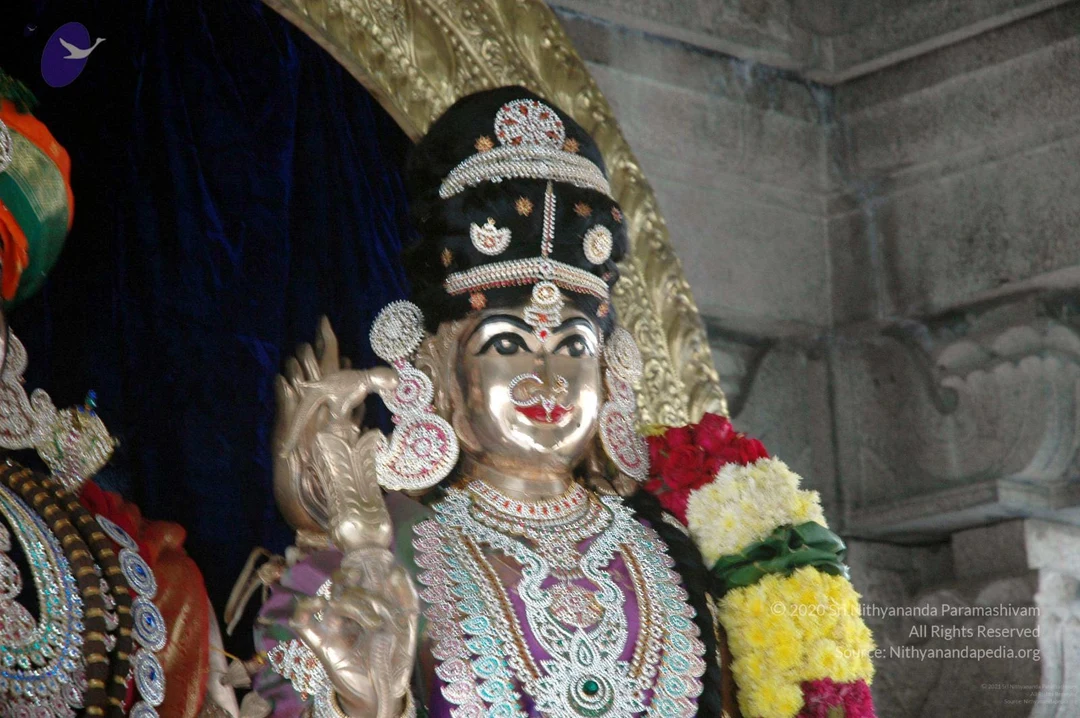
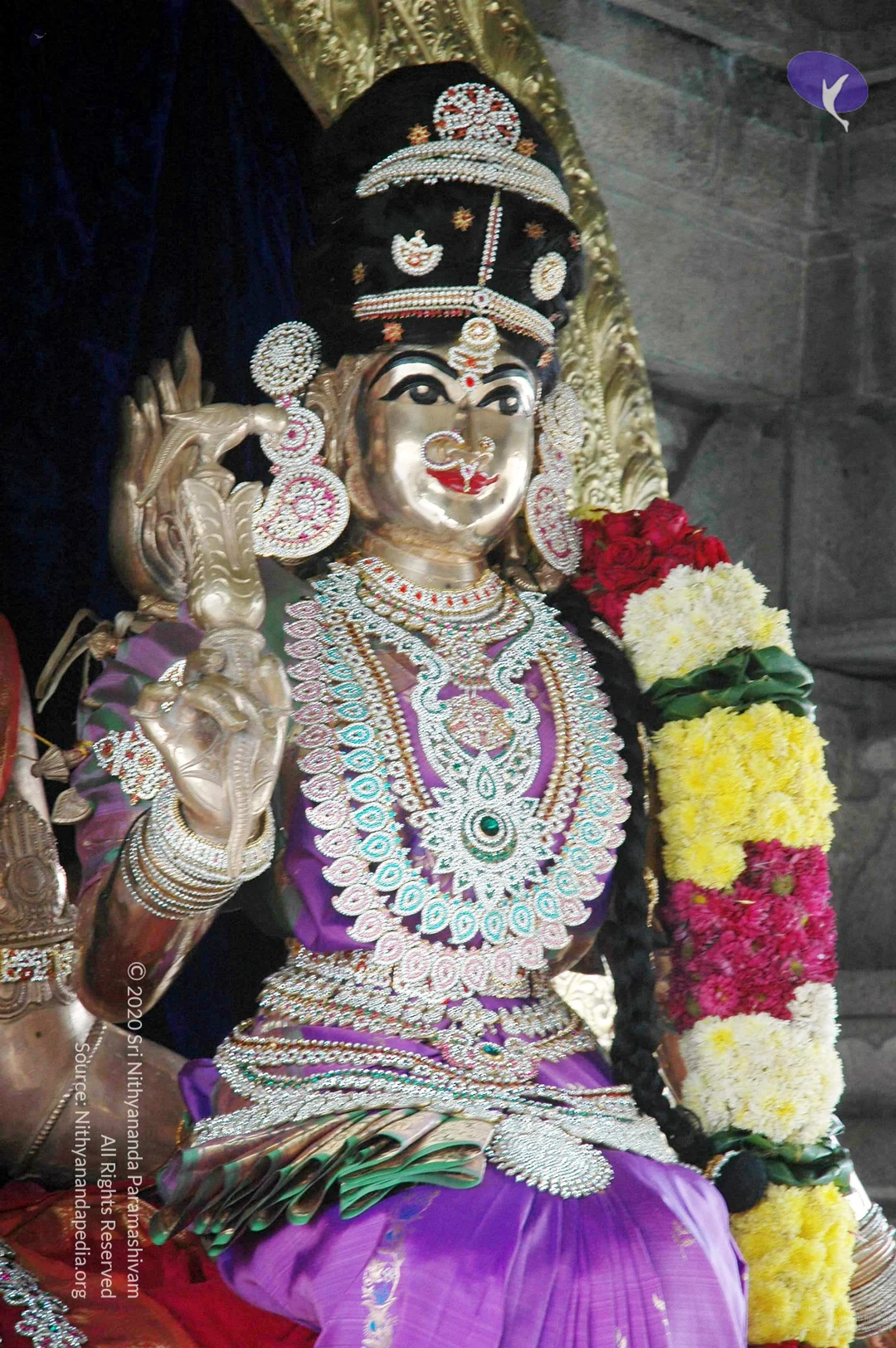
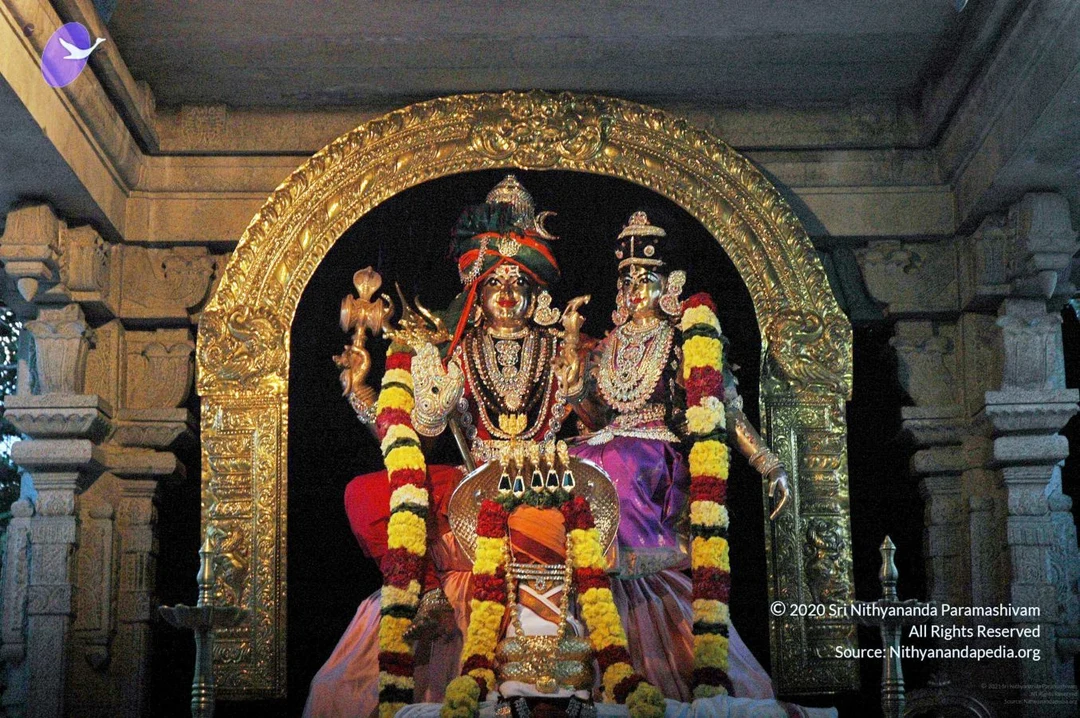
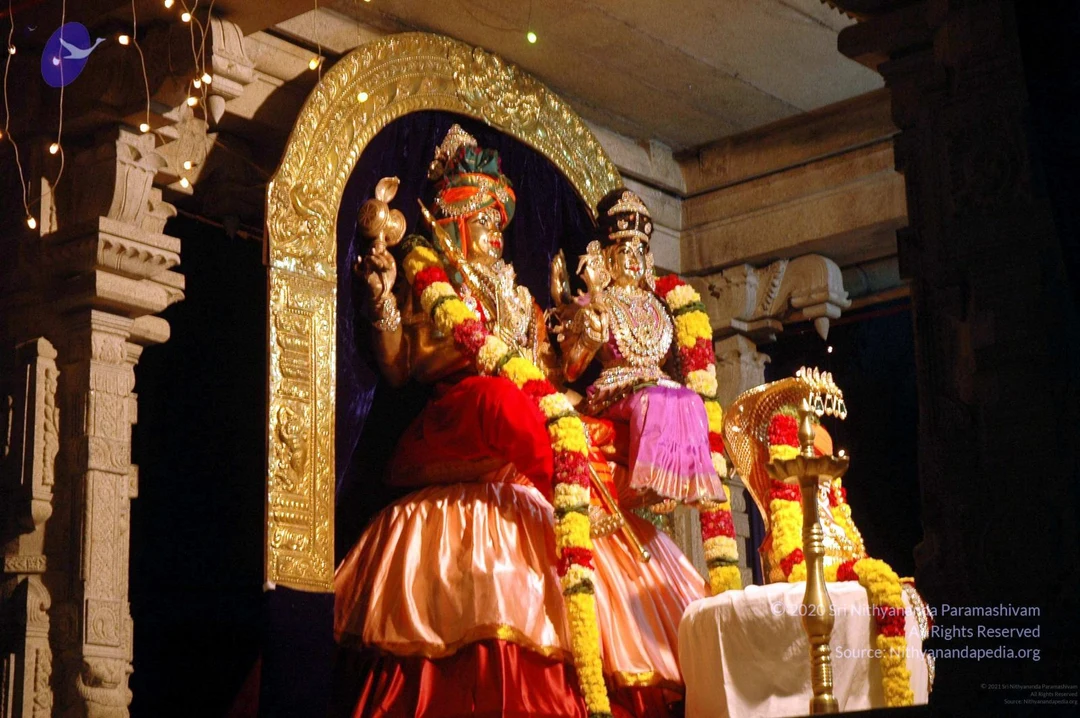
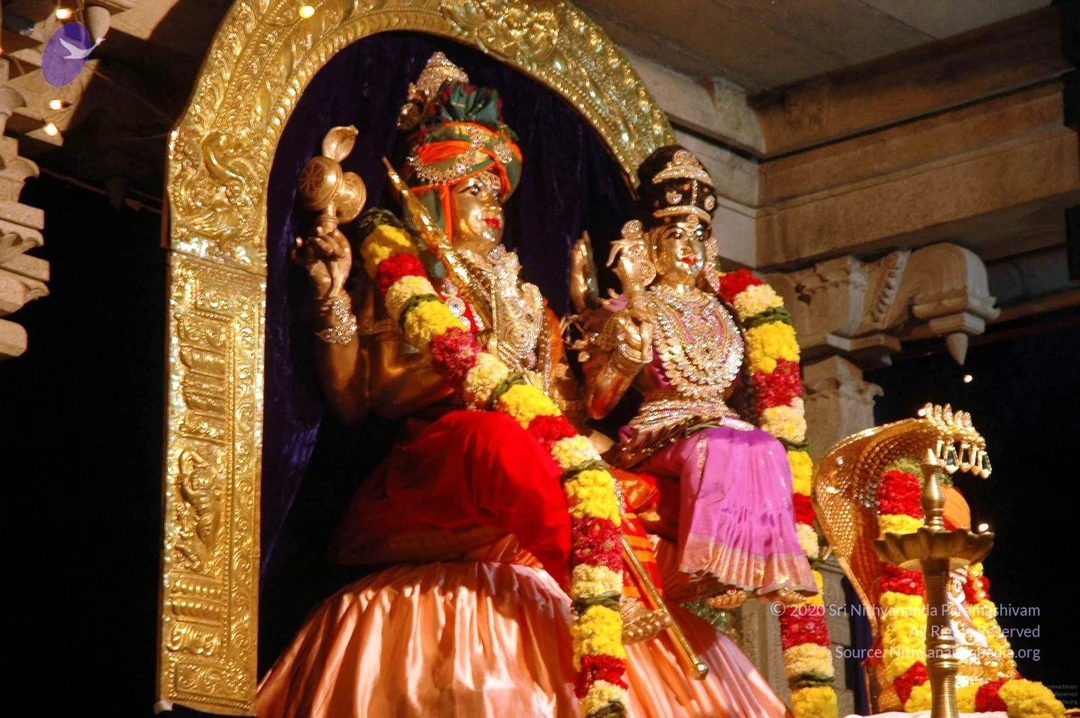
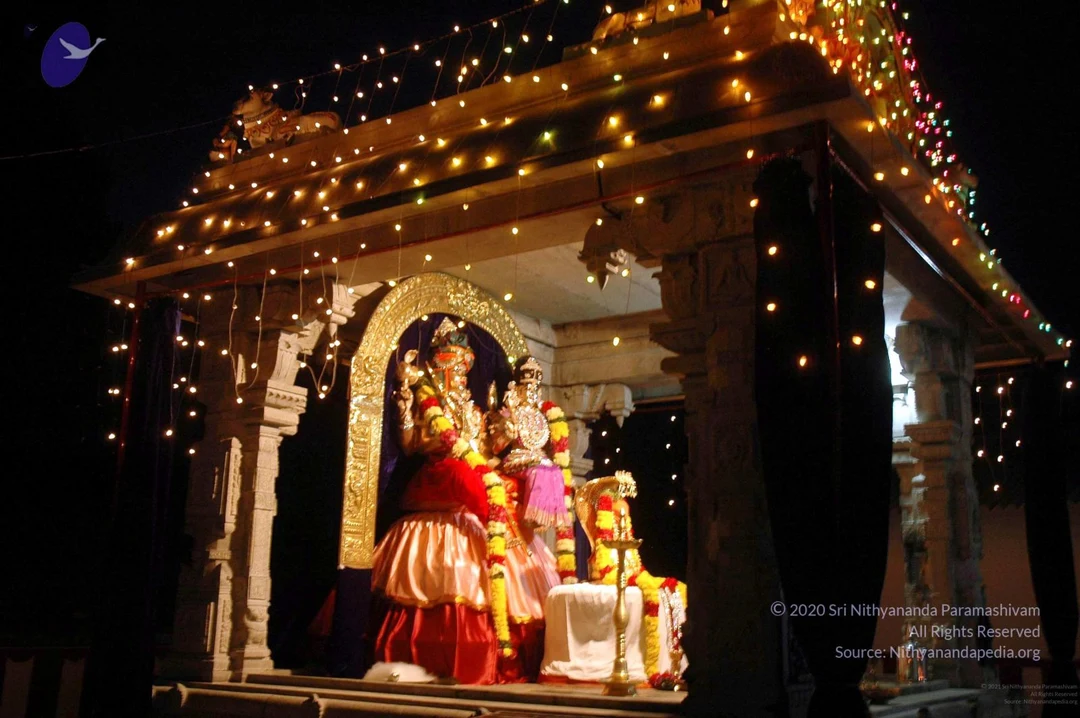
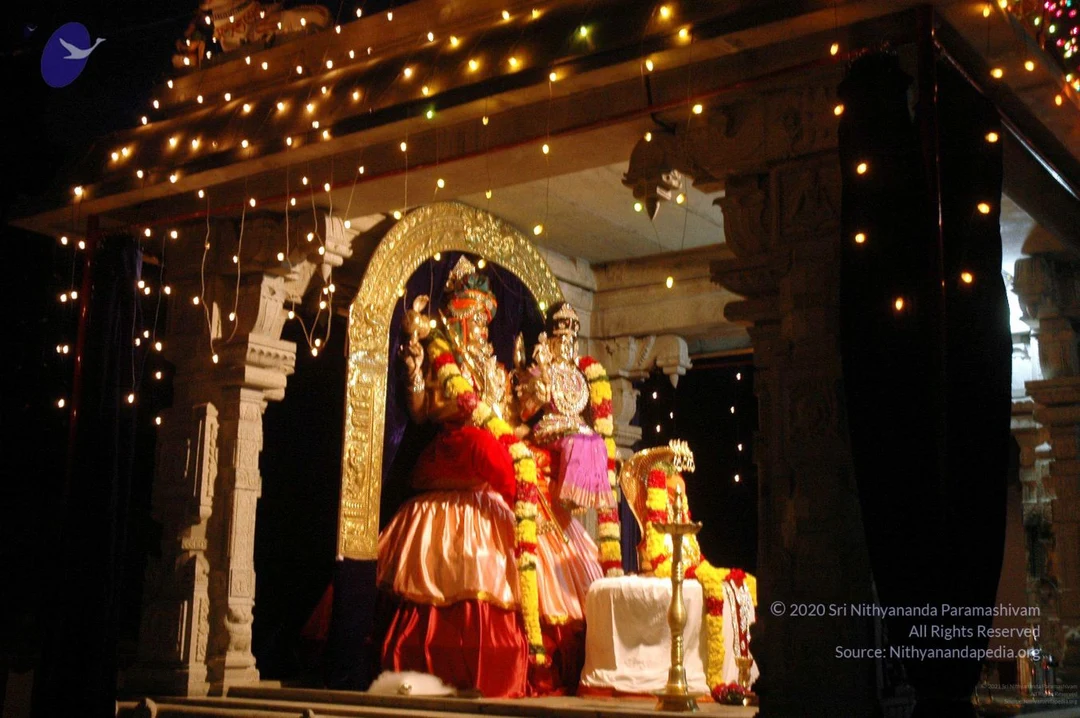
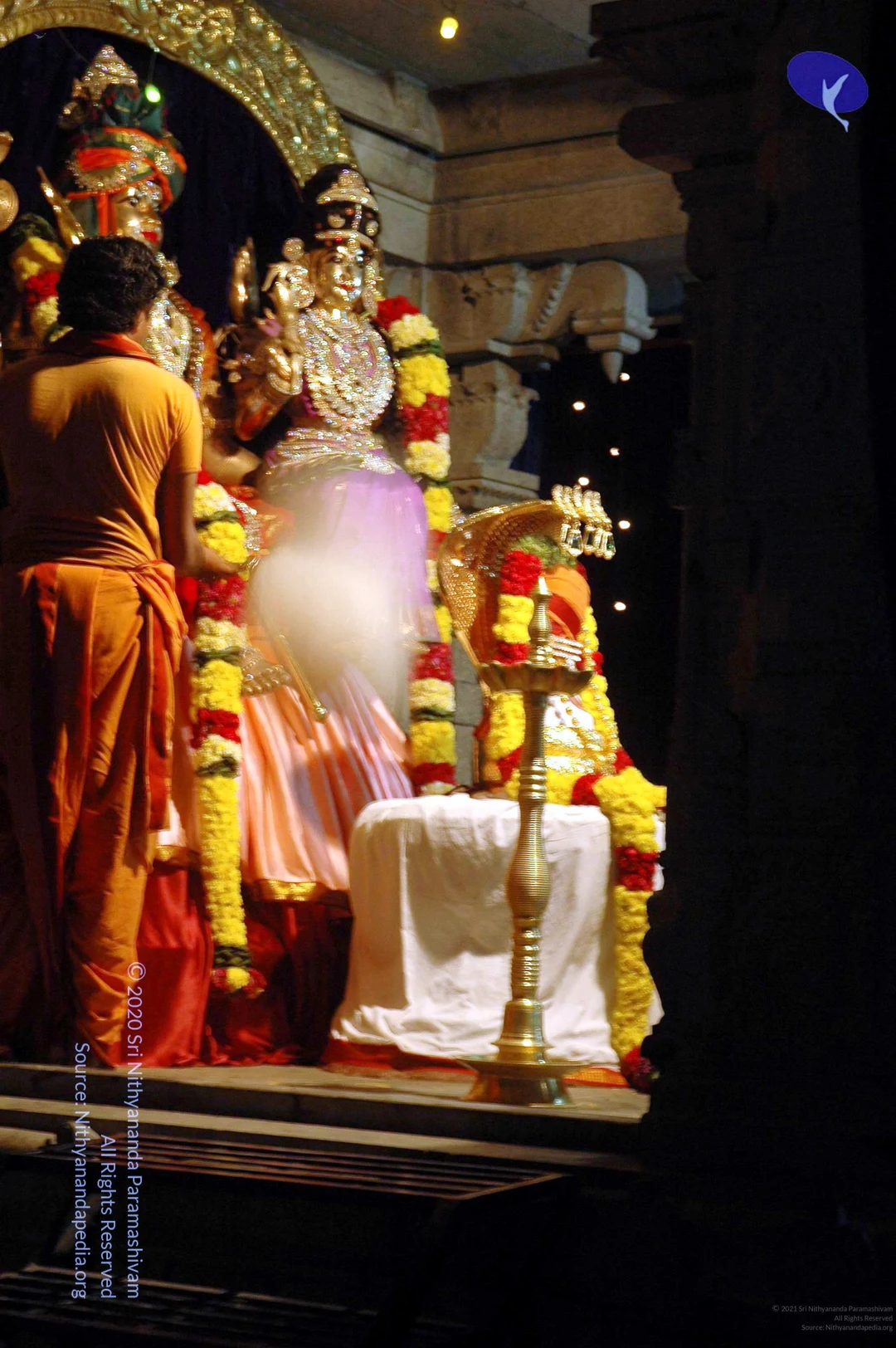
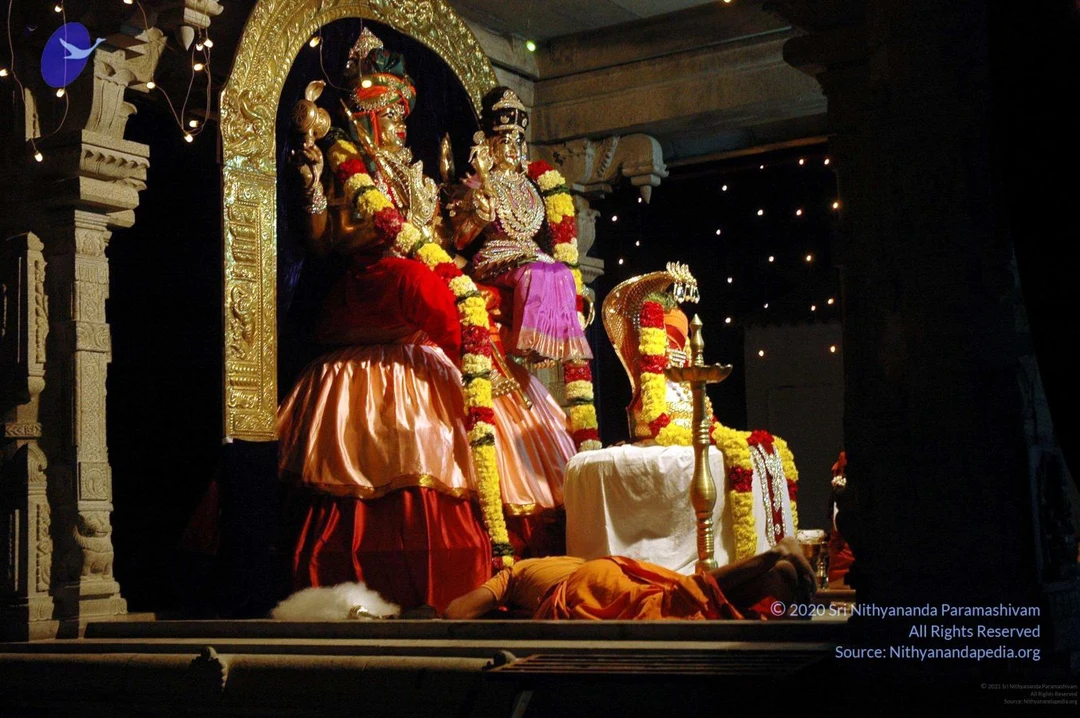
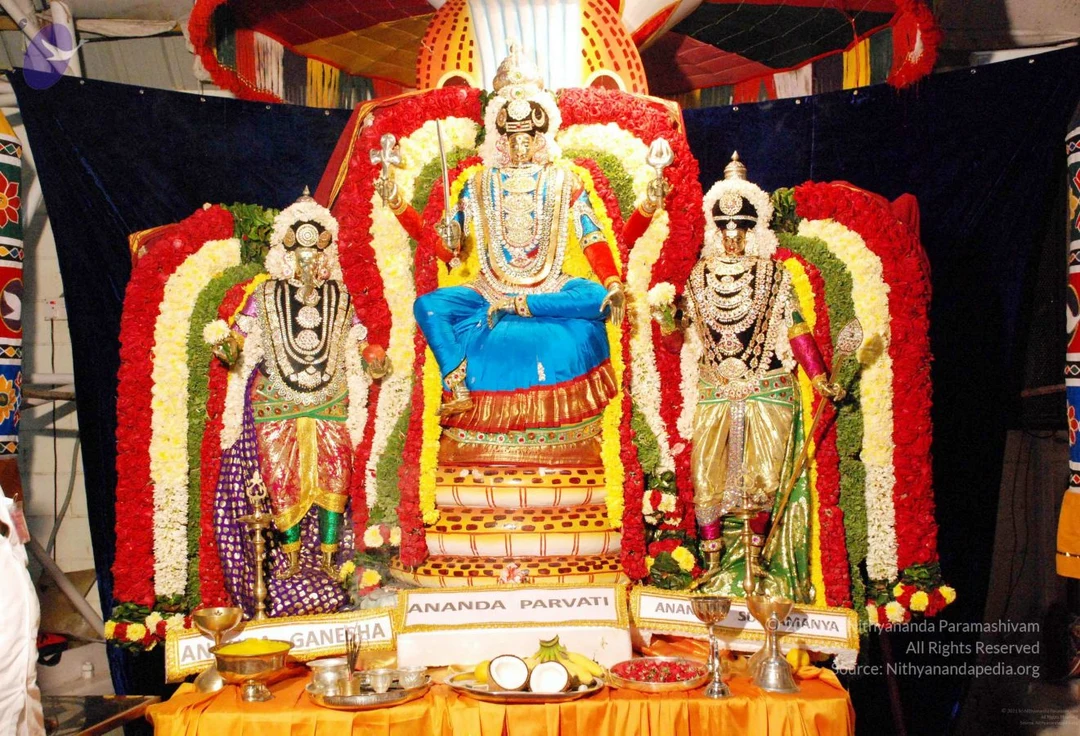
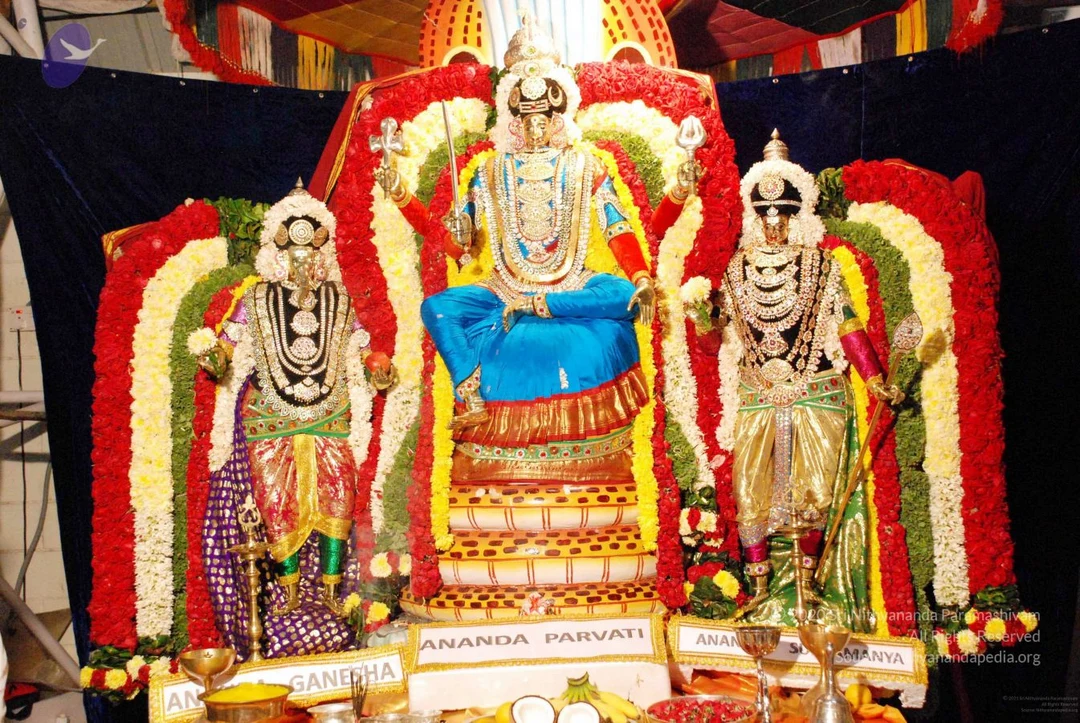
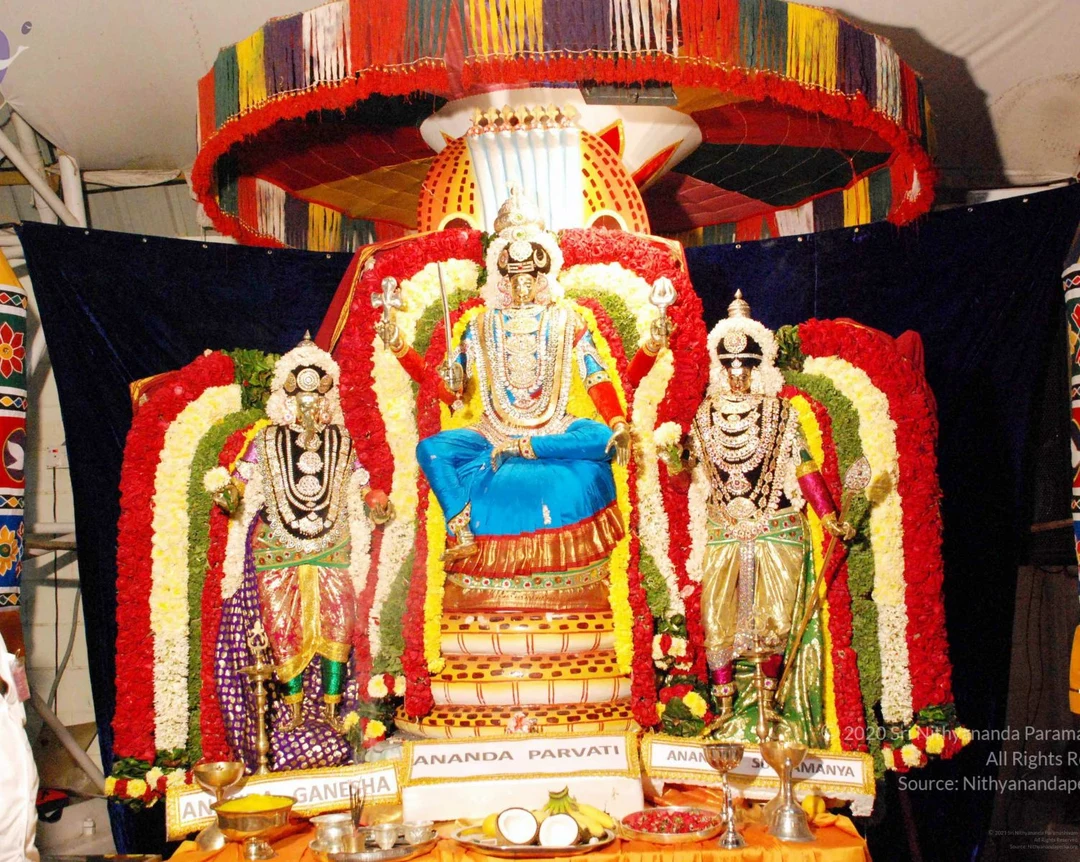
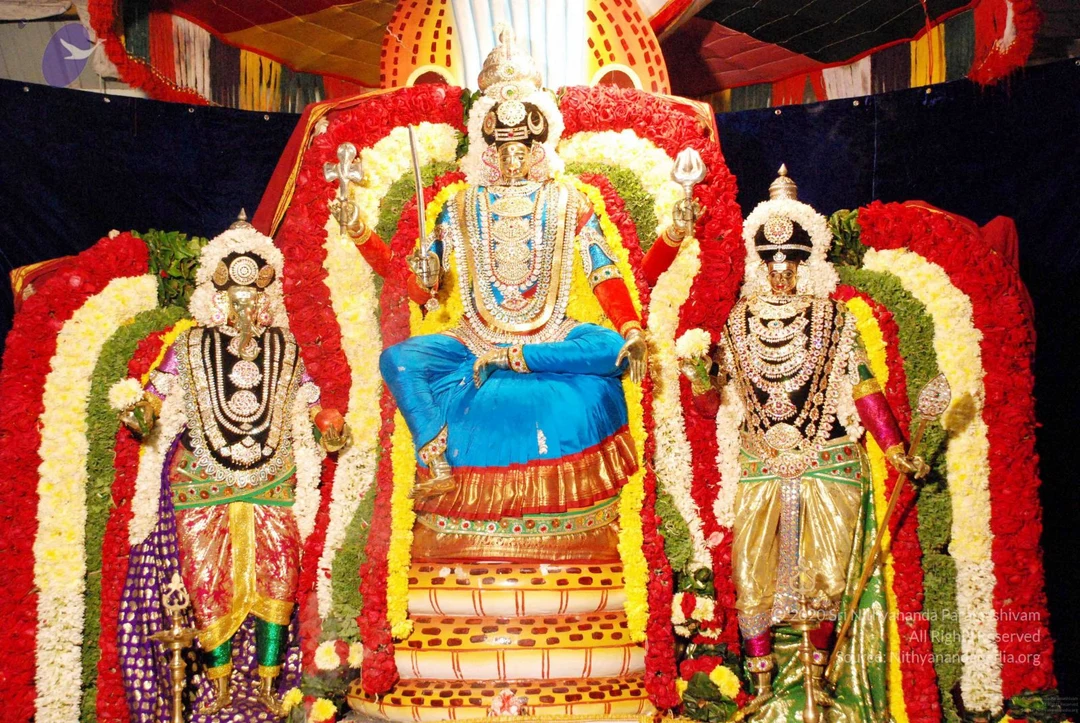
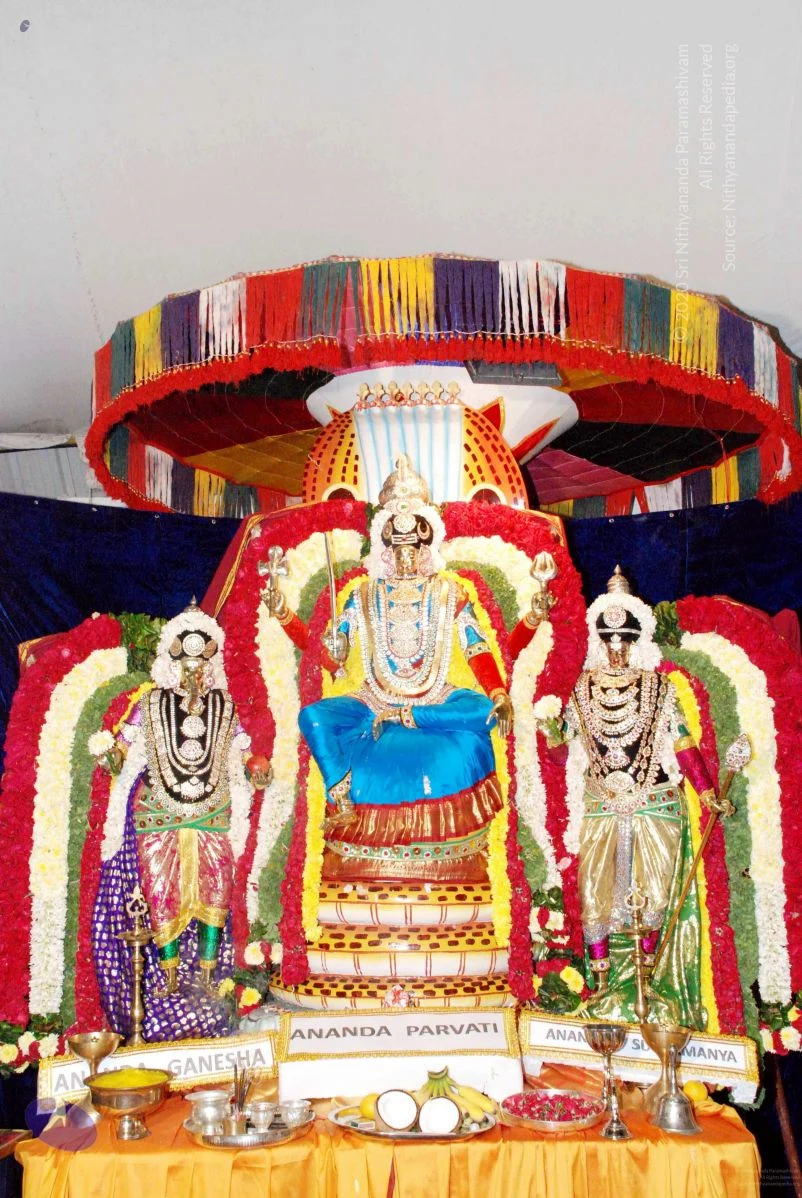
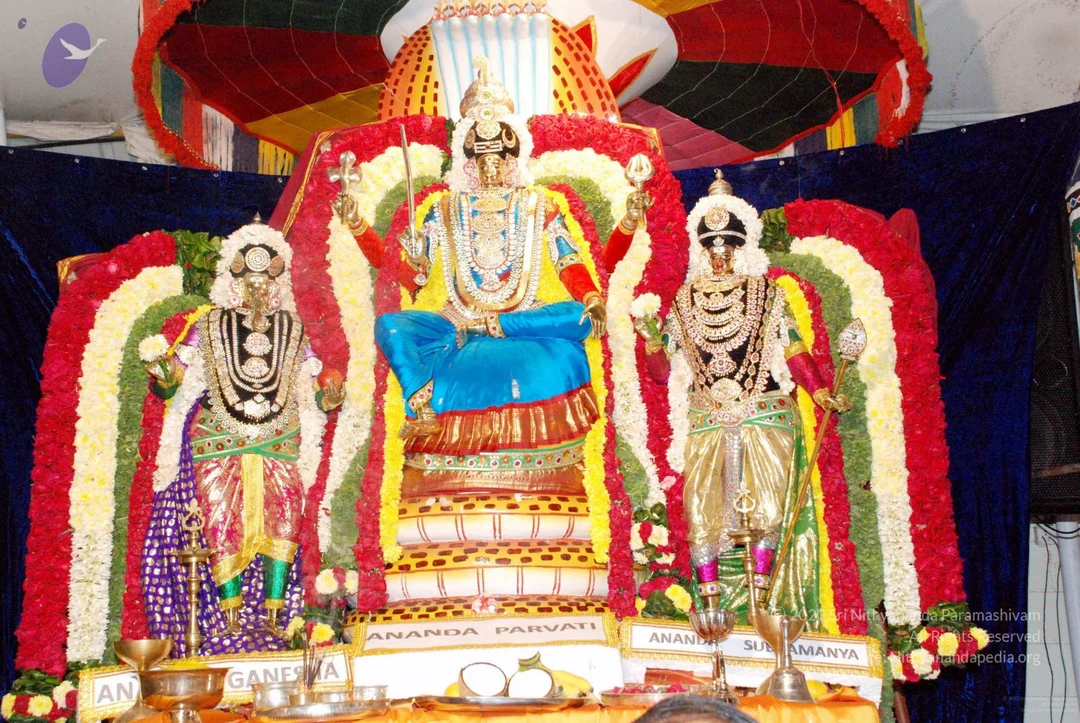
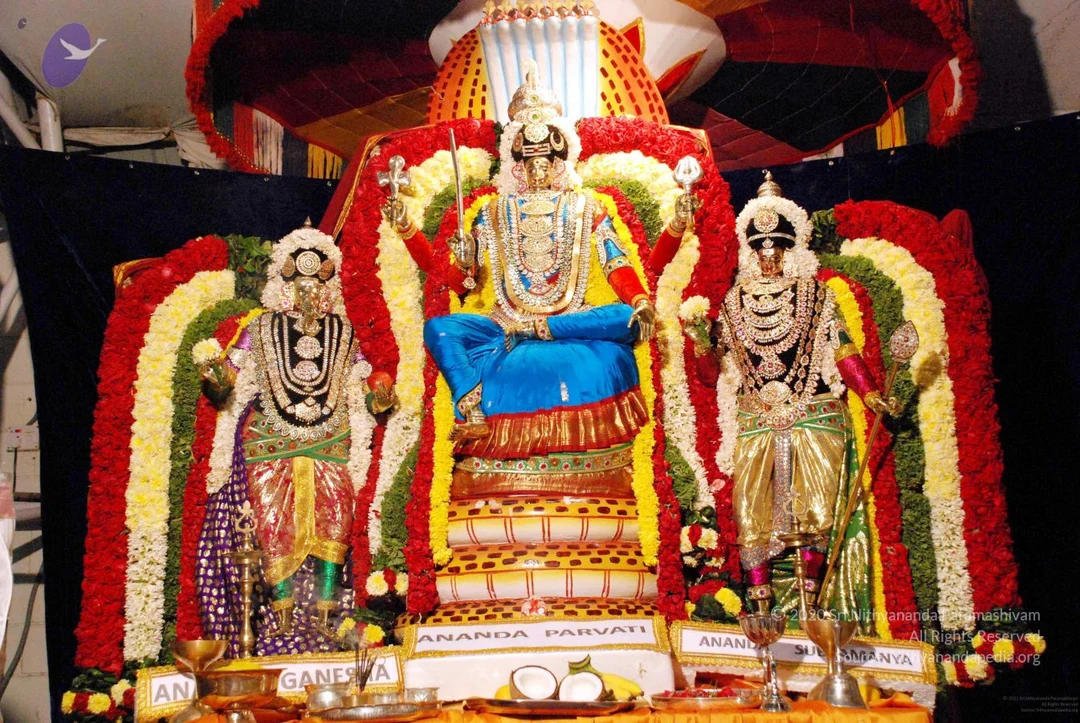
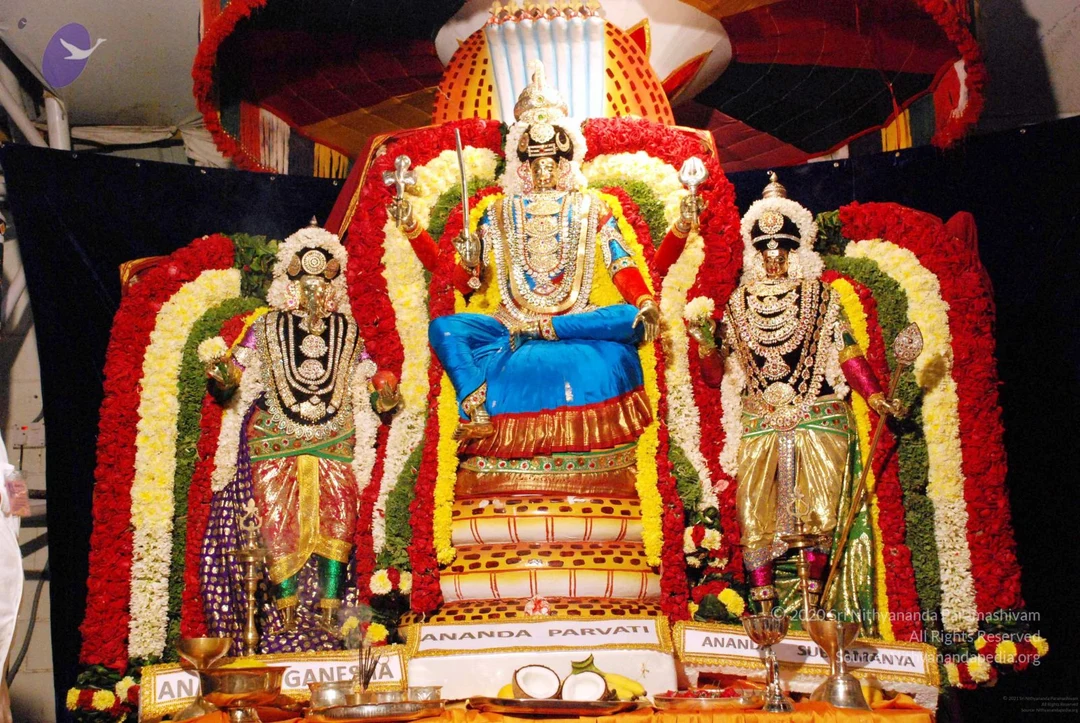
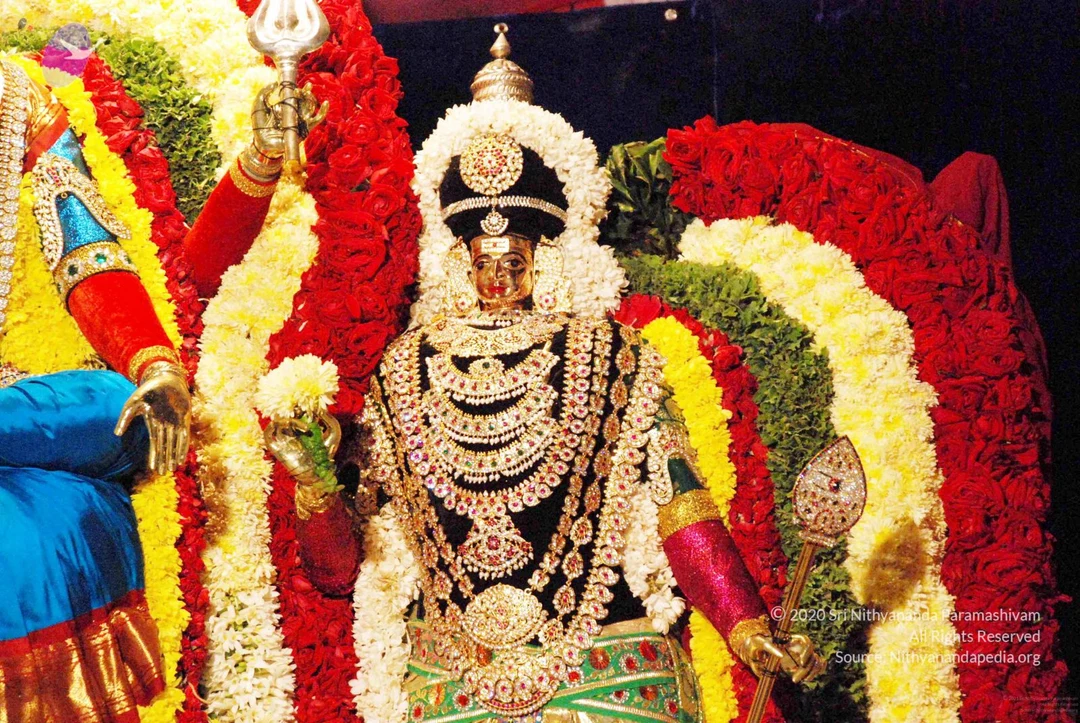
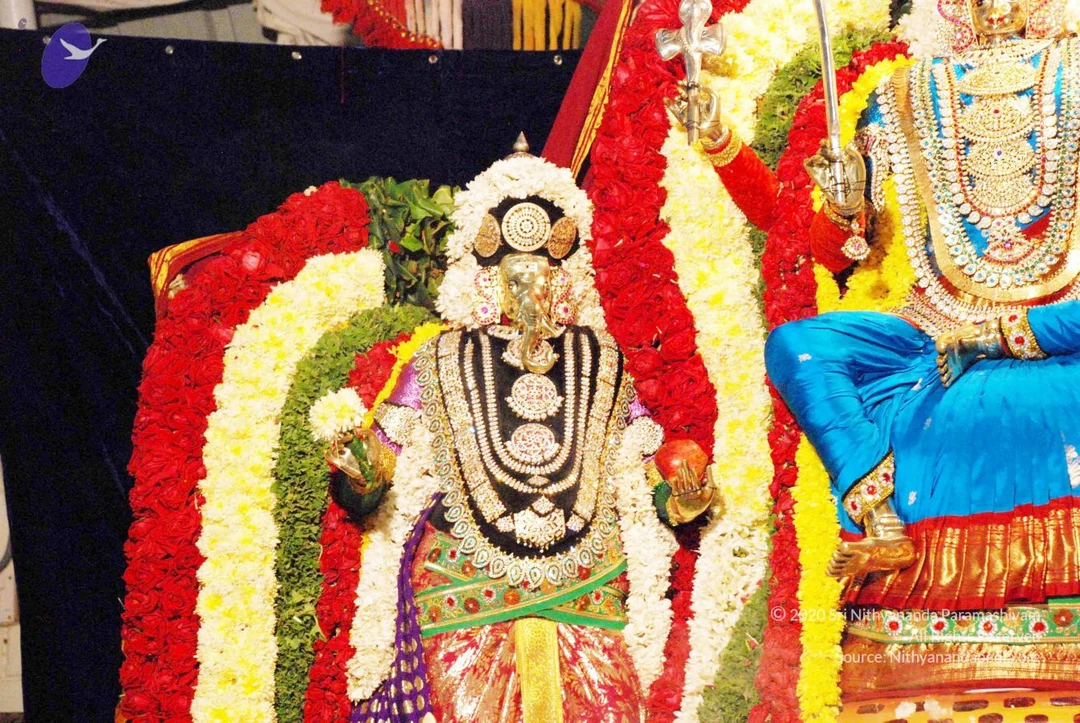
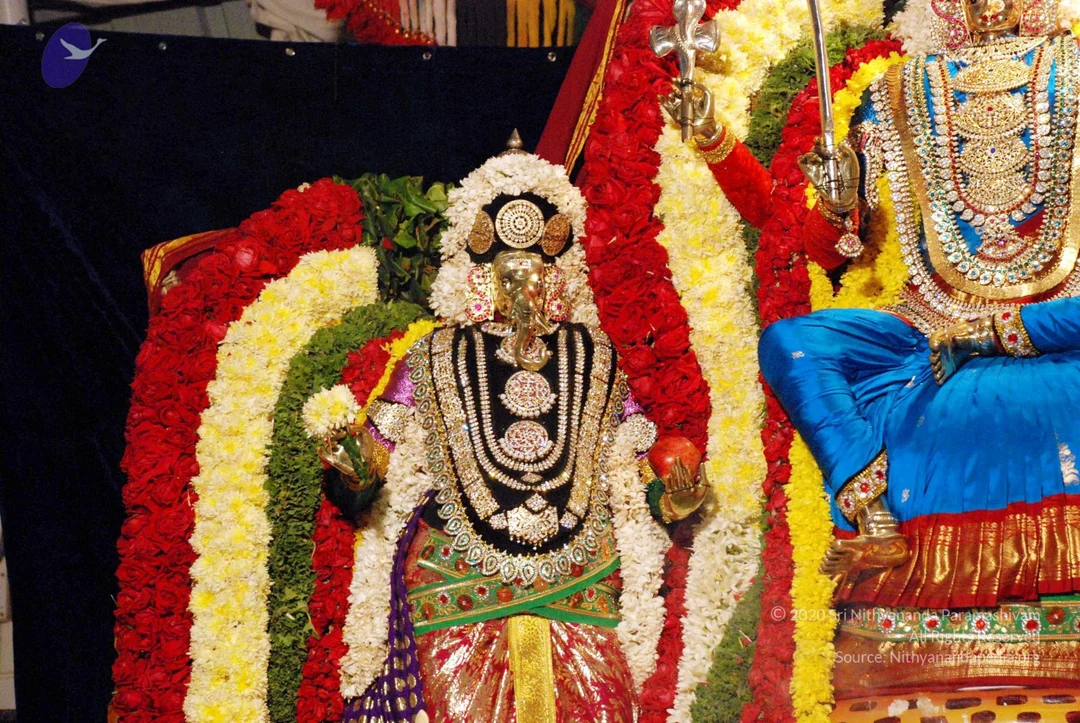
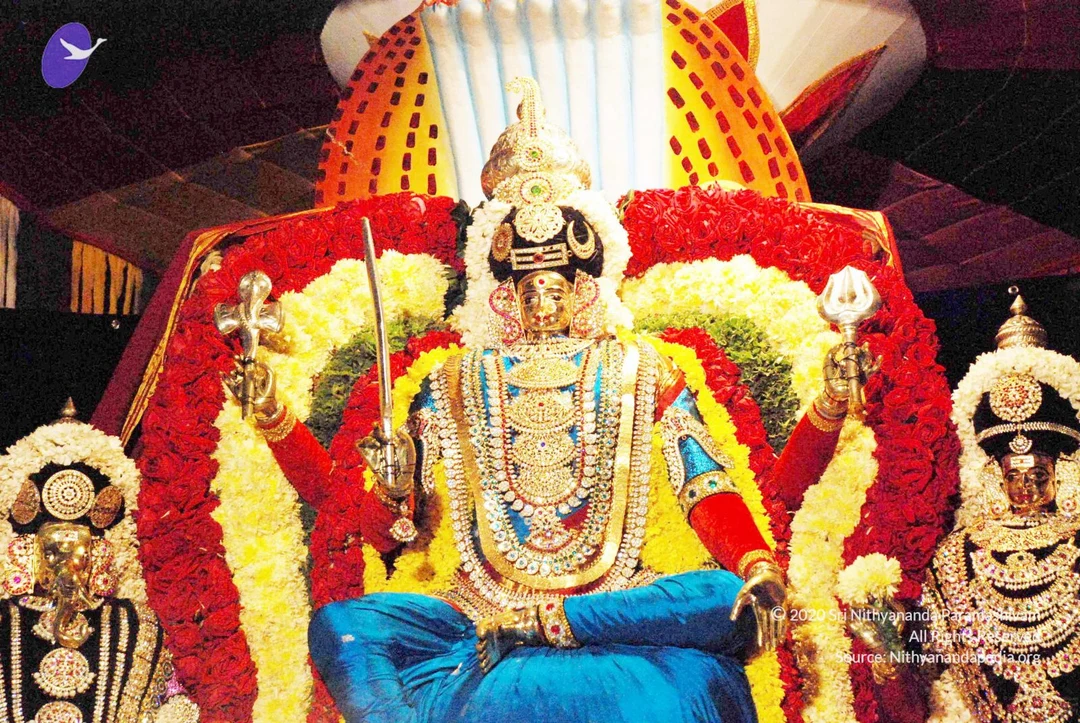
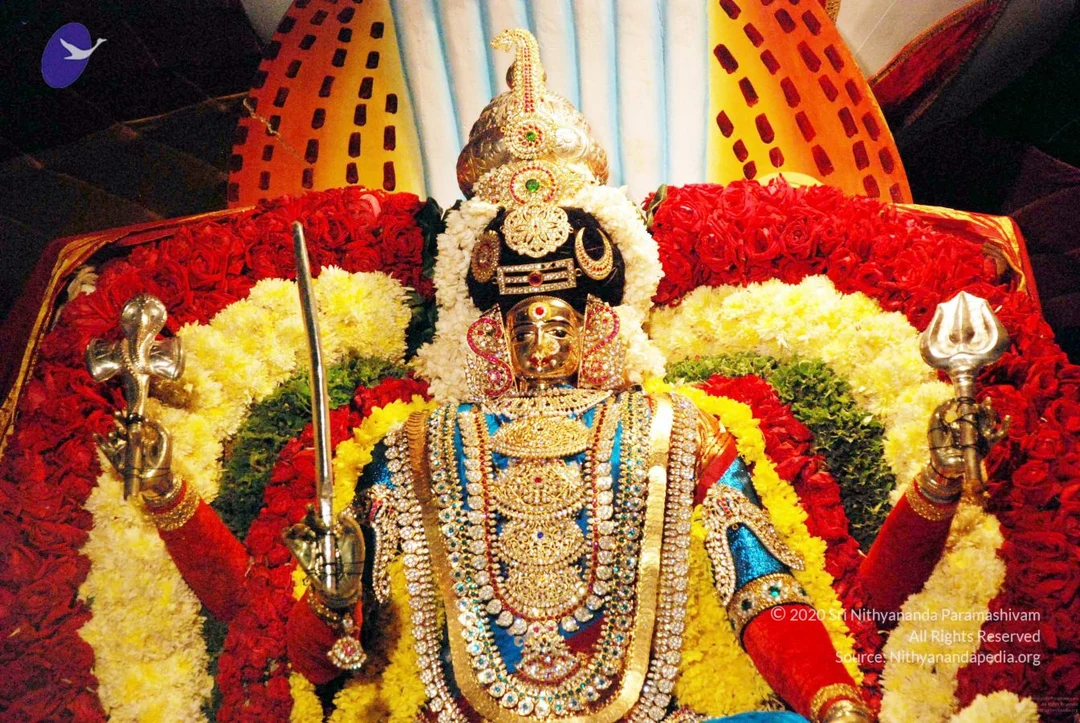
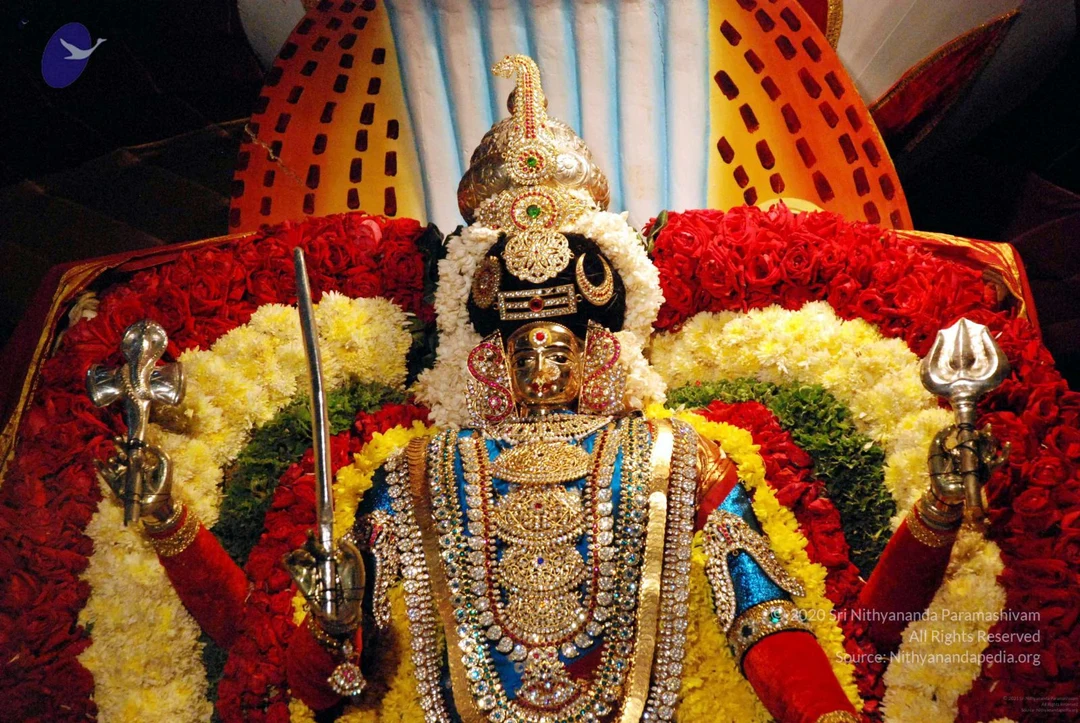
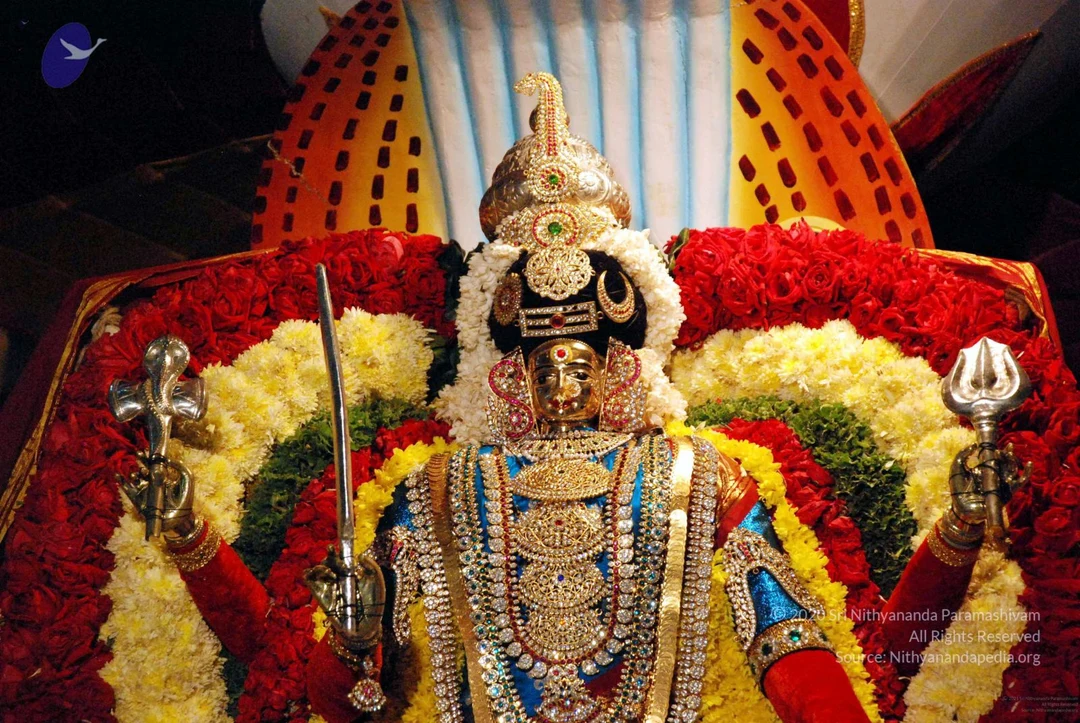
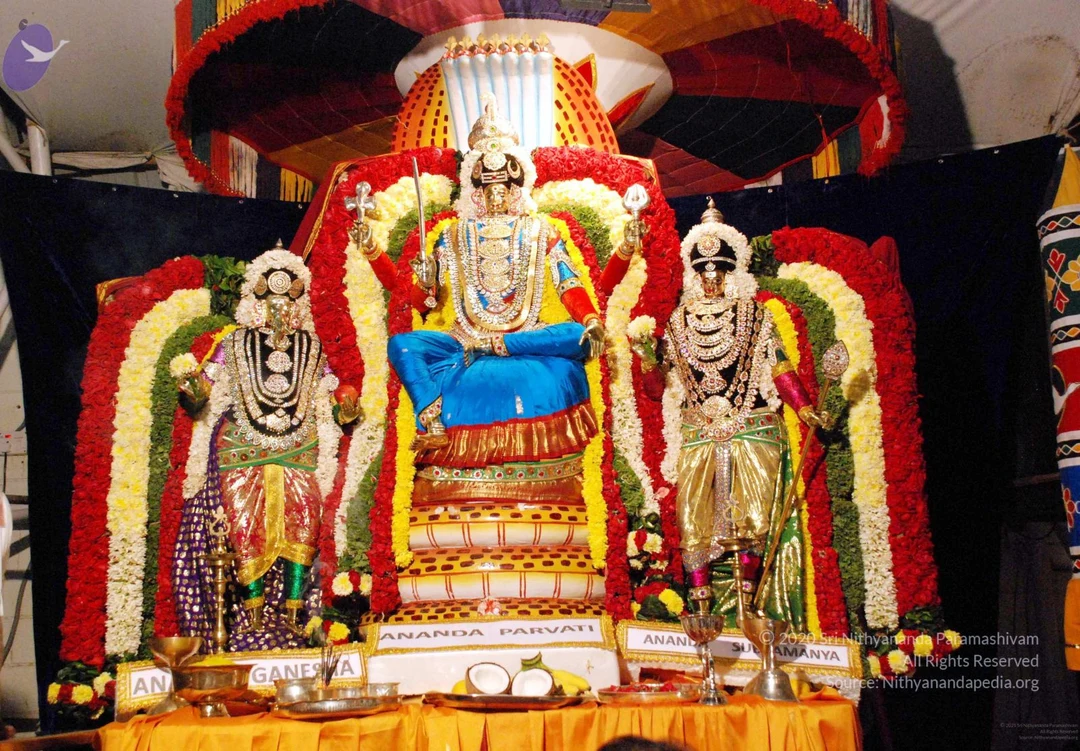
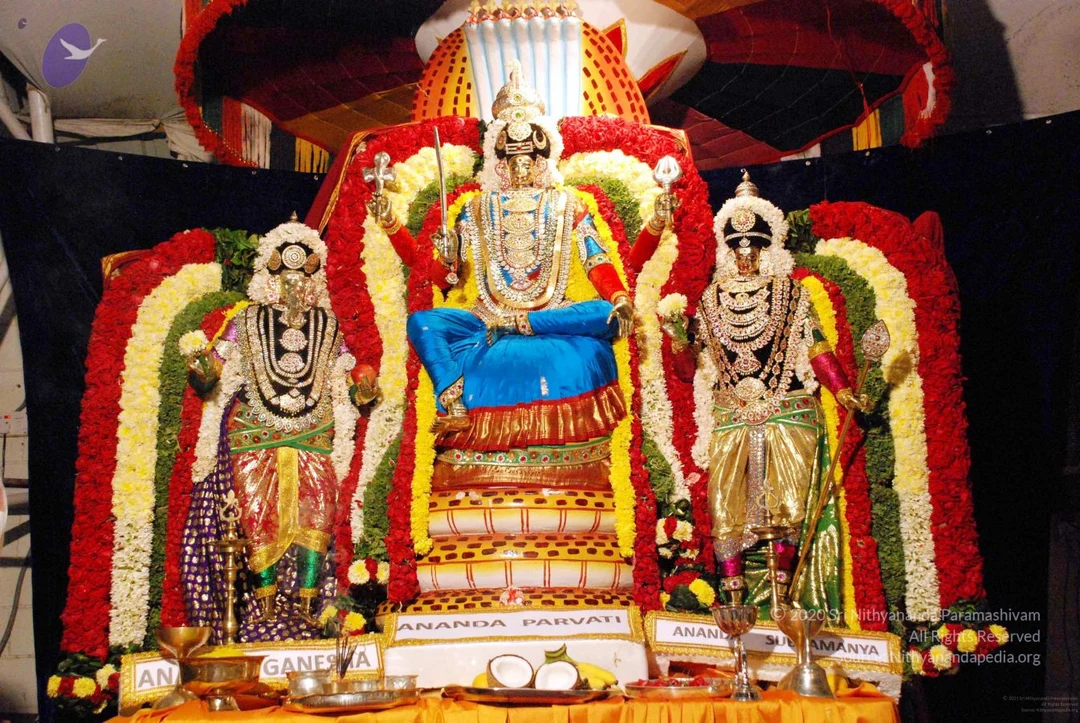
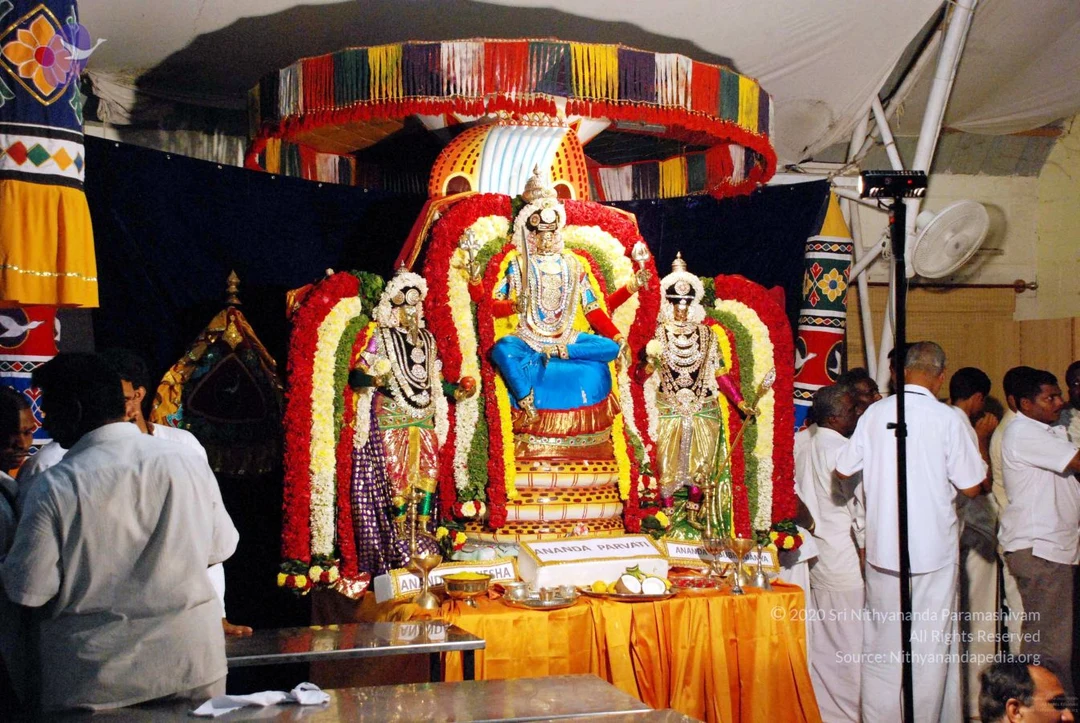
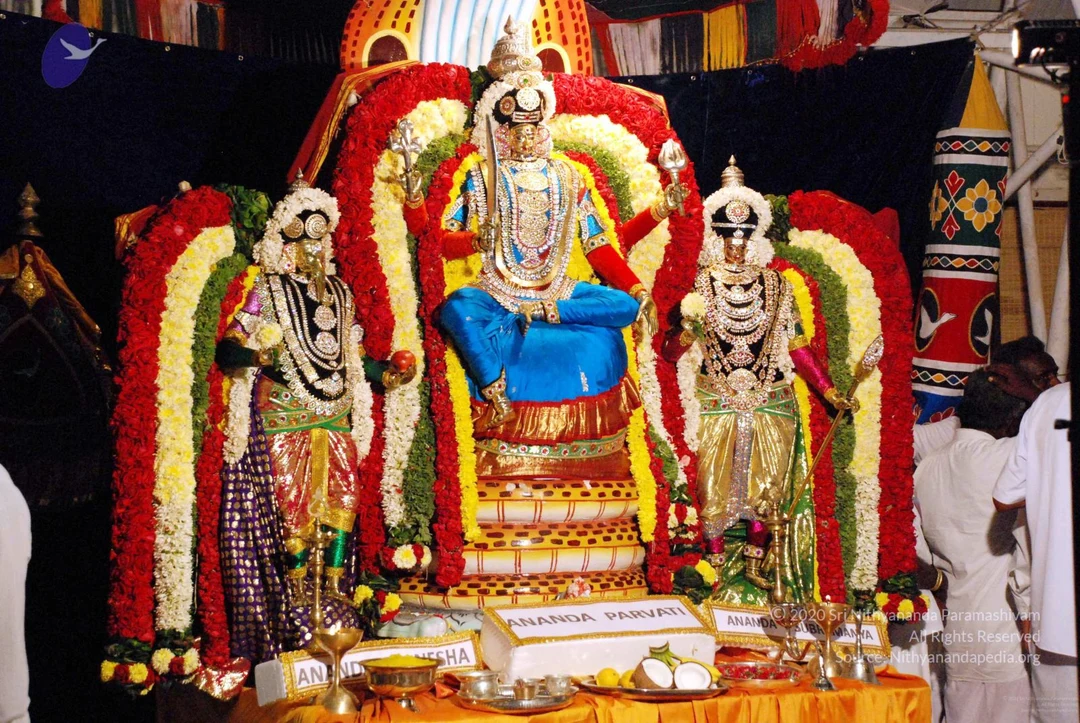
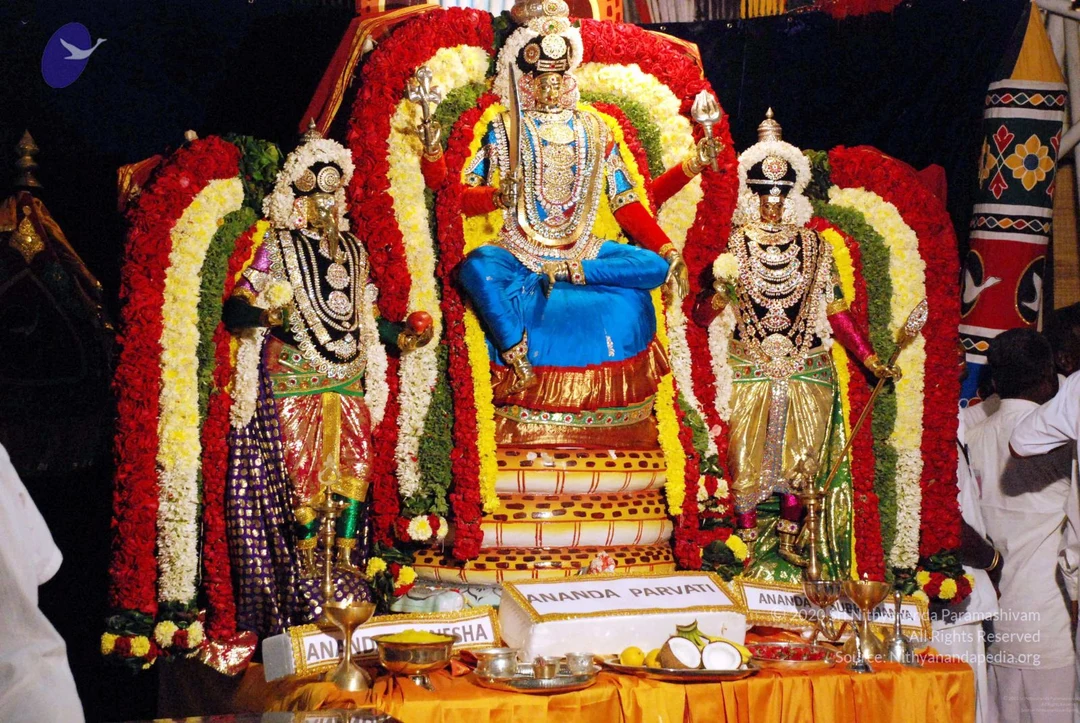
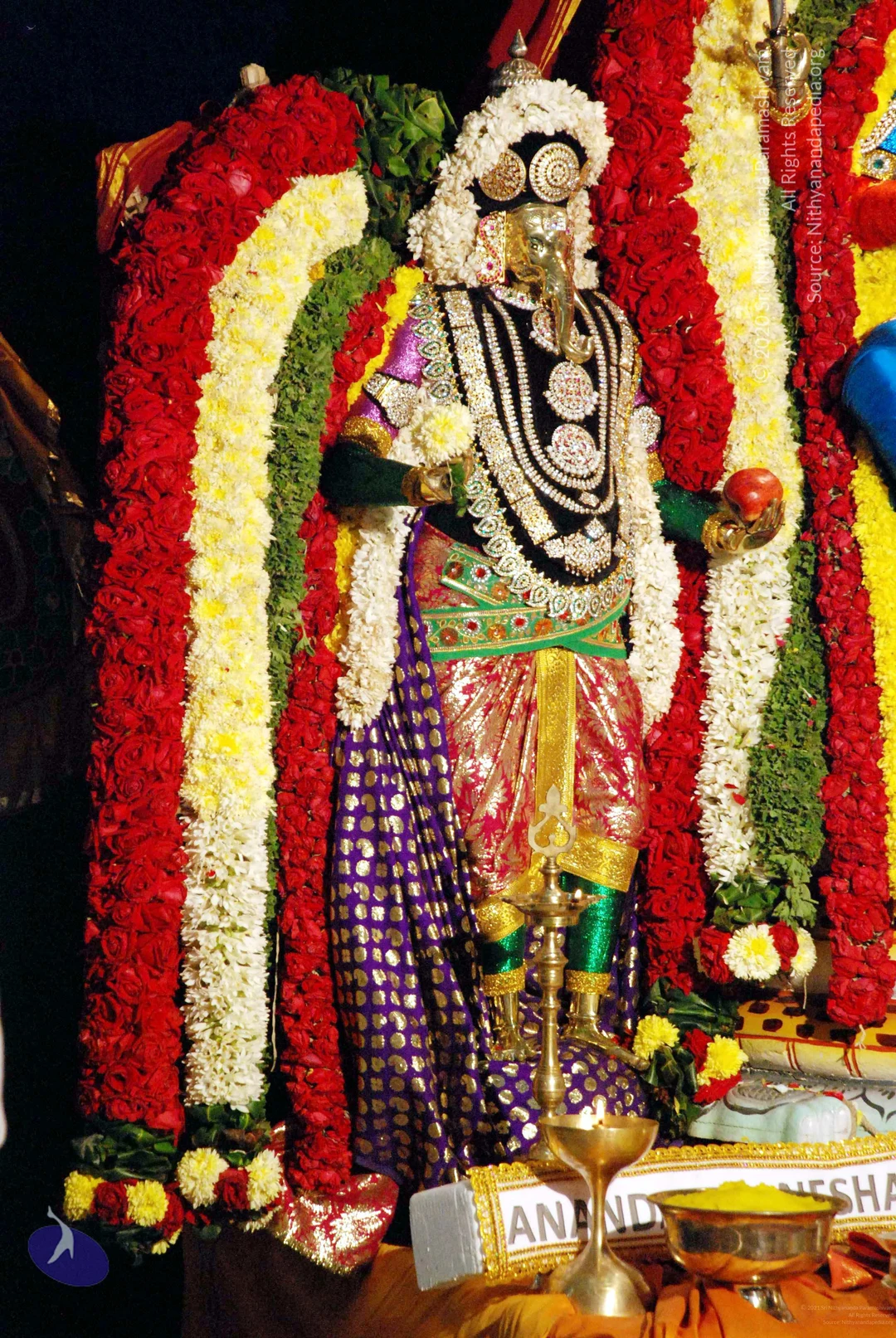
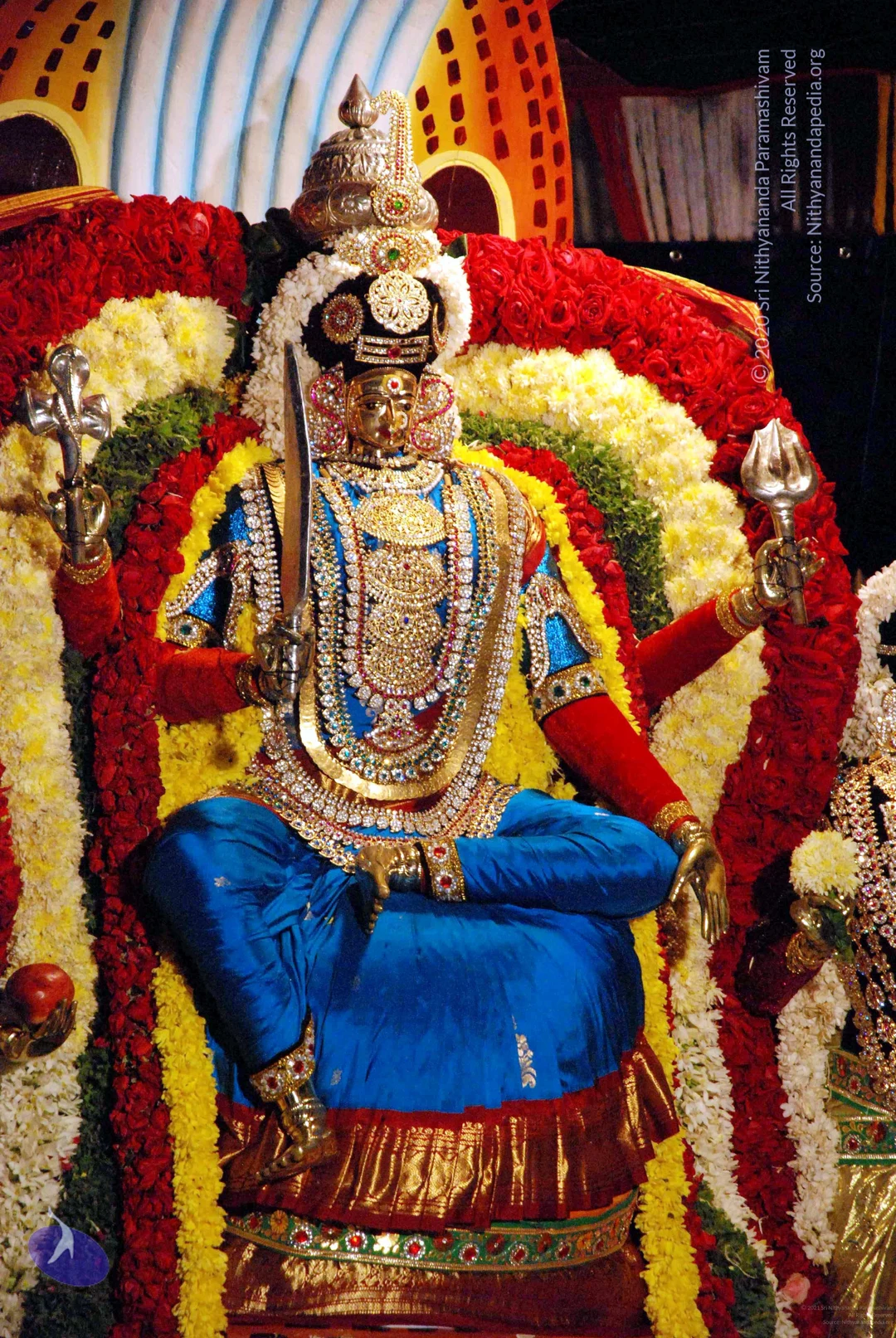
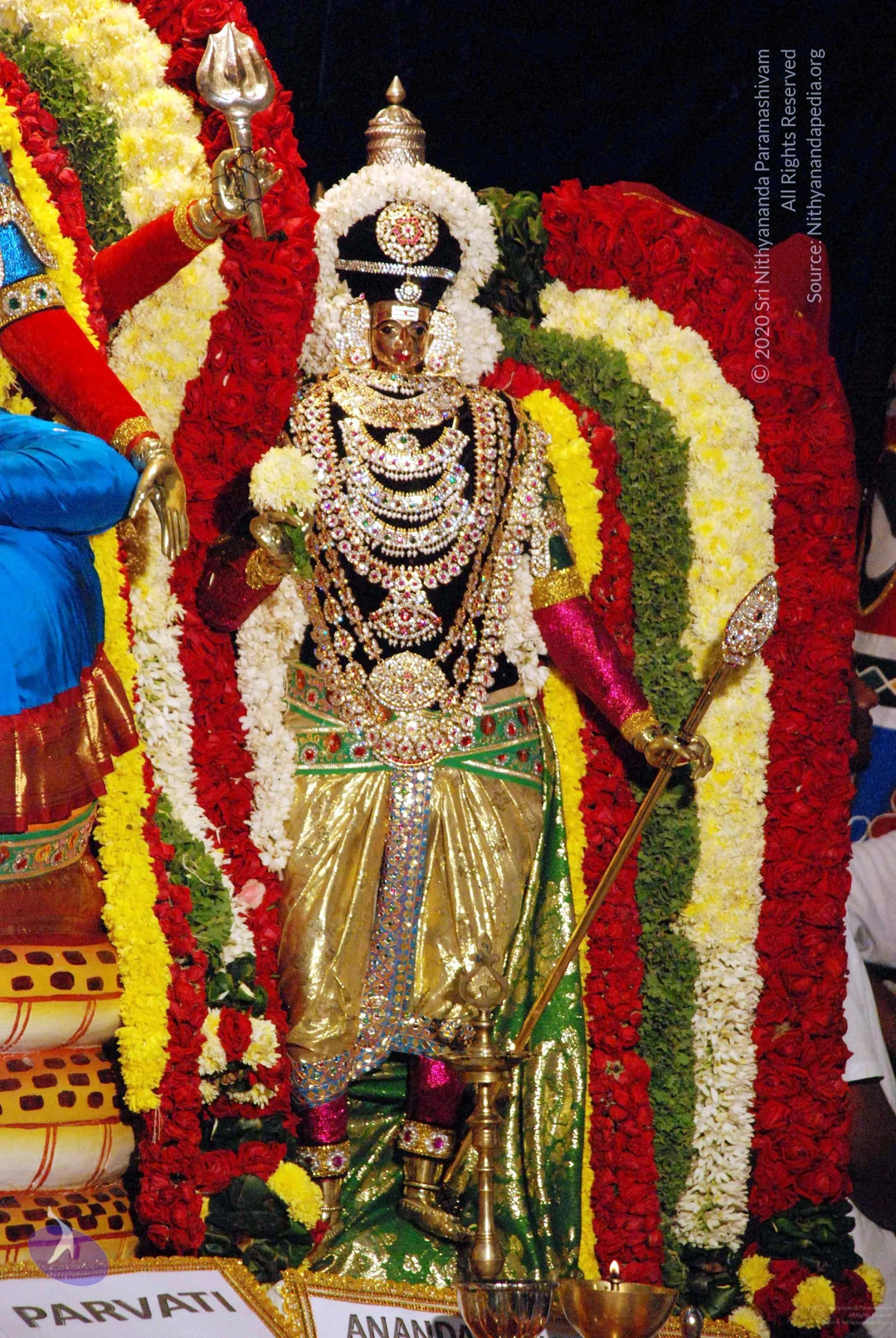
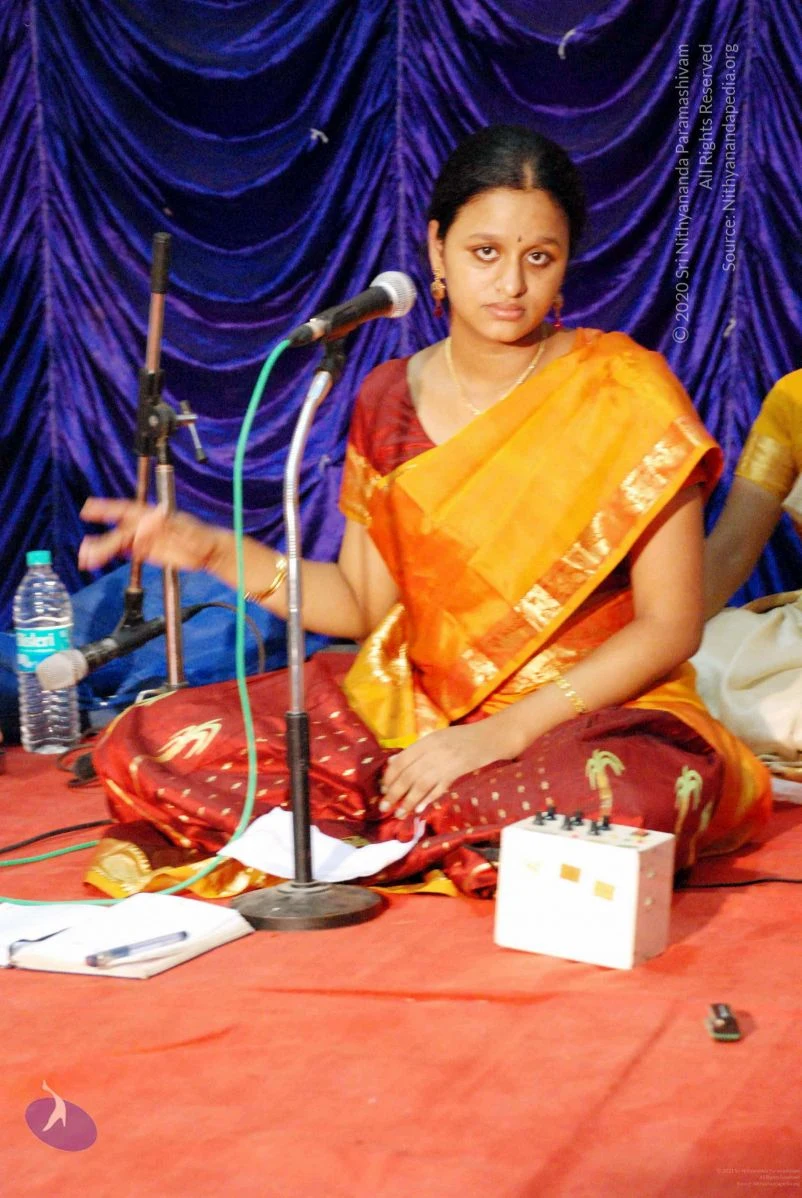
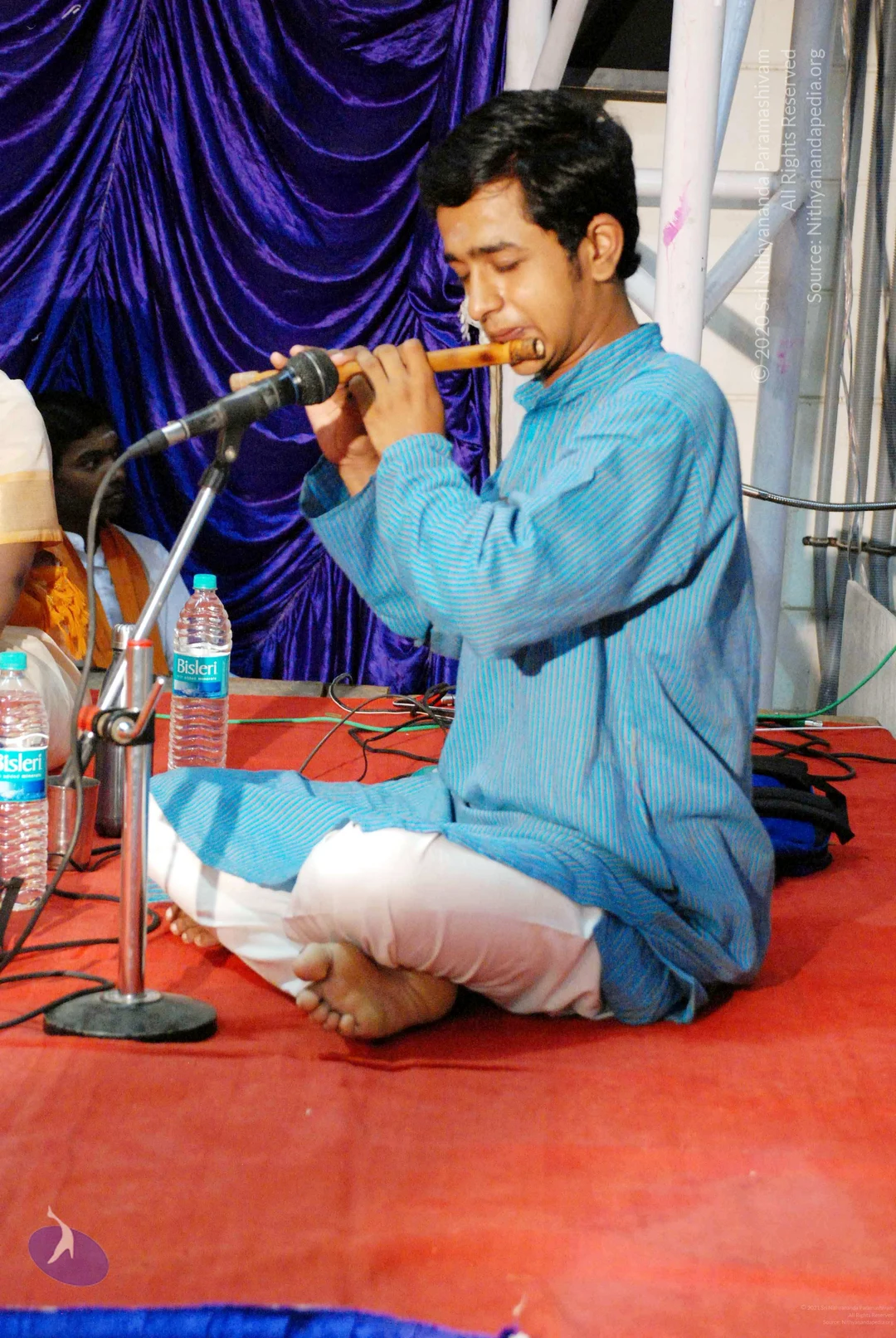
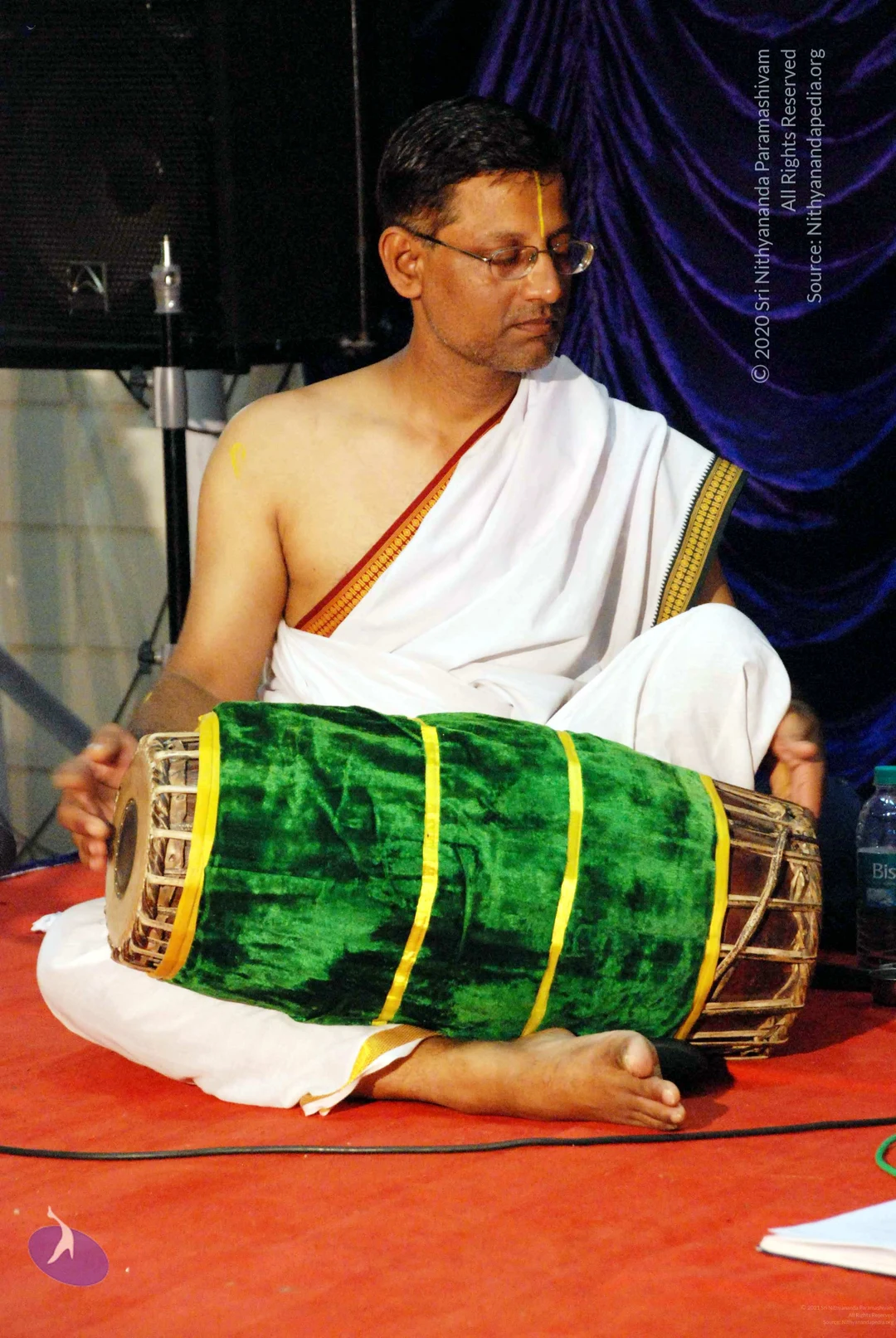
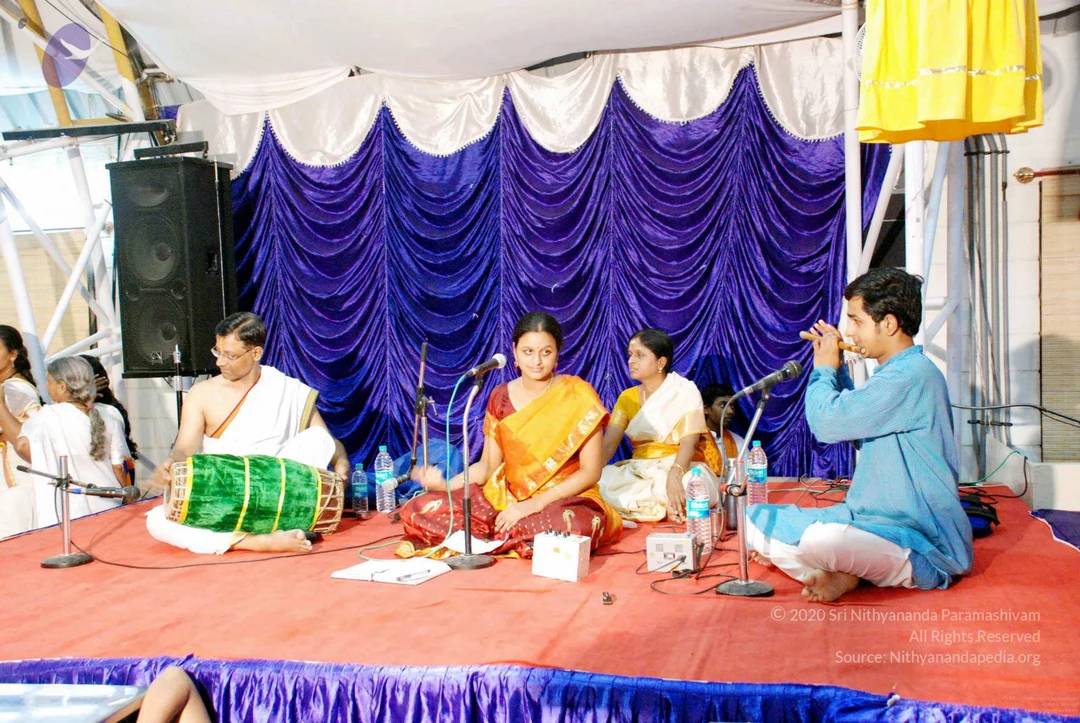
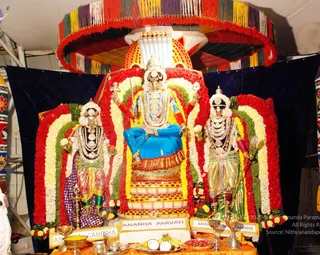
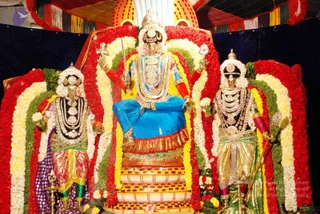
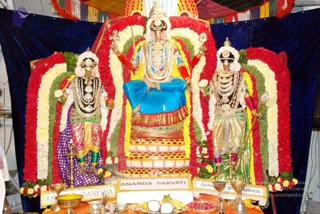
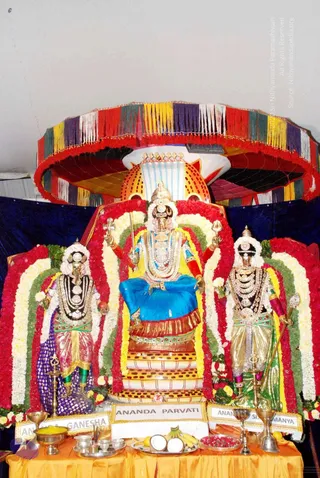
A decorated altar displays three deity murti in an ornate festival setting. The central figure, seated in a meditation pose on a tiered pedestal, wears a blue dhoti, a crown, and heavy jewelled necklaces and garlands, holding a trident and a staff. Flanking figures are adorned with jewelled ornaments and silver-and-gold garments, one in purple and gold, the other in green and gold. Strings of red, yellow, white and green flower garlands frame the figures. Offerings in front include a brass lamp, metal plates, bowls of fruit and coconut halves, and bananas on an orange cloth. Labels read 'Ananda Parvati' and 'Ananda Ganesha' and 'Ananda Subramanya'. Overhead hang red and yellow decorative fabric panels. No people are visible.A decorated altar shows three deity murtis framed by long bands of red, yellow, white and green flower garlands on a dark blue backdrop. The central seated figure in a blue dhoti-like cloth holds a sword and trident and wears a heavy silver necklace and crown. Flanking figures in embroidered saris and jewelled necklaces stand on either side, with brass lamps, a coconut, bananas and a kalasha-like offering in front. No physical people are visible.A photograph of a temple-style deity display set under a striped, fringed canopy with a white and orange conical top. Three murtis sit on a tiered pedestal draped in red, yellow, green and white flower garlands. The central murti wears a blue dhoti, a jewelled necklace, a crown and holds a trident-like staff, with a wide gold border on its seat. Flanking it are a murti with an elephant head in a purple and green dhoti and a murti in a gold dhoti holding a staff. Brass lamps, a bowl of coconuts, bananas, fruit and a tray of offerings sit on an orange cloth in front. Name boards read Ananda Parvati, Ananda Ganesha and Ananda Subramanya. The background is a dark blue drape.A photograph of a decorated deity murti shrine. A central seated murti wears a blue dhoti with a gold border, a crown, and multiple gold and jewelled necklaces, holding a trident-like staff and other ritual implements. Flanking figures wear elaborate jewelled necklaces, crowns and colourful silk garments, one in purple and green and the other in gold and green. Thick garlands of red roses, yellow and white flowers, and green leaves frame the shrine in rainbow bands, with a red and yellow draped canopy above. No physical people are visible; all figures are statues or murtis.A decorated altar display of three deity murtis set against a navy blue velvet backdrop. The central figure is a seated murti in a blue dhoti-style drape with a gold crown, rudraksha-like beads and multiple necklaces, holding a trident and other implements. Flanking it are two standing murtis, one on the left in purple and gold with green sleeves, and one on the right in gold and green with a gold staff. Garlands of red roses, yellow and white flowers frame the figures. Brass oil lamps, a yellow bowl, a plate of bananas, coconuts, and a dish of rose petals sit in front.Photograph of a decorated altar with three deity murtis seated on a raised platform beneath a multicoloured fringed canopy. The central figure is a seated deity murti in silver and gold ornaments with a blue silk cloth on its lap, holding a trident-like staff and a drum-like object, with rudraksha-style necklaces. Flanking it are two smaller murtis: the left one in a purple and gold garment and the right one in gold-green dress holding a staff. Marigold and rose garlands drape the platform, with brass oil lamps, a bowl of yellow turmeric, coconuts, bananas and a plate of red flowers in front. Printed placards on the altar name the murtis. This is a murti altar, with no physical people visible.

October 04 2008

1 photoView all
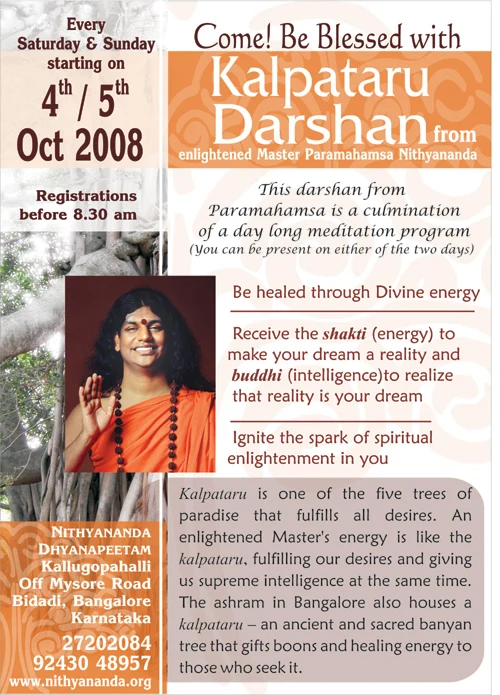
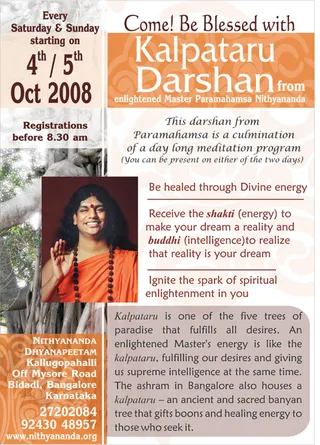
A promotional poster for a Kalpataru Darshan program, with a large orange header reading "Come! Be Blessed with Kalpataru Darshan from enlightened Master Paramahamsa Nithyananda" and a column of bulleted benefits. A photo in the lower left shows a smiling man with long dark hair, wearing an orange shawl and rudraksha mala, raising one hand in blessing in front of a large banyan tree. Orange, white and brown colours dominate the layout. Contact details and the website appear in the bottom corners, with a paragraph about the kalpataru tree at the bottom right.