Skip to content
Tuesday

18 July 2006

Dated photos
88
Source pages
1
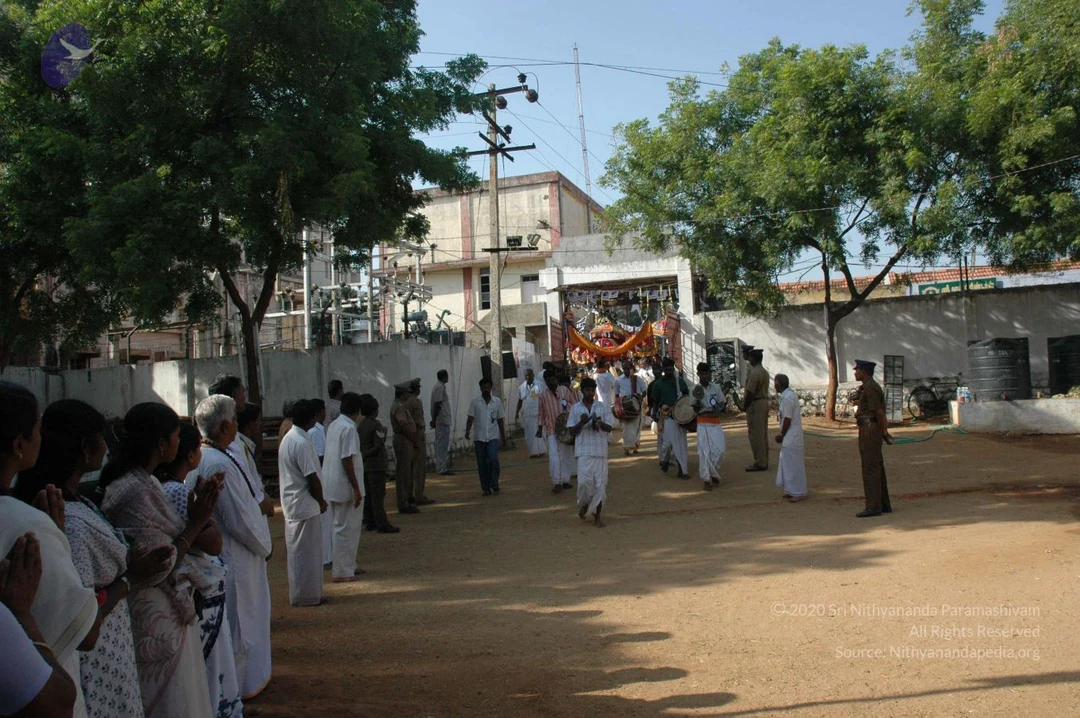
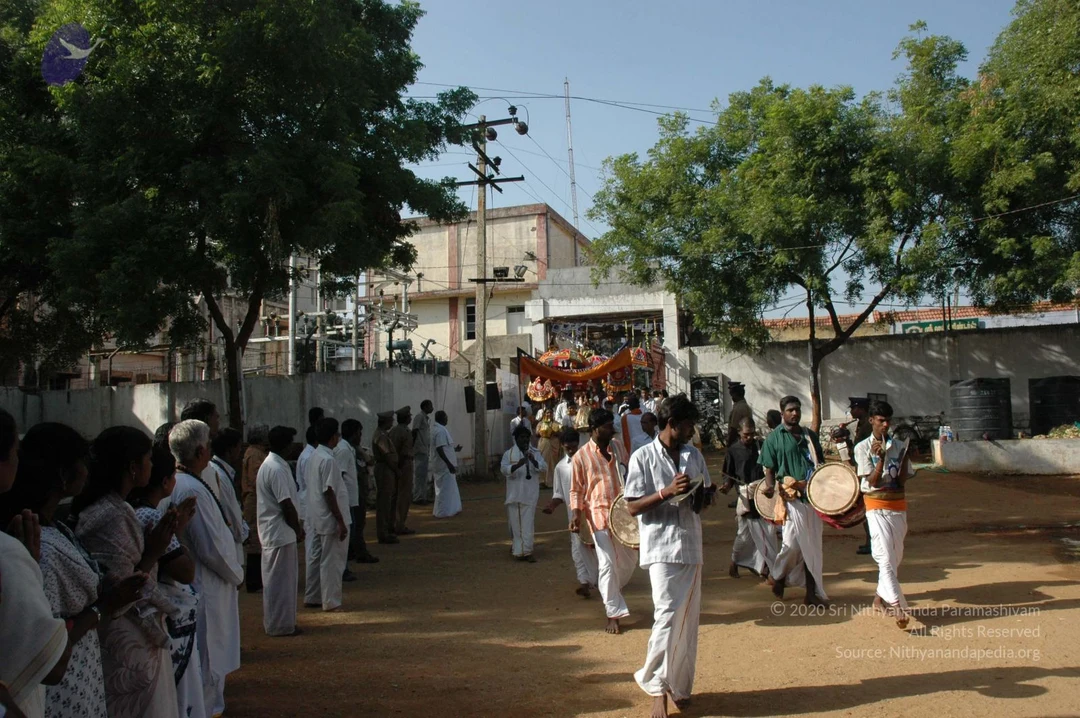
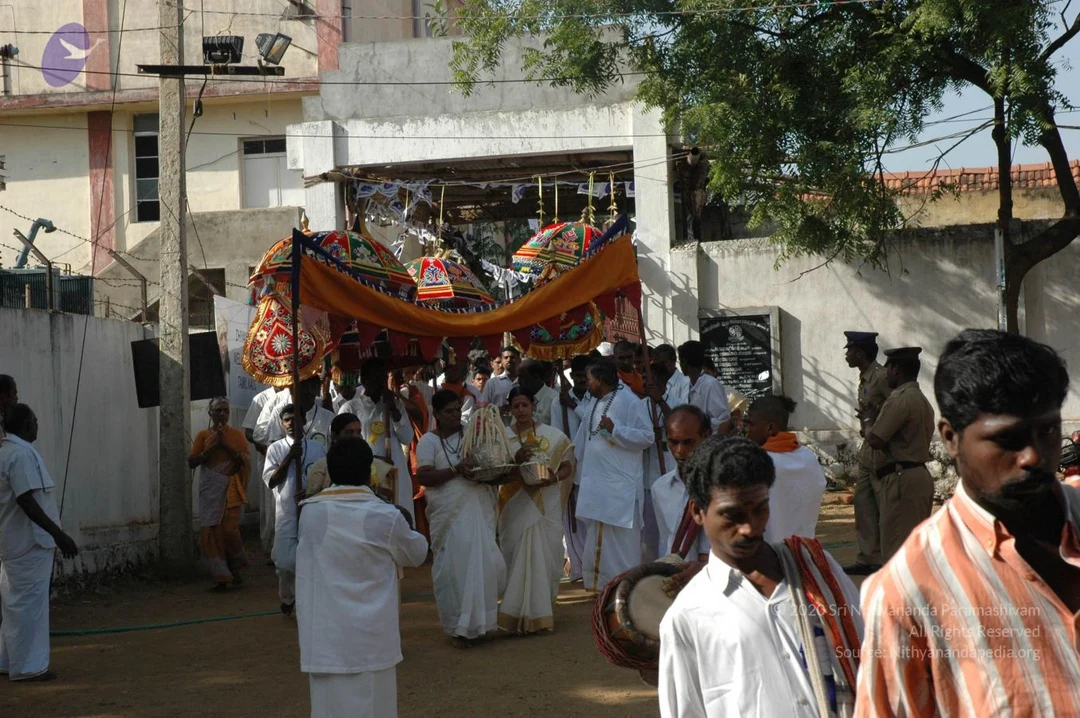
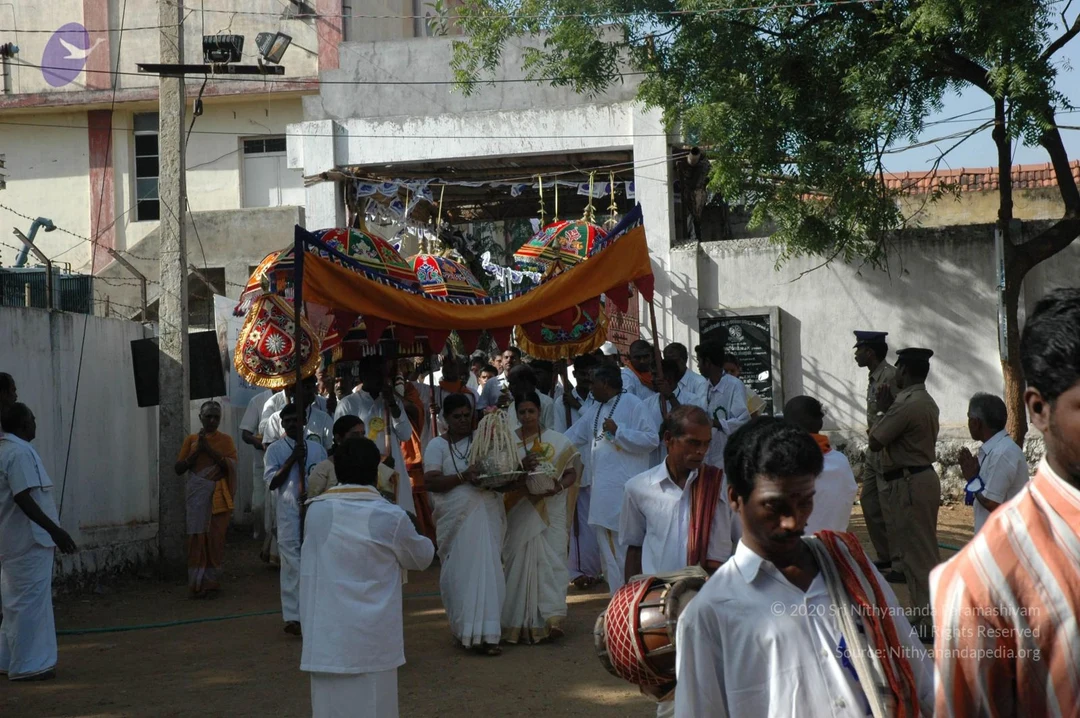
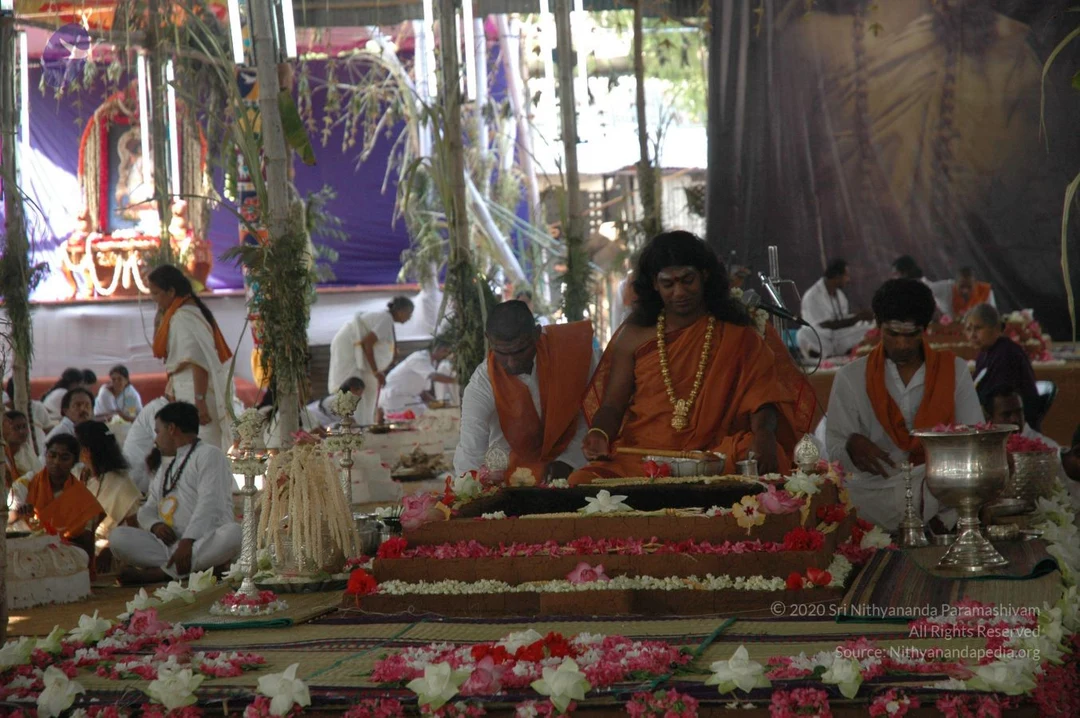
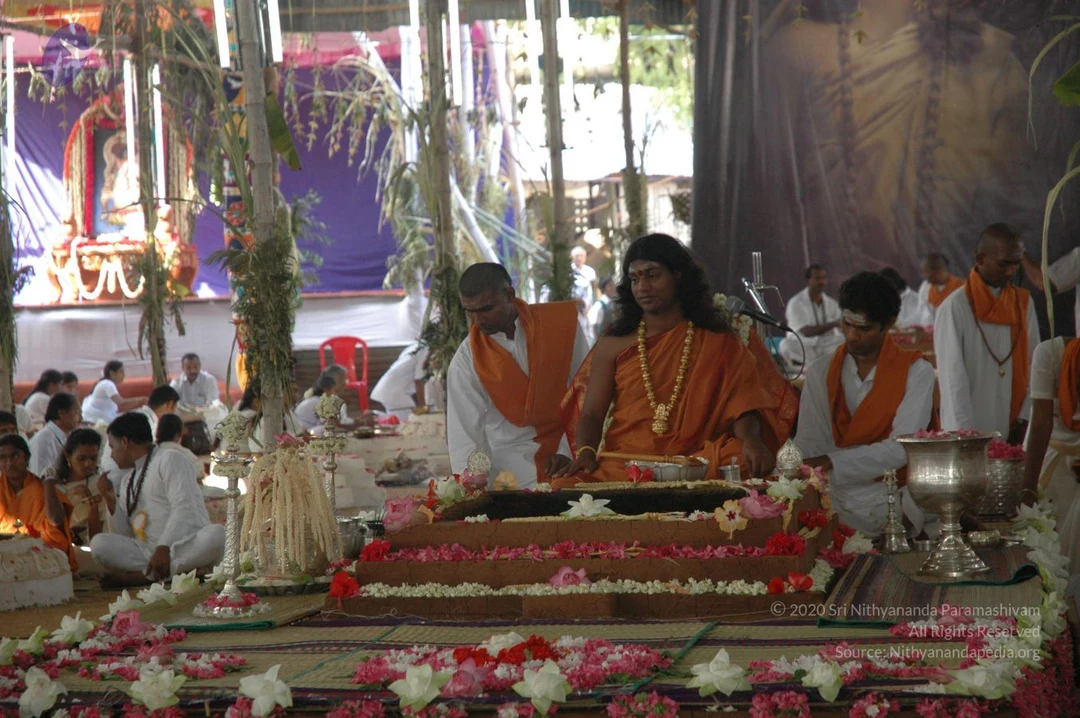
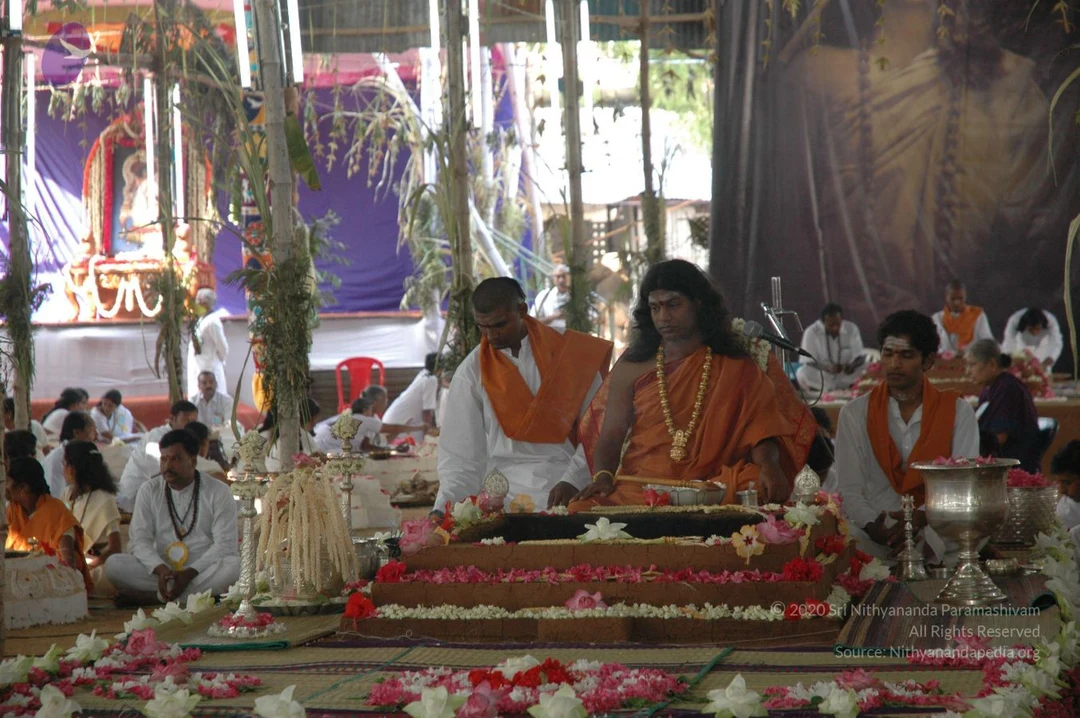
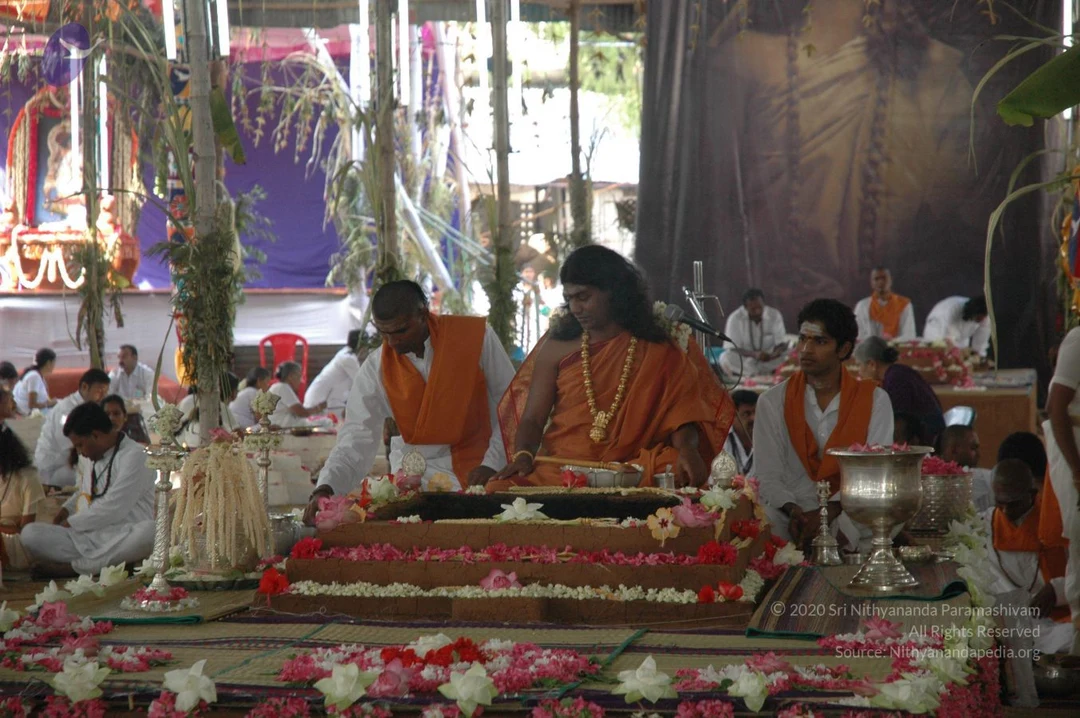
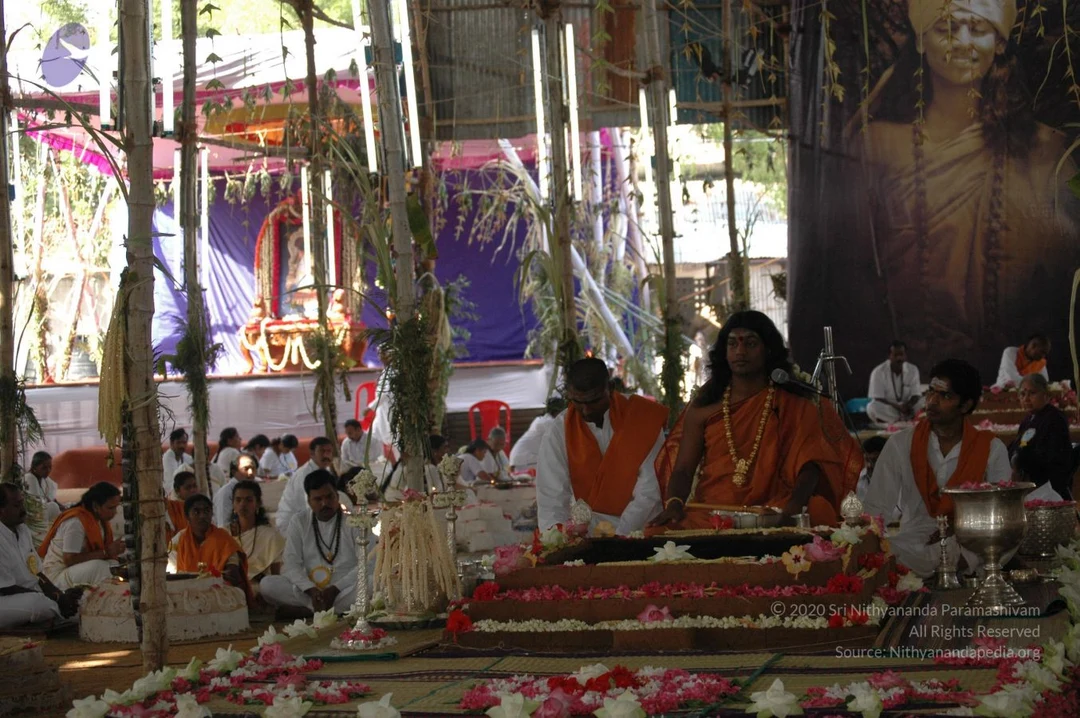
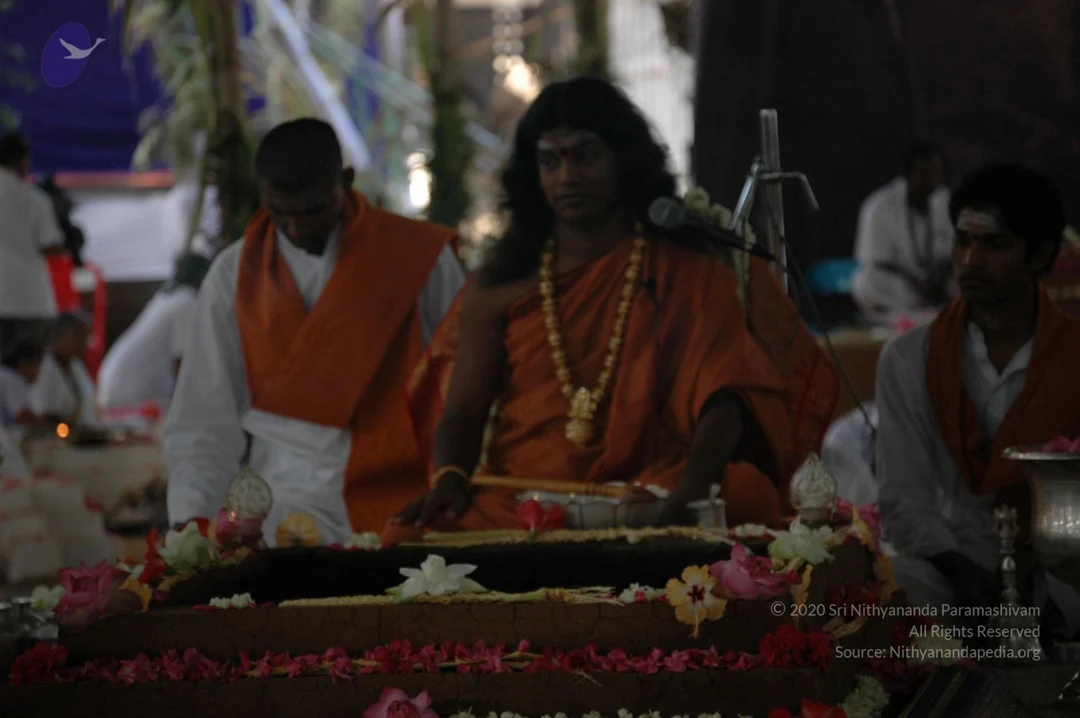
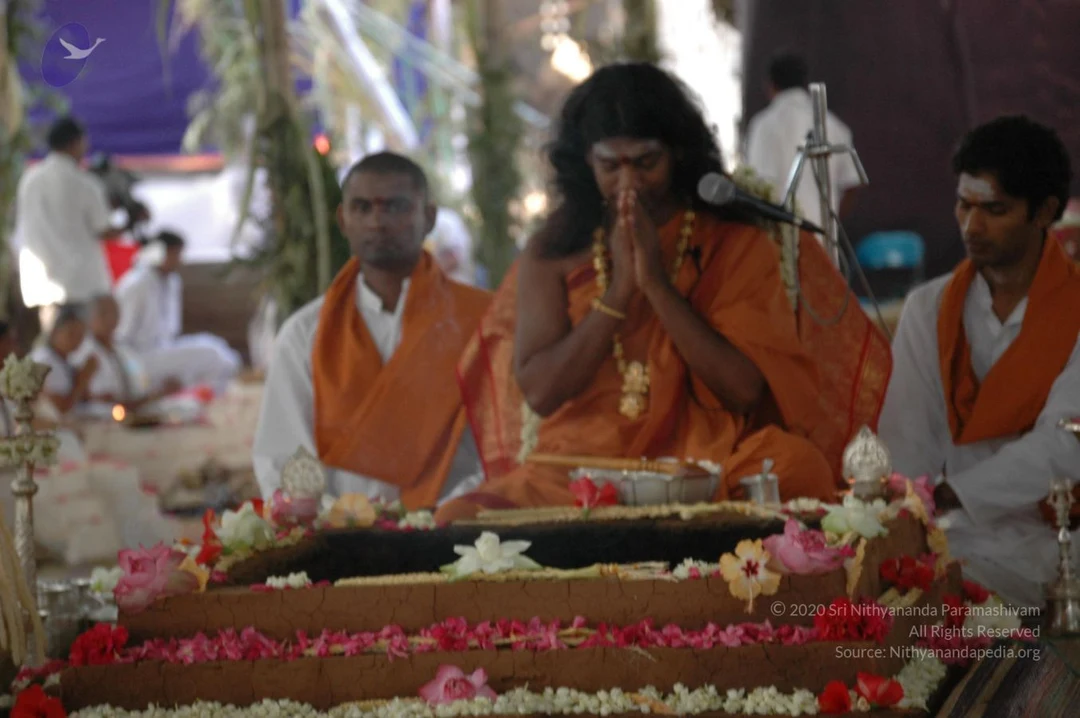
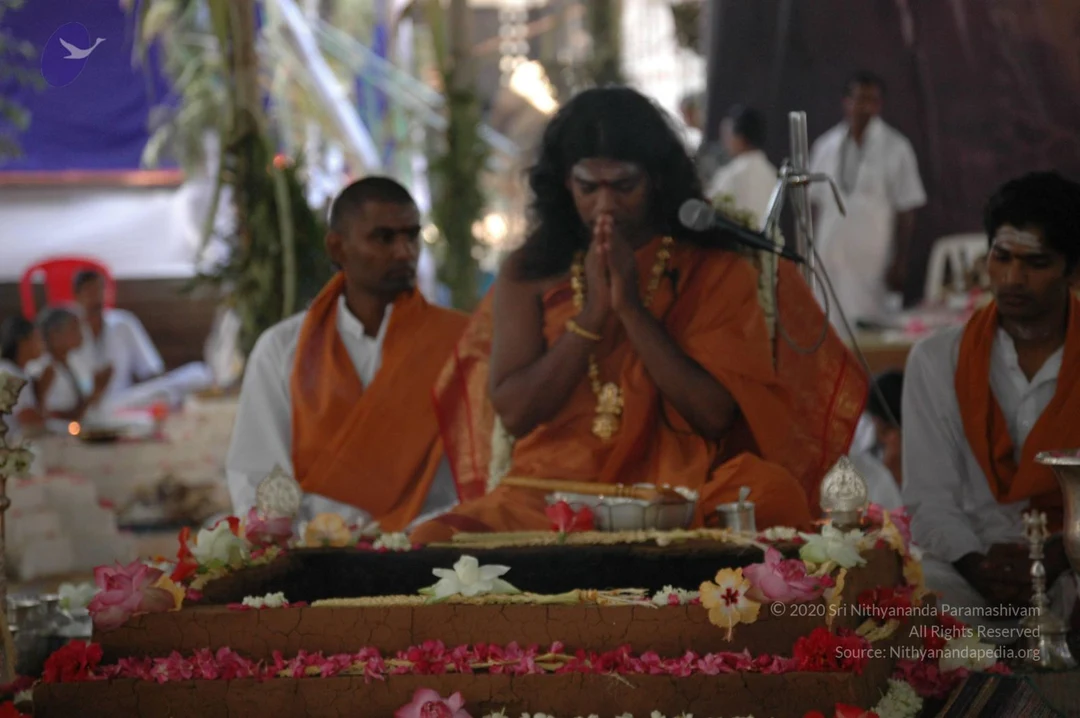
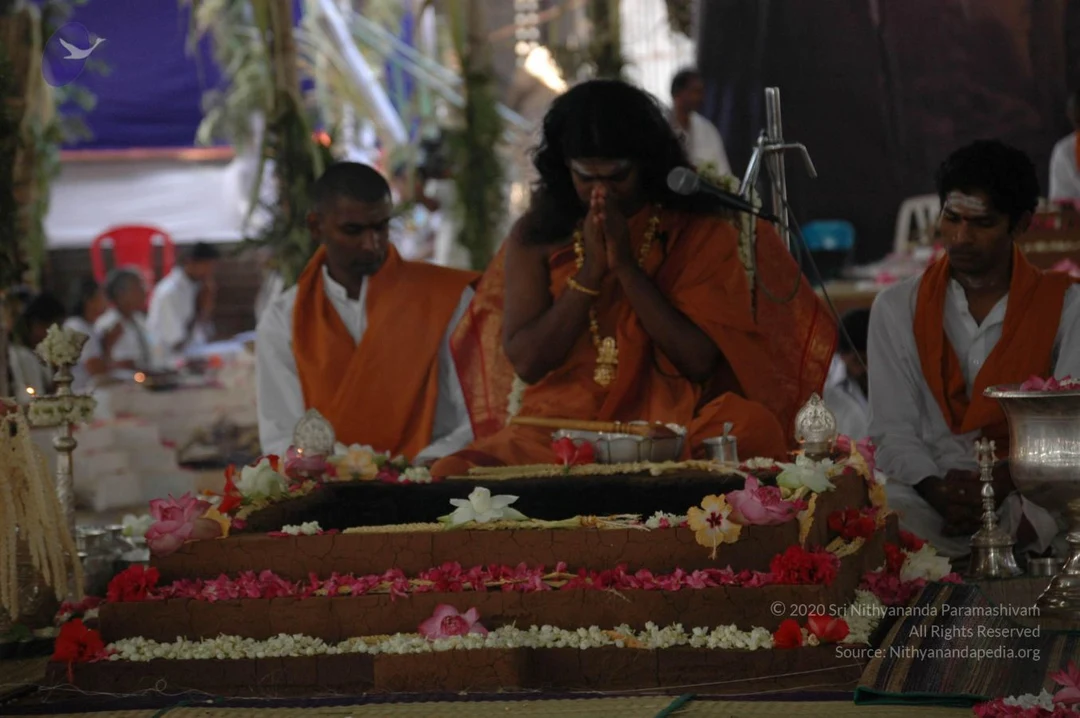
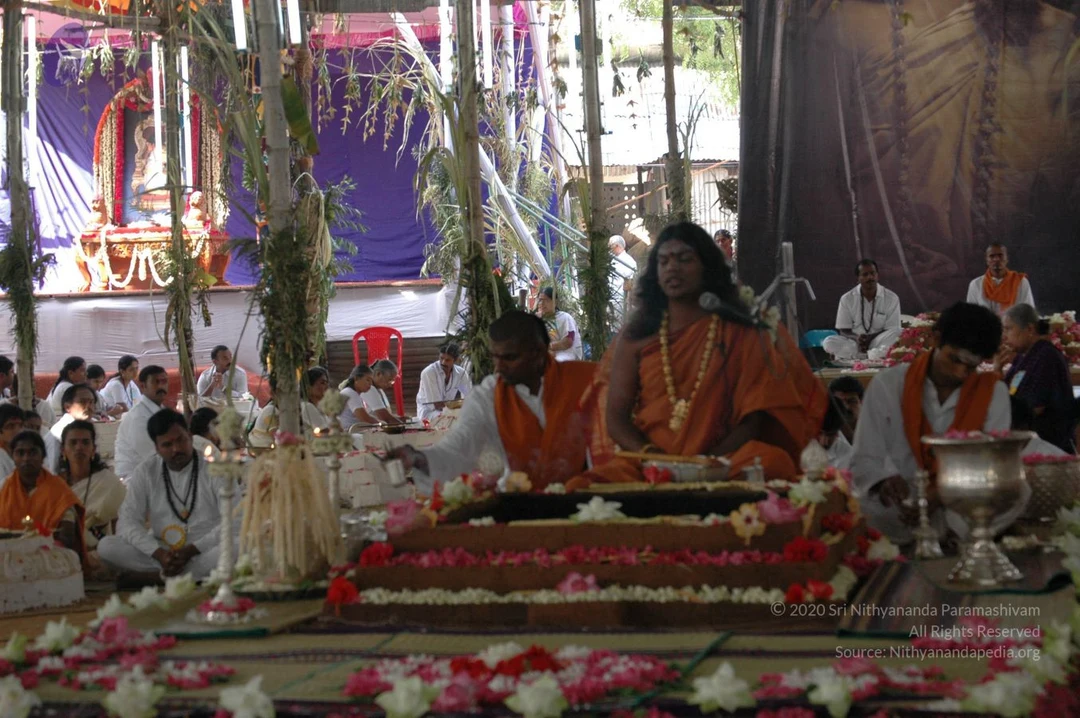
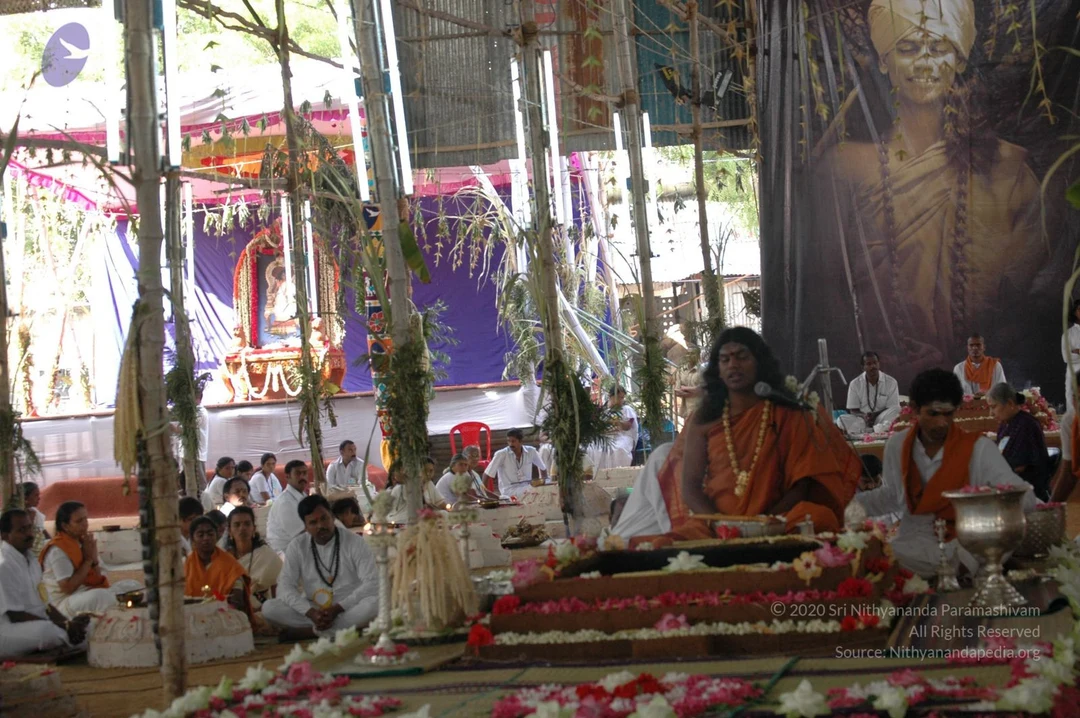
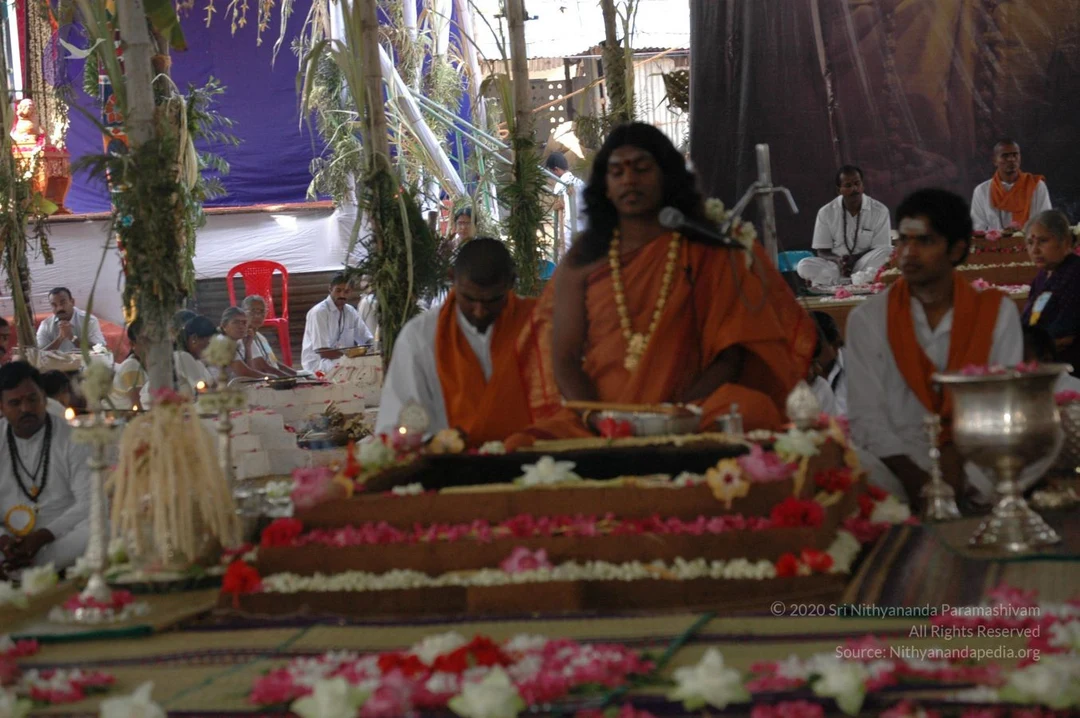
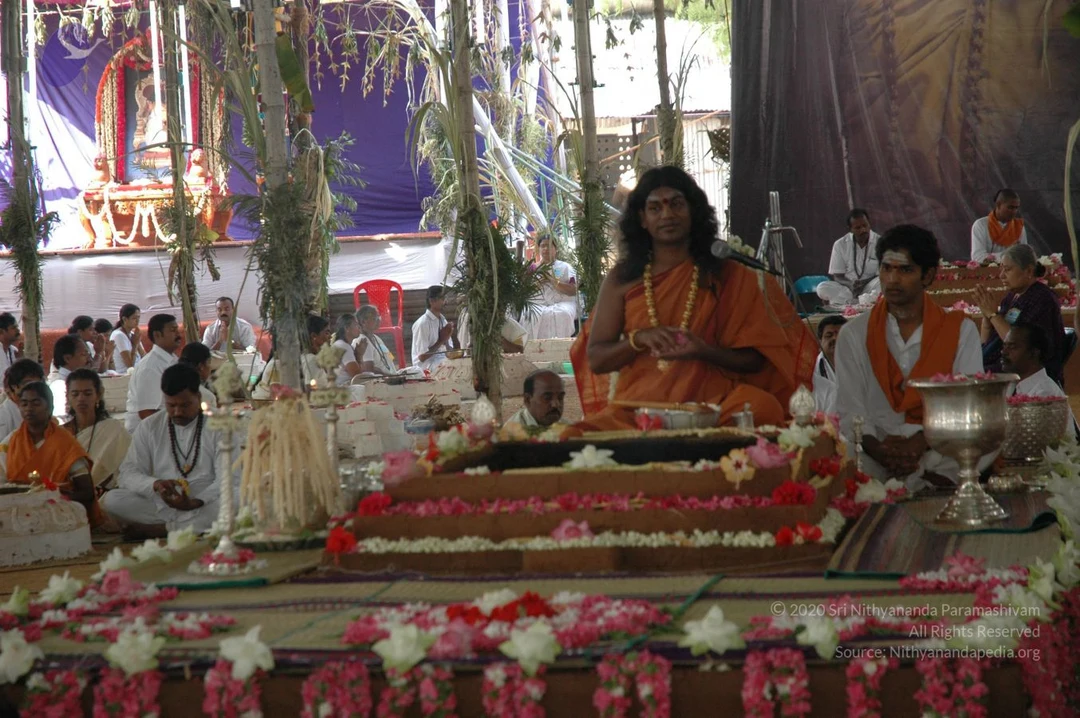
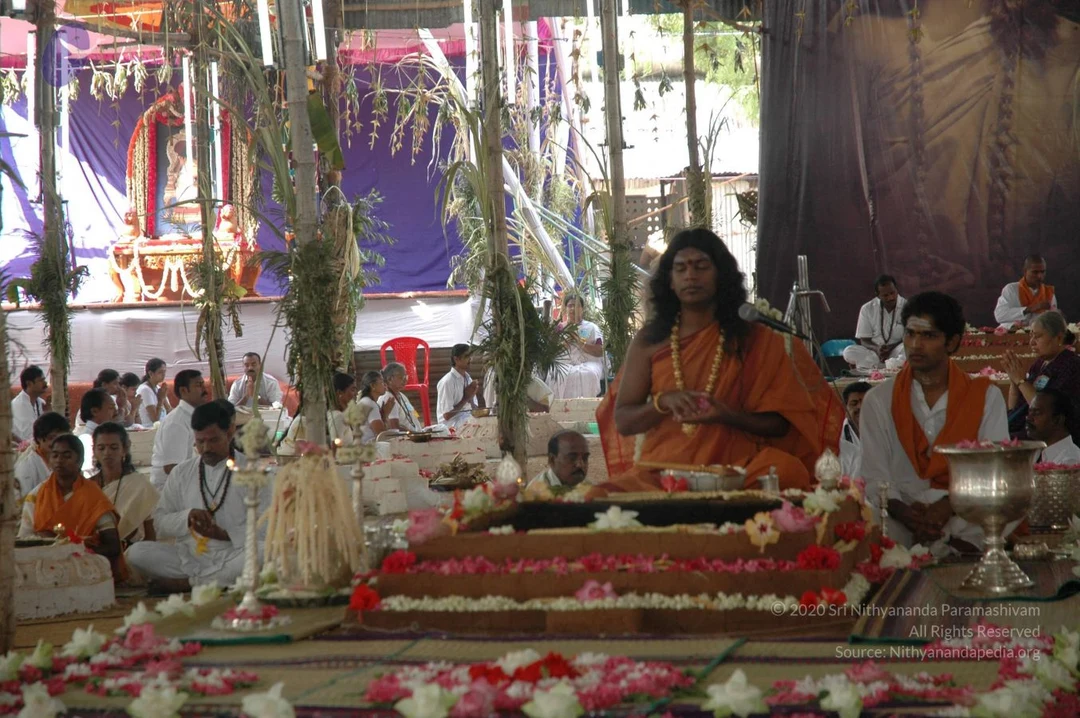
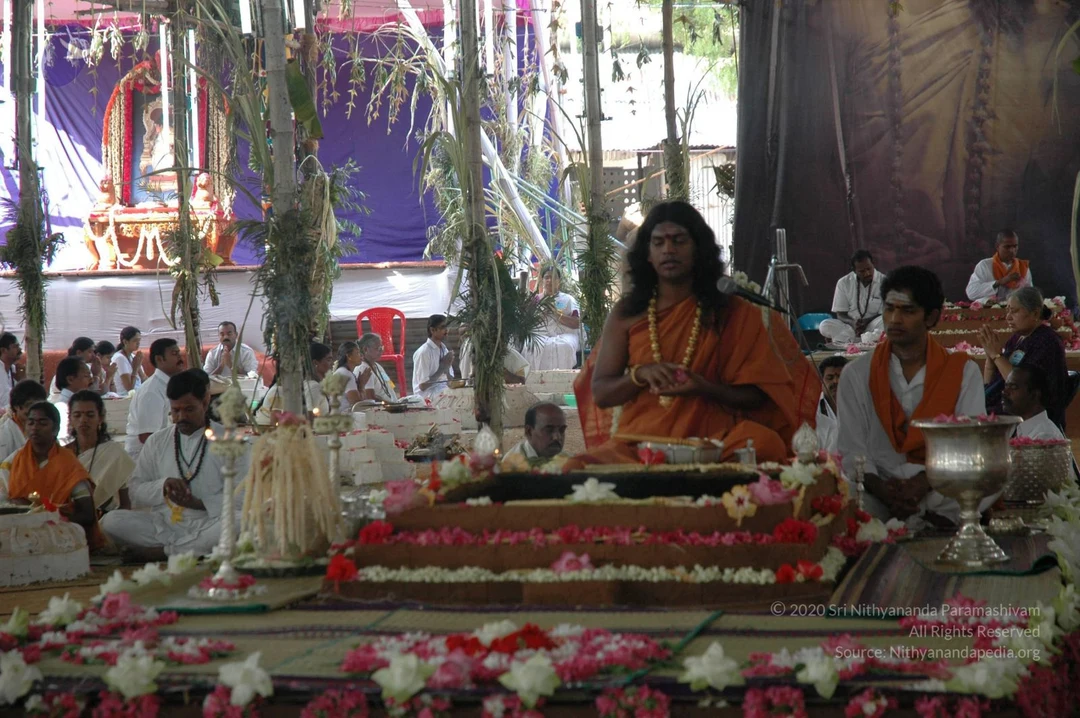
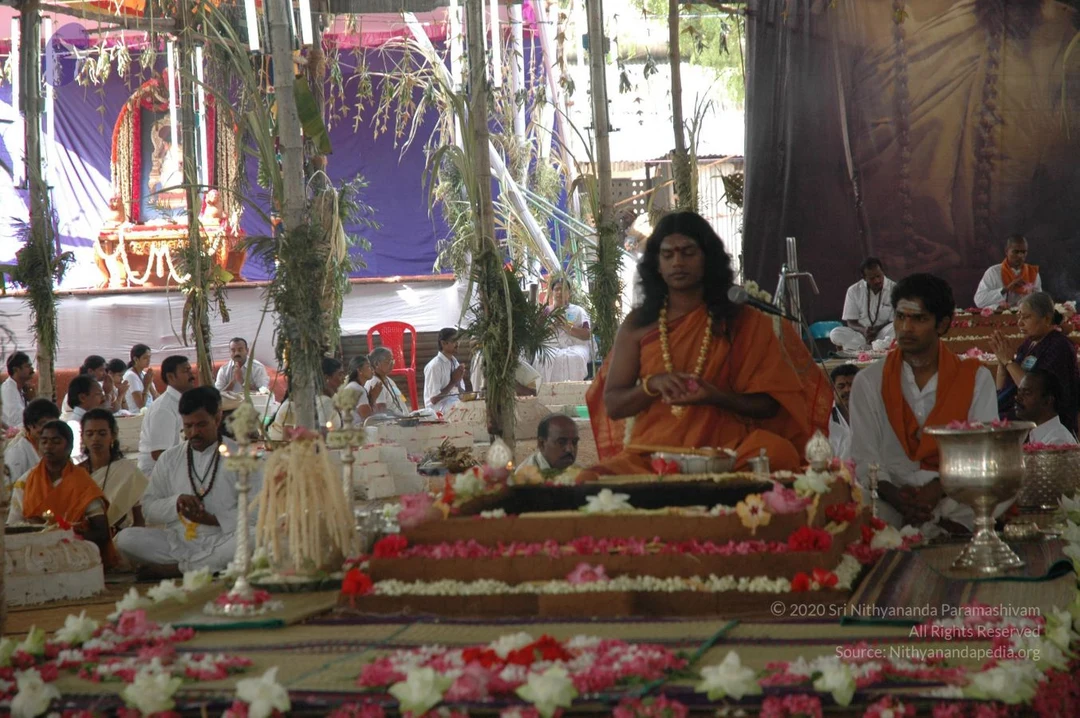
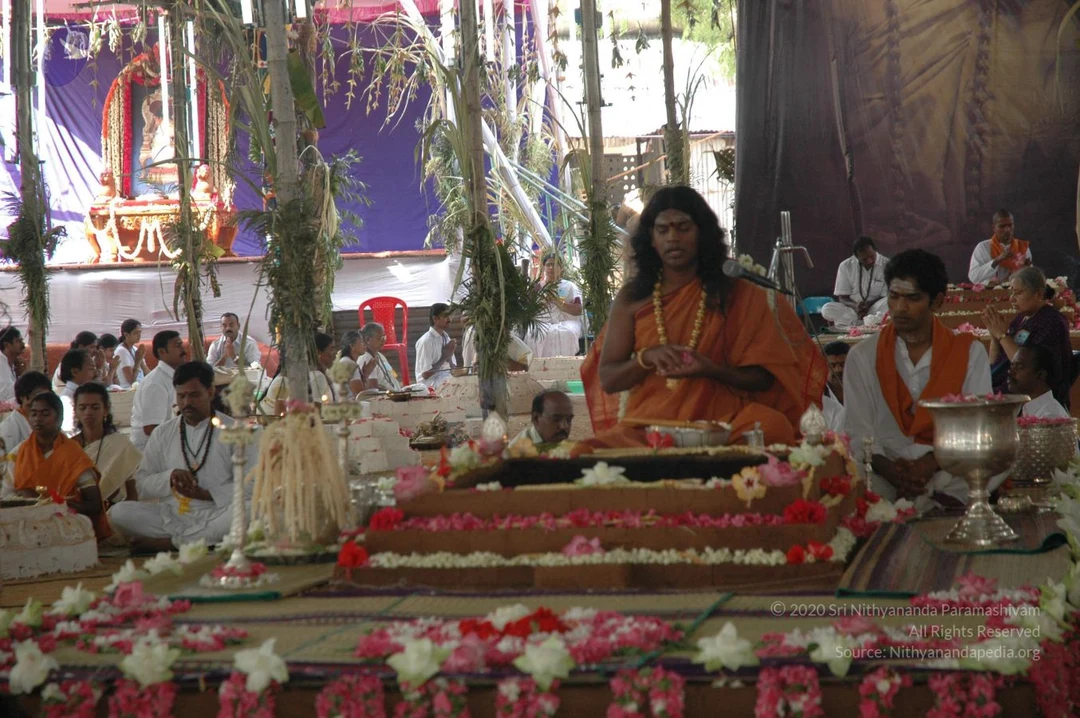
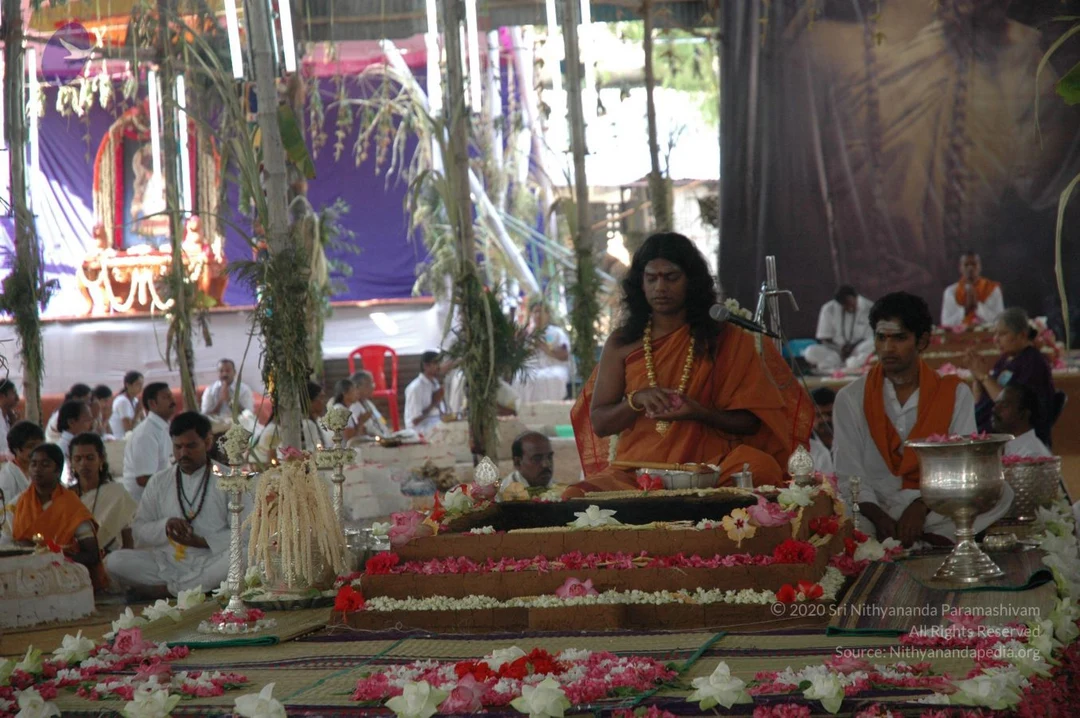
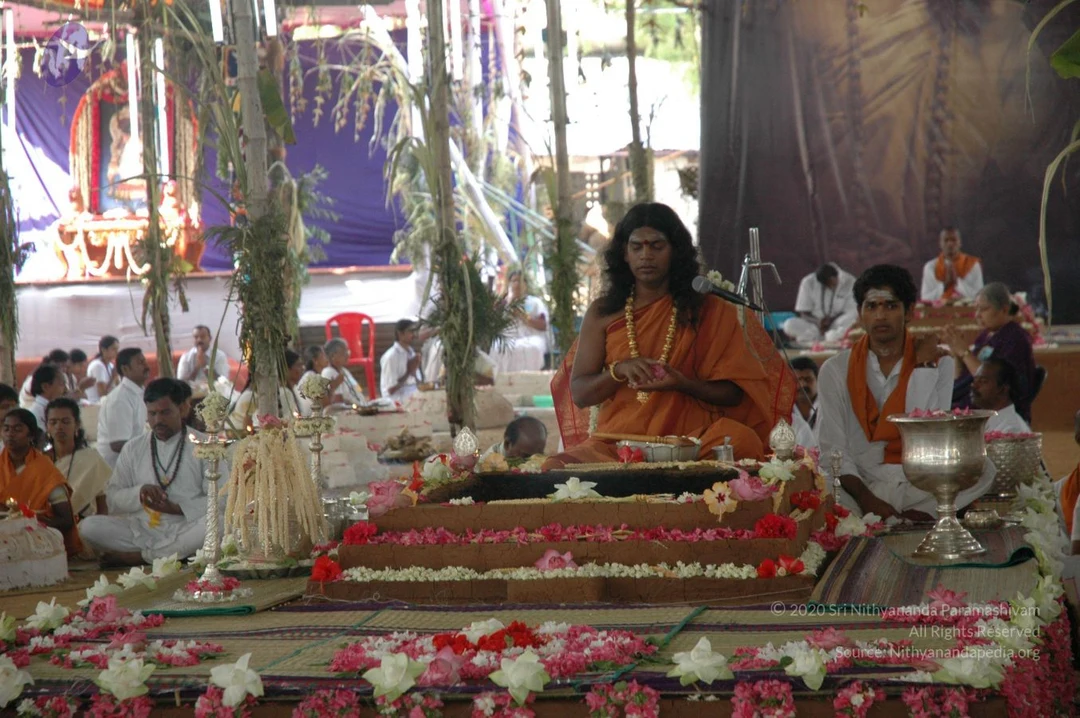
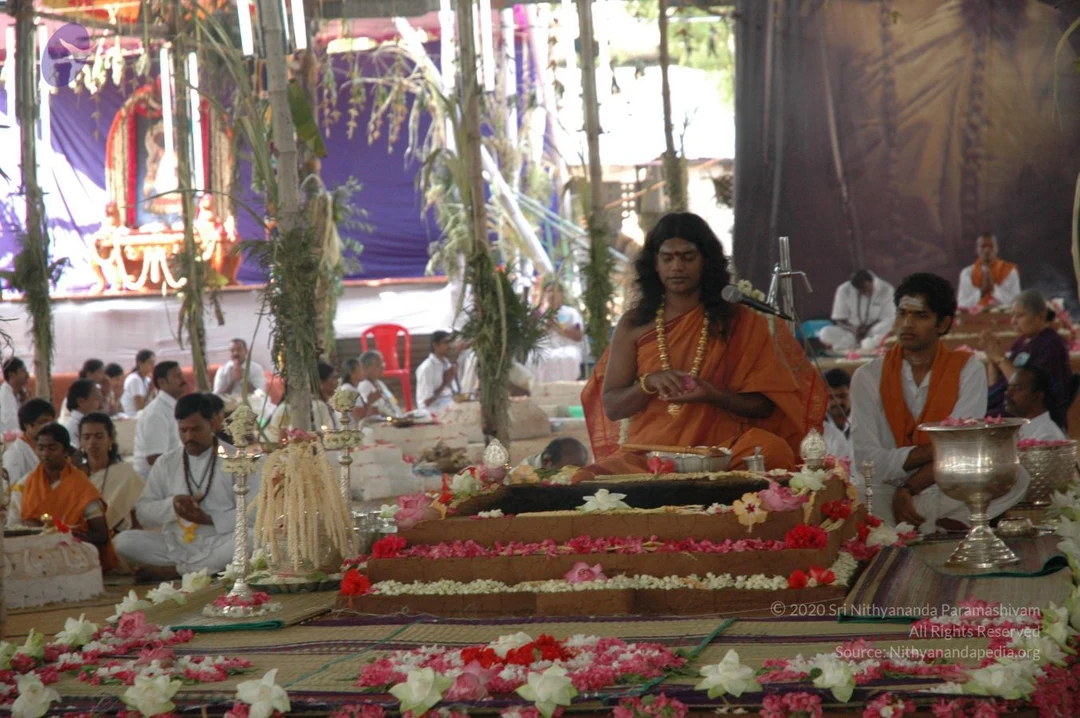
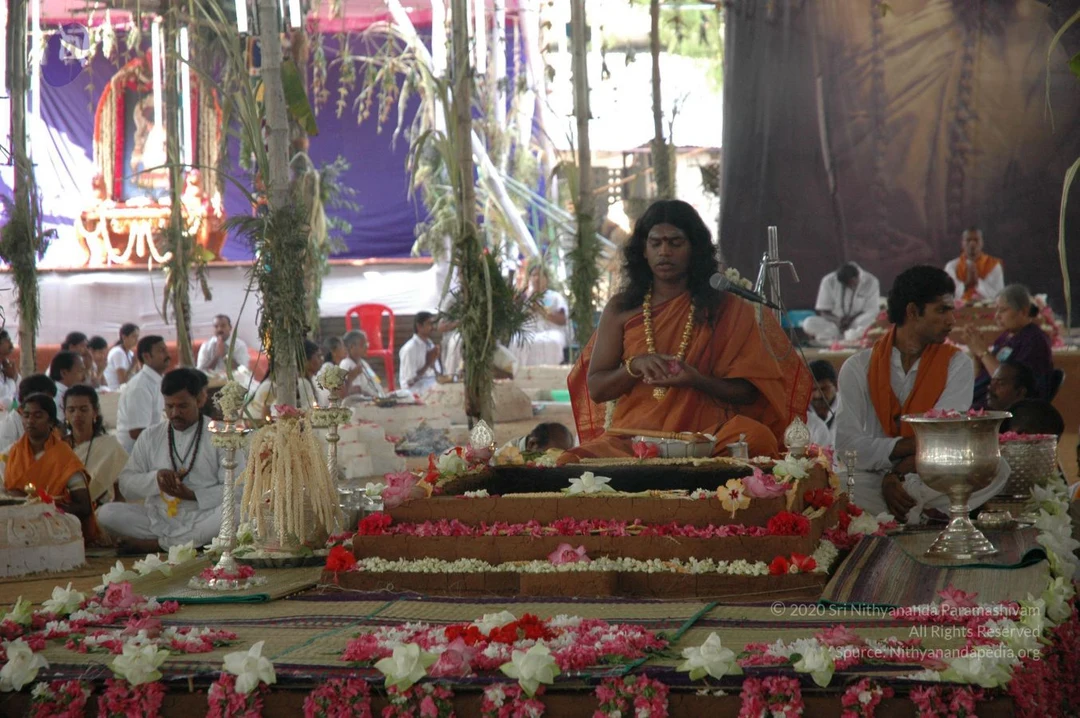
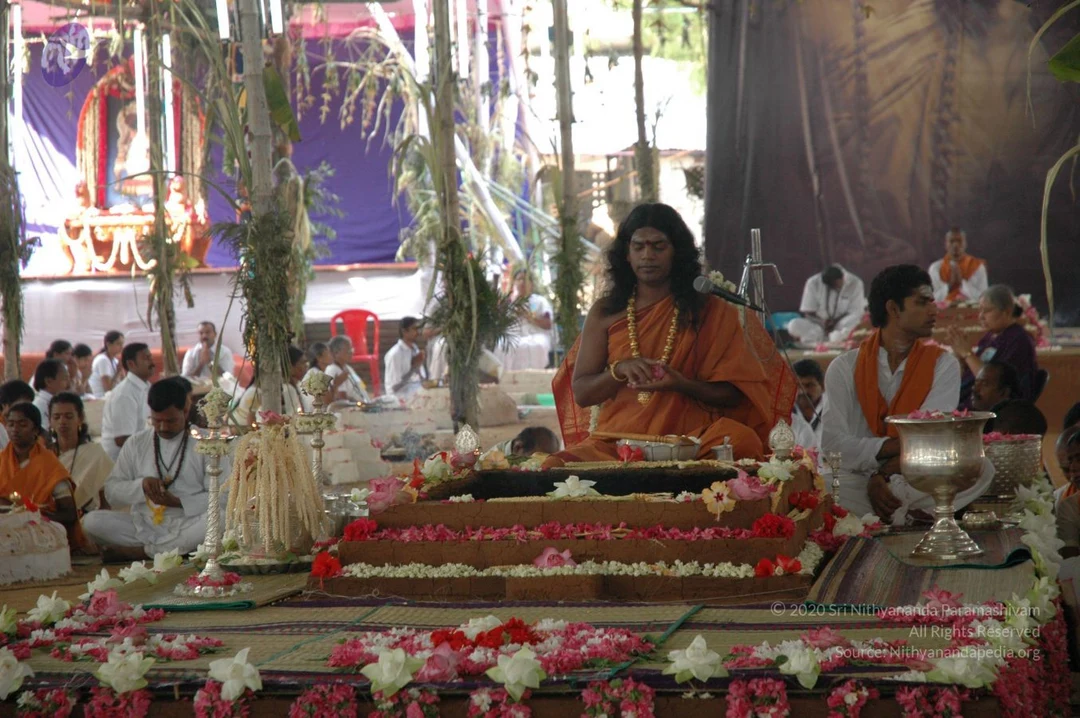
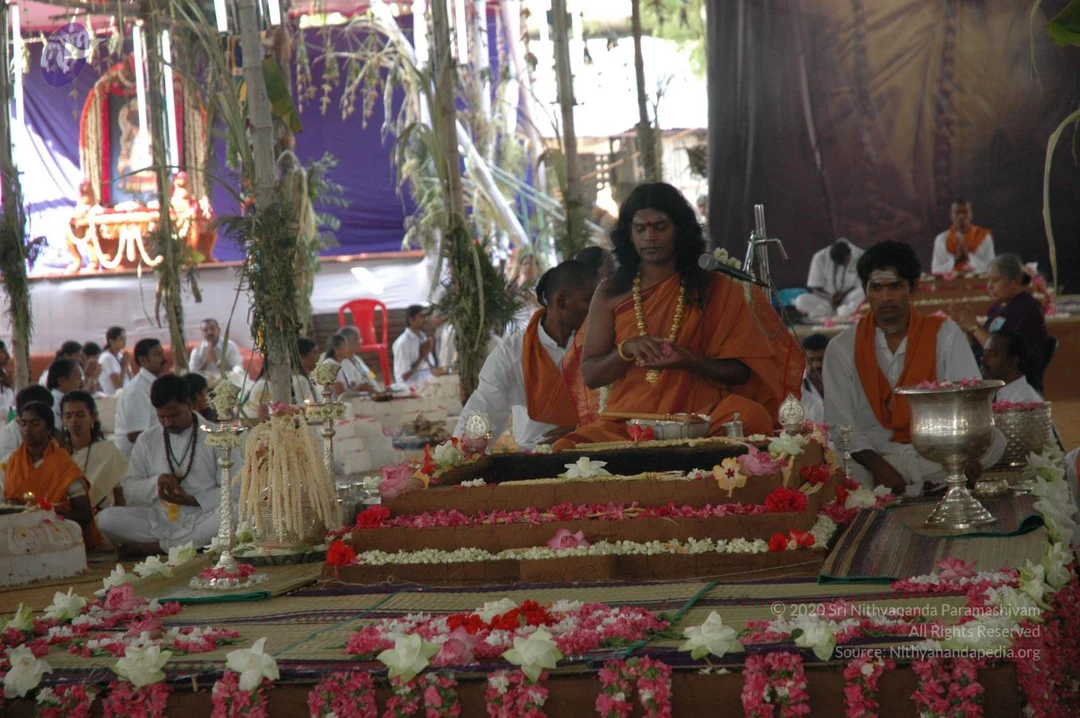
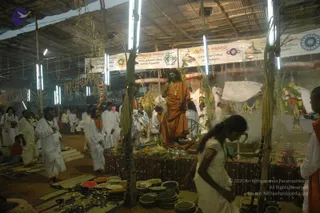
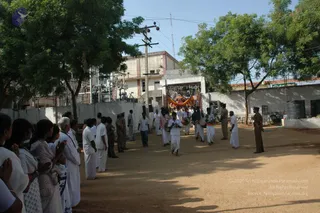
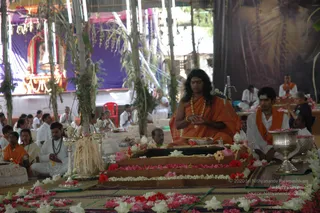
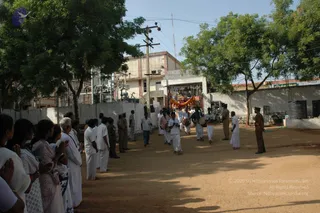
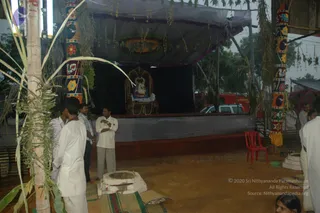
A photograph of a large outdoor yajna ceremony under a pandal with bamboo poles and palm-leaf decoration. In the centre, a man with long swept-back hair wears an orange saffron robe and a yellow-orange garland and sits before a tiered fire altar decorated with red and white flowers, holding his hands together in ritual gesture, with a microphone on a stand beside him. Behind the altar stands a silver vessel with flower-covered rims. A second seated man in white clothing with an orange shawl sits to the right. Other people in white ritual dress and orange shawls sit on mats in the background, and a deity image in a shrine with purple drapery is visible at the upper left. Several people are seated across the hall, and the scene shows a homa-style fire offering with flower garlands on the floor.Outdoor photo of a procession in a dusty courtyard under trees. On the left, a line of people in white dhotis and white saris stand with palms pressed together in namaste. In the centre, several men in white dhotis and bare upper bodies carry a decorated palanquin topped with a deity murti under an orange cloth canopy, while drummers in white beat drums. Uniformed police officers in khaki stand along the path. A concrete building with a decorated gateway and a water tank lie behind. The scene appears to be a ceremonial procession. a person's presence is not visibly identifiable.An outdoor ritual stage under a grey tarpaulin canopy decorated with hanging green leaves and mango-leaf toran. Two painted pillars with floral and figurative designs flank the stage. On the raised platform sits an ornate golden throne with a framed painted portrait of a deity figure with a halo, placed against black drapery. Several men in white shirts and dhotis stand on the sandy ground in front of the stage; one stands with arms folded, others walk near a white-painted square fire pit and mats. A red plastic chair sits at the right edge. Two men on the far side and a woman in the lower right corner are partly visible.

July 18 2006

Original wiki page
Contents

Photos

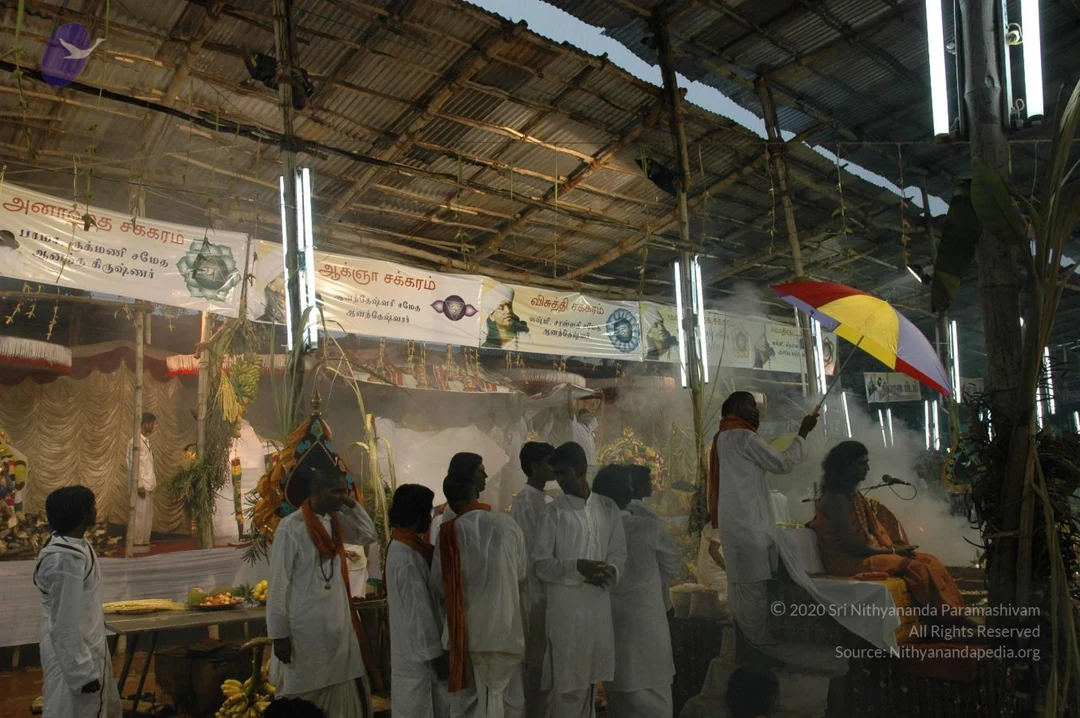
Sapta Yaagam – 16, 17, 18 Jul 2006, Salem, India

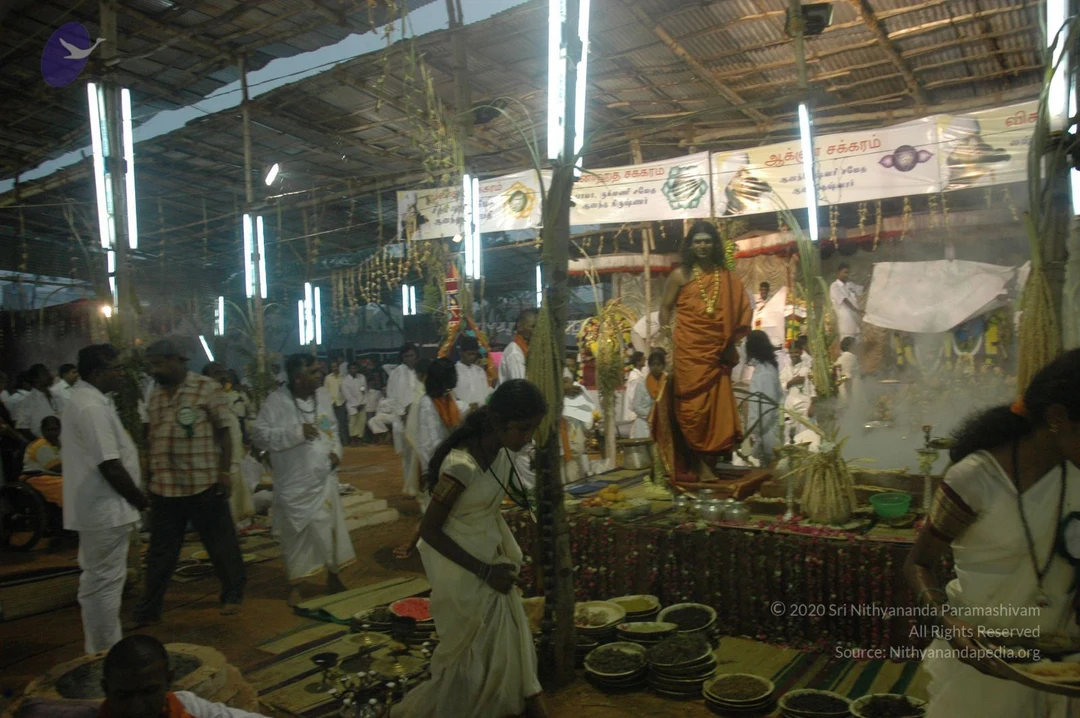
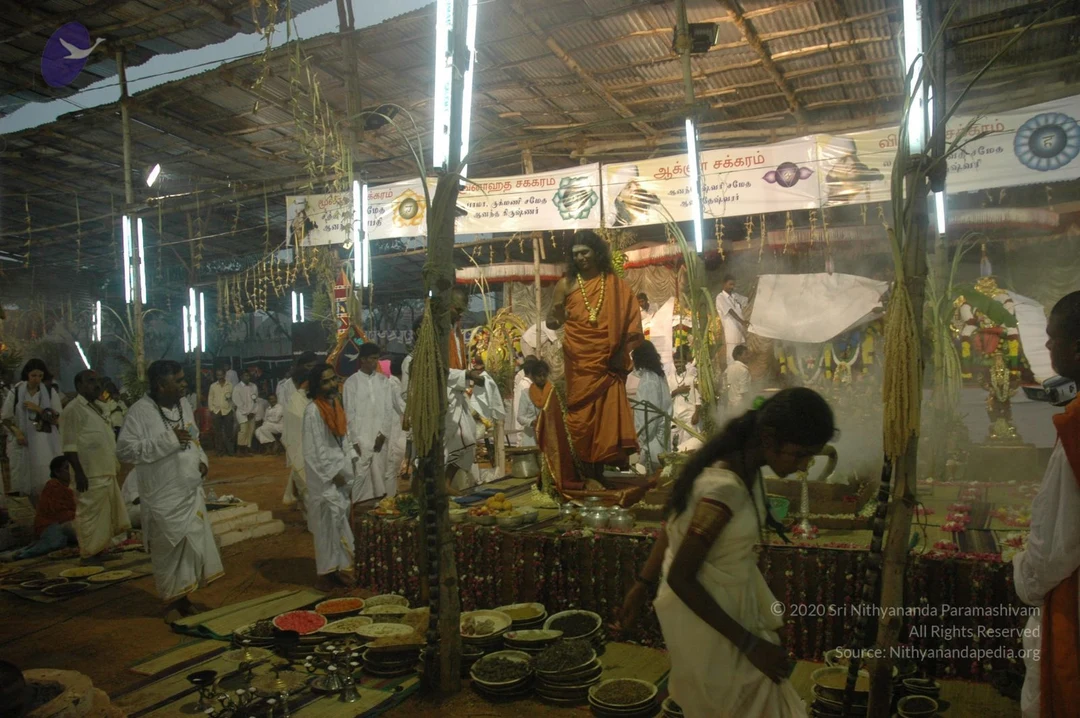
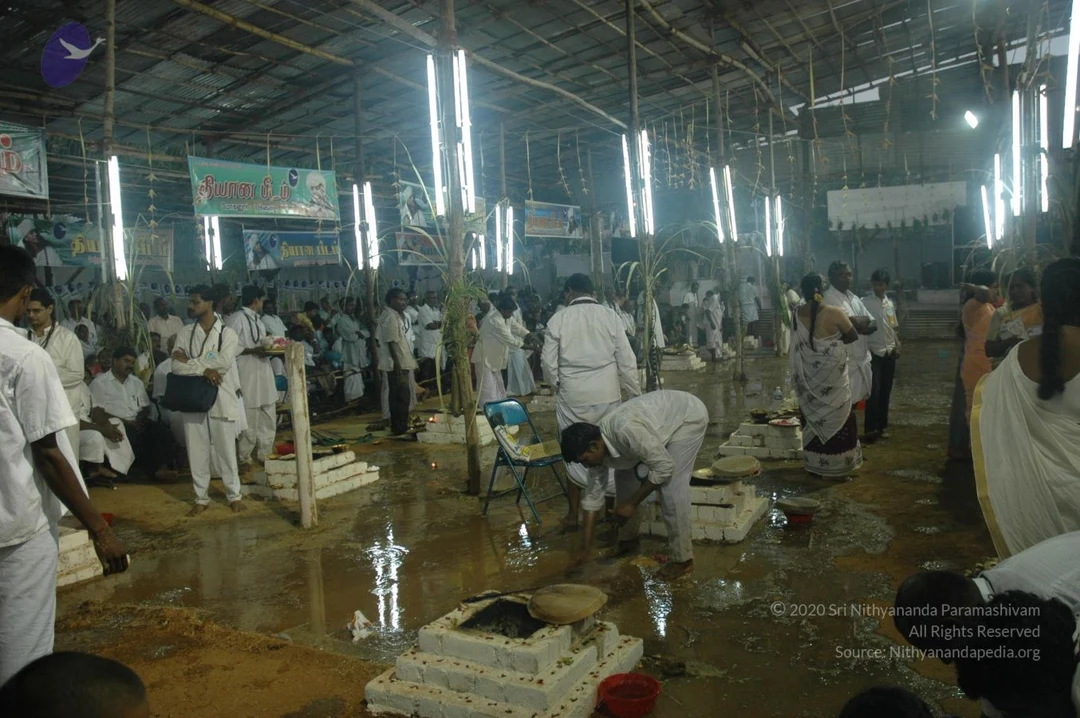
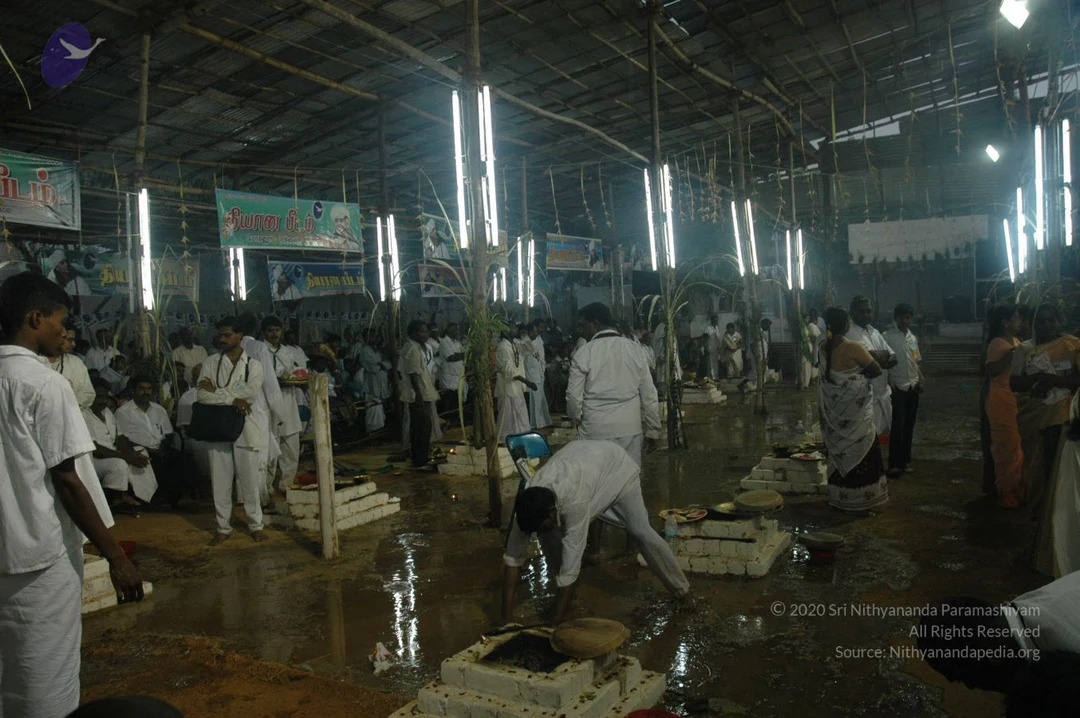
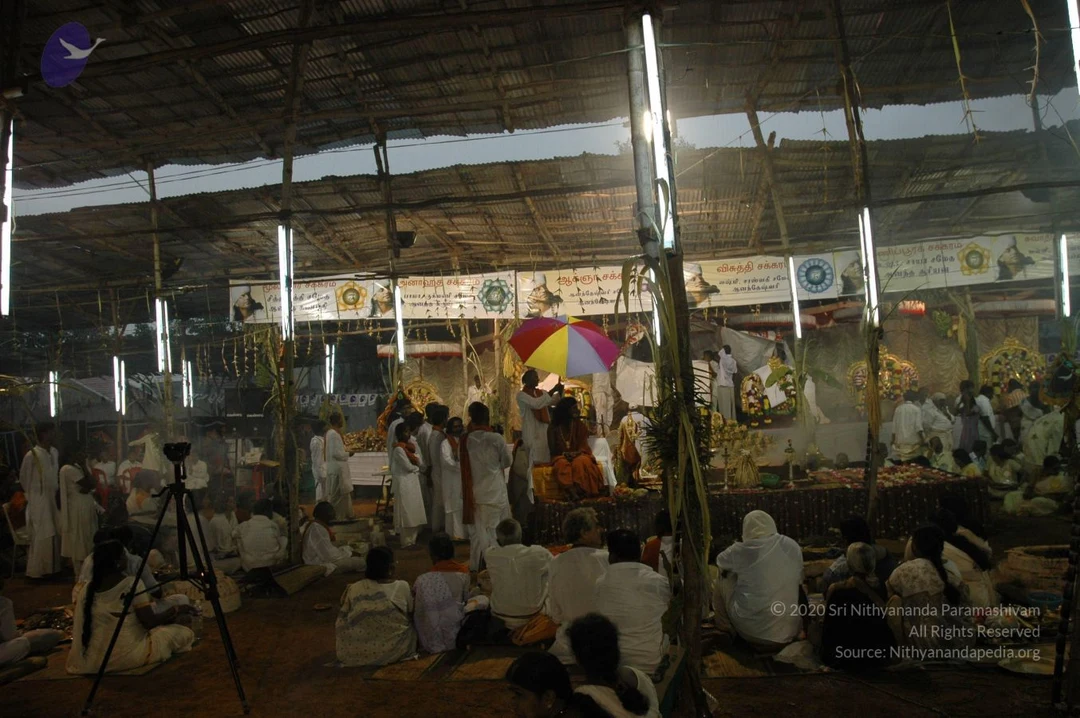
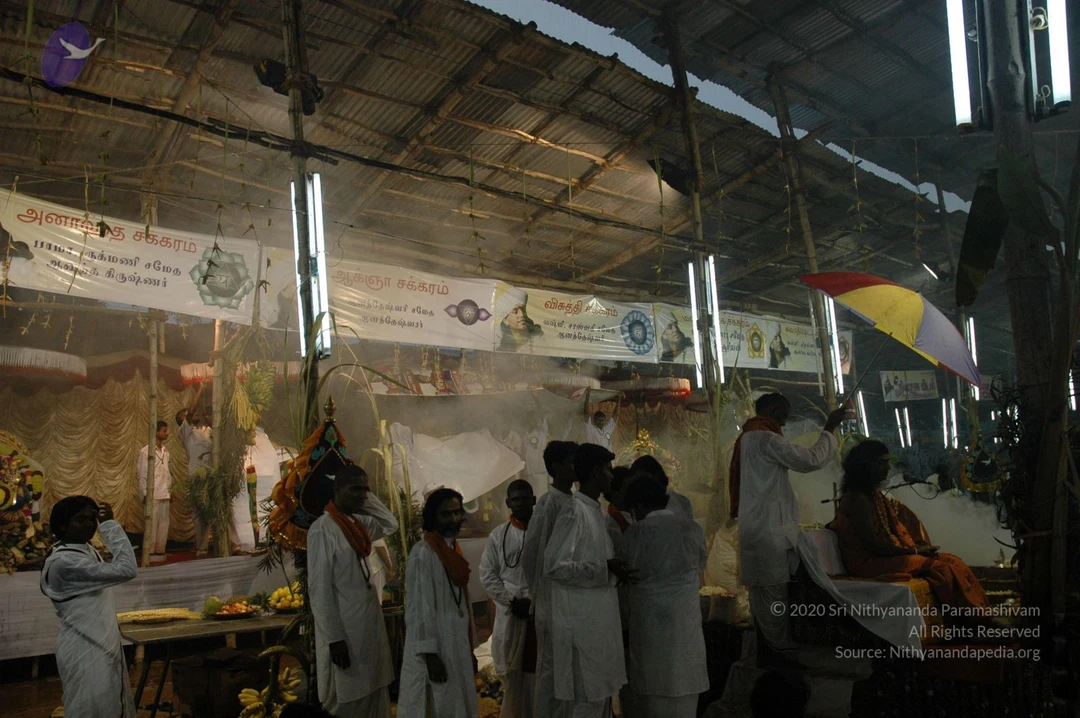
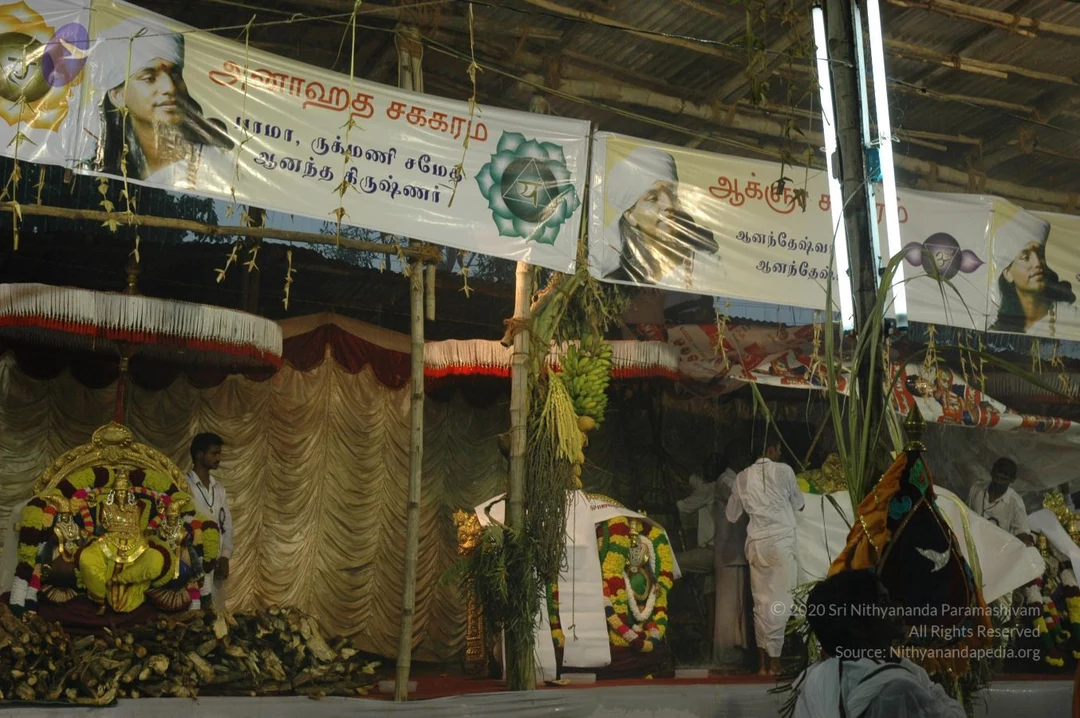
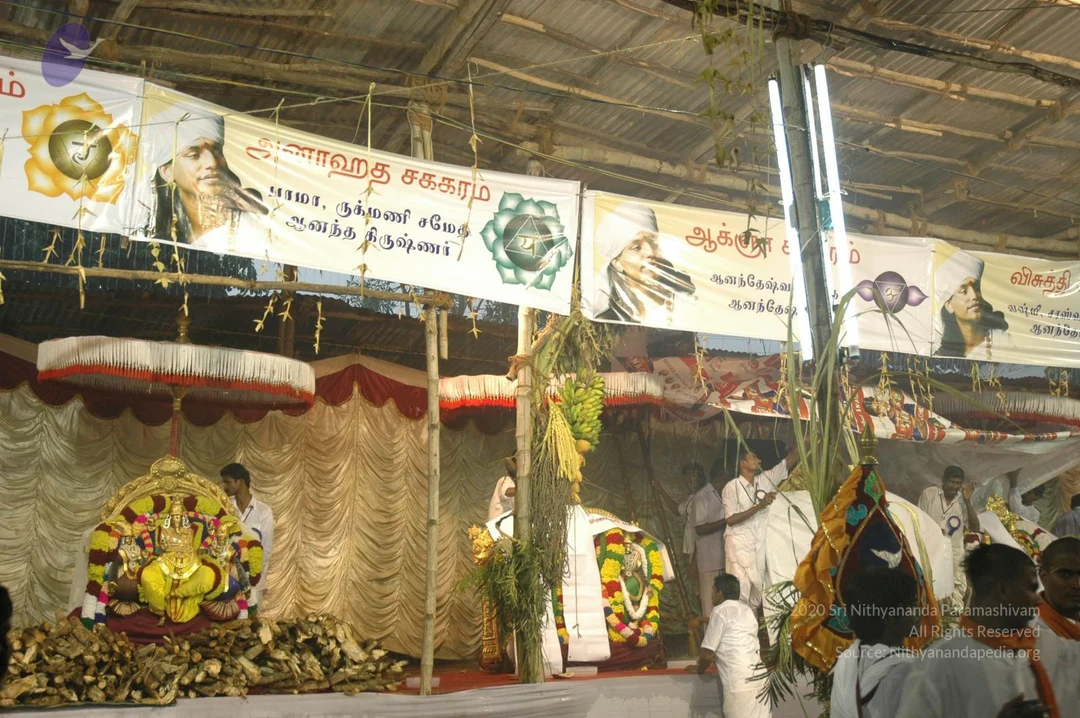
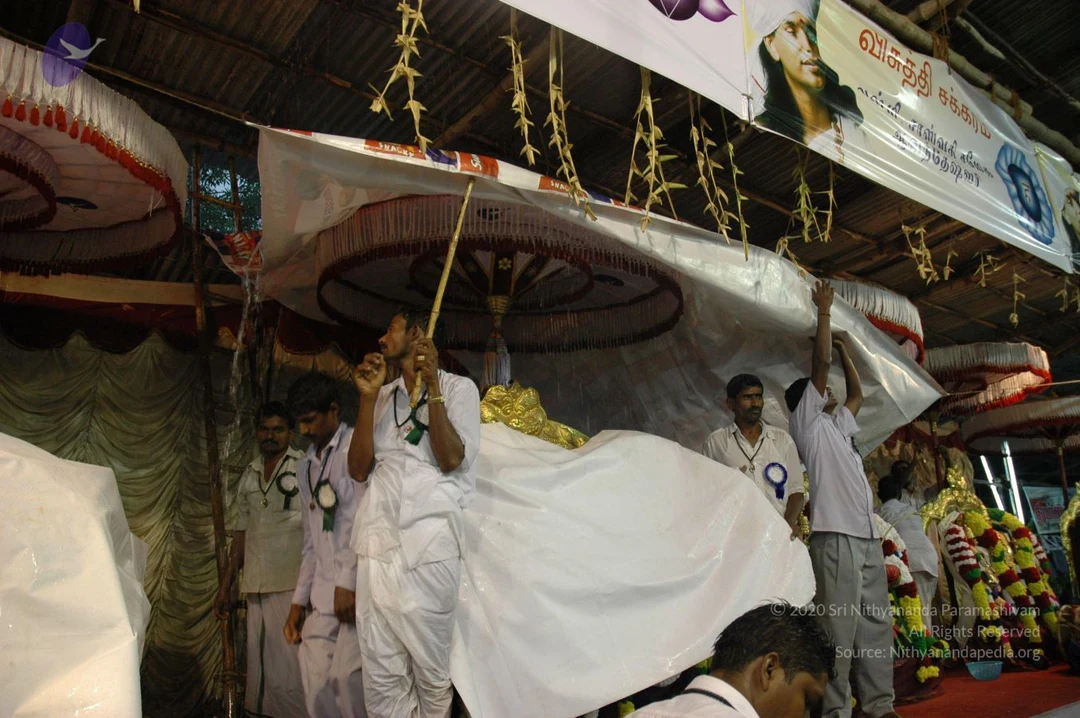
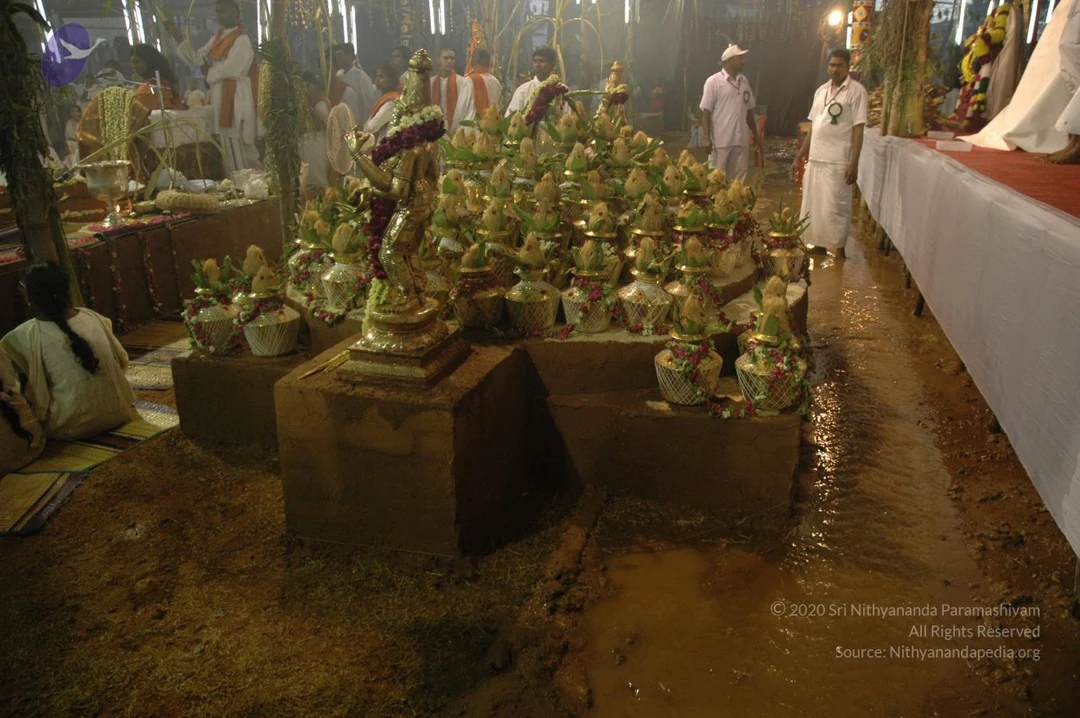
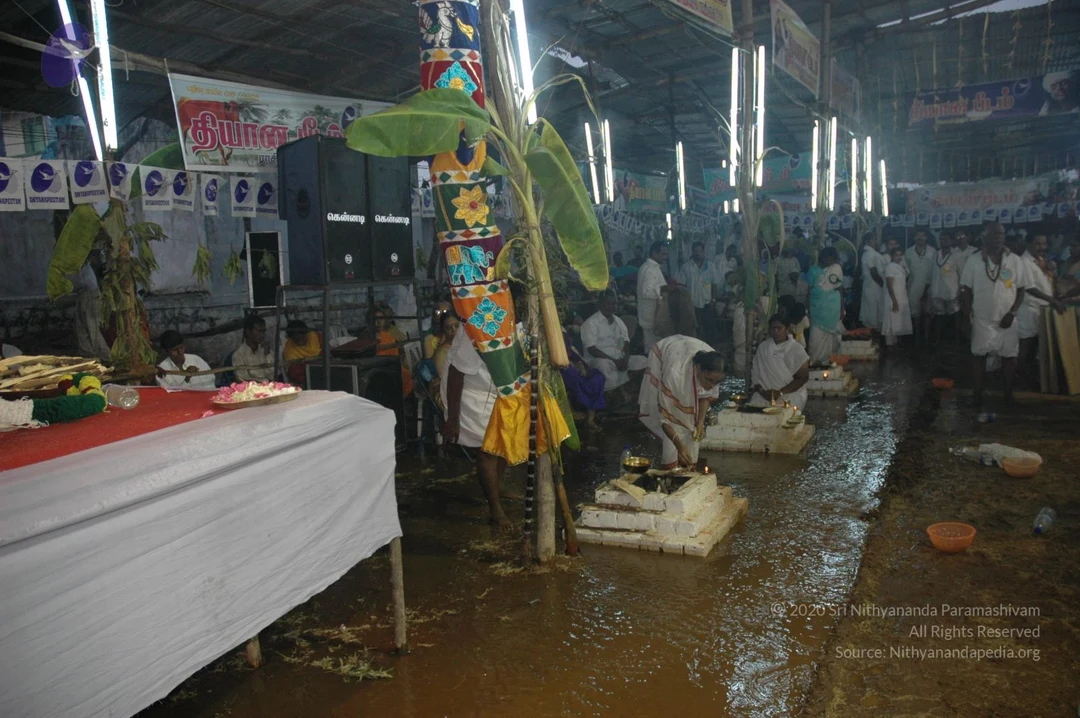
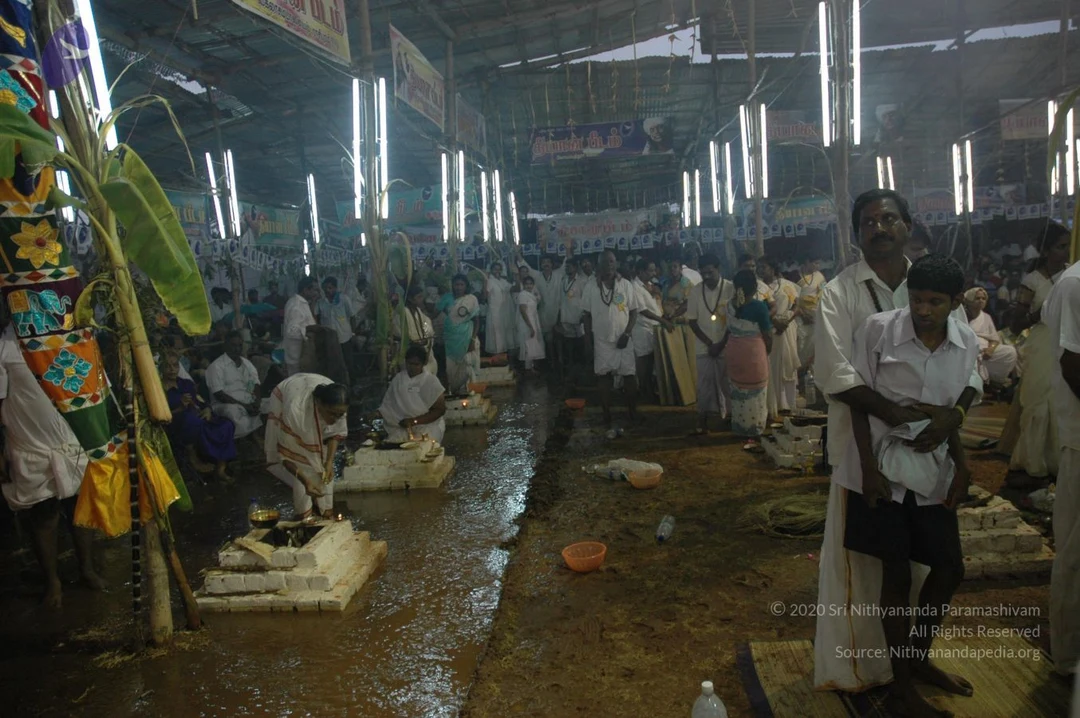
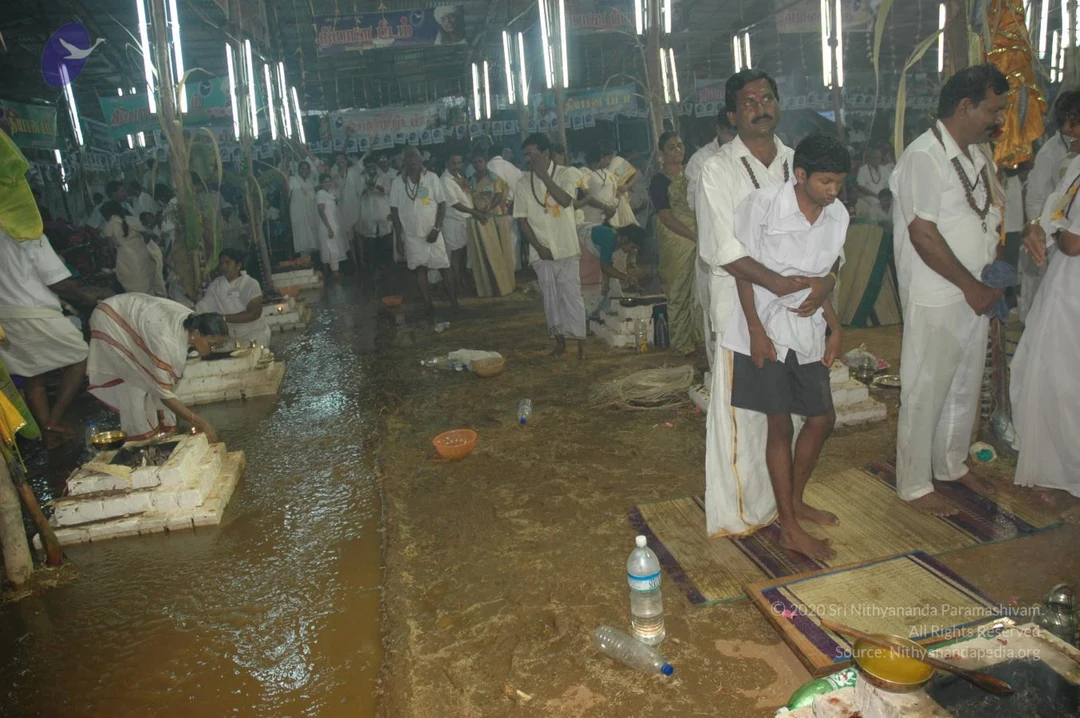
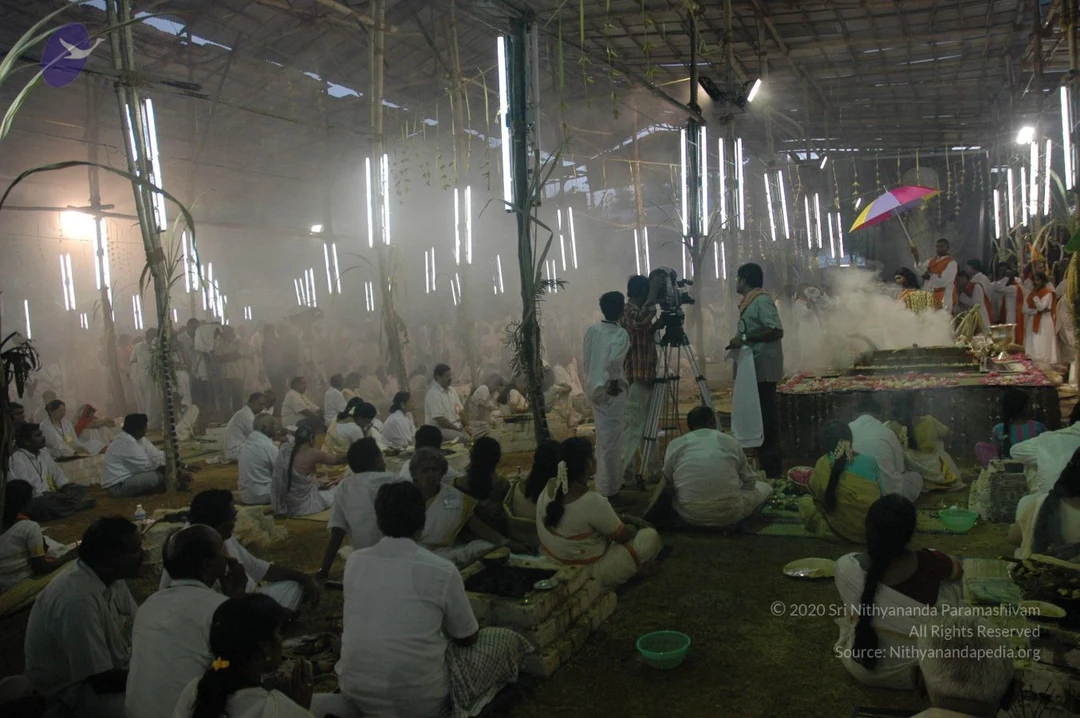
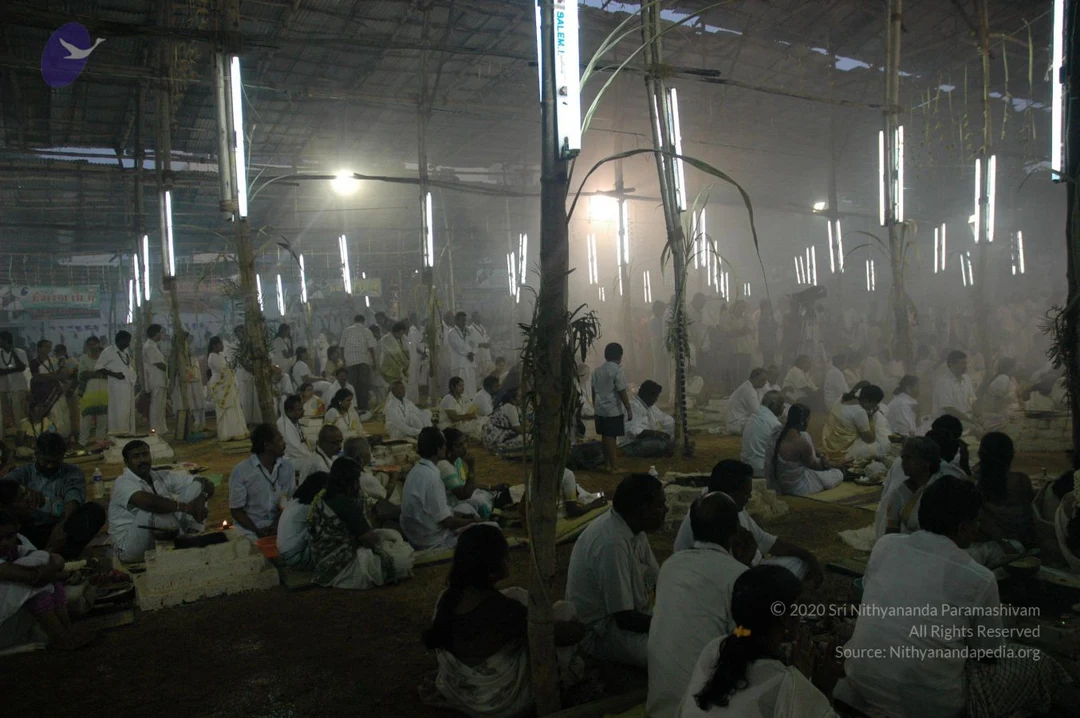
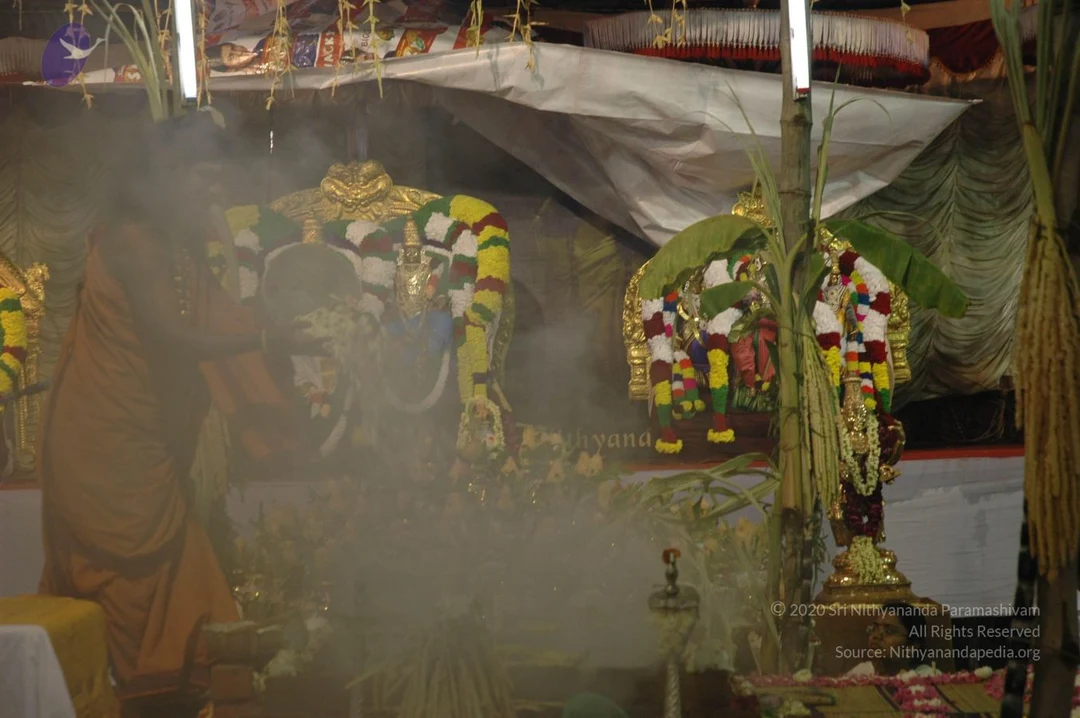
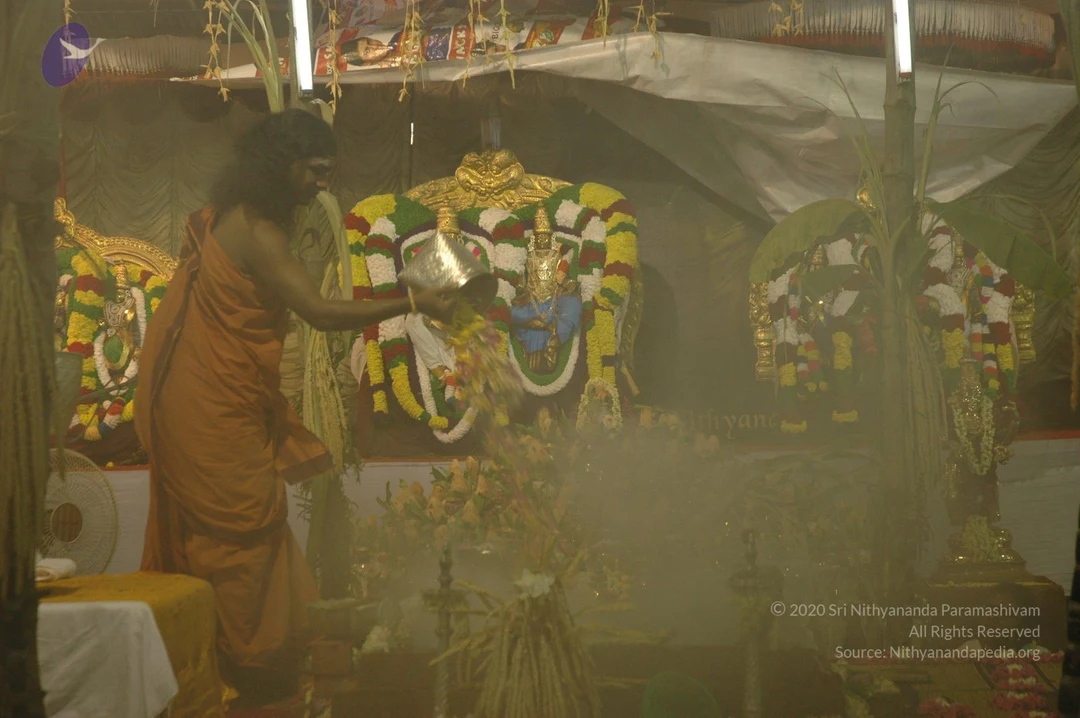
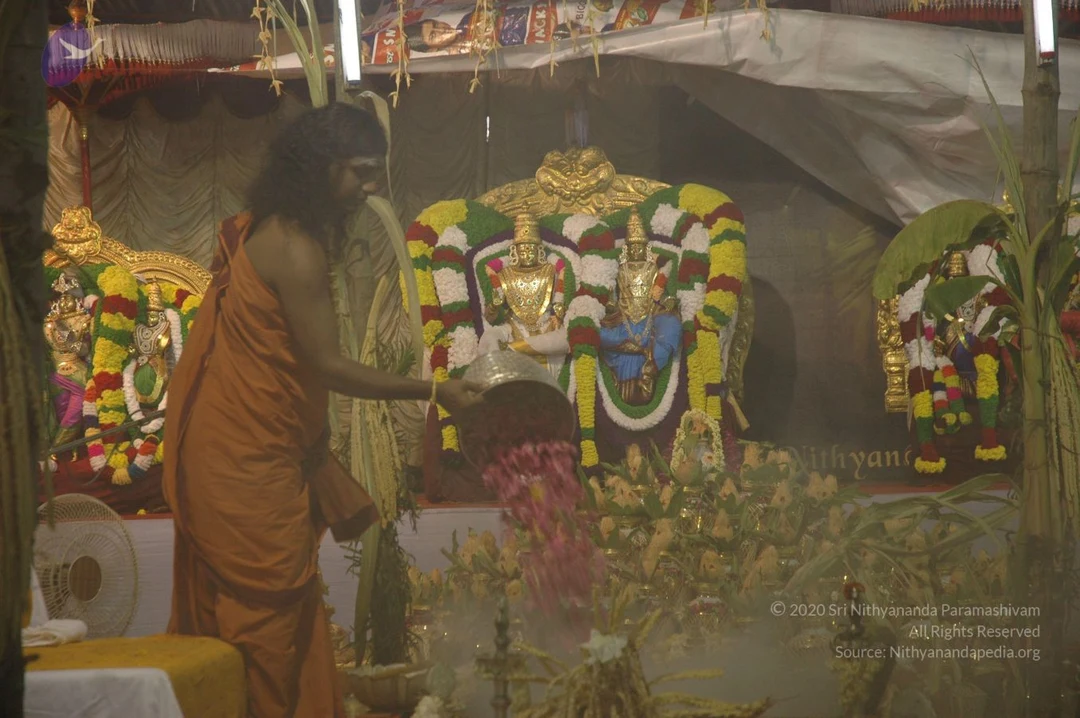
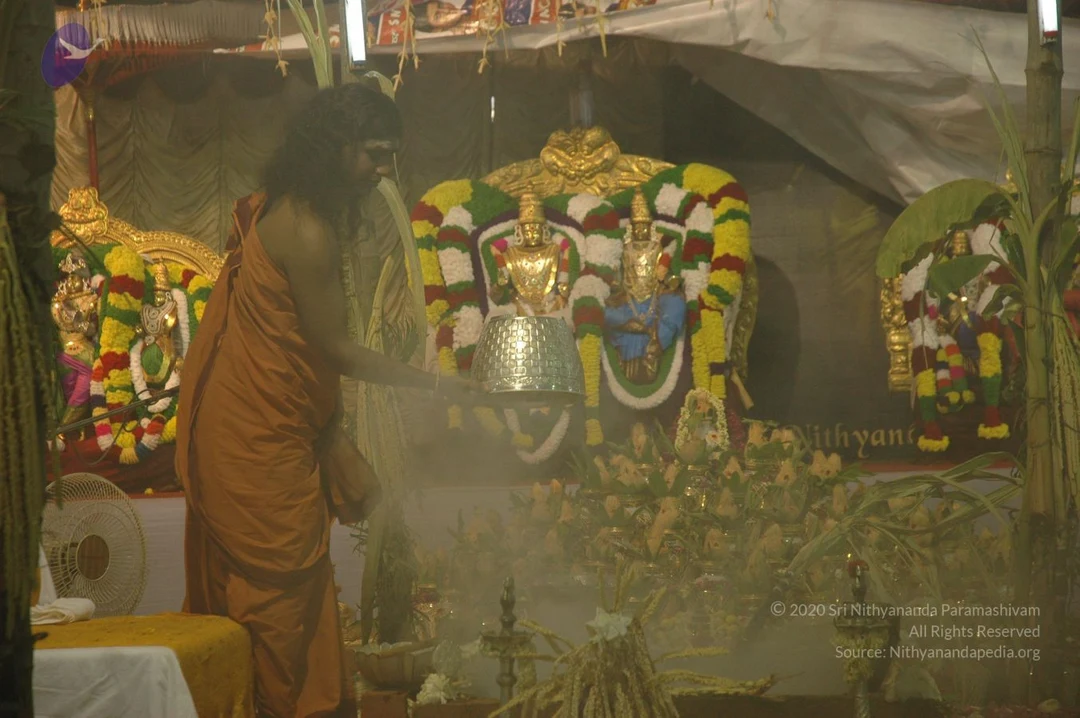
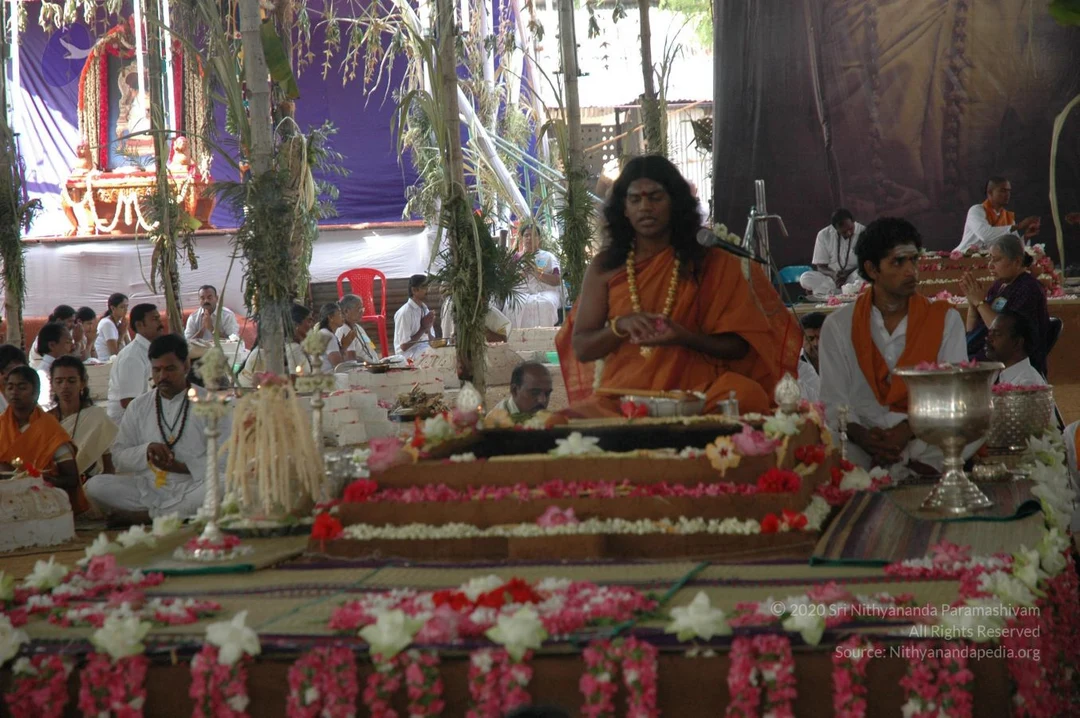
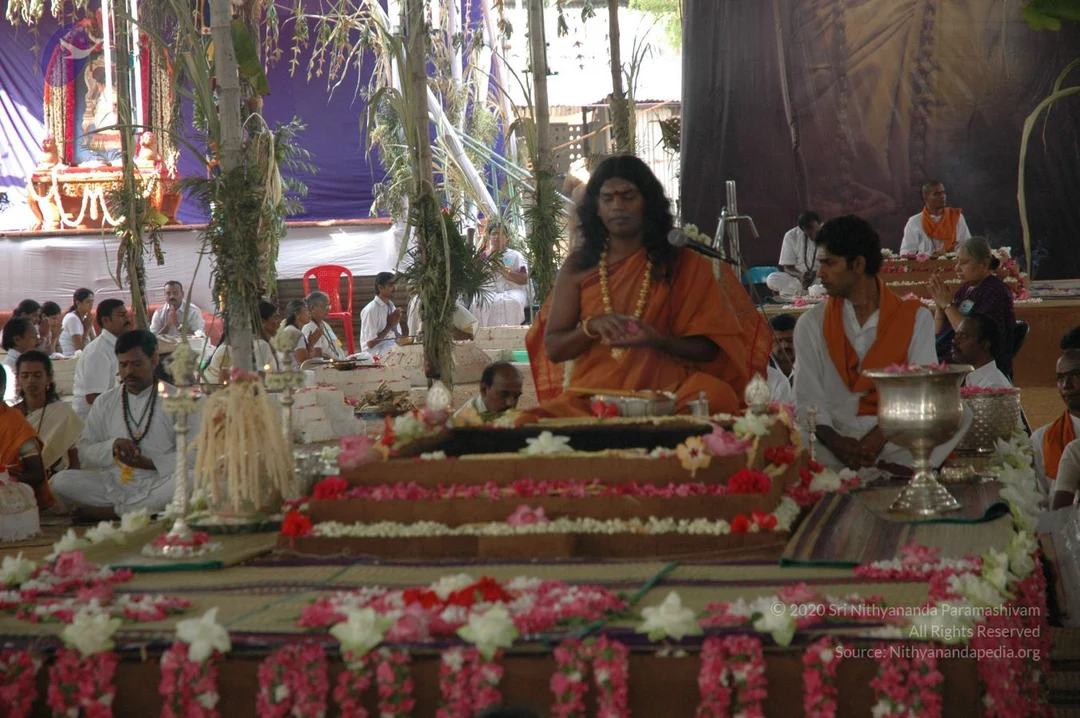
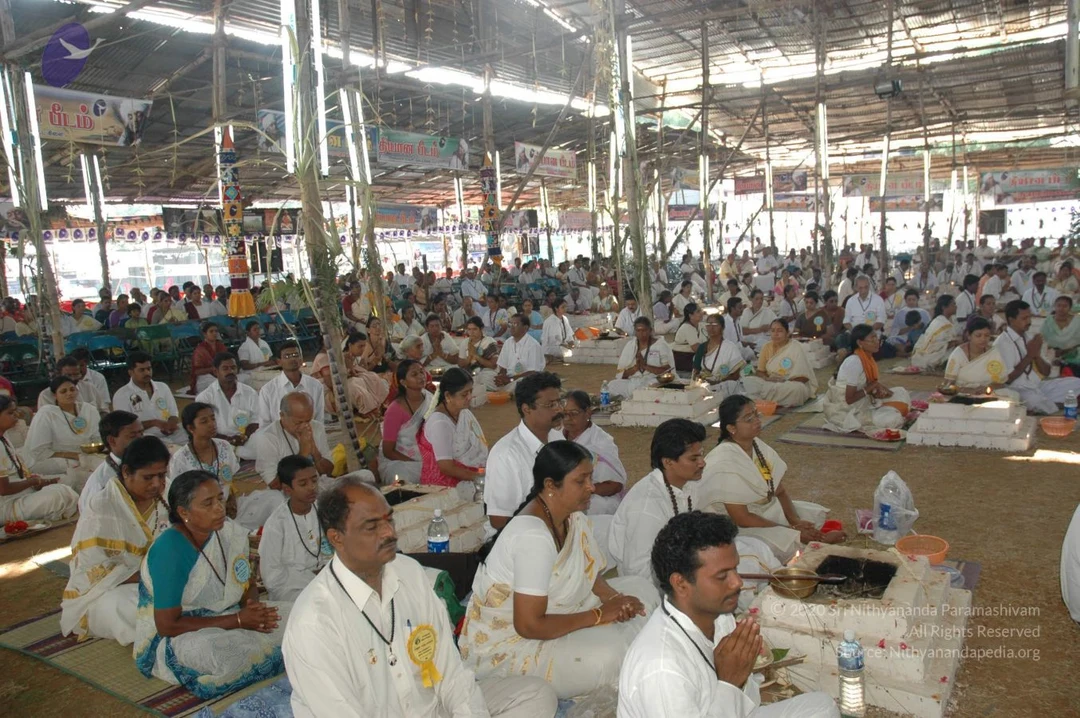
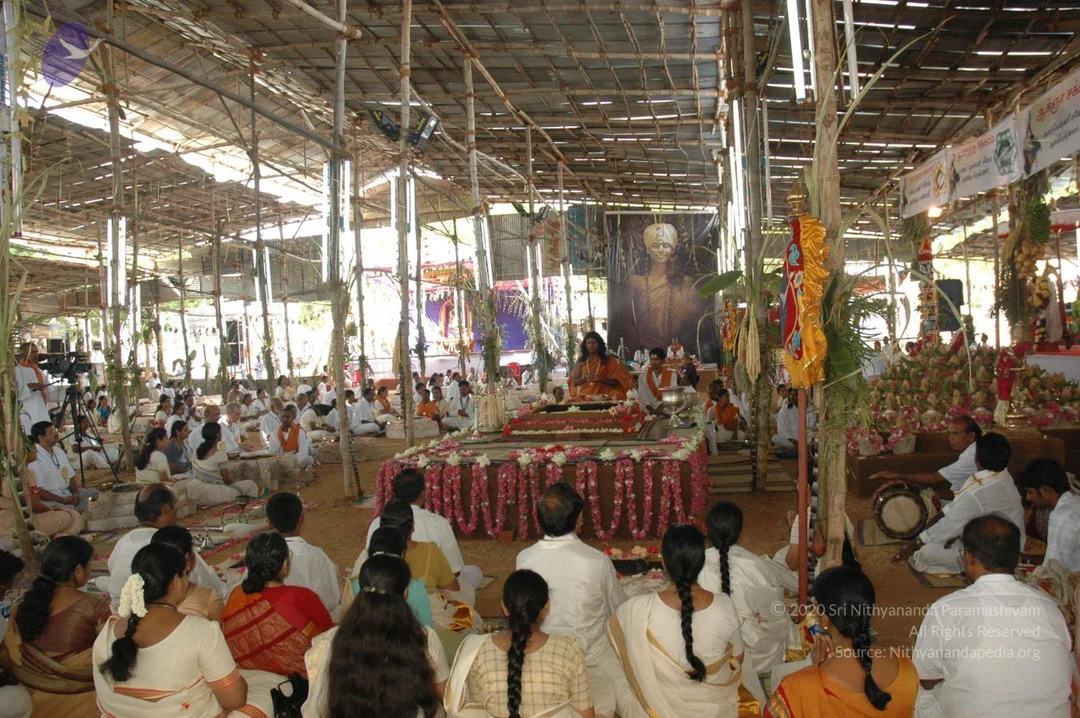
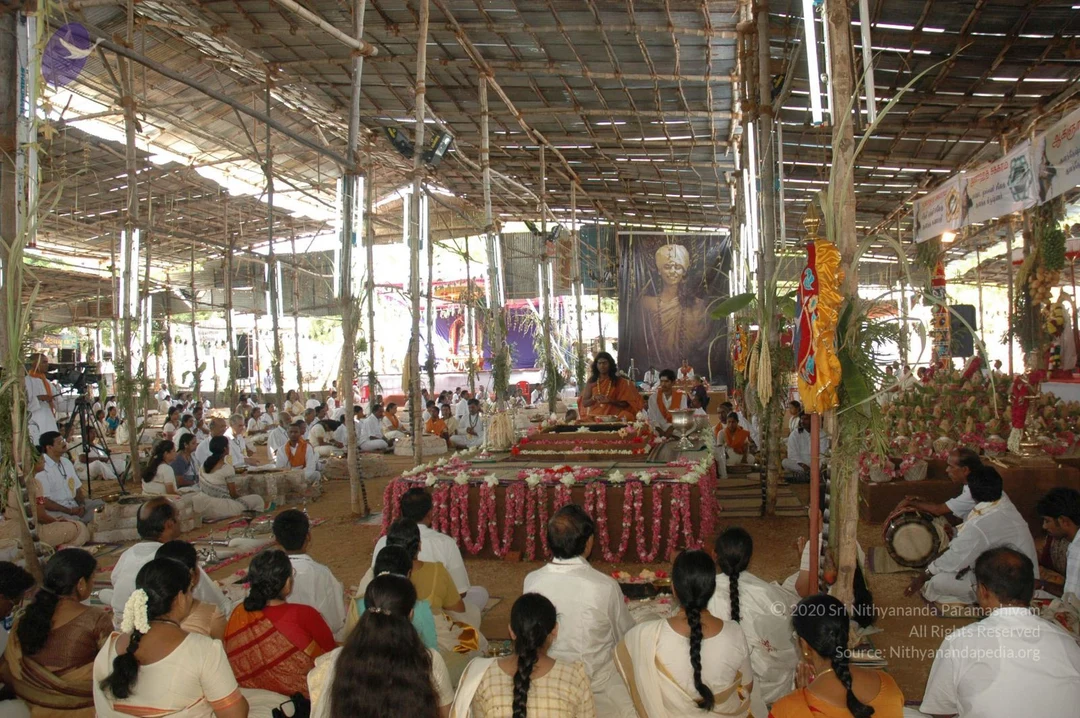
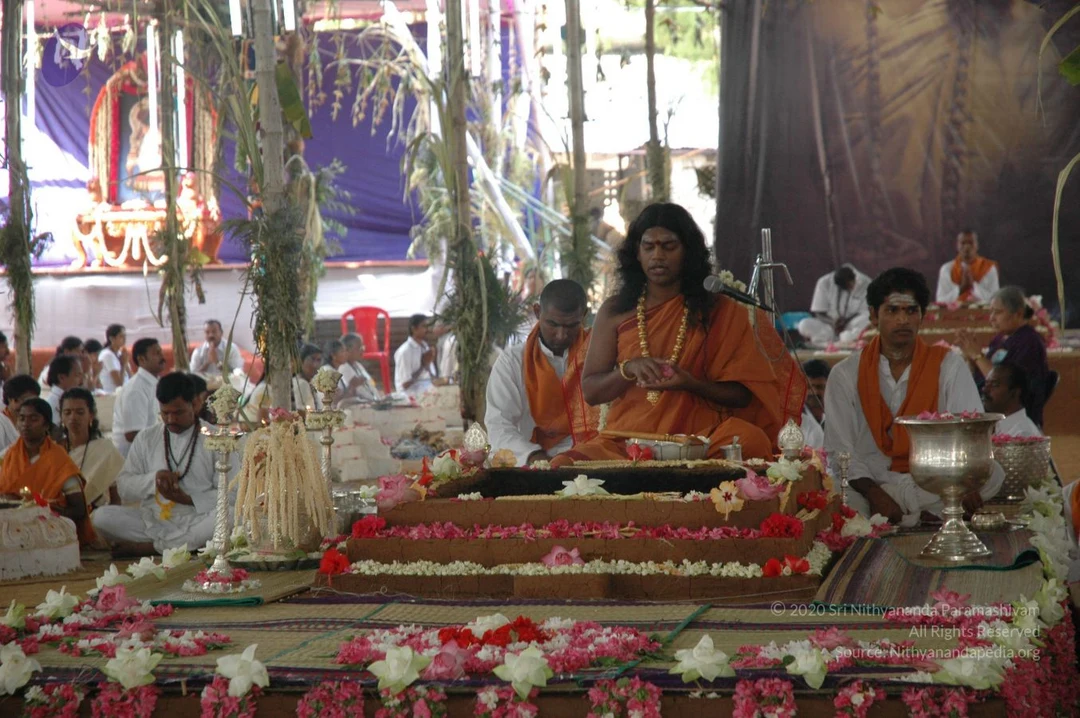
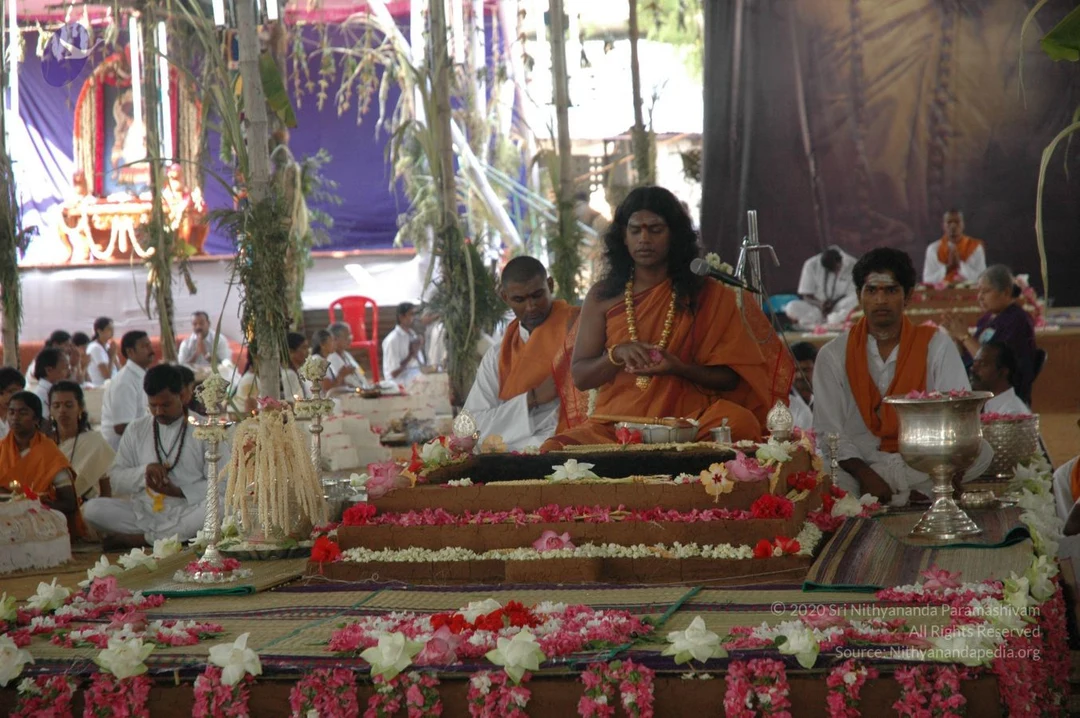
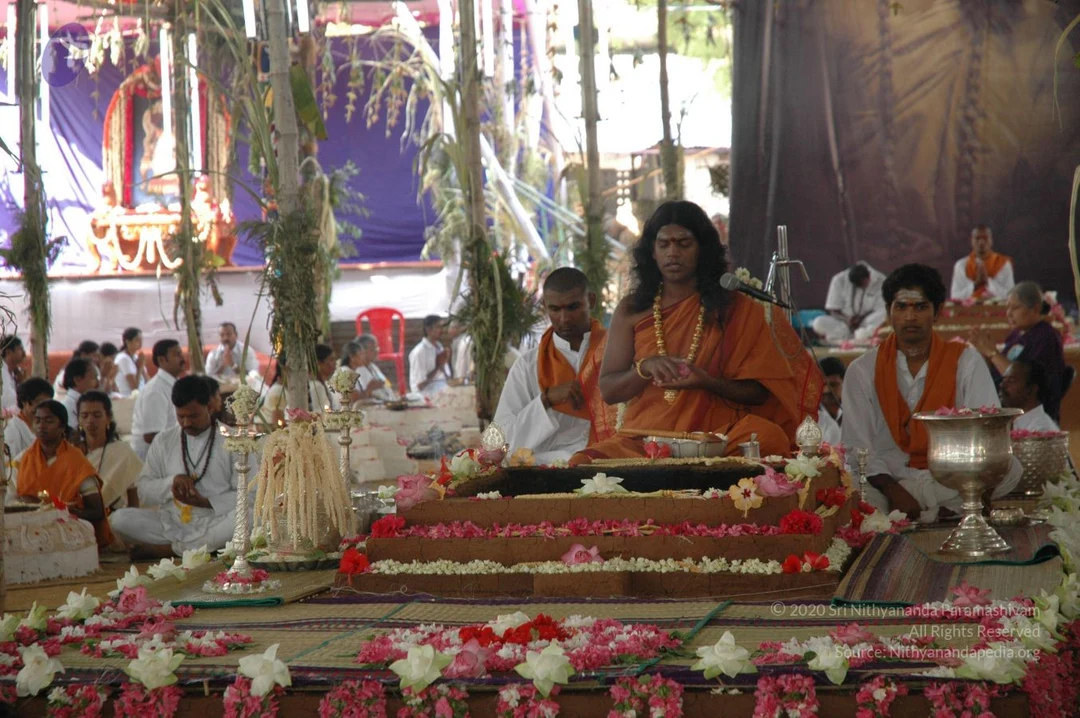
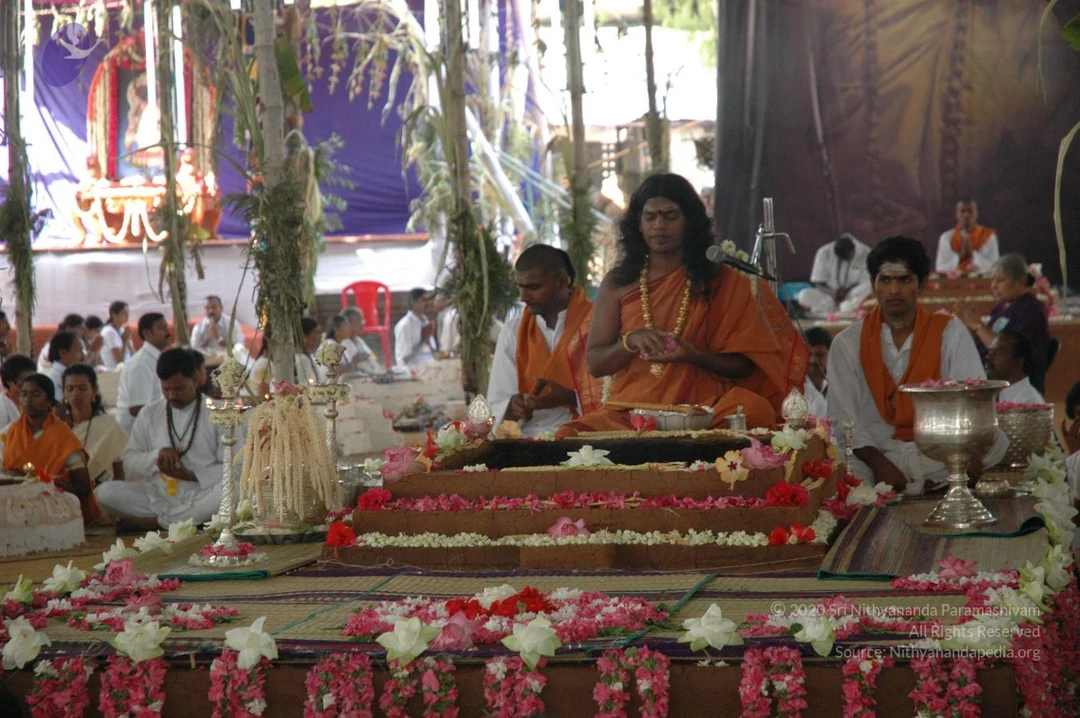
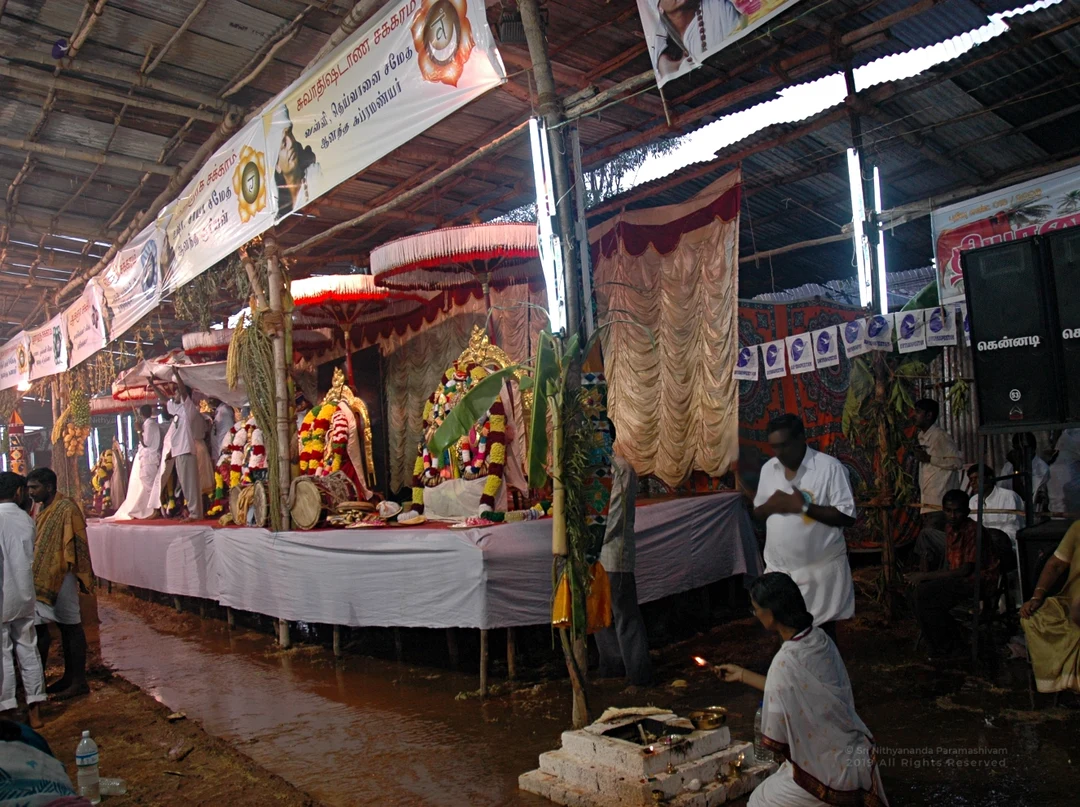
On 16, 17 and 18 July, people of Tamilnadu witnessed a yajna (offering of fire) on a humongous scale performed by Bhagawan Sri Nithyananda Paramashivam himself. This yajna was an offering to the seven presiding deities for the seven chakras in the human system. The human system has seven major energy centers called the chakras. These chakras are associated with our various emotions that cause disturbance in the mind and therefore in the body. Each of these chakras is associated with a deity which when worshipped symbolically, takes one beyond the clutches of the associated emotions and liberates one in that sense. The seven deities are:

Ananda Ganapathy - Mooladhara chakra

Ananda Subramanya - Swadhishtana chakra

Ananda Surya - Manipuraka chakra

Ananda Venkateshwara - Anahata chakra

Anandeshwari - Vishuddhi chakra

Anandeshwara - Ajna chakra

Guru - Sahasrara chakra

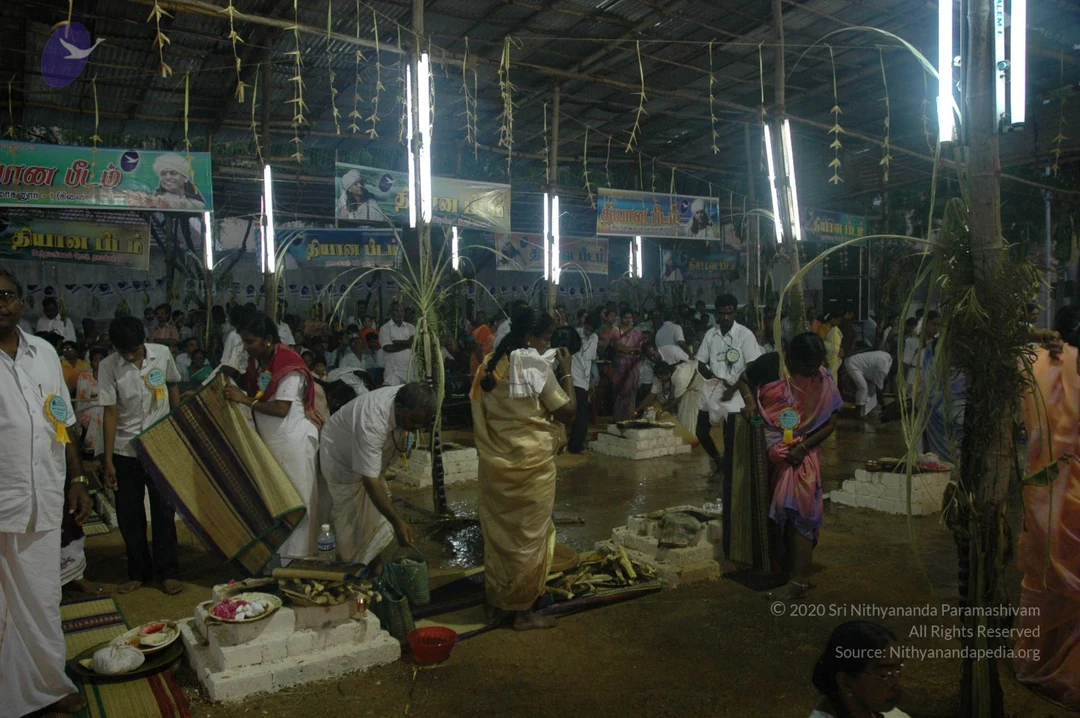
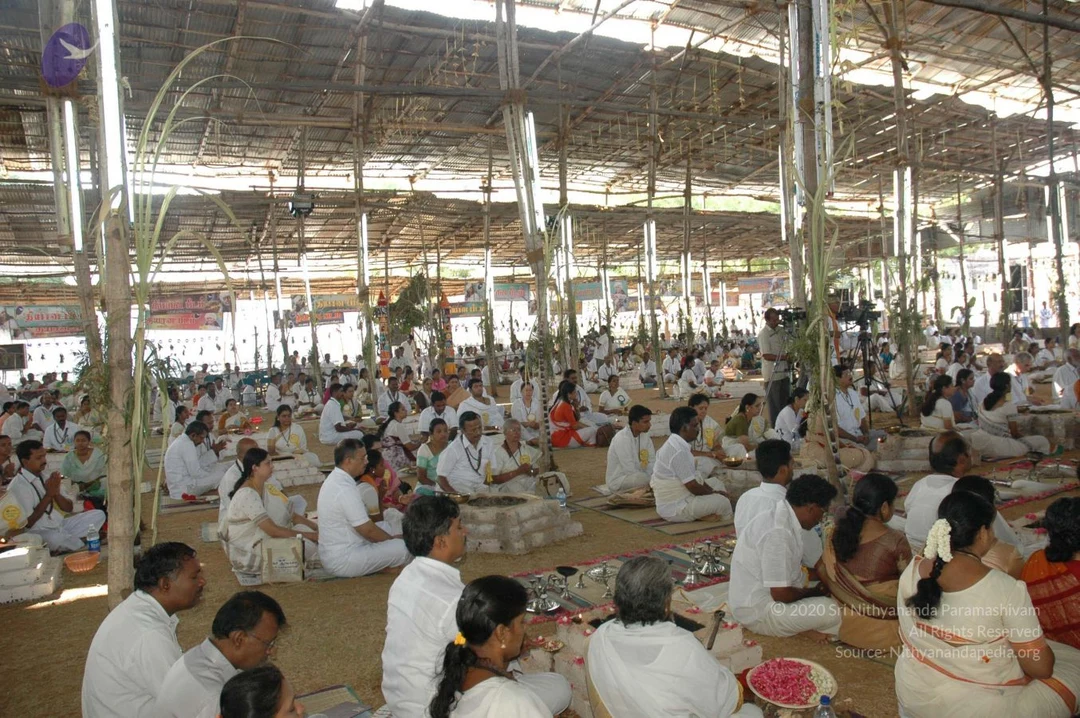
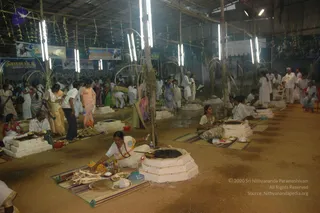
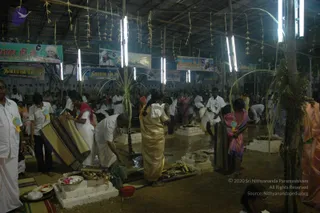
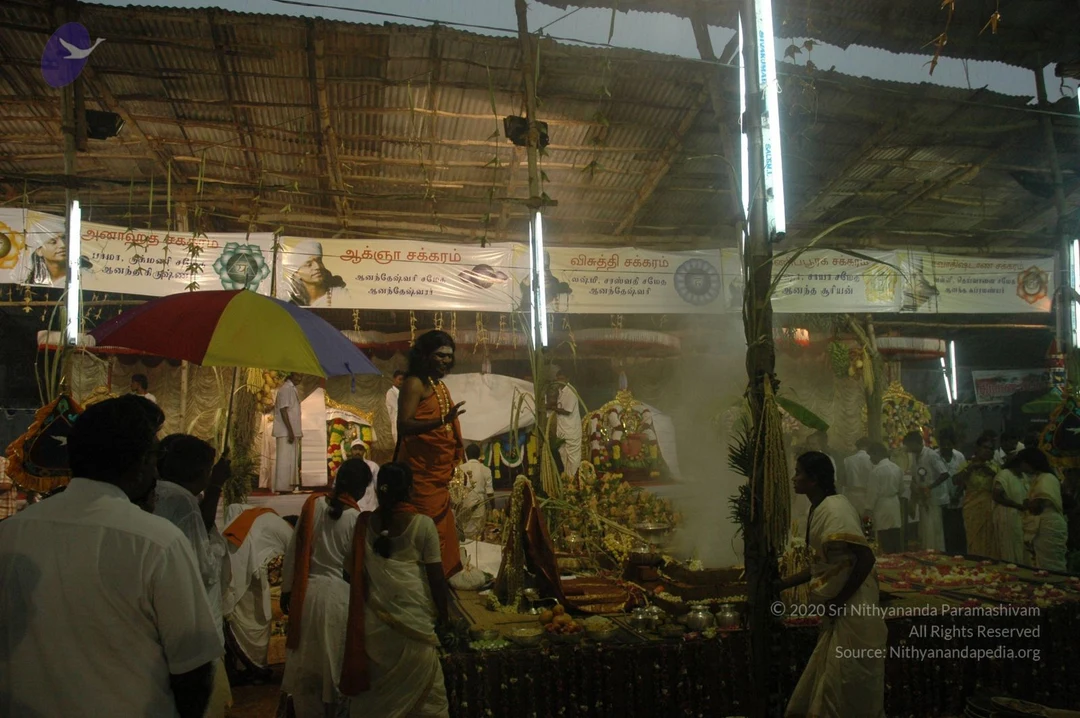
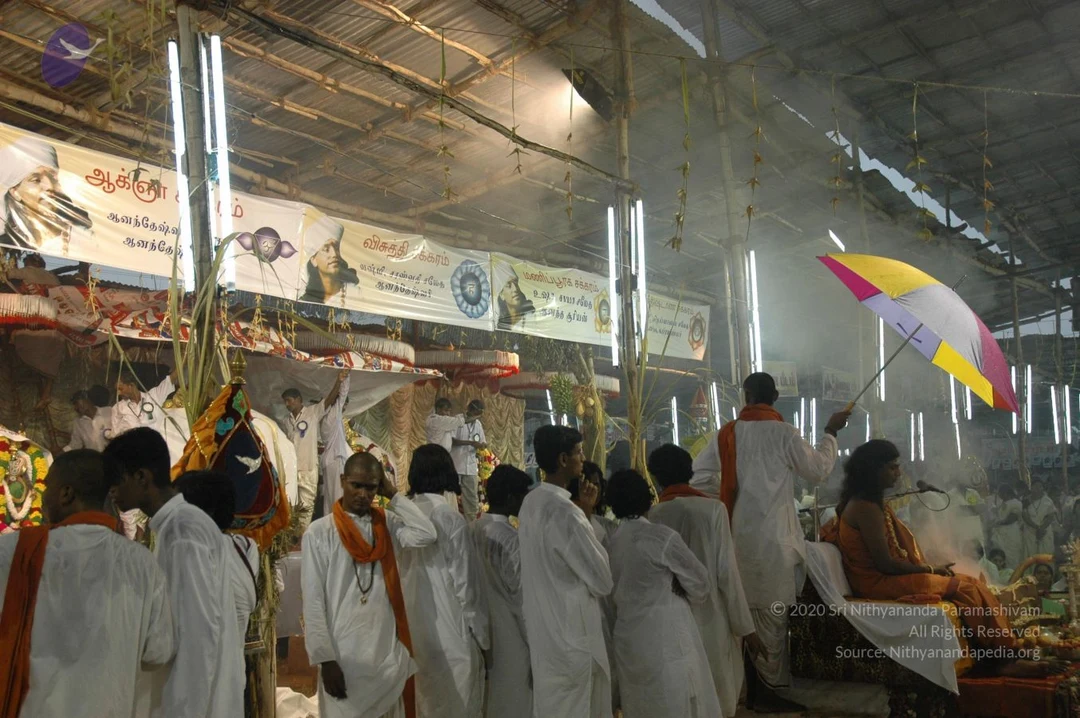
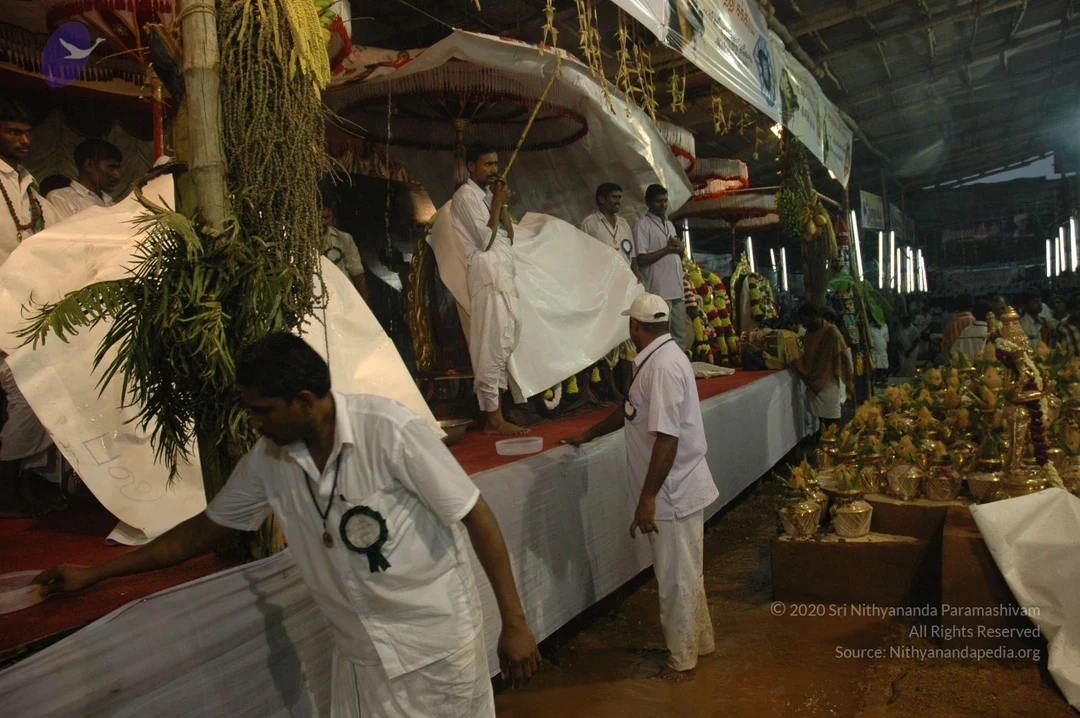
A 108 fire offerings were planned with one person offering at each of them. Therefore, 108 times 7 fire offerings were made during the three days. The purpose of this yajna was to cleanse collective negativity, purify the ozone layer, perform yajna as a deep and intense meditation and not just an offering, and make people understand the scientific basis of a yajna and its offerings. His Divine Holiness said, ‘Fire rituals have always found a place in ancient lore. Fire is the purest form of the five elements that are earth, water, fire, air and ether because it can never get contaminated. It is the ideal element for meditation. Any yajna when performed in the proper way, harnesses the Cosmic energy through the mantras that are chanted and transfers the energy to the water that is stored in pots for this purpose, which in turn is used to energise the place and people. At the end of each of the seven homas, prasad (a special item made as an offering) to the pertaining deity was distributed to each one in the gathering. On all three days, His Divine Holiness individually blessed each one at the gathering. Following are a few pictures from 18 July 2006 Day 3 of the Saptha Yaagam
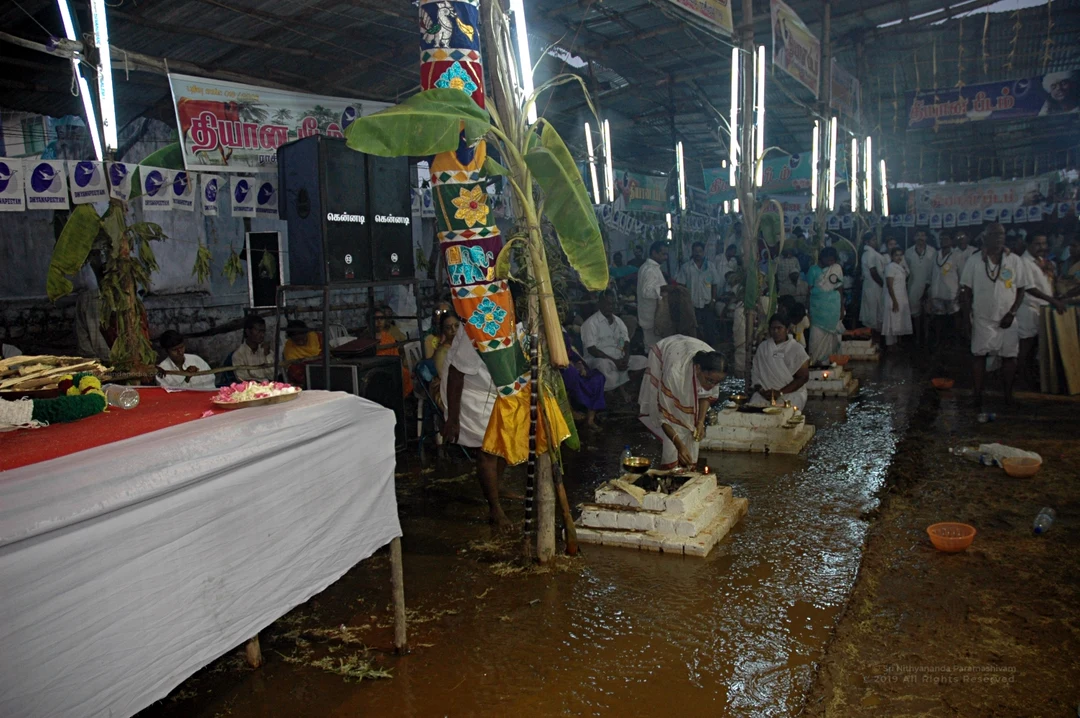
Photos Of The Day:

Sapthayagam-in-Salem
Sapthayagam-in-Salem
Photos from this day

View all 88 photos

Photos

1 photoSource gallery
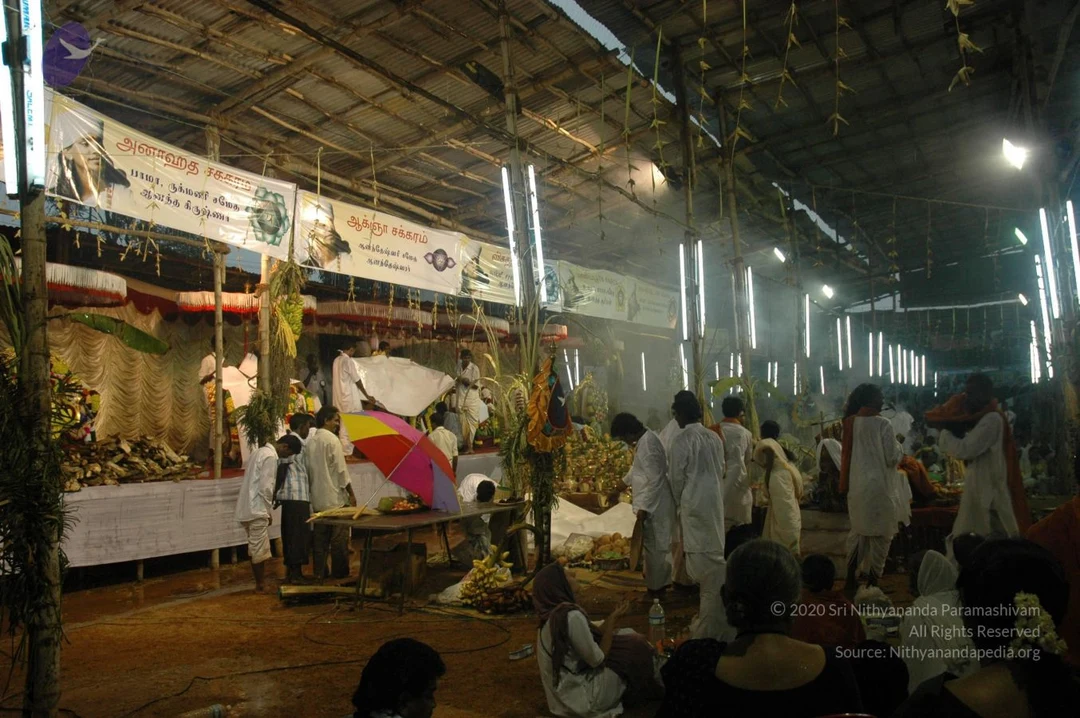
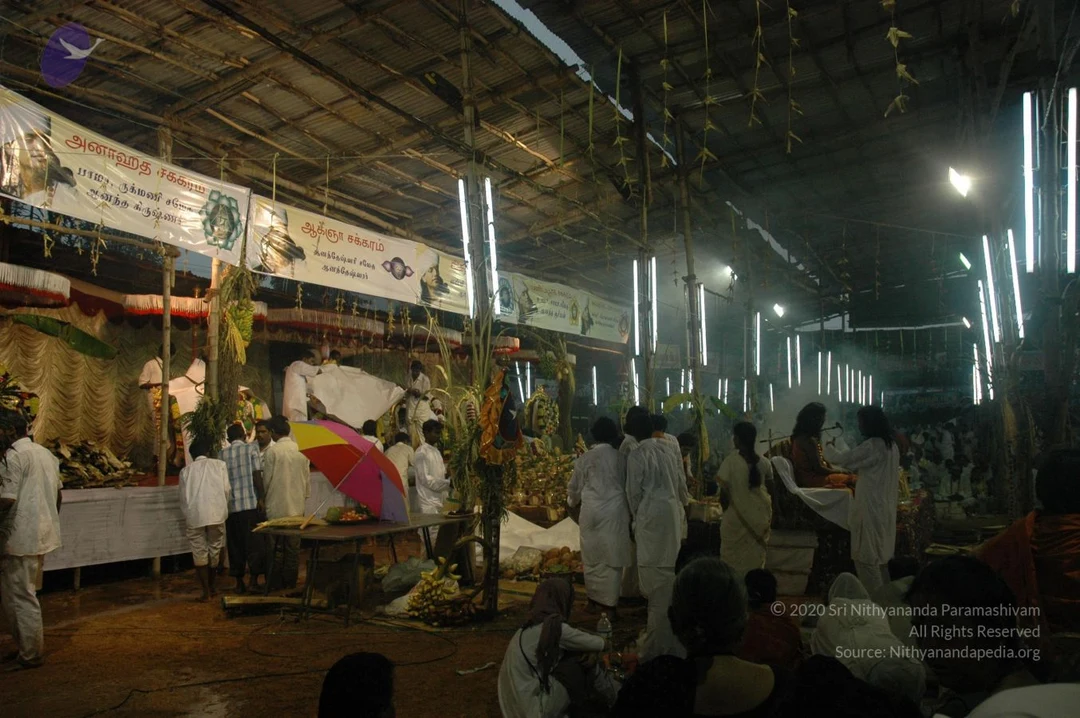
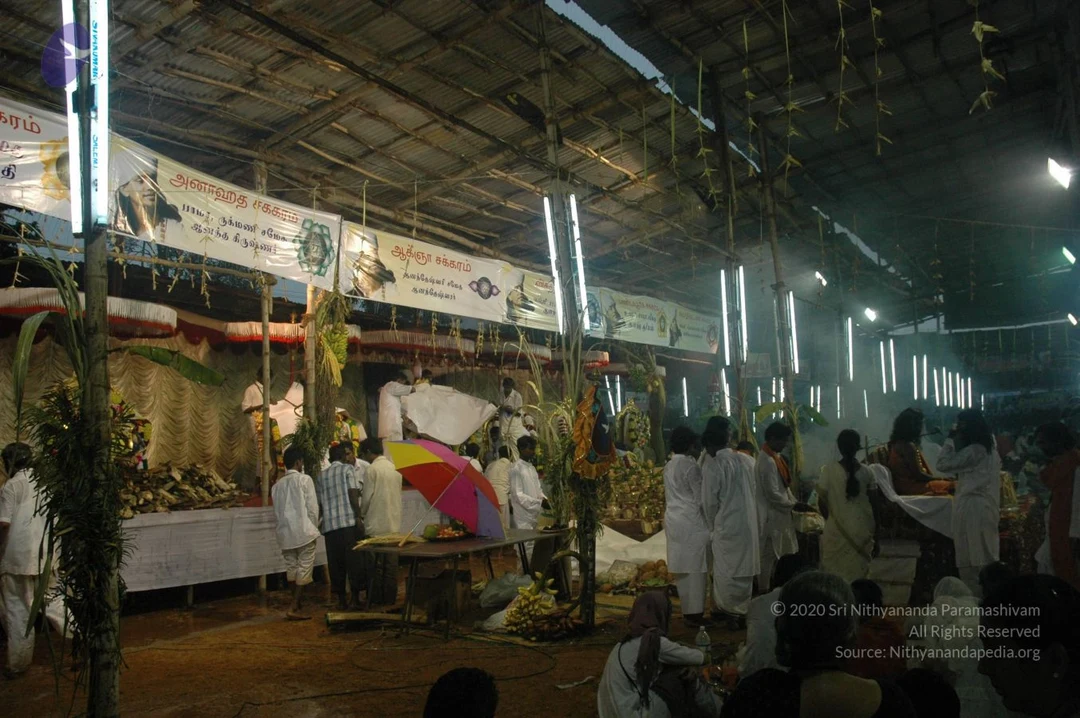
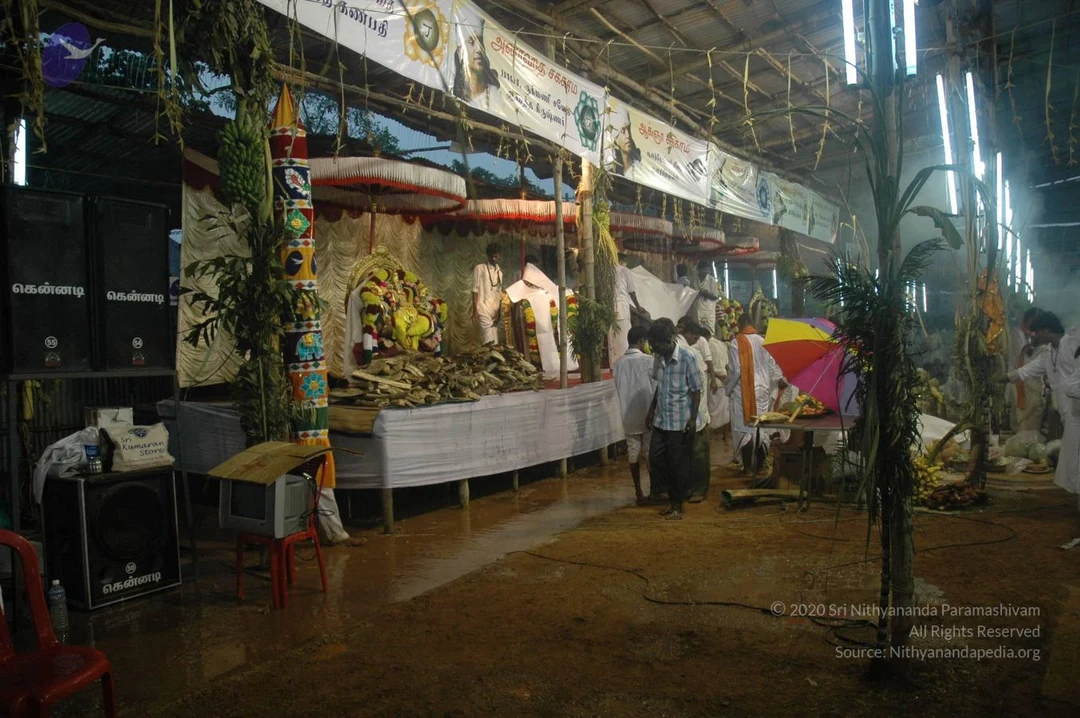
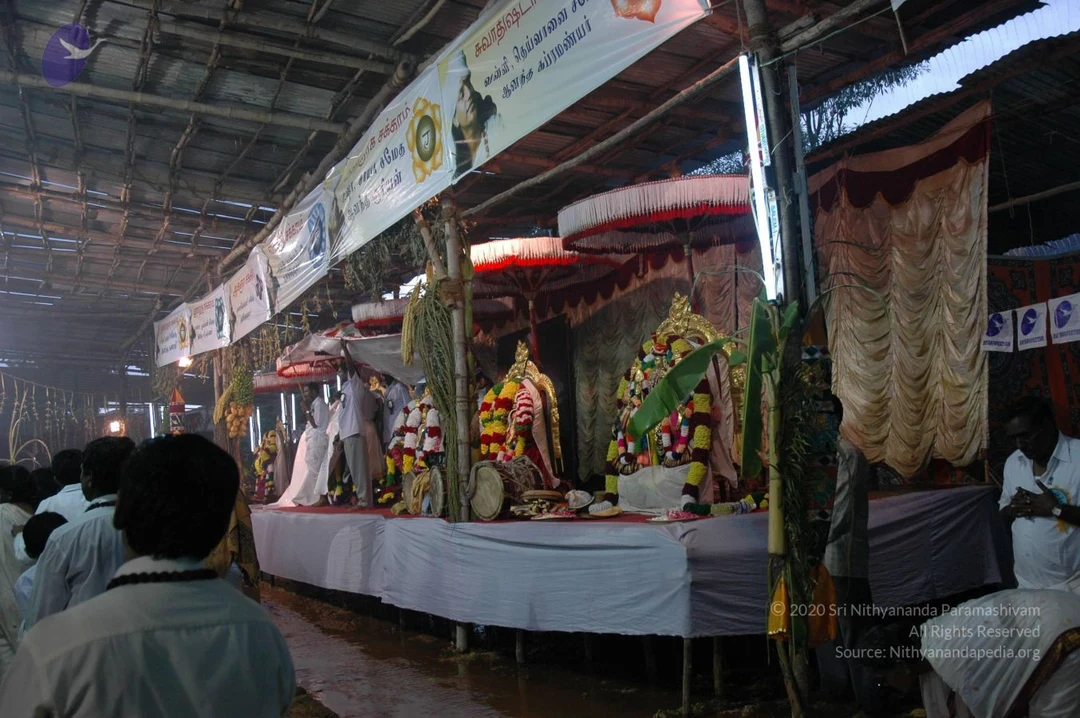
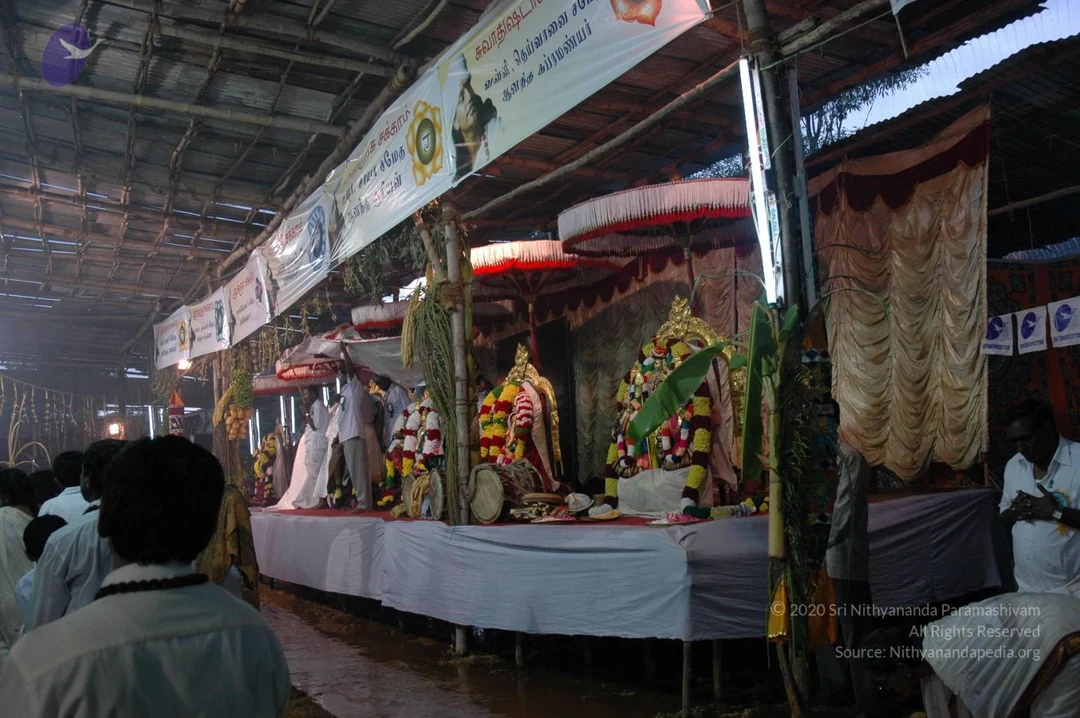
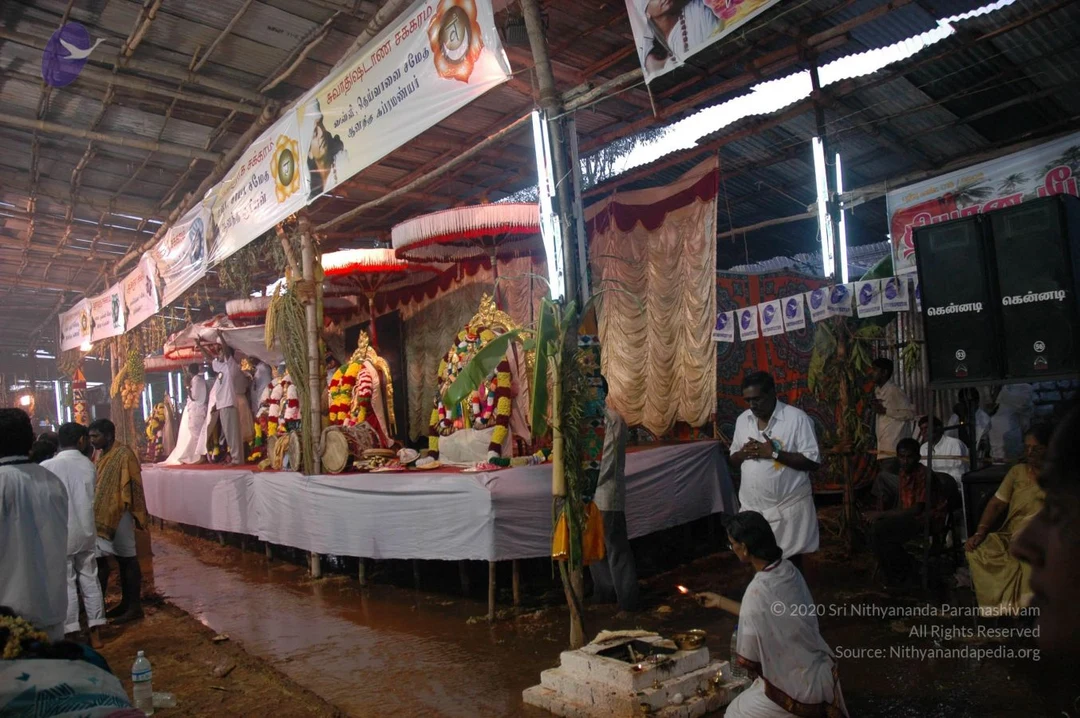
A covered outdoor ritual pavilion with a corrugated metal roof, decorated with hanging white and orange banners and a large central banner with Tamil text and a chakra emblem. Garlanded deity murti and idols sit on a raised white-draped platform under red and white canopy umbrellas, with banana stalks and green leaves framing the shrine. A man in a white shirt and white dhoti stands at right, and a woman in white sari kneels at lower right, holding a lit oil lamp beside a brass vessel on a stone base. Several other people in white ritual clothes stand and sit in the background near a speaker box, with muddy ground beneath them.

Sapthayagam-in-Salem
41 photosSource gallery
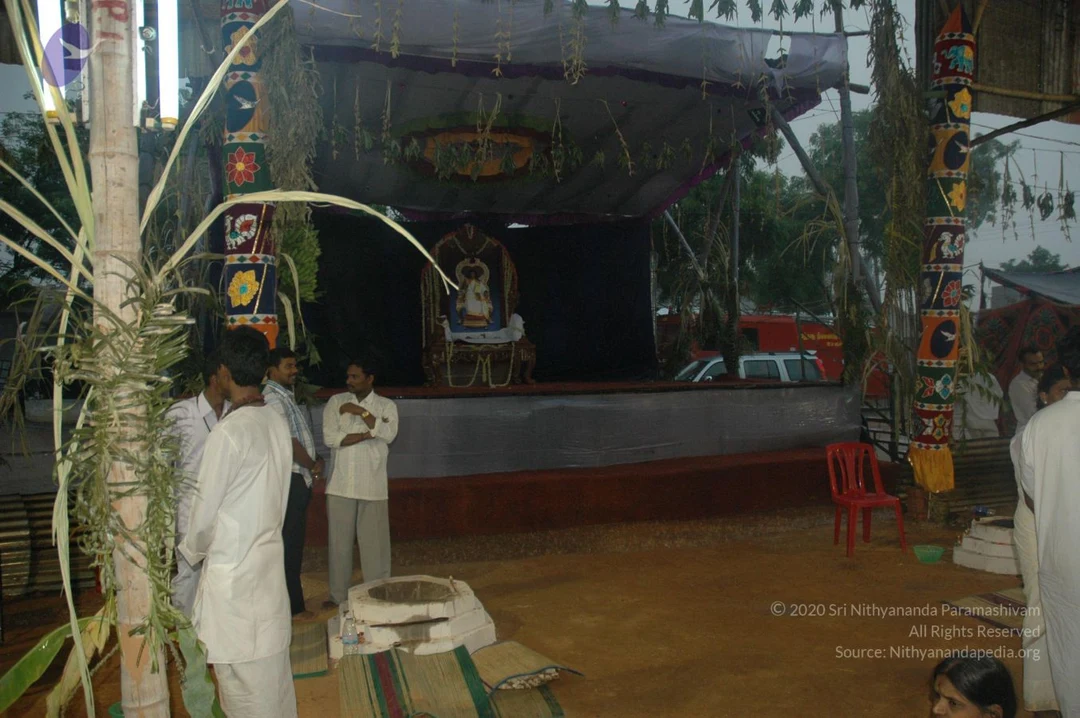
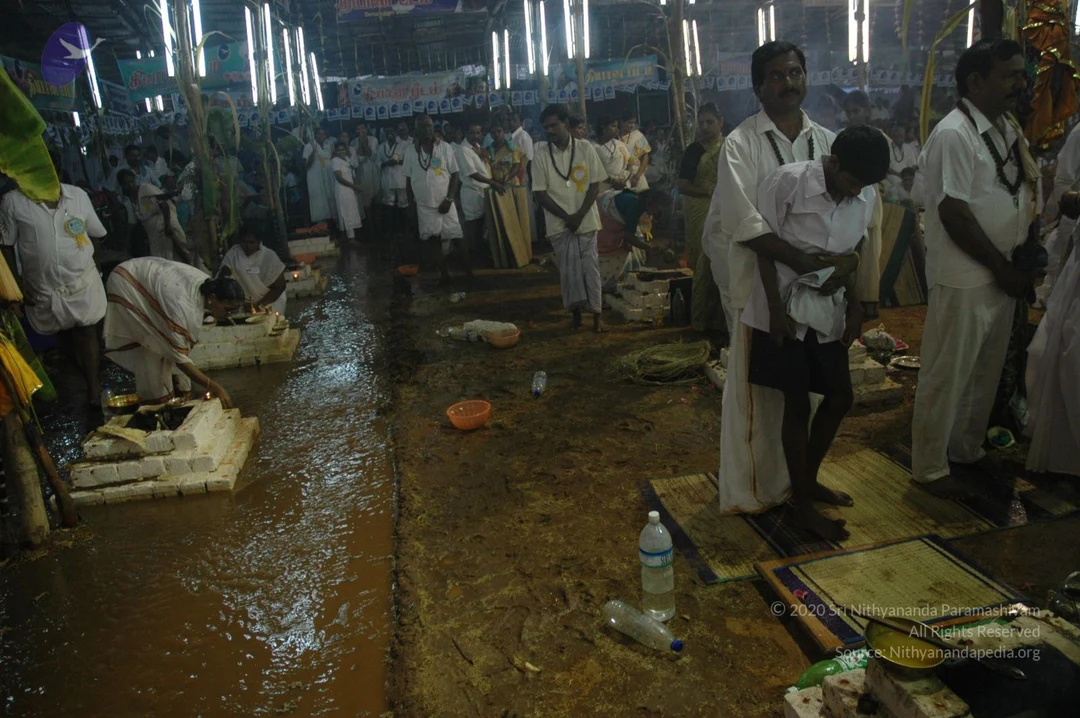
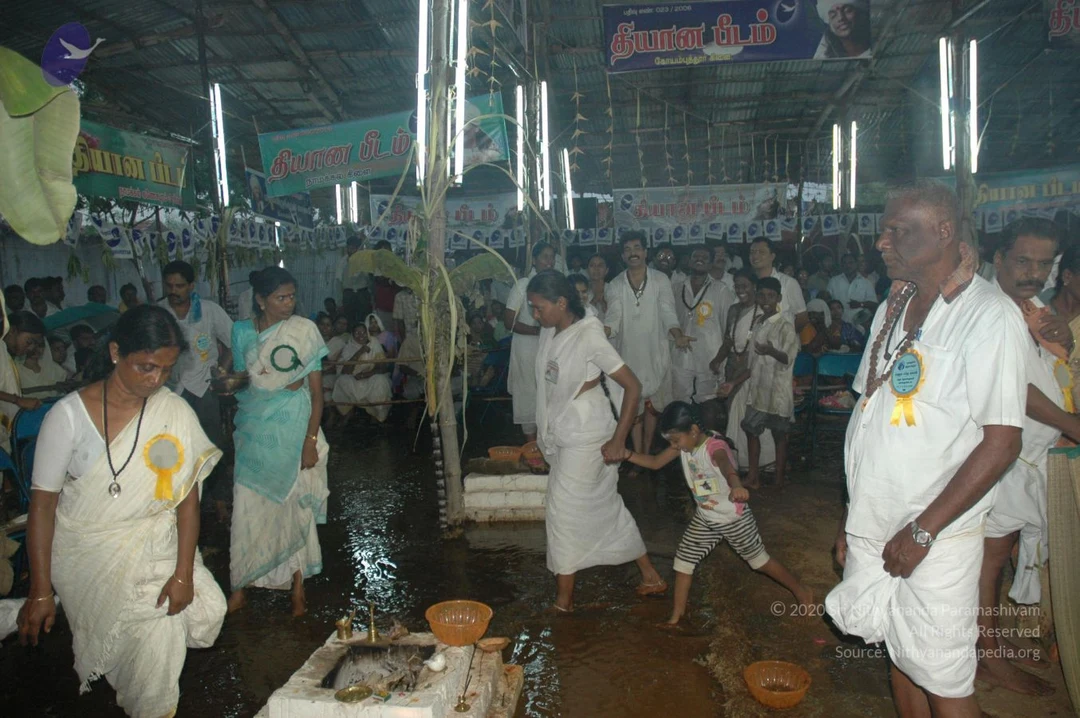
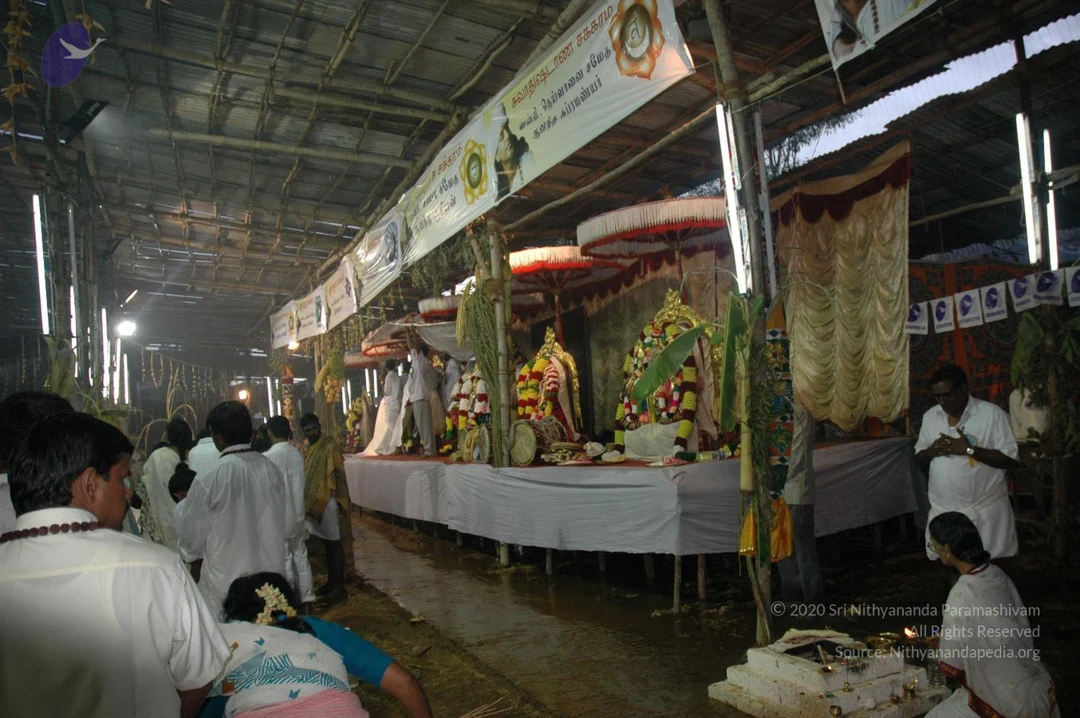
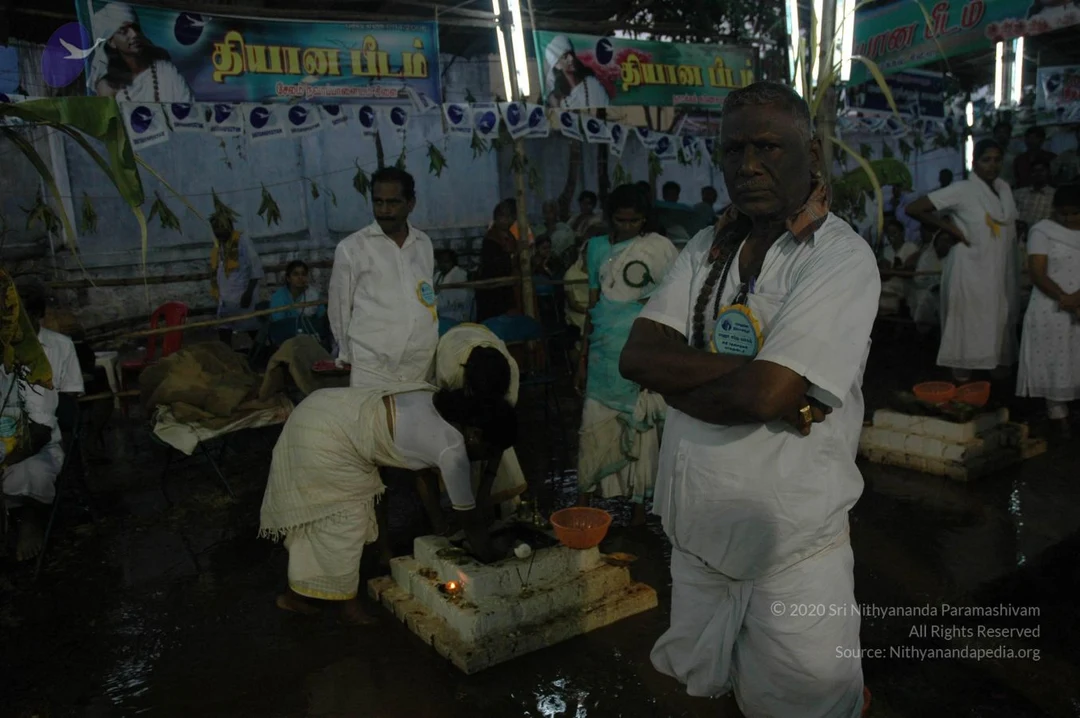
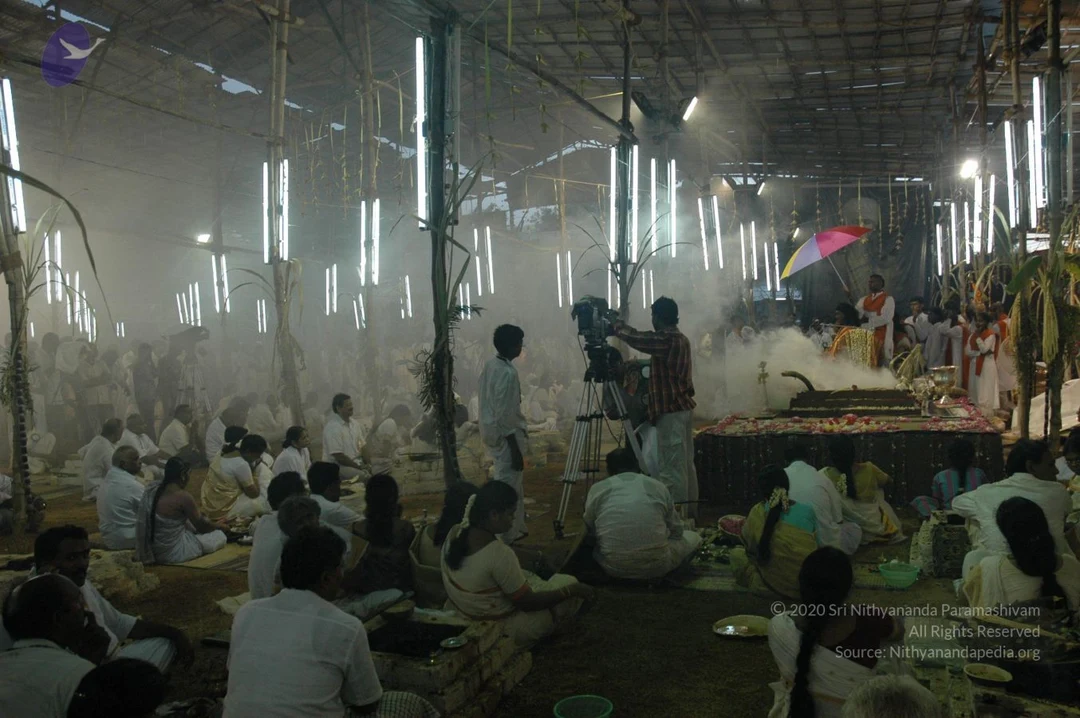
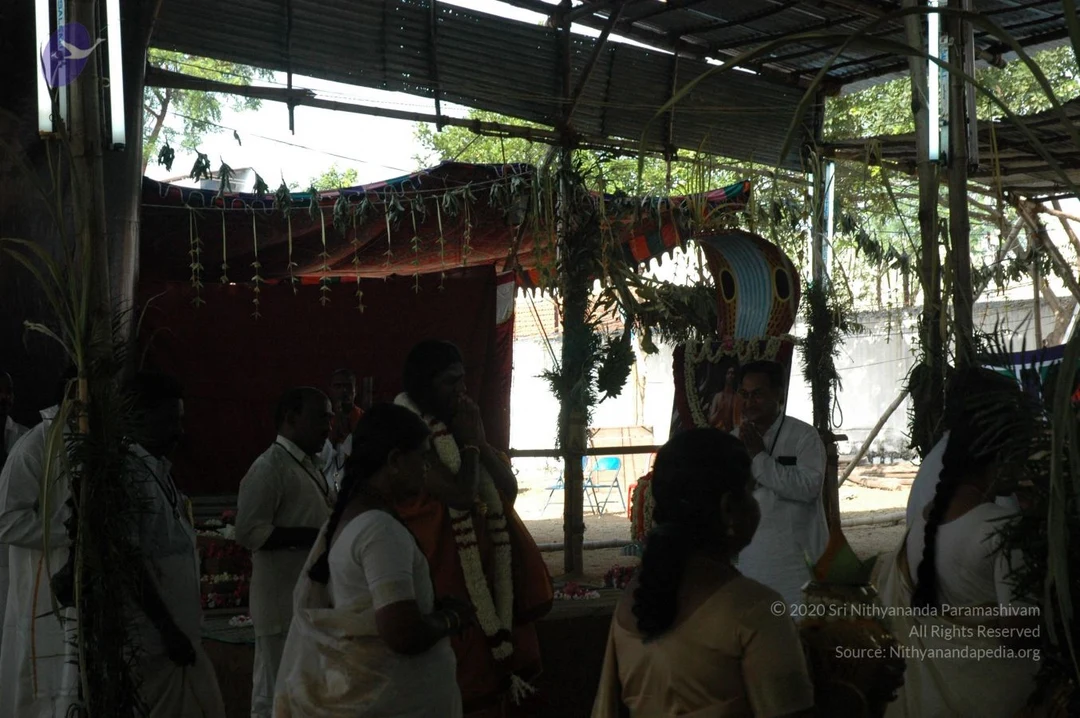
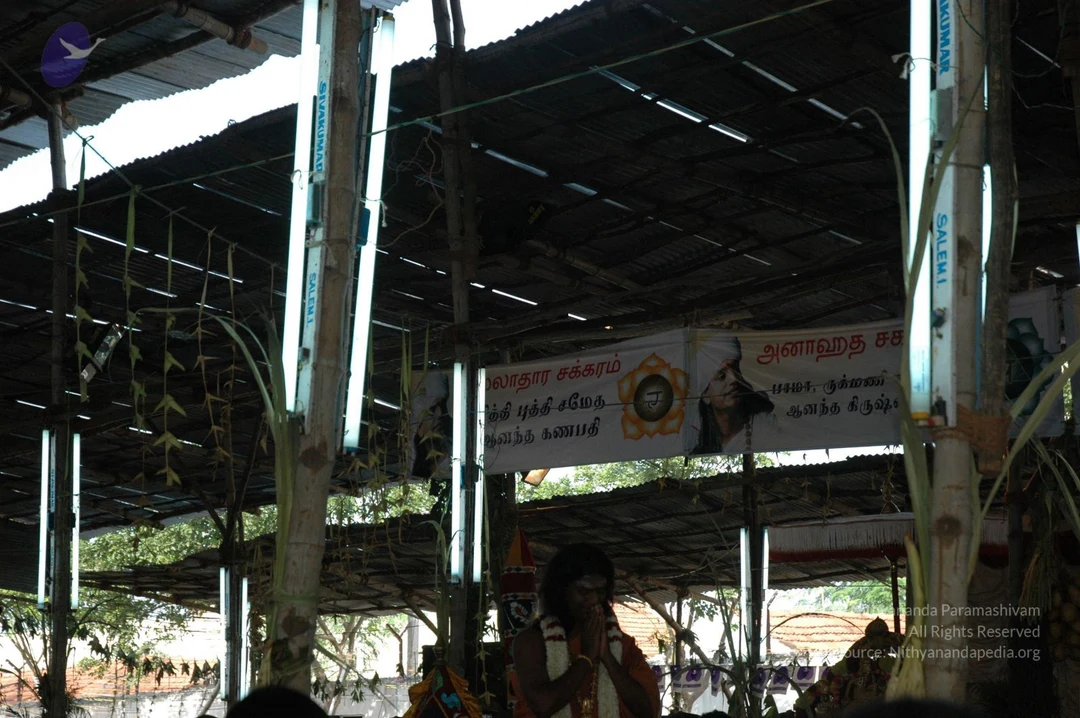
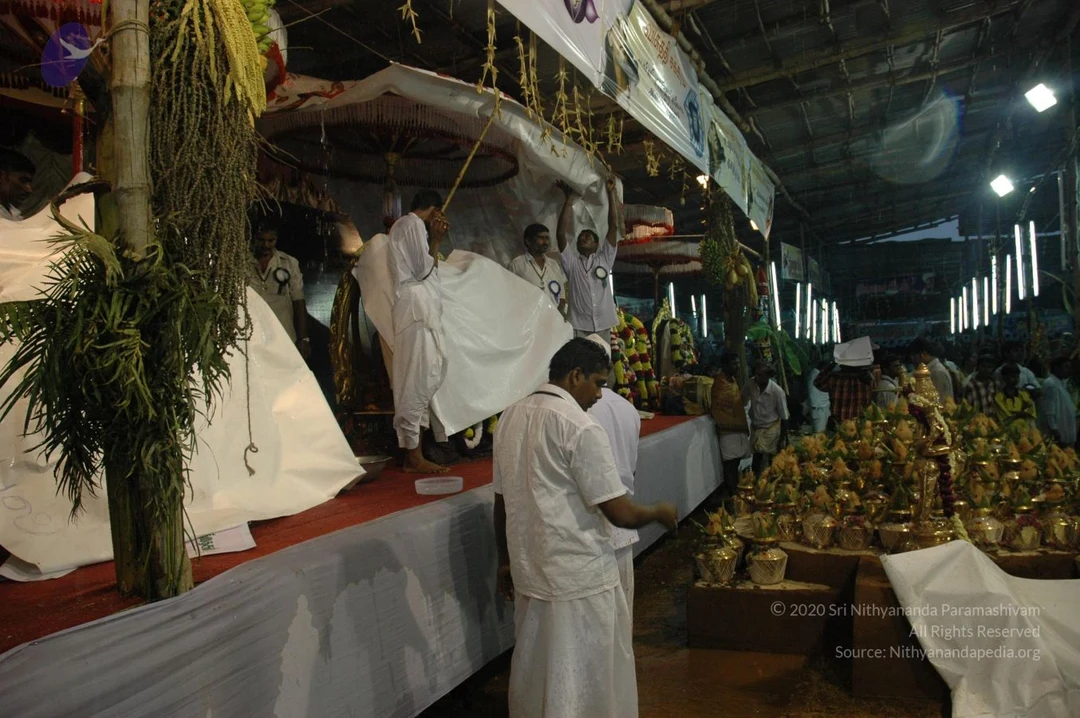
A photograph of an open-sided, thatched yagna pavilion with a fire ritual in progress. In the centre, a bare-chested man with long dark hair wears an orange-saffron cloth and a beaded necklace, gesturing with one hand beside a smoking fire pit with offerings. Several attendants in white dhotis and white saris stand and move around the altar, and a woman in a white sari with a red border stands at right. Decorated altars with garlands and brass pots sit before colourful banners, and a multicoloured umbrella stands at left. Banners overhead read labels for chakras, and the scene is lit by fluorescent tubes.Photograph of a large covered ritual hall with a bamboo-and-thatch roof and tube lights. A standing life-size figure with long dark hair, wearing an orange-saffron robe and gold-toned necklace, stands on a raised dais beside a decorated ritual altar draped with flower garlands and banana-leaf and palm-frond decorations. Plates of offerings, brass vessels, a kalasha-like pot and smoke are visible at the altar in front. Around the hall, people in white dhotis and white kurtas and women in white saris move about; a woman in white in the foreground carries a tray, and a man in a checked shirt stands nearby. Banners with Tamil text hang above, and a wheelchair user sits at the left edge. The figure on the dais is.Photograph of a large open-sided pavilion during a fire ritual with a tin roof and banners reading in Tamil above. A central figure in a saffron-orange robe and a beaded necklace stands on a raised platform beside an altar decorated with flower garlands and a tall gilt ornament. Several men in white dhotis and shirts walk and stand around, a woman in a white sari carries something near the foreground, and a smoky haze rises from the ritual area. Trays of food offerings, brass lamps and bowls sit on mats in the foreground. a person appears as the saffron-robed figure with long swept-back hair and a rudraksha-style beaded necklace, standing on the platform. Other people are priests or devotees in white.A photograph of a large hall with a corrugated roof, filled with many people performing a fire ritual (homa/yajna) at multiple square brick fire pits. Woman in white clothes with a rudraksha mala kneels at the nearest pit, tending a brass vessel beside offerings on a woven mat, including plates of flowers, fruit and white powder. Other participants in white and cream clothes, and women in saris, sit or stand at neighbouring pits and move through the crowd. Palm fronds and strings of leaves hang from wooden posts, and banners with portraits and text line the walls under white fluorescent tubes. Many people are visible, with some partly hidden at the edges.A large open-sided pandal hall with a tin roof, hanging green leaf-strings and tube lights, where many devotees in white dhotis and white shirts, some in saffron and pink saris, move among small square white-plastered fire pits (homa kunds) on a wet floor. Several people in white bend over the pits and mats, tending offerings; plantain stalks, sugarcane pieces, a plate of offerings with flowers, and a red bowl sit on the ground. Banners behind show a framed portrait of a bearded saint in white and the word Dhyanapeetham, with a dove logo at upper left. A yajna or homa offering appears to be underway. Many people are visible in the scene.An outdoor ritual stage under a grey tarpaulin canopy decorated with hanging green leaves and mango-leaf toran. Two painted pillars with floral and figurative designs flank the stage. On the raised platform sits an ornate golden throne with a framed painted portrait of a deity figure with a halo, placed against black drapery. Several men in white shirts and dhotis stand on the sandy ground in front of the stage; one stands with arms folded, others walk near a white-painted square fire pit and mats. A red plastic chair sits at the right edge. Two men on the far side and a woman in the lower right corner are partly visible.

Sapthayagam-in-Salem
46 photosSource gallery
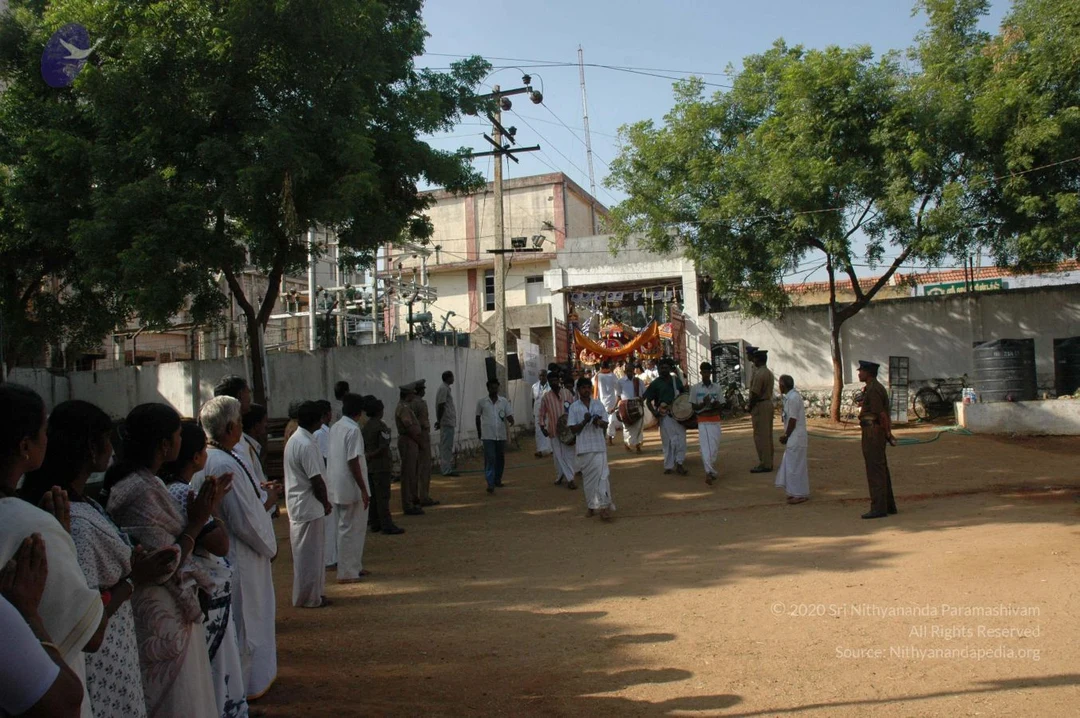
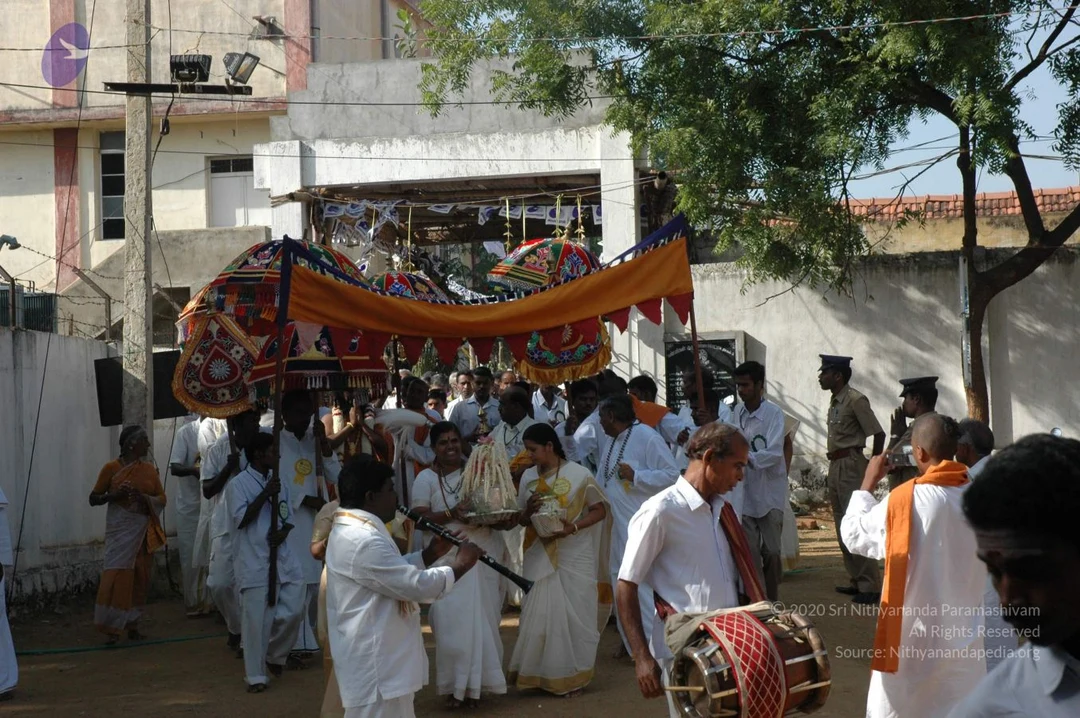
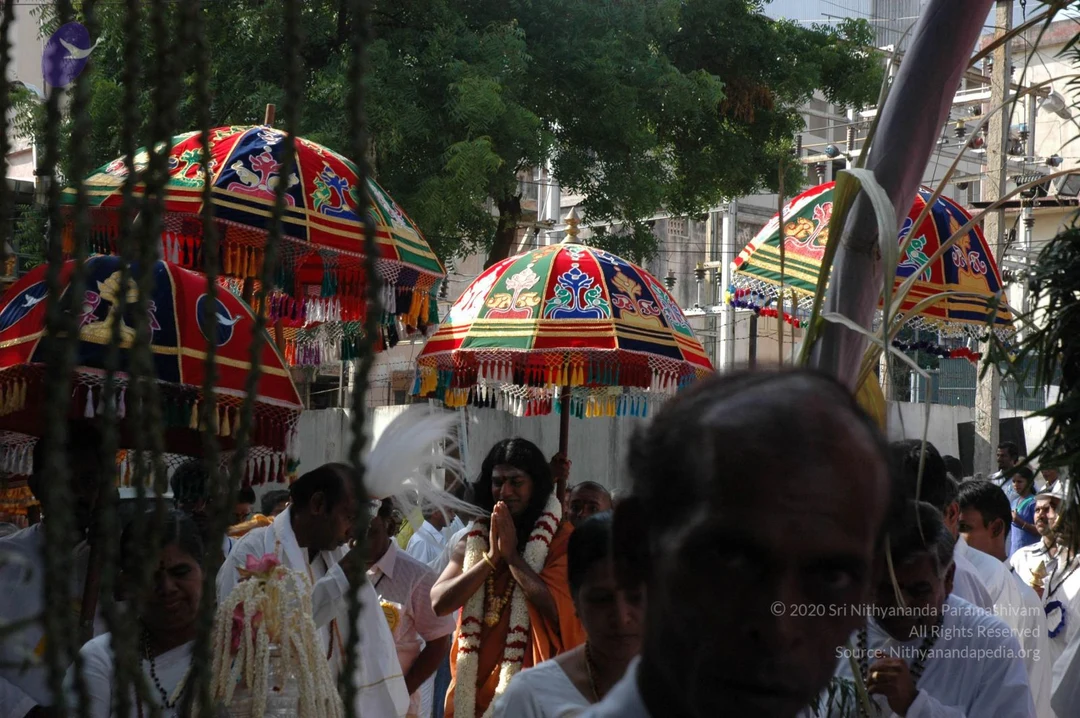
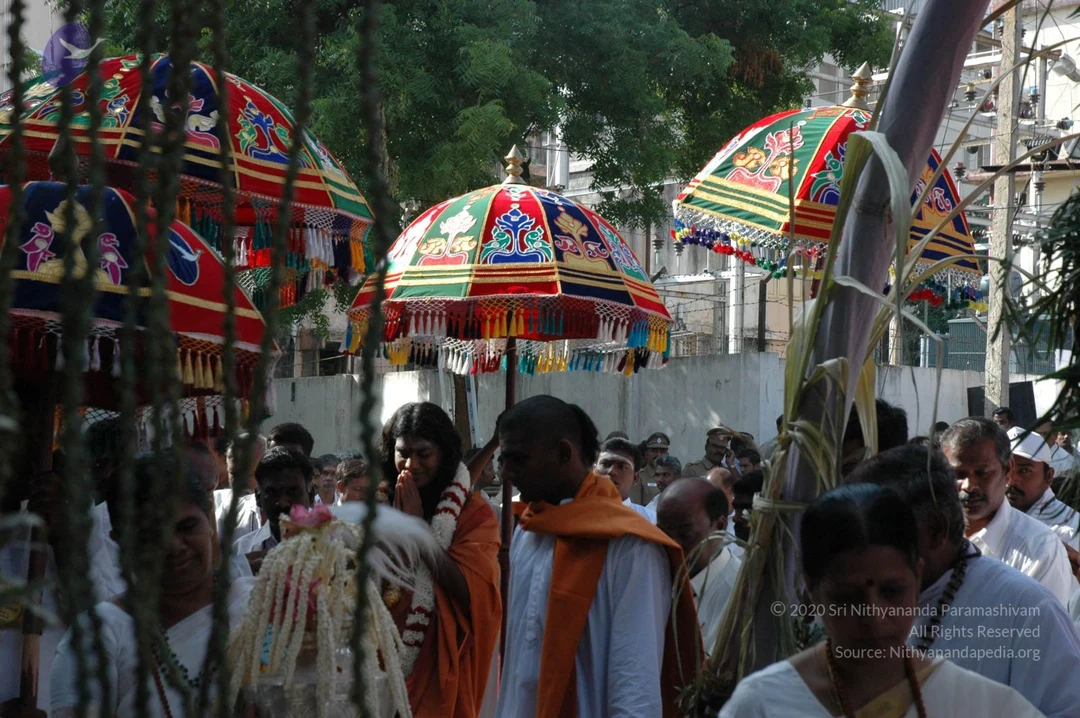
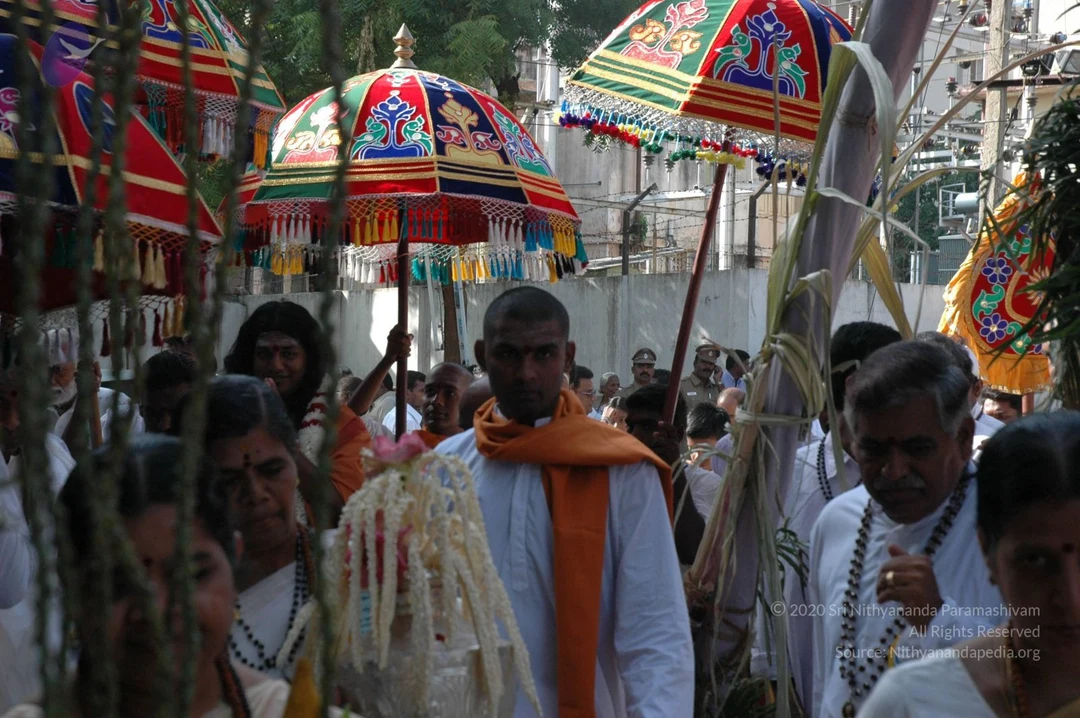
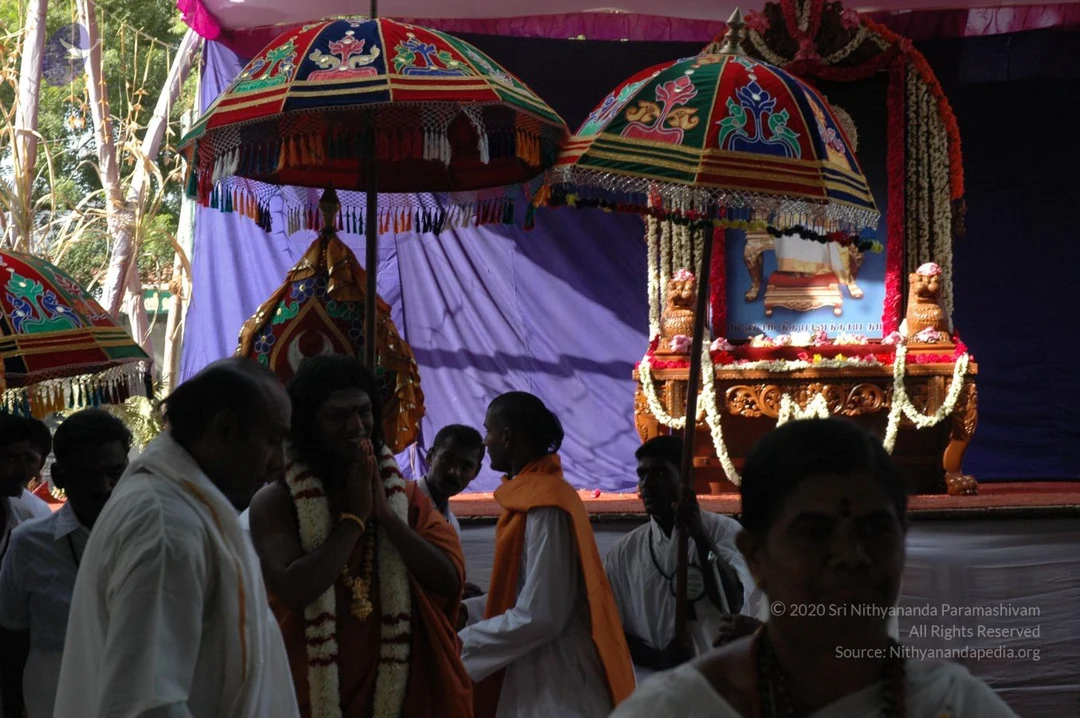
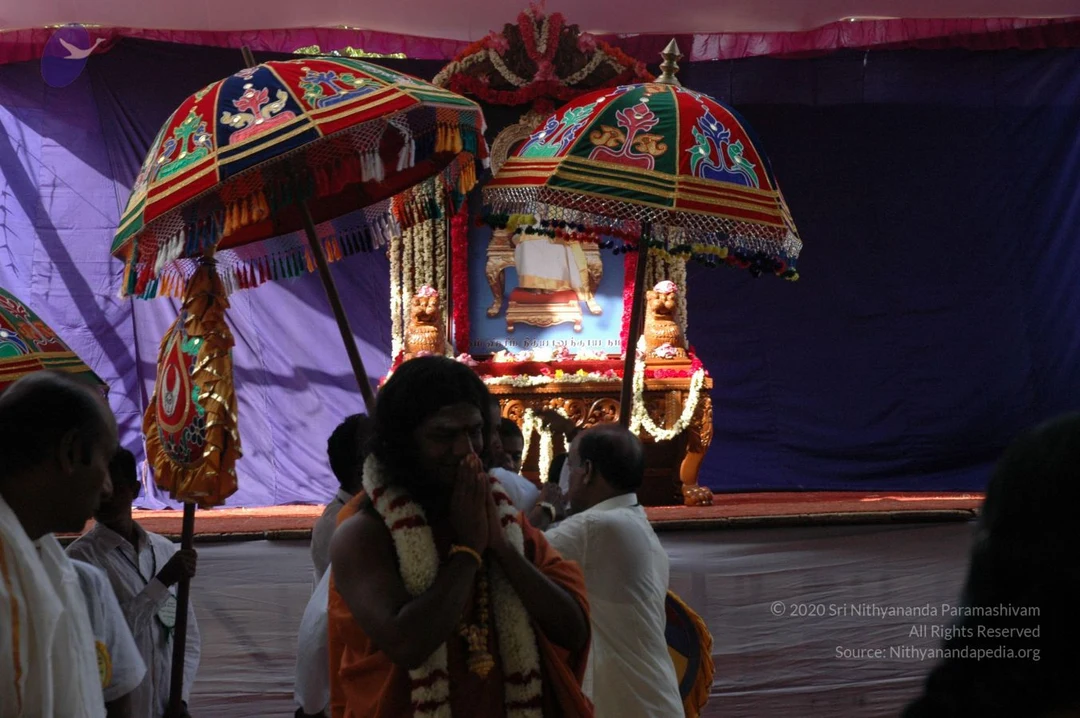
Outdoor photo of a procession in a dusty courtyard under trees. On the left, a line of people in white dhotis and white saris stand with palms pressed together in namaste. In the centre, several men in white dhotis and bare upper bodies carry a decorated palanquin topped with a deity murti under an orange cloth canopy, while drummers in white beat drums. Uniformed police officers in khaki stand along the path. A concrete building with a decorated gateway and a water tank lie behind. The scene appears to be a ceremonial procession. a person's presence is not visibly identifiable.Outdoor photo of a procession on a dusty open ground in front of a white building with a decorated shrine entrance draped in orange and yellow cloth. Several men in white dhotis and white shirts walk in the centre, carrying a palanquin or deity conveyance and playing drums, one drummer in a red-and-white cloth. Onlookers line the left side, several women in white and patterned saris with palms pressed together in greeting. Uniformed police officers in khaki stand along the path, and a bystander in white dhoti and shirt stands at the right. Trees, a utility pole and a water tank frame the scene.A procession moves along a dusty open lane lined with trees and concrete walls. Men in white dhotis and white shirts walk in front, several beating large hand drums; a drummer in a green shirt and white dhoti and another in an orange-striped cloth are visible. Behind them a decorated palanquin or ratha with an orange and red canopy and floral decorations carries deity murti, with attendants following. On the left, a row of women in white saris and men in white clothes stand with hands folded in reverence, while uniformed police stand along the route. Electricity poles and a small building appear in the background.A photograph of a procession in an open dirt courtyard outside a concrete building. Under a large orange canopy with colourful embroidered panels and yellow tassels, men and women in white dhotis, mundus and sarees walk behind a palanquin-like structure. A woman in a white saree with a gold border carries a brass plate of offerings, and a man in a white shirt and garlands walks beside her. In the foreground a man in a white shirt holds a drum, and another in an orange-striped shirt looks toward the camera. Two uniformed police officers stand by a wall at right, and a dark signboard with white lettering is visible behind the crowd. Overhead, bunting and strings of flags decorate the entrance archway. Many people are present in the procession, with several partially visible, so the count is a range; the figure in saffron on the left and the man in white with beads are not clearly identifiable.Outdoor procession on a dusty courtyard in front of a white concrete building. A large orange and multicoloured canopy with gold finials and tassels is carried on poles above a palanquin-style ceremony, with devotees in white dhotis and shirts walking alongside. Two women in white saris with red borders carry brass trays of offerings. A drummer in a white shirt beats a drum at the lower right, and uniformed police officers stand near a wall on the right. Several white-clad devotees and men in orange and white clothing are visible, with a deity murti not clearly shown. Festival procession, possibly ratha or palanquin procession.A street procession moves past a concrete building and a tree, led by a large ornate canopy with multicoloured embroidered panels, orange valance and hanging tassels carried on poles. Behind it, women in cream and gold saris carry a brass tray and a basket of offerings. Men in white shirts and white dhotis walk alongside, some wearing orange shawls and rudraksha-style beads. A drummer in white beats a red drum, and a man in white plays a long wind instrument. A uniformed police officer stands at the right edge. A man in an orange shawl with a shaved head walks near the right foreground. The scene reads as a ritual procession with a palanquin-style canopy.