Skip to content
Thursday

3 June 2004

First Nithyananda Spurana Programme (NSP) at the Ashram

Dated photos
98
Source pages
1
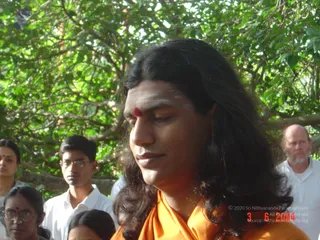
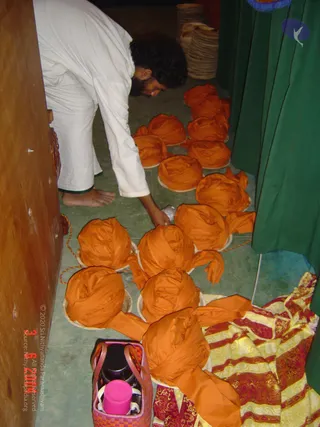
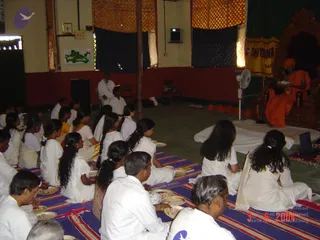
A photograph of a man with long, dark, swept-back hair and a red bindi on his forehead, wearing an orange-saffron garment draped over his shoulders, with eyes closed and head tilted down as if in meditation. Behind him under green leafy trees stand several people: a woman in a red-bordered sari at left, a young man in white shirt and glasses, an older bald man with grey beard in a white shirt at right, and a woman in glasses at lower left.A man in a white kurta with long curly dark hair and a full beard bends over at the floor of a small room, reaching toward a row of coiled saffron-orange turbans set on round flat trays. Behind him stacks of woven baskets or trays lean against a wall, and a green curtain hangs on the right. In the lower right, a red and gold striped brocade cloth lies folded beside a woven pink-and-black bag holding a flask. The scene reads as preparation of turbans for an event.A photograph inside a hall with red-painted lower walls and a green-and-yellow banner reading DHYANA partly visible at right. Seated on a raised ornate golden throne at right, a figure in orange robes with an orange head covering holds a small white sheet of paper. Seated on striped blue-and-red mats in rows, many people in white clothing eat from round plates. In the foreground, a few seated devotees, including a man in white with grey hair, face the throne. A standing man in white stands near the left centre. A small standing fan and a laptop sit beside the throne, and a green map hangs on the back wall.

June 03 2004

Original wiki page
Contents

Title

First Nithyananda Spurana Programme (NSP) at the Ashram

Description

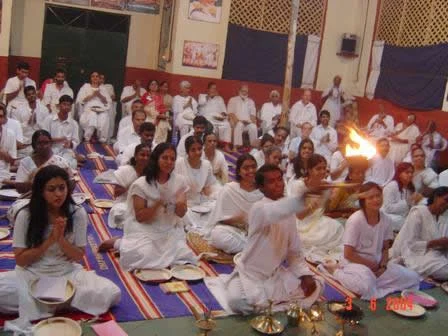
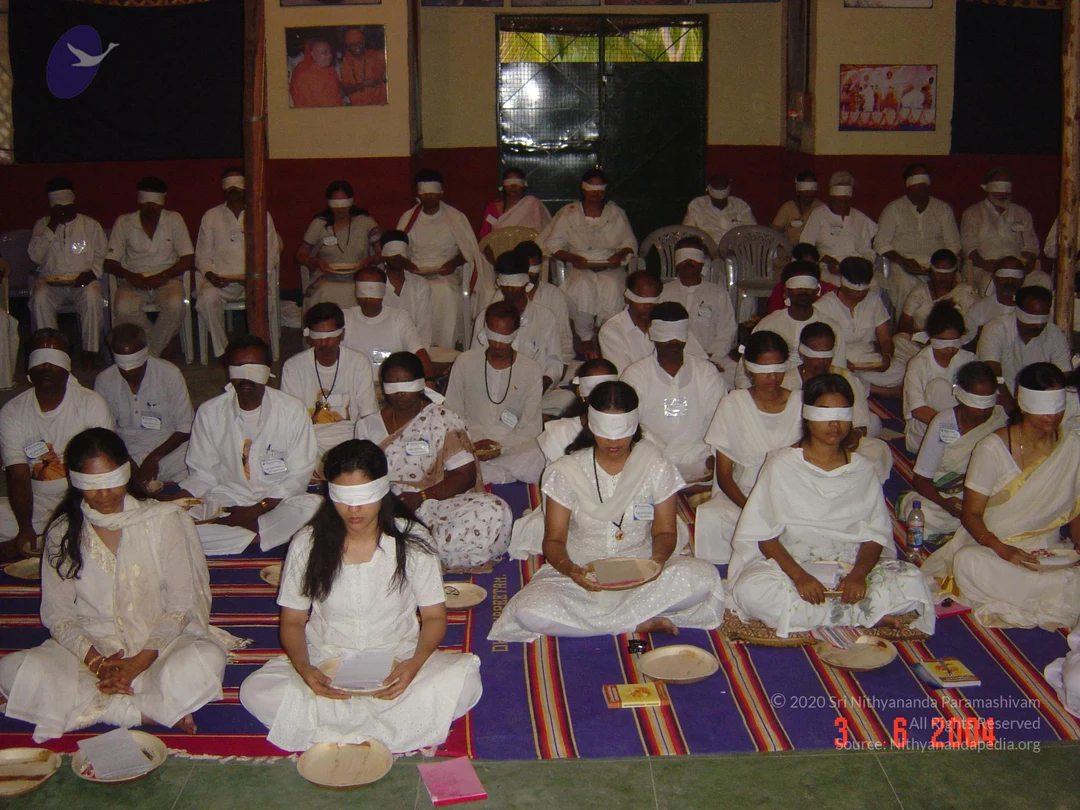
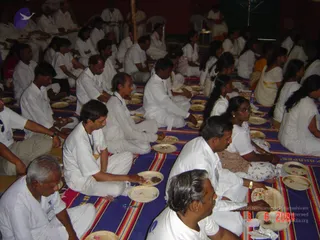
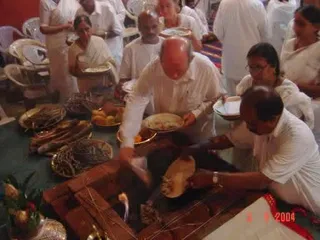
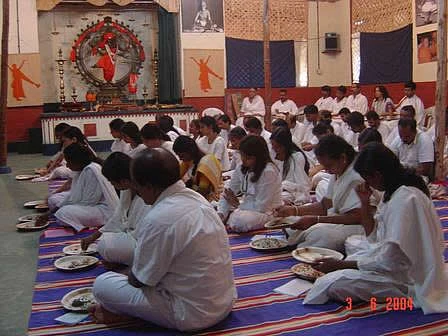
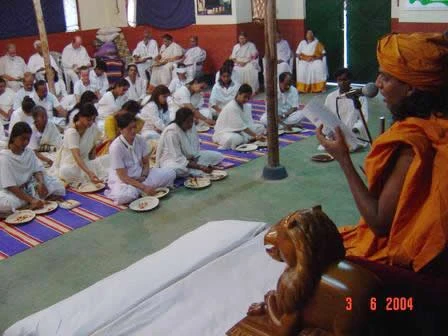
The first ever English NSP unleashed by Swamiji at the Ashram between 24 and 27 May 2004 and between 31 May and 4 Jun 2004 was a truly 'down to earth' experience to people. All Desires, Guilt, Pain and Joy were brought to the conscious level and offered to Existence in the presence of the Master. This complete spiritual bath designed by the Master in the enchanting atmosphere of the ashram drew seekers from all over India and other parts of the world. Each one was made to see the Divinity in the other, thus embracing all as an integral part of the Cosmos.

Photos

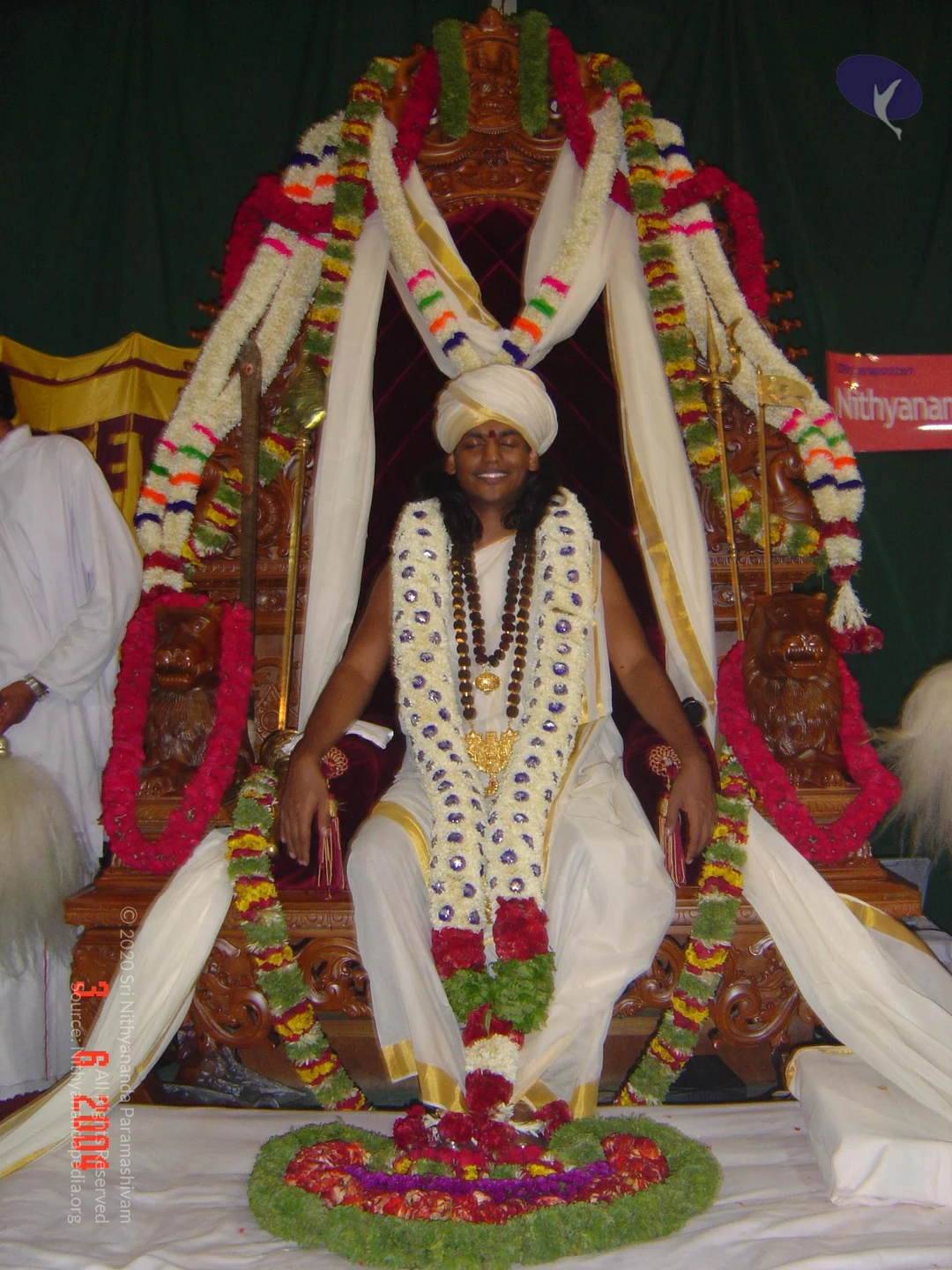
People consciously surrendering their past at the feet of the Cosmos
NSP_offering.JPG

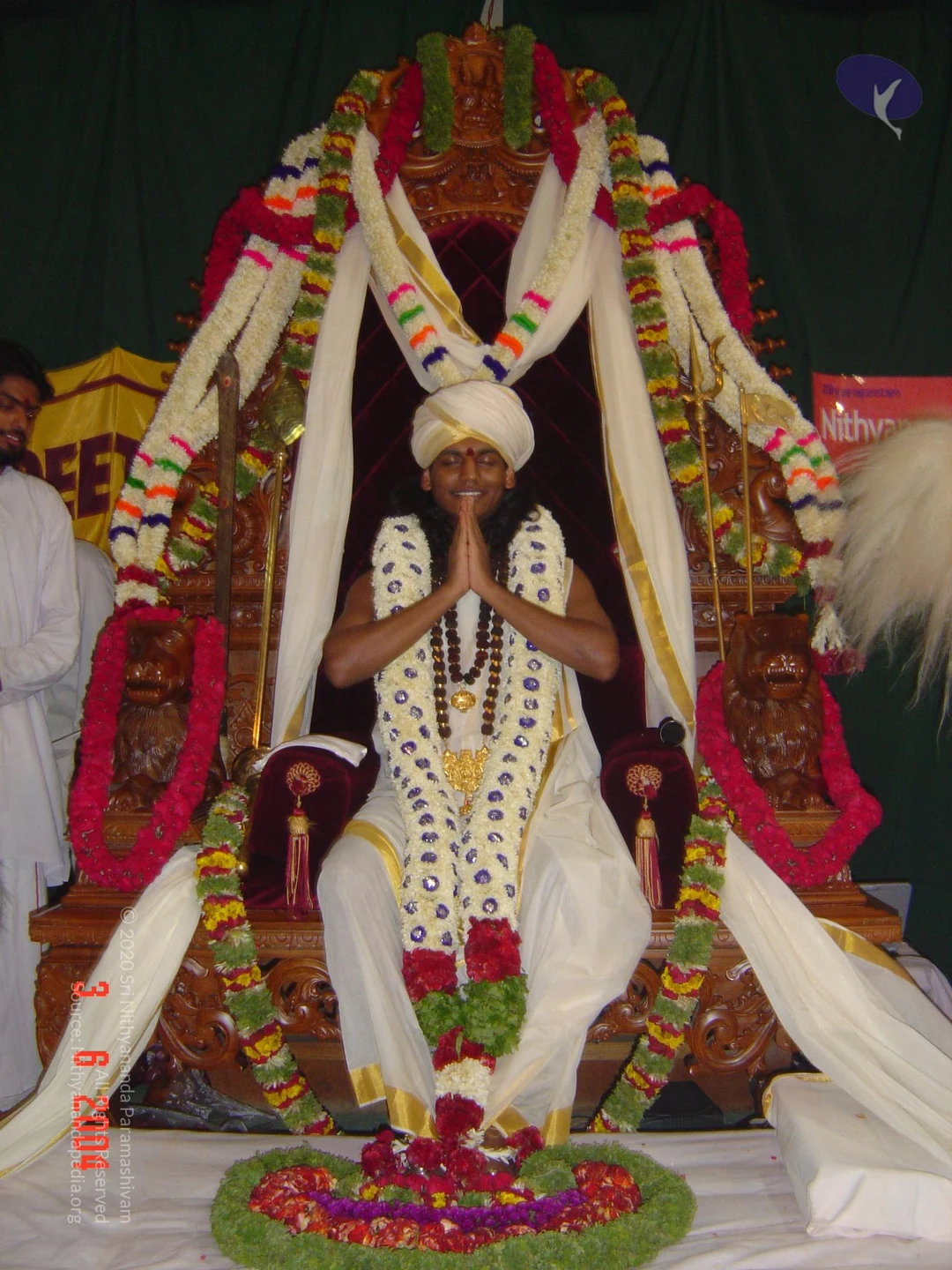
People consciously surrendering their past at the feet of the Cosmos
NSP_offering2.JPG

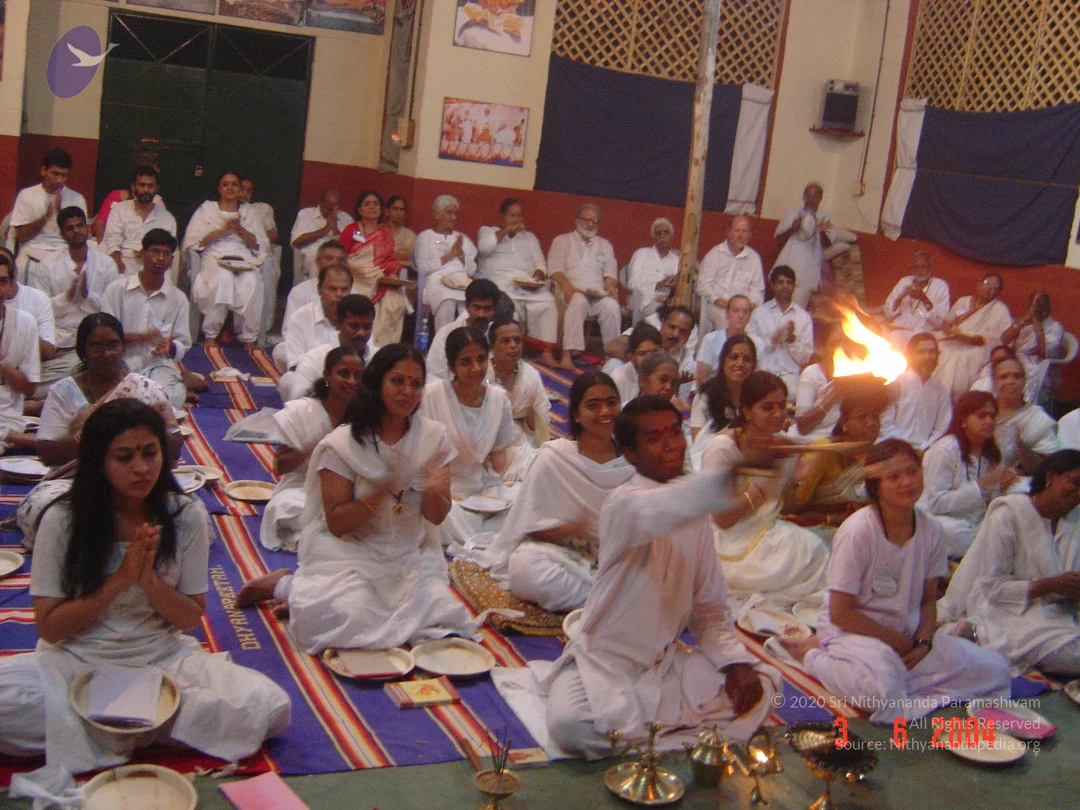
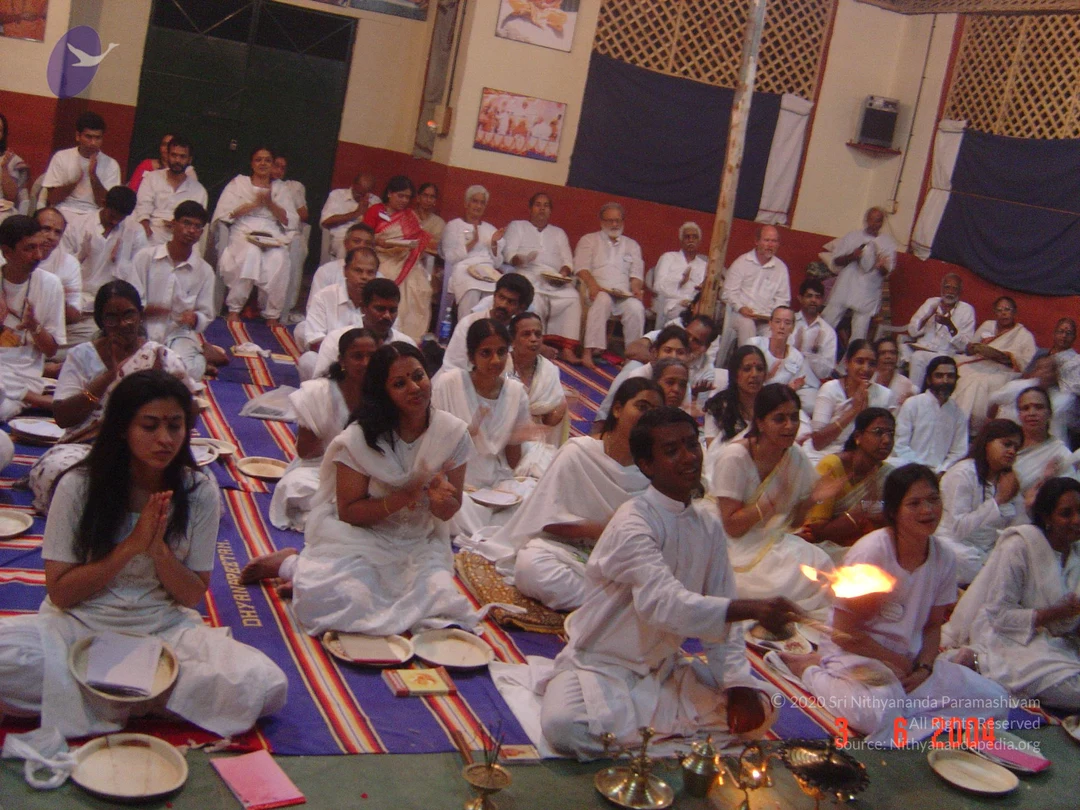
Arathi being offered to Existence

NSP_Arathi1.JPG

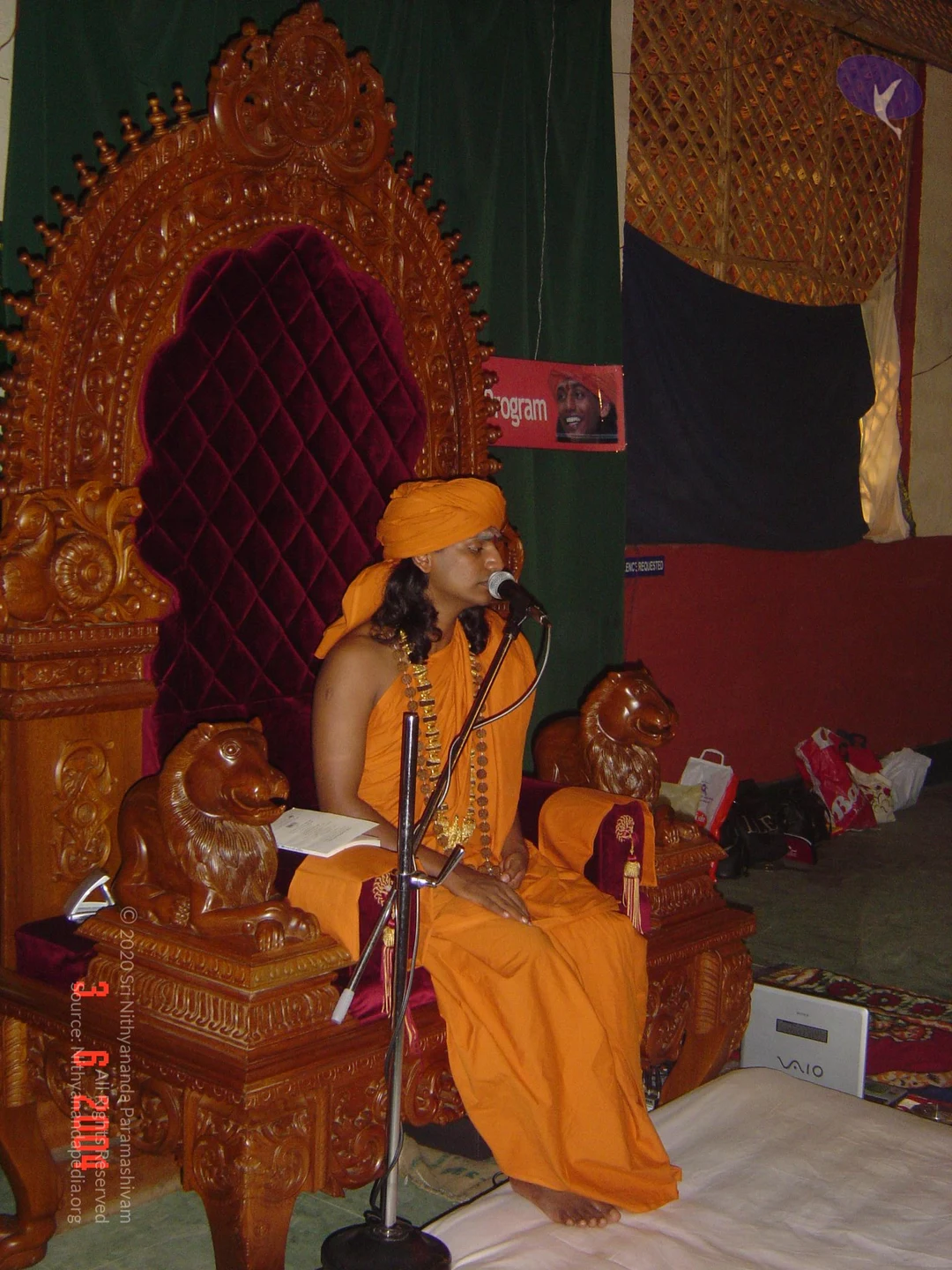
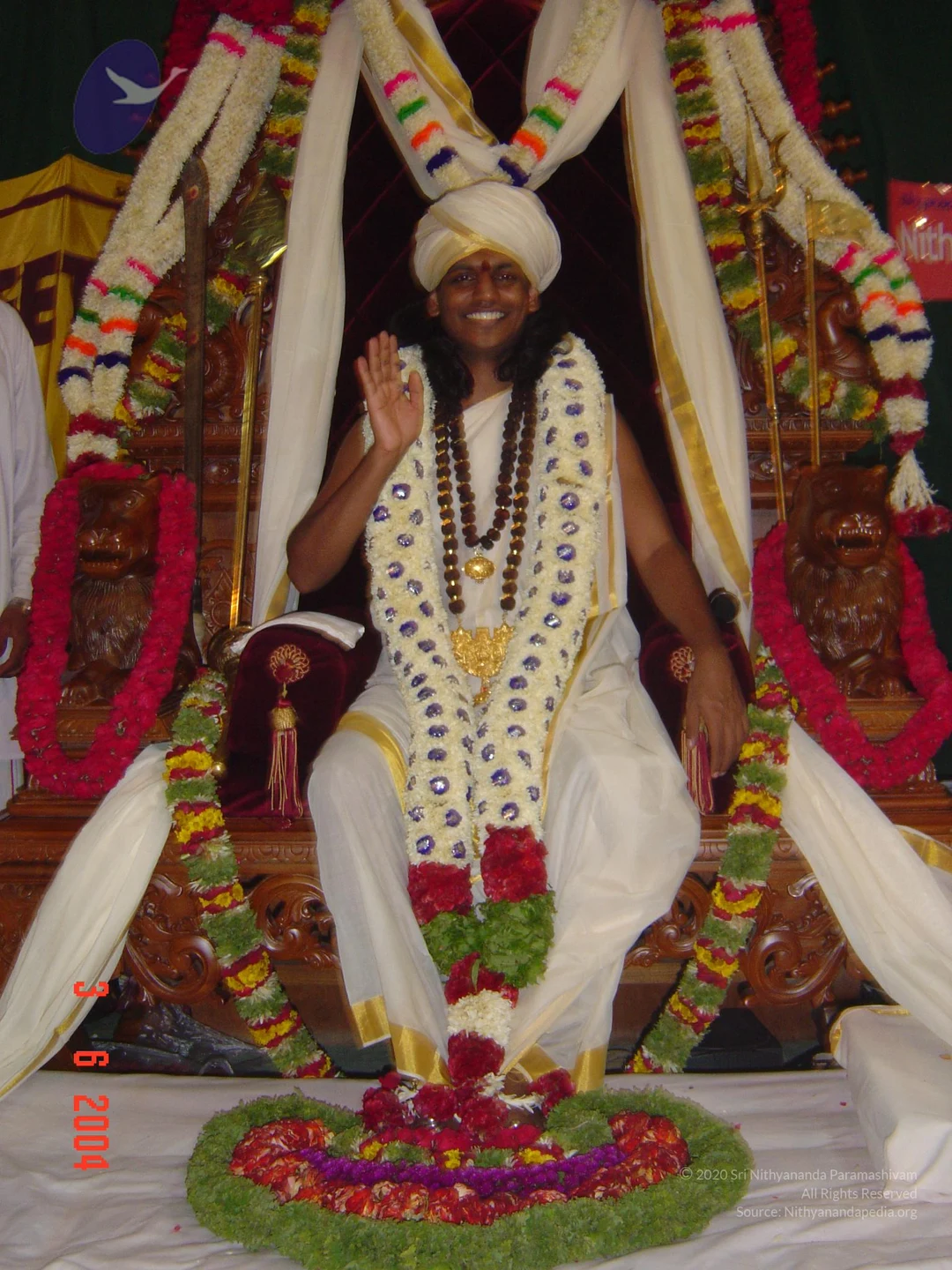
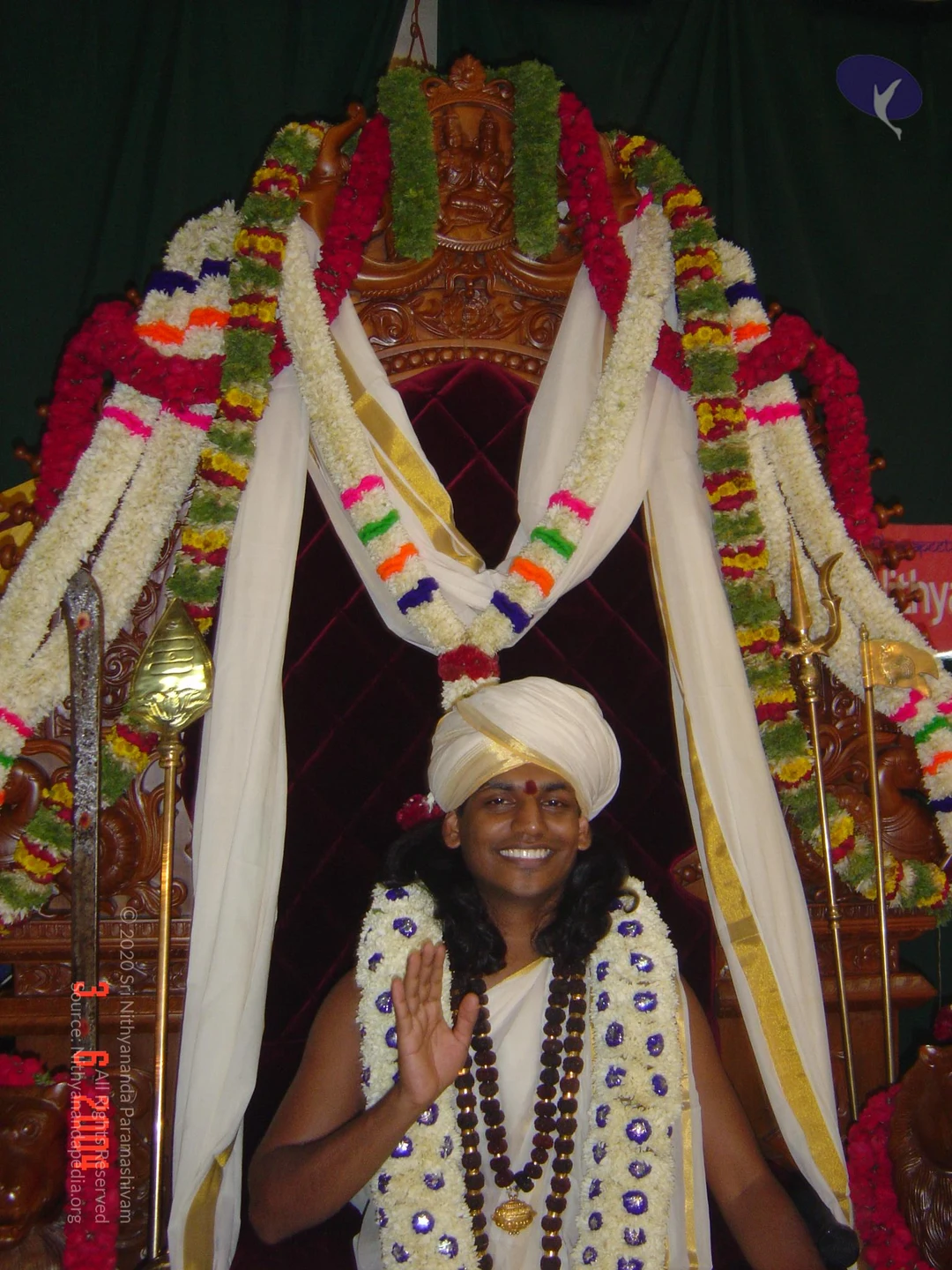
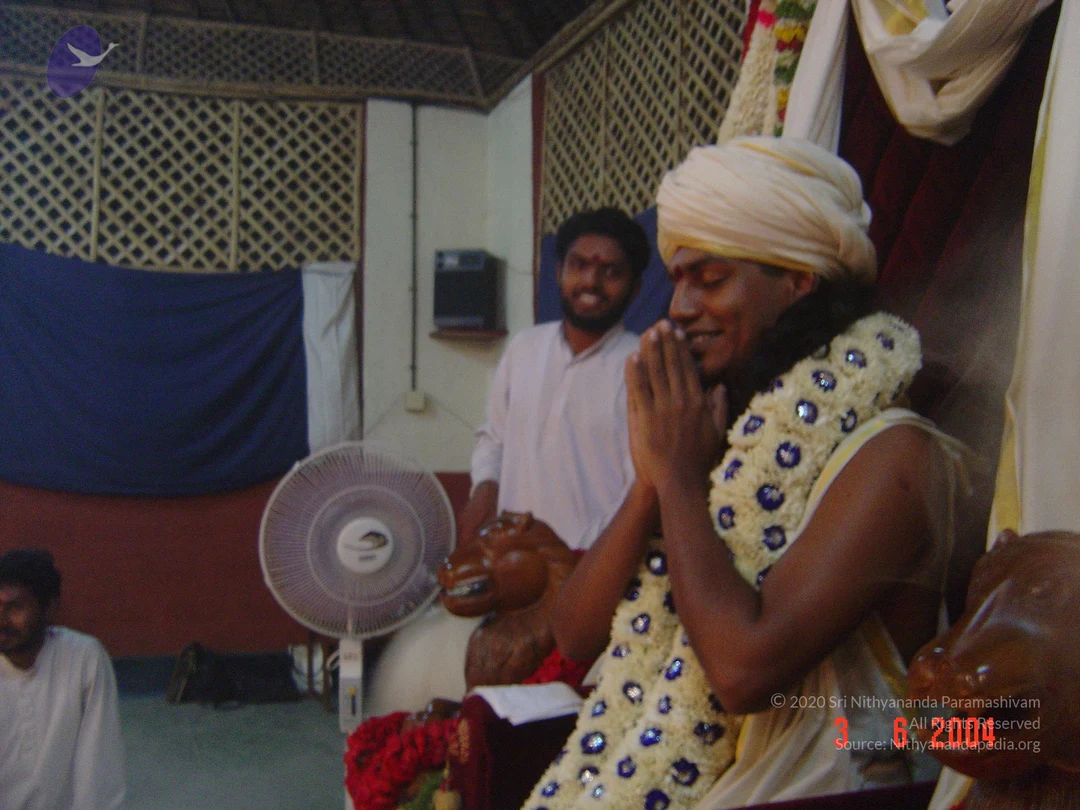
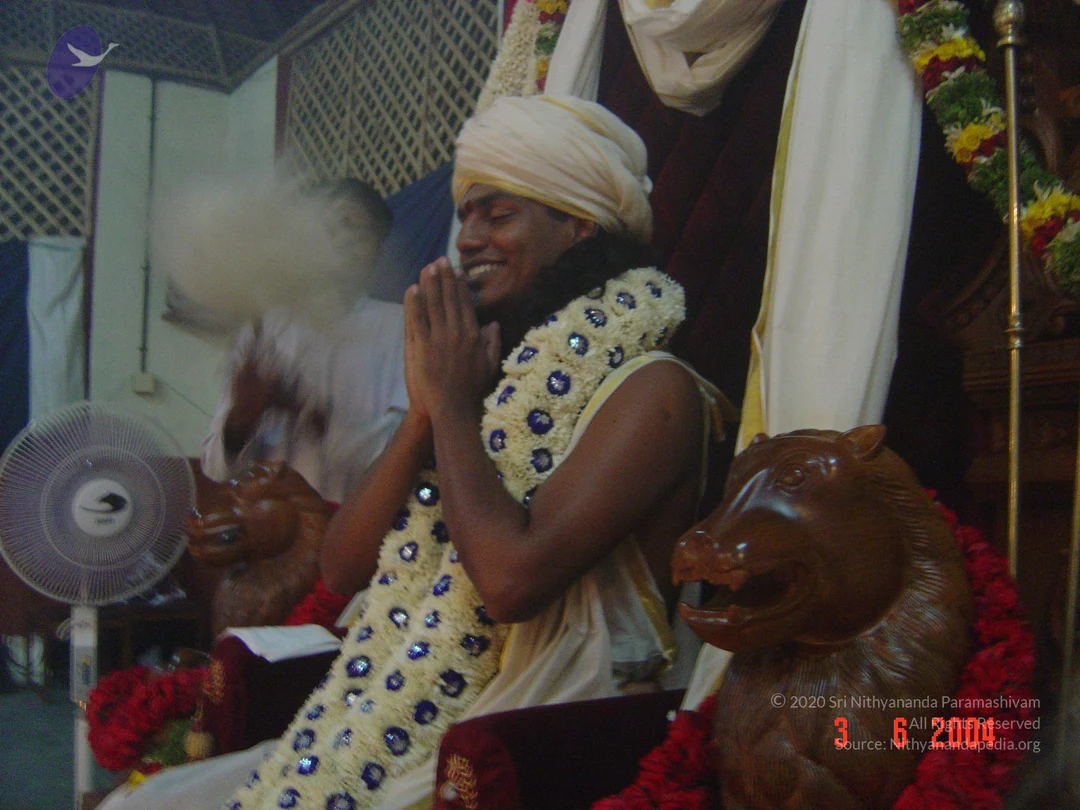
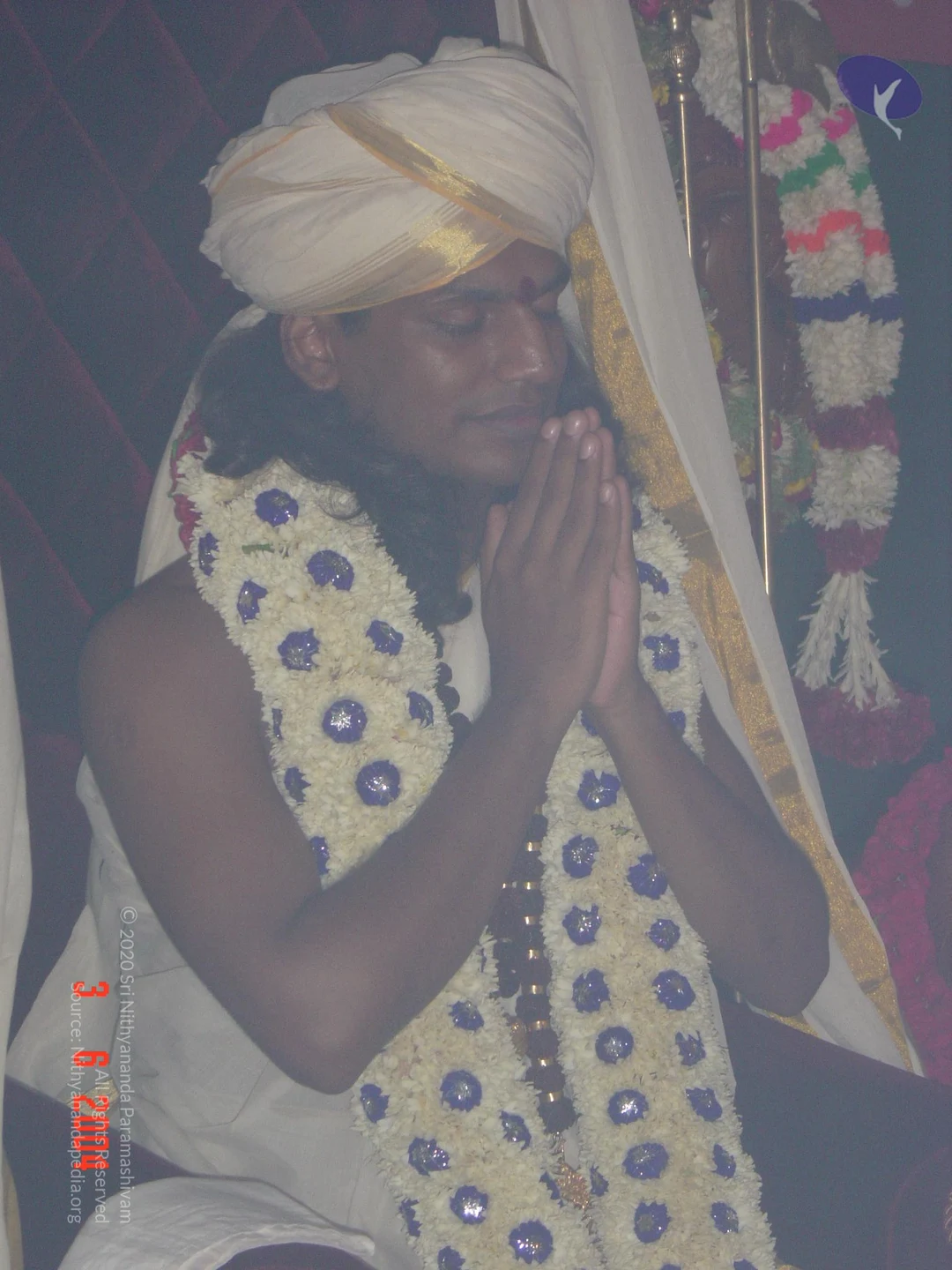
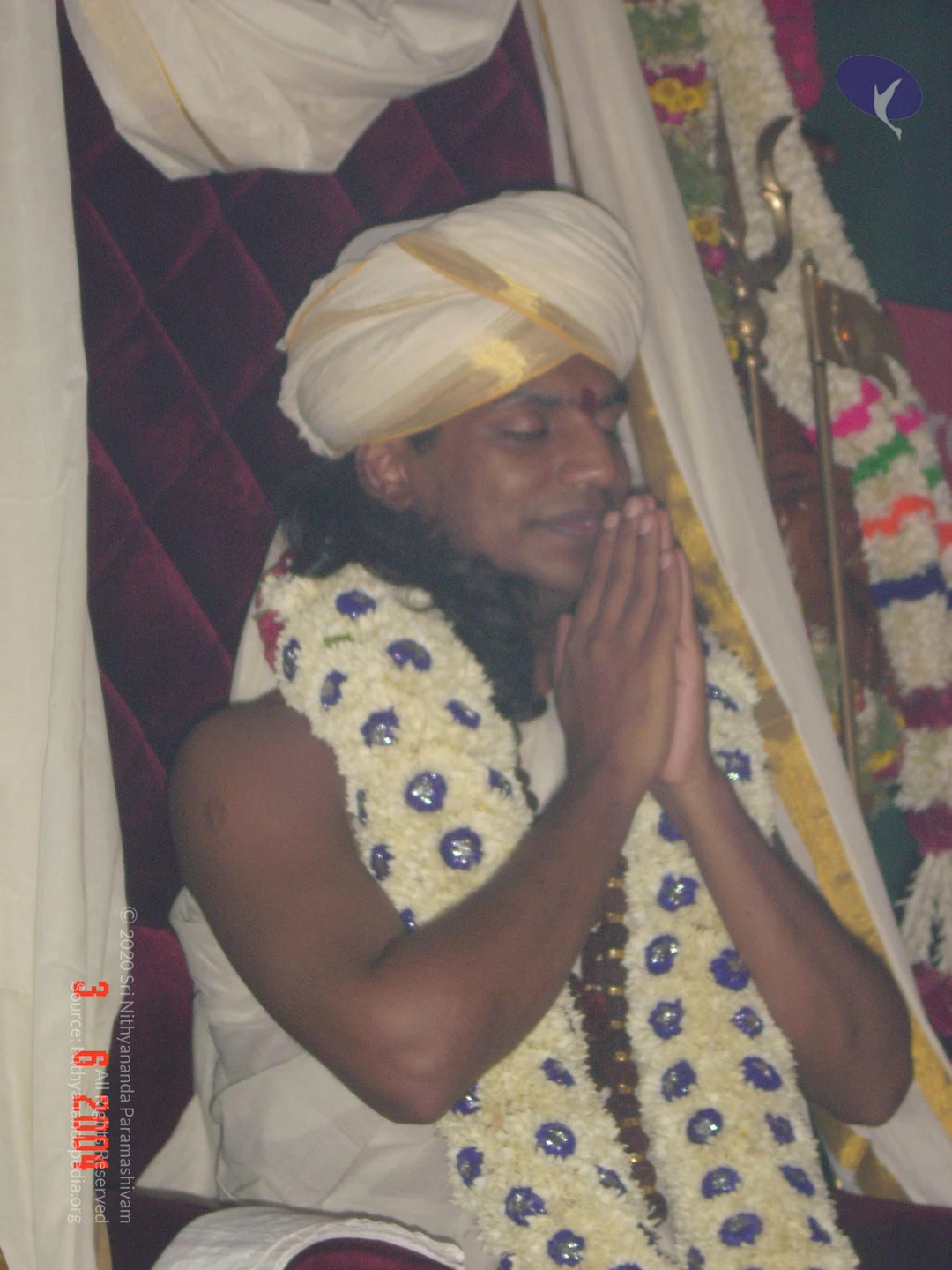
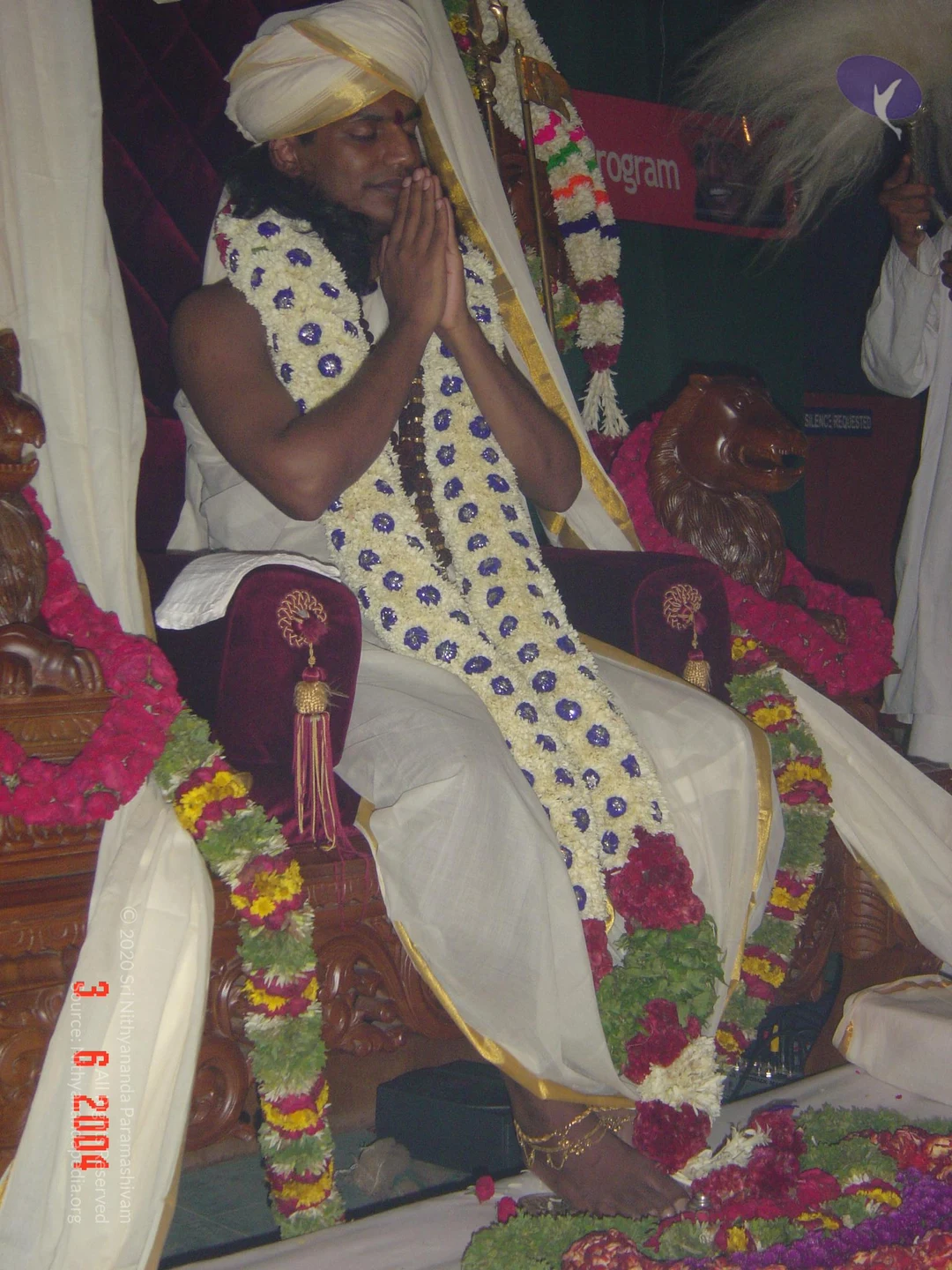
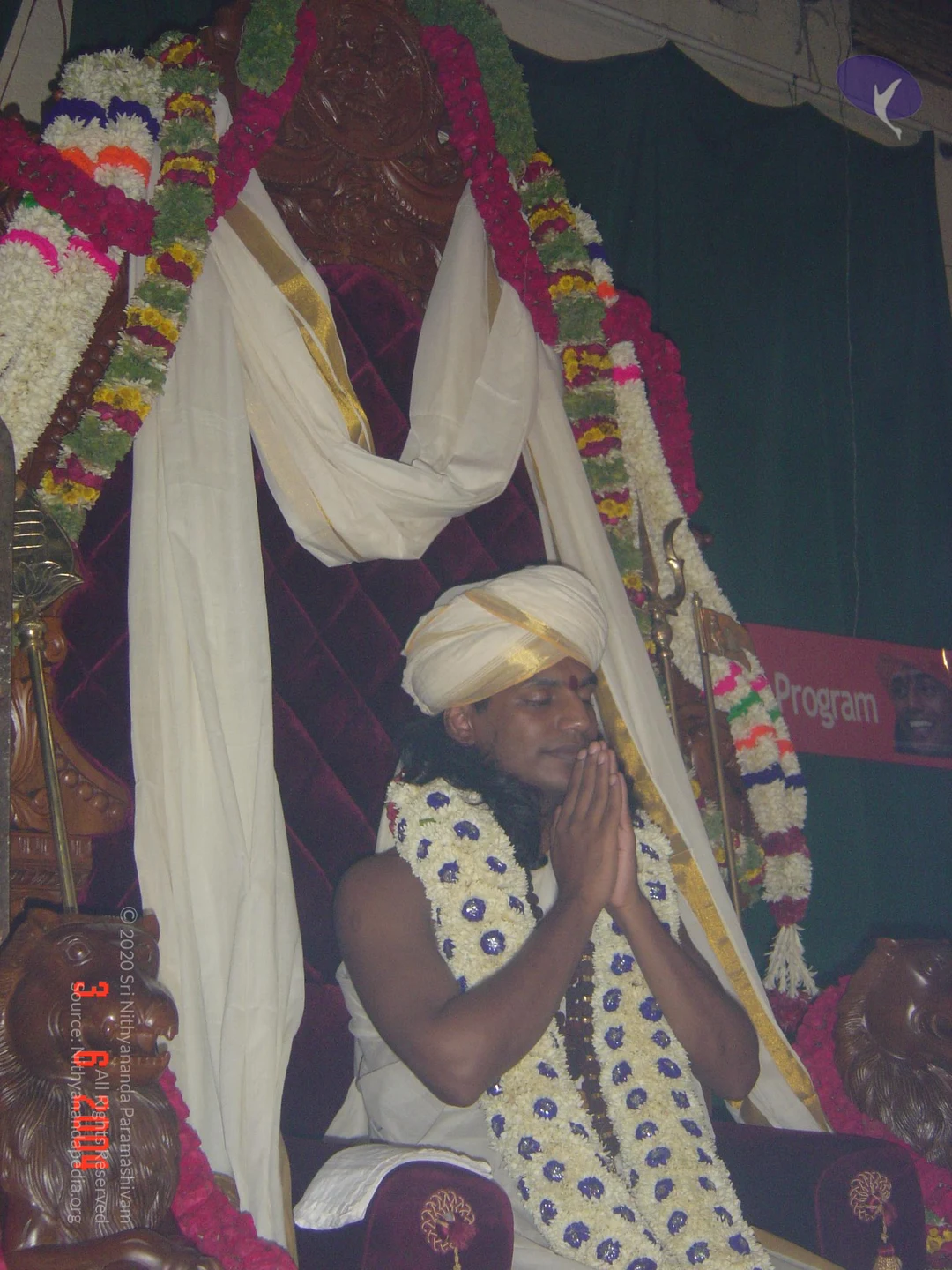
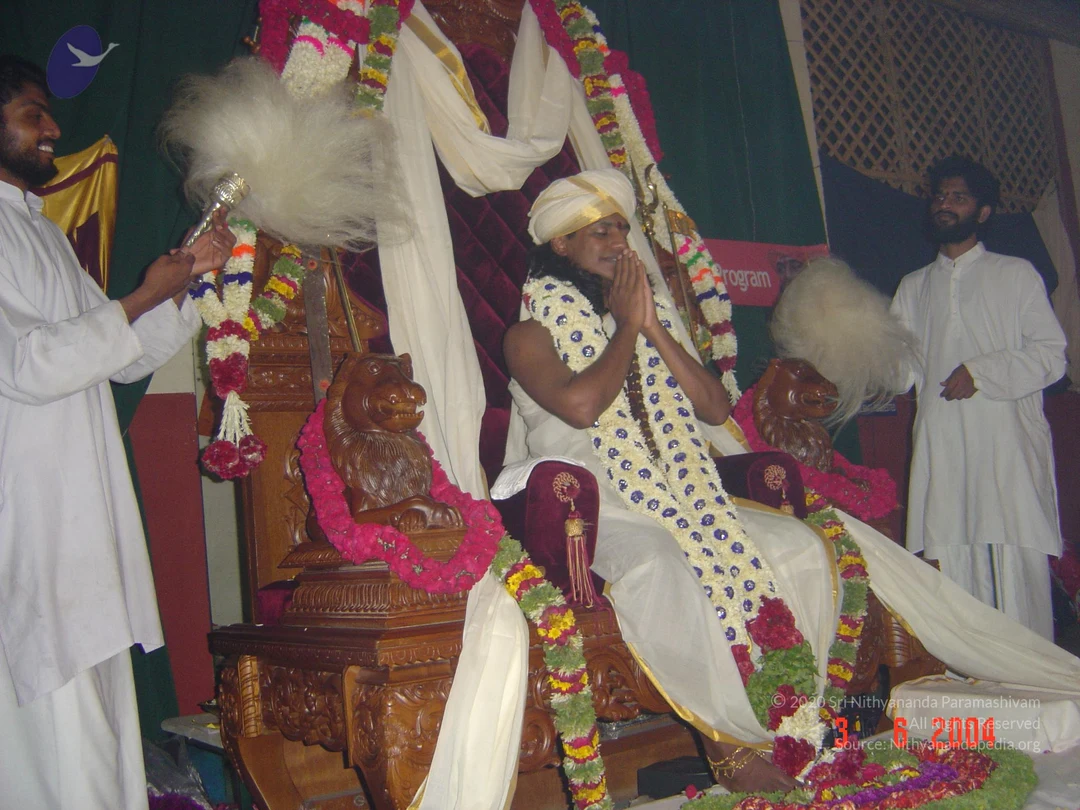
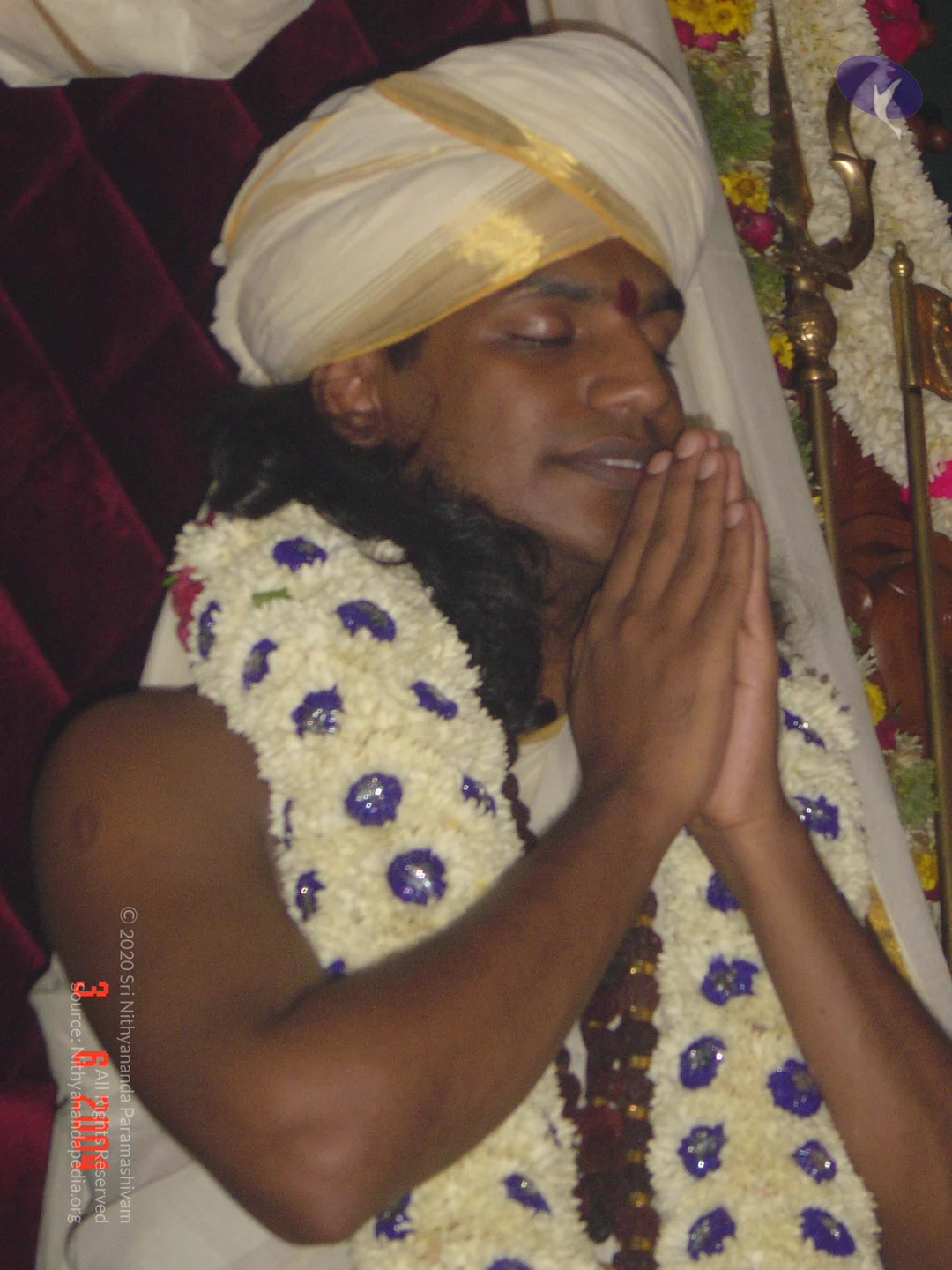
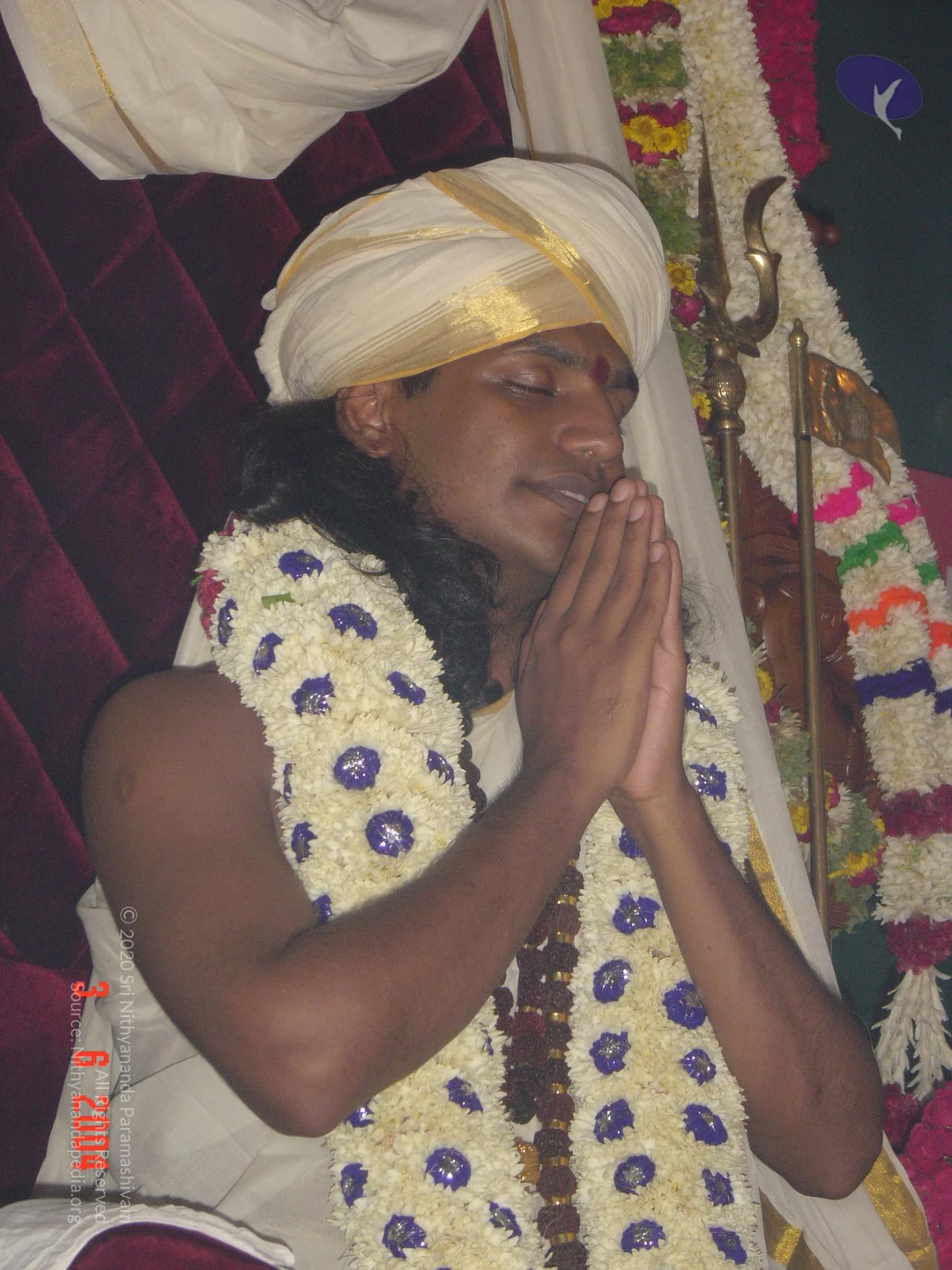
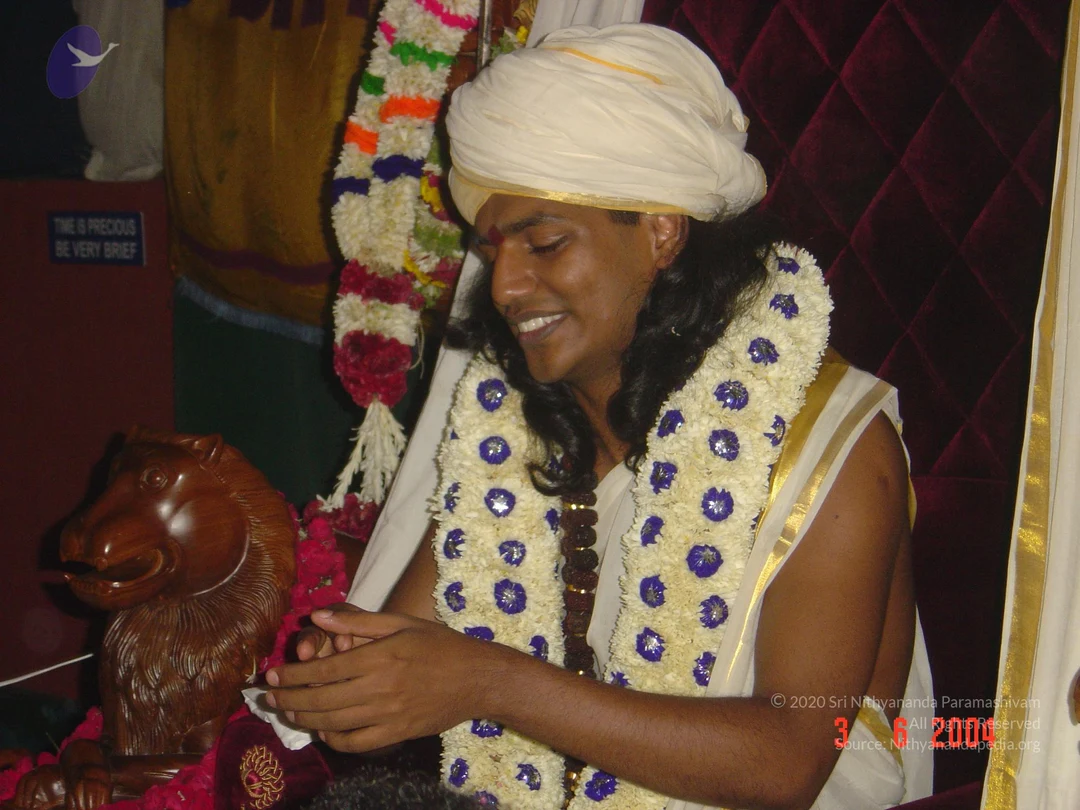
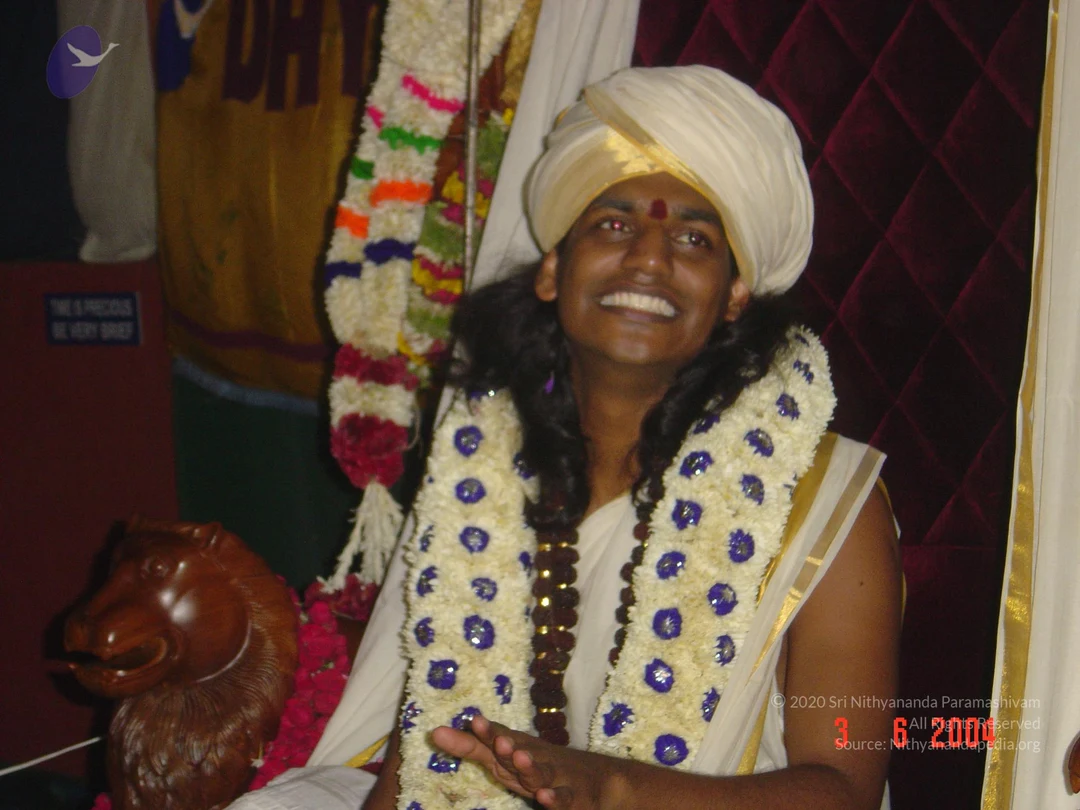
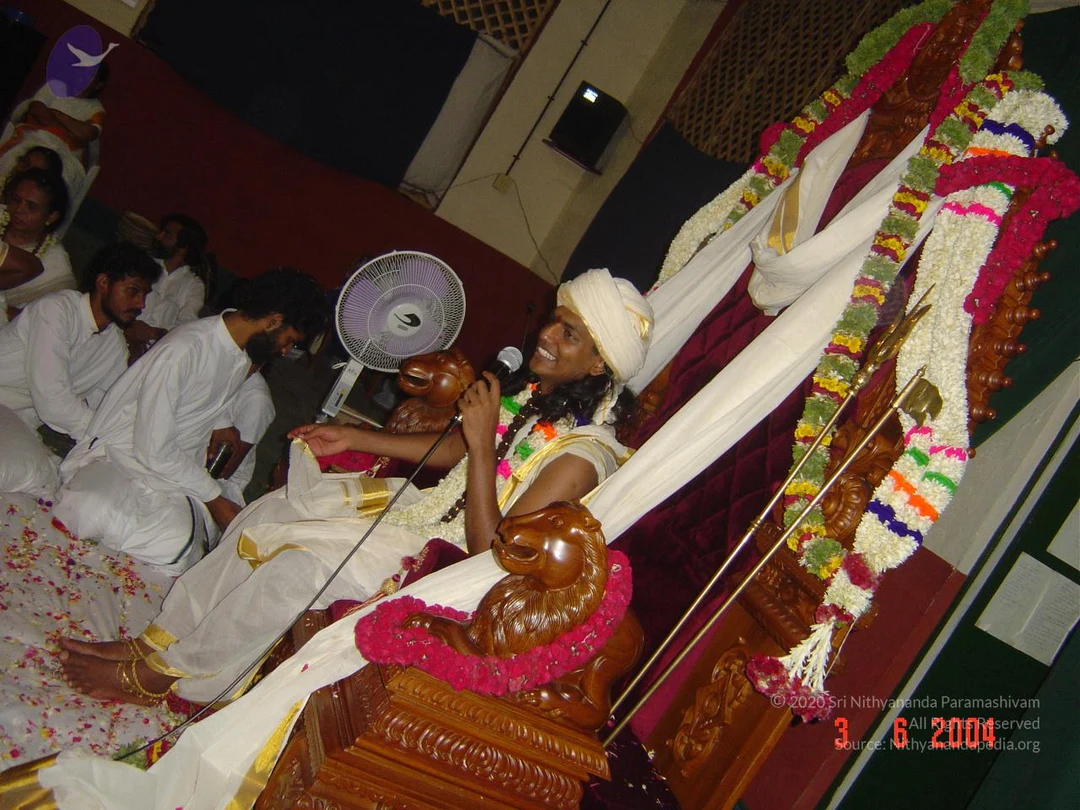
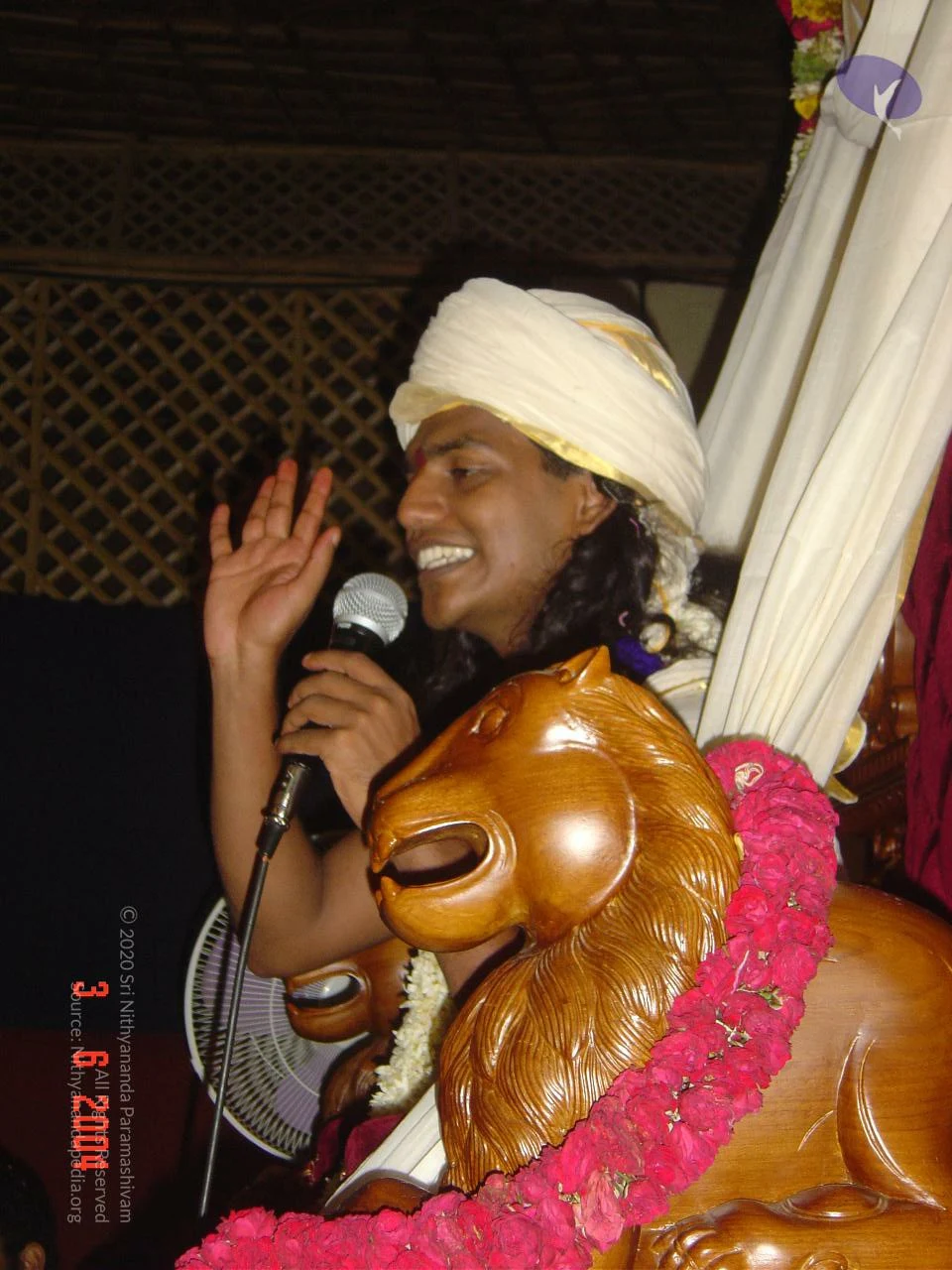
Swamiji during the Arathi at the conclusion of the programme
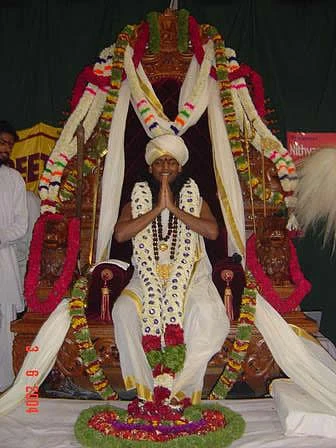
NSP_Swamiji.JPG

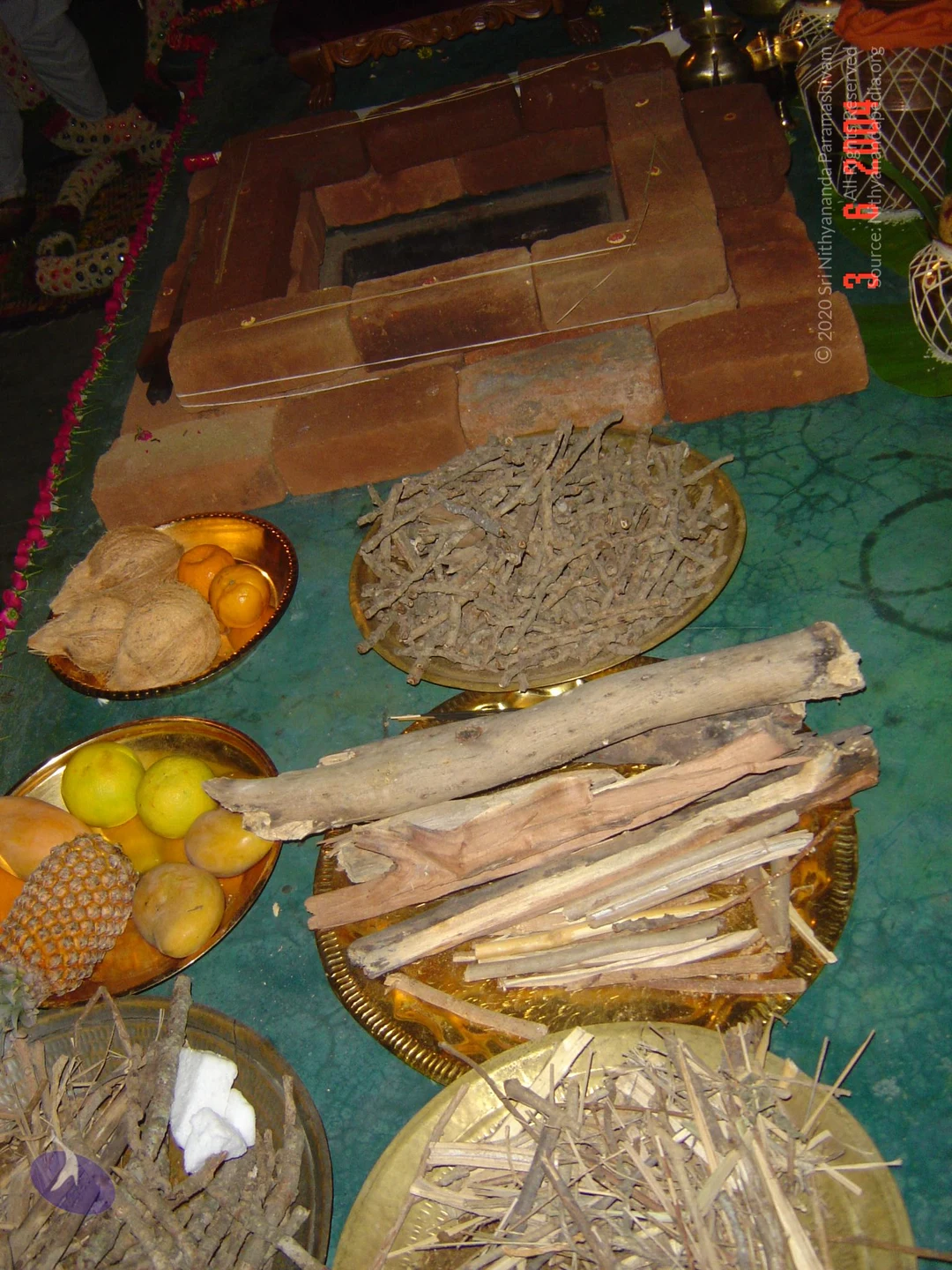
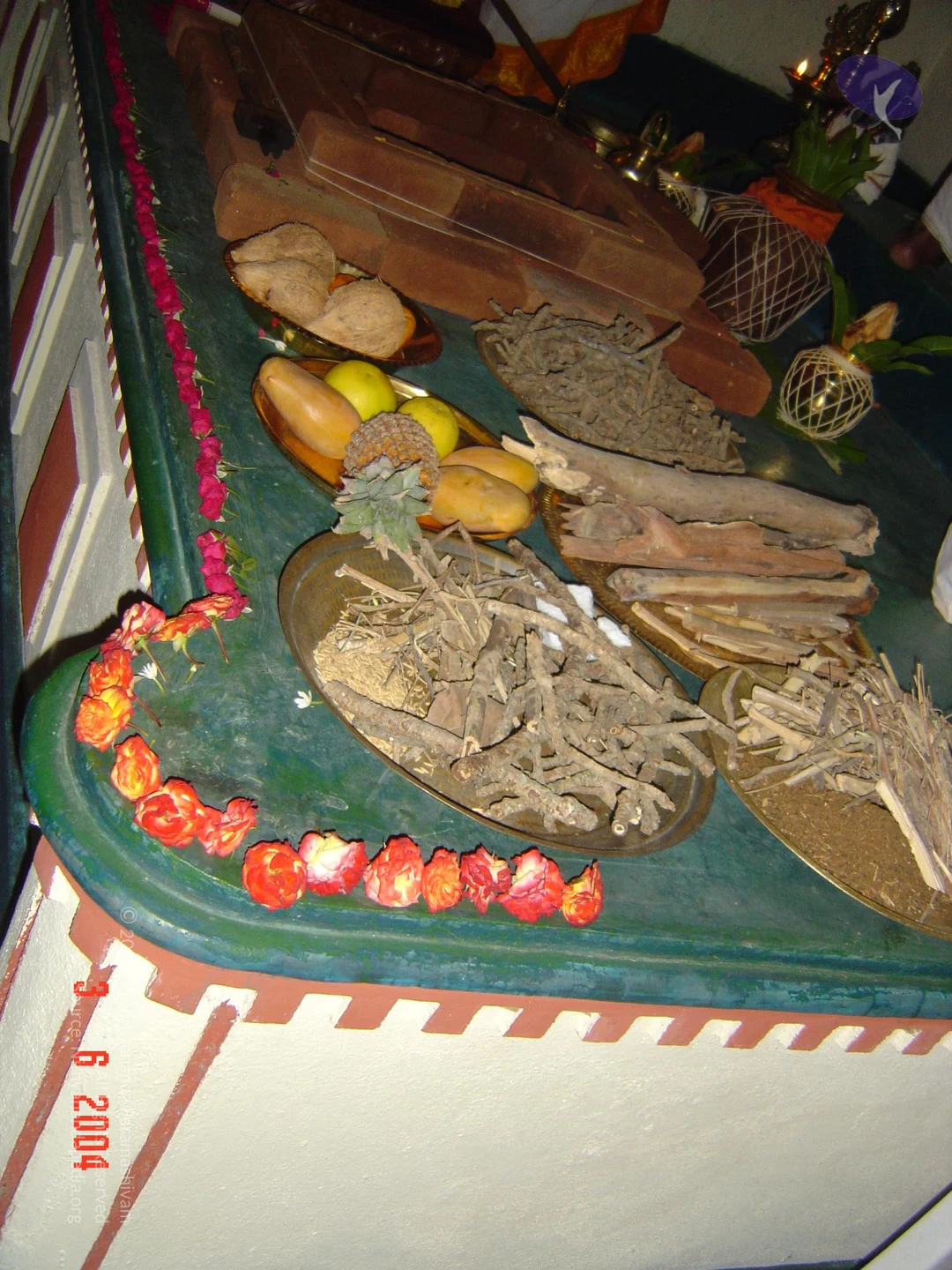
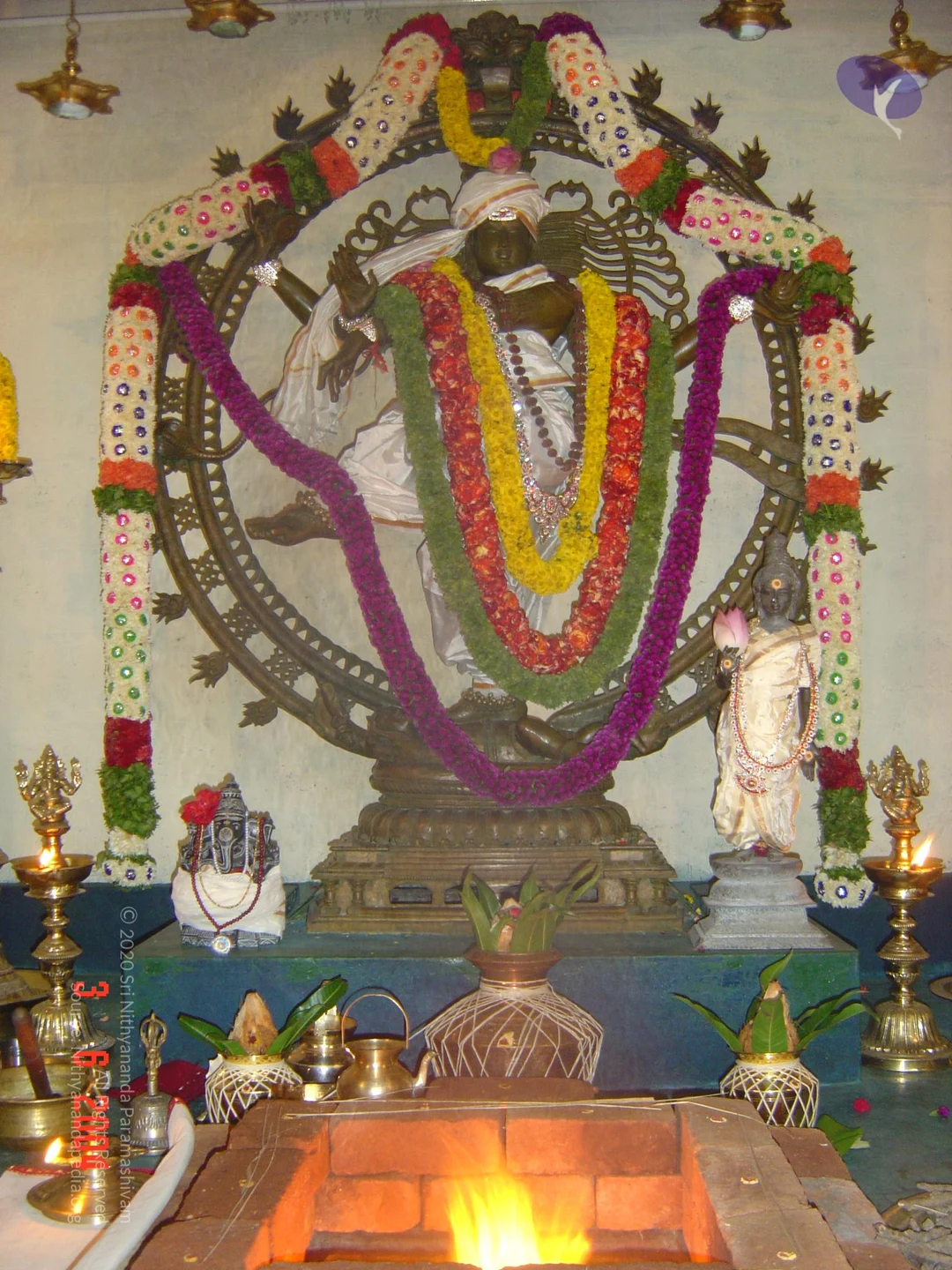
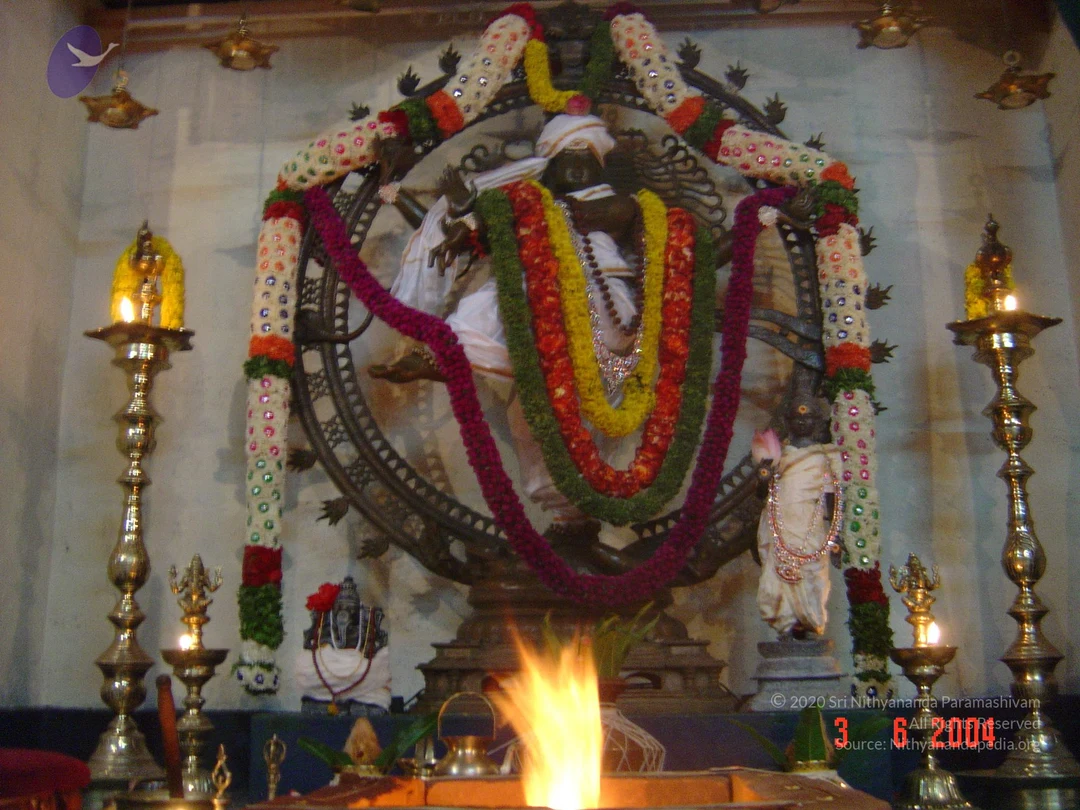
Ananda Natarajar with the pyre ready to take on the oblations of the people gathered
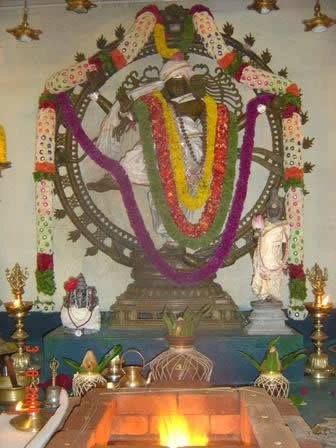
NSP_Natarajar.JPG

People offering all their pains and pleasures as oblations to Existence to take on a new birth, disconnected from the past
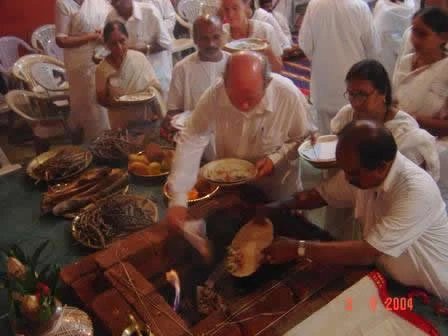
NSP_oblation.JPG

Photos Of The Day:

01-NSP-ENGLISH-ADIKAILAASA
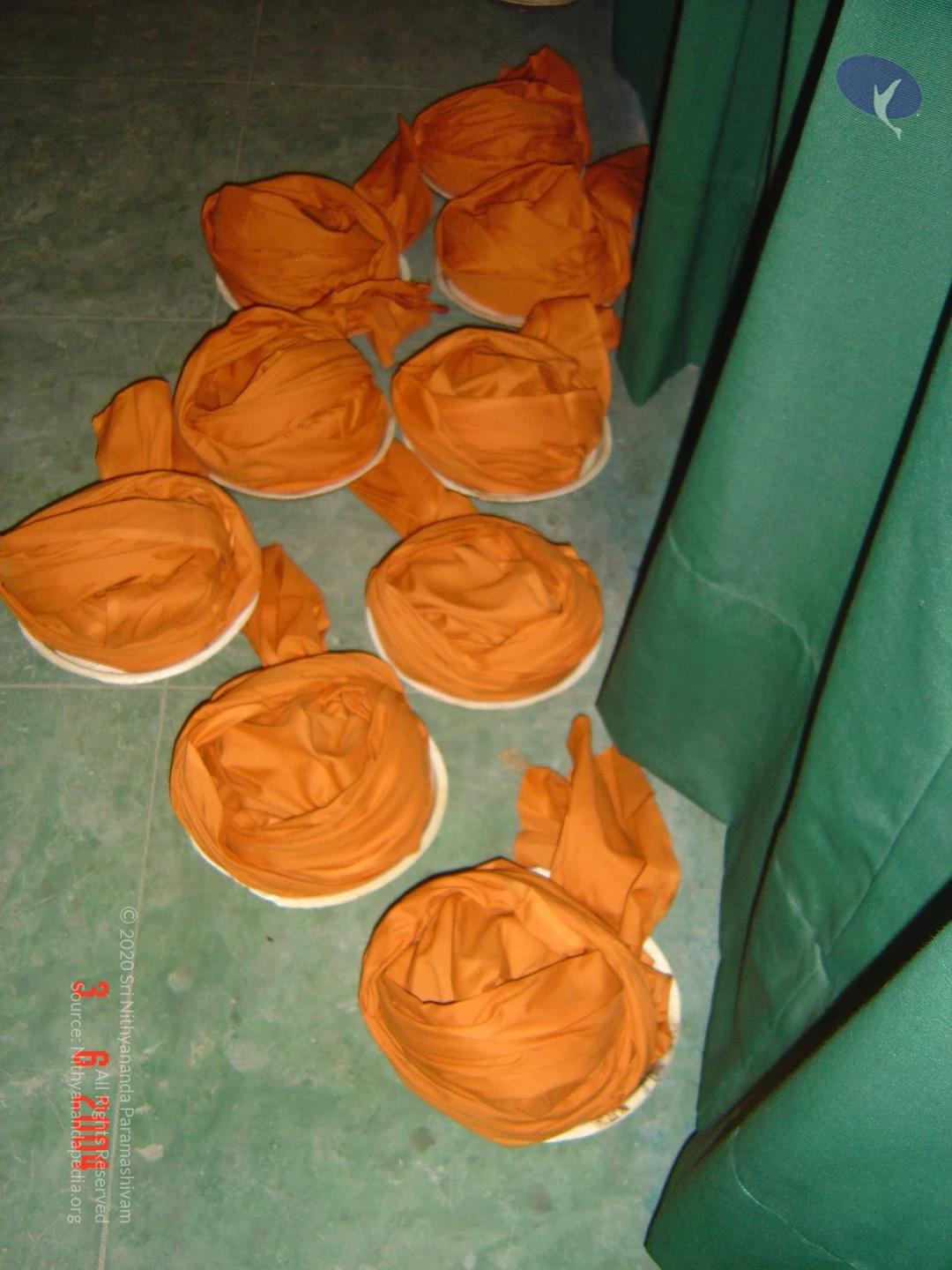
Photos from this day

View all 98 photos

01-NSP-ENGLISH-ADIKAILAASA
43 photosSource gallery
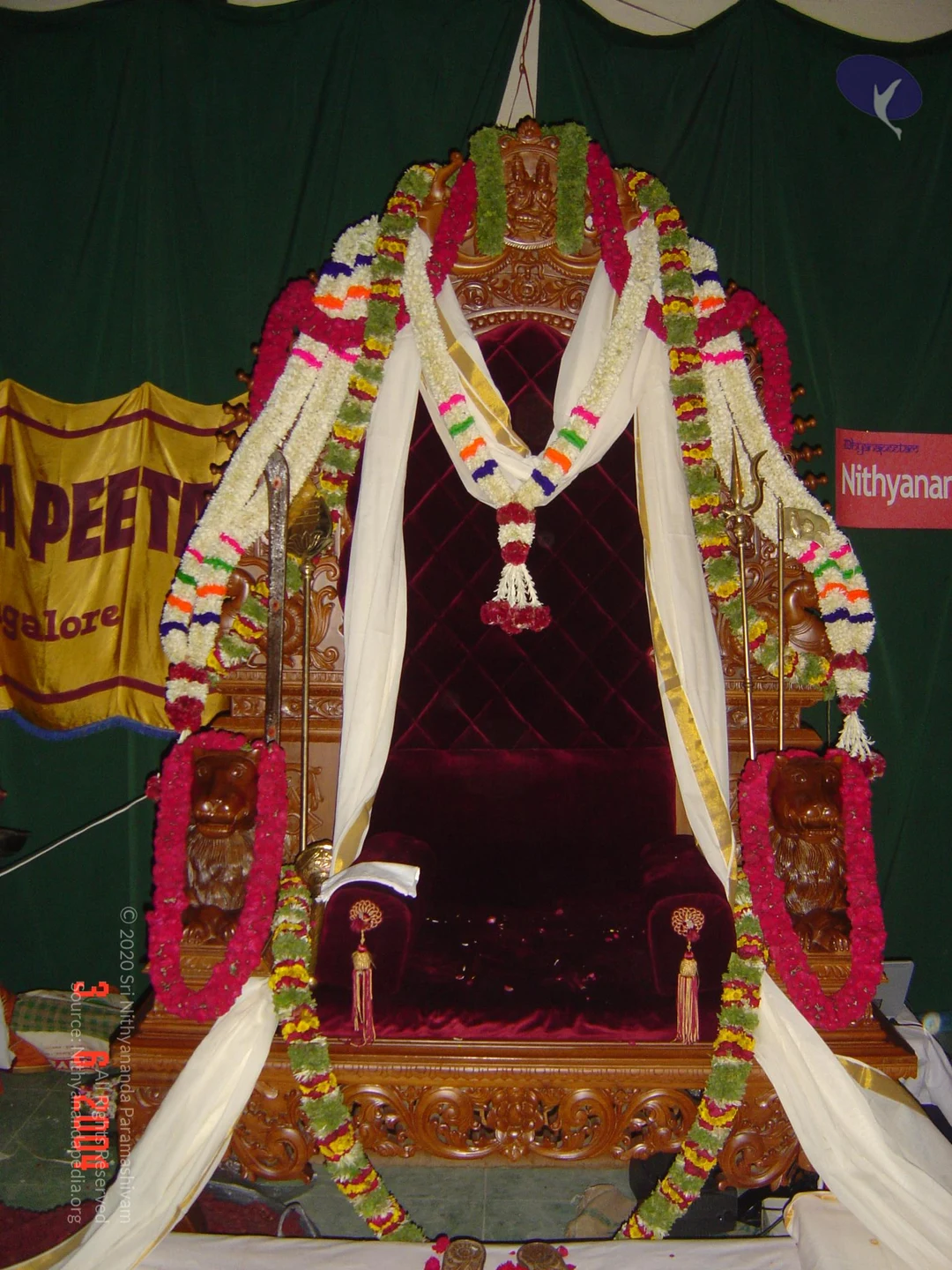
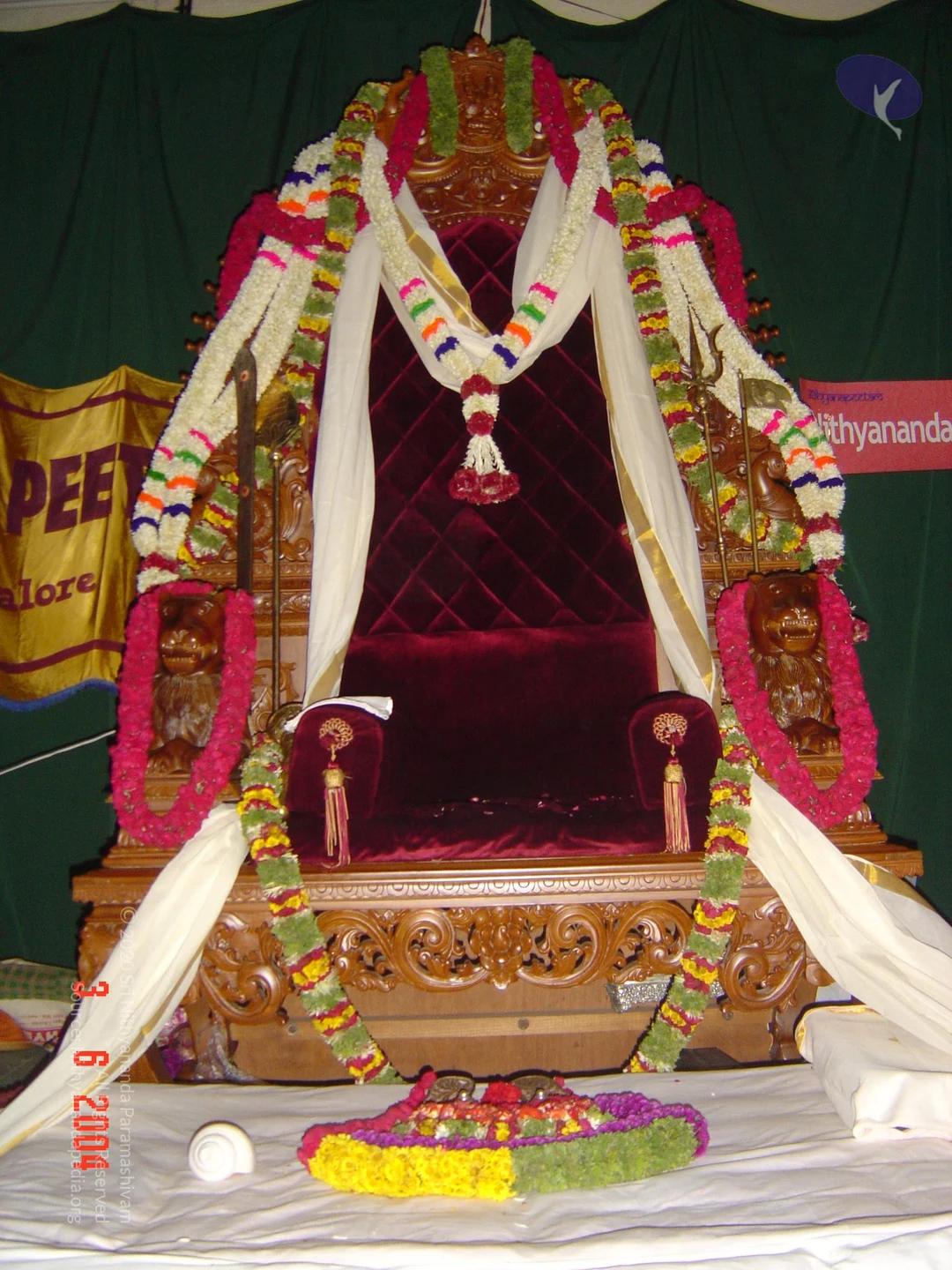
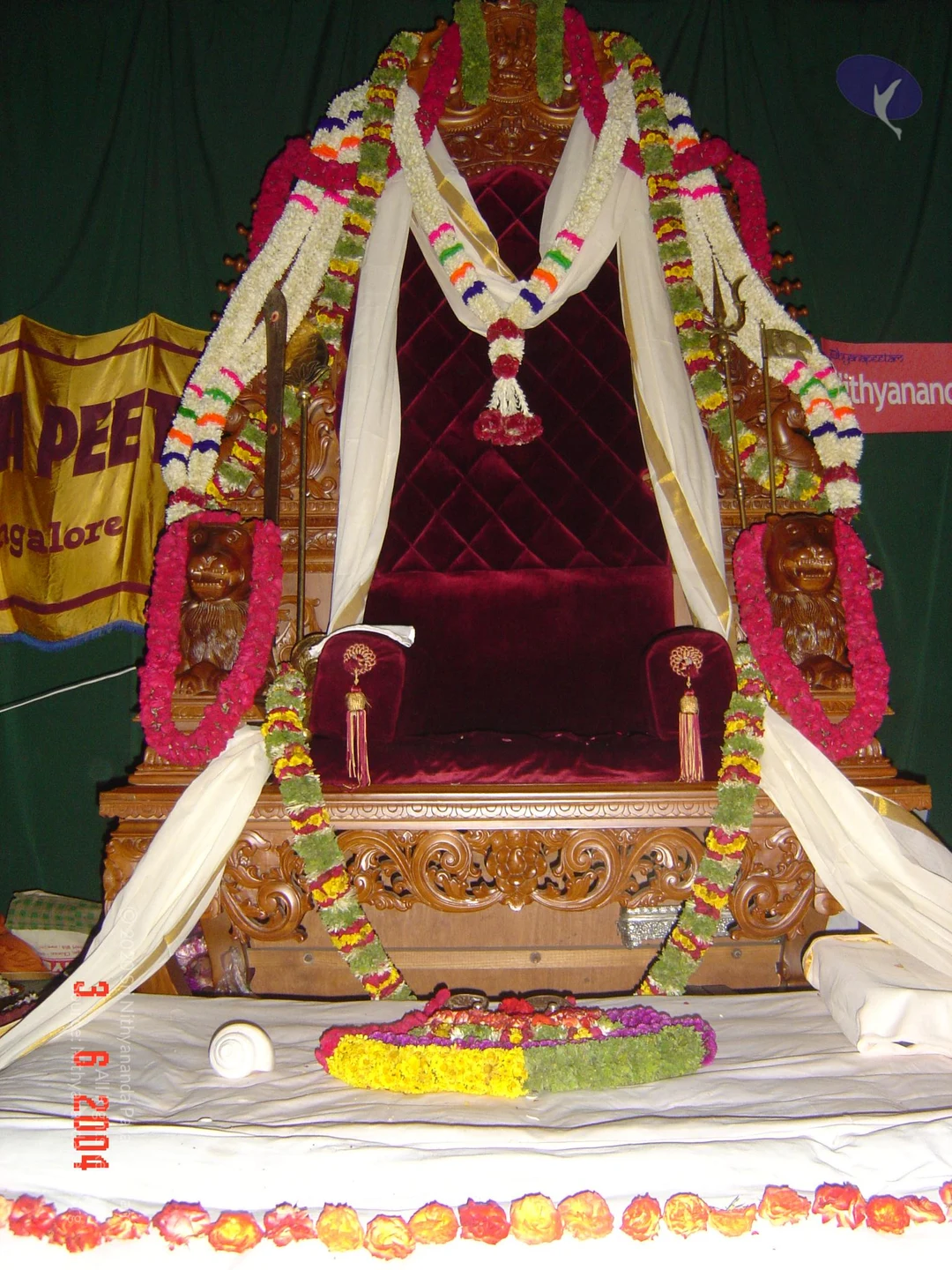
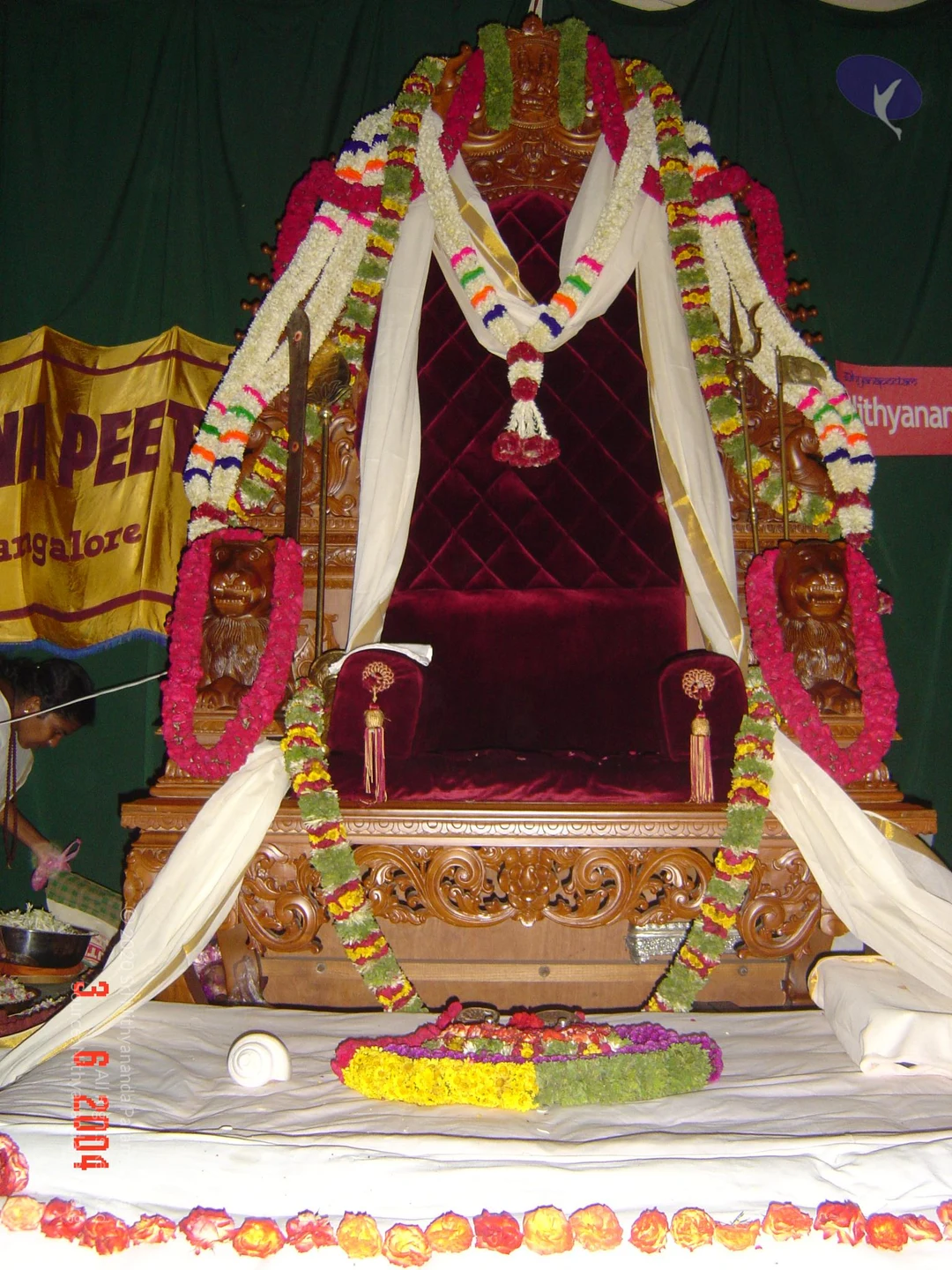
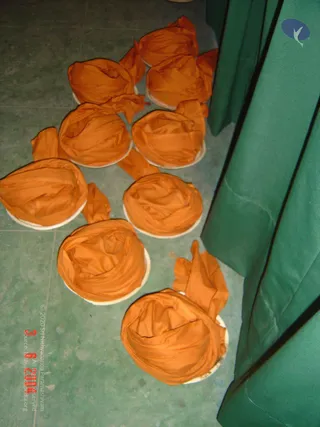
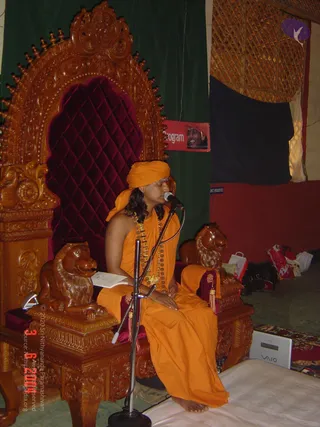
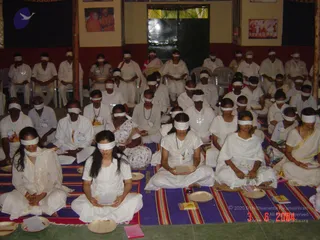
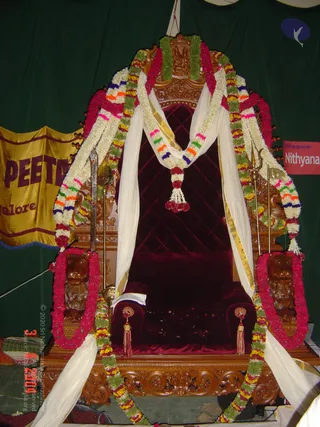
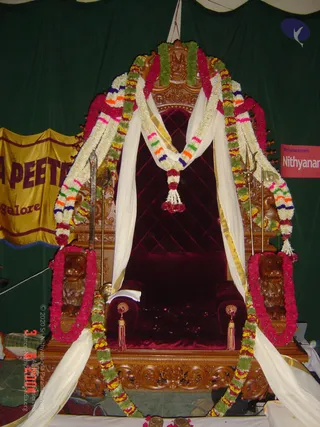
Photograph of several orange-saffron turbans or head cloths wrapped around round white bases, lying on a green-tiled floor beside folded green fabric hanging along the right edge. No people are visible.A photograph of a winding unpaved dirt road running through a green rural landscape. Tall trees line both sides, including coconut palms and other broadleaf trees, with lush grass and a crop field of young maize on the left. Late sunlight casts long tree shadows across the sandy track, which has tyre ruts. No people are visible. A red date stamp reading 3 6 2004 appears at the lower left edge.A photograph of a robed figure seated on an ornately carved wooden throne with lion-head armrests and a deep red quilted velvet back. The seated person wears an orange turban, an orange shawl draped over one shoulder, and layered gold and beaded necklaces, and speaks into a microphone on a stand while holding a sheet of paper. Behind the throne hang a green curtain and a dark cloth, with a red banner bearing a small portrait and the partial word 'ogram'. A white laptop sits on the floor beside the platform, and colourful bags are stacked at the right edge. A date stamp in red reads 3 6 2004 along the left edge, with a pedia source credit. The seated figure has distinctive orange turban and necklace cues, so this is an appearance-based a person candidate, presented in personA photograph of a seated group of about two dozen participants in an ashram hall, most wearing white clothes and white blindfolds over their eyes. They sit cross-legged on a striped blue, purple and red mat, holding small paper plates and printed booklets. Wall posters hang behind them, including a framed photo of two saffron-robed men. Lidded paper plates and small books lie on the floor in front, and a name badge is visible on several participants.An empty ornate carved wooden throne (peetha) draped with white cloth with gold borders and heavy multicoloured garlands of white, pink, green and yellow flowers. Carved lion heads flank the seat, with a trident and a sword-like staff leaning against the sides. A deity murti is carved at the top of the backrest. A gold banner reading PEETH and Bangalore hangs at left, and a red sign reading Nithyanan is at right, against a dark green backdrop. No people are visible in the scene.A photograph of an empty ornate wooden throne (peetha) with carved lion-head armrests and a deep red velvet seat, draped with white cloth edged in gold and decorated with layered garlands of white jasmine, marigold and pink flowers. A trident (trishul) and a sword-like ceremonial staff stand beside the throne, and a carved deity murti is set at its top. Behind it hang a green curtain, a gold banner reading part of 'PEETH' and 'galore', and a red sign reading 'Nithyanan'. No people are visible.
2004-JUNE-03

54 photosView all
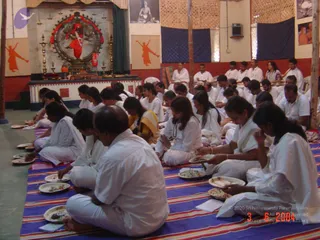
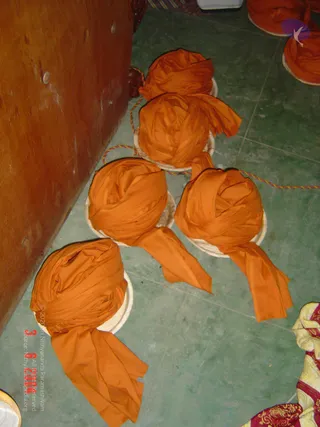
A photograph of a man with long, dark, swept-back hair and a red bindi on his forehead, wearing an orange-saffron garment draped over his shoulders, with eyes closed and head tilted down as if in meditation. Behind him under green leafy trees stand several people: a woman in a red-bordered sari at left, a young man in white shirt and glasses, an older bald man with grey beard in a white shirt at right, and a woman in glasses at lower left.A man in a white kurta with long curly dark hair and a full beard bends over at the floor of a small room, reaching toward a row of coiled saffron-orange turbans set on round flat trays. Behind him stacks of woven baskets or trays lean against a wall, and a green curtain hangs on the right. In the lower right, a red and gold striped brocade cloth lies folded beside a woven pink-and-black bag holding a flask. The scene reads as preparation of turbans for an event.A photograph inside a hall with red-painted lower walls and a green-and-yellow banner reading DHYANA partly visible at right. Seated on a raised ornate golden throne at right, a figure in orange robes with an orange head covering holds a small white sheet of paper. Seated on striped blue-and-red mats in rows, many people in white clothing eat from round plates. In the foreground, a few seated devotees, including a man in white with grey hair, face the throne. A standing man in white stands near the left centre. A small standing fan and a laptop sit beside the throne, and a green map hangs on the back wall.A seated group of devotees in white clothing eats from small plates on a blue and orange striped mat in a hall. In the foreground a bald man in a white shirt and white dhoti sits cross-legged, eating, with his bare feet visible. Women in white and one in a yellow sari sit in rows along the mat, several with plates of food before them. Behind them more people in white sit on the floor and in chairs. At the back left stands a large bronze Nataraja statue, a dancing Shiva with a flaming arch, flanked by brass oil lamps on a white altar. Orange dancer silhouettes and a black-and-white photograph hang on the walls, and a blue curtain and bamboo screen form the backdrop.Five orange-saffron cloth turbans, each wound around a round wicker or cane base, rest on a green-tiled floor beside a wooden cabinet or wall panel. Rolled orange fabric with loose tails trailing across the tiles; no people are visible, though a red and gold patterned cloth lies at the lower right corner and a twisted red and yellow cord runs between the bases. Additional orange turbans appear at the top right.Devotees in white clothing sit cross-legged in rows on striped blue and red floor mats inside a hall, eating from small round leaf plates. Many men wear white kurtas and shirts, some with lanyards, and women wear white and cream salwar-style outfits. A seated man in the foreground at right eats from a plate, and nearby participants hold food on their plates. Wall lettering partly visible reads Nithyananda. The scene resembles a communal meal, possibly annadan.

June 03 2004

1 photoView all
Photograph of a homa fire ritual in a hall. A bald man in white clothing kneels at a low wooden fire pit, pouring or placing offerings into the flame, while a man in a white shirt beside him holds a cup or bowl. Trays of fruit, bundles of sticks, a plate of offerings and a brass lamp sit on the wooden platform. Behind them, seated devotees in white clothes watch, including women in white saris and a man with glasses. Several other people in white stand at the back.