Skip to content
Friday

1 November 2019

Transforming the Past || You Can Change Your Past ||Parivajak Yatra || Kayakalpa Yoga || Creating Kailasa right in your Bedroom || 5th Day of Skanda Shasti Brahmotsavam ||

Dated photos
75
Source pages
1
Media
4
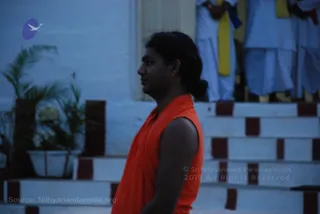
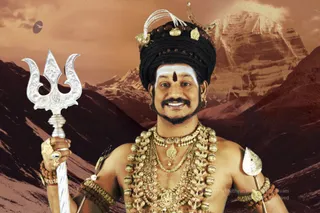
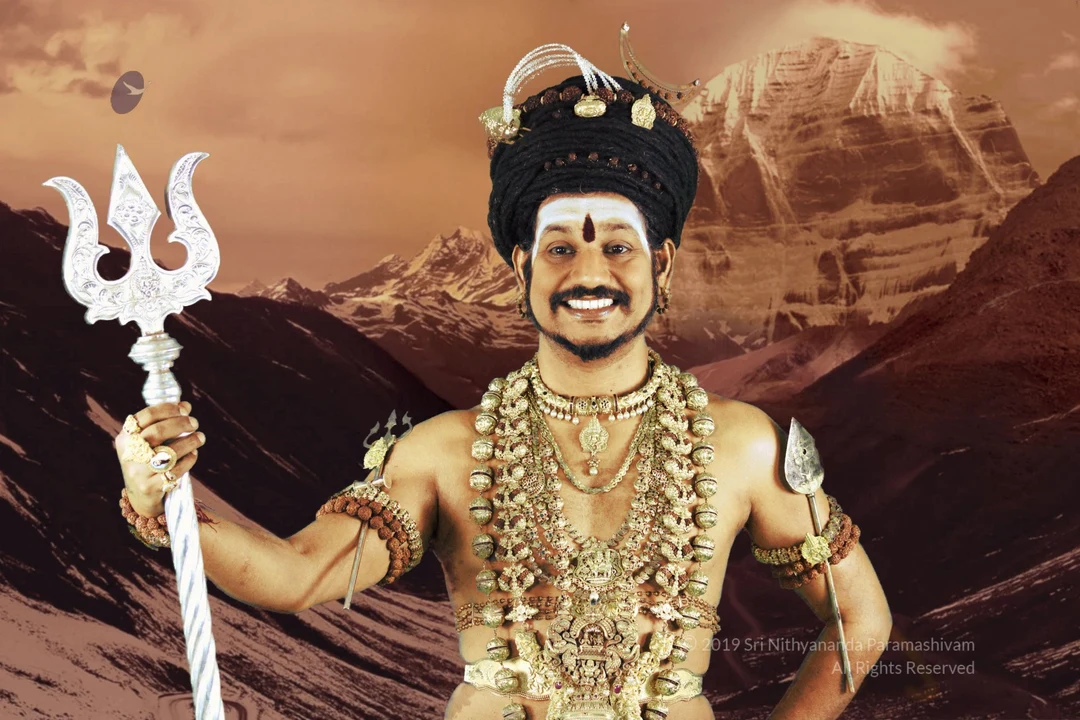
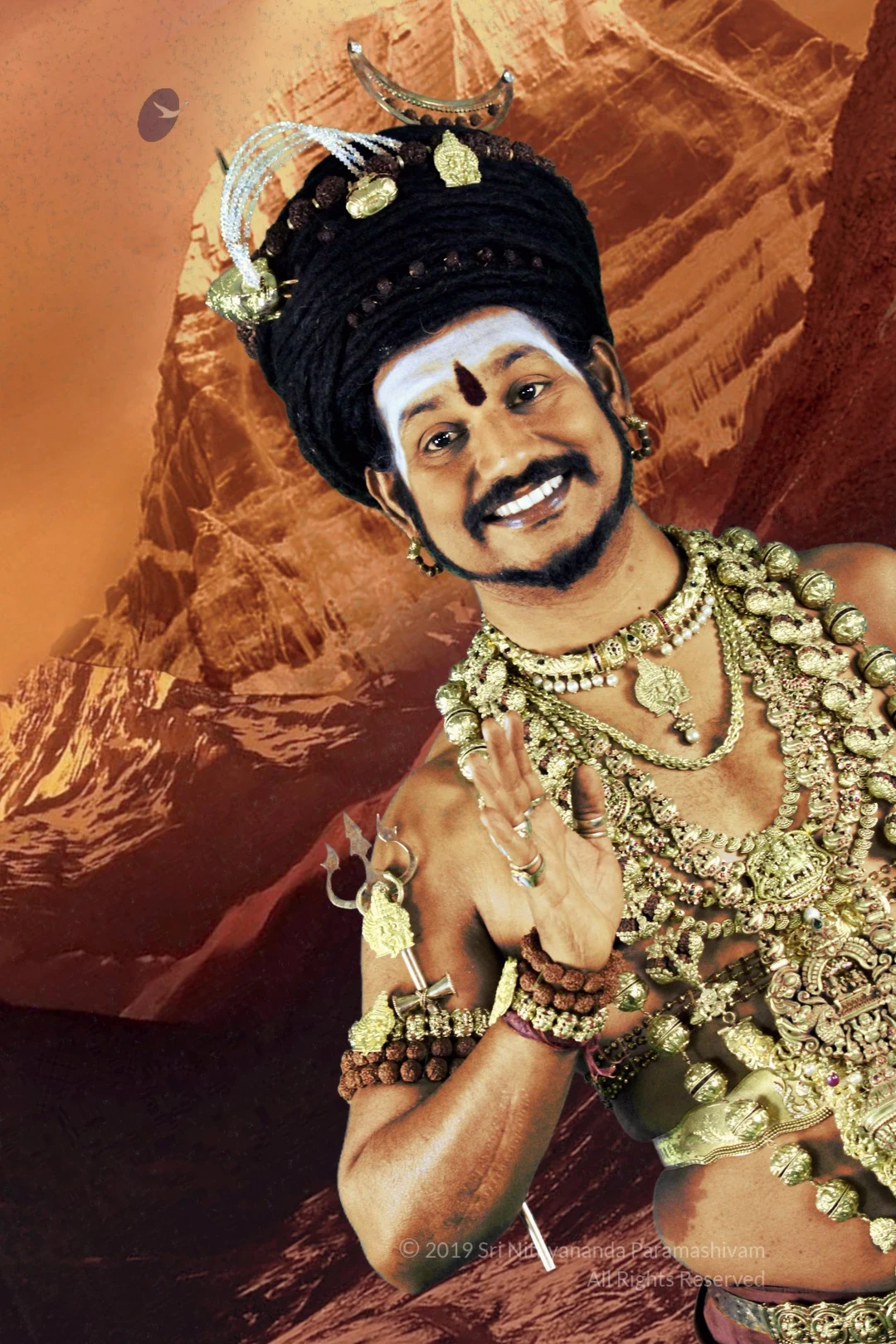
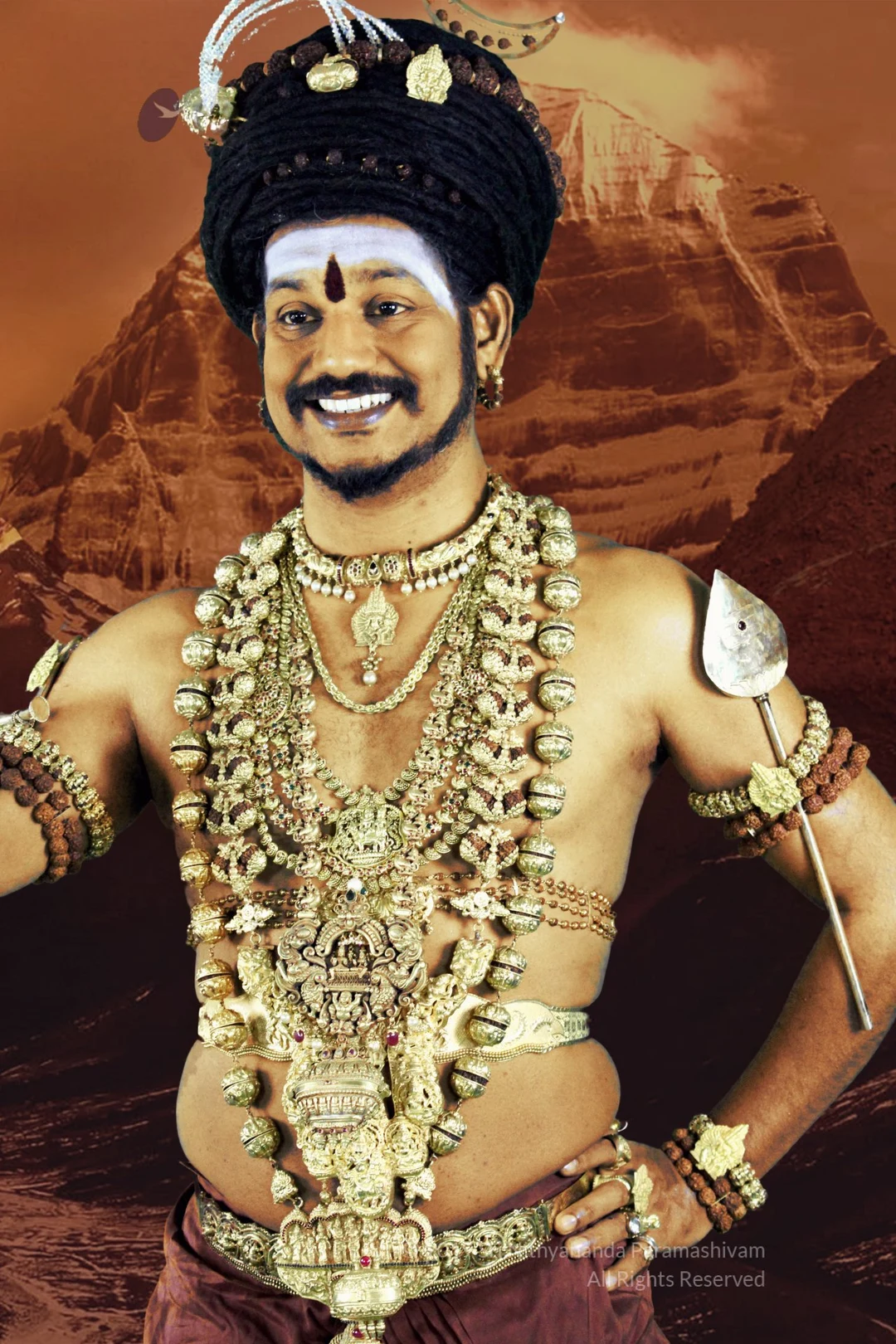
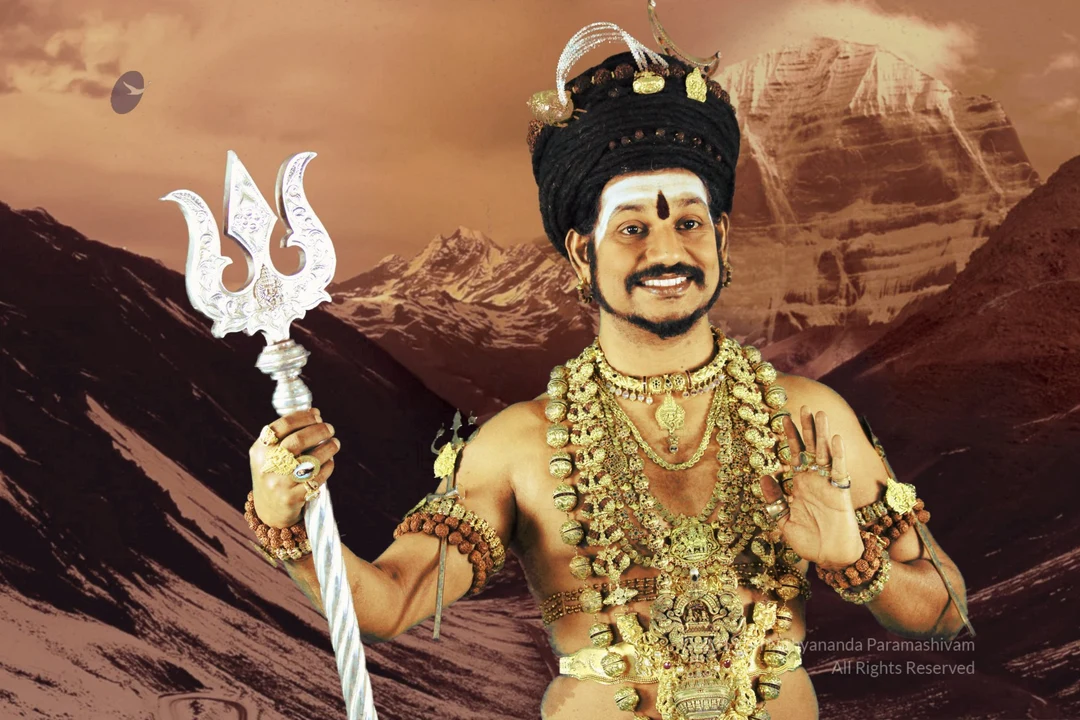
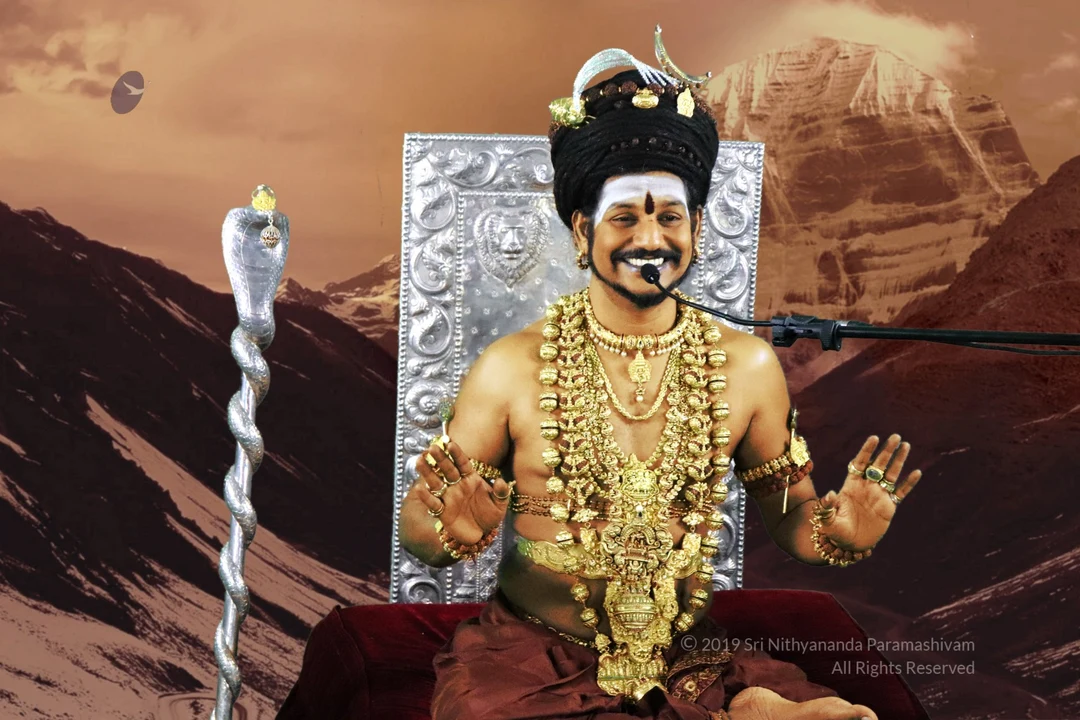
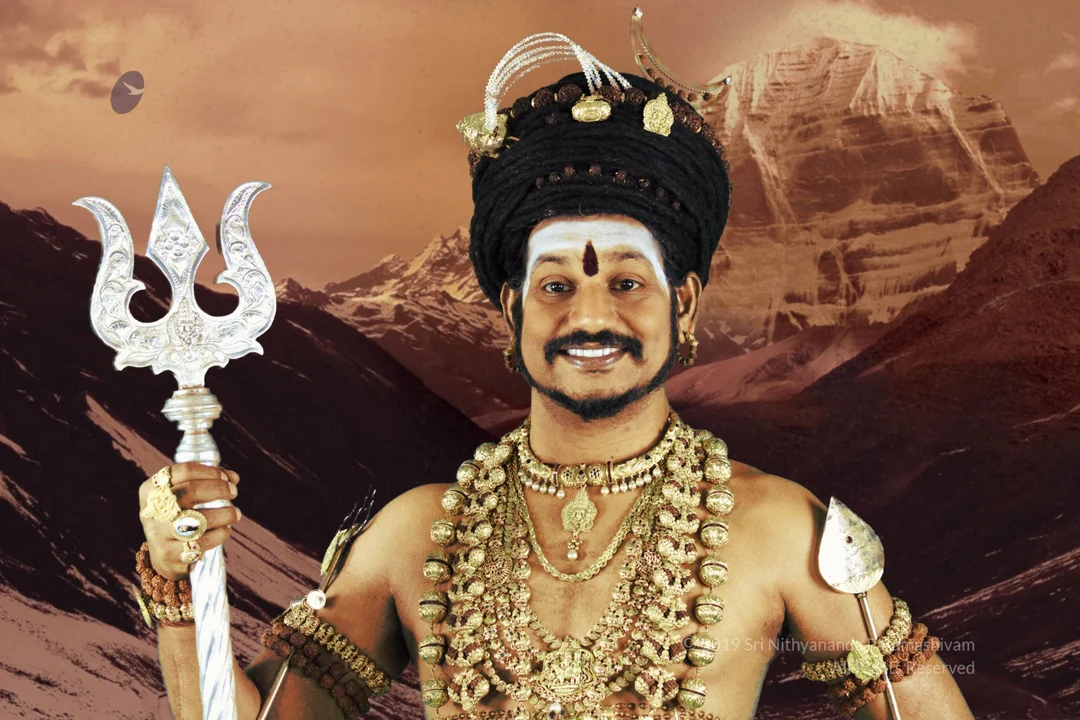
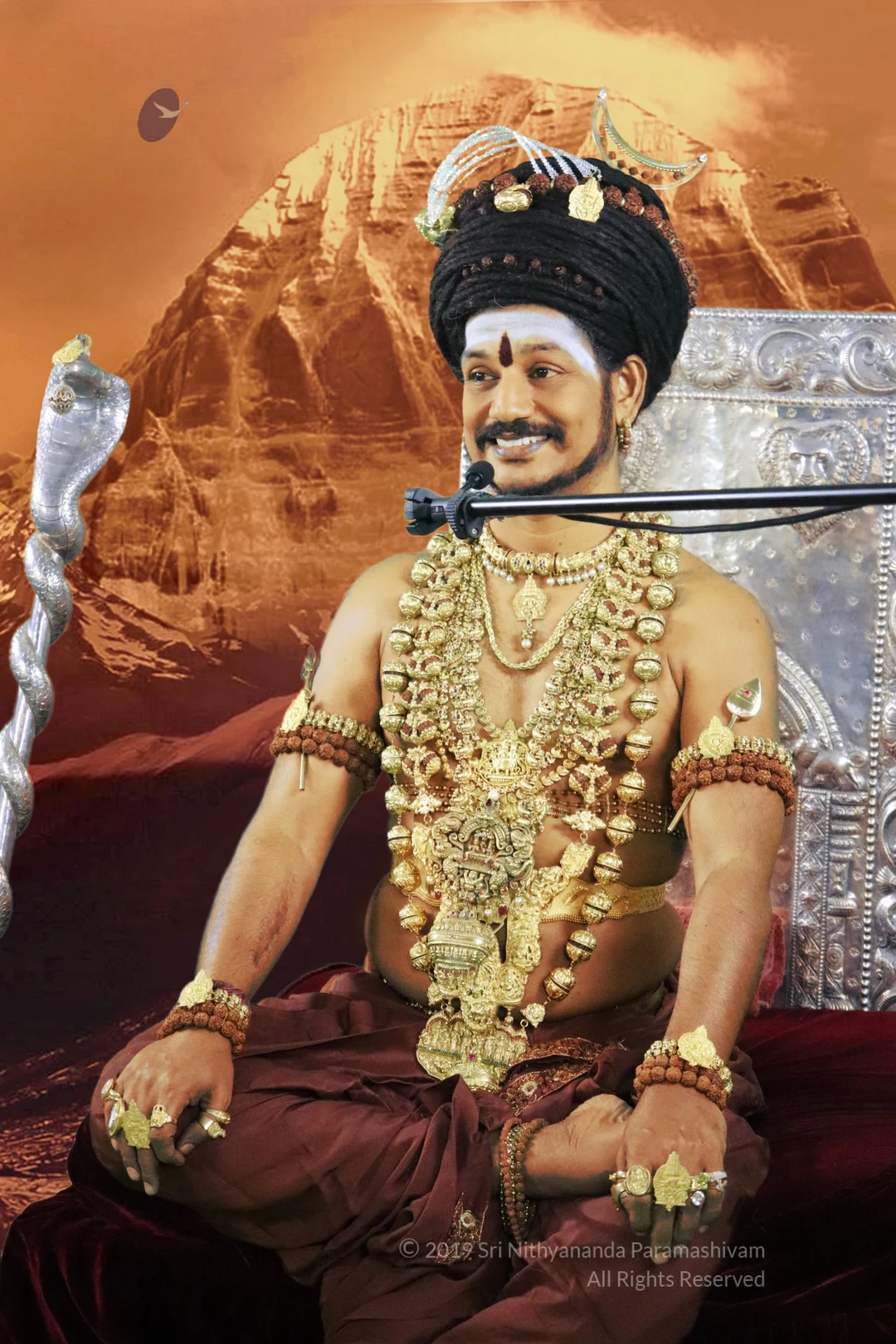
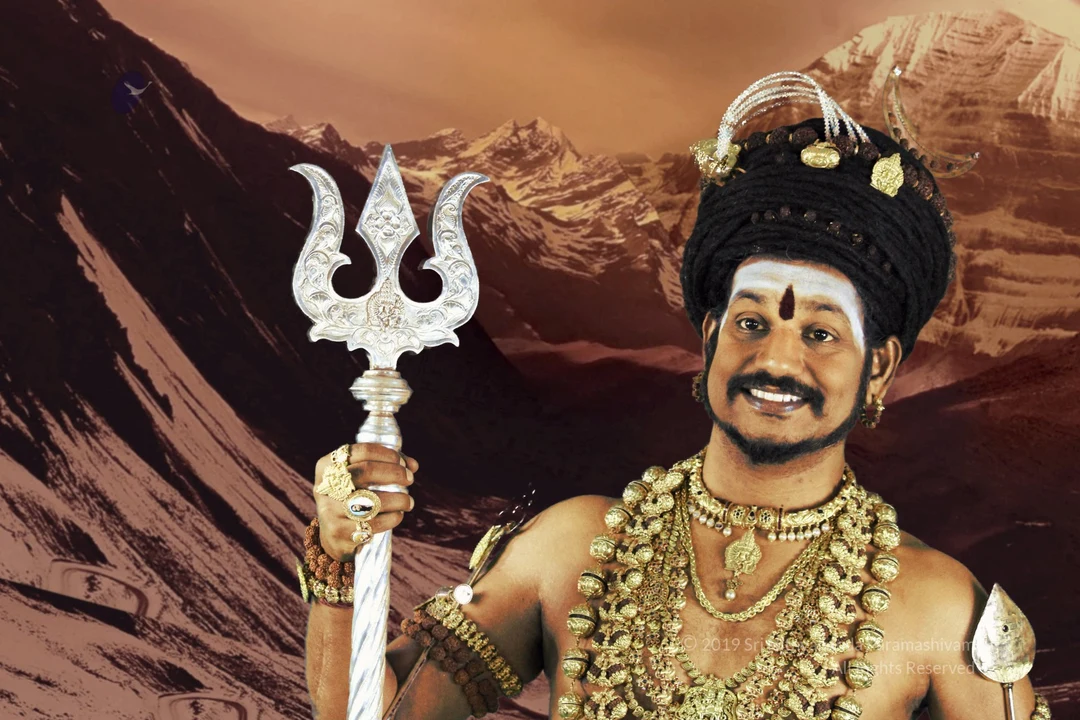
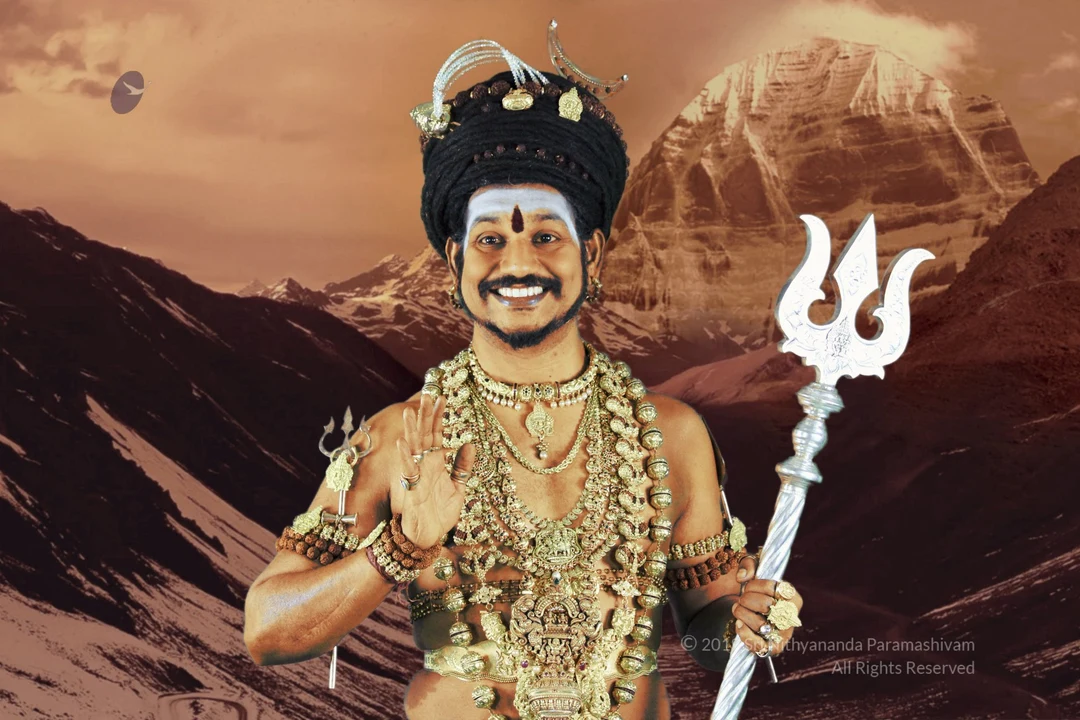
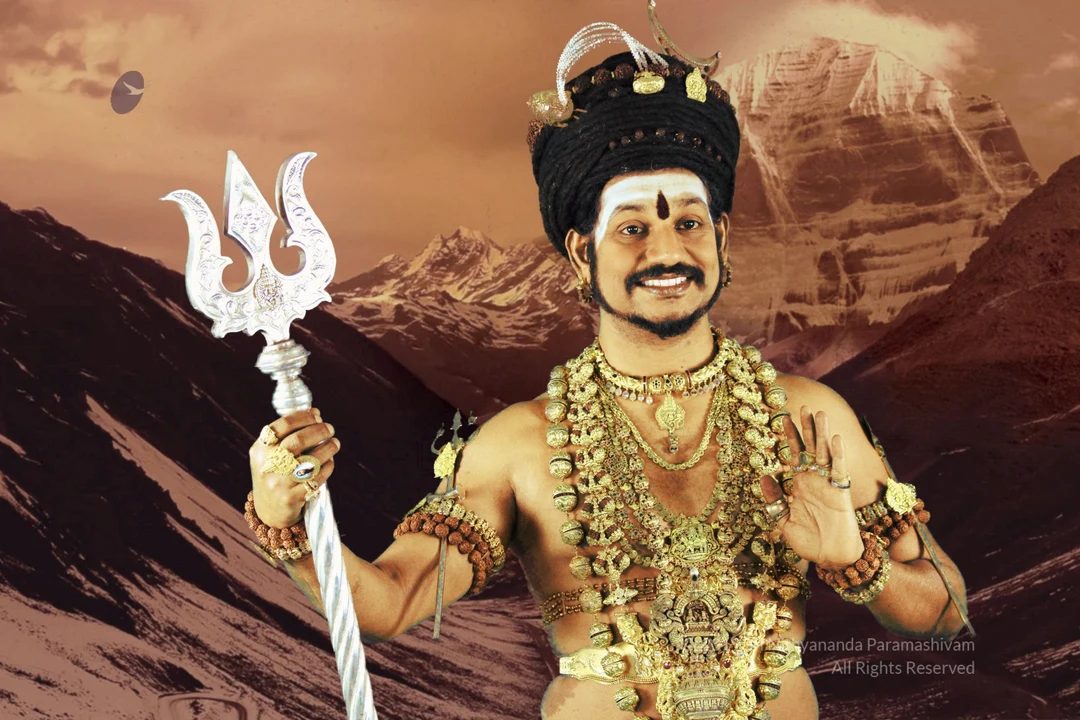
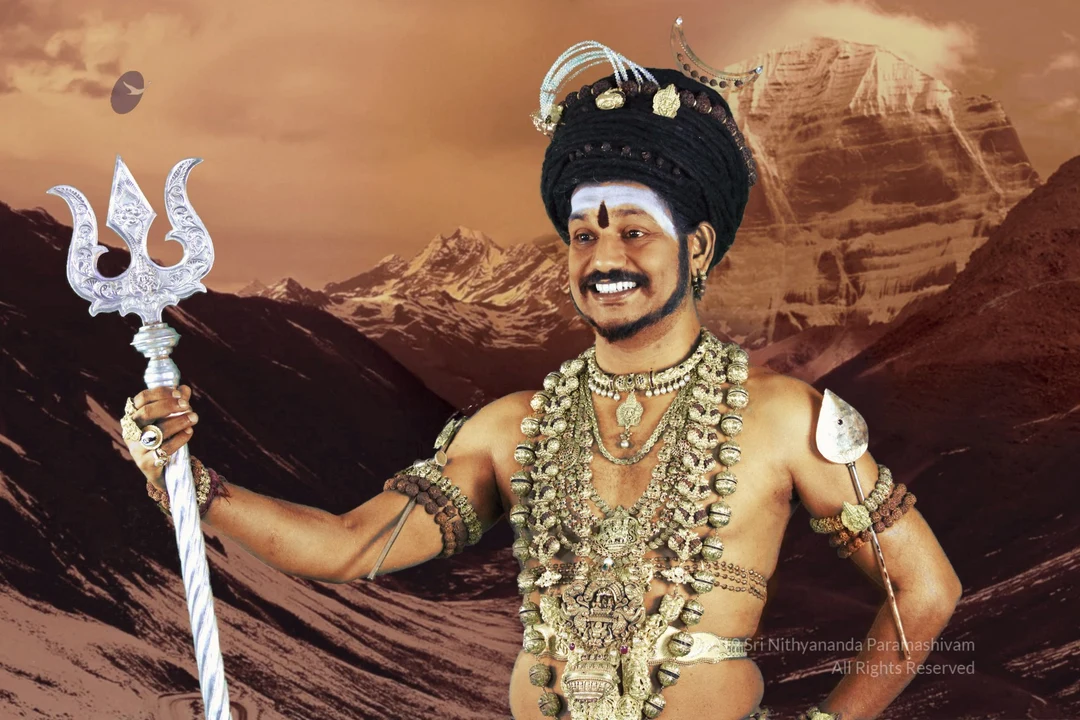
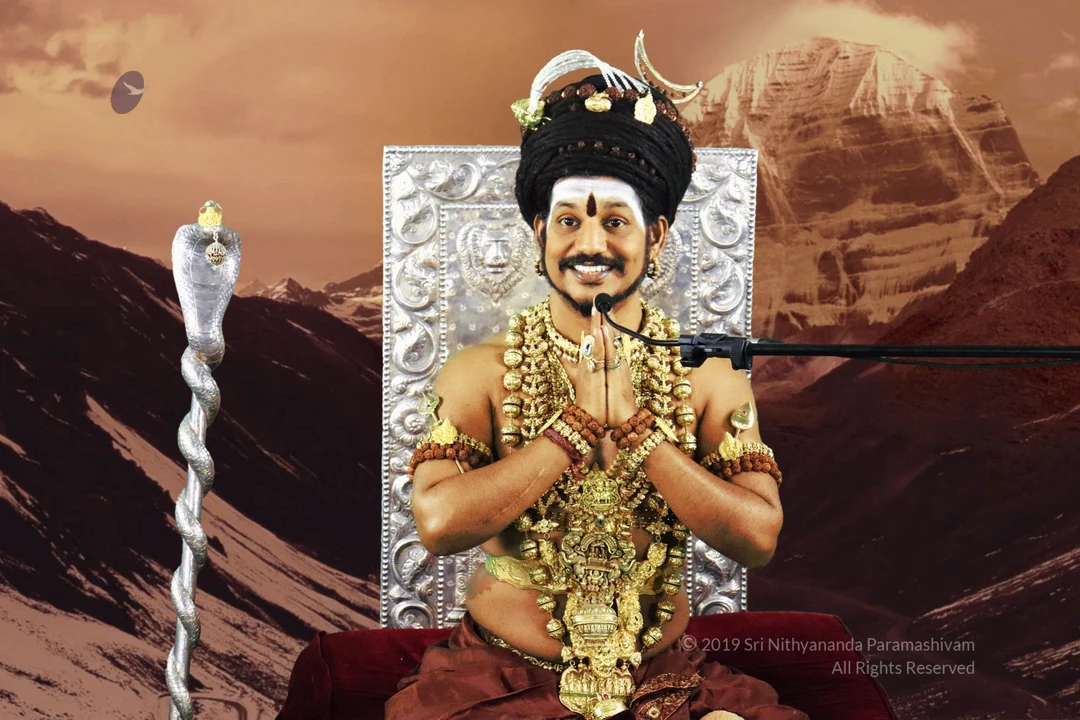
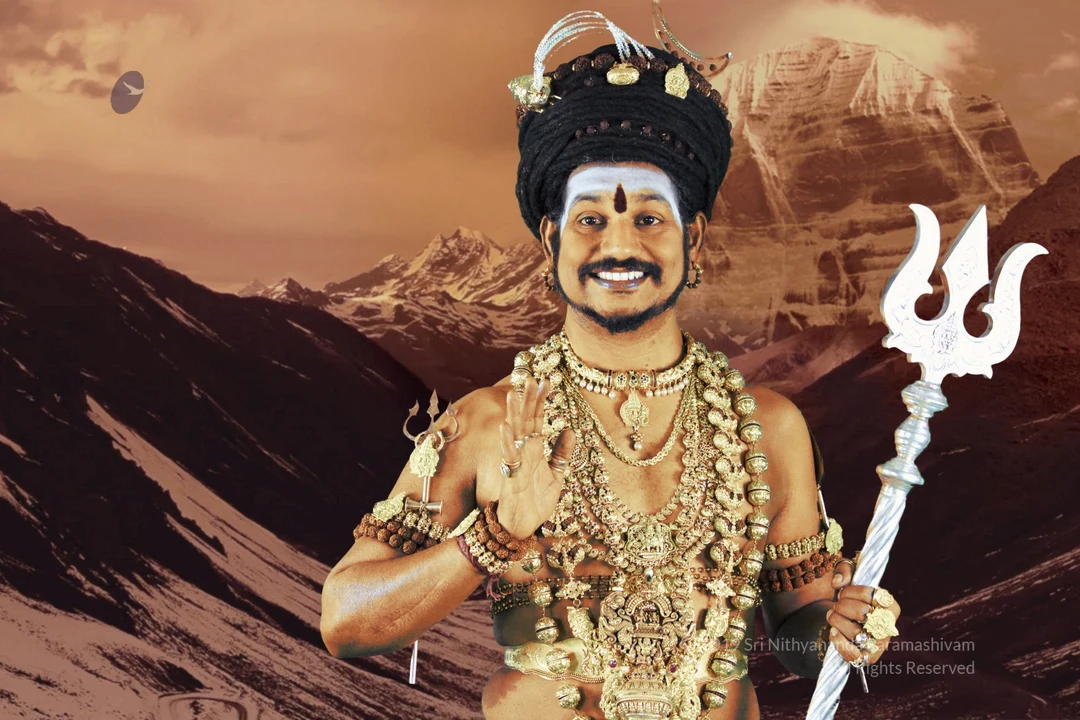
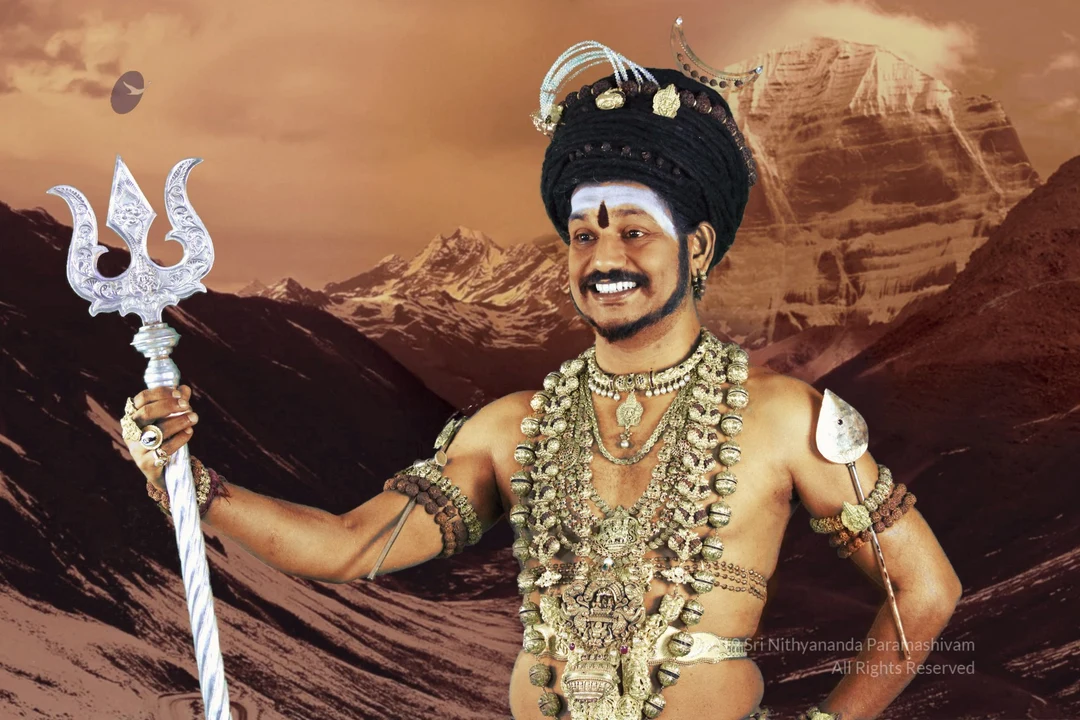
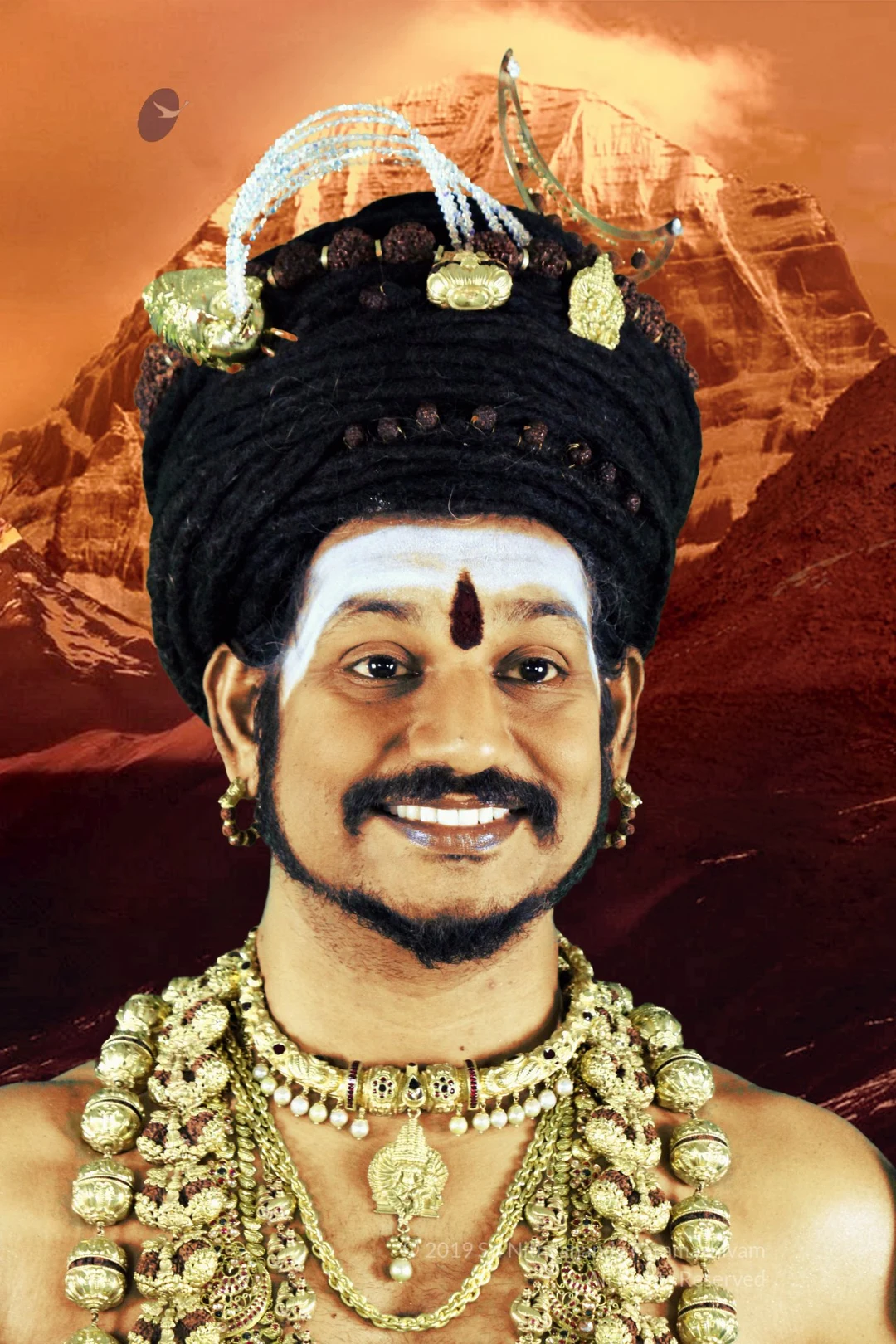
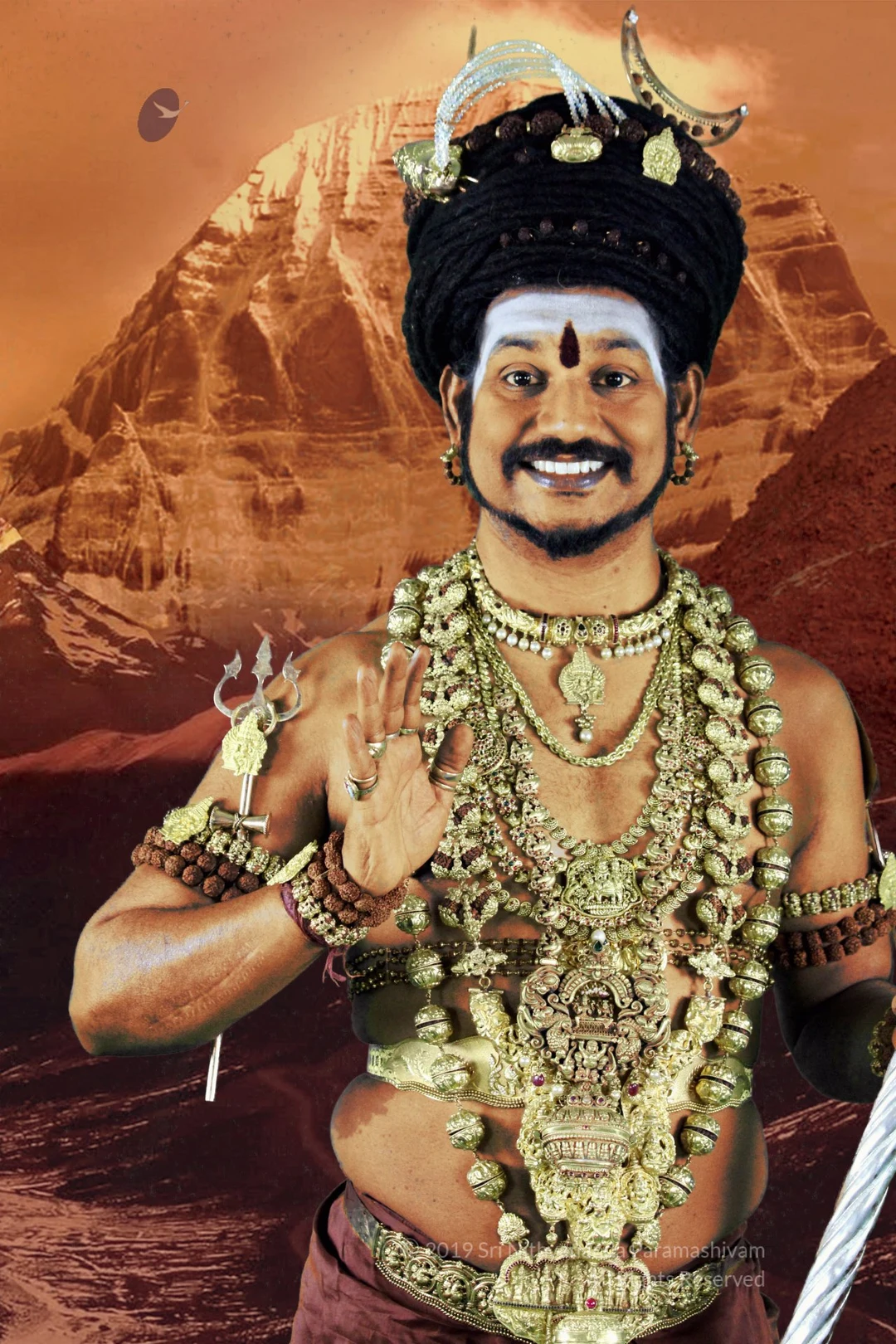
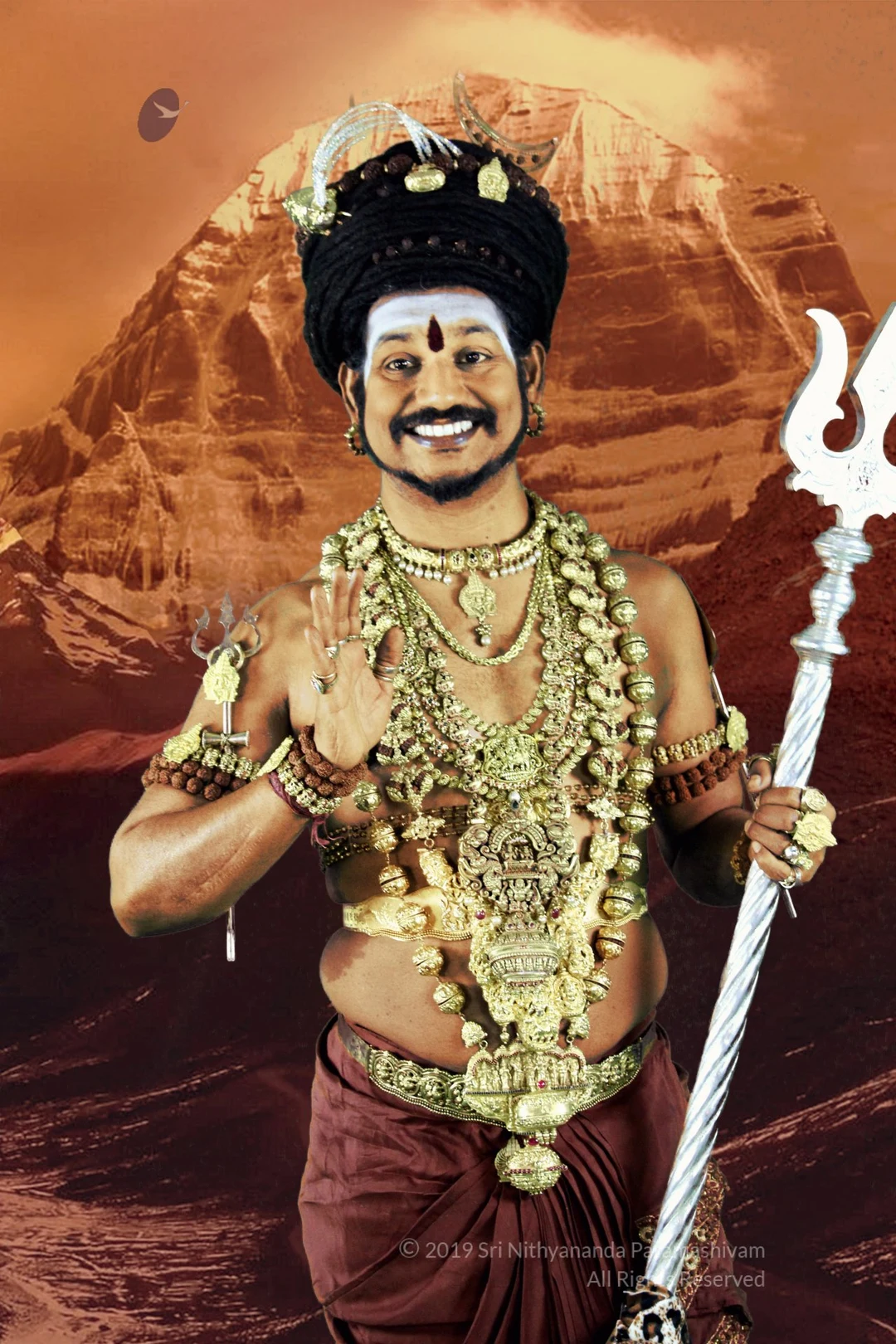
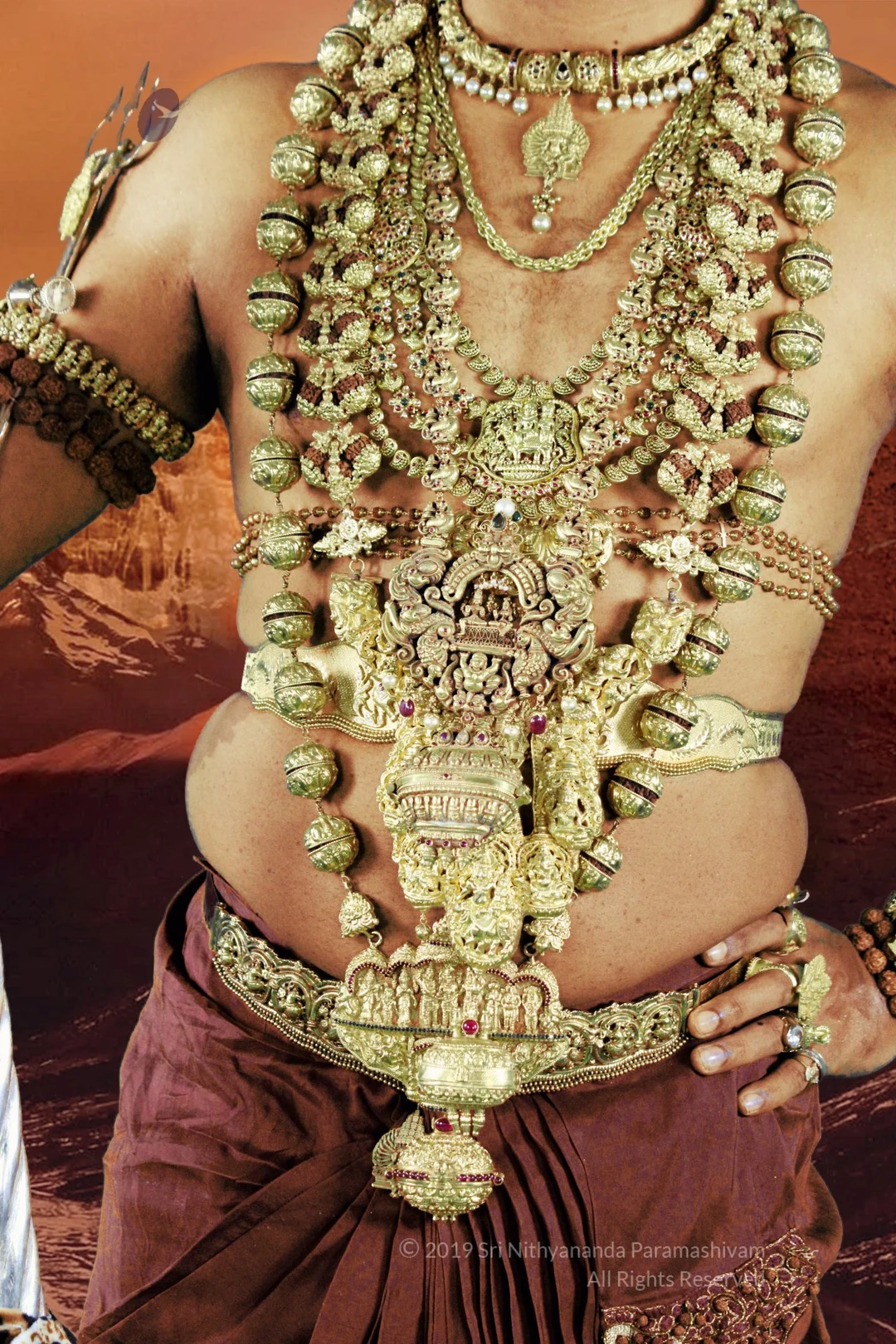
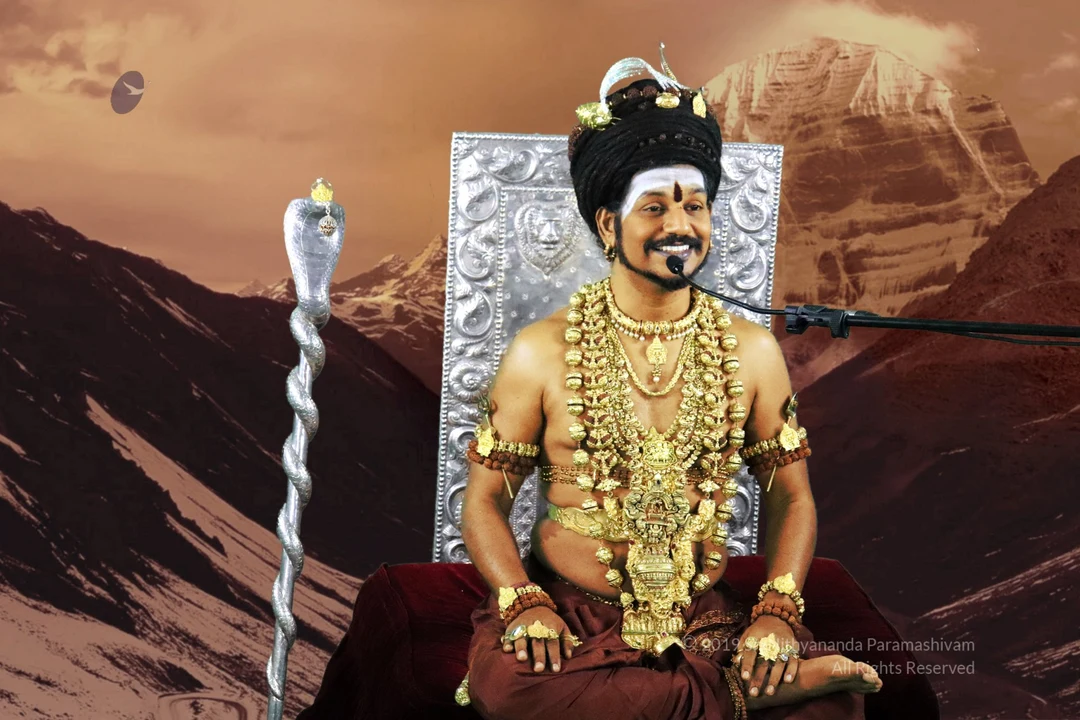
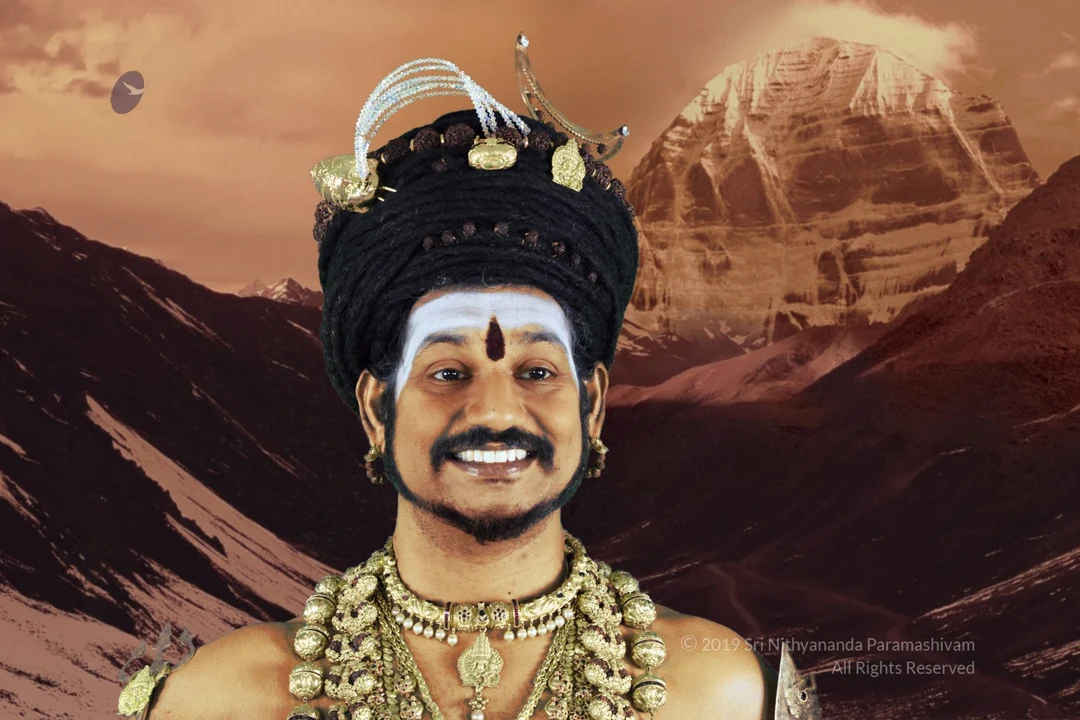
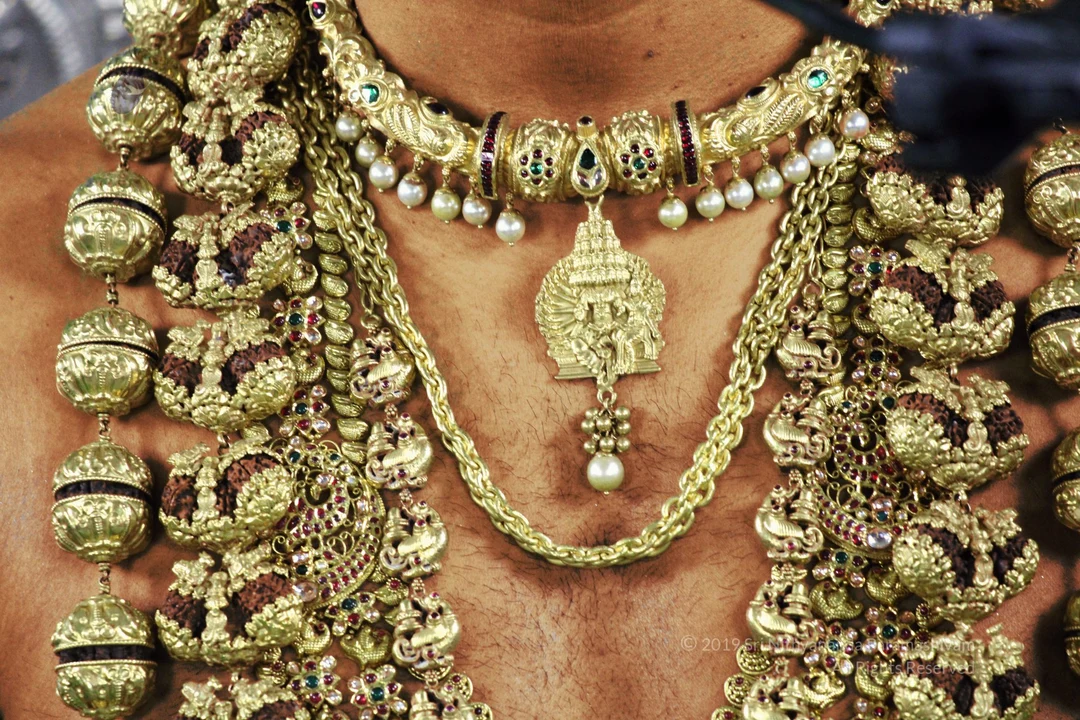
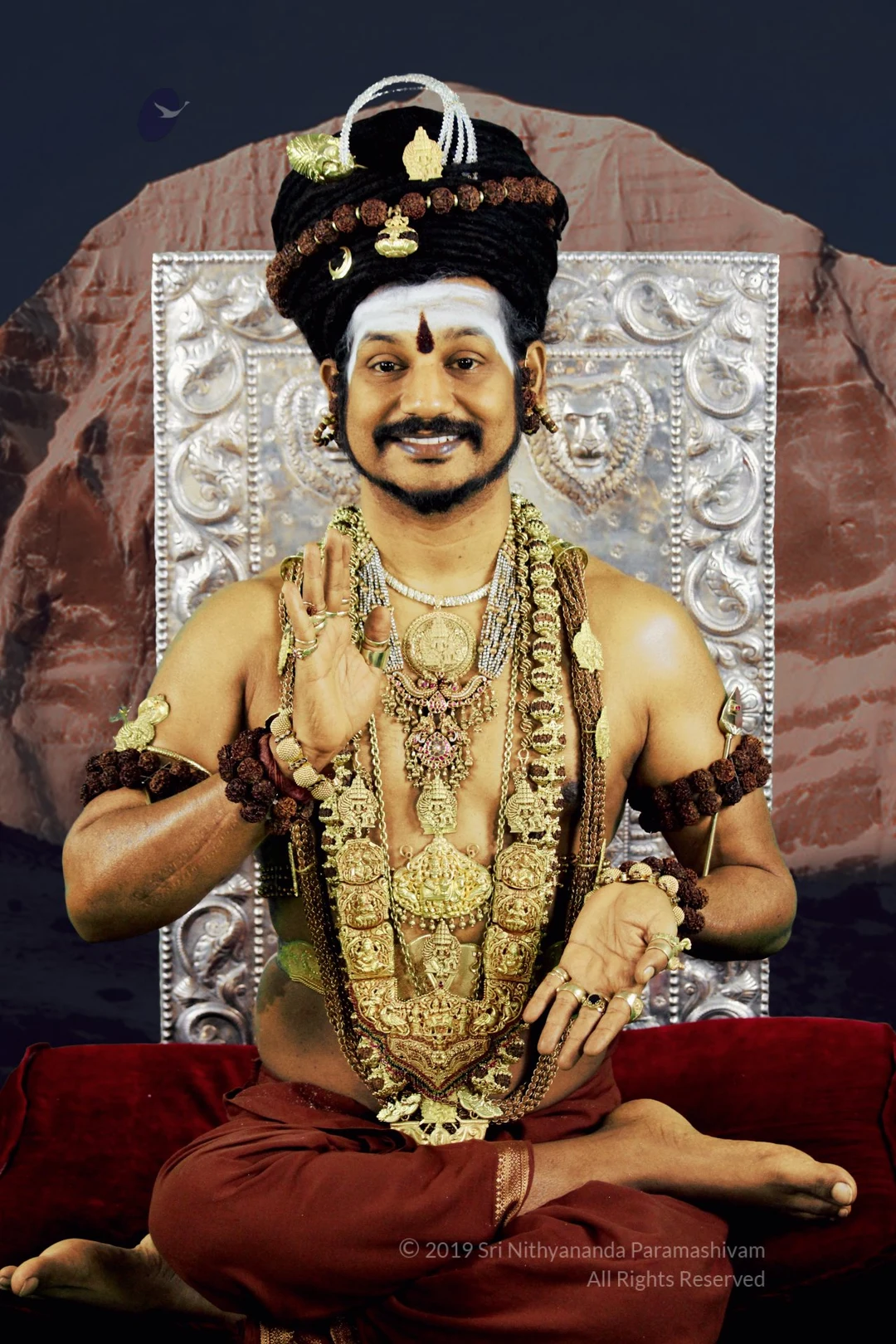
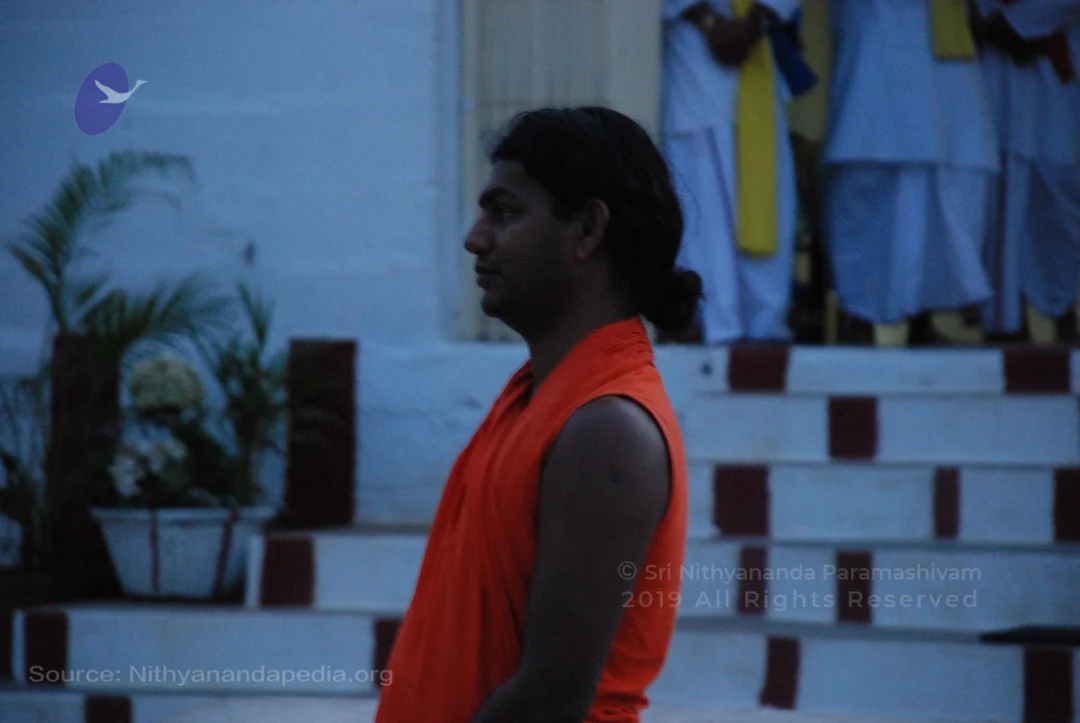
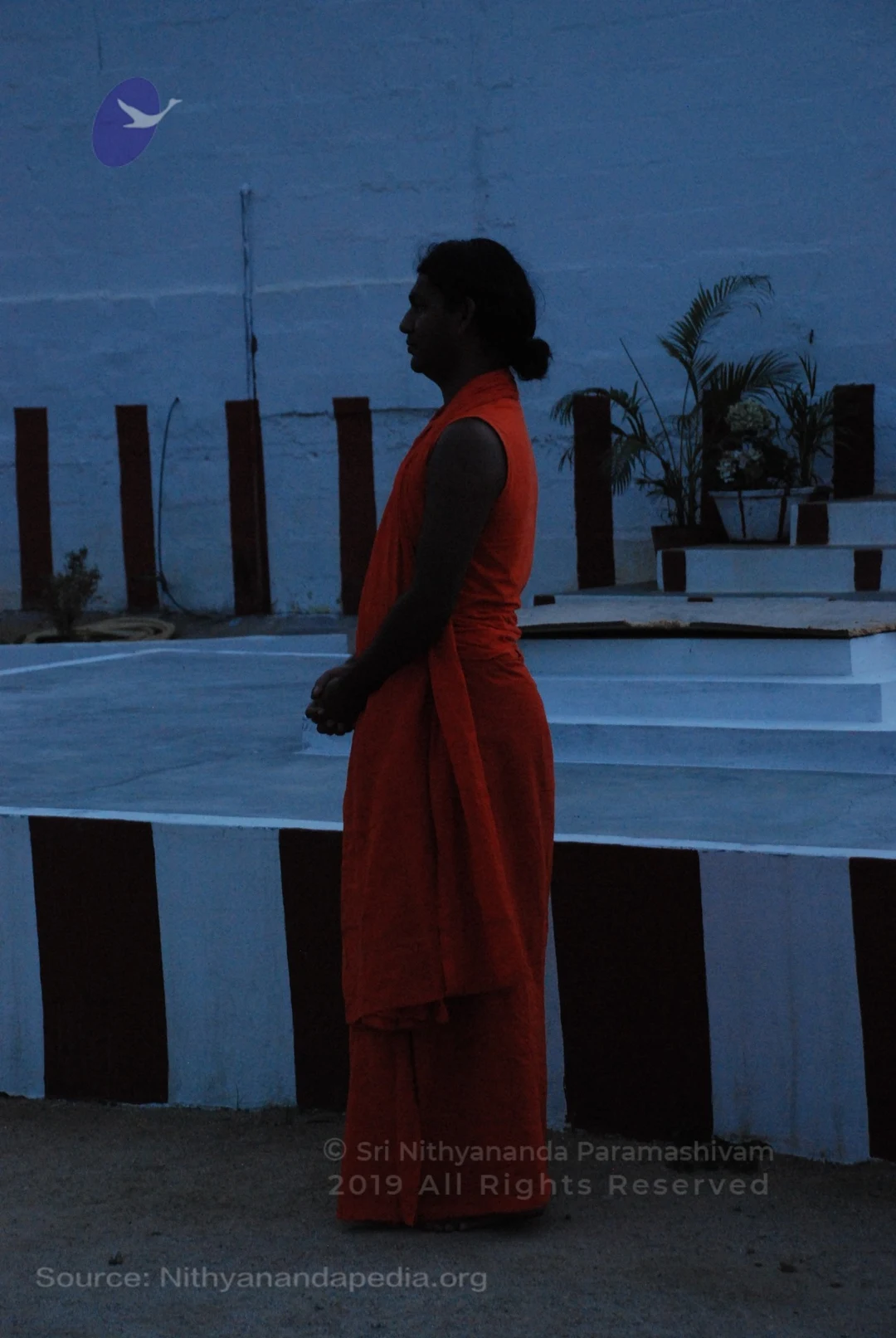
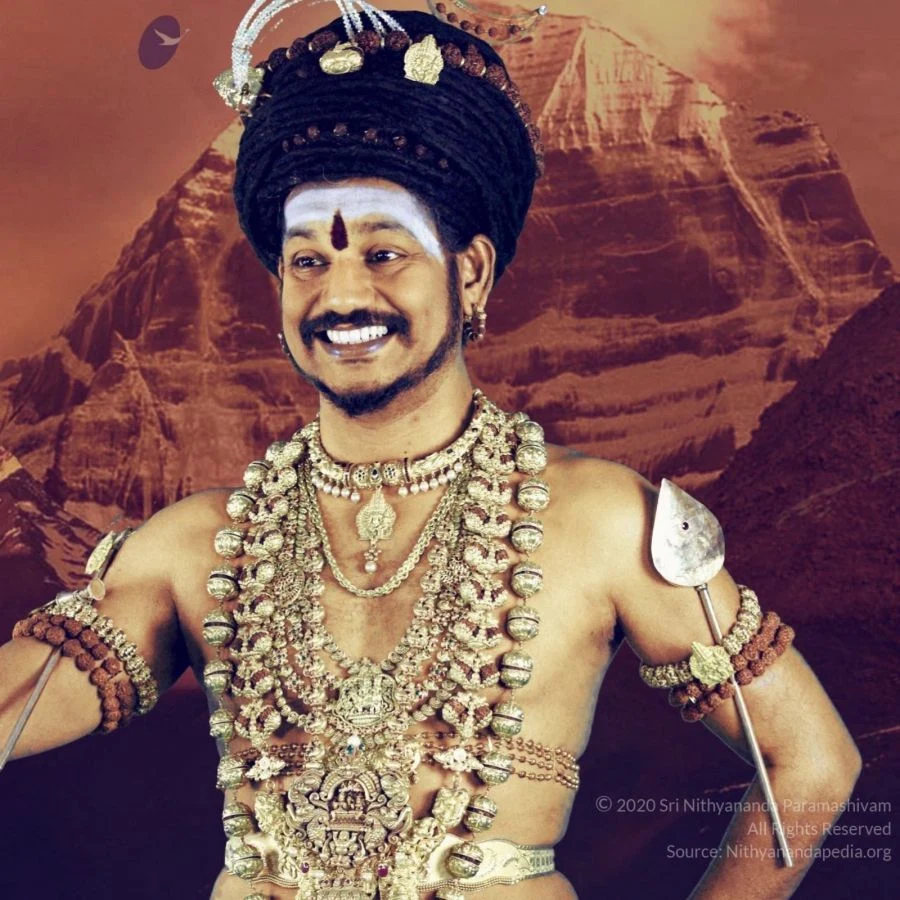
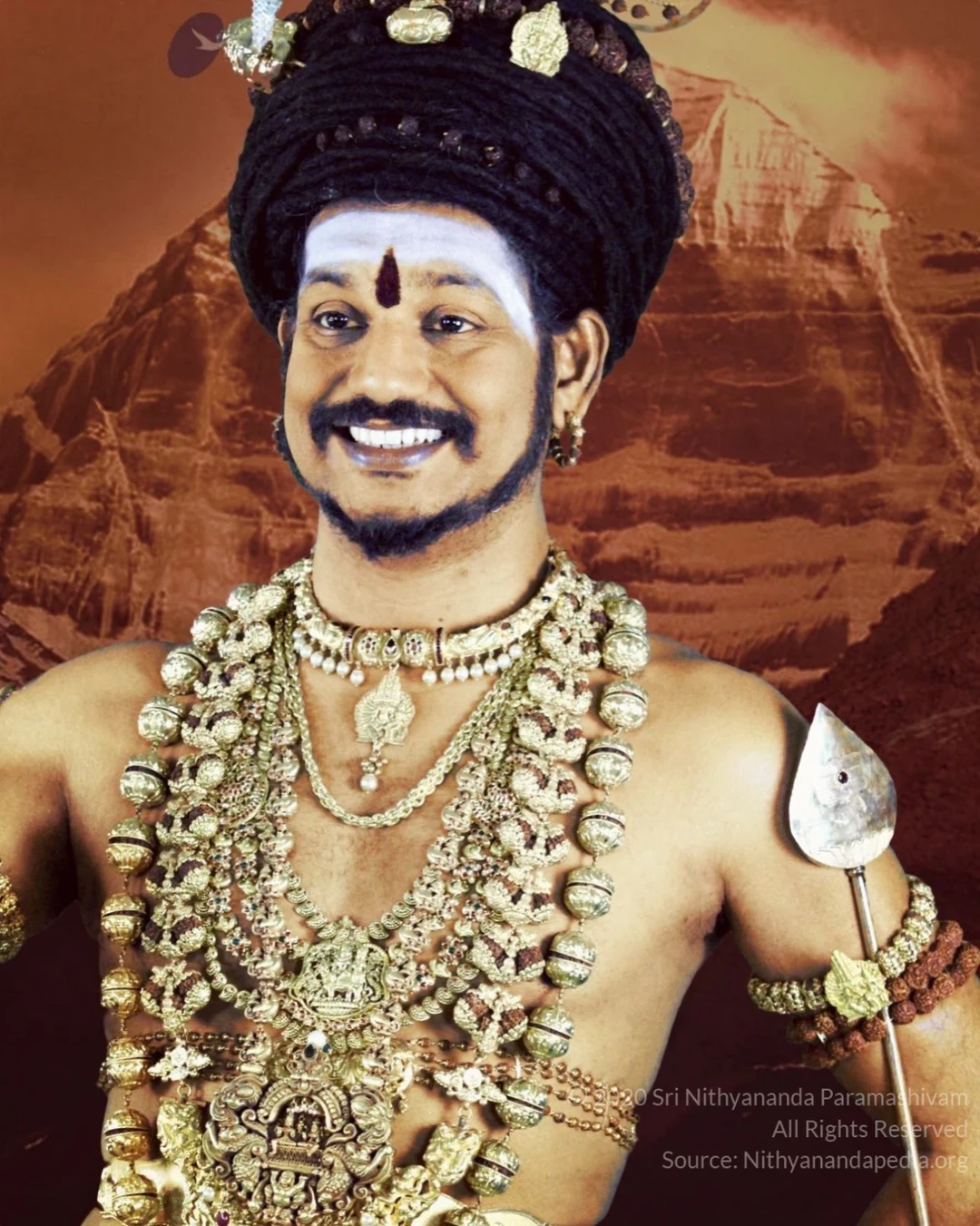
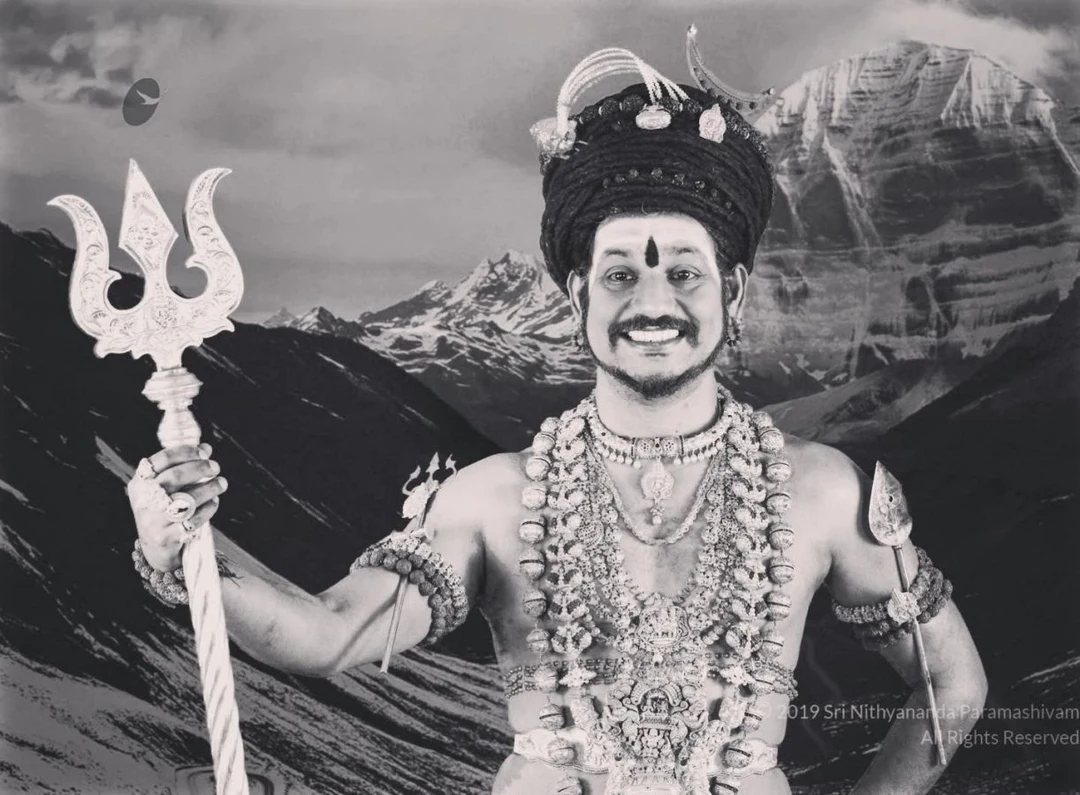
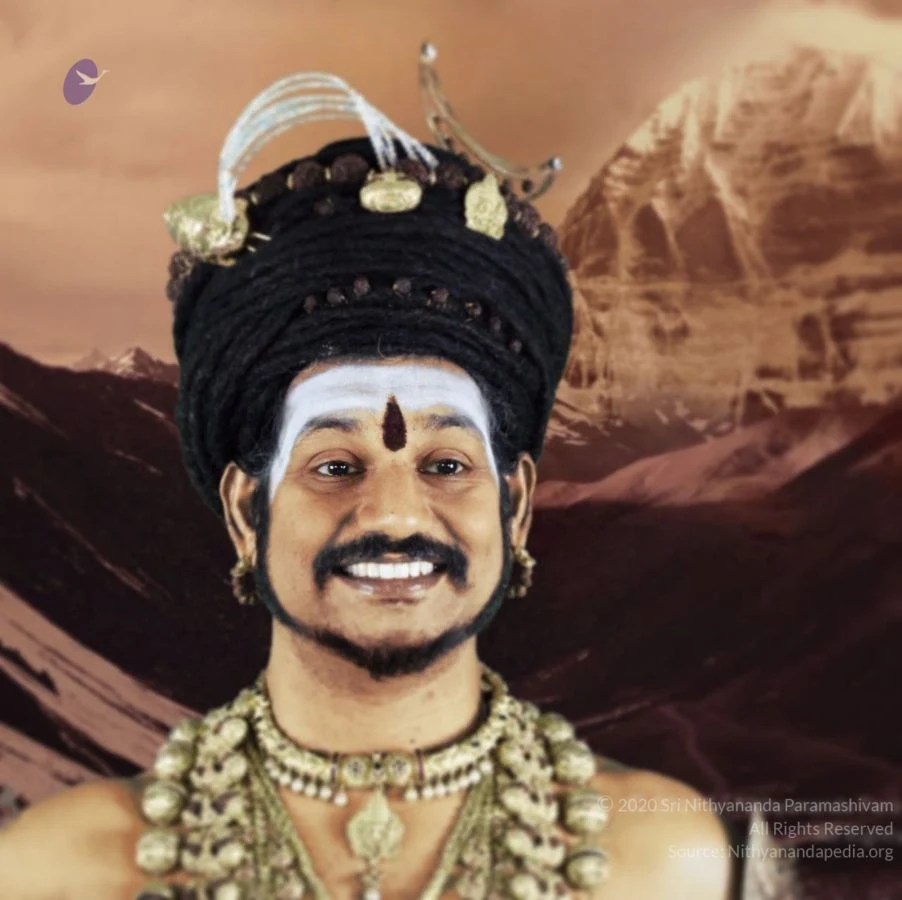
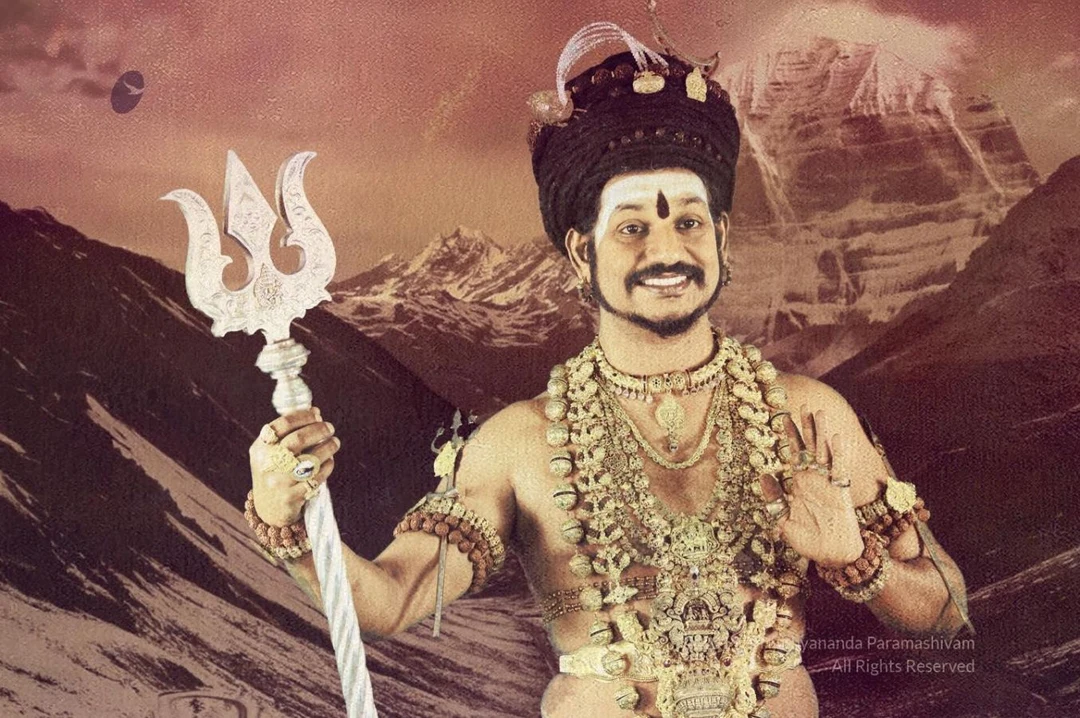
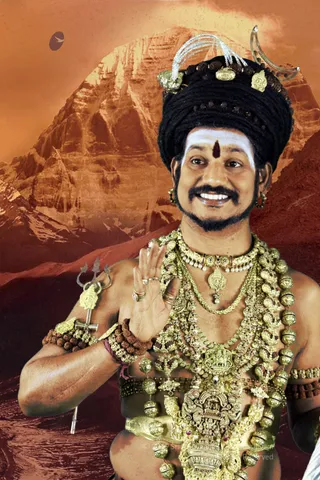
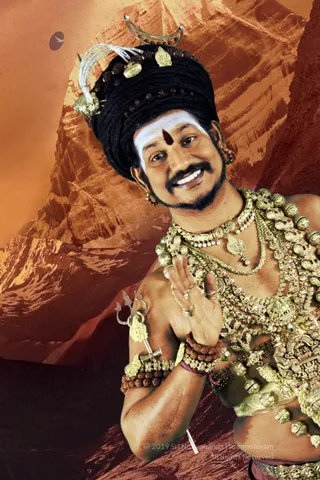
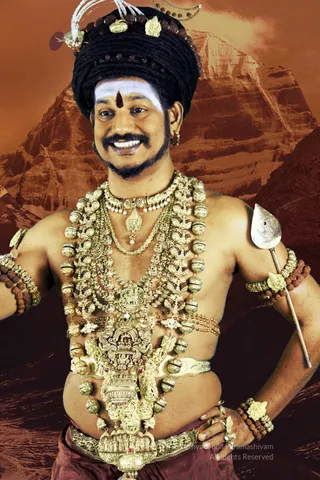
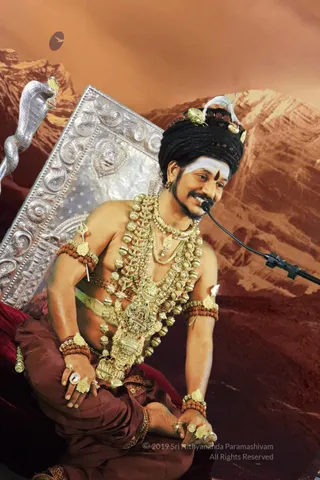
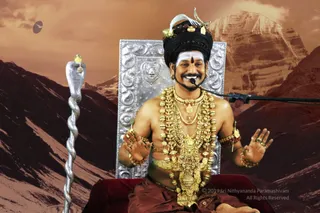
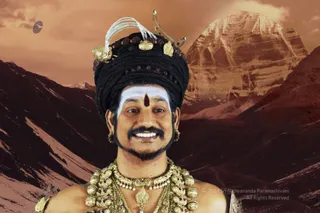
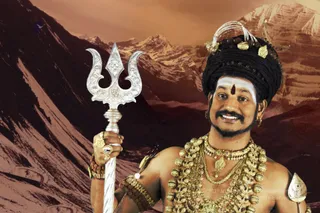
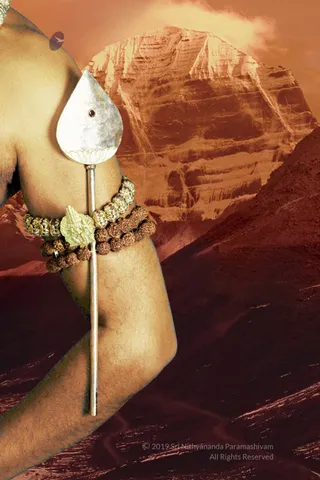
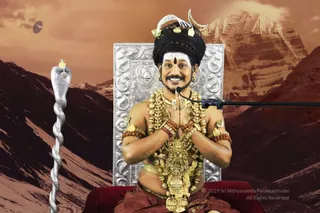
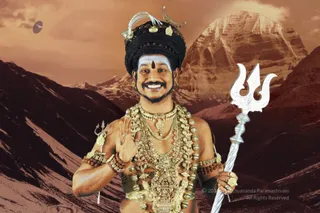
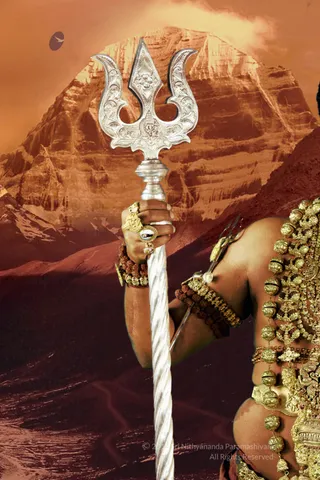
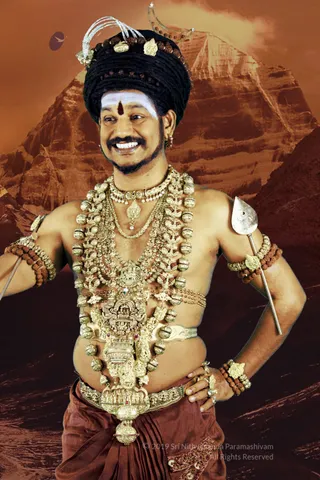
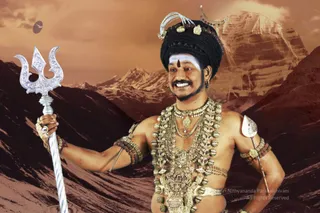
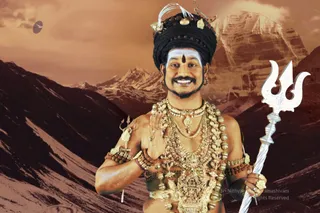
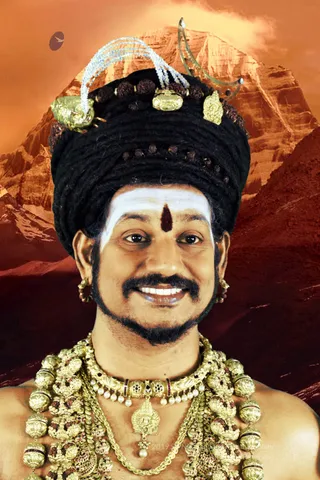
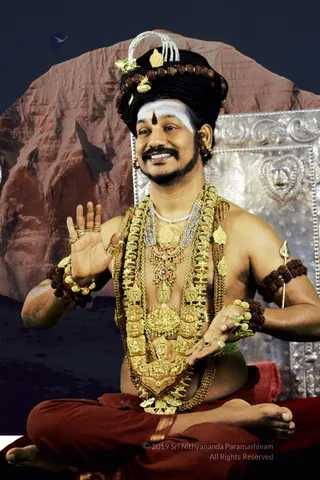
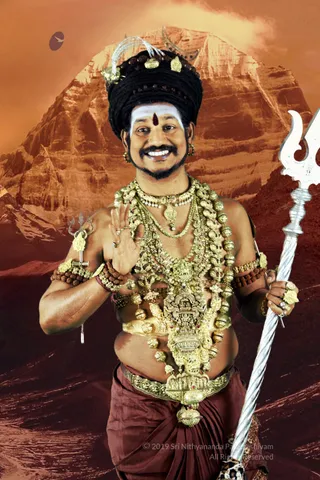
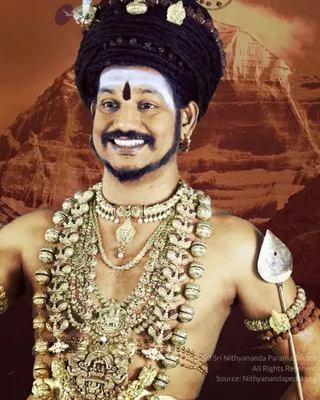
A man in profile stands on white steps trimmed with maroon bands, wearing a sleeveless orange-saffron wrap garment and his long dark hair tied back in a low knot. Behind him, several people in pale blue robes with yellow and blue sashes stand near a white wall, and potted plants with white flowers sit at left in dim evening light.A composite photograph of a smiling man with a white and red tripundra forehead marking and a dark rudraksha-studded turban, wearing heavy gold ceremonial necklaces, bead garlands and armlets, holding a silver trident in his right hand. Behind him is a sepia-toned mountain landscape with a snow-capped peak. Swamiji (probable): long dark turban, ornate gold jewellery and rudraksha adornments, holding a silver trident, presented in the role of a deity-like figure before the mountain backdrop.

November 01 2019

Original wiki page
Contents

Title

Transforming the Past || You Can Change Your Past ||Parivajak Yatra || Kayakalpa Yoga || Creating Kailasa right in your Bedroom || 5th Day of Skanda Shasti Brahmotsavam ||

Narration

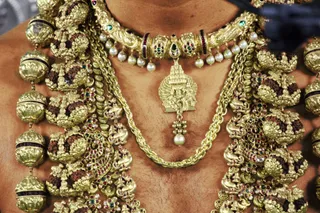
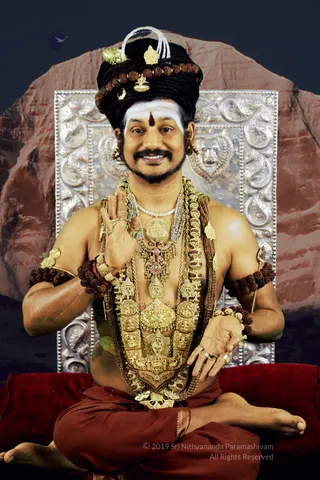
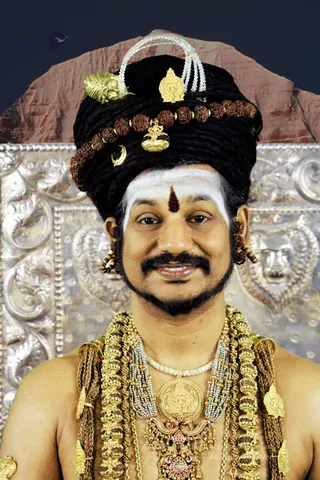
The Supreme Pontiff of Hinduism, Jagatguru Mahasannidhanam, His Divine Holiness, Bhagavan Nithyananda Paramashivam, expounded on the Cosmic Principles of Transforming the Past during the everyday live public talk - Nithyananda Satsang. In this talk entitled You Can Change Your Past!, The Supreme Pontiff of Hinduism revealed that the past which you think is gone, can be transformed, rewritten, or deleted fully, partly or as you want. He continued by revealing that “now” is not time but a powerful cognition and to visualize it as an intense, thick gold color shining carpet on your head shutting down the brain and rest in pure Consciousness. He also highly recommended every living being to experience Parivajak Yatra and expanded on it’s importance in the Hindu tradition along with other important traditions like Kayakalpa Yoga and Kailash Yatra. He then offered a third solution, of creating KAILASA right in your bedroom, for those unable to commit to the traditional recommendations.

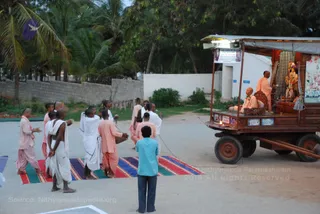
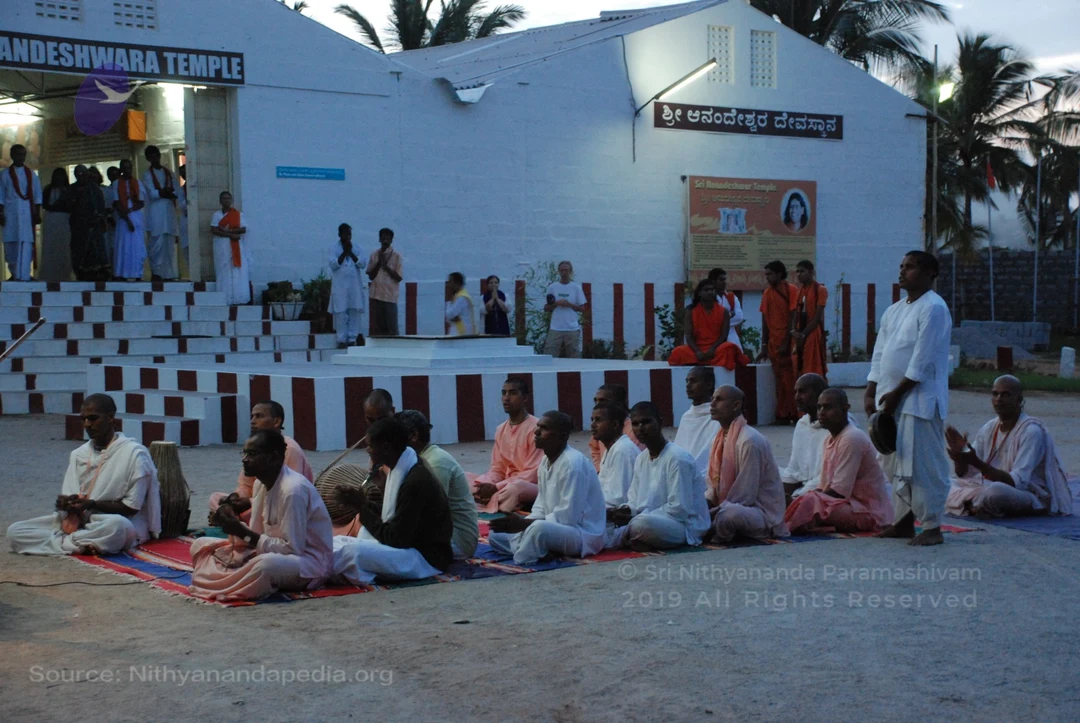
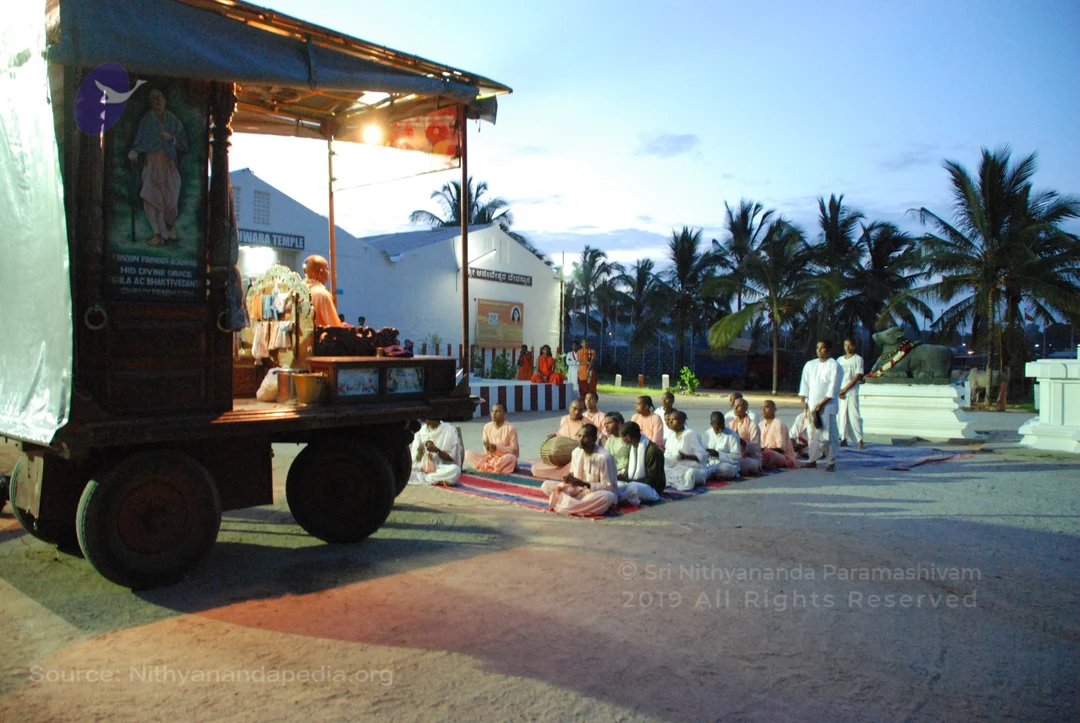
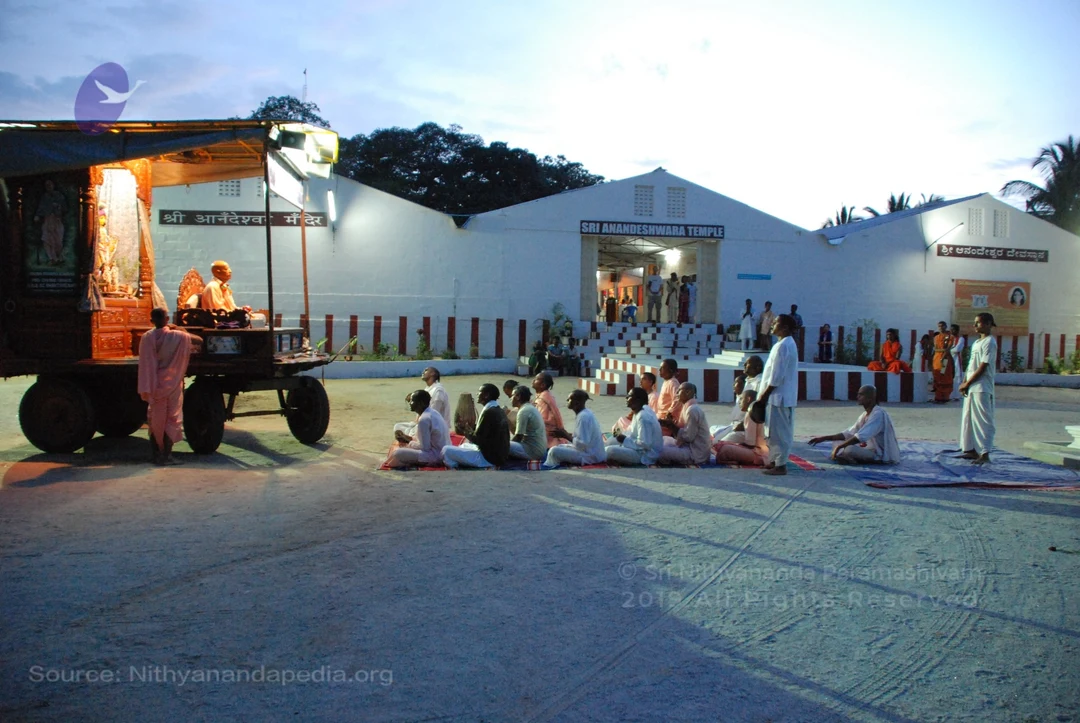
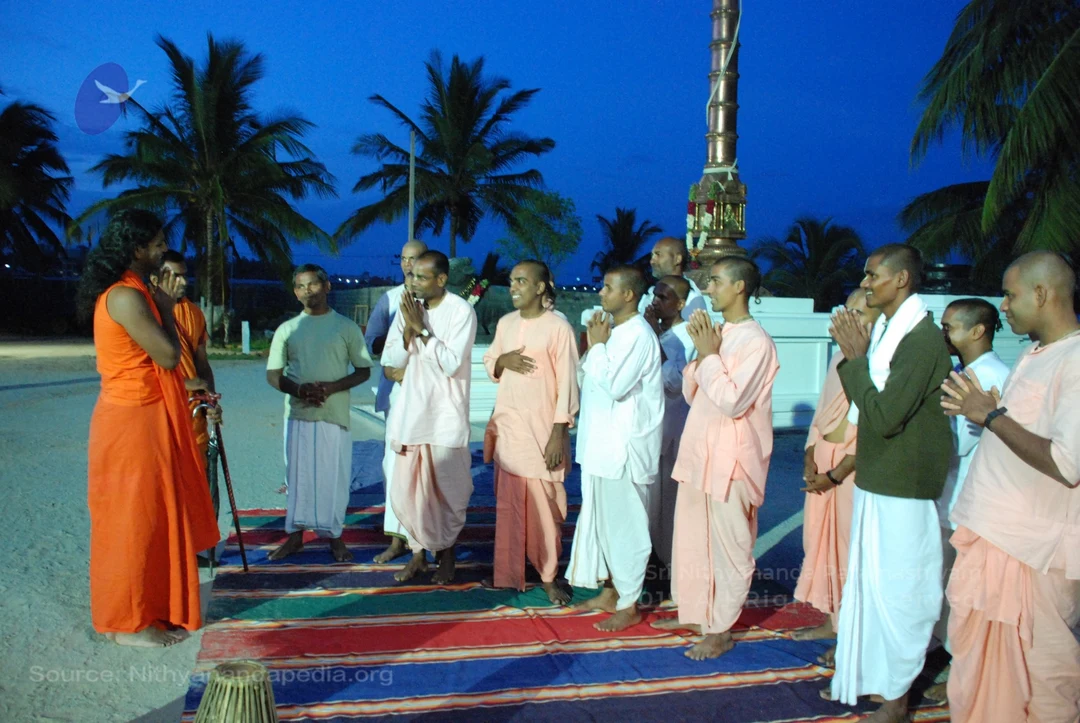
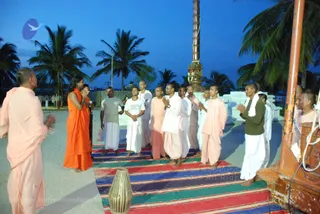
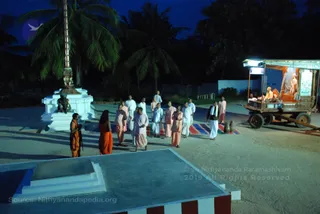
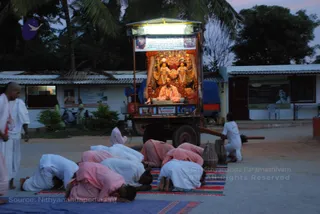
Today celebrations for the 5th day of Skanda Shasti Brahmotsavam took place with offerings of gratitude to Lord Subramanya, by observing the traditional enactment of Subramanya vanquishing the Asuras. Following this was the traditional Devasena Thirukalyanam.

Video and Audio

You Can Change Your Past!

VideoAudio

Number of Lives Enreached and Enriched

127,410

Number of Temples Participated

16 temples from all round the world participated.

Transcript

1 NOVEMBER 2019 NITHYANANDA (ENGLISH) SATSANG

  • POWERFUL COGNITIONS
  • TODAY IS THE FIFTH DAY OF SKANDA SHASTI BRAHMOTSAVAM. WE WILL BE OFFERING OUR GRATITUDE TO LORD SUBRAMANYA WHO CONQUERED SURAPADMAN. TOMORROW EVENING WE WILL BE OBSERVING THE SURASAMHARAM, WHERE LORD SUBRAMANYA DESTROYED THE THREE DEMONS - SURAPADMA, TARAKASURA AND SIMHAMUKHA. AFTER THAT WOULD BE SURBRAMANYA SWAMI TIRUKALYANAM.
  • THE TRUTH I AM GOING TO REVEAL TODAY IS TOO POWERFUL AND TOO IMPORTANT. ARUNAGIRI YOGISHWARA TOLD ME ONCE IN TAMIL, “THE TRUTH TO THINK AND SPEAK, NEITHER YOU SHOULD BE WORRIED NOR YOU SHOULD LAG. NEITHER YOU SHOULD BE COMPROMISING, NOR YOU SHOULD SLOW DOWN OR THINK.”
  • PAST CAN BE COMPLETELY CHANGED, ALTERED, TRANSFORMED, DELETED AND MADE TO DISAPPEAR IN PARTS OR FULL AND REWRITTEN AS WE WANT. I DO NOT WANT TO LEAVE ANY DOUBT, THAT IS WHY I AM USING MULTIPLE WORDS. PAST CAN BE FULLY DELETED, PARTLY DELETED, DELETED AS WE WANT. IT CAN BE TRANSFORMED, FULLY OR PARTLY AS WE WANT. IT CAN BE CHANGED, REWRITTEN FULLY OR PARTLY AS WE WANT. I AM NOT TALKING ABOUT THE FUTURE, I AM TALKING ABOUT PAST. THE PAST WHICH YOU THINK IS OVER, CAN BE CHANGED, TRANSFORMED, REWRITTEN, DELETED FULLY, PARTLY OR AS WE WANT PART BY PART WITH THE PARTS WE WANT.
  • I WILL TELL YOU ONE SMALL INCIDENT. I USED TO MAKE BEAUTIFUL DEITIES MADE OF CLAY. THE PEOPLE WHO MAKE CLAY GANESHAS, THE TRADITIONAL FAMILY OF KUYAVARS, FAMILIES WHO MAKE POTS AND SELL IN THE VILLAGES, THEY MAKE GANESHAS DURING GANESH CHATURTI. THEY BRING CLAY FROM THE NEARBY LAKE FROM THEIR HOUSE AND THEY BRING IT TO THE CENTER OF THE TOWN. THEY MAKE GANESHA WITH THE CLAY AND THE REMAINING CLAY THEY WILL LEAVE IT AND GO. THE LOCAL SHOP OWNERS WILL FEEL IT IS A BIG HEADACHE TO REMOVE THE CLAY. I USED TO COLLECT THAT CLAY AND MAKE LOTS OF DEITIES AND KEEP FOR NAVARATRI. ALL MY NEIGHBOURS ARE PART OF MY LARGER FAMILY. ONE OF MY GRANDMOTHERS, PATTAMMAL, SHE IS A VERY SWEET PERSON. HER HUSBAND TOLD ME ONCE, INSTEAD OF WASTING YOUR WHOLE DAY MAKING DEITIES ON YOUR OWN, JUST SPEND A FEW RUPEES, BUY AND KEEP AND CELEBRATE NAVARATRI IN YOUR HOUSE!
  • IN THOSE DAYS I USED TO BE HAVING THE DARSHAN OF ARUNAGIRI YOGISHWARA. I RAN TO ARUNAGIRI YOGISHWARA AND SAID, “MY NEIGHBOUR THATHA IS TELLING LIKE THIS. SWAMIJI, WHAT SHOULD I DO?” HE LAUGHED AND SAID, “ALL THE PEOPLE WHO BUY FROM SHOP AND KEEP, DO YOU THINK THEY GET ENLIGHTENED? IT IS NOT THE DEITY, IT IS THE TIME YOU SPEND, YOUR ENERGY, YOUR INVOLVEMENT, THAT MAKES YOU ENLIGHTENED.”
  • HE MADE A VERY BEAUTIFUL STATEMENT: “LIVING IS LIFE. NOT EVERYTHING IS EQUIVALENT TO MONEY. IF EVERYTHING IS EQUIVALENT TO MONEY, THEN WE WILL PUT ALL THE MONEY IN THE BANK AND DIE, IS THAT LIFE?”
  • THE CLICK I HAD WITH ARUNAGIRI YOGISWARA WITH THIS TEACHING: “OUR INVOLVEMENT MAKES LIFE. OUR LIVING MAKES THE LIFE.” THEN I REALISED WHY PARIVARAJAKA!
  • THOSE DAYS WE USED TO HEAR REGULARLY, PARAMACHARYA IS WALKING PADAYATRA FROM HERE TO HERE. AND AFTER 15 DAYS, WE WILL HEAR HE HAS MOVED FROM TO THE NEXT VILLAGE. I USED TO THINK WHY 15 DAYS WE NEED TO WALK. WE CAN HIRE THE BICYCLE. FOR ONE HOUR HIRE IS 60 PAISE. IF YOU TAKE FOR TWO HOURS, 1 RUPEE, 60 PAISE DISCOUNT! I USED TO THINK, WE CAN HIRE A BICYCLE FOR ACHARYA AND ACHARYA CAN GO TO THE NEXT VILLAGE.
  • NOW I UNDERSTAND, WITH 10 VEHICLES, 2 AMBULANCE, KITCHEN CARAVAN, RESTROOM CARAVAN, I AM MAKING PEOPLE WALK BECAUSE I KNOW ANYONE INTENSELY DIVES INTO THE NOW, THE PRESENT LIFE GETS THE POWER NOT JUST REWRITING OR WRITING, CREATING THE FUTURE AS YOU WANT. YOU GET THE POWER TO REWRITE, DELETE, TRANSFORM THE WAY YOU WANT WITH YOUR PAST ALSO.
  • YOU MAY THINK, “SWAMIJI ALWAYS EXAGGERATES!” IF YOU THINK I ALWAYS EXAGGERATE, YOU ARE A HUMAN BEING. IF YOU THINK, “HE WILL TELL THE TRUTH ONLY, EVEN THOUGH IT LOOKS LIKE EXAGGERATION. IN A FEW DAYS I WILL UNDERSTAND AND REALISE WHAT HE SAID”, YOU ARE MY DISCIPLE!
  • ANYBODY ACTIVELY PARTICIPATES IN VAKYARTHA SADAS EVERYDAY, NOT ONLY I WILL GIVE YOU DEEPER UNDERSTANDING, I WILL GIVE YOU ENLIGHTENMENT. AVIMUKTA IS ASKING,”IS NOW TIME AT ALL?” NO! NOW IS NOT TIME! NOW IS POWERFUL COGNITION. WHEN I AM SAYING CREATION, SUSTENANCE, REJUVENATION, PULLING OUT OF DELUSION, ENLIGHTENMENT/LIBERATION - ALL THE 5 AND THE PERMUTATION COMBINATION OF 5 INTO 5 = 25 HAPPENS “NOW” WITHOUT TIME GAP... WHEN I MAKE THIS STATEMENT… I AM GIVING YOU POWERFUL COGNITION.
  • SETTLE DOWN! VISUALISE, THIS “NOW” IS LIKE AN INTENSE THICK GOLD COLOUR SHINING CARPET AND PUT THAT ON YOUR HEAD AND SILENCE YOUR WHOLE BEING! SETTLE DOWN! PARAMASHIVOHAM! JUST PUT THAT GOLD COLOUR THICK CARPET NOW ON YOUR BRAIN! SHUT THE WHOLE BRAIN DOWN AND REST IN PURE CONSCIOUSNESS, PARAMASHIVA.
  • WHEN I SAID “NOW”, I MEAN SHUT DOWN YOUR BRAIN. NOT SHUT UP, SHUT DOWN. SHUT UP IS STOPPING WORDS. SHUT DOWN MEANS WHOLE THING OTHER THAN YOUR CONSCIOUSNESS, NOTHING SHOULD BE ACTIVE. NOW IS NOT TIME, IT IS A POWERFUL COGNITION.
  • TODAY GET INTO YOUR KAILAASA, YOUR BEDROOM. ALL OF YOU KEEP YOUR BEDROOM AS YOUR KAILAASA. EVEN IF YOU ARE MARRIED, TELL YOUR SPOUSE, “LET US TALK, FIGHT AND DO EVERYTHING OUTSIDE THE BEDROOM. LET’S KEEP THE BEDROOM AS A HAPPY PLACE.”
  • LET YOU HAVE THE BEAUTIFUL FEELING OF KAILAASA WHEN YOU ENTER THE BEDROOM. WHEN YOU GET INTO YOUR KAILAASA, REMEMBER, “I AM IN KAILAASA NOW, I AM IN THE SPACE OF NOW! LET ME SWITCH OFF.” FIRST 2 -3 DAYS ONLY SWITCHING OFF WILL BE DIFFICULT. NOT AFTER ONE WEEK. THE WILL PERSISTENCE HAS THE POWER TO SHUT DOWN THE WHOLE THING.
  • IF YOU CONSCIOUSLY SHUT DOWN WITH WILL PERSISTENCE FOR ONE WEEK, YOU WILL SEE OTHER THAN MAHAVAKYA, NOTHING ELSE WILL BE IN YOU. THE MOMENT YOU ENTER THE BEDROOM - IT WILL BE ‘OM NITHYANANDA PARAMASHIVOHAM.’
  • FIRST PRIORITY IS SOMEHOW TAKE 21 MONTHS IN YOUR LIFE AND COME AND DO KAYAKALPA YOGA. AT LEAST COME AND DO PARIVRAJAKA YATRA. IF YOU CANNOT DO BOTH, AT LEAST THIRD OPTION, KEEP YOUR BEDROOM AS KAILAASA. THE TIME YOU SPEND IN YOUR BEDROOM IS THE TIME YOU SPEND IN KAILAASA. IN ONE WEEK, YOU WILL SEE THE QUALITY OF YOUR SLEEP WILL BECOME TURIYA! IF YOU ARE REALLY ANGRY AND WANT TO FIGHT, STEP OUT OF THE ROOM, FIGHT AND DO WHATEVER YOU WANT AND WHEN YOU ENTER THE ROOM, YOU WILL BE LIKE PARAMASHIVA.
  • IT MAY HARDLY TAKE 6 MONTHS TO DEVELOP THIS AS LIFESTYLE. ANYONE KEEPS THEIR BEDROOM AS KAILAASA, IN LESS THAN ONE YEAR, YOU WILL START MANIFESTING POWERS. THE EXCITEMENT YOU FEEL WHEN THE POWER MANIFESTATION HAPPENS, IF YOU CAN HANDLE IT, I WILL GIVE YOU THE POWERS NOW. THE JOY IS TOO MUCH. EVERYONE WHO DOES KAYAKALPA AND PARIVRAJAKA YATRA WILL GO CRAZY WITH BLISS, NOT MENTAL BREAKDOWN! YOU WILL EXPLODE IN CONSCIOUSNESS. YOU WILL UNDERSTAND KALABHAIRAVA IS EXTREMELY COMPASSIONATE AND LIFE IS JUST!
  • THE IDEA YOU HAVE ABOUT HUMAN BEINGS DECIDES WHETHER YOUR LIFE IS HELL OR HEAVEN. THE INTENSE HOSPITALITY, LOVE I TASTED FROM HUMAN BEINGS AND UNKNOWNS, THAT MADE ME STRONGLY BELIEVE HUMAN BEINGS ARE GOOD AND PUT ME IN KAILAASA ONCE FOR ALL.
  • FOR EVERY LIVING BEING, I STRONGLY RECOMMEND PARIVRAJAKA BECAUSE IN PARIVRAJAKA, I WILL BE GIVING YOU ALL THE MEDICAL CARE. I WILL NOT BE GIVING YOU FOOD. FOOD YOU WILL BEG AND EAT. ONLY THEN YOU WILL RELATE WITH PEOPLE AND YOU WILL REALISE HOW GOOD PEOPLE ARE.
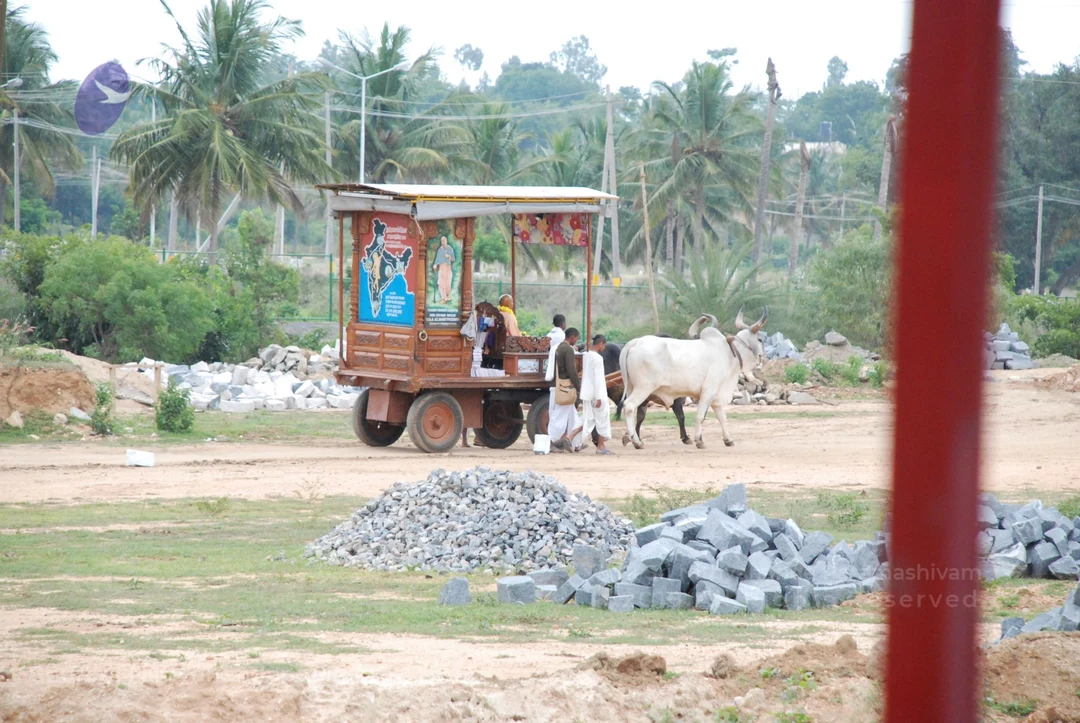
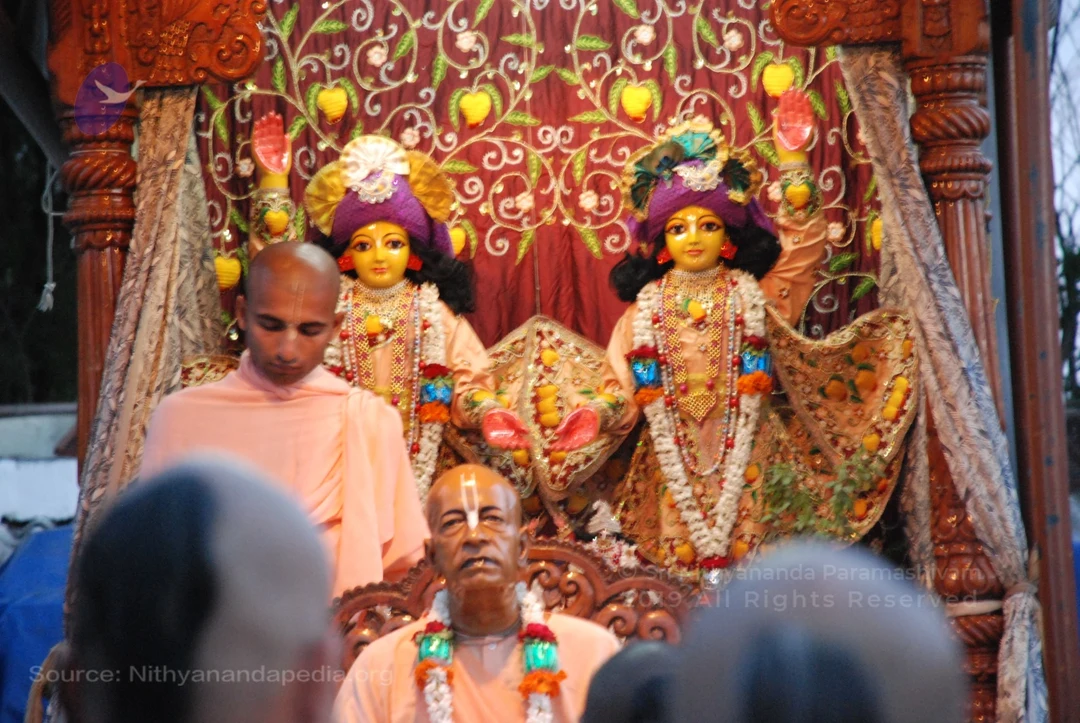
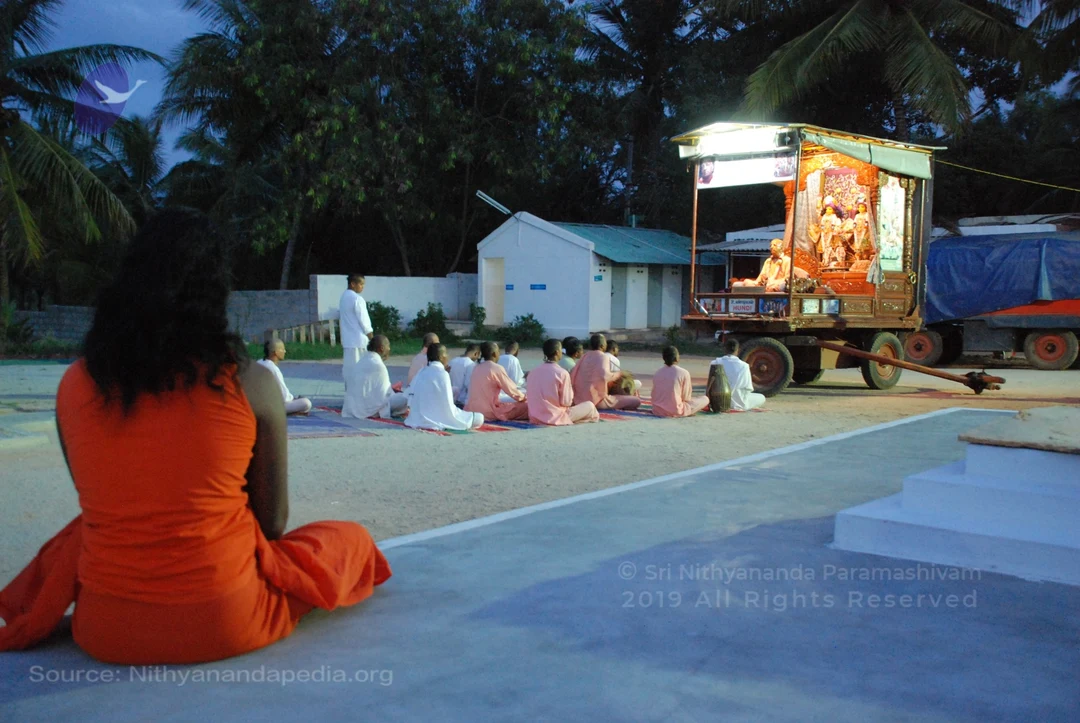
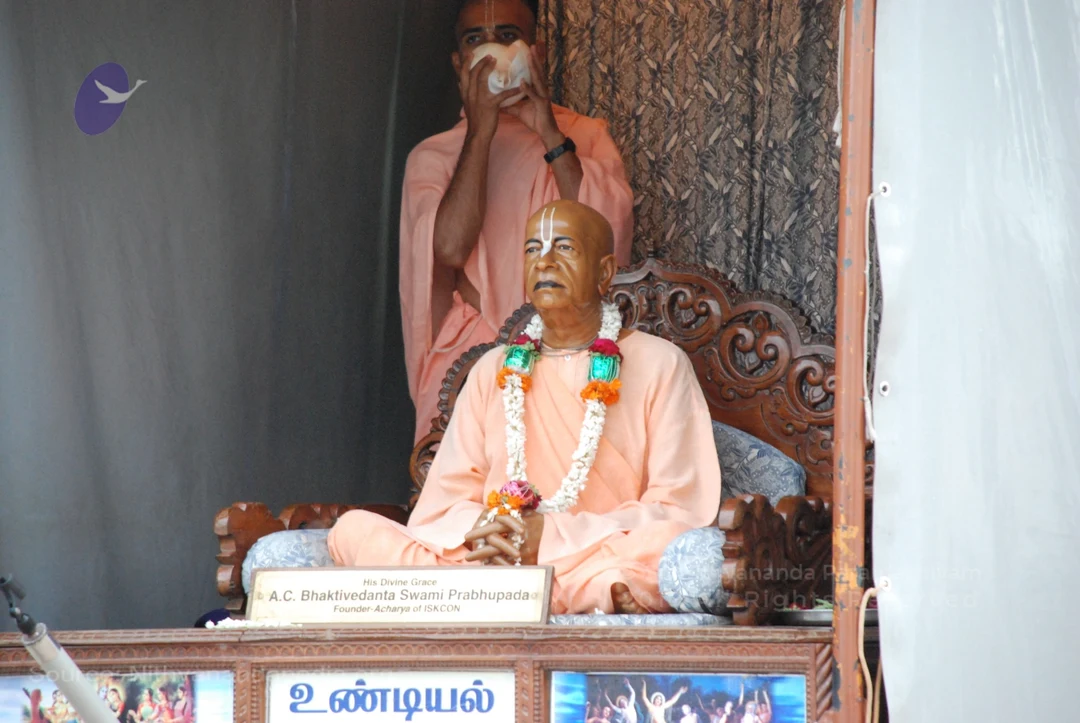
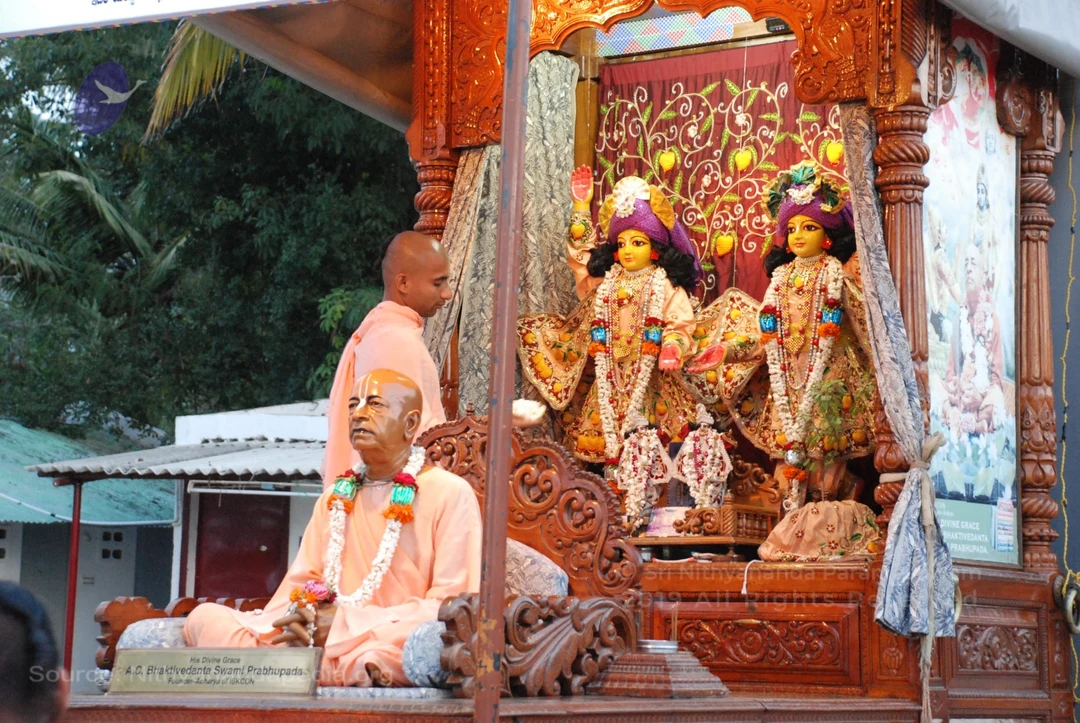
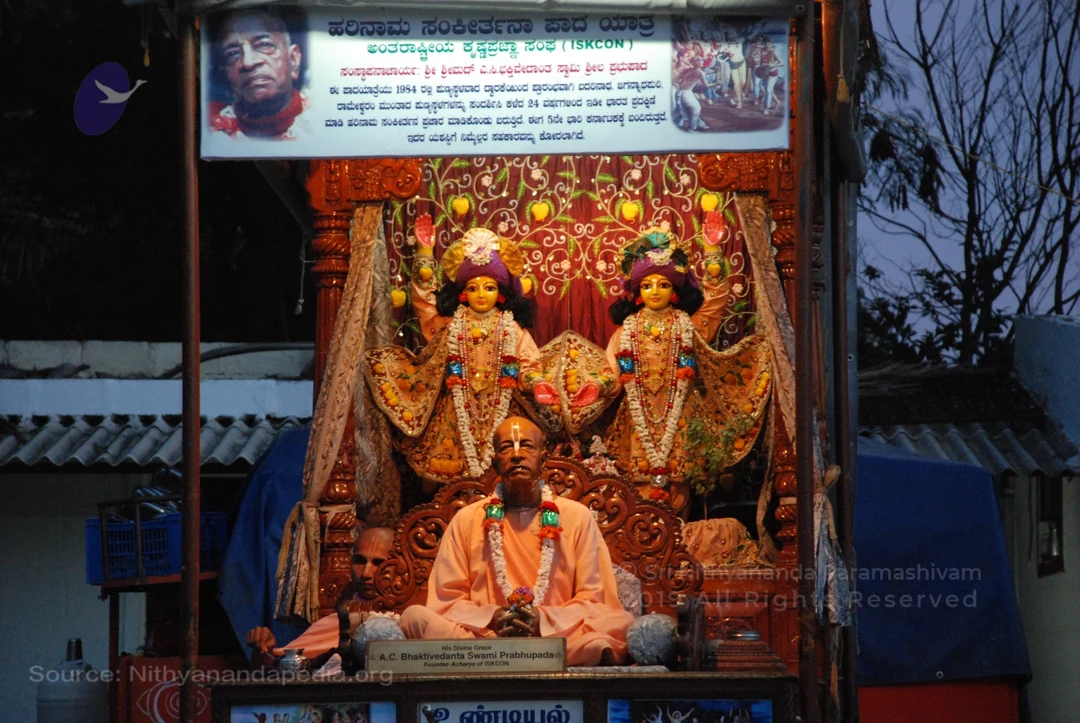
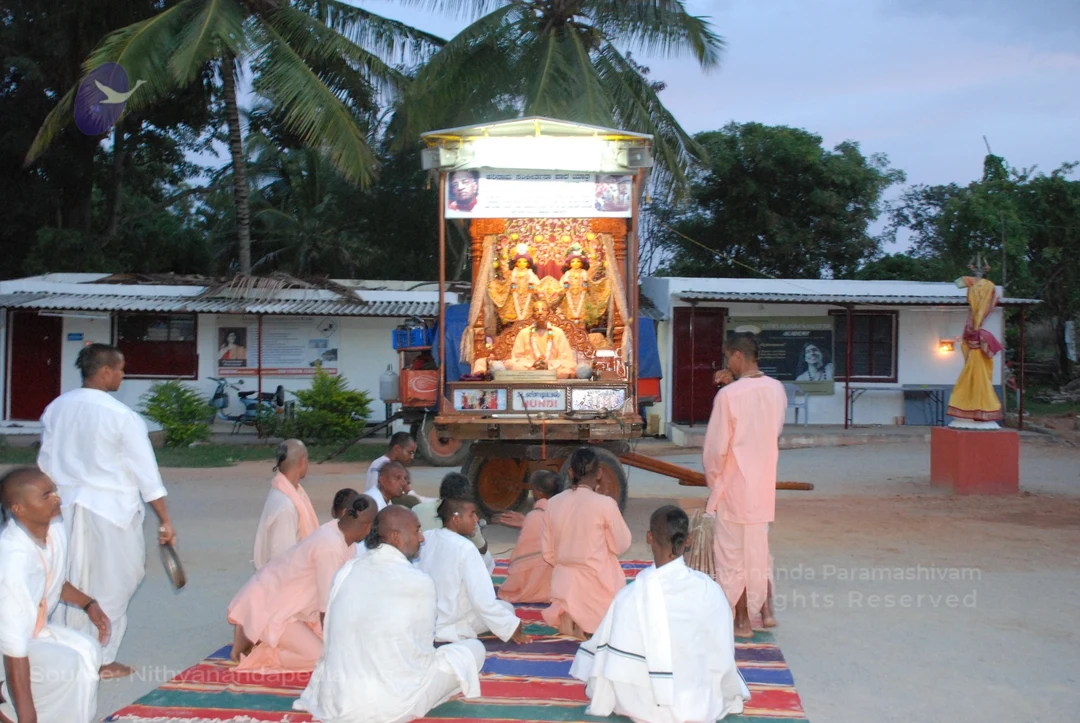
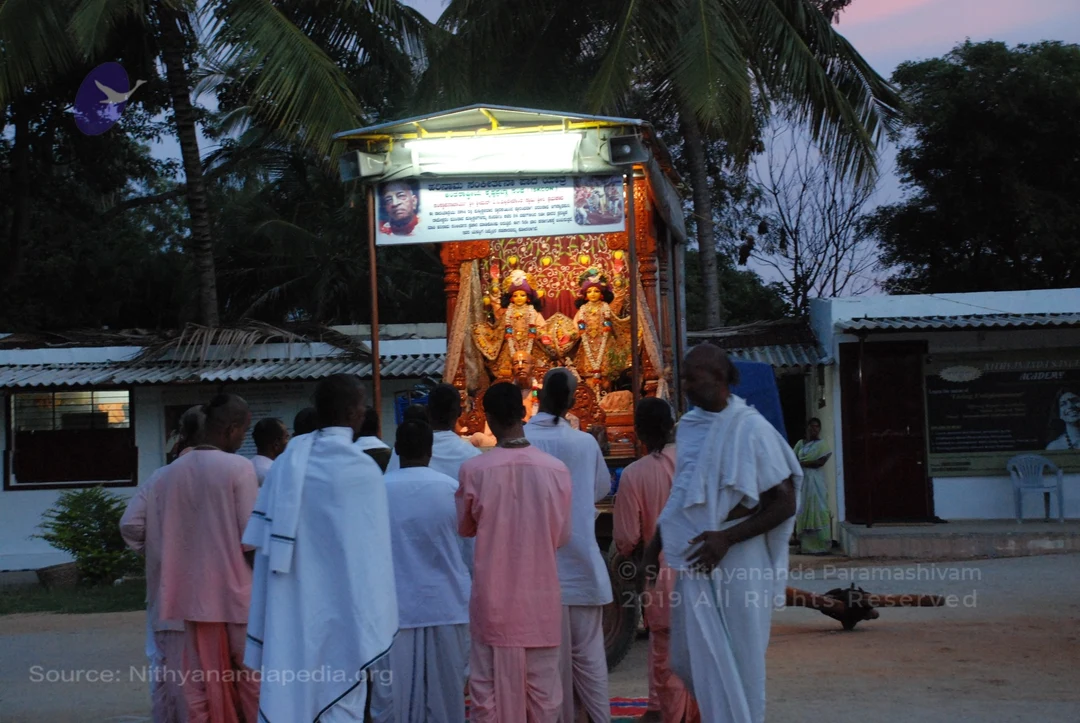
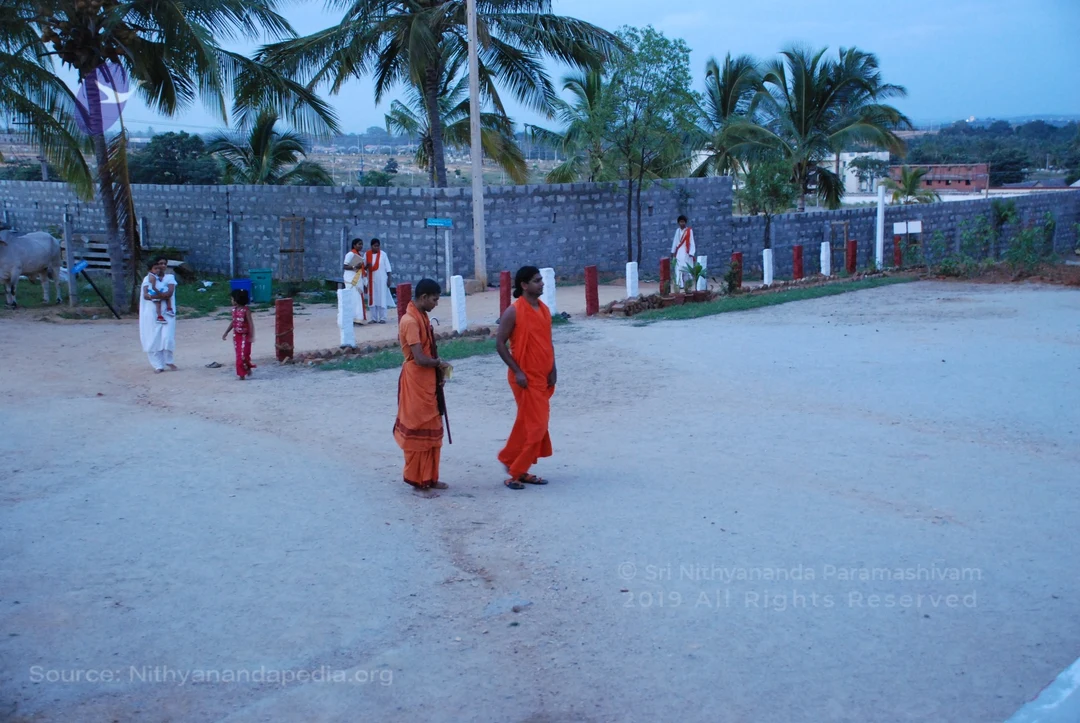
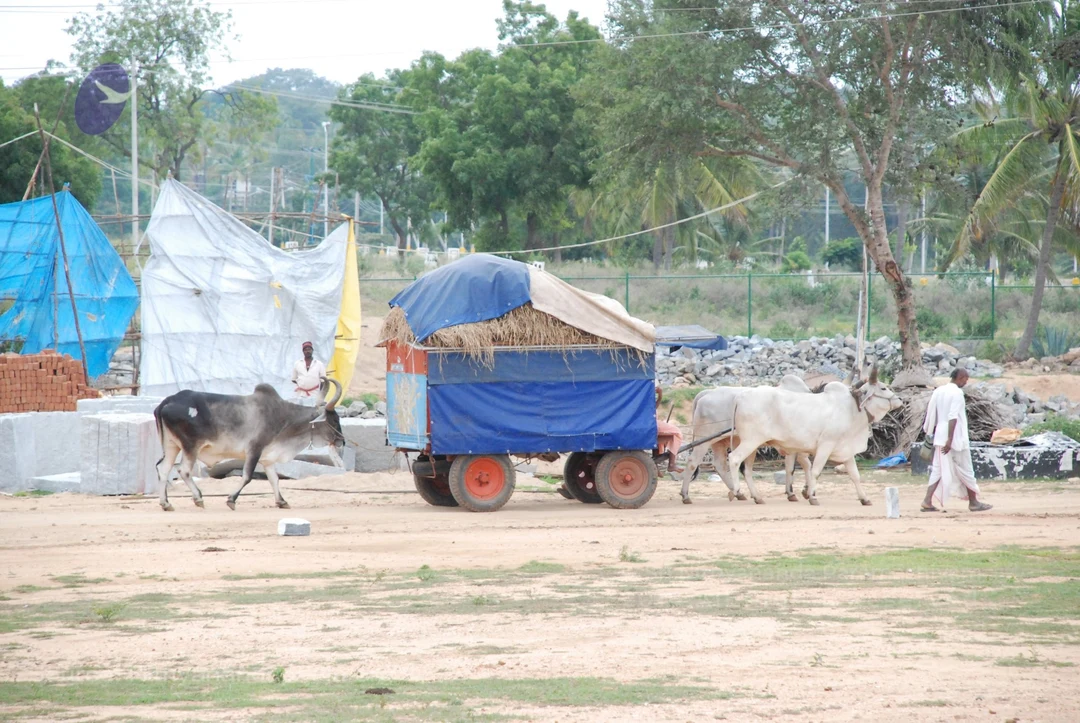
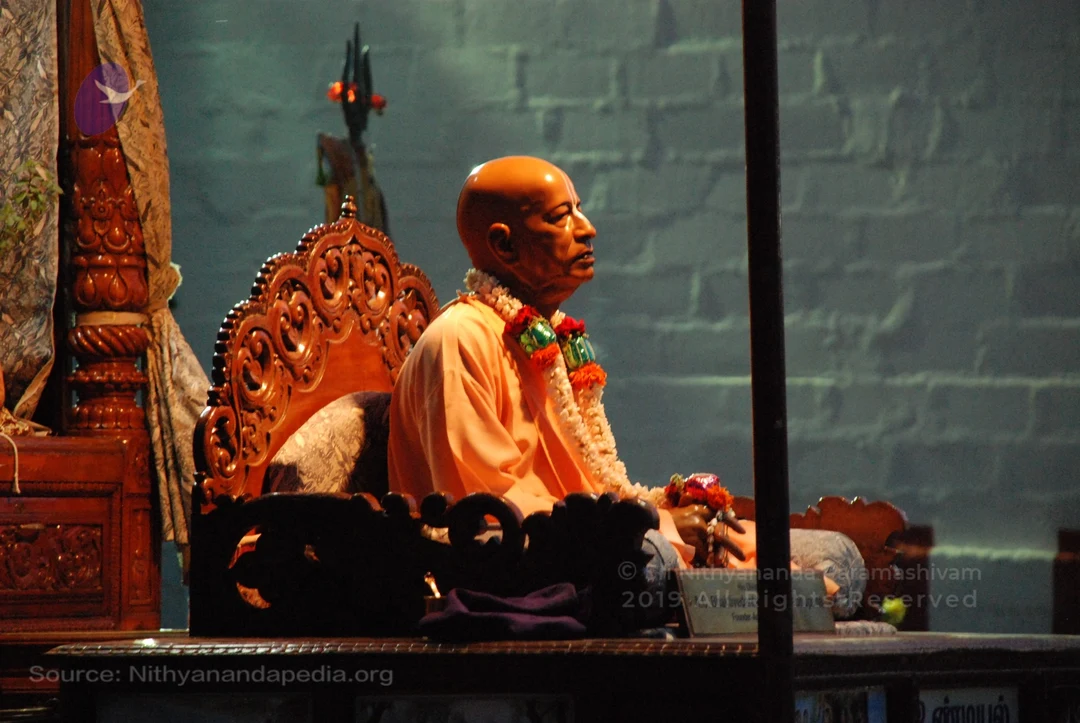
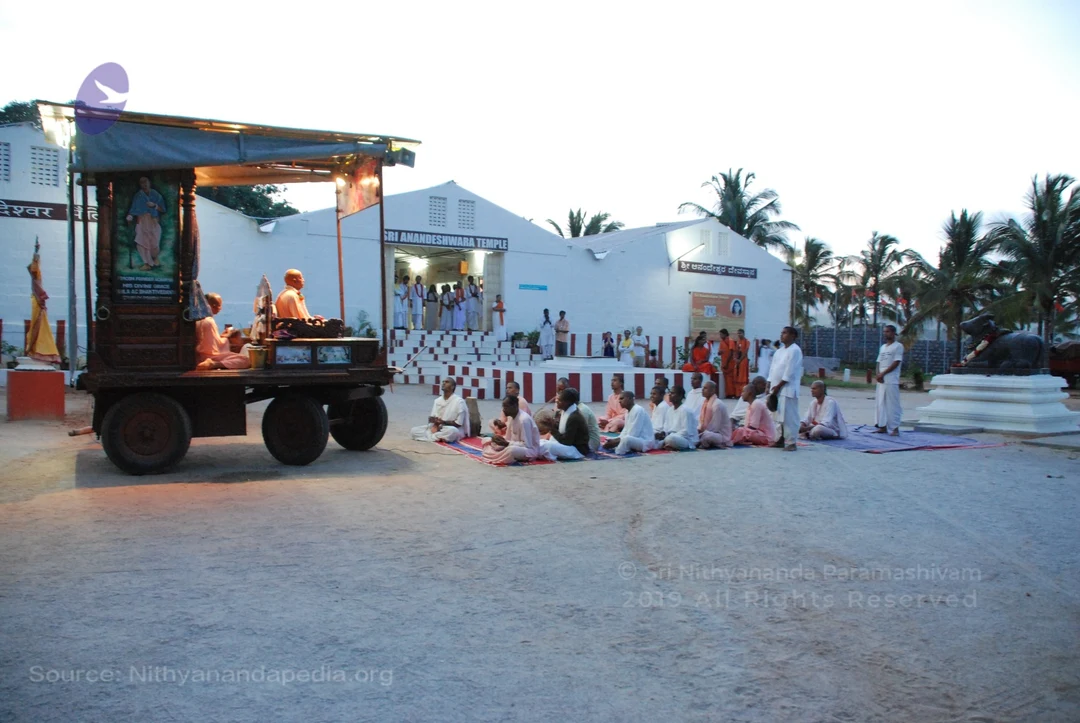
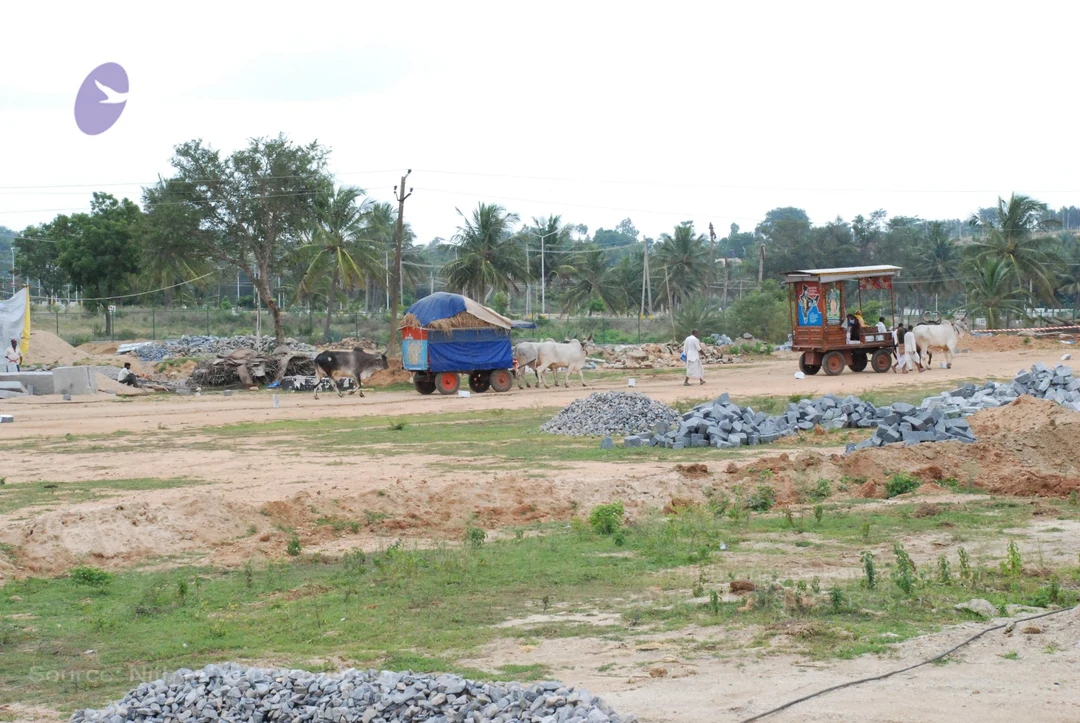
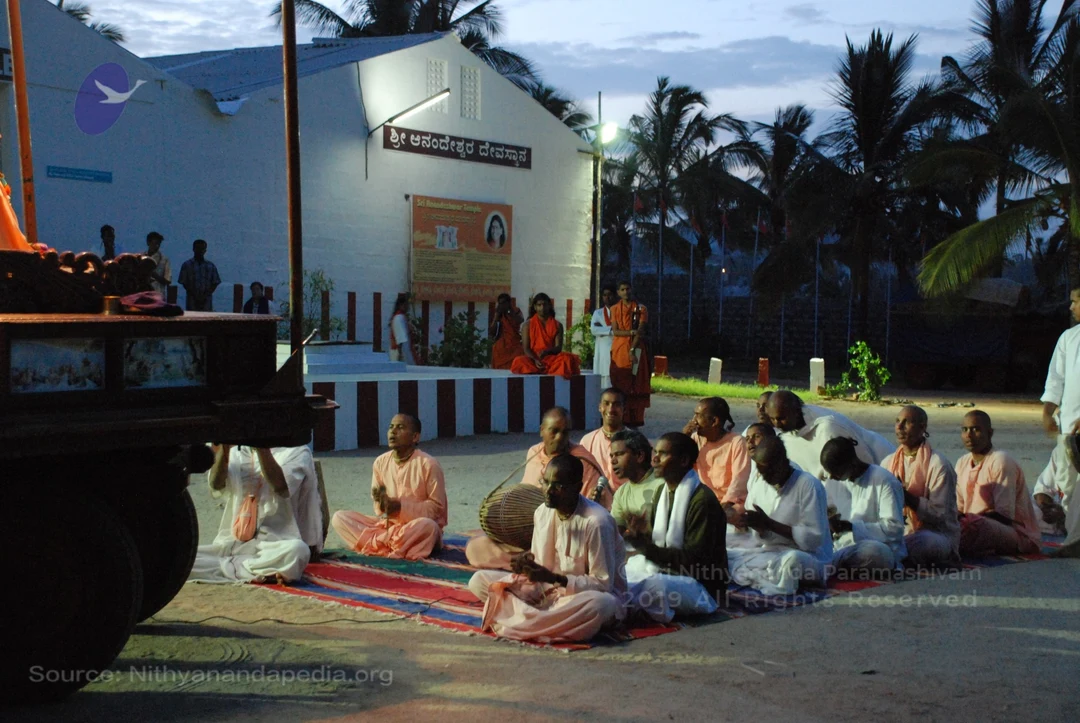
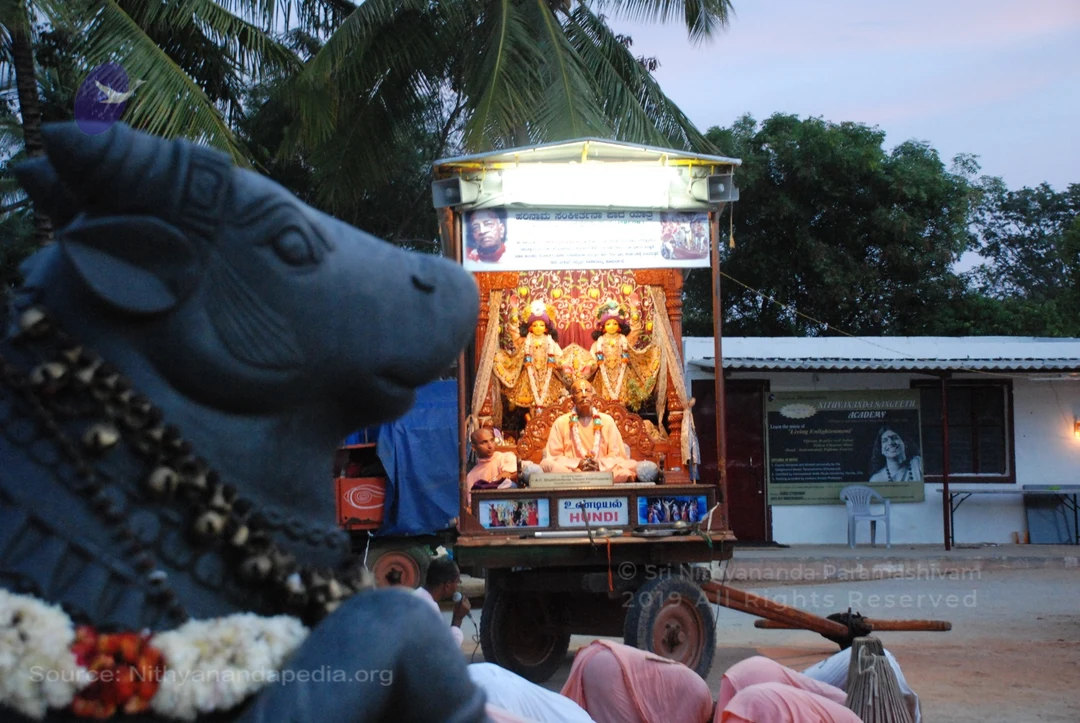
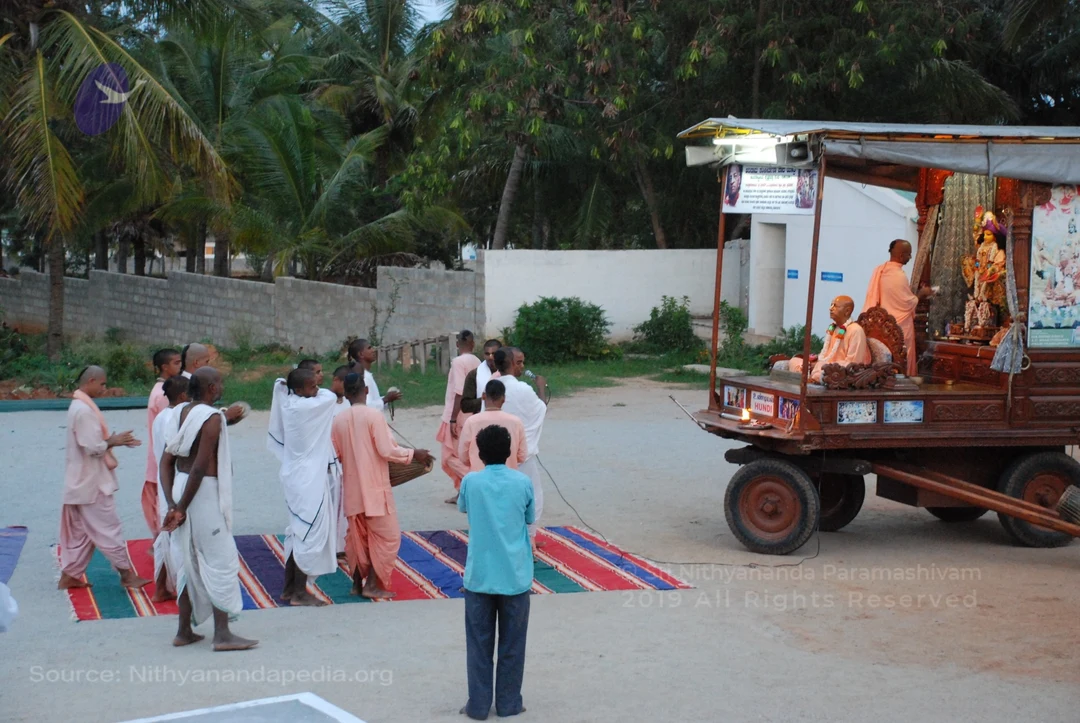
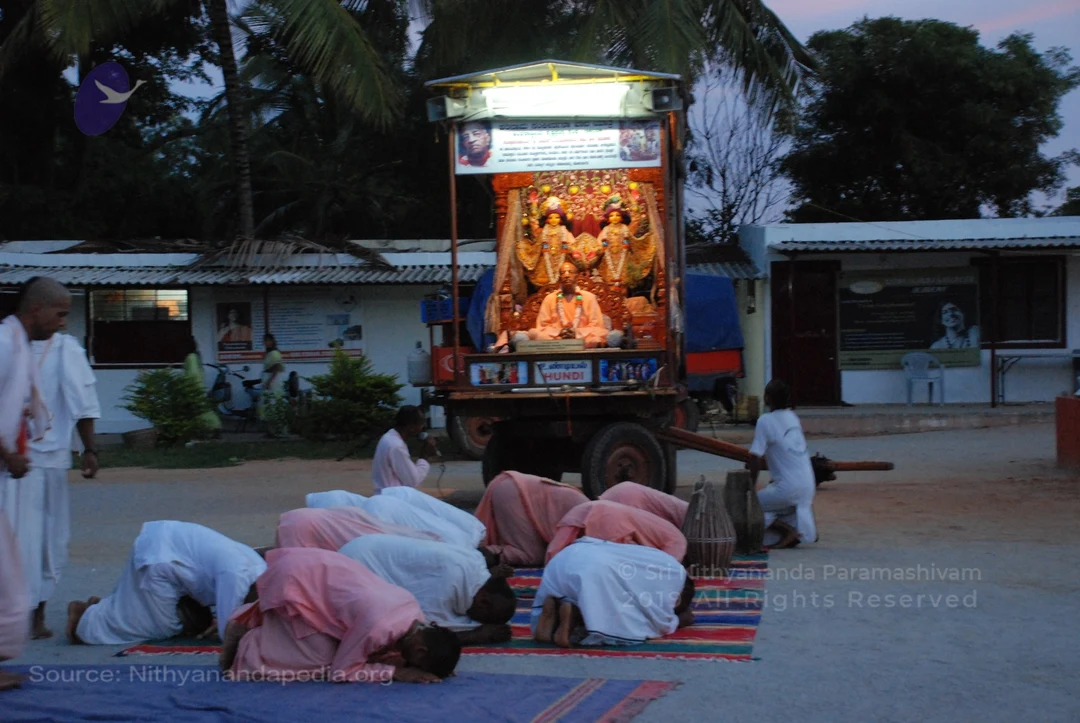
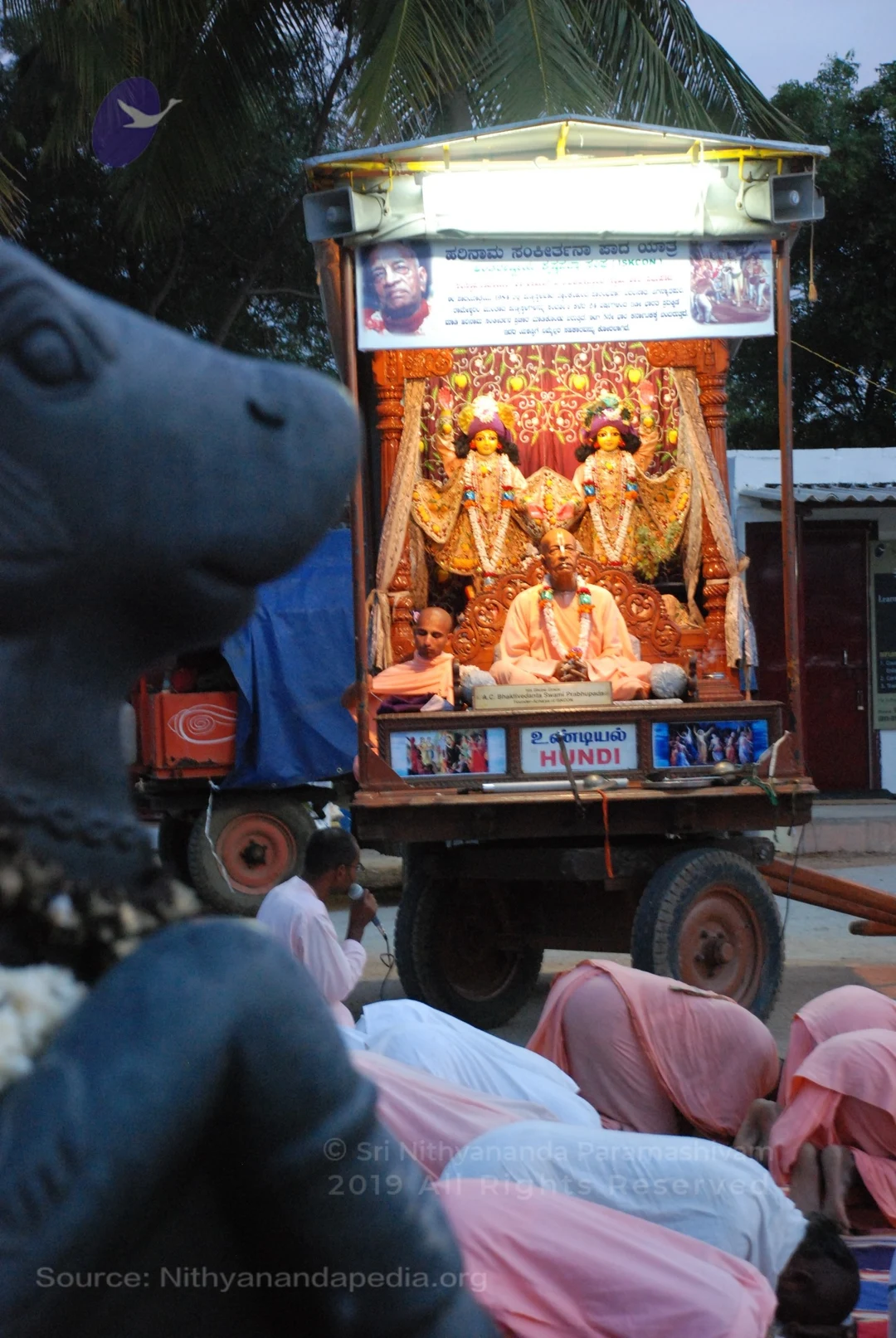
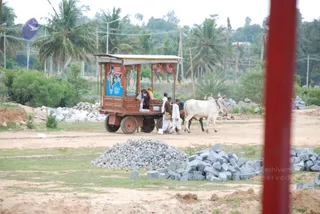
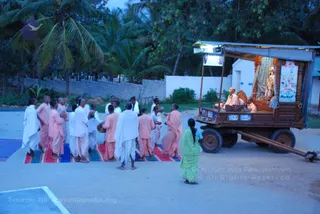
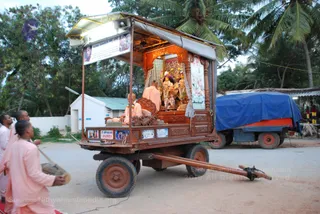
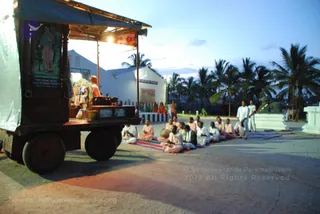
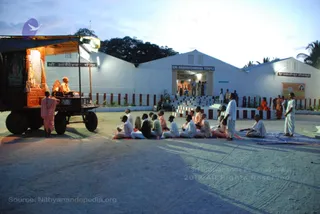
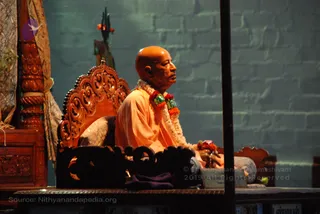
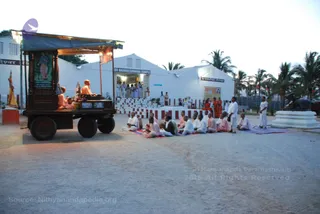
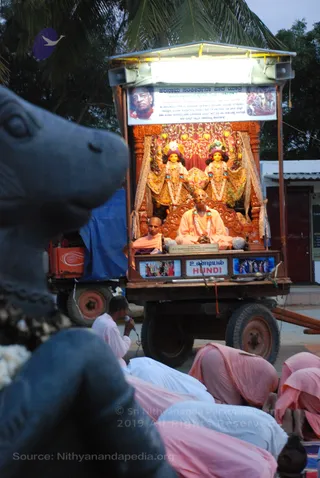
  • TWO TIMES I EMPTIED THE WHOLE BANK OF NITHYANANDA SANGHA. IN 2008, THE ISKCON PADAYATRA REACHED BIDADI CAMPUS. 20 PEOPLE REACHED BY WALKING GOING FOR KRISHNA KSHETRA. THEY WERE CROSSING BANGALORE, MYSORE ROAD. I PERSONALLY RECEIVED THEM AND GAVE EVERYTHING POSSIBLE. WHEN I SAW THEY ONLY HAD BULLOCK CART FOR KRISHNA AND SWAMI PRABHUPADA, I GOT INTO NOSTALGIA OF HOW I USE TO DO PADA YATRA. I CALLED A FEW PEOPLE TO TAKE ALL THE MONEY OUT AND GAVE IT TO THEM. WHEN YOU WALK, GO FROM VILLAGE TO VILLAGE AND GULLEY TO GULLEY, YOU WILL REALISE HOW GOOD PEOPLE ARE.
  • I WILL PROVIDE EVERYTHING - AMBULANCE, CELL PHONES, CARAVANS, I WILL LET YOU MAKE YOUR FOOD JUST FOR YOU TO TASTE THE GOODNESS OF THE PEOPLE. IF HUMAN BEINGS COULD HAVE KILLED, THEY WOULD HAVE KILLED ME BY NOT ATTENDING TO ME. I WOULD HAVE BEEN KILLED 10,000 TIMES. WHEN THEY TRIED TO KILL ME, I AM ABLE TO PROTECT MYSELF, BUT I AM NOT ABLE TO BELIEVE HUMAN BEINGS ARE BAD. I WILL CONTINUE TO LOVE AND TRUST HUMAN BEINGS. NOT ONLY I WILL BRING THE KNOWLEDGE OF KAILAASA AND SHARE WITH ALL OF YOU, BUT ALSO THE JNANA AND VIJNANA AND SHARE WITH ALL OF YOU.
  • I PROTECT MYSELF JUST TO DO THIS WORK, OTHERWISE I DO NOT HATE ANYONE. FUNDAMENTALLY, I JUST KNOW PEOPLE ARE GOOD. DURING MY PARIVRAJAKA, EVEN WHEN I DID NOT RECEIVE FOOD FOR SOME DAYS, I USED TO THINK: PARAMASHIVA WANTS ME TO DO NIRAHARA SAMYAMA. MAYBE I HAVE EATEN SOMETHING I SHOULD NOT EAT, THAT IS WHY HE WANTS ME TO DO NIRAHARA. I WILL BE HAPPY!
  • WHEN PEOPLE TRY TO ATTACK ME, I TRY TO DEFEND MYSELF. MORE THAN THAT, I HAVE NO ANGER, HATRED, VIOLENCE FOR PEOPLE. I AM VERY CLEAR: HUMAN BEINGS ARE GOOD. WHEN I KNOW HUMAN BEINGS ARE GOOD, WHEN THEY DO SOME BAD THINGS, I CAN SEE CLEARLY THE LOGIC WITH WHICH THEY DO BAD THINGS. I CAN OUTSMART THEM. EVEN WHEN THEY TRY TO DO BAD THINGS, YOU WILL KNOW THEIR MIND SET. ONCE YOU KNOW WHY THEY ARE DOING WHAT THEY ARE TRYING TO DO, YOU CAN OUTSMART THEM. ”PEOPLE ARE GOOD” IS THE FOUNDATION OF KRISHNA'S STRATEGY.THAT IS WHY HIS STRATEGIES WORKED. “PEOPLE ARE BAD” IS THE FOUNDATION OF SHAKUNI'S STRATEGY.THAT IS WHY HIS STRATEGY DID NOT WORK.
  • EVEN NOW I REMEMBER, ONE OF MY GURUS WHO USED TO TEACH ADISHAIVA TO ME, PANDURANGANAR, THOSE DAYS HE USED TO BE HIGHLY EDUCATED. HE WAS IN A HIGHER POSITION THAN A TEACHER. HE WILL WALK FROM HOME TO TEMPLE. EVEN IN HIS OLD AGE, HE USE TO WALK VERY FAST. I USED TO ASK HIM, 'WHAT IF YOU FALL?'. HE SAID, 'OUR VILLAGE PEOPLE ARE VERY GOOD PEOPLE. THEY WILL LIFT ME AND DROP ME IN MY HOME AND COME BACK.' FEELING PEOPLE ARE GOOD IS ONE OF THE GREAT ASSET!
  • ONCE YOUR BIOLOGY STARTS BELIEVING PEOPLE ARE GOOD, YOUR WHOLE LIFE WILL BECOME HEAVEN! ALL THESE TRUTHS TODAY ARE DIRECTLY INTERCONNECTED. WHEN YOU FEEL “NOW”, YOU WILL FEEL PEOPLE ARE GOOD. YOU WILL FEEL HEAVEN. YOU WILL FEEL KAILAASA. YOU WILL MANIFEST POWERS OF CHANGING YOUR PAST AS YOU WANT.
  • I KNOW MANY PEOPLE BELIEVE WHEN I SAY YOU CAN CHANGE YOUR FUTURE. BUT NOBODY WILL BELIEVE WHEN I SAY YOU CAN CHANGE YOUR PAST! IF YOU ARE READY TO BELIEVE, YOU ARE NOT IN CRAZINESS, YOU ARE IN MY FREQUENCY OF GRACY-NESS! WHOEVER WANTS TO COME TO MY GRACY-NESS IS MY DISCIPLE! PAST CAN BE CHANGED.
  • DO SOMETHING AND DO THIS PARIVRAJAKA YATRA. IT MAY TAKE 1.5 YEARS BUT IT WILL CHANGE THE WHOLE FOUNDATION YOU HAVE ABOUT LIFE. YOU WILL START FEELING PEOPLE ARE GOOD, LIFE IS GOOD.
  • BEFORE YOU ARE GIVEN POWERS, YOU SHOULD BE GIVEN THE FUNDAMENTAL COGNITION: HUMAN BEINGS ARE GOOD. IN HINDUISM, BEFORE A PERSON IS PUT AS PEETADHIPATI, THEY HAVE TO DO PARIVRAJAKA. PARIVRAJAKACHARYA MEANS THOSE WHO HAVE GONE TO THE LENGTH AND BREADTH OF INDIA AND HAD DARSHAN OF THE 12 JYOTIR LINGAS. ONLY AFTER THAT HE CAN BE ACHARYA.
  • PARAMAHAMSA MEANS BECOMING ENLIGHTENED BEFORE PHYSICAL MATURITY.
  • ONLY IF YOU HAVE DONE PARIVRAJAKA, YOU CAN BECOME ACHARYA AND PEETADHIPATI.
  • TILL NOW, THE WORLD HAS SEEN MANY SARVAJNAPEETHADHIPATIS DO PARIVRAJAKA ALONE. FIRST TIME, I AM MAKING 25 FUTURE ACHARYAS OF DIFFERENT SARVAJNAPEETHAS DOING PARIVARAJAKA AT THE SAME TIME. AND AT LEAST 100 PEOPLE ASSISTING ARE GOING TO TRAVEL WITH THEM. IT IS GOING TO BE ONE OF THE GREATEST HAPPENING IN THE HISTORY OF HINDUISM!
  • ATLEAST I AM SEEING 100 SANYASIS, 300 DEVOTEES, 25 BALASANTHS ABOVE THE AGE OF 16 UNDER THE AGE OF 21 ARE GOING TO WALK, DOING PARIVARAJAKA. IT IS GOING TO BE REAL FUN.
  • WHEN YOU GO FROM HOUSE TO HOUSE WITH BHAGAVATI BHIKSHAM DEHI, WHEN YOU SEE PEOPLE LOVING YOU FOR NO REASON, SUPPORTING YOU FOR NO REASON, CARING FOR YOU FOR NO REASON, EVERYDAY, EVERY MEAL, YOU WILL GET THAT POWERFUL COGNITION: “PEOPLE ARE GOOD. HUMAN BEINGS ARE GOOD.” WHEN THAT BECOMES YOUR FOUNDATION, YOU BECOME A FOUNTAIN OF LOVE.
  • THE HAPPENED AND HAPPENING ARE ON THE CANVAS OF HAPPINESS, MAYBE THAT IS REASON ALL THE THREE WORDS HAVE SAME ROOT. HAPPENED AND HAPPENING ARE HAPPENING ON THE CANVAS OF HAPPINESS.
  • TODAY IS NOVEMBER 1ST. THE 100TH BATCH OF NIRAHARA SAMYAMA STARTS. BLESSINGS TO NITHYA PRANAVANANDA. ANYONE WHO COMPLETES THIS BATCH NIRAHARA SAMYAMA WILL RECEIVE A SPECIAL GIFT AFTER THEY COMPLETE IT.
  • ALL THE THOUGHT CURRENTS I SHARED TODAY: 1) YOUR PAST CAN BE CHANGED, 2) “NOW” IS NOT TIME, IT IS POWERFUL COGNITION. 3) VISUALISE “NOW” AS GOLDEN BLANKET, PUT IT ON YOUR HEAD AND SHUT DOWN INTO PARAMASHIVA, 4) LIFE CANNOT BE EQUATED TO MONEY, 5) LIFE IS LIVING, 6) PEOPLE ARE GOOD, ALL THESE POWERFUL COGNITIONS FORM THE ROOT BASE OF LOVE, EXTREME LOVE.
  • THE PARIVRAJAKA YATRA PEOPLE ARE GOING TO HAVE DARSHAN OF ALL 12 JYOTIR LINGAS AND REACH KAILAASA.
  • THIS PARIVRAJAKA YATRA 2020 IS REALLY GOING TO BE THE BIGGEST CONSCIOUS BREAKTHROUGH FOR ALL THE PEOPLE DOING THE PARIVRAJAKA YATRA AND FOR THE WORLD. ANYONE INTERESTED IN JOINING THE PARIVRAJAKA YATRA OR KAYAKALPA YOGA, CAN SIGN UP IN www.kailaasa.org/satsang
  • PARIVARAJAKA PEOPLE ARE GOING TO EXPERIENCE MIRACLES AND POWER MANIFESTATION EVERYDAY! ONLY THING, WOMEN CANNOT GO. I TRIED MY BEST THINKING HOW CAN I DENY THIS GREAT EXPERIENCE FOR WOMEN. BUT I SAW, IT IS ALMOST IMPOSSIBLE. BUT IF YOU ARE IN MALE BODY, DON’T MISS THE PARIVRAJAKA YATRA. IF YOU ARE IN FEMALE BODY, DO KAYAKALPA YOGA.
  • PARIVRAJAKA YATRA IS SO EXCITING! WHEN I AM TALKING ABOUT IT EVERYDAY, EVEN I FEEL LIKE JOINING! ALL PEOPLE GOING TO PARIVRAJAKA YATRA, START WALKING 10 KILOMETER EVERYDAY. YOU DON’T NEED TO CARRY ANY LUGGAGE. IT WILL BE GOING IN THE VEHICLE. NOTHING WILL BE A PROBLEM. ALL THE EMERGENCY MEDICAL CARE, DOCTORS WILL BE THERE. FULLY EQUIPPED!
  • ALL THE GRIHASTAS WILL BE JOINING IN KANYAKUMARI ON MY BIRTHDAY. ALL SANYASIS WILL START FROM ADI KAILASH AND WALK TO KANYAKUMARI TO PREPARE EVERYTHING NEEDED. IT WILL BE LIKE A TRIAL RUN. ONLY WHEN YOU GET INTO THE GROUND AND START WALKING YOU WILL KNOW WHAT ALL YOU NEED TO PREPARE, SO THAT THEY WILL BE ABLE TO TAKE CARE OF DEVOTEES WHO COME IN THE PADAYATRA.
  • YOU CAN WEAR FOOTWEAR. ONLY WHEN YOU ENTER INTO SACRED TEMPLES OR SACRED GROUNDS LIKE SMASHANA, YOU CANNOT WEAR FOOTWEAR. ALL REGULAR WALKING, YOU CAN WEAR FOOTWEAR.
  • I WANT YOU TO EXPERIENCE THE REAL PARIVRAJAKA, MANIFEST POWERS AND ENLIGHTENMENT. PEOPLE FROM ALL OVER THE WORLD ALSO CAN JOIN. YOU NEED TO GET A VALID VISA, THAT’S ALL. YOU NEED TO DECLARE CLEARLY YOU ARE DOING PARIVRAJAKA YATRA AND GET THE RIGHT VISA FOR THAT PURPOSE. THEN YOU ARE WELCOME. WE ARE A COMPLETE LAW ABIDING ORGANIZATION.
  • THE PARIVRAJAKA IS GOING TO COVER 3 COUNTRIES - CHINA, INDIA, NEPAL. 12 JYOTIRLINGAS IN INDIA AND THROUGH NEPAL YOU WILL BE REACHING CHINA.
  • SO, PLEASE GET THE APPROPRIATE VISAS FOR PARIVARAJAKA YATRA. THE SANGHA WILL BE SUPPORTING YOU IF YOU NEED ASSISTANCE IN FINDING OUT ABOUT THE VISA.I HAVE SEEN PEOPLE HAVE SO MUCH ANGER TOWARDS SANGA. IF YOU ARE LISTENING TO WHAT I AM TALKING, IT IS BECAUSE OF SANGA. SANGA BROUGHT THIS MIKE, SANGA BROUGHT THIS TELEVISING SYSTEM. DROP THIS INCOMPLETION TOWARDS SANGA. I HAVE SEEN PEOPLE WHO ARE EATING IN THE CAMPUS, BUT HAVING ANGER TOWARDS ADMINISTRATION. THEY TAKE THINGS FOR GRANTED. DROP ANGER TOWARDS SANGA. YOU WILL GET THE SUPPORT.
  • ESSENCE OF TODAY’S SATSANG: TO MANIFEST THE POWER OF KALA, EITHER DO KAYAKALPA YOGA OR DO KAILASH PARIVRAJAKA YATRA, OR MAKE YOUR BEDROOM INTO KAILAASA. PUT THIS AS ESSENCE OF TODAY'S SATSANG AND SHARE, ENRICH THE WHOLE WORLD.
  • TO REGISTER FOR NIRAHARA SAMYAMA, LOG ON TO BFOODFREE.ORG
  • SHARE & CELEBRATE. ENRICH & ENJOY.

Photos

HDH Bhagavan Nithyananda Paramashivam
Earlier Iskcon Padayatra mentioned in Satsang

Sakshi Pramana Video:

VideoAudio

Declarations of Policies/Initiatives

• 21 months Kayakalpa Yoga - recommended as first option

• Parivrajaka Yatra 2020 providing medical care, but for food go from house to house with Bhagavati Bhiksham Dehi. Will have darshan of all 12 Jyotirlingas and reach Kailasa. Only for male bodies.

• 100TH Batch of Nirahara Samyama starts. Anyone who completes this Batch Nirahara Samyama will receive a special gift after they complete it.

ATA Component

Skanda Shasti Brahmotsavam

Enriching Material

Link to Facebook Post

https://www.facebook.com/ParamahamsaNithyananda/posts/3028024930618670
https://www.facebook.com/srinithyananda.swami/posts/1441490782672583

Photos Of The Day:

FB-fotos-of-the-day

Photos from this day

View all 75 photos

HDH Bhagavan Nithyananda Paramashivam
9 photosSource gallery
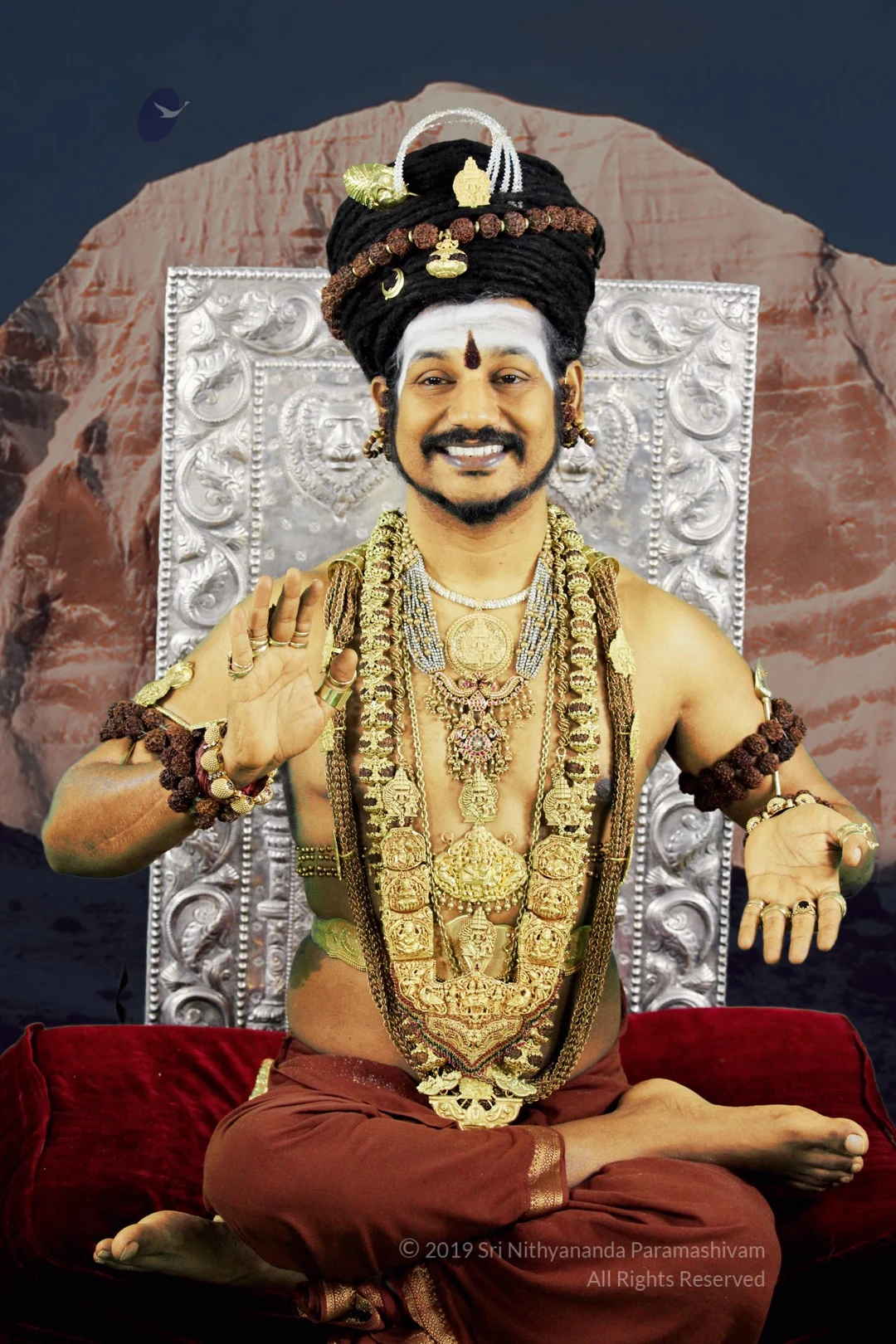
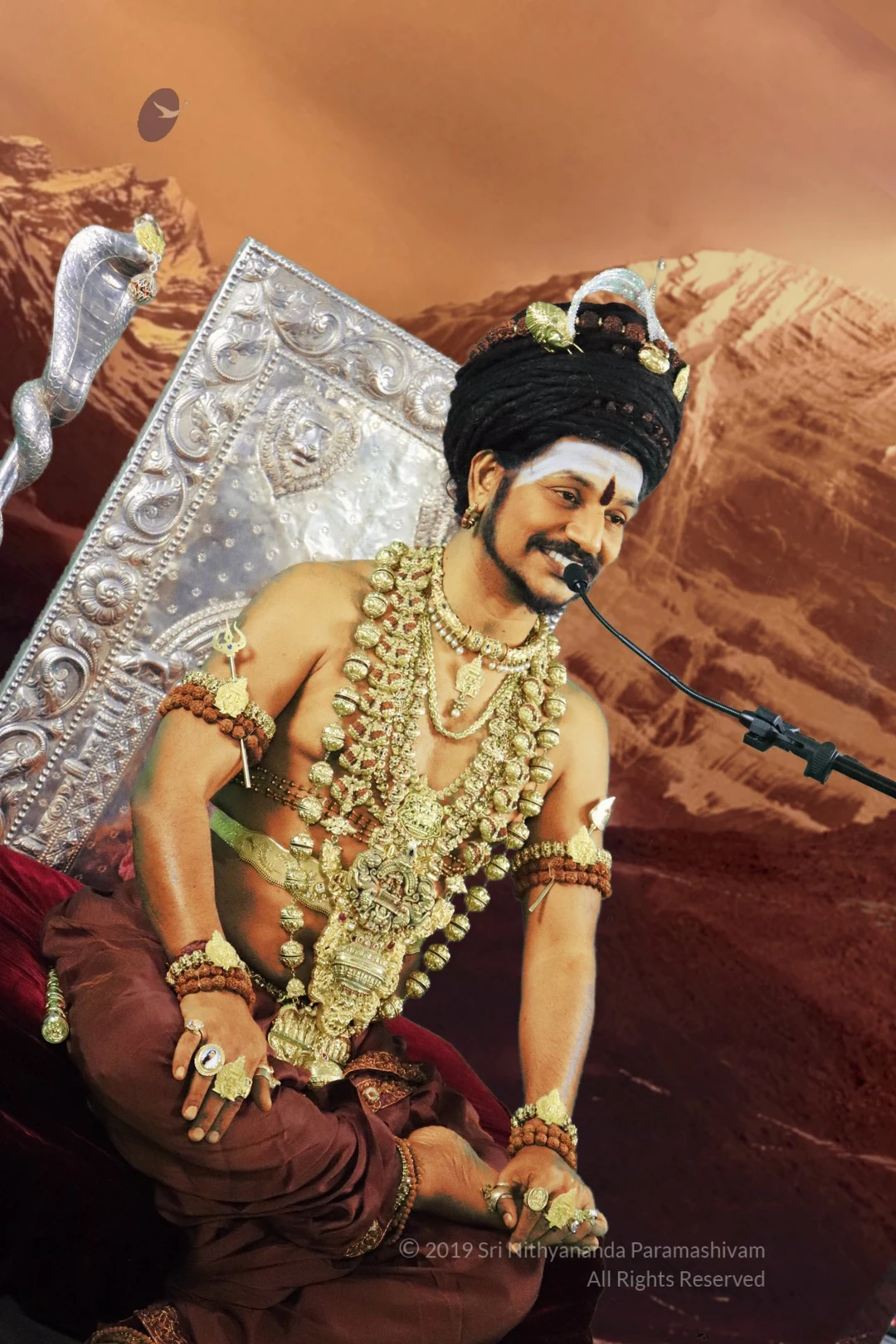
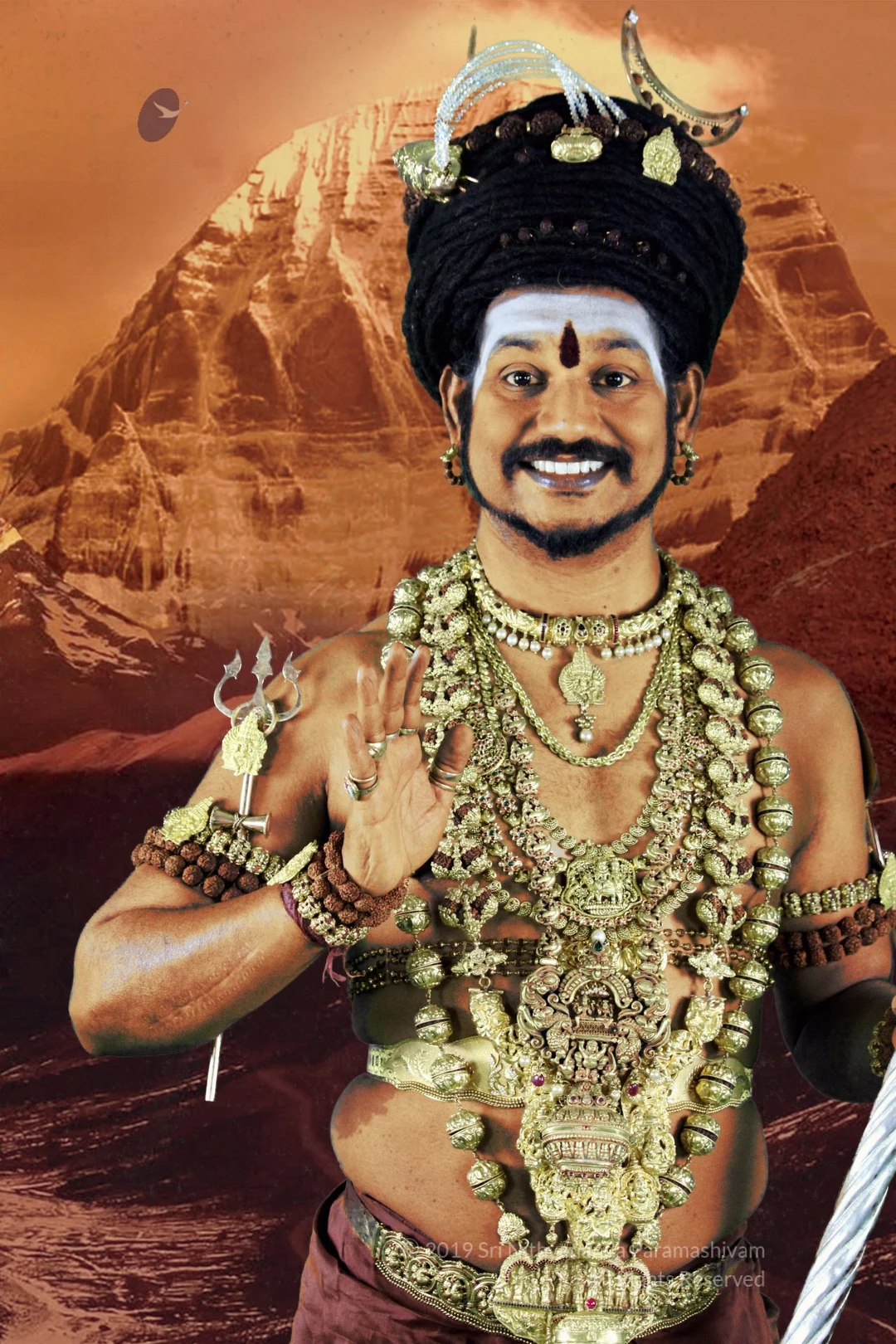
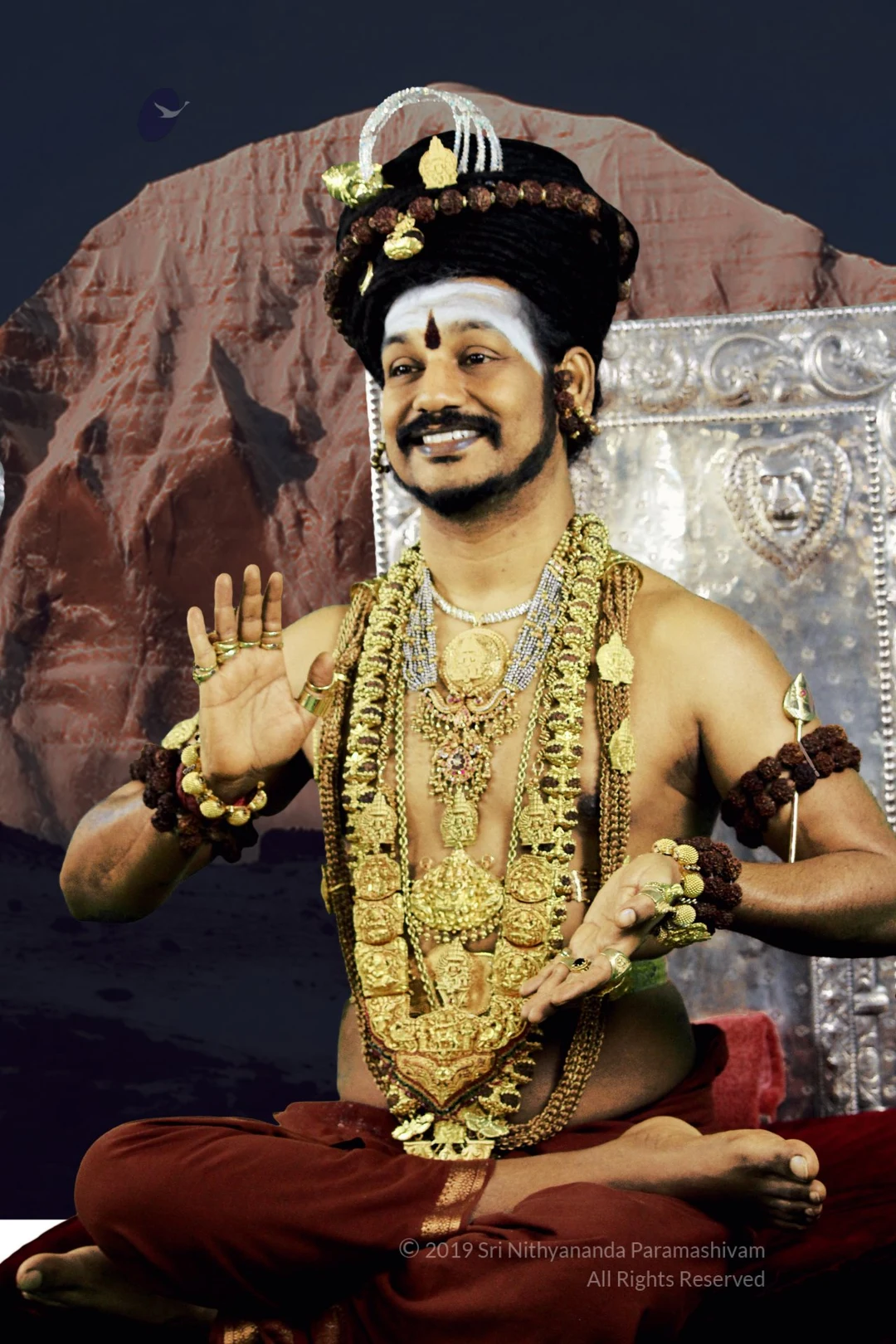
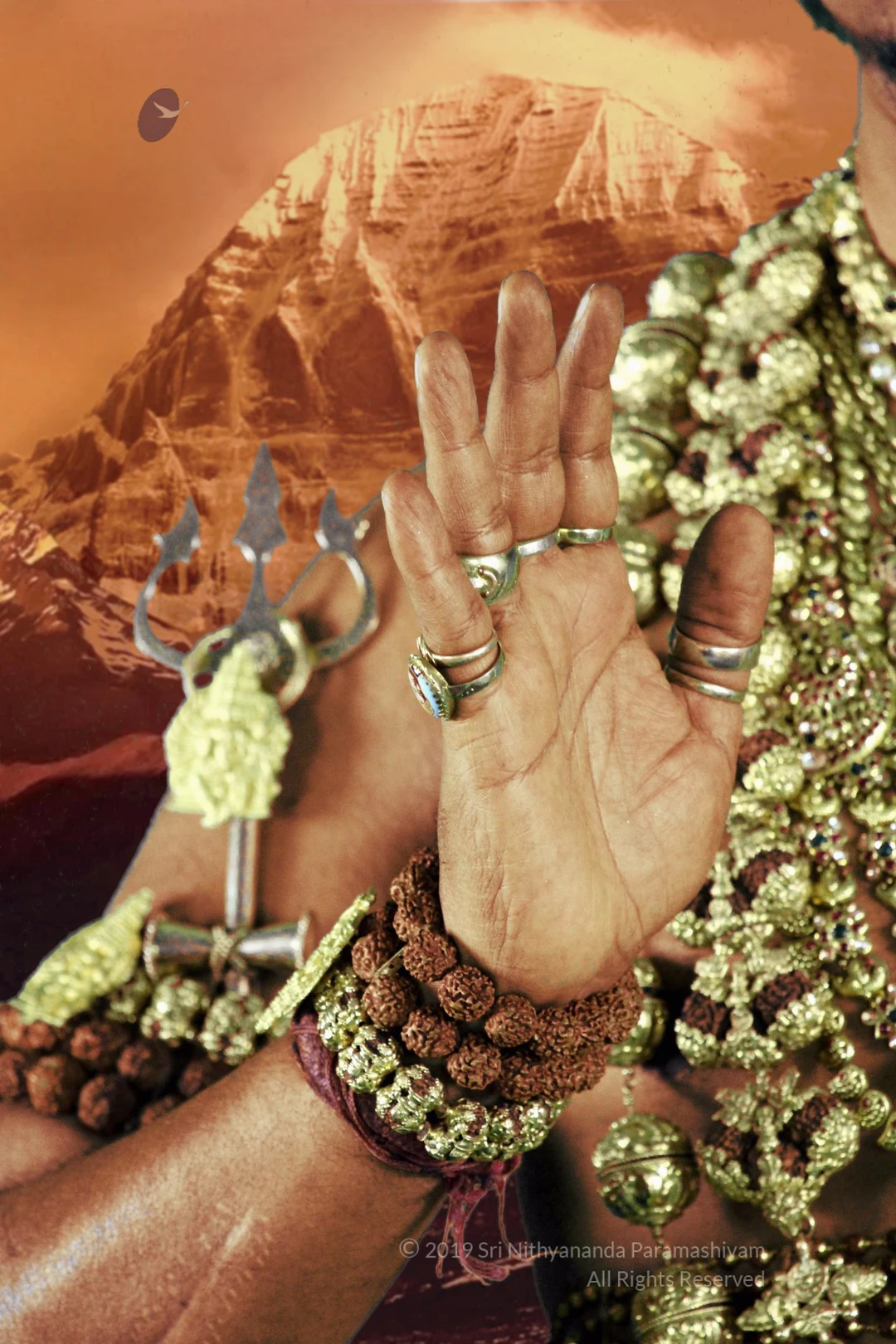
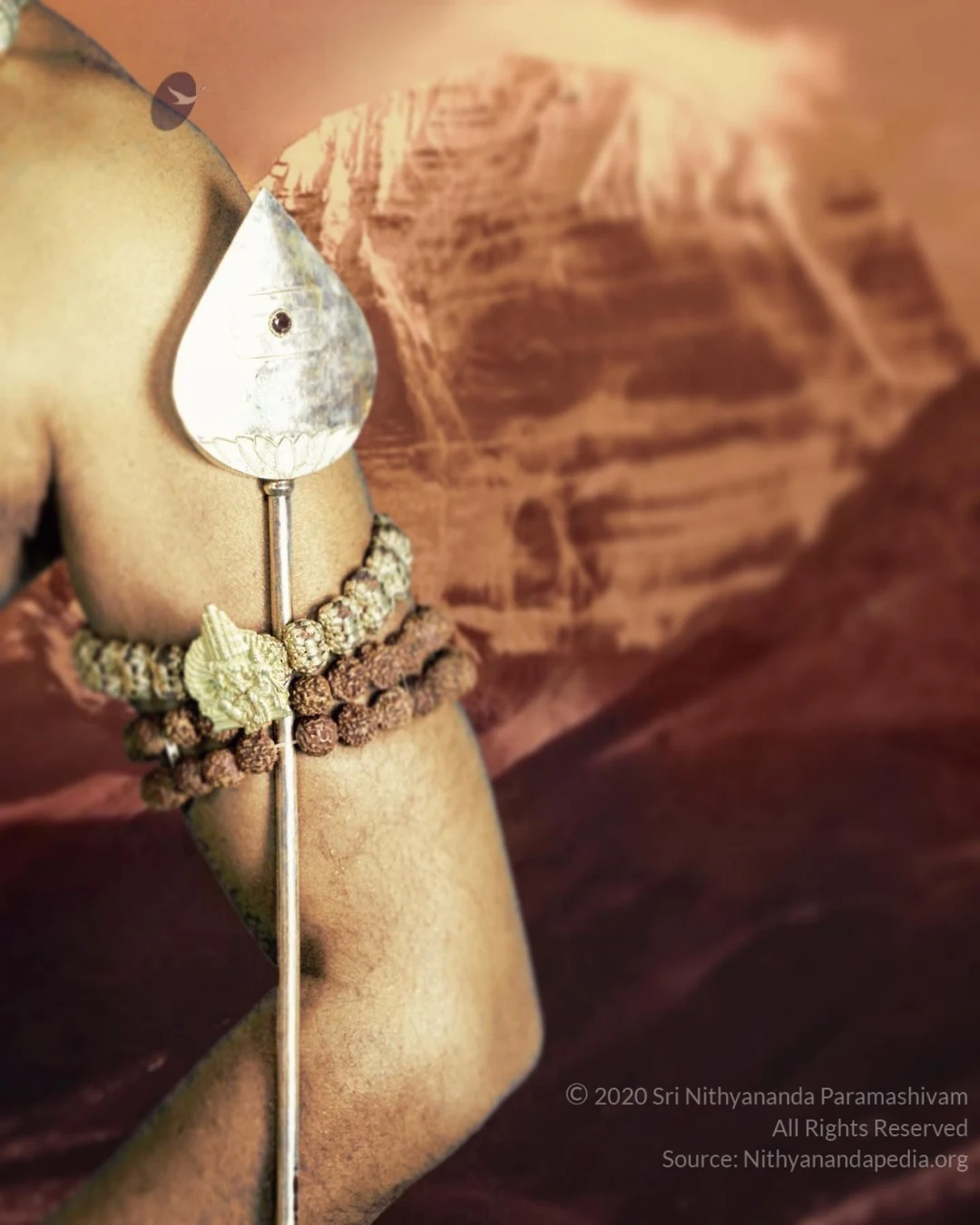
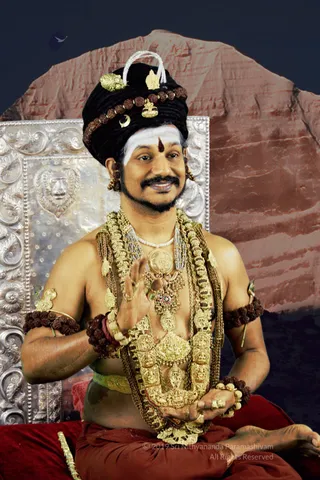
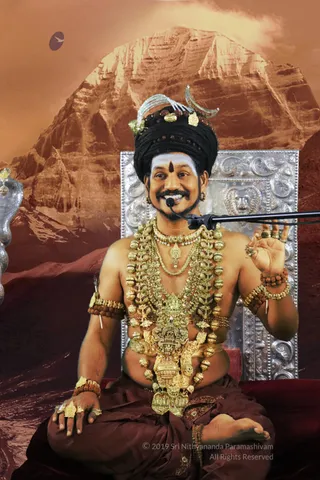
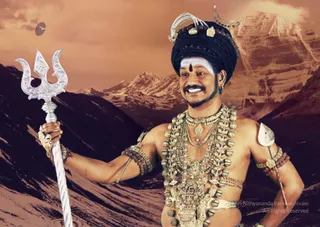
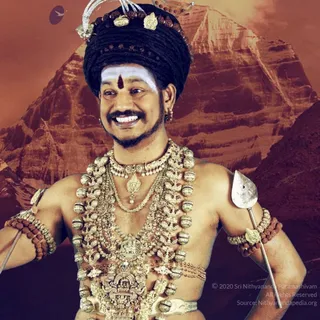
A seated man with a tall dark turban wrapped with rudraksha beads and gold ornaments, including a crescent moon motif and a small gold deity figure at the top. He has white vertical tilak with a red dot, a bare chest covered in heavy gold necklaces, pendants and rudraksha armlets, and wears a red-maroon lower garment. He sits on a red cushion before a silver embossed backdrop with a lion face and a rock-formation background, making a gesture with his right hand and holding the left palm open in his lap. Swamiji (probable): the turban, layered rudraksha, ornate gold ornaments and bare-chested adornment match the page's named candidate, so this is a probable depiction-free in-person candidate rather than a confirmed identity.A composite graphic showing a hand gripping an ornate silver trident (trishula) with floral and scrollwork engraving, a small deity figure carved at its centre. The hand wears gold rings, one set with a small mirror-like stone, and a bracelet of rudraksha beads. Behind it, a snow-streaked mountain glows in orange-brown tones under a hazy sky, with a small bird-like emblem at upper left and a faint copyright line over the lower right. The image is a digital poster-style artwork rather than a candid photograph.A stylized, sepia-toned portrait-style photograph against a towering snow-capped mountain backdrop resembling Mount Kailash. A bare-chested man with a tall black matted topknot crowned with silver ornaments and a crescent moon stands centre, smiling and raising one hand in a blessing gesture. He wears heavy gold necklaces, layered gold chains, a large ornate gold waist belt, rudraksha bracelets and arm bands, and holds a silver trident. A white and red tilak marks his forehead. Faint copyright text appears in the lower corner.A sepia-toned graphic composite of a bare arm and shoulder in the foreground, holding a silver trident-topped staff with a gold ornamental finial and a silver trumpet-shaped cap. Wrapped around the arm is a rudraksha mala of brown beads interspersed with gold-tone filigree spacers, and a gold bangle-like bead strand is visible at the lower right edge. Behind the arm rises a snow-streaked mountain with a pyramid-like peak under a warm orange sky, evoking Mount Kailash. The bare arm and shoulder belong to one person, though the figure is cropped so no face is visible. A small dark bird silhouette appears at upper left. A , , which is omitted from the text listA composite image of a bare-chested man standing before a sepia-toned backdrop of a snow-capped mountain range resembling Mount Kailash. He wears a tall black matted crown with rudraksha beads and a small golden ornament, white and red tilak on his forehead, a wide smile, and layered heavy gold necklaces, bead garlands and a gold waist ornament. He holds a silver trident in his right hand and wears rudraksha armlets. A silver spear or trident-like weapon rests at his left shoulder. Overlaid text reads a copyright notice.A digitally composited portrait of a smiling man with a tall tiered mass of dark matted hair, crowned with a silver crescent ornament, a small trident-shaped and gold-leaf ornament, and a rudraksha-beaded band. He wears a white-and-red forehead marking, many layers of ornate gold necklaces with pearls and gold coins, gold armlets, and multiple rudraksha bracelets, with a trident pendant on the upper arm. His bare chest and shoulders are covered in heavy gold jewellery, and he raises one hand in greeting. Behind him is a stylized orange-toned mountain landscape. Swamiji (probable): the crown, rudraksha malas and ceremonial gold necklaces are visible and the page identifies this event as featuring Swamiji.

HDH Bhagavan Nithyananda Paramashivam
9 photosSource gallery
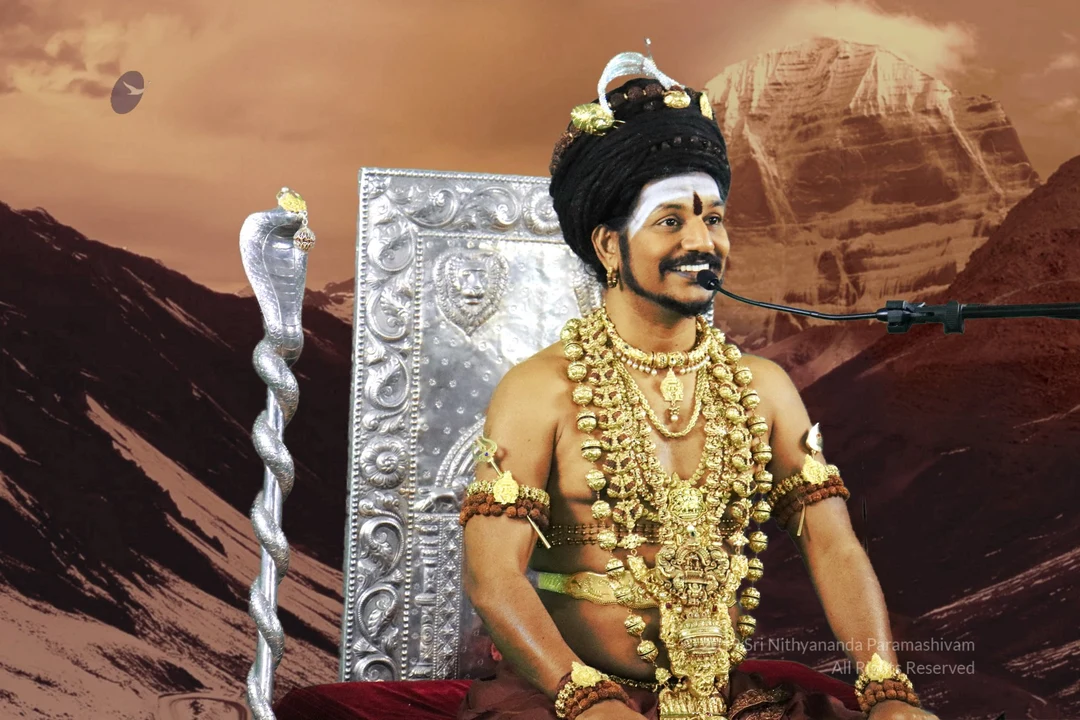
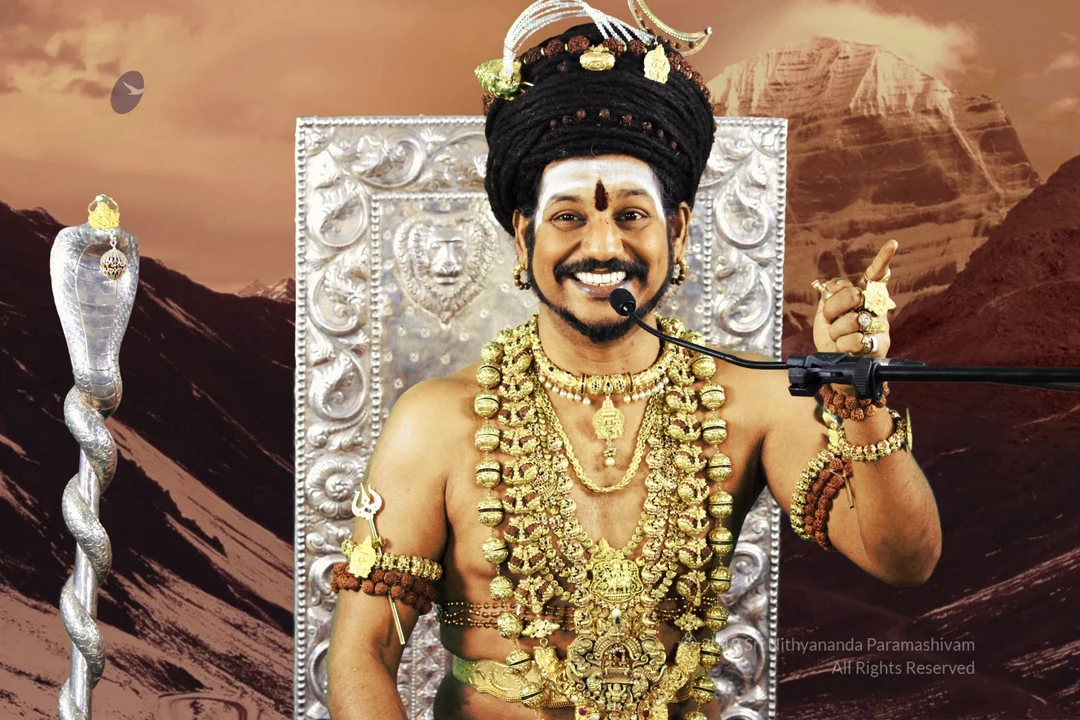
A studio-style photograph of a smiling man, shirtless and heavily adorned with layered gold ornaments, multiple rudraksha malas and a large ornate gold pendant with deity figures. He wears a tall black turban wrapped with rudraksha beads and a gold crest, a white tilak with a red bindi on his forehead, and a gold-handled ceremonial spear over one shoulder. His hand rests on his hip. Behind him is a reddish-orange backdrop of a snow-streaked mountain peak.A graphic composite showing a large silver trident (trishul) with ornate engraved scrollwork and a small carved deity figure at its centre, held by a partially visible arm adorned with gold bangles, a gold ring and a jewelled ring. Behind it, a dramatic snow-streaked mountain with a clear pyramid-like peak rises under an orange-tinted sky, with a winding road in the foreground. A , , in the lower right. Only a fragment of one hand and arm is visible; the person's face and body are outside the frameA composite image of a seated, bare-chested man with a tall dark turban adorned with rudraksha beads, a crescent-moon ornament and silver feathers, a white tilak and red bindi, and a microphone before him. He wears heavy gold necklaces, layered beaded ornaments, rudraksha bracelets and rings, with a maroon dhoti. Behind him is a snow-capped mountain rendered in sepia tones and a silver ornate throne with a lion motif. A silver serpent figure appears at the left edge.A seated bare-chested man with a tall black dreadlocked turban adorned with gold ornaments and a silver serpent, a white forehead band and a red tilak, speaks into a clip-on microphone on a stand at right. He wears heavy layered gold necklaces and multiple strands of rudraksha and gold beads, gold bracelets and rings, and a maroon dhoti. Behind him stands an ornate embossed silver throne back with a serpent-headed finial, against a painted orange mountain backdrop with snowy peaks. Probable Swamiji cues: the tall dreadlocked turban, heavy gold ornamentation and rudraksha malas, seated at a discourse microphone.A smiling man seated cross-legged on a red cushioned seat before a silver embossed backrest with a lion motif, speaking into a microphone on a stand at right. He is bare-chested with white forehead markings, a large black turban-style headwear with gold ornaments, layered gold necklaces, a dense gold beaded mala and gold armbands and rings. He gestures with both open hands. A silver serpent-shaped staff stands at left. The backdrop shows a sepia mountain range with a snow-capped peak, and a copyright notice appears at lower right.A close-up portrait of a smiling man with a black turban-style headwrap decorated with rudraksha beads, a gold ornament and a silver crescent-like accessory. He has white vertical marks on his forehead and a red bindi between his brows, a thick moustache and beard, and wears heavy layered gold necklaces, pearl strands and gold bead ornaments over bare shoulders. Behind him rises a large snow-capped mountain with ridged rock faces under a warm orange-brown sky, with a small bird-like logo at upper left. The image is tinted in sepia tones. Appearance-based label: a person, shown in person as a portrait-style presentation with distinctive crown-like headwear and ornate gold adornments.

HDH Bhagavan Nithyananda Paramashivam
7 photosSource gallery
A composited graphic-style photo of a smiling bare-chested man with a tall black turban wrapped with silver strands and gold ornaments, a white and red forehead mark, and a rudraksha bracelet. He wears heavy layered gold necklaces and bead ornaments, and holds a polished silver trident in his right hand, with a silver spear-like staff at the right edge. The background shows a reddish-brown mountain range with snow-capped peaks and a hazy sky, a Kailasa-themed setting. The turban, bare chest, gold adornments and trident give a distinctive appearance, and this is presented as a person, depicted in a staged image rather than physically present.A sepia-toned graphic composite showing a close crop of a bare upper arm holding a tall silver ceremonial staff with a teardrop-shaped head set with a small red stone and a lotus-petal base. Several bracelets of gold-toned and brown rudraksha beads are wrapped around the arm, with a small gold deity face ornament among them. Behind the arm rises a large, layered rocky mountain under a reddish-orange sky, evoking Mount Kailash. The lower right carries a faint copyright line, and no physical people beyond the arm are visible.A composite graphic with a central figure seated on a red cushioned seat, hands pressed together in anjali mudra. He wears a tall black turban with a white plume and a crescent ornament, a red bindi, rudraksha bracelets, multiple gold necklaces, a gold ornamental pendant, and a red-brown dhoti. A silver-embossed backdrop with a lion-face motif stands behind him, a silver cobra-form staff rises at left, and a snow-capped mountain rises in a sepia landscape. A microphone stand appears at right. Swamiji (probable) is shown with a turban, gold jewellery and rudraksha malas, seated as a teacher. The , at lower rightA composited graphic of a bare-chested man with a tall black turban-style headdress adorned with gold ornaments and a white plume, a red bindi and white forehead markings. He wears heavy gold necklaces, layered beaded malas, rudraksha bracelets and armbands, and holds a silver trident in his raised right hand while the left hand is held up in a blessing gesture. Behind him a snow-capped mountain with a rugged peak rises under a sepia sky, with a small bird at upper left. A copyright notice is printed at lower right. The image is a digitally edited graphic rather than an unaltered photograph, and it contains no other people.A digitally composited graphic dominated by a large ornate silver trident held in a bare hand, its prongs engraved with floral and scroll patterns. The hand wears gold rings and rudraksha bracelets. Behind it rises a tall snow-capped mountain tinted orange and red under a hazy sky, resembling a sacred peak. A partial bare-skinned torso on the right is adorned with heavy gold ornaments, beaded chains and rudraksha malas.A digitally composited portrait of a man standing bare-chested against a sepia-toned snow mountain backdrop resembling Mount Kailash. He wears a tall black turban decorated with rudraksha beads, a silver crescent and white plumes, and a red bindi with white tilak. He is draped in multiple layers of heavy gold necklaces, rudraksha malas, gold armlets and a jeweled gold belt over a rust-brown dhoti, and holds a silver spear-like staff at his shoulder. One hand rests on his hip. Printed , .

HDH Bhagavan Nithyananda Paramashivam
6 photosSource gallery
A digitally composited graphic portrait of a smiling man with a large dark turban-style hairdo adorned with silver and gold ornaments and a crescent-moon ornament. He wears a white forehead band with a red bindi, a dark moustache and beard, a bare chest, many layered gold and beaded necklaces, rudraksha armbands and a large gold pendant. He holds a silver trident in his right hand and a silver spear at his left shoulder. Behind him a snowy mountain peak rises above reddish-brown hills under an orange sky, a sepia-toned backdrop.A graphic composite of a bare-chested man in gold ornaments and a tall black turban-style headdress with white feather and gold accents stands before a sepia mountain backdrop resembling Mount Kailash. He raises his right hand in blessing and holds a silver trident in his left. He wears layered gold necklaces with bead strands, a gold deity pendant, rudraksha bracelets and gold armbands, with white tilak marks on his forehead and a red bindi. Swamiji (probable) is depicted in this image: the flowing black hair under the crown, ornate gold jewellery, rudraksha malas and the trident are the qualifying cues. The image is a stylised sepia scene with a copyright credit printed in the lower right corner.A close-up portrait of a smiling man with a tall black dreadlocked turban wrapped around his head, adorned with rudraksha beads, gold ornaments and a crescent-shaped gold ornament on top. He has white vertical tilak on his forehead with a dark red bindi, gold hoop earrings, a mustache and beard, and is bare-chested wearing layered gold necklaces with rudraksha and a gold pendant. The background is a digitally composited orange-tinted image of a snow-capped mountain, resembling Mount Kailash.A seated man in a turban-style wrap of black hair crowned with rudraksha beads and gold ornaments, wearing a white and red tilak on his forehead, bare-chested and draped in layered gold temple-style necklaces and a silver chain. He wears a rudraksha armlet and gold bangles and rings, sits cross-legged in rust-red cloth, and raises one hand in a blessing gesture against a silver throne with a lion-face motif and a red rock backdrop.A digitally composited portrait of a bare-chested man with a smiling expression, white and red forehead markings, and a tall dark hair crown adorned with a white plume, a crescent ornament and gold leaf pieces. He wears heavy layered gold necklaces with bells, rudraksha armlets, gold bangles and a rust-red dhoti belt with a gold ornamental buckle. He raises one hand in a blessing gesture and holds a silver trident in the other. A snow-capped mountain with a tan-orange sky forms the background, resembling Mount Kailash.Close crop of a bare-torso figure wearing heavy gold ceremonial jewellery: multiple tiered necklaces with rudraksha beads, pearls and carved gold pendants, a large ornate gold waist belt with deity figures, a maroon dhoti, and rudraksha armlets. Gold rings on the hand rest on the hip. The background is an orange-toned painted mountain landscape. The visible person's face is not in frame, so appearance cues are limited to the adornments and ornate clothing. Only a partial body is visible.

HDH Bhagavan Nithyananda Paramashivam
4 photosSource gallery
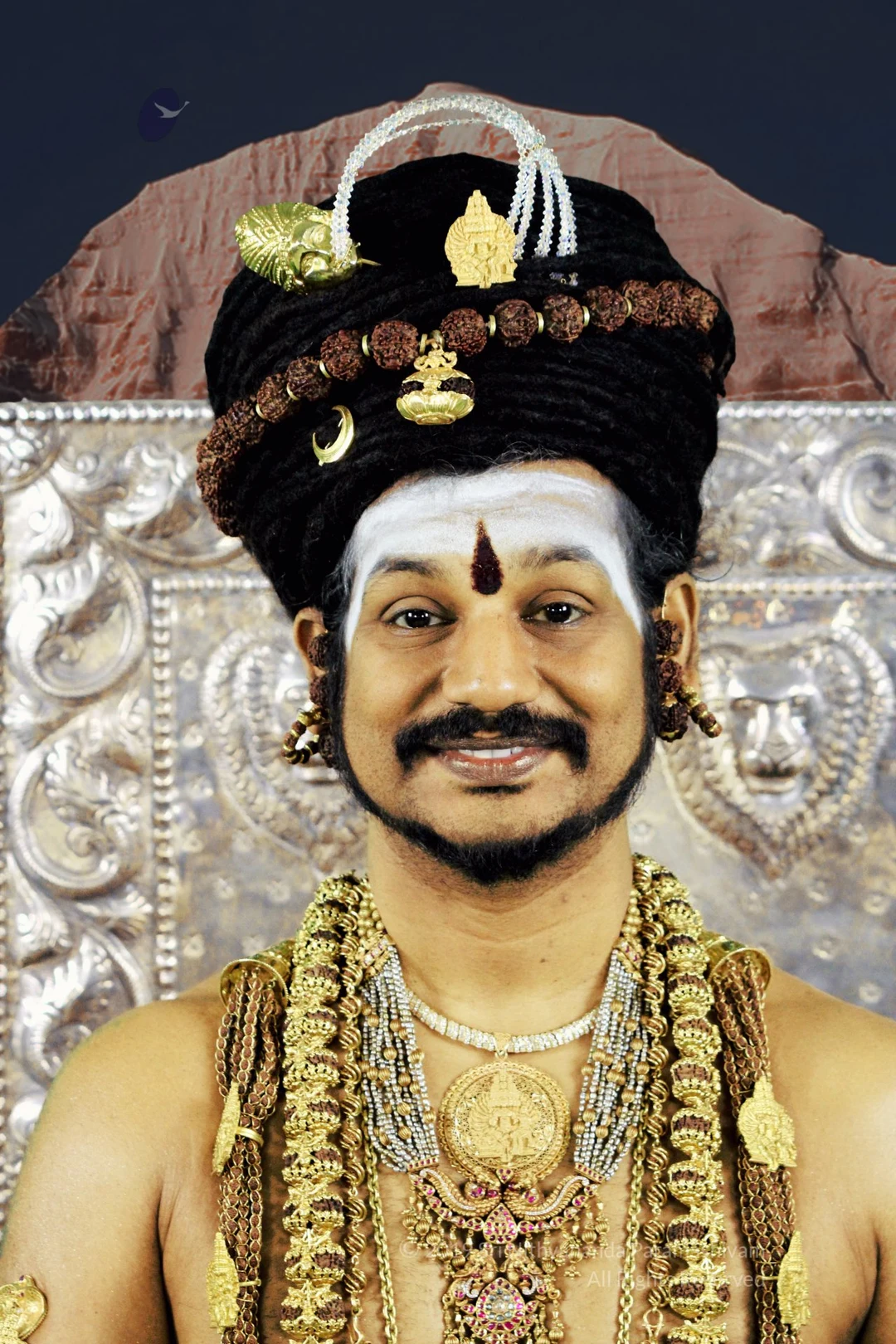
A composite graphic of a seated bare-chested man with a tall black turban-style crown and a white tilak on his forehead, wearing heavy gold necklaces, rudraksha bracelets and gold armlets, and a maroon dhoti. He sits on a silver-embossed throne with a lion face motif, a microphone on a stand before him. Behind him rises a snow-capped mountain, and a silver serpent-headed staff stands to his left against a rust-toned mountain backdrop. The printed and .Close-up photograph of a bare-chested man's upper body wearing heavy gold ceremonial jewellery. Large gold beaded and rudraksha-studded garlands with dark rudraksha seeds hang across the chest, alongside ornate gold pendants set with red, green and white stones, and pearl drops. A central gold pendant depicts a deity murti with a multi-tiered crown. No face is visible, so the person cannot be identified and no a person candidate is established from appearance.A seated man in a red velvet cushion pose before a silver embossed backdrop with a lion motif and a reddish rock formation behind. He wears a tall black topknot wrapped with rudraksha beads and gold ornaments, white vertical forehead markings with a red dot, and heavy gold necklaces and layered chains with temple-style pendants. He is bare-chested with rudraksha armlets, holds his right hand raised in a blessing gesture, and sits cross-legged in dark red dhoti-style cloth. a person appears here, shown with distinctive long swept-up hair, rudraksha malas and ceremonial gold necklaces. AClose-up portrait of a bare-chested man with a smile, set against an embossed silver backdrop and a red rock arch. He wears a tall dark braided turban-style headwrap adorned with a gold crescent, a gold deity pendant, a gold crown ornament and strands of rudraksha beads, plus rudraksha earrings. A white sacred ash band and a red tilak mark his forehead. Layered gold chains, multi-strand beaded necklaces and a large gold pendant with a deity emblem cover his chest, with gold armlets on his upper arms. Swamiji (probable) is the candidate here, based on the crown-like headwear, rudraksha malas and ceremonial gold ornaments.

Earlier Iskcon Padayatra mentioned in Satsang

10 photosSource gallery
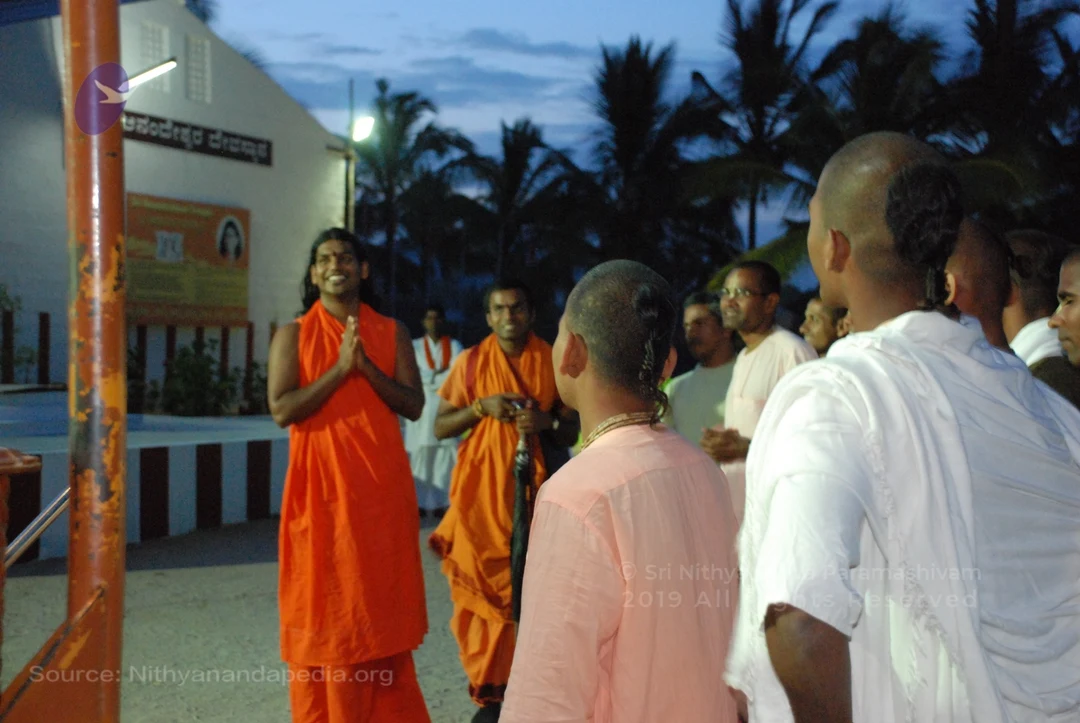
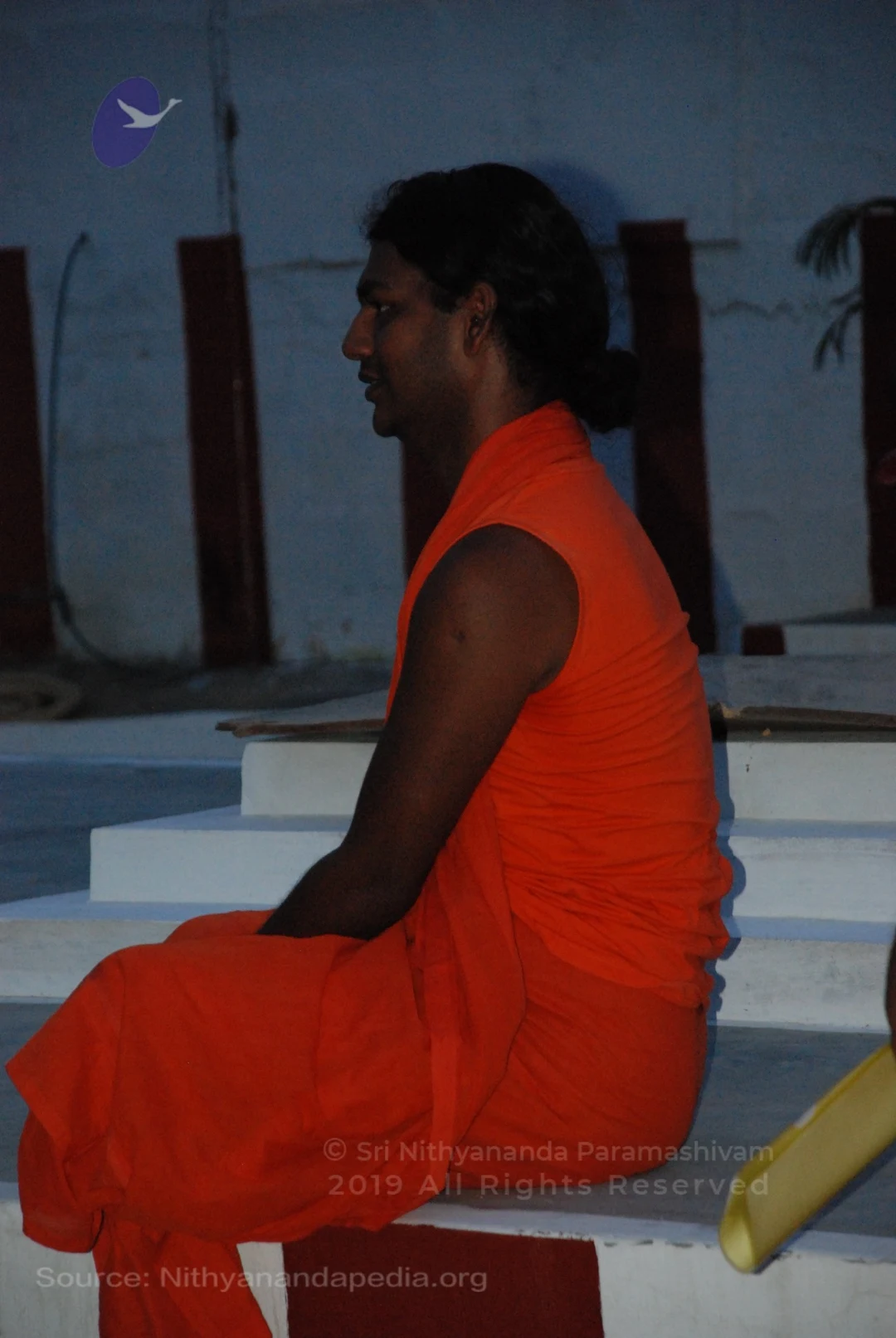
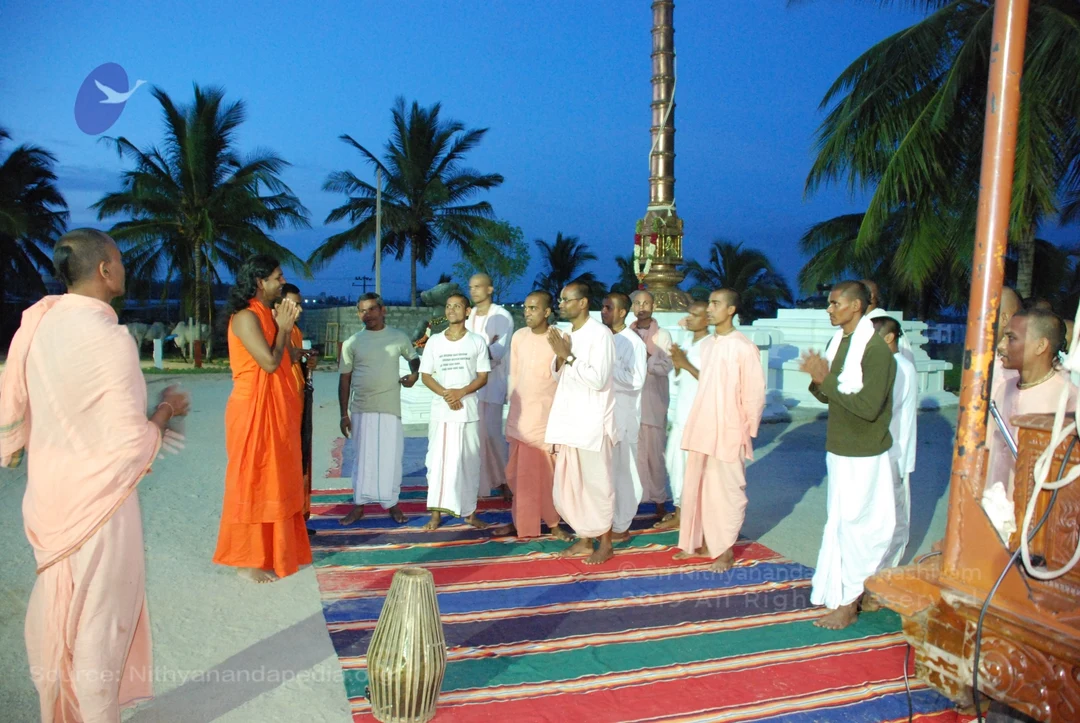
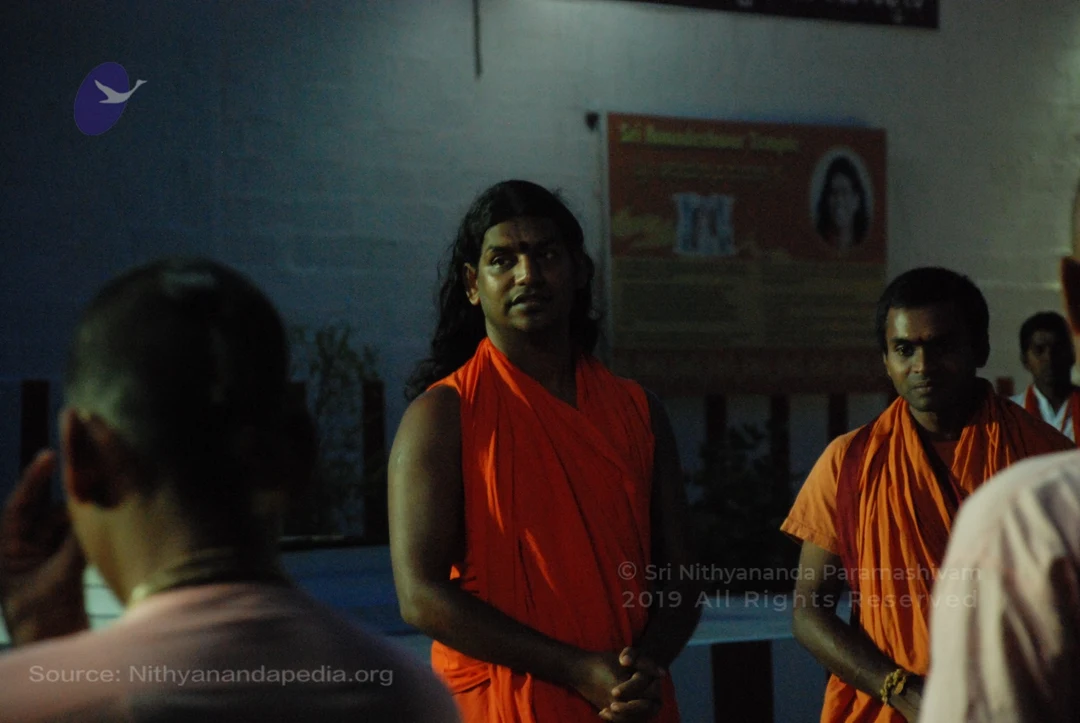
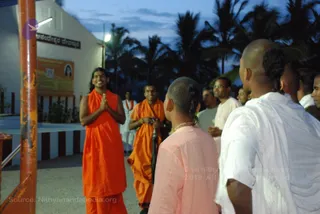
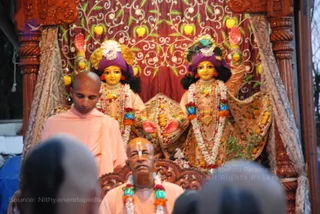
A wooden bullock cart with a flat white canopy and carved wooden posts moves across a dirt field lined with piles of grey crushed stone and rubble. Two white bulls with horns pull the cart. Painted panels on the cart show a map of India in red and blue and a standing figure in saffron. Several men in white dhotis and shirts walk beside the bullocks, and one person in orange sits inside the cart. Palm trees and utility poles stand behind, and a red post frames the right edge.Evening outdoor photo at a seaside or lakeside compound with palm trees and a white building behind. A man in a long orange robe stands on the left with hands joined in namaste and a broad smile, facing a group of devotees. Another man in orange with a sash stands behind him. In the foreground, a bald man in a pale pink top with a gold necklace and a man in a white robe face toward the front figure, with other devotees in white and pink standing around. A tall orange-painted pole is in the foreground, and a signboard with Kannada-style script and a portrait is on the building wall. Five or more people are visible.A man in a sleeveless orange-red robe sits sideways on white stone steps in front of a pale wall with dark red pillars at dusk. His dark hair is tied back at the nape, and he gazes to the left with a calm, attentive expression. A yellow object is visible at the lower right edge of the frame.

Earlier Iskcon Padayatra mentioned in Satsang

10 photosSource gallery
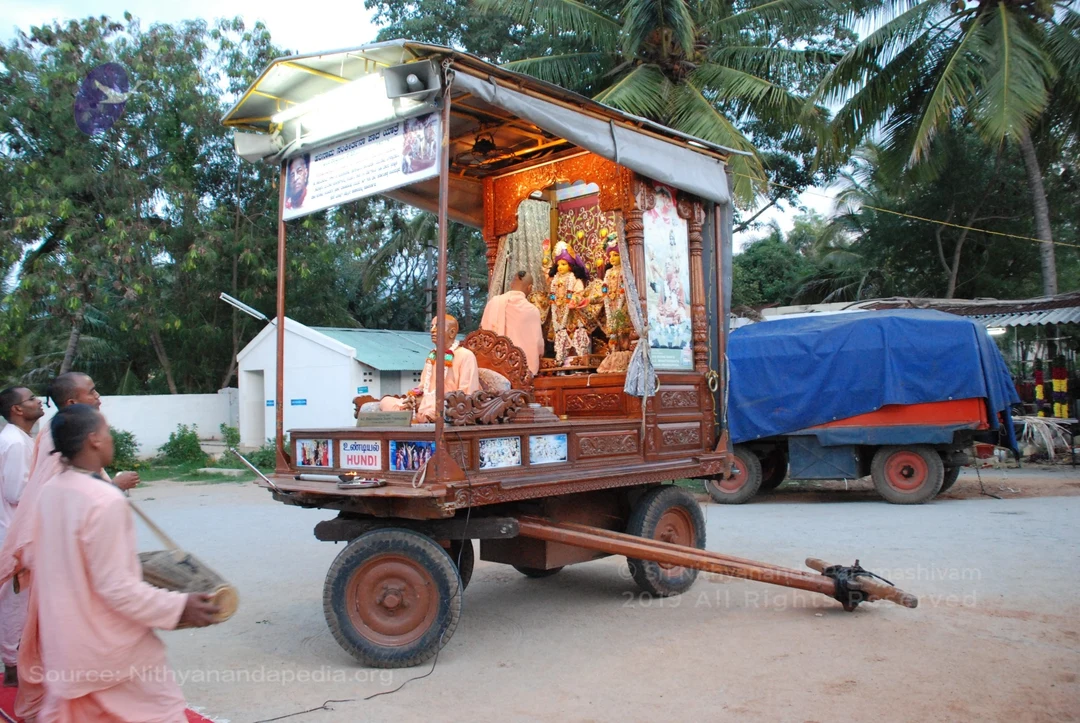
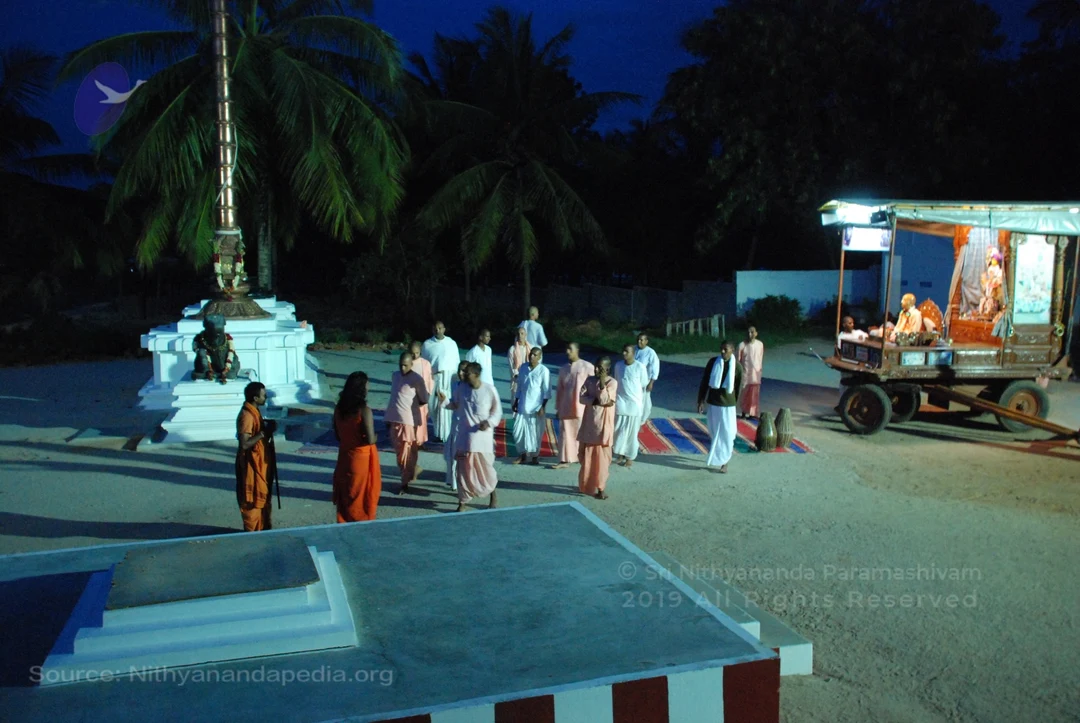
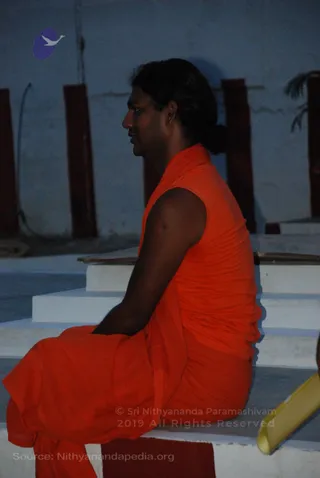
A man in profile stands on white steps trimmed with maroon bands, wearing a sleeveless orange-saffron wrap garment and his long dark hair tied back in a low knot. Behind him, several people in pale blue robes with yellow and blue sashes stand near a white wall, and potted plants with white flowers sit at left in dim evening light.Outdoor evening procession at dusk beside palm trees. A decorated wooden ratha/chariot with a small roof and a banner is pulled forward, carrying two deity murtis dressed in colourful garments, with lit lamps and garlands at the front. Around it, about eight to ten devotees in pink and white dhotis and white shawls walk and gather, some with hands folded. A framed portrait is on the banner, and a wall plaque is visible at right.

Earlier Iskcon Padayatra mentioned in Satsang

10 photosSource gallery
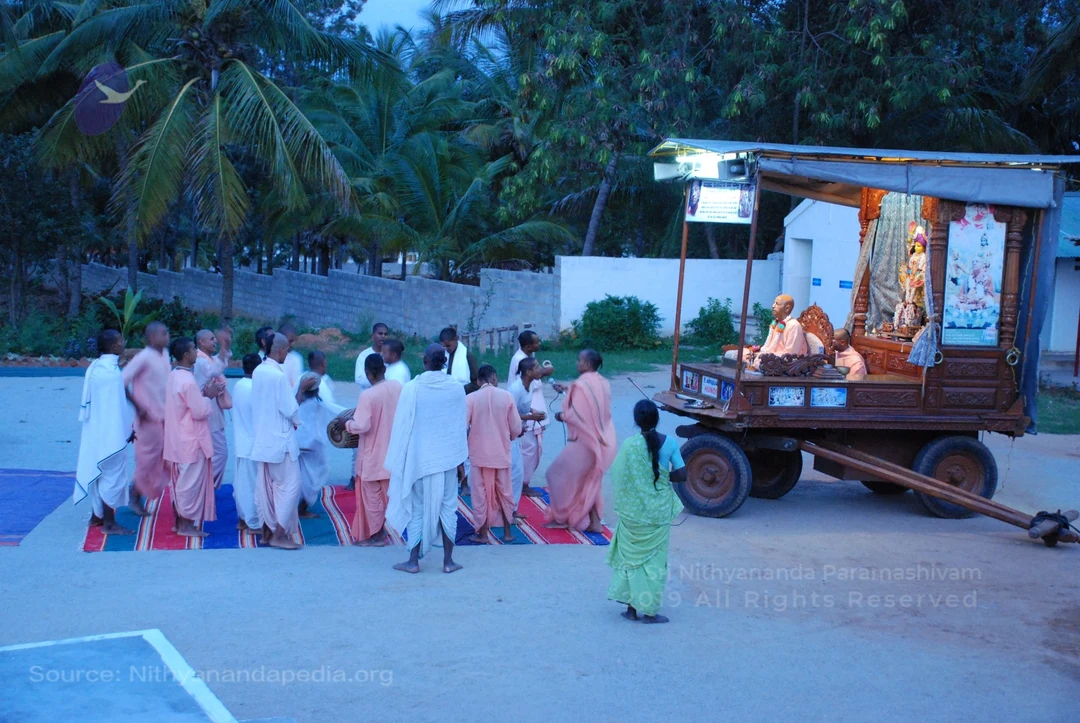
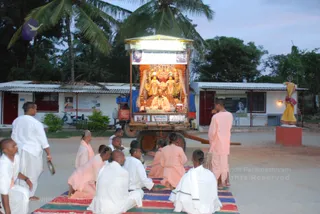
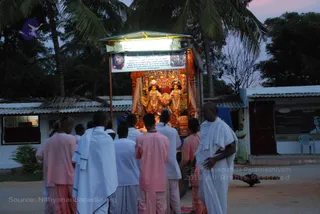
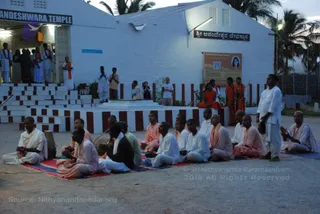
A seated figure on an ornate carved wooden throne-style chair on a low stage, set against a dark teal brick wall. The figure has a shaved head and wears a light orange-peach robe with a white flower garland strung with green and red beads. He holds a small bouquet of red and orange flowers in his hands. A carved wooden pillar and draped fabric frame the left side, a small trident-like ornament stands behind the chair, and a name plate sits on the stage edge. The figure is a statue or wax-like figure rather than a living person, so no physical people are counted.Outdoor photograph at dusk of a wooden ratha-style palanquin cart with a canopy, carved wooden sides and a framed portrait panel, carrying a seated saffron-robed figure on a raised platform. Several devotees in white dhotis and light clothing sit cross-legged on mats in front of the cart, with a few standing attendants nearby. Behind them is a white temple building with a sign reading Sri Anandeshwara Temple, a path with a striped white-and-red border, palm trees and a dark bull statue on a pedestal at right. Some people stand on the temple steps in white and saffron clothing.A dusty open construction site under a pale sky, with stacked grey stone blocks, piles of gravel and sand, and palm trees along the horizon. A white-bulled ox cart with a blue tarpaulin roof moves along the dirt road on the left, and a wooden ratha-style cart with carved panels and a small shrine-like canopy is pulled by white oxen on the right. A man in white dhoti and shirt walks beside the oxen, and a few other figures stand near the carts. A small purple logo appears in the upper left corner.Night procession outdoors in a palm-lined compound. Devotees in pink, peach and white robes walk across a patterned rug toward a decorated wheeled cart on the right, which is lit and fitted with a canopy and an orange-draped seat. A seated figure in orange sits on the cart beside a lit deity murti. A white raised platform with a tall lamp-topped pillar stands on the left, a small seated statue on it. A standing person in orange and a person in white watch nearby, with brass kalashas on the ground. Sandy ground, low white wall and dark coconut trees in the background.A photograph of an indoor gathering in a dimly lit hall with a blue-grey wall. In the centre, a man with long dark hair and an orange-saffron shawl wrap stands with his hands clasped in front of him, looking to the side. Beside him, another man in orange-saffron robes with a wrist bracelet stands with hands folded. A partially visible person in a pink top occupies the left foreground, and a man in white is visible at the far right edge. Behind them hangs a red-orange banner with white and yellow printed text and a framed portrait labelled "Sri Nithyananda Paramashivam" appears nearby. The centre figure has long swept-back hair and orange clothing, matching the page's reference to Swamiji (probable), with the robe and hair as the qualifying cues.

Earlier Iskcon Padayatra mentioned in Satsang

2 photosSource gallery
Outdoor evening procession at a dusty ashram courtyard with palm trees and low corrugated-roof buildings. A decorated ratha-style cart carries a seated figure in saffron-orange robes flanked by two deity murtis with garlands, a canopy overhead. Several devotees in pink and white clothes prostrate on striped mats in the foreground, while a man in white stands at left and another in white works near a wooden pole at right. Drums and a kalasha-like object rest on the ground. A printed portrait banner is affixed to the cart.Outdoor evening procession: a decorated wooden chariot (ratha) with a canopy and loudspeakers carries two deity murtis of Radha-Krishna dressed in ornate garlands and crowns. Seated on the chariot's throne is a saffron-clad sannyasi with a garland and shaved head, beside a second saffron-robed attendant. A banner above reads Harinama Sankirtana Padayatra. Foreground: a dark stone Nandi-like statue, and in front of the chariot several people in pink and white robes prostrate on the ground while a man in white holds a microphone. Palm trees and buildings frame the scene.

FB-fotos-of-the-day

8 photosSource gallery
A bare-chested man with a black turban and white forehead tilak stands before a sepia painted mountain backdrop with snow peaks. He holds a silver trident in his right hand and smiles, wearing layered gold necklaces, a large ornate gold pendant, rudraksha bracelets and bead-decorated armlets. A silver spear rests on his left shoulder.A smiling man with a black turban-style headwrap topped with silver and gold ornaments and rudraksha beads stands bare-chested against a dramatic reddish mountain backdrop resembling a sacred peak. He wears a white forehead mark with a red bindi, heavy layered gold necklaces and ceremonial gold chest ornaments, rudraksha bracelets on both arms, and holds silver-tipped spear-like staffs at his sides. A probable Swamiji depiction is present in person with these cues: rudraksha malas, ornate gold jewellery and a crown-like turban. The page's Swamiji flag indicates this is the Nithyananda Paramashivam archive photo. Sunlight tints the scene orange and red.A graphic composite showing a large ornate silver trident (trishula) with engraved floral and scroll patterns held aloft by a hand wearing gold rings, against a sepia-toned rocky mountain backdrop resembling Mount Kailash with a small bird in the sky. A hand gripping the trident shaft is visible at bottom, adorned with rings and a bare arm; the figure's face is not shown.A bare-chested man with a large black upswept turban-style hairstyle decorated with rudraksha beads and gold ornaments, a white and red tilak on the forehead, and a mustache and beard, smiling broadly. He wears heavy gold necklaces, pendants, a gold armband with rudraksha strands, and holds a silver trident-like spear at his shoulder. Orange-brown mountain backdrop resembling a sacred peak.Black-and-white photograph of a smiling man with a bare chest, standing before a mountain backdrop. He wears a tall dark turban-like headdress decorated with a white plume and a metal ornament, a tilak mark on his forehead, and layered necklaces with a large ornate pendant and rudraksha beads over his chest and upper arms. He holds a large silver trident in his left hand, with a rope-wrapped staff below it. Snow-capped mountains and a dark peak rise behind him under a cloudy sky, with a small floating object near the top left. The image carries a copyright line along the bottom right. a person appears as the central figure, identified by the trident, headdress and ornate ritual adornment.A close-up of a bare-shouldered figure's upper arm and shoulder, holding a silver trident-like staff with a leaf-shaped head set with a small red stone and a lotus engraving. Several layered beaded bracelets of rudraksha and other seed beads wrap the arm, with a small carved shell or conch pendant. The warm sepia-tinted background shows a rocky mountain peak, evoking Kailash.
November 01 2019

1 photoView all