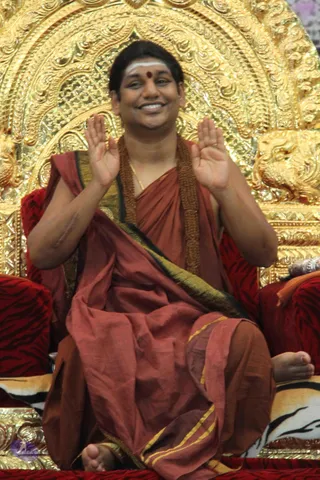
Skip to content
Friday

1 November 2013

THE SUPREME PONTIFF OF HINDUISM HDH BHAGAVAN NITHYANANDA PARAMASHIVAM

Dated photos
281
Source pages
1
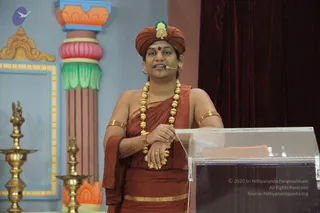
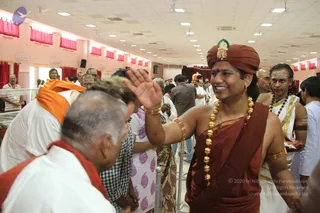
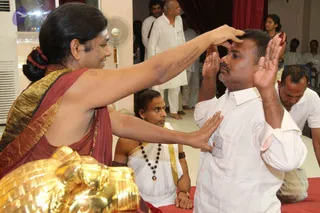
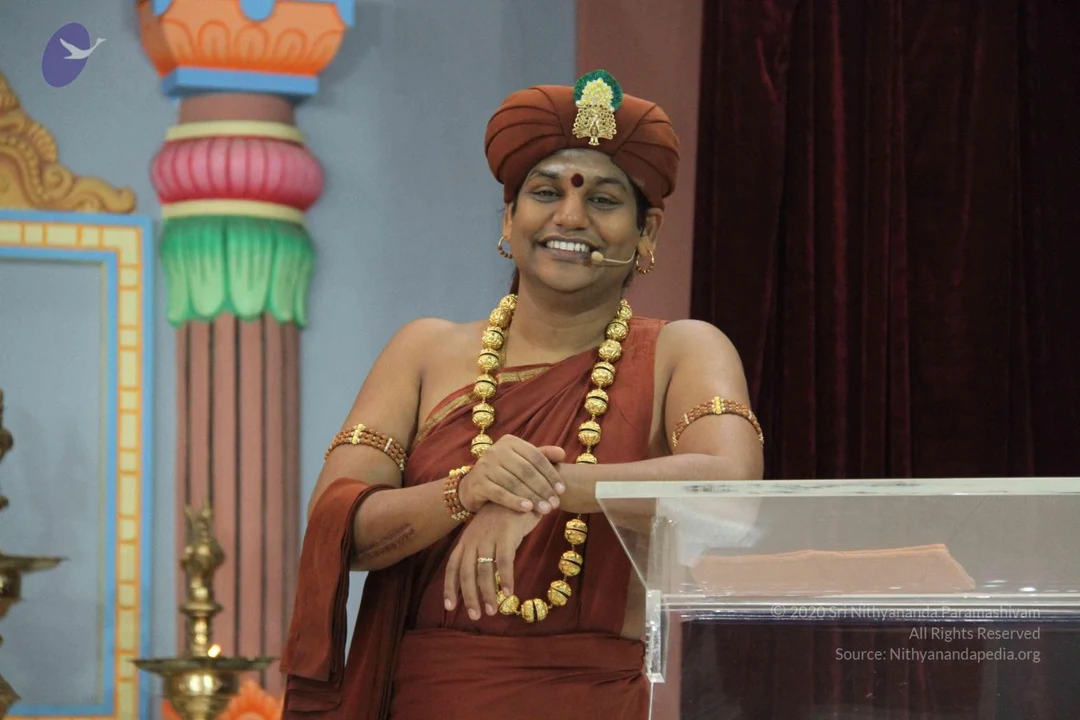
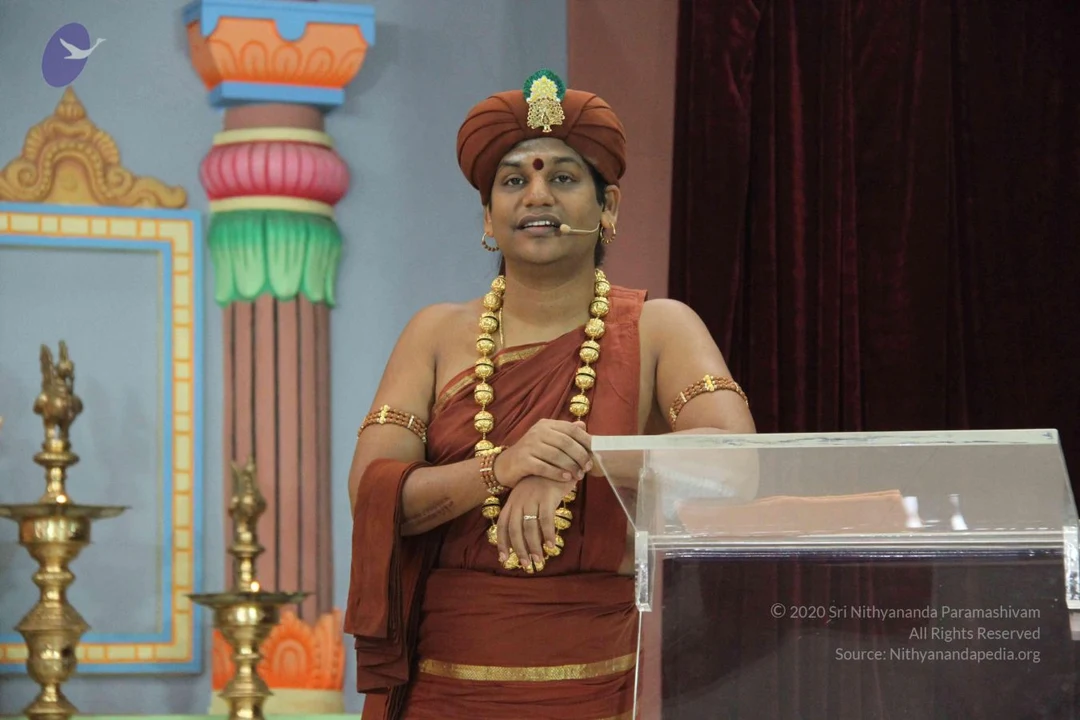
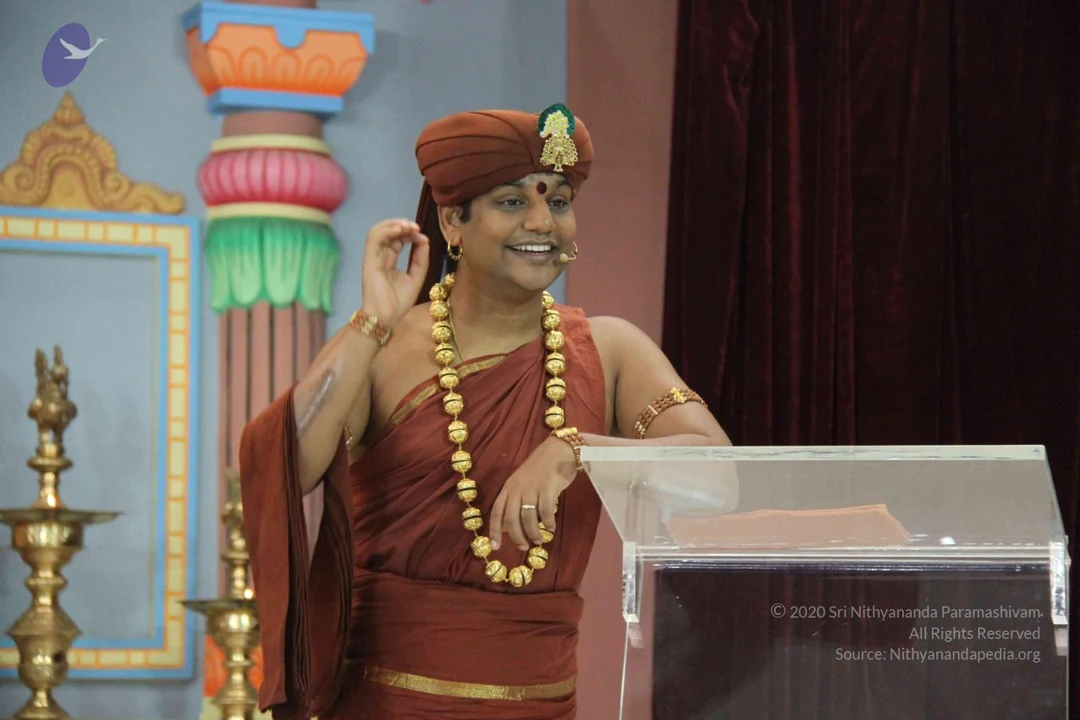
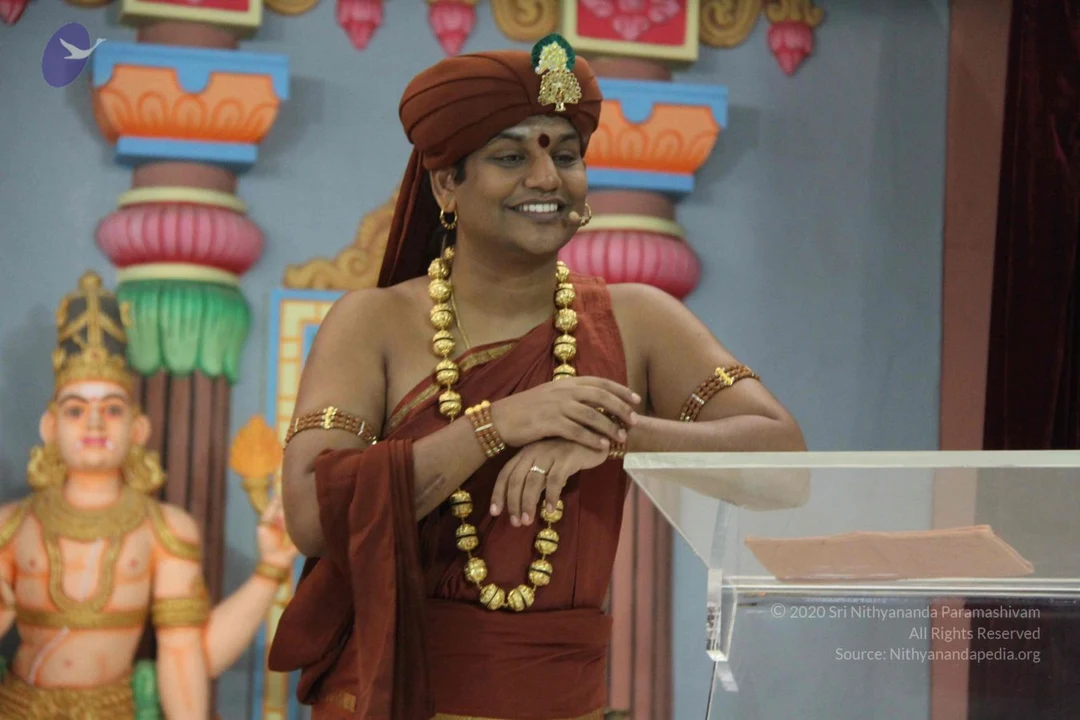
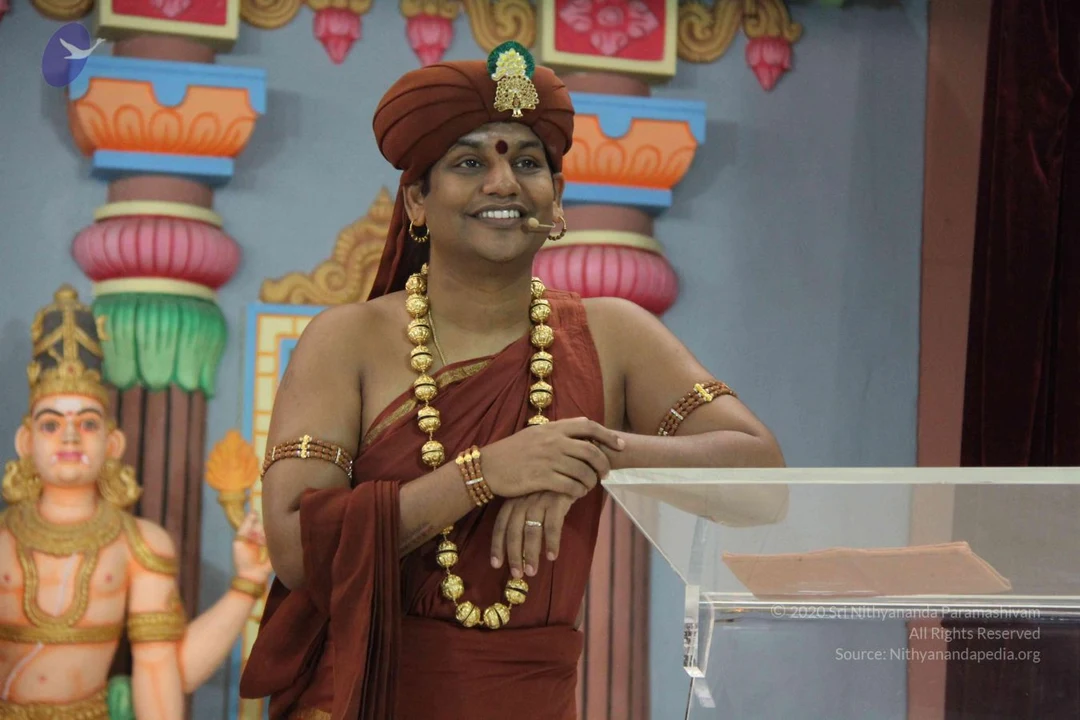
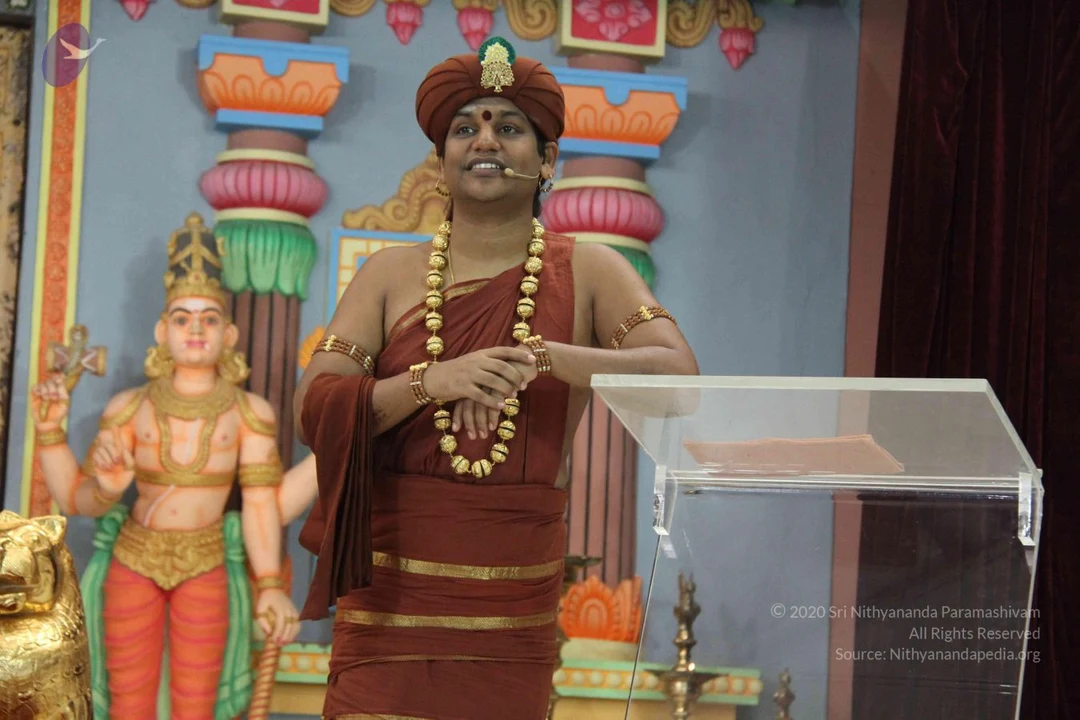
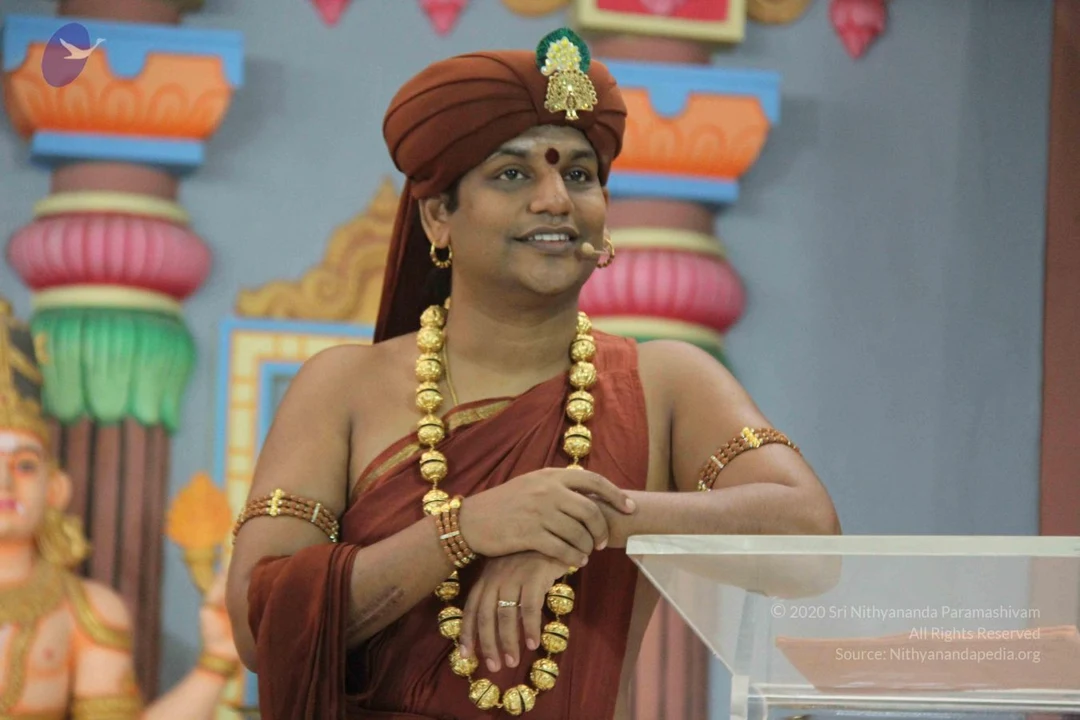
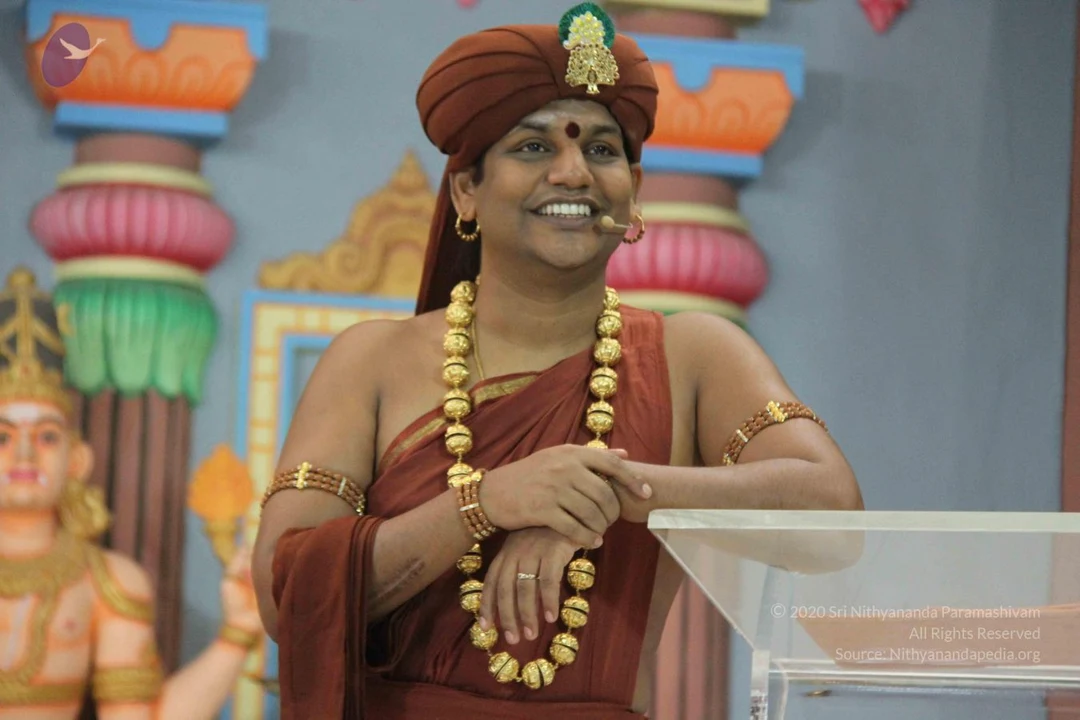
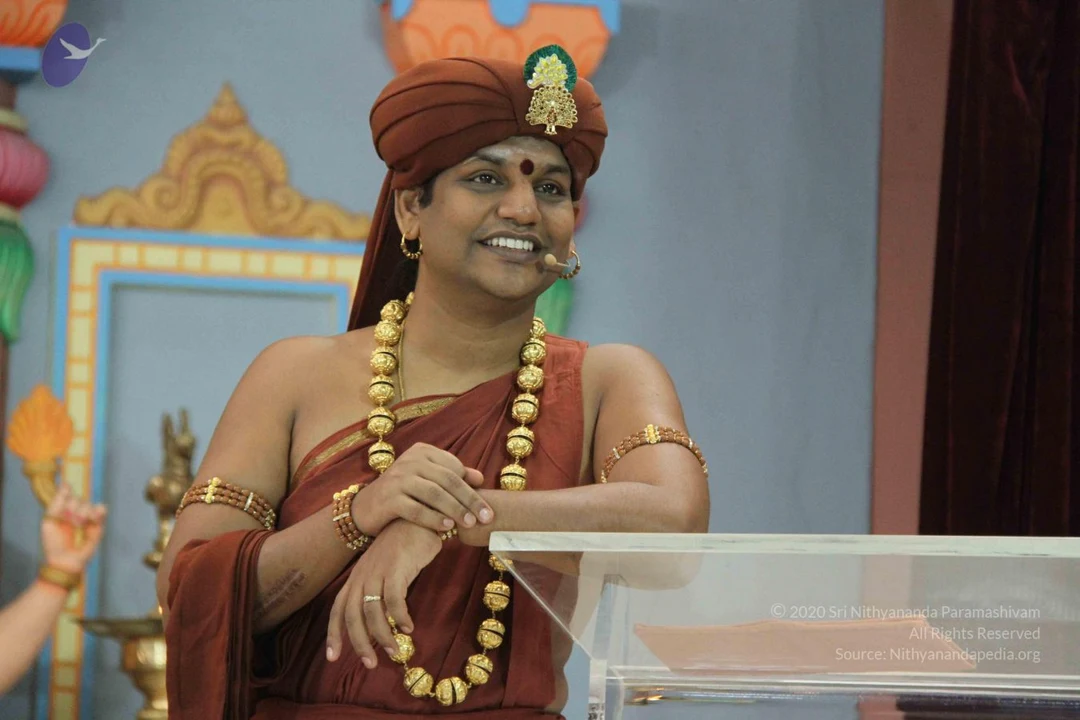
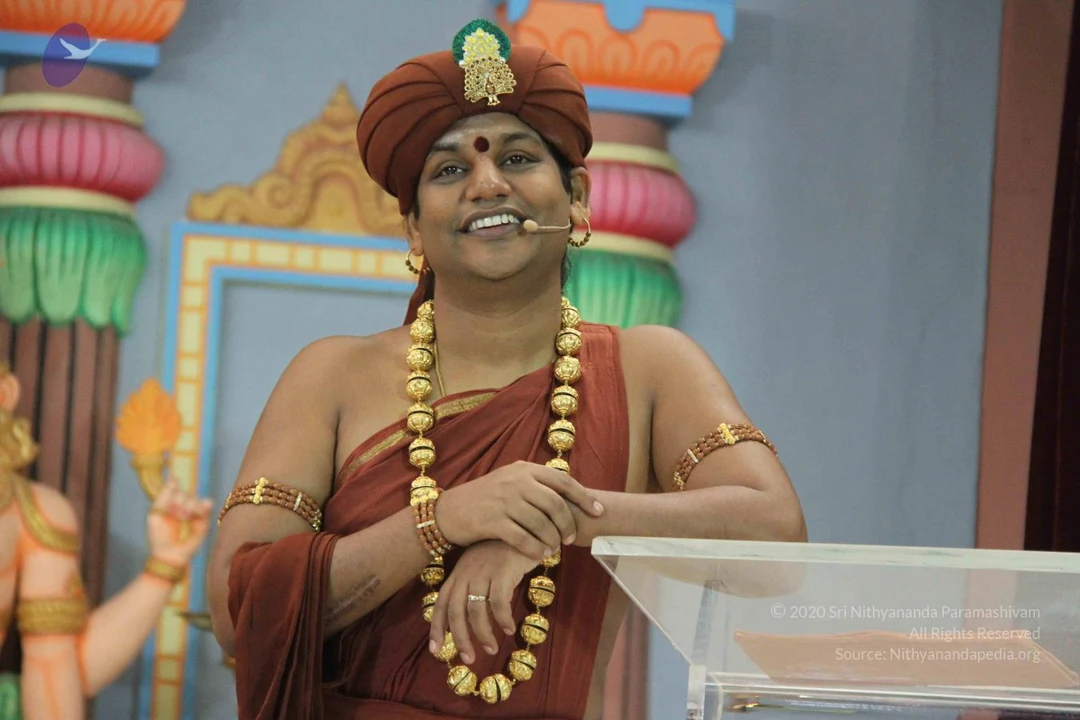
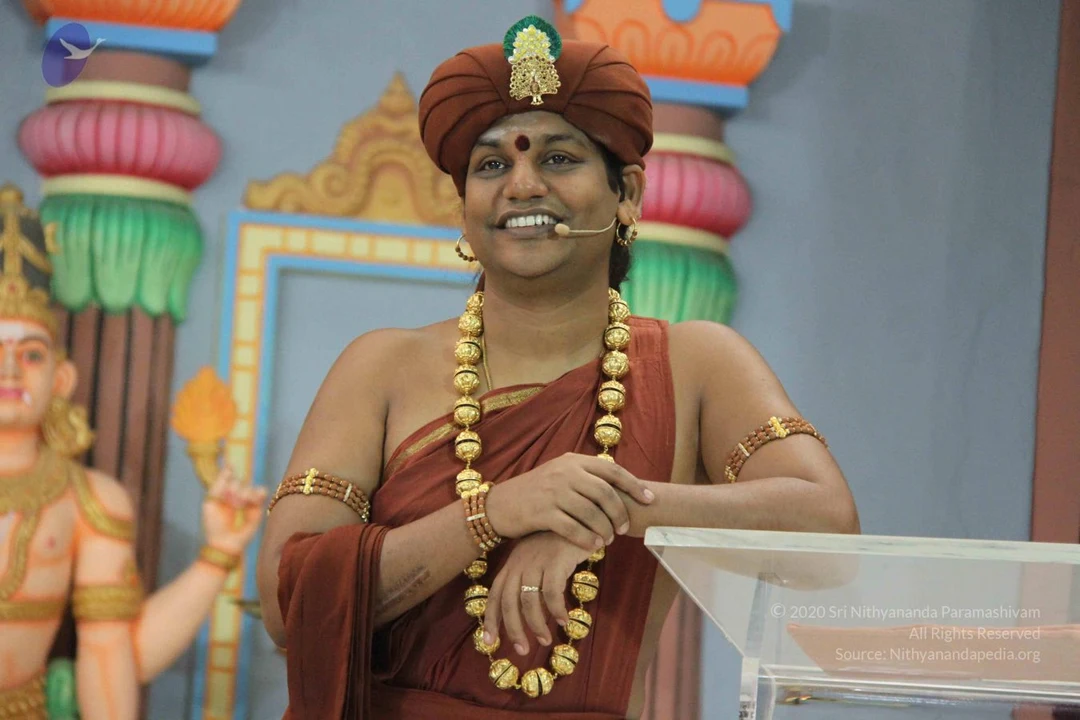
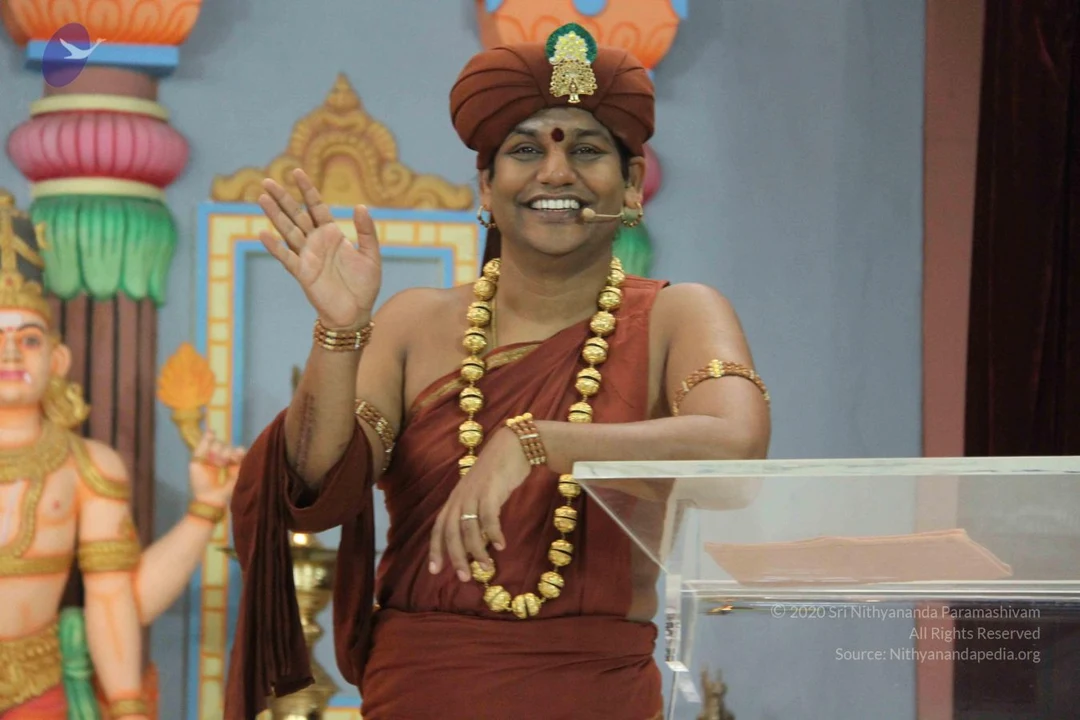
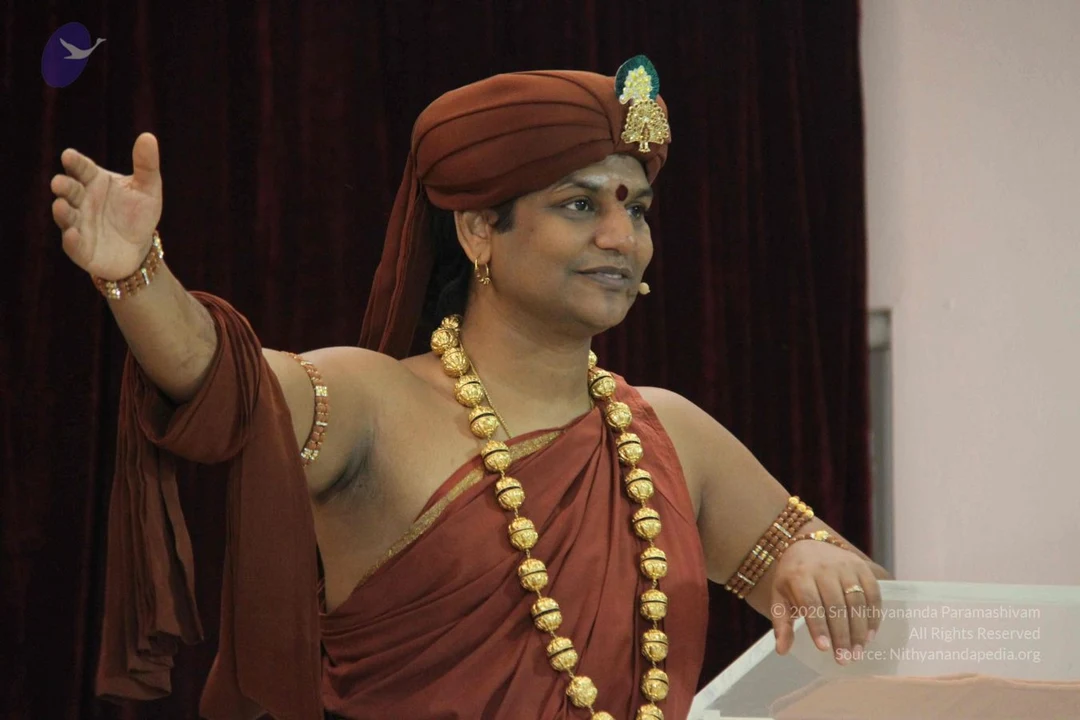
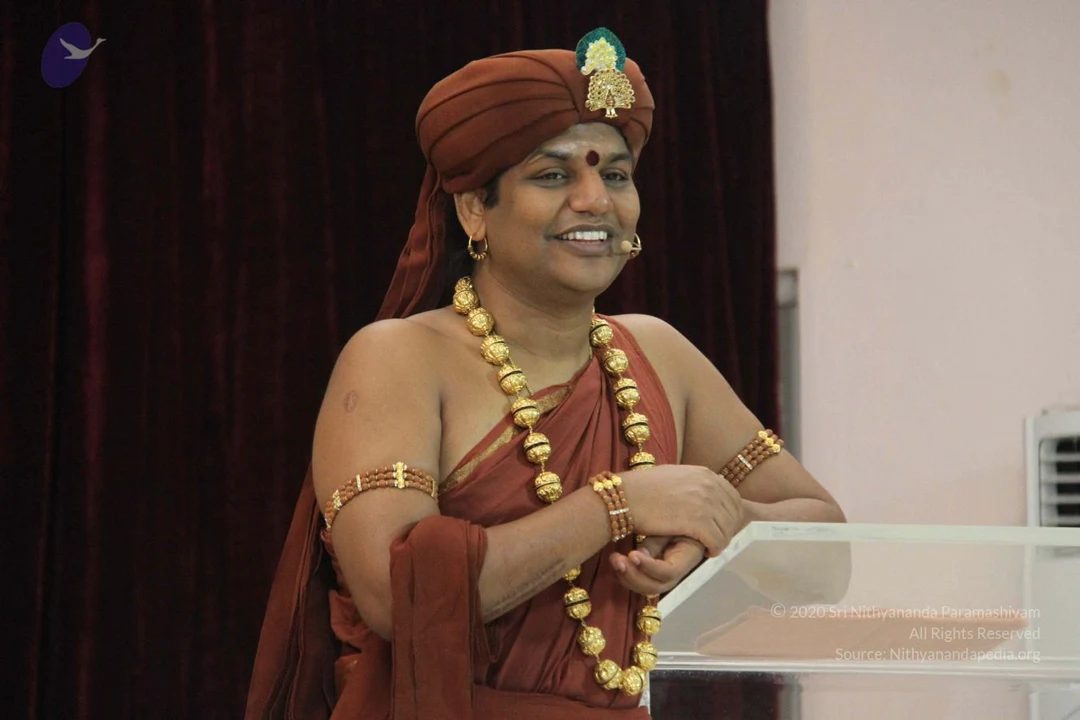
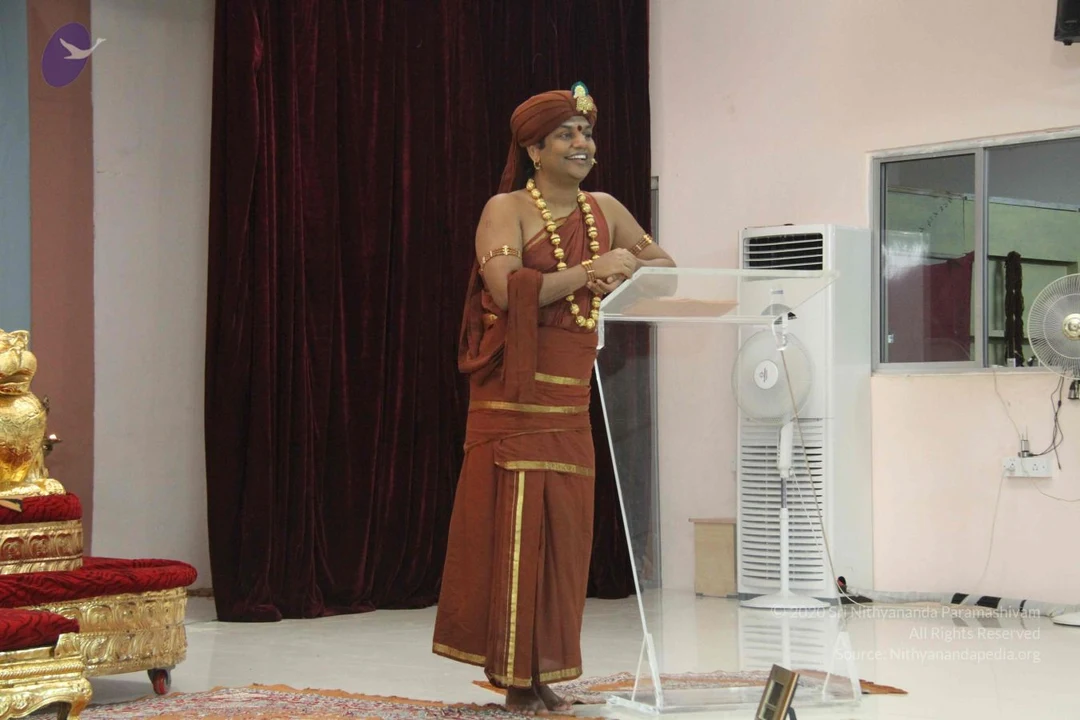
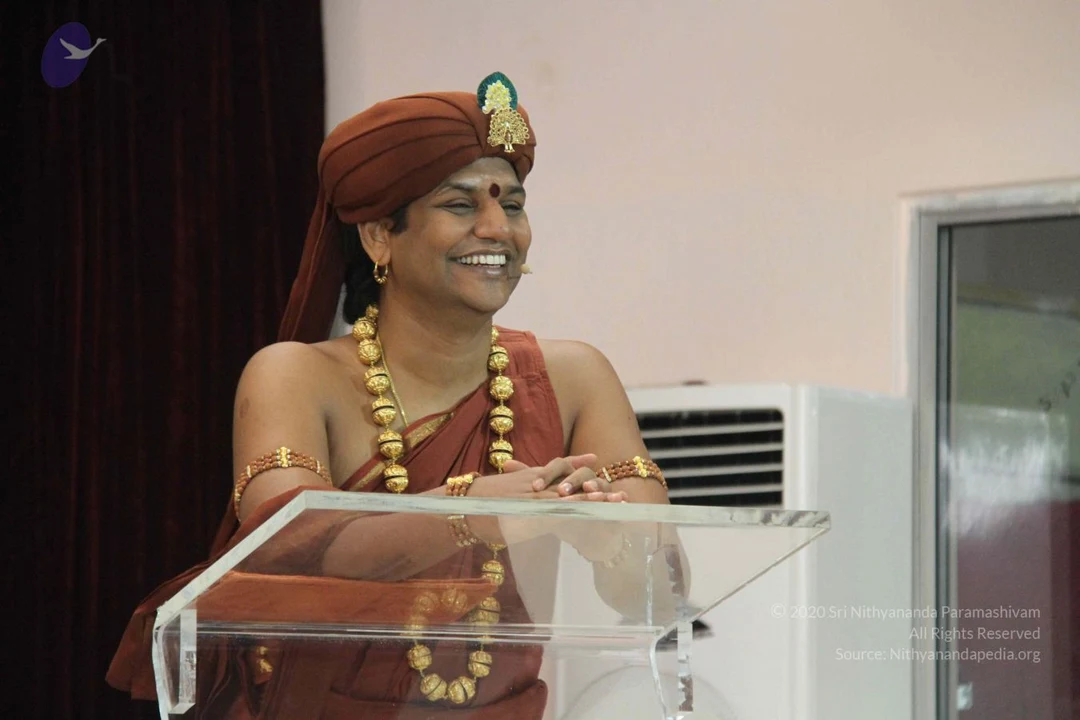
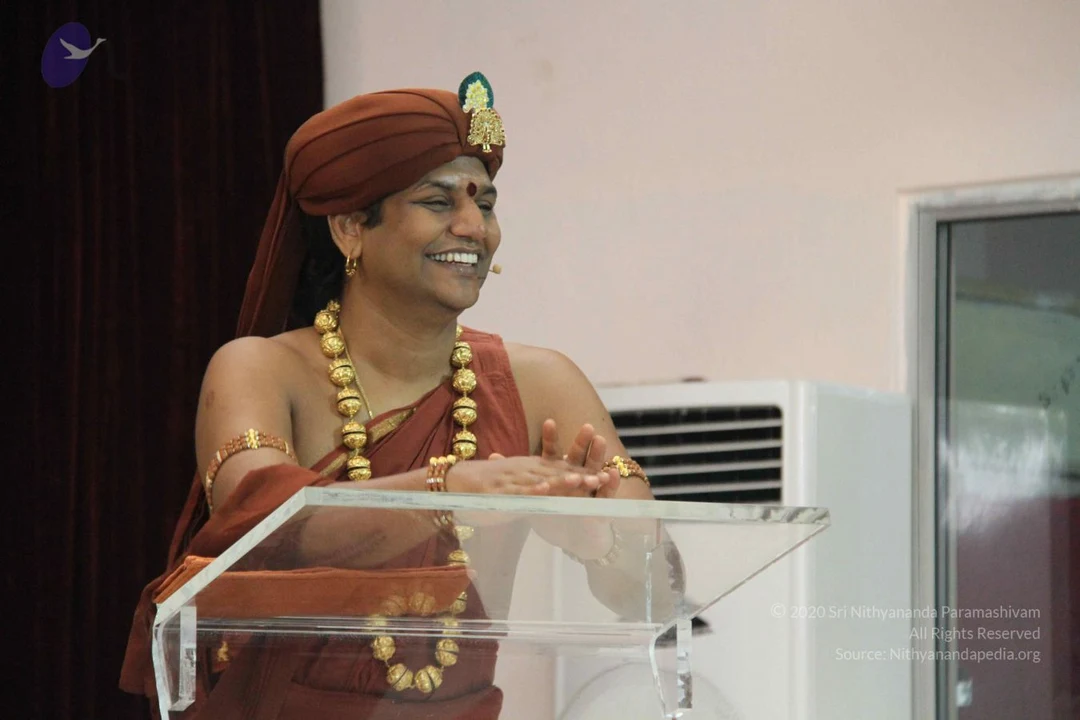
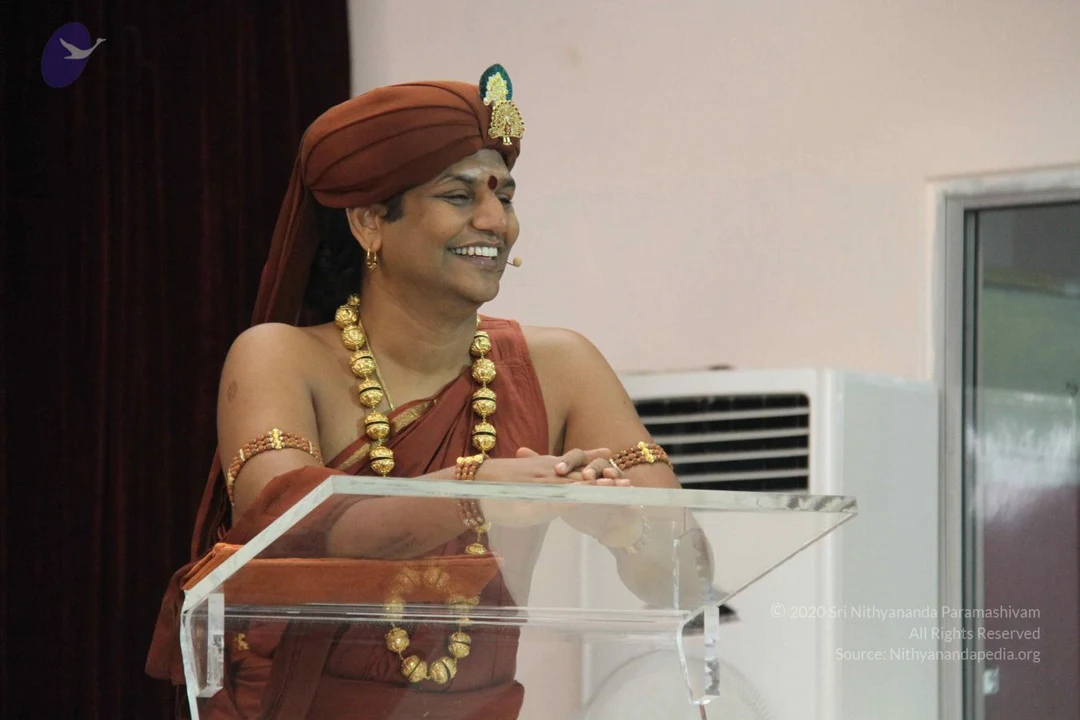
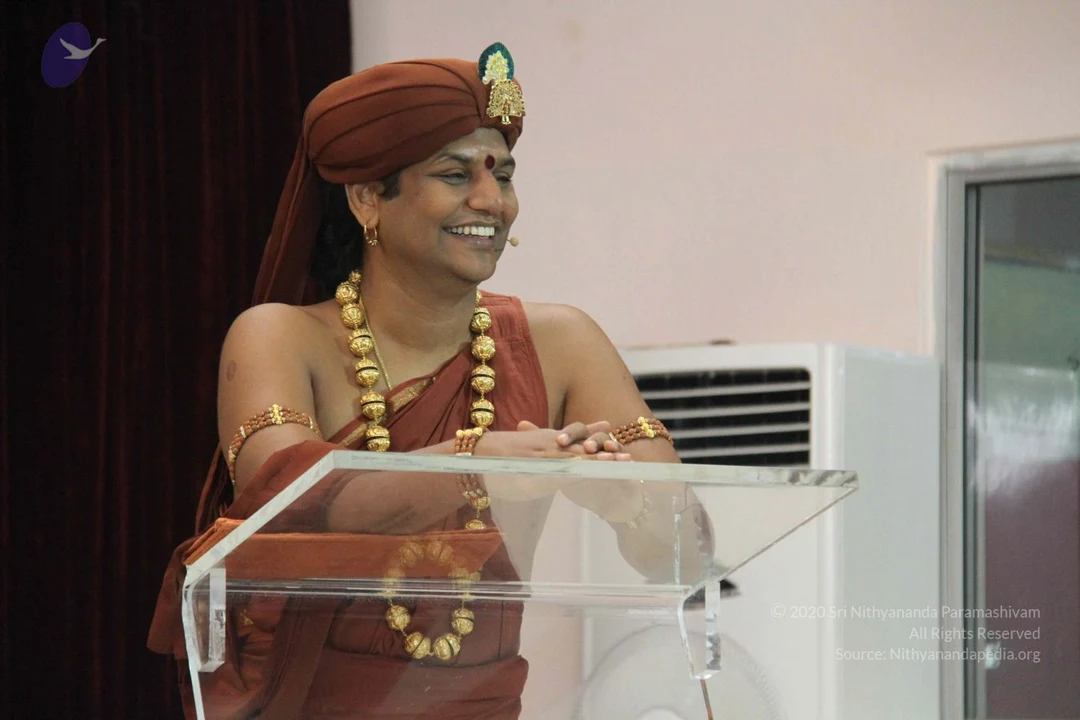
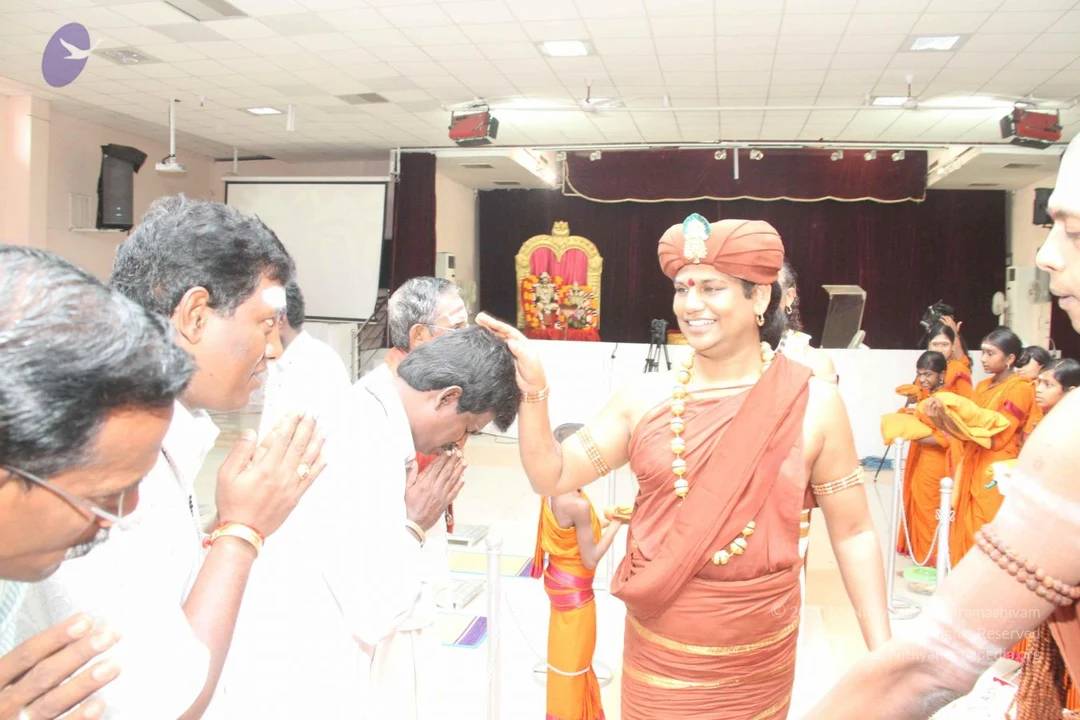
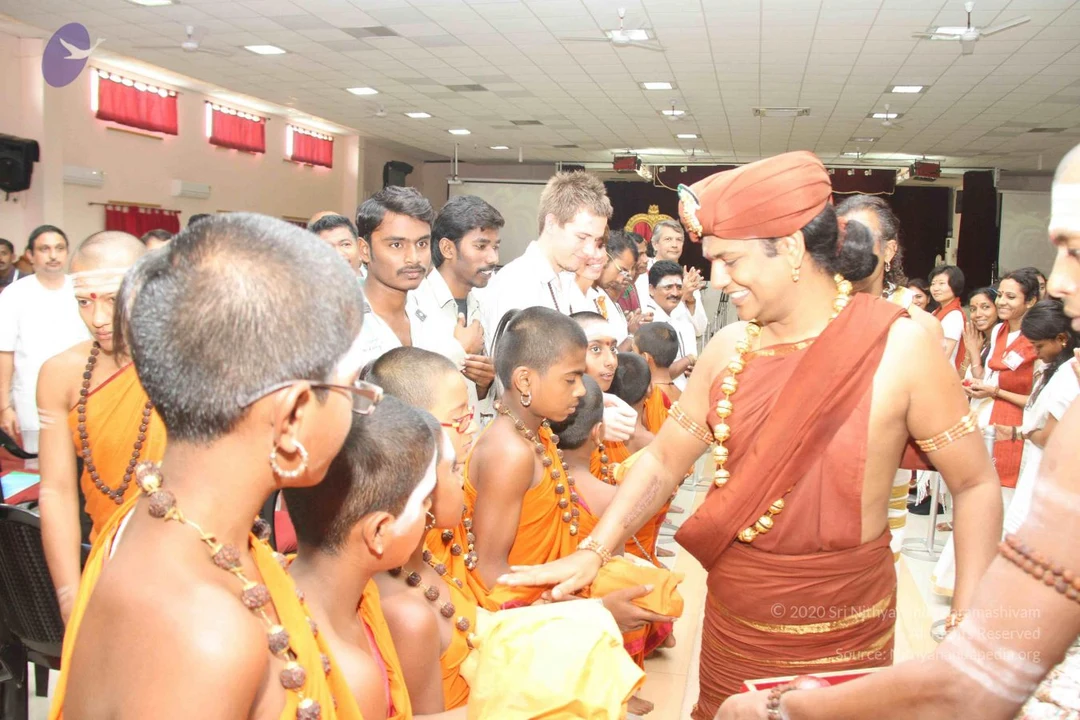
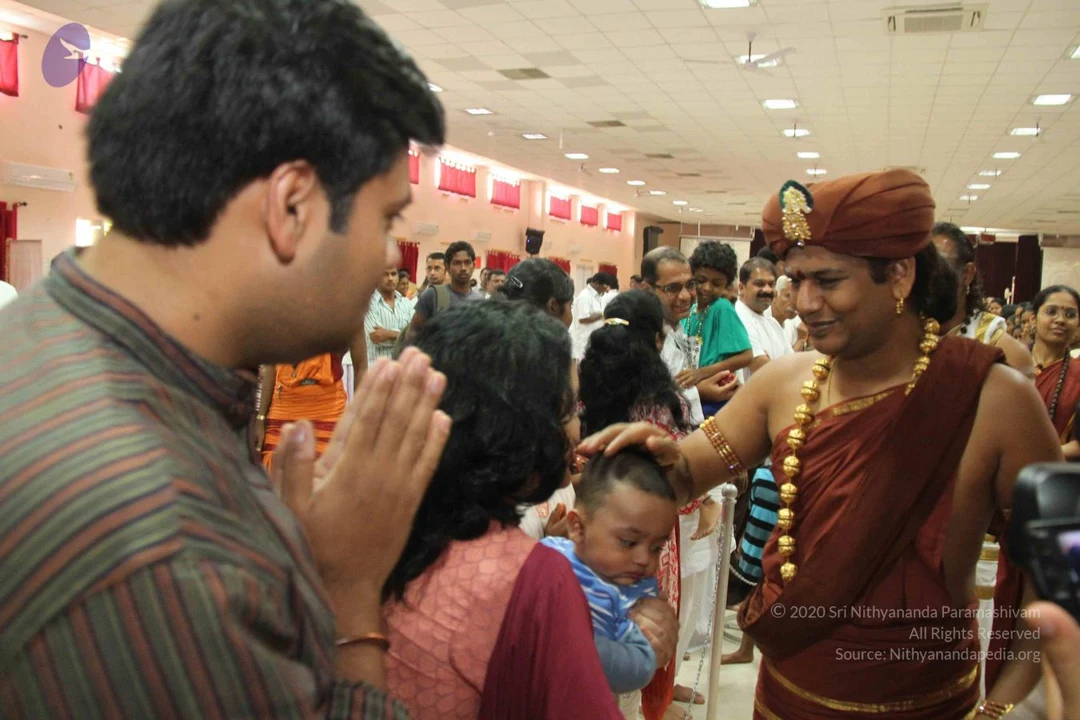
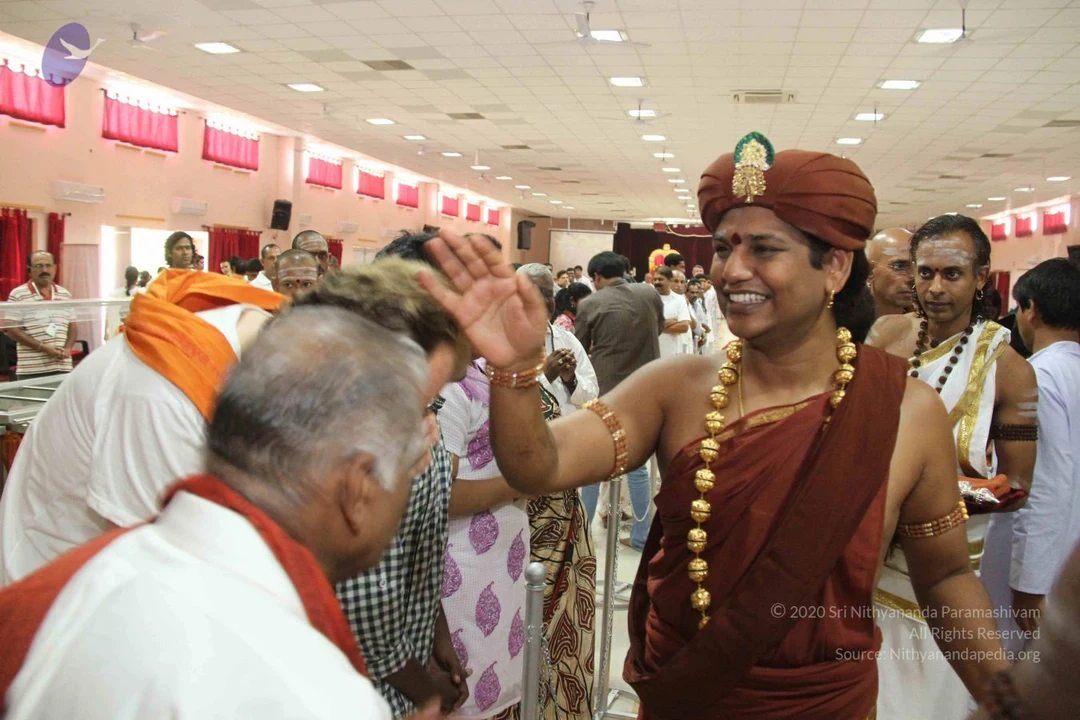
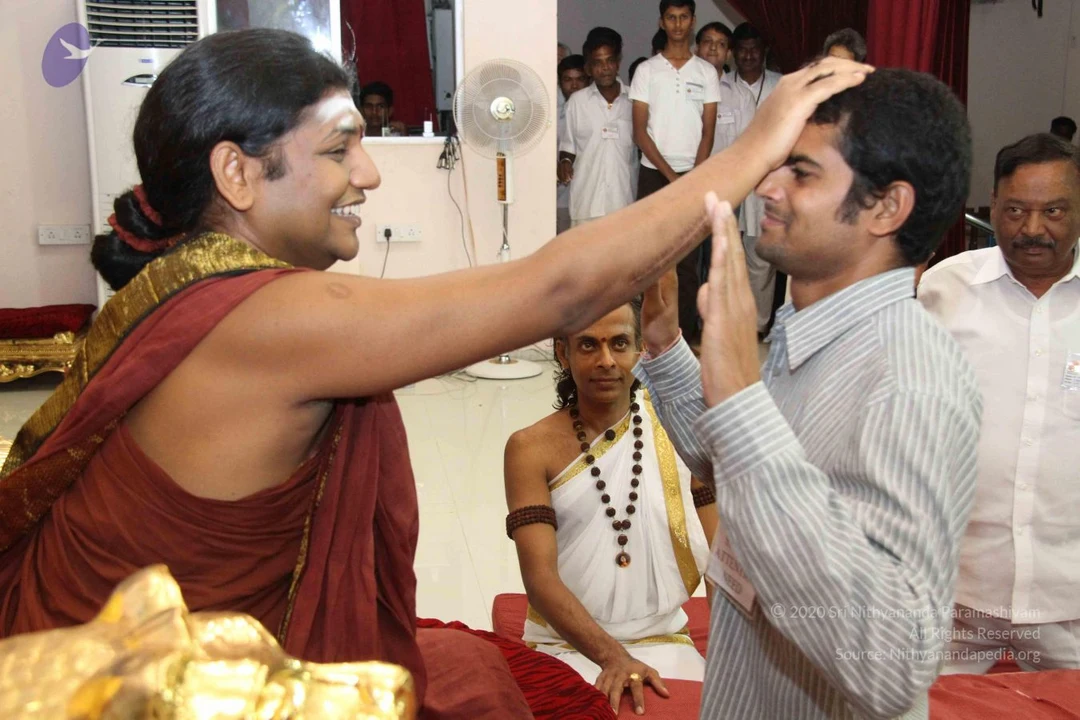
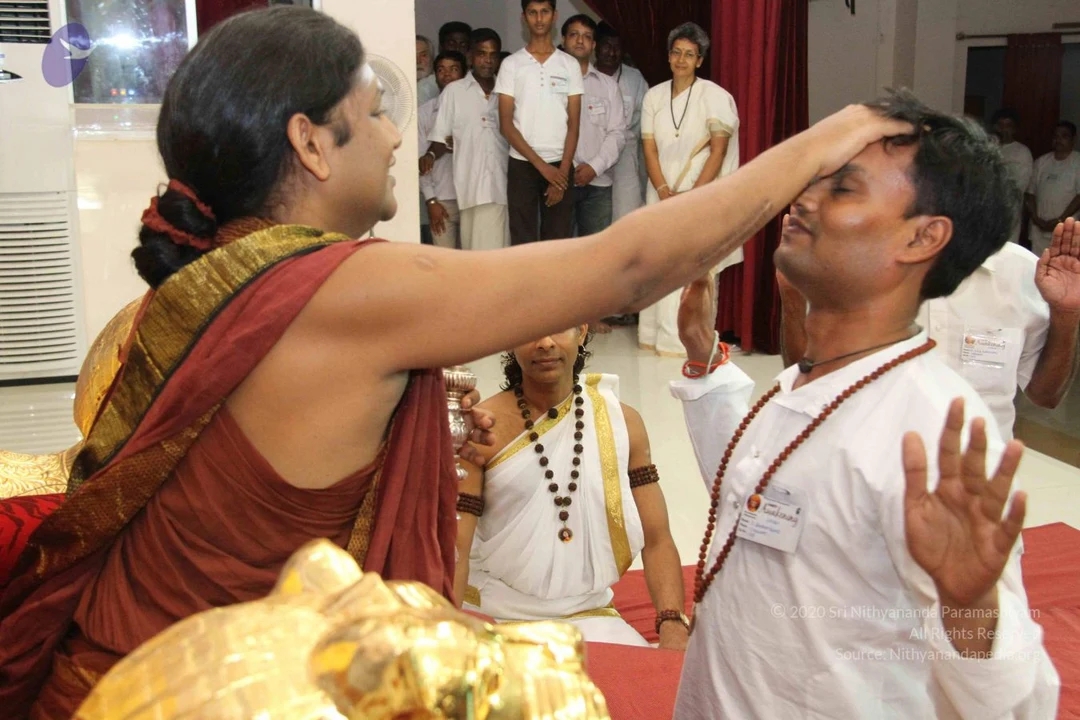
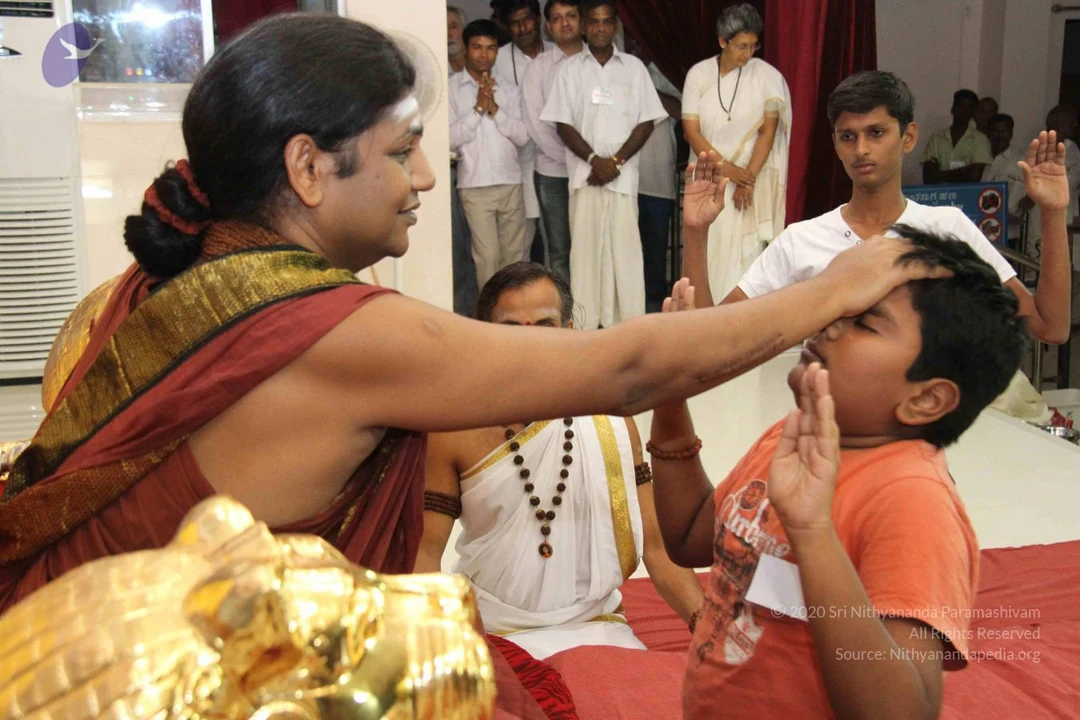
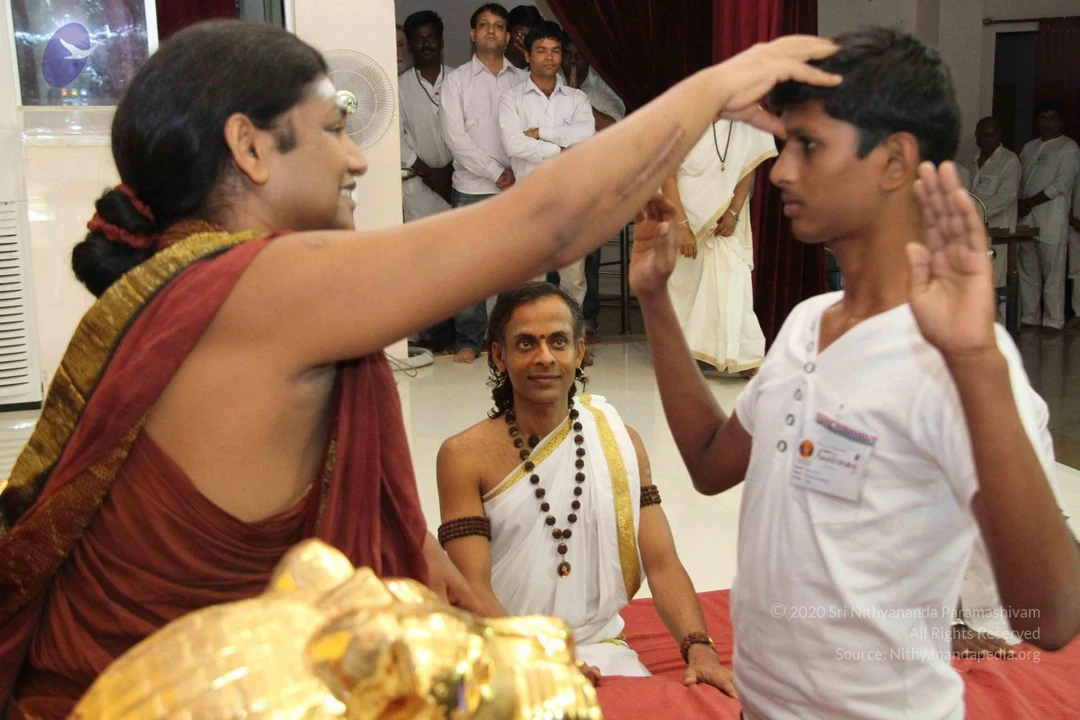
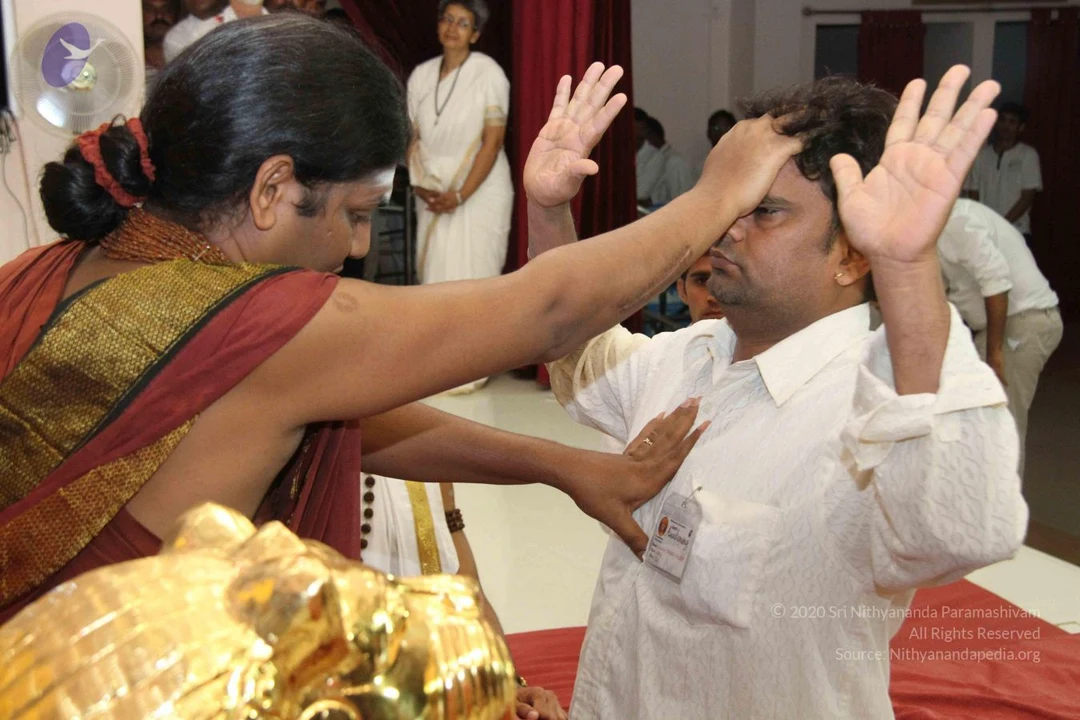
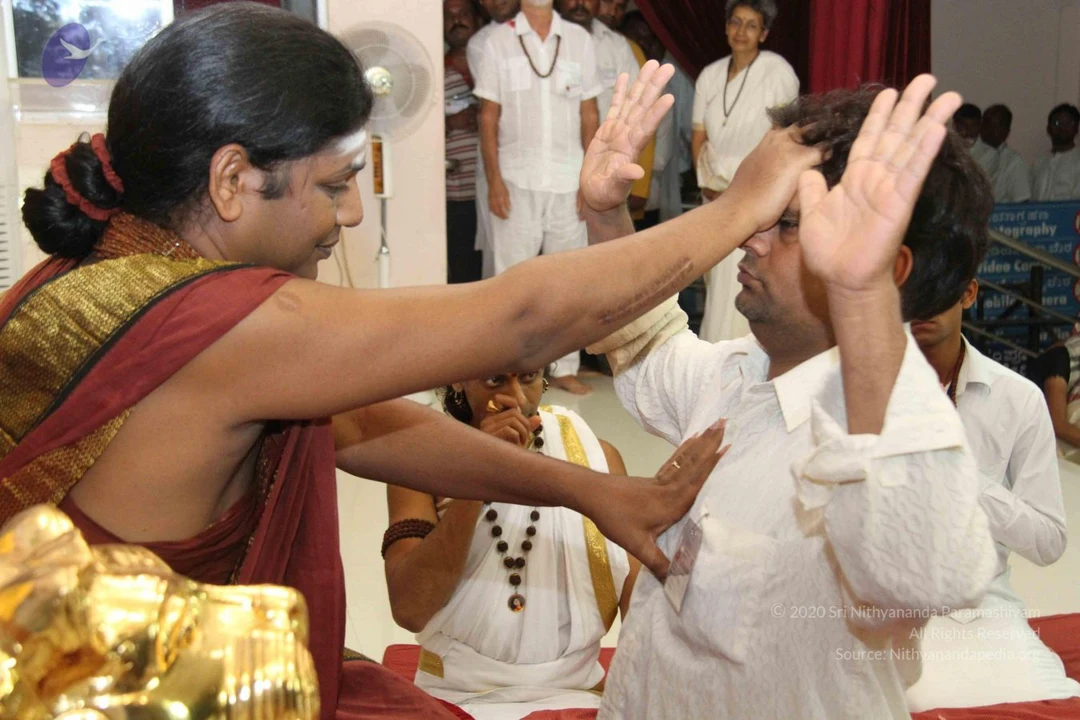
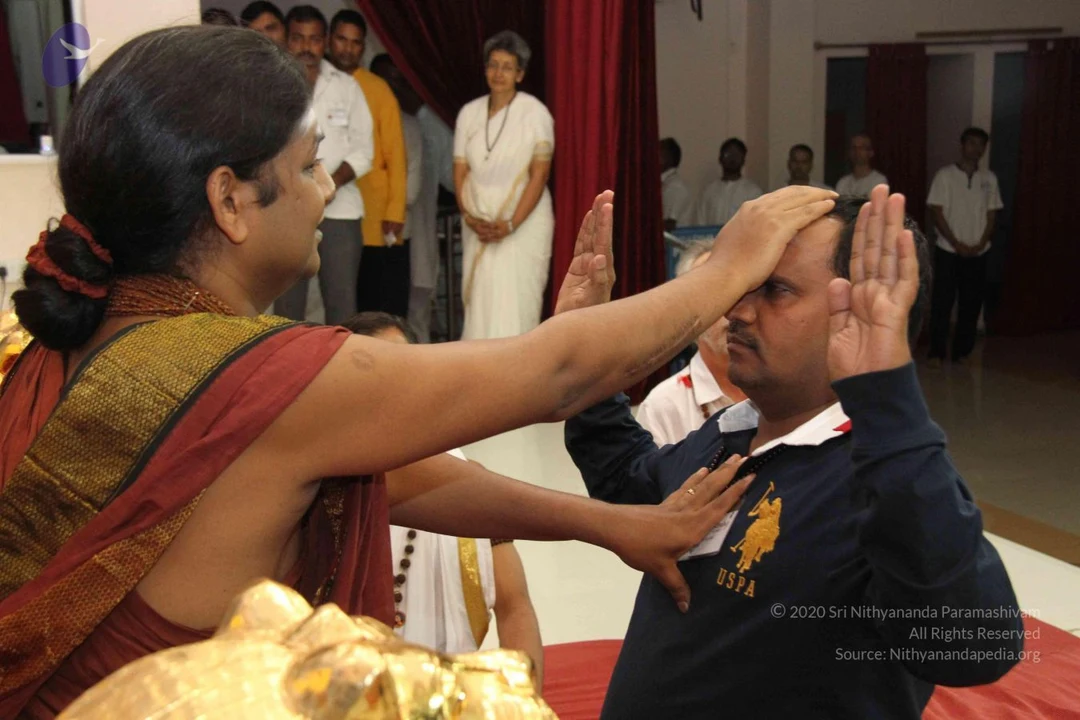
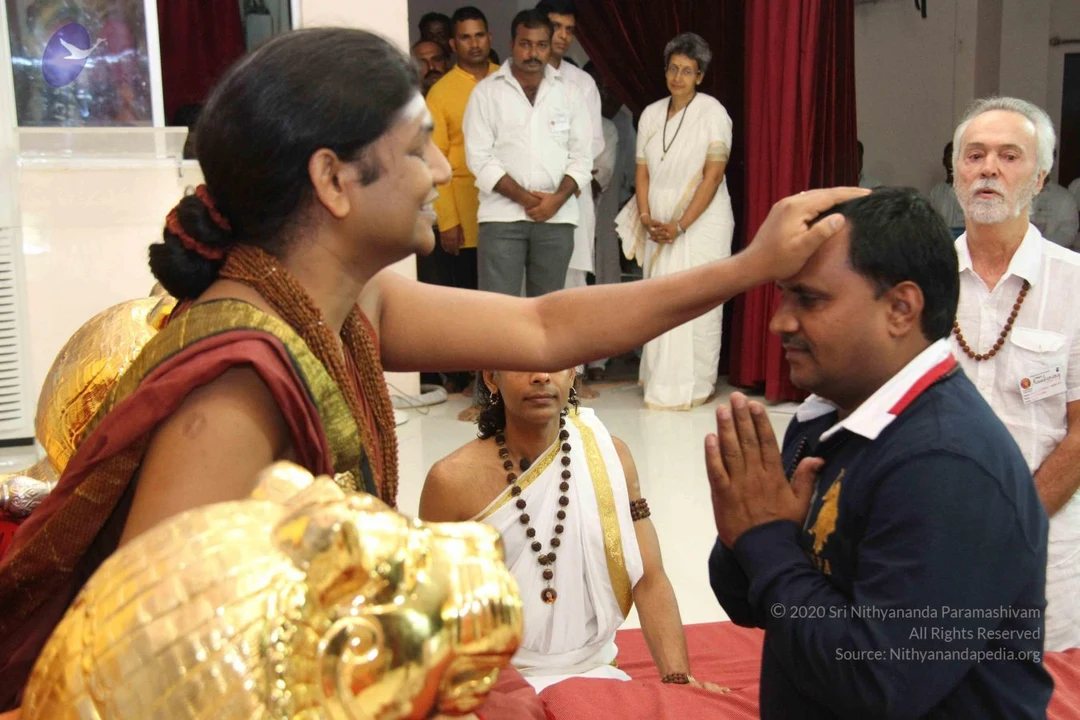
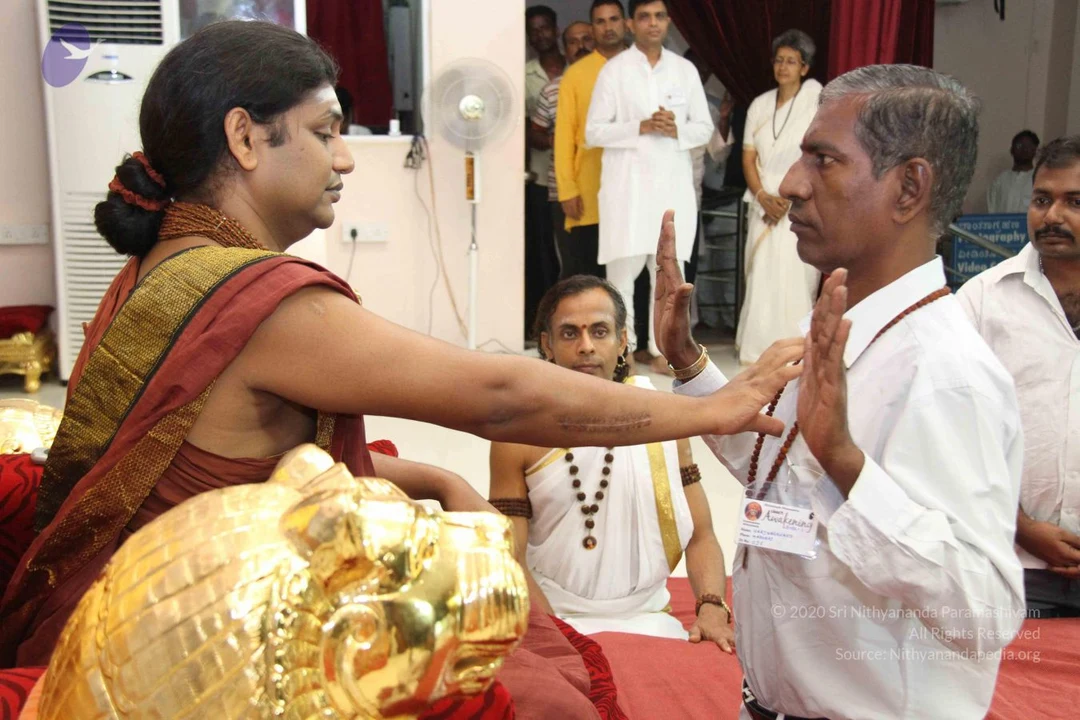
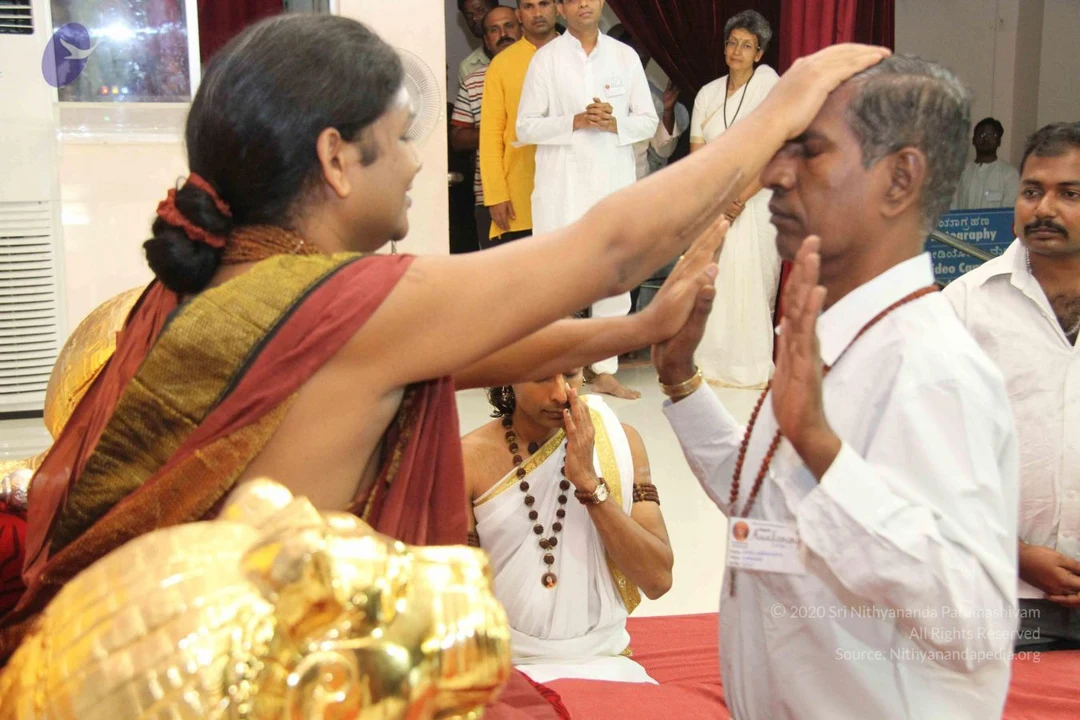
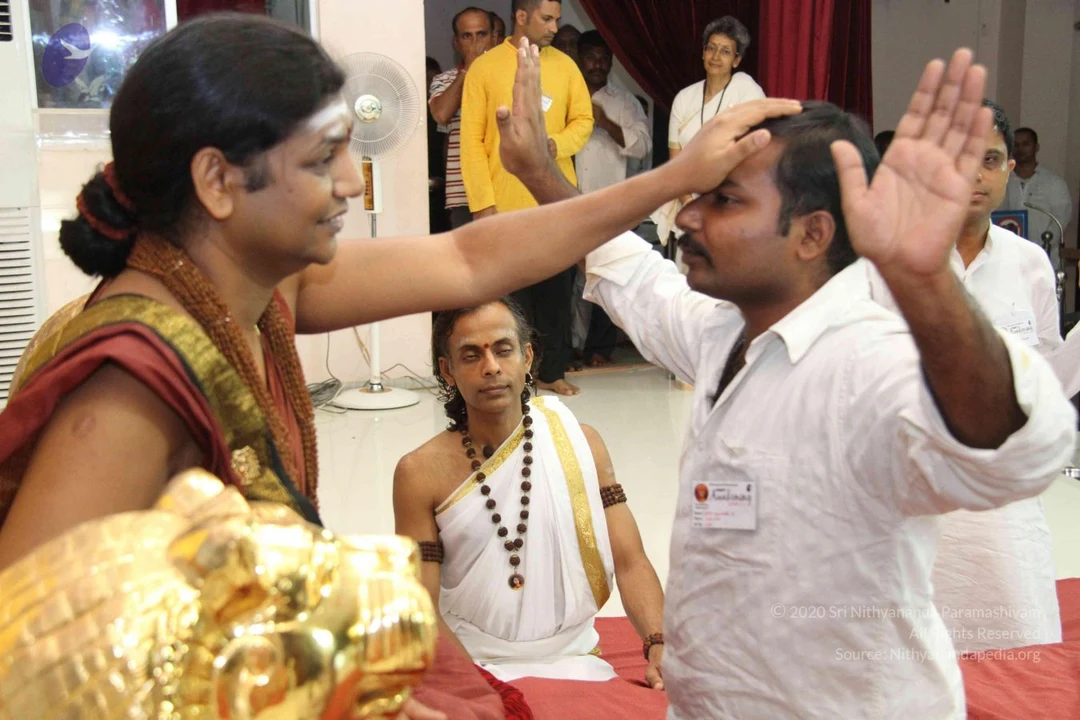
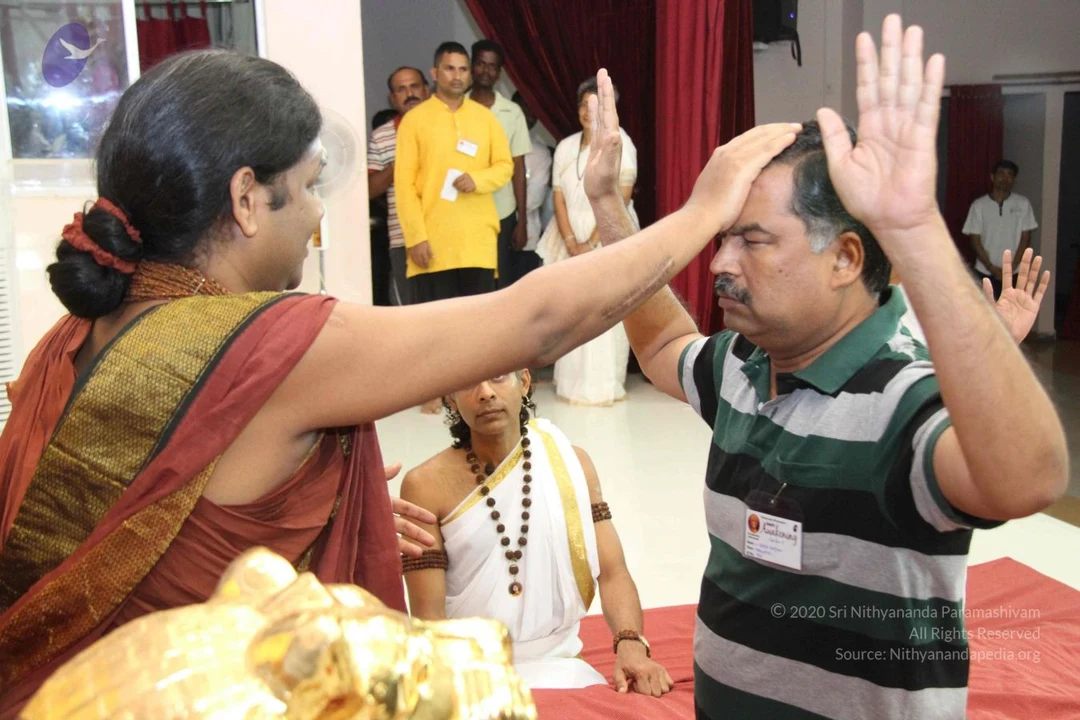
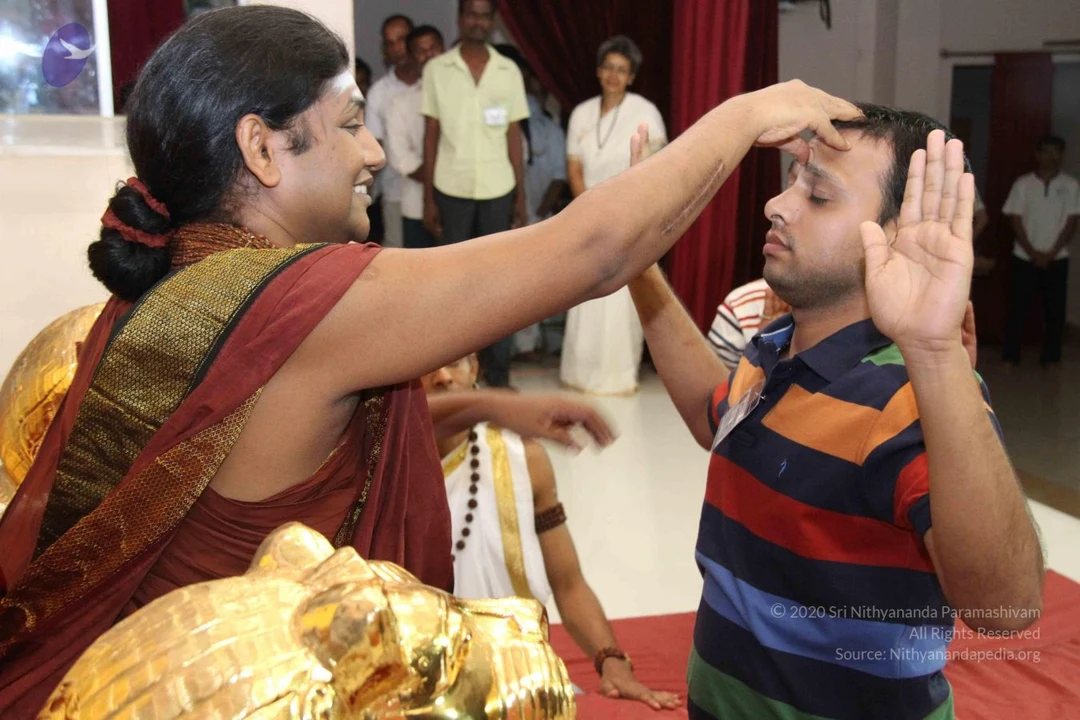
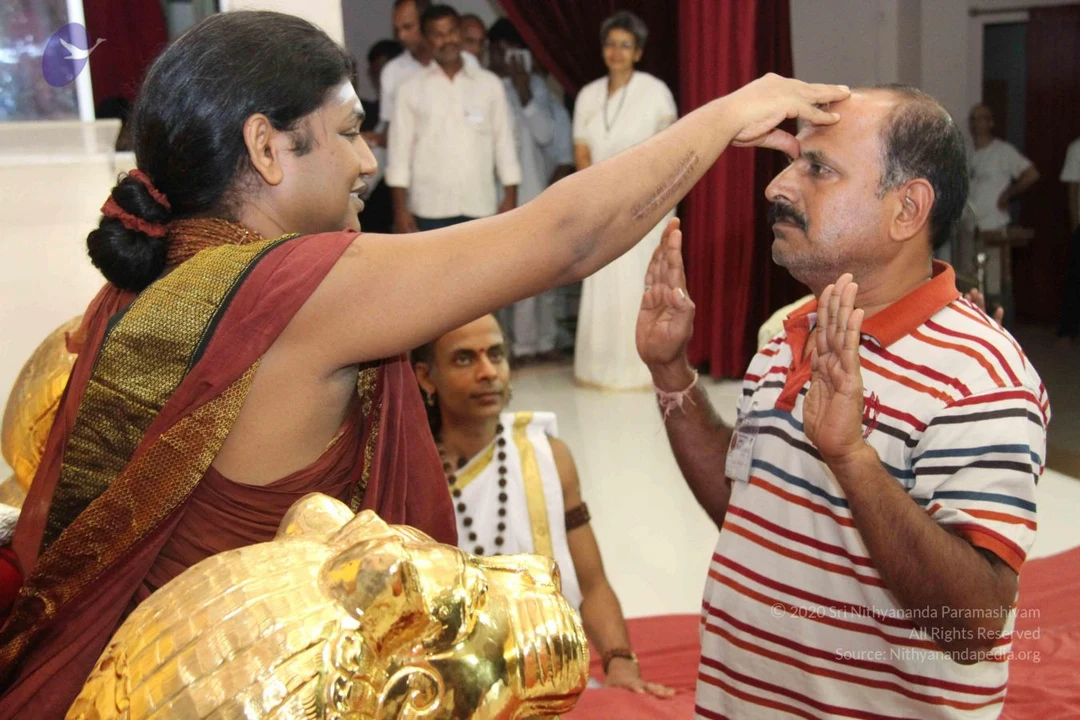
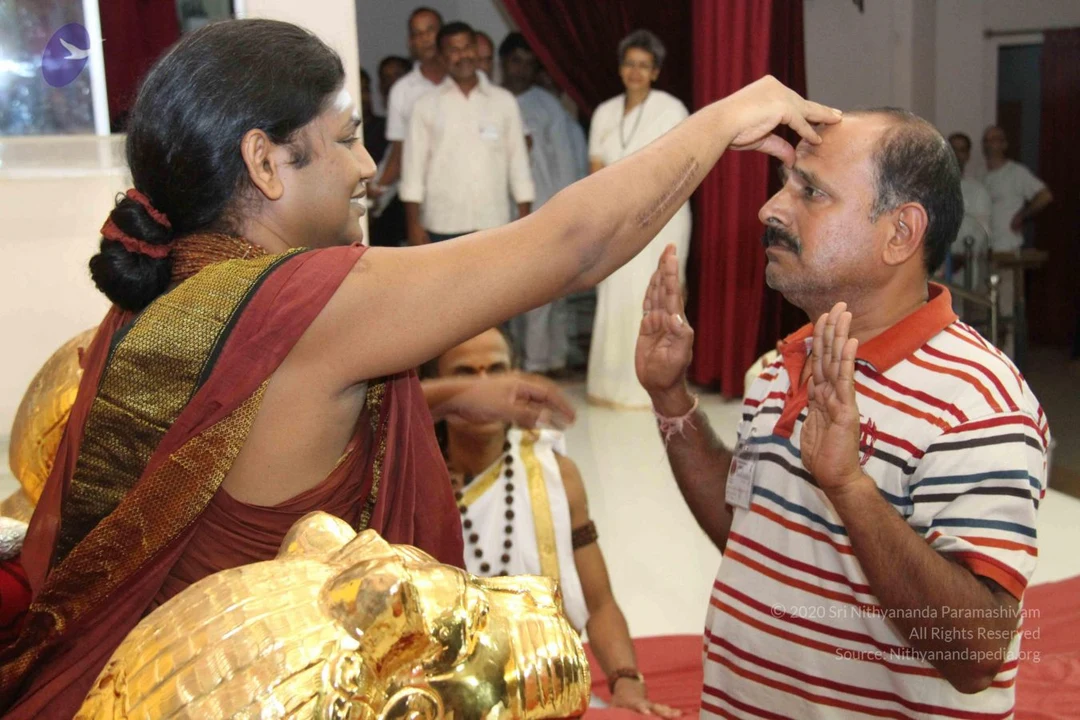
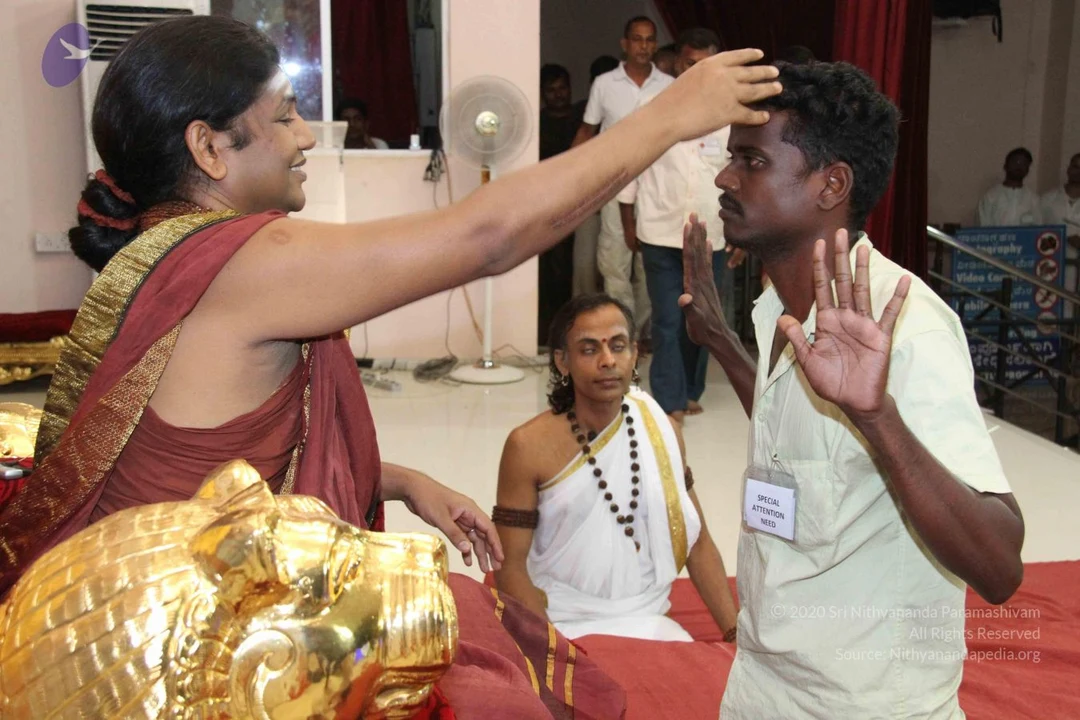
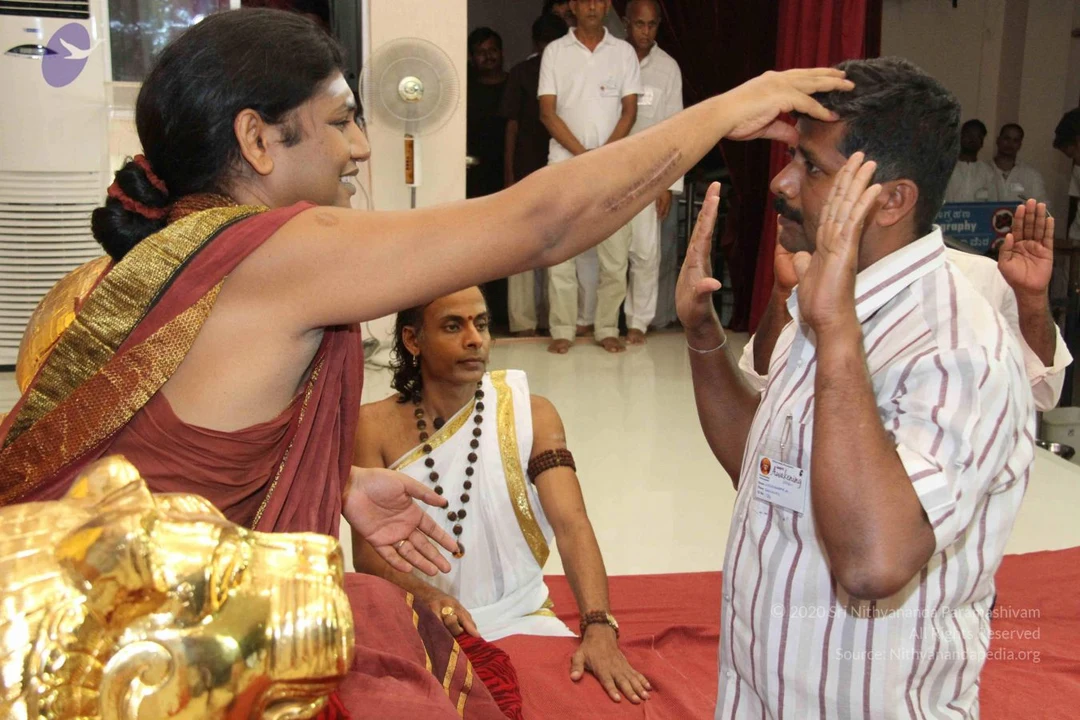
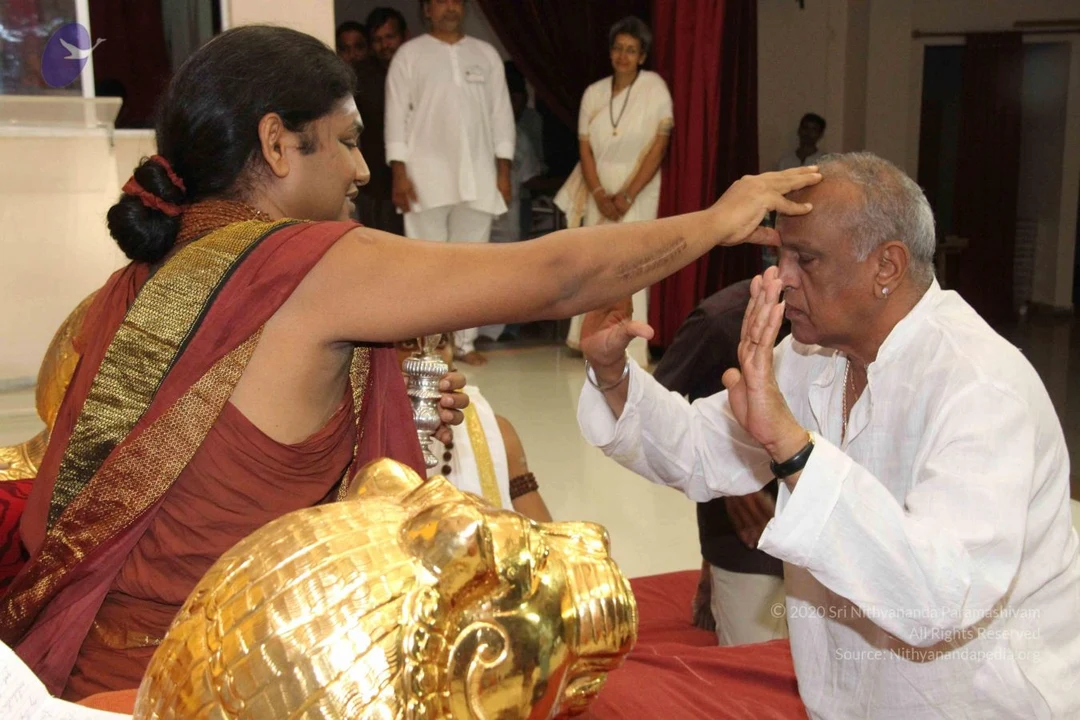
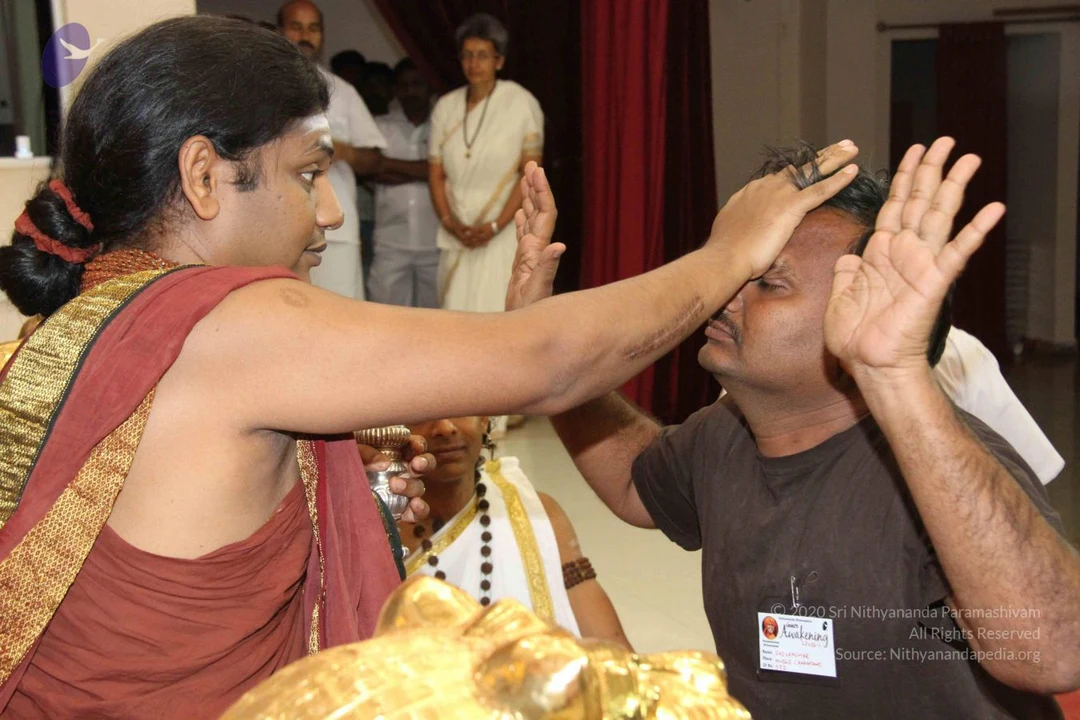
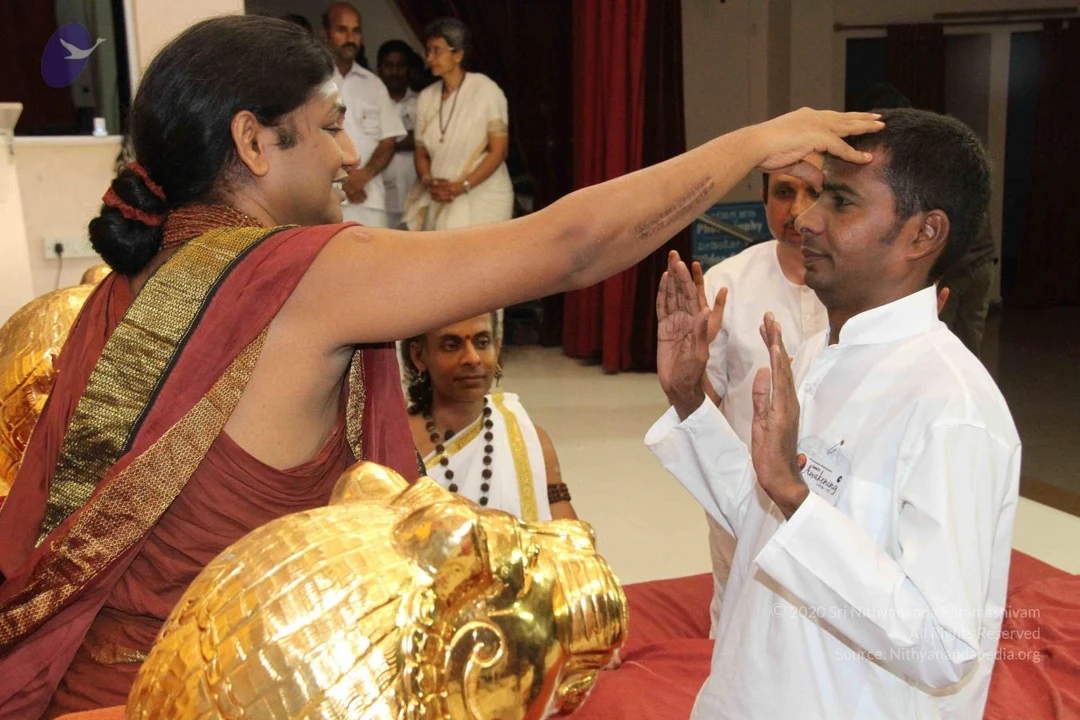
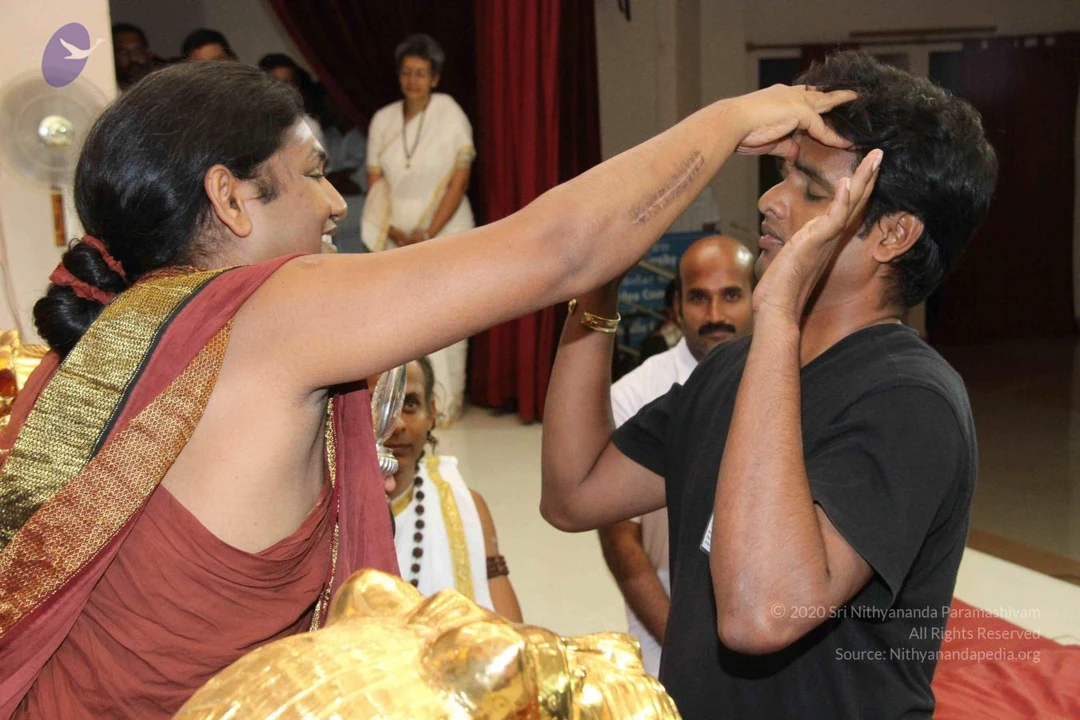
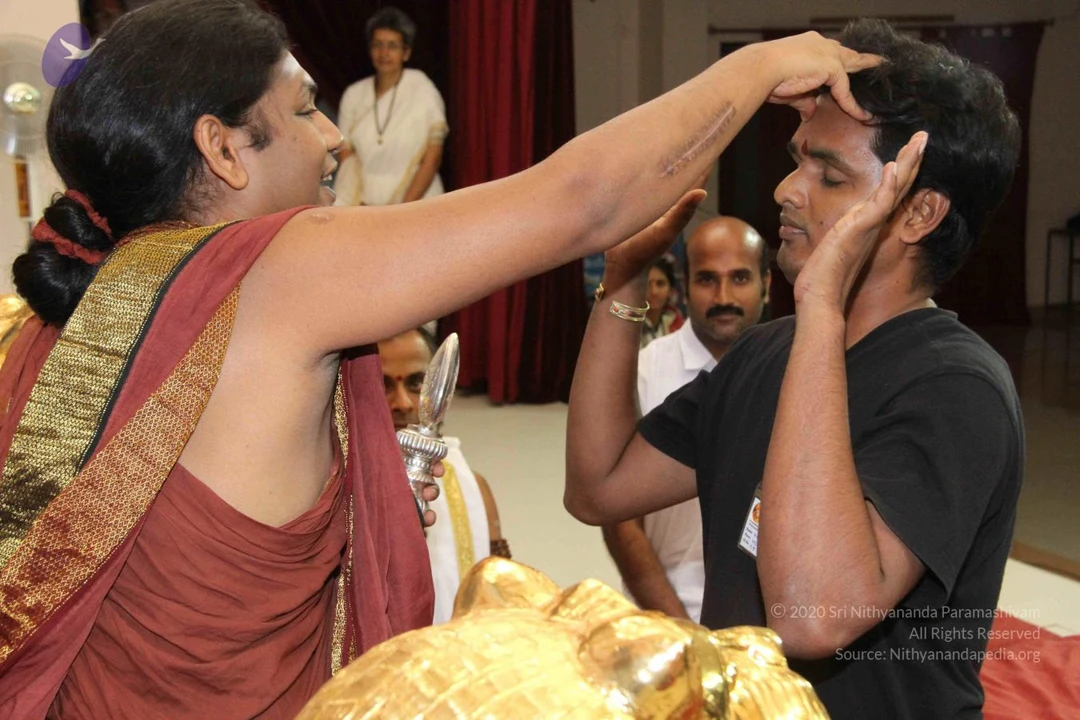
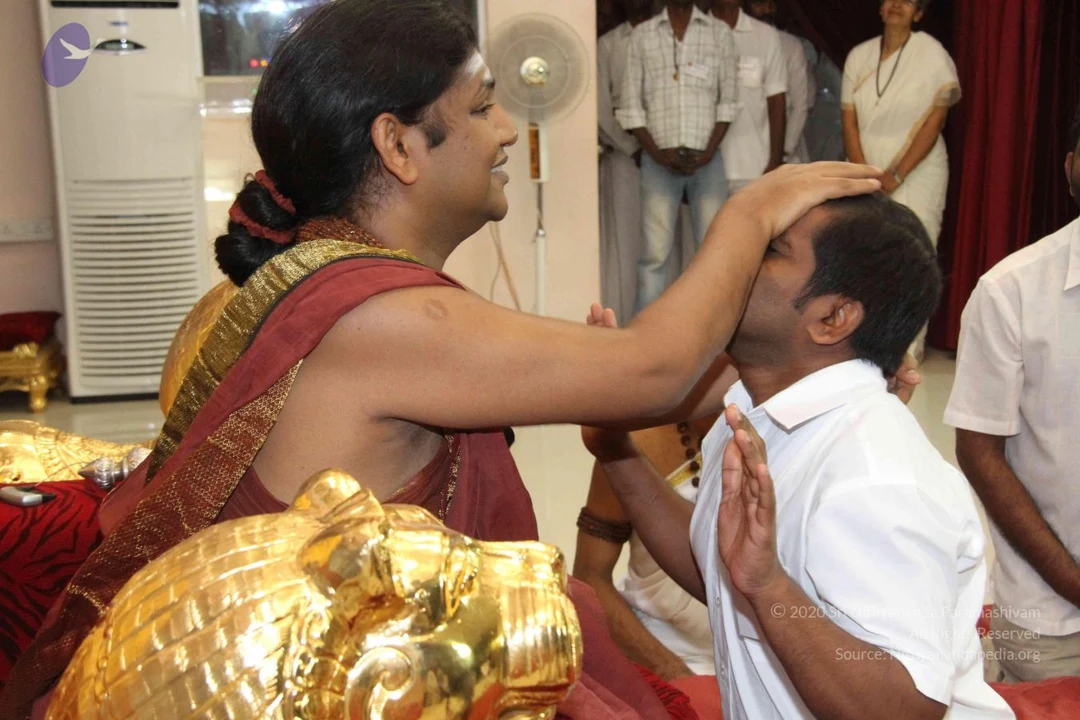
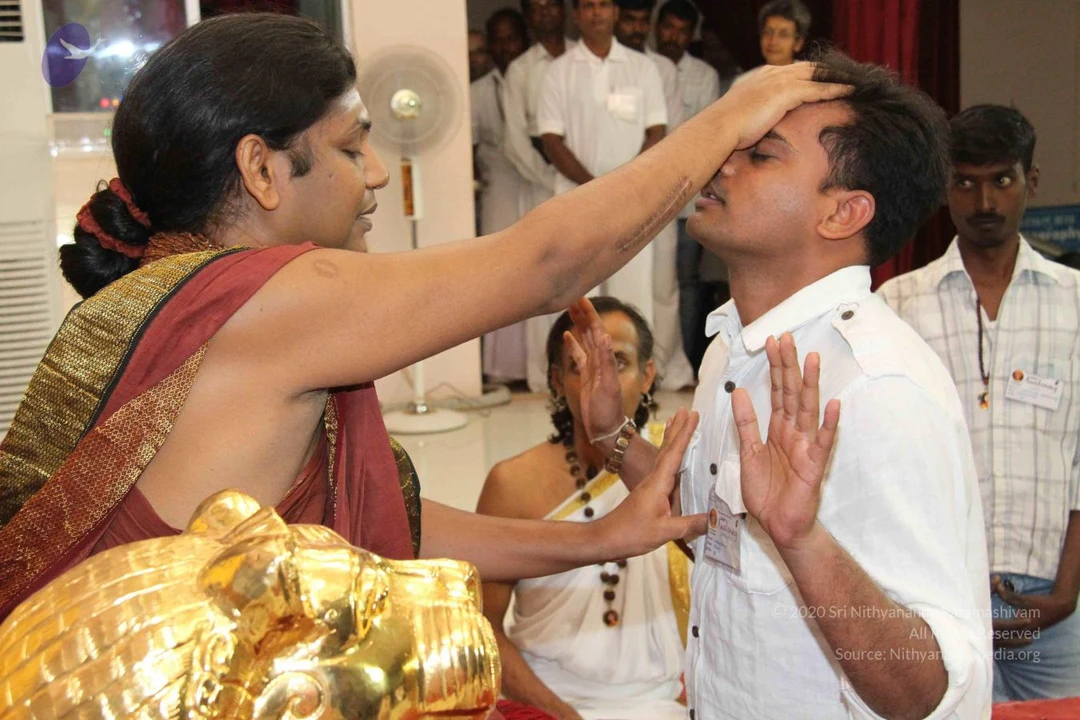
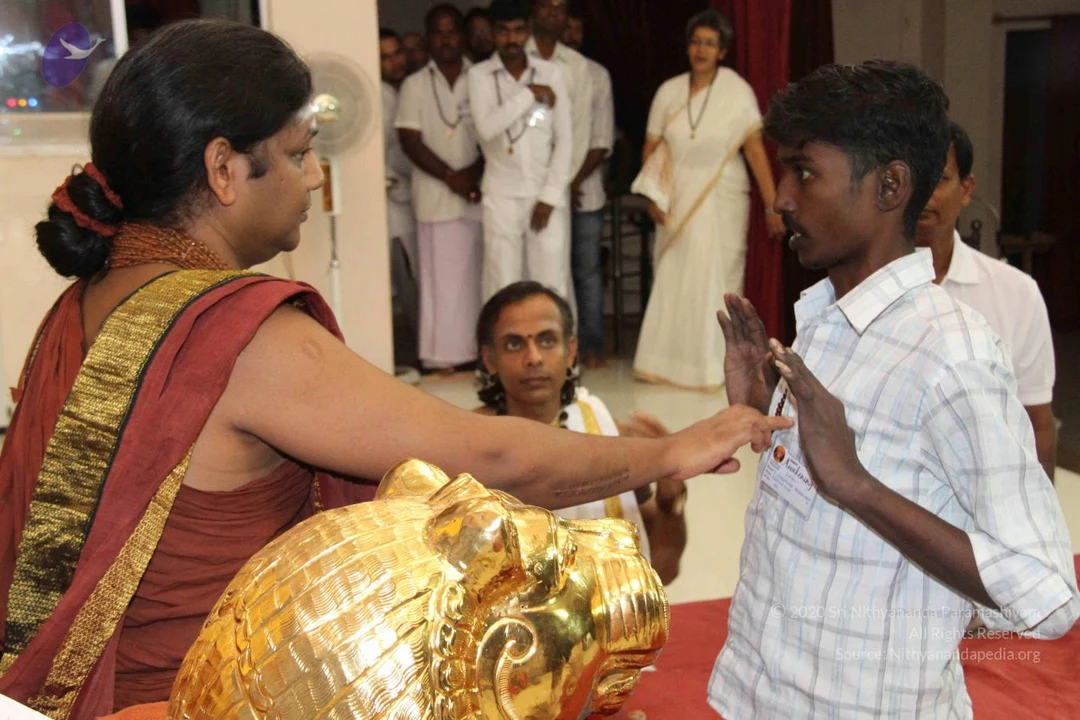
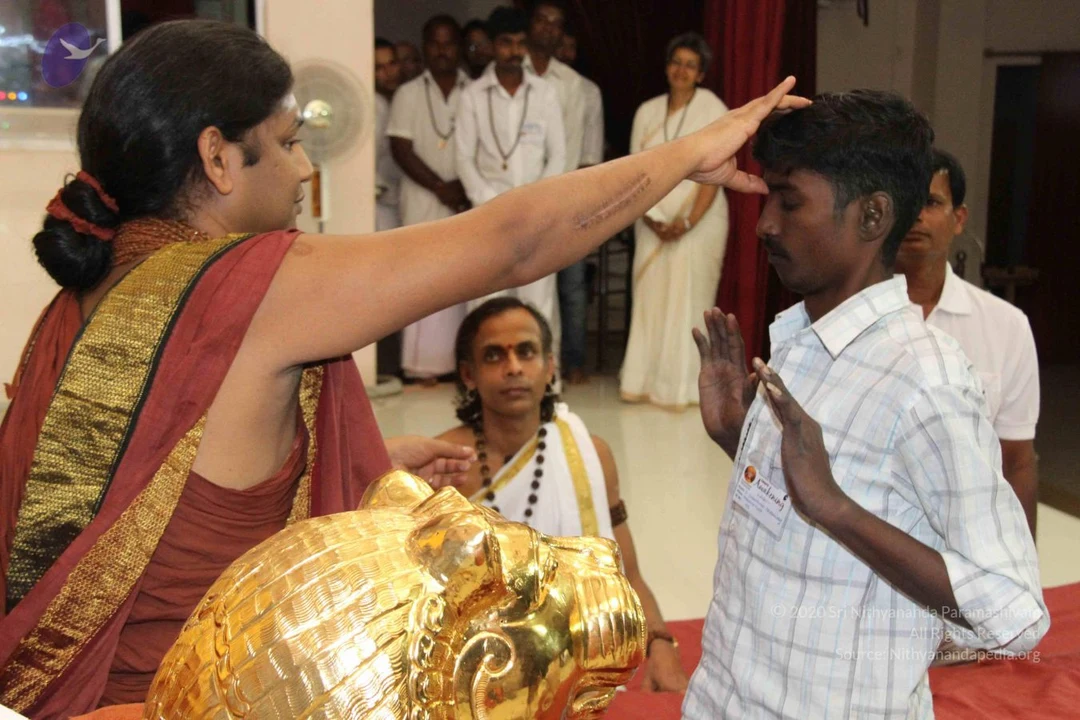
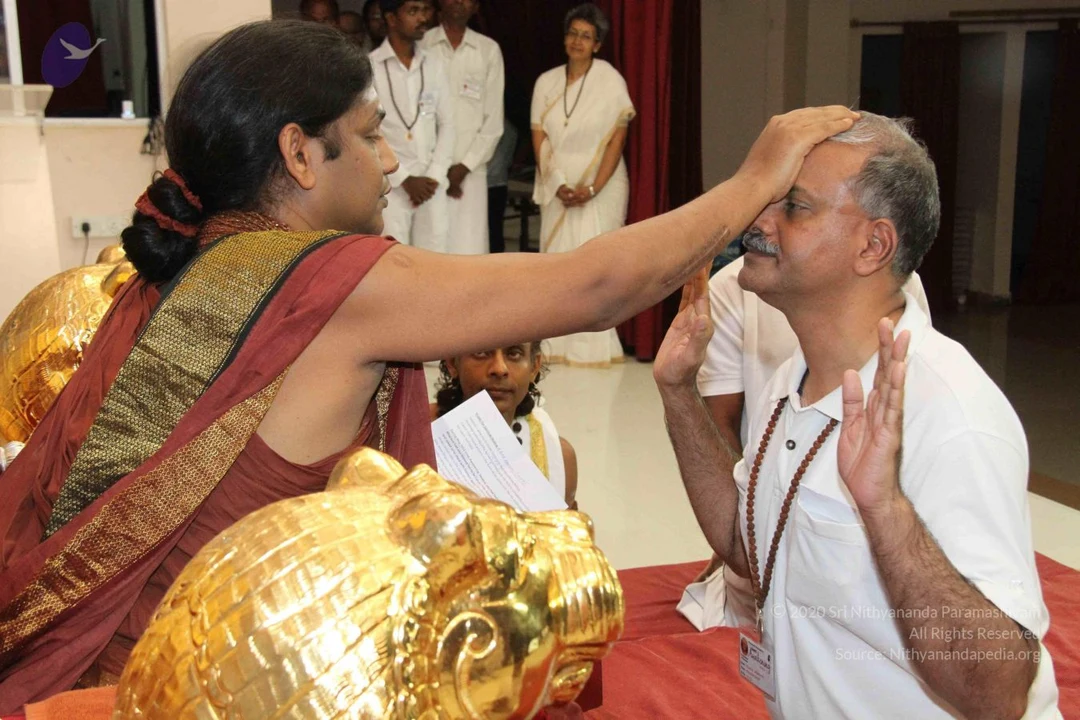
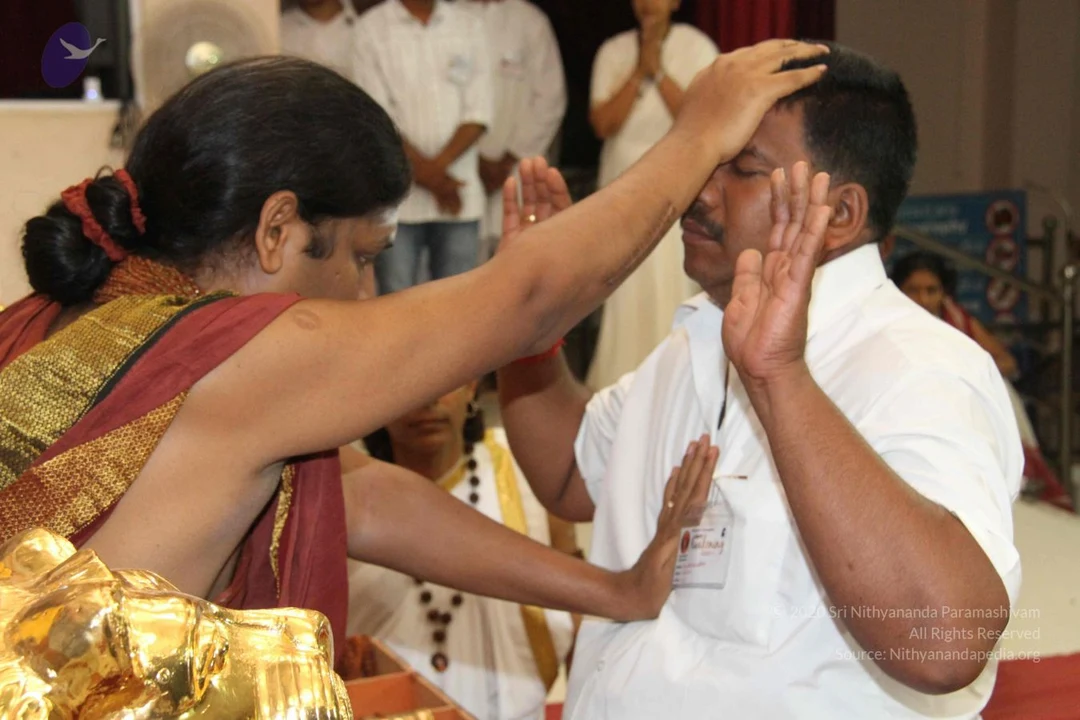
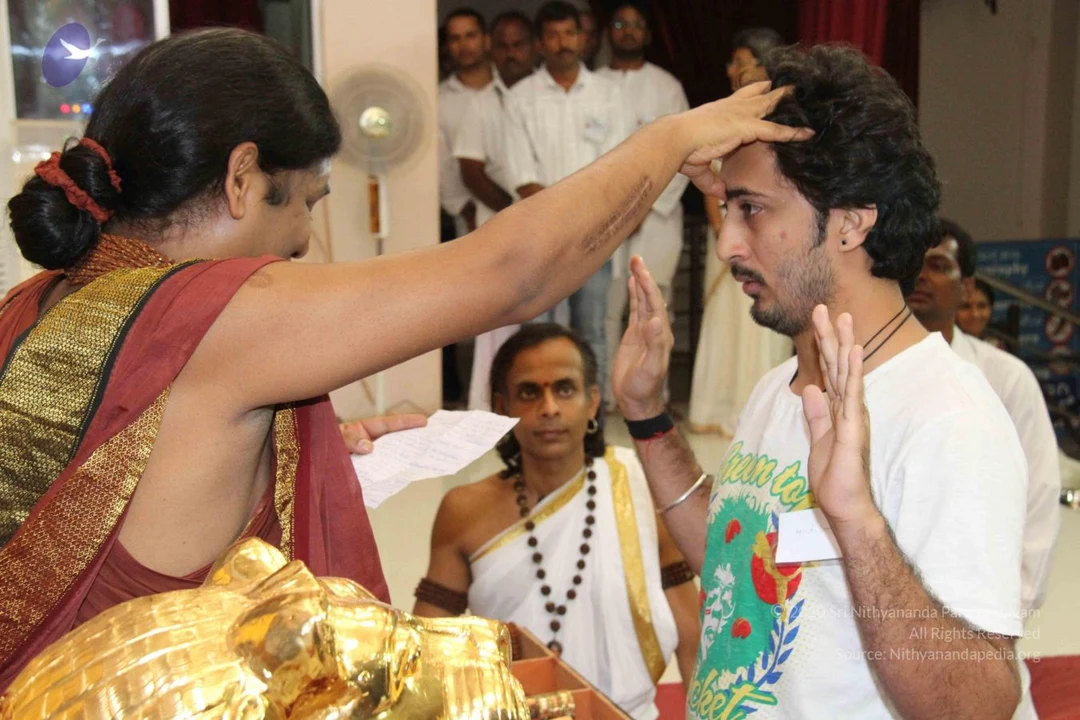
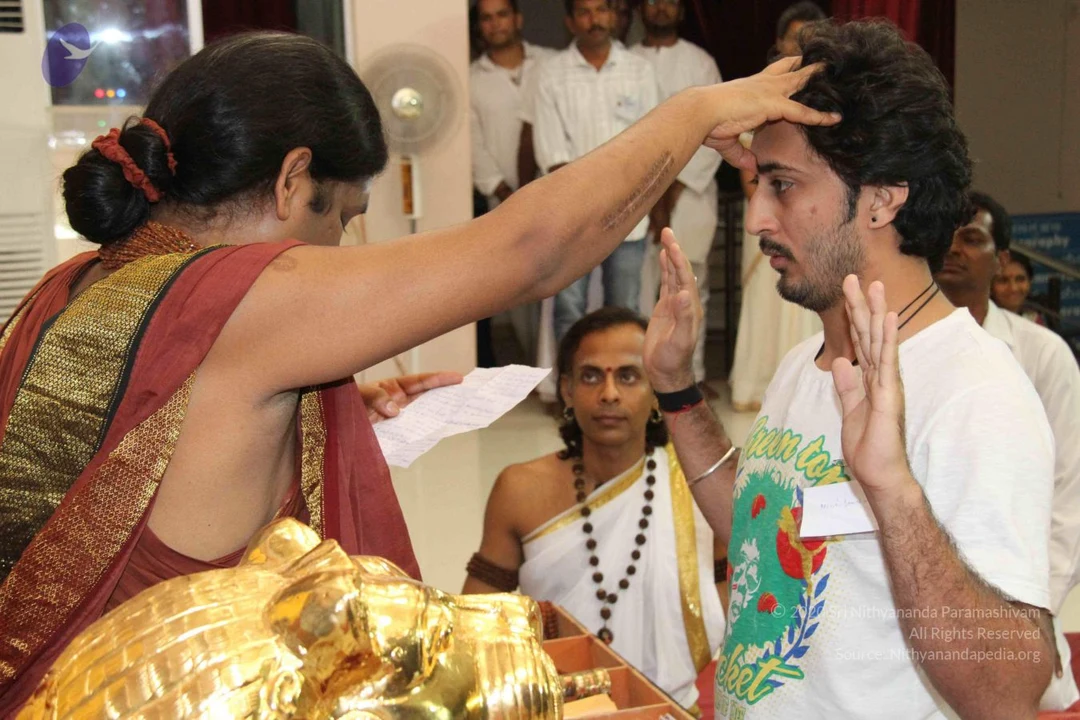
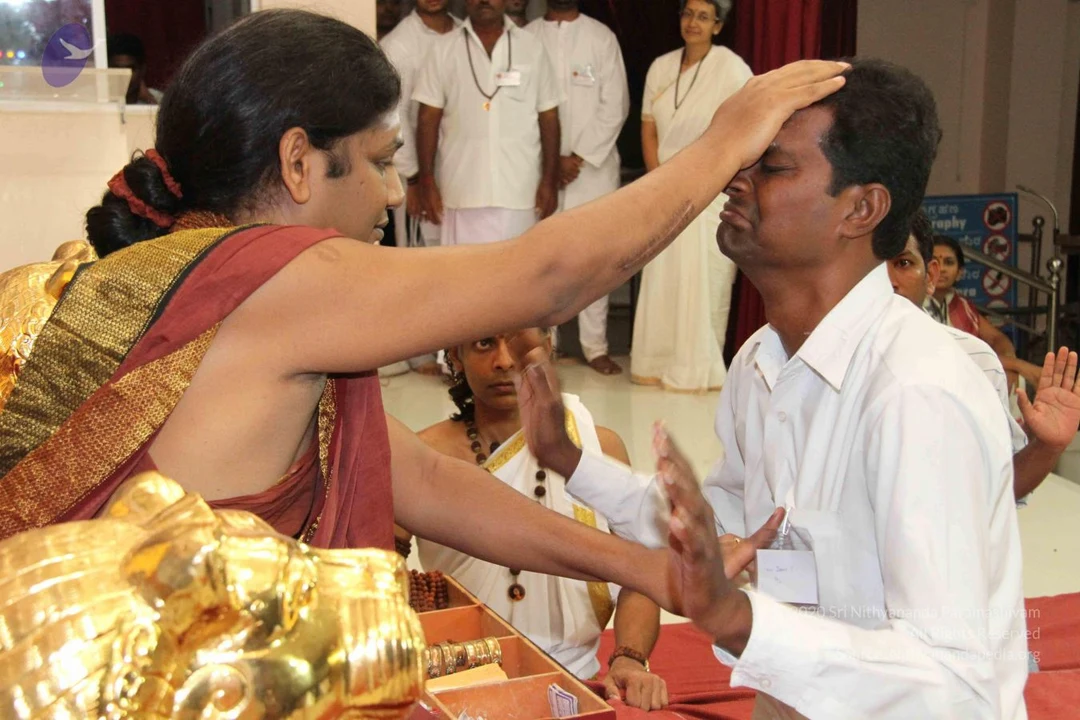
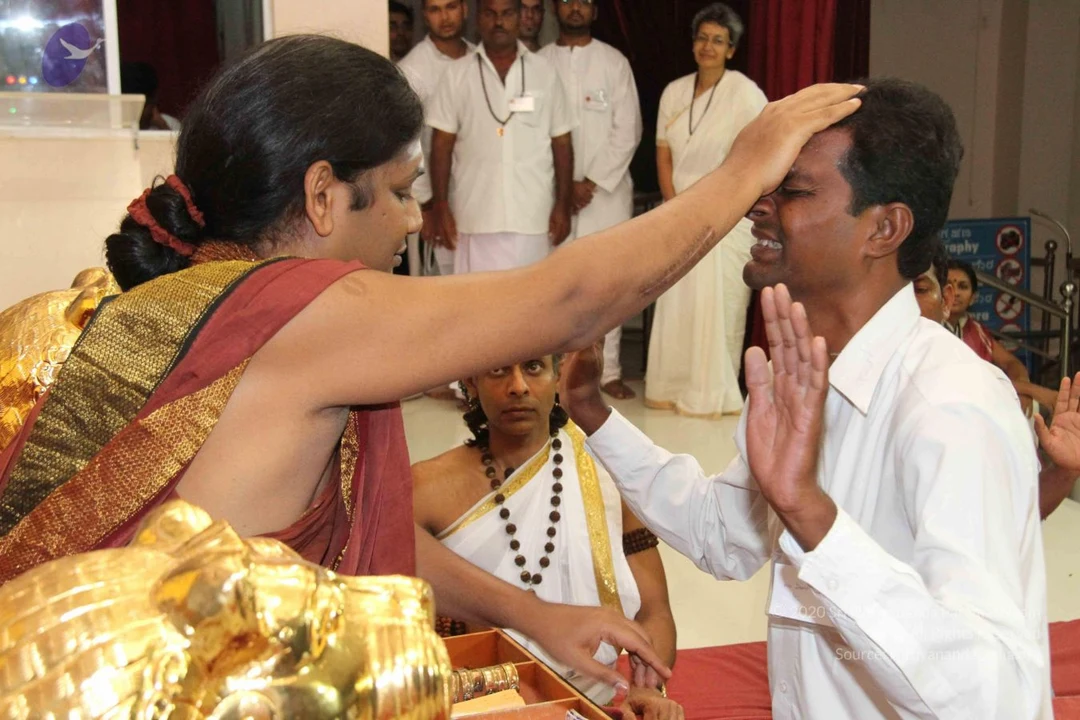
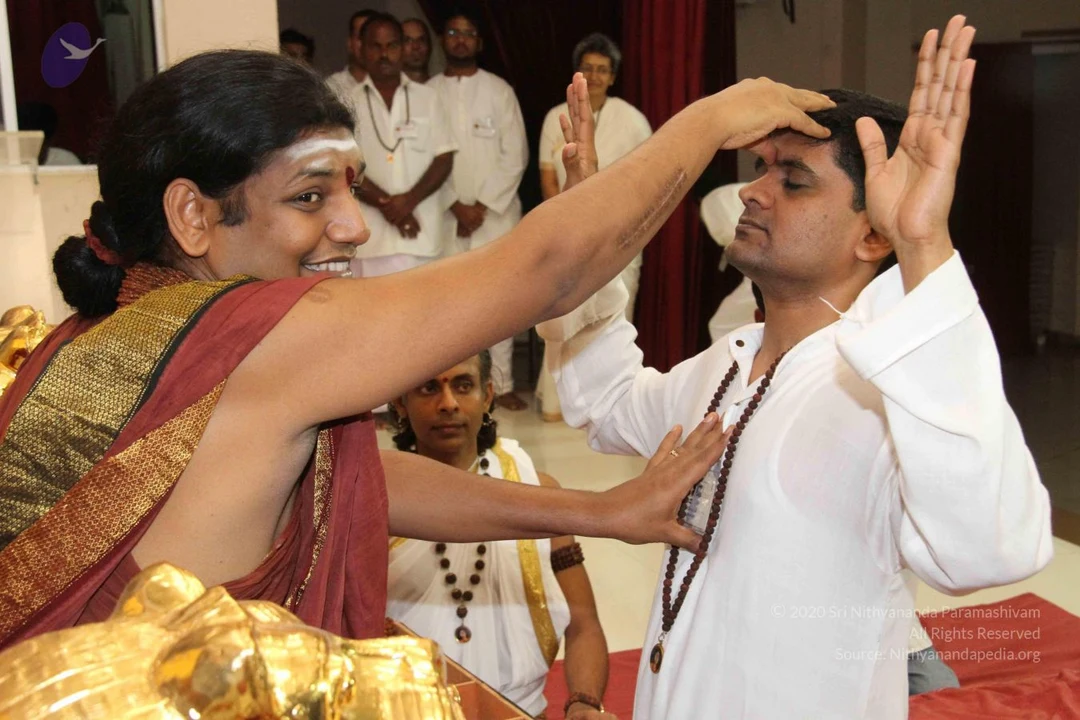
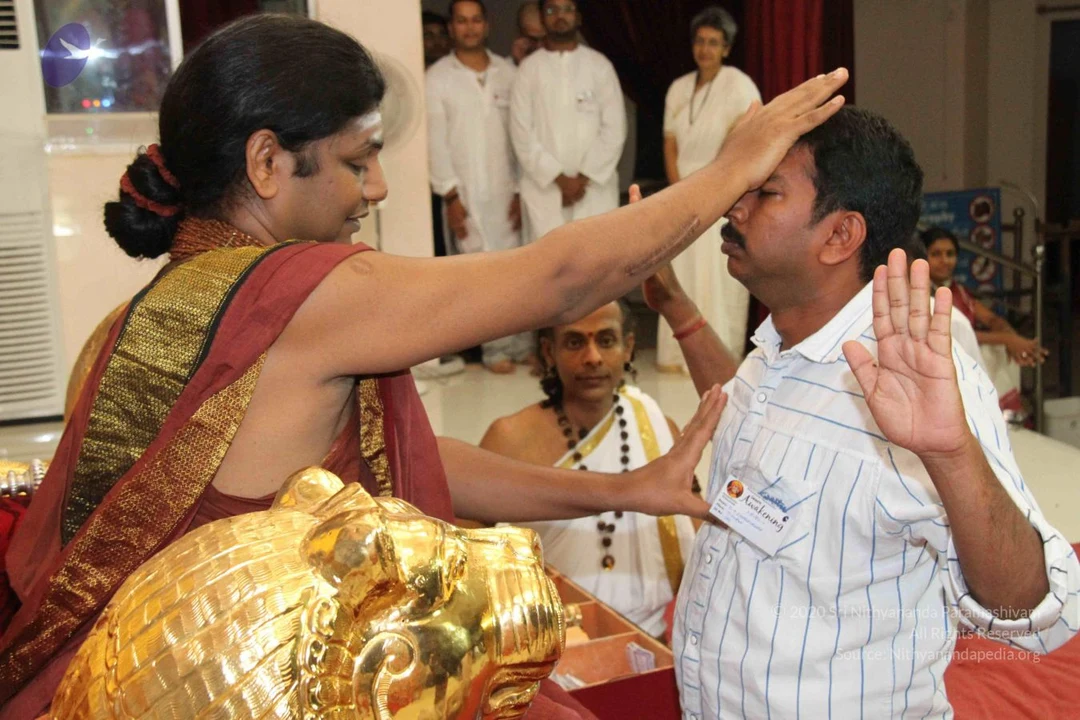
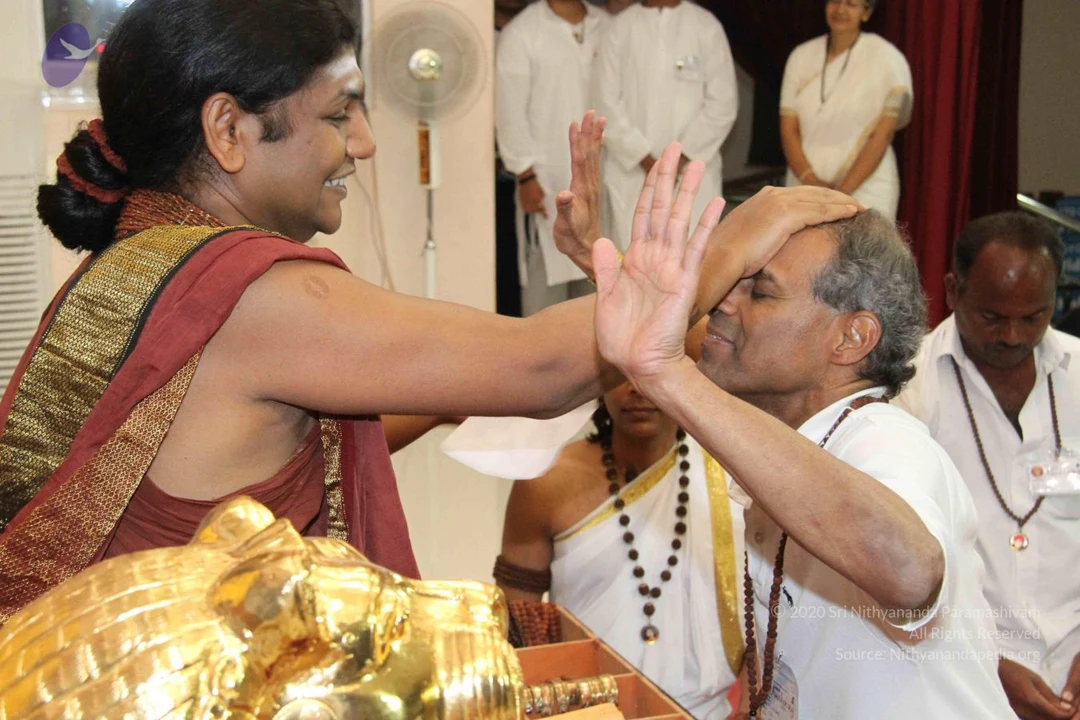
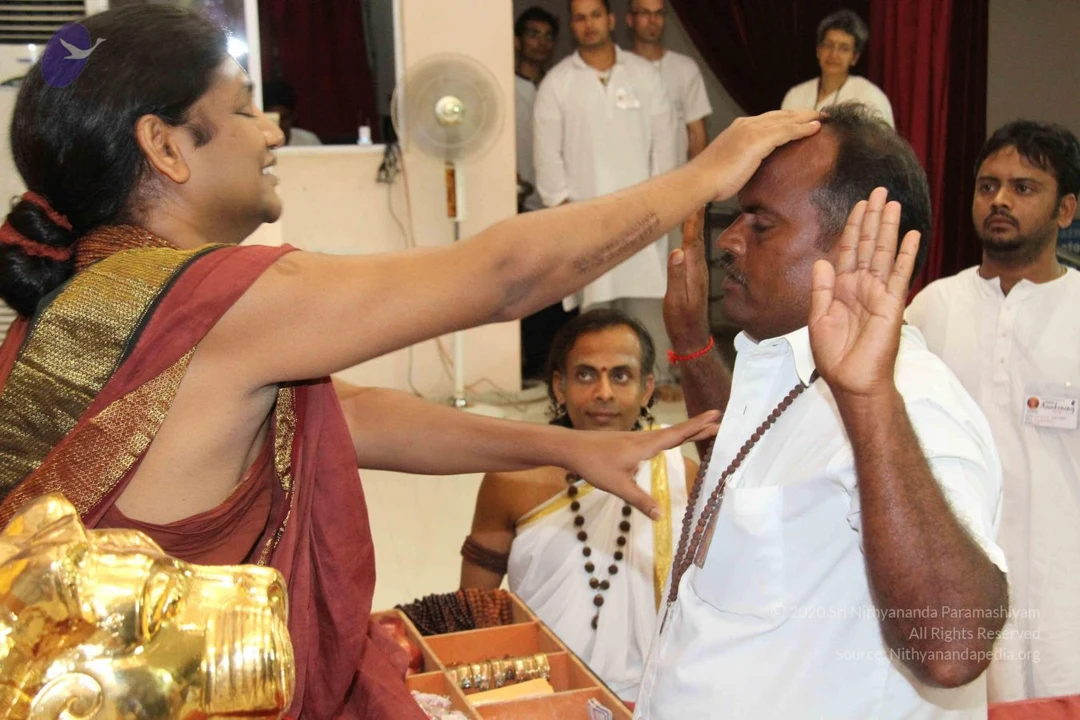
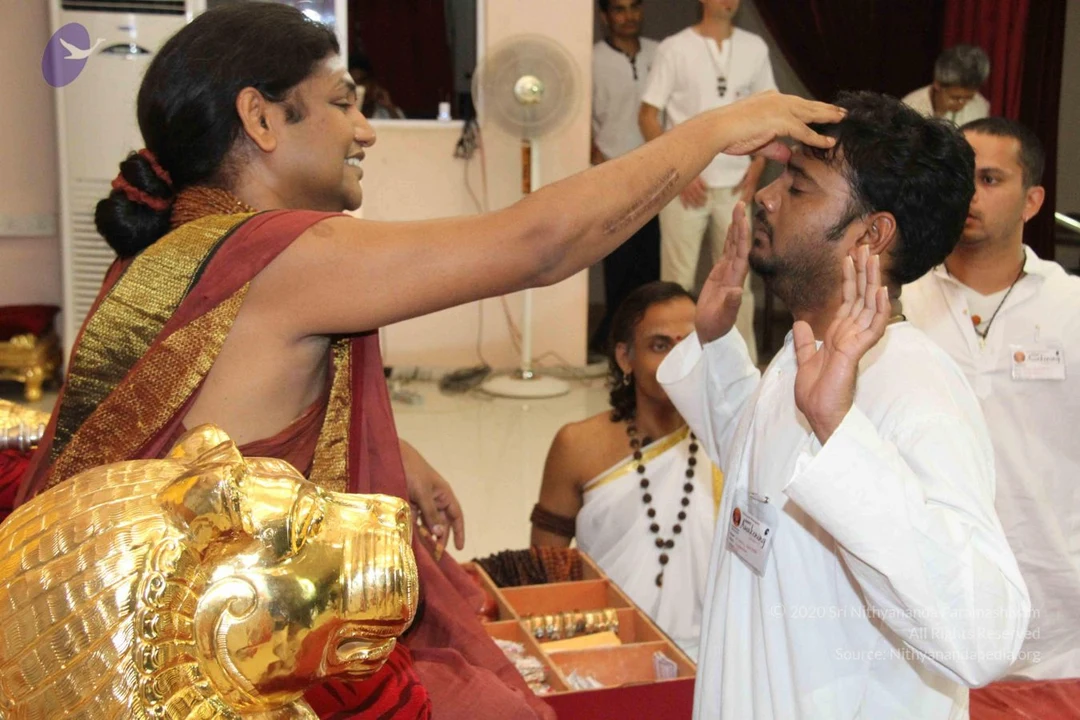
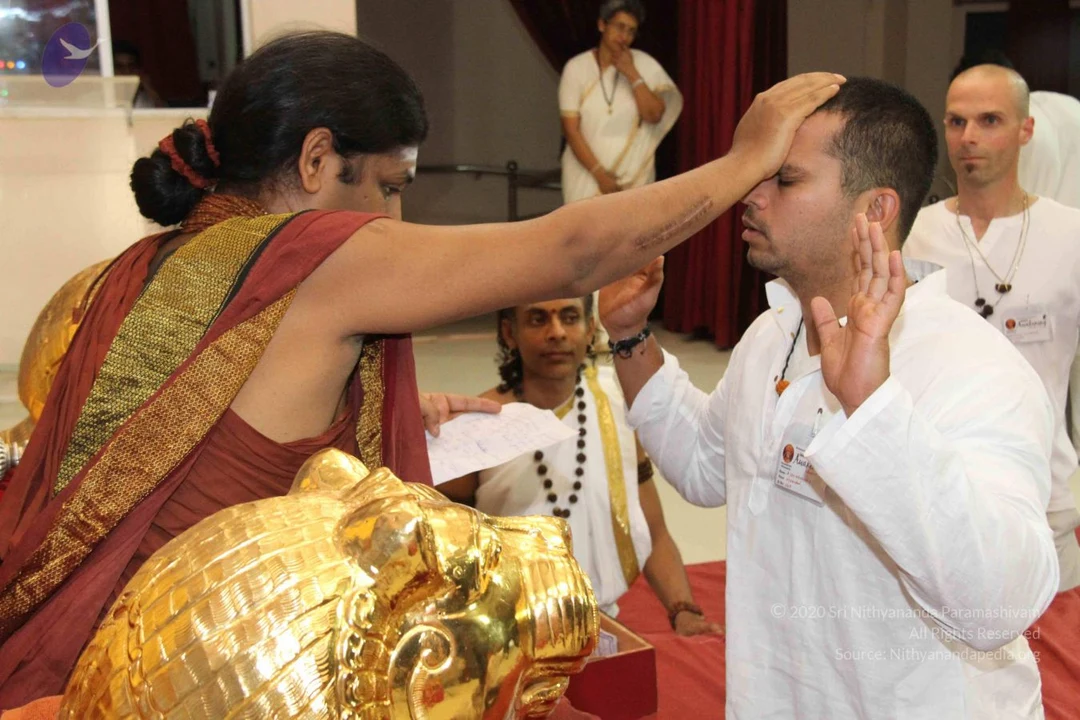
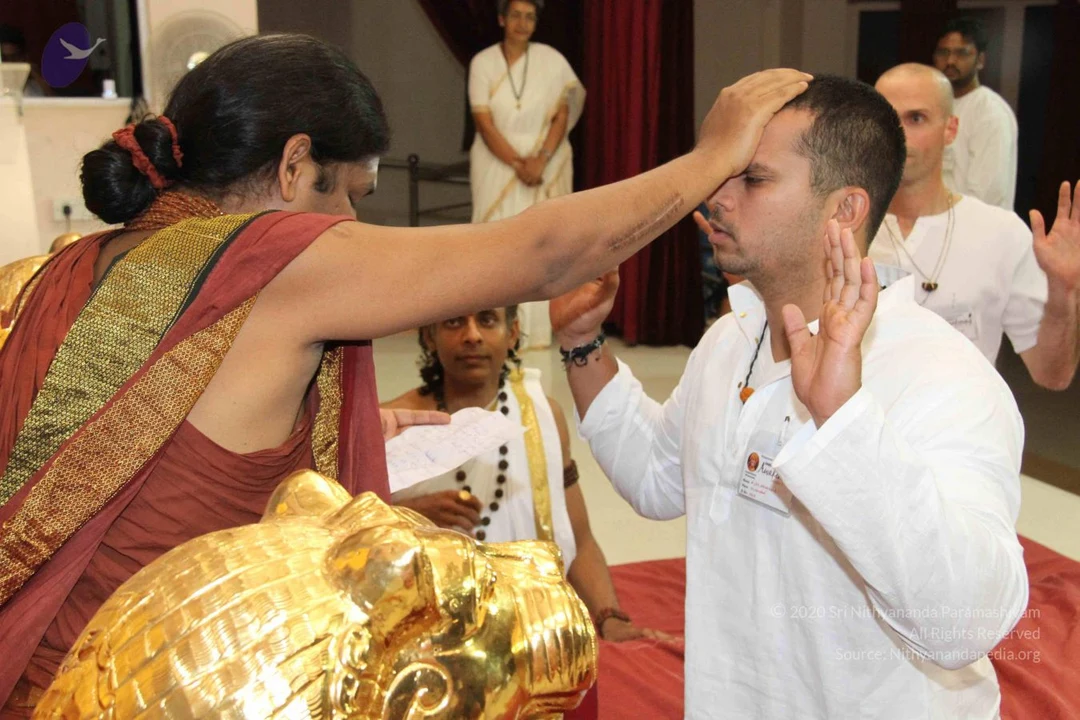
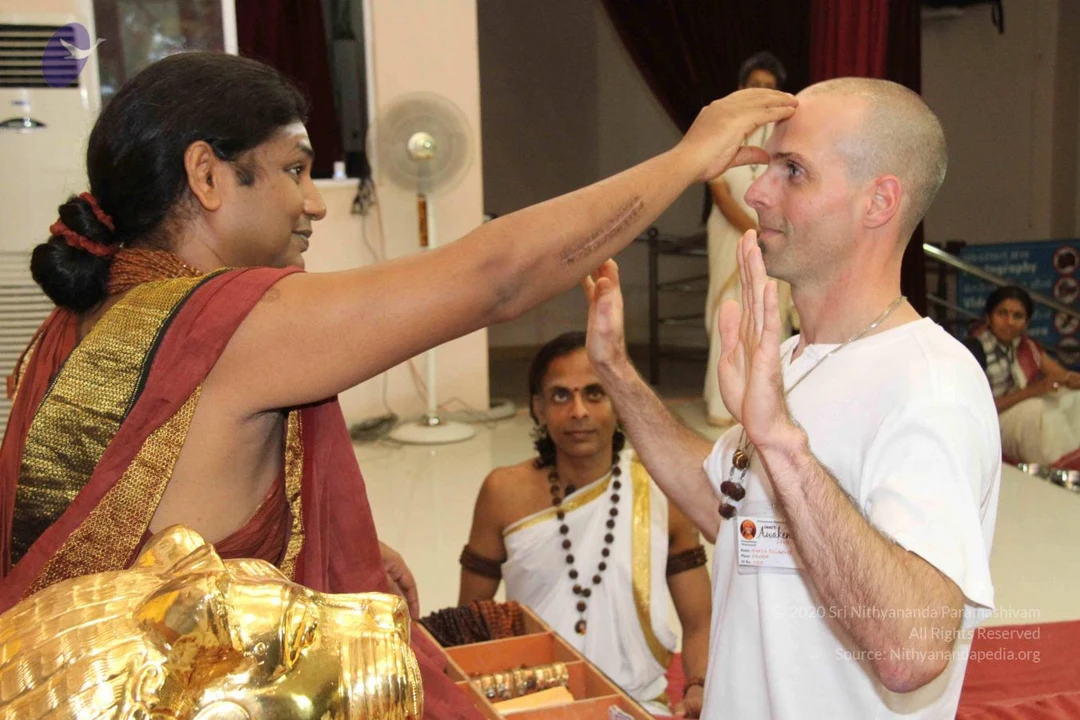
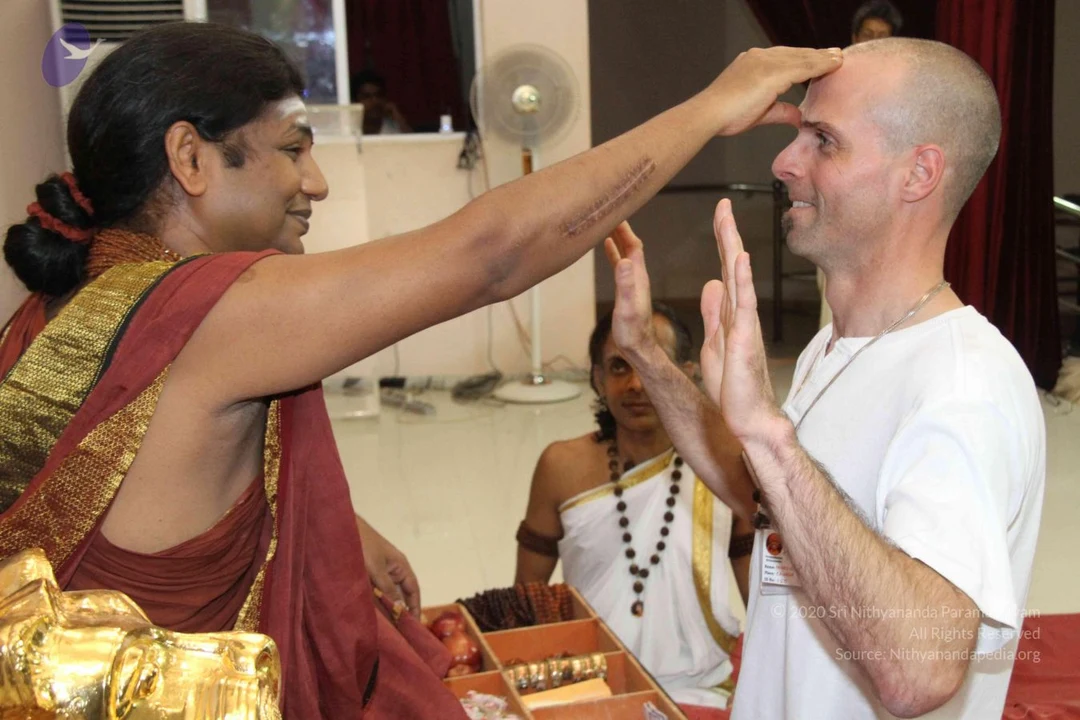
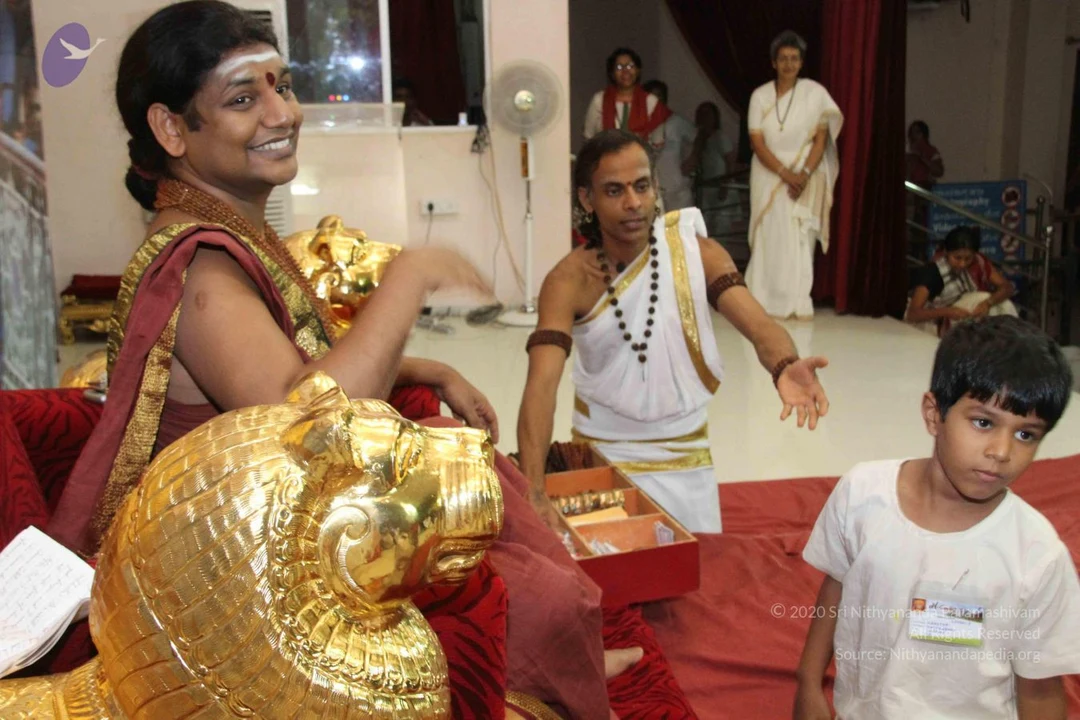
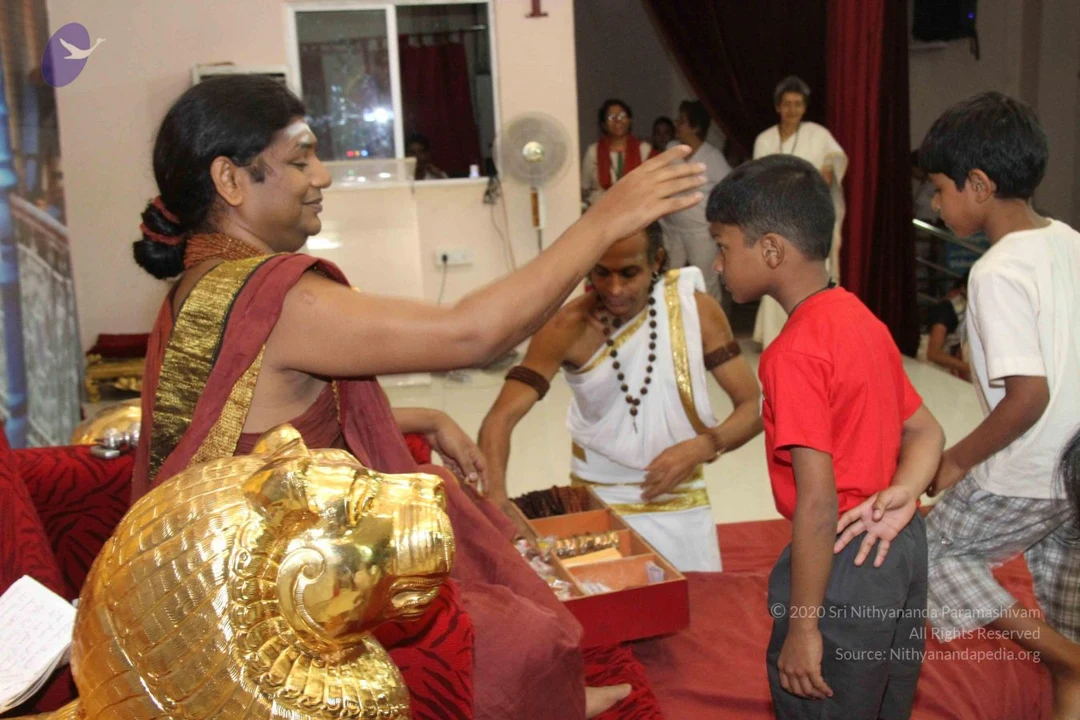
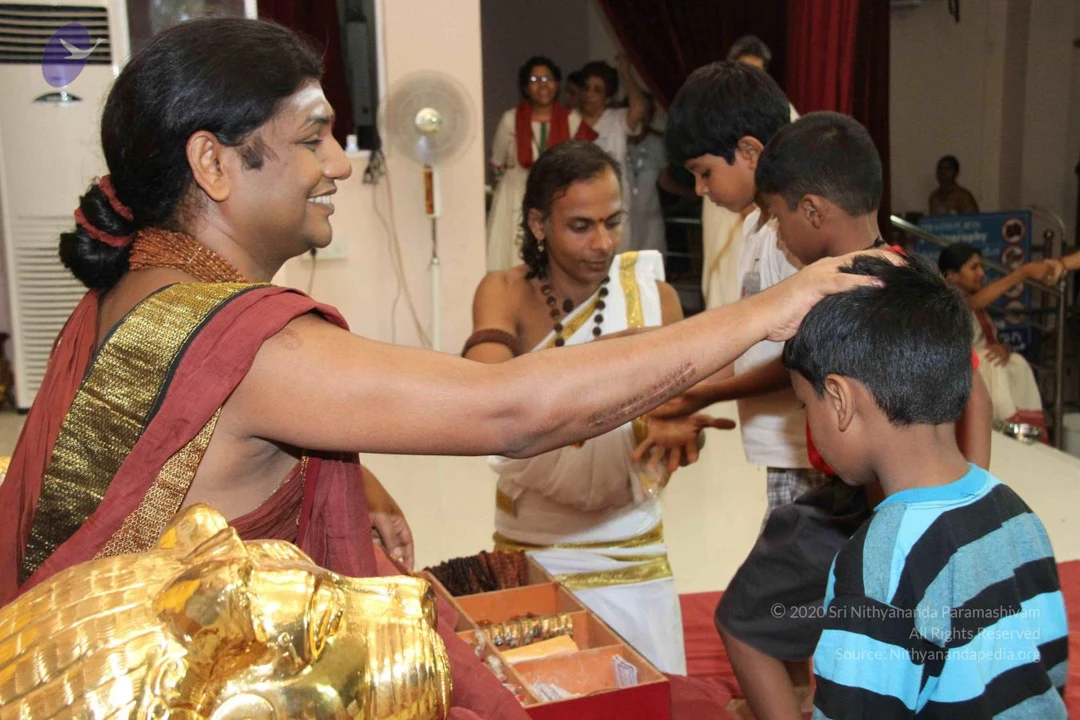
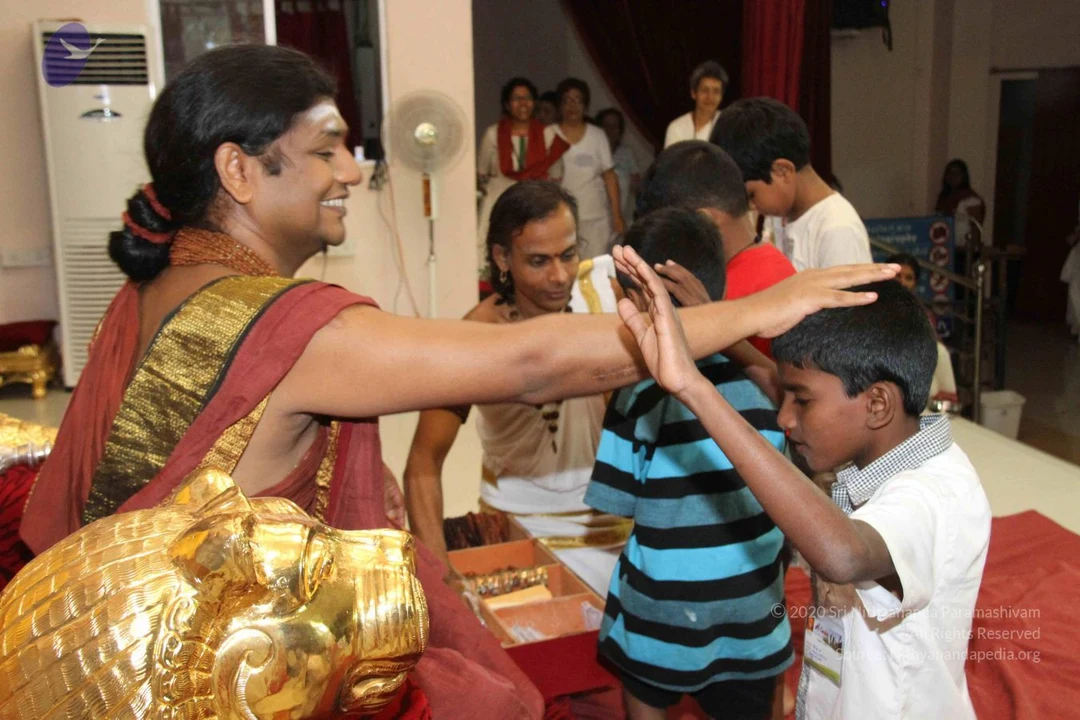
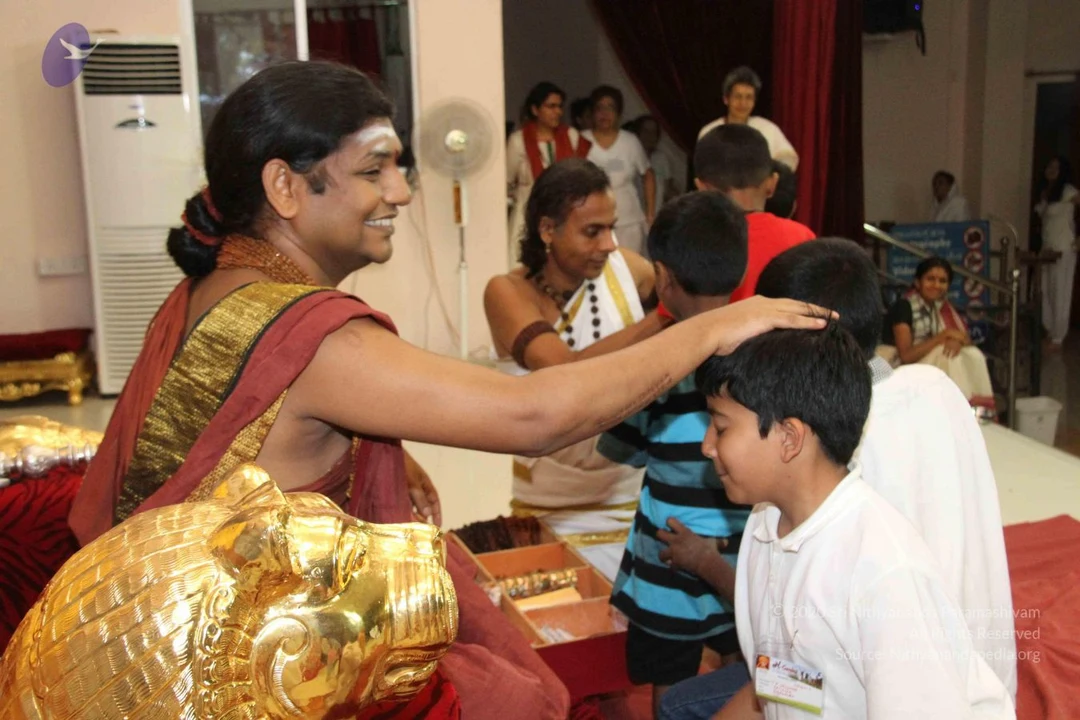
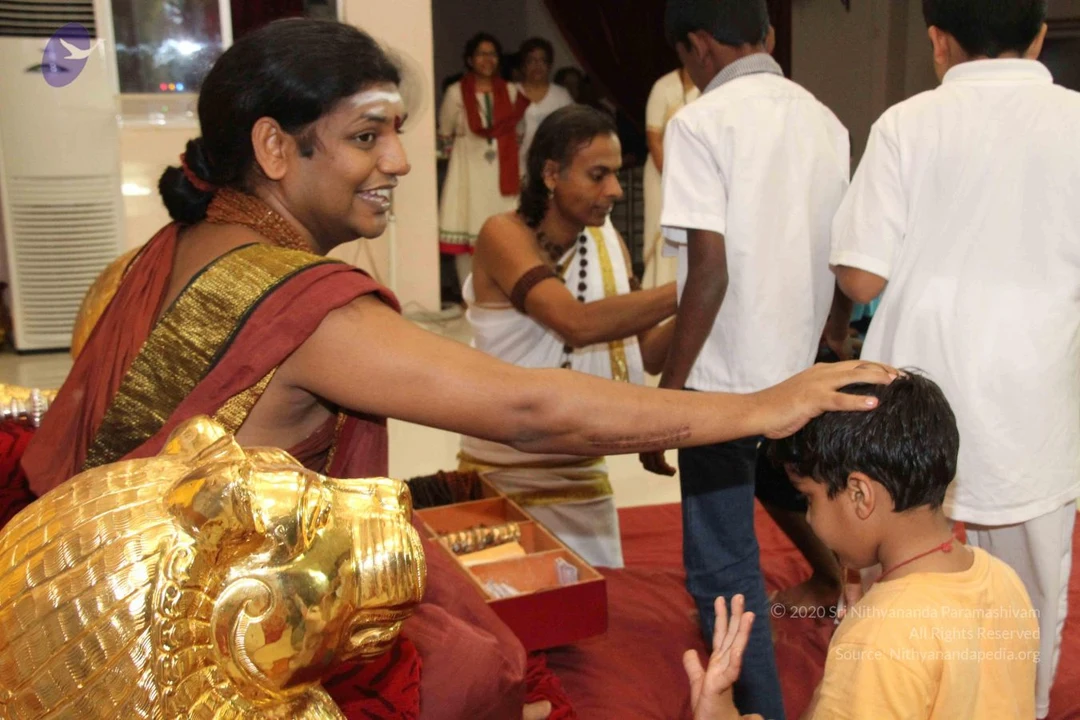
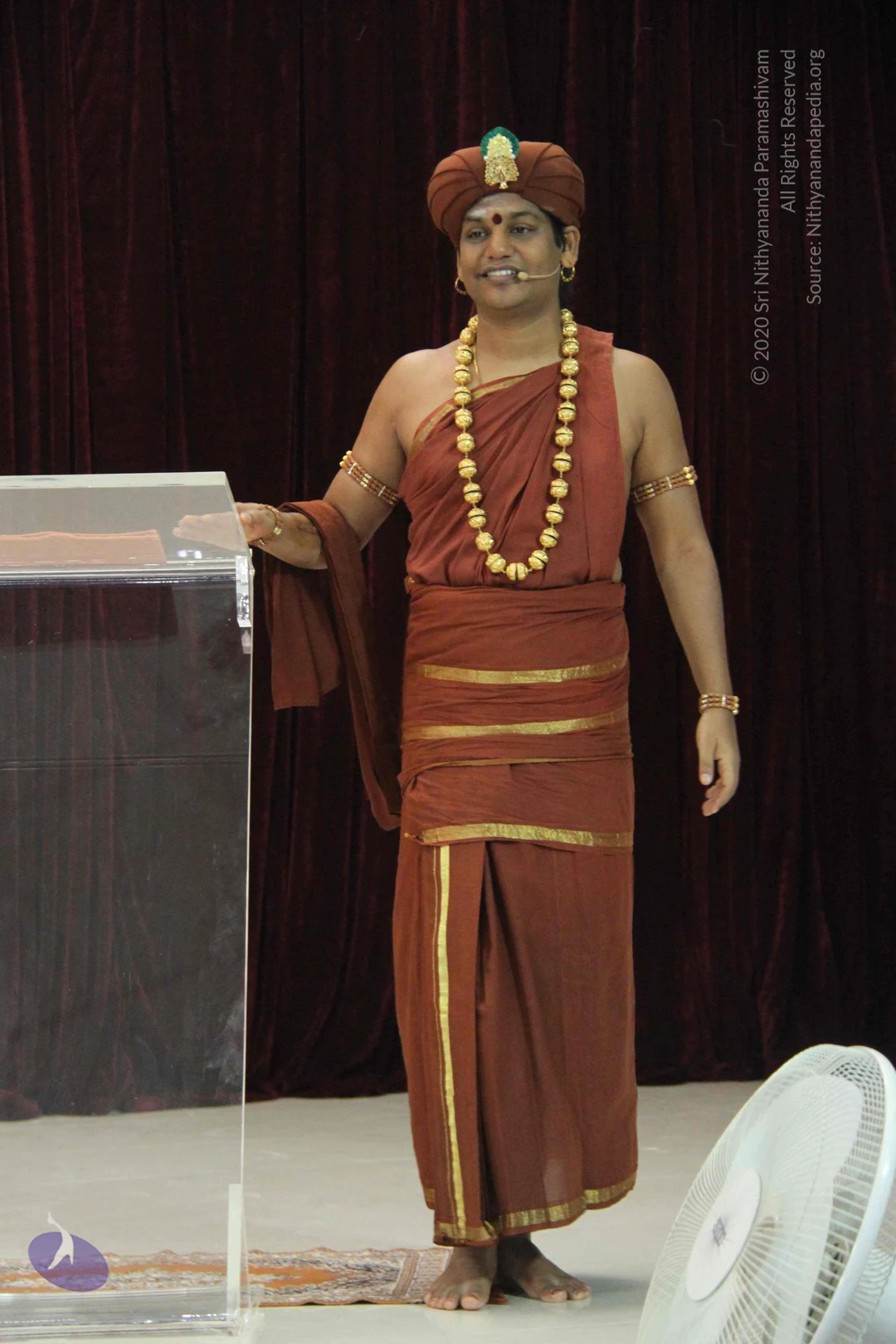
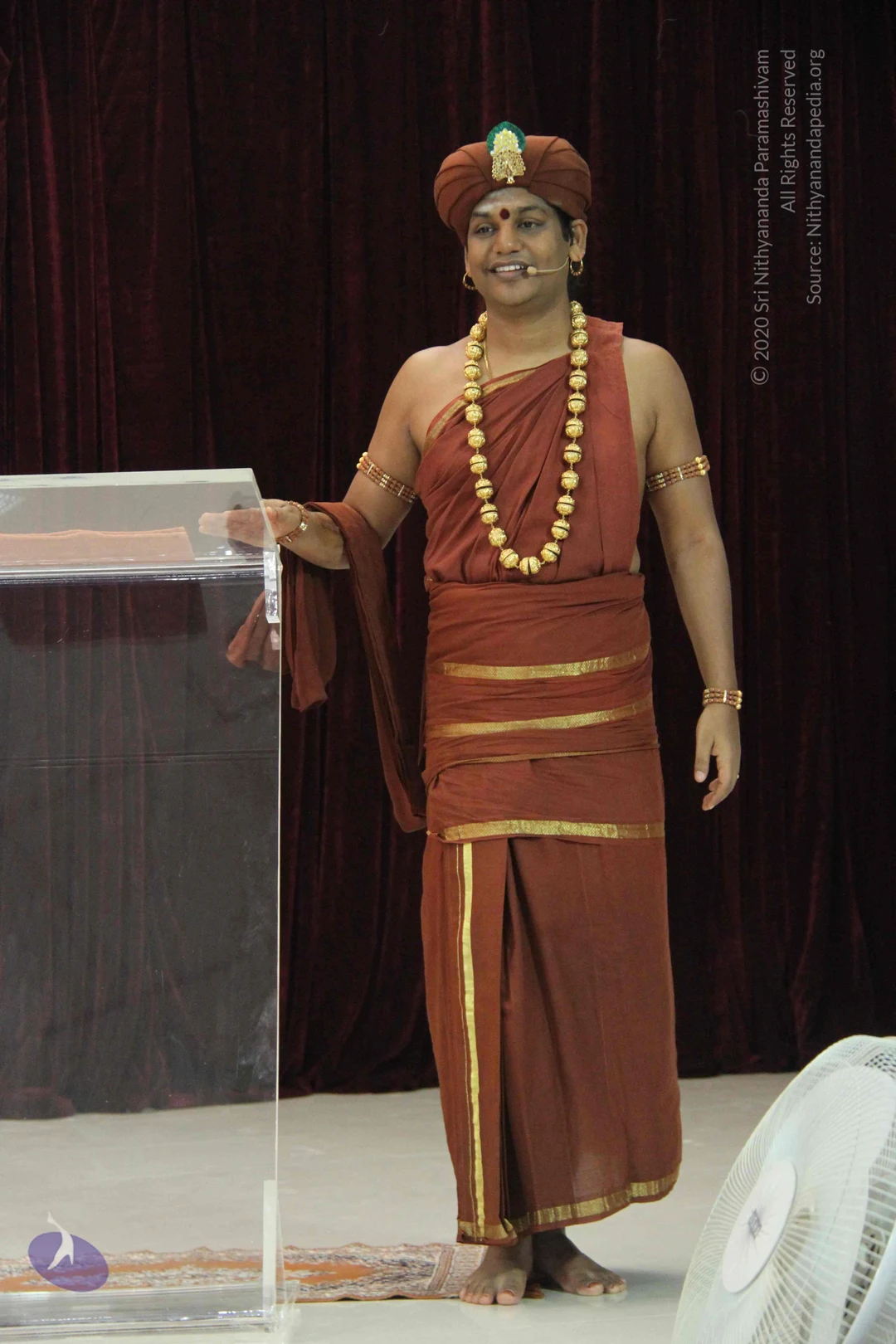
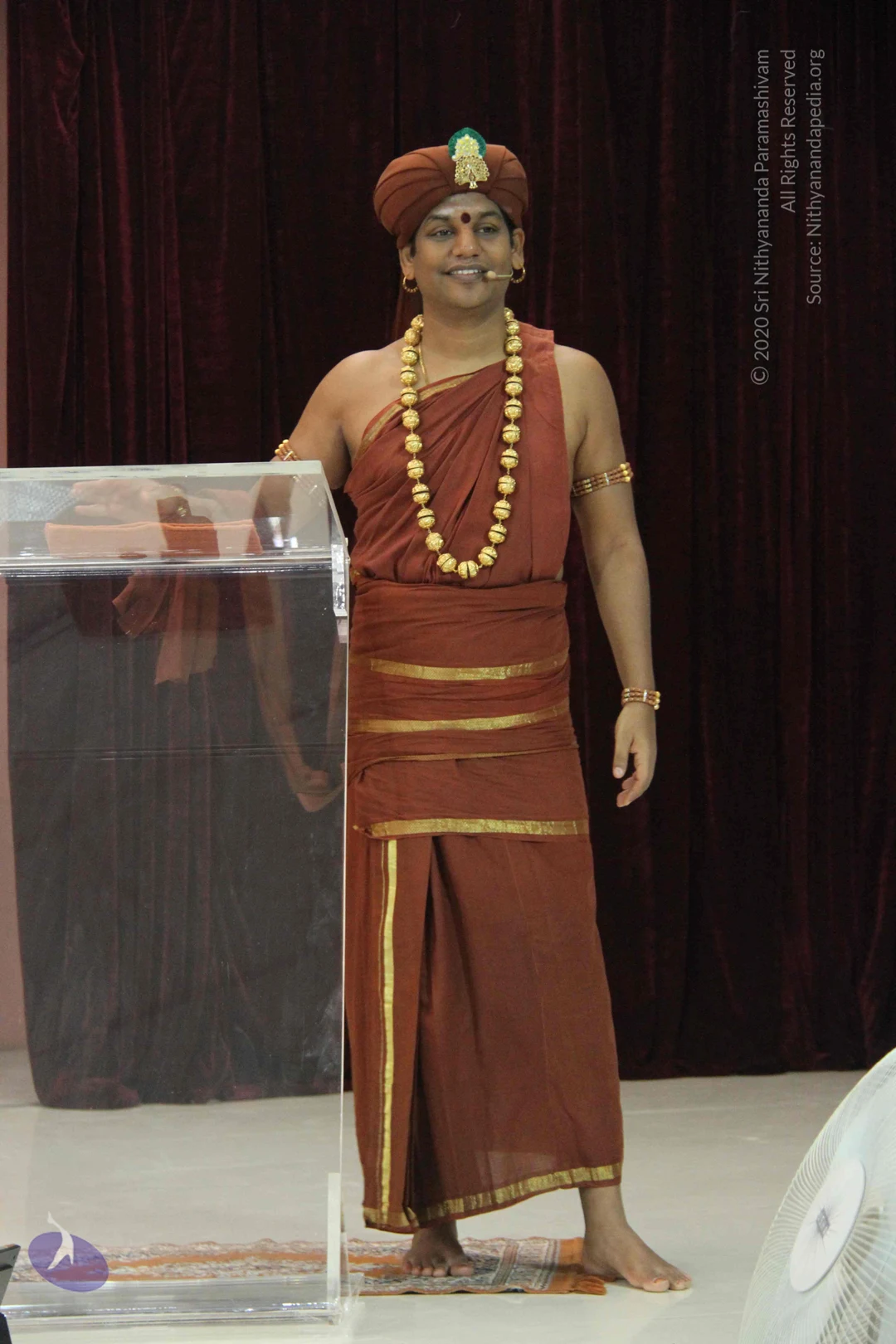
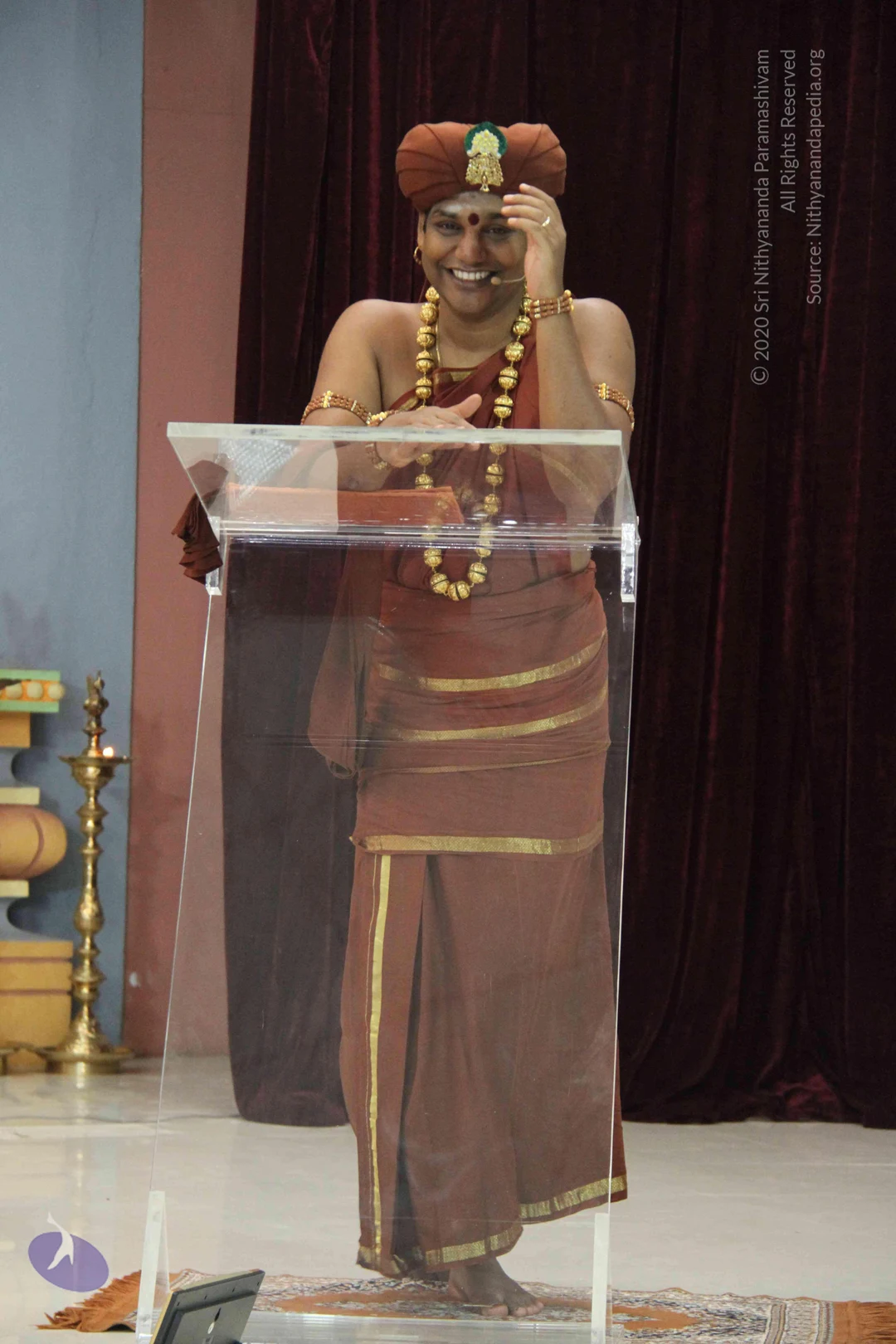
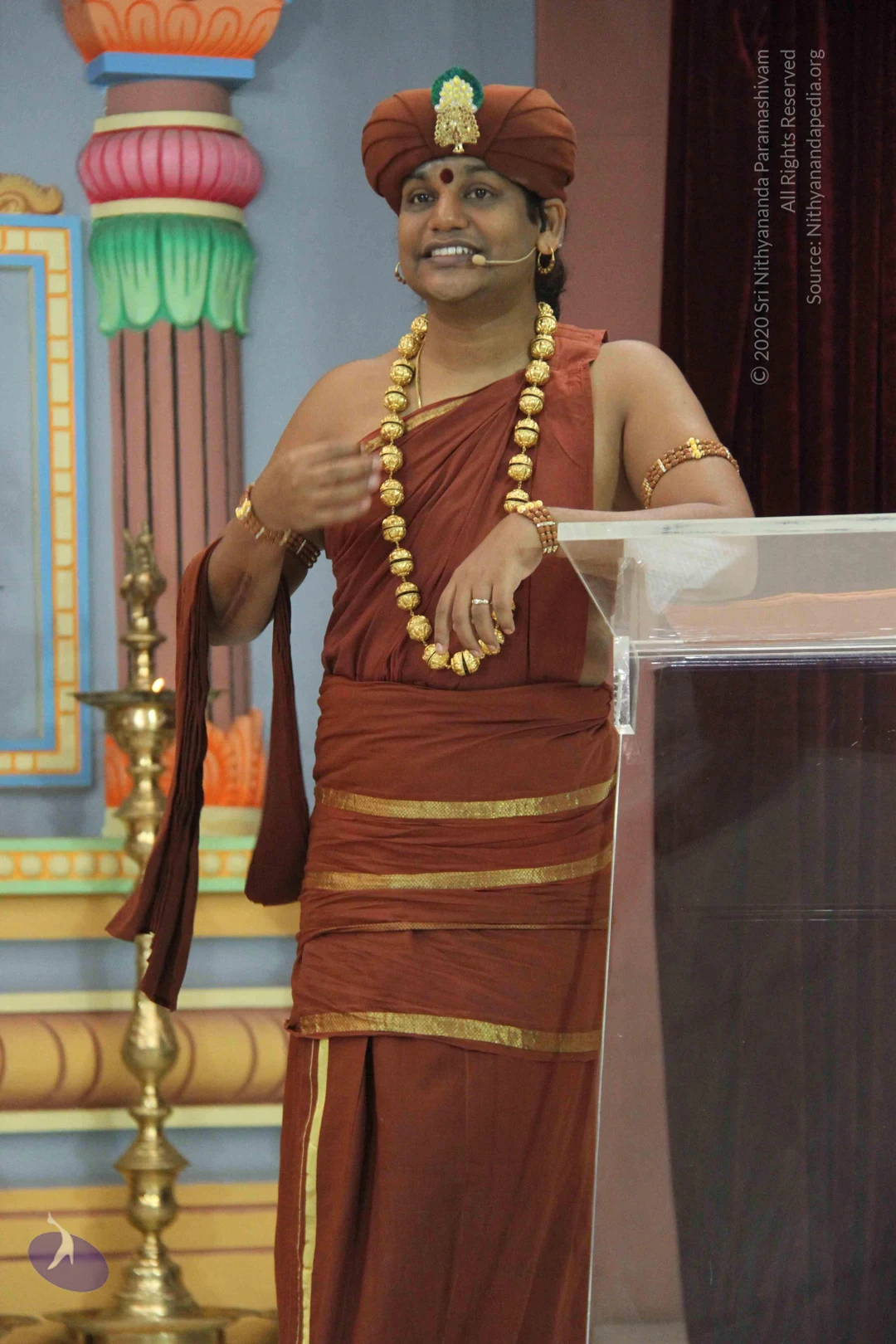
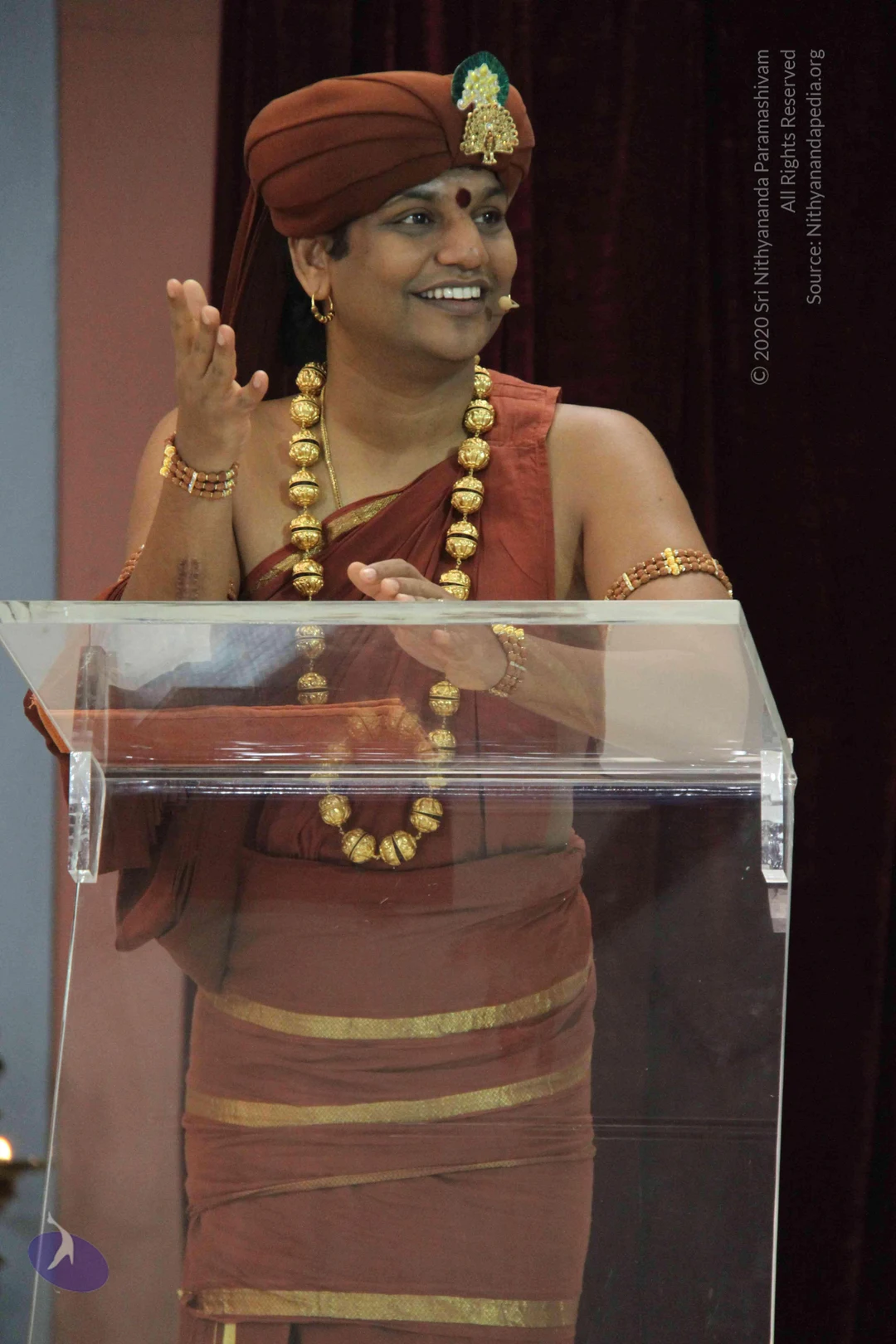
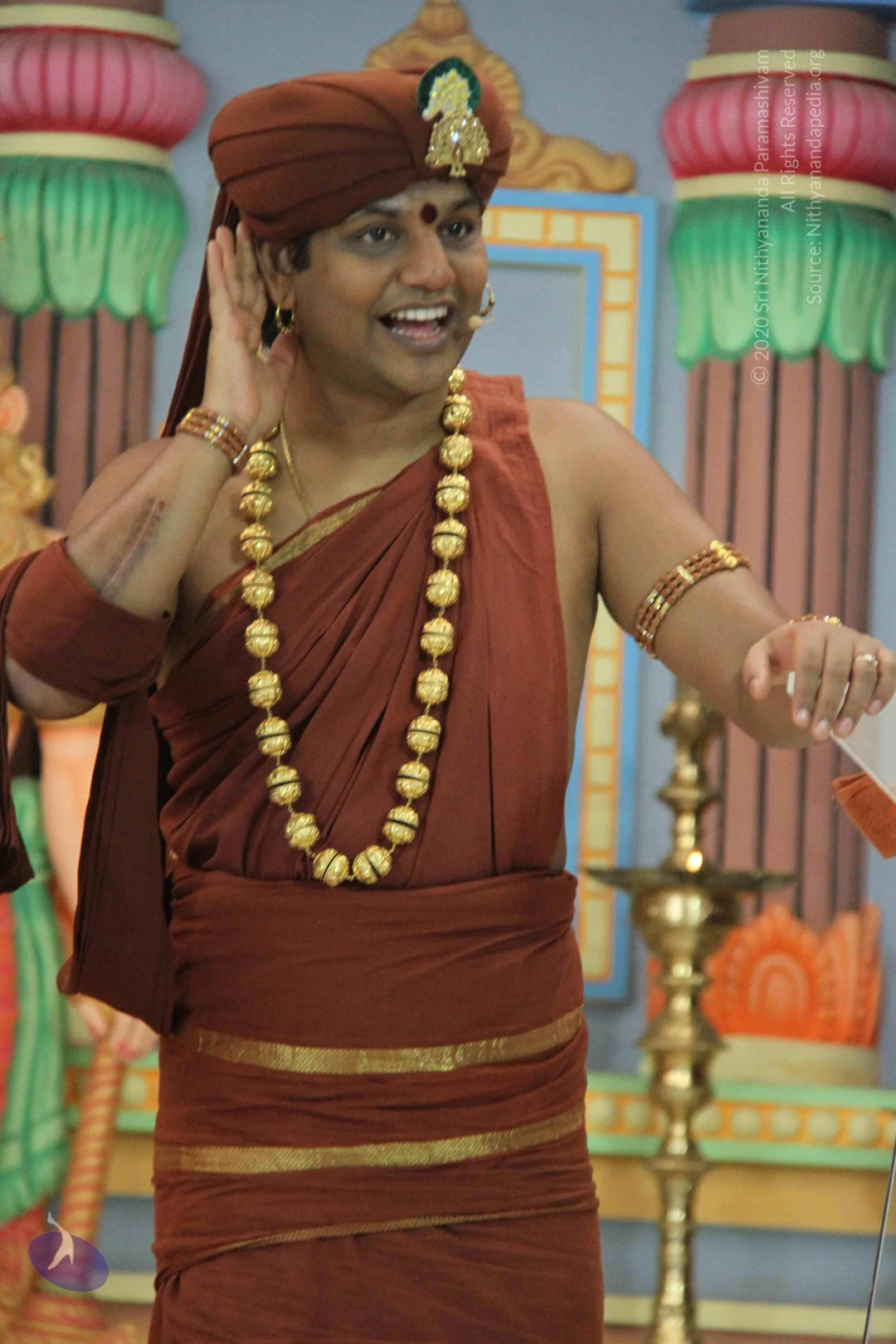
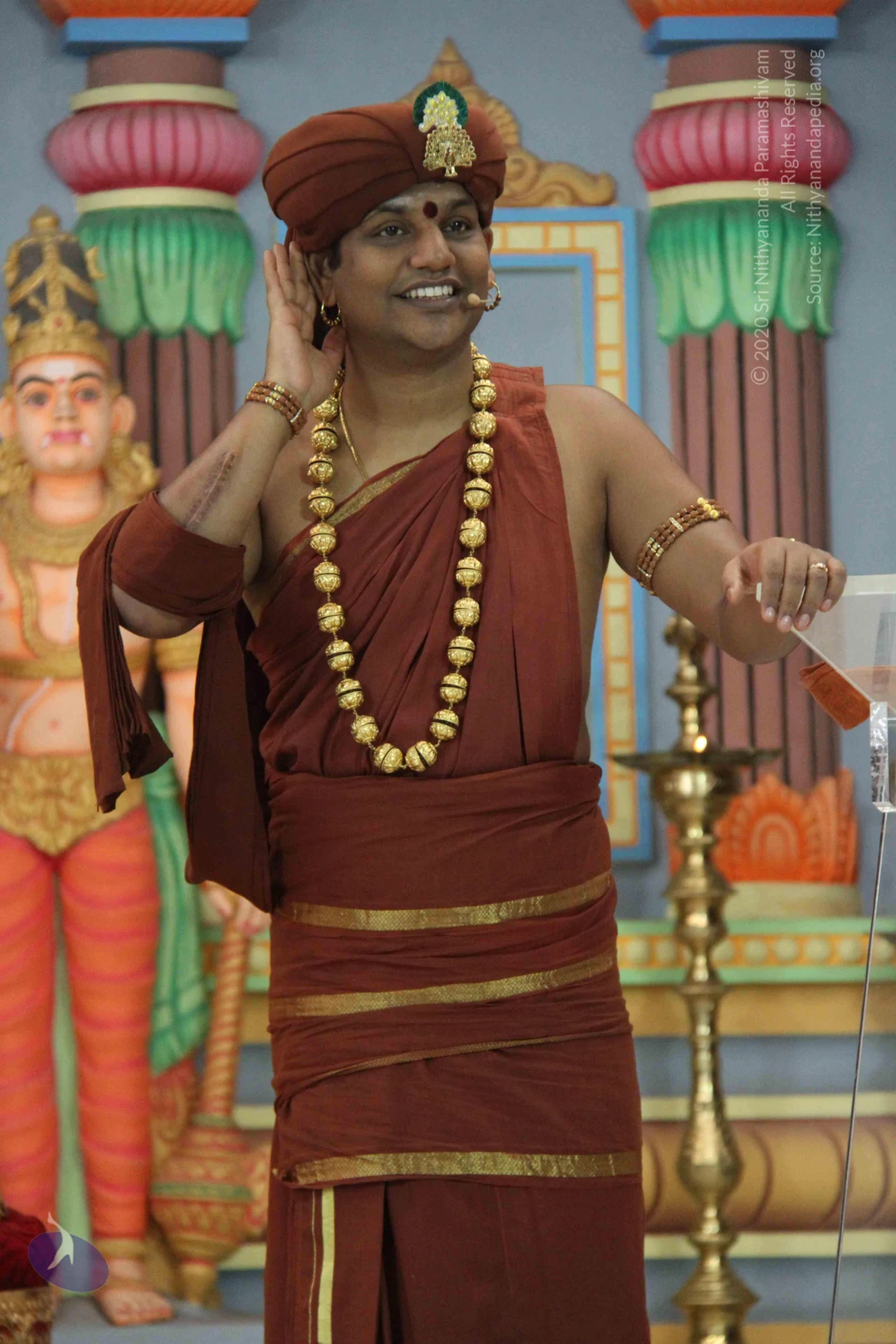
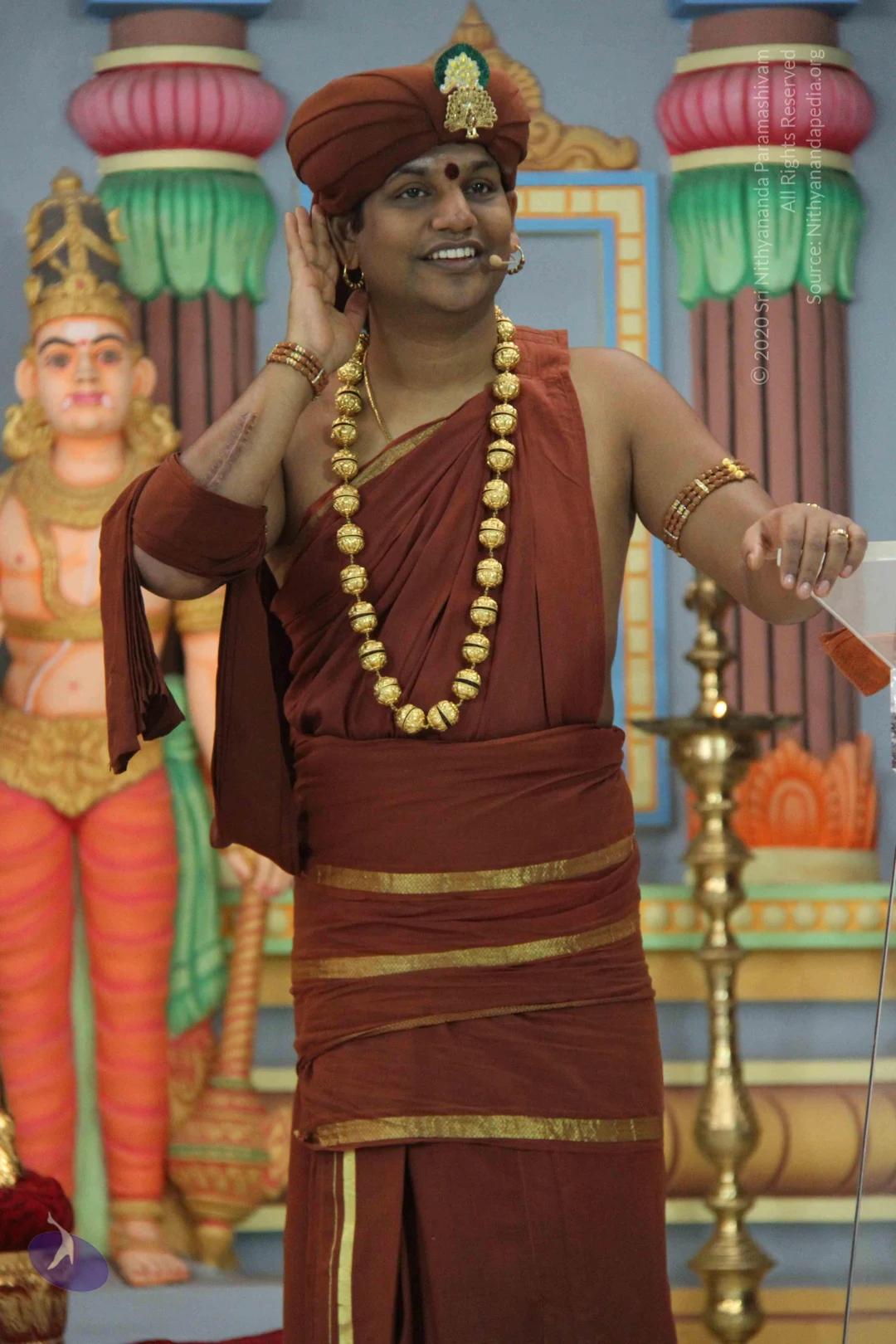
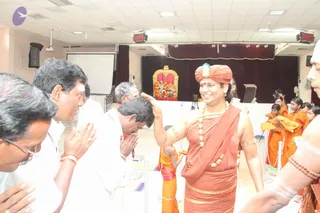
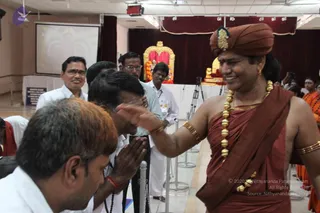
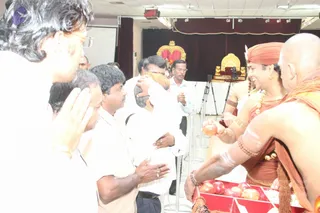
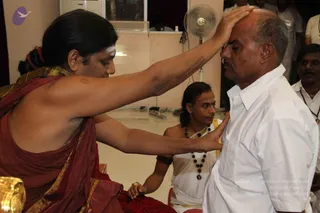
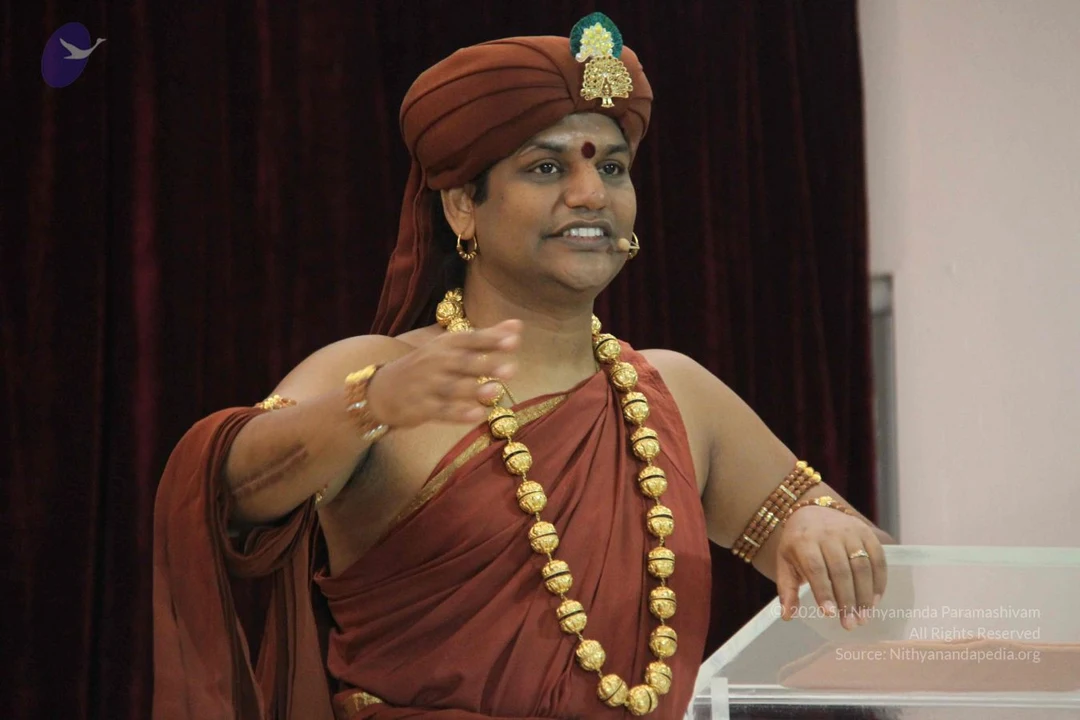
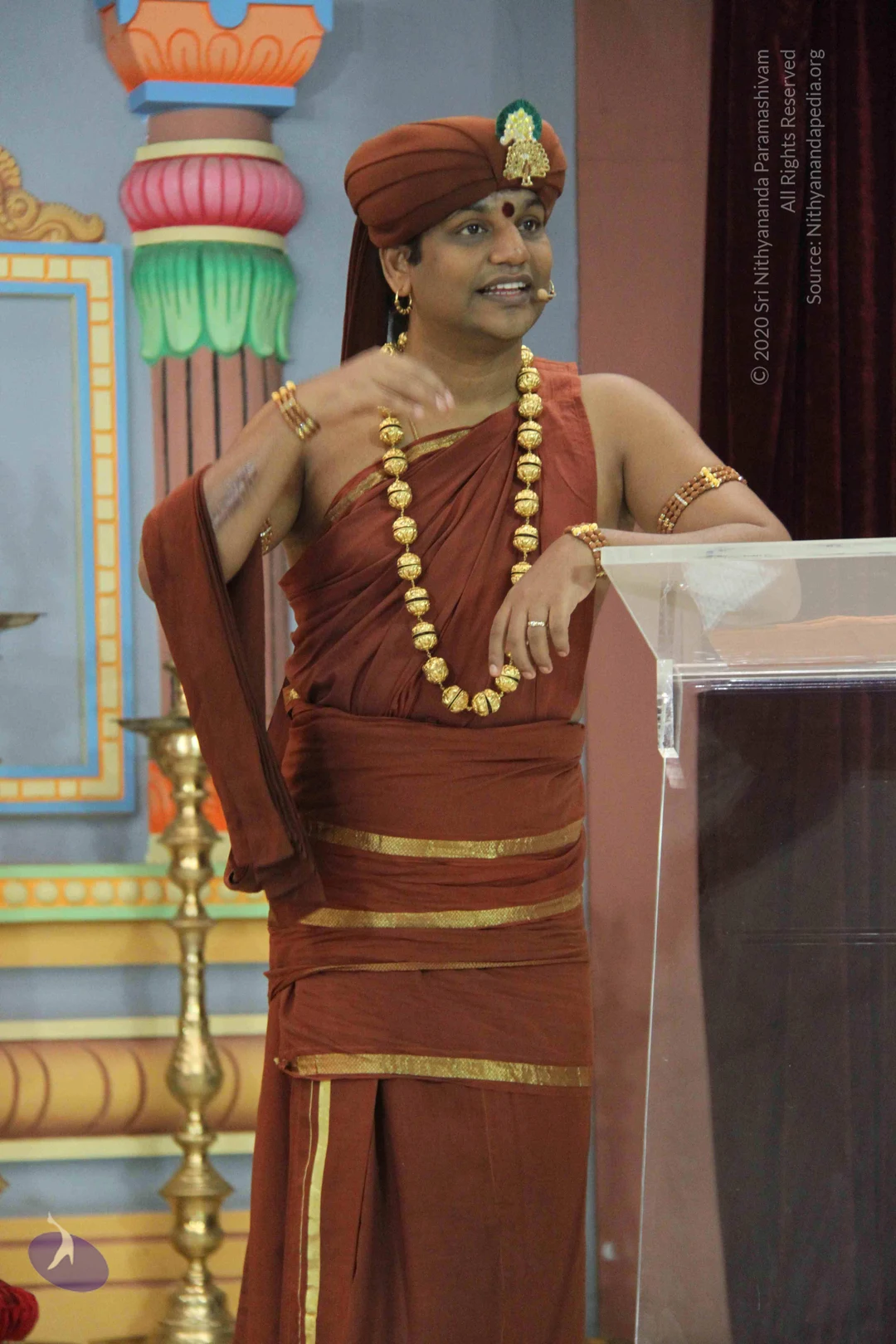
A person stands at a clear acrylic lectern speaking into a headset microphone on a stage. The person wears a rust-orange turban with a green and gold ornament, a rust-orange draped garment, a heavy gold bead necklace, gold armlets and gold bangles, and has a red bindi. Behind the lectern hangs a deep maroon velvet curtain. To the left are brass oil lamps and a painted decorative column in pink, green and orange with a blue framed panel.A photograph inside a bright hall with pink walls, red curtained windows and ceiling lights, filled with standing devotees. In the centre-right, a smiling man in a maroon-red turban with a green and gold ornament, a gold bead necklace and a maroon wrap raises his right hand in greeting while people reach toward him. Behind him, a man in white dhoti with gold border and rudraksha beads stands near a dark-red curtain with a small golden deity image. An elderly bald man in white with an orange-red shawl leans forward at left. Swamiji (probable) is the central figure in the maroon turban and gold necklaces, shown blessing devotees in a darshan line.Indoor blessing scene in a hall with a red floor covering. A person with long dark hair in a low bun, wearing a red-maroon garment with gold border, reaches to touch the forehead of a man in a white shirt with a visitor badge. The blessed man raises his palms in greeting. Beside him a seated man in white clothing with gold-bordered shoulder cloth and a rudraksha mala watches. A golden ritual object is in the lower left foreground. Standing people in white clothes and a woman in a red sari are visible in the background near a white wall and a fan.

November 01 2013

Original wiki page

Photos from this day

View all 281 photos

PADUKA POOJA

14 photosSource gallery
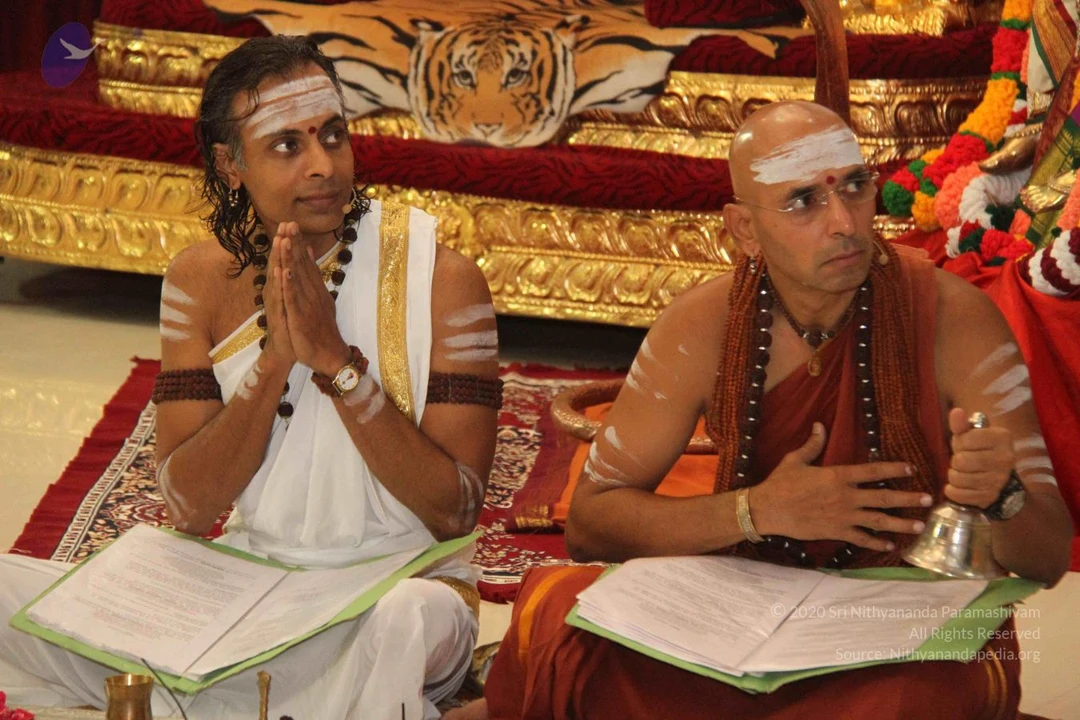
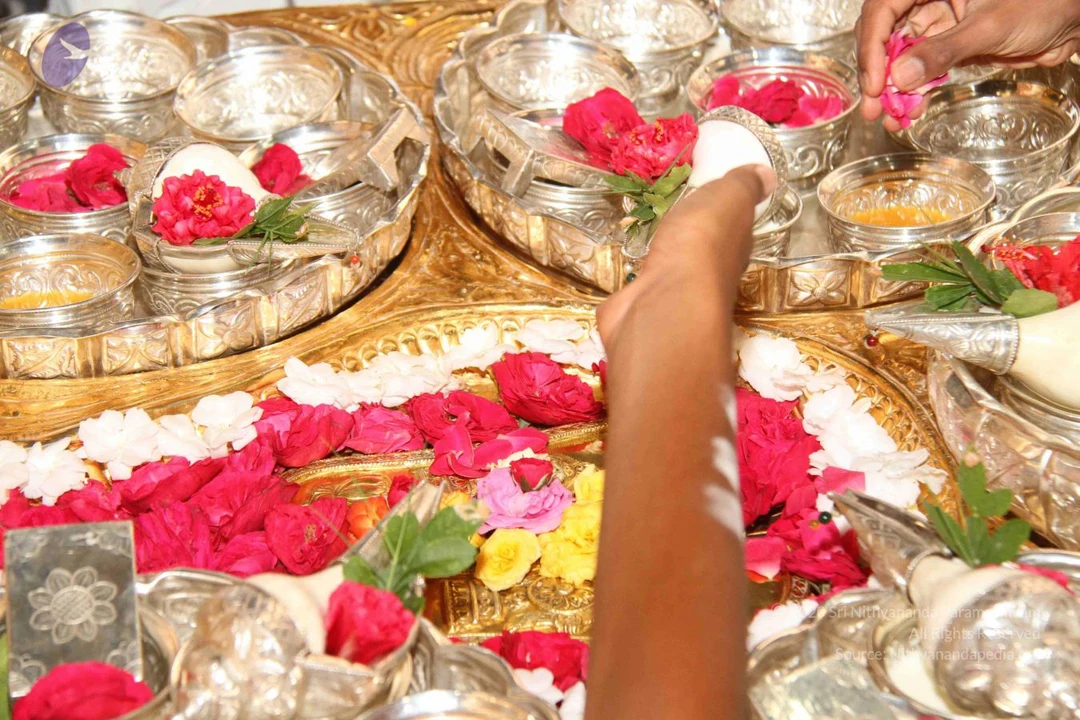
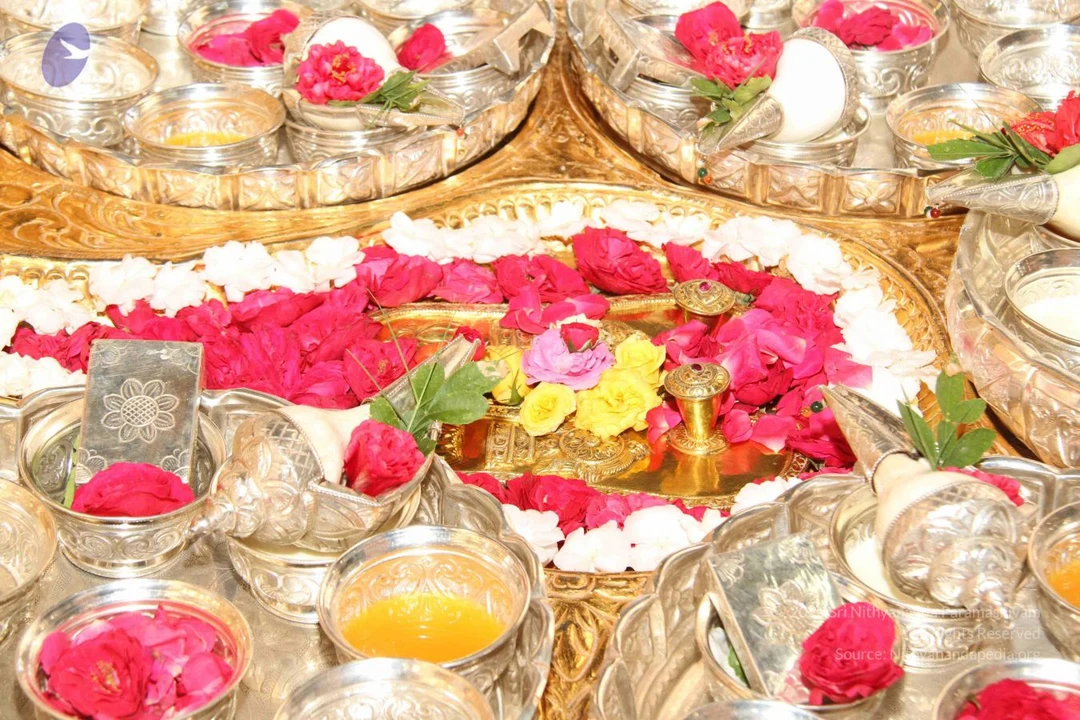
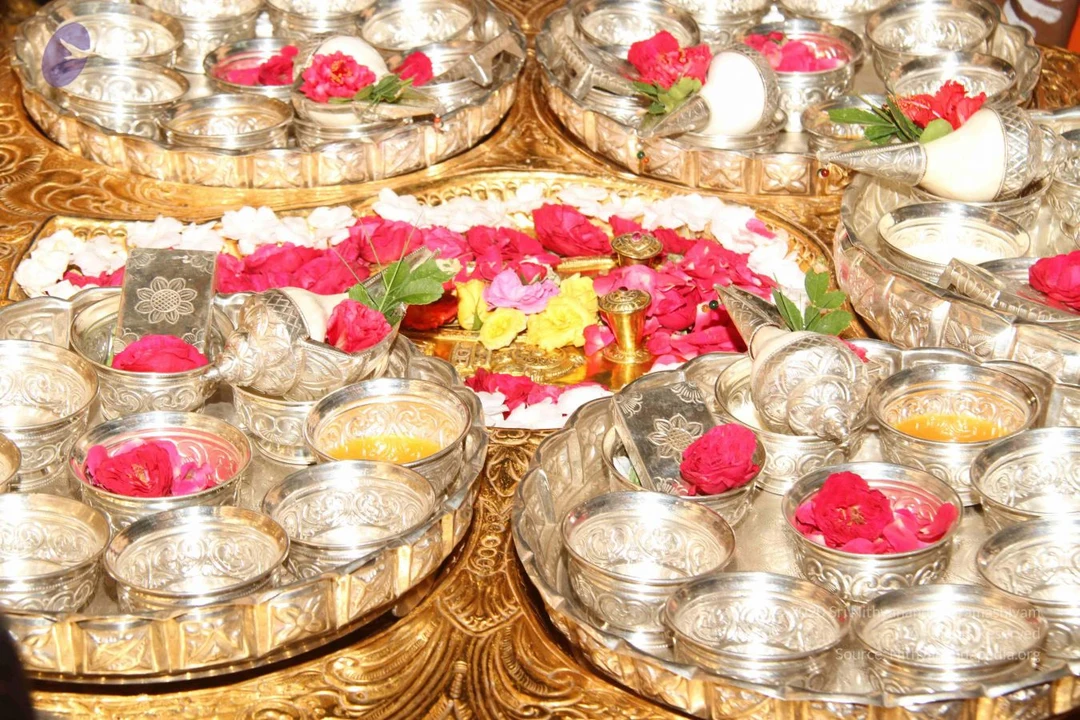
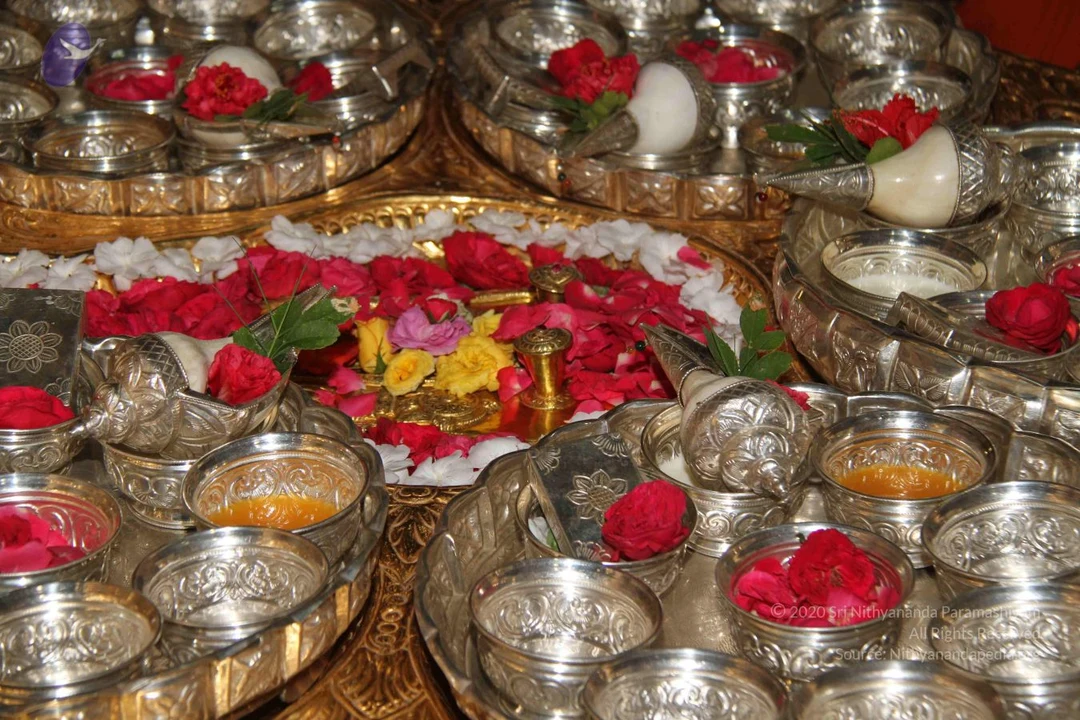
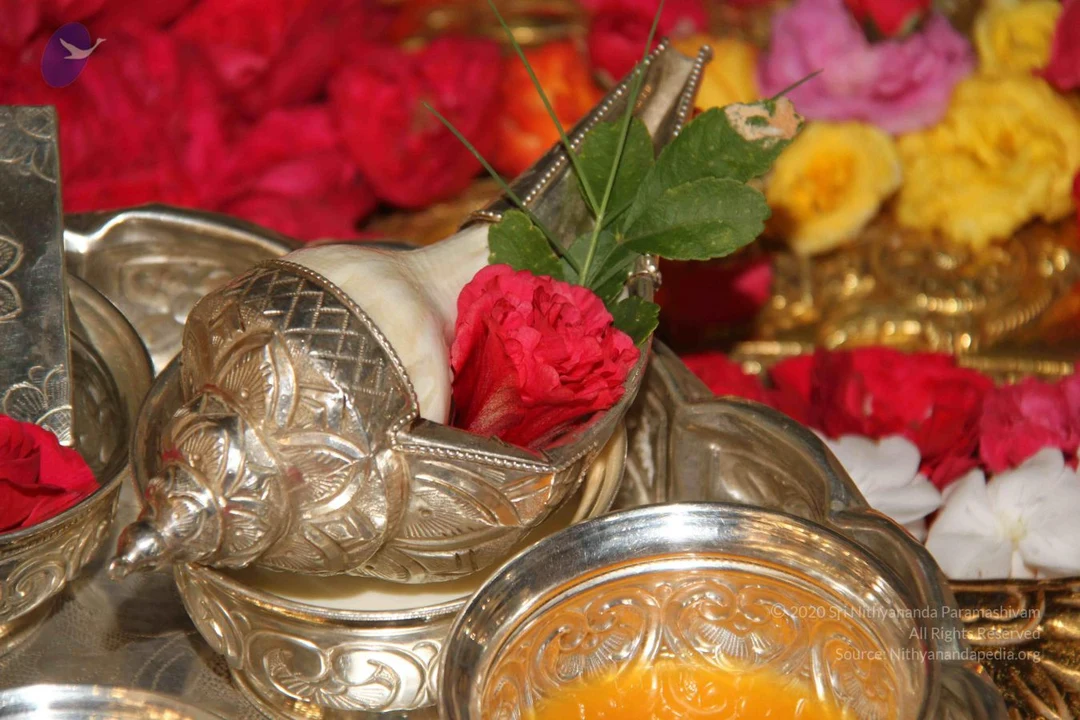
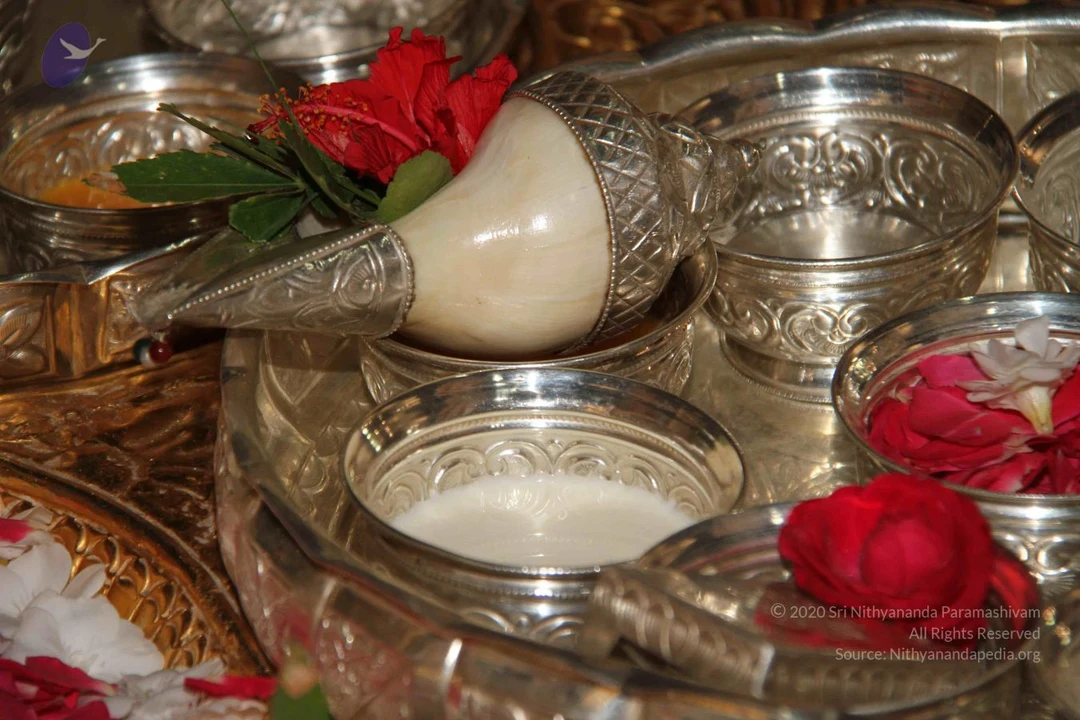
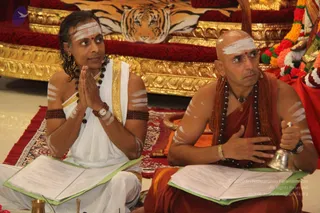
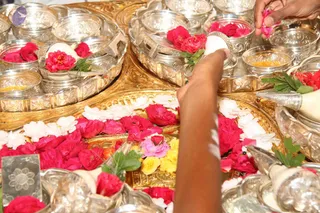
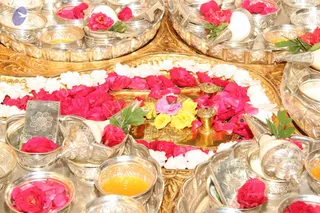
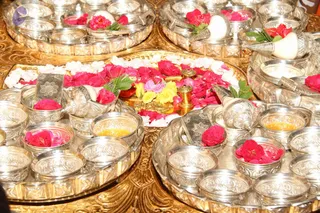
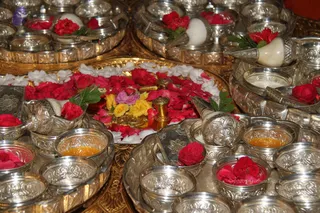
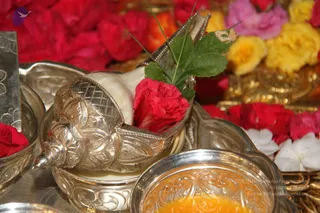
A photograph of two men seated on a red and patterned mat before a gold throne with a tiger-face cushion behind them, a setting. The man on the left wears white ritual dress with a gold-bordered cloth, rudraksha bracelets and beads, and holds his palms together in namaskar, with white horizontal tilaka lines on his forehead and arms. The man on the right wears orange-saffron robes and a long rudraksha mala, holds a silver handbell in his right hand and presses his left hand to his chest, with an open book on his lap. Marigold garlands hang at the upper right. Both have white tilaka marks. No identity is attributed to either man from appearance.Close view of a ritual offering arrangement on a gold tray. A hand. Silver bowls hold red and pink roses, white flowers and green leaves, with small silver cups of yellow liquid nearby. Silver vessels and a silver pitcher with a spout sit around the tray. The scene reads as a puja with flower offerings.Close-up of silver and gold ritual vessels arranged for abhishekam or puja. A large gilded tray in the centre holds a ring of white and pink rose petals with yellow and pink flowers, a small brass kalasha-style cup, and a brass lamp stand. Surrounding silver bowls hold saffron-yellow liquid and rose petals, with silver spouted pourers and a silver rectangular box with a floral engraving. Green leaves are tucked among the offerings. No people are visible.Close-up of a ritual arrangement of silver and gold puja vessels on ornate brass trays. Silver bowls and small cups hold yellow liquid and pink petals, and silver spouted pots with leaf sprigs stand around a central gold plate heaped with pink, red, yellow and white flower petals. The arrangement looks like preparation for a puja or abhishekam offering. No people are visible in the frame.A photograph of a ritual puja arrangement on a large ornate brass and silver tray. Many small silver bowls and cups hold red roses, yellow marigold-like flowers, orange turmeric paste and white ritual flowers. Red and pink rose petals and white blossoms are scattered across the centre around a small brass lamp and ceremonial brass vessels. No people are visible; the scene shows only offerings and puja implements arranged for worship.Close-up photo of a ritual arrangement for puja. A white conch shell with a silver decorative cap sits among fresh red roses and green leaves on an engraved silver tray. Behind it, pink, yellow and white flowers fill the frame, with a silver bowl of yellow liquid in the foreground. No people are visible.

DEITY ARATI SWAMIJI
5 photosSource gallery
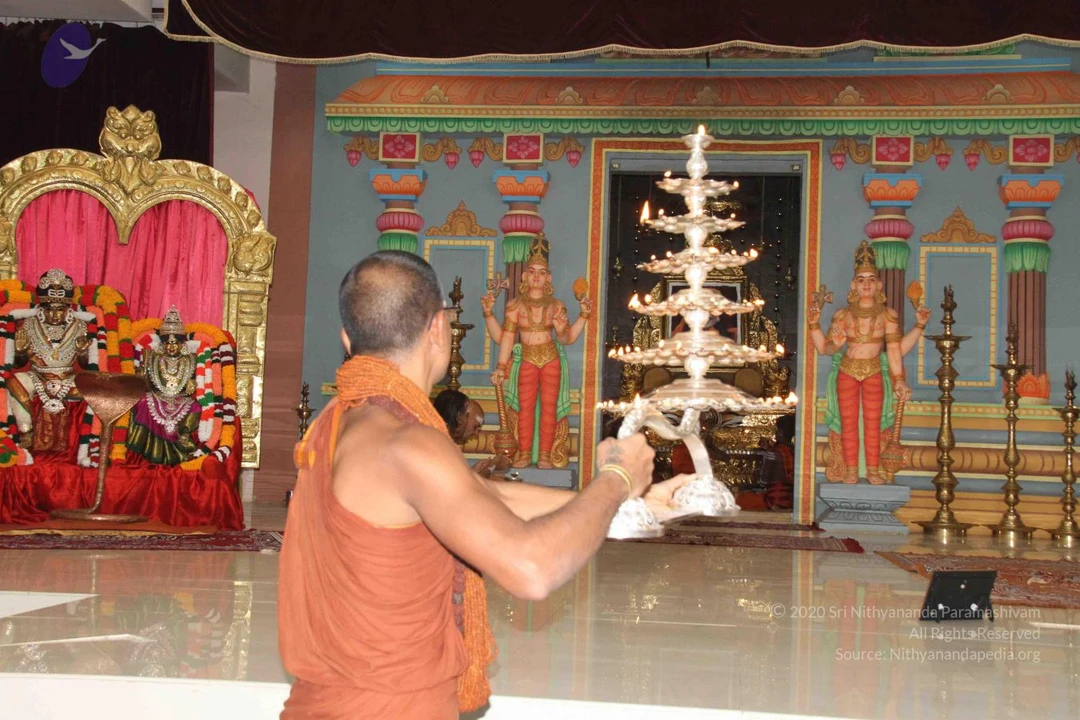
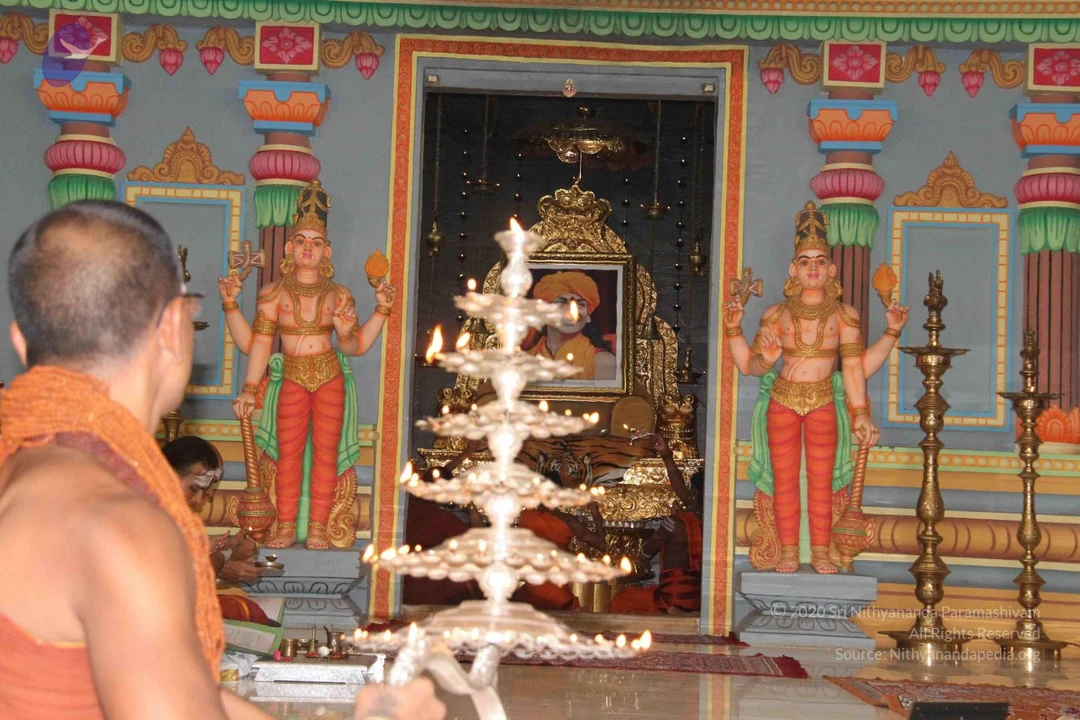
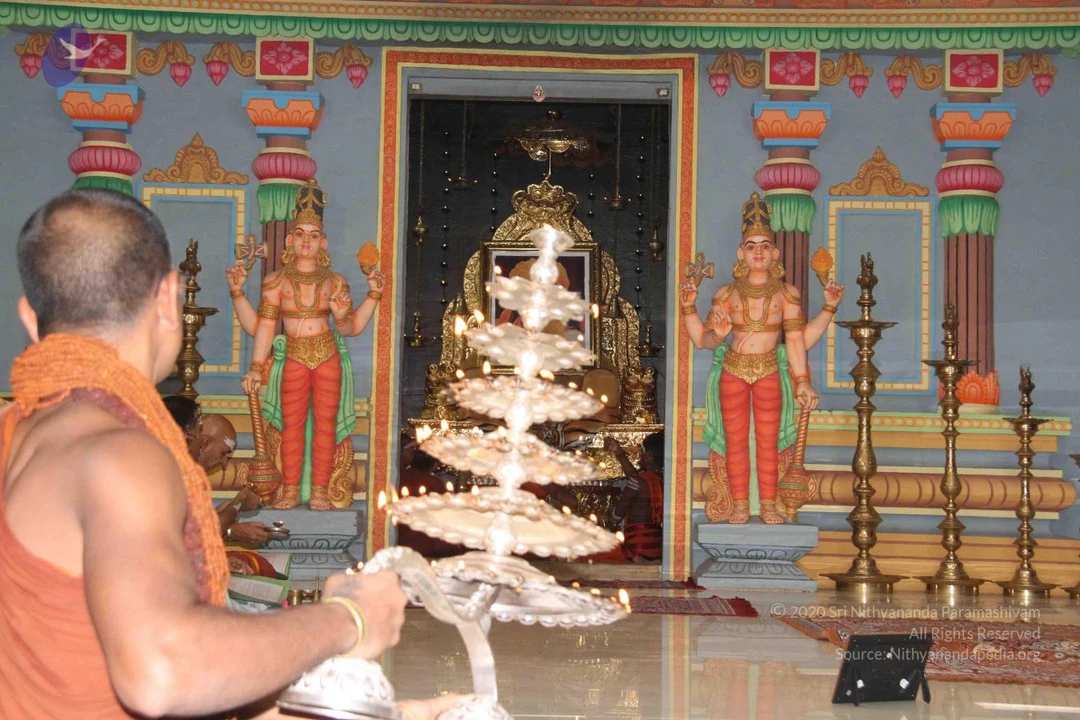
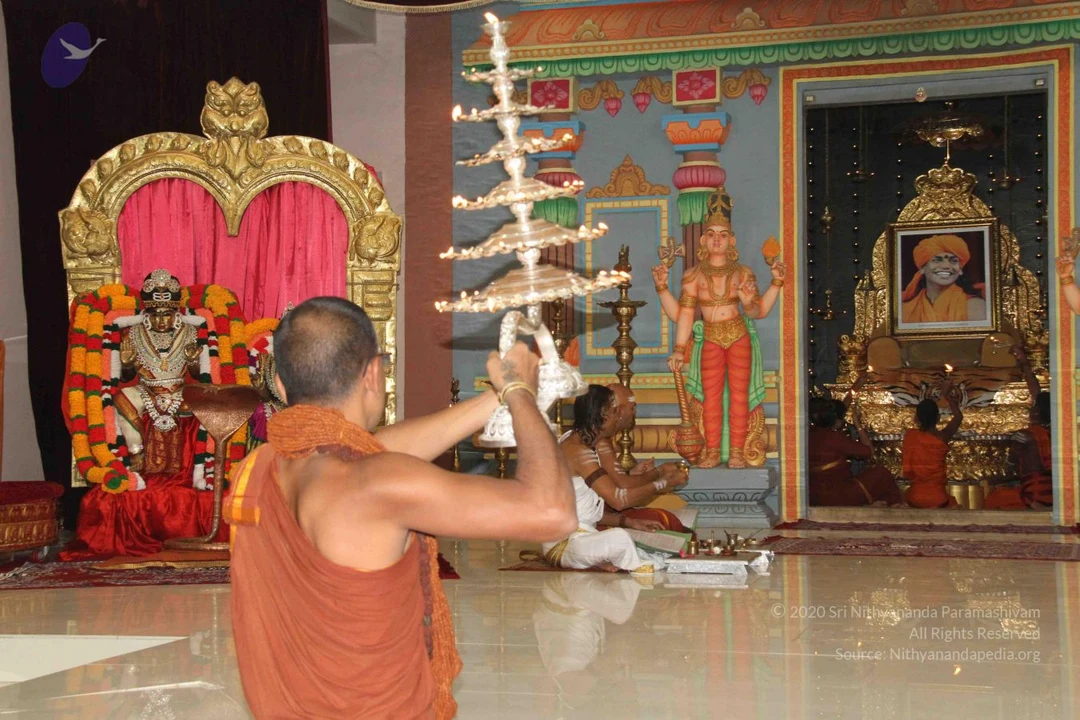
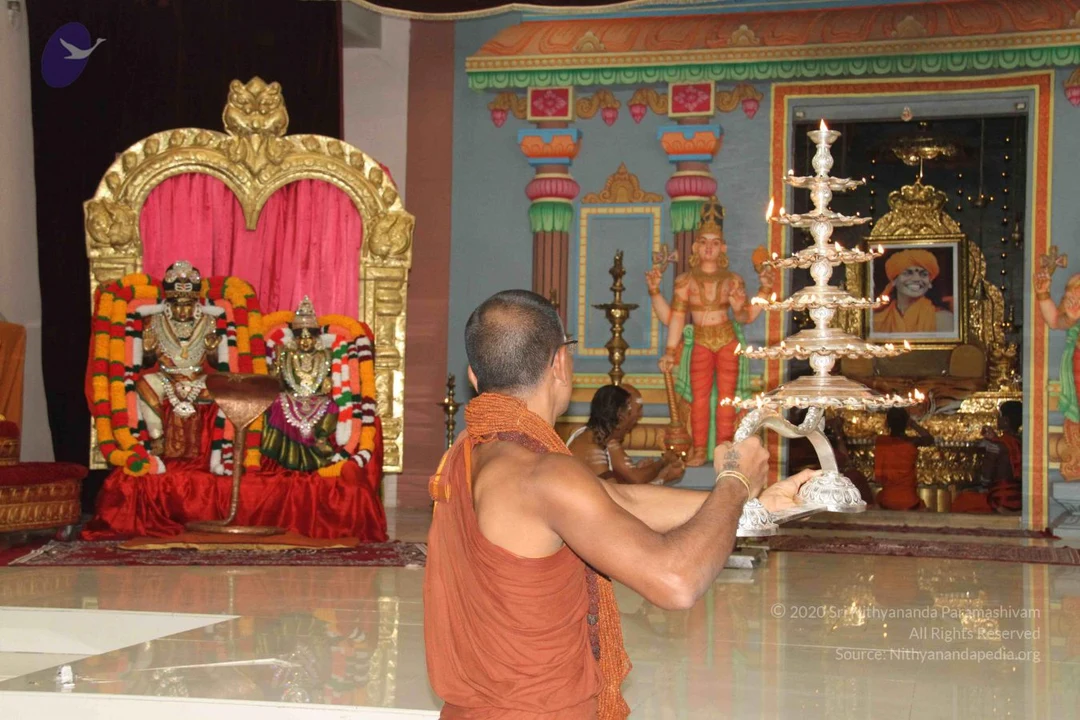
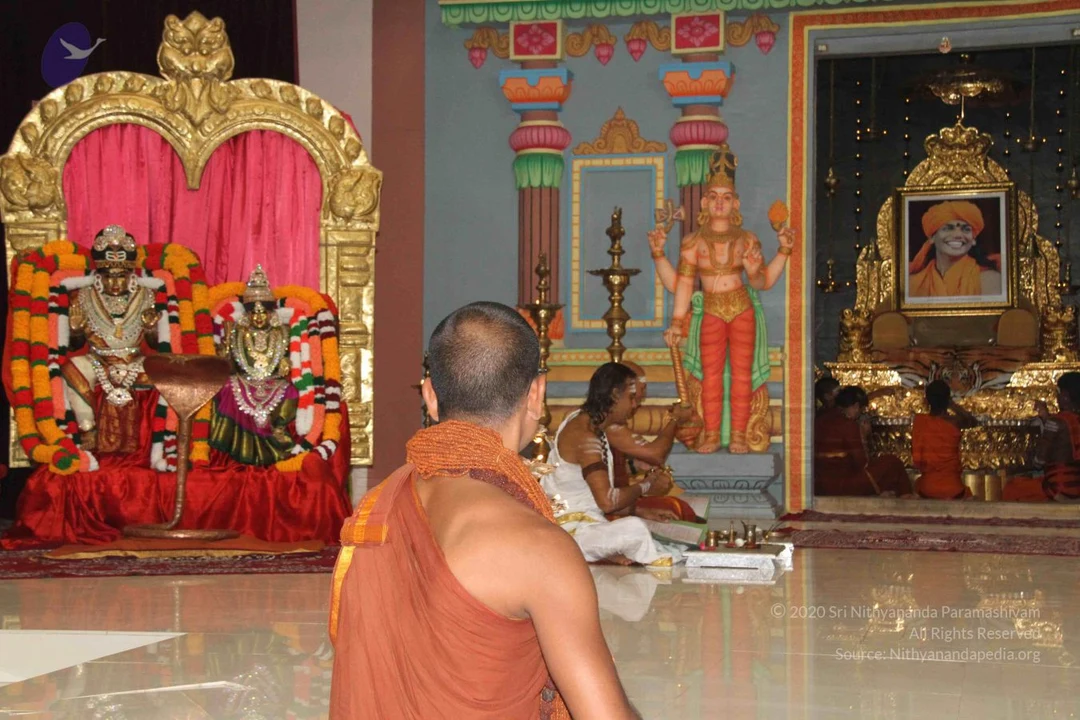
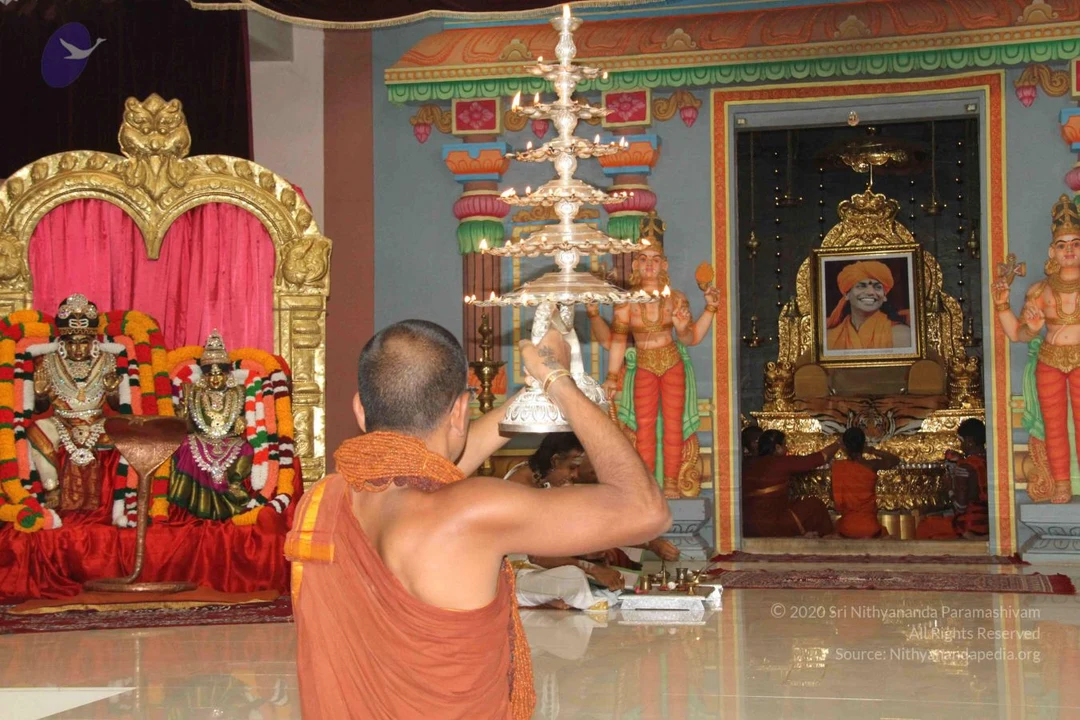
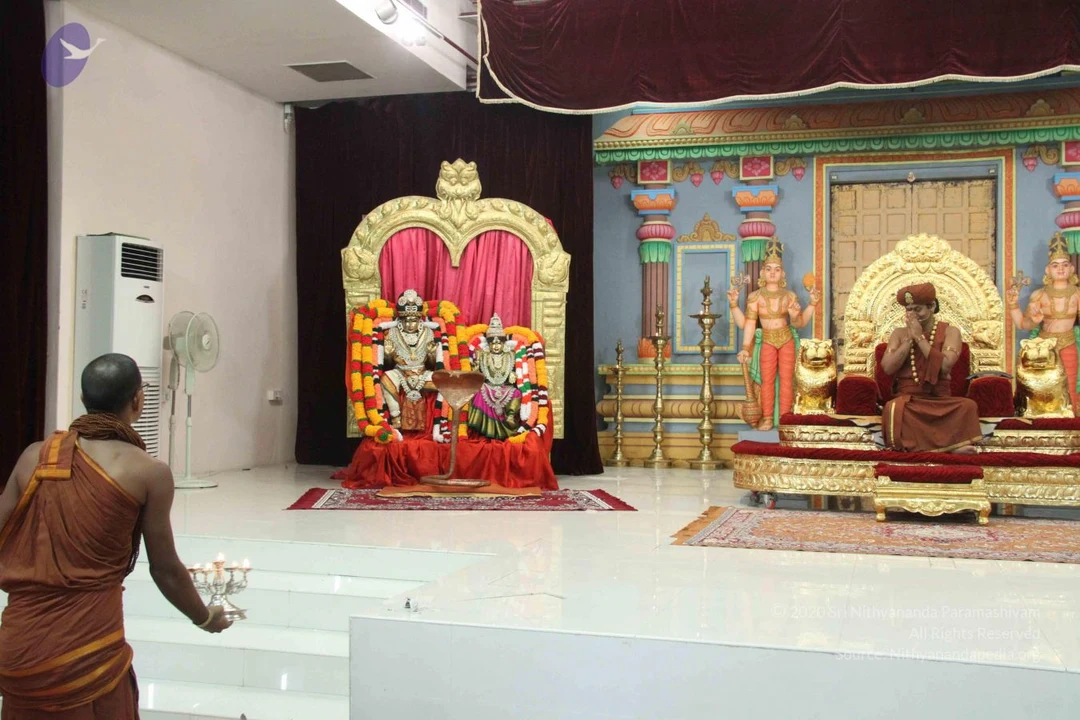
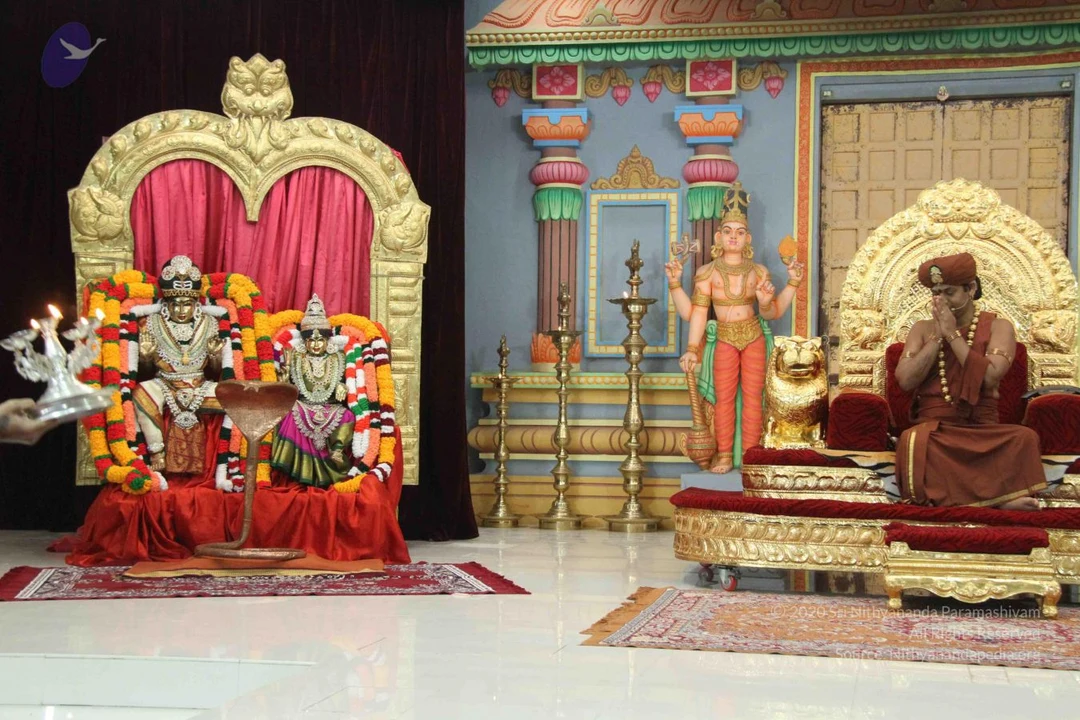
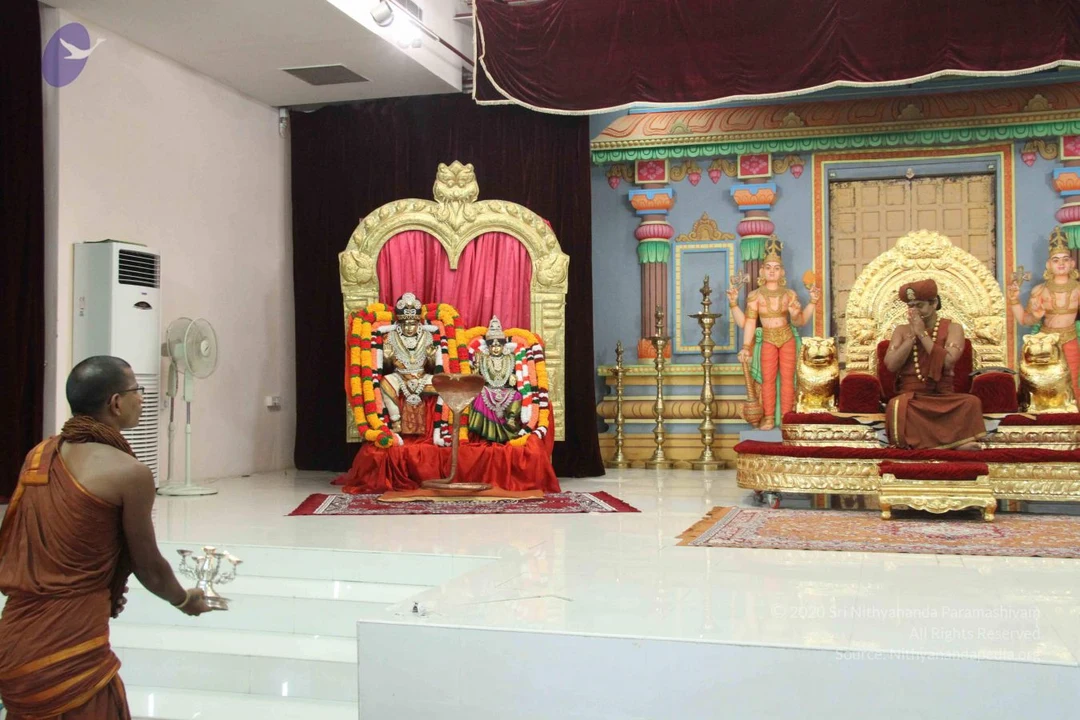
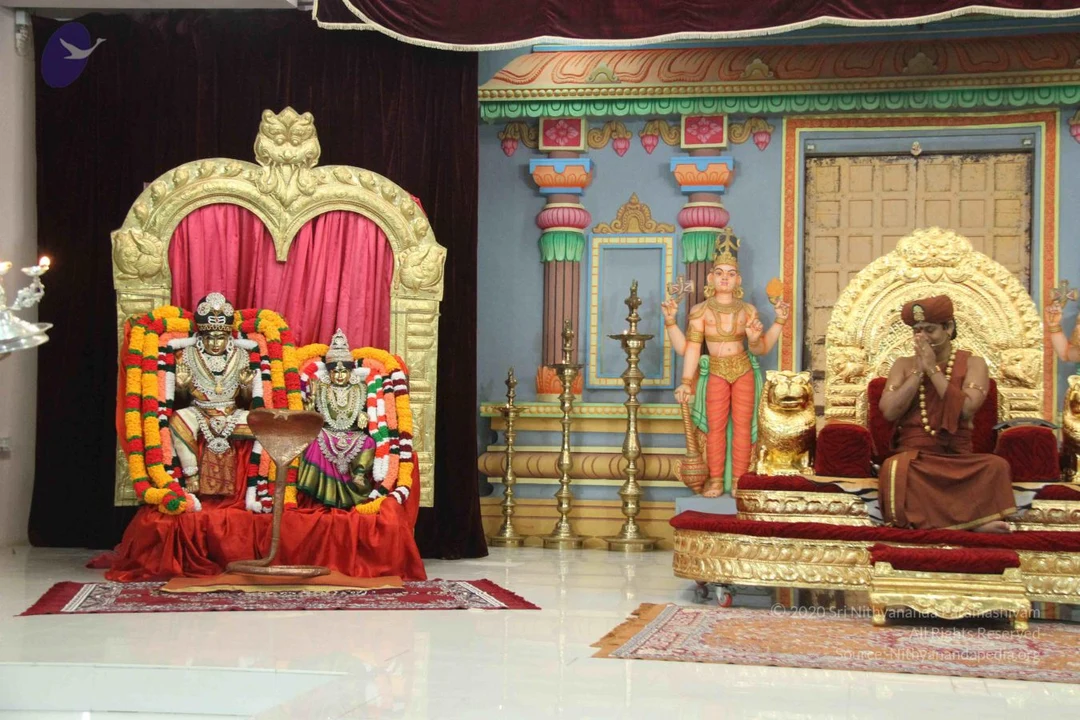
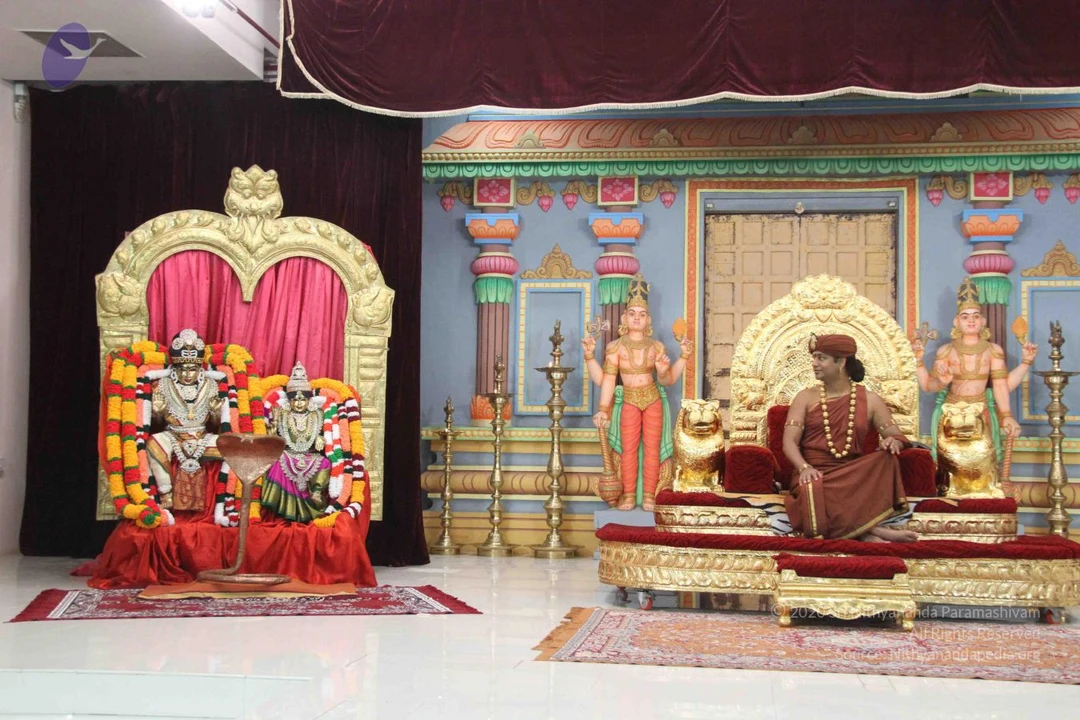
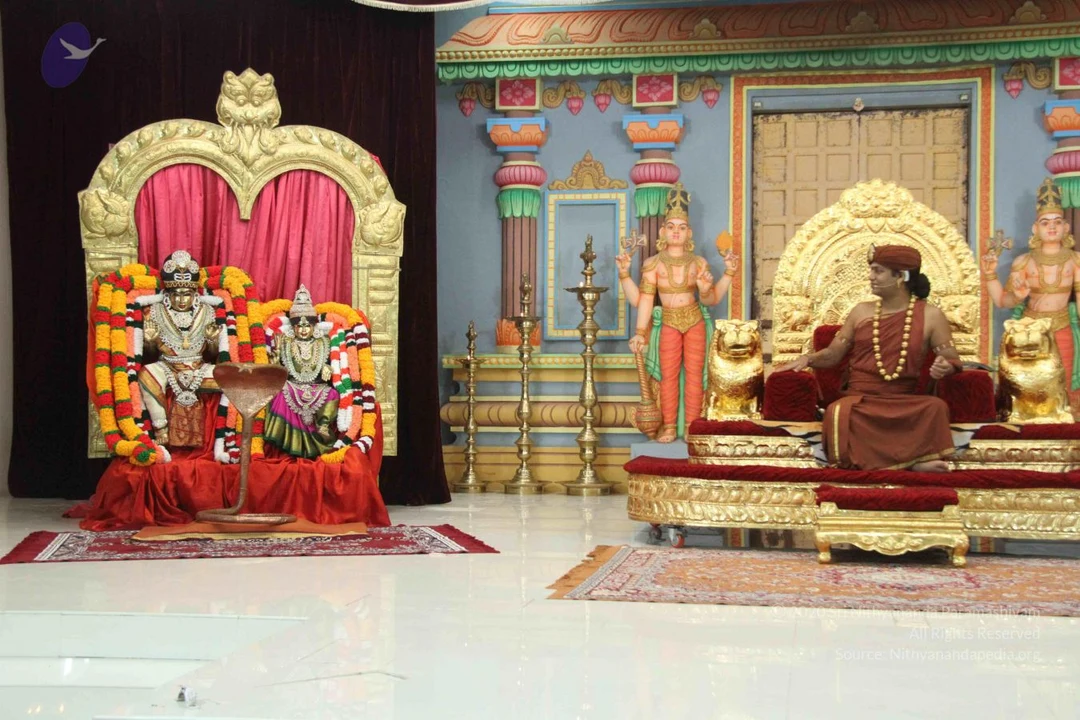
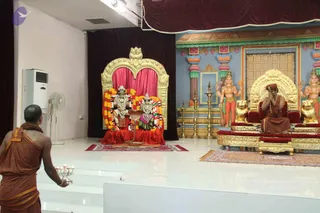
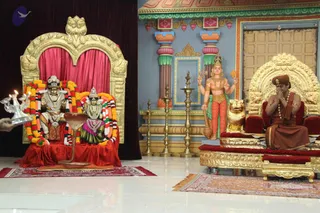
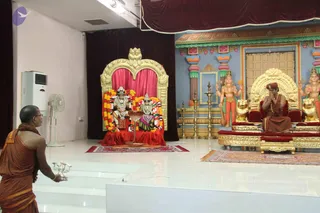
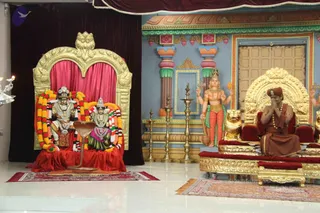
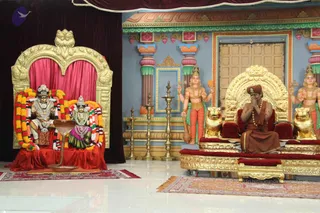
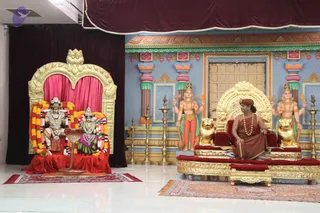
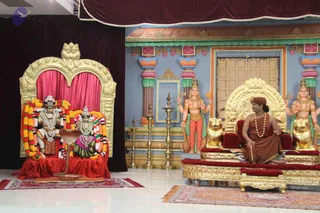
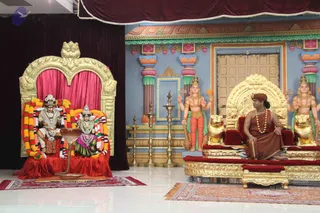
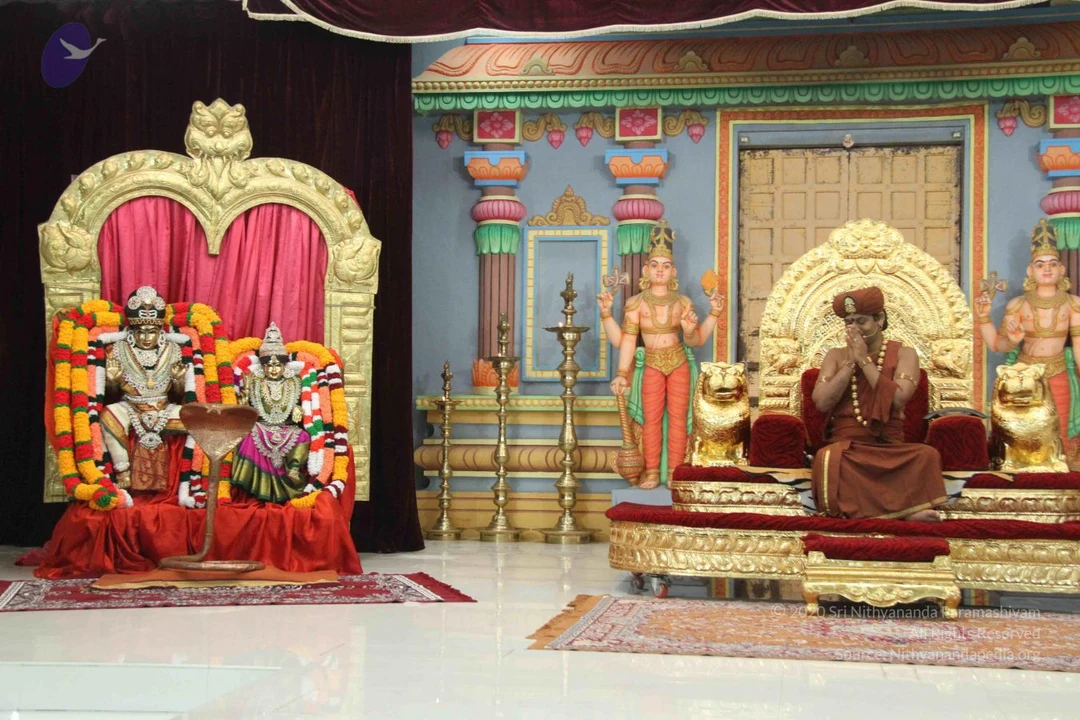
Photograph of a temple-style hall during a deity arati. In the foreground, a bald priest in an orange-brown robe, with a rudraksha-style cord across his bare upper body, holds a lit multi-branch brass lamp toward the shrine. At centre, two deity murtis sit on a golden throne-like seat draped in pink fabric, garlanded with orange, yellow and multicoloured flower garlands, with a brass lamp stand in front. To the right, a seated figure in a red-orange robe and red turban with a rudraksha mala sits on a gilded peetha throne flanked by golden lion figures, while standing painted deity figures in orange and green flank the stage. Brass lamps stand on the stage, and a white floor-standing air conditioner and fan are at left.A photograph of a temple-style stage with two golden-framed deity murtis, a male Shiva form and a female Parvati form, seated on a red draped platform, garlanded with orange, yellow and multicoloured flower garlands, with a shivalingam-like silver vessel in front. To the right, a man in saffron-orange robes, a matching orange turban-style cap and a rudraksha mala sits with hands joined in namaste on an ornate gold-and-red throne. Brass oil lamps stand between the two areas, a golden lion sculpture sits near the throne, a painted standing deity figure with multiple arms holds ritual objects, and a flame is held in a silver lamp at the left edge. Ornate pillars and a wooden door decorate the background. The man is a seated figure on a throne, with his face partly covered by his hands.Photo of a temple-style hall with a deity murti pair seated on a golden-arched altar draped in red cloth and garlanded with orange and white flowers, with a brass lamp in front. On the right, a seated man in orange-red robes, a red turban and a rudraksha mala sits with hands folded on a gilded throne flanked by carved lions. A standing attendant in orange robes holds a silver lamp in the left foreground, facing the altar. Painted pillars, golden figures and a red velvet valance frame the stage, with a stand fan and air conditioner on the left wall.A photograph of a temple-style hall with two deity murtis seated on a red-draped throne decorated with yellow and orange marigold garlands, a cobra hood above them. To the right, a man in a saffron-brown robe and orange turban sits on a golden throne with red cushions, hands joined in front of his chest, with a rudraksha mala around his neck. Beside him stands a painted statue of a multi-armed deity in orange and green garments, and brass oil lamps stand on the floor. The walls are painted blue with ornate pillars. a person's appearance (saffron-brown robe, turban, rudraksha mala) is seated in an attitude of worship, while the deity murtis are the focus.A stage with a golden throne at right holds a seated man in saffron-brown robes, a red turban and rudraksha beads, hands joined in namaskar. Beside him stand two painted deity figures in orange garments holding ritual objects. At left, a pair of seated deity murtis in gold-trimmed niche, adorned with marigold and multicoloured garlands and a cobra-hood motif, sit on a red cloth. Brass oil lamps stand on the white floor, and the pink-and-blue painted wall is framed by a red velvet valance. The scene reads as a temple-style puja setting.

NITHYA SATSANG
48 photosSource gallery
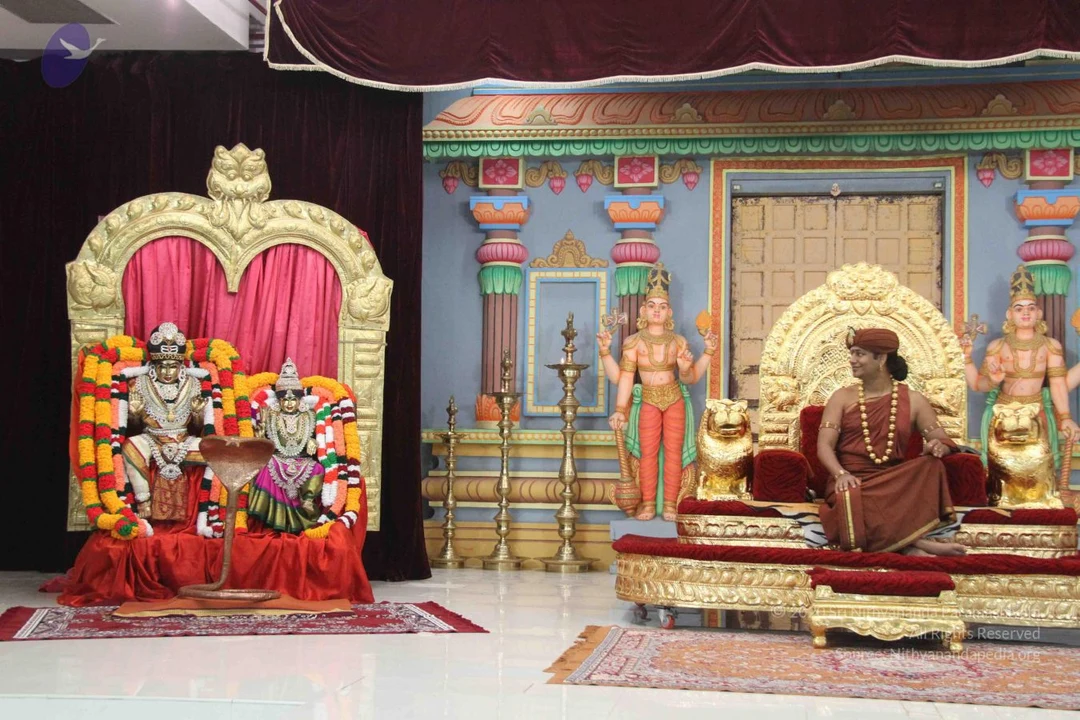
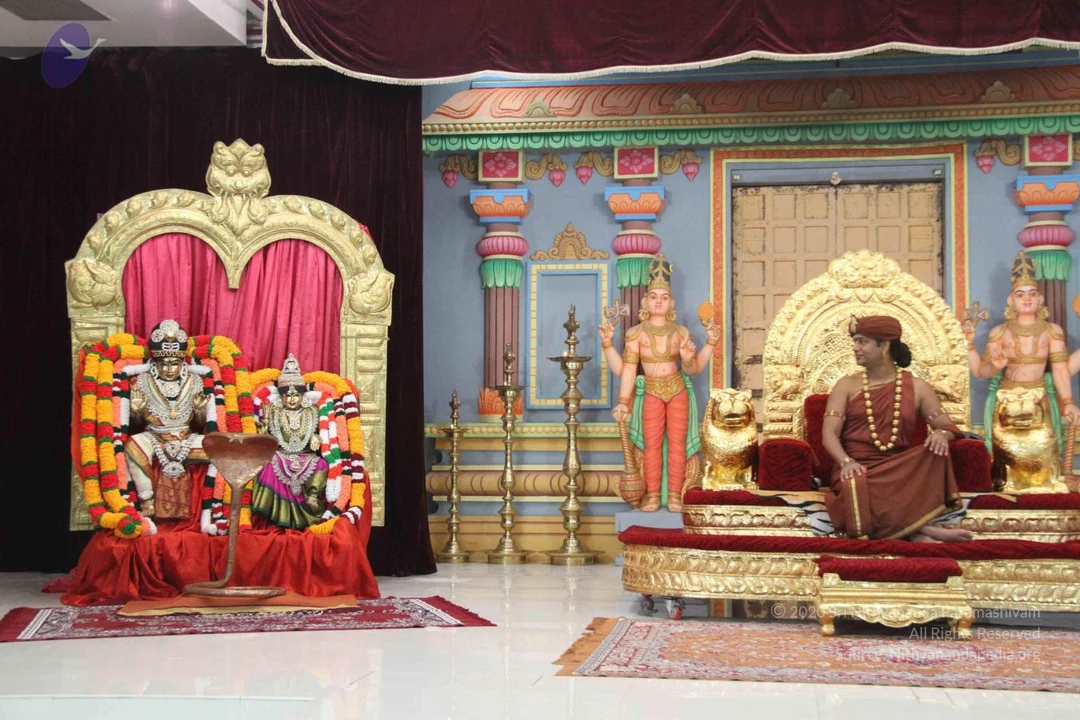
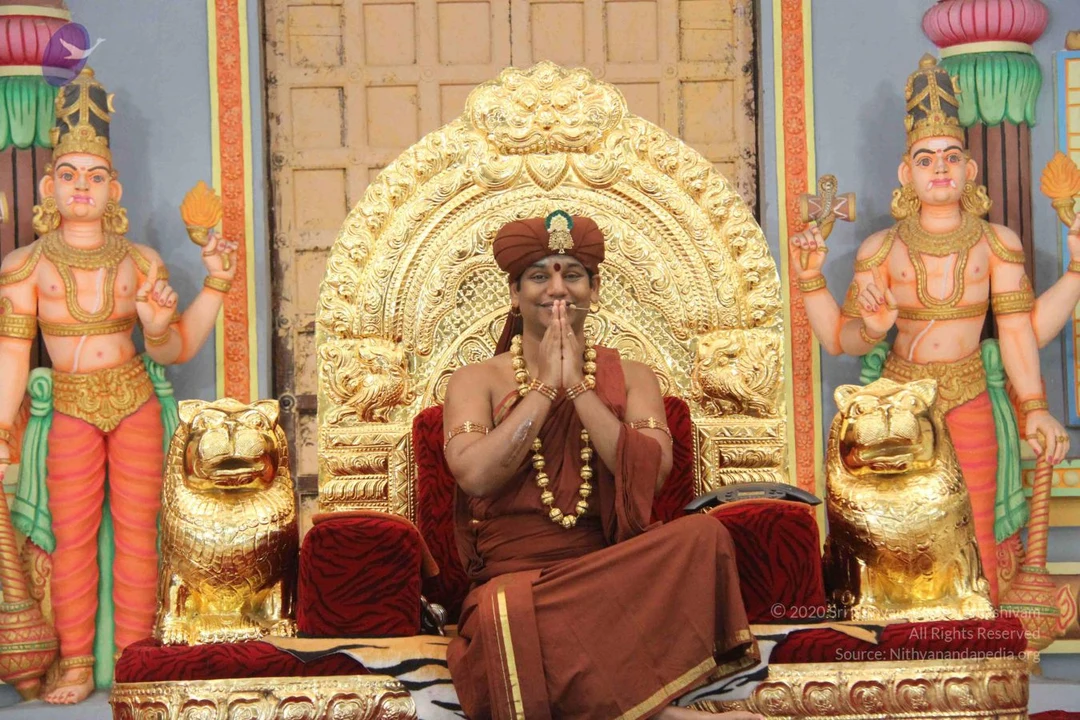
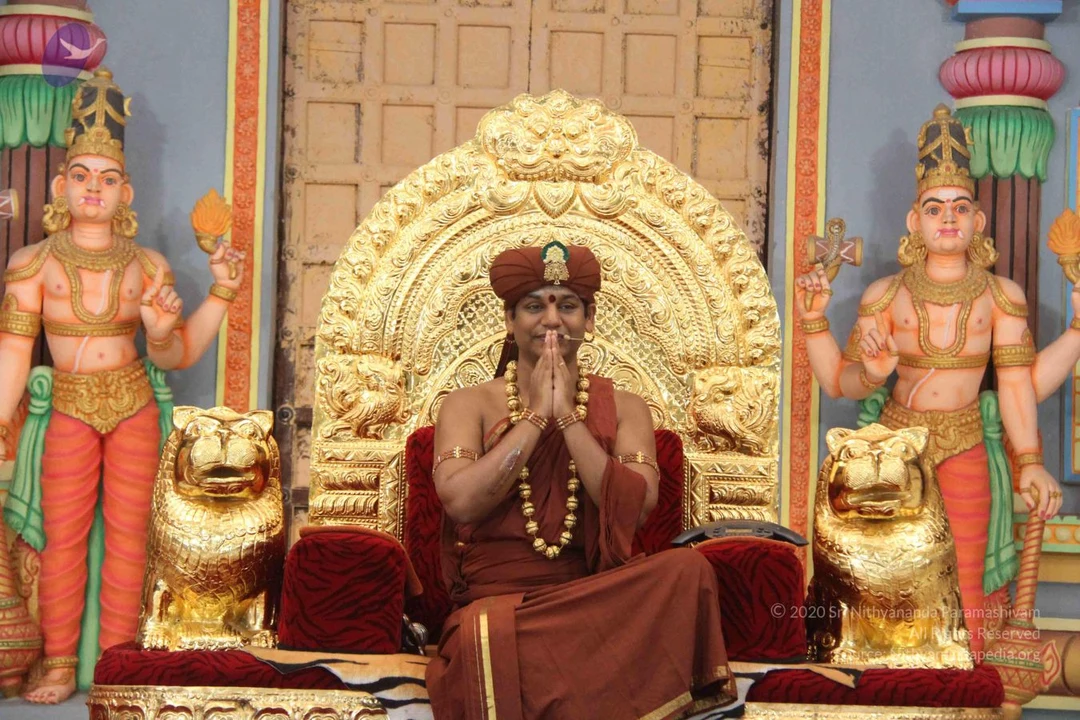
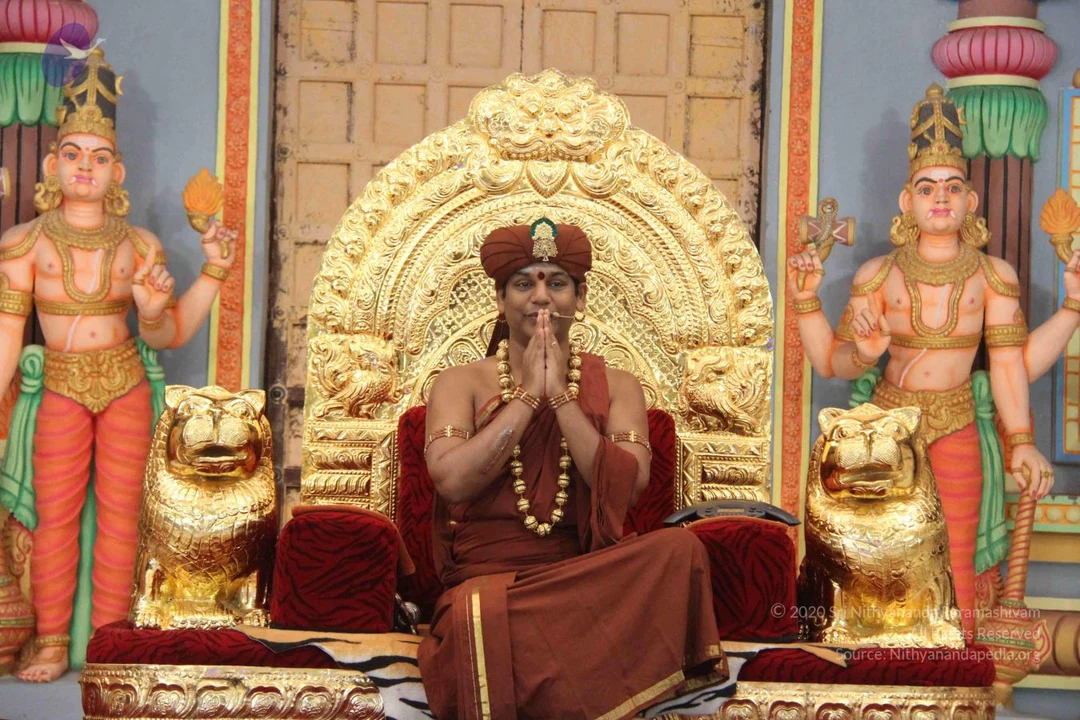
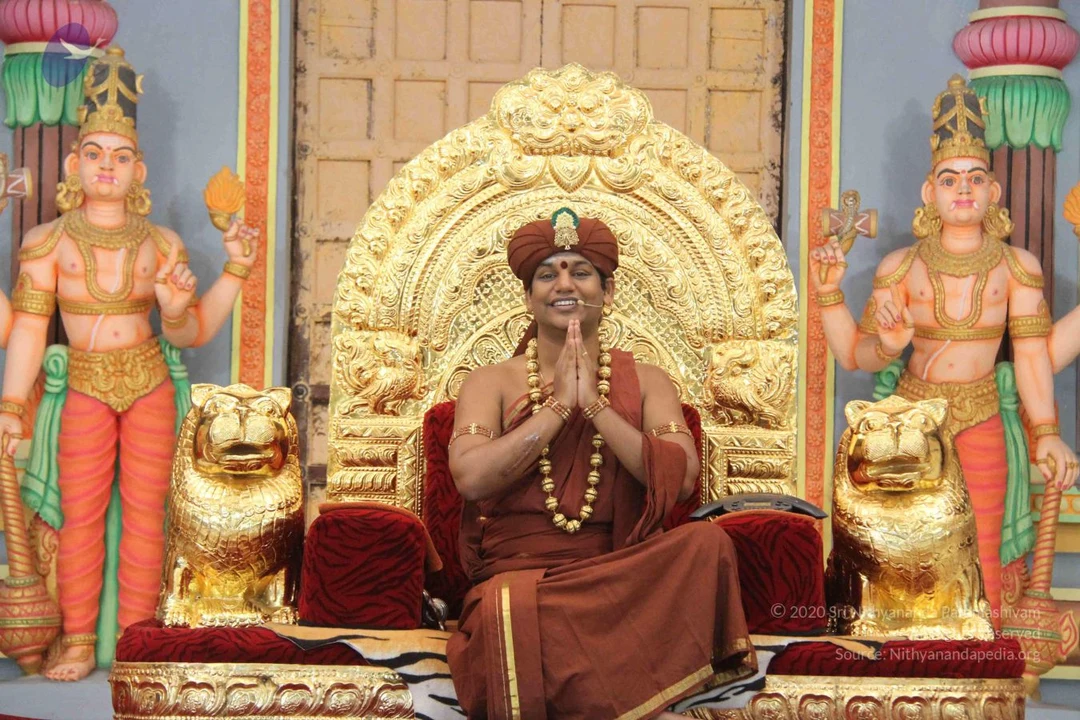
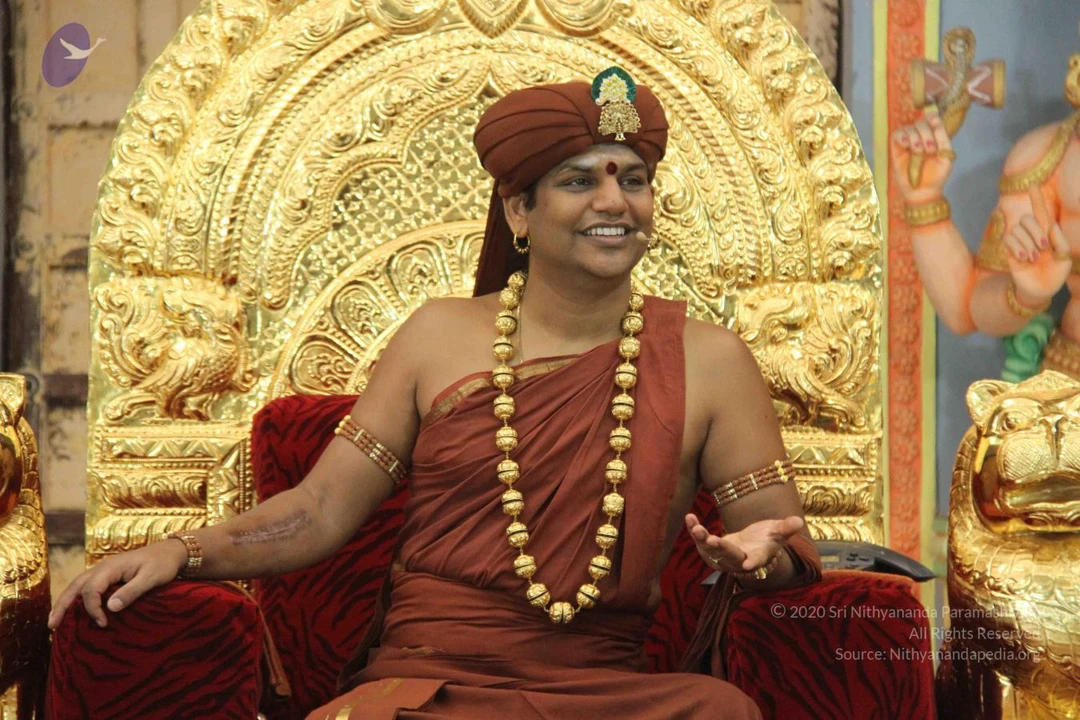
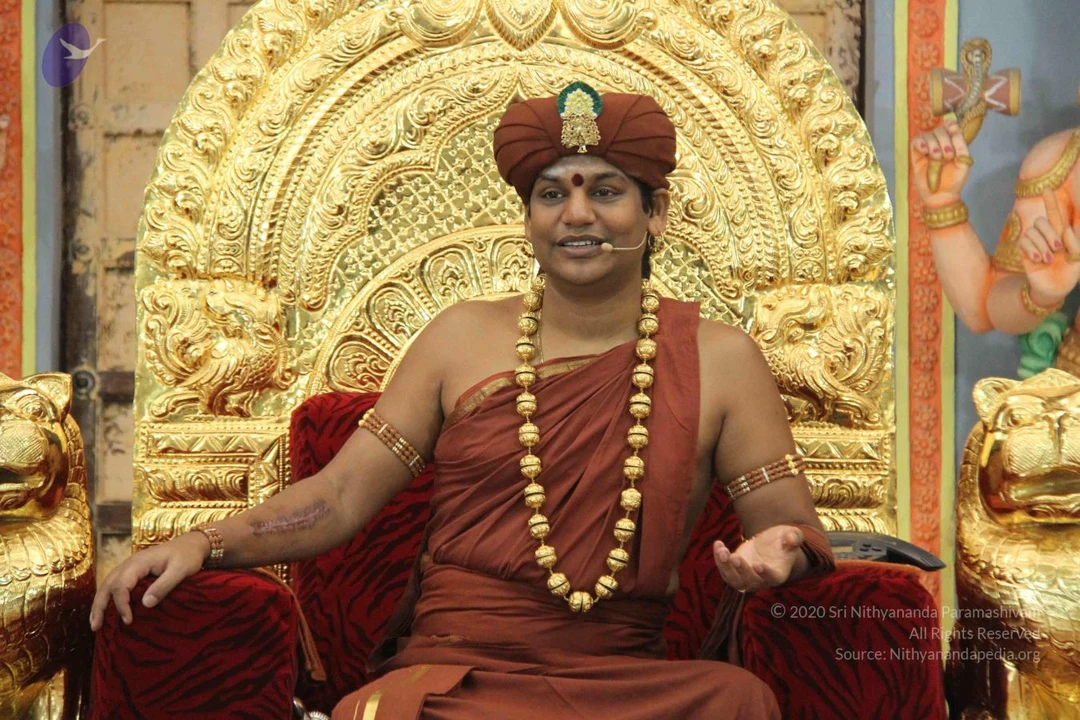
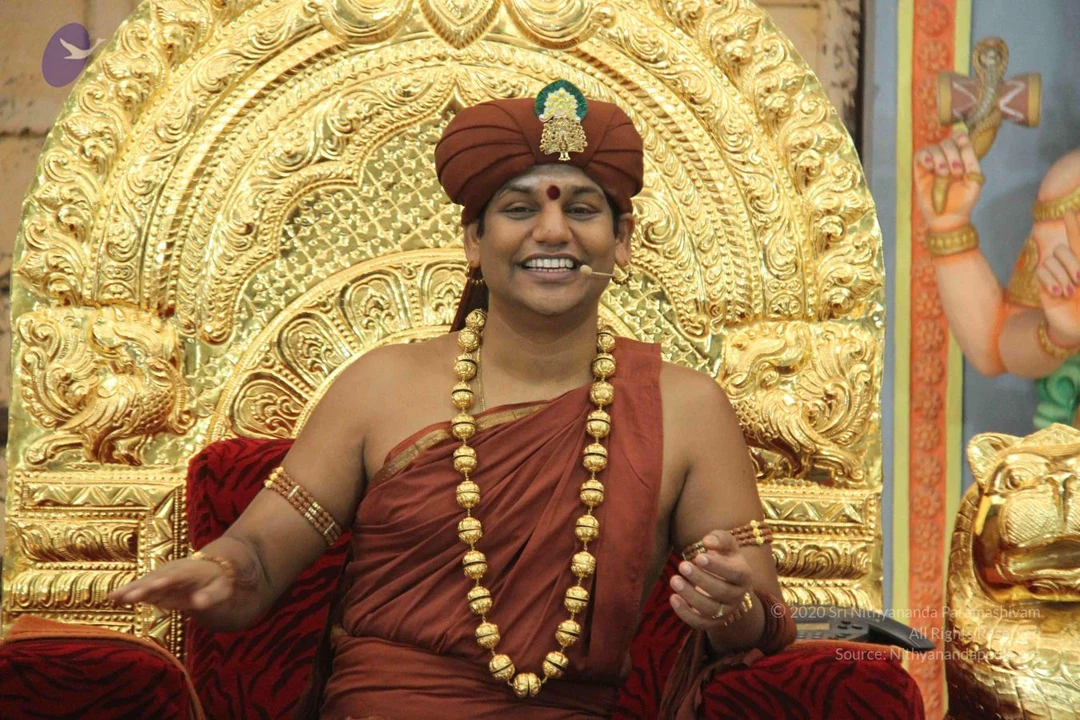
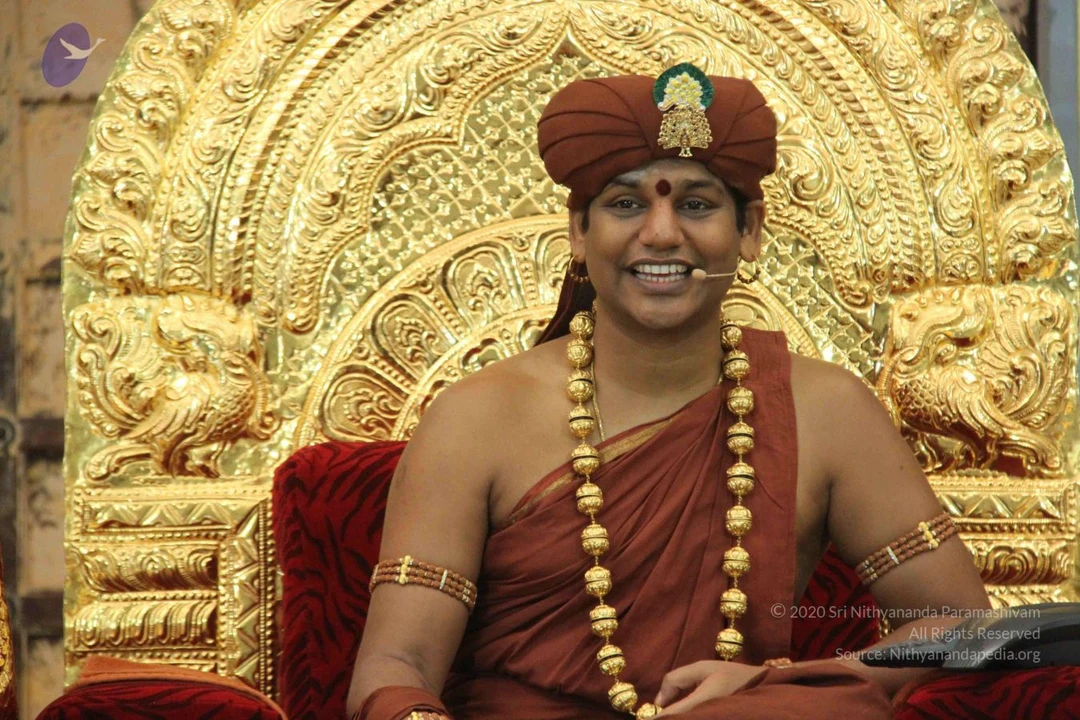
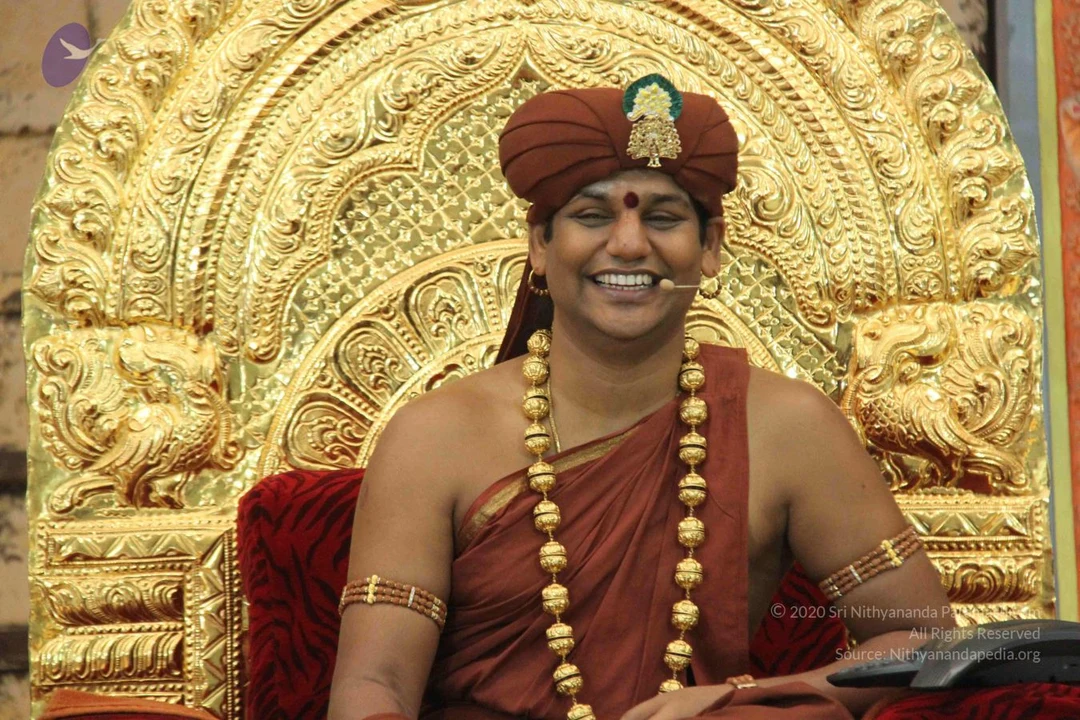
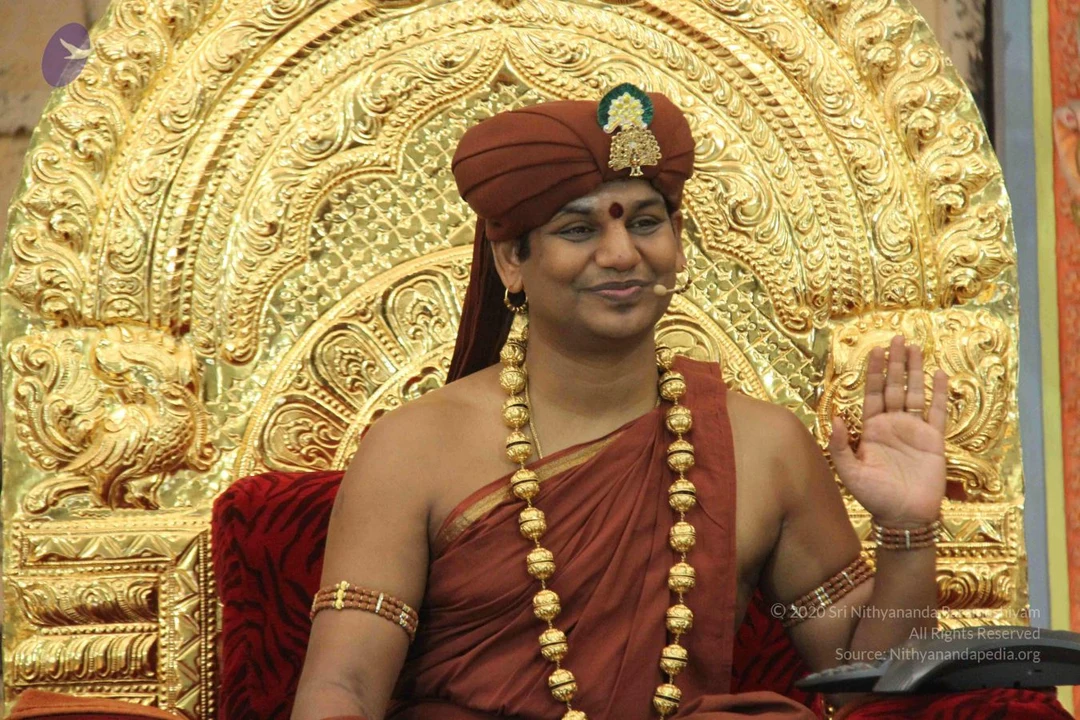
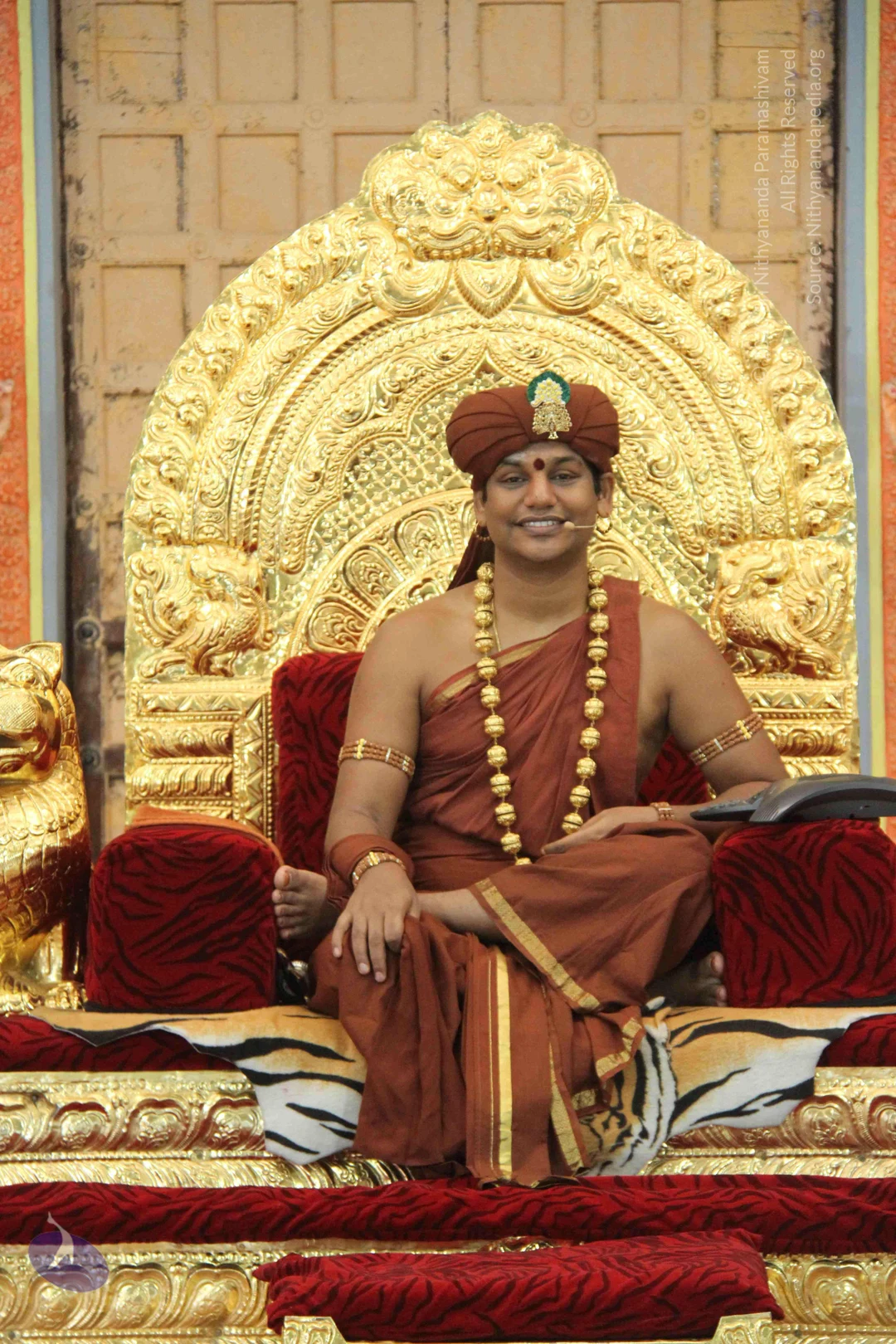
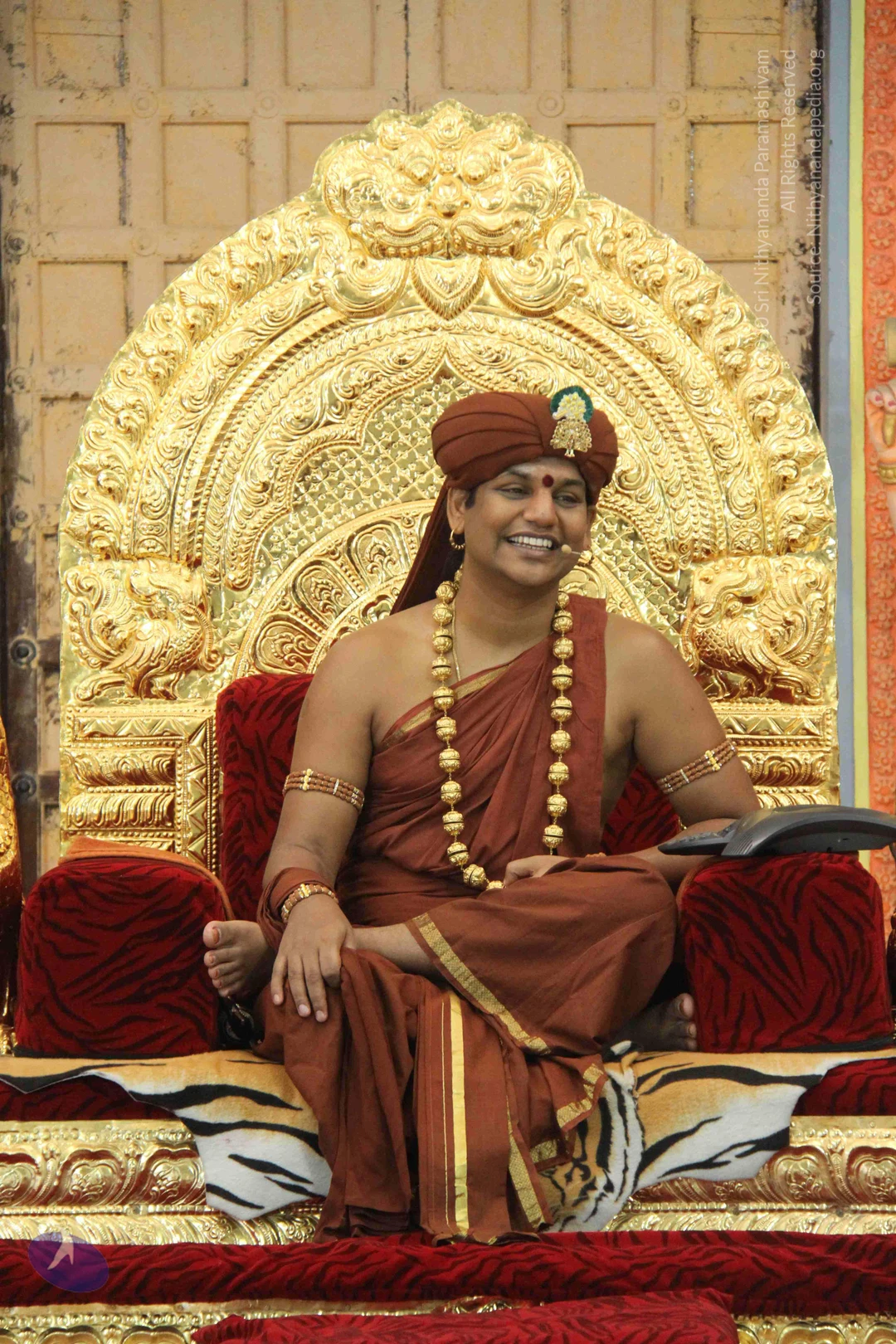
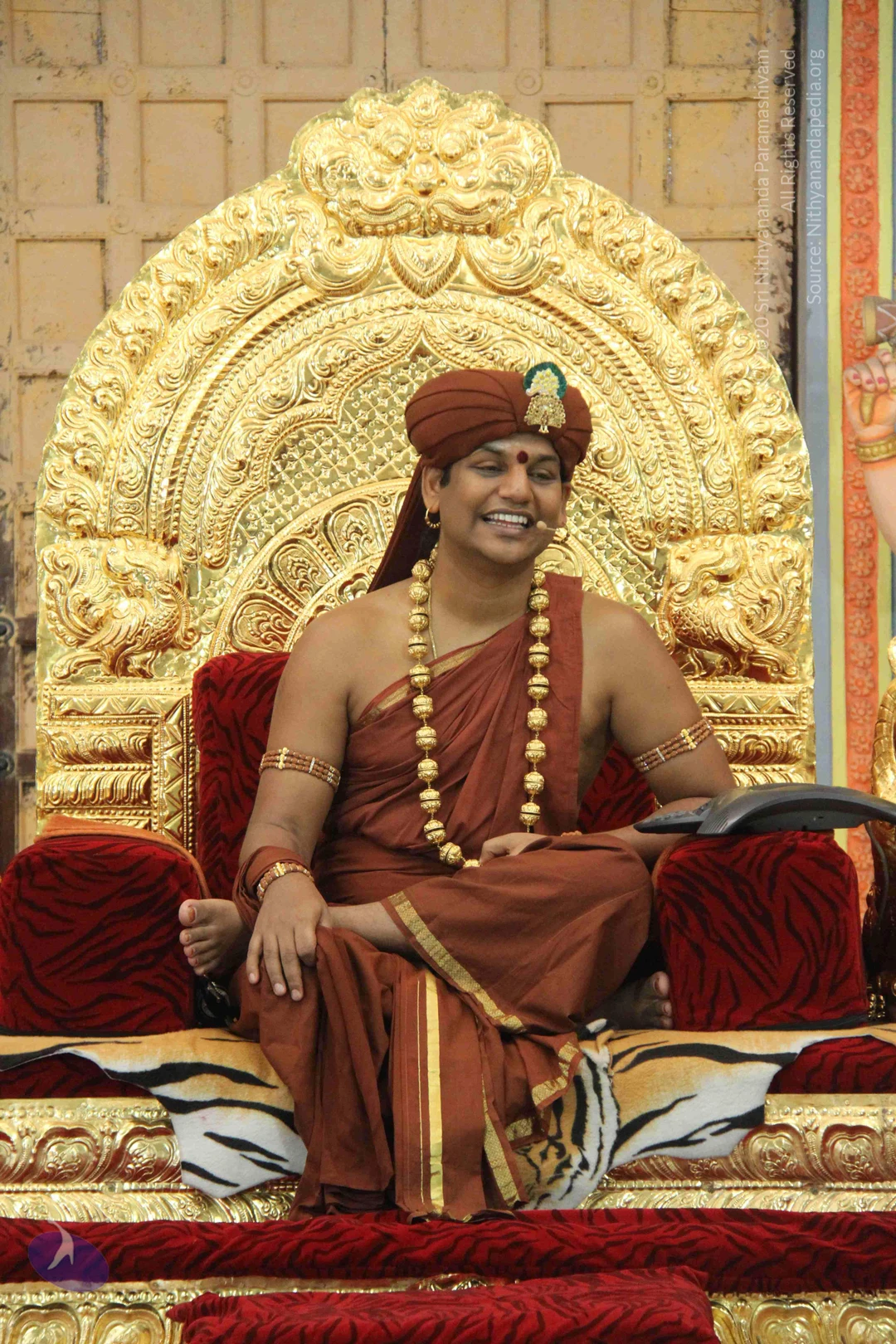
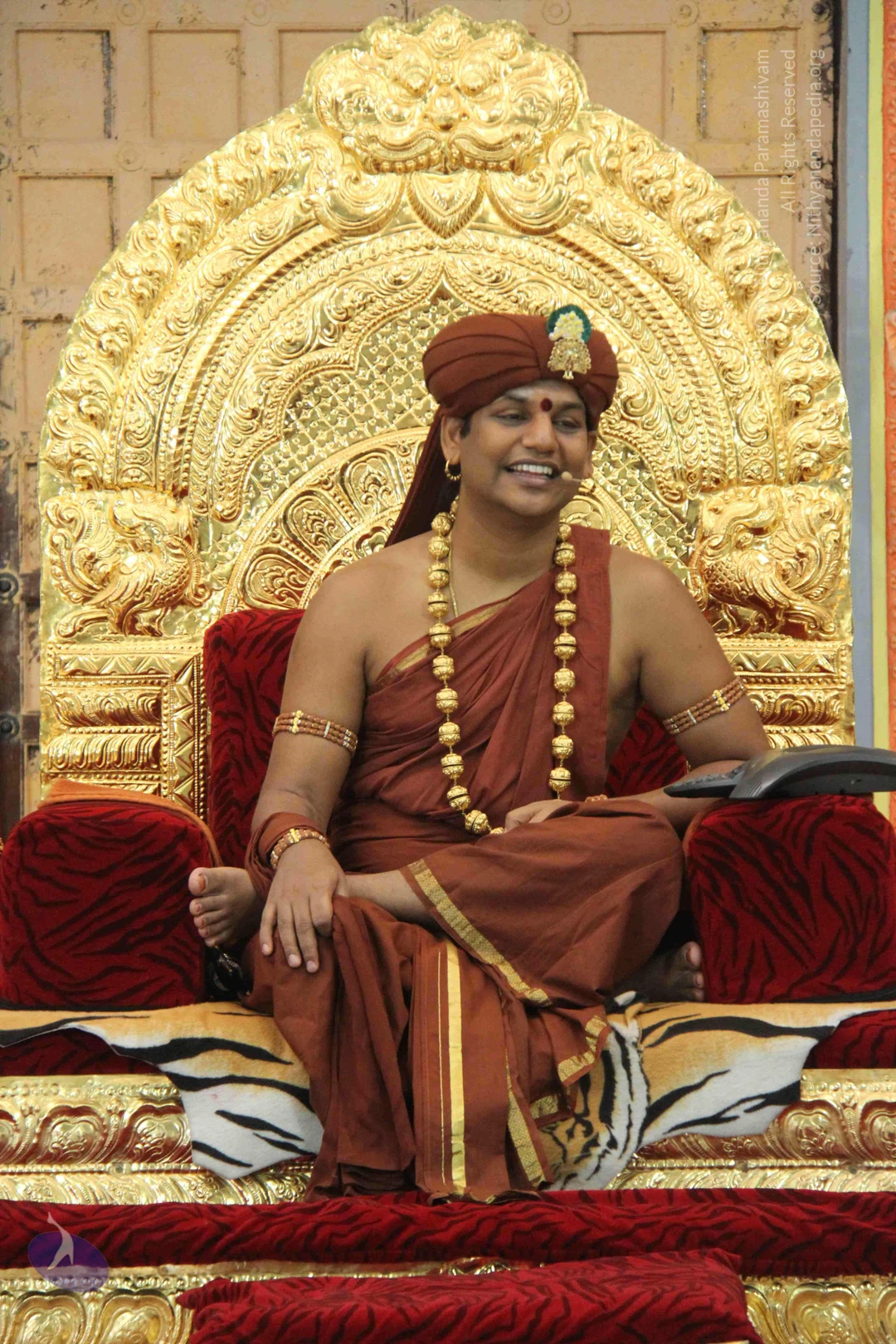
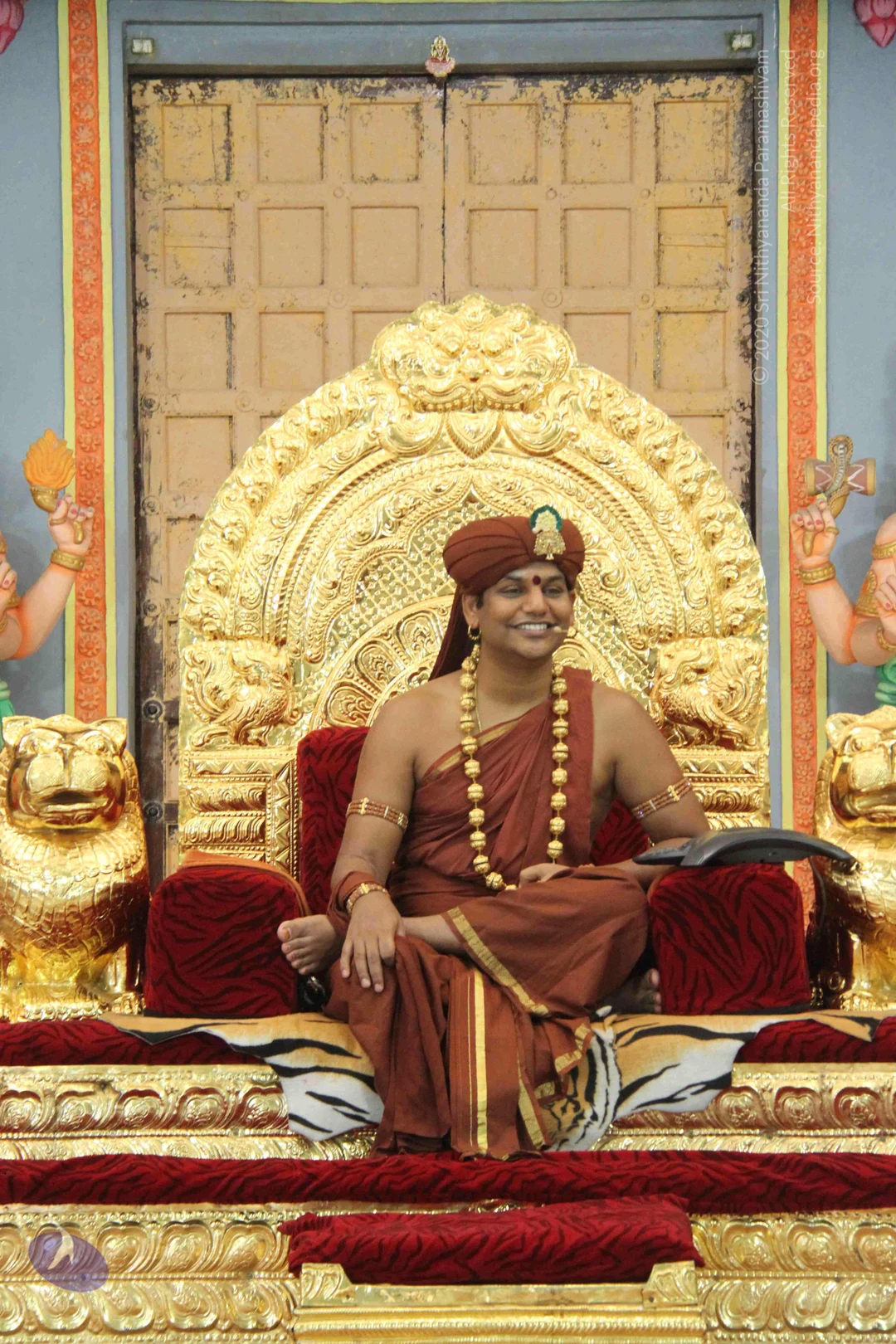
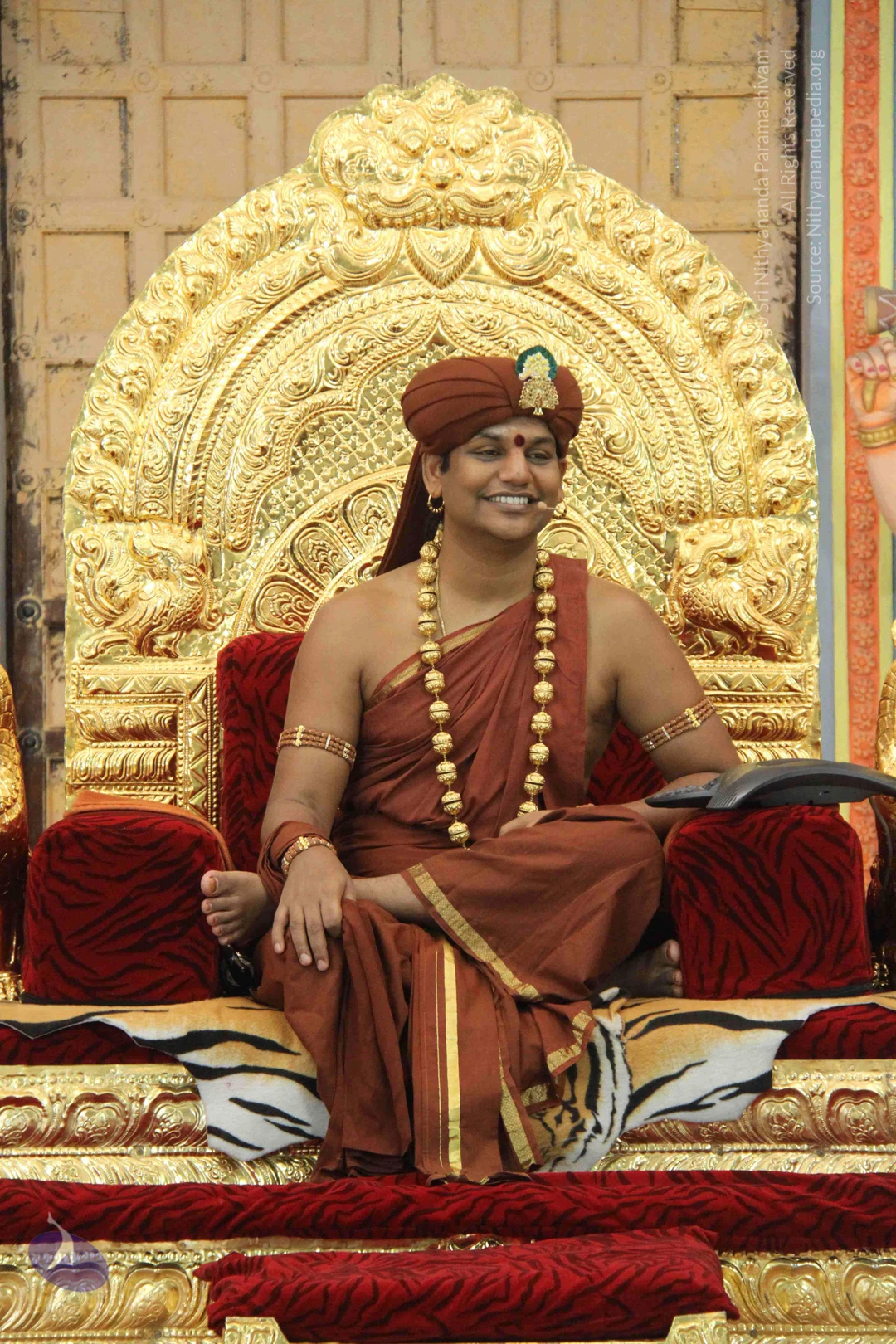
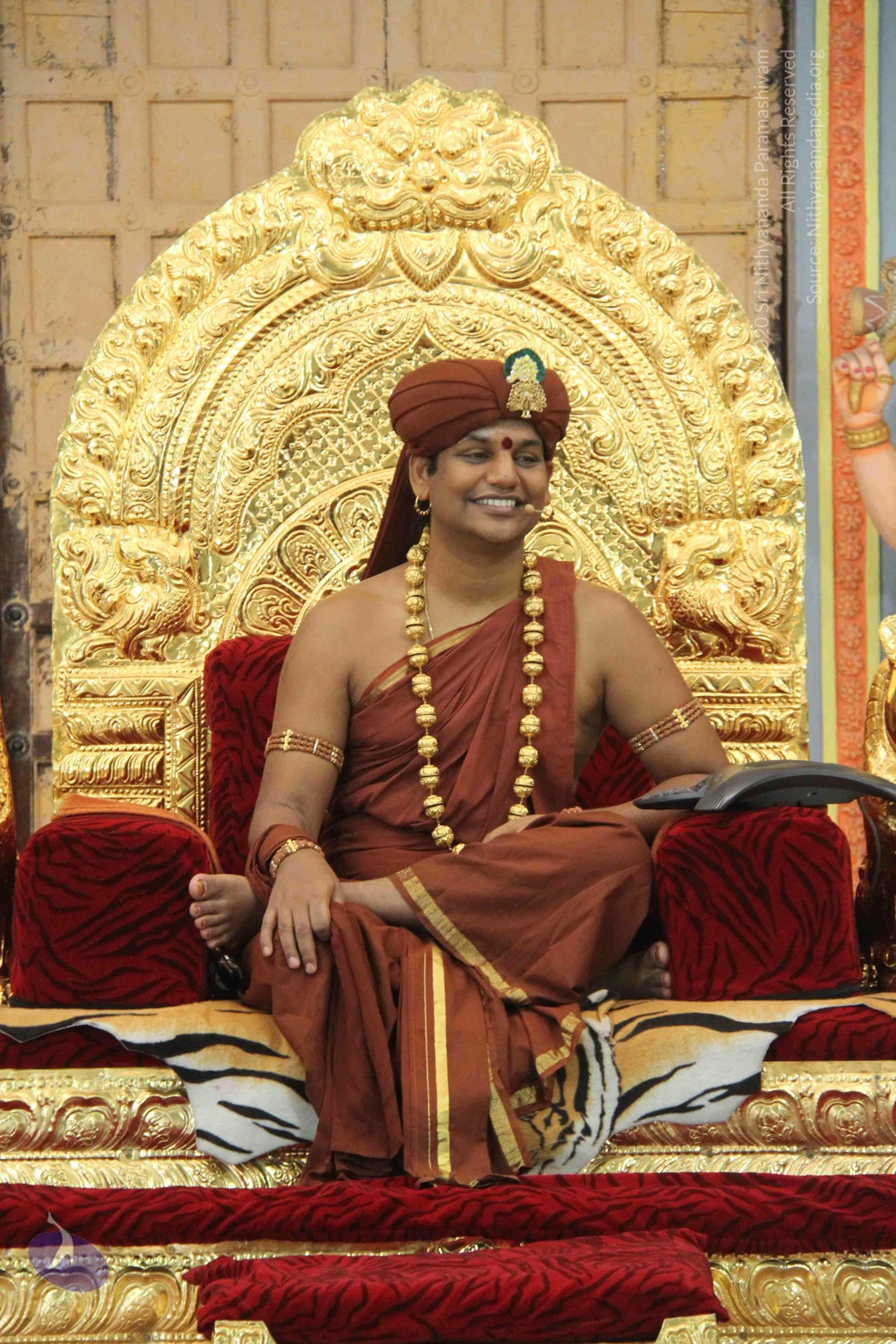
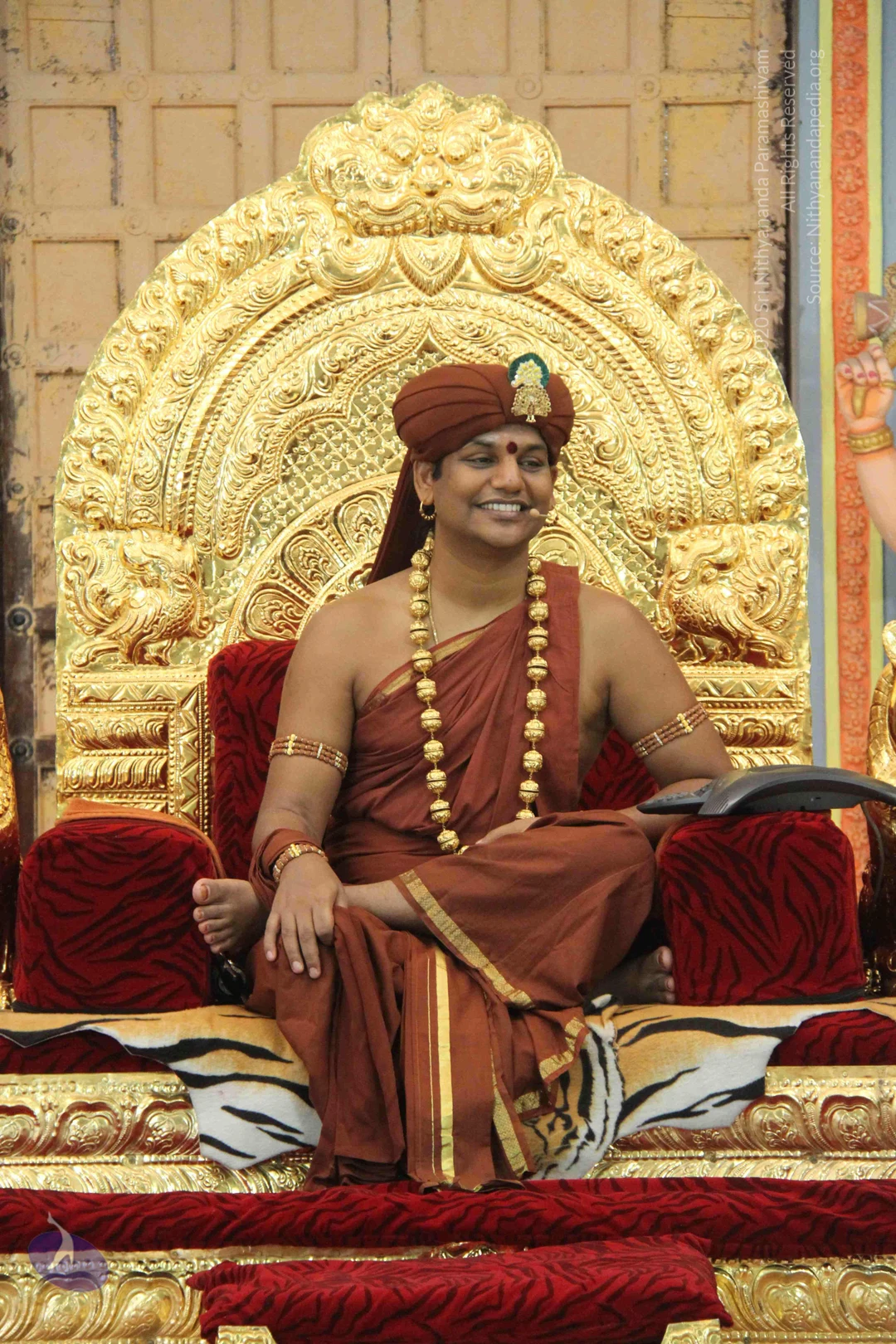
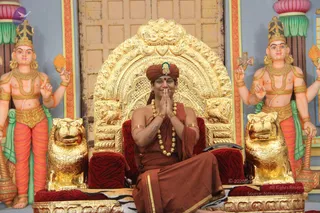
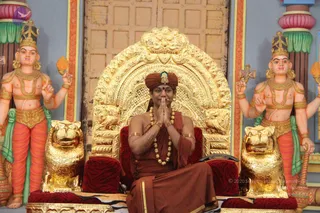
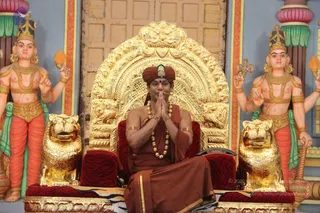
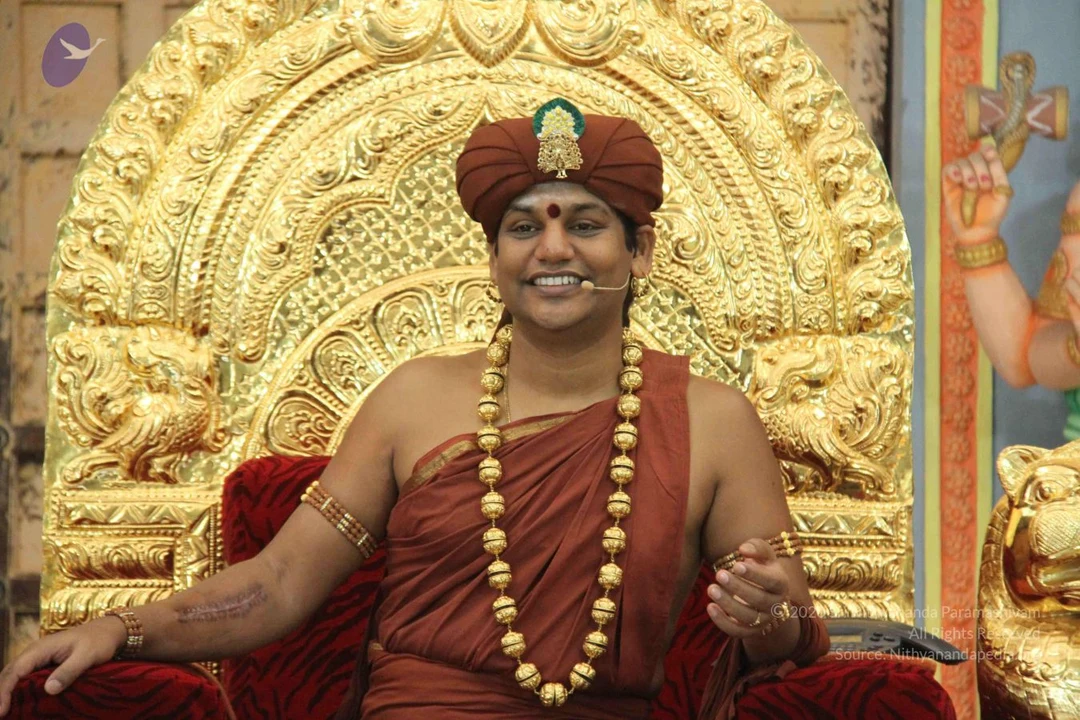
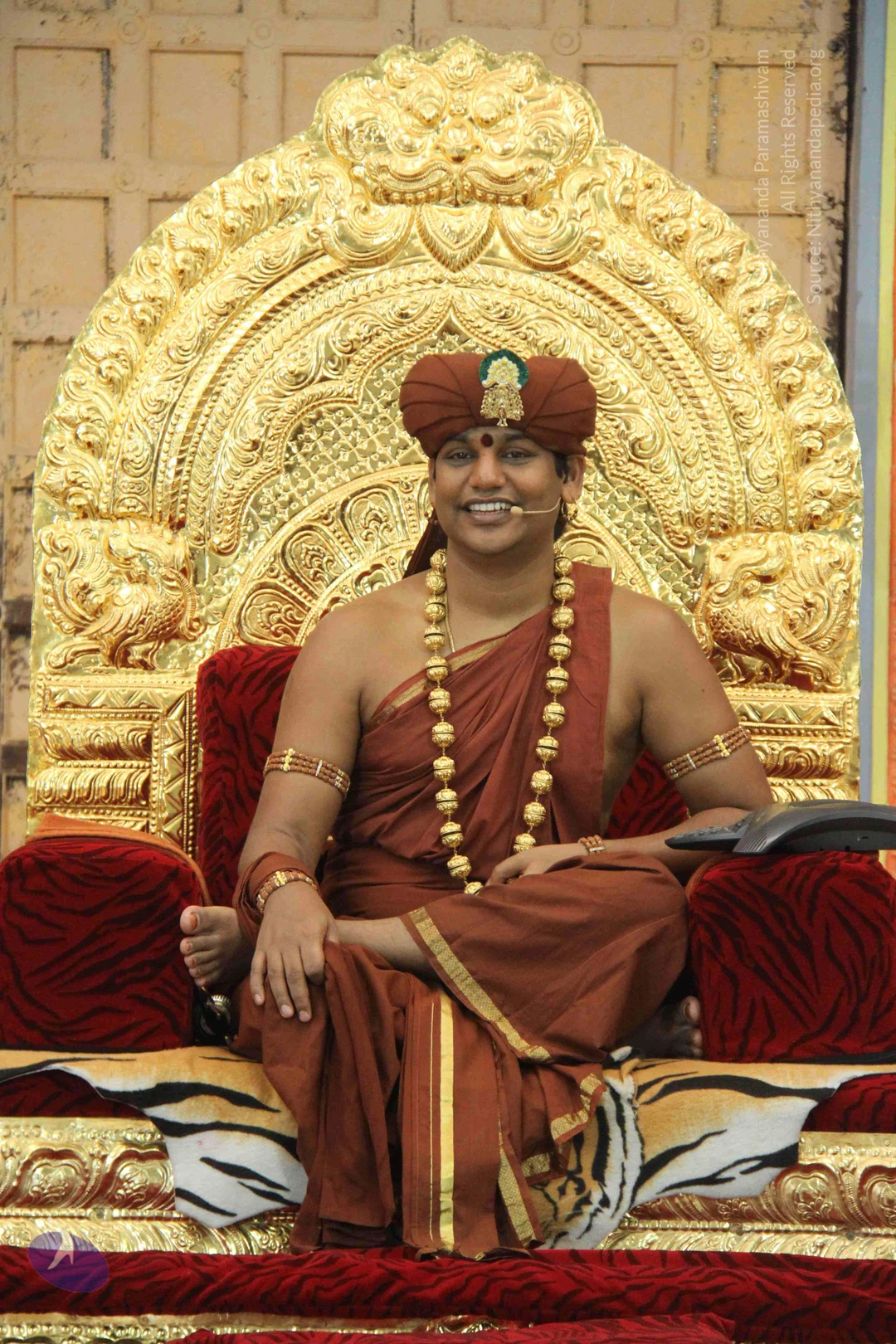
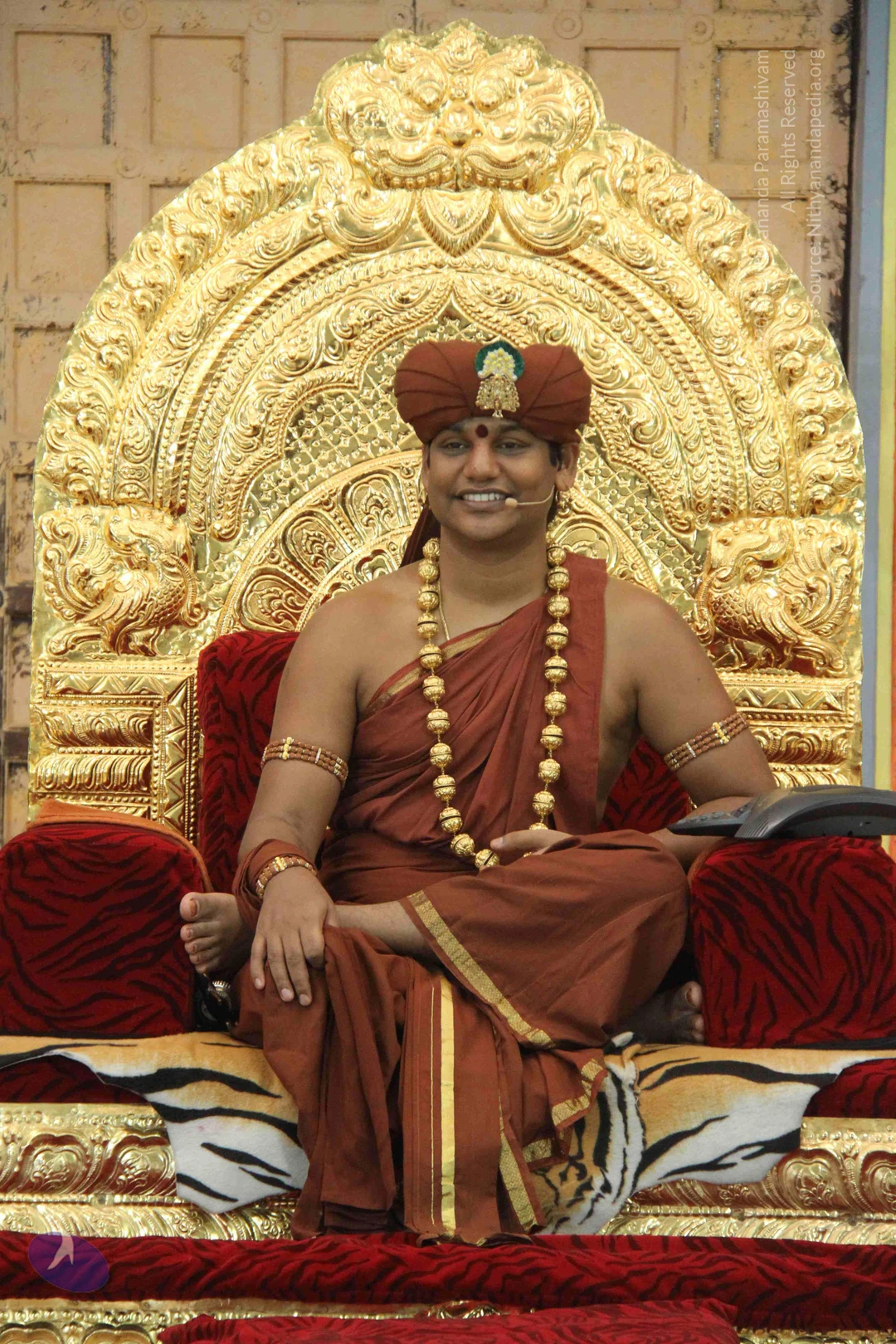
Indoor temple-style hall with a decorated stage. On the left, two deity murtis of a couple sit on a red-draped throne with orange and white marigold garlands, with a kalasha-like brass stand and a shivalinga-like offering in front. On the right, a seated man in a rust-brown robe and matching turban, with a long rudraksha mala, sits on a gold ornate throne flanked by two gold lion figures. Two standing gilded deity statues with raised hands stand beside him. Brass oil lamps and a red carpet complete the scene. The seated man wears a saffron-brown robe and rudraksha beads, but his appearance alone is not enough to confirm an identity, so he is described by role as a seated devotee-figure on a throne.A temple-style stage set with a seated figure on a gilded throne flanked by two standing deity figures holding objects, and a pair of seated metal deity murtis on the left draped in marigold and multicolour garlands on a red cloth, with a brass lamp stand nearby. The seated man wears an orange-brown robe, a matching cloth wrap over the head, and a beaded rudraksha-style mala, seated before a painted blue-and-pink backdrop with a wooden door and lotus-motif columns. A velvet maroon valance hangs above and a patterned rug covers the floor. a person is shown seated on the throne in the orange-brown robe and head wrap with the rudraksha mala, and is the central figure. Two brass lamps stand in the foreground.Indoor temple-style stage photograph. On the left, two deity murtis (a male and female form) sit in a gilded arch framed by a pink curtain, adorned with marigold garlands, a snake-hooded arch above them, and a brass lamp stand in front. On the right, a seated male figure in rust-brown and orange robes, a brown head wrap, a long wooden rudraksha-style mala and gold armlets sits on an ornate gold-and-red throne with lion-shaped armrests. Two standing painted figures with raised arms and crowns flank the throne against a blue and red temple backdrop with columns. Brass oil lamps stand on the floor, and red carpets cover the stage.A seated man in rust-brown robes and a matching turban with a jewelled ornament sits on an ornate gold throne with carved backrest and gold lion-shaped armrests, draped with a red and black striped tiger-pattern cloth. He wears a gold beaded necklace, gold armlets and bangles, and holds his palms together in a namaste greeting with a smile. Flanking him are two tall painted sculptures of multi-armed deities with tall crowns, bare torsos, gold jewellery and orange-red dhotis, one holding a flaming oil lamp. Behind them stands a carved wooden door and pastel pink and green pillar tops. Swamiji (probable): the seated man wears the turban, rust-brown robes and gold necklace associated with him, and is seated in a central throne position.A seated man in rust-red saffron robes and a matching red-brown turban with a green jewel sits on an ornate gold throne with a carved arched back and two golden lion-head arm supports, his palms pressed together in an anjali greeting. A gold necklace and rudraksha-style beaded mala hang on his chest, and gold armbands are visible. He sits on a red velvet cushion draped over a striped tiger-skin rug. Flanking him are two large painted deity murti figures with multiple arms, crowns and gold jewellery, one holding a flaming torch. A carved wooden door stands behind the throne.A seated figure sits on an ornate gold throne with lion-head armrests and red velvet cushions, hands pressed together in namaste. He wears a rust-red turban with a green jewel, a rust-red robe, a gold-and-bead necklace of rudraksha-style beads, and gold armlets. Flanking him are two painted deity murti standing figures with raised arms, holding objects including a flaming lamp, against a blue and pink temple backdrop with a wooden door behind.

SARVA DARSHAN

12 photosSource gallery
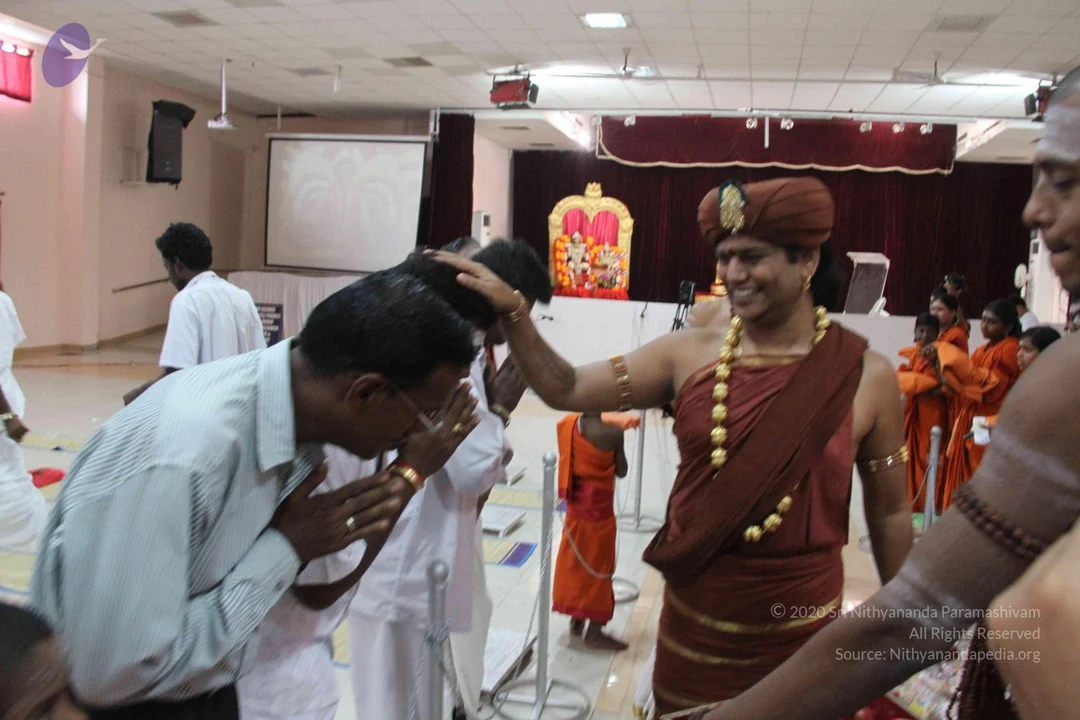
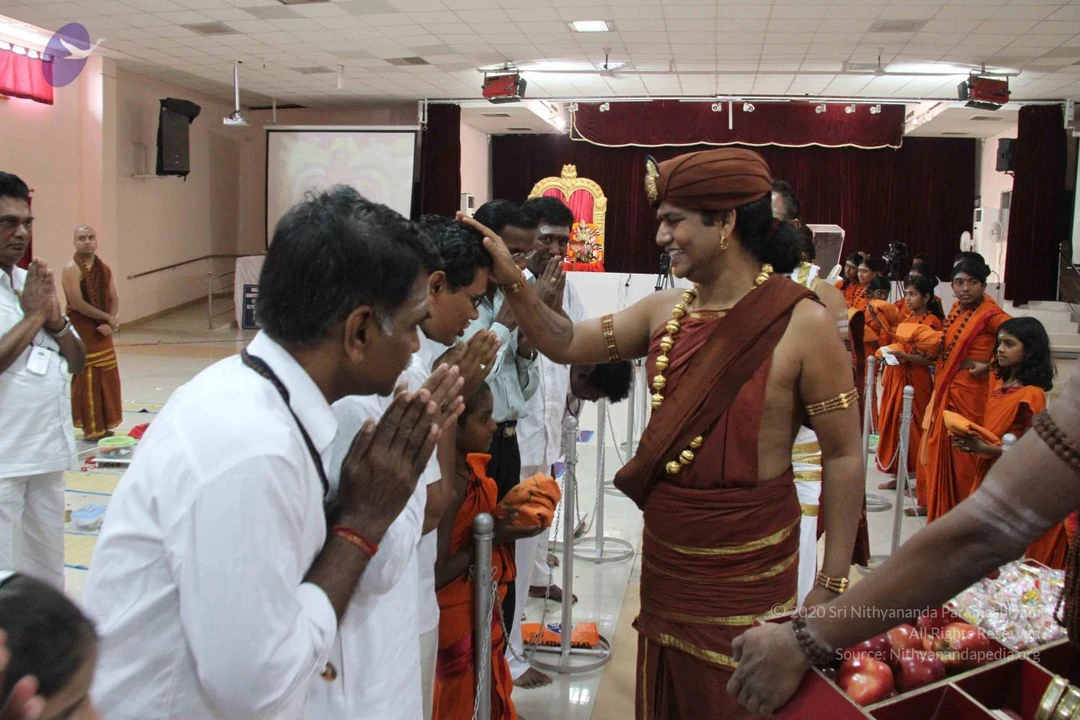
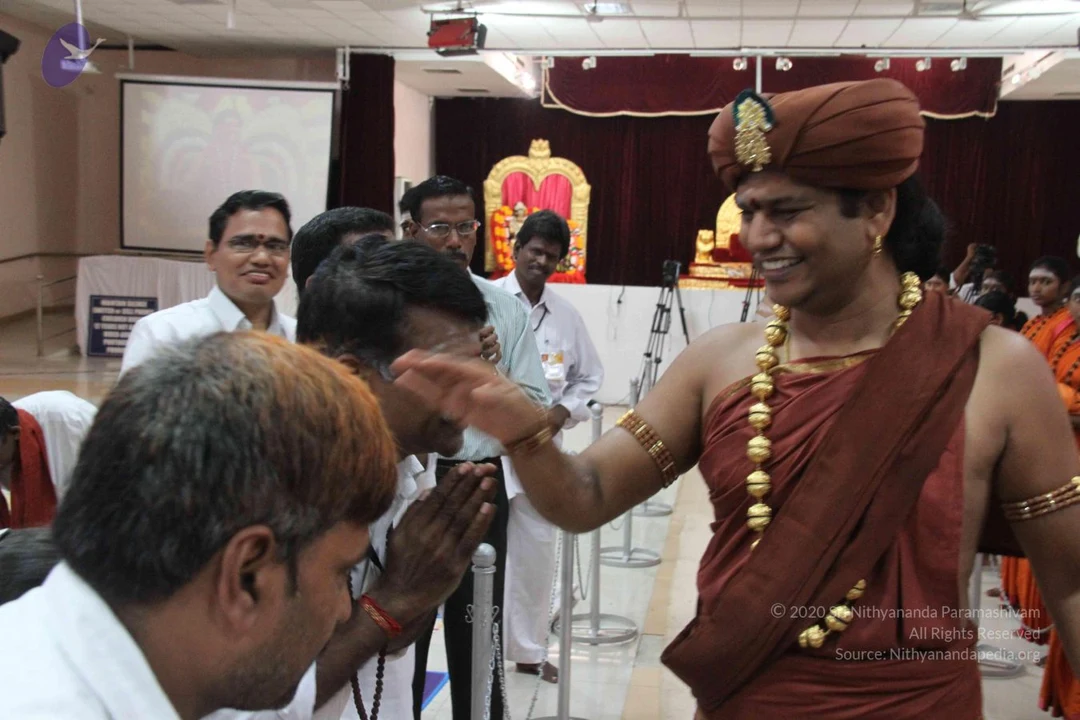
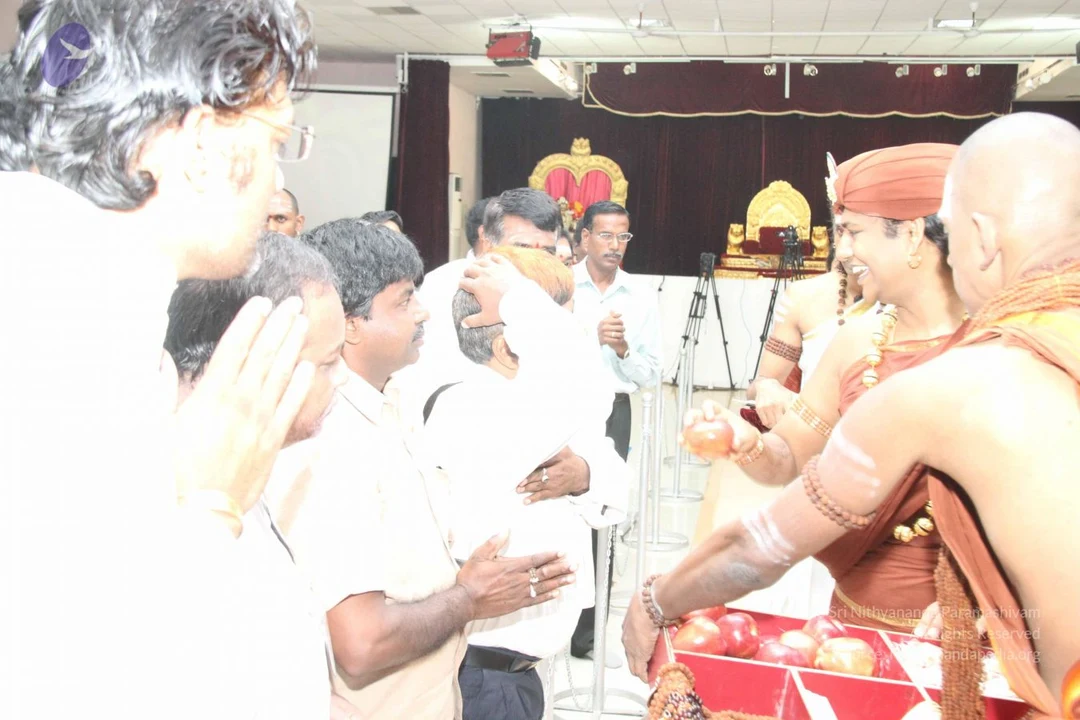
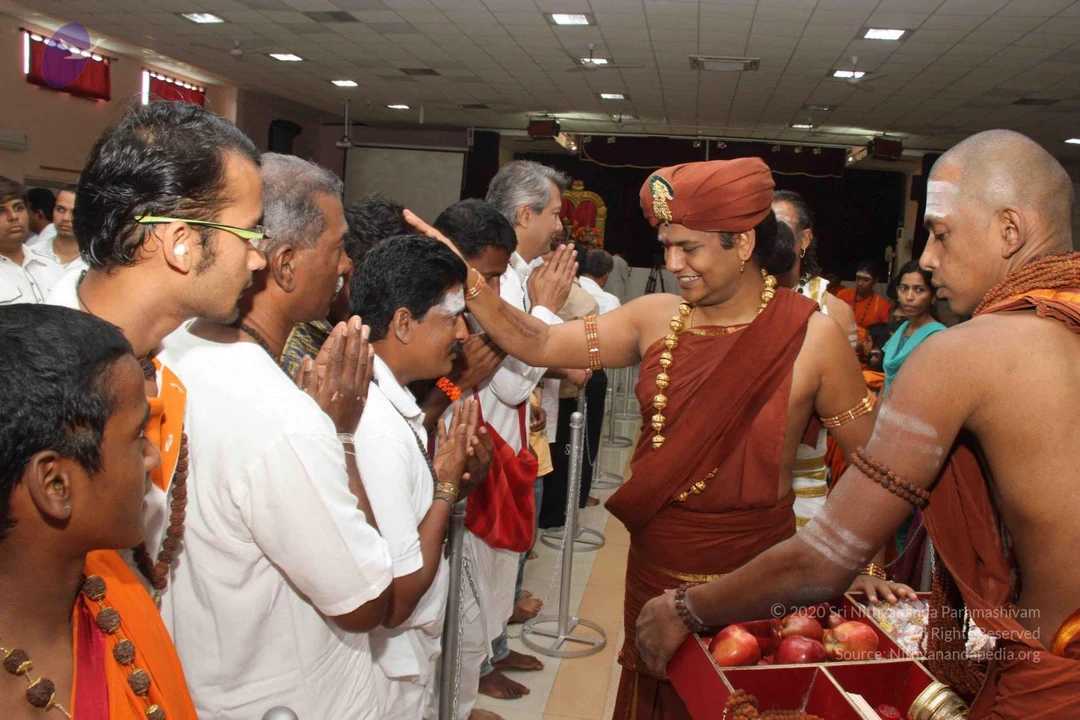
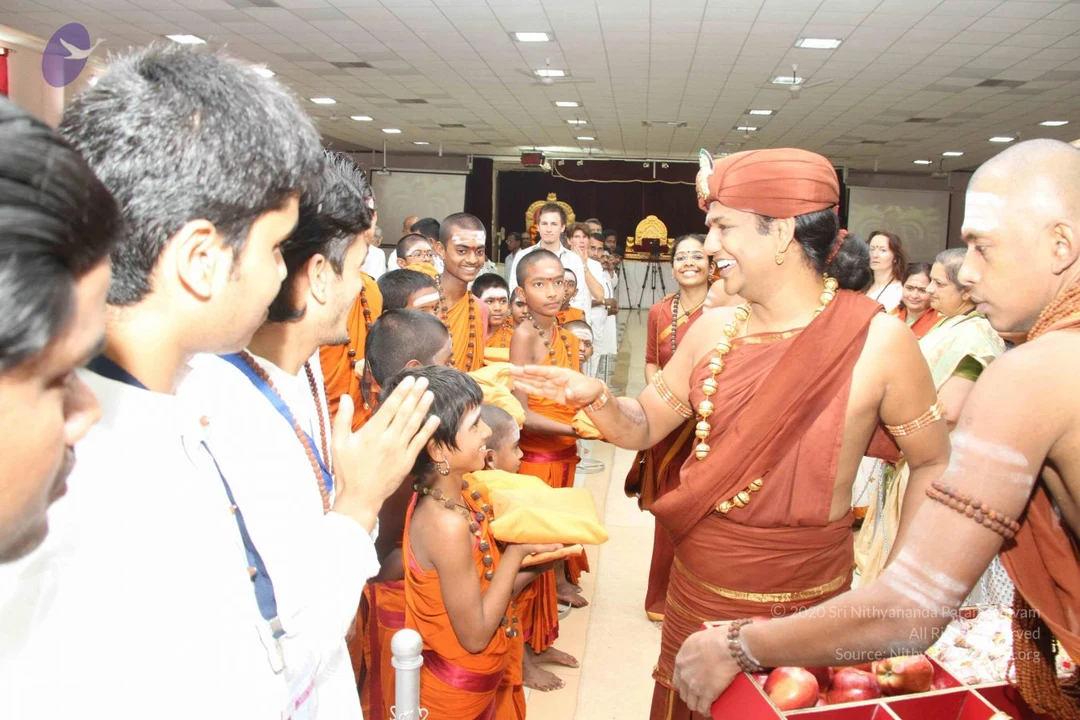
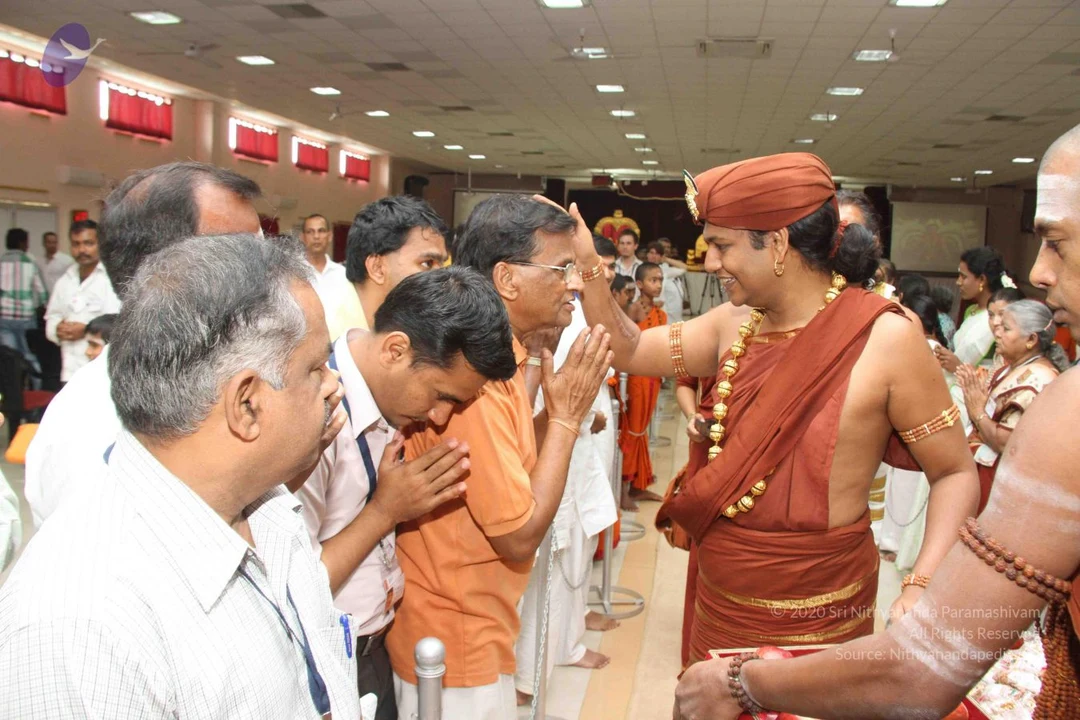
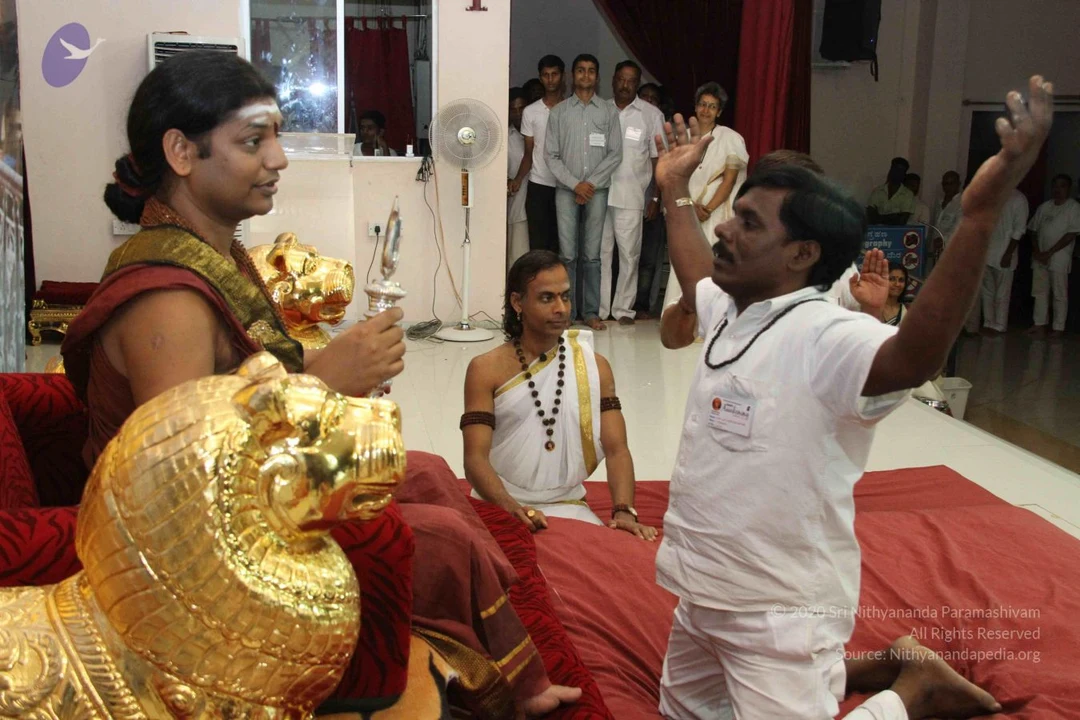
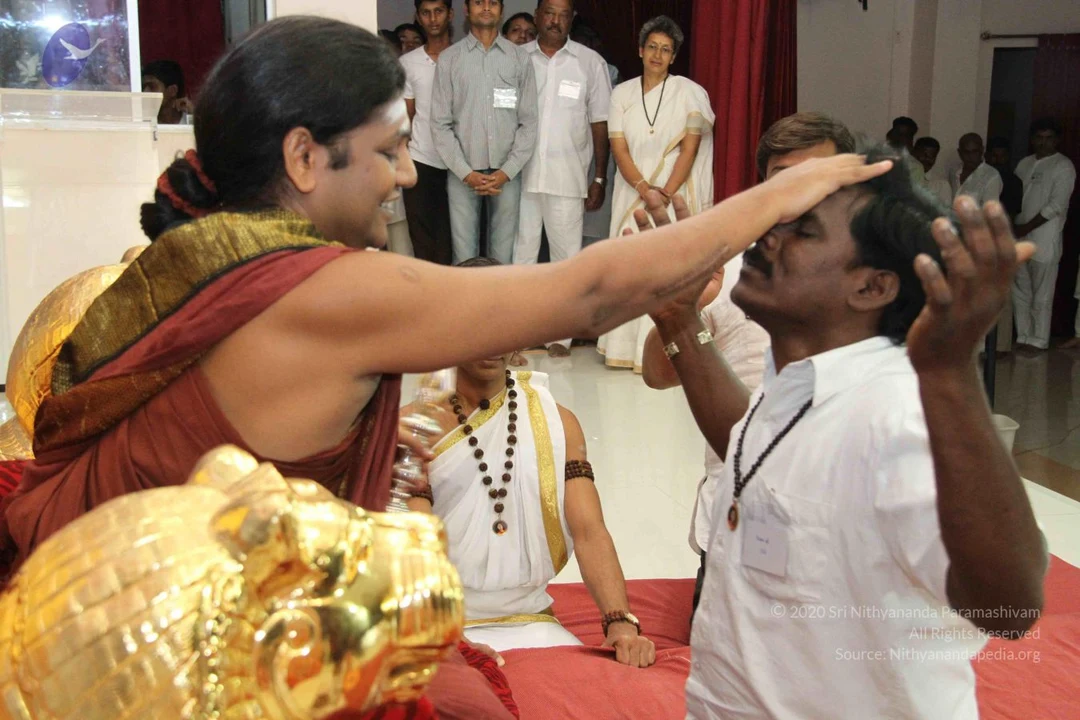
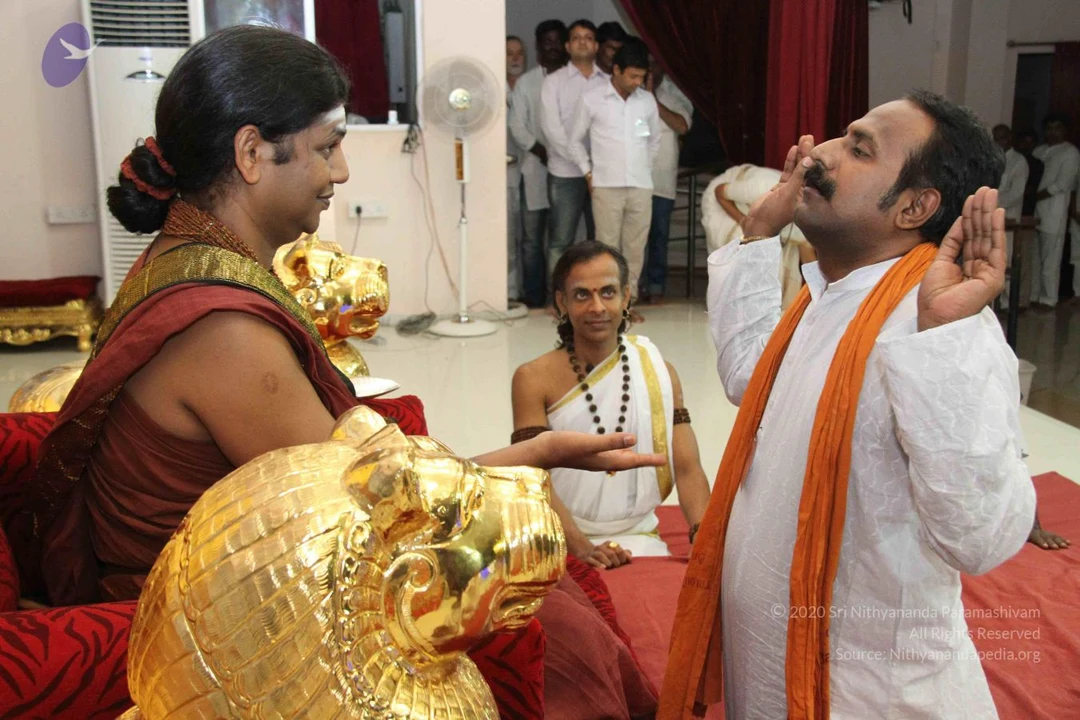
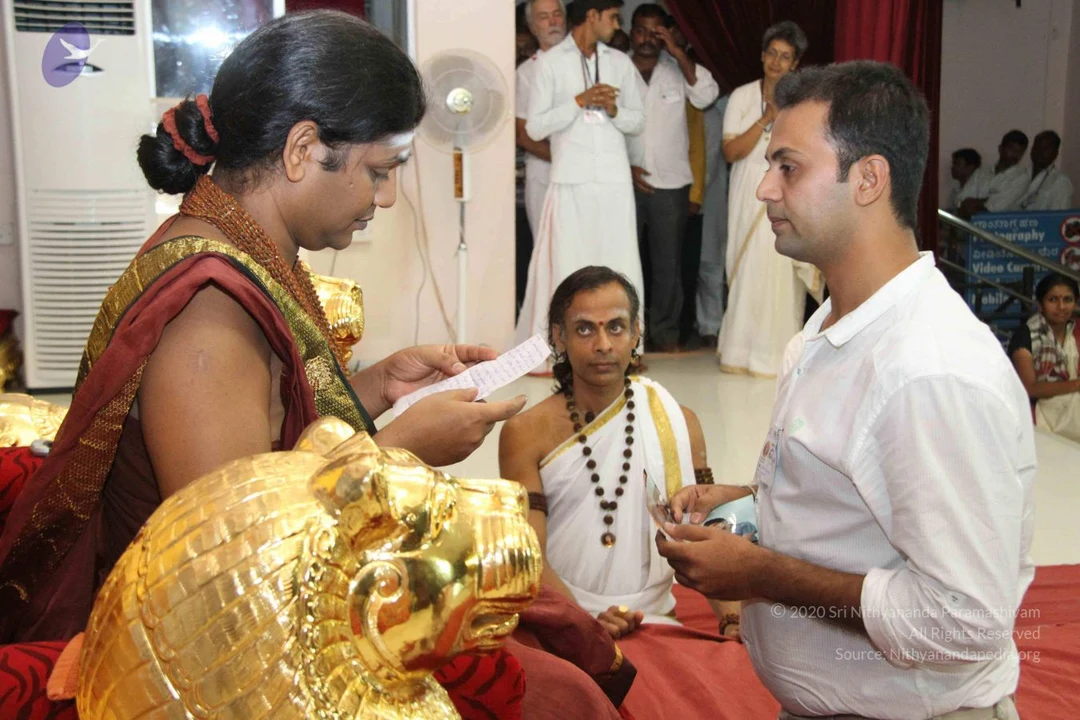
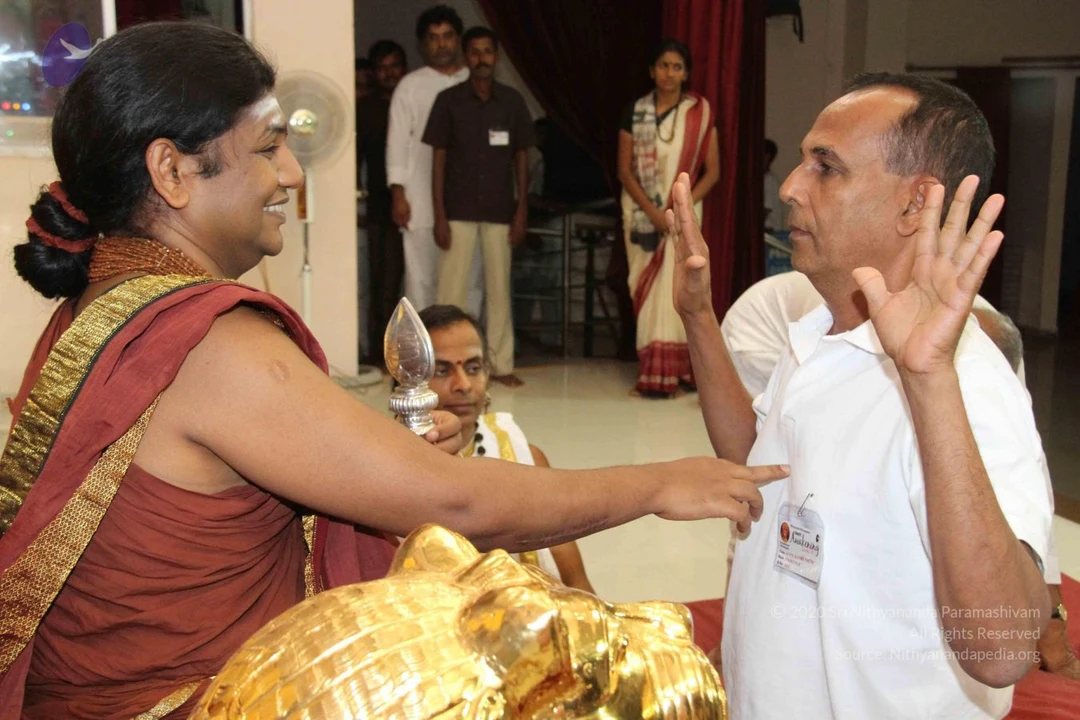
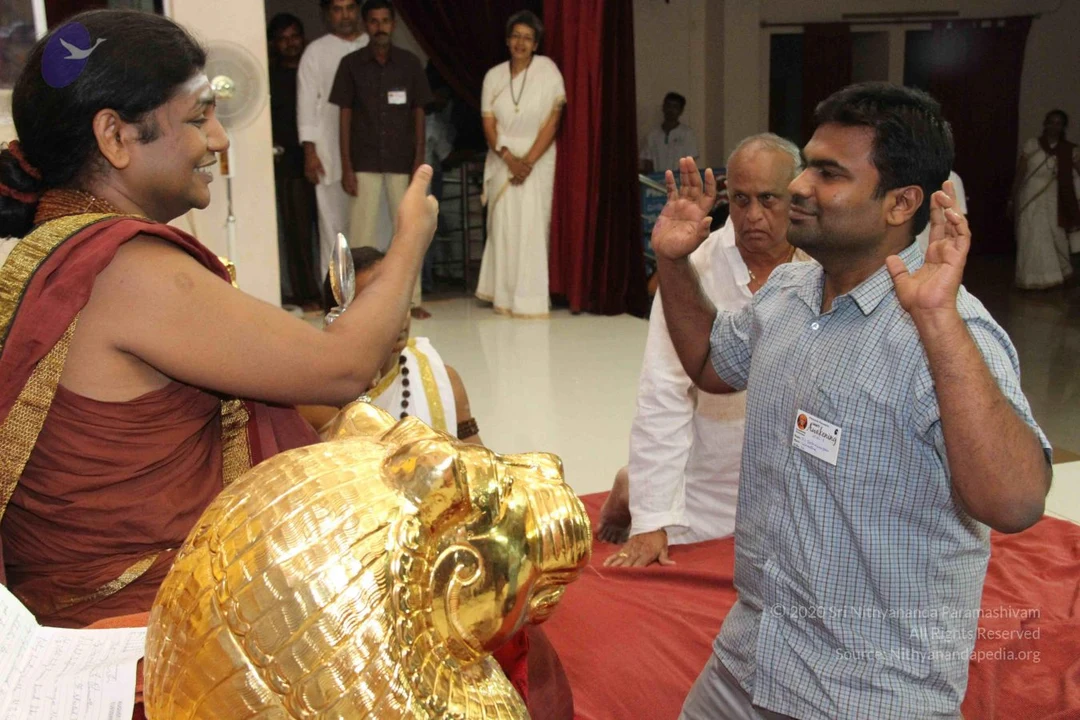
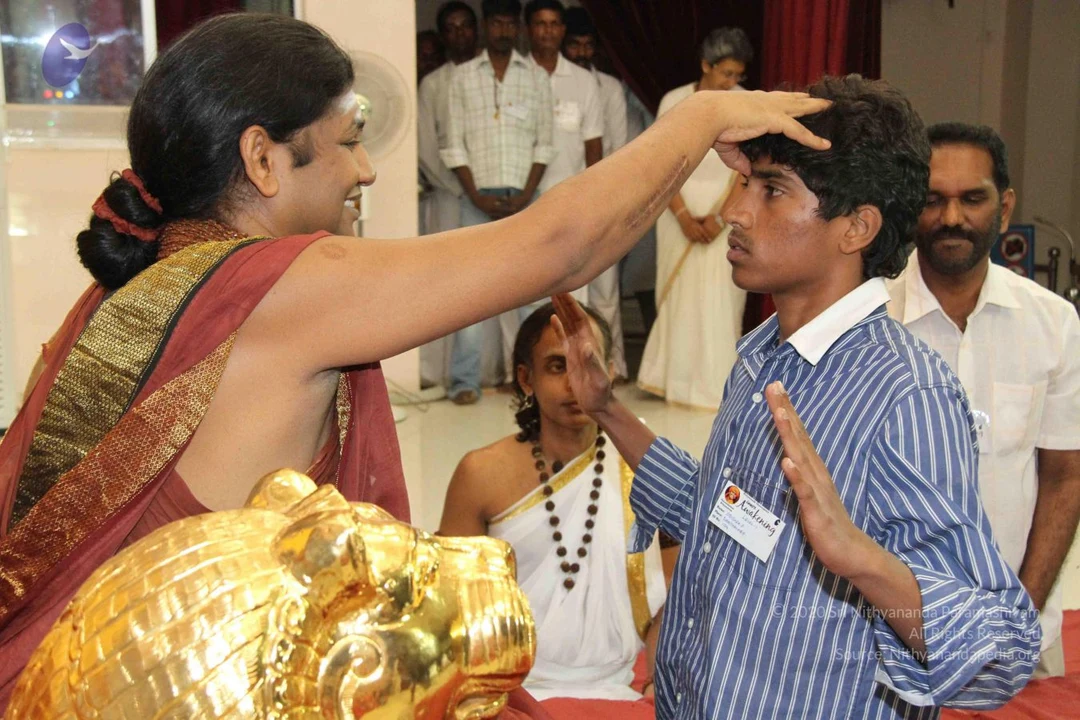
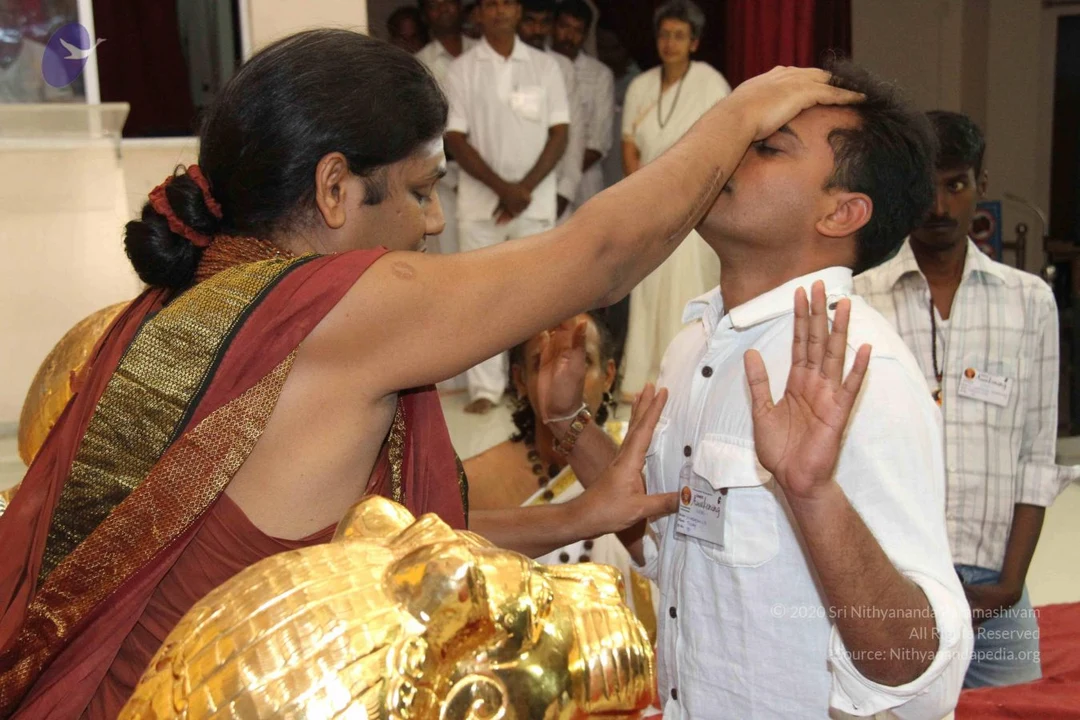
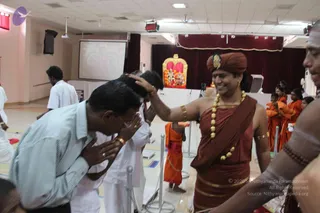
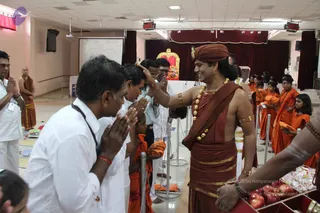
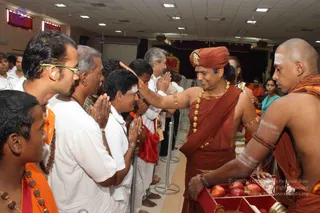
Photo of a blessing at an indoor hall with a stage backdrop, dark red curtain and a red-and-gold ornate throne-like seat decorated with flowers. A smiling figure in an orange-red turban, rust-coloured draped robe, gold belt, beaded necklaces and gold armbands places a hand on the head of a man in white clothes with a white shirt who bows with folded hands. Two other men with folded hands stand on the left. In the background, people in orange saffron robes and a child in orange stand near a projection screen and stage lights.A photograph inside a hall with a red curtain stage, a deity altar with flower garlands, and a projector screen. A smiling man in a dark red-brown dhoti-style wrap, with a red-brown turban topped by a gold ornament, gold necklaces and gold armbands, places his hand on the head of a devotee who bows with palms joined. The devotee wears a light striped shirt and a white dhoti with gold bangles. Behind them, people in saffron-orange robes stand in a line, and another person in white stands at left. The central figure, who has a cue matching the presentation of a bare-shouldered, gold-adorned a person, is giving a blessing (padapuja-style touch) to a devotee. Nearby, attendees in white and orange clothes are visible.A photo from an indoor hall with a red curtained stage and a deity murti in a shrine behind. A figure in a rust-red turban, rust-red dhoti and draped sash, wearing a gold necklace of beads and gold armbands, reaches out and touches the forehead of a kneeling devotee. The devotee in a white shirt presses palms together. Nearby, saffron-clad children and a white-clad man stand behind barrier posts. A basket of apples and sweets sits in the foreground.A photograph inside a hall at an indoor event. A smiling man in a maroon-brown turban with a gold ornament and a gold bead necklace, draped in a maroon-brown cloth with gold bangles, extends his hand in blessing toward a man in a white shirt who bows with palms pressed together. Other devotees in white shirts and white dhotis stand nearby, one wearing glasses. Behind them a golden throne-like seat decorated with red and gold draping and a deity murti stands before a red curtain, with a projection screen to the left and camera equipment visible. a person cues: turban and gold necklace; in_person candidate with a fairly uncertain match.Photograph of a hall with a crowd of devotees in light shirts and trousers lining up at a darshan line. On the right, a figure in saffron-orange robes, a saffron head wrap and rudraksha beads, holds a fruit toward a devotee; a red tray of apples sits in front of them. A second robed attendant in orange stands beside them. Behind, a gold and red ornate throne and a maroon curtain stand against the back wall, with camera tripods visible. Red-and-white beaded barriers guide the queue. The scene reads as a darshan offering session.A photo of a darshan line inside a hall with ceiling lights and a dark stage backdrop. A man in a saffron-orange turban, bare-chested with a rust-orange wrap, multiple gold necklaces and gold bangles, smiles and extends a hand in blessing toward devotees. Devotees in white shirts and dhotis with white vibhuti marks and folded hands line up. On the right, a priest with a shaved head, white tilak marks, rudraksha beads and orange cloth holds a red tray of apples and offerings. Several people stand in the background.

SWAMIJI DEITIES BLESSING
4 photosSource gallery
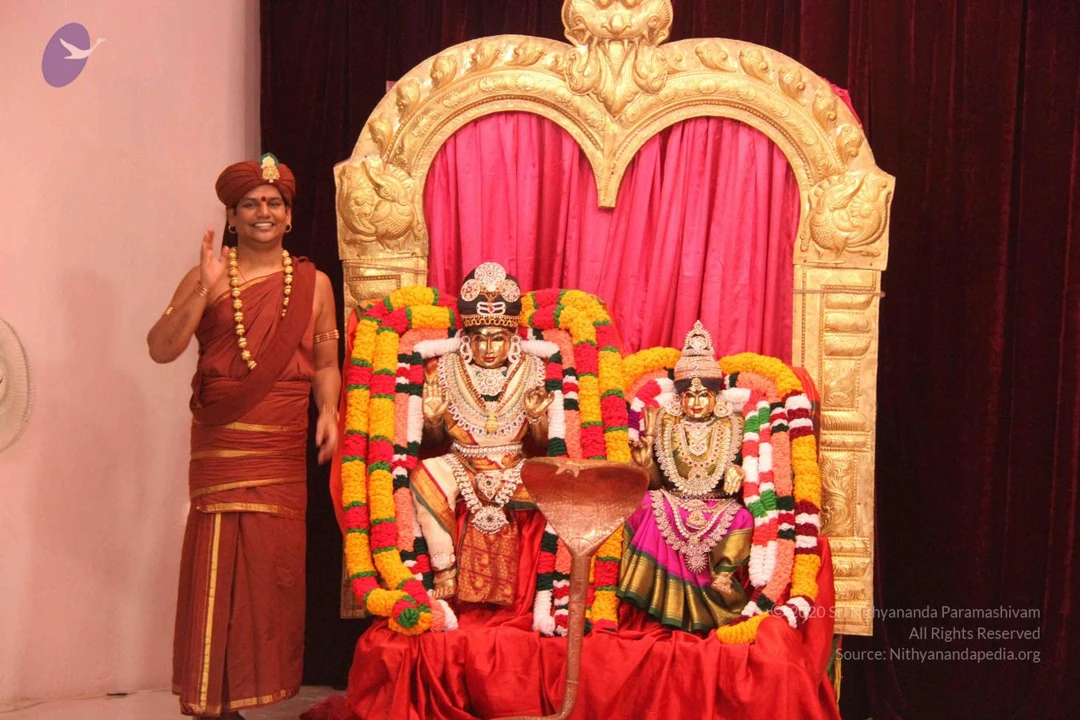
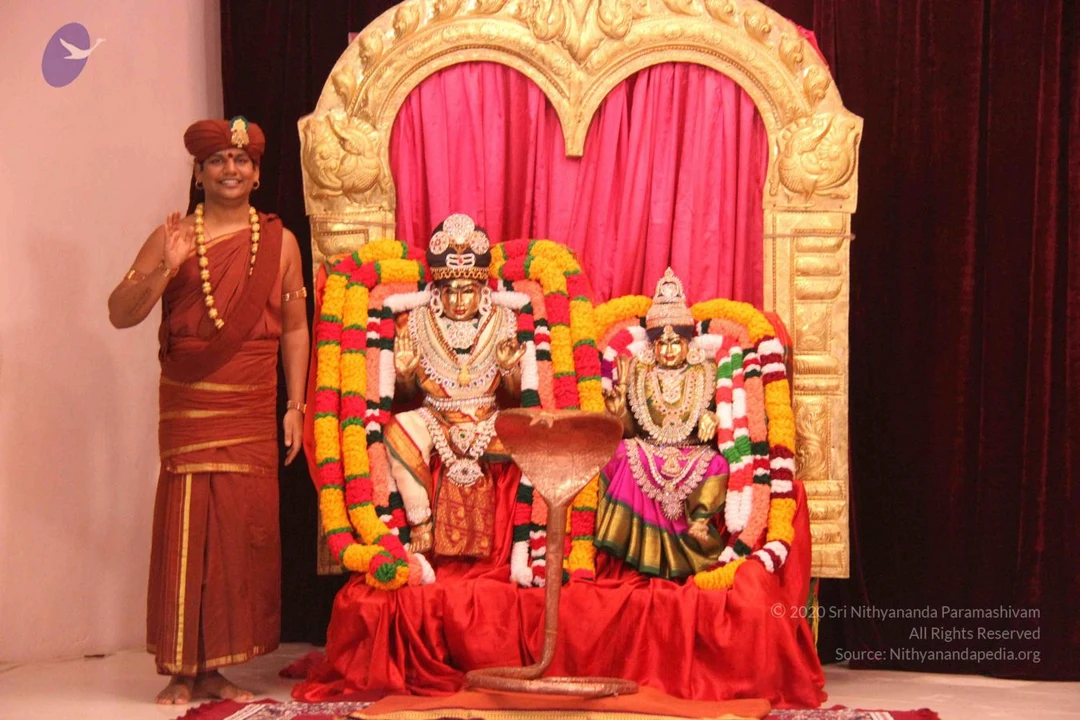
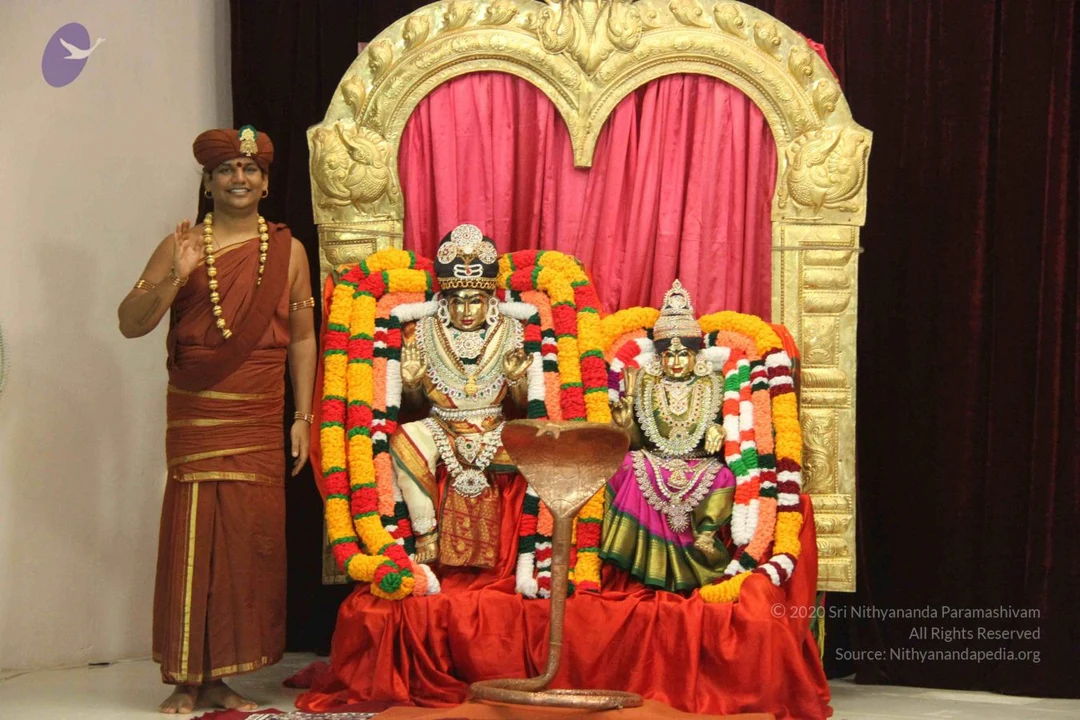
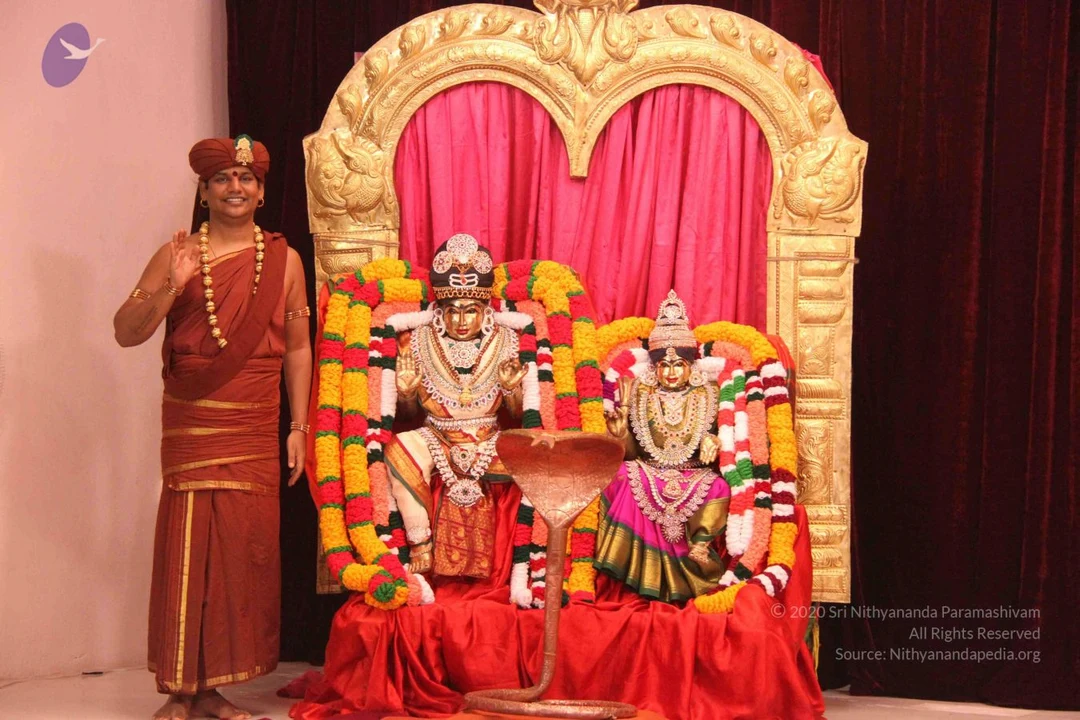
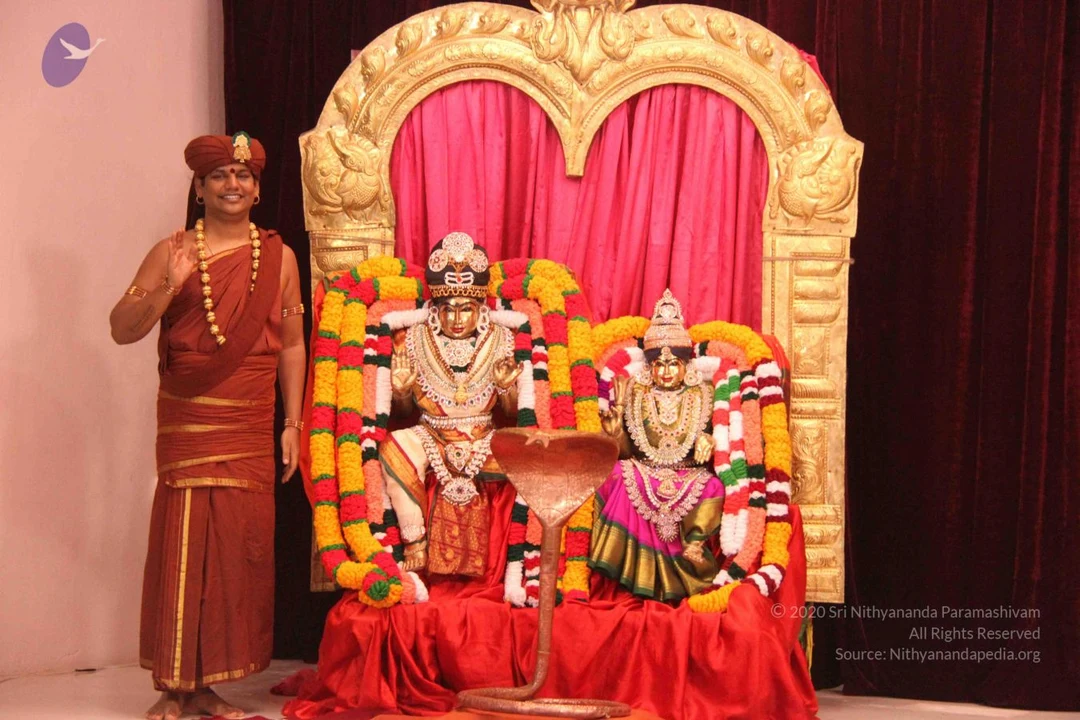
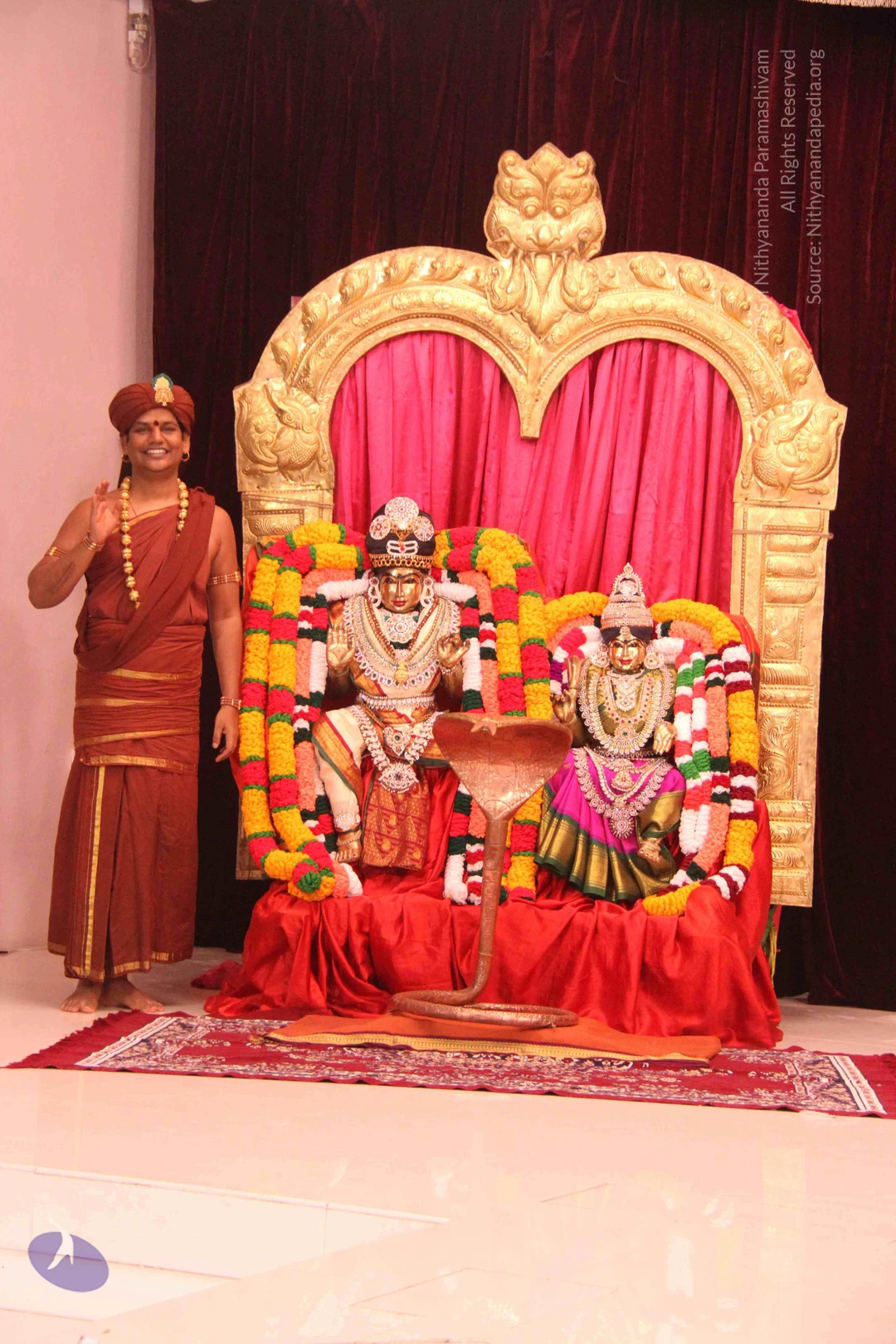
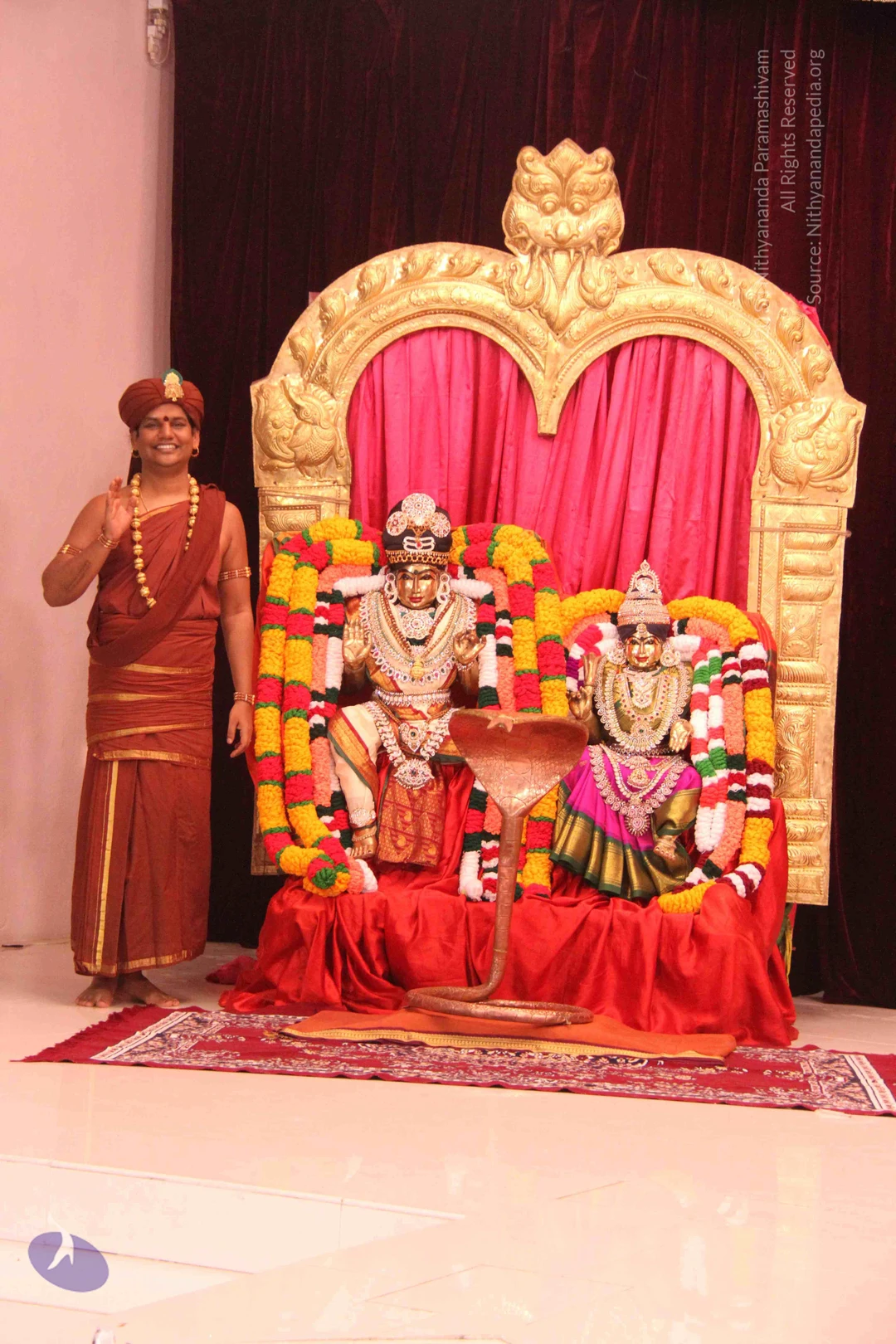
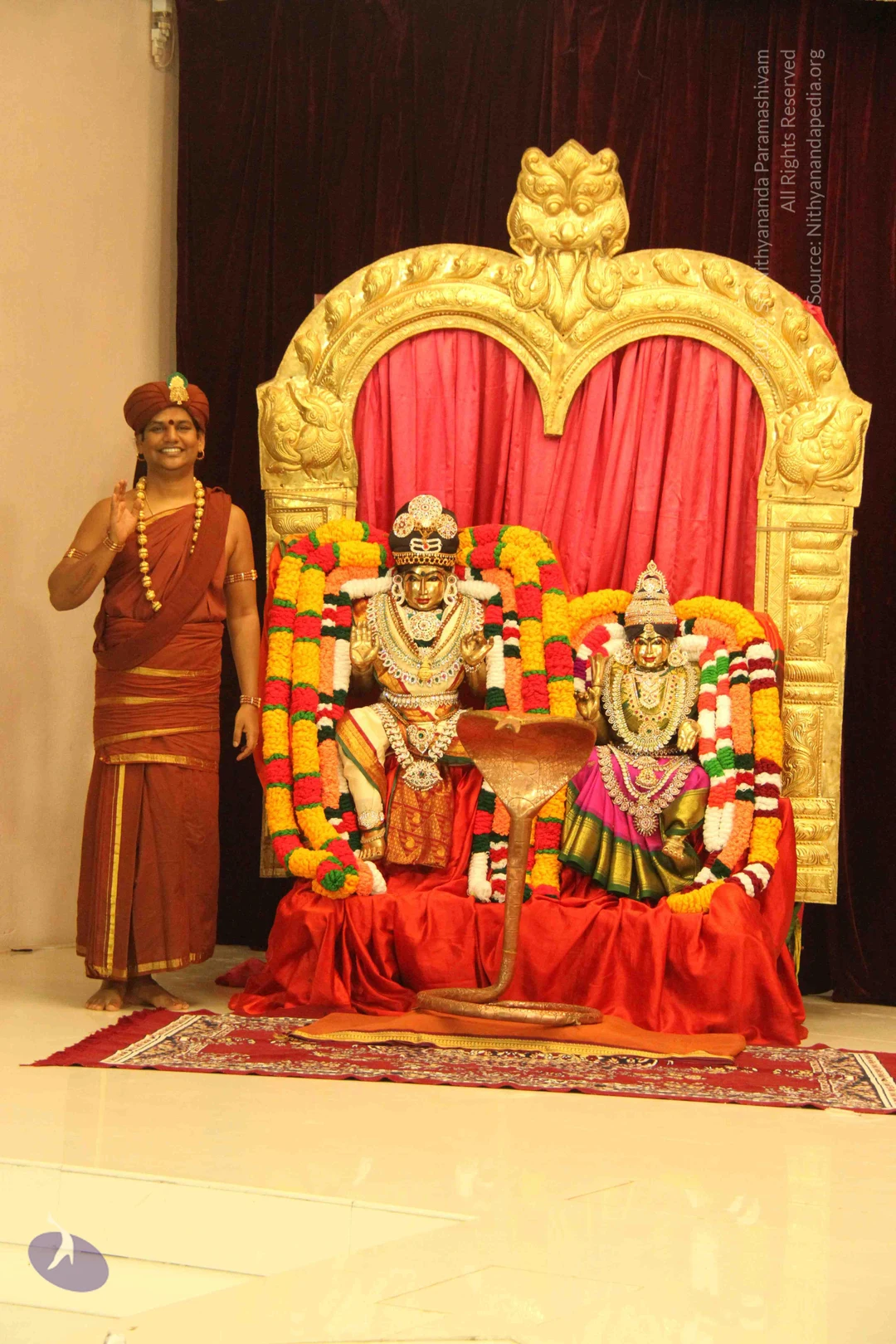
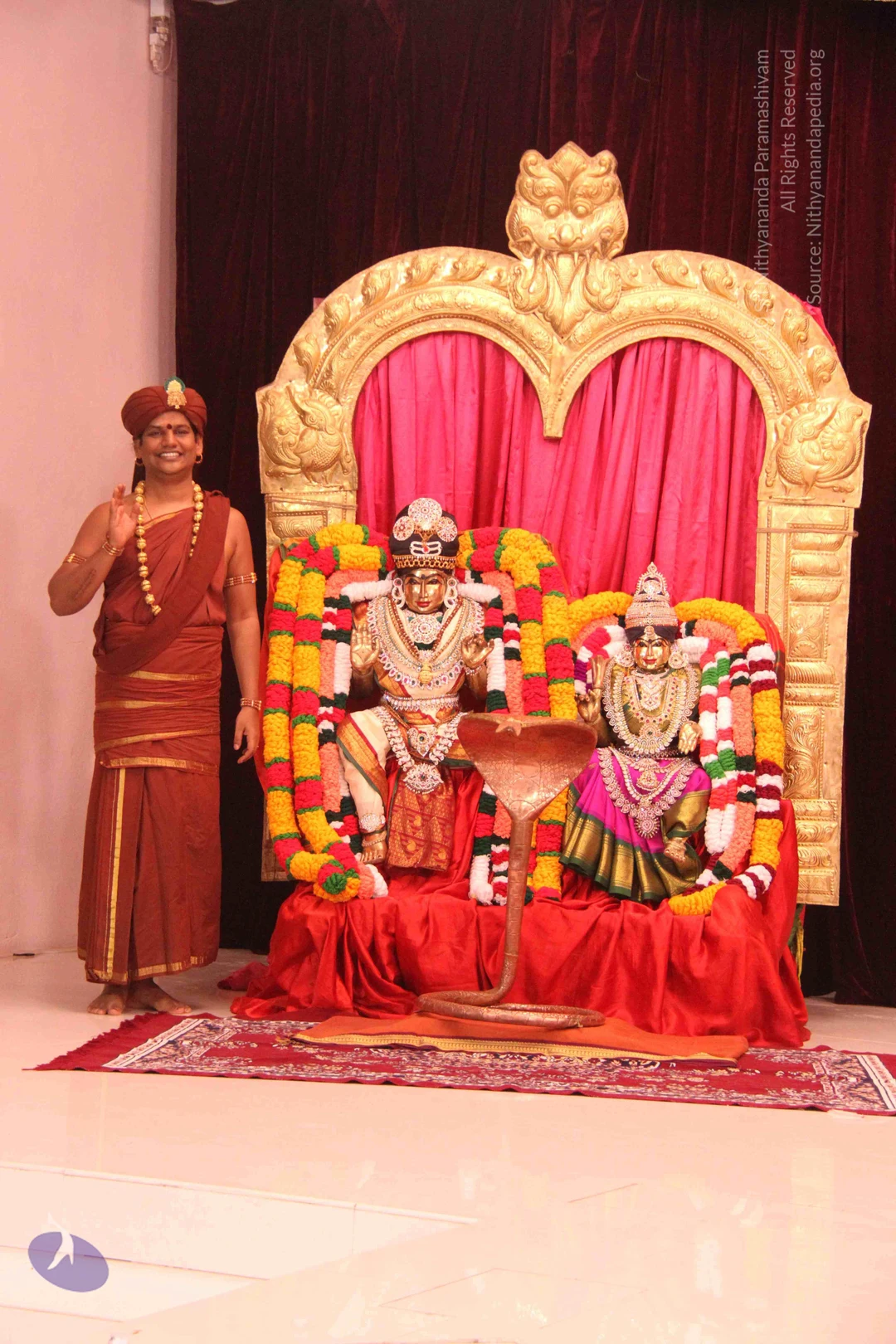
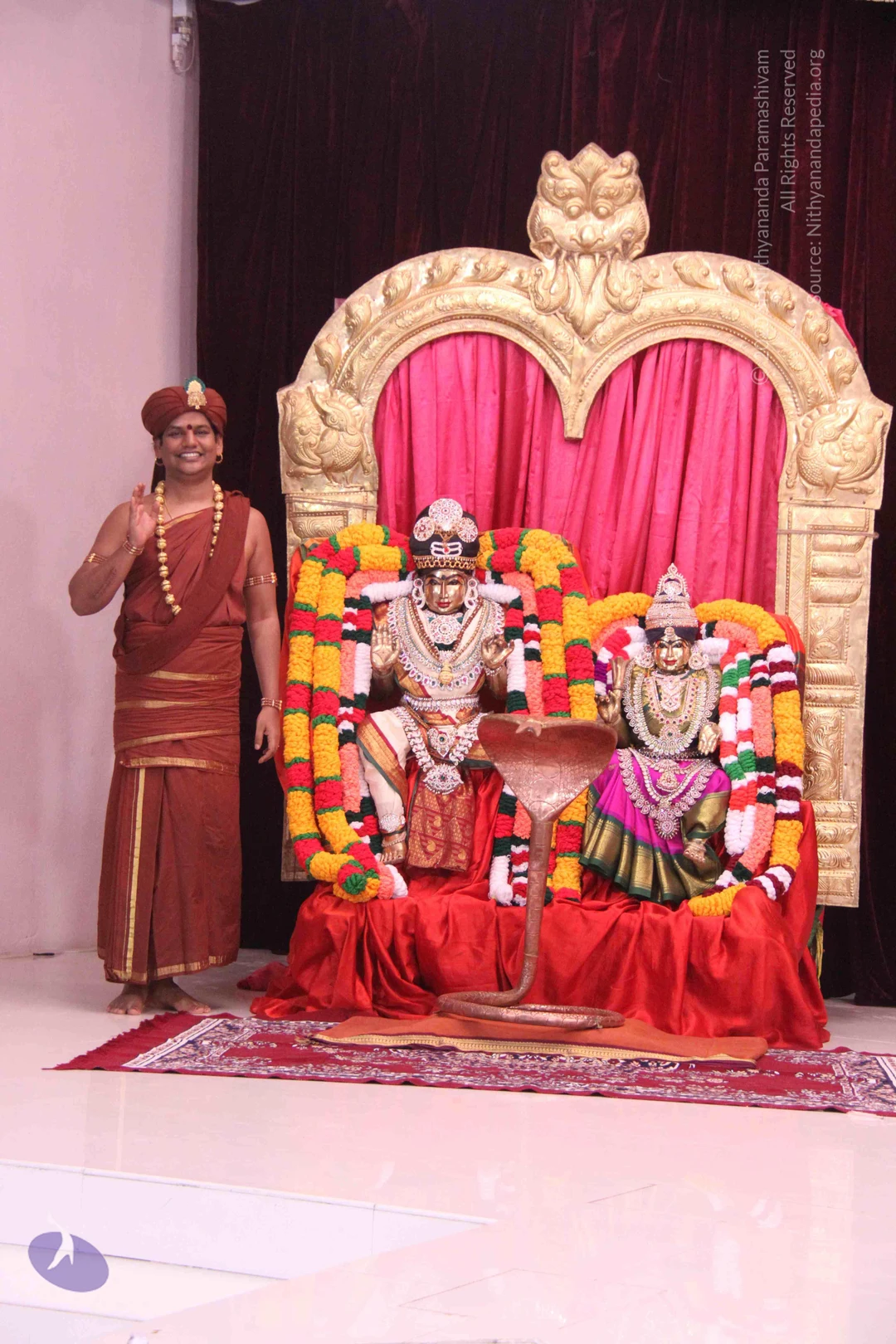
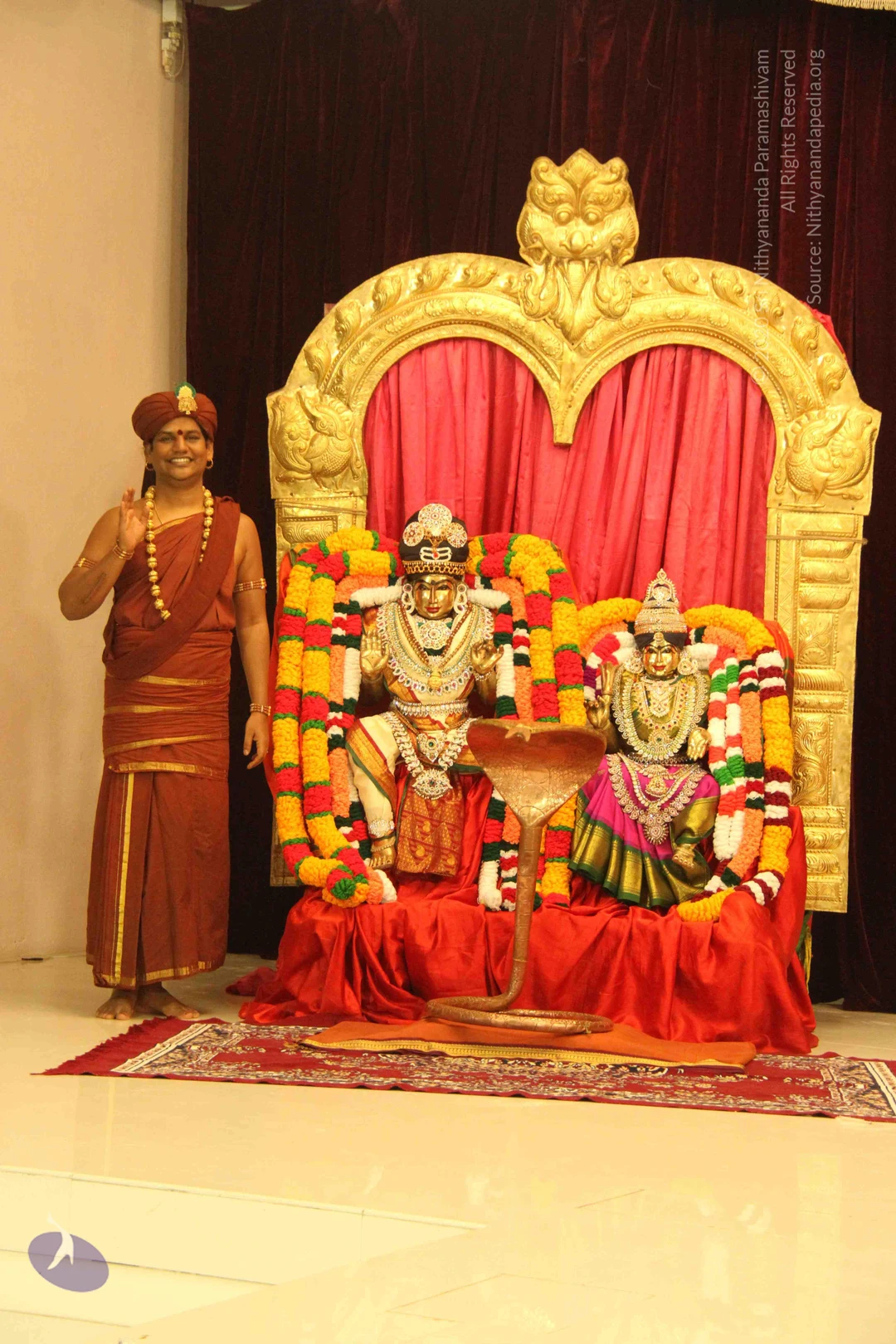
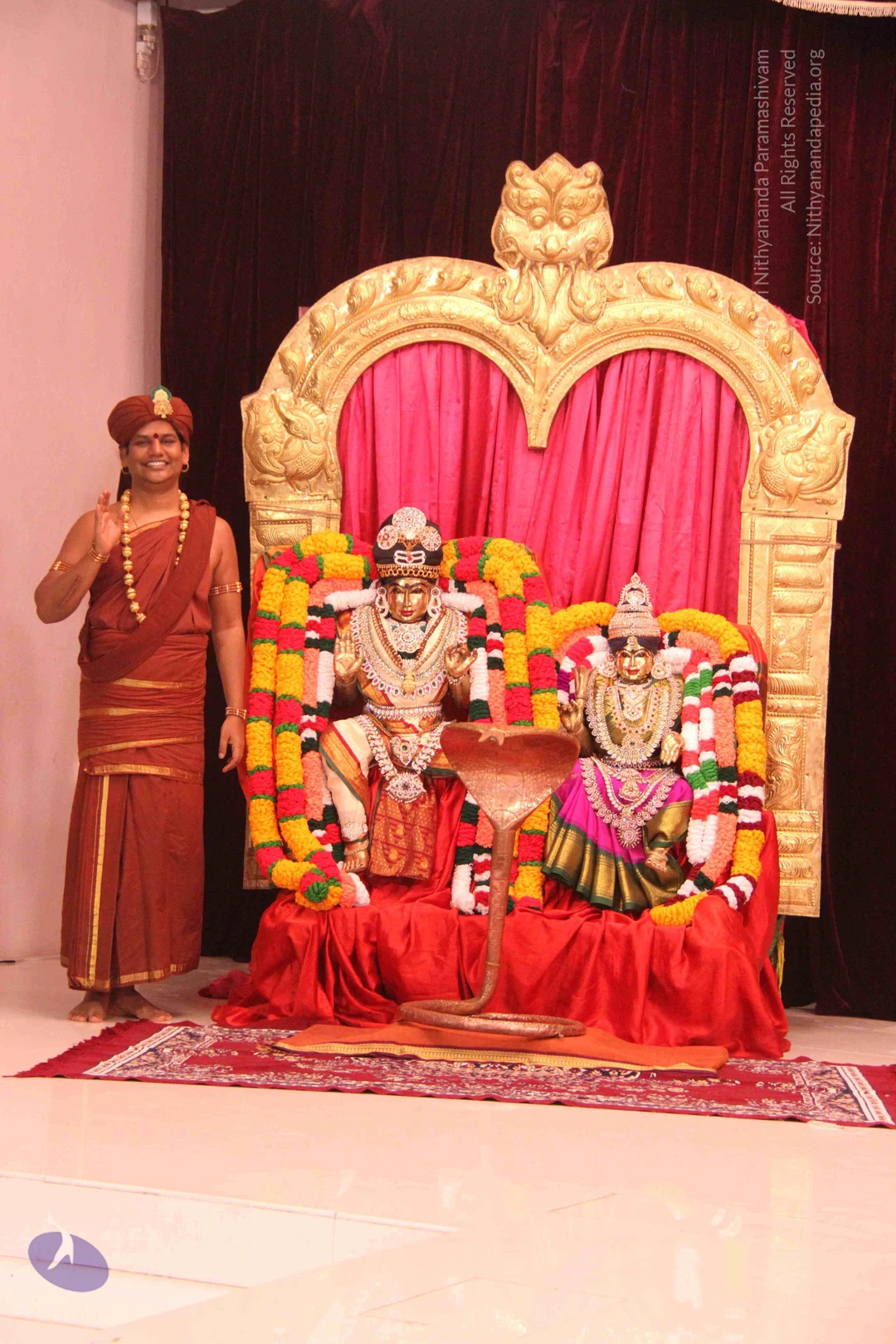
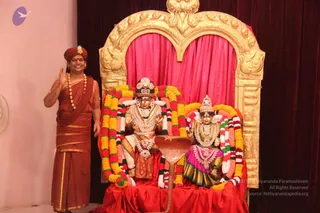
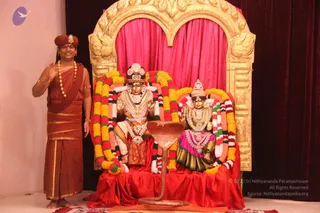
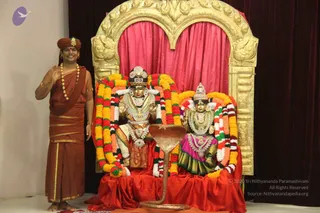
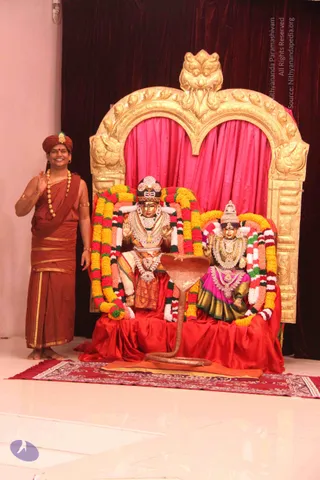
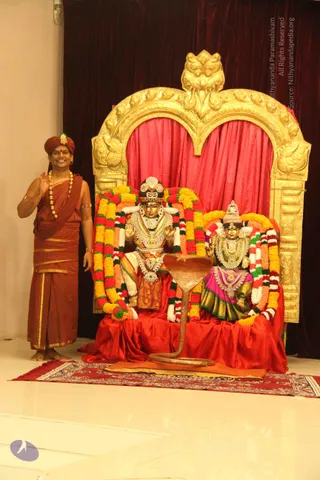
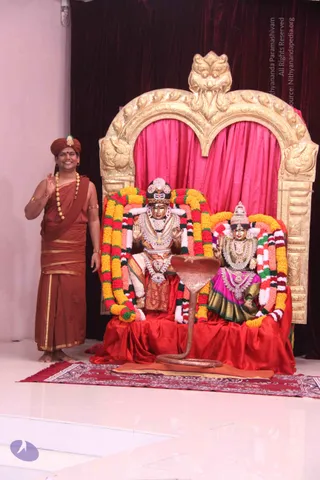
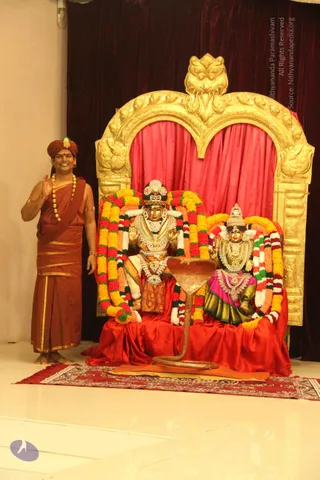
A standing man in a rust-red turban and matching rust-red dhoti-style robe with gold-bordered edges wears a multi-strand gold necklace and gold bangles, raising one hand in greeting beside a golden arched frame. Behind him a gold-and-silver ornamented deity murti pair sits on a red-draped seat with a pink curtain backdrop; both figures wear garlands of yellow, orange and red flowers, jewelled necklaces and crowns, and a golden kalasha-style staff rests at their feet. A pink and gold sari-clad figure sits on the right. The photo is a person archive image; the standing man's appearance is not sufficiently distinctive to identify him.A standing man in a rust-red dhoti and matching shawl, wearing a red-orange turban with a jewelled ornament and a long beaded mala, waves his right hand beside a seated pair of deity murti on a red-draped throne. The left figure wears a crown, a rudraksha-style mala and gold jewellery; the right figure wears a pink and green sari and a crown, with a cobra hood carved in front of the seat. Both murti are garlanded with orange, yellow, red and white flower garlands. Behind them stand a gold arched frame and red velvet curtains. The man's dress and appearance match the page's a person reference only loosely, so identity remains uncertain; he is described by role as a devotee standing beside the murti.A standing man in an orange-brown saffron-toned dhoti and shawl, wearing an orange-brown turban with a small gold ornament, a long gold beaded necklace, gold bangles and a rudraksha mala, smiles and raises one hand in blessing beside a gold-framed arch. Seated before him on a red draped platform are two golden deity murtis, one wearing a crown with a tripundra mark and heavy floral garlands, the other in a green and pink sari with ornate jewellery, with a copper cobra hood set in front. Red and pink curtains and a white backdrop complete the stage setting. A small purple bird logo appears at upper left.A standing man in a rust-orange turban and orange-red dhoti with a shoulder wrap raises his right hand in a blessing gesture beside a gilded deity pair seated on a red throne. The seated figures are gold-coloured murtis draped in garlands of yellow, orange, red and white flowers, with a copper-coloured cobra hood set in front of the throne. Behind them hang a golden arch and deep red and pink drapes. A rudraksha mala and gold ornaments adorn the standing man, who has long hair swept under the turban and wears several gold bangles. A small purple logo appears in the top left corner of the backdrop.

INNER AWAKENING SESSION, DARSHAN AND DINNER
127 photosSource gallery
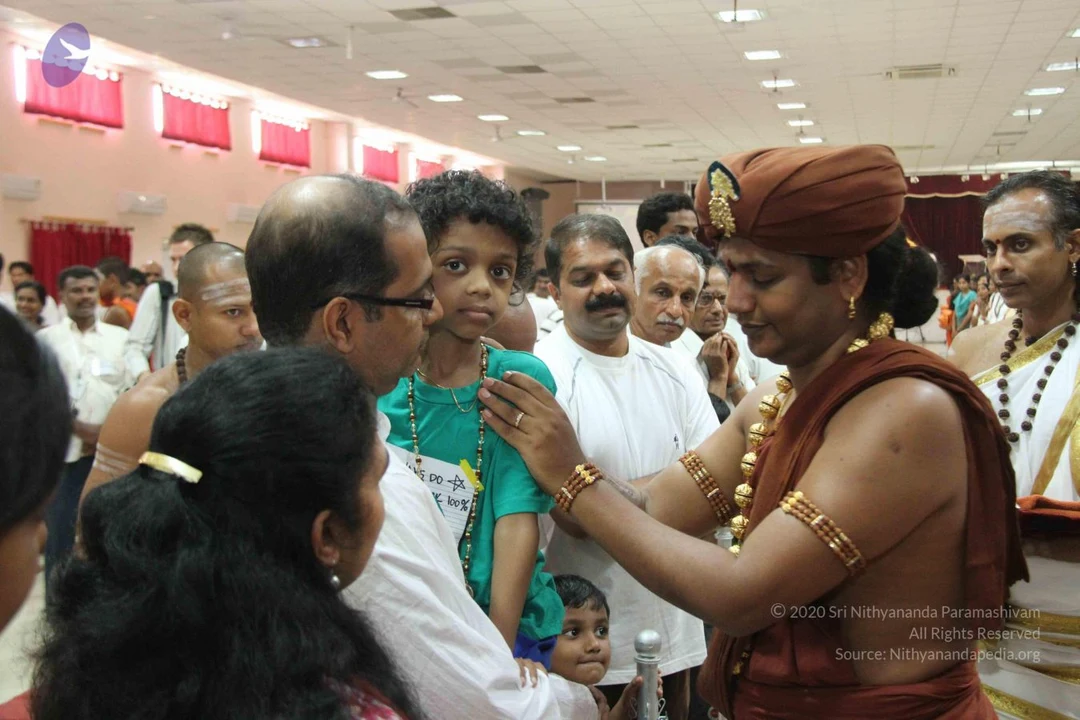
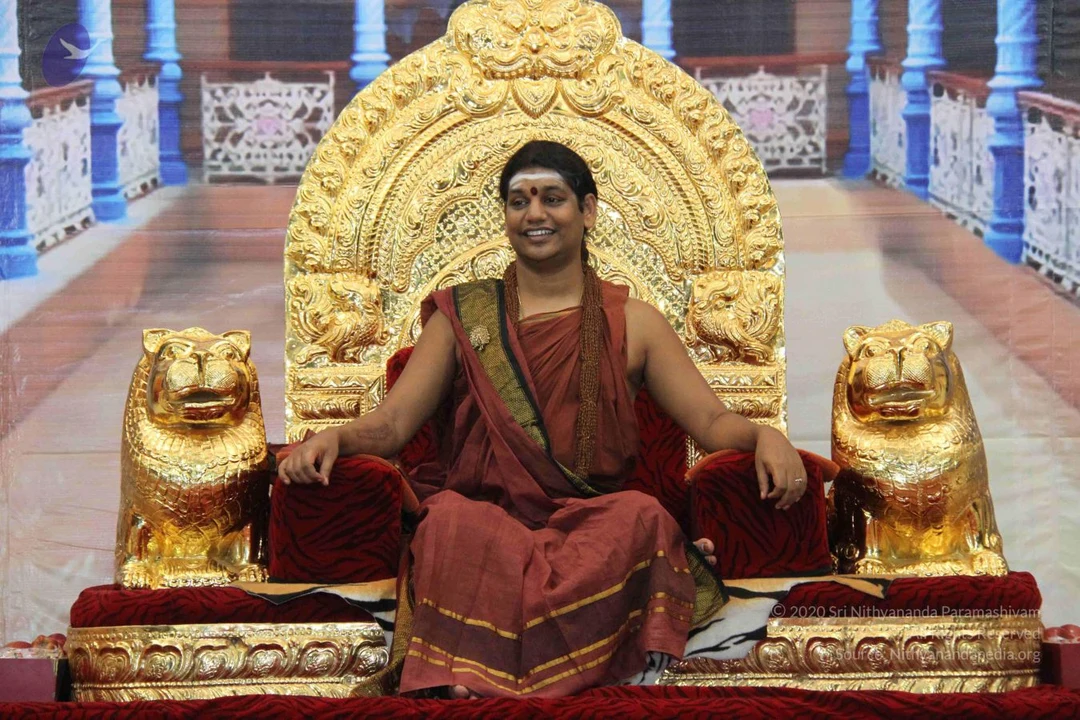
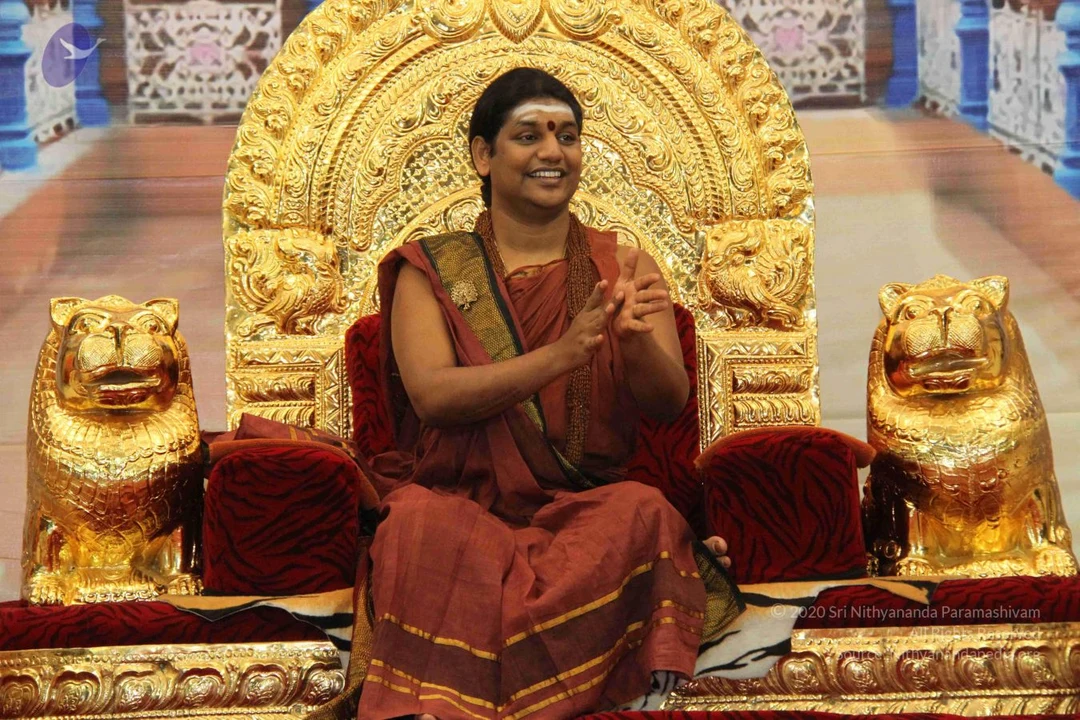
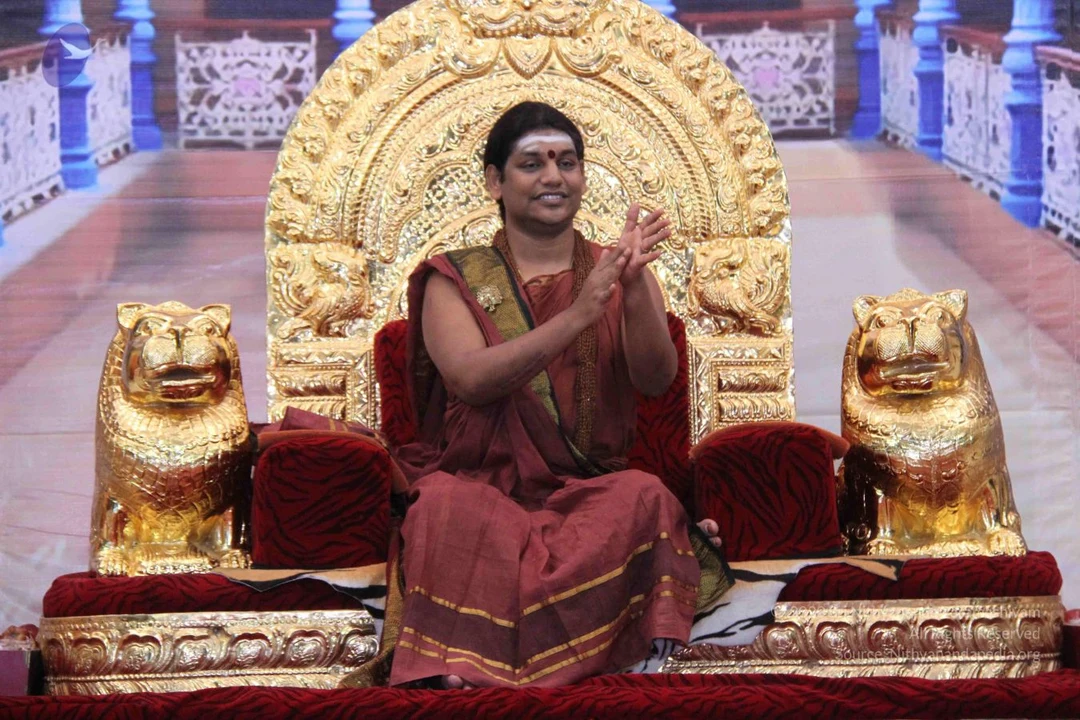
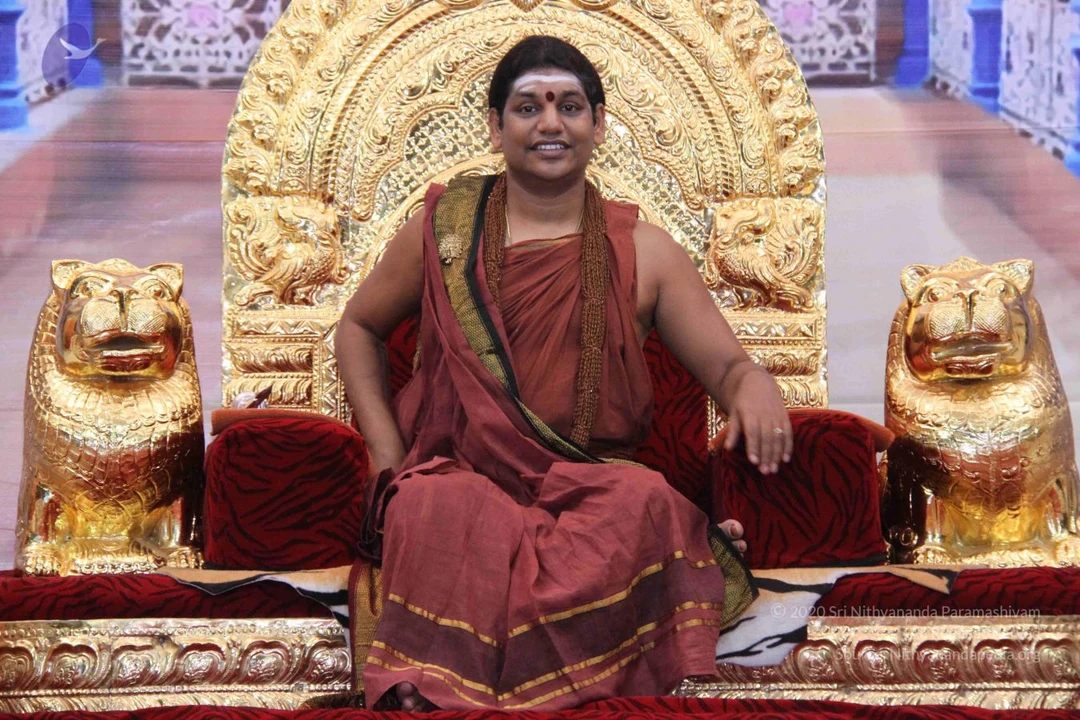
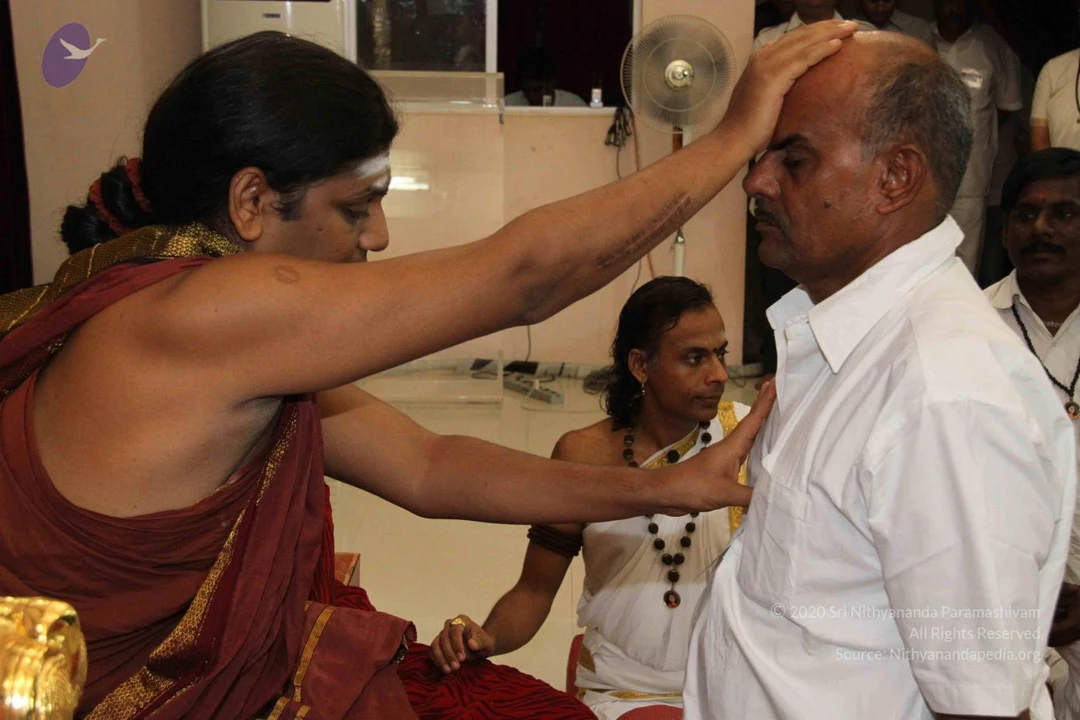
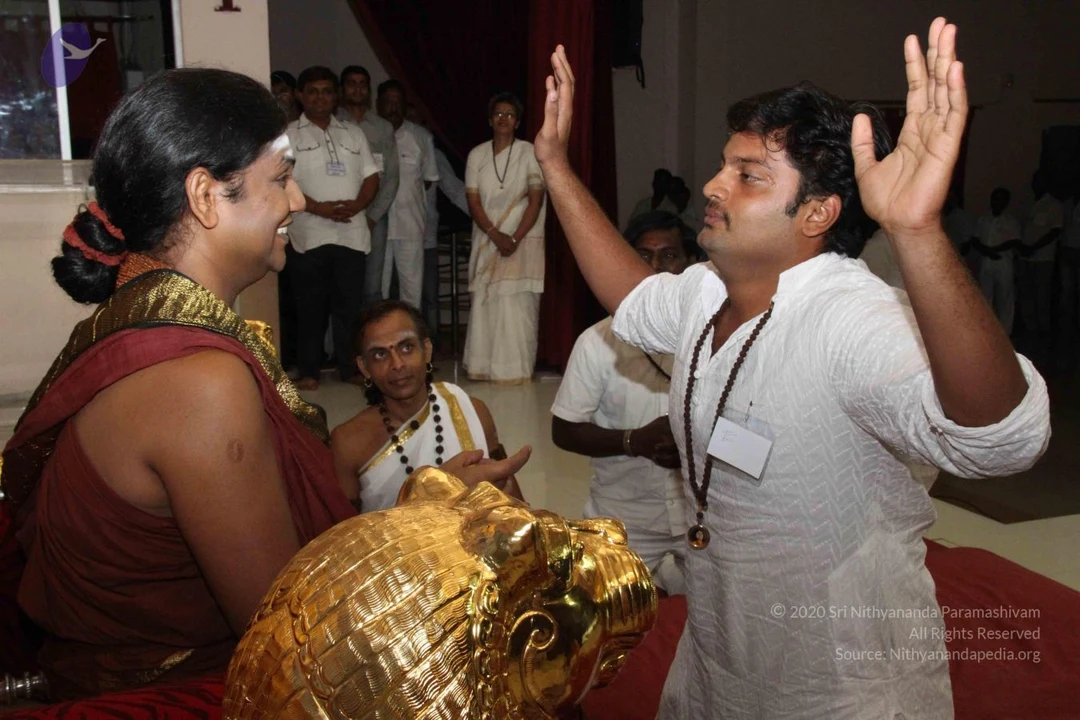
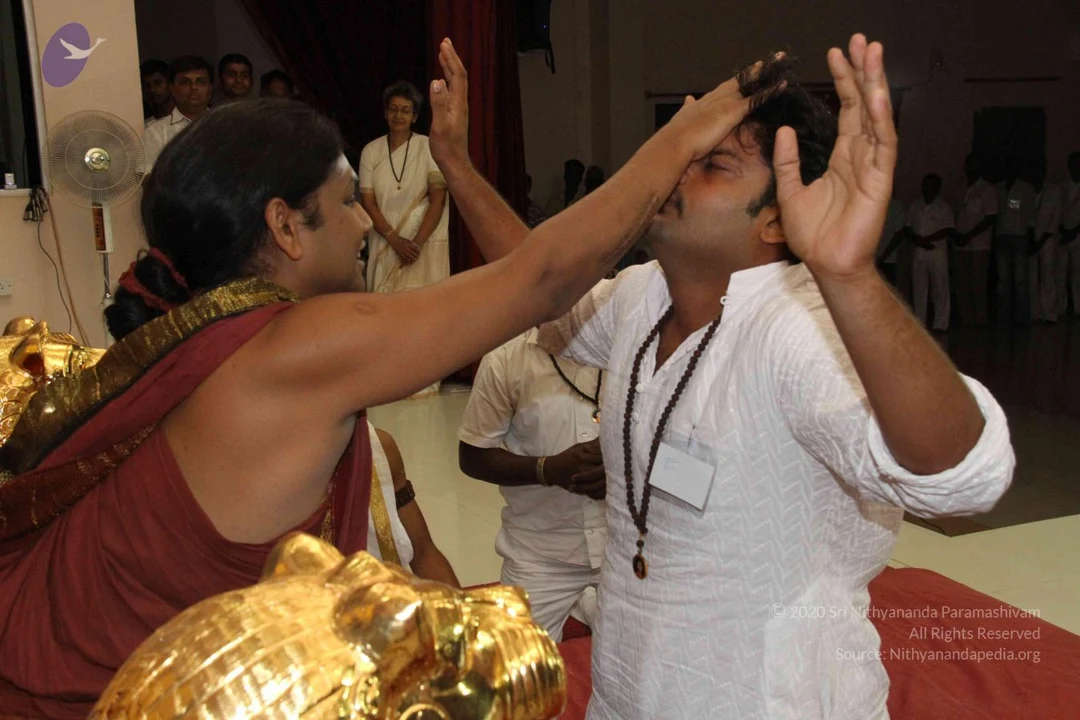
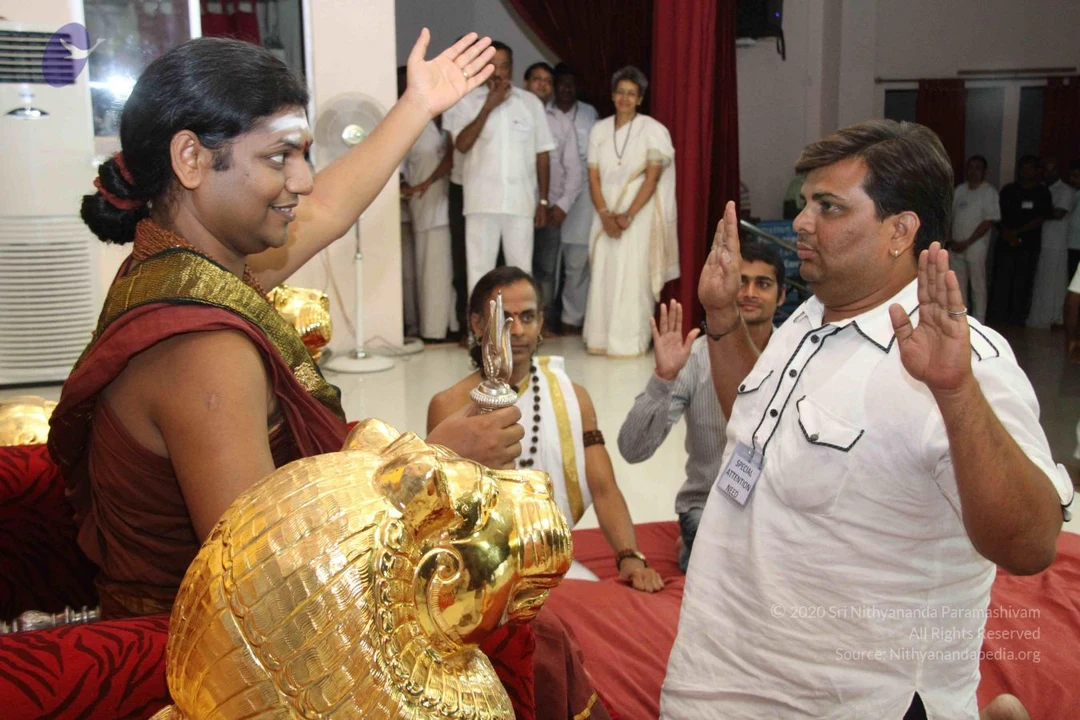
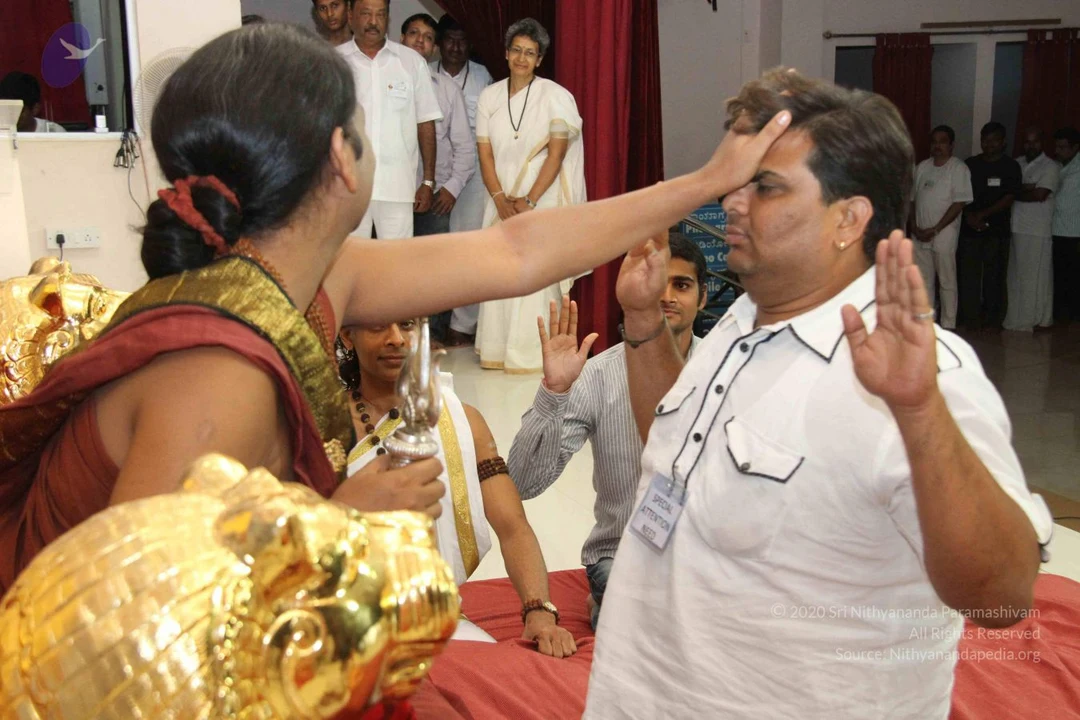
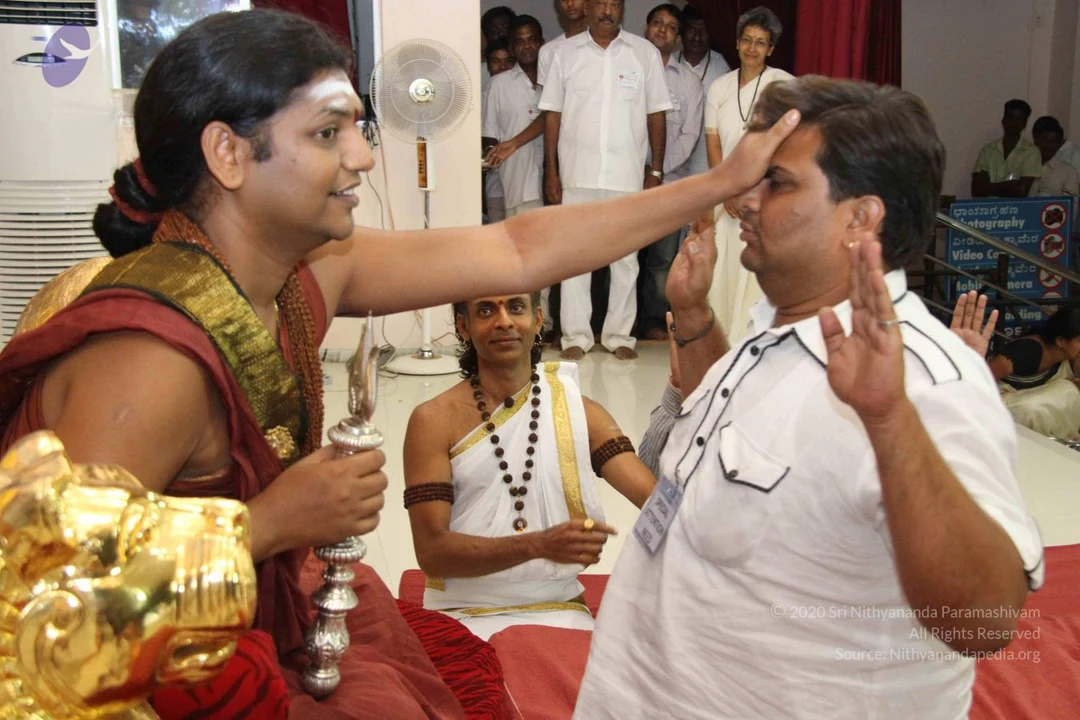
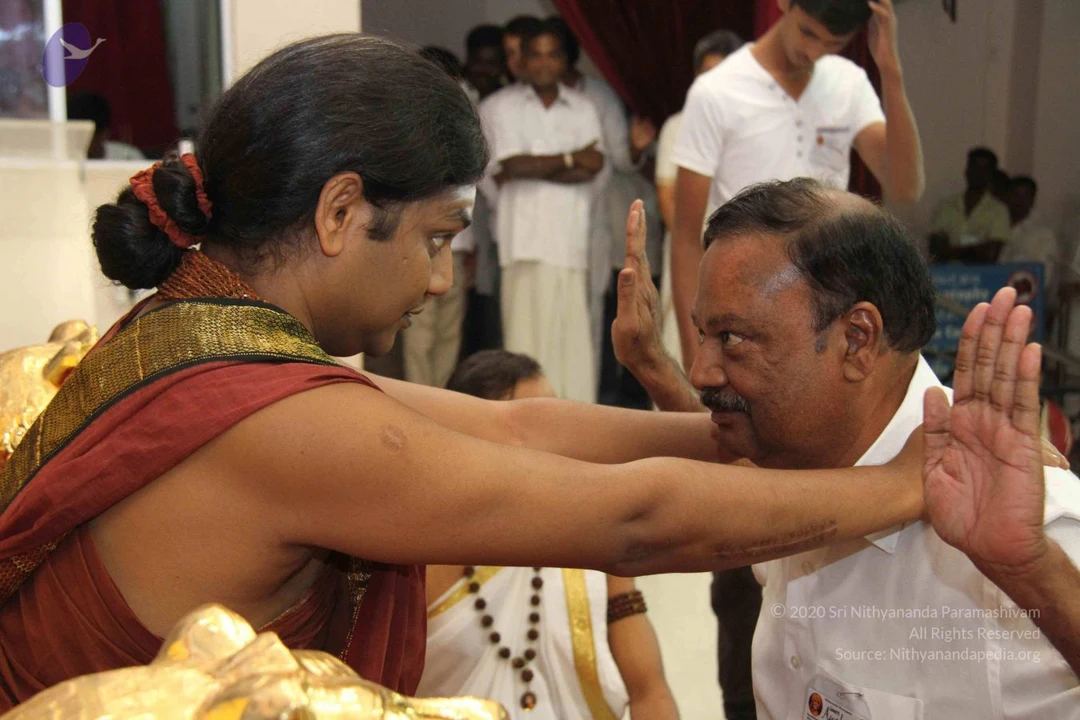
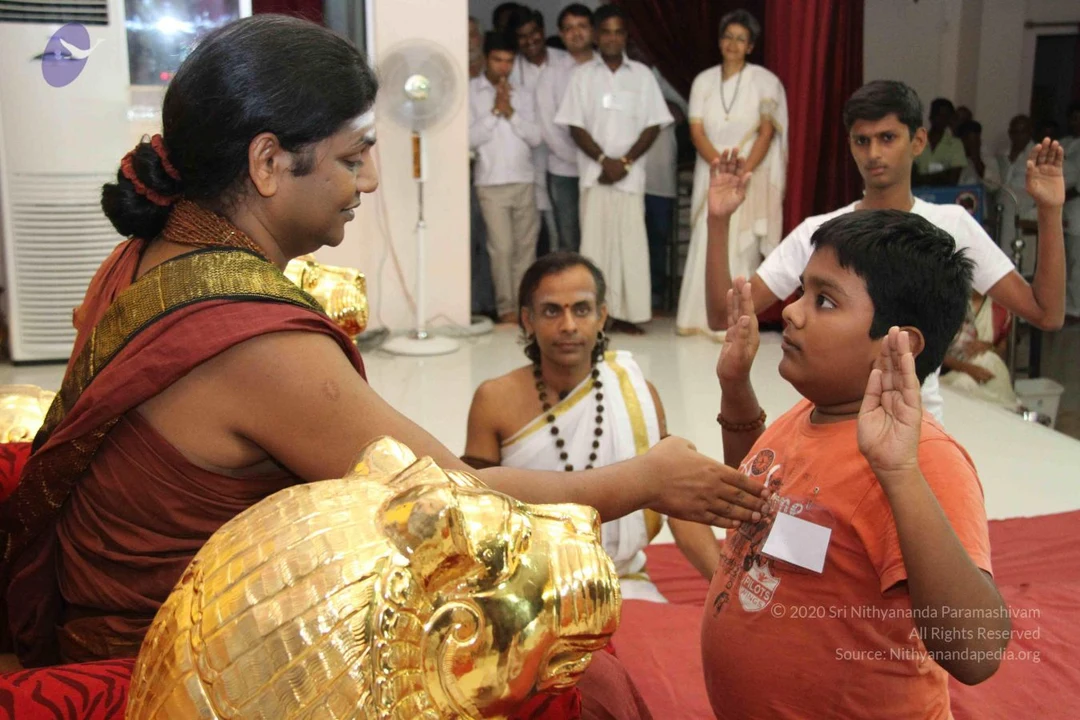
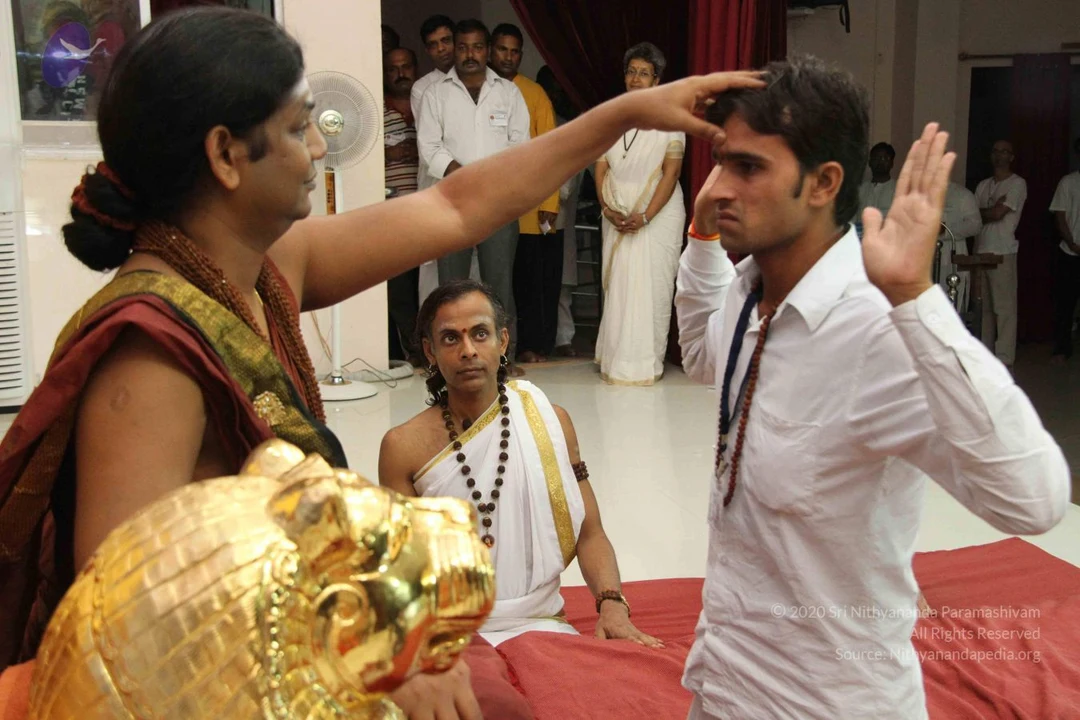
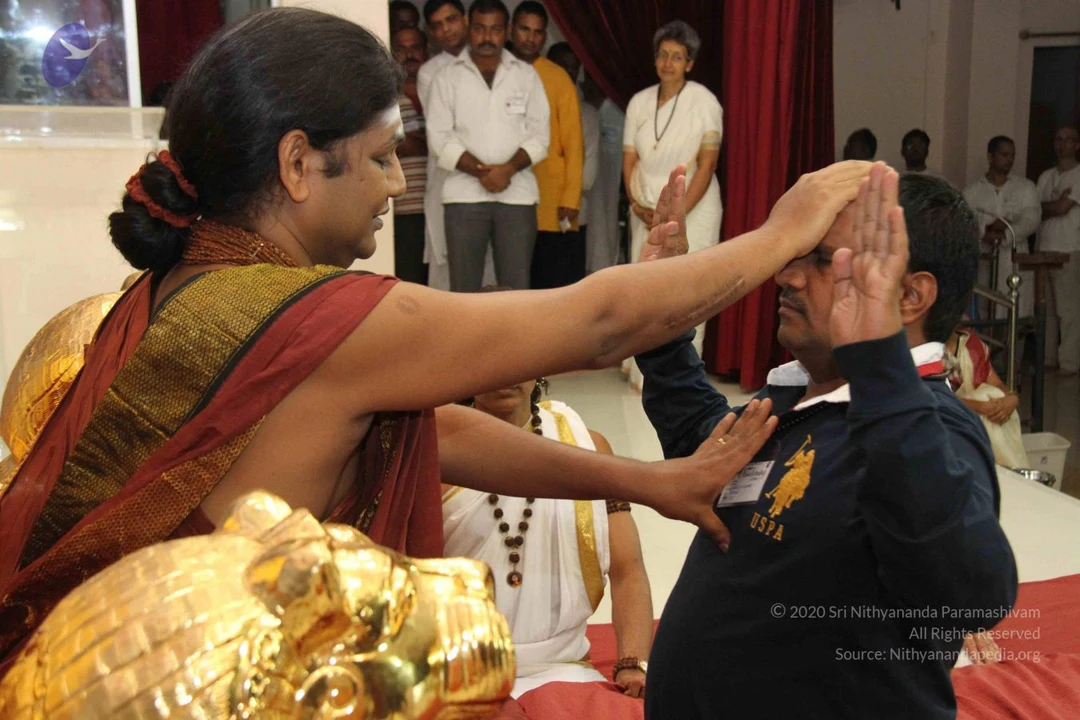
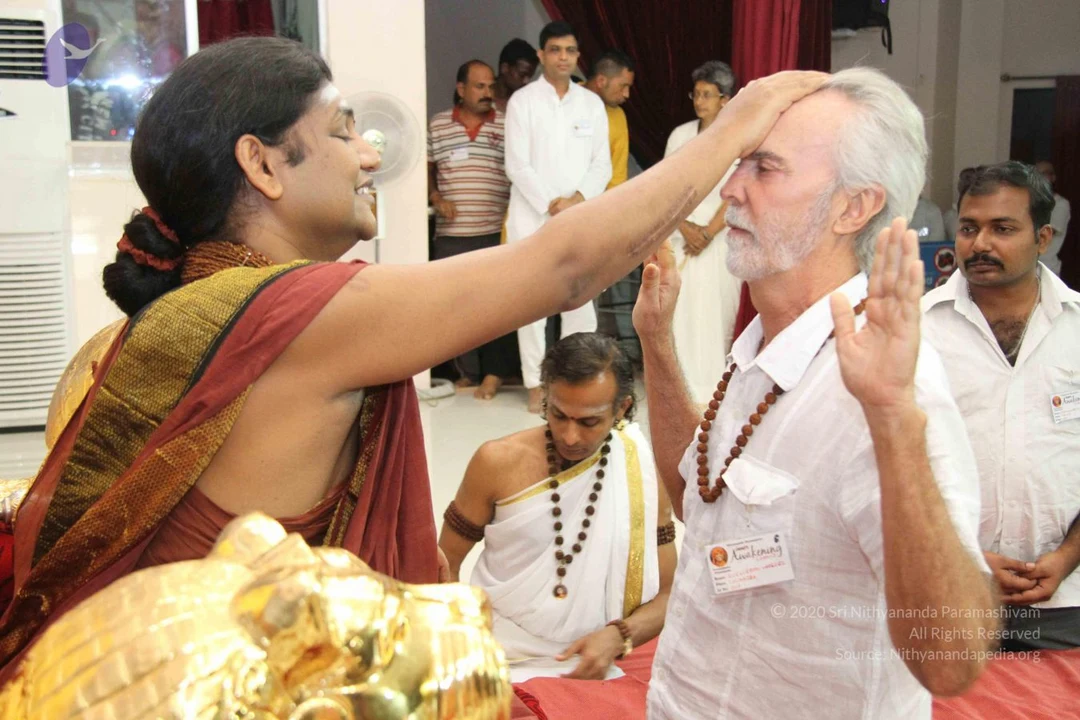
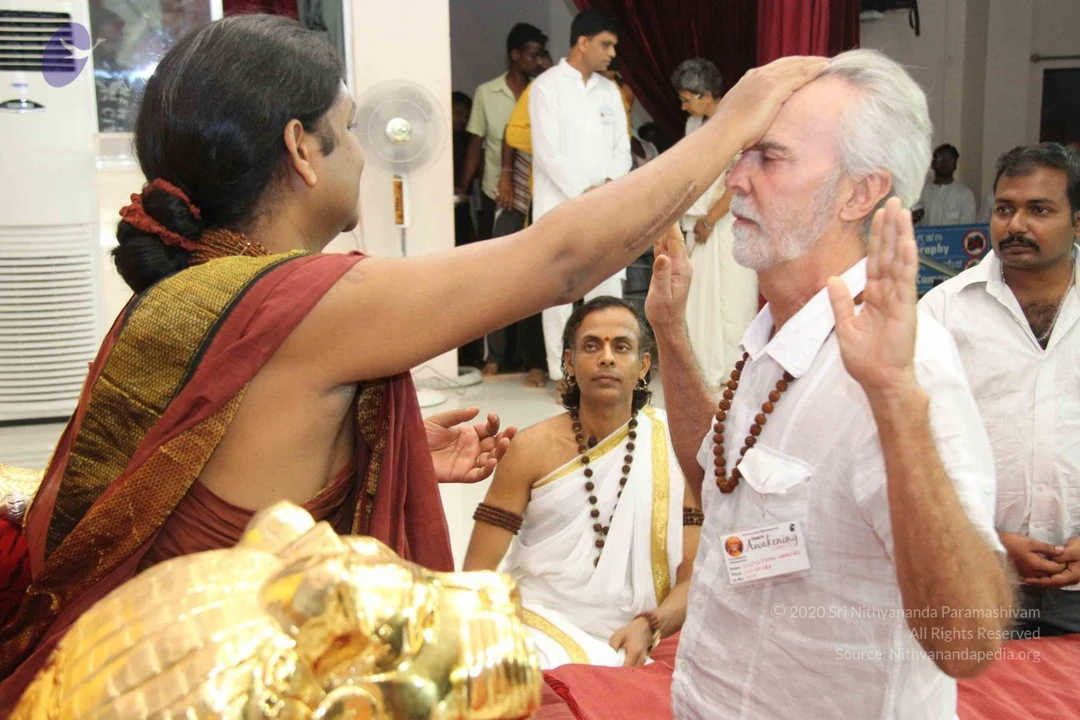
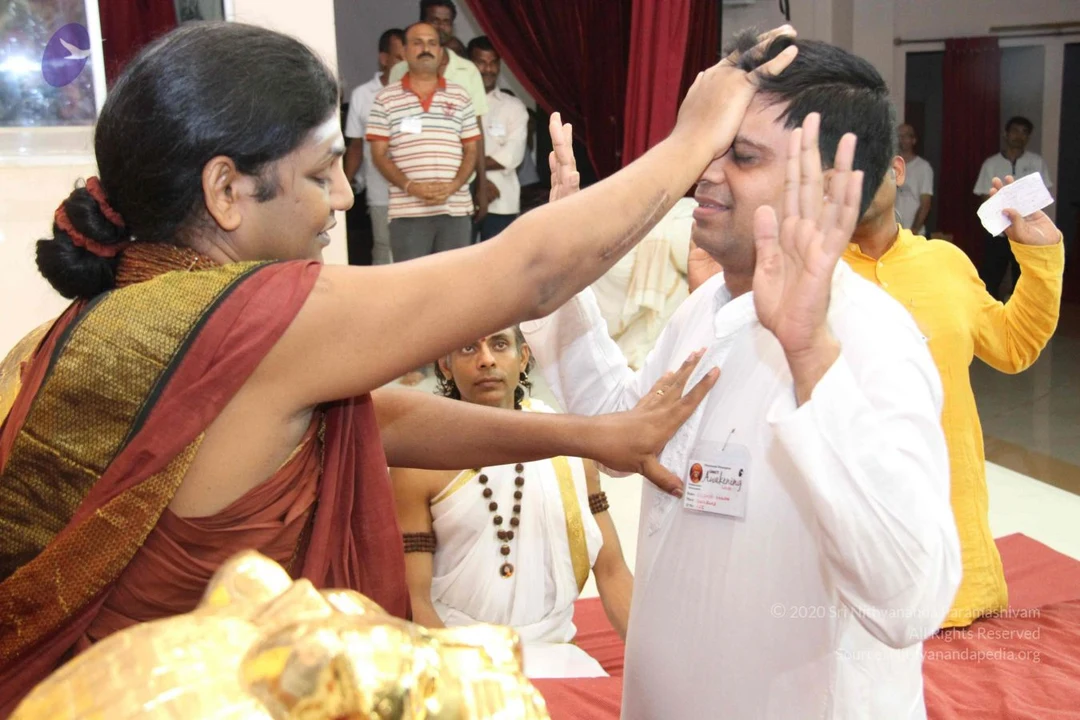
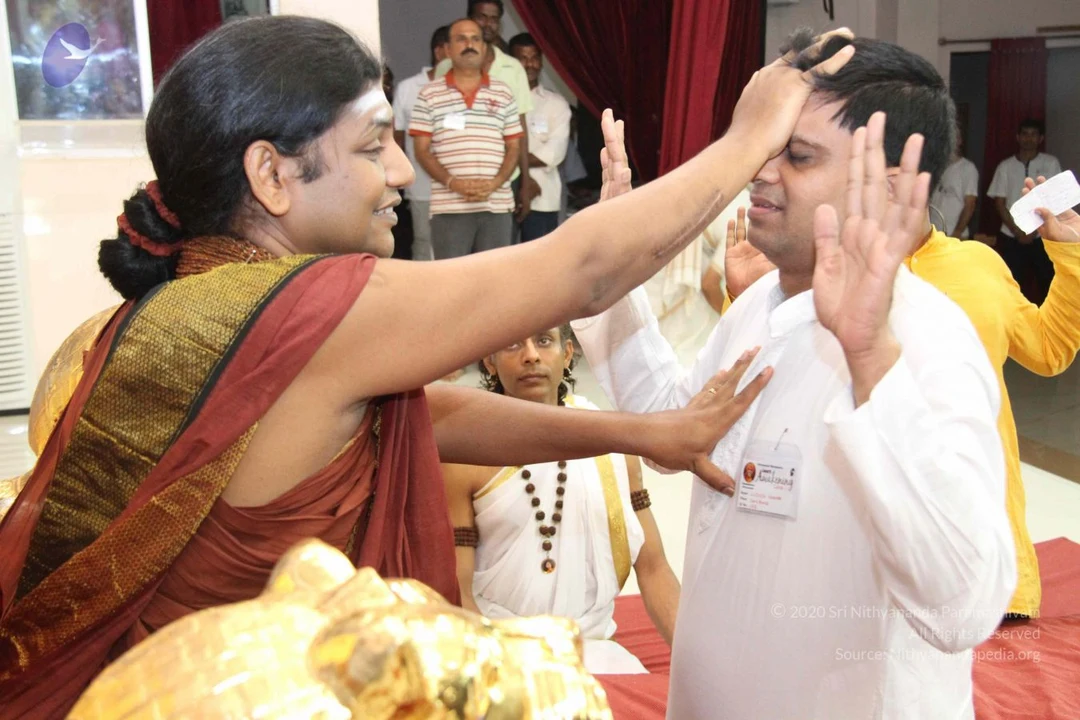
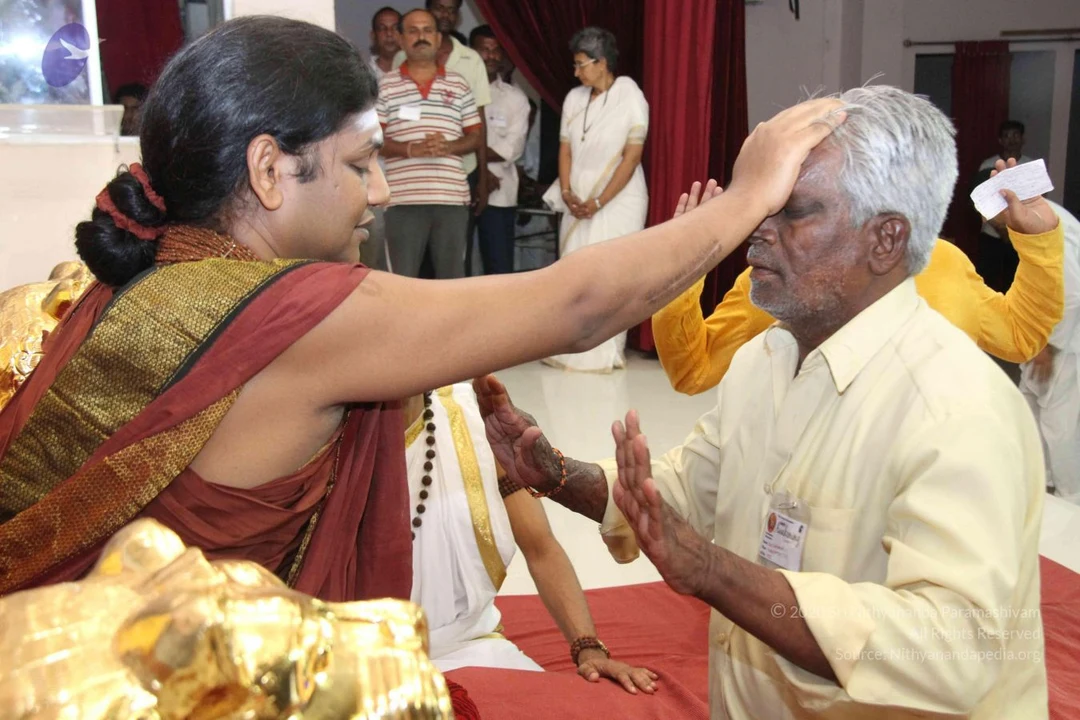
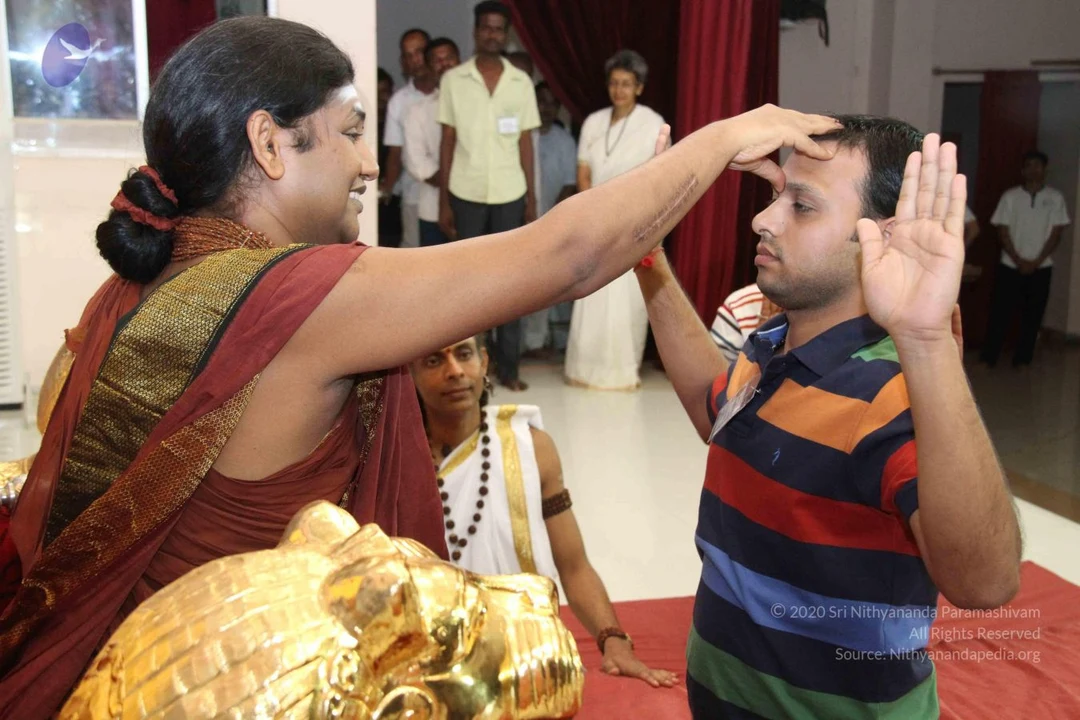
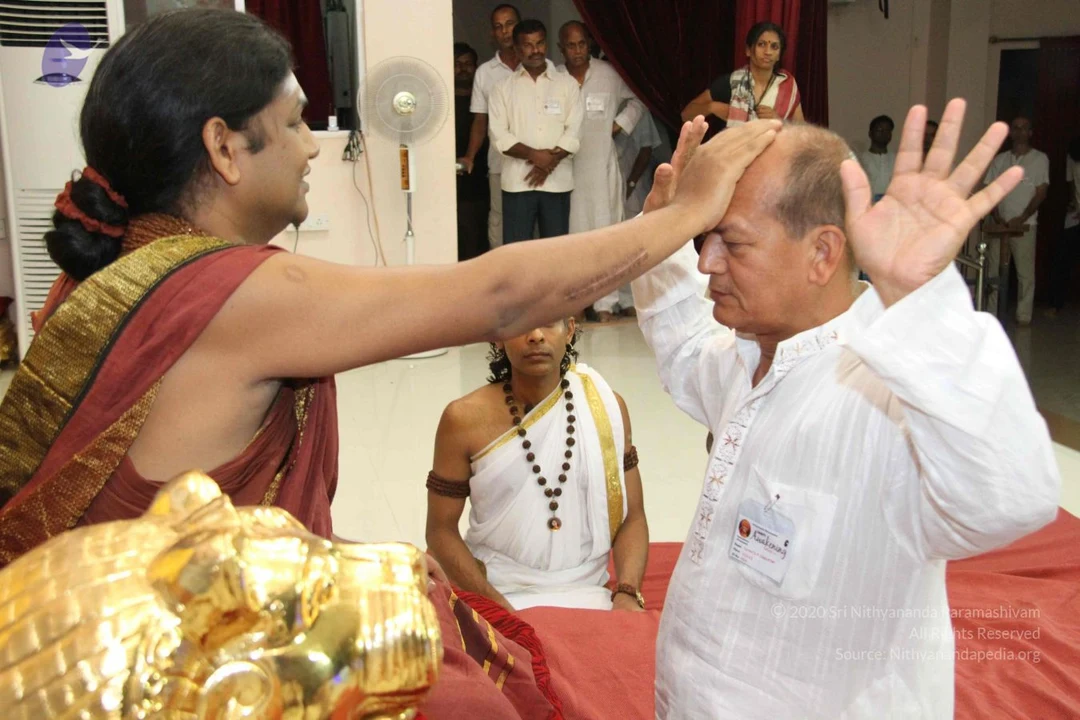
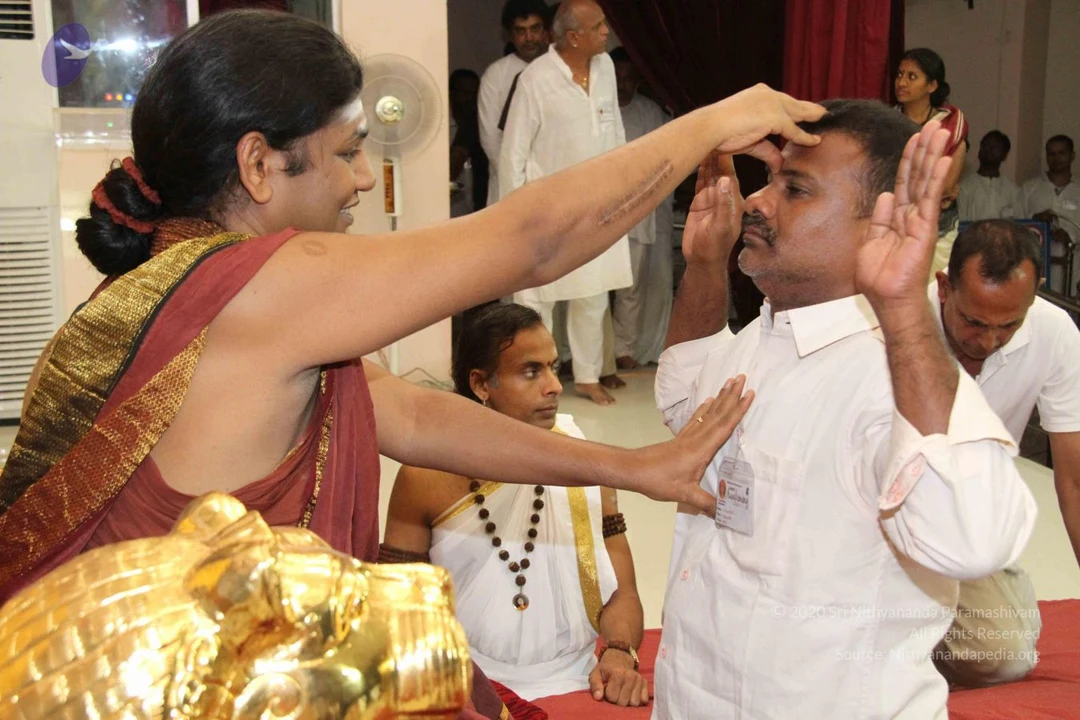
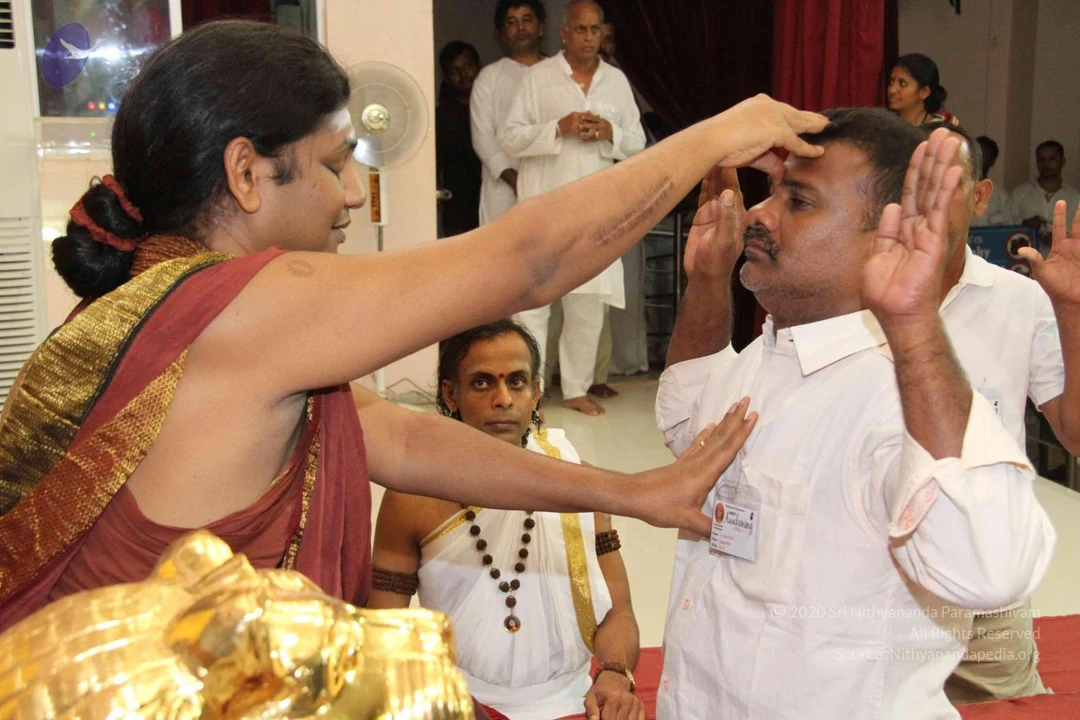
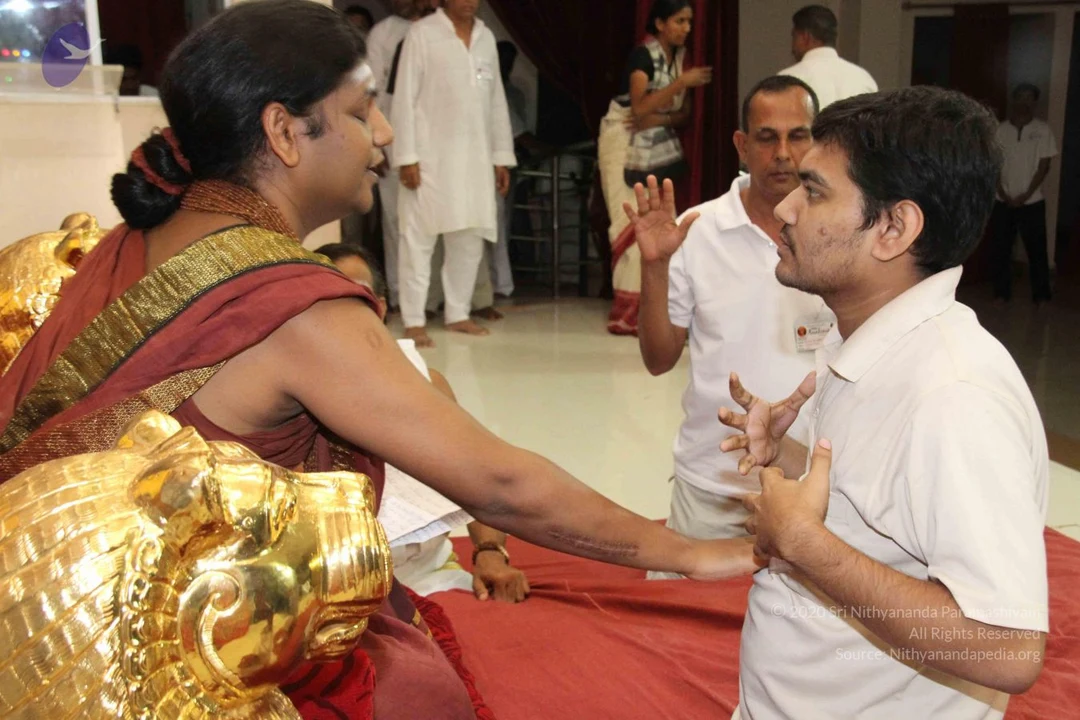
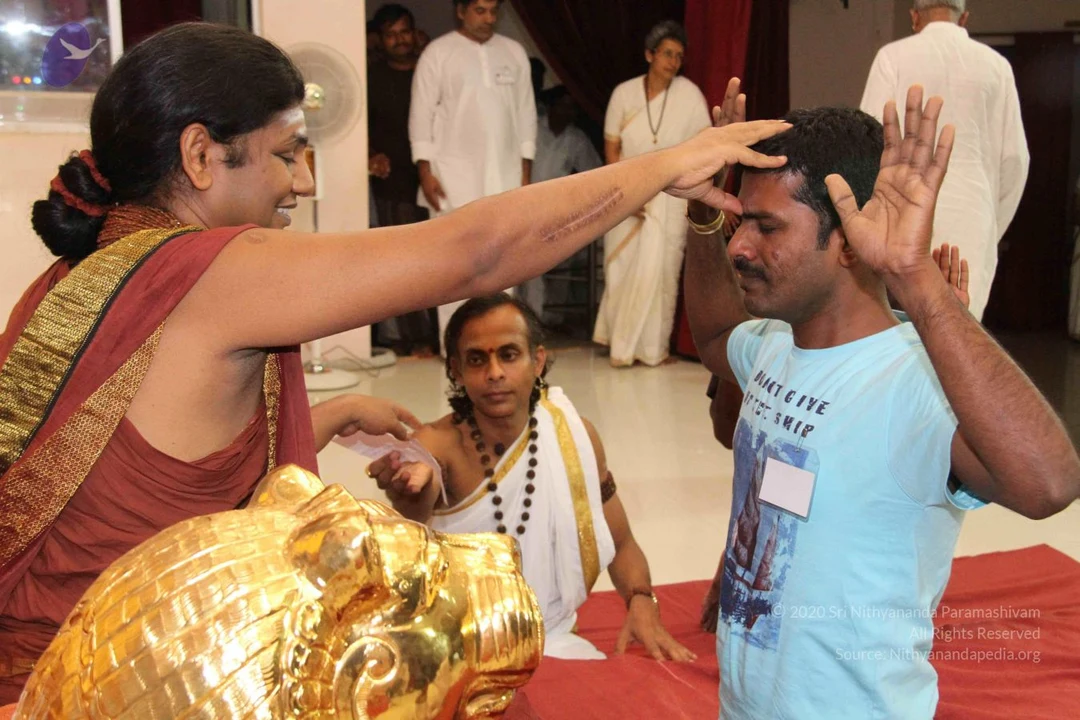
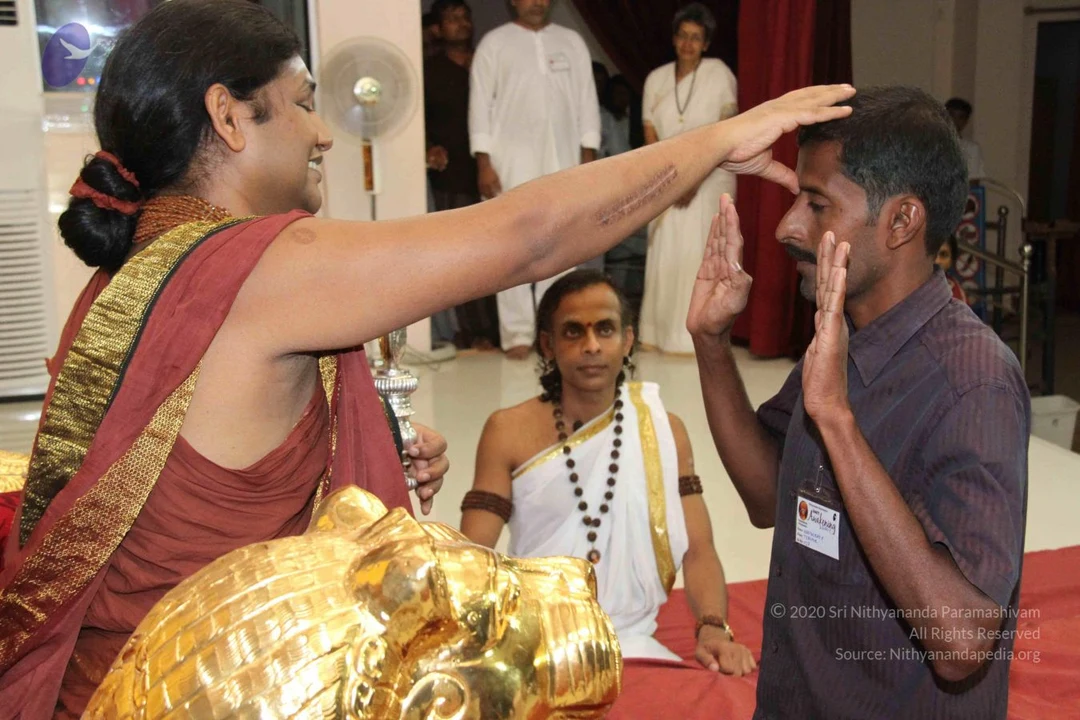
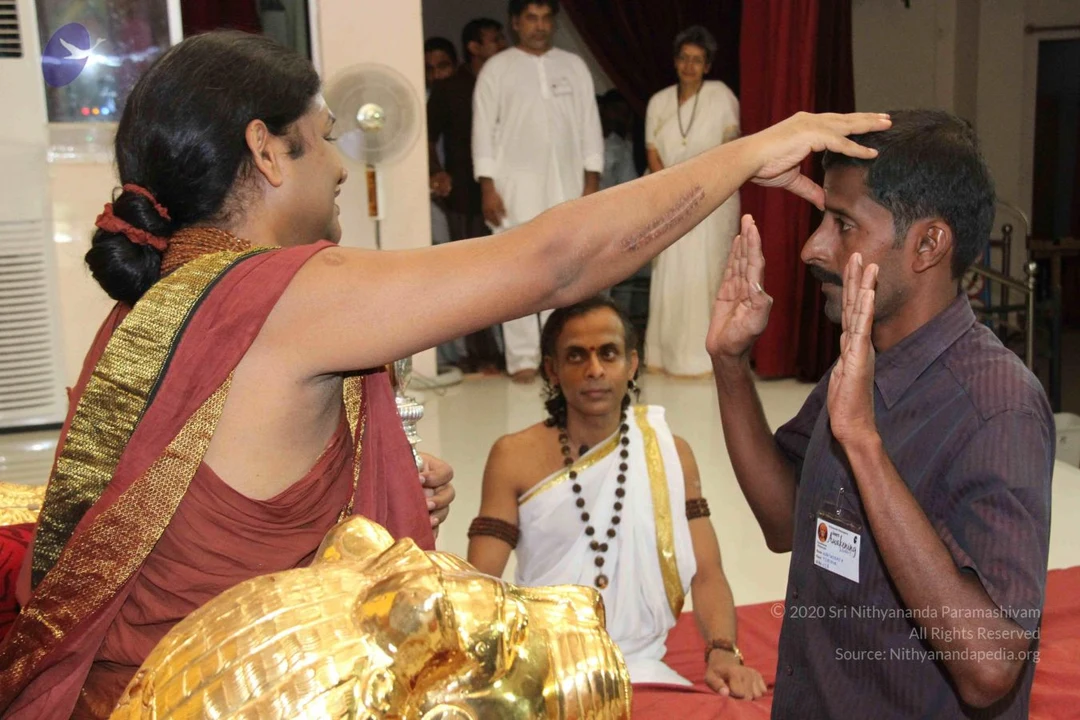
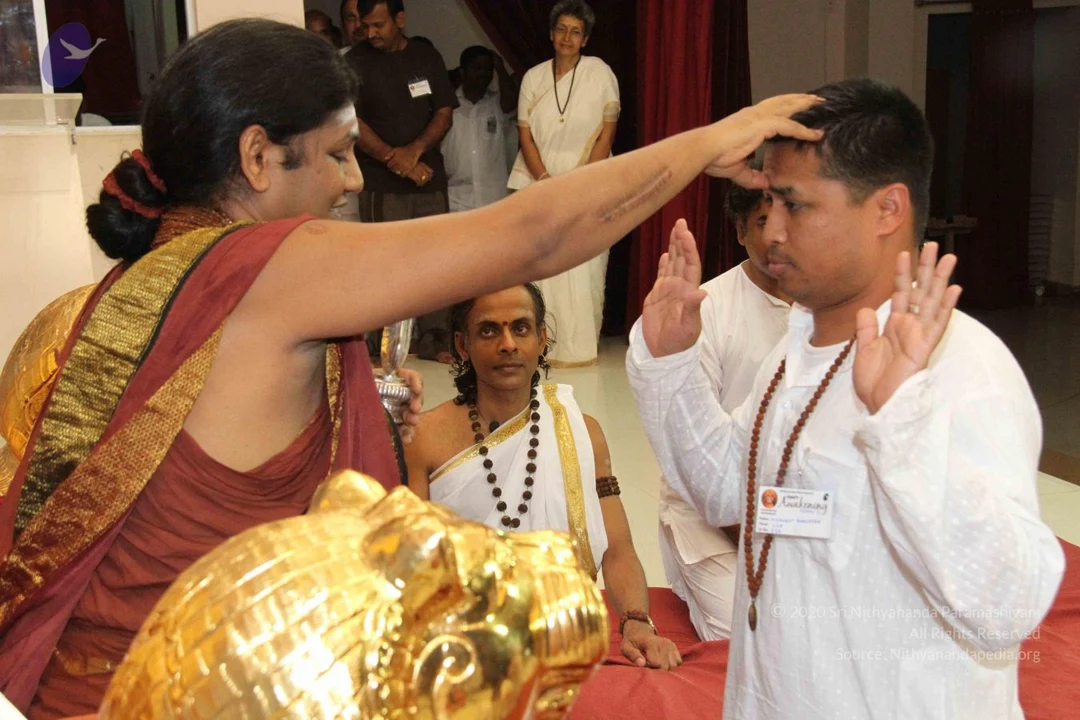
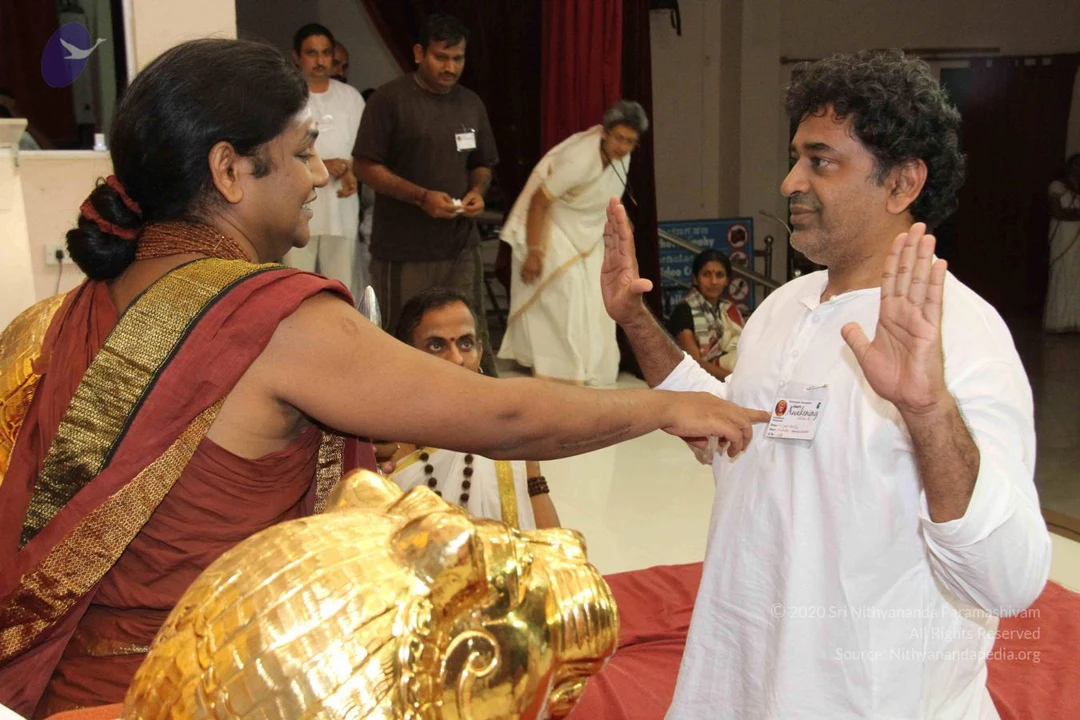
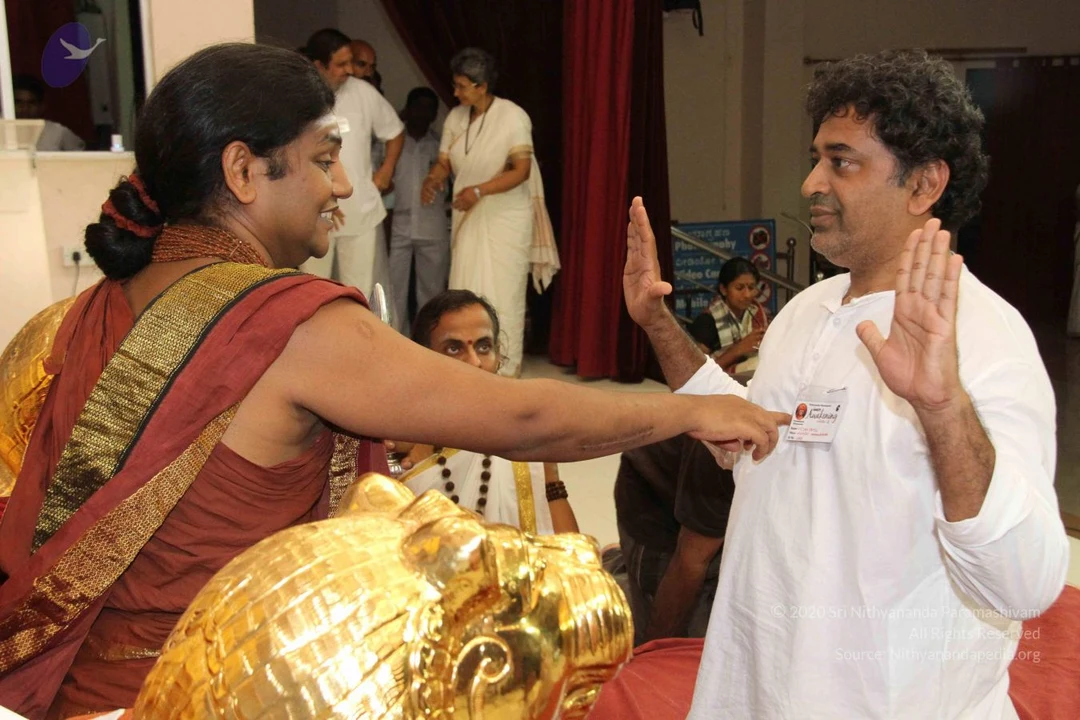
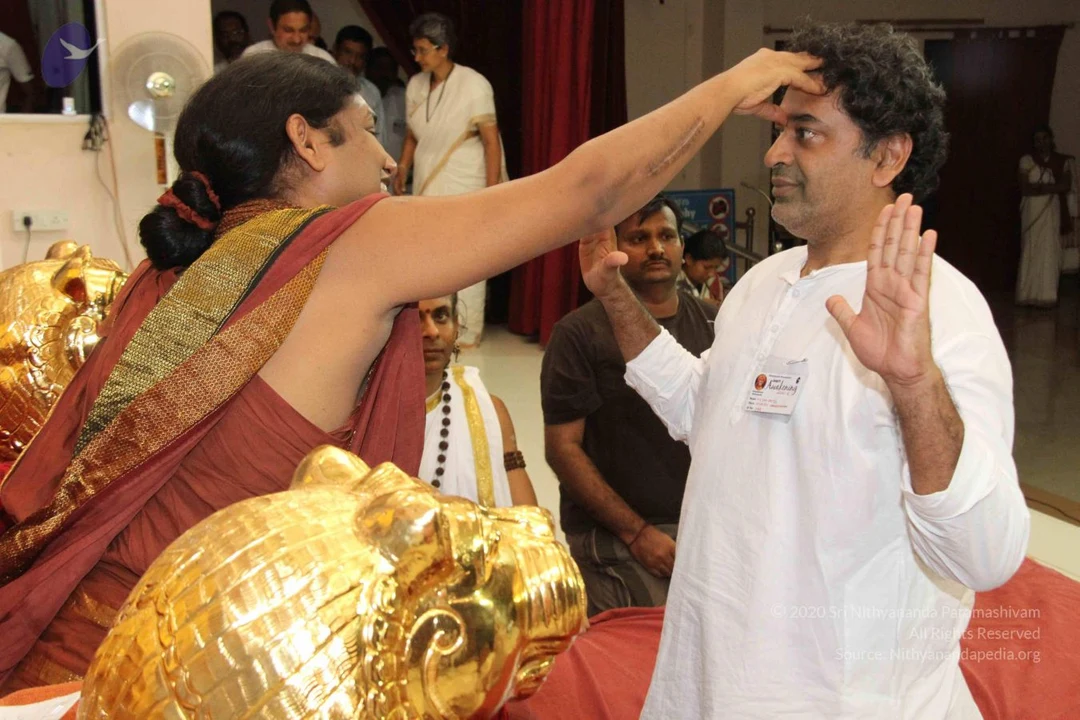
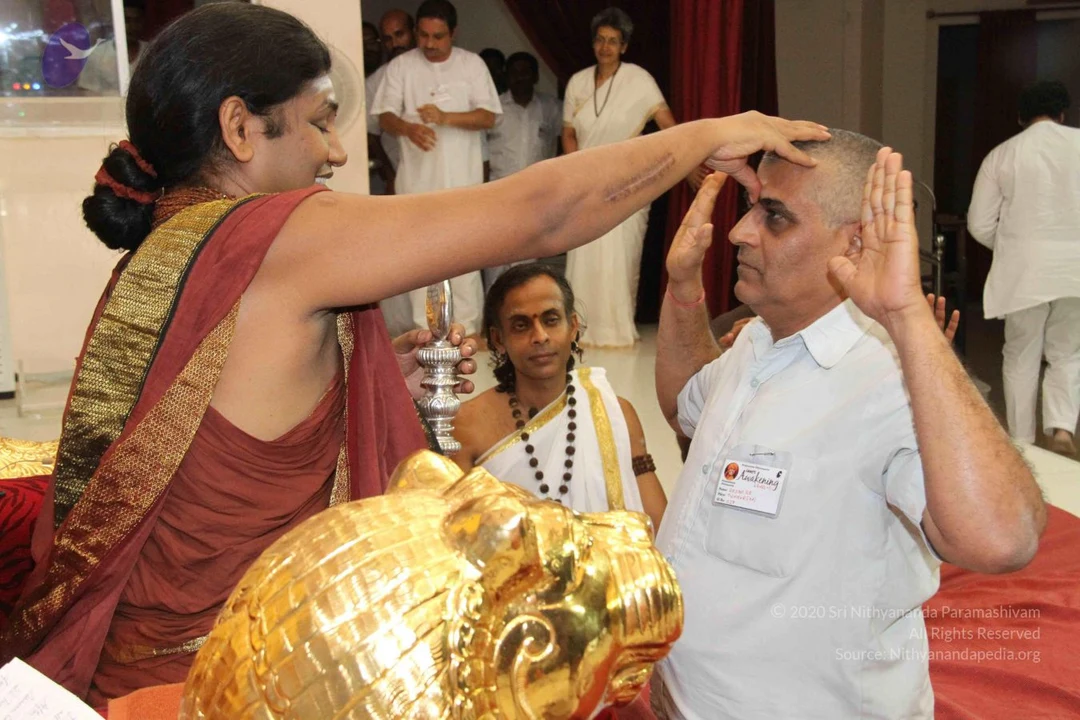
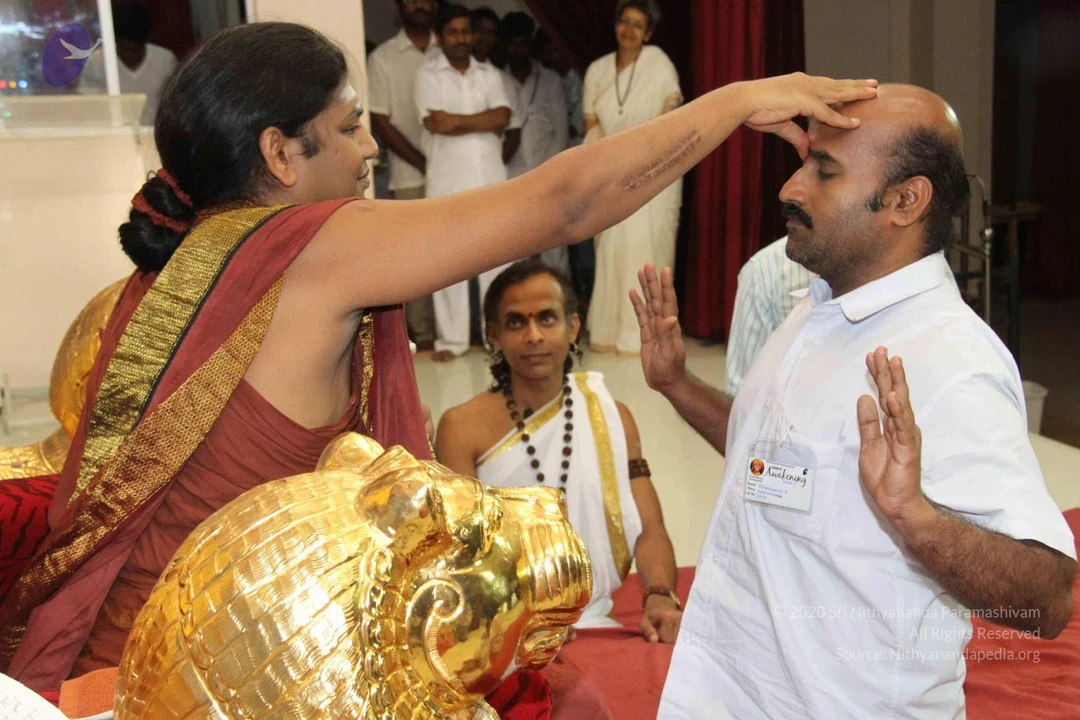
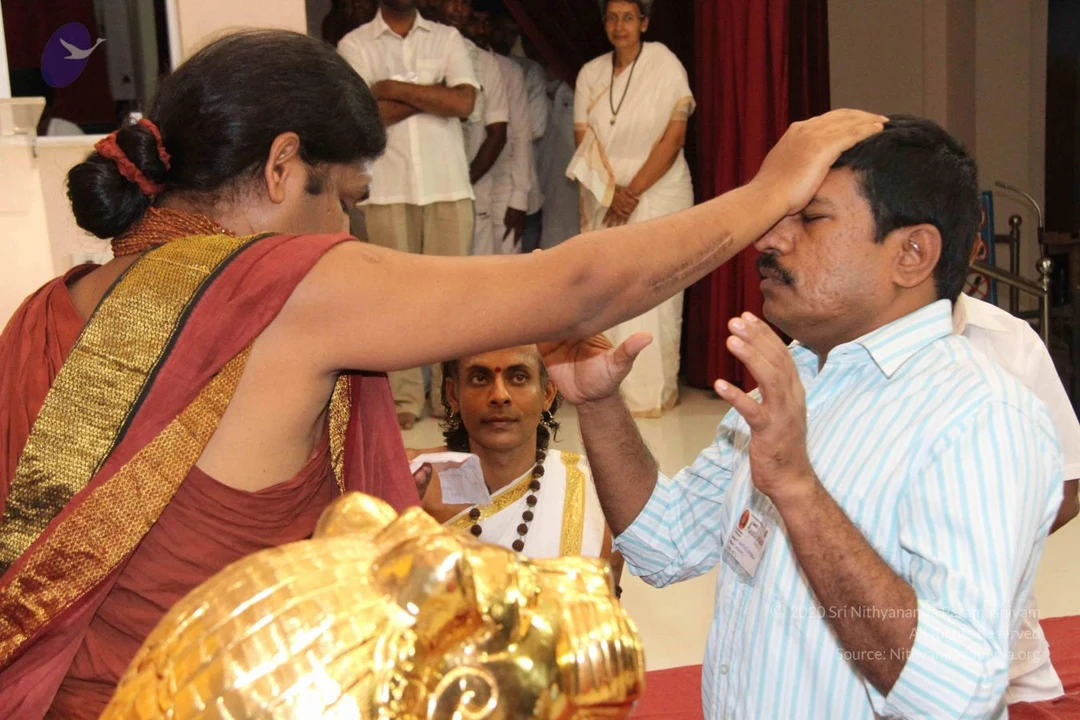
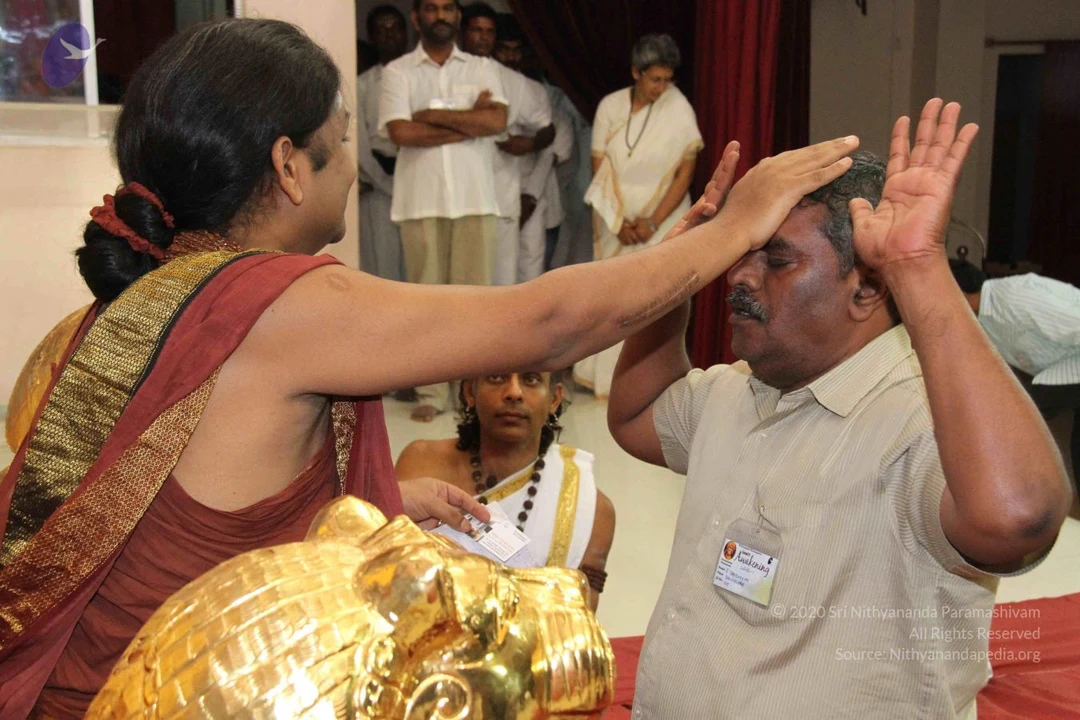
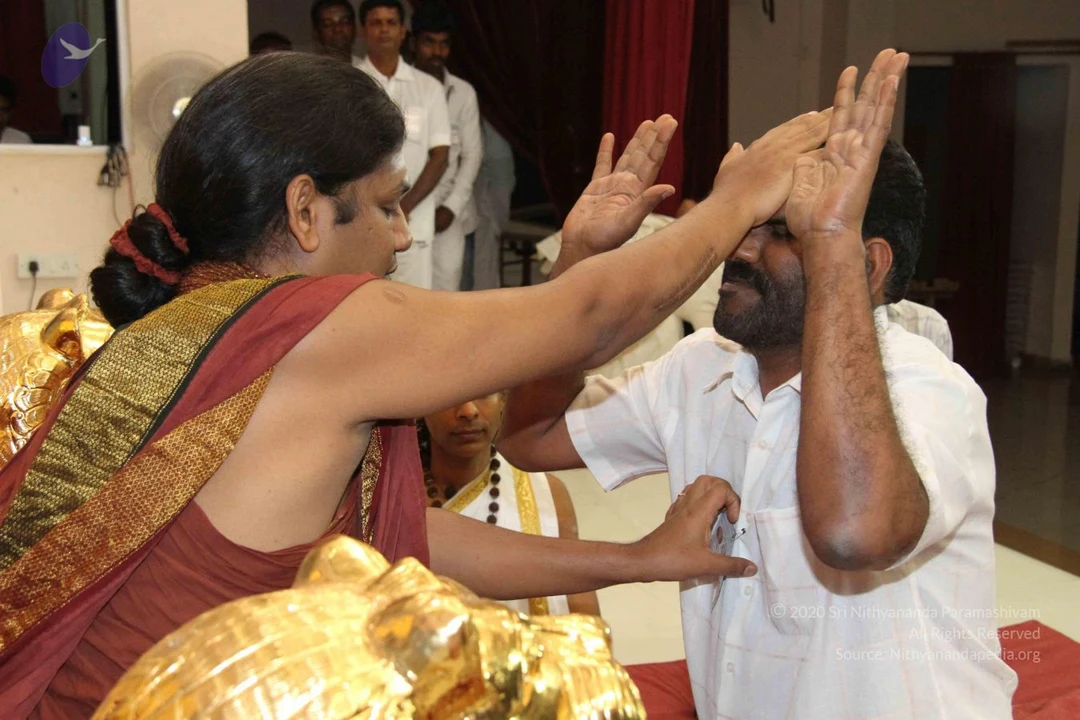
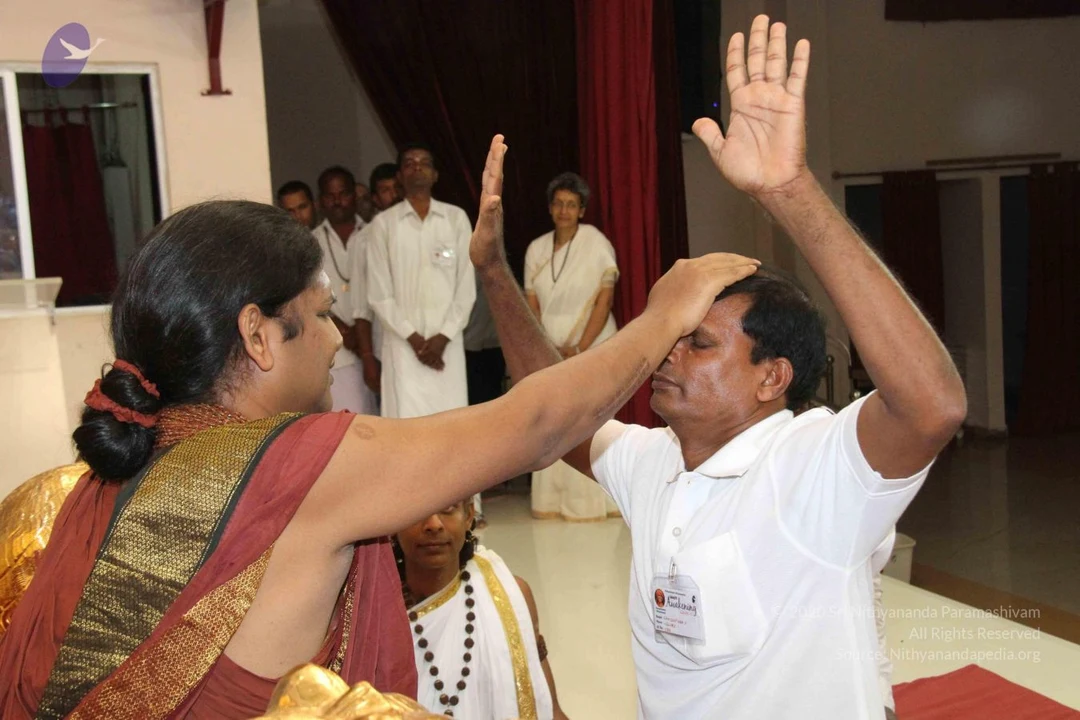
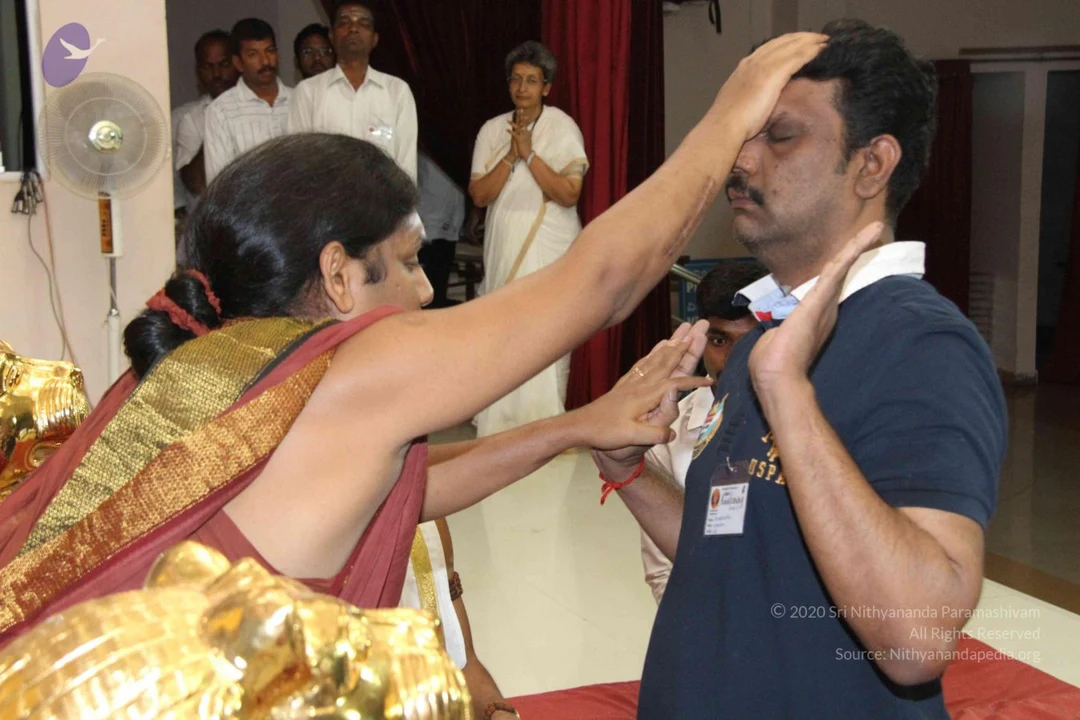
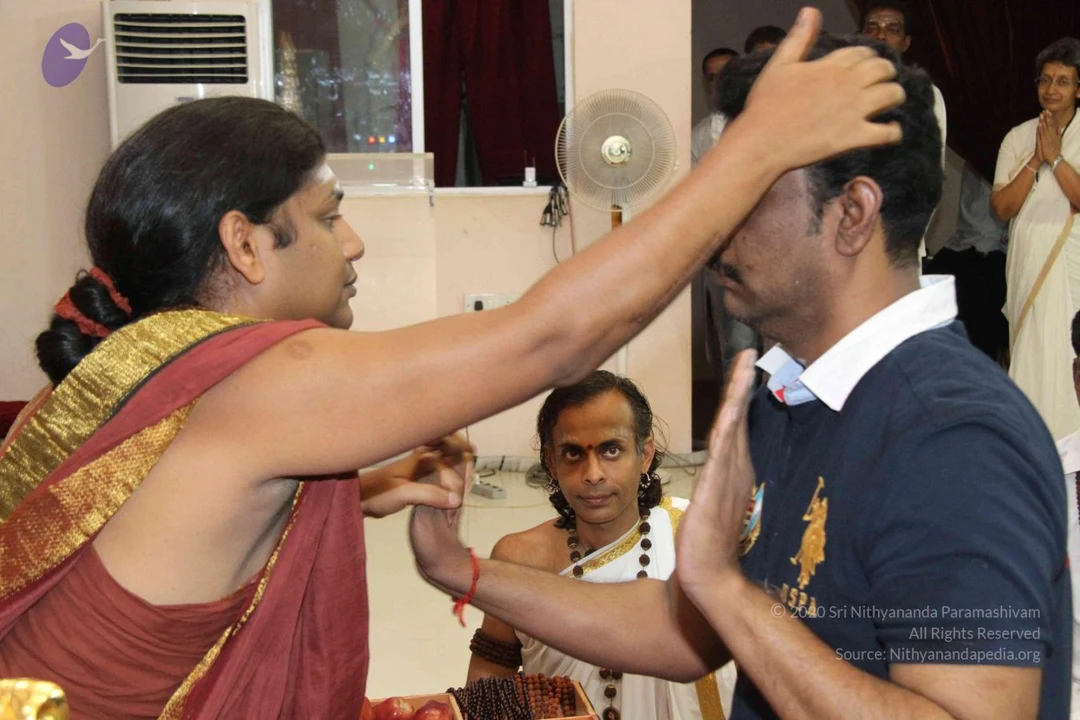
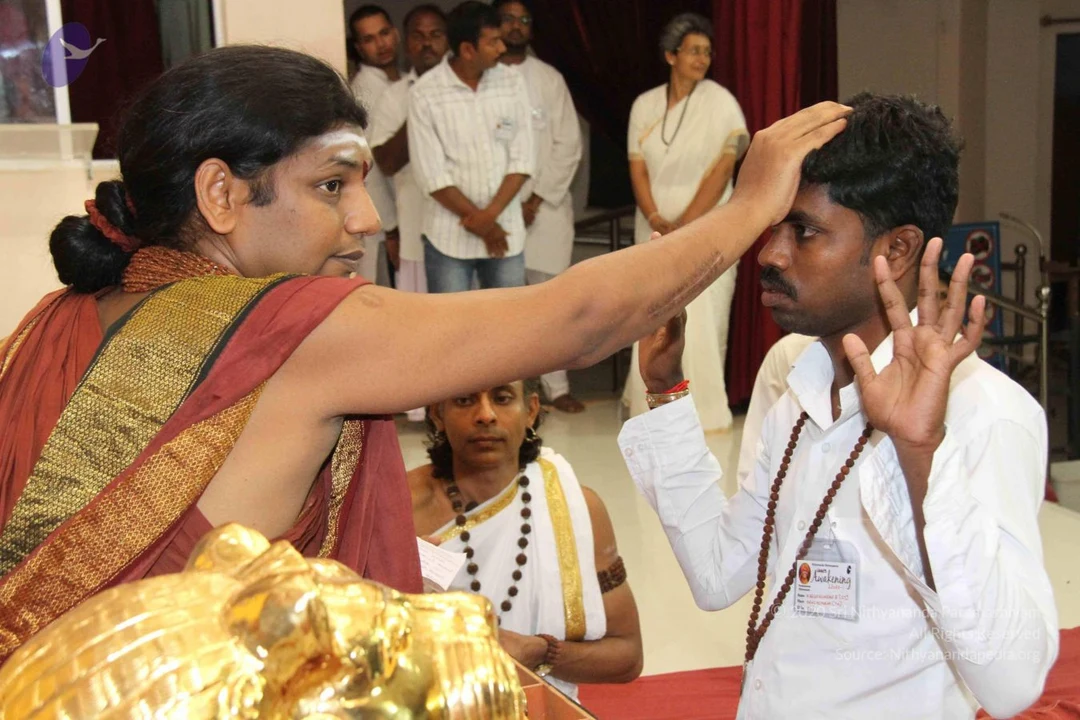
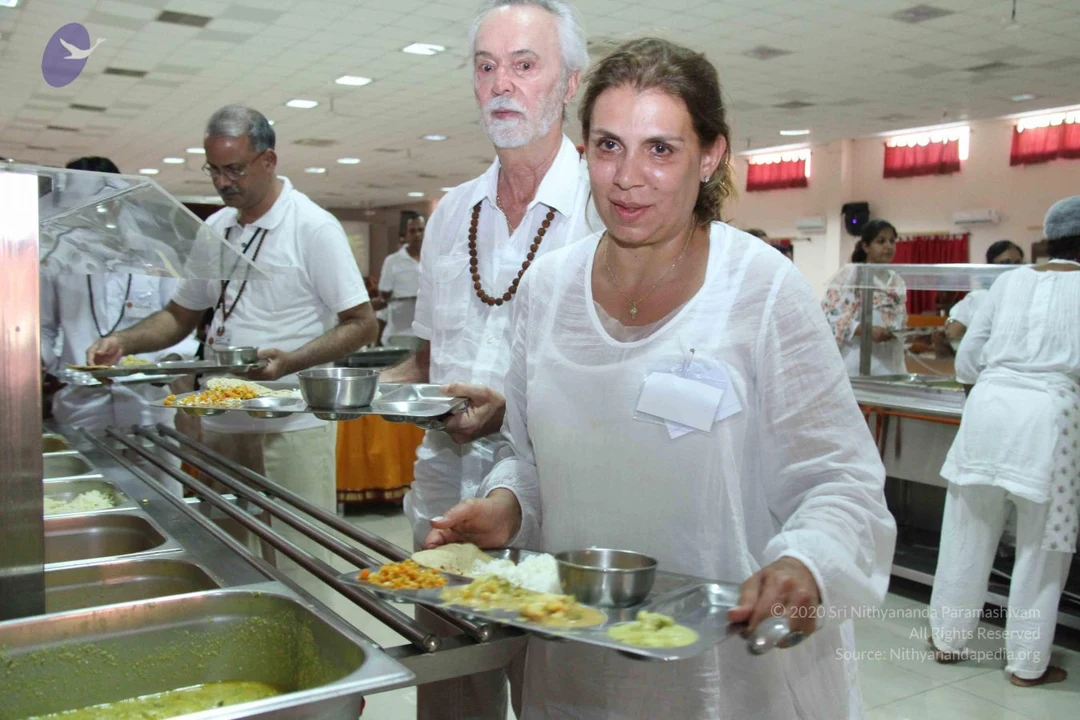
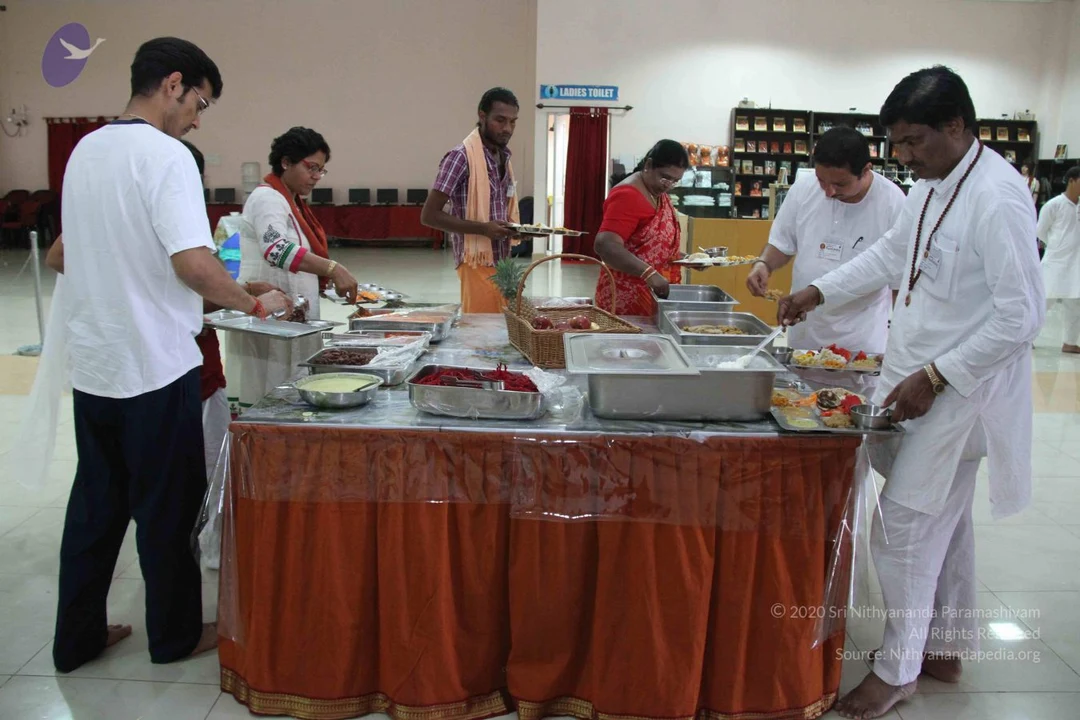
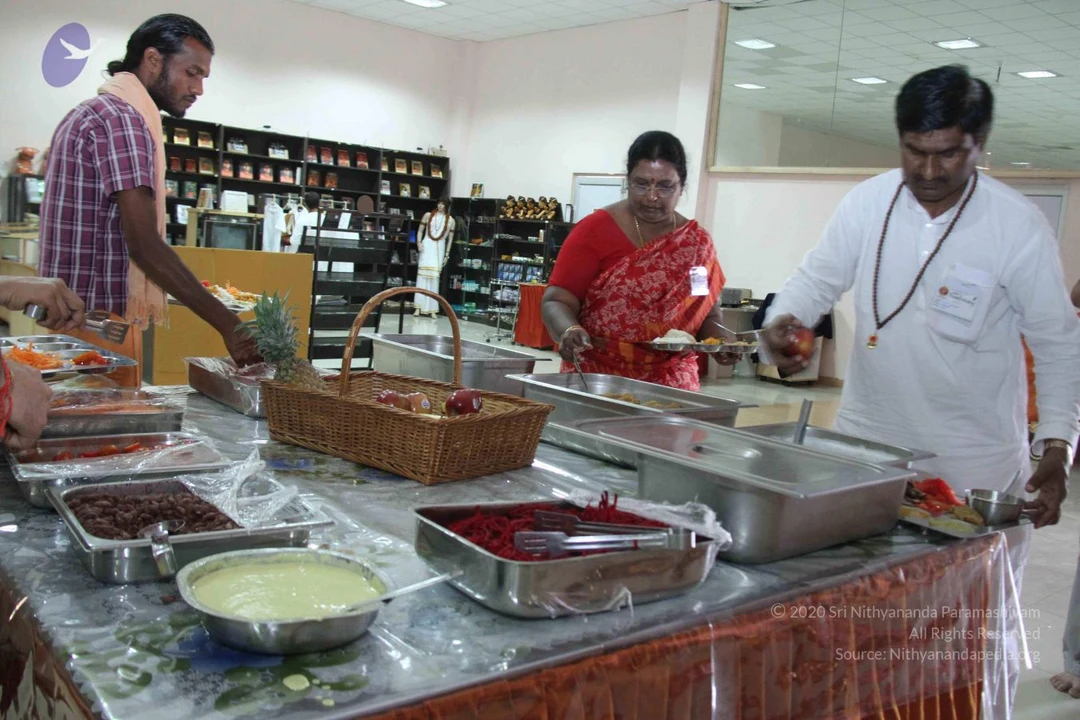
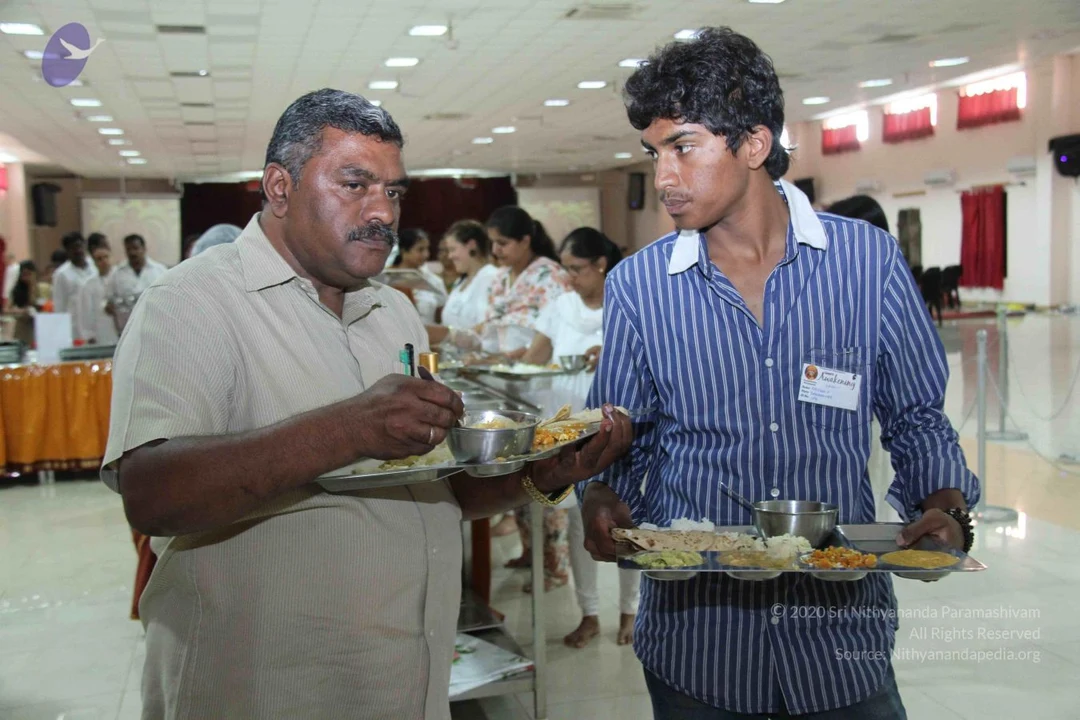
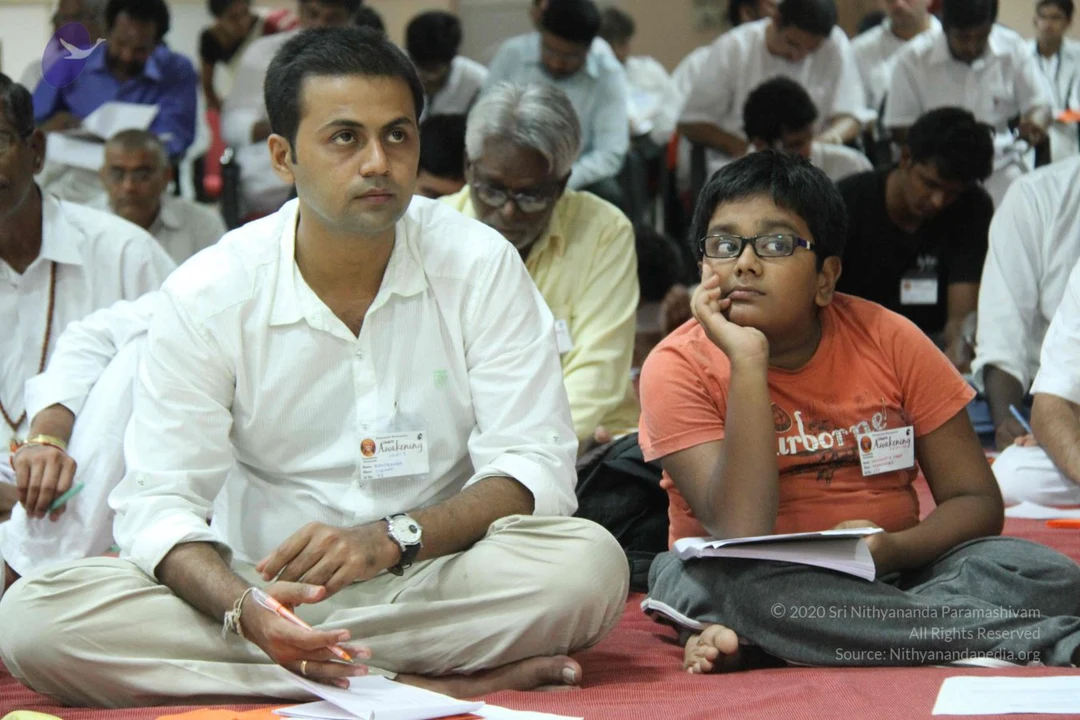
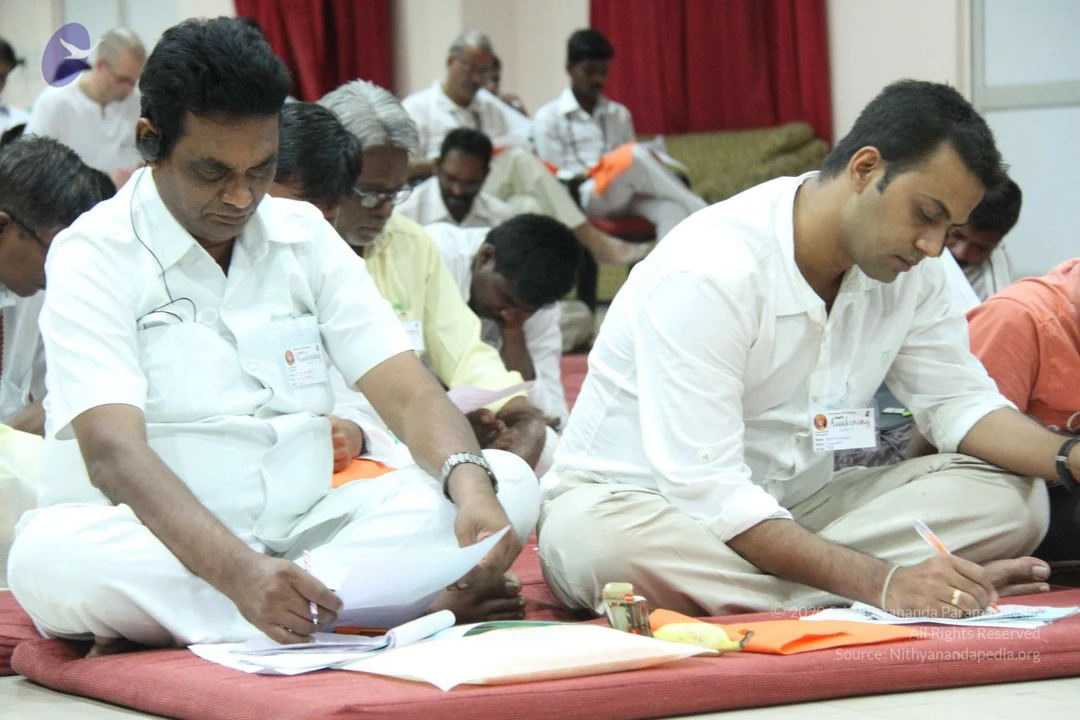
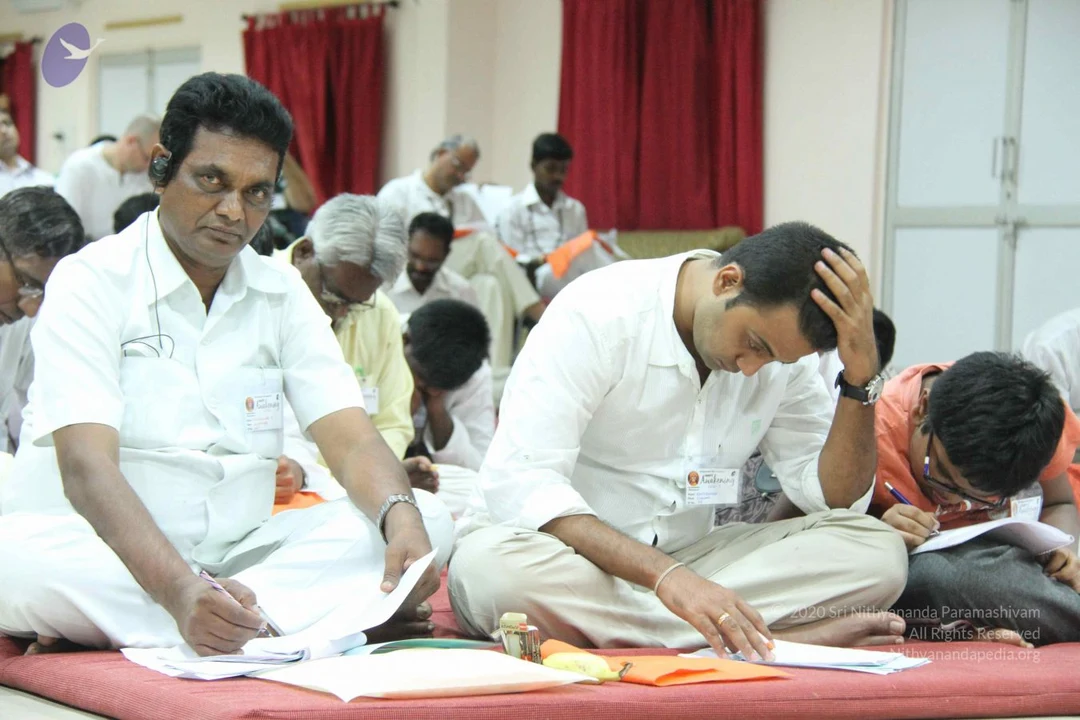
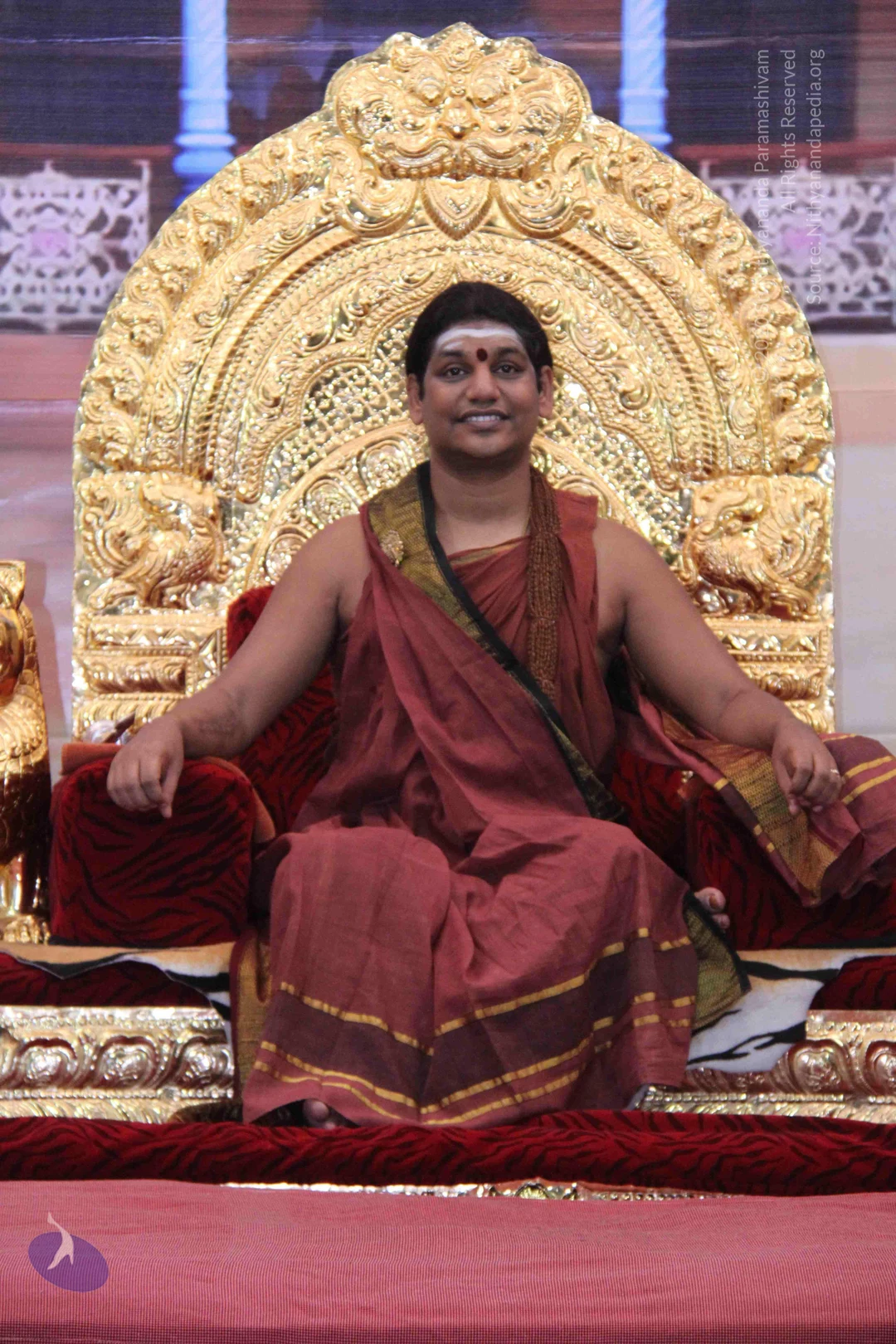
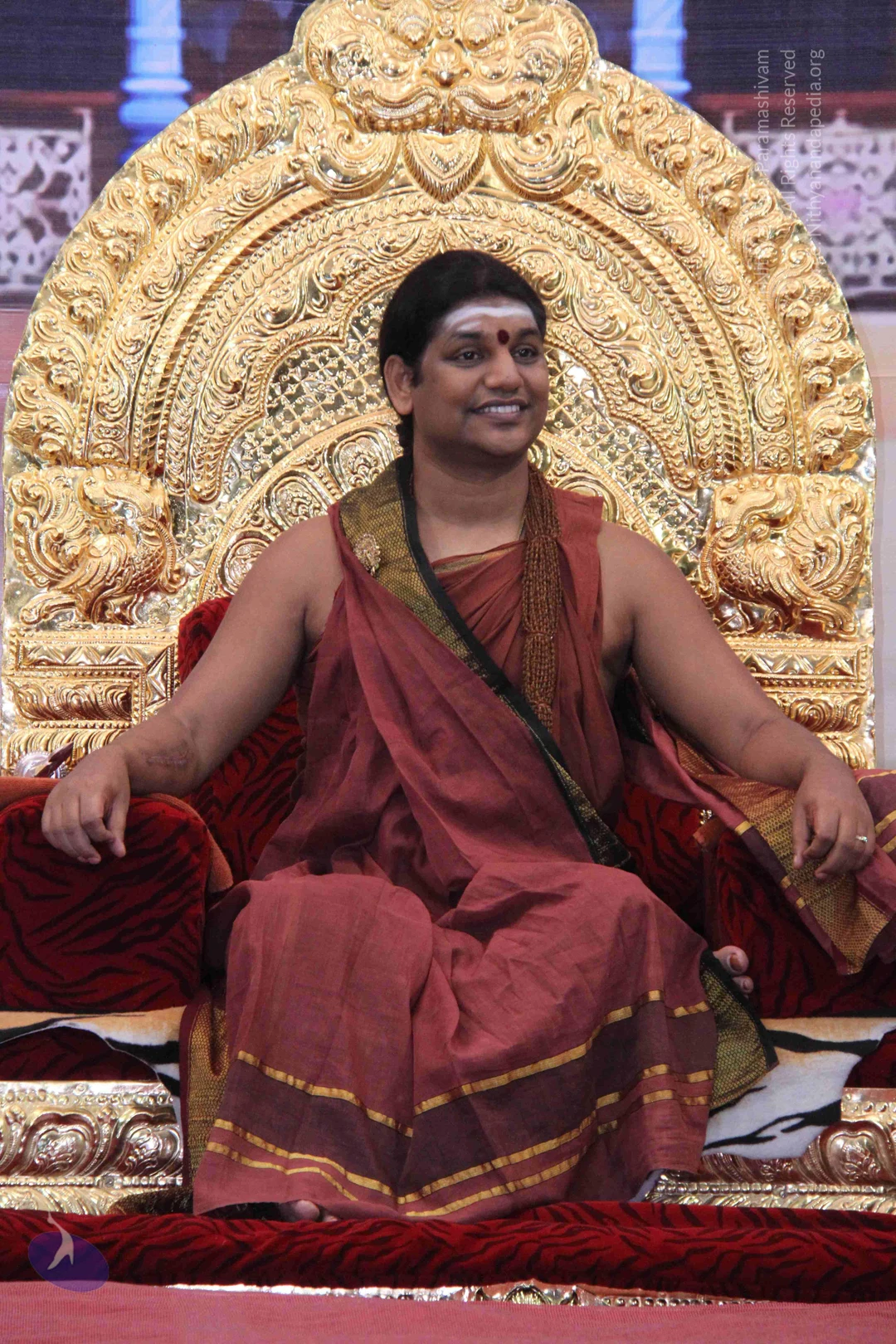
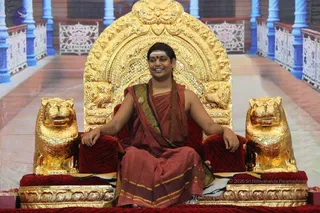
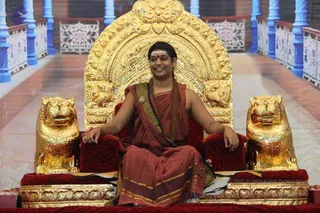
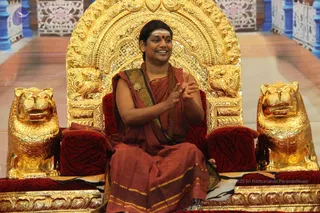
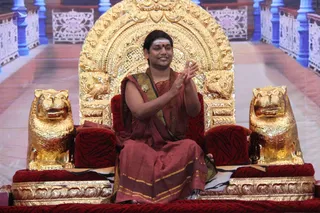
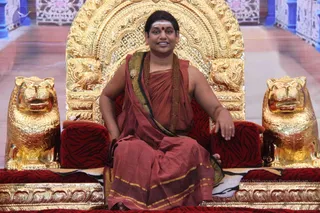
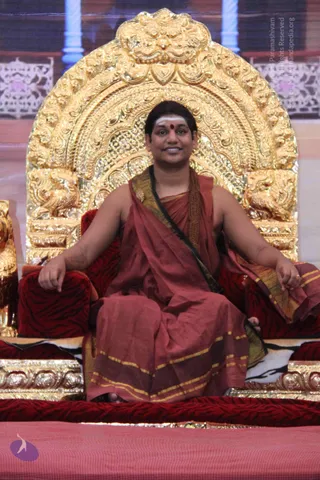
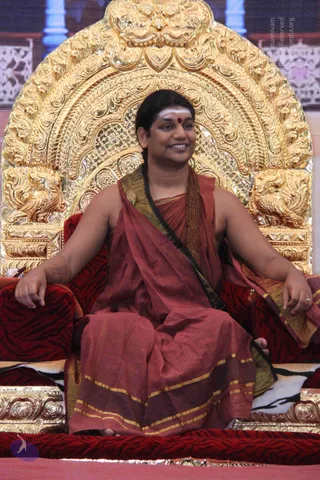
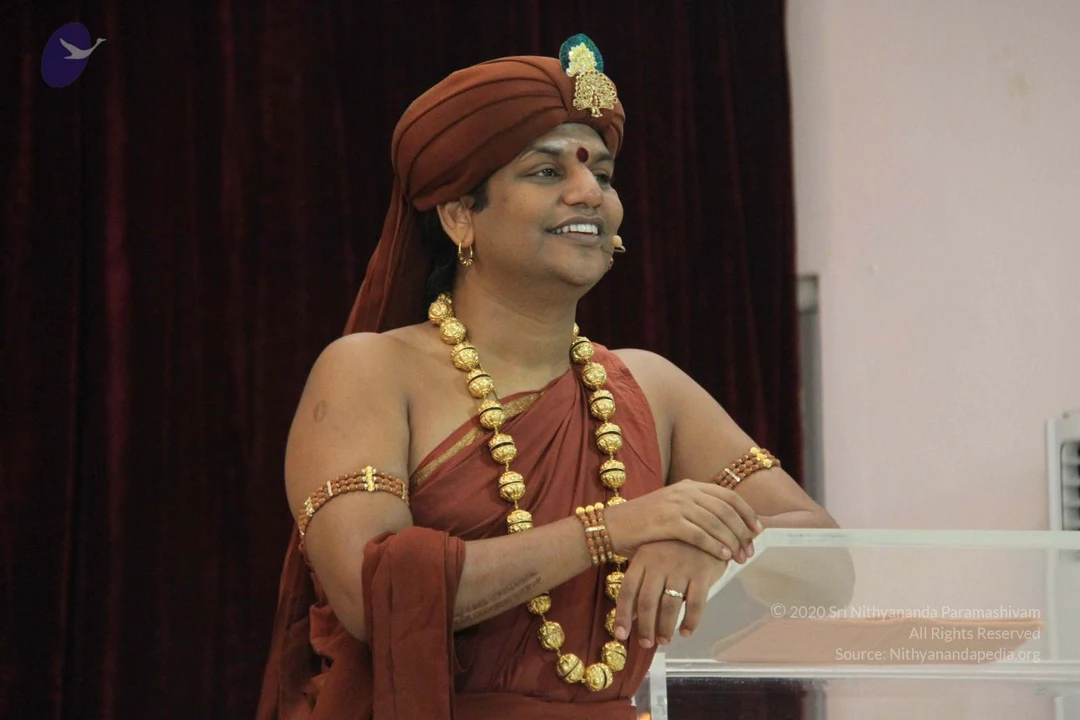
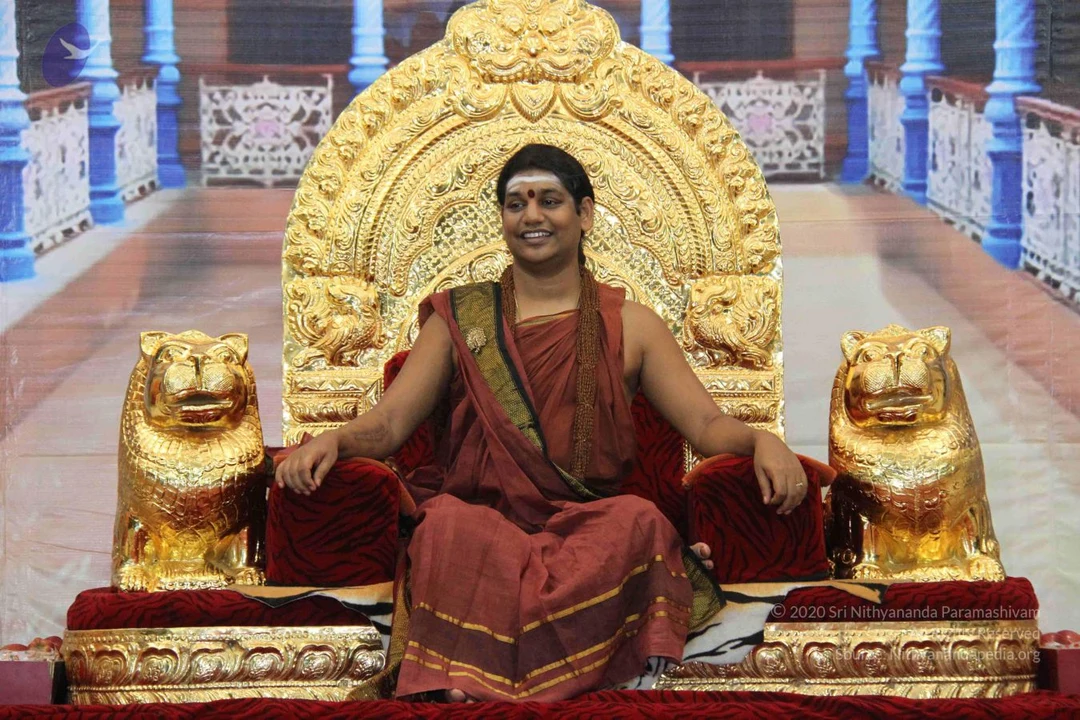
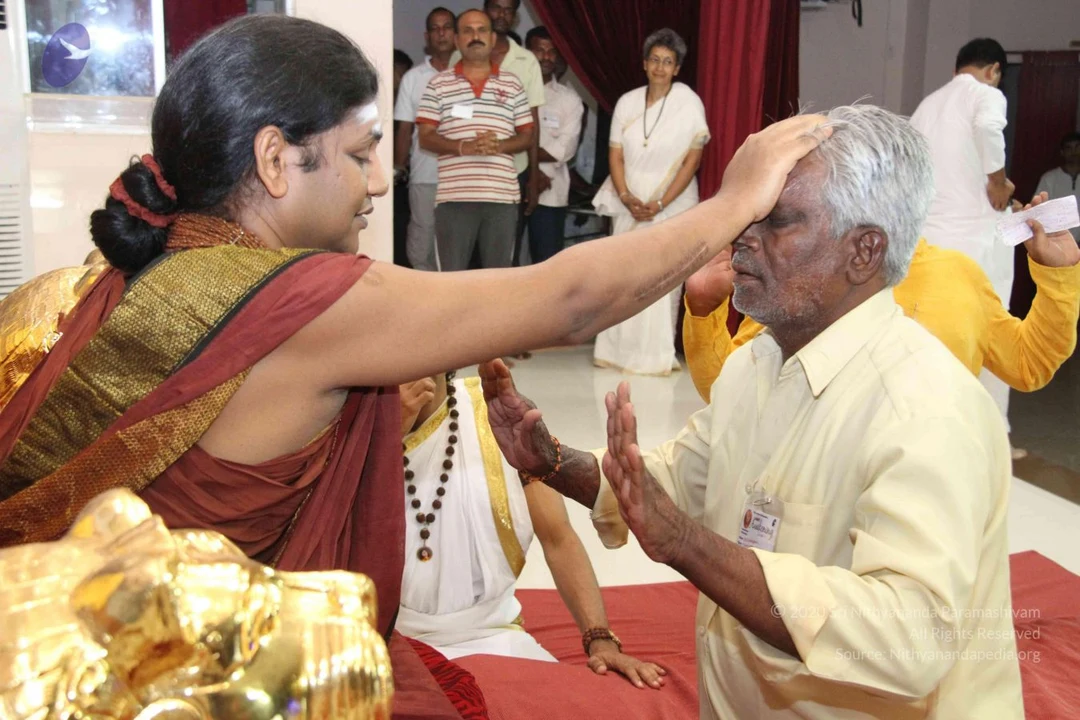
A seated man in a maroon and red-brown robe with a gold-bordered sash sits on an ornate gold throne with a large arched back and two gold lion figures flanking him. He wears a white forehead mark and a long beaded mala, with his arms resting on the red velvet armrests. Behind the throne is a painted backdrop of blue columns and white railings. The photo is a studio-style backdrop shot. Only one physical person is present.A seated man in a maroon-red robe with a gold-bordered dhoti-style wrap sits on an ornate gold throne with a carved arched back, flanked by two gold lion sculptures on red velvet cushions. He has a white vibhuti tilak with a red dot on the forehead and wears a long rudraksha mala. His arms rest on the armrests and he smiles. Behind the throne is a painted backdrop of blue pillars and white balustrades along a hall. The throne and lions are sculptural objects, not people. The figure's role is seated presiding figure on a throne; no a person identification is made from appearance alone.A seated man in a rust-red and maroon sari-style wrap with a gold-bordered end sits on an ornate gold throne carved with lion heads. Two large gold lion figures flank the throne, which is upholstered in red and dark tiger-striped velvet. He wears a long rudraksha-style bead necklace and a red bindi with a white vibhuti forehead mark, and he smiles while gesturing with his hands. Behind him stands a backdrop of painted temple-style pillars in blue and white. Appearance-based label: a person, seated in a satsang-style setting.A seated figure in maroon and rust ochre robes with a gold-bordered shawl sits on an ornate gold throne carved with a lion-backed arch, flanked by two golden lion statues draped in red tiger-striped velvet. The person has short dark hair, a red bindi, and tripundra-style markings on the forehead, and wears a long gold-beaded necklace. Both hands are pressed together in front of the chest in a greeting gesture. The backdrop shows white and blue balustrades and pillars.A seated man in maroon and rust-red sannyasi robes sits on an ornate golden throne flanked by two gilded lion sculptures with red tiger-striped cushions. He wears a rudraksha mala around his neck, a gold-edged sash, and a red bindi with white tilak marks. He smiles and rests one hand on the armrest. a person in his role as seated teacher on a peetha throne in a decorated hall. Behind him are white and blue ornamental panels.Photograph of a seated man in long dark-red robes with a golden border, bare-shouldered, with long dark hair tied back and a white forehead mark, placing his right hand on the forehead of a bald, older man in a white short-sleeved shirt who stands with eyes closed. The robed figure's left hand rests on the man's chest. Beside them a younger man in white dhoti and shawl with dark bead necklaces sits watching. Behind, several men in white shirts stand in a bright room with a ceiling fan and cabinets. The robed figure matches the a person candidate by saffron-red ceremonial clothing, long swept-back hair and a forehead mark, but the appearance is uncertain, so he is described by role as the giver of blessing. Visible people: three seated or standing foreground figures and several background observers.

LEELA ALANKAR
2 photosSource gallery
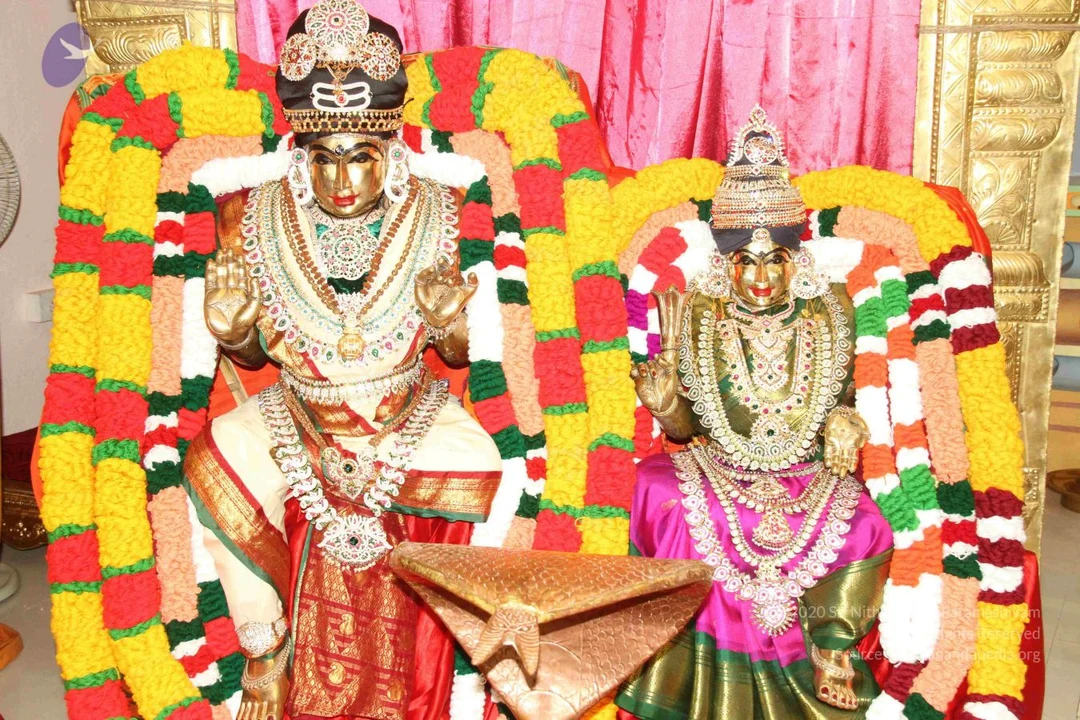
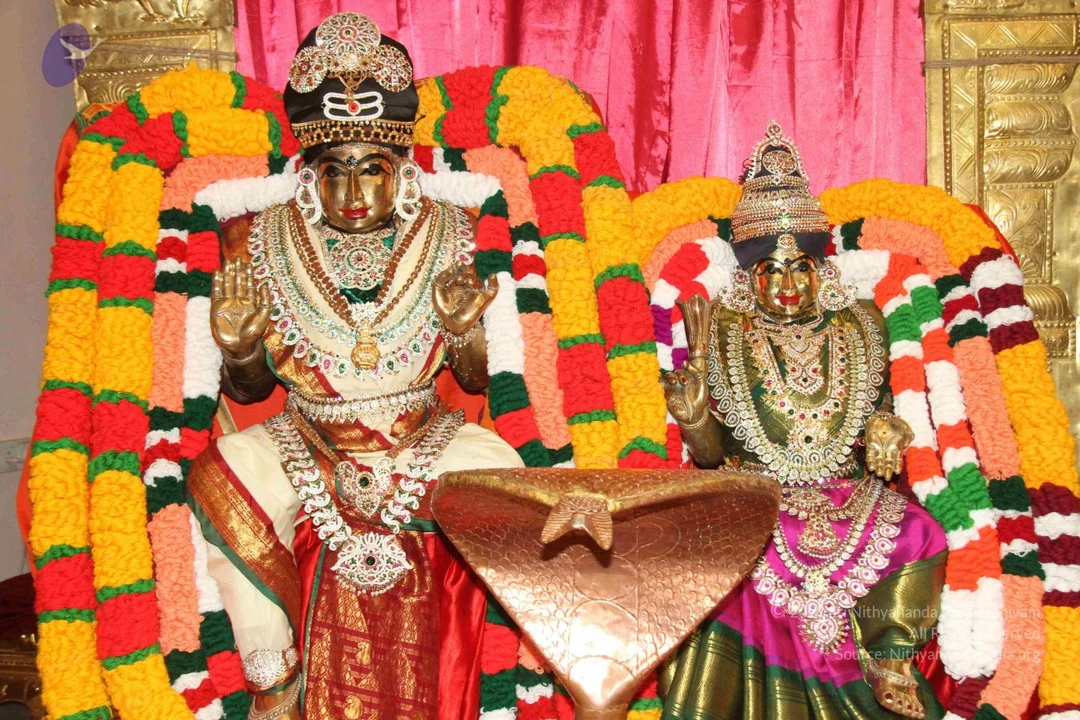
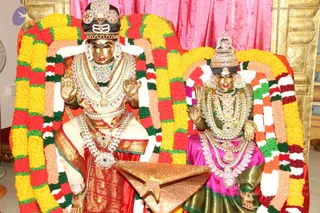
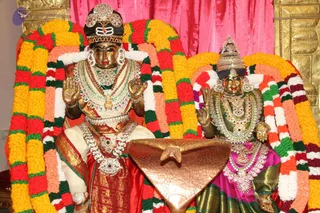
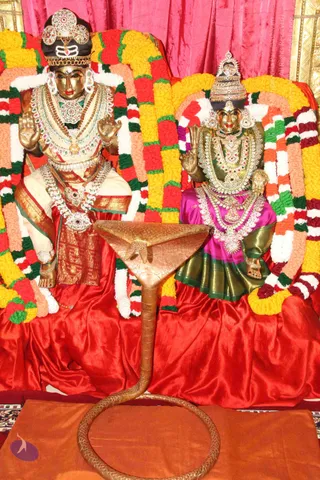
Two gilded murti statues of a deity couple sit side by side on a red and gold throne, draped in garlands of yellow, red, green, white and orange flowers. The left figure wears a black crown with a tripundra mark, a white and red dhoti with gold border, layered gold and gem necklaces, and shows an abhaya-style hand. The right figure wears a tall jeweled crown, a magenta and green silk sari, and heavy gem necklaces. A golden kalasha-style ornament sits in front. A pink curtain and gold-embossed panel form the backdrop. These are statues, not living people.Two golden deity murti statues, dressed and adorned for worship, sit side by side in front of a magenta curtain and gold-framed backdrop. The figure on the left, with a jewelled black crown bearing a tripundra mark, holds up raised hands and wears layered pearl and gem necklaces over a red and gold silk garment. The figure on the right wears a gold crown, multi-strand jewelled necklaces and a magenta and green silk sari. Both are framed by arches of marigold garlands in red, yellow, orange, green and white, and a copper-coloured serpent-shaped pedestal lies between them. No living people are visible.

2-Paduka-Puja

5 photosSource gallery
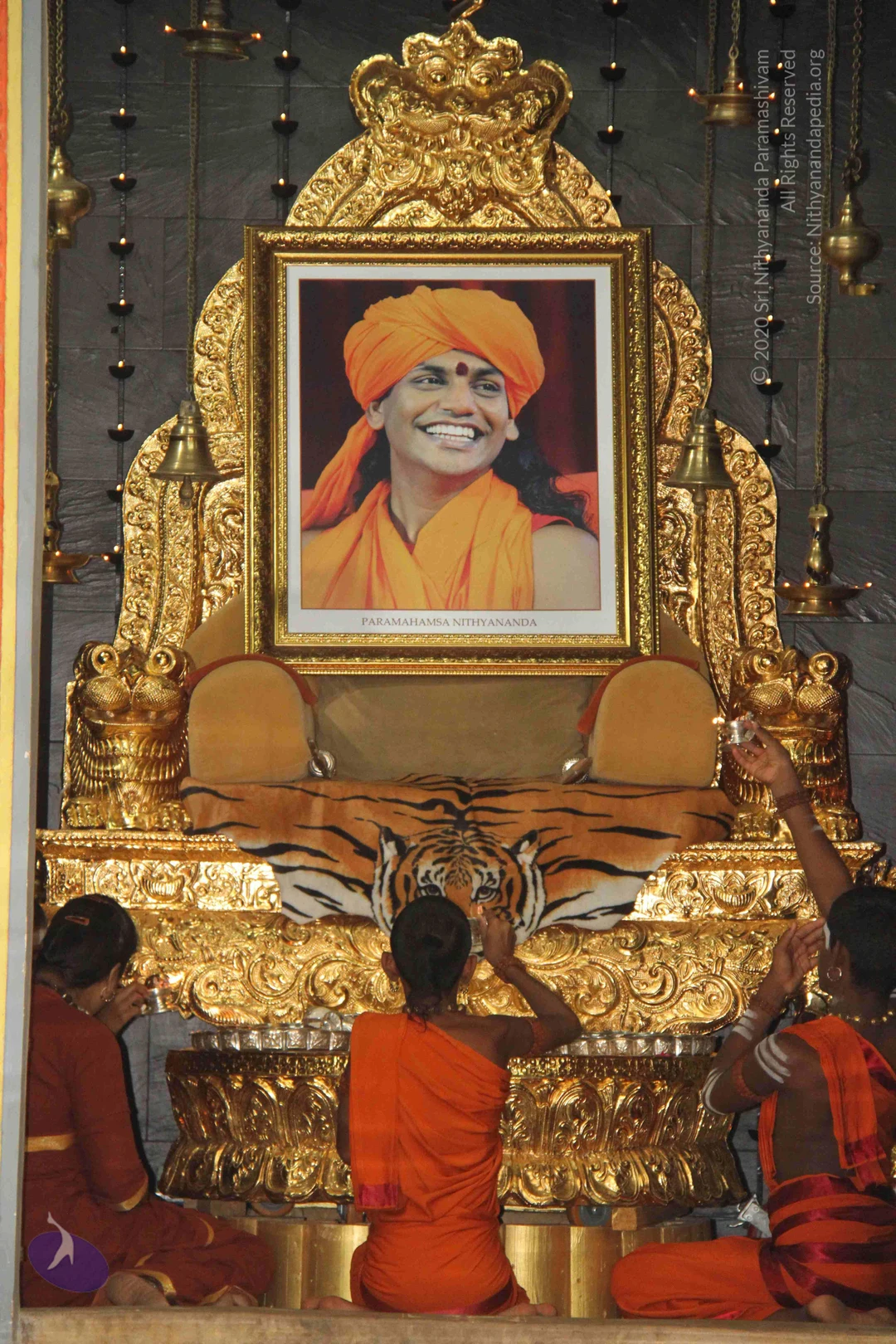
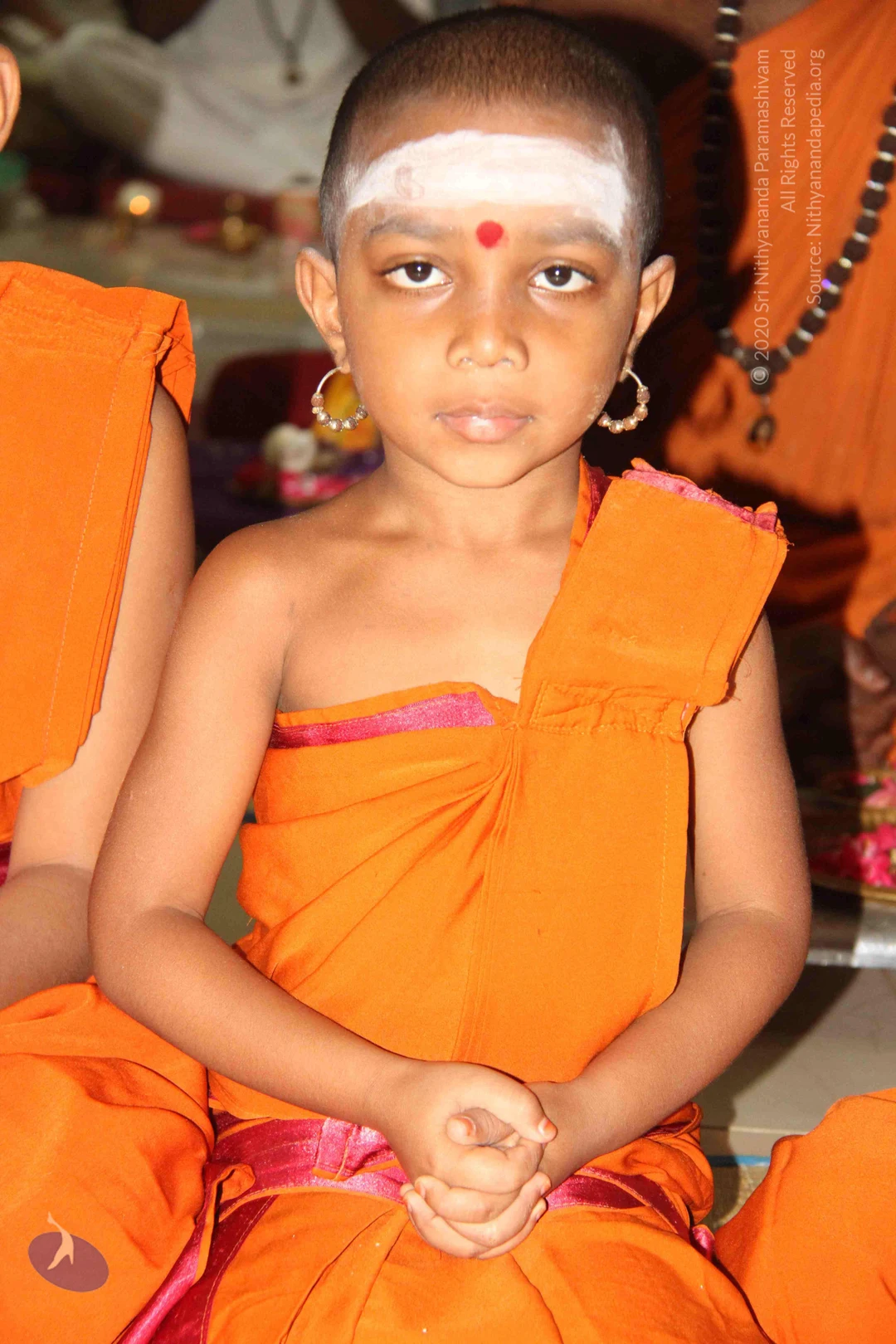
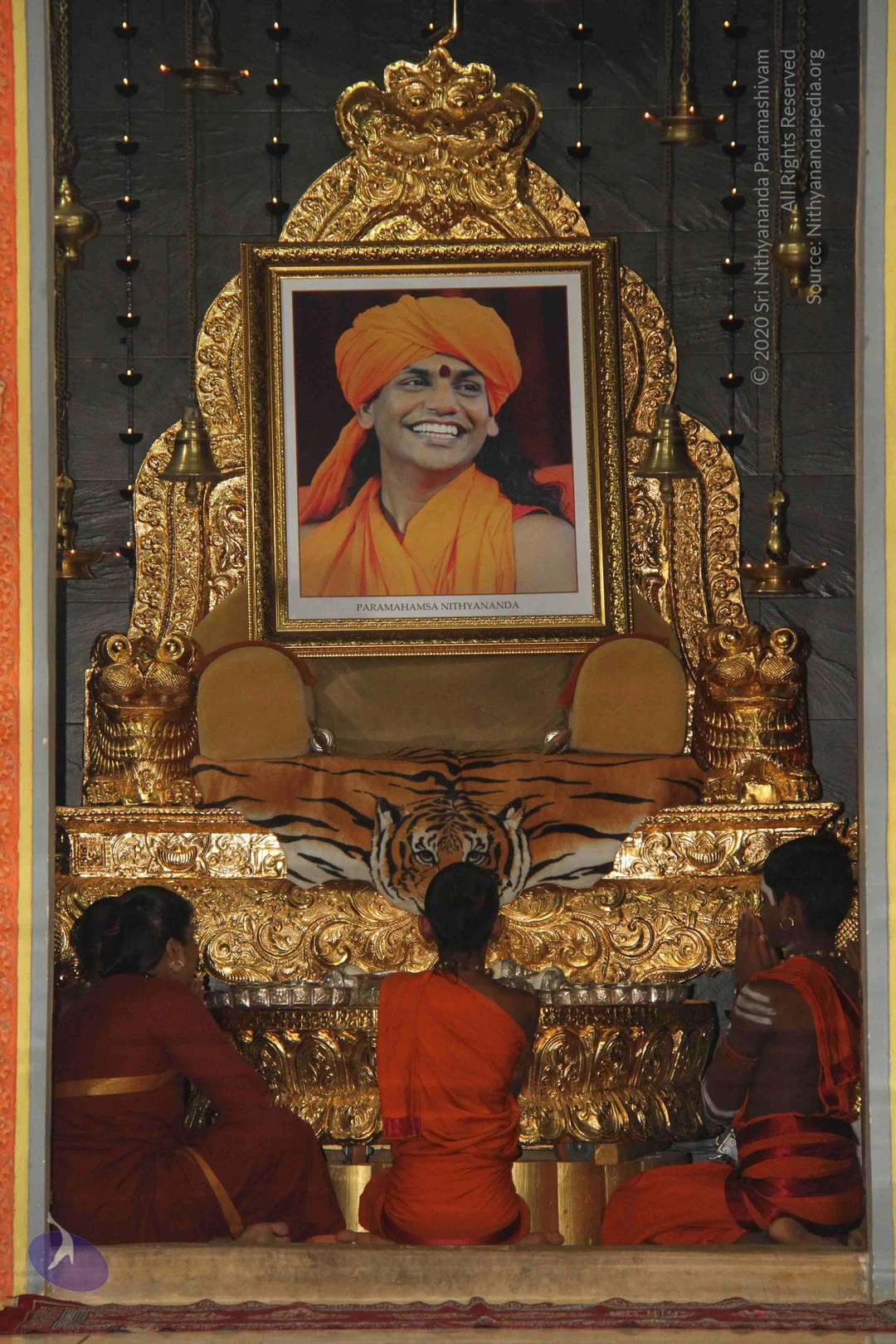
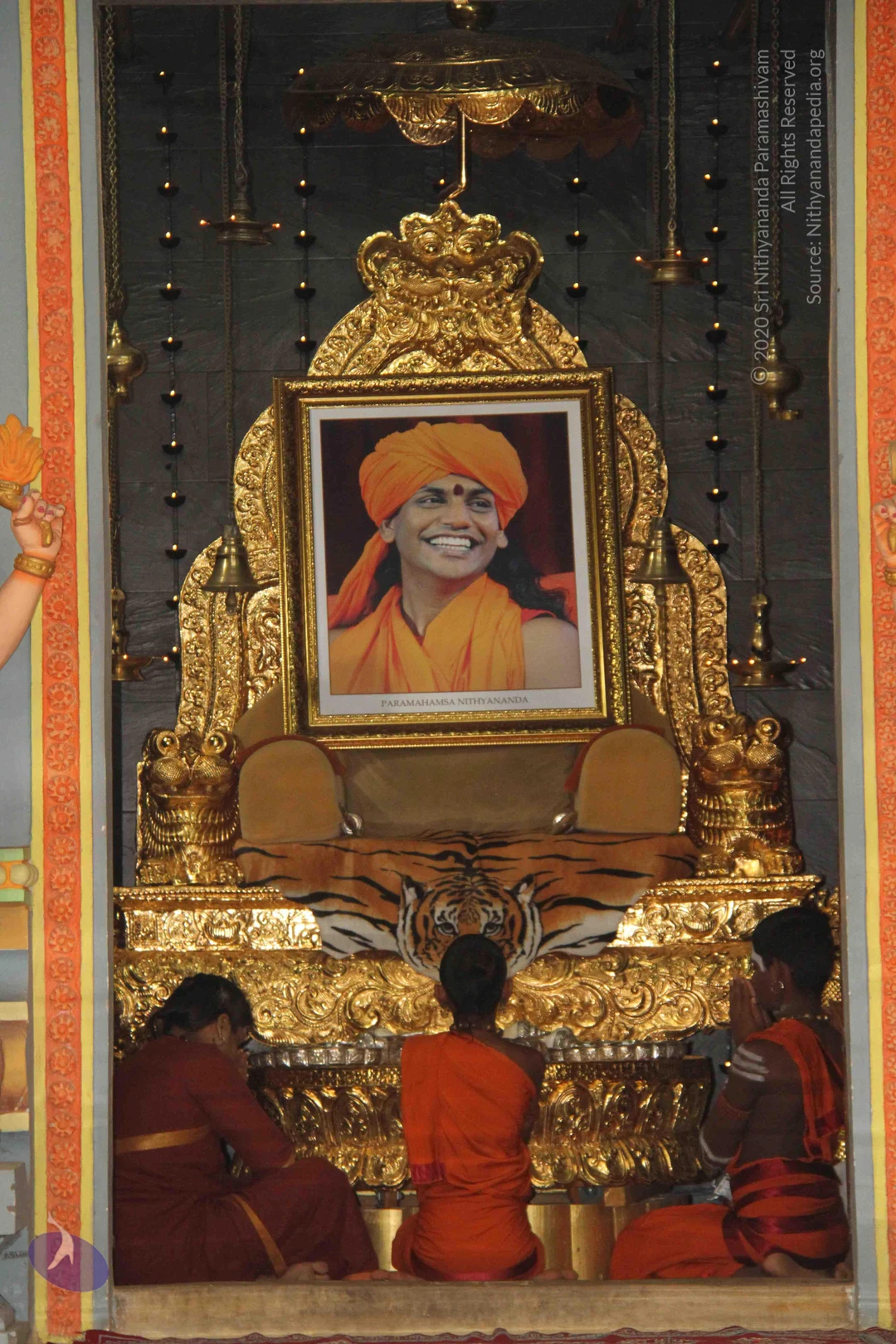
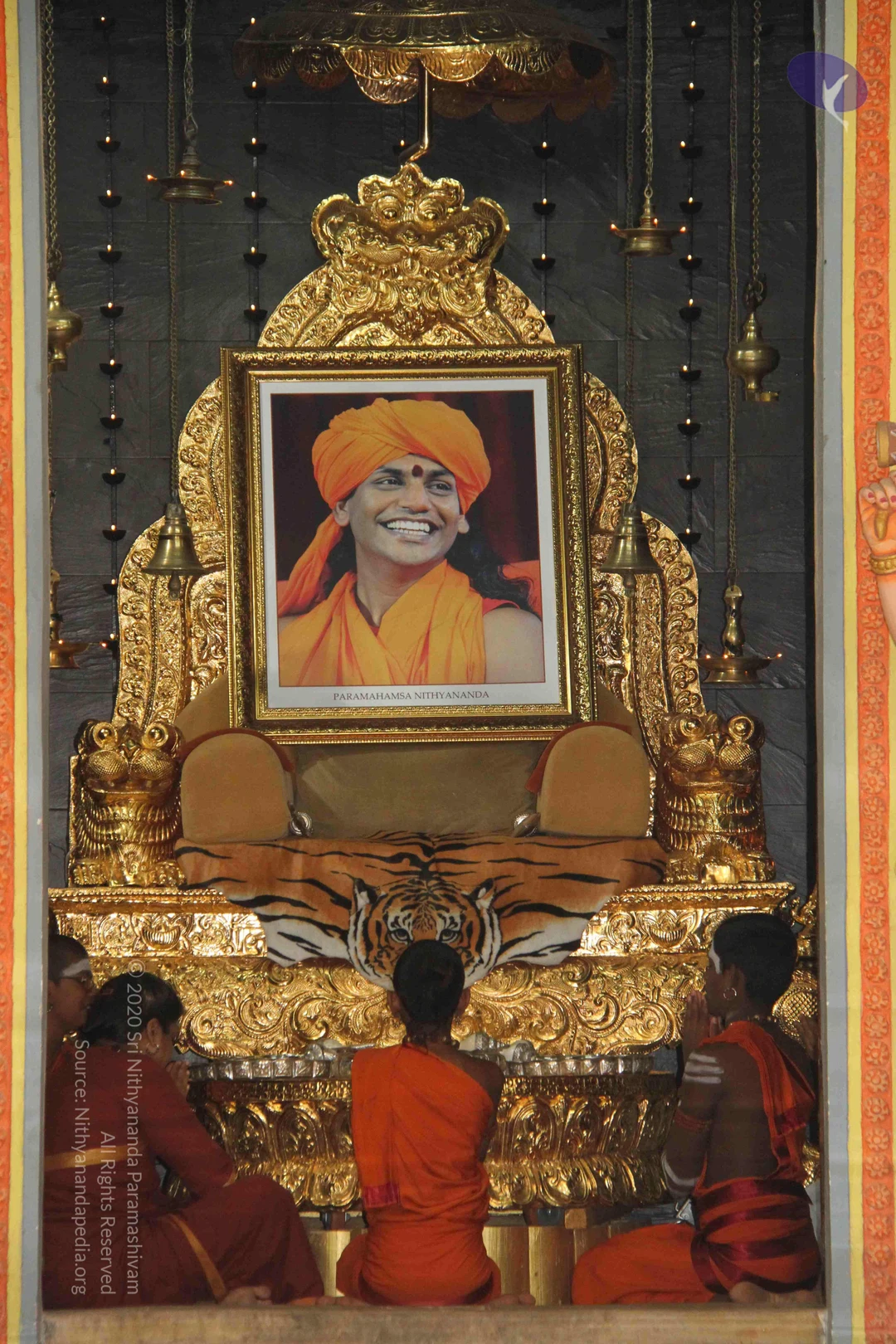
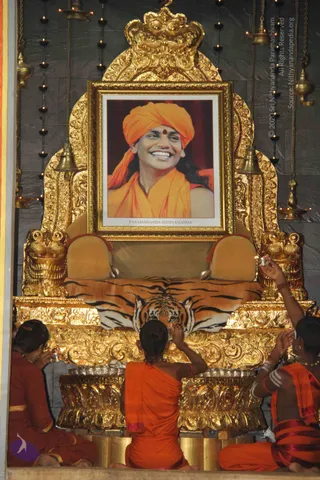
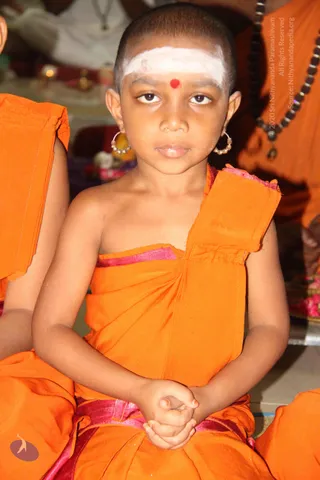
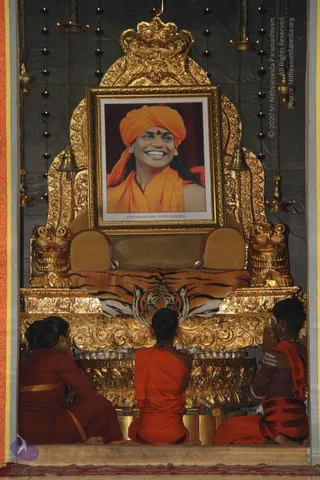
A golden ornate throne draped with a tiger-skin cloth holds a framed photograph of a smiling man with an orange turban, orange shawl and red bindi, labelled as a portrait reading "PARAMAHAMSA NITHYANANDA". Three women in orange and red saris kneel before the throne, one pouring from a small vessel, another raising a hand with a lamp, while hanging brass oil lamps and bells surround the altar. The portrait is a printed depiction rather than a person physically present.Close portrait of a young shaven-headed boy in saffron-orange cloth draped over one shoulder with pink-edged borders, wearing hoop earrings, a white horizontal vibhuti/tilak band across the forehead and a red kumkum dot. He sits with hands clasped at his waist. Behind him, a saffron-robed adult wears a dark rudraksha mala, and blurred ritual items and flower offerings lie at the edge of the frame.A gilded ornate throne with a tiger-skin cloth draped over its seat holds a framed portrait labelled "PARAMAHAMSA NITHYANANDA". The portrait shows a smiling man in an orange turban and orange shawl with a red bindi. Three devotees in orange robes kneel before the throne in prayer, one with palms joined and one with white tilak markings. Brass oil lamps hang on chains and dark stone walls surround the shrine. The portrait is a depiction on a throne, and the three kneeling people are the only physical people visible.A photograph of a golden ornate throne (peetha) draped with a tiger-skin cloth, with a framed portrait of a smiling man in an orange turban and orange shawl placed on its backrest. Three people in orange and maroon clothing sit in prayer before the throne: one on the left in maroon, one in the centre in orange with his back to the camera, and one on the right in orange with white forehead markings, hands folded in anjali. Brass oil lamps and dark beaded strings hang on the dark wall around the shrine, and a golden canopy (chhatra) is above. The framed portrait is labelled 'PARAMAHAMSA NITHYANANDA'.A golden ornate throne with a tiger-skin draped over its base sits in a shrine, framed by hanging brass oil lamps and strings of dark beads. A framed portrait labelled "PARAMAHAMSA NITHYANANDA" on the throne back shows a smiling man in an orange turban and orange shawl with a red bindi. Three people in orange and red robes kneel in front of the throne with palms joined in prayer, one with white markings on the forehead and body. Their backs are to the camera.

3-Nithya-Satsang
38 photosSource gallery
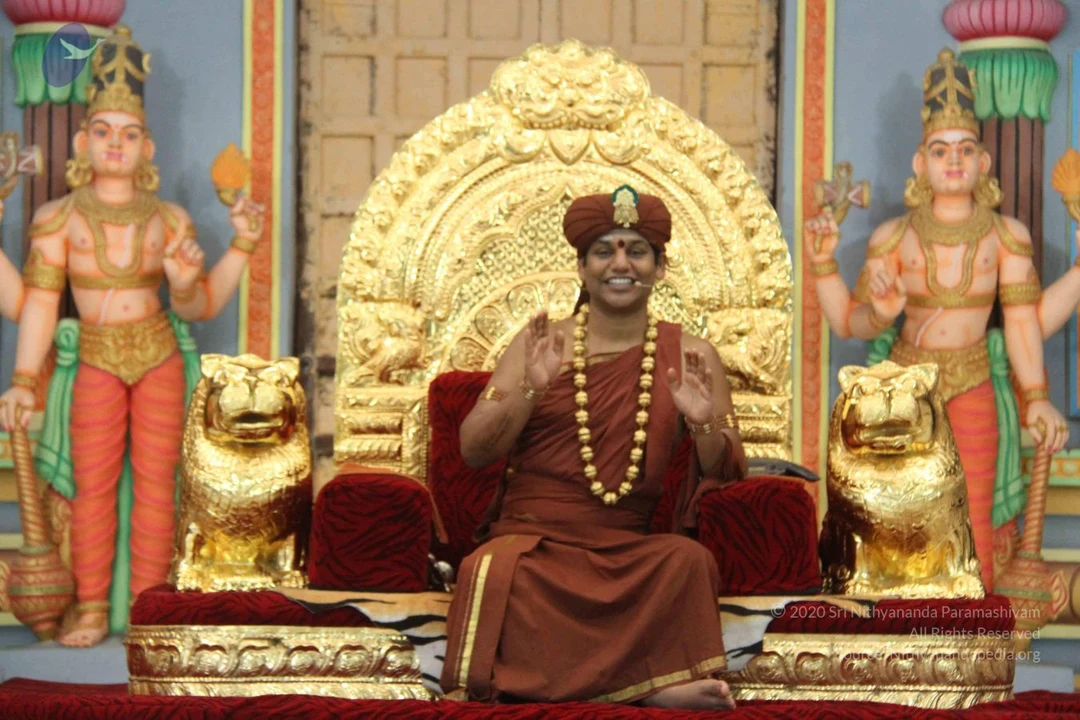
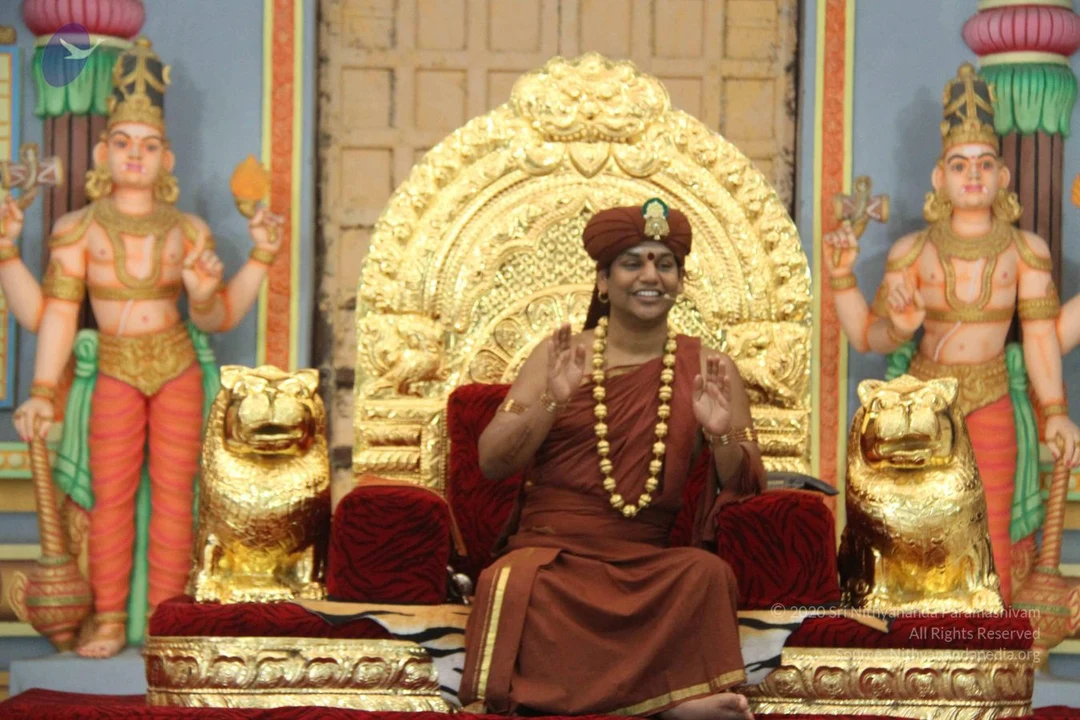
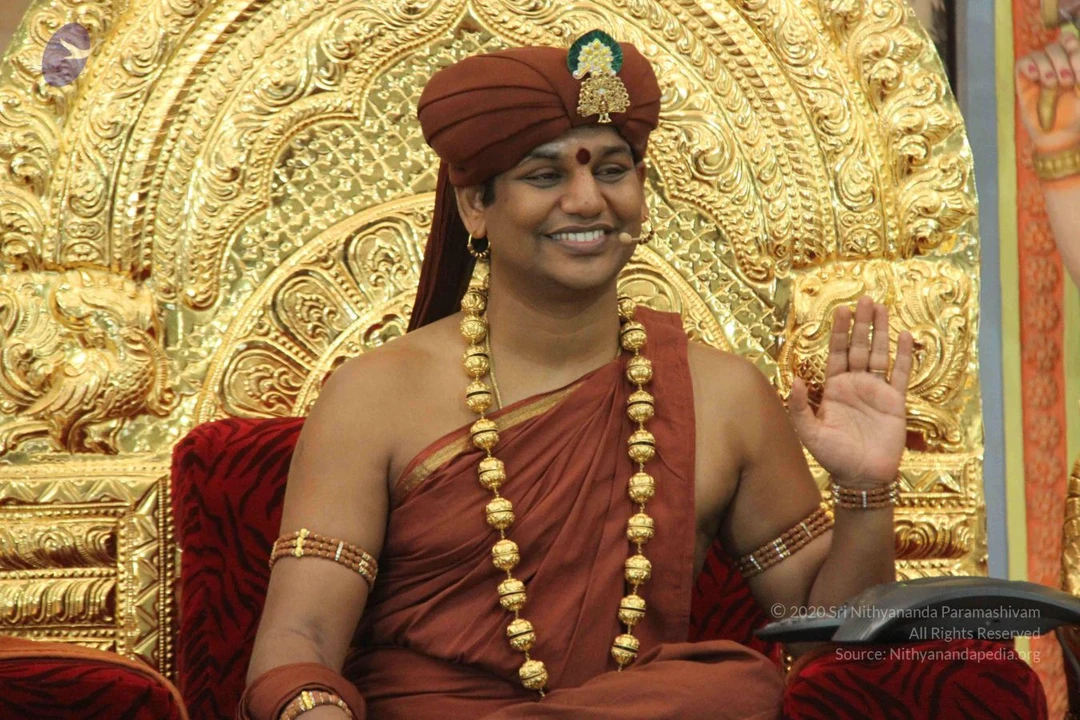
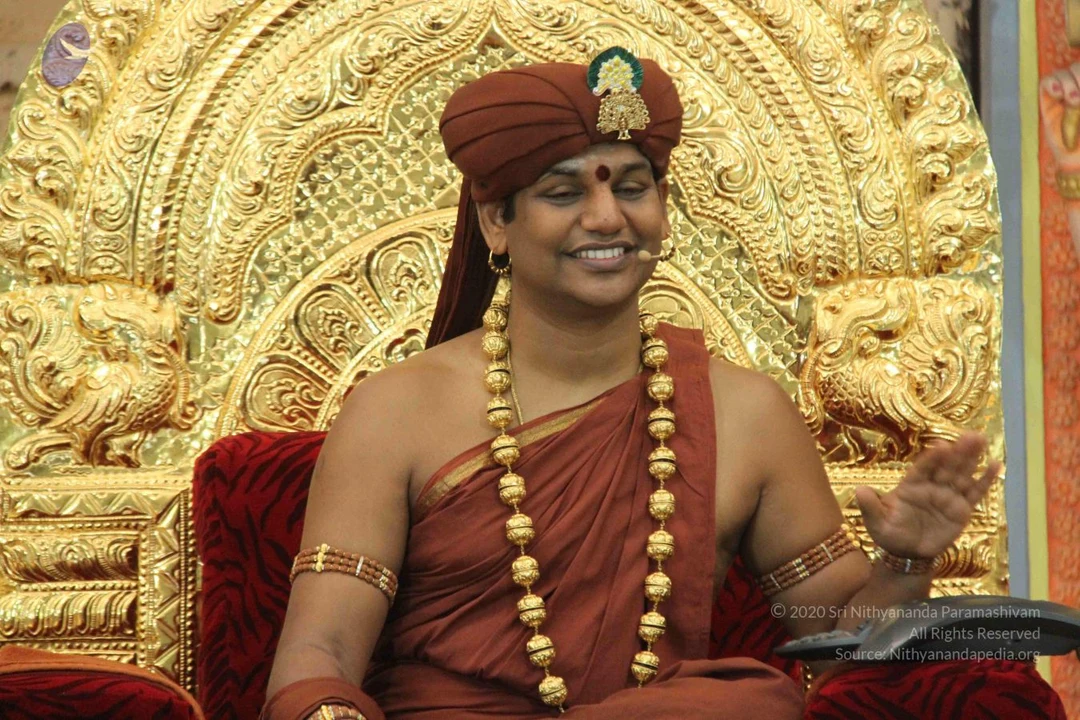
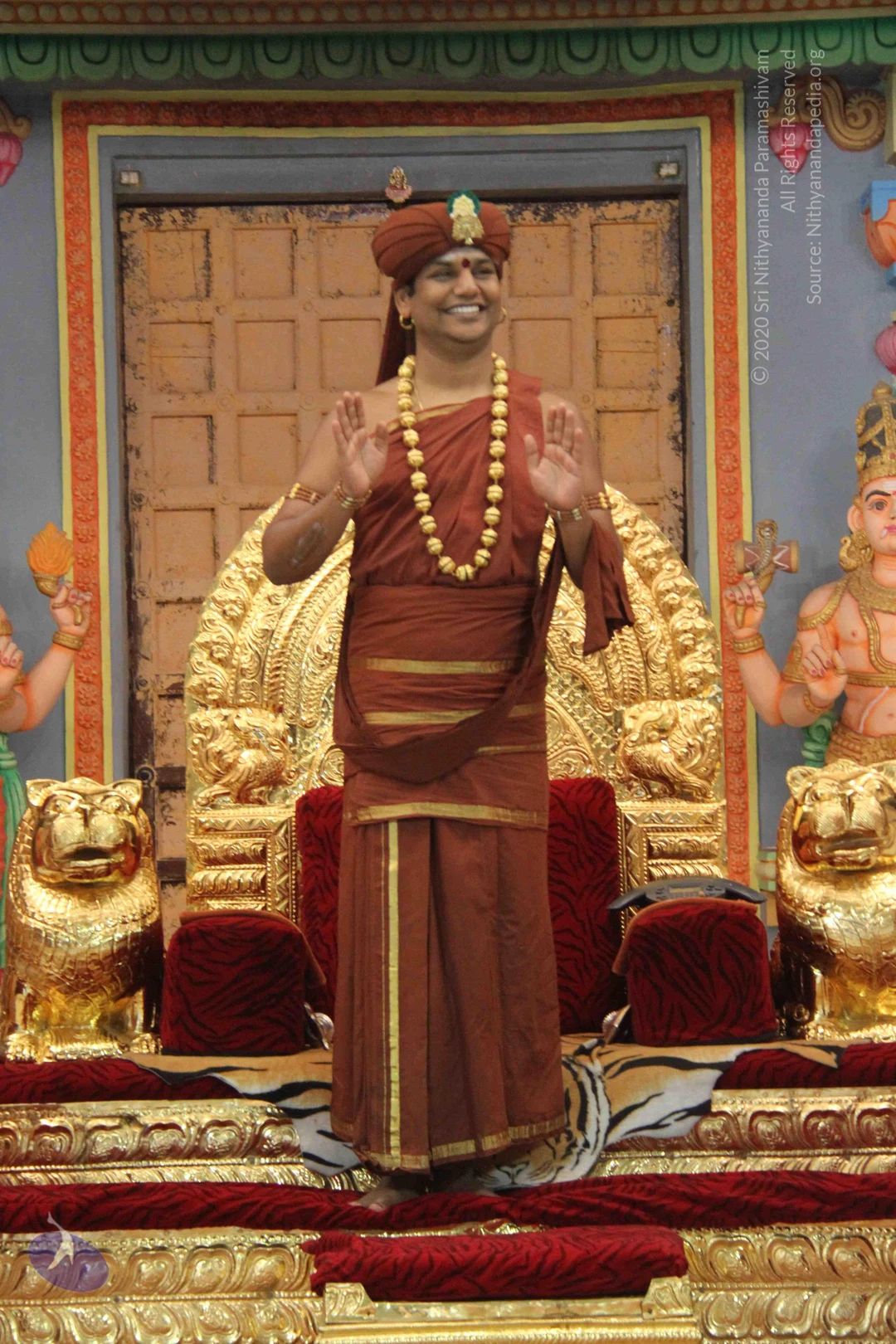
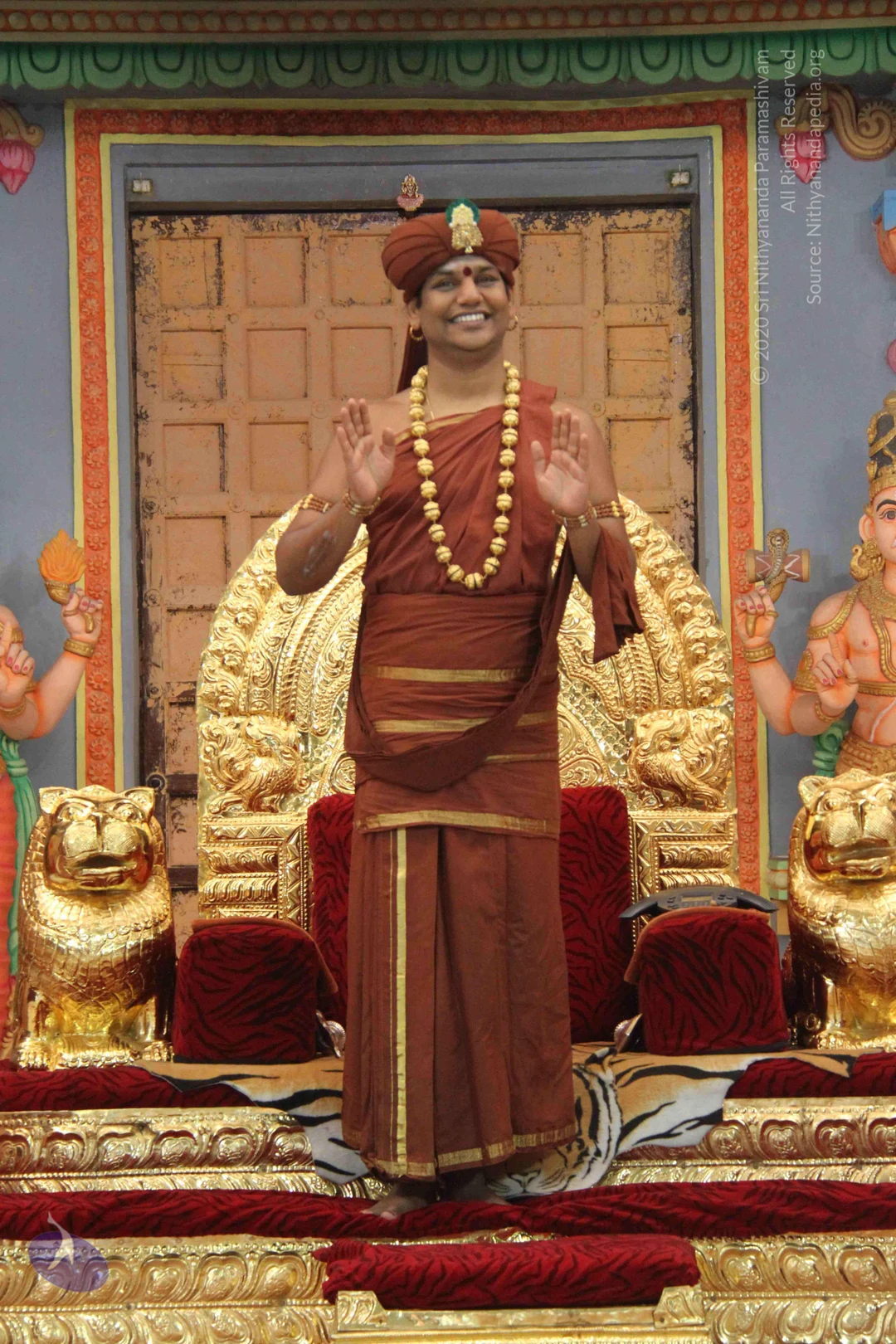
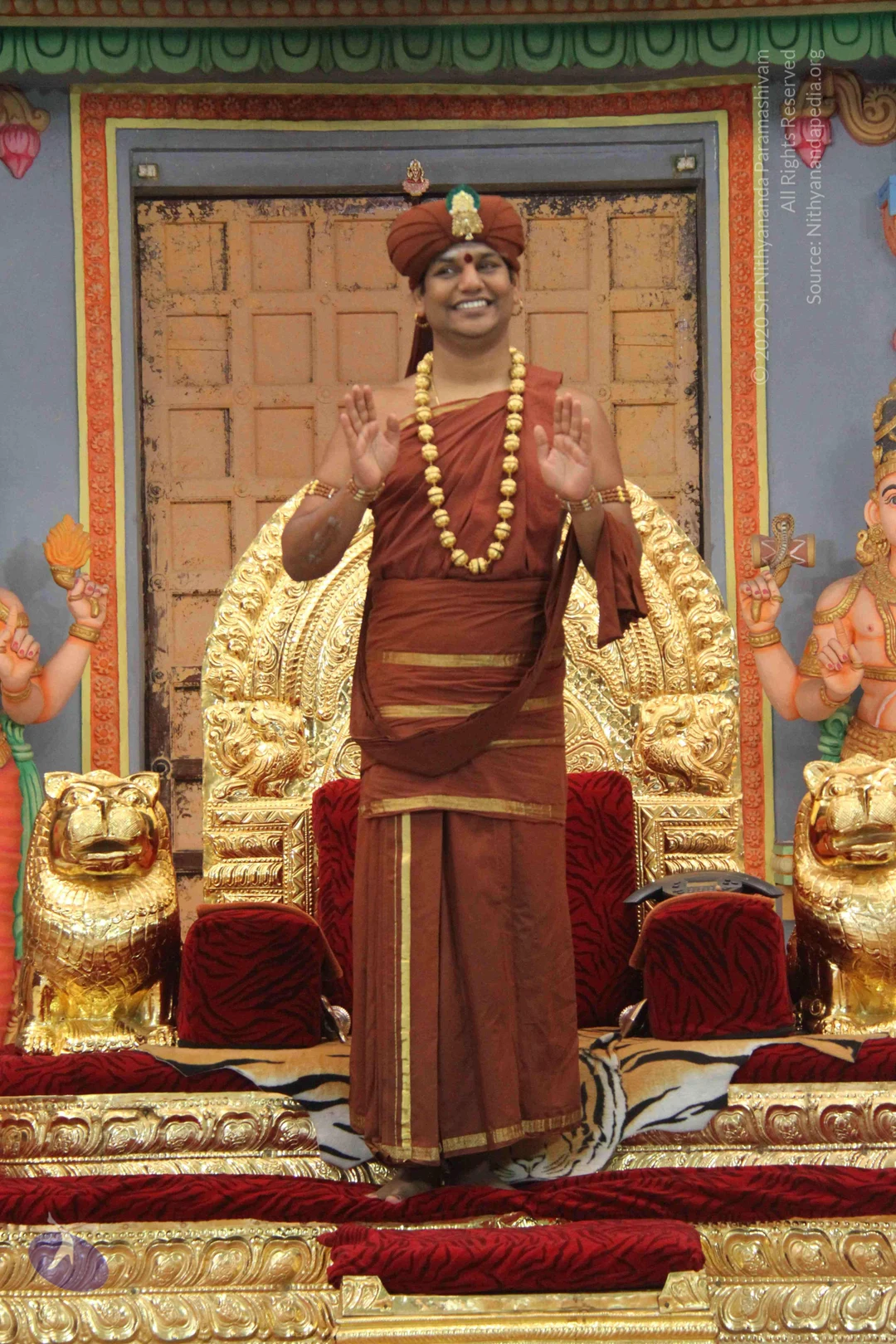
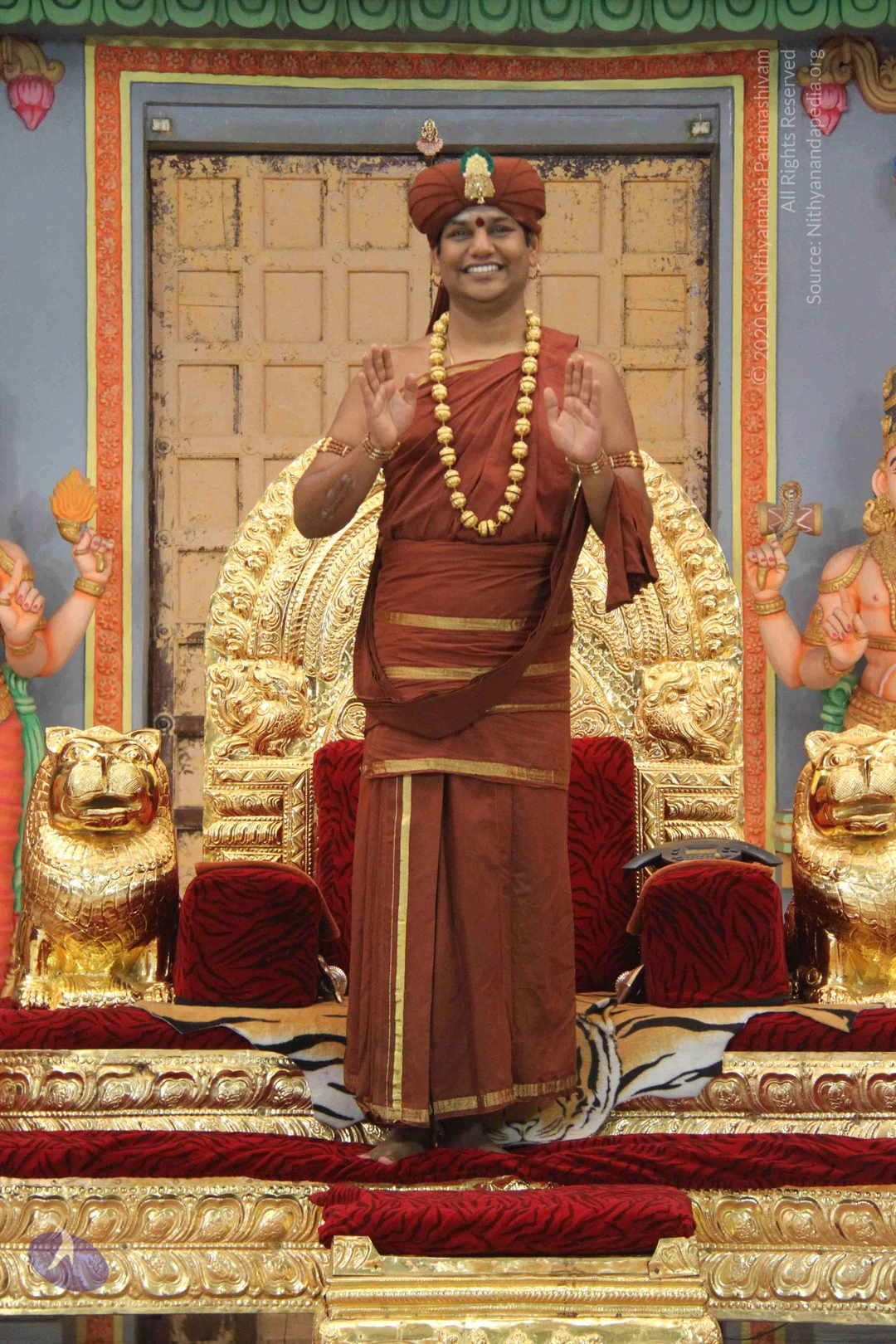
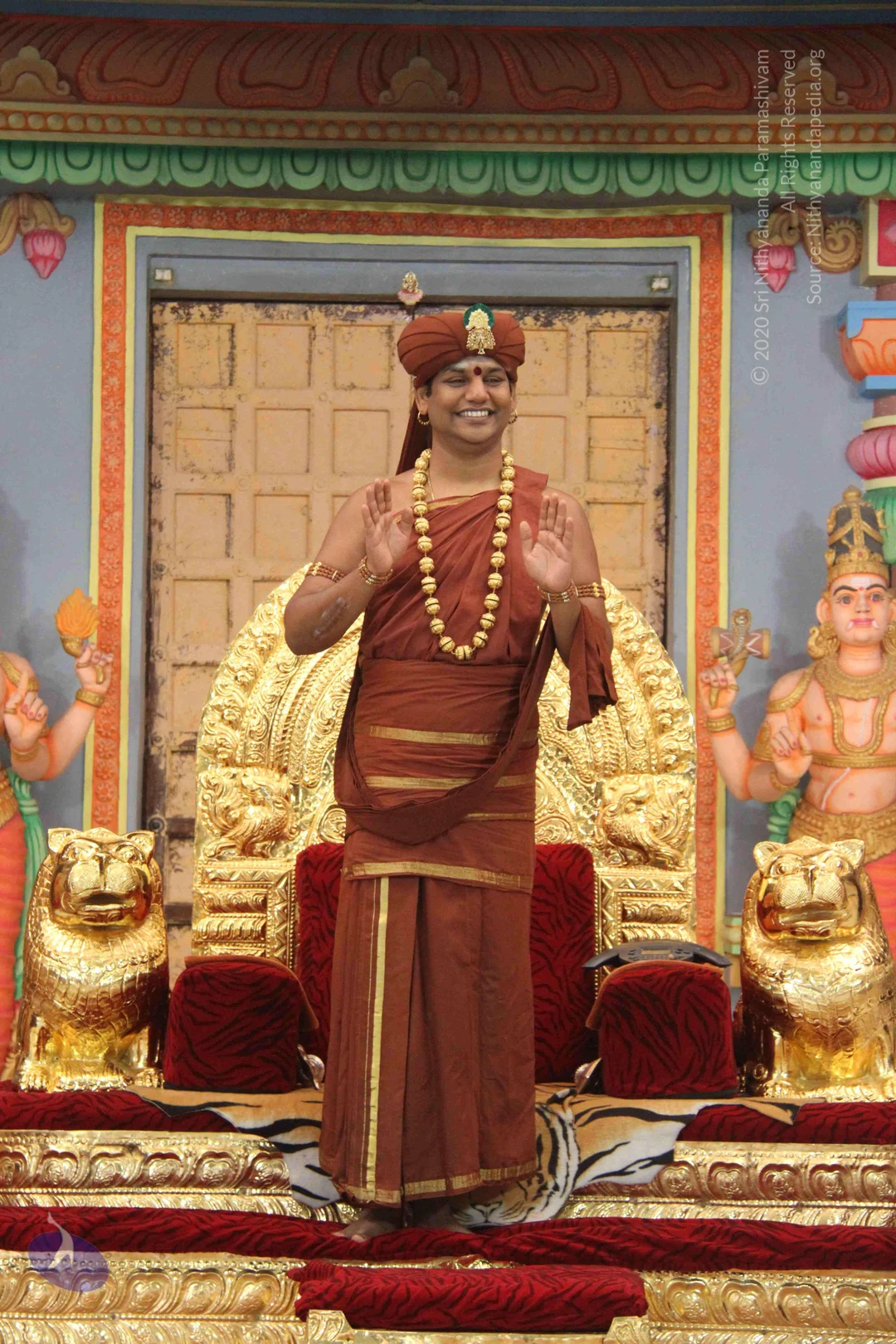
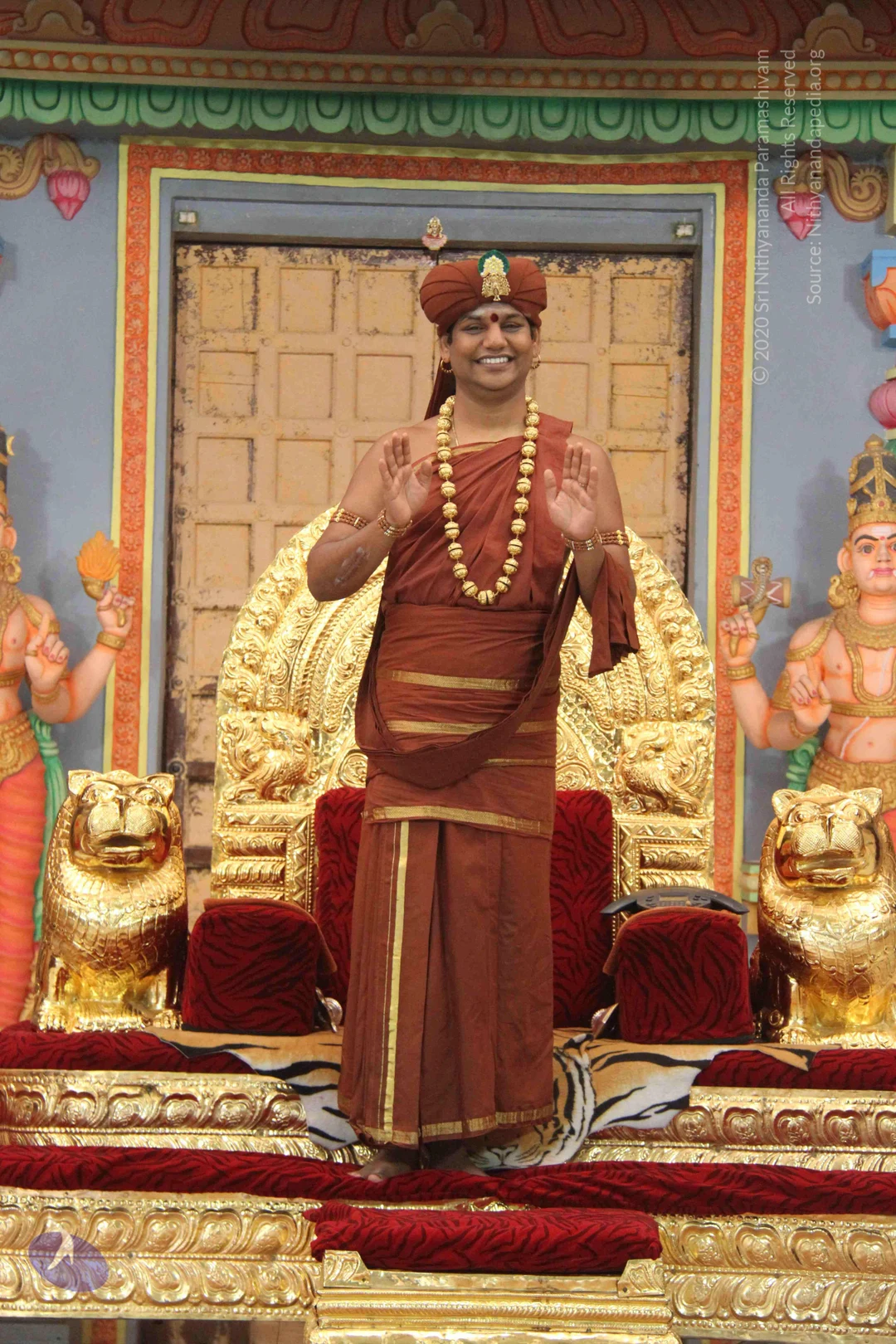
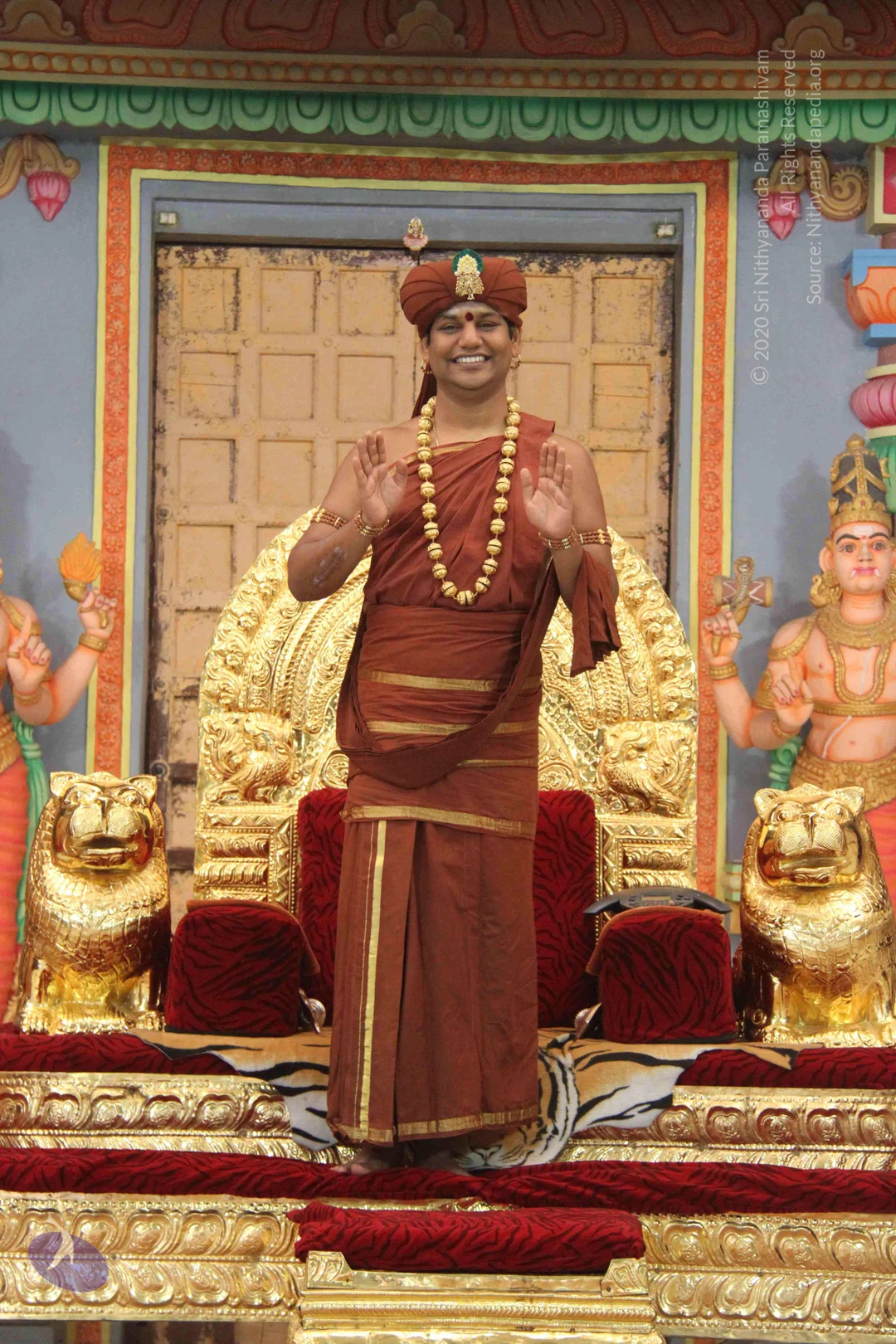
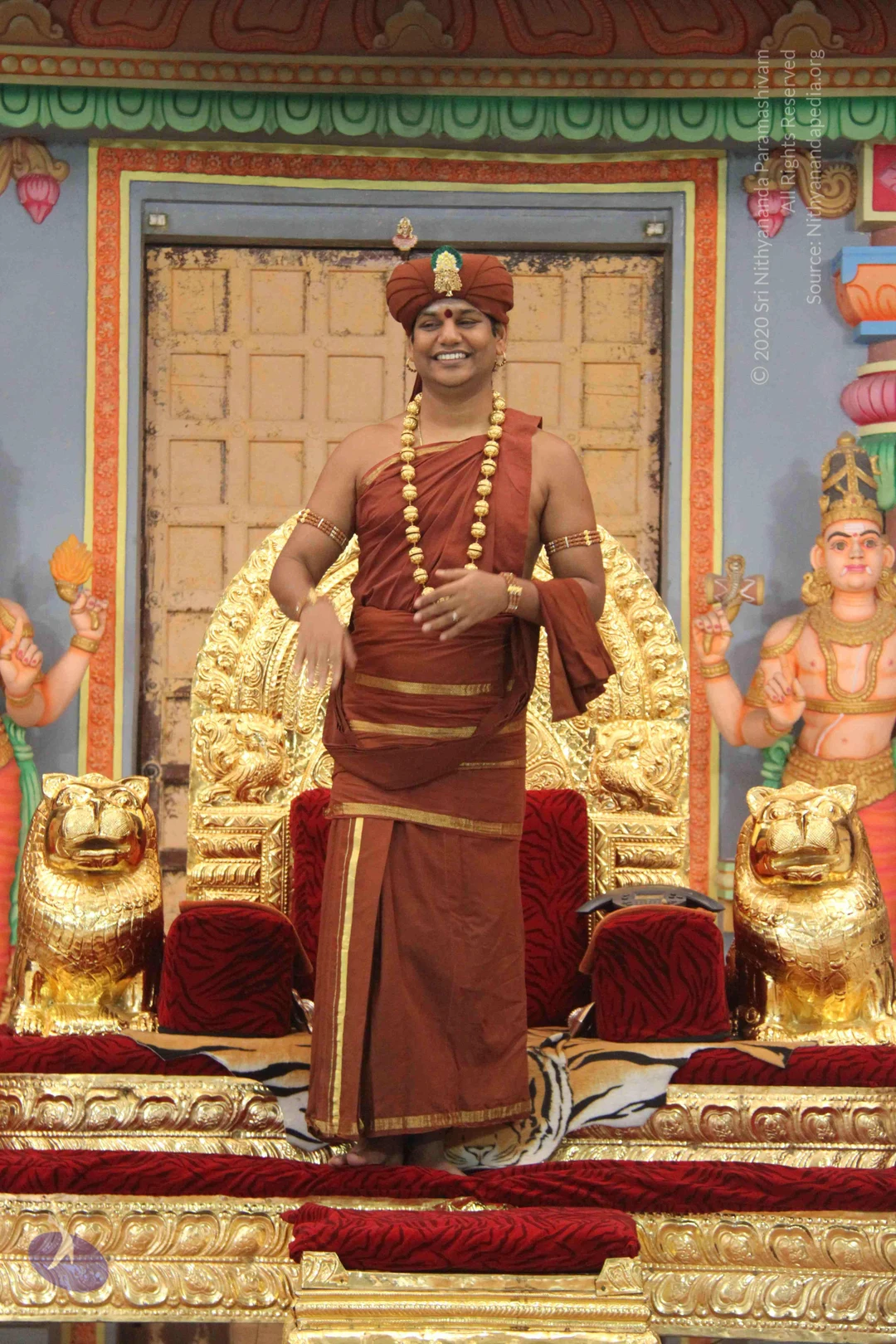
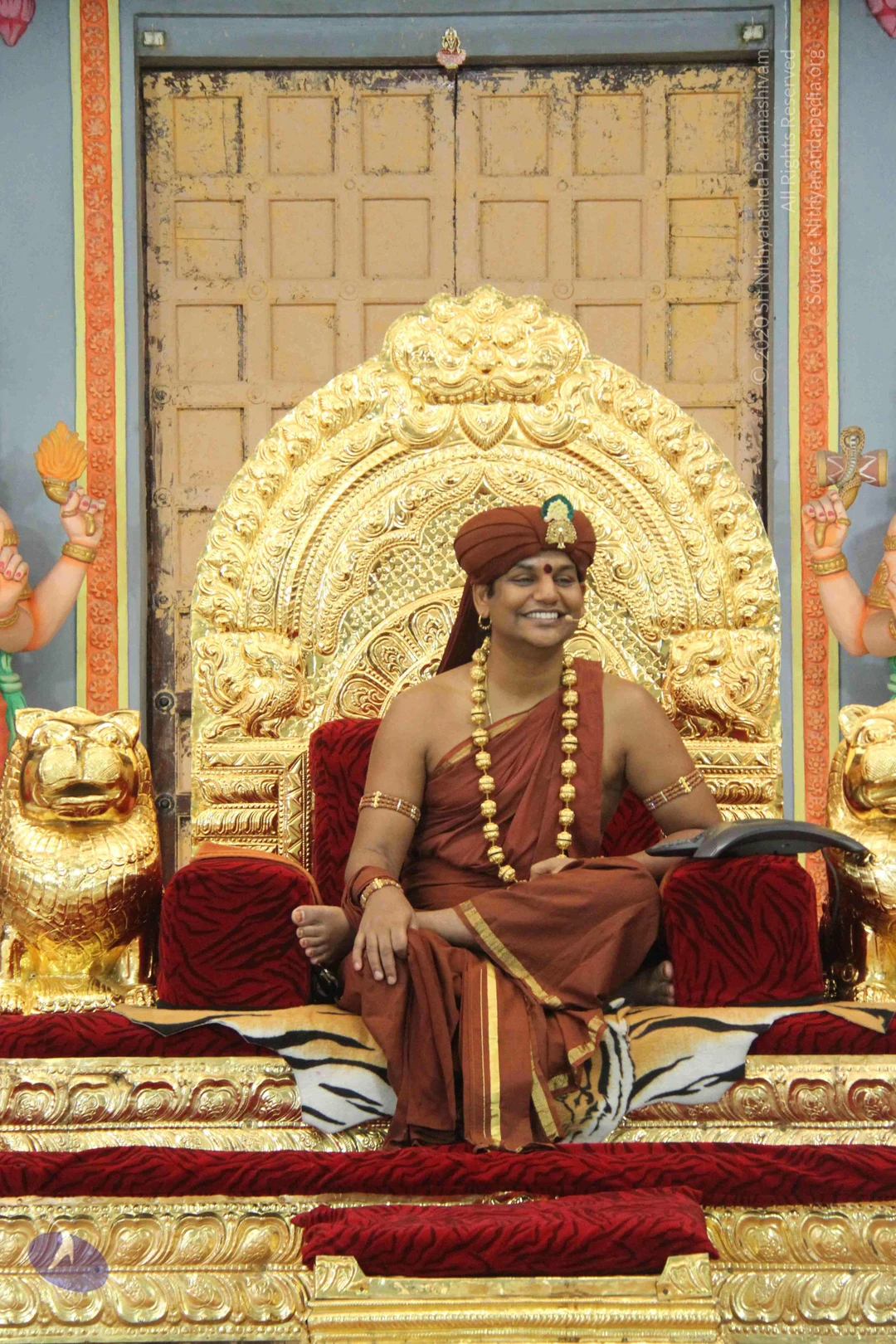
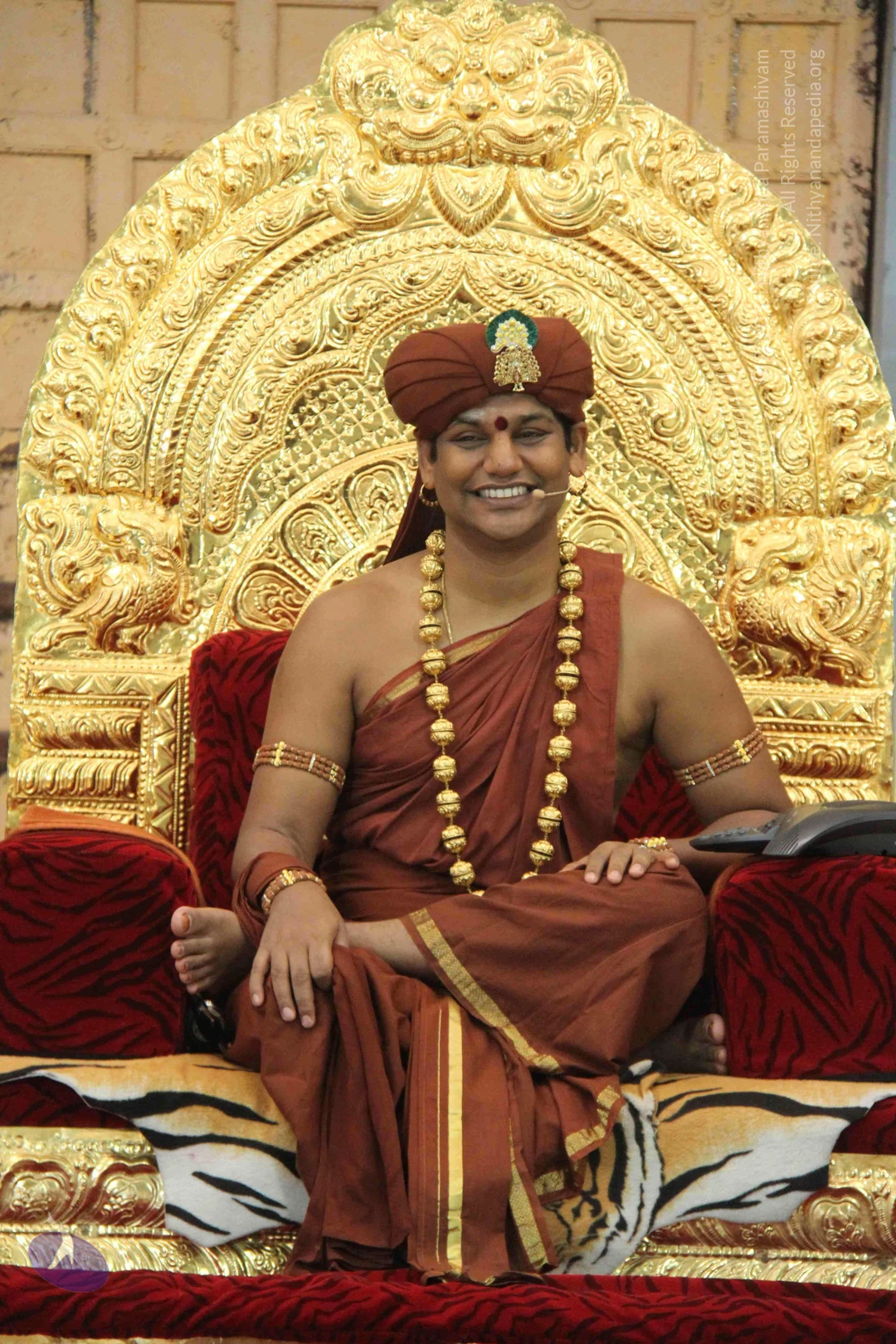
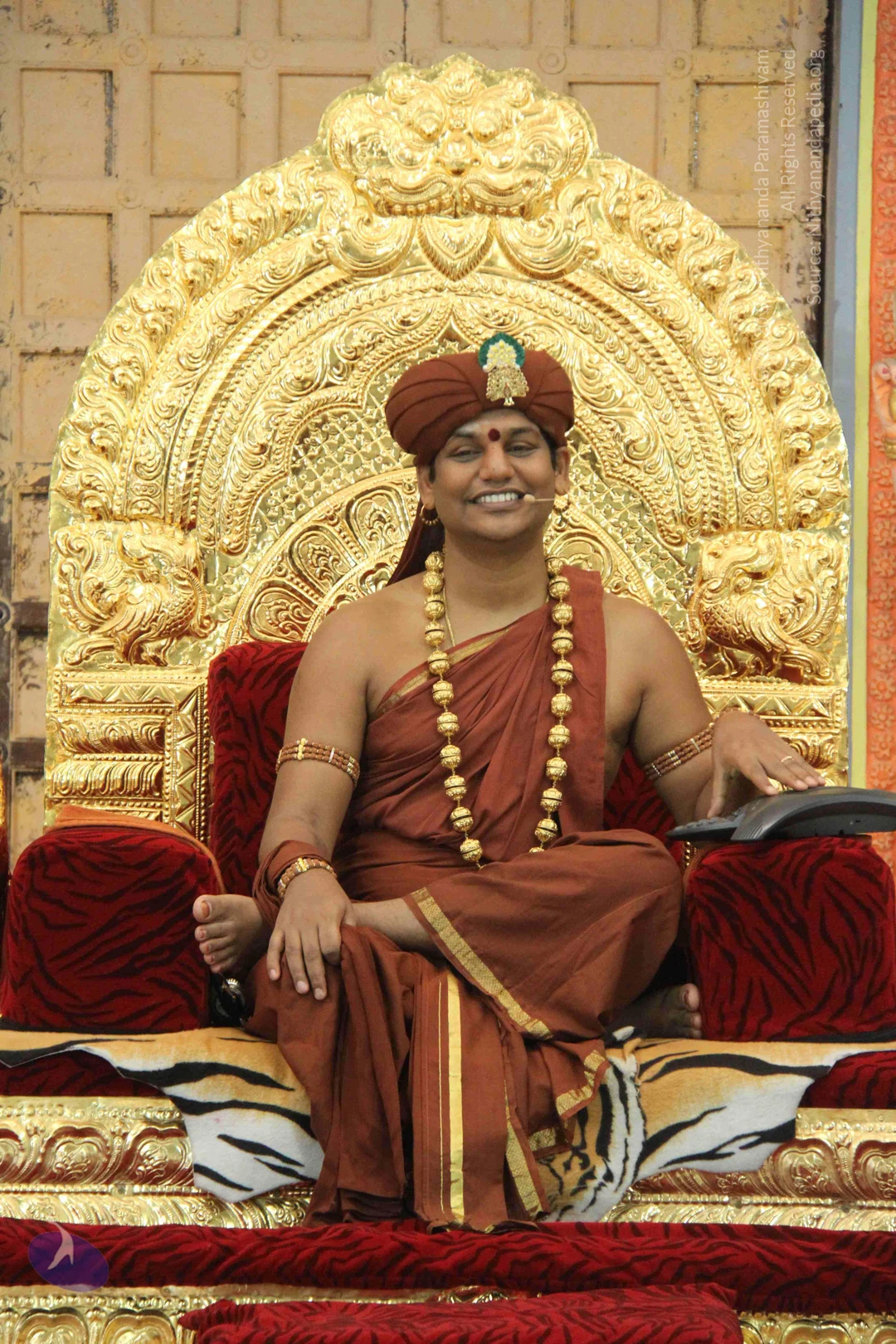
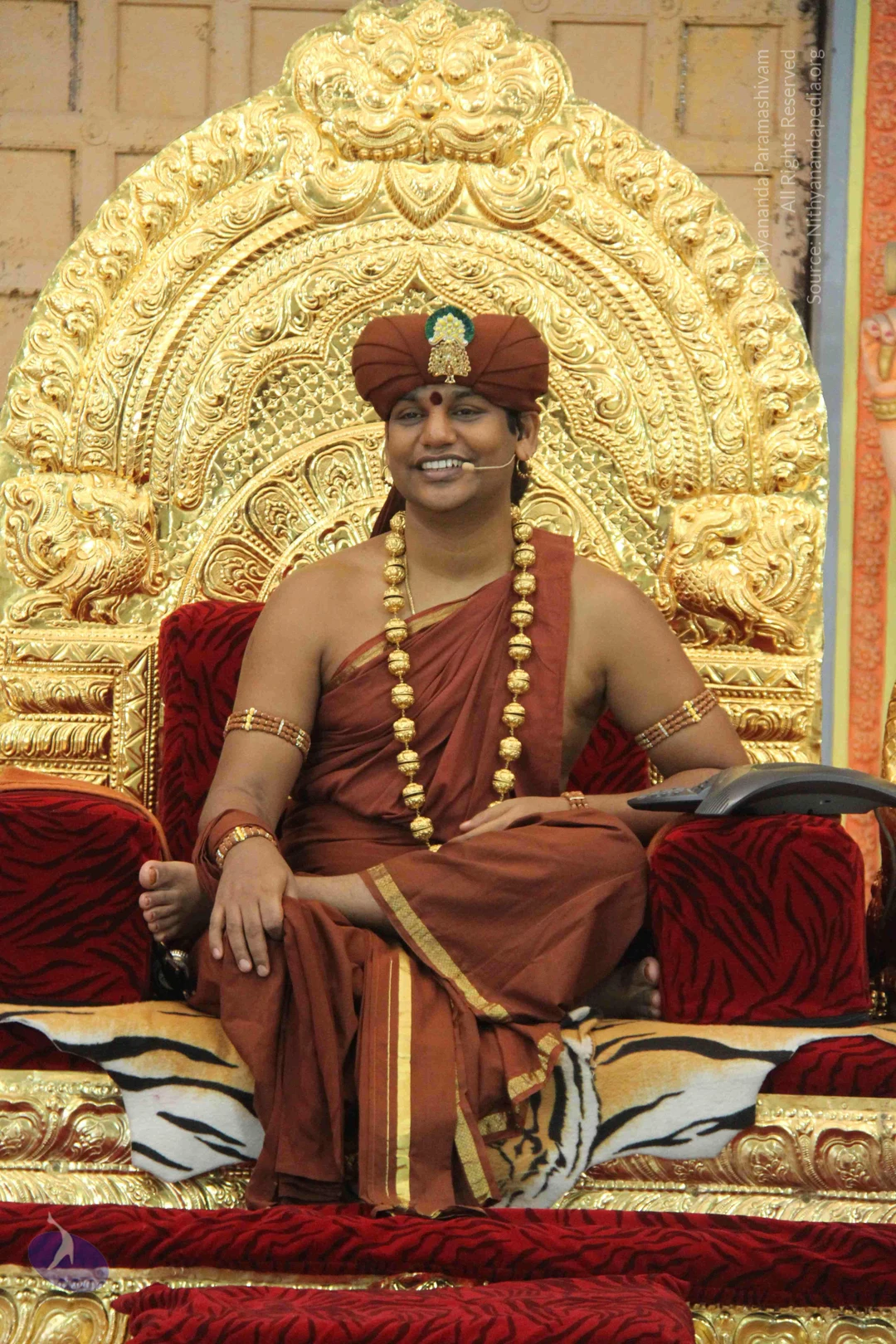
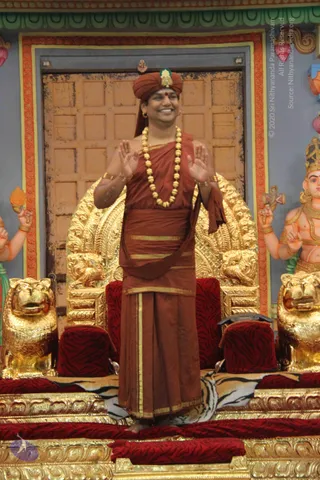
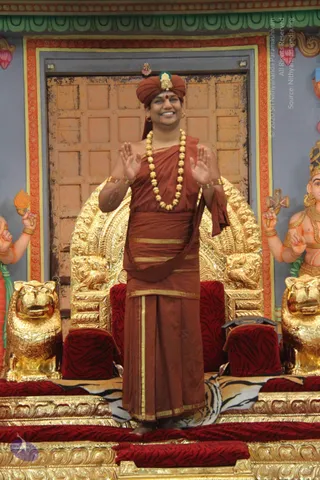
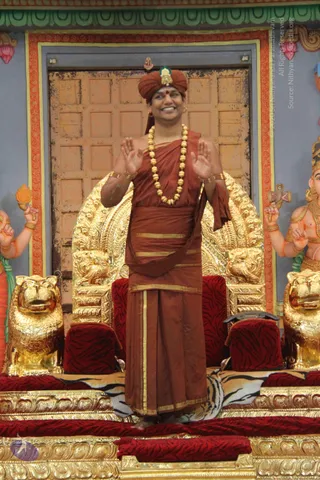
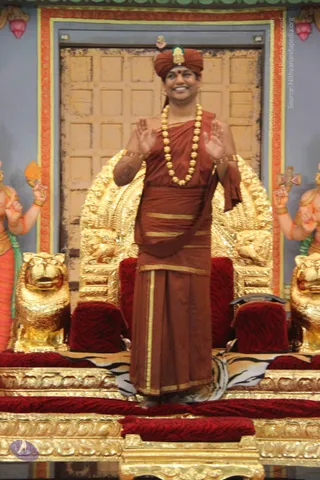
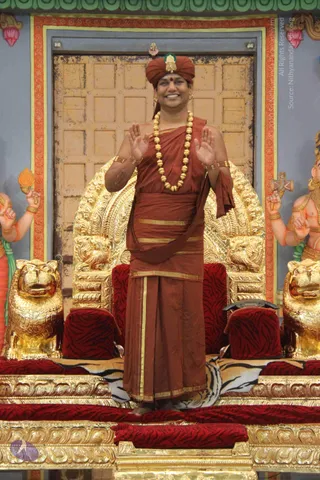
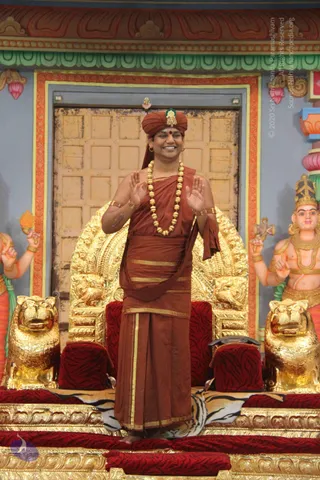
A standing man in rust-red saffron robes and a matching turban stands on a golden throne platform with raised palms facing outward, smiling. He wears a heavy gold bead necklace and a small red tilak on his forehead, with a gold ornament at the turban top. Behind him is a gold-embellished chair with a red and tiger-striped cushion, flanked by golden lion heads. Two painted deity murtis stand at the left and right edges, one with a flame-tipped lamp and the other holding a trident-like weapon. A wooden paneled door forms the backdrop.A smiling man in maroon-rust robes and a matching turban stands on a golden throne platform before a carved wooden door. He wears a long gold bead mala around his neck, gold bangles, and a red bindi; his palms are raised in blessing. Golden lion-head armrests flank the throne with red-and-black tiger-striped cushions, and gilded deity figures stand at the edges. a person: the figure wears distinctive saffron-maroon sannyasi attire with a turban and a long gold bead mala, and is seated on a ceremonial throne during satsang.A smiling man stands on a raised platform before a golden throne flanked by gilded lion sculptures and red tiger-striped cushions, with a tiger-striped rug at his feet. He wears a maroon-red turban with a gold ornament, a red-brown shawl and dhoti with gold borders, a large gold bead necklace, gold bangles, and a red bindi. He holds both palms raised in a gesture of blessing. On the left and right edges, painted deity figures with multiple arms hold objects, including a flame. Behind him is a carved wooden door on a blue-grey wall with green and orange decorative trim.A man in a rust-orange turban and matching rust-orange dhoti and shawl stands on a golden throne platform with red velvet cushions and a tiger-striped cloth. He wears a long gold bead necklace, gold bangles, and a red bindi, and smiles while raising both palms in a blessing gesture. Golden lion heads flank the throne, and carved deity figures with raised arms stand at either side against a gilded doorway backdrop. The scene reads as a ceremonial stage presentation.A standing man in rust-red robes and a matching turban with a gold ornament stands on a raised golden throne with red and tiger-striped cushions. He wears a heavy gold bead necklace, gold armbands and bangles, and raises both palms outward in a blessing gesture while smiling. Gilded lion figures flank the throne, with painted deity statues on either side and a carved wooden door behind.A smiling man stands barefoot on a golden and red-cushioned dais in front of a gilded throne flanked by golden lion figures and a tiger-striped cloth. He wears a maroon-brown turban with a green and gold ornament, a red bindi, a rudraksha-style gold bead necklace, gold armlets and bangles, and a maroon-brown dhoti-style garment with gold borders. He raises both palms outward in a blessing gesture. Behind him is a carved wooden door, and on either side stand painted deity murti with raised arms, one holding a flame. Swamiji (probable): the figure wears a turban, a dark-saffron-toned robe and a long gold bead necklace on a dais, consistent with the page's Swamiji label.

4-Final-Blessing

8 photosSource gallery
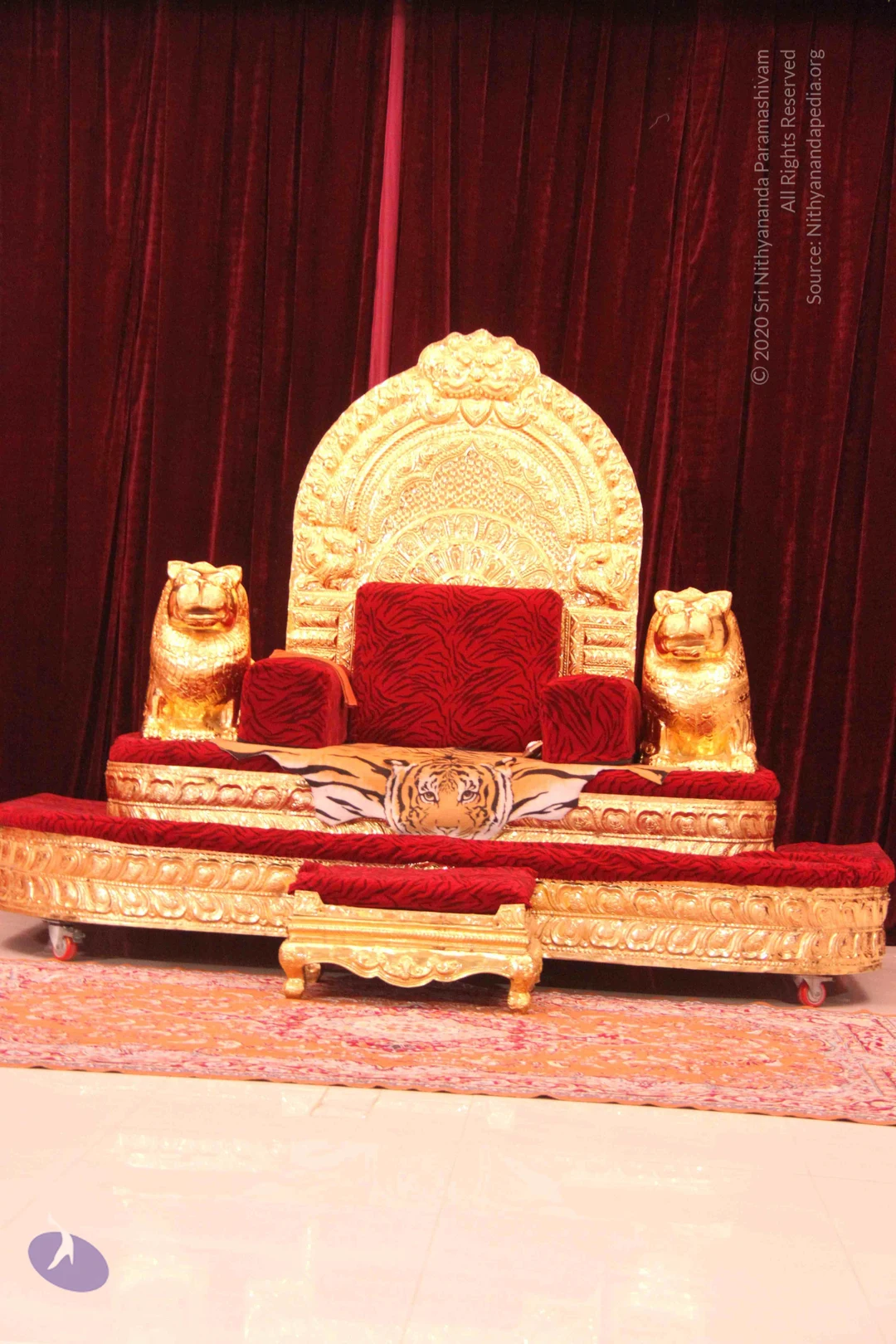
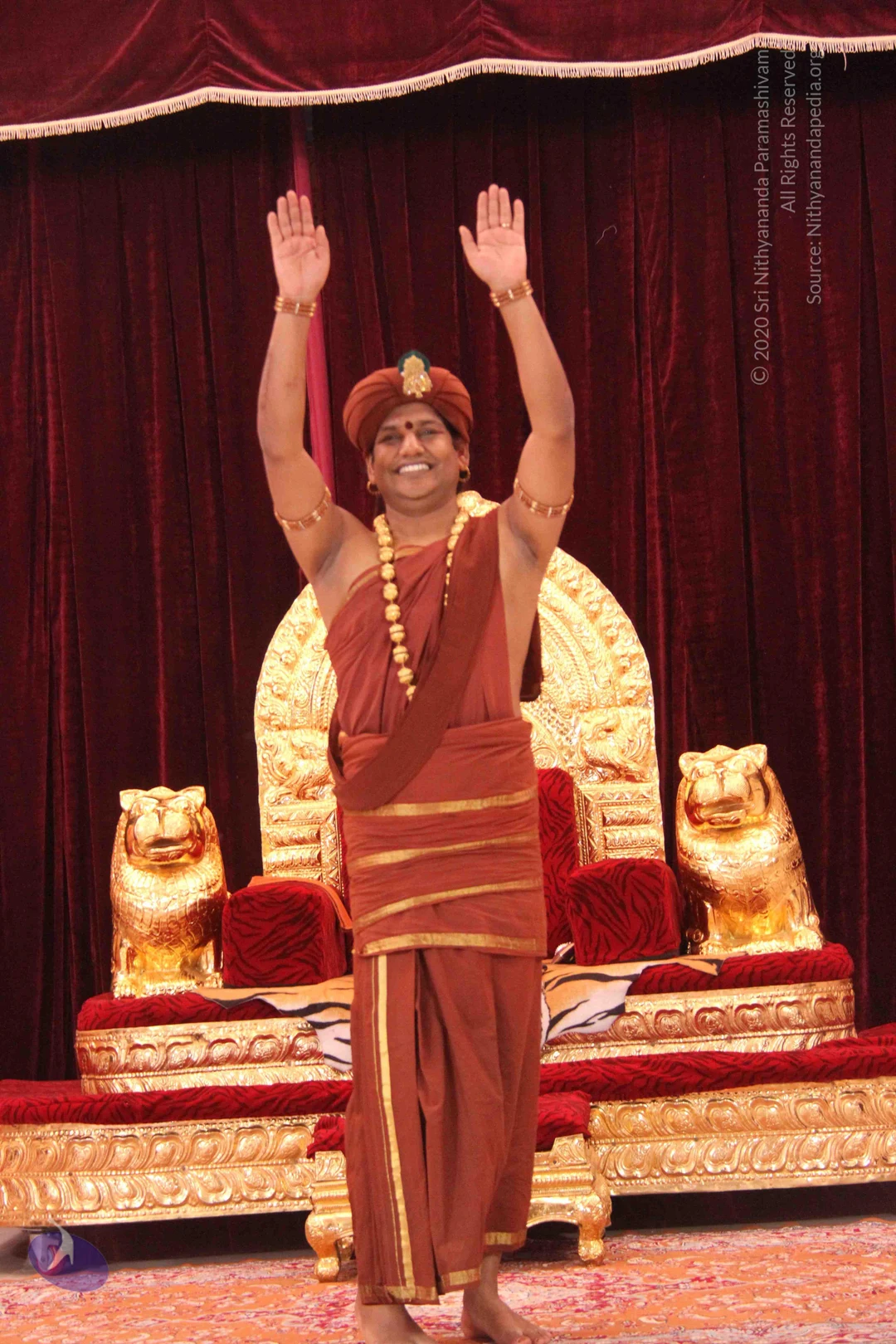
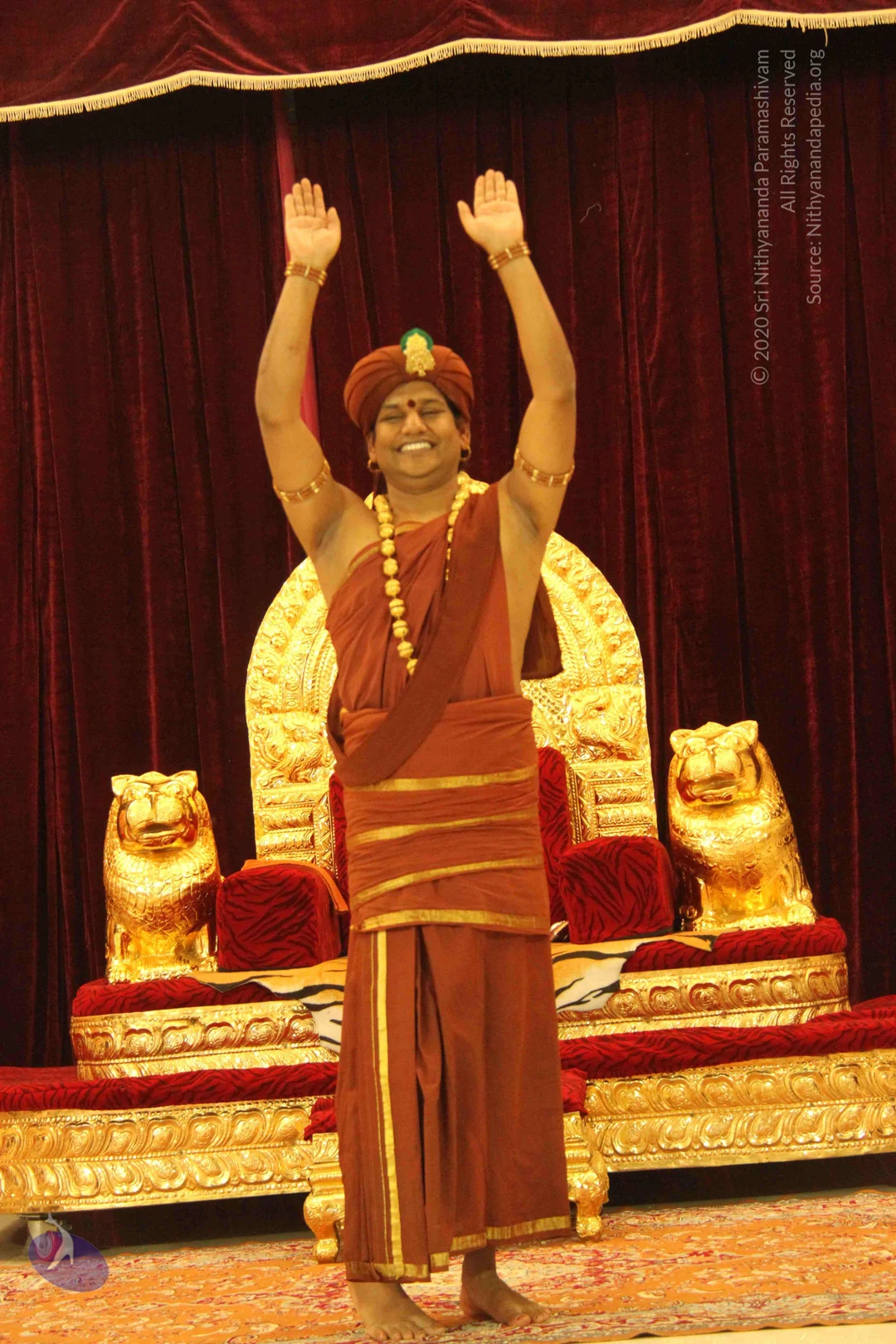
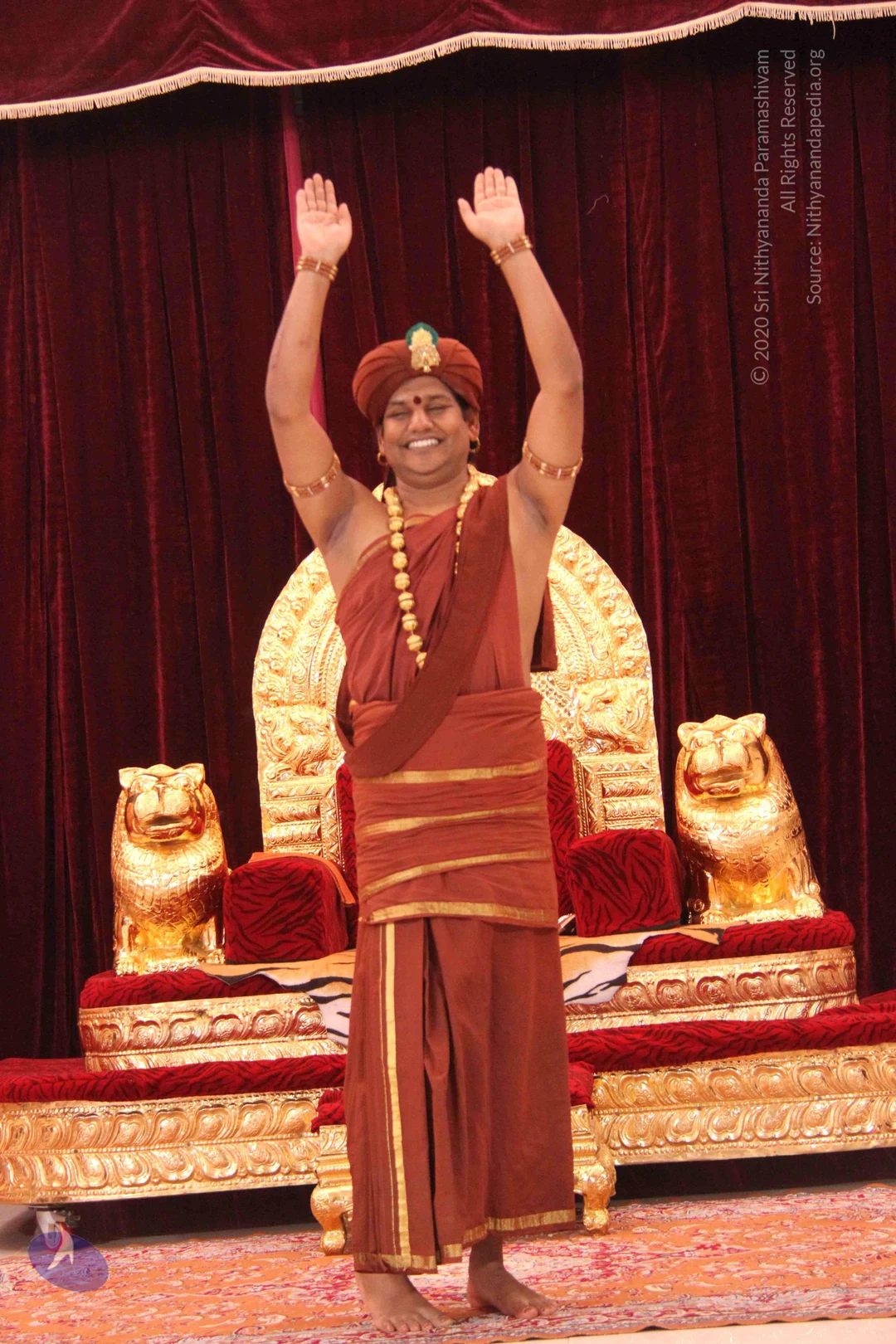
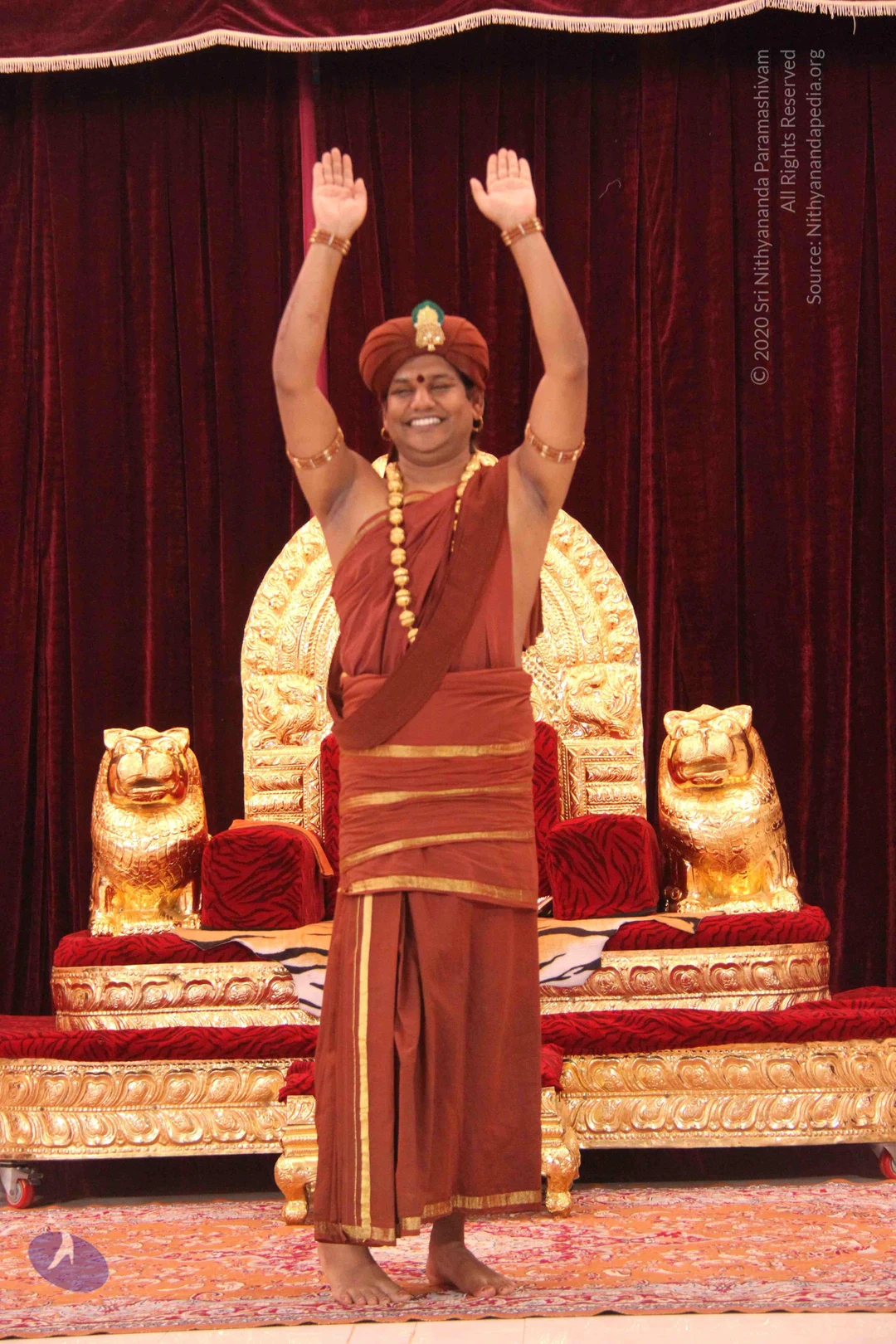
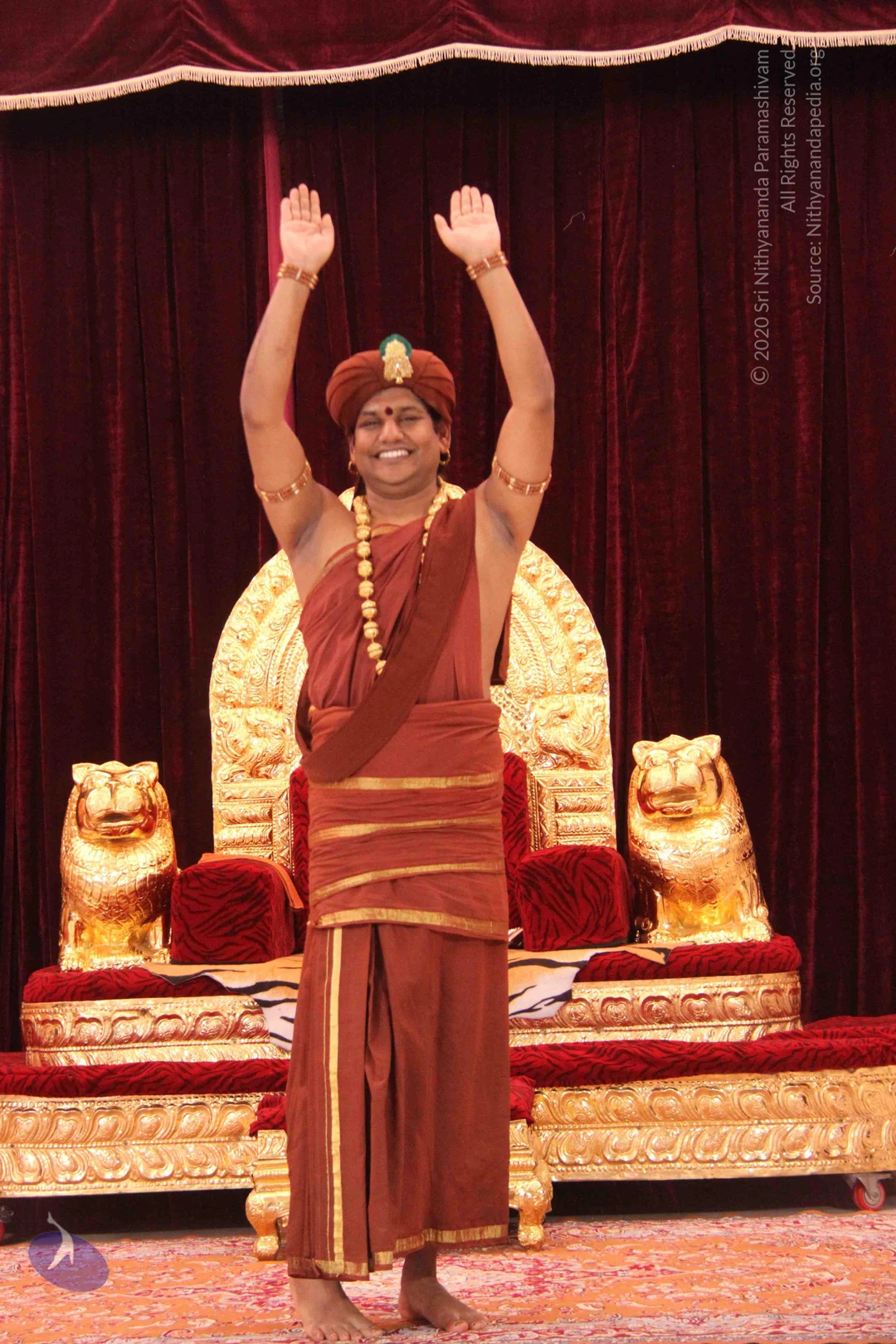
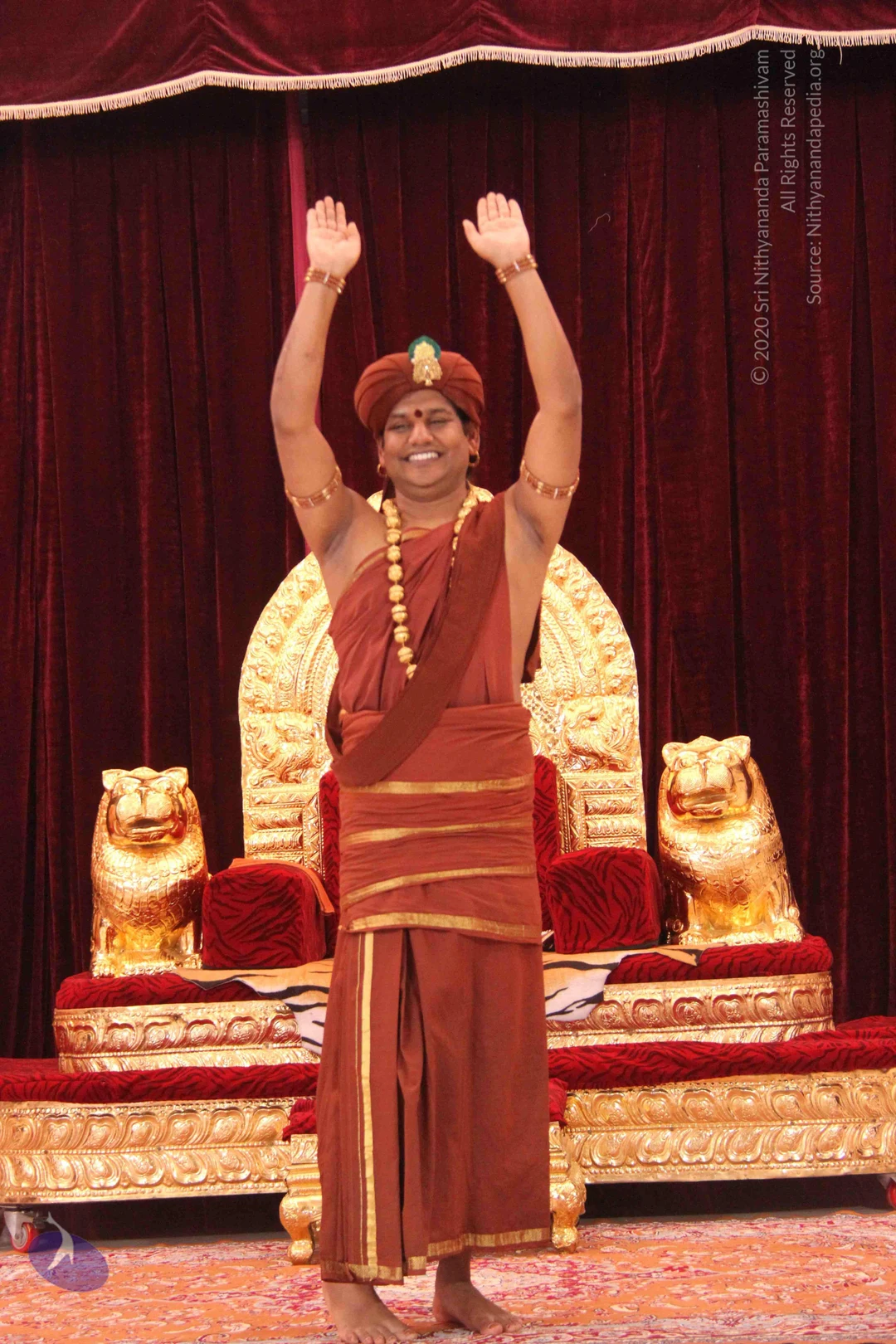
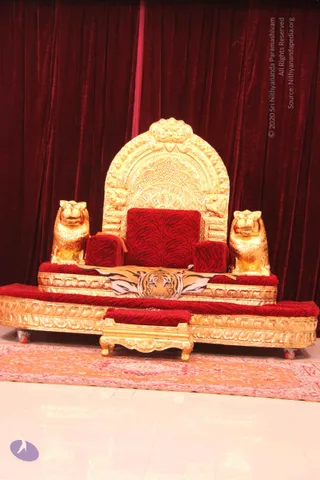
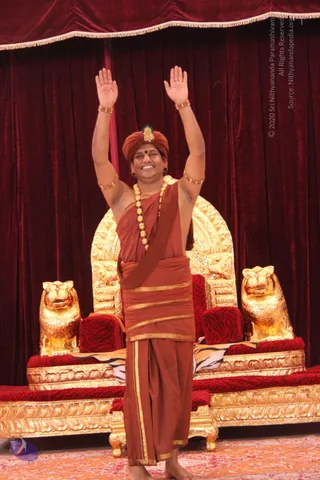
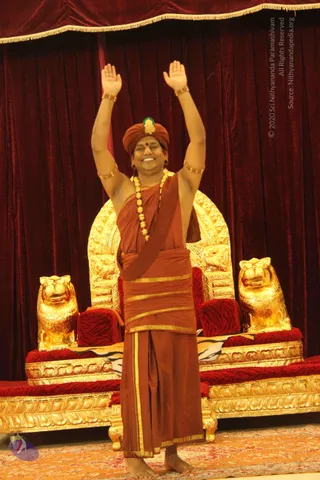
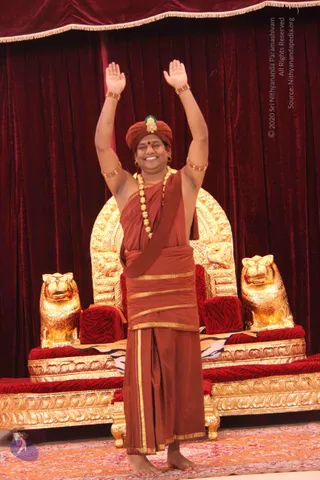
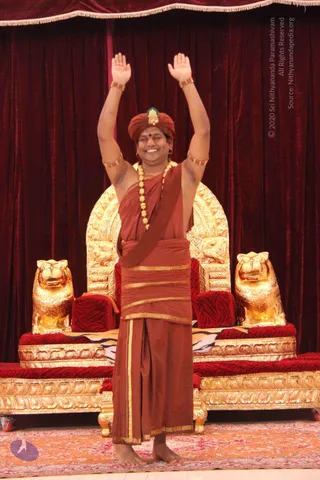
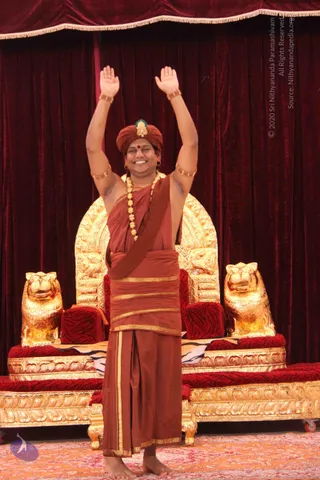
A photograph of an empty ornate golden throne against deep red velvet drapery on a pale floor with a pink-and-orange patterned rug. The gilded arched backrest is carved with floral and scrolled motifs, flanked by two gilded lion-head finials. The red cushions are patterned in black stripes, and a tiger-head skin rug lies across the seat front. Gilded footstool and carved base sit in front. No people are visible.A smiling man stands barefoot on a patterned rug before a golden throne with lion-head armrests and red tiger-striped cushions, arms raised high in greeting. He wears a rust-orange turban with a green and gold ornament, rust-orange robes with gold borders, a gold rudraksha-style necklace, gold bangles and a red bindi. Red velvet drapes hang behind the throne.A standing man in a rust-orange turban with a green and white ornament and a red bindi raises both arms overhead, smiling with eyes closed. He wears a rust-orange shawl draped over one shoulder and wrapped around the waist with gold-bordered cloth, a long gold bead mala around his neck, gold armlets and bangles. He stands barefoot on a patterned rug before a gold throne with lion-shaped armrests and red tiger-striped cushions, set against red velvet drapes. Swamiji (probable) appears in person, identified by the turban, ornate gold necklace, bangles and saffron-toned ceremonial clothing.A standing man in rust-red sannyasi robes, with a red-orange turban topped by a small green ornament, raises both arms overhead with palms open while smiling. He wears gold bangles on his upper arms and wrists and a long gold-beaded necklace. Behind him is a red velvet curtain and an ornate gold throne flanked by golden lion figures, with red zebra-striped cushions and a patterned carpet beneath. Swamiji (probable), wearing a red turban, gold necklace and ornate robes, stands before the throne.A standing man with both arms raised high and palms open, smiling, in front of a golden lion-armed throne with red tiger-striped cushions and deep red velvet drapes. He wears a rust-orange turban with a green and gold ornament, a rust-orange wrap and dhoti with gold borders, a gold beaded necklace, gold armlets and bangles, and a red bindi. He stands barefoot on a patterned red-and-cream rug. Probable Swamiji: the saffron/orange clothing, turban and ceremonial gold necklace and armlets match the distinctive presentation cues. The page describes this as the Final Blessing session; the image itself shows a single man in the blessing gesture.A standing man in a rust-red turban with a green and gold tassel, rust-red robe wrapped with gold-bordered cloth, and a long beaded gold necklace raises both arms high with palms open, smiling broadly in front of a gold-carved throne with lion-head arms and red velvet cushions, set against draped deep red velvet curtains with a fringed valance and a patterned rug on the floor. Swamiji (probable): the figure wears a rust-red turban and robe, gold armbands and bangles, and a long beaded gold necklace, and stands before a throne, matching the page's Swamiji claim.
5-HDH-Deities-Blessing
8 photosSource gallery
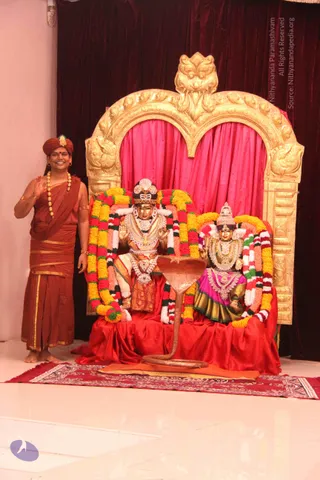
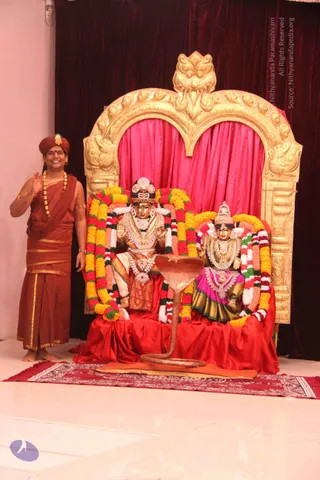
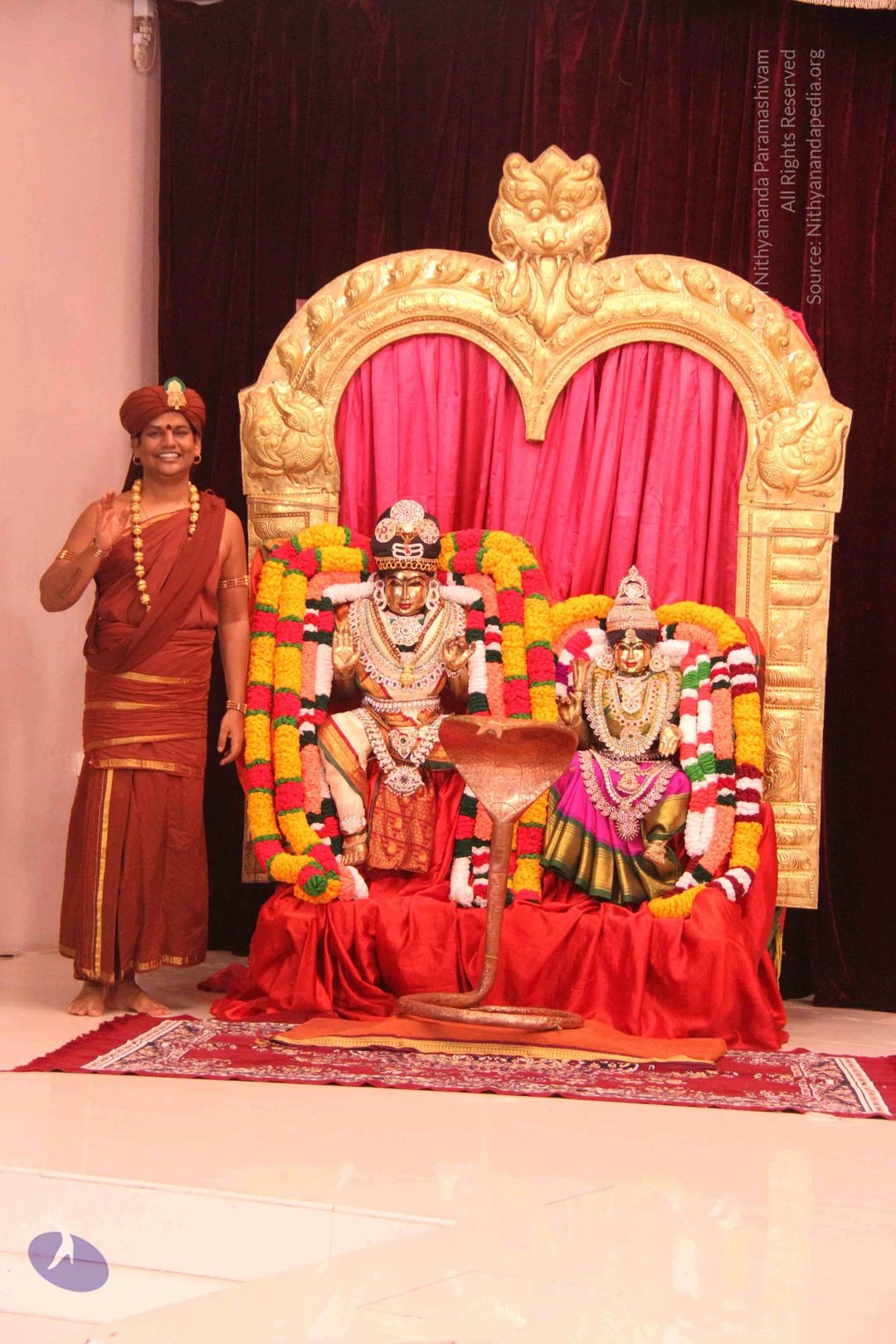
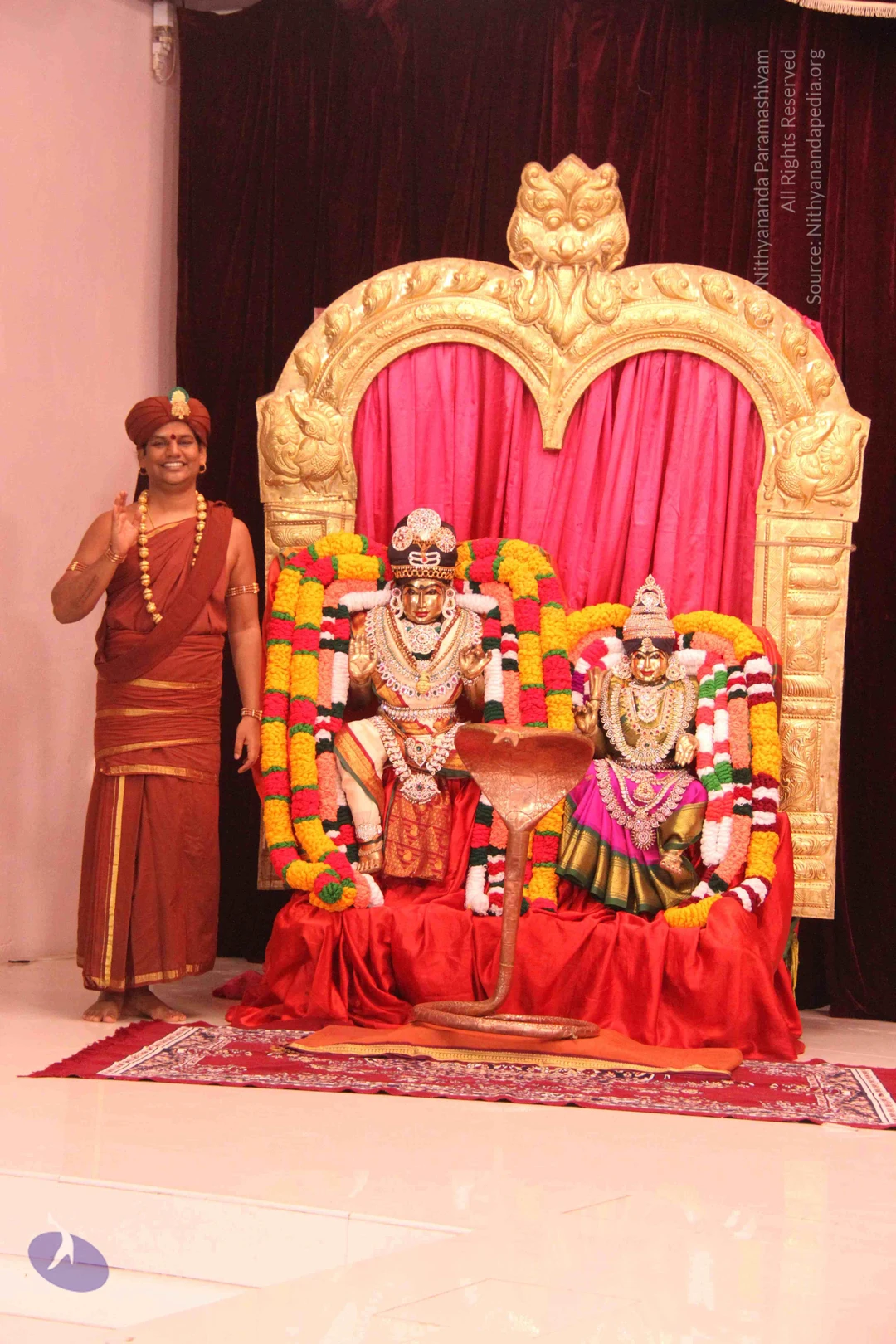
A photograph of a standing man in a reddish-brown saffron-toned dhoti and shawl, wearing a matching turban with a jewelled ornament, a tall gold-toned necklace of beads and a small red bindi, raising one hand in a greeting gesture beside a golden deity pair. Behind him, a gold arched canopy with carved makara-style ornamentation frames a red and pink backdrop. Two golden murtis, a male form with a Shiva-style crest and a female form in a magenta silk sari with jewellery, are seated on a red cloth-draped seat with a copper cobra hood at the base and garlanded with yellow, red and white flower garlands. The scene is a stage with a red patterned carpet and a white floor.A standing man in saffron-red robes and a matching turban stands at left beside a golden ornate arch and a throne-like seat draped in red and pink cloth. Seated on the throne are two gilded deity murtis, each adorned with rows of garlands in yellow, red, pink and white, silver jewellery and crowns. A copper cobra hood rests in front of the murtis on a red cloth. The man, barefoot, smiles and raises one hand in a blessing gesture. The floor is covered with a red patterned carpet, and a dark red curtain forms the backdrop.A standing man in saffron-orange robes and a matching turban waves toward the camera beside two gilded deity murtis seated on a red throne beneath an ornate gold arch with a lion-head crest. The man wears layered gold necklaces, bangles and a kumkum mark, and the murtis are draped in marigold and multicoloured flower garlands. A golden cobra hood rests before the seated figures on a red cloth, and a patterned red rug covers the stage floor.A standing man in a rust-red saffron-toned dhoti and shawl, with a red-and-gold turban, a long beaded mala and gold bangles, smiles and raises one hand in greeting beside a golden deity pair. Two gilded murtis of Shiva and Parvati sit side by side on a red satin draped seat, decorated with garlands in yellow, red, orange and white, silver jewellery and a crown on Shiva. A bronze cobra with raised hood lies on the red cloth in front of them. Behind is an ornate gold arch with red curtains and a dark maroon backdrop, and a patterned red rug covers the floor. The man is a living person, and the figures are murtis. Possible as the statue of Shiva would appear: deity murti.A standing man in rust-orange robes and a matching turban waves his right hand beside a decorated throne. He wears a gold necklace, gold armlets and bangles, and a small ornament on his turban. Seated on the golden arched throne with a red and pink backdrop are two deity murtis draped in marigold and multicolour garlands: a metal Shiva-form figure with a crown and trident-style adornments, and a consort figure in a magenta and gold sari with silver jewellery. A hooded cobra sculpture rests at their feet on a red cloth. Ritual decoration suggests a deity blessing setting.A smiling man in a rust-red turban, rust-red dhoti and shawl, with a gold-beaded necklace and bangles, stands at left with one hand raised in greeting. Beside him on a red-draped throne sit two gold deity murtis adorned with multicoloured marigold garlands: a Shiva-form murti wearing a crown with a tripundra mark and jewelled necklaces, and a consort murti in a magenta and green silk sari. A gilded arch with red velvet curtains frames them, and a golden cobra hood rests before the throne on a patterned carpet. The man appears to be a devotee or priest, and the surrounding setting is a ceremonial darshan display.

6-IA-Day1-Session

3 photosSource gallery
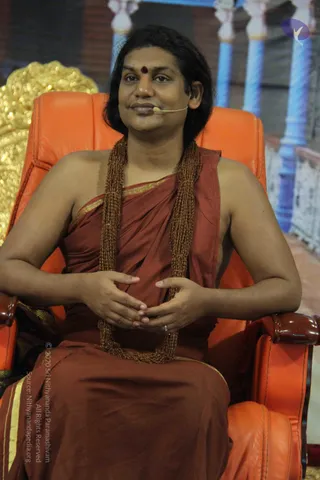
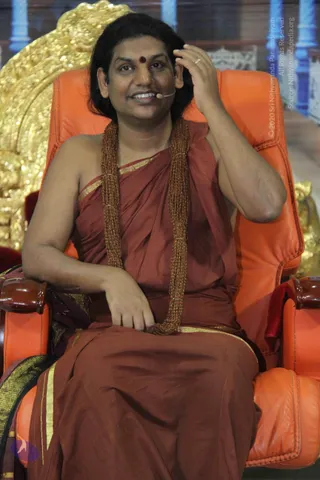
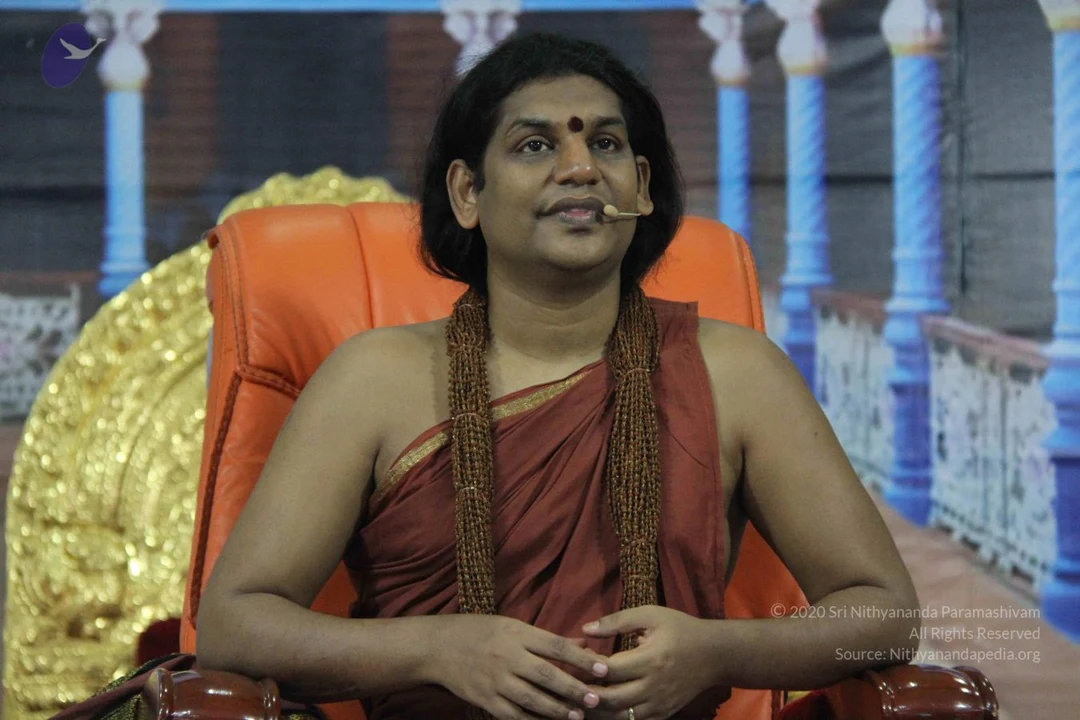
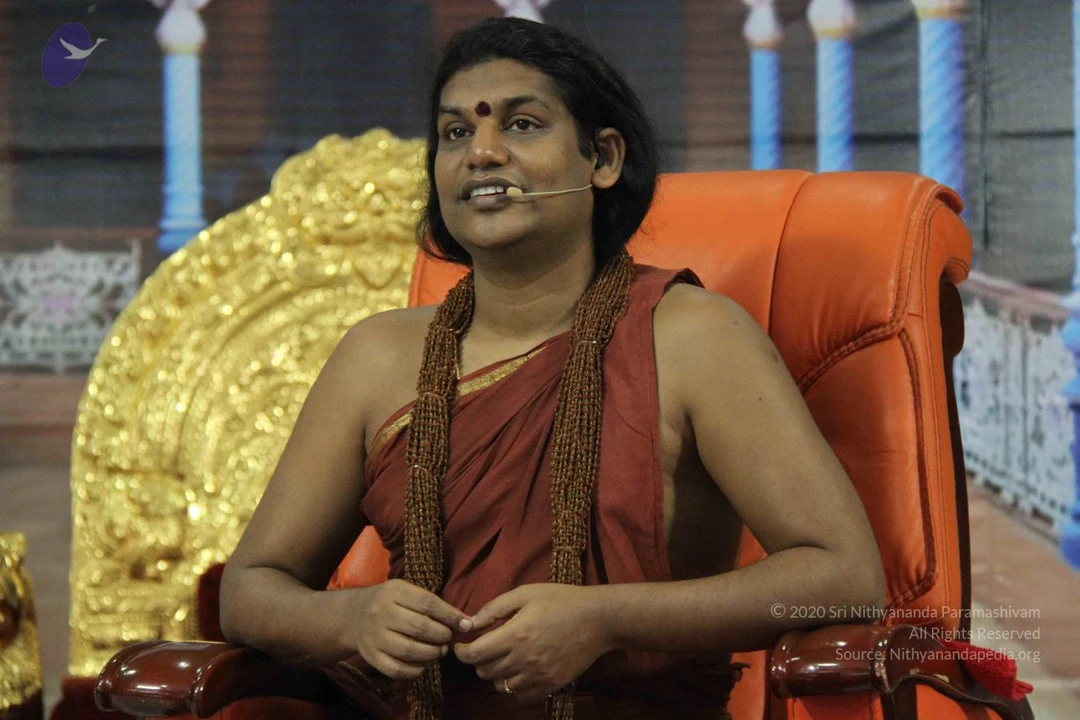
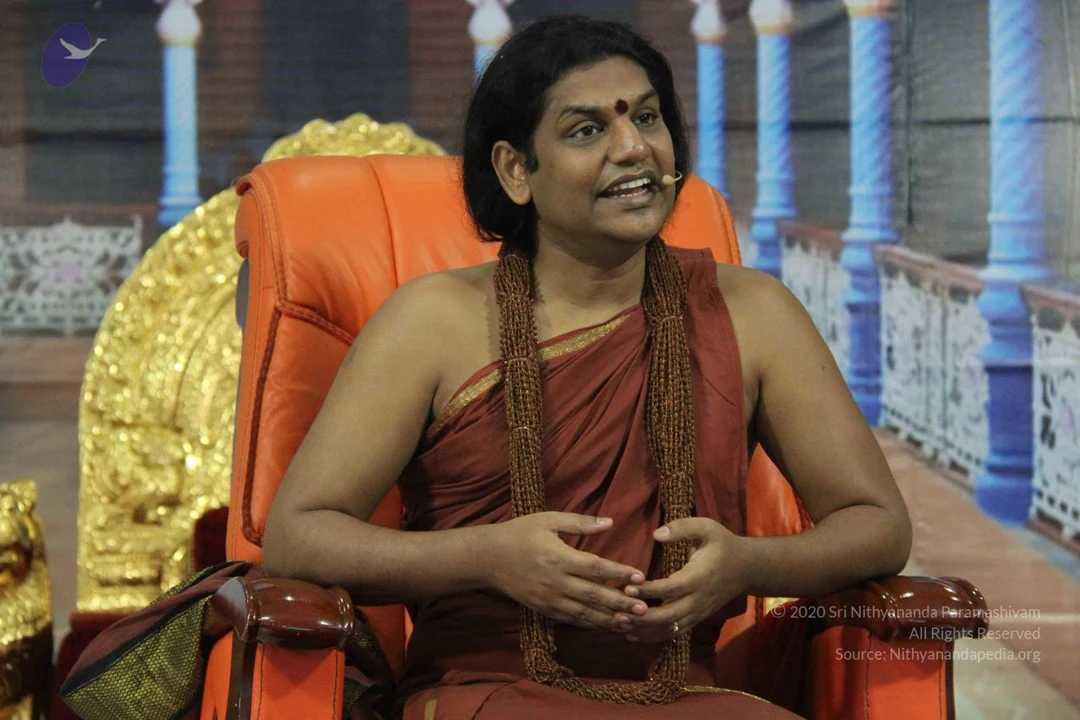
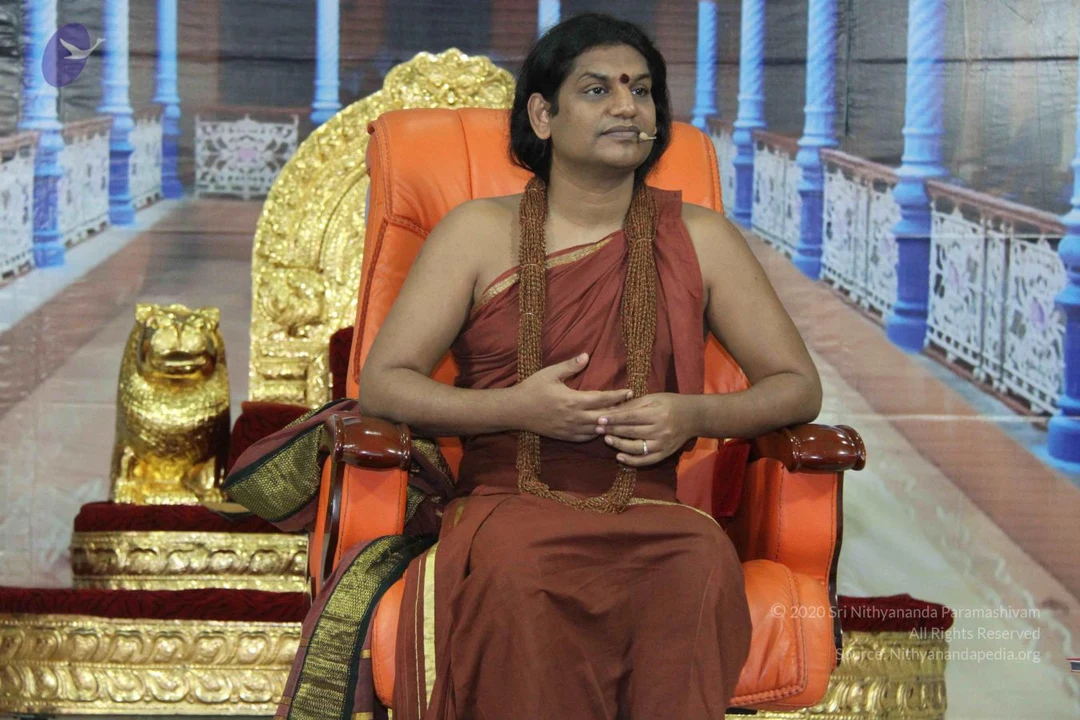
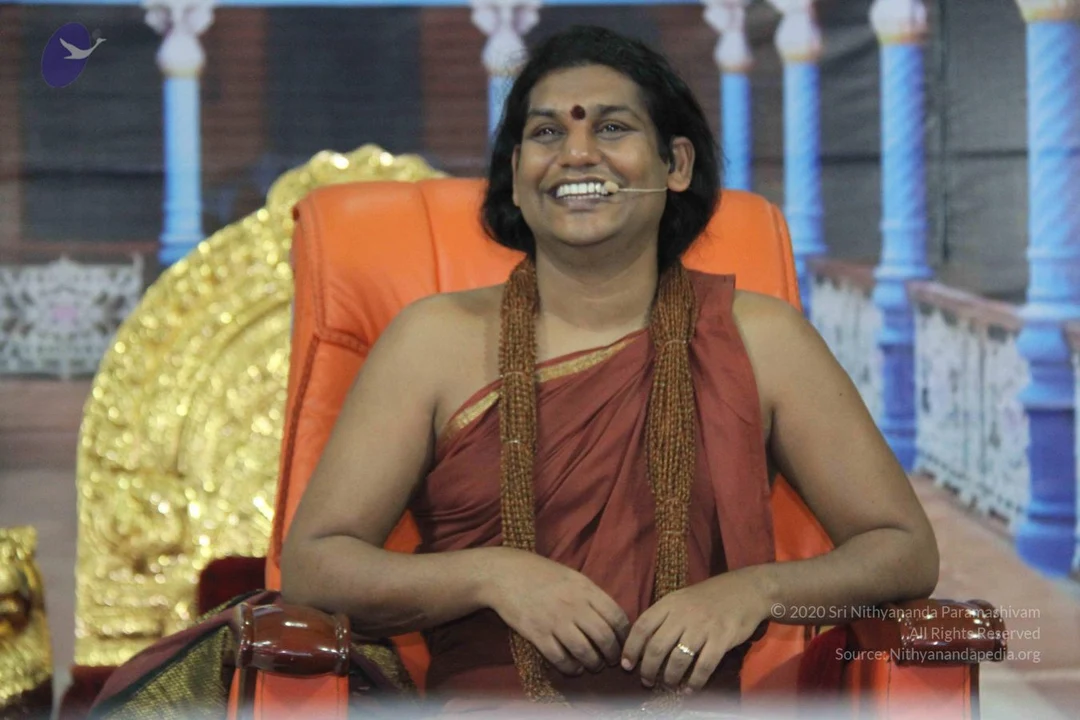
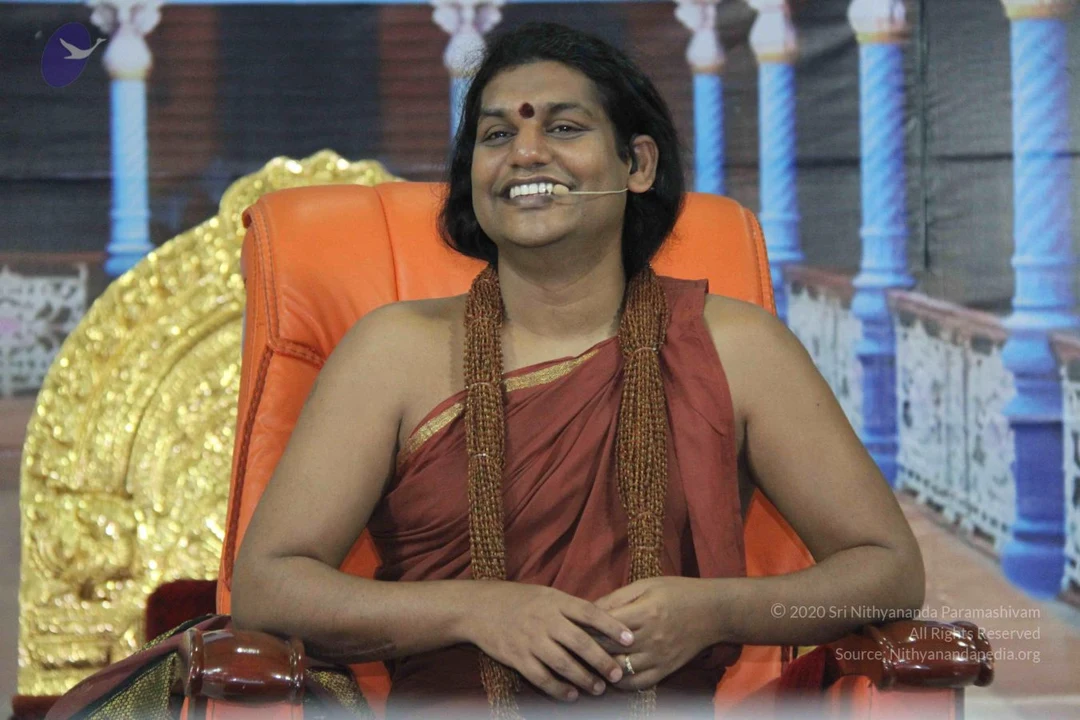
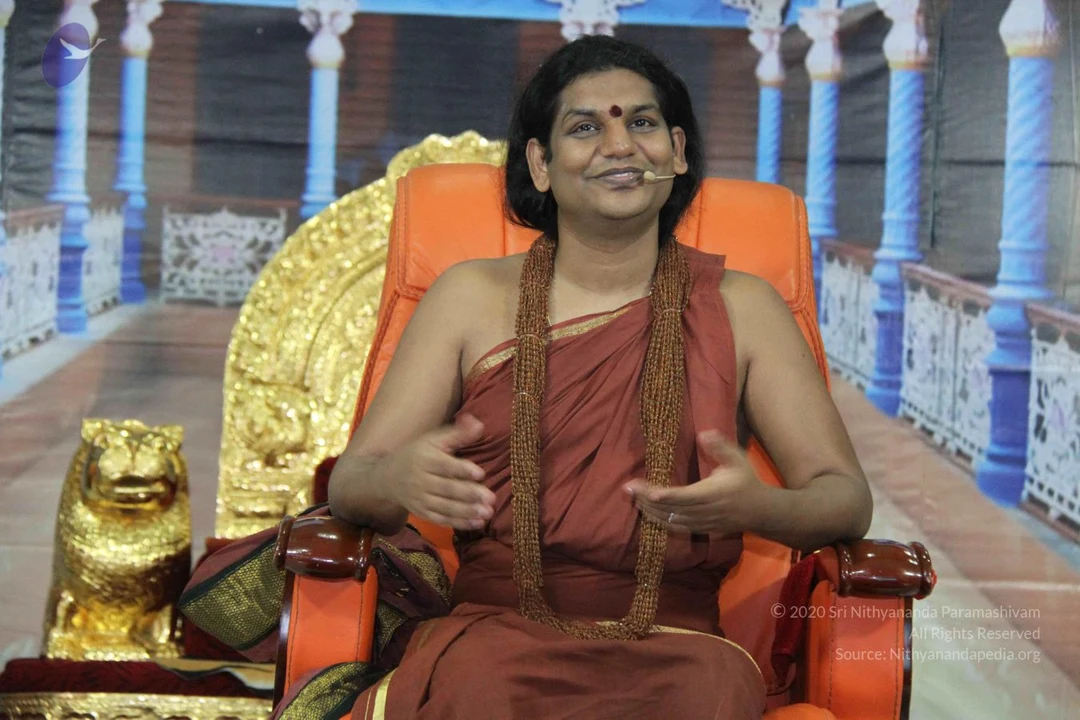
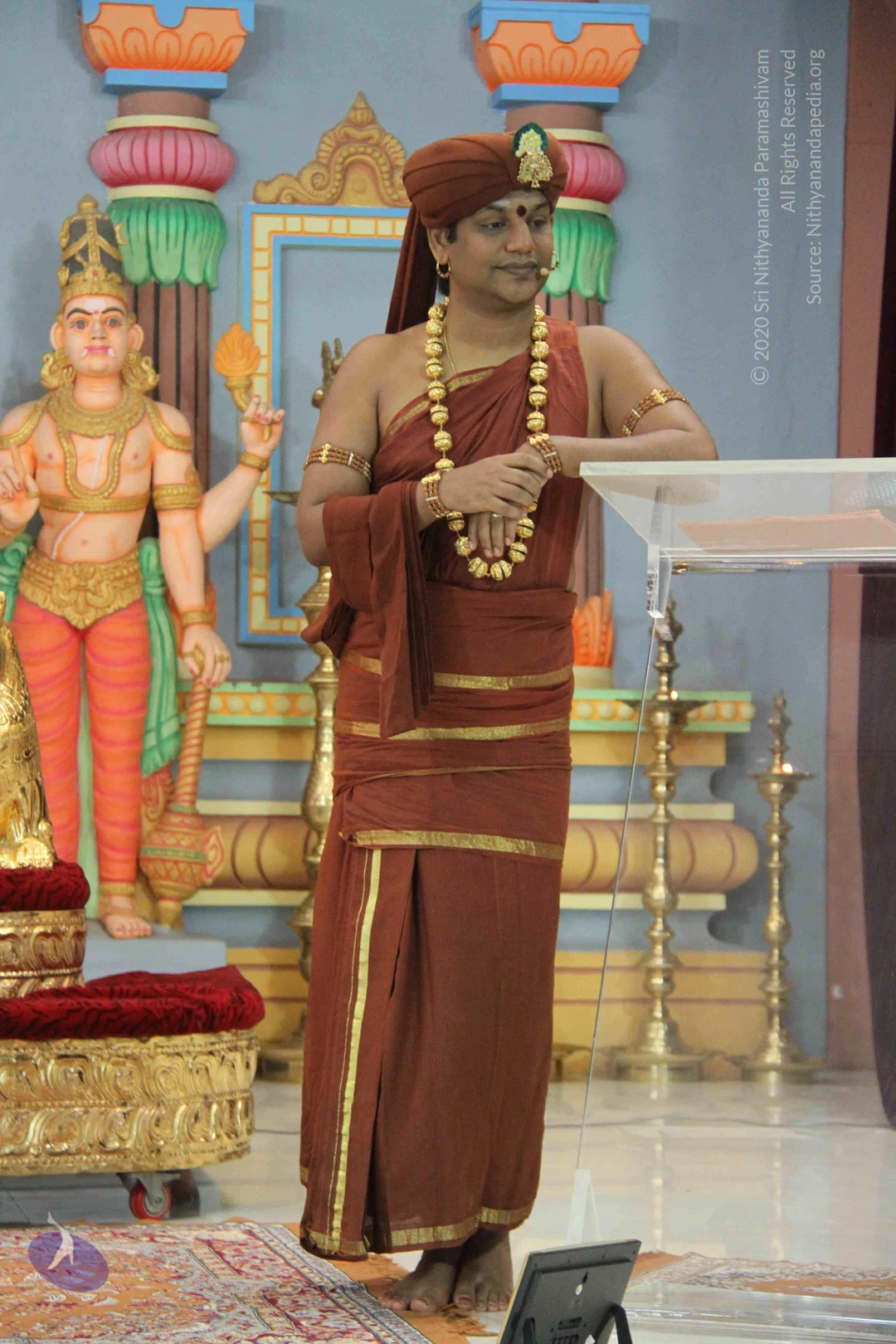
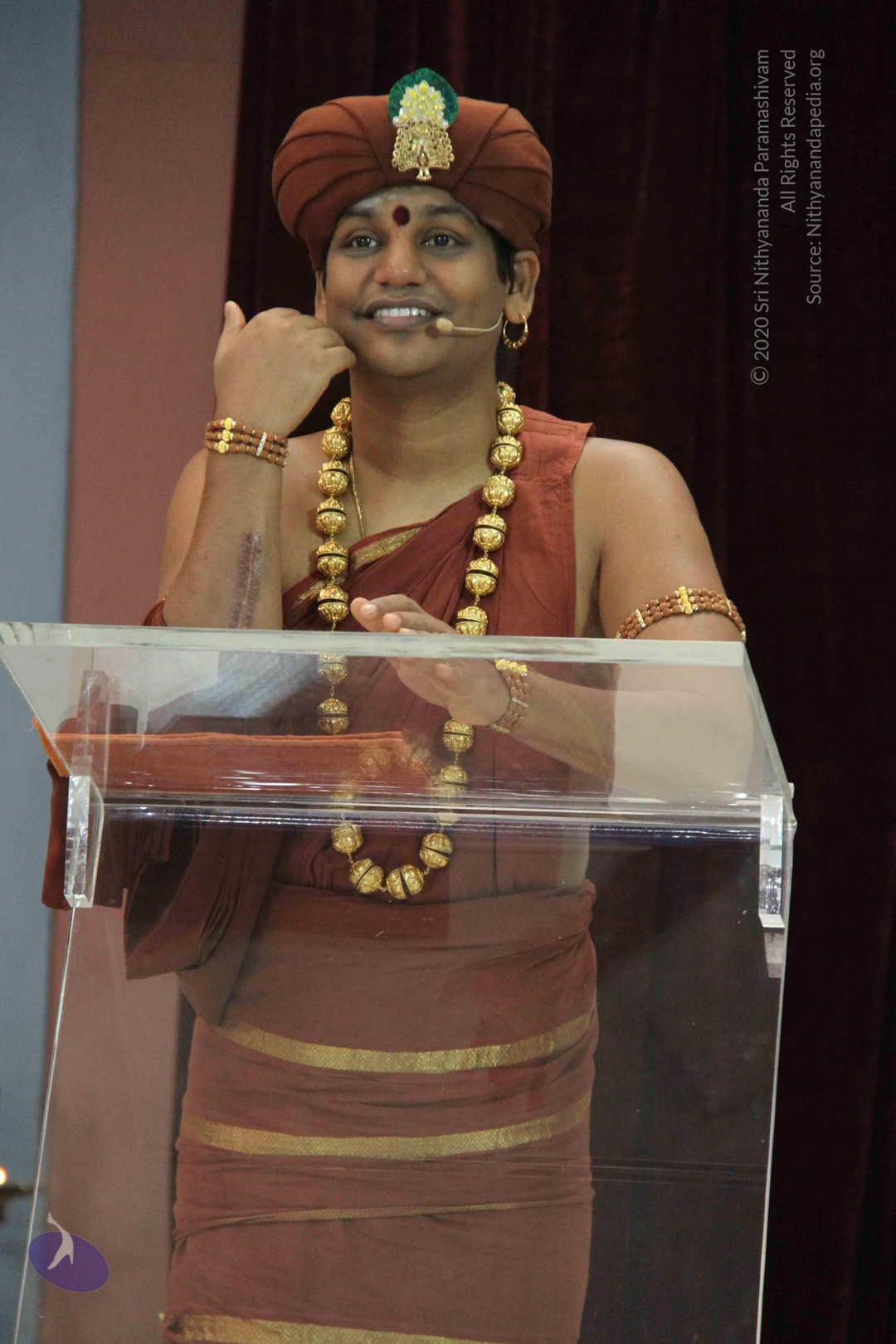
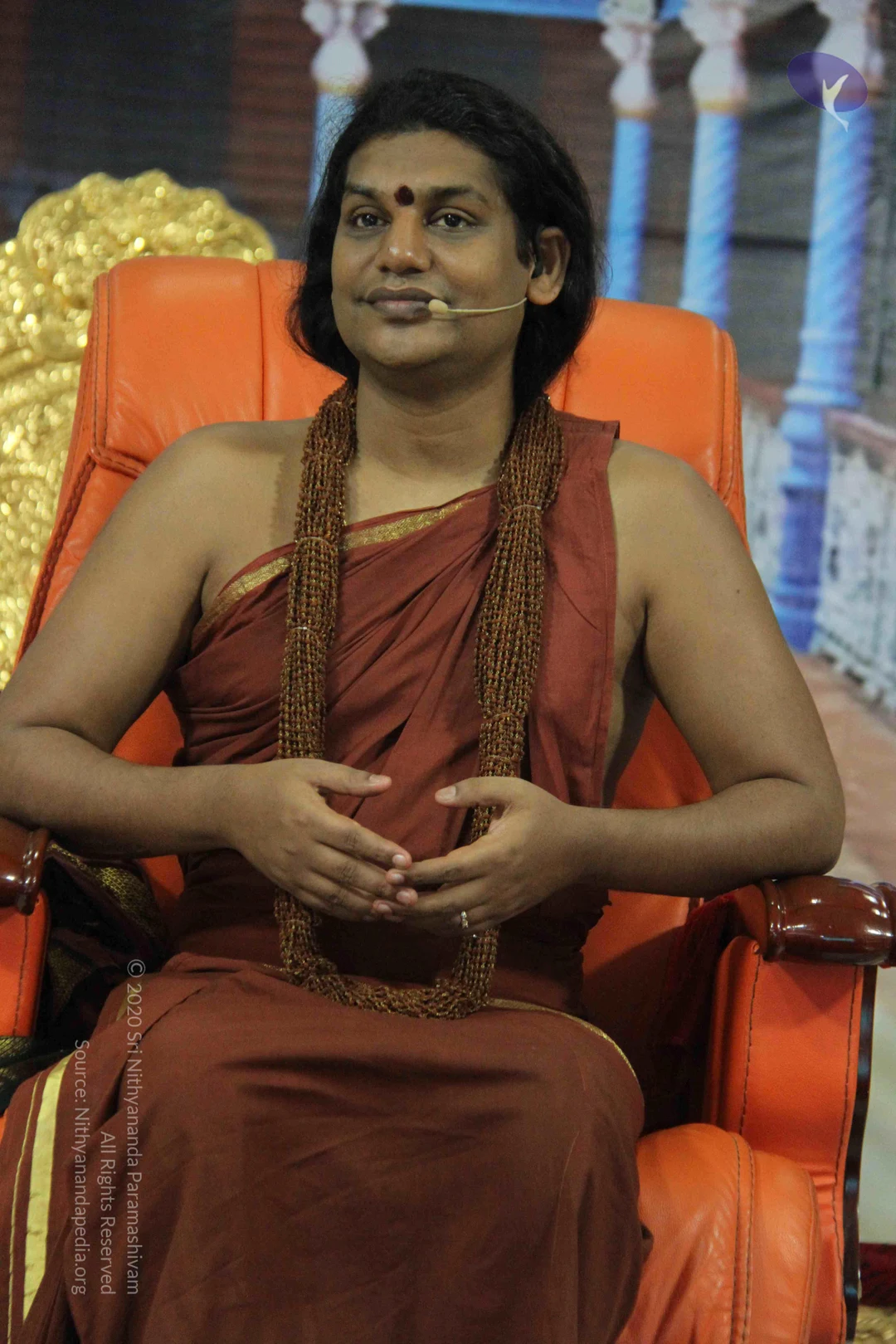
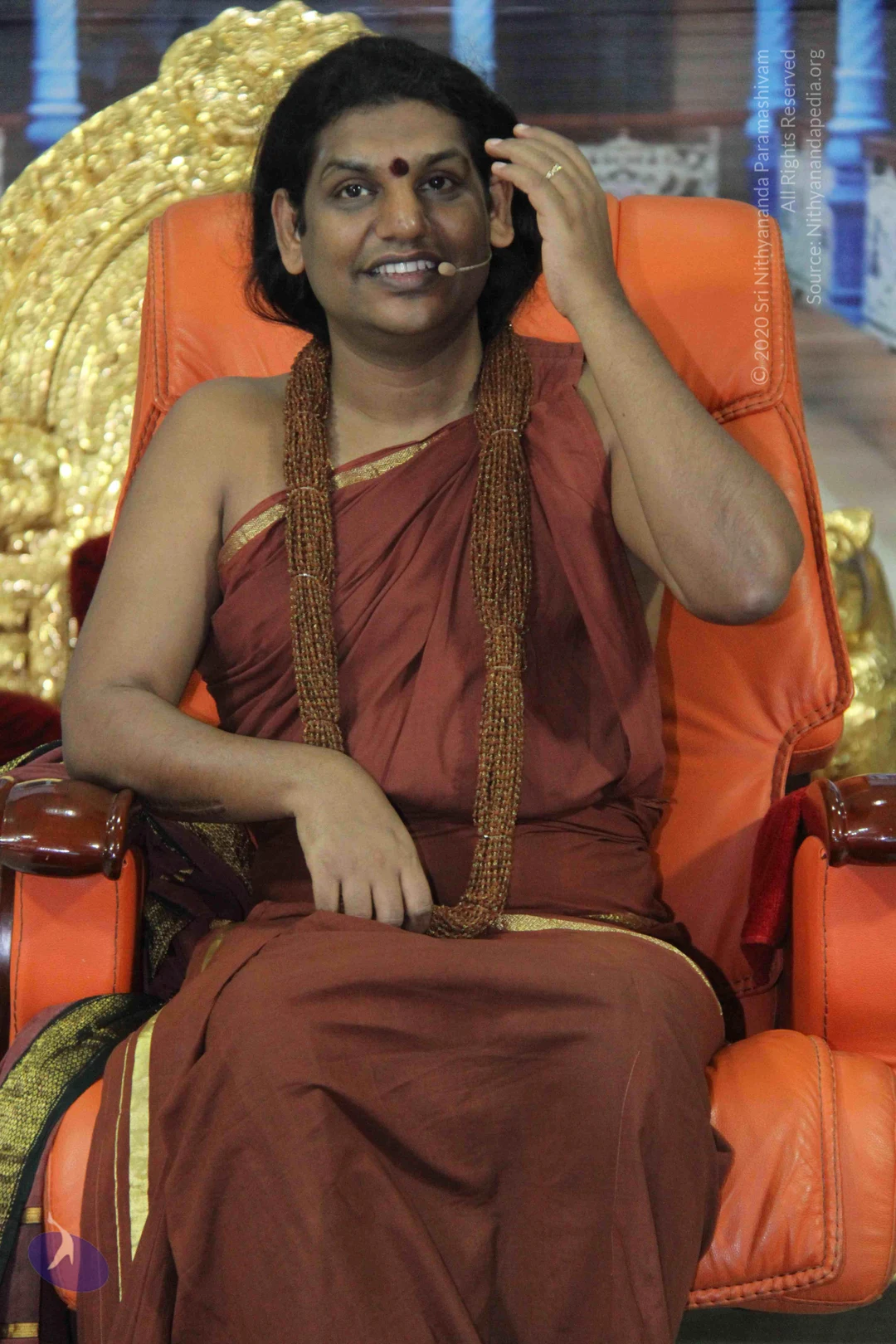
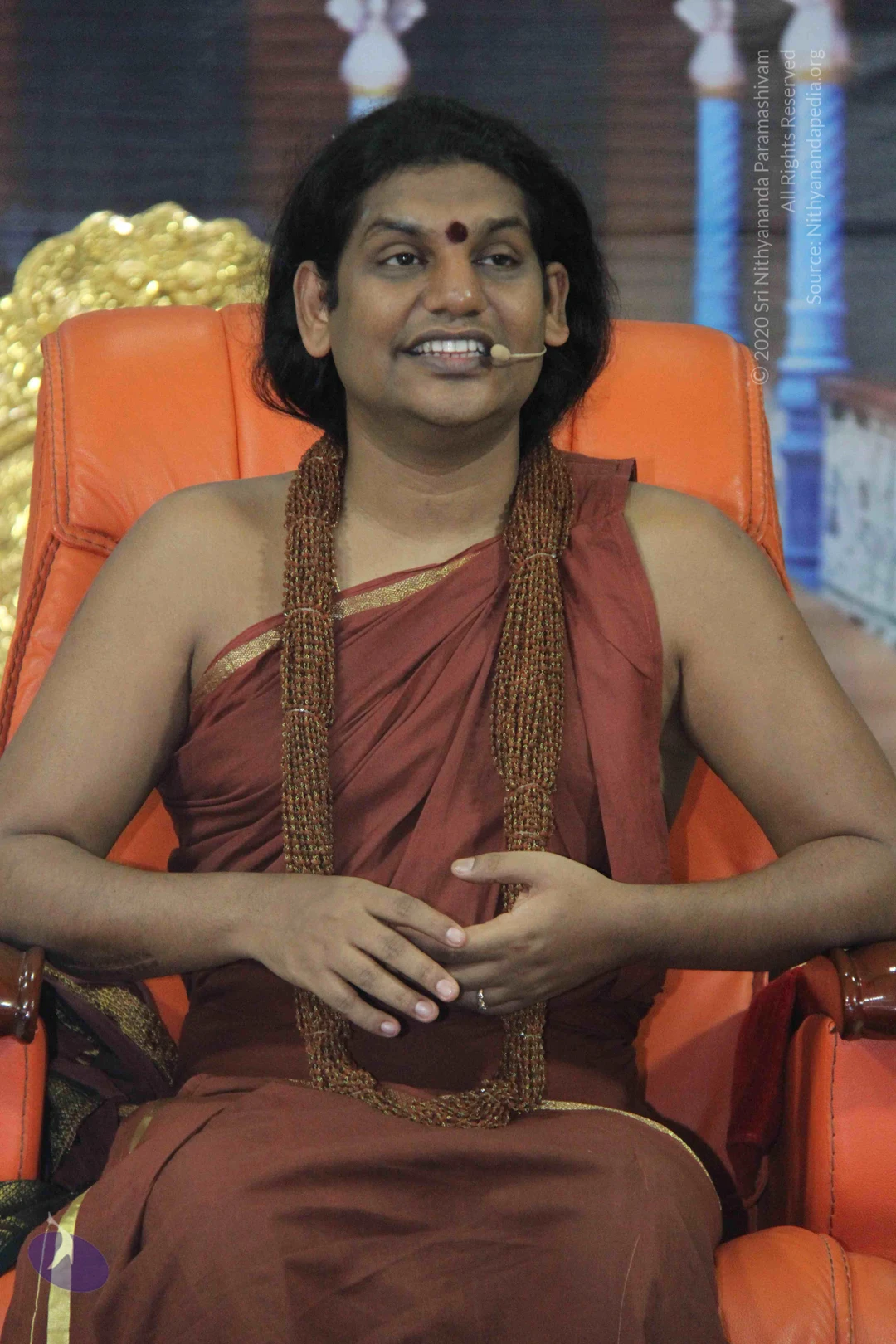
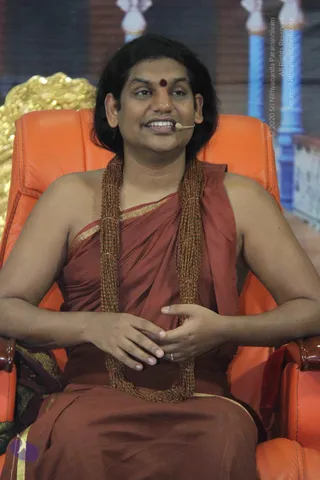
A seated man in a rust-red sleeveless drape with gold border sits in an orange leather armchair with carved wooden armrests, a gold-embroidered throne behind him, and a small red bindi on his forehead. He wears long multi-strand rudraksha-style brown beaded malas across his chest, a small headset microphone, and holds his hands clasped at his waist. Blue pillars and a painted backdrop stand behind him. Swamiji (probable): long swept-back hair, rudraksha malas and rust-red ochre-toned drape are visible cues for the presentation.A man with shoulder-length dark hair sits in an orange leather chair before a gold ornate backdrop, smiling and raising one hand to his head. He wears a rust-red draped garment with a gold border over one shoulder and a long multi-strand rudraksha mala around his neck, with a red bindi on his forehead and a small microphone clipped near his mouth. Blue pillars and a decorated hall are visible behind him.A man with shoulder-length dark hair sits in an orange leather chair with gold trim behind him. He wears a rust-red draped garment with a gold border and a long rudraksha mala of brown beads around his neck. A red bindi marks his forehead, and a small headset microphone is clipped near his face as he speaks, hands clasped at his waist. Blue decorative pillars and a golden backdrop frame the stage setting. Appearance-based identification is a person from the page; a long swept hair, saffron-toned draped clothing and rudraksha mala are visible cues.

7-IA-Day1-Darshan

6 photosSource gallery
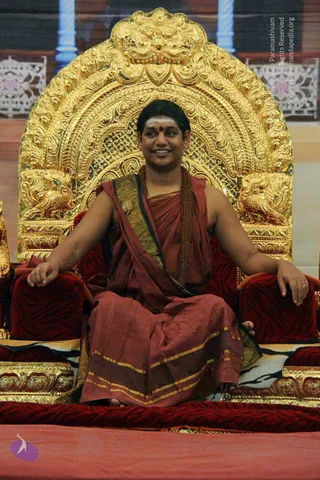
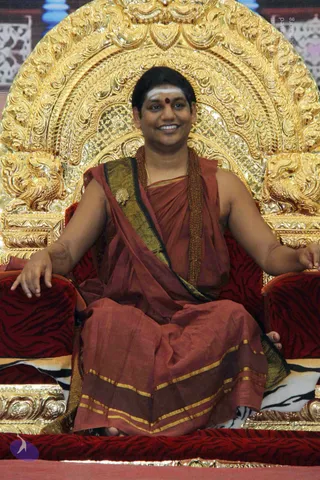
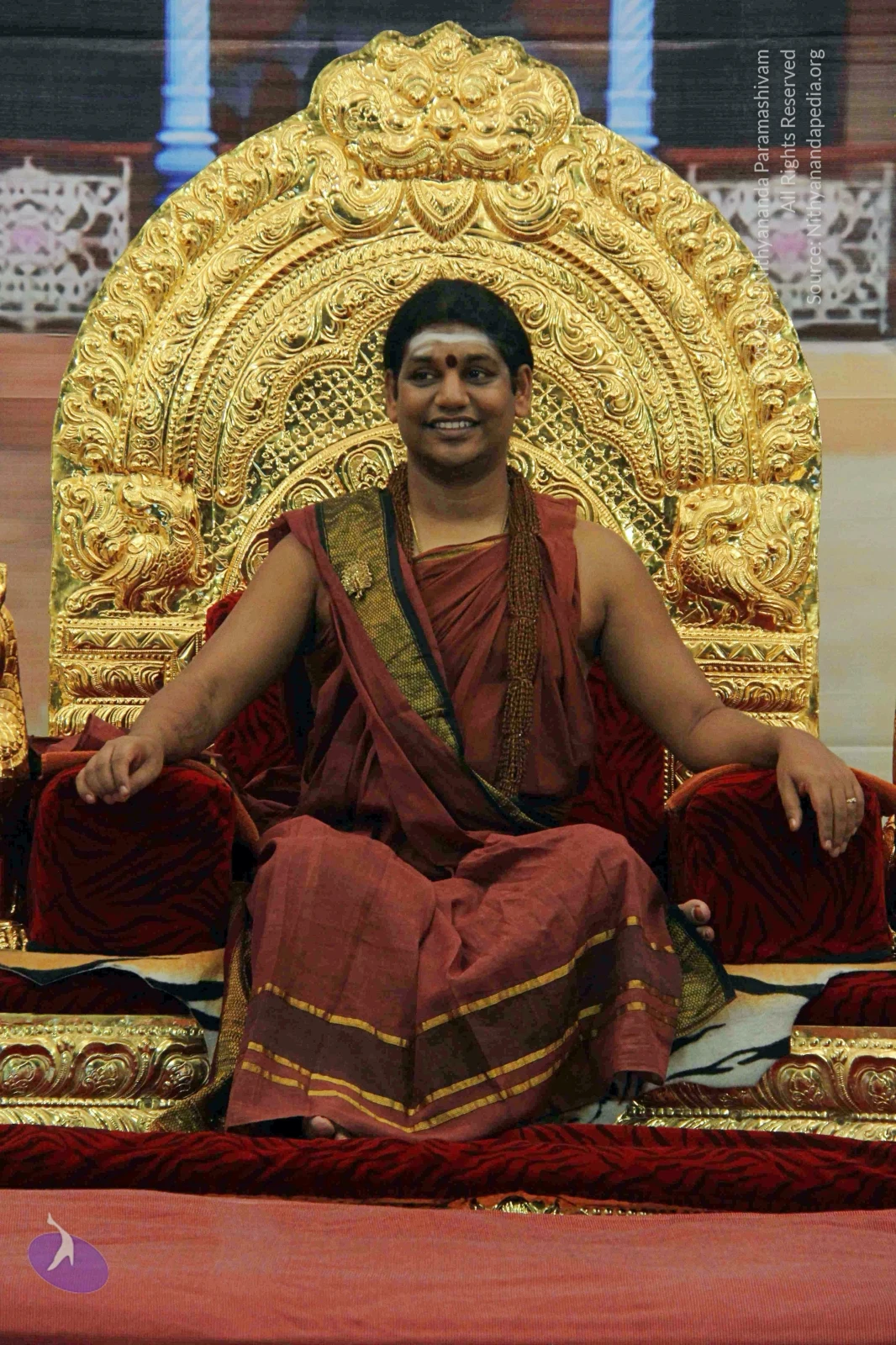
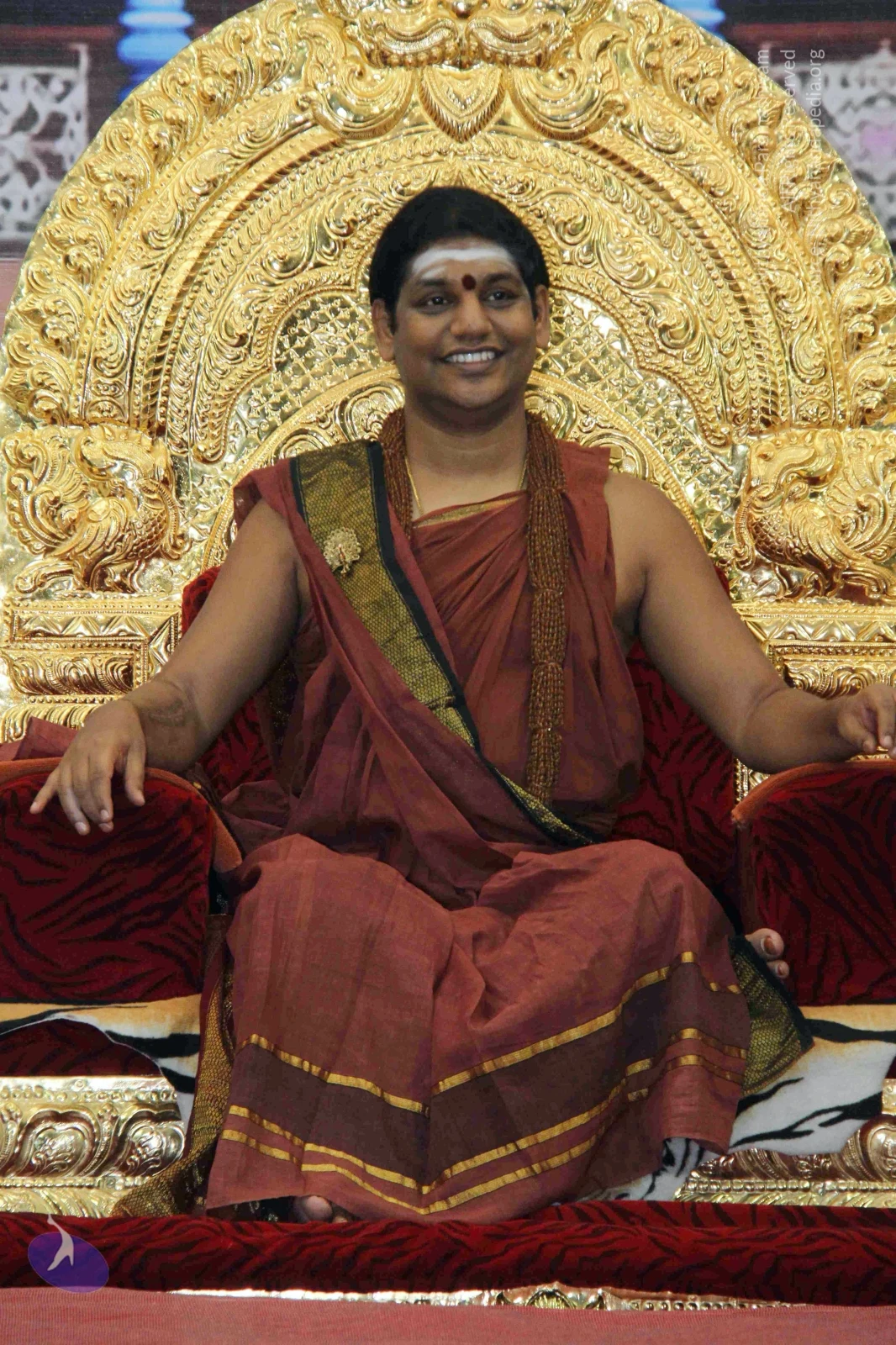
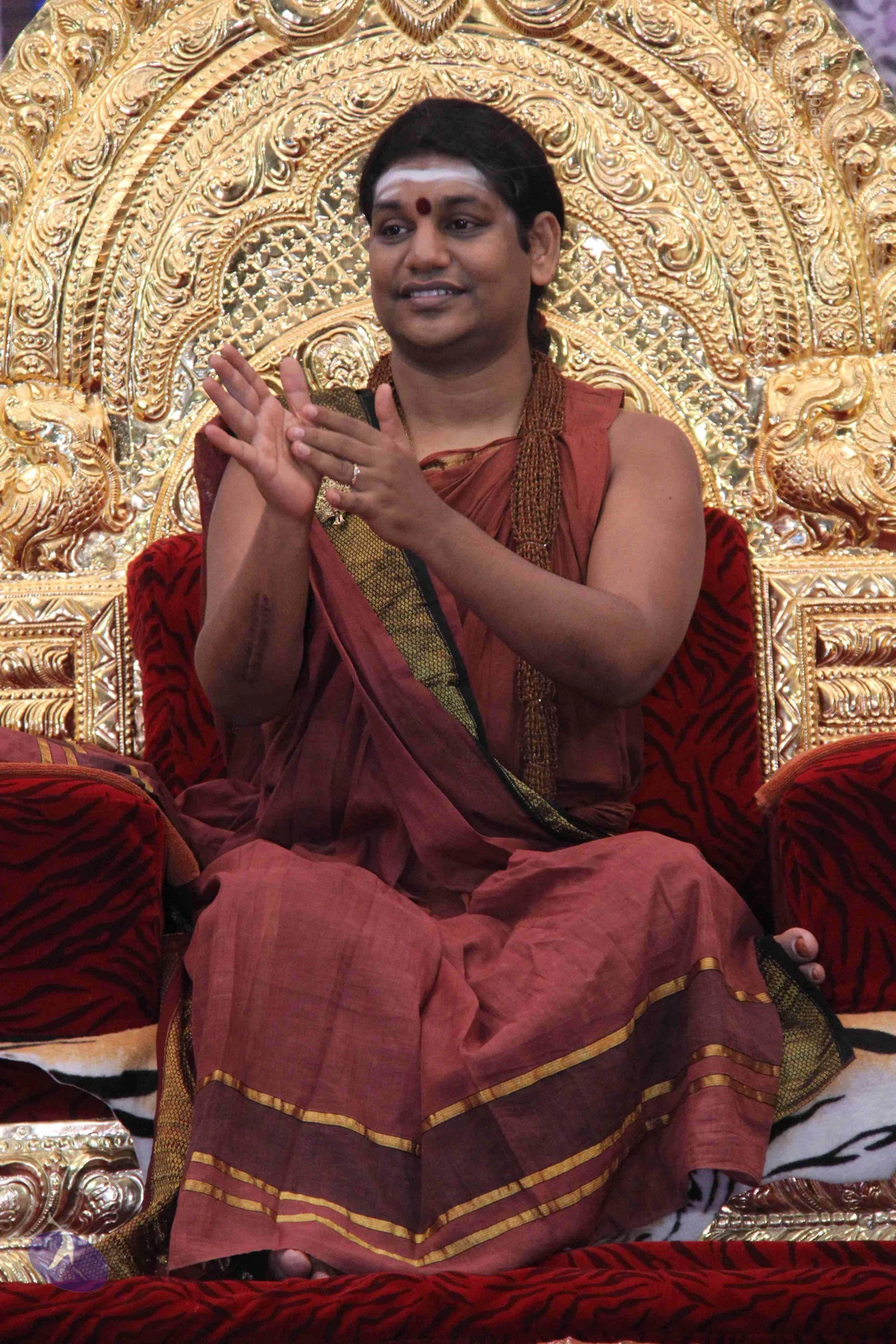
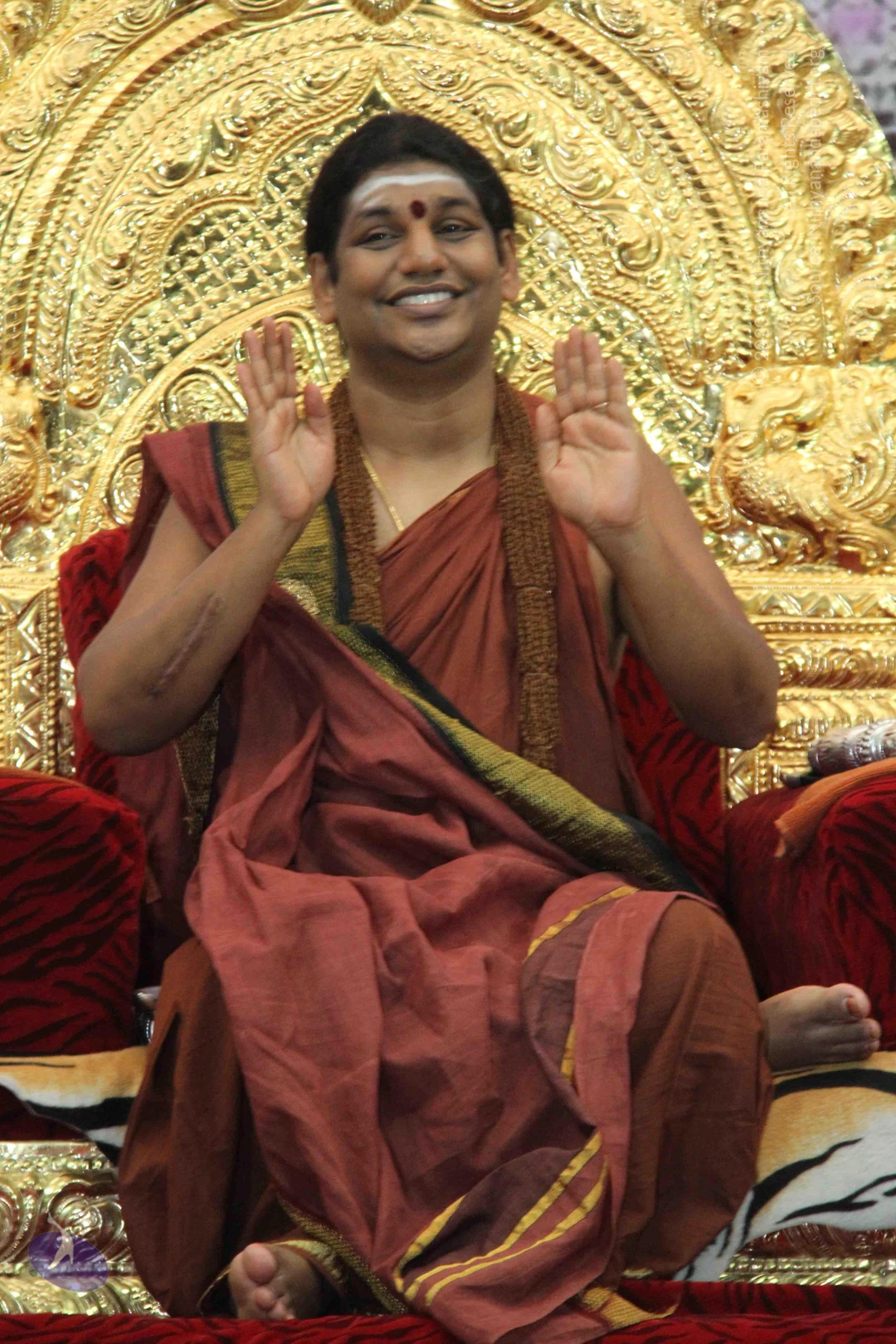
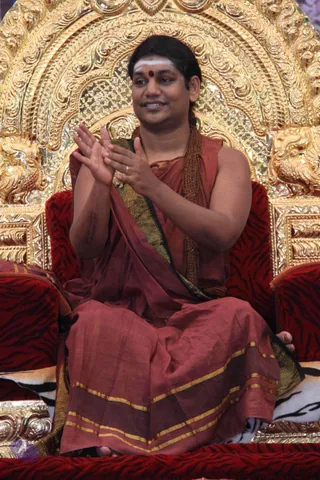
A seated man in a maroon-red dhoti and shawl with gold-bordered edging sits on an ornate gold-carved throne with lion motifs and a red velvet cushioned seat. He wears a long rudraksha-style bead necklace, a white vibhuti line and a red kumkum dot on his forehead, smiling with his arms resting on the chair arms. a person cues are present: distinctive ceremonial gold-embellished throne seating, saffron-red sannyasi attire and rudraksha beads, consistent with the page's reference to a person. The setting is a stage or hall with blue columns in the background.A smiling man with short dark hair, white and red tilak on the forehead, seated on an ornate gold-leaf throne with carved lion-like finials and red tiger-striped cushions. He wears a rust-red draped garment with a black and gold-bordered sash, a long rudraksha mala around his neck, and a small flower brooch on the shoulder. His arms rest on the throne arms, and a gold-embroidered red stage backdrop is behind him. a person: the appearance matches the page's claim, with rudraksha mala and distinctive regal seating, so this is treated as a person in person on the throne.A seated man in a rust-red sleeveless robe with gold-bordered wrap sits on an ornate gilded throne with tiger-striped red cushions. He wears a rudraksha mala, a white vertical forehead mark and a red bindi, and claps his hands together with a smile. Behind him the gold-embossed throne backrest features carved lion-like figures.A man with short dark hair sits on an ornate gold throne with a carved arched back and lion-shaped armrests, draped in red-brown cloth with gold-striped border and a rudraksha mala across his chest. He wears a white vertical tilak with a red dot on his forehead, smiles, and rests his arms on the cushioned armrests. Red velvet upholstery and a red-patterned stage frame the throne. a person: the seated man has a compatible presentation with several cues, including ornate saffron-red draping, a mala and a throne setting, so this is a seated presence on stage.A seated man in a maroon-red sleeveless robe with a gold-bordered shawl draped over one shoulder sits on an ornate gold-carved throne with a tall arched backrest and lion-like carvings. He wears a red bindi and white tilak on his forehead, a beaded rudraksha-style mala around his neck, and a brown-and-gold bordered cloth. His hands rest on red-and-black tiger-striped cushions. a person cues: the robe, mala and sovereign throne presentation are consistent with the page's identification.A smiling man with short dark hair, a white urdhva pundra and a red bindi sits on an ornate gold throne with carved floral and lion-like relief, raising both palms outward in a blessing gesture. He wears a rust-red unstitched robe with a black and gold border and a brown rudraksha-style mala, and his bare feet rest on a red tiger-striped cushion. Behind him, a gilded backdrop frames the seat. a person: the appearance cues are a seated figure on a gilded throne in a rust-red robe with a rudraksha mala, offering a blessing, consistent with the page's Darshan album.

November 01 2013

1 photoView all
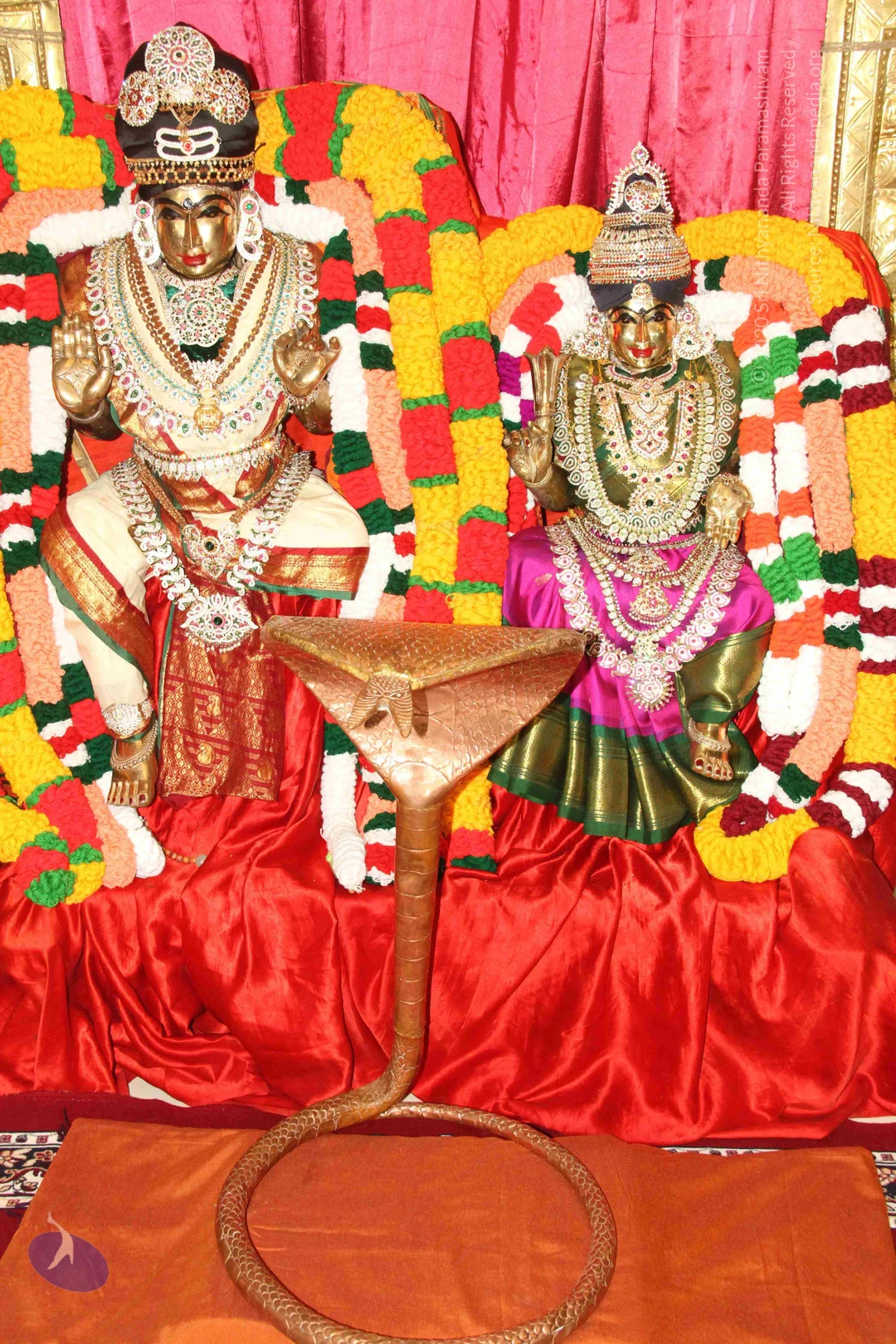
Two gilded metal deity murtis seated side by side on a red satin cloth in front of a pink curtain, decorated with multicolour marigold and tuberose garlands in yellow, red, green and white. The male figure wears a black crown with a tripundra mark, cream dhoti with a red and gold border, and layered jewelled necklaces; his right hand shows abhaya mudra. The female figure wears a jewelled crown, magenta and green silk sari with gold border, and heavy necklaces. A large bronze cobra hood stands in front of them, with a rust-coloured cloth below. No physical people are visible.